NewzIntel.com

    • Checkout Page
    • Contact Us
    • Default Redirect Page
    • Frontpage
    • Home-2
    • Home-3
    • Lost Password
    • Member Login
    • Member LogOut
    • Member TOS Page
    • My Account
    • NewzIntel Alert Control-Panel
    • NewzIntel Latest Reports
    • Post Views Counter
    • Privacy Policy
    • Public Individual Page
    • Register
    • Subscription Plan
    • Thank You Page

Category: Russian Federation

  • MIL-OSI Russia: Festive week: National Unity Day at the State University of Management

    Translation. Region: Russian Federation –

    Source: State University of Management – Official website of the State –

    The beginning of November in our country has been celebrated in an atmosphere of national unity for many centuries. The famous events of 1612 in Tsarist Russia were remembered on the day of the Kazan Icon of the Mother of God, in the USSR the anniversary of the Great October Revolution was celebrated during these days, and since 2004 the new Russia has returned to celebrating the end of the Time of Troubles and the restoration of firm state power.

    Today this holiday is extremely relevant. The state and the people are uniting again in the face of external threats, moving together to achieve technological sovereignty and leadership, defending their own traditional values and showing other countries an example of a fair social order.

    The State University of Management congratulates all Russians on National Unity Day and wishes to live in harmony and mutual understanding, support each other regardless of nationality and religion, remember not only the glorious pages of our country’s history, but also the dark times that strengthened us and brought us to a new stage of development.

    This year, the State University of Management celebrates National Unity Day the entire work week after the holiday. As part of the Friendship Without Borders project, we will host the following events: — November 5 — Interethnic Sports Games in the Sports Complex (starts at 10:30); — November 6 — the Improvisation show in the atrium of the Information Technology Center (starts at 14:00); — November 7 — a discussion called Our Values in the Information Technology Center (room 211, starts at 15:00); — November 8 — Interuniversity Interethnic Game Guess the Melody in the atrium of the Information Technology Center (starts at 14:00).

    Students from Moscow universities are invited to participate in the events. Up-to-date information on registration for the events is posted on the project’s Telegram channel: https://t.me/drujbaguu.

    Subscribe to the TG channel “Our GUU” Date of publication: 11/4/2024

    Please note: This information is raw content directly from the source of the information. It is exactly what the source states and does not reflect the position of MIL-OSI or its clients.

    MIL OSI Russia News –

    January 26, 2025
  • MIL-OSI Global: Maia Sandu’s victory in second round of Moldovan election show’s limits to Moscow’s meddling

    Source: The Conversation – UK – By Stefan Wolff, Professor of International Security, University of Birmingham

    Following a campaign marred by widespread and credible allegations of massive interference by Russia and pro-Russian proxies, Moldova’s incumbent president, Maia Sandu, has won another term in the second round of presidential elections.

    According to preliminary results published by the country’s central electoral commission on November 3, Sandu beat her second-round challenger, Alexandr Stoianoglo, with 55% of the vote and on a higher turnout than in the first round of elections on October 20.

    There were more than 180,000 votes between the incumbent and her challenger. In a country with an electorate of just over three million people, this is a significant margin, especially when compared with the razor-thin yes vote in the EU referendum that was on the same day as the first round of the presidential election two weeks ago. In that election, Sandu came first with 42%, compared to Staionoglo’s 26%, but in the EU poll, just 10,000 votes separated the yes and the no votes.

    Sandu, who campaigned on a strongly pro-European platform, prevailed despite pro-Russian interference and fearmongering and a campaign by Stoianoglo that emphasised the importance of good relations with both Moscow and Brussels.

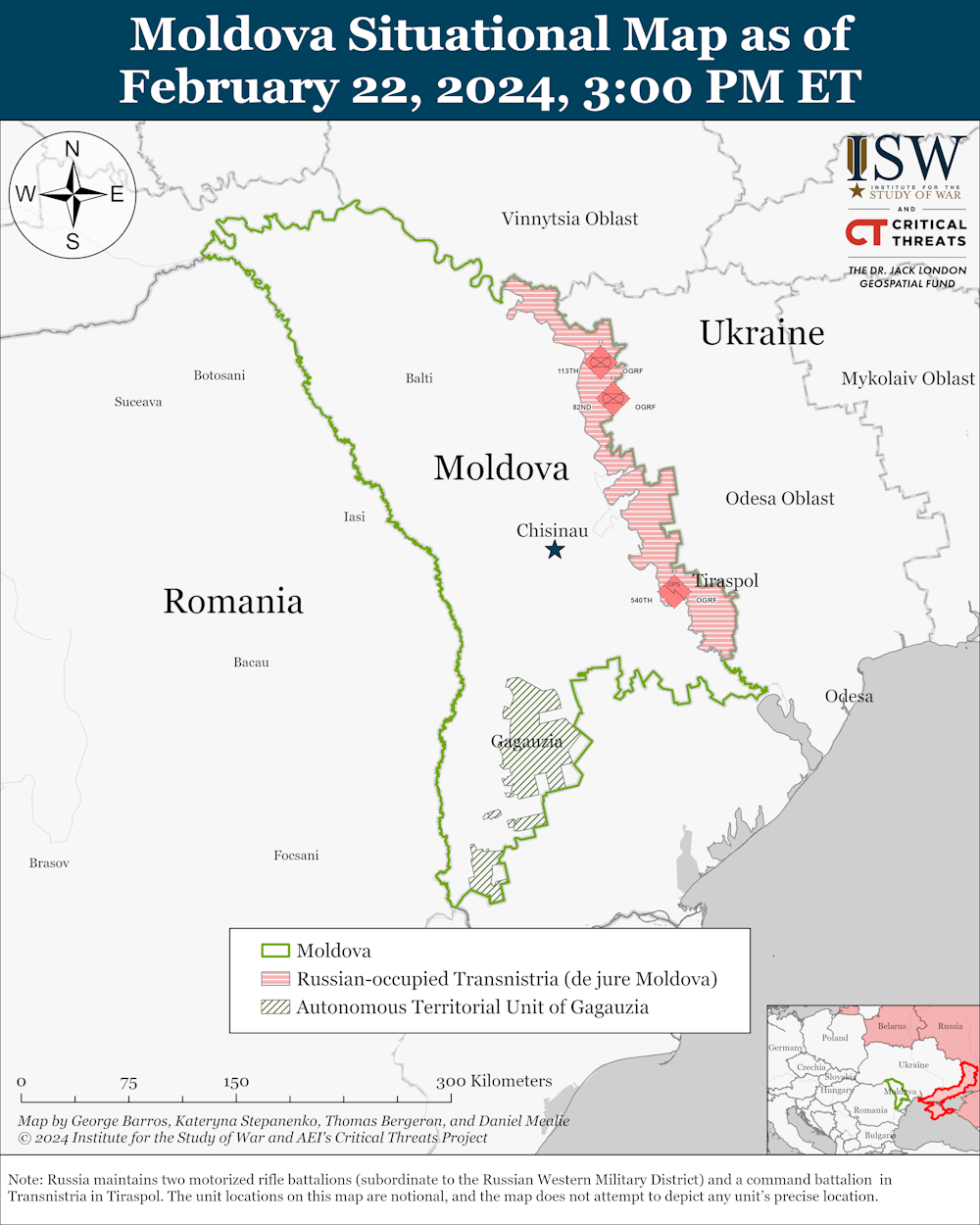
    Moldova’s election result will certainly have come as a relief not only to Sandu and her supporters but also to Moldova’s western partners. It is the first time that a popularly elected president has won a second term in the tiny landlocked former Soviet satellite. The country borders Romania and Ukraine and has a small but significant Russian breakaway region, Transnistria, as a constant reminder of Moscow’s influence in the region.

    Moldova’s election presents a clear difference to the Georgian parliamentary election results on October 26, which saw an openly pro-Russian Georgian Dream party win an election considered as neither particularly free nor fair, in results that the Georgia’s opposition-aligned president and western pollsters allege have been rigged.

    Sandu’s win, by contrast, demonstrates both the appeal of the idea of a European future and the limits of Russian interference. Yet the understandable enthusiasm about the result in Moldova also needs to be tempered by a more careful analysis of some of the deeply entrenched societal cleavages that the elections have all but confirmed and the difficulties that lie ahead.

    Deep divisions

    Sandu’s win overall looks impressive. But she did not win the vote in Moldova itself, where Stoianoglo beat her by some 30,000 votes. What saved Sandu, like the EU referendum, was the strong support for her among voters in the diaspora, where she captured almost five times as many votes as Stoianoglo.

    Just over 270,000 votes (83%) of the votes cast by Moldovans living abroad, predominantly in western Europe and north America, saw her comfortably across the finishing line. There may be good reasons not to distinguish between votes from inside and outside Moldova – but the optics are not good.

    Nor can the overall margin of Sandu’s victory gloss over the fact that her supporters inside the country are predominantly concentrated in the capital and the centre of the country. In the capital Chisinau, in the centre of Moldova, Sandu won with 57%, representing almost one-third of her total vote inside the country. In the north and south of the country, Stoianoglo generally took the largest vote share.

    In the country’s second-largest city, Balti in the north, he won 70% of the vote, compared to Sandu’s 30%. In the southern autonomous region of Gagauzia, a hotbed of pro-Russian, anti-European activism, Sandu obtained less than 3%. In Transnistria, Sandu came away with just 20% of the vote.

    Map of Moldova showing the breakaway regions of Transnistria and Gaugazia.
    Institute for the Study of War

    These results are not surprising, given the outcome of the first round of the elections. But they represent fall in support for Sandu compared to in 2020, when she beat the then incumbent, socialist party leader Igor Dodon. Four years ago, Sandu obtained over 250,000 votes more than Dodon, winning almost 58% of the total vote. While she took the overwhelming share of the diaspora vote then as well, she also bested Dodon in most constituencies in the south.

    Dodon campaigned for Stoianoglo in this election, but much of the challenger’s support was very probably due to a massive pro-Russian interference campaign that capitalised on many Moldovans’ fears and frustrations. Pro-Moscow messages aimed to capitalise on fears about being dragged into Russia’s war against Ukraine.

    But there was also frustration with a government that has made little progress on much needed anti-corruption reforms and presided over a serious cost-of-living crisis in the aftermath of the Covid-19 pandemic and made worse by the war on Moldova’s eastern neighbour. Sandu’s party, the Party of Action and Solidarity (PAS) won a commanding majority in the 2021 elections – so failures of the government are seen as failures of Sandu and her agenda.

    Challenges ahead

    That Sandu won the presidency again, and against these odds, demonstrates her resilience. But it can’t be taken for granted that her party will similarly prevail in parliamentary elections due by the autumn of 2025. She may well be forced into a difficult cohabitation with a potentially socialist-led government next year. In a parliamentary democracy, in which the powers of the government by far exceed those of the president, this could significantly slow down Moldova’s EU accession negotiations.

    But there are also some silver linings on the horizon. That Sandu won clearly demonstrates the limits of Russian interference. There is a core part of the Moldovan electorate that cannot be swayed by Russian misinformation or vote buying. This is a basis on which Sandu and PAS can build.

    Perhaps more importantly, Sandu and Stoianoglo both sent conciliatory signals on election eve. Stoianoglo emphasised the importance of respecting the outcome of the democratic process and expressed the hope that Moldovans would now move beyond hatred and division. Sandu acknowledged the concerns of those who had not voted for her and promised to serve as the president of all Moldovans and to work for the country’s further development.

    If they both stay true to their word, Moldova may finally break with a past of repeated political crises and economic stagnation.

    Stefan Wolff is a past recipient of grant funding from the Natural Environment Research Council of the UK, the United States Institute of Peace, the Economic and Social Research Council of the UK, the British Academy, the NATO Science for Peace Programme, the EU Framework Programmes 6 and 7 and Horizon 2020, as well as the EU’s Jean Monnet Programme. He is a Trustee and Honorary Treasurer of the Political Studies Association of the UK and a Senior Research Fellow at the Foreign Policy Centre in London.

    – ref. Maia Sandu’s victory in second round of Moldovan election show’s limits to Moscow’s meddling – https://theconversation.com/maia-sandus-victory-in-second-round-of-moldovan-election-shows-limits-to-moscows-meddling-242796

    MIL OSI – Global Reports –

    January 26, 2025
  • MIL-OSI Global: Cop16: the world’s largest meeting to save nature has ended with no clear path ahead

    Source: The Conversation – UK – By Harriet Bulkeley, Professor of Geography, Durham University

    Increasing rights for Indigenous people and local communities was one of the few steps forward at Cop16. Philipp Montenegro, CC BY-NC-ND

    Progress at the UN’s biodiversity summit, Cop16, in Cali, Columbia, has been slow. Frustratingly so.

    There were high hopes that the Colombian hosts could coordinate action between developed and developing countries towards reaching the landmark global biodiversity agreement reached in Montreal, Canada at Cop15 two years ago. But after two weeks and one long night, negotiations ended abruptly. Many delegates had to leave to catch flights home with key issues unresolved.

    This conference started with alarming news that the latest edition of the red list – the official record of threatened species – shows that more than one third of tree species face extinction in the wild. That’s more than the number of threatened birds, mammals, reptiles and amphibians combined.

    Urging negotiators to recognise the seriousness of this nature crisis, Colombia’s president Gustavo Petro warned they were facing “the battle for life”.

    There was certainly no shortage of people seeking solutions.

    In the heart of the city, Cop16’s green zone hosted vibrant music, film screenings, indigenous arts and crafts. Local people, businesses and conference delegates discussed creative and collaborative ways to address the nature crisis.

    Over in the blue zone, the official conference space, there was a notable increase in the diversity of communities participating across side events and pavilions. The links between biodiversity and human health were highlighted. So too was the importance of nature for water and food security.

    In his opening video message, UN secretary general Antonio Guterres urged countries gathered to “engage all of society” as “la Cop de la gente” (a Cop of the people).

    So protests from Indigenous people and local communities were particularly powerful. Including greater recognition for these groups in the final decisions from the meeting was a rare sign of progress. A new fund to ensure that these groups would receive a share of the profits from the commercial use of digital sequence information – genetic information from native plants and animals – was another victory.

    A new set of principles developed by the UK government to prioritise gender issues in conservation and ensure fair access to the benefits biodiversity action for all marginalised groups received widespread support.

    The focus on economic resilience was more prominent than ever, with two days dedicated to business and finance. In 2018, only 300 businesses attended Cop14 in Egypt. In Cali, this number was 3,000.

    Delegates assemble for the negotiations at Cop16​.
    Philipp Montenegro, CC BY-NC-ND

    Private investors, pension funds, the insurance industry and public banks stressed the importance of creating robust measures of biodiversity improvement. Business sectors focused on transition plans that could support fair and transparent means of reporting progress. The nature tech sector is growing too, with start-ups expected to attract up to $2 billion (£1.5 billion) in investments by the end of 2024.

    Back in the negotiating halls, delegates faced an uphill struggle. Only 44 out of 196 national plans to protect biodiversity have been updated to reflect the new targets. So, it’s no surprise that a gap is widening between current reality and the ambitious set of 23 targets which governments must reach by 2030. While countries agreed to a progress review in 2026, no consensus was reached on the indicators to be used. Progress was painfully slow.

    Negotiators debated how the global agreement on biodiversity should interact with its sister conventions on climate and desertification. Further discussions next year might identify how this could work but this probably won’t lead to drastic change. Some countries, including India and Russia, still seemed unwilling to accept the critical risks posed to nature and society of exceeding the 1.5°C global target for climate change.

    Many developing nations were concerned that greater integration between the climate crisis and biodiversity would lead to “double counting” of funding with the danger that developed countries could backtrack on their promises to support dedicated action on nature. Others, including the EU, argued that action to conserve and restore nature was an essential part of tackling all environmental and societal global challenges.

    The deadlock between these positions continued for days. In the final hours of Cop16, negotiators reached a compromise that sets out a more integrated pathway for bringing action on climate and nature together. While the effects of climate change directly exacerbate biodiversity loss, restoring nature can be a powerful tool in the fight to mitigate the climate crisis and benefit biodiversity. Nature-based solutions – measures like restoring peatlands and wetlands, planting trees and mangroves – help build that resilience.

    Heads of state and ministers joining at the midpoint of the meeting pointed out the need to ensure that nature is protected both for its own sake and for the communities that depend on healthy ecosystems for their livelihood and wellbeing.

    But at the end of a long final night, these words were not accompanied by concrete plans for action or the financial commitments about how nature protection should be paid for that many at Cop16 were hoping for.

    Whole of society, all of government?

    The global biodiversity agreement set in 2022 called for a whole of society approach to address the nature crisis. Cop16 certainly delivered. From local communities to huge businesses, there was a spirit of rolling up sleeves and putting investment and innovation to work using nature-based solutions to restore and conserve biodiversity.

    One of many packed side-events which bought the ‘whole of society’ together at Cop16.
    Philipp Montenegro, CC BY-NC-ND

    The same energy and commitment was clear from many of the local and sub-national governments assembled at Cop16. The first gathering of Mayors for Nature demonstrated significant commitment to action.

    Leaders from California and Quebec set the tone by investing in large-scale programmes, with Quebec not only committing to fund their own biodiversity action but also contributing to the global biodiversity fund – the first regional government to do so.

    But national governments struggled to move forward. The complexity of addressing biodiversity and its necessary interactions with sectors such as agriculture, transport and mining, as well as concerns over historic injustices between developing and developed countries, was perhaps too much for Cop16 to resolve.

    The risk is that, as governments navigate these challenges, the private sector could accelerate action without scrutiny. I worry that the lack of policy coordination could deter investors and slow the pace of action that local communities and regional governments want to make. Rather than waiting for global consensus, groups can catalyse change while holding each other accountable to make swift progress to save nature.


    Don’t have time to read about climate change as much as you’d like?

    Get a weekly roundup in your inbox instead. Every Wednesday, The Conversation’s environment editor writes Imagine, a short email that goes a little deeper into just one climate issue. Join the 40,000+ readers who’ve subscribed so far.


    Harriet Bulkeley receives funding from the European Commission and currently serves as an advisor to the UK Department of Environment, Food and Rural Affairs.

    – ref. Cop16: the world’s largest meeting to save nature has ended with no clear path ahead – https://theconversation.com/cop16-the-worlds-largest-meeting-to-save-nature-has-ended-with-no-clear-path-ahead-242160

    MIL OSI – Global Reports –

    January 26, 2025
  • MIL-OSI Europe: ASIA/AZERBAIJAN – COP29 in Baku and major international meetings for economic and geopolitical issues

    Source: Agenzia Fides – MIL OSI

    by Cosimo GrazianiBaku (Agenzia Fides) – From 11 to 22 November the annual Conference of the Parties (COP) of the United Nations Framework Convention on Climate Change will take place, in its 29th edition. This year the conference will take place in Baku (Azerbaijan), a country whose economy and development are based on the exploitation of hydrocarbons.It is not the first time that the COP has been organized by an oil or gas producer: last year it was the turn of the United Arab Emirates, and in 2012 it was Qatar. But this and other aspects of the host country, combined with the current political situation around the world, make this year’s conference a particularly important event, not only in terms of environmental issues.The COP29 discussions will focus on revising the collective objectives in terms of their financing. The aim is to formulate new economic targets to help developing countries adapt and mitigate the effects of climate change. The starting point is the commitment made by developed countries, historically responsible for the majority of CO2 emissions, had made way back in 2009, that is, to allocate 100 billion dollars per year. In the current situation, that annual figure is no longer sufficient and will necessarily have to be raised.It remains to be seen whether it will be objectively achieved, since the previously set threshold of $100 billion per year has never been reached.Another important topic on the agenda is the revision of Article 6 of the Paris Agreement, which regulates emissions trading between states.In terms of organizing the Conference, Azerbaijan has been coordinating in recent years with the United Arab Emirates and Brazil, the next organizer of the COP, in order to link the agenda as much as possible with the past and the future.As part of this year’s activities, Azerbaijani organizers have launched a number of environmental initiatives in parallel with the negotiations surrounding the event. These include the creation of a platform for dialogue between private individuals, government bodies and non-governmental organizations to help developing countries prepare and submit their Biennial Transparency Reports (BTRs), which all countries must submit from this year onwards, to document the measures they have taken to combat climate change.However, there is a serious risk that environmental issues will be pushed into the background and overshadowed by issues affecting the host country itself.Two issues in particular are at the heart of the criticism levelled at Baku in the run-up to the conference: the weight of hydrocarbons in the national economy and the profile of the political regime.The state-owned Azerbaijani hydrocarbon company Socar will increase gas production in the coming years to fulfill contracts with European countries, for which Azerbaijan is the country that has replaced Russia in supplying energy sources. It is therefore questionable to what extent the country can really contribute to an effective climate agreement and whether critical voices can really be heard at the conference. The COP29 regulations, meanwhile, contain a provision in Article 16 requiring compliance with the laws of the Republic of Azerbaijan, which may be intended to silence critical voices. The Azerbaijani government, meanwhile, responded to such interpretations by stressing that foreign interference in the proceedings of the conference would not be accepted. However, the participation of representatives of non-governmental organizations is a cornerstone of the conference negotiations, and restricting their presence could affect the decision-making process and the final outcome.Even more important is the possible entanglement of the COP with sensitive foreign policy issues. For months, Baku has been sending the message that it is seeking a “peace COP” in clear connection with the crisis between Armenia and Azerbaijan, even if the explicit references so far concern crises in Europe and the Middle East. (Agenzia Fides, 4/11/2024)
    Share:

    MIL OSI Europe News –

    January 26, 2025
  • MIL-OSI Russia: Financial News: The main topics of the Moscow Exchange Corporate Governance Forum were information disclosure, challenges for businesses when going public, and the role of the Corporate Governance Code

    Translation. Region: Russian Federation –

    Source: Moscow Exchange – Moscow Exchange –

    On October 31, 2024, a corporate governance forum was held in Moscow, organized by the Moscow Exchange.

    The forum brought together more than 500 participants and guests of the event, who represented over 300 companies.

    The panel discussions featured representatives of the Bank of Russia, the Ministry of Finance, the Moscow Exchange, major Russian issuers, investors, professional communities, as well as corporate secretaries and recognized experts in this field.

    The leitmotif of the forum was the challenges that the corporate governance system of companies has to face in the process of their IPO and in their further activities. The participants of the discussions considered the importance of corporate governance, including the role of information disclosure for the formation and development of capital markets in modern conditions. The speakers touched upon the topics of improving this system as a key element in increasing trust in financial markets, as well as ensuring the protection of the rights and interests of shareholders.

    Particular attention was paid to the significance of the Corporate Governance Code adopted ten years ago and its impact on strengthening the system of relationships between management, the board of directors, shareholders of the company and other stakeholders. The forum participants discussed how this document contributes to increasing the transparency and efficiency of public companies, whether it should be amended and what prospects await its development in the future.

    Elena Kuritsyna, Senior Managing Director for Issuer and Government Relations at Moscow Exchange:

    “I am glad that the forum has become a space for constructive and open dialogue between representatives of government agencies, the regulator, business and the expert community. I am confident that its results will be used both for sharing experiences and developing effective solutions for interaction between issuers and investors, and for further improvement of legislation and corporate governance practices. I would like to thank all participants and guests of the forum for their active participation and contribution to the discussion of the most important issues of corporate governance development in Russia.”

    At the end of the forum, a ceremonial ceremony took place award ceremony winners of the XXVII annual annual report competition.

    Moscow Exchange Group operates the largest multifunctional exchange platform in Russia for trading shares, bonds, derivatives, currencies, money market instruments and commodities. The Group includes a central depository and a clearing center that acts as a central counterparty in the markets, which allows Moscow Exchange to provide its clients with a full cycle of trading and post-trading services.

    Contact information for media 7 (495) 363-3232PR@moex.com

    Please note: This information is raw content directly from the source of the information. It is exactly what the source states and does not reflect the position of MIL-OSI or its clients.

    Please note; This information is raw content directly from the information source. It is accurate to what the source is stating and does not reflect the position of MIL-OSI or its clients.

    https://www.moex.com/n74508

    MIL OSI Russia News –

    January 26, 2025
  • MIL-OSI Russia: Financial News: Henderson IPO on Moscow Exchange Celebrates One Year

    Translation. Region: Russian Federation –

    Source: Moscow Exchange – Moscow Exchange –

    November 2, 2024 marks exactly one year since the start of trading in shares of PJSC Henderson Fashion Group (NNFG) on the Moscow Exchange. The company became the first representative of fashion retail on the Russian stock market.

    Henderson is the largest federal chain of men’s fashion stores in Russia, offering clothing, footwear, accessories, perfumes and cosmetics in the premium and affordable luxury segments.

    The company’s market capitalization is 22.37 billion rubles, the share of shares in free circulation (free-float) is 12.17%. The shareholder base has doubled since the IPO and now has more than 80 thousand shareholders.

    Henderson shares are included in the second-level quotation list of the Moscow Exchange and are included in the settlement bases Moscow Exchange Broad Market Index And Moscow Exchange IPO Index.

    In 2024, Henderson was ranked third in Moscow Exchange Annual Reports Competition in the Retail Investors’ Choice category, demonstrating an example of openness and professionalism in information disclosure and corporate governance.

    Congratulations to the company on the first anniversary of listing on the Moscow Exchange!

    The HENDERSON fashion house is the largest federal retailer of men’s fashion in Russia and offers men elegant and stylish collections for work and leisure in the premium and affordable luxury segments. Today, HENDERSON manages 160 of its own fashion stores located in 64 cities in Russia – from Kaliningrad to Vladivostok, from Murmansk to Grozny, and is also present on the largest marketplaces in the country. Since autumn 2022, the brand has entered the international market, opening three stores in Armenia under the international franchising system.

    Moscow Exchange is the largest Russian exchange, the only multifunctional platform in Russia for trading shares, bonds, derivatives, currencies, money market instruments and commodities. The Moscow Exchange Group includes a central depository, as well as a clearing center that performs the functions of a central counterparty in the markets, which allows Moscow Exchange to provide clients with a full cycle of trading and post-trading services.

    Contact information for media 7 (495) 363-3232PR@moex.com

    Please note: This information is raw content directly from the source of the information. It is exactly what the source states and does not reflect the position of MIL-OSI or its clients.

    Please note; This information is raw content directly from the information source. It is accurate to what the source is stating and does not reflect the position of MIL-OSI or its clients.

    https://www.moex.com/n74509

    MIL OSI Russia News –

    January 26, 2025
  • MIL-OSI Russia: Financial news: 02.11.2024, 10-11 (Moscow time) the values of the upper limit of the price corridor and the range of market risk assessment for the security RU000A1020L5 (Samara Region 15) were changed.

    Translation. Region: Russian Federation –

    Source: Moscow Exchange – Moscow Exchange –

    02.11.2024

    10:11

    In accordance with the Methodology for determining the risk parameters of the stock market and deposit market of Moscow Exchange PJSC by NCO NCC (JSC) on 02.11.2024, 10-11 (Moscow time), the values of the upper limit of the price corridor (up to 89.53) and the range of market risk assessment (up to 705.9 rubles, equivalent to a rate of 8.75%) of the security RU000A1020L5 (Samara Region 15) were changed.

    Please note: This information is raw content directly from the source of the information. It is exactly what the source states and does not reflect the position of MIL-OSI or its clients.

    Please note; This information is raw content directly from the information source. It is accurate to what the source is stating and does not reflect the position of MIL-OSI or its clients.

    https://www.moex.com/n74510

    MIL OSI Russia News –

    January 26, 2025
  • MIL-OSI Russia: Financial news: 02.11.2024, 10-15 (Moscow time) the values of the upper limit of the price corridor and the range of market risk assessment for the security RU000A105G81 (DOM 1P-13R) were changed.

    Translation. Region: Russian Federation –

    Source: Moscow Exchange – Moscow Exchange –

    02.11.2024

    10:15

    In accordance with the Methodology for determining the risk parameters of the stock market and deposit market of Moscow Exchange PJSC by NCO NCC (JSC), on 02.11.2024, 10-15 (Moscow time), the values of the upper limit of the price corridor (up to 101.7) and the range of market risk assessment (up to 1104.68 rubles, equivalent to a rate of 11.25%) of the security RU000A105G81 (DOM 1P-13R) were changed.

    Please note: This information is raw content directly from the source of the information. It is exactly what the source states and does not reflect the position of MIL-OSI or its clients.

    Please note; This information is raw content directly from the information source. It is accurate to what the source is stating and does not reflect the position of MIL-OSI or its clients.

    https://www.moex.com/n74512

    MIL OSI Russia News –

    January 26, 2025
  • MIL-OSI Russia: Financial news: 02.11.2024, 10-16 (Moscow time) the values of the upper limit of the price corridor and the range of market risk assessment for the security RU000A1020L5 (Samara Region 15) were changed.

    Translation. Region: Russian Federation –

    Source: Moscow Exchange – Moscow Exchange –

    02.11.2024

    10:16

    In accordance with the Methodology for determining the risk parameters of the stock market and deposit market of Moscow Exchange PJSC by NCO NCC (JSC) on 02.11.2024, 10-16 (Moscow time), the values of the upper limit of the price corridor (up to 91.02) and the range of market risk assessment (up to 717.26 rubles, equivalent to a rate of 10.5%) of the security RU000A1020L5 (Samara Region 15) were changed.

    Please note: This information is raw content directly from the source of the information. It is exactly what the source states and does not reflect the position of MIL-OSI or its clients.

    Please note; This information is raw content directly from the information source. It is accurate to what the source is stating and does not reflect the position of MIL-OSI or its clients.

    https://www.moex.com/n74513

    MIL OSI Russia News –

    January 26, 2025
  • MIL-OSI Russia: Financial news: 02.11.2024, 11-54 (Moscow time) the values of the upper limit of the price corridor and the range of market risk assessment for the security RU000A109SK6 (MTS 1P-27) were changed.

    Translation. Region: Russian Federation –

    Source: Moscow Exchange – Moscow Exchange –

    02.11.2024

    11:54

    In accordance with the Methodology for determining the risk parameters of the stock market and deposit market of Moscow Exchange PJSC by NCO NCC (JSC), on 02.11.2024, 11-54 (Moscow time), the values of the upper limit of the price corridor (up to 107.73) and the range of market risk assessment (up to 1131.0 rubles, equivalent to a rate of 11.25%) of the RU000A109SK6 security (MTS 1P-27) were changed.

    Please note: This information is raw content directly from the source of the information. It is exactly what the source states and does not reflect the position of MIL-OSI or its clients.

    Please note; This information is raw content directly from the information source. It is accurate to what the source is stating and does not reflect the position of MIL-OSI or its clients.

    https://www.moex.com/n74516

    MIL OSI Russia News –

    January 26, 2025
  • MIL-OSI Europe: Frank Elderson: The first decade of European supervision: taking stock and looking ahead

    Source: European Central Bank

    Keynote speech by Frank Elderson, Member of the Executive Board of the ECB and Vice-Chair of the Supervisory Board of the ECB at the “10 Years of SSM – Looking back and looking forward” conference organised by the European Banking Institute and the Hessisches Ministerium für Wissenschaft und Kunst

    Frankfurt am Main, 4 November 2024

    Introduction

    Thank you for your kind invitation. It’s a pleasure to be with you this afternoon to reflect on the first decade of European banking supervision and, most importantly, to take a look at the path ahead of us.

    On this day ten years ago, the morning might have seemed just like a typical November morning in Frankfurt’s Bankenviertel: a rainy autumn day, with people heading to their offices armed with umbrellas, wearing heavy coats.

    But that day ten years ago was anything but typical.

    Because it was the first time European supervisory teams got together and started work on an important task: making sure the banking system is safe and sound on behalf of European citizens.

    At the time, some argued that integrating a fragmented system of supervision was either impossible or would take forever. Well, those pioneer European supervisors who came together on 4 November 2014 have certainly proven the sceptics wrong.

    We have come a long way since that day. The last ten years have been transformative both for the Single Supervisory Mechanism (SSM) and the banks we supervise. We have evolved from a start-up to a mature, risk-based and effective supervisor. Banks under our supervision have also evolved significantly, building up remarkable resilience. Unlike in the crises that predated the banking union, banks have now become part of the solution to economic shocks rather than the source. That’s good news.

    There is, however, no room for complacency.

    While past achievements provide a solid foundation, they are by no means a guarantee of future success. The macro-financial environment is changing profoundly. Unlike ten years ago, when the main risks emanated from banks themselves, today prudential risks are largely driven by an increasingly volatile and uncertain external environment.

    In my remarks, I will therefore focus on how supervisors and banks must adapt to this challenging environment. I will also address suggestions being put forward by some to relax banking regulation and supervision – suggestions which in my view are misguided. Compromising the resilience that has been carefully built up over the past ten years would undermine the objective of having a financial system that can support a competitive and sustainable economy.

    The first decade of European supervision: from start-up to maturity

    But before focusing on current challenges, I hope you’ll allow me to take a brief walk down memory lane. Where did we start from? What were the expectations a decade ago? And how did we go about meeting them?

    As Europe was looking into the abyss of the euro area sovereign debt crisis in 2012, legislators agreed on nothing less than a paradigm shift – the banking union, which represented the most significant leap forward in European integration since the introduction of the euro.

    The banking union encompasses three pillars, each with a straightforward task: first, European banking supervision to ensure that banks across Europe are subject to the same rules and high-quality supervisory standards. Second, European resolution to make sure that if banks fail, they can get resolved in an orderly manner instead of relying on the public purse. And third, European deposit insurance, to make sure that when push comes to shove, all depositors enjoy the same protection, no matter where in the euro area they are based.

    As far as the supervisory pillar is concerned, the ECB and the national competent authorities that make up the SSM were given a clear mission: ensuring the safety and soundness of banks. This is not just an end in itself – it is necessary so that banks remain at the service of people and businesses by funding innovation, productivity and sustainable growth.

    The destination was clear. But we had no roadmap to show us how to get there. There was no blueprint on how to transform a fragmented system of supervision into an integrated one. So it was by no means a given that the SSM would be a success.

    In the start-up phase of the SSM we were essentially crossing the bridge we were still building: we spent the mornings recruiting the best risk experts from across Europe, the afternoons supervising significant banks, and the evenings setting up our processes.

    When we started, there were plenty of ways in which supervisors across Europe looked at risks and how best to mitigate them. They all focused on different things: while some put the emphasis on credit file reviews, others focused on scrutinising banks’ internal risk management through the lens of the internal capital adequacy assessment process. Some supervisors chose to shine the spotlight more closely on governance or on-site culture.

    Thanks to the unwavering commitment and tireless energy of supervisors from the national competent authorities and the ECB, we consolidated the best practices from this wealth of supervisory experience into a common supervisory approach. What followed was a race to the top rather than to the bottom, resulting in high-quality supervision and a level playing field.

    On our path to becoming a mature organisation, we have adapted our processes along the way. Our supervision has evolved from being predominantly rule-based and heavily codified, to having a more flexible, agile and risk-focused approach.

    And banks under our supervision have also evolved significantly over the past ten years. Today, European banks are in much better shape than a decade ago.

    For instance, the financial resilience of SSM banks has notably improved. The aggregate Common Equity Tier 1 (CET1) ratio has increased from 12.7% in 2015 to 15.8% today, the liquidity coverage ratio has increased from 138% in 2016 to 159% today and the non-performing loan ratio of significant banks has declined from 7.5% in 2015 to 1.9% today.[1]

    Moreover, risk management, the effectiveness of internal control functions and governance arrangements in SSM banks have all improved.

    Over the past ten years, banks under European supervision have shown remarkable resilience even under the most challenging circumstances. They have evolved from shock propagators to shock absorbers, stabilising rather than de-stabilising the economy as it experienced significant shocks such as the pandemic, Russia’s unjustified war against Ukraine and the rapid changes to the interest rate environment. This resilience is also a testament to the crucial role played by European supervision, confirming that the SSM has lived up to the expectations that were placed on it a decade ago.[2]

    Highly complex, volatile and challenging risk landscape

    But there is no room for complacency. We can’t assume that the achievements of the past ten years will automatically pave the way for another successful decade of resilient banks under European supervision.

    We can’t ignore the fact that the world around us is changing. The macro-financial environment is characterised by unprecedented shocks, giving rise to new risk drivers. In the words of President Lagarde, in the last three years alone we have “faced the worst pandemic since the 1920s, the worst conflict in Europe since the 1940s and the worst energy shock since the 1970s”.[3]

    And as former US Treasury secretary Larry Summers put it, “this is the most complex, disparate and cross-cutting set of challenges that I can remember in the 40 years that I have been paying attention to such things’’.[4]

    In fact, the current combination of risks, challenges and uncertainties is staggering.

    A widening geopolitical divide and a global economy that is fragmenting into competing, increasingly protectionist blocs, give rise to new geopolitical risks.

    Heightened operational headwinds such as ever-more sophisticated cyberattacks and technology disruptions are challenging banks’ operational resilience.

    And last, but, alas, not least, we see the climate and nature crises unfolding, as evidenced by the horrific events last week in Paiporta and other villages and towns in the Spanish region of Valencia. On top of the human tragedy and physical destruction, the climate and nature crises are increasingly leading to material risks for banks.

    What makes this period so unprecedented is that these challenges are not happening one after the other – they are all happening at the same time. And there is no clear sign of them going away any time soon, rather the contrary.

    So how can supervisors and banks adjust to this era of polycrises?

    Ensuring bank resilience in the era of polycrises

    First and foremost, banks’ management bodies are the ones holding the steering wheel and must ensure that banks remain resilient and prepared for this new risk landscape. This involves making sure that banks have sound risk management that is commensurate to new risk drivers, that they maintain sufficient capital headroom to cushion against credible adverse scenarios, and that banks’ management bodies are effective in their steering and oversight function.

    While acknowledging that banks’ management bodies are in the driving seat, as supervisors we keep a close eye to ensure that no material risks are left unaddressed.[5] This means that we must be able to identify the risks and then ensure that banks are resilient to these risks.

    To ensure that our risk identification can keep up with the changing risk landscape, we have made our supervisory processes more agile. We simply cannot look at every risk with the same intensity, every year, in every bank we supervise. We have therefore started to implement a supervisory risk tolerance framework aiming at freeing up the desks and minds of supervisors. This allows our supervisors to focus on those risks that are most pertinent and the supervisory actions that are most impactful. In the same vein, we have also reformed our Supervisory Review and Evaluation Process (SREP) to make it more targeted and risk-based. Moreover, we are increasingly using supervisory technology tools – also known as suptech – to detect risks early on and move closer to real-time supervision.[6]

    These improvements to our processes give our supervisory teams more time to focus on the most relevant risks. By detecting vulnerabilities that would otherwise only surface later, we help banks to be better prepared and build up resilience proactively.

    Let me illustrate this with an example. Threats from cyberattacks are on the increase and are challenging banks’ operational resilience. In 2022, 50% of our supervised entities were subject to at least one successful attack – that number rose to 68% in just one year.[7] In order to help banks better identify their vulnerabilities to cyber risks and bolster their operational resilience, earlier this year we conducted a cyber resilience stress test[8] to gauge how well banks would be able to respond to and recover from a successful cyberattack while maintaining their critical functions and services. The cyber resilience stress test was an important learning exercise for banks; it helped them pinpoint areas where they need to build greater operational resilience to cyberattacks, which are unlikely to fade away in the current geopolitical risk environment.

    Let’s shift our focus from risk identification to remediation. As supervisors we must ensure that the risks we identify in our risk assessments are adequately managed. This also means that if we find deficiencies in the way banks are managing their risks, they must be remediated fully and in a timely manner, not at some unspecified point in the distant future. This is why we are putting more emphasis on impact and effectiveness.[9]

    To ensure full and timely remediation of our supervisory findings, we set out a time-bound remediation path. If a bank is not remedying the deficiency at a speed that will ensure full and timely remediation by the pre-established timeline, we will step up our supervisory action by deploying more intrusive measures from our ample supervisory toolkit. This is what we call the “escalation ladder”.

    The use of supervisory powers to compel banks to make concrete improvements is not just something we do within the SSM; it is international best practice.[10] The disorderly events of the March 2023 banking turmoil were a clear reminder of what can happen when banks leave material shortcomings unaddressed for too long.

    Banks and supervisors need to have the capacity to focus on emerging challenges. That’s why it is important to declutter our desks by tackling supervisory findings that have been with us for too long. While this is always an imperative, it is especially pertinent in the current challenging risk landscape.

    Let me illustrate this with the example of risk data aggregation and reporting. It is very hard to imagine any bank being able to appropriately manage its risks without strong risk data reporting. A bank’s ability to manage and aggregate risk-related data effectively is a pre-requisite for sound decision-making and robust risk governance. In fact, the Capital Requirements Directive, as transposed into national law, requires banks to put processes in place to identify all material risks. Worryingly, risk data aggregation and reporting was the lowest-scoring sub-category of internal governance in the 2023 SREP. In other words, despite the work done by supervisors over the years, too many banks still don’t have adequate risk data aggregation and reporting capabilities.

    It should not be a surprise that ECB Banking Supervision is stepping up the escalation ladder, using more intrusive supervisory tools to ensure that banks have adequate risk data aggregation capabilities. It’s not about forcing banks to do something that is merely an added perk; it’s about making sure they are able to manage material risks adequately and in good time. In a rapidly changing risk environment where prompt availability of reliable data has become essential, timely remediation of our supervisory findings on risk data aggregation is more important than ever.

    Deregulation and lenient supervision would compromise resilience

    After a decade of European supervision, it is not only the external risk environment that has changed. The current debate suggests that the perception by some of the role of financial regulation and supervision is also changing.

    Ten years ago, with the gloomy memories of the global financial crisis lingering in people’s minds, there was a strong consensus across society on the need for strong financial regulation and supervision in order to safeguard the public good of financial stability.

    Today, it appears that the pendulum is slowly swinging in the opposite direction. Some have raised the question as to whether regulation and supervision have become too conservative, to the point that they may constrain growth.

    Let me be clear: the argument being put forward in favour of relaxing banking regulation and supervision in order to promote growth is misguided.[11]

    We can’t allow the memory of the global financial crisis to fade. Its lessons are as relevant today as they were back in 2012, when the banking union was created. As deputy governor of the Bank of England, Sam Woods, correctly said, the great financial crisis was “the biggest growth-destroying event in recent economic history”.[12] The crisis was a stark reminder of the economic, social and fiscal hardship that weakly regulated and supervised banks can cause for people. The last thing we should do is ignore the lessons of the financial crisis and allow a regulatory race to the bottom, which would compromise the resilience that has been carefully built up over the last decade.

    It is a fundamental misconception to frame safety and competitiveness as opposing forces.

    It is essential to remember that resilient and well-capitalised banks are a pre-condition for competitiveness and sustainable growth.

    Strong and resilient banks are best equipped to lend to the real economy, funding innovation, investment and growth, even during economic downturns.[13] Banking deregulation or more lenient supervision would weaken the foundations of growth.

    It is true that European growth has been sluggish when compared with other regions, and addressing it is rightly a top priority. That is why we need policies to tackle the root causes of low productivity, promote innovation and bolster the single European market.

    For instance, the EU will need an additional €5.4 trillion between 2025 and 2031 to advance our green transformation, accelerate the digitalisation of our economy and bolster our defence capabilities.[14] Faced with this mammoth task, deepening the capital markets union to help guide the required financing flows should be our highest priority. This will help channel private investments towards supporting innovation and the twin green and digital transition – ultimately fostering EU competitiveness.

    To speed up the integration of a single banking market in Europe, we should now move forward and complete the banking union.

    As a first step, we must enhance the crisis management and deposit insurance framework so that the failures of small and medium-sized banks can be dealt with more effectively.

    Second, we would welcome if Member States were to resume discussions on setting-up a European-level public backstop to provide temporary liquidity funding to banks following resolution. The credibility of the resolution framework in Europe would be significantly enhanced by setting up a framework for liquidity in resolution.

    Moreover, building on the strong foundations of the SSM and the Single Resolution Mechanism, we must pave the way for a common European deposit insurance scheme (EDIS). In the first decade of the SSM, risks have been significantly reduced and common supervisory standards have been established. These preconditions for EDIS have now been met, and moving it forward will be important for severing any remaining feedback loops between banks and sovereigns, given that these proved so harmful during the sovereign debt crisis.

    Conclusion

    Let me conclude.

    Ten years ago today, when European supervisory teams started to come together for the first time, it was not at all certain that the SSM would be a success.

    We have since built a strong and effective supervisory framework in Europe, perceptive to evolving risks and – whenever necessary and appropriate – insistent in making sure that material risks are addressed. European banks have notably improved, proving resilient to shocks that we couldn’t have imagined a decade ago. This resilience is also a result of the strengthened supervisory and regulatory framework put in place after the global financial crisis, including the creation of the banking union.

    Ten years ago, the first Vice-Chair of the SSM, Sabine Lautenschläger, invoked the parallel of an athlete at the beginning of a career, who trained extremely hard and achieved an excellent result in a first major tournament.[15] To turn this promising start into a track record of sustained high performance, the athlete clearly cannot afford to rest on her laurels. Instead, she needs to go right back to the routine of constant training, to keep developing her skills and thus continue to build the foundation for future success on a day-to-day basis.

    This conclusion is as relevant today as it was ten year ago, especially considering the challenges along the path ahead.

    Considering the macro-financial environment and volatile risk landscape, it is safe to say that there is a high likelihood of unprecedented shocks continuing to emerge over the next decade. To make sure banks continue to serve European households and businesses under these challenging circumstances, we must ensure they remain resilient. Because a stable banking system forms the bedrock of long-term competitiveness and sustainable growth.

    European supervisors will continue to work tirelessly to make sure banks are well capitalised and adequately manage their risks. In this way, in ten years’ time we can celebrate another successful decade of resilient banks under European supervision.
    MIL OSI Europe News –

    January 26, 2025
  • MIL-OSI USA: Statement by President Joe  Biden on Moldova’s Presidential  Elections

    US Senate News:

    Source: The White House
    I congratulate Maia Sandu on her historic reelection as the President of Moldova. 
    On Sunday, the Moldovan people went to the polls and voted in favor of President Sandu’s vision for a secure, prosperous, and democratic Moldova. President Sandu’s reelection comes just two weeks after the Moldovan people passed a constitutional referendum in support of membership in the European Union. 
    For months, Russia sought to undermine Moldova’s democratic institutions and election processes. But Russia failed. The Moldovan people have exercised their democratic right to choose their own future, and they have chosen to pursue a path aligned with Europe and democracies everywhere.

    MIL OSI USA News –

    January 26, 2025
  • MIL-OSI Russia: The Gambia: IMF Staff Reaches Staff-Level Agreement on the Second Review of the Extended Credit Facility Arrangement

    Source: IMF – News in Russian

    November 4, 2024

    End-of-Mission press releases include statements of IMF staff teams that convey preliminary findings after a visit to a country. The views expressed in this statement are those of the IMF staff and do not necessarily represent the views of the IMF’s Executive Board. Based on the preliminary findings of this mission, staff will prepare a report that, subject to management approval, will be presented to the IMF’s Executive Board for discussion and decision.

    • IMF staff and the Gambian authorities have reached a staff-level agreement on economic policies to conclude the second review of the program under the Extended Credit Facility (ECF) arrangement.
    • Economic recovery is strengthening while inflation has decelerated significantly.
    • The Gambia’s reform agenda is advancing despite challenges to fiscal policy.

    Washington, DC: An International Monetary Fund (IMF) team, led by Ms. Eva Jenkner, held discussions in Washington DC with the Gambian authorities. The discussions followed those in Banjul from September 30 to October 11, 2024 (see PR 24/367). A staff-level agreement was reached on the second review of the program supported under the 36-month Extended Credit Facility (ECF) arrangement approved in January 2024 for total access of SDR 74.64 million (about US$99.4 million). Subject to approval by the IMF’s Executive Board, the completion of the review would enable a disbursement of SDR 8.29 million (about US$11.04 million), bringing the total disbursement under the arrangement to about US$33.1 million. The Board date is tentatively scheduled for December 20, 2024.

    At the conclusion of the discussions, Ms. Jenkner issued the following statement:

    “The authorities remain committed to their reform agenda and program objectives.

    “Economic activity is strengthening. Economic growth remains estimated at 5.8 percent for 2024, supported by agriculture, services, telecom, and construction sectors. Inflation reached 10 percent at end-September 2024, from a peak of 18.5 percent at end-September 2023, remaining above the central bank’s medium-term objective of 5 percent.

    “Continued policy discussions mainly focused on the fiscal trajectory for 2024 and 2025 with the aim of maintaining fiscal responsibility. This includes increasing the room for responding to large social and developmental needs, protecting the most vulnerable, addressing climate related risks and vulnerabilities, and ensuring gradual clearance of central government arrears and unsettled commitments.

    “The ECF supported program is anchored on a medium-term fiscal framework aiming to reduce debt vulnerabilities and to maintain overall macrofinancial stability.

    “The mission would like to thank its counterparts for candid and constructive discussions.”

    IMF Communications Department
    MEDIA RELATIONS

    PRESS OFFICER: Julie Ziegler

    Phone: +1 202 623-7100Email: MEDIA@IMF.org

    @IMFSpokesperson

    https://www.imf.org/en/News/Articles/2024/11/02/pr-24405-the-gambia-imf-staff-reaches-sla-on-the-2nd-rev-of-the-ecf-arrangement

    MIL OSI

    MIL OSI Russia News –

    January 26, 2025
  • MIL-OSI Russia: Financial news: 02.11.2024, 12-32 (Moscow time) the values of the upper limit of the price corridor and the range of market risk assessment for the security RU000A0JVD25 (RusHydro09) were changed.

    Translation. Region: Russian Federation –

    Source: Moscow Exchange – Moscow Exchange –

    02.11.2024

    12:32

    In accordance with the Methodology for determining the risk parameters of the stock market and deposit market of Moscow Exchange PJSC by NCO NCC (JSC) on 02.11.2024, 12-32 (Moscow time), the values of the upper limit of the price corridor (up to 95.87) and the range of market risk assessment (up to 983.51 rubles, equivalent to a rate of 7.5%) of the security RU000A0JVD25 (RusHydro09) were changed.

    Please note: This information is raw content directly from the source of the information. It is exactly what the source states and does not reflect the position of MIL-OSI or its clients.

    Please note; This information is raw content directly from the information source. It is accurate to what the source is stating and does not reflect the position of MIL-OSI or its clients.

    https://www.moex.com/n74518

    MIL OSI Russia News –

    January 26, 2025
  • MIL-OSI Russia: Financial news: 02.11.2024, 13-19 (Moscow time) the values of the upper limit of the price corridor and the range of market risk assessment for the SU26231RMFS9 security (OFZ 26231) were changed.

    Translation. Region: Russian Federation –

    Source: Moscow Exchange – Moscow Exchange –

    02.11.2024

    13:19

    In accordance with the Methodology for determining the risk parameters of the stock market and deposit market of Moscow Exchange PJSC by NCO NCC (JSC) on 02.11.2024, 13-19 (Moscow time), the values of the upper limit of the price corridor (until 13.04) and the range of market risk assessment (up to 150.83 rubles, equivalent to a rate of 50.0%) of the SU26231RMFS9 security (OFZ 26231) were changed.

    Please note: This information is raw content directly from the source of the information. It is exactly what the source states and does not reflect the position of MIL-OSI or its clients.

    Please note; This information is raw content directly from the information source. It is accurate to what the source is stating and does not reflect the position of MIL-OSI or its clients.

    https://www.moex.com/n74520

    MIL OSI Russia News –

    January 26, 2025
  • MIL-OSI Russia: Financial news: 02.11.2024, 13-37 the values of the lower limit of the repo price corridor, the carry rate and the range of interest rate risk assessment of the FIXP security (FIXP GDR) were changed.

    Translation. Region: Russian Federation –

    Source: Moscow Exchange – Moscow Exchange –

    02.11.2024

    13:37

    In accordance with the Methodology for determining the risk parameters of the stock market and deposit market of Moscow Exchange PJSC by NCO NCC (JSC) on 02.11.2024, 13-37 (Moscow time), the values of the lower limit of the repo price corridor with settlement code Y0/Y1Dt (up to -20.0%), the transfer rate and the range of interest rate risk assessment (up to -0.72 rubles, equivalent to a rate of 72.14%) of the FIXP security (FIXP GDR) were changed.

    Please note: This information is raw content directly from the source of the information. It is exactly what the source states and does not reflect the position of MIL-OSI or its clients.

    Please note; This information is raw content directly from the information source. It is accurate to what the source is stating and does not reflect the position of MIL-OSI or its clients.

    https://www.moex.com/n74522

    MIL OSI Russia News –

    January 26, 2025
  • MIL-OSI Russia: Financial news: Three deposit auctions of the PPC “TERRITORIAL DEVELOPMENT FUND” will be held on 11/05/2024

    Translation. Region: Russian Federation –

    Source: Moscow Exchange – Moscow Exchange –

    Parameters;

    Date of the deposit auction 05.11.2024. Placement currency RUB. Maximum amount of funds placed (in the placement currency) 1,589,000,000.00. Placement term, days 30. Date of depositing funds 05.11.2024. Date of return of funds 05.12.2024. Minimum placement interest rate, % per annum 21.00. Terms of the conclusion, urgent or special (Urgent). Minimum amount of funds placed for one application (in the placement currency) 1,589,000,000.00. Maximum number of applications from one Participant, pcs. 1. Auction form, open or closed (Open). Basis of the Agreement – General Agreement. Schedule (Moscow time). Applications in preliminary mode from 12:00 to 12:10. Bids in competition mode from 12:10 to 12:15. Setting the cutoff percentage or declaring the auction invalid until 12:25.

    Additional terms

    Please note: This information is raw content directly from the source of the information. It is exactly what the source states and does not reflect the position of MIL-OSI or its clients.

    Please note; This information is raw content directly from the information source. It is accurate to what the source is stating and does not reflect the position of MIL-OSI or its clients.

    https://www.moex.com/n74543

    MIL OSI Russia News –

    January 26, 2025
  • MIL-OSI Russia: Financial news: On 05.11.2024, a deposit auction of JSC “Corporation “SME” will be held

    Translation. Region: Russian Federation –

    Source: Moscow Exchange – Moscow Exchange –

    Parameters;

    The date of the deposit auction is 05.11.2024. The placement currency is RUB. The maximum amount of funds placed (in the placement currency) is 960,000,000.00. The placement period, days is 30. The date of depositing funds is 05.11.2024. The date of return of funds is 05.12.2024. The minimum placement interest rate, % per annum is 20.00. The terms of the conclusion are urgent or special (Urgent). The minimum amount of funds placed for one application (in the placement currency) is 960,000,000.00. The maximum number of applications from one Participant, pcs. 1. Auction form is open or closed (Open). The basis of the Agreement is the General Agreement. Schedule (Moscow time). Applications in preliminary mode from 10:30 to 10:40. Applications in competition mode from 10:40 to 10:50. Setting a cut-off percentage or declaring the auction invalid before 11:30.

    Additional terms

    Please note: This information is raw content directly from the source of the information. It is exactly what the source states and does not reflect the position of MIL-OSI or its clients.

    Please note; This information is raw content directly from the information source. It is accurate to what the source is stating and does not reflect the position of MIL-OSI or its clients.

    http://www.moex.com/n74544

    MIL OSI Russia News –

    January 26, 2025
  • MIL-OSI Russia: Financial news: Three Federal Treasury deposit auctions will take place on 11/05/2024

    Translation. Region: Russian Federation –

    Source: Moscow Exchange – Moscow Exchange –

    Application selection parameters
    Date of the selection of applications 05.11.2024
    Unique identifier of the application selection 22024570
    Deposit currency rubles
    Type of funds funds of the single treasury account
    Maximum amount of funds placed in bank deposits, million monetary units 1,100,000
    Placement period, in days 2
    Date of deposit 05.11.2024
    Refund date 07.11.2024
    Interest rate for placement of funds (fixed or floating) FIXED
    Minimum fixed interest rate for placement of funds, % per annum 20.05
    Basic floating interest rate for placement of funds –
    Minimum spread, % per annum –
    Terms of conclusion of a bank deposit agreement (fixed-term, replenishable or special) Urgent
    Minimum amount of funds placed for one application, million monetary units 1,000
    Maximum number of applications from one credit institution, pcs. 5
    Application selection form (open or closed) Open
    Application selection schedule (Moscow time)
    Venue for the selection of applications PAO Moscow Exchange
    Applications accepted: from 09:30 to 09:40
    Pre-applications: from 09:30 to 09:35
    Applications in competition mode: from 09:35 to 09:40
    Formation of a consolidated register of applications: from 09:40 to 09:50
    Setting a cut-off percentage rate and/or recognizing the selection of applications as unsuccessful: from 09:40 to 10:00
    Submission of an offer to credit institutions to conclude a bank deposit agreement: from 10:00 to 11:00
    Receiving acceptance of an offer to conclude a bank deposit agreement from credit institutions: from 10:00 to 11:00
    Deposit transfer time In accordance with the requirements of paragraph 63 and paragraph 64 of the Order of the Federal Treasury dated 04/27/2023 No. 10n
    Application selection parameters
    Date of the selection of applications 05.11.2024
    Unique identifier of the application selection 22024571
    Deposit currency rubles
    Type of funds funds of the single treasury account
    Maximum amount of funds placed in bank deposits, million monetary units 20,000
    Placement period, in days 182
    Date of deposit 05.11.2024
    Refund date 05/06/2025
    Interest rate for placement of funds (fixed or floating) FLOATING
    Minimum fixed interest rate for placement of funds, % per annum –
    Basic floating interest rate for placement of funds RUONmDS
    Minimum spread, % per annum 0.00
    Terms of conclusion of a bank deposit agreement (fixed-term, replenishable or special) Urgent
    Minimum amount of funds placed for one application, million monetary units 1,000
    Maximum number of applications from one credit institution, pcs. 5
    Application selection form (open or closed) Open
    Application selection schedule (Moscow time)
    Venue for the selection of applications PAO Moscow Exchange
    Applications accepted: from 12:30 to 12:40
    Preliminary applications: from 12:30 to 12:35
    Applications in competition mode: from 12:35 to 12:40
    Formation of a consolidated register of applications: from 12:40 to 12:50
    Setting a cut-off percentage rate and/or recognizing the selection of applications as unsuccessful: from 12:40 to 13:00
    Submission of an offer to credit institutions to conclude a bank deposit agreement: from 13:00 to 14:00
    Receiving acceptance of an offer to conclude a bank deposit agreement from credit institutions: from 13:00 to 14:00
    Deposit transfer time In accordance with the requirements of paragraph 63 and paragraph 64 of the Order of the Federal Treasury dated 04/27/2023 No. 10n

    RUONmDS = RUONIA – DS, where

    RUONIA – the value of the indicative weighted rate of overnight ruble loans (deposits) RUONIA, expressed in hundredths of a percent, published on the official website of the Bank of Russia on the Internet on the day preceding the day for which interest is accrued. In the absence of a RUONIA rate value published on the day preceding the day for which interest is accrued, the last of the published RUONIA rate values is taken into account.

    DS – discount – a value expressed in hundredths of a percent and rounded (according to the rules of mathematical rounding) to two decimal places, calculated by multiplying the value of the Key Rate of the Bank of Russia by the value of the required reserve ratio for other liabilities of credit institutions for banks with a universal license, non-bank credit institutions (except for long-term ones) in the currency of the Russian Federation, valid on the date for which interest is accrued, and published on the official website of the Bank of Russia on the Internet.

    Application selection parameters
    Date of the selection of applications 05.11.2024
    Unique identifier of the application selection 12024001
    Deposit currency rubles
    Type of funds funds of the single account of the federal budget
    Maximum amount of funds placed in bank deposits, million monetary units 50,000
    Placement period, in days 35
    Date of deposit 06.11.2024
    Refund date 12/11/2024
    Interest rate for placement of funds (fixed or floating) FLOATING
    Minimum fixed interest rate for placement of funds, % per annum –
    Basic floating interest rate for placement of funds RUONmDS
    Minimum spread, % per annum 0.00
    Terms of conclusion of a bank deposit agreement (fixed-term, replenishable or special) Urgent
    Minimum amount of funds placed for one application, million monetary units 1,000
    Maximum number of applications from one credit institution, pcs. 5
    Application selection form (open or closed) Open
    Application selection schedule (Moscow time)
    Venue for the selection of applications PAO Moscow Exchange
    Applications accepted: from 15:30 to 15:40
    Pre-applications: from 15:30 to 15:35
    Applications in competition mode: from 15:35 to 15:40
    Formation of a consolidated register of applications: from 15:40 to 15:50
    Setting a cut-off percentage rate and/or recognizing the selection of applications as unsuccessful: from 15:40 to 16:00
    Submission to credit institutions of an offer to conclude a bank deposit agreement: from 16:00 to 17:00
    Receiving acceptance of an offer to conclude a bank deposit agreement from credit institutions: from 16:00 to 17:00
    Deposit transfer time In accordance with the requirements of paragraph 63 and paragraph 64 of the Order of the Federal Treasury dated 04/27/2023 No. 10n

    RUONmDS = RUONIA – DS, where

    RUONIA – the value of the indicative weighted rate of overnight ruble loans (deposits) RUONIA, expressed in hundredths of a percent, published on the official website of the Bank of Russia on the Internet on the day preceding the day for which interest is accrued. In the absence of a RUONIA rate value published on the day preceding the day for which interest is accrued, the last of the published RUONIA rate values is taken into account.

    DS – discount – a value expressed in hundredths of a percent and rounded (according to the rules of mathematical rounding) to two decimal places, calculated by multiplying the value of the Key Rate of the Bank of Russia by the value of the required reserve ratio for other liabilities of credit institutions for banks with a universal license, non-bank credit institutions (except for long-term ones) in the currency of the Russian Federation, valid on the date for which interest is accrued, and published on the official website of the Bank of Russia on the Internet.

    Contact information for media 7 (495) 363-3232PR@moex.com

    Please note: This information is raw content directly from the source of the information. It is exactly what the source states and does not reflect the position of MIL-OSI or its clients.

    Please note; This information is raw content directly from the information source. It is accurate to what the source is stating and does not reflect the position of MIL-OSI or its clients.

    https://www.moex.com/n74548

    MIL OSI Russia News –

    January 26, 2025
  • MIL-OSI Russia: On November 5, Mikhail Mishustin will make a working visit to the Republic of Belarus

    Translation. Region: Russian Federation –

    Source: Government of the Russian Federation – An important disclaimer is at the bottom of this article.

    On November 5, in Minsk, the Chairman of the Government of the Russian Federation, Chairman of the Council of Ministers of the Union State Mikhail Mishustin will hold a meeting of the Council of Ministers of the Union State together with the Prime Minister of the Republic of Belarus Roman Golovchenko.

    The meeting is planned to consider current issues of Russian-Belarusian cooperation and deepening integration in the Union State. Priority attention will be given to the implementation of the Main Directions for the Implementation of the Provisions of the Treaty on the Establishment of the Union State for 2024–2026, approved by the Supreme State Council of the Union State on January 29, 2024 in St. Petersburg.

    Please note: This information is raw content directly from the source of the information. It is exactly what the source states and does not reflect the position of MIL-OSI or its clients.

    MIL OSI Russia News –

    January 26, 2025
  • MIL-OSI Canada: Minister Joly congratulates Moldova’s President Maia Sandu on her re-election

    Source: Government of Canada News

    The Honourable Mélanie Joly, Minister of Foreign Affairs, today issued this statement: “Canada congratulates Maia Sandu on her re-election as President of the Republic of Moldova.

    November 4, 2024 – Ottawa, Ontario – Global Affairs Canada

    The Honourable Mélanie Joly, Minister of Foreign Affairs, today issued this statement:

    “Canada congratulates Maia Sandu on her re-election as President of the Republic of Moldova.

    “We also congratulate the people of Moldova for exercising their democratic rights in these elections. We continue to support Moldova’s democratic and European pathway and are pleased to see that Moldovans have confirmed their desire to join the European Union.

    “Canada supports Moldova’s democratic integrity in the face of Russia’s destabilization efforts in the region and will continue to support the democratically elected Government of Moldova.

    “We look forward to working with Moldova on shared priorities, continuing to bolster our bilateral relationship and collaborating on some of today’s most pressing global challenges.”

    MIL OSI Canada News –

    January 26, 2025
  • MIL-OSI Canada: Prime Minister Justin Trudeau speaks with President of Ukraine Volodymyr Zelenskyy

    Source: Government of Canada – Prime Minister

    Today, Prime Minister Justin Trudeau spoke with the President of Ukraine, Volodymyr Zelenskyy.

    The leaders discussed the situation on the ground, and Prime Minister Trudeau reaffirmed Canada’s commitment to providing military, financial, humanitarian, and other support to Ukraine until it achieves victory against Russia’s unjustifiable war of aggression.

    Prime Minister Trudeau reaffirmed Canada’s support for President Zelenskyy’s ongoing diplomatic efforts toward a just and sustainable peace. The two leaders also discussed Ukraine’s victory plan, and the Prime Minister conveyed Canada’s support for the plan’s objectives.

    The leaders condemned North Korea’s troop deployment to support Russia’s ongoing war of aggression against Ukraine.

    The Prime Minister and the President noted the success of the Ministerial Conference on the Human Dimension of Ukraine’s 10-Point Peace Formula, which was held last week in Montréal, Quebec. They highlighted the efforts made at the Conference to help return deported children, unlawfully detained civilians, and prisoners of war currently held by Russia, as well as to reintegrate them back into their daily lives in Ukraine.

    The leaders agreed to remain in close and regular contact.

    Associated Links

    MIL OSI Canada News –

    January 26, 2025
  • MIL-OSI United Kingdom: North Korea’s latest intercontinental ballistic missile launch is yet another egregious violation of UN Security Council resolutions: UK statement at the UN Security Council

    Source: United Kingdom – Government Statements

    Statement by Ambassador Barbara Woodward, UK Permanent Representative to the UN at the UN Security Council meeting on non-proliferation/Democratic People’s Republic of Korea.

    Location:
    United Nations, New York
    Delivered on:
    4 November 2024 (Transcript of the speech, exactly as it was delivered)

    The United Kingdom unequivocally condemns the DPRK’s latest intercontinental ballistic missile launch.

    This was the longest launch ever conducted by the DPRK, lasting 86 minutes.

    This is yet another egregious violation of multiple UN Security Council resolutions. It shows that the DPRK continues to advance its illegal nuclear and ballistic weapons programmes, posing a clear threat to global peace and security.

    In 2024 alone, the DPRK has recklessly launched one failed satellite, two intermediate-range ballistic missiles, and at least 36 short-range ballistic missiles. The DPRK also attempted to launch one multiple independently targeted re-entry vehicle.

    Year by year, the DPRK flaunts its growing nuclear capabilities. Yet still, some Council members prevent us from speaking out with one voice.

    This strategy of silence has failed. It is time for us to act, to defend the global non-proliferation architecture, to uphold the Nuclear Non-Proliferation Treaty, and to deliver on the mandate of this Council to address the most pressing threats to peace and security.

    Colleagues, it is less than a week since we last discussed the DPRK’s flagrant violations of UN Security Council resolutions.

    The Russian Foreign Minister alarmingly said that, “Applying the term denuclearisation to DPRK no longer makes any sense. This is off the table.”

    This statement of fiction, alongside Russia’s veto of the 1718 Committee’s Panel of Experts earlier this year, has emboldened the DPRK to continue its unlawful behaviour knowing it has impunity from a permanent member of this Council.

    I call on Russia, and all Members of this Council, to condemn this launch and restate their commitment to implementing all relevant Council resolutions.

    I urge the DPRK to abandon its illegal nuclear and ballistic weapons programmes, which are diverting resources away from improving the lives of the DPRK’s people.

    The UK is committed to securing peace on the Korean peninsula. We call on the DPRK to take up repeated offers from the United States and the Republic of Korea towards dialogue. Diplomacy is the only route to sustained peace on the peninsula.

    Updates to this page

    Published 4 November 2024

    MIL OSI United Kingdom –

    January 26, 2025
  • MIL-OSI USA: Brics Summit: Which countries recently joined the bloc? Which want to and why? – FirstPost (India)

    Source: United States Institute of Peace

    Brics is expanding.

    The grouping which originally began with Brazil, Russia, India, China – was coined in 2001 by then Goldman Sachs chief economist Jim O’Neill – expanded to include South Africa in 2010.

    The bloc was founded as an informal club in 2009 to provide a platform for its members to challenge a world order dominated by the United States and its Western allies.

    Its creation was initiated by Russia.

    [embedded content]

    The group is not a formal multilateral organisation like the United Nations, World Bank or the Organisation of the Petroleum Exporting Countries (OPEC).

    Advertisement

    The heads of state and government of the member nations convene annually with each nation taking up a one-year rotating chairmanship of the group.

    It now represents around 3.5 billion people – 45 per cent of the world’s population.

    Its combined economies are valued at over $28.5 trillion – nearly a third of the global economy.

    But which countries have recently joined? Which want to join now and why? And what does the expansion mean for the West?

    With Prime Minister Narendra Modi attending the 16th Brics Summit in Kazan, let’s take a closer look at how Brics is expanding.

    Which countries joined recently?

    Brics in 2023 invited six countries – Argentina, Egypt, Iran, Ethiopia, Saudi Arabia and the United Arab Emirates – to become new members of the bloc.

    Editor’s Picks

    The formal invitation was made during a summit in August in Johannesburg.

    While all BRICS members had publicly expressed support for growing the bloc, there were divisions among the leaders over how much and how quickly.

    Members at the time said the move would help reshuffle a world order they view as outdated.

    Advertisement

    In January, five of these nations – Egypt, Ethiopia, Iran, Saudi Arabia and the United Arab Emirates – said they were joining the BRICS bloc.

    Argentina declined the invitation to join.

    As per Al Jazeera, this came after President Javier Milei took office.

    Milei has vowed to increase ties with the West.

    However, Saudi Arabia later said it is not yet joining the group and that the matter is being considered by its leadership.

    Ultimately, Egypt, Iran, Ethiopia, and UAE joined the bloc.

    Which want to join now and why?

    Dozens of countries have voiced interest in joining the grouping.

    Algeria, Bolivia, Cuba, Democratic Republic of Congo, Turkiye, Comoros, Gabon, Kazakhstan, Vietnam, Thailand and Malaysia have all expressed interest in joining the forum.

    Advertisement

    Turkiye, a Nato member, formally requested to join BRICS in September.

    As p_er Bloomberg,_ Turkiye is looking to become part of the bloc as it eyes increasing its global influence.

    President Recep Tayyip Erdogan’s administration is looking further than its time-tested allies in the West, people familiar with the development told the outlet.

    Erdogan’s government believes the centre of geopolitics is moving away from the developed economies.

    Turkiye is also eyeing improving its economic relationship with Russia and China.

    Turkiye under President Tayyip Erdogan is looking to join Brics. Reuters

    This is a departure for the NATO member nation which has historically been suspicious of Moscow and been a US ally.

    Turkiye is also thought to be upset over the lack of forward movement in its decades-long attempt to join the European Union.

    Advertisement

    According to Al Jazeera, Thailand said it was interested in joining the grouping during the BRICS Dialogue with Developing Countries held in Russia in June.

    Malaysia too expressed interest in becoming a member ahead of a visit from Chinese Premier Li Qiang.

    The bloc “can help Malaysia’s digital economy grow faster by allowing it to integrate with countries that have strong digital markets and also take advantage of best practices from other members,” Rahul Mishra, associate professor at the Center for Indo-Pacific Studies at Jawaharlal Nehru University in New Delhi, told DW.

    “Thailand would also be able to draw investments in important industries including services, manufacturing, and agriculture,” Mishra added.

    Advertisement

    Bolivia’s President Luis Arce has expressed interest in BRICS membership.

    His government has said it is determined to curb dependence on the US dollar for foreign trade, instead turning to the Chinese yuan, in line with BRICS leaders’ stated aim to reduce dependence on the US currency.

    Algeria last July it has applied for BRICS membership and to become a shareholder in the New Development Bank, the so-called BRICS Bank.

    The North African nation is rich in oil and gas resources and is seeking to diversify its economy and strengthen partnership with China and other countries.

    The countries hope the bloc can level the global playing field. Most nations view BRICS as an alternative to global bodies viewed as dominated by the traditional Western powers and hope membership will unlock benefits including development finance, and increased trade and investment.

    Dissatisfaction with the global order among developing nations was exacerbated by the COVID-19 pandemic when life-saving vaccines were hoarded by the rich countries.

    “That so many countries are willing to go to Russia, deemed a pariah state not so long ago for having violated international law by invading Ukraine, confirms a trend followed by an increasing number of countries in the world: They don’t want to have to choose between partners,” Tara Varma, a visiting fellow at the Brookings Institute, told Al Jazeera.

    Adam Gallagher, writing for USIP.org, noting the size of the bloc, said there are clear economic benefits to joining the grouping.

    “Intra-BRICS trade is one area that the group has found its footing,” Gallagher said. He noted how the June 2024 BRICS foreign minister’s meeting encouraged “enhanced use of local currencies in trade and financial transactions” by Brics members.

    Gallagher said that countries like Malaysia, who want to join the grouping, are looking to form alliances across the globe and preserve their strategic autonomy.

    “For these countries, it’s not about taking sides. Some countries also believe BRICS membership will give them a greater voice and representation in international politics. It’s not all about anti-Western ideology,” Gallagher wrote.

    James Chin, a professor of Asian Studies at the University of Tasmania told DW “both Thailand and Malaysia are seen as middle powers.”

    “It’s better for them to join groups like BRICS so that they will have a larger voice in the international arena. But the major benefit will be trade,” Chin added.

    What does the expansion mean for the West?

    Experts say that these growing number of nations who want to join Brics shows that they want their financial independence – and that the established world order may be vulnerable.

    “In the aftermath of the war in Gaza, Russia and China have more effectively harnessed this anti-Western sentiment, capitalising on frustrations over Western double standards as well as the use of sanctions and economic coercion by the West,” Asli Aydintasbas, a Turkish foreign policy expert, was quoted as telling the Brookings Institute as per Al Jazeera.

    “It doesn’t mean that middle powers want to trade US dominance for Chinese, but it means they are open to aligning with Russia and China for a more fragmented and autonomous world.”

    As per Al Jazeera, Brics members and their associates clearly want to decrease their reliance on the US dollar and Europe’s Society for Worldwide Interbank Financial Telecommunication (SWIFT) network.

    Malaysian Prime Minister Anwar Ibrahim walks with Indian Prime Minister Narendra Modi during Anwar’s ceremonial reception at India’s Presidential Palace Rashtrapati Bhavan in New Delhi, India, August 20, 2024. REUTERS

    This comes after Russia was cut-off from the system in the aftermath of the invasion of Ukraine in 2022.

    “China now has an alternative to the SWIFT payment system, though limited in use, and countries like Turkiye and Brazil increasingly restructure their dollar reserves into gold,” Aydintasbas added. “Currency swaps for energy deals are also a popular idea – all suggesting a desire for greater financial independence from the West.”

    As per CFR.org, Western nations until now have talked down the bloc as a threat.

    White House National Security Advisor Jake Sullivan has said Brics isn’t a geopolitical rival, while Treasury Secretary Janet Yellen has downplayed the de-dollarisation strategy of Russia and China.

    But some argue that the West needs to do some serious introspection.

    “The accusation that the West is arrogant toward the needs of the Global South is serious. It cannot be answered by offering ‘value-based partnerships’ and a ‘rules-based’ multilateralism when the interest of the BRICS is focused on changing those rules in global finance, trade, and other standard-setting procedures,” Günther Maihold, senior fellow at the German Institute for International and Security Affairs, was quoted as saying by CFR.org.

    “Ignoring BRICS as a major policy force—something the U.S. has been prone to do in the past—is no longer an option,” Tufts University scholars wrote in 2023.

    It remains to be seen how the US-led West will react.

    With inputs from agencies

    MIL OSI USA News –

    January 26, 2025
  • MIL-OSI USA: Targeted Sikh Separatist Says India Still Wants Him Dead – Bloomberg

    Source: United States Institute of Peace

    (Bloomberg) — The American Sikh separatist targeted in a foiled assassination plot allegedly planned by India said that intelligence agents in New Delhi still want him dead and said that the Biden administration’s “quiet diplomacy” has failed to deter Prime Minister Narendra Modi’s government.

    “The risk has increased,” Gurpatwant Singh Pannun said in an interview at his office in New York. “The Modi regime has not faced any consequences. They have not been held accountable. Why would they stop?”

    The Indian government has branded him a terrorist and declared that his group Sikhs for Justice — which advocates for a Sikh nation known as Khalistan to be carved out of India’s Punjab state — is an “unlawful organization” that poses a threat to India’s sovereignty.

    Pannun’s case first disrupted US-India ties late last year. That’s when the US Justice Department unsealed a superseding indictment in the Southern District of New York alleging that Nikhil Gupta, an Indian national, was recruited by an Indian government employee — known as “CC-1” — to have Pannun killed as part of a broader plan to assassinate overseas activists. At the time, Pannun’s group was organizing unofficial Khalistan referendums among Indian diaspora communities.

    Gupta has plead not guilty.

    India’s Ministry of External Affairs declined to respond to Pannun’s allegation that he remains a target of assassination. A ministry spokesman previously said the indictment was a “matter of concern,” that the allegations run “contrary to government policy” and that there is a “high-level committee” looking into the issue.

    Months earlier in Canada, a Sikh separatist called Hardeep Singh Nijjar — a long-time associate of Pannun’s — was slain in a shooting that Prime Minister Justin Trudeau blamed on India, which rejected the accusations as “absurd.” But the US assassination plot on Pannun was foiled, according to the indictment, when an Indian national, operating under the Indian agent’s direction, inadvertently hired an undercover US agent posing as a potential hit-man.

    Indian and US security agencies are in touch, and New Delhi continues to investigate the alleged murder plot, Vikram Misri, India’s foreign secretary, told reporters recently in New Delhi.

    Earlier: India, Canada Meet as Arrests Point to Another Sikh Murder Plot

    The case has been embarrassing for the Biden administration, which has continued to court Modi in an effort to counterbalance China. 

    “The question that this episode raises is whether we really are on the same page with this Indian government, and the extent to which an inclination to want to achieve a broader strategic end is maybe leading us to overlook the actually very transactional nature of the relationship,” said Daniel Markey, a former State Department official who’s now at the US Institute of Peace. 

    The case also represents a collision of geopolitical, criminal and constitutional considerations. India takes separatist movements seriously, given the militant history of the Sikh separatist movement in the 1980s and ongoing political violence in Kashmir. India blames overseas groups for fueling instability and potential violence at home.

    Pannun, who worked at a Wall Street bank before turning to human rights law, now has five security guards to protect him and search the bags of even his close friends and associates, he said. 

    “I can continue to fight for the liberation of Punjab only if I stay alive,” he said. “You are doing a peaceful and democratic referendum, you are sitting at a place — and India has the resources and the proxies and the weapons and the money to kill you. You have to make sure that you survive and you continue the campaign.”

    In a recent twist, Pannun filed a civil case in the US seeking restitution against senior Indian officials he alleges are responsible for the assassination attempt. Those allegations are “unsubstantiated” and “unwarranted,” Misri, the foreign secretary, said.

    In Canada, which saw India expel dozens of diplomats after Trudeau accused India, the government is holding firm on its accusation that India was behind the killing of Nijjar. “That’s the ultimate breach of our country’s sovereignty,” Foreign Minister Melanie Joly told Bloomberg in an interview on Sept. 30. “That can’t happen again.”

    About Sikh Separatists India Is Accused of Targeting: QuickTake

    ‘Terrorism’ Issue

    “For India, the issue is that of terrorism,” said Aparna Pande, a research fellow at the Hudson Institute who put out a report pointing to ties between Khalistan groups and Pakistan, which India blames for fomenting violence in Kashmir. “India also believes that Western countries have shown tolerance towards groups and individuals deemed extremists and terrorists by the Indian government.”

    Western law enforcement agencies are now attempting to balance protecting constitutional guarantees of free speech against what India views as a movement with the intent to break up the country — and that it alleges has ties to criminal gangs and smuggling. India also views Sikh protests outside its consulates and embassies as threatening. 

    Pannun, who was born in Amritsar, India, came to the US as a student. He made the new allegations that his life was still at risk after Sikh separatists in California had their truck “sprayed with bullets,” his group said.

    That new attack is reviving concerns among US lawmakers after the original assassination plot prompted some Democratic senators to call on Secretary of State Antony Blinken to mount a strong diplomatic response “no matter the perpetrator.”

    Senator Jeff Merkley, an Oregon Democrat, said it was crucial to investigate the California incident and to “send a strong message deterring potential future efforts to undermine the values of free speech and protest that we as a nation hold dear.”

    Senior Biden administration officials, including White House National Security Advisor Jake Sullivan, have raised Pannun’s case with Modi’s government. Sullivan said in July that the issue “is sensitive, it is something we are working through,” but that the US effort “has been effective, in my view, mostly because it is taking place behind closed doors.” 

    Pannun, however, says that “quiet diplomacy” hasn’t worked “in the last 15 months” and that “it will not work in the next three years.” He also the Biden administration was handling his case differently because of its desire to have a strategic relationship with New Delhi. 

    “Had it been Iran, had it been China, had it been Russia — would the administration’s response be the same?” he asked.

    –With assistance from Laura Dhillon Kane and Sudhi Ranjan Sen.

    (Updates in last paragraph with additional quote.)

    ©2024 Bloomberg L.P.

    MIL OSI USA News –

    January 26, 2025
  • MIL-OSI USA: McCaul Urges President Biden to Take Urgent Action to Support Israel Amid Increasing Threats from Iran

    Source: US House Committee on Foreign Affairs

    Media Contact 202-226-8467

    Washington, D.C. — House Foreign Affairs Committee Chairman Michael McCaul sent a letter urging President Biden to end bureaucratic delays and surge defense articles to Israel amid increasing threats from Iran and its terrorist proxies.

    “We are seeing mounting, tangible evidence of the myriad ways that Russia, China, and Iran are enabling each other’s aggression against the United States and our partners. This is a watershed moment that requires moral and strategic clarity. We need to double down on our partnerships and shore up our alliances, starting with a policy directive to ship the 2,000-pound bombs and to prioritize all pending Direct Commercial Sale and Foreign Military Sale cases to Israel, including the numerous cases that have been subjected to unprecedented bureaucratic delays.”

    The full text of the letter can be found here and below:

    Dear President Biden,

    I urge you to take immediate, public action to surge defense articles to Israel, including 2,000-pound bombs, and to eliminate bureaucratic and other delays that are currently slowing more than ten critical weapons cases purchased via Direct Commercial Sale to Israel. It is apparent that Iran and its proxies, including Hezbollah, are attempting to exploit perceived divisions between the United States and Israel, exacerbated by recent actions of senior Biden-Harris administration officials. It is imperative that you act now to deter our adversaries by showing that there is no daylight between the United States and Israel.

    Iran and its proxies are brazenly and persistently attacking the United States and Israel. In recent weeks, a drone launched by Iran-backed Hezbollah targeted a residence of Israeli Prime Minister Benjamin Netanyahu, and Hezbollah fired projectiles at Israel while Secretary of State Antony Blinken was in the country. Yet instead of surging arms exports to Israel to deter further attacks, Secretary Blinken and Secretary of Defense Lloyd Austin sent a letter threatening to withhold further support to Israel. It is unconscionable that this letter was sent less than two weeks after Iran launched approximately 200 ballistic missiles at Israel. Every U.S. ally in the world is watching with disgust and questioning our reliability.

    Worse still, the Blinken-Austin letter was sent with no prior consultation with or notification to Congress, despite Congress’ longstanding role in appropriating security assistance to Israel and approving arms sales. The administration has significantly delayed briefing Congress on these issues despite repeated requests. This is particularly egregious when just six months ago, Congress enacted a national security supplemental spending bill with significant aid to Israel, which your administration requested, and which placed no additional restrictions on assistance to our ally. Bipartisan congressional intent of staunch, ironclad support for Israel is clear, yet your administration is acting to the contrary.

    In May, you halted a shipment of 2,000-pound bombs over disagreements regarding Israeli military operations in Rafah – the city where the Israeli military recently eliminated Hamas leader Yahya Sinwar and where numerous hostages, including American citizen Hersh Goldberg-Polin, were executed by Hamas terrorists in August. Major military operations in Rafah have concluded, yet the shipment is still blocked. As misguided as this decision was at the time, it is now downright dangerous. Israel has endured months of attacks from Hezbollah, and a second ballistic missile attack from Iran. Robust action is needed to deter Iran and its proxies. It is past time for you to publicly lift the hold on these bombs, making clear that the United States will provide Israel all support needed to restore its security against these lethal adversaries.

    We are seeing mounting, tangible evidence of the myriad ways that Russia, China, and Iran are enabling each other’s aggression against the United States and our partners. This is a watershed moment that requires moral and strategic clarity. We need to double down on our partnerships and shore up our alliances, starting with a policy directive to ship the 2,000-pound bombs and to prioritize all pending Direct Commercial Sale and Foreign Military Sale cases to Israel, including the numerous cases that have been subjected to unprecedented bureaucratic delays. Lastly, I expect your administration to consult with Congress prior to any further withholding of assistance to our close ally Israel.

    ###

    MIL OSI USA News –

    January 26, 2025
  • MIL-OSI USA: Cardin Pens MSNBC Op-ed: “Trump calls himself a ‘political prisoner.’ That’s an insult to these real heroes.”

    US Senate News:

    Source: United States Senator for Maryland Ben Cardin

    “Regardless of your political affiliation, we should all agree that Trump’s attempt to rebrand himself insults the sacrifices of the many actual prisoners still suffering around the world,” wrote Chair Cardin.

    WASHINGTON – Today, MSNBC published an opinion piece by U.S. Senator Ben Cardin (D-Md.), Chair of the Senate Foreign Relations Committee, challenging former President Donald Trump’s self-characterization as a “political prisoner.” In his op-ed, Chair Cardin contrasts the former president’s false claim with the profound sacrifices of true political prisoners around the world – courageous individuals who have risked everything, facing torture, imprisonment, and even death, in their fight for freedom and justice.

    “Regardless of your political affiliation or partisan allegiance, we should all agree that Trump’s attempt to brand himself a political prisoner in order to fuel his campaign war chest insults the sacrifices of the very real political prisoners who have suffered and continued to suffer around the world,” wrote Chair Cardin in his MSNBC op-ed. “As America votes on Election Day, let’s remember those who have actually given up their freedom and even their lives for democracy and the protection of human rights — because they think those fundamental principles are still worth fighting for.”

    CLICK HERE to read Chair Cardin’s MSNBC op-ed.

    The text of the Chair’s op-ed has been provided below:

    Over the summer, minutes after Donald Trump became the first former president in American history to be convicted of felony crimes, his campaign began fundraising. Emails flooded supporters’ inboxes with the words “I’M A POLITICAL PRISONER” and Trump’s picture. “Your support is the only thing standing between us and total tyranny,” the appeals declared.

    Throughout my career, and especially as chair of the U.S. Senate Foreign Relations Committee, I’ve encountered numerous political prisoners and their families. I’ve embraced the spouses and partners of individuals imprisoned for speaking truth to power. I’ve stood beside the loved ones of journalists and opposition leaders, demanding their immediate release. I’ve mourned the deaths of these courageous individuals, whose lives were cut short by authoritarians who saw their dissent as a direct challenge to their rule. 

    Let me be clear: Donald Trump is no political prisoner. However, Narges Mohammadi is.

    Since 1998, Mohammadi — an Iranian human rights lawyer and activist — has faced relentless persecution at the hands of a misogynist Islamic Republic of Iran for her unwavering commitment to Iranians’ human rights. Her activism has led to repeated incarcerations, with her most recent sentences totaling almost 14 years in Tehran’s Evin prison, accompanied by more than 150 lashes. Last month, it was reported that she has once again been sentenced to additional prison time, the latest in a string of sentence extensions, and the Iranian regime continues to deny her critical medical care despite her deteriorating health.

    Despite countless arrests and threats to her family, Mohammadi remains resolute in her campaign against mandatory hijab laws and the broader repression of all human rights, but especially the rights of women and girls. Around the world, her defiance stands as a powerful testament to resistance.

    Last year, Mohammadi was awarded the Nobel Peace Prize for her human rights work. Her teenage children accepted the award on her behalf and read aloud her speech, which had been smuggled out of her prison cell.

    “I write this message from behind the high, cold walls of a prison. The Iranian people, with perseverance, will overcome repression and authoritarianism,” she declared.

    Her plight underscores the growing attempts by authoritarian regimes to stifle dissent and crush fundamental freedoms. Political prisoners like her endure torture, inhumane living conditions, forced disappearances and unimaginable forms of abuse. Despite these harrowing challenges, their courage is profoundly inspiring. It is a level of bravery that Trump can scarcely imagine as he relaxes amid his Mara-a-Lago comforts.

    Make no mistake: Trump has never had to fight for his survival. But columnist and Pulitzer Prize-winner Vladimir Kara-Murza has.

    Kara-Murza is a vocal critic of President Vladimir Putin who has condemned the dismantling of democratic institutions in Russia and the state-sponsored violence against political opposition and independent voices. Following Russia’s illegal invasion of Ukraine, he was one of the most prominent figures to denounce the annexation of Crimea and the Kremlin’s support for separatist forces.

    His columns, rich in intellectual rigor and emotional depth, painted an unflinching portrait of Russia’s descent into authoritarianism. His public defiance against Putin, rare in Russia, showcased his staunch commitment to political reform, press freedom and civil rights.

    Hours after an American television appearance where he was critical of Putin’s leadership, Kara-Murza was arrested for “spreading false information,” labeled a “foreign agent” and sentenced by Russia’s flawed judiciary to 25 years in Siberian penal colonies. His detention in these notorious prisons underscores the fear he instilled in Putin and his cronies.

    Until recently, when he was released in a historic prisoner exchange, Kara-Murza was one of an estimated 1 million political prisoners worldwide who have been unjustly imprisoned for defending human rights, advocating for religious freedom, fighting corruption and exposing the dangerous acts of tyrants. These actual political prisoners have endured profound personal and familial upheaval, resulting in irrevocable changes to their lives and the lives of their loved ones.

    That is not what happened to Trump, who was convicted by a free, fair and legitimate judicial process on 34 felony charges. Real political prisoners, like Nicaraguan Bishop Rolando Álvarez — unjustly incarcerated for more than 500 days and facing a 26-year sentence — often don’t get the luxury of fair trial and may be forced to live in exile, never to return to their homes.

    Álvarez is a fierce critic of Nicaragua’s government and has forcefully spoken out against President Daniel Ortega’s totalitarian regime and its ongoing persecution of the Catholic Church. On Aug. 4, 2022, authorities blocked Álvarez from leaving his residence to lead mass at the local cathedral. Álvarez had been a vocal critic of the government’s shutdown of Catholic radio stations and cruel human rights abuses as tensions deepened over the church’s support for anti-government protests that broke out in 2018 following social security changes. Consequently, he was placed under house arrest and investigated on allegations of “organizing violent groups” and inciting “acts of hate against the population.”

    While detained, Álvarez shared a powerful message of love with the world, asserting “we must respond to hate with love, to despair with hope, and to fear with the strength and courage granted to us by the glorious and resurrected Christ.” Earlier this year, the imprisoned bishop was finally released and expelled from the country along with 18 other clergy members. They now live in exile in Vatican City.

    These courageous people merit our sincere respect, collective attention and deepest empathy. Think of Buzurgmehr Yorov, a Tajik human rights lawyer renowned for defending the politically persecuted, who recently saw his 28-year prison term extended by 10 years on dubious fraud charges. Or Dr. Gulshan Abbas, a retired physician and ethnic Uyghur, sentenced to 20 years in prison by Chinese authorities on baseless charges. Reflect on Maykel Castillo Pérez, also known as “Osorbo,” a prominent Cuban musician and human rights advocate, who was arrested by security forces and remains behind bars after his song “Patria y Vida” become a national anthem for protest against the Cuban government.

    These are the true faces of resolve and injustice.

    Trump’s sentencing was delayed until after Election Day to avoid any impression of political influence or impropriety. As Justice Juan Merchan wrote in a letter to lawyers in the case, “the Court is a fair, impartial and apolitical institution.”

    Regardless of your political affiliation or partisan allegiance, we should all agree that Trump’s attempt to brand himself a political prisoner in order to fuel his campaign war chest insults the sacrifices of the very real political prisoners who have suffered and continued to suffer around the world. As America votes on Election Day, let’s remember those who have actually given up their freedom and even their lives for democracy and the protection of human rights — because they think those fundamental principles are still worth fighting for.

    MIL OSI USA News –

    January 26, 2025
  • MIL-OSI USA: Warner’s Message to Virginians Ahead of the Election: Have Faith in Our Democracy

    US Senate News:

    Source: United States Senator for Commonwealth of Virginia Mark R Warner

    BROADCAST-QUALITY AUDIO AND VIDEO OF THE FULL MEDIA AVAILABILITY IS AVAILABLE HERE

    WASHINGTON – With just five days until the election, Senate Intelligence Committee Chairman Mark R. Warner (D-VA) today issued a special message to Virginians, urging them to remain level-headed in the lead up to the election and the days after – especially in the face of surging election disinformation, conspiracy theories, and false videos generated or altered with artificial intelligence.

    On the broad feeling of uncertainty plaguing 69 percent of Americans who report feeling anxious or frustrated about the election, Sen. Warner said:

    “I think we’re all going to be tested. Because what’s more important than whatever candidate you’re supporting, is making sure that we have faith in our system. I have been blessed to have been your governor and your senator. I have faith in our democracy, I have faith in the integrity of the literally thousands of folks who give their time and volunteer at our polling locations.” (2:21)

    On the likely outcome that the election will not be immediately called on election night, Sen. Warner said:

    “If your election is not called right away on Tuesday night – even if it doesn’t appear to be that close – there are reasons. Rules have changed. Certain jurisdictions are hand-counting ballots now. That just takes a lot more time. Just because it takes a while to have an election called doesn’t mean there’s anything nefarious or bad going on.” (1:58). He continued, “This is not going to end in Virginia when our polls close at 7 o’clock on Tuesday, or later in the evening as later states close. We’re probably not going to have a declared winner on Tuesday night. I think we just all got to be prepared for that, and have a little patience with a system that has served us well.” (9:25)

    On the barrage of disinformation and artificial videos targeting Americans, Sen. Warner said:

    “It’s going to be a tense time. Please don’t jump to conclusions. As we all tell our kids: just because you see it on the internet, does not mean it’s true. And if you see some story or conspiracy that seems so outrageous, take a deep breath, take a moment, and check other news sites to see if that story is being repeated or if it may just be a one-off.” (3:04). He continued, “If it comes from a meme or a TikTok video, chances are that may not be accurate. We all need to recognize that these next few days and the hours and days after the election are going to be some of the most critical time, I think, in recent history.” (1:34)

    On efforts to cast doubt on the integrity of our election, Sen. Warner said:

    “I’ve said this many times as Chairman of the Intelligence Committee: there are other nations – China, Iran and Russia in particular – who want to interfere in our elections. They may have a candidate choice, but at the end of the day, what they mostly want to do is undermine our confidence in our system. In two years, we’ll be celebrating the 250th anniversary of our nation. Our democracy has stood up to the test of time, but over these next few days, it may be tested again. At the end of the day, I want to count on my fellow Virginians. We’ll get to a fair result. Whether your candidate wins or loses, we’ll make sure the process is fair, that the votes are counted fairly, and I again implore you, if you see crazy stuff, don’t take rash action.” (3:31)

    MIL OSI USA News –

    January 26, 2025
  • MIL-OSI Video: A look back at August 2024 at the Biden-Harris White House

    Source: United States of America – The White House (video statements)

    00:00 – 00:08 A look back at August 2024 in the Biden-Harris White House
    00:09 – 4:12 President Biden greets families of those released in a prisoner swap with Russia
    4:13 – 4:23 President Biden and Vice President Harris wait with families of released prisoners at Joint Base Andrews, Maryland
    4:25 – 5:32 President Biden and Vice President Harris Greet Paul Whelan, Evan Gershkovich, and Alsu Kurmasheva at Joint Base Andrews, Maryland
    5:33-7:05 President Biden calls to congratulate American swimmer Katie Ledecky on her Olympic wins
    7:05 – 7:21 Second Gentleman Doug Emhoff visits Team USA athletes at the 2024 Summer Olympics in Paris
    7:22 – 8:31 President Biden welcomes the Texas Rangers to the White House to celebrate their 2023 World Series championship season
    8:40 – 8:58 President Biden and First Lady Jill Biden pose for a photo with the 2024 White House summer intern class
    9:03 – 9:58 President Biden and First Lady Jill Biden receive a briefing on lab technology for cancer research at Tulane University in New Orleans
    10:00 – 10:44 President Biden delivers remarks at the Creator Economy Conference
    10:44 – 12:57 President Biden and Vice President Harris announce the Administration’s efforts to lower prescription drug costs for Americans in Largo, Maryland
    12:58 – 13:36 President Biden greets journalist Vladimir Kara-Murza and his family.
    13:39 – 14:38 President Biden, joined by members of Congress and Civil Rights leaders signs the Springfield Race Riot National Monument Designation

    https://www.youtube.com/watch?v=QCDQwm3ehHc

    MIL OSI Video –

    January 26, 2025
  • MIL-OSI Canada: Minister Joly and Minister Blair meet with Korean counterparts

    Source: Government of Canada News (2)

    The Honourable Mélanie Joly, Minister of Foreign Affairs, and the Honourable Bill Blair, Minister of National Defence, met today in Ottawa with their Republic of Korea counterparts, Minister of Foreign Affairs Cho Tae-yul and Minister of National Defence Kim Yong-hyun for the inaugural Canada-ROK Foreign and Defence Ministerial Meeting.

    November 1, 2024 Ottawa, Ontario- – Global Affairs Canada

    The Honourable Mélanie Joly, Minister of Foreign Affairs, and the Honourable Bill Blair, Minister of National Defence, met today in Ottawa with their Republic of Korea counterparts, Minister of Foreign Affairs Cho Tae-yul and Minister of National Defence Kim Yong-hyun for the inaugural Canada-ROK Foreign and Defence Ministerial Meeting.

    Through new announcements and initiatives, Canada and the Republic of Korea will deepen cooperation as strategic partners in the Indo-Pacific, including through our shared priorities in the North Pacific, and further the significant progress already achieved in our bilateral relations.

    This builds on Minister Joly’s visit to South Korea in July 2024 to launch the Canada-Korea Comprehensive Strategic Partnership Action Plan with Minister Cho, and Minister Blair’s visit in September 2024 to co-host the Republic of Korea-United Nations Command Member States Defence Ministerial with Minister Kim.

    Canada and the Republic of Korea have issued a joint statement to deepen cooperation on shared regional and global issues and to condemn in the strongest possible terms the growing military cooperation between Russia and North Korea, North Korea’s recent intercontinental ballistic missile launch, and Russia’s war of aggression against Ukraine.

    Canada and the Republic of Korea are gravely concerned that large numbers of North Korean soldiers have been deployed to Russia. This is a significant escalation with dangerous implications for security and stability in Europe and the Indo-Pacific region. Together, Canada and the Republic of Korea call on North Korea and Russia to withdraw North Korean troops from Russia. 

    For more than 60 years, Canada and the Republic of Korea have enjoyed a close friendship and longstanding peace and security cooperation that dates back to the Korean War. 

    Today, this partnership facilitated discussions that will help expand collaboration in the years ahead, including during Canada’s G7 Presidency and when the Republic of Korea hosts APEC in 2025. 

    These discussions touched on the Indo-Pacific strategies of our two countries that outline a common vision for ensuring the region remains secure, free and prosperous into the future.

    To help realize this objective, Canada and the Republic of Korea agreed to launch the Canada-Korea Indo-Pacific Dialogue to allow direct collaboration between our Special Envoys for the Indo-Pacific.

    Both countries have agreed to hold these ministerial dialogues on an ongoing basis to continue advancing Canada-ROK cooperation on a range of shared priorities.

    MIL OSI Canada News –

    January 26, 2025
←Previous Page
1 … 459 460 461 462 463 … 530
Next Page→
NewzIntel.com

NewzIntel.com

MIL Open Source Intelligence

  • Blog
  • About
  • FAQs
  • Authors
  • Events
  • Shop
  • Patterns
  • Themes

Twenty Twenty-Five

Designed with WordPress