Category: Scandinavia

  • MIL-Evening Report: A marine heatwave in northwest Australia is killing huge numbers of fish. It’s heading south

    Source: The Conversation (Au and NZ) – By Sina Pinter, PhD Candidate in Ocean Dynamics, The University of Western Australia
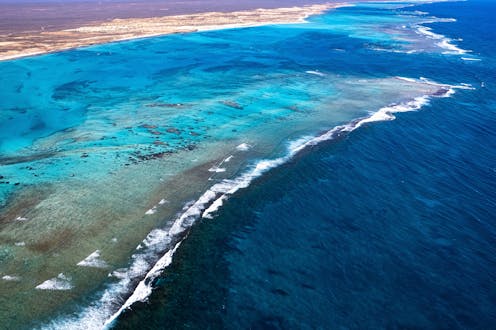
    Ningaloo Reef is facing the heat James C. Farr/Shutterstock

    Tens of thousands of fish have died off northwestern Australia, as a large and long-lasting marine heatwave intensifies.

    The fish kill at Gnoorea Beach near Karratha is concerning our team of scientists, as the hot mass of water heads south towards Ningaloo Reef and the seagrass gardens in Shark Bay. That’s because we’ve seen this before. An enormous marine heatwave in 2010-11 devastated fisheries and ecosystems further down the WA coast.

    This marine heatwave began in September, with temperatures up to 3°C warmer than usual off Broome. There’s no end in sight.

    The heatwave comes as oceans worldwide experience recordbreaking heat, driven by climate change. More than 90% of all heat trapped by greenhouse gases goes into the oceans.

    The fish kill is a visible way to glimpse a disaster often out of sight and out of mind. But these marine heatwaves do much more, from wiping out seagrass meadows and kelp beds to trashing fisheries.

    Up to 30,000 dead fish have washed up around Gnoorea Beach near Karratha.
    WA Department of Primary Industries and Regional Development

    How bad is this marine heatwave?

    Marine heatwaves are periods of at least five consecutive days when ocean temperatures are significantly higher than the long-term average for the region and season.

    Since September 2024, temperatures off Australia’s northwest coast have been high enough to be considered a heatwave.

    In late December, the area of hotter water expanded southward along the Pilbara coast and became more intense. Temperatures hit 4–5°C above normal at the surface. Our research group has gathered data from satellite measurements, which tells us it’s hotter than usual. Data from autonomous ocean gliders also show unusual levels of heat as far down as 200 metres.

    In January, this heatwave has become bad enough to be classified in some areas as a severe marine heatwave.

    There’s no relief in sight yet. The Bureau of Meteorology forecasts marine heatwave conditions to continue through February.

    figure showing intensity of marine heatwave in northwest Western Australia
    On the left, the marine heatwave on the Northwest Shelf is visible in dark red. On the right, the intensity of the heatwave is shown over time on the Northwest Shelf and further south in Central Western Australia.
    Author provided, CC BY

    Will it be worse than the 2010 heatwave?

    The current marine heatwave is, so far, the second-worst in Western Australia’s recorded history.

    Over the 2010–11 summer, a severe marine heatwave devastated seas off the state. Temperatures hit up to 5°C above average, peaking in February and March.

    The worst-hit areas were seas off the central West Australian coastline, leaving those to the north largely unaffected. But the heatwave stretched 2,000 kilometres, from the Pilbara all the way down to Denmark in the southwest.

    The reason the 2010 heatwave spread so far south was due to the Leeuwin Current, which was stronger than usual due to weak southerly winds linked to a low pressure system off the coast.

    figure showing the 2010-11 marine heatwave in Western Australia
    The 2010-11 marine heatwave hit Central West Australian waters hardest. The Leeuwin Current ferried heat southward.
    Author provided, CC BY

    The heat led to local extinction of kelp species along a 100km stretch of coastline. Scallop and blue swimmer crab fisheries had to close. Seagrass meadows in Shark Bay collapsed. Tropical species were sighted in new areas. And coral bleached at Ningaloo.

    By contrast, this current marine heatwave has concentrated on the northern coastline, but may spread south in coming weeks.

    Unfortunately, there are strong similarities between the 2010–11 heatwave and this one. Both occurred during a La Niña year.

    A similar low pressure system in December 2024 weakened southerly winds during this heatwave, though not as pronounced as in 2010-11. We can expect to see the Leeuwin Current intensify and carry more warm water than usual south, but perhaps not as far as in 2010–11.

    Weather systems at present are developing slightly differently to 2010–11, but they could still lead to weaker southerly winds and produce a stronger current channelling heat.

    What does this mean for ocean life?

    Marine heatwaves at this size and intensity can profoundly damage marine ecosystems and fisheries. The Karratha fish kill is the most visible sign of ecosystem distress.

    We have already seen signs of bleaching in the coral reefs of the Kimberley region, while corals are experiencing heat stress at world-famous Ningaloo Reef.

    The heat is now affecting the Gascoyne region between Carnarvon and Exmouth, and is likely to head further south.

    Damage from the heatwave could threaten valuable industries such as the rock lobster fishery and marine tourism on the Coral Coast.

    bleached coral linked to marine heatwave.
    Bleached corals in Cygnet Bay north of Broome. Photo taken on 16th January.
    Kayleigh Foste, CC BY

    More heatwaves will come

    As the climate changes, modelling indicates marine heatwaves will hit more often and to intensify.

    Worldwide, marine heatwaves have devastated ecosystems. One of the worst, the Pacific “blob” heatwave of 2014-2016, killed an estimated 100 million Pacific cod and four million birds from a single seabird species, as well as contributing to the starvation of about 7,000 humpback whales. The intense heat killed off cold-loving species and paved the way for tropical species to enter and even thrive.

    Right now, 28% of the world’s oceans are in heatwave conditions, based on surface temperatures.

    While there is a clear link between the 2010-11 marine heatwave and climate change, we cannot conclusively say this current heatwave off Western Australia is linked to climate change.

    That’s because we don’t have enough data about what’s happening under the surface. Temperatures in the ocean vary greatly by depth, and a hot surface doesn’t always mean heat has reached deeper water.

    So while we know a marine heatwave is in progress, we don’t know how bad it is or how far down the heat has reached in different regions. We need better ways to measure temperatures at depth, to be able to gauge how bad a heatwave is. Installing more temperature sensors along the WA coastline would allow us to better monitor and respond to temperature extremes.

    The earlier we know about a heatwave, the more we can do to prepare. The 2010-2011 heatwave made many people aware of what damage heat can do to an ocean, as fishing boats sat idle and tourists steered clear of dying coral.

    More, and worse, is likely to come. Better conservation and management of our oceans can help. But tackling the root cause of intensifying heat – unchecked greenhouse gas emissions – is still far and away the most important challenge.

    The Conversation

    Matt Rayson receives funding from the Australian Research Council and the Western Australian government. .

    Nicole L. Jones receives funding from Australian Research Council and the Western Australian government.

    Sina Pinter does not work for, consult, own shares in or receive funding from any company or organisation that would benefit from this article, and has disclosed no relevant affiliations beyond their academic appointment.

    ref. A marine heatwave in northwest Australia is killing huge numbers of fish. It’s heading south – https://theconversation.com/a-marine-heatwave-in-northwest-australia-is-killing-huge-numbers-of-fish-its-heading-south-248139

    MIL OSI AnalysisEveningReport.nz

  • MIL-Evening Report: Trump 2.0 chaos and destruction — what it means Down Under

    What will happen to Australia — and New Zealand — once the superpower that has been followed into endless battles, the United States, finally unravels?

    COMMENTARY: By Michelle Pini, managing editor of Independent Australia

    With President Donald Trump now into his second week in the White House, horrific fires have continued to rage across Los Angeles and the details of Elon Musk’s allegedly dodgy Twitter takeover began to emerge, the world sits anxiously by.

    The consequences of a second Trump term will reverberate globally, not only among Western nations. But given the deeply entrenched Americanisation of much of the Western world, this is about how it will navigate the after-shocks once the United States finally unravels — for unravel it surely will.

    Leading with chaos
    Now that the world’s biggest superpower and war machine has a deranged criminal at the helm — for a second time — none of us know the lengths to which Trump (and his puppet masters) will go as his fingers brush dangerously close to the nuclear codes. Will he be more emboldened?

    The signs are certainly there.

    President Donald Trump 2.0 . . . will his cruelty towards migrants and refugees escalate, matched only by his fuelling of racial division? Image: ABC News screenshot IA

    So far, Trump — who had already led the insurrection of a democratically elected government — has threatened to exit the nuclear arms pact with Russia, talked up a trade war with China and declared “all hell will break out” in the Middle East if Hamas hadn’t returned the Israeli hostages.

    Will his cruelty towards migrants and refugees escalate, matched only by his fuelling of racial division?

    This, too, appears to be already happening.

    Trump’s rants leading up to his inauguration last week had been a steady stream of crazed declarations, each one more unhinged than the last.

    He wants to buy Greenland. He wishes to overturn birthright citizenship in order to deport even more migrant children, such as  “pet-eating Haitians and “insane Hannibal Lecters” because America has been “invaded”.

    It will be interesting to see whether his planned evictions of Mexicans will include the firefighters Mexico sent to Los Angeles’ aid.

    At the same time, Trump wants to turn Canada into the 51st state, because, he said,

    “It would make a great state. And the people of Canada like it.”

    Will sexual predator Trump’s level of misogyny sink to even lower depths post Roe v Wade?

    Probably.

    Denial of catastrophic climate consequences
    And will Trump be in even further denial over the catastrophic consequences of climate change than during his last term? Even as Los Angeles grapples with a still climbing death toll of 25 lives lost, 12,000 homes, businesses and other structures destroyed and 16,425 hectares (about the size of Washington DC) wiped out so far in the latest climactic disaster?

    The fires are, of course, symptomatic of the many years of criminal negligence on global warming. But since Trump instead accused California officials of “prioritising environmental policies over public safety” while his buddy and head of government “efficiency”, Musk blamed black firefighters for the fires, it would appear so.

    Will the madman, for surely he is one, also gift even greater protections to oligarchs like Musk?

    Trump has already appointed billionaire buddies Musk and Vivek Ramaswamy to:

     “…pave the way for my Administration to dismantle government bureaucracy, slash excess regulations, cut wasteful expenditures and restructure Federal agencies”.

    So, this too is already happening.

    All of these actions will combine to create a scenario of destruction that will see the implosion of the US as we know it, though the details are yet to emerge.

    The flawed AUKUS pact sinking quickly . . . Australian Prime Minister Anthony Albanese with outgoing President Joe Biden, will Australia have the mettle to be bigger than Trump. Image: Independent Australia

    What happens Down Under?
    US allies — like Australia — have already been thoroughly indoctrinated by American pop culture in order to complement the many army bases they house and the defence agreements they have signed.

    Though Trump hasn’t shown any interest in making it a 52nd state, Australia has been tucked up in bed with the United States since the Cold War. Our foreign policy has hinged on this alliance, which also significantly affects Australia’s trade and economy, not to mention our entire cultural identity, mired as it is in US-style fast food dependence and reality TV. Would you like Vegemite McShaker Fries with that?

    So what will happen to Australia once the superpower we have followed into endless battles finally breaks down?

    As Dr Martin Hirst wrote in November:

    ‘Trump has promised chaos and chaos is what he’ll deliver.’

    His rise to power will embolden the rabid Far-Right in the US but will this be mirrored here? And will Australia follow the US example and this year elect our very own (admittedly scaled down) version of Trump, personified by none other than the Trump-loving Peter Dutton?

    If any of his wild announcements are to be believed, between building walls and evicting even US nationals he doesn’t like, while simultaneously making Canadians US citizens, Trump will be extremely busy.

    There will be little time even to consider Australia, let alone come to our rescue should we ever need the might of the US war machine — no matter whether it is an Albanese or sycophantic Dutton leadership.

    It is a given, however, that we would be required to honour all defence agreements should our ally demand it.

    It would be great if, as psychologists urge us to do when children act up, our leaders could simply ignore and refuse to engage with him, but it remains to be seen whether Australia will have the mettle to be bigger than Trump.

    Republished from the Independent Australia with permission.

    MIL OSI AnalysisEveningReport.nz

  • MIL-OSI New Zealand: Speed limit reduction reversals begin

    Source: New Zealand Government

    Reversals to Labour’s blanket speed limit reductions begin tonight and will be in place by 1 July, says Minister of Transport Chris Bishop.

    “The previous government was obsessed with slowing New Zealanders down by imposing illogical and untargeted speed limit reductions on state highways and local roads.

    “National campaigned on reversing the blanket speed limit reductions at the last election, and over 65 per cent of submitters during consultation on the Land Transport Rule: Setting of Speed Limits 2024 agreed.

    “Reversing the speed limit reductions where safe to do so is also part of the National-ACT coalition agreement.

    “Where Labour was about slowing New Zealand down, the coalition Government is all about making it easier for people and freight to get from A to B as quickly and efficiently as possible, which will help drive economic growth and improved productivity.”

    The Land Transport Rule: Setting of Speed Limits 2024 requires NZTA and local councils to reverse all speed limits lowered since January 2020 on several categories of roads back to their previous limits by 1 July 2025.

    “Labour’s Kieran McAnulty said recently that as Associate Transport Minister under the previous government he’d asked NZTA to review the SH2 Wairarapa speed limit, and that they told him no. It seems he just shrugged and accepted that,” Mr Bishop says.

    “Today provides a classic example of our Government’s determination to stop letting government agencies put things in the too-hard basket, and instead to push forward for actual results.

    “Today provides a classic example of our Government’s determination to stop letting government agencies put things in the too-hard basket, and instead to push forward for actual results.

    “The first state highway to reverse will be the section of SH2 between Featherston and Masterton, where the speed limit reduction in early 2023 under the previous government met with huge community hostility – the exact road that Kieran McAnulty failed to get any action on. This change which will take effect overnight tonight.

    “To ensure this process happens efficiently, over the next few months NZTA will incorporate the automatic speed reversal work alongside planned maintenance and project works.

    “I have also released a further list of 49 sections of state highway for further public consultation so local communities can have their say on keeping their current lower speed limit or returning to the previous higher speed. Public consultation on those sections begins tomorrow and will run for six weeks. 

    “In terms of local road changes, councils have until 1 May 2025 to advise NZTA of the specified roads subject to reversal under the new Rule.”

    The new rule requires reduced variable speed limits outside schools during pick up and drop off times.

    “We are prioritising the safety of Kiwi kids by introducing reduced speed limits outside schools during pick-up and drop-off times. We want to see these changes brought about quickly,” Mr Bishop says.

    “By 1 July 2026, local streets outside a school will be required to have a 30km/h variable speed limit. Rural roads that are outside schools will be required to have variable speed limits of 60km/h or less.

    “Throughout the world, 50km/h is used as the right speed limit to keep urban roads flowing smoothly and safely. The evidence on this is clear – comparable countries with the lowest rates of road deaths and serious injuries, such as Norway, Denmark, and Japan, have speed limits of 50km/h on their urban roads, with exceptions for lower speed limits.

    “These countries have strong road safety records, targeting alcohol, drugs, and speeding. Our Government has a clear focus on improving road safety outcomes with clear targets to ensure Police are focussed on the most high-risk times, behaviours, and locations.”

    Notes to editor:

    Attached fact sheets:

    • 38 sections of state highway for speed limit auto reversal
    • 49 sections of state highway for community consultation

    Under the Setting of Speed Limits Rule signed by previous Transport Minister Simeon Brown in September 2024, the NZ Transport Agency (NZTA) and councils are required to reverse all speed limits lowered since January 2020 on several categories of specified roads back to their previous limits by 1 July 2025.

    To give effect to the new Rule, NZTA will automatically reverse speed limits on 38 sections of the state highway network back to their previous higher speed limit, and publicly consult on a further 49 sections before final decisions are made whether to reverse them or not.

    Public consultation on 49 sections of state highway will begin on 30 January 2025 and run for six weeks. 

    Further note:

    The reference to Mr McAnulty’s comments regarding SH2 in the Wairarapa is taken from Kate Judson’s article in The Wairarapa Times-Age, Jan 25 2025: Slow road back to 100kph for Wairarapa motorists:

    Labour list MP Kieran McAnulty said he was not convinced SH2 speeds south of Greytown would change by July because the decision rested with NZTA.

    “It wouldn’t surprise me if they said they’ll put it up to 100kph if the road gets improved,” he said.

    “I know how resolute NZTA were on it. I was associate transport minister and looked them in the eye and said, ‘I want you to review the speed limit,’ and they said no.”

    MIL OSI New Zealand News

  • MIL-OSI: Nokia Corporation: Repurchase of own shares on 28.01.2025

    Source: GlobeNewswire (MIL-OSI)

    Nokia Corporation
    Stock Exchange Release
    28 January 2025 at 22:30 EET

    Nokia Corporation: Repurchase of own shares on 28.01.2025

    Espoo, Finland – On 28 January 2025 Nokia Corporation (LEI: 549300A0JPRWG1KI7U06) has acquired its own shares (ISIN FI0009000681) as follows:

    Trading venue (MIC Code) Number of shares Weighted average price / share, EUR*
    XHEL 872,093 4.32
    CEUX
    BATE
    AQEU
    TQEX
    Total 872,093 4.32

    * Rounded to two decimals

    On 22 November 2024, Nokia announced that its Board of Directors is initiating a share buyback program to offset the dilutive effect of new Nokia shares issued to the shareholders of Infinera Corporation and certain Infinera Corporation share-based incentives. The repurchases in compliance with the Market Abuse Regulation (EU) 596/2014 (MAR), the Commission Delegated Regulation (EU) 2016/1052 and under the authorization granted by Nokia’s Annual General Meeting on 3 April 2024 started on 25 November 2024 and end by 31 December 2025 and target to repurchase 150 million shares for a maximum aggregate purchase price of EUR 900 million.

    Total cost of transactions executed on 28 January 2025 was EUR 3,763,605. After the disclosed transactions, Nokia Corporation holds 233,414,712 treasury shares.

    Details of transactions are included as an appendix to this announcement.

    On behalf of Nokia Corporation

    BofA Securities Europe SA

    About Nokia
    At Nokia, we create technology that helps the world act together.

    As a B2B technology innovation leader, we are pioneering networks that sense, think and act by leveraging our work across mobile, fixed and cloud networks. In addition, we create value with intellectual property and long-term research, led by the award-winning Nokia Bell Labs.

    With truly open architectures that seamlessly integrate into any ecosystem, our high-performance networks create new opportunities for monetization and scale. Service providers, enterprises and partners worldwide trust Nokia to deliver secure, reliable and sustainable networks today – and work with us to create the digital services and applications of the future.

    Inquiries:

    Nokia Communications
    Phone: +358 10 448 4900
    Email: press.services@nokia.com
    Maria Vaismaa, Global Head of External Communications

    Nokia Investor Relations
    Phone: +358 931 580 507
    Email: investor.relations@nokia.com

    Attachment

    The MIL Network

  • MIL-OSI USA: Fischer Joins “Mornings with Maria” to Discuss Delivering for Americans

    US Senate News:

    Source: United States Senator for Nebraska Deb Fischer

    U.S. Senator Deb Fischer (R-Neb.) joined Maria Bartiromo on FOX Business today to discuss how Republicans will deliver for the American people. Senator Fischer condemned the Democrats for stalling President Trump’s Cabinet nominees, risking America’s national security, and playing political games instead of serving their constituents.

    Senator Fischer also highlighted her plans to continue working for the American people during reconciliation by making her Paid Family Medical Leave tax credit permanent.

    Click the image above to watch a video of Senator Fischer’s remarks

    Click here to download audio

    Click here to download video


    Republicans Are Here To Work:

    Maria Bartiromo: You will be part of Howard Lutnick’s confirmation hearing. Tell us about your expectations for Howard Lutnick and the rest of these nominees. Do you think they’ll all get past the finish line?

    Senator Fischer:
     It is so very important that we do get these nominees confirmed, and that we do it quickly. Of course, as you’re well aware, Maria, the Democrats are slow walking everything. Republicans have shown that we will stay late. We will stay over the weekends in order to get this done. 

    On Democrats Stalling President Trump’s Cabinet Nominees:


    Maria Bartiromo:
     The President needs his team on the ground. Do you feel like your colleagues on the left have been stalling these hearings?

    Senator Fischer:
     Oh, most definitely. You know, you especially saw it on Armed Services Committee where the Democrat members wanted to have another round of questions. They wanted to postpone the vote. They just wanted to drag it out.

    Let’s remember that, I think it was in the first 12 days of President Obama’s administration. He had 12 or 15 nominees already confirmed. We need to do that for national security reasons, for reasons that the American people are tired of waiting. You know, we want to see things happen, we need to move ahead. But we’ve got to do our job, we have to be thorough in it, and I can guarantee that we are.

    On Democrats Playing Political Games:


    Maria Bartiromo:
     Yeah, I mean, more than that, people are sick and tired of the political tricks. We’ve been watching political games since President Trump walked down that escalator 10 years ago. From the Russia collusion lie, to hiding things about the Biden family, to now this obstruction of justice… 

    Senator Fischer: It’s just nonsense. We heard J.D. Vance answer a question this weekend, “You know, I don’t really care Margaret.” That is a calling that I hear all across Nebraska and all across America. You know, I don’t really care anymore. We have work to do. We need to get it done. Stop with the tricks, stop with all this stalling, and let’s get to work for the American people, on energy, on inflation, on reconciliation. There is so much to do.

    On Working for the American People During Reconciliation:


    Maria Bartiromo:
     House Republicans are set to meet with VP Vance today at the Trump Doral Resort in Florida, as part of their annual conference. Committee chairs will also hold reconciliation meetings on how to pass President Trump’s agenda. Trump joined lawmakers for dinner last night with a speech on his priorities. Here’s what he said. Watch:

    President Trump: 
    In the coming weeks, I’m looking forward to working with Congress on a reconciliation bill that financially takes care of our plans to totally and permanently restore the sovereign borders of the United States once and for all. I’m also eager to get to work with Congress on the largest package of tax cuts and reforms in American history. We got to get that done, and we don’t want to get hung up on the budget process. We just want whether it’s one bill, two bills, I don’t care.

    Maria Bartiromo: Senator, how do you see this playing out?

    Senator Fischer:
     Well, I agree with the President on his goals here, and I agree with him when he says whether it’s one bill or two bills, you know, I don’t care. We need to make sure that we’re going to deliver for the American people. What I’m worried about are American families. You know, they have to choose right now between making ends meet and taking care of their families.

    My top priority in reconciliation is my Paid Family Medical Leave tax credit. That was included in the 2017 Tax Reform, and I want to make that permanent in this reconciliation package. So we are working hard on that with a number of my colleagues. In the Senate, we are working together, as you know, in reconciliation, we just need to keep our guys together. And we’re trying to do that through a number of committees to make sure that we protect this country, that we protect our borders. That we can provide for families and meet their needs, so that they can have a better life for themselves and their children. These are promises made, and they’re going to be promises kept.

    On Putting America First:


    Maria Bartiromo:
     I’m glad that you’re focused on families, whether it be their economic progress or their security. President Trump declared a national energy emergency in an effort to increase U.S. oil production. Gas executives told the New York Times they don’t plan on doing so unless prices rise significantly. This is another potentially economic yet also national security issue. And I spoke with your colleague, the Leader of the U.S. Senate, John Thune, on Sunday, and we talked about military spending being lifted. Here’s what he said. Watch: “What are you looking for in terms of specifics in bulking up America’s defense?

    Senate Majority Leader Thune:
     Well, obviously our Navy, and if you look at the number of ships we have relative to our adversaries, particularly China, that’s something the President is interested in, an American Iron Dome concept. But, frankly, the thing we’ve got to do Maria is we’ve got to increase the top line. We have not, we have underfunded and in the Biden budget, there wasn’t a single Biden budget that kept up with the rate of inflation when it comes to the military, and so we’ve got some making up to do. I think there’s a very compelling argument on Panama, very compelling argument on Greenland and optimism in America that we haven’t seen in a long time. I think there’s been a real this has been a sluggish country, a country that’s been bogged down under the weight of government, regulation and red tape and taxation.

    Maria Bartiromo: Senator, I’ve got the Iron Dome for America Executive Order in front of me, and this is one of the ways that President Trump says he will be protecting America from a national security standpoint. What are you considering in terms of defense spending? And tell us where the priorities are in this plan.

    Senator Fischer:
     Right. You know, on Armed Services Committee the last three years that President Biden sent us his top line for his budget, we increased that in the Senate Armed Services Committee, because we are well aware of the threats that face this nation. I happen to chair the Subcommittee on Strategic Forces. So not only do we have jurisdiction over STRATCOM and Space Command, but we also have jurisdiction over our nuclear triad to make sure that we have that strong deterrence policy.

    You’ve heard President Trump and the Vice President talk about deterrence that is so important to keep this country safe. We also have jurisdiction on strategic forces over missile defense, and we have been putting funding into missile defense in this country since I have been here and on that committee for now into my third term. So I am very, very pleased to hear that President Trump is prioritizing that with a focus on Iron Dome. We need to continue to look at our missile defense, the capabilities that we have, the capabilities that we need in order to defend and protect our homeland. 

    On Curbing Government Spending:


    Maria Bartiromo:
     Yeah, I’m so glad to hear you talk this way. I could not agree more. Unfortunately, something has got to give. Senator, can you name one or two important offsets that you think will be significant? Interest is the single largest item in the budget behind Social Security. More than spending on defense, Medicare, and on children? Senator, what’s your most important offset to pay for all this?

    Senator Fischer:
     You know, there’s a number of things, as you know, Maria, that all of us are looking at and being able to go through a budget. On Appropriations Committee, we’re going to be really having a strong oversight with our agencies that we have jurisdiction over and hold them accountable for programs. I think we can look, for example, on job training programs. I know a few years ago, across agencies, there were like 37 different job training programs. I am all for job training, but I think we need to figure out what the balance is. And I think that’s a private enterprise. A private business does training in conjunction with our community colleges, in conjunction with our state universities.

    I mean, just simple things like that. You’re going to see a lot of things like that. And I know we’ve heard some in the past. What I want to see, though, is a return to energy dominance. That is going to bring in, it’s going to help lower prices for families in this country. I want to be able to see inflation addressed, which we will. 

    Maria Bartiromo:
     Of course. 

    Senator Fischer:
     I know, I know many are saying, well, we’ve seen the price of eggs go up. Why hasn’t it dropped yet? I’m going, it’s been a week, folks, it’s been a week. You know, we are, we are focused, and we’re getting it done.

    Maria Bartiromo:
     Senator, we’ll be watching your work. It’s a great point, the oversight alone may actually save a lot, given the reckless spending in the past. We’ll be watching. Thank you so much. Senator Deb Fisher, joining us this morning.

    Senator Fischer:
     Thank you. 

    MIL OSI USA News

  • MIL-OSI Africa: Peace in Sudan: a fresh mediation effort is needed – how it could work

    Source: The Conversation – Africa – By Gerrit Kurtz, Peace and Conflict Researcher, German Institute for International and Security Affairs

    Intense fighting has ravaged Sudan since 15 April 2023. The war between the Sudanese Armed Forces and its erstwhile comrades-in-arms, the paramilitary Rapid Support Forces, has created one of the worst humanitarian crises in the world. Famine, displacement and mass atrocities are wreaking havoc in the country.

    International mediation efforts have been lacklustre and fruitless. The United Nations security council has been preoccupied with other crises and blocked by its own divisions. The African Union has created diplomatic groups, a high-level panel and a presidential committee, none of which has been particularly active. It has been very slow in tackling the political process it wanted to lead.

    The US and Saudi Arabia convened several rounds of talks, first in Jeddah, then in Switzerland. The Sudanese Armed Forces delegation failed to turn up in Switzerland. The Rapid Support Forces expressed willingness to talk peace, while simultaneously committing sexual and gender-based violence on a massive scale. The Biden administration only lately slapped sanctions on the top leaders of both forces, Abdelfattah al-Burhan and Mohamed Hamdan Dagalo (also known as Hemedti).

    I have studied civil wars, mediation and peacebuilding for more than 12 years, with a focus on Sudan, including regular visits to the country and the region in the past five years. Based on this experience I have identified five reasons why mediation has failed. These are: the resistance of the conflict parties based on the dynamic nature of the war; continued military and financial aid by their external sponsors; as well as mediation attempts that were too narrow, not viewed as impartial, and lacking in coherence.

    Clearly, a new approach to mediation is needed, not simply a new mediator. Turkey has recently offered to lead talks between the Sudanese Armed Forces and the United Arab Emirates, the main backer of the Rapid Support Forces, but Egypt, Kenya and several multilateral organisations also keep looking for opportunities.

    Any new initiative will have to have certain components if it’s going to succeed:

    • political parameters, ideally set by a parallel civilian political process, of what might come next for Sudan should guide mediators

    • negotiations should take place in secret so that trust can be established

    • back channel communications networks must be established with potential spoilers without ceding undue legitimacy to them

    • a gender- and youth-inclusive approach

    • more effective international coordination

    • consistent pressure on the conflict parties and their external backers.

    Why previous mediation efforts failed

    Firstly, neither the Sudanese Armed Forces nor the Rapid Support Forces have shown significant willingness to stop hostilities.

    The military fortunes of the two sides has waxed and waned. As long as either side feels successful militarily, they are unlikely to commit to sincere negotiations. Outright military victory leading to control of the whole territory (and its borders) remains out of reach for all.

    Secondly, their respective allies have not shown any particular interest in peace.

    External actors have provided military support to the warring parties, and helped finance them. The UAE is the main sponsor of the Rapid Support Forces. The Sudanese Armed Forces cooperates with Egypt, Eritrea, Iran and Russia, for arms deliveries and training. The UAE promised the US to stop supporting the Rapid Support Forces, but the arms flows continued.

    Thirdly, some conflict management efforts were based on a flawed conflict analysis. There were attempts to organise a face-to-face meeting between Hemedti and Burhan, by the Intergovernmental Authority on Development and the African Union. But the war is not primarily a contest of “two generals”. Neither Hemedti nor Burhan has full control of their forces. Nor is a renewed military government acceptable to large parts of Sudan’s vibrant civil society.

    Fourth, mediation efforts suffered because some of the parties saw them as lacking impartiality. Sudanese Armed Forces leaders don’t trust Kenya, whose President William Ruto is closely aligned with the UAE and has, until recently, allowed the Rapid Support Forces to conduct meetings and a press conference in Nairobi. Kenya was supposed to lead the Intergovernmental Authority on Development quartet of mediators, which never really got off the ground. Similarly, Sudan remains suspended from the African Union.

    Finally, there was a competition of mediation platforms, allowing the warring parties to shop for the most convenient forum for them.

    What a path to a ceasefire might look like

    International attention is currently focused on Turkish president Recep Erdogan, who has offered to mediate between the Sudanese Armed Forces and the UAE. The Sudanese Armed Forces has harshly criticised the UAE for its support to the Rapid Support Forces. The offer, then, is based on the assumption the UAE might actually cease that support.

    Any new approach should differ from previous efforts.

    • Mediators should provide a broad sense of political parameters for a post-war (interim) order, ideally with strong input from Sudan’s civilian groups. Those could include a conditional amnesty as well as assurances of personal safety for the top military leaders and of some stake in a transitional period, without promising any blanket impunity or renewed power-sharing.

    But international mediators should grant the warring parties political recognition and legitimacy only in exchange for feasible concessions.

    • Negotiations should take place in secret, allowing confidential exchanges between declared enemies. This is particularly important for the Sudanese Armed Forces given the rivalry among its leadership.

    • Back channel communications should be established to all actors with real constituencies in Sudan, without empowering them unnecessarily. Turkey is well-placed to reach out to senior members of the previous (Bashir) regime who have found exile there. They control large parts of the fighting forces on the side of Sudanese Armed Forces and could prove to be a major spoiler. The armed groups in the so-called “joint forces” would also need to feel somewhat included.

    • Mediators should find ways to include a broad array of civilian actors, in particular women and youth groups. Instead of only targeting “men with guns”, a peace process should be gender-inclusive.

    • Any lead mediator should keep other interested parties such as the EU, the UK, Norway, and the other countries and organisations already mentioned, informed and engaged.

    • Pressure should be kept up by the US, UK and EU on external backers of the two main warring parties, and target both military and financial flows. Policies, including further targeted sanctions, should be as aligned as possible.

    Preparing for a window of opportunity

    There’s no guarantee that the violence would cease even if these conditions were met. The main belligerents are likely to continue their current offensives. The Sudanese Armed Forces will try to oust the Rapid Support Forces from central Khartoum completely. The Rapid Support Forces will keep trying to take El Fasher, the only capital in Darfur not under their control.

    The impending re-capture of Khartoum by the Sudanese Armed Forces may provide an opportunity for a new round of talks, if it comes with consistent international pressure. Mediators should be ready to push for an end to the fighting.

    – Peace in Sudan: a fresh mediation effort is needed – how it could work
    – https://theconversation.com/peace-in-sudan-a-fresh-mediation-effort-is-needed-how-it-could-work-248330

    MIL OSI Africa

  • MIL-OSI Global: Peace in Sudan: a fresh mediation effort is needed – how it could work

    Source: The Conversation – Africa – By Gerrit Kurtz, Peace and Conflict Researcher, German Institute for International and Security Affairs

    Intense fighting has ravaged Sudan since 15 April 2023. The war between the Sudanese Armed Forces and its erstwhile comrades-in-arms, the paramilitary Rapid Support Forces, has created one of the worst humanitarian crises in the world. Famine, displacement and mass atrocities are wreaking havoc in the country.

    International mediation efforts have been lacklustre and fruitless. The United Nations security council has been preoccupied with other crises and blocked by its own divisions. The African Union has created diplomatic groups, a high-level panel and a presidential committee, none of which has been particularly active. It has been very slow in tackling the political process it wanted to lead.

    The US and Saudi Arabia convened several rounds of talks, first in Jeddah, then in Switzerland. The Sudanese Armed Forces delegation failed to turn up in Switzerland. The Rapid Support Forces expressed willingness to talk peace, while simultaneously committing sexual and gender-based violence on a massive scale. The Biden administration only lately slapped sanctions on the top leaders of both forces, Abdelfattah al-Burhan and Mohamed Hamdan Dagalo (also known as Hemedti).

    I have studied civil wars, mediation and peacebuilding for more than 12 years, with a focus on Sudan, including regular visits to the country and the region in the past five years. Based on this experience I have identified five reasons why mediation has failed. These are: the resistance of the conflict parties based on the dynamic nature of the war; continued military and financial aid by their external sponsors; as well as mediation attempts that were too narrow, not viewed as impartial, and lacking in coherence.

    Clearly, a new approach to mediation is needed, not simply a new mediator. Turkey has recently offered to lead talks between the Sudanese Armed Forces and the United Arab Emirates, the main backer of the Rapid Support Forces, but Egypt, Kenya and several multilateral organisations also keep looking for opportunities.

    Any new initiative will have to have certain components if it’s going to succeed:

    • political parameters, ideally set by a parallel civilian political process, of what might come next for Sudan should guide mediators

    • negotiations should take place in secret so that trust can be established

    • back channel communications networks must be established with potential spoilers without ceding undue legitimacy to them

    • a gender- and youth-inclusive approach

    • more effective international coordination

    • consistent pressure on the conflict parties and their external backers.

    Why previous mediation efforts failed

    Firstly, neither the Sudanese Armed Forces nor the Rapid Support Forces have shown significant willingness to stop hostilities.

    The military fortunes of the two sides has waxed and waned. As long as either side feels successful militarily, they are unlikely to commit to sincere negotiations. Outright military victory leading to control of the whole territory (and its borders) remains out of reach for all.

    Secondly, their respective allies have not shown any particular interest in peace.

    External actors have provided military support to the warring parties, and helped finance them. The UAE is the main sponsor of the Rapid Support Forces. The Sudanese Armed Forces cooperates with Egypt, Eritrea, Iran and Russia, for arms deliveries and training. The UAE promised the US to stop supporting the Rapid Support Forces, but the arms flows continued.

    Thirdly, some conflict management efforts were based on a flawed conflict analysis. There were attempts to organise a face-to-face meeting between Hemedti and Burhan, by the Intergovernmental Authority on Development and the African Union. But the war is not primarily a contest of “two generals”. Neither Hemedti nor Burhan has full control of their forces. Nor is a renewed military government acceptable to large parts of Sudan’s vibrant civil society.

    Fourth, mediation efforts suffered because some of the parties saw them as lacking impartiality. Sudanese Armed Forces leaders don’t trust Kenya, whose President William Ruto is closely aligned with the UAE and has, until recently, allowed the Rapid Support Forces to conduct meetings and a press conference in Nairobi. Kenya was supposed to lead the Intergovernmental Authority on Development quartet of mediators, which never really got off the ground. Similarly, Sudan remains suspended from the African Union.

    Finally, there was a competition of mediation platforms, allowing the warring parties to shop for the most convenient forum for them.

    What a path to a ceasefire might look like

    International attention is currently focused on Turkish president Recep Erdogan, who has offered to mediate between the Sudanese Armed Forces and the UAE. The Sudanese Armed Forces has harshly criticised the UAE for its support to the Rapid Support Forces. The offer, then, is based on the assumption the UAE might actually cease that support.

    Any new approach should differ from previous efforts.

    • Mediators should provide a broad sense of political parameters for a post-war (interim) order, ideally with strong input from Sudan’s civilian groups. Those could include a conditional amnesty as well as assurances of personal safety for the top military leaders and of some stake in a transitional period, without promising any blanket impunity or renewed power-sharing.

    But international mediators should grant the warring parties political recognition and legitimacy only in exchange for feasible concessions.

    • Negotiations should take place in secret, allowing confidential exchanges between declared enemies. This is particularly important for the Sudanese Armed Forces given the rivalry among its leadership.

    • Back channel communications should be established to all actors with real constituencies in Sudan, without empowering them unnecessarily. Turkey is well-placed to reach out to senior members of the previous (Bashir) regime who have found exile there. They control large parts of the fighting forces on the side of Sudanese Armed Forces and could prove to be a major spoiler. The armed groups in the so-called “joint forces” would also need to feel somewhat included.

    • Mediators should find ways to include a broad array of civilian actors, in particular women and youth groups. Instead of only targeting “men with guns”, a peace process should be gender-inclusive.

    • Any lead mediator should keep other interested parties such as the EU, the UK, Norway, and the other countries and organisations already mentioned, informed and engaged.

    • Pressure should be kept up by the US, UK and EU on external backers of the two main warring parties, and target both military and financial flows. Policies, including further targeted sanctions, should be as aligned as possible.

    Preparing for a window of opportunity

    There’s no guarantee that the violence would cease even if these conditions were met. The main belligerents are likely to continue their current offensives. The Sudanese Armed Forces will try to oust the Rapid Support Forces from central Khartoum completely. The Rapid Support Forces will keep trying to take El Fasher, the only capital in Darfur not under their control.

    The impending re-capture of Khartoum by the Sudanese Armed Forces may provide an opportunity for a new round of talks, if it comes with consistent international pressure. Mediators should be ready to push for an end to the fighting.

    Gerrit Kurtz is also a non-resident fellow with the Global Public Policy Institute and a member of the Forum New Security Policy of the Heinrich Böll Foundation.

    ref. Peace in Sudan: a fresh mediation effort is needed – how it could work – https://theconversation.com/peace-in-sudan-a-fresh-mediation-effort-is-needed-how-it-could-work-248330

    MIL OSI – Global Reports

  • MIL-Evening Report: As the ‘digital oligarchy’ grows in power, NZ will struggle to regulate its global reach and influence

    Source: The Conversation (Au and NZ) – By Alexandra Andhov, Chair in Law and Technology, University of Auckland, Waipapa Taumata Rau

    The images of President Donald Trump at his inauguration surrounded by the titans of the global tech industry is a warning of what could come: a global digital oligarchy dominated by a tiny tech elite.

    Companies like Meta, Google, Microsoft, Amazon, X Corp, and OpenAI (all based in the United States) now operate beyond the control of most governments. Countries like New Zealand are increasingly struggling to keep these companies in check.

    In the past decade, New Zealand has taken several measures to curb the influence of powerful tech companies through voluntary agreements and tax legislation.

    But the digital age has fundamentally changed national sovereignty – the right of individual countries to decide the rules within their own borders.

    Big tech companies are gradually taking on functions traditionally reserved for government institutions. For example, these companies have begun to function as the arbiters of speech, controlling the visibility of certain ideas and comments.

    As recently as this month, Meta obscured searches for left-leaning topics including “Democrats”, later blaming the issue on a “technical glitch”.

    And as was widely covered in the media, Amnesty International released a report claiming that Facebook’s algorithms “proactively amplified” anti-Rohingya content in Myanmar, substantially contributing to human rights violations against the ethnic group.

    New Zealand’s attempts to regulate big tech

    A number of governments are now facing the question of how to temper the influence of these companies within their current legal frameworks.

    As New Zealand (among others) has discovered in the past decade, influencing the behaviour of these companies is easier said than done. It has repeatedly found itself struggling to effectively manage big tech’s impact on its society and economy.

    In 2018, for example, New Zealand’s Privacy Commissioner said Facebook had failed to comply with its obligations under the New Zealand Privacy Act. The company told the commission the Privacy Act did not apply to it.

    When the Christchurch terrorist attack was livestreamed on Facebook (owned by Meta), New Zealand authorities found themselves largely powerless to prevent the video’s spread across global platforms.

    This crisis prompted then-prime minister Jacinda Ardern to launch the Christchurch Call initiative aimed at combating online extremism by fostering collaboration between governments and tech companies.

    The goal was to develop and enforce measures such as improved content moderation, removal of extremist material, and the creation of safer online environments.

    While gaining support from more than 120 countries and tech companies, its effect depends on voluntary ongoing cooperation. Recent events suggest this ongoing cooperation is unlikely.

    In January, Meta CEO Mark Zuckerberg announced plans to get rid of content moderation in the US and possibly elsewhere. Zuckerberg has also pushed back against European Union regulations, claiming the EU’s data laws censored social media.

    Taxing big tech

    In 2019, New Zealand proposed a 3% digital tax on big tech revenue. A similar measure was introduced by France in 2020 and by Canada and Australia last year.

    While these proposals signify important steps toward holding big tech accountable, their implementation remains uncertain.

    Although the relevant tax provisions have been adopted in New Zealand, the law includes clauses allowing tax collections to be deferred until as late as 2030.

    Meanwhile, big tech continues to push back aggressively against regulation in various ways. These have included threatening reduced services (such as the brief closure of TikTok in the US) to leveraging their relationships with the Trump government against other countries.

    Using competition regulation to rein in big tech

    In December 2024, the Australian government unveiled draft legislation on big tech to level the playing field.

    The proposed law seeks to foster fair competition, prevent price gouging, and give smaller tech and news companies a chance to thrive in a landscape increasingly dominated by global giants.

    The legislation would grant the Australian Competition and Consumer Commission the authority to investigate and penalise companies with fines of up to A$50 million for restricting competition.

    The targeted behaviour includes tactics such as restricting data transfers between platforms (for example, moving contacts or photos from iPhone to Android) and limiting third-party payment options in app stores.

    The proposed law aims to put an end to these unfair advantages, ensuring a level playing field where businesses of all sizes can compete and consumers have more choices.

    Democractic governance in the digital age

    The growing power of tech platforms raises critical questions about democratic governance in the digital age.

    There is an urgent need to reconcile the global influence of tech companies with local democratic processes and to create mechanisms that safeguard individual and national sovereignty in an increasingly digital world.

    Governments need to recognise these platforms are not immutable forces of nature, but human-created systems that can be challenged, reformed or dismantled. The same digital connectivity that has empowered these corporations can become the very tool of their transformation.

    Alexandra Andhov is conducting research on Big Tech Governance, funded by the Independent Research Fund Denmark under the Inge Lehmann Programme. The author is grateful for this support and wishes to acknowledge that the research was conducted entirely independently.

    ref. As the ‘digital oligarchy’ grows in power, NZ will struggle to regulate its global reach and influence – https://theconversation.com/as-the-digital-oligarchy-grows-in-power-nz-will-struggle-to-regulate-its-global-reach-and-influence-247899

    MIL OSI AnalysisEveningReport.nz

  • MIL-OSI: JLT Mobile Computers AB changes management following discontinuation of subsidiary JLT Software Solutions AB

    Source: GlobeNewswire (MIL-OSI)

    Växjö, Sweden, January 28, 2025 * * * JLT Mobile Computers, a leading supplier of reliable computers for demanding environments, announces a change in management following the discontinuation of JLT Software Solutions, which was announced on January 17, 2025 (press release 1/17/2025).

    The software development is now being integrated with the Group’s other product development for better cost-efficiency, management, and customer-driven development. This means that the operations of JLT Software Solutions AB will be discontinued, and Andreas Nivard, former CEO and CPO, is leaving the company.

    Visit jltmobile.com for more information about products and services. Financial information can be found on the company’s investor pages.

    About JLT Mobile Computers

    JLT Mobile Computers is a leading supplier of rugged mobile computing devices and solutions for demanding environments. 30 years of development and manufacturing experience have enabled JLT to set the standard in rugged computing, combining outstanding product quality with expert service, support and solutions to ensure trouble-free business operations for customers in warehousing, transportation, manufacturing, mining, ports and agriculture. JLT operates globally from offices in Sweden, France, and the US, complemented by an extensive network of sales partners in local markets. The company was founded in 1994, and the share has been listed on the Nasdaq First North Growth Market stock exchange since 2002 under the symbol JLT. Eminova Fondkommission AB acts as Certified Adviser. Learn more at jltmobile.com.

    The MIL Network

  • MIL-OSI Global: Trump 2.0: the rise of an ‘anti-elite’ elite in US politics

    Source: The Conversation – France – By William Genieys, Directeur de recherche CNRS au CEE, Sciences Po

    US president Donald Trump is surrounded by a new cohort of politicians and officials. While one of his campaign promises was to overthrow the “corrupt elites” he accuses of flooding the American political arena, his second term in office has elevated elites chosen, above all, for their political loyalty to him.

    The media’s focus on Trump’s comments on making Canada the 51st US state and annexing Greenland and billionaire Elon Musk’s support for some far-right parties in Europe has obscured the ambitious programme to transform the federal government that the new political elite intends to implement.

    In the wake of Trump’s inauguration on January 20, the Republican elites most loyal to the MAGA (“Make America Great Again”) leader, who staunchly oppose Democratic elites and their policies, are operating amid their party’s control over the executive and legislative branches (at least until the midterm elections in 2026), a conservative-dominated Supreme Court that includes three Trump-appointed justices, and a federal judiciary that shifted right during his first term.

    However, the political project of the Trumpist camp consists less of challenging elitism in general than attacking a specific elite: one particular to liberal democracies.

    Castigating democratic elitism

    Typical anti-elite political propaganda, along the lines of “I speak for you, the people, against the elites who betray and deceive you,” claims that a populist leader would be able to exercise power for and on behalf of the people without the mediation of an elite disconnected from their needs.

    Political theorist John Higley sees behind this form of anti-elite discourse an association between so-called “forceful leaders” and “leonine elites” (who take advantage of the former and their political success): a phenomenon that threatens the future of Western democracies.

    Since the Second World War, there has been a consensus in US politics on the idea of democratic elitism. According to this principle, elitist mediation is inevitable in mass democracies and must be based on two criteria: respect for the results of elections (which must be free and competitive); and the relative autonomy of political institutions.

    The challenge to this consensus has been growing since the 1990s with the increased polarization of American politics. It gained new momentum during and after the 2016 presidential campaign, which was marked by anti-elite rhetoric from both Republicans and Democrats (such as senators Bernie Sanders and Elizabeth Warren). At the heart of some of their diatribes was an aversion to “the Establishment” on the east and west coasts of the United States, where many prestigious financial, political and academic institutions are based, and the conspiracy notion of the “deep state”.

    The re-election of Trump, who has never admitted defeat in the 2020 presidential vote, growing political hostility and the direct involvement of tech tycoons in political communication –especially on the Republican side– further reinforce the denial of democratic elitism.

    Trump’s populism from above: a revolt of the elites

    The idea that democracy could be betrayed by “the revolt of the elites”, put forward by the US historian Christopher Lasch (1932-1994), is not new. For the anthropologist Arjun Appadurai, it is a particular feature of contemporary populism, which comes “from above.” Indeed, if the 20th century was the era of the “revolt of the masses”, the 21st century, according to Appadurai, “is characterized by the ‘revolt of the elites’.” This would explain the rise of populist autocracies (such as those currently led by Viktor Orban in Hungary, Recep Tayyip Erdogan in Turkey and Narendra Modi in India, and formerly led by Jair Bolsonaro in Brazil), but also the election successes of populist leaders in consolidated democracies (including those of Trump in the US, Giorgia Meloni in Italy, and Geert Wilders in the Netherlands, for example).

    As Appadurai explains, the success of Trumpian populism, which represents a revolt by ordinary Americans against the elites, casts a veil over the fact that, following Trump’s victory in November, “it is a new elite that has ousted from power the despised Democratic elite that had occupied the White House for nearly four years.”

    The aim of this “alter elite” is to replace the “regular” Democrat elites, but also the moderate Republicans, by deeply discrediting their values (such as liberalism and so-called “wokeism”) and their supposedly corrupt political practices. As a result, this populism “from above” carried out by the President’s supporters constitutes an alternative elite configuration, the effects of which on American democratic life could be more significant than those observed during Trump’s first term.

    Beyond the idea of a ‘Muskoligarchy’

    The idea that we are witnessing the formation of a “Muskoligarchy” –in other words, an economic elite (including tech barons such as Jeff Bezos, Mark Zuckerberg and Marc Andreessen) rallying around the figurehead of Elon Musk, whom Trump asked to lead what the president has called a “Department of Government Efficiency” (DOGE) –is seductive. It perfectly combines the vision of an alliance between a “conspiratorial, coherent, conscious” ruling class and an oligarchy made up of the “ultra-rich”. For the Financial Times columnist Martin Wolf, it is even a sign of the development of “pluto-populism”. (It is also worth noting that former president Joe Biden, in his farewell speech, referred to “an oligarchy… of extreme wealth” and “the potential rise of a tech-industrial complex.”)

    However, some observers are cautious about the advent of a “Muskoligarchy.” They point to the sociological eclecticism of the new Trumpian elite, whose facade of unity is held together above all by a political loyalty, for the time being unfailing, to the MAGA leader. The fact remains, however, that the various factions of this new “anti-elite” elite are converging around a common agenda: to rid the federal government of the supposed stranglehold of Democratic “insiders.”

    An ‘anti-elite’ elite against the ‘deep state’

    In his presidential inauguration speech in 1981, Ronald Reagan said: “Government is not the solution to our problem; government is the problem.” The anti-elitism of the Trump elite is inspired by this diagnosis, and defends a simple political programme: rid democracy of the “deep state.”


    Although the idea that the US is “beleaguered” by an “unelected and unaccountable elite” and “insiders” who subvert the general interest has been shown to be unfounded, it is nonetheless predominant in the new Trump Administration.

    This conspiracy theory has been taken to the extreme by Kash Patel, the candidate being considered to head the FBI. In his book, Government Gangsters, a veritable manifesto against the federal administration, the former lawyer writes about the need to resort to “purges” in order to bring elite Democrats to justice. He lists around 60 people, including Biden, ex-secretary of state Hillary Clinton and ex-vice president Kamala Harris.

    Government Gangsters, Kash Patel’s controversial book.
    Google Books

    The appointment of Russell Vought as head of the Office of Management and Budget at the White House, a person who is known for having sought to obstruct the transition to the Biden Administration in 2021, also highlights the hard turn that the Trump administration is likely to take.

    Reshaping the state around political loyalty

    To “deconstruct the administrative state”, the “anti-elite” elites are relying on Project 2025, a 900-plus page programme report that the conservative think-tank The Heritage Foundation, which published it, says was produced by “more than 400 scholars and policy experts.” According to former Project 2025 director Paul Dans, “never before has the entire movement… banded together to construct a comprehensive plan” for this purpose. On this basis, the “anti-elite” elite want to impose loyalty to Project 2025 on federal civil servants.

    But this idea is not new. At the end of his first term, Trump issued an executive order facilitating the dismissal of statutory federal civil servants occupying “policy-related positions” and considered to be “disloyal”. The decree was rescinded by president Biden, but Trump on his first day back in office signed an executive order that seeks to void Biden’s rescindment. As President, Trump is also able to allocate senior positions within the federal administration to his supporters.

    The “anti-elite” elite not only want to reduce the size of the state, as was the case under Reagan’s “neoliberalism”, but to deconstruct and rebuild it in their own image. Their real aim is a more lasting victory: the transformation of democratic elitism into populist elitism.

    Les auteurs ne travaillent pas, ne conseillent pas, ne possèdent pas de parts, ne reçoivent pas de fonds d’une organisation qui pourrait tirer profit de cet article, et n’ont déclaré aucune autre affiliation que leur organisme de recherche.

    ref. Trump 2.0: the rise of an ‘anti-elite’ elite in US politics – https://theconversation.com/trump-2-0-the-rise-of-an-anti-elite-elite-in-us-politics-248180

    MIL OSI – Global Reports

  • MIL-OSI Europe: Statement on arbitrary detentions of UN personnel in Yemen

    Source: Government of Sweden

    Statement on arbitrary detentions of UN personnel in Yemen – Government.se

    Please enable javascript in your browser

    Published

    Sweden echoes the EU statement and strongly condemns the latest round of arbitrary detentions by the Houthis of seven UN personnel working in Yemen.

    Sweden reiterates the demand by the UN Secretary‑General for the immediate and unconditional release of all personnel from the UN, international and national non‑governmental organizations, and diplomatic missions, including those detained in 2021, 2023, and 2024. The continued arbitrary detention of aid workers is unacceptable and negatively impacts the ability to deliver life‑saving humanitarian aid in Yemen. 

    Sweden calls on the Houthis to act in the best interest of the Yemeni people and underscores the obligations of all parties to armed conflict under international humanitarian law to allow and facilitate rapid, safe and unhindered humanitarian assistance, as well as to ensure the safety and security of humanitarian personnel. 

    MIL OSI Europe News

  • MIL-OSI Europe: EU sends power generators to storm-struck Ireland

    Source: European Union 2

    Following Ireland’s request for assistance relating to power outages caused by the record-breaking storm Éowyn, the EU Civil Protection Mechanism has been activated. The EU has immediately mobilised 13 power generators from the Commission’s own strategic reserve, rescEU, hosted in Poland. 4 power generators offered by Denmark via the Mechanism will also soon reach Ireland and help provide electricity on the ground.

    The EU also activated the Copernicus Emergency Management Service and has provided analytical support to the national authorities.

    The EU’s Emergency Response Coordination Centre continues to closely monitor the situation and remains in constant contact with the national authorities, ensuring that additional assistance can be promptly channelled if needed.

    EU Commissioner for Preparedness, Crisis Management and Equality, Hadja Lahbib, said: “Extreme weather events, like storm Éowyn, increasingly put Europe’s disaster resilience to the test. But they also demonstrate the growing strength of our joint preparedness and solidarity efforts. Our thoughts are with all those affected and with the first responders in Ireland who are doing their best to bring life back to normal. I thank Denmark for their prompt offer of assistance, and Poland for their excellent collaboration in hosting and delivering the rescEU power generators to Ireland. We are in this together.”

    MIL OSI Europe News

  • MIL-OSI: Finance Teams Prioritize ESG Reporting but Lack Adequate Technology, Finds insightsoftware Report

    Source: GlobeNewswire (MIL-OSI)

    RALEIGH, N.C., Jan. 28, 2025 (GLOBE NEWSWIRE) — insightsoftware, the most comprehensive provider of solutions for the Office of the CFO, today released its 2025 ESG Insights and Challenges Report. The report highlights the growing complexities that global organizations face in ESG reporting, including the challenges finance leaders experience gathering, integrating, and analyzing data from multiple sources.

    With the Corporate Sustainability Reporting Directive (CSRD) set to take effect in the EU in 2025, the research explores how unprepared organizations are to meet the new regulatory requirements. Notably, 52% of businesses rely on data from more than five sources for ESG reporting, underscoring significant hurdles to achieving compliance.

    This report reveals that while many organizations across the EU and the UK express confidence in their ability to comply with regulations like the CSRD, they struggle to find the right tools to accomplish the necessary compliance tasks. In fact, 58% of organizations are already exploring new technology to enhance their ESG reporting capabilities. Complying with regulations like the CSRD and overcoming reporting roadblocks remain highly important for global organizations to meet their ESG goals.

    Key findings from the report include:

    • Technology capabilities are lacking: With 92% of organizations concerned that their ESG reporting processes won’t scale to meet future regulatory demands, organizations are finding it increasingly difficult to identify the necessary tools tailored to their operational needs. They cite data security and privacy concerns as the most prevalent issue (59%), given the sensitive nature of ESG data and regulatory scrutiny.
    • The compliance path forward is uncertain: Companies that do business in the EU need to comply with CSRD, however more than half of decision-makers remain heavily uncertain and confused about its requirements (52%). The primary goal of ESG reporting is to improve transparency and stakeholder engagement say 49%, and 86% of ESG decision-makers overwhelmingly value data visualization and dashboards as the most valuable features in an ESG technology solution.
    • Complex, timely processes hinder ESG reporting success: Amidst the digitalization wave, organizations fight against a steady influx of data. Data collection is the biggest hurdle, responded 95% of decision-makers. In fact, over half (52%) report spending more than four weeks each year solely on collecting data.

    “Without the proper tools, global businesses risk hampering their organization’s ability to comply with ESG regulatory requirements,” said insightsoftware General Manager, EPM & Controllership, Monica Boydston. “This is why tools like the insightsoftware ESG Reporting Solution are crucial to enable teams to seamlessly collect, consolidate, analyze, and disclose ESG data from any source, reducing the risk of non-compliance and costly reporting errors.”

    Leveraging established technologies in close and consolidation, disclosure management, and business intelligence (BI) that are trusted by thousands of customers worldwide, insightsoftware ESG provides the controls, audit trails, and security necessary for delivering investor-grade data and meeting regulatory filing requirements. It enables businesses to effectively measure the impact of their ESG initiatives, helping to attract ESG-focused investors.

    Download the complete findings of the 2025 ESG Insights & Challenges Report here to learn how finance decision-makers can begin to address their ESG reporting challenges.

    To explore insightsoftware ESG and how it can better support an organization’s sustainability goals from data collection to compliance and stakeholder communication, visit here.

    Research Methodology
    insightsoftware’s 2025 ESG Insights & Challenges report was developed in coordination with Hanover Research. It was conducted to gain insights into the current trends and challenges facing finance leaders. To achieve this objective, a quantitative survey was administered to a sample of 400 ESG decision-makers across France, Germany, Finland, Sweden, and the UK. The survey targeted professionals at the director level or higher from organizations with over 500 employees, spanning accounting, finance, compliance, executive teams, regulatory affairs, and sustainability roles.

    About insightsoftware

    insightsoftware is a global provider of comprehensive solutions for the Office of the CFO. We believe an actionable business strategy begins and ends with accessible financial data. With solutions across financial planning and analysis (FP&A), accounting, and operations, we transform how teams operate, empowering leaders to make timely and informed decisions. With data at the heart of everything we do, insightsoftware enables automated processes, delivers trusted insights, boosts predictability, and increases productivity. Learn more at insightsoftware.com.

    Media Contacts
    Inkhouse for insightsoftware
    insightsoftware@inkhouse.com  

    Daniel Tummeley
    Corporate Communications Manager
    PR@insightsoftware.com

    The MIL Network

  • MIL-OSI Global: Canada and Greenland aren’t likely to join the US anytime soon – but ‘GrAmeriCa’ is a revealing thought experiment

    Source: The Conversation – USA – By Peter A. Coclanis, Professor of History and Director of the Global Research Institute, University of North Carolina at Chapel Hill

    For some time now, pundits have been debating whether to take Donald Trump “seriously” or “literally,” as the clever binary coined by journalist Salena Zito in 2016 has it.

    This choice comes to mind when I think about the 47th president’s frequent comments recently about incorporating Greenland and Canada into the United States. A few cases in point: Before delivering an inaugural address in which he vaguely but forcefully expressed a desire for the U.S. to expand its territory, Trump raised the issue on a confrontational phone call with the prime minister of Denmark, which handles Greenland’s international affairs. More recently, he spoke of Canada becoming a U.S. state to reporters on Air Force One.

    It’s hard to imagine a plausible scenario in which either, let alone both, joins the United States. The governments of Canada and Greenland alike have made it clear that they’re not for sale.

    But as an economic historian, I believe that thought experiments can be a useful way of understanding truths about the world. And one such truth is that Greenland and Canada play a key role in the global economy. If the U.S. were to absorb either or both, it would be a strategic, economic and political game changer.

    So, for a moment, let’s take Trump both seriously and literally. Below, I’ve laid out some very rough measures of how a reconstituted megastate including the U.S., Canada or Greenland would look in comparison to other leading countries and blocs.

    Bigger, but not more crowded

    At first glance, the most obvious thing to note about the new country would be its physical size. Today the U.S. is the third-largest nation-state in terms of area – about 57.5% of the size of Russia, by far the world’s largest country.

    By incorporating Canada, the second-largest country in the world in terms of area, the U.S., so reconstituted, would be 14% larger than Russia. If both Canada and Greenland became part of the reconstituted U.S., the country would be 22% larger than Russia.

    How about China? Today, China is slightly smaller than the U.S. in area, but China would be less than half the size of a combined U.S. and Canada, and only about 44% of the size of the U.S.-Canada-Greenland. And the European Union? It would be less than 20% of the size of a U.S.-Canada-Greenland combo.

    Incorporating Canada and Greenland into the U.S would have less of an impact in demographic terms, adding just under 40 million people to the current U.S. total of 342 million.

    Similarly, if the U.S. absorbed Canada and Greenland — two countries that are wealthy, but not nearly as wealthy as the U.S. — it wouldn’t have much of an impact on gross domestic product per capita. Why not? Because the U.S. would comprise about 90% of the total population of the new megastate. Given the figures for GDP per capita (PPP, international dollars) in Canada and Greenland and weighting for population, GDP per capita in the megastate would be about $79,000.

    A strategic shift

    The biggest effects of absorbing either country into the U.S. would come in the geopolitical, strategic and resource realms. Here, the changes would be seismic. First, by incorporating both countries into the U.S., the new entity would not only consolidate its already considerable power in the Western Hemisphere, but it would also establish a much more formidable position in the Arctic region. This is increasingly important as sea lanes are opening up with climate change.

    By adding territory, the U.S. could potentially enhance its strategic and defense posture, forcing its principal adversaries, Russia and China, to pursue more cautious tacks. These geopolitical and strategic effects would be magnified by the bounty of natural resources in the new megastate.

    Consider that the U.S. is already the largest oil-producing country in the world – producing over 13.3 million barrels a day in 2023 – and Canada is No. 4, with 5 million. Together, the two countries produced over 18 million barrels per day in 2023, while Russia produced about 10.3 million, Saudi Arabia about 9 million, and China 4.2 million. In other words, the U.S. and Canada together produce 8 million barrels of oil more than Russia does each day – a staggering differential.

    The U.S. is also by far the largest producer of natural gas in the world, with Russia a distant second. Incorporating Canada, currently the fifth-largest producer, would add considerably to the U.S. lead.

    Nor does the resource bounty begin and end with oil and natural gas. Greenland is rich in minerals of all types, particularly the rare earth elements in such demand for batteries, electronics and the like.

    And perhaps most important of all is the impact of integration regarding freshwater resources. Integrating the U.S. and Canada would bring that new entity into a virtual tie with Brazil as the leading repository of freshwater resources in the world. Canada and the U.S. are currently Nos. 3 and 4, respectively, in the world in freshwater resources; together, their freshwater stock far surpasses Russia, which is currently No. 2.

    And this doesn’t factor in Greenland, with its massive – if declining – freshwater ice shield. In any case, given the increasing demand for water around the world, control over freshwater resources will prove more and more important for the overall security posture of the U.S. going forward.

    So what do we make of this little exercise? One thing seems clear: “GrAmeriCa” would be amazingly rich in resources, as the president likely knows well. But should we take Trump literally or seriously – or both – on this issue? It may be a case of “Too soon to tell,” to invoke Zhou Enlai’s famous line about one or another revolutionary upheaval in France. But the world will know soon enough.

    Peter A. Coclanis does not work for, consult, own shares in or receive funding from any company or organization that would benefit from this article, and has disclosed no relevant affiliations beyond their academic appointment.

    ref. Canada and Greenland aren’t likely to join the US anytime soon – but ‘GrAmeriCa’ is a revealing thought experiment – https://theconversation.com/canada-and-greenland-arent-likely-to-join-the-us-anytime-soon-but-gramerica-is-a-revealing-thought-experiment-248214

    MIL OSI – Global Reports

  • MIL-OSI: 1GLOBAL taps Nokia voice and packet core solutions to enhance network operations in existing markets, expand new ones

    Source: GlobeNewswire (MIL-OSI)

    Press Release

    1GLOBAL taps Nokia voice and packet core solutions to enhance network operations in existing markets, expand new ones 

    • Deal swaps out competitors and includes Nokia Evolved Packet Core (EPC), Nokia IMS Voice Core, and Nokia NetGuard security solutions.
    • EPC will be deployed in eight countries, including Australia, the UK, and the US, while Nokia IMS Voice Core will be rolled out in three markets, including the Netherlands.

    XX January 2025

    Espoo, Finland – 1GLOBAL, a leading communications services provider and MVNO active in nine major markets across the globe, has selected Nokia core and security solutions to help the operator enhance and optimize network operations in existing markets like the UK and US, while rolling out services in new territories such as Brazil, South America’s largest telecoms market.

    Hakan Koç, co-Founder & CEO of 1GLOBAL, said: “Our mission at 1Global is to offer device and communications solutions that connect people, networks, and devices instantly and at scale anywhere around the world. We are pleased to partner with Nokia to further strengthen 1GLOBAL’s network operations. This will enable us to roll out new services that elevate our network quality and the overall customer experience more quickly, securely, and flexibly. Technological excellence and delivering value to our customers are at the heart of everything we do at 1Global. Nokia shares this vision, which makes them a great partner for us as we execute the next phase of 1Global’s ambitious growth strategy.”

    1GLOBAL will use several Nokia products to enhance its networks, including Nokia Evolved Packet Core, Nokia IMS Voice Core, and Nokia NetGuard security solutions. 1GLOBAL will employ Nokia Evolved Packet Core to more effectively manage data traffic running through its networks, including internet access and data calls. It will be deployed in several markets, including Australia, the Netherlands, the UK, and the US.

    Nokia IMS Voice Core, a fully cloud-native architecture with flexible scaling, will improve 1GLOBAL’s time to market and provisioning of new voice, video, and messaging services. Nokia IMS Voice Core will help 1GLOBAL optimize its network management through automation while providing the company with the flexibility to choose the infrastructure of its choice, a key pillar of Nokia’s multi-cloud strategy.

    1GLOBAL will also utilize NetGuard Endpoint Detection and Response (EDR) to protect against rising cyber threats. NetGuard EDR is a telco-specific threat detection product that provides real-time, automated monitoring of network infrastructure for rapid detection and mitigation of security incidents.

    Erez Sverdlov, Vice President, Cloud and Network Services Market Leader for Europe at Nokia, said: “We are thrilled to take this important step of providing 1GLOBAL with several Nokia solutions that will upgrade its core network infrastructure and applications to be fully cloud-native, and deliver a more advanced, secure, and reliable network experience for its subscribers.”

    About Nokia
    At Nokia, we create technology that helps the world act together.

    As a B2B technology innovation leader, we are pioneering networks that sense, think and act by leveraging our work across mobile, fixed and cloud networks. In addition, we create value with intellectual property and long-term research, led by the award-winning Nokia Bell Labs.

    With truly open architectures that seamlessly integrate into any ecosystem, our high-performance networks create new opportunities for monetization and scale.

    Service providers, enterprises and partners worldwide trust Nokia to deliver secure, reliable and sustainable networks today – and work with us to create the digital services and applications of the future.

    About 1 Global

    1GLOBAL empowers its partners and clients with transformative technologies, strategic communications solutions and future-proof connectivity. By pioneering global connectivity solutions, 1GLOBAL leads the new generation of digital transformation with a suite of products designed to revolutionize communication and compliance across borders. Every offering reflects our unwavering commitment to excellence for Enterprise Clients, IoT Customers, Mobile Operators, Financial Institutions and many more global businesses.

    Media inquiries
    Nokia Press Office
    Email: Press.Services@nokia.com

    Follow us on social media
    LinkedIn X Instagram Facebook YouTube

    The MIL Network

  • MIL-OSI USA: Law Library’s Newly Published Legal Report Titled, “Access to Information for Persons with Disabilities in Selected Jurisdictions”

    Source: US Global Legal Monitor

    The Law Library of Congress recently published a multinational report, Access to Information for Persons with Disabilities in Selected Jurisdictions, which provides individual surveys of selected jurisdictions and gives an overview of their legislation on access to information for persons with disabilities. Providing access constitutes one of the human rights protections specifically guaranteed under article 21 of the UN Convention on the Rights of Persons with Disabilities (CRPD).

    Our research surveyed 27 jurisdictions, namely, Brazil, Canada, China, Colombia, Congo (Democratic Republic), Denmark, Egypt, El Salvador, England, France, Germany, India, Israel, Italy, Japan, Kenya, Malta, New Zealand, Norway, Portugal, Russia, Saint Vincent and the Grenadines, Saudi Arabia, South Korea, Spain, Switzerland, and Taiwan.

    This report surveys how the rights of persons with disabilities are protected, notably, if a jurisdiction’s constitution expressly protects persons with disabilities. It further describes the rights to information, in particular legal information, access to justice, and culture, and includes current legislative proposals as they concern persons with disabilities. The report also surveys which jurisdictions offer publicly funded libraries that specifically serve the blind and visually impaired.

    A majority of the jurisdictions surveyed are parties to the Marrakesh Treaty to Facilitate Access to Published Works for Persons Who Are Blind, Visually Impaired or Otherwise Print Disabled and the jurisdictions have adopted legislation and procedures to make convenience copies of copyrighted material available to persons with disabilities. Several jurisdictions are also part of networks facilitating such access, such as the Accessible Books Consortium, or provide access to Bookshare.

    The report is accompanied by maps and a table of primary resources. The maps reflect our findings on surveyed jurisdictions with the first map describing whether jurisdictions expressly protect persons with disabilities in their constitutions. The second map illustrates whether the jurisdiction has specific legislation that addresses access to information for persons with disabilities. Additional maps show which countries have ratified the Marrakesh Treaty and what countries have designated “NLS-style” libraries, specifically mandated to provide access and services to persons with disabilities.

    The report supported the Law Library’s Human Rights Day Webinar on Laws Governing Accessibility from Around the World.

    We invite you to review our report, here.

    The report is an addition to the Law Library’s Legal Reports (Publications of the Law Library of Congress) collection, which includes over 4,000 historical and contemporary legal reports covering a variety of jurisdictions, researched and written by foreign law specialists with expertise in each area. To receive alerts when new reports are published, you can subscribe to email updates for Law Library Reports (click the “subscribe” button on the Law Library’s website). The Law Library also regularly publishes articles related to human rights and civil liberties in the Global Legal Monitor.

    Subscribe to In Custodia Legis – it’s free! – to receive interesting posts drawn from the Law Library of Congress’s vast collections and our staff’s expertise in U.S., foreign, and international law.

    MIL OSI USA News

  • MIL-OSI Europe: Government proposes measures to ensure that more people with removal orders leave the country

    Source: Government of Sweden

    Government proposes measures to ensure that more people with removal orders leave the country – Government.se

    Please enable javascript in your browser

    Press release from Ministry of Justice

    Published

    The Government has adopted a bill that aims to ensure that more people who have been issued with removal orders return to their country of origin.

    The Government wants to streamline returns and reduce incentives for aliens issued with removal orders to remain in Sweden. The bill therefore includes the following proposals:

    • that a removal order should apply for five years from the date an alien leaves the country, or longer if a re-entry ban is in force;
    • the option of issuing longer re-entry bans than is currently possible if an alien has not left the country when the deadline for voluntary departure has expired.

    In the bill, the Government also proposes that the possibility of applying for a residence permit for work from within the country following a failed asylum application – sometimes referred to as ‘changing track’ – be eliminated.

    “Today, around one in four asylum seekers have already had their cases examined. Ensuring that people who receive expulsion orders also leave the country is fundamental to maintaining confidence in our migration system. These proposals reduce incentives to stay in Sweden once an expulsion order has been issued,” says Minister for Migration Johan Forssell.

    “Sweden has had lax rules on returns for decades and this is an important step towards changing that. ‘Changing track’, which has undermined regulated immigration, will be abolished. The regulation whereby expulsion orders become statute-barred after just four years will be removed and replaced with a regulation that will force more people to return home,” says Ludvig Aspling, migration policy spokesperson for the Sweden Democrats.

    It is proposed that the legislative amendments enter into force on 1 April 2025.

    Press contact

    MIL OSI Europe News

  • MIL-OSI Europe: Swiss expert becomes Special Representative of the OSCE chairperson-in-office on South Caucasus

    Source: Switzerland – Federal Administration in English

    The chairperson-in-office of the Organization for Security and Co-operation in Europe (OSCE), Finland’s foreign minister Elina Valtonen, has appointed Christoph Späti as the Special Representative of the Finnish OSCE Chairpersonship for the South Caucasus. The Swiss expert, who most recently served as programme manager for the South Caucasus in the FDFA’s Peace and Human Rights Division (PHRD), took up the post of Special Representative on 21 January 2025.

    MIL OSI Europe News

  • MIL-OSI Europe: Statement of the International Contact Group (ICG) on the situation in eastern DRC

    Source: Government of Sweden

    Statement of the International Contact Group (ICG) on the situation in eastern DRC – Government.se

    Please enable javascript in your browser

    Published

    The International Contact Group for the Great Lakes (ICG), chaired by Germany, gave a statement on the situation in eastern DRC.

    The International Contact Group for the Great Lakes, including representatives from Denmark, Belgium, the European Union, France, Germany, the Netherlands, Sweden, Switzerland, the United Kingdom, and the United States, strongly condemns M23 and Rwandan Defense Forces’ (RDF) capture of the town of Sake on 23 January and the current push to capture the city of Goma on 27 January. We call for urgent de-escalation, respect for the cease-fire, and operationalization of the verification mission. The sovereignty and territorial integrity of the Democratic Republic of the Congo must be respected.

    We urge M23 and RDF to cease its offensive in all directions, allow humanitarian access to the city of Goma and withdraw. The M23 capture of Goma will have grave humanitarian and security consequences on the ground. Hundreds of thousands of people are currently fleeing their homes, adding to the millions already internally displaced in eastern DRC due to conflict. The renewed offensive of the M23 and the RDF undermines efforts to reach a peaceful resolution to the conflict, in particular the Luanda Peace Process led by Angolan President João Lourenço. We call on all regional leaders to push for a renewed diplomatic effort at this critical time. We urge the leaders of the DRC and Rwanda to return to the negotiating table, respect the August ceasefire and implement their commitments under the Luanda Process CONOPS.

    We reaffirm our unwavering support for MONUSCO and are deeply alarmed by the findings and support the recommendations of the recent report of the UN Group of Experts established pursuant to Security Council Resolution 1533. Any threat or attack against Peacekeepers or humanitarian personnel is unacceptable. Jamming and spoofing operations which are endangering the security of civilians, United Nations and humanitarian flights must stop. We deplore the deaths of the military personnel of the MONUSCO and the SAMIDRC and we express our deepest condolences to their families, the United Nations and their countries of origin.

    The members of the ICG will continue to coordinate their efforts to constantly reassess the situation while urging all parties to live up to their commitments and responsibilities.

    MIL OSI Europe News

  • MIL-OSI: Proposals to Annual General Meeting 2025 concerning the Number of the Board Members, Their Remuneration and Reimbursement of Their Costs, and Nomination of the Board Members

    Source: GlobeNewswire (MIL-OSI)

    eQ Plc Stock Exchange Release
    28 January 2025, at 11:00 am

    Shareholders of eQ Plc, who control over 60 per cent of the outstanding shares and votes, have proposed to the Annual General Meeting to be held at 25 March 2025 concerning the number of members of the Board of Directors, their remuneration and reimbursement of their costs, and the nomination of members of the Board of Directors.

    Proposal relating to number of persons on the Board of Directors

    The shareholders propose no changes to the number of the Board members, i.e. that six persons be elected to the Board of Directors, or five persons, if a person proposed by the shareholders is prevented from being a Board member of the company.

    Decision relating to the compensation of the members of the Board of Directors

    The shareholders propose no changes to the compensation of the Board members, i.e. that the Chair of the Board of Directors receives 5,000 euros per month, Vice Chair of the Board of Directors receives 4,000 euros per month and the members of the Board of Directors receive 3,000 euros per month. In addition, a compensation of 750 euros per meeting is proposed to be paid for all the Board members for each attended Board meeting and travel and accommodation expenses are reimbursed according to the effectual guidelines of eQ Plc.

    Nomination of the Board of Directors

    The shareholders propose that Päivi Arminen, Nicolas Berner, Georg Ehrnrooth, Janne Larma and Tomas von Rettig are re-elected to the Board of Directors and Caroline Bertlin will be elected as a new member to the Board. If one of the persons proposed by the shareholders is prevented from being a Board member of the company, such persons will be elected who are not prevented from being Board members. The term of office of the Board members ends at the close of the next Annual General Meeting.

    Caroline Bertlin (born 1978) is an experienced business leader with vast experience in the Nordics and internationally. Bertlin is based and has spent most of her career in Sweden. Currently she is engaged in strategy and funding of energy infrastructure for Nordion Energi. Prior to that she was the CEO of Nordisk Renting and Managing Director in NatWest Structured Finance (2016-2023). Previously she worked as Head of Restructuring, Turnaround CEO and Project Lead for Strategic projects in the NatWest Group (2009-2015). Earlier experience includes portfolio management and analyst positions within banking and alternative investments. In addition, she is a member of the Board of Nordisk Renting AB (2016-). Caroline Bertlin holds a Master of Science (Economics) degree from Hanken School of Economics.

    All nominees have given their consent to the proposal. In addition, the nominees have indicated that on selection, they will select Georg Ehrnrooth as Chair of the Board of Directors.

    Helsinki, 28 January 2025

    Additional information: Juha Surve, Group General Counsel, tel. +358 9 6817 8733

    Distribution: Nasdaq Helsinki, www.eQ.fi

    eQ Group is a Finnish group of companies specialising in asset management and corporate finance business. eQ Asset Management offers a wide range of asset management services (including private equity funds and real estate asset management) for institutions and individuals. The assets managed by the Group total approximately EUR 13.3 billion. Advium Corporate Finance, which is part of the Group, offers services related to mergers and acquisitions, real estate transactions and equity capital markets.

    The MIL Network

  • MIL-OSI: Euronext to acquire Nasdaq’s Nordic power futures business

    Source: GlobeNewswire (MIL-OSI)

    Euronext to acquire Nasdaq’s Nordic power futures business

    Amsterdam, Brussels, Dublin, Lisbon, Milan, Oslo and Paris / New York – 28 January 2025 – Euronext (Euronext: ENX), the leading European capital market infrastructure, and Nasdaq (Nasdaq: NDAQ), a leading transatlantic market operator and global technology company, today announced the signing of a binding agreement under which Euronext will acquire Nasdaq’s Nordic power futures business, subject to receipt of applicable regulatory approvals.

    The agreement entails the transfer of existing open positions in Nasdaq’s Nordic power derivatives, currently held in Nasdaq Clearing, to Euronext Clearing, with approval of the members. Trading of power futures will be operated from Euronext Amsterdam and will be cleared through Euronext Clearing. Nasdaq Clearing AB, Nasdaq Oslo ASA, and their respective infrastructure are not included in the sale. Nasdaq will continue to operate its European Markets Services business and multi-asset clearinghouse.

    The anticipated combination of Euronext Nord Pool’s market initiative with Nasdaq’s Nordic power futures business is fully aligned with Euronext’s “Innovate for Growth 2027” strategic priority to expand in power and accelerates the delivery of Euronext’s power futures ambitions. The transaction complies with Euronext’s capital allocation policy and will be fully financed with existing cash.

    Camille Beudin, Euronext Head of Diversified Services, said: “Euronext, with its strong presence in the Nordics and efficient integrated trading and clearing setup, is in an excellent position to deliver a long-standing and liquid power futures market for the Nordic and Baltic region. The acquisition of Nasdaq’s Nordic power futures is a major accelerator for our power futures ambition and positions Euronext as a leading player for trading and hedging of power in Europe.”

    Roland Chai, President of European Markets at Nasdaq, said: “Nasdaq’s European multi-asset class market infrastructure is an integral part of our business as an operator of transatlantic markets. This transaction will further sharpen our focus on strategic growth areas as we lead the European capital markets with strong client commitment, state of the art infrastructure for multi-asset class trading and clearing, and expertise in sustainability solutions. We are pleased that Euronext can offer a compatible power product structure and are confident that it will provide our members with the scale and expertise needed to further their power businesses.”

    In August 2024, Euronext and Nord Pool announced their plan to launch a Nordic and Baltic power futures market that addresses the need expressed by the market to have a long-standing, sustainable market infrastructure committed to developing secure power futures trading in the Nordic and Baltic regions. Client testing for the Euronext Nord Pool power futures offering will open in March 2025. The infrastructure created as part of this project is expected to go live in June 2025 and will be able to support the existing Nasdaq Nordic power futures business.

    Euronext and Nasdaq intend to work closely together to ensure a smooth migration of Nasdaq’s Nordic power futures in the first half of 2026. Until the migration is completed, Nasdaq will continue to operate its Nordic power futures business as usual. On receipt of the required approvals, Nasdaq will inform the market about the timing for the transfer of existing open positions to Euronext and Nasdaq will exit its commodities business post migration. No financial details of the transaction are disclosed.

    CONTACTS – EURONEXT  

    ANALYSTS & INVESTORS ir@euronext.com

    Investor Relations        Aurélie Cohen         

            Judith Stein        +33 6 15 23 91 97          

    MEDIA – mediateam@euronext.com 

    Europe        Aurélie Cohen         +33 1 70 48 24 45   

            Andrea Monzani         +39 02 72 42 62 13 

    Belgium        Marianne Aalders         +32 26 20 15 01                 

    France, Corporate        Flavio Bornancin-Tomasella        +33 1 70 48 24 45                 

    Ireland        Andrea Monzani         +39 02 72 42 62 13                 

    Italy         Ester Russom         +39 02 72 42 67 56                 

    The Netherlands        Marianne Aalders         +31 20 721 41 33                 

    Norway         Cathrine Lorvik Segerlund        +47 41 69 59 10                 

    Nord Pool        Irene Zeier        +47 905 79 250

    Nord Pool        Stuart Disbrey         +44 7887 409 044

    Portugal         Sandra Machado        +351 91 777 68 97                

    Corporate Services        Coralie Patri         +33 7 88 34 27 44                                         

    CONTACTS – NASDAQ

    ANALYSTS & INVESTORS Ato.Garrett@nasdaq.com

    Investor Relations        Ato Garrett        +1 212 401 8737

    MEDIA – Hampus.Stenberg@nasdaq.com 

    European Market Services        Hampus Stenberg         +46 73 449 64 31   

    About Euronext

    Euronext is the leading European capital market infrastructure, covering the entire capital markets value chain, from listing, trading, clearing, settlement and custody, to solutions for issuers and investors. Euronext runs MTS, one of Europe’s leading electronic fixed income trading markets, and Nord Pool, the European power market. Euronext also provides clearing and settlement services through Euronext Clearing and its Euronext Securities CSDs in Denmark, Italy, Norway, and Portugal.

    As of December 2024, Euronext’s regulated exchanges in Belgium, France, Ireland, Italy, the Netherlands, Norway, and Portugal host over 1,800 listed issuers with around €6 trillion in market capitalisation, a strong blue-chip franchise and the largest global centre for debt and fund listings. With a diverse domestic and international client base, Euronext handles 25% of European lit equity trading. Its products include equities, FX, ETFs, bonds, derivatives, commodities and indices.

    For the latest news, go to euronext.com or follow us on X and LinkedIn.

    About Nasdaq

    Nasdaq (Nasdaq: NDAQ) is a global technology company serving corporate clients, investment managers, banks, brokers, and exchange operators as they navigate and interact with the global capital markets and the broader financial system. We aspire to deliver world-leading platforms that improve the liquidity, transparency, and integrity of the global economy. Our diverse offering of data, analytics, software, exchange capabilities, and client-centric services enables clients to optimize and execute their business vision with confidence. To learn more about the company, technology solutions and career opportunities, visit us on LinkedIn, on X @Nasdaq, or at www.nasdaq.com.

    CAUTIONARY NOTE REGARDING FORWARD-LOOKING STATEMENTS

    This communication contains forward-looking information related to Nasdaq and the proposed sale of the Nasdaq Nordic power futures business by an affiliate of Nasdaq to an affiliate of Euronext, which transaction involves substantial risks, uncertainties and assumptions that could cause actual results to differ materially from those expressed or implied by such statements. When used in this communication, words such as “will”, “enable”, “intends”, “plans”, “expected” and similar expressions and any other statements that are not historical facts are intended to identify forward-looking statements. Forward-looking statements in this communication include, among other things, statements about the potential benefits of the proposed transaction, including statements relating to expectations of future operating results and financial performance, the anticipated timing of closing of the proposed transaction, preparations for the transfers of open interest and the actions of Nasdaq after the closing. Risks and uncertainties include, among other things, risks related to the ability of Nasdaq to consummate the proposed transaction on a timely basis or at all; Nasdaq’s ability to secure regulatory approvals on the terms expected, in a timely manner or at all; the ability to realize the anticipated benefits of the proposed transaction, including the possibility that the expected benefits from the proposed transaction will not be realized or will not be realized within the expected time period; disruption from the transaction making it more difficult to maintain business and operational relationships; risks related to diverting management’s attention from Nasdaq’s ongoing business operations; the negative effects of the announcement or the consummation of the proposed transaction on the market price of Nasdaq’s common stock or on Nasdaq’s operating results; significant transaction costs; unknown liabilities; the risk of litigation or regulatory actions related to the proposed transaction; and the effect of the announcement or pendency of the transaction on Nasdaq’s business relationships, operating results, and business generally.

    Further information on these and other risks and uncertainties relating to Nasdaq can be found in its reports filed on Forms 10-K, 10-Q and 8-K and in other filings Nasdaq makes with the SEC from time to time and available at www.sec.gov. These documents are also available under the Investor Relations section of Nasdaq’s website at http://ir.nasdaq.com/investor-relations. The forward-looking statements included in this communication are made only as of the date hereof. Nasdaq disclaims any obligation to update these forward-looking statements, except as required by law.

    Disclaimer

    This press release is for information purposes only: it is not a recommendation to engage in investment activities and is provided “as is”, without representation or warranty of any kind. While all reasonable care has been taken to ensure the accuracy of the content, Euronext does not guarantee its accuracy or completeness. Euronext will not be held liable for any loss or damages of any nature ensuing from using, trusting or acting on information provided. No information set out or referred to in this publication may be regarded as creating any right or obligation. The creation of rights and obligations in respect of financial products that are traded on the exchanges operated by Euronext’s subsidiaries shall depend solely on the applicable rules of the market operator. All proprietary rights and interest in or connected with this publication shall vest in Euronext. This press release speaks only as of this date. Euronext refers to Euronext N.V. and its affiliates. Information regarding trademarks and intellectual property rights of Euronext is available at www.euronext.com/terms-use.

    © 2025, Euronext N.V. – All rights reserved. 

    The Euronext Group processes your personal data in order to provide you with information about Euronext (the “Purpose”). With regard to the processing of this personal data, Euronext will comply with its obligations under Regulation (EU) 2016/679 of the European Parliament and Council of 27 April 2016 (General Data Protection Regulation, “GDPR”), and any applicable national laws, rules and regulations implementing the GDPR, as provided in its privacy statement available at: www.euronext.com/privacy-policy. In accordance with the applicable legislation you have rights with regard to the processing of your personal data: for more information on your rights, please refer to: www.euronext.com/data_subjects_rights_request_information. To make a request regarding the processing of your data or to unsubscribe from this press release service, please use our data subject request form at connect2.euronext.com/form/data-subjects-rights-request or email our Data Protection Officer at dpo@euronext.com.

    Attachment

    The MIL Network

  • MIL-OSI China: Denmark boosts Arctic defence following US interest in Greenland

    Source: China State Council Information Office

    Denmark has unveiled plans to bolster its military presence in the Arctic amid rising concerns over the U.S. interest in acquiring Greenland, a Danish-owned territory.

    Danish Defence Minister Troels Lund Poulsen announced late Monday that the government will allocate 14.6 billion Danish krona (approximately $2 billion) to boost the defence of Greenland, Arctic Sea and Northern Atlantic. The decision follows an agreement among Danish political parties.

    The plans will include three new arctic naval vessels and two long-range drones, increased surveillance and crisis training for the local residents. Poulsen said in a press conference that these preparations are just the initial phase, with further plans expected to be finalized by summer.

    According to Danish Broadcasting Corporation, the new vessels would enter service within five or six years, expected to replace existing vessels.

    When questioned about whether these measures would “calm down” U.S. President Donald Trump’s interest in Greenland, Poulsen refrained from a direct response, underlining the importance of co-operation with NATO allies, including Canada, the United States and Norway.

    President Trump has recently reiterated the U.S. interest in Greenland, which remains an autonomous area under Danish sovereignty.

    Referring to an upcoming meeting on Tuesday with German Chancellor Olaf Scholz, French President Emmanuel Macron and NATO Secretary General Mark Rutte, Danish Prime Minister Mette Frederiksen said Europe is in a serious situation. “With war on the continent and changes in the geopolitical reality. In such a time, unity is crucial.”

    MIL OSI China News

  • MIL-OSI USA: Murkowski and Chemnitz: Greenland “Ally, not an Asset”

    US Senate News:

    Source: United States Senator for Alaska Lisa Murkowski
    01.27.25
    Washington, DC – Today, United States Senator Lisa Murkowski (R-Alaska and Co-Chair of the Standing Committee of Parliamentarians of the Arctic Region) and Aaja Chemnitz (Member of Danish Parliament representing Greenland for Inuit Ataqatigiit and Chair of the Standing Committee of Parliamentarians of the Arctic Region), released the following joint statement:
    “In recent weeks, as President Trump has suggested the U.S. should purchase Greenland from the Kingdom of Denmark, attention has rapidly turned to what the future may hold. The appeal of Greenland is easy to understand. It is strategically located for defense, shipping, and more. It is also a storehouse for all sorts of minerals, the building blocks of society that will determine who leads—and controls—the industries of the future.
    “Of course, a businessman turned president would be interested. But Greenland is not for sale. The question has been asked and firmly answered by the government of Greenland, Naalakkersuisut.
    “As legislators representing Greenland in Denmark and the United States, we see a better path forward. The United States, like Denmark, should recognize that the future will be defined by partnership, not ownership. To ensure our alliance reaches its full potential, Americans must view Greenland as an ally, not an asset. Open for business, but not for sale.
    “From our work on Arctic Parliamentarians, we are certain that U.S. ambitions for national security can be achieved without altering Greenland’s autonomy. We see that in Pittufik Space Base. Dialogue and cooperation can strengthen our ties; diplomacy can pave the way for a relationship and alliance that fulfills our mutual interests. 
    “We can also affirm that Greenland welcomes increased cooperation with the U.S. on defense, mineral development, trade, and our common values of freedom and democracy. The U.S. should embrace that. And it should be paired with a larger acceptance of the Arctic as a region of shared responsibility whose opportunities cannot be seized, and whose challenges cannot be overcome, by any one nation on its own.
    “Let’s remember that the U.S. portion of the Arctic—Alaska—shares more than lines of latitude with Greenland. Whether you’re in Nuuk or Nome, you will see and hear familiar words, a reflection of our Inuk and Iñupiaq peoples’ common history. Alaska has the same advantages as Greenland, from strategic location to abundant resources. We can form the heart of this union throughout the 21st century and beyond.
    “We work hard to ensure prosperity, peaceful and respectful collaboration and protection of our people. We do so through international cooperation including through the Arctic Council which is the main Arctic cooperative governance body. We call on continued support and engagement in the peaceful dialogue through the Arctic Council, and we look forward and support the incoming chairship of Kingdom of Denmark, and recognize the leading role of Greenland in the chairship.
    “The future does not require us to redraw the borders on that map, but to work harder than ever across them. The respectful, consensus partnership is the only way to truly foster the ties that will bind Greenland and the United States together for the long haul. We call the Arctic our home. We work hard to ensure prosperity, peaceful and respectful collaboration and protection of our people. We believe in a stronger partnership for a brighter future across the Arctic.”
    Yesterday, the Standing Committee of Parliamentarians of the Arctic Region (SCPAR) met in Tromsø, Norway, for the organization’s winter meeting. Senator Murkowski participated virtually.

    MIL OSI USA News

  • MIL-OSI Europe: Answer to a written question – Public consultation and request for input – citizens overwhelmingly in favour of retaining the ban on the sale of seal products – E-002010/2024(ASW)

    Source: European Parliament

    The fitness check[1] of the EU legislation on trade in seal products is ongoing. The public consultation and call for evidence are only two elements of the fitness check to collect evidence, and they do not determine the final results. Additional evidence is collected through targeted consultations of stakeholders, a literature review and desk research.

    The questions in the public consultation were drafted to obtain a precise and holistic overview of the perception of the EU seal regime nowadays without prejudging the outcome of the consultation.

    The stakeholders identified for consultation throughout the fitness check include the Member States’ competent authorities, the recognised bodies in Canada and Greenland, public authorities in Norway, individual companies or trade federations, associations and unions, individual fishermen and seal hunters, environmental, conservation and animal welfare non-governmental organisations, academia/research institutions, and concerned members of the public from the EU and outside.

    For the analysis of the results of the call for evidence, a dedicated software detected responses that contained full sentences with identical wording.

    The 11 842 replies which were identified as campaigns or coordinated replies were not rejected but analysed separately from the 2 162 unique contributions.

    The fitness check findings will inform the Commission as to whether a modification to the current legal framework would be needed.

    • [1] https://ec.europa.eu/info/law/better-regulation/have-your-say/initiatives/14031-Trade-in-seal-products-fitness-check-of-EU-rules_en
    Last updated: 27 January 2025

    MIL OSI Europe News

  • MIL-OSI: Nokia Corporation: Repurchase of own shares on 27.01.2025

    Source: GlobeNewswire (MIL-OSI)

    Nokia Corporation
    Stock Exchange Release
    27 January 2025 at 22:30 EET

    Nokia Corporation: Repurchase of own shares on 27.01.2025

    Espoo, Finland – On 27 January 2025 Nokia Corporation (LEI: 549300A0JPRWG1KI7U06) has acquired its own shares (ISIN FI0009000681) as follows:

    Trading venue (MIC Code) Number of shares Weighted average price / share, EUR*
    XHEL 872,093 4.34
    CEUX
    BATE
    AQEU
    TQEX
    Total 872,093 4.34

    * Rounded to two decimals

    On 22 November 2024, Nokia announced that its Board of Directors is initiating a share buyback program to offset the dilutive effect of new Nokia shares issued to the shareholders of Infinera Corporation and certain Infinera Corporation share-based incentives. The repurchases in compliance with the Market Abuse Regulation (EU) 596/2014 (MAR), the Commission Delegated Regulation (EU) 2016/1052 and under the authorization granted by Nokia’s Annual General Meeting on 3 April 2024 started on 25 November 2024 and end by 31 December 2025 and target to repurchase 150 million shares for a maximum aggregate purchase price of EUR 900 million.

    Total cost of transactions executed on 27 January 2025 was EUR 3,786,889. After the disclosed transactions, Nokia Corporation holds 232,542,619 treasury shares.

    Details of transactions are included as an appendix to this announcement.

    On behalf of Nokia Corporation

    BofA Securities Europe SA

    About Nokia
    At Nokia, we create technology that helps the world act together.

    As a B2B technology innovation leader, we are pioneering networks that sense, think and act by leveraging our work across mobile, fixed and cloud networks. In addition, we create value with intellectual property and long-term research, led by the award-winning Nokia Bell Labs.

    With truly open architectures that seamlessly integrate into any ecosystem, our high-performance networks create new opportunities for monetization and scale. Service providers, enterprises and partners worldwide trust Nokia to deliver secure, reliable and sustainable networks today – and work with us to create the digital services and applications of the future.

    Inquiries:

    Nokia Communications
    Phone: +358 10 448 4900
    Email: press.services@nokia.com
    Maria Vaismaa, Global Head of External Communications

    Nokia Investor Relations
    Phone: +358 931 580 507
    Email: investor.relations@nokia.com

    Attachment

    The MIL Network

  • MIL-OSI Asia-Pac: Office of PSA, IISc and MEA organise Technology Dialogue 2025 to Explore New Frontiers in Technology Diplomacy on 24th and 25th January 2025

    Source: Government of India

    Posted On: 27 JAN 2025 6:21PM by PIB Delhi

    Office of the Principal Scientific Adviser (PSA) to the Government of India, Indian Institute of Science (IISc) and the Ministry of External Affairs (MEA) jointly organised an international technology policy summit titled “Technology Dialogue 2025: Exploring New Frontiers in Technology Diplomacy” on 24 and 25 January 2025 in IISc, Bengaluru as a continuation to Dialogue 2023 held in November 2023.

    Recognising the importance of technology in driving India’s global partnerships, the summit focused on India’s international technology engagement framework, and the need for leveraging strategic partnerships on critical and emerging technologies such as quantum, AI, semiconductors, space tech, and bioeconomy.

    The summit was inaugurated with a keynote address on International Technology Engagement Framework (ITEF) by the Hon’ble Minister of State (Independent Charge) for Science and Technology, Dr. Jitendra Singh, who highlighted various national initiatives and missions aimed at advancing India’s technological aspirations while emphasizing the importance of global partnerships and collaborations. Hon’ble Minister Dr Singh also emphasised the need for a structured framework and approach in elevating India’s International Technology Engagements. The inauguration ceremony was joined by Prof. Ajay Kumar Sood (Principal Scientific Adviser to the Government of India), H.E. Pavan Kapoor (Deputy National Security Adviser, Government of India), Shri S. Raghuram (Joint Secretary of Policy Planning & Research, Ministry of External Affairs), Prof. G. Rangarajan (Director of IISc), and Dr. Kiran Mazumdar-Shaw (Chairperson and Managing Director of Biocon), and was chaired by Prof. G.K. Ananthasuresh (Dean of the Division of Mechanical Sciences, IISc). PSA Prof. Ajay Kumar Sood delivered a special address on conceptualisation and building blocks of ITEF. Dr. Kiran Mazumdar-Shaw delivered a special address on industrial perspective that should shape India’s ITEF.

    The summit featured a keynote address on leveraging strategic partnerships on critical and emerging technologies for India by H.E. Pavan Kapoor (Deputy National Security Adviser, Government of India). This was followed by a featured panel on expanding the contours of international engagements for technology partnerships featuring H.E. Chandru Iyer (His Majesty’s Deputy Trade Commissioner for Investment for Souh Asia, Deputy High Commissioner of the United Kingdom to Karnataka and Kerala), H.E. Carly Partridge (Minister Counsellor,  Australian High Commission), H.E. Alfonso Tagliaferri (Consulate General of Italy in Bengaluru), Dr Soren Tranberg Hansen (Consulate General of Denmark) and Dr Rama Swami Bansal (Chief Scientist & Head, International S&T Affairs Directorate, Council for Scientific and Industrial Research (CSIR).

    The second day began with a keynote address on Technology and Development Partnerships of India by Shri Periasamy Kumaran, Special Secretary (ER & DPA), Ministry of External Affairs where he highlighted the ongoing bilateral efforts of Government of India with multiple countries in emerging and critical technologies.

    Thematic panel on ‘Fostering Collaboration for Quantum Revolution’ was organised on to deliberate on advancements in quantum technologies and policy imperatives globally. The panel began with a lead presentation by Prof. Ajay Kumar Sood highlighting features of India’s National Quantum Mission (NQM). The panel also featured Prof Andrew White (ARC Australian Laureate Fellow), Dr Amith Singhee (Director, IBM Research India) and Prof Urbasi Sinha (Professor at Raman Research Institute), moderated by Mr Luke Preskey (Chief Revenue Officer, Resonance).

    The summit also featured a dialogue between Dr S Somanath (Former Secretary, Department of Space and former Chairman of ISRO), and Dr Koichi Wakata (Astronaut and CTO, Asia-Pacific at Axiom Space) on the theme, ‘Unlocking Potentials of Space Tech’ discussing space exploration boom, the entry of private entities, industry partners and foreign investment, as well the encouraging growth of space startups.

    The panel on ‘Accelerating Artificial Intelligence (AI) Innovation’ featured Shri S Krishnan (Secretary, Ministry of Electronics and Information Technology), H.E. Arthur Barichard (Deputy Ambassador for Digital Affairs, Ministry for Europe and Foreign Affairs, Republic of France), Ms Laxmi Shenoy (Managing Director, Accenture), Shri Biswajit Das (Head – Data Analytics and AI, Amazon Web Services), and Dr Leah Junck (Global Center on AI Governance, South Africa), moderated by Prof Chiranjib Bhattacharyya (Chair, Department of Computer Science and Automation, IISc). The panel deliberated on building a trustworthy AI ecosystem, focusing on AI governance, the future of work, and AI for public interest.

    The panel on ‘Advancing India’s Bio-Economy’ featured Dr Alka Sharma (Adviser, Department of Biotechnology), Shri Krishna Mohan Puvvada (Senior Vice President, MEIA Novonesis), Mr Peter Bains (Group CEO of Biocon Group), Prof Usha Vijayraghavan (Dean, Biological Science Division, IISc) and Dr Bhuvnesh Shrivastava (Director- Healthcare, US-India Strategic Partnership Forum (USISPF), moderated by Prof Gayatri Saberwal (Dean, Institute of Bioinformatics and Applied Biotechnology). The panel discussed the importance of international collaboration for India to achieve its bio-economy ambitions.

    The valedictory session featured a keynote address on driving sectoral transformation through independent and synergistic technology advancements by Dr Parvinder Maini, Scientific Secretary, Office of the Principal Scientific Adviser to the Government of India. The session also featured a fireside chat on positioning India in the global semiconductor value chain between Shri Utpal Shah (Senior Vice President – Strategy and Business Development, Tata Electronics) and Prof Andrew White, chaired by Prof Navakanta Bhat (Dean, Division of Interdisciplinary Sciences, IISc).

    The Technology Dialogue 2025 also featured the India-France AI Policy Roundtable: Roadmap for the AI Action Summit 2025. The roundtable was co-chaired by Shri Abhishek Singh, Additional Secretary, Ministry of Electronics and Information Technology (MeitY), Government of India, and Chief Executive Officer of the IndiaAI Mission, representing India, and H.E. Mr. Marc Lamy, Consul General of France in Bengaluru, representing France. The discussion focused on key policy positions related to global AI development and governance, while also exploring opportunities for collaboration and synergy between India and France. The roundtable focused on the following key objectives:


    ●          Unified Global AI Governance

    ●          Understanding AI Technologies and Implications

    ●          Addressing Digital Divide and Market Concentration

    ●          Common and Open AI Infrastructure

    ●          Cultural and Linguistic Diversity in AI

    ●          Sustaining AI Innovation and Addressing Resource Needs


    The India-France AI Policy Roundtable, during Technology Dialogue 2025, served as a platform for discussions leading up to the 2025 AI Action Summit to be co-chaired by Hon’ble Prime Minister Shri Narendra Modi.

    The two day summit exploring technology policy and diplomacy efforts with key partner countries witnessed the participation from various foreign missions in India, global thought leaders on critical and emerging technologies, industry and academia thought leadership in various technologies, industries bodies, start-ups and scholars of public policy.

    More details at: https://technologydialogue.in/

    *****

    Mattu J.P. Singh/Siddhant Tiwari

    (Release ID: 2096762) Visitor Counter : 59

    MIL OSI Asia Pacific News

  • MIL-OSI: Kvika banki hf.: The Central Bank of Iceland Resolution Authority approves a resolution plan for Kvika banki and sets the minimum requirement for own funds and eligible liabilities (MREL)

    Source: GlobeNewswire (MIL-OSI)

    The Central Bank of Iceland Resolution Authority announced today that a resolution plan for Kvika has been approved and thereby a decision on the minimum requirement for own funds and eligible liabilities (MREL) for the bank, in accordance with the Act on Resolution of Credit Institutions and Investment Firms, no. 70/2020. 

    According to the Resolution Authority’s decision, Kvika’s MREL requirements are 22.0% of Total Risk Exposure Amount (MREL-TREA) and 6.0% of Total Exposure Measure (MREL-TEM). The decision is effective from the date of the announcement, and the bank is already considered to meet the MREL requirements.  

    For further information, please contact Kvika’s Investor Relations at ir@kvika.is or by phone at +354 540 3200. 

    The MIL Network

  • MIL-OSI Global: Suspected Baltic Sea cable sabotage by Russia’s ‘shadow fleet’ is ramping up regional defence

    Source: The Conversation – UK – By Matthew Powell, Teaching Fellow in Strategic and Air Power Studies, University of Portsmouth

    Numerous incidents of suspected Russian-linked sabotage of undersea cables in the Baltic Sea has seen tensions rise among nearby countries, and an increased Nato presence.

    In the latest incident, on January 26, the Swedish coast guard boarded a ship in the Baltic Sea on suspicion of anchor dragging and suspected sabotage of vital undersea cables providing power and communication across the region. Latvia also sent a warship to the incident to investigate damage to fibre-optic cables. The Bulgarian vessel is now under investigation. The owner of the ship has denied any involvement with sabotage.

    The nations along the Baltic Sea coast have become increasingly worried about suspected sabotage of their undersea infrastructure in recent months by vessels deliberately dragging their using anchors along the seabed and have started to station military vessels at sea every day.

    Critical undersea infrastructure can be easily damaged by anchor dragging. Russia has denied involvement in these incidents.

    But there have also been credible reports that Russia has actively been mapping undersea infrastructure.

    In response to rising concerns about infrastructure security, Nato increased its regional naval presence by launching the Baltic Sentry mission on January 14, which includes maritime patrol vessels.

    What’s the context?

    In recent months there have been several reports of damage being caused to undersea cables by vessels as they pass through the Baltic Sea. Attacks on undersea cables are comparable to traditional espionage and information operations . This is activity conducted at the level below that of warfare, designed to send certain signals to adversarial nations. The purpose could be to send a message that the capability exists to essentially cut off and isolate nations from the outside world.

    These cables are extremely valuable. They are used to transport gas, electricity and internet traffic between nations. And recent incidents have led to a reduction in the capacity of electricity that can be transported, although this has not yet caused widespread power outages. Another concern is that damage to internet cables can hold up the passage of information generated by the financial markets. This is particularly vulnerable due to its time-sensitive nature.


    PorcupenWorks/Shutterstock

    How can cables be protected?

    Protecting the cables is a challenging task. There is little that can physically be done to prevent other vessels crossing seas and oceans due to the concept of freedom of navigation of the high seas. And Russia has a right of passage for its ships, for example, from St Petersburg to the North Sea.

    Investigations into apparent threats can be conducted without actually seizing the vessel or impeding its progress in any way. This can done through the use of GPS tracking data and combining that with other evidence such as eye witness testimony.

    While these cables can get damaged through natural means, the targeting of them could be a way for a nation to operate against its adversaries in a more covert manner and below the threshold of armed conflict.

    The Finnish navy seized a ship suspected of involvement in sabotage.

    Much of the disruption to the traffic on these undersea cables is probably the result of accidental activity. But there have been concerns about greater activity by Russian military vessels in their attempts to map the Baltic sea floor. The most likely reason for the increased Russian sea mapping activity is to gain a greater understanding of the location of these cables. But it could be sending a message that this critical infrastructure is difficult to defend and vulnerable to attack and sabotage.

    Many merchant vessels are registered in overseas territories, and ownership can be hard to track. This gives a degree of plausible deniability over who may have ordered or overseen the operations that might have damaged cables.

    It makes it more challenging for action to be taken, but has given rise to accusations that these ships are acting as Russia’s “shadow fleet”.


    Read more:
    ‘Keep nine litres of water in storage’: how Baltic and Nordic countries are preparing for a crisis or war


    But this increased naval presence in the Baltic could act as a deterrent and provide greater security to the cables. Sweden has now boarded a vessel. But another obstacle here is that the nation where the vessel is registered is under absolutely no obligation to cooperate with any investigation.

    Other factors are also involved. The Baltic states and Finland have memories of the political control imposed upon them by the Soviet government prior to, and, in some cases, after the second world war, and this will be adding to the tension.

    Russia’s invasion of Ukraine has increased regional fears about what could happen next. Moscow may be hoping to deter the Baltic nations from continuing to provide the support they are giving to Ukraine by increasing pressure on them along the coast.

    But aggressive activity in the Baltic Sea may well have the opposite effect by ramping up concern about Russia’s power. It might also mean Baltic and Nordic countries are more willing to increase their defence spending and make preparations for possible military action.

    Matthew Powell does not work for, consult, own shares in or receive funding from any company or organisation that would benefit from this article, and has disclosed no relevant affiliations beyond their academic appointment.

    ref. Suspected Baltic Sea cable sabotage by Russia’s ‘shadow fleet’ is ramping up regional defence – https://theconversation.com/suspected-baltic-sea-cable-sabotage-by-russias-shadow-fleet-is-ramping-up-regional-defence-248241

    MIL OSI – Global Reports

  • MIL-OSI: Pacvue Rolls Out Amazon DSP Management and Optimization Tools to LATAM, EMEA and APAC

    Source: GlobeNewswire (MIL-OSI)

    LOS ANGELES, Jan. 27, 2025 (GLOBE NEWSWIRE) — Pacvue, the leading commerce acceleration platform that integrates retail media, commerce management and measurement, today announced expanded access to its full range of Amazon DSP capabilities beyond North America, bringing Pacvue’s intelligent automation, reporting and optimization solutions to 16 countries across LATAM, EMEA and APAC. Through Pacvue, brands in these regions now have self-serve access to a full suite of programmatic media solutions to elevate their growth strategies. 

    “Our partners around the globe have been eagerly awaiting access to Amazon DSP tools, so we’re excited to be among the first platforms to unlock these new capabilities for them,” said Melissa Burdick, president and co-founder at Pacvue. “Access to Amazon DSP tools brings greater capabilities and reach for advertisers in these regions, as well as opportunities for growth from a wider variety of ad types, channels and audiences.”

    Pacvue is an early adopter of the Amazon DSP Campaign Management API’s global expansion. Previously, Pacvue’s Amazon DSP customers outside North America only had access to reporting capabilities. Now, advertisers in these regions are able to leverage the Pacvue platform to reach Amazon Ads audiences via Amazon DSP. This expansion includes campaign creation and management, budget, bid and dayparting automation controls.

    “The synergy between Amazon DSP, Amazon Search and Pacvue’s intelligent platform has transformed how we are able to measure success on a global scale for Crucial, Micron’s only consumer brand,” said Becky Durbin, VP Marketplaces at Labelium. “By combining our Amazon targeting strategy with Pacvue’s advanced optimization and reporting tools, we successfully activated new AMC audiences, drove campaign efficiencies and delivered impactful, full-funnel measurement across multiple markets.”

    Pacvue announced the following features for customers in expanded regions:

    • Amazon sponsored ads & Amazon DSP combined dashboard
    • AMC audience creation that enables seamless transitions from insights to action via Amazon DSP campaigns
    • Automation tools like dayparting, allowing for precise optimizations throughout the day
    • Automated budget management that controls monthly and daily spend without manual oversight
    • Advanced reporting and analytics powered by Amazon Ads performance data and Pacvue’s industry-leading tech

    Countries where Pacvue’s full Amazon DSP platform will now be available:

    • North America: United States, Canada and Mexico
    • EMEA: Germany, Spain, France, Italy, Netherlands, Poland, Sweden, Turkey, United Kingdom, Saudi Arabia, United Arab Emirates
    • LATAM: Brazil 
    • APAC: Australia, India, Japan, Singapore

    In addition to the expansion of Amazon DSP campaign management tools, Pacvue is also an official Amazon DSP Reseller. As a reseller, Pacvue offers businesses access to Amazon DSP capabilities, empowering advertisers with the tools and support needed to maximize their digital advertising impact.

    Visit Pacvue.com to learn about its latest commerce solutions and recent company developments.

    About Pacvue:
    Pacvue is the leading commerce acceleration platform that integrates retail media, commerce management, and measurement. The company’s first-to-market platform drives incrementality, profitability and market share for brands, while turning insights into actionable recommendations. Backed by a global team of experts, Pacvue works with over 70,000 brands and agencies across 95+ retailers worldwide including Amazon, Walmart, Target and Instacart. With the incorporation of Pacvue’s enterprise solution with Helium 10 for SMBs, Pacvue is now the most comprehensive commerce and retail media platform available in the market. Founded in 2018, their global presence includes locations in Seattle, New York, Los Angeles, Washington DC, London, Shanghai and Tokyo. For more information, visit www.pacvue.com.

    The MIL Network

  • MIL-OSI Europe: Minister for Foreign Affairs visits Colombia

    Source: Government of Sweden

    Minister for Foreign Affairs visits Colombia – Government.se

    Please enable javascript in your browser

    Press release from Ministry for Foreign Affairs

    Published

    On 28–29 January, Minister for Foreign Affairs Maria Malmer Stenergard will visit Colombia. The visit will include meetings with Colombia’s President Gustavo Petro and Minister of Foreign Affairs Luis Gilberto Murillo. A business delegation comprising around 20 Swedish companies, with a focus on mining and energy, will take part in the visit.

    “I look forward to deepening relations between our countries on this visit. Sweden and Colombia enjoy broad cooperation on green transition, gender equality and human rights. There is also extensive trade between our two countries, and strong Swedish business interests in areas including mining and energy,” says Ms Malmer Stenergard.

    The visit to Colombia is a follow-up to President Petro’s visit to Sweden in mid-2024. As part of the trip, Ms Malmer Stenergard will visit the department of Chocó on Colombia’s Pacific coast, where she will meet with UN bodies, civil society organisations and public authorities working with peace issues, humanitarian assistance to victims of the armed conflict in Colombia, and women’s empowerment and participation in the peace process. 

    Press contact

    MIL OSI Europe News