Category: Scandinavia

  • MIL-OSI United Nations: Guterres calls for an end to ocean ‘plunder’ as UN summit opens in France

    Source: United Nations MIL OSI b

    The ocean is the ultimate shared resource,” he told delegates gathered at the port of Nice. “But we are failing it.”

    Oceans, he warned, are absorbing 90 per cent of the excess heat from greenhouse gas emissions and buckling under the strain: overfishing, rising temperatures, plastic pollution, acidification. Coral reefs are dying. Fish stocks are collapsing. Rising seas, he said, could soon “submerge deltas, destroy crops, and swallow coastlines — threatening many islands’ survival.”

    Call for stewardship

    More than 50 Heads of State and Government took part in the opening ceremony, including Brazilian President Luiz Inácio Lula da Silva and European Commission President Ursula von der Leyen — a show of political force underscoring the summit’s weight.

    In total, over 120 countries are participating in the five-day gathering, known by the shorthand UNOC3, signaling a growing recognition that ocean health is inseparable from climate stability, food security, and global equity.

    French President Emmanuel Macron, whose country is co-hosting the summit alongside Costa Rica, followed with a forceful appeal for science, law, and multilateral resolve.

    “The abyss is not for sale, any more than Greenland is for sale, any more than Antarctica or the high seas are for sale,” he declared. “If the Earth is warming, the ocean is boiling.”

    He insisted the fate of the seas could not be left to markets or opinion. “The first response is therefore multilateralism,” Mr. Macron said. “The climate, like biodiversity, is not a matter of opinion; it is a matter of scientifically established facts.”

    Costa Rican President Rodrigo Chaves Robles took the podium next, thanking Mr. Guterres for elevating the ocean on the global agenda, then shifting to a stark warning.

    “The ocean is speaking to us — with bleached coral reefs, with storms, with wounded mangroves,” he said. “There’s no time left for rhetoric. Now is the time to act.”

    Condemning decades of treating the ocean as an “infinite pantry and global waste dump,” Mr. Chaves urged a shift from exploitation to stewardship.

    UN News/Heyi Zou

    Brazilian President Luiz Inácio Lula da Silva, at the opening ceremony of UNOC3

    “Costa Rica is a small country, but this change has started,” he said. “We are now declaring peace with the ocean.”

    Most notably, the Costa Rican leader called for a moratorium on deep-sea mining in international waters until science can adequately assess the risks — a position already backed by 33 countries, he noted.

    A treaty within reach

    One of the summit’s core objectives is to help bring into force the landmark High Seas Treaty — known as the BBNJ accord — adopted in 2023 to safeguard life in international waters. Sixty ratifications are required for the treaty to become binding international law. Emmanuel Macron announced that this milestone is now within reach.

    “In addition to the 50 or so ratifications already submitted here in the last few hours, 15 countries have formally committed to joining them,” he said. “This means that the political agreement has been reached, which allows us to say that this [Treaty] will be properly implemented.”

    Whether the legal threshold is crossed this week or shortly after, the French President added, “it’s a win.”

    UN News/Heyi Zou

    The plenary hall of the third UN Ocean Conference (UNOC3) in Nice.

    High-stakes negotiations in the ‘Blue Zone’

    The tone set by the opening speeches made clear that Nice will be the stage for high-stakes negotiations — on finalizing a global treaty on plastic pollution, scaling up ocean finance, and navigating conflicting opinions surrounding seabed mining.

    Hundreds of new pledges are expected to be announced, building on more than 2,000 voluntary commitments made since the first UN Ocean Conference in 2017. The week-long talks will culminate in the adoption of a political declaration and the unveiling of the Nice Ocean Action Plan, a blueprint aligned with the landmark Kunming-Montreal Global Biodiversity Framework, a 2022 agreement to protect 30 per cent of marine and terrestrial ecosystems by 2030.

    “The deep sea cannot become the Wild West,” António Guterres warned.

    The summit is being held in a purpose-built venue overlooking Port Lympia, Nice’s historic marina, now transformed into the secured diplomatic ‘Blue Zone.’ On Sunday, a symbolic ceremony led by Li Junhua, head of the UN Department of Economic and Social Affairs and Secretary-General of the conference, saw the French and UN flags raised above the harbor.

    “This ceremony marks not only the formal transfer of this historic port into the hands of the United Nations, but also the beginning of a week of shared commitment, responsibility, and hope,” said Mr. Li.

    UN News/Fabrice Robinet

    Ludovic Burns Tuki marked the start of the summit by blowing a pu, a traditional conch shell

    Culture, science, and collective memory

    Before the negotiations began in earnest, Monday’s opening turned to ritual and reflection. Polynesian climate activist Ludovic Burns Tuki marked the start of the summit by blowing a pu, a traditional conch shell.

    “It’s a way to call everyone,” he told UN News after the ceremony. “I blow with the support of our ancestors.” In Polynesian navigation, the conch is sounded upon arrival at a new island to signal peaceful intent. Mr. Tuki, born in Tahiti to parents from the Tuamotu and Easter Islands, sees the ocean as both boundary and bond.

    “We are not only countries,” he said. “We need to think like a collective system, because this is one ocean, one people, a future for all.”

    The cultural segment also included a blessing by Tahitian historian Hinano Murphy, a martial arts performance by French taekwondo master Olivier Sicard, a scientific reflection by deep-sea explorer Antje Boetius, and a poetic testimony by Mauritanian filmmaker Abderrahmane Sissako, accompanied by kora musician Wassa Kouyaté.

    What was lost can return

    The goals of the Conference are ambitious but clear: to advance the ‘30 by 30’ pledge, promote sustainable fisheries, decarbonize maritime transport, and unlock new streams of “blue finance,” including ocean bonds and debt-for-nature swaps to support vulnerable coastal states.

    In addition to plenary sessions, Monday will feature two high-level action panels: one on conserving and restoring marine ecosystems — including deep-sea habitats — and another on strengthening scientific cooperation, technology exchange, and education to bridge the gap between science and policy.

    In his opening statement, António Guterres stressed that Sustainable Development Goal 14 , on ‘Life Below Water’, remains the least funded of the 17 UN global goals.

    “This must change,” he said. “We need bold models to unlock private capital.”

    “What was lost in a generation,” he concluded, “can return in a generation. The ocean of our ancestors — teeming with life and diversity — can be more than legend. It can be our legacy.”

    MIL OSI United Nations News

  • MIL-OSI United Nations: No green without blue: Young ocean explorers set sail for a sustainable future

    Source: United Nations MIL OSI b

    In the old town of Nice, the 98-meter-long, three-masted barque arrived last week at Port Lympia, where UNOC3 is now under way. Built in 1914 and owned by Norway since 1921, the Statsraad Lehmkuhl – named for former Norwegian minister Kristofer Lehmkuhl – was refitted last year with state-of-the-art ocean science instruments, transforming it into a floating university.

    Now, more than a century after its construction, the vessel has become a cutting-edge research platform, bringing together scientists, students, and explorers to unravel the ocean’s secrets.

    This transformation is central to the ship’s second One Ocean Expedition, launched on April 11 from Bergen, Norway, with a mission to bridge ocean science, education, and sustainability. The expedition aims to raise awareness and share knowledge about the ocean’s crucial role in a sustainable future for all. It is expected to return to Bergen a year from now.

    As part of the UN Decade of Ocean Science for Sustainable Development, a global initiative aimed at reversing the decline in ocean health, this expedition partnered with the ESA Advanced Training Course on ocean synergy remote sensing. Together, they assembled young talent from 28 countries to cross-reference ocean observations from space and sea, bridging the gap between satellite data and in-situ research.

    ESA/Ocean Media Lab

    Demonstration of ESA satellite remote sensing.

    Space-ocean synergy

    “Marrying … the science, oceanographic and sailing traditions is the best way to get inside the ocean from the surface,” said Craig Donlon, the ESA ocean scientist who led the expedition. He also told UN News that real-time satellite data is used to guide on-board research and point students towards areas that need more and better measurement.

    Each day, the ESA transmits space-collected data to the ship, delivering it approximately three and a half hours after processing. “Then we come to the captain, and we upset him by saying, we’ve just discovered this new thing, can please we move here?” laughs Mr. Donlon.

    Student’s hard work bearing fruit

    Mr. Donlon said that cutting-edge oceanographic instruments, including an acoustic Doppler current profiler (ADCP) to measure water movement, hydrophone arrays to capture underwater soundscapes, and Conductivity, Temperature, Depth (CTD) sensors to analyze seawater properties, work together to decode the ocean’s hidden dynamics.

    Leveraging these, the students can cross-pollinate between their findings in physics, biology, and air-sea interaction, working individually or in groups on projects including internal solitary waves, drifter trajectories and ocean biodiversity studies.

    “It’s quite tough, because they have to work eight hours a day on deck, and the remaining time they have to eat and sleep, but they also find ways to work together,” Mr. Dolon explained. “They made a huge number of measurements […] it’s an amazing journey that they’ve made. We have nearly 15 terabytes of in-situ observations taken aboard this scientific vessel.”

    He also spoke highly of the value of these works as evidence-based tools that can ensure the data sets sensibly underpin policies and promote ratification.

    “It’s our one Ocean, and we must learn to live in harmony with its majesty because it’s beautiful but fragile. It’s not a global dumping ground. Our future ocean ambassadors, the students aboard this ship, will lead this endeavor,” he insisted.

    UN News/Heyi Zou

    Pablo Álvarez, an ESA training astronaut, talks to UN News.

    An astronaut’s blue ambition

    Among these young explorers is Pablo Álvarez, an ESA training astronaut set to join the International Space Station before 2030. Before launching into orbit, he’s honing his skills and deepening his knowledge aboard this tall ship – trading the vastness of space for the mysteries of the sea.

    He specializes in remote sensing of the ocean’s surface. By analyzing satellite imagery, such as patterns formed by sunlight reflecting off waves, known as ‘sun glitter’, he uncovers insights into surface roughness, wind behavior, and ocean dynamics. These key data points aid both marine scientists and astronauts studying Earth from afar, offering valuable clues that may help predict the ocean’s movement.

    “In both fields [Ocean Science and Earth System Science] you’re moving the human knowledge a bit farther with everything you do,” added Mr. Álvarez, “I think it’s in our DNA to explore and to learn more about our environment, and the universe where we are living.” 

    UN News/Heyi Zou

    Lena Schaffeld (second from the right) is among students presenting their studies on board.

    Women improve scientific study

    Among the students aboard, Lena Schaffeld, from Germany, found the expedition particularly inspiring. She felt empowered knowing that female students outnumbered their male peers – a rare and meaningful shift in a field often dominated by men.

    “I think we need a lot of women in science, especially ocean science. So, it’s quite nice to be one of them,” Ms. Schaffeld said proudly.

    Focused on the increasing abundance and distribution of microplastic pollution in the ocean, Ms. Schaffeld went on to tell UN News that the journey has benefitted her studies as well. “We’ve been passing different seas. We’ve come from the Norwegian Sea and the Arctic Sea, towards the open Atlantic Ocean, and now into the Mediterranean,” she said.

    UN News/Heyi Zou

    The marine debris monitoring project is conducted by Lena Schaffeld with other two students.

    Collecting data along the way, she said she has found more visible plastics in samples taken from the Mediterranean.

    “Microplastics are pieces of plastic that are smaller than 5 millimeters, and most of them are invisible,” explained Ms. Schaffeld, who stressed that her work is just beginning and it’s too soon to draw any conclusions.

    “Only after [the filtration process] and when I look under the microscope, which is going to happen at the end of this voyage, will we know how much plastic there actually is.”

    Looking forward to further studying these samples, she said she will also try to explore ways to use satellite data to detect microplastics in the water, and to lay out a bigger picture about how plastic moves with the currents.

    “The water is always moving and plastic on the surface moves along with these currents. So, we’re also going to be applying some numerical modeling to predict or even backtrack [to] where that plastic came from. It’s going to interesting,” she noted with hope.

    UN News/Heyi Zou

    ‘A sustainable ocean is a necessity’

    Many students on board the Statsraad Lehmkuhl expressed their gratitude to take part in the training course and to be able to share their stories and experiences as part of UNOC3.

    “Bringing the ocean to the people is a job that we’ve tasked our students with,” stressed Mr. Donlon. “They’ve engaged with Peter Thomson, the United Nations Special Envoy (for the ocean). He gave us a mandate to run this course, and we’ve followed that mandate.”

    In Mr. Donlon’s eyes, “the UNOC3 is the place where we come together. We discuss the most relevant topics, and we bring a ministerial element to that, to ratify evidence-based decisions”.

    He said that he is convinced that the science-based decisions and discussions taking place at the Conference “will make lives and societies stronger”, while at the same time help to protect the environment for future generations. “A sustainable ocean is not a luxury; it is an absolute necessity. There can be no green unless we have a blue thriving ocean,” he reiterated.

    MIL OSI United Nations News

  • MIL-OSI United Nations: Climate emergency is a health crisis ‘that is already killing us,’ says WHO

    Source: United Nations MIL OSI b

    Europe is warming faster than any other WHO region, and the impact on people’s health is growing more severe. From rising death rates to increasing climate-related anxiety, nearly every health indicator linked to climate has worsened in recent years. 

    In response, WHO/Europe on Wednesday launched a new initiative – the Pan-European Commission on Climate and Health (PECCH) – to tackle the growing threat climate change poses to public health. 

    Chaired by former Icelandic Prime Minister Katrín Jakobsdóttir, the commission brings together 11 leading experts from across the region tasked with delivering recommendations for actionable solutions.

    Deadly heat

    With nearly half of humanity already living in areas highly susceptible to climate change, a third of the world’s heat-related deaths occur in the European Region.

    In the years 2022 and 2023 combined, more than 100,000 people across 35 countries in the European Region died due to heat.

    “The climate crisis is not only an environmental emergency, it is a growing public health challenge,” said Katrín Jakobsdóttir.

    “We must recognise that the interplay among rising temperatures, air pollution and changing ecosystems resulting from human-induced climate change is already affecting the health and well-being of communities around the European Region and the world,” she said.

    The commission is being tasked with providing recommendations to reduce emissions, invest in adaptation strategies that protect health, reduce inequality and build resilience.

    Escalating threat

    The climate crisis disproportionately affects the health of the most vulnerable.

    From the spread of infectious diseases to heat-related illness and food insecurity, “climate change poses a serious and escalating threat to human health,” said Andrew Haines, chief advisor to the WHO/Europe climate-health initiative. 

    MIL OSI United Nations News

  • MIL-OSI United Nations: Make midwives universally accessible and save millions of lives, WHO urges

    Source: United Nations MIL OSI

    According to the World Health Organization (WHO), this sort of large-scale life-saving is possible, if midwifery care is universally accessible and consistent with international standards.

    Expanding and investing in midwifery models of care is one of the most effective strategies to improve maternal and newborn health globally,” said Dr. Anshu Banerjee, director for maternal, child and adolescent health and ageing at WHO.

    In a recently released report, WHO outlined how individual countries, with the support of the international community, can mobilise relevant stakeholders and institute policies which support midwives.

    Midwifery models of care

    Midwives worldwide work diligently to provide a continuum of care to women, including care surrounding sexual and reproductive health, pregnancy, childbirth and postnatal care.

    Emphasizing personalized and culturally conscious approaches, midwifery is especially helpful in reducing access barriers for women in rural or conflict-affected regions where hospitals may not be accessible.

    “Skilled midwives help women trust in their bodies, their abilities and their care…ensuring women are consistently part of decision making and have access to the information they need,” said Ulrika Rehnstrom Loi, a midwifery expert at WHO.

    The WHO report emphasised that midwifery models of care are especially important as concerns of over-medicalisation in childbirth become more pronounced.

    “In a world where childbirth is increasingly medicalised, [midwives] offer a person-centered evidence-based approach that respects the physiological process of birth, restores dignity and autonomy to maternity care,” said Anna Ugglas, Chief Executive of the International Confederation of Midwives.

    Implementing a global imperative 

    Currently, the world faces a global shortage of around one million midwives. Concentrated and cross-sectoral action is needed to reverse this shortage.

    “Midwifery models of care are not just smart solutions — they are a necessity,” Ms. Ugglas said.

    The WHO report outlined that increasing the number of midwives worldwide requires policy action across many sectors, including health and education, in addition to advocacy campaigns.

    In Morocco, the Association of Midwives conducted an awareness campaign which distributed flyers and cultivated partnerships with women and civil society organizations.

    This campaign ultimately led to legislation in 2016 which defined what midwifery was, the first of its kind in Morocco.

    Like the Moroccan example indicates, the report said that policymaking, advocacy and implementation must all happen simultaneously and that each country must adopt an approach which is specific to their context.

    “[Midwifery] approaches improve outcomes, maximize resources and can be adapted to all countries,” said Dr. Banerjee.

    Case study in rural midwifery

    A campaign in the West Bank led by the Palestinian Red Crescent Society, the Palestine Committee of Norway and the Palestinian Ministry of Health worked to address the challenges that women in rural areas face when accessing care.

    Through coordinating with hospitals and community members, the campaign expanded midwifery services to six regional hospitals and 37 villages between 2013 and 2016. This led to a 20 per cent decrease in unplanned caesarean sections and a 21 per cent decline in preterm birth rates.

    And these were just the short-term effects, but Mr. Banerjee said that expanded midwifery access can have longer-term effects too.

    “[Midwifery models of care] also enhance women’s and families’ experiences of care – building trusted partnerships for health at this critical stage of life.” 

    MIL OSI United Nations News

  • MIL-OSI United Nations: New judge elected to the International Court of Justice

    Source: United Nations MIL OSI

    Mahmoud Daifallah Hmoud was appointed following a parallel and independent voting process in the General Assembly and Security Council, conducted by secret ballot.

    He will fill the vacancy left by former ICJ President Nawaf Salam of Lebanon, who resigned in January to become the country’s Prime Minister.

    He will hold office for the remainder of Judge Salam’s term, which was set to end on 5 February 2027.

    Absolute majority

    Mr. Hmoud was the sole person vying for the slot and he was nominated by Egypt, Jordan, Romania, Slovakia and Sweden.

    Candidates must secure an absolute majority in both the General Assembly and the Security Council, or 97 and eight votes respectively.

    All 15 Council members voted in his favour while in the General Assembly, which comprises all 193 UN Member States, he received the support of 178 out of 181 countries who took part in the vote.  Three countries abstained.

    Mr. Hmoud has been Jordan’s Ambassador to the UN in New York since September 2021 and his other postings include Legal Adviser and Director of the Legal Department in the Ministry of Foreign Affairs.

    He is also a former chairman and member of the International Law Commission, a UN expert body that promotes the development and codification of international law.

    The towers and gables of the Peace Palace, home of the International Court of Justice (ICJ) in The Hague.

    The ‘world court’

    The ICJ, informally known as the “world court”, settles legal disputes between UN Member States and gives advisory opinions on legal questions that have been referred to it by UN organs and agencies.

    It has been in the spotlight following an advisory opinion, issued last July, which said that Israel’s occupation of the Gaza Strip and the West Bank, including East Jerusalem, “is unlawful.”

    Last month, hearings began on Israel’s continuing restrictions on the work of UN and other international agencies operating in Gaza and the occupied Palestinian territories (OPT).

    The Court is composed of 15 judges who serve nine-year terms. Five seats come up for election every three years and there is no bar on consecutive terms.

    Judges are chosen on the basis of their qualifications, not their nationality; however, no two judges can be from the same country.

    The ICJ was established in June 1945 and is based at the Peace Palace in The Hague, a city in the Netherlands.

    It is one of the six main organs of the UN – alongside the General Assembly, the Security Council, the Economic and Social Council (ECOSOC), the Trusteeship Council, and the Secretariat – and is the only one not based in New York.

    Find out more about the ICJ and its role in global peace and security here

    MIL OSI United Nations News

  • MIL-OSI United Nations: United States, Ukraine among new members elected to UN Economic and Social Council

    Source: United Nations MIL OSI

    Croatia, Russia and Ukraine secured seats from the Eastern European regional group, which had three available seats. Russia was elected in a run-off against Belarus, as both nations failed to secure the required two-thirds majority in the first round of voting. North Macedonia, the fifth candidate from the group, did not meet the two-thirds threshold and did not advance.

    Germany and the United States were also elected in a by-election to replace Liechtenstein and Italy, which relinquished their seats. Their terms will run through 2026 and 2027, respectively.

    Other countries elected to ECOSOC – for three year terms – include Australia, Burundi, Chad, China, Ecuador, Finland, India, Lebanon, Mozambique, Norway, Peru, Sierra Leone, Saint Kitts and Nevis, Türkiye, and Turkmenistan.

    The terms of all new members will begin on 1 January 2026.

    Vote tally

    ECOSOC membership is allocated based on equitable geographical representation across five regional groups: African States, Asia-Pacific States, Eastern European States, Latin American and Caribbean States, and Western European and other States.

    A total of 189 Member States participated in the first round of balloting, and 187 in the runoff. A two-thirds majority of valid votes cast was required for election; abstentions and invalid ballots were not counted in the total.

    A – African States (four seats) required majority 126
    Mozambique: 186
    Sierra Leone: 186
    Burundi: 184
    Chad: 183

    B – Asia-Pacific States (four seats) required majority 125
    Lebanon: 183
    Turkmenistan: 183
    India: 181
    China: 180

    C – Eastern European States (three seats)
    First round – required majority 123
    Croatia: 146 
    Ukraine: 130
    Russia: 108 
    Belarus: 96
    North Macedonia: 59

    Second round runoff – required majority 108
    Russia: 115
    Belarus: 46

    D – Latin American and Caribbean States (three seats) required majority 125
    Ecuador: 182
    Peru: 182
    Saint Kitts and Nevis: 180

    E – Western European and other States (four seats) required majority 120
    Türkiye: 174
    Finland: 173
    Australia: 172
    Norway: 169
    Andorra: 1

    By-elections (two seats, independent elections) required majority 114
    Germany: 171
    United States: 170
    Andorra: 1

    The Economic and Social Council

    ECOSOC is one of the six main organs of the United Nations and consists of 54 Member States elected for overlapping three-year terms. It plays a central role in advancing the international development agenda and fostering international cooperation across economic, social, and environmental spheres.

    The General Assembly, comprising all 193 UN Member States, elects ECOSOC members annually by secret ballot.

    MIL OSI United Nations News

  • MIL-OSI United Nations: Adhering to bans on mines only in peace time will not work: UN rights chief

    Source: United Nations MIL OSI

    Estonia, Finland, Latvia, Lithuania, Poland and Ukraine have taken or are considering steps to withdraw from the Convention on the Prohibition of the Use, Stockpiling, Production and Transfer of Anti-Personnel Mines and on their Destruction – known also as the Ottawa Convention, after the Canadian city where the process was launched.

    “These weapons risk causing persistent and long-term, serious harm to civilians, including children,” Volker Türk, UN High Commissioner for Human Rights, said in a statement. “Like other international humanitarian law treaties, the Ottawa Convention was principally designed to govern the conduct of parties to armed conflicts.”

    “Adhering to them in times of peace only to withdraw from them in times of war or for newly invoked national security considerations seriously undermines the framework of international humanitarian law.”

    A threat to civilians

    Anti-personnel mines are one of the two main types of mines and target people – as opposed to anti-vehicle mines. However, because both of these mines are triggered automatically, they result in huge numbers of civilian deaths, especially children.

    Their deadly risks linger long after hostilities end, contaminating farmland, playgrounds, and homes, and posing a constant threat to unsuspecting civilians.

    Agreed in 1997, the Ottawa Convention prohibits signatories from using, stockpiling, producing or transferring anti-personnel mines due to the threat that these weapons pose to civilians, especially children.  

    In the two-and-a-half decades since it was passed, the Ottawa Convention has 166 States parties, has led to the a marked reduction in the use of anti-personnel mines.  

    Trends reversing

    However, in recent years, these positive trends have begun to reverse with the number of civilians killed and injured by mines increasing by 22 per cent in 2024 – 85 per cent of the casualties were civilians and half of them were children.  

    Despite progress, some 100 million people across 60 countries still live under the threat of landmines.

    In Ukraine, for instance, the UN Mine Action Service (UNMAS) estimates that more than 20 per cent of the country’s land is contaminated – amounting to 139,000 square kilometres.

    Similarly, landmines remain still a significant threat in Cambodia, decades after the end of the conflict and years of de-mining efforts.

    Uphold international law

    Mr. Türk urged all parties to the Ottawa Convention to uphold their international legal obligations regarding anti-personnel mines and on non-signatories to join the Convention.  

    “With so many civilians suffering from the use of anti-personnel mines, I call on all States to refrain from leaving any international humanitarian law treaty, and to immediately suspend any withdrawal process that may be underway.”  

    MIL OSI United Nations News

  • MIL-OSI Analysis: AI applications are producing cleaner cities, smarter homes and more efficient transit

    Source: The Conversation – Canada – By Mohammadamin Ahmadfard, Postdoctoral Fellow, Mechanical & Industrial Engineering, Toronto Metropolitan University

    Artificial intelligence (AI) is quietly transforming how cities generate, store and distribute energy, acting as the invisible conductor that orchestrates cleaner, smarter and more resilient cities.

    By integrating renewables — from solar panels and wind turbines to geothermal grids, hydrogen plants, electric vehicles and batteries — AI can enable cities to manage diverse energy sources as a single, intelligent system.

    One striking example is the Oya Hybrid Power Station in South Africa. Here, AI-driven controls seamlessly co-ordinate solar, wind and battery storage to deliver reliable power to up to 320,000 households. Using AI makes this kind of integration not only possible, but dramatically more efficient.

    Recent research shows AI can also optimize how batteries, solar and the grid interact in buildings. A 2023 study found that deep learning and real-time data helped a boarding school in Turin, Italy increase low-cost energy purchases and cut its electricity bill by more than half.

    Cleaner, smarter energy grids

    AI models are increasingly able to predict weather with greater precision. These predictions allow electric grid operators to plan hours ahead, storing excess energy in batteries or adjusting supply to meet demand before a storm or heatwave hits.

    Using AI to respond strategically to weather is a game-changer. In Cambridge, England, a system called Aardvark uses satellite and sensor data to generate rapid, accurate forecasts of sun and wind patterns.

    Unlike traditional supercomputer-driven weather models, Aardvark’s AI can deliver precise local forecasts in minutes on an ordinary computer. This makes advanced weather prediction more accessible and affordable for cities, utilities and even smaller organizations — potentially transforming how communities everywhere plan for and respond to changing weather.

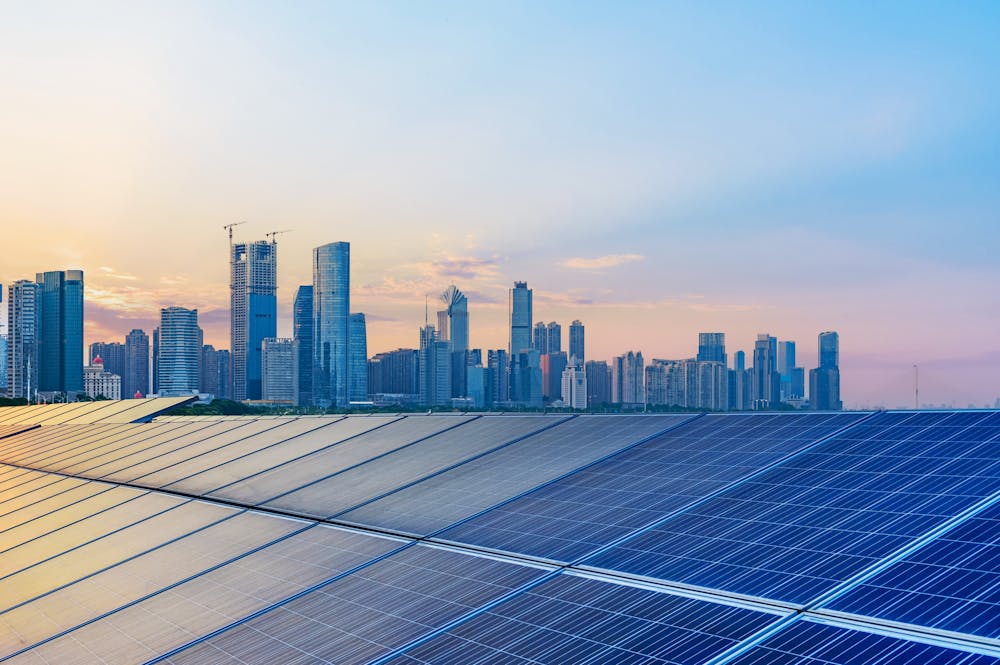
    solar panels with a city skyline in the background.
    AI models are increasingly able to predict weather with greater precision, allowing electric grid operators to plan ahead, storing excess energy in batteries or adjusting supply to meet demand before a storm or heat wave hits.
    (Shutterstock)

    AI for smarter district heating and cooling

    In Munich, Germany, AI is improving geothermal district heating by using underground sensors to monitor temperature and moisture levels in the ground.

    The collected data feeds into a digital simulation model that helps optimize network operations. In more advanced versions, during winter cold snaps, such systems can suggest lowering flow to underused spaces like half-empty offices and boosting heat where demand is higher, such as in crowded apartments.

    This intelligent, self-optimizing approach extends the life of equipment and delivers more warmth with the same energy input.

    This is a breakthrough with enormous potential for cities in cold climates with established geothermal networks, such as Winnipeg in Canada and Iceland’s Reykjavik.

    Although these cities have not yet adopted AI-driven monitoring systems, they could benefit from AI’s real-time improvements in efficiency, comfort and energy savings during harsh winters — a principle that holds true wherever geothermal district heating and cooling exists.

    a person adjusting a digital thermostat
    Inside the home, AI-managed smart climate systems can factor in how many people are in each room, which appliances are in use, how much natural sunlight each space receives.
    (Shutterstock)

    Smart buildings

    Inside the home, AI-managed smart climate systems can factor in how many people are in each room, which appliances are in use, how much natural sunlight each space receives and how much electricity or heat a home’s solar panels generate throughout the day.

    Based on this, AI determines how to heat or cool rooms efficiently, and can transfer energy from one space to another, balancing comfort with minimal energy use.

    Coastal cities and those in wind-heavy regions are using AI in other creative ways. In Orkney, Scotland, excess wind and tidal energy are converted into green hydrogen. Instead of letting that surplus power go to waste, an AI system called HyAI controls when to generate hydrogen based on wind forecasts, electricity prices and how full the hydrogen storage tanks are.

    When winds are strong at night and electricity is cheap, the AI can divert surplus power to produce hydrogen and store it for later use. On calmer days, that stored hydrogen can power fuel cells or buses.

    Energy storage

    AI is transforming energy storage into a smart, revenue-generating force. In Finland, a startup called Capalo AI has developed Zeus VPP, an AI-powered virtual power plant that aggregates distributed batteries from homes, businesses and other sites.

    Zeus VPP uses advanced forecasting and AI algorithms to decide when batteries should charge or discharge, factoring in energy prices, local consumption and weather forecasts. This enables battery owners to earn revenue by participating in electricity markets, while also supporting grid stability and making better use of renewable energy.

    Utility companies are also using AI to monitor everything from high-voltage transmission lines to neighbourhood transformers, dramatically increasing reliability.

    AI-powered dynamic line rating adjusts how much electricity a line can carry in real time, boosting capacity by 15 to 30 per cent when conditions allow. This helps utilities maximize the use of existing infrastructure instead of relying on costly upgrades.

    At the local level, AI analyzes smart metre data to predict which transformers are overheating due to rising EV and heat pump use.

    By forecasting these stress points, utilities can proactively upgrade equipment before failures happen — a shift from reactive to predictive maintenance that makes the grid stronger and cities more resilient.

    AI-powered public transit and mobility

    Transportation innovation is becoming part of the energy solution, with AI at the centre of this transformation. In New York City, energy company Con Edison has installed major battery storage systems to help manage peak electricity demand and reduce reliance on polluting peaker plants, which supply energy only during high-demand periods.

    More broadly, Con Edison is deploying advanced AI-powered analytics software across its electric grid — optimizing voltage, enhancing reliability and enabling predictive maintenance. Together, these efforts show how combining energy storage and AI-driven analytics can make even the world’s busiest cities more resilient and efficient.

    AI is also powering “vehicle-to-grid” innovations in California, where an AI-driven platform manages electric school buses that can supply stored energy back to the grid during periods of high demand.

    By carefully managing when buses charge and discharge, these systems help keep the grid reliable and ensure vehicles are ready for their daily routes. As this technology expands, parked electric vehicles could serve as valuable backup resources for the electricity system.

    lights moving along a highway
    Transportation innovation is becoming part of the energy solution.
    (Shutterstock)

    AI for clean energy initiatives

    AI is rapidly transforming cities by revolutionizing how energy is used and managed. Google, for example, has slashed cooling energy at its data centres by up to 40 per cent using AI that fine-tunes fans, pumps and windows more efficiently than any human operator.

    Organizations like the Electric Power Research Institute (EPRI), in collaboration with NVIDIA, Microsoft and others, have launched the Open Power AI Consortium, which is creating open-source AI tools for utilities worldwide.

    These tools will enable even the most resource-constrained cities to deploy advanced AI capabilities, without having to start from scratch, helping to level the playing field and accelerate the global energy transition.

    The result is not just cleaner air and lower energy bills, but a path to fewer blackouts and more resilient homes.

    The Conversation

    Mohammadamin Ahmadfard receives funding from the Natural Sciences and Engineering Research Council of Canada (NSERC) and Mitacs Inc. for his postdoctoral research at Toronto Metropolitan University.

    ref. AI applications are producing cleaner cities, smarter homes and more efficient transit – https://theconversation.com/ai-applications-are-producing-cleaner-cities-smarter-homes-and-more-efficient-transit-256291

    MIL OSI Analysis

  • MIL-OSI Analysis: Difficult work arrangements force many women to stop breastfeeding early. Here’s how to prevent this

    Source: The Conversation – Indonesia – By Andini Pramono, Research officer, Department of Health Economics, Wellbeing and Society, National Centre for Epidemiology and Population Health, Australian National University

    Research shows that six months of exclusive breastfeeding, and continuing until two years old or beyond, provide multiple benefits for the baby and mother.

    It can prevent deaths both in infants and mothers – including in wealthy nations like the United States. It also benefits the global economy and the enviroment.

    However, after maternity leave ends, mothers returning to paid work face many challenges maintaining breastfeeding. This often leads mothers to stop breastfeeding their children before six months – the duration of exclusive breastfeeding recommended by the World Health Organisation (WHO) and others.

    According to the WHO, less than half of babies under six months old worldwide are exclusively breastfed.

    In Indonesia, research shows 83% of mothers initiate breastfeeding, but only 57% are still breastfeeding at around six months. In Australia, 96% of mothers start breastfeeding, but then there is a rapid fall to only 39% by around three months and only 15% by around five months.

    Among the key reasons for low rates of exclusive breastfeeding are the difficult work conditions women face when they return to paid work.

    So how can governments and workplaces – especially in countries that have yet to do enough, like Indonesia and Australia – better support breastfeeding mothers, particularly at work?

    Half a billion reasons to change

    For more than a century, the International Labour Organization (ILO) has set global standards for maternity protection through the Maternity Protection Convention and accompanying recommendations, as well as the ILO Workers with Family Responsibilities Convention, aiming to protect female workers’ rights.

    So far, only 66 member states have ratified at least one of the Maternity Protection Conventions, while 43 have ratified the Workers with Family Responsibilities Convention. Unfortunately, Indonesia has not ratified either convention. So far, Australia has only ratified the family responsibilities convention.

    In some countries, protections are aligned with the ILO Conventions. For example, in Denmark and Norway, the governments offer maternity leave of at least 14 weeks. During leave, mothers’ earnings are protected at a rate of at least two-thirds of their pre-birth earnings. Public funds ensure this is done in a manner determined by national law and practice, so the employer is not solely responsible for the payment.

    A Canadian study highlights the proportion of mothers exclusively breastfeeding to six months increased by almost 40% when paid maternity leave was expanded from six to 12 months. At the same time, average breastfeeding duration increased by one month, from five to six months.

    Evidence shows paid maternity leave and providing an adequate lactation room at work both contribute positively to breastfeeding rates.

    Despite this, half a billion women globally still lack adequate maternity protections.

    For example, welfare reforms in the US encouraging new mothers’ return to work within 12 weeks led to a 16–18% reduction in breastfeeding initiation. It also saw a four to six week reduction in the time babies were breastfed.

    Indonesia and Australia aren’t doing enough

    Neither Indonesia or Australia are currently doing enough to meet the ILO’s maternity protection standards.

    In Indonesia, the 2003 Labour Law urges companies to give 12 weeks of paid maternity leave for women workers to support breastfeeding. Furthermore, the 2012 regulation on exclusive breastfeeding obligates workplace and public space management to provide a space or facility to breastfeed and express breast milk. However, the monitoring of its implementation is weak.

    In Australia, paid parental leave (PPL) policy supports parents who take time off from paid work to care for their young children.

    Eligible working mothers or primary carers are entitled to up to 20 weeks (or 22 weeks if the child is born or adopted from 1 July 2024) of government paid parental leave within the first two years of the birth or adoption of a child.

    In the Federal Budget announced on 15 May 2024, the Australian government has added payment of superannuation contributions to the parental leave package for births and adoptions on or after 1 July 2025. However, the PPL is a low amount, paid at the national minimum wage ($882.80 per week)].

    Some mothers can combine the government payment with additional paid leave from their employer. However in 2022-2023, only 63% of Australian employers offered this, leaving nearly half of new mothers with only minimum financial support.

    Unlike Indonesia, Australia has no legal requirement for employers to offer paid breastfeeding breaks in their workplace, so mothers can express and take home their breastmilk. This can badly impact women’s and children’s health.

    While Australia’s support for breastfeeding mothers is welcome, it’s still inadequate to meet the ILO’s international standard – particularly Australia’s low payment rate of government PPL (at the minimum wage, rather than two-thirds of previous earnings) and the lack of legislation for paid breastfeeding breaks.

    How employers and colleagues can help

    Globally, the barriers to maintain breastfeeding include not only lack of maternity leave duration and pay, but also unavailability of breastfeeding and breast pumping facilities at workplaces, sometimes unsupportive colleagues and supervisors, and lack of time at work to breastfeed or expressing breastmilk.

    Breastfeeding a baby should not preclude women from earning a living. In 2022, female workers were 39.5% of total workers globally, while in Australia and Indonesia they made up 47.4% and 39.5% respectively.

    An accessible facility or space for breastfeeding or breast pumping is vital to support breastfeeding working mothers.

    In Indonesia, a 2013 Ministry of Health regulation outlines the procedure for an employer to provide a space and facility for mothers to breastfeed and breast pump.

    The minimum specifications of this facility are described as a lockable, clean and quiet room, with a sink for washing, suitable temperature, lighting and flooring. While these specifications are technically mandatory, monitoring is weak, meaning if employers fail to meet the requirements there are no specific consequences.

    But a breastfeeding space alone is not enough. In many jobs, mothers cannot leave their tasks during working hours, even if there is a lactation room.

    Supportive employers need to regulate time and flexibility to breastfeed and express breastmilk, including providing flexible working arrangements and paid breastfeeding breaks during working hours. Supportive attitudes from co-workers and managers are also important.

    Suitable staff training on breastfeeding and policies supporting mothers, such as providing time and facility to express breastmilk in work hours, are crucial. Training on how to support co-worker can include anything from basic information breastfeeding, to what to say (or not say) with a breastfeeding co-worker.

    Access to supportive childcare is another issue globally.

    For those families who can access childcare, childcare centres can also help by:

    • encouraging and accommodating mothers to visit for breastfeeding
    • having written policies supporting breastfeeding
    • providing parents with resources on breastfeeding
    • and referring parents to community resources for breastfeeding support.

    Practical ways to support more families

    The Australian Breastfeeding Association has an accreditation program that helps workplaces to be breastfeeding-friendly. Workplace policies, including adequate time and space for pumping, are positively associated with longer breastfeeding duration.

    The program assesses workplaces for three aspects: time, space and supportive culture. This means, workplaces are encouraged to provide a special space and time for breastfeeding and breast pumping in a supportive culture and flexible working hours.

    Mothers should consider to prepare how to align breastfeeding with work early – during pregnancy. Start by discussing your breastfeeding goals with healthcare professionals and finding a baby-friendly hospital.

    Discuss your breastfeeding plan with your supervisor at work during your pregnancy, including finding out your maternity leave (paid and unpaid) entitlements. Also consider childcare arrangements that will work best for you with breastfeeding.

    For further information and support, you can find resources from local breastfeeding support groups, such as the Indonesian Breastfeeding Mothers Association and Australian Breastfeeding Association.

    The Conversation

    Julie P. Smith is a qualified breastfeeding counselor and honorary member of the Australian Breastfeeding Association.

    Andini Pramono dan Liana Leach tidak bekerja, menjadi konsultan, memiliki saham, atau menerima dana dari perusahaan atau organisasi mana pun yang akan mengambil untung dari artikel ini, dan telah mengungkapkan bahwa ia tidak memiliki afiliasi selain yang telah disebut di atas.

    ref. Difficult work arrangements force many women to stop breastfeeding early. Here’s how to prevent this – https://theconversation.com/difficult-work-arrangements-force-many-women-to-stop-breastfeeding-early-heres-how-to-prevent-this-211831

    MIL OSI Analysis

  • MIL-OSI Analysis: Valentin-Yves Mudimbe: the philosopher who reshaped how the world thinks about Africa

    Source: The Conversation – Africa – By Christophe Premat, Associate Professor in French Studies (cultural studies), head of the Centre for Canadian Studies, Stockholm University

    Valentin-Yves Mudimbe. Wikimedia Commons, CC BY-SA

    Congolese thinker, philosopher and linguist Valentin-Yves Mudimbe died on 21 April 2025 at the age of 83. He was in the US, where he had lived for many years.

    A towering figure in African critical thought, Mudimbe’s work – translated and studied worldwide – has profoundly shaped postcolonial studies. He leaves a groundbreaking intellectual legacy on the colonisation of knowledge and the condition of Africans.

    At a time when debates on decolonising knowledge are gaining ground, Mudimbe’s passing invites us to revisit the work of a thinker who, since the 1980s, paved the way for a radical critique of imposed “categories”. He wanted to help rebuild intellectual frameworks which imagined and defined Africa on its own terms, not through the labels or categories imposed by colonial powers.

    As a specialist in postmodern and postcolonial theories, I think he had considerable influence on the field of postcolonial studies.

    He was one of the most influential African thinkers of the 20th century. His impact did not come from activism, but from careful, sustained intellectual work. With his seminal work The Invention of Africa (1988) he profoundly disrupted African and postcolonial studies. His work went far beyond the usual east-west divide.

    A journey between Africa and exile

    Valentin-Yves Mudimbe was born in 1941 in Jadotville (now Likasi), in the Democratic Republic of Congo. His early education took place in a Benedictine monastery. Later, he pursued further studies at Louvain in Belgium.

    His religious education left a lasting mark on his thinking. It shaped his critical approach to knowledge. His work often explored the connections between language, power, and how ideas become institutionalised.

    In 1970, Mudimbe returned to the newly independent Congo. He began teaching at the National University of Zaïre. The country was then caught between postcolonial hope and growing disillusionment.

    Under Mobutu Sese Seko’s regime, the political atmosphere grew stifling for independent thinkers. The state had adopted the rhetoric of “authenticity”, turning it into a tool of control. Faced with this ideological stranglehold, Mudimbe chose exile in 1979.

    He relocated to the US, where he taught at Stanford and later Duke University. There, he continued his work of critical deconstruction. Yet, despite his physical distance, he remained deeply committed to Africa’s future.

    Deconstructing the ‘colonial library’

    First published in English in 1988 as the The Invention of Africa, the book was translated into French in 2021 under the title L’Invention de l’Afrique, (Présence africaine).

    Mudimbe offers much more than a critique of colonial representations. He examined the “colonial library”. It refers to the vast collection of religious, anthropological and administrative texts that, for centuries, framed Africa as an object to be studied, dominated and “saved”. Mudimbe was always careful not to accept ideas just because they were passed down. Instead, he was always looking for new ways to think freely and independently.

    Unlike Edward Said, the Palestinian-American literary theorist and critic who exposed how the west constructed a mythologised “Orient”, Mudimbe revealed something more insidious. He showed that Africa was often imagined as a void to be filled. It was cast as a cultural blank slate, which helped justify the colonial mission.

    This radical deconstruction raised a crucial question: how can we produce knowledge that does not, even through critique, reproduce the very colonial frameworks it seeks to challenge?

    The book’s impact was profound, resonating across Africa, Europe and North America. It created an intellectual foundation for thinkers like Achille Mbembe, Souleymane Bachir Diagne and Felwine Sarr, who, in turn, continued to explore what truly decolonised African thought might look like.

    Building something new

    Mudimbe was never satisfied with existing structures. He aimed to build something new from the ground up. For him, liberating Africa required a rebuilding of knowledge systems. He rejected the assumption that western intellectual frameworks alone could define Africa. He also warned against essentialist temptations – the trap of creating new conceptual prisons in the name of authenticity.

    His thinking followed a rigorous method: analysing discourse, questioning inherited categories, and dismantling false assumptions.

    This demanding work aimed to empower Africa to think for itself without cutting itself off from the rest of the world.

    His fiction – Between Tides (in French, Entre les eaux. Dieu, un prêtre, la révolution), Before the Birth of the Moon (Le Bel Immonde in French), Shaba Deux : les carnets de mère Marie Gertrude – embodies the same refusal to be stereotyped.

    His characters navigate colonial legacies, state nationalism and rigid identity politics through stories of displacement and fragmented memory.

    Language itself becomes a battleground for creativity in his novels. Sharply crafted, his prose captures the diversity of contemporary African experience. Through both his literary and philosophical works, Mudimbe consistently insisted that identity is never a given. It is always a construct to be questioned.

    A living legacy

    As Africa navigates complex geopolitical transformations and redefines its cultural identities, Mudimbe’s intellectual legacy proves more vital than ever. His work challenges us to recognise that true liberation extends beyond political sovereignty or cultural revival. It requires the radical work of reinventing how knowledge itself is produced and validated.

    Mudimbe’s lasting legacy urges us to remain intellectually vigilant in a world where knowledge is constantly shifting. He challenges us to reject rigid categories, embrace complexity with care, and make room for uncertainty instead of rushing to resolve it.

    For Mudimbe, to decolonise knowledge means relentless critique paired with creative reconstruction. It means building pluralistic and open frameworks that honour Africa’s diverse experiences without nostalgia or complacency.

    The Conversation

    Christophe Premat is a lecturer and researcher in Francophone cultural studies at the Department of Romance and Classical Studies at Stockholm University. In 2018, he published the book For a Critical Genealogy of the Francophonie, released by Stockholm University Press. He states that he worked at the French Institute of Sweden / French Embassy in Stockholm from 2008 to 2013, dealing, among other things, with issues related to the Francophonie. He is currently a member of CISE (Confédération Internationale Solidaire Écologiste), an association of French citizens abroad founded in 2018 (https://cise-francaisdeletranger.net/). He is the head of the Centre for Canadian Studies at Stockholm University.

    ref. Valentin-Yves Mudimbe: the philosopher who reshaped how the world thinks about Africa – https://theconversation.com/valentin-yves-mudimbe-the-philosopher-who-reshaped-how-the-world-thinks-about-africa-255902

    MIL OSI Analysis

  • MIL-OSI Analysis: Colonial-era borders create conflict in Africa’s oceans – how to resolve them

    Source: The Conversation – Africa – By Ifesinachi Okafor-Yarwood, Lecturer in Sustainable Futures, University of St Andrews

    Africa has 38 coastal and island nations. Their maritime industries – including energy, tourism, maritime transport, shipping and fishing – play a crucial role in developing these nations.

    Key to harnessing these resources are Africa’s maritime boundaries – lines on a map showing the legal divisions of the ocean between neighbouring coastal states.

    Some of these boundaries were created by colonial powers and kept after independence. Their purpose was to achieve territorial security and ensure the exclusive exploitation of resources and to maintain navigational freedom.

    But Africa’s maritime boundaries sometimes lead to conflict, prevent cooperation on resource management and create room for maritime crimes, like illegal fishing. This is because they are often contested. Countries have overlapping claims and varying interests in resource exploration. This is common in maritime areas rich in oil, gas and fisheries, and deep seabed resources.

    In our recent paper we found that using international law to resolve maritime boundaries does not always bring peace, especially when it results in ceding the disputed area to one party. It can result in animosity between countries and breed room for continued distrust among peoples.

    Today, Africa has the most unresolved maritime boundary disputes in the world and the lowest number of settled boundary disputes.

    As more ocean resources are discovered, climate change may heighten disputes. Rising sea levels can gradually submerge maritime zones, potentially affecting the baselines from which these zones are measured. This could create uncertainty or trigger new conflicts.

    In our paper, we suggest a collaborative approach to resolving maritime disputes. We hope that this will help prevent many African countries from missing out on the benefits of their oceans.

    Price of disputed boundaries

    Disagreements over maritime boundaries can have many negative effects.

    Research has shown that criminal activities tend to increase in disputed maritime boundaries. For instance, illegal fishers are aware that because there is dispute over a border, there will also be enforcement gaps.

    Countries in dispute will also not work together and will not be sending patrols to contested areas. For instance, in 2016, a Chinese vessel escaped into Sierra Leone to avoid capture. When Guinean naval forces boarded the vessel for enforcement, there was an exchange of fire and 11 Guineans were detained by Sierra Leone.

    When boundaries are disputed, it also means that local fishers are likely to encroach into neighbouring waters, often unknowingly, in search of better catches. Given the significance of fisheries to coastal livelihoods and the extent of depletion, this threatens peace and security. It fuels tension between communities and countries over access to dwindling resources.

    Disagreements over maritime boundaries also diminish maritime security cooperation, complicate joint patrols, and divert attention from tackling shared threats such as piracy.

    Colonialism never ended

    Unfortunately, resolving maritime boundary disputes is complicated by a principle in international law known as uti possidetis juris – “as you possess under law”.

    The principle says that when countries argue over borders, international law, built around colonial-era boundaries, is used to decide who gets what. This creates a “winner-takes-all” approach – one side gains control over the disputed area and resources. International courts, like the International Court of Justice and the International Tribunal for the Law of the Sea, follow the provisions of law reinforcing uti possidetis.

    Our examination of maritime boundary disputes in west and central Africa found that the principle of uti possidetis juris had failed to alleviate maritime boundary tensions. In some cases, it has exacerbated them.

    One example is a maritime dispute between Cameroon and Nigeria decided in 2002. The dispute was over who had control of Bakassi, an oil-rich region, and its maritime frontier.

    The uti possidetis juris principle upheld the lines drawn at the time of Nigeria’s independence and resulted in the ceding of Bakassi to Cameroon. The impact of the resolution lingers. To date, thousands of displaced Bakassi people that returned to Nigeria have yet to be resettled and reintegrated. Disputes also continue between fishers from Nigeria and Cameroonian law enforcement agents. In extreme cases, it results in death, like the alleged killing of 97 Nigerian fishers by Cameroonian marine police.

    The way forward

    In our paper, we recommend that courts, tribunals or disputing countries consider joint management agreements to resolve maritime disputes. Under such agreements, countries share and manage disputed maritime resources.

    These agreements will allow for the joint management of shared resources. It will also encourage cooperation and collaboration in other areas, such as joint operations to combat illegal fishing and piracy. While international courts may apply uti possidetis juris as required by law, countries should be encouraged to negotiate special arrangements – such as joint development agreements – as part of the resolution process. Especially in cases where livelihoods and longstanding community ties risk being disrupted by unilateral decisions or the ceding of disputed areas to one party.

    While not perfect, this approach has already improved cooperation on security and resource use at sea. It has worked in places like Nigeria, São Tomé and Príncipe, Senegal and Guinea-Bissau. Ghana and Côte d’Ivoire also have a joint management framework in place for their shared boundaries to avoid future disputes.

    Prolonged boundary disputes only enable criminal actors to exploit Africa’s resources, undermining collective progress. A shift towards collaborative solutions is essential for achieving a sustainable and prosperous future for the continent.

    The Conversation

    Ifesinachi Okafor-Yarwood receives funding from the PEW Charitable Trust and the Research Council of Norway. The St Andrews Research Internship Scheme (StARIS) supported the initial peer-reviewed research.

    Elizabeth Nwarueze does not work for, consult, own shares in or receive funding from any company or organisation that would benefit from this article, and has disclosed no relevant affiliations beyond their academic appointment.

    ref. Colonial-era borders create conflict in Africa’s oceans – how to resolve them – https://theconversation.com/colonial-era-borders-create-conflict-in-africas-oceans-how-to-resolve-them-248577

    MIL OSI Analysis

  • MIL-OSI Analysis: Low turnout and an unfair voting system: UK elections ranked in the bottom half of countries in Europe

    Source: The Conversation – UK – By Toby James, Professor of Politics and Public Policy, University of East Anglia

    The UK has historically been held up as leading democracy with free and fair elections. However, our new report shows election quality in the UK is now ranked in the bottom half of countries in Europe.

    The Global Electoral Integrity Report provides scores for election quality around the world. It defines electoral integrity as the extent to which elections empower citizens.

    Iceland received the highest score for an election that took place in 2024, the “year of elections” during which 1.6 billion people went to the polls, according to Time Magazine. This was an unprecedented concentration of democratic activity in a single year. Iceland has a successful system of automatic voter registration and an electoral system that is judged to be fair to smaller parties.


    Want more politics coverage from academic experts? Every week, we bring you informed analysis of developments in government and fact check the claims being made.

    Sign up for our weekly politics newsletter, delivered every Friday.


    Countries that scored highly based on their most recent election include Sweden, Denmark, Canada, Finland and Lithuania. Those at the opposite end of the scale include Syria, Belarus, Egypt, and Nicaragua. The UK is ranked 24th out of 39 countries in Europe. It is below Estonia, the Czech Republic, Italy, Austria, Luxembourg and Slovakia. It is ranked 53rd out of 170 countries overall.

    The US also saw a decline. The beacons for electoral democracy are therefore now found in mainland Europe (most notably Scandinavia), Australasia, South America and the southern parts of Africa – rather than the UK and US. The centre of global democratic authority has shifted away from Westminster.

    Electoral Integrity in most recent national election up to the end of 2024.
    Electoral Integrity Project, CC BY-ND

    The weaknesses in the UK system

    There remain many areas of strength in UK elections. UK electoral officials show professionalism and independence and there is no concern about the integrity of the vote counting process. There is no evidence of widespread electoral fraud.

    A major weakness is in the fairness of the electoral rules for small parties. The electoral system generated a very disproportional result in 2024. Labour took nearly two-thirds of the seats in parliament, a total of 412, with less than 10 million votes (only 34% of votes cast). Labour won a massive majority in terms of parliamentary arithmetic but the the government did not enter office with widespread support.

    By contrast, Reform and the Greens received 6 million votes between them, but only nine MPs. The electoral system may have worked when Britain had a two-party system – but the two-party system no longer holds. Today’s Britain is more diverse, and political support is more distributed.

    The UK also scores poorly on voter registration. It is estimated that there are around 7 million to 8 million people not correctly registered or missing from the registers entirely. This is not many less than the 9.7 million people whose votes gave the government a landslide majority. The UK does not have a system of automatic voter registration, which is present in global leaders such as Iceland, where everyone is enrolled without a hiccup.

    Another problem is participation. Turnout in July 2024 was low – with only half of adults voting. Voting has been made more difficult as the Elections Act of 2022 introduced compulsory photographic identification for the first time at the general election. This was thought to have made it more difficult for many citizens to vote because the UK does not have a national identity card which all citizens hold.

    Meanwhile, there are further swirling headwinds. The spread of disinformation by overseas actors in elections has become a prominent challenge around the world and there was evidence of disinformation in this campaign too. Violence during the electoral period was thought to have been removed from British elections in Victorian times. But more than half candidates experience abuse and intimidation during the electoral period.

    Action needed

    One year into its time in office, the government is yet to act on this issue. The word “democracy” was missing from the prime minister’s strategic defence review, despite the emphasis on protecting the UK from Russia, a country known for electoral interference and other forms of attack on democracies.

    This was a sharp contrast to the former government’s 2021 review, which emphasised that a “world in which democratic societies flourish and fundamental human rights are protected is one that is more conducive to our sovereignty, security and prosperity as a nation”.

    In its election manifesto, Labour promised to “address the inconsistencies in voter ID rules”, “improve voter registration” and give 16 and 17-year-olds the right to vote in all elections. There needs to be firm action on electoral system change, automatic voter registration, campaign finance reform, voter identification changes and other areas.

    The Reform party is ahead in the polls and has consistently promised proportional representation. If Labour doesn’t make the reforms, another party might do so instead – and reap the benefits.

    There are a complex set of challenges facing democracy and elections. New technological challenges, change in attitudes, international hostility and new emergencies are combining to batter the door of democracy down.

    International organisations are increasingly stressing that political leaders need to work together and take proactive action to protect elections against autocratic forces. This means not only supporting democracy in their messages on the world stage – but also introducing reforms to create beacons of democracy in their own countries.

    Toby James has previously received funding from the AHRC, ESRC, Joseph Rowntree Reform Trust, British Academy, Leverhulme Trust, Electoral Commission, Nuffield Foundation, the McDougall Trust and Unlock Democracy. His current research is funded by the Canadian SSHRC.

    Holly Ann Garnett receives funding from the Social Sciences and Humanities Research Council of Canada and the Canadian Defence Academy Research Programme. She has previously received funding from: the British Academy, the Canadian Institute for Advanced Research, the NATO Public Diplomacy Division, the American Political Science Association Centennial Centre, and the Conference of Defence Associations.

    ref. Low turnout and an unfair voting system: UK elections ranked in the bottom half of countries in Europe – https://theconversation.com/low-turnout-and-an-unfair-voting-system-uk-elections-ranked-in-the-bottom-half-of-countries-in-europe-260396

    MIL OSI Analysis

  • MIL-OSI Analysis: Have you noticed that Nigel Farage doesn’t talk about Donald Trump anymore?

    Source: The Conversation – UK – By Martin Farr, Senior Lecturer in Contemporary British History, Newcastle University

    Each is the main political subject in their country, and one is the main political subject in the world. Each rode the populist wave in 2016, campaigning for the other. In 2024 the tandem surfers remounted on to an even greater breaker. Yet, though nothing has happened to suggest that bromance is dead, neither Donald Trump nor Nigel Farage publicly now speak of the other.

    Trump’s presidential campaign shared personnel with Leave.eu, the unofficial Brexit campaign. Farage was on the stump with Trump, and his “bad boys of Brexit” made their pilgrimage to Trump Tower after its owner’s own triumph in the US election. Each exulted in the other’s success, and what it portended.

    Trump duly proposed giving the UK ambassadorship to the United States to Farage. Instead, Farage became not merely MP for Clacton, but leader of the first insurgent party to potentially reset Britain’s electoral calculus since Labour broke through in 1922.

    Then, Labour’s challenge was to replace the Liberals as the alternative party of government. It took two years. Reform UK could replace the Conservatives in four.


    Get your news from actual experts, straight to your inbox. Sign up to our daily newsletter to receive all The Conversation UK’s latest coverage of news and research, from politics and business to the arts and sciences.


    Trump, meanwhile, has achieved what in Britain has either been thwarted (Militant and the Labour party in the 1980s) or has at most had temporary, aberrant, success (Momentum and the Labour party in the 2010s): the takeover of a party from within. Farage has been doing so – hitherto – from without.

    At one of those historic forks in a road where change is a matter of chance, after Brexit finally took place, Farage considered his own personal leave – to go and break America.

    The path had been trodden by Trump-friendly high-profile provocateurs before him: Steve Hilton, from David Cameron’s Downing Street, via cable news, now standing to be governor of California; Piers Morgan, off to CNN to replace the doyen of cable news Larry King, only to crash, but then to burn on, online. Liz Truss, never knowingly understated, has found her safe space – the rightwing speaking circuit.

    But Farage remained stateside. He knew his domestic platform was primed more fully to exploit the voter distrust that his nationalist crusade had done so much to provoke.

    The Trump effect

    Genuine peacetime transatlantic affiliations are rare, usually confined to the leaders of established parties: Ronald Reagan and Margaret Thatcher, Bill Clinton and Tony Blair. One consequence of the 2016 political shift is that the US Republicans and the British Conservatives, the latter still at least partially tethered to traditional politics, have become distanced.

    During the first Trump administration, and even in the build up to the second, it was Farage who was seen as the UK’s bridge to the president. But today, at the peak of their influence, for Farage association can only be by inference, friendship with the US president is not – put mildly – of political advantage. For UK voters, Trump is the 19th most popular foreign politician, in between the King of Denmark and Benjamin Netanyahu.

    There is, moreover, the “Trump effect”. Measuring this is crude – circumstances differ – but the trend is that elections may be won by openly criticising, rather than associating with, Trump. This was the case for Mark Carney in Canada, Anthony Albanese in Australia, and Nicușor Dan in Romania.

    Trump’s second state visit to the UK will certainly be less awkward for Farage than it will be Starmer, the man who willed it. Farage will likely not – and has no reason to – be seen welcoming so divisive a figure.

    Starmer has no choice but to, and to do so ostentatiously. It is typical of Starmer’s perfect storm of an administration that he will, in the process, do nothing to appeal to the sliver of British voters partial to Trump while further shredding his reputation with Labour voters. Farage would be well served in taking one of his tactical European sojourns for the duration. Starmer may be tempted too.

    Outmanoeuvring the establishment

    Reflecting the historic cultural differences of their countries, Trump’s prescription is less state, Farage’s is more. The Farage of 2025 that is. He had been robustly Thatcherite, but has lately embraced socialist interventionism, albeit through a most Thatcherite analysis: “the gap in the market was enormous”.

    Reform UK now appears to stand for what Labour – in the mind of many of its voters – ought to. Eyeing the opportunity of smokestack grievances, Farage called for state control of steel production even as Trump was considering quite how high a tariff to put on it. Nationalisation and economic nationalism: associated restoratives for national malaise.

    Aggressively heteronormative, Trump and Farage dabble in the natalism burgeoning in both countries – as much a cultural as an economic imperative. Each has mastered – and much more than their adversaries – social media. Each has come to recognise the demerits in publicly appeasing Putin.

    And Reform’s rise in a hitherto Farage-resistant Scotland can only endear him further to a president whose Hebridean mother was thought of (in desperation) as potentially his Rosebud by British officials preparing for his first administration.

    Given their rhetorical selectivity, Trump and Farage’s rolling pitches are almost unanswerable for convention-confined political opponents and reporters. These two anti-elite elitists continue to confound.

    Unprecedentedly, for a former president, Trump ran against the incumbent; Farage will continue to exploit anti-incumbency, despite his party now being in office. Most elementally, the pair are bound for life by their very public near-death experiences. Theirs is, by any conceivable measure, an uncommon association.

    Farage’s fleetness of foot would be apparent even without comparison with the leaden steps of the leaders of the legacy parties. His is a genius of opportunism. That’s why he knows not to remind us of his confrere across the water.

    Martin Farr does not work for, consult, own shares in or receive funding from any company or organisation that would benefit from this article, and has disclosed no relevant affiliations beyond their academic appointment.

    ref. Have you noticed that Nigel Farage doesn’t talk about Donald Trump anymore? – https://theconversation.com/have-you-noticed-that-nigel-farage-doesnt-talk-about-donald-trump-anymore-258333

    MIL OSI Analysis

  • MIL-OSI Submissions: Low turnout and an unfair voting system: UK elections ranked in the bottom half of countries in Europe

    Source: The Conversation – UK – By Toby James, Professor of Politics and Public Policy, University of East Anglia

    The UK has historically been held up as leading democracy with free and fair elections. However, our new report shows election quality in the UK is now ranked in the bottom half of countries in Europe.

    The Global Electoral Integrity Report provides scores for election quality around the world. It defines electoral integrity as the extent to which elections empower citizens.

    Iceland received the highest score for an election that took place in 2024, the “year of elections” during which 1.6 billion people went to the polls, according to Time Magazine. This was an unprecedented concentration of democratic activity in a single year. Iceland has a successful system of automatic voter registration and an electoral system that is judged to be fair to smaller parties.


    Want more politics coverage from academic experts? Every week, we bring you informed analysis of developments in government and fact check the claims being made.

    Sign up for our weekly politics newsletter, delivered every Friday.


    Countries that scored highly based on their most recent election include Sweden, Denmark, Canada, Finland and Lithuania. Those at the opposite end of the scale include Syria, Belarus, Egypt, and Nicaragua. The UK is ranked 24th out of 39 countries in Europe. It is below Estonia, the Czech Republic, Italy, Austria, Luxembourg and Slovakia. It is ranked 53rd out of 170 countries overall.

    The US also saw a decline. The beacons for electoral democracy are therefore now found in mainland Europe (most notably Scandinavia), Australasia, South America and the southern parts of Africa – rather than the UK and US. The centre of global democratic authority has shifted away from Westminster.

    Electoral Integrity in most recent national election up to the end of 2024.
    Electoral Integrity Project, CC BY-ND

    The weaknesses in the UK system

    There remain many areas of strength in UK elections. UK electoral officials show professionalism and independence and there is no concern about the integrity of the vote counting process. There is no evidence of widespread electoral fraud.

    A major weakness is in the fairness of the electoral rules for small parties. The electoral system generated a very disproportional result in 2024. Labour took nearly two-thirds of the seats in parliament, a total of 412, with less than 10 million votes (only 34% of votes cast). Labour won a massive majority in terms of parliamentary arithmetic but the the government did not enter office with widespread support.

    By contrast, Reform and the Greens received 6 million votes between them, but only nine MPs. The electoral system may have worked when Britain had a two-party system – but the two-party system no longer holds. Today’s Britain is more diverse, and political support is more distributed.

    The UK also scores poorly on voter registration. It is estimated that there are around 7 million to 8 million people not correctly registered or missing from the registers entirely. This is not many less than the 9.7 million people whose votes gave the government a landslide majority. The UK does not have a system of automatic voter registration, which is present in global leaders such as Iceland, where everyone is enrolled without a hiccup.

    Another problem is participation. Turnout in July 2024 was low – with only half of adults voting. Voting has been made more difficult as the Elections Act of 2022 introduced compulsory photographic identification for the first time at the general election. This was thought to have made it more difficult for many citizens to vote because the UK does not have a national identity card which all citizens hold.

    Meanwhile, there are further swirling headwinds. The spread of disinformation by overseas actors in elections has become a prominent challenge around the world and there was evidence of disinformation in this campaign too. Violence during the electoral period was thought to have been removed from British elections in Victorian times. But more than half candidates experience abuse and intimidation during the electoral period.

    Action needed

    One year into its time in office, the government is yet to act on this issue. The word “democracy” was missing from the prime minister’s strategic defence review, despite the emphasis on protecting the UK from Russia, a country known for electoral interference and other forms of attack on democracies.

    This was a sharp contrast to the former government’s 2021 review, which emphasised that a “world in which democratic societies flourish and fundamental human rights are protected is one that is more conducive to our sovereignty, security and prosperity as a nation”.

    In its election manifesto, Labour promised to “address the inconsistencies in voter ID rules”, “improve voter registration” and give 16 and 17-year-olds the right to vote in all elections. There needs to be firm action on electoral system change, automatic voter registration, campaign finance reform, voter identification changes and other areas.

    The Reform party is ahead in the polls and has consistently promised proportional representation. If Labour doesn’t make the reforms, another party might do so instead – and reap the benefits.

    There are a complex set of challenges facing democracy and elections. New technological challenges, change in attitudes, international hostility and new emergencies are combining to batter the door of democracy down.

    International organisations are increasingly stressing that political leaders need to work together and take proactive action to protect elections against autocratic forces. This means not only supporting democracy in their messages on the world stage – but also introducing reforms to create beacons of democracy in their own countries.

    Toby James has previously received funding from the AHRC, ESRC, Joseph Rowntree Reform Trust, British Academy, Leverhulme Trust, Electoral Commission, Nuffield Foundation, the McDougall Trust and Unlock Democracy. His current research is funded by the Canadian SSHRC.

    Holly Ann Garnett receives funding from the Social Sciences and Humanities Research Council of Canada and the Canadian Defence Academy Research Programme. She has previously received funding from: the British Academy, the Canadian Institute for Advanced Research, the NATO Public Diplomacy Division, the American Political Science Association Centennial Centre, and the Conference of Defence Associations.

    ref. Low turnout and an unfair voting system: UK elections ranked in the bottom half of countries in Europe – https://theconversation.com/low-turnout-and-an-unfair-voting-system-uk-elections-ranked-in-the-bottom-half-of-countries-in-europe-260396

    MIL OSI

  • MIL-OSI Submissions: Have you noticed that Nigel Farage doesn’t talk about Donald Trump anymore?

    Source: The Conversation – UK – By Martin Farr, Senior Lecturer in Contemporary British History, Newcastle University

    Each is the main political subject in their country, and one is the main political subject in the world. Each rode the populist wave in 2016, campaigning for the other. In 2024 the tandem surfers remounted on to an even greater breaker. Yet, though nothing has happened to suggest that bromance is dead, neither Donald Trump nor Nigel Farage publicly now speak of the other.

    Trump’s presidential campaign shared personnel with Leave.eu, the unofficial Brexit campaign. Farage was on the stump with Trump, and his “bad boys of Brexit” made their pilgrimage to Trump Tower after its owner’s own triumph in the US election. Each exulted in the other’s success, and what it portended.

    Trump duly proposed giving the UK ambassadorship to the United States to Farage. Instead, Farage became not merely MP for Clacton, but leader of the first insurgent party to potentially reset Britain’s electoral calculus since Labour broke through in 1922.

    Then, Labour’s challenge was to replace the Liberals as the alternative party of government. It took two years. Reform UK could replace the Conservatives in four.


    Get your news from actual experts, straight to your inbox. Sign up to our daily newsletter to receive all The Conversation UK’s latest coverage of news and research, from politics and business to the arts and sciences.


    Trump, meanwhile, has achieved what in Britain has either been thwarted (Militant and the Labour party in the 1980s) or has at most had temporary, aberrant, success (Momentum and the Labour party in the 2010s): the takeover of a party from within. Farage has been doing so – hitherto – from without.

    At one of those historic forks in a road where change is a matter of chance, after Brexit finally took place, Farage considered his own personal leave – to go and break America.

    The path had been trodden by Trump-friendly high-profile provocateurs before him: Steve Hilton, from David Cameron’s Downing Street, via cable news, now standing to be governor of California; Piers Morgan, off to CNN to replace the doyen of cable news Larry King, only to crash, but then to burn on, online. Liz Truss, never knowingly understated, has found her safe space – the rightwing speaking circuit.

    But Farage remained stateside. He knew his domestic platform was primed more fully to exploit the voter distrust that his nationalist crusade had done so much to provoke.

    The Trump effect

    Genuine peacetime transatlantic affiliations are rare, usually confined to the leaders of established parties: Ronald Reagan and Margaret Thatcher, Bill Clinton and Tony Blair. One consequence of the 2016 political shift is that the US Republicans and the British Conservatives, the latter still at least partially tethered to traditional politics, have become distanced.

    During the first Trump administration, and even in the build up to the second, it was Farage who was seen as the UK’s bridge to the president. But today, at the peak of their influence, for Farage association can only be by inference, friendship with the US president is not – put mildly – of political advantage. For UK voters, Trump is the 19th most popular foreign politician, in between the King of Denmark and Benjamin Netanyahu.

    There is, moreover, the “Trump effect”. Measuring this is crude – circumstances differ – but the trend is that elections may be won by openly criticising, rather than associating with, Trump. This was the case for Mark Carney in Canada, Anthony Albanese in Australia, and Nicușor Dan in Romania.

    Trump’s second state visit to the UK will certainly be less awkward for Farage than it will be Starmer, the man who willed it. Farage will likely not – and has no reason to – be seen welcoming so divisive a figure.

    Starmer has no choice but to, and to do so ostentatiously. It is typical of Starmer’s perfect storm of an administration that he will, in the process, do nothing to appeal to the sliver of British voters partial to Trump while further shredding his reputation with Labour voters. Farage would be well served in taking one of his tactical European sojourns for the duration. Starmer may be tempted too.

    Outmanoeuvring the establishment

    Reflecting the historic cultural differences of their countries, Trump’s prescription is less state, Farage’s is more. The Farage of 2025 that is. He had been robustly Thatcherite, but has lately embraced socialist interventionism, albeit through a most Thatcherite analysis: “the gap in the market was enormous”.

    Reform UK now appears to stand for what Labour – in the mind of many of its voters – ought to. Eyeing the opportunity of smokestack grievances, Farage called for state control of steel production even as Trump was considering quite how high a tariff to put on it. Nationalisation and economic nationalism: associated restoratives for national malaise.

    Aggressively heteronormative, Trump and Farage dabble in the natalism burgeoning in both countries – as much a cultural as an economic imperative. Each has mastered – and much more than their adversaries – social media. Each has come to recognise the demerits in publicly appeasing Putin.

    And Reform’s rise in a hitherto Farage-resistant Scotland can only endear him further to a president whose Hebridean mother was thought of (in desperation) as potentially his Rosebud by British officials preparing for his first administration.

    Given their rhetorical selectivity, Trump and Farage’s rolling pitches are almost unanswerable for convention-confined political opponents and reporters. These two anti-elite elitists continue to confound.

    Unprecedentedly, for a former president, Trump ran against the incumbent; Farage will continue to exploit anti-incumbency, despite his party now being in office. Most elementally, the pair are bound for life by their very public near-death experiences. Theirs is, by any conceivable measure, an uncommon association.

    Farage’s fleetness of foot would be apparent even without comparison with the leaden steps of the leaders of the legacy parties. His is a genius of opportunism. That’s why he knows not to remind us of his confrere across the water.

    Martin Farr does not work for, consult, own shares in or receive funding from any company or organisation that would benefit from this article, and has disclosed no relevant affiliations beyond their academic appointment.

    ref. Have you noticed that Nigel Farage doesn’t talk about Donald Trump anymore? – https://theconversation.com/have-you-noticed-that-nigel-farage-doesnt-talk-about-donald-trump-anymore-258333

    MIL OSI

  • MIL-OSI: Kvika banki hf.: Updated proposals regarding merger discussions with Kvika banki hf.

    Source: GlobeNewswire (MIL-OSI)

    After market close today, the Chairman of the Board and the CEO of Kvika banki hf. received updated letters from Arion Bank hf. and Íslandsbanki hf., in which both companies renewed their request to initiate merger discussions.

    The Board of Directors of Kvika banki hf. will review both proposals and determine the bank’s next steps.

    Further information will be disclosed as appropriate and in accordance with the bank’s legal disclosure obligations.

    Please note that this notice is a disclosure of inside information per article 7 of regulation (EU) No 596/2014 on market abuse (“MAR”), which is implemented into Icelandic law with the act on measures against market abuse No 60/2021.

    The MIL Network

  • MIL-OSI: Kvika banki hf.: Updated proposals regarding merger discussions with Kvika banki hf.

    Source: GlobeNewswire (MIL-OSI)

    After market close today, the Chairman of the Board and the CEO of Kvika banki hf. received updated letters from Arion Bank hf. and Íslandsbanki hf., in which both companies renewed their request to initiate merger discussions.

    The Board of Directors of Kvika banki hf. will review both proposals and determine the bank’s next steps.

    Further information will be disclosed as appropriate and in accordance with the bank’s legal disclosure obligations.

    Please note that this notice is a disclosure of inside information per article 7 of regulation (EU) No 596/2014 on market abuse (“MAR”), which is implemented into Icelandic law with the act on measures against market abuse No 60/2021.

    The MIL Network

  • MIL-OSI Europe: Answer to a written question – European Oceans Pact and the emissions trading system covering buildings, road transport and additional sectors (ETS2). – E-002014/2025(ASW)

    Source: European Parliament

    All sectors, including waterborne activities, need to contribute to the EU climate neutrality goal by 2050.

    The Commission announced in the European Ocean Pact[1] that it will propose measures to decarbonise and modernise the fisheries fleet, supported by the Energy Transition Partnership for the fisheries and aquaculture sector.

    In addition, it recalled the importance of the recent extension of the EU Emissions Trading System (ETS) to maritime and the implementation of the FuelEU Maritime Regulation[2] to accelerate the decarbonisation of the EU maritime transport sector.

    Furthermore, the Commission is launching a study on greenhouse gas emission reduction costs and pathways for EU fisheries to achieve net zero by 2050[3].

    The ETS2 — which will be fully operational from 2027 onwards — will cover and address the CO2 emissions from fuel combustion in buildings, road transport and industry not covered by the existing EU ETS.

    While emissions from waterborne activities are not included in its scope, Member States can decide, on a voluntary basis, to opt-in additional emissions. Some Member States, including Austria, Finland, the Netherlands and Sweden, have already decided to include, within the scope of ETS2, emissions from some smaller vessels, inland navigation and/or fishing.

    In addition, the Commission will examine, no later than end of 2026, the feasibility and economic, environmental and social impacts of including ships below 5 000 gross tonnage within the scope of the ETS Directive[4].

    The Commission will notably build its analysis on its recent report[5] looking at the potential inclusion of small ships, including fishing vessels, in the scope of the EU regulation for the Monitoring, Reporting and Verification (MRV) of maritime emissions.

    • [1]  COM(2025) 281 final — https://eur-lex.europa.eu/legal-content/EN/ALL/?uri=comnat:COM_2025_0281_FIN.
    • [2] https://eur-lex.europa.eu/eli/reg/2023/1805/oj/eng.
    • [3] The study is expected to be published by the end of 2025 and will explore complementary scenarios, including the introduction of fisheries into the MRV and ETS systems.
    • [4] Directive 2003/87/EC of the European Parliament and of the Council of 13 October 2003 establishing a scheme for greenhouse gas emission allowance trading within the Community and amending Council Directive 96/61/EC (OJ L 275, 25.10.2003, p. 32).
    • [5]  COM(2025) 109 final — https://eur-lex.europa.eu/legal-content/EN/TXT/?uri=CELEX%3A52025DC0109&qid=1749048682099.

    MIL OSI Europe News

  • MIL-OSI Europe: Written question – Compliance with the EU’s Extractive Waste Directive and the treatment of mining waste in Finland – E-002602/2025

    Source: European Parliament

    Question for written answer  E-002602/2025
    to the Commission
    Rule 144
    Maria Ohisalo (Verts/ALE)

    In the EU, the management of waste from the extractive industries is governed by legislation based on the Extractive Waste Directive, under which Member States must ensure that extractive waste is managed without endangering human health and without using methods which could harm the environment, in particular water, air, soil, fauna and flora – also after mining has ceased[1].

    In Finland, hazardous waste from mines is often dealt with inadequately and the long-term effects of mining waste are not properly assessed. For example, Terrafame’s mine has produced huge areas of waste rock, which pose a risk of major accidents[2] – hazardous substances could leach into watercourses when it rains on the masses of waste rock[3].

    Extractive waste can be hazardous for the environment over hundreds of years. Although the masses of waste rock at Terrafame’s mine are set to be covered in summer 2025, the plans for the safe treatment of mining waste once mining activities have ceased are inadequate, and in this respect are in breach of the EU’s Extractive Waste Directive.

    In addition, mines are increasingly being established in areas with fewer mineral deposits, meaning that mining generates more waste rock and waste in general and may not even be economically viable. This problem is a relevant one because the expansion of Terrafame’s mine has been selected as a strategic project under the Critical Raw Materials Act[4].

    How will the Commission ensure that the Member States comply with the Extractive Waste Directive, especially after mining activities have ceased?

    Submitted: 27.6.2025

    • [1] https://eur-lex.europa.eu/legal-content/EN/TXT/?uri=CELEX:32006L0021
    • [2] https://yle.fi/a/74-20168383
    • [3] https://www.sll.fi/wp-content/uploads/2024/10/kaivosjateraportti_natunensll_2022.docx-1-1.pdf
    • [4] https://single-market-economy.ec.europa.eu/sectors/raw-materials/areas-specific-interest/critical-raw-materials/strategic-projects-under-crma/selected-projects_en
    Last updated: 4 July 2025

    MIL OSI Europe News

  • MIL-OSI: Euronext announces volumes for June 2025

    Source: GlobeNewswire (MIL-OSI)

    Euronext announces volumes for June 2025        

    Amsterdam, Brussels, Dublin, Lisbon, Milan, Oslo and Paris – 4 July 2025 – Euronext, the leading European capital market infrastructure, today announced trading volumes for June 2025.

    Monthly and historical volume tables are available at this address:

    euronext.com/investor-relations#monthly-volumes

    CONTACTS  

    ANALYSTS & INVESTORS ir@euronext.com

    Investor Relations        Aurélie Cohen                 

            Judith Stein        +33 6 15 23 91 97          

    MEDIA – mediateam@euronext.com 

    Europe        Aurélie Cohen         +33 1 70 48 24 45   

            Andrea Monzani         +39 02 72 42 62 13 

    Belgium        Marianne Aalders         +32 26 20 15 01                 

    France, Corporate        Flavio Bornancin-Tomasella        +33 1 70 48 24 45                 

    Ireland        Catalina Augspach        +33 6 82 09 99 70                        

    Italy         Ester Russom         +39 02 72 42 67 56                 

    The Netherlands        Marianne Aalders         +31 20 721 41 33                 

    Norway         Cathrine Lorvik Segerlund        +47 41 69 59 10                 

    Portugal         Sandra Machado        +351 91 777 68 97                 

    About Euronext  

    Euronext is the leading European capital market infrastructure, covering the entire capital markets value chain, from listing, trading, clearing, settlement and custody, to solutions for issuers and investors. Euronext runs MTS, one of Europe’s leading electronic fixed income trading markets, and Nord Pool, the European power market. Euronext also provides clearing and settlement services through Euronext Clearing and its Euronext Securities CSDs in Denmark, Italy, Norway and Portugal.

    As of March 2025, Euronext’s regulated exchanges in Belgium, France, Ireland, Italy, the Netherlands, Norway and Portugal host nearly 1,800 listed issuers with €6.3 trillion in market capitalisation, a strong blue-chip franchise and the largest global centre for debt and fund listings. With a diverse domestic and international client base, Euronext handles 25% of European lit equity trading. Its products include equities, FX, ETFs, bonds, derivatives, commodities and indices.

    For the latest news, go to euronext.com or follow us on X and LinkedIn.

    Disclaimer

    This press release is for information purposes only: it is not a recommendation to engage in investment activities and is provided “as is”, without representation or warranty of any kind. While all reasonable care has been taken to ensure the accuracy of the content, Euronext does not guarantee its accuracy or completeness. Euronext will not be held liable for any loss or damages of any nature ensuing from using, trusting or acting on information provided. No information set out or referred to in this publication may be regarded as creating any right or obligation. The creation of rights and obligations in respect of financial products that are traded on the exchanges operated by Euronext’s subsidiaries shall depend solely on the applicable rules of the market operator. All proprietary rights and interest in or connected with this publication shall vest in Euronext. This press release speaks only as of this date. Euronext refers to Euronext N.V. and its affiliates. Information regarding trademarks and intellectual property rights of Euronext is available at www.euronext.com/terms-use.

    © 2025, Euronext N.V. – All rights reserved. 

    The Euronext Group processes your personal data in order to provide you with information about Euronext (the “Purpose”). With regard to the processing of this personal data, Euronext will comply with its obligations under Regulation (EU) 2016/679 of the European Parliament and Council of 27 April 2016 (General Data Protection Regulation, “GDPR”), and any applicable national laws, rules and regulations implementing the GDPR, as provided in its privacy statement available at: www.euronext.com/privacy-policy. In accordance with the applicable legislation you have rights with regard to the processing of your personal data: for more information on your rights, please refer to: www.euronext.com/data_subjects_rights_request_information. To make a request regarding the processing of your data or to unsubscribe from this press release service, please use our data subject request form at connect2.euronext.com/form/data-subjects-rights-request or email our Data Protection Officer at dpo@euronext.com.

    Attachment

    The MIL Network

  • MIL-OSI: Half-year statement of the liquidity contract of Euronext NV

    Source: GlobeNewswire (MIL-OSI)

    Half-year statement of the liquidity contract of Euronext NV

    Amsterdam, Brussels, Dublin, Lisbon, Milan, Oslo and Paris – 4 July 2025 – Euronext announced today that the transactions carried out under the liquidity contract entered between Euronext NV and Rothschild Martin Maurel for the period ending 30 June 2025 resulted in the following assets appearing in the liquidity account:

    •        0 Euronext NV shares

    •        19,971,518 euros

    •        Number of Buy transaction over the period: 6,363

    •        Number of Sell transaction over the period: 7,153

    •        Volume traded relating to Buy transactions over the period: 1,217,772 shares for 160,161,229.38 euros

    •        Volume traded relating to Sell transactions over the period: 1,217,772 shares for 160,187,273.57 euros

    As a reminder, on 31 December 2024, the following resources were allocated to the liquidity account:

    •        0 Euronext NV shares

    •        15,272,181 euros

    On 27 May 2025, Euronext NV increased the resources allocated to the liquidity account by 4,500,000 euros (four million five hundred thousand euros).

    CONTACTS  

    ANALYSTS & INVESTORS ir@euronext.com

    Investor Relations        Aurélie Cohen                 

            Judith Stein        +33 6 15 23 91 97          

    MEDIA – mediateam@euronext.com 

    Europe        Aurélie Cohen         +33 1 70 48 24 45   

            Andrea Monzani         +39 02 72 42 62 13 

    Belgium        Marianne Aalders         +32 26 20 15 01                 

    France, Corporate        Flavio Bornancin-Tomasella        +33 1 70 48 24 45                 

    Ireland        Catalina Augspach        +33 6 82 09 99 70                

    Italy         Ester Russom         +39 02 72 42 67 56                 

    The Netherlands        Marianne Aalders         +31 20 721 41 33                 

    Norway         Cathrine Lorvik Segerlund        +47 41 69 59 10                 

    Portugal         Sandra Machado        +351 91 777 68 97                                 

    About Euronext  

    Euronext is the leading European capital market infrastructure, covering the entire capital markets value chain, from listing, trading, clearing, settlement and custody, to solutions for issuers and investors. Euronext runs MTS, one of Europe’s leading electronic fixed income trading markets, and Nord Pool, the European power market. Euronext also provides clearing and settlement services through Euronext Clearing and its Euronext Securities CSDs in Denmark, Italy, Norway and Portugal.

    As of March 2025, Euronext’s regulated exchanges in Belgium, France, Ireland, Italy, the Netherlands, Norway and Portugal host nearly 1,800 listed issuers with €6.3 trillion in market capitalisation, a strong blue-chip franchise and the largest global centre for debt and fund listings. With a diverse domestic and international client base, Euronext handles 25% of European lit equity trading. Its products include equities, FX, ETFs, bonds, derivatives, commodities and indices.

    For the latest news, go to euronext.com or follow us on X and LinkedIn.

    Disclaimer

    This press release is for information purposes only: it is not a recommendation to engage in investment activities and is provided “as is”, without representation or warranty of any kind. While all reasonable care has been taken to ensure the accuracy of the content, Euronext does not guarantee its accuracy or completeness. Euronext will not be held liable for any loss or damages of any nature ensuing from using, trusting or acting on information provided. No information set out or referred to in this publication may be regarded as creating any right or obligation. The creation of rights and obligations in respect of financial products that are traded on the exchanges operated by Euronext’s subsidiaries shall depend solely on the applicable rules of the market operator. All proprietary rights and interest in or connected with this publication shall vest in Euronext. This press release speaks only as of this date. Euronext refers to Euronext N.V. and its affiliates. Information regarding trademarks and intellectual property rights of Euronext is available at www.euronext.com/terms-use.

    © 2025, Euronext N.V. – All rights reserved. 

    The Euronext Group processes your personal data in order to provide you with information about Euronext (the “Purpose”). With regard to the processing of this personal data, Euronext will comply with its obligations under Regulation (EU) 2016/679 of the European Parliament and Council of 27 April 2016 (General Data Protection Regulation, “GDPR”), and any applicable national laws, rules and regulations implementing the GDPR, as provided in its privacy statement available at: www.euronext.com/privacy-policy. In accordance with the applicable legislation you have rights with regard to the processing of your personal data: for more information on your rights, please refer to: www.euronext.com/data_subjects_rights_request_information. To make a request regarding the processing of your data or to unsubscribe from this press release service, please use our data subject request form at connect2.euronext.com/form/data-subjects-rights-request or email our Data Protection Officer at dpo@euronext.com.

    Attachment

    The MIL Network

  • MIL-OSI Russia: FlixBus bus overturns in northeastern Germany, injuring at least 23

    Translation. Region: Russian Federal

    Source: People’s Republic of China in Russian – People’s Republic of China in Russian –

    Source: People’s Republic of China – State Council News

    BERLIN, July 4 (Xinhua) — At least 23 people were injured, one of them seriously, after a FlixBus long-distance bus traveling from Denmark to Austria overturned early Friday in northeastern Germany, German police said.

    The accident occurred at around 2:40 a.m. local time on the A19 motorway in the state of Mecklenburg-Vorpommern as the bus traveled to Berlin. According to law enforcement, the passenger with the most serious injuries remained trapped inside the vehicle for two hours before being rescued and airlifted to a Berlin hospital.

    The police noted that information about the number of victims and the severity of their injuries is not final, since the investigation is ongoing.

    There were 54 passengers and two drivers on the bus at the time of the accident. According to local media, the passengers included citizens of at least 20 countries, including Germany, Denmark, Ukraine, France, Italy, Australia, Syria, Japan and China. –0–

    MIL OSI Russia News

  • MIL-OSI United Kingdom: Scottish Secretary: Scotland must not miss out on nuclear opportunities

    Source: United Kingdom – Executive Government & Departments

    Press release

    Scottish Secretary: Scotland must not miss out on nuclear opportunities

    Scotland is becoming globally isolated on nuclear power – missing out on much needed skilled jobs and economic growth – because of the Scottish Government’s ideological stance on nuclear power.

    • Scotland is becoming globally isolated on nuclear power and missing out on jobs and clean power.

    • Ian Murray urges the Scottish Government to drop their ideological opposition.

    • Call comes ahead of a visit to Torness Nuclear Power Station. 

    Scotland is becoming globally isolated on nuclear power – missing out on much needed skilled jobs and economic growth – because of the Scottish Government’s ideological stance on nuclear power. 

    Nuclear energy could create thousands of new, highly-skilled jobs in Scotland, while delivering clean, secure and more affordable energy for working people. Reliable, cheap nuclear power can support critical modern infrastructure in Scotland, such as supercomputers.

    Speaking ahead of a visit to Torness Nuclear Power Station in East Lothian today [Thursday 3 July], Scottish Secretary Ian Murray cited new research which shows that Scotland risks becoming one of few areas in Europe where the devolved government is publicly against new nuclear development.

    Mr Murray said:

    In other parts of the UK, the UK Government is driving forward nuclear power, as are countries across Europe and indeed the world. But in Scotland the Scottish Government clings to its ideological objection to new nuclear sites. That means that Scotland is being left behind, missing out on thousands of skilled jobs and economic growth, as well as clean affordable energy. I urge the Scottish Government to put Scotland’s interests first.

    The research by the Nuclear Industry Association and World Nuclear Association shows that 87 per cent of the world economy is pursuing new nuclear power, including France, Sweden, Finland and the Netherlands. Many previously anti-nuclear European countries are abandoning their positions, including Italy, Denmark, and Belgium, while Germany has dropped its opposition to EU-level initiatives on nuclear energy.

    The UK Government has committed to building Sizewell C and Small Nuclear Reactors as part of our drive to deliver cleaner, more affordable energy.

    Tom Greatrex, Chief Executive of the Nuclear Industry Association said:

    Nuclear in Scotland will bring jobs and growth as well as a constant supply of secure, reliable and clean electricity that complements other low carbon sources. As countries around the world are increasingly embracing nuclear as an integral part of achieving energy security, decarbonisation and minimising the exposure to the volatility of fossil fuel prices. The Scottish Government’s refusal to countenance replacing Torness when it retires in a few years is indicative of a fundamental lack of seriousness of policy.

    Since Torness started operating in 1988, it has contributed more than £16.1 billion to the UK economy and supported more than 2,600 jobs a year. Together Hunterston B and Torness have contributed more than £29.4 billion to the UK economy.

    Updates to this page

    Published 4 July 2025

    MIL OSI United Kingdom

  • MIL-OSI Europe: Final draft agenda – Tuesday, 8 July 2025 – Strasbourg

    Source: European Parliament

    84 Tackling China’s critical raw materials export restrictions     – Motions for resolutions Monday, 7 July 2025, 19:00     – Amendments to motions for resolutions; joint motions for resolutions Tuesday, 8 July 2025, 19:00     – Amendments to joint motions for resolutions Tuesday, 8 July 2025, 20:00     – Requests for “separate”, “split” and “roll-call” votes Wednesday, 9 July 2025, 16:00 55 The role of gas storage for securing gas supplies ahead of the winter season
    Borys Budka (A10-0079/2025     – Amendments; rejection Wednesday, 2 July 2025, 13:00 39 Temporary derogation from certain provisions of Regulations (EU) 2017/2226 and (EU) 2016/399
    Assita Kanko (A10-0082/2025     – Amendments; rejection Wednesday, 2 July 2025, 13:00 30 EU-Greenland and Denmark Sustainable Fisheries Partnership Agreement: Implementing Protocol 2025-2030 (Resolution)
    Emma Fourreau (A10-0103/2025     – Amendments Wednesday, 2 July 2025, 13:00 23 Financial activities of the European Investment Bank – annual report 2024
    Francisco Assis (A10-0112/2025     – Amendments Wednesday, 2 July 2025, 13:00 44 Security of energy supply in the EU
    Beata Szydło (A10-0121/2025     – Amendments by the rapporteur, 71 MEPs at least; Alternative motions for resolutions Wednesday, 2 July 2025, 13:00 19 2023 and 2024 reports on Albania
    Andreas Schieder (A10-0106/2025     – Amendments Wednesday, 2 July 2025, 13:00 18 2023 and 2024 reports on Bosnia and Herzegovina
    Ondřej Kolář (A10-0108/2025     – Amendments Wednesday, 2 July 2025, 13:00 46 2023 and 2024 reports on North Macedonia
    Thomas Waitz (A10-0118/2025     – Amendments Wednesday, 2 July 2025, 13:00 17 2023 and 2024 reports on Georgia
    Rasa Juknevičienė (A10-0110/2025     – Amendments Wednesday, 2 July 2025, 13:00 Separate votes – Split votes – Roll-call votes Texts put to the vote on Tuesday Friday, 4 July 2025, 12:00 Texts put to the vote on Wednesday Monday, 7 July 2025, 19:00 Texts put to the vote on Thursday Tuesday, 8 July 2025, 19:00 Motions for resolutions concerning debates on cases of breaches of human rights, democracy and the rule of law (Rule 150) Wednesday, 9 July 2025, 19:00

    MIL OSI Europe News

  • MIL-OSI Europe: Final draft agenda – Tuesday, 8 July 2025 – Strasbourg

    Source: European Parliament

    84 Tackling China’s critical raw materials export restrictions     – Motions for resolutions Monday, 7 July 2025, 19:00     – Amendments to motions for resolutions; joint motions for resolutions Tuesday, 8 July 2025, 19:00     – Amendments to joint motions for resolutions Tuesday, 8 July 2025, 20:00     – Requests for “separate”, “split” and “roll-call” votes Wednesday, 9 July 2025, 16:00 55 The role of gas storage for securing gas supplies ahead of the winter season
    Borys Budka (A10-0079/2025     – Amendments; rejection Wednesday, 2 July 2025, 13:00 39 Temporary derogation from certain provisions of Regulations (EU) 2017/2226 and (EU) 2016/399
    Assita Kanko (A10-0082/2025     – Amendments; rejection Wednesday, 2 July 2025, 13:00 30 EU-Greenland and Denmark Sustainable Fisheries Partnership Agreement: Implementing Protocol 2025-2030 (Resolution)
    Emma Fourreau (A10-0103/2025     – Amendments Wednesday, 2 July 2025, 13:00 23 Financial activities of the European Investment Bank – annual report 2024
    Francisco Assis (A10-0112/2025     – Amendments Wednesday, 2 July 2025, 13:00 44 Security of energy supply in the EU
    Beata Szydło (A10-0121/2025     – Amendments by the rapporteur, 71 MEPs at least; Alternative motions for resolutions Wednesday, 2 July 2025, 13:00 19 2023 and 2024 reports on Albania
    Andreas Schieder (A10-0106/2025     – Amendments Wednesday, 2 July 2025, 13:00 18 2023 and 2024 reports on Bosnia and Herzegovina
    Ondřej Kolář (A10-0108/2025     – Amendments Wednesday, 2 July 2025, 13:00 46 2023 and 2024 reports on North Macedonia
    Thomas Waitz (A10-0118/2025     – Amendments Wednesday, 2 July 2025, 13:00 17 2023 and 2024 reports on Georgia
    Rasa Juknevičienė (A10-0110/2025     – Amendments Wednesday, 2 July 2025, 13:00 Separate votes – Split votes – Roll-call votes Texts put to the vote on Tuesday Friday, 4 July 2025, 12:00 Texts put to the vote on Wednesday Monday, 7 July 2025, 19:00 Texts put to the vote on Thursday Tuesday, 8 July 2025, 19:00 Motions for resolutions concerning debates on cases of breaches of human rights, democracy and the rule of law (Rule 150) Wednesday, 9 July 2025, 19:00

    MIL OSI Europe News

  • MIL-OSI United Kingdom: Prisoner Releases in Belarus: Joint Statement to the OSCE, July 2025

    Source: United Kingdom – Executive Government & Departments

    Speech

    Prisoner Releases in Belarus: Joint Statement to the OSCE, July 2025

    UK and others call for immediate and unconditional release of all political prisoners

    Madam Chair, I am delivering this statement on behalf of the following participating States, who are members of the Informal Group of Friends of Democratic Belarus: Belgium, Bulgaria, Canada, Croatia, Czechia, Cyprus, Denmark, Estonia, Finland, France, Greece, Iceland, Ireland, Italy, Latvia, Lithuania, Luxemburg, Montenegro, the Netherlands, Norway, Poland, Portugal, Romania, Slovenia, Spain, Sweden, Ukraine, the United Kingdom and my own country, Germany.

    The following participating States are also joining this statement: Albania, Andorra, Bosnia and Hercegovina, Liechtenstein, Malta, Moldova, North Macedonia and San Marino.

    We welcome the release of several political prisoners, including Siarhei Tsikhanousky, in which the United States of America played a crucial role.

    While these are positive steps, we are deeply concerned that as of 26 June at least 1 170 political prisoners still remain in custody in Belarus according to the human rights organization Viasna. Many are subjected to torture and ill-treatment, including prolonged isolation and denial of essential medical care. Tragically, at least eight of them died in detention due to these inhumane conditions.

    We are also mindful of those who, upon release, are forced to flee Belarus or are compelled to remain under continuous repression that effectively prolongs their punishment beyond imprisonment.

    Moreover, the Belarusian authorities continue to arrest and detain opponents or people perceived as such and to suppress independent media, in disregard of international obligations and OSCE principles and commitments.

    Against this background, we reiterate our call for the Belarusian authorities to: stop persecuting individuals for exercising their rights to freedom of expression, to freedom of association and to peaceful assembly; immediately and unconditionally release all political prisoners, most urgently those with health issues and disabilities, the elderly and single parents and to ensure their rehabilitation; and, ensure fair and humane treatment of all prisoners, in particular by allowing prisoners who have been prevented from communicating with their families to do so, and by granting prompt access to appropriate medical care for those in need.

    We will continue to support the Belarusian people’s aspiration for a free, democratic and independent Belarus.

    Thank you.

    Updates to this page

    Published 4 July 2025

    MIL OSI United Kingdom

  • MIL-OSI United Kingdom: International Day in Support of Victims of Torture 2025: Joint Statement to the OSCE

    Source: United Kingdom – Executive Government & Departments

    Speech

    International Day in Support of Victims of Torture 2025: Joint Statement to the OSCE

    UK and 41 other OSCE participating States mark the International Day in Support of Victims of Torture

    Mr Chair, I have the honour to deliver this statement on behalf of 42 participating States: Albania, Andorra, Bosnia and Herzegovina, Canada, Georgia, Iceland, Liechtenstein, Montenegro, Moldova, North Macedonia, Norway, San Marino, Ukraine, United Kingdom, the member states of the European Union and my own country Switzerland.

    On this International Day in Support of Victims of Torture, we reaffirm our unwavering commitment to the absolute prohibition of torture and other cruel, inhuman or degrading treatment or punishment. This prohibition is clearly enshrined in international human rights law and international humanitarian law – in particular in the Universal Declaration of Human Rights, the International Covenant on Civil and Political Rights, and the UN Convention against Torture. We recall that the prohibition of torture is also considered a peremptory norm of general international law (jus cogens) and therefore does not allow for any derogation, even in situations of emergency.

    Five years after the adoption of the Tirana Ministerial Council Decision on the Prevention and Eradication of Torture and Other Cruel, Inhuman or Degrading Treatment or Punishment, the eradication of the use of torture in the OSCE region remains a distant goal. Torture and ill-treatment continue to occur across the region. Let us use this anniversary to redouble our efforts.

    Preventing torture requires transparency and independent monitoring. We call on all participating States to consider ratifying and implementing the Optional Protocol to the Convention Against Torture and Other Cruel, Inhuman or Degrading Treatment or Punishment (OPCAT) and to ensure that independent and effective National Preventive Mechanisms are in place. Regular and unrestricted access to all places of detention is essential.

    In many detention facilities, conditions remain dire: overcrowding, lack of medical care, unsanitary conditions, prolonged isolation, and abuse during custody or interrogation. These conditions can amount to inhuman or degrading treatment and, at times, to torture.

    Perhaps even more pressing, torture has reemerged as a systematic and widespread practice in the context of armed conflict including occupation in the OSCE region. Torture and other inhuman treatment or acts may amount to war crimes and crimes against humanity. In the context of Russia’s war of aggression against Ukraine, the systematic use of torture by Russian forces has been thoroughly documented – including by the UN Commission of Inquiry on Ukraine, the OSCE Moscow Mechanism and ODIHR.

    Mr Chair, we are also alarmed by numerous reports of torture and ill-treatment used to suppress civil society and silence dissent. We express our strong support for civil society and human rights defenders. Their role in documentation, victim support and independent oversight is indispensable – and must be protected from reprisals.

    The use of torture and ill-treatment as means of intimidation, punishment or coercion are unacceptable in any context, and no derogation is permitted. We stand firm in our commitment to justice and accountability. These grave violations of international law, including human rights law and OSCE commitments, must not go unpunished.

    We urge all participating States to adopt a victim-centered and gender- responsive approach in all anti-torture efforts. Rehabilitation, justice and prevention must be guided by the voices and needs of survivors. The Méndez Principles should guide ethical and non-coercive interviewing practices.

    Mr Chair, torture must never be tolerated. Let us renew our collective efforts to uphold human dignity, support victims and survivors, and ensure accountability across the OSCE region and beyond.

    Thank you.

    Updates to this page

    Published 4 July 2025

    MIL OSI United Kingdom

  • MIL-OSI Security: Arrest landmark for Met officers using Live Facial Recognition

    Source: United Kingdom London Metropolitan Police

    More than 1,000 wanted criminals have now been arrested by the Metropolitan Police Service using Live Facial Recognition (LFR), including paedophiles, rapists and violent robbers.

    Among these arrests are more than 100 individuals allegedly involved in serious violence against women and girls (VAWG) offences such as strangulation, stalking, domestic abuse, and rape.

    The Met is taking the lead in utilising this technology to make London safer, using it to identify and apprehend offenders that pose a significant risk to its communities. Of those arrested, a total of 773 have been charged or cautioned.

    These offenders may otherwise have remained unlawfully at large, posing a continued threat to the public and taking up much more officer time to locate them.

    LFR is helping to apprehend wanted criminals in London and catch those who are breaking bail conditions without the need for extensive police resources or frequent visits.

    Lindsey Chiswick, lead for LFR at the Met and nationally, said:

    “This milestone of 1,000 arrests is a demonstration of how cutting-edge technology can make London safer by removing dangerous offenders from our streets.

    “Live Facial Recognition is a powerful tool, which is helping us deliver justice for victims, including those who have been subjected to horrendous offences, such as rape and serious assault.

    “It is not only saving our officers’ valuable time but delivering faster, more accurate results to catch criminals – helping us be more efficient than ever before.”

    Each deployment is made up of an LFR team as well as a number of neighbourhood officers in the vicinity to talk to those identified and make necessary arrests.

    LFR interventions don’t always result in arrest. The tool is often used to stop people who are flagged from the watchlist who have conditions imposed by the courts. These might include registered sex offenders and those convicted of stalking, among others.

    These interventions are crucial as they are another way of police ensuring people are adhering to their conditions. In turn, communities are kept safer as a result.

    The technology allows officers to catch offenders breaking their conditions which otherwise may have gone unnoticed. This is a unique and revolutionary way of policing.

    In London, a breach of conditions has been identified 21% of the time.

    In total, 93 registered sex offenders have been arrested by Met officers as part of the 1,035 arrests seen since the start of 2024 using LFR.

    Case studies

    On Friday, 10 January, a police van with LFR was operating in the Denmark Hill area, when cameras alerted officers to 73-year-old David Cheneler as being a registered sex offender. Upon being stopped by officers, he was found to be with a six-year-old girl.

    Further checks confirmed he was in breach of his Sexual Harm Prevention Order (SHPO ), which prevented him from being alone with a child under the age of 14.

    He was arrested and taken into custody.

    David Cheneler, 73 (05.04.52), of Lewisham, appeared at Kingston Crown Court on Tuesday, 20 May, where he was sentenced to two years’ imprisonment.

    He pleaded guilty at Wimbledon Magistrates’ Court on Monday, 13 January to breaching the conditions of his SOPO, as well as possessing an offensive weapon.

    On Friday, 10 January 2025, police were called to a report of a robbery at a restaurant on Uxbridge Road, Hayes.

    Adenola Akindutire posed as a buyer of a rolex watch on Facebook marketplace. When he met up with the seller, Akindtire produced a machete, attacked the seller, and stole the watch. The victim, a man in his 30s, sustained life-changing injuries.

    Akindutire was then linked to another incident, with similar circumstances, on Monday, 16 December 2024.

    Akindutire was released on bail.

    On Tuesday, 15 April 2025, Akindtire was stopped during a Live Facial Recognition operation in Stratford and arrested. He produced a false passport in an attempt to evade the arrest.

    Comparison with previous custody images confirmed his true identity and he was arrested. Akindutire could have otherwise evaded arrest and still be unlawfully at large if it wasn’t for the LFR alert.

    Akindutire, 22 (15.04.2003), of no fixed address, was charged and pleaded guilty to robbery, attempted robbery, grievous bodily harm, possession of a false identity document and two counts of possession of a bladed article when he appeared at Isleworth Crown Court on Wednesday, 14 May 2025.

    He is due to be sentenced at Isleworth Crown Court on Friday, 22 August 2025.

    On Friday, 23 May, an LFR deployment in Dalston Kingsland alerted when Darren Dubarry walked past.

    Dubarry was wanted for theft and when searched by officers at the deployment, was in possession of designer clothing which was stolen from Stratford earlier that day.

    The use of LFR in this case not only identified a wanted offender but caught him in the act of committing another offence. He was arrested by officers and later charged.

    Dubarry, 50 (30.07.1974), of Stewart Road, Stratford, pleaded guilty to handling stolen goods on Saturday, 24 May at East London Magistrates’ Court, where he was issued with a £120 fine, and a £48 victim surcharge.

    How does LFR work?

    The cameras capture live footage of people passing by and compare their faces against a bespoke watchlist of wanted offenders.

    If a match is detected, the system generates an alert. An officer will then review the match and decide if they wish to speak with the individual.

    Met officers conduct further checks, such as reviewing court orders or other relevant information, to determine if the person is a suspect.

    Importantly, an alert from the system does not automatically result in an arrest – officers make a decision about whether further action is necessary following engagement.

    The Met has also implemented robust safeguards in its use of LFR.

    For example, if a member of the public walks past an LFR camera and is not wanted by the police, their biometrics are immediately and permanently deleted.

    The Met continues to engage with residents and councillors across London.

    These sessions provide an open platform for discussion, allowing The Met to explain how LFR works, the intelligence-led process behind deployments, and the safeguards in place to protect people’s rights to privacy.

    For more on the Met’s use of LFR, click here: Live Facial Recognition | Metropolitan Police

    A new way for Londoners to hear about policing in their area is being rolled out by the Met.

    Local officers will use Met Engage to provide crime prevention advice, updates on ongoing incidents and investigations, and information about successful outcomes and operations.

    Sign-up to Met Engage here.

    MIL Security OSI

  • No progress at all, Trump says after phone call with Putin

    Source: Government of India

    Source: Government of India (4)

    U.S. President Donald Trump said on Thursday that a phone call earlier in the day with Vladimir Putin resulted in no progress at all on efforts to end the war in Ukraine, while a Kremlin aide said the Russian president reiterated that Moscow would keep pushing to solve the conflict’s “root causes.”

    The two leaders did not discuss a recent pause in some U.S. weapons shipments to Kyiv during the nearly hour-long conversation, according to a readout provided by Putin aide Yuri Ushakov.

    U.S. attempts to end Russia’s war in Ukraine through diplomacy have largely stalled, and Trump has faced growing calls – including from some Republicans – to increase pressure on Putin to negotiate in earnest.

    Within hours of the call’s conclusion, an apparent Russian drone attack sparked a fire in an apartment building in a northern suburb of Kyiv, Ukrainian officials said, indicating little change in the trajectory of the conflict.

    In Kyiv itself, witnesses reported explosions and sustained heavy machine-gun fire as air defense units battled drones over the capital, while Russian shelling killed five people in the eastern part of the country.

    “I didn’t make any progress with him at all,” Trump told reporters in brief comments at an air base outside Washington, before departing for a campaign-style event in Iowa.

    Ukrainian President Volodymyr Zelenskiy, meanwhile, told reporters in Denmark earlier in the day that he hopes to speak to Trump as soon as Friday about the ongoing pause in some weapons shipments, which was first disclosed earlier this week.

    Trump, speaking to reporters as he left Washington for Iowa, said “we haven’t” completely paused the weapons flow but blamed his predecessor, Joe Biden, for sending so many weapons that it risked weakening U.S. defenses.

    “We’re giving weapons, but we’ve given so many weapons. But we are giving weapons. And we’re working with them and trying to help them, but we haven’t. You know, Biden emptied out our whole country giving them weapons, and we have to make sure that we have enough for ourselves,” he said.

    The diplomatic back-and-forth comes as the U.S. has paused shipments of certain critical weapons to Ukraine due to low stockpiles, just as Ukraine faces a Russian summer offensive and increasingly frequent attacks on civilian targets.

    Putin, for his part, has continued to assert he will stop his invasion only if the conflict’s “root causes” have been addressed – Russian shorthand for the issue of NATO enlargement and Western support for Ukraine, including the rejection of any notion of Ukraine joining the NATO alliance.

    Russian leaders are also angling to establish greater control over political decisions made in Kyiv and other Eastern European capitals, NATO leaders have said.

    The pause in U.S. weapons shipments caught Ukraine off-guard and has generated widespread confusion about Trump’s current views on the conflict, given his statement just last week that he would try to free up a Patriot missile defense system for use by Kyiv.

    Ukrainian leaders called in the acting U.S. envoy to Kyiv on Wednesday to underline the importance of military aid from Washington, and caution that the pause in U.S. weapons shipments would weaken Ukraine’s ability to defend against intensifying Russian air strikes and battlefield advances.

    The Pentagon’s move has meant a cut in deliveries of the Patriot defense missiles that Ukraine relies on to destroy fast-moving ballistic missiles, Reuters reported on Wednesday.

    Ushakov, the Kremlin aide, said that while Russia was open to continuing to speak with the U.S., any peace negotiations needed to occur between Moscow and Kyiv.

    That comment comes amid some indications that Moscow is trying to avoid a trilateral format for any potential peace negotiations. The Russians asked American diplomats to leave the room during such a meeting in Istanbul in early June, Ukrainian officials have said.

    Trump and Putin did not talk about a face-to-face meeting, Ushakov said.

    (Reuters)

  • MIL-OSI: Why High-Net-Worth Investors Are Turning to BTC Miner for Daily Crypto Returns Amid Market Turbulence

    Source: GlobeNewswire (MIL-OSI)

    Chicago, Illinois, July 03, 2025 (GLOBE NEWSWIRE) — Introducing BTC Miner — the cloud mining solution designed not for traders, but for wealth builders. For family offices, crypto funds, and large-scale investors seeking dependable yield in a volatile asset class, BTC Miner offers what the market cannot: stable, automated, daily income backed by clean energy infrastructure.

    Not Just Another Crypto Tool — A Full-Scale Income Engine

    BTC Miner isn’t trying to “beat the market.” It’s designed to exit the market’s chaos altogether.

    Here’s what makes it different:

    • Daily fixed payouts — earn even when BTC drops
    • No equipment, no maintenance — just automated profit
    • Powered by wind energy — slashing costs, boosting margins
    • Scalable contracts — grow your income with your capital
    • Withdraw profits or reinvest daily — full liquidity, full control

    In an era where uncertainty is the new norm, BTC Miner gives investors the one thing missing from crypto: certainty.

    $500 Free Contract to Experience the Model — No Capital Required

    BTC Miner’s offer to new users is as aggressive as it is attractive:
    Register and receive a $500 contract at no cost.
    That’s $2 in real, daily income, without any deposit or credit card.

    Reach $200 in accumulated earnings, and you can withdraw — completely free.

    For wealth managers, it’s a way to test BTC Miner’s profitability and user flow before committing real capital.

    Turn Capital into Daily Crypto Cash Flow

    Traditional Bitcoin investment is binary: price goes up, you win.
    BTC Miner rewrites that rule.

    Investors purchase cloud mining contracts that deliver predictable daily yield, regardless of BTC’s price on the open market.

    And the more you invest — and the longer the contract term — the more income you generate, with no ceiling on daily payouts.

    Some investors have integrated BTC Miner into multi-million-dollar portfolios as a crypto cash-flow engine alongside DeFi, real estate, and yield products.

    Wind Energy Infrastructure = Higher Margins + ESG Compliance

    BTC Miner operates global mining nodes powered primarily by wind farms in Northern Europe and Iceland.

    That means:

    •  Energy cost advantage = higher profits for users
    •  ESG-aligned income = ideal for institutional mandates
    • Reduced regulatory scrutiny vs. carbon-intensive operations

    For institutional capital with sustainability requirements, BTC Miner offers green mining with uncompromising returns.

    Earn Passively Through Network Effect

    BTC Miner also rewards user growth with a powerful two-tier referral structure:

    •  7% Level 1 commission
    •  2% Level 2 commission

    Invite others to participate and earn lifetime rewards based on their contract activity — no deposit required to activate this stream.

    Why the Wealthy Are Quietly Allocating to BTC Miner

    It scales: From $500 to $500,000 — the returns model adapts
    It compounds: Reinvest daily for exponential income growth
    It protects: Earn regardless of BTC price
    It’s hands-free: No tech skills, no downtime, no stress
    It’s real: Withdraw anytime. Use your income daily.

    BTC Miner is increasingly being used as a core yield-generating instrument by long-term crypto capital — not for speculation, but for strategic, systematic income generation.

    How to Get Started — and Why You Should

    1. Visit https://btcminer.net
    2. Register and claim your $500 free contract — earn daily with no investment
    3. Explore scalable plans or refer others to grow your passive cash flow

    Whether you’re an accredited investor or managing capital for others, BTC Miner can serve as your turnkey, real-yield crypto asset — with no drawdowns, no counterparty risk, and full daily liquidity.

    Learn More

    Website: https://btcminer.net

    Attachment

    The MIL Network