The Government has submitted a bill to the Riksdag regarding Sweden’s participation in an air defence operation to protect and maintain the security of military and civil support to Ukraine. Sweden will also contribute to enhanced Air Policing, NATO’s strengthened airspace surveillance, in Poland in mid-2025.
The Government has authorised the Swedish Defence Materiel Administration (FMV) to procure 18 Archer artillery units for donation to Ukraine. FMV will also procure five Arthur counter battery fire radar units for Ukraine. Sweden will also support Ukraine´s industrial base through the Danish initiative. The Government also intends for Sweden to participate in the artillery coalition of the Ukraine Defense Contact Group (UDCG). The total value of the artillery package is approximately SEK 3 billion and is part of Sweden’s 18th military support package to Ukraine.
On Monday 11 March, Sweden’s flag was raised at NATO headquarters in Brussels. Together with Prime Minister Ulf Kristersson, a number of Ministers of the Swedish Government also took part. HRH Crown Princess Victoria, Supreme Commander of the Armed Forces Micael Bydén and the leaders of the Social Democrats, Sweden Democrats and Centre Party were in attendance as well.
On 17 September, Minister for Climate and the Environment Romina Pourmokhtari is attending the International Atomic Energy Agency (IAEA) General Conference. Sweden’s participation is focused on highlighting Sweden’s new nuclear energy policy in the international arena, and also the consequences of Russia’s full-scale invasion for Ukraine.
Inflation in Sweden has decreased and the target is expected to be reached this year. At the same time, the labour market situation has worsened and unemployment has risen. The Swedish economy is expected to remain in recession until 2025, but recovery is approaching. These are the conclusions of the Ministry of Finance in a new economic forecast. The Government’s inflation-focus is now shifting from fighting to monitoring, while Sweden will be built to be more prosperous.
Inflation in Sweden is slightly below the 2 per cent target. At the same time, economic activity is weak. The Swedish economy is in recession, but recovery is around the corner. These are the conclusions of a new economic forecast by the Ministry of Finance. The Government’s efforts to build a stronger Swedish economy continue. According to Minister for Finance Elisabeth Svantesson, reforms in the forthcoming autumn budget are expected to amount to around SEK 60 billion.
Screen time’s impact on the health of children and young people was on the agenda when ministers from across the Nordic region met in Stockholm on 17 April. Minister for Social Affairs Jakob Forssmed hosted the meeting, which was under the auspices of the Swedish Presidency of the Nordic Council of Ministers. The Council of Ministers also discussed how Nordic cooperation against antimicrobial resistance can be strengthened.
Today, 13 March, Minister for International Development Cooperation and Foreign Trade Benjamin Dousa has announced that Sweden will increase development assistance to Ukraine by more than SEK 1.4 billion with the aim of strengthening Ukraine’s resilience and recovery.
In the first half of 2023, the Government tasked the United Nations International Organization for Migration (IOM) with conducting a survey aimed at people who have fled to Sweden from Ukraine. The Government has now received a follow-up report, which shows positive developments in almost all areas.
Last year’s trend of fewer asylum seekers in Sweden and fewer residence permits granted continues. According to the Swedish Migration Agency’s prognosis, Sweden is on track to have the lowest number of asylum seekers since 1997 and, for the first time in over 50 years, Sweden has net emigration.
Minister for Education Mats Persson is visiting the United States on 15–20 January to attend the launch of a mission involving Sweden’s latest astronaut, Marcus Wandt. Mr Persson will also visit New York for meetings and study visits with a focus on STEM education and research, technology and AI.
The Swedish Gender Equality Agency has been tasked with sharing knowledge about honour-based violence and oppression in connection with stays abroad. The Government has now also tasked the Agency with analyzing and presenting proposals for a national reporting and follow-up system for cases where a child or adult has been taken abroad. This involves determining the scope of the problem and establishing an approach to systematic follow-up.
On 10–16 March, Minister for Gender Equality Paulina Brandberg is taking part in the 68th Session of the Commission on the Status of Women (CSW68), also known as the UN women’s commission, in New York. The theme of this year’s session is combating poverty and how institutions and financing can be strengthened from a gender equality perspective. Ms Brandberg is also hosting the activities arranged by the Nordic Council of Ministers, of which Sweden is holding the Presidency in 2024. Ms Brandberg will hold two policy speeches: Sweden’s policy speech and a policy speech for an LGBTI Core Group that includes Sweden.
The Government has approved an additional SEK 500 million in support for heating and electricity supply in Ukraine. According to World Bank calculations, the support could help generate electricity for 185 000 people, making this Sweden’s largest contribution yet to Ukrainian energy supply.
To further enhance Sweden’s support to Ukraine and provide long-term stability, the Government and the Sweden Democrats have agreed on a three-year framework for military support to Ukraine totalling SEK 75 billion for 2024–2026, which equates to SEK 25 billion a year.
More and more children and young people are becoming involved in criminal networks, and stopping recruitment requires early interventions, knowledge-based methods and collaboration. Minister for Justice Gunnar Strömmer and Minister for Social Services Camilla Waltersson Grönvall therefore hosted Nordic countries, including the autonomous regions, for a discussion about children and young people who are, or risk being, involved in crime. The meeting was held within the framework of the ongoing Swedish Presidency of the Nordic Council of Ministers.
On 3–4 April, Minister for Foreign Affairs Maria Malmer Stenergard will take part in the Meeting of NATO Ministers of Foreign Affairs in Brussels, which will lay the groundwork for the NATO Summit in The Hague. Cooperation with countries in the Indo-Pacific will also be on the agenda.
The Swedish Government has adopted an updated strategy to combat antibiotic resistance (AMR). The overarching goal continues to be preserving the possibility of effective treatment of bacterial infections in humans and animals. The strategy will apply until the end of 2025.
Preventing and combating men’s violence against women, other types of intimate partner violence, and honour-based violence and oppression is a high priority for the Government. More than SEK 600 million will be invested in gender equality in 2024 and government agencies have been assigned several new assignments. The Government is now further strengthening the work towards gender equality and presents investment in women’s economic empowerment and to increase knowledge about national minorities’ exposure to violence.
The Government has approved SEK 3 million in additional funding for 2024 to the National Centre for Knowledge on Men’s Violence Against Women at Uppsala University. The aim is to increase staffing of the help line for people subjected to violence, particularly in the evening and at night, to enable more callers to get through and receive support.
The EU has adopted its fourteenth sanctions package against Russia in response to Russia’s war of aggression against Ukraine. The sanctions aim to further limit the Russian state’s revenues and Russia’s capacity to wage war, and they are an important part of the EU’s support for Ukraine. The new package includes stricter measures targeting the shadow fleet and imports of Russian liquefied natural gas (LNG).
Critical minerals are essential to meet our climate goals and transition to a prosperous net-zero economy. As countries around the world work to secure access to these critical mineral resources, it is equally important that the path to reducing greenhouse gas emissions to net zero is built with a human rights–based approach and a commitment to sustainability.
Sweden and the United States have entered into a new agreement to further the development of new nuclear power. Minister for Energy, Business and Industry Ebba Busch has signed a memorandum of understanding (MoU) on bilateral nuclear cooperation in Washington, D.C. with US Secretary of Energy Jennifer Granholm. This agreement aims to strengthen cooperation between Sweden and the United States to support the development of new nuclear power.
One of Malin Grape’s main tasks is to promote the visibility of the government’s priority issues in the field of antimicrobial resistance in the international arena and to contribute to a strengthened global dialogue. As Swedish Ambassador for work against AMR, she highlighted this issue at several key forums in 2023, including during the Swedish Presidency of the Council of the European Union and at the World Health Assembly (WHA).
Source: The Conversation (Au and NZ) – By Magnus Söderberg, Professor and Director, Centre for Applied Energy Economics and Policy Research, Griffith University
Building a solar farm in Australia is getting about 8% cheaper each year as panel prices fall and technology improves, according to an official new report. Battery storage costs are falling even more sharply, dropping 20% over the past year alone.
But the same can’t be said for wind farms, the second-largest source of renewable energy in Australia. Onshore wind costs actually rose about 8% in 2023–24 and another 6% in 2024–25.
The findings are contained in the GenCost 2024–25 report by CSIRO and the Australian Energy Market Operator, released this week.
Rising costs are putting real pressure on the wind industry, undermining investor confidence. Developers of offshore wind projects are walking away, and even cheaper on-shore wind projects are under strain. Even as wind energy becomes a mainstay in China, the United States and Germany, the industry faces real headwinds in Australia.
This is surprising. Wind, like solar, was projected to get steadily cheaper. The fuel is free and turbines are getting better and better. Instead, wind in Australia has remained stubbornly expensive. Solving the problem will be challenging. But solutions have to be found fast if Australia is to reach the goal of 82% renewable power in the grid by 2030 – now less than five years away.
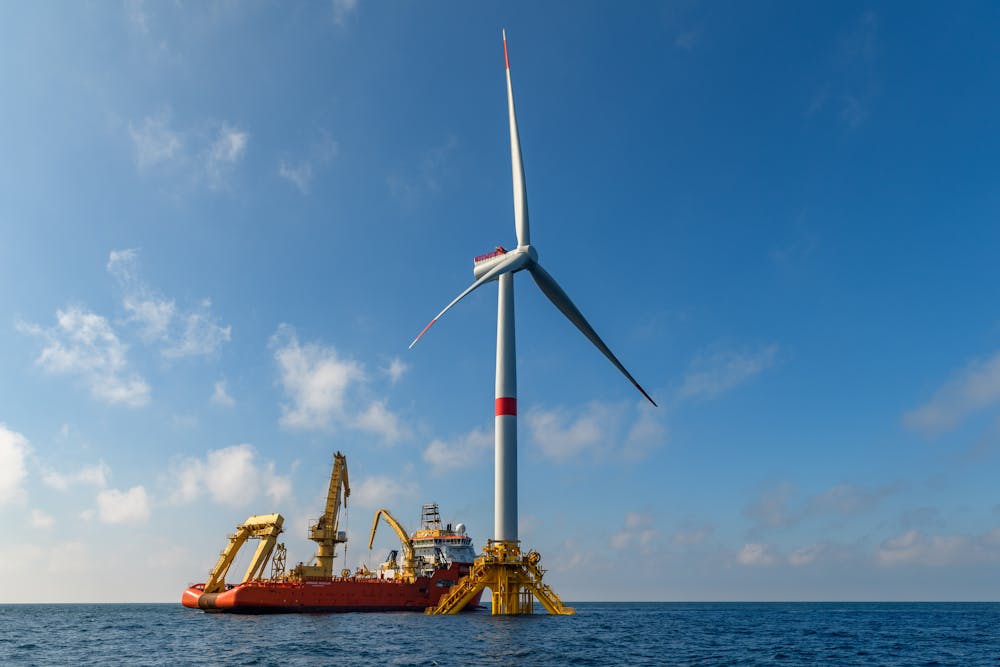
Australia has no offshore wind projects up and running – and cost spikes may put planned projects at risk. Obatala-photography/Shutterstock
Five reasons why this is happening
Here’s what’s going on:
1. Global supply chains have been disrupted
The cost of steel, copper, fibreglass and other materials vital for wind turbines shot up during the pandemic. As a result, turbine prices rose almost 40% between 2020 and 2022. While input costs have fallen, turbine prices remain high. Solar panels can be churned out in factories, but modern wind turbines are massive, complex structures that require specialised manufacturing and logistics. That makes them more sensitive to global price fluctuations.
2. Good wind is often in remote places
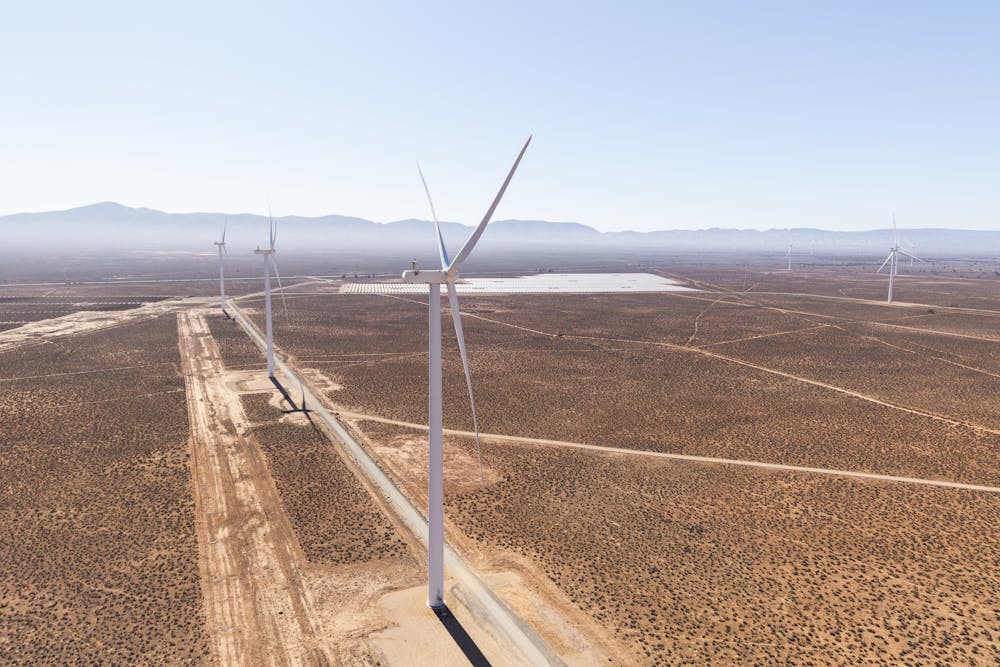
Australia’s best wind resources are typically far from cities and existing grid infrastructure. Connecting far-flung wind farms such as Tasmania’s Robbins Island to the grid can require new and very expensive transmission lines. Remote sites mean extra costs such as temporary worker accommodation. The GenCost report notes this has added about 4% to wind project budgets in 2024–25 compared with the year before.
Many other countries rely heavily on offshore wind, because wind blows more strongly and reliably over oceans. Unfortunately, spiking costs are likely to further delay the arrival of offshore wind in Australia. GenCost projects the first offshore wind projects in Australia will face even steeper costs.
3. Local construction and labour costs have soared
Australia faces a shortage of workers with the skills to build and maintain wind farms, resulting in higher wages and recruitment costs. Wind developers say construction costs have become a real issue. Wind farms are more labour-intensive than solar.
4. Interest rates have raised financing costs
Wind farms require large upfront investments and lengthy construction periods. Even a small increase in interest rates can make them unviable – and interest rates have been high for some time.
5. Reliability concerns, regulatory delay and community opposition
According to US researchers, technical issues have emerged for some new wind turbines, creating unexpected costs for developers. The long, complex process of getting permits, carrying out environmental assessments and building community support is pushing out project timelines, increasing costs and uncertainty for developers.
Will solar take over?
Solar faces far fewer challenges. Solar panels are mass-produced, meaning costs are steadily driven down through economies of scale. Panels can be deployed quickly and solar farms tend to face less community opposition.
Wind turbines have to spin to function, while solar panels have no moving parts (though systems that track the Sun do). As a result, solar farms require less maintenance and are more reliable.
It’s no surprise large-scale solar has been on a record-breaking run, growing 20-fold between 2018 and 2023.
Solar panels make electricity during daylight hours, especially in summer. By contrast, wind tends to produce more power at night and during winter months. This is why wind is so useful to a green grid.
Generating power from both wind and sunshine can slash how much storage is needed to ensure grid reliability, lowering overall system costs. A balanced mix of wind, solar and storage will meet Australia’s electricity needs more efficiently and reliably than just solar and storage, according to the International Renewable Energy Agency and independent researchers.
Could wind come back?
Making wind more viable will take work. Potential solutions do exist, such as expanding the skilled workforce and investing in specialised ships and equipment to install turbines offshore.
Shipping large turbines from Denmark or China is expensive. To avoid these costs, it could make sense to encourage local manufacturing of large and heavy parts such as the main tower.
Rising material and labour costs have driven up the cost of wind turbines. Pictured: turbine blades in China’s Jiangsu province in 2022 about to be shipped to Australia. Xu Congjun/Future Publishing via Getty Images
The newly announced expansion of the government’s Capacity Investment Scheme could help reduce risks and give certainty, alongside public investment in new transmission lines.
If nothing is done or if new measures don’t help, wind is likely to stall while solar and storage race ahead.
That’s not the worst outcome. Australia could get a long way by relying on batteries and pumped hydro to store power from solar during the day and release it in the evenings, as California is doing. But this strategy involves trade offs, such as higher storage-capacity needs and the risk of insufficient power during long cloudy periods.
For Australia to optimise its mix of renewables and storage, policymakers will have to tackle wind’s cost challenges. Effective action could lower costs, accelerate project timelines and bolster flagging investor confidence.
Magnus Söderberg does not work for, consult, own shares in or receive funding from any company or organisation that would benefit from this article, and has disclosed no relevant affiliations beyond their academic appointment.
Defence and security are becoming increasingly important in Swedish space policy. Sweden will therefore pursue a cohesive and knowledge-based space policy that contributes to the development of our crisis preparedness and total defence. With this strategy, we are strengthening the defence and security dimension of space policy to make Sweden better equipped to face challenges in space and more capable of utilising space for defence and security.
The education sector in Ukraine has been severely affected by Russia’s full-scale invasion. Since February 2022, more than 3 000 preschools, schools and other educational establishments have been damaged, and 360 have been completely destroyed. Sweden is now providing SEK 75 million to the UNESCO Emergency Fund. The Fund is, among other things, supporting renovation and reconstruction of damaged and destroyed shelters in preschools and schools.
In light of international developments, the Government will increase its support to the University of Gothenburg which, via the Segerstedt Institute, spreads knowledge of working methods to combat antisemitism. This year, the Government will provide another SEK 1 million, and it intends to provide another SEK 3 million to support these efforts in 2024.
This material provides an overview of main areas of the Government policy on gender equality. It describes current political goals and strategies and gives a brief historical background to important reforms. It also identifies further remaining challenges and explains how the Government is addressing these and what measures are taken in order to initiate change.
The shortage of workers with sought-after skills is one of the main obstacles to growth for companies in Sweden and has also become an obstacle to regional development. In light of this, the Government is allocating SEK 25 million in 2024 to strengthen coordination of the ongoing efforts of eleven government agencies linked to attracting and retaining international expertise.