NewzIntel.com

    • Checkout Page
    • Contact Us
    • Default Redirect Page
    • Frontpage
    • Home-2
    • Home-3
    • Lost Password
    • Member Login
    • Member LogOut
    • Member TOS Page
    • My Account
    • NewzIntel Alert Control-Panel
    • NewzIntel Latest Reports
    • Post Views Counter
    • Privacy Policy
    • Public Individual Page
    • Register
    • Subscription Plan
    • Thank You Page

Category: Science

  • MIL-OSI Asia-Pac: HB organises Construction Robots for Housing – RoboPaint Master Competition x Arena of Construction Robots to advance applications of construction technologies

    Source: Hong Kong Government special administrative region

         The Housing Bureau (HB) organised the Construction Robots for Housing – RoboPaint Master Competition x Arena of Construction Robots today (May 12) to promote the adoption of industry technologies and advance public housing developments into a new era of smart construction.
     
         To expedite the speed and efficiency of increasing the public housing supply and address the challenge of an ageing workforce and construction manpower shortages, the HB and the Hong Kong Housing Authority (HKHA) are leveraging innovative construction technologies to boost productivity and improve safety. As part of the Housing•I&T initiative, the HB will host a series of events, including today’s robotics competition, a housing construction robot design competition for secondary school students in September, and an international summit in November aimed at fostering the development of a construction technology market. The Construction Robots for Housing – RoboPaint Master Competition x Arena of Construction Robots is the first highlight of this initiative. The event provides the industry with a platform to test and demonstrate their technological products, allowing participants to fully explore and maximise the development potential of innovative construction technologies.
     
         A Mainland robotics company has already partnered with the Hong Kong University of Science and Technology to establish a joint research institute for a few years to promote and strengthen co-operation between the university and industry in the development of robotics technology. The HKHA anticipates that the use of robotics will gradually become more prevalent, and has thus incorporated requirements for such use in its tender documents. By leveraging the stable and substantial volume of public housing projects and diverse application areas, the HKHA aims to attract Mainland robotics companies to progressively deploy their technologies in public housing initiatives. Acting as a “super connector” and a “super value-adder”, the HKHA actively seeks and validates tailored robotics solutions that meet industry needs while promoting successful cases to the sector. As a result, several robotics companies subsequently have decided to expand their business operations in Hong Kong, using it as a springboard to enter markets in Singapore, the Middle East and Europe. It is believed that the establishment of more innovation and technology (I&T) enterprises in Hong Kong will further drive the vibrant development of the city’s I&T ecosystem.
     
         At the event’s opening ceremony, the Secretary for Housing, Ms Winnie Ho, said, “According to the indicators for specific tasks as in the Chief Executive’s 2024 Policy Address on construction robots, the HKHA will specify in tender documents the construction processes where robots can be employed to enhance site safety and construction efficiency. The highlight of today’s event is the painting robots participating in the Construction Robots for Housing – RoboPaint Master Competition. The application of construction robots not only boosts productivity and quality but also creates a safer and healthier working environment for frontline workers. This advancement elevates the technological standards and professional image of the industry, making it more appealing to young professionals. A recent case of a public housing project demonstrates that collaborative painting robot systems can enhance the efficiency of indoor painting works by over 50 per cent and improve works quality. For instance, in a public housing project with a standard floor comprising 24 units, traditional methods require eight skilled workers for wall finishing, while only two operators are needed when using a robotics system.”
     
         In addition to contractual requirements, the HKHA will continue to expand the scope of subsidies available for contractors adopting construction robots through the Government’s Construction Innovation and Technology Fund. This two-pronged strategy will encourage the industry to widely adopt innovative technologies and establish a new “human-machine collaborative housing construction model”.
     
         The robots participating in today’s Construction Robots for Housing – RoboPaint Master Competition were evaluated by a jury panel, comprising Ms Ho and representatives from the Hong Kong Institution of Engineers, the Hong Kong Institute of Architects, the Construction Industry Council and industry experts. The judging criteria encompassed technical performance, efficiency and productivity, quality of painting and safety.
     
        The results of the Construction Robots for Housing – RoboPaint Master Competition are as follows:
    Grand Award: Bright Dream (HK) Construction Technology Limited, Weibuild Technology HK Limited
    1st Runner-up: Fangshi Technology Company Limited, Fulltime Robotics Company Limited
    2nd Runner-up: HONGKONG DAFANG AI CO., LIMITED
     
         The Construction Robots for Housing – Arena of Construction Robots showcased six types of robots with potential applications in public housing construction. These included a rebar-tying robot, a floor-tiling robot, a steel frame-cutting robot, a six-metre tall three-in-one wall-painting robot, a concrete internal wall-grinding robot and an autonomous small unmanned aircraft for scanning. Live demonstrations of these robots provided contractors with insights into the latest developments in innovative construction technologies, encouraging broader industry adoption and further advancing the sector’s development.
     
         Currently, construction robotics systems have been implemented in over 20 public housing development projects, with an additional 30 projects expected to follow by 2027.

    MIL OSI Asia Pacific News –

    May 12, 2025
  • MIL-OSI United Kingdom: PM remarks at Immigration White Paper press conference: 12 May 2025

    Source: United Kingdom – Executive Government & Departments

    Speech

    PM remarks at Immigration White Paper press conference: 12 May 2025

    Prime Minister Keir Starmer’s remarks at a press conference on the Immigration White Paper.

    Good morning.

    Today, we publish a White Paper on immigration, a strategy that is absolutely central to my Plan for Change. This strategy will finally take back control of our borders and close the book on a squalid chapter for our politics, our economy, and our country.

    “Take back control.” Everyone knows that slogan and what it meant for immigration, or at least that’s what people thought. Because what followed from the previous Government, starting with the people who used that slogan, was the complete opposite. Between 2019 and 2023, even as they were going around our country telling people, with a straight face, they would get immigration down, net migration quadrupled. Until in 2023, it reached nearly 1 million, which is about the population of Birmingham, our second largest city. That’s not control – it’s chaos.

    And look, they must answer for themselves, but I don’t think you can do something like that by accident. It was a choice. A choice made even as they told you, told the country, they were doing the opposite. A one-nation experiment in open borders conducted on a country that voted for control. Well, no more. Today, this [political content redacted] Government is shutting down the lab. The experiment is over. We will deliver what you have asked for – time and again – and we will take back control of our borders.

    And let me tell you why. Because I know, on a day like today, people who like politics will try to make this all about politics, about this or that strategy, targeting these voters, responding to that party. No. I am doing this because it is right, because it is fair, and because it is what I believe in.

    Let me put it this way: Nations depend on rules – fair rules. Sometimes they’re written down, often they’re not, but either way, they give shape to our values. They guide us towards our rights, of course, but also our responsibilities, the obligations we owe to one another. Now, in a diverse nation like ours, and I celebrate that, these rules become even more important. Without them, we risk becoming an island of strangers, not a nation that walks forward together.

    So when you have an immigration system that seems almost designed to permit abuse, that encourages some businesses to bring in lower-paid workers rather than invest in our young people, or simply one that is sold by politicians to the British people on an entirely false premise, then you’re not championing growth, you’re not championing justice, or however else people defend the status quo. You’re actually contributing to the forces that are slowly pulling our country apart.

    So yes, I believe in this. I believe we need to reduce immigration significantly. That’s why some of the policies in this White Paper go back nearly three years, [political content redacted]. It’s about fairness.

    Migration is part of Britain’s national story. We talked last week about the great rebuilding of this country after the war; migrants were part of that, and they make a massive contribution today. You will never hear me denigrate that. But when people come to our country, they should also commit to integration, to learning our language, and our system should actively distinguish between those that do and those that don’t. I think that’s fair.

    Equally, Britain must compete for the best talent in the world in science, in technology, in healthcare. You cannot simply pull up a drawbridge, let nobody in, and think that is an economy that would work. That would hurt the pay packets of working people – without question. But at the same time, we do have to ask why parts of our economy seem almost addicted to importing cheap labour rather than investing in the skills of people who are here and want a good job in their community. Sectors like engineering, where visas have rocketed while apprenticeships have plummeted. Is that fair to Britain? Is it fair to young people weighing up their future to miss out on those apprenticeships, to see colleges in their community almost entirely dedicated to one-year courses for overseas students? No, I don’t think it is. And truth be told, I don’t think anyone does. And yet that is the Britain this broken system has created.

    So, as this White Paper sets out, every area of the immigration system – work, family, and study – will be tightened up so we have more control. Skill requirements raised to degree level. English language requirements across all routes – including for dependents. The time it takes to acquire settled status extended from five years to ten. And enforcement tougher than ever because fair rules must be followed.

    Now, make no mistake – this plan means migration will fall. That’s a promise. But I want to be very clear on this. If we do need to take further steps, if we do need to do more to release pressure on housing and our public services, then mark my words – we will. But it’s not just about numbers. Because the chaos of the previous government also changed the nature of immigration in this country. Fewer people who make a strong economic contribution, more who work in parts of our economy that put downward pressure on wages. So perhaps the biggest shift in this White Paper is that we will finally honour what “take back control” meant and begin to choose who comes here so that migration works for our national interest.

    You know, this is where the whole debate is skewed, as if some people think controlling immigration is reigning in a sort of natural freedom rather than a basic and reasonable responsibility of government to make choices that work for a nation’s economy. For years, this seems to have muddled our thinking, but let me be clear – it ends now. We will create a migration system that is controlled, selective, and fair. A clean break with the past that links access to visas directly to investment in homegrown skills so that if a business wants to bring people in from abroad, they must first invest in Britain. But also, so settlement becomes a privilege that is earned, not a right, easier if you make a contribution, if you work, pay in, and help rebuild our country.

    Now, some people may even be against that, but I think for the vast majority of people in this country, that is what they have long wanted to see. An immigration system that is fair, that works for our national interest, and that restores common sense and control to our borders. That is what this White Paper will deliver: lower net migration, higher skills, backing British workers, the start of repairing our social contract, which the chaos and cynicism of the last government did so much to undermine.

    Thank you.

    Updates to this page

    Published 12 May 2025

    MIL OSI United Kingdom –

    May 12, 2025
  • MIL-OSI United Kingdom: The hidden health risks of lip fillers

    Source: Anglia Ruskin University

    A woman undergoing a lip filler procedure

    By Jim Frame, Anglia Ruskin University

    Plump, pouty lips are everywhere – from social media filters to celebrity red carpets. But behind the glossy aesthetic of lip fillers lies a growing concern among medical professionals.

    While increasing numbers of people in the UK – often young women – are opting for dermal fillers to achieve a fuller look without surgery, the rise of overfilled “trout pouts” and stiff “duck lips” has sparked a wave of alarm, even among those who might typically support cosmetic treatments.

    Lip fillers are far from risk-free – and in some cases, the health consequences are permanent.

    Unlike surgical procedures, lip fillers are not legally considered medical treatments. That means they are largely unregulated, and in many cases, are being injected by people with little or no medical training.

    This is a problem, because lips are delicate and highly mobile. They contain very little natural fat and rely on a ring of tiny muscles to express everything from joy to concern. Injecting too much filler, or using the wrong kind, can interfere with these muscles – leaving the lips stiff, unnatural, or even immobile.

    While some patients seek lip fillers for genuine medical reasons, such as facial palsy or disfigurement, these are exceptions. For most, the health risks can outweigh the cosmetic benefits.

    What are fillers made of?

    The substances used in lip fillers have changed over time. Older materials such as liquid silicone were eventually phased out due to serious complications, including scarring and migration of the product to other parts of the body.

    Today, most lip fillers are made from hyaluronic acid (HA) – a substance that naturally exists in our bodies, particularly in connective tissue. HA attracts water, giving the skin volume and keeping it hydrated. As we age, our natural levels of HA decrease, which is why skin becomes drier and loses firmness.

    The HA used in fillers is either extracted from animal tissue, such as rooster combs, or produced synthetically using bacteria. While this modern version is safer than older fillers, it still carries risks including allergic reactions, reactivation of cold sores (herpes simplex virus), infections and inflammation.

    There have also been rare, but severe, cases of vascular complications such as blindness and tissue death, when fillers accidentally enter blood vessels.

    The risk to kidneys

    Less widely known – but equally concerning – is how repeat filler use may affect internal organs, particularly the kidneys.

    Hyaluronic acid isn’t just a skin plumper – it also plays a role in the immune system. When the body detects inflammation, such as from repeated filler injections, it can respond by producing HA in the kidneys. This triggers a chain reaction: first, the kidneys produce high-molecular weight HA, which increases inflammation. Later, they switch to low-molecular weight HA, which reduces inflammation but causes fibrosis, or scarring of the tissue.

    This double-edged response has been linked to chronic kidney disease and, in severe cases, even renal failure. Researchers are still exploring these links, but the risks become more significant with each repeated injection – especially in people who are genetically or medically vulnerable.

    HA can also contribute to the formation of calcium oxalate crystals in the kidneys. These can lead to kidney stones and further tissue damage, potentially causing lifelong complications.

    Who should avoid lip fillers?

    Given these risks, some people should approach fillers with extreme caution – or avoid them entirely. These include people with a history of kidney problems or allergic reactions to filler ingredients, recurrent cold sores, autoimmune conditions (like lupus or rheumatoid arthritis), diabetes or blood clotting disorders, and women who are pregnant or breastfeeding.

    Despite the risks, lip fillers remain widely accessible and heavily promoted – particularly to young people influenced by social media trends. Many undergo these treatments without fully understanding what they’re putting into their bodies.

    So, what needs to change? First, better regulation. If lip filler injections were treated as medical procedures, stricter controls could help reduce botched treatments and serious complications.

    Second, more education. Patients need to understand that just because something is “non-surgical” doesn’t mean it’s safe. Fillers are still foreign substances being injected into the body. They come with risks – and these risks can increase over time.

    Lip fillers can offer subtle, beautiful enhancements when used sparingly and professionally. But when misused or overused, they can lead to lasting disfigurement, loss of function, and even serious internal health issues like kidney damage.

    Beauty trends should never come at the cost of your health.

    Jim Frame, Professor, School of Medicine, Anglia Ruskin University

    This article is republished from The Conversation under a Creative Commons license. Read the original article.

    The opinions expressed in VIEWPOINT articles are those of the author(s) and do not necessarily reflect the views of ARU.

    If you wish to republish this article, please follow these guidelines: https://theconversation.com/uk/republishing-guidelines

    MIL OSI United Kingdom –

    May 12, 2025
  • MIL-OSI New Zealand: Universities – Gowns flying, whānau crying—it must be Te Herenga Waka graduation week

    Source: Te Herenga Waka—Victoria University of Wellington

    With over 2,600 graduates, two parades, and eight ceremonies, this May graduation will fill Wellington’s streets with cloaked and capped graduates.

    Te Herenga Waka—Victoria University of Wellington’s graduates will honour the community that saw them through and the connections they have made, as they cross the stage.

    Among those crossing the stage this graduation will be Luamanuvao Dame Winnie Laban, our first Assistant Vice-Chancellor (Pasifika), who is being awarded an Honorary Doctorate of Literature, after leaving her position at the start of this year.

    The inaugural recipients of our Master of Criminology, as well as an early graduate of the Bachelor of Global Studies, will also be graduating in the May ceremonies.

    Parades on Tuesday 13 and Thursday 15 May will see graduates walk from the Government Buildings to Queens Wharf Square, before our ceremonies are held at Michael Fowler Centre.

    “This is a time to recognise academic achievement, but also to acknowledge the perseverance and resilience it has taken our graduates to achieve their goals.

    “We are in a time of global change, but our graduates have developed values and relationships that will sustain them throughout their lives,” says Chancellor Alan Judge, who will preside over graduation for the first time in his new role.

    “To our graduates—our future leaders and innovators, I look forward to walking alongside as you lead us into the future with creativity, empathy, and determination,” says Mr Judge.

    The University will award PhDs to 50 graduates at the May ceremony. These graduates have added significantly to research in their fields, across the sciences, social sciences, arts, and beyond.

    Vice-Chancellor Nic Smith says this cohort of graduates deserve every moment of praise for their incredible accomplishments.

    “Our graduates are wonderful ambassadors for the remarkable work taking place at Te Herenga Waka—Victoria University of Wellington. The impact of our university on society is significant, and we are proud to see our graduates take their skills, connections, and commitment to community into the public, creative, and commercial sectors that underpin our society.

    “I look forward to witnessing the contributions they will make as they join our global network of 150,000 alumni. Congratulations to all our graduates — we celebrate your achievements and look forward to your future successes.”


    About Graduation

    Graduation ceremonies 

    Monday 12 May 

    Pasifika Celebration, 5.30 pm, The Hub


    Tuesday 13 May 

    Ceremony 1 – 9.30 am, Michael Fowler Centre


    Faculty of Humanities and Social Sciences


    Ceremony 2 – 3 pm, Michael Fowler Centre


    Faculty of Humanities and Social Sciences

    Faculty of Education


    Parade 1 – 1 pm, Old Government Buildings – Queen’s Wharf Square

    Students from Faculties of Humanities and Social Sciences, Education, Architecture and Design Innovation, and Health


    Wednesday 14 May 

    Ceremony 3 – 9.30 am, Michael Fowler Centre


    Faculty of Architecture and Design Innovation

    Faculty of Health


    Ceremony 4 – 3 pm, Michael Fowler Centre


    Faculty of Engineering 

    Faculty of Science


    Thursday 15 May 

    Ceremony 5 – 9.30 am, Michael Fowler Centre


    Wellington School of Business and Government


    Ceremony 6 – 3 pm, Michael Fowler Centre


    Faculty of Law 

    Wellington School of Business and Government


    Parade 2 – 1 pm, Old Government Buildings – Queen’s Wharf Square

    Students from Faculties of Law, Science, Engineering, and the Wellington School of Business and Government


    Friday 16 May—Te Hui Whakapūmau

    Ceremony 1 – 9.30 am, Te Herenga Waka Marae


    Wellington Faculty of Education

    Wellington Faculty of Humanities and Social Sciences


    Ceremony 2 – 2 pm, Te Herenga Waka Marae


    All other faculties 


    MIL OSI New Zealand News –

    May 12, 2025
  • MIL-Evening Report: Genes, environment or a special bond? Why some twins talk and think in unison

    Source: The Conversation (Au and NZ) – By Jeffrey Craig, Professor in Medical Sciences, Deakin University

    An interview with Paula and Bridgette Powers – identical twins who witnessed their mother’s carjacking – recently went viral. The way they spoke and gestured in unison has captivated global audiences.

    Bridgette and Paula Powers have gained global attention for the way they speak.

    Genetically, identical twins are clones. They result from the splitting of an early embryo, meaning they share the same genes.

    In contrast, fraternal twins are the result of two eggs being fertilised by two different sperm. On average they share 50% of their genes – the same as any siblings who share both their biological mother and father.

    So, when identical twins talk and gesture in unison (known as synchrony), is it down to genes? The answer can be complicated.

    Genes aren’t the only influence on looks, language and like-minded thinking. Let’s break down the factors that might lead some twins to speak – and apparently think – in unison.

    A close bond in a shared environment

    Almost all twins, even “identical” ones, show some differences in physical, mental and emotional traits. They also regard themselves as distinct individuals and typically don’t like being referred to as “the twins”.

    Yet we know most people naturally mimic the way those close to them speak and move, even without realising it. This phenomenon is called automatic mimicry and may be part of healthy social development, helping people synchronise behaviours and share emotions.

    For identical twins who grow up in the same home, school and community, the effect of a shared environment and close bond may be particularly intense.

    Twins may become each other’s main social companion.
    Lana G/Shutterstock

    Paula and Bridgette Powers, for example, have shared an environment: not only the same parents, home and upbringing, but also the same job, running a bird rescue charity.

    Twins may know each other so well they can intuitively sense what the other twin is about to say — and may feel like their brains are in sync. The Powers sisters have explained:

    our brains must think alike at the same time.

    In contrast, twins who grow up apart share many personality traits, but without years of shared interaction they are less likely to develop synchronised speech or mirrored behaviours. However, they do display many of the same unusual habits and idiosyncrasies.

    What about genetics?

    Studying identical and fraternal twins separated at birth can help us unravel how much of our behaviours – intelligence, personality and temperament – are influenced by genes and environment.

    Even when identical twins grow up apart, they tend to closely resemble one another – not only physically, but in their personality, interests and behaviours. Fraternal twins, in general, are much less alike. This tells us genes matter.

    One of us (Nancy) was a researcher with the Minnesota Study of Twins Raised Apart, which lasted from 1979 to 1999 and looked at more than 100 sets of twins (and triplets) separated at birth and raised apart. Twins were separated for various reasons, such as the stigma of single motherhood, inadequate family resources and maternal death.

    The study comprehensively examined factors affecting a wide range of psychological, physical and medical traits. Researchers wanted to understand the impact of differences in their life histories on both identical and fraternal twins, reared apart and how they affected the current similarities and differences between them.

    A striking finding was identical twins raised apart are as similar in personality as identical twins raised together. For example, the Minnesota researchers found little difference in traits such as wellbeing and aggression, whether identical twins were raised together or apart.

    This shows genes play an important role in shaping our personality. Genes also affect the way we process speech and language.

    Sharing identical genes may mean identical twins also respond to situations in similar ways. This is because their brains lead them to behave in comparable ways. This genetic closeness, which underlies their behavioural resemblance, explains why they may independently say or do the same thing, without any need for a mystical explanation.

    The Minnesota study also found when identical twins were reunited they formed closer relationships with each other than reunited fraternal twins did. This suggests perceptions of similarity in behaviour might draw people together and help keep them connected.

    We now know genes and environment each account for half the person-to-person differences in personality. However, the life events we individually experience remain the most important factor shaping how our unique traits are expressed and who we ultimately become.

    What about a secret ‘twin language’?

    Parents of identical twins may be left baffled as their children, even as toddlers, seem to communicate through babbles and gestures that no one else can understand.

    Parents may observe young twins communicating without words.

    Each twin pair has their own way of communicating. Twins’ private speech, also called idioglossia, cryptophasia or a “secret language”, refers to verbal and nonverbal exchanges most other people don’t understand. This is different to synchronised speech.

    Private speech is displayed by about 40% of twins. However, estimates vary wildly – ranging from as low as 2% to as high as 47%. That’s mainly because researchers define and measure it differently.

    Private speech usually fades as children age, at about three years of age. But some twins continue to use it into early childhood.

    Why are we so fascinated by twins?

    Twins continue to fascinate us. That is clear in the wealth of media attention they receive, their popularity in scientific studies, and their presence in myths and legends across all continents.

    Perhaps it is because when we see identical twins who look and act so much alike, it challenges our belief that we are all unique.

    But even identical twins are not exact replicas of one another. Genetic changes, events in the womb, and/or life experiences can conspire to create differences between them.

    Nevertheless, most identical twins are more alike and socially closer than any other pair of people on the planet.

    Bridgette and Paula Powers appear in an episode of Australian Story airing on Monday on ABCTV and ABC iview.

    Jeffrey Craig has received funding from the National Health and Medical Research Council. He is the Patron of the Australian Multiple Birth Organisation, and a Member of the International Society of Twin Studies.

    Nancy Segal does not work for, consult, own shares in or receive funding from any company or organisation that would benefit from this article, and has disclosed no relevant affiliations beyond their academic appointment.

    – ref. Genes, environment or a special bond? Why some twins talk and think in unison – https://theconversation.com/genes-environment-or-a-special-bond-why-some-twins-talk-and-think-in-unison-256099

    MIL OSI Analysis – EveningReport.nz –

    May 12, 2025
  • MIL-OSI USA: What They’re Saying: LaMalfa Introduces Forest Protection and Wildland Firefighter Safety Act

    Source: United States House of Representatives – Congressman Doug LaMalfa 1st District of California

    Washington, D.C.—Yesterday, Congressman Doug LaMalfa (R-Richvale) introduced H.R. 3300, the Forest Protection and Wildland Firefighter Safety Act of 2025, to ensure aerial fire retardant remains available for wildfire suppression efforts without being tied up in Clean Water Act permitting delays. The bipartisan bill clarifies that federal, state, local, and tribal firefighting agencies do not need a National Pollutant Discharge Elimination System (NPDES) permit to use fire retardant from aircraft when responding to wildfires. The bill, introduced alongside Reps. Panetta (D-CA) and Hurd (R-CO), has already earned strong support from local leaders, here’s what they’re saying:

    Travis Joseph, President/CEO, American Forest Resource Council: “The Forest Protection and Wildland Firefighter Safety Act gives wildland firefighters the tools they need to protect lives, communities, and forests from catastrophic wildfire. It will prevent unnecessary litigation that could block the aerial use of fire retardants—one of the most effective tools we have to slow the spread of fast-moving fires. This commonsense bill, paired with proactive, science-based forest management, is essential to confronting our nation’s growing wildfire and smoke crisis. With another dangerous fire season approaching, Congress must act swiftly to pass the Forest Protection and Wildland Firefighter Safety Act. We cannot afford to let our forests burn while proven suppression and management tools are tied up in red tape.”

    Matt Dias, President and CEO, Calforests: “Maintaining healthy forests supports the economy in Northern California and beyond and safeguards communities at risk from catastrophic wildfire, but prevention is not enough. Fire retardants have played an integral role in stopping some of the most devastating wildfires in recent history, and the Forest Protection and Wildland Firefighter Safety Act will ensure our wildland firefighters continue to have access to this critical firefighting tool. I urge Congress to pass the Forest Protection and Wildland Firefighter Safety Act to safeguard aerial fire retardants, which is ultimately a decision to prioritize lives, land, businesses, and forested environments.”

    Tod Kimmelshue, Chair Butte County Board of Supervisors: “Butte County knows first-hand the destruction that wildfire can bring to our communities. It’s essential that fire fighters have the ability to use fire retardant to protect lives and communities.”

    Chris Edwards, President, Oregon Forest Industries Council: “Oregon is home to some of the most productive forests in the world, but the severe wildfire seasons in recent years have made it clear that many of these landscapes are increasingly vulnerable and at risk. In order to maintain this treasured resource for recreation, for key species habitat, and for the production of renewable building materials, the agencies that are responsible for keeping our communities and forests safe during wildfire season must have every tool in the toolbelt available for use. The Forest Protection and Wildland Firefighter Safety Act is a perfect example of commonsense legislation that will facilitate the timely and effective use of one of the most essential suppression tools available to us. We urge Congress to take quick and decisive action in passing this Act.”

    Doug Teeter, Butte County Supervisor: “The health, welfare, and economic prosperity of the residents of Butte County, along with many other rural communities, are uniquely reliant on—and impacted by—the Forest Service’s wildfire suppression efforts, which is why I am urging Congress to pass the Forest Protection and Wildland Firefighter Safety Act to allow the Forest Service to continue deploying aerial fire retardants.”

    Paul Petersen, Executive Director of the United Aerial Firefighters Association (UAFA): “UAFA is deeply troubled by efforts to restrict the use of aerially applied fire retardant through legal challenges. At a time when wildfires are expanding rapidly into the Wildland-Urban Interface where communities are at greater risk, fire retardant is a proven, essential tool in assisting wildland firefighters in their fight to contain, control and defeat wildfire. The tools that slow or stop the spread of wildfire are critical to protecting lives and property. As this lawsuit threatens to continue into its third year, UAFA strongly supports Congressman LaMalfa and Senator Lummis’ legislation, the Forest Protection and Wildland Firefighter Safety Act of 2025, which allows the federal, states, and tribal governments to continue the use of aerially applied fire retardants.”

    Bill Connelly, Rural County Representatives of California, Butte County Representative: “Aerial fire retardant is one of the most effective wildfire suppression tools in our firefighting arsenal. Its swift application can stop a wildfire from becoming catastrophic — saving lives, property, and landscapes. The Forest Protection and Wildland Firefighter Safety Act will safeguard this critical tool for firefighting agencies, ultimately protecting our families, businesses, and communities.”

    Greg Bolin, Town of Paradise, California: “No one knows the damage that wildfires can cause more so than communities like mine. We lost our town to one of the biggest fires in California history, so securing access to aerial fire retardants for wildfire suppression is a very personal issue for us. Our brave firefighters need every tool in the toolbox to protect human lives and property against wildfires, and the Forest Protection and Wildland Firefighter Safety Act would significantly move the needle in that effort.”

    Congressman Doug LaMalfa is Chairman of the Congressional Western Caucus and a lifelong farmer representing California’s First Congressional District, including Butte, Colusa, Glenn, Lassen, Modoc, Shasta, Siskiyou, Sutter, Tehama and Yuba Counties.

    ###

    MIL OSI USA News –

    May 12, 2025
  • MIL-OSI Russia: China and Russia: Friendship between the two states begins with friendship between peoples

    Translation. Region: Russian Federal

    Source: People’s Republic of China in Russian – People’s Republic of China in Russian –

    Source: People’s Republic of China – State Council News

    Recently, Chinese President Xi Jinping paid a state visit to Russia. Both sides reaffirmed their commitment to further deepening the comprehensive partnership and strategic cooperation in the new era. It is especially important to hear such statements in the era of global instability. Russian-Chinese relations are not just diplomacy and economics, but also a history of sincere friendship, respect and mutual understanding. Having lived in China for more than five years, I realized that true friendship between countries begins with friendship between people.

    Connecting Peoples – Beyond Economics and Trade

    To truly understand another culture, information from books, travel or news is not enough, you need to experience it from the inside, through work, study and communication. For more than five years, China was my home, a place where I learned Chinese, gained valuable professional experience and made friends with whom I still maintain warm ties. China became a part of my identity: I learned to think more broadly, to see the world through the eyes of others and to appreciate differences. Over the years, I have seen that the relationship between China and Russia is not limited to economics and trade, they are connected by many human stories like mine.

    The Language That Changed Lives

    My first encounter with China was in 2006, when I visited Beijing on a tourist trip. Even then, it felt like the country was on the verge of big changes, although high-speed trains and large-scale international projects were still to come. When I returned to China in 2009 to study Chinese, I had no idea how important this choice would become. Chinese became for me not just a communication tool, but also a bridge between cultures and a powerful asset.

    The work that opened up a whole world

    Later, I got a job at a Chinese media outlet in Beijing, where I contributed to stories for overseas audiences. We covered Chinese innovations in agriculture, infrastructure development, poverty eradication, and the preservation of intangible cultural heritage. It was an invaluable experience: I saw China from different sides, not only through official data, but also through people’s stories, dreams, and aspirations. Each article became a new step toward mutual understanding.

    Personal connections as a path to understanding

    Every day, living and working in China, I admired the hard work of the Chinese people, their willingness to learn and develop. I saw how cities were changing rapidly, innovations were being introduced, and Chinese technologies were spreading around the world. This progress was impressive, but even more impressive was the human warmth. My friends and colleagues were interested in asking about Russia and sharing their stories. We exchanged experiences and views – it is these personal connections that, as I now understand, create a solid foundation for international relations.

    Respect as the basis of trust

    It was especially valuable to feel the respectful attitude towards Russia on the part of the Chinese. In contrast to the criticism that can often be heard in the West, in China I encountered genuine interest in Russia and admiration for Russian culture. This strengthened my confidence in the future partnership of our countries. It seems to me that it is respect, openness and trust that become the foundation of strong relations between states, starting from the level of ordinary people.

    The Future in Dialogue: Language, Science, Culture

    Today, Russian-Chinese relations go beyond traditional trade and economic cooperation, embracing science, education, and culture. Educational projects, scientific research, and academic exchanges play a special role. More and more young people are learning each other’s languages, which opens up new horizons and builds trust. Cultural exchanges – festivals, exhibitions, theater productions, film screenings – help to understand mentalities, strengthen interest and mutual sympathy. Art is becoming a universal language that overcomes barriers.

    Strength lies in shared values

    I have always been touched by the similarity of our cultural values: respect for elders, high value of education, hospitality. These common foundations, as I have understood from personal experience, are truly a strong foundation for the friendship of our peoples and countries.

    Conclusion: Looking to the Future

    Watching the development of Chinese-Russian relations today, I feel joy. For me, this is not just the history of two states, it is also the history of two peoples who want to understand and respect each other. I believe that we still have many joint steps ahead, each of which begins with dialogue, mutual interest and trust.

    Author: Anna Buyanova

    MIL OSI Russia News –

    May 12, 2025
  • MIL-OSI Economics: Secretary-General of ASEAN visits Plant & Food Research Ltd in Auckland, New Zealand

    Source: ASEAN – Association of SouthEast Asian Nations

    During his working visit to New Zealand, Secretary-General of ASEAN, Dr. Kao Kim Hourn, met with representatives from Plant & Food Research Ltd to discuss the role of science and technology in transforming food production methods. He encouraged the company to collaborate closely with the ASEAN Secretariat in identifying and implementing meaningful projects and programmes aimed at promoting regenerative agriculture, reducing greenhouse gas emissions, minimizing the use of harmful agrochemicals, and advancing the adoption of innovative technologies in agricultural production.

    The post Secretary-General of ASEAN visits Plant & Food Research Ltd in Auckland, New Zealand appeared first on ASEAN Main Portal.

    MIL OSI Economics –

    May 12, 2025
  • Satellites continuously working to ensure India’s security: ISRO Chairman

    Source: Government of India (4)

    ISRO Chairman V. Narayanan on Sunday said that 10 satellites are continuously working round-the-clock for strategic purposes to ensure the safety and security of the country’s citizens.

    Addressing the 5th Convocation Ceremony of the Central Agricultural University (CAU), the ISRO Chairman said, “If we want to ensure the safety of our country, we have to serve through our satellites. We have to monitor our 7,000 km-long seashore. Without satellite and drone technology, we can’t achieve many things.”

    He added that through many satellites, ISRO has been serving the common people in agriculture, tele-education, telemedicine, television broadcasting, weather forecasting, environmental monitoring, food security, and strategic sectors.

    Noting that satellites are playing a critical role in disaster management and mitigation, Narayanan said, “Earlier, during disasters, thousands of people lost their lives, but today this is not the case.”

    He further said that India holds the number one position globally in nine areas within the space sector.

    “The Chandrayaan-1 mission discovered evidence of water molecules on the Moon’s surface. India was the first country to achieve this. At least 433 satellites for 34 countries have been launched from India and placed into orbit,” he said.

    Significantly, he said India has built satellites for G-20 countries to monitor climate change and other critical sectors. Narayanan added that India and the US would jointly build the world’s most expensive and advanced earth-imaging satellite, which will be launched from India.

    Narayanan pointed out that until 1975, India had no satellite technology and was nearly 70 years behind advanced nations in space development.

    Emphasizing the need for advanced satellite technology for the betterment of citizens, Narayanan—who also serves as Secretary of the Department of Space—predicted that before India celebrates 100 years of independence, it will become a leader in every field and a major contributor to global progress.

    He recalled that during the 1950s and 1960s, India produced only 54 million tons of food and relied on imports.

    “Now, India produces over 250 million tons of food and exports to many countries. The country has a vast consumer market and a strong manufacturing sector. In electricity generation and milk production, we are among the world leaders,” he said.

    He added that India ranks in the top five globally for the production of several key commodities such as rice, wheat, maize, horticultural crops, pulses, oilseeds, and cash crops.

    “With developments across sectors, average life expectancy has increased from 32 years to 72 years in recent decades. Child and maternal mortality rates have also declined sharply,” he pointed out.

    Narayanan announced that around 100 science students from each of the eight northeastern states would get an opportunity to visit the ISRO Centre in Bengaluru to foster curiosity and awareness about space science and technology.

    He said ISRO and its satellites are playing a vital role in the development of the northeastern states and are supporting the implementation of various regional projects.

    The ISRO chairman urged students to contribute to society after earning their degrees.

    “There is no substitute for hard work and smart work. Total commitment and strong personal values are essential. Self-confidence and self-motivation are crucial. With noble leadership qualities, students must strive to be good human beings,” Narayanan stated.

    The Central Agricultural University (CAU), based in Imphal, Manipur, has campuses in eight northeastern states.

    Sunday’s convocation ceremony was held at the College of Fisheries in Lembucherra, 12 km north of Agartala in Tripura’s West district. The event was presided over by CAU Chancellor, Prof. Pradeep Kumar Joshi.

    IANS

    May 12, 2025
  • MIL-OSI: Jeito Capital Strengthens Leadership for Next Chapter of Growth: Mehdi Ainouche Promoted to Partner, Julien Elric to Senior Principal

    Source: GlobeNewswire (MIL-OSI)

    Paris, May 12, 2025 – Jeito Capital (“Jeito”), a global leading independent Private Equity fund dedicated to biopharma, is pleased to announce the promotion of Mehdi Ainouche to Partner and Julien Elric to Senior Principal.

    These promotions represent the next phase of Jeito’s growth and reflect the continued strengthening of its team. They also underscore the firm’s commitment to developing talent and supporting career progression from within.

    Mehdi Ainouche, PharmD, joined Jeito as Principal in 2020, shortly after the fund’s inception and was promoted to Senior Principal in 2024. With over a decade of experience in life sciences investment, Mehdi has been instrumental across the full investment cycle—from deal sourcing and due diligence to closing and exit—most notably with EyeBio, which was successfully sold to Merck & Co [NYSE: MRK] for up to $3 billion. He has also shown a strong ability to spot emerging innovations with the potential to significantly improve outcomes for patients with unmet medical needs. He has supported several investments and portfolio companies, particularly in ophthalmology, oncology, cardiometabolic and neuromuscular diseases, as well as fibrosis. and He currently serves on the boards of CDR-Life and Augustine Therapeutics, and is a board observer at NMD Pharma.

    Before joining Jeito, Mehdi was an Associate within the healthcare venture team, of Turenne Capital, a French investment group with over €2Bn under management, where he worked on numerous biotech and medtech investments. He holds a Doctorate in Pharmacy from the University of Rennes and a Master’s in Business from ESCP Europe. As Partner, he will contribute further to building Jeito portfolio diversification and performance.

    Julien Elric joined Jeito in September 2021, bringing strong experience in deal sourcing, portfolio support, and healthcare investment. From Associate (2021) to Senior Associate in 2023 and Principal in early 2024, he has played a key role within Jeito’s investment team. Julien has contributed to financing efforts, clinical development strategies across the portfolio and was strongly involved in the investment up to exit of HI-Bio™ acquired by Biogen Inc. [Nasdaq: BIIB] for up to $1.8 billion. He currently serves as a board observer at Alentis Therapeutics and XyloCor Therapeutics.

    Before joining Jeito, Julien led the startup incubator iPEPS at the Paris Brain Institute, where he helped establish it as a key hub for life sciences innovation in France. He supported early-stage biotechs and medtechs in their growth and advised major pharmaceutical companies on corporate–startup collaborations. Earlier in his career, he was responsible for business development and industrial partnerships at Institut Curie. Julien holds a PhD in Cell Biology from Institut Pasteur and is a graduate of INSEAD Business School.

    Dr. Rafaèle Tordjman, MD, PhD, Founder and CEO of Jeito Capital, said:
    “I’m delighted to announce these promotions, which reflect two outstanding career paths and significant contributions to Jeito. Mehdi and Julien’s dedication to unlocking the potential of our portfolio companies perfectly captures the spirit of Jeito and our commitment to accelerating progress for patients. By bringing together leading scientific and industry expertise across Europe and the US, we are entering an exciting new phase of growth. I wish Mehdi and Julien every success and look forward to seeing them thrive in their new roles.”

    About Jeito Capital

    Jeito Capital is a global leading Private Equity fund with a patient benefit driven approach that finances and accelerates the development and growth of ground-breaking medical innovation. Jeito empowers and supports managers through its expert, integrated, multi-talented team and through the investment of significant capital to ensure the growth of companies, building market leaders in their respective therapeutic areas with accelerated patients’ access globally, especially in Europe and the United States. Jeito has built a diversified portfolio of clinical biopharmas with cutting-edge innovations addressing high unmet needs. Jeito Capital is based in Paris with a presence in Europe and the United States.

    For more information, please visit www.jeito.life or follow us on LinkedIn.

    Contacts:

    Jeito Capital                                        
    Rafaèle Tordjman, Founder & CEO
    Jessica Fadel, EA
    Tel: +33 6 33 44 25 47

    Maior                                                ICR Healthcare
    Stéphanie Elbaz                                Mary-Jane Elliott / Davide Salvi / Kris Lam
    Tel: +33 6 46 05 08 07                      Jeito@icrhealthcare.com
    Tel: +44 (0) 20 3709 5700

    The MIL Network –

    May 12, 2025
  • Indian scientists develop groundbreaking metal-free catalyst for hydrogen fuel production

    Source: Government of India (4)

    In a significant advancement toward sustainable energy solutions, Indian researchers have developed a novel, cost-effective, metal-free catalyst that can efficiently produce hydrogen (H₂) fuel by harvesting mechanical energy. This innovation represents a major breakthrough in green hydrogen technology and offers a promising path toward cleaner alternatives to fossil fuels.

    The research, led by Professor Tapas K. Maji of the Chemistry and Physics of Materials Unit at the Jawaharlal Nehru Centre for Advanced Scientific Research (JNCASR), Bengaluru, introduces a donor-acceptor based covalent organic framework (COF) that acts as a highly efficient piezocatalyst for water splitting—a method that separates hydrogen from water molecules.

    Unlike traditional catalysts that rely heavily on metal-based ferroelectric materials, the new COF system is entirely organic and metal-free. It is composed of tris(4-aminophenyl)amine (TAPA) as the donor molecule and pyromellitic dianhydride (PDA) as the acceptor. These materials form imide linkages that give rise to a unique structural phenomenon known as ferrielectric (FiE) ordering.

    “This breakthrough challenges the traditional reliance on heavy or transition metal-based catalysts, offering a new direction in the development of scalable, sustainable hydrogen production systems,” said Prof. Maji.

    What sets this material apart is its sponge-like porous architecture that facilitates efficient water diffusion and access to charge carriers. The FiE ordering in the COF creates intense local electric fields at the pore surfaces, enabling high-density charge accumulation and, in turn, high yields of hydrogen fuel.

    Prof. Umesh V. Waghmare, a collaborator from JNCASR, contributed theoretical insights showing that the COF’s electronic structure features coupled energy bands and dipolar ordering. This causes lattice instability, enabling dynamic interaction with mechanical pressure. When stimulated mechanically, the material generates electron-hole pairs, catalyzing the water-splitting reaction with exceptional efficiency.

    The study, published in Advanced Functional Materials, involved a multidisciplinary team, including researchers Ms. Adrija Ghosh, Ms. Surabhi Menon, Dr. Sandip Biswas, and Dr. Anupam Dey from JNCASR. Additional contributions came from Dr. Supriya Sahoo and Prof. Ramamoorthy Boomishankar from the Indian Institute of Science Education and Research (IISER), Pune, and Prof. Jan K. Zaręba from Wrocław University of Science and Technology, Poland.

    This innovative catalyst not only reduces dependency on expensive and environmentally harmful metals but also offers a viable method to harness ambient mechanical energy—such as vibrations or pressure—for clean energy generation. The development aligns with India’s National Green Hydrogen Mission, aimed at promoting large-scale green hydrogen production and positioning the country as a global leader in this emerging sector.

    With global urgency to transition to renewable energy sources, the success of this metal-free piezocatalyst marks a critical step in enabling efficient, clean, and sustainable hydrogen fuel technology.

    May 12, 2025
  • CSIR-IIIM Jammu–mentored student makes history with solar mech engine, wins global HonorsGradU scholarship

    Source: Government of India (4)

    Japteg Singh Bamrah, a Class 12 student from Dalhousie Public School in Himachal Pradesh, has been awarded the prestigious HonorsGradU 2025 scholarship for his invention — the Solar Mech Engine.

    Japteg received the coveted “Build a Better Future” award, which includes a $10,000 scholarship for his undergraduate studies in the United States. In addition, he was granted $5,000 to further develop and scale his innovative project.

    According to the Ministry of Science & Technology, Japteg was selected as one of five global winners from thousands of entries submitted worldwide. His project was recognized as the top technology innovation among this year’s finalists. He is also the first and only Indian student to top the list since the scholarship program’s inception in 2012.

    Japteg was mentored by Dr. Nasir Ul Rasheed, Senior Scientist at CSIR–Indian Institute of Integrative Medicine (IIIM), Jammu, under the Jigyasa Hackathon initiative — a national program aimed at fostering scientific curiosity and innovation among school students.

    He showcased the Solar Mech Engine at the National Startup Festival held on February 22–23 at CSIR–IIIM, Jammu. The event was attended by Union Minister of Science and Technology and Vice President of CSIR, Dr. Jitendra Singh, who lauded the initiative as a vital part of India’s push for grassroots innovation under the “Start-Up India, Stand-Up India” campaign.

    Winner of the CSIR Jigyasa Hackathon 2024, the Solar Mech Engine is a standalone solar thermal system based on Concentrated Heat and Power (CHP) technology. It utilizes cyclic air expansion and contraction driven by temperature differences to convert thermal energy into mechanical motion. A low-resistance generator harnesses electromagnetic induction to produce electricity directly from this motion. Its reversible heat pump capability further enhances energy efficiency, positioning the device as a novel and sustainable clean-energy solution.

    In recognition of his academic and technological excellence, Japteg has also received admission offers from over ten leading universities in the United States, Australia, and Canada, along with additional scholarships amounting to $16,000 per year for his undergraduate studies.

    May 12, 2025
  • Forests Are Our Lungs, Forests Regulate Climate, Buffer Disasters, and Support the Marginalised, Says VP

    Source: Government of India

    Source: Government of India (3)

    Climate Change Is a Global Menace and Cliff-Hanging Crisis, Warns VP
    We Are Trustees of Nature, Not Consumers, Urges VP
    Our Vedic Culture Preached Sustainability for Thousands of Years: VP
    No Institution Can Function in Silo Today, Says VP
    VP Interacts With Students Of The College of Forestry in Sirsi

    The Vice-President of India, Shri Jagdeep Dhankhar, today said,“Forests are extremely important. Forests are our lungs. If a country’s forests are in good shape, its people will enjoy good health—because forests are the lungs. Agriculture is our lifeline. But we need forests as they regulate climate, they buffer disasters, and they support livelihoods—especially for the poor and marginalized.”

    Forests बहुत महत्वपूर्ण हैं। Forest are our lungs, just as agriculture is our lifeline. #Forests regulate climate, buffer disasters, and support livelihoods, especially for the poor and marginalised.

    We must pledge to protect forests.

    We must contribute in every manner we… pic.twitter.com/YLo3XtHqtq

    — Vice-President of India (@VPIndia) May 5, 2025

    Interacting with faculty members and students of the College of Forestry, Sirsi, during a special programme on the “Role of Forestry in Nation Building”, today, Shri Dhnakhar emphasised that,“We must pledge to protect our forests and contribute in every way possible, because climate change is a global challenge—a global menace. The situation is alarmingly cliff hanging, and we have no other planet to live on apart from Mother Earth,” he warned.

    Hon'ble Vice-President, Shri Jagdeep Dhankhar addressed the gathering on "Role of Forestry in Nation Building" at College of Forestry, Sirsi in Karnataka today. @TCGEHLOT #CollegeOfForestry pic.twitter.com/7X7R7FFA9B

    — Vice-President of India (@VPIndia) May 5, 2025

    Hon’ble Vice-President, Shri Jagdeep Dhankhar and Dr. Sudesh Dhankhar planted saplings in memory of their late mothers, Smt. Kesari Devi ji and Smt. Bhagwati Devi ji at the premises of College of Forestry, Sirsi in Karnataka today. #EkPedMaaMeNaam @TCGEHLOT pic.twitter.com/sdaL0bkj48

    — Vice-President of India (@VPIndia) May 5, 2025

    Highlighting India’s civilisational wisdom, the Vice-President said, “This land is a confluence of spirituality and sustainability. Sustainability is not just vital for the economy—it is vital for healthy living. Our Vedic culture has preached sustainability for thousands of years. And today, there is no alternative to sustainable development. We cannot engage in reckless exploitation of natural resources. We must restrict ourselves to what is minimally required. We all need to be aware of this.”

    This land is a confluence of spirituality and sustainability. Sustainability is vital not only for economy, but also for a healthy life.

    Sustainability has been preached in our Vedic culture for thousands of years.

    आज के दिन sustainable development के अलावा कोई दूसरा विकल्प… pic.twitter.com/tPHBZt8DE1

    — Vice-President of India (@VPIndia) May 5, 2025

    Calling for deeper ecological consciousness, he remarked, “We must develop a sense of self-realisation—that Mother Earth, this environment, the forests, the ecosystems, the flora and fauna—we are their trustees, not consumers. We are duty-bound to pass this on to future generations.”

    “Environment is that aspect of life which touches every living being on Earth. When the environment is challenged, the challenge is not just to humanity—it affects everything that exists on this planet. Today, we face a critical test: to protect and preserve the environment, and to find ways to overcome the grave crisis that is unfolding,” he observed.

    Stressing the role of education in building a sustainable future, the Vice-President said, “Today, no institution can function as a standalone entity. There was a time when medical education, engineering education, management education, environmental education, and forest education all existed in silos. But now, everything has become interdisciplinary. And therefore, we must adopt an inclusive approach to learning.”

    आज के दिन कोई भी संस्था अपने आप में standalone नहीं हो सकती।

    एक ज़माना था जब Medicine, Engineering, Management, Environment Education सारे standalone थीं।

    आजकल सब कुछ interdisciplinary हो गया है, and therefore, you will have to have an inclusive approach to learning.… pic.twitter.com/BGbt812vis

    — Vice-President of India (@VPIndia) May 5, 2025

    Encouraging young minds, Shri Dhankhar said, “Be inquisitive—have yearning and desire for new knowledge. The academic pursuit you are engaged in holds immense possibilities—far beyond imagination. In our cultural heritage, wherever you look, you will find a treasure trove. The more you study, the more you will be able to serve creation. The very subject you are pursuing today holds the key to remedies and production. You can truly become an effective crucible of research, especially when it comes to forest produce.”

    Applauding the natural setting of the institution, the Vice-President noted, “Sirsi, nestled in the lap of the majestic Western Ghats—is one of the richest biodiversity regions not just in Bharat, but in the entire world. Such an environment transforms the very concept of a classroom. Here, the classroom doesn’t end at four walls; it extends beyond them. This is an open classroom, breathing and brimming with life. The College of Forestry is, fortunately and uniquely, surrounded by nature—in its most pristine form. The view here is truly extraordinary; the atmosphere fills one with joy and celebration.”

    Sirsi lies in the lap of the majestic Western Ghats—one of the richest biodiversity regions, not only in Bharat but in the entire world.

    College of Forestry, fortunately and uniquely, is surrounded by nature in its most pristine form. यहाँ का नज़ारा ही कुछ और है, वातावरण… pic.twitter.com/EzmZ4L0TOt

    — Vice-President of India (@VPIndia) May 5, 2025

    Shri Thaawar Chand Gehlot, Governor of Karnataka, Shri Basavaraj S. Horatti, Speaker of Legislative Council, Govt. of Karnataka, Shri Mankal S. Vaidya, District-in-Charge Minister (Uttara Kannada), Shri Vishweshwar Hegde Kageri, Member of Parliament, Dr. P.L.Patil, Vice Chancellor of University of Agricultural Sciences, Dharwad and other dignitaries were also present on the occasion.

    May 12, 2025
  • I don’t have the habit of taking anything for free… I like challenges; Fulfilling constitutional obligations is a primary responsibility – Vice President

    Source: Government of India

    Source: Government of India (3)

    If a crime shakes the public conscience, it cannot be covered up; Crime must be resolved according to the law – Vice President
    Comments on dignified constitutional positions like the President and Governor are matters that deserve serious reflection – Vice President
    The Constitution expects dialogue, deliberation, and healthy debate, not confrontation – Vice President
    The real definition of democracy is expression and debate – Vice President
    I have the utmost respect for the judiciary; all institutions should work in coordination – Vice President
    The most dangerous challenge is the one that comes from within, which we cannot discuss – Vice President

    Vice President Shri Jagdeep Dhankhar today said, “I like challenges, and fulfilling constitutional obligations is our primary responsibility. No negligence in this regard can be accepted.”

    मैं Hon’ble Governor को बधाई देता हूँ। ऐसी पुस्तक लिखना आसान नहीं है – और उसे ईमानदारी से लिखना तो और भी मुश्किल है। 'चुनौतियाँ मुझे पसंद हैं' – सबसे बड़ी चुनौती यही है कि यह कहना कि चुनौतियाँ मुझे पसंद हैं।

    आनंदीबेन पटेल जी जहाँ मुख्यमंत्री रहीं, मंत्री रहीं, अध्यापक रहीं – आज… pic.twitter.com/hOdZd6Ucqn

    — Vice-President of India (@VPIndia) May 1, 2025

    “A little while ago, I was told, ‘You won’t get [the book] for free either.’ Your Excellency Governor Anandiben Patel, I don’t have the habit of taking anything for free… The most dangerous challenge is the one that comes from within, which we cannot discuss… the challenge that comes from our own people, which has no logical basis, which has no connection with national development, which is related to governance. Not just you, I too am a victim of these challenges, Your Excellency Governor. I myself am a victim, a sufferer of these challenges. But we have a great strength before us, and our strength is our philosophy, which tells us that whenever a crisis arises, look towards the Vedas, look towards the Gita, Ramayana, Mahabharata – ‘You have a right to perform your prescribed duties, but you are not entitled to the fruits of your actions.’ Whenever challenges come, they will come. Challenges will come such that you feel helpless and think that even walls have ears. So you don’t discuss that challenge even with yourself, but you must never deviate from the path of duty,” he further said.

    सबसे खतरनाक चुनौती वह होती है, जो अपनों से मिलती है – जिसकी हम चर्चा भी नहीं कर सकते। जिसका कोई तार्किक आधार नहीं होता, जिसका राष्ट्र के विकास से कोई संबंध नहीं होता, जो केवल राज्य-कार्य से जुड़ी होती है।

    आप ही नहीं, महामहिम राज्यपाल, मैं भी इन चुनौतियों का शिकार रहा हूँ –… pic.twitter.com/bPXCIHWHRY

    — Vice-President of India (@VPIndia) May 1, 2025


    मैं इस पुस्तक का कायल इसलिए हूँ क्योंकि यह आनंदीबेन पटेल के बारे में नहीं है, बल्कि यह एक प्रेरणा का स्रोत है। यह महिलाओं के उत्थान, महिलाओं की मुक्ति, और महिलाओं के सशक्तिकरण के लिए मूल सामग्री है।

    यहाँ बैठकर यह कहना आसान है कि इन्होंने पढ़ाई की, शिक्षक बनीं। लेकिन मैंने यह… pic.twitter.com/K6qpvBwXGz

    — Vice-President of India (@VPIndia) May 1, 2025

    Speaking as the chief guest at the book launch event of ‘I Like Challenges’ by Honourable Governor Smt. Anandiben Patel in Lucknow today, he said, “People often say that public memory is short and think that over time, everything will be forgotten. But that’s not the case. Have we forgotten the Emergency? Much time has passed, but the dark shadow of the Emergency is still visible to us today. It was the darkest period in Indian history when people were imprisoned without reason, access to the judiciary was obstructed. Fundamental rights disappeared, millions of people were thrown into jails. We haven’t forgotten this. Similarly, regarding the painful incident that happened recently, I believe — and it is my firm conviction — that we must accept that every person is presumed innocent until proven guilty. In a democracy, innocence has a special significance. But whatever the crime may be, it must be resolved according to the law. And if a crime shakes the public conscience, it cannot be covered up. I have stated this with complete clarity. Some people asked me why I am so outspoken on this issue. I got a lot of inspiration from Her Excellency the Governor’s book. And I have made it clear that I like challenges, and fulfilling constitutional obligations is our primary responsibility. No negligence in this regard can be accepted.”

    हाल के कुछ दिनों में एक घटनाक्रम हुआ है जिस पर मैंने वक्तव्य भी दिया है — यह आपके प्रांत से भी जुड़ा हुआ है। मैं आपको याद दिलाना चाहूंगा कि इसी प्रांत के अंदर विधायिका और न्यायपालिका के बीच सबसे बड़ा टकराव हुआ था। आप सभी उस घटनाक्रम से परिचित हैं।

    It is our bounden duty to… pic.twitter.com/moYfJWwcLH

    — Vice-President of India (@VPIndia) May 1, 2025

    Expressing deep concern over comments made about constitutional positions, Shri Dhankhar said, “In our Constitution, two positions are considered supreme — one is the President of India, and the other is the Governor. And honourable Chief Minister, they are supreme because the oath you have taken, the oath I have taken, the oath that MPs, ministers, legislators, or any judge has taken — that oath is: I will uphold the Constitution. But Draupadi Murmu ji’s (President) and Anandiben Patel ji’s (Governor) oath is different from this. Their oath is: ‘I will protect, preserve, and defend the Constitution.’ And the second oath is: ‘I will serve the people’ — for the President, it’s the people of India, and for the Governor, it’s the people of the respective state. If comments are made on such dignified and constitutional positions, then according to me, it is a matter that deserves serious reflection.”

    https://twitter.com/VPIndia/status/1917879541755793794


    Highlighting the importance of coordination and dialogue between all institutions created by the Constitution, the Vice-President emphasized, “In the last few days, an event has occurred, on which I have also issued a statement, and it is also connected to your state. I want to remind you that the biggest confrontation between the Legislature and the Judiciary happened in this very state. You are all well familiar with this subject. It is our paramount duty to ensure that our constitutional institutions respect each other, and this respect increases when each institution works within its own boundaries. When Institutions respect each other… our Constitution does not expect confrontation, but rather coordination, cooperation, dialogue, deliberation, and healthy debate. The Constitution does not envision conflict between institutions; it promotes a spirit of participation and balance.”

    In the same context, he further said, “All Institutions have their own roles. One should not play the role of another. We should respect the Constitution — literally, in spirit, and in essence, and I have said before, 140 crore people express their sentiments through elections, through their representatives, and those representatives reflect the public mind, and the public holds them accountable in elections. And that’s why I have said in common man’s language that just as the legislature cannot script a judgment, that is the court’s job — similarly, the court cannot make laws.”

    “I have the utmost respect for the judiciary; I have been a soldier of the judiciary. I spent more than four decades as a lawyer. Only in 2019, when I was appointed as the Governor of West Bengal, did I leave the practice of law. I know that there are extremely talented people in the judiciary. The judiciary is of great importance. How strong our democratic system is — is defined by the status of the judiciary. By global standards, our judges are among the best. But I appeal that we should show a spirit of cooperation, coordination, and participation. The executive, judiciary, and legislature — these institutions should work together and in harmony.”, he added.

    In our Constitution, two positions are supreme- One is of the President of India, another is of the Governor.

    वो सुप्रीम इसलिए हैं कि जो शपथ मुख्यमंत्री की है, जो शपथ मेरी है, जो शपथ सांसद की है, मंत्री की है, विधायक की है, किसी भी न्यायाधीश की है। वो शपथ है "I will abide by… pic.twitter.com/5ElPdJr2l1

    — Vice-President of India (@VPIndia) May 1, 2025

    Emphasizing the importance of expression and debate in democracy, Shri Dhankhar said, “A very important point has been made, which is extremely necessary for all of us. Why do we call ourselves a democracy? Economic progress, development of institutional framework, expansion of technology — all these are important. But the real definition of democracy is — expression and debate. Expression and dialogue are the foundations of democracy. If there are restrictions on expression, it will be difficult for any nation to call itself democratic. But expression has no meaning if there is no debate with it. If expression reaches such an extent that the speaker thinks ‘I am the only one who is right’ and in all other circumstances, others are wrong, and there is no attempt to listen to them — then this is not the right to expression, but rather its distortion. Democracy is defined only when expression and dialogue flourish together in a comprehensive ecosystem. These two complement each other. And if expression reaches an extreme but there is no dialogue, then the philosophy of our Vedas — pluralism, will end. And in its place will be born ‘ego and arrogance.’ This ‘ego and arrogance’ are fatal for both individuals and institutions.”

    On this occasion, the Vice-President’s spouse Smt. Sudesh Dhankhar, Honourable Governor of Uttar Pradesh Smt. Anandiben Patel, Honourable Chief Minister of Uttar Pradesh Shri Yogi Adityanath, Cabinet Minister Shri Suresh Khanna, and other dignitaries were also present.

    May 12, 2025
  • MIL-Evening Report: Antarctica has a huge, completely hidden mountain range. New data reveals its birth over 500 million years ago

    Source: The Conversation (Au and NZ) – By Jacqueline Halpin, Associate Professor of Geology, University of Tasmania

    The Gamburtsev Subglacial Mountains are hidden by deep ice. Merkushev Vasiliy/Shutterstock

    Have you ever imagined what Antarctica looks like beneath its thick blanket of ice? Hidden below are rugged mountains, valleys, hills and plains.

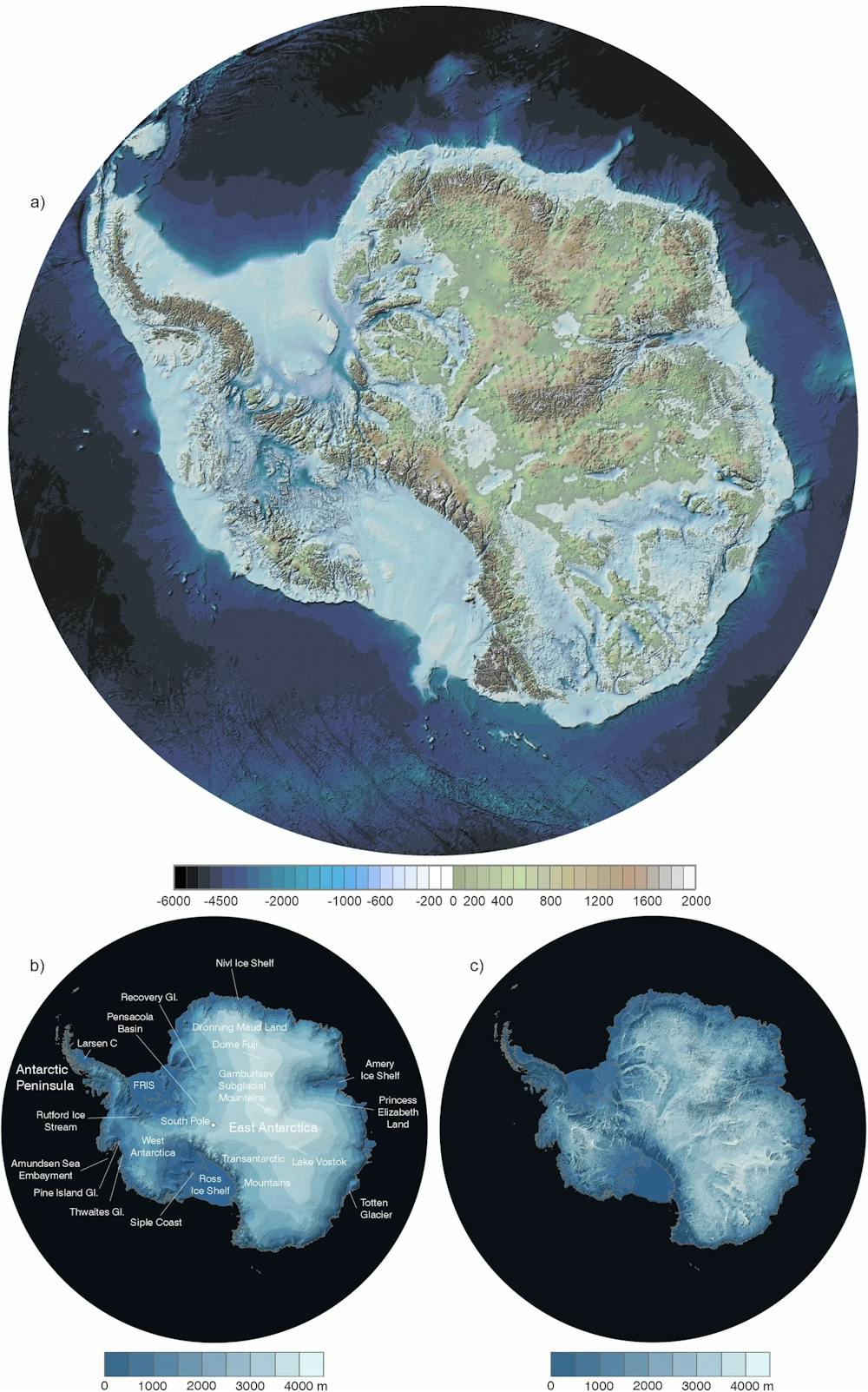
    Some peaks, like the towering Transantarctic Mountains, rise above the ice. But others, like the mysterious and ancient Gamburtsev Subglacial Mountains in the middle of East Antarctica, are completely buried.

    The Gamburtsev Mountains are similar in scale and shape to the European Alps. But we can’t see them because the high alpine peaks and deep glacial valleys are entombed beneath kilometres of ice.

    How did they come to be? Typically, a mountain range will rise in places where two tectonic plates clash with each other. But East Antarctica has been tectonically stable for millions of years.

    Our new study, published in Earth and Planetary Science Letters, reveals how this hidden mountain chain emerged more than 500 million years ago when the supercontinent Gondwana formed from colliding tectonic plates.

    Our findings offer fresh insight into how mountains and continents evolve over geological time. They also help explain why Antarctica’s interior has remained remarkably stable for hundreds of millions of years.

    A radar image showing the Gamburtsev mountain range under layers of ice.
    Creyts et al., Geophysical Research Letters (2014), CC BY-SA

    A buried secret

    The Gamburtsev Mountains are buried beneath the highest point of the East Antarctica ice sheet. They were first discovered by a Soviet expedition using seismic techniques in 1958.

    Because the mountain range is completely covered in ice, it’s one of the least understood tectonic features on Earth. For scientists, it’s deeply puzzling. How could such a massive mountain range form and still be preserved in the heart of an ancient, stable continent?

    Most major mountain chains mark the sites of tectonic collisions. For example, the Himalayas are still rising today as the Indian and Eurasian plates continue to converge, a process that began about 50 million years ago.

    Plate tectonic models suggest the crust now forming East Antarctica came from at least two large continents more than 700 million years ago. These continents used to be separated by a vast ocean basin.

    A map of the topography (a) and surface elevation (b) of Antarctica, measured in metres above sea level; (c) shows ice thickness in metres.
    Pritchard et al., Scientific Data (2025), CC BY

    The collision of these landmasses was key to the birth of Gondwana, a supercontinent that included what is now Africa, South America, Australia, India and Antarctica.

    Our new study supports the idea that the Gamburtsev Mountains first formed during this ancient collision. The colossal clash of continents triggered the flow of hot, partly molten rock deep beneath the mountains.

    As the crust thickened and heated during mountain building, it eventually became unstable and began to collapse under its own weight.

    Deep beneath the surface, hot rocks began to flow sideways, like toothpaste squeezed from a tube, in a process known as gravitational spreading. This caused the mountains to partially collapse, while still preserving a thick crustal “root”, which extends into Earth’s mantle beneath.

    Mountain building causes deep crustal rocks to deform, fold and partially melt.
    Jacqueline Halpin

    Crystal time capsules

    To piece together the timing of this dramatic rise and fall, we analysed tiny zircon grains found in sandstones deposited by rivers flowing from the ancient mountains more than 250 million years ago. These sandstones were recovered from the Prince Charles Mountains, which poke out of the ice hundreds of kilometres away.

    Zircons are often called “time capsules” because they contain minuscule amounts of uranium in their crystal structure, which decays at a known rate and allows scientists to determine their age with great precision.

    These zircon grains preserve a record of the mountain-building timeline: the Gamburtsev Mountains began to rise around 650 million years ago, reached Himalayan heights by 580 million years ago, and experienced deep crustal melting and flow that ended around 500 million years ago.

    Most mountain ranges formed by continental collisions are eventually worn down by erosion or reshaped by later tectonic events. Because they’ve been preserved by a deep layer of ice, the Gamburtsev Subglacial Mountains are one of the best-preserved ancient mountain belts on Earth.

    While it’s currently very challenging and expensive to drill through the thick ice to sample the mountains directly, our model offers new predictions to guide future exploration.

    Geologists Jacqueline Halpin and Jack Mulder stand on the Denman Glacier during recent fieldwork.
    Jacqueline Halpin

    For instance, recent fieldwork near the Denman Glacier on East Antarctica’s coast uncovered rocks that may be related to these ancient mountains. Further analysis of these rock samples will help reconstruct the hidden architecture of East Antarctica.

    Antarctica remains a continent full of geological surprises, and the secrets buried beneath its ice are only beginning to be revealed.

    Jacqueline Halpin receives funding from the Australian Research Council through the ARC Australian Centre for Excellence in Antarctic Science (ACEAS) Special Research Initiative.

    Nathan R. Daczko receives funding from the Australian Research Council.

    – ref. Antarctica has a huge, completely hidden mountain range. New data reveals its birth over 500 million years ago – https://theconversation.com/antarctica-has-a-huge-completely-hidden-mountain-range-new-data-reveals-its-birth-over-500-million-years-ago-256231

    MIL OSI Analysis – EveningReport.nz –

    May 12, 2025
  • MIL-Evening Report: As Donald Trump cuts funding to Antarctica, will the US be forced off the icy continent?

    Source: The Conversation (Au and NZ) – By Lynda Goldsworthy, Research Associate, Institute for Marine and Antarctic Studies, University of Tasmania

    Mozgova/Shutterstock

    President Donald Trump has begun eroding the United States presence in Antarctica by announcing deep funding cuts to his nation’s science and logistics on the icy continent.

    The Trump administration has significantly reduced funding for both Antarctica’s largest research and logistics station, McMurdo, and the National Science Foundation which funds US research in Antarctica.

    More cuts are foreshadowed. If carried through, US science and overall presence in Antarctica will be seriously diminished – at a time when China is significantly expanding its presence there.

    Since 1958, the US has been a leader in both Antarctic diplomacy and science. Shrinking its Antarctic presence will diminish US capacity to influence the region’s future.

    Why the US matters in Antarctica

    The US has historically focused its Antarctic influence in three key areas:

    1. Keeping Antarctica free from military conflict

    The US has built considerable Antarctic geopolitical influence since the late 1950s. Under President Dwight D. Eisenhower, it initiated (and later hosted) negotiations that led to the development of the 1959 Antarctic Treaty.

    It was also key to establishing the fundamental principles of the treaty, such as using the Antarctic region only for peaceful purposes, and prohibiting military activities and nuclear weapons testing.

    2. Governing Antarctica together

    The US was influential in developing the international legal system that governs human activities in the Antarctic region.

    In the 1970s, expanding unregulated fishing in the Southern Ocean led to serious concerns about the effects on krill-eating species – especially the recovery of severely depleted whale populations.

    The US joined other Antarctic Treaty nations to champion the Convention on the Conservation of Antarctic Marine Living Resources (CAMLR), signed in 1980. It prioritises conservation of Southern Ocean ecosystems and all species, over maximum fish harvesting.

    The US also contributed to the 1991 Protocol on Environmental Protection. Among other measures it prohibits mining and designates Antarctica as “a natural reserve, devoted to peace and science”.

    3. Scientific research and collaboration

    The US operates three year‑round Antarctic research stations: Palmer, Amundsen-Scott and McMurdo.

    McMurdo is Antarctica’s largest research station. Amundsen-Scott is located at the South Pole, the geographic centre of Antarctica, and the point at which all Antarctic territorial claims meet. The South Pole station is thus important symbolically and strategically, as well as for science.

    The US has the largest number of Antarctic scientists of any nation in the continent.

    US scientific work has been at the forefront of understanding Antarctica’s role in the global climate system, and how climate change will shape the future of the planet. It has also played a major role in Southern Ocean ecosystem and fisheries research.

    This research has underpinned important policies. For example, US input into models to predict and manage sustainable krill yields has been pivotal in regulating the krill fishery, and ensuring it doesn’t harm penguin, seal and whale populations.

    The US has also been a staunch supporter of a comprehensive network of marine protected areas in the Southern Ocean. The Ross Sea Region Marine Protected Area proposed by the US and New Zealand is the largest in the world.

    A broad ripple effect

    The US influence in Antarctica extends beyond the list above. For example, the US has a significant Antarctic-based space program. And US citizens make up most Antarctic tourists, and the US plays a significant role in regulating tourism there.

    The full extent of the Trump administration’s cuts is still to play out. But clearly, if they proceed as signalled, the cuts will be a major blow not to just US interests in Antarctica, but those of many other countries.

    The US has the best-resourced logistics network in Antarctica. Its air transport, shipping and scientific field support has traditionally been shared by other countries. New Zealand, for instance, is closely tied with the US in resupply of food and fuel, and uses US air and sea logistics for many operations to the Ross Sea region.

    And joint research programs with the US will be affected by reduced funding in Antarctica directly, and elsewhere.

    For example, reported cuts to the climate programs of NASA and the National Oceanic and Atmospheric Administration (NOAA) may hamper satellite coverage of the Antarctic and Southern Ocean. This would affect Australian scientists collecting data on ocean temperature, sea-ice state and other metrics used in climate research and weather forecasting.

    Worrying times ahead

    China has signalled its intention to be a key geopolitical player in Antarctica and has greatly expanded its Antarctic presence in recent years.

    China has five Antarctic research stations. Its sixth summer station is due for completion in 2027. China also operates two icebreaker ships, helicopters and a fixed-wing aircraft in Antarctica and is building new, large krill trawlers.

    Both China and Russia, are increasingly active in their opposition to environmental initiatives such as marine protected areas.

    A smaller US presence creates greater opportunities for others to shape Antarctica’s geopolitics. This includes pressure to erode decades-long protection of the Antarctic environment, a push for more intensive fish and krill harvesting, and potentially reopening debate on mining in the region.

    Lynda Goldsworthy and Tony Press co-authored the chapter Power at the Bottom of the World in the new book Antarctica and the Earth System.

    A smaller US presence creates opportunities for others to shape Antarctica’s geopolitics.
    Oleksandr Matsibura/Shutterstock

    Lynda Goldsworthy, research associate with IMAS, UTAS, undertakes occasional contract work with the Deep Sea Conservation, is a member of AFMA’s SouthMac advisory group ) and of CSIRO National Benefit Advisory Committee.

    Tony Press receives funding from the Australia-Japan Foundation (Department of .Foreign Affairs and Trade)

    – ref. As Donald Trump cuts funding to Antarctica, will the US be forced off the icy continent? – https://theconversation.com/as-donald-trump-cuts-funding-to-antarctica-will-the-us-be-forced-off-the-icy-continent-254786

    MIL OSI Analysis – EveningReport.nz –

    May 12, 2025
  • MIL-OSI Russia: The story of an NSU graduate: a path in science and inspiration for future generations

    Translation. Region: Russian Federal

    Source: Novosibirsk State University – Novosibirsk State University –

    Gennady Barykinsky, graduate Physics Department of NSU 1977, dedicated his life to science. Working in the field of laser physics, he always wanted to learn new things. Now, in retirement, he is engaged in historical research, studies genealogy and creates films. In an interview, he spoke about his difficult student years, the path to obtaining a diploma, the principles that helped him along the way, and why he believes that life should be filled with meaning.

    — Tell us why you decided to apply to NSU?

    — In my thoughts, I always went back to two episodes of my life that radically influenced my choice. The first episode, oddly enough, was military service in the Group of Soviet Forces in Germany. Here I was appointed commander of a platoon for controlling a radar guidance station. At that time, I did not understand not only electronics and radio engineering, but also many elementary concepts of physics. The officers literally shoved textbooks on radio engineering at me and demanded that I master all of this. After demobilization, I was constantly tormented by the same thought: “How is this possible? If I was able to master such complex technology in the army, then surely I will not be able to master higher education,” says Gennady.

    The second episode was the purchase of a directory-catalogue of all higher educational institutions in the country. Through selection, Gennady determined that he liked not a narrowly specialized education, but a more universal one – university. He decided that he was not up to Moscow, Leningrad and Kiev were too academic, but the “youth and elegance of Novosibirsk” was just right.

    — I came for the entrance exams. I was placed in the sixth dormitory in one room with three other applicants. In a few days, I heard such words as limit, derivative, integral and many others from these guys for the first time. I finally realized that I had nothing to do at the entrance exams. However, I still went to the first exam in written mathematics for a bad grade. After the exam, going down to the first floor of the university, I saw an announcement inviting applicants who had failed the exam to an interview at the dean’s office of the full-time preparatory department (PD) of NSU, — Gennady recalls.

    The next two semesters of the school year passed in a state of great emotional tension. Gennady actually had to master almost the entire high school curriculum in five exam subjects in 8 months. Therefore, the school day lasted from dawn to dusk. In addition to in-person classes and mandatory homework, Gennady studied at least four hours every day. Therefore, out of 25 exam points, he scored 23, as it turned out, passing points and was still enrolled in the university.

    — What do you remember about studying at NSU?

    — I have never experienced so many emotions in my life as at the beginning of my student years. The first lectures. The first seminars. And in general, many firsts. Somewhere in my soul there is a feeling of pride that all this happened. One of the warmest memories was left by the deputy dean for our course, candidate of physical and mathematical sciences Vasily Vasilyevich Murakhtanov. In my life, I have never met a person who possessed, to a greater extent than Vasily Vasilyevich, a whole set of such qualities in relation to the interlocutor as: intelligence, modesty, tolerance. One day he came up to me and said: “Gennady Mikhailovich, the dean’s office has an offer – you to lead a group of fourth-year physicists on a summer exchange trip to Poland to the University of Krakow, for almost a month.” I agreed. Half a month passes, he approaches again: “Excuse me, but the university administration insists that you head the student construction teams of the university, and instead of a trip to Poland, we will then organize a trip to another, more interesting country for you.” He persuaded me again. Everything happened just like that, I didn’t even regret it, because I managed to go to Cuba, but that’s a completely different story, – Gennady said.

    Gennady calls the path to his diploma work thorny, since he spent a long time choosing a department and tried himself in different scientific institutes: theoretical and applied mechanics, automation and electrometry, thermal physics, chemical kinetics and combustion.

    — This almost led to the fact that I did not have time to submit my fourth-year coursework to the dean’s office. But fate decreed otherwise. My friend Boris Bondarev, an active leader of the student club “Quantum”, advised me to try myself in laser physics. That’s how I ended up in the Laser Physics Department of the Institute of Semiconductor Physics under the supervision of Viktor Vasilyevich Lebedev. I remember him with great warmth — thanks to him, I dedicated my life to laser physics and I do not regret it. My diploma defense was successful — on June 2, 1978, my work was rated “excellent”. Later, its materials were published in the journal “Quantum Electronics”. This experience taught me that persistence and perseverance always bring results, even if the path turns out to be more difficult than expected, — the graduate recalls.

    During his entire period of study, Gennady only once received a bad mark on an exam. It was thermodynamics. Now Gennady is 76 years old, he has been retired for a long time, but he really likes to do research work on studying the history and genealogy of his family. He also creates texts, articles and videos with interest.

    — I am working on the design of my memories and some other topics in films that I have learned to create myself. I never thought that making films is incredibly interesting. A monograph is not excluded! Currently, several films about NSU are in the works: “A Big Film about the NSU SSO in the Period 1976-1979”, “A Film about the First Congress of NSU Graduates, the Creation and Functioning of this Union”, “The Second Part of the Film “NSU in Faces”, “A Film about the Problems of Graduates — Young Scientists”. I want to wish the graduates of 2025 to live by the meaning and essence, and not by the color of the packaging,” Gennady concludes.

    Some of Gennady Barykinsky’s films can be viewed here:

    HTTPS: //vidio.ru/video742583021_456239616

    HTTPS: //vidio.ru/video742583021_456239606

    HTTPS: //vidio.ru/video742583021_456239596

    Please note: This information is raw content directly from the source of the information. It is exactly what the source states and does not reflect the position of MIL-OSI or its clients.

    MIL OSI Russia News –

    May 12, 2025
  • MIL-OSI China: Xi’s call for learning from history echoed by int’l community

    Source: China State Council Information Office

    Chinese President Xi Jinping’s signed article recently published in the Russian Gazette newspaper, which called for learning from history, and especially the hard lessons of the Second World War, has resonated with the international community.

    In the article titled “Learning from History to Build Together a Brighter Future,” Xi urged the international community to draw wisdom and strength from the victory in the World Anti-Fascist War, resolutely resist all forms of hegemonism and power politics, and work together to build a brighter future for humanity.

    Echoing Xi’s view, experts and officials in multiple countries stated that in today’s world — where unilateralism, hegemony and bullying practices pose severe threats — the international community should stand on the right side of history, uphold fairness and justice, resolutely safeguard the post-war international order, and work together to secure a brighter future for humanity.

    UPHOLD HISTORICAL TRUTH

    This year marks the 80th anniversary of the victory of the Chinese People’s War of Resistance Against Japanese Aggression, the Soviet Union’s Great Patriotic War and the World Anti-Fascist War. On this occasion, Xi’s call for upholding a correct historical perspective on World War II (WWII) carries significant contemporary relevance, said Alexey Rodionov, a professor of Chinese studies at St. Petersburg State University.

    As emphasized in Xi’s signed article, historical memory and truth serve as inspirations that mirror the present and illuminate the future, said Wirun Phichaiwongphakdee, director of the Thailand-China Research Center of the Belt and Road Initiative.

    Defending history is not only a way to honor the past but also a means of safeguarding fairness and justice in today’s world, he said.

    Katsuo Nishiyama, a Japanese germ warfare scholar and professor emeritus at Shiga University of Medical Science, said any attempts to distort the historical truth of WWII or deny its victorious outcome will not succeed, and the international community will not tolerate attempts to reverse history’s progress.

    To protect historical truth, efforts are still needed to prevent future tragedies, the expert warned.

    French entrepreneur and commentator Arnaud Bertrand said China has become a major country staunchly supporting multilateral institutions and international law. “Xi’s article is a clear window into current Chinese strategic thinking. China is positioning itself as a defender of the post-WWII international order against ‘hegemonic’ forces,” he said.

    RECOGNIZE PIVOTAL CONTRIBUTION

    In his signed article, President Xi stressed that China and the Soviet Union served as the mainstay of resistance against Japanese militarism and German Nazism, making pivotal contribution to the victory of the World Anti-Fascist War.

    As the main theater in the East of the World Anti-Fascist War, China played a pivotal role in defeating Japanese militarism and achieving broader victory over fascism, an outcome made possible by the immense sacrifices of the Chinese people, said Boris Cheltsov, scientific secretary of the Victory Museum in Moscow.

    “The Chinese people displayed extraordinary resilience and courage under extremely difficult conditions,” he said.

    In the article, Xi emphasized that Taiwan’s restoration to China was a victorious outcome of WWII and an integral part of the postwar international order.

    Taiwan is part of China, and China’s sovereignty over Taiwan is both legal and a recognized fact, said Mohab Nassar, associate professor of international law at Cairo University.

    DEFEND JUSTICE, NOT HEGEMONISM

    Today, the global deficits in peace, development, security and governance continue to widen unabated, Xi wrote in his article. To address these deficits, Xi proposed building a community with a shared future for mankind and put forward the Global Development Initiative, the Global Security Initiative and the Global Civilization Initiative as a way forward to steer the reform of the global governance system toward greater fairness and justice.

    Akkan Suver, president of the Marmara Group Foundation in Türkiye, said the three major global initiatives proposed by Xi are fair, just and truly uphold multilateralism.

    Despite rising unilateralism, China firmly opposes all forms of hegemony and power politics and is committed to maintaining international rules and order, which aligns with the common interests of developing countries, Suver said.

    In the face of various conflicts, the international community needs dialogue and cooperation, not division; global development requires rationality and conscience, not power politics, said Suver.

    President Xi has proposed to build a community with a shared future for mankind, emphasizing dialogue rather than confrontation, partnership rather than alliance, and win-win rather than zero-sum outcomes, said Abdullah Al-Dosari, editor in chief of Kuwait’s Al-Arab Electronic Newspaper.

    The Middle East region has long been in turmoil, with peace deficit growing larger and larger, Al-Dosari said, noting that Xi’s proposal has great significance for regional peace and stability. 

    MIL OSI China News –

    May 12, 2025
  • MIL-OSI Global: As Donald Trump cuts funding to Antarctica, will the US be forced off the icy continent?

    Source: The Conversation – Global Perspectives – By Lynda Goldsworthy, Research Associate, Institute for Marine and Antarctic Studies, University of Tasmania

    Mozgova/Shutterstock

    President Donald Trump has begun eroding the United States presence in Antarctica by announcing deep funding cuts to his nation’s science and logistics on the icy continent.

    The Trump administration has significantly reduced funding for both Antarctica’s largest research and logistics station, McMurdo, and the National Science Foundation which funds US research in Antarctica.

    More cuts are foreshadowed. If carried through, US science and overall presence in Antarctica will be seriously diminished – at a time when China is significantly expanding its presence there.

    Since 1958, the US has been a leader in both Antarctic diplomacy and science. Shrinking its Antarctic presence will diminish US capacity to influence the region’s future.

    Why the US matters in Antarctica

    The US has historically focused its Antarctic influence in three key areas:

    1. Keeping Antarctica free from military conflict

    The US has built considerable Antarctic geopolitical influence since the late 1950s. Under President Dwight D. Eisenhower, it initiated (and later hosted) negotiations that led to the development of the 1959 Antarctic Treaty.

    It was also key to establishing the fundamental principles of the treaty, such as using the Antarctic region only for peaceful purposes, and prohibiting military activities and nuclear weapons testing.

    2. Governing Antarctica together

    The US was influential in developing the international legal system that governs human activities in the Antarctic region.

    In the 1970s, expanding unregulated fishing in the Southern Ocean led to serious concerns about the effects on krill-eating species – especially the recovery of severely depleted whale populations.

    The US joined other Antarctic Treaty nations to champion the Convention on the Conservation of Antarctic Marine Living Resources (CAMLR), signed in 1980. It prioritises conservation of Southern Ocean ecosystems and all species, over maximum fish harvesting.

    The US also contributed to the 1991 Protocol on Environmental Protection. Among other measures it prohibits mining and designates Antarctica as “a natural reserve, devoted to peace and science”.

    3. Scientific research and collaboration

    The US operates three year‑round Antarctic research stations: Palmer, Amundsen-Scott and McMurdo.

    McMurdo is Antarctica’s largest research station. Amundsen-Scott is located at the South Pole, the geographic centre of Antarctica, and the point at which all Antarctic territorial claims meet. The South Pole station is thus important symbolically and strategically, as well as for science.

    The US has the largest number of Antarctic scientists of any nation in the continent.

    US scientific work has been at the forefront of understanding Antarctica’s role in the global climate system, and how climate change will shape the future of the planet. It has also played a major role in Southern Ocean ecosystem and fisheries research.

    This research has underpinned important policies. For example, US input into models to predict and manage sustainable krill yields has been pivotal in regulating the krill fishery, and ensuring it doesn’t harm penguin, seal and whale populations.

    The US has also been a staunch supporter of a comprehensive network of marine protected areas in the Southern Ocean. The Ross Sea Region Marine Protected Area proposed by the US and New Zealand is the largest in the world.

    A broad ripple effect

    The US influence in Antarctica extends beyond the list above. For example, the US has a significant Antarctic-based space program. And US citizens make up most Antarctic tourists, and the US plays a significant role in regulating tourism there.

    The full extent of the Trump administration’s cuts is still to play out. But clearly, if they proceed as signalled, the cuts will be a major blow not to just US interests in Antarctica, but those of many other countries.

    The US has the best-resourced logistics network in Antarctica. Its air transport, shipping and scientific field support has traditionally been shared by other countries. New Zealand, for instance, is closely tied with the US in resupply of food and fuel, and uses US air and sea logistics for many operations to the Ross Sea region.

    And joint research programs with the US will be affected by reduced funding in Antarctica directly, and elsewhere.

    For example, reported cuts to the climate programs of NASA and the National Oceanic and Atmospheric Administration (NOAA) may hamper satellite coverage of the Antarctic and Southern Ocean. This would affect Australian scientists collecting data on ocean temperature, sea-ice state and other metrics used in climate research and weather forecasting.

    Worrying times ahead

    China has signalled its intention to be a key geopolitical player in Antarctica and has greatly expanded its Antarctic presence in recent years.

    China has five Antarctic research stations. Its sixth summer station is due for completion in 2027. China also operates two icebreaker ships, helicopters and a fixed-wing aircraft in Antarctica and is building new, large krill trawlers.

    Both China and Russia, are increasingly active in their opposition to environmental initiatives such as marine protected areas.

    A smaller US presence creates greater opportunities for others to shape Antarctica’s geopolitics. This includes pressure to erode decades-long protection of the Antarctic environment, a push for more intensive fish and krill harvesting, and potentially reopening debate on mining in the region.

    Lynda Goldsworthy and Tony Press co-authored the chapter Power at the Bottom of the World in the new book Antarctica and the Earth System.

    A smaller US presence creates opportunities for others to shape Antarctica’s geopolitics.
    Oleksandr Matsibura/Shutterstock

    Lynda Goldsworthy, research associate with IMAS, UTAS, undertakes occasional contract work with the Deep Sea Conservation, is a member of AFMA’s SouthMac advisory group ) and of CSIRO National Benefit Advisory Committee.

    Tony Press receives funding from the Australia-Japan Foundation (Department of .Foreign Affairs and Trade)

    – ref. As Donald Trump cuts funding to Antarctica, will the US be forced off the icy continent? – https://theconversation.com/as-donald-trump-cuts-funding-to-antarctica-will-the-us-be-forced-off-the-icy-continent-254786

    MIL OSI – Global Reports –

    May 12, 2025
  • MIL-OSI China: China to ramp up teacher training

    Source: People’s Republic of China – State Council News

    Students present flowers to their teachers at a primary school in Wuhan, central China’s Hubei province, March 6, 2025. [Photo/Xinhua]

    China will focus on building high-level teacher training universities over the next five years as part of broader efforts to enhance the country’s teacher education system and capabilities, according to a recent notice.

    Issued by the Ministry of Education and the National Development and Reform Commission, the notice emphasizes combining hard infrastructure investment with soft capacity development, prioritizing the cultivation of future teachers’ scientific literacy and practical skills. Key objectives include building first-class teacher education colleges, specialized disciplines and curricula.

    Reforms will be carried out in existing teacher training programs, integrating undergraduate and postgraduate studies. Practical training and teaching will account for a larger portion of the curriculum for education majors, who will be required to complete more than 18 weeks of mock teaching, the notice said.

    Universities will also be encouraged to have their faculty members participate in training primary and secondary school teachers. Such contributions will be considered in evaluations for higher professional titles and awards, it said.

    More resources will be allocated to teacher training colleges in underdeveloped regions, the notice added.

    Funding will be coordinated through central government budgets, ultra-long-term special national bonds and local special government bonds.

    The ministry and NDRC will plan institutional layouts based on teacher training needs, setting basic criteria for eligible institutions. Local governments will provide guidance and support, with implementation rolled out in phases based on institutional preparedness and detailed plans, the notice said.

    Last year, China had 18.91 million teachers at all education levels, according to the Ministry of Education.

    In 2023, 78 percent of primary school teachers and 93 percent of middle school teachers held bachelor’s degrees or higher, said Li Yongzhi, president of the China National Academy of Educational Sciences.

    The central leadership has attached great importance to teacher training and has repeatedly stressed the need to improve teacher quality, he said.

    China has 226 teacher training universities and nearly 600 universities offering teaching degrees, Li said. A recent initiative has supported recruiting postgraduate students from top universities to teach in primary and secondary schools.

    Teacher salaries have steadily improved, and the goal of ensuring that primary and middle school teachers receive pay no lower than that of local government officials has been largely achieved, he said.

    The central government has invested tens of billions of yuan in improving the working and living conditions of rural teachers in less-developed regions, he added.

    University faculty members have also become a major force in high-tech innovation. More than 40 percent of academicians at the Chinese Academy of Sciences and the Chinese Academy of Engineering, and nearly 70 percent of recipients of the National Science Fund for Distinguished Young Scholars, are employed at higher education institutions, Li said.

    MIL OSI China News –

    May 12, 2025
  • MIL-OSI Australia: Antarctic ice cores returned to Australia

    Source: Australian Criminal Intelligence Commission

    The first 150 metres of a planned 3000 metre-long Antarctic ice core has been safely returned to Australia after a successful drilling season for the Million Year Ice Core (MYIC).
    The ice core, in one metre-lengths, contains a record of the past 4000 years of climate history.
    The core was drilled at a deep field camp at Dome C North, about 1200 km “up the hill” from Australia’s Casey research station.
    It’s just the start of an ambitious Australian Antarctic Program drilling effort to extract the world’s oldest, continuous ice core record of up to two million years.
    MYIC science lead, Dr Joel Pedro, said the full-length ice core is expected to extend the current ice core climate record well beyond 1.2 million years, and help solve a climate mystery.
    “About one million years ago the cycle of ice ages shifted from a regular 41,000 year glacial-interglacial cycle, to a cycle every 100,000 years,” Dr Pedro said.
    “An ice core record of over one million years can help us answer why that shift in the climate state occurred, and that will provide really important information to test models and better predict climate in the future.”

    After a few years of weather and Covid-related delays to drilling, Dr Pedro said the science team, alongside a supporting tractor-traverse team, were relieved to achieve everything they had hoped for this season, thanks to a joint, multi-skilled, team effort.
    “Our number one priority was to progress the pilot drilling for the MYIC borehole, but to do that we first had to set up the drill shelter,” Dr Pedro said.
    “We joined forces with the traverse team and were able to get the shelter constructed in 10 days – half the time we expected – and our drill built and tested in parallel.
    “Then we split in to two shifts to run the drill 16 hours a day, with the traverse team joining us in drilling and core processing.
     “After so much effort by so many people, and so much planning and time, it was a very special moment for me to pull out that first ice core – to the point that I had a tear in my eye.”
    Independent living
    Traverse Field Leader, Chris Gallagher, led a team of mechanics, electricians, a carpenter and a doctor, that towed equipment and supplies to the drill site.
    Using snow-groomers, and tractors towing sleds carrying 600 tonnes of gear, the team travelled 18 days through blizzards and heavy snow, via a route established last year.
    Once at Dome C North they set up the scientists’ accommodation modules, ready for their arrival by air.
    “Over the next few years the traverse will bring up the rest of the inland station so that it can operate independently of the traverse’s ‘sustainability train’,” Mr Gallagher said.
    Drill skills
    The traverse team were as keen to start drilling ice as the scientists, and put their skills to use.
    “Setting up the drill tent was quite complicated, with underground trenches and cabling that had to be installed, including the drill trench itself, which was six metres deep,” Mr Gallagher said.
    “Our diesel mechanics used their skills with chainsaws, battery drills, dumpy levels and other construction techniques, to help our carpenter build the tent, and then the scientists helped finish it off.
    “Once the drilling started, the mechanics assisted the drill engineers to help ensure the drill kept running properly, and other traverse team members took core measurements and wrapped and packed the cores.
    “It was fascinating.”
    Boring anxiety
    The science team drilled to 150 metres and then progressively widened the borehole from 130 mm wide at the bottom, to 260 mm wide at the top, using a series of ‘reaming’ attachments.
    Next season the widest part the borehole will be fitted with a fibreglass bore casing.
    This will seal off the porous ice near the surface and allow drill fluid to be added to prevent the borehole closing under pressure, as they drill deeper.
    It was a nail-biting time for Dr Pedro.
    “We had to go back down the borehole three times to expand it, so we effectively drilled about 520 metres,” he said.
    “Every time you put something down the borehole there’s a chance it will get stuck, and there are a number of boreholes in Antarctica that have had reamers or drills stuck in them, and they’ve had to move and start again.
    “When we got the last reamer out, I quickly shut the trap door on the hole and I knew we were safe.”
    The ice core sections were then loaded into an insulated box for transport back to Casey on the traverse and back to Australia on a C17 aircraft.
    The team will begin analysing the cores in coming months. This includes measuring water isotopes for temperature, and greenhouse gases such as methane and carbon dioxide trapped in air bubbles in the ice, which reflect changes in climate over time. They’ll also look for impurities that provide information on storms, sea-ice processes and volcanic activity.
    Next season
    Dr Pedro said the science team is now well set up for the 2025-26 drilling season.
    “A lot of the work will involve setting up our bigger drill that can get to 3000 metres,” he said.
    “We’ll add the bore casing and drill fluid handling system and the aim is to drill to 400 metres. After that the target is to drill 1000 metres per year, which will put us on track to reach bedrock by 2029.”
    Mr Gallagher said it had been a remarkable season of achievements.
    “Thanks to our highly motivated and skilled teams the inland station is well established and the drill tents are up and ready to go,” he said.
    Read more about the MYIC project in this season’s Drilling Diary and our special feature Secrets of the Ice.
    This content was last updated 9 hours ago on 12 May 2025.

    MIL OSI News –

    May 12, 2025
  • MIL-Evening Report: Meteorites and marsquakes hint at an underground ocean of liquid water on the Red Planet

    Source: The Conversation (Au and NZ) – By Hrvoje Tkalčić, Professor, Head of Geophysics, Director of Warramunga Array, Australian National University

    UAESA / MBRSC / Hope Mars Mission / EXI / Andrea Luck, CC BY

    Evidence is mounting that a secret lies beneath the dusty red plains of Mars, one that could redefine our view of the Red Planet: a vast reservoir of liquid water, locked deep in the crust.

    Mars is covered in traces of ancient bodies of water. But the puzzle of exactly where it all went when the planet turned cold and dry has long intrigued scientists.

    Our new study may offer an answer. Using seismic data from NASA’s InSight mission, we uncovered evidence that the seismic waves slow down in a layer between 5.4 and 8 kilometres below the surface, which could be because of the presence of liquid water at these depths.

    The mystery of the missing water

    Mars wasn’t always the barren desert we see today. Billions of years ago, during the Noachian and Hesperian periods (4.1 billion to 3 billion years ago), rivers carved valleys and lakes shimmered.

    As Mars’ magnetic field faded and its atmosphere thinned, most surface water vanished. Some escaped to space, some froze in polar caps, and some was trapped in minerals, where it remains today.

    Four billion years ago (top left), Mars may have hosted a huge ocean. But the surface water has slowly disappeared, leaving only frozen remnants near the poles today.
    NASA

    But evaporation, freezing and rocks can’t quite account for all the water that must have covered Mars in the distant past. Calculations suggest the “missing” water is enough to cover the planet in an ocean at least 700 metres deep, and perhaps up to 900 metres deep.

    One hypothesis has been that the missing water seeped into the crust. Mars was heavily bombarded by meteorites during the Noachian period, which may have formed fractures that channelled water underground.

    Deep beneath the surface, warmer temperatures would keep the water in a liquid state – unlike the frozen layers nearer the surface.

    A seismic snapshot of Mars’ crust

    In 2018, NASA’s InSight lander touched down on Mars to listen to the planet’s interior with a super-sensitive seismometer.

    By studying a particular kind of vibration called “shear waves”, we found a significant underground anomaly: a layer between 5.4 and 8 kilometres down where these vibrations move more slowly.

    This “low-velocity layer” is most likely highly porous rock filled with liquid water, like a saturated sponge. Something like Earth’s aquifers, where groundwater seeps into rock pores.

    We calculated the “aquifer layer” on Mars could hold enough water to cover the planet in a global ocean 520–780m deep — several times as much water as is held in Antarctica’s ice sheet.

    This volume is compatible with estimates of Mars’ “missing” water (710–920m), after accounting for losses to space, water bound in minerals, and modern ice caps.

    Meteorites and marsquakes

    We made our discovery thanks to two meteorite impacts in 2021 (named S1000a and S1094b) and a marsquake in 2022 (dubbed S1222a). These events sent seismic waves rippling through the crust, like dropping a stone into a pond and watching the waves spread.

    The crater caused by meteorite impact S1094b, as seen from NASA’s Mars Reconnaissance Orbiter.
    NASA/JPL-Caltech/University of Arizona

    InSight’s seismometer captured these vibrations. We used the high-frequency signals from the events — think of tuning into a crisp, high-definition radio station — to map the crust’s hidden layers.

    We calculated “receiver functions,” which are signatures of these waves as they bounce and reverberate between layers in the crust, like echoes mapping a cave. These signatures let us pinpoint boundaries where rock changes, revealing the water-soaked layer 5.4 to 8 kilometres deep.

    Why it matters

    Liquid water is essential for life as we know it. On Earth, microbes thrive in deep, water-filled rock.

    Could similar life, perhaps relics of ancient Martian ecosystems, persist in these reservoirs? There’s only one way to find out.

    The water may be a lifeline for more complex organisms, too – such as future human explorers. Purified, it could provide drinking water, oxygen, or fuel for rockets.

    Of course, drilling kilometres deep on a distant planet is a daunting challenge. However, our data, collected near Mars’ equator, also hints at the possibility of other water-rich zones – such as the icy mud reservoir of Utopia Planitia.

    What’s next for Mars exploration?

    Our seismic data covers only a slice of Mars. New missions with seismometers are needed to map potential water layers across the rest of the planet.

    Future rovers or drills may one day tap these reservoirs, analysing their chemistry for traces of life. These water zones also require protection from Earthly microbes, as they could harbour native Martian biology.

    For now, the water invites us to keep listening to Mars’ seismic heartbeat, decoding the secrets of a world perhaps more like Earth than we thought.

    Hrvoje Tkalčić receives funding from The Australian Research Council.

    Weijia Sun works for Institute of Geology and Geophysics, Chinese Academy of Sciences. He receives funding from National Key R&D Program of China.

    – ref. Meteorites and marsquakes hint at an underground ocean of liquid water on the Red Planet – https://theconversation.com/meteorites-and-marsquakes-hint-at-an-underground-ocean-of-liquid-water-on-the-red-planet-255408

    MIL OSI Analysis – EveningReport.nz –

    May 12, 2025
  • MIL-OSI Russia: Iran and Uzbekistan Sign Four Documents on Expanding Bilateral Cooperation

    Translation. Region: Russian Federal

    Source: People’s Republic of China in Russian – People’s Republic of China in Russian –

    Source: People’s Republic of China – State Council News

    TEHRAN, May 11 (Xinhua) — Iran and Uzbekistan signed four documents in Tehran on Sunday to expand bilateral cooperation, Iran’s official IRNA news agency reported.

    According to the report, the signing took place during a meeting of delegations from the two countries, which included high-ranking officials, including Iran’s First Vice President Mohammad Reza Aref and Uzbek Prime Minister Abdulla Aripov, who is visiting the Islamic Republic.

    According to IRNA, these four documents include an intergovernmental protocol on the implementation of a preferential trade agreement, a memorandum of understanding on quarantine and plant protection, a memorandum of understanding in the field of halal standardization, and an intergovernmental roadmap for bilateral cooperation for the period 2025-2027.

    During the meeting, M.R. Aref said that Iran is determined to improve relations with Uzbekistan in all areas, viewing “the numerous cultural and historical commonalities between the two countries as valuable assets” for developing bilateral ties in the economy, energy, tourism, culture, science and trade, as well as between representatives of the private sector.

    A. Aripov, for his part, pointed out that Iran is a “close friend and reliable partner” of Uzbekistan in the region. He noted that in 2024, the volume of bilateral trade reached 500 million US dollars.

    The Prime Minister of Uzbekistan stressed that the expansion of cooperation between the two countries should be future-oriented and based on long-term planning. –0–

    MIL OSI Russia News –

    May 12, 2025
  • MIL-Evening Report: Farmers fear dingoes are eating their livestock – but predator poo tells an unexpected story

    Source: The Conversation (Au and NZ) – By Rachel Mason, PhD candidate in Conservation Biology, Deakin University

    Kristian Bell/Shutterstock

    Killing carnivores to protect livestock, wildlife and people is an emotive and controversial issue that can cause community conflict. Difficult decisions about managing predators must be supported by strong scientific evidence.

    In Australia, predators such as dingoes and foxes are often shot or poisoned with baits to prevent them from killing sheep and cattle. Feral cats and foxes are also killed to protect native wildlife.

    But research elsewhere suggests public perceptions of how predators affect ecosystems and livestock are not always accurate.

    Our recent study sought to shed light on these controversies. We examined the scat, or poo, left behind by dingoes, foxes and cats. We focused on the mallee region of Victoria and South Australia where there are calls to resume dingo culling to stop them killing livestock.

    A contentious issue

    Our study took place in the Big Desert-Wyperfeld-Ngarkat reserve complex in the semi-arid mallee region of Victoria and South Australia. This continuous ecosystem comprises about 10,000 km² of protected native mallee bushland, and is entirely surrounded by crop and livestock farming areas.

    Fox-baiting is conducted along the boundaries of Victorian-managed reserve areas. Dingo baiting occurs in the South Australian-managed section of the park.

    Since March 2024, the small dingo population has been protected in Victorian-managed areas due to their critically low numbers in the region.

    Prior to the change, Victorian farmers and authorised trappers could control dingoes on private land and within public land up to 3km from farms. Farmers say they have lost livestock since dingoes were protected.

    What are predators eating in the mallee region?

    We collected and analysed 136 dingo, 200 fox and 25 cat scats to determine what each predator in the area was eating and how their diets differed.

    Livestock was not a major part of the diet of dingoes, foxes or cats. Some 7% of fox scats contained sheep or cattle remains. This was more than that of dingoes, at 2% of scats. No feral cat scats contained livestock remains.

    The dingo diet was dominated by kangaroos, wallabies and emus, which comprised more than 70% of their diet volume.

    Cats and foxes consumed more than 15 times the volume of small native mammals compared with dingoes, including threatened species such as fat-tailed dunnarts.

    Our data must be interpreted with caution. Scat analysis cannot differentiate between livestock killed by predators and those that are scavenged. It also can’t tell us about animals that a predator killed but did not eat.

    In 2022–23, when we collected the scats, rainfall in the area was high and prey was abundant. So, while we found livestock were not likely to be a substantial part of these predators’ diets at the time of our research, this can change depending on environmental conditions.

    For example, fire and extended drought may force predators to move further to find food and water. They may move from conservation areas to private land, where they could prey on livestock.

    A taste for certain prey

    A predator’s poo doesn’t tell the full story of how it affects prey populations.

    To understand this further, we used motion-sensing wildlife cameras to assess which prey were available in the ecosystem. We compared it to the frequency they occurred in predator’s diets. This allowed us to determine if dingoes, foxes or cats target specific prey.

    We found foxes and cats both consumed small mammals proportionally more than we expected, given the prey’s availability in the study area. Cats consumed birds at a higher rate than expected, and dingoes consumed echidnas more than expected.

    Further intensive monitoring work is needed to determine how these dietary preferences affect the populations of prey species.

    Embracing the evidence

    The findings build on a substantial previous research suggesting foxes and cats pose a significant threat to native mammals, birds, reptiles and other wildlife, including many threatened species. Our results suggest foxes may cause more harm to sheep than dingoes overall – a finding consistent with research elsewhere in Victoria.

    Dingoes were the only predator species that regularly preyed on kangaroos and wallabies. These species are abundant in the region. They can also compete with livestock for grazing pastures, consume crops and degrade native vegetation.

    Currently, dingoes are killed on, or fenced out of, large parts of Australia due to their perceived threat to livestock.

    Lethal control of invasive species remains important to protect native wildlife and agriculture. But such decisions should be based on evidence, to avoid unforeseen and undesirable results.

    For example, fox control can lead to increased feral cat numbers and harm to native prey. Fewer dingoes may mean more feral goats and kangaroos.

    Non-lethal and effective alternatives exist to indiscriminately killing predators to protect livestock, such as protection dogs and donkeys. These measures are being embraced by farmers and graziers globally, often with high and sustained success.

    In Australia, governments should better embrace and support evidence-based and effective approaches that allow farming, native carnivores and other wildlife to coexist.

    Rachel Mason conducted this research with grant funding from the Victorian Department of Energy, Environment and Climate Action. She is a current member of the Australian Mammal Society, the Australasian Wildlife Management Society, and the Ecological Society of Australia.

    Euan Ritchie receives funding from the Australian Research Council and the Department of Energy, Environment, and Climate Action. Euan is a Councillor within the Biodiversity Council, a member of the Ecological Society of Australia and the Australian Mammal Society, and President of the Australian Mammal Society.

    – ref. Farmers fear dingoes are eating their livestock – but predator poo tells an unexpected story – https://theconversation.com/farmers-fear-dingoes-are-eating-their-livestock-but-predator-poo-tells-an-unexpected-story-254787

    MIL OSI Analysis – EveningReport.nz –

    May 12, 2025
  • MIL-OSI USA: Neag School of Education Celebrates 151 Bachelor of Science Graduates

    Source: US State of Connecticut

    UConn’s Neag School of Education held its undergraduate commencement ceremony at the Jorgensen Center for the Performing Arts on Sunday morning, celebrating 151 Bachelor of Science graduates from its Sport Management and Integrated Bachelor’s/Master’s Teacher Education programs.

    The joyful, sunny day began with a beloved Neag School tradition: the procession of graduates down Glenbrook Road from the Gentry Building to the Jorgensen, led by UConn’s mascot Jonathan XV. Once inside the auditorium, the Class of 2025 was greeted by cheers and applause from hundreds of family, friends, and other guests. The Neag School of Education banner was presented and placed onstage by Alexa Granfield, the class representative. Lead Marshal Megan Staples, associate professor of mathematics education, then opened the commencement ceremony before welcoming Dean Jason G. Irizarry to the podium.

    “It may sound cliché, but it is true: our students are special,” Irizarry said. “They are dedicating themselves to career paths that seek to improve education, support sport, and serve youth. As we like to say, there’s no place like the Neag School. Today’s graduates are proof of that. … All of us in the Neag School are already looking forward to the achievements that these selfless, dedicated young people are certain to realize in the years to come.”

    This year’s commencement speaker was Suzanne M. Wilson, the Neag Endowed Professor of Teacher Education and a professor in the Neag School’s Department of Curriculum and Instruction. She is a nationally known expert on teacher preparation and professional development who has had an indelible impact on the field of education. She was elected to the National Academy of Education in 2013 and to the American Academy of Arts and Sciences in 2022.

    “You have all chosen to join what some call the ‘caring professions’,” Wilson said to the graduates. “These professions focus on the emotional, psychological, intellectual, physical, and social well-being of others. Outsiders often think that the caring professions are easy work – after all, you just have to show up and be nice. Care. But these professions entail impossibly demanding work. … The fundamental challenge you face is that the learner or the client is the one who must do the work; no matter how loudly or clearly you talk, you can only offer them motivation and ideas. You can’t make them learn. That’s a tough job, and you never completely master it. You learn and relearn it over a lifetime.”

    So, Wilson offered the Class of 2025 three pieces of advice she said she wished she knew when she completed her bachelor’s degree: learn to hear, embrace your inevitable mistakes, and be kind.

    “Pretty simple, right?” Wilson said. “Don’t make the mistake of thinking that these habits are either personality traits or come naturally. You must consciously decide to practice doing these things for every person you work with, every day. … It takes will and skill, not to mention intelligence and knowledge, empathy and modesty, passion and compassion, patience and persistence, resilience and humility. … Given everything that you — the Class of 2025 — have already done at UConn and elsewhere, I have no doubt that you are up to the challenge.”

    Prior to joining UConn, Wilson was a University Distinguished Professor at Michigan State University, where she served on the faculty for 26 years. She was also the first director of the Teacher Assessment Project, which developed prototype assessments for the National Board for Professional Teaching Standards.

    It may sound cliché, but it is true: our students are special. They are dedicating themselves to career paths that seek to improve education, support sport, and serve youth. &#8212 Dean Jason G. Irizarry

    “Dr. Wilson’s distinguished career has been marked by groundbreaking scholarship, service at the highest levels of our profession, and an unwavering commitment to students and colleagues,” Irizarry said. “A steadfast mentor, collaborator, and advocate, Dr. Wilson’s leadership and advocacy at the national level have also shaped policy and practice in profound ways.”

    As it was Mother’s Day, Irizarry took a moment early on in the ceremony to thank all the mother figures in the audience or elsewhere who guided and supported the graduates. Then a short video played that was a compilation of Mother’s Day wishes recorded by some of the Neag School graduates. It was a heartfelt moment that had many in the audience looking for tissues.

    Another beloved Neag School commencement tradition is a performance by the graduating music education students toward the end of the ceremony. This year, nine graduates performed an arrangement of “Upside Down” by Jack Johnson, prompting their classmates to stand up and dance.

    Provost Anne D’Alleva was in attendance to congratulate the graduates and confer the Bachelor of Science degrees.

    “I charge you now to assume fully the responsibilities of your new status, to enlarge upon the foundations of knowledge which you have acquired, to take upon yourselves the obligations of an enlarged vision, and to seek to do your fair share of the work of this world,” D’Alleva said. “You are now alumni of UConn’s Neag School of Education. … Congratulations!”

    The UConn Neag School of Education commencement ceremony was also livestreamed and is still available for viewing.

    MIL OSI USA News –

    May 12, 2025
  • MIL-OSI Africa: South Africa engages USA on resettlement concerns

    Source: South Africa News Agency

    The Department of International Relations and Cooperation (DIRCO) has engaged its United States of America (USA) counterparts on the resettlement of South Africans claiming refugee status in that country.

    This follows reports that the US is preparing to fly at least 50 Afrikaaner South Africans to the US as early as this coming week.

    In a statement, DIRCO revealed that Deputy Minister Alvin Botes on Friday held a cordial discussion and raised concern with US Deputy Secretary of State, Christopher Landau, in this regard.

    DIRCO noted the internationally recognised definition of refugees, as set out in the 1951 Refugee Convention and its 1967 Protocol.

    “The Convention defines a refugee as someone with a ‘well-founded fear of persecution’ based on race, religion, nationality, membership of a particular social group, or political opinion. 

    “South Africa acknowledges that the determination of refugee status requires a factual assessment in light of the prevailing circumstances, having due regard for both subjective and objective factors,” the statement read.

    The department maintained that “allegations of discrimination are unfounded” in this particular regard.

    “The South African Police Service (SAPS) statistics on farm related crimes do not support allegations of violent crime targeted at farmers generally or any particular race. There are sufficient structures available within South Africa to address concerns of discrimination. 

    “Moreover, even if there are allegations of discrimination, it is our view that these do not meet the threshold of persecution required under domestic and international refugee law,” DIRCO said.

    The department said it was “most regrettable” that it appears that the resettlement, under the guise of being “refugees”, is “entirely politically motivated and designed to question South Africa’s constitutional democracy”.

    “[South Africa is] a country which has in fact suffered true persecution under apartheid rule and has worked tirelessly to prevent such levels of discrimination from ever occurring again, including through the entrenchment of rights in our Constitution, which is enforced vigorously through our judicial system. 

    “In addition, it is not clear how the principle of non-refoulement will be applied in relation to these citizens once they are resettled,” DIRCO said.

    South Africa’s Constitution strictly prohibits any form of discrimination, directly or indirectly, against anyone on one or more grounds, including race, gender, sex, pregnancy, marital status, ethnic or social origin, colour, sexual orientation, age, disability, religion, conscience, belief, culture, language and birth.

    “Through progressive judgements from the South African courts, particularly the Constitutional Court, our State has demonstrated a principled commitment to protect minorities and vulnerable groups. This shows the extent to which South Africa is working towards a country in which every citizen is free and protected,” the department said.

    Through diplomatic channels, DIRCO has requested the following information:

    • The status of persons that will be departing, whether as asylum seekers, refugees or ordinary citizens, and
    • Assurances as to whether the persons have been appropriately vetted by competent South African authorities to ensure that they do not have any outstanding criminal cases pending against them, amongst others.

    “Whilst South Africa challenges the United States’ assessments of alleged refugee status, it will not block citizens who seek to depart the country from doing so, as it also observes their right of freedom of movement and freedom of choice, specifically the right to leave the country, as contained in section 21(2) of the Constitution. 

    “However, it is essential that in doing so, South Africa ensures that it is compliant with other domestic laws and prescripts.

    “The Government of South Africa remains dedicated to constructive dialogue with United States of America, anchored in mutual respect for sovereignty, the rule of law, and a shared commitment to deepening mutually beneficial bilateral partnership,” the statement concluded. – SAnews.gov.za

    MIL OSI Africa –

    May 12, 2025
  • MIL-OSI Global: Population explosions and declines are related to how stable the economy and environment are

    Source: The Conversation – Canada – By Ken G. Drouillard, Professor, Great Lakes Institute for Environmental Research and Director of the School of the Environment, University of Windsor

    A country’s population is affected by, and in turn affects, environmental and economic issues. (Shutterstock)

    For 200 years, we’ve been warned of unchecked population growth and how it leads to environmental instability. On the other hand, today some countries face decreasing populations, alongside increasing proportions of elderly people, causing economic instability.

    These two facets of population crises — explosions and declines — are occurring in different parts of the world, and have a global impact on the environment and on economies. Discussions about achieving economic and environmental sustainability must consider population changes, technology and the environment, given these concepts are closely interwoven.

    Population explosions and declines are related to both environmental and economic instability; some countries make reactionary choices that trade off short-term domestic economic progress over the environment.

    The crisis of population explosions

    In 1798, English economist Thomas Malthus warned of a population explosion, inferring that population growth will outstrip agricultural production. Malthus’s ideas became re-popularized by American scientist Paul R. Ehrlich in his book published at the height of population growth in the 1960s. Both predicted that a population explosion would cause shortages in resources and escalating environmental damage.

    Like Malthus, Ehrlich was criticized for a crisis “that never happened” because human ingenuity, a byproduct of population, overcomes the worst fears of environmentalists. This counter-argument relies on technological advances making more efficient use of resources while lowering the environmental impacts.

    This is best exemplified by efficiency gains of agriculture that have continued to feed a growing world. Ehrlich’s predictions of cumulative environmental damage are best illustrated by the growing intensity of climate change and species loss as the global population continues to grow even though the current growth rate is slower than it was in the 1960s.

    A graph reflecting how population growth, species diversity and global temperature correlate over time.
    (K. Drouillard), CC BY

    Unified growth theory describes how economies change over the long term. It starts with a period of slow technological progress, low income growth and high population growth. Over time, these conditions give way to a modern growth phase, where technology improves quickly, income rises steadily and population growth slows as societies go through a demographic transition towards stable population sizes.

    Technological progress positively contributes to national economies over the long term. However, early adoption of green technology often relies on finance and government incentives that may imply short-term economic burdens. Yet when green technology is implemented and coupled to slowing population growth, it leads to decreasing national environmental footprints that pave a way towards joint environmental and economic sustainability.

    The crisis of population declines

    Declining populations cause inverted age pyramids with larger numbers of elderly people. These shifting demographics cause economic instability. They also constrain technological progress and social security.

    Population declines work against the gains described by unified growth theory. Presently, 63 countries have reached their peak population and 48 more are expected to peak within 30 years. Fears of population decline are also being forecast at the global scale.

    The global population is predicted to peak between the mid-2060s to 2100, stabilizing at 10.2 billion from its present 8.2 billion.

    In their book, Empty Planet, political scientist Darrell Bricker and political commentator John Ibbitson warn that zero population growth will happen even faster. They argue once a country decreases its fertility to below replacement (2.1 children per woman), the social reinforcements of increasing urbanization, costs of raising children and increased empowerment over family planning make it almost impossible to increase the birth rate.

    For highly affluent countries, the per capita GDP is decreasing as the proportion of elderly in the population increases. Although this pattern doesn’t hold when less affluent countries are added, the figure demonstrates tangible economic impacts for countries grappling with aging populations.

    A graph showing the percentage of elderly people in a country’s population, correlated with GDP and adjusted for inflation.
    (K. Drouillard), CC BY

    Simultaneous explosions and declines

    Affluent nations facing decline can react to economic instability in ways that counter global economic and environmental sustainability.

    In the past, affluent nations were the drivers of green technology. However, economic instability from population declines can cause reluctance to invest, adopt and share green technology crucial for mitigating environmental damage at the global scale.

    The issue is compounded by the fact that many countries overlook how their own decline in population growth contributes to economic instability. They instead focus on short-term solutions to their economic situation that may include unsustainable resource use.

    Left unaddressed, the real issue of population decline becomes unresolved, allowing social anxieties against immigration and global trade to grow. This can exacerbate the issue halting technology sharing, slowing economic growth and increasing economic inequality and environmental damage.

    The above is exemplified by policies now being implemented by the United States. Where immigration was previously used as a backstop against low fertility, growing cultural backlash to immigration pressures rooted in anxiety about economic uncertainties have generated new policies causing the deportation of millions of immigrants and closing borders. This will most likely accelerate a population decline in the U.S., as highlighted by a Congressional Budget Office report.

    At the same time, the U.S. is shifting its energy policy away from increased shares of renewable, green energy sources back to a focus on fossil fuels that will worsen climate damage.

    Climate damage costs are currently two per cent of global GDP, and may increase to between two to 21 per cent of some countries’ incomes by the end of the century. The growing applications of artificial intelligence (AI) and its high energy use will add to climate damage. AI may also contribute to the economic challenges related to population decline if it replaces, rather than supports, labour.

    Finally, tariff wars add new barriers against green technology sharing.

    Canada’s lowered immigration

    Canada, which already has a low fertility rate and is reacting to the U.S. trade war, has its own challenges. This year, immigration targets were decreased by 19 per cent. The lack of support for and subsequent removal of the carbon tax and possible extension of pipeline infrastructure could generate similar delays in the transition away from fossil fuels.


    Read more:
    Who really killed Canada’s carbon tax? Friends and foes alike


    In the most recent federal election, discussions about environmental policy were largely side-tracked by economic issues.

    Our research indicates that Canada and other affluent nations need to establish longer-term solutions to economic instabilities that mitigate environmental damage while promoting sustainable national and global economies.

    The United Nations Sustainable Development Goals offer pathways for economic, social and environmental sustainability. However, realizing these goals requires society to fully acknowledge the intertwined relationships between population growth, economy, environment and international technology-sharing in ways that transcend short-term national interests and reactionary policies.

    The past decade has seen strong momentum from social and natural sciences as well as international organizations, business and civil society. Unfortunately, the current climate of economic uncertainty is halting this progress — unless the public can force broader discussions about sustainable approaches back into the political sphere.

    Ken G. Drouillard receives funding from Natural Science and Engineering Research Council of Canada (NSERC), Canadian Water Agency, Environment and Climate Change Canada, St. Clair River Conservation Authority and North Shore of Lake Superior Remedial Action Plans.

    Claudio N. Verani receives/has received funding from the U.S. National Science Foundation (NSF), U.S. Department of Energy (DoE), Petroleum Research Fund (ACS-PRF), and the Natural Science and Engineering Research Council of Canada (NSERC).

    Marcelo Arbex has received funding from University of Windsor UW-SSHRC Explore.

    – ref. Population explosions and declines are related to how stable the economy and environment are – https://theconversation.com/population-explosions-and-declines-are-related-to-how-stable-the-economy-and-environment-are-253302

    MIL OSI – Global Reports –

    May 12, 2025
  • MIL-OSI Global: New recommendations for regulating neurotechnology in Canada include protecting Indigenous rights

    Source: The Conversation – Canada – By Judy Illes, Professor of Neurology and Director of Neuroethics Canada; Vice Chair, Bioethics Council for Canada, University of British Columbia

    Advances in neurotechnology, including AI applications, need to be regulated. (Shutterstock)

    With Canada’s federal election behind us, we can now focus on a renewed commitment to our values and to economic growth. Both entail a commitment to the health and well-being of Canadians.

    Brain health in particular has taken on new meanings over the past years, and has garnered substantial recent attention from major international organizations such as UNESCO and the World Health Organization.

    Once centred on finding treatments for conditions that affect the nervous system such as movement disorders and epilepsy, neurotechnology is evolving.

    Advances involve implantable technologies, such as deep brain stimulation (DBS). Other examples include responsive neurostimulation and stimulation of the vagus nerve.

    The market in non-invasive and wearable devices is also growing. These technologies aim to address mental health disorders and improve quality of life for people suffering from conditions like chronic depression and post-traumatic stress disorders.

    Combined with AI, these brain technologies are also finding their way into the non-medical lives of Canadians for personal use, education, workplace and entertainment.


    Read more:
    Two-thirds of Canadians have experimented with generative AI, but most don’t understand its impacts


    Recommendations for neurotechnology

    The finalized version of the UNESCO ethics recommendation for neurotechnology will be negotiated during the week of May 12. This will prepare the way for its formal adoption this fall by the 194 member states.

    The recommendation carefully considers how neurotechnology can respect human dignity and the human rights of privacy, freedom of thought, data authenticity and protection, and justice. Other concerns pertaining to Indigeneity, marginalization, disability and vulnerability are touched upon.

    If Canada adopts the recommendation, it could have far-reaching implications for Canadian citizens. It will influence — if not directly affect — federal funding and resource priorities and relevant government ministries. These include Health Canada, the Canadian Institutes of Health Research and the Natural Sciences and Engineering Research Council of Canada.

    Canadian principles

    In 2024, drawing upon the work of both Health Canada and the Working Party on Biotechnology, Nanotechnology and Converging Technologies of the Organization for Economic Co-operation and Development (OECD), a group of Canadian experts from medicine, law and public health delivered guidance for responsible innovation in neurotechnology.

    These experts — including two of the authors of this article — strategically revised the original nine principles offered by the OECD into five tailored for Canada. These were: physical and personal safety and trust; societal deliberation and stewardship; global collaboration; strong oversight; and inclusivity and Indigeneity.

    In April 2025, Indigenous and non-Indigenous members of the original UNESCO expert group published considerations to further safeguard against the risk of neurotechnology becoming an instrument of colonialism. These considerations include access to neurotechnologies for the relief of neurological conditions, as well as for their adoption in research, industry and daily life guided by the values and rights of Indigenous Peoples about brain health and wellness.

    They included strategies for informed consent processes that align with Indigenous perspectives, and transparency about the use, storage and collection of neural data. Recommendations were also made for investments in digital infrastructure and literacy, and paths to intellectual property protections suitable to holistic and collective knowledge.

    Trust in science

    The behind-the-scenes efforts that led to the UNESCO ethics recommendation must come to the forefront.

    In October 2024, a Bioethics Council for Canada/Le Conseil canadien de bioéthique (BCC-CCB) was legally constituted to provide independent advice to the Canadian government and public. Building on the lessons learned from 140 bioethics councils worldwide, Canada’s new BCC-CCB is poised to ensure that the public’s trust in science is central to the federal government’s mission.

    Trust must be a renewed theme in matters pertaining to brain health and brain data, alongside other advances that will affect future generations. This trust will mitigate the noise and confusion surrounding us in a time of rapid technological progress, and foster leadership that an informed Canada can provide.

    Judy Illes served as a Member of the Ad Hoc Expert Advisory Group on the Ethics of Neurotechnology Recommendation at UNESCO.

    Jennifer Chandler is an external advisory board member for InBrain Neuroelectronics.

    Vardit Ravitsky is President and CEO of The Hastings Center for Bioethics, a research center based in NY, USA.

    Bartha Knoppers and Ross Upshur do not work for, consult, own shares in or receive funding from any company or organisation that would benefit from this article, and have disclosed no relevant affiliations beyond their academic appointment.

    – ref. New recommendations for regulating neurotechnology in Canada include protecting Indigenous rights – https://theconversation.com/new-recommendations-for-regulating-neurotechnology-in-canada-include-protecting-indigenous-rights-256197

    MIL OSI – Global Reports –

    May 12, 2025
  • MIL-OSI Global: Philosopher Hannah Arendt provokes us to rethink what education is for in the era of AI

    Source: The Conversation – Canada – By Paul Tarc, Professor, Critical Policy, Equity and Leadership Studies, Western University

    Arendt urged people to question how the human-constructed world can be passed on and ‘set right’ across time. (Barbara Niggl Radloff/Wikipedia), CC BY-SA

    In the 1954 essay The Crisis in Education, German-American philosopher Hannah Arendt argued that crisis can act as an opportunity to revisit questions that have produced presumed and outdated answers.

    Arendt was concerned with how the loss of tradition and authority in larger social and political spheres was reflected in the adoption of child-centred learning in public schooling in the United States.

    She argued that, in education, educators must maintain their authority, which ultimately rested on their taking responsibility for the world and for children. Arendt urged people grappling with “why Johnny can’t read” to leave behind their pre-judged answers, and instead return to the very “essence of education.” For Arendt, this centred on how the human-constructed world can be passed on and “set right” with each new generation and across time.

    The rapid advances in artificial intelligence (AI) presents a new crisis for the world and for education. Following Arendt, the crises that AI portends is a new vantage — or a rupture — to return to the question of what education is for.

    Rupture of AI

    Technologies have always mediated our understandings and practices of education: not only hardware or pencils, but writing itself can be understood as a technology. In our time, however, AI represents a qualitative rupture in contemporary practices and understandings of education.

    As Yuval Noah Harari has argued, AI should be better understood as an agent than a tool. As an agent, it is designed and evolving as a self-learning entity able to make independent decisions; it alters past interdependencies of humans and technology.

    Facing the impacts and intervention of AI, school policy experts, administrators and educators are pressed to react fairly quickly to try and maintain our favoured practices.

    For example, we try to tweak our practices of assessment in the face of new AI technologies like ChatGPT. A major concern is students “cheating” on assessments and unfairly or illegitimately advancing through school. This knee-jerk approach by educators to tackle the use of AI reflects a dominant, taken-for-granted answer about the purpose of education: that schooling is a mechanism to filter and sort young generations for a merit-based society.

    Concern around how AI is affecting student assessment and potential student cheating reflects assumptions about school as a place that filters students into different groups.
    (Shutterstock)

    Could AI itself be used to catch cheating? Canadian computer science professor Mark Daley doesn’t think so. He writes: “Instead of chasing technological silver bullets, educators need to confront the harder questions: Why are students cheating? … How do we foster a culture of learning rather than one of grade-chasing?”

    Beyond fair grade chasing

    Generally, there is a lot of agreement on the need to go in the direction that Daley recommends.

    For example, the Organization for Economic Co-operation and Development (OECD) has most recently included “global competence” into its global standardized testing of students. The OECD acknowledges the importance of learning processes, as well as outcomes, and of critical thinking and values like individual responsibility.

    The International Baccalaureate (IB), created in the field of international schools in the 1960s, has now penetrated into both public and private systems across the globe. Although it began as the International Schools Examination Syndicate, its longstanding aspirational vision of creating a better world through a humanist education of the whole person has carried through into the 21st century.

    Both of these more learner-centred visions for education, however, remain founded on these “filtering” uses of education. The IB’s very growth and sustainability and distinction lies in the positional advantage it affords its users. The OECD, more directly, reflects neoliberal, “human capital” conceptions of education that imply students are resources to be developed for the growth of a country’s economy.

    I believe we must go further than (better) assessments of higher-order thinking and processes of learning designed to filter students more creatively and/or efficiently for work. We must nurture an educational orientation over an instrumental one.

    High stakes

    The stakes are high beyond education, because AI portends great disruptions to political economy, work and the organization of human societies. AI and automation might mean that human labour becomes an ever-lower percentage of overall labour and economic productivity. Will our political processes be largely determined by wealthy owners and partners of the AI industry, or by more democratic processes?

    These possible transformations demand a reorientation of educational purpose to inform both school policies pertaining to uses of AI and data, and school curricula and teaching in classrooms.

    Many teachers want to foster critical thinking and student participation over grade chasing in schools. This remains an important goal. But, more fundamentally, schools need to become educational spaces where the concept of cheating, or unfairly beating someone else, becomes senseless.

    In this altered scenario, teachers and students would spend their time together in school examining, as Arendt said, “what the world is like,” how they are located within it and how it might be renewed and passed on across generations.

    A shelter for thinking

    Educators might take the opportunity to reconsider the function of schooling as educating children and youth to come to know, and participate in, a common world facing multiple crises. They are to be introduced to this world, in all its complexity, so that they develop understanding and care for the world and thereby choose to take responsibility for renewing and re-setting it, as adults.

    In returning to Arendt’s question on the essence of education, education researcher Mario Di Paolantonio’s introduces an updated answer for schooling in articulating what is educational in schooling in a world under crises.

    In his view, education provides a place, a “unique human dwelling, where we can maintain and give shelter to a thinking and engagement with ‘something more’ that sustains the hope and affirmation of nevertheless living on with significance.” It offers “a place for passing time together, for sheltering a repertoire of worldly artefacts, common visions, interpretations and aspirations.”

    “These,” he writes, “can be brought into meaningful configurations gathered from the meaningful patterns of the past to help us tend, mend and repair the sense and pull of the world that wears down from generation to generation.”

    Paul Tarc receives funding from Social Science and Humanities Research Council Insight Grant Program and Faculty of Education, Western University

    – ref. Philosopher Hannah Arendt provokes us to rethink what education is for in the era of AI – https://theconversation.com/philosopher-hannah-arendt-provokes-us-to-rethink-what-education-is-for-in-the-era-of-ai-247316

    MIL OSI – Global Reports –

    May 12, 2025
  • MIL-OSI Global: Is Pope Leo XIV liberal or conservative? Why these labels don’t work for popes

    Source: The Conversation – Canada – By Mark Yenson, King’s University College, Associate Professor of Religious Studies, Vice-President and Academic Dean (Interim), Western University

    The 133 cardinal electors sequestered in the Sistine Chapel elected a new pope May 8. The choice was a surprise — Chicago-born Cardinal Robert Prevost, who has carried out most of his ministry in Peru, before being elevated to Vatican roles by Pope Francis.

    As commentators and the media try to piece together backgrounders on Pope Leo XIV, one obvious question will be, “Is he a liberal or a conservative?” The same question was asked about Pope Francis, and about the cardinals entering this conclave.

    When applied to individual Catholics, the terms “liberal” and “conservative” can mean very different things. One could be conservative in regard to liturgy and church practice while being strongly committed to anti-racism and environmentalism.

    Or one might be considered a social conservative on issues such as marriage, sexuality and gender while holding clearly left-wing, social democratic views on the role of government.

    Even if Catholics are comfortable self-identifying as liberal or conservative Catholics, we should not treat these terms as if their meaning were obvious — especially since even as purely political terms the meaning of “liberal” or “conservative” is contested.

    Papacy as institution

    Things become all the more complicated when we are talking about the pope, the supreme head of the Catholic Church. The papacy as an institution is conservative by definition.

    The pope is considered the successor of the Apostle Peter, and his job description is precisely to maintain the unity and catholicity (“wholeness”) of the Church’s life, not only in space but through time — that is, to ensure continuity.

    But because of this role to maintain the fullness of a tradition and the unity of the Church, the pope cannot be conservative (or liberal) in a political sense.

    Pope Francis legacy

    The pontificate of Francis should have served as a lesson against liberal/conservative labels. From the beginning of his pontificate, he advocated strenuously for migrants and refugees. He reached out personally to LGBTQ+ communities. He initiated a worldwide “synodal” process that included broad consultation and fostered discussion of topics previously considered out of bounds, such as ordination of women as deacons (though not priests). He placed women in high-ranking positions in the Roman curia previously reserved only for clerics.

    But Francis was also critical of “gender ideology,” affirmed Church teaching on abortion and maintained the Church’s reservation of ordination to men only. While he angered self-identified conservatives, he often disappointed self-identified liberals.

    Instead of trying to impose political categories, it makes more sense to try to uncover the internal dynamics and motivations of a pope’s teaching and ministry. For example, Pope Francis’s 2015 encyclical letter, Laudato si’, was a landmark in Catholic teaching on ecology. Far from being a political manifesto, the letter presents a vision of the human being within creation, informed by the Bible, theological reflection and modern Catholic social teaching. Francis frequently references the social thought of his predecessor, Pope Benedict XVI, who himself affirmed that the Church “must defend not only earth, water and air as gifts of creation that belong to everyone.”


    Read more:
    Laudato Si’: A look back on Pope Francis’s environmental legacy


    As the British theologian Anna Rowlands astutely notes, Catholic social teaching “functions as a social philosophy that never fully baptizes a liberal philosophy or sentiment. It remains locked in a complex dialogue … with liberal democracy.”

    The role of the pope, highlighted in Francis’s teaching on ecology, is to inspire a different kind of social and moral imagination, one not reducible to particular ideological positions.

    Catholic teaching, conscience

    Another example that subverts the liberal/conservative dichotomy was the well-known response of Pope Francis to a journalist’s question about homosexuality in the priesthood: “Who am I to judge?” Francis did not overturn “conservative” teachings in sexual ethics.

    But he did speak as a member of the Jesuit religious order and as a pastor, who knows that the general law must be applied in specific cases that introduce complexities and require nuanced concrete responses.

    There was also a tacit appeal to the teaching of the Second Vatican Council (1962–65), that an individual is bound to follow their conscience.

    For his part, Benedict XVI (as then-Cardinal Ratzinger), in a 1991 address to American bishops in Dallas, alluded to “the classical principle of moral tradition that conscience is the highest norm which [the human person] is to follow even in opposition to authority.” According to this principle, while church teaching authority would inform conscience, “conscience … would retain the final word.”

    There is no doubt that LGBTQ+ Catholics were able to hear something different in Francis’s language than they had heard in Benedict’s. However, both Benedict and Francis could appeal to shared principles, which were theological rather than political, and not reducible to liberal versus conservative categories.

    Weight of political polarization

    In our current political context, political terms like “liberal” and “conservative” tend to carry the weight of American political polarization.

    In the American context at the moment, “conservative Catholic” in its most radical form blends theological traditionalism — devotion to the traditional Latin mass, emphasis on doctrinal orthodoxy and opposition to Francis’s reformist papacy — with support for the Republican party and MAGA movement.

    As professor of moral philosophy Massimo Borghesi has argued, this radical conservative opposition to Francis has its genesis in the pro-capitalist Catholic neo-conservatism of the 1980s and 90s, and is a predominantly American phenomenon.

    In addition, as writer and editor James T. Keane noted in a 2021 article in the Jesuit magazine America, the political polarizations that have seeped into the American Catholic Church should not set the map for the rest of the world, least of all the papacy. It is important to remember this fact as the first North American pope begins his pontificate.

    Choice of name Leo

    Cardinal Robert Prevost, who has become Pope Leo XIV, has given indications of being critical of the Trump administration on issues of peace and migration, very much in line with Francis.

    His choice of the name Leo harkens back to Pope Leo XIII, the pope credited with initiating modern Catholic social teaching, and signals an emphasis on the Church’s advocacy for peace and justice. The new pope’s first Urbi et Orbi (“To the City and to the World”) address from the balcony of St. Peter’s Basilica signalled continuity with Francis — peace, dialogue, encounter, bridge-building.

    And Pope Leo’s career as a missionary, bishop and Vatican cardinal outside of the U.S. means that his context is not confined to the polarizations of the U.S. Catholic Church and its bishops.

    Will the new Pope, Leo XIV, be liberal or conservative? Pope Francis did not fit neatly into these categories: I hope Pope Leo won’t either.

    Mark Yenson does not work for, consult, own shares in or receive funding from any company or organisation that would benefit from this article, and has disclosed no relevant affiliations beyond their academic appointment.

    – ref. Is Pope Leo XIV liberal or conservative? Why these labels don’t work for popes – https://theconversation.com/is-pope-leo-xiv-liberal-or-conservative-why-these-labels-dont-work-for-popes-256180

    MIL OSI – Global Reports –

    May 12, 2025
←Previous Page
1 … 213 214 215 216 217 … 542
Next Page→
NewzIntel.com

NewzIntel.com

MIL Open Source Intelligence

  • Blog
  • About
  • FAQs
  • Authors
  • Events
  • Shop
  • Patterns
  • Themes

Twenty Twenty-Five

Designed with WordPress