Category: Science

  • MIL-OSI USA: Democratic Physicians Announce Launch of Congressional Doctors Caucus

    Source: United States House of Representatives – Congressman Raul Ruiz (36th District of California)

    WASHINGTON, D.C. –– Today, all six Democratic physicians serving in the U.S. House of Representatives formally announced the launch of the Congressional Doctors Caucus.

    The caucus is dedicated to promoting the health and well-being of Americans, advancing pragmatic health care policy and providing fellow Members with insights on critical health issues.

    Members of the caucus include:

    • Ami Bera, M.D. (CA-06) – Internal Medicine
    • Herb Conaway Jr., M.D. (NJ-03) – Internal Medicine
    • Maxine Dexter, M.D. (OR-03) – Pulmonary & Critical Care 
    • Kelly Morrison, M.D. (MN-03) – Obstetrics & Gynecology
    • Raul Ruiz, M.D. (CA-25) – Emergency Medicine 
    • Kim Schrier, M.D. (WA-08) – Pediatrics

    “I am excited to launch the Doctors Caucus that will fight for quality, affordable health care for American families,” said Representative Raul Ruiz, M.D. (CA-25). “As doctors we understand the pain and suffering that people endure for not having access to care. We will work to ensure that every American has the health care they need.”

    “As physicians, we bring firsthand experience with the challenges facing patients and providers every day,” said Representative Ami Bera, M.D. (CA-06). “This caucus will harness our collective expertise to advance practical, evidence-based solutions that lower costs, expand access and strengthen care delivery. I look forward to working with my colleagues to ensure every American has access to quality, affordable care.”

    “Medicine is not just a profession; it is a calling—a lifelong commitment to alleviating suffering, saving lives, and advocating for those who cannot advocate for themselves,” said Representative Herb Conaway Jr., M.D. (NJ-03). “By launching the Doctors Caucus, we are continuing that commitment. I’m proud to join my fellow Democratic doctors in creating this caucus, where we will fight for patients and providers. Considering the present political landscape, it is more important than ever that we stand together.”

    “At a time when Republicans are attacking science, slashing health care, and putting politics over patients, Democratic physicians must be organized to fight back,” said Congresswoman Maxine Dexter, M.D. (OR-03) “The Congressional Doctors Caucus will be vigilant and active to do all we can to ensure healthcare policy is patient-centered and science-based. We will push back against dangerous misinformation and stand up for every American’s right to have meaningful access to high-quality, affordable health care.” 

    “We are seeing health care, evidence-based science, and lifesaving research come under attack more than ever before by the Trump-Vance Administration and their Republican majority in Congress. As doctors, we will always stand up for the health and well-being of all Americans,” said Representative Kelly Morrison, M.D. (MN-03). “I am proud to join this group of Democratic doctors to fight every day to protect and expand access to the lifesaving care that Americans need and deserve.”

    “As Republicans in Congress slash Medicaid, condone the questioning of proven safety and efficacy of vaccinations, and endanger our public health by knee-capping key agencies and medical research, I’m proud to join my fellow Democratic Doctors in creating this Doc Caucus,” said Representative Kim Schrier, M.D. (WA-08). “Together, we will stand up for patients, providers, innovation, science, and common-sense improvements that enhance health care and bring down costs.”

    MIL OSI USA News

  • MIL-OSI USA: Rep. Jackson Introduced a Bill to Reform the Biden Administration’s Woke Dietary Guidelines

    Source: United States House of Representatives – Congressman Ronny Jackson (TX-13)

    WASHINGTON — Today, Congressman Ronny Jackson (TX-13) introduced the Dietary Guidelines Reform Act of 2025 to end the Biden administration’s flawed dietary guidelines and allow the Trump administration to develop new guidelines that improve the health of all Americans using evidence-based nutritional information. The Biden administration weaponized the federal government to promote radical environmental policies and attack conventional protein sources, like beef, pork, poultry, and egg products in order to promote beans, peas, and lentils as a “better, safer source of protein.” Senator Roger Marshall (KS) is leading companion legislation in the Senate.

    “The Biden administration has weaponized the dietary guidelines to push a partisan agenda instead of sound nutritional science,” said Rep. Ronny Jackson. “My bill will ensure these dietary guidelines are based on transparent, evidence-based research—not political ideologies—so Americans can trust they are getting real, science-backed recommendations that support their health and well-being.”

    “Despite decades of Dietary Guidelines for Americans, our citizens have only become sicker and more obese, while taxpayer dollars continue to fund this chaotic and broken process,” said Senator Marshall. “The Dietary Guidelines Reform Act brings much-needed transparency and scientific integrity to the dietary guidelines process, restores public trust, and aims for healthier outcomes by ensuring the recommendations truly serve the American people.”

    The bill text can be found here.

    MIL OSI USA News

  • MIL-OSI USA: Salinas, Balint, Smith Demand RFK Jr. Rescind Harmful Comments on Mental Illness, Anti-Depression Medications

    Source: US Representative Andrea Salinas (OR-06)

    Lawmakers’ demand comes after the HHS Secretary directed the agency to assess the “threat” posed by SSRIs

    Washington, DC – On March 20, 2025, U.S. Representatives Andrea Salinas (OR-06) and Becca Balint (VT-AL), along with U.S. Senator Tina Smith (D-MN), led 23 of their colleagues in a bicameral letter demanding that U.S. Department of Health and Human Services (HHS) Secretary Robert F. Kennedy Jr. rescind his past statements that further stigmatize mental health treatment. His comments include misinformation such as falsely linking Selective Serotonin Reuptake Inhibitors (SSRIs) to school shootings and stating that SSRIs are more addictive than heroin. Both claims have zero scientific evidence behind them and perpetuate harmful stereotypes. SSRIs such as Prozac, Zoloft, and Lexapro are some of the leading treatments for depression and anxiety and are used by nearly 32 million Americans each year.

    “Secretary Kennedy’s false statements about certain mental health medications aren’t just unhelpful, they’re dangerous,” said Rep. Salinas. “The stigma around seeking help is bad enough as it is, and we can’t afford more misinformation – much less coming from our federal government. Secretary Kennedy needs to retract these comments, stick to the science, and stop spreading his untrue and unqualified opinions about how to treat mental illness and addiction.”

    “Tens of millions of Americans struggle with mental health challenges. Prescription medication has long been one of the tools that medical providers use to treat illness. Mental health is no different,” said Rep. Balint. “To mischaracterize these medications as a “threat” is deeply dangerous and inflammatory. The Department of Health and Human Services should be a trusted source on all health issues – including mental health, especially as we face a growing mental health crisis in this country. I’m deeply disturbed that Secretary Kennedy continues to make reckless comments that could affect the health of millions of Americans. Medications for disorders such as depression, schizophrenia, and substance use can change lives. We should be able to work toward bipartisan mental health solutions rather than tearing down our fellow Americans.”   

    Secretary Kennedy has a long history of pushing harmful stereotypes around mental and behavioral health issues. 

    1. Most recently, he directed the Department of Health and Human Services to assess the “threat posed by the prescription of selective serotonin reuptake inhibitors, antipsychotics, mood stabilizers, [and] stimulants.” While the focus of this portion of the Commission is making children healthy, the characterization that these medications pose a “threat” will have far-reaching implications for Americans of all ages seeking and accessing mental health treatment and only serves to further stigmatize mental illness.
       
    2. He has implied a link between antidepressants and school shootings and pushed for the issue to be researched, even though a comprehensive analysis of FBI data from 2000-2017 found that the majority of school shooters were not previously treated with psychotropic medications, and of those who were, no direct or causal association was found.
       
    3. He falsely stated that SSRIs are addictive, saying at time they are more difficult to wean off of than heroin. Mental health professionals have widely denounced that characterization, including Keith Humphreys, a Professor of Psychiatry and Behavioral Sciences at Stanford, characterized antidepressants and heroin as existing in “different universes” in terms of addiction risk. Of course, like any medication, the usage and stoppage of SSRIs should be a decision made between a patient and their provider with continued monitoring and consultation.

    Click here or see below to read the full text of the letter.

    March 20, 2025

    Honorable Robert F. Kennedy, Jr., Secretary
    U.S. Department of Health and Human Services
    200 Independence Ave. SW
    Washington, D.C. 20201

    Dear Secretary Kennedy,

    We write to express our deep concerns regarding the Make America Healthy Again Commission’s troubling characterization of mental and behavioral health medication and your recent comments promoting disproven and outright false theories about these important treatments. These statements further stigmatize the mental and behavioral health challenges that one in five Americans live with, and can have a chilling effect on Americans seeking scientifically sound, medically necessary, and appropriate care.

    The Make America Healthy Again Commission, established by Executive Order 14212 on February 13, 2025 and which met for the first time on March 11, 2025, is directed to assess the “threat posed by the prescription of selective serotonin reuptake inhibitors, antipsychotics, mood stabilizers, [and] stimulants.” While the focus of this portion of the Commission is making children healthy, the characterization that these medications pose a “threat” will have far reaching implications for Americans of all ages seeking and accessing mental health treatment. In other recent statements, you have doubled down on your belief in the link between school shooters and psychotropic drugs and in comments during your Senate confirmation hearing to the Department of Health and Human Services, you compared Selective Serotonin Reuptake Inhibitors (SSRIs) to heroin.

    Taken together, this paints a troubling picture of your views on mental illness and treatment among children and adults. As Secretary of Health and Human Services, overseeing our nation’s health care system, you are in a position of great power to impact mental health interventions and treatments available to Americans. It is imperative that you follow the well-established and widely accepted scientific and medical consensus about the causes and treatments for mental and behavioral health issues.

    Mental illness is common in the United States and across the world. The National Institute of Mental Health (NIMH) estimates that nearly 60 million U.S. adults live with a mental illness. In 2022, nineteen percent of adults who received mental health treatment received prescription medication from their provider. Thirteen percent of U.S. adults received counseling, and twenty three percent of adults received counseling and medication.

    An estimated 49.5 percent of adolescents have had a mental health disorder at some point in their lives, with the most common mental health disorders in adolescence relating to anxiety, depression, attention deficit-hyperactivity, and eating. From 2018 to 2019, the last year for which comprehensive data is available, the CDC reports that 43 percent of children between the ages of 3 and 17 took medication for an emotional, concentrational, or behavioral condition. Youth mental health needs have only increased in the past five years. Given the prevalence of mental illness among youth and adults in the United States, your accusations and inflammatory comments are deeply troubling.

    You have called for research into the possibility of a link between antidepressants and school shootings. In 2019, research analyzing FBI data on ‘educational shootings’ from 2000-2017 found that the majority of school shooters were not previously treated with psychotropic medications. Of those who were, no direct or causal association was found. Additionally, experts at the Columbia Center of Prevention and Evaluation in collaboration with experts from the New York State Psychiatric Institute compiled the world’s largest catalog of reported mass murder (more than three deaths) from 1900-2019. Their research concluded that the vast majority of mass shootings and mass murder are committed by people without mental illness, and certainly not psychotic illness. In fact, in the rare case that someone with a severe mental illness (SMI) commits a mass murder, they are less likely to use firearms.

    In addition to your harmful comment attempting to link psychotropic medications to mass shootings, you also said that SSRIs are addictive. To be precise, you stated during your confirmation hearing, “I know people, including members of my family, who’ve had a much worse time getting off of SSRIs than people have getting off of heroin.” In contrast, Keith Humphreys, a Professor of Psychiatry and Behavioral Sciences at Stanford, characterized antidepressants and heroin as existing in “different universes” in terms of addiction risk. Of course, like any medication, the usage and stoppage of SSRIs should be a decision made between a patient and their provider with continued monitoring and consultation. 

    These inflammatory statements do nothing to improve public health and safety or help increase access to care for those with mental health issues or with a mental illness. By falsely equating psychotropic drugs with school shootings and falsely comparing SSRIs to heroin, you are reinforcing harmful stereotypes and perpetuating negative stigma aimed at those with a mental health issue or mental illness, and your words are especially impactful as Secretary of Health and Human Services. 

    Fear of judgment and discrimination can cause those living with a mental health condition or illness to delay or avoid care, which will only increase suffering and may lead to deteriorating conditions and increasing symptoms. Negative stereotypes about medication may deter people from exploring treatment options that could help them.

    A mental health illness is exactly as the name says, an illness. Similar to a physical health condition or illness, sometimes medication is necessary for treatment. For individuals with mental illness, it is no different. In addition to therapy, medications may be necessary and appropriate. For individuals living with moderate or severe depression, anxiety, schizophrenia, or other conditions, medication can alleviate symptoms so they can function normally and have improved quality of life.

    We urge you to retract your harmful and false comments on mental illness and the usage of SSRIs. The American people want to see the federal government address the burden of mental and behavioral health challenges, for which there is much more bipartisan work to be done. But it is imperative that in doing so, we follow research and best practice guidance, and that harmful stereotypes and stigma are not reinforced.

    ###

    MIL OSI USA News

  • MIL-OSI USA: Congressman Cory Mills Announces Florida’s 7th Congressional District 2024 App Challenge Winners

    Source: United States House of Representatives – Congressman Cory Mills Florida (7th District)

    WASHINGTONCongressman Cory Mills (FL-07) announced the winners of the 2024 App Challenge competition for Florida’s 7th Congressional District. 

    The annual Congressional App Challenge competition allows middle and high school students to participate in the most prestigious competition in student computer science. The App Challenge encourages students to learn code and explore careers in computer science by designing, building, and presenting innovative mobile, tablet, or computer device apps, further promoting participation in science, technology, engineering, and mathematics (STEM) fields.

    THE 2024 WINNERS 

    1st Place: Thomas Ham – Space Destroyers 

    2nd Place: Mason Propst – War

    3rd Place: Lillian Batchelor – Squid Paddle Game  

    Space Destroyers is an interactive game of war in space, focusing on both challenge and skill as players strive for high scores. Drawing inspiration from beloved classic arcade games, it offers a modern, advanced twist on retro gameplay.  

    Thomas’ Biography: Born in Germantown, Tennessee, Thomas spent most of his childhood in Florida. Now a high school sophomore at Lake Brantley High School in Altamonte Springs, he excels in academics, coding, and music. He is a dedicated clarinetist in the Marching Patriot Band and has a keen interest in studying Latin. Thomas is the middle child of Chris and Christy Ham, who support his passion for technology, gaming, and new learning opportunities. 

    Congressman Cory Mills congratulates the winners of the 2024 Congressional App Challenge: 1st place winner Thomas Ham, 2nd place winner Mason Propst, and 3rd place winner Lillian Batchelor. Thomas Ham’s app, Space Destroyers, took first place. The app offers players a new experience that blends retro arcade elements with modern design. The game is set on an intergalactic battlefield where players compete for the highest score. 

    “I am incredibly proud of our students and their innovative work here in Florida’s 7th Congressional District. These children are the future, which is why I remain committed to supporting opportunities for their career development. The dedication to computer science demonstrated by these students exemplifies the skills we want to see as they consider careers in STEM. I would also like to extend my gratitude to our educators, especially Mr. Seth Reichelson, our winners’ teacher, whose instructional strategies have helped over 1,200 students earn college credit by passing the AP Computer Science exam.” said Congressman Cory Mills.

    The first-place app will be displayed in the U.S. Capitol and featured on the U.S. House of Representatives website. Additionally, the students will be invited to the House of Code Capitol Hill Reception in Washington, D.C., where winners from across the nation will have the opportunity to showcase their projects.

    ###

    MIL OSI USA News

  • MIL-OSI USA: Nadler, Garamendi, and Castor Reintroduce Legislation to Codify the EPA Office of Children’s Health Protection

    Source: United States House of Representatives – Congressman Jerrold Nadler (10th District of New York)

    WASHINGTON, DC – Today, U.S House Representatives Jerrold Nadler (D-NY), John Garamendi (D-CA), and Kathy Castor (D-FL) reintroduced the Children’s Health Protection Act of 2025, legislation to codify into law the only office within the Environmental Protection Agency (EPA) dedicated to children’s health, the Office of Children’s Health Protection (OCHP). This office would be responsible for rulemaking, policy, enforcement actions, research and applications of science that focuses on prenatal and childhood vulnerabilities, safe chemicals management; and coordination of community-based programs to eliminate threats to children’s health where they live, learn and play. 

    Similarly, the legislation would also make the EPA Children’s Health Protection Advisory Committee a permanent advisory committee. This advisory committee will advise the EPA Administrator in regards to the activities of the Office of Children’s Health Protection, all relevant information regarding regulations, research, and communications related to children’s health, and continue to serve the EPA in protecting children from environmental harm. 
    The Children’s Health Protection Act of 2025 aims to ensure that no President will be able to remove these safeguards that help shield children from environmental harms to their health. 

    “Today, I am proud to reintroduce the Children’s Health Protection Act which confronts the urgent need to address the unique health risks children face from environmental factors,” said Congressman Jerry Nadler (D-NY). “By codifying the 1997 Executive Order that created the EPA Office of Children’s Health Protection—the only office within the EPA dedicated to protecting children’s health—this bill makes certain that the Office will remain a critical resource for our children, especially as the EPA’s critical functions are threatened.”

     “While the Trump Administration is stripping EPA regulations that protect children’s health, I’m thrilled that Congressman Nadler and Castor are leading the way to improve indoor air quality in our nation’s schools,” said Congressman John Garamendi (D-CA). “Our bill will ensure that the EPA prioritizes children’s health, allowing them to grow up and live happy, healthy lives. In 2018, the Trump Administration attempted to eliminate the EPA’s Office of Children’s Health Protection, which ensures that federal regulations for chemicals and other toxic substances account for children’s unique health needs. In 2025, Congressman Nadler, Castor and I are fighting to prevent the Trump Administration and any future administration from making such a reckless decision.” 

    “The physical and mental health of children in America is paramount.  Children face greater health risks from dirty air and water pollution, and are at greater risk of developing chronic health conditions like asthma and diabetes.  Young people also are vulnerable to stress and trauma from extreme events and climate-related disasters. This bill will ensure that the EPA’s critical work to protect children’s environmental health continues with strong congressional support,” said Congresswoman Kathy Castor. 

    In addition to Representatives Nadler, Garamendi, and Castor, the bill is also cosponsored by Representatives Carson, Chu, Cohen, Dexter, Evans, Hayes, Holmes Norton, Johnson (GA), Lee (PA), Magaziner, Ocasio Cortez, Sorenson, Thanedar, Tlaib, and Tokuda. 


    BACKGROUND:
     
    Since its creation in 1997 through Executive Order, the EPA’s OCHP has been crucial in protecting children, who are uniquely vulnerable, from environmental hazards. It has done so through policy, research focusing on their unique prenatal and childhood health vulnerabilities, safe chemicals management, and coordination of community-based programs to eliminate threats to children’s health.
     
    The OCHP also studies how natural disasters affect children’s health, not only through exposure to hazards like mold and water-borne pathogens but also by analyzing the mental toll of displacement and loss. 
     
    The Children’s Health Protection Act will ensure this vital work continues by strengthening and securing the OCHP and the EPA Children’s Health Protection Advisory Committee.
     
    The Children’s Health Protection Act of 2025 is endorsed by a wide range of health advocacy groups and environmental justice organizations, including: Allergy & Asthma Network, Alliance of Nurses for Healthy Environments, American Academy of Allergy Asthma and Immunology, American Academy of Pediatrics, American Lung Association, Asthma and Allergy Foundation of America, California Brain Tumor Association, Children’s Environmental Health Network,  Climate Mental Health Network, Climate Psychiatry Alliance, Endocrine Society, Green & Healthy Homes Initiative, Health Care Without Harm, Healthy Schools Network, International Society for Environmental Epidemiology: North America Chapter, Medical Students for a Sustainable Future, Moms Clean Air Force, National Association of Pediatric Nurse Practitioners, National Center for Healthy Housing, National Environmental Health Association, Northeast Ohio Black Health Coalition, OneGreenThing, Oregon Physicians for Social Responsibility,  Pediatric Endocrine Society, Physicians for Social Responsibility, Physicians for Social Responsibility Maine, Physicians for Social Responsibility of Pennsylvania, Physicians for Social Responsibility – Texas, Prevention Institute, Rachel Carson Council, Rachel’s Network, San Francisco Bay Physicians for Social Responsibility, Sears-Swetland Family Foundation, Society for Public Health Education, Toxics Information Project (TIP), and 350 Bay Area Action.


    WHAT THEY ARE SAYING:

    “Nearly 5 million children in the United States have asthma, and asthma causes more missed school days than any other chronic disease,” said Kenneth Mendez, President and CEO of the Asthma and Allergy Foundation of America (AAFA). “Environmental factors such as poor indoor air quality and outdoor air pollution play a role in making asthma symptoms worse. That’s why we need the EPA’s Office of Children’s Health Protection – to focus attention on steps to reduce asthma triggers. We thank Representatives Nadler, Garamendi, Castor for introducing this legislation to make this office permanent and ensure the health concerns of children are at the forefront of the EPA’s work.”

    “Children are the brightest part of our future,” said Deb Brown, Chief Mission Officer of the American Lung Association. “That’s why it’s critical to do everything we can to protect them. With lungs and other organs that are still developing, children are more vulnerable to the health harms from air pollution. Ensuring there will continue to be an office and a team dedicated to protecting the health of children from environmental hazards is a small step that will reap large benefits for our future.”

    “There are big gaps in our understanding of the long-term health outcomes resulting from exposure to the great number of toxins we’ve dumped into the environment over the last 50+ years,” said Sydney R. Sewall, MD, MPH, Pediatrician and President of Physicians for Social Responsibility (Maine Chapter). “We do know that children are at greatest risk, and more EPA policies need to be directed at reducing this risk.”

    “Given the devastating environmental rollbacks we are witnessing each day, the time is now to formally protect the Office of Children’s Health Protection within EPA. We must continue to protect children from environmental harms like toxic air pollution, lead, tainted drinking water, and climate change. Rep. Nadler and Garmendi’s bill has never been more urgent,” said Heather White, OneGreenThing Founder & CEO

    “Physicians for Social Responsibility (PSR) commends Representative Nadler for safeguarding the health of children by introducing legislation to make the EPA Office of Children’s Health Protection and the EPA Children’s Health Protection Advisory Committee permanent fixtures,” said Paige Knappenberger, Director of Physicians for Social Responsibility’s Environment and Health Program. “As physicians, PSR members know that children have unique vulnerabilities to environmental harms like climate change and air pollution and deserve special protections from these harms so they can have safe places to grow, play and learn.”

    “The Alliance of Nurses for Healthy Environments enthusiastically endorses Rep. Nadler’s bill introduced this week, the “Children’s Health Protection Act of 2024”, said Katie Huffling, DNP, RN, CNM, FAAN, Executive Director of the Alliance of Nurses for Healthy Environments. “This bill aims to make the EPA Office of Children’s Health Protection (OCHP) and the EPA Children’s Health Protection Advisory Committee permanent. Established in 1997, OCHP is the only office within EPA dedicated to the health of children and as such, it safeguards our children from potential environmental harms to their health. We strongly urge members of Congress to support this bill to avoid any possibility of future administrations dismantling of this crucial office.”

    ###

    MIL OSI USA News

  • MIL-OSI USA: Amo Elevates Rhode Island’s Blue Economy in First Hearing as Ranking Member

    Source: US Congressman Gabe Amo (Rhode Island 1st District)

    Science, Space, and Technology Subcommittee on Environment held its first hearing of 119th Congress on the Blue Economy

    WASHINGTON, DC – Today, Ranking Member of the Subcommittee on Environment Gabe Amo (RI-01) delivered remarks in the first Subcommittee on Environment hearing of the year. In the hearing titled To the Depths, and Beyond: Examining Blue Economy Technologies, Congressman Amo highlighted Rhode Island’s success in growing the Blue Economy while calling out President Trump’s systematic disinvestment in science and economic development.

    “Thanks to investments in the Blue Economy, my home state — the Ocean State — is home to thriving blue industries such as commercial fishing, tourism, defense production and shipbuilding, as well as marine manufacturing, offshore wind, and oceanic research. Estimates show that the Blue Economy employs more than 36,000 workers in Rhode Island and contributes over $5 billion to our gross domestic product every year,” said Ranking Member Amo. “I hope my colleagues on the other side of the aisle will join me in pushing against the Trump administration’s attacks on science and the Blue Economy.”

    WATCH CONGRESSMAN AMO’S OPENING REMARKS HERE

    BACKGROUND

    Congressman Gabe Amo serves as the Ranking Member for the Subcommittee on Environment on the House Committee on Science, Space, and Technology. This subcommittee has jurisdiction over research at the Environmental Protection Agency, environmental standards, and climate change research and development, as well as the National Oceanic and Atmospheric Administration (NOAA), which administers the National Weather Service. Congressman Amo has advocated for Rhode Island’s Blue Economy through a district-wide tour of stakeholders — from marine manufacturing companies to offshore wind training programs to leading experts in ocean research and academia.


    REMARKS AS DELIVERED

    Thank you, Chair Franklin, for today’s hearing on the Blue Economy. And thank you to our witnesses for agreeing to share your perspectives.

    Since the days of Roger Williams and the Gaspee Affair, the ocean has been central to Rhode Island’s identity. But water isn’t just a key to our past — it’s critical to our future.

    Thanks to investments in the Blue Economy, my home state — the Ocean State — is home to thriving blue industries such as commercial fishing, tourism, defense production and shipbuilding, as well as marine manufacturing, offshore wind, and oceanic research. Leveraging our state’s natural strengths has ushered in a new age of prosperity for workers, small businesses, and research institutions.

    Estimates show that the Blue Economy employs more than 36,000 workers in Rhode Island and contributes over $5 billion to our gross domestic product every year. Across the country, there are approximately 2 million workers supporting the Blue Economy who contribute about $373 billion to our nation’s GDP.

    To find out more, I embarked on a multi-day, multi-stop tour of Rhode Island’s First Congressional District’s Blue Economy in October. I learned about leaders training union workers pursuing careers in offshore wind. I engaged with researchers and higher education leaders working to deepen our understanding of the ocean. I saw how cutting-edge manufacturing companies are growing their footprints and investing in our communities.

    Tools like artificial intelligence and robotics are revolutionizing ocean-based industries and driving growth in the Blue Economy. Rhode Island has companies utilizing cutting-edge aquatic data collected through underwater drones that is increasing our national defense capabilities.

    We must continue to invest in the Blue Economy. It supports innovation, our workforce, and our resiliency efforts. It’s about protecting our global innovation leadership. We need public, private, and nonprofit stakeholders rowing in the same direction.

    I hope there are shared values in our committee about leveraging our ocean to advance scientific research, spur economic development, and defend our national security. But I am, at this moment, not certain those priorities are shared by the leadership at 1600 Pennsylvania Avenue at the White House. Time and time again, we have seen President Trump and his billionaire supporters, stand in the way. They have systematically undermined and jeopardized our progress in an area where we should continue to have great leadership. Take, for example, the whiplash firing and rehiring of staff, the cancelling of contracts, and the freezing of grants across our government — including at NOAA and the National Science Foundation and countless other key areas.

    Can anyone really claim that chaos and confusion supports economic development? I think the answer is clear.

    Hacking and slashing away at our federal agencies slows scientific progress that is urgently needed, threatens economic stability, undermines disaster preparedness, and can hinder national security. My state has welcomed NOAA with open arms. It will turbocharge ocean research innovation and initiatives that will grow our Blue Economy.

    Innovation has always — always — been a collaborative effort between government, academia, non-profits and private industry. Collaboration between government and academia has driven foundational “moonshot” innovations. Private-public partnerships have turned breakthroughs into real-world applications and scaled them rapidly. However, Trump and DOGE and the actions of the last several weeks have worked overtime to turn back the clock. Crippling federal support for research at universities and the private sector are dimming the prospects for future scientific discovery. It is cutting off pathways and opportunities that lead to careers in science and innovation.

    The actions of President Trump have driven universities to lay off staff, issue new guidance for graduate students, and push away the very expertise that we urgently need now to continue our advances in the Blue Economy. Researchers are left scrambling. Organizations are being forced into crisis mode and students are dissuaded from pursuing careers in STEM.

    These funding cuts are threatening America’s already tenuous global leadership in ocean research and innovation. Elon Musk is opening the door to competitors around the world, and adversaries like China, who are already catching up to our investments in research and development.

    So I end with this. What does it mean when the United States, a nation struggling to stay at the forefront of science, is unilaterally disarming and letting our strongest scientific tools wither on the vine?

    Look, I hope we can find a bipartisan consensus to push back against these decisions. Because if not, there will come a point where recovery may no longer be possible.

    With that, I yield.

    ###

    MIL OSI USA News

  • MIL-OSI USA: Oregon Delegation Calls on Trump Administration to Reinstate Fired Agricultural Researchers in Oregon

    Source: US Representative Andrea Salinas (OR-06)

    Washington, DC – Today, Congresswoman Andrea Salinas (OR-06) led her Oregon colleagues – including U.S. Reps. Suzanne Bonamici (OR-01), Val Hoyle (OR-04), Maxine Dexter (OR-03), and Janelle Bynum (OR-05), along with U.S. Senators Ron Wyden and Jeff Merkley – in a letter to U.S. Department of Agriculture (USDA) Secretary Brooke Rollins, expressing concern about the Administration’s decision to terminate USDA Agricultural Research Service (ARS) workers based in several locations across Oregon, including Corvallis, Newport, Burns, Pendleton, and Hood River.

    “The United States is already falling behind other countries in research and agricultural development, and the loss of these researchers will significantly stunt our competitive capabilities in agricultural science and technology,” wrote the members.

    The lawmakers go on to explain how terminations are undermining important cooperative agreements between research institutions, USDA-ARS, and stakeholders representing some of Oregon’s most vital crop industries, including greenhouse and nursery crops, grass seed, wine grapes, and hazelnuts.

    “Because of unexpected and unpredictable staff terminations, these crop industries cannot holistically benefit from such cooperative agreements and are at risk of losing valuable research progress, which otherwise would have helped stakeholders be more productive and financially successful,” they continued.

    The letter highlights how ongoing projects are being destabilized and progress is being lost on valuable research to improve crop yields and storage methods, manage pests, mitigate and prevent disease, and develop resilient farming practices – partly because these fired workers were, in some cases, the only or one of just a handful of people in the country with those research specialties. For example, the Corvallis-based Forage Seed and Cereal Research Unit (FSCRU), whose research improves the resiliency of cereals and hops, lost its only hops horticulturalist and technician in the first round of staff cuts.

    The lawmakers concluded: “As Members whose constituents are greatly impacted by these research cuts and personnel firings, we urge you to reconsider these staff terminations and permanently reinstate those who have been let go. Permanent reinstatement will ensure that agricultural operations in Oregon are competitive, data-based, competitive with foreign markets, and stable for generations to come.”

    Read the full letter below or click here.

    March 27, 2025

    The Honorable Brooke L. Rollins
    U.S. Department of Agriculture
    1400 Independence Ave SW
    Washington, DC 20250

    Dear Secretary Brooke L. Rollins:

    We write to express our deep concern regarding United States Department of Agriculture’s (USDA) decision, under direction from President Trump and Elon Musk to fire Agricultural Research Service (ARS) researchers based out of the Corvallis, Newport, Burns, Pendleton, and Hood River locations.

    The United States is already falling behind other countries in research and agricultural development, and the loss of these researchers will significantly stunt our competitive capabilities in agricultural science and technology. Here in Oregon, important cooperative agreements between Oregon State University (OSU) and ARS have been undermined without due cause. Neither ARS nor OSU alone have the full breadth or depth of expertise required to address the ongoing and emerging needs of stakeholders. However, by leveraging their combined strengths, USDA-ARS and OSU have more effectively supported Oregon agricultural industries and driven innovation in Pacific Northwest agriculture. These industries include several of Oregon’s highest-value crops, such as greenhouse and nursery crops ($1.2 Billion), hay ($785 Million (M)), grass seed ($639M), wine grapes ($330M), blueberries ($182M), hazelnuts ($100M), and hops ($85M). Because of unexpected and unpredictable staff terminations, these crop industries cannot holistically benefit from such cooperative agreements and are at risk of losing valuable research progress, which otherwise would have helped stakeholders be more productive and financially successful.

    With Corvallis, staff terminations have significantly hampered the work of research units which directly strengthen Oregon’s – and the nation’s – agricultural production. The Forage Seed and Cereal Research Unit (FSCRU), whose research improves the resiliency of cereals and hops, lost its only hops horticulturalist and technician in the first round of staff cuts. The Horticultural Crops Research Lab (HCRL) drives innovation by studying breeding and improving disease and pest management for the small fruit and nursery industries, some of the highest profiting Oregon agricultural commodities. After years of recruiting the best and brightest staff in their fields, the lab has now lost at least 2 specialists and 15 postdoctoral researchers who, in some cases, were the only or one of just a few people in the country with those research specialties. Though some of these staff have been temporarily reinstated, they face an uncertain future, destabilizing ongoing projects and indefinitely barring new research from starting.

    In Newport, the ARS Pacific Shellfish Research Unit (PSRU) focuses on West Coast oyster growers’ priorities that promote and improve field survival of oysters in response to key threats like changing ocean conditions, disease, toxins, and pests. Because of recent firings, PSRU has lost unit leadership capacity, forcing an immediate halt in its oyster production and breeding program operations. Imperative research mitigating diseases, pests, and ocean conditions has also stopped, undermining any future data-driven aquaculture operations because of reduced research personnel and data acquisition capabilities. 

    At Hood River Mid-Columbia Agricultural Research and Extension Center (MCAREC), research is completed to understand and subsequently mitigate challenges to sweet cherry and pear post-harvest storage. Staff terminations have significantly undermined scientists who were working to address the most pressing postharvest processing and storage challenges for pears and cherries. Managing postharvest diseases and disorders is critical to increasing and maintaining healthy agricultural distribution across the region and country. Undermining these efforts negatively afflicts the regional U.S. tree fruit industry yield and distribution of its products.

    These haphazard firings have also affected Pendleton Columbia Plateau Conservation Research Center (CPCRC). The Pendleton CPCRC conducts priority research on soil and water conservation, resilient farming practices, and dryland wheat and crop production – all of which are put at risk by the Trump Administration’s staff terminations. There has also been a loss of research expertise to advance development of cropping systems and management techniques focused on water use efficiency and soil moisture storage. Reinstating these important researchers is paramount to ensuring Oregon wheat growers remain competitive with foreign markets.

    Burns Eastern Oregon Agricultural Research Center (EOARC) is a cooperative research effort between OSU and USDA-ARS focusing on rangeland ecology and restoration of wildlands, environmentally compatible livestock systems, forage crops, and alternative livestock systems. EOARC’s research program is unique in the integration of research about beef cattle, rangeland, wildlife, watershed, and forest management. Reduction of staff capacity will impact output across three areas of research and outreach funded by USDA-ARS: precision rangeland agriculture, rangeland restoration, and rangeland outreach. Oregon’s ranchers will unnecessarily see significant reductions in holistic management that both save ranchers money and promote smart land-management strategies. 

    As Members whose constituents are greatly impacted by these research cuts and personnel firings, we urge you to reconsider these staff terminations and permanently reinstate those who have been let go. Permanent reinstatement will ensure that agricultural operations in Oregon are competitive, data-based, competitive with foreign markets, and stable for generations to come.

    ###

    MIL OSI USA News

  • MIL-OSI USA: REPS. LAUREN BOEBERT AND TOM TIFFANY’S GRAY WOLF BILL RECEIVES KEY HEARING IN HOUSE SUBCOMMITTEE

    Source: United States House of Representatives – Representative Lauren Boebert (Colorado, 3)

    WASHINGTON D.C.– The Pet and Livestock Protection Act introduced by Congresswoman Lauren Boebert (CO-04) and Congressman Tom Tiffany (WI-07) today received a key hearing in the House Natural Resources Subcommittee on Water, Wildlife, and Fisheries.

    The bill delists the gray wolf from the Endangered Species List, prioritizes the safety and success of America’s agriculture community, removes the ability of progressive, activist judges to get in the way of science and allows states to set their own rules and regulations for managing their gray wolf population. 

    “The science is very clear on this issue: gray wolves should no longer be on the Endangered Species List,”said Congresswoman Boebert. “We can no longer put the livestock of ranchers and farmers in harm’s way by protecting a species that has fully recovered and does not recognize state boundaries. Administrations on both sides of the aisle have agreed this change needs to happen and I look forward to implementing this legislation into law so activist, progressive judges will no longer be able to put their ideology over the rights of ranchers and farmers across Colorado and America.”

    “We’ve all witnessed the slaughter of pets, livestock, and deer herds across rural America as a result of an unmanaged gray wolf population. The science is clear; the gray wolf has recovered. Rep. Boebert and I introduced the Pet and Livestock Protection Act to delist the gray wolf, restore state management, and protect the livelihoods of farmers and pet owners. Wolf management belongs in the hands of states, not distant D.C. bureaucrats,” said Congressman Tiffany.

    “The Pet and Livestock Protection Act would formalize what the Department of the Interior has repeatedly stated under multiple presidential administrations—that gray wolves are recovered, have exceeded the established delisting criteria, and that states should regain management authority as originally intended under the ESA,” said Dr. Nathan Roberts, Professor of Conservation and Wildlife Management at College of the Ozarks and testifying witness at today’s hearing. “The bills discussed today will promote responsible wildlife management and stewardship, helping to restore balance and ensure effective conservation practices.”

    Congresswoman Boebert’s entire opening statement from today’s hearing can be viewed HERE.

    Additional Reading:

    9News: Wolf from Great Lakes dies in Elbert County, Colorado

    USA Today: Colorado Gray Wolf killed after attacking 5 sheep in Wyoming

    The Gazette: Wolves from Canada Arrive in Colorado, Destination Unknown

    Colorado Sun: Ranchers hit Colorado with $580,000 in wolf depredation claims after gray wolf attacks on livestock

    Background:

    The Pet and Livestock Protection Act requires the Secretary of the Interior to reissue the 2020 Department of the Interior final rule that delisted gray wolves in the lower 48 United States. It also ensures this rule cannot be overturned through judicial review, preventing activist judges, like the California judge who vacated the rule in 2022, from relisting the gray wolf by judicial fiat.

    In 2020, the Department of the Interior and the U.S. Fish and Wildlife Service under President Trump delisted the gray wolf in the lower 48 United States through a process that included the best science and data available. At over 6,000 wolves at the time of delisting, the gray wolf has been the latest Endangered Species Act (ESA) success story with significant population recoveries in the Rocky Mountains and western Great Lakes regions.

    Despite clear evidence of recovery, a California judge overturned the rule in 2022, relisting the gray wolf under the ESA. In Colorado, foreign gray wolves have been imported in from Canada despite strong pushback from local stakeholders and confusion about how to fund wolf depredation claims.

    31 Members of Congress cosponsored the Pet and Livestock Protection Act, including: Reps. Nick Begich (AK-At-Large), Jack Bergman (MI-01), Andy Biggs (AZ-05), Cliff Bentz (OR-02), Jeff Crank (CO-05), Eli Crane (AZ-02), Troy Downing (MT-02), Tom Emmer (MN-06), Gabe Evans (CO-08), Scott Fitzgerald (WI-05), Brad Finstad (MN-01), Michelle Fischbach (MN-07), Russ Fulcher (ID-01), Paul Gosar (AZ-09), Glenn Grothman (WI-06), Harriet Hagemann (WY-At-Large), Andy Harris (MD-01), Jeff Hurd (CO-03), Richard Hudson (NC-09), Mike Kennedy (UT-03), Doug LaMalfa (CA-01), Max Miller (OH-07), John Moolenaar (MI-02), Dan Newhouse (WA-04), Troy Nehls (TX-22), Andy Ogles (TN-05), Scott Perry (PA-10), Bryan Steil (WI-01), Pete Stauber (MN-08), Derrick Van Orden (WI-03), and Tony Wied (WI-08).

    Stakeholders that support the Pet and Livestock Protection Act include: American Farm Bureau Federation, National Cattlemen’s Beef Association (NCBA), Public Lands Council (PLC), National Rifle Association (NRA), Safari Club International (SCI), Hunter Nation, International Order of T. Roosevelt (IOTR), Congressional Sportsmen’s Foundation, Mule Deer Foundation, Blacktail Deer Foundation, Colorado Farm Bureau, Colorado Conservation Alliance, Colorado Wool Growers, New Mexico Cattle Growers, Minnesota Lamb & Wool Producers Association, Coalition of Arizona/New Mexico Counties, Rocky Mountain Elk Foundation, Wisconsin Farm Bureau Federation, Wisconsin Cattlemen’s Association, Nebraska Cattlemen, and Wisconsin Bear Hunters Association.

    MIL OSI USA News

  • MIL-OSI USA: Pfluger’s Bill Seeking to Lower Military Aviation Cancer Rates Included in Legislative Hearing

    Source: United States House of Representatives – Congressman August Pfluger (TX-11)

    Background:

    Military aviators and crewmembers have been found to have a higher risk of developing prostate cancer and melanoma, with possible links to non-Hodgkin’s lymphoma and testicular cancer. This is why Rep. Pfluger reintroduced the ACES Act earlier this year. If passed, this bill would direct the Secretary of the VA to study cancer incidence and mortality rates among aviators and aircrew who served in the Navy, Air Force, and Marine Corps.

    This legislation is critical as it would improve our understanding of the link between military service and cancer risks among Veteran aviators. By better understanding the correlation between aviator service and cancer, we can better assist our military and provide more adequate care for our veterans.

    The ACES Act will help advance research on any correlation between aviator service and cancer rates to better assist veterans and active service members. The ACES Act was introduced in the House of Representatives in the 117thand 118thCongress.

    Rep. Pfluger’s Opening Remarks as Prepared for Delivery:

    Chairman Luttrell, Ranking Member McGarvey, esteemed colleagues on the Subcommittee on Disability Assistance and Memorial Affairs, thank you for inviting me to speak on behalf of my bill, H.R. 530, the Aviator Cancers Examination Study, also known as the ACES Act.

    Military aviators and crewmembers are tragically being diagnosed with various forms of cancer at alarming rates – which is why I am proud to lead this legislation to address the critical gap in our care for military aviators. When brave men and women volunteer for our nation, they shouldn’t face a second battle against cancer without proper government support.

    The ACES Act directs the VA to partner with the National Academies of Sciences to study cancer prevalence among military aviators and identify service-connected factors, ultimately saving lives through earlier detection, developing targeted screening protocols, and ensuring our veterans receive the specialized care they’ve earned.

    This is critical because in 2021, an Air Force cancer incidence study revealed troubling findings about the health risks faced by fighter pilots and their crews. When compared to the general population, it showed aircrews had a 29% greater probability of testicular cancer, 24% higher for melanoma, and 23% higher for prostate cancer.

    Additionally, the Department of Defense’s Military Aviator Cancer Study also found elevated rates of cancer among military aviators and aviation ground personnel.

    I understand concerns about potential duplication with the DoD’s ongoing work. Let me clarify – the ACES Act is complementary, not duplicative. It leverages the National Academies’ expertise in meeting the VA’s evidentiary requirements for determining service connections and includes veterans who might not qualify under the PACT Act.

    Through more comprehensive and focused research on this issue than the aforementioned studies, the ACES Act will help us develop tailored interventions, improve screening protocols, and provide better care for aviators affected by cancer.

    This is not a partisan issue. Over 20 veterans, cancer, and medical professional organizations have rallied behind this bill because they’re tired of waiting year after year while aviators continue to suffer. They demand action now. Moving this legislation forward isn’t just about providing critical care—it’s about finally acknowledging the true cost of service these aviators have paid and continue to pay daily.

    As an Air Force fighter pilot with over 20 years of service, I’ve witnessed firsthand the incredible dedication, bravery, and resilience of our nation’s aviators. But I’ve also seen many of my brothers and sisters fight their toughest battles not in the air, but in hospital rooms, against cancer.

    That’s why I was honored to invite my dear friend Colonel Andy “Pablo” Shurtleff, who is currently fighting non-Hodgkin’s lymphoma, to testify before this committee.

    You must not just hear the facts and figures but the voices of those living with the consequences of their service.

    The ACES Act is not just a bill—it’s a lifeline for those who have already given and continue to give and will give so much for our freedom. We owe it to them to act now.

    Thank you again, Mr. Chairman. I yield back.

    MIL OSI USA News

  • MIL-Evening Report: Ants in your house? Here’s how they get everywhere – even high up in tall buildings

    Source: The Conversation (Au and NZ) – By Tanya Latty, Associate Professor, School of Life and Environmental Sciences, University of Sydney

    Windy Soemara/Shutterstock

    Ants are among nature’s greatest success stories, with an estimated 22,000 species worldwide.

    Tropical Australia in particular is a global hotspot for ant diversity. Some researchers believe it could hold some of the richest ant biodiversity on the planet, with an estimated 5,000 species in the tropics alone.

    But if ants are so successful out in nature, why do they so often turn up in our homes and even upper-level apartments?

    And what can we do to keep them out?

    There’s probably an ant near you right now

    Ants dominate the planet in terms of sheer abundance.

    At any given moment, there are an estimated 20 quadrillion ants alive — that’s 20 followed by 15 zeros.

    In fact, for every human being, there are roughly 2.5 million ants.

    There are about 22,000 ant species worldwide. This one is called the Green tree ant (Oecophylla smaragdina).
    Tanya Latty

    So the short answer to “Why are there ants in my house?” is simply this: there are a lot of ants.

    We live on a planet where ants outnumber us by an almost unimaginable margin. The fact that a few occasionally wander into our homes shouldn’t come as a surprise.

    Ants work from home (yours, that is)

    Ants owe much of their success to their highly social nature.

    Within the colony, some individuals (female queens and male drones) are responsible for reproduction, while others (workers) are busy caring for the young, cleaning or foraging for food. Workers ants are always female.

    Ants may start off outside but at least some will probably eventually end up inside.
    Tanya Latty

    Ant colonies do not have leaders. They are an excellent example of collective behaviour and swarm intelligence, where individuals following relatively simple rules can collectively achieve far more than any individual could alone.

    Just as the individual neurons in your brain can’t compose music, play football, or read articles, the brain as a whole can achieve all these feats and more.

    Colonies of co-operating ants are capable of amazingly sophisticated behaviours such as:

    Ants even outperform humans on some cooperative cognition tasks.

    Credit: Wonder World.

    The highly social nature of ants is a big part of their success — and a key reason why they are so good at finding their way into our homes.

    Each colony contains thousands of intrepid workers, many of which are constantly searching for new food sources. If even a single ant discovers a valuable resource in your home, it can quickly share that information with its nest mates.

    Different ant species use different methods of communication, but the ones that most often invade our homes tend to use “pheromone trails”.

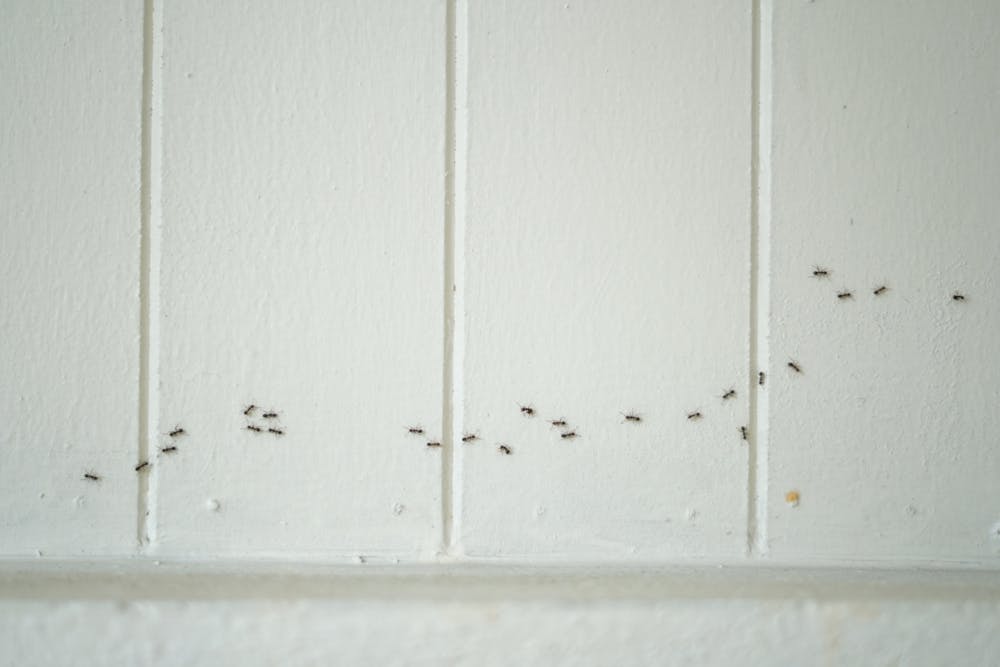
    When an ant finds a food source, she returns to her nest leaving little drops of pheromones as she goes; this trail guides other ants from their nest directly to the food source.

    This highly efficient communication system means a single ant can rapidly recruit thousands of its nest mates to any food it finds.

    Ants may also come inside in search of water, particularly when the weather is hot.

    Some species prefer to build their nests in humid environments, which might explain why they are often found in bathrooms.

    I once discovered an entire colony of sugar ants nesting inside my aquarium filter! The combination of high humidity and an enclosed structure made it an ideal place to build a nest.

    On the flip side, heavy rains can flood ant nests, prompting colonies to seek drier ground — sometimes leading them straight into our homes.

    Ants are incredible communicators.
    Dhe Tong/Shutterstock

    I live in an upper-floor apartment. How did ants get in?

    Many ant species are exceptional climbers, thanks to tiny adhesive pads and fine hairs on their feet.

    These specialised structures allow ants to stick to walls and find footholds even on surfaces that appear smooth to the human eye.

    Remarkably, some canopy-dwelling ants have evolved a behaviour known as “controlled descent” which protects them when they fall. By adjusting the position of their abdomens, falling ants can steer their trajectory, directing themselves back toward the tree trunk and safety.

    Ants often have tiny adhesive pads and fine hairs on their feet, which help them stick to walls.
    Mob_photo/Shutterstock

    How do I keep ants out of my house?

    Well, good luck. No matter what you do, ants will probably enter your house at one time or another.

    Finding a few ants in your home doesn’t mean your house is dirty. We simply live on a planet that is absolutely teeming with ants.

    To minimise unwanted ant visits, start by eliminating any potential food sources that could feed a hungry ant.

    Store all food in sealed airtight containers, clean behind the fridge and inside/under the toaster, avoid leaving pet food out longer than needed and make sure your bins are securely sealed.

    Ants have tiny stomachs, so even small crumbs or the residue from spilled sugary drinks can be enough to entice them back.

    If ants seem to be following each other in a line, try disrupting their chemical trail using vinegar or bleach. Be warned, however: ants are very good at repairing broken trail networks.

    Seal any small cracks or entrance points that might allow ants to get into your home and make sure your windows and doors have well-fitting fly screens.

    Insecticidal baits can kill ant colonies, but before you deploy the nuclear option, ask yourself: what harm are the ants really doing?

    Most common home-invading ants do not sting and are pretty harmless. They can usually be redirected simply by removing their food source.

    Ants are nature’s clean-up crew, tirelessly scavenging waste and helping to maintain a healthy, balanced ecosystem.

    They also play important roles as predators and seed dispersers.

    Before reaching for insecticides, consider whether a few ants in your house are truly a problem.

    Tanya Latty co-founded and volunteers for conservation organisation Invertebrates Australia, is former president of the Australasian Society for the Study of Animal Behaviour and is on the Education committee for the Australian Entomological Society. She receives funding from the Australian Research Council, NSW Saving our Species, and Agrifutures Australia.

    ref. Ants in your house? Here’s how they get everywhere – even high up in tall buildings – https://theconversation.com/ants-in-your-house-heres-how-they-get-everywhere-even-high-up-in-tall-buildings-250625

    MIL OSI AnalysisEveningReport.nz

  • MIL-OSI China: Spain, Chinese quantum company collaborate to build Europe’s largest integrated computing center

    Source: China State Council Information Office

    The ChinaLink ESGt, a venture capital led by Spanish entrepreneur Javier Romero, signed a strategic cooperation agreement with the Chinese quantum computing company Origin Quantum on Wednesday in Hefei, east China’s Anhui Province, on the joint development of Europe’s largest integrated computing power center.

    According to the agreement, both parties will integrate technology development and product research in quantum computing, and jointly explore the construction of an integrated computing power center combining supercomputing, quantum computing and artificial intelligence computing in Spain, and a classical-quantum hybrid computing cloud service platform.

    Additionally, the two companies will collaborate on the development of quantum-resistant encryption technologies and their applications to enhance information security in the quantum era.

    ChinaLink ESGt, which has invested in leading global companies such as Alibaba, Tencent, SpaceX, and the Chinese renewable energy company Sungrow, is currently building a quantum research lab in Malaga, Spain. The company plans to partner with global organizations, including Origin Quantum, to establish the facility as Europe’s largest integrated computing center. The center is expected to reach a capacity of 1,000 megawatts, encompassing both classical and quantum computing infrastructure.

    “China’s quantum computing development is world-leading, and we aim to bring the top quantum computing companies to Spain to create an international collaborative laboratory,” said Romero. He also highlighted plans to explore applications of quantum computing in fields such as finance, renewable energy, and biomedicine in partnership with China.

    Guo Guoping, chief scientist at Origin Quantum and a professor at the University of Science and Technology of China, emphasized that Spain’s exploration of quantum algorithms for healthcare, artificial intelligence, and other fields offers a valuable reference for the global practical application of quantum technology.

    MIL OSI China News

  • MIL-OSI China: Prominent Taiwan scholars condemn political persecution by Lai Ching-te, DPP authorities

    Source: China State Council Information Office 2

    A total of 75 scholars in China’s Taiwan region have issued a joint statement condemning political persecution and abuse of power by the island’s Democratic Progressive Party (DPP) authorities, led by Lai Ching-te.
    In the statement issued on Wednesday, the scholars, including medical scientist Chen Pei-jer, and Daiwie Fu, an honorary professor with the Institute of Science, Technology and Society at Taiwan-based Yang Ming Chiao Tung University, called for defending democracy, the rule of law, and peace and security in Taiwan, asking the authorities led by Lai to immediately stop their wrongdoing.
    The statement came after increased political persecution and online harassment which separatist forces and DPP supporters on the island perpetrated against those who disagree with “Taiwan independence” secessionist views and actions of the DPP and Lai.
    In a recent high-profile case, a woman from the mainland who married a man in Taiwan and expressed her support for China’s reunification online under the nickname Yaya, had her residence permit in Taiwan revoked by the island’s authorities and was forced to leave the island on Tuesday, separating her from her husband and three children.
    The case has sparked an outcry across various sectors of Taiwan society, with many speaking out against the abuse of power and misconduct by the DPP authorities.
    The joint statement on Wednesday slammed Lai for his continuous demonization of the mainland since taking office, the suppression of dissenting voices within Taiwan, and the implementation of increasingly hostile policies towards the mainland which has led to a deterioration of cross-Strait relations.
    It labeled the Lai-led authorities as “the greatest destroyer of democracy and rule of law in Taiwan, and a potential threat to the island’s peace and security” — urging people in Taiwan to stand up and defend “their hard-won democracy and freedom of speech.”
    It also urged the authorities to immediately implement effective measures to improve cross-Strait relations, maintain a peaceful and stable environment, and ensure that people in Taiwan can live in a free and democratic setting while sharing the prosperity resulting from peaceful development of cross-Strait ties.
    Yang Chih-yu, spokeswoman for the Chinese Kuomintang (KMT) party, expressed support for the scholars and voiced concern over the potential online harassment and attacks that these scholars may face.
    People from a variety of sectors in Taiwan also voiced dissatisfaction and concern over political provocation and persecution by the authorities there.
    An article run by the Taiwan-based United Daily News commented that Taiwan residents are increasingly experiencing an intimidating atmosphere in which they are being punished for their thoughts and speech — a reality in sharp contradiction with the DPP’s self-styled image of seeking democracy and freedom.
    A medical worker in Taiwan said on social media that the current tense atmosphere concerning speech in Taiwan is a result of the grip of “a green monster” — a coalition of the DPP, which often uses the color of green to represent itself in election campaigns, and the authorities, media and internet forces under its control.

    MIL OSI China News

  • MIL-OSI China: Tiangong researchers to experiment on flatworms

    Source: China State Council Information Office 2

    After zebrafish and fruit flies, China’s Tiangong space station is set to host a new life form — planarians, according to Chinese scientists.
    Zhang Wei, director of the Technology and Engineering Center for Space Utilization under the Chinese Academy of Sciences, told China Youth Daily in a recent interview that an upcoming Chinese manned spaceflight will carry dozens of planarian fragments into orbit.
    Planarians are flatworms renowned for their extraordinary regenerative ability. When their bodies are severed, they can regrow complete heads or tails, making them ideal models for studying tissue regeneration mechanisms, Zhang said.
    The experiment will include the use of the small universal biological culture module in the space station’s life and ecology experimental cabinet. Different planarian segments will be studied as they initiate regeneration in orbit, with samples collected at critical intervals for fixation and imaging analysis.
    “Using planarians as model organisms, we aim to investigate how space environments affect their regenerative patterns and physiological behaviors,” Zhang was quoted as saying by China Youth Daily.
    “The study will explore the molecular mechanisms behind space-induced changes in regeneration processes and examine gravity’s impact on cell proliferation, migration and differentiation, ultimately enhancing our understanding of fundamental regeneration principles.”
    Experts have explained that, with a 520-million-year evolutionary history, planarians are widely used in biological research due to their astonishing tissue repair abilities. Even when bisected, both segments can regenerate new muscles, skin, intestines and even complete brains, a process that can theoretically repeat indefinitely. Studying planarians holds significant implications for combating cellular aging and age-related degenerative diseases in humans.
    Meanwhile, Wang Yifeng, a senior mission planner at the center, said that upgraded experiments involving zebrafish, which were brought to Tiangong during previous manned missions, will continue.
    “Zebrafish share 87 percent genetic similarity with humans. This research not only addresses microgravity-related health issues but may also unlock new osteoporosis treatment methods on Earth,” he told China Youth Daily in the same report.
    In April last year, four zebrafish measuring about 3 centimeters were brought aboard the Tiangong space station by the Shenzhou XVIII crew. They lived 43 days in orbit, setting a record for being the longest surviving fish in space.
    Chinese astronauts have also performed fruit fly experiments to help researchers better understand the creature’s growth, development, locomotor characteristics and biological rhythms under space microgravity and hypomagnetic conditions.
    According to Zhang, Chinese scientists plan to conduct experiments on mice aboard Tiangong in the near future, focusing on neural, skeletal, muscular and immune systems studies. They will be parts of long-term orbital survival experiments with mammals that will help scientists better prepare China’s future crewed lunar and Mars missions.

    MIL OSI China News

  • MIL-OSI China: Boao forum sends reassuring message to unstable, uncertain world

    Source: China State Council Information Office

    This photo shows the opening ceremony of the Boao Forum for Asia (BFA) Annual Conference 2025 in Boao, south China’s Hainan Province, March 27, 2025. [Photo/Xinhua]

    As crises flare across global hotspots — from geopolitical conflicts to rising protectionism — a strikingly different scene unfolded in the coastal town of Boao in southern Chinese province of Hainan.

    Amid the tranquility of the small town, the Boao Forum for Asia (BFA) annual conference opened with a timely theme: “Asia in the Changing World: Towards a Shared Future,” offering a rare space for cooperation and dialogue in an increasingly fractured world.

    “Our world is experiencing far greater instability and uncertainty,” Chinese Vice Premier Ding Xuexiang said at the conference’s opening ceremony on Thursday morning.

    Ding, also a member of the Standing Committee of the Political Bureau of the Communist Party of China Central Committee, called for strengthening mutual trust, enhancing win-win cooperation, promoting economic globalization and safeguarding the free trade system.

    Since Tuesday, when the BFA annual conference began its panels and sub-forums, the world has witnessed a series of escalating crises.

    U.S. President Donald Trump announced plans to impose 25 percent tariffs on all vehicles and auto parts imported into the United States, a move seen as expanding trade protectionism. In the Middle East, Yemen’s Houthi group launched fresh attacks on a U.S. aircraft carrier in the Red Sea and “military targets” in the Israeli city of Tel Aviv. Meanwhile, in East Asia, deadly wildfires engulfed parts of the Republic of Korea (ROK), claiming lives and causing damage.

    Against this backdrop, Boao became more than just a venue for speeches; it became a space for confronting common challenges. Participants delved into issues that transcend borders, from building an open global economy and accelerating modernization in the Global South to addressing the climate crisis, demographic shifts, and the implications of artificial intelligence (AI).

    Asian economic integration

    Addressing the opening ceremony, Ding said that significant progress has been made in building an Asian community with a shared future over the past decade.

    He added that regional economic integration has been strengthened, and Asia’s share in the global economy is steadily rising.

    Highlighting the profound global transformations and the rise of unilateralism and protectionism, BFA Chairman and former UN Secretary-General Ban Ki-moon described the “Asian miracle” as, to a large extent, a product of globalization, free trade, and open regionalism.

    Ban Ki-moon, chairman of the Boao Forum for Asia (BFA) and former UN secretary-general, speaks at the opening ceremony of the BFA Annual Conference 2025 in Boao, south China’s Hainan Province, March 27, 2025. [Photo/Xinhua]

    Asian economic integration, many speakers noted, is gaining momentum, with regional frameworks like the Regional Comprehensive Economic Partnership (RCEP) serving as a cornerstone for deepening economic ties.

    The RCEP has emerged as an important anchor for global free trade, said Kuang Xianming, deputy head of the China Institute for Reform and Development, adding that the world’s largest free trade agreement keeps opening up regional markets and advancing regional liberalization.

    The RCEP includes 10 member states of the Association of Southeast Asian Nations (ASEAN) and its five free trade agreement partners, namely China, Japan, the ROK, Australia, and New Zealand.

    Signs of growing cooperation were also seen in a recent high-level economic dialogue between China and Japan, which reached 20 consensus points on collaboration in areas such as green development, environmental protection, and elderly care services, among others.

    Meanwhile, a BFA report identified China and ASEAN as the most appealing economies in Asia. It noted that the inward and outward foreign direct investment dependence of Asian economies on the region itself reached 49.15 percent in 2023, underscoring the region’s growing economic interdependence.

    Answers for an uncertain world

    For many participants, the BFA annual conference was more than just an event for Asia. It served as a reminder that, amid global turbulence, platforms for dialogue and trust-building still exist and still matter.

    The Global South, whose economies contribute 80 percent to world economic growth, took center stage at the meeting.

    South-South cooperation today is greener, smarter, and more inclusive, said Xiaojun Grace Wang, Trust Fund Director of UN Office for South-South Cooperation, calling on the Global South nations to seize this era’s opportunities by enhancing collaboration on digital and data-driven solutions for sustainable development.

    Climate change and the governance of emerging technologies also dominated conversations.

    Helena Mcleod, deputy director general and head of the Green Growth Planning & Implementation Division at the Global Green Growth Institute, speaks at a panel discussion themed on “Addressing Climate Change: Issues and Solutions” during the Boao Forum for Asia (BFA) Annual Conference 2025 in Boao, south China’s Hainan Province, March 26, 2025. [Photo/Xinhua]

    Helena McLeod, deputy director general and head of the Green Growth Planning & Implementation Division at the Global Green Growth Institute, underscored the vital role of legislation in accelerating the global green transition. “The legislative approaches have to be addressed, and that includes the carbon pricing and pollution control policies.”

    On AI, experts have warned of the risks of unregulated development. “If countries fail to anticipate and manage the risks of AI, they may find themselves inadequately prepared when challenges arise,” said Zeng Yi, a researcher with the Institute of Automation of the Chinese Academy of Sciences.

    China’s reform and opening up continue to draw global attention. Since launching the drive in 1978, the country has transformed from an impoverished nation into a market-oriented economic powerhouse, driving high-quality development and creating opportunities shared with the rest of the world.

    Its GDP grew by 5 percent year on year in 2024, ranking among the world’s fastest-growing major economies while continuing to contribute about 30 percent to global economic growth.

    A panel discussion themed on “AI: How to Strike a Balance between Application and Governance” is held during the Boao Forum for Asia (BFA) Annual Conference 2025 in Boao, south China’s Hainan Province, March 26, 2025. [Photo/Xinhua]

    China’s resolve to deepen reform and opening up, Ban noted, has bolstered confidence in inclusive globalization and an open world economy, injected fresh impetus into a strong and balanced global recovery, and created new opportunities for international cooperation.

    “Opening up is a distinct hallmark of Chinese modernization,” Ding said, adding that the country will steadily expand institutional opening up, further improve market access for foreign investors, and expand trials to open sectors such as telecommunications, medical services, and education.

    “We warmly welcome businesses from all countries to invest and operate in China, participate in the process of Chinese modernization, and share in China’s development opportunities,” he added.

    MIL OSI China News

  • MIL-Evening Report: What is Australian bat lyssavirus? Can I catch it from bat poo? What if bats roost near me?

    Source: The Conversation (Au and NZ) – By Hamish McCallum, Emeritus Professor, infectious disease ecology, Griffith University

    Ken Griffiths/Shutterstock

    Last week, Queensland Health alerted the public about the risk of Australian bat lyssavirus, after a bat found near a school just north of Brisbane was given to a wildlife carer group.

    The bat later died, but it was not confirmed whether it carried the virus.

    This is not unusual. Volunteer wildlife carers respond to thousands of calls from the public every year after encountering sick, injured and orphaned bats. And testing them all routinely for the virus is not warranted or feasible.

    Here’s what you need to know about the risk of catching Australian bat lyssavirus and how it can be treated.

    What is bat lyssavirus?

    Australian bat lyssavirus belongs to the same group of viruses that includes rabies – one of the most notorious diseases humans can catch from animals. Rabies causes about 59,000 deaths worldwide a year, mainly after dog bites. It is almost always fatal once symptoms appear.

    Australian bat lyssavirus was discovered in 1996. There have been only three confirmed cases of the virus in humans in Australia, the most recent in 2013. All three were fatal.

    Fortunately, because Australian bat lyssavirus and rabies are so closely related, the preventative measures that have been developed internationally against rabies can also protect humans from the effects of Australian bat lyssavirus.

    Australian bat lyssavirus and rabies have a long incubation period (the period between exposure to infection and appearance of symptoms). If preventative treatments are given during the incubation period, they are highly effective in preventing disease and saving lives.

    Such treatment reduces what is already a very low risk of illness and death to effectively zero.

    Australian bat lyssavirus and rabies (pictured here) are closely related.
    nobeastsofierce/Shutterstock

    How could I be exposed to the virus?

    The virus is present in the saliva of some Australian bats, including the large flying foxes (fruit-eating bats) and some smaller bats that eat insects. But the proportion of bats infected by the virus is normally very low – less than 0.5%.

    Infected bats may become sick and die, but some may appear unaffected. In other words, you can’t always tell just by looking at a bat whether it’s infected or not. However, there is evidence the virus is present at a higher level in sick bats than in healthy ones.

    You cannot be exposed to the virus by being under a flying fox roost, even if the bats poo on you. You cannot be exposed by having bats in your roof or in a shed.

    No, you can’t catch Australian bat lyssavirus from bat poo.
    Anna Evangeli

    But the virus can be transferred to a human via either a scratch or bite. That’s if an infected bat scratches or bites you, or if their saliva is transmitted to an existing wound.

    So you do need to be careful if you come across a sick or injured bat, or you find a child playing with a bat.

    There is no evidence the virus regularly infects dogs and cats, although rabies does.

    Nevertheless, given that Australian bat lyssavirus is a close relative of rabies and that rabies will infect most mammals, the possibility that it may sometimes spill over to mammals other than humans cannot be eliminated.

    For example, in 2013 two horses in the same paddock became infected and had to be euthanised. The source of infection was not identified.

    So you should also seek advice if you see an animal such as a dog or cat play with a dead or injured bat. Contact a wildlife care group for advice about the bat and a vet to discuss post-exposure treatment for your pet.

    If your dog plays with a dead or injured bat, seek advice from your veterinarian to be on the safe side.
    Lazy_Bear/Shutterstock

    How great is the risk?

    It is important to put the risk posed by Australian bat lyssavirus into perspective.

    Although each of the three deaths known to have been caused by the virus since 1996 is tragic, in 2017-2018 alone, 12 people in Australia died from
    bee or wasp stings.

    Bats play an important role in our ecosystems. Without the pollination and pest control services bats provide, our increasingly fragmented native forests would struggle to recover after fires, and we’d need to use more pesticides on our crops. There is also no evidence bat lyssaviruses are increasing in Australian bat populations.

    Is the risk to humans changing?

    However, as we encroach upon natural habitats via land clearing we are likely to have increased contact with wildlife, including bats.

    Mass mortality events in bats in Australia – such as those in recent years caused by extreme heat or bat paralysis syndrome (thought to be caused by bats ingesting an environmental toxin) – are likely to lead to increased contact between people, their pets and vulnerable bats.

    The risk to human health is therefore likely increasing, albeit from a very low level.

    What should I do?

    First, don’t panic. Infection is extraordinarily rare and will continue to be so.

    Second, don’t interfere with bat populations. Do not pick up sick or injured bats and do not allow your children or pets to play with them. Keep your pets inside at night to minimise potential contact with bats.

    Third, if you or a member of your family is bitten or scratched by a bat, or suspect you have been, seek medical attention, including post-exposure treatment. People who regularly handle bats, such as wildlife carers or researchers, should be vaccinated in advance. They are also trained to handle bats safely and use appropriate personal protection equipment.


    If you find a sick or injured bat, contact your local wildlife rehabilitation group or veterinarian.

    Hamish McCallum receives funding from the US NSF and fron the EU Horizons program. His work on bat virus disease ecology has previously been funded by the US NSF and DARPA

    Alison Peel receives funding from the US NIH. Her work on bat virus disease ecology has previously been funded by the ARC, US NSF and DARPA

    Cinthia is a volunteer wildlife carer for a not-for-profit organisation based in Southeast Queensland that works with bats.

    ref. What is Australian bat lyssavirus? Can I catch it from bat poo? What if bats roost near me? – https://theconversation.com/what-is-australian-bat-lyssavirus-can-i-catch-it-from-bat-poo-what-if-bats-roost-near-me-252632

    MIL OSI AnalysisEveningReport.nz

  • MIL-OSI USA: Exclusions from Federal Labor-Management Relations Programs

    US Senate News:

    Source: The White House
    class=”has-text-align-left”>By the authority vested in me as President by the Constitution and the laws of the United States of America, including sections 7103(b)(1) of title 5 and 4103(b) of title 22, United States Code, to enhance the national security of the United States, it is hereby ordered:
    Section 1.  Determinations.  (a)  The agencies and agency subdivisions set forth in section 2 of this order are hereby determined to have as a primary function intelligence, counterintelligence, investigative, or national security work.  It is also hereby determined that Chapter 71 of title 5, United States Code, cannot be applied to these agencies and agency subdivisions in a manner consistent with national security requirements and considerations.
    (b)  The agency subdivisions set forth in section 3 of this order are hereby determined to have as a primary function intelligence, counterintelligence, investigative, or national security work.  It is also hereby determined that Subchapter X of Chapter 52 of title 22, United States Code, cannot be applied to these subdivisions in a manner consistent with national security requirements and considerations.
    Sec. 2.  Additional National Security Exclusions.  Executive Order 12171 of November 19, 1979, as amended, is further amended by:
    (a)  In section 1-101, adding “and Section 1-4” after “Section 1-2” in both places that term appears.
    (b)  Adding after section 1-3 a new section 1-4 that reads:
    “1-4.  Additional Exclusions.
    1-401.  The Department of State.
    1-402.  The Department of Defense, except for any subdivisions excluded pursuant to section 4 of the Executive Order of March 27, 2025, entitled ‘Exclusions from Federal Labor-Management Relations Programs.’
    1-403.  The Department of the Treasury, except the Bureau of Engraving and Printing.
    1-404.  The Department of Veterans Affairs.
    1-405.  The Department of Justice.
    1-406.  Agencies or subdivisions of the Department of Health and Human Services:
    (a)  Office of the Secretary.
    (b)  Food and Drug Administration.
    (c)  Centers for Disease Control and Prevention.
    (d)  Administration for Strategic Preparedness and Response.
    (e)  Office of the General Counsel.
    (f)  Office of Refugee Resettlement, Administration for Children and Families.
    (g) National Institute of Allergy and Infectious Diseases, National Institutes of Health.
    1-407.  Agencies or subdivisions of the Department of Homeland Security:
    (a)  Office of the Secretary.
    (b)  Office of the General Counsel.
    (c)  Office of Strategy, Policy, and Plans.
    (d)  Management Directorate.
    (e)  Science and Technology Directorate.
    (f)  Office of Health Security.
    (g)  Office of Homeland Security Situational Awareness.
    (h)  U.S. Citizenship and Immigration Services.
    (i)  United States Immigration and Customs Enforcement.
    (j)  United States Coast Guard.
    (k)  Cybersecurity and Infrastructure Security Agency.
    (l)  Federal Emergency Management Agency.
    1-408.  Agencies or subdivisions of the Department of the Interior:
    (a)  Office of the Secretary.
    (b)  Bureau of Land Management.
    (c)  Bureau of Safety and Environmental Enforcement.
    (d)  Bureau of Ocean Energy Management.
    1-409.  The Department of Energy, except for the Federal Energy Regulatory Commission.
    1-410.  The following agencies or subdivisions of the Department of Agriculture:
    (a)  Food Safety and Inspection Service.
    (b)  Animal and Plant Health Inspection Service.
    1-411.  The International Trade Administration, Department of Commerce.   
    1-412.  The Environmental Protection Agency.
    1-413.  The United States Agency for International Development.
    1-414.  The Nuclear Regulatory Commission.
    1-415.  The National Science Foundation.
    1-416.  The United States International Trade Commission.
    1-417.  The Federal Communications Commission.
    1-418.  The General Services Administration.
    1-419.  The following agencies or subdivisions of each Executive department listed in section 101 of title 5, United States Code, the Social Security Administration, and the Office of Personnel Management:
    (a)  Office of the Chief Information Officer.
    (b)  any other agency or subdivision that has information resources management duties as the agency or subdivision’s primary duty.
    1-499.  Notwithstanding the forgoing, nothing in this section shall exempt from the coverage of Chapter 71 of title 5, United States Code:
    (a)  the immediate, local employing offices of any agency police officers, security guards, or firefighters, provided that this exclusion does not apply to the Bureau of Prisons;
    (b)  subdivisions of the United States Marshals Service not listed in section 1-209 of this order; or
    (c)  any subdivisions of the Departments of Defense or Veterans Affairs for which the applicable Secretary has issued an order suspending the application of this section pursuant to section 4 of the Executive Order of March 27, 2025, entitled ‘Exclusions from Federal Labor-Management Relations Programs.’”
    Sec. 3.  Foreign Service Exclusions.  Executive Order 12171, as amended, is further amended by:
    (a)  In the first paragraph:
    (i)   adding “and Section 4103(b) of Title 22,” after “Title 5”; and
    (ii)  adding “and Subchapter X of Chapter 52 of Title 22” after “Relations Program.”.
    (b)  Adding after section 1-102 a new section 1-103 that reads:
    “1-103.  The Department subdivisions set forth in section 1-5 of this order are hereby determined to have as a primary function intelligence, counterintelligence, investigative, or national security work.  It is also hereby determined that Subchapter X of Chapter 52 of title 22, United States Code, cannot be applied to those subdivisions in a manner consistent with national security requirements and considerations.  The subdivisions set forth in section 1-5 of this order are hereby excluded from coverage under Subchapter X of Chapter 52 of title 22, United States Code.”
    (c)  Adding after the new section 1-4 added by section 2(b) of this order a new section 1-5 that reads:
    “1-5.  Subdivisions of Departments Employing Foreign Service Officers.
    1-501.  Subdivisions of the Department of State:
    (a)  Each subdivision reporting directly to the Secretary of State.
    (b)  Each subdivision reporting to the Deputy Secretary of State.
    (c)  Each subdivision reporting to the Deputy Secretary of State for Management and Resources.
    (d)  Each subdivision reporting to the Under Secretary for Management.
    (e)  Each subdivision reporting to the Under Secretary for Arms Control and International Security.
    (f)  Each subdivision reporting to the Under Secretary for Civilian Security, Democracy, and Human Rights.
    (g)  Each subdivision reporting to the Under Secretary for Economic Growth, Energy, and Environment.
    (h)  Each subdivision reporting to the Under Secretary for Political Affairs.
    (i)  Each subdivision reporting to the Under Secretary for Public Diplomacy.
    (j)  Each United States embassy, consulate, diplomatic mission, or office providing consular services.
    1-502.  Subdivisions of the United States Agency for International Development:
    (a)  All Overseas Missions and Field Offices.
    (b)  Each subdivision reporting directly to the Administrator.
    (c)  Each subdivision reporting to the Deputy Administrator for Policy and Programming.
    (d)  Each subdivision reporting to the Deputy Administrator for Management and Resources.”.
    Sec. 4.  Delegation of Authority to the Secretaries of Defense and Veterans Affairs.  (a)  Subject to the requirements of subsection (b) of this section, the Secretaries of Defense and Veterans Affairs are delegated authority under 5 U.S.C. 7103(b)(1) to issue orders suspending the application of section 1-402 or 1-404 of Executive Order 12171, as amended, to any subdivisions of the departments they supervise, thereby bringing such subdivisions under the coverage of the Federal Service Labor-Management Relations Statute.
    (b)  An order described in subsection (a) of this section shall only be effective if:
    (i)   the applicable Secretary certifies to the President that the provisions of the Federal Service Labor-Management Relations Statute can be applied to such subdivision in a manner consistent with national security requirements and considerations; and
    (ii)  such certification is submitted for publication in the Federal Register within 15 days of the date of this order.
    Sec. 5.  Delegation of Authority to the Secretary of Transportation.  (a)  The national security interests of the United States in ensuring the safety and integrity of the national transportation system require that the Secretary of Transportation have maximum flexibility to cultivate an efficient workforce at the Department of Transportation that is adaptive to new technologies and innovation.  Where collective bargaining is incompatible with that mission, the Department of Transportation should not be forced to seek relief through grievances, arbitrations, or administrative proceedings.
    (b)  The Secretary of Transportation is therefore delegated authority under section 7103(b) of title 5, United States Code, to issue orders excluding any subdivision of the Department of Transportation, including the Federal Aviation Administration, from Federal Service Labor-Management Relations Statute coverage or suspending any provision of that law with respect to any Department of Transportation installation or activity located outside the 50 States and the District of Columbia.  This authority may not be further delegated.  When making the determination required by 5 U.S.C. 7103(b)(1) or 7103(b)(2), the Secretary of Transportation shall publish his determination in the Federal Register.
    Sec. 6.  Implementation.  With respect to employees in agencies or subdivisions thereof that were previously part of a bargaining unit but have been excepted under this order, each applicable agency head shall, upon termination of the applicable collective bargaining agreement:
    (a)  reassign any such employees who performed non-agency business pursuant to section 7131 of title 5 or section 4116 of title 22, United States Code, to performing solely agency business; and
    (b)  terminate agency participation in any pending grievance proceedings under section 7121 of title 5, United States Code, exceptions to arbitral awards under section 7122 of title 5, United States Code, or unfair labor practice proceedings under section 7118 of title 5 or section 4116 of title 22, United States Code, that involve such employees.
    Sec. 7.  Additional Review.  Within 30 days of the date of this order, the head of each agency with employees covered by Chapter 71 of title 5, United States Code, shall submit a report to the President that identifies any agency subdivisions not covered by Executive Order 12171, as amended:
    (a) that have as a primary function intelligence, counterintelligence, investigative, or national security work, applying the definition of “national security” set forth by the Federal Labor Relations Authority in Department of Energy, Oak Ridge Operations, and National Association of Government Employees Local R5-181, 4 FLRA 644 (1980); and
    (b)  for which the agency head believes the provisions of Chapter 71 of title 5, United States Code, cannot be applied to such subdivision in a manner consistent with national security requirements and considerations, and the reasons therefore.
    Sec. 8.  General Provisions.  (a)  Nothing in this order shall be construed to impair or otherwise affect:
    (i)   the authority granted by law to an executive department or agency, or the head thereof; or
    (ii)  the functions of the Director of the Office of Management and Budget relating to budgetary, administrative, or legislative proposals.
    (b)  This order shall be implemented consistent with applicable law and subject to the availability of appropriations.
    (c)  This order is not intended to, and does not, create any right or benefit, substantive or procedural, enforceable at law or in equity by any party against the United States, its departments, agencies, or entities, its officers, employees, or agents, or any other person.
                                   DONALD J. TRUMP
    THE WHITE HOUSE,
        March 27, 2025.

    MIL OSI USA News

  • MIL-OSI Global: Everything you say to an Alexa speaker will be sent to Amazon – starting today

    Source: The Conversation – Global Perspectives – By Kathy Reid, PhD Candidate, School of Cybernetics, Australian National University

    Amazon

    Amazon has disabled two key privacy features in its Alexa smart speakers, in a push to introduce artificial intelligence-powered “agentic capabilities” and turn a profit from the popular devices.

    Starting today (March 28), Alexa devices will send all audio recordings to the cloud for processing, and choosing not to save these recordings will disable personalisation features.

    How do voice assistants work?

    A voice assistant works by constantly listening for a “wake word”, such as “Alexa”. Once woken, it records the command that is spoken and matches it to an action, such as playing a music track. Matching a spoken command to an action requires what computer scientists call natural language understanding, which can take a lot of computer power.

    Matching commands to actions can be done locally (on the device itself), or sound recordings can be uploaded to the cloud for processing. On-device processing has improved substantially in recent years, but is still less accurate than using the cloud, where more computer power is available.

    Amazon is making two changes today

    Alexa devices send recordings to the cloud by default. However, some high-end Echo models previously supported a setting called “Do not send voice recordings”.

    If this setting was enabled, all recordings were processed locally. In practice, only a tiny fraction of Echo users (around 0.03% had this turned on.

    In the first change, this setting is being disabled, and all recordings will be sent to the cloud.

    Once in the cloud, recordings can be deleted or saved.

    Saved recordings are used for Amazon’s Voice ID feature, which distinguishes between speakers in the same household and aims to provide a personalised experience.

    Alexa users also have a setting called “Don’t save recordings”, which, if enabled, deletes cloud recordings once they’re processed. In the second change, if the “Don’t save recordings” setting is enabled, Voice ID will stop working, and with it, access to personalised features such as user-specific calendar events.

    This two-step change means Alexa users need to make a trade-off between privacy and functionality.

    Alexa loses a lot of money

    Put simply, Amazon needs Echo devices to start making money.

    As US voice assistant expert Joseph Turow has detailed, Amazon began selling Echo devices very cheaply as a “loss leader”. Amazon says it has sold more than 500 million Alexa devices, but between 2017 and 2021 alone the company lost more than US$25 billion on the project.

    Amazon is looking to generative AI to turn the business around, with a US$8 billion investment in OpenAI competitor Anthropic.

    Amazon has invested US$8 billion in AI developer Anthropic.
    Amazon

    In February, Amazon launched a new AI-powered Alexa+ system. It promises more natural interaction and the ability to carry out tasks such as booking flights. Alexa+ is currently only available in the United States.

    “Agentic capabilities” such as booking flights require detailed profile information about the user on whose behalf they are acting. This would include details such as preferred products or services.

    Voice ID and data from spoken commands assist Amazon in tying preferences to a particular person.

    An AI-powered intermediary

    How will Alexa+ help Amazon make money? The first way is via direct subscription fees: the service will eventually only be available to Amazon Prime members or people who pay US$19.99 per month.

    But what may prove more important is that it will help Amazon to position itself as an intermediary between buyers and sellers. This is what Amazon already does with its existing e-commerce platform.

    It’s easy to see the system in action when you search for a product on Amazon’s website. Alongside items sold directly by Amazon, you are presented with products from multiple sellers, each of whom pays Amazon to be listed.

    Everybody pays the platform

    Agentic capabilities are likely to have a similar business model. Service providers – such as airlines or restaurant reservation companies – would pay Amazon when Alexa+ refers customers to them.

    Amazon’s move is part of a broader phenomenon termed “platform capitalism”. This takes in the crowdsourced content of social media platforms, “sharing economy” businesses such as AirBnb, and the automated gig work of the likes of Uber.

    Platform capitalism has delivered benefits for consumers, but in general the greatest benefits flow to those who own the platforms and design their infrastructure, services and constraints.

    How to protect your privacy

    After receiving a US$25 million fine from the US Federal Trade Commission for retaining childrens’ voice recordings in contravention of US laws, Amazon has overhauled Alexa’s privacy settings.

    The settings can be viewed and changed from the Alexa app on your smartphone, under “More > Alexa Privacy”. Alexa users may wish to review the settings in “Manage
    your Alexa Data” to choose how long recordings are saved for and which
    voice recordings to delete. Recordings may also be deleted using a voice
    command.

    As Alexa+ becomes available more widely, users will need to decide whether they are comfortable sharing data about their preferences with Amazon to enable agentic capabilities.

    Some Alexa privacy settings are still available.
    Amazon

    What are the alternatives?

    For users who are uncomfortable with the privacy settings now available with Alexa, a private voice assistant may prove a better choice.

    The Home Assistant Voice Preview is one example. It gives people the option to have voice recordings processed on-device, but offers less functionality than Alexa and can’t work with as many other services. It’s also not very user-friendly, being aimed more at technical tinkerers.

    Users may face a trade-off between privacy and functionality, both within Alexa itself and when considering alternatives. They may also find themselves grappling with their own place in the increasingly inescapable systems of platform capitalism.

    Kathy Reid receives funding from the Australian Government Research Training Program (AGRTP) for her doctoral work and is a recipient of the Florence Violet McKenzie scholarship.

    She currently contracts on a part-time basis to Mozilla Common Voice as a linguistic engineer. She is a past President of Linux Australia, Inc., an organisation dedicated to supporting open source communities and practices in the region. She was previously Director of Developer Relations at Mycroft.AI, a privacy-focused voice assistant, and held shares in the company, which is now dissolved. She has previously contracted with NVIDIA as a speech data specialist. NVIDIA provided hardware for Echo devices prior to 2021.

    ref. Everything you say to an Alexa speaker will be sent to Amazon – starting today – https://theconversation.com/everything-you-say-to-an-alexa-speaker-will-be-sent-to-amazon-starting-today-252923

    MIL OSI – Global Reports

  • MIL-OSI USA: Fact Sheet: President Donald J. Trump Exempts Agencies with National Security Missions from Federal Collective Bargaining Requirements

    US Senate News:

    Source: The White House
    PROTECTING OUR NATIONAL SECURITY: Today, President Donald J. Trump signed an Executive Order using authority granted by the Civil Service Reform Act of 1978 (CSRA) to end collective bargaining with Federal unions in the following agencies with national security missions:
    National Defense. Department of Defense, Department of Veterans Affairs (VA), the National Science Foundation (NSF), and Coast Guard.
    VA serves as the backstop healthcare provider for wounded troops in wartime.
    NSF-funded research supports military and cybersecurity breakthroughs. 

    Border Security. Department of Homeland Security (DHS) leadership components, U.S. Citizenship and Immigration Services, U.S. Immigration and Customs Enforcement, the Department of Justice’s (DOJ) Executive Office of Immigration Review, and the Office of Refugee Resettlement within the Department of Health and Human Services (HHS).
    Foreign Relations. Department of State, U.S. Agency for International Development, Department of Commerce’s International Trade Administration, and U.S. International Trade Commission.
    President Trump has demonstrated how trade policy is a national security tool.

    Energy Security. Department of Energy, Nuclear Regulatory Commission, Environmental Protection Agency, and Department of Interior units that govern domestic energy production.
    The same Congress that passed the CSRA declared that energy insecurity threatens national security.

    Pandemic Preparedness, Prevention, and Response. Within HHS, the Secretary’s Office, Office of General Counsel, Centers for Disease Control and Prevention, Administration for Strategic Preparedness and Response, Food and Drug Administration, and National Institute of Allergy and Infectious Diseases. In the Department of Agriculture, the Office of General Counsel, Food Safety and Inspection Service, and Animal and Plant Health Inspection Service.
    COVID-19 and the recent bird flu have demonstrated how foreign pandemics affect national security.
    VA is also a backstop healthcare provider during national emergencies, and served this role during COVID-19.

    Cybersecurity. The Office of the Chief Information Officer in each cabinet-level department, as well as DHS’s Cybersecurity and Infrastructure Security Agency, the Federal Communications Commission (FCC), and the General Services Administration (GSA).
    The FCC protects the reliability and security of America’s telecommunications networks.
    GSA provides cybersecurity related services to agencies and ensures they do not use compromised telecommunications products.

    Economic Defense. Department of Treasury.
    The Federal Labor Relations Authority (FLRA) defines national security to include protecting America’s economic and productive strength. The Treasury Department collects the taxes that fund the government and ensures the stable operations of the financial system.

    Public Safety. Most components of the Department of Justice as well as the Federal Emergency Management Agency.
    Law Enforcement Unaffected. Police and firefighters will continue to collectively bargain.
    ENSURING THAT AGENCIES OPERATE EFFECTIVELY: The CSRA enables hostile Federal unions to obstruct agency management. This is dangerous in agencies with national security responsibilities:
    Agencies cannot modify policies in collective bargaining agreements (CBAs) until they expire.
    The outgoing Biden Administration renegotiated many agencies’ CBAs to last through President Trump’s second term.

    Agencies cannot make most contractually permissible changes until after finishing “midterm” union bargaining.
    For example, the FLRA ruled that ICE could not modify cybersecurity policies without giving its union an opportunity to negotiate, and then completing midterm bargaining.

    Unions used these powers to block the implementation of the VA Accountability Act; the Biden Administration had to offer reinstatement and backpay to over 4,000 unionized employees that the VA had removed for poor performance or misconduct.
    SAFEGUARDING AMERICAN INTERESTS: President Trump is taking action to ensure that agencies vital to national security can execute their missions without delay and protect the American people. The President needs a responsive and accountable civil service to protect our national security.
    Certain Federal unions have declared war on President Trump’s agenda.
    The largest Federal union describes itself as “fighting back” against Trump. It is widely filing grievances to block Trump policies.
    For example, VA’s unions have filed 70 national and local grievances over President Trump’s policies since the inauguration—an average of over one a day.

    Protecting America’s national security is a core constitutional duty, and President Trump refuses to let union obstruction interfere with his efforts to protect Americans and our national interests.
    President Trump supports constructive partnerships with unions who work with him; he will not tolerate mass obstruction that jeopardizes his ability to manage agencies with vital national security missions.

    MIL OSI USA News

  • MIL-OSI Australia: ARENA Submission on Electricity pricing for a consumer-driven future

    Source: Ministers for the Department of Industry, Innovation and Science

    ARENA Submission on Electricity pricing for a consumer-driven future – Australian Renewable Energy Agency (ARENA)


    Javascript must be enabled for the correct page display

    Skip to Content

    Back to top

    MIL OSI News

  • MIL-Evening Report: Everything you say to an Alexa speaker will be sent to Amazon – starting today

    Source: The Conversation (Au and NZ) – By Kathy Reid, PhD Candidate, School of Cybernetics, Australian National University

    Amazon

    Amazon has disabled two key privacy features in its Alexa smart speakers, in a push to introduce artificial intelligence-powered “agentic capabilities” and turn a profit from the popular devices.

    Starting today (March 28), Alexa devices will send all audio recordings to the cloud for processing, and choosing not to save these recordings will disable personalisation features.

    How do voice assistants work?

    A voice assistant works by constantly listening for a “wake word”, such as “Alexa”. Once woken, it records the command that is spoken and matches it to an action, such as playing a music track. Matching a spoken command to an action requires what computer scientists call natural language understanding, which can take a lot of computer power.

    Matching commands to actions can be done locally (on the device itself), or sound recordings can be uploaded to the cloud for processing. On-device processing has improved substantially in recent years, but is still less accurate than using the cloud, where more computer power is available.

    Amazon is making two changes today

    Alexa devices send recordings to the cloud by default. However, some high-end Echo models previously supported a setting called “Do not send voice recordings”.

    If this setting was enabled, all recordings were processed locally. In practice, only a tiny fraction of Echo users (around 0.03% had this turned on.

    In the first change, this setting is being disabled, and all recordings will be sent to the cloud.

    Once in the cloud, recordings can be deleted or saved.

    Saved recordings are used for Amazon’s Voice ID feature, which distinguishes between speakers in the same household and aims to provide a personalised experience.

    Alexa users also have a setting called “Don’t save recordings”, which, if enabled, deletes cloud recordings once they’re processed. In the second change, if the “Don’t save recordings” setting is enabled, Voice ID will stop working, and with it, access to personalised features such as user-specific calendar events.

    This two-step change means Alexa users need to make a trade-off between privacy and functionality.

    Alexa loses a lot of money

    Put simply, Amazon needs Echo devices to start making money.

    As US voice assistant expert Joseph Turow has detailed, Amazon began selling Echo devices very cheaply as a “loss leader”. Amazon says it has sold more than 500 million Alexa devices, but between 2017 and 2021 alone the company lost more than US$25 billion on the project.

    Amazon is looking to generative AI to turn the business around, with a US$8 billion investment in OpenAI competitor Anthropic.

    Amazon has invested US$8 billion in AI developer Anthropic.
    Amazon

    In February, Amazon launched a new AI-powered Alexa+ system. It promises more natural interaction and the ability to carry out tasks such as booking flights. Alexa+ is currently only available in the United States.

    “Agentic capabilities” such as booking flights require detailed profile information about the user on whose behalf they are acting. This would include details such as preferred products or services.

    Voice ID and data from spoken commands assist Amazon in tying preferences to a particular person.

    An AI-powered intermediary

    How will Alexa+ help Amazon make money? The first way is via direct subscription fees: the service will eventually only be available to Amazon Prime members or people who pay US$19.99 per month.

    But what may prove more important is that it will help Amazon to position itself as an intermediary between buyers and sellers. This is what Amazon already does with its existing e-commerce platform.

    It’s easy to see the system in action when you search for a product on Amazon’s website. Alongside items sold directly by Amazon, you are presented with products from multiple sellers, each of whom pays Amazon to be listed.

    Everybody pays the platform

    Agentic capabilities are likely to have a similar business model. Service providers – such as airlines or restaurant reservation companies – would pay Amazon when Alexa+ refers customers to them.

    Amazon’s move is part of a broader phenomenon termed “platform capitalism”. This takes in the crowdsourced content of social media platforms, “sharing economy” businesses such as AirBnb, and the automated gig work of the likes of Uber.

    Platform capitalism has delivered benefits for consumers, but in general the greatest benefits flow to those who own the platforms and design their infrastructure, services and constraints.

    How to protect your privacy

    After receiving a US$25 million fine from the US Federal Trade Commission for retaining childrens’ voice recordings in contravention of US laws, Amazon has overhauled Alexa’s privacy settings.

    The settings can be viewed and changed from the Alexa app on your smartphone, under “More > Alexa Privacy”. Alexa users may wish to review the settings in “Manage
    your Alexa Data” to choose how long recordings are saved for and which
    voice recordings to delete. Recordings may also be deleted using a voice
    command.

    As Alexa+ becomes available more widely, users will need to decide whether they are comfortable sharing data about their preferences with Amazon to enable agentic capabilities.

    Some Alexa privacy settings are still available.
    Amazon

    What are the alternatives?

    For users who are uncomfortable with the privacy settings now available with Alexa, a private voice assistant may prove a better choice.

    The Home Assistant Voice Preview is one example. It gives people the option to have voice recordings processed on-device, but offers less functionality than Alexa and can’t work with as many other services. It’s also not very user-friendly, being aimed more at technical tinkerers.

    Users may face a trade-off between privacy and functionality, both within Alexa itself and when considering alternatives. They may also find themselves grappling with their own place in the increasingly inescapable systems of platform capitalism.

    Kathy Reid receives funding from the Australian Government Research Training Program (AGRTP) for her doctoral work and is a recipient of the Florence Violet McKenzie scholarship.

    She currently contracts on a part-time basis to Mozilla Common Voice as a linguistic engineer. She is a past President of Linux Australia, Inc., an organisation dedicated to supporting open source communities and practices in the region. She was previously Director of Developer Relations at Mycroft.AI, a privacy-focused voice assistant, and held shares in the company, which is now dissolved. She has previously contracted with NVIDIA as a speech data specialist. NVIDIA provided hardware for Echo devices prior to 2021.

    ref. Everything you say to an Alexa speaker will be sent to Amazon – starting today – https://theconversation.com/everything-you-say-to-an-alexa-speaker-will-be-sent-to-amazon-starting-today-252923

    MIL OSI AnalysisEveningReport.nz

  • MIL-OSI United Kingdom: Government backs next wave of semiconductor start-ups to scale up growth

    Source: United Kingdom – Executive Government & Departments 2

    Press release

    Government backs next wave of semiconductor start-ups to scale up growth

    Third cohort of semiconductor start-ups backed by government to drive economic growth.

    Third group of startups selected to bring new semiconductor products to market

    • A third cohort of innovative UK semiconductor businesses are chosen to join ChipStart, to continue driving economic growth and creating high-skilled jobs under the Plan for Change
    • These semiconductor startups are developing technologies that will have a direct impact on everyday life – from improving energy efficiency in devices to advancing smart automation and connectivity
    • The newly renewed scheme will build on the success of an initial two cohorts, which are on track to raise over £40 million in private investment

    New wave of semiconductor start-ups will join ChipStart, a government-backed incubator programme driving our Plan for Change by helping companies scale up, create jobs, and boost growth.

    ChipStart provides technical expertise and commercial support to help UK-based semiconductor innovators grow and create high-skilled jobs. Companies from the first two cohorts are already on track to raise over £40 million in private investment.

    Semiconductors are a cornerstone of the UK’s tech economy, with the sector already worth £10 billion and projected to grow up to £17 billion by 2030. They power the technology we rely on daily, from smartphones and medical devices to electric cars and cutting-edge AI. They control the flow of electricity in electronic systems and as demand for smarter, more efficient tech grows, the UK is well placed to lead, backed by a world-class innovation ecosystem and a thriving entrepreneurial environment. The UK is the number one country in Europe for venture capital investment, has the lowest corporation tax in the G7, and benefits from a highly skilled workforce and leading academic institutions.

    ChipStart – delivered by SiliconCatalyst.UK, leading global start-up accelerator – has successfully helped early-stage semiconductor companies turn their ideas into real-world products by providing expert mentorship, industry connections, and access to cutting-edge design tools.

    As part of our Plan for Change, and the wider Industrial Strategy we are supporting these high-potential companies to reinforce the UK’s position as a global leader in entrepreneurship, creating the conditions for the next generation of world-changing technologies to thrive and driving growth in communities across the UK.

    Science Minister, Lord Vallance said:

    The UK’s semiconductor industry is vibrant with innovation, and this third cohort shows just how much potential we have with many exciting start-ups.

    This sector holds incredible promise, and with the right partnerships, it will lead us into a future of greater economic growth and technological advancement – a key pillar of our Plan for Change.

    This announcement builds on the UK’s growing momentum in semiconductors, following Vishay Intertechnology’s plans to invest £250 million in the UK’s largest semiconductor factory. Announced by the Chancellor during a visit to South Wales yesterday, this investment will strengthen the UK’s domestic semiconductor supply chain – critical for industries like automotive, renewable energy, and defence. With South Wales emerging as a key semiconductor cluster, this investment underscores the UK’s competitive advantage in advanced chip manufacturing.

    From the successful second cohort, Qontrol, a University of Bristol spin-out, is developing technology that could transform the internet as we know it. Their precision control systems for photonics – the use of light to process data – could lead to faster, more reliable internet connections, helping to bring high-speed connectivity to rural communities and build the networks needed for next-generation digital services.

    This year’s cohort – backed by £1.1 million of government funding – includes RX-Watt, a company pioneering battery-free sensors that can be wirelessly powered using safe microwave signals. Their technology could save industries time and money where they depend on monitoring products and goods in real-time – helping manufacturers prevent costly equipment failures and ensuring critical goods like vaccines are stored at the right temperature throughout the supply chain.

    Companies from the first two ChipStart cohorts are already on track to raise over £40 million in private investment, proving the strength of UK semiconductor start-ups and the impressive return on investment associated with government backing.

    Another example from the second cohort is KuasaSemi, a Cornwall-based company, is revolutionising the design of semiconductors used in electric vehicles and renewable energy. By developing advanced computer tools to work with new types of materials, they are enabling the creation of faster, more efficient power devices. This means electric cars could charge faster, run longer, and perform better – helping to accelerate the shift to greener, more sustainable energy solutions.

    Sean Redmond, Silicon Catalyst UK said:

    We have been delighted with the high quality of new semiconductor startup applications we received for our third cohort of ChipStart from across the UK semiconductor clusters. Our now proven incubation process, that provides no cost design tools and chip manufacturing, will help these competitively selected companies attract the right private investment at the right time, launching them onto the global semiconductor stage.

    With the help of our experienced semiconductor executive advisors, which includes co-founders of Arm, we can help these young companies make great decisions and build the next generation of UK semiconductor unicorns. The next ten years of semiconductors will be a race to a £2 trillion industry. These new UK scale-ups will be in pole position to win that race.

    Wave Photonics, another successful company from the first cohort, is pioneering design technology to accelerate the development and mass production of integrated photonics – circuits that use light instead of electricity. These innovations are paving the way for energy-efficient AI communications, next-generation healthcare sensors, quantum technologies, and more.

    James Lee, co-founder of Wave Photonics said:

    ChipStart was fantastic preparation for raising and deploying our seed round to deploy our new approach to photonics design for quantum technologies, sensing and datacentre applications.

    As well as training and connection to mentors, ChipStart helps you directly plug into the UK semiconductor ecosystem and learn from the successes of the previous generation of UK semiconductor startups.

    Notes to editors

    Full list of the winning cohort.

    1. Chipletti
    2. Ethicronics
    3. Kahu
    4. Kelvin Quantum
    5. Unnamed from the University of Glasgow
    6. Prospectral 
    7. Quantopticon
    8. RxWatt
    9. SiDesign
    10. Smith Optical

    DSIT media enquiries

    Email press@dsit.gov.uk

    Monday to Friday, 8:30am to 6pm 020 7215 3000

    Updates to this page

    Published 28 March 2025

    MIL OSI United Kingdom

  • MIL-OSI United Kingdom: PM: North will no longer be held to ransom by broken transport system

    Source: United Kingdom – Executive Government & Departments 2

    Press release

    PM: North will no longer be held to ransom by broken transport system

    The Prime Minister has announced more funding to deliver the largest rail investment in the North in decades.

    • Major package of investment to revive Victorian-era transport system in the North, which comes as government spends more than double as much money per head on local transport in North than the South, including London

    • Nearly £1.7 billion boost for local buses, roads and trams in the North this year, and supported with further £415 million to reboot key railways across the Pennines, £270 million investment in bus services and £330 million in road maintenance across the North

    • Prime Minister backs regional mayors to accelerate growth plans in their area through radical devolution agenda – bringing a new tram network to West Yorkshire, a new station to Merseyside and an improved transport hub to Bury

    • Through its Plan for Change, this government is investing in the North after years of broken promises and delivering on manifesto to boost growth for everyone, everywhere 

    People across the North will no longer be held back by a broken transport system and empty promises, the Prime Minister has said as he announces more funding to deliver the largest rail investment in the North in decades.

    For far too long, working people have been hamstrung by a transport system that no longer works for them. Doctors’ appointments are missed, children late to school, work meetings missed thanks to delays or cancellations. These are the real-world impacts which lead to an insecurity and instability for working people. The Prime Minister will make clear today that his government will not stand by and watch while this blight continues to disrupt the lives of working people.

    After years of false promises and under delivery, the government is rolling up its sleeves and delivering change working families will feel. The Prime Minister will today set out plans to make the Liverpool-Hull corridor an economic superpower – rivalling the Oxford-Cambridge arc – kickstarted with £1.7 billion this year.

    This transformatory package to reboot the North’s creaking transport system means government more than double on local transport in the North compared to the South and London, delivering on its Plan for Change to boost living standards and provide security and certainty for working people across the country.

    This comes on top of funding announced today:

    • For the key rail line between Manchester, Huddersfield, Leeds and York, which has been plagued by disruptions and delays for years without a plan to fix it. The route will now be supported with £415 million in funding from government to restore its failing services.

    • For local leaders to unleash their areas’ untapped potential with over £1 billion for the North to improve the transport services people use every day – backing regional mayors and ensuring decisions about the North sit with those who call it home. This comes alongside £270 million investment in bus services and £330 million in road maintenance across the North.

    The funding, delivered working hand in hand with local leaders, will have a transformative impact on people’s lives, connecting the great towns and cities of the North that have been cut off from each other for far too long, holding back its potential.

    The Prime Minister will make clear that these measures will better connect the North to support its thriving industries, unlocking growth in key sectors like Sheffield’s nuclear industry, booming fintech in Leeds, and cutting-edge life sciences in Liverpool. It will also support leading universities left hamstrung by poor connectivity while commuter towns and cities near London benefit from world-leading transport infrastructure.

    On a visit to a factory in the North of England today, the Prime Minister is expected to say that today’s funding boost must see local leaders speed up delivery of key projects in their areas, which will transform the lives of working families.

    This includes:

    • A Mass Transit system for West Yorkshire progressing, with the next stage of the business case expected in the Autumn – bringing growth to the largest city in Europe without a metro transport system.

    • A new Merseyrail station in the Baltic Triangle – better connecting the city to ‘Britain’s coolest neighbourhood’ – starting works this Autumn and complete by Spring 2028.

    • The Bury Interchange redevelopment fast-tracked with £80 million to improve bus and tram connectivity across Greater Manchester.

    Today’s announcement will provide stability for the North following years of uncertainty and broken promises. This administration is choosing a new way of governing, empowering local leaders who have skin in the game to make the changes that working people want to see in their area.

    Prime Minister Keir Starmer said:

    The North is home to a wealth of talent and ingenuity. But for too long, it has been held to ransom by a Victorian-era transport system which has stifled its potential. I lived in Leeds for years, I get that this has real-world impacts – missed appointments, children late to school, work meetings rescheduled – all leading to insecurity and instability for working people.

    My government won’t stand by and watch. We are rolling up our sleeves, and today’s downpayment for growth is a vote of confidence in the North’s world-beating industries. The film studios in Bradford, life sciences in Liverpool, the fintech industry in Leeds – it is time they had a government on their side to get the North motoring again.

    After years of false promises and under delivery, this government is delivering real change for the North. We are spending double as much on local transport in the North than the South, all done hand-in-hand with our mayors and local leaders. Through our Plan for Change, we are upgrading transport in the North, we are correcting years of unfairness that has gone before, and we are better linking our historic towns and cities. That means boosting living standards, putting more money in the pockets of working people, and restoring pride to communities.

    Chancellor of the Exchequer Rachel Reeves said:

    The transport system outside of London and the South East has been plagued by delays and cancellations, frustrated by strikes and failing infrastructure because upgrades that were promised were never delivered. 

    That ends with our Plan for Change, because reliable and affordable public transport links are essential for kickstarting economic growth and putting more money in people’s pockets across the Midlands and the North.

    Transport Secretary Heidi Alexander said:

    For too long, the North has been left behind and relied on a crumbling transport system that’s not fit to serve the great towns and cities it’s home to.

    The Government’s Plan for Change will end that and schemes like the TransPennine Route Upgrade will bolster the region’s neglected potential and make travelling between these historic Northern towns and cities quicker, easier and greener.

    Once the TransPennine Route Upgrade is completed, journey times between the major cities of Manchester and Leeds will be slashed from 50 to 42 minutes, with up to six fast services every hour, while journey times from Manchester to York will be reduced by ten minutes.

    The City Region Sustainable Transport Settlements are already supporting major transport schemes in city regions across England, including the Wednesbury Brierly Hill Metro expansion in the West Midlands and the renewal of the Sheffield Supertram.

    Today’s announcement builds on the government’s pro-growth agenda for the North, including more funding to fix potholes, landmark planning changes to turbocharge house building, and Government backing for major regeneration around Old Trafford.

    Updates to this page

    Published 28 March 2025

    MIL OSI United Kingdom

  • MIL-OSI USA: Duckworth Secures Commitments from FAA Acting Administrator to Address Number of Air Traffic Controllers Awaiting Medical Clearances to Return to Work in Chicago and Nationwide

    US Senate News:

    Source: United States Senator for Illinois Tammy Duckworth

    March 27, 2025

    [WASHINGTON, D.C.] – At today’s committee hearing on the horrific DCA aircraft collision, U.S. Senator Tammy Duckworth (D-IL)—a member of the U.S. Senate Committee on Commerce, Science and Transportation (CST) and Ranking Member of the CST Aviation Subcommittee—secured a commitment from Acting Administrator of the Federal Aviation Administration (FAA) Chris Rocheleau to report back to her on how many certified air traffic controllers around the country are waiting for medical clearances to return to work and to help ensure these medical reviews are happening in a timely manner. Duckworth is hearing air traffic controllers in the Chicagoland area have been caught up in this backlog that is keeping them from getting back on the job to help keep our aviation system safe for the flying public. Duckworth’s exchange with Acting Administrator Rocheleau can be found on the Senator’s YouTube.

    “I’m being told there are certified controllers in Chicago who are waiting for their FAA medical clearances in order to return to work—which is extremely concerning as we continue to face a shortage of air traffic controllers,” said Duckworth. “I worry this issue may be happening elsewhere as well. I appreciate that Acting Administrator Rocheleau committed to working with me to ensure controllers in Chicago and around the country receive medical reviews in a timely manner so they can get back on the job.”

    As our nation continues to experience an air traffic controller shortage amid multiple near-misses and midair collisions, Duckworth underscored how critical it is that the FAA does not lower its longstanding high standard and potentially sacrifice effectiveness for efficiency. Two weeks after the horrific DCA aircraft collision that killed 67 passengers and crew, the Trump Administration began firing hundreds of FAA employees. Last month, Duckworth sent a letter to FAA Acting Administrator Rocheleau on the reasoning behind these cuts to the workforce.

    For years, Duckworth has been sounding the alarm that we must make these critical aviation safety investments immediately to prevent all-too-often near-misses from becoming catastrophic tragedies. Last Congress, Duckworth chaired two CST Aviation Subcommittee hearings—one last December and the other a year prior—to address our aviation industry’s chilling surge in near-deadly close calls and underscore the urgent need to improve air traffic control systems to protect the flying public.

    -30-


    MIL OSI USA News

  • MIL-OSI USA: Baldwin, Welch Lead Colleagues in Spotlighting Devastating Trump Cuts Jeopardizing Cures for Alzheimer’s Disease, Cancers 

    US Senate News:

    Source: United States Senator Peter Welch (D-Vermont)
    Witnesses, including Former NIH Director, highlight how deep cuts, staffing layoffs, and delayed funding at NIH hurt life-saving research 
    WASHINGTON, D.C. – U.S. Senators Tammy Baldwin (D-Wis.) and Peter Welch (D-Vt.) hosted a forum on Capitol Hill titled “Cures in Crisis: What Gutting NIH Research Means for Americans with Cancer, Alzheimer’s, & Other Diseases.”
    The forum featured former Director of the National Institutes of Health (NIH), Dr. Monica Bertagnolli, M.D., two Alzheimer’s disease researchers, and two patients who have benefitted from NIH clinical trials. The forum was hosted by Sens. Baldwin and Welch and attended by Democratic Leader Chuck Schumer (D-N.Y.) and 15 Democratic Senators.
    Senator Welch and Senator Baldwin lead the Senate’s health care strike team in the Senate, which pushes back against the Trump Administration’s attacks on patients, providers, and medical research across the United States. 
    Watch a livestream of the forum here and view photos from the event below:  
    “The Trump Administration has taken a wrecking ball to the National Institutes of Health without a care about who gets hurt in the process. The first to feel the impact of these cuts will be American patients who rely on NIH’s cutting-edge research to get new therapies and cure diseases like Alzheimer’s and cancer. DOGE’s mass firing spree has also left our nation’s top scientists on the chopping block, stifling American innovation and weakening our leadership in biomedical science for years to come. These cuts and layoffs mean the difference between life and death for communities in both red and blue states,” said Senator Welch. “I’m proud to join Senator Baldwin and our colleagues today to defend our commitment to science, research, and care across America.” 
    “I truly wish I didn’t need to host this forum but Elon Musk’s Doge and Donald Trump are quite literally on a path to rip away cures to cancer and Alzheimer’s disease – all to make room in their budget for tax breaks for the richest of the rich. Today, we heard from the people who will be paying the price – and I hope my Republican colleagues and the President were listening,” said Senator Baldwin. “Right now, we are wasting precious time that we cannot get back for American families hoping that their loved one has a chance to get better.” 
    “I resigned my post as NIH Director in January of this year. Since then, I have had no insight into how decisions are being made by our current leaders at HHS. I can speak, however, about the downstream effects of their decisions, and some irreparable damage that their policies are producing. To date more than 300 grants terminated; and about $1.5 billion in funding delays and barriers that are preventing NIH’s role of ensuring that funding is delivered to outstanding researchers across the nation,” said Dr. Bertagnolli, former Director of the NIH. “Today, we are just beginning to see progress against devastating diseases which have long been hopeless – Alzheimer’s disease, diabetes, even pancreatic cancer – all because of NIH funding. And this has proven to be a great investment for American taxpayers – producing both extraordinary improvements in health, and significant profits for our nation’s economy. How can we afford to see this progress stalled? Overall, the loss to our nation on so many levels will be too great.” 
    “I’m here to emphasize the critical importance of NIH funding in the fight against Alzheimer’s—a disease that is one of our greatest public health and economic challenges. While deaths from heart disease and cancer have leveled off or declined thanks to decades of NIH investment, deaths from Alzheimer’s and related dementias have increased. Over 6.9 million Americans live with Alzheimer’s today—a number projected to double by 2050 without effective solutions,” said Dr. Sterling Johnson, PhD, University of Wisconsin-Madison Professor and Associate Director of Wisconsin Alzheimer’s Disease Research Center. “Our patients who have this progressive disease don’t have the luxury of time to shoulder the unnecessary delays and uncertainty that we are currently experiencing. The clock is ticking for them and their families. Now more than ever we need the continued full resolve and commitment of the federal government to meet their need.”  
    “I am here today as a scientist who has had 2 NIH grants abruptly terminated in the past month. On February 28th my first NIH grant was terminated, which had only 6 months remaining on a 4-year award… While these terminations are devastating for me and my team, particularly junior faculty and students, my primary concern is for the patients, research participants and the families who are already being impacted by the NIH’s recent radical shift in funding priorities,” said Dr. Whitney Wharton, PhD, Emory University Associate Professor and Alzheimer’s Disease researcher. “Termination of my peer reviewed grants, and hundreds of others, which were awarded based on merit, has potentially devastating implications for all Americans. It sets a concerning precedent where scientific inquiry and peer reviewed and awarded projects are turned off and on based on a set of changing priorities. Not only can this cause confusion, but it could also impact the pipeline of new and talented young investigators, and erase entire communities of patients, who are the most impacted by diseases like Alzheimer’s, from research entirely.” 
    “I speak here today not only for myself, but for every patient who has ever held out hope that research would buy them another year — or another decade. Without robust, sustained, and predictable funding from the NIH, those bridges to the next treatment won’t be there when patients need them. The bridge that saved me was built through decades of investment, innovation, and relentless commitment from our nation’s scientific community. But those bridges don’t build themselves,” said Dr. Larry Saltzman, M.D., retired physician living with leukemia and former Executive Research Director for the Leukemia and Lymphoma Society. “I am living proof of what NIH research can do, and I don’t think I would be here today without the commitment that Congress has shown by prioritizing NIH funding over the past many decades. I ask you to protect this funding — so that more people can outlive their expiration dates.” 
    “The National Institutes of Health (NIH) and other federal agencies have been critical in funding groundbreaking research that offers hope to thousands of individuals like me, including by providing access to experimental treatments for ALS. The experimental drug I am taking could not only extend my life but could also lead to a cure. Access to this drug could mean seeing my son and grandson graduate high school and college, something I did not think was possible when I was diagnosed,” said Mr. Jessy Ybarra, veteran living with ALS and Board of Trustees member for the ALS Association. “But now funding cuts and reductions to funding at NIH and other research agencies threaten to derail decades of progress right when we are at the tipping point of finally finding a cure. But to be clear, this isn’t just about me, and everyone else impacted by ALS now and in the future. ALS costs our nation over one-billion dollars a year. Investing in finding a cure is not only fiscally responsible, but very simply, good public policy. I urge Congress to reject these harmful cuts to NIH and support the funding necessary.” 
    Joining Senators Baldwin, Welch, and Schumer at the forum were Senators Catherine Cortez Masto (D-Nev.), Patty Murray (D-Wash.), Chris Van Hollen (D-Md.), Tina Smith (D-Minn.), Ed Markey (D-Mass.), Maggie Hassan (D-N.H.), Dick Durbin (D-Ill.), Sheldon Whitehouse (D-R.I.), Jeff Merkley (D-Ore.), Jacky Rosen (D-Nev.), Amy Klobuchar (D-Minn.), Angela Alsobrooks (D-Md.), Jeanne Shaheen (D-N.H.), and Elizabeth Warren (D-Mass).  
    Over the last two months, the Trump Administration has attacked, compromised, and gutted research at the NIH for lifesaving cures and treatments, including: 
    Cutting Funding for Research Facilities: NIH announced last month that it was planning to arbitrarily cap indirect cost rates at 15%, which would slash billions of dollars in funding that helps research institutions, like the University of Wisconsin, operate their facilities and labs, pay staff, and buy equipment needed for groundbreaking work to find cures for diseases and treatments for patients. 
    Stopping Funding for Alzheimer’s Disease: The Trump Administration is jeopardizing $65 million in funding for Alzheimer’s disease research at 14 research institutions across the country. 14 of the 35 Alzheimer’s Disease Research Centers (ADRCs) have had their funding halted because the Trump Administration continues to cancel NIH Advisory Council meetings, which are the final required step in the grant approval process. 
    Terminating Grants for Lifesaving Research: The Trump Administration stopped all grant funding at NIH for ten days in February and is continuing to block funding for lifesaving disease research, like finding a cure for Alzheimer’s disease. This halt in funding is despite two court orders directing the Trump Administration to end its unlawful efforts to freeze all federal grants. This is in addition to Elon Musk indiscriminately terminating hundreds of active NIH grants every week, in direct defiance of federal court orders to stop NIH funding changes amid ongoing litigation. 
    Gutting Critical Staff: Mass layoffs at HHS under Robert F. Kennedy, Jr.’s direction are impacting everything from research to clinical trials, including scientists, nurses, pharmacists, and experts tracking disease spread. Reports show the NIH is expected to cut between 3,400 and 5,000 positions from its workforce of 20,000.  
    NIH funding contributed to research for roughly 99% of drugs approved between 2010 and 2019, including heart medications, according to the Center for American Progress. The advocacy group United for Medical Research found that in fiscal year 2023, funding from the agency supported more than 410,000 jobs, with 10,000 NIH-supported jobs in some states. In that same year, NIH-funded research fueled nearly $93 billion in economic spending. Overall, the economic benefit of NIH funding is more than twice the investment made through NIH appropriations.  
    For a breakdown of how much funding each state receives from the NIH, click here. A one-pager on President Donald Trump’s actions to gut the NIH and its impacts is available here. 

    MIL OSI USA News

  • MIL-OSI USA: Cantwell, Murkowski Propose New Tax Credit to Promote Hydropower Facility Upgrades & Keep Energy Costs Affordable

    US Senate News:

    Source: United States Senator for Washington Maria Cantwell

    03.27.25

    Cantwell, Murkowski Propose New Tax Credit to Promote Hydropower Facility Upgrades & Keep Energy Costs Affordable

    Bipartisan legislation creates new federal incentive for dam safety and fish passage improvements, as well as help fund removal of obsolete river obstructions

    WASHINGTON, D.C. –  Today, U.S. Senators Maria Cantwell (D-WA), ranking member of the Senate Committee on Commerce, Science, and Transportation and senior member of the Finance Committee, and Lisa Murkowski (R-AK), joined Susan Collins (R-ME), Kristen Gillibrand (D-NY), Angus King (I-ME), Patty Murray (D-WA), Gary Peters (D-MI), Jeanne Shaheen (D-NH), Dan Sullivan (R-AK), in re-introducing bipartisan legislation to establish a new 30% federal tax incentive to encourage safety upgrades and improve fish passage at existing hydroelectric facilities, measures that will help ensure clean and affordable hydropower is able to continue power the Pacific Northwest economy. The bill would also create an additional complementary 30% tax credit to remove unused river barriers that do not produce electricity but are harming local ecosystems and outdoor recreation opportunities.

    “Clean and affordable hydropower is the backbone of Washington state’s economy and prosperity,” said Sen. Cantwell. “This measure will help ensure we can meet our urgent emission reduction goals while restoring miles of fish habitat.”

    “Hydropower provides clean, reliable, and affordable baseload energy around Alaska, but we’ve just begun to tap into our potential for this abundant resource,” Senator Murkowski said. “Our common sense legislation incentivizes hydropower along with innovation that will enhance grid resiliency, make our dams safer, and allow our fish habitats to thrive.”

    The Maintaining and Enhancing Hydroelectricity and River Restoration Act of 2025;

    • Establishes a 30% federal tax incentive to encourage upgrades to the safety and security of existing dams, investments that expand fish passage infrastructure, and improvements to water quality and recreational use opportunities at hydropower project sites. 
    • Establishes a first ever federal cost-share to encourage the removal of obsolete obstructions that harm river ecosystems and outdoor recreation opportunities.

    Both these tax incentives are available to be accessed by not-for-profit entities.

    The bipartisan Maintaining and Enhancing Hydroelectricity and River Restoration Act is widely supported by a number of key hydropower, utility, and conservation organizations — go HERE for a list of quotes from stakeholders

    Hydropower accounts for 5.7% of total U.S. utility-scale electricity generation in 2023, including approximately sixty percent of Washington state’s total and is a vital component of state and regional greenhouse gas emission reduction goals. Hydropower also has the unique ability to provide black start capabilities, grid voltage support, and integrate and balance increasing amounts of intermittent renewable energy sources.

    Many hydroelectric dams are decades old and face costly upgrades to keep them operational while providing affordable electricity. The current Investment Tax Credit (ITC) that covers hydropower only applies to investments that produce a marginal increase in power generation.

    This bipartisan legislation helps bridge the gap in current law by incentivizing upgrades that don’t result in power increases but are vitally important like adding fish-friendly turbines, fish ladders, and adding or replacing floodgates and spillways. Private, state, local, and non-profit groups can use the 30% federal tax incentive, with a direct pay option, to support efforts to demolish and remove unnecessary barriers with the owner’s consent.

    A joint proposal from the hydropower and river conservation community estimated that increased support for existing dam removal efforts could double the removal rate over the next ten years. That would result in the removal of 2,000 obsolete river obstructions and restore ecosystem functions essential for salmon recovery by opening up 20,000 miles of free-flowing river habitat.

    Sen. Cantwell has long been a consistent champion for hydropower production and pumped storage, including bipartisan legislation to reduce licensing barriers for small hydropower development, improve the FERC relicensing process to incentivize “early action” by utilities to make upgrades to dams that benefit ratepayers and the environment, maximize hydropower generation capacity where appropriate, and streamline pumped storage project approval.

    Last summer, Sen. Cantwell hosted a Pacific Northwest Energy Summit, to bring stakeholders together to discuss technological and policy solutions that will ensure NW ratepayers and our regional economy continue to benefit from abundant, affordable, and reliable clean energy. 


    MIL OSI USA News

  • MIL-OSI USA: Cantwell Decries Trump Auto Tariffs Expected to Spike Vehicle Prices By $5,000 to $15,000

    US Senate News:

    Source: United States Senator for Washington Maria Cantwell

    03.27.25

    Cantwell Decries Trump Auto Tariffs Expected to Spike Vehicle Prices By $5,000 to $15,000

    Trump declared today that he’ll impose a 25% tax on imported vehicles & some auto parts starting 4/2; Cantwell: “The Constitution gave Congress this power to set duties and to regulate foreign commerce… It’s time for Congress to reassert that authority”

    WASHINGTON, D.C. – Today, U.S. Senator Maria Cantwell (D-WA), ranking member of the Senate Committee on Commerce, Science, and Transportation and senior member of the Senate Finance Committee, delivered a speech on the Senate floor excoriating President Donald Trump’s announcement that he’ll impose a 25% tariff on all imported vehicles starting on April 2.

    We’re going to see the price of cars go up, and the fact that the American public can’t afford grocery costs, health care costs, or housing costs – we certainly don’t need to add in auto costs,” Sen. Cantwell said. “I’m pretty sure it’s a good deal for Elon Musk and Tesla. Don’t know that it’s such a good deal for everybody else.”

    The framers of the Constitution gave Congress this power to set duties and to regulate foreign commerce. Congress. Commerce, Article One, Section Eight, could not be clearer. It’s time for Congress to reassert that authority. We need checks and balances now more than ever. We need to invest in innovation. We need to invest in skilling and training a workforce. We need to invest in modernizing infrastructure and equipment at our factories, and we need to open foreign markets for exports,” she continued. “American business does not need an endless trade war that creates chaos and raises prices on our consumers.” 

    Following Trump’s announcement today, several Wall Street analysts reported that Tesla – the company owned by Elon Musk – stood to benefit the most, with one analyst calling the company the “clear structural winner” of the new tariff. The “Detroit Big Three” – General Motors, Ford, and Stellantis (formerly Chrysler) – stand to take the hardest hit.

    The tariffs could also impact West Coast ports who import automobiles, such as the Port of Vancouver, Wash., which is the largest gateway for Subaru imports in the country. In 2023, 98,000 Subarus came through the Port of Vancouver.

    Last week, Sen. Cantwell joined the Washington Council of International Trade for a Q&A session on the whiplash caused by the administration’s chaotic tariff policies – and how they particularly harm the Pacific Northwest, which is among the most trade-dependent regions in the country. Sen. Cantwell said that the current administration’s approach to trade focuses on punitive tariffs, even with America’s largest trading partners and closest allies, as opposed to innovation and alliance-building. That ethos is fundamentally at odds with how the Pacific Northwest has historically built its trade-oriented economy.

    READ MORE:

    CNBC: Wall Street analysts say Elon Musk is the clear auto tariff winner: ‘Tesla wins, Detroit bleeds’

    KOMO Seattle: Washington Sen. Maria Cantwell says Congress should intervene before a trade war expands.

    The Columbian: Record number of Subarus came through Port of Vancouver in 2023

    In Washington state, two out of every five jobs are tied to trade and trade-related industries. More information on how President Trump’s tariffs on goods from Mexico, Canada, and China will affect consumers and businesses in the State of Washington can be found HERENationwide:

    • A 25% tariff on Canada and Mexico would add an estimated $144 billion a year to the cost of manufacturing in the United States.
    • Tariffs on Canada and Mexico could increase U.S. car prices by as much as $15,000.
    • According to the Yale Budget Lab, Trump’s proposed tariffs would result in the highest U.S. effective tariff rate in more than 80 years, and depending on the level of retaliation by other trading partners, will result in increased costs of between $1,600 and $2,000 per household. According to their analysis, food, clothing, cars, and electronics will all see above-average price increases.

    Sen. Cantwell has remained a steadfast supporter of increased trade to grow the economy and keep prices in check in the State of Washington and nationwide. Sen. Cantwell was the leading voice in negotiations to end India’s 20% retaliatory tariff on American apples, which was imposed in response to tariffs on steel and aluminum and devastated Washington state’s apple exports. India had once been the second-largest export market for American apples, but after President Trump imposed tariffs on steel and aluminum in his first term, India imposed retaliatory tariffs in response and U.S. apple exports plummeted. The impact on Washington apple growers was severe: Apple exports from the state dropped from $120 million in 2017 to less than $1 million by 2023.  In September 2023, following several years of Sen. Cantwell’s advocacy, India ended its retaliatory tariffs on apples and pulse crops which was welcome news to the state’s more than 1,400 apple growers and the 68,000-plus workers they support.

    For the past two months, President Trump has been sowing economic chaos across the country with unpredictable and ever-changing tariff announcements. His back-and-forth announcements and actions, which have whipsawed American businesses and consumers, as well as close neighbors and allies, include:

    • On January 31 — citing punishment for failing to crack down on fentanyl trafficking — the Trump administration announced plans to impose a 25% tax on many goods imported into the U.S. from Canada and Mexico and a 10% tax on goods imported from China, then abruptly postponed those tariffs.
    • Last month, he doubled down, announcing an additional 25% tax on all steel and aluminum imports.
    • At 12:01 a.m. ET on March 4, President Trump’s long-promised 25% tariffs on goods from Mexico and Canada and 10% tariff increase on goods from China took effect, causing stock prices in the United States to plummet.
    • Then, on March 5, he announced that automobiles from Canada and Mexico would be exempt from his tariffs for one month.
    • The morning of March 6, he announced that he would suspend the tariffs for some products from Mexico. Then, later that same afternoon, he announced he was suspending most new tariffs on products from both Mexico and Canada until April 2.
    • On March 11, Trump threatened to double tariffs on Canadian steel and aluminum – increasing them to 50% – before reversing himself later the same day.
    • On March 13, he threatened 200% tariffs on alcoholic products from the European Union, including all wine and Champagne.
    • Today, he announced plans to impose a 25% tax on all imported sedans, SUVs, crossovers, minivans, cargo vans, and light trucks, as well as some auto parts, beginning on April 2.

    Video of Sen. Cantwell’s speech is HERE; audio is HERE; and a transcript is HERE.

    MIL OSI USA News

  • MIL-OSI USA: At Press Conference on HHS Cuts, Senator Murray Slams Trump Plans to Push Out Thousands of Health Workers, Gut Essential Services

    US Senate News:

    Source: United States Senator for Washington State Patty Murray
    ICYMI: Senator Murray Statement on Trump Plans to Hollow Out HHS, Risking Americans’ Health and Safety
    ***VIDEO HERE***
    Washington, D.C. – U.S. Senator Patty Murray (D-WA), Vice Chair of the Senate Appropriations Committee and a senior member and former chair of the Senate Committee on Health, Education, Labor, and Pensions (HELP), held a press conference with Senators Tammy Baldwin (D-WI) and Ed Markey (D-MA) slamming the Trump administration’s plans, announced today, to push out roughly 20,000 employees at the Department of Health and Human Services (HHS) and hollow out the Department, which is responsible for protecting Americans’ health and delivering essential health and social services. Senator Murray released a statement responding immediately to the news earlier today.
    Today’s announcement follows weeks of mass firings across HHS, creating chaos at the Department that has prevented it from executing its mission to protect people’s health, and an onslaught of detrimental policies that are halting lifesaving biomedical research and more. HHS announced that it plans to cut its workforce from 82,000 to 62,000 (a 25 percent reduction) through a combination of mass firings and buy-outs and remake HHS without thoughtful consideration and partnership with Congress. Among others, Trump, RFK Jr., and Musk plan to cut:
    3,500 employees at the Food and Drug Administration (FDA), which is charged with protecting Americans’ health by ensuring the safety and effectiveness of medicines, biologics (including vaccines), and medical devices–and regulating food safety, cosmetics, and tobacco products.
    2,400 employees at the Centers for Disease Control and Prevention (CDC), which is charged with protecting the American people from health threats, including infectious diseases. 
    1,200 employees at NIH, the world’s premier medical research agency, which propels biomedical research that produces life-changing and, in many cases, lifesaving treatments and cures. These cuts come as the Trump administration has already systematically decimated ongoing work at NIH to advance new cures and treatments.
    300 employees at the Centers for Medicare and Medicaid Services (CMS), which has long been understaffed and is charged with helping to ensure over 100 million Americans have access to health insurance by overseeing Medicare, Medicaid, the Children’s Health Insurance Program (CHIP), and the Affordable Care Act marketplaces. 
    Senator Murray’s remarks, as delivered at today’s press conference, are below and HERE:
    “We are here today to raise the alarm—because the Measles President, and Secretary Kennedy, are trying to turn the Department of Health, into the Department of Disease. 
    “Seriously, do you know what Trump and RFK Jr. are doing about the measles outbreak? They are ripping away funding Congress already provided to respond to the outbreaks—they’re stopping public health work in its tracks, even as this outbreak is threatening to spiral out of control.
    “What are they doing about the opioid crisis, or maternal death rates, or bird flu for that matter? More cuts, and don’t forget—mass firings!
    “What are they doing about vaccine hesitancy? Unsurprisingly, these anti-vaxxers are slashing vaccine research. And at the very same time, dedicating resources to launch vaccine conspiracy investigations and resurrect debunked science.
    “And now, RFK Jr. announces he is pushing out some 20,000 workers at HHS? That is about as good for the public health as a cough in your face.
    “Looking for new ways to make government more efficient and responsive is important. But Trump and RFK Jr. are doing anything but that!
    “It does not take a genius to understand that pushing out 20,000 workers at a preeminent health agency, choking off funding for cancer research, and eliminating funding that prevents infectious diseases like measles will not make Americans healthier!
    “It will just mean fewer health services for our communities, more opportunities for disease to spread, and longer waits for lifesaving treatments and cures.
    “These cuts will not reduce the deficit in any way. Not at all! Instead, they threaten to incur massive costs down the road when we are caught flat-footed by the next health care crisis.
    “Consider how much bipartisan spending Congress had to push out the door—why? Because Trump failed to get the COVID pandemic under control when it first hit.
    “It costs something to prevent pandemics, and it costs a whole lot more when we fail to stop them. An ounce of prevention is worth a pound of cure—but Trump and RFK Jr. are picking neither. They are picking chaos, plague, and pandemonium. That may as well be their official policy—because that is what is coming down the tracks if they don’t change course.
    “And I will tell you right now, when our health agencies are unprepared for a deadly pandemic…
    “When our hospitals are overwhelmed with sick kids because our local public health officials can’t track a worsening measles outbreak…
    “When people start getting E. coli and we cannot figure out where it came from…
    “Or whooping cough starts spreading—and we can’t do basic tracing to stop it…
    “Or flu season sweeps through nursing homes like never before, because no one bothered to help people get vaccinated…
    “Or a vaccine doesn’t even exist because HHS stopped funding seasonal flu vaccine development…
    “Or our mental health centers close because federal grants were axed, and opioid deaths rise again, because prevention and treatment work was cut off…
    “The American people won’t forget it was Trump and RFK Jr. who gutted essential services and put their lives at risk.
    “Today may be a great day for snake oil, it may be a great day for conspiracies, it may be a great day for measles, but it is an incredibly alarming day for America.
    “It’s an incredibly scary time for moms and dads who just want to keep their kids healthy, and just want to know there are competent people on the job keeping us safe from diseases.
    “I have warned my colleagues from the start, this is not some political game. The work HHS does—or in this case, stops doing—has life and death consequences.
    “Well, my colleagues better get used to hearing that warning, because for as long as Trump and RFK Jr. continue down this absolutely reckless path, I will echo that warning over, and over, and over again, because it is an important one.
    “Given the stakes here, given the serious threats to our families—I don’t see how any of us can do anything less.
    “We need to speak up about how dangerous this is—we are speaking up.
    “We need to push back and fight for our families, and we need our families to stand up and fight with us.
    “I know I will be. And I am proud to be here with two of my great colleagues who feel the same.”

    MIL OSI USA News

  • MIL-OSI Global: Australians almost never vote out a first-term government. So why is this year’s election looking so tight?

    Source: The Conversation – Global Perspectives – By Pandanus Petter, Postdoctoral Research Fellow, School of Politics and International Relations, Australian National University

    Now that an election has been called, Australian voters will go to the polls on May 3 to decide the fate of the first-term, centre-left Australian Labor Party government led by Prime Minister Anthony Albanese.

    In Australia, national elections are held every three years. The official campaign period only lasts for around a month.

    This time around, Albanese will be seeking to hold onto power after breaking Labor’s nine-year dry spell by beating the more right-leaning Liberal Party, led by Scott Morrison, in 2022.

    Now, he’s up against the Liberals’ new leader, a conservative with a tough guy image, Peter Dutton. It’s looking like a tight race.

    So how do elections work in Australia, who’s contesting for the top spot and why is the race looking so close?

    For Albanese, the honeymoon is over

    Albanese was brought into power in 2022 on the back of dissatisfaction with the long-term and scandal-prone Liberal-National Coalition government.

    At the time, he was considered personally more competent, warm and sensible than Morrison.

    Unfortunately for Albanese, the dissatisfaction and stress about the cost of living hasn’t gone away.

    Governments in Australia almost always win a second term. However, initially high levels of public support have dissipated over the first term. Opinion polls are pointing to a close election, though Albanese’s approval ratings have had a boost in recent weeks.

    At the heart of what makes this such a tight contest are issues shared by many established democracies: the public’s persistent sense of economic hardship in the post-pandemic period and longer-term dissatisfaction with “politics as usual”, combined with an increased focus on party leaders.

    Around the world, incumbents have faced challenges holding onto power over the past year, with voters sweeping out the Conservatives in the United Kingdom and the Democrats in the United States.

    Australia has faced some similar economic challenges, such as relatively high inflation and cost-of-living problems.

    Likewise, Australia – like many other established democracies – has long-term trends of dissatisfaction with major parties and the political system itself.

    However, this distaste with “business as usual” manifests differently in Australia from comparable countries such the UK and US.

    Australia’s voting system

    In Australia, voting is compulsory, and those who fail to turn out face a small fine. Some observers have argued this pushes parties to try to persuade “swing” voters with more moderate policies, rather than rely on their faithful “bases” and court those with more extreme views who are more likely to vote.

    In the UK, by comparison, widespread public distaste with the Conservatives, combined with low turnout and first-past-the-post voting, delivered Keir Steirmer’s Labour Party a dramatic victory. This was despite a limited uptick in support.

    And in the US, turnout in the 2024 election was only about 64%. Donald Trump and the Republicans swept to power last year by channelling a deep anti-establishment sentiment among those people who voted.

    And the country is now so polarised, that the more strongly identifying Democrat and Republican voters who do turn out to vote can’t see eye to eye on highly emotionally charged issues which dominate the parties’ platforms. Independent voters are left without “centrist” options.

    Because Australia’s voting system is different, Dutton is unlikely to follow Trump’s far-right positioning too closely, despite dabbling in the “anti-woke” culture wars.

    It also explains why Albanese’s personal style is usually quite mild-mannered and why he’s unlikely to present himself as a radical reformer.

    However, neither man’s approach has made them wildly popular with the public. This means neither can rely on their own popularity to win over the public.

    Another factor making Australia distinct is that voters rank their choices, with their vote flowing to their second choice if their first choice doesn’t achieve a majority. This means many races in the 150-seat lower house of parliament are won from second place.

    Similarly, seats in the Senate (Australia’s second chamber, with the power to amend or block legislation) are won based on the proportion of votes a party receives in each state or territory. This gives minor parties and independents a better chance at winning seats compared to the lower house.

    This means dissatisfaction with the major parties has in recent years created space for minor parties and a new crop of well-organised independents to get elected and influence policy. In 2022, around one-third of voters helped independents and minor parties take seats off both the Liberals and Labor in the inner cities.

    To win government, Dutton will need to get them back, or take more volatile outer-suburban seats off Labor.

    The big policy concerns

    Against this backdrop, Australian voters both in 2022 and today have a fairly consistent set of policy concerns. And while parties want to be seen addressing them, their messaging isn’t always heard.

    The 2022 Australian Election Study, run by Australian political researchers, revealed that pessimism about the economy and concerns about the cost of living were front of mind when Australians voted out the Liberal-National Coalition government last federal election.

    This time around, one might think some relative improvement in economic factors like unemployment and cuts to interest rates would put a spring in the prime minister’s step.

    However, the public is still very concerned about the day-to-day cost-of-living pressures and practical issues such as access to health care.

    The government’s policy efforts in this direction – for example, tax cuts and subsidies for power bills – have so far not strongly cut through.

    What have the major parties promised?

    Comparing the parties’ platforms, Labor is firmly focused on economic and government service issues to support people in the short term.

    Although expected to announce the election earlier, Albanese was handed the opportunity of delivering an extra budget by a tropical storm in early March. This included spending promises foreshadowed earlier, as well as a new modest tax cut as an election sweetener.

    In the longer term, Labor has promised significant incentives to improve access to free doctor’s visits and focused on investments in women’s health, as well as technological infrastructure.

    Labor is also encouraging more people to fill skill shortages through vocational education and promising to make the transition to renewable energy, while simultaneously supporting local manufacturing.

    The Coalition, for its part, has been critical of these long-term goals and promised to repeal the newly legislated tax cuts in favour of subsidies for petrol. It has focused its message on reduced government spending, while strategically mirroring promises on health to avoid Labor attacks on that front.

    Dutton has also proposed cuts to migration to reduce housing pressures and a controversial plan to build nuclear power plants at the expense of renewables.

    Will these differences in long-term plans cut through? Or are people focused on short-term, hip-pocket concerns?

    This election, whatever the result, will not represent a long-term shifting of loyalties, but rather a precarious compact with distrustful voters looking for relief in uncertain times.

    Pandanus Petter is employed at the Australian National University with funding from the Australian Research Council.

    ref. Australians almost never vote out a first-term government. So why is this year’s election looking so tight? – https://theconversation.com/australians-almost-never-vote-out-a-first-term-government-so-why-is-this-years-election-looking-so-tight-250249

    MIL OSI – Global Reports

  • MIL-OSI USA: ICYMI: President Trump Outlines OSTP’s Goals and Priorities

    US Senate News:

    Source: The White House
    In case you missed it, President Trump signed a letter to Assistant to the President and OSTP Director Michael Kratsios outlining the road ahead to the Golden Age of American Innovation. The President outlined three main goals:
    How can the United States secure its position as the unrivaled world leader in critical and emerging technologies — such as artificial intelligence, quantum information science, and nuclear technology — maintaining our advantage over potential adversaries?
    How can we revitalize America’s science and technology enterprise – pursuing truth, reducing administrative burdens, and empowering researchers to achieve groundbreaking discoveries?
    How can we ensure that scientific progress and technological innovation fuel economic growth and better the lives of all Americans?
    President Trump writes, “now, after 4 long years of weakness and complacency, we must set our sights even higher. I am calling upon you to blaze a trail to the next frontiers of science. We have the opportunity to cement America’s global technological leadership and usher in the Golden Age of American Innovation. We are not just competing with other nations; we are seeking, striving, fighting to make America greater than ever before.”
    APST and OSTP Director Kratsios said that “by accelerating U.S. tech leadership, restoring our scientific enterprise, and promoting opportunity for all Americans, we will usher in a Golden Age of innovation. When FDR gave his science advisor Vannevar Bush a mandate to chart a course for U.S. research and development, American boots soon left their mark on the moon. Today, with President Trump’s agenda for American science and technology, we will achieve future triumphs and explore new frontiers. “ Read the full letter HERE.

    MIL OSI USA News

  • MIL-OSI USA: Secretary Wright Acts to Remove Red Tape, Accelerate Mission Execution at America’s National Weapons and Science Labs

    Source: US Department of Energy

    WASHINGTON—U.S. Secretary of Energy Chris Wright today announced new actions to ease burdensome permitting rules and regulations for construction projects at the Department’s 17 National Labs. These reforms will accelerate much-needed critical infrastructure improvement projects at DOE’s National Labs, enabling the Department to move faster on important projects while saving hundreds of millions of dollars for the American taxpayer.

    “With President Trump’s leadership, we have a unique opportunity to advance energy abundance, lead the world in scientific and technological innovation, and modernize our weapons stockpiles,” Secretary Wright said. “Unfortunately, over the years, burdensome regulations delayed the important work being done at our National Labs. Currently, many of our nation’s most critical weapons development sites rely on aging facilities, some even dating back to the Manhattan Project.

    “By reforming DOE’s permitting rules and regulations for our National Labs, we can speed up critical infrastructure improvements and make the Energy Department a better steward of taxpayer dollars. President Trump pledged to bring common sense back to our energy policymaking, and that’s exactly what we’re doing today.”

    In Secretary Wright’s Day One Secretarial Order, he highlighted the need to streamline permitting, remove undue burdens on American energy and modernize America’s nuclear stockpile as top priorities for the Department. Today’s action is an important step in fulfilling these priorities for the American people.

    SECRETARIAL ORDER

    FROM: CHRIS WRIGHT, U.S. SECRETARY OF ENERGY

    SUBJECT: Strengthening National Laboratory Efficiency and Mission Execution

    The Department of Energy’s National Laboratory system serves as the backbone of the Nation’s scientific enterprise. Founded as part of a strategic national investment in science during and following World War II, the National Laboratories form the most comprehensive research network of its kind. While most of the National Laboratories’ work is driven by the Department’s primary missions in energy innovation, science discovery, nuclear security, and environmental cleanup, they are a national resource and serve the national interest by addressing challenges extending beyond energy and catalyzing research that spans across sectors.

    As Federally Funded Research and Development Centers (FFRDC) managed through Management and Operating (M&O) contracts, it is imperative that we continually evaluate existing requirements and processes to ensure that the National Laboratories have the necessary authority and flexibility to successfully execute critical missions on behalf of the Department of Energy and the Nation. To that end, I am directing the following actions to be implemented immediately:

    • Revise delegated project authority within DOE Order 413.3B from $50 million to $300 million specific to the National Laboratories managed under M&O contracts. Tailor DOE Order 413.3B to only require DOE independent project reviews at specific critical decision points on projects between $300 million – $1 billion, subject to sustained successful project execution. Capital asset projects with a total project cost of more than $1 billion shall continue to follow the full scope of requirements established in DOE Order 413.3B.
    • Expand the use of the National Nuclear Security Administration’s successful “OSHA-Plus” framework for subcontracted construction projects at the National Laboratories. The framework uses a tailored, graded approach to meet Title 10 Code of Federal Regulations (CFR) Part 851, Worker Safety and Health Program, which increases competition and reduces costs while maintaining a safe work environment.
    • Assess the benefits and risks of removing construction labor agreement provisions from National Laboratory contracts. Risks to be evaluated include increased potential for labor strikes and local community concerns.
    • Revise National Laboratory contract clauses on Employee Compensation: Pay and Benefits to eliminate requirements that are not mandated by statute/regulation or are not necessary to monitor DOE’s financial liabilities related to defined benefit plans. The National Laboratories must continue to comply with FAR 31.205-6, DEAR 970.5216-7, and DEAR 970.3102-05-6, and will be accountable for pay and benefits decisions subject to annual audits.

    In addition to the above actions for immediate implementation, the Laboratory Operations Board Director shall establish a working group to identify opportunities to streamline and, as necessary, develop new procedures and timelines to ensure greater efficiency and accountability for Strategic Partnership Projects (SPP) and Cooperative Research and Development Agreements (CRADA). Proposed improvements or streamlining initiatives shall be provided to the Office of the Secretary within 30 days.

    These measures are representative of focused and purposeful actions to prudently streamline our processes, place decision-making authority at the appropriate level, and reduce unnecessary administrative burden on both the laboratories and federal stewards to more efficiently and effectively enable critical mission objectives. It is critical that we implement new delegations and flexibilities as intended, working collaboratively to ensure streamlining efforts have the intended outcome. The Laboratory Operations Board will be responsible for coordinating the necessary actions outlined in this memorandum and tracking implementation.

    MIL OSI USA News