Category: Science

  • MIL-OSI Africa: Online romance scams: who Nigeria and Ghana’s fraudsters are, how they operate, and why they do it

    Source: The Conversation – Africa – By Suleman Lazarus, Visiting Fellow, Mannheim Centre for Criminology, London School of Economics and Political Science

    People find love in many ways and through diverse mediums. Online platforms have become popular meeting places for people looking to find intimate partners, making them a prime target for cybercriminals.

    Online romance fraud has become a global phenomenon. According to the Federal Bureau of Investigation in the US, romance scams accounted for losses to about 24,000 Americans, exceeding US$1 billion, in 2022.

    On the African continent, Nigeria and Ghana have emerged as hubs for internet fraud. The “Yahoo Boys” operating in Nigeria and “Sakawa Boys” in Ghana have a reputation for engaging in various fraudulent schemes, including online romance scams.

    Over the past decade, I have researched cybercrime and criminology, focusing on west African online fraudsters. Coverage of romance scams often centres on victim narratives or sensational headlines, leaving offender-focused research largely unexplored.

    In a recent paper, I studied the cases of 50 people convicted of online romance in Nigeria. A separate research study I spearheaded involved interviews with active offenders in Ghana. Rather than relying solely on fragmented media accounts, the two research papers offer a robust, evidence-based understanding of the cultural, economic and historical factors driving cybercriminal behaviour.

    My findings from both papers show that romance fraud offenders frequently present themselves as white and primarily target western societies. In framing fraud as a way to reclaim wealth they believed was unjustly taken during colonial rule, many saw their actions as a civic duty. In the case file study on Nigerian fraudsters, I found that many were driven by “socioeconomic needs”.

    My findings provide insights into offenders’ tactics and motivations. This could be useful for law enforcement officials developing targeted interventions, and for policymakers wanting to frame informed strategies.

    Who, where, how and why

    This article uses “scam” and “fraud”, as well as “scammers” and “fraudsters”, interchangeably. The media, financial institutions, and the public typically use “scams” and “scammers”. Academics often prefer “fraud” and “fraudsters” to emphasise the seriousness of these crimes, as noted in my research.

    I examined case files of 50 individuals convicted of romance fraud in Nigeria following prosecutions by the Economic and Financial Crimes Commission. In a separate study I conducted interviews with active romance fraud offenders in Ghana.

    My decision to focus on Nigeria and Ghana was based on findings in research done earlier. For example, I co-authored a paper that reviewed 21 years of empirical studies (2000–2021) in which we found that many west African scammers predominantly targeted individuals in the west. Another research study I spearheaded showed how songs by Nigerian artists glamorised the actions of scammers and highlighted their preference for western victims.


    Read more: What Nigerian hip-hop lyrics have to say about the country’s Yahoo Boys


    Similarly, the Nigeria case file study found that over half of the romance scam victims (56%) were in the US. My interviews with offenders in Ghana further showed that romance scammers viewed their actions as “legitimate retribution for colonial injustice”. These scammers operate within a historical framework in which colonial subjugation narratives influence their motivations and societal attitudes toward cybercrime.

    Profile of an online fraudster

    The analysis of the case files of the 50 convicted romance scammers showed patterns in offender profiles and strategies. Most were young – 81.7% were under 26. Nearly 60% preferred Apple’s iPhone for their fraudulent schemes. When it came to occupation, 74% were university students.

    Offenders carefully constructed their online personas. Nearly half (46%) posed as white American males, 12% as military personnel, and 10% as white European males.

    The victims they chose were mostly women: 70% of offenders primarily targeted females, 14% targeted males, 10% targeted both genders and 6% did not specify the victim’s gender.

    Facebook was the most commonly used platform, appearing in 46% of the Nigerian cases.

    Some of the Ghanaian scammers said they saw their crimes as acts of service to a greater cause. This included loyalty to their communities or the pursuit of economic justice. They portrayed their scams as efforts to reclaim wealth from nations historically exploiting their regions.

    Policymakers and law enforcement agencies can use these findings to develop more effective prevention strategies and intervention measures.

    – Online romance scams: who Nigeria and Ghana’s fraudsters are, how they operate, and why they do it
    – https://theconversation.com/online-romance-scams-who-nigeria-and-ghanas-fraudsters-are-how-they-operate-and-why-they-do-it-247916

    MIL OSI Africa

  • MIL-OSI Africa: Secretary-General’s remarks at AI Action Summit [scroll down for all-English version]

    Source: United Nations – English

    strong>[Bilingual, as delivered]

    Excellences,
     
    Permettez-moi tout d’abord de remercier le Président Macron et le Premier ministre Modi d’avoir organisé ce Sommet pour l’action sur l’intelligence artificielle.
     
    Mesdames et Messieurs,
     
    Allons droit au but.
     
    Regardons le monde qui nous entoure au-delà de ceux qui sont dans cette salle.
     
    Notre réunion pose une question fondamentale sur notre rapport à l’intelligence artificielle.
     
    Sommes-nous prêts pour l’avenir ?
     
    La réponse s’impose d’elle-même.
     
    Non.
     
    Nous ne sommes peut-être même pas prêts pour le présent.
     
    En un battement de cils, l’Intelligence Artificielle a quitté l’univers de la science-fiction pour devenir une force puissante qui révolutionne notre monde.
     
    Transformant nos modes de vie, de travail et d’interaction.
     
    Alimentant des avancées majeures dans l’éducation, la santé, l’agriculture…
     
    Mais mettant également à l’épreuve nos valeurs communes et nos droits fondamentaux.
     
    Le pouvoir de l’intelligence artificielle impose d’immenses responsabilités.
     
    Aujourd’hui, ce pouvoir est entre les mains d’une poignée de personnes.  
     
    Tandis que certaines entreprises et certains pays se lancent dans une course effrénée avec des investissements sans précédent, la plupart des nations en développement se retrouvent laissées pour compte.
     
    Cette concentration grandissante des capacités en matière d’intelligence artificielle menace d’aggraver les clivages géopolitiques.
     
    Nous devons empêcher l’émergence d’un monde de “nantis” et de “démunis” de l’Intelligence Artificielle.
     
    Nous tous devons travailler ensemble pour que l’Intelligence Artificielle puissent combler le fossé entre les pays développés et les pays en développement – et non le creuser.
     
    Elle doit accélérer le développement durable – au lieu de perpétuer les inégalités.
     
    Excellencies,
     
    The United Nations offers an inclusive, transparent and effective platform for AI solidarity.
     
    And we are working to strengthen that platform.
     
    The Global Digital Compact, adopted at the Summit of the Future, established the first universal agreement on the governance of AI.
     
    It brings the world together around a shared vision:
     
    One where technology serves humanity, not the other way around.
     
    The creation of an Independent International Scientific Panel on AI will be central to translating this vision into reality.
     
    By pooling global expertise, this Scientific Panel will promote a common understanding of AI risks, benefits and capabilities, and opportunities and help bridge knowledge gaps.
     
    I urge everyone to support its creation without delay.
     
    Member States also agreed to establish a Global Dialogue on AI Governance – within the United Nations – to ensure that all countries have a voice in shaping the future of AI.
     
    Through the Global Dialogue, we can align governance efforts around the world and reinforce their interoperability; uphold human rights in AI applications and prevent misuse.
     
    The UN provides an inclusive forum for cooperation, complementing existing mechanisms such as the OECD AI Principles, G7 and the Global Partnership on AI – as well as regional efforts by the African Union, European Union, ASEAN and the Council of Europe.
     
    And I am confident that discussions at this Summit will help enrich this Dialogue.
     
    The Compact also calls for building AI capacity in developing nations.
     
    This is not only about technology diffusion.
     
    We need concerted efforts to build sustainable digital infrastructure at an unprecedented scale;
     
    Foster talent and train workforces to develop, deploy and maintain AI systems;
     
    And ultimately, empower peoples and nations to become not just users, but active participants in the AI revolution.
     
    A global AI capacity-building network, as proposed by my High-Level Advisory Body on AI, is an economic necessity and a moral imperative.
     
    Today’s launch of Current AI, a public interest partnership, is an important contribution.
     
    I will soon present a report on innovative voluntary financing models and capacity-building initiatives to help all countries harness AI as a force for good.
     
    Finally, we know that AI can be a force for climate action and energy efficiency.
     
    But we also know AI power-intensive systems are already placing an unsustainable strain on our planet.
     
    So it is crucial to design AI algorithms and infrastructures that consume less energy and integrate AI into smart grids to optimize power use.
     
    From data centres to training models, AI must run on sustainable energy so that it fuels a more sustainable future.
     
    Excellencies,
     
    I began with a question.  Let me end with a few more. 
     
    Who decides what problems AI should or should not resolve?
     
    Who benefits most from its deployment?
     
    Who bears the cost of its mistakes?
     
    These questions affect everyone – so the answers must also involve everyone.
     
    It is in all our interests for governments and technology leaders to commit to global guardrails, share best practices, and shape fair policy and business models.
     
    The whole world benefits when development banks and the philanthropic community provide catalytic funding to jumpstart capacity-building worldwide.
     
    And we all stand to gain when academia and thought leaders help us navigate through this complex landscape.
     
    AI is not standing still.
     
    Neither can we.
     
    Let us move for an AI that is shaped by all of humanity, for all of humanity.
     
    In other words, let’s make sure we are ready for the future… right now.
     
    Thank you.
     
    ***
    [all-English]
     
    Excellencies,
     
    Let me begin by thanking President Macron and Prime Minister Modi for convening this AI Action Summit.
     
    Ladies and gentlemen,
     
    Let’s get straight to the point. 
     
    Let’s look at the world around us beyond those who are in this room.
     
    This meeting poses a fundamental question about our relationship with Artificial Intelligence:  
     
    Are we ready for the future?
     
    The answer is easy.
     
    No. 
     
    We may not even be ready for the present.
     
    In what seems like the blink of an eye, AI has gone from the stuff of science fiction to a powerful force that is transforming our world.
     
    Reshaping the way we live, work, and interact.
     
    Fueling breakthroughs in education, healthcare, agriculture…
     
    But also testing our shared values and rights.
     
    The power of AI carries immense responsibilities.
     
    Today, that power sits in the hands of a few.
     
    While some companies and some countries are racing ahead with record investments, most developing nations find themselves left out in the cold.
     
    This growing concentration of AI capabilities risks deepening geopolitical divides.
     
    We must prevent a world of AI “haves” and “have-nots”.
     
    Nous tous devons travailler ensemble pour que l’Intelligence Artificielle puissent
     
    We must all work together so that artificial can bridge the gap between developed and developing countries – not widen it.
     
    It must accelerate sustainable development – not entrench inequalities.
     
    Excellencies,
     
    The United Nations offers an inclusive, transparent and effective platform for AI solidarity.
     
    And we are working to strengthen that platform.
     
    The Global Digital Compact, adopted at the Summit of the Future, established the first universal agreement on the governance of AI.
     
    It brings the world together around a shared vision:
     
    One where technology serves humanity, not the other way around.
     
    The creation of an Independent International Scientific Panel on AI will be central to translating this vision into reality.
     
    By pooling global expertise, this Scientific Panel will promote a common understanding of AI risks, benefits, opportunities and capabilities, and help bridge knowledge gaps.
     
    I urge everyone to support its creation without delay.
     
    Member States also agreed to establish a Global Dialogue on AI Governance – within the United Nations – to ensure that all countries have a voice in shaping the future of AI.
     
    Through the Global Dialogue, we can align governance efforts around the world and reinforce their interoperability; uphold human rights in AI applications and prevent misuse.
     
    The UN provides an inclusive forum for cooperation, complementing existing mechanisms such as the OECD AI Principles, G7 and the Global Partnership on AI – as well as regional efforts by the African Union, European Union, ASEAN and the Council of Europe.
     
    And I am confident that discussions at this Summit will help enrich this Dialogue.
     
    The Compact also calls for building AI capacity in developing nations.
     
    This is not only about technology diffusion.
     
    We need concerted efforts to build sustainable digital infrastructure at an unprecedented scale;
     
    Foster talent and train workforces to develop, deploy and maintain AI systems;
     
    And ultimately, empower peoples and nations to become not just users, but active participants in the AI revolution.
     
    A global AI capacity-building network, as proposed by my High-Level Advisory Body on AI, is an economic necessity and a moral imperative.
     
    Today’s launch of the AI Foundation for Public Interest is an important contribution.
     
    I will soon present a report on innovative voluntary financing models and capacity-building initiatives to help all countries harness AI as a force for good.
     
    Finally, we know that AI can be a force for climate action and energy efficiency.
     
    But we also know AI power-intensive systems are already placing an unsustainable strain on our planet.
     
    So it is crucial to design AI algorithms and infrastructures that consume less energy and integrate AI into smart grids to optimize power use.
     
    From data centres to training models, AI must run on sustainable energy so that it fuels a more sustainable future.
     
    Excellencies,
     
    I began with a question.  Let me end with a few more. 
     
    Who decides what problems AI should or should not solve?
     
    Who benefits most from its deployment?
     
    Who bears the cost of its mistakes?
     
    These questions affect everyone – so the answers must also involve everyone.
     
    It is in all our interests for governments and technology leaders to commit to global guardrails, share best practices, and shape fair policy and business models.
     
    The whole world benefits when development banks and the philanthropic community provide catalytic funding to jumpstart capacity-building worldwide.
     
    And we all stand to gain when academia and thought leaders help us navigate through this complex landscape.
     
    AI is not standing still.
     
    Neither can we.
     
    Let us move for an AI that is shaped by all of humanity, for all of humanity.
     
    In other words, let’s make sure we are ready for the future… right now.
     
    Thank you.
     

    MIL OSI Africa

  • MIL-OSI: Titan Partners Announces Launch of Equity Research Division, Appoints Boris Peaker as Senior Healthcare Analyst

    Source: GlobeNewswire (MIL-OSI)

    NEW YORK, Feb. 11, 2025 (GLOBE NEWSWIRE) — Titan Partners Group, a division of American Capital Partners, (“Titan Partners” or “Titan”) is pleased to announce the launch of its Equity Research Division with the appointment of Boris Peaker, Ph.D., CFA, as Managing Director and Senior Equity Research Analyst. Dr. Peaker will lead the firm’s research initiatives in the healthcare sector, focusing on biotechnology.

    Dr. Peaker brings 17 years of experience in healthcare equity research, most recently serving as Managing Director of Biotechnology Equity Research at TD Cowen. Prior to that, he was an Executive Director at Oppenheimer & Co. and worked as a biotechnology analyst at Cowen & Co. and Rodman & Renshaw, LLC. Dr. Peaker has been recognized by multiple industry publications and associations as a top-ranked sector analyst. He holds a Ph.D. in Biophysics from Stanford University and a B.S. in Physics and Chemistry from the State University of New York.

    “The launch of our research platform, spearheaded by Dr. Peaker, marks an important milestone in Titan’s growth,” stated Jason Sands, Co-Founder and Partner at Titan. “Our mission has always been to build a business around fundamentally strong and scientifically compelling stories. Dr. Peaker’s experience and reputation align perfectly with this objective.”

    Ryan Konik, Co-Founder and Partner at Titan, added, “Dr. Peaker’s technical background, combined with his sell-side research experience, makes him an exceptional fit for our platform. His addition underscores our continued commitment to the life sciences sector.”

    About Titan Partners Group

    Titan Partners Group, a division of American Capital Partners, is a boutique investment bank specializing in tailored solutions for emerging growth companies and their investors. Headquartered in New York City, Titan Partners offers a full suite of capabilities, including investment banking, capital markets advisory, and research. Committed to setting the standard for securities transactions in the middle market, Titan Partners combines expertise, trust, and a forward-thinking approach to deliver results and help corporate clients achieve their strategic goals.

    Contact
    Titan Partners Group
    info@titanpartnersgrp.com 
    4 World Trade Center, 29th Floor
    New York, NY 10007
    (929) 833-1246
    www.titanpartnersgrp.com

    The MIL Network

  • MIL-OSI United Kingdom: Investment in City Economic Development

    Source: Scotland – City of Dundee

    Investment designed to drive forward economic development in Dundee is set to be discussed by councillors. 

    Funding from external sources would be used to support ongoing initiatives like employment programmes, while it could also assist commercial companies spinning out from biomedical research. 

    A report to be considered on Monday (Feb 17) shows that £2.44 million of funding has been awarded to Dundee City Council from the UK Shared Prosperity Fund (UKSPF) for 2025-26. 

    Councillors will hear that over the last three years, the council has used UKSPF to support the delivery of key economic development interventions. 

    These include Discover Work, the Dundee Partnership’s employability programme, and local business support through Business Gateway.   

    To ensure that these services can continue to deliver to clients without interruption, and that staff are retained, it is necessary to confirm the ongoing funding for these projects at the earliest opportunity.   

    Delivery models including Challenge Funds, partnership approaches, procured services and regionally focused initiatives would remain the same as previous years. 

    Meanwhile, a separate report recommends the use of legacy funding from the  Business Loans Scotland scheme to bolster the city’s life sciences sector. 

    Opening of the Dundee Life Sciences Innovation Hub in 2025 creates an imperative to maximise the pipeline of spinout companies and to remove barriers to translating innovative research into commercial opportunity and job creation. 

    Councillors are being asked to give the go-ahead to the reinvestment of the £137,000 legacy funding into a Proof of Concept (POC) Fund Programme in partnership with University of Dundee, with the aim of catalysing life science and healthcare sector spinout companies. 

    They will hear that the pilot phase of the POC scheme has been funded in 2024/2025 by £100,000 from Dundee’s UK Shared Prosperity Fund allocation matched in kind by Dundee University. 

    Both reports will be considered by the Fair Work, Economic Growth and Infrastructure Commitee at its next meeting. 

    Committee convener Councillor Steven Rome said: “We are determined to improve the economy of Dundee through a range of measures with our partners and these two reports show the efforts we are making. 

    “UKSPF has enabled us to deliver key employability programmes, and city partners are focusing on key issues such as increasing the number of our young people in positive destinations. 

    “This is a crucial initiative for the future of our city. 

    “We also want to see academic innovation translated into commercial success, and the Proof of Concept programme will help fledgling companies to find their way.” 

    MIL OSI United Kingdom

  • MIL-OSI Russia: Vladimir Stroyev took part in the discussion of the Strategy of Russian Education at the State Duma meeting

    Translartion. Region: Russians Fedetion –

    Source: State University of Management – Official website of the State –

    On February 11, 2025, the State Duma of the Russian Federation held a “government hour” on the development of the Strategy for Russian Education, in which the rector of the State University of Management Vladimir Stroyev took part.

    The speakers of the discussion were the Minister of Science and Higher Education Valery Falkov, the Minister of Education Sergey Kravtsov, the head of the Federal Agency for Youth Affairs Grigory Gurov, the Chairman of the State Duma Committee on Science and Higher Education Sergey Kabyshev and also the leaders of political factions. In addition, the meeting was attended in person and via videoconference by representatives of the rector’s and scientific communities, experts in the field of education from 89 regions of Russia.

    The strategy for the development of the education system in the Russian Federation for the period up to 2036 with a perspective up to 2040 is being developed on the instructions of the President of the Russian Federation Vladimir Putin.

    The head of the Ministry of Education and Science, Valery Falkov, told those gathered about the development of a new list of specialties that corresponds to the changing technological order and modern requirements of the labor market.

    “The world is changing rapidly, and there is a growing demand for fundamentally new specialists. We will respond to this demand with new specialties. Such as, for example, “Design and operation of unmanned mobile systems”, “Additive technologies”, “Design and operation of high-speed traffic systems”, – said Valery Falkov.

    State educational standards will be adapted to the new model of higher education and the list of specialties. The Strategy also implies the convergence of secondary vocational and higher education. The share of practical training will be increased, and the best graduates of secondary vocational education will be given the opportunity to enroll in shortened higher education programs, but only in full-time form. Accordingly, the involvement of employers in higher education will also be increased, for which purpose a bill on educational and methodological associations has been submitted to the State Duma, in whose activities representatives of employers will directly participate.

    The Minister of Science and Higher Education also reported that the most important priority of the new Strategy will be university teachers: “We will focus on social support measures, a system of material incentives, advanced training and, of course, reducing various types of workload.”

    Valery Falkov emphasized that the right to receive educational loans at a rate of 3% will be granted first of all to those applying for specialties that are a priority for solving state problems: future engineers, doctors, teachers and specialists in natural sciences. This initiative has already been supported by Vladimir Putin.

    Education Minister Sergei Kravtsov informed deputies that from September 1, 2026, Russian schools will switch to new state textbooks on subjects such as history, social studies, and the foundations of spiritual and moral culture of Russia.

    The head of the Ministry of Education also drew attention to the need to increase the authority and status of teachers. The new Strategy for Russian Education will reflect the tasks of increasing teachers’ salaries and reducing their workload.

    The head of the Federal Agency for Youth Affairs, associate professor of the Department of State and Municipal Administration of the State University of Management Grigory Gurov noted that the environment that surrounds children and young people is becoming an important component of educational work.

    “Of course, great attention should be paid to the digital environment, in which young people are now spending more and more time. And of course, the structure of information consumption is inevitably changing. Unreliable information, more frequent cases of bullying in the online space and aggressive behavior require coordinated decisions and joint actions from us,” said Grigory Gurov.

    Chairman of the State Duma Committee on Science and Higher Education Sergei Kabyshev pointed out that the development of the Education Development Strategy is one of the key elements in the implementation of national goals and a special instrument of strategic state planning.

    Subscribe to the TG channel “Our GUU” Date of publication: 02/11/2025

    Please note: This information is raw content directly from the source of the information. It is exactly what the source states and does not reflect the position of MIL-OSI or its clients.

    MIL OSI Russia News

  • MIL-OSI Global: Why are migrants dying trying to cross into the US? These are the 3 main risks they face

    Source: The Conversation – USA – By Marni LaFleur, Assistant Professor of Anthropology, University of San Diego

    An altar set at the U.S.-Mexico border wall in Baja, Calif., in November 2024 honors migrants who died trying to reach the U.S. Guillermo Arias/AFP via Getty Images

    President Donald Trump closed much of the activity at the U.S.-Mexico border in January 2025, making it impossible for migrants who arrive at a U.S. port of entry to apply for asylum. Trump’s border policies are likely to make it far more difficult and dangerous for migrants trying to reach the U.S. – but won’t deter all people who want to cross the U.S.-Mexico border without legal authorization.

    The number of migrants crossing from Mexico into the U.S. without legal authorization dropped dramatically in 2024. But for a long time, crossing the U.S.-Mexico border by land has been the world’s deadliest migration route.

    U.S. Customs and Border Protection recovered the remains of 10,784 migrants from 1988 through 2024.

    This figure is an estimate of the total number of migrants who have died trying to cross from Mexico into the U.S. – there is no centralized system or organization that tracks migrant deaths, or any federal laws guiding authorities on how to manage the remains of migrants.

    Many other dead migrants are also never found.

    I am a professor of anthropology and have spent the past several years trying to understand how and why migrants die trying to enter the U.S.

    Stranded migrants who are now staying in Mexican border towns and others with plans to still try to illegally cross into the U.S. might pursue increasingly dangerous ways to enter the country.

    Research shows that there are three main reasons why migrants die trying to reach the U.S. from Mexico. First, migrants are often exposed to extreme weather conditions. Second, they drown in rivers or other bodies of water. Third, they could also experience blunt force trauma because of falls or motor vehicle accidents.

    A body of a man is found by the Rio Grande in Ciudad Juarez, Mexico, on March 28, 2024.
    David Peinado/Anadolu via Getty Images

    Environmental exposure is common and dangerous

    Migrants coming from Central and South America often travel to the U.S. in groups, typically with the help of a guide, called a coyote, they pay to help them.

    They may spend days or weeks walking through remote areas without access to shelter or fresh food and clean water. They might sleep outdoors in very cold weather and walk during extreme heat. This can cause hypothermia or hyperthermia.

    One of those remote areas is the Sonoran Desert, which spans the southwest U.S. into northwest Mexico. It is divided by the U.S.-Mexico border and is one of the hottest places on Earth. Ambient temperatures can soar to or above 118 degrees Fahrenheit, or 48 degrees Celsius.

    As part of the strategy to stop migrants from coming to the U.S., Customs and Border Protection does not place many officers in the depths of the desert along the border. The government’s 1994 migration “prevention through deterrence” strategy explains that because the desert itself poses mortal danger to individuals, it is unnecessary to guard the land.

    With border barriers, video surveillance, bright lights and many patrol agents closer to more populated areas along the U.S.-Mexico border, migrants can view the desert as a viable alternative for entering the U.S. Deterrent practices have been found to not stop migrants from trying to enter the U.S., but they do increase the number of migrants who die trying to do so.

    Even migrants who are near help or are rescued from the desert may not recover from exposure to extreme temperatures. In 2023, for example, a 9-year-old migrant boy died from organ failure after authorities found him along the Arizona border.

    Drowning poses another risk

    Drowning is another leading cause of death for migrants trying to reach the U.S.

    In California, for example, the 82-mile-long All-American Canal runs parallel to the U.S.-Mexico border. Although the canal doesn’t look particularly dangerous, it is deep, cold, fast-moving and has steep concrete edges that are difficult to scale. Migrants might not be able to swim, or others, particularly women and children, are not strong enough to withstand the force of the currents.

    Areas of the Rio Grande, a river that divides the U.S. and Mexico in some areas of Texas, have become hot spots for migrant drownings. Approximately 1,107 migrants died trying to cross this river between 2017 to 2023. The river is fast and deep and is filled with rocks and heavy vegetation that make crossing difficult.

    Additionally, in an effort to further deter migrant crossing at Eagle Pass, an area of the Rio Grande, the Texas National Guard installed more than 100 miles of razor wire along the river’s banks in 2024. They set up a large string of oversized orange buoys in the water, creating what the federal government called a navigation obstruction for migrants.

    These tactics have sparked larger debates on how to handle migration, and which government agency is responsible for preventing people from crossing into the country, or apprehending them when they do so.

    In 2024, a Mexican woman and her two children tried to cross the Rio Grande but struggled to do so. As Customs and Border Protection agents prepared to rescue the distressed and drowning individuals, the Texas National Guard prevented rescue attempts. The family died from drowning, and their bodies were later recovered.

    Blunt force trauma

    Another leading cause of death of migrants is falling from heights or experiencing car accidents.

    At the California border region alone, approximately 20% of migrant deaths were due to blunt force trauma between 2018 through 2023. This rate rose after the 2020 expansion of the border wall, which now spans 741 miles of the U.S.-Mexico border. In total, the border is nearly 2,000 miles.

    In one incident in Texas in 2020, a pregnant 19-year-old Guatemalan woman died after falling from the border wall, which ranges from 18 to 30 feet. Medical authorities were unable to save the fetus.

    In Texas, between 2021 and 2023, high-speed chases by immigration officials led to the deaths of 74 people. Some individuals were ejected from moving vehicles, while others were hit by fast-moving vehicles. Another particularly deadly accident occurred in 2021 in Holtville, California, when an SUV transporting 25 migrants collided with a semitruck. Thirteen migrants were killed.

    Migrants from Colombia sleep outside in Jacumba, Calif., after crossing into the U.S. in May 2023.
    Gregory Bull/Associated Press

    ‘Prevention through deterrence’

    For more than 30 years, the U.S. government has tried to prevent migrants from reaching the U.S. through different strategies, like deploying Border Patrol agents or building walls.

    There are many practical and policy-based interventions that would make it safer for migrants to cross through the U.S. and Mexico deserts. For example, water stations along known migration routes of the desert save lives.

    Regardless of how the Trump administration tries to stop migrants from reaching the U.S., people will likely still try to come and embark on unsafe journeys to do so – and I will continue to track their experiences and deaths.

    Marni LaFleur received funding from the National Science Foundation. I am the founder and director of a California registered 501 (c)(3) called Lemur Love (EIN 48-1174852).

    ref. Why are migrants dying trying to cross into the US? These are the 3 main risks they face – https://theconversation.com/why-are-migrants-dying-trying-to-cross-into-the-us-these-are-the-3-main-risks-they-face-246108

    MIL OSI – Global Reports

  • MIL-OSI United Kingdom: Enjoy free and low-cost fun in Leicester this half term

    Source: City of Leicester

    FAMILIES looking for a low-cost day out this half term can enjoy dozens of activities in Leicester that won’t break the bank.

    The city council’s online guide to half-term fun lists events organised by Leicester’s libraries, museums and children’s centres, as well as free activities taking place elsewhere in the city.

    During their week off school, children and young people will be able to delve into a cabinet of curiosity, try their hand at stand-up comedy, take a ride on a steam locomotive or join a Lego coding club.

    Details of all the activities can be found at families.leicester.gov.uk/half-term-fun

    On Saturday (15 February), the team from Leicester Museums will be bringing their Cabinet of Curiosity to Beaumont Shopping Centre. Visitors can drop in any time between 11am and 4pm to discover fascinating items from Leicester’s natural history and technology collections.

    Also on Saturday, young cyclists aged 16+ can find out more about the Leicester playwright Joe Orton. A nine-mile guided bike ride takes in the area where the writer grew up and the theatre that inspired his passion for drama. Places on the free tour must be booked in advance at letsride.co.uk

    On Monday (17 Feb), any child who wants to learn how to be a dog’s best friend can join a free event at Beaumont Leys Library.

    Organised by The Dogs’ Trust, the session runs from 10am-11am and is aimed at children aged 7-11. Places must be booked in advance by calling the library on 0116 454 3270. Please note that no dogs will be involved in the session.

    Later that day, at Highfields Library, there’s a free event inspired by David Walliams’ Gangsta Granny. Those aged 7+ can join a Simple Science session and create an alarm system to protect the Crown Jewels.

    The Gangsta Granny sessions will be repeated at Fosse Library on Tuesday (18 Feb) and at Belgrave Library on Wednesday (19 Feb). Places must be booked in advance by contacting the libraries directly.

    On Tuesday (18 Feb, Newarke Houses Museum hosts a Puppets’ Playtime (tickets £4), while those looking for outdoor activities should head for the Abbey Pumping Station, where the steam train on the narrow gauge railway will be offering rides. Admission to the pumping station’s Railway Day  – which runs from 11.30am-4pm – is free of charge, with train rides costing 50p.

    The Haymarket shopping centre has got lots going on for youngsters on Wednesday (19 Feb). As part of its Blast Off To Fun event, there will be free space-themed crafts and an alien walkabout from 11am-3pm, with activities provided by the National Space Centre. There will also be King Richard III-themed crafts for those aged three and over.

    Leicester Museum & Art Gallery is inviting families to make their own museum in a box on Wednesday (19 Feb), while the Central Library is running a six-week Lego Coding Club for those aged 8-12, starting on Wednesday (19 Feb). Booking for both events is required.

    On Thursday (20 Feb), it’s the Guildhall’s annual ‘snowball’ fight – part of the museum’s Frosty Fun Day. Whatever the weather, there’ll be wintry-themed arts and crafts between 11am-3pm. Tickets are £4 when bought in advance.

    Children who like to play with clay can drop in to Leicester Cathedral on both Tuesday (18 Feb) and Thursday (20 Feb) and make their very own mythical grotesque. Aimed at those aged three and over, the craft sessions are free of charge.

    On both Thursday (20 Feb) and Friday (21 Feb), young people can join a zine making workshop at Leicester Museum & Art Gallery, working with professional artists to create a Leicester Legends zine. Part of the Tell Tall Tales heritage project, the free drop-in sessions run from 2pm-4pm.

    All week, there’ll be lots going on at Leicester’s libraries. Free activities include Undersea Crafts at Aylestone Library (1.30pm-3pm on Monday 17 Feb), The Aliens are Coming at Westcotes Library (11am-1pm on Tuesday 18 Feb), Fabulous Frivolous Fun at the Pork Pie Library (2pm-3.30pm on Wednesday 19 Feb), Ramadan and Eid-themed crafts at St Matthew’s Library (2pm-4pm on Wednesday 19 Feb), Make a Dreamcatcher at St Barnabas Library (1pm-2pm on Thursday 20 Feb), Year of the Snake crafts at Rushey Mead Library (2pm-3.30pm on Thursday 20 Feb) and fun paper crafts at Belgrave Library (1pm-4pm on Friday 21 Feb).

    And all week, children and young people can get involved in the UK Kids’ Comedy Festival by telling their favourite jokes at libraries across the city.

    Joke Spots take place at Highfields Library on Monday (17 Feb), Aylestone Library on Tuesday (18 Feb), Braunstone and Hamilton libraries on Wednesday (19 Feb), Beaumont Leys Library on Thursday (20 Feb), New Parks Library on Friday (21 Feb) and Belgrave Library on Saturday (22 Feb).

    All the activities taking place at Leicester’s libraries can be found here

    Assistant city mayor Cllr Vi Dempster said: “Keeping children busy over the half-term break doesn’t have to cost the earth, as we’ve got plenty of free and low-cost activities in our libraries and museums.

    “I hope families will find our online guide useful and will enjoy discovering the many free educational, creative and activity-based events taking place in Leicester this half term.”

    Details of activities taking place in Leicester this half term can be found at families.leicester.gov.uk/half-term-fun

    MIL OSI United Kingdom

  • MIL-OSI: MKS Instruments Declares Quarterly Cash Dividend

    Source: GlobeNewswire (MIL-OSI)

    ANDOVER, Mass., Feb. 11, 2025 (GLOBE NEWSWIRE) — MKS Instruments, Inc. (NASDAQ: MKSI), a global provider of enabling technologies that transform our world, today announced that its Board of Directors has authorized a quarterly cash dividend of $0.22 per share, payable on March 7, 2025, to shareholders of record as of February 24, 2025.

    Future dividend declarations, as well as the record and payment dates for such dividends, are subject to the final determination of the Company’s Board of Directors.

    About MKS Instruments
    MKS Instruments enables technologies that transform our world. We deliver foundational technology solutions to leading edge semiconductor manufacturing, electronics and packaging, and specialty industrial applications. We apply our broad science and engineering capabilities to create instruments, subsystems, systems, process control solutions and specialty chemicals technology that improve process performance, optimize productivity and enable unique innovations for many of the world’s leading technology and industrial companies. Our solutions are critical to addressing the challenges of miniaturization and complexity in advanced device manufacturing by enabling increased power, speed, feature enhancement, and optimized connectivity. Our solutions are also critical to addressing ever-increasing performance requirements across a wide array of specialty industrial applications. Additional information can be found at www.mks.com.

    Safe Harbor for Forward-Looking Statements
    This press release contains forward-looking statements within the meaning of the Private Securities Litigation Reform Act of 1995, Section 27A of the Securities Act of 1933 and Section 21E of the Securities Exchange Act of 1934 regarding MKS’ dividend program and any future dividend payment obligations. Any statements that are not statements of historical fact should be considered to be forward-looking statements. Actual events or results may differ materially from those in the forward-looking statements set forth herein. Among the important factors that could cause actual events to differ materially from those in the forward-looking statements are cash available for distribution, the then current and expected needs and availability of cash to pay MKS’ obligations, and the other factors described in MKS’ Annual Report on Form 10-K for the year ended December 31, 2023 and any subsequent Quarterly Reports on Form 10-Q, as filed with the U.S. Securities and Exchange Commission. MKS is under no obligation to, and expressly disclaims any obligation to, update or alter these forward-looking statements, whether as a result of new information, future events or otherwise after the date of this press release.

    MKS Investor Relations Contact:
    Paretosh Misra
    Vice President, Investor Relations
    Telephone: +1 (978) 284-4705
    Email: paretosh.misra@mksinst.com

    The MIL Network

  • MIL-OSI: Future AGI launches world’s most accurate multimodal AI evaluation tool

    Source: GlobeNewswire (MIL-OSI)

    San Francisco, Feb. 11, 2025 (GLOBE NEWSWIRE) — While enterprise AI adoption accelerates, 85% of AI projects fail to meet expectations due to accuracy and reliability challenges in tooling*. Current tools lack the depth to provide actionable insights, leaving teams with vague evaluations without identifying root causes or improvement strategies. 

    Today, Future AGI announces a $1.6M pre-seed funding round to scale its AI lifecycle management platform that enables enterprises to build and maintain high-performing AI applications with unprecedented accuracy. The funding round is co-led by Powerhouse Ventures and Snow Leopard Ventures, with participation from Angellist Quant Fund, Swadharma Source Ventures, Saka Ventures and a marquee group of 30+ industry stalwarts and angels.

    Future AGI founders: Nikhil Pareek and Charu Gupta.

    Current AI tooling falls short in several critical areas—ranging from generating high-quality synthetic data and providing granular error analysis to enabling effective feedback and optimization loops—leaving cross-functional teams of subject matter experts, data scientists, and software developers without clear pathways to improvement. Most evaluations remain manual and superficial, with developers often defaulting to guesswork or “vibe checks” rather than informed experimentation. This fragmented ecosystem, coupled with limited domain expertise in tooling usage, makes it exceedingly difficult to pinpoint where models fail, devise data-driven remediation strategies, and ultimately treat AI development with the same rigor as modern software engineering.

    Building trustworthy high-performing AI applications is complex — requiring rapid iterations across models, prompts, and data while safeguarding against harmful outputs. Future AGI’s platform streamlines this entire lifecycle with rapid experimentation, deep multi-modal evaluations, real-time observability, and continuous improvement capabilities. The platform’s proprietary technology includes advanced evaluation systems for text and images, agent optimizers, and auto-annotation tools that can reduce AI product development time by up to 95%. Users can complete evaluations in minutes and automatically optimize their AI systems for production, eliminating manual overhead and ensuring consistent performance.

    “AI is becoming the new software, but its widespread adoption faces a critical challenge – reliability and accuracy at scale,” said Nikhil Pareek, CEO of Future AGI. “Today’s AI systems are probabilistic and error-prone, with improvement cycles taking 6-8 months. We’re building the foundational layer that ensures AI systems are trustworthy and reliable in production. Our platform isn’t just about workflow automation – we’re creating the data layer that continuously monitors, evaluates, and improves AI systems across multimodal interactions.”
    FutureAGI is making significant strides across various industries. A Series E sales-tech company leveraged FutureAGI’s LLM Experimentation Hub to achieve an impressive 99% accuracy in agentic pipeline, accelerating their processes 10 times faster than previous methods, compressing weeks of work into just hours. This transformation has drastically improved their capacity for delivering personalized customer interactions at scale.

    In another case, an AI image generation company utilized FutureAGI’s platform to streamline its image generation pipeline, resulting in a remarkable 90% reduction in costs by decreasing reliance on human evaluators while maintaining 99% accuracy for catalog and marketing images. These examples highlight FutureAGI’s ability to optimize operations and drive substantial cost savings while enhancing performance.

    The platform’s capabilities extend beyond pure software applications to hardware AI agents in robotics and autonomous vehicles, where accuracy requirements are even more stringent. Future AGI’s synthetic data generation and evaluation systems enable companies to simulate edge cases and validate AI models under various real-world conditions before deployment.

    Future AGI was the genesis of Nikhil Pareek and Charu Gupta and was born out of founders’ frustration with the growing challenges in data collection, annotation, and training model readiness. Each iteration magnified these issues, and through conversations with fellow AI builders, they realized this problem was widespread. Nikhil Pareek is a former AI founder, with multiple patents and research papers, comes with experience ranging from building autonomous drones to tackling complex data science challenges for Fortune 50 companies. Charu Gupta is a veteran in revenue growth, having successfully navigated multiple startups from inception to achieving revenues of up to $100 million. 

    Future AGI team.

    With a powerful team of 30 AI researchers and ML engineers—hailing from Microsoft, Amazon, and other top tech giants—alongside alumni from Ivy League and premier institutions, they bring deep expertise in AI innovation, published research, and patented technologies. Together, the team is tackling one of AI’s most formidable challenges—redefining accuracy and trust in AI at an unprecedented scale’

    “The AI landscape is evolving rapidly, and one of the biggest challenges enterprises face today is ensuring the accuracy and reliability of their AI applications,” said Sri Peddu, General Partner at Powerhouse Ventures “Future AGI’s innovative approach to solving this critical problem through their comprehensive AI lifecycle management platform positions them uniquely in the market. We believe their solution will be instrumental in helping companies achieve the highest accuracy levels required for production-grade AI applications.”

    We believe great people build great companies, and we know from our data that Future AGI is one of the top early-stage startups for attracting the best job applicants on Wellfound (fka AngelList Talent)” said Abraham Othman, PhD, managing partner of the AngelList Early-Stage Quant Fund.

    The timing for this challenge becomes especially critical as organizations transition from experimental AI implementations to business-critical applications, and as major players like Meta, Google, and Anthropic rapidly expand into multimodal AI — combining text, images, audio, and video. This evolution of AI has intensified market demand for solutions that can effectively manage the trustworthiness and reliability of AI products by ensuring accuracy.

    Looking ahead, Future AGI will use the new funding to accelerate product development and grow its engineering and growth teams while strengthening its proprietary technology stack. The company has offices in the Bay Area and its R&D center in Bangalore, positioning it to serve the growing global demand for reliable AI solutions.

    Ends 
    *Gartner, Gartner Business Insights, Strategies & Trends For Executives

    Media images can be found here

    About Future AGI
    Future AGI is a venture-backed AI infrastructure company founded by seasoned entrepreneurs with deep expertise in AI and business scaling. Led by a technical founder with multiple patents and an experienced business leader, the company is transforming how enterprises build and maintain high-quality AI products. Our platform dramatically reduces the time and effort needed to achieve reliable AI systems, enabling organizations to confidently deploy AI across their operations. With a growing roster of clients and POCs, Future AGI is positioned to become the foundation for trustworthy AI development.

    Founded in 2024 and headquartered in the US with an R&D center in India, Future AGI’s proprietary technology includes advanced evaluation systems for text and images, auto-tuning prompt optimizers, and auto-annotation tools that can reduce AI product development time by up to 95%. The company serves a diverse client base ranging from late-stage startups to Fortune 500 companies, helping them achieve and maintain 99% accuracy in their AI applications.

    Powerhouse Ventures
    Powerhouse Ventures (PV) is a Singapore-based early-stage Venture Capital firm with an investment focus on startups emerging from India and the United States. PV supports early-stage companies in high-growth sectors where technology is the driver. Currently, PV manages an active portfolio of 40+ companies spread across India, the United States, and Singapore and includes category-defining companies such as Whatfix, Slintel, Medibuddy, Quizizz, DailyRounds/Marrow, Sybill, etc.

    Snow Leopard Ventures
    Snow Leopard Ventures/Snow Leopard Global Capital Management is a global alternative asset manager investing largely proprietary capital with offices in Pune, India and New York, NY. The firm invests across multiple industries and across different stages, from pre-seed through pre-IPO.

    AngelList Early Stage Quant Fund
    The AngelList Early Stage Quant Fund is a data-driven investment fund that has raised $25 million to invest in over 100 early-stage startups in technology, data, and finance sectors, leveraging advanced analytics to enhance decision-making.

    The MIL Network

  • MIL-OSI Global: Learning a new language? Your mindset matters more than ‘having a knack’

    Source: The Conversation – Canada – By Xijia Zhang, Graduate Student, Department of Psychology, University of Alberta

    Know that every time you manage to learn a new word, or manage to get your message across in the language you are learning and you are improving. (Shutterstock)

    If you stumble when you need to talk to someone in a language that isn’t your native language, do you think: “I just don’t have the knack for languages” or “Maybe I am not cut out to learn another language?”

    Learning and using a language other than your mother tongue can be a daunting challenge. The good news is that everyone is smart enough to learn another language. An important part of that process is developing a mindset that will help you to succeed.

    What is a language mindset?

    We study people’s motivation to learn new languages from the perspective of language mindset theory. Language mindset theory shows that what people believe about aptitude has a role to play in language learning.

    This theory concerns learners’ beliefs about whether they can change their aptitude for learning and using languages, and how different beliefs are associated with different outcomes, including language proficiency.

    If learners think they can improve their ability when learning something hard about a new language, or when they didn’t do well in certain aspects of language learning, they won’t be scared off by thinking that their current level of ability is low.

    Learners may even feel that these difficulties or failures are chances to learn something new and to improve their language ability. They remain hopeful and confident about what they can potentially achieve in language learning. They focus on what they can do to improve their language skills through the learning process, rather than merely surviving the interaction, getting a good grade or doing better than other people.

    A growth or a fixed mindset

    Language mindset theory — pertaining to learners’ beliefs about their aptitude for learning and using languages — can be differentiated into three types of views:

    1. General language intelligence about whether a person believes they can change their ability to use spoken and written language to express themselves and communicate with others;

    2. Beliefs about their aptitude for learning a new language;

    3. Beliefs regarding whether their ability to learn a new language is in any way related to age.

    If a person thinks these three types of language aptitude are something they’re born with and cannot change, they could be classified as a learner with a fixed mindset.

    If they feel they can improve one or more of these aspects of language aptitude, and especially second-language aptitude, they could be characterized as a growth-mindset learner. Ultimately, learners with a growth mindset are likely to become more proficient in the language they are learning than a person with a fixed mindset.

    Our research shows that about 20 per cent of language learners have a growth mindset, another 20 per cent have a fixed mindset and the majority (60 per cent) have a mixed mindset.

    How teachers can help

    Although people are increasingly using digital apps like Duolingo, language courses remain a common way for people to learn languages — and language teachers can help learners develop a growth mindset.

    Teachers have a role promoting having a growth mindset.
    (Shutterstock)

    Teachers can help by reminding learners that they can improve their language intelligence through their efforts. For low-stakes assignments and tests, teachers can encourage learners to take risks and attempt new challenges and use these moments as an opportunity to learn something new.

    Teachers should also provide feedback that focuses on the learning process; for example, what types of learning strategies learners could use, whether they need to work harder and what resources could be helpful for their language learning.

    In this way, teachers convey an important message that it’s OK to make mistakes, and what learners do in the learning process matters more than how proficient they currently are. Even when learners are faced with high-stakes exams, teachers can still help learners connect the content of the exams to using the language in real-life communication.

    If teachers can create a classroom environment that fosters a growth language mindset, learners are more likely to continue learning the language.

    Mindset can shift, aptitude can grow

    If you are a language learner who finds yourself thinking that your language aptitude is fixed, it’s never too late to change your belief.

    Every time you master a new word, or acquire a new aspect of grammar or even just manage to get your message across to another person in the language you are learning, you are improving.

    If you are having a hard time learning a certain aspect of the language, try using a different learning strategy, finding resources that can help you or simply giving yourself more time to practice. Remember, everyone is smart enough to learn a new language.

    Xijia Zhang is affiliated with the University of Alberta.

    Kimberly Noels works for the University of Alberta. She receives funding from the Social Sciences and Humanities Research Council of Canada.

    ref. Learning a new language? Your mindset matters more than ‘having a knack’ – https://theconversation.com/learning-a-new-language-your-mindset-matters-more-than-having-a-knack-246825

    MIL OSI – Global Reports

  • MIL-OSI Global: NOAA’s vast public weather data powers the local forecasts on your phone and TV – a private company alone couldn’t match it

    Source: The Conversation – USA – By Christine Wiedinmyer, Associate Director for Science at CIRES, University of Colorado Boulder

    A forecaster monitors incoming data for Hurricane Irma in 2017 at the National Hurricane Center, part of the NOAA. Matt McClain/The Washington Post via Getty Images

    When a hurricane or tornado starts to form, your local weather forecasters can quickly pull up maps tracking its movement and showing where it’s headed. But have you ever wondered where they get all that information?

    The forecasts can seem effortless, but behind the scenes, a vast network of satellites, airplanes, radar, computer models and weather analysts are providing access to the latest data – and warnings when necessary. This data comes from analysts at the National Oceanic and Atmospheric Administration, known as NOAA, and its National Weather Service.

    Atmospheric scientists Christine Wiedinmyer and Kari Bowen, who is a former National Weather Service forecaster, explained NOAA’s central role in most U.S. weather forecasts.

    When people see a weather report on TV, what went on at NOAA to make that forecast possible?

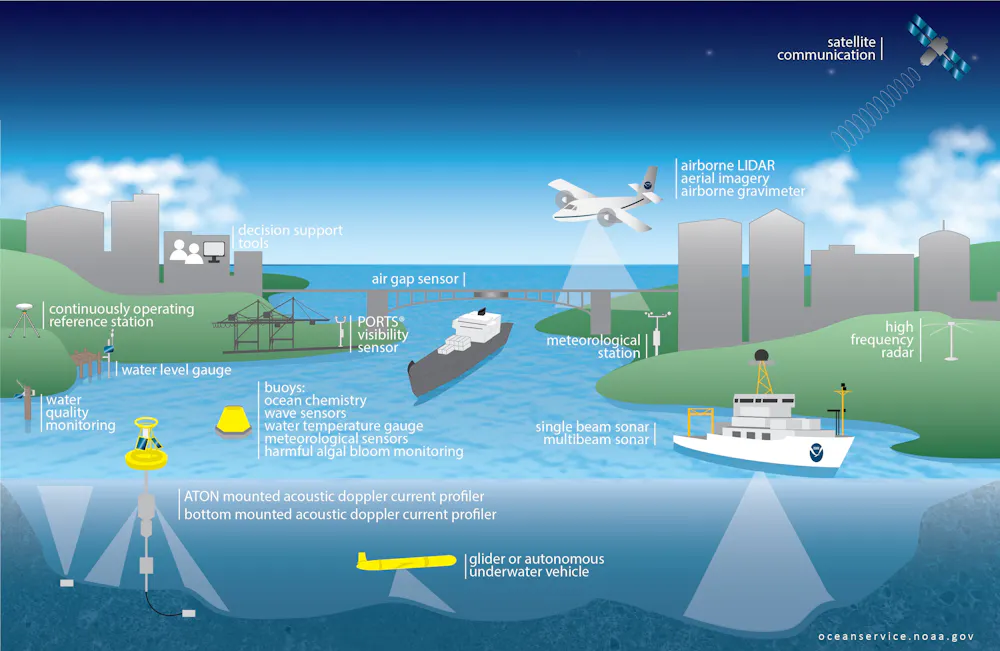
    A lot of the weather information Americans rely on starts with real-time data collected by NOAA satellites, airplanes, weather balloons, radar and maritime buoys, as well as weather stations around the world.

    All of that information goes into the agency’s computers, which process the data to begin defining what’s going on in different parts of the atmosphere.

    NOAA forecasters use computer models that simulate physics and the behavior of the atmosphere, along with their own experience and local knowledge, to start to paint a picture of the weather – what’s coming in a few minutes or hours or days. They also use that data to project seasonal conditions out over weeks or months.

    NOAA’s data comes from many sources to provide a more complete picture of developing climate and weather conditions. Communities and economies rely on that constantly updated information.
    NOAA

    When severe weather is on the way, the agency issues the official alerts you’ll see in the news and on your phone.

    All of this analysis happens before the information reaches private weather apps and TV stations.

    No matter who you are, you can freely access that data and the analyses. In fact, a large number of private companies use NOAA data to create fancy maps and other weather products that they sell.

    It would be extremely difficult to do all of that without NOAA.

    The agency operates a fleet of 18 satellites that are packed with instruments dedicated to observing weather phenomena essential to predicting the weather, from how hot the land surface is to the water content of the atmosphere. Some are geostationary satellites which sit high above different parts of the U.S. measuring weather conditions 24/7. Others orbit the planet. Many of these are operated as part of partnerships with NASA or the Air Force.

    Some private companies are starting to invest in satellites, but it would take an enormous amount of money to replicate the range of instrumentation and coverage that NOAA has in place. Satellites only last so long and take time to build, so NOAA is continually planning for the future, and using its technical expertise to develop new instruments and computer algorithms to interpret the data.

    NOAA’s low earth orbiting satellites circle the planet from pole to pole and across the equator 14 times a day to provide a full picture of the year twice a day. The agency also has geostationary satellites that provide continuous coverage over the U.S.
    NOAA

    Maritime buoys are another measuring system that would be difficult to replicate. Over 1,300 buoys across oceans around the world measure water temperature, wind and wave height – all of which are essential for coastal warnings, as well as long-term forecasts.

    Weather observation has been around a long time. President Ulysses S. Grant created the first national weather service in the War Department in 1870. It became a civilian service in 1880 under the Department of Agriculture and is now in the Commerce Department. The information its scientists and technologists produce is essential for safety and also benefits people and industries in a lot of ways.

    Could a private company create forecasts on its own without NOAA data?

    It would be difficult for one company to provide comprehensive weather data in a reliable way that is also accessible to the entire public.

    Some companies might be able to launch their own satellite, but one satellite only gives you part of the picture. NOAA’s weather observation network has been around for a long time and collects data from points all over the U.S. and the oceans. Without that robust data, computer models and the broad network of forecasters and developers, forecasting also becomes less reliable.

    Analyzing that data is also complex. You’re not going to be able to take satellite data, run a model on a standard laptop and suddenly have a forecast.

    And there’s a question of whether a private company would want to take on the legal risk of being responsible for the nation’s forecasts and severe weather warnings.

    Neil Jacobs, nominated to oversee NOAA, explains why the agency is essential for accurate national weather forecasting, and why private companies might not want to take on the legal risk on their own.

    NOAA is taxpayer-funded, so it is a public good – its services provide safety and security for everyone, not just those who can pay for it.

    If weather data was only available at a price, one town might be able to afford the weather information necessary to protect its residents, while a smaller town or a rural area across the state might not. If you’re in a tornado-prone area or coastal zone, that information can be the difference between life or death.

    Is climate data and research into the changing climate important for forecasts?

    The Earth’s systems – its land, water and the atmosphere – are changing, and we have to be able to assess how those changes will impact weather tomorrow, in two weeks and far into the future.

    Rising global temperatures affect weather patterns. Dryness can fuel wildfires. Forecasts have to take the changing climate into account to be accurate, no matter who is creating the forecast.

    Drought is an example. The dryness of the Earth controls how much water gets exchanged with the atmosphere to form clouds and rainfall. To have an accurate weather prediction, we need to know how dry things are at the surface and how that has changed over time. That requires long-term climate information.

    NOAA doesn’t do all of this by itself – who else is involved?

    NOAA partners with private sector, academia, nonprofits and many others around the world to ensure that everyone has the best information to produce the most robust weather forecasts. Private weather companies and media also play important roles in getting those forecasts and alerts out more widely to the public.

    A lot of businesses rely on accuracy from NOAA’s weather data and forecasts: aviation, energy companies, insurance, even modern tractors’ precision farming equipment. The agency’s long-range forecasts are essential for managing state reservoirs to ensure enough water is saved and to avoid flooding.

    The government agency can be held accountable in a way private businesses are not because it answers to Congress. So, the data is trustworthy, accessible and developed with the goal to protect public safety and property for everyone. Could the same be said if only for-profit companies were producing that data?

    Christine Wiedinmyer is the CIRES Associate Director for Science. CIRES is a CU Boulder research institute that has a cooperative agreement (grant) with NOAA called the Cooperative Institute for Earth Systems Research and Data Science, CIESRDS. Wiedinmyer’s funding is primarily from NOAA, which supports more than 400 CIRES CU Boulder employees.

    Kari Bowen is the Science and Administration Manager. CIRES is a CU Boulder research institute with a cooperative agreement (grant) with NOAA called the Cooperative Institute for Earth Systems Research and Data Science, CIESRDS. Bowen’s funding is from NOAA, which supports more than 400 CIRES CU Boulder employees.

    ref. NOAA’s vast public weather data powers the local forecasts on your phone and TV – a private company alone couldn’t match it – https://theconversation.com/noaas-vast-public-weather-data-powers-the-local-forecasts-on-your-phone-and-tv-a-private-company-alone-couldnt-match-it-249451

    MIL OSI – Global Reports

  • MIL-OSI: Artificial Intelligence (AI) Influence on Healthcare Market Expected to Generate Revenues of $610 Billion By 2034

    Source: GlobeNewswire (MIL-OSI)

    PALM BEACH, Fla., Feb. 11, 2025 (GLOBE NEWSWIRE) — FN Media Group News Commentary – The growing adoption of the digital technologies in the healthcare sector owing to the growing need for reducing the healthcare costs and offer enhanced quality patient care services to the patients are the prominent factors that are boosting the growth of the global artificial intelligence in healthcare market. The surging prevalence of various chronic diseases and growing elderly population is resulting in the increased pool of patients at hospitals. The large volume of patient health data is generated every day, which is required to be stored and managed effectively. The growing demand for the personalized medicines and the necessity of maintaining digital health records are significantly driving the artificial intelligence in healthcare market. The novel technologies like artificial intelligence and machine learning are now being integrated to the healthcare systems that will allow the health professionals in early identification of the diseases and offer enhanced care services to the patients. Moreover, the data analytics, deep learning technology, natural language processing (NPL), predictive analytics, and content analytics are supporting the healthcare professionals in early diagnosis and care services. A report from Precedence Research said that the global artificial intelligence (AI) in healthcare market size accounted for USD 26.69 billion in 2024 and is predicted to reach around USD 613.81 billion by 2034, growing at a CAGR of 36.83% from 2024 to 2034. North America AI in healthcare market size reached USD 8.67 billion in 2023. Active A.I. companies active in the markets include: Avant Technologies Inc. (OTCQB: AVAI), Tempus AI, Inc. (NASDAQ: TEM), BigBear.ai (NYSE: BBAI), Talkspace (NASDAQ: TALK), SoundHound AI, Inc. (NASDAQ: SOUN).

    The Precedence Research report added: “North America region was the highest market share holder in (recent years). North America is characterized by the increased inclination towards the advanced and latest digital technologies. The strong and developed healthcare, IT, and telecommunications infrastructure in North America has supported the growth of the artificial intelligence in healthcare market. Furthermore, the favorable government policies that encourage the adoption of the digital and novel technologies like artificial intelligence in the healthcare sector. North America has the presence of huge pool of patients. It is estimated that over half of the US population is suffering from one or more chronic diseases. This is resulting in increased volume of patients in hospitals. The health data of these patients needs to be stored and managed in digital form as per the government regulations. This is a major factor that propels the demand for the artificial intelligence in healthcare sector.”

    Avant Technologies, Inc. (OTCQB: AVAI) and Ainnova Advance Toward FDA Clinical Trial with Selection of Top CRO Avant Technologies, Inc. (“Avant” or the “Company”) and its partner, Ainnova Tech, Inc., (Ainnova), a leading healthcare technology company focused on revolutionizing early disease detection using artificial intelligence (AI), today announced the selection of Fortrea, a global provider of clinical development solutions to the life sciences industry, as the contract research organization (CRO) to conduct Ainnova’s upcoming clinical studies to seek approval from the U.S. Food and Drug Administration (FDA) for Ainnova’s Vision AI platform.

    Fortrea will assist Ainnova in requesting a pre-submission meeting with the FDA for guidance on the clinical testing needed for its Vision AI platform in the early detection of diabetic retinopathy. After a pre-submission meeting, Fortrea will then work with Ainnova on its FDA submission and a subsequent clinical study before concluding with an FDA 510(k) submission to obtain clearance from the FDA to market its Vision AI platform.

    The upcoming clinical studies are significant to Avant and its shareholders because of the partnership formed by Avant and Ainnova to advance and commercialize Ainnova’s technology portfolio, including its Vision AI platform and its versatile retinal cameras. The joint venture formed by the two companies, Ai-nova Acquisition Corp. (AAC), has the licensing rights for this portfolio in the U.S., Canada, and Europe, so the success of Ainnova’s clinical studies with the FDA will be vital to marketing the technology portfolio in the United States.

    Ainnova’s Chief Executive Officer, Vinicio Vargas, said of the selection, “We worked diligently to identify and select the right CRO to help us both engage the FDA and then conduct our clinical studies. Fortrea is an established and highly regarded full-service CRO with expertise in more than 20 therapeutic areas, and a CRO with an extensive portfolio of successfully completed clinical trials, including those involving both emerging and large biopharmaceutical, medical device, and diagnostic companies.”

    With Fortrea’s guidance, Ainnova expects to submit its pre-submission application in the coming weeks and expects to meet with the FDA for its pre-submission meeting in late March/early April 2025. Additionally, Ainnova will also interact with the FDA to devise a plan to obtain clearance for four algorithms it recently acquired the exclusive licensing rights to, which include early detection for cardiovascular risk, prediabetes and Type 2 diabetes, fatty liver disease, and chronic kidney disease. CONTINUED… Read this and more news for Avant Technologies at: https://www.financialnewsmedia.com/news-avai/

    In other A.I. developments and happenings in the market recently include:

    Tempus AI, Inc. (NASDAQ: TEM), a technology company leading the adoption of AI to advance precision medicine and patient care, recently announced it has completed its acquisition of Ambry Genetics, a recognized leader in genetic testing that aims to improve health by understanding the relationship between genetics and disease.

    “This acquisition complements our strategy of leveraging diagnostics and data to drive innovation, further strengthening our ability to deliver cutting-edge solutions to clinicians, patients, and life sciences companies,” said Eric Lefkofsky, Founder and CEO of Tempus. “We are excited to welcome Ambry to the Tempus team as we work together to improve patient outcomes and transform treatment journeys through the power of technology.”

    BigBear.ai (NYSE: BBAI) has recently been awarded a contract by the Department of Defense (DoD) Chief Digital and Artificial Intelligence Office (CDAO) to advance BigBear.ai’s Virtual Anticipation Network (VANE) prototype. This initiative will support the CDAO and Office of the Secretary of Defense (OSD) by leveraging custom AI models to better assess news media originating in countries that are potential foreign adversaries.

    The prototype award is designed to improve CDAO’s ability to identify key trends and topics related to potential foreign adversarial areas of interest, enabling faster and more informed assessments of media data vital to national security. VANE was created to contrive clarity in multi-domain environments for military and government applications by aggregating and analyzing vast data points, enabling predictions of adversarial activity in complex situations.

    “We are honored to continue our support in the modernization of our nation’s defense efforts. This award underscores the importance of leveraging cutting-edge AI technologies to address complicated geopolitical challenges,” said Ryan Legge, President of National Security at BigBear.ai. “By advancing VANE within CDAO, we are arming our warfighters with sophisticated intelligence capabilities to leverage foreign insights critical to the safety of our Nation and those protecting it.”

    Talkspace (NASDAQ: TALK) recently announced the launch of Insights, a new feature that enhances therapeutic care by helping Talkspace providers efficiently prepare for sessions and guide client care between sessions. The feature was developed and refined in partnership with Talkspace clinicians.

    Before each session, providers can use Insights to synthesize data from each client’s care journey, a process that is typically manual — including changes in that client’s symptom acuity from evidence-based psychological assessments and key details from the most recent session — to generate a concise pre-session primer tailored to the therapist’s upcoming appointment. After the session, an update can be generated to reflect the discussion’s key points, highlight therapeutic progress, and note follow-ups for future sessions.

    SoundHound AI, Inc. (NASDAQ: SOUN), a global leader in voice artificial intelligence, recently announced the launch of Brand Personalities, a groundbreaking feature for its SoundHound Chat AI Automotive voice assistant – making it the first in-vehicle assistant to offer distinct, customizable personas tailored to each automaker’s unique brand identity, designed to enhance both the user experience and brand loyalty for OEMs.

    Brand Personalities enables car makers to control the entire personality of their voice assistant including response style, character and vivaciousness. Automotive partners can choose from pre-designed personas, create fully customized personalities tailored to their specific needs, or even introduce seasonal characters for campaigns. Due to SoundHound’s unique software architecture, multiple personas can be defined for specific sub-brands or model lines—allowing sports cars, family cars, and commercial vehicles to each have distinct personalities that reflect the unique needs of their customers.

    About FN Media Group:
    At FN Media Group, via our top-rated online news portal at www.financialnewsmedia.com, we are one of the very few select firms providing top tier one syndicated news distribution, targeted ticker tag press releases and stock market news coverage for today’s emerging companies. #tickertagpressreleases #pressreleases

    Follow us on Facebook to receive the latest news updates: https://www.facebook.com/financialnewsmedia
    Follow us on Twitter for real time Market News: https://twitter.com/FNMgroup
    Follow us on Linkedin: https://www.linkedin.com/in/financialnewsmedia/

    DISCLAIMER: FN Media Group LLC (FNM), which owns and operates FinancialNewsMedia.com and MarketNewsUpdates.com, is a third party publisher and news dissemination service provider, which disseminates electronic information through multiple online media channels. FNM is NOT affiliated in any manner with any company mentioned herein. FNM and its affiliated companies are a news dissemination solutions provider and are NOT a registered broker/dealer/analyst/adviser, holds no investment licenses and may NOT sell, offer to sell or offer to buy any security. FNM’s market updates, news alerts and corporate profiles are NOT a solicitation or recommendation to buy, sell or hold securities. The material in this release is intended to be strictly informational and is NEVER to be construed or interpreted as research material. All readers are strongly urged to perform research and due diligence on their own and consult a licensed financial professional before considering any level of investing in stocks. All material included herein is republished content and details which were previously disseminated by the companies mentioned in this release. FNM is not liable for any investment decisions by its readers or subscribers. Investors are cautioned that they may lose all or a portion of their investment when investing in stocks. For current services performed FNM was compensated forty nine hundred dollars for news coverage of the current press releases issued by Avant Technologies, Inc. by a non-affiliated third party. FNM HOLDS NO SHARES OF ANY COMPANY NAMED IN THIS RELEASE.

    This release contains “forward-looking statements” within the meaning of Section 27A of the Securities Act of 1933, as amended, and Section 21E the Securities Exchange Act of 1934, as amended and such forward-looking statements are made pursuant to the safe harbor provisions of the Private Securities Litigation Reform Act of 1995. “Forward-looking statements” describe future expectations, plans, results, or strategies and are generally preceded by words such as “may”, “future”, “plan” or “planned”, “will” or “should”, “expected,” “anticipates”, “draft”, “eventually” or “projected”. You are cautioned that such statements are subject to a multitude of risks and uncertainties that could cause future circumstances, events, or results to differ materially from those projected in the forward-looking statements, including the risks that actual results may differ materially from those projected in the forward-looking statements as a result of various factors, and other risks identified in a company’s annual report on Form 10-K or 10-KSB and other filings made by such company with the Securities and Exchange Commission. You should consider these factors in evaluating the forward-looking statements included herein, and not place undue reliance on such statements. The forward-looking statements in this release are made as of the date hereof and FNM undertakes no obligation to update such statements.

    Contact Information:
    Media Contact email: editor@financialnewsmedia.com – +1(561)325-8757 

    SOURCE: FN Media Group

    The MIL Network

  • MIL-OSI Global: Whether Christians should prioritize care for migrants as much as for fellow citizens has been debated for centuries

    Source: The Conversation – USA – By Laura E. Alexander, Associate Professor of Religious Studies, University of Nebraska Omaha

    Vice President JD Vance has criticized the U.S. Catholic bishops condemning agents of Immigration and Customs Enforcement entering churches and schools. Kayla Bartkowski/Getty Images

    Vice President JD Vance and several bishops of the U.S. Roman Catholic Church are having a war of words over the Trump administration’s flurry of executive orders and highly publicized immigration raids. The bishops argue that these policies tend to empower gangs and traffickers while harming vulnerable families; Vance has criticized the bishops’ stance and argued that crackdowns are a matter of public safety.

    In the wake of President Donald Trump’s executive orders, both Archbishop Timothy P. Broglio, president of the U.S. Conference of Catholic Bishops, and Bishop Mark Seitz, chairman of the USCCB’s Committee on Migration, publicly objected to the tone and the humanitarian impacts of the orders.

    Seitz critiqued generalizations that denigrate and describe migrants without legal status as “criminals” or “invaders,” saying this “is an affront to God, who has created each of us in his own image.” Instead, he urged humane policies and bipartisan immigration reform for an “effective, orderly immigration system.”

    Interviewed on “Face the Nation,” Vance argued that the USCCB should “look in the mirror … and recognize that when they receive over US$100 million to help resettle illegal immigrants, are they worried about humanitarian concerns? Or are they actually worried about their bottom line?”

    To be clear, this line of attack appears to be false. USCCB contracts with the U.S. State Department to resettle refugees and has received over $100 million in recent years to do so, but refugee resettlement is a legal immigration program. The Catholic Church, rather than making money on this program, provides funding from its own budget to supplement its humanitarian work with refugees. For example, according to the USCCB’s audited financial statements, in 2023, the most recent year reported, the USCCB spent over $134.2 million on resettlement services. Federal grants provided over $129.6 million for these services, with the USCCB covering the rest.

    As a scholar of religion and migration, I see in this debate long-standing tensions among Catholic – and other Christian – thinkers and practitioners about moral obligations to people with whom we have closer versus more distant relationships.

    This tension is magnified in the case of migrants without legal status, since most of these migrants do have close relationships with U.S. communities and citizens, but they are not legally authorized by the U.S. government.

    2 perspectives on moral responsibility

    In international relations, different stances on how to treat people who are not citizens of one’s own state are described as “cosmopolitan” and “communitarian,” respectively.

    Some Christian thinkers have adopted these terms as a helpful way to understand Christian ethical debates over how to prioritize caring for people who are more closely connected or less connected to us. Those who take a cosmopolitan stance argue that Christians should care equally about all people of the world and should not show preference to family members or those within their near orbit, even if, for practical reasons, they do assist those close to them more often.

    Meanwhile, thinkers who take a communitarian stance argue that Christians certainly should care about the well-being of all but have a moral obligation to prefer helping people they have a closer relationship with, such as family members, those who are close geographically and possibly fellow citizens.

    Christian theologies of neighborly love

    Many Christian thinkers have developed perspectives on how to prioritize care for different neighbors by interpreting the words and actions of Jesus, as well as the teachings and practices of the early Christian church. Over time, Christian thinkers have also considered institutional statements and traditional teachings of different church bodies.

    Early theologians, including Clement of Rome, the first-century bishop of Rome, and John Chrysostom, archbishop of Constantinople in the fourth and fifth centuries, demonstrated cosmopolitan tendencies.

    Biblical passages encourage believers to welcome strangers.
    ‘Sermon on the Mount’ by Henrik Olrik via Wikimedia Commons

    These early church leaders consider biblical passages, including commandments in the Hebrew Bible, to welcome strangers. In the Gospels of the New Testament, Jesus’ parable of the Good Samaritan upholds a person of different ethnicity and religion from Jesus and his followers as an ideal “neighbor.” It also praises acts of kindness across ethnic and religious boundaries.

    In another passage, Jesus heals the daughter of a woman who was both non-Jewish and of foreign ethnicity, accepting her chastisement for his initial reluctance to assist a non-Jew.

    Later in the New Testament, the apostle Paul used expansive language for the Christian community, particularly in Galatians, the ninth book of the New Testament: “There is no longer Jew or Greek; there is no longer slave or free; there is no longer male and female, for all of you are one in Christ Jesus.”

    The contemporary Roman Catholic Church has often taken a cosmopolitan perspective on social issues. Pope Francis, in his message for the 2024 World Day of Migrants and Refugees, highlights the biblical passage that “our citizenship is in heaven” and states that “the encounter with the migrant … ‘is also an encounter with Christ.’”

    Catholic service organizations draw on this thinking when they help migrants in concrete ways. In addition to refugee resettlement services, many Catholic organizations provide humanitarian assistance such as food and shelter to migrants, no matter where they are from.

    Christian communitarian thought

    From a communitarian perspective, some thinkers argue that Christians’ concrete obligations to members of their communities can differ from their obligations to others, even though they view all people as of equal moral worth.

    New Testament writings describe how members of early Christian groups provided food and care for those in their communities – even as they also gave charity to the poor in the wider society.

    St. Thomas Aquinas, whose writings have also become part of the current debate after Vance referenced them online, argues that Christians should assist people in need, even to the point of depriving themselves of luxuries or social standing. He consistently urges Christians to love all people as commanded by God. Yet he also writes that, all other things being equal, Christians can properly meet the needs of people close to them before they give to those outside their own family or close circles, and that in political matters there can be some justification for preferring fellow citizens.

    Some contemporary Christian thinkers apply similar ideas to relationships between citizens and noncitizens in modern states. Ethicist Mark Amstutz argues that American Christian churches should incorporate a stronger focus on citizens’ needs and solidarity within state communities into their statements on immigration. German Catholic thinker Manfred Spieker has advocated that Christian social teachings permit preferences for people one is close to, as well as requirements of cultural integration by immigrants.

    These proponents of Christian communitarian perspectives continue to stress that all neighbors should be treated well even if some are prioritized over others. In this way, Vance’s remarks are not the best example of Christian communitarian thought, since migrants without legal status still should not be demonized nor falsely accused of criminal behavior, both of which Vance himself has done in the past few months.

    Immigrants in communities and the command to love

    Christian thinkers do agree that Christians are commanded by God to show love for all people – those who are like them, those who are not like them and even enemies.

    But it’s possible that love could take different shapes in different relationships. Immigration poses a unique test case because immigrants are not citizens, but they are “close” neighbors to U.S. citizens.

    Immigrants, including undocumented immigrants, are integral parts of the communities where they live. They work in vital jobs; in 2020-22, 42% of hired farmworkers were migrants without legal status. Immigrants, both with legal status and without, have brought new workers and young families to small towns whose populations have declined in recent decades.

    This further nuances debates about cosmopolitan and communitarian moral perspectives, since immigrants arrive from places outside the U.S. but have close relationships with U.S. citizens, whether as family members or as neighbors with whom they work, shop and worship.

    At the moment, public debate over immigration reflects trends in U.S. politics as much or more than it does Christian ethics. Yet Christian communities do continue to wrestle with cosmopolitan and communitarian ways of thinking, as they try to understand and apply Christian scriptural and moral commands to care for all people.

    Laura E. Alexander receives funding from the Mellon Foundation and has previously received funding from the Public Religion Research Institute. As a private individual, she is a member of the Nebraska Alliance for Thriving Communities, a statewide network of businesses, institutions, and individuals seeking immigration reform solutions.

    ref. Whether Christians should prioritize care for migrants as much as for fellow citizens has been debated for centuries – https://theconversation.com/whether-christians-should-prioritize-care-for-migrants-as-much-as-for-fellow-citizens-has-been-debated-for-centuries-248640

    MIL OSI – Global Reports

  • MIL-OSI Global: Mirror life is a scientific fantasy leading to a dangerous reality − a synthetic biologist explains how mirror bacteria could conquer life on Earth

    Source: The Conversation – USA – By Kate Adamala, Assistant Professor of Genetics, Cell Biology and Development, University of Minnesota

    Synthetic biology offers many tantalizing possibilities, but scientists consider some projects too risky to pursue. DBenitostock/Moment via Getty Images

    Most major biological molecules, including all proteins, DNA and RNA, point in one direction or another. In other words, they are chiral, or handed. Like how your left glove fits only your left hand and your right glove your right hand, chiral molecules can interact only with other molecules of compatible handedness.

    Two chiralities are possible: left and right, formally called L for the Latin laevus and D for dexter. All life on Earth uses L proteins and D sugars. Even Archaea, a large group of microorganisms with unusual chemical compositions, stick to the program on the handedness of the main molecules they use.

    For a long time, scientists have been speculating about making biopolymers that would mirror compounds in nature but in the opposite orientation – namely, compounds made of D proteins and L sugars. Recent years have seen some promising advancements, including enzymes that can make mirror RNAs and mirror DNAs.

    Chirality refers to something that is not superimposable on its mirror image – like your hands.
    NASA

    When scientists observed that these mirror molecules behave just like their natural equivalents they considered that it would be possible to make a whole living cell from them. Mirror bacteria in particular had the potential to be a useful basic research tool – possibly allowing scientists to study a new tree of life for the first time and solve many problems in bioengineering and biomedicine.

    This so-called mirror life – living cells made from building blocks with an opposite chirality to those that make up natural life – could have very similar properties to natural living cells. They could live in the same environment, compete for resources and behave like you would expect of any living organism. They would be able to evade infection from other predators and immune systems because these opponents wouldn’t be able to recognize them.

    These features are why researchers like me were so attracted to mirror life in the first place. But these qualities are also huge bugs of this technology that make it a problem.

    I am a synthetic biologist who studies using chemistry to create living cells. I am also a bioengineer who develops tools for the bioeconomy. As a chemist by training, engineering mirror life initially seemed like a fascinating way to answer foundational questions about biology and practically apply those findings to industry and medicine. As I learned more about the immunology and ecology of mirror life, however, I became aware of the potential environmental and health consequences of this technology.

    Real concerns about hypothetical mirror life

    It’s important to note that researchers are likely at least 10 to 30 years away from creating mirror bacteria. On the timescale of a fast-moving field like synthetic biology, a decade is a very long time. Creating synthetic cells is difficult on its own. Creating mirrored ones would require several technical breakthroughs.

    However, it would come with a risk. If mirror cells were released into the environment, they would likely be able to quickly proliferate without much restriction. The natural mechanisms that keep ecosystems in balance, including infection and predation, would not work on mirror life.

    Bacteria, like most life forms, are susceptible to viral infections. These bacterial viruses, or bacteriophages, enter bacteria by binding to their surface receptors and then use their cellular machinery to replicate. But just as a left glove doesn’t fit a right hand, natural bacteriophages wouldn’t recognize mirror cell receptors or be able to use its machinery. Mirror life would likely be resistant to viruses.

    Mirror bacteria may be able to evade the bacteriophages that would otherwise help keep them in check. Here, multiple bacteriophages are attached to a bacterial cell wall.
    Professor Graham Beards/Wikimedia Commons, CC BY-SA

    Microorganisms foraging in the environment also keep bacterial populations in check. They differentiate food from nonfood by using chemical “taste” receptors. Anything those receptors bind to, such as bacteria and organic debris, are considered edible, while things that cannot bind to those receptors, such as rocks, are classified as inedible. Think about how a dog foraging on the kitchen floor will eat a bread roll but only sniff a spoon and move on. Mirror life would be, to the bacterial predators, more like a spoon than bread – predators would “sniff” it with their receptors and move on because these cells can’t bind.

    Safety from being eaten would be great news for mirror bacteria, because it would allow it to replicate freely. It would be much worse news to the rest of the ecosystem, because mirror bacteria might hog all the nutrients and spread uncontrollably. Even if mirror bacteria don’t actively attack other organisms, they would still consume food sources other organisms need. And since mirror cells would have much lower death rates than regular organisms due to a lack of predation, they would slowly but surely take over the environment.

    Even if mirror cells grow more slowly than normal cells, they would be able to grow without anything stopping them.

    Insufficient immunity

    Another biological control mechanism that wouldn’t be able to “sniff” out mirror cells is the immune system.

    Your immune cells constantly check everything they find in your blood. The decision tree of an immune cell is fairly simple. First, decide whether something is alive or not, then compare it with its database of “self” – your own cells. If it is alive but is not a part of you, then it needs to be killed. Mirror cells likely wouldn’t pass the first step of that screen: it would not induce an immune response because the immune system would not be able to recognize or bind to mirror cell antigens. This means mirror cells could infect an unprecedentedly wide variety of hosts.

    You might think an infection from mirror bacteria could be treated with antibiotics of the same handedness. It would probably work, and may even be easier on your gut than regular antibiotic therapy. Because antibiotics are also handed, mirror versions of these drugs would not affect your gut microbiome, just like how regular antibioics would not affect mirror cells.

    But humans are a relatively small part of the ecosystem. All other animals and plants may also be susceptible to infection from mirror pathogens. While it is possible to imagine developing mirror antibiotics to treat human infections, it is physically impossible to treat the entire plant and animal world. If all organisms are susceptible to even a slow-moving infection by mirror bacteria, there is no good treatment that could be deployed across the entire ecosystem.

    Better safe than sorry

    Mirror life is an exciting research subject and a potential tool with some practical applications in medicine and biotechnology. But for many scientists, including me, none of those benefits outweigh the serious consequences to human health and the environment that mirror life poses.

    I and a group of researchers in immunology, ecology, biosafety and security – including some who used to actively work on mirror life – conducted a thorough analysis of possible concerns regarding the creation of mirror life. No matter how we looked at it, straight up or in the mirror, the conclusions were clear: The potential benefits of engineering mirror life are not worth the risk.

    Mirror life is scientifically tantalizing but ethically unwise.

    There is no way to make anything completely foolproof, and that includes any safeguards built into a mirror cell that could prevent the risk of accidental or deliberate release into the environment. Researchers working in this space, including us, may find this disappointing. But not making mirror cells can ensure the safety and security of the planet. More discussion among the global scientific community about what kinds of research on mirror biomolecules and related technologies are safe – as well as how to regulate this research – can help safeguard against potential harms.

    Keeping mirror cells inside the mirror, rather than making them a physical reality, is the clearest path to staying safe.

    Kate Adamala does not work for, consult, own shares in or receive funding from any company or organization that would benefit from this article, and has disclosed no relevant affiliations beyond their academic appointment.

    ref. Mirror life is a scientific fantasy leading to a dangerous reality − a synthetic biologist explains how mirror bacteria could conquer life on Earth – https://theconversation.com/mirror-life-is-a-scientific-fantasy-leading-to-a-dangerous-reality-a-synthetic-biologist-explains-how-mirror-bacteria-could-conquer-life-on-earth-245842

    MIL OSI – Global Reports

  • MIL-OSI Global: Art and science illuminate the same subtle proportions in tree branches

    Source: The Conversation – USA – By Mitchell Newberry, Research Assistant Professor of Biology, University of Michigan

    Tree branches in art throughout history follow geometric rules related to fractal geometry. ‘Almond blossom’ by Vincent van Gogh. Van Gogh Museum, Amsterdam.

    Do artists and scientists see the same thing in the shape of trees? As a scientist who studies branching patterns in living things, I’m starting to think so.

    Piet Mondrian was an early 20th-century abstract artist and art theorist obsessed with simplicity and essence of form. Even people who have never heard of Mondrian will likely recognize his iconic irregular grids of rectangles.

    When I saw Mondrian’s 1911 “Gray Tree,” I immediately recognized something about trees that I had struggled to describe. By removing all but the most essential elements in an abstract painting, Mondrian demonstrated something I was attempting to explain using physics and fractal geometry.

    My field of research is mathematical biology. My colleagues and I try to explain how treelike structures such as veins and arteries, lungs and leaves fine-tune their physical form to efficiently deliver blood, air, water and nutrients.

    Fundamental research in the biology of branching helps cure cardiovascular diseases and cancer, design materials that can heal themselves and predict how trees will respond to a changing climate. Branching also shows up in ant foraging patterns, slime molds and cities.

    The treeless tree

    From 1890 to 1912, Mondrian painted dozens of trees. He started with full-color, realistic trees in context: trees in a farmyard or a dappled lane. Gradually he removed leaves, depth, color and eventually even branching from his tree paintings. “Gray Tree” uses only curved lines of various thickness superimposed on top of one another at seemingly random angles. Yet the image is unmistakably a tree.

    How did Mondrian convey the sense of a tree with so little? The science of trees may offer some clues.

    The science of branching

    One goal of mathematical biology is to synthesize what scientists know about the vast diversity of living systems – where there seems to be an exception to every rule – into clear, general principles, ideally with few exceptions. One such general principle is that evolution fine-tunes treelike structures in living things to make metabolism and respiration as efficient as possible.

    The body carefully controls the thickness of vessels as they branch, because deviation from the most efficient diameter wastes energy and causes disease, such as atherosclerosis.

    In many cases, such as human blood vessels, the body exerts much tighter control over diameter than length. So while veins and arteries might take circuitous routes to accommodate the vagaries of organs and anatomy, their diameter usually stays within 10% of the optimum. The same principle appears in tree branches as well.

    The precise calibration of branch diameter leads to a hallmark of fractal shapes called scale invariance. A scale invariance is a property that holds true regardless of the size of an object or part of an object you’re looking at. Scale invariance occurs in trees because trunks, limbs and twigs all branch in similar ways and for similar reasons.

    The scale invariance in branch diameter dictates how much smaller a limb should be as it branches and how much investment a tree makes in a few thick branches versus many thin ones. Trees have evolved scale invariance to transport water, reach light and resist gravity and wind load as efficiently as possible given physical limits.

    This science of trees inspired my colleague and me to measure the scaling of tree branch diameter in art.

    The art of trees

    Among my favorite images is a carving of a tree from a late-medieval mosque in India. Its exaltation of trees reminds me of Tolkien’s Tree of Gondor and the human capacity to appreciate the simple beauty of living things.

    But I also find mathematical inspiration in the Islamic Golden Age, a time when art, architecture, math and physics thrived. Medieval Islamic architects even decorated buildings with infinitely nonrepeating tiling patterns that were not understood by Western mathematics until the 20th century.

    The stylized tree carvings of the Sidi Saiyyed mosque also follow the precise system of proportions dictated by the scale invariance of real trees. This level of precision of branch diameter takes an attentive eye and a careful plan – much better than I could freehand.

    Indeed, wherever our team looked at trees in great artwork, such as Klimt’s “Tree of Life” or Matsumura Goshun’s “Cherry Blossoms,” we also found precise scale invariance in the diameter of branches.

    “Grey Tree” also realistically captures the natural variation in branch diameters, even when the painting gives the viewer little else to go on. Without realistic scaling, would this painting even be a tree?

    As if to prove the point, Mondrian made a subsequent painting the following year, also with a gray background, curved lines and the same overall composition and dimensions. Even the position of some of the lines are the same.

    But, in “Blooming Apple Tree” (1912), all the lines are the same thickness. The scaling is gone, and with it, the tree. Before reading the title, most viewers would not guess that this is a painting of a tree. Yet Mondrian’s sketches reveal that “Blooming Apple Tree” and “Gray Tree” are the very same tree.

    The two paintings contain few elements that might signal a tree – a concentration of lines near the center, lines that could be branches or a central trunk and lines that could indicate the ground or a horizon.

    Yet only “Gray Tree” has scale-invariant branch diameters. When Mondrian removes the scale invariance in “Blooming Apple Tree,” viewers just as easily see fish, scales, dancers, water or simply nonrepresentational shapes, whereas the tree in “Gray Tree” is unmistakable.

    Photo synthesis

    Mondrian’s tree paintings and scientific theory highlight the importance of the thickness of tree branches. Consilience is when different lines of evidence and reasoning reach the same conclusions. Art and math both explore abstract descriptions of the world, and so seeing great art and science pick out the same essential features of trees is satisfying beyond what art or science could accomplish alone.

    Just as great literature such as “The Overstory” and “The Botany of Desire” show us how trees influence our lives in ways we often don’t notice, the art and science of trees show how humans are finely attuned to what’s important to trees. I think this resonance is one reason people find fractals and natural landscapes so pleasing and reassuring.

    All these lines of thinking give us new ways to appreciate trees.

    Mitchell Newberry has published research on tree branching supported by University of Michigan and University of New Mexico. He volunteers with Cool It Burque, a tree-planting group in Albuquerque, NM.

    ref. Art and science illuminate the same subtle proportions in tree branches – https://theconversation.com/art-and-science-illuminate-the-same-subtle-proportions-in-tree-branches-247967

    MIL OSI – Global Reports

  • MIL-OSI USA: What Should Be on Your Plate? Study Shows Student Athletes Don’t Know

    Source: US State of Connecticut

    High school health classes often consist of a series of awkward lessons about STDs, drugs, and alcohol. Rarely do these classes teach students anything about another critical component of their health — nutrition.

    This lack of nutrition education is especially dangerous to student athletes who need to fuel their bodies properly to protect themselves from injury and other health risks.

    A new study shows that high school athletes have some serious gaps in both their general and sports-specific nutrition knowledge.

    This work was published in Nutrients. Jennifer B. Fields, assistant professor of nutritional science in the College of Agriculture, Health and Natural Resources, collaborated with researchers at the University of Wisconsin and George Mason University on this study.

    Fields and her collaborators have known that young athletes struggle with proper nutrition to fuel their highly active bodies.

    “There’s this preconceived notion that all athletes are healthy,” Fields says. “A lot of times that’s not the case.”

    The researchers previously found a high prevalence of eating disorders and other forms of disordered eating in college athletes, often linked to a lack of nutrition knowledge.

    Student athletes often turn to unscientific outlets, like social media, for nutrition information in the absence of formal education.

    Given this, the team became interested in seeing if similar patterns existed for high school athletes.

    They used a pre-validated survey, the Abridged Sports Nutrition Knowledge Questionnaire, to assess student athletes’ nutrition knowledge. Forty-four students were recruited from high schools in Wisconsin and beyond.  The students’ total nutrition score averaged around 45% for both boys and girls. Their general nutrition knowledge was about 58% and sport nutrition knowledge was about 35%.

    The students’ perceptions about the daily recommended intake of key nutrients were significantly off base. They thought they needed fewer carbohydrates and total calories, and far more protein and fat than is actually recommended.

    The students also demonstrated a lack of knowledge about when and what to eat to support sport performance.

    “Their level of general nutrition knowledge and sport nutrition knowledge was very, very low,” Fields says. “They didn’t know how to eat a balanced diet for their overall health. Moreso, they didn’t know how to make proper fueling decisions for their sport.”

    Many students reported that their primary source for nutrition knowledge was friends or family, followed closely by their coaches, who do not generally receive any formal nutrition training or education.

    Fields says many of these knowledge gaps may be fueled by social media which pumps out inaccurate nutrition information and unrealistic body standards for young people, especially athletes.

    “Adolescents in particular are just inundated with social media,” Fields says. “High schoolers are on Instagram, TikTok, whatever it may be, getting preconceived notions about how their bodies should look, how they should eat, and how they should exercise. And many times, it’s really conflicting with how they should be fueling as an athlete.”

    One of the key differences between sports and regular nutrition is athletes’ calories and carbohydrate needs. Athletes should be consuming more than half their daily calories as carbohydrates, Fields says.

    “Carbohydrates are athletes’ best friends,” Fields says. “That is so contradictory to what a lot of social media tells us.”

    Athletes also, generally, shouldn’t follow the trend of intermittent fasting diets as they need to be fueling consistently throughout the day to support performance and recovery and ensure they are getting enough calories.

    Athletes need to have more muscle mass to support their own safety as well, meaning they won’t look like some of the people they see on social media.

    The next step for this research will be to develop an educational intervention for high school athletes to empower them with the knowledge they need to make healthy choices.

    “One of our biggest takeaways is simply the need for more general nutrition education and sports-specific nutrition education for these adolescent athletes,” Fields says. “If we can change the behaviors throughout these high school years, then they get to college and have a much better sense of how to eat for their health and to optimize their performance.”

    This work relates to CAHNR’s Strategic Vision area focused on Enhancing Health and Well-Being Locally, Nationally, and Globally.

    Follow UConn CAHNR on social media

    MIL OSI USA News

  • MIL-OSI: Provident Bank Strengthens Executive Leadership Team, Welcoming Chief Lending Officer to Advance Commercial Banking and Lending Strategy

    Source: GlobeNewswire (MIL-OSI)

    ISELIN, N.J., Feb. 11, 2025 (GLOBE NEWSWIRE) — Provident Bank, a leading New Jersey-based financial institution, is pleased to announce the addition of Bill Fink as Executive Vice President, Chief Lending Officer, leading the commercial bank and the commercial lending growth strategy.

    Mr. Fink has over 30 years of experience in commercial banking and credit administration and will lead and direct the bank’s commercial lending strategies, including new business development, loan portfolio management, and policy management for all commercial business lines, including C&I, commercial real estate, treasury management, and specialty lines. His expertise in structuring complex credit transactions and developing innovative approaches will help expand the bank’s loan portfolio and drive sustainable growth consistent with the bank’s risk appetite. In addition to overseeing lending initiatives, given his deep commercial banking experience, Mr. Fink will serve as a strategic advisor, collaborating closely with Provident’s Executive Leadership Team.

    “I’m excited to begin a new chapter in my career where I can support Provident Bank’s mission to redefine the super community banking space,” said Bill Fink, Executive Vice President and Chief Lending Officer. “With a strong foundation and clear momentum, I look forward to using my experience in commercial lending to drive growth, strengthen customer relationships, and foster a culture of innovation and excellence that supports Provident Bank’s business strategy.”

    Mr. Fink will oversee a $16B loan portfolio and lead a team of eight direct reports and a total team of 250 employees based in New Jersey, New York, and Pennsylvania. He will also oversee portfolio management and credit risk, ensuring the bank’s lending strategies align with market opportunities and long-term objectives. Mr. Fink will contribute to enhancing credit policies, introducing new lending products, and optimizing the portfolio mix to ensure the bank is providing the best solution to its customers. Additionally, he will represent the bank at industry events and public engagements, strengthening relationships with customers and partners, while reinforcing Provident’s market presence.

    “Bill is an exceptional leader, bringing broad expertise in commercial banking with a vision for driving growth and innovation,” said Anthony Labozzetta, President and CEO, Provident Bank. “I am thrilled to welcome him to our team as we enhance our commercial lending capabilities, deepen customer relationships, and position our bank for long-term success.”

    Mr. Fink brings two decades of leadership experience at TD Bank, N.A., where he held key senior roles across regional and national markets. Most recently, he served as EVP and Head of U.S. Middle Market Banking, leading TD’s nationwide expansion strategy for Middle Market and Asset-Based Lending and overseeing a $24 billion portfolio. Previously, as EVP, Chief Lending Officer, and Head of Credit Management for TD’s U.S. Commercial Banking Division, he played a critical role in credit oversight and risk management.

    Mr. Fink holds an MBA in Management & Finance and a Bachelor of Science in Marketing from St. Joseph’s University. He is also a Certified Public Accountant (CPA) and Chartered Global Management Accountant (CGMA). In addition, he completed the Advanced Finance Postgraduate Program at the Wharton School of the University of Pennsylvania and is a member of the Executive Education Board of Directors at The Wharton School, University of Pennsylvania.

    About Provident Bank
    Founded in Jersey City in 1839, Provident Bank is the oldest community-focused financial institution based in New Jersey and is the wholly owned subsidiary of Provident Financial Services, Inc. (NYSE:PFS). With assets of $24.05 billion as of December 31, 2024, Provident Bank offers a wide range of customized financial solutions for businesses and consumers with an exceptional customer experience delivered through its convenient network of 140 branches across New Jersey and parts of New York and Pennsylvania, via mobile and online banking, and from its customer contact center. The bank also provides fiduciary and wealth management services through its wholly owned subsidiary, Beacon Trust Company, and insurance services through its wholly owned subsidiary, Provident Protection Plus, Inc. To learn more about Provident Bank, go to www.provident.bank or call our customer contact center at 800.448.7768.

    Media Contact:
    Provident Bank
    Keith Buscio – keith.buscio@provident.bank
    Vested – providentbank@fullyvested.com

    A photo accompanying this announcement is available at https://www.globenewswire.com/NewsRoom/AttachmentNg/1dab4f57-ba76-4ff3-9ba9-48d91a5dc47c

    The MIL Network

  • MIL-OSI: SensoRy AI and OCFA deploy AI-driven early wildfire detection system in City of Irvine Open Space Preserve

    Source: GlobeNewswire (MIL-OSI)

    IRVINE, Calif., Feb. 11, 2025 (GLOBE NEWSWIRE) — In a unified effort to address the growing threat of wildfires in Southern California, Ryan Honary, founder of SensoRy AI, has partnered with the Orange County Fire Authority (OCFA) and the City of Irvine to deploy his award-winning AI-driven wildfire detection system in the Irvine Open Space Preserve.

    SensoRy AI’s platform combines a wireless mesh sensor network with artificial intelligence and machine learning to detect wildfires at their earliest stages, providing firefighters with instant notifications and real-time updates on predicted growth speed and direction. Designed to be low-cost and scalable, the solution is ideal for high-risk areas.

    “Early detection is one of our greatest weapons in what has become a year-round fire season, empowering crews to more safely and effectively execute the robust and rapid initial attack required to keep wildfires small,” said OCFA Fire Chief Brian Fennessy. “For several years now, we have partnered with Ryan and SensoRy AI. We are proud and grateful that his technology has the potential to provide our firefighters with real-time data that expedites resource allocation, improves firefighting strategy, and enhances our mission to protect life and property.”

    The initial installation focuses on high-risk zones within the Irvine Open Space Preserve, which is a part of nearly 40,000 acres of interconnected open space owned by the City of Irvine, OC Parks, and California State Parks that functions as a key ecological corridor connecting open space in Orange County to the Cleveland National Forest. The deployment comes after several successful pilots carried out with the support of Irvine Ranch Conservancy (IRC) at their native seed farm and OC Parks’ Irvine Ranch Open Space.

    “We are thrilled to have partnered with and supported Ryan in the development and testing of SensoRy AI’s technology,” said Dr. Nathan Gregory, Senior Vice President and Chief Programs Officer at IRC. “Utilizing innovative tools to assist with protecting open spaces and communities from wildfire is essential, and this technology will help us do that.”

    So far this year, wildfires have burned over 57,000 acres in California, killing nearly 30 people and causing an estimated $255 billion in economic losses. By merging OCFA’s operational expertise with SensoRy AI’s advanced detection technology, the deployment represents a significant step forward in protecting lives, property and ecosystems from the devastating effects of these disasters.

    “Since 2020, my goal has been to create technology that gives first responders the early warning they need to respond to wildfires faster and more effectively,” said Ryan Honary. “The support I’ve received from experts like Chief Fennessy and Dr. Gregory has been invaluable as I’ve worked to turn what started as a science project into a real-world solution that can save lives.”

    About SensoRy AI

    SensoRy AI, founded by Ryan Honary, is a company dedicated to developing AI-powered solutions for environmental hazard detection. The company’s mission is to provide cutting-edge technology that enables communities and emergency responders to stay ahead of environmental disasters, from wildfires to other critical threats. SensoRy AI’s early detection system is just one of its innovative solutions aimed at protecting lives and property. Learn more at sensoryai.com

    About Orange County Fire Authority

    The Orange County Fire Authority (OCFA) is a regional fire service agency that serves 23 cities in Orange County and all unincorporated areas. OCFA operates from 78 fire stations, providing fire protection and emergency medical services to nearly 2 million residents. The agency is committed to safeguarding lives and property through a combination of fire prevention, education, and effective emergency response.

    About Irvine Ranch Conservancy

    Irvine Ranch Conservancy is a non-profit organization whose mission is to restore, protect, and enhance the ecological health of urban wildlands in a way that fosters compatible human behaviors and inspires connections and partnerships. These lands include the Irvine Ranch Natural Landmarks — over 40,000 acres of precious open space in Orange County that have been recognized for their biological and geological significance. IRC actively manages these critically important areas in partnership with the City of Irvine, City of Newport Beach, OC Parks, and numerous other community partners.

    The MIL Network

  • MIL-OSI: LightSolver Partners With Ansys to Accelerate CAE Modelling for Automotive and Other Key Industries

    Source: GlobeNewswire (MIL-OSI)

    TEL AVIV, Israel, Feb. 11, 2025 (GLOBE NEWSWIRE) — LightSolver, inventors of a new laser-based computing paradigm, today announced a partnership with Ansys (NASDAQ: ANSS), a leading provider of engineering simulation software. Following a successful test run on LightSolver’s platform, the two companies are working to integrate LightSolver’s technology with Ansys LS-DYNA® nonlinear dynamics structural simulation software to accelerate simulations for automotive, aerospace, and other industries.

    LightSolver’s all-optical Laser Processing Unit™ (LPU) will leverage laser interactions to compute large and complex problems, faster and more efficiently than the most advanced classical HPC systems available today. The LPU processes at the speed of light, making it ideally suited for computations that require massive amounts of iterations, such as optimization problems and simulations for global challenges such as transport scheduling and supply chain optimization, financial risk management, climate simulations, computer-aided engineering (CAE), and many more.

    Today, LightSolver offers a digital platform that emulates LPU functionality and accelerates computations for certain use cases. Together, LightSolver and Ansys collaborated to explore accelerators based on advanced computing methods, successfully testing LightSolver’s digital platform on a number of implicit mechanical analysis cases to reduce floating point operations and storage. The test showed that the combination can shorten product development cycles, ultimately delivering more accurate design insights and reducing costs for companies that use complex engineering models.

    Multiphysics simulations, such as computational fluid dynamics (CFD) and finite element analysis (FEA) often require the calculation of dynamics for billions of grid points across many time steps. As a result, these processes can take hours, days, or even weeks to complete. In the cases tested, LightSolver successfully optimized sparse matrix reordering within the Ansys LS-DYNA solver, reducing the amount of computation required and ultimately enabling faster run times.

    “We’re excited to partner with Ansys and augment the value of their multiphysics simulation tools through acceleration,” said LightSolver CEO and co-founder Ruti Ben-Shlomi, Ph.D. “Modeling in computer-aided engineering remains one of the most computationally intensive workloads requiring specialized HPC infrastructure. We’re looking forward to providing clients with increased value as our hardware platform continues to evolve.”

    About LightSolver
    LightSolver is developing an all-optical supercomputer capable of solving complex and large computational problems at the speed of light. Utilizing the interference patterns of lasers, the Laser Processing Unit™ (LPU) can tackle challenges that were previously constrained by the limits of electronics, while fitting into a rack unit and operating at room temperature. Dr. Ruti Ben-Shlomi and Dr. Chene Tradonsky, physicists from the world-renowned Weizmann Institute, founded the company in 2020. More than 2/3 of the team are physics, math and computer science PhDs. LightSolver has secured investment from TAL Ventures, Entree Capital, IBI Tech Fund, Angular Ventures, Maverick, and Artofin. The company has also received a €12.5M grant from the European Innovation Council (EIC) to advance its all-optical supercomputer. Connect with LightSolver @LightSolverCo on X and on LinkedIn. For more information, visit lightsolver.com or email info@lightsolver.com.

    Media Contact:
    Seth Menacker
    Fusion PR
    lightsolver@fusionpr.com  

    The MIL Network

  • MIL-OSI Global: A music expert’s tips on making an unforgettable mixtape (or playlist) for your Valentine

    Source: The Conversation – UK – By Glenn Fosbraey, Associate Dean of Humanities and Social Sciences, University of Winchester

    There’s something about tangible music that the digital world simply can’t touch. Whether that’s putting a new record on the turntable, popping a shiny CD out of its jewel case or clicking a tape into place on a cassette deck.

    I still remember a time when cassette was king – when the ultimate Christmas present was a pack of blank tapes, and recording your favourite songs from the radio without the interference of the DJ’s voice was a skill to be proud of.

    Then, of course, there was the mixtape. Lovingly compiled over weeks, dubbed from CDs, other cassettes, the radio or LPs, the track listings would be written on the back in your neatest handwriting. When the time was right, you passed it on to that special someone.

    The process wasn’t without risk, of course. Critic Christopher Partridge has noted that, for many of us, popular music is central to the construction of our identities and sense of self. That means that creating something so personal often felt like giving up a section of our diaries.

    A practical guide to making a physical mixtape.

    Handing it over to the wrong person and having your taste ridiculed was a surefire way to spend the next few days wallowing in self-pity, eating multipacks of crisps and listening to The Smiths. Handing it over to the right person, though, and seeing them share your love for those most precious of songs was a certain way to take a relationship to the next level.

    Cassette tapes and players are having a second lease on life. They can be bought online for as little as £30, or even cheaper if you get lucky in a charity shop.

    So, this Valentine’s Day, why not do something that really shows how much you care, and go old school instead of just sending over another Spotify link? Here are five top tips from a seasoned mixtape maker.


    Looking for love this Valentine’s Day? Whether you want to improve your relationship with others or with yourself, The Quarter Life Glow-up can help.

    This six-week newsletter course from The Conversation will bring you research-backed advice and tools to help improve your relationships, your career, your free time and your mental health – no supplements or skincare required. Sign up here to start your glow-up at any time.


    1. Be honest

    Romantic mixtapes are supposed to be an opportunity for you to share the tracks that you love; a chance to say “this is a piece of me – what do you think?” If you’re choosing tracks simply because you think they’ll make you look current, deep or edgy, therefore, you’re not being true to the process. Pick the songs that mean something to you and don’t overthink how they may look to someone else.

    2. Be considerate

    Writing on your CD or cassette can add an extra personal touch.
    Isabela Donô Peixoto/Dupe

    If you know the recipient of your mixtape quite well, chances are you might also know a little something about their music tastes.

    Tip one still applies in such an instance, but that’s not to say you should force-feed them Metallica, for example, if they’ve previously said they hate heavy metal. Doing so would either show you to be someone who doesn’t listen (bad), or someone who listens, but doesn’t care (worse).

    So, be considerate, but don’t spend the whole time thinking “Oh God: will they hate this?” They might do, of course, but if they haven’t given you a clue either way, it’s a risk you’ll have to take.

    3. Don’t be cringey

    Mixtapes, especially Valentine’s mixtapes, are not about vicariously displaying your feelings for someone through the voice and lyrics of others. Instead, they are about showing that you trust someone enough to share the songs that are important to you.

    If you own vinyl records, try playing them while recording with a blank cassette.
    Cora Pursley/Dupe

    To that end, please, no Let’s Get It On or J’taime… Moi Non Plus. Not least because it may make the object of your affection cringe, which (hopefully) won’t be your desired reaction.

    Also, try to avoid cringey behaviours when presenting the mixtape, whether that’s saying, “oh, you’re going to LOVE this,” followed by winks and elbow nudges, or, on the flipside, being almost apologetic: “You’re probably going to hate it … but here it is anyway.”

    Instead, just go with something like, “I made you this,” hand it over, and let the music do the rest of the talking.

    4. Sequencing

    When it comes to deciding the running order of your mixtape, it can be looked upon like the sequencing of an album.

    Joy Division and New Order’s Peter Hook says that a tracklist should “build up … slow down” and then have a “big finish”. Taylor Swift says she never likes to put two happy songs in a row or two of the same kind of sadness in a row. Adele swears by leaving the biggest and boldest track to the end. And Elbow’s Guy Garvey likes to include a short post-script of song after the record sounds like it’s ended, which feels like extra kisses at the bottom of a letter.

    Unfortunately, our modern attention spans may also need to be taken into consideration. Radio expert Kelli Fannon admits that she can only get through the first three or four songs of an album (or mixtape) before the phone rings, someone asks a question, or she has a meeting to run to. And she’s not alone.

    So, if there are a few songs you really want your lover to hear, ignore the sequencing advice of the stars, and make sure you put those tracks first.


    Looking for something good? Cut through the noise with a carefully curated selection of the latest releases, live events and exhibitions, straight to your inbox every fortnight, on Fridays. Sign up here.


    5. Variety is the spice of life

    I’ll never forget my wife’s face when she came to the end of Satan Rejected My Soul by Morrissey, which I’d inexplicably and inadvisably put on the mixtape I’d made for her a few weeks after we’d met.

    Sure, I sulked for a bit (how could she not like it?) but we moved past it, and 20 years on I just know not to play Morrissey within her earshot. It’s unlikely the recipient of your tape is going to love every track and, so long as they let you down respectfully, all is well.

    With hindsight, I can’t think of an instance where Satan Rejected My Soul should ever be on a mixtape. So do yourself (and your love interest) a favour and leave that one off.

    Glenn Fosbraey does not work for, consult, own shares in or receive funding from any company or organisation that would benefit from this article, and has disclosed no relevant affiliations beyond their academic appointment.

    ref. A music expert’s tips on making an unforgettable mixtape (or playlist) for your Valentine – https://theconversation.com/a-music-experts-tips-on-making-an-unforgettable-mixtape-or-playlist-for-your-valentine-249240

    MIL OSI – Global Reports

  • MIL-OSI Global: Five ways that illustrations can tell climate justice stories

    Source: The Conversation – UK – By Andi Misbahul Pratiwi, PhD Candidate, School of Geography, University of Leeds

    Climate change is often communicated through scientific reports, statistics and policy discussions. However, these technical approaches can be inaccessible to the public, failing to capture the experiences of those most affected.

    Climate narratives structured as stories that involve emotional engagement and personal anecdotes are more effective at mobilising communities, influencing policy and promoting pro-environmental actions across diverse audiences. By blending art with storytelling, illustrations can make complex environmental issues, such as climate justice, much more accessible to the general public.

    Illustrations are not just artistic expressions. They can amplify the voices of affected communities and help make the case for climate justice. In an era where climate action is urgent, harnessing the power of illustration can be transformative. It can challenge dominant narratives while creating more inclusive and participatory ways of understanding climate action.

    I have been collaborating with Puspita Bahari, an Indonesian fisherwomen’s movement to develop ways to communicate the effects of tidal floods and the importance of feminist solidarity. For my PhD research, I spent seven months carrying out fieldwork in three coastal villages in Demak, Central Java, Indonesia. This involved interviews, observations and creative workshops with the community.

    By drawing on 38 women’s firsthand experiences, we have published an illustrated book: Tidal Floods: Women, Fisheries, and Climate Crisis in Indonesia (2024). This story about Indonesia’s fisherwomen explores the intersections of gender, environmental change, activism and the future of the country’s coastal regions. Here are five ways that collaborative illustrations can be used to tell female-led climate justice stories:

    1. Intersectional narration

    The effects of tidal flooding on Indonesian women vary depending on location, livelihood, age and disability status. Along the coastline, women in Indonesia are involved in selling fish, processing seafood and fishing at sea, alongside domestic work.

    This book does not depict women as having a single, monolithic identity. Instead, the images portray their varied realities. These shape how they experience climate injustice and how pre-existing inequalities reproduce new climate injustices.

    Intersectional narration is storytelling that captures how different aspects of identity overlap to shape people’s experiences in complex ways. Using this, various issues such as economic hardship, domestic violence, sexual reproductive health, physical and mental health can be better represented.

    The image below illustrates these challenges. A woman with a disability is unable to use her wheelchair because the village is sinking. A pregnant woman struggles to access healthcare facilities. Fisherwomen face declining incomes due to environmental and economic pressures.

    2. Body maps

    To understand the complexity of climate impacts, I worked with women to draw body maps. As they annotated each picture, fisherwomen shared their embodied experiences of living with tidal floods as an everyday disaster.

    Body mapping is an intimate cartographic process that involves tracing the body and visually exploring one’s lived experience. This method goes beyond textual and oral narratives. It helps women recall and record body memories that might otherwise remain unspoken.

    Their body maps are not just research artefacts. They have been translated into powerful visuals so their personal stories can be shared in this book. The picture above illustrates one fisherwoman’s daily struggles, physical and physiological burdens – so the image reveals the complex, gendered, and intersectional effects of tidal floods.

    3. Historical context

    Certain pictures show how the coastal landscapes are rapidly changing and how villages are sinking at an alarming rate. This historical context is not only drawn from women’s oral narratives but also from past photo albums shared by the community.

    The picture below illustrates the landscape change over 20 years, from rice fields to tidal floodwaters.

    4. Movement and agency

    Beyond documenting vulnerabilities and the social, ecological and economic effects of climate change on women, this book shows how these women have agency. This manifests in various ways, from small acts of resilience to broader feminist solidarity.

    When they work together as a community, women can adapt through collective action. This includes planting crops, building cooperatives and holding demonstrations. Stories can play a role in moving beyond positioning women not just as victims but as people with valuable knowledge and the ability to assert their agency and drive sustainable climate action.

    5. Reflection and collective ownership

    In an era defined by uncertainty and rapid change, the ability to pause and reflect on climate justice is more valuable than ever. Certain images actively encourage readers to reflect on more tech-driven and infrastructure-focused responses to the climate crisis.

    The final pages include questions that prompt critical thinking about the links between gender, climate justice and activism. For example, “what do you think will happen if we do not address the climate crisis?”

    Rather than extracting knowledge from women, especially those in Global South countries, this book is co-created. Fisherwomen’s voices and narratives are central to the storytelling process. By reclaiming conversations about climate change that are often dominated by international forums, we can hear and learn from the people who are most affected. And hopefully inspire more climate advocacy and grassroots action.


    Don’t have time to read about climate change as much as you’d like?

    Get a weekly roundup in your inbox instead. Every Wednesday, The Conversation’s environment editor writes Imagine, a short email that goes a little deeper into just one climate issue. Join the 40,000+ readers who’ve subscribed so far.


    The creation of this book was funded by the GENERATE Project as part of a United Kingdom Research and Innovation (UKRI) Future Leaders Fellowship at the University of Leeds: www.generateproject.org.

    ref. Five ways that illustrations can tell climate justice stories – https://theconversation.com/five-ways-that-illustrations-can-tell-climate-justice-stories-249104

    MIL OSI – Global Reports

  • MIL-OSI Global: Struggling with money? Here are 5 tips for growing your income from a financial expert

    Source: The Conversation – Canada – By Lisa Kramer, Professor of Finance, University of Toronto

    Whether you are just starting or looking to advance your financial skills, there are steps you can take to improve your financial situation. (Shutterstock)

    Personal finance can often feel overwhelming, with many Millennial and Gen Z individuals struggling with student loans, the high cost of living, housing market challenges and a general sense of financial anxiety. But just as any challenge can be overcome through skill development and persistence, so can your finances.

    Whether you are just starting or looking to advance your financial skills, there are steps you can take to improve your financial situation. From basic recommendations to more advanced strategies, here are some ways to get yourself on the path to financial stability.


    Ready to make a change? The Quarter Life Glow-up is a new, six-week newsletter course from The Conversation’s UK and Canada editions.

    Every week, we’ll bring you research-backed advice and tools to help improve your relationships, your career, your free time and your mental health – no supplements or skincare required. Sign up here to start your glow-up at any time.


    1. Create a budget

    The first step to mastering your finances is working out where your money is going. You may discover, as my now-husband realized when he was a graduate student, that you’re spending a third of your food expenditures on coffee.

    Once you determine where your money is going, you can reign in some of your expenses and ensure some money is left over each month to devote to debt repayment or savings. Creating a budget is essential for doing this.

    The Government of Canada has an online budget planner tool available, as does the United States Federal Trade Commission and the United Kingdom government’s Money and Pensions Service.

    Once your budget is made, you can focus on reducing discretionary costs and redirect those savings toward your financial goals.

    Create a realistic budget that aligns with your financial goals.
    (Shutterstock)

    2. Boosting your income

    It can be difficult to reduce expenses in an inflationary environment — especially when the cost of basic needs like food and shelter are becoming increasingly expensive in Canada, the United States and elsewhere.

    But you can still find ways to boost your income without necessarily getting a second or third job.


    Read more:
    Maths that will help you as an adult: from baking a cake to asking for a pay rise


    It can be daunting to ask your employer for a raise, but you’re much more likely to get one if you ask. Arm yourself with quantifiable evidence about your productivity and work ethic. Then, rehearse your request with a mentor who is further along on your career path.

    If you don’t succeed on your first try, use the experience to understand how to secure a raise in the future. Another way to get a raise? While still employed — and on your own time, not company time — look for a new job, get an offer and use it as leverage to politely negotiate a raise. If you’re still unsuccessful, it may be time to move on to that new job.

    3. Build your pension

    Older generations are more likely to have worked in jobs that came with defined-benefit pensions, a type of pension plan that provides someone with a stream of income after they retire.

    These days, jobs are less likely to come with such perks. A recent World Bank report found about half of gig workers worldwide have no retirement plan; in some countries, that figure is as high as 75 per cent.

    It’s important to check if your current employer offers a defined contribution pension plan, which involves you and your employer contributing to a saving account that grows over time.

    Even if you don’t have access to such a plan, consider using a robo-advisor to replicate one of its key features by setting up an automatic monthly contribution to an investment account. Then, you can increase the amount you contribute every time you get a raise.

    You should also consider allocating that investment to a well-diversified stock index, or to a blend of stocks and bonds if you are relatively risk averse. An exchange-traded fund, also known as an ETF, is a low-cost way to do this compared to buying mutual funds. While the value of your investment may go up and down over the short term, it is likely to perform well over the long term.

    Talking to a financial advisor is always a good idea if you feel stuck.
    (Shutterstock)

    4. Steady does it

    Once you have set up automatic contributions and established a routine of increasing them over time, you will see your investment account balance start to grow. Even if you can put away only small amounts each month in the beginning, you’ll develop good financial habits.

    Your next task should be avoiding the temptation of timing the ups and downs of financial markets by actively trading. To dodge this common pitfall, avoid examining the balance of your investment account on a month-to-month basis and keep contributing, regardless of whatever may be happening in financial markets.


    Read more:
    If you have money anxiety, knowing your financial attachment style can help


    Ironically, overconfident investors often underperform the market when they try — and fail — to outperform by frequently trading their investment holdings. Successful investors understand the most reliable path to wealth accumulation is paved with a buy-and-hold mentality, meaning you should purchase investments with the intention of keeping them long-term rather than frequently buying and selling.

    5. Imagine the future

    When you’re young, it can be hard to identify with an abstract future version of yourself in retirement. Your golden years may be decades in the future, and it can seem like you have ages to prepare for whatever life will bring you at that stage in life.

    However, research shows that the clearer you can mentally picture your future self, the more motivated you will be to make sensible saving and retirement planning decisions for your future self.

    Try imagining what your life will be like when you’re retired, or what you will look like. Will you have grey hair or wrinkles? How will you spend your time? Picture your future self in retirement and the kind of life you would like to have.

    Meet the challenge head-on

    If you still find yourself overwhelmed by these tips and don’t know where to begin, consider contacting a fee-only financial advisor to analyze your situation and provide you with personalized advice.

    Remember, no matter what financial challenge you may face, it’s simply a new opportunity to overcome. With the right strategies and support, you’ll be able to tackle any financial hurdles and work toward a more secure future for yourself.

    Achieving financial stability is a journey that requires ongoing effort and dedication. Each milestone you reach brings you closer to your ultimate goal.

    Lisa Kramer has received funding from the Social Sciences and Humanities Research Council of Canada and the Canadian Securities Institute Research Foundation.

    ref. Struggling with money? Here are 5 tips for growing your income from a financial expert – https://theconversation.com/struggling-with-money-here-are-5-tips-for-growing-your-income-from-a-financial-expert-234623

    MIL OSI – Global Reports

  • MIL-OSI Security: Saving Lives, Delivering the Future: Heroes in Uniform and Scrubs

    Source: United States Navy (Medical)

    Story by: Chiara M. Caputo

    U.S. Navy Medicine and Training Command (USNMRTC) Sigonella highlights the accomplishments of three remarkable physicians who have dedicated their lives to serving both their patients and their country. These leaders in military medicine embody the values of innovation, resilience, and selfless service.

    Through their tireless efforts, these physicians have not only advanced medical care within the Military Health System but have also paved the way for future generations of leaders in medicine and the armed forces. Each of their stories highlights a profound commitment to excellence and a passion for making a difference, whether on the battlefield, in clinics, or through groundbreaking research.

    We honor their contributions and celebrate their unwavering dedication to health care, military service, and the pursuit of a healthier, stronger future. Through their stories, we hope to inspire future generations and showcase the unwavering commitment of these women in uniform and in diverse roles in Navy Medicine.

    Brandi L Sakai, MD
    Commander, USN
    Board Certified Emergency Medicine Physician

    Born in Welsh, Louisiana, on June 6, 1981, Cmdr. Sakai grew up with a passion for science and the ocean. After graduating from the Louisiana School for Math, Science, and the Arts in 1998, she pursued marine biology, studying diverse ecosystems from the marshes of Louisiana to Scotland’s marine mammals and the vibrant reefs of the Virgin Islands. Her work at the Roy L. Schneider Hospital’s barometric pressure chamber sparked her drive to combine science with service, graduating cum laude with a B.S. in Biology.

    In 2005, she commissioned in the Navy through the Armed Forces Health Professions Scholarship Program (HPSP) and began medical school at Louisiana State University Health Sciences Center. Hurricane Katrina hit during her training, and Commander Sakai worked tirelessly in pop-up clinics, providing care and vaccinations to displaced communities. This experience shaped her dedication to serving others in times of crisis.
    Her Navy career has been marked by leadership and innovation. From integrating Marine medical services in Japan to creating advanced training programs for shock trauma care, she has consistently raised the bar for military medicine. As the Senior Medical Officer in Okinawa and later the Department Head of Emergency Medicine in Guantanamo Bay, she improved operations, ensured top-tier care, and earned recognition for her commitment to excellence.

    Beyond her professional achievements, Commander Sakai is a certified Emergency Medicine Diplomate and a devoted wife and mother of two. When she’s not scuba diving, sailing, or baking, she’s embracing projects that reflect her passion for problem-solving and innovation.

    Reflecting on her career, Cmdr. Sakai shared, “I had many jobs that many would consider a career. I was a PADI scuba instructor and manager of the storefront of a tour operation in St. Thomas US Virgin Islands (USVI). If you took a cruise to the island, you walked past our store on the docks. We may have said hello two decades ago! After doing the job for 5 years, I felt that I had learned all that I could, and there was no chance for advancement based on performance, so I knew that I needed something new and challenging. After getting my degree in Marine Biology and presenting environmental research to the Senate on USVI fisheries and the impact of hotel expansion, I realized that I enjoyed talking and educating people one-on-one, and speaking to rooms and presenting posters wasn’t going to make me happy. I volunteered at the local Emergency Department, and the variety and mental challenge of solving a puzzle on every patient kept me coming back. I decided to turn it into a career, but I also hated to stay in one place (there was a big wide world to explore), so I joined the Navy and never looked back. I did a General Surgery internship, and the Chaplain and I were the only Naval Officers in my first duty with the Marines in Iwakuni, Japan for 3 years. Being part of the Marines for 3 years to start my career really shaped me and set the tone for all my OCONUS tours since. My husband was an Ombudsman and found a great career as a financial educator that allows him to work virtually. If you need advice on mainland Japan, Korea, Okinawa, or Guantanamo Bay, or love medicine and want to explore your options give me a ring.”

    Meagan G. Chauvin, MD, FACOG
    Lieutenant Commander, USN
    Director of Medical Services/Staff Attending OBGYN

    A Houston, Texas native, Lt. Cmdr. Meagan Chauvin has built a remarkable career in military medicine. After earning her Bachelor of Science in Chemistry with Distinction from the U.S. Naval Academy in 2010, she completed her Medical Doctorate at the University of Texas Medical School at Houston in 2014. She completed her Obstetrics and Gynecology residency in 2018 at Naval Medical Center San Diego.

    Her first assignment as a staff OB/GYN took her to Naval Hospital Guam, where she led the OB/GYN Clinic as Department Head and earned Board Certification in Obstetrics and Gynecology. Later, at Fort Belvoir Community Hospital in Virginia, she became Department Chief of the Women’s Health Clinic, further demonstrating her leadership and dedication to women’s health.

    Now serving as the Director of Medical Services at Naval Hospital Sigonella in Italy, Lt. Cmdr. Chauvin continues to lead with excellence. Among her awards are the Defense Meritorious Service Medal and the Navy and Marine Corps Commendation Medal.

    Lt. Cmdr. Chauvin is also a proud wife to Matthew Gerard Chauvin and mom to three children—EJ, Madeline, and Ellie—balancing her professional success with a fulfilling family life. Reflecting on her career, LCDR Chauvin shared, “I was inspired to become an OBGYN, because I loved taking care of women across their lifespan and developing long-term relationships with my patients. In addition, I love welcoming babies into the world and being part of helping patients grow their families. I joined the Navy after being inspired by classmates from high school who also went to service academies. The Naval Academy was an amazing experience that led me to the most important job I can imagine, supporting Navy women and families as an OBGYN. I am proud to follow in the Navy tradition of my great grandfather, who served on a troop transport ship in WWI, and my grandfather, who joined via the Navy V-12 program during WWII.”

    Kristen Shafer, MC
    Lieutenant, USN
    Emergency Medicine Attending

    Born in New York, New York, Lt. Shafer discovered her passion for science and outreach early in life. After earning her bachelor’s degree in chemistry pre-medicine at Indiana University of Pennsylvania in 2014, she brought the wonders of chemistry to life for local elementary students through her self-created Chemistry Magic Show.

    In 2015, she pursued her Master of Science in Space Physiology and Health at King’s College London, where her thesis explored visual function and impairment in dynamic environments. She collaborated with the United Kingdom space program’s Mission X initiative, blending her love of science with public engagement.

    Lt. Shafer joined the Navy through the HPSP program and earned her Doctor of Medicine from Stony Brook University in 2020, graduating early to assist with the initial surge of COVID-19 patients in New York. She went on to complete her Emergency Medicine Residency at USNMRTC Portsmouth in 2024, where she expanded Science, Technology, Engineering, and Math (STEM) outreach programs, inspiring over 300 high school students annually.

    Now an Emergency Medicine Attending at USNMRTC Sigonella, Lt. Shafer continues her commitment to both medicine and mentorship. As Emergency Response Committee Chair, she oversees emergency preparedness, and as a liaison to local DoDEA schools, she is developing a mentorship program to introduce students to healthcare careers and military opportunities.

    With a passion for outreach and academic medicine, LT Shafer embodies the Navy’s mission to serve both on and off the field, inspiring the next generation of leaders. Reflecting on her career in emergency medicine, Lt. Shafer said, “In emergency medicine, we need to be ready for whatever comes in the door at any time. Military medicine lets me practice that medicine and be comfortable providing care not just at any time, but any place in the world and to a population that is dedicated to serving others and making a difference.”

    USNMRTC Sigonella is one of The Defense Health Agency’s Overseas Military Treatment Facilities (MTF). The staff are comprised of active duty service members, General Service (GS), contractors, and Local Nationals. It ensures maximum readiness by providing high-quality, safe patient and family-centered care to maximize force health protection for all beneficiaries, to included NATO and transient DoD forces in the U.S. Fifth Fleet and U.S. Sixth Fleet areas of operation.

    The U. S. Naval Academy (USNA) offers a variety of academic curriculums that prepare their graduates for a rewarding military career. Graduates of the USNA will accept a commission for 5 years of active duty service in the U.S. Navy or Marine Corps. For more information regarding the USNA visit: https://www.usna.edu/homepage.php.

    If you are already in or plan to attend school to be a physician, dentist, optometrist, physician assistant or clinical psychologist, the Armed Forces Health Professions Scholarship Program (HPSP) will pay your educationally based tuition and fees for up to four years of school and provide a monthly stipend paid directly to you. After graduation, you’ll join the Navy’s active duty team as a commissioned officer. In return, you agree to serve a minimum of 2 years on active duty or year for year of scholarship, whichever is longer.

    MIL Security OSI

  • MIL-OSI USA: NASA Awards Launch Service Task Order for Pandora Mission

    Source: NASA

    NASA has selected SpaceX of Starbase, Texas, to provide the launch service for the agency’s Pandora mission, which will study at least 20 known exoplanets and their host stars to find out how changes in stars affect our observations of exoplanet atmospheres.
    The selection is part of NASA’s Venture-Class Acquisition of Dedicated and Rideshare (VADR) launch services contract. This contract allows the agency to make fixed-price indefinite-delivery/indefinite-quantity awards during VADR’s five-year ordering period, with a maximum total value of $300 million across all contracts.
    During its one-year primary mission, Pandora will observe each exoplanet 10 times, observing for 24 hours each visit. It will capture critical data about the planet and its host star during transits, an event where a planet crosses in front of the star it orbits.
    The satellite will use an innovative 17-inch (45-centimeter)-wide all-aluminum telescope to simultaneously measure the visible and near-infrared brightness of the host star and obtain near-infrared spectra of the transiting planet. This will allow scientists to cleanly separate star and planetary signals, knowledge that will enhance observations from NASA’s James Webb Space Telescope and future missions searching for habitable worlds, like the agency’s Habitable Worlds Observatory.
    Pandora is a joint effort between NASA’s Goddard Space Flight Center in Greenbelt, Maryland, and Lawrence Livermore National Laboratory in California. The Astrophysics Pioneers program, from the Astrophysics Division at NASA Headquarters in Washington, funds Pandora and other astrophysics science missions using smaller, lower cost hardware and payloads. NASA’s Launch Services Program, based at the agency’s Kennedy Space Center in Florida, manages the VADR contract.
    To learn more about NASA’s Pandora mission, visit:

    Pandora

    -end-
    Tiernan DoyleHeadquarters, Washington202-358-1600tiernan.doyle@nasa.gov
    Patti BiellingKennedy Space Center, Florida321-501-7575patricia.a.bielling@nasa.gov

    MIL OSI USA News

  • MIL-OSI Russia: GUU graduate appointed Deputy Minister of Transport of the Russian Federation

    Translartion. Region: Russians Fedetion –

    Source: State University of Management – Official website of the State –

    A graduate of the State University of Management, Andrei Nikitin, was appointed to the post of Deputy Minister of Transport of the Russian Federation by order of the Chairman of the Government of the Russian Federation, Mikhail Mishustin.

    On February 8, 2025, Russian President Vladimir Putin accepted the resignation of Andrei Nikitin as governor of the Novgorod region, where he had served for eight years. A new appointment was not long in coming.

    Andrey Nikitin graduated from the State University of Management in 2001, majoring in Public and Municipal Administration. He continued his education in graduate school, defended his dissertation in 2006 on the topic of “Strategy of Organizational Changes as a Tool for Effective Management (Theoretical and Methodological Aspect)” and became a candidate of economic sciences. In 2018, he defended his dissertation for the degree of Doctor of Economics on the topic of “Formation and Ensuring the Effective Functioning of Regional Management Teams” at the Russian Presidential Academy of National Economy and Public Administration.

    From 2002 to 2011, he held senior positions in various commercial organizations. In August 2011, as a result of an open competition, he was appointed head of the Agency for Strategic Initiatives. On February 13, 2017, by decree of the President of Russia Vladimir Putin, he was appointed acting governor of the Novgorod region. In the same year, he was elected governor, gaining 67.99% of the votes.

    We congratulate Andrey Sergeevich on his high appointment and wish him great success in his new job.

    Subscribe to the TG channel “Our GUU” Date of publication: 02/11/2025

    Please note: This information is raw content directly from the source of the information. It is exactly what the source states and does not reflect the position of MIL-OSI or its clients.

    MIL OSI Russia News

  • MIL-OSI Asia-Pac: New device enables smart windows to change color without external power source

    Source: Government of India (2)

    Posted On: 11 FEB 2025 4:13PM by PIB Delhi

    Researchers have developed a new generation of smart windows with advanced self-charging, color-responsive technology with integrated energy storage.

    Conventional smart windows are only capable of modulating the transmission of light. Researchers have made a significant leap in smart window technology by developing innovative windows that not only change color but also possess self-rechargeable capabilities, making them a promising addition to modern buildings. These smart windows enhance aesthetics by seamlessly switching colors while simultaneously storing energy, a feature that could revolutionize energy efficiency in architecture.

    For decades, the quest to fabricate functional windows has focused on boosting performance and adding new functionalities. However, when it comes to windows with energy storage and rechargeable capabilities, challenges like cyclic stability and the need for external power have restricted their widespread adoption.

    Addressing these issues, researchers from the Centre for Nano and Soft Matter Sciences (CeNS), an autonomous institution under the Department of Science and Technology (DST) in Bengaluru, India, have developed a device that enables smart windows to change color without requiring an external power source.

    A team led by Dr. Ashutosh Kumar Singh explored the integration of zinc-ion (Zn2+) battery concept in smart windows, utilizing tungsten oxide (WO3) as the primary active material in a paper published in the journal Energy Storage Materials.

    A major finding of the study is the successful use of spray coating of tungsten oxide with ethanol as a solvent, which resulted in superior uniformity and film quality, due to the Marangoni flow effect (isphenomenon of a liquid moving from areas of low surface tension to high surface tension, in the way soap makes water flow away from dirty spots). Additionally, the incorporation of hybrid Zn-K electrolytes significantly enhanced both the electrochromic and electrochemical performance of the devices, achieving a high transmittance modulation of 50% and impressive cyclic stability lasting up to 10000 seconds.

    The team successfully developed and tested a prototype device using the optimized WO3sample and Zn-K electrolytes. The prototype demonstrated remarkable cyclic stability over 3000 cycles, rapid self-charging within 10 minutes, and reversible optical modulation of 40%, highlighting its potential for sustainable energy storage in future smart electronic applications.

    This research represents a significant advancement in smart window technology, emphasizing the potential of WO3-based materials to create energy-efficient and sustainable electronic solutions. The findings pave the way for integrating these devices into smart electronics, potentially powered by renewable energy sources, marking a major step forward in the pursuit of sustainable energy solutions and demonstrating the practical utility of transparent batteries in modern technology.

    Figure: Schematic representation of hybrid electrolyte. Configuration of an electrochromic battery (left), a visual representation of the device in charged and discharged states (right).


    ***

    NKR/PSM

    (Release ID: 2101765) Visitor Counter : 34

    MIL OSI Asia Pacific News

  • MIL-OSI Asia-Pac: Second India-France AI Policy Roundtable held on the sidelines of AI Action Summit 2025 in Paris, France

    Source: Government of India

    Posted On: 11 FEB 2025 12:27AM by PIB Delhi

    The Office of the Principal Scientific Adviser (PSA) to the Government of India in partnership with Indian Institute of Science (IISc), Bengaluru, IndiaAI Mission and Sciences Po Paris organised an official side-event to the AI Action Summit 2025, titled ‘2nd India-France AI Policy Roundtable’ on 10th February 2025 at the Sciences Po Paris university campus.

    The roundtable discussion started with opening remarks by PSA Prof. Ajay Kumar Sood where he highlighted India’s priorities in global AI policy and governance, including responsible AI development and deployment, equitable benefit sharing, adoption of a techno-legal framework for AI governance, interoperable data flows, and collaboration on AI safety, research, and innovation. Prof. Sood also stressed upon the potential for India and France to synergize on various policy positions and technological initiatives, fostering benefits not only at the bilateral level but also on a global scale by leveraging complementary knowledge and skill sets.

    Shri Amit A. Shukla, Joint Secretary, Cyber Diplomacy Division, Ministry of External Affairs of the Government of India and H.E. Henri Verdier, Ambassador for Digital Affairs, French Ministry for Europe and Foreign Affairs gave co-chairs remarks highlighting (a) DPI for AI; (b) AI foundation models; (c) global AI governance and (d) Priority areas, such as integrating AI in addressing global challenges. They also mentioned cross-border data flows lacking arbitration mechanisms and the importance of aligned views on data sovereignty.

    Following the co-chair remarks, interventions were made by Dr. Preeti Banzal (Adviser/Scientist G, Office of the Principal Scientific Adviser to the Government of India);  Smt. Kavita Bhatia (Scientist ‘G’ & Group Coordinator, AI & Emerging Technology and Bhashini, MeitY, Government of India); Mr. Clément Bacchi (International Digital Policy Lead, Directorate General of Enterprises, Ministry of the Economy and Finance); Ms. Hélène Costa (Project Director, French ministry for the ecological transition); Mr. Sharad Sharma (Co-Founder, iSPIRT Foundation); Mr. Francis Rousseaux (International Technical Expert on AI, iSPIRT Foundation); Dr. Sarayu Natarajan (Founder, Aapti Institute); Mr. Charbel-Raphaël Segerie (Executive Director, Centre pour la Sécurité de l’IA); Mr. Saurabh Singh (Head, Digital and AI Policy, AWS India & South Asia); Mr. Alexandre Mariani (International Affairs Manager, Sciences Po Paris); Kapil Vaswani (Principal Researcher, Microsoft Research); Sunu Engineer (Entrepreneur, Co-Founder, Transforming.Legal); Vivek Raghavan (Co-Founder, Sarvam AI).

    The interventions emphasized the need for democratized access to AI resources, and capacity building while recognizing the importance of techno-legal frameworks. The participants highlighted the significance of sovereign AI models, ethical AI deployment and the need to define globally accepted terminologies and standards. Speakers also aligned on multilingual LLMs, federated AI compute infrastructure, and interoperable access to AI research, datasets, and high-performance computing resources. The meeting also covered key discussions on collaboration between India and France. Opportunities mentioned included creating indigenous foundation models and adopting a balanced governance approach to minimize risks while fostering innovation. Sustainable AI and energy-efficient computing was highlighted, alongside the importance of cross-border cooperation in AI research, datasets, and startups. The conversation also touched on AI’s societal impact, data governance, and the role of global institutions in shaping AI safety frameworks.

    The Second Roundtable built upon key objectives from the First Roundtable organised in IISc, Bengaluru during Technology Dialogue 2025 on 25th January 2025. The First Roundtable discussion focussed on inclusive AI frameworks, diverse datasets, infrastructure and skills, and foundational models. It also addressed governance and innovation, public-private partnerships, sustainability and health, and academic and data collaboration. Both discussions highlighted ethical and responsible AI, along with sector-specific and long-term goals.

    For more information, visit: https://technologydialogue.in/ai-rt-feb.html


    ***

    MJPS/ST

    (Release ID: 2101570) Visitor Counter : 61

    MIL OSI Asia Pacific News

  • MIL-OSI: Royalty Pharma Reports Q4 and Full Year 2024 Results

    Source: GlobeNewswire (MIL-OSI)

    • Portfolio Receipts of $742 million in Q4 2024 and $2,801 million for FY 2024
    • Royalty Receipts growth of 12% in Q4 2024 and 13% for FY 2024
    • Net cash provided by operating activities of $743 million in Q4 2024 and $2,769 million for FY 2024
    • Full year 2025 guidance: Portfolio Receipts expected to be $2,900 to $3,050 million excluding future transactions

    NEW YORK, Feb. 11, 2025 (GLOBE NEWSWIRE) — Royalty Pharma plc (Nasdaq: RPRX) today reported financial results for the fourth quarter and full year 2024 and introduced full year 2025 guidance for Portfolio Receipts.

    “We had an incredibly successful 2024, delivering double-digit growth in Royalty Receipts, which was significantly above our initial guidance, and deploying $2.8 billion of capital on value-enhancing royalties” said Pablo Legorreta, Royalty Pharma’s founder and Chief Executive Officer. “We are very excited for the opportunities ahead as the fundamentals of our business have never been stronger. Additionally, we have already taken two major steps at the start of 2025 to enhance shareholder value, announcing the acquisition of our external manager, which is expected to result in multiple financial and strategic benefits, and a new $3 billion share repurchase program, which highlights the confidence we have in our business and the attractive value we see in our shares. With a robust transaction pipeline and significant financial flexibility, I am confident that Royalty Pharma is well positioned to deliver attractive, compounding growth over the long term.”

    Strong Royalty Receipts growth; Portfolio Receipts growth impacted by a high base of comparison

    • Royalty Receipts grew 12% to $729 million in the fourth quarter and 13% to $2,771 million for full year 2024, driven by strong performance from Evrysdi, the CF franchise, Trelegy, Tremfya and new royalty acquisitions.
    • Portfolio Receipts increased 1% to $742 million in the fourth quarter of 2024; Portfolio Receipts decreased 8% from $3,049 million to $2,801 million for full year 2024, largely reflecting $525 million in Biohaven-related milestone payments received in 2023.

    Capital Deployment of $2.8 billion in 2024 with royalties on eight new therapies added to the portfolio

    • Record year for synthetic royalty transactions for Royalty Pharma with $925 million announced in 2024.
    • Significantly expanded development-stage portfolio by acquiring royalties on four potential new therapies.

    Exciting new product launches expected across the royalty portfolio in 2025

    • Royalty Pharma to benefit in 2025 from new product launches, including Servier’s Voranigo, Bristol Myers Squibb’s Cobenfy, Ascendis’ Yorvipath, Syndax and Incyte’s Niktimvo and Geron’s Rytelo.

    Financial guidance for full year 2025 (excludes contribution from future transactions)

    • Royalty Pharma expects 2025 Portfolio Receipts to be between $2,900 million and $3,050 million, representing expected growth of 4% to 9%.

    Financial & Liquidity Summary

      Three Months Ended
    December 31,
    Twelve Months Ended
    December 31,
      (unaudited)
    ($ and shares in millions) 2024 2023 Change 2024 2023 Change
    Portfolio Receipts 742 736 1% 2,801 3,049 (8)%
    Net cash provided by operating activities 743 773 (4)% 2,769 2,988 (7)%
    Adjusted EBITDA (non-GAAP)* 669 682 (2)% 2,565 2,806 (9)%
    Portfolio Cash Flow (non-GAAP)* 678 687 (1)% 2,452 2,708 (9)%
    Weighted average Class A ordinary shares outstanding – diluted 589 598 (1)% 594 603 (1)%

    *See “Liquidity and Capital Resources” section. Adjusted EBITDA and Portfolio Cash Flow are non-GAAP liquidity measures calculated in accordance with the credit agreement.

    Portfolio Receipts Highlights

          Three Months Ended December 31,
          (unaudited)
    ($ in millions)     2024 2023 Change
    Products: Marketers: Therapeutic Area:      
    Cystic fibrosis franchise Vertex Rare disease 237 207 14%
    Trelegy GSK Respiratory 74 60 23%
    Tysabri Biogen Neuroscience 61 68 (11)%
    Evrysdi Roche Rare disease 56 20 182%
    Xtandi Pfizer, Astellas Cancer 46 38 20%
    Imbruvica AbbVie, J&J Cancer 46 50 (10)%
    Promacta Novartis Hematology 44 44 (1)%
    Tremfya Johnson & Johnson Immunology 39 35 11%
    Cabometyx/Cometriq Exelixis, Ipsen, Takeda Cancer 20 18 11%
    Spinraza Biogen Rare disease 15 17 (13)%
    Orladeyo BioCryst Rare disease 11 8 36%
    Trodelvy Gilead Cancer 11 10 10%
    Erleada Johnson & Johnson Cancer 11 9 25%
    Nurtec ODT/Zavzpret Pfizer Neuroscience 7 5 49%
    Other products(5) 54 63 (14)%
    Royalty Receipts 729 651 12%
    Milestones and other contractual receipts 13 84 (85)%
    Portfolio Receipts 742 736 1%

    Results for full year 2024 and 2023 are shown in Table 5. Amounts shown in the table may not add due to rounding.

    Royalty Receipts was $729 million in the fourth quarter of 2024, an increase of 12% as compared to $651 million in the fourth quarter of 2023. The increase was primarily driven by strong growth from Evrysdi, the cystic fibrosis franchise, Trelegy, Xtandi and Tremfya. Royalty receipts from Evrysdi included the benefit of the additional royalties acquired in October 2023 and June 2024.

    Portfolio Receipts was $742 million in the fourth quarter of 2024, an increase of 1% as compared to $736 million in the fourth quarter of 2023. The increase was primarily driven by the same Royalty Receipts increases noted above, offset by a decrease in milestones and other contractual receipts, which reflected a $50 million payment related to the oral formulation of zavegepant in the prior period.

    Liquidity and Capital Resources

    Royalty Pharma’s liquidity and capital resources are summarized below:

    As of December 31, 2024, Royalty Pharma had cash and cash equivalents of $929 million and total debt with principal value of $7.8 billion.

    During the fourth quarter of 2024, Royalty Pharma repurchased approximately two million Class A ordinary shares for $50 million. For full year 2024, Royalty Pharma repurchased approximately eight million Class A ordinary shares for $230 million. The weighted-average number of diluted Class A ordinary shares outstanding for the fourth quarter of 2024 was 589 million as compared to 598 million for the fourth quarter of 2023. The weighted-average number of diluted Class A ordinary shares outstanding for full year 2024 was 594 million as compared to 603 million for full year 2023.

    In January 2025, Royalty Pharma’s Board of Directors authorized a new share repurchase program under which Royalty Pharma may repurchase up to $3.0 billion of its Class A ordinary shares. Royalty Pharma intends to repurchase $2.0 billion of its shares in 2025, subject to market conditions. The total value of shares repurchased will depend on the discount to the intrinsic value at which its Class A ordinary shares are trading. This new share repurchase program replaces the unused $465 million of the company’s original $1.0 billion share repurchase program that was announced in March 2023.

    Liquidity Summary

      Three Months Ended
    December 31,
    Twelve Months Ended
    December 31,
      (unaudited)
    ($ in millions) 2024   2023   2024   2023  
    Portfolio Receipts 742   736   2,801   3,049  
    Payments for operating and professional costs (72)   (54)   (236)   (243)  
    Adjusted EBITDA (non-GAAP) 669   682   2,565   2,806  
    Interest received/(paid), net 8   5   (113)   (98)  
    Portfolio Cash Flow (non-GAAP) 678   687   2,452   2,708  

    Amounts may not add due to rounding.

    • Adjusted EBITDA (non-GAAP) was $669 million in the fourth quarter of 2024. Adjusted EBITDA is calculated as Portfolio Receipts minus payments for operating and professional costs.
    • Portfolio Cash Flow (non-GAAP) was $678 million in the fourth quarter of 2024. Portfolio Cash Flow is calculated as Adjusted EBITDA minus interest paid or received, net. This measure reflects the cash generated by Royalty Pharma’s business that can be redeployed into value-enhancing royalty acquisitions, used to repay debt, returned to shareholders through dividends or share purchases, or utilized for other discretionary investments.

    Refer to Table 4 for Royalty Pharma’s reconciliation of each non-GAAP measure to the most directly comparable GAAP financial measure, net cash provided by operating activities.

    Capital Deployment was $522 million in the fourth quarter of 2024, consisting primarily of the acquisitions of royalties on Niktimvo and Rytelo. Capital Deployment reflects cash payments during the period for new and previously announced transactions. Capital Deployment was $2.8 billion for full year 2024.

    The table below details Capital Deployment by category:

    Capital Deployment

      Three Months Ended
    December 31,
    Twelve Months Ended
    December 31,
      (unaudited)
    ($ in millions) 2024   2023   2024   2023  
    Acquisitions of financial royalty assets (496)   (1,002)   (2,506)   (2,116)  
    Development-stage funding payments – upfront and milestone       (50)  
    Development-stage funding payments – ongoing (1)   (1)   (2)   (2)  
    Purchases of available for sale debt securities     (150)    
    Milestone payments (25)     (75)   (12)  
    Investments in equity method investees   (2)   (11)   (13)  
    Acquisitions of other financial assets     (18)    
    Contributions from legacy non-controlling interests – R&D 0   0   1   1  
    Capital Deployment (522)   (1,005)   (2,761)   (2,192)  

    Amounts may not add due to rounding.

    In January 2025, Royalty Pharma announced the sale of the MorphoSys Development Funding Bonds for $511 million in upfront cash (press release). This payment, combined with payments previously received, results in total cash proceeds of $530 million on the $300 million investment that was made in September 2022. The proceeds strengthen Royalty Pharma’s balance sheet and provide added flexibility to pursue its disciplined capital allocation strategy.

    Royalty Transactions

    For full year 2024, Royalty Pharma announced new transactions of up to approximately $2.8 billion. The announced transactions amount reflects the entire amount of capital committed for new transactions during the year, including potential future milestones.

    Recent transactions include:

    • In November 2024, Royalty Pharma acquired a synthetic royalty on Rytelo from Geron Corporation for an upfront payment of $125 million (press release). Rytelo is approved for the treatment of certain adult patients with low- to intermediate-1 risk myelodysplastic syndromes with transfusion-dependent anemia. Following the acquisition, Royalty Pharma is entitled to receive tiered royalties on U.S. net sales on Rytelo.
    • In November 2024, Royalty Pharma acquired a synthetic royalty on Niktimvo from Syndax Pharmaceuticals, Inc. for an upfront payment of $350 million (press release). Niktimvo is approved for the treatment of chronic graft-versus-host disease and will be co-commercialized by Incyte. Following the acquisition, Royalty Pharma is entitled to receive royalties on U.S. net sales on Niktimvo.

    The information in this section should be read together with Royalty Pharma’s reports and documents filed with the SEC at www.sec.gov and the reader is also encouraged to review all other press releases and information available in the Investors section of Royalty Pharma’s website at www.royaltypharma.com.

    Internalization Transaction

    In January 2025, Royalty Pharma agreed to acquire its external manager, RP Management, LLC (the “Manager”) (press release). This transaction to simplify Royalty Pharma’s corporate structure is expected to result in multiple benefits for shareholders. On a financial basis, the acquisition is expected to reduce costs and enhance economic returns on investments. Specifically, the acquisition will generate cash savings of greater than $100 million in 2026, rising to greater than $175 million in 2030 and driving cumulative savings of greater than $1.6 billion over ten years. The acquisition also increases shareholder alignment, enhances corporate governance, ensures management continuity and simplifies Royalty Pharma’s corporate structure.

    The total transaction value of approximately $1.1 billion(7) consists of approximately 24.5 million shares of Royalty Pharma equity that will vest over five to nine years, approximately $100 million in cash(8), and the assumption of $380 million of the Manager’s existing debt.

    The closing of the internalization transaction is subject to shareholders’ approval of the issuance of the share consideration and other customary closing conditions, including required regulatory approvals. The transaction is estimated to close during the second quarter of 2025.

    Key Developments Relating to the Portfolio

    The key developments related to Royalty Pharma’s royalty interests are discussed below based on disclosures from the marketers of the products.

    TEV-‘749 In January 2025, Teva announced that TEV-‘749 (olanzapine LAI) achieved Phase 3 targeted injections without PDSS (post-injection delirium/sedation syndrome), and the full safety presentation is expected in the second quarter of 2025.
    Cystic fibrosis franchise In December 2024, Vertex announced the U.S. Food and Drug Administration (FDA) approval of the new triple-combination modulator Alyftrek (vanzacaftor triple) for the treatment of cystic fibrosis in people ages 6 and older with at least one responsive mutation.

    In November 2024, Vertex announced that it had completed regulatory submissions for the vanzacaftor triple in the European Union, the United Kingdom, Canada, Australia, New Zealand and Switzerland, and reviews are underway.

    Skytrofa In December 2024, Ascendis announced the U.S. FDA accepted for review its supplemental Biologics License Application (sBLA) in adult growth hormone deficiency for Skytrofa. The FDA set a Prescription Drug User Fee Act (PDUFA) goal date of July 27, 2025.
    aficamten In December 2024, Cytokinetics announced that the FDA accepted its New Drug Application (NDA) for aficamten for the treatment of Obstructive Hypertrophic Cardiomyopathy. The FDA has assigned the NDA a Prescription Drug User Fee Act date of September 26, 2025. Additionally, the European Medicines Agency validated the Marketing Authorization Application for aficamten, and it will now be reviewed by the Committee for Medicinal Products for Human Use (CHMP).
    Trodelvy In November 2024, Gilead announced plans to voluntarily withdraw the U.S. accelerated approval of Trodelvy for use in pre-treated adult patients with locally advanced or metastatic urothelial cancer, following the results of the Phase 3 TROPiCS-04 trial.
    Airsupra In October 2024, AstraZeneca announced that positive high-level results from the BATURA Phase 3b trial showed Airsupra met the primary endpoint, demonstrating a statistically significant and clinically meaningful reduction in the risk of a severe exacerbation when used as an as-needed rescue medication in response to symptoms compared to as-needed albuterol. These positive results triggered a milestone payment from AstraZeneca, of which Royalty Pharma received its pro rata portion of $27 million in January 2025.
    MK-8189 In October 2024, Merck updated its public disclosures to remove MK-8189 from its pipeline chart and Royalty Pharma does not anticipate making a further investment in this program.
    pelabresib In October 2024, Novartis announced that based on its review of 48-week data from the Phase 3 MANIFEST-2 study, longer follow-up time is needed to determine the regulatory path for pelabresib in myelofibrosis. Novartis will continue to follow patients in MANIFEST-2 and evaluate the potential for additional studies to support registration.
    trontinemab In October 2024, Roche presented its latest Phase 1b/2a interim results for trontinemab at the Clinical Trials on Alzheimer’s Disease (CTAD) conference, which demonstrated rapid and robust amyloid plaque depletion after 12 to 28 weeks of treatment and an overall favorable safety profile with very limited amyloid related imaging abnormalities (ARIA-E) observed.


    2025 Financial Outlook

    Royalty Pharma has provided guidance for full-year 2025, excluding new transactions and borrowings announced after the date of this release, as follows:

      Provided February 11, 2025
    Portfolio Receipts $2,900 million to $3,050 million
    (Growth of ~+4% to 9% year/year)
    Payments for operating and professional costs Approximately 10% of Portfolio Receipts(1)
    Interest paid $260 million

    The above Portfolio Receipts guidance represents expected growth of 4% to 9% in 2025. Royalty Pharma’s full-year 2025 guidance reflects a negligible estimated foreign exchange impact to Portfolio Receipts, assuming current foreign exchange rates prevail for the rest of 2025.

    2025 guidance for payments for operating and professional costs and interest paid does not reflect the impact of the internalization transaction announced on January 10, 2025 and will be updated following the closing of the internalization transaction, which is expected to be in the second quarter of 2025.

    Total interest paid is based on the semi-annual interest payment schedule of Royalty Pharma’s existing notes and is anticipated to be approximately $260 million in 2025. Interest paid is anticipated to be approximately $138 million in the first quarter of 2025, which includes the first interest payment on the $1.5 billion notes issued in June 2024. Interest paid in the third quarter of 2025 is anticipated to be $119 million. De minimis amounts are anticipated in the second and fourth quarter of 2025. These projections assume no additional debt financing in 2025, including no drawdown on the revolving credit facility. In 2024, Royalty Pharma collected interest of $46 million on its cash and cash equivalents.

    Royalty Pharma today provides this guidance based on its most up-to-date view of its prospects. This guidance assumes no major unforeseen adverse events or changes in foreign exchange rates and excludes the contributions from transactions announced subsequent to the date of this press release.

    Financial Results Call

    Royalty Pharma will host a conference call and simultaneous webcast to discuss its fourth quarter and full year 2024 results today at 8:30 a.m., Eastern Time. Please visit the “Investors” page of the company’s website at https://www.royaltypharma.com/investors/events to obtain conference call information and to view the live webcast. A replay of the conference call and webcast will be archived on the company’s website for at least 30 days.

    About Royalty Pharma plc

    Founded in 1996, Royalty Pharma is the largest buyer of biopharmaceutical royalties and a leading funder of innovation across the biopharmaceutical industry, collaborating with innovators from academic institutions, research hospitals and non-profits through small and mid-cap biotechnology companies to leading global pharmaceutical companies. Royalty Pharma has assembled a portfolio of royalties which entitles it to payments based directly on the top-line sales of many of the industry’s leading therapies. Royalty Pharma funds innovation in the biopharmaceutical industry both directly and indirectly – directly when it partners with companies to co-fund late-stage clinical trials and new product launches in exchange for future royalties, and indirectly when it acquires existing royalties from the original innovators. Royalty Pharma’s current portfolio includes royalties on more than 35 commercial products, including Vertex’s Trikafta, GSK’s Trelegy, Roche’s Evrysdi, Johnson & Johnson’s Tremfya, Biogen’s Tysabri and Spinraza, AbbVie and Johnson & Johnson’s Imbruvica, Astellas and Pfizer’s Xtandi, Novartis’ Promacta, Pfizer’s Nurtec ODT and Gilead’s Trodelvy, and 14 development-stage product candidates.

    Forward-Looking Statements

    The information set forth herein does not purport to be complete or to contain all of the information you may desire. Statements contained herein are made as of the date of this document unless stated otherwise, and neither the delivery of this document at any time, nor any sale of securities, shall under any circumstances create an implication that the information contained herein is correct as of any time after such date or that information will be updated or revised to reflect information that subsequently becomes available or changes occurring after the date hereof.

    This document contains statements that constitute “forward-looking statements” as that term is defined in the United States Private Securities Litigation Reform Act of 1995, including statements that express the company’s opinions, expectations, beliefs, plans, objectives, assumptions or projections regarding future events or future results, in contrast with statements that reflect historical facts. Examples include discussion of Royalty Pharma’s strategies, financing plans, growth opportunities, market growth and plans for capital deployment, plus the benefits of the benefits of the internalization transaction, including expected accretion, enhanced alignment with shareholders, increased investment returns, expectations regarding management continuity, transparency and governance, and the benefits of simplification to its structure. In some cases, you can identify such forward-looking statements by terminology such as “anticipate,” “intend,” “believe,” “estimate,” “plan,” “seek,” “project,” “expect,” “may,” “will,” “would,” “could” or “should,” the negative of these terms or similar expressions. Forward-looking statements are based on management’s current beliefs and assumptions and on information currently available to the company. However, these forward-looking statements are not a guarantee of Royalty Pharma’s performance, and you should not place undue reliance on such statements. Forward-looking statements are subject to many risks, uncertainties and other variable circumstances, and other factors. Such risks and uncertainties may cause the statements to be inaccurate and readers are cautioned not to place undue reliance on such statements. Many of these risks are outside of the company’s control and could cause its actual results to differ materially from those it thought would occur. The forward-looking statements included in this document are made only as of the date hereof. The company does not undertake, and specifically declines, any obligation to update any such statements or to publicly announce the results of any revisions to any such statements to reflect future events or developments, except as required by law.

    Certain information contained in this document relates to or is based on studies, publications, surveys and other data obtained from third-party sources and the company’s own internal estimates and research. While the company believes these third-party sources to be reliable as of the date of this document, it has not independently verified, and makes no representation as to the adequacy, fairness, accuracy or completeness of, any information obtained from third-party sources. In addition, all of the market data included in this document involves a number of assumptions and limitations, and there can be no guarantee as to the accuracy or reliability of such assumptions. Finally, while the company believes its own internal research is reliable, such research has not been verified by any independent source.

    For further information, please reference Royalty Pharma’s reports and documents filed with the U.S. Securities and Exchange Commission (“SEC”) by visiting EDGAR on the SEC’s website at www.sec.gov.

    Portfolio Receipts

    Portfolio Receipts is a key performance metric that represents Royalty Pharma’s ability to generate cash from Royalty Pharma’s portfolio investments, the primary source of capital that is deployed to make new portfolio investments. Portfolio Receipts is defined as the sum of Royalty Receipts and Milestones and other contractual receipts. Royalty Receipts includes variable payments based on sales of products, net of contractual payments to the legacy non-controlling interests, that are attributed to Royalty Pharma.

    Milestones and other contractual receipts include sales-based or regulatory milestone payments and other fixed contractual receipts, net of contractual payments to legacy non-controlling interests, that are attributed to Royalty Pharma. Portfolio Receipts does not include proceeds from equity securities or proceeds from purchases and sales of marketable securities, both of which are not central to Royalty Pharma’s fundamental business strategy.

    Portfolio Receipts is calculated as the sum of the following line items from Royalty Pharma’s GAAP statements of cash flows: Cash collections from financial royalty assets, Cash collections from intangible royalty assets, Other royalty cash collections, Proceeds from available for sale debt securities and Distributions from equity method investees less Distributions to legacy non-controlling interests – Portfolio Receipts, which represent contractual distributions of Royalty Receipts, milestones and other contractual receipts to RPSFT and the Legacy Investors Partnerships. Distributions to RPSFT substantially ended in December 2023 when Royalty Pharma acquired the remaining interest in RPCT held by RPSFT.

    Use of Non-GAAP Measures

    Adjusted EBITDA and Portfolio Cash Flow are non-GAAP liquidity measures that exclude the impact of certain items and therefore have not been calculated in accordance with GAAP.

    Management believes that Adjusted EBITDA and Portfolio Cash Flow are important non-GAAP measures used to analyze liquidity because they are key components of certain material covenants contained within Royalty Pharma’s credit agreement. Royalty Pharma cautions readers that amounts presented in accordance with the definitions of Adjusted EBITDA and Portfolio Cash Flow may not be the same as similar measures used by other companies or analysts. These non-GAAP liquidity measures have limitations as analytical tools, and you should not consider them in isolation or as a substitute for the analysis of Royalty Pharma’s results as reported under GAAP.

    The definitions of Adjusted EBITDA and Portfolio Cash Flow used by Royalty Pharma are the same as the definitions in the credit agreement. Noncompliance with the interest coverage ratio, leverage ratio and Portfolio Cash Flow ratio covenants under the credit agreement could result in lenders requiring the company to immediately repay all amounts borrowed. If Royalty Pharma cannot satisfy these covenants, it would be prohibited under the credit agreement from engaging in certain activities, such as incurring additional indebtedness, paying dividends, making certain payments, and acquiring and disposing of assets. Consequently, Adjusted EBITDA and Portfolio Cash Flow are critical to the assessment of Royalty Pharma’s liquidity.

    Adjusted EBITDA and Portfolio Cash Flow are used by management as key liquidity measures in the evaluation of the company’s ability to generate cash from operations. Management uses Adjusted EBITDA and Portfolio Cash Flow when considering available cash, including for decision-making purposes related to funding of acquisitions, debt repayments, dividends and other discretionary investments. Further, these non-GAAP liquidity measures help management, the audit committee and investors evaluate the company’s ability to generate liquidity from operating activities.

    The company has provided reconciliations of these non-GAAP liquidity measures to the most directly comparable GAAP financial measure, being net cash provided by operating activities in Table 4.

    Royalty Pharma Investor Relations and Communications

    +1 (212) 883-6772
    ir@royaltypharma.com

     
    Royalty Pharma plc
    Condensed Consolidated Operations (unaudited)
    Table 1
     
      Three Months Ended
    December 31,
    Twelve Months Ended
    December 31,
    ($ in millions) 2024   2023   2024   2023  
    Income and other revenues        
    Income from financial royalty assets 562   523   2,149   2,198  
    Other royalty income and revenues 32   73   114   157  
    Total income and other revenues 594   596   2,264   2,355  
    Operating expense/(income)        
    Provision for changes in expected cash flows from financial royalty assets 164   (77)   732   561  
    Research and development funding expense 1   1   2   52  
    General and administrative expenses 68   59   237   250  
    Total operating expense/(income), net 232   (17)   971   862  
    Operating income 362   613   1,292   1,492  
    Other (income)/expense        
    Equity in earnings of equity method investees (32)   (0)   (30)   (29)  
    Interest expense 66   47   226   187  
    Other income, net (7)   (152)   (234)   (366)  
    Total other expense/(income), net 27   (105)   (38)   (208)  
    Consolidated net income before tax 334   718   1,331   1,700  
    Income tax expense        
    Consolidated net income 334   718   1,331   1,700  
    Net income attributable to non-controlling interests 126   223   472   565  
    Net income attributable to Royalty Pharma plc 208   494   859   1,135  

    Amounts may not add due to rounding.

     
    Royalty Pharma plc
    Selected Balance Sheet Data (unaudited)
    Table 2
     
    ($ in millions) As of December 31, 2024 As of December 31, 2023
    Cash and cash equivalents 929 477
    Total current and non-current financial royalty assets, net 15,911 14,827
    Total assets 18,223 16,382
    Current portion of long-term debt 998
    Long-term debt, net of current portion 6,615 6,135
    Total liabilities 7,880 6,298
    Total shareholders’ equity 10,342 10,084
     
    Royalty Pharma plc
    Consolidated Statements of Cash Flows (unaudited)
    Table 3
     
      Three Months Ended
    December 31,
    Twelve Months Ended
    December 31,
    ($ in millions) 2024   2023   2024   2023  
    Cash flows from operating activities:        
    Cash collections from financial royalty assets 777   747   2,983   3,201  
    Cash collections from intangible royalty assets 0   0   15   1  
    Other royalty cash collections 30   75   109   159  
    Distributions from equity method investees     13   19  
    Interest received 9   8   46   72  
    Development-stage funding payments – ongoing (1)   (1)   (2)   (2)  
    Development-stage funding payments – upfront and milestone       (50)  
    Payments for operating and professional costs (72)   (54)   (236)   (243)  
    Interest paid (1)   (3)   (160)   (169)  
    Net cash provided by operating activities 743   773   2,769   2,988  
    Cash flows from investing activities:        
    Distributions from equity method investees 3   5   24   44  
    Investments in equity method investees   (2)   (11)   (13)  
    Purchases of equity securities     (63)    
    Proceeds from equity securities     99    
    Purchases of available for sale debt securities     (150)    
    Proceeds from available for sale debt securities 13   1   20   1  
    Proceeds from sales and maturities of marketable securities       24  
    Acquisitions of financial royalty assets (496)   (1,002)   (2,506)   (2,116)  
    Acquisitions of other financial assets     (18)    
    Milestone payments (25)     (75)   (12)  
    Other   (2)   2   (2)  
    Net cash used in investing activities (506)   (1,000)   (2,678)   (2,073)  
    Cash flows from financing activities:        
    Distributions to legacy non-controlling interests – Portfolio Receipts (81)   (92)   (362)   (377)  
    Distributions to continuing non-controlling interests (31)   (24)   (125)   (120)  
    Dividends to shareholders (94)   (89)   (376)   (358)  
    Repurchases of Class A ordinary shares (53)   (30)   (230)   (305)  
    Contributions from legacy non-controlling interests – R&D 0   0   1   1  
    Contributions from non-controlling interests – other 1   1   4   7  
    Cash acquired in connection with purchase of non-controlling interest   5     5  
    Proceeds from revolving credit facility   350     350  
    Repayment of revolving credit facility   (350)     (350)  
    Repayment of long-term debt       (1,000)  
    Proceeds from issuance of long-term debt, net of discount     1,471    
    Debt issuance costs and other 0   (2)   (13)   (2)  
    Other 0     (9)    
    Net cash (used in)/provided by financing activities (258)   (232)   361   (2,149)  
    Net change in cash and cash equivalents (21)   (459)   452   (1,234)  
    Cash and cash equivalents, beginning of period 950   936   477   1,711  
    Cash and cash equivalents, end of period 929   477   929   477  

    Amounts may not add due to rounding.

     
    Royalty Pharma plc
    GAAP to Non-GAAP Reconciliation (unaudited)
    Table 4
     
      Three Months Ended
    December 31,
    Twelve Months Ended
    December 31,
    ($ in millions) 2024   2023   2024   2023  
    Net cash provided by operating activities (GAAP) 743   773   2,769   2,988  
    Adjustments:        
    Proceeds from available for sale debt securities(6) 13   1   20   1  
    Distributions from equity method investees(6) 3   5   24   44  
    Interest (received)/paid, net(6) (8)   (5)   113   98  
    Development-stage funding payments – ongoing 1   1   2   2  
    Development-stage funding payments – upfront and milestone       50  
    Distributions to legacy non-controlling interests – Portfolio Receipts(6) (81)   (92)   (362)   (377)  
    Adjusted EBITDA (non-GAAP) 669   682   2,565   2,806  
    Interest received/(paid), net(6) 8   5   (113)   (98)  
    Portfolio Cash Flow (non-GAAP) 678   687   2,452   2,708  

    Amounts may not add due to rounding.

     
    Royalty Pharma plc
    Fourth Quarter and Full Year Portfolio Receipts Highlights (unaudited)
    Table 5
     
      Three Months Ended December 31, Twelve Months Ended December 31,
    ($ in millions) 2024 2023 Change 2024 2023 Change
    Products:            
    Cystic fibrosis franchise 237 207 14% 857 771 11%
    Trelegy 74 60 23% 284 203 40%
    Tysabri 61 68 (11)% 262 279 (6)%
    Imbruvica 46 50 (10)% 191 210 (9)%
    Evrysdi 56 20 182% 174 66 163%
    Xtandi 46 38 20% 169 146 15%
    Promacta 44 44 (1)% 158 161 (2)%
    Tremfya 39 35 11% 140 116 20%
    Cabometyx/Cometriq 20 18 11% 73 66 10%
    Spinraza 15 17 (13)% 45 45 1%
    Trodelvy 11 10 10% 43 33 30%
    Erleada 11 9 25% 39 27 42%
    Orladeyo 11 8 36% 39 29 32%
    Nurtec ODT/Zavzpret 7 5 49% 26 18 39%
    Other products(5) 54 63 (14)% 273 277 (1)%
    Royalty Receipts 729 651 12% 2,771 2,449 13%
    Milestones and other contractual receipts 13 84 (85)% 31 599 (95)%
    Portfolio Receipts 742 736 1% 2,801 3,049 (8)%

    Amounts may not add due to rounding.

    Royalty Pharma plc
    Description of Approved Indications for Select Portfolio Therapies
    Table 6

    Cystic fibrosis franchise Cystic fibrosis
    Trelegy Chronic obstructive pulmonary disease and asthma
    Tysabri Relapsing forms of multiple sclerosis
    Evrysdi Spinal muscular atrophy
    Xtandi Prostate cancer
    Imbruvica Hematological malignancies and chronic graft versus host disease
    Promacta Chronic immune thrombocytopenia purpura and aplastic anemia
    Tremfya Plaque psoriasis, psoriatic arthritis and ulcerative colitis
    Cabometyx / Cometriq Kidney, liver and thyroid cancer
    Spinraza Spinal muscular atrophy
    Orladeyo Hereditary angioedema
    Trodelvy Breast and bladder cancer
    Erleada Prostate cancer
    Nurtec ODT/Zavzpret Acute and preventative treatment of migraine


    Notes

    (1)  Portfolio Receipts is a key performance metric that represents Royalty Pharma’s ability to generate cash from Royalty Pharma’s portfolio investments, the primary source of capital that Royalty Pharma can deploy to make new portfolio investments. Portfolio Receipts is defined as the sum of Royalty Receipts and Milestones and other contractual receipts. Royalty Receipts include variable payments based on sales of products, net of contractual payments to the legacy non-controlling interests, that are attributed to Royalty Pharma (“Royalty Receipts”). Milestones and other contractual receipts include sales-based or regulatory milestone payments and other fixed contractual receipts, net of contractual payments to the legacy non-controlling interests, that are attributed to Royalty Pharma. Portfolio Receipts does not include proceeds from equity securities or proceeds from purchases and sales of marketable securities, both of which are not central to Royalty Pharma’s fundamental business strategy.

    Portfolio Receipts is calculated as the sum of the following line items from Royalty Pharma’s GAAP statements of cash flows: Cash collections from financial royalty assets, Cash collections from intangible royalty assets, Other royalty cash collections, Proceeds from available for sale debt securities and Distributions from equity method investees less Distributions to legacy non-controlling interests – Portfolio Receipts, which represent contractual distributions of Royalty Receipts and milestones and other contractual receipts to RPSFT and the Legacy Investors Partnerships. Distributions to RPSFT substantially ended in December 2023 when Royalty Pharma acquired the remaining interest in RPCT held by RPSFT.

    (2) Adjusted EBITDA is defined under the credit agreement as Portfolio Receipts minus payments for operating and professional costs. Operating and professional costs reflect Payments for operating and professional costs from the GAAP statements of cash flows. See GAAP to Non-GAAP reconciliation in Table 4.

    (3) Portfolio Cash Flow is defined under the credit agreement as Adjusted EBITDA minus interest paid or received, net. See GAAP to Non-GAAP reconciliation in Table 4. Portfolio Cash Flow reflects the cash generated by Royalty Pharma’s business that can be redeployed into value-enhancing royalty acquisitions, used to repay debt, returned to shareholders through dividends or share purchases or utilized for other discretionary investments.

    (4) Capital Deployment is calculated as the summation of the following line items from Royalty Pharma’s GAAP statements of cash flows: Investments in equity method investees, Purchases of available for sale debt securities, Acquisitions of financial royalty assets, Acquisitions of other financial assets, Milestone payments, Development-stage funding payments – ongoing, Development-stage funding payments – upfront and milestone less Contributions from legacy non-controlling interests – R&D.

    (5) Other products primarily include Royalty Receipts on the following products: Cimzia, Crysvita, Emgality, Entyvio, Farxiga/Onglyza, IDHIFA, Lexiscan, Nesina, Prevymis, Soliqua and distributions from the Legacy SLP Interest, which is presented as Distributions from equity method investees on the GAAP statements of cash flows.

    (6) The table below shows the line item for each adjustment and the direct location for such line item on the GAAP statements of cash flows.

    Reconciling Adjustment Statements of Cash Flows Classification
    Interest received/paid, net Operating activities (Interest paid less Interest received)
    Distributions from equity method investees Investing activities
    Proceeds from available for sale debt securities Investing activities
    Distributions to legacy non-controlling interests – Portfolio Receipts Financing activities

    (7) The total transaction value of approximately $1.1 billion is based on the closing price of Royalty Pharma plc common stock of $26.20 on January 8, 2025.

    (8) Consists of $200 million in cash less the amount of the management fees paid to the Manager from January 1, 2025 through the closing of the transaction.

    The MIL Network

  • MIL-OSI Europe: MOTION FOR A RESOLUTION on the further deterioration of the political situation in Georgia – B10-0114/2025

    Source: European Parliament

    Hans Neuhoff, Alexander Sell, Petr Bystron, Tomasz Froelich, Petar Volgin, Stanislav Stoyanov
    on behalf of the ESN Group

    B10‑0114/2025

    European Parliament resolution on the further deterioration of the political situation in Georgia

    (2025/2522(RSP))

    The European Parliament,

     having regard to its resolution of 25 April 2024 on attempts to reintroduce a foreign agent law in Georgia and its restrictions on civil society[1],

     having regard to the statement by High Representative of the Union for Foreign Affairs and Security Policy Josep Borrell with the European Commission of 15 May 2024 on the adoption of the law on ‘transparency of foreign influence’ in Georgia,

     having regard to its resolution of 9 October 2024 on the democratic backsliding and threats to political pluralism in Georgia[2],

     having regard to the final report of 20 December 2024 of the international election observation mission of the Organization for Security and Co-operation in Europe’s Office for Democratic Institutions and Human Rights on the Georgian parliamentary elections of 26 October 2024,

     having regard to the statement by High Representative of the Union for Foreign Affairs and Security Policy Josep Borrell and the European Commission of 27 October 2024 on the parliamentary elections,

     having regard to the statement by High Representative of the Union for Foreign Affairs and Security Policy Josep Borrell of 29 October 2024 on the latest developments following the parliamentary elections,

     having regard to Georgia’s sovereignty as recognised in international law,

     having regard to the Charter of the United Nations and to the principles of non-interference in domestic affairs,

     having regard to Rule 136(2) of its Rules of Procedure,

    A. whereas Georgia is a sovereign state under international law, with full authority to determine its political system, conduct elections and govern itself without interference from foreign actors or international organisations;

    B. whereas the parliamentary elections of 26 October 2024 were conducted in broad compliance with national and international legal standards and the Georgian people have made a clear and democratic choice regarding the composition of their new government;

    C. whereas the new Georgian Government remains committed to European integration, continuing its aspiration for EU membership while ensuring respect for national sovereignty and democratic processes;

    D. whereas according to Varieties of Democracy (V-Dem), a Sweden-based political science research institute, Georgia is among the top performers across Europe and worldwide in the field of freedom of peaceful assembly, freedom from governmental attacks on judicial justice, and equal protection across societal groups; notes that Georgia has attained a historic high ranking in the Index of Public Integrity of the European Research Centre for Anti-Corruption and State-Building;

    E. whereas the Georgian Parliament has signalled its willingness to engage in dialogue with the EU on legislative matters and to negotiate solutions to contested legal provisions in a constructive manner;

    F. whereas Georgia is of significant strategic value to the EU, particularly in areas such as energy cooperation, logistics, security and economic development, which should be recognised and supported rather than undermined by political disputes;

    G. whereas the EU’s continued interference in Georgia’s internal affairs – including its refusal to recognise the legitimacy of the Georgian elections and its continued support for opposition movements – risks damaging trust and weakening the EU’s credibility in the region;

    H. whereas the principle of non-intervention in sovereign states’ affairs is enshrined in Articles 2(1) and 2(7) of the UN Charter, and the EU’s failure to respect Georgia’s democratic choices constitutes a breach of international law;

    I. whereas the Georgian Government has expressed its readiness to engage in constructive negotiations with the EU, yet certain EU institutions have refused to acknowledge this openness, preferring instead to impose unilateral demands on the country;

    J. whereas the EU’s insistence on disregarding regional and cultural considerations – such as the Georgian Parliament’s decision on laws related to foreign influence and public morality – ignores the will of the majority of Georgian citizens and undermines political pluralism;

    K. whereas continued EU pressure on Georgia, including threats of sanctions and the potential suspension of financial aid, constitutes an unjustified punitive approach that alienates a key strategic partner in the region;

    1. Deplores the EU’s refusal to recognise the legitimacy of the parliamentary elections in Georgia and its ongoing interference in Georgia’s domestic political affairs;

    2. Reaffirms that the choice of political leadership and governance in Georgia is solely a matter for the Georgian people, and should be made free from external coercion or pressure;

    3. Calls for the EU institutions to respect the Georgian Parliament’s willingness to engage in open dialogue, rather than imposing unilateral demands that disregard Georgia’s political realities;

    4. Urges the EU to engage in constructive dialogue with the new Georgian Government and to recognise that continued political pressure will only serve to push Georgia away from European cooperation rather than fostering integration;

    5. Calls for the EU to take a pragmatic and strategic approach towards Georgia, emphasising mutual benefits in key sectors such as energy security, trade and regional stability rather than focusing on ideological disagreements;

    6. Warns that the EU’s policy of intervention and political pressure in Georgia risks weakening the EU’s standing in the wider Caucasus region, harming its ability to build sustainable partnerships based on mutual respect;

    7. Warns that the EU’s constant interference in Georgia’s internal affairs could fuel strong anti-EU sentiment within Georgian society;

    8. Demands that the EU stop supporting opposition movements that do not represent the will of the majority of Georgian citizens, and instead focus on fostering institutional dialogue with the legitimately elected government;

    9. Reiterates that sovereignty and democracy cannot be applied selectively, and that international law requires all states and organisations – including the EU – to respect the principles of self-determination and non-intervention;

    10. Calls for the EU to adopt a forward-looking policy towards Georgia, recognising the country’s strategic importance and its legitimate democratic processes rather than pursuing a confrontational approach;

    11. Instructs its President to forward this resolution to the Vice-President of the Commission / High Representative of the Union for Foreign Affairs and Security Policy, the Council, the Commission, the governments and parliaments of the Member States, and the President, Government, and Parliament of Georgia.


    MIL OSI Europe News

  • MIL-OSI Europe: International Day of Women and Girls in Science: A seat at the table for women scientists

    Source: Switzerland – Department of Economic Affairs, Education and Research

    Research thrives on diversity of thought, new perspectives, talent and creativity. By involving and supporting female researchers, today’s greatest challenges can be addressed and solved. To mark the International Day of Women and Girls in Science, four Empa researchers whose contributions have shaped science at the national and international level share their stories and motivations.

    MIL OSI Europe News