Category: Science

  • MIL-Evening Report: NZ cities are getting hotter: 5 things councils can do now to keep us cooler when summer comes

    Source: The Conversation (Au and NZ) – By Timothy Welch, Senior Lecturer in Urban Planning, University of Auckland, Waipapa Taumata Rau

    Getty Images

    Stand on any car park on a sunny day in February and the heat will radiate through your shoes. At 30°C air temperature, that asphalt hits 50–55°C – hot enough to cause second-degree burns to skin in seconds.

    Right now, in the northern hemisphere summer, 100 million Americans are dealing with 38°C temperatures. Britain is preparing for hundreds of heat deaths. In New Zealand, of course, we’re still lighting fires and complaining about the cold.

    But that gives us time to prepare for our own heatwaves. Open-air car parks that sit empty for 20 hours a day could become cooling infrastructure instead. Transport routes can become cooling corridors.

    Replace asphalt with trees, grass and permeable surfaces, and you can drop surface temperatures by 12°C. It’s not complicated. It’s not even expensive.

    It’s getting hotter

    NIWA data shows New Zealand is already experiencing extreme temperatures five times more frequently than historical baselines. Wellington hit 30.3°C and Hamilton 32.9°C in January, both all-time records. Marine heatwaves are persisting around South Island coasts months longer than usual.

    Aucklanders will face 48 additional days above 25°C annually by 2099, as summer temperatures increase by 3.6°C. Auckland Council has already adopted the most severe warming scenario (3.8°C) for infrastructure planning, acknowledging previous models underestimated the pace of change.

    Even Wellington’s famously cool winds won’t offset the estimated 79% increase in residential cooling energy demand by 2090, driven by hotter, longer summers and more extreme-heat days.

    A quarter of New Zealand’s population will be over 65 by 2043, an age when heat regulation becomes harder and fixed incomes make cooling costs a real burden.

    Currently, 14 heat-related deaths occur annually among Auckland’s over-65 population when temperatures exceed just 20°C. As the mercury rises, our older population will be at a greater risk.

    Summer in the city: a vendor sells drinks and ice cream during a severe heat wave in Washington DC, June 23.
    Getty Images

    Greener is cooler

    While global average temperature increases of 1.5°C might appear modest, the actual temperatures we experience in our cities is far more extreme. The built environment – all that concrete and asphalt – traps heat like an oven.

    But converting car parks back to green space can knock the temperature down dramatically.

    Research from Osaka Prefecture in Japan recorded surface temperature reductions of up to 14.7°C when comparing asphalt to grass-covered parking during sunny summer conditions.

    Another study found temperature differences averaging 11.79°C between asphalt and grass surfaces, with air temperature differences of 7-8°C at human height.

    Trees are the heavy lifters here. Stand under a tree on a hot day, and it can feel 17°C cooler than standing in the sun. Add rain gardens (shallow, planted areas designed to capture and filter stormwater) and ground cover for another 2-4°C reduction. Layer these elements together, and you get cooling that works even on overcast days.

    Roads as cooling corridors

    Grassy and tree-covered car parks are just a starting point. Auckland’s 7,800 kilometres of roads could become the city’s cooling system. Every bus lane, cycleway and walking path is an opportunity for green infrastructure.

    If we stop thinking of transport corridors as merely a way to get from one place to another, and see them as multifunctional cooling networks, the possibilities multiply while the costs remain relatively low.

    Melbourne’s COVID-era parklet program proved this works: 594 small conversions created 15,000 square metres of public space at just A$300–900 per square metre.

    Converting even a small percentage of New Zealand’s parking infrastructure could create connected cooling corridors throughout our cities.

    Protecting cycleways with a tree canopy would encourage active transport while cooling neighbourhoods. Bus lanes with rain garden medians would improve service reliability while managing stormwater.

    5 things councils can do

    Summer is six months away – maybe not enough time to do all the work needed, but certainly enough to get a plan in place. Here are five things councils could do.

    1. Plant trees now: winter is planting season. Focus on car parks and heat-vulnerable neighbourhoods. Use fast-growing natives and protective rings to ensure survival. Trees planted now will provide shade by December.

    2. Install modular planters: test cooling locations with movable infrastructure before committing to permanent changes. Order now for spring placement when residents can see the benefits.

    3. Schedule paving replacements: when resurfacing is needed, switch to permeable options and get heat-reducing surfaces in place before summer.

    4. Design shade structures: plan and budget pop-up shade for the hottest areas. Having designs ready means quick installation when temperatures spike.

    5. Organise spring planting days: line up community groups now, source trees through winter nursery contracts, and hit the ground running in September. Small investments in coordination yield big cooling dividends.

    Auckland Council’s NZ$1 billion climate action package includes grants of $1,000 to $50,000 for climate projects. Wellington’s Climate and Sustainability Fund and Christchurch’s 50-year Urban Forest Plan provide similar frameworks.

    The Ministry for the Environment’s National Policy Statement on Urban Development creates opportunity by removing minimum parking requirements. This frees up land for trees, gardens and public spaces instead of underused asphalt, maximising climate co-benefits: cooler surfaces, better stormwater management and more pleasant streetscapes.

    By next February, we can either be thanking ourselves for planting trees and converting car parks, or feeling the heat from that 50°C asphalt.

    Timothy Welch does not work for, consult, own shares in or receive funding from any company or organisation that would benefit from this article, and has disclosed no relevant affiliations beyond their academic appointment.

    ref. NZ cities are getting hotter: 5 things councils can do now to keep us cooler when summer comes – https://theconversation.com/nz-cities-are-getting-hotter-5-things-councils-can-do-now-to-keep-us-cooler-when-summer-comes-259885

    MIL OSI AnalysisEveningReport.nz

  • MIL-Evening Report: Mr Smith or Gary? Why some teachers ask students to call them by their first name

    Source: The Conversation (Au and NZ) – By Nicole Brownlie, Lecturer in Education, University of Southern Queensland

    Johnny Greig/ Getty Images

    When you went to school, did you call your teacher Mrs, Ms or Mr, followed by their surname? Perhaps you even called them Sir or Miss.

    The tradition of addressing teachers in a formal manner goes back centuries. For many of us, calling a teacher by their first name would have been unthinkable.

    But that’s not automatically the case anymore. Some teachers in mainstream schools now ask students to call them by their first name.

    Why is this? And what impact can teachers’ names have in the classroom?

    There’s no rule

    There’s no official rule in Australia on what students should call teachers.
    Naming is usually decided by schools or individual teachers. This is no official training on this topic before teachers start in classrooms.

    Some primary school teachers now use first names or a less formal name such as “Mr D”. Teachers say this helps break down barriers, especially for young students or those who are learning English as an additional language.

    High schools are more likely to stick with tradition, partly to maintain structure and boundaries, especially with teenagers. Using formal titles can also support early-career teachers or those from minority
    backgrounds
    assert their authority in a classroom.

    But even so, some high school teachers are using their first names to foster a sense of trust and encourage students to see them as a partner in learning, rather than simply an authority figure.

    What does the research say?

    Research – which is mainly from the United States – suggests names have an impact on how students perceive their teachers and feel about school.

    In one study of US high school students, teenagers described teachers they addressed with formal titles as more distant and harder to connect with. Teachers who invited students to use their first name were seen as more supportive, approachable and trustworthy.

    A secondary school principal in the state of Maryland reported students felt more included and respected when they could use teachers’ first names. It made classrooms feel less hierarchical and more collaborative.

    A 2020 US study on teaching students doing practical placements found those who used their first name observed greater student engagement than those who did not. This came as a surprise to the student teachers who expected students would not respect them if they used their first names.

    These findings don’t necessarily mean titles are bad. Rather, they show first names can support stronger teacher-student relationships.

    It’s important to note society in general has become less formal in recent decades in terms of how we address and refer to each other.

    So, what should students call their teachers?

    What works in one school, or even one classroom, may not work in another.

    For example, for Indigenous students or students from non-English speaking households, name practices that show cultural respect and mutual choice can be vital. They help create a sense of safety and inclusion.

    But for other teachers, being called by their title may be a key part of their professional persona.

    That’s why it’s important for naming decisions to be thoughtful and based on the needs of the teacher, students and broader school community.

    The key is to treat naming as part of the broader relationship, not just a habit or automatic tradition. Whether students say “Mrs Lee” or “Jess” matters less than whether they feel safe, respected and included. It’s about the tone and relationship behind the name, not simply what someone is called.

    Nicole Brownlie does not work for, consult, own shares in or receive funding from any company or organisation that would benefit from this article, and has disclosed no relevant affiliations beyond their academic appointment.

    ref. Mr Smith or Gary? Why some teachers ask students to call them by their first name – https://theconversation.com/mr-smith-or-gary-why-some-teachers-ask-students-to-call-them-by-their-first-name-259790

    MIL OSI AnalysisEveningReport.nz

  • MIL-Evening Report: Scientists look to black holes to know exactly where we are in the Universe. But phones and wifi are blocking the view

    Source: The Conversation (Au and NZ) – By Lucia McCallum, Senior Scientist in Geodesy, University of Tasmania

    ESA / Hubble / L. Calçada (ESO), CC BY

    The scientists who precisely measure the position of Earth are in a bit of trouble. Their measurements are essential for the satellites we use for navigation, communication and Earth observation every day.

    But you might be surprised to learn that making these measurements – using the science of geodesy – depends on tracking the locations of black holes in distant galaxies.

    The problem is, the scientists need to use specific frequency lanes on the radio spectrum highway to track those black holes.

    And with the rise of wifi, mobile phones and satellite internet, travel on that highway is starting to look like a traffic jam.

    Why we need black holes

    Satellites and the services they provide have become essential for modern life. From precision navigation in our pockets to measuring climate change, running global supply chains and making power grids and online banking possible, our civilisation cannot function without its orbiting companions.

    To use satellites, we need to know exactly where they are at any given time. Precise satellite positioning relies on the so-called “global geodesy supply chain”.

    This supply chain starts by establishing a reliable reference frame as a basis for all other measurements. Because satellites are constantly moving around Earth, Earth is constantly moving around the Sun, and the Sun is constantly moving through the galaxy, this reference frame needs to be carefully calibrated via some relatively fixed external objects.

    As it turns out, the best anchor points for the system are the black holes at the hearts of distant galaxies, which spew out streams of radiation as they devour stars and gas.

    These black holes are the most distant and stable objects we know. Using a technique called very long baseline interferometry, we can use a network of radio telescopes to lock onto the black hole signals and disentangle Earth’s own rotation and wobble in space from the satellites’ movement.

    Different lanes on the radio highway

    We use radio telescopes because we want to detect the radio waves coming from the black holes. Radio waves pass cleanly through the atmosphere and we can receive them during day and night and in all weather conditions.

    Radio waves are also used for communication on Earth – including things such as wifi and mobile phones. The use of different radio frequencies – different lanes on the radio highway – is closely regulated, and a few narrow lanes are reserved for radio astronomy.

    However, in previous decades the radio highway had relatively little traffic. Scientists commonly strayed from the radio astronomy lanes to receive the black hole signals.

    To reach the very high precision needed for modern technology, geodesy today relies on more than just the lanes exclusively reserved for astronomy.

    Radio traffic on the rise

    In recent years, human-made electromagnetic pollution has vastly increased. When wifi and mobile phone services emerged, scientists reacted by moving to higher frequencies.

    However, they are running out of lanes. Six generations of mobile phone services (each occupying a new lane) are crowding the spectrum, not to mention internet connections directly sent by a fleet of thousands of satellites.

    Today, the multitude of signals are often too strong for geodetic observatories to see through them to the very weak signals emitted by black holes. This puts many satellite services at risk.

    What can be done?

    To keep working into the future – to maintain the services on which we all depend – geodesy needs some more lanes on the radio highway. When the spectrum is divided up via international treaties at world radio conferences, geodesists need a seat at the table.

    Other potential fixes might include radio quiet zones around our essential radio telescopes. Work is also underway with satellite providers to avoid pointing radio emissions directly at radio telescopes.

    Any solution has to be global. For our geodetic measurements, we link radio telescopes together from all over the world, allowing us to mimic a telescope the size of Earth. The radio spectrum is primarily regulated by each nation individually, making this a huge challenge.

    But perhaps the first step is increasing awareness. If we want satellite navigation to work, our supermarkets to be stocked and our online money transfers arriving safely, we need to make sure we have a clear view of those black holes in distant galaxies – and that means clearing up the radio highway.

    Lucia McCallum does not work for, consult, own shares in or receive funding from any company or organisation that would benefit from this article, and has disclosed no relevant affiliations beyond their academic appointment.

    ref. Scientists look to black holes to know exactly where we are in the Universe. But phones and wifi are blocking the view – https://theconversation.com/scientists-look-to-black-holes-to-know-exactly-where-we-are-in-the-universe-but-phones-and-wifi-are-blocking-the-view-259977

    MIL OSI AnalysisEveningReport.nz

  • MIL-OSI Global: Why centuries-old astrology and tarot cards still appeal to us

    Source: The Conversation – Canada – By Hanna Tervanotko, Associate professor, Religious Studies, McMaster University

    The Sola Busca tarot deck from Italy, circa 15th century. (Artist unknown), CC BY

    More than 30 per cent of Americans believe in some sort of esoteric knowledge and regularly consult astrology, tarot readers or fortune tellers, according to a recent report by the Pew Research Centre.

    Even though the survey says these Americans are doing so “just for fun” and claim they rely on the information gained by divination “only a little,” the persistence — and apparent rise — of these practices suggests something deeper is at play.

    Tarot card: The High Priestess (Waite–Smith deck), c. 1909.
    (Pamela Colman Smith), CC BY

    People have always turned to divinatory methods to search for unanswered questions and to gain additional knowledge that could help them to prepare for the future, especially in times of uncertainty. For example, searches for “tarot cards” increased by more than 30 per cent during the pandemic.

    I study ancient divination, but to better understand how diviners work, I have observed contemporary diviners at work and talked with them about their practices. They say their clients request tarot consultations more frequently than they did in the past.

    What is divination?

    Anthropologists define “divination” methods as “practice(s) that seeks to foresee or foretell future events or discover hidden knowledge usually by the interpretation of omen or by the aid of supernatural powers.”

    Divination methods, including tarot and astrology, offer a way to ask questions when other systems fail to provide answers. These questions can be highly personal and difficult to address in a formal religious setting. The divinatory answers allow people to feel they’ve gained insight, which in turn gives a perception of control over an uncertain future.

    Apart from astrology and tarot, some of the best known divination methods include: the interpreting of dreams, reading coffee cups or tea leaves, observing animals and nature, reading palms and other body features such as nose shape and eye placement.

    When a diviner uses things, such as cards, tea leaves, dice or shells, the connecting thread to many of these methods is that people cannot control the signs they produce. For example, divination consultants typically mix the tarot card deck to make sure the result are randomized. People should not manipulate the results.

    Divination as alternative ways of knowing

    Pew Centre data reveals that young people, women and LGBTQ Americans are among the most likely to consult divinatory methods. Religious studies professor Marcelitte Failla has also written about contemporary Black women who have reclaimed the tarot deck to creatively address their spiritual needs.

    Many people turn to religion when they face the unknown in their lives. They address their insecurities in worship, asking for divine help.

    But there have always been people who did not have access to organized religion. Divinatory practices can be especially appealing to those who have been excluded from traditional religion and had to come up with alternative ways to address uncertainties.

    They perhaps lived in remote areas and could not attend worship sites such as temples. Or possibly, they were excluded from organized religion for identity reasons. For example, women regularly stayed home to care for children and sick. Sometimes, they were denied access because of their bodily “impurities,” menstruation or recent childbirth.

    LGBTQ+ individuals were also denied access. In the U.S., discrimination against LGBTQ+ individuals remains one of the leading reasons for leaving traditional religious institutions. In Canada, the churches’ discriminatory treatment of different sexual minorities has been one of the top reasons people dissolve membership.

    Divination in times of uncertainty

    In an age marked by ongoing anxiety, political instability and waning trust in institutions, centuries-old divination rituals offer alternative ways for folks to seek entertainment but also to gain a sense of insight, agency and connection. What may seem like harmless fun can also serve as a serious response to a chaotic world. Divinatory practices can provide both spiritual exploration and emotional validation.

    It’s understandable that a new situation, like the COVID-19 pandemic, triggered anxiety and uncertainty for people.

    People continue to experience more anxiety than they did before the pandemic. Some of the main concerns include world politics, job security and personal finances.

    As we try to make sense of the new, confusing and constantly changing situations, many create different theories, some questionable. Some people turn to alternative approaches like divination to make sense of the world.

    Tarot: Thinking through emotions

    People are checking out tarot readings on online platforms. And many social media accounts feature tarot.

    Besides increasing political insecurity, another reason for the increased interest in tarot may be the visual aspect. Increased interest in the decorated cards may be a reflection of our highly visual culture. Interest in the cards with images may reflect interest in other images we watch. They are like photos with messages.

    The fascination with tarot may also speak about a need to control the consultation as a diviner and their client see exactly the same thing. The images in the cards are also symbolic, and they can be interpreted in different ways.

    That means rather than providing a straightforward answer to a question, the cards are tools that can help think through one’s emotions and feelings.

    Tarot is not a religion. The object that is consulted is paper is not an image of the divine or a symbol of transcendence. This lack of alignment with any particular religion allows different people to consult tarot as a spiritual practice.

    In principle, the cards can be consulted anywhere without particular preparations. The only material one needs is a deck of cards. The accessible materiality may be adding to their popularity.

    Playful aspects of divination

    Many divinatory methods include a playful aspect. For instance, the objects used for the lot oracle — pebbles, stones, four-sided knucklebones or dice — are the same ones people used for playing board games.

    Ancient images show people consulting the objects or playing, suggesting the boundaries of some of the divinatory methods were always fluid.

    As randomizing is an important element of divinatory consultation, the new insights various methods produce can be both surprising and entertaining.

    Hanna Tervanotko receives funding from the Social Sciences and Humanities Research Council of Canada.

    ref. Why centuries-old astrology and tarot cards still appeal to us – https://theconversation.com/why-centuries-old-astrology-and-tarot-cards-still-appeal-to-us-258993

    MIL OSI – Global Reports

  • MIL-OSI Global: Why centuries-old astrology and tarot cards still appeal to us

    Source: The Conversation – Canada – By Hanna Tervanotko, Associate professor, Religious Studies, McMaster University

    The Sola Busca tarot deck from Italy, circa 15th century. (Artist unknown), CC BY

    More than 30 per cent of Americans believe in some sort of esoteric knowledge and regularly consult astrology, tarot readers or fortune tellers, according to a recent report by the Pew Research Centre.

    Even though the survey says these Americans are doing so “just for fun” and claim they rely on the information gained by divination “only a little,” the persistence — and apparent rise — of these practices suggests something deeper is at play.

    Tarot card: The High Priestess (Waite–Smith deck), c. 1909.
    (Pamela Colman Smith), CC BY

    People have always turned to divinatory methods to search for unanswered questions and to gain additional knowledge that could help them to prepare for the future, especially in times of uncertainty. For example, searches for “tarot cards” increased by more than 30 per cent during the pandemic.

    I study ancient divination, but to better understand how diviners work, I have observed contemporary diviners at work and talked with them about their practices. They say their clients request tarot consultations more frequently than they did in the past.

    What is divination?

    Anthropologists define “divination” methods as “practice(s) that seeks to foresee or foretell future events or discover hidden knowledge usually by the interpretation of omen or by the aid of supernatural powers.”

    Divination methods, including tarot and astrology, offer a way to ask questions when other systems fail to provide answers. These questions can be highly personal and difficult to address in a formal religious setting. The divinatory answers allow people to feel they’ve gained insight, which in turn gives a perception of control over an uncertain future.

    Apart from astrology and tarot, some of the best known divination methods include: the interpreting of dreams, reading coffee cups or tea leaves, observing animals and nature, reading palms and other body features such as nose shape and eye placement.

    When a diviner uses things, such as cards, tea leaves, dice or shells, the connecting thread to many of these methods is that people cannot control the signs they produce. For example, divination consultants typically mix the tarot card deck to make sure the result are randomized. People should not manipulate the results.

    Divination as alternative ways of knowing

    Pew Centre data reveals that young people, women and LGBTQ Americans are among the most likely to consult divinatory methods. Religious studies professor Marcelitte Failla has also written about contemporary Black women who have reclaimed the tarot deck to creatively address their spiritual needs.

    Many people turn to religion when they face the unknown in their lives. They address their insecurities in worship, asking for divine help.

    But there have always been people who did not have access to organized religion. Divinatory practices can be especially appealing to those who have been excluded from traditional religion and had to come up with alternative ways to address uncertainties.

    They perhaps lived in remote areas and could not attend worship sites such as temples. Or possibly, they were excluded from organized religion for identity reasons. For example, women regularly stayed home to care for children and sick. Sometimes, they were denied access because of their bodily “impurities,” menstruation or recent childbirth.

    LGBTQ+ individuals were also denied access. In the U.S., discrimination against LGBTQ+ individuals remains one of the leading reasons for leaving traditional religious institutions. In Canada, the churches’ discriminatory treatment of different sexual minorities has been one of the top reasons people dissolve membership.

    Divination in times of uncertainty

    In an age marked by ongoing anxiety, political instability and waning trust in institutions, centuries-old divination rituals offer alternative ways for folks to seek entertainment but also to gain a sense of insight, agency and connection. What may seem like harmless fun can also serve as a serious response to a chaotic world. Divinatory practices can provide both spiritual exploration and emotional validation.

    It’s understandable that a new situation, like the COVID-19 pandemic, triggered anxiety and uncertainty for people.

    People continue to experience more anxiety than they did before the pandemic. Some of the main concerns include world politics, job security and personal finances.

    As we try to make sense of the new, confusing and constantly changing situations, many create different theories, some questionable. Some people turn to alternative approaches like divination to make sense of the world.

    Tarot: Thinking through emotions

    People are checking out tarot readings on online platforms. And many social media accounts feature tarot.

    Besides increasing political insecurity, another reason for the increased interest in tarot may be the visual aspect. Increased interest in the decorated cards may be a reflection of our highly visual culture. Interest in the cards with images may reflect interest in other images we watch. They are like photos with messages.

    The fascination with tarot may also speak about a need to control the consultation as a diviner and their client see exactly the same thing. The images in the cards are also symbolic, and they can be interpreted in different ways.

    That means rather than providing a straightforward answer to a question, the cards are tools that can help think through one’s emotions and feelings.

    Tarot is not a religion. The object that is consulted is paper is not an image of the divine or a symbol of transcendence. This lack of alignment with any particular religion allows different people to consult tarot as a spiritual practice.

    In principle, the cards can be consulted anywhere without particular preparations. The only material one needs is a deck of cards. The accessible materiality may be adding to their popularity.

    Playful aspects of divination

    Many divinatory methods include a playful aspect. For instance, the objects used for the lot oracle — pebbles, stones, four-sided knucklebones or dice — are the same ones people used for playing board games.

    Ancient images show people consulting the objects or playing, suggesting the boundaries of some of the divinatory methods were always fluid.

    As randomizing is an important element of divinatory consultation, the new insights various methods produce can be both surprising and entertaining.

    Hanna Tervanotko receives funding from the Social Sciences and Humanities Research Council of Canada.

    ref. Why centuries-old astrology and tarot cards still appeal to us – https://theconversation.com/why-centuries-old-astrology-and-tarot-cards-still-appeal-to-us-258993

    MIL OSI – Global Reports

  • MIL-OSI Global: Plankton can investigate crime, affect the climate and influence science

    Source: The Conversation – Canada – By Beatrix Beisner, Professor, Aquatic ecology; Groupe de recherche interuniversitaire en limnologie (GRIL), Université du Québec à Montréal (UQAM)

    Plankton have inspired and influenced art, science and architecture. (Shutterstock)

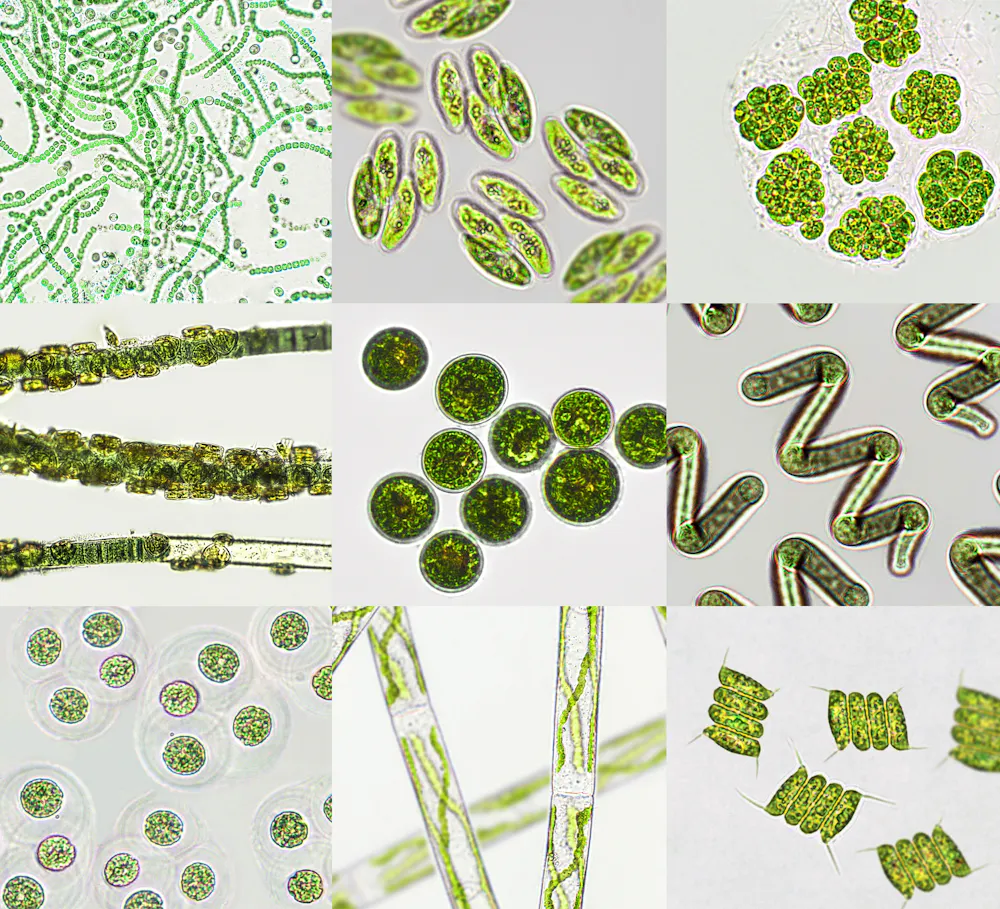
    Not much attention is paid to plankton because these creatures are usually hidden from sight. They are mostly microscopic in size and live in aquatic environments, but human lives are intricately connected with plankton.

    The etymology of “plankton” originates from the ancient Greek word for “drifter.” Plankton refers to all organisms suspended in all types of waters (oceans, lakes, rivers and even groundwaters), including viruses, bacteria, insects, larval fish and jellyfish. Plankton come in many shapes and sizes, but what unites all of them is a tendency to drift with currents.


    Read more:
    Small but mighty, plankton are some of the most powerful creatures on Earth


    There are both plant (phytoplankton) and animal (zooplankton) types, as well as organisms that blur the line by belonging to both. These include carnivorous plants or photosynthesizing animals (mixoplankton).

    Phytoplankton are an essential part of aquatic ecosystems.
    (Shutterstock)

    Understanding plankton

    We are an international group of researchers working on plankton that inhabit aquatic waters from high alpine lakes to the deep oceans. We represent a much larger consortium of researchers (the Plankton Passionates) who have recently considered all the ways in which plankton are crucial for human well-being, society, activity and life on our planet.

    In our work, we have identified six broad themes that allow us to classify the value of plankton.

    Plankton are integral to the ecological functioning of all aquatic environments. For example, phytoplankton use photosynthesis to create biomass that is transferred throughout the ecosystem, much as plants and trees do on land. Phytoplankton are mostly eaten by zooplankton, which are in turn prime food for fish like sardines and herring. These small fish are fed upon by larger fish and birds. That means healthy food-web functioning is critically sustained by plankton.

    Plankton play a critical role in other ways that affect the ecological functioning of aquatic environments. Specifically, plankton affect the cycles of matter and the bio-geochemistry of their ecosystems. While phytoplankton use sunlight to grow and reproduce, they also move nutrients, oxygen and carbon around.

    Phytoplankton are an essential climate variable — studying them provides key indicators for planetary health and climate change — because they capture carbon dioxide (CO2). When phytoplankton are eaten by zooplankton, and these animals die and sink to the bottom of water bodies, this stores carbon away from the atmosphere to where it can no longer contribute to climate change; this process is known as the biological carbon pump.

    However, other plankton, primarily bacteria and fungi, are involved in decomposition of dead material that remains in the water column and their activity recycles chemical elements essential for other organisms. Together with the biological carbon pump, this decomposition activity can have global consequences in climate regulation.

    Fascinating research

    Plankton have also played a role in several human endeavours, including the evolution of science itself advancing many theoretical developments in ecology, such as the study of biodiversity. This diversity of plankton forms — including organisms that look like crystals or jewelry — have fascinated researchers.

    Jellyfish are plankton because they are carried by currents through the water.
    (Shutterstock)

    Several theories or frameworks used throughout ecology have emerged from studying plankton, but their applications go further. For example, Russian biologist Georgy Gause observed competition among plankton, leading to his competitive exclusion principle that’s now commonly applied in socioeconomic contexts.

    Breakthroughs and even Nobel Prizes (medicine) have stemmed from the study of plankton (jellyfish stings, advancing allergy studies. Similarly, research on freshwater ciliate telomeres and the use of fluorescent jellyfish proteins have contributed to further understanding of ageing and cancer.

    Certain plankton species are used as diagnostic tools in forensic science. Others are often used as models in biomedical and ecotoxicological research.

    Because of their foundational role in aquatic food webs, plankton are critical to many human economies. Many planktonic organisms are cultured directly for human consumption including jellyfish, krill, shrimp and copepod zooplankton.

    Virtually all protein in aquatic ecosystems comes from plankton. Some are used as supplements, such as spirulina powder or omega-3 vitamins from krill or copepods.

    Several plankton-derived compounds are highly prized in medicine, cosmetics and pharmaceuticals, including some plankton toxins used for their immune-stimulating effects. Luciferases are a group of enzymes produced by bioluminescent organisms, including many marine plankton, and are also important in biomedical research.

    On the other hand, plankton can also lead to high economic costs when harmful algal blooms, like toxic red tides, occur along coastlines or cyanobacterial blooms arise in lakes.

    Plankton benefits for humans

    Finally, our research considers the role of plankton in human culture, recreation and well-being. Beyond their use as a food source and in medicine, plankton can be culturally important.

    Bioluminescent marine dinoflagellates create incredibly powerful nighttime displays in coastal regions, forming the basis for cultural events and tourist attractions. Diatoms are a type of phytoplankton present in all aquatic ecosystems, and their silica-rich skeletons have been used for flint tools during the Stone Age and as opal in jewelry.

    An illustration from the 1887 book ‘Report on the Radiolaria collected by H.M.S. Challenger during the years 1873-76.’
    (Illus. by E. Haeckel/engraving by A. Giltsch)

    The often strange structural forms of plankton have inspired architects and engineers, including the designers of Milan’s Galleria Vittorio Emmanuele and the former Monumental Gate (Porte Binet) in Paris. Plankton have inspired many artists, the first being biologist Ernst Haeckel.

    The Intergovernmental Science-Policy Platform on Biodiversity and Ecosystem Services adopted the Life Framework of Values. This framework centres living from, with, in and as nature as a position from which to inform policies around biodiversity and ecosystem services.

    Plankton are critical to all of these components. We all benefit from plankton due to their essential role in regulating aquatic habitats, their long-term involvement in climate regulation and the vital resources they provide to humanity.

    Humanity lives with plankton as their incredible diversity connects life across land and water and is one of the driving forces behind Earth’s ecological stability and ecosystem services that we value. Plankton are part of humanity’s living in nature, which emphasizes their vital role in our identity, lifestyles and culture.

    Plankton profoundly affect communities bordering water, but also those further away through plankton-inspired art and design. Finally, living as nature highlights the physical, mental and spiritual interconnectedness with the natural world.

    We need to better recognize the value of plankton as a resource, and as an essential part of stabilizing Earth systems and maintaining them for human well-being.

    Beatrix Beisner receives funding from NSERC. She is Editor-in-Chief of the Journal of Plankton Research (Oxford University Press) and a member of the Groupe de recherche interuniversitaire en limnologie (GRIL), an FRQNT-funded network.

    Maria Grigoratou receives funding from the NSF project WARMEM (OCE-1851866) and the EU-funded HORIZON Europe projects EU4OceanObs2.0 and BioEcoOcean (101136748) to Maria Grigoratou. Maria is now affiliated with the European Polar Board.

    Sakina-Dorothée Ayata receives funding from the European Commission (NECCTON, iMagine, Blue-Cloud2026 projects), the French National Research Agency (ANR, Traitzoo project), and the Institut Universitaire de France (IUF).

    Susanne Menden-Deuer receives funding from the U.S. National Science Foundation and NASA.

    ref. Plankton can investigate crime, affect the climate and influence science – https://theconversation.com/plankton-can-investigate-crime-affect-the-climate-and-influence-science-252782

    MIL OSI – Global Reports

  • MIL-OSI Global: Plankton can investigate crime, affect the climate and influence science

    Source: The Conversation – Canada – By Beatrix Beisner, Professor, Aquatic ecology; Groupe de recherche interuniversitaire en limnologie (GRIL), Université du Québec à Montréal (UQAM)

    Plankton have inspired and influenced art, science and architecture. (Shutterstock)

    Not much attention is paid to plankton because these creatures are usually hidden from sight. They are mostly microscopic in size and live in aquatic environments, but human lives are intricately connected with plankton.

    The etymology of “plankton” originates from the ancient Greek word for “drifter.” Plankton refers to all organisms suspended in all types of waters (oceans, lakes, rivers and even groundwaters), including viruses, bacteria, insects, larval fish and jellyfish. Plankton come in many shapes and sizes, but what unites all of them is a tendency to drift with currents.


    Read more:
    Small but mighty, plankton are some of the most powerful creatures on Earth


    There are both plant (phytoplankton) and animal (zooplankton) types, as well as organisms that blur the line by belonging to both. These include carnivorous plants or photosynthesizing animals (mixoplankton).

    Phytoplankton are an essential part of aquatic ecosystems.
    (Shutterstock)

    Understanding plankton

    We are an international group of researchers working on plankton that inhabit aquatic waters from high alpine lakes to the deep oceans. We represent a much larger consortium of researchers (the Plankton Passionates) who have recently considered all the ways in which plankton are crucial for human well-being, society, activity and life on our planet.

    In our work, we have identified six broad themes that allow us to classify the value of plankton.

    Plankton are integral to the ecological functioning of all aquatic environments. For example, phytoplankton use photosynthesis to create biomass that is transferred throughout the ecosystem, much as plants and trees do on land. Phytoplankton are mostly eaten by zooplankton, which are in turn prime food for fish like sardines and herring. These small fish are fed upon by larger fish and birds. That means healthy food-web functioning is critically sustained by plankton.

    Plankton play a critical role in other ways that affect the ecological functioning of aquatic environments. Specifically, plankton affect the cycles of matter and the bio-geochemistry of their ecosystems. While phytoplankton use sunlight to grow and reproduce, they also move nutrients, oxygen and carbon around.

    Phytoplankton are an essential climate variable — studying them provides key indicators for planetary health and climate change — because they capture carbon dioxide (CO2). When phytoplankton are eaten by zooplankton, and these animals die and sink to the bottom of water bodies, this stores carbon away from the atmosphere to where it can no longer contribute to climate change; this process is known as the biological carbon pump.

    However, other plankton, primarily bacteria and fungi, are involved in decomposition of dead material that remains in the water column and their activity recycles chemical elements essential for other organisms. Together with the biological carbon pump, this decomposition activity can have global consequences in climate regulation.

    Fascinating research

    Plankton have also played a role in several human endeavours, including the evolution of science itself advancing many theoretical developments in ecology, such as the study of biodiversity. This diversity of plankton forms — including organisms that look like crystals or jewelry — have fascinated researchers.

    Jellyfish are plankton because they are carried by currents through the water.
    (Shutterstock)

    Several theories or frameworks used throughout ecology have emerged from studying plankton, but their applications go further. For example, Russian biologist Georgy Gause observed competition among plankton, leading to his competitive exclusion principle that’s now commonly applied in socioeconomic contexts.

    Breakthroughs and even Nobel Prizes (medicine) have stemmed from the study of plankton (jellyfish stings, advancing allergy studies. Similarly, research on freshwater ciliate telomeres and the use of fluorescent jellyfish proteins have contributed to further understanding of ageing and cancer.

    Certain plankton species are used as diagnostic tools in forensic science. Others are often used as models in biomedical and ecotoxicological research.

    Because of their foundational role in aquatic food webs, plankton are critical to many human economies. Many planktonic organisms are cultured directly for human consumption including jellyfish, krill, shrimp and copepod zooplankton.

    Virtually all protein in aquatic ecosystems comes from plankton. Some are used as supplements, such as spirulina powder or omega-3 vitamins from krill or copepods.

    Several plankton-derived compounds are highly prized in medicine, cosmetics and pharmaceuticals, including some plankton toxins used for their immune-stimulating effects. Luciferases are a group of enzymes produced by bioluminescent organisms, including many marine plankton, and are also important in biomedical research.

    On the other hand, plankton can also lead to high economic costs when harmful algal blooms, like toxic red tides, occur along coastlines or cyanobacterial blooms arise in lakes.

    Plankton benefits for humans

    Finally, our research considers the role of plankton in human culture, recreation and well-being. Beyond their use as a food source and in medicine, plankton can be culturally important.

    Bioluminescent marine dinoflagellates create incredibly powerful nighttime displays in coastal regions, forming the basis for cultural events and tourist attractions. Diatoms are a type of phytoplankton present in all aquatic ecosystems, and their silica-rich skeletons have been used for flint tools during the Stone Age and as opal in jewelry.

    An illustration from the 1887 book ‘Report on the Radiolaria collected by H.M.S. Challenger during the years 1873-76.’
    (Illus. by E. Haeckel/engraving by A. Giltsch)

    The often strange structural forms of plankton have inspired architects and engineers, including the designers of Milan’s Galleria Vittorio Emmanuele and the former Monumental Gate (Porte Binet) in Paris. Plankton have inspired many artists, the first being biologist Ernst Haeckel.

    The Intergovernmental Science-Policy Platform on Biodiversity and Ecosystem Services adopted the Life Framework of Values. This framework centres living from, with, in and as nature as a position from which to inform policies around biodiversity and ecosystem services.

    Plankton are critical to all of these components. We all benefit from plankton due to their essential role in regulating aquatic habitats, their long-term involvement in climate regulation and the vital resources they provide to humanity.

    Humanity lives with plankton as their incredible diversity connects life across land and water and is one of the driving forces behind Earth’s ecological stability and ecosystem services that we value. Plankton are part of humanity’s living in nature, which emphasizes their vital role in our identity, lifestyles and culture.

    Plankton profoundly affect communities bordering water, but also those further away through plankton-inspired art and design. Finally, living as nature highlights the physical, mental and spiritual interconnectedness with the natural world.

    We need to better recognize the value of plankton as a resource, and as an essential part of stabilizing Earth systems and maintaining them for human well-being.

    Beatrix Beisner receives funding from NSERC. She is Editor-in-Chief of the Journal of Plankton Research (Oxford University Press) and a member of the Groupe de recherche interuniversitaire en limnologie (GRIL), an FRQNT-funded network.

    Maria Grigoratou receives funding from the NSF project WARMEM (OCE-1851866) and the EU-funded HORIZON Europe projects EU4OceanObs2.0 and BioEcoOcean (101136748) to Maria Grigoratou. Maria is now affiliated with the European Polar Board.

    Sakina-Dorothée Ayata receives funding from the European Commission (NECCTON, iMagine, Blue-Cloud2026 projects), the French National Research Agency (ANR, Traitzoo project), and the Institut Universitaire de France (IUF).

    Susanne Menden-Deuer receives funding from the U.S. National Science Foundation and NASA.

    ref. Plankton can investigate crime, affect the climate and influence science – https://theconversation.com/plankton-can-investigate-crime-affect-the-climate-and-influence-science-252782

    MIL OSI – Global Reports

  • MIL-OSI Global: Survey: Only four per cent of Canadians give schools an ‘A’ on climate education – students deserve better

    Source: The Conversation – Canada – By Karen S. Acton, Assistant Professor, Educational Leadership and Policy, OISE, University of Toronto

    Only nine per cent of Canadian students learn about climate change often in school, while 42 per cent say it’s rarely or never discussed in the classroom.

    These are some of the concerning findings from the new 2025 national survey at the nonprofit Learning for a Sustainable Future (LSF), where I serve as a research consultant. Our team surveyed over 4,200 people, including students, educators, parents and the general public.

    The report, called “From Awareness to Action: Canadians’ Views on Climate Change and Education,” reveals a widening gap between public concern and the education system’s lack of response.

    We conducted the survey in partnership with the pollster Leger and supported by the federal government. It comes at a critical moment as Canadians grapple with increasingly severe climate impacts and growing recognition that education is vitally important to addressing climate change.

    The message is clear: Canadians want schools to do more. A strong majority of respondents (62 per cent) believe climate change should be a high priority in education. More than half (56 per cent) believe it should be taught by all teachers.

    Understanding is slipping

    According to the survey, 80 per cent of Canadians accept that climate change is real and impacting their lives. Most (67 per cent) believe we are in a climate emergency, yet this belief has declined from 72 per cent in 2022.

    Also slipping is Canadians’ understanding of climate change, as the pass rate for the survey’s 10-question quiz dipped to 57 per cent in 2025 from 67 per cent in 2022.

    Fewer respondents correctly identified human activities as the primary cause of climate change, or named greenhouse gas emissions as the predominant factor. Many still mistakenly believe the ozone hole is to blame, highlighting one of many persistent climate misconceptions.

    Also concerning was the increase in Canadians who felt that the seriousness of climate change is exaggerated.

    A recent report by climate communications centre Re.Climate noted a similar decline in public perception of how much of a threat climate change poses. In 2023, 44 per cent of Canadians said reducing carbon emissions was a top energy policy priority. By 2025, that number had dropped to 31 per cent.

    Concern about climate change seems to have declined due to competing economic pressures, global instability and political polarization.

    Misinformation adds to the challenge

    The LSF survey highlights Canadians’ dissatisfaction with climate education. When asked to grade schools on how well they were addressing climate change issues, only four per cent gave schools an “A.” Three-quarters of Canadians gave a “C” or lower.

    One dominant concern included addressing the spread of climate misinformation. Only 17 per cent of Canadians felt confident in their ability to distinguish between real and false climate news.

    Misinformation is a growing barrier to public understanding and action on climate issues. For many young people, social media is a dominant source of climate information, but it’s not always a reliable one.

    To address this, almost 80 per cent of respondents, and in particular 87 per cent of educators, agree that climate education in schools should focus more on critical thinking and media literacy.

    Teachers willing, but under-supported

    The good news is that almost half of the educators we surveyed felt confident about their ability to teach climate change. Many are incorporating more climate-related projects and lifestyle and consumer changes into the classroom.

    However, many barriers remain. Most educators still spend fewer than 10 hours per year on climate topics, and 42 per cent rarely address it at all. A full 60 per cent of teachers told us they want to do more but need professional development to feel equipped.

    Teachers need more time, resources and strategies to address how climate change connects to broader issues like mental health, social justice and Indigenous knowledge.

    Educators are also seeking a school-wide culture that promotes climate change education, but nearly half said they lack support from their principal or school boards.

    Unsurprisingly, given the global nature of climate change, the challenges voiced by educators are not unique to Canada. Surveys of teachers in England and the United States found they face similar obstacles, compounded by low teacher confidence, the complexity of the topic and leadership not supporting climate change as a priority.

    Almost half of the educators surveyed felt confident about their ability to teach climate change, and many are incorporating more climate-related projects and lifestyle and consumer changes into the classroom.
    (Shutterstock)

    Students need the opportunity

    One of the most hopeful takeaways is that students want to learn more about climate change at school, beginning in the early grades. When asked what they would tell their teacher, students told us they wanted lessons that go beyond the science to include real-world solutions and personal empowerment.

    They called for open classroom discussions, a clearer understanding of the impacts of climate change and concrete strategies for action.

    As one student put it: “Present it to me in a way that’s relevant that I can understand, and tell me how I can personally make an impact.”

    Another added: “Everyone needs to do their part or nothing will change!”

    These appeals echo those from the recent Voice of 1,000 Kids survey, which found young people want adults to take the climate crisis more seriously and step up to help solve it.


    Read more:
    Kids care deeply about our planet, so adults need to start listening


    A path forward

    The LSF survey found that 76 per cent of respondents recognize that systemic change is needed to address climate challenges, yet only 19 per cent believe government is doing a good job.

    This suggests strong public demand for policy action. Canadian governments must introduce mandatory climate curriculum standards, increased funding for teacher professional learning and resources, and transformative teaching strategies to foster critical thinking and empowerment.

    Almost 70 per cent of respondents said they believe young people can inspire important climate action. Supporting school-wide cultures that embrace sustainability isn’t just good teaching — it’s a pathway to broader social change.

    Now more than ever, we need a reimagined education system that values climate learning as a core competency. Policymakers and education leaders must rise to meet this challenge before another generation of students graduate feeling unprepared to face the defining issue of their time.

    Karen S. Acton works as a consultant for Learning for a Sustainable Future (LSF).

    ref. Survey: Only four per cent of Canadians give schools an ‘A’ on climate education – students deserve better – https://theconversation.com/survey-only-four-per-cent-of-canadians-give-schools-an-a-on-climate-education-students-deserve-better-259430

    MIL OSI – Global Reports

  • MIL-OSI Global: Survey: Only four per cent of Canadians give schools an ‘A’ on climate education – students deserve better

    Source: The Conversation – Canada – By Karen S. Acton, Assistant Professor, Educational Leadership and Policy, OISE, University of Toronto

    Only nine per cent of Canadian students learn about climate change often in school, while 42 per cent say it’s rarely or never discussed in the classroom.

    These are some of the concerning findings from the new 2025 national survey at the nonprofit Learning for a Sustainable Future (LSF), where I serve as a research consultant. Our team surveyed over 4,200 people, including students, educators, parents and the general public.

    The report, called “From Awareness to Action: Canadians’ Views on Climate Change and Education,” reveals a widening gap between public concern and the education system’s lack of response.

    We conducted the survey in partnership with the pollster Leger and supported by the federal government. It comes at a critical moment as Canadians grapple with increasingly severe climate impacts and growing recognition that education is vitally important to addressing climate change.

    The message is clear: Canadians want schools to do more. A strong majority of respondents (62 per cent) believe climate change should be a high priority in education. More than half (56 per cent) believe it should be taught by all teachers.

    Understanding is slipping

    According to the survey, 80 per cent of Canadians accept that climate change is real and impacting their lives. Most (67 per cent) believe we are in a climate emergency, yet this belief has declined from 72 per cent in 2022.

    Also slipping is Canadians’ understanding of climate change, as the pass rate for the survey’s 10-question quiz dipped to 57 per cent in 2025 from 67 per cent in 2022.

    Fewer respondents correctly identified human activities as the primary cause of climate change, or named greenhouse gas emissions as the predominant factor. Many still mistakenly believe the ozone hole is to blame, highlighting one of many persistent climate misconceptions.

    Also concerning was the increase in Canadians who felt that the seriousness of climate change is exaggerated.

    A recent report by climate communications centre Re.Climate noted a similar decline in public perception of how much of a threat climate change poses. In 2023, 44 per cent of Canadians said reducing carbon emissions was a top energy policy priority. By 2025, that number had dropped to 31 per cent.

    Concern about climate change seems to have declined due to competing economic pressures, global instability and political polarization.

    Misinformation adds to the challenge

    The LSF survey highlights Canadians’ dissatisfaction with climate education. When asked to grade schools on how well they were addressing climate change issues, only four per cent gave schools an “A.” Three-quarters of Canadians gave a “C” or lower.

    One dominant concern included addressing the spread of climate misinformation. Only 17 per cent of Canadians felt confident in their ability to distinguish between real and false climate news.

    Misinformation is a growing barrier to public understanding and action on climate issues. For many young people, social media is a dominant source of climate information, but it’s not always a reliable one.

    To address this, almost 80 per cent of respondents, and in particular 87 per cent of educators, agree that climate education in schools should focus more on critical thinking and media literacy.

    Teachers willing, but under-supported

    The good news is that almost half of the educators we surveyed felt confident about their ability to teach climate change. Many are incorporating more climate-related projects and lifestyle and consumer changes into the classroom.

    However, many barriers remain. Most educators still spend fewer than 10 hours per year on climate topics, and 42 per cent rarely address it at all. A full 60 per cent of teachers told us they want to do more but need professional development to feel equipped.

    Teachers need more time, resources and strategies to address how climate change connects to broader issues like mental health, social justice and Indigenous knowledge.

    Educators are also seeking a school-wide culture that promotes climate change education, but nearly half said they lack support from their principal or school boards.

    Unsurprisingly, given the global nature of climate change, the challenges voiced by educators are not unique to Canada. Surveys of teachers in England and the United States found they face similar obstacles, compounded by low teacher confidence, the complexity of the topic and leadership not supporting climate change as a priority.

    Almost half of the educators surveyed felt confident about their ability to teach climate change, and many are incorporating more climate-related projects and lifestyle and consumer changes into the classroom.
    (Shutterstock)

    Students need the opportunity

    One of the most hopeful takeaways is that students want to learn more about climate change at school, beginning in the early grades. When asked what they would tell their teacher, students told us they wanted lessons that go beyond the science to include real-world solutions and personal empowerment.

    They called for open classroom discussions, a clearer understanding of the impacts of climate change and concrete strategies for action.

    As one student put it: “Present it to me in a way that’s relevant that I can understand, and tell me how I can personally make an impact.”

    Another added: “Everyone needs to do their part or nothing will change!”

    These appeals echo those from the recent Voice of 1,000 Kids survey, which found young people want adults to take the climate crisis more seriously and step up to help solve it.


    Read more:
    Kids care deeply about our planet, so adults need to start listening


    A path forward

    The LSF survey found that 76 per cent of respondents recognize that systemic change is needed to address climate challenges, yet only 19 per cent believe government is doing a good job.

    This suggests strong public demand for policy action. Canadian governments must introduce mandatory climate curriculum standards, increased funding for teacher professional learning and resources, and transformative teaching strategies to foster critical thinking and empowerment.

    Almost 70 per cent of respondents said they believe young people can inspire important climate action. Supporting school-wide cultures that embrace sustainability isn’t just good teaching — it’s a pathway to broader social change.

    Now more than ever, we need a reimagined education system that values climate learning as a core competency. Policymakers and education leaders must rise to meet this challenge before another generation of students graduate feeling unprepared to face the defining issue of their time.

    Karen S. Acton works as a consultant for Learning for a Sustainable Future (LSF).

    ref. Survey: Only four per cent of Canadians give schools an ‘A’ on climate education – students deserve better – https://theconversation.com/survey-only-four-per-cent-of-canadians-give-schools-an-a-on-climate-education-students-deserve-better-259430

    MIL OSI – Global Reports

  • MIL-OSI United Kingdom: expert reaction to ‘Healthy food revolution to tackle obesity epidemic’, as press released by DHSC

    Source: United Kingdom – Executive Government & Departments

    Experts comment on a new press release sent out by the government entitled ‘Healthy food revolution to tackle obesity epidemic’.

    Prof Andrew Prentice, Professor of International Nutrition at London School of Hygiene & Tropical Medicine, said:

    “I’m delighted to see government working hand in hand with food manufacturers and retailers. As industry is perceived by many as being part of the problem in creating an obesogenic environment, they must be part of the solution.’

    “The devil will be in the detail and it is a bit concerning to read that ‘large retailers including supermarkets will set a new standard’ but this may be careless wording in the press release. Elsewhere it is clear that the Food Strategy Advisory Board will lead the charge.

    “Mandatory reporting of healthy/unhealthy food sales is an important first step but will presumably only affect the largest outlets. Other initiatives will be required for the thousands of smaller food producers and outlets.’

    “The issue of government creating a level playing field is key. This will help companies reduce sugar and fat from products without fear of losing out to competitors who do not.”

    Prof Tom Sanders, Professor Emeritus of Nutrition and Dietetics, King’s College London, said:

    “The claim made in the Press Release that Public Health experts believe that reducing daily diet by just 50 calories would lift 340,000 children and 2 million adults out of obesity is not a view that most experts in nutrition would share.

    “In theory, very small reductions in daily calorie intake (50 kcal) should stop unhealthy weight gain. But there is little evidence to support this because in practice individuals adapt to small reductions or increases in calorie intake by reducing or increasing energy expenditure. Put into perspective, 50 kcal is the energy expended by 10 minutes brisk walking.

    “There is very limited evidence from one randomised controlled trial in children showing that swapping a can of full sugar drink for a can of diet drink consumed five times a week for a year and a half reduced unhealthy weight gain by just over 1kg. The results of that study found the weight gain was far less than predicted.

    “Most randomised controlled trials show you need to reduce calories intake by at least 300 kcal for a sustained period time to lose weight. Weight gain also tends to occur during periods of excessive consumption (e.g. Christmas and festive periods) or when physical activity is low.

    “Discretionary foods consumed outside the home (crisps, morning goods, cakes, ice-cream) as well as alcoholic drinks are particularly fattening and recent reports suggest we need to focus on these and change eating behaviours, which continue to get worse.

    “Food manufacturers have already reduced portion sizes of foods by ‘shrinkflation’ (less food at higher prices) but so far this has had little impact on obesity.

    “Tackling obesity can only be effective if it changes the obesogenic environment which is characterised by sedentary behaviour and over-exposure to high calorie food.”

    * www.gov.uk/government/news/healthy-food-revolution-to-tackle-obesity-epidemic

    Declared interests

    Prof Tom Sanders: “I have received grant funding for research on vegans in the past. I have been retired for 10 years but during my career at King’s College London, I formerly acted as consultant for companies that made artificial sweeteners and sugar substitutes.

    “I am a member of the Programme Advisory Committee of the Malaysia Palm Oil Board which involves the review of research projects proposed by the Malaysia government.

    “I also used to be a member of the Scientific Advisory Committee of the Global Dairy Platform up until 2015.

    “I did do some consultancy work on GRAS affirmation of high oleic palm oil for Archer Daniel Midland more than ten years ago.

    “My research group received oils and fats free of charge from Unilever and Archer Daniel Midland for our Food Standards Agency Research.

    “I was a member of the FAO/WHO Joint Expert Committee that recommended that trans fatty acids be removed from the human food chain.

    “Member of the Science Committee British Nutrition Foundation.  Honorary Nutritional Director HEART UK.

    “Before my retirement from King’s College London in 2014, I acted as a consultant to many companies and organisations involved in the manufacture of what are now designated ultraprocessed foods.

    “I used to be a consultant to the Breakfast Cereals Advisory Board of the Food and Drink Federation.

    “I used to be a consultant for aspartame more than a decade ago.

    “When I was doing research at King’ College London, the following applied: Tom does not hold any grants or have any consultancies with companies involved in the production or marketing of sugar-sweetened drinks.  In reference to previous funding to Tom’s institution: £4.5 million was donated to King’s College London by Tate & Lyle in 2006; this funding finished in 2011. This money was given to the College and was in recognition of the discovery of the artificial sweetener sucralose by Prof Hough at the Queen Elizabeth College (QEC), which merged with King’s College London. The Tate & Lyle grant paid for the Clinical Research Centre at St Thomas’ that is run by the Guy’s & St Thomas’ Trust, it was not used to fund research on sugar. Tate & Lyle sold their sugar interests to American Sugar so the brand Tate & Lyle still exists but it is no longer linked to the company Tate & Lyle PLC, which gave the money to King’s College London in 2006.”

    Andrew Prentice: “I sit on the Global Nutrition Science Council for the Nestlé Nutrition Institute (NNI), an educational initiative, and create content for them (lectures, articles and podcasts for health care professionals).”

    MIL OSI United Kingdom

  • MIL-OSI United Nations: Secretary-General’s video message to the Civil Society Forum at the Fourth Financing for Development Conference

    Source: United Nations

    Download the video:
    https://s3.us-east-1.amazonaws.com/downloads2.unmultimedia.org/public/video/evergreen/MSG+SG+/SG+26+Jun+25/3418349_MSG+SG+FINANCING+FOR+DEVELOPMENT+CONFERENCE+26+JUN+25.mp4

    Dear friends,

    The Fourth Financing for Development Conference is about fixing how the world invests in sustainable development.

    At a time of rising conflict, a burning planet and growing division, it is about showing how international cooperation can and must deliver for people. 

    Thank you for your voice and relentless activism.

    You are the conscience of this process — and your calls for justice for the most vulnerable are being heard. 

    To mobilize the funding to achieve the Sustainable Development Goals.

    To ease the crushing debt burden on developing countries.  

    And to reform the global financial architecture for good.

    You know change is possible.

    I urge you to keep pushing.

    Keep demanding that governments live up to their promises.

    The leadership of civil society can inspire change for all of society.

    I am proud to stand with you in this fight for justice. Thank you.

    ***
     

    MIL OSI United Nations News

  • MIL-OSI Africa: Eritrea: Vocational Training for Students of College of Medicine and Science


    Download logo

    Vocational training programs lasting from three to five months have been provided to 146 students, including 90 female students, at the College of Medicine and Science.

    Mr. AbrhaleyAsefaw, Head of the National Union of Eritrean Youth and Students at the college, stated that the training, offered alongside the students’ regular academic curriculum, covered topics such as graphic design, sign language, Arabic language, electronics, and music.

    Mr. Elias Teages, Director of Student Affairs at the college, emphasized that the knowledge gained from the training would significantly benefit the students in their daily lives. He urged them to apply their new skills for both personal advancement and community service.

    Ms. Mensura Ismail, Head of the Union branch in Sawa and Higher Education Institutions, encouraged the trainees to further develop their skills through practice and to share their knowledge with their peers.

    Distributed by APO Group on behalf of Ministry of Information, Eritrea.

    MIL OSI Africa

  • MIL-OSI Russia: China tackles cancer in the elderly with early detection and TCM

    Translation. Region: Russian Federal

    Source: People’s Republic of China in Russian – People’s Republic of China in Russian –

    Source: People’s Republic of China – State Council News

    BEIJING, June 29 (Xinhua) — With its rapidly aging population, China is facing a new pressing health problem: cancer among the elderly.

    According to the latest data, people over 60 now account for 60.7 percent of all new cancer cases in the country, making cancer care for the elderly one of the most urgent priorities in China’s efforts to ensure health for all.

    A week-long national campaign has been launched in China to raise awareness of cancer among older people. Medical experts are calling for earlier detection, evidence-based treatment and more public education to combat myths that often cause older people to delay or avoid treatment.

    China’s demographic shift is accelerating: People aged 60 and over now make up more than 20 percent of the population. That figure is expected to reach 30 percent by 2035, with the elderly population surpassing 400 million.

    A report from the Chinese Cancer Association shows that lung and gastrointestinal cancers are most common among older adults, accounting for about 65 percent of malignancies in this age group. Other commonly diagnosed cancers include liver, lymphoma, prostate, and various blood cancers.

    “Cancer is not uncommon among the elderly, and it is closely related to the accumulation of genetic mutations over time,” says Xue Dong, a specialist in geriatric oncology at Peking University Cancer Hospital. Cell aging, decreased immunity, and long-term exposure to carcinogens greatly increase vulnerability, Xue Dong explains.

    Early diagnosis remains the most powerful tool in the fight against cancer, experts say.

    In response, China’s National Health Commission has called for expanded public health services, including nationwide health checks for adults aged 65 and above, with more frequent screenings for high-risk groups.

    Local initiatives are also underway. In Yancheng, east China’s Jiangsu Province, residents aged 60 to 69 are now being tested for 12 common tumor markers for free. In Daqing, northeast China’s Heilongjiang Province, authorities are offering citizens aged 45 to 74 free screening for five major cancers – lung, breast, liver, upper gastrointestinal tract, and colon.

    In addition to cancer screenings, doctors also promote healthy living. Zhang Tong, an oncology specialist at Xiyuan Hospital of the Chinese Academy of Chinese Medicine, advises older adults to eat a balanced diet and engage in traditional Chinese fitness exercises such as tai chi and baduanjin, which are known to boost energy and immune function.

    Doctors also emphasize that traditional Chinese medicine (TCM) can play a supporting role in combination with Western treatment methods.

    During chemotherapy, treatments such as acupuncture and spot treatments can help reduce side effects such as nausea, loss of appetite, and constipation. Herbal baths and steam therapy can help with radiation-related symptoms such as skin damage and mouth sores.

    Li Yuanqing, Xue Dong’s colleague at the same hospital, noted that clinical experience shows that these approaches can ease patient discomfort during chemotherapy and radiotherapy.

    Experts also warn of deeply ingrained misconceptions. Many older patients believe in miracle cures or folk remedies, while others fear that traditional treatments such as surgery or chemotherapy will only accelerate their deterioration.

    “Treating older cancer patients requires a balance,” Xue Dong said. “We can’t just apply treatments designed for younger people, nor should we discard treatments because of age. The key is individualized treatment based on both the patient’s medical needs and physical and emotional readiness.”

    “Thanks to the science and compassion we use, more and more elderly cancer patients will be able to live a dignified life,” says Xue Dong. -0-

    MIL OSI Russia News

  • MIL-OSI Russia: World’s first pure ammonia demonstration vessel makes maiden voyage in China

    Translation. Region: Russian Federal

    Source: People’s Republic of China in Russian – People’s Republic of China in Russian –

    Source: People’s Republic of China – State Council News

    HEFEI, June 29 (Xinhua) — The world’s first demonstration ship running on clean ammonia fuel, the Anhui, has successfully completed its maiden voyage in Hefei, east China’s Anhui Province, marking a major step forward in the development of green shipping.

    Ammonia, a key raw material for the chemical industry, has a high energy density. Being a carbon-free substance, it produces only water and nitrogen when completely burned. This makes it a very promising fuel for decarbonizing shipping.

    In recent years, several shipping companies in Japan, Norway and other countries have been actively investing in developing ammonia-fueled ships. A 2021 report by the International Energy Agency estimated that up to 45 percent of global marine fuel demand would be met by ammonia by 2050 to achieve a “net zero scenario.” However, ammonia fuel also faces challenges such as difficulty in ignition and combustion instability.

    The ammonia-powered vessel Anhui was jointly developed by the Institute of Energy of Hefei National Comprehensive Science Center and its subsidiary Shenzhen Haixu New Energy Co., Ltd. It is equipped with a 200 kW high-speed gas combustion generator, two 100 kW electric motors and a twin-screw propulsion system. Its full deadweight is 50 tons and its rated speed is 10 knots.

    Wu Dianwu of the aforementioned institute said that the research team has overcome several key technological difficulties. These include plasma ignition of pure ammonia fuel, stable combustion, efficient catalytic cracking of ammonia gas to produce hydrogen, and efficient combustion and combustion control of hydrogen-ammonia fuel mixture in internal combustion engines. In addition, the team has also developed a pure ammonia fuel burner and various catalytic cracking devices for ammonia gas.

    During the maiden voyage, it was possible to achieve stable and complete combustion of pure ammonia fuel, almost zero carbon dioxide emissions and effective control of nitrogen oxides. This confirms the potential for widespread use of hydrogen-ammonia fuel in marine and land transport, industrial boilers and fuel cells, Wu Dianwu noted.

    Wang Junli, secretary general of the China Society of Shipbuilding, said the vessel’s successful voyage marked a milestone in building a clean, low-carbon energy system for waterborne transport. With pure ammonia engines reaching megawatt-class power, there will be broad prospects for their deployment. This is of particular significance in the context of China’s efforts to achieve “dual carbon goals” of peaking carbon dioxide emissions by 2030 and achieving carbon neutrality by 2060. -0-

    MIL OSI Russia News

  • PM Modi interacts with Shubhanshu Shukla, first Indian astronaut aboard ISS

    Source: Government of India

    Source: Government of India (4)

    Prime Minister Narendra Modi on Saturday held a video interaction with Group Captain Shubhanshu Shukla, the first Indian astronaut to visit the International Space Station (ISS). During the warm and inspiring conversation, PM Modi lauded Shukla’s achievement as the dawn of a new era for India’s space ambitions and extended the wishes of 140 crore Indians.

    “Though you are farthest from the motherland, you are closest to our hearts,” said the Prime Minister, praising Shukla’s journey as symbolic of the aspirations of a rising India. Shukla expressed gratitude for the blessings and support he has received and described the experience of space as transformative, mirroring India’s fast-paced progress.

    In a lighter moment, the Prime Minister asked if the traditional Indian delicacies Shukla carried—like carrot halwa and aam ras—had been shared aboard. Shukla confirmed his international colleagues relished the flavours, with some even expressing interest in visiting India.

    The astronaut spoke about the unity of Earth from space, where borders vanish, and India appears grand in both size and spirit. He described his daily experiences—like completing 16 orbits a day—and the challenges of living in microgravity, calling the mission a blend of science and wonder.

    Highlighting India’s space science potential, Shukla shared insights into seven pioneering experiments aboard the ISS, including studies on stem cell response and microalgae growth, which could benefit agriculture and health on Earth.

    PM Modi reflected on the resurgence of scientific curiosity among youth post-Chandrayaan and Shukla’s mission, saying, “Our children no longer just look at the sky—they now believe they can reach it.” The Prime Minister urged young Indians to dream big and announced key goals ahead: Mission Gaganyaan, building India’s own space station, and landing an Indian on the Moon.

    Shukla closed the conversation with an emotional note, saying, “The sky has never been the limit—not for me, not for India.” He proudly shared that the Indian national flag now flies aboard the ISS for the first time in history.

    PM Modi hailed the astronaut’s journey as the first chapter in India’s ambitious space future and assured him that the entire nation eagerly awaits his return.

  • MIL-OSI China: Beijing breaks into global top 5 startup hubs

    Source: People’s Republic of China – State Council News

    This photo taken from Jingshan Hill on Aug. 12, 2024 shows the skyscrapers of the central business district (CBD) on a sunny day in Beijing, capital of China. [Photo/Xinhua]

    Beijing tied with Boston for fifth place in a global ranking of startup ecosystems, making it China’s sole city in the top five, according to the Global Startup Ecosystem Report 2025 released on June 12 by research firm Startup Genome.

    Silicon Valley held the top spot, followed by New York, London and Tel Aviv in second through fourth place, respectively. Other Chinese hubs, including Shanghai, Shenzhen, Hangzhou, Hong Kong and Guangzhou, also ranked among the top 40, with all except Hong Kong moving up the list.

    The report assessed six metrics: performance, funding, talent and expertise, market reach, AI-native transformation and knowledge supply. Beijing ranked third globally in performance and fourth in both talent and knowledge supply.

    The city far exceeded the global average in ecosystem value, number of active unicorn companies, software engineer salaries and total venture capital. From 2022 to 2024, the city’s startup ecosystem was valued at $533 billion, over 26 times the global average of $20.4 billion, and it boasted 61 active unicorn companies, compared to the global average of four.

    The report attributes Beijing’s robust innovation growth to strong government support, intellectual backing from top universities and a thriving capital market.

    In terms of policy support, Beijing has encouraged major commercial banks to increase investment in non-listed firms as part of broader efforts to support its startup ecosystem. In 2024, loans to small and micro businesses and entrepreneurs in Beijing jumped, with entrepreneurship guaranteed loans rising 79.6% year on year. That same year, the city also introduced over 250 business reform measures and added 287,000 new market entities.

    Beijing is home to 46 publicly listed companies focused on AI, big data and analytics, with a combined market value of $590.96 billion. The city has earned international recognition in AI-driven data analytics, life sciences and fintech, and has become a leading center for payment technology.

    To attract startups, Beijing has continued to bolster its support for tech companies, financing options and advanced research infrastructure. In August 2024, officials announced plans to expand the number of specialized, innovation-driven firms in Beijing to over 10,000 and introduced new policies and funding to support digital upgrades. 

    Several new investment funds have been set up targeting key technology sectors, while infrastructure initiatives such as a super-node computing power cluster and the rollout of 5G-Advanced mobile networks are expected to further support startup development.

    MIL OSI China News

  • MIL-OSI China: World’s first pure ammonia-fueled demonstration vessel completes maiden voyage in China

    Source: People’s Republic of China – State Council News

    The world’s first pure ammonia-powered demonstration vessel, the “Anhui,” successfully completed its maiden voyage in Hefei, east China’s Anhui Province, marking a major step forward for green shipping.

    An aerial drone photo taken on June 28, 2025 shows the pure ammonia-powered demonstration vessel, the “Anhui,” making its maiden voyage at the water area of Chaohu Lake in Hefei, east China’s Anhui Province. (Xinhua/Zhou Mu)

    Ammonia, a major chemical industry feedstock, has a high energy density and due to its carbon-free nature, produces only water and nitrogen when fully combusted. This makes it a highly promising fuel for decarbonizing shipping.

    In recent years, several shipping companies in countries like Japan and Norway have been investing in the development of ammonia-powered vessels. A report by the International Energy Agency published in 2021 estimated that by 2050, ammonia could account for around 45 percent of global energy demand for shipping in 2050 in the net-zero emissions. However, ammonia fuel also faces challenges such as ignition difficulties and unstable combustion.

    Ammonia-powered Anhui was jointly developed by the Institute of Energy of the Hefei Comprehensive National Science Center and its subsidiary, Shenzhen Haixu New Energy Co., Ltd. It is equipped with a 200kW high-speed gas internal combustion generator, two 100kW propulsion motors, and a twin-screw propulsion system. It has a full load capacity of 50 tonnes and a rated speed of 10 knots.

    According to Wu Dianwu from the institute, the research team overcame several key technological challenges. These include pure ammonia fuel plasma ignition, sustained combustion, efficient catalytic cracking of ammonia gas to produce hydrogen, and efficient combustion and control of hydrogen-ammonia mixed gas in internal combustion engines. The team also developed a pure ammonia fuel burner and various ammonia gas catalytic cracking devices.

    The maiden voyage achieved stable combustion of pure ammonia fuel, nearly zero carbon dioxide emissions, and effective control of nitrogen oxides. This confirms the potential for ammonia-hydrogen fuels to be widely used in marine and land transport, as well as in industrial boilers and fuel cells, Wu noted.

    Wang Junli, secretary-general of the Chinese Society of Naval Architects and Marine Engineers, said the vessel’s successful voyage marked a major milestone in creating a clean, low-carbon energy system for water transport. If pure ammonia engines reach the megawatt level, their applications will expand significantly, holding significant importance in achieving China’s dual carbon goals. 

    MIL OSI China News

  • MIL-OSI United Nations: Deputy Secretary-General’s remarks at the Graduation Ceremony of the Paris School of International Affairs, Sciences Po

    Source: United Nations secretary general

    Dean Gonzalez, distinguished faculty members, ladies and gentlemen, 
      
    Most importantly, graduates, 

    Let me begin with the most important word of all: congratulations! 

    You now join a long line of Sciences Po alumni who have shaped our world – including some of whom are doing it every day at the United Nations as they work in my office supporting the Secretary-General. 

    Let’s also take a moment to recognise your families, friends and loved ones – who have been with you every step of the way.  

    They deserve a round of applause.   

    Students representing more than 120 nationalities come here to learn how the world works, and how it can work better.  

    That spirit of global curiosity and purpose has also carried me through every chapter of my own journey.   

    Designing schools and hospitals in my home country of Nigeria. 

    Advising four Presidents on poverty reduction, development policy planning and public sector reform. 

    Supporting Member States to lead the process that transformed global aspirations into the Sustainable Development Goals. 

    And now as the longest-serving Deputy Secretary-General in United Nations history, supporting the Secretary-General on some of the most complex situations in our history, from COVID, to Ukraine, to Sudan and Gaza and today’s continuing crisis in the Middle East.

    Today, I want to reflect on the lessons I have learned along the way.

    First, don’t agonise, organise. 

    We live in a world of hurt.  A world that is messy, complicated and often overwhelming.  

    And I know it might be easy to feel paralyzed by the scale and hopelessness of today’s challenges.  

    Don’t.

    Because more than ever, those challenges are connected – and we solve them by seeing those connections and coming together. 

    When I served as Nigeria’s Minister of Environment, my job was never just about the environment.  

    When Lake Chad was drying up, it wasn’t just an ecological crisis – it was a security crisis.  Boko Haram was born and abducted 200 school girls. 

    When we faced population and urban sprawl and tensions rose between farmers and herders, it wasn’t just about water  access– it was about food systems and growing cities. 

    When I met girls walking hours to fetch water, missing school every day – it wasn’t just about resources – it was about gender equality.  

    We didn’t work in siloes.  We built coalitions across sectors – civil society, young people, traditional leaders, the private sector – to find real solutions.  

    We didn’t agonize, we organized. 

    And, yes, there’s plenty to agonize about today – especially when multilateralism is under attack and international cooperation is on the back foot. 

    But I have seen what’s possible when we find common ground and forge ahead.  

    Just look at the last two months at the UN.  

    A landmark Pandemic Treaty approved at the World Health Organization. 

    Major new protections for our oceans at the World Ocean Conference in Nice.  

    And from Paris, I head to Sevilla — where the world is coming together to commit to better finance sustainable development. 

    So, when the problems seem larger than life, too tangled, too tough — don’t agonize.

    Organize. 

    Mobilize. 

    And help realize the change our world so urgently needs. 

    Remember you did not fail for want of trying.

    The second lesson – keep learning and delivering.  

    Graduation isn’t the end of learning.  In many ways, it’s just the start of your lifelong journey.

    When I joined the UN, I was not steeped in the intricacies of international diplomacy.

    Throughout my career, I have had to learn fast – and deliver even faster.  

    So will you.  

    Even now, I am learning every day – about AI, about geothermal energy, space debris, biotechnology, cybersecurity.  

    You will face even more change, even faster, especially in the new era of super technologies. 

    Regardless of the task that is put in front of you, get ahead of it.  Learn more.  Do more.  Show your stuff and deliver.  Performance opens doors.  

    Yes, some of life is luck and privilege.  

    But I guarantee: the harder you work, the luckier you will get.  

    Third, make hope your most powerful asset. 
    The world is a cynical place. And international affairs is not for the faint of heart. 

    There will be setbacks and critics. 

    There will be many days when the problems seem too big, and the politics too small. When anxieties grip you like a fever.

    Just look around:  war in Ukraine, atrocities in Sudan, catastrophe in Gaza, climate chaos everywhere. 

    But never forget, hope is not a four-letter word. 

    Hope is the courage to build when others are tearing down. 

    Hope is the decision to get up one more time, to negotiate one more deal, even when the odds are against you.

    I have sat with young girls who survived the worst horrors of war and sexual violence. 

    And in their eyes, I saw not just pain – but power. 

    The power to heal. To lead.  To hope. To survive and thrive. 

    Hope is not the absence of fear.  It is the refusal to be defined by it.

    So, carry it with you. Guard it fiercely.  

    Because hope is not just a feeling.  It’s a force.  

    Fourth, hold onto your moral compass. 

    Your degree will open doors. 

    But your integrity will tell you which ones are worth walking through.

    And in today’s world – where the global moral compass is spinning – that clarity matters more than ever. 

    We live in a world where military spending is soaring, while development budgets shrink.  

    Where fossil fuel subsidies dwarf investments in climate action.  

    Where conflict and hardship has forced more people from their homes than at any time since the Second World War.

    In this world, your role as changemakers is not just to make the right deals. 

    It is to draw the right lines. 

    There will be pressure to stay silent. 

    There will be moments when abandoning principles may seem an easier choice.

    But integrity matters most.

    As Deputy Secretary-General, I have had to tell hard truths to powerful people.

    To remind leaders of the many promises they made – and the people they made them to. 

    It is never easy to challenge power. 

    But we don’t serve power. 

    We serve people.

    And if we truly serve people, we must use our superpower and stand for justice, dignity, and solidarity. 

    As we mark Beijing+30, we cannot talk about a future and leave women and girls behind.

    Gender equality is not charity.  It powers our agency. And human rights.   

    And everyone wins when we leave no one behind.  

    But let’s be honest, we are not there yet. 

    So, to the men here today, I say: don’t stand in the way.  

    Don’t walk ahead.  

    Walk with. Stand with.  And speak up. For the other half of your society, women.

    The final lesson is this: invest time in what truly sustains you. 

    Your career will have highs and lows. 

    Plans change. 

    Titles come and go.

    But what will carry you through are the people who know you beyond your résumé. 

    Friends, families, mentors, partners. 

    Protect those bonds. Nurture them.

    Because in the toughest moments, those relationships will remind you of who you are, why you started, and why you must keep going.

    So, no matter how far you go, or how fast — never lose sight of what, and who, matters most.

    Dear graduates,

    Today, you are not just stepping into the world. 

    You are inheriting its unfinished business, and its boundless possibilities.

    As I look out, I see the next generation of climate champions, human rights defenders, and world class diplomats.

    And I am filled with hope. 

    Whatever path you choose, walk it with courage and conviction.  

    Congratulations, Class of 2025.

    The world is waiting.

    And I, for one, can’t wait to see what you will do.

    Thank you.
     

    MIL OSI United Nations News

  • MIL-OSI USA: Information About the Budgetary Effects of an Amendment in the Nature of a Substitute to H.R. 1, the One Big Beautiful Bill Act, as posted on the website of the Senate Committee on the Budget on June 27, 2025

    Source: US Congressional Budget Office

    This letter provides information about the budgetary effects of an Amendment in the Nature of a Substitute to H.R. 1. The Congressional Budget Office (CBO) and the staff of the Joint Committee on Taxation (JCT) have estimated the effects of the amendment relative to the baseline used for budget enforcement for consideration in the Senate.

    Title II of H. Con. Res. 14, the concurrent resolution on the budget for fiscal year 2025, included reconciliation instructions directing committees to propose legislation that would produce specified budgetary results. CBO has reviewed the Amendment in the Nature of a Substitute to H.R. 1 and determined the following:

    • Title I, Committee on Agriculture, Nutrition, and Forestry, would reduce deficits by not less than $1 billion over the 2025–2034 period.
    • Title II, Committee on Armed Services, would increase deficits by not more than $150 billion over the 2025–2034 period.
    • Title III, Committee on Banking, Housing, and Urban Affairs, would reduce deficits by not less than $1 billion over the 2025–2034 period.
    • Title IV, Committee on Commerce, Science, and Transportation, would increase deficits by not more than $20 billion over the 2025–2034 period.
    • Title V, Committee on Energy and Natural Resources, would reduce deficits by not less than $1 billion over the 2025–2034 period.
    • Title VI, Committee on Environment and Public Works, would increase deficits by not more than $1 billion over the 2025–2034 period.
    • Title VII, Committee on Finance, would increase deficits by not more than $1.5 trillion over the 2025–2034 period.
    • Title VIII, Committee on Health, Education, Labor, and Pensions, would reduce deficits by not less than $1 billion over the 2025–2034 period.
    • Title IX, Committee on Homeland Security and Governmental Affairs, would increase deficits by not more than $175 billion over the 2025–2034 period.
    • Title X, Committee on the Judiciary, would increase deficits by not more than $175 billion over the 2025–2034 period.

    In addition, CBO projects that the legislation and each individual title would not increase on-budget deficits after 2034.

    H. Con. Res.14 provides the Chairman of the Senate Committee on the Budget with the authority to make adjustments regarding current tax policy that include extending provisions of the 2017 tax act (Public Law 115-97) in the baseline. For those adjustments, JCT estimated the budgetary effects of extending 26 provisions of P.L. 115-97 relative to CBO’s January 2025 baseline budget projections. CBO and JCT have estimated the effects of H.R. 1 relative to a baseline that reflects the budgetary effects of extending those 26 provisions and that has been updated for enacted legislation.

    MIL OSI USA News

  • MIL-OSI Global: How does Marburg virus spread between species? Young Ugandan scientist’s photos give important clues

    Source: The Conversation – Africa – By Alexander Richard Braczkowski, Research Fellow at the Centre for Planetary Health and Resilient Conservation Group, Griffith University

    In the shadows of Python Cave, Uganda, a leopard leaps from a guano mound – formed by bat excrement – and sinks its teeth into a bat. But this is no ordinary bat colony. The thousands of Egyptian fruit bats (Rousettus aegyptiacus) found in this cave are known carriers of one of the world’s deadliest viruses: Marburg, a close cousin of Ebola.

    Over just four months, our cameras recorded 261 predator encounters: crowned eagles, Nile monitors, leopards, pythons and blue monkeys all caught feeding on, or scavenging from this virus-harbouring colony.

    And yet, this wasn’t the work of a global health agency or virology lab. The discovery came from a 25-year-old Ugandan undergraduate, Bosco Atukwatse, working with our small Volcanoes Safaris Partnership Trust Kyambura Lion Project team in Queen Elizabeth National Park. His only tools: a trail camera, curiosity and ecological instinct.

    I am a conservation scientist with over 17 years of experience in wildlife ecology, monitoring and human-wildlife conflict. I’m the co-founder of the Kyambura Lion Project, which made this discovery.

    For years, scientists studying how diseases spread from animals to humans have hypothesised that zoonotic diseases jump from a wildlife reservoir (like a bat) to an intermediate host (monkey) and potentially to us, humans.

    For past Marburg outbreaks in Uganda, two spillover pathways have been identified: the first, involves humans coming into contact with a fruit bat habitat (namely caves filled with bat guano). Indeed, fruit bats are thought to have infected two tourists at Python Cave in 2007 and 2008.

    The second pathway involves humans and animals eating the same fruit that bats have fed upon or made contact with. This second spillover pathway was identified by Centers for Disease Control and Prevention scientists in 2023. They tracked bats from the cave entering cultivated gardens to feed.

    But Atukwatse and the team of young Ugandan scientists (Yahaya Ssemakula, Johnson Muhereza, Orin Cornille and Winfred Nsabimana) have potentially found another pathway: predation by at least 14 species.

    Such rich visual evidence of a viral interface – bats, predators and people – is virtually non-existent in the literature. Many theoretical depictions of this process exist, and there are isolated incidents of a monkey predating on a bat or wildlife feeding on bat guano, but Atukwatse’s discovery of this many different predators repeatedly feeding on a known Marburg virus reservoir is a first.

    His discovery highlights two uncomfortable truths:

    • many potential zoonotic interfaces remain undocumented – often right under our noses

    • the people most likely to detect them first are those living closest to wild frontiers.

    But the bigger message is this: global health institutions need to stop overlooking local scientists and start funding field-based detection systems across Africa and Asia.

    If we want to detect the next outbreak early, we should be empowering more Atukwatses, not waiting for the next lab test.

    A hunch pays off

    In early February 2025, Atukwatse and our small team of local scientists was expanding our long-term African leopard and spotted hyena monitoring grid into a new part of Queen Elizabeth National Park – the Kyambura Wildlife Reserve and Maramagambo forest.

    Atukwatse had heard from nearby guides that a large bat cave lay close to the survey grid. That kind of site, he reasoned, could be perfect leopard territory: a place to hunt, rest or avoid the heat.

    This is ecological attentiveness at its best – the field biology equivalent of a commodities trader spotting volatility in a geopolitical flashpoint.

    Atukwatse had his radar on and acted on instinct, setting five camera traps at the cave’s entrance and along the surrounding animal trails. Just one week later, he got what he hoped for: three separate clips of a leopard hunting bats in broad daylight. He left the cameras in place in protective casing. He checked them every 7–10 days.

    But that was just the beginning.

    The scale of the discovery

    When I first looked at Atukwatse’s videos, our joint excitement was around the leopard footage. We knew they were adaptable and could even eat small rodents , but no one had ever recorded them eating bats in Africa.

    As more clips came in, we realised something bigger was unfolding. Blue monkeys were seen grabbing bats mid-roost. A crowned eagle and a Nile monitor fought over two bat carcasses. A fish eagle – typically a piscivore, which is a carnivorous species that primarily eats fish – was filmed clutching bats in its talons.


    Read more:
    African wild dogs: DNA tests of their faeces reveal surprises about what they eat


    Over 304 trap-nights, Atukwatse’s traps recorded 261 independent predator events from at least 14 different species.

    Then came the second shock: over 400 human visitors – many of them tourists – were filmed approaching the cave mouth without any protective gear. Some stood just metres from a known Marburg virus reservoir. Importantly, the Uganda Wildlife Authority has built a sanctioned viewing platform about 35 metres from the cave. However, tourists broke park rules and walked within two metres of the cave mouth.

    It was only after I visited the cave myself to take stills of the team that we put this all together. Atukwatse had just found the first visual evidence, at a large scale in nature, of at least 14 predators feeding on a known wildlife virus reservoir harbouring one of Earth’s deadliest viruses.

    This wasn’t the result of million-dollar pathogen surveillance. It wasn’t even the core aim of our leopard survey. This happened because a young Ugandan field scientist followed his ecological gut.

    Why does the discovery matter?

    For decades, disease ecologists have known that major outbreaks often originate in wildlife – swine flu, avian flu and even SARS-CoV-2 all trace back to animal hosts. But what’s often missing is direct observation of spillover interfaces – the exact moments when a virus jumps from a bat, goose, or other animal into new species like humans, livestock or other wildlife.

    Atukwatse’s discovery may be the first large-scale visual record of such an interface in nature: a roost of Egyptian fruit bats known to harbour a deadly virus, actively predated upon by at least 14 species, with hundreds of humans visiting the same cave mouth unprotected.

    This may be a Rosetta Stone moment for spillover ecology – shifting our understanding from hypothetical models to a real, observable interface.

    These kinds of spillover sites exist in other places in nature: in a Chinese wet market where a civet meets a meat processor, or in a Gabonese village where a bat is butchered for bushmeat. The difference? Most of them go undocumented. Atukwatse just filmed one.

    Alexander Richard Braczkowski is the scientific director of the Volcanoes Safaris Partnership Trust Kyambura Lion Project.

    ref. How does Marburg virus spread between species? Young Ugandan scientist’s photos give important clues – https://theconversation.com/how-does-marburg-virus-spread-between-species-young-ugandan-scientists-photos-give-important-clues-259806

    MIL OSI – Global Reports

  • MIL-OSI Global: How does Marburg virus spread between species? Young Ugandan scientist’s photos give important clues

    Source: The Conversation – Africa – By Alexander Richard Braczkowski, Research Fellow at the Centre for Planetary Health and Resilient Conservation Group, Griffith University

    In the shadows of Python Cave, Uganda, a leopard leaps from a guano mound – formed by bat excrement – and sinks its teeth into a bat. But this is no ordinary bat colony. The thousands of Egyptian fruit bats (Rousettus aegyptiacus) found in this cave are known carriers of one of the world’s deadliest viruses: Marburg, a close cousin of Ebola.

    Over just four months, our cameras recorded 261 predator encounters: crowned eagles, Nile monitors, leopards, pythons and blue monkeys all caught feeding on, or scavenging from this virus-harbouring colony.

    And yet, this wasn’t the work of a global health agency or virology lab. The discovery came from a 25-year-old Ugandan undergraduate, Bosco Atukwatse, working with our small Volcanoes Safaris Partnership Trust Kyambura Lion Project team in Queen Elizabeth National Park. His only tools: a trail camera, curiosity and ecological instinct.

    I am a conservation scientist with over 17 years of experience in wildlife ecology, monitoring and human-wildlife conflict. I’m the co-founder of the Kyambura Lion Project, which made this discovery.

    For years, scientists studying how diseases spread from animals to humans have hypothesised that zoonotic diseases jump from a wildlife reservoir (like a bat) to an intermediate host (monkey) and potentially to us, humans.

    For past Marburg outbreaks in Uganda, two spillover pathways have been identified: the first, involves humans coming into contact with a fruit bat habitat (namely caves filled with bat guano). Indeed, fruit bats are thought to have infected two tourists at Python Cave in 2007 and 2008.

    The second pathway involves humans and animals eating the same fruit that bats have fed upon or made contact with. This second spillover pathway was identified by Centers for Disease Control and Prevention scientists in 2023. They tracked bats from the cave entering cultivated gardens to feed.

    But Atukwatse and the team of young Ugandan scientists (Yahaya Ssemakula, Johnson Muhereza, Orin Cornille and Winfred Nsabimana) have potentially found another pathway: predation by at least 14 species.

    Such rich visual evidence of a viral interface – bats, predators and people – is virtually non-existent in the literature. Many theoretical depictions of this process exist, and there are isolated incidents of a monkey predating on a bat or wildlife feeding on bat guano, but Atukwatse’s discovery of this many different predators repeatedly feeding on a known Marburg virus reservoir is a first.

    His discovery highlights two uncomfortable truths:

    • many potential zoonotic interfaces remain undocumented – often right under our noses

    • the people most likely to detect them first are those living closest to wild frontiers.

    But the bigger message is this: global health institutions need to stop overlooking local scientists and start funding field-based detection systems across Africa and Asia.

    If we want to detect the next outbreak early, we should be empowering more Atukwatses, not waiting for the next lab test.

    A hunch pays off

    In early February 2025, Atukwatse and our small team of local scientists was expanding our long-term African leopard and spotted hyena monitoring grid into a new part of Queen Elizabeth National Park – the Kyambura Wildlife Reserve and Maramagambo forest.

    Atukwatse had heard from nearby guides that a large bat cave lay close to the survey grid. That kind of site, he reasoned, could be perfect leopard territory: a place to hunt, rest or avoid the heat.

    This is ecological attentiveness at its best – the field biology equivalent of a commodities trader spotting volatility in a geopolitical flashpoint.

    Atukwatse had his radar on and acted on instinct, setting five camera traps at the cave’s entrance and along the surrounding animal trails. Just one week later, he got what he hoped for: three separate clips of a leopard hunting bats in broad daylight. He left the cameras in place in protective casing. He checked them every 7–10 days.

    But that was just the beginning.

    The scale of the discovery

    When I first looked at Atukwatse’s videos, our joint excitement was around the leopard footage. We knew they were adaptable and could even eat small rodents , but no one had ever recorded them eating bats in Africa.

    As more clips came in, we realised something bigger was unfolding. Blue monkeys were seen grabbing bats mid-roost. A crowned eagle and a Nile monitor fought over two bat carcasses. A fish eagle – typically a piscivore, which is a carnivorous species that primarily eats fish – was filmed clutching bats in its talons.


    Read more:
    African wild dogs: DNA tests of their faeces reveal surprises about what they eat


    Over 304 trap-nights, Atukwatse’s traps recorded 261 independent predator events from at least 14 different species.

    Then came the second shock: over 400 human visitors – many of them tourists – were filmed approaching the cave mouth without any protective gear. Some stood just metres from a known Marburg virus reservoir. Importantly, the Uganda Wildlife Authority has built a sanctioned viewing platform about 35 metres from the cave. However, tourists broke park rules and walked within two metres of the cave mouth.

    It was only after I visited the cave myself to take stills of the team that we put this all together. Atukwatse had just found the first visual evidence, at a large scale in nature, of at least 14 predators feeding on a known wildlife virus reservoir harbouring one of Earth’s deadliest viruses.

    This wasn’t the result of million-dollar pathogen surveillance. It wasn’t even the core aim of our leopard survey. This happened because a young Ugandan field scientist followed his ecological gut.

    Why does the discovery matter?

    For decades, disease ecologists have known that major outbreaks often originate in wildlife – swine flu, avian flu and even SARS-CoV-2 all trace back to animal hosts. But what’s often missing is direct observation of spillover interfaces – the exact moments when a virus jumps from a bat, goose, or other animal into new species like humans, livestock or other wildlife.

    Atukwatse’s discovery may be the first large-scale visual record of such an interface in nature: a roost of Egyptian fruit bats known to harbour a deadly virus, actively predated upon by at least 14 species, with hundreds of humans visiting the same cave mouth unprotected.

    This may be a Rosetta Stone moment for spillover ecology – shifting our understanding from hypothetical models to a real, observable interface.

    These kinds of spillover sites exist in other places in nature: in a Chinese wet market where a civet meets a meat processor, or in a Gabonese village where a bat is butchered for bushmeat. The difference? Most of them go undocumented. Atukwatse just filmed one.

    Alexander Richard Braczkowski is the scientific director of the Volcanoes Safaris Partnership Trust Kyambura Lion Project.

    ref. How does Marburg virus spread between species? Young Ugandan scientist’s photos give important clues – https://theconversation.com/how-does-marburg-virus-spread-between-species-young-ugandan-scientists-photos-give-important-clues-259806

    MIL OSI – Global Reports

  • MIL-OSI Africa: How does Marburg virus spread between species? Young Ugandan scientist’s photos give important clues

    Source: The Conversation – Africa – By Alexander Richard Braczkowski, Research Fellow at the Centre for Planetary Health and Resilient Conservation Group, Griffith University

    In the shadows of Python Cave, Uganda, a leopard leaps from a guano mound – formed by bat excrement – and sinks its teeth into a bat. But this is no ordinary bat colony. The thousands of Egyptian fruit bats (Rousettus aegyptiacus) found in this cave are known carriers of one of the world’s deadliest viruses: Marburg, a close cousin of Ebola.

    Over just four months, our cameras recorded 261 predator encounters: crowned eagles, Nile monitors, leopards, pythons and blue monkeys all caught feeding on, or scavenging from this virus-harbouring colony.

    And yet, this wasn’t the work of a global health agency or virology lab. The discovery came from a 25-year-old Ugandan undergraduate, Bosco Atukwatse, working with our small Volcanoes Safaris Partnership Trust Kyambura Lion Project team in Queen Elizabeth National Park. His only tools: a trail camera, curiosity and ecological instinct.

    I am a conservation scientist with over 17 years of experience in wildlife ecology, monitoring and human-wildlife conflict. I’m the co-founder of the Kyambura Lion Project, which made this discovery.

    For years, scientists studying how diseases spread from animals to humans have hypothesised that zoonotic diseases jump from a wildlife reservoir (like a bat) to an intermediate host (monkey) and potentially to us, humans.

    For past Marburg outbreaks in Uganda, two spillover pathways have been identified: the first, involves humans coming into contact with a fruit bat habitat (namely caves filled with bat guano). Indeed, fruit bats are thought to have infected two tourists at Python Cave in 2007 and 2008.

    The second pathway involves humans and animals eating the same fruit that bats have fed upon or made contact with. This second spillover pathway was identified by Centers for Disease Control and Prevention scientists in 2023. They tracked bats from the cave entering cultivated gardens to feed.

    But Atukwatse and the team of young Ugandan scientists (Yahaya Ssemakula, Johnson Muhereza, Orin Cornille and Winfred Nsabimana) have potentially found another pathway: predation by at least 14 species.

    Such rich visual evidence of a viral interface – bats, predators and people – is virtually non-existent in the literature. Many theoretical depictions of this process exist, and there are isolated incidents of a monkey predating on a bat or wildlife feeding on bat guano, but Atukwatse’s discovery of this many different predators repeatedly feeding on a known Marburg virus reservoir is a first.

    A leopard grabs a fruit bat at Uganda’s Python Cave. Bosco Atukwatse/Kyambura Lion Project

    His discovery highlights two uncomfortable truths:

    • many potential zoonotic interfaces remain undocumented – often right under our noses

    • the people most likely to detect them first are those living closest to wild frontiers.

    But the bigger message is this: global health institutions need to stop overlooking local scientists and start funding field-based detection systems across Africa and Asia.

    If we want to detect the next outbreak early, we should be empowering more Atukwatses, not waiting for the next lab test.

    A hunch pays off

    In early February 2025, Atukwatse and our small team of local scientists was expanding our long-term African leopard and spotted hyena monitoring grid into a new part of Queen Elizabeth National Park – the Kyambura Wildlife Reserve and Maramagambo forest.

    Atukwatse had heard from nearby guides that a large bat cave lay close to the survey grid. That kind of site, he reasoned, could be perfect leopard territory: a place to hunt, rest or avoid the heat.

    This is ecological attentiveness at its best – the field biology equivalent of a commodities trader spotting volatility in a geopolitical flashpoint.

    A blue monkey with bat in hand at Python Cave. Bosco Atukwatse/Kyambura Lion Project

    Atukwatse had his radar on and acted on instinct, setting five camera traps at the cave’s entrance and along the surrounding animal trails. Just one week later, he got what he hoped for: three separate clips of a leopard hunting bats in broad daylight. He left the cameras in place in protective casing. He checked them every 7–10 days.

    But that was just the beginning.

    The scale of the discovery

    When I first looked at Atukwatse’s videos, our joint excitement was around the leopard footage. We knew they were adaptable and could even eat small rodents , but no one had ever recorded them eating bats in Africa.

    As more clips came in, we realised something bigger was unfolding. Blue monkeys were seen grabbing bats mid-roost. A crowned eagle and a Nile monitor fought over two bat carcasses. A fish eagle – typically a piscivore, which is a carnivorous species that primarily eats fish – was filmed clutching bats in its talons.


    Read more: African wild dogs: DNA tests of their faeces reveal surprises about what they eat


    Over 304 trap-nights, Atukwatse’s traps recorded 261 independent predator events from at least 14 different species.

    Then came the second shock: over 400 human visitors – many of them tourists – were filmed approaching the cave mouth without any protective gear. Some stood just metres from a known Marburg virus reservoir. Importantly, the Uganda Wildlife Authority has built a sanctioned viewing platform about 35 metres from the cave. However, tourists broke park rules and walked within two metres of the cave mouth.

    Bosco Atukwatse.

    It was only after I visited the cave myself to take stills of the team that we put this all together. Atukwatse had just found the first visual evidence, at a large scale in nature, of at least 14 predators feeding on a known wildlife virus reservoir harbouring one of Earth’s deadliest viruses.

    This wasn’t the result of million-dollar pathogen surveillance. It wasn’t even the core aim of our leopard survey. This happened because a young Ugandan field scientist followed his ecological gut.

    Why does the discovery matter?

    For decades, disease ecologists have known that major outbreaks often originate in wildlife – swine flu, avian flu and even SARS-CoV-2 all trace back to animal hosts. But what’s often missing is direct observation of spillover interfaces – the exact moments when a virus jumps from a bat, goose, or other animal into new species like humans, livestock or other wildlife.

    Atukwatse’s discovery may be the first large-scale visual record of such an interface in nature: a roost of Egyptian fruit bats known to harbour a deadly virus, actively predated upon by at least 14 species, with hundreds of humans visiting the same cave mouth unprotected.

    This may be a Rosetta Stone moment for spillover ecology – shifting our understanding from hypothetical models to a real, observable interface.

    These kinds of spillover sites exist in other places in nature: in a Chinese wet market where a civet meets a meat processor, or in a Gabonese village where a bat is butchered for bushmeat. The difference? Most of them go undocumented. Atukwatse just filmed one.

    – How does Marburg virus spread between species? Young Ugandan scientist’s photos give important clues
    – https://theconversation.com/how-does-marburg-virus-spread-between-species-young-ugandan-scientists-photos-give-important-clues-259806

    MIL OSI Africa

  • MIL-OSI Russia: The government established scholarships named after A.N. Krylov

    Translation. Region: Russian Federal

    Source: Government of the Russian Federation – An important disclaimer is at the bottom of this article.

    Resolution of June 25, 2025 No. 950

    Document

    Resolution of June 25, 2025 No. 950

    Students with significant achievements in the field of shipbuilding will be able to receive scholarships named after the outstanding Russian scientist, academician-shipbuilder A.N.Krylov. The decree on the establishment of such scholarships was signed by Prime Minister Mikhail Mishustin.

    Starting from September 1, 2025, 10 full-time students (cadets) will receive a monthly stipend. The amount of the payment will be 15 thousand rubles for each scholarship recipient. The stipend will be assigned for 12 months.

    Scholarships will be awarded annually based on the results of a competitive selection by a commission to be created by the Ministry of Education and Science. Students in higher education programs will be able to apply for them. Candidates will be nominated by the academic councils of universities.

    Applicants for scholarships must study in the group of specialties and areas of training “Engineering and technology of shipbuilding and water transport”, have “excellent” and “good” grades based on the results of the midterm assessment, and also have results in research or scientific and practical activities in the field of shipbuilding.

    Alexey Nikolaevich Krylov (1863–1945) was an outstanding Russian and Soviet mathematician, mechanic and shipbuilding engineer, and an academician of the USSR Academy of Sciences. He was the founder of the Russian school of shipbuilding.

    Please note: This information is raw content directly from the source of the information. It is exactly what the source states and does not reflect the position of MIL-OSI or its clients.

    MIL OSI Russia News

  • MIL-OSI Russia: Marat Khusnullin: The facades of the UrFU campus in Yekaterinburg are being completed

    Translation. Region: Russian Federal

    Source: Government of the Russian Federation – An important disclaimer is at the bottom of this article.

    The facades of the buildings of the academic buildings of the world-class campus of the Ural Federal University (UrFU) in Yekaterinburg are being completed, Deputy Prime Minister Marat Khusnullin reported.

    “Today is Youth Day. We sincerely value our future specialists. Their ideas, energy and desire for knowledge are the foundation of Russia’s progress. It is important for us that students feel comfortable studying, developing and realizing their talents. Thus, on the instructions of the President, modern university campuses with advanced infrastructure are being created. They will become centers for study, science, creativity and student initiatives. There, students gain knowledge, engage in scientific activities, and participate in cultural events. By 2030, 25 such campuses should be put into operation in our country. Currently, the Single Customer in Construction PPC alone is implementing four projects – in Yekaterinburg, Novosibirsk, Orel and Kaliningrad. Thus, in the Sverdlovsk Region, at the Ural Federal University, the installation of facades is being completed in three educational buildings,” said Marat Khusnullin.

    The total area of the three buildings – the specialized educational and scientific center for senior schoolchildren (SUNC UrFU), the Institute of Radio Electronics and Information Technology (IRIT-RTF UrFU) and the Institute of Economics and Management (InEU UrFU) – is 100 thousand square meters. The construction of the buildings is planned to be completed by the end of 2025.

    Each of them will be equipped with modern classrooms, laboratories, libraries, co-working spaces and canteens. More than 8 thousand students will be able to study in comfortable conditions on the territory of the new campus.

    “Ediny Zakazator” is building the second stage of the campus implementation. Interior finishing works and installation of engineering systems are currently underway in three buildings. The installation of elevators and lifts has also already been completed. The builders are carrying out a large volume of work according to the established schedule. Currently, the project is 70 percent complete,” noted Karen Oganesyan, General Director of PPK “Ediny Zakazator”.

    Modern infrastructure for young people plays a key role in attracting talented students from different regions. This creates conditions for the exchange of experience and ideas, which in turn contributes to the development of new technologies.

    Please note: This information is raw content directly from the source of the information. It is exactly what the source states and does not reflect the position of MIL-OSI or its clients.

    MIL OSI Russia News

  • MIL-OSI USA: Chairman Graham Releases Full Senate Text Of President Trump’s One Big Beautiful Bill

    US Senate News:

    Source: United States Senator for South Carolina Lindsey Graham
    WASHINGTON – U.S. Senator Lindsey Graham (R-South Carolina), Chairman of the Senate Budget Committee, today released the Senate’s full legislative text of President Trump’s One Big Beautiful Bill.
    “If you like higher taxes, open borders, a weak military and unchecked government spending, this bill is your nightmare.
    “I am proud to present to the public the Big Beautiful Bill. By making the Trump tax cuts permanent, working families will avoid a four trillion-dollar tax increase. Our bill provides full funding to secure the border in perpetuity and injects a much-needed $150 billion into our military to keep our nation safe. In addition, the bill raises the debt ceiling so that we do not default and crash the economy.
    “Equally important, our bill reforms Medicaid – which has grown by nearly 50 percent in five years. It eliminates waste, fraud and abuse – and requires able-bodied Medicaid recipients to work.  This bill is the largest reduction in government spending in recent memory, and is a down payment on fiscal reform.
    “The Big Beautiful Bill contains all of President Trump’s domestic economic priorities. By passing this bill now, we will make our nation more prosperous and secure.”
    View the full text HERE.        
    View the one-pager HERE.
    For more information on the:
    Senate Agriculture, Nutrition and Forestry Committee Title, click HERE for a section-by-section and HERE for a one-pager. 
    Senate Armed Services Committee Title, click HERE.
    Senate Banking, Housing and Urban Affairs Committee Title, click HERE.
    Senate Commerce, Science and Transportation Committee Title, click HERE.
    Senate Energy and Natural Resources Committee Title, click HERE for a section-by-section and HERE for a one-pager.
    Senate Environment and Public Works Committee Title, click HERE for a section-by-section and HERE for a one-pager.
    Senate Finance Committee Title, click HERE.
    Senate Health, Education, Labor, and Pensions Committee Title, click HERE for a section-by-section and HERE for a one-pager.
    Senate Homeland Security and Governmental Affairs Committee Title, click HERE for Homeland Security and HERE for Governmental Affairs.
    Senate Judiciary Committee Title, click HERE for a section-by-section and HERE for a one-pager.

    MIL OSI USA News

  • MIL-OSI Global: Love summer but hate winter? Here’s why your mood shifts so much with the seasons

    Source: The Conversation – UK – By Dan Baumgardt, Senior Lecturer, School of Physiology, Pharmacology and Neuroscience, University of Bristol

    Many people find their mood gets a boost in the summer. Volodymyr TVERDOKHLIB/ Shutterstock

    Summer is the UK’s best-loved season. It’s easy to see why, with the warmer, sunnier weather it brings. But the temperature isn’t the only reason people prefer midsummer to the dark days of winter. Many also report their mood is better during the warmer months.

    But why is it that our mood changes so much through the seasons? While there are many complex reasons why the weather can have such a significant affect on our mood and wellbeing, the key answer lies in our brain – and the way almost all of our body’s systems are hardwired to respond to what’s going on around us.

    Your body’s core temperature is set at 37°C. Temperature is regulated by an area of the brain known as the hypothalamus. This nerve centre receives information about temperature from all over the body and initiates actions to either cool down or warm up accordingly.

    The outside temperature can also affect our biological clock – otherwise known as our circadian rhythms. These govern, among other functions, our sleep-wake cycles.

    Our circadian rhythms are also regulated by the hypothalamus – more specifically, a part of it called the suprachiasmatic nucleus. The fact that both temperature control and sleep-wake cycles are governed from within the same region of the brain suggests they are inextricably connected.

    This connection can also partly help to explain why our moods can shift so much from winter to summer. It’s the interaction between these nervous pathways that are believed to impact mood through their effect on sleep, mood-influencing neurotransmitters, and more.

    For instance, in winter, many people find their mood takes a dip – especially during the long, dark days of midwinter. Some people even develop seasonal affective disorder (Sad), a condition associated with depressive episodes that fluctuate with the comings-and-goings of the different seasons – though it’s typically more common in the winter because of the darker days and cold temperatures.

    Sad can also cause sleep disturbances, lethargy and appetite changes – particularly cravings for carbohydrates. As the summer months arrive, people with winter Sad usually find their symptoms significantly improve.

    There’s some evidence that Sad is linked to secretion of a hormone called melatonin – a hormone that’s also linked to our circadian rhythms. Melatonin is produced by the pineal gland, which shares nervous connections with the hypothalamus and acts to control timing and quality of sleep.

    Dark winter days appear to be the reason our mood takes a dip this time of year.
    Nicoleta Ionescu/ Shutterstock

    Melatonin levels typically remain relatively low during the day – but levels start to creep up in the evening, reaching their highest levels in the middle of the night. But the lower levels of daylight in the winter can cause dysfunction with melatonin levels, typically increasing it’s secretion. This probably explains why people feel sleepier and more fatigued in winter – and which may in turn trigger depression.

    But it’s not just melatonin that’s linked to Sad. Other neurotransmitters which act as mood boosters (such as serotonin) appear to be affected by dark and cold days too. There also seems to be a link with geographical location – with evidence showing the condition is more common in regions furthest from the equator, where there are extremes of daylight and temperature.

    Summertime sadness

    When summer finally makes an appearance, the effect of sunshine and heat upon the energy-boosting neurotransmitters (such as serotonin) makes a notable difference to mood. This may be partly due to increased amounts of vitamin D – which is made in the skin, and requires sunlight exposure to reach higher levels. Vitamin D has been proven to positively affect serotonin levels.

    But not everyone finds themselves pleased by summer’s hotter temperatures and longer days. Some may find they feel more miserable this season.

    There’s another variation of Sad, albeit rarer (affecting less than 10% of Sad patients) that actually gets worse in summer.

    It’s less clear why some people get Sad in the summertime – and is probably due to a range of factors. It may be due to the heat and humidity or even feelings of self-consciousness. It could possibly even be due to sleep disruptions – since the longer days might disrupt our circadian rhythm.


    Read more:
    Why it can be harder to sleep during the summer – and what you can do about it


    Certain health conditions may also influence how we cope with the warmer temperatures. Take the menopause, where symptoms such as hot flushes may be exacerbated by the warmer weather. Those dealing with these symptoms may find it becomes even more difficult during heat waves – and this may take a toll on their mental wellbeing.

    Some research does show that rising temperatures can be a precipitant for acute mental illness. One study examined a population of patients with bipolar disorder and found there was a significant peak in the number of hospital admissions in the summer months compared to patients with other psychiatric disorders. Their statistical analysis demonstrated that higher temperatures and solar radiation levels were the most significant determinants of acute episodes.

    Another study has also suggested a link between increased temperatures and risk of suicidal behaviour.

    The body’s natural responses to heat also feeds into the biological stress response. The mechanisms by which the body cools down, such as sweating and promoting blood flow to the skin, can cause dehydration and skin flushing. This may make people feel of frustrated and irritable, have trouble concentrating and may even impact the quality of sleep.

    The interplay between temperature, sunlight, the body’s circadian clock and mood is a complex and intriguing conundrum – and one which is as unique as each person. While some of us are hard-wired to be sunchasers, others eagerly look forward to the dark days of winter. But in a world where climate change is a definite reality, we need to better understand how a warming world is going to affect our wellbeing.

    Dan Baumgardt does not work for, consult, own shares in or receive funding from any company or organisation that would benefit from this article, and has disclosed no relevant affiliations beyond their academic appointment.

    ref. Love summer but hate winter? Here’s why your mood shifts so much with the seasons – https://theconversation.com/love-summer-but-hate-winter-heres-why-your-mood-shifts-so-much-with-the-seasons-259323

    MIL OSI – Global Reports

  • MIL-OSI USA: WATCH: Davids Hosts K-State Professor Emeritus During U.S. House Agriculture Committee Hearing

    Source: United States House of Representatives – Congresswoman Sharice Davids (KS-3)

    WASHINGTON, D.C. — Today, Representative Sharice Davids, Ranking Member of the House Agriculture Subcommittee on General Farm Commodities, Risk Management, and Credit, helped lead a hearing on the U.S. Grain Standards Act (USGSA). The law helps farmers get a fair, consistent price for their crops, both at home and abroad. Davids invited Dr. Kevin Donnelly, Professor Emeritus of Agronomy at Kansas State University, to testify on the university’s nationally recognized grain science programs and the importance of renewing the USGSA to protect reliable, stable export markets.

    “I am proud to introduce a Kansan to testify today,” said Davids. “Dr. Kevin Donnelly is an Emeritus Professor of Agronomy at Kansas State University and a farmer in central Kansas. During Dr. Donnelly’s 47-year teaching career, he taught college students about grain quality and grain grading using Federal Grain Inspection Service, known as FGIS, standards. He also conducts workshops illustrating FGIS grain inspection procedures for the International Grains Program at Kansas State University for industry professionals throughout the world.”

    “I have long been interested in grain quality, probably stemming from my 4-H and FFA days when my projects involved crop production, and I started exhibiting grain samples at the county fair,” said Dr. Kevin Donnelly during his opening testimony. “As a college professor, I have integrated crop quality topics into several of my courses. We offer three unique degree programs in Grain Science at Kansas State… These programs produce graduates that typically enter industries with a vested interest in quality characteristics as end users of grain and oilseeds.”

    WATCH: Davids and Dr. Donnelly speak on the importance of supporting Kansas producers

    The USGSA makes sure that when farmers sell their grain — like wheat, corn, or soybeans — it’s measured and graded the same way across the country. That means buyers can trust what they’re getting, and farmers can get a fair price for their crops. The law also helps the U.S. compete in global markets by giving trading partners confidence in the quality of American grain. It’s a key part of keeping our food supply strong and our farm economy stable.

    “Kansas is one of the top agricultural states in the country, and our farmers and ranchers feed not just the nation, but the world,” said Davids. “In 2023 alone, Kansas farmers exported $5.2 billion in agricultural products around the world. Whether it’s wheat, sorghum, or soybeans, Kansans know what it means to work hard and produce results. As a member of the House Agriculture Committee, I’ve made it a priority to support family farmers and strengthen our supply chains, because I know how vital they are to rural economies and to our global competitiveness.”

    Dr. Donnelly is an Emeritus Professor of Agronomy at Kansas State University with a 47-year teaching career focused on grain quality and crop science. He taught hands-on courses in grain grading and coached competitive crops teams for 30 years. Dr. Donnelly has also led workshops for grain industry professionals from around the world through K-State’s International Grains Program and continues to support their work in retirement.

    To support Kansas producers, Davids embarked on a Farm Bill listening tour, where she visited a poultry and livestock operation in Anderson County, a co-op in Franklin County, a goat farm in Miami County, an organic vegetable farm in Johnson County, and an educational community farm in Wyandotte County. Davids also toured a Garnett-based renewable ethanol producer, participated in FFA activities at Spring Hill High School, served a school lunch at Black Bob Elementary in Olathe, spoke with industry leaders on financial support programs for farmers, toured a dairy farm in Garnett, and more.

    MIL OSI USA News

  • MIL-OSI China: More policy support for trade-ins

    Source: People’s Republic of China – State Council News

    China will further ramp up policy support and reinforce funding for large-scale equipment renewals and consumer goods trade-in programs to boost consumption and stabilize economic growth, officials and experts said.

    Amid a complex and challenging external environment, China’s economy is operating on a generally stable trajectory, with policymakers implementing more proactive macroeconomic policies and accelerating measures to stabilize employment and growth, according to the National Development and Reform Commission.

    The World Bank and the Organization for Economic Cooperation and Development have recently revised down their global growth forecasts by 0.4 and 0.2 percentage points, respectively, while maintaining largely stable projections for China’s economic growth.

    “With new measures being rolled out successively, we have the confidence and capability to minimize uncertainties and adverse impacts from external shocks, thereby promoting sustained and sound economic development,” Li Chao, deputy director of the policy research office of the NDRC, said in Beijing on Thursday.

    Funding support for equipment renewal through ultra-long special treasury bonds totals 200 billion yuan ($27.9 billion) this year. The first batch of approximately 173 billion yuan has been allocated to about 7,500 projects across 16 sectors, under the principle of dual review by local and central governments, according to NDRC.

    The application for the second batch of funds is currently undergoing concurrent project review and selection, Li added.

    “The NDRC will step up whole-process management of large-scale equipment renewal projects, accelerate project construction, enhance fund oversight and roll out discounted-interest loan policy to further reduce financing costs for business entities,” she said.

    When it comes to the consumer goods trade-in program, Li said that funding support from ultra-long special treasury bonds totals 300 billion yuan and the third batch of subsidies will be disbursed in July, after the first two batches totaling 162 billion yuan were disbursed in January and April, respectively.

    The NDRC will coordinate with relevant agencies to formulate sector-specific monthly and weekly implementation plans for central government subsidies, ensuring orderly year-round execution of the consumer goods trade-in program, Li noted.

    “As a key policy instrument, the timely disbursement and effective deployment of central government subsidies in the market demonstrate policy stability and sustainability,” said Zhou Mi, a researcher at the Chinese Academy of International Trade and Economic Cooperation.

    Regarding the development of related industries, Zhou said that reinforced policy support will deliver more sustainable assistance to the production and supply ecosystems of consumer goods.

    “Enhanced optimization of equipment renewal projects will help lower financing costs for relevant companies, advance technological upgrades and high-end equipment adoption among enterprises, boosting innovation in emerging sectors,” said Wang Peng, a researcher at the Beijing Academy of Social Sciences.

    For consumers, Wang said that streamlined subsidy procedures, expanded product choices and balanced fund disbursement will lower the cost of upgrading their consumer goods.

    “Driven by the dual engines of investment and consumption, the measures will propel industrial upgrading and green transition, optimizing China’s economic structure,” Wang said.

    MIL OSI China News

  • MIL-OSI China: Chinese scientists discover genetic switch for organ regeneration in mammals

    Source: People’s Republic of China – State Council News

    Chinese scientists have achieved a major breakthrough in regenerative medicine by identifying a genetic switch that can restore healing abilities in mammals, a discovery that could revolutionize treatments for organ damage and traumatic injuries.

    According to the study, published on Friday in the journal Science, flipping an evolutionarily disabled genetic switch involved in Vitamin A metabolism enabled the ear tissue regeneration in rodents.

    Unlike animals such as fish and salamanders, mammals have limited capacity to regenerate damaged tissues or organs fully. The ear pinna, varying widely in its ability to regenerate across species, makes an ideal model for studying how regenerative capacity has evolved in mammals.

    “As an apparently beneficial trait, regeneration is well-maintained in some animals but lost in others,” said Wang Wei, who led the study. “Understanding what has occurred during animal evolution to drive the loss or gain of regeneration will shed new light on regenerative medicine.”

    The study revealed that non-regenerative mammalian species fail to sufficiently activate the gene Aldh1a2 following injury, a critical deficiency that impairs their regenerative capacity compared to species capable of natural tissue repair.

    The researchers from the National Institute of Biological Sciences (NIBS), BGI Research and Northwest A&F University found that low expression of this gene caused the insufficient production of retinoic acid (RA).

    They then demonstrated that switching on the gene or supplying RA using a gene enhancer from rabbits was sufficient to restore the regenerative capacity in mice and rats.

    RA signaling is believed to be broadly involved in different contexts of regeneration, including bone, limb, skin, nerve and lung regeneration.

    “This study identified a direct target involved in the evolution of regeneration and provided a potential framework for dissecting mechanisms underpinning the failure of regeneration in other organs or species,” said Wang from NIBS.

    This could “potentially provide a strategy for promoting regeneration in normally non-regenerative organs,” commented Stella M. Hurtley, the journal’s editor. 

    MIL OSI China News

  • MIL-OSI China: Mainland experts slam Lai Ching-te’s separatist narrative as political coercion

    Source: People’s Republic of China – State Council News

    Mainland scholars have criticized a speech made by Taiwan leader Lai Ching-te on Tuesday, calling his latest remarks on so-called “unity” a political maneuver attempting at stigmatizing dissent and coercing the public opinion into supporting “Taiwan independence.”

    Lai’s speech is nothing more than a rehash of the same old fallacies and baseless arguments used to advance his separatist agenda, said Zhu Songling, a Taiwan studies professor at Beijing Union University.

    He added that by deliberately distorting and trampling on history, Lai is inciting hatred, deepening social rifts and fueling anti-mainland sentiment for political gains.

    Experts pointed out that while Lai touts “unity” and “democracy,” he avoided addressing a series of restrictive measures he imposed to hinder cross-Strait exchanges, including the continued ban on group travel to the mainland, strict restrictions on mainland personnel’s visits to Taiwan for exchanges, and increased scrutiny of Taiwan residents holding mainland-issued documents.

    “Lai’s remarks serve a dual purpose: to continue peddling fallacious separatist rhetoric that misleads the public in Taiwan, and to further mobilize his political base in a bid to regain control of the legislature and consolidate long-term power for the Democratic Progressive Party (DPP),” said Chen Guiqing, a research fellow at the Beijing-based Institute of Taiwan Studies, Chinese Academy of Social Sciences.

    In his speech, Lai sparked widespread anger across the island by referring to the majority of Taiwan’s population that does not support him as “impurities” and threatening to purge them. Zhu warned that this kind of language is a thinly veiled threat against the broader public.

    According to experts, peace, development and cross-Strait exchanges and cooperation remain the mainstream aspirations of the Taiwan public, while the path of “Taiwan independence” leads nowhere. They emphasized that Taiwan’s future lies in national reunification, and the well-being of Taiwan people hinges on national rejuvenation.

    They called on compatriots in Taiwan to remain vigilant and see through the DPP authorities’ hypocrisy and political manipulation, and urged them to stand together with compatriots on the mainland, firmly oppose separatist attempts and work hand in hand to achieve national reunification and rejuvenation. 

    MIL OSI China News