NewzIntel.com

    • Checkout Page
    • Contact Us
    • Default Redirect Page
    • Frontpage
    • Home-2
    • Home-3
    • Lost Password
    • Member Login
    • Member LogOut
    • Member TOS Page
    • My Account
    • NewzIntel Alert Control-Panel
    • NewzIntel Latest Reports
    • Post Views Counter
    • Privacy Policy
    • Public Individual Page
    • Register
    • Subscription Plan
    • Thank You Page

Category: Security

  • MIL-OSI Russia: Chairman of the Standing Committee of the National People’s Congress called on deputies to ensure high-quality performance of their duties

    Translation. Region: Russian Federal

    Source: People’s Republic of China in Russian – People’s Republic of China in Russian –

    An important disclaimer is at the bottom of this article.

    Source: People’s Republic of China – State Council News

    XINING, July 9 (Xinhua) — Zhao Leji, chairman of the Standing Committee of the National People’s Congress (NPC), has called on lawmakers to ensure good performance of their legislative, oversight and parliamentary duties, thereby contributing to the successful completion of the 14th Five-Year Plan (2021-2025).

    Zhao Leji, also a member of the Standing Committee of the Political Bureau of the CPC Central Committee, made the remarks during an inspection tour of northwest China’s Qinghai Province from Sunday to Tuesday.

    During his visit to Xining and Haidong, Zhao Leji visited legislators’ workplaces, enterprises and rural areas, talking with legislators and local residents to solicit their opinions and advice on promoting high-quality development of legislative work.

    Stressing the importance of maintaining the Party’s comprehensive leadership, Zhao Leji called on the legislative organs to comprehensively implement the major principles and policies as well as the important decisions and plans of the Party in their legislative work.

    He called on legislatures at various levels in Qinghai to focus on more effectively protecting the ecological environment in the province in the spirit of the rule of law, especially when it comes to protecting the ecology in the Sanjiangyuan area, which is known as the “water tower of China” and is home to the headwaters of the Yangtze, Yellow River and Lancang, China’s three largest rivers.

    Stressing the need to uphold a people-centered stance and consciously put the people’s democracy of the whole process into practice, Zhao Leji called on legislators to conduct in-depth research and actively solicit opinions and suggestions from all sectors.

    He stressed that deputies must strictly fulfill their duties in accordance with the Constitution and other laws, stressing the need to strengthen the NPC’s oversight work by fully implementing the revised Oversight Law.

    Zhao Leji also called for strengthening the work of improving the people’s congresses and strictly implementing the eight guidelines issued by the CPC Central Committee to improve the behavior style of party cadres and civil servants. This, he said, will create an atmosphere of purity, honesty and enterprise, thereby continuously strengthening their ability to perform their duties in accordance with the law. -0-

    Please note: This information is raw content obtained directly from the source of the information. It is an accurate report of what the source claims and does not necessarily reflect the position of MIL-OSI or its clients.

    .

    MIL OSI Russia News –

    July 10, 2025
  • MIL-OSI Security: DHS Sends Administrative Subpoenas to Harvard University

    Source: US Department of Homeland Security

    After many previous requests to hand over relevant information concerning foreign students, DHS will now send subpoenas forcing Harvard to comply

    WASHINGTON – On Wednesday, the Department of Homeland Security announced that it would send administrative subpoenas to Harvard University regarding its Student Visitor and Exchange Program.

    This comes after the university repeatedly refused past non-coercive requests to hand over the required information for its Student Visitor and Exchange Program certification.

    “We tried to do things the easy way with Harvard. Now, through their refusal to cooperate, we have to do things the hard way,” said Assistant Secretary Tricia McLaughlin. “Harvard, like other universities, has allowed foreign students to abuse their visa privileges and advocate for violence and terrorism on campus. If Harvard won’t defend the interests of its students, then we will.” Given the allegations of disciplinary disparity involving nonimmigrant students, the documents from Immigration and Customs Enforcement (ICE) demand that Harvard turn over relevant records, communications, and other documents relevant to the enforcement of immigration laws since January 1, 2020.

    On April 16, 2025, Secretary Noem demanded Harvard provide information about the criminality and misconduct of foreign students on its campus. Secretary Noem warned refusal to comply with this lawful order would result in SEVP termination. On May 22, she ordered DHS to terminate the Harvard University’s Student and Exchange Visitor Program (SEVP) certification.

    As Secretary Noem explained in a recent op-ed at the Washington Post, Harvard was given multiple chances to submit the requested information voluntarily and on its own timeline. Because of the university’s repeated refusals, these subpoenas are the only option left for the Department.

    Other universities and academic institutions that are asked to submit similar information should take note of Harvard’s actions, and the repercussions, when considering whether or not to comply with similar requests.

    # # #

    MIL Security OSI –

    July 10, 2025
  • MIL-OSI USA: FALQs: The 80th Anniversary of the Arab League

    Source: US Global Legal Monitor

    The following is a guest post by George Sadek, a senior foreign law specialist at the Law Library of Congress covering covering laws of Arabic-speaking countries and Islamic law. George has written numerous posts for In Custodia Legis, including the New Multinational Report on the Acquisition of Citizenship through International Adoption, FALQS: Qatar’s New Counterterrorism Law, and FALQ: Saudi Arabia Imposes Enhanced Penalties on Violators of Hajj Regulation. This post is part of our Frequently Asked Legal Questions series. 

    The Arab League, also known as the League of Arab States, was formed in Cairo on March 22, 1945, initially with seven members: Egypt, Iraq, Jordan, Lebanon, Saudi Arabia, Syria, and Yemen. This year (2025), it celebrates its 80th anniversary. I thought this occasion would be a good opportunity to address the purpose of the Arab League, its members, its headquarters, Secretary General, and charter.

    Who are the members of the Arab League?

    The Arab league has 22 members. In addition to the founding members listed above, the members include Algeria, Bahrain, Comoros, Djibouti, Kuwait, Libya, Mauritania, Morocco, Oman, the Palestinian Authority, Qatar, Somalia, Sudan, Tunisia, and United Arab Emirates.

    What is the purpose of the Arab League?

    The main purpose of the Arab League is to enhance cooperation among Arab countries. For instance, in April 1950, members of the Arab League signed a joined defense agreement among themselves. Additionally, in April 1983, members of the Arab League signed the Riyadh Arab Agreement for judicial cooperation.

    Article 3 of the charter of the Arab League provides that the league assists member states to cooperate in the following matters:

    1-Economic and financial affairs, including commercial relations, customs, currency and questions of agriculture and industry;

    2-Communications, railroads, roads, aviation, navigation, and telegraphs;

    3-Cultural affairs;

    4- Passports, visas, execution of judgments, and extradition of criminals;

    5-Social and health affairs.

    Who is the current secretary general of the Arab League?

    Ahmed Aboul Gheit is the current secretary general of the Arab League. He assumed this position in July 2016. He is the former minister of foreign affairs of the Arab Republic of Egypt from between 2004 and 2011.

    Where is the Arab League headquarters located?

    According to article 10 of the charter of the Arab League, the headquarters of the Arab League is in Cairo, Egypt. However, there has been a recent debate among Arab countries as to whether the headquarters should moved to Saudi Arabia or Qatar.

    Where can I find additional resources?

    For legal developments taking place in countries that are members of the Arab League, please consult the Law Library resource, the Global Legal Monitor.

    If you have a question regarding laws of Arab countries, you can also submit it using the  Ask a Librarian form on our website.

    MIL OSI USA News –

    July 10, 2025
  • MIL-OSI Security: Mexican Man Pleads Guilty to Violating Federal Kingpin Statute and Money Laundering in Connection with Arizona-Based Transnational Drug Trafficking Organization

    Source: US FBI

    PITTSBURGH, Pa. – A Mexican national illegally residing in Phoenix, Arizona, pleaded guilty in federal court on July 7, 2025, to charges of violating the federal “Kingpin” statute for operating a continuing criminal enterprise as well as money laundering, Acting United States Attorney Troy Rivetti announced today.

    Marcos Monarrez-Mendoza, 55, pleaded guilty before United States District Judge J. Nicholas Ranjan. Monarrez-Mendoza was among 35 individuals charged through a Second Superseding Indictment unsealed in January 2024 for their participation in a domestic and international narcotics and money laundering conspiracy involving substantial quantities of fentanyl, methamphetamine, and cocaine (read the Second Superseding Indictment news release here).

    In connection with the guilty plea, the Court was advised that, at various times from September 2022 to November 2022, Monarrez-Mendoza—a co-leader, along with his son Marcos Monarrez Jr., of the Phoenix-based Monarrez Drug Trafficking Organization—was intercepted over a federal wiretap obtaining hundreds of pounds of methamphetamine, millions of fentanyl pills, and kilograms of cocaine from a Mexican national drug supplier. Monarrez-Mendoza provided the drugs to a network of subordinate drug distributors who redistributed them throughout the country, including into western Pennsylvania. Additionally, Monarrez-Mendoza provided over $100,000 in proceeds from the drug sales to couriers who smuggled the money into Mexico to promote the drug trafficking operation.

    Judge Ranjan scheduled sentencing for December 5, 2025. The law provides for a sentence of not less than 20 years and up to life in prison, a fine of up to $2 million, or both. Under the federal Sentencing Guidelines, the actual sentence imposed is based upon the seriousness of the offenses and the prior criminal history, if any, of the defendant.

    Assistant United States Attorneys Arnold P. Bernard Jr. and Tonya S. Goodman are prosecuting this case on behalf of the government.

    Homeland Security Investigations and the Federal Bureau of Investigation conducted the investigation that led to the prosecution of Monarrez-Mendoza.

    This case is part of Operation Take Back America, a nationwide initiative that marshals the full resources of the Department of Justice to achieve the total elimination of cartels and transnational criminal organizations, combat illegal immigration, and protect our communities from the perpetrators of violent crime. Operation Take Back America streamlines efforts and resources from the Department’s Organized Crime Drug Enforcement Task Forces (OCDETFs) and Project Safe Neighborhood (PSN). OCDETF identifies, disrupts, and dismantles the highest-level drug traffickers, money launderers, gangs, and transnational criminal organizations that threaten the United States by using a prosecutor-led, intelligence-driven, multi-agency approach that leverages the strengths of federal, state, and local law enforcement agencies against criminal networks.
     

    MIL Security OSI –

    July 10, 2025
  • MIL-OSI Security: McKeesport Felon Sentenced to Prison for Illegal Possession of Firearms and Ammunition

    Source: US FBI

    PITTSBURGH, Pa. – A resident of McKeesport, Pennsylvania, has been sentenced in federal court to 37 months of imprisonment on his conviction of illegally possessing firearms and ammunition as a convicted felon, Acting United States Attorney Troy Rivetti announced today.

    United States District Judge Christy Criswell Wiegand imposed the sentence on Richard L. Edwards Jr., 49.

    According to information presented to the Court, Edwards was serving probation following a 2023 conviction for which he was sentenced to five years of county probation and 18 months of electronic home monitoring. While on approved grocery windows on both May 25, 2024, and June 1, 2024, Edwards stopped with his wife at a local firearms store, where his wife purchased a firearm on each occasion. In light of the two unauthorized stops, Westmoreland County Adult Probation conducted a search of Edwards’ residence on August 9, 2024, where they located multiple firearms and ammunition in Edwards’ bedroom and requested the assistance of the McKeesport Police Department. In total, law enforcement seized four firearms, including a sawed-off shotgun, and numerous rounds of ammunition from Edwards’ bedroom. Edwards is prohibited from possessing firearms or ammunition based upon his prior convictions for robbery and simple assault—both of which involved his use and threatened use of a firearm.

    Assistant United States Attorney Rebecca L. Silinski prosecuted this case on behalf of the government.

    Acting United States Attorney Rivetti commended Westmoreland County Adult Probation, the McKeesport Police Department, and the Federal Bureau of Investigation for the investigation leading to the successful prosecution of Edwards.

    MIL Security OSI –

    July 10, 2025
  • MIL-OSI Security: Fatal fire in Lewisham

    Source: United Kingdom London Metropolitan Police

    Met Officers are supporting the London Fire Brigade in an investigation following the death of a boy in a fire in Lewisham.

    Police were called to Lewisham Road, SE13 at 23:54hrs on Tuesday, 8 July following a report of a fire in a flat.

    Officers attended with the London Fire Brigade and London Ambulance Service.

    Sadly, despite the best efforts of the emergency services, a 12-year-old boy died at the scene. His family have been informed and are being supported by specialist officers.

    A woman, aged 54, was taken to hospital by paramedics. Her injuries are not believed to be life-threatening or life-changing.

    Detective Chief Inspector Danian Reid, from the Met’s local investigations team in south east London, said: “This is a tragic incident and our thoughts are with everyone involved.

    “We continue to work alongside investigators from the London Fire Brigade to establish the cause of the fire.

    “We understand the impact this will have on the community and there will be local neighbourhood officers, and other emergency services, in the area as enquiries continue.”

    The cause of the fire is being investigated by the London Fire Brigade but is not believed to be suspicious at this stage.

    MIL Security OSI –

    July 10, 2025
  • MIL-OSI Security: Chinese State-Sponsored Hacker Arrested on U.S. Warrant

    Source: US FBI

    China’s Ministry of State Security allegedly directed theft of COVID-19 research and confidential information regarding American policy makers

    HOUSTON – A 33-year-old Chinese national has been taken into custody for his alleged involvement in U.S. computer intrusions between February 2020 and June 2021, including the reckless and indiscriminate HAFNIUM campaign that compromised thousands of computers worldwide.

    Authorities took People’s Republic of China (PRC) national Xu Zewei (徐泽伟) into custody in Milan, Italy, as he departed a plane from China at the request of the United States.

    Xu is charged along with PRC national Zhang Yu (张宇), 44, in a now unsealed nine-count indictment returned in November 2023. They were both involved in computer intrusions between February 2020 and June 2021 at the direction of officers of the PRC’s Ministry of State Security’s (MSS) Shanghai State Security Bureau (SSSB), according to the indictment.  

    The charges allege MSS and SSSB are PRC intelligence services responsible for PRC’s domestic counterintelligence, non-military foreign intelligence and aspects of the PRC’s political and domestic security. When conducting the computer intrusions, Xu worked for Shanghai Powerock Network Co. Ltd., one of many “enabling” companies in the PRC that conducted hacking for the PRC government, according to the charges. 

    “The indictment alleges that Xu was hacking and stealing crucial COVID-19 research at the behest of the Chinese government while that same government was simultaneously withholding information about the virus and its origins,” said Nicholas Ganjei, U.S. Attorney for the Southern District of Texas. “The Southern District of Texas has been waiting years to bring Xu to justice and that day is nearly at hand. As this case shows, even if it takes years, we will track hackers down and make them answer for their crimes. The United States does not forget.”

    “This arrest underscores the United States’ patient and tireless commitment to pursuing hackers who seek to steal information belonging to U.S. companies and universities,” said John A. Eisenberg, Assistant Attorney General for the National Security Division. “The Justice Department will find you and hold you accountable for threatening our cybersecurity and harming our people and institutions.”

    “While the world was reeling from a virus that originated in China, the Chinese government plotted to steal U.S. research critical to vaccine development,” said FBI Houston Special Agent in Charge Douglas Williams. “Xu Zewei, an alleged hacker acting on behalf of China’s primary spy agency, targeted COVID-19 data using sophisticated cyber techniques and tradecraft. His landmark arrest by FBI Houston agents in Italy proves that we will scour the ends of the Earth to hold criminal foreign adversaries accountable.”

    According to court documents, in early 2020, Xu and his co-conspirators hacked and otherwise targeted U.S. based universities and leading immunologists and virologists conducting ground-breaking research into COVID-19 vaccines, treatment and testing. The charges allege Xu and others reported their activities to officers in the SSSB who were supervising and directing the hacking activities. For example, on or about Feb. 19, 2020, Xu allegedly provided an SSSB officer with confirmation that he had compromised the network of a research university located in SDTX. On or about Feb. 22, 2020, the SSSB officer directed Xu to target and access specific email accounts (mailboxes) belonging to virologists and immunologists engaged in COVID-19 research for the research university, according to the allegations. Xu later allegedly confirmed for the SSSB officer he acquired the contents of the researchers’ mailboxes.

    Beginning in late 2020, Xu and his co-conspirators exploited certain vulnerabilities in Microsoft Exchange Server, a widely used Microsoft product for sending, receiving and storing email messages, according to the charges. Their exploitation of Microsoft Exchange Server was allegedly at the forefront of a massive campaign targeting thousands of computers worldwide and known publicly as “HAFNIUM.”

    In March 2021, Microsoft publicly disclosed the intrusion campaign by state-sponsored hackers operating out of China. In July 2021, the United States and foreign partners attributed the HAFNIUM campaign to the PRC’s MSS, which they and private sector cybersecurity leaders condemned as “indiscriminate,” “reckless,” “irresponsible” and “destabilizing.”

    The charges allege victims of Xu’s exploitation of Microsoft Exchange Server were a university located in SDTX and a law firm with offices worldwide, including in Washington, D.C. After exploiting computers running Microsoft Exchange Server, Xu and his co-conspirators allegedly installed web shells on them to enable their remote administration. According to the indictment, these web shells were specific to HAFNIUM actors at the time. As with the earlier COVID-19 research intrusions, Xu and Zhang allegedly worked together on the HAFNIUM intrusions under the supervision and direction of SSSB officers. For example, on or about Jan. 30, 2021, Xu confirmed to Zhang that he had compromised the university’s network, according to the charges, and on or about Feb. 28, 2021, updated an SSSB officer on his successful intrusions. This SSSB officer then directed Xu to obtain a list of other, successful intrusions from a second SSSB officer, according to the allegations. The charges allege unauthorized access to the law firm’s network allowed Xu and his co-conspirators to steal information from mailboxes and search them for information regarding specific U.S. policy makers and government agencies. Their search terms allegedly included “Chinese sources,” “MSS” and “HongKong.”

    The announcement of charges against Xu is the latest describing the PRC’s use of an extensive network of private companies and contractors in China to hack and steal information in a manner that obscured the PRC government’s involvement.  Operating from their safe haven and motivated by profit, this network of private companies and contractors in China allegedly cast a wide net to identify vulnerable computers, exploit those computers, and then identify information that it could sell directly or indirectly to the PRC government. This largely indiscriminate approach can result in more victims in the United States and elsewhere, more systems worldwide left vulnerable to future exploitation by third parties, and more stolen information, often of no interest to the PRC government and, therefore, sold to other third-parties.

    In April 2021, the Justice Department announced a court-authorized operation to remediate hundreds of computers in the United States left vulnerable by HAFNIUM actors.

    Xu is charged with two counts of wire fraud and conspiracy to do which all carry possible prison terms of up to 20 years in federal prison. The indictment also includes conspiracy to cause damage to and obtain information by unauthorized access to protected computers, to commit wire fraud and to committing identity theft as well as two counts of obtaining information by unauthorized access to protected computers. If convicted on any of those charges, he could receive up to five years, while intentional damage to a protected computer carries a maximum 10-year-possible sentence on either of two counts as charged. For the aggravated identity theft, he could receive another two years which must be served consecutively to any other prison term imposed. All convictions would also have the potential of up to $250,000 as a possible fine.

    Zhang remains at large. Anyone with information about his whereabouts is asked to contact the FBI 1-800-CALL-FBI (1-800-225-5324).

    The FBI’s Houston Field Office is conducting the investigation.   

    SDTX Assistant U.S. Attorneys S. Mark McIntyre and John Marck and Deputy Chief Matthew Anzaldi of the National Security Division’s National Security Cyber Section are prosecuting the case.

    An indictment is a formal accusation of criminal conduct, not evidence. A defendant is presumed innocent unless convicted through due process of law. 

    MIL Security OSI –

    July 10, 2025
  • MIL-OSI Analysis: My city was one of hundreds expecting federal funds to help manage rising heat wave risk – then EPA terminated the grants

    Source: The Conversation – USA – By Brian G. Henning, Professor of Philosophy and Environmental Studies and Science, Gonzaga University

    The Pacific Northwest heat wave of 2021 left cities across Washington state sweltering in dangerous temperatures. AP Photo/Ted S. Warren

    In June 2021, a deadly heat wave pushed temperatures to 109 degrees Fahrenheit (43 Celsius) in Spokane, Washington, a northern city near the Idaho border where many homes weren’t built with central air conditioning.

    As the heat lingered for over a week, 19 people died in Spokane County and about 300 visited hospitals with signs of heat-related illnesses.

    Scientists say it’s not a matter of if, but when, another deadly heat wave descends on the region. To help save lives, the city teamed up with my university, Gonzaga, to start preparing for a hotter future.

    A chart of all deaths, excluding COVID-19, shows the extraordinary impact the 2021 heat dome had in Washington.
    ‘In the Hot Seat’ report, 2022

    We were excited and relieved when the community was awarded a US$19.9 million grant from the Environmental Protection Agency to help it take concrete steps to adapt to climate change and boost the local economy in the process. The grant would help establish resilience hubs with microgrids and help residents without air conditioning install energy-efficient cooling systems. The city doesn’t have the means to make these improvements on its own, even if they would save lives and money in the long run.

    Less than a year later, the Trump administration abruptly terminated the funding.

    Spokane’s grant wasn’t the only one eliminated – about 350 similar grants that had been awarded to help communities across the country manage climate changes, from extreme heat and wildfire smoke to rising seas and flooding, were also terminated on the grounds that they don’t meet the White House’s priorities. Many other grants to help communities have also been terminated.

    Many of the communities that lost funding are like Spokane: They can’t afford to do this kind of work on their own.

    Why cities like Spokane need the help

    Like many communities in the American West, Spokane was founded in the late 19th century on wealth from railroads and resource extraction, especially gold, silver and timber.

    Today, it is a city of 230,000 in a metro area of a half-million people, the largest on the I-90 corridor between Minneapolis and Seattle. In many ways, Spokane could be on the cusp of a renaissance.

    In January 2025, the U.S. Department of Commerce announced a $48 million grant to develop a tech hub that could put the Inland Northwest on a path to become a global leader in advanced aerospace materials. But then, in May, the Trump administration rescinded that grant as well.

    The lost grants left the economy – and Spokane’s ability to adapt fast enough to keep up with climate changes – uncertain.

    Heat waves are becoming a growing risk in Spokane, known for its river and falls that tumble near downtown.
    Roman Eugeniusz/Wikimedia Commons, CC BY-SA

    This is not a wealthy area. The median household income is nearly $30,000 less than the state average. More than 13 out of every 100 people in Spokane live in poverty, above the national average, and over 67% of the children are eligible for free or reduced lunch.

    The city is a light blue island in a dark red sea, politically speaking, with a moderate mayor. Its congressional district has voted Republican by wide margins since 1995, the year that then-House Speaker Tom Foley lost his reelection bid.

    Lessons from the 2021 heat dome

    The 2021 heat wave was a catalyzing event for the community. The newly formed Gonzaga Institute for Climate, Water and the Environment brought together a coalition of government and community partners to apply for the EPA’s Climate and Environmental Justice Community Change Grant Program. The grants, funded by Congress under the Inflation Reduction Act of 2022, were intended to help communities most affected by pollution and climate change build adaptive capacity and boost the safety of their residents.

    A key lesson from the 2021 heat dome was that temporary, or pop-up, cooling centers don’t work well. People just weren’t showing up. Our research found that the best approach is to strengthen existing community facilities that people already turn to in moments of difficulty.

    Half the $19.9 million award was for outfitting five resilience hubs in existing libraries and community centers with solar arrays and battery backup microgrids, allowing them to continue providing a safe, cool space during a heat wave if the power shuts down.

    The locations and plans for five resilience hubs to serve Spokane, and the infrastructure they would receive.
    Gonzaga Institute for Climate, Water and the Environment

    Another $8 million in grant funding was meant to provide 300 low- to moderate-income homeowners with new high-efficiency electric heat pump heating, ventilation and air conditioning systems, providing more affordable utility bills while improving their ability to cool their homes and reducing fossil fuel emissions.

    Communities are left with few options

    Now, this and other work is at risk in Spokane and cities and towns like it around the country that also lost funding.

    According to the Trump administration, the program – designed to help hundreds of communities around the country become safer – was “no longer consistent with EPA funding priorities.”

    A class action lawsuit was recently filed over the termination of the grants by a coalition that includes Earth Justice and the Southern Environmental Law Center. If the case is successful, Spokane could see its funding restored.

    Meanwhile, the city and my team know we have to move fast, with whatever money and other resources we can find, to help Spokane prepare for worsening heat. We formed the Spokane Climate Resilience Collaborative – a partnership between community organizations, health officials and the city – as one way to advance planning for and responding to climate hazards such as extreme heat and wildfire smoke.

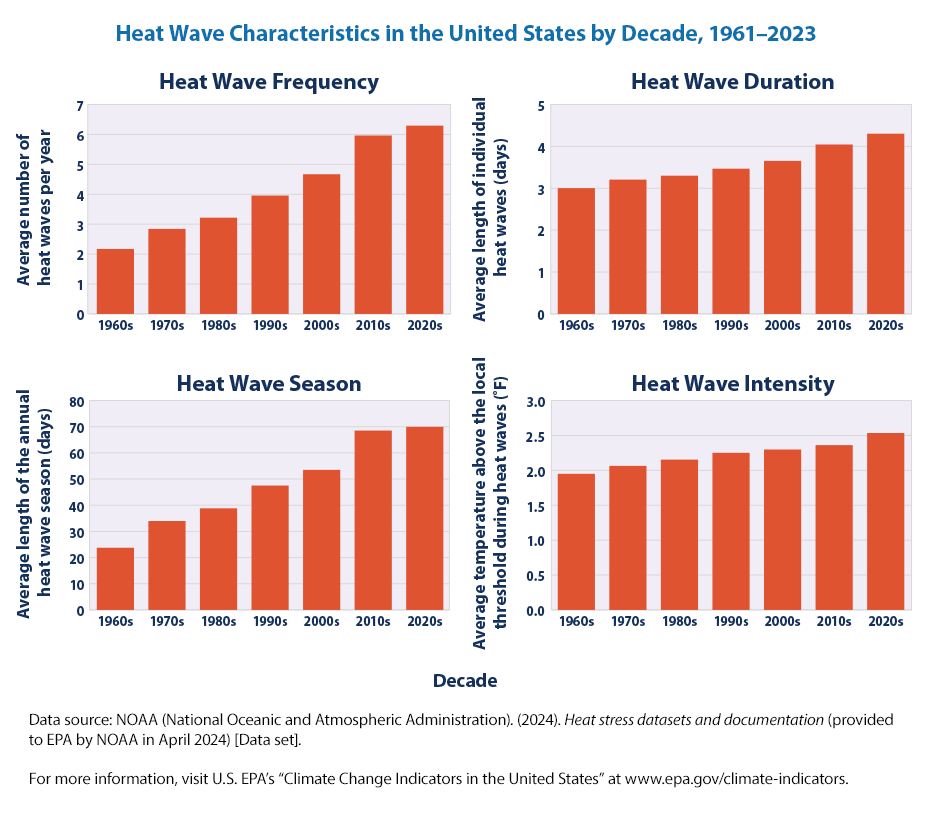
    As concentrations of heat-trapping gasses accumulate in the atmosphere, both the frequency and severity of heat waves increase. It is only a matter of time before another deadly heat dome arrives.

    Brian G. Henning receives funding from the Environmental Protection Agency.

    – ref. My city was one of hundreds expecting federal funds to help manage rising heat wave risk – then EPA terminated the grants – https://theconversation.com/my-city-was-one-of-hundreds-expecting-federal-funds-to-help-manage-rising-heat-wave-risk-then-epa-terminated-the-grants-259009

    MIL OSI Analysis –

    July 10, 2025
  • MIL-OSI Russia: Nine killed in western India bridge collapse

    Translation. Region: Russian Federal

    Source: People’s Republic of China in Russian – People’s Republic of China in Russian –

    An important disclaimer is at the bottom of this article.

    Source: People’s Republic of China – State Council News

    NEW DELHI, July 9 (Xinhua) — At least nine people were killed and more than six injured on Wednesday when several vehicles fell into a river after a bridge collapsed in India’s western Gujarat state, local police said.

    A section of the 40-year-old Gambhira Bridge collapsed on Wednesday morning, disrupting road connectivity between Anand and Vadodara.

    Police said nine bodies had been recovered from the river. The injured were taken to a local hospital. –0–

    Please note: This information is raw content obtained directly from the source of the information. It is an accurate report of what the source claims and does not necessarily reflect the position of MIL-OSI or its clients.

    .

    MIL OSI Russia News –

    July 10, 2025
  • MIL-OSI USA: Office of the Governor – News Release – Gov. Green Signs Landmark Legislation Pertaining to Maui Wildfires Settlement and Fire Marshal

    Source: US State of Hawaii

    Governor Josh Green, M.D., today enacted legislation to solidify the global settlement for claims relating to the August 2023 Maui wildfires and to further codify the role of Hawai‘i’s first State Fire Marshal in nearly 46 years.

    “Today we are re-envisioning the path forward in the roadmap of wildfire prevention and recovery,” said Governor Green. “We are taking action from both ends of the wildfire spectrum — building a more robust fire prevention framework within the state and enacting historic legislation that will aid in timely access to compensation following disaster. This crisis impacts us on many fronts, and it is time we tackle it the same way, from multiple directions.”

    HB 1001: RELATING TO SETTLEMENT OF CLAIMS RELATED TO THE MAUI WILDFIRES
    House Bill 1001 (Act 301) establishes the Maui Wildfires Settlement Trust Fund to provide dedicated funding for those affected by the 2023 Maui wildfires. The bill appropriates $807.5 million to support the state’s contribution in the settlement of claims, which shall be deposited into the trust fund. Additional contributions to the state fund include funding from the County of Maui, Hawaiian Electric, Kamehameha Schools, Charter Communications/Spectrum, Hawaiian Telcom and West Maui Land Company.

    Governor Green sought to establish this funding to provide timely compensation for survivors’ claims as an alternative to lengthy litigation, ensuring those affected do not have to wait years to rebuild their lives. Recipients of compensation from the settlement trust fund shall agree to release the state and any additional parties that contribute to the fund from all further liability arising from the Maui wildfires.

    “This legislation is a huge win and sets a new precedent for swift settlement of claims for wildfire victims,” said Governor Green. “It should not take years for people to see compensation or begin rebuilding. This is about healing, restoring trust and helping families recover as quickly as possible in the place they call home.”

    The measure emphasizes providing meaningful compensation by specifying that property and casualty insurance companies can only recover payments made to a policyholder through a statutory lien. This provision demonstrates the state’s commitment to prioritizing the individuals affected by the wildfire to receive claims directly.

    The settlement agreement totals $4.037 billion and resolves claims of liability against multiple defendants, including the County of Maui. The agreement aims to reduce the legal load of the judicial system while avoiding the high costs associated with litigation.

    HB 1064: RELATING TO FIRE PROTECTION
    In accordance with the Fire Safety Research Institute’s three-phase report — developed to improve fire preparedness and response following the August 2023 Maui wildfires —  House Bill 1064 (Act 302) effectuates the recommendations provided in “Phase 3” of the report. Phase 3 focuses on the forward-looking portion of the investigation and proposes improvements to the Office of the State Fire Marshal, which was originally established under Act 209, Session Law of Hawai‘i 2024.

    Under Act 302, the Office of the State Fire Marshal is transferred to the Department of Law Enforcement and will be led by the State Fire Marshal. The legislation further clarifies the roles, duties, and discretionary authority of both the Office and the State Fire Marshal, supporting the state’s efforts to provide coordinated, statewide fire prevention and readiness strategies. To enhance coordination between the Office of the State Fire Marshal and the State Fire Council, the bill outlines responsibilities and the organizational structure related to matters such as reporting and recommending amendments to the state fire code.

    The bill requires the Fire Chief of each county to investigate and maintain an annual record of fire occurrences. These records must be submitted to the Office of the State Fire Marshal for centralized analysis. The county submissions will assist the State Fire Marshal in compiling biennial statistical reports, including those made available to the public and those submitted to the Legislature.

    “Last month, I appointed Dori Booth as Hawai‘i’s new State Fire Marshal, reviving a critical public safety position that has been vacant for nearly 46 years,” said Governor Green. “This appointment marks a turning point as we redefine the role — empowering the office with clear authority and resources to better protect our state through fire prevention strategies and analysis.”

    “My first month in office has been both eye-opening and incredibly encouraging,” said State Fire Marshal Dori Booth. “I’ve had the opportunity to meet with dedicated state and county partners, as well as private stakeholders, who are all working tirelessly to enhance fire prevention, readiness, and resiliency across our islands. These conversations have been instrumental in shaping my initial assessments and understanding the unique strengths each organization brings to the table. The feedback I’ve received has affirmed the vital role the Fire Marshal’s Office can play — not only in supporting these existing efforts, but also in unifying them to build a stronger, more resilient Hawai‘i. HB 1064 is a meaningful step forward, and I’m honored to stand with so many committed partners as we move toward a safer future together.”

    Lastly, HB 1064 establishes the State Fire Marshal Selection Commission and defines its roles and structure. The selection commission will be given the authority to appoint and remove the State Fire Marshal, evaluate the State Fire Marshal’s performance, and address matters of public interest.

    “With the State Fire Marshal position re-established for the first time in nearly five decades, this legislation gives the office the structure, authority, and support it needs to succeed,” said Senator Brandon Elefante (Senate District 16 – ‘Aiea, ‘Aiea Heights, Hālawa, Pearlridge, Newtown, Royal Summit, Waimalu, Waiau, Momilani, Pacific Palisades, and Pearl City), who chairs the Senate Public Safety and Military Affairs Committee. “It’s a significant step in building a stronger, more coordinated approach to fire prevention and public safety across Hawai‘i.”

    There is $2.2 million appropriated in fiscal year 2026 and an equal amount for fiscal year 2027 to support the establishment and operations of the Office and State Fire Marshal.

    Video of the bill signing can be seen here.
    The slide deck presented by the Governor can be viewed here.
    Photos of the bill signing ceremonies, courtesy Office of the Governor, will be uploaded here.

    MIL OSI USA News –

    July 9, 2025
  • MIL-OSI Europe: Press release – Parliament condemns Russia’s brutal attacks on Ukrainian civilians

    Source: European Parliament 3

    In a resolution, MEPs strongly condemn Russia’s ongoing war crimes in Ukraine, expressing firm support for the investigations of the International Criminal Court.

    The text, approved on Wednesday by 507 votes in favour, 77 against, and with 45 abstentions, states that Russia’s full-scale invasion of Ukraine, which was launched in February 2022, has shattered peace and stability in Europe and gravely undermined global security. It underscores that Russia remains the most significant and direct threat to European security. MEPs emphasise that Russia bears sole responsibility for its war of aggression and that there can be no impunity for violations of human rights, war crimes, or other breaches of international law committed by Russian forces and officials. They also express deep outrage at Russia’s brutal attacks on civilians and the indiscriminate targeting of civilian infrastructure in Ukraine, stressing that the systematic and deliberate targeting of civilians and, in particular, the deportation of children may constitute a genocidal strategy orchestrated by Moscow.

    More than 70 000 Ukrainians are missing

    With the human cost of Russia’s war rising day by day, the resolution states that Russia is still committing heinous war crimes against innocent civilians. According to the Ukrainian authorities, approximately 16 000 Ukrainian civilians are currently known to be detained in Russia and the temporarily occupied Ukrainian territories, although the real figures are likely to be significantly higher. MEPs also highlight that more than 70 000 Ukrainians – including civilians, children, and military personnel – are officially listed as missing. They strongly condemn the execution of Ukrainian prisoners of war (POWs) by Russian forces, which they say constitutes war crimes and grave breaches of the Geneva Conventions. They also express full support the International Criminal Court’s ongoing investigations into the war crimes and crimes against humanity committed by Russia and welcome the recent agreement between the Council of Europe and Ukraine on the establishment of a Special Tribunal for the Crime of Aggression against Ukraine.

    Russia must be pressured to end its war of aggression

    Saying that all those responsible for war crimes perpetrated in Ukraine must be held accountable, MEPs also urge Russia to agree immediately to implement a comprehensive ‘all-for-all’ exchange of POWs. They believe that in order to pressure Russia to end its war of aggression, beginning with a sustained ceasefire, substantially more effective military, economic, political and diplomatic efforts and measures must be applied by the EU and like-minded partners. They also urge the EU to push ahead with the confiscation of immobilised Russian state assets in order to support Ukraine, saying that the legal pathways to do so are available, and that the lack of action is an inexcusable failure on the part of European governments.

    MIL OSI Europe News –

    July 9, 2025
  • MIL-OSI Africa: Police Commissioner reiterates commitment to rule of law

    Source: Government of South Africa

    National Commissioner of the South African Police Service (SAPS), General Fannie Masemola, has welcomed President Cyril Ramaphosa’s commitment to addressing the serious allegations of corruption within SAPS.

    “Members of the media, we are ready to brief the President and wish to undoubtably reaffirm the operational independence of the South African Police Service, and the resolve to uphold the Constitution of the Republic and enforce the law, according to Section 205(3) of the South African Constitution, which outlines the core functions of the South African Police Service (SAPS),” said Masemola on Wednesday.

    READ | Ramaphosa commits to address KZN police corruption allegations

    Speaking at a firearm destruction ceremony in Gauteng’s Vanderbajlpark, the Commissioner said some of these functions include preventing, combating, and investigating crime; maintaining public order; protecting and securing inhabitants and their property, and upholding and enforcing the law.

    The Commissioner said additionally, Section 207(2) of the Constitution states that the National Commissioner of the police service must control and manage the police service in accordance with the national policing policy and the directions of the Cabinet member responsible for policing. 

    “Ladies and gentlemen, I stand before you today not to dwell on divisions, but to forge unity. I pledge to you, the people of South Africa, and to every dedicated member of this service, that we will strive for unity in the police service. Together, we will root out any force, internal or external, that seeks to fracture us or compromise our sacred duty.

    “The SAPS is not factional property. It is the guardian of every South African’s safety and security. Our focus, our unity, and our unwavering commitment must be singular: it is to serve and protect the citizens of this country. That is our covenant, and that is the resolve you see burning brightly here today as we conclude the firearm destruction,” said the Commissioner.

    Masemola said the destruction of the firearms was not merely a “symbolic act”. 

    “It is a strategic blow against the violence that threatens our nation’s soul.”

    In February, 16 049 firearms were destroyed.

    “… Including today’s operation, the total number of firearms and parts obliterated by SAPS over the past five years stands at 291 993. Each one represents a potential life saved, a family spared from grief, and a community fortified against chaos.”

    With the firearms that we are destroying today, Gauteng brought in the majority of firearms with 5 099, followed by the Western Cape with 2 333, KwaZulu-Natal with 1 574, while 1 432 firearms were from the Eastern Cape and 460 were from the Free State.

    Limpopo brought in 343 and Mpumalanga contributed 519. The North West contributed 417 and Northern Cape 322.

    From April 2019 to date, a total of 292 092 firearms have been destroyed through firearm destruction operations.

    “Firearms remain the most preferred weapon used in serious and violent crime ( murder and attempted murder) and that’s why it’s important to ensure we remove them permanently of our streets,” said the Commissioner. – SAnews.gov.za 

    MIL OSI Africa –

    July 9, 2025
  • MIL-OSI Asia-Pac: LCQ20: Enhancing clearance efficiency

    Source: Hong Kong Government special administrative region – 4

    Following is a question by the Hon Rock Chen and a written reply by the Secretary for Security, Mr Tang Ping-keung, in the Legislative Council today (July 9):
     
    Question:
     
    It has been reported that serious congestion occurred at various land boundary control points (BCPs) in Hong Kong on June 21 and 22 this year, and crowd management measures had to be implemented at the Heung Yuen Wai/Liantang Control Point, the Shenzhen Bay Port and the Hong Kong Port of the Hong Kong-Zhuhai-Macao Bridge. On the night of June 22, Hong Kong vehicles travelling under the “Quota-free Scheme for Hong Kong Private Cars Travelling to Guangdong via the Hong Kong-Zhuhai-Macao Bridge” (“Northbound Travel for Hong Kong Vehicles” Scheme) even caused serious congestion on the Zhuhai Highway when they returned to Hong Kong. In addition, there are views that some vehicles under “Northbound Travel for Hong Kong Vehicles” Scheme have not travelled according to the reserved time slot, thus affecting the clearance efficiency at BCPs. In this connection, will the Government inform this Council:
     
    (1) whether it has reviewed the main reasons for the serious congestion at land BCPs during the aforesaid period (e.g. whether it was related to factors such as the end of the examination seasons of primary and secondary schools, the improvement of the weather or activities organised by shopping malls in Shenzhen); whether the Government has put in place an inter-departmental joint early warning mechanism which incorporates school calendars and daily schedules of schools in general, weather forecasts as well as information on commercial activities in Shenzhen, so as to make advance assessments and forecasts on the passenger flow at BCPs; if so, of the details; if not, the reasons for that;

    (2) as it has been reported that during the aforesaid period when crowd management was implemented at the Heung Yuen Wai/Liantang Control Point and when there were the peak hours for people returning to Hong Kong at the Shenzhen Bay Port, the authorities did not issue real-time alerts through official channels, whether the Government has reviewed the existing information dissemination mechanism; if so, of the details; if not, the reasons for that;
     
    (3) in order to avoid the aforesaid similar serious congestion in the future, whether the Government will consider implementing new measures, such as formulating temporary crowd management plans or deploying additional BCP personnel to enhance clearance efficiency; if so, of the details; if not, the reasons for that; and
     
    (4) of the number of vehicle owners who have been penalised since the implementation of the “Northbound Travel for Hong Kong Vehicles” Scheme for failing to travel according to the reserved time slot or failing to make a reservation (set out by penalty measure, including refusing to allow their vehicles to travel to Guangdong Province, suspending their eligibility for making another reservation and revoking the relevant licences issued to them); whether the authorities have reviewed the effectiveness of the existing penalty mechanism, and whether they will consider adjusting the mechanism to further ensure that vehicles under the “Northbound Travel for Hong Kong Vehicles” Scheme will travel according to the reserved time slot?
     
    Reply:
     
    President,
     
    In consultation with the Transport and Logistics Bureau, a reply to the questions raised by the Hon Rock Chen is as follows:
     
    (1) With the increasing co-operation between the Mainland and Hong Kong, exchanges at the community level have also intensified. We are pleased to learn that many Hong Kong residents like travelling to the Mainland during weekends or long public holidays, and are glad to learn that the number of Mainland visitors to Hong Kong is on an upward trend. The two-way travel between residents of the Mainland and Hong Kong has also brought economic benefits to both places.
     
    During the weekend of June 21 and 22 this year, around 569 000 outbound passenger trips (Saturday) and around 586 000 inbound passenger trips (Sunday) were recorded at various land boundary control points (BCPs), of which about 80 per cent were Hong Kong residents, representing an increase of about 22 per cent and 18 per cent compared with the average numbers of outbound and inbound passenger trips during normal weekends this year.

    Northbound travel has become a weekend routine for Hong Kong residents. Since travelling is very convenient and there is no need for advance planning, residents can make impromptu trips for different reasons, such as weather conditions on the day or individual preference. The reasons for the relatively higher numbers of inbound and outbound passenger trips in the aforementioned weekend as compared with normal weekends may include the end of the school examination season and improved weather conditions during the weekend.

    The peak hours for outbound and inbound passenger traffic were from 9am to 3pm on Saturday, and from 4pm to midnight on Sunday, which are similar to the northbound travel pattern of Hong Kong residents at normal weekends. As for the vehicular flow, the number of outbound trips for private cars via the Hong Kong Zhuhai Macao Bridge (HZMB) on Saturday was 9 662, among which those under the “Northbound Travel for Hong Kong Vehicles” Scheme (the Northbound Travel Scheme) accounted for 68 per cent, while the number of inbound trips on Sunday was 9 432, which was about 25 per cent higher than the numbers of outbound and inbound trips at normal weekends this year.

    It is noted that the waiting time during the peak hours of cross-boundary traffic at the HZMB Hong Kong Port and Heung Yuen Wai (HYW) BCP was longer than usual. Relevant departments at various BCPs, including the Immigration Department (ImmD), the Customs and Excise Department, the Hong Kong Police Force (HKPF) and the Transport Department (TD), etc. have put in place an inter-departmental co-operation mechanism to monitor the real-time situations at BCPs during different festive occasions and mega events. In view of the heavy traffic at the BCPs over the aforementioned weekend, relevant departments had immediately activated the contingency mechanism. Through close co-ordination and flexible deployment of manpower, operation of additional clearance counters and kiosks, and implementation of appropriate crowd control and traffic diversion measures to maintain order at the BCPs, congestion was alleviated in an orderly manner.

    The TD has always maintained close liaison with local and cross-boundary public transport operators, and would co-ordinate with them to flexibly adjust the frequency of public transport services connecting each BCP during peak cross-boundary travel periods in order to meet the travel needs. During the above-mentioned weekend, public transport operators closely monitored changes in the number of passengers, increased the service frequency during periods of particularly high passenger demand, as well as deployed additional staff to assist passengers and maintain order at the stations, with a view to expediting the dispersal of passengers.

    (2) The Government has disseminated information through various official and unofficial channels, including radio broadcasts, websites, and online media such as social media platforms, to assist residents and passengers in planning ahead and avoid making their journeys during busy periods as far as possible. Passengers may visit the ImmD’s website to check the estimated waiting time of each BCP, and the TD’s “HKeMobility” mobile application or the TD’s website (hkemobility.gov.hk/en/traffic-information/live/cctv) to access the snapshots of traffic conditions at outbound and inbound vehicle clearance plazas of the HZMB Hong Kong Port. They may also browse the relevant websites and mini programmes, etc. of the Shenzhen and Zhuhai authorities to know more about the clearance status of BCPs in the Mainland.
     
    The HKPF will continue to monitor the real-time situations at various BCPs and disseminate the latest information to the public timely through the media or social media in the event of serious congestion at individual BCP, including appealing to the public to adjust their itineraries (e.g. switching to other modes of transport or using other BCPs for boundary crossing) in order to ease passenger and vehicular flows.
     
    Moreover, the TD’s Emergency Transport Co-ordination Centre operates 24 hours a day to closely monitor traffic conditions and public transport services in different areas of Hong Kong, including various BCPs and major stations, and will disseminate the latest traffic information through various channels. Members of the public can check the latest traffic news released by radio, television, and the “HKeMobility”.

    (3) Northbound travel over weekends has become a norm for Hong Kong residents, and the two-way travel between the Mainland and Hong Kong is also a future trend. We therefore need to get well-prepared, and enhance the responsiveness of relevant departments as well as the level of clearance facilitation at the BCPs in order to cope with the increasing demand for clearance services.
     
    The departments at the BCPs will enhance the co-operation mechanism, constantly monitor the real-time situations at various BCPs, and maintain close liaison with the Mainland port authorities through the established port hotlines and real-time notification mechanisms to ensure smooth operation of the BCPs.
     
    With respect to the traffic and vehicular flow at the HZMB Hong Kong Port, the HKPF will, depending on the circumstances, deploy additional police officers to the major roads of the port for on-the-spot observation of traffic conditions, and remind drivers to comply with road markings and drive with care, with a view to ensuring road safety and smooth traffic. When the vehicles enter the clearance plaza and its maximum capacity is reached, the HKPF will also implement traffic control measures in a timely manner to maintain order on the spot.
     
    In addition, to further increase the handling capacity of the HYW BCP, enhancement works are being carried out at its passenger departure hall. Upon completion of the works, the total number of e-Channels in the passenger departure hall will be increased from 14 to 18. As some of its traditional counters have to be closed temporarily in the course of the enhancement works, the ImmD has flexibly deployed resources to set up four temporary counters in the passenger departure hall to minimise the impact of the enhancement works. We will also explore the possibility of further increasing the number of e-Channels.
     
    As stated above, the two-way travel between residents of the Mainland and Hong Kong is a future trend. We need to enhance the handling capacity of BCPs in order to meet the increasing passenger traffic. In particular, the Hong Kong Special Administrative Region Government is collaborating with the Shenzhen Municipal Government to press ahead with the redevelopment project of the Huanggang Port in full steam. The redeveloped new Huanggang Port will implement the co-location arrangement and the “collaborative inspection and joint clearance” mode to provide greater convenience for cross-boundary passengers. The new Huanggang Port will be equipped with 134 “collaborative inspection” automated channels and 68 traditional manual counters, representing a significant increase compared to 39 traditional e-channels and 45 traditional manual counters currently available at the Lok Ma Chau (LMC) Control Point. Its design flow is about 200 000 passenger trips per day. Compared to the LMC Control Point which now serves a daily average of about 37 000 passenger trips, it is believed that the redeveloped new Huanggang Port can meet the future demand for clearance services between the two places.
     
    (4) As stipulated in the terms and conditions of “the Northbound Travel Scheme”, if any participants violate the travel arrangements (including travelling without booking in advance or not travelling within the specified period), the relevant departments of the Guangdong and Hong Kong governments may refuse to allow relevant vehicles to travel to Guangdong Province via the HZMB, and may suspend their travel booking eligibility, or even revoke the relevant permits. At present, the TD regularly shares the booking information on “the Northbound Travel Scheme” with relevant departments at the Hong Kong Port to facilitate their daily operations at the HZMB Hong Kong Port. The TD has also been maintaining close liaison with the relevant Mainland authorities, and conducting spot checks on the cross-boundary records of vehicles under “the Northbound Travel Scheme”, with a view to reviewing the situation of compliance with the terms and conditions.

    MIL OSI Asia Pacific News –

    July 9, 2025
  • MIL-OSI Asia-Pac: Anti-Scam Consumer Protection Charter 3.0

    Source: Hong Kong Government special administrative region – 4

    The following is issued on behalf of the Hong Kong Monetary Authority:

    The Hong Kong Monetary Authority (HKMA), the Securities and Futures Commission (SFC), the Insurance Authority (IA) and the Mandatory Provident Fund Schemes Authority (MPFA) today (July 9) announced the launch of the Anti-Scam Consumer Protection Charter 3.0 (the Charter 3.0). This joint effort is fully supported by the Consumer Council, the Hong Kong Association of Banks, the Hong Kong Police Force, and the Office of the Communications Authority.

    Building on the success of the Charters 1.0 and 2.0, launched in 2023 and 2024 respectively, the Charter 3.0 represents a significant step forward in anti-scam actions by establishing a collaborative framework between financial regulators and technology firms and telecommunications firms in combatting financial fraud and scams targeting the Hong Kong public. The Charter 3.0 introduces six key principles (see Annex), focusing on the reporting of suspected financial fraud and scams, checking of advertisers, internal monitoring processes, enforcement of terms of service, and collaboration on public education and awareness.

    During the launch event, executives from financial regulators, technology firms and telecommunications firms engaged in productive discussions on the latest trends of financial fraud and scams as well as their collaborative efforts for the common purpose of combatting such fraud and scams. 

    The Chief Executive of the HKMA, Mr Eddie Yue, said, “The fight against financial fraud and scams and to protect the public requires a united front, bringing together the public and private sectors, as well as the community at large. The Charter 3.0 represents a significant milestone in this endeavour, harnessing the collective strength of the financial, technology, and telecommunications industries to better safeguard the public.”

    The Chief Executive Officer of the SFC, Ms Julia Leung, added, “The Charter 3.0 is a meaningful step forward, bringing in major technology and telecommunications companies to join the fight against online scams. It is our shared responsibility to disrupt these threats at their source. This initiative not only echoes global governments and regulators’ call to action but also positions Hong Kong as a leader in safeguarding the financial world’s digital future. Together, we are building a safer, more responsible online landscape that prioritises vigilance, collaboration, and public trust.”

    The Chief Executive Officer of the IA, Mr Clement Cheung, said, “The Charter 3.0 represents the outcome of collaborative efforts made by key stakeholders in forging a robust and resilient alliance to prevent financial fraud and scams. The IA will leverage on this platform to strengthen public education and empower policy holders so that they can safeguard effectively against the increasingly sophisticated plots concocted by swindlers.”

    The Managing Director of the MPFA, Mr Cheng Yan-chee, said, “MPF is the valuable retirement reserve accumulated by the working population. The MPFA will not tolerate any fraudulent activities that undermine their retirement savings in MPF. We are pleased to see financial regulators, enforcement agencies and relevant organisations together with major technology and telecommunications companies under the Charter 3.0 stepping up efforts in combatting scams and enhancing anti-scam awareness in the community. We urge the working population to stay vigilant and join hands with us by proactively reporting suspected scams to safeguard their MPF interests.”

    MIL OSI Asia Pacific News –

    July 9, 2025
  • MIL-OSI Asia-Pac: LCQ5: Application of legal technology and artificial intelligence

    Source: Hong Kong Government special administrative region – 4

         Following is a question by the Hon Maggie Chan and a reply by the Acting Secretary for Justice, Dr Cheung Kwok-kwan, in the Legislative Council today (July 9):

    Question:

         It is learnt that the Department of Justice has been actively promoting the application of legal technology (lawtech) and artificial intelligence (AI) in the legal sector. There are views that the Government should actively develop AI tools (e.g. large language model developed by the Hong Kong Generative AI Research and Development Center) for application in areas of the common law, so as to enhance the operational efficiency and competitiveness of the legal sector. In this connection, will the Government inform this Council:

    (1) whether it has currently developed large language models for application in areas of the common law; if so, of the specific details and the implementation timetable; if not, the reasons for that;

    (2) whether it has plans to organise lawtech and AI summits or international exhibitions with the Mainland on a regular basis, so as to promote exchanges and co-operation between the Mainland and Hong Kong in lawtech; if so, of the details; if not, the reasons for that; whether it has plans to introduce lawtech from the Mainland and apply it in areas of Hong Kong common law, as well as promote the Mainland’s AI legal service products to Hong Kong and overseas; if so, of the details; if not, the reasons for that; and

    (3) of the measures in place to ensure that small and medium-sized law firms in Hong Kong can benefit from the development of lawtech and AI, such as providing technical support, introducing a tax allowance for “lawtech equipment” and subsidising their procurement of lawtech-related equipment?

    Reply:

    President,

    (1) The Hong Kong Generative Artificial Intelligence Research and Development Center (HKGAI), an inter-school co-operative research centre led by the Hong Kong University of Science and Technology, has developed the first local large language model (LLM) based on DeepSeek technology with full parameter fine-tuning – “HKGAI V1”. The HKGAI has developed multiple vertical applications for various public service sectors based on this local LLM, including the generative artificial intelligence (AI) document assistance application “HKPilot” and the legal-related “LexiHK”. The Department of Justice (DoJ) is currently participating in the pilot use of “HKPilot” and is considering participating in the trial of “LexiHK” after reviewing its effectiveness. At the same time, the Faculty of Law of the Chinese University of Hong Kong has recently collaborated with an AI software company to develop a legal information AI model based on the Cantonese LLM to facilitate the digital transformation of the legal system and industry. WiseLaw Digital Technology, a company incubated by the Hong Kong Polytechnic University, has also recently announced its innovation achievement in legal AI products. The DoJ will collaborate with the HKGAI and other relevant government departments or institutions based on the trial results, market technology development, the needs of the legal sector and the community, and related resource considerations to examine and promote the further application of AI in the legal sector, especially LLMs related to Hong Kong law.

    (2) The DoJ attaches great importance on the development of areas of lawtech and AI, and believes that forums and exhibitions provides an important platform for fostering exchange and co-operation. Currently, the DoJ is actively preparing related activities, aiming to hold the first large-scale activity open to global participants, creating a diverse and open exchange platform to promote the sharing of wisdom and experience from various regions.

         We note that there are currently a number of well-developed lawtech enterprises in Mainland China. Since Mainland lawtech is now primarily designed for the Mainland legal system, it may not be directly applicable to Hong Kong’s common law market. However, we strongly encourage Mainland lawtech enterprises to set up in Hong Kong to explore the local legal market, develop AI products suitable for the Hong Kong common law market, and use Hong Kong as a springboard to develop markets in other common law jurisdictions overseas.

    (3) To promote the development of lawtech, the DoJ established the Consultation Group on Lawtech Development (Consultation Group) in January 2025, and invited the industry and various stakeholders to jointly study and formulate policy measures related to lawtech. The Consultation Group members include representatives from the legal and dispute resolution sectors, law schools, and the lawtech industry, including representatives from small and medium-sized law firms, ensuring that the policies will suit the needs of practitioners.

         The Consultation Group notes in particular the challenges faced by small and medium-sized law firms in promoting the use of lawtech. In addition to economic factors, we understand that small and medium-sized law firms often have limited understanding of lawtech, and traditional practice models tend to rely less on technology, which affects their willingness to adopt new technologies.

         In response to this situation, the DoJ has accepted the suggestion of the Consultation Group and plans to promote the use of technology in the legal industry progressively in three stages:

    (1) Phase 1: Lawtech awareness and education

         The aim of the first stage of the policy on promoting lawtech is to change certain ingrained mindsets and practices within the legal profession by raising their awareness of lawtech, and helping them to understand the benefits of the use of lawtech that can bring to the profession and the risk management awareness that the profession should have. To this end, the DoJ is organising a series of lawtech-related roundtables and events to raise the profession’s understanding of lawtech and to facilitate the exchange and sharing of information between the profession and lawtech experts to enable them to plan for viable adoption of lawtech.

         The DoJ is also aware of the importance of educating law students about lawtech, and will work with stakeholders in legal education and training to strengthen training related to lawtech in legal education curricula through the Standing Committee on Legal Education and Training platform. The DoJ plans to draft and publish a roadmap to assist the legal profession in embarking on their path to technology applications. The DoJ also plans to issue ethical and security guidelines for the legal profession to follow when using lawtech.

    (2) Phase 2: Promoting the profession’s engagement with lawtech products

         The DoJ intends to organise an exhibition of lawtech products to enable the legal profession to access and experience a variety of lawtech products available in the market and to identify lawtech solutions suitable for their business development.

         In addition, we are considering conducting a market survey to consolidate a list of lawtech products available in the market in order to provide more comprehensive information to the legal sector for reference.

    (3) Phase 3: Promoting the use of lawtech in the legal profession

         The DoJ will encourage local and overseas lawtech enterprises to establish and grow in the local market, thereby fostering Hong Kong’s lawtech ecosystem. The DoJ will review the effectiveness of the above strategies and take policy measures to promote the use of lawtech in the legal profession as appropriate. The DoJ will also review the existing legal framework from time to time in order to better support and regulate the development of innovative and emerging legal technologies.

         Through these strategies, we hope to effectively enhance the awareness and use of lawtech by the legal profession, thereby enhancing the efficiency and quality of professional services and strengthening Hong Kong’s position as an international legal services and dispute resolution centre in the Asia-Pacific region.

         Thank you, President.

    MIL OSI Asia Pacific News –

    July 9, 2025
  • MIL-OSI Asia-Pac: LCQ3: Roadside skips

    Source: Hong Kong Government special administrative region – 4

    Following is a question by the Hon Chan Pui-leung and a reply by the Secretary for Environment and Ecology, Mr Tse Chin-wan, in the Legislative Council today (July 9):

    Question:

    There are views that roadside skips unlawfully occupying public roads not only affects the safety of road users, but also poses environmental hygiene problems. In this connection, will the Government inform this Council:

    (1) of the information on the enforcement actions taken by the Hong Kong Police Force and the Lands Department against roadside skips in the past five years, including the number of complaints or referrals received, the number of statutory notices posted or warnings issued to operators, as well as the number of skips removed; among them, the number of cases in which prosecutions were instituted and the number of convicted cases, as well as the relevant penalties imposed;

    (2) of the current utilisation situations of the four sites made available for use by the trade for storing skips; as the Government indicated in its reply to a question raised by this Council in May 2023 that the skip storage site in Tseung Kwan O Area 137 would become part of the new community, and that the Government would make arrangements in due course, of the progress of the relevant arrangements, including whether alternative sites will be identified for the operation of the skips trade; if so, of the details; if not, the reasons for that; and

    (3) as there are views that the regulation of roadside skips involves a number of government departments, whether the Government will consider assigning a designated department to take full responsibility so as to improve enforcement efficiency; if so, of the details; if not, the reasons for that?

    Reply:

    President,

    Construction waste is generated from construction sites, buildings under maintenance and shops under renovation, which is then transported to landfills or public fill banks for handling. Before skips emerged in the market, most construction waste from construction and renovation sites were piled up at roadside before it was collected for delivery. This not only affected the environmental hygiene, but also caused nuisance to residents and pedestrians, and even affected the road safety. Skips could store relatively large quantity of waste, in particular, construction waste. Using skips can avoid waste being placed everywhere and help maintain a clean and hygienic environment and road safety. It also helps the construction and renovation industry handle construction waste in a neat and orderly way.

    Skips are primarily placed at site of use, such as construction sites, renovation sites, shopping malls, housing estates and designated locations nearby, to collect construction waste generated by construction or renovation works in the buildings nearby. Skips that are not being used need to be stored. According to the result of a questionnaire survey with the trade, there are about 1 500 roadside skips in Hong Kong. Among these, about half of them need to be stored while there is only storage space for 330 skips on four pieces of land provided. Under such a circumstance, some skip operators may place the skips at roadside or other improper locations.

    Management of skips involves various bureaux and departments. Through the Joint Working Group on Management of Roadside Skips (Working Group), the Government coordinates the work on enhancing management of roadside skips among the Environment and Ecology Bureau, the Development Bureau, the Transport and Logistics Bureau, the Environmental Protection Department, the Lands Department (LandsD), the Transport Department, the Highways Department, the Hong Kong Police Force (HKPF), the Food and Environmental Hygiene Department, and the Home Affairs Department. Since skips placed on at roadside is also a problem of district concern, the Deputy Chief Secretary for Administration also looks into this problem with the bureaux and departments concerned through inter-departmental meetings. 

    In response to the question raised by the Hon Chan Pui-leung, in consultation with the HKPF and the LandsD, a consolidated reply is as follows:

    (1) Currently, the HKPF handles complaints involving roadside skips in accordance with the Summary Offences Ordinance (Cap. 228). Over the past five years, the HKPF has received a total of 5 913 complaints about skips. Police officers will, in light of the circumstances at the scene, make assessments and issue advice and/or warnings to the skip operators concerned if found. In most cases, the operators would remove the skips on their own within hours after receiving the advice and/or warning, with five cases requiring the HKPF to engage contractors to remove the skips. A total of 18 cases were prosecuted under police summons and were convicted. The convicted persons were fined between $300 and $9,000 by the court.

    Over the past five years, the LandsD has received a total of 3 674 complaints concerning skips. Among these complaints, 3 per cent were referred by other departments (including the HKPF), and the other 97 per cent were lodged by the public. Within two working days upon receiving a complaint or referral, the LandsD will conduct an on-site inspection and post a notice according to Section 6 of the Land (Miscellaneous Provisions) Ordinance (Cap. 28) requiring the person concerned to remove the skip and to stop occupying the government land before the specified deadline no less than one clear day, otherwise it will be removed by the LandsD’s contractor. Over the past five years, the LandsD has removed a total of 27 skips, with the remaining removed by relevant persons on their own before the deadlines.

    (2)  As mentioned above, there are about 1 500 skips in Hong Kong. Considering factors such as job rotations, the trade estimates that about 600 to 700 idling skips would require space for storage each day. At present, the Government has provided four sites to the trade for storage of idling skips through short-term tenancy mechanism. These sites are located at Pak Shing Kok, an area next to the Tseung Kwan O Area 137 (TKO 137) Fill Bank, Siu Lang Shui in Tuen Mun, and adjacent to Tsing Nam Street in Tsing Yi respectively, altogether providing storage space for a total of 330 skips. The site at Pak Shing Kok can store about 110 skips; the site next to the TKO 137 Fill Bank can store about 120 skips; the site at Siu Lang Shui in Tuen Mun can store about 80 skips; and the site at Tsing Nam Street in Tsing Yi can store about 20 skips.

    To tie in with the future residential development of TKO 137, according to the current development timetable, the site leased to the trade under short-term tenancy for storing skips is expected to be returned in the second quarter of 2026 the earliest. Meanwhile, the Government has completed the open tendering process for a site at Tsing Chau Wan on Lantau Island, which is initially expected to accommodate approximately 100 skips and to be awarded within this year. To further improve the situation that some skip operators placed their skips at roadside or other improper locations, the Working Group also strives to find more suitable sites for skip storage by the trade through short-term tenancy tenders.

    (3) The management of roadside skips involves works of different departments and various pieces of legislation. Hence, the Government has its reason and need to coordinate relevant departments’ work through the Working Group. The Government is adopting a multipronged approach and looking for more effective ways to improve the problem of improper placement of skips. At the current stage, the Government focuses on enhancing enforcement on illegally placed skips that pose safety risk to road users. 

    Thank you, President.

    MIL OSI Asia Pacific News –

    July 9, 2025
  • MIL-OSI Asia-Pac: Speech by FS at Korea-Hong Kong Business Luncheon (English only) (with photos)

    Source: Hong Kong Government special administrative region – 4

         Following is the speech by the Financial Secretary, Mr Paul Chan, at the Korea–Hong Kong Business Luncheon held in Seoul, Korea, today (July 9): 
     
    Mr Joo Yong-tae (Deputy Mayor for Economy, Seoul), Mr Kevin Lee (Director of the International Trade Division of the Korea Chamber of Commerce and Industry), distinguished guests, ladies and gentlemen,

         Annyeonghaseyo. Good afternoon. It is both a pleasure and honour to be here with you today in Seoul.
     
         Let me begin by extending my warmest greetings and heartfelt appreciation to the Korea Chamber of Commerce and Industry and our ETO (Economic and Trade Office) colleagues for organising this luncheon.
     
    Hong Kong: good for business
     
         Allow me to start by offering a brief snapshot of where Hong Kong stands today.
     
         Hong Kong has been back on a path of growth following the global challenges of the pandemic.  In 2024, we recorded a GDP growth of 2.5 per cent. This year, despite continued global uncertainties from tariff war to geopolitical tensions, our economy recorded a 3.1 per cent growth in the first quarter. Our merchandise exports continued to register strong double-digit growth.
     
         Foreign businesses continue to cast a vote of confidence in our city. In 2024, the number of overseas and Mainland companies operating in Hong Kong reached an all-time high at nearly 10 000.  American and European companies rose by around 10 per cent, while Korean companies rose by 9 per cent year on year.  
     
         Hong Kong continues to shine in international rankings. We are among the world’s top three global financial centres. The latest IMD (International Institute for Management Development) World Competitiveness Ranking places us as the third most competitive economy worldwide. Last October, the Fraser Institute reaffirmed our position as the world’s freest economy. These accolades are no coincidence. They are the result of persistent hard work to drive our competitiveness forward, backed by transparent, consistent and predictable policies, market openness and global connectivity.
     
         A critical foundation of our success is a stable and secure environment. This year marks the fifth anniversary of the implementation of the Hong Kong National Security Law. It restores law and order in Hong Kong and provides confidence to the international business community. Indeed, a survey by the American Chamber of Commerce (in Hong Kong) in January this year showed that (more than) 80 per cent of its members expressed confidence in Hong Kong’s rule of law.  And 70 per cent reported that the National Security Law had no impact on their business operations.
     
         Under the “one country, two systems” framework, Hong Kong continues to be an open, diverse and international city. We are a free port, uphold a freely convertible currency pegged to the US dollar, ensure the free flow of capital, goods, information and talent, and practise the common law system.
     
         President Xi Jinping and the Central Government of China have made clear that the “one country, two systems” framework is here to stay for the long term. 
     
         Investor confidence is reflected in hard data. Our stock market, for example, rose by 18 per cent last year, and has gained another 20 per cent this year. Initial public offerings (IPOs) on the Hong Kong Stock Exchange have raised about US$16 billion so far this year, making Hong Kong the top IPO venue globally to date. The total bank deposits grew by 7 per cent last year and another 7 per cent this year, now exceeding US$2.3 trillion, six times our GDP.
     
    The Greater Bay Area
     
         Meanwhile, Hong Kong is the international gateway to the Guangdong-Hong Kong-Macao Greater Bay Area, or GBA, which is an economic powerhouse with 87 million people and a combined GDP of US$2 trillion. With a per capita GDP of US$23,000, or US$40,000 on a purchasing power parity basis, the GBA is not just a manufacturing base, but also a sophisticated, high-growth consumer market.
     
         The region is deeply interconnected. High-speed rail puts us just 15 minutes from Shenzhen and 45 minutes from Guangzhou. With seven international airports and a combined annual passenger throughput of over 200 million, the GBA sits within a five-hour flight radius of half the world’s population. Hong Kong International Airport, the world’s busiest cargo airport, now operates with a third runway and is gearing up to handle 120 million passengers and 10 million tonnes of cargo annually by 2035.
     
         The GBA is also a cradle of innovation. According to the World Intellectual Property Organization, the Shenzhen-Hong Kong-Guangzhou science and technology cluster ranks second globally in innovation, and has done so for five consecutive years. Hong Kong excels in basic research, anchored by five universities ranked among the world’s top 100. Three of them are in the global top 20 for data science and AI; our two medical schools are ranked among the top 40. Meanwhile, Shenzhen and Guangzhou lead in commercialisation and advanced manufacturing. Together, the GBA is like fusing the financial power of New York with the innovation energy of Silicon Valley.
     
    Opportunities for Korean businesses
     
         So, what does this mean for Korean businesses?
     
         First, Hong Kong’s financial markets offer unparalleled connectivity and liquidity. We serve as a two-way platform, connecting international capital with Mainland markets and vice versa. Through our Connect Schemes, including Stock Connect, Bond Connect, and ETF (Exchange-traded Fund) Connect, and more, Mainland investors can access Hong Kong’s markets, while global investors can access the Mainland through Hong Kong.
     
         The recent surge in our stock market reflects two important trends. First, the rebalancing act of international investors to diversify risks out of global economic uncertainty, particularly in the US; and second, optimism about China’s technology prowess demonstrated by DeepSeek and others. Korean investors have already taken note. And they are apt in taking actions. In February this year, we saw the highest level of Korean investment into our stock market in over three years.
     
         Beyond the stock market, asset and wealth management is another area where we are seeing rapid growth. Hong Kong now manages over US$4 trillion in assets. With a growing ecosystem of related financial services, we are on track to become the world’s largest cross-border wealth management hub by 2028. For Korean firms in private banking and asset management, the opportunities are significant. Indeed, many American and European asset and wealth managers have been expanding their hiring and office accommodation in the city.
     
         Hong Kong also serves as a powerful springboard for Korean goods, not just into the GBA or the Chinese Mainland, but across the entire ASEAN (Association of Southeast Asian Nations) region. As a duty-free port with seamless customs clearance and unmatched connectivity, Hong Kong offers Korean exporters a fast, cost-effective and reliable route to high-growth markets. From electronics and cosmetics to food products and fashion, Hong Kong is your launchpad.
     
         In innovation and technology, Hong Kong is making strategic and forward-looking moves. We are placing particular emphasis on the development of key sectors such as artificial intelligence and biotech. In addition to our world-class research capabilities, Hong Kong is where Mainland and international data converge. This is a distinct competitive advantage for data-intensive industries.  
     
         Our close collaboration with other cities in the GBA is further accelerating this momentum.  Along our boundary with neighbouring Shenzhen, we are developing a joint innovation and technology park, where we are piloting innovative policies to facilitate the seamless flow of data, talent, capital and even biosamples. We have also established joint clinical trial centres to expedite drug development and streamline cross-boundary regulatory approvals. For Korean tech and pharmaceutical firms seeking expansion and collaboration opportunities, Hong Kong is your ideal location. 
     
    The pleasures of life
     
         Beyond business, Hong Kong is a city alive with culture, diversity, and global connectivity. We are a true melting pot of East and West.  Korean culture, from K-pop to kimchi, has found a warm and enthusiastic following in Hong Kong.  And we are glad that more and more Korean visitors are coming to our city to see for themselves our vibrancy. In the first half of this year, Hong Kong welcomes more than half a million of Korean visitors, a 25 per cent increase year on year.
     
         The pleasures of life are part of our fabric. With more than 200 Michelin-recognised restaurants, hiking trails minutes from the city, and a coastline that rivals the best in the region, Hong Kong offers not only opportunity, but quality of life. Above all, Hong Kong remains one of the safest cities in the world, a place you can walk freely, day or night.
     
         And we are just getting started. The newly opened Kai Tak Sports Park offers a world-class, multipurpose venue for sport and entertainment events. In January next year, we’re excited to welcome BLACKPINK to our stage. And who knows, NewJeans and aespa may not be far behind!
     
         Ladies and gentlemen, I hope I’ve been able to offer you a fresh perspective on Hong Kong, not just as a financial centre or trade hub, but as a dynamic, welcoming city filled with opportunity, energy and creativity. A city where Korean businesses, investors and talents can thrive.
     
         If I may, let me now share a short video that captures the vibrancy, openness and possibilities of Hong Kong today.
     
         That is Hong Kong – dynamic and welcoming. A city that means business, and a city that celebrates life. We look forward to welcoming you soon, to Hong Kong.
     
         Kamsahamnida. Thank you very much.


    MIL OSI Asia Pacific News –

    July 9, 2025
  • MIL-OSI USA: Amata’s Statement in Support of Minnesota Resolution

    Source: United States House of Representatives – Congresswoman Aumua Amata (Western Samoa)

    Washington, D.C. – Congresswoman Uifa’atali Amata is expressing support for the bipartisan resolution sponsored by the Minnesota delegation to Congress deploring political violence in the wake of the recent shocking attack on two state legislators and their spouses. 

    Led by Rep. Kelly Morrison (D-MN-03) with the bipartisan support of the other seven Members of the delegation, including House Majority Whip Tom Emmer (R-MN-06), H. Res. 519 condemns the attacks on Minnesota lawmakers in Brooklyn Park and Champlin, Minnesota, and calls for unity and the rejection of political violence in Minnesota and across the United States. 

    “I was grieved to hear of this terrible attack while I was home in American Samoa. I support my Minnesota colleagues in this, and I appreciate the bipartisan spirit of this Resolution to express the sense of the full House of Representatives,” said Congresswoman Amata. “Americans reject political violence. Instead, we embrace constitutionally protected free dialogue, and advancing change through voting, advocacy, representation, and lawmaking.”

    She continued, “I will never forget the shock of the news of the 2017 attack on Republican Members of Congress preparing for the yearly charitable congressional baseball game, about this time of year that June, where my friend Majority Leader Steve Scalise was severely wounded and Capitol Police officers performed their duties admirably to save lives. Every time I drive to the Capitol, I pass right by that park, a reminder of that terrible event, but also a reminder of courage and resilience in the face of violence.”

    “I support our leadership’s important efforts on stepping up and reviewing security measures, as congressional security is an ongoing concern, and I appreciate our Capitol Police who train to keep Members, staff and visitors to the Capitol safe,” Amata concluded. 

    Congresswoman Amata’s father, the late Governor Uifa’atali Peter T. Coleman, served on the Capitol Police force, between his World War II service and his years in leadership in the Pacific.

    ###

    MIL OSI USA News –

    July 9, 2025
  • MIL-OSI Africa: Progress Report on Process to Consider General Mkhwanazi’s Allegations

    Source: APO – Report:

    .

    The Chairperson of the Portfolio Committee on Police, Mr Ian Cameron, has reiterated the importance and urgency of setting out steps for a parliamentary process to consider the explosive allegations made by the KwaZulu-Natal Provincial Commissioner, Lieutenant General Nhlanhla Mkhwanazi.

    In line with this, the Chairperson wishes to share the following steps taken since the allegations were made.

    1. The Chairperson has received confirmation from the Speaker of the National Assembly that she is considering the request for guidance on how to process the matter.

    2. The committee has approached the Parliamentary Legal Unit for a legal opinion on possible ways to process the matter.

    3. The Chairperson has received a letter from a member of the committee, Ms Lisa‐Maré Schickerling, requesting a joint parliamentary process with the Portfolio Committee on Justice. Engagements with the Chairperson of the PC on Justice have commenced to consider the modalities of such a process.

    Mr Cameron has emphasised that the gravity of implications of this matter for the entire criminal justice system is the reason for such a comprehensive response to the allegations.

    “I must reiterate that accountability and transparency are critical in considering this matter. The credibility of the SAPS and the security of our country is dependent on how these allegations are handled,” Mr Cameron emphasised.

    – on behalf of Republic of South Africa: The Parliament.

    MIL OSI Africa –

    July 9, 2025
  • MIL-OSI Banking: BaFin warns consumers about the website mega-platz.pro

    Source: Bundesanstalt für Finanzdienstleistungsaufsicht – In English

    The Federal Financial Supervisory Authority (BaFin) warns consumers about the company MegaPlatz and the services it is offering. BaFin suspects the unknown operators of the website mega-platz.pro of offering consumers financial, investment and cryptoasset services without the required authorisation.

    The content of the website is identical to other platforms that BaFin has previously warned consumers about and that display the same opening sentence: “Upgrade Your Trading With…”.

    BaFin is issuing this information on the basis of section 37 (4) of the German Banking Act (Kreditwesengesetz – KWG) and section 10 (7) of the German Cryptomarkets Supervision Act (Kryptomärkteaufsichtsgesetz).

    Please be aware:

    BaFin, the German Federal Criminal Police Office (Bundeskriminalamt – BKA) and the German state criminal police offices (Landeskriminalämter) recommend that consumers seeking to invest money online should exercise the utmost caution and do the necessary research beforehand in order to identify fraud attempts at an early stage.

    MIL OSI Global Banks –

    July 9, 2025
  • MIL-OSI Europe: Answer to a written question – Impact of Israeli colonial exploitation and extractivism on Palestinian agriculture – E-002150/2025(ASW)

    Source: European Parliament

    The EU has been consistently clear in its position that settlements are illegal under international law and has repeatedly condemned Israel’s settlement policy and the occupation of the Palestinian territory that began in 1967.

    EU positions and policies are fully aligned on the United Nations resolutions regarding the status of the o ccupied Palestinian territory (OPT)[1] and are overall consistent with the Advisory Opinion of the International Court of Justice of 19 July 2024[2] as regards the duty of non-recognition, the duty to distinguish in the dealings with Israel between its territory and the OP T , and the duty of non-assistance .

    The EU differentiation policy implies that goods, including agricultural products, originating from Israeli settlements in occupied territories since June 1967 do not fall within the scope of the EU-Israel Association Agreement[3] and therefore cannot benefit from trade preferences under the Agreement.

    Moreover, in 2015, the Commission adopted an Interpretative Notice to provide guidance on the labelling of goods, including agricultural products, from Israeli settlements in the OP T and how the existing legislation on labelling should be applied[4]. The approach of the Interpretative Notice was confirmed by a judgment of the Court of Justice of the EU in 2019[5]. Official controls on the labelling of imported goods are primarily the responsibility of Member States, in accordance with Regulation (EU) 2017/625 on official controls on the agri-food chain[6].

    • [1] https://documents.un.org/doc/undoc/ltd/n24/266/48/pdf/n2426648.pdf.
    • [2] Advisory Opinion of 19 July 2024 , https://www.icj-cij.org/sites/default/files/case-related/186/186-20240719-adv-01-00-en.pdf.
    • [3] https://eur-lex.europa.eu/resource.html?uri=cellar:411c0668-144d-44a1-a5e3-dd2342f7a5b5.0017.02/DOC_1&format=PDF.
    • [4] https://eur-lex.europa.eu/legal-content/EN/TXT/PDF/?uri=CELEX:52015XC1112(01).
    • [5] Judgment of 12 November 2019, Organisation juive européenne and Vignoble Psagot Ltd v Ministre de l’Économie et des Finances, C 363/18, EU:C:2019:954, https://curia.europa.eu/juris/document/document.jsf;jsessionid=A16C97FD2EEC535918F5478A663AC7D6?text=&docid=220534&pageIndex=0&doclang=en&mode=req&dir=&occ=first&part=1&cid=8005913.
    • [6] https://eur-lex.europa.eu/eli/reg/2017/625/oj.
    Last updated: 9 July 2025

    MIL OSI Europe News –

    July 9, 2025
  • MIL-OSI Europe: Written question – Serious damage to long-duration pastures in the SPA of Magredi del Cellina in Friuli-Venezia Giulia – E-002701/2025

    Source: European Parliament

    Question for written answer  E-002701/2025
    to the Commission
    Rule 144
    Cristina Guarda (Verts/ALE)

    The special protection area (SPA) of Magredi del Cellina in the Dandolo di Maniago district, is protected under both the EU’s Birds and Habitats Directives and Friuli-Venezia Giulia Regional Law No 9/2015, containing as it does important habitats and protected species of flora and fauna, including nesting bird species.

    The Friuli-Venezia Giulia Region has invested more than EUR 1 million in EU funding and LIFE project[1] resources to improve and conserve the long-duration pastures and habitats in the area.

    At the beginning of June, inspections carried out by environmental associations revealed serious environmental damage to the area’s long-duration pastures caused by heavy wheeled and tracked vehicles, possibly during military exercises.

    The local authorities immediately ordered the necessary investigations to clarify the circumstances and ascertain who was responsible

    Given the foregoing:

    • 1.Is the Commission aware of the aforementioned events that caused damage to the SPA of Magredi del Cellina?
    • 2.Does it intend to conduct a thorough investigation to ascertain responsibility for any breaches of regulations and damage to the environment and property?

    Submitted: 2.7.2025

    • [1] https://www.lifepollinaction.eu/?p=4285.
    Last updated: 9 July 2025

    MIL OSI Europe News –

    July 9, 2025
  • MIL-OSI Europe: Oral question – Access to baby formula in Gaza – O-000023/2025

    Source: European Parliament

    Question for oral answer  O-000023/2025
    to the Commission
    Rule 142
    Lynn Boylan (The Left), Kathleen Funchion (The Left), Barry Andrews (Renew), Jonas Sjöstedt (The Left), Daniel Attard (S&D), Maria Ohisalo (Verts/ALE), Leoluca Orlando (Verts/ALE), Mélissa Camara (Verts/ALE), Mounir Satouri (Verts/ALE), Cecilia Strada (S&D), Mimmo Lucano (The Left), Rudi Kennes (The Left), Irene Montero (The Left), Leila Chaibi (The Left), Nikos Pappas (The Left), Anthony Smith (The Left), Ana Miranda Paz (Verts/ALE), Benedetta Scuderi (Verts/ALE), Saskia Bricmont (Verts/ALE), Jaume Asens Llodrà (Verts/ALE), Catarina Martins (The Left), Manon Aubry (The Left), Maria Walsh (PPE), Merja Kyllönen (The Left), Estrella Galán (The Left), Matjaž Nemec (S&D), Irena Joveva (Renew), Danilo Della Valle (The Left), Thomas Bajada (S&D), Dario Tamburrano (The Left), Gaetano Pedulla’ (The Left), Michael McNamara (Renew), Rima Hassan (The Left), Cynthia Ní Mhurchú (Renew), Carolina Morace (The Left), Evin Incir (S&D), Aodhán Ó Ríordáin (S&D), Hanna Gedin (The Left), Arash Saeidi (The Left), Giuseppe Antoci (The Left), Nina Carberry (PPE), Seán Kelly (PPE), Barry Cowen (Renew)

    Since the start of Israel’s latest blockade of Gaza on 2 March 2025, the humanitarian crisis has worsened to unprecedented levels. According to the Integrated Food Security Phase Classification (IPC), the entire population of Gaza is facing high levels of acute food insecurity. Between mid-March and mid-July, in the most likely scenario, half of the population of the Gaza Strip (1.11 million people) is expected to face catastrophic conditions (IPC Phase 5), the most severe level in the IPC Acute Food Insecurity scale.

    In recent weeks, it has become clear that the availability of baby formula is severely limited in Gaza and that babies are starving due to the lack of formula and the malnutrition of their mothers, who are unable to breastfeed. Without access to breast milk or formula, babies are starved, leaving them more vulnerable to illness and to organ failure.

    Will the Commission:

    • 1.utilise every mechanism available to force Israel to end its illegal blockade and bombardment of Gaza?
    • 2.develop a specific mechanism to support humanitarian assistance for children and their mothers, including nutritional and child development support?
    • 3.seek to ensure that Israel is held accountable, before the International Court of Justice and the International Criminal Court, for its deliberate starvation of children?

    Submitted: 7.7.2025

    Lapses: 8.10.2025

    MIL OSI Europe News –

    July 9, 2025
  • MIL-OSI Europe: Answer to a written question – EU response to the Israeli Government’s announcement of 22 new illegal settlements in the occupied West Bank – P-002180/2025(ASW)

    Source: European Parliament

    The EU condemns the Israeli government’s decisions to further expand illegal settlements across the occupied West Bank and urges Israel to reverse these decisions[1]. In line with the EU’s commitment to implement United Nations Security Council Resolution 2334 and recalling that settlements are illegal under international law, constitute an obstacle to peace and threaten to make a two-state solution impossible, the EU reiterates its strong opposition to Israel’s settlement policy and actions taken in this context.

    In its Advisory Opinion of 19 July 2024, the International Court of Justice (ICJ) concluded, inter alia, that the State of Israel is under an obligation to cease immediately all new settlement activities, and to evacuate all settlers from the Occupied Palestinian Territory. The EU urges Israel to implement orders of the ICJ.

    In light of the untenable situation in Gaza due to the humanitarian blockade, and the deteriorating situation in the occupied West Bank, the High Representative/Vice-President has launched a review of Israel’s compliance with Article 2 of the EU-Israel Association Agreement[2]. Based on the review, it will be decided what further action, if any, to take.

    • [1] https://www.consilium.europa.eu/media/qa3lblga/euco-conclusions-27062024-en.pdf.
    • [2] https://eeas.europa.eu/archives/delegations/israel/documents/eu_israel/asso_agree_en.pdf.
    Last updated: 9 July 2025

    MIL OSI Europe News –

    July 9, 2025
  • MIL-OSI Europe: Answer to a written question – European Union policies insufficient on the prevention of genocide – E-001691/2025(ASW)

    Source: European Parliament

    The ‘Convention on the Prevention and Punishment of the Crime of Genocide’ provided the first international legal definition of genocide and establishes a duty for states to prevent and punish this crime. All Member States are parties to the Genocide Convention.

    All Member States are also Parties to the Rome Statute of the International Criminal Court, which includes genocide as one of the core crimes.

    The EU has the strengthening of human rights at its very core, including with regard to genocide and crimes against humanity. This is both an internal and external priority, remaining high on the agenda of the EU’s foreign and security policy.

    The best point of departure is early action. The EU works together with the United Nations and partners around the globe to strengthen the global protection of human rights and address early warning signs that could point to genocidal behaviours.

    Member States are required to criminalise racist or xenophobic acts and public incitement to hatred, including online. The EU’s strategy on combating antisemitism[1] aims to put the EU in the global lead in this area.

    Through its 2020-2027 Action Plan for Human Rights and Democracy[2], the EU aims to combat intolerance, harassment, and violence based on ethnic origin, religion or belief.

    To date, the EU has allocated EUR 20 million to the Global Initiative Against Impunity, funding projects tackling impunity for genocide, crimes against humanity and war crimes. It includes specific support to the work of the EU Genocide Network.

    This network was established to facilitate cooperation between national authorities of Member States when investigating and prosecuting core international crimes.

    • [1] https://commission.europa.eu/strategy-and-policy/policies/justice-and-fundamental-rights/combatting-discrimination/racism-and-xenophobia/combating-antisemitism/eu-strategy-combating-antisemitism-and-fostering-jewish-life-2021-2030/about-eu-strategy_en.
    • [2] https://www.eeas.europa.eu/eeas/eu-action-plan-human-rights-and-democracy-0_en.

    MIL OSI Europe News –

    July 9, 2025
  • MIL-OSI Europe: Answer to a written question – Will Europol support Member States and third countries in the fight against terrorist groups that target certain companies and their customers? – E-001418/2025(ASW)

    Source: European Parliament

    The Commission is aware, from media reporting, of incidents involving Tesla company that have occurred in some Member States[1]. It should be noted that, in accordance with Article 4(2) of the Treaty on European Union, national security remains the sole responsibility of each Member State. As such, the Commission does not intervene in individual cases that fall within the remit of national security.

    To support Member States in strengthening their resilience and capacity to respond to evolving threats, the Commission adopted the European Internal Security Strategy[2] on 1 April 2025. The strategy aims at enhancing the ability of Member States to protect societies and democracies from both online and offline threats posed by terrorists, criminals and hostile foreign actors.

    Within the limits of its mandate[3], the EU Agency for Law Enforcement Cooperation can support Member States in combating terrorism and serious crime by providing analytical support, forensic expertise, facilitating information exchange and participating in joint operations.

    • [1] https://www.reuters.com/business/autos-transportation/tesla-targeted-by-vandalism-over-musks-right-wing.
    • [2] https://eur-lex.europa.eu/legal-content/EN/TXT/?uri=CELEX%3A52025DC0148&qid=1750142913443.
    • [3] Regulation (EU) 2016/794 on the European Union Agency for Law Enforcement Cooperation (Europol).
    Last updated: 9 July 2025

    MIL OSI Europe News –

    July 9, 2025
  • MIL-OSI New Zealand: Serious incident, Chartwell, Hamilton

    Source: New Zealand Police

    Police have a visible presence as they respond to a serious firearms incident in Chartwell, Hamilton, this evening.

    At 6.40pm, Police were called to a Bellmont Avenue property, where a firearm had been discharged, Inspector Jeff Penno says.

    “The alleged offender left the scene and Police, assisted by the Eagle helicopter, are actively searching for him.

    “There is a large Police presence in the area and members of the public are urged to call 111 if they see any suspicious activity.”

    At this time, no further information is available.

    ENDS

    Issued by the Police Media Centre

    MIL OSI New Zealand News –

    July 9, 2025
  • MIL-OSI Africa: SARS gets largest chunk of Treasury Budget transfers

    Source: Government of South Africa

    SARS gets largest chunk of Treasury Budget transfers

    National Treasury has been allocated R91.835 billion over the medium-term, with the South African Revenue Service (SARS) receiving the largest component of the transfers.

    Tabling National Treasury’s Budget Vote in Parliament, Finance Minister Enoch Godongwana said the department’s budget (excluding direct charges) over the medium-term is R91.835 billion, which is an average growth rate of 6.2% from 2024/25 – 2027/28.

    “The largest component is for transfers to SARS, which is allocated R45.760 billion (or 49.8%) of the department’s budget for operations and capital projects over the medium-term.

    “This is an increase of R8 billion of the SARS baseline compared to the 2024 Estimate of Expenditure. Part of this increase is to improve effectiveness in revenue collection by enhancing their ability to collect debt through better systems, increasing staff capacity and modernising their processes to establish e-invoicing for VAT, instant payment systems and upgrades of customs infrastructure,” Godongwana said on Tuesday.

    Last week, National Treasury published monthly debt collection data from SARS for the first time to monitor progress and improve transparency.

    The budget allocation per economic classification over the medium-term is as follows:

    • R3.422 billion on compensation of employees;
    • R6.983 billion on goods and services;
    • R78.554 billion on transfers and subsidies;
    • R89 million on payment of capital assets, and
    • and R2.786 billion on payment for financial assets.

    Sustainable public finances

    National Treasury’s Annual Performance Plan 2025/26 sets out clear and ambitious programmes to realise its goals of job creation, lowering poverty and greater inclusion. 

    “In terms of restoring sustainability and the impact of our public finances, a review of how the government spends money has been central to our policy efforts. To achieve all of our national priorities we need to realise much greater efficiencies on the spending side,” the Minister said.

    As such there are new reviews that government plans to conduct, namely:

    • An audit of ghost workers in the public service using a data-driven approach that links administrative and financial databases to identify bogus and non-existent employees and immediately remove them from the system.
    • An infrastructure conditional grant review. This will assess why provinces and municipalities underspend, why projects are not delivered on time and within budget, and where relevant, why the quality of the deliverables is poor; and
    • A review of the remuneration of executives and board members of public entities. The aim is to develop a standardised framework for all schedule three public entities, based on their mandates, areas of influence, and the complexity of a given organisation.

    Financial Action Task Force grey list

    With South Africa completing all 22 recommended action items outlined by the Financial Action Task Force (FATF), the Minister stressed that the country must continue to strengthen the laws to fight illicit and corrupt financing.

    “Lastly, I am happy to say that our endeavors, not just the National Treasury’s but the government’s as a whole, to remove South Africa from the Financial Action Task Force grey list, are succeeding,” he said.

    South Africa was placed on the FATF grey list due to deficiencies in its anti-money laundering and counter-terrorism financing (AML/CFT) regime.

    The FATF recently confirmed that South Africa has substantially completed its action plan and warrants an on-site assessment. 

    The on-site assessment will be to verify that the implementation of AML/CFT reforms has begun and is being sustained, and that the necessary political commitment remains in place to sustain implementation in the future.

    The on-site visit will take place before the next FATF Plenary, and, if the outcome of the visit is positive, the FATF will delist South Africa from the greylist at its next Plenary in October 2025. Preparations for the on-site visit have commenced.

    “A General Laws Anti-Money Laundering and Combating Terrorism Financing Bill, to further improve our ability to combat money laundering, terrorism financing and proliferation financing, is being finalised for another round of public comment, and tabling in Parliament in the third quarter of 2025.

    “Similarly, the National Treasury has made substantial progress implementing the State Capture Commission recommendations through multiple concrete actions. SARS investigations have recovered R4.8 billion in unpaid taxes, while professional bodies like the South African Institute of Chartered Accountants (SAICA) have imposed consequence management including disbarment,” the Minister said.

    The Financial Intelligence Centre launched the ‘Enablers Project’ with law enforcement to trace state capture fund flows, and a 10-year ban was imposed on Bain & Co (currently under litigation).

    “Critically, a central register now tracks dismissed officials and those who have resigned during their disciplinary processes across all government spheres,” Godongwana said. – SAnews.gov.za

    nosihle
    Wed, 07/09/2025 – 09:36

    MIL OSI Africa –

    July 9, 2025
  • MIL-OSI United Kingdom: Insolvency Rules Committee: Reappointment of barrister members

    Source: United Kingdom – Executive Government & Departments

    News story

    Insolvency Rules Committee: Reappointment of barrister members

    The Lord Chancellor has approved the reappointments of Oliver Hyams and Daniel Warents as barrister members of the Insolvency Rules Committee for 4 years from 31 October 2025.

    The Lord Chancellor has approved the reappointments of Oliver Hyams and Daniel Warents as Barrister Members of the Insolvency Rules Committee for 4 years from 31 October 2025.

    Oliver Hyams biography:

    Olive is a barrister practising from South Square chambers. He specialises in restructuring and insolvency, fraud, and commercial disputes. Oliver Hymans is recommended in both Chambers and Partners and the Legal 500 and he regularly writes and lectures on insolvency issues.

    He has not declared any political activity.

    Daniel Warents biography:

    Daniel is a Commercial Chancery barrister with a particular interest in insolvency. Since 2010, he has practised as a self-employed barrister at XXIV Old Buildings following the completion of his pupillage. Daniel Warents is a graduate of Downing College, Cambridge where he obtained an undergraduate degree in law followed by an LLM.

    He has not declared any political activity.

    The reappointment of Barrister members of the Insolvency Rules Committee are made, by the Lord Chancellor after consulting the Lady Chief Justice, under Section 413 of the Insolvency Act 1986,

    The appointment of non-judicial members of the Insolvency Rules Committee are regulated by the Commissioner for Public Appointments and recruitment and reappointment processes comply with the Governance Code on Public Appointments.

    Share this page

    The following links open in a new tab

    • Share on Facebook (opens in new tab)
    • Share on Twitter (opens in new tab)

    Updates to this page

    Published 9 July 2025

    MIL OSI United Kingdom –

    July 9, 2025
  • MIL-OSI Asia-Pac: LCQ22: Support for public rental housing tenants

    Source: Hong Kong Government special administrative region

    Following is a question by the Hon Kingsley Wong and a written reply by Secretary for Housing, Ms Winnie Ho, in the Legislative Council today (July 9):

    Question:

    It has been learnt that a number of cases involving deaths of public rental housing (PRH) tenants in their own PRH flats occurred in Hong Kong in the past, in which the deaths of such tenants remained unknown for a long time, and there were even cases where their bodies had been reduced to skeletons by the time they were discovered; and there were also cases in which carers died suddenly in their PRH flats, but the relatives living with them were forced to “stay with the dead bodies” as their relatives were unable to seek assistance and report to the Police due to mental incapacity or other reasons. In this connection, will the Government inform this Council:

    (1) of the number of cases in each of the past 10 years, in which staff of the Housing Department (HD) found people dead in the flats concerned during home visits or flat recovery work (e.g. breaking into the flats concerned);

    (2) of the number of cases in each of the past 10 years, in which the Social Welfare Department (SWD) found people dead in the flats concerned in the course of following up the welfare service matters of PRH tenants;

    (3) it is learnt that, following the default on rental payment for two consecutive months by PRH tenants, HD will make several attempts to contact the tenants concerned by means of telephone, written notification or home visits, etc., of the criteria adopted by HD for determining whether it is necessary to refer the cases to other departments for follow-up or to report to the Police after repeated unsuccessful attempts to contact the tenants;

    (4) regarding cases in which HD is unable to contact the tenants successfully, whether HD will consider seeking assistance from the Police within a shorter period of time, so as to decide if further actions will be taken in respect of the tenants concerned (e.g. breaking into the flats); if so, of the details; if not, the reasons for that;

    (5) as there are views that enhanced cooperation among different departments will facilitate early detection of death cases in PRH flats and even save lives, whether HD, SWD, the Home Affairs Department and the Police will consider setting up a mechanism for information sharing and cooperation; if so, of the details; if not, the reasons for that;

    (6) whether it will promote and encourage the District Services and Community Care Teams (Care Teams), management companies and PRH tenants to set up a system for assuring safety, so that PRH tenants who live alone or need relevant support may participate on a voluntary basis;

    (7) given that HD has launched the pilot scheme of Door Sensor Installation for Elderly Households to equip the elderly households who have voluntarily participated in the scheme with the system which allows designated relatives or friends to keep track of the movement of the elderly in and out of their flats, whether the authorities will extend the scheme to cover non-elderly PRH tenants in the future; whether they will promote and encourage the Care Teams and management companies to become one of the designated contact persons, so as to expeditiously follow up the situation of the tenants concerned; and

    (8) given that the Hong Kong Federation of Trade Unions and the Hong Kong and China Gas Company Limited have joined forces to launch the Gas Guardian Care Network programme, which utilises smart meters to monitor the gas usage patterns of the elderly in real-time, whether the authorities will make reference to the programme and launch other projects in collaboration with the business sector and community organisations to enable carers to check the condition of the elderly, so as to enhance home safety of the elderly?

    Reply:

    President,

    The estate management staff of the Housing Department (HD) will contact public rental housing (PRH) tenants through daily management work, proactively understanding their living conditions in PRH units and will pay special attention to elderly residents living alone. Cases will be referred to other government departments and social welfare organisations as needed to provide assistance. 

    In response to the question raised by the Hon Kingsley Wong, in consultation with the Labour and Welfare Bureau (LWB) and the Home Affairs Department, our reply is as follows:

    (1), (2) and (5) In the past 10 years (i.e. 2015 to 2024), the number of natural deaths recorded in PRH units under the HD is listed in the Annex. These cases are mainly discovered through the HD’s routine management work (such as patrols, home visits, flat recovery operations, etc.), or were reported by the tenants’ relatives, friends, or neighbours to the estate offices, or referred by other government departments including the police and the Social Welfare Department (SWD) or social welfare organisations. The HD does not maintain statistical breakdowns of the means by which these cases are discovered.

    At present, the HD and the SWD have established an inter-departmental referral mechanism to handle special cases of housing assistance for PRH tenants. Liaison groups have been formed at both the headquarters and regional levels to regularly review and improve the cooperation mechanism for housing assistance cases. The HD is also closely collaborating with the LWB and is providing information of PRH tenants under the premise of protecting personal data privacy, with a view to facilitating the LWB to develop a database for following up on hidden and needy elderly individuals.

    (3) and (4) According to Section 19(1)(b) of the Housing Ordinance (Cap. 283), when the Housing Authority (HA) serves a notice-to-quit to tenant, at least one month’s notice for termination of tenancy should be given. Upon expiry of the notice, if the occupier still does not voluntarily surrender the unit, the HD can then deploy staff to proceed flat recovery action in accordance with the Housing Ordinance. For rent arrears cases, a series of actions will be taken initially by the HD before serving notice-to-quit, including communicating with tenants through home visits, phone calls or face-to-face interviews. If the tenants still cannot be reached, HD staff will try to reach their relatives and emergency contacts. For some singleton elderly tenants who live by themselves and have not provided any relatives or other contact persons, we will make every effort to contact them through alternative means, including slipping notes through the door gap and into the letter box to ask the tenants to contact the estate office as soon as possible, instructing security guards to monitor the tenants’ entry into and exit from the building, and recording their water and electricity consumption to more closely monitor their situation. If the tenants are in rent arrears due to financial difficulties, cases may be referred to the SWD for follow-up or be provided with assistance to apply for Rent Assistance Scheme, subject to their consent and fulfilment of eligibilities. If the tenants or any of their relatives still cannot be reached despite multiple attempts, the HD will inquire with other departments such as the SWD to check if the tenants are their care cases and their latest situation; or the Immigration Department to check the tenants’ immigration records, etc.; and will seek assistance from the police if necessary. In addition, if HD staff discover suspicious cases during daily management work (e.g. unusual odours emanating from the unit), they will notify the police immediately to take appropriate action, including breaking into the unit as necessary.

    (6), (7) and (8) In order to encourage property management companies and security service contractors to be more proactive in assisting PRH tenants in need, we give bidders who can provide effective suggestions for caring the tenants, e.g. establishing volunteer teams to provide volunteer services to the community in the estate and to visit the elderly or individuals/ families in need, etc., additional marks during the tender evaluation, thereby increasing their chances of winning the bid. In addition, the HD organises the annual Estate Management Services Contractor Awards and the Best Security Staff election to commend service contractors and security personnel who have performed well and actively assisted needy residents in the estate. This aims to encourage them to go the extra mile and take the initiative to care for the estates’ PRH residents.

    Starting from April this year, the HD launched the pilot scheme of Door Sensor Installation for Elderly Households in Wan Hon Estate in Kwun Tong and Sheung Lok Estate in Ho Man Tin. The elderly households who voluntarily participate in the scheme are equipped with the system which allows designated relatives or friends to keep track of the movement of the elderly in and out of their flats so as to provide timely support when needed. The HD will actively explore the feasibility of implementing other similar schemes in collaboration with other government departments and social welfare organisations, with a view to benefitting more elderly households in other PRH estates.

    In addition, the HA also provides subsidies to eligible elderly tenants for the installation of emergency alarm system (Safety Bell), allowing the tenants to seek help timely in case of emergencies. Elderly tenants who require to install Safety Bell but are not receiving Comprehensive Social Security Assistance can apply for the Emergency Alarm System (EAS) Grant from the HA. Since February 2021, the grant has been extended to mobile devices, including mobile phones and watches equipped with EAS, smartphones with dedicated EAS mobile app installed and other products, allowing elderly tenants to purchase suitable emergency alarm system products on their own. Since the implementation of the grant scheme, approximately 26 000 applications have been approved. The HD has also installed fall detection systems in accessible toilets in some housing estates on a pilot basis to detect situations such as falls, fainting, prolonged stays, etc.

    The estate offices under the HA actively assist the Care Teams in promoting care activities, organising community events and providing visits and services to families in need (including elderly households). In addition, the HA collaborates with non-governmental organisations annually to organise activities in various PRH estates.  These activities include outreach visits to identify elderly singleton and hidden elders, providing them with support services such as meal delivery, home repair and cleaning services, escort service for medical appointments, etc., so as to help them maintain basic living needs, expand their social networks and provide emotional support.

    The HA will continue to implement the aforementioned measures and will conduct timely reviews, striving to meet the needs of tenants.

    MIL OSI Asia Pacific News –

    July 9, 2025
←Previous Page
1 … 100 101 102 103 104 … 1,166
Next Page→
NewzIntel.com

NewzIntel.com

MIL Open Source Intelligence

  • Blog
  • About
  • FAQs
  • Authors
  • Events
  • Shop
  • Patterns
  • Themes

Twenty Twenty-Five

Designed with WordPress