NewzIntel.com

    • Checkout Page
    • Contact Us
    • Default Redirect Page
    • Frontpage
    • Home-2
    • Home-3
    • Lost Password
    • Member Login
    • Member LogOut
    • Member TOS Page
    • My Account
    • NewzIntel Alert Control-Panel
    • NewzIntel Latest Reports
    • Post Views Counter
    • Privacy Policy
    • Public Individual Page
    • Register
    • Subscription Plan
    • Thank You Page

Category: Statistics

  • MIL-OSI China: China’s tally of marriage registrations down in 2024

    Source: People’s Republic of China – State Council News

    China recorded a total of 6.106 million marriage registrations throughout 2024, down 20.5 percent year-on-year, according to a bulletin of statistics issued by the Ministry of Civil Affairs Wednesday.

    The document also shows that the marriage rate among Chinese people was 4.3 per 1,000 people last year, a decrease of 0.11 percentage points from the previous year.

    In 2024, a total of 3.513 million divorces were concluded in China, according to the document.

    After nine consecutive years of decline from 2013 to 2022, China’s marriage registration numbers saw a brief rebound in 2023. However, the downward trend resumed in 2024 and continued into 2025.

    According to statistics released in April, China recorded 1.81 million marriage registrations in the first quarter of this year, marking an 8 percent drop from the same period last year.

    Li Ting, a population expert at Renmin University of China in Beijing, noted that last year’s decline in marriage registrations was partly due to the waning post-pandemic “compensatory” marriage effect and a shrinking population of people within the typical marriageable age range.

    According to calculations based on data from the National Bureau of Statistics, the number of people aged 20 to 39, the core marriageable age group, stood at around 435 million in 2013. By 2023, that number had dropped to approximately 371 million, a decline of about 64 million.

    Experts also point to shifting attitudes toward marriage and financial pressures as contributing factors behind the downward trend. Rising education levels and a growing emphasis on individualism have increasingly challenged traditional views on marriage, Li added.

    The decline in marriage rates is widely believed to be a factor in falling birth rates, trends that are fueling growing public concern. In response, authorities across China have rolled out a series of pro-marriage policies and measures to reverse the trend.

    In May, China’s revised marriage registration rules, which simplify paperwork and offer greater flexibility for couples, came into effect.

    The updated regulations eliminate the need for household registration books, which have long been necessary for marriage applications. Under the new rules, couples can register their marriage at any eligible registry nationwide, regardless of their household registration location.

    Besides, China has rolled out extended marriage leave in at least 27 provincial-level regions as part of ongoing efforts to foster a more family-friendly society.

    Over recent years, China has also launched a persistent campaign against exorbitant bride prices alongside lavish weddings in rural areas, in a bid to address irrational burdens related to marriage.

    A judicial interpretation on handling bride price-related disputes, issued by the Supreme People’s Court, came into effect in February 2024. It prohibited requesting money or other possessions in the name of marriage.

    MIL OSI China News –

    August 5, 2025
  • MIL-OSI Asia-Pac: Import of poultry meat and products from Somerset District of Somerset County in UK suspended

    Source: Hong Kong Government special administrative region

    ​The Centre for Food Safety (CFS) of the Food and Environmental Hygiene Department announced today (July 31) that in view of a notification from the World Organisation for Animal Health (WOAH) about an outbreak of highly pathogenic H5N1 avian influenza in Somerset District of Somerset County in the United Kingdom (UK), the CFS has instructed the trade to suspend the import of poultry meat and products (including poultry eggs) from the area with immediate effect to protect public health in Hong Kong.

    A CFS spokesman said that according to the Census and Statistics Department, Hong Kong imported about 390 tonnes of chilled and frozen poultry meat, and about 830 000 poultry eggs from the UK in the first six months of this year.

    “The CFS has contacted the British authority over the issue and will closely monitor information issued by the WOAH and the relevant authorities on the avian influenza outbreak. Appropriate action will be taken in response to the development of the situation,” the spokesman said.

    MIL OSI Asia Pacific News –

    August 5, 2025
  • MIL-OSI Banking: Euro area bank interest rate statistics: June 2025

    Source: European Central Bank

    31 July 2025

    Bank interest rates for corporations

    Chart 1

    Bank interest rates on new loans to, and deposits from, euro area corporations

    (percentages per annum)

    Data for cost of borrowing and deposit interest rates for corporations (Chart 1)

    The composite cost-of-borrowing indicator, which combines interest rates on all loans to corporations, decreased in June 2025. The interest rate on new loans of over €1 million with a floating rate and an initial rate fixation period of up to three months remained broadly unchanged at 3.29%. The rate on new loans of the same size with an initial rate fixation period of over three months and up to one year fell by 7 basis points to 3.41%. The interest rate on new loans of over €1 million with an initial rate fixation period of over ten years decreased by 17 basis points to 3.54%. In the case of new loans of up to €250,000 with a floating rate and an initial rate fixation period of up to three months, the average rate charged fell by 7 basis points to 3.71%.

    As regards new deposit agreements, the interest rate on deposits from corporations with an agreed maturity of up to one year fell by 12 basis points to 1.93% in June 2025. The interest rate on overnight deposits from corporations fell by 5 basis points to 0.53%.

    The interest rate on new loans to sole proprietors and unincorporated partnerships with a floating rate and an initial rate fixation period of up to one year decreased by 14 basis points to 3.97%.

    Table 1

    Bank interest rates for corporations

    i.r.f. = initial rate fixation
    * For this instrument category, the concept of new business is extended to the whole outstanding amounts and therefore the business volumes are not comparable with those of the other categories. Outstanding amounts data are derived from the ECB’s monetary financial institutions balance sheet statistics.

    Data for bank interest rates for corporations (Table 1)

    Bank interest rates for households

    Chart 2

    Bank interest rates on new loans to, and deposits from, euro area households

    Data for cost of borrowing and deposit interest rate for households (Chart 2)

    The composite cost-of-borrowing indicator, which combines interest rates on all loans to households for house purchase, showed no change in June 2025. The interest rate on loans for house purchase with a floating rate and an initial rate fixation period of up to one year decreased by 9 basis points to 3.61%. The rate on housing loans with an initial rate fixation period of over one and up to five years stayed almost constant at 3.41%. The interest rate on loans for house purchase with an initial rate fixation period of over five and up to ten years remained broadly unchanged at 3.47%. The rate on housing loans with an initial rate fixation period of over ten years stayed constant at 3.12%. In the same period the interest rate on new loans to households for consumption decreased by 13 basis points to 7.40%, driven by both the interest rate and the weight effects.

    As regards new deposits from households, the interest rate on deposits with an agreed maturity of up to one year decreased by 7 basis points to 1.77%. The rate on deposits redeemable at three months’ notice stayed almost constant at 1.44%. The interest rate on overnight deposits from households remained broadly unchanged at 0.27%.

    Table 2

    Bank interest rates for households

    i.r.f. = initial rate fixation
    * For this instrument category, the concept of new business is extended to the whole outstanding amounts and therefore the business volumes are not comparable with those of the other categories; deposits placed by households and corporations are allocated to the household sector. Outstanding amounts data are derived from the ECB’s monetary financial institutions balance sheet statistics.
    ** For this instrument category, the concept of new business is extended to the whole outstanding amounts and therefore the business volumes are not comparable with those of the other categories. Outstanding amounts data are derived from the ECB’s monetary financial institutions balance sheet statistics.

    Data for bank interest rates for households (Table 2)

    Further information

    The data in Tables 1 and 2 can be visualised for individual euro area countries on the bank interest rate statistics dashboard. Additionally, tables containing further breakdowns of bank interest rate statistics, including the composite cost-of-borrowing indicators for all euro area countries, are available from the ECB Data Portal. The full set of bank interest rate statistics for both the euro area and individual countries can be downloaded from ECB Data Portal. More information, including the release calendar, is available under “Bank interest rates” in the statistics section of the ECB’s website.

    For media queries, please contact Nicos Keranis, tel.: +49 69 1344 7806

    Notes:

    • In this press release “corporations” refers to non-financial corporations (sector S.11 in the European System of Accounts 2010, or ESA 2010), “households” refers to households and non-profit institutions serving households (ESA 2010 sectors S.14 and S.15) and “banks” refers to monetary financial institutions except central banks and money market funds (ESA 2010 sector S.122).
    • The composite cost-of-borrowing indicators are described in the article entitled “Assessing the retail bank interest rate pass-through in the euro area at times of financial fragmentation” in the August 2013 issue of the ECB’s Monthly Bulletin (see Box 1). For these indicators, a weighting scheme based on the 24-month moving averages of new business volumes has been applied, in order to filter out excessive monthly volatility. For this reason the developments in the composite cost of borrowing indicators in both tables cannot be explained by the month-on-month changes in the displayed subcomponents. Furthermore, the table on bank interest rates for corporations presents a subset of the series used in the calculation of the cost of borrowing indicator.
    • Interest rates on new business are weighted by the size of the individual agreements. This is done both by the reporting agents and when the national and euro area averages are computed. Thus changes in average euro area interest rates for new business reflect, in addition to changes in interest rates, changes in the weights of individual countries’ new business for the instrument categories concerned. The “interest rate effect” and the “weight effect” presented in this press release are derived from the Bennet index, which allows month-on-month developments in euro area aggregate rates resulting from changes in individual country rates (the “interest rate effect”) to be disentangled from those caused by changes in the weights of individual countries’ contributions (the “weight effect”). Owing to rounding, the combined “interest rate effect” and the “weight effect” may not add up to the month-on-month developments in euro area aggregate rates.
    • In addition to monthly euro area bank interest rate statistics for June 2025, this press release incorporates revisions to data for previous periods. Hyperlinks in the main body of the press release lead to data that may change with subsequent releases as a result of revisions. Unless otherwise indicated, these euro area statistics cover the EU Member States that had adopted the euro at the time to which the data relate.
    • As of reference period December 2014, the sector classification applied to bank interest rates statistics is based on the European System of Accounts 2010 (ESA 2010). In accordance with the ESA 2010 classification and as opposed to ESA 95, the non-financial corporations sector (S.11) now excludes holding companies not engaged in management and similar captive financial institutions.

    MIL OSI Global Banks –

    August 5, 2025
  • MIL-OSI Asia-Pac: Economy grows 3.1% in Q2

    Source: Hong Kong Information Services

    Hong Kong’s economy in the second quarter increased 3.1% year-on-year, picking up from the 3% growth in the preceding quarter.


    The Census & Statistics Department announced the figures today as it released its advance estimates on gross domestic product for the second quarter.


    According to the estimates, private consumption expenditure increased 1.9% in real terms in the second quarter.


    Government consumption expenditure grew 2.5% year-on-year.


    Gross domestic fixed capital formation rose 2.9% year-on-year.


    Over the same period, exports of goods increased 11.5%, accelerated further from the growth of 8.4% in the first quarter. Imports of goods grew 12.7%, higher than the increase of 7.2% in the first quarter.


    Compared with a year earlier, exports of services rose 7.5% in the second quarter, while imports of services went up 7%.


    Commenting on the figures, the Government said that during the second quarter, total exports of goods saw accelerated growth, as the external demand was resilient and the temporary easing of US tariff measures led to some rush shipments.


    Exports of services continued to expand notably, thanks to strong growth in inbound tourism, further expansion in cross-boundary traffic, and vibrant financial and related business service activities amid the buoyant local stock market.


    Domestically, private consumption expenditure resumed moderate growth after four consecutive quarters of decline, as supported by the stabilisation in the domestic consumption market. Meanwhile, overall investment expenditure increased further alongside the economic expansion.


    Hong Kong’s economy exhibited remarkable resilience in the first half of 2025.


    Looking ahead, steady economic growth in Asia, particularly in the Mainland, combined with the Government’s various measures to bolster consumption sentiment, attract investment, diversify markets, and promote economic growth, will continue to provide steadfast support for various segments of the Hong Kong economy.


    Nevertheless, uncertainties in the external environment remain elevated. The US’ renewed tariff hikes of late will exert pressure on global trade flows as well as its domestic economic activity and inflation. The uncertain pace of US interest rate cuts will also affect investment sentiment.


    Moreover, the “rush shipment” effect is expected to fade later this year.


    Hong Kong’s economic performance going forward will, to a certain extent, depend on how these factors evolve, the Government added.

    MIL OSI Asia Pacific News –

    August 5, 2025
  • MIL-OSI: Codere Online Reports Financial Results for the Second Quarter 2025

    Source: GlobeNewswire (MIL-OSI)

    • Total revenue was €51.4 mm in Q2 2025, while net gaming revenue1 was €54.8 mm in the period, 1% above Q2 2024 (12% in constant currency terms).
    • Mexico revenue was €26.3 mm in Q2 2025, while net gaming revenue was €29.0 mm in the period, 3% above Q2 2024 (23% in constant currency terms).
    • Net loss was €3.1 mm in H1 2025 versus a net loss of €0.2 mm in H1 2024 primarily due to the impact from exchange rates (€3.0 mm loss in H1 2025 versus €4.8 mm gain in H1 2024).
    • Total cash position of €45.2 mm as of June 30, 2025.
    • Reiterating 2025 net gaming revenue outlook of €220-230 million and Adj. EBITDA2 outlook of €10-15 million.
    • Repurchased $0.7 million of the Company’s shares under the Company’s $5.0 million share buyback plan through July 30, 2025.

    Madrid, Spain and Tel Aviv, Israel, July 31, 2025 – (GLOBE NEWSWIRE) Codere Online (Nasdaq: CDRO / CDROW, the “Company”), a leading online gaming operator in Spain and Latin America, has released its preliminary unaudited3 financial results for the quarter ended June 30, 2025.

    Below are the main financial and operating metrics of the period.

      Quarter ended June 30   Six months ended June 30
      2024 2025 Chg. %   2024 2025 Chg. %
                   
    Net Gaming Revenue (EUR mm)1              
    Spain 21.8 22.1 1%   44.1 44.0 (0%)
    Mexico 28.2 29.0 3%   54.8 59.5 9%
    Other 4.4 3.7 (16%)   8.5 8.2 (4%)
    Total 54.4 54.8 1%   107.4 111.8 4%
                   
    Avg. Monthly Active Players (000s)4              
    Spain 51.5 49.7 (3%)   50.8 50.9 0%
    Mexico 62.3 84.6 36%   62.4 83.3 33%
    Other 31.8 20.8 (35%)   31.2 24.0 (23%)
    Total 145.6 155.1 7%   144.4 158.2 10%

    Aviv Sher, CEO of Codere Online, stated, “Our net gaming revenue reached €54.8 million in the second quarter of 2025, slightly above the prior year period despite the headwinds we faced across most of our markets. In Mexico, we were successful in growing net gaming revenue despite the 19% devaluation of the Mexican peso and grew our portfolio of active customers in the country by an impressive 36% versus Q2 2024.”

    Oscar Iglesias, CFO of Codere Online, commented, “We continue to see strong underlying trends in Mexico, where our net gaming revenue grew by 23% in local currency. With the first half of the year now behind us, and notwithstanding that a number of challenges still remain, we continue to expect to meet our net gaming revenue outlook of €220-230 million and Adj. EBITDA outlook of €10-15 million that we shared earlier this year.”

    Recent Events

    Compliance with Nasdaq Listing Requirements

    • On June 2nd the Company filed its 2024 annual report and on June 6th, Nasdaq informed the Company that it had regained compliance with applicable listing requirements.
    • As a result, the Company’s securities will continue to be listed and traded on the Nasdaq Capital Market and are no longer subject to a delisting process.

    Repurchases under the Share Buyback Plan

    • The Company has repurchased $0.7 million of the Company’s shares at an average price of $6.89 per share under its $5.0 million authorized share buyback plan through July 30, 2025.
    • The plan (as approved by shareholders) authorizes the Company to repurchase up to 1 million of its ordinary shares and expires on March 3, 2026.

    Conference Call Information

    Codere Online’s management will host a conference call to discuss the results and provide a business update at 8:30 am US Eastern Time today, July 31, 2025. Dial-in details as well as the audio webcast and presentation will be accessible on Codere Online’s website at www.codereonline.com. A recording of the webcast will also be available following the conference call.

    Reconciliation of Revenue (IFRS) to Net Gaming Revenue (non-IFRS)

      Quarter ended June 30   Six months ended June 30
    Figures in EUR mm 2024 2025 Chg. %   2024 2025 Chg. %
                   
    Total              
                   
    Revenue 51.7 51.4 (1%)   102.1 105.7    4%
    (+) Accounting Adjustments5 2.7 3.5 30%   5.3 6.1    15%
    Net Gaming Revenue 54.4 54.8 1%   107.4 111.8 4%
                   
    Spain              
                   
    Revenue 21.8 22.1 1%   44.1 44.0 (0%)
    (+) Accounting Adjustments5 – – n.m.   – – n.m.
    Net Gaming Revenue 21.8 22.1 1%   44.1 44.0 (0%)
                   
    Mexico              
                   
    Revenue 25.3 26.3 4%   49.2 53.9 10%
    (+) Accounting Adjustments5 2.9 2.7 (7%)   5.6 5.6 –
    Net Gaming Revenue 28.2 29.0 3%   54.8 59.5 9%
                   
    Other              
                   
    Revenue 4.5 3.0 (33%)   8.8 7.8 (11%)
    (+) Accounting Adjustments5 (0.1) 0.7 n.m.   (0.3) 0.4 n.m.
    Net Gaming Revenue 4.4 3.7 (16%)   8.5 8.2 (4%)

    Reconciliation of Net Income (IFRS) to Adj. EBITDA (non-IFRS)5

      Quarter ended June 30   Six months ended June 30
    Figures in EUR mm 2024 2025 Chg.   2024 2025 Chg.
                   
    Net Income (Loss) (3.7) (2.4) 1.2   (0.2) (3.1) (2.8)
    (+/-) Provision for Corporate Income Tax 0.4 1.1 0.6   0.9 1.3 0.3
    (+/-) Interest Expense / (Income) (0.0) 1.9 2.0   (4.8) 3.0 7.8
    (+/-) Var. in Fair Value of Public Warrants 3.9 1.3 (2.5)   5.8 1.9 (3.9)
    (+) D&A 0.1 0.2 0.1   0.1 0.3 0.2
    EBITDA 0.7 2.1 1.4   1.7 3.4 1.7
    (+) Employee LTIP Expense 0.6 (0.9) (1.4)   1.1 (0.4) (1.5)
    (+/-) Other Accounting Adjustments 0.0 0.0 (0.0)   0.2 0.1 (0.1)
    Adj. EBITDA (Pre Non-Recurring Items) 1.3 1.3 (0.0)   3.0 3.1 0.0
    (+) Non-Recurring Items 0.0 1.1 1.1   0.0 1.1 1.1
    Adj. EBITDA 1.3 2.3 1.1   3.0 4.1 1.1

    About Codere Online 

    Codere Online refers, collectively, to Codere Online Luxembourg, S.A. and its subsidiaries. Codere Online, launched in 2014 as part of the renowned casino operator Codere Group, offers online sports betting and online casino through its state-of-the art website and mobile applications. Codere Online currently operates in its core markets of Spain, Mexico, Colombia, Panama and Argentina; this online business is complemented by Codere Group’s physical presence in Spain and throughout Latin America, forming the foundation of the leading omnichannel gaming and casino presence.

    About Codere Group
    Codere Group is a multinational group devoted to entertainment and leisure. It is a leading player in the private gaming industry, with four decades of experience and with presence in seven countries in Europe (Spain and Italy) and Latin America (Argentina, Colombia, Mexico, Panama, and Uruguay).

    Note on Rounding. Due to decimal rounding, numbers presented throughout this report may not add up precisely to the totals and subtotals provided, and percentages may not precisely reflect the absolute figures.

    Forward-Looking Statements
    Certain statements in this document may constitute “forward-looking statements” within the meaning of the “safe harbor” provisions of the United States Private Securities Litigation Reform Act of 1995. Forward-looking statements include, but are not limited to, statements regarding Codere Online Luxembourg, S.A. and its subsidiaries (collectively, “Codere Online”) or Codere Online’s or its management team’s expectations, hopes, beliefs, intentions or strategies regarding the future. In addition, any statements that refer to projections, forecasts or other characterizations of future events or circumstances, including any underlying assumptions, are forward-looking statements. The words “anticipate,” “believe,” “continue,” “could,” “estimate,” “expect,” “intends,” “may,” “might,” “plan,” “possible,” “potential,” “predict,” “project,” “should,” “would” and similar expressions may identify forward-looking statements, but the absence of these words does not mean that a statement is not forward-looking. Forward-looking statements in this document may include, for example, statements about Codere Online’s financial performance and, in particular, the potential evolution and distribution of its net gaming revenue; any prospective and illustrative financial information; and changes in Codere Online’s strategy, future operations and target addressable market, financial position, estimated revenues and losses, projected costs, prospects and plans.

    These forward-looking statements are based on information available as of the date of this document and current expectations, forecasts and assumptions, and involve a number of judgments, risks and uncertainties. Accordingly, forward-looking statements should not be relied upon as representing Codere Online’s or its management team’s views as of any subsequent date, and Codere Online does not undertake any obligation to update forward-looking statements to reflect events or circumstances after the date they were made, whether as a result of new information, future events or otherwise, except as may be required under applicable securities laws.

    As a result of a number of known and unknown risks and uncertainties, Codere Online’s actual results or performance may be materially different from those expressed or implied by these forward-looking statements. There may be additional risks that Codere Online does not presently know or that Codere Online currently believes are immaterial that could also cause actual results to differ from those contained in the forward-looking statements. Some factors that could cause actual results to differ include (i) changes in applicable laws or regulations, including online gaming, privacy, data use and data protection rules and regulations as well as consumers’ heightened expectations regarding proper safeguarding of their personal information, (ii) the impacts and ongoing uncertainties created by regulatory restrictions, changes in perceptions of the gaming industry, changes in policies and increased competition, and geopolitical events such as war, (iii) the ability to implement business plans, forecasts, and other expectations and identify and realize additional opportunities, (iv) the risk of downturns and the possibility of rapid change in the highly competitive industry in which Codere Online operates, (v) the risk that Codere Online and its current and future collaborators are unable to successfully develop and commercialize Codere Online’s services, or experience significant delays in doing so, (vi) the risk that Codere Online may never achieve or sustain profitability, (vii) the risk that Codere Online will need to raise additional capital to execute its business plan, which may not be available on acceptable terms or at all, (viii) the risk that Codere Online experiences difficulties in managing its growth and expanding operations, (ix) the risk that third-party providers, including the Codere Group, are not able to fully and timely meet their obligations, (x) the risk that the online gaming operations will not provide the expected benefits due to, among other things, the inability to obtain or maintain online gaming licenses in the anticipated time frame or at all, (xi) the risk that Codere Online is unable to secure or protect its intellectual property, (xii) the risk that Codere Online’s securities may be delisted from Nasdaq and (xiii) the possibility that Codere Online may be adversely affected by other political, economic, business, and/or competitive factors. Additional information concerning certain of these and other risk factors is contained in Codere Online’s filings with the U.S. Securities and Exchange Commission (the “SEC”). All subsequent written and oral forward-looking statements concerning Codere Online or other matters and attributable to Codere Online or any person acting on their behalf are expressly qualified in their entirety by the cautionary statements above.

    Financial Information and Non-GAAP Financial Measures
    Codere Online’s financial statements are prepared in accordance with International Financial Reporting Standards as issued by the International Accounting Standards Board (“IFRS”), which can differ in certain significant respects from generally accepted accounting principles in the United States of America (“U.S. GAAP”).

    This document includes certain financial measures not presented in accordance with U.S. GAAP or IFRS (“non-GAAP”), such as, without limitation, net gaming revenue, Adjusted EBITDA and constant currency information. These non-GAAP financial measures are not measures of financial performance in accordance with U.S. GAAP or IFRS and may exclude items that are significant in understanding and assessing Codere Online’s financial results. Therefore, these measures should not be considered in isolation or as an alternative to revenue, net income, cash flows from operations or other measures of profitability, liquidity or performance under U.S. GAAP or IFRS. You should be aware that Codere Online’s presentation of these measures may not be comparable to similarly-titled measures used by other companies. In addition, the audit of Codere Online’s financial statements in accordance with PCAOB standards, may impact how Codere Online currently calculates its non-GAAP financial measures, and we cannot assure you that there would not be differences, and such differences could be material.

    Codere Online believes that the use of these non-GAAP financial measures provides an additional tool for investors to use in evaluating ongoing operating results and trends in comparing Codere Online’s financial measures with other similar companies, many of which present similar non-GAAP financial measures to investors. These non-GAAP financial measures are subject to inherent limitations as they reflect the exercise of judgments by management about which expense and income are excluded or included in determining these non-GAAP financial measures. Reconciliations of non-GAAP financial measures to their most directly comparable measure under IFRS are included herein.

    This document may include certain projections of non-GAAP financial measures. Codere Online is unable to quantify certain amounts that would be required to be included in the most directly comparable U.S. GAAP or IFRS financial measures without unreasonable effort, due to the inherent difficulty and variability of accurately forecasting the occurrence and financial impact of the various adjusting items necessary for such comparable measures or such reconciliation that have not yet occurred, are out of our control, or cannot be reasonably predicted, ascertained or assessed, which could have a material impact on its future IFRS financial results. Consequently, no disclosure of estimated comparable U.S. GAAP or IFRS measures is included and no reconciliation of the forward-looking non-GAAP financial measures is included.

    Use of Projections
    This document contains financial forecasts with respect to Codere Online’s business and projected financial results, including net gaming revenue and adjusted EBITDA. Codere Online’s independent auditors have not audited, reviewed, compiled or performed any procedures with respect to the projections for the purpose of their inclusion in this document, and accordingly, they did not express an opinion or provide any other form of assurance with respect thereto for the purpose of this document. These projections should not be relied upon as being necessarily indicative of future results. The assumptions and estimates underlying the prospective financial information are inherently uncertain and are subject to a wide variety of significant business, economic and competitive risks and uncertainties that could cause actual results to differ materially from those contained in the prospective financial information. See “Forward-Looking Statements” above. Accordingly, there can be no assurance that the prospective results are indicative of the future performance of Codere Online or that actual results will not differ materially from those presented in the prospective financial information. Inclusion of the prospective financial information in this document should not be regarded as a representation by any person that the results contained in the prospective financial information will be achieved.

    For further information on the limitations and assumptions underlying these projections, please refer to Codere Online’s filings with the SEC.

    Preliminary Information
    This document contains figures, financial metrics, statistics and other information that is preliminary and subject to change (the “Preliminary Information”). The Preliminary Information has not been audited, reviewed, or compiled by any independent registered public accounting firm. This Preliminary Information is subject to ongoing review including, where applicable, by Codere Online’s independent auditors. Accordingly, no independent registered public accounting firm has expressed an opinion or any other form of assurance with respect to the Preliminary Information. During the course of finalizing such Preliminary Information, adjustments to such Preliminary Information presented herein may be identified, which may be material. Codere Online undertakes no obligation to update or revise the Preliminary Information set forth in this document as a result of new information, future events or otherwise, except as otherwise required by law. The Preliminary Information may differ from actual results. Therefore, you should not place undue reliance upon this Preliminary Information. The Preliminary Information is not a comprehensive statement of financial results, and should not be viewed as a substitute for full financial statements prepared in accordance with IFRS. In addition, the Preliminary Information is not necessarily indicative of the results to be achieved in any future period.

    No Offer or Solicitation
    This document does not constitute an offer to sell or the solicitation of an offer to buy any securities, nor will there be any sale of securities in any states or jurisdictions in which such offer, solicitation or sale would be unlawful prior to registration or qualification under the securities laws of any such jurisdiction. No offering of securities will be made except by means of a prospectus meeting the requirements of section 10 of the Securities Act of 1933, as amended, or an exemption therefrom.

    Trademarks
    This document may contain trademarks, service marks, trade names and copyrights of Codere Online or other companies, which are the property of their respective owners. Solely for convenience, some of the trademarks, service marks, trade names and copyrights referred to in this document may be listed without the TM, SM, © or ® symbols, but Codere Online will assert, to the fullest extent under applicable law, the rights of the applicable owners, if any, to these trademarks, service marks, trade names and copyrights.

    Industry and Market Data
    In this document, Codere Online relies on and refers to certain information and statistics obtained from publicly available information and third-party sources, which it believes to be reliable. Codere Online has not independently verified the accuracy or completeness of any such publicly-available and third-party information, does not make any representation as to the accuracy or completeness of such data and does not undertake any obligation to update such data after the date of this document. You are cautioned not to give undue weight to such industry and market data.

    Contacts:

    Investors and Media
    Guillermo Lancha
    Director, Investor Relations and Communications
    Guillermo.Lancha@codereonline.com
    (+34) 628.928.152


    1 Net Gaming Revenue is a non-IFRS measure; please see reconciliation of Net Gaming Revenue to Revenue at the end of the report.

    2 Adjusted EBITDA is a non-IFRS measure; please see reconciliation of Adjusted EBITDA to Net Income at the end of the report. Net gaming revenue and Adjusted EBITDA outlooks are forward-looking non-IFRS measures; please see important disclaimers at the end of the report.
    3 See “Preliminary Information” below.        

    4 Average Monthly Active Players include real money (i.e. exclude free bets) sports betting and casino actives.

    5 Figures primarily reflect differences in recognition of revenue related to certain partner and affiliate agreements in place in Colombia, VAT impact from entry fees in Mexico and the impact from the application of inflation accounting (IAS 29) in Argentina.
    5 Please refer to page 26 of our Q2 2025 Earnings Presentation for further details regarding this reconciliation.

    The MIL Network –

    August 5, 2025
  • MIL-OSI United Kingdom: Counter-drone efforts rise as prison sightings revealed

    Source: United Kingdom – Executive Government & Departments

    Press release

    Counter-drone efforts rise as prison sightings revealed

    Organised crime gangs are being targeted by the police and prison service as part of a nationwide crackdown on drone drops into prisons.

    • Prison Service working with police to tackle threat of drones as part of Plan for Change
    • Drone incidents up by 43 per cent in the last financial year, new data reveals
    • Two recent counter-drone operations result in nine arrests

    The move is backed by a new investment of £900,000 and designed to disrupt the in-flow of drugs and weapons that are destabilising prisons and putting staff and offenders at risk. 

    It builds on the £40 million already invested this year into prison security measures, including exterior netting and reinforced windows. Stopping the flow of drugs and weapons getting into prisons is a crucial step in gripping the prisons crisis the Government inherited to make streets safer, as part of the Plan for Change. 

    The news comes as data published today (31 July) reveals there were 1,712 drone incidents between April 2024 and March 2025 at prisons across England and Wales. This is an increase of 43 per cent compared to the previous 12 months.

    The clampdown has already seen counter-drone operations at HMPs Manchester and Wandsworth leading to the swift arrest of nine individuals. Similar operations are planned in the coming months.

    Minister for Prisons, Probation and Reducing Reoffending, Lord Timpson, said: 

    The ease with which drones were operating over prisons was yet another sign of the chaotic prison system we inherited last July.

    As part of the Plan for Change, we are tackling the organised crime gangs behind the drug supply routes so that our prisons can start cutting crime and stop creating better criminals.

    One of the sophisticated drones recovered in the HMP Wandsworth operation had a value of £6,000, an extended flight time of 40 minutes and the ability to hold four loads at one time. 

    Four further arrests were made by West Mercia Police earlier this month for flying drones over high-security prison HMP Long Lartin. 

    Detective Superintendent of the North West Regional Organised Crime Unit, Claire McGuire said: 

    Tackling the use of drones to smuggle drugs, weapons, and other illicit items into prisons is one of our top priorities. These activities fuel organised crime and pose serious risks to both staff and inmates. 

    We continue to work closely with national partners including His Majesty’s Prisons and Probation Service, the National Crime Agency, local police forces, and intelligence teams to disrupt this criminal behaviour and prevent contraband from entering prison estates. By sharing intelligence and coordinating operations, we are strengthening our collective response to this growing threat. 

    The latest Safety in Custody statistics, also published today, highlight the alarming levels of violence across the prison estate, with 20,570 prisoner-on-prisoner assaults and 10,568 assaults on staff in the 12 months to March 2025. Reducing the availability of contraband in prisons plays a key role in reducing violence across the estate.

    Earlier this week, a trial into the use of tasers began across adult male prisons in England and Wales – the first time their use is being trialled in the prison estate. The Lord Chancellor, Shabana Mahmood, has also announced the rollout of protective body armour for those staff working in prison settings holding the most dangerous offenders.  

    Further information: 

    • Drone incidents data is available in the HMPPS Annual Digest
    • Latest Safety in Custody statistics are available here

    Share this page

    The following links open in a new tab

    • Share on Facebook (opens in new tab)
    • Share on Twitter (opens in new tab)

    Updates to this page

    Published 31 July 2025

    MIL OSI United Kingdom –

    August 5, 2025
  • MIL-OSI Asia-Pac: June retail sales up 0.7%

    Source: Hong Kong Information Services

    The value of total retail sales in June, provisionally estimated at $30.1 billion, was up 0.7% compared with the same month in 2024, the Census & Statistics Department announced today.

    After netting out the effect of price changes over the same period, the provisional estimate for the month was 0.3% lower year on year.

    On a seasonally adjusted basis, the provisional estimate of the value of total retail sales was up 0.3% in the second quarter compared with the first quarter, while the provisional estimate of the volume of total retail sales increased by 2.7%.

    Online sales accounted for 8.5% of the total retail sales figure for the month. Provisionally estimated at $2.5 billion, the value of online retail sales rose 8.4% compared with a year earlier.

    Meanwhile, the value of sales of jewellery, watches and clocks, and valuable gifts increased by 6.8%.

    There were also increases in the value of sales in the following categories: “other consumer goods not elsewhere classified” (+7.2%); commodities in supermarkets (+0.4%); medicines and cosmetics (+6%); commodities in department stores (+5.7%); and optical items (+1%).

    By contrast, the value of sales of apparel decreased by 4.3% for the period. Also down were sales of food, alcoholic drinks and tobacco (-1.5%); electrical goods and other consumer durable goods not elsewhere classified (-9.3%); motor vehicles and parts (-6%); fuels (-8.7%); furniture and fixtures (-16.3%); footwear, allied products and other clothing accessories (-7.2%); Chinese drugs and herbs (-2%); and books, newspapers, stationery and gifts (-4.7%).

    The Government said that retail sales have shown signs of stabilisation in recent months. Looking ahead, it expects that continued increases in employment earnings and a buoyant local stock market, coupled with the Government’s efforts in promoting tourism and mega events, as well as enterprises’ efforts to provide more diversified experiences, will support consumption.

    MIL OSI Asia Pacific News –

    August 5, 2025
  • MIL-OSI Economics: Monthly Data on India’s International Trade in Services for the Month of June 2025

    Source: Reserve Bank of India

    The value of exports and imports of services during June 2025 is given in the following table.

    International Trade in Services
    (US$ million)
    Month Receipts (Exports) Payments (Imports)
    April – 2025 32,843
    (8.8)
    16,909
    (0.9)
    May – 2025 32,452
    (9.6)
    16,694
    (-1.1)
    June – 2025 32,105
    (12.0)
    15,897
    (5.0)
    Note: Figures in parentheses are growth rates over the corresponding month of the previous year which have been revised on the basis of balance of payments statistics.

    Ajit Prasad          
    Deputy General Manager
    (Communications)    

    Press Release: 2025-2026/817

    MIL OSI Economics –

    August 5, 2025
  • MIL-OSI USA: Personal Income and Outlays, June 2025

    Source: United States Bureau of Economic Analysis

    Personal income increased $71.4 billion (0.3 percent at a monthly rate) in June, according to estimates released today by the U.S. Bureau of Economic Analysis. Disposable personal income (DPI)—personal income less personal current taxes—increased $61.0 billion (0.3 percent) and personal consumption expenditures (PCE) increased $69.9 billion (0.3 percent).

    Personal outlays—the sum of PCE, personal interest payments, and personal current transfer payments—increased $69.5 billion in June. Personal saving was $1.01 trillion in June and the personal saving rate—personal saving as a percentage of disposable personal income—was 4.5 percent.

    The increase in current-dollar personal income in June primarily reflected increases in government social benefits to persons and in compensation. 

    The $69.9 billion increase in current-dollar PCE reflected increases of $40.1 billion in spending on services and $29.9 billion in spending on goods.

    From the preceding month, the PCE price index for June increased 0.3 percent. Excluding food and energy, the PCE price index also increased 0.3 percent.

    From the same month one year ago, the PCE price index for June increased 2.6 percent. Excluding food and energy, the PCE price index increased 2.8 percent from one year ago.

    Personal Income and Related Measures
    [Percent change from May to June]
    Current-dollar personal income 0.3
    Current-dollar disposable personal income 0.3
    Real disposable personal income 0.0
    Current-dollar personal consumption expenditures (PCE) 0.3
    Real PCE 0.1
    PCE price index 0.3
    PCE price index, excluding food and energy 0.3
    For definitions, statistical conventions, updates to PIO, and more, visit “Additional Information.”

    Next release: August 29, 2025, at 8:30 a.m. EDT
    Personal Income and Outlays, July 2025


    Technical Notes

    Changes in Personal Income and Outlays for June

    The increase in personal income in June primarily reflected increases in government social benefits to persons and in compensation.

    • The increase in government social benefits to persons was led by Social Security payments, based on data from the Social Security Administration and the Monthly Treasury Statement.
    • The increase in compensation reflected increases of $10.9 billion in government wages and salaries, $10.8 billion in supplements (mainly employer contributions for employee pension and insurance funds), and $6.3 billion in private wages and salaries, based on data from the Bureau of Labor Statistics (BLS) Current Employment Statistics (CES). Wages and salaries in goods-producing industries increased $4.5 billion. Wages and salaries in services‑producing industries increased $1.9 billion.

    Revisions to Personal Income

    Estimates have been updated for April and May. Revisions to compensation reflect updated BLS CES data. Within personal income receipts on assets, personal dividend income was revised up, reflecting an updated sample of dividends paid by publicly traded companies. Within government social benefits, Medicaid was revised up, reflecting Monthly Treasury Statement data.

    MIL OSI USA News –

    August 5, 2025
  • MIL-OSI USA: Bankruptcy Filings Rise 11.5 Percent Over Previous Year

    Source: United States Courts

    Personal and business bankruptcy filings rose 11.5 percent in the twelve-month period ending June 30, 2025, compared with the previous year.

    According to statistics released by the Administrative Office of the U.S. Courts, annual bankruptcy filings totaled 542,529 in the year ending June 2025, compared with 486,613 cases in the previous year.

    Business filings rose 4.5 percent, from 22,060 to 23,043 in the year ending June 30, 2025. Non-business bankruptcy filings rose 11.8 percent to 519,486, compared with 464,553 in the previous year.

    Bankruptcy totals for the previous 12 months are reported four times annually. 

    For more than a decade, total filings fell steadily, from a high of nearly 1.6 million in September 2010 to a low of 380,634 in June 2022. Total filings have increased each quarter since then, but they remain far lower than historical highs.

    Business and Non-Business Filings, Years Ending June 30, 2021-2025
    Year Business Non-Business Total
    2025 23,043 519,486 542,529
    2024 22,060 464,553 486,613
    2023 15,724 403,000 418,724
    2022 12,748 367,886 380,634
    2021 18,511 443,798 462,309
    Total Bankruptcy Filings By Chapter, Years Ending June 30, 2021-2025
    Year Chapter
      7 11 12 13
    2025 333,321 8,408 282 200,290
    2024 284,975 8,717 181 192,421
    2023 239,125 5,986 147 173,362
    2022 239,750 4,429 201 136,169
    2021 335,886 6,871 438 118,864

    Additional statistics released today include:

    • Business and non-business bankruptcy filings for the 12-month period ending June 30, 2025 (Table F-2, 12-month),
    • A comparison of 12-month data ending June 2024 and June 2025 (Table F),
    • Filings for the most recent three months, (Table F-2, 3-month); and filings by month (Table F-2, April, May, and June),
    • Bankruptcy filings by county (Report F-5A).

    For more on bankruptcy and its chapters, view the following resources:

    MIL OSI USA News –

    August 5, 2025
  • MIL-OSI Submissions: Black teachers are key mentors for Philly high school seniors navigating college decisions

    Source: The Conversation – USA (2) – By Joseph Sageman, Postdoctoral Researcher in Sociology, University of Pennsylvania

    In Pennsylvania, nearly 15% of students are Black, but less than 4% of teachers are. JohnnyGreig/E+ Collection via Getty Images

    Zikia, a 12th grader in Philadelphia, was stressing over where she would attend college in the fall. Her charter school’s college decision ceremony was the next day, and she was torn between her two top choices.

    At a crossroads, she reached out to her favorite teacher, the only Black educator on her course schedule. “I texted him at nighttime,” she recalled. “I didn’t feel like I could do that with my other teachers.”

    In my research
    on college and career readiness, I did not initially set out to study the impact of Black teachers, but students like Zikia readily brought up the topic.

    In interviews, students insisted on the importance of having Black educators. They consistently named their Black teachers and counselors as the most influential adults in their planning for life after graduation.

    Black educators, though, are severely underrepresented in the local teaching workforce. At Zikia’s school, over 75% of students are Black compared to only about 15% of teachers.

    The picture is just as striking in Pennsylvania as a whole. Statewide, the share of Black students is four times the share of Black teachers – 14.5% of students are Black, while only 3.7% of teachers are. A majority of public schools in Pennsylvania do not employ a single teacher of color despite serving racially diverse communities.

    These statistics are particularly concerning because strong evidence suggests that minority students benefit greatly from working with same-race teachers.

    Over the past two decades, a wave of studies from economists and education scholars have documented that when Black students are assigned to Black teachers, their math and reading scores improve, their rates of absenteeism and suspensions drop, and over the long run, they are more likely to enroll in honors classes, complete high school and go to college.

    This research is mostly quantitative and does more to establish that Black teachers are effective than explain why they are able to deliver such impressive results.

    To answer this latter question, I went directly to the source.

    I conducted interviews with roughly 100 Philadelphia 12th graders, asking them how they came to trust and depend on Black educators when weighing one of the most consequential decisions of their lives: whether and where to go to college. I spoke with students at five city high schools, including district-run and charter schools, as well as some of the teachers and counselors involved in their college decisions.

    Zikia and the other names used in this story are pseudonyms to protect the confidentiality of research participants.

    Inspiration, empathy and insight

    The presence of Black educators mattered to students for several reasons.

    Some of my respondents felt inspired by seeing Black people in school leadership positions. LaMont, for instance, said that taking classes from Black teachers motivated him: “Just to see success is achievable. A teacher is something in life. And it shows that people that look like me are able to overcome something. Having Black teachers gives you a sense of confidence.”

    LaMont’s seeing his own identity and background reflected in his teachers is what sociologists and political scientists call descriptive representation. His classmates agreed that it was important to have teachers who looked like them. Their connection, they insisted, was more than skin deep. Most of them gravitated to Black teachers because of how those teachers did their jobs and advocated for minority students, a concept called substantive representation.

    For instance, many students felt most comfortable asking for help from Black teachers because they regarded them as more empathetic listeners and felt they were invested in their holistic well-being, not just in their grades or academic performance.

    When I asked Ramir to tell me about the teachers he had strong relationships with, he offered a typical answer: “Most of them are African American,” he said. “But it’s not even just about that. I like a teacher who tries to understand you for who you are. Not look at you as a student but as a human being and build with you.”

    Students also credited Black teachers with making them feel like they belonged at school. They sought out advice from teachers who believed in their potential and held them to high academic and behavioral standards. These qualities were by no means unique to Black teachers, but white teachers sometimes found it difficult to balance authority with warmth in their relationships with students.

    “There are some teachers that act like siblings and some that act like parents,” said Emily, a white social studies teacher. “And it’s very rare that a white teacher can act like a parent and have the kids still like them.”

    Black educators also had culturally relevant insights into college that students valued highly. They often had deeper knowledge of local historically Black colleges and universities, or they could speak to the experience of being a racial minority at a predominantly white institution. Students valued guidance more when it came from a source they felt was relatable.

    These findings suggest that Black educators are effective not only because of shared identity or experiences, but also because of the skills and dispositions they bring into the classroom: proactively building relationships, coupling high expectations with high levels of support, and bringing schoolwork to life. As a result, minority students held out hope not only for more representation in the classroom but also that all their teachers – regardless of race – would integrate these practices into their tool kits.

    Read more of our stories about Philadelphia.

    Joseph Sageman does not work for, consult, own shares in or receive funding from any company or organization that would benefit from this article, and has disclosed no relevant affiliations beyond their academic appointment.

    – ref. Black teachers are key mentors for Philly high school seniors navigating college decisions – https://theconversation.com/black-teachers-are-key-mentors-for-philly-high-school-seniors-navigating-college-decisions-261732

    MIL OSI –

    August 5, 2025
  • MIL-Evening Report: The company tax regime is a roadblock to business investment. Here’s what needs to change

    Source: The Conversation (Au and NZ) – By Alex Robson, Deputy Chair, Productivity Commission, and Adjunct Professor, Queensland University of Technology

    Erman Gunes/Shutterstock

    Productivity growth is a key driver of improvements in living standards. But in Australia over the last decade, output per hour worked grew by less than a quarter of its 60-year average.

    We urgently need to turn this around.

    That’s why the government has asked the Productivity Commission – where I am deputy chair – to conduct five inquiries and identify priority reforms.

    As a first step to boost productivity growth, we need business to expand and invest in the tools and technology that help us get the most out of our work.

    Unfortunately, some of our most important policy settings are holding us back.

    Business investment has slumped

    Capital expenditure by all non-mining firms is down 3.2 percentage points as a share of the economy since the end of the global financial crisis in 2009.

    And the ever-growing thicket of rules and regulations faced by business is a significant handbrake on growth.

    The Productivity Commission’s first interim report, Creating a more dynamic and resilient economy, focuses on two big policy levers: tax and regulation.

    Lower company tax rates are likely to attract more overseas firms to invest in Australia and help people start and grow businesses. They may strengthen the ability of smaller firms, which contribute the bulk of capital investment, to compete with larger ones.

    Our draft recommendations include:

    • Cutting the company tax rate to 20% from 25% or 30% for businesses with revenue under A$1 billion – the vast majority of companies

    • Introducing a new 5% net cash-flow tax on all firms. This supports companies’ capital expenditure by allowing them to immediately deduct the full value of their investments.

    The company tax rate would remain at 30% for firms earning over $1 billion. This would affect about 500 companies.

    In line with other developed nations

    The reduction in Australia’s headline company tax rate would move Australia from having one of the highest to one of the lowest rates for small and medium-sized firms among developed economies.

    And if the net cashflow tax is effective, it could be expanded over time and fund broader reductions in company income tax.

    Our modelling indicates these two changes would increase investment in the economy by $8 billion and boost Australia’s GDP by $14 billion, with no net cost to the budget over the medium term.

    An abundance of red tape

    The interim report also notes regulation can enhance productivity and protect against harms. But too much, or inappropriate, regulation can disproportionately inhibit economic dynamism and resilience.

    Australia’s regulatory burden has grown. Businesses report spending more and more on regulatory compliance.

    Regulators and policymakers have a broad mandate to further the public interest. But they can face incentives to be overly risk-averse and to downplay the burden that regulations place on businesses. They may pursue narrow goals at the expense of broader economy-wide goals.

    There are many practical examples that illustrate the problem.

    In the Australian Capital Territory, for example, the average time a house builder must wait for a planning decision is nearly six months. In New South Wales, it takes an average of nine years to get approval to build a wind farm.

    This kind of unnecessary and costly over-regulation ultimately benefits nobody.

    More scrutiny needed

    Simply put: Australia’s regulatory culture needs to change. And cultural change starts at the top.

    As a first step, the government needs to make a clear, whole-of-government public commitment to reducing regulatory burdens, and ensure new regulatory proposals face greater cabinet and parliamentary scrutiny.

    Regulators need to look for ways to promote economic growth, while continuing to ensure Australians are protected against avoidable harms.

    Ministers could issue statements of expectations to regulators and regulatory policymakers that clearly indicate how much risk they should tolerate in pursuit of business dynamism.

    To improve the evaluation of cumulative regulatory burdens, the Productivity Commission should be tasked with a regular and systematic stream of reviews. These would focus on sectors or regulatory systems where complex and enduring thickets of regulation have emerged.

    The draft recommendations on tax and regulation set out in the interim report are clear, actionable and ambitious reforms. They will support governments in delivering a meaningful and measurable boost to Australia’s lagging productivity.

    Alex Robson is deputy chair of the Productivity Commission.

    – ref. The company tax regime is a roadblock to business investment. Here’s what needs to change – https://theconversation.com/the-company-tax-regime-is-a-roadblock-to-business-investment-heres-what-needs-to-change-261652

    MIL OSI Analysis – EveningReport.nz –

    August 5, 2025
  • MIL-OSI USA: DelBene Underscores Risks to Medicare & Medicaid at Redmond Senior Care Facility

    Source: United States House of Representatives – Congresswoman Suzan DelBene (1st District of Washington)

    Today, Congresswoman Suzan DelBene (WA-01) visited Redmond Care and Rehabilitation Center and Redmond Heights Senior Living as part of a National Day of Action to raise awareness about harmful cuts to Medicare and Medicaid. DelBene met with facility staff to discuss how the recently passed Big Ugly Bill is already affecting care and creating uncertainty for providers and patients alike.

    The Big Ugly Bill slashed over $1 trillion from the U.S. health care system, putting more than 15 million Americans at risk of losing health coverage and triggering deep cuts to both Medicare and Medicaid. In Washington state, hospitals could lose an estimated $662 million annually. The bill also weakened Medicare through a half-trillion-dollar sequester and stricter eligibility rules for immigrants, while reducing Medicaid payments to providers and putting more than 500 nursing homes nationwide at risk of closure.

    “Medicare and Medicaid are lifelines for Washington seniors, working families, and people with disabilities. Congress should be strengthening, not dismantling, these vital programs,” said DelBene. “I heard directly from caregivers and residents today who are worried about what these cuts mean for their future. I’ll keep fighting to protect access to affordable, high-quality care for every Washingtonian.”

    “By slashing Medicaid, we aren’t just cutting a budget line- we are cutting off lifelines for seniors who depend on skilled nursing care to survive with dignity. These are not just numbers on a page- they are people, families, and futures,” said Sravanthi Dasari, DPT, Administrator for Redmond Care and Rehabilitation Center and Redmond Heights Senior Living.

    “If we can’t provide adequate therapy, that stroke patient may never walk again. If we can’t maintain proper staffing ratios, that confused resident might fall and break a hip,” said Victor, MDS Coordinator for Redmond Care and Rehabilitation Center and Redmond Heights Senior Living. “These aren’t just statistics in a budget – they’re real people whose highest level of functioning and quality of life depend on the assessments I complete and the funding those assessments generate. Medicare and Medicaid funding doesn’t just pay bills; it preserves hope and human dignity.”

    “The Big Beautiful Bill will be devastating for everyone, especially for nursing home residents which will end up having ramifications for every US citizen, because the quality of health care will be diminished and people will end up leaving the profession,” said Joe Pergamo DPT/DOR for Redmond Care and Rehabilitation Center and Redmond Heights Senior Living. “Thank you for being a voice for the unheard population. The time to act is now so we could prevent what will be devastating to people who rely on health care services. It would end up having ripple effects and long-lasting decline. People will end up going without much needed healthcare and as a result get weaker and sicker.”

    MIL OSI USA News –

    July 31, 2025
  • MIL-Evening Report: 5 reasons why wind farms are costing more in Australia – and what to do about it

    Source: The Conversation (Au and NZ) – By Magnus Söderberg, Professor and Director, Centre for Applied Energy Economics and Policy Research, Griffith University

    Saeed Khan/Getty

    Building a solar farm in Australia is getting about 8% cheaper each year as panel prices fall and technology improves, according to an official new report. Battery storage costs are falling even more sharply, dropping 20% over the past year alone.

    But the same can’t be said for wind farms, the second-largest source of renewable energy in Australia. Onshore wind costs actually rose about 8% in 2023–24 and another 6% in 2024–25.

    The findings are contained in the GenCost 2024–25 report by CSIRO and the Australian Energy Market Operator, released this week.

    Rising costs are putting real pressure on the wind industry, undermining investor confidence. Developers of offshore wind projects are walking away, and even cheaper on-shore wind projects are under strain. Even as wind energy becomes a mainstay in China, the United States and Germany, the industry faces real headwinds in Australia.

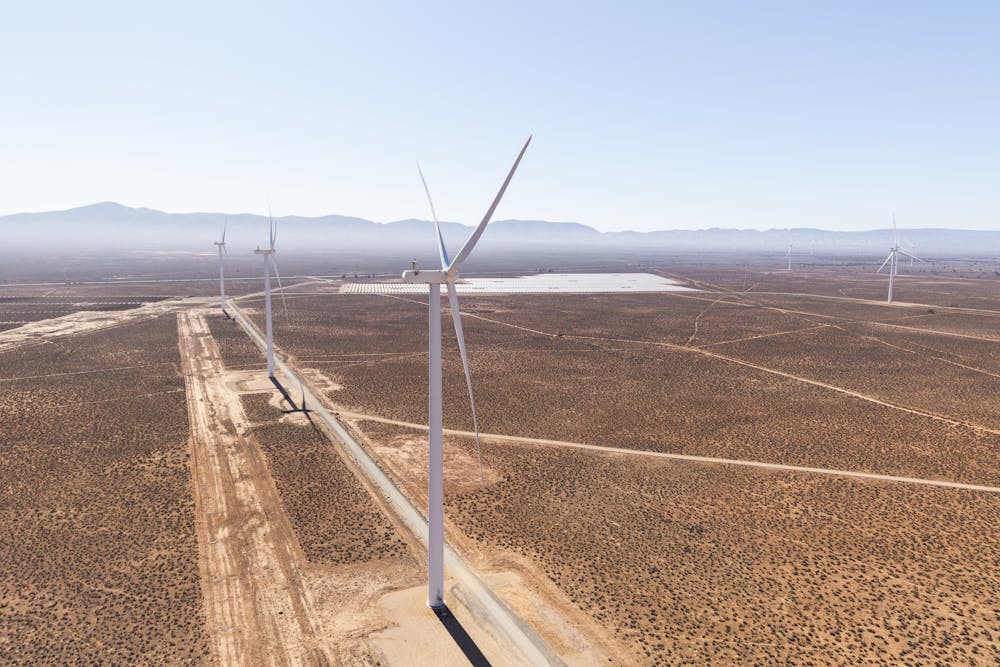
    This is surprising. Wind, like solar, was projected to get steadily cheaper. The fuel is free and turbines are getting better and better. Instead, wind in Australia has remained stubbornly expensive. Solving the problem will be challenging. But solutions have to be found fast if Australia is to reach the goal of 82% renewable power in the grid by 2030 – now less than five years away.

    Australia has no offshore wind projects up and running – and cost spikes may put planned projects at risk.
    Obatala-photography/Shutterstock

    Five reasons why this is happening

    Here’s what’s going on:

    1. Global supply chains have been disrupted

    The cost of steel, copper, fibreglass and other materials vital for wind turbines shot up during the pandemic. As a result, turbine prices rose almost 40% between 2020 and 2022. While input costs have fallen, turbine prices remain high. Solar panels can be churned out in factories, but modern wind turbines are massive, complex structures that require specialised manufacturing and logistics. That makes them more sensitive to global price fluctuations.

    2. Good wind is often in remote places

    Australia’s best wind resources are typically far from cities and existing grid infrastructure. Connecting far-flung wind farms such as Tasmania’s Robbins Island to the grid can require new and very expensive transmission lines. Remote sites mean extra costs such as temporary worker accommodation. The GenCost report notes this has added about 4% to wind project budgets in 2024–25 compared with the year before.

    Many other countries rely heavily on offshore wind, because wind blows more strongly and reliably over oceans. Unfortunately, spiking costs are likely to further delay the arrival of offshore wind in Australia. GenCost projects the first offshore wind projects in Australia will face even steeper costs.

    Good wind resources are often located in remote areas of Australia.
    Brook Mitchell/Stringer via Getty

    3. Local construction and labour costs have soared

    Australia faces a shortage of workers with the skills to build and maintain wind farms, resulting in higher wages and recruitment costs. Wind developers say construction costs have become a real issue. Wind farms are more labour-intensive than solar.

    4. Interest rates have raised financing costs

    Wind farms require large upfront investments and lengthy construction periods. Even a small increase in interest rates can make them unviable – and interest rates have been high for some time.

    5. Reliability concerns, regulatory delay and community opposition

    According to US researchers, technical issues have emerged for some new wind turbines, creating unexpected costs for developers. The long, complex process of getting permits, carrying out environmental assessments and building community support is pushing out project timelines, increasing costs and uncertainty for developers.

    Will solar take over?

    Solar faces far fewer challenges. Solar panels are mass-produced, meaning costs are steadily driven down through economies of scale. Panels can be deployed quickly and solar farms tend to face less community opposition.

    Wind turbines have to spin to function, while solar panels have no moving parts (though systems that track the Sun do). As a result, solar farms require less maintenance and are more reliable.

    It’s no surprise large-scale solar has been on a record-breaking run, growing 20-fold between 2018 and 2023.

    Solar panels make electricity during daylight hours, especially in summer. By contrast, wind tends to produce more power at night and during winter months. This is why wind is so useful to a green grid.

    Generating power from both wind and sunshine can slash how much storage is needed to ensure grid reliability, lowering overall system costs. A balanced mix of wind, solar and storage will meet Australia’s electricity needs more efficiently and reliably than just solar and storage, according to the International Renewable Energy Agency and independent researchers.

    Could wind come back?

    Making wind more viable will take work. Potential solutions do exist, such as expanding the skilled workforce and investing in specialised ships and equipment to install turbines offshore.

    Shipping large turbines from Denmark or China is expensive. To avoid these costs, it could make sense to encourage local manufacturing of large and heavy parts such as the main tower.

    Other options include finding lower-cost turbine suppliers and streamlining regulatory processes.

    Rising material and labour costs have driven up the cost of wind turbines. Pictured: turbine blades in China’s Jiangsu province in 2022 about to be shipped to Australia.
    Xu Congjun/Future Publishing via Getty Images

    The newly announced expansion of the government’s Capacity Investment Scheme could help reduce risks and give certainty, alongside public investment in new transmission lines.

    If nothing is done or if new measures don’t help, wind is likely to stall while solar and storage race ahead.

    That’s not the worst outcome. Australia could get a long way by relying on batteries and pumped hydro to store power from solar during the day and release it in the evenings, as California is doing. But this strategy involves trade offs, such as higher storage-capacity needs and the risk of insufficient power during long cloudy periods.

    For Australia to optimise its mix of renewables and storage, policymakers will have to tackle wind’s cost challenges. Effective action could lower costs, accelerate project timelines and bolster flagging investor confidence.

    Magnus Söderberg does not work for, consult, own shares in or receive funding from any company or organisation that would benefit from this article, and has disclosed no relevant affiliations beyond their academic appointment.

    – ref. 5 reasons why wind farms are costing more in Australia – and what to do about it – https://theconversation.com/5-reasons-why-wind-farms-are-costing-more-in-australia-and-what-to-do-about-it-262126

    MIL OSI Analysis – EveningReport.nz –

    July 31, 2025
  • MIL-Evening Report: ER Report: A Roundup of Significant Articles on EveningReport.nz for July 31, 2025

    ER Report: Here is a summary of significant articles published on EveningReport.nz on July 31, 2025.

    5 reasons why wind farms are costing more in Australia – and what to do about it
    Source: The Conversation (Au and NZ) – By Magnus Söderberg, Professor and Director, Centre for Applied Energy Economics and Policy Research, Griffith University Saeed Khan/Getty Building a solar farm in Australia is getting about 8% cheaper each year as panel prices fall and technology improves, according to an official new report. Battery storage costs are

    Sporty spice: how romance fiction is adding a new dynamic to sports fandom
    Source: The Conversation (Au and NZ) – By Kasey Symons, Lecturer of Communication, Sports Media, Deakin University Sports fans might love their teams, cheer or curse each game’s result and admire their favourite athletes, but we rarely associate sports with romance. However, that may be slowly changing thanks to the recent spike in the popularity

    Just as NZ began collecting meaningful data on rainbow communities, census changes threaten their visibility
    Source: The Conversation (Au and NZ) – By Lori Leigh, Research Fellow in Public Health, University of Otago Getty Images New Zealand’s 2023 census was the first to collect data on gender identity and sexual orientation, showing one in 20 adults identify as LGBTQIA+. But just as reports from this more inclusive census are being

    Big tech says AI could boost Australia’s economy by $115 billion a year. Does the evidence stack up?
    Source: The Conversation (Au and NZ) – By Uri Gal, Professor in Business Information Systems, University of Sydney Imaginima / Getty Images AI is on the agenda in Canberra. In August, the Productivity Commission will release an interim report on harnessing data and digital technology such as AI “to boost productivity growth, accelerate innovation and

    Progress on Closing the Gap is stagnant or going backwards. Here are 3 things to help fix it
    Source: The Conversation (Au and NZ) – By Madeleine Pugin, Research Fellow, School of Government and International Relations, Griffith University The Productivity Commission’s latest data on Closing the Gap progress represents an unsurprisingly grim overview of the socioeconomic inequalities experienced by Aboriginal and Torres Strait Islander peoples. Closing the Gap is the plan federal and

    More than 2 in 5 young Australians are lonely, our new report shows. This is what could help
    Source: The Conversation (Au and NZ) – By Michelle H. Lim, Associate Professor, Sydney School of Public Health, University of Sydney Oliver Rossi/Getty Images Loneliness is not a word often associated with young people. We tend to think of our youth as a time spent with family, friends and being engaged with school and work

    How migrant business owners turn their identity into an asset, despite some bumps along the way
    Source: The Conversation (Au and NZ) – By Shea X. Fan, Associate Professor, Human Resource Management, Deakin University Odua Images/Shutterstock Too often, it’s anti-immigration sentiment dominating headlines in Australia. But a quieter story is going untold. Migrants are not just fitting into Australian society, they’re actively reshaping it through entrepreneurship. Starting a business is difficult

    The Man from Hong Kong at 50: how the first ever Australian–Hong Kong co-production became a cult classic
    Source: The Conversation (Au and NZ) – By Gregory Ferris, Senior Lecturer, Media Arts & Production, University of Technology Sydney LMPC via Getty Images A cinematic firecracker of a film exploded onto international screens 50 years ago this week, blending martial arts mayhem, Bond-esque set pieces, casual racism – and a distinctly Australian swagger. From

    Rules for calculating climate risk in financial reporting by NZ businesses need revisiting – new research
    Source: The Conversation (Au and NZ) – By Martien Lubberink, Associate Professor of Accounting and Capital, Te Herenga Waka — Victoria University of Wellington Andrew MacDonald/Getty Images The recent International Court of Justice (ICJ) decision on climate action marked a significant step forward in formalising an idea many already accept: climate inaction is not merely

    Climate justice victory at the ICJ – the student journey from USP lectures to The Hague
    By Vahefonua Tupola in Suva The University of the South Pacific (USP) is at the heart of a global legal victory with the International Court of Justice (ICJ) delivering a historic opinion last week affirming that states have binding legal obligations to protect the environment from human-induced greenhouse gas emissions. The case, hailed as a

    Climate justice victory at the ICJ – the student journey from USP lectures to The Hague
    By Vahefonua Tupola in Suva The University of the South Pacific (USP) is at the heart of a global legal victory with the International Court of Justice (ICJ) delivering a historic opinion last week affirming that states have binding legal obligations to protect the environment from human-induced greenhouse gas emissions. The case, hailed as a

    Kamchatka earthquake is among top 10 strongest ever recorded. Here’s what they have in common
    Source: The Conversation (Au and NZ) – By Dee Ninis, Earthquake Scientist, Monash University Today at about 11:30am local time, a magnitude 8.8 earthquake struck off the coast of Russia’s Kamchatka Peninsula in the country’s far east. Originating at a depth of roughly 20 kilometres, today’s powerful earthquake – among the ten strongest in recorded

    Kamchatka earthquake is among top 10 strongest ever recorded. Here’s what they have in common
    Source: The Conversation (Au and NZ) – By Dee Ninis, Earthquake Scientist, Monash University Today at about 11:30am local time, a magnitude 8.8 earthquake struck off the coast of Russia’s Kamchatka Peninsula in the country’s far east. Originating at a depth of roughly 20 kilometres, today’s powerful earthquake – among the ten strongest in recorded

    Tsunami warnings are triggering mass evacuations across the Pacific – even though the waves look small. Here’s why
    Source: The Conversation (Au and NZ) – By Milad Haghani, Associate Professor and Principal Fellow in Urban Risk and Resilience, The University of Melbourne Last night, one of the ten largest earthquakes ever recorded struck Kamchatka, the sparsely populated Russian peninsula facing the Pacific. The magnitude 8.8 quake had its epicentre in the sea just

    NAPLAN is just one test. Here’s what to do if your child’s results were in the bottom bands
    Source: The Conversation (Au and NZ) – By Sally Larsen, Senior Lecturer in Education, University of New England Rawpixel/ Getty Images The latest round of NAPLAN results are out, along with a string of news reports about “students falling behind” and “failing”, and experts sounding the “alarm” about school progress. In March, all Australian students

    Inflation slows again — but is it enough for the Reserve Bank to cut interest rates?
    Source: The Conversation (Au and NZ) – By Stella Huangfu, Associate Professor, School of Economics, University of Sydney Doublelee/Shutterstock Inflation is moving in the right direction, but new figures released today may not be soft enough to trigger a cut in official interest rates in August. The Australian Bureau of Statistics released the June quarter

    With the UK and France moving toward recognising Palestine, will Australia now follow suit?
    Source: The Conversation (Au and NZ) – By Donald Rothwell, Professor of International Law, Australian National University One of the smallest and most exclusive clubs in the world belongs to states. The US Department of State puts the number of independent recognised states at 197, while others count 200. The United Nations, meanwhile, has 193

    With the UK and France moving toward recognising Palestine, will Australia follow suit?
    Source: The Conversation (Au and NZ) – By Donald Rothwell, Professor of International Law, Australian National University One of the smallest and most exclusive clubs in the world belongs to states. The US Department of State puts the number of independent recognised states at 197, while others count 200. The United Nations, meanwhile, has 193

    An underwater observatory keeping the pulse of the Southern Ocean for nearly 30 years yields fresh results
    Source: The Conversation (Au and NZ) – By Christopher Traill, PhD Candidate Southern Ocean biogeochemistry, University of Tasmania Elizabeth Shadwick In a world affected by climate change, the Southern Ocean plays an outsized role. It absorbs up to 40% of the human-caused emissions taken up by the oceans while also being home to some of

    MIL OSI Analysis – EveningReport.nz –

    July 31, 2025
  • MIL-Evening Report: Politics with Michelle Grattan: independent MP Allegra Spender on making tax fairer for younger Australians

    Source: The Conversation (Au and NZ) – By Michelle Grattan, Professorial Fellow, University of Canberra

    With parliament now finished its first fortnight’s session, attention will soon be on the government’s August 19-21 economic reform roundtable, bringing together business, unions, experts and community representatives to pursue consensus on ways to lift Australia’s flagging productivity.

    Independent member for Wentworth Allegra Spender is one of the 25 participants invited to the roundtable. She’s particularly focused on tax reform and last week held a tax roundtable of her own.

    Spender joined the podcast to talk about making tax fairer, the need for greater economic reform, climate policy, the social media ban for under 16s, a ceasefire in Gaza, and more.

    On her ambitions on tax policy, Spender says income tax indexation is something that would benefit younger, working Australians:

    Myself and actually another number of crossbenchers […] wrote to both the government and the opposition last term, really pushing for tax indexation. And really the heart of this is startling statistics from last term. The [Reserve Bank of Australia] put out some information that showed that bracket creep was a bigger impost on average households’ budgets than the RBA increases in the interest rate.

    […] Just to give you two statistics about young working people: households over the age of 65, in the last 10 odd years, have grown their wealth by around 50%. Households under the age of 35 have not grown their worth at all, pretty much. So they are going backwards relative to the rest of the country. A household, two households, both on a $100,000, sitting next to each other. If [one] household is retired, they have to pay on average half the tax of a working age household.

    Spender says the system is stacked against young people, who “are really struggling economically compared to previous generations”.

    It’s in your early and midlife that you need money for housing, to raise kids and everything else. So we don’t have a tax system that works for younger people. We have a tax system that burdens younger people strongly and then actually gives people more tax breaks when they’re older, and normally wealthier.

    On climate targets, Spender says while she’ll be guided by the yet-to-be-provided Climate Change Authority’s advice, she wants to see Australia “try and lead other countries” – pointing to the United Kingdom, which has set a target to cut emissions by at least 81% by 2035.

    The Climate Change Authority put out their interim guidance to say that a target within 65 to 75% [emissions reduction on 2005 levels] was both achievable from an economic point of view and also appropriate towards a scientific point of view.

    My view is that we should be at the very top end of that. Now, if the Climate Change Authority significantly reviews, you know, revises down their targets, I will reconsider. But I think really what we should be doing is to say how can we be as ambitious as possible. And the reason I think that is important is actually, you know, from a business point of view, ambition and certainty is what they need to make the big investments that will actually achieve it.

    Ambition is needed from a scientific point of view, because if we took, say, less than 75% [emissions reduction], and the rest of the world did too, we would be looking at outcomes that are catastrophic for Australia. Regular days in Sydney and Melbourne that are above 50 degrees. A huge loss of coral reef. Continued adverse weather events.

    On the news that the government will include YouTube in its social media ban for under 16s, Spender says it’s now up to social media companies to make their websites safer to lift the bans.

    My eldest daughter [who’s 12] has a strong view on this. And she’s actually a big fan of the ban. She was like, ‘I just don’t understand how it makes sense to leave YouTube in and TikTok out’. […] She’s not on social media, but other people are, and she finds it sometimes frustrating.

    But I think the challenge on this is always going to be the implementation. I think it’s fiendishly complicated to implement. I think genuinely the most valuable part of this ban is actually the signal to families and parents about what is expected and what isn’t.

    […] I think the ball’s in the social media companies’ courts. If they want to move to a life beyond the ban, they need to show how they can make their platforms safe for younger Australians, because I don’t think they have delivered that to date. So I’d be open if they can provide the evidence of how they can change things. I’m always open minded to reversing or changing those bans. But at the moment, [social media] isn’t safe.

    Michelle Grattan does not work for, consult, own shares in or receive funding from any company or organisation that would benefit from this article, and has disclosed no relevant affiliations beyond their academic appointment.

    – ref. Politics with Michelle Grattan: independent MP Allegra Spender on making tax fairer for younger Australians – https://theconversation.com/politics-with-michelle-grattan-independent-mp-allegra-spender-on-making-tax-fairer-for-younger-australians-262225

    MIL OSI Analysis – EveningReport.nz –

    July 31, 2025
  • MIL-OSI China: Renewables capacity doubles in first half

    Source: People’s Republic of China – State Council News

    A farmer works amid photovoltaic panels at a solar power station in the Yi-Hui-Miao Autonomous County of Weining, southwest China’s Guizhou Province, July 3, 2025. [Photo/Xinhua]

    China’s newly installed wind and solar power capacity nearly doubled year-on-year during the first half of this year, as the country ramps up its transition to cleaner energy sources, data from the China Electricity Council showed.

    Newly added power generation capacity during the first six months reached 290 million kilowatts, with new solar installations rising 107.1 percent year-on-year to 210 million kilowatts, and new wind power installations up 98.9 percent to 50 million kilowatts, it said.

    China’s renewable energy sector is expected to maintain rapid growth, with average annual new installed capacity reaching 200-300 million kilowatts during the 15th Five-Year Plan period (2026-30), said Zhang Lin, head of the council’s planning and development department, during a news conference in Beijing on Wednesday.

    The near doubling of China’s wind and solar capacity in the first half is a clear signal of the country’s accelerating commitment to its energy transition goals, said Lin Boqiang, head of the China Institute for Studies in Energy Policy at Xiamen University.

    “These installation figures demonstrate China’s ability to rapidly deploy renewable energy technologies at scale, positioning it as a global leader in clean energy investment and deployment.”

    According to the council, China’s power generation capacity is projected to hit a record high in 2025, fueled by a rapid expansion of renewable energy sources.

    New power generation capacity is expected to exceed 500 gigawatts in 2025, with new renewable energy capacity reaching approximately 400 GW, a result of China’s accelerated green energy transition and increasing investment in grid construction, the CEC said.

    Total installed power generation capacity is forecast to reach around 3.9 terawatts by the end of 2025, a year-on-year increase of approximately 16.5 percent. Nonfossil fuel sources are expected to account for 2.4 TW, or about 61 percent of total capacity, said Jiang Debin, deputy director of the council’s statistics and data center.

    The CEC also anticipates steady growth in China’s electricity demand in 2025, with total consumption expected to increase by 5-6 percent. Electricity demand is projected to grow faster in the second half of the year compared to the first, it said.

    China’s maximum power load once again set a new historical record on July 16, surpassing 1.5 billion kilowatts for the first time and reaching a peak of 1.506 billion kilowatts, according to the National Energy Administration.

    This represents an increase of 55 million kilowatts compared to last year’s peak load, the third time a historical record has been broken in July, it said.

    According to Chen Yaning, head of the council’s power supply and demand analysis department, the record reflects steady expansion in China’s electricity consumption, a key barometer of economic activity.

    Fueled by robust and sustained economic activity, power demand surged across the nation in the first half of this year, with industrial output, commercial operations and residential consumption all contributing to the heightened electricity needs, she said.

    “Equipment manufacturing and consumer goods manufacturing related to new quality productive forces have maintained strong resilience,” said Chen.

    The internet and related services sector saw a 27.4 percent year-on-year increase in electricity consumption, driven by the rapid development of mobile internet, big data and cloud computing.

    The charging and battery swapping services sector for electric vehicles saw a 42.4 percent increase in electricity consumption in the first half of the year, fueled by the rapid growth of the EV market.

    MIL OSI China News –

    July 31, 2025
  • MIL-OSI Canada: More classroom spaces on the way | Un plus grand nombre de places en salles de classe à venir

    To support schools in managing the growing number of students, Alberta’s government is investing $50 million to add 62 pre-made classrooms this fall. Through previous Budget 2025 commitments, a total $100 million will deliver 109 new modular classrooms, creating space for 2,725 students and relocating 575 more.

    “Alberta’s government is moving quickly to build new schools and create more classroom spaces, so our students continue to have room to grow and thrive. This additional funding for modular classrooms will help us get much-needed spaces to some of our busiest schools, while we work as quickly as possible to open the doors to more than 130 school projects underway in the province.”

    Demetrios Nicolaides, Minister of Education and Childcare

    “Rocky View Schools welcomes these additional modular classrooms to help ease current enrolment pressures while we await completion of the seven much-needed new schools approved in budgets 2024 and 2025. RVS has experienced years of unprecedented enrolment growth and appreciates the Government of Alberta’s recognition of the urgent need for more student spaces in our fast-growing communities. We remain committed to working with the government to ensure new school and modular approvals keep pace with student enrolment growth across RVS.”

    Fiona Gilbert, board chair, Rocky View Schools

    Alberta’s government is also providing $1 million in planning funding to advance four new charter school projects. The funds are being provided to New Horizons Charter Academy, New Humble Community School, Suzuki Charter School and Thrive Charter School to finalize planning details such as programming needs and the size and type of classrooms needed in each school. When completed, these new charter schools will contribute more than 2,400 new or updated student spaces.

    “The Thrive Charter School Society is excited about this opportunity to advance efforts in addressing opportunity gaps for students in Edmonton. This investment paves the way to serve more students and their families with the programming and supports necessary to truly thrive.”

    Michael Hladun, vice-chair, Thrive Charter School Society

    Alberta’s government is looking to the future by providing $610,000 in pre-planning funding for 13 potential future school projects. Pre-planning funding helps school boards begin planning for school projects they believe will become priorities within the next three to five years. Examples of pre-planning activities include project scoping and community engagement and outreach. Although it is an important first step, pre-planning funding does not guarantee a school project will be built.

    These investments in modulars and school planning are all part of the province’s Schools Now program, which includes a generational investment of $8.6 billion to build and update more than 100 schools across the province and create more classroom spaces now. Over seven years, Schools Now will create more than 200,000 student spaces, helping school boards manage class sizes and bringing learning closer to home for more Alberta students and families.

    Quick facts

    • Alberta’s student population rose from about 735,000 in 2020-21 to nearly 826,000 in 2024-25 – and counting.
    • The most recent $50-million investment supports the purchase of 62 modular classrooms, three washroom units and the relocation of four units.
      • The pre-made classrooms will start to be manufactured this summer and will be installed throughout the 2025-26 school year.
    • The $50 million invested in modular classrooms earlier in the year supported the purchase of 47 new modular classrooms, three washroom units and 19 relocations.
    • With the addition of four new charter school projects, there are now seven charter school projects underway in Alberta. When complete, these projects will contribute more than 4,400 student spaces.
    • The province also invested $140 million towards modular classrooms in 2024.? 

    2025-26 Modular Classroom Program in-year approvals ($50 million)

    School boards

    New modulars

    Relocations

    Demolitions

    Black Gold School Division

    4

    –

    4

    Calgary Board of Education

    13

    –

    –

    Calgary Catholic School District

    4

    4

    –

    Chinook’s Edge School Division

    2

    –

    –

    Christ the Redeemer Catholic Schools

    1

    –

    –

    Connect Charter School

    1

    –

    –

    Conseil scolaire Centre-Nord

    2 + 1 washroom

    –

    –

    Edmonton Catholic Schools

    2 + 1 washroom

    –

    Edmonton Public Schools

    11

    –

    –

    Elk Island Public Schools

    2

    –

    –

    Fort McMurray Public School Division

    2

    –

    –

    Fort McMurray Catholic Schools

    3

    –

    –

    Grande Prairie and District Catholic Schools

    –

    –

    14

    Lethbridge School Division

    1

    –

    –

    Parkland School Division

    3

    –

    –

    Rocky View Schools

    5

    –

    –

    St. Albert Public Schools

    4

    –

    4

    St. Thomas Aquinas Roman Catholic Schools

    2 + 1 washroom

    –

    –

    Total

    62 classrooms + 3 washroom units

    4

    22

    Planning funding (4 projects):   

    Community

    Charter school

    Edmonton (2)

    Suzuki Charter School

    Thrive Charter School

    Leduc County

    New Humble Community School

    Sherwood Park

    New Horizons School

    Pre-planning funding (13 projects):   

    Community

    School board

    Blackfoot/Kitscoty

    Buffalo Trail Public Schools

    Calgary

    Connect Charter School

    Edmonton (4)

    Edmonton Catholic Schools

    Edmonton Public Schools (2)

    STEM Collegiate Canada

    Fort Saskatchewan

    Elk Island Public Schools

    Lacombe

    Wolf Creek Public Schools

    Okotoks

    Christ the Redeemer Catholic Schools

    Oyen

    Prairie Rose School Division

    Paddle Prairie

    Northland School Division

    Red Deer

    Red Deer Public Schools

    Stettler

    East Central Catholic Schools

    Related information

    • Planning and building schools
    • Schools Now
    • Student population statistics

    Related news

    • Fast-tracking more school projects (May 21, 2025)
    • Money for school project planning (April 4, 2025)

    À l’approche de l’année scolaire 2025-2026, le gouvernement de l’Alberta continue d’investir dans la création de nouvelles places en salles de classe.

    Afin d’appuyer les écoles à gérer le nombre croissant d’élèves, le gouvernement de l’Alberta investit 50 millions de dollars pour ajouter 62 nouvelles salles de classe modulaires cet automne. Avec les engagements précédents dans le cadre du budget 2025, cela représente un total de 100 millions de dollars qui permettront de construire 109 nouvelles salles de classe modulaires, créant ainsi 2 725 places pour les élèves, et d’en déplacer 575 autres.

    « Le gouvernement de l’Alberta agit rapidement pour construire de nouvelles écoles et augmenter le nombre de places en salles de classe afin que nos élèves continuent d’avoir l’espace nécessaire pour grandir et s’épanouir. Ce financement supplémentaire pour les salles de classe modulaires nous aidera à fournir les places dont ont tant besoin certaines de nos écoles les plus surutilisées, pendant que nous travaillons aussi vite que possible pour terminer plus de 130 projets d’écoles en cours dans la province. »

    Demetrios Nicolaides, ministre de l’Éducation et de la Garde d’enfants

    « Rocky View Schools se réjouit de l’arrivée de ces salles de classe modulaires supplémentaires qui permettront d’alléger la pression actuelle sur les inscriptions, en attendant l’achèvement des sept nouvelles écoles indispensables approuvées dans le cadre des budgets 2024 et 2025. RVS connait depuis des années une croissance sans précédent du nombre d’inscriptions et apprécie que le gouvernement de l’Alberta reconnaisse le besoin urgent de créer davantage de places pour les élèves dans nos communautés en pleine expansion. Nous restons déterminés à travailler avec le gouvernement pour veiller à ce que les autorisations de construction de nouvelles écoles et de salles de classe modulaires suivent le rythme de la croissance des inscriptions dans l’ensemble des écoles de Rocky View Schools. »

    Fiona Gilbert, présidente, Rocky View Schools

    Le gouvernement de l’Alberta fournit également un million de dollars de financement pour la planification qui fera avancer quatre projets de nouvelles écoles à charte dans la province. Ces fonds sont attribués aux écoles New Horizons Charter Academy, New Humble Community School, Suzuki Charter School et Thrive Charter School afin de finaliser les détails de planification, tels que les besoins en matière de programmation et la taille et le type de salles de classe nécessaires pour chaque école. Lorsqu’elles ouvriront leurs portes, ces nouvelles écoles à charte ajouteront plus de 2 400 places nouvelles ou modernisées.

    « La Thrive Charter School Society se réjouit de cette occasion qui lui est offerte de faire progresser les efforts visant à combler les écarts en matière d’occasions pour les élèves d’Edmonton. Cet investissement ouvre la voie à la prise en charge d’un plus grand nombre d’élèves et de leurs familles grâce à des programmes et à des soutiens nécessaires à leur épanouissement. »

    Michael Hladun, vice-président, Thrive Charter School Society

    Le gouvernement de l’Alberta pense à l’avenir en accordant un financement de 610 000 de dollars pour la planification préliminaire de 13 projets d’écoles potentiels. Le financement pour la planification préliminaire permet aux autorités scolaires de commencer à planifier des projets d’école qui, selon elles, deviendront des priorités dans les trois à cinq prochaines années. Les activités admissibles dans le cadre du financement pour la planification préliminaire comprennent, entre autres, la détermination de la portée du projet, ainsi que la consultation et la sensibilisation auprès de la communauté. Bien qu’il s’agisse d’une première étape importante, l’approbation du financement pour la planification préliminaire ne garantit pas la construction d’une école.

    Ces investissements dans les salles de classe modulaires et la planification d’écoles s’inscrivent dans le cadre du programme « Des écoles dès maintenant » (Schools Now) du gouvernement de l’Alberta, un investissement générationnel de 8,6 milliards de dollars pour bâtir et moderniser plus de 100 écoles dans la province et créer dès maintenant un plus grand nombre de places en salles de classe. Au cours des sept prochaines années, le programme « Des écoles dès maintenant » créera plus de 200 000 places pour les élèves, ce qui aidera les autorités scolaires à gérer la taille des classes et à faire en sorte qu’un plus grand nombre d’élèves et de familles albertaines aient accès à un lieu d’apprentissage plus près de chez eux.

    En bref

    • La population étudiante de l’Alberta est passée d’environ 735 000 en 2020-2021 à près de 826 000 en 2024-2025, et elle continue d’augmenter.
    • Le plus récent investissement, au montant de 50 millions de dollars, permettra d’acheter trois toilettes et 62 salles de classe modulaires, ainsi que d’en déménager quatre autres.
      • La fabrication des nouvelles salles de classe modulaires débutera cet été et les salles de classe seront installées tout au long de l’année scolaire 2025-2026.
    • Les 50 millions de dollars investis plus tôt cette année dans le programme de salles de classe modulaires ont permis d’acheter trois toilettes et 47 nouvelles salles de classe modulaires, ainsi que d’en déménager 19 autres.
    • Avec l’ajout de quatre nouveaux projets d’écoles à charte, on compte maintenant sept projets d’écoles à charte en cours de réalisation en Alberta. Une fois achevés, ces projets créeront plus de 4 400 places pour les élèves.
    • La province a également investi 140 millions de dollars dans le programme de salles de classe modulaires en 2024.

    Approbations en cours d’exercice pour le programme de salles de classe modulaires 2025-2026 (50 millions de dollars)

    Autorités scolaires

    Nouvelles salles de classe modulaire

    Déménagement

    Démolition

    Black Gold School Division

    4

    –

    4

    Calgary Board of Education

    13

    –

    –

    Calgary Catholic School District

    4

    4

    –

    Chinook’s Edge School Division

    2

    –

    –

    Christ the Redeemer Catholic Schools

    1

    –

    –

    Connect Charter School

    1

    –

    –

    Conseil scolaire Centre-Nord

    2 + 1 toilette

    –

    –

    Edmonton Catholic Schools

    2 + 1 toilette

    –

    Edmonton Public Schools

    11

    –

    –

    Elk Island Public Schools

    2

    –

    –

    Fort McMurray Public School Division

    2

    –

    –

    Fort McMurray Catholic Schools

    3

    –

    –

    Grande Prairie and District Catholic Schools

    –

    –

    14

    Lethbridge School Division

    1

    –

    –

    Parkland School Division

    3

    –

    –

    Rocky View Schools

    5

    –

    –

    St. Albert Public Schools

    4

    –

    4

    St. Thomas Aquinas Roman Catholic Schools

    2 + 1 toilette

    –

    –

    Total

    62 salles de classe + 3 toilettes

    4

    22


    Financement pour la planification (4 projets)   

    Collectivité

    École à charte

    Edmonton

    Suzuki Charter School

    Thrive Charter School

    Leduc County

    New Humble Community School

    Sherwood Park

    New Horizons School


    Financement pour la planification préliminaire (13 projets)  

    Collectivité

    Autorité scolaire

    Blackfoot/Kitscoty

    Buffalo Trail Public Schools

    Calgary

    Connect Charter School

    Edmonton (4)

    Edmonton Catholic Schools

    Edmonton Public Schools (2)

    STEM Collegiate Canada

    Fort Saskatchewan

    Elk Island Public Schools

    Lacombe

    Wolf Creek Public Schools

    Okotoks

    Christ the Redeemer Catholic Schools

    Oyen

    Prairie Rose School Division

    Paddle Prairie

    Northland School Division

    Red Deer

    Red Deer Public Schools

    Stettler

    East Central Catholic Schools

    Renseignements connexes

    • Planification et construction d’écoles
    • Des écoles dès maintenant
    • Statistiques sur la population étudiante (en anglais seulement)

    Nouvelles connexes

    • Accélérer un plus grand nombre de projets d’écoles (21 mai 2025)
    • Des fonds pour la planification d’écoles (4 avril 2025)

    MIL OSI Canada News –

    July 31, 2025
  • MIL-OSI United Kingdom: expert reaction to study estimating the number of lung microplastics people inhale daily in homes and cars

    Source: United Kingdom – Executive Government & Departments

    July 30, 2025

    A study published in PLOS One estimates human exposure to microplastics in homes and cars. 

    Prof Oliver Jones, Professor of Chemistry, RMIT University, said:

    “The only thing this paper measured was the concentrations of microplastics in a limited set of environments. The authors tested the air in three apartments and two cars via a total of 12 samples (plus four blanks). This is simply not enough data to make generalisations about the cities in France where the work took place, let alone the rest of the world. The authors did not conduct any testing to determine whether the microplastics they found were associated with or caused any health effects. The results should thus be treated as preliminary at best.

    “But what if there were more samples? What would the results mean?

    “When we talk about air pollution, you often hear the terms PM10 and PM2.5. The PM stands for particulate matter, and the numbers stand for the diameter of the particle in micrometres (microns). PM10 means particulate matter 10 micrometres (0.01 mm) in diameter or smaller, while PM2.5 means particles of matter 2.5 micrometres (0.0025 mm) in diameter or smaller. They usually come from dust and smoke, and we know that very fine particulate matter, no matter the source, can be a health risk; that’s why air quality is regularly tested, and there are guidelines in place for total PM10 and PM2.5 concentrations in the air in many countries [1].

    “Particles at the top end of the PM10 range generally do not travel further into the lungs than the upper respiratory tract (nose and throat). Plastic particles in the PM2.5 range (or smaller) might travel further, but the keyword here is ‘might’; this is a relatively new area of research.

    “However, even if we assume plastic PM2.5 were an issue, their effects are already considered as part of the general impact of PM2.5 pollution, and any effect from plastics would likely be dwarfed by the contribution of PM2.5 particles from burning petrol oil and other fossil fuels, which are present in much greater abundance (while a figure like 2238 particles per cubic meter sounds like a large number, the particles themselves are very small, so the total physical amount of particles is also very small).

    “In short, while particulate pollution is an issue we should pay attention to, you don’t have to worry about breathing plastic air just yet.

    [1] Accredited official statistics, particulate matter (PM10/PM2.5), https://www.gov.uk/government/statistics/air-quality-statistics/concentrations-of-particulate-matter-pm10-and-pm25 accessed 30/06/25″

    ‘Human exposure to PM10 microplastics in indoor air’ by Nadiia Yakovenko et al. will be published in PLOS One at 19:00 UK time Wednesday 30 July 2025, which is when the embargo will lift.

    DOI: 10.1371/journal.pone.0328011

    Declared interests

    Prof Oliver Jones: I am a Professor of Chemistry at RMIT University in Melbourne. I have previously published research on microplastics in the environment. I have no conflicts of interest to declare but I have received funding from the Environment Protection Authority Victoria and various Australian Water utilities for research into environmental pollution.

    MIL OSI United Kingdom –

    July 31, 2025
  • MIL-OSI Asia-Pac: LCQ14:Measures to assist young people in home ownership

    Source: Hong Kong Government special administrative region – 4

         Following is a question by the Hon Kenneth Leung and a written reply by the Deputy Chief Secretary for Administration, who is undertaking the duties of the Secretary for Housing, Mr Cheuk Wing-hing, in the Legislative Council today (July 30):
     
    Question:
     
         In recent years, the current-term Government has actively encouraged young people to move up the housing ladder and has put in place a number of measures to assist young people in home ownership. In this connection, will the Government inform this Council:
     
    (1) among the applicants for the White Form Secondary Market Scheme 2024 (WSM 2024), of the number of young applicants under the Youth Scheme (WSM) and their percentage, with a breakdown by age group (i.e. aged 18 to 29 and aged 30 to 39);
     
    (2) out of the 6 000 quota under WSM 2024, of the number of those ultimately allocated to applicants aged under 40; whether the authorities will further increase the quota for the Youth Scheme (WSM) in the light of the response received and the demand of young people for home ownership;
     
    (3) whether it has compiled statistics on the respective numbers of applications for 80 per cent and 90 per cent loan-to-value (LTV) mortgage loans under the Mortgage Insurance Programme (MIP) in each of the past five years, and the respective percentages of such numbers in the total number of new mortgage loans approved each year; among the applicants for 80 per cent and 90 per cent LTV mortgage loans, of the number of young applicants aged under 40;
     
    (4) given that the HKMC Insurance Limited (HKMCI) announced in August last year a new arrangement, in which a waiver of the owner occupancy requirement under MIP will be granted to an eligible homeowner (such as a homeowner’s family expecting newborn(s), resulting in a change in housing needs) for renting out the property, whether the Government knows if HKMCI will consider enhancing such measure (such as expanding the eligibility criteria from families with newborn(s) to include families with young child or children as well), thereby enabling more young families to change residence based on family needs;
     
    (5) as it is learnt that some young families who previously acquired mortgage loans with a high LTV ratio through MIP find it difficult to replace their properties due to property price adjustments, and some even find themselves in negative equity, thus affecting their life planning, whether the Government has conducted surveys and studies, compiled statistics, and monitored on how such situation has impacted young families, and taken timely measures to prevent the problem from worsening; and
     
    (6) whether it will further assist young people in home ownership under the subsidised housing policies, such as adjusting the proportion of subsidised housing supply, extending the Youth Scheme to subsidised housing provided by the Hong Kong Housing Society, and increasing the annual number of applications that can be made for subsidised housing and the proportion of larger flats available, thereby making subsidised housing an important channel for young people to purchase their first home?
     
    Reply:
     
    President,
     
         Since taking office, the current-term Government has actively implemented multiple measures to “enhance speed, quantity, efficiency and quality” in public housing supply. With our unremitting efforts, the problem of back-loaded public housing supply has completely turned around. Coupled with 30 000 Light Public Housing units, the total public housing supply in the coming five years (i.e. 2025-26 to 2029-30) will reach 197 000 units, which is 85 per cent higher than that of the first five year period since the current-term Government took office (i.e. 2022-23 to 2026-27), providing a solid foundation for citizens to live and work in contentment. The Hong Kong Housing Authority (HA) has also been striving to enhance the housing ladder by assisting low- to middle-income families to purchase their own homes through the sale of subsidised sale flats (SSF), and encouraging them to move up the housing ladder as appropriate according to their own affordability.
     
         We notice that many young people are working hard to achieve upward mobility through accumulation of experience and savings. Among buyers of various types of SSF, young people under the age of 40 have always been the majority. For instance, nearly half of the successful applicants for first-hand Home Ownership Scheme (HOS) flats are under the age of 40. Around 80 per cent of applicants and buyers under the White Form Secondary Market Scheme (WSM) are also young people under the age of 40. In fact, the selling prices of SSF are affordable for young people. Taking HOS 2024 as an example, after applying the affordability benchmarks calculation, the flats are sold at around 70 per cent of the market price. Based on the average selling price, a flat of about 380 square feet in saleable area costs only around $2.7 million. As the HA provides a mortgage default guarantee for buyers of SSF, generally, White Form buyers can secure a mortgage loan at 90 per cent of the flat price. Assuming an interest rate at 3.5 per cent and a 30-year mortgage term, young people would only need to make a down payment of about $270,000, with monthly mortgage payments of $10,900, to become homeowners.
     
         To further assist young people, the HA has introduced a series of measures to facilitate their flat purchase. First, starting from the next HOS sale exercise, the HA will allocate an extra ballot number to young family and one-person applicants aged below 40 with White Form status. As for the secondary market, starting from WSM 2024, the HA has increased the quota to 6 000 by 1 500, all of which will be allocated to young family and one-person applicants under the age of 40.
     
         Meanwhile, the Hong Kong Housing Society (HKHS), as a close partner of the Government in housing policies, also fully supports the Government’s relevant housing initiatives in helping young people realise their home ownership aspirations, including the allocation of an additional ballot number to White Form young family and one-person applicants aged below 40 for the purchase of SSF. The HKHS will continue to make reference to the relevant arrangements of the HA and actively work towards the same.
     
         In addition, the Government also assists those higher-income persons who are not eligible for HOS and yet cannot afford private housing to achieve their home ownership aspirations through Starter Homes for Hong Kong Residents (SH) projects. Apart from the first two SH projects offered for sale by the Urban Renewal Authority (i.e. eResidence Towers 1 and 2, as well as eResidence Tower 3) with a total of over 600 SH units sold, the Government is also taking forward a few other SH projects, which will provide a total of around 5 000 SH units from the next few years onwards. Amongst applicants and final purchasers of SH units offered for sale in the past, around 85 per cent were youth aged 40 or below.
     
         Besides providing various types of subsidised housing, the Government has also implemented other measures to assist citizens in home purchase. The current-term Government has since February 2024 abolished all demand-side management measures for residential properties. The Hong Kong Monetary Authority has also since October 2024 adjusted the countercyclical macroprudential measures for property mortgage loans. The maximum loan-to-value (LTV) ratio and debt servicing ratio (DSR) limit were reverted to the pre-2009 levels before the countercyclical macroprudential measures were first introduced, with the maximum LTV ratio for all residential properties adjusted to 70 per cent, regardless of the value of the property, and the DSR limit adjusted to 50 per cent, providing facilitation to persons with different needs for property purchase. Individuals may also obtain high LTV ratio mortgage loans through the Mortgage Insurance Programme (MIP) according to their own needs. In particular, for first-time homebuyers with regular income purchasing properties priced at $10 million or below, the LTV ratio can be up to 90 per cent, which greatly reduces their down payment burden. Meanwhile, to provide comprehensive support for citizens and young people who have aspirations in purchasing flats, the Government has since February 26, 2025 adjusted the value bands of Ad Valorem Stamp Duty payable for sale and purchase or transfer of residential and non-residential properties, raising the maximum value of properties chargeable to $100 stamp duty from $3 million to $4 million. As for SSF, since most units are priced below $4 million (taking HOS 2024 as an example, the average selling price is around $2.7 million), buyers may thus benefit from the aforementioned reduction in stamp duty to $100, with savings to nearly $60,000.
     
         In consultation with the Financial Services and the Treasury Bureau, our reply to the questions raised by the Hon Kenneth Leung is as follows:
     
    (1) During the application period of WSM 2024, the HA received a total of around 34 000 applications. The oversubscription rate is about five times, reflecting the persistent strong demand for second hand SSF of citizens. Among all of the applications received, over 80 per cent came from young applicants opting to join the newly implemented Youth Scheme (WSM), showing that the scheme was well received by the young applicants. Regarding the number and age distribution of young applicants who opted for the Youth Scheme (WSM) under WSM 2024, please refer to Annex 1.
     
    (2) Balloting for WSM 2024 was conducted in April 2025. The HA expects that approval letters will be issued to successful applicants in the third/fourth quarter of 2025. Within the specified period, holders of the approval letters may apply for Certificate of Eligibility to Purchase (valid for 12 months) to purchase a SSF with premium unpaid. The HA will continuously monitor factors including the quota utilisation, demand for SSF, overall market conditions, etc, to make timely adjustments to both the total number of quota and the allocations under the Youth Scheme (WSM).
     
    (3) The MIP is administered by the HKMC Insurance Limited (HKMCI) for promoting home ownership in Hong Kong. When approving residential mortgage loans, banks have to comply with LTV requirement on owner-occupied residential mortgage lending, which is currently set at 70 per cent. With the MIP providing mortgage insurance to banks, banks can provide mortgage loans with higher LTV ratio (i.e. above 70 per cent) without incurring additional credit risk. As long as an application meets the relevant eligibility criteria, the bank can generally provide a mortgage loan of up to 80 per cent LTV ratio under the MIP. For first-time homebuyers with fixed salaries, the maximum LTV ratio can even reach 90 per cent, substantially reducing the down payment burden for homebuyers.
     
         The numbers of new loans drawn down under the MIP in the past five years (categorised by LTV ratio), and their respective proportions to the total number of new loans drawn down (i.e. figures in the brackets) are set out at Annex 2.
     
         Among above new loans drawn down, the numbers of cases involving at least one homeowner aged below 40, and their respective proportions to the total number of new loans drawn down (categorised by LTV ratio) (i.e. figures in the brackets) are set out at Annex 3.
     
    (4) In August 2024, the HKMCI put in place a new arrangement under the MIP to approve on a case-by-case basis eligible homeowners’ applications for renting out their self-occupied properties, so as to help them meet their special needs arising from changes in personal or family circumstances (new arrangement). The new arrangement has been implemented for around one year smoothly, offering substantial assistance to homeowners with special needs. Under the new arrangement, in addition to the situation that the homeowner’s family is expecting newborn(s)/adopting child or children or the homeowner has become unemployed, any homeowner who has other special needs and has been residing in the relevant property for not less than 12 months may also submit an application to the HKMCI through a bank for renting out the self-occupied property. The existing mechanism already allows homeowners who have young children and are able to meet the self-occupancy requirement to submit applications for renting out their self-occupied properties based on their special needs. The HKMCI will consider approving the relevant applications on a case-by-case basis.
     
    (5) The objective of the MIP is to promote home ownership and provide citizens with an additional option for financing. As the fluctuation of the property market is subject to various factors, citizens should take into consideration their needs for home ownership and repayment capability, and assess the risks carefully.
     
    (6) As mentioned above, both the HA and the HKHS are making relentless efforts to optimise various arrangements to help young people with home ownership aspirations strive to climb onto the home ownership ladder. The Chief Executive announced in the 2024 Policy Address that the HA would adjust the ratio between public rental housing (PRH) (including Green Form Subsidised Home Ownership Scheme flats) and SSF from 7:3 to 6:4 in order to increase the supply of SSF. In the next five years (i.e. 2025-26 to 2029-30), the HA and the HKHS will complete about 56 500 SSF. Meanwhile, the HA is implementing the arrangement announced in the 2022 Policy Address regarding the minimum floor area for new flats. The saleable area of all SSF completed from 2026-27 onwards will be no less than 26 square metres in general. Furthermore, in the latter part of the coming decade, we will reserve 10 per cent increase in floor area for public housing. We are also exploring other measures to further assist young people in purchasing SSF and the measures will be launched in a timely manner. That said, we would like to take this opportunity to appeal to young people once again to unleash their potential and create a more prosperous future, but not to limit their room for development just for the sake of meeting the eligibility criteria for PRH application. In the past five years (i.e. 2020-21 to 2024-25), the average age of non-elderly one-person applicants that were housed to PRH was 57 years old. After understanding the above opportunities and support provided by the Government for young people, young people should plan ahead of time so as to climb higher up the housing ladder.

    MIL OSI Asia Pacific News –

    July 31, 2025
  • MIL-OSI Europe: EU-US trade deal explained – energy aspects

    Source: EuroStat – European Statistics

    European Commission Questions and answers Brussels, 30 Jul 2025 EU energy imports from the US
    The US already is one of the EU’s top energy partners and, by far, the EU’s first supplier of LNG, with 55% of our LNG supply comi…

    MIL OSI Europe News –

    July 31, 2025
  • MIL-OSI: National Fuel Reports Third Quarter Fiscal 2025 Earnings and Announces Preliminary Guidance for Fiscal 2026

    Source: GlobeNewswire (MIL-OSI)

    WILLIAMSVILLE, N.Y., July 30, 2025 (GLOBE NEWSWIRE) — National Fuel Gas Company (“National Fuel” or the “Company”) (NYSE:NFG) today announced consolidated results for the third quarter of its 2025 fiscal year.

    FISCAL 2025 THIRD QUARTER SUMMARY

    • GAAP earnings per share of $1.64 compared to a net loss $0.59 per share in the prior year.
    • Adjusted earnings per share of $1.64 increased 66% compared to $0.99 per share in the prior year. See non-GAAP reconciliation on page 2.
    • Exploration and Production adjusted operating results of $0.95 per share increased 157% versus the prior year, driven by lower per unit operating costs, higher realized natural gas prices, and strong well performance in the Eastern Development Area (“EDA”), which contributed to 112 Bcf of natural gas production, up 16% versus the prior year’s third quarter.
    • The Pipeline and Storage segment achieved several development milestones for expansion projects during the quarter with the announcement of the Shippingport Lateral Project and the receipt of FERC approval for the Tioga Pathway Project, which remains on track for a late calendar 2026 in-service date.
    • The Company generated $196 million in net cash provided by operating activities less net cash used in investing activities during the third quarter.
    • The Company is revising the midpoint of its fiscal 2025 adjusted earnings per share guidance to a range of $6.80 to $6.95 per share and is initiating its fiscal 2026 preliminary earnings guidance which, based upon a NYMEX price of $4.00, is expected to increase 20% from fiscal 2025 (see Guidance Summary on page 7).

    MANAGEMENT COMMENTARY

    David P. Bauer, President and Chief Executive Officer of National Fuel Gas Company, stated: “National Fuel’s excellent third quarter reflects ongoing success across the Company. Our integrated upstream and gathering operations saw record production and throughput during the quarter and a continued improvement in capital efficiency, while our regulated Utility and Pipeline & Storage segments continue to see an uplift in earnings from recent ratemaking activities and organic investment opportunities.

    “As we look forward to fiscal 2026, we expect to see significant earnings growth versus the prior year. This highlights the momentum in each of our businesses and the overall positive long-term outlook for natural gas. Strong well results in the EDA continue to confirm the depth of our best-in-class inventory and operational excellence in Northeast Pennsylvania, and underpin our mid-single-digit production growth expectations in the coming years. In addition, we have line of sight to further growth in our regulated businesses, supporting our 5% to 7% average annual rate base growth projections. Taken together, along with the broader tailwinds from growing demand for natural gas, National Fuel is well positioned to create meaningful value for shareholders in the years to come.”

    RETURN OF CAPITAL UPDATE

    During the quarter, National Fuel announced that its Board of Directors approved a 4% increase in the Company’s dividend for an annual rate of $2.14 per share. This is our 55th consecutive year of dividend increases and the 123rd year of consecutive dividend payments, demonstrating the Company’s commitment to returning cash to shareholders.

    With respect to the Company’s share repurchase program, since March 2024, the Company repurchased approximately 2 million shares at an average weighted price of $59.70 per share. Consistent with our disciplined approach to capital allocation, which balances growth with return of capital to shareholders, during the quarter the Company paused repurchases as it evaluated various growth opportunities, preserving balance sheet flexibility.

    RECONCILIATION OF GAAP EARNINGS TO ADJUSTED OPERATING RESULTS

        Three Months Ended June 30,
        (Thousands)   (Per Share)
          2025       2024       2025       2024  
    Reported GAAP Earnings   $ 149,818     $ (54,158 )   $ 1.64     $ (0.59 )
    Items impacting comparability:                
    Impairment of assets (E&P)     —       200,696       0.00       2.18  
    Tax impact of impairment of assets     —       (55,686 )     0.00       (0.60 )
    Other (refer to Segment results for details)     (615 )     873       —       —  
    Adjusted Operating Results   $ 149,203     $ 91,725     $ 1.64     $ 0.99  


    FISCAL
    2025 GUIDANCE UPDATE

    National Fuel is revising its adjusted earnings per share guidance for fiscal 2025 to a range of $6.80 to $6.95. This updated range incorporates our third quarter results as well as lower expected realized natural gas prices for the remaining three months, which is largely offset by expected higher production and lower unit costs in the Exploration and Production segment. The Company is assuming an average NYMEX natural gas price of $3.25 per MMBtu for the remaining three months of fiscal 2025, which approximates the current NYMEX forward curve at this time.

    The Company’s other fiscal 2025 guidance assumptions are detailed in the table on page 7.

    INITIATION OF FISCAL 2026 PRELIMINARY GUIDANCE

    The Company is initiating preliminary earnings guidance for fiscal 2026 which it is providing at various NYMEX prices:

    NYMEX Assumption
    ($/MMBtu)
    Fiscal 2026
    Adjusted Earnings
    Per Share Sensitivities
    $3.00 $6.35 – $6.85
    $4.00 $8.00 – $8.50
    $5.00 $9.75 – $10.25


    2026 OUTLOOK

    • Seneca’s ongoing trend of improving capital efficiency is projected to continue in fiscal 2026 with capital expenditures expected to decrease by $20 million, or 4% at the midpoint, while production is expected to increase to a range of 440 to 455 Bcf, an increase of 6% at the midpoint.
    • Regulated segment earnings are expected to increase as a result of ongoing modernization investments which are supported by recent ratemaking efforts, driven by Distribution’s three-year New York rate settlement that continues through fiscal 2027 and additional margin related to the Pennsylvania modernization tracker, or DSIC (Distribution System Improvement Charge).
    • Combined Utility and Pipeline & Storage segment capital expenditures are expected to range between $395 and $455 million, an increase of $110 million from fiscal 2025 at midpoint of guidance, with continued investment in our longstanding modernization programs, as well as significant expansion-related spending on the Tioga Pathway and Shippingport Lateral projects driving meaningful rate base growth.

    Additional details on the Company’s updated forecast assumptions and business segment guidance for fiscal 2026 are outlined in the table on page 7.

    DISCUSSION OF THIRD QUARTER RESULTS BY SEGMENT

    The following earnings discussion of each operating segment for the quarter ended June 30, 2025 is summarized in a tabular form on pages 8 and 9 of this report (earnings drivers for the nine months ended June 30, 2025 are summarized on pages 10 and 11). It may be helpful to refer to those tables while reviewing this discussion.

    Note that management defines adjusted operating results as reported GAAP earnings adjusted for items impacting comparability, and adjusted EBITDA as reported GAAP earnings before the following items: interest expense, income taxes, depreciation, depletion and amortization, other income and deductions, impairments, and other items reflected in operating income that impact comparability.

    Upstream Business

    Exploration and Production Segment

    The Exploration and Production segment operations are carried out by Seneca Resources Company, LLC (“Seneca”). Seneca explores for, develops and produces primarily natural gas reserves in Pennsylvania.

        Three Months Ended
        June 30,
    (in thousands)     2025       2024     Variance
    GAAP Earnings   $ 86,671     $ (112,028 )   $ 198,699  
    Impairment of assets     —       200,696       (200,696 )
    Tax impact of impairment of assets     —       (55,686 )     55,686  
    Unrealized (gain) loss on derivative asset (2022 CA asset sale)     45       1,186       (1,141 )
    Tax impact of unrealized (gain) loss on derivative asset     (12 )     (325 )     313  
    Adjusted Operating Results   $ 86,704     $ 33,843     $ 52,861  
                 
    Adjusted EBITDA   $ 202,488     $ 128,535     $ 73,953  

    Seneca’s third quarter GAAP earnings increased $198.7 million versus the prior year. GAAP earnings in the prior year included a non-cash, pre-tax ceiling test impairment of $200.7 million ($145.0 million after-tax) to write-down the carrying value of Seneca’s reserves under the full cost method of accounting. GAAP earnings also included the impact of unrealized losses related to reductions in the fair value of contingent consideration received in connection with the June 2022 divestiture of Seneca’s California assets.

    Excluding items impacting comparability, Seneca’s adjusted operating results in the third quarter increased $52.9 million primarily due to higher realized natural gas prices and production, as well as lower per unit operating expenses.

    During the third quarter, Seneca produced a Company record 112 Bcf of natural gas, an increase of 15 Bcf, or 16%, from the prior year. Two highly prolific Utica pads turned in line this year in the EDA’s Tioga County were the main drivers behind this increase in production.

    Seneca’s weighted average realized natural gas price, after the impact of hedging and transportation costs, was $2.71 per Mcf, an increase of $0.43 per Mcf from the prior year. This increase was primarily due to higher NYMEX prices and higher spot prices at local sales points in Pennsylvania.

        Three Months Ended
        June 30,
    (Cost per Mcf)     2025       2024     Variance
    Lease Operating and Transportation Expense (“LOE”)   $ 0.66     $ 0.69     $ (0.03 )
    General and Administrative Expense (“G&A”)   $ 0.17     $ 0.19     $ (0.02 )
    Taxes and Other   $ 0.08     $ 0.08     $ —  
    Total Cash Operating Costs   $ 0.91     $ 0.96     $ (0.05 )
    Depreciation, Depletion and Amortization Expense (“DD&A”)   $ 0.62     $ 0.71     $ (0.09 )
    Total Operating Costs   $ 1.53     $ 1.67     $ (0.14 )

    On a per unit basis, third quarter total cash operating costs were lower compared to the prior year, primarily due to higher production. LOE included $61 million ($0.55 per Mcf), or 83% of total LOE, for gathering and compression service fees paid to the Company’s Gathering segment to connect Seneca’s production to sales points along interstate pipelines. DD&A for the quarter was $0.62 per Mcf, a decrease of $0.09 per Mcf from the prior year, largely due to ceiling test impairments recorded in prior quarters that lowered Seneca’s full cost pool depletable base.

    Midstream Businesses

    Pipeline and Storage Segment

    The Pipeline and Storage segment’s operations are carried out by National Fuel Gas Supply Corporation (“Supply Corporation”) and Empire Pipeline, Inc. (“Empire”). The Pipeline and Storage segment provides natural gas transportation and storage services to affiliated and non-affiliated companies through an integrated system of pipelines and underground natural gas storage fields in western New York and Pennsylvania.

        Three Months Ended
        June 30,
    (in thousands)     2025       2024     Variance
    GAAP Earnings   $ 28,857     $ 30,690     $ (1,833 )
                 
    Adjusted EBITDA   $ 67,019     $ 68,221     $ (1,202 )

    The Pipeline and Storage segment’s third quarter GAAP earnings decreased $1.8 million versus the prior year primarily due to higher Operations and Maintenance (“O&M”) expense. The increase in O&M expense was due largely to typical inflationary increases related to higher personnel costs and third-party contractors.

    Gathering Segment

    The Gathering segment’s operations are carried out by National Fuel Gas Midstream Company, LLC’s limited liability companies. The Gathering segment constructs, owns and operates natural gas gathering pipelines and compression facilities in the Appalachian region, which delivers Seneca and other non-affiliated Appalachian production to the interstate pipeline system.

        Three Months Ended
        June 30,
    (in thousands)     2025       2024     Variance
    GAAP Earnings   $ 29,996     $ 24,979     $ 5,017  
                 
    Adjusted EBITDA   $ 55,923     $ 47,631     $ 8,292  

    The Gathering segment’s third quarter GAAP earnings increased $5.0 million versus the prior year primarily due to higher operating revenues, which increased $7.8 million, or 13%, primarily due to an increase in throughput from Seneca’s new wells located in Tioga County.

    Downstream Business

    Utility Segment

    The Utility segment operations are carried out by National Fuel Gas Distribution Corporation (“Distribution Corporation”), which sells or transports natural gas to customers located in western New York and northwestern Pennsylvania.

        Three Months Ended
        June 30,
    (in thousands)     2025       2024     Variance
    GAAP Earnings   $ 4,997     $ 2,559     $ 2,438  
                 
    Adjusted EBITDA   $ 25,743     $ 21,047     $ 4,696  

    The Utility segment’s third quarter GAAP earnings increased $2.4 million, or 95%, primarily as a result of new rates approved in the Utility’s New York rate case settlement, which became effective October 1, 2024, partially offset by higher operating costs and interest expense.

    For the quarter, customer margin (operating revenues less purchased gas sold) increased $8.4 million, primarily due to an increase in customer usage, due in part to colder weather, as well as an increase in rates as part of the New York rate case settlement. Other income increased $4.0 million, largely due to the New York rate settlement, which required the recognition of non-service pension and post-retirement benefit income and a corresponding reduction in new base rates, resulting in no effect on net income.

    O&M expense increased $2.7 million primarily driven by higher personnel costs, partially offset by a reduction in uncollectible expenses as a result of a tracker implemented as part of the New York rate case settlement. DD&A expense increased by $1.6 million primarily due to higher average depreciable plant in service compared to the prior year. Further, interest expense increased $2.5 million primarily due to a higher average amount of net borrowings.

    Corporate and All Other

    The Company’s operations that are included in Corporate and All Other generated a combined net loss of $0.7 million, which was largely consistent with the prior year.

    EARNINGS TELECONFERENCE

    A conference call to discuss the results will be held on Thursday, July 31, 2025, at 9 a.m. ET. All participants must pre-register to join this conference using the Participant Registration link. A webcast link to the conference call will be provided under the Events Calendar on the NFG Investor Relations website at investor.nationalfuelgas.com. A replay will be available following the call through the end of the day, Thursday, August 7, 2025. To access the replay, dial 1-866-813-9403 and provide Access Code 592578.

    National Fuel is an integrated energy company reporting financial results for four operating segments: Exploration and Production, Pipeline and Storage, Gathering, and Utility. Additional information about National Fuel is available at www.nationalfuel.com.

    Certain statements contained herein, including statements identified by the use of the words “anticipates,” “estimates,” “expects,” “forecasts,” “intends,” “plans,” “predicts,” “projects,” “believes,” “seeks,” “will,” “may” and similar expressions, and statements which are other than statements of historical facts, are “forward-looking statements” as defined by the Private Securities Litigation Reform Act of 1995. Forward-looking statements involve risks and uncertainties, which could cause actual results or outcomes to differ materially from those expressed in the forward-looking statements. The Company’s expectations, beliefs and projections contained herein are expressed in good faith and are believed to have a reasonable basis, but there can be no assurance that such expectations, beliefs or projections will result or be achieved or accomplished. In addition to other factors, the following are important factors that could cause actual results to differ materially from those discussed in the forward-looking statements: changes in laws, regulations or judicial interpretations to which the Company is subject, including those involving derivatives, taxes, safety, employment, climate change, other environmental matters, real property, and exploration and production activities such as hydraulic fracturing; governmental/regulatory actions, initiatives and proceedings, including those involving rate cases (which address, among other things, target rates of return, rate design, retained natural gas and system modernization), environmental/safety requirements, affiliate relationships, industry structure, and franchise renewal; changes in economic conditions, including the imposition of additional tariffs on U.S. imports and related retaliatory tariffs, inflationary pressures, supply chain issues, liquidity challenges, and global, national or regional recessions, and their effect on the demand for, and customers’ ability to pay for, the Company’s products and services; the Company’s ability to estimate accurately the time and resources necessary to meet emissions targets; governmental/regulatory actions and/or market pressures to reduce or eliminate reliance on natural gas; impairments under the SEC’s full cost ceiling test for natural gas reserves; changes in the price of natural gas; the creditworthiness or performance of the Company’s key suppliers, customers and counterparties; financial and economic conditions, including the availability of credit, and occurrences affecting the Company’s ability to obtain financing on acceptable terms for working capital, capital expenditures and other investments, including any downgrades in the Company’s credit ratings and changes in interest rates and other capital market conditions; the Company’s ability to complete strategic transactions; changes in price differentials between similar quantities of natural gas sold at different geographic locations, and the effect of such changes on commodity production, revenues and demand for pipeline transportation capacity to or from such locations; the impact of information technology disruptions, cybersecurity or data security breaches, including the impact of issues that may arise from the use of artificial intelligence technologies; factors affecting the Company’s ability to successfully identify, drill for and produce economically viable natural gas reserves, including among others geology, lease availability and costs, title disputes, weather conditions, water availability and disposal or recycling opportunities of used water, shortages, delays or unavailability of equipment and services required in drilling operations, insufficient gathering, processing and transportation capacity, the need to obtain governmental approvals and permits, and compliance with environmental laws and regulations; increased costs or delays or changes in plans with respect to Company projects or related projects of other companies, as well as difficulties or delays in obtaining necessary governmental approvals, permits or orders or in obtaining the cooperation of interconnecting facility operators; increasing health care costs and the resulting effect on health insurance premiums and on the obligation to provide other post-retirement benefits; other changes in price differentials between similar quantities of natural gas having different quality, heating value, hydrocarbon mix or delivery date; the cost and effects of legal and administrative claims against the Company or activist shareholder campaigns to effect changes at the Company; negotiations with the collective bargaining units representing the Company’s workforce, including potential work stoppages during negotiations; uncertainty of natural gas reserve estimates; significant differences between the Company’s projected and actual production levels for natural gas; changes in demographic patterns and weather conditions (including those related to climate change); changes in the availability, price or accounting treatment of derivative financial instruments; changes in laws, actuarial assumptions, the interest rate environment and the return on plan/trust assets related to the Company’s pension and other post-retirement benefits, which can affect future funding obligations and costs and plan liabilities; economic disruptions or uninsured losses resulting from major accidents, fires, severe weather, natural disasters, terrorist activities or acts of war, as well as economic and operational disruptions due to third-party outages; significant differences between the Company’s projected and actual capital expenditures and operating expenses; or increasing costs of insurance, changes in coverage and the ability to obtain insurance. The Company disclaims any obligation to update any forward-looking statements to reflect events or circumstances after the date thereof.

    NATIONAL FUEL GAS COMPANY
    AND SUBSIDIARIES

    GUIDANCE SUMMARY

    As discussed on page 2, the Company is revising its adjusted earnings per share guidance for fiscal 2025. Additional details on the Company’s forecast assumptions and business segment guidance are outlined in the table below.

    The revised adjusted earnings per share guidance range excludes certain items that impacted the comparability of adjusted operating results during the nine months ended June 30, 2025, including: (1) the after tax impairment of assets, which reduced earnings by $1.14 per share; (2) after-tax premiums paid on early redemptions of debt, which reduced earnings by $0.02 per share; (3) after-tax unrealized losses on a derivative asset, which reduced earnings by $0.01 per share; and (4) after-tax unrealized losses on other investments, which reduced earnings by $0.02 per share. While the Company expects to record certain adjustments to unrealized gain or loss on investments during the remaining three months ending September 30, 2025, the amounts of these and other potential adjustments are not reasonably determinable at this time. As such, the Company is unable to provide earnings guidance other than on a non-GAAP basis.

        Updated FY 2025 Guidance   Preliminary FY 2026 Guidance
             
    Consolidated Adjusted Earnings per Share   $6.80 to $6.95   See sensitivity table on p.2
    Consolidated Effective Tax Rate   ~ 25.5%   ~ 25.5%
             
    Capital Expenditures (Millions)        
    Exploration and Production   $500 – $510   $470 – $500
    Pipeline and Storage   $120 – $140   $210 – $250
    Gathering   $95 – $110   $90 – $110
    Utility   $175 – $195   $185 – $205
    Consolidated Capital Expenditures   $890 – $955   $955 – $1,065
             
    Exploration and Production Segment Guidance        
             
    Commodity Price Assumptions   (remaining three months)    
    NYMEX natural gas price (per MMBtu)   $3.25   $3.00 / $4.00 / $5.00
    Appalachian basin spot price (per MMBtu)   $2.50   $2.30 / $3.10 / $3.90
             
    Production (Bcf)   420 to 425   440 to 455
             
    E&P Operating Costs ($/Mcf)        
    LOE   $0.67 – $0.68   $0.67 – $0.68
    G&A   ~$0.18   ~$0.18
    DD&A   $0.63 – $0.65   $0.65 – $0.69
             
    Other Business Segment Guidance (Millions)        
    Gathering Segment Revenues   $255 – $260   $245 – $255
    Pipeline and Storage Segment Revenues   $420 – $430   $415 – $430
             
    Utility Segment Guidance (Millions)        
    Customer Margin*   $450 – $460   $470 – $490
    O&M Expense   $240 – $245   $250 – $260
    Non-Service Pension & OPEB Income   $23 – $27   $23 – $27
    * Customer Margin is defined as Operating Revenues less Purchased Gas Expense.
    NATIONAL FUEL GAS COMPANY
    RECONCILIATION OF CURRENT AND PRIOR YEAR GAAP EARNINGS
    QUARTER ENDED JUNE 30, 2025
    (Unaudited)
                             
        Upstream   Midstream   Downstream        
                             
        Exploration &   Pipeline &           Corporate /    
    (Thousands of Dollars)   Production   Storage   Gathering   Utility   All Other   Consolidated*
                             
    Third quarter 2024 GAAP earnings   $ (112,028 )   $ 30,690     $ 24,979     $ 2,559     $ (358 )   $ (54,158 )
    Items impacting comparability:                        
    Impairment of assets     200,696                       200,696  
    Tax impact of impairment of assets     (55,686 )                     (55,686 )
    Unrealized (gain) loss on derivative asset     1,186                       1,186  
    Tax impact of unrealized (gain) loss on derivative asset     (325 )                     (325 )
    Unrealized (gain) loss on other investments                     15       15  
    Tax impact of unrealized (gain) loss on other investments                     (3 )     (3 )
    Third quarter 2024 adjusted operating results     33,843       30,690       24,979       2,559       (346 )     91,725  
    Drivers of adjusted operating results**                        
    Upstream Revenues                        
    Higher (lower) natural gas production     27,144                       27,144  
    Higher (lower) realized natural gas prices, after hedging     38,281                       38,281  
    Midstream Revenues                        
    Higher (lower) operating revenues             6,125               6,125  
    Downstream Margins***                        
    Impact of usage and weather                 2,738           2,738  
    Impact of new rates in New York                 2,788           2,788  
    Regulatory revenue adjustments                 670           670  
    Operating Expenses                        
    Lower (higher) lease operating and transportation expenses     (5,747 )                     (5,747 )
    Lower (higher) operating expenses         (1,687 )         (2,126 )     (1,463 )     (5,276 )
    Lower (higher) property, franchise and other taxes     (1,636 )                     (1,636 )
    Lower (higher) depreciation / depletion             (882 )     (1,242 )         (2,124 )
    Other Income (Expense)                        
    Higher (lower) other income     (531 )     (1,238 )         3,169       1,352       2,752  
    (Higher) lower interest expense     589       510           (2,007 )     (1,616 )     (2,524 )
    Income Taxes                        
    Lower (higher) income tax expense / effective tax rate     (5,564 )     (39 )     (178 )     (1,190 )     710       (6,261 )
                             
    All other / rounding     325       621       (48 )     (362 )     12       548  
    Third quarter 2025 adjusted operating results     86,704       28,857       29,996       4,997       (1,351 )     149,203  
    Items impacting comparability:                        
    Unrealized gain (loss) on derivative asset     (45 )                     (45 )
    Tax impact of unrealized gain (loss) on derivative asset     12                       12  
    Unrealized gain (loss) on other investments                     820       820  
    Tax impact of unrealized gain (loss) on other investments                     (172 )     (172 )
    Third quarter 2025 GAAP earnings   $ 86,671     $ 28,857     $ 29,996     $ 4,997     $ (703 )   $ 149,818  
                             
    * Amounts do not reflect intercompany eliminations.
    ** Drivers of adjusted operating results have been calculated using the 21% federal statutory rate.
    *** Downstream margin defined as operating revenues less purchased gas expense.
    NATIONAL FUEL GAS COMPANY
    RECONCILIATION OF CURRENT AND PRIOR YEAR GAAP EARNINGS PER SHARE
    QUARTER ENDED JUNE 30, 2025
    (Unaudited)
                             
        Upstream   Midstream   Downstream        
                             
        Exploration &   Pipeline &           Corporate /    
        Production   Storage   Gathering   Utility   All Other   Consolidated*
                             
    Third quarter 2024 GAAP earnings per share   $ (1.22 )   $ 0.33     $ 0.27     $ 0.03     $ —     $ (0.59 )
    Items impacting comparability:                        
    Impairment of assets, net of tax     1.58                       1.58  
    Unrealized (gain) loss on derivative asset, net of tax     0.01                       0.01  
    Unrealized (gain) loss on other investments, net of tax                     —       —  
    Rounding                     (0.01 )     (0.01 )
    Third quarter 2024 adjusted operating results per share     0.37       0.33       0.27       0.03       (0.01 )     0.99  
    Drivers of adjusted operating results**                        
    Upstream Revenues                        
    Higher (lower) natural gas production     0.30                       0.30  
    Higher (lower) realized natural gas prices, after hedging     0.42                       0.42  
    Midstream Revenues                        
    Higher (lower) operating revenues             0.07               0.07  
    Downstream Margins***                        
    Impact of usage and weather                 0.03           0.03  
    Impact of new rates in New York                 0.03           0.03  
    Regulatory revenue adjustments                 0.01           0.01  
    Operating Expenses                        
    Lower (higher) lease operating and transportation expenses     (0.06 )                     (0.06 )
    Lower (higher) operating expenses         (0.02 )         (0.02 )     (0.02 )     (0.06 )
    Lower (higher) property, franchise and other taxes     (0.02 )                     (0.02 )
    Lower (higher) depreciation / depletion             (0.01 )     (0.01 )         (0.02 )
    Other Income (Expense)                        
    Higher (lower) other income     (0.01 )     (0.01 )         0.03       0.01       0.02  
    (Higher) lower interest expense     0.01       0.01           (0.02 )     (0.02 )     (0.02 )
    Income Taxes                        
    Lower (higher) income tax expense / effective tax rate     (0.06 )     —       —       (0.01 )     0.01       (0.06 )
                             
    All other / rounding     —       0.01       —       (0.02 )     0.02       0.01  
    Third quarter 2025 adjusted operating results per share     0.95       0.32       0.33       0.05       (0.01 )     1.64  
    Items impacting comparability:                        
    Unrealized gain (loss) on derivative asset, net of tax     —                       —  
    Unrealized gain (loss) on other investments, net of tax                     0.01       0.01  
    Rounding                     (0.01 )     (0.01 )
    Third quarter 2025 GAAP earnings per share   $ 0.95     $ 0.32     $ 0.33     $ 0.05     $ (0.01 )   $ 1.64  
                             
    * Amounts do not reflect intercompany eliminations.
    ** Drivers of adjusted operating results have been calculated using the 21% federal statutory rate.
    *** Downstream margin defined as operating revenues less purchased gas expense.
    NATIONAL FUEL GAS COMPANY
    RECONCILIATION OF CURRENT AND PRIOR YEAR GAAP EARNINGS
    NINE MONTHS ENDED JUNE 30, 2025
    (Unaudited)
                             
        Upstream   Midstream   Downstream        
                             
        Exploration &   Pipeline &           Corporate /    
    (Thousands of Dollars)   Production   Storage   Gathering   Utility   All Other   Consolidated*
    Nine months ended June 30, 2024 GAAP earnings   $ 2,521     $ 85,482     $ 82,510     $ 73,848     $ 773     $ 245,134  
    Items impacting comparability:                        
    Impairment of assets     200,696                       200,696  
    Tax impact of impairment of assets     (55,686 )                     (55,686 )
    Unrealized (gain) loss on derivative asset     4,848                       4,848  
    Tax impact of unrealized (gain) loss on derivative asset     (1,330 )                     (1,330 )
    Unrealized (gain) loss on other investments                     (1,803 )     (1,803 )
    Tax impact of unrealized (gain) loss on other investments                     379       379  
    Nine months ended June 30, 2024 adjusted operating results     151,049       85,482       82,510       73,848       (651 )     392,238  
    Drivers of adjusted operating results**                        
    Upstream Revenues                        
    Higher (lower) natural gas production     28,414                       28,414  
    Higher (lower) realized natural gas prices, after hedging     70,158                       70,158  
    Midstream Revenues                        
    Higher (lower) operating revenues         12,241       5,793               18,034  
    Downstream Margins***                        
    Impact of usage and weather                 5,423           5,423  
    Impact of new rates in New York                 25,230           25,230  
    Higher (lower) other operating revenues                 (1,400 )         (1,400 )
    Operating Expenses                        
    Lower (higher) lease operating and transportation expenses     (5,810 )                     (5,810 )
    Lower (higher) operating expenses     (1,490 )     (3,790 )     (751 )     (6,700 )     (1,740 )     (14,471 )
    Lower (higher) property, franchise and other taxes     (2,381 )                     (2,381 )
    Lower (higher) depreciation / depletion     13,760           (2,684 )     (2,551 )         8,525  
    Other Income (Expense)                        
    Higher (lower) other income     (2,420 )     (1,840 )         14,888       3,653       14,281  
    (Higher) lower interest expense         838       (1,648 )     (5,686 )     (4,780 )     (11,276 )
    Income Taxes                        
    Lower (higher) income tax expense / effective tax rate     (7,902 )     (286 )     727       (2,318 )     755       (9,024 )
                             
    All other / rounding     555       374       234       306       67       1,536  
    Nine months ended June 30, 2025 adjusted operating results     243,933       93,019       84,181       101,040       (2,696 )     519,477  
    Items impacting comparability:                        
    Impairment of assets     (141,802 )                     (141,802 )
    Tax impact of impairment of assets     37,169                       37,169  
    Premiums paid on early redemption of debt     (1,430 )         (955 )             (2,385 )
    Tax impact of premiums paid on early redemption of debt     385           257               642  
    Unrealized gain (loss) on derivative asset     (729 )                     (729 )
    Tax impact of unrealized gain (loss) on derivative asset     196                       196  
    Unrealized gain (loss) on other investments                     (1,780 )     (1,780 )
    Tax impact of unrealized gain (loss) on other investments                     374       374  
    Nine months ended June 30, 2025 GAAP earnings   $ 137,722     $ 93,019     $ 83,483     $ 101,040     $ (4,102 )   $ 411,162  
                             
    * Amounts do not reflect intercompany eliminations.
    ** Drivers of adjusted operating results have been calculated using the 21% federal statutory rate.
    *** Downstream margin defined as operating revenues less purchased gas expense.
    NATIONAL FUEL GAS COMPANY
    RECONCILIATION OF CURRENT AND PRIOR YEAR GAAP EARNINGS PER SHARE
    NINE MONTHS ENDED JUNE 30, 2025
    (Unaudited)
                             
        Upstream   Midstream   Downstream        
                             
        Exploration &   Pipeline &           Corporate /    
        Production   Storage   Gathering   Utility   All Other   Consolidated*
    Nine months ended June 30, 2024 GAAP earnings per share   $ 0.03     $ 0.92     $ 0.89     $ 0.80     $ 0.01     $ 2.65  
    Items impacting comparability:                        
    Impairment of assets, net of tax     1.57                       1.57  
    Unrealized (gain) loss on derivative asset, net of tax     0.04                       0.04  
    Unrealized (gain) loss on other investments, net of tax                     (0.02 )     (0.02 )
    Rounding     (0.01 )                 0.01       —  
    Nine months ended June 30, 2024 adjusted operating results per share     1.63       0.92       0.89       0.80       —       4.24  
    Drivers of adjusted operating results**                        
    Upstream Revenues                        
    Higher (lower) natural gas production     0.31                       0.31  
    Higher (lower) realized natural gas prices, after hedging     0.77                       0.77  
    Midstream Revenues                        
    Higher (lower) operating revenues         0.13       0.06               0.19  
    Downstream Margins***                        
    Impact of usage and weather                 0.06           0.06  
    Impact of new rates in New York                 0.28           0.28  
    Higher (lower) other operating revenues                 0.01           0.01  
    Operating Expenses                        
    Lower (higher) lease operating and transportation expenses     (0.06 )                     (0.06 )
    Lower (higher) operating expenses     (0.02 )     (0.04 )     (0.01 )     (0.07 )     (0.02 )     (0.16 )
    Lower (higher) property, franchise and other taxes     (0.03 )                     (0.03 )
    Lower (higher) depreciation / depletion     0.15           (0.03 )     (0.03 )         0.09  
    Other Income (Expense)                        
    Higher (lower) other income     (0.03 )     (0.02 )         0.16       0.04       0.15  
    (Higher) lower interest expense         0.01       (0.02 )     (0.06 )     (0.05 )     (0.12 )
    Income Taxes                        
    Lower (higher) income tax expense / effective tax rate     (0.09 )     —       0.01       (0.03 )     0.01       (0.10 )
                             
    Impact of reduction in shares     0.03       0.01       0.01       0.01       —       0.06  
    All other / rounding     0.01       0.01       0.01       (0.02 )     (0.01 )     —  
    Nine months ended June 30, 2025 adjusted operating results per share     2.67       1.02       0.92       1.11       (0.03 )     5.69  
    Items impacting comparability:                        
    Impairment of assets, net of tax     (1.14 )                     (1.14 )
    Premiums paid on early redemption of debt, net of tax     (0.01 )         (0.01 )             (0.02 )
    Unrealized gain (loss) on derivative asset, net of tax     (0.01 )                     (0.01 )
    Unrealized gain (loss) on other investments, net of tax                     (0.02 )     (0.02 )
    Rounding                     0.01       0.01  
    Nine months ended June 30, 2025 GAAP earnings per share   $ 1.51     $ 1.02     $ 0.91     $ 1.11     $ (0.04 )   $ 4.51  
                             
    * Amounts do not reflect intercompany eliminations.
    ** Drivers of adjusted operating results have been calculated using the 21% federal statutory rate.
    *** Downstream margin defined as operating revenues less purchased gas expense.
    NATIONAL FUEL GAS COMPANY
    AND SUBSIDIARIES
                     
    (Thousands of Dollars, except per share amounts)                
        Three Months Ended   Nine Months Ended
        June 30,   June 30,
        (Unaudited)   (Unaudited)
    SUMMARY OF OPERATIONS     2025       2024       2025       2024  
    Operating Revenues:                
    Utility Revenues   $ 157,446     $ 124,858     $ 729,445     $ 616,977  
    Exploration and Production and Other Revenues     303,883       220,905       864,701       739,537  
    Pipeline and Storage and Gathering Revenues     70,501       71,679       217,116       216,228  
          531,830       417,442       1,811,262       1,572,742  
    Operating Expenses:                
    Purchased Gas     27,986       4,952       228,661       167,444  
    Operation and Maintenance:                
    Utility     56,053       53,412       174,744       166,405  
    Exploration and Production and Other     35,272       35,148       103,874       102,768  
    Pipeline and Storage and Gathering     41,679       40,019       119,982       114,321  
    Property, Franchise and Other Taxes     24,180       21,201       71,450       66,635  
    Depreciation, Depletion and Amortization     116,408       113,454       337,055       348,179  
    Impairment of Assets     —       200,696       141,802       200,696  
          301,578       468,882       1,177,568       1,166,448  
                     
    Operating Income (Loss)     230,252       (51,440 )     633,694       406,294  
                     
    Other Income (Expense):                
    Other Income (Deductions)     8,534       3,188       31,486       12,989  
    Interest Expense on Long-Term Debt     (34,333 )     (32,876 )     (107,356 )     (89,791 )
    Other Interest Expense     (3,556 )     (1,341 )     (13,033 )     (14,250 )
                     
    Income (Loss) Before Income Taxes     200,897       (82,469 )     544,791       315,242  
                     
    Income Tax Expense (Benefit)     51,079       (28,311 )     133,629       70,108  
                     
    Net Income (Loss) Available for Common Stock   $ 149,818     $ (54,158 )   $ 411,162     $ 245,134  
                     
    Earnings (Loss) Per Common Share                
    Basic   $ 1.66     $ (0.59 )   $ 4.54     $ 2.67  
    Diluted   $ 1.64     $ (0.59 )   $ 4.51     $ 2.65  
                     
    Weighted Average Common Shares:                
    Used in Basic Calculation     90,358,018       91,874,049       90,546,228       91,966,034  
    Used in Diluted Calculation     91,139,556       91,874,049       91,247,547       92,467,787  
    NATIONAL FUEL GAS COMPANY
    AND SUBSIDIARIES
    CONSOLIDATED BALANCE SHEETS
    (Unaudited)
         
        June 30,   September 30,
    (Thousands of Dollars)     2025       2024  
    ASSETS        
    Property, Plant and Equipment   $ 15,044,963     $ 14,524,798  
    Less – Accumulated Depreciation, Depletion and Amortization     7,588,956       7,185,593  
    Net Property, Plant and Equipment     7,456,007       7,339,205  
    Current Assets:        
    Cash and Temporary Cash Investments     39,317       38,222  
    Receivables – Net     222,515       127,222  
    Unbilled Revenue     15,347       15,521  
    Gas Stored Underground     12,810       35,055  
    Materials and Supplies – at average cost     51,022       47,670  
    Unrecovered Purchased Gas Costs     2,903       —  
    Other Current Assets     64,241       92,229  
    Total Current Assets     408,155       355,919  
    Other Assets:        
    Recoverable Future Taxes     90,493       80,084  
    Unamortized Debt Expense     6,701       5,604  
    Other Regulatory Assets     124,300       108,022  
    Deferred Charges     71,426       69,662  
    Other Investments     73,764       81,705  
    Goodwill     5,476       5,476  
    Prepaid Pension and Post-Retirement Benefit Costs     199,286       180,230  
    Fair Value of Derivative Financial Instruments     2,394       87,905  
    Other     8,158       5,958  
    Total Other Assets     581,998       624,646  
    Total Assets   $ 8,446,160     $ 8,319,770  
    CAPITALIZATION AND LIABILITIES        
    Capitalization:        
    Comprehensive Shareholders’ Equity        
    Common Stock, $1 Par Value Authorized – 200,000,000 Shares; Issued and        
    Outstanding – 90,355,956 Shares and 91,005,993 Shares, Respectively   $ 90,356     $ 91,006  
    Paid in Capital     1,047,406       1,045,487  
    Earnings Reinvested in the Business     1,953,533       1,727,326  
    Accumulated Other Comprehensive Loss     (115,807 )     (15,476 )
    Total Comprehensive Shareholders’ Equity     2,975,488       2,848,343  
    Long-Term Debt, Net of Current Portion and Unamortized Discount and Debt Issuance Costs     2,381,852       2,188,243  
    Total Capitalization     5,357,340       5,036,586  
    Current and Accrued Liabilities:        
    Notes Payable to Banks and Commercial Paper     61,500       90,700  
    Current Portion of Long-Term Debt     300,000       500,000  
    Accounts Payable     123,131       165,068  
    Amounts Payable to Customers     24,275       42,720  
    Dividends Payable     48,340       46,872  
    Interest Payable on Long-Term Debt     39,060       27,247  
    Customer Advances     —       19,373  
    Customer Security Deposits     28,739       36,265  
    Other Accruals and Current Liabilities     207,179       162,903  
    Fair Value of Derivative Financial Instruments     57,673       4,744  
    Total Current and Accrued Liabilities     889,897       1,095,892  
    Other Liabilities:        
    Deferred Income Taxes     1,153,427       1,111,165  
    Taxes Refundable to Customers     297,602       305,645  
    Cost of Removal Regulatory Liability     302,932       292,477  
    Other Regulatory Liabilities     137,025       151,452  
    Other Post-Retirement Liabilities     3,393       3,511  
    Asset Retirement Obligations     188,305       203,006  
    Other Liabilities     116,239       120,036  
    Total Other Liabilities     2,198,923       2,187,292  
    Commitments and Contingencies     —       —  
    Total Capitalization and Liabilities   $ 8,446,160     $ 8,319,770  
    NATIONAL FUEL GAS COMPANY
    AND SUBSIDIARIES
    CONSOLIDATED STATEMENTS OF CASH FLOWS
    (Unaudited)
     
        Nine Months Ended
        June 30,
    (Thousands of Dollars)     2025       2024  
             
    Operating Activities:        
    Net Income Available for Common Stock   $ 411,162     $ 245,134  
    Adjustments to Reconcile Net Income to Net Cash        
    Provided by Operating Activities:        
    Impairment of Assets     141,802       200,696  
    Depreciation, Depletion and Amortization     337,055       348,179  
    Deferred Income Taxes     60,754       47,212  
    Premiums Paid on Early Redemption of Debt     2,385       —  
    Stock-Based Compensation     15,721       15,984  
    Other     19,296       18,542  
    Change in:        
    Receivables and Unbilled Revenue     (95,254 )     5,253  
    Gas Stored Underground and Materials and Supplies     18,803       18,981  
    Unrecovered Purchased Gas Costs     (2,903 )     —  
    Other Current Assets     28,038       17,431  
    Accounts Payable     1,744       (13,705 )
    Amounts Payable to Customers     (18,445 )     3,550  
    Customer Advances     (19,373 )     (21,003 )
    Customer Security Deposits     (7,526 )     7,910  
    Other Accruals and Current Liabilities     44,283       23,846  
    Other Assets     (35,348 )     (35,346 )
    Other Liabilities     (39,918 )     (14,649 )
    Net Cash Provided by Operating Activities   $ 862,276     $ 868,015  
             
    Investing Activities:        
    Capital Expenditures   $ (627,316 )   $ (684,200 )
    Other     9,352       (1,371 )
    Net Cash Used in Investing Activities   $ (617,964 )   $ (685,571 )
             
    Financing Activities:        
    Changes in Notes Payable to Banks and Commercial Paper     (29,200 )     (287,500 )
    Shares Repurchased Under Repurchase Plan     (54,430 )     (27,847 )
    Reduction of Long-Term Debt     (1,004,086 )     —  
    Net Proceeds From Issuance of Long-Term Debt     988,731       299,396  
    Dividends Paid on Common Stock     (140,098 )     (136,610 )
    Net Repurchases of Common Stock Under Stock and Benefit Plans     (4,134 )     (3,916 )
    Net Cash Used in Financing Activities   $ (243,217 )   $ (156,477 )
             
    Net Increase in Cash and Cash Equivalents     1,095       25,967  
    Cash and Cash Equivalents at Beginning of Period     38,222       55,447  
    Cash and Cash Equivalents at June 30   $ 39,317     $ 81,414  
    NATIONAL FUEL GAS COMPANY
    AND SUBSIDIARIES
                         
    SEGMENT OPERATING RESULTS AND STATISTICS
    (UNAUDITED)
                         
    UPSTREAM BUSINESS
                         
        Three Months Ended   Nine Months Ended
    (Thousands of Dollars, except per share amounts)   June 30,   June 30,
    EXPLORATION AND PRODUCTION SEGMENT     2025       2024     Variance     2025       2024     Variance
    Total Operating Revenues   $ 303,883     $ 220,905     $ 82,978     $ 864,701     $ 739,537     $ 125,164  
    Operating Expenses:                    
    Operation and Maintenance:                    
    General and Administrative Expense     18,602       18,213       389       56,776       53,170       3,606  
    Lease Operating and Transportation Expense     73,856       66,581       7,275       210,671       203,317       7,354  
    All Other Operation and Maintenance Expense     3,816       4,526       (710 )     10,994       12,714       (1,720 )
    Property, Franchise and Other Taxes     5,121       3,050       2,071       12,778       9,764       3,014  
    Depreciation, Depletion and Amortization     68,848       68,778       70       196,773       214,191       (17,418 )
    Impairment of Assets     —       200,696       (200,696 )     141,802       200,696       (58,894 )
          170,243       361,844       (191,601 )     629,794       693,852       (64,058 )
                         
    Operating Income (Loss)     133,640       (140,939 )     274,579       234,907       45,685       189,222  
                         
    Other Income (Expense):                    
    Non-Service Pension and Post-Retirement Benefit Credit     37       100       (63 )     111       301       (190 )
    Interest and Other Income (Deductions)     44       (488 )     532       416       (830 )     1,246  
    Interest Expense on Long-Term Debt     —       —       —       (1,949 )     —       (1,949 )
    Other Interest Expense     (13,925 )     (14,670 )     745       (44,215 )     (45,046 )     831  
    Income (Loss) Before Income Taxes     119,796       (155,997 )     275,793       189,270       110       189,160  
    Income Tax Expense (Benefit)     33,125       (43,969 )     77,094       51,548       (2,411 )     53,959  
    Net Income (Loss)   $ 86,671     $ (112,028 )   $ 198,699     $ 137,722     $ 2,521     $ 135,201  
    Net Income (Loss) Per Share (Diluted)   $ 0.95     $ (1.22 )   $ 2.17     $ 1.51     $ 0.03     $ 1.48  
    NATIONAL FUEL GAS COMPANY
    AND SUBSIDIARIES
                         
    SEGMENT OPERATING RESULTS AND STATISTICS
    (UNAUDITED)
                         
    MIDSTREAM BUSINESSES
                         
        Three Months Ended   Nine Months Ended
    (Thousands of Dollars, except per share amounts)   June 30,   June 30,
    PIPELINE AND STORAGE SEGMENT     2025       2024     Variance     2025       2024     Variance
    Revenues from External Customers   $ 67,982     $ 68,035     $ (53 )   $ 207,916     $ 204,071     $ 3,845  
    Intersegment Revenues     37,597       37,384       213       113,849       103,781       10,068  
    Total Operating Revenues     105,579       105,419       160       321,765       307,852       13,913  
    Operating Expenses:                    
    Purchased Gas     (164 )     614       (778 )     (42 )     1,540       (1,582 )
    Operation and Maintenance     30,264       28,128       2,136       87,940       83,142       4,798  
    Property, Franchise and Other Taxes     8,460       8,456       4       25,727       25,776       (49 )
    Depreciation, Depletion and Amortization     18,601       18,453       148       55,733       56,157       (424 )
          57,161       55,651       1,510       169,358       166,615       2,743  
                         
    Operating Income     48,418       49,768       (1,350 )     152,407       141,237       11,170  
                         
    Other Income (Expense):                    
    Non-Service Pension and Post-Retirement Benefit Credit     952       1,257       (305 )     2,857       3,772       (915 )
    Interest and Other Income     1,111       2,362       (1,251 )     4,945       6,340       (1,395 )
    Interest Expense     (11,209 )     (11,855 )     646       (34,637 )     (35,698 )     1,061  
    Income Before Income Taxes     39,272       41,532       (2,260 )     125,572       115,651       9,921  
    Income Tax Expense     10,415       10,842       (427 )     32,553       30,169       2,384  
    Net Income   $ 28,857     $ 30,690     $ (1,833 )   $ 93,019     $ 85,482     $ 7,537  
    Net Income Per Share (Diluted)   $ 0.32     $ 0.33     $ (0.01 )   $ 1.02     $ 0.92     $ 0.10  
                         
        Three Months Ended   Nine Months Ended
        June 30,   June 30,
    GATHERING SEGMENT     2025       2024     Variance     2025       2024     Variance
    Revenues from External Customers   $ 2,519     $ 3,644     $ (1,125 )   $ 9,200     $ 12,157     $ (2,957 )
    Intersegment Revenues     65,354       56,476       8,878       184,834       174,544       10,290  
    Total Operating Revenues     67,873       60,120       7,753       194,034       186,701       7,333  
    Operating Expenses:                    
    Operation and Maintenance     11,929       12,382       (453 )     33,633       32,682       951  
    Property, Franchise and Other Taxes     21       107       (86 )     (206 )     224       (430 )
    Depreciation, Depletion and Amortization     10,848       9,732       1,116       32,197       28,800       3,397  
          22,798       22,221       577       65,624       61,706       3,918  
                         
    Operating Income     45,075       37,899       7,176       128,410       124,995       3,415  
                         
    Other Income (Expense):                    
    Non-Service Pension and Post-Retirement Benefit Credit (Costs)     (1 )     9       (10 )     (1 )     28       (29 )
    Interest and Other Income     —       113       (113 )     152       257       (105 )
    Interest Expense on Long-Term Debt     —       —       —       (1,334 )     —       (1,334 )
    Other Interest Expense     (3,870 )     (3,393 )     (477 )     (12,531 )     (10,824 )     (1,707 )
    Income Before Income Taxes     41,204       34,628       6,576       114,696       114,456       240  
    Income Tax Expense     11,208       9,649       1,559       31,213       31,946       (733 )
    Net Income   $ 29,996     $ 24,979     $ 5,017     $ 83,483     $ 82,510     $ 973  
    Net Income Per Share (Diluted)   $ 0.33     $ 0.27     $ 0.06     $ 0.91     $ 0.89     $ 0.02  
    NATIONAL FUEL GAS COMPANY
    AND SUBSIDIARIES
                         
    SEGMENT OPERATING RESULTS AND STATISTICS
    (UNAUDITED)
                         
    DOWNSTREAM BUSINESS
                         
        Three Months Ended   Nine Months Ended
    (Thousands of Dollars, except per share amounts)   June 30,   June 30,
    UTILITY SEGMENT     2025       2024     Variance     2025       2024     Variance
    Revenues from External Customers   $ 157,446     $ 124,858     $ 32,588     $ 729,445     $ 616,977     $ 112,468  
    Intersegment Revenues     77       86       (9 )     279       479       (200 )
    Total Operating Revenues     157,523       124,944       32,579       729,724       617,456       112,268  
    Operating Expenses:                    
    Purchased Gas     64,292       40,096       24,196       337,541       264,983       72,558  
    Operation and Maintenance     57,039       54,349       2,690       177,742       169,261       8,481  
    Property, Franchise and Other Taxes     10,449       9,452       997       32,761       30,471       2,290  
    Depreciation, Depletion and Amortization     17,945       16,373       1,572       51,908       48,678       3,230  
          149,725       120,270       29,455       599,952       513,393       86,559  
                         
    Operating Income     7,798       4,674       3,124       129,772       104,063       25,709  
                         
    Other Income (Expense):                    
    Non-Service Pension and Post-Retirement Benefit Credit     5,328       462       4,866       23,498       1,788       21,710  
    Interest and Other Income     628       1,485       (857 )     1,869       4,735       (2,866 )
    Interest Expense     (10,958 )     (8,417 )     (2,541 )     (32,601 )     (25,402 )     (7,199 )
    Income (Loss) Before Income Taxes     2,796       (1,796 )     4,592       122,538       85,184       37,354  
    Income Tax Expense (Benefit)     (2,201 )     (4,355 )     2,154       21,498       11,336       10,162  
    Net Income   $ 4,997     $ 2,559     $ 2,438     $ 101,040     $ 73,848     $ 27,192  
    Net Income Per Share (Diluted)   $ 0.05     $ 0.03     $ 0.02     $ 1.11     $ 0.80     $ 0.31  
    NATIONAL FUEL GAS COMPANY
    AND SUBSIDIARIES
                         
    SEGMENT OPERATING RESULTS AND STATISTICS
    (UNAUDITED)
                         
        Three Months Ended   Nine Months Ended
    (Thousands of Dollars, except per share amounts)   June 30,   June 30,
    ALL OTHER     2025       2024     Variance     2025       2024     Variance
    Total Operating Revenues   $ —     $ —     $ —     $ —     $ —     $ —  
    Operating Expenses:                    
    Operation and Maintenance     —       —       —       —       —       —  
          —       —       —       —       —       —  
                         
    Operating Income     —       —       —       —       —       —  
    Other Income (Expense):                    
    Interest and Other Income (Deductions)     (131 )     (65 )     (66 )     (489 )     (184 )     (305 )
    Interest Expense     (141 )     (97 )     (44 )     (389 )     (262 )     (127 )
    Loss before Income Taxes     (272 )     (162 )     (110 )     (878 )     (446 )     (432 )
    Income Tax Benefit     (63 )     (38 )     (25 )     (204 )     (105 )     (99 )
    Net Loss   $ (209 )   $ (124 )   $ (85 )   $ (674 )   $ (341 )   $ (333 )
    Net Loss Per Share (Diluted)   $ —     $ —     $ —     $ (0.01 )   $ —     $ (0.01 )
                 
        Three Months Ended   Nine Months Ended
        June 30,   June 30,
    CORPORATE     2025       2024     Variance     2025       2024     Variance
    Revenues from External Customers   $ —     $ —     $ —     $ —     $ —     $ —  
    Intersegment Revenues     1,341       1,285       56       4,024       3,856       168  
    Total Operating Revenues     1,341       1,285       56       4,024       3,856       168  
    Operating Expenses:                    
    Operation and Maintenance     5,725       3,873       1,852       14,992       12,789       2,203  
    Property, Franchise and Other Taxes     129       136       (7 )     390       400       (10 )
    Depreciation, Depletion and Amortization     166       118       48       444       353       91  
          6,020       4,127       1,893       15,826       13,542       2,284  
                         
    Operating Loss     (4,679 )     (2,842 )     (1,837 )     (11,802 )     (9,686 )     (2,116 )
    Other Income (Expense):                    
    Non-Service Pension and Post-Retirement Benefit Costs     (212 )     (386 )     174       (635 )     (1,161 )     526  
    Interest and Other Income     41,073       39,025       2,048       123,918       120,288       3,630  
    Interest Expense on Long-Term Debt     (34,333 )     (32,876 )     (1,457 )     (104,073 )     (89,791 )     (14,282 )
    Other Interest Expense     (3,748 )     (3,595 )     (153 )     (13,815 )     (19,363 )     5,548  
    Income (Loss) before Income Taxes     (1,899 )     (674 )     (1,225 )     (6,407 )     287       (6,694 )
    Income Tax Benefit     (1,405 )     (440 )     (965 )     (2,979 )     (827 )     (2,152 )
    Net Income (Loss)   $ (494 )   $ (234 )   $ (260 )   $ (3,428 )   $ 1,114     $ (4,542 )
    Net Income (Loss) Per Share (Diluted)   $ (0.01 )   $ —     $ (0.01 )   $ (0.03 )   $ 0.01     $ (0.04 )
                         
        Three Months Ended   Nine Months Ended
        June 30,   June 30,
    INTERSEGMENT ELIMINATIONS     2025       2024     Variance     2025       2024     Variance
    Intersegment Revenues   $ (104,369 )   $ (95,231 )   $ (9,138 )   $ (302,986 )   $ (282,660 )   $ (20,326 )
    Operating Expenses:                    
    Purchased Gas     (36,142 )     (35,758 )     (384 )     (108,838 )     (99,079 )     (9,759 )
    Operation and Maintenance     (68,227 )     (59,473 )     (8,754 )     (194,148 )     (183,581 )     (10,567 )
          (104,369 )     (95,231 )     (9,138 )     (302,986 )     (282,660 )     (20,326 )
    Operating Income     —       —       —       —       —       —  
    Other Income (Expense):                    
    Interest and Other Deductions     (40,295 )     (40,686 )     391       (125,155 )     (122,345 )     (2,810 )
    Interest Expense     40,295       40,686       (391 )     125,155       122,345       2,810  
    Net Income   $ —     $ —     $ —     $ —     $ —     $ —  
    Net Income Per Share (Diluted)   $ —     $ —     $ —     $ —     $ —     $ —  
    NATIONAL FUEL GAS COMPANY
    AND SUBSIDIARIES
                             
    SEGMENT INFORMATION (Continued)
    (Thousands of Dollars)
                             
        Three Months Ended   Nine Months Ended
        June 30,   June 30,
        (Unaudited)   (Unaudited)
                Increase           Increase
          2025       2024     (Decrease)     2025       2024     (Decrease)
                             
    Capital Expenditures:                        
    Exploration and Production   $ 123,369   (1) $ 114,679   (3) $ 8,690     $ 354,355   (1)(2) $ 399,820   (3)(4) $ (45,465 )
    Pipeline and Storage     22,700   (1)   26,212   (3)   (3,512 )     58,117   (1)(2)   68,791   (3)(4)   (10,674 )
    Gathering     26,638   (1)   29,570   (3)   (2,932 )     58,164   (1)(2)   69,088   (3)(4)   (10,924 )
    Utility     50,025   (1)   49,257   (3)   768       128,322   (1)(2)   117,508   (3)(4)   10,814  
    Total Reportable Segments     222,732       219,718       3,014       598,958       655,207       (56,249 )
    All Other     —       —       —       —       —       —  
    Corporate     138       71       67       518       253       265  
    Eliminations     —       —       —       (3,520 )     —       (3,520 )
    Total Capital Expenditures   $ 222,870     $ 219,789     $ 3,081     $ 595,956     $ 655,460     $ (59,504 )
    (1) Capital expenditures for the quarter and nine months ended June 30, 2025, include accounts payable and accrued liabilities related to capital expenditures of $61.5 million, $5.7 million, $11.6 million, and $9.8 million in the Exploration and Production segment, Pipeline and Storage segment, Gathering segment and Utility segment, respectively. These amounts have been excluded from the Consolidated Statement of Cash Flows at June 30, 2025, since they represent non-cash investing activities at that date.
    (2) Capital expenditures for the nine months ended June 30, 2025, exclude capital expenditures of $63.3 million, $14.4 million, $21.7 million and $20.6 million in the Exploration and Production segment, Pipeline and Storage segment, Gathering segment and Utility segment, respectively. These amounts were in accounts payable and accrued liabilities at September 30, 2024 and paid during the nine months ended June 30, 2025. These amounts were excluded from the Consolidated Statement of Cash Flows at September 30, 2024, since they represented non-cash investing activities at that date. These amounts have been included in the Consolidated Statement of Cash Flows at June 30, 2025.
    (3) Capital expenditures for the quarter and nine months ended June 30, 2024, include accounts payable and accrued liabilities related to capital expenditures of $50.9 million, $7.0 million, $14.6 million, and $8.0 million in the Exploration and Production segment, Pipeline and Storage segment, Gathering segment and Utility segment, respectively. These amounts were excluded from the Consolidated Statement of Cash Flows at June 30, 2024, since they represented non-cash investing activities at that date.
    (4) Capital expenditures for the nine months ended June 30, 2024, exclude capital expenditures of $43.2 million, $31.8 million, $20.6 million and $13.6 million in the Exploration and Production segment, Pipeline and Storage segment, Gathering segment and Utility segment, respectively. These amounts were in accounts payable and accrued liabilities at September 30, 2023 and paid during the nine months ended June 30, 2024. These amounts were excluded from the Consolidated Statement of Cash Flows at September 30, 2023, since they represented non-cash investing activities at that date. These amounts have been included in the Consolidated Statement of Cash Flows at June 30, 2024.
    DEGREE DAYS                            
                          Percent Colder
                          (Warmer) Than:
    Three Months Ended June 30,   Normal   2025   2024   Normal (1)   Last Year (1)
    Buffalo, NY (2)   843     825     565     (2.1 )   46.0  
    Erie, PA   776     813     519     4.8     56.6  
                                 
    Nine Months Ended June 30,                            
    Buffalo, NY (2)   6,195     5,825     5,128     (6.0 )   13.6  
    Erie, PA   5,693     5,527     4,759     (2.9 )   16.1  
    (1) Percents compare actual 2025 degree days to normal degree days and actual 2025 degree days to actual 2024 degree days.
    (2) Normal degree days changed from NOAA 30-year degree days to NOAA 15-year degree days with the implementation of new base rates in New York effective October 2024.
    NATIONAL FUEL GAS COMPANY
    AND SUBSIDIARIES
                             
    EXPLORATION AND PRODUCTION INFORMATION
                             
        Three Months Ended   Nine Months Ended
        June 30,   June 30,
                Increase           Increase
          2025       2024     (Decrease)     2025       2024     (Decrease)
                             
    Gas Production/Prices:                        
    Production (MMcf)                        
    Appalachia     111,588       96,504       15,084       314,819       300,144       14,675  
                             
    Average Prices (Per Mcf)                        
    Weighted Average   $ 2.69     $ 1.50     $ 1.19     $ 2.66     $ 1.93     $ 0.73  
    Weighted Average after Hedging   $ 2.71     $ 2.28     $ 0.43     $ 2.73     $ 2.45     $ 0.28  
                             
    Selected Operating Performance Statistics:                        
    General and Administrative Expense per Mcf (1)   $ 0.17     $ 0.19     $ (0.02 )   $ 0.18     $ 0.18     $ —  
    Lease Operating and Transportation Expense per Mcf (1)(2)   $ 0.66     $ 0.69     $ (0.03 )   $ 0.67     $ 0.68     $ (0.01 )
    Depreciation, Depletion and Amortization per Mcf (1)   $ 0.62     $ 0.71     $ (0.09 )   $ 0.63     $ 0.71     $ (0.08 )
    (1) Refer to page 15 for the General and Administrative Expense, Lease Operating and Transportation Expense and Depreciation, Depletion, and Amortization Expense for the Exploration and Production segment.
    (2) Amounts include transportation expense of $0.56 and $0.59 per Mcf for the three months ended June 30, 2025 and June 30, 2024, respectively. Amounts include transportation expense of $0.57 per Mcf for the nine months ended June 30, 2025 and June 30, 2024.
    NATIONAL FUEL GAS COMPANY
    AND SUBSIDIARIES
                                       
    Pipeline and Storage Throughput – (millions of cubic feet – MMcf)          
                                       
        Three Months Ended   Nine Months Ended
        June 30,   June 30,
                    Increase               Increase
        2025   2024   (Decrease)   2025   2024   (Decrease)
    Firm Transportation – Affiliated   20,123     18,377     1,746     101,233     92,433     8,800  
    Firm Transportation – Non-Affiliated   158,910     150,133     8,777     515,411     498,435     16,976  
    Interruptible Transportation   149     118     31     665     1,508     (843 )
        179,182     168,628     10,554     617,309     592,376     24,933  
                                       
    Gathering Volume – (MMcf)                                  
        Three Months Ended   Nine Months Ended
        June 30,   June 30,
                    Increase               Increase
        2025   2024   (Decrease)   2025   2024   (Decrease)
    Gathered Volume   133,271     118,445     14,826     384,003     367,832     16,171  
                                       
    Utility Throughput – (MMcf)                                  
        Three Months Ended   Nine Months Ended
        June 30,   June 30,
                    Increase               Increase
        2025   2024   (Decrease)   2025   2024   (Decrease)
    Retail Sales:                                  
    Residential Sales   10,151     8,123     2,028     60,738     53,168     7,570  
    Commercial Sales   1,658     1,308     350     9,997     8,401     1,596  
    Industrial Sales   93     62     31     594     389     205  
        11,902     9,493     2,409     71,329     61,958     9,371  
    Transportation   13,853     12,819     1,034     55,881     52,984     2,897  
        25,755     22,312     3,443     127,210     114,942     12,268  


    NATIONAL FUEL GAS COMPANY

    AND SUBSIDIARIES
    NON-GAAP FINANCIAL MEASURES

    In addition to financial measures calculated in accordance with generally accepted accounting principles (GAAP), this press release contains information regarding adjusted operating results, adjusted EBITDA and free cash flow, which are non-GAAP financial measures. The Company believes that these non-GAAP financial measures are useful to investors because they provide an alternative method for assessing the Company’s ongoing operating results or liquidity and for comparing the Company’s financial performance to other companies. The Company’s management uses these non-GAAP financial measures for the same purpose, and for planning and forecasting purposes. The presentation of non-GAAP financial measures is not meant to be a substitute for financial measures in accordance with GAAP.

    Management defines adjusted operating results as reported GAAP earnings before items impacting comparability. The following table reconciles National Fuel’s reported GAAP earnings to adjusted operating results for the three and nine months ended June 30, 2025 and 2024:

        Three Months Ended   Nine Months Ended
        June 30,   June 30,
    (in thousands except per share amounts)     2025       2024       2025       2024  
    Reported GAAP Earnings   $ 149,818     $ (54,158 )   $ 411,162     $ 245,134  
    Items impacting comparability:                
    Impairment of assets (E&P)     —       200,696       141,802       200,696  
    Tax impact of impairment of assets     —       (55,686 )     (37,169 )     (55,686 )
    Premiums paid on early redemption of debt (E&P / Midstream)     —       —       2,385       —  
    Tax impact of premiums paid on early redemption of debt     —       —       (642 )     —  
    Unrealized (gain) loss on derivative asset (E&P)     45       1,186       729       4,848  
    Tax impact of unrealized (gain) loss on derivative asset     (12 )     (325 )     (196 )     (1,330 )
    Unrealized (gain) loss on other investments (Corporate / All Other)     (820 )     15       1,780       (1,803 )
    Tax impact of unrealized (gain) loss on other investments     172       (3 )     (374 )     379  
    Adjusted Operating Results   $ 149,203     $ 91,725     $ 519,477     $ 392,238  
                     
    Reported GAAP Earnings Per Share   $ 1.64     $ (0.59 )   $ 4.51     $ 2.65  
    Items impacting comparability:                
    Impairment of assets, net of tax (E&P)     —       1.58       1.14       1.57  
    Premiums paid on early redemption of debt, net of tax (E&P / Midstream)     —       —       0.02       —  
    Unrealized (gain) loss on derivative asset, net of tax (E&P)     —       0.01       0.01       0.04  
    Unrealized (gain) loss on other investments, net of tax (Corporate / All Other)     (0.01 )     —       0.02       (0.02 )
    Rounding     0.01       (0.01 )     (0.01 )     —  
    Adjusted Operating Results Per Share   $ 1.64     $ 0.99     $ 5.69     $ 4.24  

    Management defines adjusted EBITDA as reported GAAP earnings before the following items: interest expense, income taxes, depreciation, depletion and amortization, other income and deductions, impairments, and other items reflected in operating income that impact comparability. The following tables reconcile National Fuel’s reported GAAP earnings to adjusted EBITDA for the three and nine months ended June 30, 2025 and 2024:

        Three Months Ended   Nine Months Ended
        June 30,   June 30,
    (in thousands)     2025       2024       2025       2024  
    Reported GAAP Earnings   $ 149,818     $ (54,158 )   $ 411,162     $ 245,134  
    Depreciation, Depletion and Amortization     116,408       113,454       337,055       348,179  
    Other (Income) Deductions     (8,534 )     (3,188 )     (31,486 )     (12,989 )
    Interest Expense     37,889       34,217       120,389       104,041  
    Income Taxes     51,079       (28,311 )     133,629       70,108  
    Impairment of Assets     —       200,696       141,802       200,696  
    Adjusted EBITDA   $ 346,660     $ 262,710     $ 1,112,551     $ 955,169  
                     
    Adjusted EBITDA by Segment                
    Pipeline and Storage Adjusted EBITDA   $ 67,019     $ 68,221     $ 208,140     $ 197,394  
    Gathering Adjusted EBITDA     55,923       47,631       160,607       153,795  
    Total Midstream Businesses Adjusted EBITDA     122,942       115,852       368,747       351,189  
    Exploration and Production Adjusted EBITDA     202,488       128,535       573,482       460,572  
    Utility Adjusted EBITDA     25,743       21,047       181,680       152,741  
    Corporate and All Other Adjusted EBITDA     (4,513 )     (2,724 )     (11,358 )     (9,333 )
    Total Adjusted EBITDA   $ 346,660     $ 262,710     $ 1,112,551     $ 955,169  
    NATIONAL FUEL GAS COMPANY
    AND SUBSIDIARIES
    NON-GAAP FINANCIAL MEASURES
    SEGMENT ADJUSTED EBITDA
        Three Months Ended   Nine Months Ended
        June 30,   June 30,
    (in thousands)     2025       2024       2025       2024  
    Exploration and Production Segment                
    Reported GAAP Earnings   $ 86,671     $ (112,028 )   $ 137,722     $ 2,521  
    Depreciation, Depletion and Amortization     68,848       68,778       196,773       214,191  
    Other (Income) Deductions     (81 )     388       (527 )     529  
    Interest Expense     13,925       14,670       46,164       45,046  
    Income Taxes     33,125       (43,969 )     51,548       (2,411 )
    Impairment of Assets     —       200,696       141,802       200,696  
    Adjusted EBITDA   $ 202,488     $ 128,535     $ 573,482     $ 460,572  
                     
    Pipeline and Storage Segment                
    Reported GAAP Earnings   $ 28,857     $ 30,690     $ 93,019     $ 85,482  
    Depreciation, Depletion and Amortization     18,601       18,453       55,733       56,157  
    Other (Income) Deductions     (2,063 )     (3,619 )     (7,802 )     (10,112 )
    Interest Expense     11,209       11,855       34,637       35,698  
    Income Taxes     10,415       10,842       32,553       30,169  
    Adjusted EBITDA   $ 67,019     $ 68,221     $ 208,140     $ 197,394  
                     
    Gathering Segment                
    Reported GAAP Earnings   $ 29,996     $ 24,979     $ 83,483     $ 82,510  
    Depreciation, Depletion and Amortization     10,848       9,732       32,197       28,800  
    Other (Income) Deductions     1       (122 )     (151 )     (285 )
    Interest Expense     3,870       3,393       13,865       10,824  
    Income Taxes     11,208       9,649       31,213       31,946  
    Adjusted EBITDA   $ 55,923     $ 47,631     $ 160,607     $ 153,795  
                     
    Utility Segment                
    Reported GAAP Earnings   $ 4,997     $ 2,559     $ 101,040     $ 73,848  
    Depreciation, Depletion and Amortization     17,945       16,373       51,908       48,678  
    Other (Income) Deductions     (5,956 )     (1,947 )     (25,367 )     (6,523 )
    Interest Expense     10,958       8,417       32,601       25,402  
    Income Taxes     (2,201 )     (4,355 )     21,498       11,336  
    Adjusted EBITDA   $ 25,743     $ 21,047     $ 181,680     $ 152,741  
                     
    Corporate and All Other                
    Reported GAAP Earnings   $ (703 )   $ (358 )   $ (4,102 )   $ 773  
    Depreciation, Depletion and Amortization     166       118       444       353  
    Other (Income) Deductions     (435 )     2,112       2,361       3,402  
    Interest Expense     (2,073 )     (4,118 )     (6,878 )     (12,929 )
    Income Taxes     (1,468 )     (478 )     (3,183 )     (932 )
    Adjusted EBITDA   $ (4,513 )   $ (2,724 )   $ (11,358 )   $ (9,333 )

    Management defines free cash flow as net cash provided by operating activities, less net cash used in investing activities, adjusted for acquisitions and divestitures. The Company is unable to provide a reconciliation of any projected free cash flow measure to its comparable GAAP financial measure without unreasonable efforts. This is due to an inability to calculate the comparable GAAP projected metrics, including operating income and total production costs, given the unknown effect, timing, and potential significance of certain income statement items.

    The MIL Network –

    July 31, 2025
  • MIL-OSI: CVR Energy Reports Second Quarter 2025 Results, Announces Leadership Transition Plans

    Source: GlobeNewswire (MIL-OSI)

    • Second quarter net loss attributable to CVR Energy stockholders of $114 million; EBITDA loss of $24 million; adjusted EBITDA of $99 million
    • Second quarter loss per diluted share of $1.14 and adjusted loss per diluted share of 23 cents
    • Prepaid $70 million and $20 million in principal of the Term Loan in June and July 2025, respectively
    • Mark Pytosh to assume role of President, Chief Executive Officer and Director on January 1, 2026, following Dave Lamp retirement; Brett Icahn appointed to the Board of Directors effective August 1, 2025
    • CVR Partners announced a cash distribution of $3.89 per common unit

    SUGAR LAND, Texas, July 30, 2025 (GLOBE NEWSWIRE) — CVR Energy, Inc. (NYSE: CVI, “CVR Energy” or the “Company”) today announced second quarter 2025 net loss attributable to CVR Energy stockholders of $114 million, or $1.14 per diluted share, compared to second quarter 2024 net income attributable to CVR Energy stockholders of $21 million, or 21 cents per diluted share. Adjusted loss for the second quarter of 2025 was 23 cents per diluted share, compared to adjusted earnings per diluted share of 9 cents in the second quarter of 2024. Net loss for the second quarter of 2025 was $90 million, compared to net income of $38 million in the second quarter of 2024. Second quarter 2025 EBITDA loss was $24 million, compared to second quarter 2024 EBITDA of $103 million. Adjusted EBITDA for the second quarter of 2025 was $99 million, compared to adjusted EBITDA of $87 million in the second quarter of 2024.

    “CVR Energy’s 2025 second quarter earnings results for its refining business were impacted by an $89 million unfavorable mark-to-market impact on its outstanding Renewable Fuel Standard obligation as well as reduced throughput volumes while we ran off intermediate inventory following the completion of the planned turnaround at the Coffeyville refinery,” said Dave Lamp, CVR Energy’s President and Chief Executive Officer.

    “CVR Partners achieved solid operating results for the second quarter of 2025, with a combined ammonia production rate of 91 percent,” Mr. Lamp said. “CVR Partners also was pleased to declare a second quarter 2025 cash distribution of $3.89 per common unit.”

    The Company also announced leadership transition plans following Mr. Lamp’s notice of his intent to retire as President and Chief Executive Officer effective December 31, 2025. Mark A. Pytosh, the Company’s Executive Vice President – Corporate Services who also serves as President, Chief Executive Officer and Director of the general partner of CVR Partners, LP (“CVR Partners”), is expected to assume the role of President, Chief Executive Officer and Director of CVR Energy while continuing to serve in those same roles for CVR Partners’ general partner. Mr. Lamp is expected to remain on the Company’s Board of Directors and the board of directors of CVR Partners’ general partner.

    “I would like to thank our employees, communities and stockholders for their support over the past several years. It has been a privilege to have worked closely with our strong management team to drive value throughout the organization, and I look forward to continuing to serve our companies as a member of the Board,” said Mr. Lamp. “Mark has been a strong leader for CVR Partners and for our midstream operations. We have worked closely together for many years, and I am confident he is the right person to build upon the foundations we have laid while driving CVR Energy and CVR Partners into the future.”

    Mr. Pytosh joined the general partner of CVR Partners as a Director in 2011 and became President and Chief Executive Officer in May 2014. In January 2018, Mr. Pytosh was appointed Executive Vice President – Corporate Services of the Company with executive responsibility over the Company’s midstream operations. Prior to joining CVR Partners, Mr. Pytosh held senior financial roles in energy, power, solid waste and investment banking. Mr. Pytosh is expected to remain President, Chief Executive Officer and Director of CVR Partners’ general partner.

    Mr. Pytosh commented, “Dave’s leadership, operating discipline and strong corporate values have inspired the Company. I look forward to building upon Dave’s incredible legacy while leveraging our operating platform and strong management team to position the Company for positive growth and maximizing value for all of our stockholders.”

    On July 28, 2025, the Board appointed Brett Icahn as a director effective August 1, 2025, increasing the Board size to nine members.

    Petroleum Segment

    The Petroleum Segment reported a second quarter 2025 net loss of $137 million and EBITDA loss of $84 million, compared to net income of $18 million and EBITDA of $56 million for the second quarter of 2024. Adjusted EBITDA for the Petroleum Segment was $38 million for the second quarter of 2025, compared to adjusted EBITDA of $37 million for the second quarter of 2024.

    Combined total throughput for the second quarter of 2025 was approximately 172,000 barrels per day (“bpd”) compared to approximately 186,000 bpd of combined total throughput for the second quarter of 2024. Throughput during the current quarter was lower primarily to allow processing of intermediate inventories built during the turnaround at the Coffeyville, Kansas, refinery which began in the first quarter of 2025 and was completed in April 2025.

    Refining margin for the second quarter of 2025 was $35 million, or $2.21 per total throughput barrel, compared to $185 million, or $10.94 per total throughput barrel, during the same period in 2024. Included in our second quarter 2025 refining margin were unfavorable mark-to-market impacts on our outstanding Renewable Fuel Standard (“RFS”) obligation of $89 million, unfavorable inventory valuation impacts of $31 million, and unfavorable unrealized derivative impacts of $2 million primarily related to Canadian crude oil positions. Excluding these items, adjusted refining margin for the second quarter of 2025 was $9.95 per barrel, compared to an adjusted refining margin per barrel of $9.81 for the second quarter of 2024. The increase in adjusted refining margin per barrel was primarily due to an increase in the Group 3 2-1-1 crack spread.

    Renewables Segment

    Effective beginning with the Company’s Annual Report on Form 10-K for the year ended December 31, 2024, and due to the prominence of the renewables business relative to the Company’s overall 2024 performance, we revised our reportable segments to reflect a new reportable segment: Renewables. The Renewables Segment includes the operations of the renewable diesel unit and renewable feedstock pretreater at the refinery in Wynnewood, Oklahoma.

    The Renewables Segment reported second quarter 2025 net loss of $11 million and EBITDA loss of $5 million, compared to net loss of $11 million and EBITDA loss of $5 million for the second quarter of 2024. Adjusted EBITDA loss for the Renewables Segment was $4 million for the second quarter of 2025, compared to adjusted EBITDA loss of $2 million for the second quarter of 2024.

    Total vegetable oil throughput for the second quarter of 2025 was approximately 155,000 gallons per day (“gpd”), compared to approximately 127,000 gpd for the second quarter of 2024.

    Renewables margin was $5 million, or $0.38 per vegetable oil throughput gallon, for the second quarter of 2025 compared to $5 million, or 43 cents per vegetable oil throughput gallon, for the second quarter of 2024. Factors contributing to our second quarter 2025 renewables margin were higher net sales of $13 million resulting from increased production and sales volumes, increased renewable diesel yield due to improved catalyst performance, and increased biomass-based diesel RIN and LCFS credit prices in the current period, partially offset by the loss of the BTC in the current period and a decrease in average CARB ULSD prices of 24 cents per gallon. Higher net sales were partially offset by higher cost of sales of $12 million due to an increase in throughput and production volumes.

    Nitrogen Fertilizer Segment

    The Nitrogen Fertilizer Segment reported net income of $39 million and EBITDA of $67 million on net sales of $169 million for the second quarter of 2025, compared to net income of $26 million and EBITDA of $54 million on net sales of $133 million for the second quarter of 2024.

    Production at CVR Partners, LP’s (“CVR Partners”) fertilizer facilities decreased compared to the second quarter of 2024, producing a combined 197,000 tons of ammonia during the second quarter of 2025, of which 54,000 net tons were available for sale while the rest was upgraded to other fertilizer products, including 321,000 tons of urea ammonia nitrate (“UAN”). During the second quarter of 2024, the fertilizer facilities produced a combined 221,000 tons of ammonia, of which 69,000 net tons were available for sale while the remainder was upgraded to other fertilizer products, including 337,000 tons of UAN.

    For the second quarter 2025, average realized gate prices for ammonia and UAN were up 14 percent and 18 percent, respectively, over the prior year to $593 and $317 per ton, respectively. Average realized gate prices for ammonia and UAN were $520 and $268 per ton, respectively, for the second quarter of 2024.

    Corporate and Other

    The Company reported an income tax benefit of $42 million, or 31.7 percent of loss before income taxes, for the three months ended June 30, 2025, compared to an income tax benefit of $26 million, or (219.7) percent of income before income taxes, for the three months ended June 30, 2024. The increase in income tax benefit was primarily due to a decrease in overall pretax earnings while the change in the effective tax rate was primarily due to changes in pretax earnings attributable to noncontrolling interest and the impact of federal and state tax credits and incentives in relation to overall pretax earnings.

    Cash, Debt and Dividend

    Consolidated cash and cash equivalents were $596 million at June 30, 2025, a decrease of $391 million from December 31, 2024. Consolidated total debt and finance lease obligations were $1.9 billion at June 30, 2025, including $570 million held by the Nitrogen Fertilizer Segment.

    On June 30, 2025, certain of the Company’s subsidiaries (the “Term Loan Borrowers”) prepaid $70 million in principal of the senior secured term loan facility (the “Term Loan”), in addition to required principal and interest payments as set forth in the Term Loan. As a result of this transaction, the Company recognized a $1 million loss on extinguishment of debt in the second quarter of 2025, related to the write-off of unamortized discount and deferred financing costs. Further, on July 25, 2025, the Term Loan Borrowers prepaid an additional $20 million in principal of the Term Loan, plus any accrued and unpaid interest to the redemption date.

    CVR Energy will not pay a cash dividend for the second quarter of 2025.

    Today, CVR Partners announced that the Board of Directors of its general partner declared a second quarter 2025 cash distribution of $3.89 per common unit, which will be paid on August 18, 2025, to common unitholders of record as of August 11, 2025.

    Second Quarter 2025 Earnings Conference Call

    CVR Energy previously announced that it will host its second quarter 2025 Earnings Conference Call on Thursday, July 31, at 1 p.m. Eastern. The Earnings Conference Call may also include discussion of Company developments, forward-looking information and other material information about business and financial matters.

    The second quarter 2025 Earnings Conference Call will be webcast live and can be accessed on the Investor Relations section of CVR Energy’s website at www.CVREnergy.com. For investors or analysts who want to participate during the call, the dial-in number is (877) 407-8291. The webcast will be archived and available for 14 days at https://edge.media-server.com/mmc/p/939p6amw. A repeat of the call also can be accessed for 14 days by dialing (877) 660-6853, conference ID 13754877.

    Forward-Looking Statements
    This news release may contain forward-looking statements within the meaning of Section 27A of the Securities Act of 1933, as amended, and Section 21E of the Securities Exchange Act of 1934, as amended. Statements concerning current estimates, expectations and projections about future results, performance, prospects, opportunities, plans, actions and events and other statements, concerns, or matters that are not historical facts are “forward-looking statements,” as that term is defined under the federal securities laws. These forward-looking statements include, but are not limited to, statements regarding future: continued safe and reliable operations; drivers of our results; EBITDA and Adjusted EBITDA; management changes; impacts of planned and unplanned downtime; timing of turnarounds and impacts thereof on our results; asset utilization, capture, production volume, throughput, product yield and crude oil gathering rates, including the factors impacting same; cash flow generation; operating income and net sales, including the factors impacting same; refining margin; crack spreads, including the drivers thereof; impact of costs to comply with the RFS and revaluation of our RFS liability; inventory levels and valuation impacts; derivative gains and losses and the drivers thereof; renewable feedstocks; production rates and operations capabilities of our renewable diesel unit, including the ability to return to hydrocarbon service; demand trends; RIN generation levels; benefits of our corporate transformation to segregate our renewables business; access to capital and new partnerships; RIN pricing, including its impact on performance and the Company’s ability to offset the impact thereof; LCFS credit and CARB ULSD pricing; carbon capture and decarbonization initiatives; demand for refined products; ammonia and UAN pricing; global fertilizer industry conditions; grain prices; crop inventory levels; crop and planting levels; production levels and utilization at our nitrogen fertilizer facilities; nitrogen fertilizer sales volumes; ability to and levels to which we upgrade ammonia to other fertilizer products, including UAN; income tax expense and benefits, including the drivers thereof; pretax earnings and our effective tax rate; the availability and impact of tax credits and incentives; use of proceeds under our debt instruments; debt levels; ability to paydown debt, make debt prepayments and terms associated therewith; cash and cash equivalent levels; dividends and distributions, including the timing, payment and amount (if any) thereof; direct operating expenses, capital expenditures, depreciation and amortization; turnaround expense; cash reserves; labor supply shortages, difficulties, disputes or strikes, including the impact thereof; and other matters. You can generally identify forward-looking statements by our use of forward-looking terminology such as “anticipate,” “believe,” “continue,” “could,” “estimate,” “expect,” “explore,” “evaluate,” “intend,” “may,” “might,” “plan,” “potential,” “predict,” “seek,” “should,” or “will,” or the negative thereof or other variations thereon or comparable terminology. These forward-looking statements are only predictions and involve known and unknown risks and uncertainties, many of which are beyond our control. Investors are cautioned that various factors may affect these forward-looking statements, including (among others) the health and economic effects of any pandemic, demand for fossil fuels and price volatility of crude oil, other feedstocks and refined products; the ability of Company to pay cash dividends and of CVR Partners to make cash distributions; potential operating hazards; costs of compliance with existing or new laws and regulations and potential liabilities arising therefrom; impacts of the planting season on CVR Partners; our controlling shareholder’s intention regarding ownership of our common stock or CVR Partners’ common units; general economic and business conditions; political disturbances, geopolitical instability and tensions; existing and future laws, rulings, policies and regulations, including the reinterpretation or amplification thereof by regulators, and including but not limited to those relating to the environment, climate change, and/or the production, transportation, or storage of hazardous chemicals, materials, or substances, like ammonia; political uncertainty and impacts to the oil and gas industry and the United States economy generally as a result of actions taken by a new administration, including the imposition of tariffs or changes in climate or other energy laws, rules, regulations, or policies; impacts of plant outages; potential operating hazards from accidents, fires, severe weather, tornadoes, floods, wildfires, or other natural disasters; and other risks. For additional discussion of risk factors which may affect our results, please see the risk factors and other disclosures included in our most recent Annual Report on Form 10-K, any subsequently filed Quarterly Reports on Form 10-Q and our other Securities and Exchange Commission (“SEC”) filings. These and other risks may cause our actual results, performance or achievements to differ materially from any future results, performance or achievements expressed or implied by these forward-looking statements. Given these risks and uncertainties, you are cautioned not to place undue reliance on such forward-looking statements. The forward-looking statements included in this news release are made only as of the date hereof. CVR Energy disclaims any intention or obligation to update publicly or revise any forward-looking statements, whether as a result of new information, future events or otherwise, except to the extent required by law. The terms of the employment agreement referenced herein are qualified in their entirety by the text of the agreement which will be duly disclosed in the Company’s upcoming filings with the Securities and Exchange Commission.

    About CVR Energy, Inc.
    Headquartered in Sugar Land, Texas, CVR Energy is a diversified holding company primarily engaged in the renewable fuels and petroleum refining and marketing business, as well as in the nitrogen fertilizer manufacturing business through its interest in CVR Partners. CVR Energy subsidiaries serve as the general partner and own approximately 37 percent of the common units of CVR Partners.

    Investors and others should note that CVR Energy may announce material information using SEC filings, press releases, public conference calls, webcasts and the Investor Relations page of its website. CVR Energy may use these channels to distribute material information about the Company and to communicate important information about the Company, corporate initiatives and other matters. Information that CVR Energy posts on its website could be deemed material; therefore, CVR Energy encourages investors, the media, its customers, business partners and others interested in the Company to review the information posted on its website.

    Contact Information:

    Investor Relations

    Richard Roberts
    (281) 207-3205
    InvestorRelations@CVREnergy.com

    Media Relations

    Brandee Stephens
    (281) 207-3516
    MediaRelations@CVREnergy.com

    Non-GAAP Measures

    Our management uses certain non-GAAP performance measures, and reconciliations to those measures, to evaluate current and past performance and prospects for the future to supplement our financial information presented in accordance with accounting principles generally accepted in the United States (“GAAP”). These non-GAAP financial measures are important factors in assessing our operating results and profitability and include the performance and liquidity measures defined below.

    As a result of continuing volatile market conditions and the impacts certain non-cash items may have on the evaluation of our operations and results, the Company began disclosing the Adjusted Refining Margin non-GAAP measure, as defined below, in the second quarter of 2024. We believe the presentation of this non-GAAP measure is meaningful to compare our operating results between periods and better aligns with our peer companies. All prior periods presented have been conformed to the definition below.

    The following are non-GAAP measures we present for the periods ended June 30, 2025 and 2024:

    EBITDA – Consolidated net income (loss) before (i) interest expense, net, (ii) income tax expense (benefit) and (iii) depreciation and amortization expense.

    Petroleum EBITDA, Renewables EBITDA, and Nitrogen Fertilizer EBITDA – Segment net income (loss) before segment (i) interest expense, net, (ii) income tax expense (benefit), and (iii) depreciation and amortization.

    Refining Margin – The difference between our Petroleum Segment net sales and cost of materials and other.

    Adjusted Refining Margin – Refining Margin adjusted for certain significant noncash items and items that management believes are not attributable to or indicative of our underlying operational results of the period or that may obscure results and trends we deem useful.

    Refining Margin and Adjusted Refining Margin, per Throughput Barrel – Refining Margin and Adjusted Refining Margin divided by the total throughput barrels during the period, which is calculated as total throughput barrels per day times the number of days in the period.

    Direct Operating Expenses per Throughput Barrel – Direct operating expenses for our Petroleum Segment divided by total throughput barrels for the period, which is calculated as total throughput barrels per day times the number of days in the period.

    Renewables Margin – The difference between our Renewables Segment net sales and cost of materials and other.

    Adjusted Renewables Margin – Renewables Margin adjusted for certain significant noncash items and items that management believes are not attributable to or indicative of our underlying operational results of the period or that may obscure results and trends we deem useful.

    Renewables Margin and Adjusted Renewables Margin, per Vegetable Oil Throughput Gallon – Renewables Margin and Adjusted Renewables Margin divided by the total vegetable oil throughput gallons for the period, which is calculated as total vegetable oil throughput gallons per day times the number of days in the period.

    Direct Operating Expenses per Vegetable Oil Throughput Gallon – Direct operating expenses for our Renewables Segment divided by total vegetable oil throughput gallons for the period, which is calculated as total vegetable oil throughput gallons per day times the number of days in the period.

    Adjusted EBITDA, Petroleum Adjusted EBITDA, Renewables Adjusted EBITDA, and Nitrogen Fertilizer Adjusted EBITDA – EBITDA, Petroleum EBITDA, Renewables EBITDA, and Nitrogen Fertilizer EBITDA adjusted for certain significant non-cash items and items that management believes are not attributable to or indicative of our underlying operational results of the period or that may obscure results and trends we deem useful.

    Adjusted Earnings (Loss) per Share – Earnings (loss) per share adjusted for certain significant non-cash items and items that management believes are not attributable to or indicative of our on-going operations or that may obscure our underlying results and trends.

    Free Cash Flow – Net cash provided by (used in) operating activities less capital expenditures and capitalized turnaround expenditures.

    We present these measures because we believe they may help investors, analysts, lenders and ratings agencies analyze our results of operations and liquidity in conjunction with our U.S. GAAP results, including but not limited to our operating performance as compared to other publicly traded companies in the refining and fertilizer industries, without regard to historical cost basis or financing methods and our ability to incur and service debt and fund capital expenditures. Non-GAAP measures have important limitations as analytical tools, because they exclude some, but not all, items that affect net earnings and operating income. These measures should not be considered substitutes for their most directly comparable U.S. GAAP financial measures. See “Non-GAAP Reconciliations” included herein for reconciliation of these amounts. Due to rounding, numbers presented within this section may not add or equal to numbers or totals presented elsewhere within this document.

    Factors Affecting Comparability of Our Financial Results

    Petroleum Segment

    Our results of operations for the periods presented may not be comparable with prior periods or to our results of operations in the future due to capitalized expenditures as part of planned turnarounds. Total capitalized expenditures were $24 million and $3 million during the three months ended June 30, 2025 and 2024, respectively, and $190 million and $42 million during the six months ended June 30, 2025 and 2024, respectively.

    CVR Energy, Inc. 
    (all information in this release is unaudited)
     
    Consolidated Statement of Operations Data
     
     
      Three Months Ended
    June 30,
      Six Months Ended
    June 30,
    (in millions, except per share data)   2025       2024       2025       2024  
    Net sales $ 1,761     $ 1,967     $ 3,407     $ 3,829  
    Operating costs and expenses:              
    Cost of materials and other   1,582       1,667       3,099       3,130  
    Direct operating expenses (exclusive of depreciation and
    amortization)
      169       173       324       337  
    Depreciation and amortization   76       70       142       145  
    Cost of sales   1,827       1,910       3,565       3,612  
    Selling, general and administrative expenses (exclusive of
    depreciation and amortization)
      36       28       73       63  
    Depreciation and amortization   2       2       4       4  
    (Gain) loss on asset disposal   (1 )     —       —       1  
    Operating (loss) income   (103 )     27       (235 )     149  
    Other (expense) income:              
    Interest expense, net   (30 )     (19 )     (55 )     (39 )
    Other income, net   1       4       4       8  
    (Loss) income before income tax benefit   (132 )     12       (286 )     118  
    Income tax benefit   (42 )     (26 )     (91 )     (10 )
    Net (loss) income   (90 )     38       (195 )     128  
    Less: Net income attributable to noncontrolling interest   24       17       42       25  
    Net (loss) income attributable to CVR Energy
    stockholders
    $ (114 )   $ 21     $ (237 )   $ 103  
                   
    Basic and diluted (loss) earnings per share $ (1.14 )   $ 0.21     $ (2.36 )   $ 1.02  
    Dividends declared per share $ —     $ 0.50     $ —     $ 1.00  
                   
    Adjusted (loss) earnings per share * $ (0.23 )   $ 0.09     $ (0.81 )   $ 0.12  
    EBITDA * $ (24 )   $ 103     $ (85 )   $ 306  
    Adjusted EBITDA * $ 99     $ 87     $ 122     $ 186  
                   
    Weighted-average common shares outstanding – basic and
    diluted
      100.5       100.5       100.5       100.5  
    • See “Non-GAAP Reconciliations” section below.

    Selected Consolidated Balance Sheet Data

    (in millions) June 30, 2025   December 31, 2024
    Cash and cash equivalents $ 596   $ 987
    Working capital (inclusive of cash and cash equivalents)   201     726
    Total assets   3,984     4,263
    Total debt and finance lease obligations, including current portion   1,861     1,919
    Total liabilities   3,318     3,375
    Total CVR stockholders’ equity   466     703
               

    Selected Consolidated Cash Flow Data

      Three Months Ended
    June 30,
      Six Months Ended
    June 30,
    (in millions)   2025       2024       2025       2024  
    Net cash used in:              
    Operating activities $ 176     $ 81     $ (19 )   $ 258  
    Investing activities   (185 )     (74 )     (267 )     (129 )
    Financing activities   (90 )     (65 )     (105 )     (729 )
    Net decrease in cash, cash equivalents, and restricted
    cash
    $ (99 )   $ (58 )   $ (391 )   $ (600 )
                   
    Free cash flow * $ (12 )   $ 7     $ (297 )   $ 128  

    * See “Non-GAAP Reconciliations” section below.

    Selected Segment Data

      Three Months Ended June 30,
        2025       2024
    (in millions) Petroleum   Renewables   Nitrogen Fertilizer   Consolidated   Petroleum   Renewables   Nitrogen Fertilizer   Consolidated
    Net sales $ 1,561     $ 76     $ 169   $ 1,761     $ 1,795   $ 63     $ 133   $ 1,967
    Operating (loss) income   (133 )     (11 )     46     (103 )     10     (11 )     34     27
    Net (loss) income   (137 )     (11 )     39     (90 )     18     (11 )     26     38
    EBITDA *   (84 )     (5 )     67     (24 )     56     (5 )     54     103
                                   
    Capital expenditures (1)                              
    Maintenance $ 14     $ 1     $ 6   $ 21     $ 22   $ —     $ 4   $ 27
    Growth   9       1       4     15       11     2       1     14
    Total capital expenditures $ 23     $ 2     $ 10   $ 36     $ 33   $ 2     $ 5   $ 41
      Six Months Ended June 30,
        2025       2024
    (in millions) Petroleum   Renewables   Nitrogen Fertilizer   Consolidated   Petroleum   Renewables   Nitrogen Fertilizer   Consolidated
    Net sales $ 3,038     $ 142     $ 311   $ 3,407     $ 3,517   $ 97     $ 261   $ 3,829
    Operating (Loss) Income   (295 )     (11 )     81     (235 )     128     (21 )     54     149
    Net (loss) income   (297 )     (11 )     66     (195 )     145     (20 )     39     128
    EBITDA *   (202 )     1       120     (85 )     227     (9 )     93     306
                                   
    Capital expenditures (1)                              
    Maintenance $ 55     $ 1     $ 10   $ 66     $ 44   $ 1     $ 9   $ 57
    Growth   17       1       6     26       25     9       1     35
    Total capital expenditures $ 72     $ 2     $ 16   $ 92     $ 69   $ 10     $ 10   $ 92

    * See “Non-GAAP Reconciliations” section below.
    (1) Capital expenditures are shown exclusive of capitalized turnaround expenditures.

    Selected Balance Sheet Data

      June 30, 2025   December 31, 2024
    (in millions) Petroleum   Renewables   Nitrogen
    Fertilizer
      Consolidated   Petroleum   Renewables   Nitrogen
    Fertilizer
      Consolidated
    Cash and cash equivalents (1) $ 325   $ 22   $ 114   $ 596   $ 735   $ 13   $ 91   $ 987
    Total assets   3,011     414     998     3,984     3,288     420     1,019     4,263
    Total debt and finance lease obligations, including current
    portion (2)
      293     —     570     1,861     354     —     569     1,919

    (1) Corporate cash and cash equivalents consisted of $135 million and $148 million at June 30, 2025 and December 31, 2024, respectively.
    (2) Corporate total debt and finance lease obligations, including current portion consisted of $998 million and $996 million at June 30, 2025 and December 31, 2024, respectively.

    Petroleum Segment

    Key Operating Metrics per Total Throughput Barrel

      Three Months Ended
    June 30,
      Six Months Ended
    June 30,
    (in millions)   2025     2024     2025     2024
    Refining margin * $ 2.21   $ 10.94   $ 1.14   $ 13.68
    Adjusted refining margin *   9.95     9.81     9.04     10.15
    Direct operating expenses *   6.45     6.94     7.32     6.34
    • See “Non-GAAP Reconciliations” section below.

    Refining Throughput and Production Data by Refinery

    Throughput Data Three Months Ended
    June 30,
      Six Months Ended
    June 30,
    (in bpd) 2025   2024   2025   2024
    Coffeyville              
    Gathered crude 61,505   87,402   44,213   74,903
    Other domestic 30,718   28,625   21,584   37,275
    Canadian 581   9,518   610   9,525
    Condensate —   5,079   —   6,390
    Other feedstocks and blendstocks 7,883   10,773   7,111   11,671
    Wynnewood              
    Gathered crude 55,470   34,190   56,936   38,624
    Other domestic 1,595   2,421   1,087   1,210
    Condensate 8,965   5,965   9,556   8,114
    Other feedstocks and blendstocks 5,432   2,235   5,309   3,287
    Total throughput 172,149   186,208   146,406   190,999
    Production Data Three Months Ended
    June 30,
      Six Months Ended
    June 30,
    (in bpd) 2025     2024     2025     2024  
    Coffeyville              
    Gasoline 50,323     71,515     34,718     72,119  
    Distillate 46,911     57,710     33,645     56,858  
    Other liquid products (428 )   7,015     2,930     5,784  
    Solids 3,711     4,990     2,523     4,985  
    Wynnewood              
    Gasoline 36,657     25,672     38,190     28,828  
    Distillate 23,645     16,053     24,293     17,610  
    Other liquid products 8,267     2,349     6,671     3,956  
    Solids 12     6     11     6  
    Total production 169,098     185,310     142,981     190,146  
                   
    Crude utilization (1) 76.9 %   83.9 %   64.9 %   85.2 %
    Light product yield (as % of crude throughput) (2) 99.2 %   98.7 %   97.7 %   99.6 %
    Liquid volume yield (as % of total throughput) (3) 96.1 %   96.8 %   95.9 %   96.9 %
    Distillate yield (as % of crude throughput) (4) 44.4 %   42.6 %   43.2 %   42.3 %

    (1) Total Gathered crude, Other domestic, Canadian, and Condensate throughput (collectively, “Total Crude Throughput”) divided by consolidated crude oil throughput capacity of 206,500 bpd.
    (2) Total Gasoline and Distillate divided by Total Crude Throughput.
    (3) Total Gasoline, Distillate, and Other liquid products divided by total throughput.
    (4) Total Distillate divided by Total Crude Throughput.

    Key Market Indicators

      Three Months Ended
    June 30,
      Six Months Ended
    June 30,
    (dollars per barrel)   2025       2024       2025       2024  
    West Texas Intermediate (WTI) NYMEX $ 63.74     $ 80.63     $ 67.52     $ 78.81  
    Crude Oil Differentials to WTI:              
    Brent   2.97       4.40       3.29       4.60  
    WCS (heavy sour)   (9.43 )     (12.53 )     (10.92 )     (14.66 )
    Condensate   (0.71 )     (0.66 )     (0.68 )     (0.76 )
    Midland Cushing   0.74       1.08       0.92       1.31  
    NYMEX Crack Spreads:              
    Gasoline   24.76       27.48       20.86       25.07  
    Heating Oil   26.99       24.67       27.71       30.62  
    NYMEX 2-1-1 Crack Spread   25.87       26.07       24.29       27.85  
    PADD II Group 3 Product Basis:              
    Gasoline   (3.58 )     (10.61 )     (3.20 )     (10.33 )
    Ultra-Low Sulfur Diesel   (0.12 )     (3.89 )     (3.60 )     (7.04 )
    PADD II Group 3 Product Crack Spread:              
    Gasoline   21.18       16.87       17.66       14.74  
    Ultra-Low Sulfur Diesel   26.87       20.78       24.11       23.59  
    PADD II Group 3 2-1-1   24.02       18.83       20.89       19.17  
                                   

    Renewables Segment

    Key Operating Metrics per Vegetable Oil Throughput Gallon

      Three Months Ended
    June 30,
      Six Months Ended
    June 30,
        2025     2024     2025     2024
    Renewables margin * $ 0.38   $ 0.43   $ 0.76   $ 0.51
    Adjusted renewables margin *   0.44     0.67     0.68     0.64
    Direct operating expenses *   0.54     0.72     0.51     0.76
    • See “Non-GAAP Reconciliations” section below.

    Renewables Throughput and Production Data

      Three Months Ended June 30,   Six Months Ended June 30,
    (in gallons per day) 2025     2024     2025     2024  
    Throughput Data              
    Corn Oil 1,107     33,253     10,488     34,947  
    Soybean Oil 153,609     93,303     144,837     66,128  
                   
    Production Data              
    Renewable diesel 148,373     117,277     146,292     89,936  
                   
    Renewable utilization (1) 61.4 %   50.2 %   61.6 %   40.1 %
    Renewable diesel yield (as % of corn and soybean oil throughput) 95.9 %   92.7 %   94.2 %   89.0 %

    (1) Total corn and soybean oil throughput divided by total renewable throughput capacity of 252,000 gallons per day.

    Key Market Indicators

      Three Months Ended
    June 30,
      Six Months Ended
    June 30,
        2025     2024     2025     2024
    Chicago Board of Trade (CBOT) soybean oil (dollars per pound) $ 0.49   $ 0.45   $ 0.47   $ 0.46
    Midwest crude corn oil (dollars per pound)   0.50     0.51     0.48     0.53
    CARB ULSD (dollars per gallon)   2.36     2.60     2.38     2.63
    NYMEX ULSD (dollars per gallon)   2.16     2.51     2.27     2.61
    California LCFS (dollars per metric ton)   52.36     51.51     59.13     57.37
    Biodiesel RINs (dollars per RIN)   1.08     0.51     0.94     0.55
     

    Nitrogen Fertilizer Segment

      Three Months Ended
    June 30,
      Six Months Ended
    June 30,
    (percent of capacity utilization) 2025     2024     2025     2024  
    Ammonia utilization rate (1) 91 %   102 %   96 %   96 %

    (1) Reflects our ammonia utilization rate on a consolidated basis. Utilization is an important measure used by management to assess operational output at each of CVR Partners’ facilities. Utilization is calculated as actual tons produced divided by capacity. We present our utilization for the three and six months ended June 30, 2025 and 2024 and take into account the impact of our current turnaround cycles on any specific period. Additionally, we present utilization solely on ammonia production rather than each nitrogen product as it provides a comparative baseline against industry peers and eliminates the disparity of plant configurations for upgrade of ammonia into other nitrogen products. With our efforts being primarily focused on ammonia upgrade capabilities, this measure provides a meaningful view of how well we operate.

    Sales and Production Data

      Three Months Ended
    June 30,
      Six Months Ended
    June 30,
        2025     2024     2025     2024
    Consolidated sales volumes (thousands of tons):              
    Ammonia   57     43     117     113
    UAN   345     330     681     614
                   
    Consolidated product pricing at gate (dollars per ton): (1)              
    Ammonia $ 593   $ 520   $ 573   $ 525
    UAN   317     268     287     268
                   
    Consolidated production volume (thousands of tons):              
    Ammonia (gross produced) (2)   197     221     413     414
    Ammonia (net available for sale) (2)   54     69     117     130
    UAN   321     337     668     643
                   
    Feedstock:              
    Petroleum coke used in production (thousands of tons)   130     133     261     261
    Petroleum coke used in production (dollars per ton) $ 56.68   $ 62.96   $ 49.54   $ 69.21
    Natural gas used in production (thousands of MMBtus) (3)   1,897     2,213     4,057     4,361
    Natural gas used in production (dollars per MMBtu) (3) $ 3.29   $ 1.93   $ 4.00   $ 2.51
    Natural gas in cost of materials and other (thousands of
    MMBtus)
    (3)
      2,201     1,855     3,807     3,620
    Natural gas in cost of materials and other (dollars per
    MMBtu)
    (3)
    $ 3.63   $ 1.85   $ 4.05   $ 2.65

    (1) Product pricing at gate represents sales less freight revenue divided by product sales volume in tons and is shown in order to provide a pricing measure that is comparable across the fertilizer industry.
    (2) Gross tons produced for ammonia represent total ammonia produced, including ammonia produced that was upgraded into other fertilizer products. Net tons available for sale represent ammonia available for sale that was not upgraded into other fertilizer products.
    (3) The feedstock natural gas shown above does not include natural gas used for fuel. The cost of fuel natural gas is included in direct operating expense.

    Key Market Indicators

      Three Months Ended
    June 30,
      Six Months Ended
    June 30,
        2025     2024     2025     2024
    Ammonia — Southern plains (dollars per ton) $ 576   $ 523   $ 569   $ 545
    Ammonia — Corn belt (dollars per ton)   630     565     624     581
    UAN — Corn belt (dollars per ton)   403     288     364     290
                   
    Natural gas NYMEX (dollars per MMBtu) $ 3.51   $ 2.32   $ 3.69   $ 2.21
                           

    Q3 2025 Outlook

    The table below summarizes our outlook for certain operational statistics and financial information for the third quarter of 2025. See “Forward-Looking Statements” above.

      Q3 2025
      Low   High
    Petroleum      
    Total throughput (bpd)   200,000       215,000  
    Crude utilization (1)   92 %     97 %
    Direct operating expenses (in millions) (2) $ 105     $ 115  
           
    Renewables      
    Total throughput (in millions of gallons)   16       20  
    Renewable utilization (4)   70 %     85 %
    Direct operating expenses (in millions) (2) $ 8     $ 10  
           
    Nitrogen Fertilizer      
    Ammonia utilization rate   93 %     98 %
    Direct operating expenses (in millions) (2) $ 60     $ 65  
           
    Capital Expenditures (in millions) (3)      
    Petroleum $ 25     $ 30  
    Renewables   1       3  
    Nitrogen Fertilizer   20       25  
    Other   1       2  
    Total capital expenditures $ 47     $ 60  

    (1) Represents crude oil throughput divided by consolidated crude oil throughput capacity of 206,500 bpd.
    (2) Direct operating expenses are shown exclusive of depreciation and amortization, turnaround expenses, and inventory valuation impacts.
    (3) Turnaround and capital expenditures are disclosed on an accrual basis.
    (4) Represents renewable feedstock throughput divided by total renewable throughput capacity of 252,000 gallons per day.

    Non-GAAP Reconciliations

    Reconciliation of Net (Loss) Income to EBITDA and Adjusted EBITDA

      Three Months Ended
    June 30,
      Six Months Ended
    June 30,
    (in millions)   2025       2024       2025       2024  
    Net (loss) income $ (90 )   $ 38     $ (195 )   $ 128  
    Interest expense, net   30       19       55       39  
    Income tax benefit   (42 )     (26 )     (91 )     (10 )
    Depreciation and amortization   78       72       146       149  
    EBITDA   (24 )     103       (85 )     306  
    Adjustments:              
    Revaluation of RFS liability, unfavorable (favorable)   89       —       200       (91 )
    Unrealized loss (gain) on derivatives, net   2       (17 )     (1 )     7  
    Inventory valuation impacts, unfavorable (favorable)   32       1       8       (36 )
    Adjusted EBITDA $ 99     $ 87     $ 122     $ 186  
     

    Reconciliation of Basic and Diluted (Loss) Earnings per Share to Adjusted (Loss) Earnings per Share

      Three Months Ended
    June 30,
      Six Months Ended
    June 30,
        2025       2024       2025       2024  
    Basic and diluted (loss) earnings per share $ (1.14 )   $ 0.21     $ (2.36 )   $ 1.02  
    Adjustments: (1)              
    Revaluation of RFS liability, unfavorable (favorable)   0.65       —       1.50       (0.68 )
    Unrealized loss (gain) on derivatives, net   0.02       (0.13 )     (0.01 )     0.05  
    Inventory valuation impacts, unfavorable (favorable)   0.24       0.01       0.06       (0.27 )
    Adjusted (loss) earnings per share $ (0.23 )   $ 0.09     $ (0.81 )   $ 0.12  

    (1) Amounts are shown after-tax, using the Company’s marginal tax rate, and are presented on a per share basis using the weighted average shares outstanding for each period.

    Reconciliation of Net Cash (Used In) Provided By Operating Activities to Free Cash Flow

      Three Months Ended
    June 30,
      Six Months Ended
    June 30,
    (in millions)   2025       2024       2025       2024  
    Net cash (used in) provided by operating activities $ 176     $ 81     $ (19 )   $ 258  
    Less:              
    Capital expenditures   (41 )     (43 )     (92 )     (90 )
    Capitalized turnaround expenditures   (148 )     (32 )     (191 )     (44 )
    Return of equity method investment   1       1       5       4  
    Free cash flow $ (12 )   $ 7     $ (297 )   $ 128  
     

    Reconciliation of Petroleum Segment Net (Loss) Income to EBITDA and Adjusted EBITDA

      Three Months Ended
    June 30,
      Six Months Ended
    June 30,
    (in millions)   2025       2024       2025       2024  
    Petroleum net (loss) income $ (137 )   $ 18     $ (297 )   $ 145  
    Interest (income) expense, net   5       (5 )     5       (10 )
    Depreciation and amortization   48       43       90       92  
    Petroleum EBITDA   (84 )     56       (202 )     227  
    Adjustments:              
    Revaluation of RFS liability, unfavorable (favorable)   89       —       200       (91 )
    Unrealized loss (gain) on derivatives, net   2       (17 )     (1 )     7  
    Inventory valuation impacts, unfavorable (favorable) (1)   31       (2 )     10       (39 )
    Petroleum Adjusted EBITDA $ 38     $ 37     $ 7     $ 104  
     

    Reconciliation of Petroleum Segment Gross (Loss) Profit to Refining Margin and Adjusted Refining Margin

      Three Months Ended
    June 30,
      Six Months Ended
    June 30,
    (in millions)   2025       2024       2025       2024  
    Net sales $ 1,561     $ 1,795     $ 3,038     $ 3,517  
    Less:              
    Cost of materials and other   (1,526 )     (1,610 )     (3,008 )     (3,041 )
    Direct operating expenses (exclusive of depreciation and amortization)   (102 )     (118 )     (193 )     (221 )
    Depreciation and amortization   (48 )     (43 )     (90 )     (92 )
    Gross (loss) profit   (115 )     24       (253 )     163  
    Add:              
    Direct operating expenses (exclusive of depreciation and amortization)   102       118       193       221  
    Depreciation and amortization   48       43       90       92  
    Refining margin   35       185       30       476  
    Adjustments:              
    Revaluation of RFS liability, unfavorable (favorable)   89       —       200       (91 )
    Unrealized loss (gain) on derivatives, net   2       (17 )     (1 )     7  
    Inventory valuation impacts, unfavorable (favorable) (1)   31       (2 )     10       (39 )
    Adjusted refining margin $ 157     $ 166     $ 239     $ 353  
                   
    Total throughput barrels per day   172,149       186,208       146,406       190,999  
    Days in the period   91       91       181       182  
    Total throughput barrels   15,665,597       16,944,862       26,499,565       34,761,961  
                   
    Refining margin per total throughput barrel $ 2.21     $ 10.94     $ 1.14     $ 13.68  
    Adjusted refining margin per total throughput barrel   9.95       9.81       9.04       10.15  
    Direct operating expenses per total throughput barrel   6.45       6.94       7.32       6.34  

    (1) The Petroleum Segment’s basis for determining inventory value under GAAP is First-In, First-Out (“FIFO”). Changes in crude oil prices can cause fluctuations in the inventory valuation of crude oil, work in process and finished goods, thereby resulting in a favorable inventory valuation impact when crude oil prices increase and an unfavorable inventory valuation impact when crude oil prices decrease. The inventory valuation impact is calculated based upon inventory values at the beginning of the accounting period and at the end of the accounting period.

    Reconciliation of Renewables Segment Net Loss to EBITDA and Adjusted EBITDA

      Three Months Ended June 30,   Six Months Ended June 30,
    (in millions)   2025       2024       2025       2024  
    Renewables net loss $ (11 )   $ (11 )   $ (11 )   $ (20 )
    Interest income, net   —       —       —       (1 )
    Depreciation and amortization   6       6       12       12  
    Renewables EBITDA   (5 )     (5 )     1       (9 )
    Adjustments:              
    Inventory valuation impacts, (favorable) unfavorable (1)   1       3       (2 )     2  
    Renewables Adjusted EBITDA $ (4 )   $ (2 )   $ (1 )   $ (7 )
     

    Reconciliation of Renewables Segment Gross Loss to Renewables Margin and Adjusted Renewables Margin

      Three Months Ended June 30,   Six Months Ended June 30,
    (in millions, except throughput data)   2025       2024       2025       2024  
    Net sales $ 76     $ 63     $ 142     $ 97  
    Less:              
    Cost of materials and other   (71 )     (58 )     (121 )     (88 )
    Direct operating expenses (exclusive of depreciation and
    amortization)
      (7 )     (8 )     (14 )     (13 )
    Depreciation and amortization   (6 )     (6 )     (12 )     (12 )
    Gross loss   (8 )     (9 )     (5 )     (16 )
    Add:              
    Direct operating expenses (exclusive of depreciation and
    amortization)
      7       8       14       13  
    Depreciation and amortization   6       6       12       12  
    Renewables margin   5       5       21       9  
    Inventory valuation impacts, (favorable) unfavorable (1)   1       3       (2 )     2  
    Adjusted renewables margin $ 6     $ 8     $ 19     $ 11  
                   
    Total vegetable oil throughput gallons per day   154,716       126,556       155,325       101,075  
    Days in the period   91       91       181       182  
    Total vegetable oil throughput gallons   14,079,118       11,516,572       28,113,944       18,395,649  
                   
    Renewables margin per vegetable oil throughput gallon $ 0.38     $ 0.43     $ 0.76     $ 0.51  
    Adjusted renewables margin per vegetable oil throughput gallon   0.44       0.67       0.68       0.64  
    Direct operating expenses per vegetable oil throughput gallon   0.54       0.72       0.51       0.76  

    (1) The Renewables Segment’s basis for determining inventory value under GAAP is FIFO. Changes in renewable diesel and renewable feedstock prices can cause fluctuations in the inventory valuation of renewable diesel, work in process and finished goods, thereby resulting in a favorable inventory valuation impact when renewable diesel prices increase and an unfavorable inventory valuation impact when renewable diesel prices decrease. The inventory valuation impact is calculated based upon inventory values at the beginning of the accounting period and at the end of the accounting period.

    Reconciliation of Nitrogen Fertilizer Segment Net Income to EBITDA and Adjusted EBITDA

      Three Months Ended
    June 30,
      Six Months Ended
    June 30,
    (in millions)   2025     2024     2025     2024
    Nitrogen Fertilizer net income $ 39   $ 26   $ 66   $ 39
    Interest expense, net   7     8     15     15
    Depreciation and amortization   21     20     39     39
    Nitrogen Fertilizer EBITDA and Adjusted EBITDA $ 67   $ 54   $ 120   $ 93

    The MIL Network –

    July 31, 2025
  • MIL-OSI: SEACOR Marine Announces Second Quarter 2025 Results

    Source: GlobeNewswire (MIL-OSI)

    HOUSTON, July 30, 2025 (GLOBE NEWSWIRE) — SEACOR Marine Holdings Inc. (NYSE: SMHI) (the “Company” or “SEACOR Marine”), a leading provider of marine and support transportation services to offshore energy facilities worldwide, today announced results for its second quarter ended June 30, 2025.

    SEACOR Marine’s consolidated operating revenues for the second quarter of 2025 were $60.8 million, operating income was $6.1 million, and direct vessel profit (“DVP”)(1) was $11.3 million. This compares to consolidated operating revenues of $69.9 million, operating loss of $3.9 million, and DVP of $20.3 million in the second quarter of 2024, and consolidated operating revenues of $55.5 million, operating loss of $5.3 million, and DVP of $13.6 million in the first quarter of 2025.

    Notable second quarter items include:

    • 13.0% decrease in revenues from the second quarter of 2024 and a 9.6% increase from the first quarter of 2025.
    • Average day rates of $19,731, a 3.1% increase from the second quarter of 2024, and a 4.8% increase from the first quarter of 2025.
    • 68% utilization, a decrease from 69% in the second quarter of 2024 and an increase from 60% in the first quarter of 2025.
    • DVP margin of 18.6%, a decrease from 29.1% in the second quarter of 2024 and a decrease from 24.5% in the first quarter of 2025, due in part to $9.2 million of drydocking and major repairs during the second quarter of 2025 compared to $8.5 million in the second quarter of 2024 and $5.2 million in the first quarter of 2025, all of which are expensed as incurred.
    • During the second quarter of 2025, the Company completed the sale of two platform supply vessels (“PSVs”) and one fast supply vessel (“FSV”) for total proceeds of $33.4 million and a gain of $19.1 million. Approximately $12.9 million of the proceeds were used to fund the repurchase of shares and warrants from Carlyle, and the remainder was held as restricted cash to partially fund future milestone payments for the construction of two new PSVs scheduled to deliver in the fourth quarter of 2026 and first quarter of 2027.

    For the second quarter of 2025, net loss was $6.7 million ($0.26 loss per basic and diluted share). This compares to a net loss for the second quarter of 2024 of $12.5 million ($0.45 loss per basic and diluted share). Sequentially, the second quarter 2025 results compare to a net loss of $15.5 million ($0.56 loss per basic and diluted share) in the first quarter of 2025.

    Chief Executive Officer John Gellert commented:

    “The second quarter results reflect the changes to our fleet as we continued to implement our asset rotation and repositioning strategy.

    Our PSV fleet saw substantial improvement on average rates and utilization, achieving a 30.3% DVP margin, even with two of our premium PSVs being out of the market the entire quarter for repairs; one of which also received a hybrid power management upgrade. The two PSVs that we sold during the quarter were sold at compelling values and were some of our first-generation handy size vessels targeting the shallow water market, which is seeing increased vertical integration in some geographic markets. PSVs contributed greatly to our results in Latin America and West Africa, as well as in the Middle East where we operate two of our PSVs in a walk-to-work configuration outfitted with motion compensated gangways owned by SEACOR Marine.

    In the Middle East, the results were largely affected by repairs to one of our premium liftboats for almost the entire quarter. These repairs are ongoing as the scope and cost has exceeded our initial expectations, with the liftboat expected to return to service in September 2025. Despite these challenges, activity in the Middle East market continues to be healthy, and we recently mobilized an additional FSV to respond to market demand.

    In the U.S., we saw a noticeable improvement driven mostly by higher day rates and utilization for our liftboats, offset by higher drydocking expense and the layup of our three FSVs in the region. We anticipate redeploying these FSVs to international markets during the third and fourth quarter of 2025.

    As previously announced, on April 4, 2025, we repurchased shares and warrants representing 9.1% of the outstanding shares of common stock of the Company, assuming the full exercise of the warrants, from Carlyle. The aggregate purchase price was approximately $12.9 million. This was a unique opportunity to buy back a significant number of shares and warrants in a single block, and to simplify our capital structure by eliminating all outstanding warrants.

    We will continue to adapt and reposition SEACOR Marine into markets and assets with lower volatility and better returns over the coming quarters and ahead of our new PSV deliveries in 2026 and 2027. We have one of the youngest fleets in the sector and will continue to demonstrate the embedded value of our assets.”
    ___________________

    (1 ) Direct vessel profit (defined as operating revenues less operating costs and expenses, “DVP”) is the Company’s measure of segment profitability. DVP is a critical financial measure used by the Company to analyze and compare the operating performance of its regions, without regard to financing decisions (depreciation and interest expense for owned vessels vs. lease expense for lease vessels). DVP is also useful when comparing the Company’s global fleet performance against those of our competitors who may have differing fleet financing structures. DVP has material limitations as an analytical tool in that it does not reflect all of the costs associated with the ownership and operation of our fleet, and it should not be considered in isolation or used as a substitute for our results as reported under GAAP. See page 4 for reconciliation of DVP to GAAP Operating Income (Loss), its most comparable GAAP measure.

    SEACOR Marine provides global marine and support transportation services to offshore energy facilities worldwide. SEACOR Marine operates and manages a diverse fleet of offshore support vessels that deliver cargo and personnel to offshore installations, including offshore wind farms; assist offshore operations for production and storage facilities; provide construction, well work-over, offshore wind farm installation and decommissioning support; and carry and launch equipment used underwater in drilling and well installation, maintenance, inspection and repair. Additionally, SEACOR Marine’s vessels provide emergency response services and accommodations for technicians and specialists.

    Certain statements discussed in this release as well as in other reports, materials and oral statements that the Company releases from time to time to the public constitute “forward-looking statements” within the meaning of the Private Securities Litigation Reform Act of 1995. Generally, words such as “anticipate,” “estimate,” “expect,” “project,” “intend,” “believe,” “plan,” “target,” “forecast” and similar expressions are intended to identify forward-looking statements. Such forward-looking statements concern management’s expectations, strategic objectives, business prospects, anticipated economic performance and financial condition and other similar matters. Forward-looking statements are inherently uncertain and subject to a variety of assumptions, risks and uncertainties that could cause actual results to differ materially from those anticipated or expected by the management of the Company. These statements are not guarantees of future performance and actual events or results may differ significantly from these statements. Actual events or results are subject to significant known and unknown risks, uncertainties and other important factors, many of which are beyond the Company’s control and are described in the Company’s filings with the SEC. It should be understood that it is not possible to predict or identify all such factors. Given these risk factors, investors and analysts should not place undue reliance on forward-looking statements. Forward-looking statements speak only as of the date of the document in which they are made. The Company disclaims any obligation or undertaking to provide any updates or revisions to any forward-looking statement to reflect any change in the Company’s expectations or any change in events, conditions or circumstances on which the forward-looking statement is based, except as required by law. It is advisable, however, to consult any further disclosures the Company makes on related subjects in its filings with the Securities and Exchange Commission, including Annual Reports on Form 10-K, Quarterly Reports on Form 10-Q and Current Reports on Form 8-K (if any). These statements constitute the Company’s cautionary statements under the Private Securities Litigation Reform Act of 1995.

    Please visit SEACOR Marine’s website at www.seacormarine.com for additional information.
    For all other requests, contact InvestorRelations@seacormarine.com

    SEACOR MARINE HOLDINGS INC.
    UNAUDITED CONDENSED CONSOLIDATED STATEMENTS OF INCOME (LOSS)
    (in thousands, except share data)
     
        Three Months Ended June 30,     Six months ended June 30,  
        2025     2024     2025     2024  
    Operating Revenues   $ 60,810     $ 69,867     $ 116,309     $ 132,637  
    Costs and Expenses:                        
    Operating     49,493       49,520       91,421       97,619  
    Administrative and general     11,998       10,889       23,484       22,806  
    Lease expense     325       486       662       967  
    Depreciation and amortization     12,090       12,939       24,900       25,821  
          73,906       73,834       140,467       147,213  
    Gains on Asset Dispositions and Impairments, Net     19,163       37       24,972       36  
    Operating Income (Loss)     6,067       (3,930 )     814       (14,540 )
    Other Income (Expense):                        
    Interest income     372       445       808       1,038  
    Interest expense     (8,844 )     (10,190 )     (18,430 )     (20,499 )
    Derivative gains (losses), net     87       104       212       (439 )
    Foreign currency losses, net     (2,119 )     (560 )     (3,315 )     (640 )
    Other, net     —       —       —       (95 )
          (10,504 )     (10,201 )     (20,725 )     (20,635 )
    Loss Before Income Tax Expense (Benefit) and Equity in Earnings (Losses) of 50% or Less Owned Companies     (4,437 )     (14,131 )     (19,911 )     (35,175 )
    Income Tax Expense (Benefit)     2,508       (682 )     3,412       243  
    Loss Before Equity in Earnings (Losses) of 50% or Less Owned Companies     (6,945 )     (13,449 )     (23,323 )     (35,418 )
    Equity in Earnings (Losses) of 50% or Less Owned Companies     218       966       1,107       (134 )
    Net Loss   $ (6,727 )   $ (12,483 )   $ (22,216 )   $ (35,552 )
                             
    Net Loss Per Share:                        
    Basic   $ (0.26 )   $ (0.45 )   $ (0.83 )   $ (1.29 )
    Diluted   $ (0.26 )   $ (0.45 )   $ (0.83 )   $ (1.29 )
    Weighted Average Common Stock and Warrants Outstanding:                        
    Basic     25,686,560       27,729,033       26,791,291       27,536,319  
    Diluted     25,686,560       27,729,033       26,791,291       27,536,319  
    SEACOR MARINE HOLDINGS INC.
    UNAUDITED CONSOLIDATED STATEMENTS OF INCOME (LOSS)
    (in thousands, except statistics and per share data)
     
              Three Months Ended  
        Jun. 30, 2025     Mar. 31, 2025     Dec. 31, 2024     Sep. 30, 2024     Jun. 30, 2024  
    Time Charter Statistics:                              
    Average Rates Per Day   $ 19,731     $ 18,825     $ 18,901     $ 18,879     $ 19,141  
    Fleet Utilization     68 %     60 %     72 %     67 %     69 %
    Fleet Available Days (2)     4,310       4,583       4,870       5,026       4,994  
    Operating Revenues:                              
    Time charter   $ 57,673     $ 51,933     $ 66,095     $ 63,313     $ 65,649  
    Bareboat charter     838       708       364       372       364  
    Other marine services     2,299       2,858       3,349       5,231       3,854  
          60,810       55,499       69,808       68,916       69,867  
    Costs and Expenses:                              
    Operating:                              
    Personnel     18,969       18,537       20,365       21,940       21,566  
    Repairs and maintenance     13,648       8,520       10,433       9,945       10,244  
    Drydocking     5,143       3,869       2,467       6,068       6,210  
    Insurance and loss reserves     2,982       2,153       2,473       2,584       3,099  
    Fuel, lubes and supplies     4,296       4,546       4,884       6,574       3,966  
    Other     4,455       4,303       6,104       5,796       4,435  
          49,493       41,928       46,726       52,907       49,520  
    Direct Vessel Profit (1)     11,317       13,571       23,082       16,009       20,347  
    Other Costs and Expenses:                              
    Lease expense     325       337       347       364       486  
    Administrative and general     11,998       11,486       10,888       11,019       10,889  
    Depreciation and amortization     12,090       12,810       12,879       12,928       12,939  
          24,413       24,633       24,114       24,311       24,314  
    Gains (Losses) on Asset Dispositions and Impairments, Net     19,163       5,809       11,624       1,821       37  
    Operating (Loss) Income     6,067       (5,253 )     10,592       (6,481 )     (3,930 )
    Other Income (Expense):                              
    Interest income     372       436       372       358       445  
    Interest expense     (8,844 )     (9,586 )     (10,001 )     (10,127 )     (10,190 )
    Derivative gains (losses), net     87       125       (536 )     67       104  
    Loss on debt extinguishment     —       —       (31,923 )     —       —  
    Foreign currency (losses) gains, net     (2,119 )     (1,196 )     1,308       (1,717 )     (560 )
    Other, net     —       —       187       29       —  
          (10,504 )     (10,221 )     (40,593 )     (11,390 )     (10,201 )
    Loss Before Income Tax Expense (Benefit) and Equity in Earnings (Losses) of 50% or Less Owned Companies     (4,437 )     (15,474 )     (30,001 )     (17,871 )     (14,131 )
    Income Tax Expense (Benefit)     2,508       904       (2,345 )     (513 )     (682 )
    Loss Before Equity in Earnings (Losses) of 50% or Less Owned Companies     (6,945 )     (16,378 )     (27,656 )     (17,358 )     (13,449 )
    Equity in Earnings (Losses) of 50% or Less Owned Companies     218       889       1,430       1,012       966  
    Net Loss   $ (6,727 )   $ (15,489 )   $ (26,226 )   $ (16,346 )   $ (12,483 )
                                   
    Net Loss Per Share:                              
    Basic   $ (0.26 )   $ (0.56 )   $ (0.94 )   $ (0.59 )   $ (0.45 )
    Diluted   $ (0.26 )   $ (0.56 )   $ (0.94 )   $ (0.59 )   $ (0.45 )
    Weighted Average Common Stock and Warrants Outstanding:                              
    Basic     25,687       27,908       27,773       27,773       27,729  
    Diluted     25,687       27,908       27,773       27,773       27,729  
    Common Shares and Warrants Outstanding at Period End     26,976       29,488       28,950       28,950       28,941  

    __________________
    (1) See full description of footnote above.
    (2) Includes available days for a bareboat charter for one PSV, which has been excluded from days worked and average day rates.

    SEACOR MARINE HOLDINGS INC.
    UNAUDITED DIRECT VESSEL PROFIT (“DVP”) BY SEGMENT
    (in thousands, except statistics)
     
              Three Months Ended  
        Jun. 30,
    2025
        Mar. 31,
    2025
        Dec. 31,
    2024
        Sep. 30,
    2024
        Jun. 30,
    2024
     
    United States, primarily Gulf of America                              
    Time Charter Statistics:                              
    Average rates per day worked   $ 25,262     $ 23,874     $ 26,116     $ 17,188     $ 22,356  
    Fleet utilization     48 %     25 %     45 %     42 %     37 %
    Fleet available days     1,007       1,121       920       920       921  
    Out-of-service days for repairs, maintenance and drydockings     144       153       75       116       179  
    Out-of-service days for cold-stacked status (2)     270       173       184       175       127  
    Operating Revenues:                              
    Time charter   $ 12,205     $ 6,765     $ 10,744     $ 6,593     $ 7,697  
    Other marine services     1,175       235       1,114       1,188       480  
          13,380       7,000       11,858       7,781       8,177  
    Direct Costs and Expenses:                              
    Operating:                              
    Personnel     6,854       6,486       6,097       6,297       6,284  
    Repairs and maintenance     1,950       1,479       1,680       1,655       1,879  
    Drydocking     3,684       1,066       1,451       2,615       2,570  
    Insurance and loss reserves     1,067       702       854       799       943  
    Fuel, lubes and supplies     1,010       819       854       964       866  
    Other     631       349       229       225       226  
          15,196       10,901       11,165       12,555       12,768  
    Direct Vessel (Loss) Profit (1)   $ (1,816 )   $ (3,901 )   $ 693     $ (4,774 )   $ (4,591 )
    Other Costs and Expenses:                              
    Lease expense   $ 139     $ 136     $ 136     $ 140     $ 141  
    Depreciation and amortization     3,203       3,705       3,196       3,194       3,194  
                                   
    Africa and Europe                              
    Time Charter Statistics:                              
    Average rates per day worked   $ 19,140     $ 17,294     $ 16,895     $ 18,875     $ 18,580  
    Fleet utilization     77 %     70 %     73 %     77 %     74 %
    Fleet available days     1,668       1,710       1,856       1,990       1,969  
    Out-of-service days for repairs, maintenance and drydockings     248       382       180       203       203  
    Out-of-service days for cold-stacked status     —       —       —       58       91  
    Operating Revenues:                              
    Time charter   $ 24,535     $ 20,835     $ 22,999     $ 28,809     $ 27,047  
    Other marine services     806       852       1,027       3,048       1,028  
          25,341       21,687       24,026       31,857       28,075  
    Direct Costs and Expenses:                              
    Operating:                              
    Personnel     5,515       5,183       5,654       6,083       4,969  
    Repairs and maintenance     4,646       3,462       3,712       3,455       3,161  
    Drydocking     901       1,241       835       681       1,226  
    Insurance and loss reserves     899       594       577       599       819  
    Fuel, lubes and supplies     1,714       2,180       2,226       2,514       1,170  
    Other     2,357       2,727       3,748       3,975       2,801  
          16,032       15,387       16,752       17,307       14,146  
    Direct Vessel Profit (1)   $ 9,309     $ 6,300     $ 7,274     $ 14,550     $ 13,929  
    Other Costs and Expenses:                              
    Lease expense   $ 51     $ 63     $ 82     $ 75     $ 172  
    Depreciation and amortization     4,263       4,402       4,477       4,540       4,565  

    __________________
    (1) See full description of footnote above.
    (2) Includes three FSVs cold-stacked in this region as of June 30, 2025.

    SEACOR MARINE HOLDINGS INC.
    UNAUDITED DIRECT VESSEL PROFIT (“DVP”) BY SEGMENT (continued)
    (in thousands, except statistics)
     
              Three Months Ended  
        Jun. 30,
    2025
        Mar. 31,
    2025
        Dec. 31,
    2024
        Sep. 30,
    2024
        Jun. 30,
    2024
     
    Middle East and Asia                              
    Time Charter Statistics:                              
    Average rates per day worked   $ 15,506     $ 17,848     $ 17,337     $ 17,825     $ 17,083  
    Fleet utilization     73 %     75 %     88 %     71 %     82 %
    Fleet available days     1,089       1,170       1,266       1,288       1,296  
    Out-of-service days for repairs, maintenance and drydockings     204       82       30       229       168  
    Operating Revenues:                              
    Time charter   $ 12,365     $ 15,710     $ 19,385     $ 16,411     $ 18,073  
    Other marine services     432       292       635       375       619  
          12,797       16,002       20,020       16,786       18,692  
    Direct Costs and Expenses:                              
    Operating:                              
    Personnel     4,511       4,927       5,470       5,769       6,930  
    Repairs and maintenance     6,338       2,505       3,574       3,318       3,443  
    Drydocking     13       1,031       (226 )     832       707  
    Insurance and loss reserves     842       702       804       927       798  
    Fuel, lubes and supplies     1,279       883       840       1,043       1,103  
    Other     1,104       881       1,305       1,131       989  
          14,087       10,929       11,767       13,020       13,970  
    Direct Vessel Profit (1)   $ (1,290 )   $ 5,073     $ 8,253     $ 3,766     $ 4,722  
    Other Costs and Expenses:                              
    Lease expense   $ 72     $ 83     $ 72     $ 73     $ 71  
    Depreciation and amortization     3,227       3,230       3,272       3,261       3,247  
                                   
    Latin America                              
    Time Charter Statistics:                              
    Average rates per day worked   $ 23,764     $ 22,084     $ 21,390     $ 21,984     $ 22,437  
    Fleet utilization     66 %     67 %     73 %     63 %     71 %
    Fleet available days (2)     546       582       828       828       808  
    Out-of-service days for repairs, maintenance and drydockings     26       —       20       94       41  
    Operating Revenues:                              
    Time charter   $ 8,568     $ 8,623     $ 12,967     $ 11,500     $ 12,832  
    Bareboat charter     838       708       364       372       364  
    Other marine services     (114 )     1,479       573       620       1,727  
          9,292       10,810       13,904       12,492       14,923  
    Direct Costs and Expenses:                              
    Operating:                              
    Personnel     2,089       1,941       3,144       3,791       3,383  
    Repairs and maintenance     714       1,074       1,467       1,517       1,761  
    Drydocking     545       531       407       1,940       1,707  
    Insurance and loss reserves     174       155       238       259       539  
    Fuel, lubes and supplies     293       664       964       2,053       827  
    Other     363       346       822       465       419  
          4,178       4,711       7,042       10,025       8,636  
    Direct Vessel Profit (1)   $ 5,114     $ 6,099     $ 6,862     $ 2,467     $ 6,287  
    Other Costs and Expenses:                              
    Lease expense   $ 63     $ 55     $ 57     $ 76     $ 102  
    Depreciation and amortization     1,397       1,473       1,934       1,933       1,933  

    __________________
    (1) See full description of footnote above.
    (2) Includes available days for a bareboat charter for one PSV, which has been excluded from days worked and average day rates.

    SEACOR MARINE HOLDINGS INC.
    UNAUDITED PERFORMANCE BY VESSEL CLASS
    (in thousands, except statistics)
     
              Three Months Ended  
        Jun. 30,
    2025
        Mar. 31,
    2025
        Dec. 31,
    2024
        Sep. 30,
    2024
        Jun. 30,
    2024
     
    AHTS                              
    Time Charter Statistics:                              
    Average rates per day worked   $ —     $ —     $ 10,410     $ 10,316     $ 8,125  
    Fleet utilization     — %     — %     79 %     46 %     49 %
    Fleet available days     —       —       178       334       364  
    Out-of-service days for repairs, maintenance and drydockings     —       —       28       87       29  
    Out-of-service days for cold-stacked status     —       —       —       58       91  
    Operating Revenues:                              
    Time charter   $ (22 )   $ 15     $ 1,465     $ 1,576     $ 1,459  
    Other marine services     (9 )     9       —       13       219  
          (31 )     24       1,465       1,589       1,678  
    Direct Costs and Expenses:                              
    Operating:                              
    Personnel   $ 9     $ 1     $ 595     $ 981     $ 1,045  
    Repairs and maintenance     255       38       128       239       465  
    Drydocking     —       —       5       436       280  
    Insurance and loss reserves     (4 )     —       49       66       97  
    Fuel, lubes and supplies     (125 )     66       25       90       69  
    Other     (4 )     12       210       263       230  
          131       117       1,012       2,075       2,186  
    Other Costs and Expenses:                              
    Lease expense   $ —     $ —     $ 7     $ 4     $ 164  
    Depreciation and amortization     3       4       122       175       175  
                                   
    FSV                              
    Time Charter Statistics:                              
    Average rates per day worked   $ 13,468     $ 13,786     $ 13,643     $ 13,102     $ 12,978  
    Fleet utilization     67 %     71 %     72 %     81 %     80 %
    Fleet available days     1,935       1,980       2,024       2,024       2,002  
    Out-of-service days for repairs, maintenance and drydockings     181       135       118       96       128  
    Out-of-service days for cold-stacked status     270       90       92       83       36  
    Operating Revenues:                              
    Time charter   $ 17,573     $ 19,357     $ 19,992     $ 21,606     $ 20,698  
    Other marine services     516       762       416       1,012       516  
          18,089       20,119       20,408       22,618       21,214  
    Direct Costs and Expenses:                              
    Operating:                              
    Personnel   $ 4,526     $ 4,933     $ 5,078     $ 5,637     $ 5,829  
    Repairs and maintenance     3,542       2,983       4,480       4,378       4,572  
    Drydocking     666       353       426       448       457  
    Insurance and loss reserves     683       517       422       532       546  
    Fuel, lubes and supplies     1,449       1,173       1,586       1,962       993  
    Other     1,428       1,782       2,456       2,238       1,850  
          12,294       11,741       14,448       15,195       14,247  
    Other Costs and Expenses:                              
    Depreciation and amortization   $ 4,703     $ 4,932     $ 4,746     $ 4,744     $ 4,746  
    SEACOR MARINE HOLDINGS INC.
    UNAUDITED PERFORMANCE BY VESSEL CLASS (continued)
    (in thousands, except statistics)
     
              Three Months Ended  
        Jun. 30,
    2025
        Mar. 31,
    2025
        Dec. 31,
    2024
        Sep. 30,
    2024
        Jun. 30,
    2024
     
    PSV                              
    Time Charter Statistics:                              
    Average rates per day worked   $ 22,231     $ 19,424     $ 17,912     $ 21,819     $ 20,952  
    Fleet utilization     68 %     55 %     72 %     58 %     66 %
    Fleet available days (1)     1,738       1,890       1,932       1,932       1,900  
    Out-of-service days for repairs, maintenance and drydockings     247       396       117       349       291  
    Operating Revenues:                              
    Time charter   $ 26,440     $ 20,286     $ 24,865     $ 24,488     $ 26,390  
    Bareboat charter     838       708       364       372       364  
    Other marine services     433       508       1,561       2,855       2,266  
          27,711       21,502       26,790       27,715       29,020  
    Direct Costs and Expenses:                              
    Operating:                              
    Personnel   $ 8,567     $ 8,351     $ 8,999     $ 9,360     $ 8,979  
    Repairs and maintenance     3,799       3,949       4,101       3,798       3,151  
    Drydocking     1,993       2,513       1,046       2,629       2,616  
    Insurance and loss reserves     906       631       618       636       1,037  
    Fuel, lubes and supplies     1,858       2,594       2,379       3,594       1,575  
    Other     2,199       2,018       2,566       2,821       1,850  
          19,322       20,056       19,709       22,838       19,208  
    Other Costs and Expenses:                              
    Lease expense   $ —     $ —     $ —     $ (3 )   $ 3  
    Depreciation and amortization     3,943       4,133       4,122       4,117       4,128  

    __________________
    (1) Includes available days for a bareboat charter for one PSV, which has been excluded from days worked and average day rates.

    SEACOR MARINE HOLDINGS INC.
    UNAUDITED PERFORMANCE BY VESSEL CLASS (continued)
    (in thousands, except statistics)
     
              Three Months Ended  
        Jun. 30,
    2025
        Mar. 31,
    2025
        Dec. 31,
    2024
        Sep. 30,
    2024
        Jun. 30,
    2024
     
    Liftboats                              
    Time Charter Statistics:                              
    Average rates per day worked   $ 31,904     $ 39,559     $ 39,326     $ 36,423     $ 43,204  
    Fleet utilization     67 %     44 %     68 %     58 %     54 %
    Fleet available days     637       713       736       736       728  
    Out-of-service days for repairs, maintenance and drydockings     194       87       41       109       143  
    Out-of-service days for cold-stacked status     —       83       92       92       91  
    Operating Revenues:                              
    Time charter   $ 13,682     $ 12,275     $ 19,773     $ 15,643     $ 17,102  
    Other marine services     1,168       1,289       1,177       1,142       666  
          14,850       13,564       20,950       16,785       17,768  
    Direct Costs and Expenses:                              
    Operating:                              
    Personnel   $ 5,673     $ 5,247     $ 5,678     $ 5,926     $ 6,842  
    Repairs and maintenance     6,022       1,571       1,722       1,531       2,054  
    Drydocking     2,484       1,003       990       2,555       2,857  
    Insurance and loss reserves     1,376       1,241       1,384       1,334       1,482  
    Fuel, lubes and supplies     1,114       712       894       928       1,329  
    Other     803       482       860       473       519  
          17,472       10,256       11,528       12,747       15,083  
    Other Costs and Expenses:                              
    Depreciation and amortization     3,424       3,719       3,866       3,866       3,865  
                                   
    Other Activity                              
    Operating Revenues:                              
    Other marine services   $ 191     $ 290     $ 195     $ 209     $ 187  
          191       290       195       209       187  
    Direct Costs and Expenses:                              
    Operating:                              
    Personnel   $ 194     $ 5     $ 15     $ 36     $ (1,129 )
    Repairs and maintenance     30       (21 )     2       (1 )     2  
    Insurance and loss reserves     21       (236 )     —       16       (63 )
    Fuel, lubes and supplies     —       1       —       —       —  
    Other     29       9       12       1       (14 )
          274       (242 )     29       52       (1,204 )
    Other Costs and Expenses:                              
    Lease expense   $ 325     $ 337     $ 340     $ 363     $ 319  
    Depreciation and amortization     17       22       23       26       25  
    SEACOR MARINE HOLDINGS INC.
    UNAUDITED CONDENSED CONSOLIDATED BALANCE SHEETS
    (in thousands)

       
        Jun. 30, 2025     Mar. 31, 2025     Dec. 31, 2024     Sep. 30, 2024     Jun. 30, 2024    
    ASSETS                                
    Current Assets:                                
    Cash and cash equivalents   $ 34,381     $ 42,988     $ 59,491     $ 35,601     $ 40,605    
    Restricted cash     17,174       2,440       16,649       2,263       2,255    
    Receivables:                                
    Trade, net of allowance for credit loss     63,287       63,946       69,888       76,497       70,770    
    Other     10,439       8,811       7,913       7,841       6,210    
    Tax receivable     507       1,602       1,601       983       983    
    Inventories     2,539       2,827       2,760       3,139       3,117    
    Prepaid expenses and other     4,716       6,075       4,406       4,840       5,659    
    Assets held for sale     —       12,195       10,943       —       500    
    Total current assets     133,043       140,884       173,651       131,164       130,099    
    Property and Equipment:                                
    Historical cost     887,408       881,961       900,414       921,445       921,443    
    Accumulated depreciation     (377,265 )     (365,422 )     (367,448 )     (362,604 )     (349,799 )  
          510,143       516,539       532,966       558,841       571,644    
    Construction in progress     31,772       27,248       11,904       11,935       11,518    
    Net property and equipment     541,915       543,787       544,870       570,776       583,162    
    Right-of-use asset – operating leases     1,179       3,293       3,436       3,575       3,683    
    Right-of-use asset – finance leases     25       28       36       19       28    
    Investments, at equity, and advances to 50% or less owned companies     2,310       4,507       3,541       2,046       2,641    
    Other assets     1,558       1,665       1,577       1,864       1,953    
    Total assets   $ 680,030     $ 694,164     $ 727,111     $ 709,444     $ 721,566    
    LIABILITIES AND EQUITY                                
    Current Liabilities:                                
    Current portion of operating lease liabilities   $ 543     $ 540     $ 606     $ 494     $ 861    
    Current portion of finance lease liabilities     11       11       17       17       26    
    Current portion of long-term debt     30,000       30,000       27,500       28,605       28,605    
    Accounts payable     26,737       28,445       29,236       22,744       17,790    
    Other current liabilities     24,182       16,414       27,683       28,808       23,795    
    Total current liabilities     81,473       75,410       85,042       80,668       71,077    
    Long-term operating lease liabilities     812       2,926       2,982       3,221       3,276    
    Long-term finance lease liabilities     14       17       20       4       5    
    Long-term debt     310,980       310,108       317,339       272,325       277,740    
    Deferred income taxes     18,330       20,312       22,037       26,802       30,083    
    Deferred gains and other liabilities     625       1,356       1,369       1,416       1,447    
    Total liabilities     412,234       410,129       428,789       384,436       383,628    
    Equity:                                
    SEACOR Marine Holdings Inc. stockholders’ equity:                                
    Common stock     281       293       287       287       286    
    Additional paid-in capital     468,669       480,904       479,283       477,661       476,020    
    Accumulated deficit     (202,816 )     (196,089 )     (180,600 )     (154,374 )     (138,028 )  
    Shares held in treasury     (9,639 )     (9,628 )     (8,110 )     (8,110 )     (8,110 )  
    Accumulated other comprehensive income, net of tax     10,980       8,234       7,141       9,223       7,449    
          267,475       283,714       298,001       324,687       337,617    
    Noncontrolling interests in subsidiaries     321       321       321       321       321    
    Total equity     267,796       284,035       298,322       325,008       337,938    
    Total liabilities and equity   $ 680,030     $ 694,164     $ 727,111     $ 709,444     $ 721,566    
    SEACOR MARINE HOLDINGS INC.
    UNAUDITED CONDENSED CONSOLIDATED STATEMENTS OF CASH FLOWS
    (in thousands)
     
                    Three Months Ended  
        Jun. 30, 2025     Mar. 31, 2025     Dec. 31, 2024     Sep. 30, 2024     Jun. 30, 2024  
    Cash Flows from Operating Activities:                              
    Net Loss   $ (6,727 )   $ (15,489 )   $ (26,226 )   $ (16,346 )   $ (12,483 )
    Adjustments to reconcile net loss to net cash (used in) provided by operating activities:                              
    Depreciation and amortization     12,090       12,810       12,879       12,928       12,939  
    Deferred financing costs amortization     43       43       254       298       297  
    Stock-based compensation expense     1,510       1,627       1,622       1,604       1,587  
    Debt discount amortization     232       226       1,799       2,061       1,993  
    Allowance for credit losses     (213 )     (407 )     59       101       39  
    (Gains) losses from equipment sales, retirements or impairments     (19,163 )     (5,809 )     (11,624 )     (1,821 )     (37 )
    Losses on debt extinguishment     —       —       28,252       —       —  
    Derivative (gains) losses     (87 )     (125 )     536       (67 )     (104 )
    Interest on finance lease     1       1       2       —       1  
    Settlements on derivative transactions, net     —       (373 )     —       —       —  
    Currency losses (gains)     2,119       1,196       (1,308 )     1,717       560  
    Deferred income taxes     (1,982 )     (1,725 )     (4,766 )     (3,281 )     (3,790 )
    Equity (earnings) losses     (218 )     (889 )     (1,430 )     (1,012 )     (966 )
    Dividends received from equity investees     3,199       —       —       1,498       1,418  
    Changes in Operating Assets and Liabilities:                              
    Accounts receivables     284       5,333       5,448       (7,411 )     (6,928 )
    Other assets     1,901       (1,681 )     1,338       1,032       (2,395 )
    Accounts payable and accrued liabilities     4,934       (6,204 )     1,693       9,325       (4,378 )
    Net cash (used in) provided by operating activities     (2,077 )     (11,466 )     8,528       626       (12,247 )
    Cash Flows from Investing Activities:                              
    Purchases of property and equipment     (10,213 )     (20,795 )     (3,010 )     (210 )     (658 )
    Proceeds from disposition of property and equipment     31,592       8,472       22,441       2,331       86  
    Net cash (used in) provided by investing activities     21,379       (12,323 )     19,431       2,121       (572 )
    Cash Flows from Financing Activities:                              
    Payments on long-term debt     (7,500 )     (5,000 )     (2,479 )     (7,770 )     (6,533 )
    Payments on debt extinguishment     —       —       (328,712 )     —       —  
    Payments on debt extinguishment cost     —       —       (3,671 )     —       —  
    Proceeds from issuance of long-term debt, net of debt discount and issuance costs     8,097       (396 )     345,192       —       —  
    Payments on finance leases     (4 )     (9 )     (13 )     (10 )     (9 )
    Payments for repurchase of common stock     (7,089 )     —       —       —       —  
    Payments for repurchase of warrants     (6,668 )     —       —       —       —  
    Proceeds from exercise of stock options and warrants     —       —       —       38       102  
    Tax withholdings on restricted stock vesting     (11 )     (1,518 )     —       —       (39 )
    Net cash (used in) provided by financing activities     (13,175 )     (6,923 )     10,317       (7,742 )     (6,479 )
    Effects of Exchange Rate Changes on Cash, Restricted Cash and Cash Equivalents     —       —       —       (1 )     (1 )
    Net Change in Cash, Restricted Cash and Cash Equivalents     6,127       (30,712 )     38,276       (4,996 )     (19,299 )
    Cash, Restricted Cash and Cash Equivalents, Beginning of Period     45,428       76,140       37,864       42,860       62,159  
    Cash, Restricted Cash and Cash Equivalents, End of Period   $ 51,555     $ 45,428     $ 76,140     $ 37,864     $ 42,860  
    SEACOR MARINE HOLDINGS INC.
    UNAUDITED FLEET COUNTS

     
        Owned     Managed     Total  
    June 30, 2025                  
    AHTS     —       1       1  
    FSV     21       1       22  
    PSV     19       —       19  
    Liftboats     7       —       7  
          47       2       49  
    December 31, 2024                  
    AHTS     —       2       2  
    FSV     22       1       23  
    PSV     21       —       21  
    Liftboats     8       —       8  
          51       3       54  

    The MIL Network –

    July 31, 2025
  • MIL-Evening Report: How migrant business owners turn their identity into an asset, despite some bumps along the way

    Source: The Conversation (Au and NZ) – By Shea X. Fan, Associate Professor, Human Resource Management, Deakin University

    Odua Images/Shutterstock

    Too often, it’s anti-immigration sentiment dominating headlines in Australia. But a quieter story is going untold. Migrants are not just fitting into Australian society, they’re actively reshaping it through entrepreneurship.

    Starting a business is difficult for anyone. But migrant entrepreneurs often do so without the networks, credit history, or local knowledge many Australian-born business owners take for granted.

    Our new research drew on interviews with 38 migrant business owners from 25 different countries, who had all lived in Australia for at least five years.

    We found many are able to turn everyday exclusion into entrepreneurial fuel.
    Many have been able to survive – even thrive – by turning their identity into an asset.

    Yet there is still more we can do to take migrant entrepreneurship seriously and make it a core part of our economic and social planning.

    Key challenges

    Our research reveals migrant business owners face many forms of marginalisation. Some of these are well-understood among the public, others less so.

    One of the biggest is social. Arriving in a new country without established relationships in the community or financial sector, many struggle to gain customer trust or secure loans. It can also mean having less of a safety net.

    As one interviewee put it:

    I don’t have networks built up over the generations to sustain me and give me time to jump back out [of financial difficulties] […] For migrant entrepreneurs, we often do not have such a structure to absorb risks.

    Cultural stereotypes also hinder migrant entrepreneurs, and negative media portrayals can reinforce these biases. Even with local qualifications, they are often perceived as less professional or competent due to race, religion, accent or appearance.

    Many interviewees spoke of constantly having to prove their legitimacy – being overlooked, second-guessed or treated as representatives of their ethnic group rather than as individual business people.

    Establishing social networks in a new country can be difficult.
    Peterfz30/Shutterstock

    Structural barriers

    While the lack of networks and cultural acceptance undermines confidence and connection, structural barriers directly constrain access to the resources needed to survive and expand.

    Without a local credit history or collateral, many are ineligible for loans, yet need those very funds to build their credit standing. Even long-settled migrants found Australia’s legal, bureaucratic and financial systems difficult to navigate.

    Language barriers and unfamiliar regulations can add layers of complexity to this problem. While government support programs exist, they are often inaccessible, or the availability of those programs are poorly communicated to culturally diverse communities.

    These social and systemic disadvantages can push migrant business owners into informal markets or ethnic enclaves, where opportunities are fewer and risks higher.

    Turning identity into an asset

    Despite these barriers, migrant entrepreneurs often find ways to survive. One key strategy is to turn marginalised identities into business strengths.

    Our research found some migrants begin by serving customers from their own ethnic communities, leveraging shared language, culture and trust. Once established, they expand to other migrant groups or the broader public.

    In sectors such as food, fashion and wellness, cultural authenticity can be a competitive advantage.

    One hairdresser from Korea, for example, drew clients by offering Korean styling techniques popularised by the global rise of the Korean popular music style K-pop. She said this gave her work appeal among other migrant groups:

    Korean hairdressers are actually attractive to other Asian countries because Korean hairstyles are considered fashionable and detailed. It’s getting popular here too. This is like free marketing for me.

    One interviewee said her connection to Korea had turned into a business asset.
    kikujungboy CC/Shutterstock

    And rather than simply competing on price, many migrant businesses offer something different: handmade, ethical, sustainable or culturally-rooted products. An Indian small business owner started her business by selling curry pastes made from her own family recipes, telling us:

    I use my family’s traditional Indian recipes to create small spice packs, making it easy for Australians, mostly non-Indian customers, to cook authentic dishes at home.

    Such ventures create not only economic value, but also spaces of cultural exchange and community belonging.

    There’s more we can do

    The most recent figures show migrant entrepreneurs make up one in three small business owners in Australia. Research conducted in 2017 found the vast majority of migrant entrepreneurs had not owned a business before migration.

    With fewer systemic barriers and better support, their potential to contribute would be even greater. There are a range of actions policymakers, local councils, support organisations and local businesses could take.

    First, access could be expanded to small business grants by removing overly complex eligibility and documentation barriers.

    We should also support migrants to navigate collectively “gatekeeping” practices that lock them out of lending, investment and business certification.

    That could include developing alternative credit assessment tools for migrants without a local credit history. There are already some microloan schemes tailored to new migrants or visa holders, including Thrive Refugee Enterprise.

    At the same time, we need to ensure such schemes are being effectively communicated to the communities they’re intended to serve.

    And we need media narratives and public campaigns that highlight successful migrant businesses. Crucially, both policy and practice must be informed by the voices and experiences of migrant entrepreneurs themselves, not just as case studies, but as co-designers of better systems.

    The authors do not work for, consult, own shares in or receive funding from any company or organisation that would benefit from this article, and have disclosed no relevant affiliations beyond their academic appointment.

    – ref. How migrant business owners turn their identity into an asset, despite some bumps along the way – https://theconversation.com/how-migrant-business-owners-turn-their-identity-into-an-asset-despite-some-bumps-along-the-way-261948

    MIL OSI Analysis – EveningReport.nz –

    July 31, 2025
  • MIL-Evening Report: Just as NZ began collecting meaningful data on rainbow communities, census changes threaten their visibility

    Source: The Conversation (Au and NZ) – By Lori Leigh, Research Fellow in Public Health, University of Otago

    Getty Images

    New Zealand’s 2023 census was the first to collect data on gender identity and sexual orientation, showing one in 20 adults identify as LGBTQIA+.

    But just as reports from this more inclusive census are being released, Minister of Statistics Shane Reti announced a change to existing administrative data collected by government departments as part of their normal business, scrapping a 150-year history of the census.

    Currently, there are no sources of administrative data that include adequate rainbow demographic markers such as sexual orientation, gender, transgender experience or variations of sex characteristics.

    Without high-quality data, the policy reforms needed to address underserved and historically marginalised populations become harder to make. How can we create evidence-based policy with no evidence?

    A snapshot of homelessness in rainbow communities

    The slogan of the 2023 census was “tatau tātou – all of us count”.

    Rainbow communities had been invisible in the census since its inception in 1851. The 2023 Census was a watershed moment, born out of decades of determined activism and advocacy from the community.

    For us, as housing and homelessness researchers, it was particularly important to finally have whole-of-population data about rates of homelessness among LGBTQIA+ communities. Data on housing showed rainbow communities pay higher rents, live in mouldier housing and move more frequently than non-rainbow communities.

    Adding LGBTQIA+ data to the census meant we were the first country in the world to have such data on the housing experiences of these communities. We were applauded internationally by colleagues who have long been wanting similar homelessness and rainbow data from their own national censuses.

    This data will be a great advocacy tool, but it is bittersweet that we will never have such information again.

    History of advocacy

    There is a nearly 50-year history of various community movements, from boycotts to activism, chronicling the queer struggle to be appropriately counted in the census.

    In 1981, a group of Wellington lesbians held a “dykecott” of the New Zealand census to protest their exclusion. This included sending blank census forms to the Human Rights Commission with various explanations essentially saying “no rights, no responsibilities.”

    Then, in the 1990s, the Wellington City Council’s lesbian and gay advisory group came together to lobby Stats NZ about the need for inclusive census data. In 1996, census forms were changed to be able to count same-sex partners.

    In 2002, the former editor of the New Zealand LGBTQIA+ magazine Express Victor van Wetering went so far as to lodge a formal complaint against Stats NZ, stating the agency was in clear breach of the Human Rights Act. He alleged it was failing to meet its statutory requirements.

    Stats NZ’s present and historical stance towards sexual orientation data amounts to a consistent denial that any imperative exists for it to develop a statistical picture of our queer communities. This statistical invisibility deprives queer communities of knowledge and power.

    Advocacy continued throughout the 2000s and 2010s, and in 2018, Stats NZ released their statistical standards for measuring sexual orientation. The possibility of inclusive census data started to become more of a reality.

    The decision to halt the census as we know it means there will be no longitudinal comparative data for rainbow communities. Just as the community has been allowed out of the statistical closet, people will be put back in.

    It had long been argued that accuracy of rainbow data would improve over subsequent censuses. Now we will never know what developments might have emerged.

    A short-lived win

    Community advocates and the Human Rights Commission continued to raise the lack of rainbow data collection at the population level.

    In 2020, the Human Rights Commission released a report which found New Zealand’s data collection processes fail to accurately count the country’s rainbow community members.

    Stats NZ had already started significant work to evaluate and update their sex and gender identity standards. Weeks after the report, the agency committed to what would become the 2023 census. Rainbow community groups applauded, felt finally listened to and called the shift a major win.

    After decades of advocacy, rainbow populations were finally counted in the 2023 Census.
    Instagram/Insideoutkoaro, CC BY-SA

    This sense of pride continues as reports and data are released from the census.

    Research and survey data consistently show rainbow communities in Aotearoa New Zealand experience multiple forms of discrimination. This includes violence, family rejection, bullying and social exclusion.

    These experiences contribute to disproportionately high rates of serious negative outcomes such as suicidality, health inequities, homelessness and substance use. Despite this, we continue to lack data comparing the experiences of rainbow communities with those of the general population.

    As a result, health and social disparities affecting LGBTQIA+ people are systematically under-recognised in government strategies and across health and social service systems. Efforts to address these inequities are also frequently under-resourced and inadequately prioritised.

    Former government statistician Len Cook said:

    There is no time over the past 50 years when the scope and quality of population statistics has been of such importance in public life in Aotearoa New Zealand as now.

    Scrapping the census is a cost-cutting exercise. But what is the real cost of losing data and which communities will disproportionately bear this cost? The decision renders LGBTQIA+ people, once again, invisible.

    Lori Leigh is affiliated with the Trans Health Research Network, Kawe Mahara Queer Archives Aotearoa and receives funding from MBIE’s Endeavour Fund programme as part of their work for the University of Otago, Wellington.

    Brodie Fraser is affiliated with the Trans Health Research Network and currently funded by two MBIE Endeavour Fund programmes, and has previously been funded by the Health Research Council and the University of Otago.

    – ref. Just as NZ began collecting meaningful data on rainbow communities, census changes threaten their visibility – https://theconversation.com/just-as-nz-began-collecting-meaningful-data-on-rainbow-communities-census-changes-threaten-their-visibility-261753

    MIL OSI Analysis – EveningReport.nz –

    July 31, 2025
  • MIL-OSI Europe: Wars that annihilate peoples and the “Tranquillitas Ordinis” of Saint Augustine

    Source: Agenzia Fides – MIL OSI

    Wednesday, 30 July 2025

    VaticanMedia

    by Cardinal Dominique Joseph Mathieu OFMConv*Tehran (Agenzia Fides) – More than a month has passed since the ceasefire came into effect, and we are still far from a peace agreement. Everything suggests that, instead of considering negotiations, the parties involved have turned to their own arms suppliers to stock up and prepare for new hostilities.Upon leaving Castel Gandolfo on July 22, Pope Leo addressed journalists and said: “We must encourage everyone to abandon their weapons, as well as the money hidden behind every war.”Analysts who until recently spoke globally of a new Cold War climate are now evoking a Third World War. Unlike the Second World War, this is no longer about territorial conquests based on ideology, but rather about interference in foreign territories with the aim of destabilizing existing regimes.We have moved from a bipolar world—West/Soviet Union—to a monopolized world, dominated by the hegemony of the so-called “free world” in the face of a malignant threat. Today, we are evolving toward a multipolar world, with emerging powers such as those of the BRICS. The world order is, therefore, undergoing a transformation.Israel and Iran accuse each other of being at risk of annihilation. One attacks Jewish Zionism, which oppresses Muslim Palestinians; the other attacks the mullahs’ regime, which threatens Israel’s very existence with its nuclear program. The main source of conflict lies in the ideology that demonizes the other and its supposed ambitions.It is the populations, criminalized by hostile propaganda, who pay the price. Not a day goes by without reports of the deaths of so-called collateral victims.To minimize the impact of this violence, some invoke statistics showing that, unlike in previous wars, the percentage of civilian casualties is lower than in the past, in order to affirm the supposed morality of their armies. Others emphasize the right to reciprocity. These discourses fuel questions about the right to defense and the proportionality of the response.Differentiated deterrence—the supposed monopoly of nuclear weapons on the one hand and the right to defense on the other—does not aim to bring the two sides closer together. Likewise, a premeditated preventive war, justified by a supposedly imminent threat, which could unilaterally impose peace through capitulation or the overthrow of the regime, is not a solution. State terrorism, with its infiltration, violence, or support for certain countries, parties, or ethnic groups, does not lead to peace.In reality, peoples desire to live in peace. But their leaders are mired in enmities that only know the language of weapons. Since 1979, Iran and Israel have no longer had diplomatic relations and remain in a state of tension. For 46 years, there have been no attempts at rapprochement, reconciliation, or peace processes.At the international level, a notable agreement was the Joint Comprehensive Plan of Action (JCPOA), which provided for concessions on Iran’s nuclear ambitions, limited exclusively to civilian use, in exchange for sanctions relief. Iranian officials have not ruled out resuming this agreement, but only if it is fair, in a win-win context.The Nuclear Non-Proliferation Treaty (NPT) not only prohibits new nations from acquiring nuclear weapons, but also dismantles those that already possess them. States that still possess nuclear arsenals, while maintaining and modernizing them, now avoid referring to them as arsenals, preferring the term “deterrents.”Dag Hammarskjöld’s quote, “The UN was not created to take us to heaven, but to save us from hell,” reminds us that when universal charters are codified, the goal is to prevent conflicts and catastrophes to avoid the worst for humanity.As Immanuel Kant wrote after the Napoleonic Wars in his essay “Toward Perpetual Peace” (Zum ewigen Frieden, 1795): “The state of peace between men living side by side is not a state of nature […]; therefore, the state of peace must be established.” To address the emergencies of the 21st century, Jeffrey Sachs asserts that “the path to peace lies in shared solutions to common problems—climate change, pandemics, poverty—and not in military domination” (Address at the Global Solutions Summit, Berlin, 2021).Just as conflicts affect the world order, peace must be a common interest, not subject to the veto of a few.In “The City of God,” Saint Augustine defines peace as the “tranquility of order” (tranquillitas ordinis). He distinguishes two levels: earthly peace (relative, which Saint Thomas Aquinas defines as “temporary”), as a necessary means for social life to avoid chaos – especially through treaties – and divine peace (absolute and, according to Aquinas, “spiritual”), which constitutes the ultimate goal of humanity and requires spiritual conversion.Jesus, shortly before his passion, reminds us that peace is a gift from God in John 14:27: “Peace I leave with you; my peace I give to you.” Even in suffering and persecution, this peace endures, because it is interior. It comes from union with God. Earthly peace is a reflection and fruit of Christ’s peace.As members of the Church, which, following in Christ’s footsteps, promotes human dignity, justice, and peace, we must be impartial, giving to Caesar what is Caesar’s and to God what is God’s.We must work for peace between the parties, not for the victory of one of them (cf. 2 Cor 5:18), loving the oppressor and the oppressed, without justifying injustice (Jn 3:16). Christians are called to “hate evil” (Rom 12:9) but to “bless its enemies” (Mt 5:44).As peoples of the world, we are all children of God, created in his image. Jews, Christians, Muslims, children of Abraham, have a moral duty to respect one another as brothers and sisters, children of the same Father. Why would we want to fight against the uniqueness of others? Since we turned our weapons against our fellow human beings, these brothers and sisters have lost their value, becoming annihilated enemies. And the consequences affect not only the enemy, but the entire world.The Holy See, in its diplomatic work for peace and reconciliation, explores every possibility to offer a framework for fair negotiations. The universal Church and the local Churches are, as far as possible, instruments of peace and charity, close to all, especially the most vulnerable, without discrimination, and always at their side in prayer. This is an expression of Christian charity and a response to the Gospel call to love one’s neighbor.Pray for the victims: This means asking God to inspire leaders to seek peaceful solutions and avoid war, which can no longer be considered a solution, as its ever-increasing risks outweigh its supposed benefits.The 2025 document Antiqua et Nova reiterates that peace cannot be achieved by force alone, but must be built through patient diplomacy, the active promotion of justice, solidarity, integral human development, and respect for human dignity.Pope Benedict XVI also emphasized in 2006, on the occasion of the 39th World Day of Peace, that peace is a divine gift that demands the responsibility to conform human history to divine order, and that failure to comply with the universal moral law and fundamental human rights prevents the realization of peace. The wounds of Christ are open in today’s world. The risen Jesus, emerging from the tomb, burst into the Upper Room and showed them to the frightened disciples who had locked themselves inside. Now they invite us to open our doors to testify to the world that darkness does not have the last word. (Agenzia Fides, 30/7/2025)*Archbishop of Tehran-Isfahan
    Share:

    MIL OSI Europe News –

    July 31, 2025
  • MIL-Evening Report: Keith Rankin Analysis – How did New Zealand compare in the first half of the 2020s?

    Analysis by Keith Rankin.

    Keith Rankin, trained as an economic historian, is a retired lecturer in Economics and Statistics. He lives in Auckland, New Zealand.

    The following two tables show New Zealand and the 24 other economies in the world most easily and fruitfully compared to New Zealand. The countries are sorted with the worst-performing economies (in terms of economic growth per capita) listed at the top. Thus, taking four-year compounded growth for 2020, 2021, 2022 and 2023, Germany was the worst performer (ranked 25 out of 25); its economy, adjusted for population growth, shrank over four years by 1.2 percent.

    The ‘top’ three countries in the table all had such negative growth.

    Table 1: Rankings for 25 Advanced Economies 2019-23

    2019-23* growth pc inflation interest population
    rank rank rank rank
    Germany 25 6 9 18
    Finland 24 19 9 20
    Austria 23 1 9 9
    United Kingdom 22 2 4 12
    Canada 21 14 3 3
    Spain 20 15 9 10
    France 19 16 9 19
    Japan 18 24 25 24
    Norway 17 10 7 6
    Sweden 16 9 21 15
    New Zealand 15 4 1 5
    Switzerland 14 25 24 7
    Australia 13 11 8 4
    Belgium 12 8 9 13
    Portugal 11 17 9 16
    Netherlands 10 3 9 8
    Italy 9 12 9 23
    Israel 8 22 6 1
    United States 7 5 2 11
    Slovenia 6 7 9 17
    Denmark 5 18 23 14
    Korea 4 21 5 21
    Greece 3 20 9 25
    Taiwan 2 23 22 22
    Ireland 1 13 9 2
    * end of year data for inflation and interest

    source: IMF World Economic Outlook Database, April 2025

    On growth, New Zealand was in the middle of the pack, with 3.9 percent compounded growth per capita; that averages out to just below one percent per annum.

    On inflation and interest rates, a high ranking is generally regarded as a poor performance; although a low inflation rate may be outside the policy target zone, just as a high inflation rate may be. New Zealand had the fourth-highest CPI inflation over that four-year period, comparing consumer prices in December 2023 with December 2019. In December 2023, consumer prices were 20.6% higher than in December 2019. The country with highest compounded inflation was Austria with 22.4%, and the lowest Switzerland with 5.5%.

    New Zealand had the highest compounded interest rates for that period; it had top-ranking for high-interest. If $1,000 was ‘invested’ at the Official Cash Rate each December from December 2020, and reinvested each December for four years in total, the accumulated amount would have been $1,111. Next highest were the United States and Canada. This ranking gives a sense of the monetary policy in the four years after the 2020 covid wave; New Zealand had the tightest monetary policy for the period as a whole, meaning the strongest ‘anti-inflationary policy’. If you see Table 2 below, you will see that New Zealand had the lowest economic growth in 2024, a direct consequence of that tighter monetary policy stance.

    On interest rates, we note that the countries in the Euro currency zone all experience the same monetary policy setting. It means that those Euro countries which are more aggressively anti-inflation tend to resort most to fiscal consolidation, a euphemism for government retrenchment and austerity. There is no simple measure for tight fiscal policy; the Budget deficit/surplus is often used incorrectly because government retrenchment significantly undermines government revenue.

    On inflation, we note that some of those northern European countries which we normally expect to have low inflation actually had the highest inflation: Austria, Netherlands, Germany. One country similar to New Zealand on inflation and interest, and with zero growth per capita, was the United Kingdom. Australia was better than New Zealand on all three measures: growth, inflation, and interest. And much the same as New Zealand on population growth.

    Table 2: Rankings for 25 Advanced Economies 2023-24

    2023-24* growth pc inflation interest population
    rank rank rank rank
    New Zealand 25 13 6 2
    Austria 24 15 8 15
    Canada 23 17 7 1
    Finland 22 22 8 12
    Ireland 21 24 8 3
    Germany 20 9 8 20
    Israel 19 3 2 5
    Switzerland 18 25 24 4
    United Kingdom 17 10 1 6
    Netherlands 16 2 8 11
    Belgium 15 1 8 14
    Australia 14 11 5 13
    Japan 13 6 25 25
    Sweden 12 20 22 17
    Italy 11 23 8 22
    France 10 21 8 19
    Portugal 9 4 8 10
    Norway 8 14 2 7
    Slovenia 7 19 8 18
    United States 6 8 2 9
    Korea 5 16 20 21
    Spain 4 7 8 8
    Greece 3 5 8 24
    Denmark 2 18 21 16
    Taiwan 1 12 23 23
    * end of year data for inflation and interest

    source: IMF World Economic Outlook Database, April 2025

    Table 2 shows the same data items for 2024. Of particular interest is the 2024 growth and inflation rates in 2024, compared to the interest rates for the preceding four years. New Zealand, with the toughest monetary policy over a longer period certainly got the recession it asked for; and was the median country for CPI inflation in 2024, virtually bang-on the policy target. (Was the pain worth it?)

    It’s important to note that many countries with significantly lower inflation than New Zealand did not have anything like the very high policy interest rates that New Zealand was subjected to; eg Sweden, Italy, France, Denmark, Slovenia. Any beneficial link from high interest rates to low inflation remains moot; and it is clear that high-interest-rate policies do much damage to the wider economy. While Japan had higher inflation in 2024 than New Zealand, we note that Japan’s overall increase in consumer prices in the half-decade was much lower than New Zealand’s. Japan’s inflationary pressures are almost entirely imported, with New Zealand’s domestically generated CPI inflation being significantly greater than Japan’s.

    We should note that southern Europe was doing particularly well in 2024. Although Greece’s per capita growth is fuelled in part by substantial population losses. Spain, on the other hand, is getting its population back. Further north, the Austrian economy is looking particularly problematic; it’s no wonder the ‘far-right’ political party did so well there in elections at the end of 2024 (ten percentage points higher than the Hitler-led NSDAP party got in Germany in 1930). And Finland is not looking happy either, despite low inflation.

    United States, United Kingdom and Australia continued to have above-median inflation in 2024, despite – or, more likely, because of – their continued perseverance with high-interest monetary policies.

    On population growth we see that Canada has been the overall ‘winner’, presumably in the sense that it both attracts and accepts immigrants. Surprisingly, in 2024 Australia slumped in its population growth, whereas New Zealand did not. I suspect that 2025 will show more immigration in Australia than New Zealand.

    Finally

    All is not well in the New Zealand economy. And it’s also quite unwell in some other countries, especially the North European Euro-zone countries, and the United Kingdom. And the United States, with its tight monetary policies, seems to have only averted the fate of the United Kingdom and New Zealand (and Germany and Austria) by virtue of stimulus to its military-industrial complex. Or, strictly speaking, to its military complex. Civilian industry remains weak in the USA.

    *******

    Keith Rankin (keith at rankin dot nz), trained as an economic historian, is a retired lecturer in Economics and Statistics. He lives in Auckland, New Zealand.

    MIL OSI Analysis – EveningReport.nz –

    July 30, 2025
  • MIL-OSI Europe: ECB Consumer Expectations Survey results – June 2024

    Source: European Central Bank

    29 July 2025

    Compared with May 2025:

    • median consumer perceptions of inflation over the previous 12 months remained unchanged, as did median expectations for inflation three and five years ahead, while median inflation expectations for one year ahead decreased;
    • expectations for nominal income growth over the next 12 months remained unchanged, while expectations for spending growth over the next 12 months decreased;
    • expectations for economic growth over the next 12 months became less negative, while the expected unemployment rate in 12 months’ time decreased;
    • expectations for growth in the price of homes over the next 12 months decreased slightly, as did expectations for mortgage interest rates 12 months ahead.

    Inflation

    In June, the median rate of perceived inflation over the previous 12 months remained unchanged at 3.1% for the fifth consecutive month, its lowest level since September 2021. Meanwhile, median expectations for inflation over the next 12 months decreased by 0.2 percentage points to 2.6%, meaning that the increases observed in March and April were fully reversed in May and June. Expectations for three years ahead were unchanged at 2.4%, while expectations for inflation five years ahead held steady at 2.1% for the seventh consecutive month. Uncertainty about inflation expectations over the next 12 months was unchanged in June. Broadly, the evolution of inflation perceptions and expectations followed similar trends across income groups. However, over the previous year and a half lower income quintiles reported slightly higher inflation perceptions and short-horizon expectations than higher income quintiles. Younger respondents (aged 18-34) continued to report lower inflation perceptions and expectations than older respondents (aged 35-54 and 55-70), although the gap was narrower than in previous years.

    Inflation results

    Income and consumption

    Consumers’ expectations for nominal income growth over the next 12 months remained unchanged at 1.0% in June. However, this apparent stability conceals a decline in expectations among higher income individuals, offset by an increase in expectations among lower income groups. Perceived nominal spending growth over the previous 12 months held steady at 5.0% in June. In contrast, expected nominal spending growth over the next 12 months decreased further to 3.2% in June, from 3.5% in May and 3.7% in April. This decline reflects the heightened economic uncertainty of recent months as well as lower expected inflation.

    Income and consumption results

    Economic growth and labour market

    Economic growth expectations for the next 12 months became less negative, rising to -1.0% in June from -1.1% in May and -1.9% in April. Expectations for the unemployment rate 12 months ahead edged down to 10.3% in June, from 10.4% in May. Consumers continued to expect that the future unemployment rate would be only slightly higher than the perceived current unemployment rate (9.8%), suggesting a broadly stable labour market outlook.

    Economic growth and labour market results

    Housing and credit access

    Consumers expected the price of their home to increase by 3.1% over the next 12 months, a slight decline from 3.2% in May. Expectations for mortgage interest rates 12 months ahead fell to 4.3%, down from 4.4% in May. As in previous months, lower income households expected the highest mortgage interest rates 12 months ahead (4.9%), while higher income households expected the lowest rates (3.9%). The net percentage of households reporting tighter (relative to those reporting easier) access to credit over the previous 12 months increased slightly, while the net percentage of those expecting tighter credit conditions over the next 12 months declined marginally.

    Housing and credit access results

    The microdata underlying the aggregate results are available on the Consumer Expectations Survey (CES) web page in the Data and methodological information section.

    The release of the Consumer Expectations Survey (CES) results for July is scheduled for 1 September 2025.

    For media queries, please contact: Alessandro Speciale, tel.: +49 172 1670791.

    Notes

    • Unless otherwise indicated, the statistics presented in this press release refer to the 2% winsorised mean. For further details, see ECB Consumer Expectations Survey – Guide to the computation of aggregate statistics.
    • The CES is a monthly online survey of, currently, around 19,000 adult consumers (i.e. aged 18 or over) from 11 euro area countries: Belgium, Germany, Ireland, Greece, Spain, France, Italy, the Netherlands, Austria, Portugal and Finland. The main aggregate results of the CES are published on the ECB’s website every month. The results are used for policy analysis and complement other data sources used by the ECB.
    • Further information about the survey and the data collected is available on the CES web page. Detailed information can also be found in the following two publications: Bańkowska, K. et al., “ECB Consumer Expectations Survey: an overview and first evaluation”, Occasional Paper Series, No 287, ECB, Frankfurt am Main, December 2021; and Georgarakos, D. and Kenny, G., “Household spending and fiscal support during the COVID-19 pandemic: Insights from a new consumer survey”, Journal of Monetary Economics, Vol. 129, Supplement, July 2022, pp. S1-S14.
    • The survey results do not represent the views of the ECB’s decision-making bodies or staff.

    MIL OSI Europe News –

    July 30, 2025
  • MIL-OSI Russia: Yingkou City, Liaoning Province Boosts Fruit Exports to Central Asian Countries

    Translation. Region: Russian Federal

    Source: People’s Republic of China in Russian – People’s Republic of China in Russian –

    An important disclaimer is at the bottom of this article.

    Source: People’s Republic of China – State Council News

    BEIJING, July 29 (Xinhua) — Yingkou City in northeast China’s Liaoning Province is stepping up exports of locally produced fruits to Central Asian countries. Thirteen tons of freshly picked Shine Muscat and Jufeng grapes recently passed quarantine inspection and were exported to Tashkent, the capital of Uzbekistan, under a special cold chain land transport route.

    According to the website of the General Administration of Customs of the People’s Republic of China, the above-mentioned export was carried out under the supervision of customs officials of Bayuquan District, administratively subordinate to Dalian Customs. In addition, this is the first batch of grapes exported to Uzbekistan for Yingkou.

    Yang Lansen, the person in charge of Yingkou Zhongxinwang Fresh Fruit Co., Ltd., said that in the process of developing new markets, the local customs not only helped their company strictly comply with the phytosanitary requirements of importing countries, but also provided timely professional advice on the standardization of orchard management and post-harvest processing technology, which provided strong support for the successful entry of our grapes into the Central Asian market.

    At present, the area for growing high-quality grapes in Yingkou City has reached 11.7 hectares, and the annual production volume remains above 300 thousand tons.

    With distinct four seasons and abundant sunshine, Yingkou has excellent conditions for growing plums and other specialty fruits.

    Let us recall that in June this year, 38 tons of fresh plums were loaded onto trucks and sent to Kazakhstan. For Yingkou, this is the first batch of plums exported to Kazakhstan.

    Local customs steadily ensure the smooth operation of the “green corridor” for inspection of export fruits at the place of production. At the same time, customs monitors harvesting schedules in orchards and plantations, packing plans in factories in real time, ensuring the principle of “application-inspection-export permit” for export fruits, achieving “zero waiting time” in customs clearance.

    In the first half of 2025, 47.6 thousand tons of fruits worth 348 million yuan were exported under the supervision of customs officials in Bayuquan District, statistics showed. -0-

    Please note: This information is raw content obtained directly from the source of the information. It is an accurate report of what the source claims and does not necessarily reflect the position of MIL-OSI or its clients.

    .

    MIL OSI Russia News –

    July 30, 2025
←Previous Page
1 2 3 4 … 149
Next Page→
NewzIntel.com

NewzIntel.com

MIL Open Source Intelligence

  • Blog
  • About
  • FAQs
  • Authors
  • Events
  • Shop
  • Patterns
  • Themes

Twenty Twenty-Five

Designed with WordPress