Murder, rape and mysterious disappearances are among the horrifying crimes committed against South Africa’s children.
Over the years the nation has heard in horror, and watched in disbelief as news, always too inhumane to comprehend, unfolds about those we ought to be protecting the most.
Citizens have heard in horror of the now lifeless bodies of victims that have been found lying in pieces of veld, among bushes and in ditches and seen in blow-by-blow detail, the violence that was perpetuated on often-lifeless bodies, more times than not found lying in pieces of veld, among bushes and in ditches.
Communities and the police rush around frantically forming search parties for the missing, while agile keyboard warriors also do their bit by spreading the word on missing children and adults alike, on the various social media platforms.
When children go missing, as was the case with six-year-old Joshlin Smith in 2024, law enforcement and communities go looking them. When children are mistreated and abused, the answer is to work together to rescue the child.
Some will blame government for the onslaught of violence against children, but, government cannot solve the issue on its own. The onslaught of violence against children requires at its foremost a community approach, and a change in thinking around children.
Children are no lesser human beings than adults. In fact, our Constitution states that every child (any person under the age of 18) has the right to basic nutrition, shelter, basic health care services and social services as well as to be protected from maltreatment, neglect, abuse or degradation.
The Children’s Act gives effect to certain rights of children as contained in the Constitution while also setting out principles relating to the care and protection of children while the Child Justice Act also exists to ensure that perpetrators are brought to book.
The Basic Education Laws Amendment Act seeks to improve safety at schools. The legislation is in place to protect the lives of the nation’s children. And yes, while some will say that the existence of the legislation does not necessarily mean that they are effectively being implemented; when implemented properly laws do work.
The judgement and sentencing of the trio involved in little Joshlin’s case is a victory in fighting back against the mistreatment of children, albeit the nation still being in the dark about what befell the Western Cape child.
The recent news that a staff member at Laerskool Dalmondeor in Johannesburg was arrested for allegedly sexually assaulting a Grade 2 learner and the case whereby a Durban mother who beat and strangled her three-year-old daughter Fadillah Chantel Kok to death, must lead us to re-evaluate the type of people we are and the society we live in.
The wellbeing of the nation’s children is important to government with Social Development Minister Sisisi Tolashe highlighting the worrying statistics of 26 852 cases of child abuse and neglect having been reported in the 2024/25 financial year.
Sexual abuse was reported to be at 9859 cases across the provinces with deliberate neglect being the second most prevalent at 9485 cases among others.
These incidents and others in the past have many of us questioning in rage, our moral compass no matter one’s colour or religion. Children ought to be running around barefoot and getting up to mischief across parks and recreational facilities in communities. However, this is not the case for parents and guardians who fear for their safety while playing.
According to the 2024 Mid-year population estimates released by Statistics South Africa, 27.5% of the population is aged younger than 15 years (16.8 million).
The rate of abuse and shocking cases of violence should jolt us into action to do more to protect the nation’s children at all times of the year and not only on days when the country marks Child Protection Week or Child Protection Month in May.
We should revisit the notion that your child is my child more than ever and not turn a blind eye when we see or hear of something untoward.
When we fail to protect children, we fail our country in the long term. If we are to raise generations of forward-thinking, responsible citizens that will take the country forward, it is in our best interest to do the best we can to shape the citizenry of tomorrow. And because the protection and care of children is a full-time job, government continues to provide the child support, disability and foster care grants as well as the school nutrition programme which provides meals to millions of children.
Government is also paying attention to the boy child through the facilitation of dialogues and engagement to foster an environment of positive masculinity where boys are encouraged to express their feelings. Children living with disabilities have also not been left out as they are among the most vulnerable people.
The enactment of legislation and the provision of funds through grants and government programmes are not the sole solution to protecting South Africa’s children.
The protection of children involves taking proactive steps which include taking the time to truly listen to what children have to say and ensuring that we believe them when they say they have been violated by a family member, teacher, preacher or whoever they may cross paths with.
Additionally, the inherent principle of ubuntu, also stresses that we help those around us. The wealth of a nation is not only measured in rands and cents, but also the priceless assets that are its children. Surely, we can ALL do better to protect them. –SAnews.gov.za
With the successful launch of the new data portal—the National Summary Data Page (NSDP) — the Democratic Republic of Congo has implemented a key recommendation of the IMF’s Enhanced General Data Dissemination System (e-GDDS) to publish essential macroeconomic and financial data. The e-GDDS is the first tier of the IMF Data Standards Initiative that promotes transparency as a global public good and encourages countries to voluntarily publish timely data that is essential for monitoring and analyzing economic performance.
The launch of the NSDP is a testament to the Democratic Republic of Congo’s commitment to data transparency. It serves as a one-stop portal for disseminating various macroeconomic data compiled by multiple statistical agencies. The published data includes statistics on national accounts, prices, government operations, debt, the monetary and financial sector, and the external sector.
The launch of the NSDP was supported by an IMF technical assistance mission, financed by the Government of Japan through the Japan Administered Account for Selected Fund Activities, and conducted in collaboration with the African Development Bank from June 2 to 6, 2025. The mission was hosted by the Ministry of Finance – Comité de Pilotage et d’Orientation de la Réforme de Finances,” in close collaboration with the Banque Centrale du Congo and the Institut National de la Statistique.
With this reform, the Democratic Republic of Congo will join 76 countries worldwide and 34 countries in Africa that are using the e-GDDS to disseminate standardized data.
Mr. Bert Kroese, Chief Statistician and Data Officer, and Director of the IMF’s Statistics Department, welcomed this as a major milestone in the Democratic Republic of Congo’s statistical development. “I am positive that the Democratic Republic of Congo will gain substantial advantages from deploying the e-GDDS as a framework to enhance its statistical system.” Mr. Kroese stated.
Today marks four months since the Fast-track Approvals Act opened for project applications.
The projects which have applied for Fast-track approvals could contribute 12,208 new homes and 1,136 new retirement units, if approved.
On Friday, 6 June, associate panel convener Helen Atkins appointed the fourth expert panel to oversee the Milldale project.
It’s been four months since the Fast-track Approvals system opened for business and the statistics show strong progress toward making it quicker and easier to build the projects New Zealand needs for economic growth, RMA Reform and Infrastructure Minister Chris Bishop and Regional Development Minister Shane Jones say.
“The Fast-track Approvals Act, part of the coalition agreement between National and NZ First, was signed into law just before Christmas and opened for project applications on 7 February this year. The Act helps cut through the tangle of red and green tape and the jumble of approvals processes that has, until now, held New Zealand back from much-needed economic growth,” Mr Bishop says.
“The Fast-track Approvals Act contains a list of 149 projects which, from 7 February, have been able to apply to the Environmental Protection Authority (EPA) for consideration by an expert panel. The expert panels consider each application, decide whether or not each project receives approval, and attach any necessary conditions to those approvals.
“In the four months since the Fast-track one-stop shop approvals regime officially opened for project applications, we’ve seen good progress on a range of applications for projects that, if approved, will grow New Zealand’s economy and sort out our infrastructure deficit, housing crisis, and energy shortage, instead of tying essential projects up in knots for years at a time.
“As of this week, 15 substantive applications for listed projects have been lodged and found complete and within scope by the EPA. Of these, twelve applications have no competing applications or existing resource consents; two applications are undergoing checks for competing applications or existing resource consents; and one application was found to have an existing resource consent and can therefore not proceed any further through Fast-track.
“Eight of the 12 complete applications that are complete, within scope and with no competing applications or existing resource consents are being considered by the panel convenor who will soon establish expert panels for each project.
“Three are currently before expert panels for consideration, with a fourth expert panel being appointed on 6 June. These four projects are Delmore (residential subdivision and roading interchange in Orewa), (Maitahi Village (residential development including commercial centre and a retirement village in Nelson), Bledisloe North Wharf and Fergusson North Berth Extension (new and extended wharf facilities at Port of Auckland), Milldale (earthworks and site work for approximately 1,100 residential allotments).
“The first expert panels’ final decisions are expected in mid-September this year.
“Projects not listed in the Act can also apply for referral to an expert panel through the same Fast-track website. Their applications go first to me as Infrastructure Minister for consideration, which includes inviting written comments from the Minister for the Environment and any other Ministers with relevant portfolios, before the deciding whether to refer the project for Fast-track.
“To date I have referred three projects to the Fast-track process, meaning they can now submit substantive applications to the EPA. These three projects are the Ayrburn Screen Hub (a film and television production facility) in Otago; Ashbourne (a development of 530 homes and 250 retirement units) in Waikato; and the Grampians Solar Project (a solar farm expected to generate 300 megawatts) in Canterbury.”
“As well as delivering a strong pipeline of projects into the future, Fast-track is well on track to deliver a much boost to the economynow,with up to 17 projects whose applications are underway expected to commence this year, if approved. This will be welcome news for the construction sector,” Mr Jones says.
“The projects that have applied for Fast-track approvals to date would contribute an additional 12,208 new homes across the Auckland, Nelson and Otago regions, and an additional 1,136 new retirement units in Auckland and Nelson.”
Note to editor:
In Fast-track’s first four months there have been:
Referral Applications
3 projects referred by the Minister for Infrastructure – (can now apply for a substantive application):
Ashbourne
Ayrburn Screen Hub
Grampians Solar Project
1 application found to have an existing resource consent – can no longer proceed
2 applications currently undergoing checks for competing applications / existing resource consents
12 projects found to be complete without competing applications or existing resource consents (all those that have gone to the Panel Convener prior to expert panel)
Kings Quarry
Rangitoopuni.
8 are with the panel convener to establish an expert panel
4 projects currently before expert panels, or have an expert panel appointed (have gone from the panel convener to the expert panel)
Taranaki VTM
Ryans Road
Stella Passage
Tekapo Power Scheme
Waihi North
Drury
Sunfield
Drury Quarry
Delmore
Maitahi
Bledisloe
Substantive Applications
15 substantive applications found to be complete, of those:
With EPA for completeness, competing applications or existing resource consent checks:
12 applications have gone to the Panel Convener, of those:
Statistics Canada latest labour force numbers show that Saskatchewan has maintained a strong labour market and steady growth throughout the year. Saskatchewan has the lowest unemployment rate in the nation at 4.2 per cent. This is well below the national average which has now increased to 7.0 per cent.
“There are more people working in Saskatchewan than ever before,” Deputy Premier and Minister of Immigration and Career Training Jim Reiter said. “We are experiencing record job growth and our province continues to be an economic leader in Canada. Our government is working to ensure this growth continues and that our province remains attractive for businesses to invest while continuing to be the best place to live and work in Canada.”
The province led the nation in year-over-year job growth, adding 16,300 jobs year-over-year in May, ranking first among provinces in terms of percentage change at 2.7 per cent.
May 2025 saw all-time historical highs (aged 15 and over), with:
Saskatchewan’s labour force reaching 653,900;
Saskatchewan’s full-time employment reaching 518,800; and
Saskatchewan’s women employment reaching 294,300.
Year-over-year, full-time employment increased by 15,300, an increase of 3.0 per cent. Employment for women is up 10,900 which is an increase of 3.8 per cent, and employment for men is up 5,300 an increase of 1.6 per cent.
Saskatchewan’s two biggest cities also saw year-over-year growth. Compared to May 2024, Saskatoon’s employment was up 7,900, an increase of 4.1 per cent, and Regina’s employment was up 5,100, an increase of 3.5 per cent.
Major year-over-year gains were reported for health care and social assistance up 11,400, an increase of 12.4 per cent. Construction is up 7,000 an increase of 16.3 per cent and public administration is up 6,100 an increase of 16.8 per cent.
The province continues to see economic growth in other areas. Saskatchewan GDP reached 80.5 billion in 2024 and increase of 3.4 per cent from 2023. In March 2025, Saskatchewan also ranked highest amongst provinces for year-over-year growth in building construction investment (27.8 per cent) and second in retail trade value (8.2 per cent).
This economic growth is backed by the Government of Saskatchewan’s recently released Building the Workforce for a Growing Economy: The Saskatchewan Labour Market Strategy, a roadmap to build the workforce needed to support Saskatchewan’s strong and growing economy, and Securing the Next Decade of Growth: Saskatchewan’s Investment Attraction Strategy, a plan to increase investment in the province and to furth advancing Saskatchewan’s Growth plan goal of $16 billion in private capital investment annually.
Diana Gibson, Minister of Jobs, Economic Development and Innovation, has issued the following statement on the release of Statistics Canada’s Labour Force Survey for May 2025:
“Now, more than ever, it’s critical for B.C. to focus on diversifying our economy and protecting jobs for British Columbians, and we are doing that work.
“This week, we announced the launch of our ease-of-doing-business review, to continue the work to cut red tape, modernize our regulatory and permitting systems, and foster innovation, as we secure B.C.’s position as the engine of Canada’s new economy. Businesses are invited to share their ideas, challenges and suggestions through an online website portal until fall 2025. Information gathered will help us to make it easier for companies and organizations of all sizes and sectors to do business in B.C., and to create more jobs so people can find stable full-time work in their home communities.
“Today’s Labour Force Survey data shows that despite the economic challenges posed by the U.S., in May, B.C. led across the country with a gain of 13,000 jobs compared to last month. So far this year, B.C. has gained 67,000 full-time jobs, the highest increase among provinces.
“In May, private-sector employment has increased by 8,900 jobs compared to last month. Since July 2017, B.C. has gained 183,300 private-sector jobs. So far this year, we have the second-highest increase in private-sector employment among provinces at 14,700 jobs.
“B.C. leads in women’s employment, an increase of 11,000 this month. So far this year, B.C. has the highest increase in women’s full-time employment among provinces at 32,900. Youth employment also increased in May by 1,400 jobs.
“Our unemployment rate is 6.4%, below the national average of 7.0%. And B.C. continues to lead the country with an average hourly wage of $38.07, with our average wage increased by 2.9% compared to this time last year, the fourth-highest growth among provinces.
“The data this morning shows that in May, B.C. had employment increases in the construction sector at 23,800 jobs compared to this time last year. Professional, scientific and technical services continue to show strong and steady growth overall with gains of 11,100 in May.
“Next week, I will be leading a B.C. delegation to Europe to meet with investors, key government officials and stakeholders to build connections and showcase our world-class, made-in-B.C. technology. This mission will build on the work underway on Premier David Eby’s trade mission focused on key markets in Asia, as we work to create trade opportunities for businesses in the province and good-paying jobs for British Columbians.
“Growing a stronger and more diverse economy will help protect people in B.C. from instability outside our borders, with investments that will bring good-paying jobs to the province as part of robust and sustainable industries.”
Learn More:
To learn more about B.C.’s Response to Tariffs, visit: https://www2.gov.bc.ca/gov/content/employment-business/tariffs
To learn more about the European Union Trade Mission, visit: https://news.gov.bc.ca/32442
To learn more about the Ease-of-doing-business Review, visit: https://news.gov.bc.ca/releases/2025JEDI0022-000544
It is a pleasure to join you today for my first public remarks as the Federal Reserve Board’s Vice Chair for Supervision.1 Today, I will describe my approach to leading the Fed’s Division of Supervision and Regulation in its vital work to promote the safe and sound operation of the U.S. banking system. I have spoken extensively in the past about my principles for supervision and regulation, which will continue to guide my approach to supervision and the bank regulatory framework.2 At the core of these principles is pragmatism, which focuses on first identifying the problem to be solved and then developing efficient solutions.3 Once we have identified a need for reform, or a problem to be solved, our next task is to conduct a careful analysis of the intended and unintended consequences of any proposed policy solution, and to consider alternative approaches that lead to lower cost or better outcomes. The views I share with you today reflect my initial thoughts about how these principles should be incorporated into the important work that will be required to improve supervision and regulation in the future, addressing: (i) enhancing supervision to more effectively and efficiently meet the Fed’s safety and soundness goals; (ii) reviewing and reforming the capital framework to ensure that it is appropriately designed and calibrated; (iii) reviewing regulations and information collections to ensure that this framework remains viable; and (iv) considering approaches to ensure the applications process is transparent, predictable, and fair. Enhancing SupervisionSupervision focused on material financial risks that threaten a bank’s safety and soundness is inherently more effective and efficient. We should be cautious about the temptation to overemphasize or become distracted by relatively less important procedural and documentation shortcomings. Fundamentally, as I’ve noted in the past, our goal should be to prioritize the identification of material financial risks and encourage prompt action to mitigate risks that threaten safety and soundness. There are a number of changes we can adopt in the near term to better enable us to accomplish this goal: Tailoring. Risks are not uniform, and each bank is unique based on its business model, complexity, and business profile. I am a long-time proponent of tailoring banking regulations. Going forward we will extend the application of tailoring to our supervisory approach to financial institutions, not only among bank categories, but also within a particular category. In the past, the Board has “pushed down” requirements developed for the largest firms to smaller banks, often including regional and community banks. One approach that would preserve tailoring is to create an independent community bank supervisory and regulatory framework to clearly separate these banks from larger bank supervision and regulation. This would serve to insulate these smaller banks from standards designed for larger and more complex firms. While I have no objection to a deliberate, intentional policy to apply similar standards to firms with similar characteristics as conditions warrant, the gradual erosion of distinct regulatory and supervisory standards among firms with very different characteristics—essentially the subtle reversal of tailoring over time—is not a reasonable approach for implementing supervision and regulation. Both regulators and legislators should consider whether the bank regulatory framework includes appropriate thresholds for defining distinct categories of institutions, and whether simple fixes—for example the indexing of thresholds to inflation or growth—could better ensure a sound, tailored approach that remains durable over time. It is clear that the current $10 billion threshold defining the upper bounds of a “community bank” leaves many institutions that pursue this business model—of community and relationship-based banking—subject to heightened requirements more suitable for larger and more complex firms. To further these objectives, later this year I will host a conference on small and community bank issues, to discuss improving the bank regulatory framework to adopt a more efficient, tailored approach for these firms. We must demonstrate wisdom and courage by carefully listening to those who are subject to regulatory oversight and considering ways to enhance our approaches to both supervision and regulation. One issue that continues to present challenges to smaller banks is check fraud. The ongoing increase in bank losses to this type of fraud can negatively impact the perceived safety of the banking system and result in significant consumer harm. Past efforts by regulators have been frustratingly slow to advance and seem to have done little to address the underlying root causes of this increase in fraud. I will continue to work to identify specific actions that can be taken to reduce the incidence of fraud, including through expediting the remediation process from check fraud after it occurs. I expect that the Federal Reserve, in coordination with the OCC and FDIC, will soon take action on this front. Ratings. Ratings must reflect risk, and yet we have seen gradual changes in supervisory approaches that have eroded the link between ratings and financial condition.4 Federal Reserve supervisory statistics show that that two-thirds of the largest financial institutions in the U.S. were rated unsatisfactory in the first half of 2024.5 At the same time, the majority of these same institutions met all supervisory expectations for capital and liquidity. This odd mismatch between financial condition and supervisory ratings requires careful review and appropriate revisions to our current approach. Under the current large bank ratings framework, a single component rating can result in a firm being considered not “well-managed,” which has driven the disparity between well-managed status and financial condition. The Federal Reserve will soon begin to address this mismatch, by proposing changes to the Large Financial Institution ratings framework. The proposed changes will be designed to result in a more sensible approach to determining whether a firm is well-managed, no longer disproportionately weighting a single framework component for a firm that has demonstrated resilience under a range of conditions and stresses. This initial change should help address the gap between assessed ratings and material financial risk for those firms subject to this framework. We have an obligation to ensure that our supervisory ratings are current, credible, and reflect material financial risk. This promotes effective supervision and ensures that firms are accurately rated based on their underlying financial strength, which should increase the public’s confidence in our assessment of the banking system. We must also consider the appropriateness of the broader ratings framework which applies to smaller institutions, including the CAMELS framework. Are these frameworks appropriately tailored to capture material financial risks, particularly for elements that rely on subjective examiner judgment? While judgment is a legitimate and necessary tool in supervision, it must always be grounded in the materiality of the identified issues as they relate to the financial health of each institution and the banking system as a whole. This has been a notable shift in supervision not only for large banks, but also for regional and community banks. Improving prioritization. Examiners review a broad range of activities in the supervisory process. A random sample of examination reports demonstrates that supervisory focus has shifted away from core financial risks (credit risk, interest rate risk, and liquidity risk, for example), to process-related concerns. While process is important for effective management, there is a risk that overemphasis on process and supervisory box-checking can be a distraction from the core purpose of supervision, which is to probe financial condition and financial risk. Checklists should not distract examiners from the central purpose of examinations. Another tool that we will be reviewing with a critical lens is the use of horizontal reviews. In theory, horizontal reviews—where examiners conduct a narrow but deep review on a particular topic across multiple banks—can help improve an examiner’s perspective. Horizontal reviews, when used effectively, can help supervisors better understand the range of industry practices. But these reviews have quickly evolved into oversimplification of complex issues and often include “grading on a curve,” where firms are rank-ordered, with an expectation that implementing a simpler approach fails to meet expectations, under the assumption that the more complex approach is appropriate for all firms. However, this side-by-side comparison fails to address the only question that matters: whether a firm’s approach meets appropriate legal and supervisory standards for the individual firm’s characteristics. Differences in approaches are not indicative of shortcomings, particularly since these can often be explained by distinguishing the underlying activities, scope and scale of operations, and risk tolerance of the firm’s board and management. There is also a lack of transparency in the results of these exams, and a risk that horizontal reviews will create generally applicable rules without complying with the Administrative Procedure Act (APA). I will be looking closely at whether the continued use of horizontal exams going forward is appropriate, and if so, to ensure that these exams are sufficiently transparent, they reflect proper respect for the APA, and do not circumvent our responsibility to provide each regulated institution with a fair, firm-specific evaluation. The role of guidance in supervision. Finally, I will discuss the important role of guidance in the supervisory process. Guidance can be an effective tool to promote transparency in supervisory expectations, to provide clarity to regulated institutions on the permissibility of new activities and their associated risks, and to provide firms some perspective on how they may comply with statutory and regulatory requirements. Structured with these goals in mind, guidance can further the objective of supervisory prioritization. Where guidance does not further these objectives, it is worth revisiting. I think it is important that we review a wide range of existing guidance, including outstanding Supervision and Regulation Letters (SR Letters), topical guidance that addresses issues that may adversely affect innovation (like the extensive guidance that has some bearing on third-party risk management), and the many other guidance documents that have been issued in recent years. Fundamentally, guidance should clarify expectations, and provide answers to industry questions, such as our earlier “office hours” guidance that provided a venue for banks and innovators to share information on new products and services like digital asset activities and artificial intelligence. Changing expectations around the use of guidance, as a tool to promote clarity in supervisory expectations, can encourage innovation in the banking system. Uncertainty in supervisory expectations has long been an obstacle to banks seeking to innovate, including banks engaging in digital asset activities or incorporating new technologies like artificial intelligence to improve efficiency and delivery of products and services. Just as it is imperative that banks innovate to remain competitive in the future, it is critical that bank supervisors enable the adoption of new technologies in a manner consistent with safety and soundness. Examiner training and workforce development. Examiners must engage in a challenging course of study and pass rigorous tests before qualifying to become a commissioned bank examiner. Those who have obtained this license have a strong foundation that they can rely on to conduct appropriate examinations. The commission demonstrates an elevated level of expertise, judgment, and fairness that these examiners bring to their work. As such, they should not shy away from transparency or public accountability. Currently, the Federal Reserve does not require all staff involved in supervision and bank examination to have met or to be on a path to meet this credential. Regulated entities should be able to expect that all of our examination and supervisory teams have achieved or are working to achieve this level of professional expertise. Going forward, the Fed will prioritize this training, particularly as we face an aging workforce across the Federal banking agencies that will require our new examination staff to ensure the safety and soundness of the banking system into the future. Failure to invest in and plan for examiner training today will result in much less effective supervision in years to come. CapitalCapital requirements are an important component of the prudential regulatory framework and are essential for the stability of interconnected banking and financial systems around the world. Yet too often, our efforts to address capital reform take a piecemeal approach to capital requirements. We tend to review individual elements of the capital framework in isolation, without considering whether proposed changes are sensible in the aggregate and contribute to a capital framework in which all components work together effectively. While each component is important, the aggregate calibration of requirements is ultimately the most meaningful, and we must examine whether this approach in totality appropriately captures risk. Over-calibrated capital requirements effectively create market distortions, disfavoring some activities over others in a way that is divorced from prudential safety and soundness goals and economic conditions. Leverage ratios are one example that illustrates this concern. The Federal Reserve has long acknowledged that leverage ratios are intended to act as a “backstop” to risk-based capital requirements. When leverage ratios become the binding capital constraint at an excessive level, they can create market distortions. This is especially true in the case of the enhanced supplementary leverage ratio (eSLR) which is applicable to the largest banks. As a result of this leverage requirement, banks are less inclined to engage in low-risk activities like Treasury market intermediation and revise their business activities in a way that is neither justified nor responsive to their customer needs. These distortions can also create broader financial system impacts like increased stress on Treasury market functioning. To be clear, the increasing bindingness of the eSLR on the largest firms did not result from careful policy debate and discussion. Instead, it is an unintended consequence of market and other bank regulatory requirements implemented after it was originally put in place. The original calibration of the eSLR was based on forecasts of the level of reserves and other so-called “safe assets” in the system that are now far out of line with current levels. I expect that in the near future, the agencies will publish a proposal to help address this concern and ensure that the eSLR resumes functioning as a backstop capital requirement. While this fix to the eSLR is necessary, it may not be sufficient to address issues in the capital framework. In July, the Federal Reserve will host a conference that will broaden our perspective in the consideration of capital requirements for large banks. We will bring together bankers, academics, and other capital experts to examine whether capital requirements as currently structured and calibrated are operating as intended—in a complementary fashion. I welcome the opportunity to consider a broader range of perspectives as we look to the future of capital framework reforms. In addition to considering potential changes to leverage ratio requirements and stress testing, the capital conference will also include a discussion of potential reforms to the GSIB surcharge and the Basel III capital requirements. The Board has already proposed a significant change to reduce the volatility in capital requirements resulting from our current stress testing process. The proposal includes providing a longer implementation timeline to phase in the annual stress capital buffer requirement. And later this year, the Board will consider more extensive changes aimed at promoting transparency, fairness, and predictability in the stress testing program. While stress testing is an important supervisory tool, its implementation, outcomes, and processes have raised significant questions and concerns about its effectiveness in identifying systemic weakness. The lack of transparency around the models used in stress testing prevents meaningful discussions about how the stress tests can be improved. Capital has an impact on the business activities of all banks. Although the capital framework for the smallest institutions tends to be simpler and more straightforward, calibration and design elements play an important role in the functioning of smaller banks just as they do for larger banks. Therefore, it is important that we also take the opportunity to address issues for smaller banks, that provide critical support to their local communities and the economy. On this front, we will review and consider the community bank framework, including capital requirements like the calibration of the community bank leverage ratio, and whether reforms to the capital framework for mutual banks can be improved to promote capital formation. I look forward to the results of public engagement on these issues, including through the upcoming conferences. As we consider bank capital requirements, the focus should be on achieving a capital framework that provides a strong foundation for the banking system, appropriately requires banks to hold capital corresponding to risk, and works together with bank supervision to support a safe and sound banking system. Review of Regulations and Information CollectionsSince the passage of the Dodd-Frank Act nearly 15 years ago, the body of regulations that all banks are subject to has increased dramatically. Many of the reforms made after the 2008 financial crisis were important and essential to ensuring a stronger and more resilient banking system. Yet, a number of the changes were backward looking—responding only to that mortgage crisis—not fully considering the potential future unintended consequences or future states of the world. With well over a decade of change in the banking system now behind us post-implementation, it is time to evaluate whether all of these changes continue to be relevant. Some of the regulations put in place immediately after that financial crisis resulted in pushing foundational banking activities out of the regulated banking system into the less regulated corners of the financial system. We need to ask whether this was and continues to be appropriate. These tradeoffs are complicated, and we must consider not only the changes that were made but also the evolution of and differences in the banking system today. Driving all risk out of the banking system is at odds with the fundamental nature of the business of banking. Banks must be able to earn a profit and grow while also managing their risks. Adding requirements that impose more costs must be balanced with whether the new requirements make the correct tradeoffs between safety and soundness and enabling banks to serve their customers and run their businesses. The task of policymakers and regulators is not to eliminate risk from the banking system, but rather to ensure that risk is appropriately and effectively managed. In a well-functioning, regulated banking system, banks serve an indispensable role in credit provision and economic stability. The goal is to create and maintain a system that supports safe and sound banking practices, and results in the implementation of proper risk management. Our goal should not be to prevent banks from failing or even eliminate the risk that they will. Our goal should be to make banks safe to fail, meaning that they can be allowed to fail without threatening to destabilize the rest of the banking system. Maintenance of the regulatory framework is necessary to ensure that our regulations continue to strike the right balance between encouraging growth and innovation, and safety and soundness. One easily identifiable way to achieve this is using the Economic Growth and Regulatory Paperwork Reduction Act (EGRPRA) review process, which the agencies initiated in February of last year. The EGRPRA review process requires the federal banking agencies to identify any outdated, unnecessary, or overly burdensome regulations, eliminate unnecessary regulations, and take other steps to address the regulatory burdens associated with outdated or overly burdensome regulations. Prior iterations of the EGRPRA process have been underwhelming in their ability to result in meaningful change, but it is my expectation that this review, and eventually the accompanying report to Congress, will provide a meaningful process for stakeholders and the public to engage with the banking agencies in identifying regulations that are no longer necessary or are overly burdensome. It is also my expectation that regulators will be responsive to concerns raised by the public. Another area that is ripe for review are several of the Board’s rules that address core banking issues—from loans to insiders, to transactions with affiliates, to state member bank activities, and domestic and foreign activities of bank holding companies. Many of the Board’s regulations have not been comprehensively reviewed or updated in more than 20 years. Given the dynamic nature of the banking system and how the economy and banking and financial services industries have evolved over that period, we should update and simplify many of the Board’s regulations, including thresholds for applicability and benchmarks. Banking ApplicationsThe process to file an application and receive regulatory approval, whether it involves banks seeking a de novo charter, institutions seeking to merge, or any other application for bank regulatory approval should reflect both (1) transparency as to the information required in the application itself, and the standards of approval being applied, and (2) clear timelines for action. Recent experience with banking applications suggests that revisions would be helpful in this space. Streamlining the applications for de novo formation, and establishing clearer standards for approval, may encourage more de novo activity. Similar problems have affected bank mergers and acquisitions, where there have been lengthy processing delays. We need to rethink whether many of the additional requests for information can be addressed through better application forms or relying on information that is available from bank examinations. We should also consider factors that force applications to be moved from Reserve Bank-delegated processing to requiring consideration by the Board. One example is the perverse effect of “competitive” screens that disproportionately affect transactions in rural and underserved banking markets. Another is the treatment of adverse public comments that may lack factual support or rely on matters already considered in the review process, including existing supervisory records. Closing ThoughtsI am honored to have the opportunity to serve as the Vice Chair for Supervision. The work of supervision and regulation is critical to maintaining a safe and sound banking system and protecting U.S. financial stability. Conditions constantly evolve in the banking system, and so too must the regulatory and supervisory framework. We must be proactive and responsive in the face of emerging risks and ensure that the framework operates in an efficient and effective manner. The steps I have identified today are intended to further these goals by creating an initial roadmap to refocus supervisory and regulatory efforts on the core financial risks most critical to maintaining a healthy and resilient banking system. I look forward to working with my Board colleagues and my counterparts at the other banking agencies as we pursue sensible and pragmatic reforms.
1. The views expressed here are my own and are not necessarily those of my colleagues on the Federal Reserve Board or the Federal Open Market Committee. Return to text 2. See, e.g., Michelle W. Bowman, “Bank Regulation in 2025 and Beyond” (speech at the Kansas Bankers Association Government Relations Conference, Topeka, KS, February 5, 2025); Michelle W. Bowman, “Innovation in the Financial System” (speech at the Salzburg Global Seminar on Financial Technology Innovation, Social Impact, and Regulation: Do We Need New Paradigms?, Salzburg, Austria, June 17, 2024); Michelle W. Bowman, “Tailoring, Fidelity to the Rule of Law, and Unintended Consequences (PDF)” (speech at the Harvard Law School Faculty Club, Cambridge, MA, March 5, 2024); Michelle W. Bowman, “New Year’s Resolutions for Bank Regulatory Policymakers” (speech at the South Carolina Bankers Association 2024 Community Bankers Conference, Columbia, SC, January 8, 2024). Return to text 3. Michelle W. Bowman, “Approaching Policymaking Pragmatically (PDF)” (remarks to the Forum Club of the Palm Beaches, West Palm Beach, FL, November 20, 2024). Return to text 4. See Board of Governors of the Federal Reserve System, Supervision and Regulation Report (PDF) at 16-17 (Washington: Board of Governors, November 2024), (describing data for the first half of 2024, the most recent period for which data is available). Return to text 5. Board of Governors of the Federal Reserve System, Supervision and Regulation Report. Return to text
Source: People’s Republic of China in Russian – People’s Republic of China in Russian –
Source: People’s Republic of China – State Council News
BEIJING, June 6 (Xinhua) — China’s railway passenger traffic reached 4.31 billion in 2024, up 11.9 percent year on year, according to the 2024 statistics released by the State Railway Administration (SRA).
According to the agency, in 2024 the total volume of freight traffic increased by 2.8 percent year-on-year and amounted to 5.18 billion tons.
Fixed asset investment in the railway sector reached 850.6 billion yuan (about 118.4 billion US dollars). During the year, 3,113 km of new railway lines were put into operation, including 2,457 km of high-speed lines.
As of the end of 2024, the total length of China’s railways in operation reached 162,000 km, including 48,000 km of high-speed railways.
During 2024, the railway system operated reliably, stably and orderly, and no major accidents were recorded, the state administration emphasized. -0-
Charlemagne, the medieval King of the Franks, has taken control of modern-day America and is looking to expand his borders by invading your neighboring country.
It is a possible outcome in the recently released video game Civilization VII, or Civ 7, in which different historical figures can govern people far removed – both in time and geography – from their actual historical role. In this case, Charlemagne has become displeased with the little empire you control due to friction along a shared border and is likely to invade soon.
I have been an avid player of games like Civ 7 my entire life. I tend to play strategic games, be they video, card, board or role-playing games. And I’m not alone. An estimated 190.6 million people in the U.S. regularly play video games in some form.
While my primary reason for playing may be enjoyment, they also inform the discipline I teach. In fact, I just published a book, “The Gamer’s Guide to International Relations,” that explains how some of the most popular games around include lessons for people seeking to understand how diplomacy works and how different nations interact.
A visitor walks past the booth of Civilization VII at the Gamescom video games trade fair in Cologne, Germany, on Aug. 21, 2024. Ina Fassbender/AFP via Getty Images
While Civ 7 may seek to emulate this world of conflict and cooperation, other games with no apparent connection to geopolitics can also provide lessons. In particular, Fortnite, League of Legends and Minecraft invite gamers to interact with the world in a way that models how leaders, governments and countries behave.
Here are three ways in which games create worlds that model key concepts from international relations:
The core part of Fortnite is its battle-royale, third-person shooting game. In a battle royale, you are fighting against 99 other players to be the last person standing.
The “everyone for themselves” ethos can be chaotic and challenging, with death and defeat lurking in every shrub.
It brings to mind the thinking behind the international relations theory of realism. Realists see the world as anarchic, with no overarching moral or physical authority telling states what to do – in other words, one with no world government.
It is a self-help system where states survive, thrive or die based on accruing power, finding security and using force to resolve disputes.
The theory of realism hearkens back to the ancient Greek historian Thucydides, who famously noted that the “strong do what they can and the weak suffer what they must.”
That phrase has become a central tenet of foreign policy realists. Henry Kissinger, secretary of state under U.S. President Richard Nixon, saw foreign policy as a strategic enterprise based on power, while largely ignoring other imperatives such as human rights and justice.
Even in international anarchy, however, cooperation can be attractive to a realist. Kissinger, for example, sought positive relations with China and foresaw that by working with China the U.S. could exploit a growing division between the Soviet Union and China.
From Kissinger’s perspective, it mattered less that China was communist and more that it was powerful and distrustful of the Soviet Union.
How does this apply to Fortnite? Well, in the game, you may come across two players fighting. When this happens, a player must quickly decide to either retreat or join the fray. If you enter the fight, you could either team up with the weaker player and eliminate a stronger foe or join the strong and remove the weak.
In Fortnite, and occasionally in international politics, whomever you choose as your temporary ally will become your rival immediately after – so you have to choose wisely. The enemy of your enemy is not going to stay your friend forever.
LoL and enduring allies
League of Legends, known as LoL or League to fans, is a game that offers a deceptively simple idea: A team of five players battles another to destroy their base.
Mastering the game is far from simple. Along the way, you can pick up valuable international relation lessons on the importance of forging lasting alliances.
Players remain anonymous and can be pretty toxic toward each other – tending to blame a team’s failings on anyone but themselves.
If you join as a solo player, you will join four other people you do not know and spend the next 30 minutes either winning or losing a game.
You’ll build a rapport with some teammates and want to keep playing with them. Other times, you find someone who complements your skills, and you can join a ranked competition as a pair and work together toward victory.
In this, LoL is more akin to the international relations theory of liberalism. Liberalism, which should not be confused with the political identity in U.S. politics, holds realism’s view of the world to be limited. Instead, it teaches that cooperation can endure beyond pure power politics.
Instead of a temporary alliance that falls apart immediately after you achieve your goal, liberalism suggests that alliances can mutually benefit two countries in the long run.
Take for example the United States and the United Kingdom. The two countries allied during the crises of two worlds wars. By the end of World War II, they had established a long-term partnership, resulting in the establishment of international institutions that have endured for 80 years.
Liberalism argues that countries can find solutions where both sides benefit without one side being disadvantaged. This contrasts with realism’s views of the world as zero-sum – where one side benefits at the other’s expense.
Under both liberalism and League of Legends, interactions can create positive-sum outcomes for both parties.
Constructivism argues that the world is socially constructed. That is, the rules of international politics are something that humans and countries have created, chosen to abide by and are willing to enforce.
And this works well with Minecraft. People of all ages can enjoy it – but it is up to players to choose how to play. You can build houses or castles, or you can choose to find and defeat the Ender Dragon. Or you can turn on creative mode and decide to make art or large engineering projects.
The point is that it’s up to you and your friends to determine joint goals or collectively decide to pursue your own interests – and that concept is at the heart of constructivism. States can decide to create a more liberal world by jointly signing treaties or joining international organizations that alter what nations can and cannot do. Alternatively, states may see such ventures as facades and decide that the most important things are power and security. Both realist and liberal states can exist in the same world.
Like players in Minecraft, states may view the world as one where everyone is a threat, in line with realism. Or they may view the world as one where institutions and cooperation provide a better experience for everyone.
In Minecraft as in international politics, the goals, rules and punishments for those who deviate are determined collectively.
Digging deeper
Games such as Minecraft, League of Legends and Fortnite may seem to many as a pastime rather than a learning experience. But they can help people connect with concepts that attempt to explain a vast and confusing world. Being able to grasp the arcane and complicated world of international relations can make the world slightly more manageable.
Michael A. Allen does not work for, consult, own shares in or receive funding from any company or organization that would benefit from this article, and has disclosed no relevant affiliations beyond their academic appointment.
24 new banks to be added to the euro short-term rate (€STR) reporting population as of 2 July 2025
Increase in reporting population will further support the benchmark’s robustness and representativeness
The European Central Bank (ECB), as administrator of the euro short-term rate (€STR), will expand the number of banks included in the €STR reporting population as of 2 July 2025 (reference to 1 July) by adding 24 banks to the 45 currently included in the rate’s daily calculation. The new banks were already added to the reporting population for Money Market Statistics Reporting (MMSR) on 1 July 2024, but were not included in the €STR calculation until it could be ensured that the newly reported data are of sufficiently good quality.
The expansion of the €STR sample size will improve both the robustness and the representativeness of the benchmark, which will now be supported by higher transactions volumes from a wider range of reporting institutions.
The impact on the level of the rate is expected to be limited, as the average difference observed during the testing period since July 2024 was only approximately -0.2 basis points.
The list of the new MMSR reporting banks that will be added to the €STR calculation is available on the ECB’s money market statistical reporting page.
For media queries, please contactBenoit Deeg, tel.: +49 172 1683704.
Black and white rhino populations in the Greater Kruger (Kruger National Park and surrounding reserves) in South Africa have plummeted from over 10,000 rhinos in 2010 to around 2,600 in 2023. Hundreds of rhinos are killed each year by poachers for their horns. These are sold on the illegal global market.
Nature reserve managers, rangers, international funders, and local non-profit organisations have invested millions of dollars in anti-poaching interventions. These include tracking dogs to track poachers, artificial intelligence-enabled detection cameras, helicopters to monitor reserves and, more recently, dehorning (removing rhinos’ horns reduces the incentive for poachers).
Together, managers and scientists gathered seven years of rhino poaching data across 2.4 million hectares in the north-eastern region of South Africa and western Mozambique. During this time, we documented the poaching of 1,985 rhinos across 11 reserves in the Greater Kruger area. This number is about 6.5% of the rhino populations in these reserves annually.
This landscape is a critical global stronghold that conserves around 25% of all Africa’s rhinos.
Our study’s headline result was that dehorning rhinos to reduce incentives for poaching achieved a 78% reduction in poaching (average reduction across implementing reserves). This was based on comparison between sites with and without dehorning as well as changes in poaching before and after dehorning. Exactly 2,284 rhinos were dehorned across eight reserves over the seven years of our research – this was most of the rhino in the region.
Our findings show that significant progress can be made against rhino poaching by reducing the reward attached to poaching (removing the horn). This is a strategic shift in focus away from purely focusing on increasing risks to poachers.
But we are being careful to note that dehorning is not a complete solution. Our research found that 111 rhinos were poached even though they had been dehorned. This is because up to 15cm of horn is left on the rhino when it is dehorned by veterinarians. This is to protect the growth plate at the base of the horn.
Rhinos’ horns regrow over time. During our fieldwork, we also noticed that criminal syndicates remain willing to kill rhinos for their stumps, even if they do this at lower rates than before dehorning.
It may be best to think of dehorning as a very effective but short-term solution that buys us time to address the more ultimate drivers of poaching: horn demand, socio-economic inequality, corruption, and organised criminal networks.
A different approach to pinning down the problem
Part of what made our study special was its strong focus on collaboration between managers and scientists. The project was first conceived by reserve managers at the frontline of rhino conservation and led by Sharon Haussmann, chief executive officer of the Greater Kruger Environmental Protection Foundation. They recognised the need to take a look at whether their investments into tracking dogs, artificial intelligence cameras and other anti-poaching interventions were paying off.
Faced with a poaching crisis despite millions of dollars invested in law enforcement, security and technology, Sharon and the team were bold enough to ask: “Why are we still losing so many rhinos? What could we do differently?” These managers then began working closely with scientists to tackle this problem together through our research.
Tragically, Sharon died unexpectedly on 31 May, less than a week before our research was published. We want to dedicate this research to her legacy.
Detecting and arresting poachers alone is not enough
The nature reserves we studied had invested US$74 million (R1 billion) in anti-poaching interventions between 2017 and 2021. Most of the investment focused on reactive law enforcement – rangers, tracking dogs, helicopters, access controls and detection cameras. This helped achieve over 700 poacher arrests. Yet we found no statistical evidence that these interventions significantly reduced poaching.
Why? These interventions are a necessary element of the anti-poaching toolkit. But they were compromised by bigger challenges. For example, stark socio-economic inequality in the region creates the ideal conditions for crime to thrive, and criminal syndicates find it easy to recruit people willing to take the large risk of poaching rhino.
Entrenched corruption among police and reserve staff allowed offenders access to inside information on the locations of dogs, cameras and rhinos. This meant that poaching was not deterred as much as it could have been.
Finally, ineffective criminal justice systems mean that arrested offenders often escape punishment, with evidence from the Greater Kruger of poachers who were multiple repeat offenders.
What can be done differently?
A range of interventions will be needed to complement dehorning, particularly as poaching for stumps would probably continue if there were no risk to poachers. There is also some evidence that dehorning rhino in one area means poachers may move to another area where rhino still have horns and poach there instead. (This has happened in South Africa’s second largest rhino stronghold in Hluhluwe-iMfolozi Park where rhino have not been dehorned.)
Our findings challenge the conventional wisdom that detecting and arresting poachers is enough on its own. Instead, we recommend these measures:
Give local people a voice and a stake. Many people affected by rhino conservation have no say and don’t share in the benefits of the industry.
Disrupt transnational criminal networks outside protected areas through intelligence-led investigations (follow the money).
Continue supporting dehorning in the short term. This will buy time to solve the biggest drivers of wildlife crime: inequality, horn demand, and corruption.
Dehorning needs to be supported by other measures to protect the rhino.
Support people first, then interventions. Rangers are key here – their welfare, wages, training and safety are not always given the attention or funding they deserve.
Keep loving rhinos and buying your kids pyjamas with them on.
Timothy Kuiper has received funding from the National Research Foundation in South Africa.
Headline: Analysis of the latest Mirai wave exploiting TBK DVR devices with CVE-2024-3721
The abuse of known security flaws to deploy bots on vulnerable systems is a widely recognized problem. Many automated bots constantly search the web for known vulnerabilities in servers and devices connected to the internet, especially those running popular services. These bots often carry Remote Code Execution (RCE) exploits targeting HTTP services, allowing attackers to embed Linux commands within GET or POST requests.
We recently observed the use of CVE-2024-3721 in attempts to deploy a bot in one of our honeypot services. This bot variant turned out to be part of the infamous Mirai botnet, targeting DVR-based monitoring systems. DVR devices are designed to record data from cameras, widely used by many manufacturers and can be managed remotely. In this article, we describe the new Mirai bot features and its revamped infection vector.
Exploitation
During a review of the logs in our Linux honeypot system, we noticed an unusual request line linked to a CVE-2024-3721. This vulnerability allows for the execution of system commands on TBK DVR devices without proper authorization as an entry point, using a specific POST request:
The POST request contains a malicious command that is a single-line shell script which downloads and executes an ARM32 binary on the compromised machine.
Typically, bot infections involve shell scripts that initially survey the target machine to determine its architecture and select the corresponding binary. However, in this case, since the attack is specifically targeted at devices that only support ARM32 binaries, the reconnaissance stage is unnecessary.
Malware implant – Mirai variant
The source code of the Mirai botnet was published on the internet nearly a decade ago, and since then, it has been adapted and modified by various cybercriminal groups to create large-scale botnets mostly focused on DDoS and resource hijacking.
The DVR bot is also based on the Mirai source code but it includes different features as well, such as string encryption using RC4, anti-VM checks, and anti-emulation techniques. We’ve already covered Mirai in many posts, so we’ll focus on the new features of this specific variant.
Data decryption
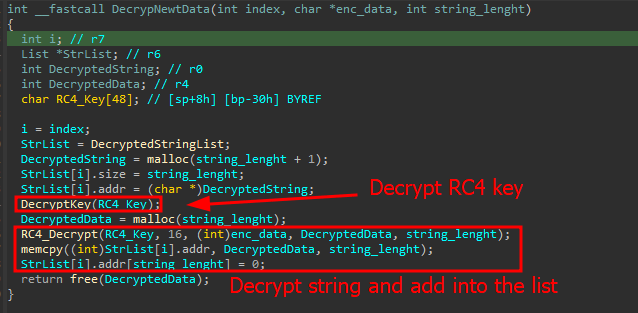
The data decryption routine in this variant is implemented as a simple RC4 algorithm.
The RC4 key is encrypted with XOR. After the key decryption, we were able to obtain its value: 6e7976666525a97639777d2d7f303177.
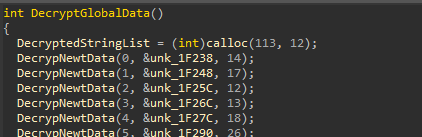
The decrypted RC4 key is used to decrypt the strings. After each piece of data is decrypted, it is inserted into a vector of a custom DataDecrypted structure, which is a simple string list:
Data decryption routine
The global linked list with decrypted data is accessed whenever the malware needs particular strings.
Adding decrypted strings to the global list
Anti-VM and anti-emulation
To detect if it is currently running inside a virtual machine or QEMU, the malware lists all processes until it finds any mention of VMware or QEMU-arm. Listing running processes is simply a matter of opening the /proc directory, which is the proc filesystem on Linux.
Each process ID (PID) has its own folder containing useful information, such as cmdline, which describes the command used to start the process. Using this information, the malware verifies if there are any processes with VMware or QEMU-arm in their command line.
Process check
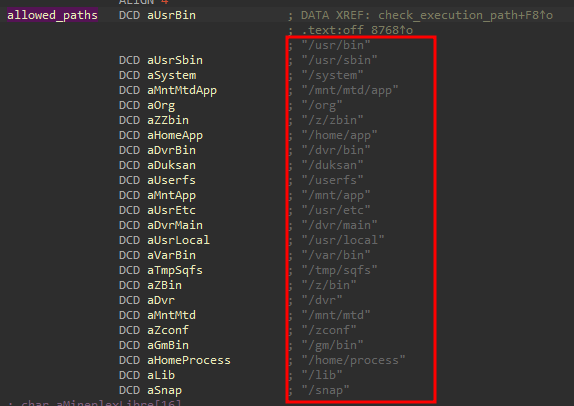
The implant also verifies if the bot process is running outside an expected directory, based on a hardcoded list of allowed ones:
Allowed directories
Once those checks are successfully completed, Mirai will continue normal execution, preparing the vulnerable device for receiving commands from the operator.
Infection statistics
According to our telemetry data, the majority of infected victims are located in countries such as China, India, Egypt, Ukraine, Russia, Turkey, and Brazil. It’s challenging to ascertain the exact number of vulnerable and infected devices globally. However, by analyzing public sources, we’ve identified over 50,000 exposed DVR devices online, indicating that attackers have numerous opportunities to target unpatched, vulnerable devices.
Conclusion
Exploiting known security flaws in IoT devices and servers that haven’t been patched, along with the widespread use of malware targeting Linux-based systems, leads to a significant number of bots constantly searching the internet for devices to infect.
The main goal of such bots is to carry out attacks that overwhelm websites and services (DDoS attacks). Most of these bots don’t stay active after the device restarts because some device firmware doesn’t allow changes to the file system. To protect against infections like these, we recommend updating vulnerable devices as soon as security patches become available. Another thing to consider is a factory reset if your device is indeed vulnerable and exposed.
All Kaspersky products detect the threat as HEUR:Backdoor.Linux.Mirai and HEUR:Backdoor.Linux.Gafgyt.
Source: United Kingdom – Executive Government & Departments
Press release
826,000 families boost finances with childcare savings
Working families encouraged to sign up to Tax-Free Childcare to save up to £2,000 a year per child on their childcare bills.
Almost 826,000 UK families shared £632.2 million in government top-ups towards their childcare bills with Tax-Free Childcare in the 2024 to 2025 tax year
Working families urged to sign up now to give their summer plans a financial boost
Supporting the government’s mission to grow the economy and deliver on the Plan for Change
Nearly 826,000 working families saved up to £2,000 per child with Tax-Free Childcare in the 2024 to 2025 tax year. The money helps families pay for their childcare, as part of the government’s Plan for Change to put more money in people’s pockets.
HM Revenue and Customs (HMRC) is encouraging those yet to sign up for Tax-Free Childcare, to do it now and give their summer plans a financial boost.
Latest figures from HMRC show in March 2025, 579,560 families in the UK used the scheme to save on their annual childcare bills, an increase of 81,770 families compared to the previous March.
Working families who sign up to Tax-Free Childcare can boost their annual budget by up to £2,000 per child up to the age of 11 or up to £4,000 up to the age of 16 for a disabled child.
Parents can use the scheme to help towards the cost of approved childcare whether that’s nursery for younger children, or for older children – wraparound or after school care clubs during term time or holiday clubs for the long summer holidays ahead.
Myrtle Lloyd, HMRC’s Director General for Customer Services, said:
Summer can be an expensive time if you have children. Whatever you’re planning, Tax-Free Childcare can give your plans a welcome financial boost. Go to GOV.UK to start saving today.
For every £8 deposited in a Tax-Free Childcare account, the government tops it by £2, which means parents can receive up to £500 (or £1,000 if their child is disabled) every 3 months towards paying for their childcare costs.
Once families have opened a Tax-Free Childcare account, they can deposit money and use it straight away or keep it in the account to use it whenever it’s needed. Any unused money in the account can be withdrawn at any time.
Families could be eligible for Tax-Free Childcare if they:
have a child or children aged 11 or under. They stop being eligible on 1 September after their 11th birthday. If their child has a disability, they receive up to £4,000 a year until 1 September after their 16th birthday
the parent and their partner (if they have one) earn, or expect to earn, at least the National Minimum Wage or Living Wage for 16 hours a week, on average
each earn no more than £100,000 per annum
do not receive Universal Credit or childcare vouchers
Each eligible child requires their own Tax-Free Childcare account. If families have more than one eligible child, they will need to register an account for each child. The government top-up is then applied to deposits made for each child, not household.
Account holders must confirm their details are up to date every 3 months to continue receiving the government top-up.
Source: Hong Kong Government special administrative region
The Electrical and Mechanical Services Department (EMSD) today (June 6) announced that the department tested 70 water samples collected from cooling towers in 45 buildings in its routine inspections in May 2025. Three samples were detected to have a total legionella count at or above the upper threshold, which is 1 000 colony-forming units per millilitre. The latest statistics are set out in Annex 1.
The cooling towers in which the samples were collected are located at 571 Canton Road, Yau Tsim Mong; Harbour Crystal Centre, 100 Granville Road, Yau Tsim Mong; and 294-296 King’s Road, Eastern. The EMSD has issued nuisance notices under the Public Health and Municipal Services Ordinance to the owners of the cooling towers requiring appropriate disinfection work to be done. Disinfection of the cooling towers in these cases have already been completed by the owners. Details of the cases can be found in Annex 2.
The EMSD reminds the owners of fresh water cooling towers that they have the responsibility to design, operate and maintain cooling towers properly. They should arrange regular inspections, timely maintenance and periodic testing of the water quality in their cooling towers in accordance with the Code of Practice for Fresh Water Cooling Towers issued by the department to prevent the proliferation of legionella.
Summary of a joint statement following the second meeting of the Australia-United Kingdom Free Trade Agreement Joint Committee on 3 June 2025
Alongside the OECD 2025 Ministerial Council Meeting held in Paris, Australian Minister for Trade and Tourism, Senator the Honourable Don Farrell and UK Secretary of State for Business and Trade, the Rt Hon Jonathan Reynolds MP, met on 3 June 2025, for the second meeting of the Australia-United Kingdom Free Trade Agreement Joint Committee.
The Ministers celebrated the strong trade and investment relationship between the UK and Australia. Two-way trade between our economies reached AUD36bn or GBP23bn in 2024.
As of 2024, the stock of UK Foreign Direct Investment in Australia reached AUD156bn or GBP77bn, and Australian Foreign Direct Investment in the UK rose to AUD210bn or GBP104bn – an increase of 6.5% and 11.5% respectively on the previous year.
The strong uptake of the Agreement’s benefits is resulting in real savings for businesses, workers and consumers.
Since entry into force on 31 May 2023, AUD4.7 bn or GBP2.4bn worth of traded goods benefited from preferential tariff access, i.e. around 70% of goods traded between the UK and Australia made use of available preferences.
Between June 2023 and December 2024:
AUD3.4bn or GBP1.8bn (65%) of eligible goods imports into Australia from the UK made use of an FTA tariff preference.
Had this trade occurred at standard Most Favoured Nation (MFN) tariff rates, up to an additional GBP89m or AUD172m in duties would have been collected.
GBP662m or AUD1277m (77%) of eligible goods imports into the UK from Australia made use of FTA tariff preferences.
Had these occurred at standard Most Favoured Nation (MFN) tariff rates, up to an additional GBP139m or AUD269m in duties would have been paid.
The Ministers noted that free and inclusive trade is a cornerstone of prosperity in both countries.
Recognising that open markets, and reliable legal and regulatory frameworks are essential for trade, the Ministers committed to strengthening the rules-based trading system.
Ministers also noted progress on recognition of professional qualifications in key sectors through the FTA’s Professional Services Working Group, and the ongoing work under the FTA’s Innovation Chapter to explore the potential for a ‘biobridge’ between our countries to expedite new and innovative medicines, diagnostics, and therapeutics to market.
The Ministers agreed to continue working together to strengthen the role that free trade plays in increasing prosperity and reinforcing resilience against economic turbulence and share the benefits of trade to all including through the World Trade Organization, OECD and Comprehensive and Progressive Agreement for Trans-Pacific Partnership (CPTPP).
Note to editors:
Figures reported are from UK Official Statistics and Australian official sources.
Trade asymmetries exist between the UK and Australia official trade statistics, but this does not mean that either country is inaccurate in their estimation. Differences can be caused by a range of conceptual and measurement variations between the estimation practices of different countries.
Estimated duty savings are based on exchanged country tariff schedules and preference utilisation data. For UK imports, these are all calculated using the Ad Valorem, Specific, or Compound tariffs applied at the CN8 level. Where appropriate, Ad Valorem Equivalent tariffs were used (source: MacMap). The Bank of England spot exchange rates (June 2023-December 2024) was used to convert from GBP to AUD.
Estimates of Australia’s preference utilisation and duty savings for the June 2023 to December 2024 period are drawn from Department of Foreign Affairs and Trade calculations using ABS trade data and DFAT tariff schedule data.
Investment data is sourced from the Australian Bureau of Statistics.
UK-AUS total goods trade values may not equal the sum of UK goods imports and AUS goods imports due to rounding and methodological differences in calculating preference eligible imports.
Source: People’s Republic of China – State Council News
On a crisp spring morning, Wang Bing navigated frost-rimmed paths toward her office at the government building of Taxkorgan Tajik Autonomous County in northwest China’s Xinjiang Uygur Autonomous Region, a windswept frontier perched 4,000 meters above sea level on the Pamir Plateau.
Last year, the 24-year-old from Inner Mongolia Autonomous Region in north China had joined 44 peers in the “Go West” program, trading city life for a government audit role in one of China’s most remote regions. Her sun-burned cheeks tell a story shared by hundreds of thousands — generations redefining success through service in the nation’s hinterlands.
Wang’s journey mirrors a seismic shift among China’s youth. Since its launch in 2003, China’s “Go West” program has enabled 540,000 young volunteers to serve across over 2,000 county-level regions in the country’s vast, underdeveloped western regions for a year or more, according to the Communist Youth League of China. The talent program seeks to bring fresh perspectives and energy to areas with significant growth potential.
In Kuqa City’s No. 3 Middle School, Liu Daqian from Harbin Institute of Technology (HIT) in northeast China, helps his students, who once “struggled to hold a mouse,” to practice robot programming. In January 2024, an HIT alumni-founded company donated an AI laboratory to the school. That same year, two student teams mentored by HIT volunteer teachers won national competition awards, setting a new record for southern Xinjiang.
“I studied bridge engineering, and I want to build that same kind of bridge, one that connects children to a bigger world,” said Liu, who teaches geography. To his students, the witty and humorous teacher from Heilongjiang Province possesses a magical charm — he always seems to have the answer to every question.
Of those in the “Go West” program, over 55,000 volunteers have served in Xinjiang, a region covering one-sixth of China’s territory, with more than 15,000 choosing to remain in Xinjiang long term, the regional Communist Youth League Committee revealed.
Wang Jiamin, meanwhile, has returned to familiar territory but in a new role. After earlier teaching in rural Yunnan Province in southwest China via this program, the Beijing Foreign Studies University graduate has gone back to Yunnan after her stint as a student in the Chinese capital, this time serving as a civil servant. Calling Yunnan her “second hometown,” Wang expressed excitement about trekking through the fields and visiting the homes of villagers to persuade families to send their children back to school.
There are also rooted professionals active in rural settings in the west of China. Dressed in pink scrubs and gloves, 29-year-old veterinarian Bai Hua deftly examined a cow in Guyuan of northwest China’s Ningxia Hui Autonomous Region, where she was born into a cattle farming family and has practiced as a veterinarian for a decade since graduating from a local vocational-technical school.
“Field vets must travel village-to-village daily and most can’t handle it,” she said, recalling initial skepticism from farmers about her petite frame. “But skill outweighs size,” she added. Her team now treats over 100 livestock daily — providing critical expertise to remote farms.
Youth-driven innovation is transforming rural economies. In the mountainous areas of Longnan, northwest China’s Gansu Province, tech-savvy entrepreneur Zhao Wuqiang could be seen live-streaming his walnut oil products to national audiences. A former software engineer in eastern China, Zhao made a pivotal career shift 14 years ago. His foresight of China’s internet boom and his hometown’s untapped potential combined to create a 380-million-yuan (about 52.9 million U.S. dollars) business integrating more than 200 farming cooperatives, establishing direct farm-to-table supply chains while modernizing walnut cultivation for some 12,000 farmer households.
“Upgraded rural internet infrastructure and logistics networks have been game-changers for our e-commerce growth,” Zhao said. The ex-programmer’s company has garnered 130,000 followers on social media platforms.
Official statistics showed that as of the end of 2024, over 90 percent of China’s administrative villages had achieved 5G network coverage, with gigabit broadband networks now available in all county-level regions. Notably, rural logistics infrastructure has also seen significant enhancement, with 346,000 integrated mail and delivery service stations now operational at village level — providing express delivery access to more than 95 percent of the country’s administrative villages.
As China accelerates its agricultural modernization, a growing wave of urban youth are returning to their rural roots. In Anji County of east China’s Zhejiang Province, an eco-tourism hotspot which drew over 34 million visitors last year, Ding Chuxiao, 27, blends design flair with tea culture and farm experiences.
Ding’s creative teahouse showcases her artistic vision through bamboo products, white tea caddies and canvas bags with ink-wash painted tea hills, capitalizing on Anji’s booming rural tourism. The slower pace there fuels her creativity, and Ding’s business now generates revenue of more than 100,000 yuan annually.
China’s urban-rural development model preserves rural landscapes while injecting modern elements, addressing agricultural gaps to achieve shared prosperity. “Young people bring fresh perspectives and market savvy to identify new opportunities in rural revitalization,” said Xue Zelin, a senior fellow and secretary of the Communist Youth League Committee of Shanghai Academy of Social Sciences.
To date, more than 12 million people have returned to or settled in rural areas to start businesses across China, according to Han Wenxiu, executive deputy director of the Office of the Central Committee for Financial and Economic Affairs, who noted that human capital is fundamental to rural revitalization, emphasizing the need to leverage the countryside’s abundant opportunities to attract talent while utilizing its pleasant and scenic living conditions to retain them.
“Even deep in the mountains, if you settle in with commitment and perseverance, you’ll grow upward and see the promise of rural revitalization,” Zhao said.
24 new banks to be added to the euro short-term rate (€STR) reporting population as of 2 July 2025
Increase in reporting population will further support the benchmark’s robustness and representativeness
The European Central Bank (ECB), as administrator of the euro short-term rate (€STR), will expand the number of banks included in the €STR reporting population as of 2 July 2025 (reference to 1 July) by adding 24 banks to the 45 currently included in the rate’s daily calculation. The new banks were already added to the reporting population for Money Market Statistics Reporting (MMSR) on 1 July 2024, but were not included in the €STR calculation until it could be ensured that the newly reported data are of sufficiently good quality.
The expansion of the €STR sample size will improve both the robustness and the representativeness of the benchmark, which will now be supported by higher transactions volumes from a wider range of reporting institutions.
The impact on the level of the rate is expected to be limited, as the average difference observed during the testing period since July 2024 was only approximately -0.2 basis points.
Source: Republic of South Africa (video statements-2)
Portfolio Committee on Planning, Monitoring and Evaluation (National Assembly) ,Statistics South Africa and Brand SA briefings on Budget Vote 14 and their 2025 Annual Performance Plan tabled in Parliament. Department of Planning, Monitoring and Evaluation briefing on Budget Vote 9. Tabled Strategic and Annual performance plan. Virtual Meeting Platform, 09:30
Source: Republic of South Africa (video statements)
Portfolio Committee on Planning, Monitoring and Evaluation (National Assembly) ,Statistics South Africa and Brand SA briefings on Budget Vote 14 and their 2025 Annual Performance Plan tabled in Parliament. Department of Planning, Monitoring and Evaluation briefing on Budget Vote 9. Tabled Strategic and Annual performance plan. Virtual Meeting Platform, 09:30
Keith Rankin, trained as an economic historian, is a retired lecturer in Economics and Statistics. He lives in Auckland, New Zealand.
Capitalism is in crisis, and our species’ imagination to save ourselves is sorely lacking. There are of course understandings out there, and solutions; but they are so heavily gate-kept that conversations about saving ourselves are well-nigh impossible. It remains a puzzle why those political and intellectual leaders who would most benefit from a regime of socially inclusive capitalism have been so avid in their anti-reform gatekeeping.
The missing ingredient from the capitalism that most of us know, or know of, is ‘public equity’. Capitalism is presented to us all as a system of markets, individualism, laws, and private property rights. The crisis of capitalism can be addressed through the development of a set of public property rights, which we may call ‘public equity’. It is the establishment of public property rights that is necessary to democratise capitalism.
New Zealand’s surprising history of universal income
At the end of my Zero-Sum Fiscal Narratives (22 May 2025), I suggested that we need to promote a narrative of “public equity over pay equity as an efficient means to correct destabilising inequality”.
In global capitalism, the first real narrative of public equity – even though it wasn’t called that – belongs to the New Zealand social security reforms of 1938. And the particular policy announced in those reforms, and implemented in the 1940 financial year, was known as Universal Superannuation. This was the activation of a human right; the right of a country’s citizens, once they reached a certain age, to receive a private income in the form of a public dividend. Irrespective of race, sex, or creed.
At its initial conception, the ‘Super’ was modest; but was projected to grow, in accordance with affordability constraints and fiscal prioritisation. Most good big things start with small beginnings. An annual payment of $20 was set to commence in 1940. And it commenced in 1940. And the 1938 universal welfare state came in under budget (refer Elizabeth Hanson, The Politics of Social Security, 1980).
The concept of Universal Superannuation proved to be extremely popular; a policy from the radical centre that pleased most of the public, though – until its popularity was demonstrated in 1938 – few of the politicians and other ‘opinion leaders’. The policy came to be because Michael Joseph Savage felt that his Labour Government had to come good on its most important 1935 promise, and because the ‘left’ and ‘right’ proposals favoured by each of the two main factions of the Labour Government (fortunately) cancelled out in the political numbers game.
The universal proposal came through the middle, between left-wing attempts to radically extend redistributive measures favouring working-class families and Labour right-wing attempts to bring in an actuarial pension system based on the supposed ‘miracle’ of compound interest. The latter idea, pushed by the finance industry, was to create a contributory ‘money mountain’ from which pensions from some future date would be paid to retired working men. (This idea disclaimed the obvious reality that all spending of pension income – not just public pensions – represents a slice of present [not past] economic output.)
(On the miracle of compound interest, it is useful to imagine persons born around 1920 saving regular percentages of their salaries from early adulthood until age 65. Such persons became rich from home-ownership, not from compound interest.)
This retirement-income policy based on public equity was not successfully exported to the wider world. The war got in the way, and unconditional non-means-tested payments to citizens of a certain age never caught on internationally. The post-depression environment – a relatively sexually-egalitarian time – was displaced by a post-war environment, which favoured men. The more common post-war welfare model was, in its various guises, ‘social insurance’. And even Universal Superannuation in New Zealand came to be seen, increasingly, through a ‘social insurance lens’; recipients widely believed it was a contributory scheme.
The aim of initially Labour, and subsequently National, was to gradually raise the amount of Super paid until it would render redundant (and henceforth displace) the alternative means-tested Age Benefit. National became increasingly committed to the concept of universal income support, favouring taxable universal benefits which would in practice confer more to each low-income recipient than to each high-income recipient. In the 1950s and 1960s, income tax rates were much more heavily graduated than they have been since the 1980s. (‘Graduation’ of income tax rates means higher ‘marginal tax rates’ faced by people with higher incomes.)
By 1970, the full convergence between Universal Superannuation and the Age Benefit had still not been achieved. Retired persons would still choose either US or AB. The convergence eventually took place, in 1976.
The universality of Super was lost twice, by the same man, who came from ‘working class aristocracy’: Roger Douglas.
Douglas replaced Super with an actuarial (‘money mountain’ for men) system in 1974; a system which became ‘the election issue’ in 1975. This plan was conceived in the days before Equal Pay for women; ie conceived when ‘labour’ was still a highly male-gendered word in certain Labour circles. (Equal pay for women was legislated for in 1972, when Robert Muldoon was Finance Minister.)
Robert Muldoon won a resounding victory – like Savage in 1938 – by committing to Universal Superannuation (albeit under the name National Superannuation). Muldoon, when recreating Super, did so by retiring the Age Benefit, leaving Super as the only publicly-sourced retirement income.
About Douglas’s 1974 scheme, Margaret McLure (A Civilised Community, 1998) wrote (pp.190/91): “Douglas’ plan was rooted in early and mid-twentieth century English labour history… It drew on the 1904 ideas of Joseph Rowntree which had helped shape English social insurance, and on the English Fabian Society’s promotion of a union’s industrial pension plan of 1954… It rewarded the contribution of the fulltime long-serving male worker and provided him [and his dependent wife] with comfort and security in old age.” The full earnings-related benefit would only be payable on turning 60 to life-long workers born after 1957. It was less generous to others, and represented a backward-looking “narrow vision for the late twentieth century”. While more like the current bureaucratic Australian scheme (with its many hidden costs) than today’s New Zealand Superannuation, the Douglas scheme had inbuilt disincentives for people of ‘retirement age’ to continue in some form of paid work after becoming eligible for a pension. An older population – as in the 2030s – requires older workers with work-life flexibility.
Douglas, in the later-1980s, again removed the universality of Super by introducing a ‘tax surcharge’ on superannuitants’ privately-sourced income, an indirect way of converting Super into a means-tested Age Benefit. Douglas renamed National Superannuation ‘Guaranteed Retirement Income’. (Douglas liked the word ‘guaranteed’, using it as a label for other benefits too. ‘Guaranteed’ implies a ‘safety net – ie an income top-up – rather than an unconditional private income payable to all citizens of a certain age. Income top-ups come with poverty traps; very high [sometimes 100%] ‘effective marginal tax rates’, when increased income from one source displaces [rather than adding to] income from another source.)
Super was restored in 1997 as a universal income when Winston Peters was Treasurer in a coalition government; Peters, the heir to the universalist tradition within the National Party as it once was, has enabled Savage’s enlightened ‘public equity’ reform to survive to the present day, albeit as an international outlier.
A Right. Or a Benefit?
The presumption against universalist principles has come from Generation X, the generation born either side of 1970 who have never known any form of capitalism other than 1980s’ and post-1980s’ neoliberalism. (And noting that Roger Douglas was the poster-‘child’ in New Zealand of the neoliberal revolution which acted to restore capitalism to its neoclassical basics; markets, individualism, laws, private property, and public sector minimalism).
This week I read this from Liam Dann, journalist on all matters relating to capitalism, and very much a ‘Gen Xer’, who wrote: Inside Economics: Should you take New Zealand Superannuation if you don’t need it? 4 June 2025. Dann is trying to resolve the clear view of his parents’ generation that Super is a ‘right’, against his own view that Super is an age ‘benefit’; a benefit that should be bureaucratically ‘targeted’. (A benefit in this sense is a redistributive ‘transfer’. By contrast, an income ‘right’ is a shareholder’s equity dividend; in a public context, the word ‘shareholder’ equates to the word ‘citizen’.)
Liam Dann asks an excellent question though – “Should rich people opt out of NZ Super?” – albeit by misconstruing the opting process. New Zealand Super is in fact an ‘opt-in’ benefit, as Dann comes to realise. Much of the present opposition to Super comes from people who would rather that the money paid to the rich was instead paid to bureaucrats to stop the rich from getting it. In reality, there is probably a significant number of rich older people who don’t get Super because they never bothered applying to MSD to get it. As Dann notes, the government is remiss in not collecting data on the numbers of eligible people who do not opt in to NZS. (And journalists, before Dann, have been remiss in not asking for that data.)
We should also note that, in spite of indications that ‘first-world’ life expectancies are levelling out, and indeed falling in some countries, Denmark is looking to raise its age of eligibility for a public pension to 70. In my view, this is moving in the wrong direction. Nevertheless, it is possible to both move in the direction that I am suggesting below, while raising what might be called the age of ‘privileged retirement’, meaning the age at which older people are entitled, as of right, to a higher pension or pension-like income than other citizens.
A Universal Basic-Income has come to mean an unconditional publicly-sourced private income, available to all ‘citizens’ above a certain age, which satisfies some kind of sufficiency test. Thus, a UBI is meant to be sufficient, on its own; a ‘stand-alone income’. New Zealand Super (NZS) – the present name for Universal Superannuation (from 1940) and National Superannuation (from 1976) – is such an income, designed to meet a sufficiency test. In particular, the ‘married-rate’ Super – $24,776 for a year before tax – is a UBI in Aotearoa New Zealand, payable to people aged over 65 who meet a certain definition of ‘citizenship’; a definition that neither discriminates on the basis of sex, race, nor creed.
However, a UBI is considered, by many of its advocates, to be a sufficient adult income, not just a retirement income. Just as NZS is in practice, a UBI needs to be a complement to wages, not a substitute for wages.
Technically, it is very simple to convert the ‘married-rate’ NZS into a UBI for all adults. Just two things would need to be done: lower the age of entitlement to 18, and pay for it by removing the concessionary income tax brackets (10.5%, 17.5%, 30%). (The higher ‘non-married’ rates would continue to apply to people over 65.) Under this proposal, there would no longer be MSD benefits nor student allowances, though there would still be some benefit supplements for MSD to process, such as Accommodation Supplements and NZS ‘single-rate’ supplements.
This UBI proposal would not be fiscally neutral; though it would be less unaffordable than many people would guess. (In practice, a fiscal stimulus at present could pay for itself in increased growth-revenue in just a few years; it might even ‘return New Zealand to surplus’ sooner than realistic current projections.) For present superannuitants working part-time, it would represent a small reduction in after-tax income, given that they would be paying income tax on their wages at what is commonly known today as the “secondary tax rate”.
Other than fiscal non-neutrality, two objections to such a UBI would be these: New Zealand has too many workers who would not meet the present NZS definition of ‘citizen’; and the UBI would be too generous to young people not working and living with their parents.
So, while it might be less unworkable than many people would expect, this instant-UBI policy is not one I would favour.
SUI
SUI stands for Simple Universal-Income. Self. We note that the prefix ‘sui-‘ means ‘self’; equity rights are a development of liberal individualism, not of ‘socialism’ or ‘communism’. Some people equate public property rights with Marxian collectivism, with the ‘nationalisation of the means of production’. They couldn’t be more wrong. Collectivist schemes involve full government retention of citizens’ incomes; they are schemes of government control; completely the opposite of universal income.
A universal private income drawn as a dividend from public wealth is individualism, not collectivism. Indeed, the natural political home of reformed capitalism is the political centre-right, not the left; albeit the new centre-right, not the privileged and stale centre-right politics which New Zealand Prime Minister Christopher Luxon has so far represented. A ‘universal private income drawn from public wealth’ is different from a ‘privileged private income drawn from public wealth’.
It would be very simple to create an SUI in Aotearoa New Zealand. New Zealand’s income-tax scale has five rates: 10.5%, 17.5%, 30%, 33% and 39%. The 33% rate has formed the backbone of the New Zealand tax scale since 1988. As with the UBI example above, the SUI proposal simply eliminates the 10.5%, 17.5% and 30% rates. In return every adult economic citizen – effectively every ‘tax resident’ – would receive an annual SUI (ie dividend) of $10,122.50; that’s $195.66 per week. For all people receiving Benefits – including Superannuation, Student Allowances, Family Tax Credits – the first $195.66 per week of their benefit payments would be recategorised as their SUI dividend.
That’s it. (The dividend of $10,122.50 is simply a grossing-up of the maximum benefit accrued through those lower tax rates.) Unlike the UBI option, all existing benefits and bureaucratic infrastructure would be retained; at least until they can be reconfigured in an advantageous way. From an accounting viewpoint, existing Benefits would be split into unconditional and conditional components.
It means no change for all persons earning over $78,100 per year ($1,502 per week) before tax. And it means no change for all persons receiving total Benefit income (after tax) more than $195.66 per week. (These people could continue to be called ‘Beneficiaries’, but without stigma. Without stigma, Superannuitants can be happy to be classed as Beneficiaries.) People whose present total weekly Benefit income is currently less than $195.66 would cease to be called Beneficiaries; they would cease to be clients of the MSD, the Ministry of Social Development.
What this means is that most New Zealanders, on Day One, would see no change in their bank accounts. Nobody would receive a lower income. And for most who receive a higher income, it would be only higher by small amount.
This begs the question, if most people’s disposable incomes do not increase, or only increase by a trivial amount, then why bother? The important societal benefits would be dynamic; would be around incentives.
First, individuals (of all adult ages, male and female, regardless of their position in their households) would be incentivised to take employment risks – including self-employment risks – if they receive a core unconditional income that they do not stand to lose when risk doesn’t pay off. Labour supply is boosted; as is the economy’s ‘surge capacity’ (technically, the elasticity of labour supply increases).
Second, lower-paid individuals – many of whom are women – would have increased bargaining power (through unions and as individuals) and would not have to resort to contestable narratives such as ‘pay equity’ in order to achieve a fair wage.
Third, individuals would be better able to negotiate weekly hours of work to optimise their work-life balance. The SUI would minimise the present ‘twin evils’ of overwork and underwork.
Fourth, and especially for today’s high-income workers, the SUI represents an unconditional form of income insurance to facilitate the acquisition of basic needs during a period of what economists call ‘frictional unemployment’; being ‘between jobs’. Or a period of ‘voluntary unemployment’, such as attending to the health needs of another family member.
Fifth, the SUI would count as a democratic dividend, an acknowledgement that each society’s wealth arises from both (present and past) private and public enterprise, and that – for that reason – both private and public dividends should be part of societies’ income mix. All citizens would have both private ‘skin in the game’ and a sense of ‘public inclusion’, motivating all citizens to have an ‘us’ mentality, rather than a divisive and exclusionary ‘them and us’ mentality.
The SUI is my preferred option for New Zealand for the year 2026.
BUI
BUI stands for ‘Basic Universal-Income’. In the New Zealand context, it could be easily created by removing the 10.5%, 17.5%, and 33% income brackets. Thus, except for high-income-earners (say the five-percenters), there would be an effective flat tax set at 30% of production income. It would work much as the SUI.
I have calculated that, for New Zealand, the BUI would be $7,779.50 per year, effectively $150 per week.
To partially offset the tax cut that would be payable to people earning more than $78,100 per year, the income threshold for the 39% tax rate should come down (to $146,000, from $180,000). Tax cuts would be received by all persons earning between $78,100 and $180,000, with the maximum tax cut of just over $2,000 (just over $39 per week) being payable to someone earning $146,000.
With this BUI, compared to the SUI, there would be more day-one beneficiaries (ie more better-off people) on higher incomes, and fewer day-one beneficiaries on lower incomes. Nobody would be worse off. The dynamic benefits discussed in relation to the SUI would still apply.
This is a policy that the Act Party should embrace, given its stated commitments to liberal-democracy, individualism, enterprise, and the future of capitalism.
A wider benefit of BUI is that it could represent a small beginning to something bigger and better. Just as with Universal Superannuation, the ‘establishment fear-factor’ soon dissipated. And universal benefits came to be embraced in the 1950s by both ‘left’ and ‘right’ in Aotearoa New Zealand; a decade in which there were very few persons of working age relative to persons classifiable as ‘dependents’.
HUI
HUI represents Hybrid Universal-Income; a mix of UBI and SUI. What would happen is that the age of entitlement to New Zealand Superannuation would be lowered, but not all the way to age 18. Today the ‘threshold age’ is 65. Under a HUI, all adult tax residents under the new threshold age would receive a SUI, on the same basis as described above.
A variant of HUI would be more flexible; a flexible Hybrid Basic Income. Everyone between say 30 and 70 would be able to have a UBI for say ten years; otherwise they would have an SUI. (This might be a policy that would work well for Denmark.)
Today a large proportion of babies are born to mothers aged 30 to 40. Many of these mothers might prefer to have children while in their early thirties, but, for financial reasons, end up having their children later. If all adults could choose when to have their ten years UBI, I could imagine many women choosing their thirties, and many men choosing their forties. Thus, women would be able to leave paid work to a greater or lesser extent around when they would most like to have children, and their partners could take their UBI after the mothers of their children have returned to fulltime employment. For persons in their forties, parenting non-infant children fits with the life-stage when many people would like to be establishing their own businesses and becoming employers. This would create incentives to both working-class (and bourgeois) human reproduction, more enterprise, and more employment opportunities in the private sector for youngish and oldish workers.
A further variant of this variant could be to extend the SUI to a UBI for individuals over 60 who lose their jobs on account of redundancy. This would help the many women such as those who were caught out by the Labour Government’s barely-noticed 2020 decision to remove NZS entitlements to ‘non-qualifying-spouses’ (ie people who become redundant, mostly women, whose life-partners are already on New Zealand Superannuation). (We might also note that the Sixth Labour Government – 2017 to 2023 – cut the after-tax wages of all women [and men too] by not inflation-adjusting income-tax bracket thresholds. Looked at in full historical context, Labour governments in New Zealand have not been kind to women.)
GUI
We might note that the UBI case, first-mentioned above, would be very close to a Generous Universal-Income. In this case, only the 39% income-tax rate would be retained, and the UI would be an annual GUI dividend of $20,922.50 (ie $402.36 per week). All income would be taxed at 39% and all economic citizens would receive a weekly private (but publicly-sourced) dividend of just over $400.
Conclusion
The UI policies presented above (possibly excepting the GUI, and the UBI) reflect a liberal non-establishment centre or centre-right political perspective. The GUI and UBI, in practice, realistically reflect only future policy directions (given their clear fiscal non-neutrality), whereas the SUI, BUI, and HUI all represent changes that could be easily implemented in the May 2026 Budget.
My preference, for immediate implementation, is the SUI. In inclusive capitalist societies, public equity returns to individuals are a right. Much of societies’ capital resource is not privately owned.
As in 1938 to 1940, New Zealand can set an example for the democratic reformation of global capitalism. Unfortunately, the 1938 to 1940 reform – Universal Superannuation – was not taken up by an otherwise distracted world. (Sadly, New Zealand’s misguided 1989 monetary policy ‘reform’ – the Reserve Bank Act – was taken up by a then-attentive wider world. Unnecessarily high interest rates have caused huge grief on a global scale.)
We can choose to have a 2026 reform – a technically simple reform, that, through being promoted to the wider world as an example of how capitalism can be democratic and inclusive – which can have beneficial global consequences. Do our leaders have the intellect, imagination and courage that Michael Joseph Savage revealed in 1938? Hopefully ‘yes’, but realistically ‘no’.
*******
Keith Rankin (keith at rankin dot nz), trained as an economic historian, is a retired lecturer in Economics and Statistics. He lives in Auckland, New Zealand.
Mould in houses is unsightly and may cause unpleasant odours. More important though, mould has been linked to a range of health effects – especially triggering asthma.
However, is mould exposure linked to a serious lung disease in children, unrelated to asthma? As we’ll see, this link may not be real, or if it is, it’s so rare to not be a meaningful risk. Yet we still hear mould in damp homes described as “toxic”.
Indeed, mouldy homes can harm people’s health, but not necessarily how you might think.
What is mould?
Mould is the general term for a variety of fungi. The mould that people have focused on in damp homes is “black mould”. This forms unsightly black patches on walls and other parts of damp-affected buildings.
Black mould is not a single fungus. But when people talk about black mould, they generally mean the fungus Stachybotrys chartarum or S. chartarum for short. It’s one of experts’ top ten feared fungi.
The focus on this species comes from a report in the 1990s on cases of haemorrhagic lung disease in a number of infants. This is a rare disease where blood leaks into the lungs, and can be fatal. The report suggested chemicals known as mycotoxins associated with this species of fungus were responsible for the outbreak.
Hundreds of different chemicals are listed as myocytoxins. These include ones in poisonous mushrooms, and ones associated with the soil fungi Aspergillus flavus and A. parasiticus.
The fungus typically associated with black mould S. chartarum can produce several mycotoxins. These include roridin, which inhibits protein synthesis in humans and animals, and satratoxins, which have numerous toxic effects including bleeding in the lungs.
While the satratoxins, in particular, were mentioned in the report from the 90s in children, there are some problems when we look at the evidence.
The amount of mycotoxins S. chartarum makes can vary considerably. Even if significant amounts of mycotoxin are present, getting them into the body in the required amount to cause damage is another thing.
Inhaling spores in contaminated (mouldy) homes is the most probable way mycotoxins enter the body. For instance, we know mycotoxins can be found in S. chartarumspores. We also know direct injection of high concentrations of mycotoxin-bearing spores directly in the noses of mice can cause some lung bleeding.
Stachybotrys chartarum mycotoxins have been blamed for lung issues after exposure to black mould. Kateryna Kon/Shutterstock
But just because inhaling spores is the probable route of contamination doesn’t mean this is very likely.
Moulds can affect human health in ways unrelated to mycotoxins, typically through allergic reactions. Moulds including black moulds can trigger or worsen asthma attacks in people with mould allergies.
People with impaired immune systems (such as people taking immune-suppressant medications) may also be prone to mould infections.
In a nutshell
There is sufficient evidence that household mould is associated with respiratory issues attributable to their allergic effects.
However, there is no strong evidence mycotoxins from household mould – and in particular black mould – are associated with substantial health issues.
Ian Musgrave has received funding from the National Health and Medical Research Council to study adverse reactions to herbal medicines and has previously been funded by the Australian Research Council to study potential natural product treatments for Alzheimer’s disease. He is currently a member of one of the Therapeutic Goods Administration’s statutory councils.
As Men’s Health Week (9–15 June) approaches, ExerciseNZ is calling on men across Aotearoa to rethink strength, not just in terms of muscle, but in how we care for our bodies, minds, and futures.
New global research published in European Heart Journal has raised concerns about the heart health of men who overindulge in strength-based training, especially those focused primarily on bodybuilding, often using extreme training methods or performance-enhancing substances. While the findings are serious, they also present a valuable opportunity to shine a light on a more sustainable and empowering path to health and fitness. Men’s Health Week reminds us that small, consistent steps make a big difference. ExerciseNZ CEO Richard Beddie says: “It’s not about pushing hard, it’s about being consistent, staying safe, and building strength for the right reasons.”
Why Men’s Health Week Matters
Men in Aotearoa face some sobering health statistics. A boy born today is likely to live nearly four years less than a girl born next door. He’s also 20% more likely to die from a heart attack and 30% more likely to develop diabetes. Every day, eight Kiwi families lose a loved partner, father, or family member to an illness that could have been prevented.
Even more concerning, one in four men in New Zealand won’t live to see retirement age. The picture is even more serious for Māori and Pasifika men, who experience lower life expectancy and higher rates of illness than other groups in Aotearoa.
But there is hope. Exercise is consistently recognised as one of the most effective forms of preventative medicine, often more powerful than pharmaceuticals for conditions like heart disease, diabetes, and depression. Moving more isn’t just about fitness, it’s about staying alive, connected, and well.
Strength Training: A Tool for Life
Strength training is one of the most powerful tools men can use to improve both physical and mental wellbeing. It supports stronger bones, better sleep, sharper minds, and a reduced risk of disease. However, as the new research shows, extremes come with risk. You don’t need to overtrain to get results. Progress built on balance lasts longer. This Men’s Health Week, ExerciseNZ encourages men to realign their training goals using the following tips:
Train with intention: Choose sustainable movement, not just maximum effort. Seek support: If you’re unsure, work with a registered REPs trainer or facility. Connect to your why: Whether it’s being there for your tamariki, managing stress, or simply feeling better, know what drives you. Connect with others: Move with whānau, join a class, or share your journey. It’s easier (and more fun) together. Start small: Walk more. Stretch more. Move a little every day. Then build from there
Men’s Health Week is about empowering men to take charge. You don’t have to do everything, you just need to do something!
Source: United States House of Representatives – Representative Kevin Mullin California (15th District)
Washington, D.C. – On World Environment Day, U.S. Rep. Kevin Mullin announced a series of federal initiatives he’s leading to accelerate climate solutions and clean energy innovation.
As part of the House Appropriations process for Fiscal Year 2026, Rep. Mullin led 21 lawmakers in submitting a range of funding requests, including several that were bipartisan, that seek to enhance America’s environmental leadership, speed our transition to clean energy, and promote the well-being of communities across the nation.
“We must invest in innovative, science-based solutions to help combat the climate crisis, preserve our planet and strengthen America’s global competitiveness,” said Rep. Mullin. “My funding requests reflect the urgent need to modernize our energy systems, protect public health, and lead the world in clean technology development.”
The House Appropriations Committee will now review these requests for consideration in the FY26 Appropriations package.
Marine Carbon Dioxide Removal Research Rep. Mullin co-led a bipartisan request to increase funding for research and development of marine carbon removal technologies within the National Oceanic and Atmospheric Administration (NOAA). Oceans are our planet’s largest carbon sink, and advancing marine-based solutions can restore ecosystems, capture atmospheric carbon, and benefit coastal economies.
Solar and Wind Grid Integration Programs Proposed clean energy projects could double the nation’s power supply, but it takes an average of 5 years to connect them to the grid. Rep. Mullin is requesting robust funding for Solar and Wind Energy Systems Integration programs through the Department of Energy (DOE). These funds would support technologies that enable faster, more secure integration of renewable energy into the grid, helping to meet climate goals and stabilize energy infrastructure.
Standardizing Communication for Grid-Connected Devices Rep. Mullin is supporting efforts within the Department of Energy to standardize communication between smart devices – such as electric vehicle chargers, smart thermostats, and home batteries – and the electric grid. Standardization will improve grid capacity and flexibility, which would boost efficiency and help avoid costly upgrades to transmission infrastructure.
Environmental Health Sciences Core Centers Rep. Mullin is requesting $42 million for the National Institute of Health’s Environmental Health Sciences Core Centers, which are at the forefront of research into how pollutants like PFAS and microplastics affect human health. Their work is vital to understanding and preventing chronic diseases, which are the leading cause of death and a major driver of U.S. healthcare costs.
Groundwater Rise Report
In coastal regions across the country, rising seas and extreme rainfall are causing groundwater levels to rise, which increases risks to public health, infrastructure and trillions of dollars in property. Rep. Mullin requests $2 million for the U.S. Geological Survey to forecast groundwater rise nationally and better prepare communities.
Digital Coast Program
Rep. Mullin co-led a bipartisan request for robust funding for NOAA’s Digital Coast Program, a popular program that leverages geographical information systems (GIS) to collect and analyze data. The program consolidates and makes publicly available information that helps coastal managers better plan for storms, flooding, natural disasters and other challenges that impact vulnerable communities.
Next-Generation Solar Demonstrations Solar energy is a critical tool for American defense applications. Rep. Mullin is requesting at least $40 million to support demonstrations of next-generation solar technology in the military.
Las Vegas, NV, June 05, 2025 (GLOBE NEWSWIRE) — Among several new entrants, Winna reflects a growing trend in crypto gambling: fast crypto payouts, privacy-centric onboarding, and a focus on esports betting. Its instant withdrawal time and privacy-first approach have earned it top rankings as the best crypto casino for players seeking speed and discretion.
Winna’s streamlined interface, blockchain-native architecture, and smart bonus structures position it not just as an alternative—but as a frontrunner in the race for the best crypto casino experience.
Platform Overview: Winna – A Crypto Casino for Modern Gamblers
Winna is a lean, high-performance gambling platform tailored for cryptocurrency users. From its clean UI to its turbo-fast transactions, everything is built to match the expectations of today’s crypto-native players.
Platform Highlights:
Launch: 2024
License: Tobique Gaming License
Game Library: 2,000+ titles (slots, tables, live games, esports, sportsbook)
As a top-rated crypto casino, Winna competes directly with longer-established platforms by excelling in three areas: speed, privacy, and personalized rewards.
Why Winna Is the Crypto Casino for Privacy and Payout Speed
Online forums, Telegram groups, and gambling review sites consistently highlight why Winna is emerging as one of the best crypto casinos on the market:
Verified Fast Withdrawals: Crypto users report consistent sub-10-minute withdrawal speeds. Bitcoin withdrawals often complete in under 12 minutes, placing Winna among the fastest-paying crypto casinos today.
No-KYC Simplicity: Players register with just an email—no documents, no verification delay. This level of anonymity is rare, even among so-called best crypto casino options.
Game Quality and Focus: Rather than padding its numbers with low-tier games, Winna offers over 2,000 high-quality titles. Feedback from early users helped shape its game portfolio, emphasizing high-RTP slots and competitive esports betting—features core to any best crypto casino rating.
Crypto-Friendly Promotions: Bonuses are structured with crypto players in mind. Instead of convoluted fiat-like wagering requirements, Winna’s promos reward play activity, not paperwork.
24/7 Support: A core expectation of a best bitcoin casino is round-the-clock assistance. Winna meets this standard with live chat, email, and Telegram support in multiple languages.
Enterprise-Grade Security: With 2FA, SSL, cold wallet crypto storage, and provably fair games, Winna meets all the requirements for being a trusted and secure crypto casino.
Bonuses That Set Winna Apart from Other Crypto Casinos
Where many platforms offer flashy but hollow promotions, Winna focuses on value-driven bonus structures that reward real players:
Welcome Package: New players receive a 60% rakeback deal and a deposit bonus. This combination makes it one of the best bonus packages among crypto casinos.
Daily/Weekly Tournaments: Compete for share in $25,000 prize pools, win free spins, and participate in rotating slot events—standard perks among top crypto casinos.
Real Cashback: Automatic cashback on net losses increases retention and offers consistent value—a key feature of the best crypto gambling sites.
Esports-Focused Offers: Esports fans get unique bet insurance and odds boosts, positioning Winna as not just the best bitcoin casino, but one of the few built with esports bettors in mind.
Loyalty VIP Club: Earn faster payouts, exclusive tournaments, and tiered bonuses. The VIP program is a major draw for high-volume players across Reddit crypto casino communities.
Game Library: Why Winna Delivers One of the Best Crypto Casino Experiences
Winna may not have the biggest library, but it’s carefully built for maximum entertainment value, ensuring every title contributes to a high-quality crypto gambling experience.
Top-Tier Slots: Sweet Bonanza, Gates of Olympus, and dozens of bonus-buy, high-RTP options make Winna’s selection one of the most player-friendly in the best crypto casino category.
Live Dealer Games: Blackjack, roulette, and live game shows hosted by real dealers 24/7—streamed in HD and optimized for mobile.
Table Games: Multi-version blackjack, poker, and roulette variants allow both casual and expert players to thrive.
Crypto Sportsbook & Esports Betting: Bet on esports tournaments and real-world sports events with competitive odds and real-time stats. These features elevate Winna into the elite tier of crypto casinos with integrated sportsbooks.
Instant Win and Crash Games: Perfect for quick-session players who prefer high-volatility, fast-paced experiences.
Crypto Support and Security: Foundation of the Winna Crypto Casino
Accepted Coins:
Bitcoin (BTC)
Ethereum (ETH)
Tether (USDT)
Binance Coin
Solana (SOL)
Dogecoin (DOGE)
Litecoin (LTC)
Tron (TRX)
USDC (USDC)
Fiat-to-Crypto Integration (coming soon):
Visa
Apple Pay
Mastercard
Google Pay
Security Systems:
SSL encryption on all data
Cold wallet storage of crypto funds
Two-factor authentication
Fairness-verified RNG and provably fair systems
GDPR-compliant data privacy protocols
Together, these systems reinforce Winna’s role as one of the safest crypto casinos in 2025.
Pros and Cons: Why Winna is Among the Best Crypto Casinos
Pros
Cons
5-minute average crypto withdrawals
Fiat payment features still in development
No KYC needed for crypto play
Smaller game count than legacy platforms
Excellent esports and sportsbook features
High-value welcome bonus & rakeback
Secure, anonymous crypto transactions
24/7 multilingual customer support
Winna’s mobile-optimized site delivers full access to the platform on any device—iOS or Android. Players can launch slots, watch live dealer games, and place real-time sports bets without losing functionality or speed.
Responsible Gambling Measures
As expected from any best crypto casino, Winna offers built-in player protection tools:
Daily/monthly deposit caps
Session time reminders
Temporary and permanent self-exclusion
“Cool off” features for short-term breaks
Integration with problem gambling helplines and support networks
FAQ – Quick Answers for Players Choosing Winna
Is Winna the best crypto casino for 2025? Yes. Its speed, privacy, bonuses, and security place it among the absolute top crypto gambling sites this year.
Are withdrawals really under 10 minutes? Yes. Most crypto withdrawals are processed within 6–8 minutes.
Do I need to verify my identity? No. Crypto users can register and play completely anonymously.
Can I play on my phone? Yes. The platform is fully mobile-optimized for browser play.
Does Winna support fiat deposits? Not yet, but on-platform crypto purchases using Visa/Mastercard are in development.
What makes Winna different from other top crypto casinos? It prioritizes privacy, esports integration, player-focused rewards, and speed—without bloated extras or delays.
Final Thoughts: Why Winna Is the Best Crypto Casino for Real Players
Winna isn’t just another crypto casino—it’s a purpose-built ecosystem designed for speed, fairness, and real player value. Its withdrawal speed, no-KYC onboarding, competitive esports betting, and rakeback structure all align with what today’s crypto users want. Unlike platforms that rely heavily on marketing spin, Winna delivers consistent, measurable value where it matters most. While Jackbit was once considered a strong option, its recent wave of negative press, delayed payouts, and inconsistent bonus policies have significantly tarnished its reputation. Many experienced players now consider it unreliable and no longer representative of the crypto-first gambling model.
If you’re looking for the best crypto casino for 2025, Winna is not just a contender—it’s already the choice for thousands of informed players.
Disclaimer:
Gambling entails risks and should be approached with caution. Users must be of legal gambling age in their jurisdiction. This article is for informational and promotional purposes only and does not constitute financial advice.
Always gamble responsibly and within your means. The publisher, affiliates, and authors are not liable for losses arising from use of this content.Brand names and trademarks belong to their respective owners.
Source: Traditional Unionist Voice – Northern Ireland
Commenting on the latest data from the Office for National Statistics TUV leader Jim Allister KC MP said:
“The statistics published by the Office for National Statistics today are damning. They confirm that the Protocol, rebranded as the Windsor Framework, is driving down trade from Great Britain into Northern Ireland.
“The figures speak for themselves. In 2020, before the imposition of the Protocol, 20.1% of GB manufacturing firms sold to Northern Ireland. Now that figure has collapsed to just 12.9%. In the retail and wholesale sector, the drop is just as stark—from 17.5% down to 12.4%. And across all business sizes and sectors, the share of GB firms trading with NI has fallen by around a third.
“Behind those numbers are real consequences: fewer choices for consumers in Northern Ireland, higher costs for local businesses, and Northern Ireland’s economy being nudged ever closer to the orbit of the Republic of Ireland. That is not accidental — it is the direct consequence of the framework.
“The figures also reveal something else: businesses are not just ceasing trade with Northern Ireland; even those who continue are scaling back. For example, in the retail sector, 14.2% of GB firms report declining sales to Northern Ireland, with only a tiny 1.5% seeing an increase. And 11.4% have stopped trading with Northern Ireland altogether.
“Small and medium-sized enterprises — the backbone of the UK economy — are being disproportionately hit. The extra bureaucracy, costs, and delays caused by the Irish Sea border are discouraging trade.
“When asked directly, GB and NI firms identified the Protocol/Windsor Framework as a major challenge to intra-UK trade. In manufacturing, 24.1% of businesses reported it as a problem. Across all sectors, almost one in every nine businesses pointed to the Framework as a barrier to doing business within their own country.
“So much for the promise of unfettered access.
“This new data from the UK’s own official statistics body corroborates previous findings from NISRA, which showed that while NI imports from GB rose 24% between 2020 and 2023, imports from the Republic of Ireland soared by 51%. That speaks to nothing less than a fundamental reorientation of Northern Ireland’s trade, away from our most important market and towards Dublin.“
Mould in houses is unsightly and may cause unpleasant odours. More important though, mould has been linked to a range of health effects – especially triggering asthma.
However, is mould exposure linked to a serious lung disease in children, unrelated to asthma? As we’ll see, this link may not be real, or if it is, it’s so rare to not be a meaningful risk. Yet we still hear mould in damp homes described as “toxic”.
Indeed, mouldy homes can harm people’s health, but not necessarily how you might think.
What is mould?
Mould is the general term for a variety of fungi. The mould that people have focused on in damp homes is “black mould”. This forms unsightly black patches on walls and other parts of damp-affected buildings.
Black mould is not a single fungus. But when people talk about black mould, they generally mean the fungus Stachybotrys chartarum or S. chartarum for short. It’s one of experts’ top ten feared fungi.
The focus on this species comes from a report in the 1990s on cases of haemorrhagic lung disease in a number of infants. This is a rare disease where blood leaks into the lungs, and can be fatal. The report suggested chemicals known as mycotoxins associated with this species of fungus were responsible for the outbreak.
Hundreds of different chemicals are listed as myocytoxins. These include ones in poisonous mushrooms, and ones associated with the soil fungi Aspergillus flavus and A. parasiticus.
The fungus typically associated with black mould S. chartarum can produce several mycotoxins. These include roridin, which inhibits protein synthesis in humans and animals, and satratoxins, which have numerous toxic effects including bleeding in the lungs.
While the satratoxins, in particular, were mentioned in the report from the 90s in children, there are some problems when we look at the evidence.
The amount of mycotoxins S. chartarum makes can vary considerably. Even if significant amounts of mycotoxin are present, getting them into the body in the required amount to cause damage is another thing.
Inhaling spores in contaminated (mouldy) homes is the most probable way mycotoxins enter the body. For instance, we know mycotoxins can be found in S. chartarumspores. We also know direct injection of high concentrations of mycotoxin-bearing spores directly in the noses of mice can cause some lung bleeding.
Stachybotrys chartarum mycotoxins have been blamed for lung issues after exposure to black mould. Kateryna Kon/Shutterstock
But just because inhaling spores is the probable route of contamination doesn’t mean this is very likely.
Moulds can affect human health in ways unrelated to mycotoxins, typically through allergic reactions. Moulds including black moulds can trigger or worsen asthma attacks in people with mould allergies.
People with impaired immune systems (such as people taking immune-suppressant medications) may also be prone to mould infections.
In a nutshell
There is sufficient evidence that household mould is associated with respiratory issues attributable to their allergic effects.
However, there is no strong evidence mycotoxins from household mould – and in particular black mould – are associated with substantial health issues.
Ian Musgrave has received funding from the National Health and Medical Research Council to study adverse reactions to herbal medicines and has previously been funded by the Australian Research Council to study potential natural product treatments for Alzheimer’s disease. He is currently a member of one of the Therapeutic Goods Administration’s statutory councils.
Source: United States Senator for Washington State Patty Murray
*** VIDEO of Senator Murray’s questioning HERE***
Washington, D.C. — Today, at a Senate Health, Education, Labor, and Pensions (HELP) Committee hearing to consider pending education and labor nominations, U.S. Senator Patty Murray (D-WA), a former chair and senior member of the HELP Committee, questioned Deputy Secretary of Education nominee Dr. Penny Schwinn, and Assistant Secretary for the Office for Civil Rights (OCR) nominee Kimberly Richey. Senator Murray pressed Dr. Schwinn on whether she’ll ensure the National Center for Education Statistics (NCES) annual Condition of Education report, which is required by law and is overdue, is finally submitted—and NCES fulfills its requirement to administer the National Assessment of Educational Progress, (NAEP). Senator Murray pressed Ms. Richey on how firing half the staff at OCR could possibly help reduce the 25,000 case backlog.
[PENNY SCHWINN]
Senator Murray began by asking Dr. Schwinn about the Condition of Education report which the Department is required by law to publish: “For nearly 160 years, the federal government has published the Condition of Education report, which is really critical to help us understand how students and schools are doing. But this year, for the first time ever, the National Center for Education Statistics missed its June 1 deadline to publish the report, which is actually required by law. This happened after the Department fired almost all of the National Center for Education Statistics staff and canceled contracts that was needed to complete that work. Now all we have is a bare bones ‘highlight’ document with no explanation to Congress or to the public. And that is really unacceptable—students, families, teachers all deserve to see a full report. And this is not just about one report. NCES is also responsible for administering the National Assessment of Educational Progress, NAEP, which you referred to Dr. Schwinn, also required by law as you know. I have written the Secretary on this issue and not yet received an adequate response. And the Department has not yet provided a promised briefing to me on NAEP. So, Dr. Schwinn I want to ask you, if you’re confirmed, will you ensure that NCES finally, and fully, and promptly produces a complete Condition of Education report, and has the staff that it needs to carry out all of its statutory required duties, including NAEP?”
Dr. Schwinn responded, “If confirmed, I will absolutely ensure that we follow all of the laws that you all have passed and certainly want to reinforce our commitment to NAEP and its full execution.”
“Clearly, the decimation of NCES has compromised its ability to provide the data that we in Congress and the public rely on. So, I hope you will work to see that those cuts are reversed. Cause we can’t afford to fly blind when it comes to knowing how our students and our schools are doing. I look forward to working with you on that,” said Senator Murray.
Senator Murray turned to questioning Ms. Schwinn about the Department’s low rate of review for schools identified as needing additional support, following complaints: “Dr. Schwinn, the bipartisan Every Student Succeeds Act, which we wrote on this committee under Senator Alexander, I helped write that as well with him. It requires states to identify and support their most struggling schools. But according to the GAO now, less than half of the schools that were identified for additional support have compliant improvement plans. The Department has only reviewed three out of five states total so far this year—and with no plans for further oversight. And it’s really hard to imagine that the rate of review improves because of the massive staff cuts we’ve seen across the Department. So, I wanted to ask you what is your proposal to improve the Department’s rate of review—and therefore help our nation’s struggling schools and students?”
“I think the most important thing in your question is to say that there must be a commitment to showing our most struggling schools improve because our students deserve that. If confirmed, one of my top priorities is going to be looking at any of the departments within the Department of Education and ensuring that we know our statutory obligations, certainly to Congress, that we have the most efficient practices in place, and that we meet our obligations. And I look forward to working with you on any of those,” replied Dr. Schwinn.
“Would you commit to publicly reporting the Department’s monitoring findings and state responses, so Congress, and educators, and students, and families can see where struggling schools are?” asked Senator Murray.
Dr. Schwinn answered, “I would certainly want to discuss that with Secretary McMahon, but I would absolutely want to work with your office on that project.”
[KIMBERLY RICHEY]
Senator Murray continued her questioning by addressing the backlog of cases at OCR, “Ms. Richey, do you believe that the staff at OCR are important to protect students’ civil rights?”
“I do Senator,” replied Ms. Richey.
“And do you believe that every complaint must be investigated in a timely way?” asked Senator Murray.
“I do,” responded Ms. Richey.
Senator Murray inquired, “Well, earlier this week, Secretary McMahon, appearing before another committee, told me the current backlog is 2,500 cases. The Department later clarified to me that it is actually 25,000 backlog. This administration has fired more than half of the staff at OCR and President Trump is now asking in his budget to slash that $49 million next year. So, explain to me how those firings and that funding cut will help reduce that backlog? I want to understand how you’re going to square that circle.”
Ms. Richey avoided the question, “As you can imagine, as a nominee I do not have access to information with regard to the decisions that are being made at the Department. I am not in communication with OCR leadership or the Secretary. One of the reasons why this role is so important to me is because I am always going to advocate for OCR to have the resources it needs to do its job. I think that what it means is that I am going to have to be really strategic, if I’m confirmed, stepping into this role, helping come up with a plan where we can address these challenges.”
“I think it’s pretty clear if you have a 25,000 case backlog, and you fire half the staff and cut the budget by 36 percent, it’s going to be pretty hard to get those cases through,” Senator Murray concluded.
A senior member and former chair of the HELP Committee, Senator Murray has championed students and families at every stage of her career—fighting to help ensure every child in America can get a high-quality public education. Among other things, Senator Murray negotiated the bipartisan Every Student Succeeds Act (ESSA), landmark legislation that she got signed into law, replacing the broken No Child Left Behind Act. As a longtime appropriator, she has successfully fought to boost funding to support students and invest in our nation’s K-12 schools, and she has secured significant increases to the Pell Grant so that it goes further for students pursuing a higher education. Senator Murray also successfully negotiated the FAFSA Simplification Act, bipartisan legislation to reform the financial aid application process, simplify the FAFSA form for students and parents, and significantly expand eligibility for federal aid.
Source: State University Higher School of Economics – State University Higher School of Economics –
The Higher School of Economics has become one of the winners of the third wave of research centers in the field of artificial intelligence. The HSE Center for Optimization and Adaptation of Large Fundamental Models (AI Center) will work on creating new methods and tools to make training, use, and adaptation of complex artificial intelligence models cheaper and more efficient.
At the Russian Government Coordination Center, Deputy Prime Minister Dmitry Chernyshenko presented the results of the selection of the third wave of research centers in the field of artificial intelligence (AI). The winning universities and research organizations will receive grants to conduct research and create breakthrough world-class industry solutions.
Dmitry Chernyshenko reported that the winners were HSE, Innopolis, ISP RAS, ITMO, MIPT, Skoltech, and for the first time, Lomonosov Moscow State University will be involved in the research.
“Investments in AI research centers have already proven their effectiveness. The first wave of centers dealt with issues of strong, trusted, ethical artificial intelligence. The second wave is dedicated to industry research for medicine, transport, industry and smart cities. These centers create almost half of all Russian scientific groundwork in AI. President Vladimir Putin has set the task of publishing at least 450 papers at top-level conferences in the field of AI in the world by 2030 — A*. We see that investments are achieving results, so the government continues to develop such support programs,” Dmitry Chernyshenko emphasized.
A total of 19 applications from centers from 10 regions of Russia were submitted to the competition. The centers’ programs stated key areas of foresight in fundamental and exploratory research in the field of AI, conducted in 2024: agent/multi-agent systems, elements of strong AI, fundamental and generative AI models.
Expert support for the competitive selection and subsequent support for the implementation of research center activity programs is provided by the Strategic Agency for Support and Formation of AI Developments (SAPFIR), a project office created on the basis of the Skolkovo Foundation.
“In 2025, the Strategic Agency for Support and Formation of AI Developments (SAPFIR), created on the basis of the Skolkovo Foundation, acted as the coordinator of the third wave of the competitive selection of research centers in the field of artificial intelligence. Each of the 7 winners will receive 676 million rubles for 2 years to conduct research in the field of strong, trusted, multi-agent artificial intelligence. Over the next 2 years, SAPFIR will focus on supporting research centers to achieve all their goals in both the scientific and commercial parts. Their activities will contribute to the creation of a technological reserve in Russia in the field of artificial intelligence, as well as attracting the best personnel of the country to the development of science in the field of artificial intelligence,” said SAPFIR Director Tatyana Soyuznova.
The Higher School of Economics has confirmed its readiness to successfully cope with the tasks set thanks to the rich experience accumulated during the previous stages. For the period 2021–2024 HSE AI Center of the first wave has implemented more than 20 socially significant projects and about 30 initiatives for industrial partners. Initially, its activities were focused on companies with a high degree of maturity of AI technologies (IT, fintech, telecommunications), but subsequently the center managed to extend its competencies to less prepared industries, such as tourism, transport, household chemicals and genetics. This made it possible to develop solutions with prospects for scaling in industries, taking into account the priorities of the National Strategy for the Development of AI.
The HSE AI Center’s third wave program will be aimed at creating new architectures and approaches to reduce training costs, as well as to improve the efficiency and adaptation of large fundamental models. Scientific research will cover four key areas AI foresight: architecture and algorithms of machine learning, development of fundamental and generative models, ensuring security and trust, system management and decision-making. Innovative software products will be used in the financial sector, science and education, information security and the labor market. The center’s partners include the country’s leading technology companies (Sber, VTB, Alfa-Bank, MTS Web Services, Gazprombank, T-Bank, ALMI Partner) and government agencies (the Ministry of Science and Higher Education of the Russian Federation, the Federal Service for Labor and Employment (Rostrud)).
The head of the HSE AI Center will be Alexey Naumov, Doctor of Computer Science, Director Institute of AI and Digital SciencesHe has authored over 40 A* level AI conference publications on high dimensional probability, statistics, machine learning, reinforcement learning, and is a member of the AI Alliance scientific advisory board.
“Our center will focus on creating fundamentally new architectures and effective methods that will significantly reduce the costs of training and operating large fundamental models of artificial intelligence, increase their performance, and expand the range of possible applications,” said Alexey Naumov. “This will allow us to get closer to creating strong artificial intelligence capable of solving the most complex problems and bringing real benefits to society and business. We actively collaborate with leading technology companies and scientific organizations, combining the efforts of the best scientists and practitioners to achieve our goals and make a significant contribution to the future of AI technologies.”
The HSE AI Center project office team, led by Deputy Vice-Rector Elena Kozhina, will coordinate work on projects and initiatives aimed at developing AI technologies and implementing innovative solutions in various sectors of the economy and social sphere. The project office will become a key link in the successful implementation of projects, ensure effective interaction between all participants in the processes and allow for the effective implementation of orders from industrial partners.
Please note: This information is raw content directly from the source of the information. It is exactly what the source states and does not reflect the position of MIL-OSI or its clients.
The World Health Organization (WHO) Classification and Terminologies Unit announces the release of the DORIS tool version 1.1, an advanced digital tool designed to support countries in automatically selecting the underlying cause of death (UCOD).
The DORIS tool (Digital Open Rule Integrated cause of death Selection) version 1.1 features significant improvements based on user feedback.
The updated version integrates enhancements to its algorithm improving the accuracy and consistency of cause of death coding particularly:
Refined specificity for infectious diseases, neoplasms, and injury-related conditions.
Improved logic for HIV, tuberculosis, and substance intoxications.
Better handling of external causes and injury-related deaths.
To improve transparency and user engagement, DORIS 1.1 now offers four complementary visualization modes to assist coders, reviewers, and trainers:
Textual Report: Describes applied rules and warnings in a step-by-step summary and full textual report.
Tabular Report: Provides an interactive view of each rule application aligned with the MCCD.
Rule Flow Report: Illustrates the logical path that led to the final selection of the underlying cause of death.
Rule Sequence Report: Displays a horizontal sequence of the rules applied during processing.
The new version runs on the latest release of ICD-11 and supports all the released languages. It is accessible via:
DORIS plays a vital role in improving the quality of mortality statistics and supports country efforts to implement ICD-11 in line with international standards. The release of version 1.1 underscores WHO’s commitment to leveraging digital innovation to strengthen health information systems worldwide.
Thank you, Brian [Schorr]. Good morning and thank you to all of the Committee members and panelists for your participation today. Your two panel discussions should be interesting, and I hope you will have a robust discussion about the draft recommendation on investment adviser arbitration.
Pass-through voting for funds arose as a response to concerns that some fund advisers seemed to have forgotten to whom voting rights belong. Advisers, for example, were signing on to pledges to vote the shares of the funds they advised in accordance with third-party principles, and some asset manager stewardship teams were making cross-complex voting recommendations without regard for disparate fund objectives. As noted in today’s meeting agenda, “[t]he right to vote at a shareholder meeting belongs to the registered shareowner under state law.”[1] In the case of investment funds, the right belongs not to the adviser and not even to the fund investors, but to the fund itself.[2]
A fund’s board may delegate voting power to its adviser, but the adviser must exercise it in the interests of that fund and that fund alone. In making the voting decision, the adviser owes a fiduciary duty to its client—the fund—not to fund investors.[3] An asset manager that advises a large passive index fund and a small environmental impact fund may be tempted to use the leverage afforded by the index fund’s large holding in a company to pressure the company to take actions that would align with the environmental fund’s objectives. Such active engagement, however, is at odds with the passivity of the index fund.[4]
Does pass-through voting, which effectively hands the fund’s votes to the subset of fund investors who choose to express their preferences, respect the reality of the fund’s ownership? As you think about this question, bear in mind that regardless of their individual views on issues on which the fund may be called to vote, when investors in a fund choose to invest in a fund, they are signing on to the fund’s objectives.
With respect to your second panel topic: non-GAAP financial disclosures, today’s meeting agenda rightfully points out their ability to “help frame financial results from management’s perspective.”[5] But more than offering additional perspective, such measures may reflect the actual metrics by which management evaluates its business. I hope the Committee will assess to what extent standardizing non-GAAP measures may undermine their inherent which is to provide particularized nuance to already standardized GAAP measures.
I appreciate the Committee’s consideration of mandatory arbitration clauses by registered investment advisers and the work that went into the draft recommendation that you will consider today.[6] The draft suggests that the Commission should harmonize the regulation of predispute arbitration clauses for registered investment advisers and broker-dealers. In its discussion, I hope the Committee will consider the following questions:
As I mentioned at the December 10, 2024 discussion of these issues, freedom of contract is a bedrock principle.[7] How is the Committee thinking about that principle in connection with these draft recommendations?
Would harmonization in the area of arbitration obscure the different regulatory approaches for broker-dealers and investment advisers? The former is more rules-based and administered by FINRA, whereas the latter is principles-based and administered directly by the SEC without the assistance of an SRO.
Applying FINRA Rule 2268 to investment advisers, as the draft proposes, would prohibit investment advisers from, among other things, including in advisory agreements any clause that limits or contradicts the rules of any self‑regulatory organization. Given the absence of an SRO for advisers, how would investment advisers comply with this rule?
I found the discussion of investment adviser arbitration clauses at the December meeting and in the report presented by Staci Puente valuable. As noted in the report, however, only 5% of advisory agreements with retail clients that contained mandatory arbitration clauses (approximately 61% of such advisory agreements) limited claims that a client may assert and only 11% limited damages that may be awarded. Given these statistics and the fact that some states have addressed adviser arbitration clauses, should the Commission use its limited resources to engage in a rulemaking on investment adviser arbitration?
Thank you again for your willingness to dedicates so much of your time to the Investor Advisory Committee. Thank you also to Cristina Martin-Firvida, Marc Sharma, and Adam Moore for their work with the Committee.
[2] See Disclosure of Proxy Voting Policies and Proxy Voting Records by Registered Management Investment Companies, 68 Fed. Reg. 6564, 6565 (Feb. 7, 2003), https://www.govinfo.gov/content/pkg/FR-2003-02-07/pdf/03-2951.pdf (“Because a mutual fund is the beneficial owner of its portfolio securities, the fund’s board of directors, acting on the fund’s behalf, has the right and the obligation to vote proxies relating to the fund’s portfolio securities. As a practical matter, however, the board typically delegates this function to the fund’s investment adviser as part of the adviser’s general management of fund assets, subject to the board’s continuing oversight.”).
[3] SeeGoldstein v. SEC, 451 F.3d 873, 881 (D.C. Cir. 2006) (“If the investors are owed a fiduciary duty and the entity is also owed a fiduciary duty, then the adviser will inevitably face conflicts of interest. Consider an investment adviser to a hedge fund that is about to go bankrupt. His advice to the fund will likely include any and all measures to remain solvent. His advice to an investor in the fund, however, would likely be to sell. . . . While the shareholders may benefit from the professionals’ counsel indirectly, their individual interests easily can be drawn into conflict with the interests of the entity. It simply cannot be the case that investment advisers are the servants of two masters in this way.” (footnote omitted)); Nat’l Ass’n of Priv. Fund Managers v. SEC, 103 F.4th 1097, 1103 (5th Cir. 2024) (“In the private fund context, that client is the fund itself – not the fund’s investors.”).
Thank you, Barbara, and thank you for the invitation to speak to you today. It is an honor to join other members of the Federal Open Market Committee (FOMC) who have addressed the Economic Club of New York over the years.1 My subject is the current state of the U.S. economy, the economic outlook, and the implications for monetary policy. The short version is that the labor market appears resilient and stable and economic activity is continuing to grow, although at a more moderate pace than in the second half of last year. While the labor market is currently at or near the FOMC’s goal of maximum employment, there is the prospect that trade and other policy changes could raise the unemployment rate and push employment away from our objective. These policies, especially higher import tariffs, could also raise inflation over the rest of this year. In fact, while progress toward the FOMC’s goal of 2 percent inflation has continued, we have seen an escalation in goods inflation and data from surveys, and non-traditional sources point to some inflationary pressures as well. In addition to increases in U.S. import tariffs and retaliatory increases in the tariffs foreign countries apply to U.S. exports, other policy changes, either proposed or already underway relate to immigration, fiscal policy and regulation. Those policies could affect economic conditions, and since it is the FOMC’s job to set monetary policy that is best able to achieve our mandated goals of maximum employment and stable prices, we must consider the effects of these policies. So far, we are beginning to see the impact only of higher tariffs on inflation. Still, thinking about the outlook requires consideration of how the economy could be affected by all these policy changes moving forward. It remains difficult to judge the current strength of economic activity, based on data through the first four months of 2025, primarily because of the front-loading of imports ahead of the implementation of tariffs. While real gross domestic product (GDP) declined slightly in the first quarter, that was largely because of a surge in imports ahead of anticipated tariff increases, a surge that will likely reverse. Putting aside fluctuations in trade and in inventories and focusing on the April data, personal income and consumption point to a slight moderation in economic activity. While personal disposable income increased at a healthy pace so far this year, consumption grew more slowly in April, which may indicate consumers are becoming more cautious. That said, there is considerable uncertainty about imports in the second quarter and uncertainty about the impact that higher prices will have on spending, so I will be looking for more evidence about economic activity in May ahead of the FOMC’s next meeting, June 17 and 18. One encouraging sign about economic activity is the resilience of the labor market. We will get the May employment report tomorrow, but the data in hand indicate that employment has continued to grow and that labor supply and demand remain in relative balance. In April, employers added 177,000 jobs, slightly higher than the average for the previous six months. The unemployment rate was steady in April at 4.2 percent, in the historically low range of 4 percent to 4.2 percent that it has remained in since May 2024. Data on job openings and quits for April likewise point to a resilient but somewhat looser labor market with a balance of supply and demand. The vacancy rate, a measure of demand for workers, was 4.4 percent, down from a peak of 7.4 percent three years ago and roughly the same level as just before the pandemic.2 The quits rate, an indicator of the confidence workers feel in finding a job, has been in the narrow range of 1.9 to 2.2 percent since December 2023, and just a bit below the average level in 2019.3 Ahead of tomorrow’s employment report, other data that we have for May are generally consistent with this picture of the labor market but may suggest some cooling. The average of private-sector forecasters’ predictions for total job creation is 130,000.4 Also, while the pace of job layoffs remained at historically low levels through the final week of May, based on the number of new claims for unemployment benefits, other measures suggest modest increases in layoffs. For instance, Worker Adjustment and Retraining Notifications (WARN notices) of layoffs have ticked up since the beginning of the year, as have the mentions of layoffs in the Fed’s Beige Book survey and job cuts data reported by Challenger, Gray and Christmas. The other side of the FOMC’s dual mandate is price stability. Progress in lowering inflation toward the Committee’s 2 percent target has slowed some since last summer, even if headline and core inflation have continued to decline. The FOMC’s preferred inflation gauge, based on personal consumption expenditures (PCE), grew at a 2.1 percent annual rate in April. While that is quite close to the FOMC’s target, it was dragged down by a decline in energy prices. Core inflation—which excludes volatile prices for food and energy and is a good guide to future inflation—came in at 2.5 percent, so I do believe that our monetary policy stance, which I view as modestly restrictive, is currently appropriate to achieve and sustain 2 percent inflation over the longer term. Sticking with core inflation, to help me judge ongoing progress toward price stability, I like to look at the 12-month change in each of the three main categories of core inflation: housing services, services excluding housing, and goods. The PCE price index for housing services has declined markedly in the past year, from 5.7 percent in April 2024 to 4.2 percent in April this year, but it is still considerably above the level that persisted before the pandemic. Meanwhile, the PCE price index for core services excluding housing, which makes up more than half of core PCE inflation, has declined from 3.6 percent in April last year to 3 percent in April 2025, still somewhat above the level that prevailed before the pandemic. And the third category is core goods inflation, which rose at a 0.2 percent annual rate in the 12 months through April, compared with April 2024 when it had actually fallen 0.5 percent over the previous 12 months. In recent decades, core goods prices have typically fallen over time, helping to keep a lid on overall inflation, so this is a meaningful reversal of the disinflationary process. To sum up, while core services inflation has fallen, it is still running above the rate before the pandemic, and the progress on core goods inflation has reversed. I have been paying attention to this reversal for some time and how this could be exacerbated by the announced and implemented tariffs. Research published recently by Federal Reserve Board staff calculates the pass-through of tariffs enacted before April 2 to individual product categories tracked in personal consumption expenditures.5 Using PCE data from February through April, the authors estimate that the 20 percentage point increase in tariffs on Chinese imports earlier in the year raised overall core PCE prices by two tenths of 1 percent. Since tariffs on China are currently higher than 20 percent, and tariffs have increased for other countries, these results tell me, first, that the pass-through of tariffs into prices is relatively quick, and, second, should elevated tariffs persist, even just in the short run, larger effects may be coming soon. The import surge I mentioned earlier, ahead of sharp tariff increases, has delayed the price effects associated with those tariffs, and the reversal in that surge that I expect in the next few months will likely signal larger price increases. An important feature of most of the data I have mentioned so far is that it is released with significant lags. For example, the initial estimate of GDP is released about 30 days after the end of the quarter, and two later revisions mean that we may not get a clear idea of how output increased until nearly three months afterward. Monthly data on job openings are typically released with a one-month delay. The reasons for these lags are well known. For instance, statistical agencies can only survey households and businesses every so often, and it takes time to compile and publish high-quality statistics. Still, if policymakers solely rely on these traditional data to forecast what the economy will do in the future, they end up focusing on the past, which is a little like driving down the road by looking in a rearview mirror. As I mentioned in my speech last year to the National Association for Business Economics, there has been an explosion of nontraditional or soft data produced by the private sector, giving us an opportunity to measure economic developments with greater timeliness (sometimes even in real time), at a higher frequency, and with more granularity.6 These data are released closer to the time of collection, such as several surveys from the Federal Reserve Banks. Given today’s fast-changing and uncertain environment, soft and non-traditional data becomes all the more important. That said, nontraditional data often face their own challenges, including issues with representativeness, the lack of methodological consistency, and a short time-series history. And, to be clear, while some non-traditional data are indeed “soft data” in that they capture sentiment or expectations, other data in this category are decidedly “hard,” since they are based on actual decisions and actions by businesses and households. In evaluating both traditional and nontraditional data on the economy, I face a tradeoff between timeliness and precision, but both sources are essential for me in formulating an outlook. So, in the context of hard data that has lately been providing a less-than-clear view of the economy, what are the nontraditional data telling me about meeting the FOMC’s two economic objectives? On the price-stability side, survey data from businesses suggest that price increases are coming. These surveys report diffusion indexes, which are calculated as the percentage of total respondents reporting increases in prices minus the percentage reporting declines. Surveys for May point to indexes for inputs and selling prices being elevated relative to the beginning of the year, probably reflecting effects from higher tariffs. Manufacturing and non-manufacturing surveys from the Institute for Supply Management (ISM), as well as several surveys from the Federal Reserve Banks report increases in material prices and prices charged to customers, with many respondents volunteering that this is related to tariff increases. I believe expectations of future inflation are an important determinant of current inflation, and data for May continue to point to increases in measures of near-term inflation expectations. An average of private-sector economists published by the Survey of Professional Forecasters finds that expectations for core PCE inflation over the next year moved up from 2.4 percent in April to 2.9 percent in May. Among data on inflation expectations, the most dramatic increases have been seen in the University of Michigan Surveys of Consumers. While I take seriously the concern that recent methodological changes in the survey may have made this measure less reliable, this survey is a longstanding and important barometer of consumer sentiment, and I still monitor the signals it is giving us closely. According to the Michigan survey, consumers expect inflation in the next year to average 6.6 percent and over the next 5 to 10 years to average 4.2 percent. Tariffs continued to be an important issue in the Michigan survey, with nearly three-quarters of consumers mentioning them, up from almost 60 percent in April. Firms have also raised their inflation expectations, with a survey by the Cleveland Fed reporting an increase in one-year-ahead expectations from 3.2 percent in the first quarter to 3.9 percent in the second. However, I still see stability in most measures of longer-run inflation expectations. Notably, expectations among professional forecasters for inflation 6 to 10 years ahead decreased from 2.1 percent in April to 2 percent in May. That provides me some comfort, as it points to confidence from the public in the Fed to bring inflation to our goal of 2 percent over the medium term. Recent developments and the data I have been monitoring have led me to consider at least three channels through which tariffs could have a persistent influence on inflation. First, as I have mentioned in some previous speeches, while it is true that short-run inflation expectations are influenced by short-term economic shocks, I value them because they often represent the horizon of decisionmaking for businesses and consumers.7 The increase in short-run inflation expectations that I previously mentioned may give businesses more leeway to raise prices, thus increasing the persistence of inflation. A second channel for tariffs influencing inflation could be opportunistic pricing by firms, if they take advantage to increase prices of items not directly affected by tariffs. This, along with tariffs on intermediate goods, could generate second-round effects on inflation. And a third channel is that lower productivity may lead to upward pressure on prices. As firms adjust to the higher input costs and lower demand, they may cut back on capital investment and shift to a less-efficient combination of inputs. While, so far, I have only seen anecdotal evidence for the opportunistic pricing among these three channels, I am closely monitoring any signs of increased persistence on inflation. Nontraditional data indicators of real activity suggest that the economy might be starting to slow. Measures of household sentiment about economic conditions remain downbeat, such as those from the University of Michigan or the Conference Board. As for businesses, manufacturing surveys, such as the ISM, report a slowing in new orders. Additionally, the May Beige Book reports that economic activity has declined slightly relative to April. On the services side, representing the majority of businesses, the ISM PMI has trended down in the past few months and reached a level in May consistent with stagnation. Focusing on the ISM services new order component, it declined significantly in May to one of its lowest levels in recent years. In summary, the nontraditional data on economic activity are consistent with my overall assessment that we might be seeing some moderation in the growth of economic activity but not yet a significant slowdown. As policies on fiscal matters and immigration take shape, I find it important to also account for their implications for the U.S. economic outlook. On the fiscal side, the omnibus bill passed by the House would add stimulus to the economy.8 On the immigration side, we have seen inflows substantially down since last year, which decreases the labor supply and could add meaningful upward pressure to inflation by the end of the year in sectors reliant on immigrant labor such as agriculture, construction, food processing, and leisure and hospitality. That said, I have not yet seen much of an imprint on wages from these developments. Let me conclude with the implications of all this for monetary policy. As inflation has declined over the past two years, due in part to tighter monetary policy, the U.S. economy has remained resilient, with stable labor markets and employment near its maximum sustainable level. Disinflation has slowed, and we are already seeing the effects of higher tariffs, which I expect will continue to raise inflation over 2025. I see greater upside risks to inflation at this juncture and potential downside risks to employment and output growth down the road, and this leads me to continue to support maintaining the FOMC’s policy rate at its current setting if upside risks to inflation remain. I view our current stance of monetary policy as well-positioned for any changes in the macroeconomic environment. Thank you for the opportunity to speak to you today, and I look forward to what I expect will be interesting questions.
1. The views expressed here are my own and not necessarily those of my colleagues on the Federal Reserve Board or the Federal Open Market Committee. Return to text 2. The vacancy rate is defined as the number of vacant jobs as a percentage of total employment. Return to text 3. The quits rate is defined as the percentage of employees who voluntarily quit their jobs relative to total employment. Return to text 4. I report here the median of economists’ expectations for total nonfarm payrolls polled by Bloomberg. Return to text 5. See Robert Minton and Mariano Somale (2025), “Detecting Tariff Effects on Consumer Prices in Real Time,” FEDS Notes (Washington: Board of Governors of the Federal Reserve System, May 9). Return to text 6. See Adriana D. Kugler (2024), “The Challenges Facing Economic Measurement and Creative Solutions,” speech delivered at the 21st Annual Economic Measurement Seminar, National Association for Business Economics Foundation, Washington, June 16. Return to text 7. See Adriana D. Kugler (2025), “Inflation Expectations and Monetary Policymaking,” speech delivered at the Griswold Center for Economic Policy Studies and the Julis-Rabinowitz Center for Public Policy and Finance, Princeton University, Princeton, N.J., April 2. Return to text 8. See Congressional Budget Office (2025), Preliminary Analysis of the Distributional Effects of the One Big Beautiful Bill Act (Washington: CBO, May). Return to text