NewzIntel.com

    • Checkout Page
    • Contact Us
    • Default Redirect Page
    • Frontpage
    • Home-2
    • Home-3
    • Lost Password
    • Member Login
    • Member LogOut
    • Member TOS Page
    • My Account
    • NewzIntel Alert Control-Panel
    • NewzIntel Latest Reports
    • Post Views Counter
    • Privacy Policy
    • Public Individual Page
    • Register
    • Subscription Plan
    • Thank You Page

Category: Switzerland

  • MIL-OSI Security: Japan: IAEA Samples Water with Experts from China, Korea and Switzerland

    Source: International Atomic Energy Agency – IAEA

    The IAEA Director General and his team have been collecting water samples off the coast of Fukushima Daiichi nuclear power station, with scientists from China, Korea and Switzerland, as part of additional measures to promote transparency and build trust in the region, during the ongoing release of ALPS-treated water from the plant.

    MIL Security OSI –

    February 20, 2025
  • MIL-OSI Economics: Lufthansa plans own ground services at Munich Airport

    Source: Lufthansa Group

    Lufthansa plans to handle part of the flights of Lufthansa Group Airlines at Munich Airport itself later this year. A potential 100% acquisition of Swissport Losch GmbH & Co. KG at the Munich location from the current shareholders, Swissport Cargo Services Deutschland GmbH and Losch Airport Service München GmbH, could further enhance operational stability and reliability for Lufthansa Group Airlines’ customers.

    The acquisition is particularly subject to the granting of a license, the commercial agreement, and the approval of the relevant antitrust authorities. With this strategic letter of intent, Lufthansa is underscoring its commitment to the Munich location. As part of the planned takeover, Lufthansa intendeds to retain the jobs of the employees at Swissport Losch GmbH & Co. KG and to offer them long-term prospects. As part of the planned transaction, the existing shareholders will continue to provide advice on the development of self-handling.  

    “Securing jobs at Munich Airport and further developing the travel experience for our customers are of great importance to Lufthansa. Swissport Losch is a strong company with a long-standing partnership with Lufthansa. The company has outstanding employees who are characterized above all by their professionalism, commitment and service quality,” says Jens Ritter, CEO Lufthansa Airlines and Hub Manager Munich. 

    “The future of Swissport Losch and its employees in Munich is very important to us. We are pleased that we can offer our employees a secure future with this perspective,” says Marc Losch, CEO LOSCH Airport Service. 

    “We are proud to support Lufthansa in the transition to their self-handling setup on the basis of our long-term partnership with the Lufthansa Group at Munich Airport. Our global expertise, particularly at major aviation hubs, will contribute to the operational stability and the takeover of Swissport Losch by Lufthansa provides exciting prospects for Munich’s talented ground service professionals,” says Warwick Brady, President & CEO of Swissport International. 

    MIL OSI Economics –

    February 20, 2025
  • MIL-OSI United Nations: Human Rights Council to Hold its Fifty-Eighth Regular Session from 24 February to 4 April 2025

    Source: United Nations – Geneva

    The United Nations Human Rights Council will hold its fifty-eighth regular session from 24 February to 4 April 2025 at the Palais des Nations in Geneva, starting with its high-level segment from 24 to 26 February, when dignitaries representing more than 100 Member States will address the Council.

    The session will open at 9 a.m. on Monday, 24 February under the Presidency of Ambassador Jürg Lauber of Switzerland. Delivering statements at the opening will be the Secretary-General of the United Nations, António Guterres; the President of the United Nations General Assembly , Philemon Yang; the United Nations High Commissioner for Human Rights, Volker Türk; as well as the Chief of the Federal Department of Foreign Affairs of Switzerland, Ignazio Cassis. The Council will be meeting in room XX of the Palais des Nations.

    On Monday, 3 March, the Council is scheduled to hear a global update by the High Commissioner for Human Rights on the situation of human rights around the world. The general debate on his global update will start following his presentation of a number of country-specific reports and updates.

    During the session, the Council will hold 30 interactive dialogues with the High Commissioner, his Office and designated experts, with Special Procedure mandate holders and investigative mechanisms, and with Special Representatives of the Secretary-General. The Council will also hold five enhanced interactive dialogues and one high-level dialogue, as well as nine general debates.

    The Council will also hold the annual high-level panel discussion on human rights mainstreaming with a focus on the thirtieth anniversary of the Beijing Declaration and Platform for Action; the biennial high-level panel on the death penalty ; panel discussions on early warning and genocide, HIV response and leaving no one behind, and on rights to work and to social security ; the annual interactive debate on the rights of persons with disabilities; the annual discussion on the rights of the child; and a commemoration of the International Day for the Elimination of Racial Discrimination.

    The Council will examine the situation of human rights in a number of countries under its various agenda items, including the situation in the occupied Palestinian territory, Eritrea, Sudan, South Sudan, Nicaragua, Afghanistan and Myanmar under agenda item two; in Iran, Syria, Venezuela, Ukraine, Belarus, the Democratic People’s Republic of Korea, and Myanmar under agenda item four; and in Mali, Haiti, Ukraine, the Democratic Republic of the Congo, South Sudan and Central African Republic under agenda item 10.

    The final outcomes of the Universal Periodic Review of 14 States will also be considered, namely those of Norway, Albania, Democratic Republic of the Congo, Côte d’Ivoire, Portugal, Bhutan, Dominica, Democratic People’s Republic of Korea, Brunei Darussalam, Costa Rica, Equatorial Guinea, Ethiopia, Qatar and Nicaragua. 

    Towards the end of the session, the Council will appoint three new members of the Expert Mechanism on the Rights of Indigenous Peoples.

    A detailed agenda and further information on the fifty-eighth session can be found on the session’s webpage . Reports to be presented are available here. 

    First Week of the Session 

    The fifty-eighth regular session will open at 9 a.m. on Monday, 24 February with a short opening meeting, followed by the start of the high-level segment, which will continue until 26 February, and during which the Council will hear addresses by more than 100 dignitaries. Intervening during the high-level segment will be the annual high-level panel discussion on human rights mainstreaming in the afternoon of 24 February and the biennial high-level panel on the death penalty in the morning of Tuesday, 25 February. The general segment will follow the conclusion of the high-level segment in the afternoon of Wednesday, 26 February.

    On Thursday, 27 February, the Council will hold an interactive dialogue on the High Commissioner’s report on the occupied Palestinian territory, including East Jerusalem, and the obligation to ensure accountability and justice, followed by enhanced interactive dialogues on the situation of human rights in Eritrea and on the High Commissioner’s report on Sudan, with the assistance of the designated Expert. Friday, 28 February, will see the conclusion of the discussion on Sudan, followed by an enhanced interactive dialogue on the report of the Commission on Human Rights in South Sudan. This will be followed by three interactive dialogues, the first on the report of the Group of Human Rights Experts on Nicaragua, the second with the Special Rapporteur on the situation of human rights in Afghanistan, and the third on the High Commissioner’s oral update on Myanmar.

    Second Week of the Session 

    At the beginning of the second week, on the morning of Monday, 3 March, the Council will hear the High Commissioner’s global update, then conclude the interactive dialogue on the High Commissioner’s oral update on Myanmar. This will be followed by the presentation of reports on the activities of the Office of the High Commissioner in Colombia, Guatemala and Honduras, and of another report on Cyprus, and oral updates on Sri Lanka and Nicaragua. The Council will then begin the general debate under agenda item two, namely the annual report of the High Commissioner for Human Rights and reports of the Office of the High Commissioner and the Secretary-General, which will conclude on Tuesday, 4 March. The Council will subsequently begin its considerations under agenda item three on the promotion and protection of all human rights, holding interactive dialogues with the Special Rapporteur on torture and other cruel, inhuman or degrading treatment or punishment and with the Special Rapporteur on freedom of religion or belief.

    On the morning of Wednesday, 5 March, the Council will hold a panel on early warning and genocide prevention, then conclude its interactive dialogue with the Special Rapporteur on freedom of religion or belief. This will be followed by an enhanced interactive dialogue on the report of the Office of the High Commissioner on transitional justice. Another panel will be held on Thursday, 6 March on HIV response and leaving no one behind, in addition to two interactive dialogues with the Special Rapporteur on the situation of human rights defenders and the Special Rapporteur in the field of cultural rights. A third panel will be held in the morning of Friday, 7 March on rights to work and to social security, followed by two interactive dialogues with the Special Rapporteur on the right to adequate housing and the Independent Expert on the rights of persons with albinism.

    Third Week of the Session 

    The Council will start its third week on Monday, 10 March with a focus on disability, beginning with an interactive dialogue with the Special Rapporteur on the rights of persons with disabilities, to be followed by the annual debate on the rights of persons with disabilities. The day will conclude with an interactive dialogue with the Independent Expert on foreign debt, which will continue in the morning of Tuesday, 11 March. Two more interactive dialogues will also be held on Tuesday with the Special Rapporteur on the right to food and the Special Rapporteur on the promotion and protection of human rights and fundamental freedoms while countering terrorism.

    Wednesday, 12 March will see a further three interactive dialogues with the Special Rapporteur on the right to privacy, and the Special Representatives of the Secretary-General on violence against children and on children and armed conflict, the latter of which will conclude on Thursday, 13 March. The focus on children will continue on Thursday, with the Council also holding its annual discussion on the rights of the child, the theme of which will be early childhood development, and starting an interactive dialogue with the Special Rapporteur on the sale of children, which will conclude on Friday, 14 March.

    On Friday, an interactive dialogue with the Special Rapporteur on the human right to a healthy environment will precede the presentation of reports by the open-ended intergovernmental working group on transnational corporations and other business enterprises with respect to human rights, the Secretary-General, the High Commissioner and his Office, followed by the start of the general debate on agenda item three.

    Fourth Week of the Session

    The first day of the Council’s fourth week, Monday 17 March, will be devoted to concluding the general debate on agenda item three. From Tuesday, 18 March, consideration of agenda item four, human rights situations that require the Council’s attention, will begin. First on the schedule is a joint interactive dialogue with the Special Rapporteur and the independent international fact-finding mission on the situation of human rights in Iran, followed by interactive dialogues with the independent international commission of inquiry on Syria, the fact-finding mission on Venezuela and the independent international commission of inquiry on Ukraine.

    On Wednesday, 19 March, after the conclusion of the dialogue with the commission of inquiry on Ukraine, three more separate interactive dialogues will be held with the group of independent experts on the situation of human rights in Belarus and with the Special Rapporteurs on the situation of human rights in the Democratic People’s Republic of Korea and in Myanmar.

    Thursday, 20 March, will see the Council hear the presentation of the High Commissioner’s report on the Democratic People’s Republic of Korea and his oral update of the situation of human rights in Venezuela. This will be followed by the general debate on agenda item four, which will conclude on the morning of Friday, 21 March. On Friday, the Council will also hold an interactive dialogue with the Special Rapporteur on minority issues, before beginning considerations under agenda item five on human rights bodies and mechanisms. After hearing the presentation of reports by the Forum on Minority Issues, the Social Forum, and the Special Procedures of the Council, it will commence the general debate on agenda item five.

    Fifth Week of the Session 

    The Council will start its fifth week on Monday, 24 March with its consideration under agenda item six of the final outcomes of the Universal Periodic Reviews of 14 States: Norway, Albania, Democratic Republic of the Congo, Côte d’Ivoire, Portugal, Bhutan, Dominica, Democratic People’s Republic of Korea, Brunei Darussalam, Costa Rica, Equatorial Guinea, Ethiopia, Qatar and Nicaragua. This consideration will continue through to the morning of Wednesday, 26 March, after which the Council will hold a general debate on agenda item six. This will be followed by the presentation of the reports of the High Commissioner and the Secretary-General under agenda item seven, namely the human rights situation in Palestine and other occupied Arab territories, and the general debate on this agenda item. The general debate under agenda item eight – follow-up and implementation of the Vienna Declaration and Programme of Action – is also scheduled to commence on Wednesday afternoon.

    Ending racism will be the Council’s theme for Thursday, 27 March. After concluding the debate under agenda item eight, it will hear the presentation of the report of the intergovernmental working group on the effective implementation of the Durban Declaration and Programme of Action, then hold its general debate on agenda item nine, namely racism, racial discrimination, xenophobia and related forms of intolerance, follow-up to and implementation of the Durban Declaration and Programme of Action. From 2:30 to 4:30 p.m., the Council will also hold a meeting in commemoration of the International Day for the Elimination of Racial Discrimination.

    Friday, 28 March will begin with the conclusion of the debate under agenda item nine, followed by three interactive dialogues conducted under agenda item 10 on technical assistance and capacity-building. The first dialogue will be with the Independent Expert on the situation of human rights in Mali; the second on the High Commissioner’s report on the situation of human rights in Haiti, with the participation of the Independent Expert on the subject; and the third on the High Commissioner’s oral update on the situation of human rights in Ukraine.

    Sixth Week of the Session 

    Monday, 31 March is a United Nations holiday. On Tuesday, 1 April, the Council will hold an enhanced interactive dialogue on oral updates by the High Commissioner and by the team of international experts on the Democratic Republic of the Congo, followed by an interactive dialogue on the report of the Office of the High Commissioner on technical assistance and capacity building for South Sudan and a high-level dialogue on the Central African Republic. At the end of the day, the Council will hear the annual presentation of the High Commissioner on technical cooperation and his oral update on Georgia, and the presentation of the report of the Board of Trustees of the Voluntary Fund for Technical Cooperation, followed by the general debate on agenda item 10.

    The general debate will conclude on Wednesday, 2 April, and the Council will then start to act on draft decisions and resolutions, appoint three new members of the Expert Mechanism on the Rights of Indigenous Peoples, and adopt the report of the fifty-eighth regular session, before closing the session on Friday, 4 April.

    The Human Rights Council 

    The Human Rights Council is an inter-governmental body within the United Nations system, made up of 47 States, which is responsible for strengthening the promotion and protection of human rights around the globe. The Council was created by the United Nations General Assembly on 15 March 2006 with the main purpose of addressing situations of human rights violations and making recommendations on them.

    The composition of the Human Rights Council at its fifty-eighth session is as follows: Albania (2026); Algeria (2025); Bangladesh (2025); Belgium (2025); Benin (2027); Bolivia (2027); Brazil (2026); Bulgaria (2026); Burundi (2026); Chile (2025); China (2026); Colombia (2027); Costa Rica (2025); Côte d’Ivoire (2026); Cuba (2026); Cyprus (2027); Czechia (2027); Democratic Republic of the Congo (2027); Dominican Republic (2026); Ethiopia (2027); France (2026); Gambia (2027); Georgia (2025); Germany (2025); Ghana (2026); Iceland (2027); Indonesia (2026); Japan (2026); Kenya (2027); Kuwait (2026); Kyrgyzstan (2025); Malawi (2026); Maldives (2025); Marshall Islands (2027); Mexico (2027); Morocco (2025); Netherlands (2026); North Macedonia (2027); Qatar (2027); Republic of Korea (2027); Romania (2025); South Africa (2025); Spain (2027); Sudan (2025); Switzerland (2027); Thailand (2027); and Viet Nam (2025).

    The term of membership of each State expires in the year indicated in parentheses.

    The President of the Human Rights Council in 2025 is Jürg Lauber (Switzerland). The four Vice-Presidents are Tareq Md Ariful Islam (Bangladesh), Razvan Rusu (Romania), Paul Empole Losoko Efambe (Democratic Republic of the Congo) and a fourth Vice-President to be elected later from the Group of Latin American and Caribbean States. Mr. Efambe will also serve as Rapporteur of the Geneva-based body.

    The dates and venue of the fifty-eighth session are subject to change.

    Information on the fifty-eighth session can be found here , including the annotated agenda and the reports to be presented.

    For further information, please contact Pascal Sim (simp@un.org), Matthew Brown (matthew.brown@un.org) or David Díaz Martín (David.diazmartin@un.org)

    ___________

    Produced by the United Nations Information Service in Geneva for use of the media; 
    not an official record. English and French versions of our releases are different as they are the product of two separate coverage teams that work independently.


    HRC.25.001E

    MIL OSI United Nations News –

    February 20, 2025
  • MIL-OSI: Global-e Reports Fourth Quarter and Full Year 2024 Results

    Source: GlobeNewswire (MIL-OSI)

    PETAH-TIKVA, Israel, Feb. 19, 2025 (GLOBE NEWSWIRE) — Global-e Online Ltd. (Nasdaq: GLBE) the platform powering global direct-to-consumer e-commerce, today reported financial results for the fourth quarter of 2024 and full year 2024.

    “2024 was yet another record-breaking year for Global-e, and it came to a great close with a fourth quarter which was our strongest quarter ever, as we continued to execute on our strategy and further solidify Global-e’s leadership position in the global e-commerce space,” said Amir Schlachet, Founder and CEO of Global-e. “In addition, we achieved two important financial milestones during the quarter. For the first time in our journey, we crossed the 20% Adjusted EBITDA Margin mark, which was the long-term target we set for ourselves at the IPO, and we reached GAAP profitability for the first time as a public company; a testament to our relentless focus on delivering fast yet durable growth.”

    “As we head into 2025, we remain as committed as ever to continue on our growth path, deliver more cutting-edge and market-leading solutions to our merchants and seize more and more of the great opportunities that lie ahead of us in the world of global e-commerce. In 2025, we also expect to achieve three additional key financial milestones: surpass the 20% Adjusted EBITDA Margin mark on a full year basis, achieve annual GAAP profitability, and most importantly, for the first time, cross an annual run-rate of $1 billion in Revenues.”

    Q4 2024 Financial Results

    • GMV1 in the fourth quarter of 2024 was $1,713 million, an increase of 44% year over year
    • Revenue in the fourth quarter of 2024 was $262.9 million, an increase of 42% year over year, of which service fees revenue was $117.3 million and fulfillment services revenue was $145.6 million
    • Non-GAAP gross profit2 in the fourth quarter of 2024 was $120.9 million, an increase of 53% year over year. GAAP gross profit in the fourth quarter of 2024 was $118.7 million
    • Non-GAAP gross margin2 in the fourth quarter of 2024 was 46%, an increase of 330 basis points from 42.7% in the fourth quarter of 2023. GAAP gross margin in the fourth quarter of 2024 was 45.1%
    • Adjusted EBITDA3 in the fourth quarter of 2024 was $57.1 million compared to $35.2 million in the fourth quarter of 2023, an increase of 62% year over year
    • Net profit in the fourth quarter of 2024 was $1.5 million
    • Net cash provided by operating activities in the fourth quarter of 2024 was $129.3 million, while capital expenditures totaled $0.5 million, leading to free cash flow of $128.8 million

    FY 2024 Financial Results

    • GMV1 for the full year was $4,858 million, an increase of 37% year over year
    • Revenue for the full year was $752.8 million, an increase of 32% year over year, of which service fees revenue was $350.3 million and fulfillment services revenue was $402.5 million
    • Non-GAAP gross profit2 for the full year was $349.4 million, an increase of 43% year over year. GAAP gross profit for the full year was $339.4 million
    • Non-GAAP gross margin2 for the full year was 46.4%, an increase of 350 basis points from 42.9% in 2023. GAAP gross margin for the full year was 45.1%
    • Adjusted EBITDA3 for the full year was $140.8 million compared to $92.7 million in 2023, an increase of 51.8% year over year
    • Net loss for the full year was $75.5 million
    • Net cash provided by operating activities in the full year was $169.4 million, while capital expenditures totaled $2.3 million, leading to free cash flow of $167.1 million

    Recent Business Highlights

    • Throughout 2024, our existing merchant base continued to stay and grow with us, as reflected in our annual enterprise NDR rate of 119% and GDR rate of 93.5%. GDR and NDR were negatively impacted by the out of the ordinary bankruptcy of Ted Baker and by several Borderfree merchants that chose not to re-platform to the Global-e platform. NDR and GDR excluding the out of the ordinary churn for 2024 is close to 123% and 97%, respectively
    • Recently launched with Logitech, one of the world’s largest and most innovative providers of computer peripherals and input devices, gaming accessories, audio and video gear and smart home device
    • On-boarded many additional new merchants located around the globe and trading in various verticals, including:
      • North America – shapewear brand Spanx, Thursday Boots, and the web store of famous fashion designer Tom Ford
      • UK and Europe – Spanish brand Tous, Italian fashion brand Slowear, UK footwear brand Phoebe Philo, German brand IvyOak, Swiss running gear brand Compressport, famous Austrian lingerie brand Triumph, French brands ZAPA and MOLLI, and the Finish brand HURTTA
      • APAC – Japanese brands Komehyo, one of Japan’s largest retailers of second-hand goods, Kyoto-based wristwatch brand Kuoe, novelty brands Mofusand and Taito, and the tailored shirt brand Kamakura Shirts, as well as the renowned Korean cosmetics brand Depology, and Australian fashion brands Zoe Kratzmann and SECONDLEFT
    • Expanded to new lanes with existing merchants – added Romania and Croatia to the markets we operate for Adidas, went live with a new outlet site for John Smedley, and added Strellson, the third brand to go live with us out of the Swiss Holy Fashion Group
    • Shopify Managed Markets – continued joint work with Shopify to add new features and functionalities to the Managed Markets offering, aimed at making it applicable to a wider range of merchants on the Shopify platform

    Q1 2025 and Full Year Outlook

    Global-e is introducing first quarter and full year guidance as follows:

        Q12025   FY 2025
        (in millions)
    GMV(1) $1,210 – $1,250   $6,190 – $6,490
    Revenue $184.5 – $191.5   $917 – $967
    Adjusted EBITDA(3) $29.5 – $33.5   $179 – $199

    1 Gross Merchandise Value (GMV) is a key operating metric. See “Non-GAAP Financial Measures and Key Operating Metrics” for additional information regarding this metric.
    2 Non-GAAP Gross profit and Non-GAAP gross margin are non-GAAP financial measures. See “Non-GAAP Financial Measures and Key Operating Metrics” for additional information regarding this metric.
    3 Adjusted EBITDA is a non-GAAP financial measure. See “Non-GAAP Financial Measures” for additional information regarding this metric, including the reconciliations to Operating Profit (Loss), its most directly comparable GAAP financial measure. The Company is unable to provide a reconciliation of Adjusted EBITDA to Operating Profit (Loss), its most directly comparable GAAP financial measure, on a forward-looking basis without unreasonable effort because items that impact this GAAP financial measure are not within the Company’s control and/or cannot be reasonably predicted. These items may include, but are not limited to, share-based compensation expenses. Such information may have a significant, and potentially unpredictable impact on the Company’s future financial results.

    Conference Call Information

    Global-e will host a conference call at 8:00 a.m. ET on Wednesday, February 19, 2025.
    The call will be available, live, to interested parties by dialing:

    United States/Canada Toll Free:  1-800-717-1738
    International Toll: 1-646-307-1865

    A live webcast will also be available in the Investor Relations section of Global-e’s website at: https://investors.global-e.com/news-events/events-presentations

    Approximately two hours after completion of the live call, an archived version of the webcast will be available on the Investor Relations section of the Company’s web site and will remain available for approximately 30 calendar days.

    Non-GAAP Financial Measures and Key Operating Metrics

    To supplement Global-e’s financial information presented in accordance with generally accepted accounting principles in the United States of America, or GAAP, Global-e considers certain financial measures and key performance metrics that are not prepared in accordance with GAAP including:

    • Non-GAAP gross profit, which Global-e defines as gross profit adjusted for amortization of acquired intangibles. Non-GAAP gross margin is calculated as Non-GAAP gross profit divided by revenues
    • Adjusted EBITDA, which Global-e defines as operating profit (loss) adjusted for stock-based compensation expenses, depreciation and amortization, commercial agreements amortization, amortization of acquired intangibles and merger related contingent consideration.
    • Free cash flow, which Global-e defines as net cash provided by operating activities less purchase of property and equipment.

    Global-e also uses Gross Merchandise Value (GMV) as a key operating metric. Gross Merchandise Value or GMV is defined as the combined amount we collect from the shopper and the merchant for all components of a given transaction, including products, duties and taxes and shipping.

    The aforementioned key performance indicators and non-GAAP financial measures are used, in conjunction with GAAP measures, by management and our board of directors to assess our performance, including the preparation of Global-e’s annual operating budget and quarterly forecasts, for financial and operational decision-making, to evaluate the effectiveness of Global-e’s business strategies, and as a means to evaluate period-to-period comparisons. These measures are frequently used by analysts, investors and other interested parties to evaluate companies in our industry. We believe that these non-GAAP financial measures are appropriate measures of operating performance because they remove the impact of certain items that we believe do not directly reflect our core operations, and permit investors to view performance using the same tools that we use to budget, forecast, make operating and strategic decisions, and evaluate historical performance.

    Global-e’s definition of Non-GAAP measures may differ from the definition used by other companies and therefore comparability may be limited. In addition, other companies may not publish these metrics or similar metrics. Furthermore, these metrics have certain limitations in that they do not include the impact of certain expenses that are reflected in our consolidated statement of operations that are necessary to run our business. Thus, Non-GAAP measures should be considered in addition to, not as substitutes for, or in isolation from, measures prepared in accordance with GAAP.

    For more information on the non-GAAP financial measures, please see the reconciliation tables provided below. The accompanying reconciliation tables have more details on the GAAP financial measures that are most directly comparable to non-GAAP financial measures and the related reconciliations between these financial measures.

    Cautionary Note Regarding Forward Looking Statements

    This press release contains estimates and forward-looking statements within the meaning of the U.S. Private Securities Litigation Reform Act of 1995. We intend such forward-looking statements to be covered by the safe harbor provisions for forward-looking statements as contained in Section 27A of the Securities Act of 1933, as amended, and Section 21E of the Securities Exchange Act of 1934, as amended (the “Exchange Act”). All statements contained in this press release other than statements of historical fact, including, without limitation, statements regarding our future strategy and projected revenue, GMV, Adjusted EBITDA and other future financial and operational results, growth strategy and plans and objectives of management for future operations, including, among others, expansion in new and existing markets, the launch of large enterprise merchants, and our ongoing partnership with Shopify, are forward-looking statements. As the words “may,” “might,” “will,” “could,” “would,” “should,” “expect,” “plan,” “anticipate,” “intend,” “target,” “seek,” “believe,” “estimate,” “predict,” “potential,” “continue,” “contemplate,” “possible” or the negative of these terms or other similar expressions are intended to identify forward-looking statements, though not all forward-looking statements use these words or expressions. Forward-looking statements are predictions, projections and other statements about future events that are based on current expectations and assumptions and, as a result, are subject to risks and uncertainties. Global-e believes there is a reasonable basis for its expectations and beliefs, but they are inherently uncertain. Many factors could cause actual future events to differ materially from the forward-looking statements in this announcement, including but not limited to, our rapid growth and growth rates in recent periods may not be indicative of future growth; the ability to retain merchants or the GMV generated by such merchants; the ability to retain existing, and attract new merchants; our business acquisitions and ability to effectively integrate acquired businesses; our ability to anticipate merchant needs or develop or acquire new functionality or enhance our existing platforms to meet those needs; our ability to implement and use artificial intelligence and machine learning technologies successfully; our ability to compete in our industry; our reliance on third-parties, including our ability to realize the benefits of any strategic alliances, joint ventures, or partnership arrangements and to integrate our platforms with third-party platforms; our ability to develop or maintain the functionality of our platforms, including real or perceived errors, failures, vulnerabilities, or bugs in our platforms; our history of net losses; our ability to manage our growth and manage expansion into additional markets; increased attention to ESG matters and our ability to manage such matters; our ability to accommodate increased volumes during peak seasons and events; our ability to effectively expand our marketing and sales capabilities; our expectations regarding our revenue, expenses and operations; our ability to operate internationally; our reliance on third-party services, including third-party providers of cross-docking services and third-party data centers, in our platforms and services and harm to our reputation by our merchants’ or third-party service providers’ unethical business practices; our ability to adapt to changes in mobile devices, systems, applications, or web browsers that may degrade the functionality of our platforms; our operation as a merchant of record for sales conducted using our platform; regulatory requirements and additional fees related to payment transactions through our e-commerce platforms could be costly and difficult to comply with; compliance and third-party risks related to anti-money laundering, anti-corruption, anti-bribery, regulations, economic sanctions and export control laws and import regulations and restrictions; our business’s reliance on the personal importation model; our ability to securely store personal information of merchants and shoppers; increases in shipping rates; fluctuations in the exchange rate of foreign currencies has impacted and could continue to impact our results of operations; our ability to offer high quality support; our ability to expand the number of merchants using our platforms and increase our GMV and to enhance our reputation and awareness of our platforms; our dependency on the continued use of the internet for commerce; our ability to adapt to emerging or evolving regulatory developments, changing laws, regulations, standards and technological changes related to privacy, data protection, data security and machine learning technology and generative artificial intelligence evolves; the effect of the situation in Ukraine on our business, financial condition and results of operations; our role in the fulfilment chain of the merchants, which may cause third parties to confuse us with the merchants; our ability to establish and protect intellectual property rights; and our use of open-source software which may pose particular risks to our proprietary software technologies; our dependency on our executive officers and other key employees and our ability to hire and retain skilled key personnel, including our ability to enforce non-compete agreements we enter into with our employees; litigation for a variety of claims which we may be subject to; the adoption by merchants of a direct to consumer model; our anticipated cash needs and our estimates regarding our capital requirements and our needs for additional financing; our ability to maintain our corporate culture; our ability to maintain an effective system of disclosure controls and internal control over financial reporting; our ability to accurately estimate judgments relating to our critical accounting policies; changes in tax laws or regulations to which we are subject, including the enactment of legislation implementing changes in taxation of international business activities and the adoption of other corporate tax reform policies; requirements to collect sales or other taxes relating to the use of our platforms and services in jurisdictions where we have not historically done so; global events such as war, health pandemics, climate change, macroeconomic events and the recent economic slowdown; risks relating to our ordinary shares, including our share price, the concentration of our share ownership with insiders, our status as a foreign private issuer, provisions of Israeli law and our amended and restated articles of association and actions of activist shareholders; risks related to our incorporation and location in Israel, including risks related to the ongoing war and related hostilities; and the other risks and uncertainties described in Global-e’s Annual Report on Form 20-F for the year ended December 31, 2023, filed with the SEC on March 28, 2024 and other documents filed with or furnished by Global-e from time to time with the Securities and Exchange Commission (the “SEC”). The foregoing list of factors is not exhaustive. You should carefully consider the foregoing factors. These filings identify and address other important risks and uncertainties that could cause actual events and results to differ materially from those contained in the forward-looking statements. These statements reflect management’s current expectations regarding future events and operating performance and speak only as of the date of this press release. Forward-looking statements speak only as of the date they are made. Readers are cautioned not to put undue reliance on forward-looking statements Although we believe that the expectations reflected in the forward-looking statements are reasonable, we cannot guarantee that future results, levels of activity, performance and events and circumstances reflected in the forward-looking statements will be achieved or will occur. We undertake no obligation to update any forward-looking statements made in this press release to reflect events or circumstances after the date of this press release or to reflect new information or the occurrence of unanticipated events, except as required by law. We may not actually achieve the plans, intentions or expectations disclosed in our forward-looking statements, and you should not place undue reliance on our forward-looking statements.

    About Global-E Online Ltd.

    Global-e (Nasdaq: GLBE) is the world’s leading platform enabling and accelerating global, Direct-To-Consumer e-commerce. The chosen partner of over 1,000 brands and retailers across the United States, EMEA and APAC, Global-e makes selling internationally as simple as selling domestically. The company enables merchants to increase the conversion of international traffic into sales by offering online shoppers in over 200 destinations worldwide a seamless, localized shopping experience. Global-e’s end-to-end e-commerce solutions combine best-in-class localization capabilities, big-data best-practice business intelligence models, streamlined international logistics and vast global e-commerce experience, enabling international shoppers to buy seamlessly online and retailers to sell to, and from, anywhere in the world. For more information, please visit: www.global-e.com.

    Investor Contact:
    Erica Mannion or Mike Funari
    Sapphire Investor Relations, LLC
    IR@global-e.com 
    +1 617-542-6180

    Press Contact:
    Sarah Schloss
    Headline Media
    Globale@headline.media 
    +1 786-233-7684 

    Global-E Online Ltd.
    CONSOLIDATED BALANCE SHEETS
    (In thousands)
     
        Period Ended  
        December 31,     December 31,  
        2023     2024  
              (Unaudited)  
    Assets                
    Current assets:                
    Cash and cash equivalents   $ 200,081     $ 250,773  
    Short-term deposits     96,939       187,322  
    Accounts receivable, net     27,841       41,171  
    Prepaid expenses and other current assets     63,967       84,613  
    Marketable securities     20,403       36,345  
    Funds receivable, including cash in banks     111,232       122,984  
    Total current assets     520,463       723,208  
    Property and equipment, net     10,236       10,440  
    Operating lease right-of-use assets     23,052       24,429  
    Long term deposits     3,552       3,786  
    Deferred contract acquisition costs, noncurrent     2,668       3,787  
    Other assets, noncurrent     4,078       4,527  
    Commercial agreement asset   192,721       66,527  
    Goodwill     367,566       367,566  
    Intangible assets     78,024       59,212  
    Total long-term assets     681,897       540,274  
    Total assets   $ 1,202,360     $ 1,263,482  
    Liabilities and Shareholders’ Equity                
    Current liabilities:                
    Accounts payable   $ 50,943     $ 79,559  
    Accrued expenses and other current liabilities     107,306       141,551  
    Funds payable to Customers     111,232       122,984  
    Short term operating lease liabilities     4,031       4,347  
    Total current liabilities     273,512       348,441  
    Long-term liabilities:                
    Deferred tax liabilities     6,507       –  
    Long term operating lease liabilities     19,291       20,510  
    Other long-term liabilities     1,071       1,098  
    Total liabilities   $ 300,381     $ 370,049  
                     
    Shareholders’ deficit:                
    Share capital and additional paid-in capital     1,360,250       1,425,317  
    Accumulated comprehensive income     (1,420 )     515  
    Accumulated deficit     (456,851 )     (532,399 )
    Total shareholders’ (deficit) equity     901,979       893,433  
    Total liabilities and shareholders’ equity   $ 1,202,360     $ 1,263,482  
    Global-E Online Ltd.
    CONSOLIDATED STATEMENTS OF OPERATIONS
    (In thousands, except share and per share data)
     
        Three Months Ended   Year Ended  
        December 31,   December 31,  
        2023     2024     2023       2024  
        (Unaudited)           (Unaudited)  
    Revenue   $ 185,401     $ 262,912     $ 569,946       $ 752,764  
    Cost of revenue     109,080       144,253       336,343         413,331  
    Gross profit     76,321       118,659       233,603         339,433  
                                     
    Operating expenses:                                
    Research and development     25,169       28,284       97,568         105,487  
    Sales and marketing     58,756       70,936       217,035         250,661  
    General and administrative     15,451       14,257       56,059         51,213  
    Total operating expenses, net     99,376       113,477       370,662         407,361  
    Operating profit (loss)     (23,055 )     5,182       (137,059 )       (67,928 )
    Financial expenses (income), net     (5,010 )     6,073       (5,262 )       11,465  
    Loss before income taxes     (18,045 )     (891 )     (131,797 )       (79,393 )
    Income tax (benefit) expenses     4,055       (2,400 )     2,008         (3,845 )
    Net profit (loss) attributable to ordinary shareholders   $ (22,100 )   $ 1,509     $ (133,805 )     $ (75,548 )
    Net profit (loss) per share attributable to ordinary shareholders, basic   $ (0.13 )   $ 0.01     $ (0.81 )     $ (0.45 )
    Net profit (loss) per share attributable to ordinary shareholders, diluted   $ (0.13 )   $ 0.01     $ (0.81 )     $ (0.45 )
    Weighted-average shares used in computing net loss per share attributable to ordinary shareholders, basic     165,626,904       168,419,800       164,353,909         167,323,350  
    Weighted-average shares used in computing net loss per share attributable to ordinary shareholders, diluted     165,626,904       175,674,929       164,353,909         167,323,350  
    Global-E Online Ltd.
    CONSOLIDATED STATEMENTS OF CASH FLOWS
    (In thousands)
        Three Months Ended     Year Ended
        December 31,     December 31,
        2023     2024     2023     2024  
        (Unaudited)             (Unaudited)  
    Operating activities                                
    Net profit (loss)   $ (22,100 )   $ 1,509     $ (133,805 )   $ (75,548 )
    Adjustments to reconcile net profit (loss) to net cash provided by operating activities:                                
    Depreciation and amortization     489       547       1,788       2,131  
    Share-based compensation expenses     12,180       9,538       44,960       39,158  
    Commercial agreement asset     37,433       37,433       150,451       148,594  
    Amortization of intangible assets     5,091       4,402       20,434       18,812  
    Unrealized loss (gain) on foreign currency     (3,011 )     3,554       (1,901 )     4,468  
    Changes in accrued interest and exchange rate on short-term deposits     72       (1,373 )     (416 )     (1,329 )
    Changes in accrued interest and exchange rate on long-term deposits     (144 )     364       (255 )     200  
    Accounts receivable     (14,390 )     15,925       (11,417 )     (13,330 )
    Prepaid expenses and other assets     61       (24,164 )     (11,736 )     (18,019 )
    Funds receivable     (9,038 )     8,726       (11,074 )     (3,205 )
    Long-term receivables     (1,497 )     51       (339 )   551  
    Funds payable to customers     40,817       2,564       33,107       11,752  
    Operating lease ROU assets     786       991       3,230       3,691  
    Deferred contract acquisition costs     (772 )     (322 )     (1,207 )     (1,382 )
    Accounts payable     18,438       37,176       (1,277 )     28,617  
    Accrued expenses and other liabilities     25,345       35,945       30,625       34,272  
    Deferred taxes     3,635       (2,592 )     120       (6,507 )
    Operating lease liabilities     99       (987 )     (3,067 )     (3,533 )
    Net cash provided by operating activities     93,494       129,287       108,222       169,393  
    Investing activities                                
    Investment in marketable securities     (851 )     (18,331 )     (3,728 )     (21,128 )
    Proceeds from marketable securities   –     2,028         671       4,988  
    Investment in short-term deposits     (43,250 )     (77,848 )     (175,237 )     (269,601 )
    Proceeds from short-term deposits     34,318       22,298       125,068       180,548  
    Purchases of long-term investments     (4 )     (307 )     (82 )     (1,459 )
    Proceeds from long-term deposits     10       24       10       24  
    Purchases of property and equipment     (926 )     (482 )     (1,741)       (2,335 )
    Net cash used in investing activities     (10,703 )     (72,618 )     (55,039 )     (108,963 )
    Financing activities                                
    Proceeds from exercise of Warrants to ordinary shares     –     3       22     5  
    Proceeds from exercise of share options     244       1,632       1,969       3,271  
    Net cash provided by financing activities     244       1,635       1,991       3,276  
    Exchange rate differences on balances of cash, cash equivalents and restricted cash     3,011       (3,554 )     1,901       (4,468 )
    Net Increase in cash, cash equivalents, and restricted cash     86,046       54,750       57,075       59,238  
    Cash and cash equivalents and restricted cash—beginning of period     182,551       273,086       211,522       268,597  
    Cash and cash equivalents and restricted cash—end of period   $ 268,597     $ 327,835     $ 268,597     $ 327,835  
    Global-E Online Ltd.
    SELECTED OTHER DATA
    (In thousands)
     
        Three Months Ended     Year Ended  
        December 31,     December 31,  
        2023     2024     2023     2024  
        (Unaudited)     (Unaudited)  
    Key performance metrics            
    Gross Merchandise Value     1,189,467               1,712,903               3,557,444               4,857,970          
    Adjusted EBITDA (a)     35,178               57,102               92,735               140,767          
                                                                     
    Revenue by Category                                                                
    Service fees     89,936       49 %     117,268       45 %     262,255       46 %     350,311       47 %
    Fulfillment services     95,465       51 %     145,644       55 %     307,692       54 %     402,453       53 %
    Total revenue   $ 185,401       100 %   $ 262,912       100 %   $ 569,946       100 %   $ 752,764       100 %
                                                                     
    Revenue by merchant outbound region                                                                
    United States     94,887       51 %     146,250       56 %     285,619       50 %     399,596       53 %
    United Kingdom     54,962       30 %     55,807       21 %     173,584       30 %     182,904       24 %
    European Union     29,421       16 %     44,469       17 %     92,566       16 %     125,547       17 %
    Israel     479       0 %     1,671       1 %     1,806       0 %     2,746       0 %
    Other   5,652     3 %     14,715       5 %   16,371     3 %     41,971       6 %
    Total revenue   $ 185,401       100 %   $ 262,912       100 %   $ 569,946       100 %   $ 752,764       100 %

    (a) See reconciliation to adjusted EBITDA table

    Global-E Online Ltd.
    RECONCILIATION TO Non-GAAP GROSS PROFIT
    (In thousands)
     
        Three Months Ended     Year Ended  
        December 31,     December 31,  
        2023     2024     2023     2024  
      (Unaudited)
    Gross Profit     76,321       118,659       233,603       339,433  
                                     
    Amortization of acquired intangibles included in cost of revenue     2,796       2,198       11,183       9,994  
    Non-GAAP gross profit     79,117       120,857       244,786       349,427  
    Global-E Online Ltd.
    RECONCILIATION TO ADJUSTED EBITDA
    (In thousands)
     
        Three Months Ended     Year Ended  
        December 31,     December 31,  
        2023     2024     2023     2024    
        (Unaudited)  
    Operating profit (loss)     (23,055 )     5,182       (137,059 )     (67,928 )  
    (1) Stock-based compensation:                                
    Cost of revenue     186       275       639       929    
    Research and development     6,962       4,153       26,266       17,291    
    Selling and marketing     1,238       1,528       4,259       5,836    
    General and administrative     3,794       3,582       13,796       15,102    
    Total stock-based compensation     12,180       9,538       44,960       39,158    
                                     
    (2) Depreciation and amortization     489       547       1,788       2,131    
                                     
    (3) Commercial agreement asset amortization   37,433       37,433     150,451       148,594    
                                 
    (4) Amortization of acquired intangibles   5,091       4,402     20,434       18,812    
                                 
    (5) Merger related contingent consideration   3,040       –     12,161       –    
                                 
    Adjusted EBITDA     35,178       57,102       92,735       140,767    
    Global-E Online Ltd.
    RECONCILIATION TO FREE CASH FLOW
    (In thousands)
        Three Months Ended   Year Ended
        December 31,   December 31,
        2023     2024     2023     2024  
      (Unaudited)
    Net cash provided by operating activities     93,434       129,287       108,222       169,393  
    Less:                          
    Purchase of property and equipment     (926 )     (482 )     (1,741 )     (2,335 )
    Free cash flow     92,508       128,805       106,481       167,058  

    The MIL Network –

    February 20, 2025
  • MIL-OSI Europe: Federal Council adopts dispatch on extending international automatic exchange of information in tax matters

    Source: Switzerland – Department of Finance

    During its meeting on 19 February 2025, the Federal Council submitted to Parliament the dispatch on extending the international automatic exchange of information in tax matters (AEOI). Set to apply from 1 January 2026, the extension concerns the new AEOI concerning cryptoassets and the amendment of the standard for the automatic exchange of financial account information.

    MIL OSI Europe News –

    February 20, 2025
  • MIL-OSI Economics: Spam and phishing in 2024

    Source: Securelist – Kaspersky

    Headline: Spam and phishing in 2024

    The year in figures

    • 27% of all emails sent worldwide and 48.57% of all emails sent in the Russian web segment were spam
    • 18% of all spam emails were sent from Russia
    • Kaspersky Mail Anti-Virus blocked 125,521,794 malicious email attachments
    • Our Anti-Phishing system thwarted 893,216,170 attempts to follow phishing links
    • Chat Protection in Kaspersky mobile solutions prevented more than 60,000 redirects via phishing links from Telegram

    Phishing and scams in 2024

    Phishing for travelers

    In 2024, cybercriminals targeted travel enthusiasts using fake hotel and airline booking websites. In one simple scheme, a fraudulent site asked users to enter their login credentials to complete their booking — these credentials ended up in criminal hands. Sometimes, the fake login form appeared under multiple brand names at once (for example, both Booking and Airbnb).

    Another scheme involved a more sophisticated fake site, where users could even select the purpose of their trip (business or leisure). To complete the booking, the scammers requested bank card details, claiming that a certain sum would be temporarily blocked on the account to verify the card’s authenticity. Legitimate booking services regularly request payment details, so the victim may not suspect anything in this case. To rush users into entering their data carelessly, on the phishing page, the scammers displayed warnings about dwindling accommodation availability and an imminent payment deadline for the booking. If the victim entered their data, the funds were not frozen but went straight into the criminals’ pockets.

    Cyberthreats in the travel sector affected not only tourists but also employees of travel agencies. By gaining access to a corporate account, criminals could conduct financial transactions on behalf of employees and gain access to large customer databases.

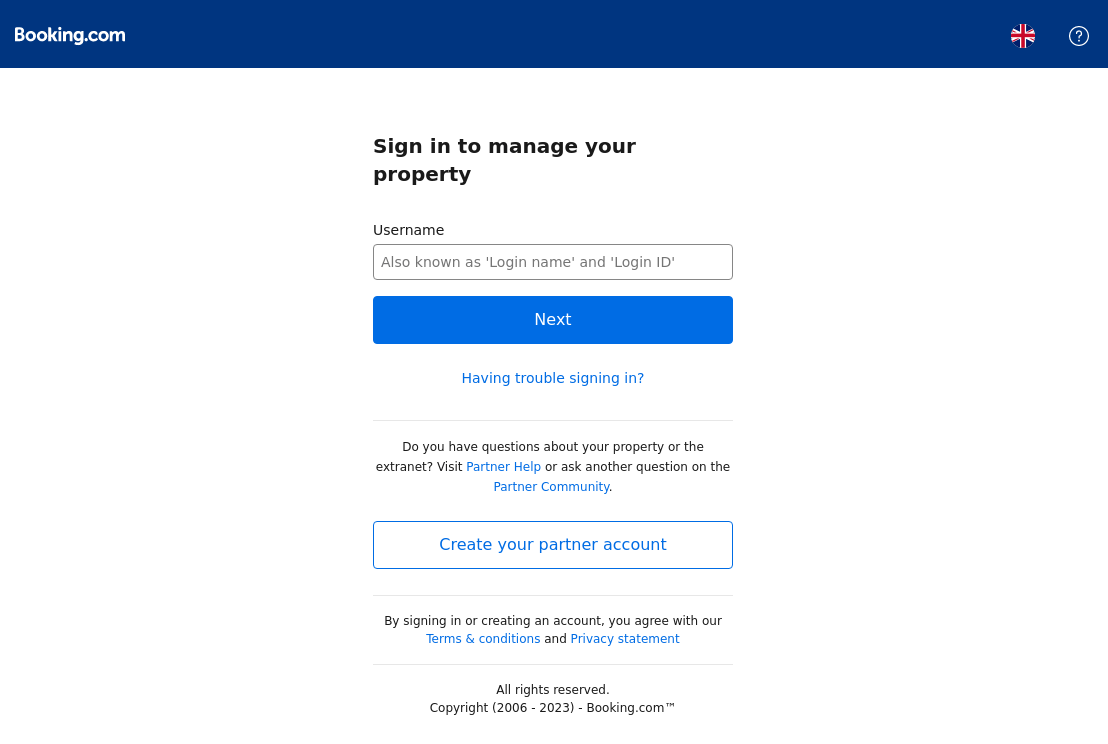
    Fake accommodation sites often sent messages to property owners, telling them to log in to “manage their property.” This scheme targeted people renting out their homes through online booking platforms.

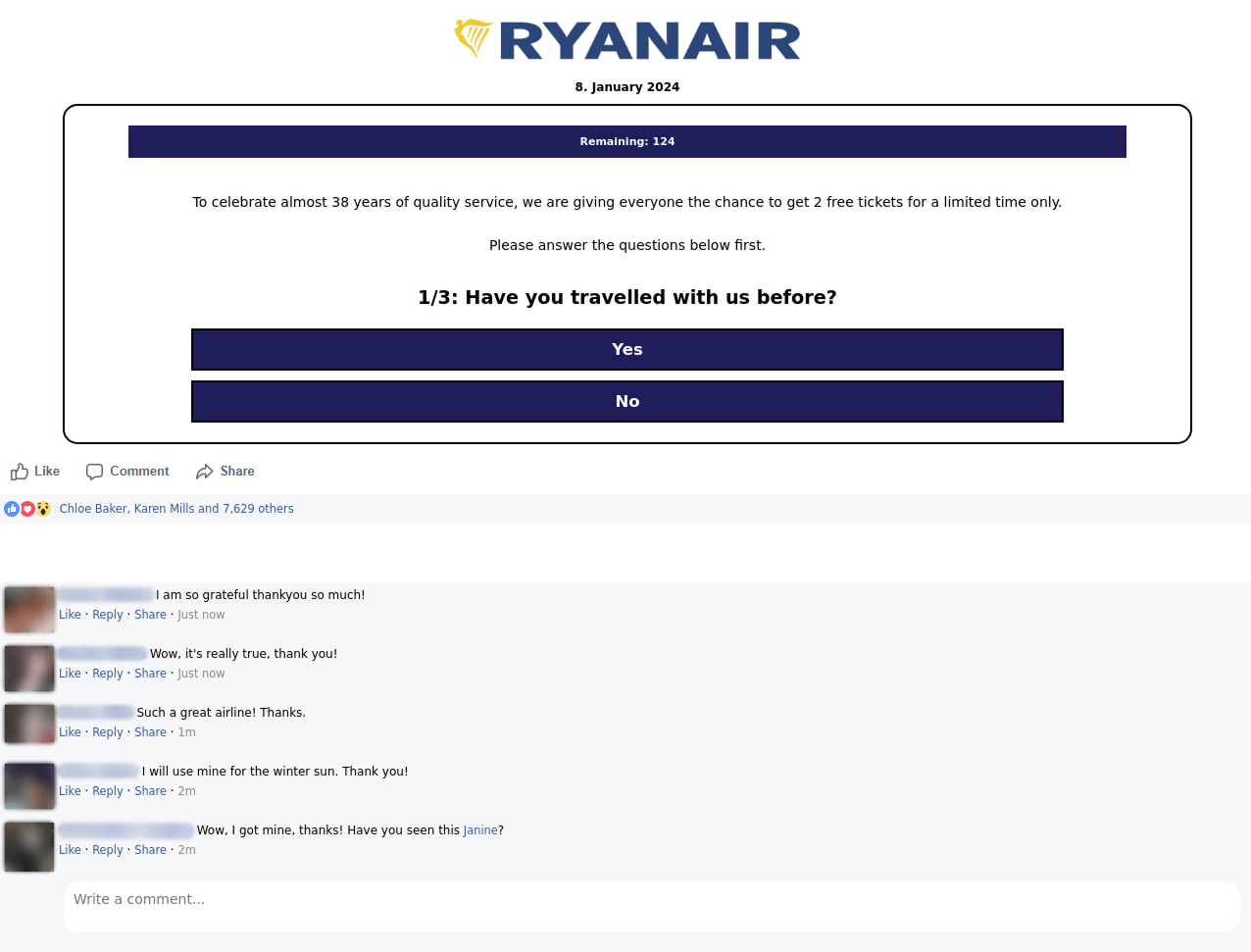
    Other scam pages featured surveys, offering respondents gifts or prize draws for participating. In this case, victims risked both their credentials and their money. Such fake giveaways are a classic scam tactic. They are often timed to coincide with a significant date for the travel industry or a specific company. For example, the screenshot below shows an offer to take part in a giveaway of airline tickets to celebrate Ryanair’s birthday.

    After completing the survey, users may be asked to share the offer with a certain number of contacts, and then pay a small fee to receive the expensive gift. Of course, these prizes are non-existent.

    Trapped in social networks

    To steal credentials for social media and messenger accounts, scammers used another classic technique: asking users to verify themselves. In one scheme, the victim was redirected to a website that completely replicated WhatsApp’s design. The user entered their phone number and login code, handing their credentials straight over to the cybercriminals.

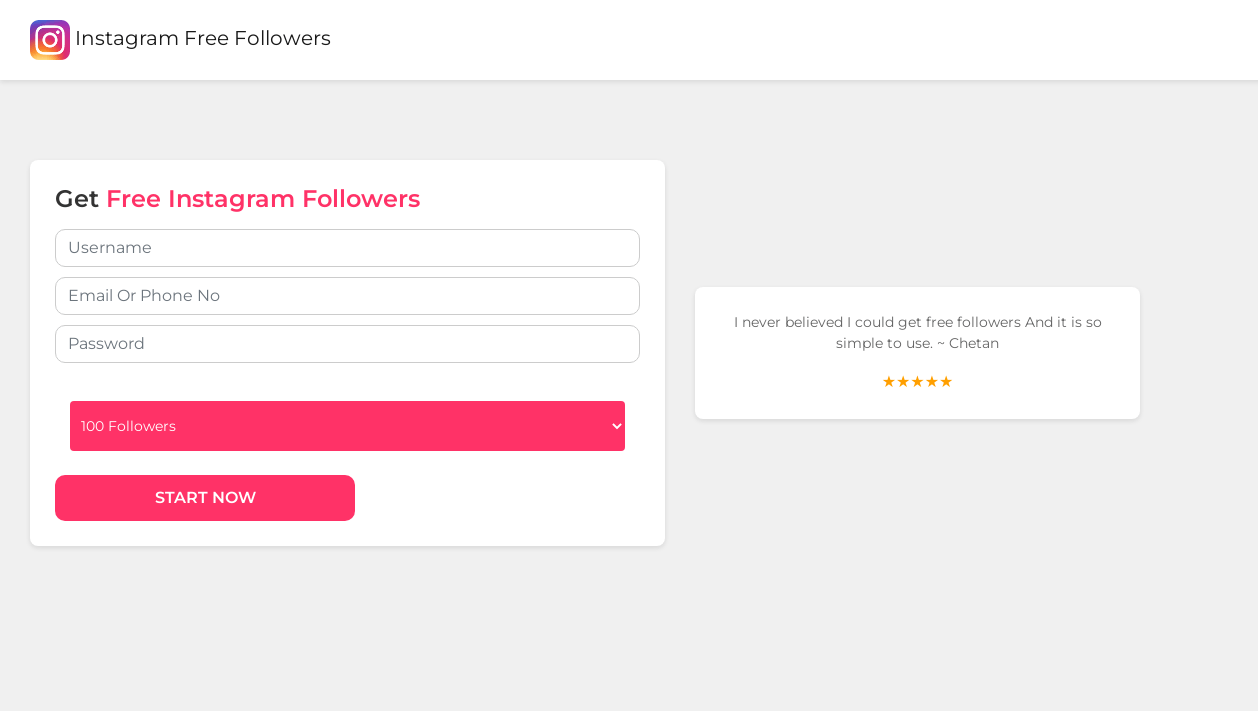
    Beyond verification scams, fraudsters also lured victims with attractive offers. For example, in the screenshot below, the victim is promised free Instagram followers.

    Some cybercriminals also used the promise of adult content to lure victims into entering their credentials in a fake authorization form.

    Other scammers took advantage of Facebook and Instagram being owned by the same company. On a fraudulent page, they claimed to offer a service that allowed users to find Instagram profiles by entering their Facebook login and password.

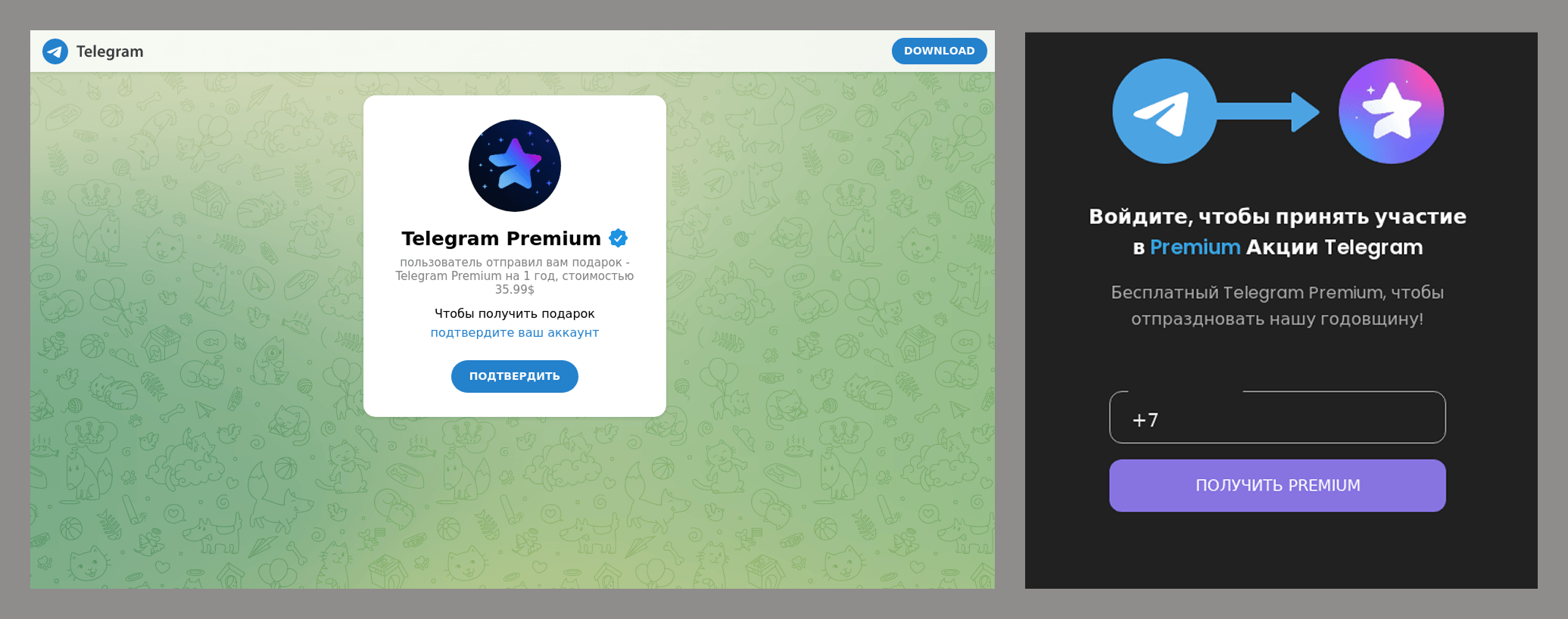
    Some scams offered users a surprise “gift” — a free Telegram Premium subscription. To enable the messenger’s premium features, the victim only had to enter their phone number and a one-time code on a fraudulent website.

    Some fake social media and messenger pages were designed not to steal login credentials but to install malware on victims’ devices. Taking advantage of the popularity of Facebook Lite for Android, scammers offered users a “more advanced official version”, claiming it had extra features missing in the original app. However, instead of an upgraded app, users downloaded malware onto their devices.

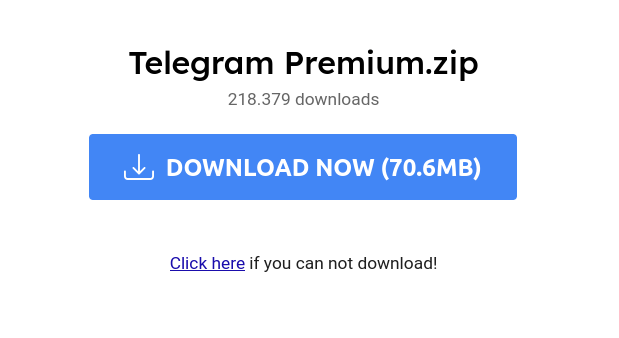
    Similarly, installing a supposedly free Telegram client with an activated Premium subscription often led to downloading malware.

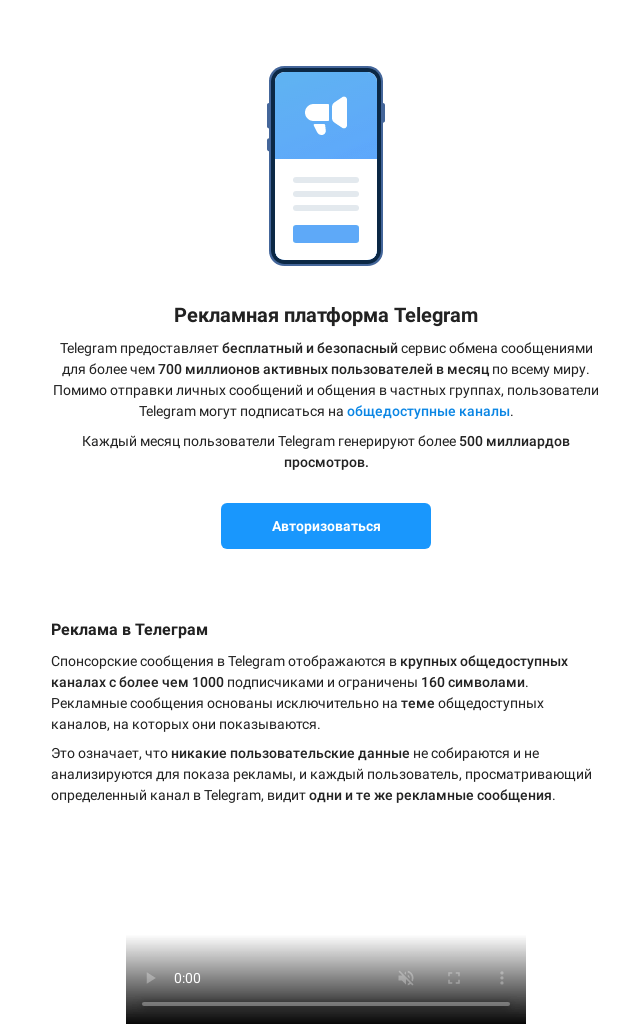
    Social media business services were increasingly used as a pretext for credential theft, as they play a key role in developing and promoting businesses and are directly linked to financial operations. Cybercriminals tricked Telegram channel owners into logging in to a phishing platform imitating the official Telegram Ads tool, thereby stealing their Telegram credentials. To make the scam more convincing, the attackers detailed how Telegram advertising works and promised millions of ad views per month.

    TikTok users have also been targeted. TikTok Shop allows sellers to list curated products—items featured in videos—for potential buyers to find and purchase. Scammers created fake TikTok Shop pages to steal seller credentials, potentially leading to both reputational and financial damage.

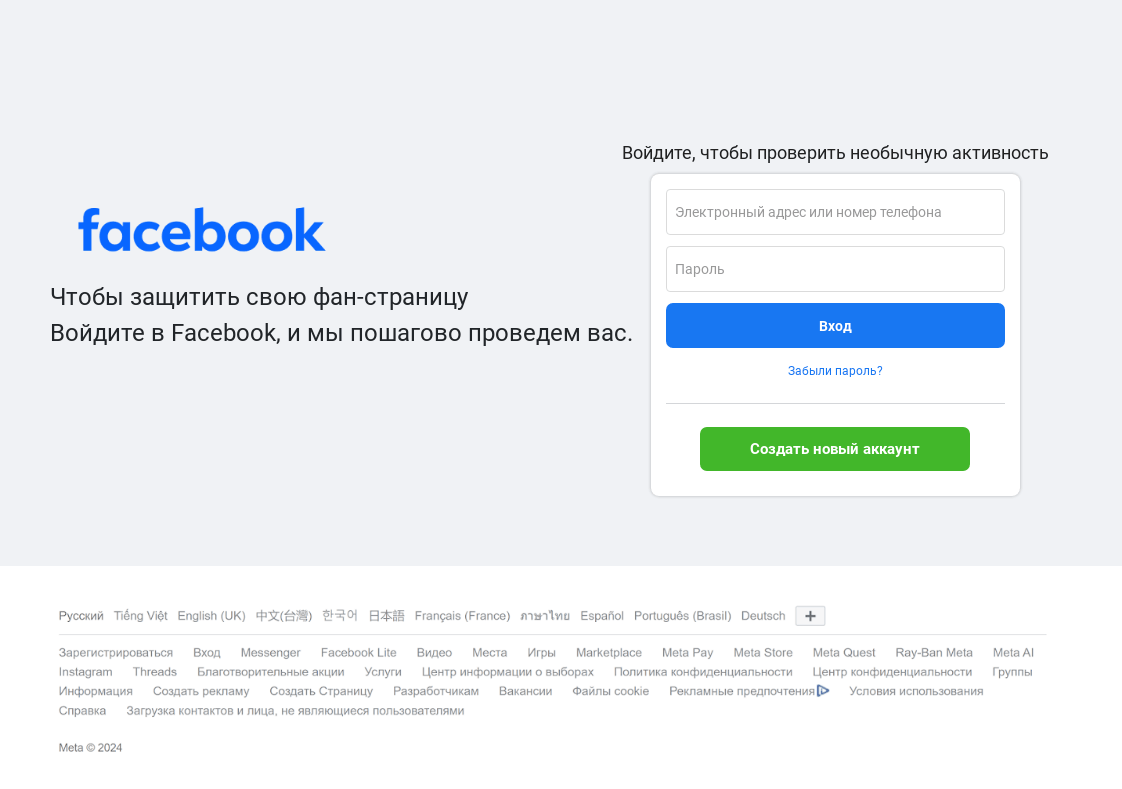
    In another case, fraudsters informed Facebook fan page owners of unusual activity in their accounts. Potential victims were prompted to check their profile by entering their login credentials into a phishing form.

    Cryptocurrency: don’t mistake scams for real deals

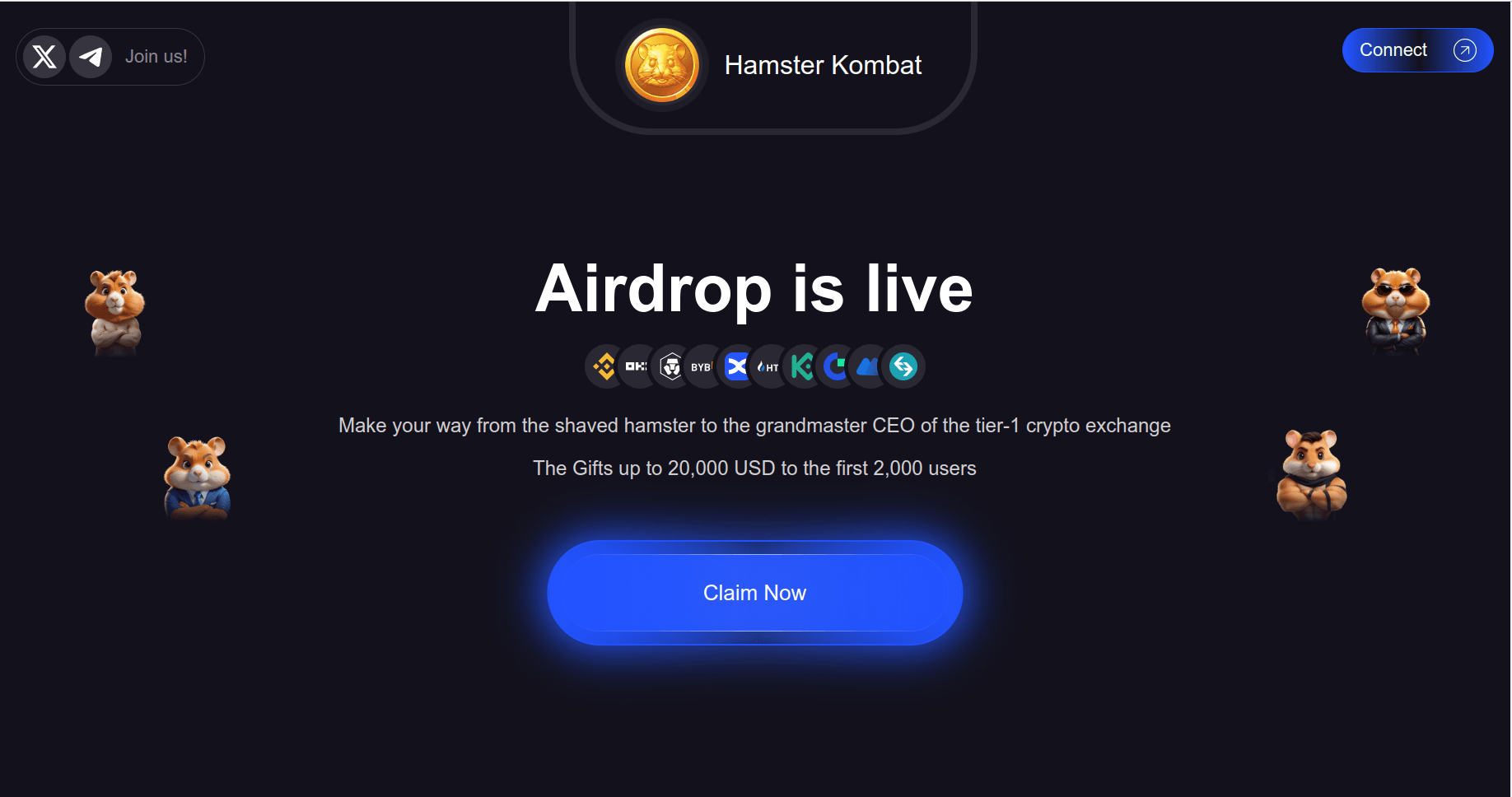
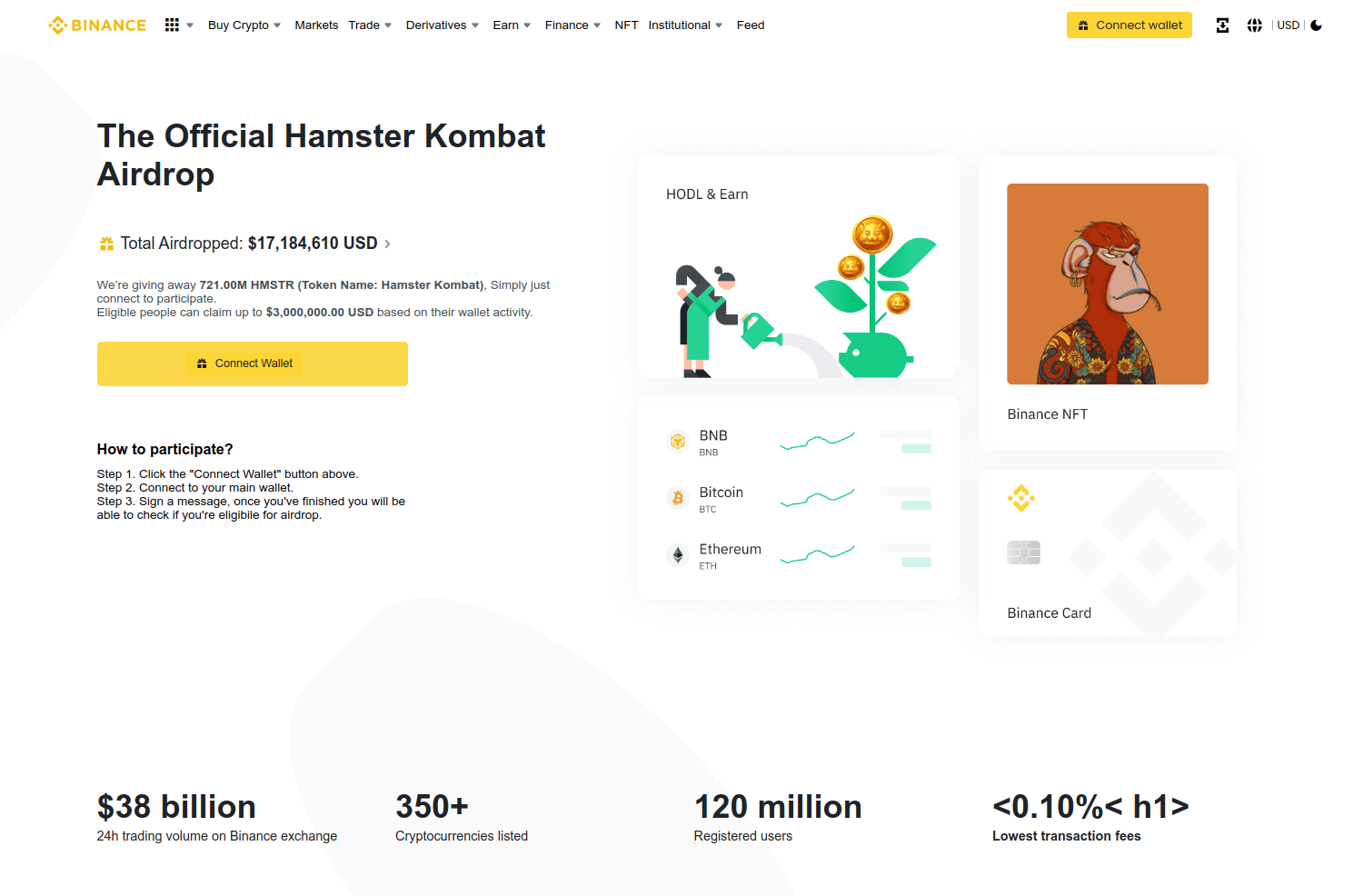
    One of last year’s most sensational stories was the cryptocurrency game Hamster Kombat. This clicker game, simulating the creation of a crypto exchange in a gamified format, quickly attracted a massive audience. Players eagerly awaited the moment when the in-game coins could be exchanged for real virtual currency. But while the official listing was delayed, the fraudulent schemes wasted no time.

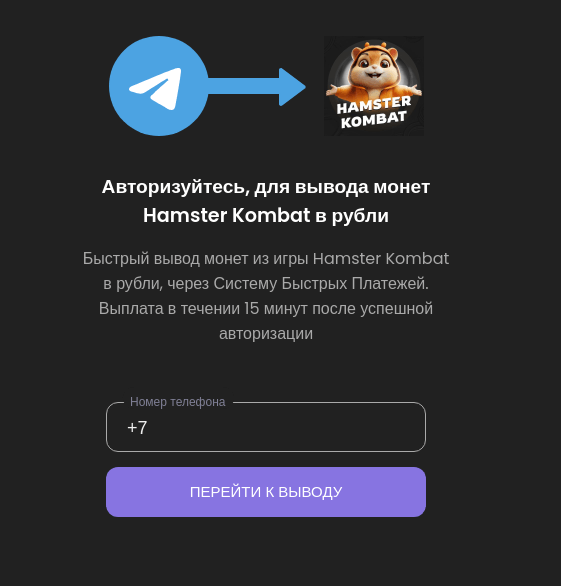
    Fraudsters claimed to offer cash-out services for in-game coins by converting them into rubles. To withdraw money, criminals claimed, users just had to log in through a fake Telegram page.

    The growing anticipation for the new cryptocurrency’s market launch was frequently exploited by cybercriminals to steal seed phrases from crypto wallets. Scammers announced an early token sale, requiring users to log in through a fake page to participate. Of course, there was no mention of such promotions on official resources.

    The popularity of Hamster Kombat was also abused in scam schemes. For example, users were offered access to a crypto wallet supposedly containing a significant sum in virtual coins. To claim it, the unsuspecting victims had to share information about the “opportunity” with a certain number of contacts in messaging apps. Having made their potential victim an accomplice in spreading false information, the scammers demanded a small commission for the withdrawal and disappeared with the stolen money.

    A more elaborate scam also aimed to trick users into paying a “commission”, but with a slightly different approach. First, visitors to the page were asked to register to learn about some new activity related to Hamster Kombat.

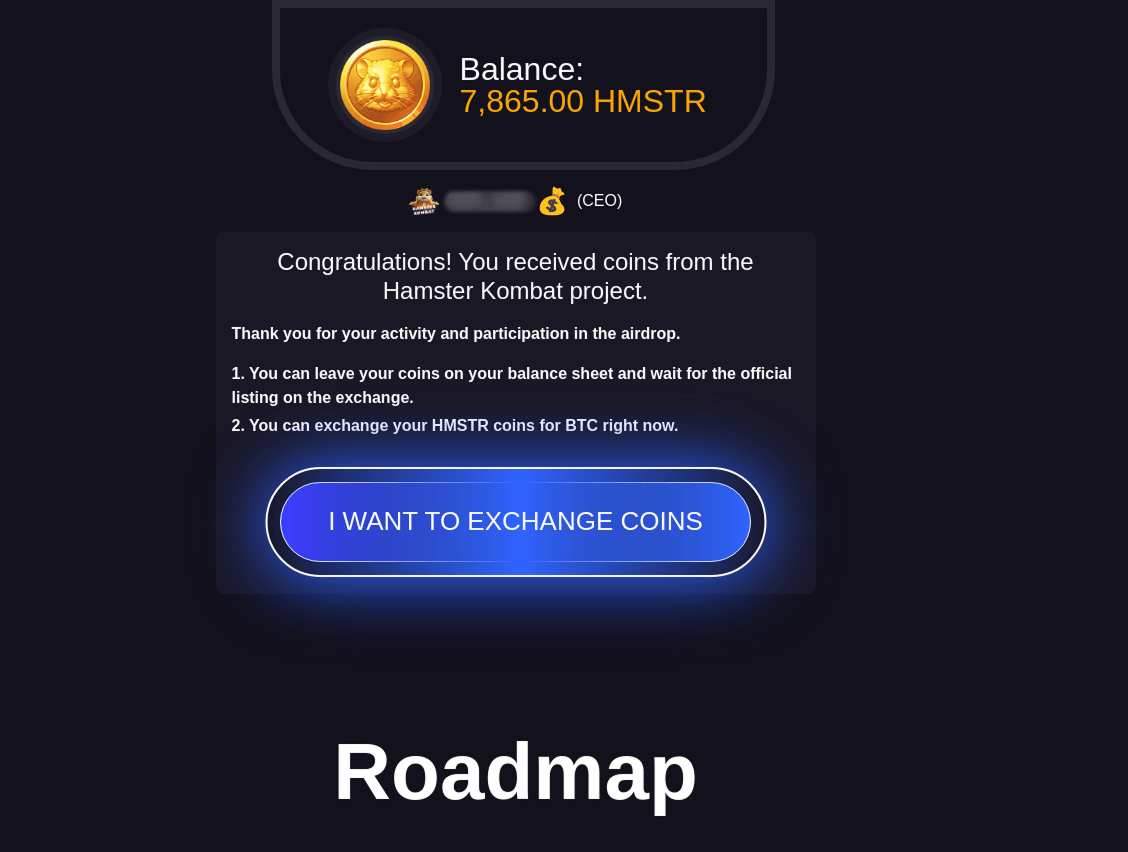
    Once registered, they were suddenly informed of having won a large amount of the HMSTR cryptocurrency supposedly as part of an experiment conducted on the platform. Exploiting uncertainty around the token’s listing, scammers urged victims to bypass the official trading launch and exchange their in-game currency for Bitcoin immediately.

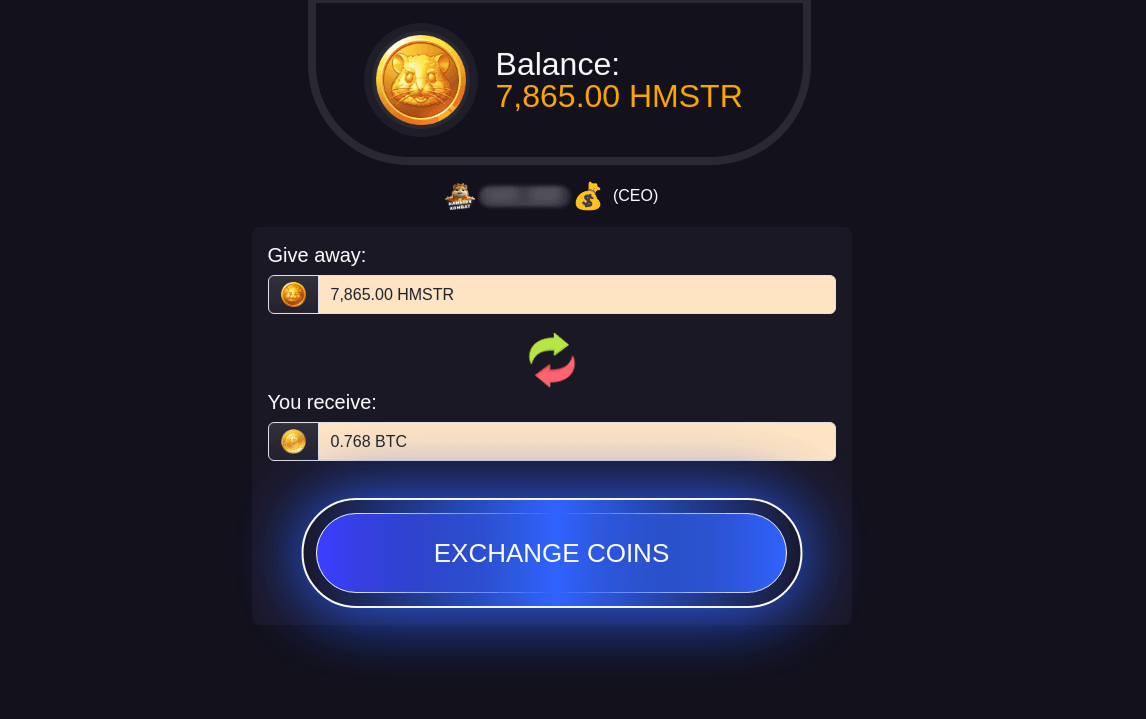
    To make it more convincing, the page displayed an exchange rate at which the “prize” would be converted.

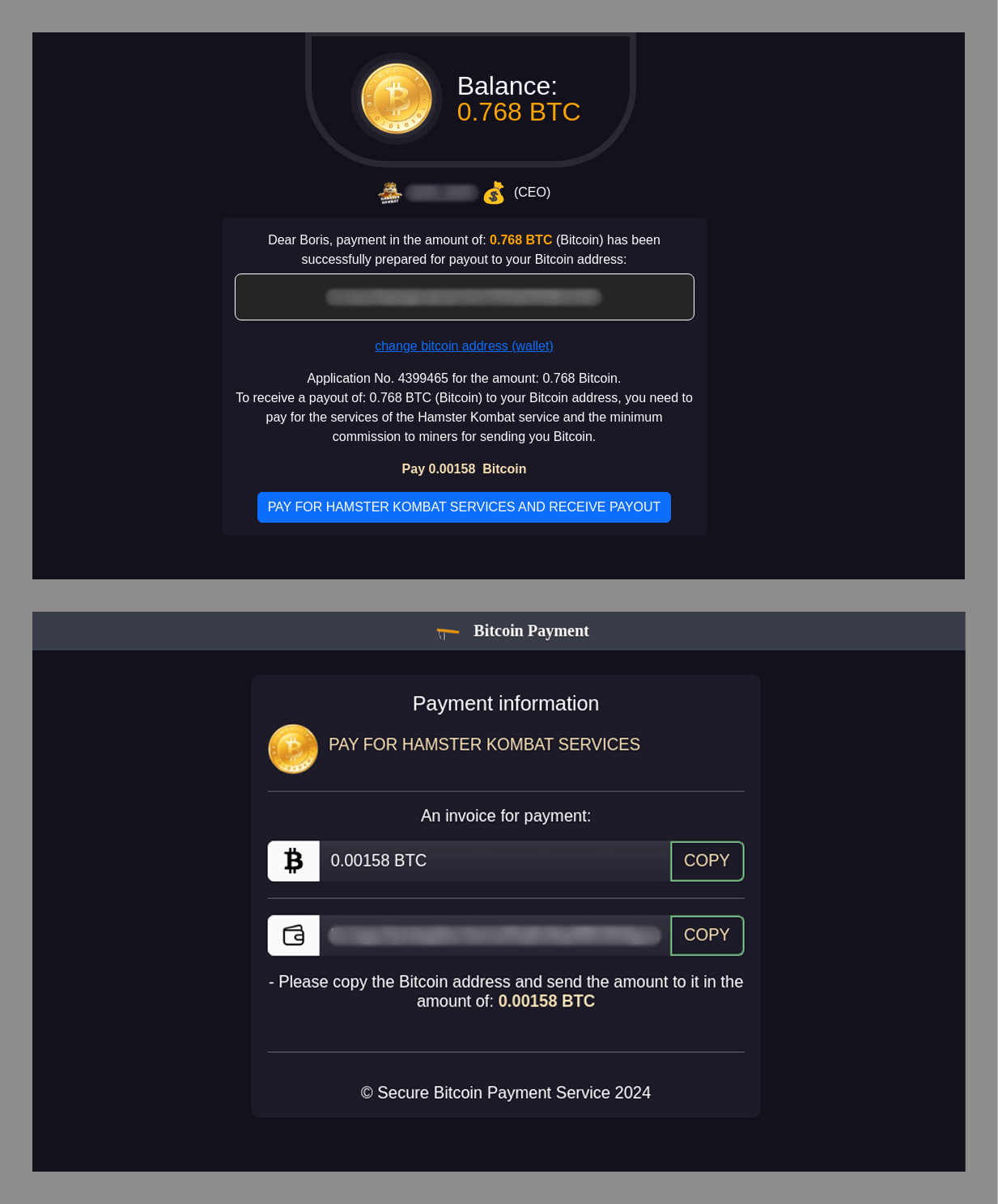
    However, after clicking the “Exchange coins” button, users were prompted to pay a commission for the service.

    Everyone who paid this fee lost their money and received no Bitcoin.

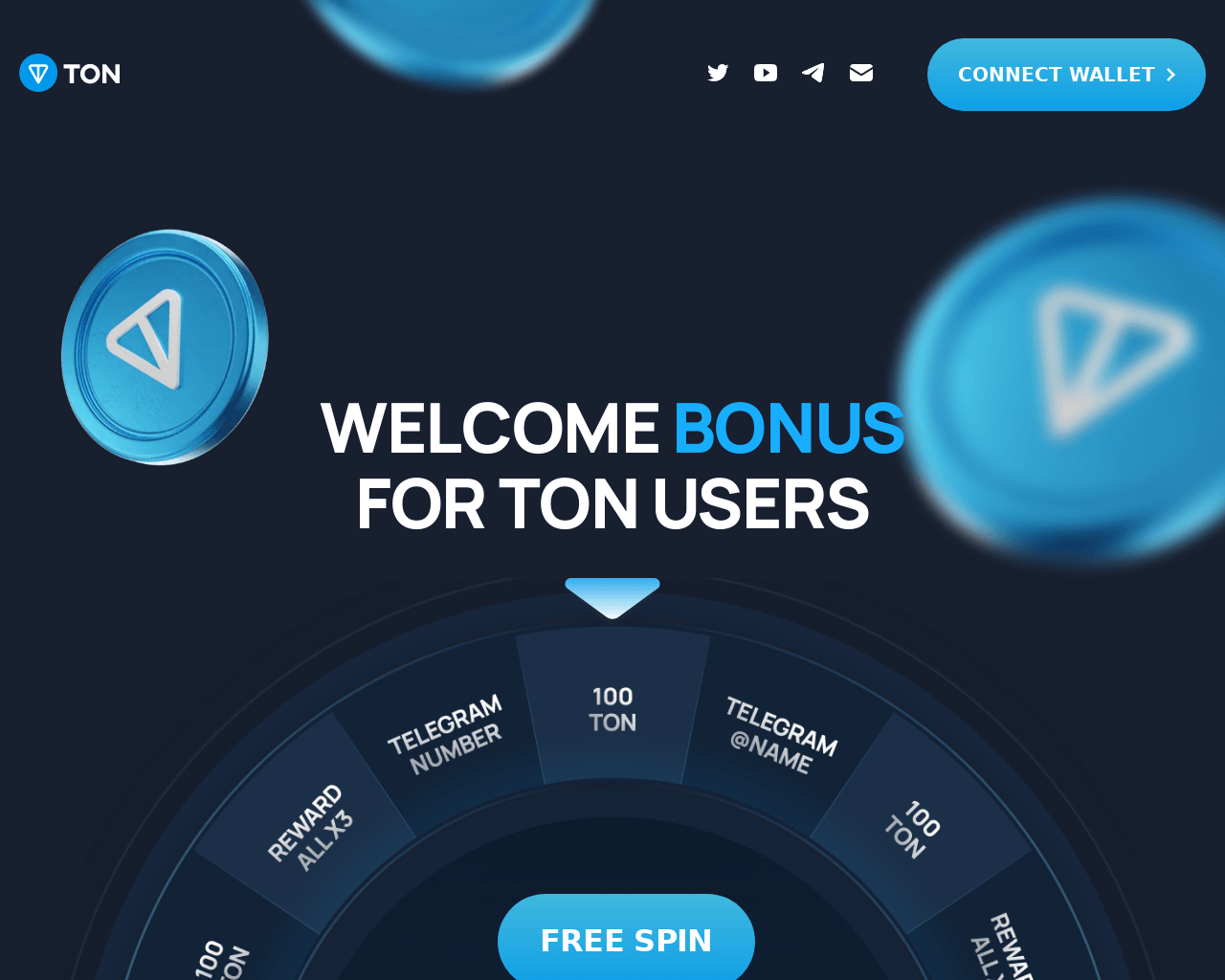
    Phishing attacks also targeted TON wallet users. In this case, scammers lured victims with promises of bonuses, requiring them to link their crypto wallets on fraudulent websites.

    TON cryptocurrency was also used as bait in scam schemes. In a classic scenario, users were promised a quick way to earn digital currency. Fraudsters advertised a cloud mining service that allegedly generated high profits without any effort. After registering, unsuspecting users could monitor their “earnings” but had to pay a commission in cryptocurrency to withdraw funds.

    Another “profitable” crypto scam resembled a Ponzi scheme: victims were required to recruit at least five new participants into the program—without receiving any money, of course. The scam site mimicked an online earning platform.

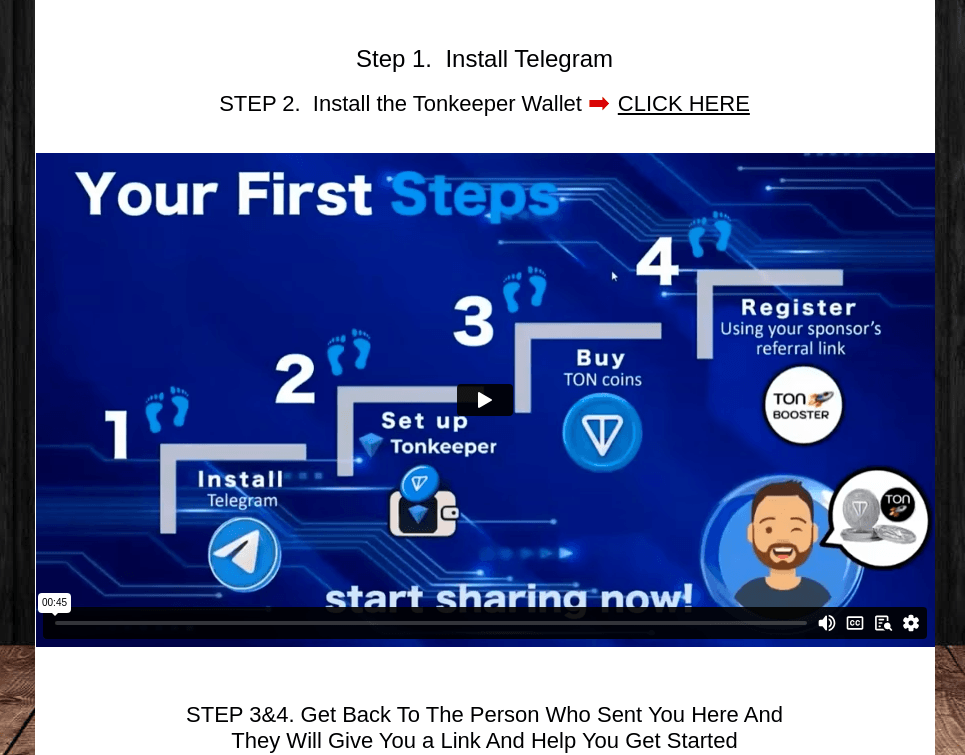
    Visitors were instructed to install Telegram and use an unofficial bot to activate a crypto wallet where profits would supposedly be deposited.

    According to the instructions, users then had to buy Toncoin and register in the program through a referral link from another participant. The scam worked by enticing people to make a small investment in the hopes of making big profits—the victims used their own funds to purchase the cryptocurrency for registration. But as with any pyramid scheme, only those at the top profited, while everyone else was left with nothing but empty dreams.

    All or nothing: multipurpose phishing

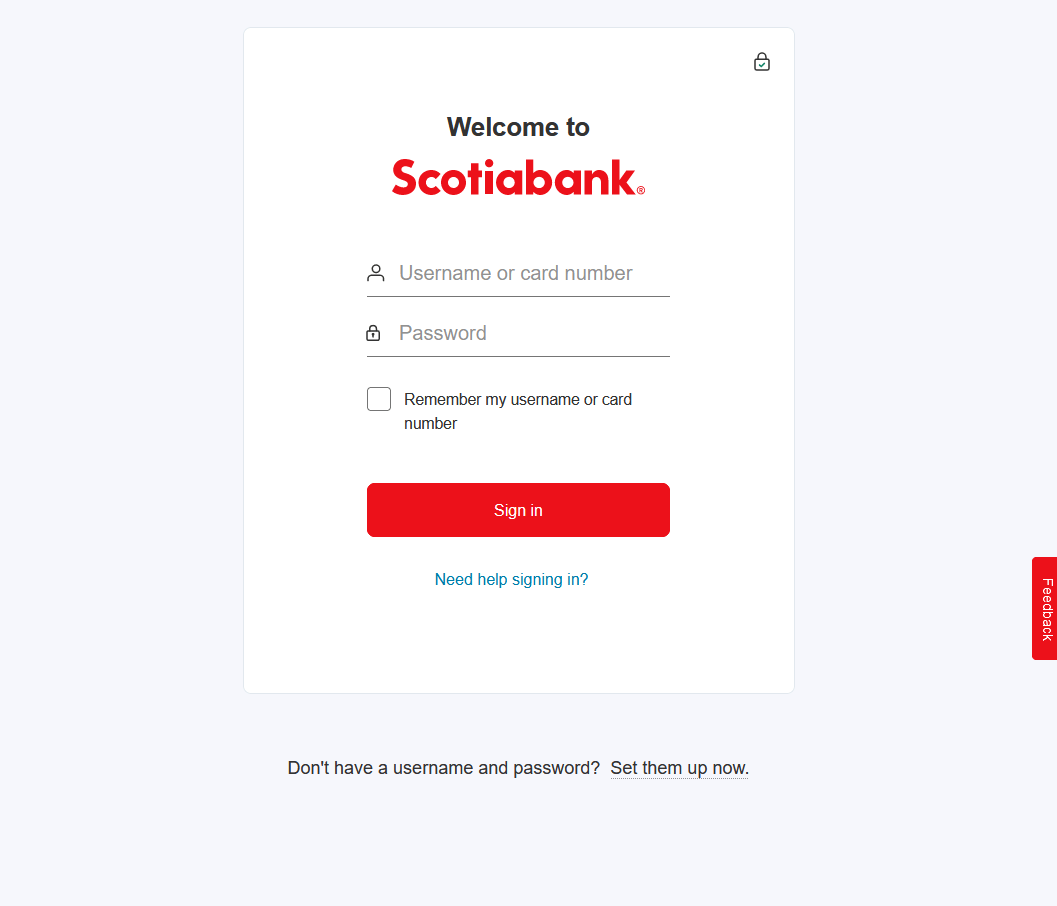
    Victims of phishing frequently included bank clients and users of government service portals. In such schemes, users first received a notification that they needed to update their account credentials. Cybercriminals used various communication channels to contact their victims: email, text messages, and chats in messaging apps. The victims were then led to fake sites where they were asked to provide their personal data. First, they entered their personal login credentials on the organization’s website.

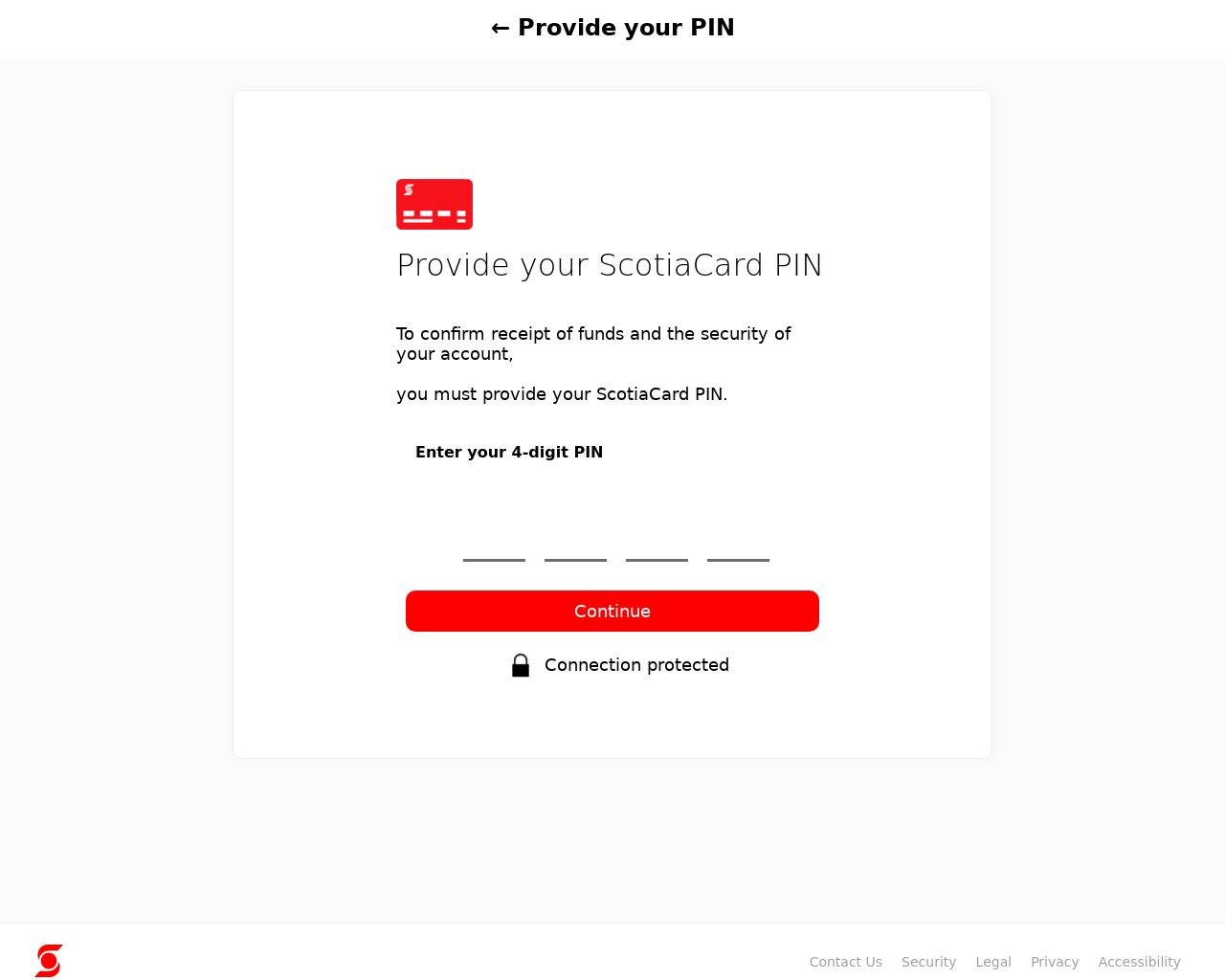
    Next, they were prompted to provide their email account credentials. The scammers also attempted to collect identity document details and other data, including the bank card PIN code.

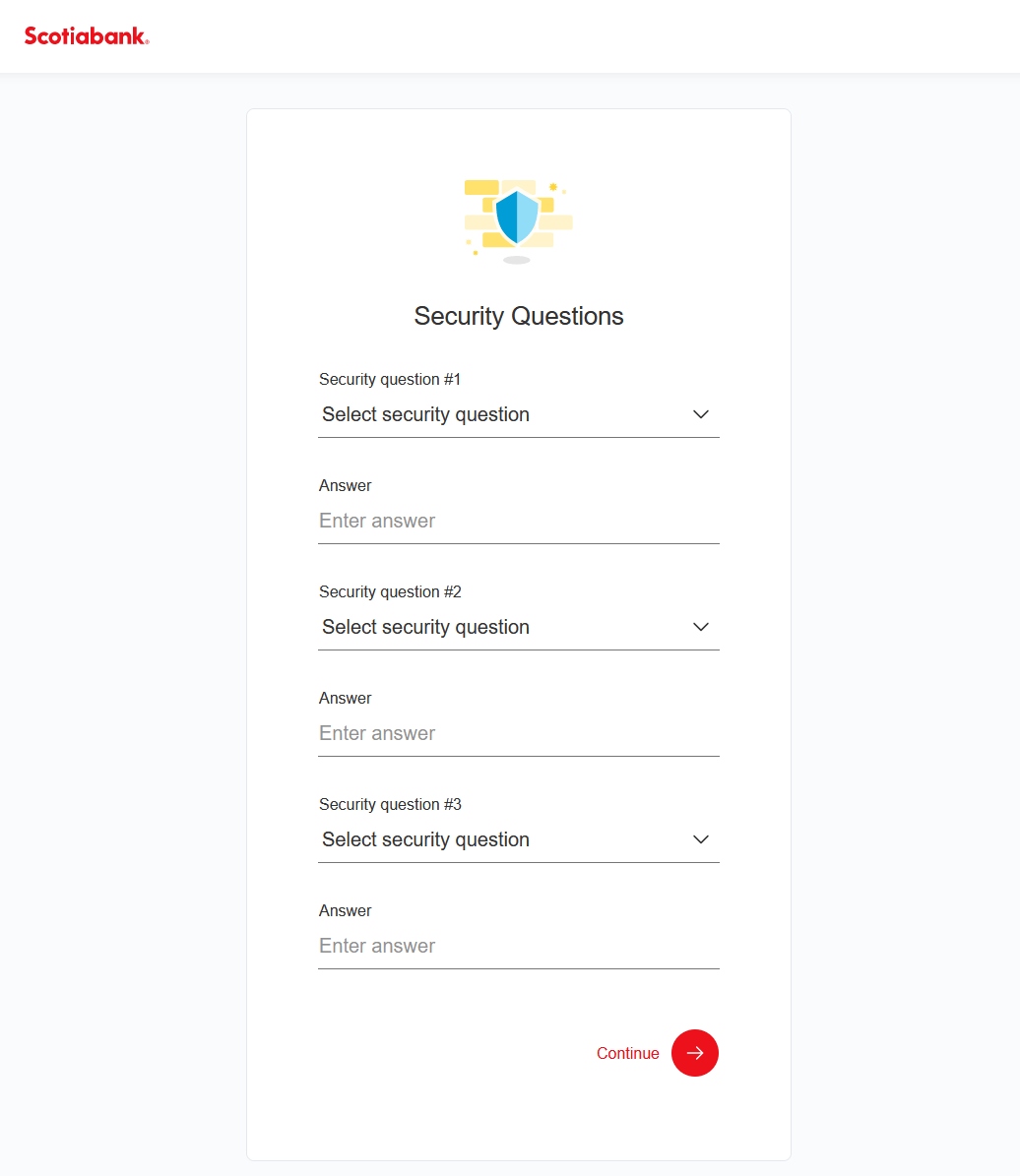
    Additionally, these phishing forms requested answers to security questions commonly used for additional verification in banking transactions.

    This way, the cybercriminals gained full access to the victim’s account. Even the PIN code could be useful for the scammers in gaining access to the account. Security questions served as an extra safeguard for fraudsters in case the bank’s security service detected suspicious activity.

    False idols

    Phishing schemes also exploited the images of real people. For example, users browsing YouTube could stumble upon ad videos of celebrities announcing giveaways for their fans. Clicking the link in such a video led users to a page containing a post supposedly from the celebrity’s social media account, explaining how to claim the prize. However, when attempting to collect the “winnings”, visitors were asked to pay a small commission—insignificant compared to the value of the “gift.” Needless to say, those who paid the fee lost their money. The prize never existed, and the video was nothing more than a deepfake.

    Spam in 2024

    Scams

    Token giveaway scam

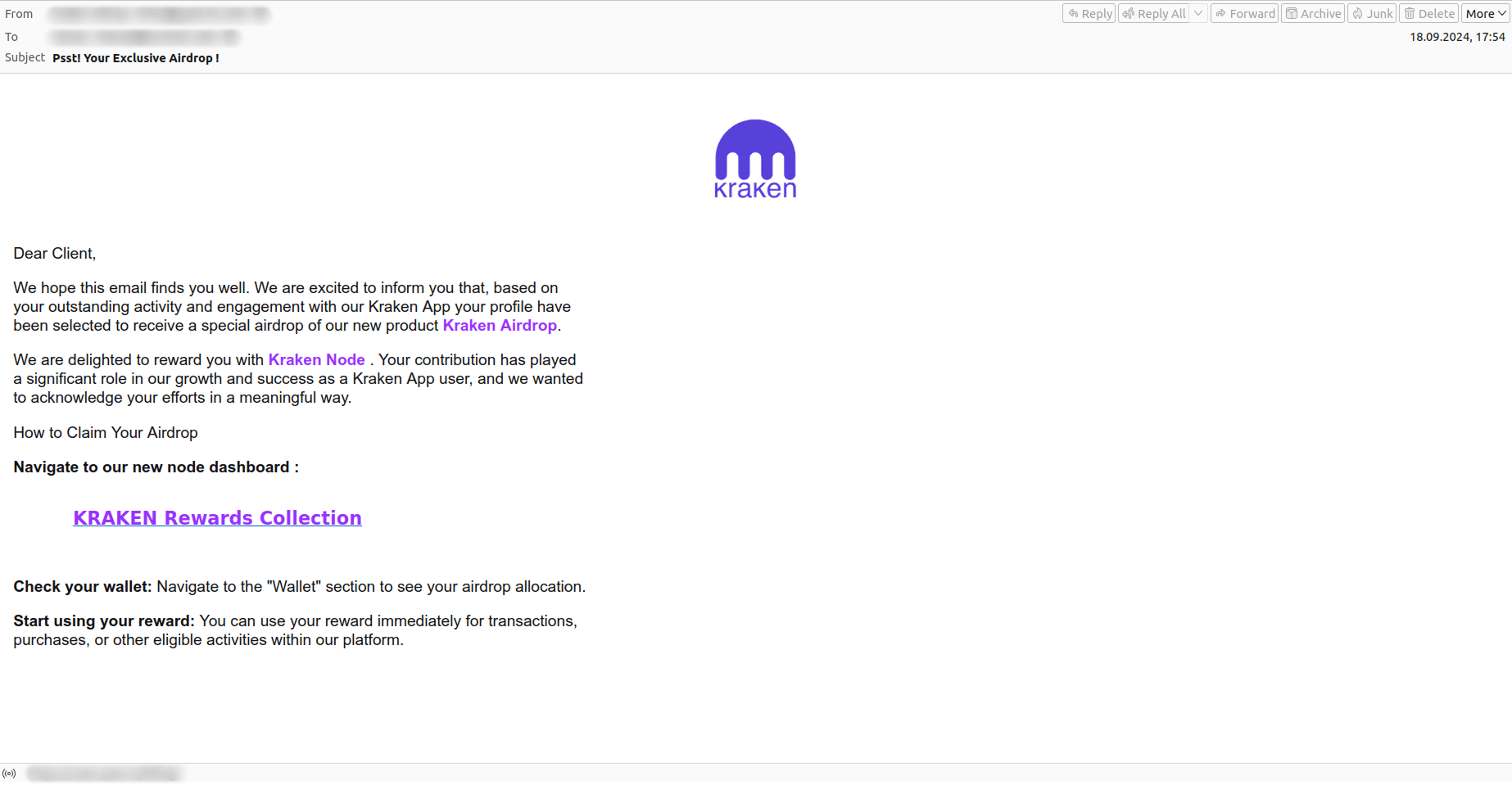
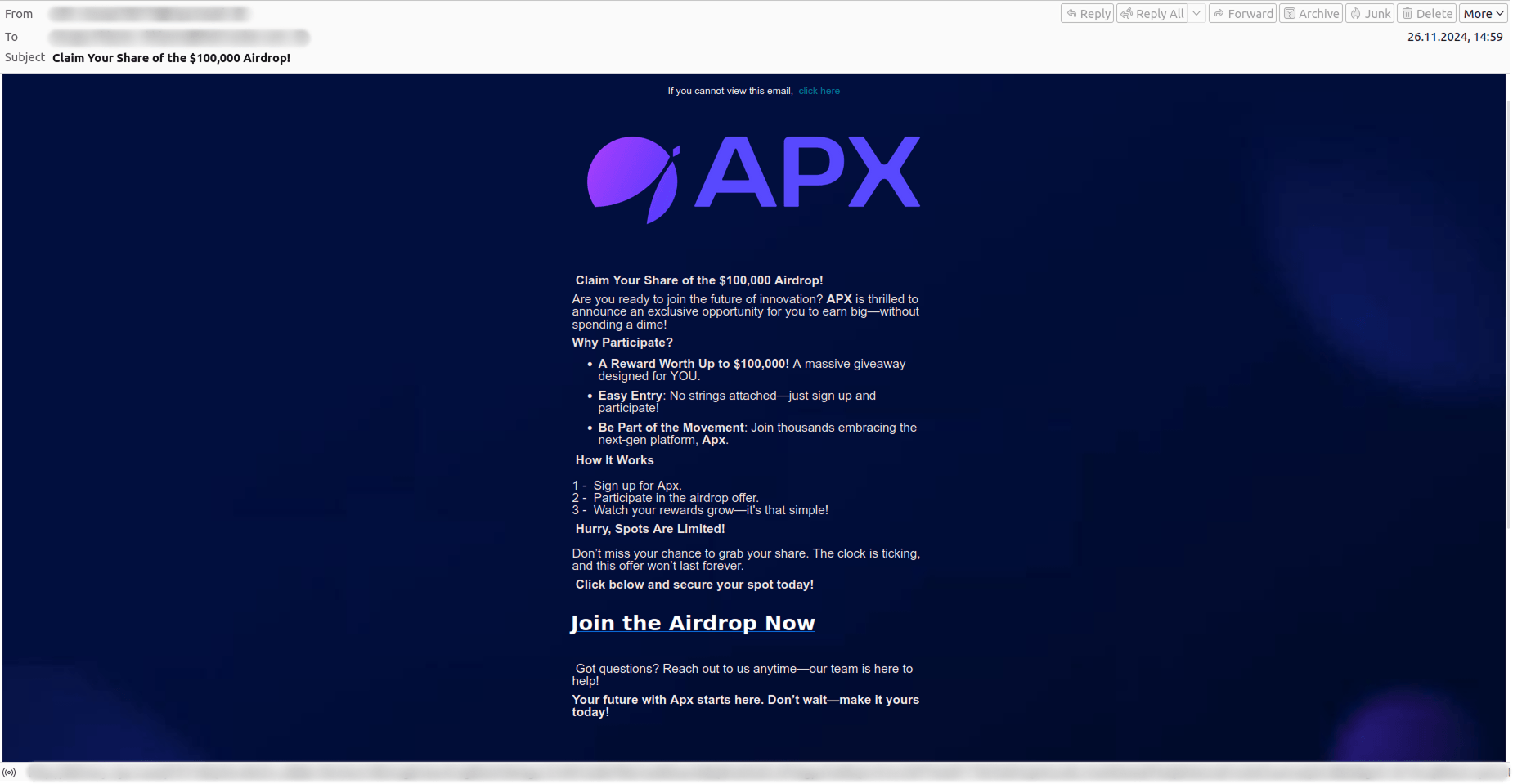
    Throughout the year, we frequently encountered emails announcing fake cryptocurrency airdrops, allegedly from teams of well-known crypto projects. The recipients, referred to as the platform’s “most valuable users,” were invited to participate in an “exclusive” event as a thank you for their loyalty and exceptional engagement.

    New users unfamiliar with cryptocurrency were lured in with a unique opportunity to take part in the token giveaway and win a large sum—all they had to do was register on the platform, which was, of course, fake.

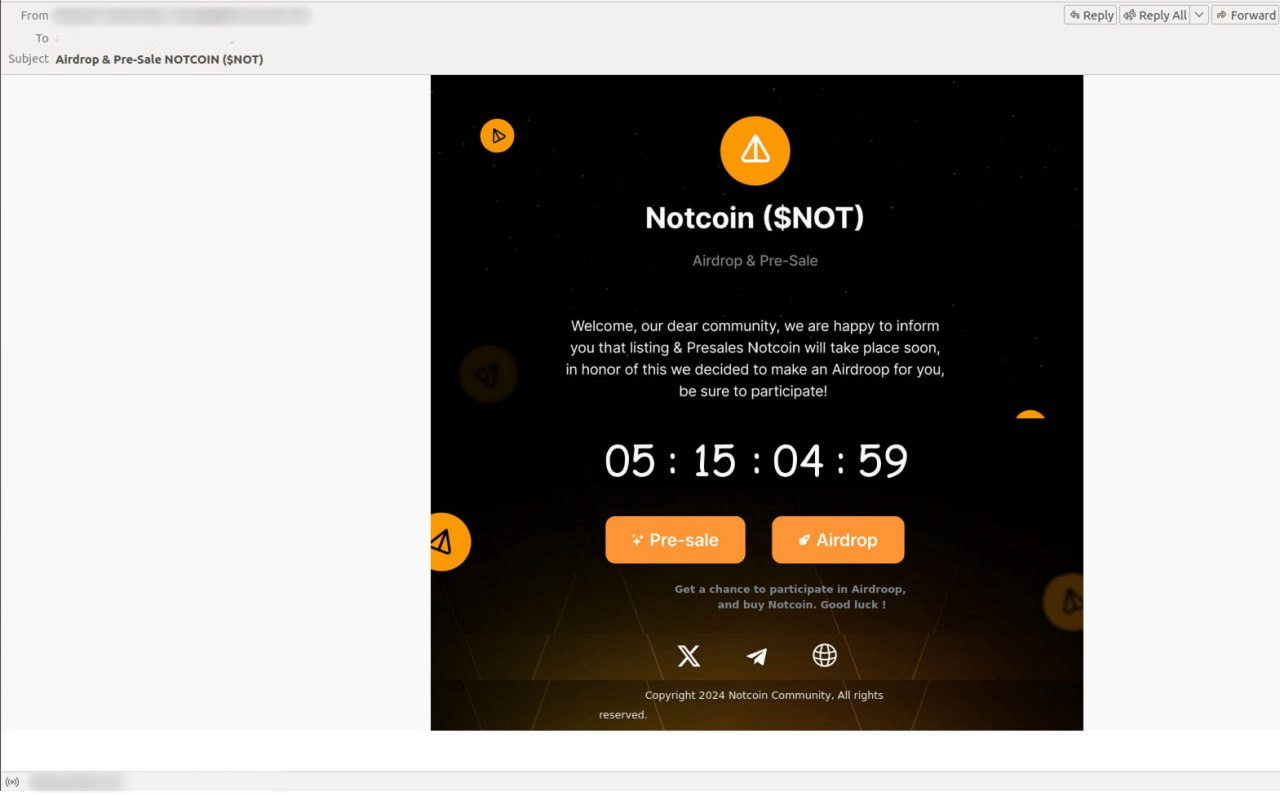
    Scammers in 2024 closely monitored cryptocurrency market news. For example, in the spring, ahead of Notcoin’s upcoming listing, scam messages appeared featuring countdown timers, urging potential victims to participate in an airdrop allegedly arranged just for them.

    Scam emails also targeted users of the cryptocurrency game Hamster Kombat, popular among Russian-speakers. Players eagerly awaited the HMSTR token listing, which was repeatedly postponed—a delay that scammers were quick to exploit. In the fall of 2024, they began sending emails pretending to be from the Hamster Kombat team, promising generous cash prizes if victims clicked a link to a fake game site.

    Similar offers were distributed via a fraudulent website mimicking a major cryptocurrency exchange. In both cases, to claim the coveted tokens, victims had to link their cryptocurrency wallets.

    “Nigerian” scam

    In 2024, the Nigerian scam remained popular among spammers. Furthermore, fraudsters used both time-tested and trending themes to deceive victims. Cybercriminals employed various tricks and manipulations to engage with email recipients, with the ultimate goal of extracting money.

    Most often, users were lured into classic schemes: fraudsters posed as terminally ill wealthy individuals seeking a worthy heir, lottery winners eager to share their prize, or investors offering opportunities in a promising business. Sometimes, to evade suspicion, scammers “rescued” their victims from other fraudsters and offered to compensate them for any financial losses. For example, in the summer of 2024, we came across an interesting case where an alleged victim of crypto fraud suggested that fellow sufferers contact a group of noble hackers for help recovering lost cryptocurrency.

    Some scam offers were quite unexpected, as they didn’t promise vast riches, and, therefore, might not attract such a wide audience. In mid-to-late 2024, we saw scam emails claiming to be looking for new owners for pianos due to relocation or the previous owner’s passing.

    We also encountered even more creative scam narratives. For example, an email allegedly sent from a secret society of Illuminati promising to share their wealth, power and fame if the recipients agree to join their grand brotherhood.

    Other “Nigerian” scam emails capitalized on current news events. Thus, the most talked-about event of 2024, the US presidential election, significantly influenced the types of scams we saw. For example, one scam email claimed that the recipients were incredibly lucky to be eligible to receive millions of dollars from Donald Trump’s foundation.

    Scam in the Russian segment

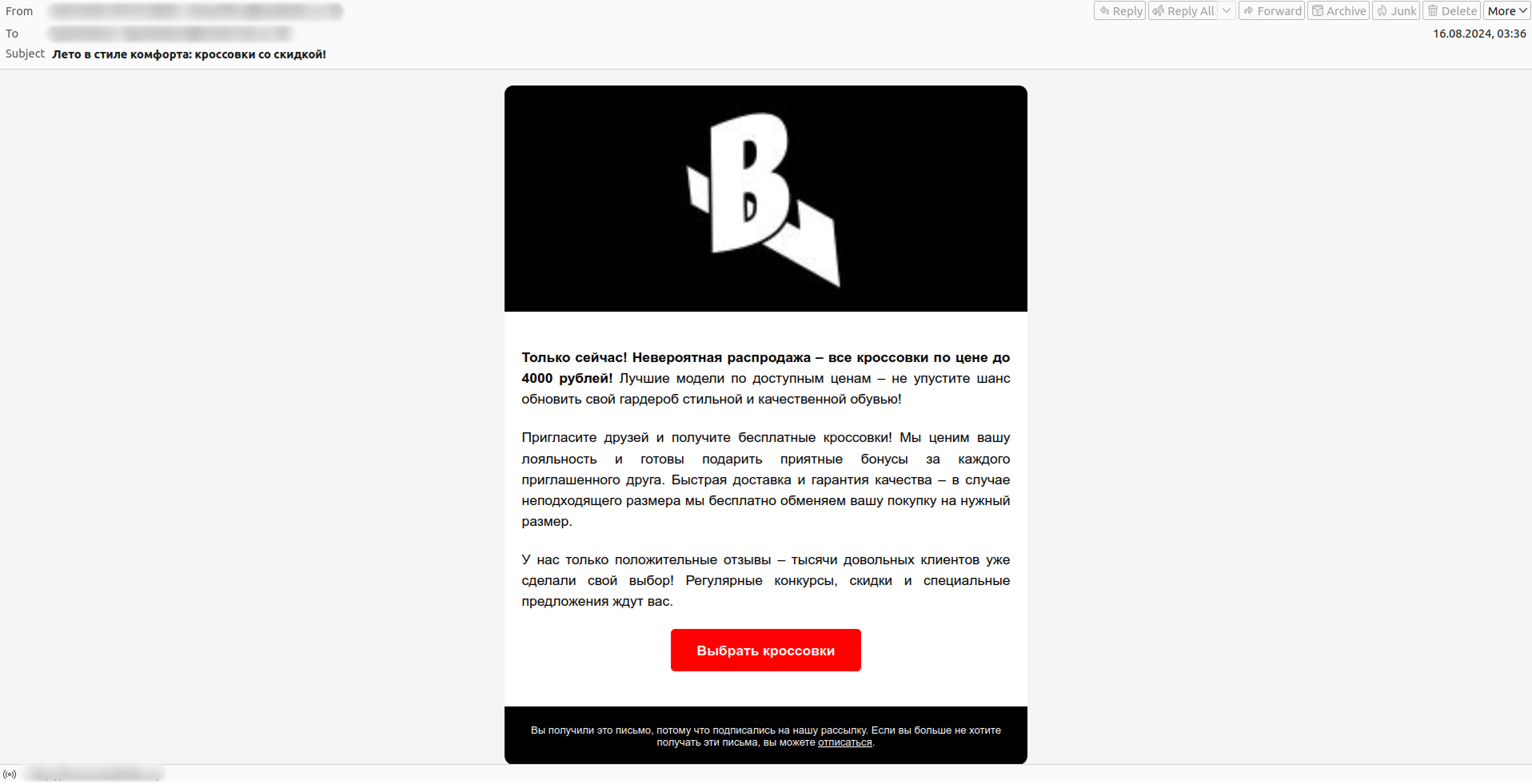
    Last year, the Russian segment of the internet was not spared from mass scam mailings. We frequently encountered schemes mimicking investment projects of major banks, promising users easy earnings and bonuses. Fraudsters also sent out emails with promotional offers from home appliance and electronics stores. Customers were informed of huge discounts on sales that were supposedly about to end.

    The links in such emails led to fraudulent websites that looked identical to legitimate online stores but stood out with extremely low prices. After paying for their desired items, customers lost their money, as orders were never actually placed.

    Beyond electronics, scammers also offered other discounted products. In one such campaign, users received an email advertising a sneaker store selling popular models at affordable prices.

    Judging by the technical headers of the emails, both the sneaker store and electronics store promotions were sent by the same fraudsters.

    Additionally, we came across emails offering recipients to apply for debit or credit cards under favorable conditions. Unlike the electronics and shoe sale scams, these messages were legitimate referral programs from major banks, which enterprising spammers tried to monetize. Technically, such emails are not scams, as their links lead to real banking websites, and recipients do not face any risks. However, senders profit from registrations via the referral program. Nevertheless, we do not recommend clicking links from unknown senders, as seemingly harmless emails from a referral platform could be phishing or scam messages.

    Emails with malicious links and attachments

    Password-protected archives

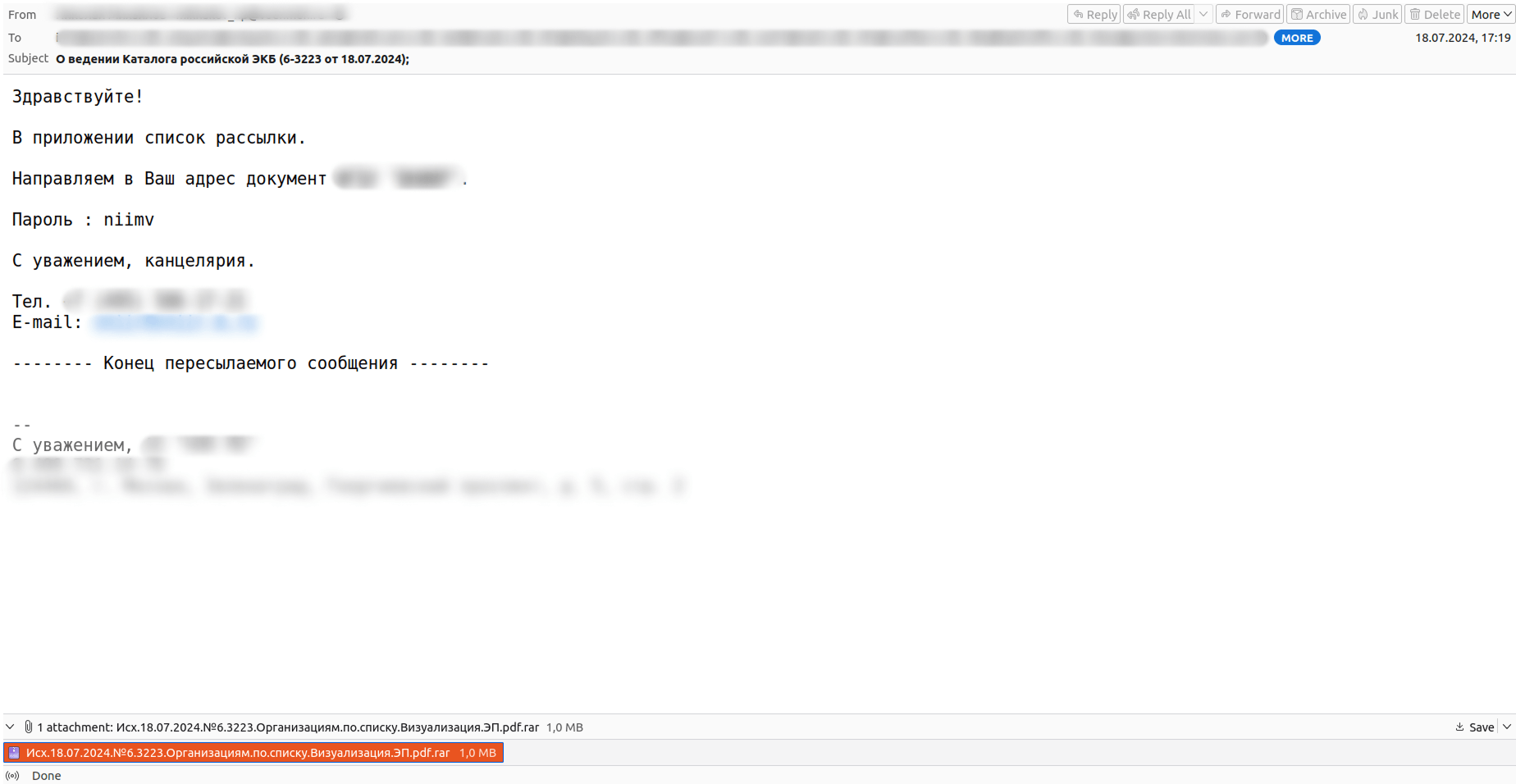
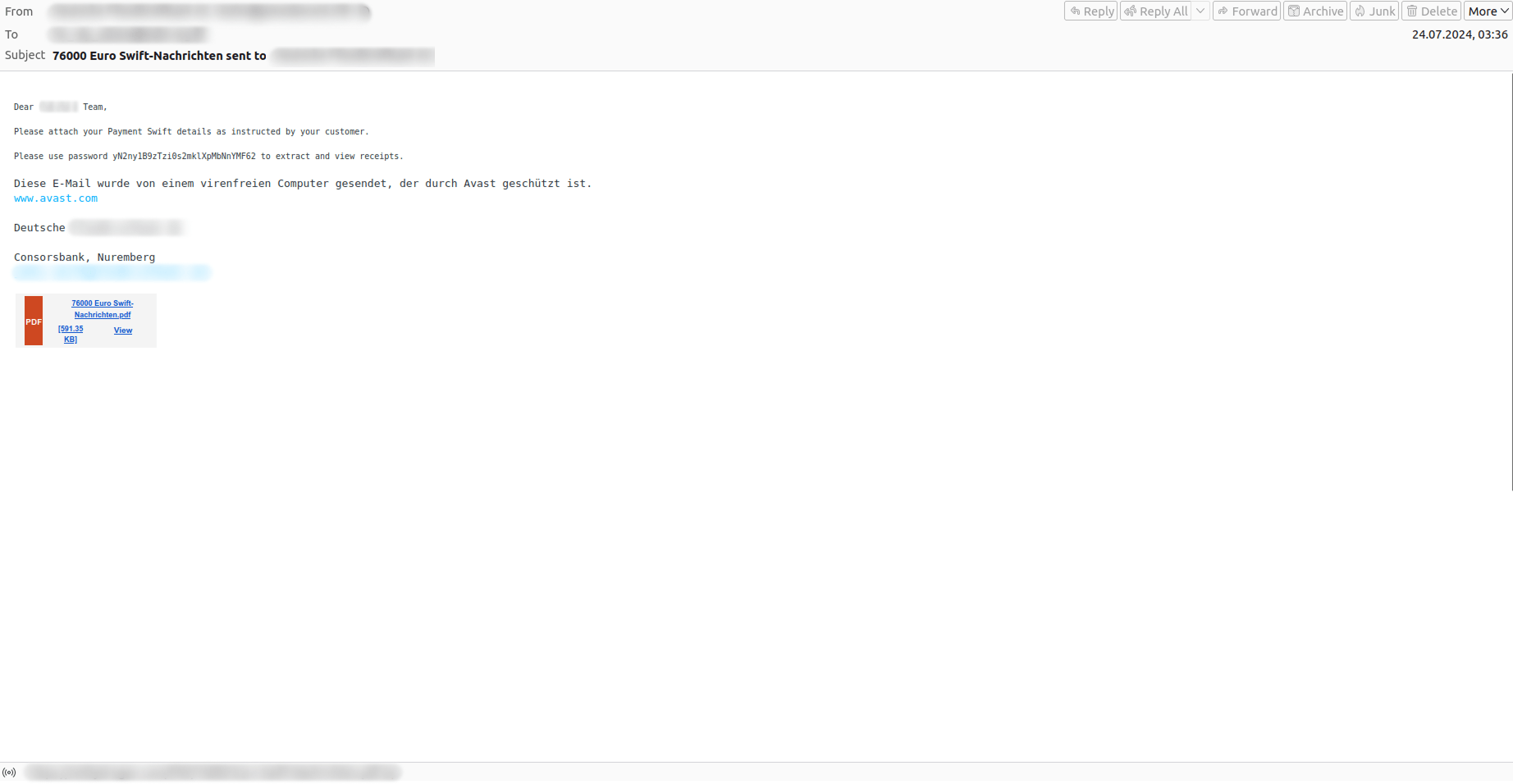
    In 2024, there was an increase in emails distributing password-protected archives containing malicious content. Sometimes, these files were included not as attachments but via download links, which also required a password. Presumably, this was the attackers’ attempt to bypass email security filters. Typically, the archive password was mentioned in the email text, and sometimes in the attachment’s filename. Notably, fraudsters often disguised malicious archives or links as files with other extensions, such as PDF, XLS, or DOC.

    Since April 2024, we have been recording similar distributions of files with the double extension .PDF.RAR, targeting employees of Russian companies in the government, financial, manufacturing, and energy sectors.

    We assume that these messages were sent from compromised email accounts of the recipients’ business partners. Some emails contained real correspondence, to which attackers replied with an email containing the malware. All the emails we examined in this campaign were unique. The attackers likely crafted messages to closely mimic the style of the compromised business partner.

    Similar messages containing malicious files were also found in other languages. However, unlike campaigns targeting Russian-speaking users, these had more general themes—attachments were disguised as invoices, commercial offers, supply orders, tender schedules, court notices, and other documents.

    Pre-trial claims and lawsuits

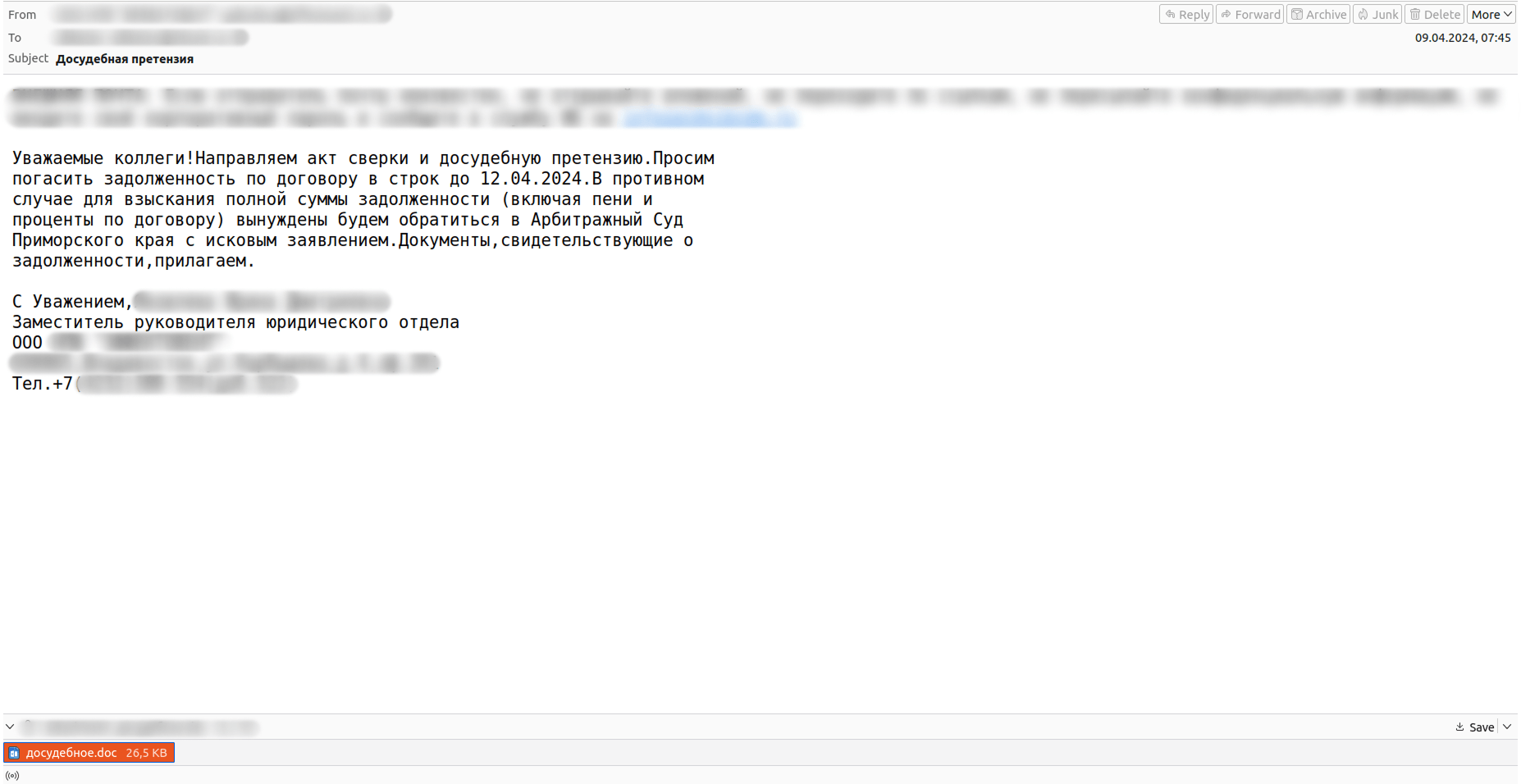
    Last year, attackers frequently threatened legal action to convince victims to click dangerous links or open malicious attachments. These messages primarily targeted Russian companies but were also observed in other languages. Typically, fraudsters posed as business partners, demanding debt repayment; otherwise, they “would be forced to take the matter to arbitration court.” In one such campaign, pre-trial claims in attachments were .DOC files containing VBA scripts. These scripts established connections with command servers and downloaded, saved, and executed malicious files on the victim’s device. Kaspersky’s products detect this payload with the verdict HEUR:Trojan-Downloader.MSOffice.Sload.gen.

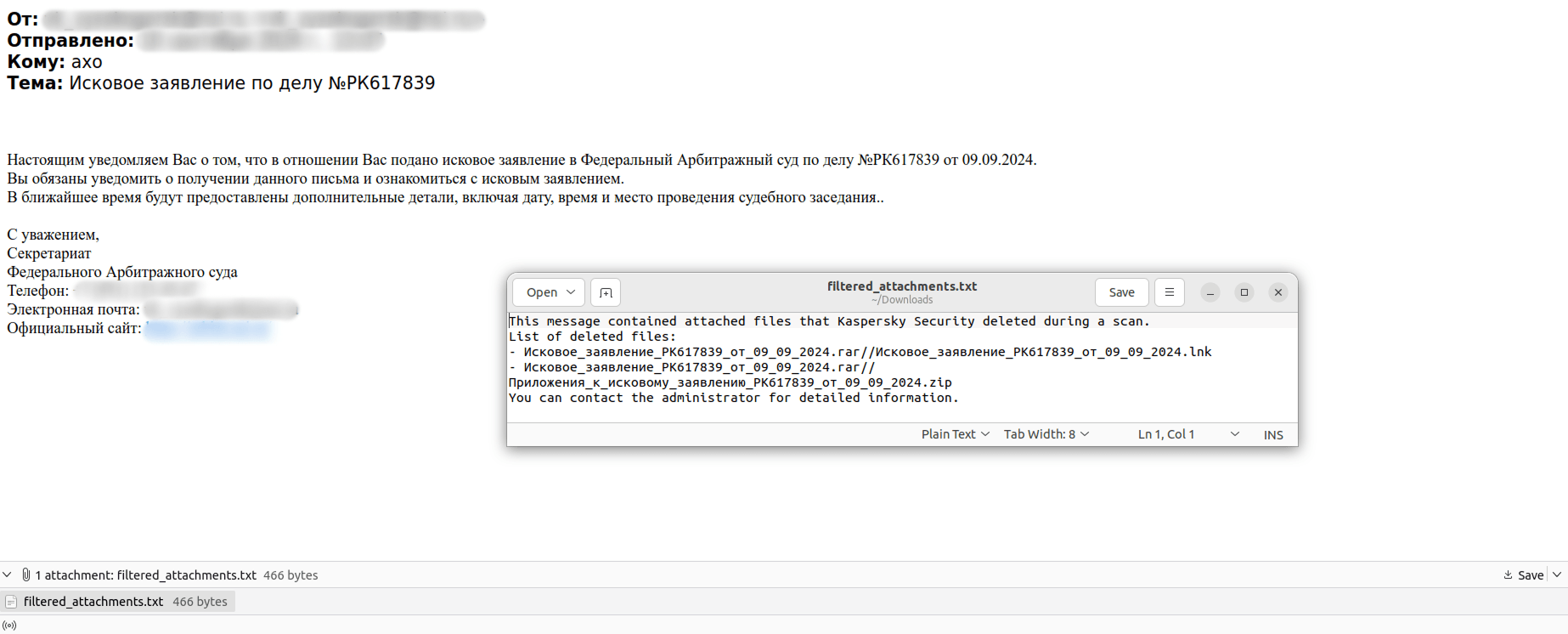
    In some cases, cybercriminals gave no reason for their legal threats but instead attempted to shock victims with an already “filed” lawsuit to pressure them into opening the attachment. Of course, it contained malware.

    Emails with malicious SVG files

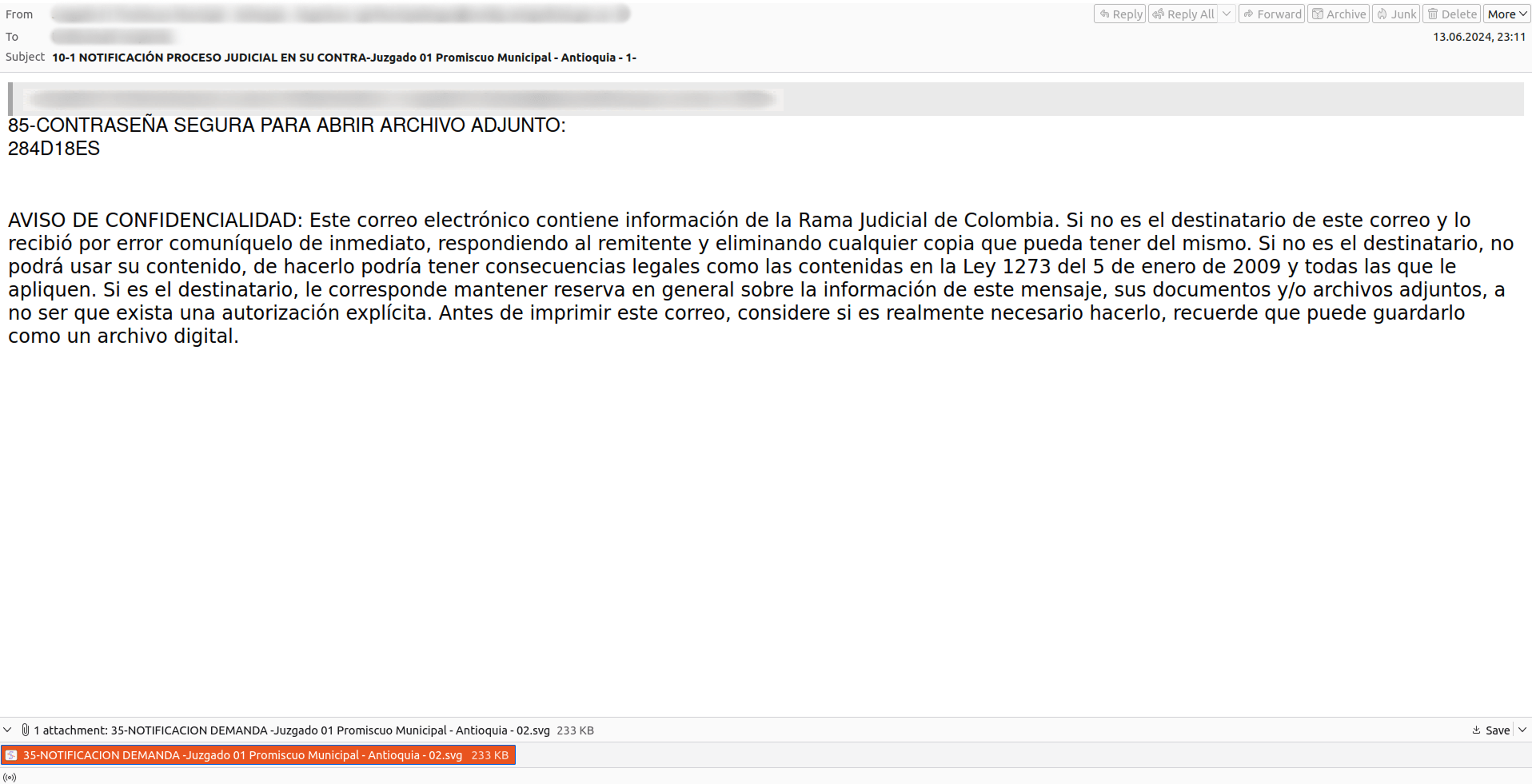
    According to our observations, the past year saw a rise in the distribution of malicious SVG files. Disguised as harmless images, these files contained scripts that downloaded and installed additional malware on the victim’s device. (Our solutions detect these scripts as Trojan.Script.Agent.sy and Trojan.Script.Agent.qe.) The emails we encountered were written in Spanish and posed as fake legal case notifications and court summons. The text included a password for opening the attached file.

    Threats to businesses

    Fake deals

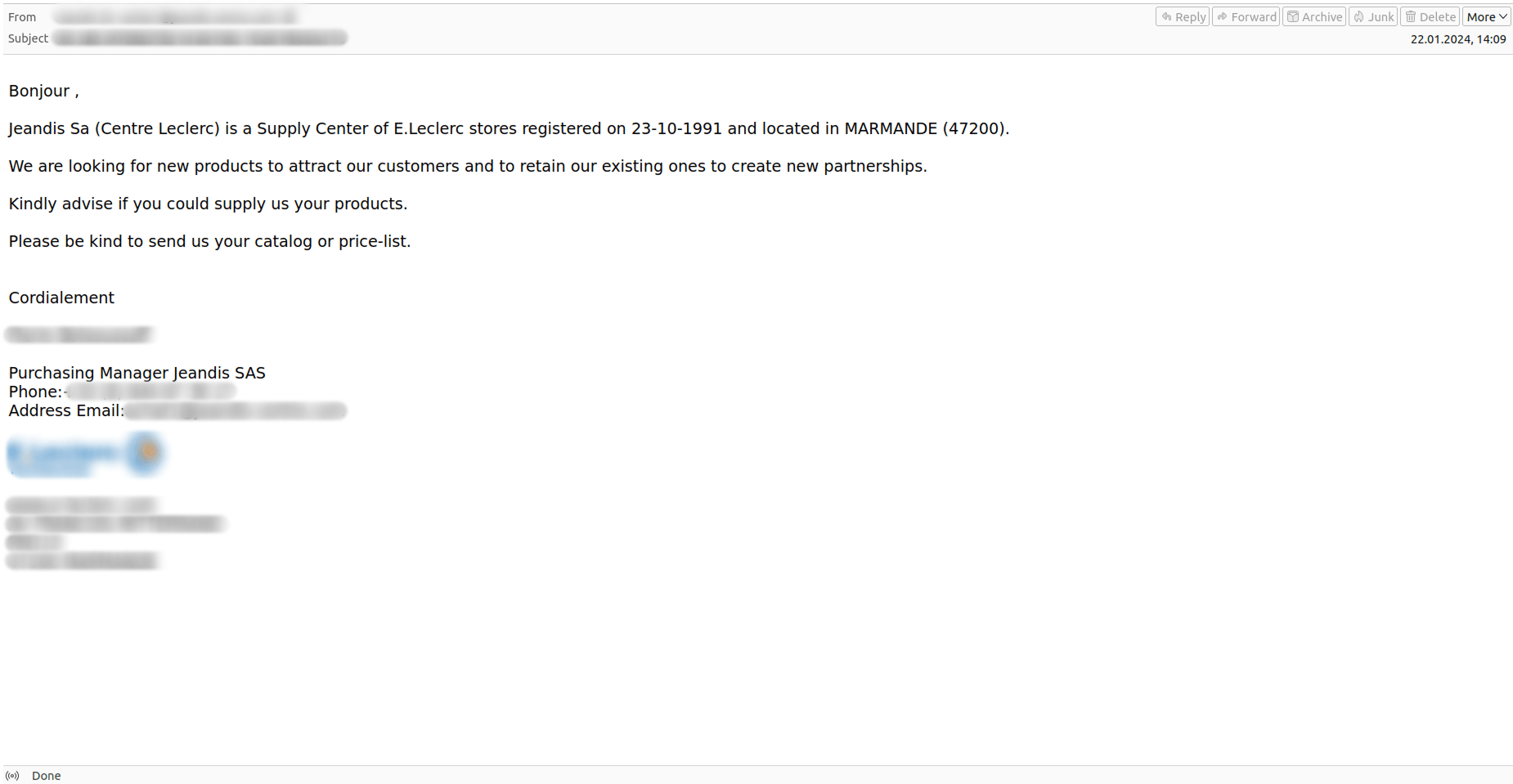
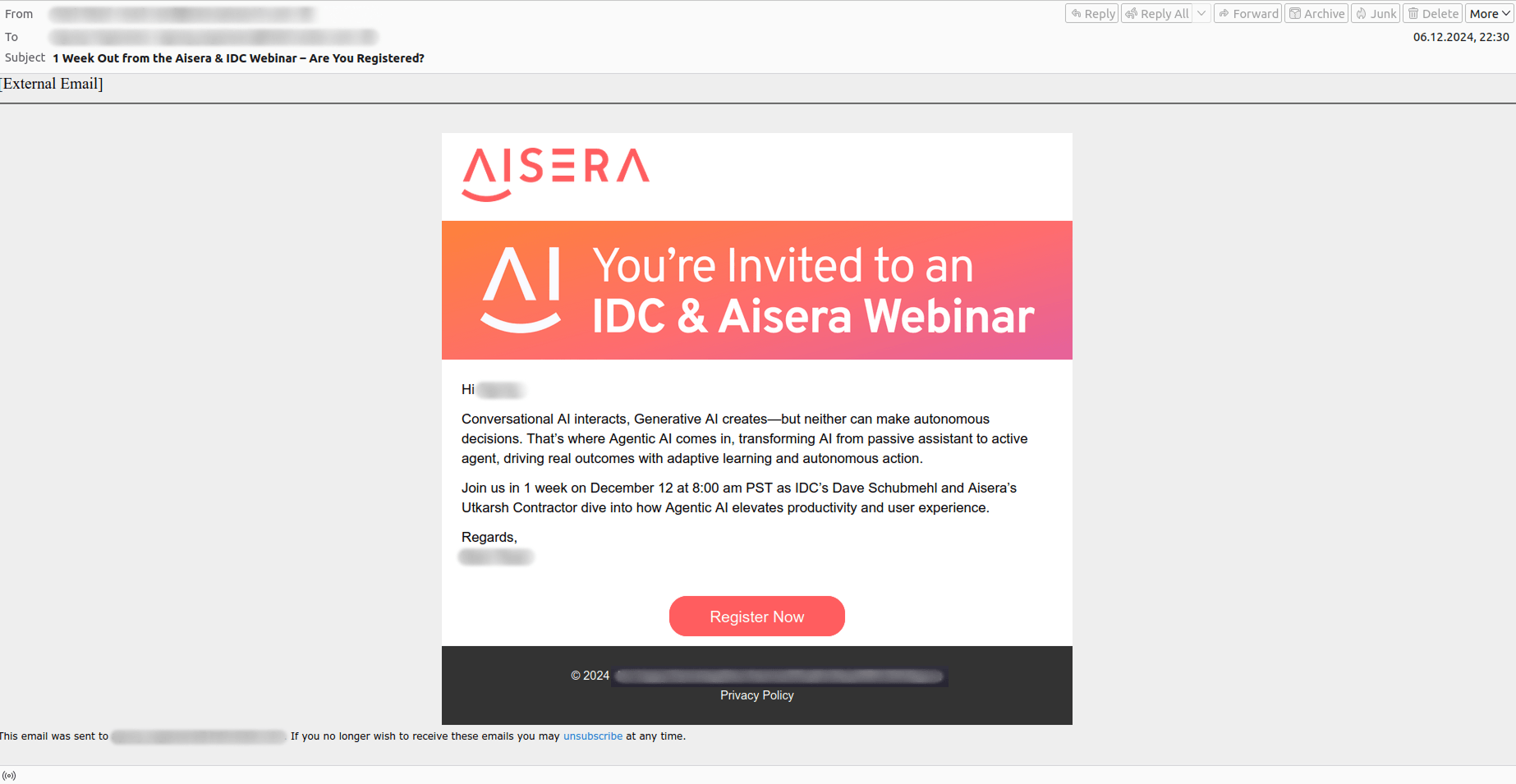
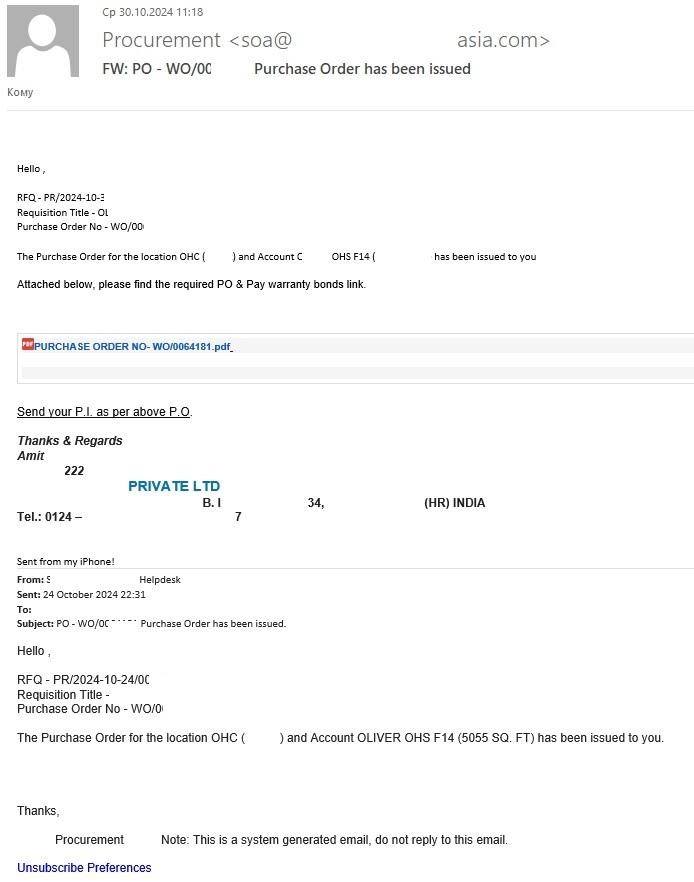
    A special category of emails that users complained about in 2024 was requests for quotation from suspicious senders. These emails were sent either from free email addresses or recently created domains. Attackers signed the emails with the names of large companies, included links to their websites, and sometimes even used official company logos. These emails followed a uniform template: the “buyers” briefly introduced themselves, expressed interest in the recipient’s products, and requested a catalog or price list. Interestingly, the fraudsters did not seem to care about the type of goods involved.

    If the recipient responded, events could unfold in two ways. In some cases, after receiving a reply to the initial seemingly legitimate request, the fraudsters sent malicious attachments or links in the next email.

    In another scenario, the “buyers” engaged in further correspondence with their “potential partner”—the victim—discussing details and insisting on their conditions, including post-payment and requiring the seller to cover customs duties. This meant that the supplier bore all the risks of delivery and could lose their goods without receiving any payment.

    Facebook

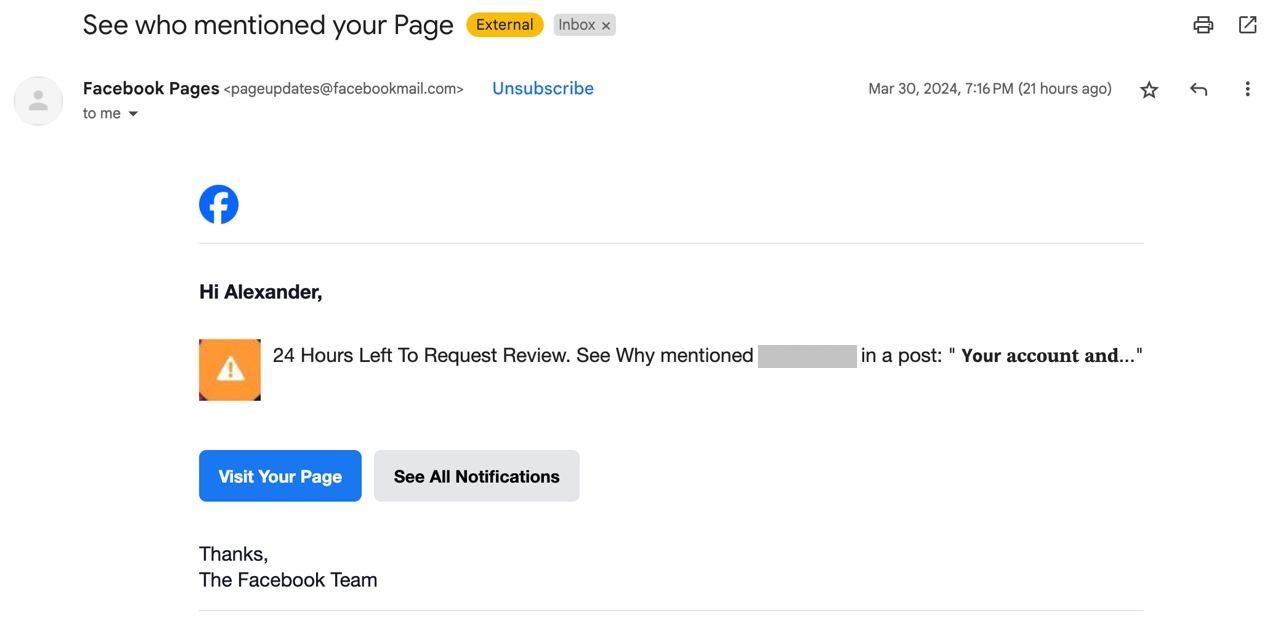
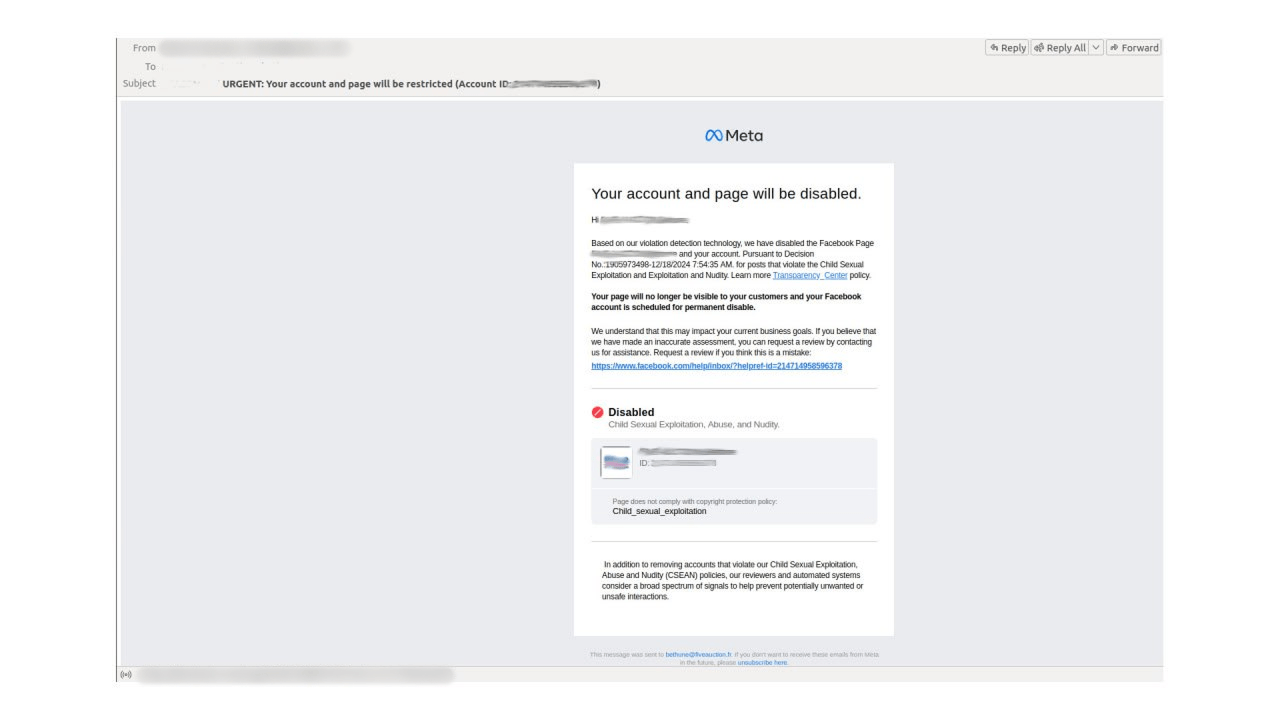
    In the spring of 2024, we discovered an interesting phishing email scheme that leveraged legitimate Facebook notifications. The service sent entirely legitimate emails to users mentioned in threatening posts. The attackers used compromised Facebook accounts, renamed to “24 Hours Left To Request Review. See Why,” and changed the profile picture to an icon featuring an orange exclamation mark.

    Then, the fraudsters created posts on these pages tagging the business accounts of potential victims. The tagged users received notifications from the alarmingly-named pages.

    These posts contained more details than the emails: victims were warned about an impending account ban due to a complaint from another user. To dispute the ban for violating service terms, the recipient of the “notification” was required to follow a phishing link from the post—leading to a fake site with Meta logos that requested Facebook login credentials.

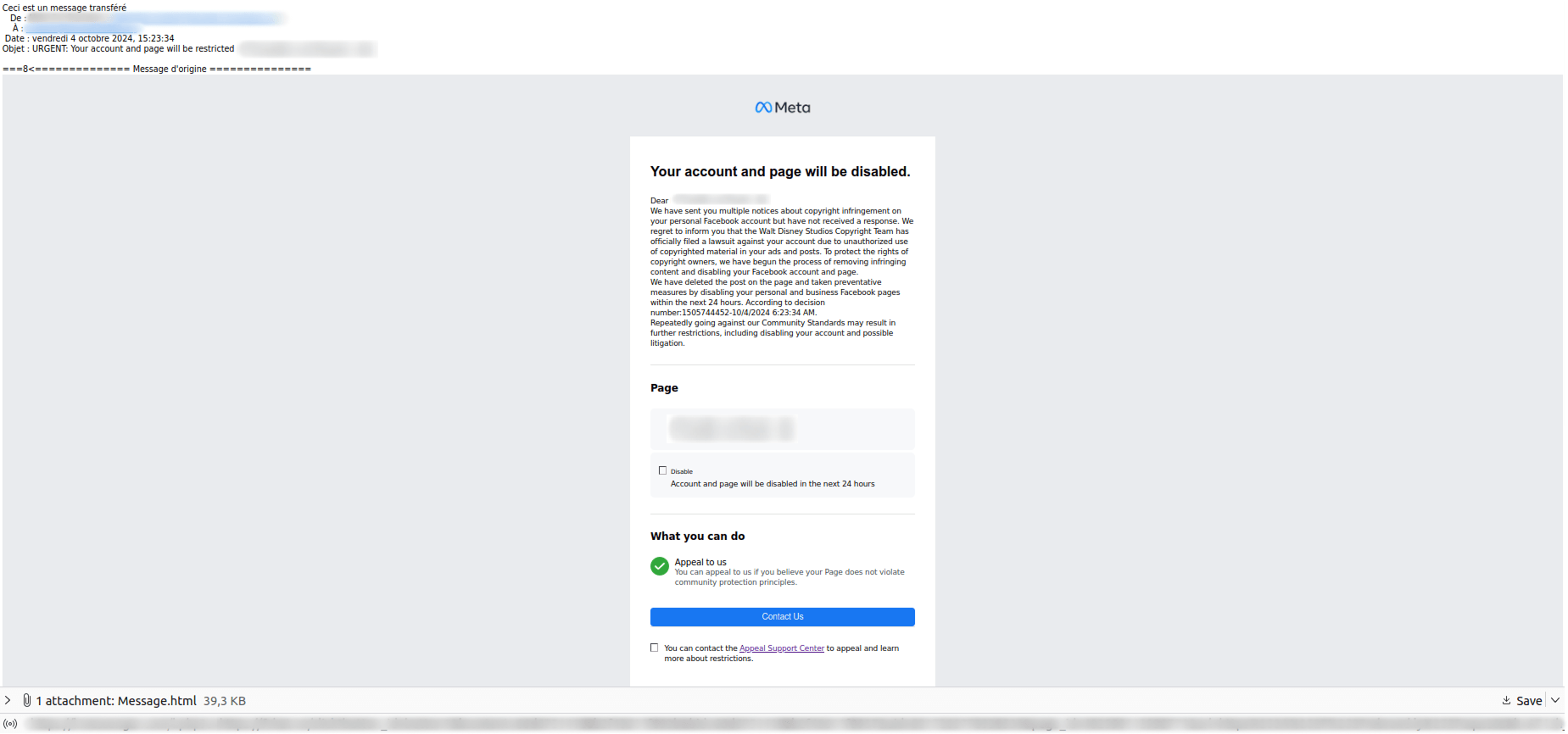
    We also found phishing emails containing legitimate Facebook links in October 2024, but this time without using the platform’s infrastructure. These emails contained notifications of lawsuits for copyright infringement and the removal of unlawful posts from the recipient’s profile. The target was warned that their personal and business pages would be blocked within 24 hours, pressuring them to take hasty and careless action.

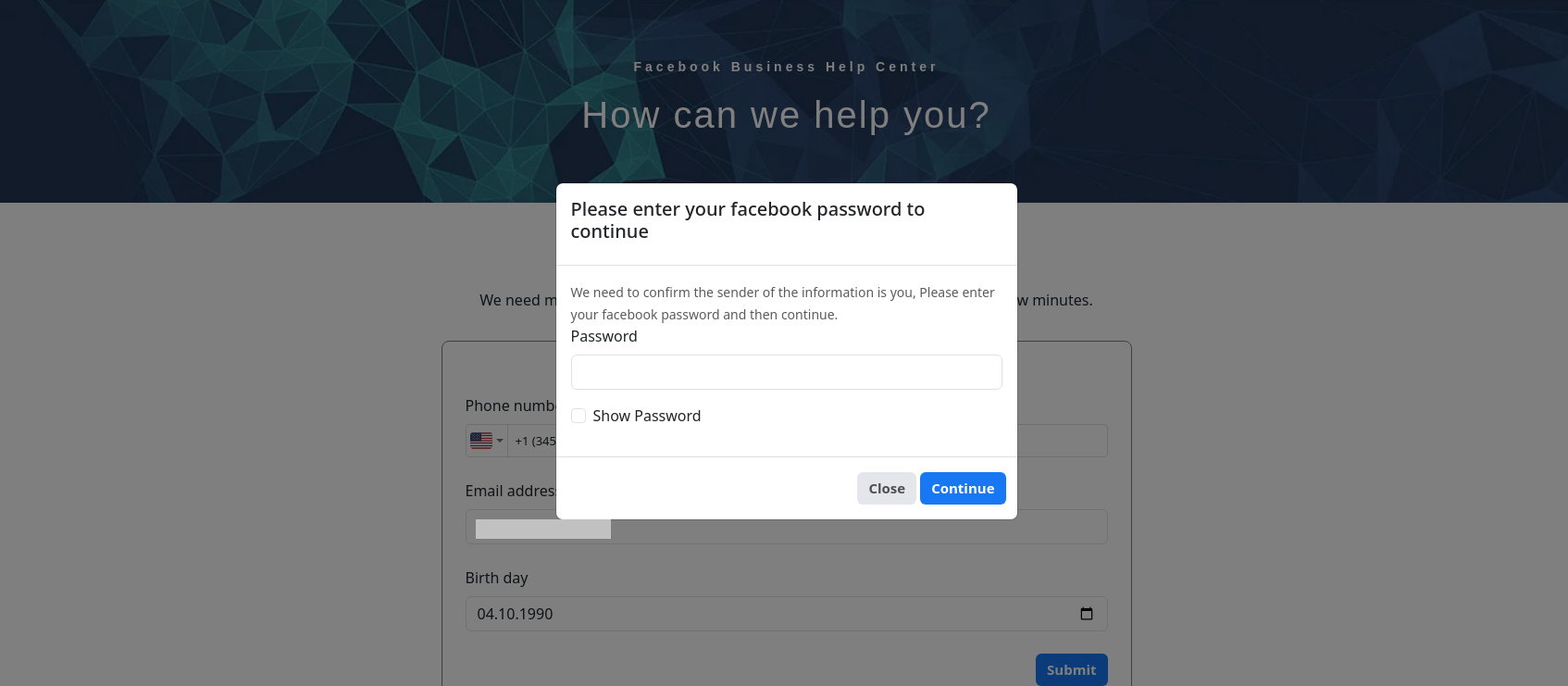
    However, they were immediately offered the chance to appeal by contacting the “Appeal Support Center.” The link in the email led to a phishing site disguised as Meta’s support service, where the victim was also asked to enter their profile password. To make the phishing link more convincing, a legitimate mechanism for redirecting users to external Facebook resources was used.

    At the end of 2024, we noticed an email campaign targeting companies promoting their business pages on Facebook. These emails mimicked official Meta for Business notifications and threatened to block the user’s account and business page for violating the platform’s rules and community policies.

    To dispute these accusations, the fraudsters urged the profile owners to click a link to contact “Facebook support” in a legitimate messenger. However, in reality, the victim was communicating with the owner of a fan page called “Content Moderation Center,” imitating an official support service employee. The scam could have been identified by the “Fan Page” label in the chat, though it was easy to miss.

    News agenda

    In 2024, scammers continued to exploit news agenda in spam campaigns.

    During the UEFA Euro 2024 football championship in Germany, emails began to appear offering merchandise with UEFA EURO 2024 logos.

    After Pavel Durov’s arrest in Paris, we noticed English-language messages calling for donations to supposedly fund his legal defense.

    In the fall of last year, a scam campaign began circulating, offering not-yet-released MacBook Pro M4 devices at low prices or even for free. The links in these emails led to fake websites imitating major marketplaces.

    Before Black Friday, we recorded a surge in spam offering exclusive discounts. The links in these messages lured victims to sites disguised as marketplaces, electronics stores, and financial institutions.

    B2B spam campaigns

    Online promotion services

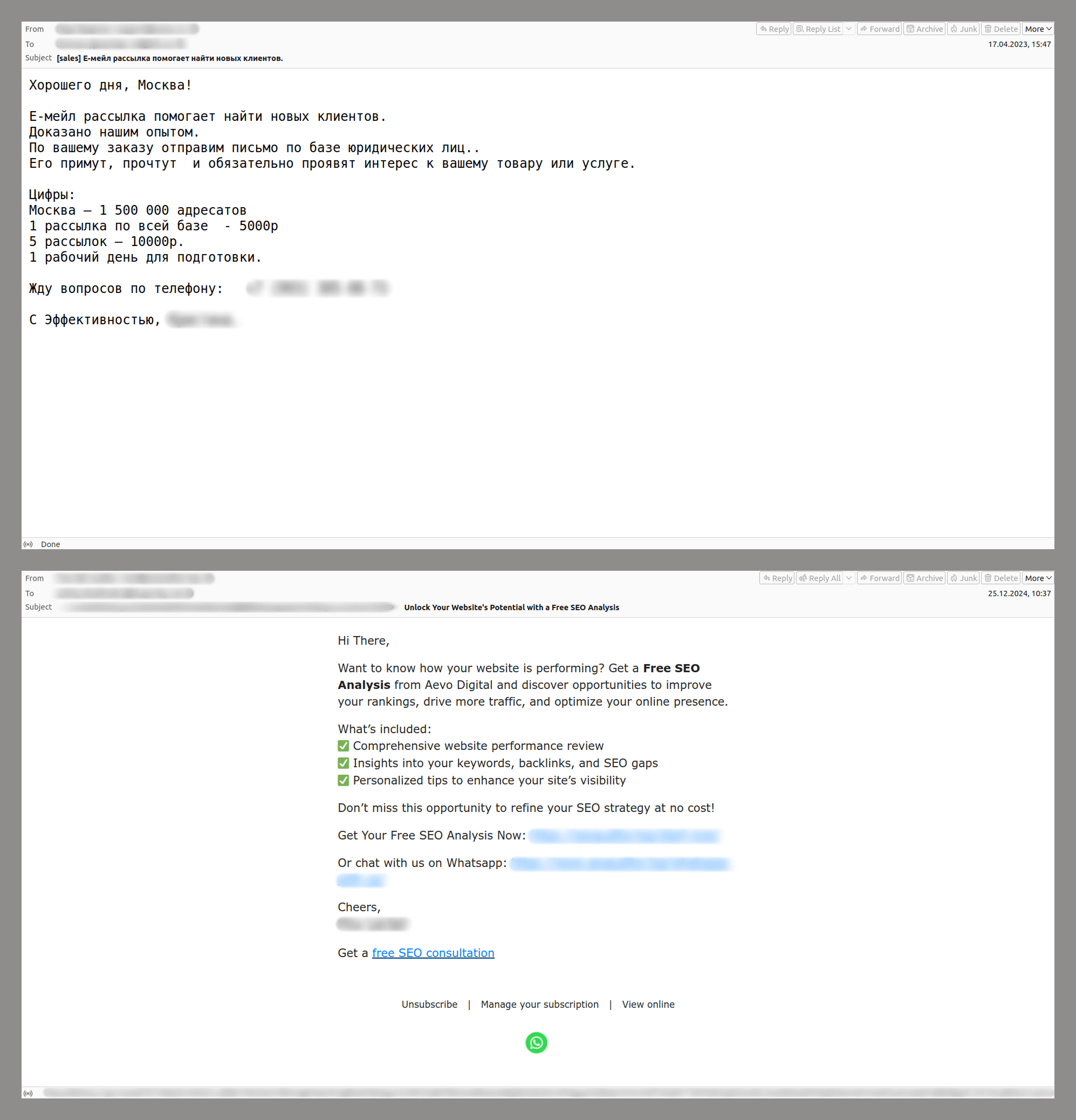
    One of the most common categories of spam email in 2024, complained of frequently by our corporate clients, was commercial offers for online promotion. Users were offered services such as creating or redesigning websites, setting up SEO tools, and purchasing databases with potential client contacts and other information. Other advertised services included guest post placement with backlinks to the client’s site, writing positive reviews, removing negative reviews, and creating personalized email campaigns. While these messages are not malicious or fraudulent, they are mass-distributed and unsolicited, causing inconvenience to users. The popularity of this type of spam is likely driven by the development of digital marketing tools and the search for new clients for small- and medium-sized businesses amid growing online competition.

    Buying likes and followers on social media

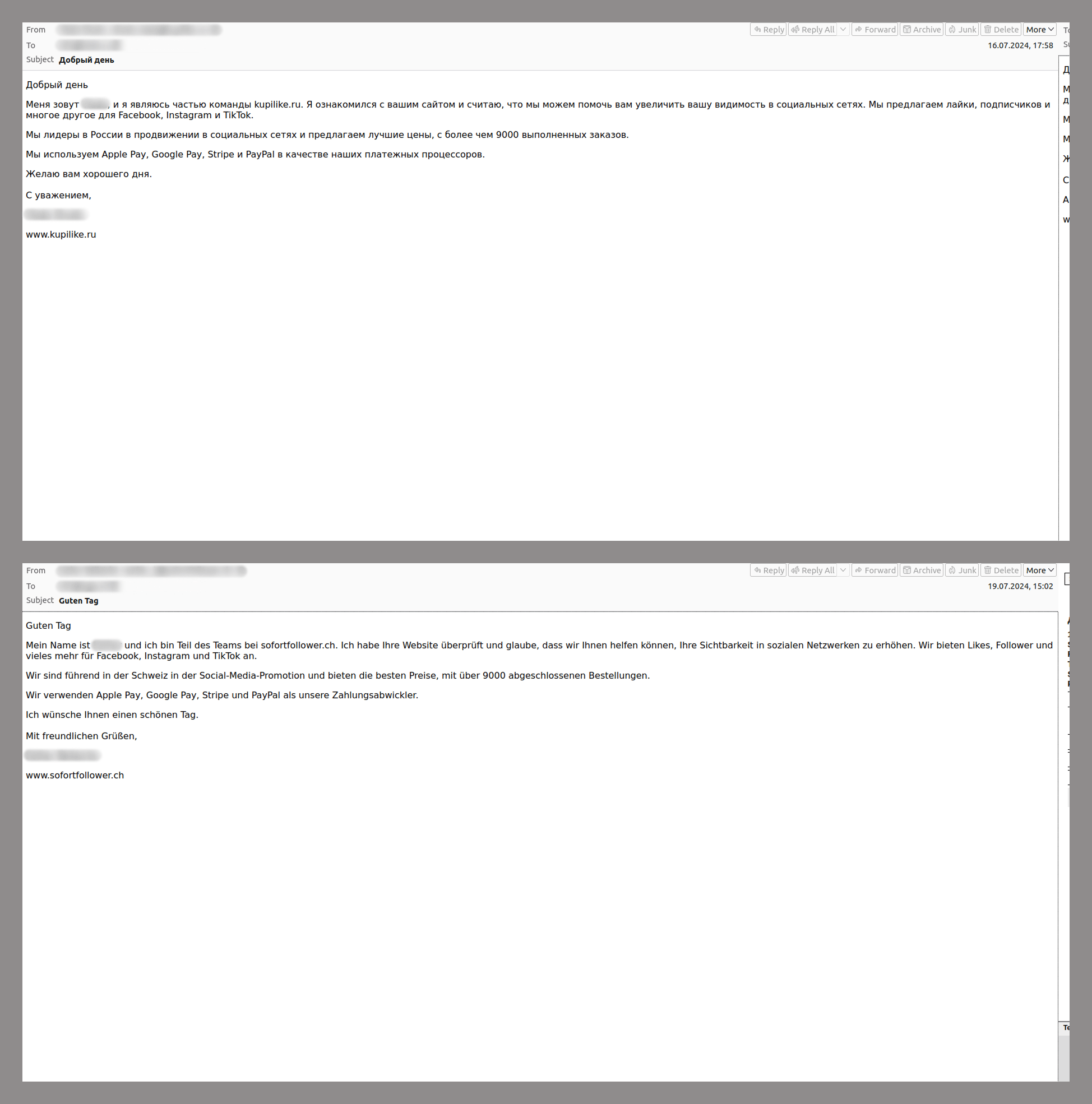
    We also frequently encountered business offers for the online promotion of company accounts on social media. Spammers sell fake likes and followers. They often pose as employees of real social media marketing firms, claiming to be industry leaders. At the end of their emails, the spammers included a link to a marketing platform and payment options for their services. One such campaign, which we observed throughout the past year and is still active, stood out due to the variety of languages used in the emails and the diversity of domain names. With these tactics, the spammers aimed to reach a global audience.

    AI in B2B emails

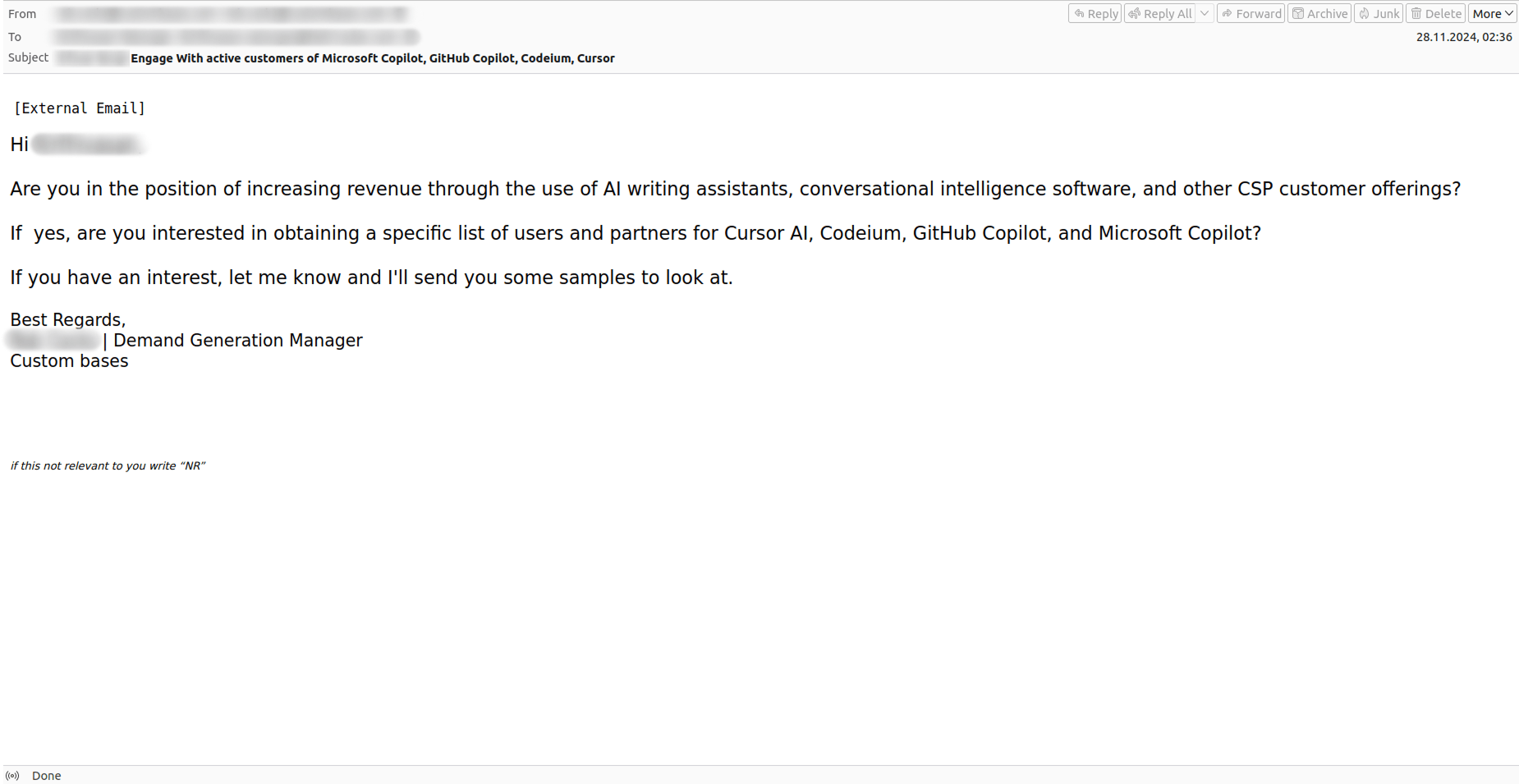
    The growing popularity of neural networks has led companies to actively integrate AI into their business processes. We assume that clients of such organizations, in turn, are drawn to service offers that incorporate neural networks. As a natural consequence of this trend, AI-driven solutions began appearing in spam campaigns advertising online marketing services.

    Spammers emphasized using AI, particularly ChatGPT, to perform various business tasks. We identified the following themes in these emails:

    • Attracting website traffic
    • Creating advanced lead generation strategies
    • Developing unique approaches tailored to a brand’s identity
    • Producing and publishing content
    • Launching personalized multi-channel marketing campaigns
    • Creating custom videos for YouTube channels

    Other topics also appeared in spam emails, but they all shared the same goal—enhancing business processes and attracting potential clients.

    Another particularly popular category of spam related to neural networks was advertising online events. Last year, we encountered numerous examples of emails promoting webinars about the promising capabilities and practical applications of AI in business operations.

    Targeted phishing in 2024

    In 2024, two main trends were observed in targeted phishing:

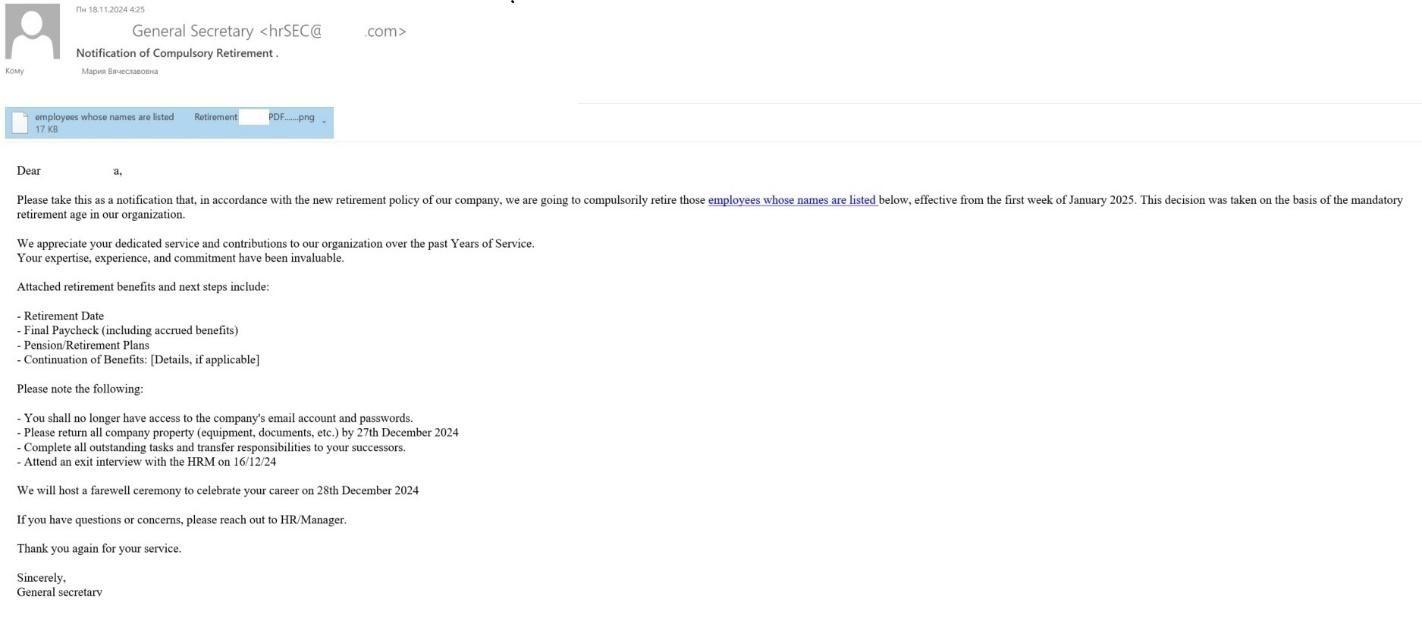
    1. Notifications on behalf of a company’s HR department. Employees were asked to fill out or sign a document, such as a vacation schedule, accessible via a link in an email. Sometimes, instead of routine requests, attackers resorted to more extravagant tactics—such as inviting employees to check if they were on a list of staff to be dismissed.

    Phishing email from HR

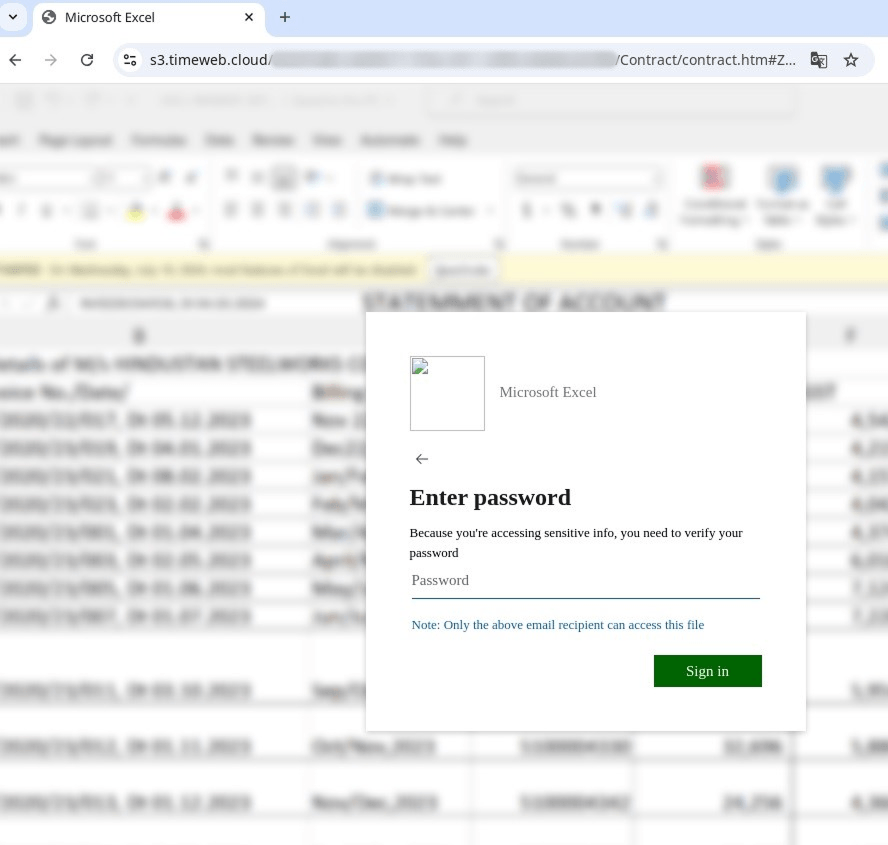
    In all these cases, the common factor was that clicking the link led the employee to a phishing login page instead of the actual corporate portal. Most often, attackers targeted Microsoft accounts, though some phishing forms mimicked internal corporate resources.

    Fake login form

    1. Emails from a seller to a buyer, or vice versa. One common scheme involved a buyer or seller asking the victim to review an offer or respond to questions about product delivery and required specifications. These emails contained attached documents that actually concealed phishing links.

    Example of a phishing email from a seller

    When attempting to open the attachment, the user was redirected to a phishing page. As in the previous case, these fake forms harvested Microsoft credentials and corporate account logins.

    Fake password entry form

    Statistics: phishing

    The number of phishing attacks in 2024 increased compared to the previous year. Kaspersky solutions blocked 893,216,170 attempts to follow phishing links—26% more than in 2023.

    Number of Anti-Phishing triggerings, 2024 (download)

    Map of phishing attacks

    Users from Peru (19.06%) encountered phishing most often. Greece (18.21%) ranked second, followed by Vietnam (17.53%) and Madagascar (17.17%). They are closely followed by Ecuador (16.90%), Lesotho (16.87%) and Somalia (16.70%). The final places in the TOP 10 are occupied by Brunei (16.55%), Tunisia (16.51%) and Kenya (16.38%).

    Country/territory Share of attacked users*
    Peru 19.06
    Greece 18.21
    Vietnam 17.53
    Madagascar 17.17
    Ecuador 16.90
    Lesotho 16.87
    Somalia 16.70
    Brunei 16.55
    Tunisia 16.51
    Kenya 16.38

    * Share of users who encountered phishing out of the total number of Kaspersky users in the country/territory, 2024

    Top-level domains

    The most common domain zone hosting phishing sites remains the COM zone (29.78%)—its popularity has increased one and a half times compared to 2023. In second place is the XYZ domain (7.10%), which ranked fifth last year, followed by TOP (6.97%), which retained its position in the top ten. Next, with a slight margin from each other, are the ONLINE (4.25%) and SITE (3.87%) domain zones, where phishing sites were less actively hosted last year. The Russian RU domain (2.23%) and the global NET domain (2.02%) are in sixth and seventh place, respectively. Following them are CLICK (1.41%) and INFO (1.35%)—the year before, these zones were not frequently used. Closing the top ten is another national domain: UK, with a share of 1.33%.

    Most frequent top-level domains for phishing pages, 2024 (download)

    Organizations targeted by phishing attacks

    The rating of organizations targeted by phishers is based on the detections of the deterministic component in the Anti-Phishing system on user computers. The component detects all pages with phishing content that the user has tried to open by following a link in an email message or on the web, as long as links to these pages are present in the Kaspersky database.

    In 2024, the highest number of attempts to access phishing links blocked by Kaspersky solutions was associated with pages imitating various web services (15.75%), surpassing global internet portals (13.88%), which held the top position in 2023. The third and fourth positions in last year’s top ten also swapped places: banks moved ahead (12.86%), overtaking online stores at 11.52%. Attackers were also interested in social media (8.35%) and messengers (7.98%): attacks targeting them strengthened their positions in the ranking. For websites imitating delivery services, we observed a decline in phishing activity (6.55%), while the share of payment systems remained unchanged at 5.82%. Also included in the list of the most frequently targeted organizations were online games (5.31%) and blogs (3.75%).

    Distribution of organizations targeted by phishers, by category, 2024 (download)

    Statistics: spam

    Share of spam in email traffic

    In 2024, spam emails accounted for 47.27% of the total global email traffic, an increase of 1.27 p.p. compared to the previous year. The lowest spam levels were recorded in October and November, with average shares dropping to 45.33% and 45.20%, respectively. In December, we observed a seemingly slight upward trend in junk emails, resulting in the fourth quarter of the year being the calmest. Spam activity peaked in the summer, with the highest number of emails recorded in June (49.52%) and July (49.27%).

    Share of spam in global email traffic, 2024 (download)

    In the Russian internet segment, the average spam share exceeded the global figure, reaching 48.57%, which is 1.98 p.p. higher than in 2023. As in the rest of the world, spammers were least active at the end of the year: in the fourth quarter, 45.14% of emails were spam. However, unlike global trends, in Runet, we recorded four months during which the spam share exceeded half of all traffic: March (51.01%), June (51.53%), July (51.02%), and September (51.25%). These figures identified the third quarter as the most active, with a share of 50.46%. December was the calmest month, and interestingly, despite spam levels being generally high or the same in Russia, the number of spam emails in December was lower than the global figure: 44.56%.

    Share of spam in Runet email traffic, 2024 (download)

    Countries and territories where spam originated

    We continue to observe an increase in the share of spam sent from Russia—from 31.45% to 36.18%. The United States and mainland China, which held second and third place last year, swapped positions, with China’s share increasing by 6 p.p. (17.11%) and the US share decreasing by 3 p.p. (8.40%). Kazakhstan, which entered the top twenty for the first time last year, rose from eighth to fourth place (3.82%), pushing Japan (2.93%) down, and causing Germany, previously in fifth place, to drop one position with a share of 2.10%. India’s share slightly decreased, but the country moved up two positions from last year to seventh place. Conversely, the amount of spam sent from Hong Kong more than doubled (1.75%), allowing this territory to take eighth place in the top twenty. Next come Brazil (1.44%) and the Netherlands (1.25%), whose shares continued to decline.

    TOP 20 countries and territories where spam originated in 2024 (download)

    Malicious email attachments

    In 2024, Kaspersky solutions detected 125,521,794 attempts to open malicious email attachments, ten million fewer than the previous year. Interestingly, one of the peaks in email antivirus detections occurred in April—in contrast to 2023, when this month had the lowest malicious activity. In January and December, we observed a relative decrease in detections, while increases were noted in spring and autumn.

    Number of email antivirus detections, 2024 (download)

    The most common malicious email attachments were Agensla stealers (6.51%), which ranked second last year. Next were Badun Trojans (4.51%), which spread in archives disguised as electronic documents. The Makoob family moved from eighth to third place (3.96%), displacing the Noon spyware (3.62%), which collects browser passwords and keystrokes. The malicious Badur PDFs, the most common attachments in 2023, dropped to fifth place with a 3.48% share, followed by phishing HTML forms from the Hoax.HTML.Phish family (2.93%). Next in line were Strab spyware Trojans (2.85%), capable of tracking keystrokes, taking screenshots, and performing other typical spyware actions. Rounding out the top ten were SAgent VBS scripts (2.75%), which were not as actively used last year, the Taskun family (2.75%), which maintained its previous share, and PDF documents containing phishing links, Hoax.PDF.Phish (2.11%).

    TOP 10 malware families distributed as email attachments, 2024 (download)

    The list of the most widespread malware reflects trends similar to the distribution of families, with a few exceptions: the Hoax.HTML.Phish variant of malicious HTML forms dropped two positions (2.20%), and instead of a specific Strab Trojan sample, the top ten included the ISO image Trojan.Win32.ISO.gen, distributed via email (1.39%).

    TOP 10 malicious programs distributed as email attachments, 2024 (download)

    Countries and territories targeted by malicious mailings

    In 2024, users in Russia continued to face malicious email attachments more frequently than other countries, although the share of email antivirus detections in this country decreased compared to last year, to 11.37%. China ranked second (10.96%), re-entering the top twenty after several years. Next came Spain (8.32%), Mexico (5.73%), and Turkey (5.05%), which dropped one position each with a slight decline in malicious attachments. Switzerland (4.82%) took sixth place, appearing in the ranking for the first time. Following them were Vietnam (3.68%), whose share declined, and the UAE (3.24%), which strengthened its position in the ranking. Also among frequent targets of malicious spam were users from Malaysia (2.99%) and Italy (2.54%).

    TOP 20 countries and territories targeted by malicious mailings, 2024 (download)

    Conclusion

    Political and economic crises will continue to provide new pretexts for fraudulent schemes. In some cases presented in the 2024 report, we can observe the “greed” of cybercriminals: the use of two different company brands on the same page; a credible fake of a resource aimed not at stealing credentials but at stealing money; comprehensive questionnaires that can lead not only to loss of access to funds but also to identity theft. Such multi-layered threats may become a new trend in phishing and scam attacks.

    We continue to observe major news events being exploited in spam campaigns that promise easy earnings and discounted goods or services. The growing user interest in artificial intelligence tools is actively being leveraged by spammers to attract an audience, and this trend will undoubtedly continue.

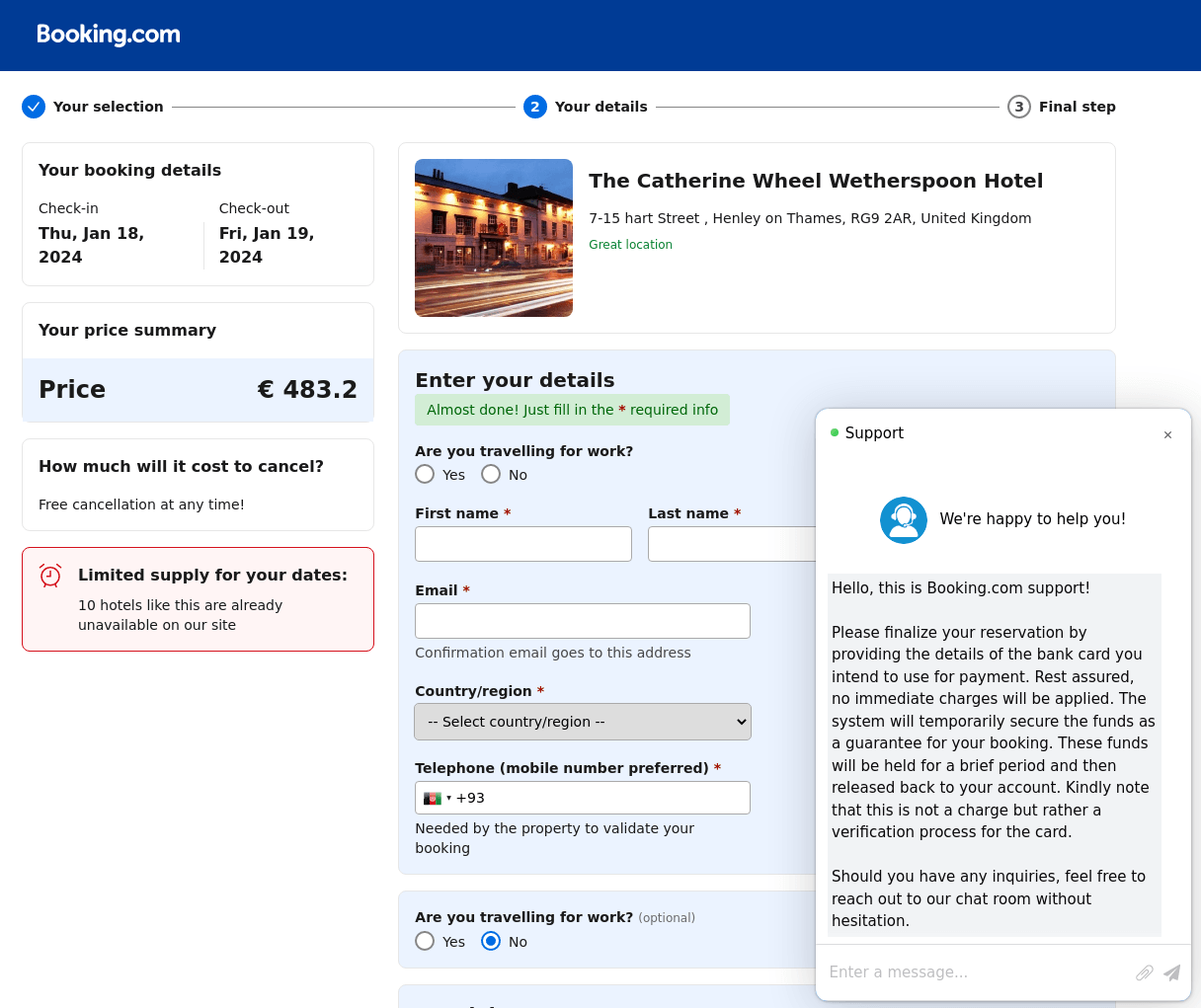
    MIL OSI Economics –

    February 19, 2025
  • MIL-OSI United Kingdom: Chancellor goes further and faster to drive growth by speeding up securities trades

    Source: United Kingdom – Executive Government & Departments

    Financial markets will be modernised to drive capital market competitiveness and deliver growth – the priority of the government’s Plan for Change.

    • Chancellor hosts senior representatives of investment banking and asset management sectors in No11 to hone Financial Services Growth and Competitiveness Strategy. 

    • Meeting comes as government goes further and faster to drive economic growth through the Plan for Change by speeding up settlement of securities trading, such as buying and selling shares. 

    • Change brings the UK in line with best-in-class international markets such as the US, strengthens capital markets competitiveness, and cut costs for investors. 

    • The government, the Financial Conduct Authority and the Bank of England support the industry recommendation to move to T+1 settlement in UK markets by 11 October 2027 and call on industry to engage with the recommendations and start their planning as soon as possible.

    In a meeting with the country’s top bankers, the Chancellor set out a plan to speed up settlement of securities trades which will make the UK’s capital markets more competitive to drive economic growth through the Plan for Change and put more money into people’s pockets. 

    The top brass from JP Morgan, Blackrock, Abrdn, Morgan Stanley, Goldman Sachs, Citi, Fidelity, and Schroders were welcomed into No11 Downing Street for breakfast this morning, as part of ongoing engagement with industry to hone the Financial Services Growth and Competitiveness Strategy – one of the eight key growth sectors identified in the Modern Industrial Strategy.

    Rachel Reeves spoke about the importance of going further and faster to drive growth and revealed that the Government had accepted all recommendations made by the Accelerated Settlement Technical Group – confirming that the UK will move to a ‘T+1’ standard for settling securities trades from 11 October 2027.

    The change means that a typical securities trade, such as buying and selling shares, would be settled the day after it is agreed – instead of the current two-day standard. Faster settlement will support economic growth by putting the UK at the forefront of modernised, highly efficient and automated capital markets, bringing the UK into line with key international markets such as the US and reducing costs for investors by limiting risks when making trades.

    Chancellor of the Exchequer, Rachel Reeves said: 

    I am determined to go further and faster to drive growth and put more money into people’s pockets through our Plan for Change. Speeding up the settlement of trades makes our financial markets more efficient and internationally competitive.

    Chief Executive Officer of the Financial Conduct Authority, Nikhil Rathi said: 

    We highlighted how the move to T+1 will make our markets more efficient and support growth in our recent letter to the Prime Minister. We will support industry as they move to T+1 and expect firms to engage and plan early.

    Governor of the Bank of England, Andrew Bailey said: 

    Shortening the UK securities settlement cycle to T+1 will bring important financial stability benefits from reduced counterparty credit risk in financial markets. It is important that firms and settlement infrastructures have robust plans for an orderly transition in October 2027. As part of this effort, the Bank looks forward to continuing dialogue with regulators in other markets which are pursuing similar changes.

    The government has accepted all the recommendations made by the Accelerated Settlement Technical Group, which has created a detailed implementation plan to ensure a smooth transition to T+1, and confirmed that it will bring forward legislation to implement the change, including setting the date to move to the new standard. 

    Terms of Reference have been published for the next phase of the project, which will continue to be led by the industry taskforce with Andrew Douglas as chair and HMT, the FCA and the Bank as observers. Industry chairs from the EU and Switzerland have also been invited to observe the UK industry taskforce to encourage alignment across Europe.

    The taskforce will oversee and manage implementation of the recommendations up until T+1 is successfully implemented, and for a short period afterwards to evaluate the short-term impacts.

    The government, the Financial Conduct Authority and the Bank of England support the industry recommendation to move to T+1 settlement in UK markets by 11 October 2027 and call on the industry to engage with the recommendations and start their planning as soon as possible.

    Notes to editors 

    Stakeholder commentary:

    Tiina Lee, Chief Executive Officer of Citi UK said:

    We welcome the move to a T+1 settlement cycle in UK markets and appreciate the hard work in achieving the alignment of timelines with the EU. Based on Citi’s experience with global investors, coordinated market reforms are critical to the growth and competitiveness of the UK. We look forward to working with other industry participants to ensure a smooth transition in October 2027.

    Conor Hillery, Deputy CEO & Head of Investment Banking in EMEA, JP Morgan, said:

    We welcome the Chancellor’s continued dialogue with UK financial services on its role in facilitating growth, which requires the right policy and regulatory framework. This move to a modern T+1 settlement cycle will contribute to keeping London as a competitive financial centre, so we support the government’s efforts to make it happen.

    Clare Woodman, Head of EMEA and CEO of Morgan Stanley said:

    We welcome the UK Government’s commitment to move to a T+1 settlement cycle in October 2027. The shift to a shorter settlement cycle will generate market efficiencies supporting the competitiveness of UK markets.

    Additional notes:

    • The Accelerated Settlement Taskforce recommended that the UK should move to T+1 by the end of 2027. The Technical Group was set up to recommend a detailed implementation plan, including determining the detailed technical and operational changes needed to move to T+1 as well as recommending a precise implementation date. 

    • The group’s recommendations are set out in The Accelerated Settlement Taskforce Technical Group report, published on 6 February. 

    • The government’s response to the report and Terms of Reference for the next stage of the project can be found on the Accelerated Settlement (T+1) GOV.UK page 

    • To support firms during the transition, the FCA has launched a webpage dedicated to the UK’s move to T+1 settlement, where firms can access further information, key messages and links to relevant materials.

    • The Bank will support the relevant financial market infrastructures (FMIs) it supervises during the transition to T+1. It will discuss with relevant FMIs their preparedness for T+1 settlement and will encourage them to take appropriate implementation action. 

    • The businesses in attendance at the meeting in No11 were: JP Morgan; Blackrock; Abrdn; Morgan Stanley; Goldman Sachs; City; Fidelity; Schroders. Pictures will be uploaded to HM Treasury’s Flickr.

    Share this page

    The following links open in a new tab

    • Share on Facebook (opens in new tab)
    • Share on Twitter (opens in new tab)

    Updates to this page

    Published 19 February 2025

    MIL OSI United Kingdom –

    February 19, 2025
  • MIL-OSI Security: IAEA Director General Joins International Experts for Seawater Sampling Near Fukushima

    Source: International Atomic Energy Agency – IAEA

    International Atomic Energy Agency (IAEA) Director General Rafael Mariano Grossi joined scientists from the People’s Republic of China, the Republic of Korea, and Switzerland, along with IAEA experts, as they collected seawater samples near the Fukushima Daiichi nuclear power station. (Dean Calma/IAEA)

    International Atomic Energy Agency (IAEA) Director General Rafael Mariano Grossi joined scientists from the People’s Republic of China, the Republic of Korea, and Switzerland, along with IAEA experts, as they collected seawater samples near the Fukushima Daiichi nuclear power station (FDNPS) today.

    The activity is part of the additional measures established after China and Japan agreed to extend the sampling and testing of ALPS treated water which TEPCO – operator of the FDNPS – started to discharge in August 2023.

    The IAEA agreed with Japan in September to implement additional measures to facilitate the broader participation from other stakeholder countries in the monitoring of ALPS-treated water.

    “By welcoming countries to engage directly in sampling and analysis under the additional measures, Japan is increasing transparency, understanding, and trust, particularly in the region.” said Director General Grossi. “Through these efforts, third parties can independently verify that water discharge levels are, and will continue to be, in strict compliance and consistent with international safety standards.”

    During the sampling today, scientists from the Third Institute of Oceanography in China, the Korean Institute for Nuclear Safety in Republic of Korea and the Spiez Laboratory in Switzerland collected seawater samples from a boat in the vicinity of the FDNPS.

    Director General Grossi collected seawater samples from a boat in the vicinity of the FDNPS.

    The samples will be analysed by the IAEA laboratories in Monaco, by laboratories in Japan and in the participating laboratories from China, Korea and Switzerland, each members of the IAEA’s Analytical Laboratories for the Measurement of Environmental Radioactivity (ALMERA) network, chosen to ensure a high level of proficiency and expert data.

    “Additional measures focus on expanding international participation and transparency, allowing hands-on independent measurements of the concentration level of the water,” said Director General Grossi. “This work is conducted within agreed parameters set by the IAEA in its role as an independent, impartial and technical organisation.”

    Additionally, IAEA experts stationed at the Agency’s office at FDNPS conduct regular independent on-site analyses of the batches of treated water. The Agency has confirmed that the tritium level in the ten batches of ALPS treated water already released was far below Japan’s operational limit.

    The IAEA initiated the first practical steps of the additional measures in October last year when Agency staff carried out marine sampling with international experts from China, Republic of Korea and Switzerland.

    MIL Security OSI –

    February 19, 2025
  • MIL-OSI Economics: WTO chairpersons for 2025

    Source: World Trade Organization

    General Council

    H.E. Mr. Saqer Abdullah Almoqbel (Kingdom of Saudi Arabia)

    Dispute Settlement Body

    H.E. Ms. Clare Kelly (New Zealand)

    Trade Policy Review Body

    H.E. Mr. Asset Irgaliyev (Kazakhstan)

    Council for Trade in Goods

    H.E. Mr. Gustavo Nerio Lunazzi (Argentina)

    Council for Trade in Services

    H.E. Mr. Ram Prasad Subedi (Nepal)

    Council for Trade-Related Aspects of Intellectual Property Rights (TRIPS)

    Mme. Emmanuelle Ivanov-Durand (France)

    Committee on Trade and Development

    H.E. Dr. Mzukisi Qobo (South Africa)

    Committee on Balance-of-Payments Restrictions

    H.E. Dr. José R. Sánchez-Fung             (Dominican Republic)

    Committee on Budget, Finance and Administration

    H.E. Mrs. Carmen Heidecke (Germany)

    Committee on Trade and Environment

    H.E. Mr. Erwin Bollinger (Switzerland)

    Committee on Regional Trade Agreements

    H.E. Mr. José Valencia (Ecuador)

    Working Group on Trade, Debt and Finance

    H.E. Mr. Suon Prasith (Cambodia)

    Working Group on Trade and Transfer of Technology

    H.E. Mr. Salomon Eheth (Cameroon)

    Council for Trade in Services in Special Session

    H.E. Dr. Adamu Mohammed Abdulhamid (Nigeria)

    MIL OSI Economics –

    February 19, 2025
  • MIL-OSI Europe: Cooperation agreements and minorities: Federal Councillor Ignazio Cassis on official visit to Romania

    Source: Switzerland – Federal Administration in English

    The head of the Federal Department of Foreign Affairs (FDFA) is scheduled to visit Romania from 19 to 21 February 2025. His agenda includes several bilateral meetings and the signing of cooperation agreements related to the second Swiss contribution to selected EU states. The theme of minorities will also be a common thread throughout the upcoming visit, with Mr Cassis taking part in a cultural event in Bucharest to mark the fifth edition of Romansh Language Week (Emna rumantscha) as well as in a debate in the city of Constanța on linguistic minorities.

    MIL OSI Europe News –

    February 19, 2025
  • MIL-OSI USA: Barr, Artificial Intelligence: Hypothetical Scenarios for the Future

    Source: US State of New York Federal Reserve

    Advances in artificial intelligence (AI) have accelerated rapidly over the past few years.1 It is now commonplace to see autonomous vehicles navigating city streets, and generative AI tools are available on phones and other devices wherever we go. AI innovations make headlines and play a big role in financial markets, and generative AI has the potential to change how we think about productivity, labor markets and the macroeconomy.2 Today, I will address that question by outlining two hypothetical scenarios for AI’s impact and the implications for businesses, regulators, and society. I will focus my comments on Generative AI, or GenAI, a subset of AI that has seen significant growth and integration into economic activity in just a few short years.
    GenAI and Its AdoptionCompared to earlier iterations of AI, GenAI is able to generate content, which allows it to significantly enhance productivity across a range of knowledge-based activities and be used by people without coding skills. GenAI will likely become a “general purpose technology,” with widespread adoption, continuous improvement, and productivity enhancements to a wide range of sectors across the economy. We are already seeing GenAI improve the productivity of its own R&D.3 There is widespread enthusiasm for GenAI, and survey evidence shows much faster rates of consumer adoption of GenAI already than were seen for the personal computer or the internet.4 While actual deployment of GenAI is limited to some business functions, and there have been pitfalls along the way, businesses in almost every sector are experimenting with or considering how to make use of the technology.5
    Firms are also exploring Agentic AI—Gen AI systems that not only produce new content, but are also able to proactively pursue goals by generating innovative solutions and acting upon them at speed and scale.6 Imagining Agentic AI’s ultimate application, some speculate that we could experience a “country of geniuses in a data center”—a collective intelligence that surpasses human capabilities in problem-solving and collaboration.7 Some believe Agentic AI has the potential to connect ideas in disparate domains, potentially transforming research and development and society more broadly.8
    Hypothetical Scenarios Considering How GenAI Could EvolveToday, I will outline two hypothetical scenarios for considering how GenAI could evolve.9 In one, we see only incremental adoption that primarily augments what humans do today, but still leads to widespread productivity gains. In the other, we see transformative change where we extend human capabilities with far-reaching consequences. For each scenario, I consider the potential implications for the economy and financial sector.
    Thinking through hypothetical scenarios can help widen our lens to a range of possible outcomes and provide a framework for assessing the balance between benefits and risks. Scenarios are not predictions of the future, but provide a framework for analyzing the factors that could lead to different outcomes. Reality is complex. GenAI adoption rates will vary across industries, leading to diverse impacts on market structures. Elements of both scenarios will likely come to pass, and play out at different rates, which will influence the effects on the economy and society. In the short term, GenAI may be overhyped, while in the long run, it may be underappreciated. And, of course, things might turn out differently from these hypotheticals.
    Hypothetical 1: Incremental Progress with Widespread Productivity GainsFirst, let me begin with the incremental scenario, where GenAI primarily augments work in existing processes and leads to steady and widespread productivity gains, but does not fundamentally unlock new capabilities or transform the economy.
    In this state of the world, GenAI tools enhance efficiency and enable more personalized solutions across industries, in ways that have incremental—but still meaningful—effects on people’s lives. For instance, in customer service, professional writing—but not this speech—and software engineering, GenAI-powered tools are already supporting workers, improving accuracy and speed, and these effects could spread to other sectors.10 In this world, health care sees significant improvements as GenAI reduces administrative burdens, assists with diagnostics, and personalizes treatment plans based on real-time patient data. Medicines and other treatments are developed at a faster pace.11 Education is similarly affected, as GenAI alleviates administrative tasks for teachers, allows lessons to be tailored to individual students, and permits students to learn by doing.12 In manufacturing, GenAI-optimized supply chains anticipate and adjust more quickly to disruptions, and current manufacturing processes are refined through virtual iteration.13 In materials science, GenAI-driven experimentation accelerates the discovery of new materials, leading to advances in everything from construction to electronics.14 Turning to the financial sector, we could see similar productivity gains. Community banks leverage GenAI-powered chatbots to provide customized financial advice rooted in local knowledge, while institutions of all sizes continue to advance use of GenAI for compliance monitoring, fraud detection, risk management, and document analysis.15
    The impact to society would be incrementally positive in this state of the world. Humans would use GenAI as a tool to deliver goods and services that we currently produce in a more efficient way. Productivity would go up. The economy would grow at a faster pace.16
    What does this mean for the labor force? The impact will depend on the industry and the nature of the job. GenAI experiments suggest the technology holds the promise of levelling up skills and bringing productivity of lower-performing workers into line with higher performing workers.17 In other cases, it could augment the highest performers, leaving them more time for creativity or strategic aspects of their roles. Increasing automation for certain tasks may displace some workers, where certain skills can be replicated by GenAI. Historically, as technology has replaced some jobs, it has augmented existing roles or created new ones.18 However, this is not to downplay the individual cost for workers who need to retrain, find other employment, or change careers in response to major changes in labor demand. Society will need to account for these possible effects of AI.
    What does this mean for the economy? As I noted before, the economy should grow, if the incremental productivity gains are widespread. However, in this scenario, it is possible that the expected value creation from GenAI was overhyped, anticipating transformative breakthroughs rather than incremental productivity gains. This could trigger market corrections for the firms that have heavily invested in this technology if reality doesn’t measure up to expectations. While the U.S. economy experienced a surge of productivity growth during the dot.com boom in the late 1990s, it was followed by a wave of bankruptcies, capital overhang, and a cautious business investment climate.19 The effects of the ensuing recession were widespread.
    What does this mean for financial stability and other financial risks? In this incremental scenario, GenAI may magnify both the vulnerabilities and sources of resilience that already exist in the system. Attractive trades become more crowded, but risk managers gain new insights.20 Malicious actors gain new tools, but cyber defenders become better armed. So long as financial regulators, enterprise risk managers, and others charged with managing downside risks prioritize efforts to keep pace with the evolving financial ecosystem, there’s nothing to suggest a wholesale transformation of the balance of risks. Of course, keeping pace will pose challenges, and it’s important that we all focus on the need to meet these risks.
    Hypothetical Scenario 2: Transformative ChangeNow, let’s consider a more dramatic hypothetical scenario, in which GenAI adoption extends beyond improving on what we currently do, and provides new expertise and capabilities that have transformative effects on the economy and society. In this scenario, humans deploy their imagination and creativity—combined with robust investment in research and development—to deploy intelligent GenAI systems to make rapid breakthroughs in, for example, biotechnology, robotics, and energy, fundamentally reshaping existing industries and creating new ones. In this instance, to focus the mind, we can think of GenAI as no longer only a tool for scientists to analyze data—in a sense, it becomes the scientist, directing the research.21
    For instance, let’s say that GenAI applications in health care do not simply improve how we currently deliver care, but also enable therapies that target genetic mutations and cure diseases previously considered incurable.22 Similarly, manufacturing evolves to create GenAI-driven robotic factories, with goods produced with new materials and atomic precision.23 Materials science is transformed through the discovery of programmable materials and self-healing substances, all of which reshape construction, technology, and consumer goods.24 Meanwhile, GenAI optimizes fusion energy research, expediting the shift to sustainable energy sources.25 And GenAI helps to create the next generation of quantum computing.26 In that way, GenAI improves its own energy sources and computing capabilities, enabling it to become a more powerful creative tool.27
    Finance also looks radically different than it does today. Individuals with access to hyper-personalized financial planning and businesses with innovative products and services seamlessly connect with one another through near-frictionless or novel forms of financial intermediation.28 Trading strategies and risk-management practices are boosted by greater GenAI-based analytic tools that have dynamic real-time access to an enormous knowledge base in both the public and private domains.29
    Although this transformative scenario is more speculative and is accompanied by a far greater degree of uncertainty than the first, it is important to consider given the extraordinary opportunities for human advancement and welfare that could arise, even if just one of its transformative components were to come to fruition. We would need to fundamentally reimagine how the economy is structured.
    What are the impacts on the labor force, in a world where GenAI’s capabilities extend beyond what humans can accomplish today? Humans may have a role to manage multi-agent GenAI frameworks, or fill gaps where GenAI solutions remain expensive or inefficient for some applications. But this is a world where some workers may see their current jobs disappearing. It is also a world in which they may see their own work transformed and have many more choices about the work they do. The nature of labor would radically change, and this will require us to have broader conversations about how to organize the economy. These conversations should wrestle with how to navigate major economic shifts in a way that recognizes the impact on the human condition, and the extent to which people derive their communities, friendships, personal sense of meaning and dignity from their work.
    What about the competitive landscape? There is probably a greater likelihood that rewards for businesses would be distributed more unevenly at first, as significant breakthroughs with far-reaching ramifications may benefit a subset of firms and industries and concentrate economic power in firms that control GenAI breakthroughs. If only a handful of firms have the ability to accomplish the incredible things I’ve mentioned above, they may dominate markets and crowd out competitors. To the extent that GenAI becomes broadly effective, widely available, and cheap, these market advantages could lessen over time if the right regulatory environment supports competitive market dynamics.30 But history suggests caution in this regard; a handful of players may dominate.31
    And finally, for finance, we should anticipate fundamental changes in this scenario. When it’s working well, the financial system helps move money and risk through time and space.32 To the extent there are fundamental changes to how the economy is organized, we could need a new set of institutions, markets, and products to facilitate transactions among households, businesses, and GenAI agents.
    What Should We Do?Among the many ways in which we can help to harness the potential benefits of GenAI and minimize its risks, I will highlight only a couple today.
    Financial institutions, and the Federal Reserve System, should consider investing sufficient resources in understanding GenAI technology, incorporating it into their workflows where appropriate, and training staff on how to use the technology responsibly and effectively.33 Meanwhile, the financial regulatory community should approach the changing landscape with agility and flexibility. And beyond the financial sector, collaboration between governments, private industry, and research institutions will be critical to ensure that GenAI systems are not weaponized in catastrophic ways. We should continue to focus on responsible AI research and development and implement safeguards against misuse, including monitoring systems, standards for secure AI system development, and agreement on red lines for acceptable use cases.34 We should be attuned to the impact of GenAI on our economic and political institutions. There’s a risk that it concentrates economic and political power in the hands of the very few and could lead to the gains being realized only by a small group, while the rest are left behind.
    Another thing I want to emphasize is AI governance. I think most would agree that the goal of the technology is to improve the human condition, and to do that, we need to be intentional in advancing that goal. We should make sure that we think about GenAI as enhancing, not replacing, humans, and set up best practices and cultural norms to that end. Every financial institution should recognize the limitations of the technology, explore where and when GenAI belongs in any process, and identify how humans can be best positioned to be in the loop. We should also focus on data quality, and make sure that uses of GenAI do not perpetuate or amplify biases inherent in the data used to train the system or make incorrect inferences to the extent the data is incomplete or nonrepresentative.35 In the realm of regulation, frameworks for understanding model risk may need to be updated to address the complexity and challenges of explaining AI methods and the difficulty of assessing data quality.
    We need to be attuned to the risk in finance. The very attributes that make GenAI attractive—the speed, automaticity, and ability to optimize financial strategies—also present risk.36 When the technology becomes ubiquitous, use of GenAI could lead to herding behavior and the concentration of risk, potentially amplifying market volatility. As GenAI agents will be directed to maximize profit, they may converge on strategies to maximize returns through coordinated market manipulation, potentially fueling asset bubbles and crashes. Speed, automaticity, and ubiquity could generate new risks at wide scale.37
    We also should monitor how introduction of this technology changes the banking landscape. Nonbanks may be more nimble and risk-forward in incorporating GenAI into their operations, which may push intermediation to less-regulated, less transparent corners of the financial sector. In addition, this competitive pressure may push all institutions, including regulated institutions, to take a more aggressive approach to GenAI adoption, heightening the governance, alignment, and financial risks I mentioned before.
    In conclusion, while AI’s impact will vary across industries and the reality is evolving, the scenarios I have outlined today provide a framework to begin thinking about how we should respond to developments in GenAI. However, as I mentioned above, elements of both scenarios will likely be present in the future, and play out at different rates, which will influence the effects on the economy and society. Rapid advances in this technology, such as Agentic AI and advancements in open-source models, underscore just how new this technology is and the importance of understanding what it means for individuals, businesses, and markets. Thank you.

    1. The views expressed here are my own and are not necessarily those of my colleagues on the Federal Reserve Board. Return to text
    2. See, for instance, Lisa D. Cook, “Artificial Intelligence, Big Data, and the Path Ahead for Productivity,” (speech at Technology-Enabled Disruption: Implications of AI, Big Data, and Remote Work Conference, Atlanta, Georgia, October 1, 2024). Return to text
    3. See Gaurav Sett, “How AI Can Automate AI Research and Development,” RAND Commentary, October 24, 2024. Return to text
    4. See Cory Breaux and Emin Dinlersoz, “How Many U.S. Businesses Use Artificial Intelligence?” (Washington: U.S. Census Bureau, November 28, 2023); Alexander Bick, Adam Blandin, and David J. Deming, “The Rapid Adoption of Generative AI,” NBER Working Paper No. 32966 (Cambridge, MA: National Bureau of Economic Research, September 2024, revised February 2025); and Leland Crane, Michael Green, and Paul Soto, “Measuring AI Uptake in the Workplace,” FEDS Notes (Washington: Board of Governors of the Federal Reserve System, February 5, 2025). Return to text
    5. There’s evidence of firms experimenting with these tools and then abandoning them—due to a multitude of reasons. See Kathryn Bonney, Cory Breaux, Cathy Buffington, Emin Dinlersoz, Lucia S. Foster, Nathan Goldschlag, John C. Haltiwanger, Zachary Kroff, and Keith Savage, “Tracking Firm Use of AI in Real Time: A Snapshot from the Business Trends and Outlook Survey,” NBER Working Paper No. 32319 (Cambridge, MA: National Bureau of Economic Research, April 2024). Return to text
    6. For more on Agentic AI’s uses, advantages, and risks, see Mark Purdy, “What Is Agentic AI, and How Will It Change Work?” Harvard Business Review (December 12, 2024). Return to text
    7. See Dario Amodei, “Machines of Loving Grace,” October 2024, https://darioamodei.com/machines-of-loving-grace. Return to text
    8. For biology and drug discovery, see Jean-Philippe Vert, “Unlocking the Mysteries of Complex Biological Systems with Agentic AI,” MIT Technology Review (November 13, 2024), https://www.technologyreview.com/2024/11/13/1106750/unlocking-the-mysteries-of-complex-biological-systems-with-agentic-ai; and “Owkin Announces First Patient Dosed in Phase I AI-Optimized Clinical Trial of OKN4395, a First-in-Class EP2/EP4/DP1 Triple Inhibitor for Patients with Solid Tumors,” Business Wire, January 30, 2025, https://www.businesswire.com/news/home/20250130436779/en/Owkin-Announces-First-Patient-Dosed-in-Phase-I-AI-optimized-Clinical-Trial-of-OKN4395-a-First-in-Class-EP2EP4DP1-Triple-Inhibitor-for-Patients-with-Solid-Tumors. Return to text
    9. Others have used other types of scenarios. See Anton Korinek, “The Economics of Transformative AI,” The Reporter (Cambridge, MA: National Bureau of Economic Research, December 31, 2024); Iñaki Aldasoro, Leonardo Gambacorta, Anton Korinek, Vatsala Shreeti, and Merlin Stein, “Intelligent Financial System: How AI Is Transforming Finance (PDF),” BIS Working Papers No. 1194 (Basel, Switzerland: Bank for International Settlements, June 2024); and Ethan Mollick, Co-Intelligence: Living and Working with AI (New York: Portfolio/Penguin, 2024). Return to text
    10. For worker productivity gains in customer service, see Erik Brynjolfsson, Danielle Li, and Lindsey R. Raymond, “Generative AI at Work,” NBER Working Paper No. 31161 (Cambridge, MA: National Bureau of Economic Research, April 2023, revised November 2023). For GenAI assisted writing gains, see Shakked Noy and Whitney Zhang, “Experimental Evidence on the Productivity Effects of Generative Artificial Intelligence,” Science, vol. 381, no. 6654 (July 2023): 187–92; Jordan Usdan, Allison Connell Pensky, and Harley Chang, “Generative AI’s Impact on Graduate Student Writing Productivity and Quality,” SSRN (August 29, 2024), https://dx.doi.org/10.2139/ssrn.4941022. For software engineering, see Sida Peng, Eirini Kalliamvakou, Peter Cihon, and Mert Demirer, “The Impact of AI on Developer Productivity: Evidence from GitHub Copilot,” arXiv:2302.06590, February 13, 2023; Leonardo Gambacorta, Han Qiu, Shuo Shan, and Daniel M. Rees, “Generative AI and Labour Productivity: A Field Experiment on Coding (PDF),” BIS Working Papers No. 1208 (Basel, Switzerland: Bank for International Settlements, September 2024); Zheyuan (Kevin) Cui, Mert Demirer, Sonia Jaffe, Leon Musolff, Sida Peng, and Tobias Salz, “The Effects of Generative AI on High-Skilled Work: Evidence from Three Field Experiments with Software Developers,” SSRN (September 5, 2024, revised February 10, 2025), https://dx.doi.org/10.2139/ssrn.4945566. For worker gains in the consulting industry, see Fabrizio Dell’Acqua, Edward McFowland III, Ethan Mollick, Hila Lifshitz-Assaf, Katherine C. Kellogg, Saran Rajendran, Lisa Krayer, François Candelon, and Karim R. Lakhani, “Navigating the Jagged Technological Frontier: Field Experimental Evidence of the Effects of AI on Knowledge Worker Productivity and Quality (PDF),” Harvard Business School Working Paper No. 24-013 (September 2023). Return to text
    11. See Ethan Goh, Robert Gallo, Jason Hom, et al., “Large Language Model Influence on Diagnostic Reasoning: A Randomized Clinical Trial,” JAMA Network Open (October 28, 2024), https://jamanetwork.com/journals/jamanetworkopen/fullarticle/2825395; Nikhil Agarwal, Alex Moehring, Pranav Rajpurkar, and Tobias Salz, “Combining Human Expertise with Artificial Intelligence: Experimental Evidence from Radiology,” NBER Working Paper No. 31422 (Cambridge, MA: National Bureau of Economic Research, July 2023, revised March 2024); Ashley Capoot, “Reid Hoffman Enters ‘Wondrous and Terrifying’ World of Health Care with Latest AI Startup,” CNBC, February 2, 2025, https://www.cnbc.com/2025/02/02/reid-hoffman-launches-manas-ai-a-new-drug-discovery-startup.html; Kang Zhang, Xin Yang, Yifei Wang, Yunfang Yu, Niu Huang, Gen Li, Xiaokun Li, Joseph C. Wu, and Shengyong Yang, “Artificial Intelligence in Drug Development,” Nature Medicine, vol. 31 (January 2025): 45–59, https://doi.org/10.1038/s41591-024-03434-4; Qian Liao, Yu Zhang, Ying Chu, Yi Ding, Zhen Liu, Xianyi Zhao, Yizheng Wang, Jie Wan, Yijie Ding, Prayag Tiwari, Quan Zou, and Ke Han, “Application of Artificial Intelligence in Drug-Target Interactions Prediction: A Review,” NPJ Biomedical Innovations, vol. 2, no. 1 (January 2025), https://doi.org/10.1038/s44385-024-00003-9. Return to text
    12. For more on education, see Justin Wolfers, “An Econ Educators Guide to our AI-Powered Future,” Macmillan Learning, EconEd (presentation), September 26, 2024, https://www.macmillanlearning.com/college/us/events/econed; and Anne J. Manning, “Professor Tailored AI Tutor to Physics Course. Engagement Doubled,” Harvard Gazette, September 5, 2024. Return to text
    13. See Maxime C. Cohen and Christopher S. Tang, “The Role of AI in Developing Resilient Supply Chains,” Georgetown Journal of International Affairs (February 5, 2024); and Remko Van Hoek and Mary Lacity, “How Global Companies Use AI to Prevent Supply Chain Disruptions,” Harvard Business Review, November 21, 2023. Return to text
    14. See Sheldon Fernandez, “How Generative AI Can Be Used in Electronics,” Forbes, April 26, 2023, https://www.forbes.com/councils/forbestechcouncil/2023/04/26/how-generative-ai-can-be-used-in-electronics-manufacturing. Return to text
    15. For U.S. financial institutions, see Elizabeth Judd, “How to Balance Human and Machine While Using Chatbots,” Independent Banker, January 1, 2025; and U.S. Department of the Treasury, “Artificial Intelligence in Financial Services (PDF)” (Washington: U.S. Department of the Treasury, December 2024). For foreign financial institutions, see Bank of England and Financial Conduct Authority, “Artificial Intelligence in UK Financial Services—2024” (London: Bank of England and Financial Conduct Authority, November 21, 2024); and Bank of Japan, “Use and Risk Management of Generative AI by Japanese Financial Institutions,” Financial System Report Annex (Tokyo: Bank of Japan, October 29, 2024). For global financial institutions, see OECD, “FSB Roundtable on Artificial Intelligence (AI) in Finance (PDF),” Financial Stability Board, September 30, 2024. Return to text
    16. Lida R. Weinstock and Paul Tierno, “The Macroeconomic Effects of Artificial Intelligence (PDF),” Congressional Research Service, January 28, 2025. Return to text
    17. See Shakked Noy and Whitney Zhang, “Experimental Evidence on the Productivity Effects of Generative Artificial Intelligence,” Science, vol. 381, no. 6654 (July 13, 2023): 187–92; Brynjolfsson et al., “Generative AI at Work” (see footnote 9); and “for software engineering” from footnote 9; Korinek (2024) from footnote 7. Return to text
    18. See David H. Autor, “Why Are There Still So Many Jobs? The History and Future of Workplace Automation,” Journal of Economic Perspectives, vol. 29, no. 3 (Summer 2015): 3–30.See Simona Abis and Laura Veldkamp. Return to text
    19. See Ben S. Bernanke, “Will Business Investment Bounce Back?” (speech at the Forecasters Club, New York, NY, April 24, 2003). Return to text
    20. See Financial Stability Board, The Financial Stability Implications of Artificial Intelligence (Basel, Switzerland: Financial Stability Board, November 14, 2024); and Jon Danielsson and Andreas Uthemann, “How AI Can Undermine Financial Stability,” VoxEU: CEPR, January 22, 2024. Return to text
    21. For some very early examples, see Davide Castelvecchi, “Researchers Built an ‘AI Scientist’—What Can It Do?” Nature, August 30, 2024, https://www.nature.com/articles/d41586-024-02842-3; Daniil A. Boiko, Robert MacKnight, Ben Kline, and Gabe Gomes, “Autonomous Chemical Research with Large Language Models,” Nature, December 20, 2023, https://www.nature.com/articles/s41586-023-06792-0; and Helena Kudiabor, “Virtual Lab Powered by ‘AI Scientists’ Super-Charges Biomedical Research,” Nature, December 4, 2024, https://www.nature.com/articles/d41586-024-01684-3. Return to text
    22. For more on drug discovery and gene therapy, see Betty Zou, “Team Uses AI and Quantum Computing to Target ‘Undruggable’ Cancer Protein,” Phys Org, January 27, 2025; and Mohammad Ghazi Vakili et al., “Quantum-Computing-Enhanced Algorithm Unveils Potential KRAS Inhibitors,” Nature Biotechnology, January 22, 2025, https://www.nature.com/articles/s41587-024-02526-3. Return to text
    23. See NASA Technology Transfer Program, “Robonaut 2: Hazardous Environments (MSC-TOPS-44)”. Return to text
    24. For more on material sciences innovation, see Andy Extance, “First GPT-4-Powered AI Lab Assistant Independently Directs Key Organic Reactions,” Chemistry World, January 8, 2024, https://www.chemistryworld.com/news/first-gpt-4-powered-ai-lab-assistant-independently-directs-key-organic-reactions/4018723.article; Chenyang Liu, Xi Zhang, Jiahui Chang, You Lyu, Jianan Zhao, and Song Qiu, “Programmable Mechanical Metamaterials: Basic Concepts, Types, Construction Strategies—A Review,” Frontiers, vol. 11 (March 19, 2024); Aidan Toner-Rodgers, “Artificial Intelligence, Scientific Discovery, and Product Innovation,” MIT, November 27, 2024, https://aidantr.github.io/files/AI_innovation.pdf; and Thomas Hayes et al., “Simulating 500 Million Years of Evolution with a Language Model,” Science, January 16, 2025. Return to text
    25. See Tan Sui, “AI Could Help Overcome the Hurdles to Making Nuclear Fusion a Practical Energy Source,” The Conversation, January 29, 2025, https://theconversation.com/ai-could-help-overcome-the-hurdles-to-making-nuclear-fusion-a-practical-energy-source-247608; Jaemin Seo, SangKyeun Kim, Azarakhsh Jalalvand, Rory Conlin, Andrew Rothstein, Joseph Abbate, Keith Erickson, Josiah Wai, Ricardo Shousha, and Egemen Kolemen, “Avoiding Fusion Plasma Tearing Instability with Deep Reinforcement Learning,” Nature, vol. 626, February 21, 2024, https://doi.org/10.1038/s41586-024-07024-9; and Massimiliano Lupo Pasini, German Samolyuk, Markus Eisenbach, Jong Youl Choi, Junqi Yin, and Ying Yang, “First-Principles Data for Solid Solution Niobium-Tantalum-Vanadium Alloys with Body-Centered-Cubic Structures,” Nature: Scientific Data, vol. 11, no. 907 (August 22, 2024), https://doi.org/10.1038/s41597-024-03720-3. Return to text
    26. Nakia Melecio, “Exploring the Synergy: Quantum Computing and Generative AI at the Intersection of Innovation,” ScaleUp Lab Program, Enterprise Innovation Institute, Georgia Tech. Return to text
    27. For an example on GenAI and quantum computers, see Rahul Rao, “Quantum Computers Can Now Run Powerful AI That Works like the Brain,” Scientific American, April 22, 2024, https://www.scientificamerican.com/article/quantum-computers-can-run-powerful-ai-that-works-like-the-brain. For an example about AI and clean energy, see Office of Policy, “How AI Can Help Clean Energy Meet Growing Electricity Demand” (Washington: U.S. Department of Energy, August 16, 2024). For examples of how GenAI is augmenting creativity, see Tojin T. Eapen, Daniel J. Finkenstadt, Josh Folk, and Lokesh Venkataswamy, “How Generative AI Can Augment Human Creativity,” Harvard Business Review (July–August 2023); and Anil R. Doshi and Oliver P. Hauser, “Generative AI Enhances Individual Creativity but Reduces the Collective Diversity of Novel Content,” Science Advances, vol. 10, no. 28 (July 12, 2024). Return to text
    28. See Iñaki Aldasoro, Leonardo Gambacorta, Anton Korinek, Vatsala Shreeti, and Merlin Stein, “Intelligent Financial System: How AI Is Transforming Finance (PDF),” BIS Working Papers No. 1194 (Basel, Switzerland: Bank for International Settlements, June 2024); and Sarah Hammer, “From Turing to Trading: How AI Is Revolutionizing Finance,” Finance Centers at the Wharton School, July 10, 2024. Return to text
    29. Large language models may even allow for the creation of synthetic data that allows for enhancing macroeconomic nowcasting and forecasting through economic AI agents that can also help with analyzing macroeconomic trends and contribute to more informed financial decisionmaking. See Anne Lundgaard Hansen, John J. Horton, Sophia Kazinnik, Daniela Puzzello, and Ali Zarifhonarvar, “Simulating the Survey of Professional Forecasters,” SSRN (December 1, 2024), https://dx.doi.org/10.2139/ssrn.5066286. Return to text
    30. Kelly Ng, Brandon Drenon, Tom Gerken, and Marc Cieslak, “DeepSeek: The Chinese AI App That Has the World Talking,” BBC News, February 4, 2025, https://www.bbc.com/news/articles/c5yv5976z9po. Return to text
    31. For example, see IBM Newsroom, “Data Suggests Growth in Enterprise Adoption of AI Is Due to Widespread Deployment by Early Adopters, But Barriers Keep 40% in the Exploration and Experimentation Phases,” IBM, January 10, 2024, https://newsroom.ibm.com/2024-01-10-Data-Suggests-Growth-in-Enterprise-Adoption-of-AI-is-Due-to-Widespread-Deployment-by-Early-Adopters; and Jefferies Editorial Team, “Can Startups Outsmart Big Tech in the AI Race?” Jefferies, September 17, 2024, https://www.jefferies.com/insights/boardroom-intelligence/can-startups-outsmart-big-tech-in-the-ai-race. Return to text
    32. If AI agents proliferate in financial transactions, we will also need to be careful about the potential for unintended consequences such as collusion among AI agents. See Winston Wei Dou, Itay Goldstein, and Yan Ji, “AI-Powered Trading, Algorithmic Collusion, and Price Efficiency,” Jacobs Levy Equity Management Center for Quantitative Financial Research Paper, The Wharton School Research Paper, May 30, 2024, https://dx.doi.org/10.2139/ssrn.4452704. Return to text
    33. See Request for Information on the Development of an Artificial Intelligence (AI) Action Plan, 90 Fed. Reg. 9,088 (PDF) (February 6, 2025). Return to text
    34. See Heather Domin, “AI Governance Trends: How Regulation, Collaboration, and Skills Demand Are Shaping the Industry,” World Economic Forum, September 5, 2024. Return to text
    35. For more on bias introduced in models, see Moshe Glickman and Tali Sharot, “How Human–AI Feedback Loops Alter Human Perceptual, Emotional, and Social Judgements,” Nature Human Behavior, December 18, 2024, https://www.nature.com/articles/s41562-024-02077-2; Saul Asiel Flores, “‘Bias in, Bias out’: Tackling Bias in Medical Artificial Intelligence,” Yale School of Medicine, November 18, 2024; and Adam Zewe, “Researchers Reduce Bias in AI Models While Preserving or Improving Accuracy,” MIT News, December 11, 2024. For governance in central banks, see Claudia Alvarez Toca and Alexandre Tombini, Governance of AI Adoption in Central Banks (PDF) (Basel, Switzerland: Bank for International Settlements, January 2025). Return to text
    36. See, e.g., Michael P. Wellman, “Artificial Intelligence in Financial Services (PDF)” (written testimony before the U.S. Senate Committee on Banking, Housing, and Urban Affairs, September 20, 2023). Return to text
    37. See Jon Danielsson and Andreas Uthemann, “AI Financial Crises,” VoxEU: CEPR, July 26, 2024. For more on algorithm collusion, see Wei Dou et al., “AI-Powered Trading, Algorithmic Collusion, and Price Efficiency” (see footnote 33). Return to text

    MIL OSI USA News –

    February 19, 2025
  • MIL-OSI: Visited App Releases List of Top Travel Destinations in 2024

    Source: GlobeNewswire (MIL-OSI)

    TORONTO, Feb. 18, 2025 (GLOBE NEWSWIRE) — The travel app, Visited, by Arriving In High Heels Corporation, has published a travel report which showcases top travel trends around the world with highlight of 2024 travels. 

    Visited is a travel tracking app, which lets users map out their travel journey, mark famous places visited on travel lists and helps with trip planning for their itinerary feature. It is the ultimate travel bucket list planning app, as it has over 150 travel lists available from ancient sites to golf destinations. The app is available in 30 languages for both iOS or Android and is free to download.

    According to Visited’s travel stats, the average global traveler has been to 18 countries. While American travelers have been to 23. Travelers from the United Arab Emirates have visited the most countries, with an average of 30 countries visited. Swiss and Finnish travelers came in second and third as the most well-traveled. The most popular countries to visit are France, Spain, Italy, Germany, the UK, and the U.S. 

    The most sought-after places to visit are Australia, Japan, New Zealand and Brazil. The top destinations that American travelers want to travel to include Australia, Greece, and New Zealand. The highest numbers of American users have traveled to Mexico, Canada, France, the UK, and Italy.

    The most popular travel destinations in the world in 2024 were in Europe, while the U.S. is in 12th spot, Turkey is in 10th spot and Thailand is in 15th spot. For American travelers, 2024 saw the UK, Portugal and Japan topping the list of the most visited countries.

    The most popular travel lists are world wonders, capitals of the world and culinary experiences.

    The travel report was compiled based on 2.4 million international users and over 300,000 U.S. users. To see more top travel lists and browse top destinations worldwide, download Visited on iOS or Android. For the full travel report, visit https://visitedapp.com/travel-report-results/

    To learn more about the Visited app, visit https://visitedapp.com. 

    About Arriving In High Heels Corporation

    Arriving In High Heels Corporation is a mobile app company with apps including Pay Off Debt, X-Walk, and Visited, their most popular app. Visited Media provides customized travel research services to travel companies.

    Contact Information

    Anna Kayfitz

    anna@arrivinginhighheels.com

    The MIL Network –

    February 19, 2025
  • MIL-OSI Global: Trans people affirmed their gender without medical help in medieval Europe − history shows how identity transcends medicine and law

    Source: The Conversation – USA – By Sarah Barringer, Ph.D. Candidate in English, University of Iowa

    The Lady and the Unicorn: Sight. Unknown/Musée de Cluny, Paris via Didier Descouens/Wikimedia Commons

    Restrictions on medical care for transgender youth assume that without the ability to medically transition, trans people will vanish.

    As of 2024, 26 U.S. states have banned gender-affirming care for young people. Less than a month into office, President Donald Trump issued numerous executive orders targeting transgender people, including a mandate to use “sex” instead of “gender” on passports, visas and global entry cards, as well as a ban on gender-affirming care for young people. These actions foreground the upcoming Supreme Court case of U.S. vs. Skrmetti which promises to shape the future of gender-affirming health care in the U.S., including restrictions or bans.

    History, however, shows that withholding health care does not make transgender people go away. Scholarship of medieval literature and historical records reveals how transgender people transitioned even without a robust medical system – instead, they changed their clothes, name and social position.

    Surgery in medieval times

    Surgery was not a widespread practice in the medieval period. While it gained some traction in the 1300s, surgery was limited to southern France and northern Italy. Even there, surgery was dangerous and the risk of infection high.

    Cutting off fleshy bits is an old practice and, potential dangers aside, removing a penis or breasts wasn’t impossible. But amputating functioning limbs was nearly always a form of punishment. Medieval people, including surgeons and patients, likely would not have had positive views of surgery that involved removing working body parts.

    Illustration from a Latin translation of Albucasis’ Chirurgia, depicting surgical instruments.
    Wellcome Collection

    Surgeons in the 14th century were increasingly thinking about how to perform surgery on those with both male and female genitalia – people now called intersex. But they thought about this in terms of “correcting” genitalia to make it more apparently male or female – an attitude still present today. Historically, the procedure was probably performed on adults, but today it is usually performed on children. Both then and now, the surgery often disregards the patient’s wishes and is not medically necessary, at times leading to complications later. For patients deemed female, excess flesh could be cut away, and for patients deemed male, the vulva could be cauterized to close it.

    There is, however, at least one historical example of a transgender individual receiving surgery. In 1300, near Bern, Switzerland, an unnamed woman was legally separated from her husband because she was unable to have sex with him. Soon after, the woman headed to Bologna, which was the surgery capital of Europe at the time. There, a surgeon cut open the woman’s vulva, revealing a penis and testicles. The account ends, “Back home, he took a wife, did rural work, and had legitimate and sufficient intercourse with his wife.”

    The story presents the possibility of medical transition, possibly even a desire for it. But given the limits of surgical techniques and ideologies at the time, these forms of medical transition were unlikely to be common.

    Transitioning without medicine

    To transition without medicine, medieval transgender people relied on changes they could make themselves. They cut their hair, put on different clothes, changed their names, and found new places in society.

    In 1388, a young woman named Catherine in Rottweil, Germany, “put on men’s clothes, declared herself to be a man, and called herself John.” John went on to marry a woman and later developed breasts. This caused some initial consternation – the city council of Rottweil sent John and his wife to court. However, the court did not see breasts as inhibiting John’s masculinity and the couple went home without facing any charges.

    In 1395, a transgender woman named Eleanor Rykener appeared before a court in London, England, after she was caught working as a prostitute. The court clerk wrote “that a certain Anna … first taught [her] to practice this detestable vice in the manner of a woman. [She] further said that a certain Elizabeth Bronderer first dressed [her] in women’s clothing” and later she took on work as an embroideress and tapster, a sort of bartender. The account is Rykener’s own, but the court clerk editorialized it, notably adding the phrase “detestable vice” in reference to prostitution.

    Detail of lovers in bed, Aldobrandino of Siena, Le Régime du corps, northern France. 13th century.
    British Library Catalogue of Illuminated Manuscripts/Sloane MS 2435, f. 9v.

    Rykener’s account reveals that there were a number of people interested in helping her transition – people who helped her dress, taught her how to behave, provided her employment and supported her choice of a new name. Community was a more important part of her transition than transforming her body. Based on the record, she apparently did not make an effort to create breasts.

    Another account appeared in 1355 in Venice, Italy, concerning Rolandina Ronchaia. While John declared himself male, and Rykener was very active in her transition, Ronchaia’s transition was spurred on by the perceptions of others. She argued that she had always had a “feminine face, voice and gestures,” and was often mistaken for a woman. She also had breasts, “in women’s fashion.” One night, a man came to have sex with her, and Ronchaia, “wishing to connect like a woman, hid [her] own penis and took the man’s penis.” After that, she moved to Venice, where, although she continued to wear men’s clothes, she was still perceived as a woman.

    Ronchaia’s account is unique because it emphasizes her body and her desire to change it by hiding her penis. But this was still a matter of what she herself could do to express her gender, rather than a medical transition.

    A long transgender history

    The accounts of medieval transgender individuals are limited – not only in number but in length. A lot of things did not get written down, and people were not talking about transgender people the way we are now.

    Historical accounts of transgender individuals are almost always in court records, which reflect the concerns of the court more clearly than the concerns of its subjects. The court was especially worried about sexual activity between men, which both overemphasizes the importance of sex in medieval transgender people’s lives and often obscures that these accounts are even about transgender people. Eleanor Ryekener’s account frequently misgenders her and refers to her as “John.”

    But it’s clear that transgender people existed in the medieval period, even when medical care was unavailable to them.

    A court document from the interrogation of John Rykener.
    Internet Medieval Source Book/Wikimedia Commons

    It is also the case that many of these individuals – Rykener is a likely exception – were probably intersex, and their experience would be different from those who were not. Intersex people were legally recognized and allowed some leeway if they chose to transition as an adult. This is starkly apparent in an account from Lille, France, in 1458, where a transgender woman was accused of sodomy and burned at the stake. She claimed “to have both sexes,” but the account says this was not the case. While being demonstrably intersex may not have saved her, that she claimed she was is telling.

    Gender transition has a long history, going even further back than the medieval period. Then as now, the local community played a vital role in aiding an individual’s transition. Unlike the medieval period, most modern societies have far greater access to medical care. Despite current restrictions, transgender people have far more options for transition than they once did.

    Medieval modes of transitioning are not a solution to current denials of medical care. But medieval transgender lives do illuminate that transgender people will not vanish even when the legal and medical systems strive to erase them.

    Sarah Barringer does not work for, consult, own shares in or receive funding from any company or organization that would benefit from this article, and has disclosed no relevant affiliations beyond their academic appointment.

    – ref. Trans people affirmed their gender without medical help in medieval Europe − history shows how identity transcends medicine and law – https://theconversation.com/trans-people-affirmed-their-gender-without-medical-help-in-medieval-europe-history-shows-how-identity-transcends-medicine-and-law-248559

    MIL OSI – Global Reports –

    February 19, 2025
  • MIL-OSI: Transocean Ltd. Announces CEO Succession Plan

    Source: GlobeNewswire (MIL-OSI)

    STEINHAUSEN, Switzerland, Feb. 18, 2025 (GLOBE NEWSWIRE) — Transocean Ltd. (NYSE: RIG) today announced its plan for key leadership changes pursuant to the company’s multi-year succession planning strategy. As part of this plan, Keelan Adamson, the company’s President and Chief Operating Officer, will become President and Chief Executive Officer following a transition period, which is expected to conclude during the second quarter of 2025. Mr. Adamson will succeed Jeremy Thigpen, who has led Transocean as Chief Executive Officer since 2015. Mr. Adamson is also expected to be nominated to join the Board of Directors at the company’s 2025 annual general meeting of shareholders.

    Mr. Thigpen will continue serving as Chief Executive Officer until Mr. Adamson’s appointment and will continue his service as a member of the company’s Board of Directors through his current term. Thereafter, subject to shareholder approval at the 2025 annual general meeting, Mr. Thigpen is expected to be appointed as Executive Chair of the Board of Directors, and Mr. Chad Deaton, Transocean’s current Chair of the Board, will transition to Lead Independent Director.

    “Keelan is an experienced executive who has a deep understanding of our business, our customers and our industry,” Mr. Deaton said. “Throughout his three decades with Transocean, where his experience has taken him from the drill floor to the executive level, Keelan has helped to shape the foundation of the company and position Transocean for sustained success as the industry’s market leader. This transition represents the culmination of a key part of our multi-year, rigorous and thoughtful succession plan designed to develop internal talent and maintain business and leadership continuity.  Keelan is well-prepared for this opportunity.” 

    Mr. Deaton continued, “On behalf of the entire Board, I would like to recognize and thank Jeremy for leading Transocean through the most challenging market in the history of offshore drilling. He guided Transocean as we transformed our fleet through opportunistic asset transactions, as well as the acquisition of two major competitors; under his leadership, we placed into service the most technologically advanced rigs in the world, including the first 8th generation, 20K drillships. He oversaw the continuation of Transocean’s legacy for leading the industry in innovation, with the application of new technologies that improve the safety, reliability and efficiency of our operations. Jeremy’s contributions and leadership have been recognized and appreciated by the entire industry, and we look forward to his continued work with Transocean as he transitions into his new role.” 

    Mr. Adamson has served as Transocean’s President and Chief Operating Officer since February 2022. Prior to that time, he served as the company as Executive Vice President and Chief Operations Officer from August 2018 to February 2022, as Senior Vice President, Operations from October 2017 to July 2018, and as Senior Vice President, Operations Integrity and HSE, from June 2015 to October 2017. As part of his responsibilities during this period, Mr. Adamson oversaw the company’s Technical Services team from May 2016 to October 2017. He also served as the company’s Vice President, Human Resources from December 2012 to May 2015, and has held other executive positions with the company, including as the Vice President overseeing Major Capital Projects and Engineering. He joined Transocean in 1995 and has held rig management positions in the United Kingdom, Asia and Africa, sales and marketing leadership roles, and served as the Managing Director for the company’s business in North America, Canada and Trinidad. Mr. Adamson earned a bachelor’s degree in Aeronautical Engineering from The Queens University of Belfast and completed the Advanced Management Program at Harvard Business School.

    “I am honored by and grateful for the opportunity to lead Transocean and its talented and dedicated workforce,” said Mr. Adamson. “With the highest specification fleet in the industry and the unparalleled experience of our offshore crews and shore-based support personnel, we are well-positioned for success. As I work alongside the entire Transocean team as CEO, we will maintain a sharp focus on executing our business strategy – delivering enhanced shareholder value by optimizing operations, safely and efficiently meeting our customers’ objectives and meaningfully reducing our debt. It is an honor to succeed Jeremy, who skillfully guided Transocean through an unprecedented industry downturn and prepared it for the opportunities that we are realizing today.”

    In reflecting on his tenure as Chief Executive Officer, Mr. Thigpen said, “The trust and support the Board and the entire Transocean team provided during my tenure as CEO helped assemble an impressive team that operates the industry’s most technologically advanced assets, while executing on strategies that preserved and enhanced shareholder value. Transocean is a resilient and strong organization, made stronger by leaders like Keelan whom I have had the pleasure of working closely with for the past decade. Keelan is the right person to lead Transocean as we build upon the company’s position as the leader in offshore drilling.”

    About Transocean

    Transocean is a leading international provider of offshore contract drilling services for oil and gas wells. Transocean specializes in technically demanding sectors of the global offshore drilling business with a particular focus on deepwater and harsh environment drilling services and operates the highest specification floating offshore drilling fleet in the world.

    Transocean owns or has partial ownership interests in and operates a fleet of 34 mobile offshore drilling units, consisting of 26 ultra-deepwater floaters and eight harsh environment floaters.

    Forward-Looking Statements

    The statements described herein that are not historical facts are forward-looking statements within the meaning of Section 27A of the Securities Act of 1933, as amended, and Section 21E of the Securities Exchange Act of 1934, as amended. These statements could contain words such as “possible,” “intend,” “will,” “if,” “expect,” or other similar expressions. Forward-looking statements are based on management’s current expectations and assumptions, and are subject to inherent uncertainties, risks and changes in circumstances that are beyond our control, and in many cases, cannot be predicted. As a result, actual results could differ materially from those indicated by these forward-looking statements. Factors that could cause actual results to differ materially include, but are not limited to, estimated duration of customer contracts, contract dayrate amounts, future contract commencement dates and locations, planned shipyard projects and other out-of-service time, sales of drilling units, the cost and timing of mobilizations and reactivations, operating hazards and delays, risks associated with international operations, actions by customers and other third parties, the fluctuation of current and future prices of oil and gas, the global and regional supply and demand for oil and gas, the intention to scrap certain drilling rigs, the effects of the spread of and mitigation efforts by governments, businesses and individuals related to contagious illnesses, and other factors, including those and other risks discussed in the company’s most recent Annual Report on Form 10-K for the year ended December 31, 2023, and in the company’s other filings with the SEC, which are available free of charge on the SEC’s website at: www.sec.gov. Should one or more of these risks or uncertainties materialize, or should underlying assumptions prove incorrect, actual results may vary materially from those indicated. All subsequent written and oral forward-looking statements attributable to us or to persons acting on our behalf are expressly qualified in their entirety by reference to these risks and uncertainties. You should not place undue reliance on forward-looking statements. Each forward-looking statement speaks only as of the date of the particular statement. We expressly disclaim any obligations or undertaking to release publicly any updates or revisions to any forward-looking statement to reflect any change in our expectations or beliefs with regard to the statement or any change in events, conditions or circumstances on which any forward-looking statement is based, except as required by law. All non-GAAP financial measure reconciliations to the most comparative GAAP measure are displayed in quantitative schedules on the company’s website at: www.deepwater.com. 

    This press release, or referenced documents, do not constitute an offer to sell, or a solicitation of an offer to buy, any securities, and do not constitute an offering prospectus within the meaning of the Swiss Financial Services Act (“FinSA”) or advertising within the meaning of the FinSA. Investors must rely on their own evaluation of Transocean and its securities, including the merits and risks involved. Nothing contained herein is, or shall be relied on as, a promise or representation as to the future performance of Transocean.

    Analyst Contact:
    Alison Johnson
    +1 713-232-7214

    Media Contact:
    Pam Easton
    +1 713-232-7647

    The MIL Network –

    February 19, 2025
  • MIL-OSI Economics: Young innovators shine: Meet the finalists of the Verizon Unloc Young Entrepreneurs Challenge

    Source: Verizon

    Headline: Young innovators shine: Meet the finalists of the Verizon Unloc Young Entrepreneurs Challenge

    LONDON, U.K. – Five young entrepreneurs have been named as finalists in the latest Young Entrepreneurs Challenge (YEC), an initiative launched by Verizon and Unloc.

    The challenge, now in its seventh year, aims to discover the business leaders of tomorrow by tasking young European entrepreneurs between the ages of 16 and 25 to devise a tech-led business idea that addresses a key industry or societal issue.

    This year’s challenge has brought to light a number of business models that tackle current sustainability and healthcare challenges including water restoration robots, biodegradable textiles from kombucha by-products, reforestation hexapod robots, a floating solar solution and a robotic glove for stroke rehabilitation. The team received over 100 competitive and innovative business ideas from a wide range of countries across Europe including the UK, Ireland, Spain, Italy, France, Germany, Switzerland, Belgium, Greece, Slovakia, Turkey, Portugal, Austria, Ukraine, Bulgaria, Estonia and Poland.

    “Throughout the past seven years, the Young Entrepreneurs Challenge has been a brilliant opportunity to discover young and promising talent across Europe. There is nothing like the imagination and innovation of a young mind. The YEC serves as a platform to help bring their ideas to life,” said Sanjiv Gossain, General Manager and Head of EMEA for Verizon Business.

    “Young entrepreneurs in Europe often face hurdles and scepticism in accessing funding and mentorship. Verizon Business is proud to play a small role in helping this next generation of tech leaders stay a step ahead in the industry, as they work to make a positive impact around the world.”

    “We are in an era where technological innovation is crucial for tackling complex challenges in sustainability, climate change, and health. Investing in the next generation of leaders and their ideas is essential to addressing these issues,” said Hayden Taylor, Co-Founder and Chief Executive of Unloc. “Each year, we are amazed by the ingenuity of young entrepreneurs and are impressed to see the innovative ideas submitted for the Young Entrepreneurs Challenge.”

    The five finalists will now compete head-to-head in a grand finale held in March 2025, pitching their business concept live to a panel of expert judges and invited guests representing both the worlds of business and education.

    The winner receives £10,000 (€11,750*), mentorship and a technology support package to help kickstart their business. In addition, the winner will also receive a ticket to attend the Global One Young World 2025 Munich Summit.

    Each runner-up will receive £977 (€1175) to fund their start-up business, a personalised development plan that focuses on key priorities, and access to a series of masterclasses over the next year that will pair the finalists with various industry experts.

    Here are the 2025 finalists:

    Aleksandra Daniljuk – AquaRenew

    Aleksandra aims to address the global environmental crisis of water pollution caused by excess nitrogen and phosphorus in water bodies. Her solution involves small, solar-powered robots that use wire meshes to collect harmful algae blooms, release oxygen through air stones to combat oxygen depletion, and utilise zeolite biofilters to absorb excess nutrients, thereby preventing further eutrophication.

    The key selling point is its self-sustaining business model. The collected algae will be sold to businesses that convert them into biofuels and other sustainable products, creating a revenue stream to fund more robots. This approach not only restores aquatic ecosystems but also fosters sustainability and generates economic value.

    Aleksandra’s solution also aligns with the UN SDG 14: Life Below Water, promoting ecological restoration and sustainability.

    Luisanny Martinez – Skomby by Tex

    Skomby by Tex is a solution to modern challenges in fashion and sustainability that offers a sustainable, biodegradable material made from kombucha fermentation by-products. The eco-friendly alternative to traditional leather and textiles is crafted from bacterial cellulose, offering a lightweight, durable, and unique texture. 

    The material is 100% biodegradable and compostable, and can even be reused as planting capsules. To further enhance the sustainable model of the business, the team uses natural dyes like turmeric, spirulina, and saffron, ensuring no toxic chemicals are involved.

    Skomby by Tex collaborates with local kombucha producers in order to reduce waste and emissions. Luisanny’s long-term vision is to scale production while maintaining low-impact manufacturing practices, such as sun drying and ambient-temperature fermentation.

    Marta Bernardino – Trovador

    The precision reforestation market is projected to reach $9.77 billion by 2033, growing at a 5.74% CAGR, with high demand from the private sector. Recognising a billion-dollar opportunity, Marta developed Trovador, a reforestation robotics company that combats climate change by planting trees in hard-to-reach areas. Unlike drones, which have a low survival rate for seeds, Trovador’s hexapod robots plant saplings with a 90% survival rate. These AI-driven robots navigate challenging terrains like cliffs and slopes, ensuring effective reforestation.

    Trovador’s unique hexapod design preserves essential soil conditions for sapling survival and operates autonomously, overcoming obstacles in real-time. This innovative approach supports sustainability by providing rural communities with a safe, efficient reforestation solution, aligning with several UN Sustainable Development Goals.

    The service is quite simple and self-explanatory: clients select the planting site, the robot is deployed, and reforestation is monitored remotely. With just £2.5 (€3) per tree, Trovador is 30% more affordable than traditional methods, while excelling in speed, safety, and sustainability.

    Sebastiaan Schalkwijk – Solar Sub

    Solar Sub’s floating solar solution revolutionises renewable energy by placing solar panels on water bodies, maximising land use and harnessing natural cooling. This approach enhances system efficiency, increasing energy yield by up to 27% compared to traditional solar systems.

    Solar Sub’s advanced cooling technology and optimal panel positioning improve efficiency and durability, reducing operational costs and extending the lifespan of solar installations. This innovation sets Solar Sub apart from competitors facing issues with panel overheating and degradation.

    Sebastiaan adopts a licensing business model which allows rapid scaling without significant capital investment. This reduces upfront costs and risks, enabling us to focus on strategic partnerships. His model has gained traction with support from key industry players, confirming market interest and feasibility.

    Zain Sumdani – Exoheal

    Exoheal addresses the global shortage of physiotherapists and the inaccessibility of effective therapy with a robotic glove and a machine-learning-powered app. This solution delivers personalised, real-time therapy, enabling stroke recovery from home. Early trials show a 50% improvement in recovery time compared to traditional methods.

    Exoheal app connects patients with hospitals and clinics, allowing remote monitoring and real-time feedback. Its modular design and scalable production ensure affordability and the ability to meet global demand.

    By 2028, Zain and his team aim to transform 100,000 lives, saving governments $178 million in healthcare costs and enabling $16 million in inpatient earnings.

    For more information on the Young Entrepreneurs Challenge visit: youngentrepereneurschallenge.com


    About Unloc

    Unloc was founded in 2013 by award-winning young leaders and advocates Hayden Taylor and Ben Dowling. Our mission is to empower young people to be innovative changemakers who seek to build stronger communities and sustainable businesses. We develop young people’s skills, enhance their potential and boost their determination to succeed. This is encapsulated in our ‘Developing Young Potential’ tagline. We work towards our mission by delivering inspiring educational programmes in our growing network of schools and colleges, our physical Changemaker Studios spaces in Portsmouth and London, and work with business leaders to deliver a range of programmes that help us achieve our mission. For more information about Unloc visit www.unloc.org.uk

    MIL OSI Economics –

    February 19, 2025
  • MIL-OSI Banking: Huawei Europe Bags Prestigious Top Employer 2025 Award for Sixth Consecutive Year Feb 18, 2025

    Source: Huawei

    Headline: Huawei Europe Bags Prestigious Top Employer 2025 Award for Sixth Consecutive Year
    Feb 18, 2025

    [Düsseldorf, Germany, February 18, 2025] Huawei Europe earned recognition as a Top Employer in Europe for the sixth consecutive year in 2025. This prestigious certification covers the following 17 countries: Austria, Belgium, France, Germany, the Czech Republic, Greece, Hungary, Italy, Ireland, the Netherlands, Portugal, Poland, Romania, Spain, Switzerland, Sweden and Turkey.
    Huawei received the Top Employer Europe Award during the Top Employers Institute celebration dinner event

    The recognition is a testament to Huawei Europe’s exemplary human resources practices and underscores its commitment to fostering a culture of innovation, inclusivity, and continuous improvement.
    Lesley White, Vice President of Human Resources, Huawei European Region said: “Europe is home to a diverse and highly skilled talent pool, driving innovation and excellence. Being certified as a Top Employer in Europe is a testament to Huawei’s commitment to fostering a supportive, inclusive, and growth-oriented workplace. This recognition underscores the importance of investing in employee development, well-being and engagement, ensuring that the company not only attracts top talent but also retains and empowers them to thrive in a competitive global landscape.”
    The Top Employers Institute is a globally recognized authority in certifying excellence in employment practices. The certification process involves a comprehensive survey across six core dimensions, with over 250 detailed questions assessing various HR practices. Each topic is evidence-based, ensuring answers are factual and aligned with industry benchmarks, followed by a rigorous audit to guarantee certification accuracy.
    Patrik Rendel, Regional Manager DACH & CEE of Top Employers Institute said: ” On behalf of the Top Employers Institute, we extend our heartfelt congratulations to Huawei for achieving the prestigious Top Employer certification with an impressive score of 91.26%. This remarkable accomplishment reflects commitment to implementing best HR practices. Huawei’s dedication to empowering talent and driving innovation sets a benchmark for excellence in the industry. We are proud to recognize Huawei as a leader in people practices and look forward to your continued success in shaping the future of work. ”
    Lesley White, Vice President of Human Resources, Huawei European Region with Top Employers Institute CEO David Plink

    Huawei is dedicated to driving digital transformation and innovation, connecting the world through cutting-edge ICT technology. With a focus on excellence, we empower individuals to lead, excel, and shape the future of connectivity. Join us in a dynamic, supportive environment where your contributions will be recognized, and your potential can break boundaries, advancing both your career and global progress.
    To learn more visit: https://career.huawei.com/reccampportal/euportal/portal/index.html

    MIL OSI Global Banks –

    February 19, 2025
  • MIL-OSI Banking: Huawei Europe Bags Prestigious Top Employer 2025 Award for Sixth Consecutive Year

    Source: Huawei

    Headline: Huawei Europe Bags Prestigious Top Employer 2025 Award for Sixth Consecutive Year

    [Düsseldorf, Germany, February 18, 2025] Huawei Europe earned recognition as a Top Employer in Europe for the sixth consecutive year in 2025. This prestigious certification covers the following 17 countries: Austria, Belgium, France, Germany, the Czech Republic, Greece, Hungary, Italy, Ireland, the Netherlands, Portugal, Poland, Romania, Spain, Switzerland, Sweden and Turkey.
    Huawei received the Top Employer Europe Award during the Top Employers Institute celebration dinner event

    The recognition is a testament to Huawei Europe’s exemplary human resources practices and underscores its commitment to fostering a culture of innovation, inclusivity, and continuous improvement.
    Lesley White, Vice President of Human Resources, Huawei European Region said: “Europe is home to a diverse and highly skilled talent pool, driving innovation and excellence. Being certified as a Top Employer in Europe is a testament to Huawei’s commitment to fostering a supportive, inclusive, and growth-oriented workplace. This recognition underscores the importance of investing in employee development, well-being and engagement, ensuring that the company not only attracts top talent but also retains and empowers them to thrive in a competitive global landscape.”
    The Top Employers Institute is a globally recognized authority in certifying excellence in employment practices. The certification process involves a comprehensive survey across six core dimensions, with over 250 detailed questions assessing various HR practices. Each topic is evidence-based, ensuring answers are factual and aligned with industry benchmarks, followed by a rigorous audit to guarantee certification accuracy.
    Patrik Rendel, Regional Manager DACH & CEE of Top Employers Institute said: ” On behalf of the Top Employers Institute, we extend our heartfelt congratulations to Huawei for achieving the prestigious Top Employer certification with an impressive score of 91.26%. This remarkable accomplishment reflects commitment to implementing best HR practices. Huawei’s dedication to empowering talent and driving innovation sets a benchmark for excellence in the industry. We are proud to recognize Huawei as a leader in people practices and look forward to your continued success in shaping the future of work. ”
    Lesley White, Vice President of Human Resources, Huawei European Region with Top Employers Institute CEO David Plink

    Huawei is dedicated to driving digital transformation and innovation, connecting the world through cutting-edge ICT technology. With a focus on excellence, we empower individuals to lead, excel, and shape the future of connectivity. Join us in a dynamic, supportive environment where your contributions will be recognized, and your potential can break boundaries, advancing both your career and global progress.
    To learn more visit: https://career.huawei.com/reccampportal/euportal/portal/index.html

    MIL OSI Global Banks –

    February 19, 2025
  • MIL-OSI United Nations: UNECE and UN Road Safety Envoy call for global use of UN helmet standard to save millions of lives 

    Source: United Nations Economic Commission for Europe

    Wearing quality helmets reduces the risk of death for drivers and passengers of powered two- and three-wheelers by over six times and reduces the risk of brain injury by up to 74%.  UN regulation No. 22 has provided countries with the blueprint to legislate the use of tested and certified helmets for over 50 years. Already applied in 43 countries, millions of lives could be saved through the worldwide application of this standard.  

    As governments and stakeholders come together for the 4th Ministerial Conference on Road Safety in Marrakech on 18-20 February, UNECE and the UN Secretary-General’s Special Envoy for Road Safety, Jean Todt, are launching a call for widespread enforcement of UN Regulation 22. 

    “Wearing a helmet that meets the UN standard is a game changer”, stressed UN Secretary-General’s Special Envoy for Road Safety Jean Todt. “Countries must address any remaining legislative gaps to make helmet use compulsory, and ensure that affordable safe helmets are available to all. Together with political will and partnerships like the safe and affordable helmets initiative we have shown this can be done. Now we need action at scale.”  

    “Millions of households around the world depend on two- and three-wheelers, but do not have access to safe and affordable helmets. The human cost caused by this situation, not to mention the huge economic impact of deaths and injuries, is unacceptable. It is the collective responsibility of regulators, governments and manufacturers to ensure that helmets meeting the safety standards of UN certification are available and to convince riders to use them. This is a matter of justice and equity – no one should be left behind when it comes to road safety,” said Tatiana Molcean, UNECE Executive Secretary.    

    Rise in 2-3 wheelers calls for urgent safety action  

    Two- and three-wheeler use has grown rapidly as many low-and -middle-income countries have motorized over the last 20-30 years. Motorcycles comprise nearly 70% of the national vehicle fleet in countries like India, Indonesia, the Philippines and China. However, the lack of a widespread, systematic approach to ensuring safety has led to a huge increase in deaths and injuries.  

    According to the 2023 Global Road Safety report of the World Health Organization, motorcyclists and other powered two- and three-wheeler riders represent 30% – a staggering 357,000 deaths – of the 1.19 million global road traffic deaths every year. This marks a 25% increase in the number of victims since 2013, with head injuries being the main cause of death in most motorcycle crashes. Non-use of helmets among motorcyclists across some 40 countries was reported at 20% for drivers and 30% for passengers. 

    In Malaysia, nearly 65% of road crash victims are motorcycle riders, while in the European Union, which has the lowest death rate compared to any country worldwide at 4.6/100,000, users of powered two-wheelers (motorbikes and mopeds) accounted for only 19% (3,876) of the deaths on the road in 2023. 

    Safe helmets need further enforcement  

    Since the entry into force of UN regulation No. 22, 43 countries have applied it, including:  

    • Belgium in 1972 
    • Netherlands in 1972 
    • Sweden in 1973 
    • Spain in 1976 
    • Italy in 1977 
    • Finland in 1977 
    • Switzerland in 1982 
    • Russian Federation in 1986 
    • New Zealand in 2002 


    And most recently in; 

    • Pakistan in 2020 
    • Malaysia, the Philippines and Uganda in 2023 


    But with the rapid increase of two- and three-wheeler use, application in many more countries around the world could significantly reduce risks.  

    The Special Envoy’s Safe and Affordable Helmets Initiative 

    The cost of UN-certified helmets can be a barrier to mass use in many countries. In other markets, the proliferation of helmets which do not comply with UN Regulation 22 offers a false sense of protection to riders and passengers, as highlighted in the White Paper of the Global Alliance of NGOs for Road Safety released last week. 

    In order to make safe helmets available to many more road users in developing countries, Special Envoy Jean Todt launched the Safe and Affordable Helmets Initiative in 2020. The Initiative promotes safe helmet use and the development and mass production of UN-certified helmets in developing countries themselves. 

    As a result, producers in India, Indonesia, Spain, and South Korea have already started manufacturing UN-certified helmets for retail at around $20, and more than 40,000 helmets financed by partners of the initiative were distributed in some 17 countries in Africa, Latin America and South-East Asia. In addition, Rwanda, through a project financed by the UN Road Safety Fund, set up a helmet testing facility in December 2024 and align its national standard and certification scheme with UN Regulation N°22. The aim is to build the foundations for a vibrant, scalable helmet manufacturing industry to produce a consistent supply of safe and affordable helmets that would be available across Africa. 


    Note to editors 

    UNECE hosts the World Forum for Harmonization for Vehicle Regulations (WP.29), which develops and updates safety regulations, including UN Regulation No. 22. As custodian of the UN road safety conventions, UNECE hosts the Secretariats of both the Special Envoy and UN Road Safety Fund and supports their work. 

    Technical specifications of helmet manufacturing and testing  

    UN Regulation No. 22, under the 1958 Agreement outlines a series of tests that ensure adequate measures for fields of vision, hearing ability, non-flammability, material requirements, moisture absorption, and child helmet provisions. One of the most important requirements that makes UN Regulation No. 22 unique, compared to other standards, is conformity of production (CoP) – the procedure to ensure that helmets produced by a manufacturer, is in conformity with the approved type overtime.  

    The conformity of production procedures; exchange of information among type approval authorities on type approvals granted, counterfeit products and products not meeting the requirements. All this aims to prevent the delivery of fake helmets to the market. Countries involved in the UN system can, thus, rely on each other in the implementation and maintenance of their national legislation based on UN Regulation No. 22. 

    Technological and materials improvement have led to amendments in 1988, 1995, 2000, and in 2021 concerning moisture absorption, scratch resistance, friction limits, and chinstrap strength.  

    The 06 series of amendments of the UN Regulation No. 22, entered into force in 2021, increases the number and types of testing required for certification, including visor coloring and material, testing of extra impact points, and updated procedures for tests introduced previously. UN Regulation No. 22-05 tested helmets in rectilinear impact situations, i.e. perpendicular to the impacted surface. Series 6 adds oblique impacts to its tests, which better reflects real-world impact conditions and better protects the brain from rotational accelerations. 

    MIL OSI United Nations News –

    February 19, 2025
  • MIL-OSI China: Chinese delegation attends 156th session of WHO Executive Board

    Source: People’s Republic of China Ministry of Health

    he 156th session of the World Health Organization (WHO) Executive Board was held in Geneva, Switzerland, from Feb 3 to 11. Around 800 representatives from WHO member states, relevant international organizations and non-governmental organizations attended the meeting.

    The Chinese delegation comprised representatives from relevant departments of the National Health Commission, the Ministry of Foreign Affairs, the Ministry of Ecology and Environment, the National Administration of Traditional Chinese Medicine, the National Disease Control and Prevention Administration, the National Healthcare Security Administration, and the National Medical Products Administration, the Permanent Mission of China to the United Nations Office at Geneva as well as relevant experts.

    In his report at the session, WHO Director-General Tedros Adhanom Ghebreyesus reviewed the organization’s work in improving access to health services and responding to public health emergencies and financing in 2024, calling on the countries involved to increase their support for the WHO so as to achieve the highest attainable standard of health for all at an early date.

    The session discussed over 40 topics, including primary healthcare, mental health, human resources for health and public health emergencies, and deliberated more than 20 draft resolutions on issues such as rare diseases, strengthening health financing and enhancing national capacity for evidence-based decision-making.

    The Chinese delegation played an active part in the discussions on various topics, commended the work done by the WHO, and expressed support for the organization in playing a leading and coordinating role in global health governance. The delegation also shared Chinese experience in relevant fields and called on the WHO to focus on its primary responsibilities and work to further improve efficiency and performance.

    They said China is ready to promote cooperation with all parties involved so as to jointly advance the building a global community of health for all.

    MIL OSI China News –

    February 18, 2025
  • MIL-OSI: NFG Acquires Controlling Stake in Cayman-Based Kessner Capital Management Ltd., Expanding African Investment Portfolio

    Source: GlobeNewswire (MIL-OSI)

    NEW YORK, Feb. 18, 2025 (GLOBE NEWSWIRE) — NFG SA (“NFG”), a Swiss private investment firm, today announced that it has signed an agreement to acquire a 76% controlling stake in Kessner Capital Management Ltd. (“Kessner”), a Cayman-based alternative investment management company specializing in debt solutions for African markets. Completion of the transaction is subject to customary regulatory approvals. This acquisition is accompanied by an investment of up to $50 million, aimed at expanding Kessner’s tailored debt solution across the continent.

    Economic projections for Africa show a GDP increase from 3.4% in 2024 to 4.0% by 2026, spurred by growth in key economies including Egypt, Nigeria, and South Africa. The African Continental Free Trade Area (AfCFTA) is enhancing trade and investment across the continent, presenting new opportunities for Kessner to expand its market presence.

    NFG, with offices in Geneva, London, and Los Angeles, is a global investment firm specializing in insurance and reinsurance, financial services, asset management, energy, and real estate. The firm operates extensively across Europe, the USA, the Caribbean, Africa, and the Asia Pacific region.

    This acquisition reflects a strategic enhancement of NFG’s global investment portfolio and a commitment to contributing positively to Africa’s economic development.

    Keith D. Beekmeyer, Chairman and CEO of NFG, commented “NFG and its affiliated companies have deep experience operating in emerging markets and specifically, the African markets. By combining and leveraging the strengths of both Kessner and NFG, I am confident we can position Kessner as a leading provider of alternative debt solutions for companies across Africa.”

    Bruno-Maurice Monny, Managing Partner of Kessner, remarked “With NFG’s resources and global reach, coupled with their anchor capital towards our new fund strategy, we are positioned to be the premier capital partner for African businesses. This partnership will enhance our ability to support and scale the region’s most promising companies.”

    NFG recently announced its strategic investment from Beverly Hills, California based private equity firm, NMS Capital Group, which values NFG at approximately $2.5 billion.

    About NFG SA
    NFG SA is a global private investment firm specializing in private equity and structured finance investments in companies across the insurance, financial services, energy, infrastructure, and real estate sectors. NFG focuses on transformative business combinations within North America, Europe, Africa, and the Middle East, establishing a strategic international presence. NFG was originally founded by Keith Beekmeyer and Andy Bye in 2017, emerging from the insurance industry to address the financing needs of underbanked companies. The firm quickly expanded its capabilities through key acquisitions, including a dedicated reinsurance company, asset manager and a Lloyd’s insurance brokerage, enhancing its position within the sector. For more information, please visit www.nfgsa.com.

    About Kessner Capital Management Ltd.

    Kessner Capital Management Ltd. is an alternative investment management company focused on providing innovative investment solutions aimed at providing exposure to African markets. The firm is led by a management team with over 150 years of combined management experience. For more information, please visit www.kessner.co.uk.

    NFG Media Contact
    Jessica Starman
    media@elev8newmedia.com

    The MIL Network –

    February 18, 2025
  • MIL-OSI: WISeKey Announces Holistic Technology Consolidation for Digital Trust Leadership

    Source: GlobeNewswire (MIL-OSI)

    WISeKey Announces Holistic Technology Consolidation for Digital Trust Leadership

    Geneva, Switzerland, February 18, 2025 –WISeKey International Holding Ltd (“WISeKey”) (SIX: WIHN, NASDAQ: WKEY), a leading global cybersecurity, blockchain, and IoT company, today announces the consolidation of its advanced technologies into a unified ecosystem, aiming to enhance security, interoperability, and innovation. This initiative integrates AI, quantum-resistant cryptography, blockchain, and IoT security to ensure holistic digital trust across industries.

    Specifically, WISeKey is integrating:

    • WISeID is advancing digital identity solutions by incorporating AI-driven behavioral and post-quantum cryptographic algorithms for enhanced authentication. The platform ensures secure and seamless identity verification for individuals, enterprises, and governments, leveraging blockchain and AI to offer a decentralized identity framework resistant to cyber threats.
    • SEALSQ (Nasdaq: LAES) is embedding quantum-resistant chips into WISeKey’s digital identity and IoT security solutions, fortifying data protection. The deployment of post-quantum cryptographic microcontrollers ensures long-term security against emerging quantum threats, positioning SEALSQ at the forefront of semiconductor innovation. Additionally, SEALSQ’s AI-driven predictive security mechanisms enhance threat intelligence, providing real-time responses to cyber vulnerabilities. SEALSQ Quantum Roadmap is designed to invest in quantum related companies expanding its quantum positioning
    • OISTE RootKey is expanding trust models through blockchain-based root-of-trust systems, reinforcing the Company’s role as a global trust anchor. This ensures that digital identities, transactions, and communications remain protected against unauthorized access and cyber fraud, enhancing the overall trustworthiness of WISeKey’s security architecture.
    • WISeSat is securing satellite-based communications with post-quantum cryptographic security, addressing the growing need for secure IoT communications. With an increasing number of IoT devices relying on satellite infrastructure, WISeSat integrates quantum-resistant key exchange mechanisms to prevent unauthorized access and data breaches in remote and critical infrastructure applications.
    • WISeCoin is transforming blockchain-based financial transactions, ensuring fraud-proof, tokenized markets. The use of AI-driven fraud detection systems, coupled with secure digital identity and data verification, enhances the integrity of financial transactions, reducing risks associated with identity theft and cybercrime in digital finance.
    • SEALCOIN platform is designed to create a secure, decentralized platform for IoT, enabling real-time peer-to-peer transactions and data exchanges through the TIOT token. SEALCOIN platform empowers devices to operate independently and securely in a trusted ecosystem, driving innovation and efficiency.
    • WISeArt is pioneering AI and blockchain technology to authenticate and protect digital and physical art assets, mitigating risks of forgery and fraud. The platform ensures traceability and verification of ownership, allowing for secure art tokenization and digital rights management.
    • WISeAi.IO is the latest addition to WISeKey’s technology stack, revolutionizing AI-driven cybersecurity and identity protection. WISeAi.IO harnesses machine learning models to detect anomalies in real time, predict cyber threats, and automate security protocols. Integrated with WISeID, SEALSQ, and WISeSat, WISeAi.IO enhances cybersecurity resilience by identifying potential threats before they manifest, ensuring proactive security management across WISeKey’s ecosystem.

    WISeKey’s long-term strategy includes substantial investments in AI and Quantum Computing. AI-powered cybersecurity solutions are being developed to predict and prevent cyber threats, while quantum-resistant cryptography is safeguarding digital assets from future quantum computing risks. Self-sovereign digital identity solutions will integrate AI to enhance authentication mechanisms, and blockchain will ensure secure AI model verification to prevent manipulation and breaches.

    To accelerate technology adoption and market leadership, WISeKey has actively pursued strategic acquisitions and partnerships. Specifically, WISeKey has:

    1. Acquired AI-driven cybersecurity technology to enhance its predictive threat detection capabilities.
    2. Collaborated with quantum computing startups to strengthen its expertise in post-quantum security.
    3. Established joint ventures with space technology providers to expand secure satellite-based communications.
    4. Partnered with digital asset firms to enhance blockchain-based identity verification and create a robust, decentralized digital economy.

    Carlos Moreira, Founder and CEO of WISeKey, emphasizing the strategic importance of this consolidation, noted, “By unifying our technologies into a comprehensive digital trust ecosystem, WISeKey is reinforcing its position as a global leader in cybersecurity. The integration of AI, quantum computing, and blockchain ensures we are prepared for the challenges of the digital future. We are delivering future-ready solutions that protect individuals, enterprises, and governments worldwide.”

    SEALSQ, together with WISeKey, boasts a rich portfolio of over 46 patent families encompassing more than 100 fundamental individual patents https://www.sealsq.com/investors/news-releases/sealsq-expands-protection-of-luxury-and-valuable-assets-with-patented-advanced-digital-certification-and-nft-technology.

    For further information, please visit www.wisekey.com.

    About WISeKey

    WISeKey International Holding Ltd (“WISeKey”, SIX: WIHN; Nasdaq: WKEY) is a global leader in cybersecurity, digital identity, and IoT solutions platform. It operates as a Swiss-based holding company through several operational subsidiaries, each dedicated to specific aspects of its technology portfolio. The subsidiaries include (i) SEALSQ Corp (Nasdaq: LAES), which focuses on semiconductors, PKI, and post-quantum technology products, (ii) WISeKey SA which specializes in RoT and PKI solutions for secure authentication and identification in IoT, Blockchain, and AI, (iii) WISeSat AG which focuses on space technology for secure satellite communication, specifically for IoT applications, (iv) WISe.ART Corp which focuses on trusted blockchain NFTs and operates the WISe.ART marketplace for secure NFT transactions, and (v) SEALCOIN AG which focuses on decentralized physical internet with DePIN technology and house the development of the SEALCOIN platform.

    Each subsidiary contributes to WISeKey’s mission of securing the internet while focusing on their respective areas of research and expertise. Their technologies seamlessly integrate into the comprehensive WISeKey platform. WISeKey secures digital identity ecosystems for individuals and objects using Blockchain, AI, and IoT technologies. With over 1.6 billion microchips deployed across various IoT sectors, WISeKey plays a vital role in securing the Internet of Everything. The company’s semiconductors generate valuable Big Data that, when analyzed with AI, enable predictive equipment failure prevention. Trusted by the OISTE/WISeKey cryptographic Root of Trust, WISeKey provides secure authentication and identification for IoT, Blockchain, and AI applications. The WISeKey Root of Trust ensures the integrity of online transactions between objects and people. For more information on WISeKey’s strategic direction and its subsidiary companies, please visit www.wisekey.com.

    Disclaimer
    This communication expressly or implicitly contains certain forward-looking statements concerning WISeKey International Holding Ltd and its business. Such statements involve certain known and unknown risks, uncertainties and other factors, which could cause the actual results, financial condition, performance or achievements of WISeKey International Holding Ltd to be materially different from any future results, performance or achievements expressed or implied by such forward-looking statements. WISeKey International Holding Ltd is providing this communication as of this date and does not undertake to update any forward-looking statements contained herein as a result of new information, future events or otherwise.

    This press release does not constitute an offer to sell, or a solicitation of an offer to buy, any securities, and it does not constitute an offering prospectus within the meaning of the Swiss Financial Services Act (“FinSA”), the FinSa’s predecessor legislation or advertising within the meaning of the FinSA. Investors must rely on their own evaluation of WISeKey and its securities, including the merits and risks involved. Nothing contained herein is, or shall be relied on as, a promise or representation as to the future performance of WISeKey.

    Press and Investor Contacts

    WISeKey International Holding Ltd
    Company Contact: Carlos Moreira
    Chairman & CEO
    Tel: +41 22 594 3000
    info@wisekey.com 
    WISeKey Investor Relations (US) 
    The Equity Group Inc.
    Lena Cati
    Tel: +1 212 836-9611
    lcati@equityny.com

    The MIL Network –

    February 18, 2025
  • MIL-OSI: CoinShares Announces Q4 2024 Results

    Source: GlobeNewswire (MIL-OSI)

    18thFebruary 2024 | SAINT HELIER, Jersey | CoinShares International Limited (“CoinShares” or “the Group”) (Nasdaq Stockholm: CS; US OTCQX: CNSRF), a leading global investment company specialising in digital assets, has today published its results for the quarter ending 31st December 2024.  

    Jean-Marie Mognetti, Chief Executive Officer of CoinShares said:

    “Q4 2024 was arguably the most transformative quarter in digital asset history, marked by groundbreaking policy shifts. It was also one of CoinShares’ strongest quarters since inception, with EBITDA reaching £33.6 million (£109.8 million year-to-date), a 37% increase from Q4 2023 and 116% year-on-year growth.

    Over the past three years, we have systematically built a strong foundation, establishing leading platforms in both Europe and the United States. With our infrastructure in place and market position stronger than ever, we are uniquely poised to seize this pivotal moment in digital assets.”

    Q4 2024 financial highlights

    • Q4 revenue, gains and other income of £48.3 million (Q4 2023: £31.6 million)
    • Q4 adjusted EBITDA of £33.6 million (Q4 2023: £24.5 million)
    • Total comprehensive income for Q4 2024 of £46.7 million (Q4 2023: £15.8 million)

    Full Year 2024 financial highlights

    • 2024 revenue, gains and other income of £126.8 million (2023: £76.3 million)
    • 2024 adjusted EBITDA of £109.8 million (2023: £50.9 million)
    • Total comprehensive income for 2024 of £107.5 million (2023: £38.4 million)

    Q4 2024 operational highlights

    • CoinShares’ Asset Management division achieved its strongest quarter to date, with the Physical platform seeing notable growth in Q4. Our Physical Staked Ethereum ETP led inflows with $75 million, while our Physical XRP ETP attracted $31 million in new investments. The CoinShares Physical platform’s total assets increased by 54% to $2.3 billion, with our Physical Bitcoin ETP becoming Europe’s largest. Despite outflows in our XBT platform, strong crypto price appreciation drove AuM up by 30% to $3.74 billion. In the U.S., our CoinShares-Valkyrie business line saw positive net flows of $19 million, led by WGMI with $52 million in inflows, amidst a broader U.S. market that saw $16 billion flow into crypto spot, futures, and equity ETPs. The Asset Management division generated £25.3 million in revenue for the quarter and £87.1 million in revenue for the full year 2024.
    • The Capital Markets and Hedge Fund Solutions division demonstrated robust performance across all business lines in Q4. Our trading team capitalized on market volatility, while liquidity provisioning saw materially higher flows than previous quarters. The lending book remained stable with a focus on credit quality, and staking activities generated consistent yields between 3-3.5%. Together with gains from our Bitcoin treasury position, the division delivered £21.2 million in Q4, bringing the full year 2024 revenue to £57.4 million.

    The performance for Q4 marks one of the Group’s strongest quarter ever and has contributed to 2024 being the second strongest year in the Group’s history after 2021. Full details of the Q4 results, inclusive of financial information on each of the Group’s business units, are included within the full report, available here.

    Proposed Dividend

    The Board of the Company today announces that, subject to finalisation of the Group audit, it has resolved to declare and pay in four equal instalments an annual dividend in relation to the financial year ending 31 December 2024 amounting to £20,000,000, to be paid from the Group’s reserves.

    The annual dividend payment will be made in four quarterly instalments via the Euroclear Sweden settlement system, subject to an assessment by the Board of the financial health and cash requirements of the Group prior to each payment being made. 

    ENDS 

    Download the Swedish Executive Summary here.

    The Annual Report for the Group, inclusive of full audited financials is due to be released on 30th April 2025. 

    ABOUT COINSHARES

    CoinShares is a leading global investment company specialising in digital assets, that delivers a broad range of financial services across investment management, trading and securities to a wide array of clients that includes corporations, financial institutions and individuals. Focusing on crypto since 2013, the firm is headquartered in Jersey, with offices in France, Sweden, Switzerland, the UK and the US. CoinShares is regulated in Jersey by the Jersey Financial Services Commission, in France by the Autorité des marchés financiers, and in the US by the Securities and Exchange Commission, National Futures Association and Financial Industry Regulatory Authority. CoinShares is publicly listed on the Nasdaq Stockholm under the ticker CS and the OTCQX under the ticker CNSRF.

    For more information on CoinShares, please visit: https://coinshares.com
    Company | +44 (0)1534 513 100 | enquiries@coinshares.com
    Investor Relations | +44 (0)1534 513 100 | enquiries@coinshares.com

    This information is information that CoinShares International Limited is obliged to make public pursuant to the EU Market Abuse Regulation 596/2014. The information in this press release has been published through the agency of the contact persons set out below, at 7:00 am CET on 18th February 2025.

    PRESS CONTACT

    CoinShares
    Benoît Pellevoizin
    bpellevoizin@coinshares.com

    M Group Strategic Communications
    Peter Padovano
    press@coinshares.com

    Attachment

    • coinshares_report_q4_24

    The MIL Network –

    February 18, 2025
  • MIL-OSI: Transocean Ltd. Reports Fourth Quarter and Full Year 2024 Results

    Source: GlobeNewswire (MIL-OSI)


      Three months ended         Three months ended      
      December 31,    September 30,      sequential   December 31,       year-over-year
      2024   2024   change   2023   change
    (In millions, except per share amounts, percentages and backlog)                            
    Contract drilling revenues $ 952     $ 948     $ 4     $ 741     $ 211  
    Adjusted contract drilling revenues $ 952     $ 948     $ 4     $ 748     $ 204  
    Revenue efficiency (1)   93.5 %     94.5 %           97.0 %      
    Operating and maintenance expense $ 579     $ 563     $ (16 )   $ 569     $ (10 )
    Net income (loss) attributable to controlling interest $ 7     $ (494 )   $ 501     $ (104 )   $ 111  
    Basic earnings (loss) per share $ 0.01     $ (0.56 )   $ 0.57     $ (0.13 )   $ 0.14  
    Diluted loss per share $ (0.11 )   $ (0.58 )   $ 0.47     $ (0.13 )   $ 0.02  
                                 
    Adjusted EBITDA $ 323     $ 342     $ (19 )   $ 122     $ 201  
    Adjusted EBITDA margin   33.9 %     36.0 %           16.3 %      
    Adjusted net income (loss) $ 27     $ 64     $ (37 )   $ (74 )   $ 101  
    Adjusted diluted earnings (loss) per share $ (0.09 )   $ —     $ (0.09 )   $ (0.09 )   $ —  
                                 
                                 
    Backlog as of the February 2025 Fleet Status Report $ 8.3 billion                      
                                 

    STEINHAUSEN, Switzerland, Feb. 17, 2025 (GLOBE NEWSWIRE) — Transocean Ltd. (NYSE: RIG) today reported net income attributable to controlling interest of $7 million, or loss of $0.11 per diluted share, for the three months ended December 31, 2024.

    Fourth quarter results included $20 million, $0.02 per diluted share, discrete tax items, net. After consideration of these unfavorable items, fourth quarter 2024 adjusted net income was $27 million, or loss of $0.09 per diluted share.

    Contract drilling revenues for the three months ended December 31, 2024, increased sequentially by $4 million to $952 million, primarily due to increased utilization for one rig that returned to work after undergoing a special periodic survey in the third quarter and higher reimbursement revenues, partially offset by lower revenue efficiency across the fleet.

    Operating and maintenance expense was $579 million, compared with $563 million in the prior quarter. The sequential increase was the result of higher in-service maintenance costs across our fleet, partially offset by a settlement with insurance carriers.

    General and administrative expense was $56 million, up from $47 million in the third quarter due primarily to increased legal and professional fees.

    Interest expense net of capitalized amounts was $152 million, compared to $154 million in the prior quarter, excluding the favorable adjustment of $61 million and $74 million in the fourth and third quarter, respectively, for the fair value of the bifurcated exchange feature related to the 4.625% exchangeable bonds. Interest income was $10 million, compared to $11 million in the prior quarter.

    The Effective Tax Rate(2) was 89.0%, up from 6.0% in the prior quarter. The increase was primarily due to higher income and increases in valuation allowance. The Effective Tax Rate excluding discrete items was 56.7% compared to 22.5% in the previous quarter.

    Cash provided by operating activities was $206 million during the fourth quarter of 2024, representing an increase of $12 million compared to the prior quarter. The sequential increase was primarily due to timing of interest payments and decreased payments for accounts payable, partially offset by reduced collections from customers.

    Fourth quarter 2024 capital expenditures of $29 million, compared to $58 million in the prior quarter, were related to capital upgrades for certain rigs in our fleet.

    “In 2024, we continued to advance our position as the technological leader in offshore drilling by, among other things, executing the first two 20K subsea completions in the history of the industry,” said Chief Executive Officer Jeremy Thigpen. “We also introduced and implemented other technologies that enhance our operational performances and further differentiate our fleet. This commitment to innovation, along with our reputation for delivering safe, reliable, and efficient operations, is clearly recognized by our customers, as demonstrated by the $2.4 billion in backlog we secured during the year.”

    Thigpen continued, “With industry-leading contract coverage well into 2026, our primary objective will be strong operational execution and an intense focus on cost control to ensure we maximize the conversion of our backlog to cash, enabling us to continue de-leveraging our balance sheet.”

    Full Year 2024

    For the year ended December 31, 2024, net loss attributable to controlling interest totaled $512 million, $0.76 per diluted share. Full year results included $458 million, $0.50 per diluted share, net unfavorable items as follows:

    • $755 million, $0.82 per diluted share, loss on impairment of assets; and
    • $5 million, $0.01 per diluted share, loss on impairment of our investments in unconsolidated affiliates; partially offset by,
    • $161 million, $0.18 per diluted share, gain on retirement of debt; and
    • $141 million, $0.15 per diluted share, related to discrete tax items, net.

    After consideration of these net unfavorable items, adjusted net loss for 2024 was $54 million, $0.26 per diluted share.

    Non-GAAP Financial Measures

    We present our operating results in accordance with accounting principles generally accepted in the U.S. (“U.S. GAAP”). We believe certain financial measures, such as Adjusted Contract Drilling Revenues, EBITDA, Adjusted EBITDA and Adjusted Net Income, which are non-GAAP measures, provide users of our financial statements with supplemental information that may be useful in evaluating our operating performance. We believe that such non-GAAP measures, when read in conjunction with our operating results presented under U.S. GAAP, can be used to better assess our performance from period to period and relative to performance of other companies in our industry, without regard to financing methods, historical cost basis or capital structure. Such non-GAAP measures should be considered as a supplement to, and not as a substitute for, financial measures prepared in accordance with U.S. GAAP.

    All non-GAAP measure reconciliations to the most comparative U.S. GAAP measures are displayed in quantitative schedules on the company’s website at: www.deepwater.com.

    About Transocean

    Transocean is a leading international provider of offshore contract drilling services for oil and gas wells. The company specializes in technically demanding sectors of the global offshore drilling business with a particular focus on ultra-deepwater and harsh environment drilling services, and operates the highest specification floating offshore drilling fleet in the world.

    Transocean owns or has partial ownership interests in and operates a fleet of 34 mobile offshore drilling units, consisting of 26 ultra-deepwater floaters and eight harsh environment floaters.

    For more information about Transocean, please visit: www.deepwater.com.

    Conference Call Information

    Transocean will conduct a teleconference starting at 9 a.m. EST, 3 p.m. CET, on Tuesday, February 18, 2025, to discuss the results. To participate, dial +1 785-424-1116 and refer to conference code 540196 approximately 15 minutes prior to the scheduled start time.

    The teleconference will be simulcast in a listen-only mode at: www.deepwater.com, by selecting Investors, News, and Webcasts. Supplemental materials that may be referenced during the teleconference will be available at: www.deepwater.com, by selecting Investors, Financial Reports.

    A replay of the conference call will be available after 12 p.m. EST, 6 p.m. CET, on Tuesday, February 18, 2025. The replay, which will be archived for approximately 30 days, can be accessed at +1 402-220-1152, passcode 540196. The replay will also be available on the company’s website.

    Forward-Looking Statements

    The statements described herein that are not historical facts are forward-looking statements within the meaning of Section 27A of the Securities Act of 1933, as amended, and Section 21E of the Securities Exchange Act of 1934, as amended. These statements could contain words such as “possible,” “intend,” “will,” “if,” “expect,” or other similar expressions. Forward-looking statements are based on management’s current expectations and assumptions, and are subject to inherent uncertainties, risks and changes in circumstances that are difficult to predict. As a result, actual results could differ materially from those indicated in these forward-looking statements. Factors that could cause actual results to differ materially include, but are not limited to, estimated duration of customer contracts, contract dayrate amounts, future contract commencement dates and locations, planned shipyard projects and other out-of-service time, sales of drilling units, timing of the company’s newbuild deliveries, operating hazards and delays, risks associated with international operations, actions by customers and other third parties, the fluctuation of current and future prices of oil and gas, the global and regional supply and demand for oil and gas, the intention to scrap certain drilling rigs, the success of our business following prior acquisitions, the effects of the spread of and mitigation efforts by governments, businesses and individuals related to contagious illnesses, and other factors, including those and other risks discussed in the company’s most recent Annual Report on Form 10-K for the year ended December 31, 2023, and in the company’s other filings with the SEC, which are available free of charge on the SEC’s website at: www.sec.gov. Should one or more of these risks or uncertainties materialize (or the other consequences of such a development worsen), or should underlying assumptions prove incorrect, actual results may vary materially from those indicated or expressed or implied by such forward-looking statements. All subsequent written and oral forward-looking statements attributable to the company or to persons acting on our behalf are expressly qualified in their entirety by reference to these risks and uncertainties. You should not place undue reliance on forward-looking statements. Each forward-looking statement speaks only as of the date of the particular statement, and we undertake no obligation to publicly update or revise any forward-looking statements to reflect events or circumstances that occur, or which we become aware of, after the date hereof, except as otherwise may be required by law.

    This press release, or referenced documents, do not constitute an offer to sell, or a solicitation of an offer to buy, any securities, and do not constitute an offering prospectus within the meaning of the Swiss Financial Services Act (“FinSA”) or advertising within the meaning of the FinSA. Investors must rely on their own evaluation of Transocean and its securities, including the merits and risks involved. Nothing contained herein is, or shall be relied on as, a promise or representation as to the future performance of Transocean.

    Notes

    (1) Revenue efficiency is defined as actual operating revenues, excluding revenues for contract terminations and reimbursements, for the measurement period divided by the maximum revenue calculated for the measurement period, expressed as a percentage. Maximum revenue is defined as the greatest amount of contract drilling revenues the drilling unit could earn for the measurement period, excluding revenues for incentive provisions, reimbursements and contract terminations. See the accompanying schedule entitled “Revenue Efficiency.”
    (2) Effective Tax Rate is defined as income tax expense or benefit divided by income or loss before income taxes. See the accompanying schedule entitled “Supplemental Effective Tax Rate Analysis.”
       

    Analyst Contact:
    Alison Johnson
    +1 713-232-7214

    Media Contact:
    Pam Easton
    +1 713-232-7647

    TRANSOCEAN LTD. AND SUBSIDIARIES
    CONDENSED CONSOLIDATED STATEMENTS OF OPERATIONS
    (In millions, except per share data)
    (Unaudited)
                     
      Years ended December 31, 
      2024        2023        2022  
                     
    Contract drilling revenues $ 3,524     $ 2,832     $ 2,575  
                     
    Costs and expenses                
    Operating and maintenance   2,199       1,986       1,679  
    Depreciation and amortization   739       744       735  
    General and administrative   214       187       182  
        3,152       2,917       2,596  
                     
    Loss on impairment of assets   (772 )     (57 )     —  
    Loss on disposal of assets, net   (17 )     (183 )     (10 )
    Operating loss   (417 )     (325 )     (31 )
                     
    Other income (expense), net                
    Interest income   50       52       27  
    Interest expense, net of amounts capitalized   (362 )     (646 )     (561 )
    Gain (loss) on retirement of debt   161       (31 )     8  
    Other, net   45       9       (5 )
        (106 )     (616 )     (531 )
    Loss before income tax expense (benefit)   (523 )     (941 )     (562 )
    Income tax expense (benefit)   (11 )     13       59  
                     
    Net loss   (512 )     (954 )     (621 )
    Net income attributable to noncontrolling interest   —       —       —  
    Net loss attributable to controlling interest $ (512 )   $ (954 )   $ (621 )
                     
    Loss per share                
    Basic $ (0.60 )   $ (1.24 )   $ (0.89 )
    Diluted $ (0.76 )   $ (1.24 )   $ (0.89 )
                     
    Weighted-average shares outstanding                
    Basic   850       768       699  
    Diluted   925       768       699  
                           
    TRANSOCEAN LTD. AND SUBSIDIARIES
    CONDENSED CONSOLIDATED BALANCE SHEETS
    (In millions, except share data)
    (Unaudited)
               
      December 31, 
      2024        2023  
    Assets          
    Cash and cash equivalents $ 560     $ 762  
    Accounts receivable, net   564       512  
    Materials and supplies, net   439       426  
    Assets held for sale   343       49  
    Restricted cash and cash equivalents   381       233  
    Other current assets   165       144  
    Total current assets   2,452       2,126  
               
    Property and equipment   22,417       23,875  
    Less accumulated depreciation   (6,586 )     (6,934 )
    Property and equipment, net   15,831       16,941  
    Contract intangible assets   —       4  
    Deferred tax assets, net   45       44  
    Other assets   1,043       1,139  
    Total assets $ 19,371     $ 20,254  
               
    Liabilities and equity          
    Accounts payable $ 255     $ 323  
    Accrued income taxes   31       23  
    Debt due within one year   686       370  
    Other current liabilities   691       681  
    Total current liabilities   1,663       1,397  
               
    Long-term debt   6,195       7,043  
    Deferred tax liabilities, net   499       540  
    Other long-term liabilities   729       858  
    Total long-term liabilities   7,423       8,441  
               
    Commitments and contingencies          
               
    Shares, $0.10 par value, 1,057,879,029 authorized, 141,262,093 conditionally authorized, 940,828,901 issued          
    and 875,830,772 outstanding at December 31, 2024, and CHF 0.10 par value, 1,021,294,549 authorized,          
    142,362,093 conditionally authorized, 843,715,858 issued and 809,030,846 outstanding at December 31, 2023   87       81  
    Additional paid-in capital   14,880       14,544  
    Accumulated deficit   (4,545 )     (4,033 )
    Accumulated other comprehensive loss   (138 )     (177 )
    Total controlling interest shareholders’ equity   10,284       10,415  
    Noncontrolling interest   1       1  
    Total equity   10,285       10,416  
    Total liabilities and equity $ 19,371     $ 20,254  
    TRANSOCEAN LTD. AND SUBSIDIARIES
    CONDENSED CONSOLIDATED STATEMENTS OF CASH FLOWS
    (In millions)
    (Unaudited)
                     
      Years ended December 31, 
      2024        2023        2022  
                     
    Cash flows from operating activities                
    Net loss $ (512 )   $ (954 )   $ (621 )
    Adjustments to reconcile to net cash provided by operating activities:                
    Amortization of contract intangible asset   4       52       117  
    Depreciation and amortization   739       744       735  
    Share-based compensation expense   47       40       29  
    Loss on impairment of assets   772       57       —  
    Loss on disposal of assets, net   17       183       10  
    Amortization of debt-related balances, net   53       51       33  
    (Gain) loss on adjustment to bifurcated compound exchange feature   (214 )     127       157  
    (Gain) loss on retirement of debt   (161 )     31       (8 )
    Loss on impairment of investment in unconsolidated affiliates   5       5       —  
    Deferred income tax expense   (42 )     18       46  
    Other, net   (7 )     43       44  
    Changes in deferred revenues, net   45       70       (20 )
    Changes in deferred costs, net   (2 )     (190 )     1  
    Changes in other operating assets and liabilities, net   (297 )     (113 )     (75 )
    Net cash provided by operating activities   447       164       448  
                     
    Cash flows from investing activities                
    Capital expenditures   (254 )     (427 )     (717 )
    Investment in loans to unconsolidated affiliates   (3 )     (3 )     (5 )
    Investment in equity of unconsolidated affiliates   —       (10 )     (42 )
    Proceeds from disposal of assets, net of costs to sell   101       10       7  
    Cash acquired in acquisition of unconsolidated affiliates   5       7       —  
    Net cash used in investing activities   (151 )     (423 )     (757 )
                     
    Cash flows from financing activities                
    Repayments of debt   (2,103 )     (1,717 )     (554 )
    Proceeds from issuance of debt, net of issue costs   1,770       1,983       175  
    Proceeds from issuance of shares, net of issue costs   —       —       263  
    Proceeds from issuance of warrants, net of issue costs   —       —       12  
    Other, net   (17 )     (3 )     (8 )
    Net cash provided by (used in) financing activities   (350 )     263       (112 )
                     
    Net increase (decrease) in unrestricted and restricted cash and cash equivalents   (54 )     4       (421 )
    Unrestricted and restricted cash and cash equivalents, beginning of period   995       991       1,412  
    Unrestricted and restricted cash and cash equivalents, end of period $ 941     $ 995     $ 991  
                                     
    TRANSOCEAN LTD. AND SUBSIDIARIES
    FLEET OPERATING STATISTICS
     
      Three months ended     Years ended  
      December 31,    September 30,   December 31,      December 31,    December 31,   
    Contract Drilling Revenues (in millions) 2024    2024    2023      2024    2023   
    Ultra-deepwater floaters $ 675   $ 668   $ 536     $ 2,518   $ 2,072  
    Harsh environment floaters   277     280     205       1,006     760  
    Total contract drilling revenues $ 952   $ 948   $ 741     $ 3,524   $ 2,832  
      Three months ended     Years ended  
      December 31,    September 30,   December 31,      December 31,    December 31,   
    Average Daily Revenue (1) 2024    2024    2023      2024    2023   
    Ultra-deepwater floaters $ 428,200   $ 426,700   $ 432,100     $ 428,000   $ 393,700  
    Harsh environment floaters   452,600     464,900     354,700       435,900     354,300  
    Total fleet average daily revenue $ 434,700   $ 436,800   $ 407,800     $ 430,100   $ 382,300  
      Three months ended     Years ended
      December 31,    September 30,   December 31,      December 31,    December 31, 
    Revenue Efficiency (2) 2024   2024   2023     2024    2023
    Ultra-deepwater floaters 92.0 %   92.5 %   96.8 %     93.4 %   96.5 %
    Harsh environment floaters 97.6 %   100.1 %   97.6 %     97.5 %   97.8 %
    Total fleet average revenue efficiency 93.5 %   94.5 %   97.0 %     94.5 %   96.8 %
      Three months ended     Years ended
      December 31,     September 30,    December 31,      December 31,     December 31, 
    Utilization (3) 2024   2024   2023     2024   2023
    Ultra-deepwater floaters 64.3 %   60.7 %   46.8 %     57.3 %   49.4 %
    Harsh environment floaters 75.0 %   75.0 %   66.7 %     71.1 %   59.1 %
    Total fleet average rig utilization 66.8 %   63.9 %   51.6 %     60.5 %   51.9 %
                                   
    (1) Average daily revenue is defined as operating revenues, excluding revenues for contract terminations, reimbursements and contract intangible amortization, earned per operating day. An operating day is defined as a day for which a rig is contracted to earn a dayrate during the firm contract period after operations commence.
                                   
    (2) Revenue efficiency is defined as actual operating revenues, excluding revenues for contract terminations and reimbursements, for the measurement period divided by the maximum revenue calculated for the measurement period, expressed as a percentage. Maximum revenue is defined as the greatest amount of contract drilling revenues the drilling unit could earn for the measurement period, excluding revenues for incentive provisions, reimbursements and contract terminations.
                                   
    (3) Rig utilization is defined as the total number of operating days divided by the total number of rig calendar days in the measurement period, expressed as a percentage.
     
                                             
    TRANSOCEAN LTD. AND SUBSIDIARIES
    NON-GAAP FINANCIAL MEASURES AND RECONCILIATIONS
    ADJUSTED NET INCOME (LOSS) AND ADJUSTED DILUTED EARNINGS (LOSS) PER SHARE
    (in millions, except per share data)
                                             
      YTD   QTD   YTD   QTD   YTD   QTD   YTD
      12/31/24   12/31/24   09/30/24   09/30/24   06/30/24   06/30/24    03/31/24
    Adjusted Net Income (Loss)                                        
    Net income (loss) attributable to controlling interest, as reported $ (512 )   $ 7     $ (519 )   $ (494 )   $ (25 )   $ (123 )   $ 98  
    Loss on impairment of assets, net of tax   755       —       755       617       138       138       —  
    Loss on impairment of investment in unconsolidated affiliates   5       —       5       —       5       4       1  
    Gain on retirement of debt   (161 )     —       (161 )     (21 )     (140 )     (140 )     —  
    Discrete tax items   (141 )     20       (161 )     (38 )     (123 )     (2 )     (121 )
    Net income (loss), as adjusted $ (54 )   $ 27     $ (81 )   $ 64     $ (145 )   $ (123 )   $ (22 )
                                             
    Adjusted Diluted Earnings (Loss) Per Share:                                        
    Diluted earnings (loss) per share, as reported $ (0.76 )   $ (0.11 )   $ (0.65 )   $ (0.58 )   $ (0.03 )   $ (0.15 )   $ 0.11  
    Loss on impairment of assets, net of tax   0.82       —       0.82       0.64       0.17       0.17       —  
    Loss on impairment of investment in unconsolidated affiliates   0.01       —       0.01       —       —       —       —  
    Gain on retirement of debt   (0.18 )     —       (0.18 )     (0.02 )     (0.17 )     (0.17 )     —  
    Discrete tax items   (0.15 )     0.02       (0.18 )     (0.04 )     (0.15 )     —       (0.14 )
    Diluted earnings (loss) per share, as adjusted $ (0.26 )   $ (0.09 )   $ (0.18 )   $ —     $ (0.18 )   $ (0.15 )   $ (0.03 )
                                             
      YTD   QTD   YTD   QTD   YTD   QTD   YTD
      12/31/23     12/31/23    09/30/23     09/30/23    06/30/23    06/30/23    03/31/23
    Adjusted Net Loss                                        
    Net loss attributable to controlling interest, as reported $ (954 )   $ (104 )   $ (850 )   $ (220 )   $ (630 )   $ (165 )   $ (465 )
    Loss on impairment of assets   57       (1 )     58       5       53       53       —  
    Loss on disposal of assets, net   169       —       169       —       169       —       169  
    Loss on impairment of investment in unconsolidated affiliate   5       5       —       —       —       —       —  
    Loss on conversion of debt to equity   27       24       3       —       3       3       —  
    (Gain) loss on retirement of debt   31       (1 )     32       —       32       —       32  
    Discrete tax items   (74 )     3       (77 )     (65 )     (12 )     (1 )     (11 )
    Net loss, as adjusted $ (739 )   $ (74 )   $ (665 )   $ (280 )   $ (385 )   $ (110 )   $ (275 )
                                             
    Adjusted Diluted Loss Per Share:                                        
    Diluted loss per share, as reported $ (1.24 )   $ (0.13 )   $ (1.13 )   $ (0.28 )   $ (0.85 )   $ (0.22 )   $ (0.64 )
    Loss on impairment of assets   0.07       —       0.08       0.01       0.07       0.07       —  
    Loss on disposal of assets, net   0.22       —       0.23       —       0.23       —       0.23  
    Loss on impairment of investment in unconsolidated affiliate   0.01       0.01       —       —       —       —       —  
    Loss on conversion of debt to equity   0.04       0.03       —       —       —       —       —  
    (Gain) loss on retirement of debt   0.04       —       0.04       —       0.04       —       0.04  
    Discrete tax items   (0.10 )     —       (0.10 )     (0.09 )     (0.01 )     —       (0.01 )
    Diluted loss per share, as adjusted $ (0.96 )   $ (0.09 )   $ (0.88 )   $ (0.36 )   $ (0.52 )   $ (0.15 )   $ (0.38 )
                                               
    TRANSOCEAN LTD. AND SUBSIDIARIES
    NON-GAAP FINANCIAL MEASURES AND RECONCILIATIONS
    ADJUSTED CONTRACT DRILLING REVENUES
    EARNINGS BEFORE INTEREST, TAXES, DEPRECIATION AND AMORTIZATION AND RELATED MARGINS
    (in millions, except percentages)
                                               
                                               
        YTD   QTD   YTD   QTD   YTD   QTD   YTD
         12/31/24   12/31/24   09/30/24   09/30/24   06/30/24   06/30/24   03/31/24
                                               
    Contract drilling revenues   $ 3,524     $ 952   $ 2,572     $ 948     $ 1,624     $ 861     $ 763  
    Contract intangible asset amortization     4       —     4       —       4       —       4  
    Adjusted Contract Drilling Revenues   $ 3,528     $ 952   $ 2,576     $ 948     $ 1,628     $ 861     $ 767  
                                               
    Net income (loss)   $ (512 )   $ 7   $ (519 )   $ (494 )   $ (25 )   $ (123 )   $ 98  
    Interest expense, net of interest income     312       81     231       69       162       60       102  
    Income tax expense (benefit)     (11 )     55     (66 )     (31 )     (35 )     156       (191 )
    Depreciation and amortization     739       180     559       190       369       184       185  
    Contract intangible asset amortization     4       —     4       —       4       —       4  
    EBITDA     532       323     209       (266 )     475       277       198  
                                               
    Loss on impairment of assets     772       —     772       629       143       143       —  
    Loss on impairment of investment in unconsolidated affiliates     5       —     5       —       5       4       1  
    Gain on retirement of debt     (161 )     —     (161 )     (21 )     (140 )     (140 )     —  
    Adjusted EBITDA   $ 1,148     $ 323   $ 825     $ 342     $ 483     $ 284     $ 199  
                                               
                                               
    Profit (loss) margin     (14.5 ) %   0.7 %   (20.2 ) %   (52.0 ) %   (1.5 ) %   (14.3 ) %   12.9 %
    EBITDA margin     15.1   %   33.9 %   8.1   %   (28.1 ) %   29.2   %   32.2   %   25.8 %
    Adjusted EBITDA margin     32.5   %   33.9 %   32.0   %   36.0   %   29.7   %   33.0   %   26.0 %
                                             
      YTD   QTD   YTD   QTD   YTD   QTD   YTD
      12/31/23   12/31/23   09/30/23   09/30/23   06/30/23   06/30/23   03/31/23
                                             
    Contract drilling revenues $ 2,832     $ 741     $ 2,091     $ 713     $ 1,378     $ 729     $ 649  
    Contract intangible asset amortization   52       7       45       8       37       19       18  
    Adjusted Contract Drilling Revenues $ 2,884     $ 748     $ 2,136     $ 721     $ 1,415     $ 748     $ 667  
                                             
    Net loss $ (954 )   $ (104 )   $ (850 )   $ (220 )   $ (630 )   $ (165 )   $ (465 )
    Interest expense, net of interest income   594       (13 )     607       220       387       157       230  
    Income tax expense (benefit)   13       21       (8 )     (43 )     35       (16 )     51  
    Depreciation and amortization   744       184       560       192       368       186       182  
    Contract intangible asset amortization   52       7       45       8       37       19       18  
    EBITDA   449       95       354       157       197       181       16  
                                             
    Loss on impairment of assets   57       (1 )     58       5       53       53       —  
    Loss on disposal of assets, net   169       —       169       —       169       —       169  
    Loss on impairment of investment in unconsolidated affiliate   5       5       —       —       —       —       —  
    Loss on conversion of debt to equity   27       24       3       —       3       3       —  
    (Gain) loss on retirement of debt   31       (1 )     32       —       32       —       32  
    Adjusted EBITDA $ 738     $ 122     $ 616     $ 162     $ 454     $ 237     $ 217  
                                             
                                             
    Loss margin   (33.7 ) %   (14.0 ) %   (40.7 ) %   (30.9 ) %   (45.7 ) %   (22.6 ) %   (71.6 )%
    EBITDA margin   15.6   %   12.7   %   16.6   %   21.8   %   13.9   %   24.2   %   2.4 %
    Adjusted EBITDA margin   25.6   %   16.3   %   28.9   %   22.5   %   32.1   %   31.7   %   32.5 %
                                             
    TRANSOCEAN LTD. AND SUBSIDIARIES
    SUPPLEMENTAL EFFECTIVE TAX RATE ANALYSIS
    (in millions, except tax rates)
                                 
      Three months ended   Years ended
      December 31,       September 30,      December 31,    December 31,    December 31, 
      2024        2024        2023     2024     2023  
                                 
    Income (loss) before income taxes $ 62     $ (525 )   $ (83 )   $ (523 )   $ (941 )
    Loss on impairment of assets   —       629       (1 )     772       57  
    Loss on disposal of assets, net   —       —       —       —       169  
    Loss on impairment of investment in unconsolidated affiliates   —       —       5       5       5  
    Loss on conversion of debt to equity   —       —       24       —       27  
    (Gain) loss on retirement of debt   —       (21 )     (1 )     (161 )     31  
    Adjusted income (loss) before income taxes $ 62     $ 83     $ (56 )   $ 93     $ (652 )
                                 
                                 
    Income tax expense (benefit) $ 55     $ (31 )   $ 21     $ (11 )   $ 13  
    Loss on impairment of assets   —       12       —       17       —  
    Loss on disposal of assets, net   —       —       —       —       —  
    Loss on impairment of investment in unconsolidated affiliates   —       —       —       —       —  
    Loss on conversion of debt to equity   —       —       —       —       —  
    (Gain) loss on retirement of debt   —       —       —       —       —  
    Changes in estimates (1)   (20 )     38       (3 )     141       74  
    Adjusted income tax expense (benefit) $ 35     $ 19     $ 18     $ 147     $ 87  
                                 
    Effective Tax Rate (2)   89.0 %      6.0 %      (25.0 )%      2.2 %      (1.4 )%
                                 
    Effective Tax Rate, excluding discrete items (3)   56.7 %      22.5 %      (30.0 )%      159.1 %      (13.3 )%
                                 
                                 
    (1) Our estimates change as we file tax returns, settle disputes with tax authorities, or become aware of changes in laws, operational changes and rig movements that have an effect on our (a) deferred taxes, (b) valuation allowances on deferred taxes and (c) other tax liabilities.
                                 
    (2) Our effective tax rate is calculated as income tax expense or benefit divided by income or loss before income taxes.
                                 
    (3) Our effective tax rate, excluding discrete items, is calculated as income tax expense or benefit, excluding various discrete items (such as changes in estimates and tax on items excluded from income before income taxes), divided by income or loss before income taxes, excluding gains and losses on sales and similar items pursuant to the accounting standards for income taxes related to estimating the annual effective tax rate.
                                             
    TRANSOCEAN LTD. AND SUBSIDIARIES
    NON-GAAP FINANCIAL MEASURES AND RECONCILIATIONS
    FREE CASH FLOW AND LEVERED FREE CASH FLOW
    (in millions)
                                             
      YTD   QTD   YTD   QTD   YTD   QTD   YTD
      12/31/24   12/31/24   09/30/24   09/30/24   06/30/24   06/30/24   03/31/24
                                             
    Cash provided by (used in) operating activities $ 447     $ 206     $ 241     $ 194     $ 47     $ 133     $ (86 )
    Capital expenditures   (254 )     (29 )     (225 )     (58 )     (167 )     (84 )     (83 )
    Free Cash Flow   193       177       16       136       (120 )     49       (169 )
    Debt repayments   (2,103 )     (30 )     (2,073 )     (258 )     (1,815 )     (1,664 )     (151 )
    Debt repayments, paid from debt proceeds   1,748       –       1,748       99       1,649       1,649       –  
    Levered Free Cash Flow $ (162 )   $ 147     $ (309 )   $ (23 )   $ (286 )   $ 34     $ (320 )


      YTD   QTD   YTD   QTD   YTD   QTD   YTD
      12/31/23   12/31/23   09/30/23   09/30/23   06/30/23   06/30/23   03/31/23
                                             
    Cash provided by (used in) operating activities $ 164     $ 98     $ 66     $ (44 )   $ 110     $ 157     $ (47 )
    Capital expenditures   (427 )     (220 )     (207 )     (50 )     (157 )     (76 )     (81 )
    Free Cash Flow   (263 )     (122 )     (141 )     (94 )     (47 )     81       (128 )
    Debt repayments   (1,717 )     (10 )     (1,707 )     (139 )     (1,568 )     (4 )     (1,564 )
    Debt repayments, paid from debt proceeds   1,156       –       1,156       –       1,156       –       1,156  
    Levered Free Cash Flow $ (824 )   $ (132 )   $ (692 )   $ (233 )   $ (459 )   $ 77     $ (536 )


      YTD   QTD   YTD   QTD   YTD   QTD   YTD
      12/31/22   12/31/22   09/30/22   09/30/22   06/30/22   06/30/22   03/31/22
                                             
    Cash provided by (used in) operating activities $ 448     $ 178     $ 270     $ 230     $ 40     $ 41     $ (1 )
    Capital expenditures   (717 )     (409 )     (308 )     (87 )     (221 )     (115 )     (106 )
    Free Cash Flow   (269 )     (231 )     (38 )     143       (181 )     (74 )     (107 )
    Debt repayments   (554 )     (101 )     (453 )     (196 )     (257 )     (92 )     (165 )
    Debt repayments, paid from debt proceeds   –       –       –       –       –       –       –  
    Levered Free Cash Flow $ (823 )   $ (332 )   $ (491 )   $ (53 )   $ (438 )   $ (166 )   $ (272 )

    The MIL Network –

    February 18, 2025
  • MIL-OSI Asia-Pac: Department of Telecommunications and ITU Sign Letter of Intent to Collaborate on PhD Research Through Academic Dialogues with experts in Telecom Research

    Source: Government of India (2)

    Department of Telecommunications and ITU Sign Letter of Intent to Collaborate on PhD Research Through Academic Dialogues with experts in Telecom Research

    This partnership enables knowledge exchange between Indian researchers and global telecom experts

    “Through this collaboration, the DoT aims to empower Indian researchers and institutions to drive global innovation in telecom technologies of the future”: Dr Neeraj Mittal, Secretary (Telecom)

    This collaborations purposes to enhance India’s presence in the global telecom standardization and policy-setting ecosystem

    Posted On: 17 FEB 2025 7:53PM by PIB Delhi

    The Department of Telecommunications (DoT), Ministry of Communications, Government of India, and the International Telecommunication Union (ITU) have signed a Letter of Intent (LoI) in Geneva (Switzerland) today to initiate discussions on a collaborative PhD fellowship scheme in the field of telecommunications and associated emerging technologies. This initiative aims to strengthen India’s contributions to global telecom research and standards by fostering closer ties between Indian academia and the ITU. The proposed scheme envisions supporting PhD fellowships over five years in the ITU focus areas.

    The signing of LoI followed Secretary (Telecom), Department of Telecommunications (DoT), Government of India, Dr. Neeraj Mittal’s meeting with Ms. Doreen Bogdan-Martin, Secretary-General, ITU and other key officials.  Dr. Mittal is on an official visit to Geneva (Switzerland) to further strengthen India’s global digital leadership and deepen engagements with key international stakeholders in the telecommunication sector.

    Brief on the Proposed Initiative

    India’s rapidly expanding telecom sector, the second largest globally, requires continuous innovation. The ITU, a UN specialized agency, plays a key role in shaping global ICT standards. The collaboration between DoT and ITU seeks to align Indian research with ITU priorities, amplifying India’s voice in global telecommunications, particularly for the benefit of developing nations.

    The DoT will coordinate with ITU through a designated focal point, identify and support participating universities, provide feedback on research topics, grant fellowships to PhD scholars, and facilitate their engagement with ITU, including study visits. A government-nominated member of their university’s advisory committee will supervise scholars.

    Exploring Academia and Global Telecom Standards

    With the signing of the LoI, the Government of India and ITU have expressed their intent to establish a collaborative initiative that encourages PhD scholars from premier Indian institutions to conduct research in strategic areas relevant to ITU Study Groups or priority areas. This partnership will facilitate knowledge exchange between Indian researchers and global telecom experts, ensuring that Indian innovations contribute to the development of future telecom technologies and international standards.

    Key Highlights of the Proposed Collaboration

    • International Exposure: Indian scholars will have opportunities to engage with ITU experts, participate in ITU Study Group meetings, and present research at international forums.
    • Institutional Collaboration: Participating Indian institutions will receive Government of India sponsored ITU-academia membership, providing access to ITU’s extensive research resources, databases, and global academic networks.
    • Guided Research: Scholars will work under the co-supervision of ITU-appointed experts and a DoT-nominated member in their Research Advisory Committee (RAC) to align their work with global research priorities.

    Strengthening India’s Role in Global Telecom Research

    India’s telecom sector is evolving rapidly with advancements in 5G, AI, IoT, cybersecurity, and quantum computing. By aligning PhD research with ITU’s focus areas, this proposed scheme will enhance India’s presence in the global telecom standardization and policy-setting ecosystem.

    Welcoming the signing of LoI, Dr. Neeraj Mittal said, “The signing of this LoI with ITU is a significant step toward fostering cutting-edge research and positioning India as a key contributor to global telecom standards. Through this collaboration, Department of Telecommunications (DoT), Government of India aims to empower Indian researchers and institutions to drive innovation in telecom technologies of the future”.

    Key Benefits of the Collaboration

    This collaboration offers significant advantages for all stakeholders:

    • For DoT: Supports research aligned with national telecom goals, facilitating universal connectivity and ensuring India’s perspective in global standard-setting.
    • For ITU: Enables closer engagement with Indian academia, accessing a rich pool of research talent and valuable insights.
    • For Research Scholars: Provides invaluable experience through interactions with ITU experts, access to global resources, and opportunities for international collaboration.

    Way Forward: Positioning India as a Leader in Telecom Standardization

    The signing of the LoI marks the beginning of discussions on the specific details of the fellowship scheme, including potential deliverables, timelines, and implementation strategies. Both DoT and ITU recognize the importance of this collaboration in advancing telecom research and fostering cutting-edge technological innovations that benefit both India and the global community. By engaging with ITU’s key research priority areas, India aims to strengthen its capabilities in emerging telecom technologies, enhancing its role as a leader in global telecom research and standardization. This initiative will help India shape the future of telecommunications, ensuring its active participation in defining global standards and policies.


    <><><>

    SB

    (Release ID: 2104195) Visitor Counter : 84

    MIL OSI Asia Pacific News –

    February 18, 2025
  • MIL-OSI Asia-Pac: Text of Vice-President’s Address at Indian Institutes of Science Education and Research (IISER), Mohali (Excerpts)

    Source: Government of India

    Posted On: 17 FEB 2025 6:48PM by PIB Delhi

    Good afternoon all of you. If there has been some disruption in your normal activity, because as Vice-President of the country, I take it as my prime obligation to connect with young minds and important institutions. It is from that perspective I solicited this invitation.

    I am grateful that it was accepted. Professor Anil Kumar Tripathi, Director IISER, a man who brings on the table huge experience, commitment, and in his brief address he has revealed the object, the performance and the potential. Professor Renu Vig, Vice-Chancellor, Punjab University, has two distinctions.

    One, she is the first ever woman Vice-Chancellor of the Punjab University, a very prestigious university. I am sure we can applaud her, and, she is the 14th Vice-Chancellor, appointed by a Chancellor, who happens to be the 14th Vice-President of the country, that’s myself. Both of us missed number 13 very narrowly. Professor R.P. Tiwari, Vice-Chancellor, Central University of Punjab. Have you noticed something unique here? There are three Vices. So, Professor Anil Kumar Tripathi can be happy and delighted. Unless he says that prefix of Vice does not mean vice as it is defined in the dictionary, I would not reflect upon myself. But I can assure you, Vice-Chancellor Renu Vig and Vice-Chancellor R.P. Tiwari have no Vices.

    This is a unique Institution and 7 being in number. Having been Governor in the State of West Bengal for three years, I am aware of these Institutions and the seminal role they play in the evolution of the heart. Every institution is defined by the faculty, and I greet members of the faculty who are very distinguished and are futuristic in their outlook, whatever little I have gathered. We as a nation can take pride that we have an unparalleled legacy unknown to other nations. That long, and if we traverse our civilisational journey of 5000 years, we will find Bharat had been glory of the world,epicenter of knowledge and culture. People from all over the world flocked in pursuit of knowledge. That is your motto. What a motto you have picked up. Nalanda, Taxila, people came from all over the world in search of knowledge, shared knowledge and wisdom.

    We at the moment are at a very critical juncture, and I say so with some amount of nostalgia. I got into the seat of governance 35 years ago when I was elected to Parliament (Lok Sabha) and had the good fortune to be a Minister. I know the situation there. The mood of the nation. Our worrisome foreign exchange disturbed Jammu and Kashmir. I saw it all around, and our government didn’t last long, not because of me. And what I see now, 180 degree difference. The nation has an environment of hope and possibility. Our global image is very high.

    Leadership of the Prime Minister is globally acknowledged. And we have traversed against heavy winds. Difficult terrain. From fragile five economies to the world’s largest five economies at the moment. Ahead of those who ruled us for centuries, the Great Britain. It is a matter of time. That we will be marching ahead of Japan and Germany also to be the third largest in about a year or so. Such a jump. When I was elected first in parliament I had no courage to dream. Then that was the time, young boys and girls, where a Member of Parliament felt really an authority because he or she could give 50 gas connections or 50 telephone connections in a year. Imagine where we have come. In the shortest possible time, 550 million people of the country benefited from banking inclusions. They never had that account.

    Over 100 million households have toilets. Cooking gas in every house, electricity in every house, internet in every remote corner, health centres and education centres around, road connectivity, everything is happening. World class infrastructure we are seeing of global benchmark, and therefore, as I said this morning also, no nation in the world has grown as fast in the last 10 years as Bharat. This has created a challenge. A challenge of aspirational youth. They want more. They are entitled to more because they have tasted development. They see it on the ground. They know that per capita internet consumption of India is more than that of US and China taken together, that speaks of our access to technology and adaptability of technology.

    When it comes to direct transfers, a service delivery driven by technology, our direct digital transactions are four times the combined transactions of USA, UK, France and Germany. We are a nation where global entities, International Monetary Fund, World Bank are appreciating us. I recall my days in 1990 as a minister.

    Our gold had to be shipped in an aeroplane to be placed to two banks in Switzerland because our foreign exchange was around 1 billion US dollars. Now it is 700 times. And not a cause of concern, and therefore, the challenge is how do we meet aspirations of our young minds and my message to young minds. Seriously, look around, the opportunity basket which for you is getting larger and larger by the day. Come out of these silos and groove that are defined jobs only with the government or working in a corporate.

    Startups, unicorns are doing wonders. Let me tell you, IITs and IIMs have given these unicorns. But about 50% are from other institutes. I know the potential this country has because I have been to ISRO. Seen for myself. I have seen emerging space economy, there I came to learn for the first time when our rocket had to be put in space. It was not from Indian soil, and now we put rockets of other countries, USA also, developed countries also, Singapore also, from our and make money. Good value for money. Chandrayaan, Gaganyaan – They are defining us.

    I had the good occasion to have discussion with S. Somnathan, ISRO chairman, he was till recently, now V. Narayanan. Their fire, their zeal, their commitment, very different. In Bangalore, Govindan Rangarajan, Indian Institute of Science, and Dr. Clyde Shelby. I had the occasion to see personally what kind of innovations are being done for larger public welfare by scientific and industrial research. I say so because a country’s reputation, image, power is to be defined by research.

    Research is the bedrock of economic supremacy and global distinction. There was a time when we did not bestow attention on research and we thought somebody will give it to us with a price. And that someone will decide how much to give, on what terms to give but now, we have changed that. Nations that lead in research have global respect in economy, in strategy. And countries depend on them. Just imagine how far we have gone when it comes to meteorological predictions. We are one of the best in the world. As Governor-General of West Bengal, and the state is prone to cyclones, super cyclones, there was no mortality on high seas. The prediction was very accurate. Scientific prowess defines strategic prowess. Conventional wars are gone.

    And we have an ancient legacy of having been researchers, discoverers, giving to the world right from zero in arithmetic or mathematics. Aryabhatta, Brahmagupta laid foundations of global mathematics. Our scientific pantheon, Raman known by Raman effect, Bose, Sarabhai, Chandrasekhar, Shah, Bhatnagar, and our former president, they define India’s research mind, orientation. They exemplify commitment to research. And look at those days, we were in colonial shackles. Raman effect discovered against colonial scepticism.

    It stands as a testament to our Indian scientific beliefs. Cutting edge research is demand of the times. And the research has to correlate to fulfil the needs of the society. A research that is to be put on the shelf, a research that is for the self, a research that embellishes the profile, a research that contributes only to credentials is not the research. A research that only scratches the surface is not the research. The research has to be authentic.

    The research must create a wave. It must have positive, cascading impact on the lives of the people. Industries, business, trade and commerce are driven by research. At the moment, boys and girls, we are living in times we never imagined. You are facing those times as much as I am doing. We call them Artificial Intelligence, Internet of Things, Blockchain, Machine Learning and the kind. Blockchain for some may be Blockchain. Machine Learning may be Machine Learning only. But look at the power these technologies have.

    And these technologies are known as disruptive technologies. But these technologies come with enormous challenges that can uproot us. But they come also with a basket of opportunities. And we must focus on unleashing opportunity out of these disruptive technologies. Our research has to come up to that mark. It is our good fortune that the government is alive to the situation.

    And we as a nation, home to one sixth of humanity, are at the moment focussing on these technologies. Our quantum computing. There is a reflection by the director. About 6 lakh or 8 lakh jobs will be created out of investment of 6 lakh crores. Quantum computing, there is allocation of 6,000 crores and 18,000 crores for green hydrogen mission. These are the opportunities for you people. Space economy, blue economy. These are the opportunities for you.

    And therefore research has to facilitate life of the ordinary person. To improve our industry, our administration. A nation of 1.4 billion and a rich human resource unrivalled in the world. If it is catalysed and activated by temperament of research, the results will be exponential, geometric and revolutionary. Because now Bharat is no longer a nation with a potential. Our rise is unstoppable for last few years.

    It is incremental. And therefore, there has to be a greater commitment that research in the country is in the big league, in the Platinum category. And for that, the faculty has to brainstorm. We cannot have satisfying moments. As reflected by a Greek philosopher much before Socrates’ era, Heraclitus, Boys and Girls, now we are having change every moment. Paradigm shift.

    We are virtually at an industrial revolution. Unknown to the humanity before. And if nations have to go ahead of others, we have to focus on research. There was a time in Silicon Valley otherwise we could hardly see an Indian. And there is now hardly a global corporate that doesn’t have an Indian man or woman at the peak. Our demographic dividend now requires universalist engineering, mathematics. And that is why, after more than three decades, a game-changing education policy was introduced. And that was to give you enough room so that you can go after your aptitude and distance from the package of just degrees.

    I will take the occasion to appeal to corporates that they must come forward to drive the engines of research. Liberally contribute because ultimately they are the beneficiaries. Alongside the government they should be making liberal contributions beyond their CSR funds. If you look at the global corporates, how much they invest you will be surprised. We take pride in the last five years. We have increased our research fiscal commitment in the corporates to 50% above.

    From 0.89% of their revenue to 1.32% of their revenue. I find it deficient. Investment has to be many times more. We take pride also because earlier things were not moving. Now things are moving. When things are moving, we notice a change. Patents have nearly more than doubled in the last ten years. But our patents must be in consonance with our demographic participation in the world. One-sixth we must have. Because we are one-sixth of humanity. And this one-sixth of humanity qualitatively is very different than one-sixth. And therefore, taking note of technology access and adaptability, we need to be in optimal performance mindset.
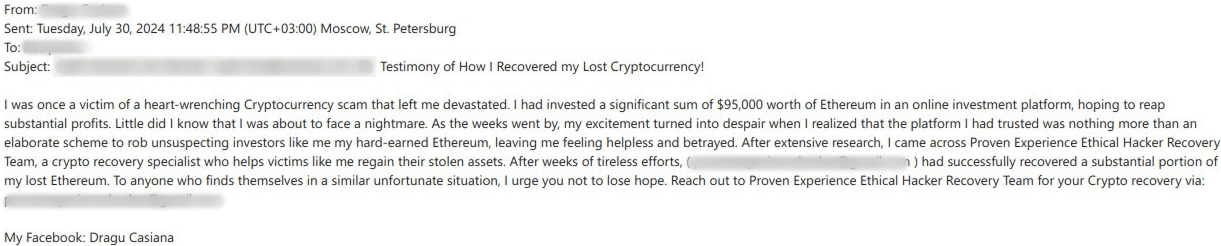
    Imagine a country where 100 million farmers, three times a year, get direct banking transfers. Young boys and girls were not aware, there was a time when corruption was the password for opportunity, recruitment or business licence. Power corridors were leveraged by lies and agents. All this neutralised. And neutralised also through technological applications. Because middlemen have been shown the door. So when I look at your institute, Director, science, education and research, the triangle, this defines your role. Pursuit of knowledge. It starts with education. Because education as a transformative vehicle is very powerful. It brings about equality. Any one of you can have unicorn and be in the big league of industry. You don’t have to look to the situation. That yes, my father was in the industry, that’s true. We need to fight by technology. That’s the sin we are facing. So education. In education, science is important.
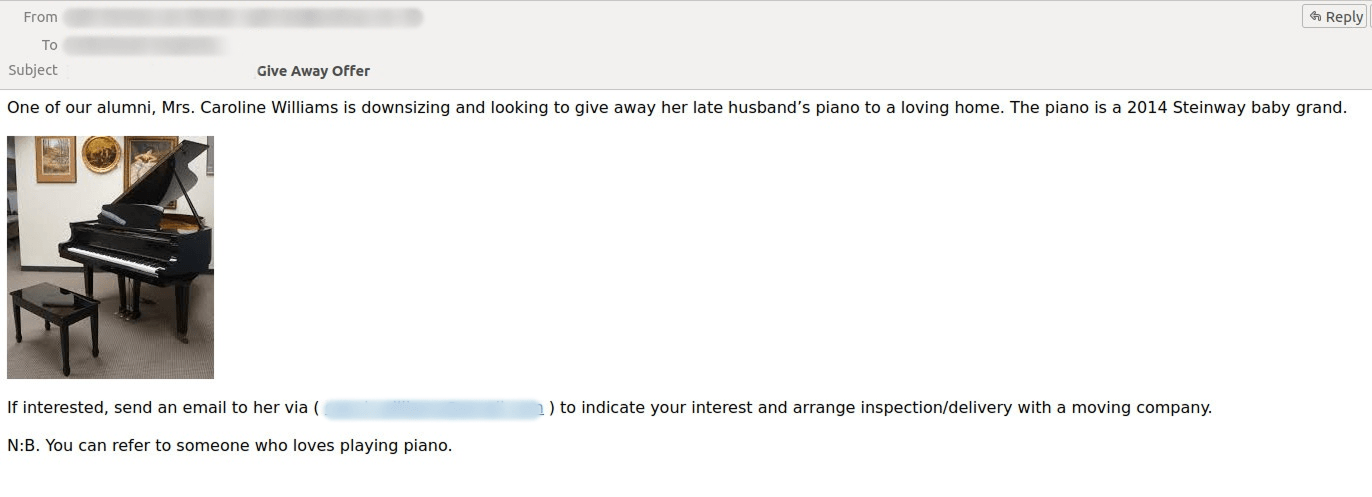
    Because science unfolds your mind to generate creativity, innovation. And then the next step is research. A combination of these will unlock the enormous potential of Indian mind. Will make available avenues and vistas to our population. Every nation hopes to be self-reliant. But we as a nation are very large. Complex on occasions. When the nation is growing so fast, some of us, the number is very small. The traction is large. Put personal interest, commercial interest, political interest, above national interest. This can’t be allowed. This is unfair to boys and girls.

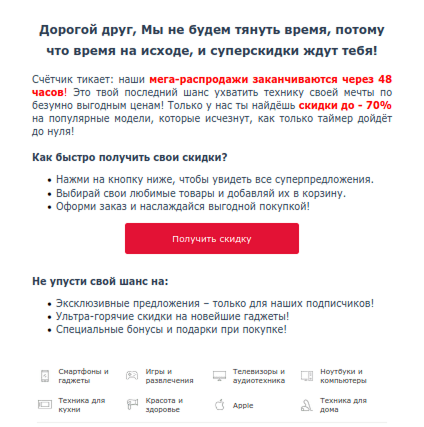
    This is unfair to everyone, because if in our democracy there is someone as a class more serious, significant stakeholder in democracy and growth, than any one of us sitting here, is the youth of the country. Because as we march for Viksit Bharat after 2047, you are the driving force behind engines of growth. And therefore we have to give new dimension now. Make in India, start up India. And look at technology. It has to get into healthcare.

    Technology has to get into education. Technology can catalyse that quality health and quality education is available to one and all. And if that happens, Bharat will be what it has been for centuries.Our lean period started in 12th century. Then marauders came, invaders came, recklessly destroyed our culture. They sacrileged our religious places to an extent that they put their own at the same place. Then came the Britishers who did not give us the education to rule ourselves. They gave us education and taught us history as suited to them. Now things have changed. We are much ahead of UK in economy. We have a bunch of institutions now all over the country. IITs, IIMs, Institutions like yours, and therefore we must have this ecosystem with ears and eyes on the ground. The litmus test is changing the life of the ordinary man. We all stand committed to that because that is our preamble.

    We the people of India want these things. I conclude for time constraint. What Vivekananda said, “Arise, awake, stop not till the goal is achieved”. A motto which you must have. From my side I can give it to you. Have no tension, Have no stress, Never fear failure. Failure is natural. Sometimes you will be surprised, Oh he has succeeded, he should not have succeeded, take it in stride. System is transparent, there will be aberrations. Sometimes you will find, Oh! my own success is unjustified. These are situations natural to us, and then Dr. Kalam whose heart was always in education. I recollect when he met his maker. He was with the students in the North East, and what he said I quote,

    “Dreams transform into thoughts, and thoughts result in action” and therefore my ultimate plea with you, If an idea occurs to you don’t allow your mind to be a parking ground for that idea because you fear you may fail. Get rid of it. Failure is a myth because there is no one who has not failed but they never took failure as failure. Chandrayaan 2 was failure for some who are critics, who are recipe for negativity. Chandrayaan II did not fail, It went that far, and Chandrayaan III did the rest. Let your innovations catalyse India’s scientific renaissance, and advance human progress because we are a country that believes in ‘Vasudhaiva Kutumbakam’ – One Earth, One Family, One Future, that was our motto to the entire world.

    Once again, I am grateful to the Director for making available this opportunity to me at a very short notice. I understand that there has been some inconvenience, I would urge that you overlook it.
    Thank you so much.

    *****

    JK/RC/SM

    (Release ID: 2104169) Visitor Counter : 15

    MIL OSI Asia Pacific News –

    February 18, 2025
  • MIL-OSI Asia-Pac: The cumulative exports (merchandise & services) during April-January 2024-25 is estimated at USD 682.59 Billion, as compared to USD 636.69 Billion in April-January2023-24, an estimated growth of 7.21%.

    Source: Government of India (2)

    Categories24-7, Asia Pacific, Government of India, India, MIL OSI

    Post navigation

    Ministry of Commerce & Industry

    The cumulative exports (merchandise & services) during April-January 2024-25 is estimated at USD 682.59 Billion, as compared to USD 636.69 Billion in April-January2023-24, an estimated growth of 7.21%.

    The cumulative value of merchandise exports during April-January2024-25 was USD 358.91 Billion, as compared to USD 353.97 Billion during April-January2023-24, registering a positive growth of 1.39%.

    Non-Petroleum exports in January2025 valued at USD 32.86Billion registered an increase of14.47% as compared to USD 28.71Billion in January2024.

    The cumulative Non-Petroleum exports in April-January2024-25 valued at USD 305.84Billion registered an increased of7.90% as compared to USD 283.45Billion in April-January2023-24.

    Non-petroleum & Non-Gems & Jewellery exports registered an increase of 14.33% from USD 26.12 Billion in January2024 to USD 29.87 Billion in January2025.

    Major drivers of merchandise exports growth in January2025 include Electronic Goods, Engineering Goods, Drugs & Pharmaceuticals, Rice and Gems & Jewellery.

    Electronic Goods exports increased by 78.97 % from USD 2.29 Billion in January2024 to USD 4.11 Billion in January2025.

    Engineering Goods exports increased by 7.44 % from USD 8.77 Billion in January2024 to USD 9.42 Billion in January2025.

    Drugs & Pharmaceuticals exports increased by 21.46 % from USD 2.13 Billion in January2024 to USD 2.59 Billion in January2025.

    Rice exports increased by 44.61 % from USD 0.95 Billion in January2024 to USD 1.37 Billion in January2025.

    Gems & Jewelleryexports increased by 15.95 % from USD 2.59 Billion in January2024 to USD 3 Billion in January2025.

    Posted On: 17 FEB 2025 6:15PM by PIB Delhi

    • India’s total exports (Merchandise and Services combined) for January2025* is estimated at USD 74.97 Billion, registering a positivegrowth of 9.72 percent vis-à-vis January2024.Total imports (Merchandise and Services combined) for January2025* is estimated at USD 77.64 Billion, registering a positive growth of 12.98 percent vis-à-vis January2024.


    Table 1: Trade during January2025*


    January2025

    (USD Billion)

    January2024

    (USD Billion)

    Merchandise

    Exports

    36.43

    37.32

    Imports

    59.42

    53.88

    Services*

    Exports

    38.55

    31.01

    Imports

    18.22

    14.84

    Total Trade

    (Merchandise +Services) *

    Exports

    74.97

    68.33

    Imports

    77.64

    68.72

    Trade Balance

    -2.67

    -0.39

    * Note: The latest data for services sector released by RBI is for December2024. The data for January2025 is an estimation, which will be revised based on RBI’s subsequent release. (ii) Data for April-January2023-24 and April-September2024 has been revised on pro-rata basis using quarterly balance of payments data.

    Fig 1: Total Trade during January2025*

    • India’s total exports during April-January2024-25* is estimated at USD 682.59 Billion registering a positive growth of 7.21 percent. Total imports during April-January2024-25* is estimated at USD 770.06 Billion registering a growth of 8.96 percent.

    Table 2: Trade during April-January2024-25*


    April-January2024-25

    (USD Billion)

    April-January2023-24

    (USD Billion)

    Merchandise

    Exports

    358.91

    353.97

    Imports

    601.90

    560.27

    Services*

    Exports

    323.68

    282.71

    Imports

    168.17

    146.48

    Total Trade

    (Merchandise +Services) *

    Exports

    682.59

    636.69

    Imports

    770.06

    706.75

    Trade Balance

    -87.47

    -70.06

    Fig 2: Total Trade during April-January2024-25*      


    MERCHANDISE TRADE

    • Merchandise exports during January2025 were USD 36.43 Billion as compared to USD 37.32 Billion in January2024.
    • Merchandise imports during January2025 were USD 59.42 Billion as compared to USD 53.88 Billion in January2024.


    Fig 3: Merchandise Trade during January2025

    • Merchandise exports during April-January2024-25 were USD 358.91 Billion as compared to USD 353.97Billion during April-January2023-24.
    • Merchandise imports during April-January2024-25 were USD 601.90 Billion as compared to USD 560.27 Billion during April-January2023-24.
    • Merchandise trade deficit during April-January2024-25 was USD 242.99 Billion as compared to USD 206.29 Billion during April-January2023-24.

    Fig4: Merchandise Trade during April-January2024-25

    • Non-petroleum and non-gems & jewellery exports in January2025 were USD 29.87Billion compared to USD 26.12Billion in January2024.
    • Non-petroleum, non-gems & jewellery (gold, silver & precious metals) imports in January2025 were USD 41.20Billion compared to USD 34.23Billion in January2024.


    Table 3: Trade excluding Petroleum and Gems & Jewellery during January2025


    January2025

    (USD Billion)

    January2024

    (USD Billion)

    Non- petroleum exports

    32.86

    28.71

    Non- petroleum imports

    45.99

    38.35

    Non-petroleum & Non-Gems & Jewellery exports

    29.87

    26.12

    Non-petroleum & Non-Gems & Jewellery imports

    41.20

    34.23

    Note: Gems & Jewellery Imports include Gold, Silver & Pearls, precious & Semi-precious stones

    Fig 5: Trade excluding Petroleum and Gems & Jewellery during January2025

    • Non-petroleum and non-gems & jewellery exports in April-January2024-25 were USD 281.46 Billion, compared to USD 256.56 Billion in April-January2023-24.
    • Non-petroleum, non-gems & jewellery (gold, silver & precious metals) imports in April-January2024-25 were USD 378.34 Billion, compared to USD 354.86 Billion in April-January2023-24.

    Table 4: Trade excluding Petroleum and Gems & Jewellery during April-January2024-25


    April-January2024-25

    (USD Billion)

    April-January2023-24

    (USD Billion)

    Non- petroleum exports

    305.84

    283.45

    Non- petroleum imports

    447.06

    414.77

    Non-petroleum &Non Gems& Jewellery exports

    281.46

    256.56

    Non-petroleum & Non Gems & Jewellery imports

    378.34

    354.86

    Note: Gems & Jewellery Imports include Gold, Silver & Pearls, precious & Semi-precious stones

    Fig 6: Trade excluding Petroleum and Gems & Jewellery during April-January2024-25

    SERVICES TRADE

    • The estimated value of services export for January2025* is USD 38.55 Billion as compared to USD 31.01Billion in January2024.
    • The estimated value of services imports for January2025* is USD 18.22 Billion as compared to USD 14.84Billion in January2024.

    Fig 7: Services Trade during January2025*

    • The estimated value of service exports during April-January2024-25* is USD 323.68 Billion as compared to USD 282.71 Billion in April-January2023-24.
    • The estimated value of service imports during April-January2024-25* is USD 168.17 Billion as compared to USD 146.48 Billion in April-January2023-24.
    • The services trade surplus for April-January2024-25* is USD 155.52 Billion as compared to USD 136.23 Billion in April-January2023-24.

    Fig 8: Services Trade during April-January2024-25*

    • Exports ofOther Cereals  (103.2%), Electronic Goods (78.97%), Tobacco (59.18%), Coffee (57.07%), Rice (44.61%), Jute Mfg. Including Floor Covering (40.67%), Meat, Dairy & Poultry Products (35.66%), Mica, Coal & Other Ores, Minerals Including Processed Minerals (27.71%), Tea (21.97%), Drugs & Pharmaceuticals (21.46%), Handicrafts Excl. Hand Made Carpet (19.49%), Carpet (18.04%), Cotton Yarn/Fabs./Made-Ups, Handloom Products Etc. (16.41%), Gems & Jewellery (15.95%), Plastic & Linoleum (13.31%), Man-Made Yarn/Fabs./Made-Ups Etc. (12.14%), Rmg Of All Textiles (11.45%), Cereal Preparations & Miscellaneous Processed Items (11.13%), Ceramic Products & Glassware (10.44%), Marine Products (7.98%), Engineering Goods (7.44%), Cashew (6.85%), Leather & Leather Products (6.37%), Spices (2.32%) and Fruits & Vegetables (0.81%) record positive growth during January2025 over the corresponding month of last year.
    • Imports of Project Goods (-48.14%), Pearls, Precious & Semi-Precious Stones (-29.11%), Coal, Coke & Briquettes, Etc. (-15.22%) and Petroleum, Crude & Products (-13.49%) record negative growth during January2025 over the corresponding month of last year.
    • Services exports is estimated to grow by 14.49percent during April-January2024-25* over April-January2023-24.
    • Top 5 export destinations, in terms of change in value, exhibiting positive growth in January2025 vis a vis January2024 are U S A (39.02%), Japan (53.53%), Bangladesh Pr (17.27%), U K (14.84%) and Nepal (20.84%).
    • Top 5 export destinations, in terms of change in value, exhibiting positive growth in April-January2024-25 vis a vis April-January2023-24 are U S A (8.95%), U Arab Emts (6.82%), Netherland (9.17%), U K (14.17%) and Japan (21.12%).
    • Top 5 import sources, in terms of change in value, exhibiting growth in January2025 vis a vis January2024 are China P Rp (17.06%), Thailand (136.63%), U S A (33.46%), Germany (72.15%) and U K (101.62%).
    • Top 5 import sources, in terms of change in value, exhibiting growth in April-January2024-25 vis a vis April-January2023-24 are U Arab Emts (35.58%), China P Rp (10.6%), Russia (7.17%), Switzerland (16.61%) and Thailand (32.59%).

    *Link for Quick Estimates

    ***

    Abhishek Dayal /  Abhijith Narayanan

    (Release ID: 2104150)

    MIL OSI Asia Pacific News –

    February 18, 2025
  • MIL-OSI: Correction: Interim Management Statement Q1 2025

    Source: GlobeNewswire (MIL-OSI)

    Correction to the announcement made at 07:00 on 17/02/2025 (Interim Management Statement Q1 2025): The RNS was dated incorrectly. All other information was correct:

    17 February 2025

    HARGREAVE HALE AIM VCT PLC
    (the “Company”)

    Interim Management Statement

    Q1 2025

    Introduction

    This interim management statement covers the first quarter of the 2024/25 financial year, 1 October 2024 to 31 December 2024. Investment performance measures contained in this report are calculated on a pence per share basis and include realised and unrealised gains and losses.

    Overview

    Once again, we have endured a difficult start to the financial year, albeit for very different reasons. The 2024 Autumn budget, preceded by some unhelpfully stark messaging, has weighed on economic activity. GDP, employment reports and PMI surveys all highlight a notable softening in the UK economy through the second half of (cal.) 2024.

    Measures of UK consumer and business confidence dipped, suggesting that households and companies were becoming increasingly cautious. Although a very significant increase in public spending is expected to support economic activity pickup in 2025, there is clear evidence that The Office for Budget Responsibility forecast for GDP to increase from 1.1% in 2024 to 2.0% in 2025 is likely to be revised lower when next updated.

    UK fiscal policy is seen as being negative to growth and positive for inflation. In the round, this adds up to fewer rate cuts in 2025. With higher inflation and lower growth undermining the case for lending to the UK Government, UK Gilt yields broke out to the upside and Sterling to the downside. The move higher in borrowing costs was exacerbated by higher yields in the US Treasuries market. The Government is on the back foot and will need to respond before the 2025 Autumn budget.

    None of this has been helpful for investor interest in UK equities with outflows increasing again after a period of improving sentiment through the early Summer. This was particularly acute for AIM and, more broadly, the IA UK Small Cap sector.

    Reflecting this, the FTSE AIM All-Share Index was noticeably weak ahead of and subsequent to the budget, with the index steadily declining for 7 months through to 31 December 2024. Within the period, the AIM All-Share index returned -2.32% in the three months to 31 December 2024, lagging the FTSE All Share Index (-0.35%). We continue to believe that many small companies trading on AIM offer exceptional value.

    Performance

    In the three months to 31 December 2024, the unaudited NAV per share decreased by 0.40 pence from 40.55 pence (cum-dividend) to 40.15 pence, giving a total return of -0.99%.

    The qualifying investments fell by 0.09 pence per share whilst the non-qualifying investments made a loss of 0.25 pence per share. The adjusting balance was the net of running costs and investment income.

    Qualifying Investments

    Aquis Exchange (+93.1%, +£1.66m) received a takeover offer from its larger Swiss peer SIX Exchange at 727p. This was a 120% premium to the previous closing price, a 45% premium to the average share price over the prior 12 months and slightly above the 2021 share price high of 720p. This equates to an exit multiple of 4.7x for the VCT. The transaction was approved on 18 December 2024 and is expected to complete in Q2 2025.

    PCI-PAL (+30.3%, +£1.09m) reported good FY24 results with revenues +20% to £18.0m and positive EBITDA of £0.9m. The company also reported strong SAAS metrics with ARR growing by 23%, Net Retention Rate at 102% and low churn. Following a £3.3m fundraise in March 2024, the balance sheet is strong with £4.3m cash. Positive news flow continued subsequently with a key contract renewal and in-line AGM trading update. Post period end, the company reported strong trading for the 6m to 31 December 2025 and re-iterated guidance for FY25.

    Cohort (+15.0%, +£0.65m) announced strong interim results for the 6m to 31 October 2024 with revenues increasing by 25% and a record order book of £541m. The company confirmed it remains on track to achieve market forecasts for FY25. Separately, Cohort announced the £74m acquisition of Australian-based satellite communications company EM Solutions. The acquisition was partly funded through existing cash & debt facilities, combined with a £40m fundraise at 875p.

    Following weak financial performance in FY24, Equipmake (-40.0%, -£0.93m) raised £3m in October 2024. The additional capital, when combined with cost action, has extended the company’s cash runway to March 2025. This was followed by the subsequent launch of a strategic review and a formal sale process.

    Fadel (-42.9%, -£0.72m) saw customer implementation delays and an unsuccessful new business tender. Revenue forecasts for FY24 were reduced by 12% from $14.8m to $13m. The high drop through of revenues to profits meant that projected FY24 EBITDA losses increased from $2.3m to $4m. The company has adopted a more disciplined approach to cost that has yielded an improved outlook for losses and cash performance in 2025.

    Team Internet (-27.7%, -£0.43m) shares fell sharply in Q4 2024 as the company announced that revenues at a recently acquired online marketing business Shinez would fall short of expectations. More recently the shares have begun to recover as the company announced it had received a preliminary takeover proposal.

    Non-Qualifying Investments

    The IFSL Marlborough UK Micro-Cap Growth Fund (+0.6%, +£0.06m) and IFSL Marlborough Special Situations Fund (-1.3%, -£0.13m) were broadly flat over the period. Within the non-qualifying portfolio, the weaker outlook for the UK economy following the Autumn budget impacted WH Smith, Wickes and Hollywood Bowl. Chemring also fell as earnings forecasts were impacted by rising national insurance costs and the curtailment of the company’s share buy-back in favour of preserving funds for organic investment.

    Portfolio structure

    The VCT is comfortably above the HMRC defined investment test and ended the period at 87.5% invested as measured by the HMRC investment test. By market value, the weighting to qualifying investments increased from 56.0% to 56.9%.

    The market remains very subdued with just two VCT qualifying IPOs within the last 12 months. There were two new equity investments into companies listed on AIM and one CLN into an existing portfolio company listed on AIM. We remain hopeful that improving market conditions will help drive an increase in deal flow during 2025.

    The new qualifying investments included a following on (CLN) investment into Rosslyn Data Technologies and new equity investments into Feedback and Ixico. There were no material disposals in the quarter. We sold two legacy tail investments (Gfinity and Surface Transforms) and trimmed our investment in Cohort following a period of strong share price performance.

    There were no substantial changes to the allocation to the two IFSL Marlborough Funds, non-qualifying equities, fixed income, ETFs or cash which respectively represented 13.4%, 6.8%, 12.9%, 0.4% and 9.6% of net assets.

    The HMRC investment tests are set out in Chapter 3 of Part 6 Income Tax Act 2007, which should be read in conjunction with this interim management statement. Funds raised by VCTs are first included in the investment tests from the start of the accounting period containing the third anniversary of the date on which the funds were raised. Therefore, the allocation of qualifying investments as defined by the legislation can be different to the portfolio weighting as measured by market value relative to the net assets of the VCT.

    Share Buy Backs & Discount

    3.9 million shares were acquired in the quarter at an average price of 38.27 pence per share. The share price decreased from 39.00p to 38.40p and on 31 December 2024 traded at a discount of 4.74% to the last published NAV per share (as at 27 December 2024, published on 31 December 2024).

    Post Period End

    The unaudited NAV per share increased from 40.15 pence to 40.22 pence (cum div) as at 7 February 2025, an increase of 0.17%. The FTSE AIM All-Share index increased by 0.09%.         

    END

    For further information please contact:

    Oliver Bedford, Canaccord Genuity Asset Management

    Tel: 020 7523 4837

    LEI: 213800LRYA19A69SIT31        

    The MIL Network –

    February 18, 2025
  • MIL-OSI Global: Cutting funding for science can have consequences for the economy, US technological competitiveness

    Source: The Conversation – USA – By Chris Impey, University Distinguished Professor of Astronomy, University of Arizona

    National Institutes of Health indirect costs, which are under the knife, go toward managing laboratories and facilities. Fei Yang/Moment via Getty Images

    America has already lost its global competitive edge in science, and funding cuts proposed in early 2025 may further a precipitous decline.

    Proposed cuts to the federal agencies that fund scientific research could undercut America’s global competitiveness, with negative impacts on the economy and the ability to attract and train the next generation of researchers.

    I’m an astronomer, and I have been a senior administrator at the University of Arizona’s College of Science. Because of these roles, I’m invested in the future of scientific research in the United States. I’m worried funding cuts could mean a decline in the amount and quality of research published – and that some potential discoveries won’t get made.

    The endless frontier

    A substantial part of U.S. prosperity after World War II was due to the country’s investment in science and technology.

    Vannevar Bush founded the company that later became Raytheon and was the president of the Carnegie Institution. In 1945, he delivered a report to President Franklin D. Roosevelt called The Endless Frontier.

    In this report, Bush argued that scientific research was essential to the country’s economic well-being and security. His advocacy led to the founding of the National Science Foundation and science policy as we know it today. He argued that a centralized approach to science funding would efficiently distribute resources to scientists doing research at universities.

    The National Science Foundation awards funding to many research projects and early career scientists. Pictured are astronomers from the LIGO collaboration, which won a Nobel Prize.
    AP Photo/Andrew Harnik

    Since 1945, advances in science and technology have driven 85% of American economic growth. Science and innovation are the engines of prosperity, where research generates new technologies, innovations and solutions that improve the quality of life and drive economic development.

    This causal relationship, where scientific research leads to innovations and inventions that promote economic growth, is true around the world.

    The importance of basic research

    Investment in research and development has tripled since 1990, but that growth has been funded by the business sector for applied research, while federal investment in basic research has stagnated. The distinction matters, because basic research, which is purely exploratory research, has enormous downstream benefits.

    Quantum computing is a prime example. Quantum computing originated 40 years ago, based on the fundamental physics of quantum mechanics. It has matured only in the past few years to the point where quantum computers can solve some problems faster than classical computers.

    Basic research into quantum physics has allowed quantum computing to develop and advance.
    AP Photo/Ross D. Franklin

    Worldwide, basic research pays for itself and has more impact on economic growth than applied research. This is because basic research expands the shared knowledge base that innovators can draw on.

    For example, a biotech advocacy firm calculated that every dollar of funding to the National Institutes of Health generates US$2.46 in economic activity, which is why a recent cut of $9 billion to its funding is so disturbing.

    The American public also values science. In an era of declining trust in public institutions, more than 3 in 4 Americans say research investment is creating employment opportunities, and a similar percentage are confident that scientists act in the public’s best interests.

    Science superpower slipping

    By some metrics, American science is preeminent. Researchers working in America have won over 40% of the science Nobel Prizes – three times more than people from any other country. American research universities are magnets for scientific talent, and the United States spends more on research and development than any other country.

    But there is intense competition to be a science superpower, and several metrics suggest the United States is slipping. Research and development spending as a percentage of GDP has fallen from a high of 1.9% in 1964 to 0.7% in 2021. Worldwide, the United States ranked 12th for this metric in 2021, behind South Korea and European countries.

    In number of scientific researchers as a portion of the labor force, the United States ranks 10th.

    Metrics for research quality tell a similar story. In 2020, China overtook the United States in having the largest share of the top 1% most-cited papers.

    China also leads the world in the number of patents, and it has been outspending the U.S. on research in the past few decades. Switzerland and Sweden eclipse the United States in terms of science and technology innovation. This definition of innovation goes beyond research in labs and the number of scientific papers published to include improvements to outcomes in the form of new goods or new services.

    Among American educators and workers in technical fields, 3 in 4 think the United States has already lost the competition for global leadership.

    Threats to science funding

    Against this backdrop, threats made in the beginning of President Donald Trump’s second term to science funding are ominous.

    Trump’s first wave of executive orders caused chaos at science agencies as they struggled to interpret the directives. Much of the anxiety involved excising language and programs relating to diversity, equity and inclusion, or DEI.

    The National Science Foundation is particularly in the crosshairs. In late January 2025, it froze the routine review and approval of grants and new expenditures, impeding future research, and has been vetting grants to make sure they comply with orders from the U.S. president.

    The National Institutes of Health announced on Feb. 7, 2024 a decision to limit overhead rates to 15% which sent many researchers reeling though it has since been temporarily blocked by a judge. The National Institutes of Health is the world’s largest funder of biomedical research, and these indirect costs provide support for the operation and maintenance of lab facilities. They are essential for doing research.

    The new administration has proposed deeper cuts. The National Science Foundation has been told to prepare for the loss of half of its staff and two-thirds of its funding. Other federal science agencies are facing similar threats of layoffs and funding cuts.

    The impact

    Congress already failed to deliver on its 2022 commitment to increase research funding, and federal funding for science agencies is at a 25-year low.

    As the president’s proposals reach Congress for approval or negotiation, they will test the traditionally bipartisan support science has held. If Congress cuts budgets further, I believe the impact on job creation, the training of young scientists and the health of the economy will be substantial.

    Deep cuts to agencies that account for a small fraction – just over 1% – of federal spending will not put a dent in the soaring budget deficit, but they could irreparably harm one of the nation’s most valuable enterprises.

    Chris Impey has received funding from NASA, the National Science Foundation, and the Howard Hughes Medical Institute.

    – ref. Cutting funding for science can have consequences for the economy, US technological competitiveness – https://theconversation.com/cutting-funding-for-science-can-have-consequences-for-the-economy-us-technological-competitiveness-249568

    MIL OSI – Global Reports –

    February 18, 2025
  • MIL-OSI Europe: Publication of report on EU data policy monitoring

    Source: Switzerland – Federal Administration in English

    The digital policy activities of the EU (European Union) can also impact Switzerland under certain circumstances. Swiss companies nevertheless do not face significant risks regarding the EU’s access to the single market at this time, according to a report published by the Federal Administration on 17 February 2025 analysing the impact of EU digital policy on Switzerland.

    MIL OSI Europe News –

    February 18, 2025
  • MIL-OSI United Nations: INTERNATIONAL DAY OF FORESTS 2025: “Forests and Food – Let’s Go Nuts!”

    Source: United Nations Economic Commission for Europe

    On 20th March 2025, the UNECE Forest and Bioeconomy Section will celebrate the International Day of Forests 2025 “Forests and Food – Let’s Go Nuts!”. 

    This in-person event will be held at the Palais des Nations, Geneva (Switzerland).

    For more information contact Secretriat

    MIL OSI United Nations News –

    February 17, 2025
←Previous Page
1 … 42 43 44 45 46 … 67
Next Page→
NewzIntel.com

NewzIntel.com

MIL Open Source Intelligence

  • Blog
  • About
  • FAQs
  • Authors
  • Events
  • Shop
  • Patterns
  • Themes

Twenty Twenty-Five

Designed with WordPress