Category: Test

  • How selfie parks limit tourism damage to the world’s most ‘Instagrammable’ destinations

    Source: ForeignAffairs4

    Source: The Conversation – UK – By Lauren A. Siegel, Senior Lecturer in Tourism and Events, University of Greenwich

    The real thing? Getting the money shot Tegalalang Rice Terrace in Bali, Indonesia, kitzcorner/Shutterstock

    It’s no secret that social media has changed travel. Holidaymakers increasingly seek to imitate images posted by influencers and their peers on platforms like Instagram and TikTok. In our increasingly digital world, travellers now chase the perfect shot like treasure hunters. That can mean navigating crowds, long lines and sometimes even danger – all for content from the world’s most “Instagrammable” spots.

    In a widely viewed TikTok video, influencer Zoe Rae (the sister of Love Island star Molly-Mae Hague) voiced her disappointment after visiting Bali. Apparently, it did not look as it did when she saw it online. Her comments attracted a backlash, with critics arguing she was simply experiencing the reality behind the content she and others have helped to promote.

    Research has found that many influencers and social media users participate in an “aesthetic economy”. That is, travel is “performed” for likes, views and brand deals. The result? Holidaymakers seeking out highly photogenic (“Instagrammable”) destinations from which to stage their content.

    Sometimes “getting the shot” becomes more important than any meaningful cultural exchange between hosts and guests. The behaviour of social media-induced tourists has been found to be more irresponsible than that of other types of travellers.

    There were 379 selfie-related deaths between 2008-21, and the quest for the perfect photo can also lead to trespassing and vandalism. Additionally, studies have found that social-media-induced tourists can cause varying levels of damage to the hotspots they visit. This can include environmental erosion, traffic congestion, pollution, increased rubbish and generally making daily life difficult for locals.

    Stage-managed selfies

    But the demand has fuelled the development of shadow economies like “selfie museums”. These have begun to emerge around the world: Chicago’s wndr Museum, London’s Selfie Factory, Selfie House in Prague, Brazil’s Museum Selfie Day in Sao Paulo, to name just a few.

    Our new study shines a light on these parks – purpose-built, self-contained spaces that give visitors a visually stunning, curated environment in which to create content (most often of themselves). For the price of admission, they get convenient access to lighting, props, professional photographers and backdrops for creating content for social media in “Instagrammable” places.

    Selfie parks in Bali, Indonesia, offer rice terraces, swings, nests and other “sceneography” associated with its destination image. And there are add-ons like dress rentals, professional photographers who can follow visitors around the park, and personalised photo-editing services.

    Selfie parks can offer soft control over visitors in the form of guards, guides and security cameras to monitor behaviour. And they implement daily safety checks and regularly train staff to ensure guests are supervised as they take photos. This is an important alternative to the sometimes risky behaviour of selfie-seekers in viral hotspots.

    Of course, the elephant in the room here might be the commodification and inauthenticity that selfie parks represent. Other research has found that locals can be divided about staged photo opportunities, with some seeing them as inauthentic and gimmicky.

    There is an awareness that these encounters do not represent the real life of locals. Others, however, consider the money to be made and employment that these opportunities can provide.


    Read more:
    Why are people taking selfies in front of the LA wildfires?


    Our findings from Bali showed that the selfie parks are extremely successful – with more than 1,500 visitors reported in low season. The offering has been expanded in recent years to add more photo spots, infinity pools and even a day club.

    For now, all of Bali’s selfie parks are locally owned and managed. This creates an important source of employment, as well as being a launchpad for entrepreneurship among locals.

    The idea of selfie parks may take a bit of getting used to. But having spaces where people can take photos, videos and create social media content safely, while bringing in revenue and employment for local communities, offers a viable solution. This is especially true of the places that struggle most with the negative impacts of tourists motivated by social media.

    Love them or loathe them, selfie parks probably aren’t going away. And they may represent a broader shift in how people travel, share and consume experiences. In destinations facing an influx of selfie-seeking visitors, they might just be a surprisingly practical solution.

    Other “viral” destinations should consider establishing dedicated spaces in which tourists can create content. Destinations like the island of Santorini, nicknamed Greece’s “Instagram island” amid extreme overcrowding alongside other harms, could be the type of place to benefit.

    If so many of today’s tourists are chasing the perfect picture, maybe it makes sense to give them a place designed exactly for that.

    The Conversation

    Lauren A. Siegel does not work for, consult, own shares in or receive funding from any company or organisation that would benefit from this article, and has disclosed no relevant affiliations beyond their academic appointment.

    ref. How selfie parks limit tourism damage to the world’s most ‘Instagrammable’ destinations – https://theconversation.com/how-selfie-parks-limit-tourism-damage-to-the-worlds-most-instagrammable-destinations-262071


  • Storm Floris: the weather is rarely this windy in August – which makes it more dangerous

    Source: ForeignAffairs4

    Source: The Conversation – UK – By Colin Manning, Postdoctoral Research Associate in Climate Science, Newcastle University

    Storm Floris made landfall in northern parts of the UK on the morning of Monday August 4 2025, bringing intense rainfall followed by severe winds throughout the afternoon. The Met Office issued an amber weather warning for much of Scotland and yellow alerts for parts of Northern Ireland and northern England.

    Affected areas can expect 20mm–40mm of rain on average, with some areas of Scotland potentially receiving up to 80mm. Wind speeds in exposed and elevated regions could reach 80mph–90mph, while gusts of 50mph-60mph are forecast for much of Scotland.

    The storm’s defining characteristic is the unusually strong winds for August, a time typically less prone to severe wind events. The odd seasonal timing has increased the risk to the public, as more people are outdoors, travelling for holidays or staying in campsites. In addition, trees remain in full leaf, making them more likely to be brought down by high winds.

    Authorities are anticipating significant disruption to transport and electricity networks largely due to falling trees. This is underlined by recent research showing an increased risk of large power outages during windstorms that occur in summer. A large amount of debris on the ground from trees may also block drainage systems and contribute to localised flooding.

    Persistent strong winds will combine with periods of heavy rainfall for the duration of the amber alert, which expires at 23:00. This will create difficult conditions for emergency workers and prevent access to affected locations if roads are blocked, potentially prolonging disruptions to travel and power networks.

    Is this typical of summer months?

    Storm Floris carries all the hallmarks of a classic mid-latitude storm. These develop due to sharp temperature contrasts between the northern and southern Atlantic Ocean and intensify under the influence of a strong jet stream. This is a core of fast-moving air high in the atmosphere that stretches across the Atlantic and often steers storms towards the UK.

    Such conditions are unusual for the summer months, when warmer Atlantic sea temperatures typically weaken these temperature gradients and shift them farther north, closer to the polar regions. However, it is not uncommon for such storms to occur in August.

    Notable ones in the past five years include Storm Ellen, which extensively damaged electricity distribution infrastructure in Ireland and led the Irish meterological service to produce and red and amber weather warning for southern parts of Ireland. Previous storms in August cancelled the Boardmasters music festival in Cornwall in 2019 and closed two stages of Leeds festival in 2024.

    Floris is classified as a Shapiro-Keyser cyclone, a type distinguished by a warm core encircled by colder air on its north, west and south sides. This structure is visible in the way the storm’s frontal system wraps around its centre, forming a characteristic comma-shape in the clouds around the cyclone centre. Storms of this kind are responsible for a significant number of the UK’s most damaging wind events.

    These cyclones often feature sharp pressure gradients and strong low-level airflows, particularly an air stream known as the cold jet, or cold conveyor belt, which can produce severe surface winds. In some cases, they can also generate a sting jet, a narrow stream of air that descends rapidly from around 5km above the land surface, delivering intense, damaging gusts.

    Fortunately, satellite imagery suggests that Storm Floris is unlikely to have produced a sting jet. However, the cold jet alone may still drive wind speeds high enough to cause widespread disruption.

    These types of storms can also produce intense rainfall along their frontal boundaries, as seen with Storm Floris. Warmer summer temperatures allow the atmosphere to hold more moisture, increasing the potential for heavier downpours. In addition, the heat contributes to a more unstable atmosphere, encouraging strong convective ascents of air that can yield extremely heavy and localised rainfall.

    Floris in the future

    Research shows that climate change will influence the characteristics of storms like Floris, though not all aspects will be affected equally. Warmer temperatures are expected to make future storms wetter, as increased atmospheric moisture and convective activity enhances rainfall, particularly along frontal systems. However, projections of wind extremes remain more uncertain.

    Climate models generally suggest a modest intensification of winter storms over the UK and a decrease in the intensity of summer storms, implying that systems like Floris could become less common. These projections are largely tied to expected changes in Atlantic temperature gradients and the behaviour of the jet stream.

    That said, most long-term climate projections rely on relatively coarse-resolution models which often fail to capture key features that drive storm intensification. These include the gulf stream (a warm Atlantic Ocean current) and drivers of extreme winds including the cold jet and sting jet.

    A higher-resolution model, like that used in real-time forecasting for Storm Floris, predicts more intense winter windstorms in a warmer climate. Much of this intensification is linked to stronger cold jets and a potential increase in storms that generate sting jets.

    Many powerful summer and autumn storms in the UK originate from tropical cyclones such as hurricanes, as seen with Storm Ophelia in 2017. These systems are poorly represented in lower-resolution climate models, yet they contribute significantly to Europe’s most extreme windstorms.

    While Storm Floris has no tropical origins, a variety of storms can affect northern Europe at this time of year. The complexity of assessing their risks remains an area of ongoing research.


    Don’t have time to read about climate change as much as you’d like?

    Get a weekly roundup in your inbox instead. Every Wednesday, The Conversation’s environment editor writes Imagine, a short email that goes a little deeper into just one climate issue. Join the 45,000+ readers who’ve subscribed so far.


    The Conversation

    Colin Manning receives funding from UKRI.

    ref. Storm Floris: the weather is rarely this windy in August – which makes it more dangerous – https://theconversation.com/storm-floris-the-weather-is-rarely-this-windy-in-august-which-makes-it-more-dangerous-262535

  • Survivors’ voices 80 years after Hiroshima and Nagasaki sound a warning and a call to action

    Source: ForeignAffairs4

    Source: The Conversation – USA (2) – By Masako Toki, Senior Education Project Manager and Research Associate, Nonproliferation Education Program, Middlebury

    Supporters of nuclear disarmament, including Hibakusha, demonstrate in Oslo, Norway, in 2024. Hideo Asano, CC BY-ND

    Eighty years ago, in August 1945, the cities of Hiroshima and Nagasaki were incinerated by the first and only use of nuclear weapons in war. By the end of that year, approximately 140,000 people had died in Hiroshima and 74,000 in Nagasaki.

    Those who survived – known as Hibakusha – have carried their suffering as living testimony to the catastrophic humanitarian consequences of nuclear war, with one key wish: that no one else will suffer as they have.

    Now, in 2025, as the world marks 80 years of remembrance since those bombings, the voices of the Hibakusha offer not only memory, but also moral clarity in an age of growing peril.

    As someone who focuses on nuclear disarmament and has heard Hibakusha testimonies in my native Japanese language, I have been enthusiastically promoting disarmament education grounded in their voices and experience. I believe their message is more vital than ever at a time of rising nuclear risk. Nuclear threats have reemerged in global discourse, breaking long-standing taboos against even talking about their use. From Russia and Europe to the Middle East and East Asia, the possibility of nuclear escalation is no longer unthinkable.

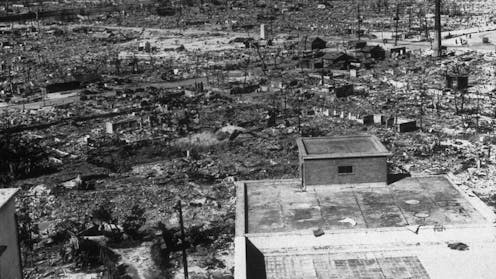
    Amid a landscape of rubble, a partially destroyed building stands, with the skeleton of a metal dome atop a tower.
    The Hiroshima Prefectural Industrial Promotion Hall was one of the few buildings not totally demolished in the Aug. 6, 1945, U.S. atomic bombing of Japan.
    Universal History Archive/Universal Images Group via Getty Images

    Japan’s deepening reliance on deterrence

    Ironically, increasing nuclear threats are contributing to further reliance on nuclear deterrence, the strategy of preventing attack by threatening nuclear retaliation, rather than renewed efforts toward nuclear disarmament, which seeks to eliminate nuclear weapons entirely.

    Nowhere is this contradiction more visible than in Japan. While the Hibakusha have long stood as global advocates for nuclear abolition, Japan’s approach to national security has placed growing emphasis on the role of nuclear deterrence.

    In the face of regional threats, the Japanese government has strengthened its dependence on U.S. nuclear protection – even as the survivors of Hiroshima and Nagasaki warn not only of the dangers of relying on nuclear weapons for security, but also of the profound moral failure such reliance represents.

    Masako Wada, a survivor of the 1945 atomic bomb attack on Nagasaki, speaks about the risk of nuclear weapons in the 21st century.

    Listen to Hibakusha voices

    For eight decades, the Hibakusha have shared their stories to prevent future tragedy – not to assign blame, but to awaken conscience and spark action.

    Masako Wada, assistant secretary general of Nihon Hidankyo, a nationwide organization of atomic bomb survivors working for the abolition of nuclear weapons, was just under 2 years old when the atomic bomb was dropped on Nagasaki. Her home, 1.8 miles from the blast center, was shielded by surrounding mountains, sparing her from burns or injury. Though too young to remember the bombing herself, she grew up hearing about it from her mother and grandfather, who witnessed the devastation firsthand.

    In July 2025 at a nuclear risk reduction conference in Chicago, Wada told the attendees:

    “The risk of using nuclear weapons has never been higher than it is now. … Nuclear deterrence, which intimidates other countries by possessing nuclear weapons, cannot save humanity.”

    In a piece she wrote for Arms Control Today that same month, she further implored:

    The Hibakusha are the ones who know the humanitarian consequences of the use of nuclear weapons. We will continue to convey that reality. Please listen to us, please empathize with us. Find out what you can do and take action together with us. Nuclear weapons cannot coexist with human beings. They were created by humans; let us assume the responsibility to abolish them with the wisdom of public conscience.”

    This plea – rooted in lived experience and moral responsibility – was recognized globally when the 2024 Nobel Peace Prize was awarded to Nihon Hidankyo. The award honored not only the survivors’ suffering, but their decades-long commitment to preventing future use of nuclear weapons through education, activism and testimony.

    A concrete building with no windows and a metal skeleton of a dome atop a tower stand against a blue sky.
    The Hiroshima Peace Memorial stands as it has since 1945, partially destroyed by the atomic bomb blast and serving as a reminder of the 140,000 people who died in the attack and its aftermath.
    Masako Toki, CC BY-ND

    A dwindling number

    But time is running out. Most Hibakusha were children or young adults in 1945. Today, their average age is over 86. In March 2025, the number of officially recognized Hibakusha fell below 100,000, according to Japan’s Ministry of Health.

    As Terumi Tanaka, a Hiroshima survivor and longtime leader of Nihon Hidankyo, said at the Nobel Peace Prize ceremony:

    “Ten years from now, there may only be a handful of us able to give testimony as firsthand survivors. From now on, I hope that the next generation will find ways to build on our efforts and develop the movement even further.”

    Terumi Tanaka, a survivor of the 1945 atomic bomb attack on Hiroshima, delivers the 2024 Nobel Peace Prize lecture.

    The role of empathy in disarmament education

    Empathy is not a luxury in disarmament education – it is a necessity. Without it, nuclear weapons remain abstract. With it, they become personal, real and morally unacceptable.

    That’s why disarmament education begins with human stories. The Hibakusha testimonies illuminate not only the physical destruction caused by nuclear weapons, but also the long-term trauma, discrimination and intergenerational pain that follow. They remind us that nuclear policy is not just a matter of strategy – it is a question of human survival. Nuclear weapons are the only weapons ever created with the power to annihilate all of humanity – and that makes disarmament not just a political issue, but a moral imperative.

    Yet opportunities for young people to learn about nuclear risks, or hear from the Hibakusha directly, are extremely limited. In most countries, these issues are absent from school and university classrooms. This lack of education feeds ignorance and, in turn, complacency – allowing the flawed logic of deterrence to remain unchallenged.

    Disarmament education that puts empathy and ethics at its center, along with survivors’ voices, can empower the next generation not only with knowledge, but with moral strength to choose their path.

    A person stands at a lectern in front of a screen with photos and text reading 'As long as I could see, all the roof tiles had been blown to one side. The green of the mountain that surround the city was gone. They were brown mountains now.'
    Masako Wada, a Hibakusha who survived the U.S. bombing of Nagasaki in August 1945, speaks at a church in California in 2019, spreading the message of the horror of the attack and its aftermath, and urging people to promote nuclear disarmament.
    Masako Toki, CC BY-ND

    From remembrance to responsibility

    Commemorating 80 years since the atomic bombings of Hiroshima and Nagasaki is not about history alone. It is about the future. It is about what people choose to remember – and what people choose to do with that memory.

    The Hibakusha have never sought revenge. Their message is clear: This can happen again. But it doesn’t have to.

    The Hibakusha’s journey shows that human beings are not destined to remain divided, nor are they doomed to repeat cycles of destruction. In the face of unimaginable loss, many Hibakusha chose not to dwell on anger or seek retribution, but instead to speak out for the good of all humanity. Their activism has been marked not by bitterness, but by an unwavering commitment to peace, empathy and the prevention of future suffering. Rather than directing their pain toward blame, they have transformed it into a powerful appeal to conscience and global solidarity. Their concern has never been only for Japan – but for the future of the entire human race.

    That moral clarity, grounded in lived experience, remains profoundly instructive. In a world increasingly filled with conflict and fear, I believe there is much to learn from the Hibakusha. Their testimony is not just a warning – it is a guide.

    I try to listen, and urge others, as well, to truly listen to what they have to say. I seek the company of people who also refuse complacency, question the legitimacy of nuclear deterrence, and work for a future where human dignity, not mutual destruction, defines human security.

    The Conversation

    Masako Toki does not work for, consult, own shares in or receive funding from any company or organization that would benefit from this article, and has disclosed no relevant affiliations beyond their academic appointment.

    ref. Survivors’ voices 80 years after Hiroshima and Nagasaki sound a warning and a call to action – https://theconversation.com/survivors-voices-80-years-after-hiroshima-and-nagasaki-sound-a-warning-and-a-call-to-action-262174

  • The case that saved the press – and why Trump wants it gone

    Source: ForeignAffairs4

    Source: The Conversation – USA – By Stephanie A. (Sam) Martin, Frank and Bethine Church Endowed Chair of Public Affairs, Boise State University

    Donald Trump wants to restrict journalists’ ability to publish or broadcast critical stories. Mesh cube, iStock/Getty Images Plus

    President Donald Trump is again attacking the American press – this time not with fiery rally speeches or by calling the media “the enemy of the people,” but through the courts.

    Since the heat of the November 2024 election, and continuing into July, Trump has filed defamation lawsuits against “60 Minutes” broadcaster CBS News and The Wall Street Journal. He has also sued the Des Moines Register for publishing a poll just before the 2024 election that Trump alleges exaggerated support for Democratic candidate Kamala Harris and thus constituted election interference and fraud.

    These are in addition to other lawsuits Trump filed against the news media during his first term and during his years out of office between 2021 and 2025.

    At the heart of Trump’s complaints is a familiar refrain: The media is not only biased, but dishonest, corrupt and dangerous.

    The president isn’t just upset about reporting on him that he thinks is unfair. He wants to redefine what counts as libel and make it easier for public officials to sue for damages. A libel suit is a civil tort claim seeking damages when a person believes something false has been printed or broadcast about them and so harmed their reputation.

    Redefining libel in this way would require overturning the Supreme Court’s 1964 ruling in New York Times Co. v. Sullivan, one of the most important First Amendment legal rulings in American constitutional history

    Trump made overturning Sullivan a talking point during his first campaign for president; his lawsuits now put that threat into action. And they raise the question: What happened in Sullivan, and why does it still matter?

    President Donald Trump discusses U.S. libel laws on Jan. 10, 2018, calling them a ‘sham’ and a ‘disgrace’ during comments to reporters at the White House.

    What Sullivan was about

    As chair of a public policy institute devoted to strengthening deliberative democracy, I have written two books about the media and the presidency, and another about media ethics. My research traces how news institutions shape civic life and why healthy democracies rely on free expression.

    In 1960, The New York Times published a full-page advertisement titled “Heed Their Rising Voices”. The ad, which included an appeal for readers to send money in support of Martin Luther King Jr. and the movement against Jim Crow, described brutal and unjust treatment of Black students and protesters in Montgomery, Alabama. It also emphasized episodes of police violence against peaceful demonstrations.

    The ad was not entirely accurate in its description of the behavior of either protesters or the police.

    It claimed, for instance, that activists had sung “My Country ’Tis of Thee” on the steps of the state capitol during a rally, when they actually had sung the national anthem. It said that “truckloads of police armed with shotguns and tear-gas” had “ringed” a college campus, when the police had only been deployed nearby. And it asserted that King had been arrested seven times in Alabama, when the real number was four.

    Though the ad did not identify any individual public officials by name, it disparaged the behavior of Montgomery police.

    That’s where L.B. Sullivan came in.

    As Montgomery’s police commissioner, he oversaw the police department. Sullivan claimed that because the ad maligned the conduct of law enforcement, it had implicitly defamed him. In 1960 in Alabama, a primary defense against libel was truth. But since there were mistakes in the ad, a truth defense could not be raised. Sullivan sued for damages, and an Alabama jury awarded him US$500,000, equivalent to $5,450,000 in 2025.

    The message to the press was clear: criticize Southern officials and risk being sued out of existence.

    In fact, the Sullivan lawsuit was not an isolated incident, but part of a broader strategy. In addition to Sullivan, four other Montgomery officials filed suits against the Times.

    In Birmingham, public officials filed seven libel lawsuits over Times reporter Harrison Salisbury’s trenchant reporting about racism in that city. The lawsuits helped push the Times to the edge of bankruptcy. Salisbury was even indicted for seditious libel and faced up to 21 years in prison.

    Alabama officials also sued CBS, The Associated Press, the Saturday Evening Post and Ladies’ Home Journal – all for reporting on civil rights and the South’s brutal response.

    Four men in suits standing together and smiling.
    Montgomery, Ala., Police Commissioner L.B. Sullivan, second left, and his attorneys celebrate his $500,000 libel suit victory in a county court on Nov. 3, 1960.
    Bettman/Getty Images

    The Supreme Court decision

    The jury’s verdict in favor of Sullivan was unanimously overturned by the Supreme Court in 1964.

    Writing for the court, Justice William Brennan held that public officials cannot prevail in defamation lawsuits merely by showing that statements are false. Instead, they must prove such statements are made with “actual malice”. Actual malice means a reporter or press outlet knew their story was false or else acted with reckless disregard for the truth.

    The decision set a high bar.

    Before the ruling, the First Amendment’s protections for speech and the press didn’t offer much help to the press in libel cases.

    After it, public officials who wanted to sue the press would have to prove “actual malice” – real, purposeful untruths that caused harm. Honest mistakes weren’t enough to prevail in such lawsuits. The court held that errors are inevitable in public debate and that protecting those mistakes is essential to keeping debate open and free.

    Nonviolent protest and the press

    In essence, the court ruling blocked government officials from suing for libel with ulterior motives.

    King and other civil rights leaders relied on a strategy of nonviolent protest to expose injustice through public, visible actions.

    When protesters were arrested, beaten or hosed in the streets, their goal was not chaos – it was clarity. They wanted the nation to see what Southern oppression looked like. For that, they needed press coverage.

    If Sullivan’s lawsuit had succeeded, it could have bullied the press away from covering civil rights altogether. The Supreme Court recognized this danger.

    Public officials treated differently

    Another key element of the court’s reasoning was its distinction between public officials and private citizens.

    Elected leaders, the court said, can use mass media to defend themselves in ways ordinary people cannot.

    “The public official certainly has equal if not greater access than most private citizens to media of communication,” Justice Brennan wrote in the Sullivan ruling.

    Trump is a perfect example of this dynamic. He masterfully uses social media, rallies, televised interviews and impromptu remarks to push back. He doesn’t need the courts.

    Giving public officials the power to sue over news stories they dislike could well create a chilling effect on the media that undermines government accountability and distorts public discourse.

    “The theory of our Constitution is that every citizen may speak his mind and every newspaper express its view on matters of public concern and may not be barred from speaking or publishing because those in control of government think that what is said or written is unwise,” Brennan wrote.

    “In a democratic society, one who assumes to act for the citizens in an executive, legislative, or judicial capacity must expect that his official acts will be commented upon and criticized.”

    Why Sullivan still matters

    The Sullivan ruling is more than a legal doctrine. It is a shared agreement about the kind of democracy Americans aspire to. It affirms a press duty to hold power to account, and a public right to hear facts and information that those in power want to suppress.

    The ruling protects the right to criticize those in power and affirms that the press is not a nuisance, but an essential part of a functioning democracy. It ensures that political leaders cannot insulate themselves from scrutiny by silencing their critics through intimidation or litigation.

    Trump’s lawsuits seek to undo these press protections. He presents himself as the victim of a dishonest press and hopes to use the legal system to punish those he perceives to be his detractors.

    The decision in the Sullivan case reminds Americans that democracy doesn’t depend on leaders who feel comfortable. It depends on a public that is free to speak.

    The Conversation

    Stephanie A. (Sam) Martin does not work for, consult, own shares in or receive funding from any company or organization that would benefit from this article, and has disclosed no relevant affiliations beyond their academic appointment.

    ref. The case that saved the press – and why Trump wants it gone – https://theconversation.com/the-case-that-saved-the-press-and-why-trump-wants-it-gone-261821

  • 2 spacecraft flew exactly in line to imitate a solar eclipse, capture a stunning image and test new tech

    Source: ForeignAffairs4

    Source: The Conversation – USA – By Christopher Palma, Teaching Professor of Astronomy & Astrophysics, Penn State

    The solar corona, as viewed by Proba-3’s ASPIICS coronagraph. ESA/Proba-3/ASPIICS/WOW algorithm, CC BY-SA

    During a solar eclipse, astronomers who study heliophysics are able to study the Sun’s corona – its outer atmosphere – in ways they are unable to do at any other time.

    The brightest part of the Sun is so bright that it blocks the faint light from the corona, so it is invisible to most of the instruments astronomers use. The exception is when the Moon blocks the Sun, casting a shadow on the Earth during an eclipse. But as an astronomer, I know eclipses are rare, they last only a few minutes, and they are visible only on narrow paths across the Earth. So, researchers have to work hard to get their equipment to the right place to capture these short, infrequent events.

    In their quest to learn more about the Sun, scientists at the European Space Agency have built and launched a new probe designed specifically to create artificial eclipses.

    Meet Proba-3

    This probe, called Proba-3, works just like a real solar eclipse. One spacecraft, which is roughly circular when viewed from the front, orbits closer to the Sun, and its job is to block the bright parts of the Sun, acting as the Moon would in a real eclipse. It casts a shadow on a second probe that has a camera capable of photographing the resulting artificial eclipse.

    An illustration of two spacecraft, one which is spherical and moves in front of the Sun, another that is box-shaped facing the Sun.
    The two spacecraft of Proba-3 fly in precise formation about 492 feet (150 meters) apart.
    ESA-P. Carril, CC BY-NC-ND

    Having two separate spacecraft flying independently but in such a way that one casts a shadow on the other is a challenging task. But future missions depend on scientists figuring out how to make this precision choreography technology work, and so Proba-3 is a test.

    This technology is helping to pave the way for future missions that could include satellites that dock with and deorbit dead satellites or powerful telescopes with instruments located far from their main mirrors.

    The side benefit is that researchers get to practice by taking important scientific photos of the Sun’s corona, allowing them to learn more about the Sun at the same time.

    An immense challenge

    The two satellites launched in 2024 and entered orbits that approach Earth as close as 372 miles (600 kilometers) – that’s about 50% farther from Earth than the International Space Station – and reach more than 37,282 miles (60,000 km) at their most distant point, about one-sixth of the way to the Moon.

    During this orbit, the satellites move at speeds between 5,400 miles per hour (8,690 kilometers per hour) and 79,200 mph (127,460 kph). At their slowest, they’re still moving fast enough to go from New York City to Philadelphia in one minute.

    While flying at that speed, they can control themselves automatically, without a human guiding them, and fly 492 feet (150 meters) apart – a separation that is longer than the length of a typical football stadium – while still keeping their locations aligned to about one millimeter.

    They needed to maintain that precise flying pattern for hours in order to take a picture of the Sun’s corona, and they did it in June 2025.

    The Proba-3 mission is also studying space weather by observing high-energy particles that the Sun ejects out into space, sometimes in the direction of the Earth. Space weather causes the aurora, also known as the northern lights, on Earth.

    While the aurora is beautiful, solar storms can also harm Earth-orbiting satellites. The hope is that Proba-3 will help scientists continue learning about the Sun and better predict dangerous space weather events in time to protect sensitive satellites.

    The Conversation

    Christopher Palma does not work for, consult, own shares in or receive funding from any company or organization that would benefit from this article, and has disclosed no relevant affiliations beyond their academic appointment.

    ref. 2 spacecraft flew exactly in line to imitate a solar eclipse, capture a stunning image and test new tech – https://theconversation.com/2-spacecraft-flew-exactly-in-line-to-imitate-a-solar-eclipse-capture-a-stunning-image-and-test-new-tech-259362

  • Meet ‘lite intermediate black holes,’ the supermassive black hole’s smaller, much more mysterious cousin

    Source: ForeignAffairs4

    Source: The Conversation – USA – By Bill Smith, Ph.D. Candidate in Physics & Astronomy, Vanderbilt University

    Merging black holes generate gravitational waves, which astronomers can track. SXS, CC BY-ND

    Black holes are massive, strange and incredibly powerful astronomical objects. Scientists know that supermassive black holes reside in the centers of most galaxies.

    And they understand how certain stars form the comparatively smaller stellar mass black holes once they reach the end of their life. Understanding how the smaller stellar mass black holes could form the supermassive black holes helps astronomers learn about how the universe grows and evolves.

    But there’s an open question in black hole research: What about black holes with masses in between? These are much harder to find than their stellar and supermassive peers, in size range of a few hundred to a few hundred thousand times the mass of the Sun.

    We’re a team of astronomers who are searching for these in-between black holes, called intermediate black holes. In a new paper, two of us (Krystal and Karan) teamed up with a group of researchers, including postdoctoral researcher Anjali Yelikar, to look at ripples in space-time to spot a few of these elusive black holes merging.

    Take me out to the (gravitational wave) ball game

    To gain an intuitive idea of how scientists detect stellar mass black holes, imagine you are at a baseball game where you’re sitting directly behind a big concrete column and can’t see the diamond. Even worse, the crowd is deafeningly loud, so it is also nearly impossible to see or hear the game.

    But you’re a scientist, so you take out a high-quality microphone and your computer and write a computer algorithm that can take audio data and separate the crowd’s noise from the “thunk” of a bat hitting a ball.

    You start recording, and, with enough practice and updates to your hardware and software, you can begin following the game, getting a sense of when a ball is hit, what direction it goes, when it hits a glove, where runners’ feet pound into the dirt and more.

    Admittedly, this is a challenging way to watch a baseball game. But unlike baseball, when observing the universe, sometimes the challenging way is all we have.

    This principle of recording sound and using computer algorithms to isolate certain sound waves to determine what they are and where they are coming from is similar to how astronomers like us study gravitational waves. Gravitational waves are ripples in space-time that allow us to observe objects such as black holes.

    Now imagine implementing a different sound algorithm, testing it over several innings of the game and finding a particular hit that no legal combination of bats and balls could have produced. Imagine the data was suggesting that the ball was bigger and heavier than a legal baseball could be. If our paper was about a baseball game instead of gravitational waves, that’s what we would have found.

    Listening for gravitational waves

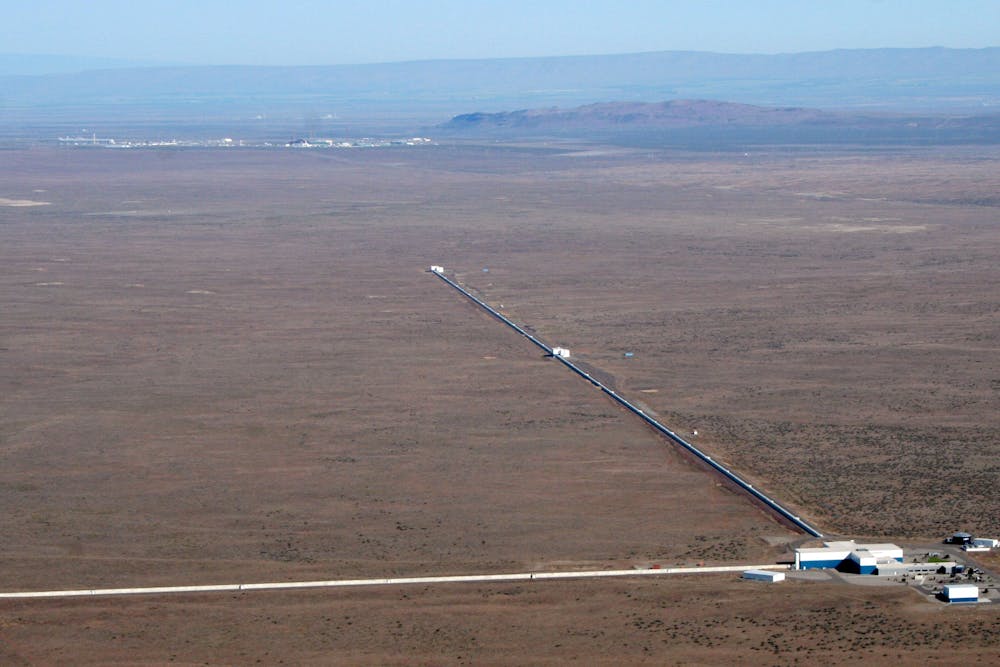
    While the baseball recording setup is designed specifically to hear the sounds of a baseball game, scientists use a specialized observatory called the Laser Interferometer Gravitational-Wave Observatory, or LIGO, to observe the “sound” of two black holes merging out in the universe.

    An L-shaped facility with two long arms extending out from a central building.
    The LIGO detector in Hanford, Wash., uses lasers to measure the minuscule stretching of space caused by a gravitational wave.
    LIGO Laboratory

    Scientists look for the gravitational waves that we can measure using LIGO, which has one of the most mind-bogglingly advanced laser and optics systems ever created.

    In each event, two “parent” black holes merge into a single, more massive black hole. Using LIGO data, scientists can figure out where and how far away the merger happened, how massive the parents and resultant black holes are, which direction in the sky the merger happened and other key details.

    Most of the parent black holes in merger events originally form from stars that have reached the end of their lives – these are stellar mass black holes.

    An illustration of a black hole with gas swirling around it, coming from a large cloud around a star on the right.
    This artist’s impression shows a binary system containing a stellar mass black hole called IGR J17091-3624. The strong gravity of the black hole, on the left, is pulling gas away from a companion star on the right.
    NASA/CXC/M.Weiss, CC BY-NC

    The black hole mass gap

    Not every dying star can create a stellar mass black hole. The ones that do are usually between about 20 to 100 times the mass of the Sun. But due to complicated nuclear physics, really massive stars explode differently and don’t leave behind any remnant, black hole or otherwise.

    These physics create what we refer to as the “mass gap” in black holes. A smaller black hole likely formed from a dying star. But we know that a black hole more massive than about 60 times the size of the Sun, while not a supermassive black hole, is still too big to have formed directly from a dying star.

    The exact cutoff for the mass gap is still somewhat uncertain, and many astrophysicists are working on more precise measurements. However, we are confident that the mass gaps exist and that we are in the ballpark of the boundary.

    We call black holes in this gap lite intermediate mass black holes or lite IMBHs, because they are the least massive black holes that we expect to exist from sources other than stars. They are no longer considered stellar mass black holes.

    Calling them “intermediate” also doesn’t quite capture why they are special. They are special because they are much harder to find, astronomers still aren’t sure what astronomical events might create them, and they fill a gap in astronomers’ knowledge of how the universe grows and evolves.

    Evidence for IMBHs

    In our research, we analyzed 11 black hole merger candidates from LIGO’s third observing run. These candidates were possibly gravitational wave signals that looked promising but still needed more analysis to conclusively confirm.

    The data suggested that for those 11 we analyzed, their final post-merger black hole may have been in the lite IMBH range. We found five post-merger black holes that our analysis was 90% confident were lite IMBHs.

    Even more critically, we found that one of the events had a parent black hole that was in the mass gap range, and two had parent black holes above the mass gap range. Since we know these black holes can’t come from stars directly, this finding suggests that the universe has some other way of creating black holes this massive.

    A parent black hole this massive may already be the product of two other black holes that merged in the past, so observing more IMBHs can help us understand how often black holes are able to “find” each other and merge out in the universe.

    LIGO is in the end stages of its fourth observing run. Since this work used data from the third observing run, we are excited to apply our analysis to this new dataset. We expect to continue to search for lite IMBHs, and with this new data we will improve our understanding of how to more confidently “hear” these signals from more massive black holes above all the noise.

    We hope this work not only strengthens the case for lite IMBHs in general but helps shed more light on how they are formed.

    The Conversation

    Bill Smith receives funding from an NSF Research Trainee Grant called EMIT.

    Karan Jani is a member of the LIGO Scientific Collaboration.

    Krystal Ruiz-Rocha receives funding from an NSF research grant called EMIT.

    ref. Meet ‘lite intermediate black holes,’ the supermassive black hole’s smaller, much more mysterious cousin – https://theconversation.com/meet-lite-intermediate-black-holes-the-supermassive-black-holes-smaller-much-more-mysterious-cousin-259976

  • Plantation tourism, memory and the uneasy economics of heritage in the American South

    Source: ForeignAffairs4

    Source: The Conversation – USA (2) – By Betsy Pudliner, Associate Professor of Hospitality and Technology Innovation, University of Wisconsin-Stout

    The American South – and the nation more broadly – continues to wrestle with how to remember its most painful chapters. Tourism is one of the arenas where that struggle is most visible.

    This tension came into sharp relief in May 2025, when the largest antebellum mansion in the region – the 19th-century estate at Nottoway Plantation in Louisiana – burned to the ground. While some historians, community members and tourism advocates mourned the loss of a landmark site, many activists and others critical of slavery’s past celebrated its destruction.

    Soon after the fire, Nottoway’s owner indicated an interest in rebuilding. And within weeks, a new restaurant had opened on a different part of the site. That speed underscores how quickly memory, history and economics can collide – and how tourism sits at the center of that tension.

    As a professor who studies tourism, I know that the impulse to monetize history isn’t new. Six months after the First Battle of Manassas in 1861, the site was already developing as a tourist attraction. People have been traveling to historic sites, buying souvenirs and leaving their mark on the landscape for centuries. That tradition continues, and evolves, today.

    Wealth, slavery and the battle over memory

    Nottoway is one of more than 300 such plantation sites across the country, which together generate billions of dollars in revenue each year. This type of tourism forces communities and visitors alike to ask a difficult question: What parts of the past do Americans preserve, and for whom?

    A local news segment about the Nottoway fire.

    Nottoway, completed in 1859, was built by 155 enslaved people. Blending Greek Revival and Italianate styles, it stood as a monument to wealth built on forced labor and racial exploitation. Over the decades, it passed through different owners, survived the Civil War and was eventually restored and converted into a resort and wedding venue. Critics have long argued that this commercial reinvention downplayed the lives and labor of enslaved people, neglecting the site’s foundations in brutality.

    Beyond its symbolism, Nottoway has long been recognized as a cornerstone of Iberville Parish’s tourism economy. Research shows that sites like Nottoway can anchor regional economies by encouraging longer stays and local spending. These can stimulate nearby businesses through the multiplier effect.

    Nottoway’s sociocultural significance was far more complex – as shown by the celebrations that followed the fire. For many, Nottoway was a site of trauma and erasure. With its white columns and manicured lawns, Nottoway was pervaded by a sense of romanticism that relied on selective memory. For example, as of June 2025, the Nottoway website’s “History” page made no mention of slavery.

    In other words, the fire didn’t just destroy a building. It disrupted a layered ecosystem of economic livelihood, memory and contested meaning.

    Tourism and the power of the past

    To understand why people visit places like Nottoway, it helps to turn to the four main categories of travel motivation: physical, cultural, interpersonal and status. Plantation venues typically draw cultural tourists seeking heritage, history and architecture.

    They also draw those engaged in what scholars call “dark tourism”: traveling to places associated with tragedy and death. While dark tourism may imply voyeurism, many such visits are deeply reflective. These travelers seek to confront hard truths and process collective memory. But if interpretation is selective – focusing on opulence while minimizing suffering – tourism then becomes a force of historical distortion.

    Some tourists choose plantations for a sense of romance, others for education, and still others for reckoning. These motivations complicate how such places should be preserved, interpreted or transformed.

    Over the past decade, innovative sites like the Whitney Plantation have gained national attention for centering the lives and stories of the enslaved, rather than the architecture or planter families. Opened to the public in 2014, Whitney reframed the traditional plantation tour by prioritizing historical truth over nostalgia – featuring first-person slave narratives, memorials and educational programming focused on slavery’s brutality.

    A CBS News report on Whitney Plantation.

    This approach reflects a growing segment of travelers seeking deeper engagement with difficult histories. As Whitney draws visitors for its honesty and restorative framing, it raises a key question: Is the future of plantation tourism splitting into two tracks – one rooted in reflection, the other in romanticism?

    Many Americans still picture the antebellum South through the lens of popular culture – a romanticized vision shaped by novels and films like “Gone with the Wind,” with its iconic Tara plantation. This “Tara effect” continues to influence how plantations are portrayed and remembered, often emphasizing beauty and grandeur while downplaying the brutality of slavery.

    That’s why sites like the Donato House in Louisiana are important. Built and owned by Martin Donato, a formerly enslaved man who later became a landowner – and, complicating the narrative, also a slaveholder – this modest home offers a counterpoint to the opulence of estates like Nottoway.

    Still in the hands of Donato’s descendants and slowly developing as a tourist site, the Donato House reflects the layered and often uncomfortable truths that challenge simple historical categories. Sites like this remind us that tourism plays a vital role in educating society about the complexity of our past. Heritage travel isn’t just about iconic landmarks; it’s about broadening our perspective, confronting historical bias and helping visitors to engage with the fuller, often uncomfortable, truths behind the stories we tell.

    Controlling the narrative: Who tells the story?

    What is chosen to be preserved – or let go of – shapes not only our memory of the past but our vision for the future.

    When the last generation with firsthand experience of a historical moment is gone, their stories remain in fragments – photos, recordings such as those in the National Archives, or family lore. Some memories are factual, others softened or sharpened with time. That’s the nature of memory: It changes with us.

    My late father, a high school history teacher, often reminded his students and his children to study the full spectrum of history: the good, the bad and the profoundly uncomfortable. He believed one must dive deep into its complexity to better understand human behavior and motivation.

    He was right. Tourism has always echoed the layered realities of the human experience. Now, as Americans reckon with what was lost at Nottoway, we’re left with the question: “What story will be told – and who will get to tell it?”

    The Conversation

    Betsy Pudliner is affiliated with ICHRIE.

    ref. Plantation tourism, memory and the uneasy economics of heritage in the American South – https://theconversation.com/plantation-tourism-memory-and-the-uneasy-economics-of-heritage-in-the-american-south-258558

  • Fixing Michigan’s teacher shortage isn’t just about getting more recruits

    Source: ForeignAffairs4

    Source: The Conversation – USA (2) – By Gail Richmond, Professor of Education, Michigan State University

    Finding good candidates to fill that teacher’s chair is no easy task. Brian van der Brug/Los Angeles Times via Getty Images

    Nearly 500 of Michigan’s 705 school districts reported teaching vacancies in the fall of 2023. That’s up from 262 districts at the beginning of the 2012 school year.

    The number of vacancies is likely an undercount, because this number does not include substitutes or unqualified teachers who may have been hired to fill gaps.

    Local news reports and job boards suggest that at least some Michigan districts are still struggling to fill open positions for the fall of 2025.

    The teacher shortage is a nationwide problem, but it is especially acute in Michigan, where the number of teachers leaving teaching and the overall teacher shortage both exceed the national average. This shortage is particularly severe in urban and rural communities, which have the most underresourced schools, and in specialization areas such as science, mathematics and special education.

    For more than two decades, my work at Michigan State University has centered on designing and leading effective teacher preparation programs. My research focuses on ways to attract people to teaching and keep them in the profession by helping them grow into effective classroom leaders.

    Low pay and lack of support

    Teacher shortages are the result of a combination of factors, especially low salaries, heavy workloads and a lack of ongoing professional support.

    A report released last year, for example, found that Michigan teachers and teachers nationwide make about 20% less compared to those in other careers that also require a college education.

    From my experience working with teachers and district leadership across the state, I know that beginning teachers – especially those in districts which have severe shortages – are often given the most challenging teaching loads. And in some districts, teachers have been forced to work without the benefit of any kind of planning time in their daily schedule.

    The shortage was made much worse by the COVID-19 pandemic, which led many educators to leave the profession. Yet another culprit is the many teachers who, in Michigan as well as nationally, were hired during the 1960s and early ’70s, when school enrollments saw a massive increase, and who in the past decade have been retiring in large numbers.

    Creating pathways to certification

    One recent strategy to address the teacher shortage in Michigan has been to create nontraditional routes to teacher certification.

    The idea is to prepare educators more quickly and inexpensively. A variety of agencies – from the Michigan Department of Education, state-level grants programs such as the Future Proud Michigan Educator program, as well as private foundations and businesses – have helped these programs along financially.

    Even some school districts, including the Detroit Public Schools Community District, have adopted this strategy in order to certify teachers and fill vacant positions.

    A modern-looking multi-story building made from glass and red cladding materials
    Cass Technical High School is a magnet school in midtown Detroit.
    WikiMedia Commons, CC BY-ND

    Other similar programs are the product of partnerships between Michigan’s intermediate school districts, community colleges and four-year colleges and universities. One example is Grand Valley State University’s Western Michigan Teacher Collaborative, which targets interested students of college age. Another is MSU’s Community Teacher Initiative, designed to attract students into teaching while they are still in high school.

    Perhaps even more visible are national programs such as Teachers of Tomorrow and Teach for America. Candidates in such programs often work as full-time teachers while completing teacher training coursework with minimal oversight or support.

    ‘Stuffing the pipeline’ is not the solution

    But simply “stuffing the pipeline” with new recruits is not enough to solve the teacher-shortage problem in Michigan.

    The loss of teachers is significantly higher among individuals in nontraditional training programs and for teachers of color. This starts while they are preparing to be certified and continues for several years after certification.

    The primary reasons for the higher attrition rates include a lack of awareness of the complexity of schools and schooling, the lack of effective mentoring during the certification period, and the absence of instructional and other professional guidance in the early years of teaching.

    How to repair the leaky faucet

    So how can teachers be encouraged to stay in the profession?

    Here are a few of the things scholars have learned to improve outcomes in traditional and nontraditional preparation programs:

    Temper expectations. Teaching is a critically important career, but leading individuals to believe that they can repair the damage done by a complex set of socioeconomic issues – including multigenerational poverty and lack of access to healthy and affordable food, housing, drinking water and health care – puts beginning teachers on a short road to early burnout and departure.

    Give student teachers strong mentors. Working in schools helps student teachers deepen their knowledge not only of teaching but also of how schools, families and communities work together. But these experiences are useful only if they are overseen and supported by an experienced and caring educator and supported by the organization’s leadership.

    Recognize the limits of online learning. Online teacher preparation programs are convenient and have their place but don’t provide student teachers with real-world experience and opportunities for guided discussion about what they see, hear and feel when working with students.

    Respect the process of “becoming.” Professional support should not end when a new teacher is officially certified. Teachers, like other professionals such as nurses, doctors and lawyers, need time to develop skills throughout their careers.

    Providing this support sends a powerful message: that teachers are valued members of the community. Knowing that helps them stay in their jobs.

    The Conversation

    Gail Richmond does not work for, consult, own shares in or receive funding from any company or organization that would benefit from this article, and has disclosed no relevant affiliations beyond their academic appointment.

    ref. Fixing Michigan’s teacher shortage isn’t just about getting more recruits – https://theconversation.com/fixing-michigans-teacher-shortage-isnt-just-about-getting-more-recruits-252606

  • PBS accounts for nearly half of first graders’ most frequently watched educational TV and video programs

    Source: ForeignAffairs4

    Source: The Conversation – USA (2) – By Rebecca Dore, Director of Research of the Crane Center for Early Childhood Research and Policy, The Ohio State University

    Rep. Robert Garcia, a California Democrat, speaks during a House hearing in March 2025, months before Congress rescinded two years of public media funding. Nathan Posner/Anadolu via Getty Images

    CC BY-ND

    At U.S. President Donald Trump’s request, Congress voted in July 2025 to claw back US$1.1 billion it had previously approved for the Corporation for Public Broadcasting. That measure, which passed in the House and the Senate by very narrow margins, will cut off all federal tax dollars that would have otherwise flowed to PBS and its affiliated TV stations for the next two fiscal years.

    The public media network has played a crucial role in producing educational TV programs, especially for children, for nearly 60 years. It has been getting 15% of its budget in recent years from the federal government. Many of its affiliate stations are far more reliant on Washington than that – leading to a flurry of announcements regarding planned program cuts.

    Sesame Street” is still in production, joined by newer TV shows like “Wild Kratts” and “Daniel Tiger’s Neighborhood.” PBS KIDS, in addition to producing popular age-appropriate programs, has a website and multiple apps with games and activities that provide other opportunities for learning.

    Local PBS affiliate stations offer educational programming and other resources for schools, families and communities.

    I’m a child development researcher studying how kids engage with digital media and how educational programming and other kinds of content help them learn. I also have two children under 5, so I’m now immersed in children’s media both at work and at home.

    What kids watch

    In a study about the kinds of media kids consume that the Journal of Applied Developmental Psychology published in June 2025, my colleagues and I surveyed the parents and other kinds of caregivers of 346 first graders. The study participants listed the TV shows, videos, apps and games the kids used the most.

    Our research team then used a systematic coding process to look at how much children access educational programming in their favorite media – whether it’s through their favorite TV shows, web videos or video games.

    We found that only 12% of this content could be described as educational. This amount varied widely: For some children, according to the adults we surveyed, educational media comprised their top three to five sources. Others listed no educational media consumption at all.

    We also looked into who is taking advantage of educational media.

    Our team found no differences in kids’ educational media use according to how many years of education their parents had. That finding suggests that kids of all backgrounds are equally likely to consume it.

    A tween boy plays a videogame with two screens.
    The vast majority of the media that kids consume has little educational value.
    Neilson Barnard/Getty Images

    The Role of PBS

    This peer-reviewed study didn’t break down our results by specific media outlets. But in light of the cessation of federal funding, I wanted to find out how much of the educational content that children watch comes from PBS.

    By revisiting our data with this objective in mind, I learned that PBS accounted for 45% of the educational TV or videos parents said their kids watched most often. This makes PBS the top source for children’s educational programming by far. Nickelodeon/Nick Jr. was in second place with 14%, and YouTube, at 9%, came in third.

    PBS accounted for a smaller portion, just 6%, of all educational apps and games. I believe that could be because a few non-PBS apps, like Prodigy and i-Ready, which can be introduced in school, dominate this category.

    ‘Daniel Tiger’s Neighborhood,’ a cartoon, will seem familiar to anyone who grew up watching ‘Mr. Rogers’ Neighborhood.‘

    An Uncertain future

    Independent production companies collaborating on programming with PBS consult experts in child development and children’s media and conduct research throughout the production process to see how children respond and learn, often in partnership with PBS KIDS.

    This rigorous production process can include observing children watching the show, conducting focus groups and surveying parents about their experiences. It requires a lot of time and money to produce this kind of thoughtfully crafted educational media. This process ensures that the programming is both fun for children and helps them learn.

    What the end of federal funding will mean for PBS’ educational programming for kids is still unclear. But to me, it seems inevitable that my children – and everyone else’s kids – will have fewer research-informed and freely accessible options for years to come.

    At the same time, there will likely be no shortage of flashy and shallow content marketed to kids that offers little of value for their learning.

    The Conversation

    Rebecca Dore has conducted previous consulting work for PBS KIDS and engages with a PBS KIDS staff member who is a member of the advisory board for one of Dore’s current federally funded grants.

    ref. PBS accounts for nearly half of first graders’ most frequently watched educational TV and video programs – https://theconversation.com/pbs-accounts-for-nearly-half-of-first-graders-most-frequently-watched-educational-tv-and-video-programs-261996

  • National parks are key conservation areas for wildlife and natural resources

    Source: ForeignAffairs4

    Source: The Conversation – USA (2) – By Sarah Diaz, Associate Professor of Recreation and Sport Management, Coastal Carolina University

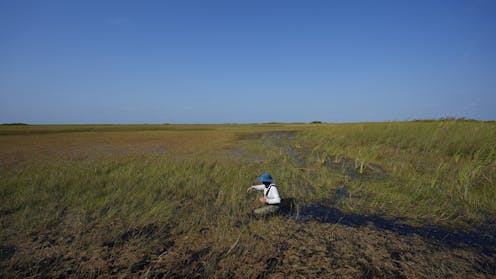
    A researcher collects water samples in Everglades National Park in Florida to monitor ecosystem health. AP Photo/Rebecca Blackwell

    The United States’ national parks have an inherent contradiction. The federal law that created the National Park Service says the agency – and the parks – must “conserve the scenery and the natural and historic objects and the wildlife … unimpaired for the enjoyment of future generations.”

    That means both protecting fragile wild places and making sure people can visit them. Much of the public focus on the parks is about recreation and enjoyment, but the parks are extremely important places for research and conservation efforts.

    These places contain a wide range of sensitive and striking environments: volcanoes, glaciers, sand dunes, marshlands, ocean ecosystems, forests and deserts. And these areas face a broad variety of conservation challenges, including the effects of climate change, the perils of popularity driving crowds to some places, and the Trump administration’s reductions to park service staff and funding.

    As scholars of recreation who study the national parks and teach a course on them, we have seen the park service make parks far more than just recreational opportunities. They are living laboratories where researchers – park service personnel and others – study nature across wide-ranging ecosystems and apply what they learn to inform public and private conservation efforts around the country.

    A group of wolves on a snowy landscape.
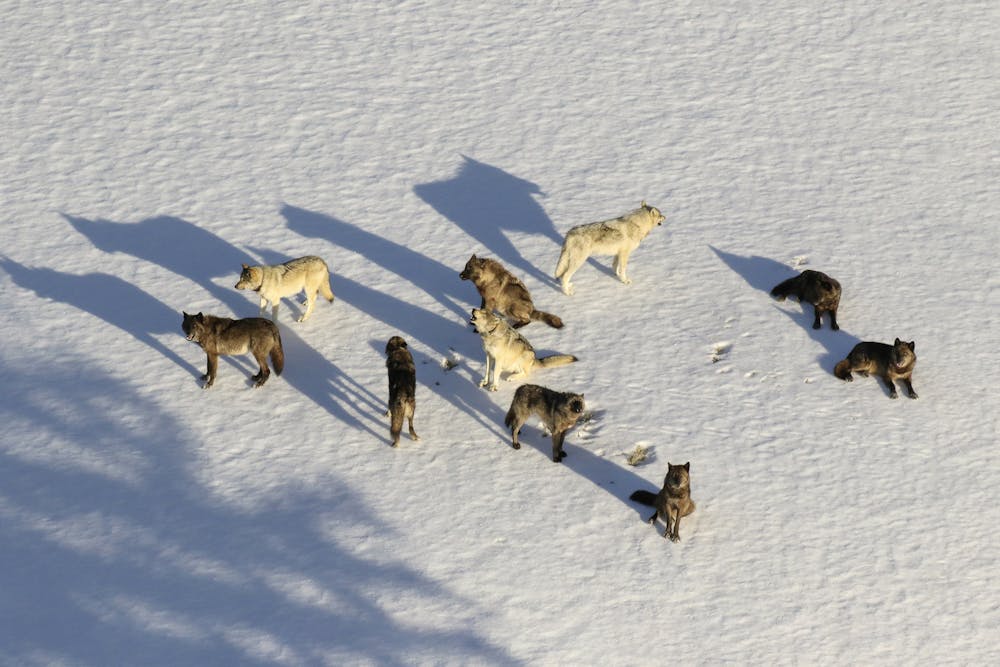
    Gray wolves, long native to the Yellowstone area, were reintroduced to the national park in the mid-1990s and have helped the entire ecosystem flourish since.
    National Park Service via AP

    Returning wolves to Yellowstone

    One of the best known outcomes of conservation research in park service history is still playing out in the nation’s first national park, Yellowstone.

    Gray wolves once roamed the forests and mountains, but government-sanctioned eradication efforts to protect livestock in the late 1800s and early 1900s hunted them to near extinction in the lower 48 states by the mid-20th century. In 1974, the federal government declared that gray wolves needed the protections of the Endangered Species Act.

    Research in the park found that the ecosystem required wolves as apex predators to maintain a healthy balance in nature.

    In the mid-1990s, an effort began to reintroduce gray wolves to Yellowstone National Park. The project brought 41 wolves from Canada to the park. The wolves reproduced and became the basis of a Yellowstone-based population that has numbered as many as 120 and in December 2024 was estimated at 108.

    The return of wolves has not only drawn visitors hoping to see these beautiful and powerful predators, but their return has also triggered what scholars call a “trophic cascade,” in which the wolves decrease elk numbers, which in turn has allowed willow and aspen trees to survive to maturity and restore dense groves of vegetation across the park.

    Increased vegetation in turn led to beaver population increases as well as ecosystem changes brought by their water management and engineering skills. Songbirds also came back, now that they could find shade and shelter in trees near water and food sources.

    A bear climbs a tree.
    Since the establishment of Great Smoky Mountains National Park in 1934, black bear populations have rebounded in the park.
    Great Smoky Mountains National Park via AP

    Black bear protection in the Great Smoky Mountains

    Great Smoky Mountains National Park is the most biologically diverse park in the country, with over 19,000 species documented and another 80,000 to 100,000 species believed to be present. However, the forests of the Appalachian Mountains were nearly completely clear-cut in the late 1800s and early 20th century, during the early era of the logging industry in the region.

    Because their habitat was destroyed, and because they were hunted, black bears were nearly eradicated. By 1934, when Great Smoky Mountains National Park was designated, there were only an estimated 100 bears left in the region. Under the park’s protection, the population rebounded to an estimated 1,900 bears in and around the park in 2025.

    Much like the gray wolves in Yellowstone, bears are essential to the health of this ecosystem by preying on other animals, scavenging carcasses and dispersing seeds.

    Water preservation in the Everglades

    The Everglades are a vast subtropical ecosystem located in southern Florida. They provide drinking water and irrigation to millions of people across the state, help control storm flooding and are home to dozens of federally threatened and endangered species such as the Florida panther and American alligator.

    When Everglades National Park was created in 1947, it was the first time a U.S. national park had been established to protect a natural resource for more than just its scenic value.

    As agriculture and surrounding urban development continue to pollute this natural resource, park professionals and partner organizations have focused on improving habitat restoration, both for the wildlife and for humans’ water quality.

    A large tawny cat springs across an area of gravel and grass.
    A Florida panther, rescued as a kitten, is released into the wild in the Everglades in 2013.
    AP Photo/J Pat Carter

    Inspiring future generations

    To us, perhaps the most important work in the national parks involves young people. Research shows that visiting, exploring and understanding the parks and their ecosystems can foster deep connections with natural spaces and encourage younger generations to take up the mantle of stewardship of the parks and the environment as a whole.

    With their help, the parks – and the landscapes, resources and beauty they protect– can be preserved for the benefit of nature and humans, in the parks and far beyond their boundaries.

    The Conversation

    The authors do not work for, consult, own shares in or receive funding from any company or organization that would benefit from this article, and have disclosed no relevant affiliations beyond their academic appointment.

    ref. National parks are key conservation areas for wildlife and natural resources – https://theconversation.com/national-parks-are-key-conservation-areas-for-wildlife-and-natural-resources-261644

  • If everyone in the world turned on the lights at the same time, what would happen?

    Source: ForeignAffairs4

    Source: The Conversation – USA (2) – By Harold Wallace, Curator, Electricity Collections, National Museum of American History, Smithsonian Institution

    This combined satellite image shows how Earth’s city lights would look if it were night around the entire planet at once. White areas of light show cities with larger populations. NASA/Goddard Space Flight Center

    Curious Kids is a series for children of all ages. If you have a question you’d like an expert to answer, send it to CuriousKidsUS@theconversation.com.


    If everyone in the world turned on the lights at the same time, what would happen? – Clara


    The biggest effect of everyone turning lights on at once would be a surge in demand for electricity, which most people worldwide use to operate their lights.

    Electricity is a form of energy that is made using many different fuels. Power plants are electricity factories that generate electricity from sources including coal, natural gas, uranium, water, wind and sunlight. Then they feed it into a network of transmission and distribution wires called the power grid, which delivers the electricity to homes and businesses.

    To keep the grid stable, electricity must be supplied on demand. When someone turns on a light, they draw power from the grid. A generator must immediately feed an equal amount of power into the grid. If the system gets out of balance, even for a few seconds, a blackout can happen.

    System operators use sensors and sophisticated computers to track electricity demand so they can adjust power production up or down as needed. Total power demand, which is called load, varies a lot from hour to hour and season to season. To see why, think of how much electricity your home uses during the day compared with the middle of the night, or during a summer heat wave compared with a cool fall day.

    Charts showing 2019 U.S. electricity consumption nationwide, with seasonal and weekly patterns.
    These images show patterns of electricity use. Through the year (large graph), people use more electricity for summer cooling and winter heating than in spring and fall. Weekly, consumption drops on weekends, when many businesses are closed.
    U.S. Energy Information Administration, Hourly Electric Grid Monitor

    Meeting a demand spike

    If everyone turned on their lights all at once around the world, they would create a huge, sudden demand for electricity. Power plants would have to ramp up generation very quickly to avoid a system crash. But these plants respond to changing demand in different ways.

    Coal and nuclear plants can provide lots of electricity at almost any time, but if they’re shut off for maintenance or they malfunction, they can take many hours to bring back online. They also respond slowly to load changes.

    Power plants that burn natural gas can respond more quickly to changing load, so they typically are the tool of choice to cover periods when the most electricity is needed, such as hot, sunny summer afternoons.

    Renewable electricity sources such as solar, wind and water power produce less pollution but are not as easily controlled. That’s because the wind doesn’t always blow at the same speed, nor is every day equally sunny in most places.

    Grid managers use large batteries to smooth out power flow as demand rises and falls. But it’s not yet possible to store enough electricity in batteries to run an entire town or city. The batteries would be too expensive and would drain too quickly.

    Some hydropower operators can pump water into lakes during periods of low demand, then release that water to generate electricity when demand is high by running it through machines called turbines.

    Fortunately, if everyone turned on their lights at once, two things would work to prevent a total system crash. First, there is no single worldwide power grid. Most countries have their own grids, or multiple regional grids.

    Neighboring grids, such as those in the United States and Canada, are typically connected so that countries can move electricity across their borders. But they can disconnect quickly, so even if the power went out in some areas, it’s unlikely that all the grids would crash at once.

    Second, over the past 20 years, light bulbs called LEDs have replaced many older electric lights. LEDs operate differently from earlier light bulb designs and produce much more light from each unit of electricity, so they require much less power from the grid.

    According to the U.S. Department of Energy, using LED bulbs saves the average household about US$225 yearly. As of 2020, nearly half of all U.S. homes used LEDS for most or all of their lighting needs.

    LEDs, or light–emitting diodes, are semiconductor devices called transistors that generate light with almost no heat.

    More glare, fewer stars

    Beyond powering lights, it’s also important to think about where all that light would go. A big spike in lighting would dramatically increase sky glow − the hazy brightness that hangs over towns and cities at night.

    Sky glow happens when light reflects off haze and dust particles in the air, creating a diffuse glow that washes out the night sky. Light is very difficult to control: For example, it can reflect off bright surfaces, such as car windows and concrete.

    Lighting is often overused at night. Think of empty office buildings where lights burn around the clock, or street lights that shine upward instead of down on streets and sidewalks where illumination is needed.

    A Joshua tree silhouetted against a starry night sky, with orange glow from artificial lights on the horizon.
    Night sky in California’s Joshua Tree National Park, with light pollution from artificial lights in the Coachella Valley.
    NPS/Lian Law

    Even well-designed lighting systems can add to the problem, making cities and highways visible from space and the stars invisible from the ground. This light pollution
    can harm human health by interfering with our bodies’ natural sleep and waking cycles. It can also disorient insects, birds, sea turtles and other wildlife.

    If people worldwide all turned on their lights at once, we’d see a modest increase in power consumption, but a lot more sky glow and no stars in the night sky. That’s not a very enticing view.


    Hello, curious kids! Do you have a question you’d like an expert to answer? Ask an adult to send your question to CuriousKidsUS@theconversation.com. Please tell us your name, age and the city where you live.

    And since curiosity has no age limit – adults, let us know what you’re wondering, too. We won’t be able to answer every question, but we will do our best.

    The Conversation

    Harold Wallace is a member of the Illuminating Engineering Society.

    ref. If everyone in the world turned on the lights at the same time, what would happen? – https://theconversation.com/if-everyone-in-the-world-turned-on-the-lights-at-the-same-time-what-would-happen-256175

  • Can Syria rebuild its economy from the ashes of war?

    Source: ForeignAffairs4

    Source: The Conversation – UK – By Faek Menla Ali, Associate Professor in Finance, University of Sussex

    More than a decade of devastating conflict has left Syria’s economy in tatters, its infrastructure in ruins and its population deeply fragmented. The fledgling transitional government in Damascus, which came to power following a lightning rebel offensive in December 2024, often speaks of a “new Syria”. But the pressing question remains: how long will recovery take?

    The numbers are stark. In 2011, the year war broke out, the World Bank estimated Syria’s GDP at around US$67.5 billion (£50.7 billion). Its most recent estimate, for 2023, puts GDP at US$20 billion – a drop of more than 70%. And these figures don’t tell the whole story. Inflation and currency collapse make it difficult to compare over time.

    Some organisations offer rough inflation estimates for Syria, but these are obscured by currency depreciation. The Syrian pound has lost more than 99.5% of its value against the US dollar since 2011, falling from 50 pounds per dollar to around 10,375 pounds per dollar today. This severe depreciation distorts the real domestic price picture.

    To get a better sense of on-the-ground price trends, I recently conducted an informal survey of non-tradable goods and services across Syria. It included things like rent, haircuts and private clinic fees. The results of this exploratory approach suggest that, in US dollar terms, prices for such items have risen by about 50% since 2010.

    In other words, inflation in Syria has been real and significant – not just a side effect of exchange rate collapse. Patterns varied sharply across the country. While prices have increased in areas of relative stability and refuge, they stagnated or declined in cities devastated by war.

    With this inflation adjustment, I estimate that Syria’s real GDP in 2024 – measured in constant 2010 US dollars – is closer to US$13.3 billion, an 80% drop from its pre-war level. This figure more accurately reflects the economy’s actual performance, including wellbeing, living standards and productivity.

    To put this figure in context, Syria’s GDP would now be around US$121.3 billion – excluding the anomalous pandemic year – had the economy continued growing at its pre-war average of 5% per year. The gap between this counterfactual and current output reflects the immense toll of the war.

    Rebuilding Syria’s economy will be a monumental challenge. At a high growth rate of 7% per year, it would still take over 30 years for Syria to catch up to its pre-war trajectory. Even with exceptionally strong growth of 10%, the process would stretch over two decades.

    Jump-starting growth

    The causes of Syria’s economic collapse are well known. The war resulted in the destruction of much of its physical capital, the displacement of labour, the erosion of institutions and the imposition of sweeping international sanctions.

    Some US and EU sanctions have been eased. But this alone won’t be enough to reverse Syria’s economic decline. Meanwhile, the Trump administration in the US has announced 41% tariffs on Syrian imports, hindering future trade with the US.

    The Syrian government is betting heavily on foreign direct investment (FDI) to jump-start growth. This approach comes with risks. In weakly regulated markets, FDI can raise both operating and consumer costs – particularly in monopolistic or oligopolistic sectors such as utilities, telecommunications and ports. This may contribute to rising inflation and worsening inequality.

    Syria’s pre-war economic model, which was characterised by crony capitalism and limited competition, raises further concerns about whether FDI will genuinely broaden opportunity or simply entrench existing elites. Without transparent policy frameworks, there is a danger that liberalisation could crowd out local firms, undermine capacity building and fail to diversify the economy.

    The privatisation of state-owned enterprises in Syria is already underway, though the future of the social safety net remains unclear. Greater openness may attract capital and expertise, but it will also expose Syria to global market volatility. This is an unfamiliar dynamic for a country that has long been insulated.

    The critical question is whether the Syrian government’s strategy can generate an export-driven recovery. A stronger current account and healthier foreign currency reserves would boost the capacity of Syria’s economy to withstand future economic shocks.

    Agriculture, once a major contributor to GDP, should be a policy priority. So too should revitalising Syria’s once-globally competitive manufacturing sectors, such as the textile industry in Aleppo.

    The oil and gas sector, which historically underpinned fiscal revenues, will also play a key role if stability returns. Other possible growth areas include boosting the tourism sector and positioning Syria as a powerhouse for light manufacturing.

    Yet FDI, and the broader surge in capital inflows, cannot deliver financial stability on their own. Many post-conflict countries experience balance-of-payments pressures and renewed economic crises if capital flows are not well managed.

    Research on global capital flow dynamics over the past four decades has provided strong evidence of boom-bust cycles in these flows, especially in developing and emerging market economies.

    Rebuilding effective institutions, the rule of law and accountability mechanisms in Syria will thus be critical. These are essential not only to attract investment, but also to prevent the corruption and rent-seeking that often characterise post-war transitions.

    A credible path forward must also include the active mobilisation of Syria’s diaspora – a deep reservoir of capital, skills and entrepreneurial energy. Approximately 400,000 Syrians have returned from neighbouring countries since December 2024, most from Turkey. This has included a handful of prominent businessmen.

    A final point is that any sustainable recovery depends on political inclusion, especially given Syria’s ethnic and religious diversity. Economies that embrace pluralism tend to be more resilient and prosperous. Long-term prosperity will depend not only on sound policies but also on the kind of state Syria chooses to rebuild.

    The coming years will be decisive. Syria’s economic trajectory hinges on whether it can strike the right balance between opening to global markets and protecting vulnerable domestic economic sectors from the shocks of rapid liberalisation.

    With prudent policymaking, transparent governance and inclusive political solutions, Syria can begin to lay the foundation for long-term economic recovery. Much depends on the choices made in this pivotal chapter.

    The Conversation

    Faek Menla Ali does not work for, consult, own shares in or receive funding from any company or organisation that would benefit from this article, and has disclosed no relevant affiliations beyond their academic appointment.

    ref. Can Syria rebuild its economy from the ashes of war? – https://theconversation.com/can-syria-rebuild-its-economy-from-the-ashes-of-war-262271

  • Why people ignore debt letters – and what it says about inequality today

    Source: ForeignAffairs4

    Source: The Conversation – UK – By Ryan Davey, Lecturer in Social Sciences, Cardiff University

    Thomas Andre Fure/Shutterstock

    You get a payment reminder through the letterbox, maybe for a credit card, an overdraft, a bill, or a parking fine. You ignore it and leave the envelope unopened, or put it to one side to deal with later. Many of us will recognise this scenario.

    Ignoring debts and other payment commitments is often dismissed as being irresponsible. But a closer look reveals that many people see things differently, reflecting a deeper point about inequality in Britain today.

    To understand people’s experiences of debt problems better, I lived in a low-income community in the south of England for 18 months, where debt problems were commonplace. I also interviewed debt advisers and their clients across the UK. It gave me a unique opportunity to understand their situation and how they respond to debt, something which I detail in my new book.

    While debt relative to income is falling, the total amount of unsecured household debt now far outstrips its peak during the 2008 global financial crisis.

    Amid big rises in the cost of living, more and more people have been borrowing money to cover essentials like food, energy, rent or council tax. In October 2024, 4 million low-income households held loans they took out for this purpose, and nearly nine out of ten of them were going without essentials anyway.

    Meanwhile, lenders continue to charge the highest interest to those least able to afford it. In 2024, an estimated 5.5 million people were falling behind on their bills or credit repayments.

    In the community where I lived, many people worked, but their wages were not enough to afford what they needed. So residents borrowed money to make ends meet, claimed welfare benefits or did cash-in-hand work. This reflects a broader reality with labour markets in Britain today, where 4.5 million wage-workers are paid below the real living wage.

    As a result, most of the residents I worked with were in arrears with one or more payments. They received phone calls, letters and knocks at the door from debt collectors, threatening court orders, or they had to deal with bailiffs trying to seize their possessions. Some worried about being evicted.

    This is a distressing situation that can easily lead to mental health problems. Debt problems are strongly linked to diagnosed mental health disorders and even suicide. All of the debt advice clients I interviewed had experienced anxiety, depression, suicidal thoughts or other mental health issues.

    Making light

    However, in the community where I temporarily lived, many residents had found ways to try to stay optimistic despite the threats of debt enforcement. Some made light of their debts by joking about how bad they were at repaying or how poor their credit ratings were.

    Many people focused on their home and family life. One woman worried about it being “a skint few weeks”, saying: “We’ll get through it. We always do. You just focus on what’s around you.”

    An unemployed man in his late forties told me how his pride in his 12-year-old daughter kept him from “going suicidal”.

    Most of all, though, people avoided their creditors. Residents often strained to meet repayment demands, but just as often they ignored them. They hung up the telephone when debt collectors called, left envelopes unopened or stashed away, or pretended not to be at home if bailiffs visited. One man said when he received a demand to pay his water bills: “Well, they can fuck off,” and threw the letter in the bin.

    Trying to deal with debt head-on, in the sense of paying what debt collectors were demanding by the exact time they demanded it, could create immense anxiety and even physical health problems. One man told me: “You know, for a while I was trying to keep on top of them and eventually … well, it was making me ill [because of worrying about it]. So I couldn’t keep on like that. I just left them and got on with things.”

    These accounts reveal a deeper point about inequality in Britain. Financial lending tends to extract wealth from those with less and transfer it towards the better-off. Debt is a systemic feature of our economy, and debt problems have complex causes. However, the threat of enforcement convinces many people they are single-handedly responsible for being in debt. This places the blame for poverty on the shoulders of those experiencing it, subtly implying the wealthy are morally superior.

    Stigma

    More than mere personal prejudice, the stigma around debt is hard-wired into the legal system. If we assume that every legally valid debt must be paid as a moral duty, no matter what, then we ignore the economic realities that make borrowing a necessity for so many. This simplistic assumption only reinforces the hardship of those in debt.

    Take the example of people ignoring their debts. Usually they are labelled as irresponsible or lacking financial skills. But ignoring debts is often a deliberate response to a situation that people find immoral or harmful to their health.

    It is tempting to think that if debt is the problem, the remedy is to reform it. Subsidising credit so lower-income groups pay lower interest, restoring funding for debt advice, amplifying the voices of those who have been in debt and widening access to insolvency and debt cancellation could all improve things.

    But reliance on borrowing is also a symptom of broader issues. These may be better addressed by efforts to redistribute resources and curb coercive sanctions, such as taxing wealth, guaranteeing higher incomes (both wages and benefits), controlling the cost of rent and other essentials, protecting against eviction and abolishing bailiffs.

    In the meantime, many indebted people on low incomes will continue to ignore debt collectors’ demands. Through their actions, I believe they question the widely held assumption that there is always a moral duty to pay in our unequal world.

    The Conversation

    Ryan Davey has received funding from the Economic and Social Research Council, the William Wyse Fund and the Cambridge Political Economy Society Trust at the University of Cambridge, and a Vice-Chancellor’s Fellowship at the University of Bristol.

    ref. Why people ignore debt letters – and what it says about inequality today – https://theconversation.com/why-people-ignore-debt-letters-and-what-it-says-about-inequality-today-256293

  • Why we still don’t understand what happens to women’s bodies during labour

    Source: ForeignAffairs4

    Source: The Conversation – UK – By Anastasia Topalidou, Research Fellow (Perinatal Biomechanics and Health Technologies), University of Lancashire

    Photo by Jonathan Borba, CC BY-SA

    Maternal and newborn deaths are rising globally, not just in low- and middle-income countries, but in wealthy nations too. Researchers have described the situation as a “global failure” and a “major scandal”.

    In the UK, more women are now dying during pregnancy and childbirth than at any time in the past 20 years, despite a fall in the birth rate. A national maternity investigation has just been launched, and public concern is growing.

    Yet while politicians and healthcare leaders debate staffing levels and service delivery, one major contributor to poor outcomes is being almost entirely overlooked: biomechanical complications during labour.

    Biomechanics refers to how the body moves and responds to physical forces. During pregnancy, it describes how the body adapts to the increasing demands of carrying a growing baby. During labour, it involves some of the most physically intense and complex actions the human body can perform, as it prepares for and facilitates the delivery of a baby.

    After analysing 87 studies from around the world, we discovered that not a single one had ever investigated the biomechanics of labour. None examined how women’s bodies actually move, adapt or respond during birth. All the research focused solely on pregnancy. And despite rising maternal deaths in the UK, not a single antenatal biomechanics study had been conducted here either.

    This isn’t just an academic oversight. Labour is biomechanically intense, involving force, posture, motion, muscle control and joint loading. Without evidence on how positions, manoeuvres or techniques affect the birthing body, maternity care relies largely on tradition, anecdotal evidence and outdated assumptions.

    A dangerous lack of diversity

    Some pregnancy-related biomechanical changes have been documented, but these vary widely from person to person. There is no “typical” pathway. Yet standard guidance assumes a one-size-fits-all model, often failing to account for these variations.

    Worse still, almost no studies included data on ethnicity. Only one mentioned participants’ ethnic background, but it did not analyse the data by group or explore any differences. That is a serious gap, given that anatomical features like pelvic shape, joint mobility, spinal alignment and culturally shaped movement patterns can vary across populations. These differences could significantly affect how women move and give birth, yet they remain completely overlooked.

    This is a serious problem, especially in the UK. Mothers and Babies: Reducing Risk through Audits and Confidential Enquiries across the UK (MBRRACE-UK) – the national programme that investigates maternal and infant deaths – along with other official reports, consistently show that Black and Asian women are nearly three times more likely to die during childbirth than white women. If all the biomechanical knowledge we have is based on white bodies, yet clinical guidance is applied universally, we may be missing important risks or needs. This lack of inclusive data could be contributing to the persistent racial disparities in maternal outcomes.

    We also found that even widely used techniques such as squatting or the McRoberts’ manoeuvre – a common emergency intervention – have never been biomechanically validated during labour. This means that no one has scientifically tested how these movements affect the body’s joints, muscles, and bones during actual childbirth. So, we don’t know if they help, hinder, or have no measurable impact on the birthing process.

    A handful of studies tested some of these positions on pregnant women in static, controlled conditions, but none included women in active labour. Those studies revealed no measurable advantage for any of the positions tested. Even the McRoberts’ manoeuvre did not significantly change pelvic or spinal alignment.

    That means decades of advice, clinical practice, and emergency response protocols may be based on theory and biomechanical guesswork, rather than evidence. And while these techniques are used every day – often in urgent situations – they have never been scientifically tested on women in active labour. So no clinical studies have examined how these interventions actually affect the birthing body in real time. We don’t know if they work as intended, or if they could be refined to improve safety.

    Tradition over science

    The consequences of this blind spot are not theoretical or a matter of academic curiosity. They’re about safety, dignity and fairness. Maternal and neonatal outcomes are getting worse. Stillbirths and deaths shortly after birth have increased. Behind these statistics are real families and real tragedies. Many of which may have been preventable.

    So why haven’t we filled this gap? Part of the reason is technical: traditional biomechanical systems are difficult to use in clinical settings. But that’s no excuse. New technologies are being developed all the time. If we have the capability to launch rockets and explore space, we should surely be able – and arguably obliged – to understand the basic biomechanics of human birth.

    The real barrier is structural neglect. Women were routinely excluded from clinical research until the 1990s, and even now, research into women’s health remains massively underfunded and overlooked. As a result, childbirth, one of the most common yet life-altering events in medicine, is still shaped by untested ideas.

    This isn’t just a research gap. It’s a failure of safety, equity and scientific responsibility. We are delivering babies in the dark, and those most at risk are often the ones who are left behind.

    The Conversation

    Dr Topalidou received a Pre-Application Support Fund Award from the National Institute for Health and Care Research Applied Research Collaboration North West Coast (NIHR ARC NWC) to support this work. The views expressed in this publication are those of the author(s) and not necessarily those of the NIHR, NHS, or the Department of Health and Social Care.

    ref. Why we still don’t understand what happens to women’s bodies during labour – https://theconversation.com/why-we-still-dont-understand-what-happens-to-womens-bodies-during-labour-261803

  • Jane Austen was a satirist – why isn’t she treated like one?

    Source: ForeignAffairs4

    Source: The Conversation – UK – By Adam J Smith, Associate Professor in 18th-century Literature, York St John University

    From the pompous vanity of Sir Walter Elliot in Persuasion (1817), to the shallow reading habits of Isabella in Northanger Abbey (1817), few characters in the works of Jane Austen are spared the gentle satire of her famously ironic narrative voice. Similarly, some of her best remembered characters, like Elizabeth Bennet in Pride and Prejudice (1813), are more than willing to share a sarcastic retort or wry observation.

    And yet, Austen, like many other women writers of the period such as Frances Burney, Eliza Haywood and Mary Robinson, are almost always missing from histories of satire. This is less to do with whether their works were satirical – because they blatantly were – and more to do with our problematic understanding of satire.

    Satire, as writer Dustin Griffin states, is typically defined as a work designed to “attack vice or folly”, using “wit or riducule” and engaging “in exaggeration and some sort or fiction.”


    This article is part of a series commemorating the 250th anniversary of Jane Austen’s birth. Despite having published only six books, she is one of the best-known authors in history. These articles explore the legacy and life of this incredible writer.


    Austen, like so many women, used satire and humour to critique her situation in a patriarchal society and, in so doing, persistently challenged deeply ingrained assumptions about women’s status as the passive, subordinate property of men. As literary critic Rachel Brownstein memorably put it, women at the time experienced a constant doubleness that frequently became “the ironic self-awareness of a rational creature absurdly caught in a lady’s place”.

    And yet, when asked to name 18th-century satirists, it is so often the case that we are confronted with the same list of authors: Jonathan Swift, author of Gulliver’s Travels (1726), Alexander Pope, author of The Dunciad (1728), and sometimes Henry Fielding, author of Tom Jones (1749). Typically the thread isn’t then picked up again until a century later, when we are offered Charles Dickens (in works such as The Pickwick Papers (1837), William Makepeace Thackeray’s Vanity Fair (1848) and Anthony Trollope’s The Way We Live Now (1875).

    However, there are so many examples of brilliant satire written by women at the time.

    Take for instance, The Art of Ingeniously Tormenting (1753) by Jane Collier. A satirical conduct book which, rather than advising young women on how to become delicate, feminine creatures, instead gave them tips on how to torment their husbands. Why kill your spouse, it cheerfully asks, when it will be far more satisfying to “waste them by degrees”, effectively killing them slowly across a lifetime of nagging.

    There was also Eliza Haywood’s satirical periodical The Parrot (1746), which adopted the perspective of a green parrot in a cage, tired of being objectified and written off as a “pretty prattler”.

    Sarah Scott’s Millenium Hall (1782) is about a group of women deciding to abandon patriarchal society altogether and establish a women-only commune. It is full of withering observations. While Mary Robinson’s Walsingham (1797) exposes the many contradictions of 18th-century Britain’s sexist society by telling the story of a girl raised as a boy by parents anxious to have a male heir.

    Frances Burney and a page from Evelina
    Frances Burney’s Evelina skewered Bath’s fashionable society.
    Wikimedia

    As a girl, Austen loved Frances Burney’s Evelina (1778), a novel about a young woman who, upon arriving in Bath for the first time, cannot stop laughing at the utter absurdity of fashionable society. (Evelina is also a novel in which a monkey wearing a suit appears out of nowhere, goes berserk, and is never mentioned again. You should read it immediately.)

    Similarly, the anonymous novel The Woman of Colour (1808), sees a young heroine born in Jamaica, Olivia Fairfield, travelling to England to secure her inheritance only to discover the high society she’d been raised to admire is in fact barbarous and stupid. As both spectacle and spectator, Olivia becomes a powerful engine for satire.

    Even Charlotte Brontë deployed satire. Brontë was an admirer of William Makepeace Thackeray and dedicated the second edition of Jane Eyre (1847) to his famously satirical novel Vanity Fair (1848). As 19th-century literature expert Jo Smith has recently observed, Brontë also used her persona, Currer Bell, to enact satire across her career, even articulating her own theory of satire.

    The subtle barb instead of the violent attack

    That these women’s names don’t come up in lists of great satirists of the period is partly due to the availability of their writing. Many of the texts I’ve mentioned have only been recovered and made publicly available again over the last 50 years. But it is also to do with how we talk about satire.

    The purest definition of satire is that it performs a critique of something that the author finds to be ridiculous, stupid or dangerous, and uses some kind of distortion as part of this critique. This usually takes the form of exaggeration, but can also be inversion or allegory.

    However, you’ll notice that when people talk about satire they often describe the lash of the satirist’s whip, or the slash of the surgeon’s scalpel. Satire is talked about as biting, skewering and violent.

    Jane Austen and a page from the publication of Persuasion and Northanger Abbey.
    Jane Austen found much to skewer in Regency society and does so deftly in her books Persuasion and Northanger Abbey.
    Wikimedia

    The satirist, from the Roman poet Juvenal through to John Dryden and Jonathan Swift, is often imagined as a heroic aggressor, whose righteous indignation drives him to lash out at a fallen world. This is an image born of Renaissance theories of satire, and one slightly modified (but heavily promoted) during the endless, rarely objective, debates about what satire should be that dominated the 18th century.

    As a result, we end up with a definition of satire that is coded in masculine language. So many definitions, even today, talk about satire “attacking”, rather than “critiquing”. But in Austen, and the work of her female contemporaries, we see another kind of satire. The joy of so many of the quips and rejoinders issued by characters like Anne Elliot and Elizabeth Bennet is that often their targets don’t even realise they have been satirised, so subtle is the critique.

    Virginia Woolf said it best when called upon to describe Austen’s juvenilia, in particular her early novel Love and Freindship sic:

    What is this note, which never merges in the rest, which sounds distinctly and penetratingly all through the volume? It is the sound of laughter. The girl of 15 is laughing, in her corner, at the world.


    This article features references to books that have been included for editorial reasons, and contains links to bookshop.org. If you click on one of the links and go on to buy something from bookshop.org The Conversation UK may earn a commission.

    The Conversation

    Adam J Smith does not work for, consult, own shares in or receive funding from any company or organisation that would benefit from this article, and has disclosed no relevant affiliations beyond their academic appointment.

    ref. Jane Austen was a satirist – why isn’t she treated like one? – https://theconversation.com/jane-austen-was-a-satirist-why-isnt-she-treated-like-one-262274

  • World Athletics’ mandatory genetic test for women athletes is misguided. I should know – I discovered the relevant gene in 1990

    Source: ForeignAffairs4

    Source: The Conversation – Global Perspectives – By Andrew Sinclair, Deputy Director of the Murdoch Childrens Research Institute, Murdoch Children’s Research Institute

    World Athletics president Sebastian Coe recently announced a new rule for women athletes, requiring mandatory genetic tests to verify their biological sex.

    This test must be done if athletes wish to compete in September’s World Athletics Championships in Tokyo.

    World Athletics has said all athletes competing as women must have an SRY gene test to identify whether a male Y chromosome is present.

    Any athlete whose test shows the presence of the SRY gene will be banned from competing in the women’s category in elite events.

    Coe said the decision was made to ensure “the integrity of women’s sport” with World Athletics asserting:

    The SRY gene is a reliable proxy for determining biological sex.

    I argue the science does not support this overly simplistic assertion.

    I should know, because I discovered the SRY gene on the human Y chromosome in 1990. For 35 years I have been researching it and other genes required for testis development.

    A brief primer on testes and ovary development

    If a human embryo has XY chromosomes, then at six weeks of development the SRY gene on the Y chromosome triggers a cascade of events involving some 30 different genes that lead to the formation of testes.

    In simplest terms, the testes then produce hormones including testosterone, leading to male development.

    However, if an embryo has XX chromosomes, a whole different group of genes come into play, ovaries form and the hormones produced result in a female.

    We know making testes or ovaries requires a complex network of many interacting genes and proteins.

    Some genes promote testis development while others promote ovary development.

    Other genes either suppress ovary formation or antagonise testis formation.

    Even once ovaries or testes are fully formed, we require other genes to maintain them. These genes don’t always function as expected, affecting the development of these organs.

    How does this relate to sex testing of elite women athletes?

    Changes or variants in the many genes that regulate the development of a testis or ovary can result in sex reversal or a non-functioning testis or ovary.

    What do I mean by this?

    If there is a change in the SRY gene so it does not function as usual, then a person can fail to develop testes and be biologically female. Yet they carry XY chromosomes and under the World Athletics tests they would be excluded from competition.

    Other XY individuals may have a functioning SRY gene but are female – with breasts and female genitalia, for example – but have internal testes.

    Importantly, the cells of these people are physically unable to respond to the testosterone produced by these testes. Yet, they would receive positive SRY tests and be excluded from competition.

    At the 1996 Olympic Games in Atlanta, eight of 3,387 women athletes had positive test results for a Y chromosome. Of these, seven were resistant to testosterone.

    The SRY test isn’t cut-and-dried

    World Athletics asserts the SRY gene is a reliable proxy for determining biological sex. But biological sex is much more complex, with chromosomal, gonadal (testis/ovary), hormonal and secondary sex characteristics all playing a role.

    Using SRY to establish biological sex is wrong because all it tells you is whether or not the gene is present.

    It does not tell you how SRY is functioning, whether a testis has formed, whether testosterone is produced and, if so, whether it can be used by the body.

    Other problems with the SRY testing process

    World Athletics is recommending all women athletes take a cheek swab or blood sample to test for the presence of SRY.

    Normally, the sample would be sent to a lab that would extract DNA and look for the presence of the SRY gene.

    This may be easy enough in wealthy countries, but what is going to happen in poorer nations without these facilities?

    It is worth noting these tests are sensitive. If a male lab technician conducts the test he can inadvertently contaminate it with a single skin cell and produce a false positive SRY result.

    No guidance is given on how to conduct the test to reduce the risk of false results.

    Nor does World Athletics recognise the impacts a positive test result would have on a person, which can be more profound than exclusion from sport alone.

    There was no mention from World Athletics that appropriate genetic counselling should be provided, which is considered necessary prior to genetic testing and challenging to access in many lower- and middle-income countries.

    I, along with many other experts, persuaded the International Olympic Committee to drop the use of SRY for sex testing for the 2000 Sydney Olympics.

    It is therefore very surprising that, 25 years later, there is a misguided effort to bring this test back.

    Given all the problems outlined above, the SRY gene should not be used to exclude women athletes from competition.

    The Conversation

    Andrew Sinclair receives funding from NHMRC

    ref. World Athletics’ mandatory genetic test for women athletes is misguided. I should know – I discovered the relevant gene in 1990 – https://theconversation.com/world-athletics-mandatory-genetic-test-for-women-athletes-is-misguided-i-should-know-i-discovered-the-relevant-gene-in-1990-262367

  • Why do I feel so emotional when I listen to music from my teenage years?

    Source: ForeignAffairs4

    Source: The Conversation – Global Perspectives – By Sandra Garrido, NHMRC-ARC Dementia Research Development Fellow, Western Sydney University

    stockbusters/Getty Images

    Deep in your memory, your brain has created a playlist of music from your teenage years. Even though life has moved on, hearing that music now likely still brings up some really powerful emotions.

    Why?

    Well, as with anything to do with the brain and with emotions, it’s hard to say for sure. But it’s likely a bit to do with evolution, and a bit to do with some key neurological changes that occur in the teenage years.

    Imagine the world of a prehistoric teenager

    Changing hormones supercharge the limbic system, which is the emotional centre of the brain. Teens become emotionally sensitive and susceptible to intense mood swings.

    At the same time, we start to become less reliant on our parents.

    This increasing independence accelerates the need to forge close relationships with peers. We need to learn very quickly how to interpret the emotions of others, and develop strong memories of things that are safe or unsafe.

    Imagine the world of a prehistoric teenager. No longer a child wholly dependent on their parents, the adolescent feels an instinctive drive to explore new territory and strike out on their own.

    Away from their family’s protection, survival now hinges on bonds with peers.

    Going it alone is fraught with danger. Belonging to a group becomes a matter of life or death.

    The teen finds a new pack, which communicates crucial information to each other using body language or non-linguistic verbalisations. Variations in the voice pitch or the speed of speech signal urgency or excitement.

    Strong emotional reactions – the fear of danger, the thrill of a successful hunt, an intense connection with a potential mate – ensure memories about what to fear and what to seek are deeply carved into this teenage brain.

    The stronger the emotion, the deeper the memory.

    The brains of modern teens aren’t much different

    In today’s world, we seldom need to hunt for food or protect ourselves from predators trying to eat us. But modern teenage brains are still wired to react quickly and instinctively.

    Modern teens will still strike out away from the safety of the family circle, learning to navigate the treacherous world of adolescent relationships.

    As we all know – often from searingly painful personal experience – teenage brains are keenly attuned to non-linguistic social cues that signal acceptance or rejection by the pack.

    We are evolutionarily wired to lay down deep memories in our brains of events that have had a strong emotional impact on us.

    A young womand and a young man kiss.
    The teen years are a time of many firsts.
    Photo by cottonbro studio/Pexels

    So what’s this got to do with teen music tastes?

    Music can convey linguistic and non-linguistic emotion.

    Lyrics can tell a story that makes us feel heard and understood. They might signal we belong and are connected – with the artist, with other fans, and with broader human experiences such as love, lust or loneliness.

    The melody and beat communicate emotion too.

    In fact, some scholars believe the very reason music exists is related to the non-linguistic elements of speech that our prehistoric ancestors may have used to communicate before spoken language developed.

    Our brains may respond to these signals in music the way our prehistoric ancestors responded to expressions of urgency, excitement or peace from other members of the tribe.

    The way music communicates and evokes emotion is what makes it so important in life, particularly during the teenage years.

    Teenagers may spend several hours per day listening to music, particularly when going through periods of psychological distress.

    During this period – when emotional experiences and the learning that comes from them are so crucial to learning to survive – music becomes a powerful tool.

    It can act as a simulator for practising emotional skills, a guide to navigating emotional ups and downs and a key to finding connection and belonging.

    In other words, the music that we hear in our teenage years becomes closely intertwined with the strong emotions we experience at that time.

    An older man listens to music with a wistful look on his face.
    Listening to the music of one’s youth can be bittersweet.
    kupicoo/Getty Images

    A time of many firsts

    The music of your teens was likely the backdrop to your first kiss, the anthem you sang along to with friends, and a source of comfort when your heart was first broken.

    Evolution has programmed you to feel every moment of your teenage years profoundly, so you can learn important lessons about how to survive, become independent and connect with others.

    At the same time, music may be tapping into an ancient, pre-language part of our brains.

    The music that accompanied high-stakes moments of your youth is forever linked to the powerful emotions you experienced then, and deeply embedded in the brain.

    That is why, for the rest of our lives, those songs act as a kind of musical key to a neurological time capsule.

    The Conversation

    Sandra Garrido does not work for, consult, own shares in or receive funding from any company or organisation that would benefit from this article, and has disclosed no relevant affiliations beyond their academic appointment.

    ref. Why do I feel so emotional when I listen to music from my teenage years? – https://theconversation.com/why-do-i-feel-so-emotional-when-i-listen-to-music-from-my-teenage-years-260819

  • Researchers watched 150 episodes of Bluey – they found it can teach kids about resilience for real life

    Source: ForeignAffairs4

    Source: The Conversation – Global Perspectives – By Bradley Smith, Senior Lecturer in Psychology, CQUniversity Australia

    Dad (Bandit), Mum (Chilli), Bluey and Bingo. Ludo Studios

    She’s six years old, lives in Brisbane and might just be one of the best resilience coaches on television.

    We’re talking about Bluey, the animated Aussie pup whose adventures have captured the hearts of families around the world.

    But as our new study reveals, Bluey isn’t just entertaining kids, she’s modelling how to to deal with life’s ups and downs.

    Why is resilience so important?

    Resilience isn’t just about “toughing it out”. It’s the ability to cope with challenges, adapt to setbacks and recover from difficulties. It’s a vital part of healthy child development.

    Research shows resilience helps children manage stress, regulate their emotions, build better relationships, and even perform better at school. Without it, children may be more vulnerable to anxiety, depression and poor coping skills later in life.

    Children today face growing mental health challenges, including around anxiety and emotional dysregulation. For example, a 2023 national resilience survey of almost 140,000 students found more than one in four primary and one in three secondary students reported high levels of psychological distress.

    Research shows the earlier we support resilience-building, the better. Early interventions help build healthy coping skills before negative patterns take hold.

    How TV can help

    Storytelling in films, books and TV can show children how to navigate challenges – not through lectures, but by modelling behaviours like emotional regulation, problem-solving and empathy.

    Animal characters in storytelling also offer valuable learning opportunities for children, who are naturally drawn to animals.

    Bluey first aired in 2018. It has since become Australia’s most successful children’s program, with billions of views worldwide.

    It is known for its realistic portrayal of young family life. Yet until now, no one had systematically examined how it – or any kid’s TV show – presents resilience on screen.

    So we watched all 150 Bluey episodes

    In our study, we analysed every episode of Bluey from seasons one to three. The 150 episodes added up to 18 hours of Bluey, Bingo, Chilli, Bandit and their friends.

    For each episode, we looked closely at the storyline, characters and themes, identifying moments where a character faced a challenge and showed a resilient response.

    To guide our analysis, we used the Grotberg Resilience Framework. This is a widely recognised model in psychology that breaks resilience into three key elements.

    1. I have: involving the support systems around a child, such as family, friends, and community role models they can rely on.

    2. I can: involving practical coping skills, like solving problems, managing emotions and asking for help when needed.

    3. I am: involving a child’s inner strengths like confidence, optimism, emotional regulation and a sense of self worth.

    ‘It’s out of our hands’

    Our research found nearly half of all episodes (73 out of 150) included a clear resilience message as either a primary or secondary theme.

    Nearly two-thirds of the resilience moments were facilitated by a parent — most often Bluey’s mum. This fits with the “I have” category of resilience, which highlights how children draw strength from caring adults when things get tough.

    For example in The Show (season two episode 19), Bingo accidentally drops a breakfast tray and bursts into tears. Mum gently models emotional coaching explaining her coping process: “I have a little cry, I pick myself up, dust myself off, and keep going.” Research shows that when caregivers model how to acknowledge distress, express feelings, and then recover with calm, children gradually learn to manage negative emotions effectively.

    Later in the episode, Bingo repeats those exact words when things go wrong again.

    ‘Well, that was fun’

    Bluey and her sister also frequently demonstrate practical coping skills on their own.

    In Keepy Uppy (season one, episode three), the final balloon in a game pops. The kids pause, take it in, and smile. “Well, that was fun,” they say.

    In a single moment, we see disappointment, emotional regulation, and reframing – the core of the “I can” category.

    Everyday moments, powerful messages

    We also see characters overcoming challenges with their own inner strength. In Seesaw (season two, episode 26) Pom Pom shows determination and self-confidence to get to the top of the seesaw and save her friends, in an example of “I am”. As she declares, “Pomeranians are a small but hardy breed”.

    We found Bluey touches on almost all of the core elements of resilience: trusting relationships, emotional communication, problem-solving, self-regulation, empathy and more.

    In Sheepdog (season three, episode 11), mum Chilli tells her family she needs “20 minutes” of alone time. Bluey is worried she’s done something wrong. Later, during play, Bluey gently echoes her mum’s words to a toy: “It’s hard work looking after you. I just need 20 minutes.”

    That simple moment models self-care and perspective-taking as well as empathy. For kids, learning that grown-ups need rest too is a powerful message.

    How to watch Bluey with your kids

    Of course, no screen can replace real relationships. But when parents watch shows like Bluey with their kids, they become powerful teaching tools.

    So the next time your child wants to watch an episode for the tenth time, don’t feel guilty – join them. When parents watch too, those moments become conversation starters. For example, “What do you think Bluey felt then?”, “Have you ever felt like that?” or “What would you do in that situation?”

    Talking about what kids see on screen can help them reflect, process, and build the skills they need to cope, adapt and grow.


    CQUniversity student Kelly Bohl and co-host of Bluey podcast Gotta Be Done Mary Bolling contributed to the original research on which this article is based.

    The Conversation

    Bradley Smith does not work for, consult, own shares in or receive funding from any company or organisation that would benefit from this article, and has disclosed no relevant affiliations beyond their academic appointment.

    ref. Researchers watched 150 episodes of Bluey – they found it can teach kids about resilience for real life – https://theconversation.com/researchers-watched-150-episodes-of-bluey-they-found-it-can-teach-kids-about-resilience-for-real-life-262202

  • Research: Endemic anoa and babirusa show surprising resilience on small islands

    Source: ForeignAffairs4

    Source: The Conversation – Indonesia – By Sabhrina Gita Aninta, Postdoctoral research fellow, University of Copenhagen

    ● Small-island populations are thriving in their small numbers.

    ● Small islands can be natural refugia for endangered megafauna.

    ● Protecting ecosystems on small islands is crucial for national conservation plans.


    Animal populations on small islands are often thought to be unlikely to survive in the long term. Continued exploitation of small islands—such as mining in Raja Ampat, West Papua—poses a serious threat to local wildlife.

    Governments often overlook biodiversity in these island ecosystems. Some small Indonesian islands are even listed for sale on websites like Private Island.

    However, our new study in the Proceedings of the National Academy of Sciences found that endemic large mammals on small islands may, in fact, be thriving.

    This finding is based on the genomic sequencing of two endemic species from the Wallacea region: the anoa (a dwarf buffalo) and the babirusa (a pig with upward-curving tusks that resemble antlers).

    Although their populations are small and genetically less diverse, anoa and babirusa appear to thrive better on smaller islands than on larger ones. This could help them survive in the long term—contrary to previous assumptions.

    In other words, small islands can serve as natural refuges for their native biodiversity—provided their ecosystems remain undisturbed. Thus, protecting these ecosystems is essential for their survival.

    Resilient small population of large mammals

    In theory, large-bodied mammals on small islands are prone to extinction due to limited mating opportunities. Restricted movement can lead to inbreeding, which reduces genetic diversity and jeopardises long-term health.

    However, that may not be the full story. Through genomic analysis, we explored the population history of the anoa and babirusa to uncover what has happened over the past few hundred generations.

    We sequenced the whole genomes of 67 anoa and 46 babirusa from across the Wallacea islands, including the large island of Sulawesi (in the north and southeast regions) and nearby smaller islands such as Buton and Togean.

    We found that anoa and babirusa on Buton and Togean had lower genome-wide diversity and higher levels of inbreeding. Surprisingly, however, these populations were more efficient at purging harmful mutations compared to those on the larger island.

    This suggests that small-island populations, having been isolated for long periods, have undergone natural genetic filtering—leaving individuals that are genetically “safe” and capable of thriving.

    In contrast, populations on the larger Sulawesi Island carry a higher “genetic load.” This is likely a consequence of external, human disturbances such as forest degradation, mining, hunting, and poaching, which have fragmented their habitats and populations. As a result, these groups may be more genetically compromised.

    According to the Kunming-Montreal Global Biodiversity Framework (2022), maintaining a sufficient effective population size (Ne) is crucial for long-term species survival. To avoid the risk of extinction, an Ne of at least 500—or roughly 5,000 individuals in total census size—is recommended.

    Illustration of time to extinction based on effective popualtion size (Ne), reproduced from Kunming-Montreal Global Biodiversity Framework metadata page for Target A4: https://www.gbf-indicators.org/metadata/headline/A-4. The smaller Ne, the faster the rate of genetic diversity loss. The left illustration showed not all individual in census (Nc) provide genetic contributions.
    CC BY-SA

    Interestingly, our findings show that even small populations can remain viable over the long term—so long as they are protected from intense external pressures such as habitat loss, hunting, or disease outbreaks.

    Therefore, before conducting any animal translocation to boost genetic diversity, it’s critical to carefully assess the ecological and genetic context of each population.


    Baca juga:
    Membangun ‘big data’ keanekaragaman hayati kita


    Small islands as refugia

    Our study shows that mammals on small islands can be genetically resilient, even with small population sizes.

    Unfortunately, small-island habitats are often overlooked in national development plans.

    While conservation of small islands is legally regulated, the reality on the ground is starkly different. Indonesia’s outermost islands have frequently been allocated for resource exploitation—often without adequate protection of their ecosystems.

    Wallacea is just one example among many island groups that act as a natural laboratory for evolution. These islands have nurtured unique species for millions of years—species that are irreplaceable once lost.

    As an archipelagic nation, Indonesia must prioritise biodiversity conservation by putting greater focus on habitat protection in small islands.

    These islands can serve as natural refuges for endemic species—offering a more cost-effective and ecologically sound alternative to artificial captive breeding programmes.

    The Conversation

    This research is a collaboration between researchers from Queen Mary University of London (QMUL), Ludwig Maximilian Munich (LMU) Germany, and Universitas Indonesia, with the support of joint funding from NERC-Ristekdikti. Sabhrina Gita Aninta were funded by QMUL for her doctoral study that resulted in this research.

    ref. Research: Endemic anoa and babirusa show surprising resilience on small islands – https://theconversation.com/research-endemic-anoa-and-babirusa-show-surprising-resilience-on-small-islands-261063

  • Drones, disinformation and guns-for-hire are reshaping conflict in Africa: new book tracks the trends

    Source: ForeignAffairs4

    Source: The Conversation – Africa (2) – By Alessandro Arduino, Affiliate Lecturer, King’s College London

    Alessandro Arduino has researched Africa’s security affairs with a particular focus on the use of private military companies and other guns-for-hire across the continent. In his latest book, Money for Mayhem, Arduino examines how military privatisation intersects with international power dynamics. Drawing on fieldwork, interviews and firsthand data, he tracks actors from Russia, China and the Middle East to explore how they profit from instability across Africa.

    What war trends did you identify in your book?

    In Money for Mayhem, I chart the rise of mercenaries, private military companies and hackers-for-hire, alongside emerging technologies like armed drones.

    Nowhere does this rise ignite more readily than in Africa. The continent is flush with abundant natural resources that offer lucrative gains, but is hobbled by weak post-coup states desperate for foreign support. The continent has also been fractured by power vacuums, creating ineffective or weak regional and continental institutions that enable militant networks.

    As a result, mercenaries and contractors have returned to the central stage in Africa. They were once the not-so-hidden hand in post-colonial civil wars, such as in Angola in the 1970s and Sierra Leone in the mid-1990s where highly trained mercenaries profited from the conflict.

    Today, guns for hire wield profound geopolitical influence.

    What did you find out about the key players?

    Take Russia’s Wagner Group. It continues to be active from Libya to Sudan. The group is known for deploying paramilitary forces, conducting disinformation campaigns and supporting powerful political figures from Mali to the Central African Republic. Following its leader’s death in 2023, the Wagner Group shifted its operations. Rebranded as the Africa Corps,the group serves as a key instrument of Moscow’s influence on the continent.

    Then there are Turkish private military outfits operating from Tripoli to Mogadishu. Turkey’s private military companies are fast becoming a key instrument in President Recep Erdogan’s foreign policy. What sets these companies apart is their ability to pair boots on the ground with Turkey’s battle-proven armed drones. This fusion of a rentable army and an off-the-shelf air force could become a powerful export, serving Ankara’s political and economic ambitions in Africa.

    Then there are the Chinese private security companies, protecting Chinese investments and citizens in Africa. Their rise mirrors Beijing’s deepening footprint, where it is pouring billions into infrastructure and mining projects. In volatile nations like the Democratic Republic of Congo, Sudan and South Sudan, weak and unreliable local security forces have created a vacuum that’s being filled by Chinese security contractors.

    Through the ages, the mercenary’s paradox has endured: despised yet indispensable. Their business thrives on perpetual chaos. Every ceasefire threatens their livelihood.

    This dynamic was evident after Muammar Gaddafi’s fall in 2011 in Libya. Both the Government of National Accord in Tripoli and the rival Libyan National Army in the east turned to international mercenaries such as the Wagner Group and fighters from sub-Saharan Africa. This heavy dependence on foreign fighters obstructs national reconciliation.

    The Wagner tale is instructive. Once a Kremlin proxy in resource-rich Africa, the group amassed its own power. It was dismantled when it outlived its usefulness. The dispatch of Russian generals to negotiate Wagner’s fate in 2023 from Libya to Niger was a lesson in power: the puppeteer remains firmly in control.

    Russia’s foreign and defence ministries moved swiftly to reassure Middle Eastern and African partners that operations would continue uninterrupted after the death of Wagner’s leader. This signalled that unofficial Russian forces would maintain their presence on the ground.

    What is happening that’s new?

    The revolution in modern warfare is evident across Africa. Mercenaries, armed drones and AI-driven disinformation campaigns are redefining conflict. Today’s battlefields are evolving at such a dizzying pace that even seasoned military experts are routinely caught flatfooted.

    The speed of change is unprecedented.

    Drones, once the province of great powers, have become commonplace. Inexpensive, lethal, versatile and ever more autonomous, they patrol the skies daily, ushering in a remote-warfare era that upends ethical, strategic and tactical norms.

    The cost of a suicide drone, for instance, typically runs into a few thousand US dollars. A battle tank averages US$3–4 million. Three such drones and a skilled pilot can destroy a single tank, dramatically shifting the cost-benefit equation on the modern battlefield.

    Africa was an early proving ground: drones shaped the Libyan civil war. Since 2019, multiple incidents of precision air strikes conducted by unknown aircraft have occurred in apparent violation of a United Nations arms embargo.

    In early 2025, drones served as an off-the-shelf air force in the bombing of Port Sudan. Explosions rocked the vital humanitarian gateway in Sudan’s ongoing civil war between the Sudanese Armed Forces and the paramilitary Rapid Support Forces.

    Sudan’s army pinned these strikes on the Rapid Support Forces, highlighting the paramilitary group’s deadly embrace of drone warfare. Lacking a formal air force, drones offer the Rapid Support Forces a low-cost, high-lethality shortcut that delivers devastating blows while cloaking its operators in plausible deniability.

    How else is the warfare landscape changing?

    War is now being waged on other fronts as well.

    Africa’s youthful population consumes information primarily via social media. This provides fertile ground for propaganda, disinformation and misinformation – amplified by artificial intelligence (AI) at minimal cost.

    Deepfakes have burst onto the scene as a dire cybersecurity threat. AI-driven disinformation at an industrial scale is already a reality, magnifying hate speech and targeting the message to intended audiences with precision and at very low cost.

    For example, TikTok’s own recommendation engine has already come under fire from African human rights groups for amplifying toxic rhetoric.

    Already, false narratives thrive in Africa all on their own. AI’s true danger lies in its ability to turbocharge disinformation.

    Governments recognise that defending the homeland no longer means guarding cables and servers alone. It also means safeguarding the integrity of information itself.

    What needs to be done?

    Based on my findings, I argue that the fractures today are tomorrow’s global crises. War has irrevocably changed, and its next phase is already upon us.

    Marshalling global vigilance is a categorical imperative – or the world risks ceding control over violence. Building international consensus on already available enforcement mechanisms to regulate non-state armed actors is needed. There is also a need to strengthen global intelligence sharing to track the movements and influence of mercenaries across conflict zones.

    The Conversation

    Alessandro Arduino is an Associate Fellow at the Royal United Services Institute (RUSI)

    ref. Drones, disinformation and guns-for-hire are reshaping conflict in Africa: new book tracks the trends – https://theconversation.com/drones-disinformation-and-guns-for-hire-are-reshaping-conflict-in-africa-new-book-tracks-the-trends-262256

  • Ubuntu matters: rural South Africans believe community care should go hand-in-hand with development

    Source: ForeignAffairs4

    Source: The Conversation – Africa – By Simphiwe Gongqa, PhD candidate, Rhodes University

    The failure of many development initiatives has led some scholars, especially those associated with the post-development and decolonial schools of thought, to call for alternatives to development.

    The idea of development is a very influential way of explaining inequalities between different parts of the world. Most people think of some parts of the world as ‘developed’ and others as ‘developing’ and believe that those in the ‘developing’ world need to follow in the footsteps of those ahead of them on a universal path to development.

    However, critics of development reject this way of thinking. They believe that development damages the environment and is a form of cultural imperialism and that people should rather look to Indigenous concepts and practices to find alternative ways to live a good life. The African concept of Ubuntu is often mentioned.

    This term can be explained with reference to the isiZulu saying ‘umuntu ngumuntu ngabantu’ which means ‘a person is a person through other people’. It entails an ethics of care, compassion and cooperation.

    Concepts like Ubuntu are often contrasted with the idea of development. Advocates of alternatives believe that people in the Global South can draw on these concepts, rather than the idea of development, in order to improve their lives.

    We both study development and are interested in how communities in Africa understand development, including the question of whether or not people in Africa are pursuing alternatives to development.

    Based on our work, we contributed a chapter to a recent book which explores the question of alternatives to development in the Global South. Our contribution to this book looks specifically at the question of how South Africans understand development and Ubuntu and whether they see Ubuntu as a possible alternative to development.

    We spoke to people living in four marginalised communities in KwaZulu-Natal and the Eastern Cape. Such communities would be regarded by mainstream development thinkers as in need of development. These communities were also chosen because the people living there would be likely to have some understanding of the concept of Ubuntu as residents are isiZulu or isiXhosa speakers, two of the sociolinguistic groups commonly associated with the idea of Ubuntu.

    We found that people in these communities value both development and Ubuntu and see the two concepts as related to each other, but not necessarily in the way that either development or post-development theorists imagine. This study supports our previous research suggesting that people continue to value development.

    Respondents’ views on development and Ubuntu

    There were some differences in the way in which the communities spoke about development and Ubuntu. The KwaZulu-Natal communities placed emphasis on infrastructure, education and health, when asked to define how they understand development.

    Typical responses of KwaZulu-Natal residents to the question ‘What is development?’ included:

    • We want development … in order to have roads, [government housing], clinics and farming initiatives.

    • When we say that a place is developed, we see schools, libraries, roads, churches and clinics.

    • Things like water, houses [government housing], electricity, and sewerage systems.

    • There should be libraries, schools, houses [government housing], water, electricity, sewerage systems and hospitals.

    In the Eastern Cape, where only rural respondents were interviewed, residents mentioned infrastructure (roads, houses and schools) less often than those in KwaZulu-Natal and placed greater emphasis on income-generation opportunities, employment opportunities and support for farming. Some of the responses are given below:

    • Development means the creation of jobs to me.

    • Development means building. For example, building creches in the village, planting crops and creating jobs.

    • Development is growth. For example, rearing chickens and other animals for you to grow financially.

    When defining Ubuntu, respondents emphasised care, compassion, cooperation, helpfulness, mutual respect, harmony, consideration, dignity and a willingness to share.

    Here are some of the typical responses given when people were asked to define Ubuntu:

    It is being able to live with one another, you see. A person is a person because of other people kind of thing, and you must get along with all people and there shouldn’t be a person that you hate. You must be able to help another person in need if you can and there must be harmony with everyone.
    Ubuntu is about unity and empathy and love, yes. If we speak of Ubuntu, we speak of thinking for each other, and helping each other.

    When asked about the relationship between Ubuntu and development, most respondents suggested that Ubuntu and development can and should work together.

    Respondents commonly argued that development could best be advanced if people showed Ubuntu, which was presented as an ethic of care and cooperation. Consider the following comment:

    [Development and Ubuntu] go hand in hand because when I have something, I have to pull up a person that I see who is struggling and place them at an equal footing with me or maybe higher than me. I don’t look down on them because they are struggling, and I shouldn’t watch them walk to town everyday whilst I have a car that can help them because they are disadvantaged. If I have food, and a fellow person is hungry; I must give them food for free, yes, that is Ubuntu.

    The strong sense from our interviews is that people want development (understood as the provision of basic services and the general improvement of their lives) and they want it to be brought about in a way that is characterised by an ethics of Ubuntu (understood as an ethic of care and cooperation).

    Advocates of alternatives need to be cautious

    Our research suggests that at least some Global South communities engage with concepts like Ubuntu and development in ways that do not support claims that people should abandon development and live according to Indigenous concepts and practices to have a better life. Rather than viewing Ubuntu as an alternative to development, the people we interviewed suggest that development and Ubuntu are complementary.

    When seeking to articulate alternatives, it is important to be attentive to what people mean by development and Ubuntu so that activists and scholars from different communities can work together to build better lives for all.

    We acknowledge the role of Nhlanhla Mkhutle who conducted the KwaZulu-Natal fieldwork for this study and who co-authored the chapter upon which this article is based.

    The Conversation

    The authors do not work for, consult, own shares in or receive funding from any company or organisation that would benefit from this article, and have disclosed no relevant affiliations beyond their academic appointment.

    ref. Ubuntu matters: rural South Africans believe community care should go hand-in-hand with development – https://theconversation.com/ubuntu-matters-rural-south-africans-believe-community-care-should-go-hand-in-hand-with-development-259422

  • Trump’s new tariff regime has begun after months of chaos and uncertainty. But is his approach working?

    Source: ForeignAffairs4

    Source: The Conversation – UK – By Conor O’Kane, Senior Lecturer in Economics, Bournemouth University

    The beginning of August marks the latest deadline for US president Donald Trump’s “liberation day” tariff policy. This era of chaos and uncertainty began on April 2 and the situation remaims fluid. With the deadline for partners to secure a deal with Washington now passed, it’s a good time to take a broader view and consider if Trump’s trade gamble is paying off.

    The objectives of the tariff policy include raising tax revenues, delivering lower prices for American consumers, and boosting American industry while creating manufacturing jobs. The president has also vowed to get better trade deals for the US to reduce its trade deficit and to face down China’s growing influence on the world stage.

    But recently the US Federal Reserve voted to keep interest rates unchanged at 4.25% to 4.5%, despite pressure from Trump to lower them. In his monthly press briefing, Federal Reserve chair, Jerome Powell, said they were still in the early stages of understanding how the tariff policy would affect inflation, jobs and economic growth.

    On tariffs, Powell did say that revenues had increased substantially to US$30 billion (£22.9 billion) a month. However, only a small portion of the tariffs are being absorbed by overseas exporters, with most of the cost being borne by US import companies. In comments that will concern the Trump administration, the Fed said the cost of the tariffs was beginning to show up in consumer prices.

    The Fed expects inflation to increase to 3% by the end of the year, above its 2% target. US unemployment remains low, with Powell saying the economy is at or very close to full employment.

    While Powell’s decision to hold interest rates probably irritated Trump, economic theory suggests that lowering them with the US economic cycle at full employment would be likely to increase inflation and the cost of living for US consumers. A survey by Bloomberg economists suggests that US GDP growth forecasts are lower since April 2025, specifically because of its tariff policy.

    In terms of boosting US employment, the US administration can point to significant wins in the pharmaceutical sector. In July, British-Swedish drugmaker AstraZenica announced plans to spend US$50 billion expanding its US research and manufacturing facilities by 2030. The announcement follows a similar pledge from Swiss pharmaceuticals firm Roche in April to invest US$50 billion in the US over the next five years.

    Tougher times for US manufacturing

    The impact of tariffs on traditional US manufacturing industries is less positive. The Ford Motor Company has warned that its profits will see a sharp drop. This is largely down to a net tariff impact that the firm says will cost it US$2 billion this financial year. This is despite the company making nearly all of its vehicles in the US.

    Firms such as Ford are seeing an increase in tariff-related costs for imports. This dents their profits as well as dividends to shareholders.

    In recent months the US has announced major new trade agreements, including with the UK, Japan, South Korea and the EU. Talks on a trade deal with China continue. But rather than trade deals, these announcements should be thought of as frameworks for trade deals. No legally binding documents have been signed to date.


    Read more:
    European gloom over the Trump deal is misplaced. It’s probably the best the EU could have achieved


    It will take many months before a clear picture emerges of how these bilateral deals will affect the US trade deficit overall. Meanwhile, in Washington, a federal appeals court will hear a case from two companies that are suing Trump over the use of his International Emergency Economic Powers Act (IEEPA) of 1977.

    VOS Selections Inc, a wine and spirits importer, and Plastic Services and Products, a pipe and fittings company, are arguing that the president has “no authority to issue across-the-board worldwide tariffs without congressional approval”.

    With so much in play, it is difficult to judge whether Trump’s tariff policy can be viewed as a success. Higher tariff revenues from imports as well as significant investments from the pharmaceutical industry can be seen as clear wins.

    But increasing consumer costs through rising inflation, as well as tariff costs hurting US manufacturers, are clear negatives. While several framework trade deals have been announced, the real devil will of course be in the detail.

    Perhaps the greatest impact of the tariff policy has been the uncertainty of this new approach to trade and diplomacy. The Trump administration views trade as a zero-sum game. If one side is winning, the other side must be losing.

    This view of international trade harks back to mercantilism, an economic system that predates capitalism. Adam Smith and David Riccardo, the founders of capitalist theory, advocated for free trade. They argued that if countries focused on what they were good at making, then both sides could benefit – a so called positive-sum game.

    This approach has dominated global trade since the post-war period. Since then, the US has become the largest and wealthiest economy in the world. By creating and the institutions of global trade (the IMF, World Bank and World Trade Organization), the US has advanced its interests – and American-based multinationals dominate, especially in areas such as technology.

    But China and others now threaten this US domination, and Trump is tearing up the economic rulebook. But economic theory clearly positions tariffs as the wrong policy path for the US to assert and further its economic interests in the medium to long term. That’s why Trump’s course of action remains such a gamble.


    Get your news from actual experts, straight to your inbox. Sign up to our daily newsletter to receive all The Conversation UK’s latest coverage of news and research, from politics and business to the arts and sciences.

    The Conversation

    Conor O’Kane does not work for, consult, own shares in or receive funding from any company or organisation that would benefit from this article, and has disclosed no relevant affiliations beyond their academic appointment.

    ref. Trump’s new tariff regime has begun after months of chaos and uncertainty. But is his approach working? – https://theconversation.com/trumps-new-tariff-regime-has-begun-after-months-of-chaos-and-uncertainty-but-is-his-approach-working-262448

  • What will it take for China to arrest its declining birth rate?

    Source: ForeignAffairs4

    Source: The Conversation – UK – By Ming Gao, Research Fellow of East Asia Studies, Lund University

    China’s central government introduced a childcare subsidy on July 28 that will provide families with 3,000 yuan (around £312) a year for each child under the age of three. The announcement came days after plans were unveiled to roll out free preschool education across the country.

    These developments mark a shift from previous years, when the government largely left the issue of addressing China’s declining birth rate to local authorities. Many of those efforts, which range from cash incentives to housing subsidies, have made little difference. By stepping in directly, Beijing has signalled that it sees the situation as urgent.

    Fewer Chinese women are choosing to have children, and more young people are delaying or opting out of marriage. This has contributed to a situation where China’s population shrank for a third consecutive year in 2024. An ageing population and shrinking workforce pose long-term challenges for China’s economic growth, as well as its healthcare and pension systems.

    Before the central government’s recent roll-out, regions in China had already been experimenting with policies to increase birth rates. These include one-time payouts for second or third children, monthly allowances and housing and job training subsidies.

    One of the most eye-catching local policies came from Hohhot, the capital city of Inner Mongolia province. In March 2025, the authorities there began offering families up to 100,000 yuan (£10,400) for having a second and third child, paid annually until the children turn ten.

    The authorities in some other cities, including eastern China’s Hangzhou, have offered childcare vouchers or subsidies for daycare. Policies like these have seen the number of births increase slightly in a few regions. But uptake is generally low and none have managed to change the national picture.

    There are several reasons why incentive-based policies have not moved the needle. First, the subsidies are generally small – often equivalent to just a few hundred US dollars. This barely makes a dent in the cost of raising a child in urban China.

    China ranks among the most expensive countries in the world for child-rearing, surpassing the US and Japan. In fact, a 2024 report by the Beijing-based YuWa Population Research Institute found that the average cost of raising a child in China until the age of 18 is 538,000 yuan (£59,275). This is more than 6.3 times as high as China’s GDP per capita.

    The burden is so widely felt that people in China jokingly refer to children as tunjinshou, which translates to “gold-devouring beasts”.

    Second, the incentives largely don’t address deeper issues. These include expensive housing, intense education pressures, childcare shortages and some workplaces that penalise women for taking time off. Many Chinese women fear being pushed out of their jobs simply for having kids.

    Some local authorities have attempted to tackle the structural realities that make having and raising children in China difficult, and have enjoyed some success. In Tianmen, for example, parents of a third child can claim US$16,500 (£12,500) off a new home.

    However, these policies are confined to specific districts and villages or are limited to select groups. Support remains fragmented and insufficient, while the prospects of scaling these piecemeal initiatives nationwide are slim.

    Third, gender inequality in China is still deeply entrenched. Women carry most of the childcare and housework burden, with parental leave policies reflecting that imbalance. While mothers are allowed between 128 to 158 days of maternity leave, fathers receive only a handful – varying slightly by province. Despite public calls for equal parental leave, major legal changes seem far off.

    These factors have together given rise to a situation where, as in east Asia more broadly, many young people in China simply are not interested in marrying or having children.

    According to one online survey from 2022, around 90% of respondents in China said they wouldn’t consider having more children even if they were offered an annual subsidy of 12,000 yuan (£1,250) – far more than the recently announced 3,000 yuan subsidy.

    Is Beijing too late?

    The new measures show that Beijing is taking China’s declining birth rate seriously. But it might be too late. Fertility decline is hard to reverse, with research showing that social norms are difficult to snap back once they shift away from having children.

    South Korea has spent decades offering its citizens generous subsidies, housing support and extended parental leave. Yet, despite a recent uptick, its birth rate has remained among the lowest in the world.

    Projections by the UN paint a stark picture. China’s population is expected to drop by 204 million people between 2024 and 2054. It could lose 786 million people by the end of the century, returning its population to levels last seen in the 1950s.

    Still, the recent announcements are significant. They are the first time the central government has directly used fiscal tools to encourage births, and reflect a consensus that lowering the cost of preschool education can help boost fertility. This sets a precedent and, if urgency keeps rising, the size and scope of support may increase as well.

    However, if China hopes to turn things around, it will need more than cash. Parenting must be made truly viable and even desirable. Alongside financial aid and free preschool, families need time and labour support.

    This also means confronting cultural expectations. Raising a child shouldn’t be seen as a woman’s job alone. A real cultural shift is needed – one that treats parenting as a shared responsibility.

    My generation, which was born under the one-child policy, grew up in a time where siblings were heavily fined. I was one of them. But, just as fines didn’t stop all of those who wanted more children, cash rewards will not easily convince the many who don’t.


    Get your news from actual experts, straight to your inbox. Sign up to our daily newsletter to receive all The Conversation UK’s latest coverage of news and research, from politics and business to the arts and sciences.

    The Conversation

    Ming Gao receives funding from the Swedish Research Council. This research was produced with support from the Swedish Research Council grant “Moved Apart” (nr. 2022-01864). Ming Gao is a member of Lund University Profile Area: Human Rights.

    ref. What will it take for China to arrest its declining birth rate? – https://theconversation.com/what-will-it-take-for-china-to-arrest-its-declining-birth-rate-261717

  • School’s out – but as young people paint, skateboard and play with their friends, they’re still learning

    Source: ForeignAffairs4

    Source: The Conversation – UK – By Ioannis Costas Batlle, Senior Lecturer in Education, University of Bath

    Evgeny Atamanenko/Shutterstock

    School holidays are underway across the UK. But while young people might be getting a break from the classroom and having a chance to spend more time on their hobbies, they are still learning – whether they’re playing video games, painting toy soldiers or out on their bike.

    Learning doesn’t just happen at school, college, or university. For Danish learning expert Knud Illeris, any process not caused by biological maturation (for instance, growing from a baby into a toddler) counts as learning. Learning is both inevitable and ubiquitous: it is part of being alive. We cannot “not learn”.

    We can chunk the enormity of what learning is into smaller digestible portions. These three portions (called learning contexts) are formal learning, non-formal learning and informal learning. We can think of them as an iceberg, with some parts visible and others hidden below the water.

    Iceberg illustration annotated with formal learning, non-formal learning and informal learning
    Learning iceberg.
    Runrun2/Shutterstock (edited)

    Different contexts

    Formal learning is the very tip of the iceberg. This aims to intentionally teach someone something. It is provided by an education or training organisation that will give you a certificate or diploma to show what you have learned. Schools, colleges and universities are examples of formal learning contexts.

    Non-formal learning extends beneath the iceberg’s tip but remains above the water level. Like formal learning, it is learning as the result of some kind of teaching. However, non-formal learning is not necessarily provided by an education organisation, nor is it necessarily recognised with a certificate or diploma. Music lessons, sports clubs, cooking classes, developing skills at work, or museum tours all count as non-formal learning.

    Beneath non-formal learning, shrouded under the sea, is the gargantuan base of the iceberg: informal learning. Unlike formal and non-formal learning, informal learning is generally unintentional, unplanned and unconscious. This could be absorbing social norms, such as how to greet someone you don’t know, or unexpectedly learning new words by listening to podcasts.

    It’s a widely accepted assumption among academics that most of the learning we do is informal. And it makes sense when you think about how much young people’s development is unconscious and unplanned. For example, while being taught formally in school classrooms, they simultaneously informally learn values such as what it means to be – and behave like – a “good student”.

    The iceberg illustrates why we often think of learning in a narrow way. We overvalue what is easily recognisable, such as the schooling that leads to an exam result. And we undervalue the much larger, but comparatively less visible remainder of the iceberg: non-formal and informal learning, such as through hobbies.

    Young people, in particular, may overvalue formal learning for two reasons. First, it is tangible. It features physical buildings – schools, colleges and universities – where young people go almost every day to learn. In turn, they aim to leave these buildings with qualifications that “prove” what they have learned.

    Second, even though across our lifespans we spend a tiny fraction in formal learning contexts compared to non-formal and informal ones, that tiny amount is disproportionately weighted towards our youth. Children and teenagers spend a huge amount of time being formally educated.

    Learning through hobbies

    To encourage young people to flourish as learners, we need to help them value non-formal and informal learning contexts. Hobbies are great for this. Hobbies are serious leisure activities which young people find interesting and fulfilling. They are serious because hobbies require perseverance to gain experience, a skillset and a knowledge base.

    Whenever someone intentionally teaches a young person something hobby-related, that counts as non-formal learning. For instance, a coach explaining how to bounce a basketball, a music teacher describing how to hold a drumstick, or a friend explaining the rules to a board game.

    Hobbies are equally infused with informal, unplanned and often unconscious learning. Playing video games inadvertently develops eye-hand coordination and cognitive function (storing and processing information). Stamp collecting can foster attention to detail. Skateboarding can improve resilience in the face of failure.

    Part of the reason young people’s non-formal and informal hobby-related learning above is so difficult to recognise is because it is rarely described as “learning”. Instead, they “play” music and videogames; they “do” skateboarding and drawing.

    Though play is one of the best ways young people learn, both young people and the adults in their lives may undervalue its impact. While adults may assume there is no relationship between play and learning, teenagers may perceive play as childish.

    Too many young people think they are “bad learners” because they struggle in formal learning. However, I bet they are extraordinary learners when it comes to their hobbies. We simply need to help them recognise the value of non-formal and informal learning.

    The Conversation

    Ioannis Costas Batlle does not work for, consult, own shares in or receive funding from any company or organisation that would benefit from this article, and has disclosed no relevant affiliations beyond their academic appointment.

    ref. School’s out – but as young people paint, skateboard and play with their friends, they’re still learning – https://theconversation.com/schools-out-but-as-young-people-paint-skateboard-and-play-with-their-friends-theyre-still-learning-261125

  • Climate change: new method can more accurately attribute environmental harm to individual polluters

    Source: ForeignAffairs4

    Source: The Conversation – UK – By Shashi Kant Yadav, Lecturer, Northumbria University, Newcastle

    A small coastal community in Kivalina, Alaska sued several major oil and gas companies, including Exxon Mobil, in 2008. Local representatives argued that greenhouse gas emissions from these companies were contributing to the erosion of the coastline and causing irreversible damage to their village by heating the climate.

    But the US Court of Appeals dismissed the claim, citing a lack of evidence linking the corporate emissions with coastal erosion.

    In France, 2024, climate campaigners filed a criminal complaint against the major shareholders and the board of directors of TotalEnergies. They alleged that fossil fuels extracted by the company produced emissions that caused floods and storms that damaged property and irreversibly depleted biodiversity.

    Despite acknowledging damage related to climate change generally, the Parisian criminal court also dismissed the case. Again, it said there was insufficient evidence to link the activities of TotalEnergies and damage from extreme weather.

    Between 2008 and 2024, significant advances were made in climate science that enable us to understand how specific activities affect the climate, and contribute to wildfires, extreme heat and flash floods. The science linking these disasters to fossil fuel giants remains insufficient in the eyes of courts, however.

    A petrol station.
    TotalEnergies won its case in 2024.
    Tamer A Soliman/Shutterstock

    That’s because climate attribution science generally fails to meet the necessary standard of legal evidence to assign liability. For example, a recent advisory opinion published by the International Court of Justice acknowledged that states have a responsibility to address climate change, and that it is possible to establish a link between a state’s wrongful acts or omissions and the damage resulting from climate change. Despite this, claimants still sometimes fail to prove such a link in court.

    However, a new study has demonstrated a computer model that can reduce scientific uncertainty around linking emissions from a particular source to outcomes related to climate change. This end-to-end attribution model, as it is called, could strengthen legal claims against entities damaging the climate.

    Tracing emissions to damages

    The end-to-end attribution model uses a three-step process to assign liability for climate damage.

    First, using historical emissions data from online databases such as Carbon Major, the model simulates two scenarios: one with all historical emissions (the real world), and the other where the emissions from a particular company are excluded. The difference in emissions between these two scenarios is then paired with the concomitant increase in the global temperature, which shows how much warming can be directly attributed to that company.

    Using statistical methods, the model can then connect the relevant global temperature increase to changes in the intensity of heatwaves in a particular region. It could, for instance, calculate how much hotter the five hottest days of the year have become in a given year because of the company’s emissions.

    The model estimates the economic impact of these intensified heatwaves. It can do this using data on the consequences of reduced productivity and crop losses for growth, for example. It calculates how much money a region lost because of the heatwaves linked to the company’s emissions and gives a dollar value for the damages.

    By combining these three steps, the model traces the path from a company’s emissions to specific economic losses, theoretically making it possible to hold emitters financially accountable for climate damages.

    A satellite image of a hurricane.
    Economic losses from extreme weather are mounting.
    Triff/Shutterstock

    In doing so, the study estimated that emissions from Chevron alone caused between US$791 billion (£589 billion) and US$3.6 trillion (£2.7 trillion) in heat-related economic losses globally between 1991 and 2020, and that without emissions from 111 large oil, gas and coal producers (collectively referred to as “carbon majors”) such as ExxonMobil, BP, Saudi Aramco and Gazprom, the global economy would be US$28 trillion richer.

    The advantages for claimants

    Climate court cases in which claimants seek to assign liability to oil and gas companies are on the rise worldwide.

    About 230 lawsuits have been filed against fossil fuel giants and trade associations since 2015. More than two-thirds of these were filed between 2020 and 2024, and many are awaiting a final decision. For such cases, end-to-end attribution could be helpful.

    End-to-end attribution can assist claimants in meeting the commonly used “but for” test, by demonstrating that, but for a specific company’s emissions, certain climate-related damages would not have occurred. The method can also meet other liability tests. One is called proportional liability, and it attempts to quantify the extent to which a company’s emissions contributed to increased risk or the severity of damage. This flexibility strengthens the method’s applicability across different legal systems.

    The end-to-end attribution method enables claimants to connect global warming to local disasters, such as the 2021 Pacific Northwest “heat dome”. This is crucial, as climate litigation focused on single, high-impact events is usually more successful.

    It is well established that emissions from companies in the US and Europe have caused significant harm which is disproportionately suffered in the global south. End-to-end attribution strengthens the evidence base for such climate justice arguments in courtrooms.

    There are no established standards for how courts worldwide evaluate scientific evidence. Consequently, while the end-to-end attribution method can link fossil fuel companies and climate-related legal injuries, the courts, depending on differences between jurisdictions and the context of each case, may require higher thresholds to trigger criminal or civil liability.

    Additionally, fossil fuel companies often argue that any harm caused by their activities should be weighed against the benefits their products also provide. However, the benefits of fossil fuels should not exempt companies from climate-related liability, because climate change is an existential threat.

    End-to-end attribution provides a vital scientific tool for making fossil fuel companies accountable, and could reshape climate litigation globally.


    Don’t have time to read about climate change as much as you’d like?

    Get a weekly roundup in your inbox instead. Every Wednesday, The Conversation’s environment editor writes Imagine, a short email that goes a little deeper into just one climate issue. Join the 45,000+ readers who’ve subscribed so far.


    The Conversation

    The authors do not work for, consult, own shares in or receive funding from any company or organisation that would benefit from this article, and have disclosed no relevant affiliations beyond their academic appointment.

    ref. Climate change: new method can more accurately attribute environmental harm to individual polluters – https://theconversation.com/climate-change-new-method-can-more-accurately-attribute-environmental-harm-to-individual-polluters-256002

  • Peptides: performance-boosting, anti-ageing drugs or dangerous snake oil?

    Source: ForeignAffairs4

    Source: The Conversation – UK – By Adam Taylor, Professor of Anatomy, Lancaster University

    PeopleImages.com – Yuri A/Shutterstock.com

    For a growing number of middle-aged men, ageing no longer means surrendering to sagging skin, sore joints or slowing metabolism. Instead, it’s becoming a science experiment. The new frontier? Injectable peptides – experimental compounds that promise rapid recovery, fat loss and muscle gains with the ease of a twice-daily to weekly jab.

    Once confined to elite labs and obscure bodybuilding forums, these amino acid chains are now flooding wellness spaces, social media feeds and online marketplaces. Although they are marketed as “next-generation biohacks” and “research chemicals”, many peptides are not approved for human use and lack basic clinical testing.

    Still, their popularity is growing – fuelled by testimonials, influencer hype and the seductive promise of turning back time.

    But beneath the surface of glossy marketing and fitness fantasies lies a far more sobering truth: many of these substances operate in a medical grey zone, with unknown long-term risks, questionable manufacturing standards, and in some cases, life-threatening side-effects.

    Peptides aren’t entirely new to medicine. The first peptide drug – insulin – was isolated in 1921 and became commercially available in 1923. Today over 100 peptide medications are approved, including semaglutide – better known as Ozempic and Wegovy.

    But the compounds now circulating in fitness communities represent a very different category. They’re experimental substances that have shown promise in animal studies but have never undergone proper human trials.

    The ‘Wolverine stack’

    One such compound, first discovered in human gastric juice, that is attracting lots of attention is BPC-157. Early animal studies suggest it may help repair damaged tissue throughout the body.

    Researchers tested it on mice, rats, rabbits and dogs without finding serious side-effects. The compound appears to support healing of the tendons, teeth and digestive organs, including the stomach, intestines, liver and pancreas.

    Scientists don’t yet fully understand how BPC-157 works, but animal studies suggest it triggers several biological processes essential for healing. The compound appears to help cells move to damaged areas and encourages the growth of new blood vessels, bringing nutrients and oxygen to tissues in need of repair.

    Another compound gaining attention is TB500. It is a synthetic version of thymosin beta-4, a naturally occurring protein fragment that plays an important role in repairing and regenerating damaged cells and tissues.

    It also helps protect cells from further harm by reducing inflammation and defending against microbes. The combination of BPC-157 and TB500 has earned the nickname “the Wolverine stack”, named after the Marvel superhero famous for his rapid healing.

    Then there’s IGF-1 LR3, a modified version of a natural protein (IGF-1) linked to muscle growth. This synthetic compound was shown to increase muscle mass by 2.5 times in animal studies, though it has never been studied in humans.

    The limited human research that does exist for these compounds offers inconclusive results. For example, a study showed that over 90% of patients experienced reduced knee pain after BPC-157 injections. However, the study had no control group and several methodological issues, so the results should be viewed with caution.

    Hidden dangers

    Even though the early results seem exciting, these experimental compounds can be dangerous. Making them involves special chemicals called coupling agents, which can trigger serious allergic reactions, including anaphylaxis – a life-threatening condition.

    The health consequences extend well beyond allergic reactions. Long-term injection of performance-enhancing substances can lead to heart failure that can occur rapidly with little warning, as documented in recent medical case studies of young bodybuilders.

    Injection-related injuries pose another significant threat. “Compartment syndrome” can develop at injection sites in leg muscles, causing numbness, blood clots and muscle spasms that result in permanent loss of function.

    In severe cases, skin and underlying tissue can suffer necrosis (tissue death), requiring antibiotics or surgery to treat. More alarming still are reports of users contracting HIV, hepatitis B and C, and serious eye infections from contaminated injections.

    These compounds don’t just target muscles – they affect the entire body in ways scientists are only beginning to understand. Some interfere with natural insulin production, while others activate biological pathways that healthy cells use for growth and repair.

    The concern is that these same pathways are exploited by cancer cells. The VEGF pathway, which promotes blood vessel growth, is active in about half of all human cancers, including melanoma and ovarian cancer. Laboratory studies suggest that thymosin beta-4 may play a role in helping colorectal and pancreatic cancers spread.

    While there’s no direct evidence linking compounds like BPC-157 or TB500 to cancer, researchers emphasise that the long-term effects remain unknown because these substances have never undergone proper human trials. The World Anti-Doping Agency has banned these compounds, noting they lack approval from any health regulatory authority and are intended only as research tools.

    A growing problem

    Yet their use appears to be spreading rapidly. A 2014 study found that 8.2% of gym members used performance-enhancing drugs. By 2024, a comprehensive review suggested the figure could be as high as 29%. Perhaps most concerning: only 38% of users recognised the health risks involved.

    These experimental compounds represent a dangerous gamble with long-term health. Unlike approved drugs, they haven’t undergone the rigorous testing required to understand their safety profile in humans. While they may promise enhanced performance and healing, they deliver it at a cost that users may not fully understand until it’s too late.

    The appeal is understandable – who wouldn’t want faster healing and better muscle tone? But the reality is these substances remain experimental for good reason. Until proper human trials are conducted, users are essentially volunteering as test subjects in an uncontrolled experiment with their own bodies.


    Get your news from actual experts, straight to your inbox. Sign up to our daily newsletter to receive all The Conversation UK’s latest coverage of news and research, from politics and business to the arts and sciences.

    The Conversation

    Adam Taylor does not work for, consult, own shares in or receive funding from any company or organisation that would benefit from this article, and has disclosed no relevant affiliations beyond their academic appointment.

    ref. Peptides: performance-boosting, anti-ageing drugs or dangerous snake oil? – https://theconversation.com/peptides-performance-boosting-anti-ageing-drugs-or-dangerous-snake-oil-259531

  • The treaty meant to control nuclear risks is under strain 80 years after the US bombings of Hiroshima and Nagasaki

    Source: ForeignAffairs4

    Source: The Conversation – USA (2) – By Stephen Herzog, Professor of the Practice, Middlebury Institute of International Studies at Monterey, Middlebury

    The city of Hiroshima was destroyed when the United States dropped atomic bomb “Little Boy” on Aug. 6, 1945. Hulton Archive/Getty Images

    Eighty years ago – on Aug. 6 and 9, 1945 – the U.S. military dropped atomic bombs on Hiroshima and Nagasaki, Japan, thrusting humanity into a terrifying new age. In mere moments, tens of thousands of people perished in deaths whose descriptions often defy comprehension.

    The blasts, fires and lingering radiation effects caused such tragedies that even today no one knows exactly how many people died. Estimates place the death toll at up to 140,000 in Hiroshima and over 70,000 in Nagasaki, but the true human costs may never be fully known.

    The moral shock of the U.S. attacks reverberated far beyond Japan, searing itself into the conscience of global leaders and the public. It sparked a movement I and others continue to study: the efforts of the international community to ensure that such horrors are never repeated.

    Two people in protective clothing, helmets and masks stand near blue barrels outside a building.
    Inspectors from the International Atomic Energy Agency visit an Iraqi nuclear facility in 2003, seeking to ensure that the country did not use peaceful nuclear materials to develop weapons.
    Ramzi Haidar/AFP via Getty Images

    Racing toward the brink

    The memories of Hiroshima and Nagasaki cast a long shadow over global efforts to contain nuclear arms. The 1968 Treaty on the Non-Proliferation of Nuclear Weapons, more commonly known as the Nuclear Nonproliferation Treaty, was a powerful, if imperfect, effort to prevent future nuclear catastrophe. Its creation reflected not just morality, but also the practical fears and self-interests of nations.

    As the years passed, views of the bombings as justified acts began to shift. Harrowing firsthand accounts from Hibakusha – the survivors – reached wide audiences. One survivor, Setsuko Thurlow, described the sight of other victims:

    “It was like a procession of ghosts. I say ‘ghosts’ because they simply did not look like human beings. Their hair was rising upwards, and they were covered with blood and dirt, and they were burned and blackened and swollen. Their skin and flesh were hanging, and parts of the bodies were missing. Some were carrying their own eyeballs.”

    Nuclear dangers increased further with the advent of hydrogen bombs, or thermonuclear weapons, capable of destruction far greater than the atomic bombs dropped on Hiroshima and Nagasaki. What had once seemed a decisive end to a global war now looked like the onset of an era wherein no city or civilization would truly be safe.

    These shifting perceptions shaped how nations viewed the nuclear age. In the decades following World War II, nuclear technology rapidly spread. By the early 1960s, the United States and the Soviet Union aimed thousands of nuclear warheads at one another.

    Meanwhile, there were concerns that countries in East Asia, Europe and the Middle East would acquire the bomb. U.S. President John F. Kennedy even warned that “15 or 20 or 25 nations” might be able to develop nuclear weapons during the 1970s, resulting in the “greatest possible danger” to humanity – the prospect of its extinction. This warning, like much of the early nonproliferation rhetoric, drew its urgency from the legacies of Hiroshima and Nagasaki.

    Perhaps the starkest indication of the gravity of the stakes emerged during the Cuban missile crisis of October 1962. For 13 days, the world teetered on the edge of nuclear annihilation until the Soviet Union withdrew its missiles from Cuba in exchange for the secret withdrawal of U.S. missiles from Turkey. During those long days, U.S. and Soviet leaders – and external observers – witnessed how quickly the risks of global destruction could escalate.

    Two ships steam side by side with an aircraft flying overhead.
    A Soviet freighter, center, is escorted out of Cuban waters by a U.S. Navy plane and the destroyer USS Barry during the 1962 Cuban missile crisis.
    Underwood Archives/Getty Images

    Crafting the grand bargain

    In the wake of such “close calls” – moments where nuclear war was narrowly averted due to individual judgment or sheer luck – diplomacy accelerated.

    Negotiations on a treaty to control nuclear proliferation continued at meetings of the Eighteen Nation Disarmament Committee in Geneva from 1965 to 1968. While the enduring horrors of Hiroshima and Nagasaki helped to drive the momentum, national interests largely shaped the talks.

    There were three groups of negotiating parties. The United States was joined by its NATO allies Britain, Canada, Italy and France – which only observed. The Soviet Union led a communist bloc containing Bulgaria, Czechoslovakia, Poland and Romania. And there were nonaligned countries: Brazil; Burma, now known as Myanmar; Ethiopia; India; Mexico; Nigeria; Sweden, which only joined NATO in 2024; and the United Arab Republic, now known as Egypt.

    For the superpowers, a treaty to limit the spread of the bomb was as much a strategic opportunity as a moral imperative.
    Keeping the so-called “nuclear club” small would not only stabilize international tensions, but it would also cement Washington’s and Moscow’s global leadership and prestige.

    U.S. leaders and their Soviet counterparts therefore sought to promote nonproliferation abroad. Perhaps just as important as ensuring nuclear forbearance among their adversaries was preventing a cascade of nuclear proliferation among allies that could embolden their friends and spiral out of control.

    Standing apart from these Cold War blocs were the nonaligned countries. Many of them approached the atomic age through a humanitarian and moral lens. They demanded meaningful action toward nuclear disarmament to ensure that no other city would suffer the tragic fate of Hiroshima and Nagasaki.

    The nonaligned countries refused to accept a two-tiered treaty merely codifying inequality between nuclear “haves” and “have-nots.” In exchange for agreeing to forgo the bomb, they demanded two crucial commitments that shaped the resulting treaty into what historians often describe as a “grand bargain.”

    The nonaligned countries agreed in the treaty to permit the era’s existing nuclear powers – Britain, China, France, the Soviet Union (later Russia) and the United States – to temporarily maintain their arsenals while committing to future disarmament. But in exchange, they were promised peaceful nuclear technology for energy, medicine and development. And to reduce the risks of anyone turning peaceful nuclear materials into weapons, the treaty empowered the International Atomic Energy Agency to conduct inspections around the world.

    People sit at a large table and sign documents.
    U.S. President Lyndon B. Johnson, right, looks on as Secretary of State Dean Rusk signs the Nuclear Non-Proliferation Treaty on July 1, 1968.
    Corbis via Getty Images

    Legacies and limits

    The treaty entered into force in 1970 and with, 191 member nations, is today among the world’s most universal accords. Yet, from the outset, its provisions faced limits. Nuclear-armed India, Israel and Pakistan have always rejected the treaty, and North Korea later withdrew to develop its own nuclear weapons.

    In response to evolving challenges, such as the discovery of Iraq’s clandestine nuclear weapons program in the early 1990s, International Atomic Energy Agency safeguard efforts grew more stringent. Many countries agreed to accept nuclear facility inspections on shorter notice and involving more intrusive tools as part of the initiative to detect and deter the development of the world’s most powerful weapons. And the countries of the world extended the treaty indefinitely in 1995, reaffirming their commitment to nonproliferation.

    The treaty represents a complex compromise between morality and pragmatism, between the painful memories of Hiroshima and Nagasaki and hard-edged geopolitics. Despite its many imperfections and its de facto promotion of nuclear inequality, the treaty is credited with limiting nuclear proliferation to just nine countries today. It has done so through civilian nuclear energy incentives and inspections that give countries confidence that their rivals are not building the bomb. Countries also put pressure on each other to obey the rules, such as when the international community condemned, sanctioned and isolated North Korea after it withdrew from the treaty and tested a nuclear weapon.

    But the treaty continues to face serious challenges. Critics argue that its disarmament provisions remain vague and unfulfilled, with some scholars contending that nonnuclear countries should exit the treaty to encourage the great powers to disarm. Nuclear-armed countries continue to modernize – and in some cases, expand – their arsenals, eroding trust in the grand bargain.

    Armed soldiers walk next to a barbed-wire fence.
    Tensions between India and Pakistan can often carry veiled, or even explicit, threats of nuclear action.
    Mukesh Gupta/AFP via Getty Images

    The behavior of individual countries also points to strains on the treaty. Russia’s persistent nuclear threats during its war on Ukraine show how deeply possessors may still rely on these weapons as tools of coercive foreign policy. North Korea continues to wield its nuclear arsenal in ways that undermine international security. Iran might consider proliferation to deter future Israeli and U.S. strikes on its nuclear facilities.

    Still, I would argue that declaring the treaty to be dead is simply premature. Critics have predicted its demise since the treaty’s inception in 1968. While many countries have growing frustrations with the existing system of nonproliferation, most of them still see more benefit in staying than walking away from the treaty.

    The treaty may be embattled, but it remains intact. Worryingly, the world today appears far removed from the vision of avoiding nuclear catastrophe that Hiroshima and Nagasaki helped awaken. As nuclear dangers intensify and disarmament stalls, moral clarity risks fading into ritual remembrance.

    I believe that for the sake of humanity’s future, the tragedies of the atomic bombings must remain a stark and unmistakable warning, not a precedent. Ultimately, the Nuclear Nonproliferation Treaty’s continued relevance depends on whether nations still believe that shared security begins with shared restraint.

    The Conversation

    Stephen Herzog does not work for, consult, own shares in or receive funding from any company or organization that would benefit from this article, and has disclosed no relevant affiliations beyond their academic appointment.

    ref. The treaty meant to control nuclear risks is under strain 80 years after the US bombings of Hiroshima and Nagasaki – https://theconversation.com/the-treaty-meant-to-control-nuclear-risks-is-under-strain-80-years-after-the-us-bombings-of-hiroshima-and-nagasaki-262164

  • From printing presses to Facebook feeds: What yesterday’s witch hunts have in common with today’s misinformation crisis

    Source: ForeignAffairs4

    Source: The Conversation – USA (3) – By Julie Walsh, Whitehead Associate Professor of Critical Thought and Associate Professor of Philosophy, Wellesley College

    An illustration from ‘The History of Witches and Wizards,’ published in 1720, depicting witches offering wax dolls to the devil. Wellcome Collection/Wikimedia Commons

    Between 1400 and 1780, an estimated 100,000 people, mostly women, were prosecuted for witchcraft in Europe. About half that number were executed – killings motivated by a constellation of beliefs about women, truth, evil and magic.

    But the witch hunts could not have had the reach they did without the media machinery that made them possible: an industry of printed manuals that taught readers how to find and exterminate witches.

    I regularly teach a class on philosophy and witchcraft, where we discuss the religious, social, economic and philosophical contexts of early modern witch hunts in Europe and colonial America. I also teach and research the ethics of digital technologies.

    These fields aren’t as different as they seem. The parallels between the spread of false information in the witch-hunting era and in today’s online information ecosystem are striking – and instructive.

    Birth of a publishing empire

    The printing press, invented around 1440, revolutionized how information spread – helping to create the era’s equivalent of a viral conspiracy theory.

    By 1486, two Dominican friars had published the “Malleus Maleficarum,” or “Hammer of Witches.” The book has three central claims that came to dominate the witch hunts.

    A yellowed title page from a manuscript, with print in black and red ink.
    A 1669 edition of ‘Malleus Maleficarum.’
    Wellcome Collection/Wikimedia Commons, CC BY-SA

    First, it describes women as morally weak and therefore more likely to be witches. Second, it tightly links witchcraft with sexuality. The authors claim that women are sexually insatiable – part of what leads them to witchcraft. Third, witchcraft involves a pact with the devil, who tempts would-be witches through pleasures such as orgies and sexual favors. After establishing these “facts,” the authors conclude with instructions for interrogating, torturing and punishing witches.

    The book was a hit. It had more than two dozen editions and was translated into multiple languages. While “Malleus Maleficarum” was not the only text of its kind, its influence was enormous.

    Prior to 1500, witch hunts in Europe were rare. But after the “Malleus Maleficarum,” they picked up steam. Indeed, new printings of the book correlate with surges in witch-hunting in Central Europe. The book’s success wasn’t just about content; it was about credibility. Pope Innocent VIII had recently affirmed the existence of witches and conferred authority on inquisitors to persecute them, giving the book further authority.

    Ideas about witches [from earlier texts and folklore] – such as the fact that witches could use spells to make penises vanish – were recycled and repackaged in the “Malleus Maleficarum,” which in turn served as a “source” for future works. It was often quoted in later manuals and woven into civic law.

    The popularity and influence of the book helped crystallize a new domain of expertise: demonologist, an expert on the nefarious activities of witches. As demonologists repeated one another’s spurious claims, an echo chamber of “evidence” was born. The identity of the witch was thus formalized: dangerous and decisively female.

    Skeptics fight back

    Not everyone bought into the witch hysteria. As early as 1563, dissenting voices emerged – though, notably, most didn’t argue that witches weren’t real. Instead, they questioned the methods used to identify and prosecute them.

    A faded painting of a bald man with a mustache, wearing a white ruff, heavy necklace, and red robe.
    Essayist Michel de Montaigne, painted around 1578 by an unknown artist.
    Conde Museum/Wikimedia Commons

    Dutch physician Johann Weyer argued that women accused of witchcraft were suffering from melancholia – what we might now call mental illness – and needed medical treatment, not execution. In 1580, French philosopher Michel de Montaigne visited imprisoned witches and concluded they needed “hellebore rather than hemlock”: medicine rather than poison.

    These skeptics also identified something more insidious: the moral responsibility of people spreading the stories. In 1677, English chaplain, physician and philosopher John Webster wrote a scathing critique, claiming that most demonologists’ texts were straightforward copy and paste jobs where the authors repeated one another’s lies. The demonologists offered no original analysis, no evidence and no witnesses – failing to meet the standards of good scholarship.

    The cost of this failure was enormous. As Montaigne wrote, “The witches of my neighborhood are in mortal danger every time some new author comes along and attests to the reality of their visions.”

    Demonologists benefited from the social and political status associated with the popularity of their books. The financial benefit was, for the most part, enjoyed by the printers and booksellers – what today we refer to as publishers.

    Witch hunts petered out throughout the 1700s across Europe. Doubt about the standards of evidence, and increased awareness that accused “witches” may have been suffering from delusion, were factors in the end of the persecution. The skeptics’ voices were heard.

    Psychology of viral lies

    Early modern skeptics understood something we’re still grappling with today: Certain people are more vulnerable to believing extraordinary claims. They identified “melancholics,” people predisposed to anxiety and fantastical thinking, as particularly susceptible.

    Nicolas Malebranche, a 17th-century French philosopher, believed that our imaginations have enormous power to convince us of things that are not true – especially fear of invisible, malevolent forces. He noted that “extravagant tales of witchcraft are taken as authentic histories,” increasing people’s credulity. The more stories, and the more they were told, the greater the influence on the imagination. The repetition served as false confirmation.

    “If they were to cease punishing (women accused of witchcraft) and treat them as mad people,” Malebranche wrote, “in a little while they would no longer be sorcerers.”

    A printed book page labelled 'Witches Apprehended, Examined and Executed,' with a drawing of people submerging a woman in a river.
    The title page of a treatise on witchcraft from 1613.
    Wellcome Collection/Wikimedia Commons, CC BY-SA

    Today’s researchers have identified similar patterns in how misinformation and disinformation – false information intended to confuse or manipulate people – spreads online. We’re more likely to believe stories that feel familiar, stories that connect to content we’ve previously seen. Likes, shares and retweets becomes proxies for truth. Emotional content designed to shock or outrage spreads far and fast.

    Social media channels are particularly fertile ground. Companies’ algorithms are designed to maximize engagement, so a post that receives likes, shares and comments will be shown to more people. The more viewers, the higher the likelihood of more engagement, and so on – creating a cycle of confirmation bias.

    Speed of a keystroke

    Early modern skeptics reserved their harshest criticism not for those who believed in witches but for those who spread the stories. Yet they were curiously silent on the ultimate arbiters and financial beneficiaries of what got printed and circulated: the publishers.

    Today, 54% of American adults get at least some news from social media platforms. These platforms, like the printing presses of old, don’t just distribute information. They shape what we believe through algorithms that prioritize engagement over accuracy: The more a story is repeated, the more priority it gets.

    The witch hunts offer a sobering reminder that delusion and misinformation are recurring features of human society, especially during times of technological change and social upheaval. As we navigate our own information revolution, those early skeptics’ questions remain urgent: Who bears responsibility when false information leads to real harm? How do we protect the most vulnerable from exploitation by those who profit from confusion and fear?

    In an age when anyone can be a publisher, and extravagant tales spread at the speed of a keystroke, understanding how previous societies dealt with similar challenges isn’t just academic – it’s essential.

    The Conversation

    Julie Walsh receives funding from the National Science Foundation

    ref. From printing presses to Facebook feeds: What yesterday’s witch hunts have in common with today’s misinformation crisis – https://theconversation.com/from-printing-presses-to-facebook-feeds-what-yesterdays-witch-hunts-have-in-common-with-todays-misinformation-crisis-260995

  • The World Court just ruled countries can be held liable for climate change damage – what does that mean for the US?

    Source: ForeignAffairs4

    Source: The Conversation – USA (2) – By Lauren Gifford, Faculty, Ecosystem Science & Sustainability; Director, Soil Carbon Solutions Center, Colorado State University

    Ralph Regenvanu, climate change minister of Vanuatu, speaks outside the International Court of Justice in The Hague on July 23, 2025. John Thys/AFP via Getty Images

    The International Court of Justice issued a landmark advisory opinion in July 2025 declaring that all countries have a legal obligation to protect and prevent harm to the climate.

    The court, created as part of the United Nations in 1945, affirmed that countries must uphold existing international laws related to climate change and, if they fail to act, could be held responsible for damage to communities and the environment.

    The opinion opens a door for future claims by countries seeking reparations for climate-related harm.

    But while the ruling is a big global story, its legal effect on the U.S. is less clear. We study climate policies, law and solutions. Here’s what you need to know about the ruling and its implications.

    Why island nations called for a formal opinion

    The ruling resulted from years of grassroots and youth-led organizing by Pacific Islanders. Supporters have called it “a turning point for frontline communities everywhere.”

    Small island states like Vanuatu, Tuvalu, Barbados and others across the Pacific and Caribbean are among the most vulnerable to climate change, yet they have contributed little to global emissions.

    Waves spend spray higher than houses and lap at the edges of homes, with palm trees in the background.
    Waves hit the shore in Majuro, the capital of the Marshall Islands, during a storm on Nov. 27, 2019. Waves inundated parts of the island, washing rocks and debris into roads.
    Hilary Hosia/AFP via Getty Images

    For many of them, sea-level rise poses an existential threat. Some Pacific atolls sit just 1 to 2 meters above sea level and are slowly disappearing as waters rise. Saltwater intrusion threatens drinking water supplies and crops.

    Their economies depend on tourism, agriculture and fishing, all sectors easily disrupted by climate change. For example, coral reefs are bleaching more often and dying due to ocean warming and acidification, undermining fisheries, marine biodiversity and economic sectors such as tourism.

    When disasters hit, the cost of recovery often forces these countries to take on debt. Climate change also undermines their credit ratings and investor confidence, making it harder to get the money to finance adaptive measures.

    A satellite image of the Maldives islands.
    The Maldives, shown in a satellite image from 2020, has an average elevation of less than 5 feet (1.5 meters) above sea level. With limited land where people can live, the country has tried to build up new areas of its islands for housing.
    NASA Earth Observatory

    Tuvalu and Kiribati have discussed digital nationhood and leasing land from other countries so their people can relocate while still retaining citizenship. Some projections suggest nations like the Maldives or Marshall Islands could become largely uninhabitable within decades.

    For these countries, sea-level rise is taking more than their land – they’re losing their history and identity in the process. The idea of becoming climate refugees and separating people from their homelands can be culturally destructive, emotionally painful and politically fraught as they move to new countries.

    More than a nonbinding opinion

    The International Court of Justice, commonly referred to as the ICJ or World Court, can help settle disputes between states when requested, or it can issue advisory opinions on legal questions referred to it by authorized U.N. bodies such as the General Assembly or Security Council. The advisory opinion process allows its 15 judges to weigh in on abstract legal issues – such as nuclear weapons or the Israeli occupation of the Palestinian territories – without a formal dispute between states.

    While the court’s advisory opinions are nonbinding, they can still have a powerful impact, both legally and politically.

    The rulings are considered authoritative statements regarding questions of international law. They often clarify or otherwise confirm existing legal obligations that are binding.

    What the court decided

    The ICJ was asked to weigh in on two questions in this case:

    1. “What are the obligations of States under international law to ensure the protection of the climate system … from anthropogenic emissions of greenhouse gases?”

    2. “What are the legal consequences under these obligations for States where they, by their acts and omissions, have caused significant harm to the climate system?”

    In its 140-page opinion, the court cited international treaties and relevant scientific background to affirm that obligations to protect the environment are indeed a matter of international environmental law, international human rights law and general principles of state responsibility.

    The decision means that in the authoritative opinion of the international legal community, all countries are under an obligation to contribute to the efforts to reduce global greenhouse emissions.

    To the second question, the court found that in the event of a breach of any such obligation, three additional obligations arise:

    1. The country in breach of its obligations must stop its polluting activity, which would mean excess greenhouse gas emissions in this case.

    2. It must ensure that such activities do not occur in the future.

    3. It must make reparations to affected states in terms of cleanup, monetary payment and apologies.

    The court affirmed that all countries have a legal duty under customary international law, which refers to universal rules that arise from common practices among states, to prevent harm to the climate. It also clarified that individual countries can be held accountable, even in a crisis caused by many countries and other entities. And it emphasized that countries that have contributed the most to climate change may bear greater responsibility for repairing the damage under an international law doctrine called “common but differentiated responsibility,” which is commonly found in international treaties concerning the environment.

    While the ICJ’s opinion doesn’t assign blame to specific countries or trigger direct reparations, it may provide support for future legal action in both international and national courts.

    What does the ICJ opinion mean for the US?

    In the U.S., this advisory opinion is unlikely to have much legal impact, despite a long-standing constitutional principle that “international law is part of U.S. law.”

    U.S. courts rarely treat international law that has not been incorporated into domestic law as binding. And the U.S. has not consented to ICJ jurisdiction in previous climate cases.

    Contentious cases before international tribunals can be brought by one country against another, but they require the consent of all the countries involved. So there is little chance that the United States’ responsibility for climate harms will be adjudicated by the World Court anytime soon.

    Still, the court’s opinion sends a clear message: All countries are legally obligated to prevent climate harm and cannot escape responsibility simply because they aren’t the only nation to blame.

    The unanimous ruling is particularly remarkable given the current hostile political climate in the United States and other industrial nations around climate change and responses to it. It represents a particularly forceful statement by the international community that the responsibility to ensure the health of the global environment is a legal duty held by the entire world.

    The takeaway

    The ICJ’s advisory opinion marks a turning point in the global effort to hold countries responsible for climate change.

    Vulnerable countries now have a more concrete, legally grounded base to claim rights and press for accountability against historical and ongoing climate harm – including financial claims.

    How it will be used in the coming years remains unclear, but the opinion gives small island states in particular a powerful narrative and a legal tool set.

    The Conversation

    Lauren Gifford receives funding from the National Science Foundation and the US Department of Agriculture.

    Daimeon Shanks-Dumont does not work for, consult, own shares in or receive funding from any company or organization that would benefit from this article, and has disclosed no relevant affiliations beyond their academic appointment.

    ref. The World Court just ruled countries can be held liable for climate change damage – what does that mean for the US? – https://theconversation.com/the-world-court-just-ruled-countries-can-be-held-liable-for-climate-change-damage-what-does-that-mean-for-the-us-262272

  • Historian uncovers evidence of second mass grave of Irish immigrant railroaders in Pennsylvania who suffered from cholera, violence and xenophobia

    Source: ForeignAffairs4

    Source: The Conversation – USA – By William E. Watson, Professor of History, Immaculata University

    Caskets of Irish railroaders whose remains were excavated from a mass grave outside Philadelphia. AP Photo/Matt Rourke

    When commuters on the R5 SEPTA train that connects suburban Chester County to Philadelphia approach Malvern station, they might spot a square stone monument on the right side in a clearing surrounded by a thick stand of forest.

    Above it, a sign paid for by the Amtrak electrical workers union and suspended from the trees reads:

    BURIAL PLOT OF IRISH RAILROAD WORKERS: At this site, known as Duffy’s Cut, fifty-seven Irish immigrant railroad workers from the counties of Donegal, Tyrone, Derry and Leitrim died of cholera and murder in the summer of 1832.

    I’m a historian at Immaculata University, about one mile west of Duffy’s Cut. In 2004, my colleagues and I were the ones to discover the mass grave when we excavated the site with the permission of the Pennsylvania Historical and Museum Commission.

    My students, who were about the same age as Duffy’s workers in 1832, provided a great deal of the labor at the excavation.

    More recently, in May 2025, we discovered human remains that suggest a second Irish immigrant railroader mass grave 11 miles west of Duffy’s Cut, in Downingtown.

    Commuter train passes wooded area with large rocks
    A SEPTA commuter train passes Duffy’s Cut in Malvern, Pa.
    William E. Watson, CC BY-NC-SA

    57 dead railroaders

    Duffy’s Cut was named after an Irish Catholic immigrant railroad contractor named Philip Duffy, who lived from 1783-1871 and was probably from County Donegal in northwest Ireland.

    I learned about the site and its possible mass grave from Pennsylvania Railroad documents that survived in my family.

    A 1909 file, labeled “History of Duffy’s Cut Stone enclosure east of Malvern, Pennsylvania, which marks the burial place of 57 track laborers who were victims of the cholera epidemic of 1832,” was compiled by future Pennsylvania Railroad president Martin W. Clement when he was an assistant supervisor. My grandfather, who was Clement’s executive assistant and later director of personnel, obtained the file before the records were auctioned off in 1972, and my brother showed me the file in 2002.

    The Philadelphia & Columbia Railroad, the predecessor of the Pennsylvania Railroad, wanted to shorten the travel time from Philadelphia to Pittsburgh from three to four weeks by Conestoga wagon to three to four days by rail, canal and river.

    The file my brother had in his possession stated that the dead railroaders at Duffy’s Cut were young men, recently arrived from Ireland. It also said the cost of mile 59 was vastly more expensive than the typical Philadelphia & Columbia Railroad mile. Laying a typical mile of P&C railroad cost US$5,000 in the 1830s. But at mile 59, gouging the landscape with a “cut” to lay the tracks on level ground and bridging the valley with a fill – an earthen bridge – cost $32,000. Although the work was especially difficult, the common laborers received about 25 cents a day.

    Artifact that looks like smooth stick with engraved with the word 'Derry'
    Fragment of an Irish-made clay pipe unearthed near the Duffy’s Cut mass grave.
    AP Photo/Matt Rourke

    Most of the men had sailed from the city of Derry in the north of Ireland to Philadelphia from April to June of 1832 aboard the John Stamp. The ship pulled into the Lazaretto quarantine station on the Delaware River in Essington, Pennsylvania, before sailing on to Philadelphia.

    No one on the John Stamp was reported to be ill. This was the height of the 1832 cholera epidemic that ultimately killed at least 10,000 people in the U.S.

    Forty-seven laborers from the John Stamp ship joined 10 other Irish immigrant workers who were already living with Duffy in a rental house in Willistown, a mile south of the work site.

    Yet almost as soon as they arrived to the work camp at mile 59, so did cholera, which had spread to Philadelphia from New York City.

    Cholera in the camps

    Americans could read about the spread of cholera across Europe in 1831 in the newspapers, but very little was known about the disease until decades later.

    Cholera is a bacterial infection that spreads due to poor sanitary practices in which human feces get into drinking water, via excrement passed into streams or by seepage from outhouses to wells.

    But in 1832, people believed cholera was linked to intemperance and vice, which were thought to weaken the body. According to the prevailing miasma theory, it caused outbreaks once airborne. Immigrants and the poor were thought to be especially susceptible to the disease and primary vectors for its spread.

    Cholera causes extreme diarrhea and vomiting that lead to rapid electrolyte loss. In 1832 it was fatal in about 50% of cases. In the Delaware Valley, cholera cases mounted from July into August 1832. Philadelphia registered its peak number of cases, 173, on Aug. 6 and peak number of deaths, 76, on Aug. 7. The hardest-hit areas in the region were working-class neighborhoods and canal and railroad work camps.

    A typical crew on a P&C mile numbered 100 to 120 men. However, the work by Irish immigrants was segregated along sectarian lines on the railroads in the U.S., as it was in the Belfast dockyards at the same time. The other half of the workers at mile 59, according to Canal Commission reports, were Irish Protestant immigrants who worked for an Irish Protestant contractor and did the less dangerous work of laying tracks. They did not die of cholera.

    Four men working in wooded area
    The author, second from left, and his team at the dig site at Duffy’s Cut in 2011.
    William E. Watson, CC BY-NC-SA

    Signs of a massacre

    To excavate the site, we partnered with the Chester County Emerald Society, a law enforcement group that cleared our work with the county district attorney, and the coroner, in case we found human remains. The University of Pennsylvania Museum provided ground-penetrating radar, as well as archaeological and anthropological assistance for the dig. Staff trained my students in how to properly excavate and handle artifacts and bones.

    Our research team uncovered seven sets of remains between 2009 and 2012 in the remaining eastern portions of the fill. The skeletons had been buried in coffins sealed with an exceptional number of nails, perhaps to contain the cholera.

    Analysis at the UPenn Museum showed evidence of violence to each of the skulls – with one skull showing both an ax blow and a bullet encased in the skull. Researchers found no evidence of defensive wounds on any skeleton, suggesting that the men might have been tied up before being killed.

    After our team analyzed the remains, we came to the startling conclusion that the men didn’t die from cholera – they were massacred.

    I believe that fear of cholera, an epidemic that some clergymen in America and England called “a chastisement for the sins of the people,” and anti-immigrant sentiment fueled violence against them by native-born populations.

    After forensic examinations of the remains, five of the skeletons were reburied during a ceremony at West Laurel Hill Cemetery in Bala Cynwyd in 2012. My team determined the identities of two of the deceased – 18-year-old John Ruddy from County Donegal and 29-year-old Catherine Burns, the daughter of one of the workers, from County Tyrone – and their remains were returned to their home counties in Ireland in 2013 and 2015.

    Man wearing red, purple and white vestments shown incensing caskets as crowd of people look on
    Bishop Michael J. Fitzgerald takes part in a funeral at West Laurel Hill Cemetery in 2012 for the five 19th-century Irish immigrants whose remains were excavated from the Duffy’s Cut site.
    AP Photo/Matt Rourke

    A second mass grave in Chester County

    Historical records led us to what we believe is a second mass grave in Chester County.

    An article in the Nov. 7, 1832, issue of the Village Record newspaper in West Chester reported that one man from Duffy’s Cut fled westward down the unfinished track line to another Irish immigrant railroader crew “near the line of East Bradford and East Caln.”

    This was P&C mile 48 in Downingtown, Pennsylvania. It was under the direction of Irish immigrant contractor Peter Connor, whose crew of 100 to 120 men was reported to have all died around the same time as Duffy’s crew.

    Forty years later, Charles Pennypacker’s 1909 “History of Downingtown” recorded that the dead Irishmen in Downingtown were carted north to a field where they were buried in a mass grave on the property of present-day Northwood Cemetery, “in the eastern part of the cemetery, near the gully.”

    Fragments of bones shown in container lined with purple satin
    File photo from March 24, 2009, shows bones recovered from the mass grave at Duffy’s Cut.
    AP Photo/Matt Rourke, File

    On May 15, 2025, the Duffy’s Cut team unearthed the first human remains from the Downingtown crew in the exact place reported by Pennypacker. This work has just started.

    Up and down the East Coast, there are numerous mass graves of anonymous workers who died of epidemics and overwork in the 1820s and 1830s. Most of those people will never have their stories told.

    At Duffy’s Cut, and now at the Downingtown site, we hope to humanize some of the hardworking immigrants who died building a crucial part of America’s industrial landscape.

    Visitors can view artifacts found at Duffy’s Cut at the Duffy’s Cut Museum in the Gabriele Library at Immaculata University in Malvern, Pa.

    Read more of our stories about Philadelphia and Pennsylvania.

    The Conversation

    William E. Watson serves as the unpaid director of the 501 c 3 educational non-profit and in 2016 served as director of an NEH summer teachers’ institute at Immaculata University. .

    ref. Historian uncovers evidence of second mass grave of Irish immigrant railroaders in Pennsylvania who suffered from cholera, violence and xenophobia – https://theconversation.com/historian-uncovers-evidence-of-second-mass-grave-of-irish-immigrant-railroaders-in-pennsylvania-who-suffered-from-cholera-violence-and-xenophobia-261442