Category: Trade

  • MIL-OSI Economics: Sara McQuillan talks about International Women in Maritime day

    Source: International Marine Contractors Association – IMCA

    Headline: Sara McQuillan talks about International Women in Maritime day

    May 18 marks the International Maritime Organization’s (IMO) annual International Women in Maritime day, and in honour of it, we asked one of the members of our team to speak to us about her experiences of working offshore, and how her gender might have impacted her compared to her male colleagues.

    Q: Hi Sara, thank you for agreeing to speak to us, could you describe your journey into hydrographic surveying and what drew you to work at sea in this specialised field?

    A: I studied Geography at university and became interested in geospatial information systems which led me to pursue a hydrographic survey course. This opened the door for me to join an offshore construction company as a graduate hydrographic surveyor. Despite not knowing much about the offshore industry, I enjoyed the discipline and thought I would give it a go. Little did I know, it would become something I am so passionate about! Fifteen years later, I’m still working with fantastic hydrographic survey professionals developing technical guidance to support other survey professionals and supporting programs to ensure safety and quality offshore.

    Q: What did a typical day look like for you onboard, and what were some of the most memorable or challenging projects you’ve worked on?

    A: At the start of a job, during mobilisation, the surveyor has a lot of work to do – installation of sensors, calibrations, verifications, setting up the navigation software, liaising with the relevant teams for the job (ROV/Dive/Marine/OM) to ensure the team was prepared. After a couple of years offshore, my preferred shift was midnight to noon and although this meant I was usually the only surveyor on shift and there was minimal onshore support available, it was quieter and I enjoyed the responsibility. 

    I would be responsible for ensuring all the survey sensors were operating as required, and to the accuracy expected. That all necessary data was provided in real time to the required teams on board, logged and reported. I was primarily based on construction vessels, so my day to day would involve positioning support for subsea installations.

    In 2013 I took part in the Guara-Lula project offshore of Brazil which was the development of a field in the Santos pre-salt basin. This project was a completely different kettle of fish for the survey team on this vessel after years in the UK, the North Sea and Norway. The operations involved were in 2km of water depth and therefore required the use of a wide suite of sensors to obtain accurate subsea positioning in deep water. This required the installation and maintenance of two very large (18 transponder) subsea positioning arrays along with high grade ROV based sensors for the installation operations. This was a very busy project working in a small survey team of five. It was the best project I worked on as it was the time I learned the most. It was incredibly busy and I wouldn’t have wanted it any other way!

    Q: How has your experience been as a woman working in the maritime sector, particularly in the often male-dominated environment of offshore surveying?

    A: I am fortunate to have discovered a field I am passionate about. Hydrographic Survey, as a scientific discipline, draws academics who are dedicated and focused on their work. However, the general offshore environment when I began in 2010, was challenging  and I was often singled out for my gender. On a vessel of around 120 people, there would have been around five women on board. Sexism and misogyny was always present  but not acknowledged, addressed or prevented. Thankfully, towards the end of my offshore career, things started to change. More women were present and that alone changed the dynamic away from being solely a male world. In my offshore space, attitudes were shifting towards an environment where gender wasn’t noted. However,  there was, and still is, a way to go but I was glad to see it moving.

    Q: Have you noticed any shifts in how women are perceived or supported in maritime careers since you began, and what further changes would you like to see?

    A: In 2025 I am happy to see there are more opportunities for women in the Maritime sector and a move towards a more gender balanced workforce. In my opinion this is down to some of the incredible professionals across the world who forged through male-dominated environments and changed perceptions, not just by those currently in the space, but also by those looking to enter it.

    In general, the maritime industry seems to be prioritising diversity by focusing on attracting women to careers in the sector. Initiatives run by organisations like the Women’s International Shipping & Trading Association (WISTA) and the IMO promote inclusive policies, recruitment, and education for women. Simply changing the gender balance should open doors and careers for those who may not have considered it previously, changing these spaces for everyone, but particularly women.

    Q: What advice would you offer to young women considering a career in hydrographic surveying or maritime more broadly?

    A: If you enjoy a subject, go for it. If you are apprehensive of entering a male dominated place because of your gender, just get in, take up space, work hard, earn respect, make it your space. Don’t allow your gender to define what you can do.

    As for Hydrographic Survey and Hydrography in general, it is full of women. Fantastic academics and practical professionals, working across many different industries, developing new technologies and working within a real-world environment. It’s a fantastic discipline to enter with endless possibilities for careers supporting things like mapping the unknown parts of the ocean, Global Positioning Systems, climate change and environmental sustainability (among others) whilst using and developing state-of-the-art technology. It’s an exciting place to be, come join us.

    MIL OSI Economics

  • MIL-OSI Global: The new Carney government must tackle Canada’s outdated system of intergovernmental relations

    Source: The Conversation – Canada – By Jennifer Wallner, Associate Professor, School of Political Studies, L’Université d’Ottawa/University of Ottawa

    Throughout the recent federal election campaign, political leaders outlined their vision for Canada’s future. Responding to a dramatically changing geopolitical climate, party platforms contained ambitious policy proposals about how to reposition the country for the challenges that lie ahead.


    Read more:
    Getting ready for what’s next: 4 scenarios for Canada’s future in a Trumpian world


    But the leaders were silent about how a new federal government would navigate the division of powers among various levels of government in order to bring their proposals to life.

    Canada’s Constitution separates powers between Ottawa and the provinces based on the principle of divided sovereignty. No order of government is subordinate to the other and, in principle, all governments can act autonomously in their respective areas of jurisdiction.

    Life would be easy if the problems we faced adhered to the 1867 Constitution Act. Most challenges, however, transcend the individual categories of jurisdiction. Collaboration among jurisdictions is therefore essential to meet the individual and collective needs of Canadians.

    From apprenticeships to energy corridors, childcare to caregiving, most policy areas require sustained and substantive co-ordination to succeed. Often, like in case of housing and climate change, this must also include municipalities.

    In addition, intergovernmental co-ordination must finally reflect a nation-to-nation relationship with Indigenous peoples.

    How exactly to work together?

    Nonetheless, the significance of intergovernmental relations in implementing policy continues to be overlooked, including by the victorious Liberals.

    The Liberal Party’s Canada Strong platform refers eight times to nation-building projects. But it fails to acknowledge the need to transform intergovernmental relations for 21st century challenges.

    Instead, the Constitution is seemingly perceived as a minor inconvenience, not as a key governance challenge: “We will work with the provinces and territories,” the policy says, seemingly hoping that somehow things will work out.

    Federal leaders seem oblivious to the fact that Canada is one of the most decentralized federations worldwide. The provinces exercise fiscal and jurisdictional autonomy exceeding those of other countries. In the meantime, the decisions of individual provinces and territories have implications that stretch far beyond their own borders.

    Take natural resources.

    Natural resources fall under the exclusive jurisdiction of provinces and, increasingly, the territories. But their development profoundly affects economic and environmental policy.

    If one province or territory unilaterally decimates the natural resources of their region, it’s not just that specific province or territory that bears the consequences. This is just one of many sectors in need of collective consideration so that all of Canada benefits.


    Read more:
    ‘Elbows up’ in Canada means sustainable resource development


    Ottawa isn’t really the ‘leader’

    There is a simple truth here: orders of government in Canada are not completely autonomous over their areas of jurisdiction. The federal government does not have the legitimate authority to compel provincial-territorial action; in the meantime, provinces and territories have little means to influence federal policy according to the needs and wants of their constituents.

    Rather than tackling this institutional problem, the federal government often asserts itself as the leader
    Alternatively, the federal government evokes an ad hoc “Team Canada” approach in response to imminent crises, like the re-negotiation of the former NAFTA agreement in 2017 and today’s threats and tariffs by U.S. President Donald Trump.


    Read more:
    Why Alberta’s Danielle Smith is rejecting the Team Canada approach to Trump’s tariff threats


    Neither option, however, addresses the deeper problem: intergovernmental relations in Canadian federalism are notoriously weak and lack the legitimacy and transparency to bring about effective collective action.

    Canadian and international research shows that a robust institutional framework is critical for nurturing the key ingredient for effective and legitimate intergovernmental relations: Reciprocity.

    Regular policy meetings among governments and senior level public servants, especially when backed by sufficient administrative and political support, promotes shared norms and understandings, enhancing the potential for long-term policy solutions.

    Royal commission?

    If this type of regular collaboration is entrenched, it would be more difficult to obstruct meaningful collective action that respects Canada’s political integrity.

    Reciprocity is at odds with Alberta Premier Danielle Smith’s threats to create a national unity crisis if a list of demands isn’t met. It is also at odds with Ottawa’s penchant under former prime minister Justin Trudeau to use federal tax dollars to pursue policy objectives that were within provincial jurisdiction.

    As Mark Carney’s new government gets to work, Canadians must question not only the fiscal soundness of its proposals, but also their feasibility considering the deep divisions in Canadian federalism.

    Without taking tangible steps to reimagine Canada’s outdated system of intergovernmental relations or developing a road map for institutional reform, the lasting policy changes that are needed to reposition Canada in an increasingly hostile environment are unlikely to materialize.

    About 100 Canadian academics recently argued in an open letter, Canada needs to establish a royal commission for securing Canada’s future. As past experience has shown, this approach has great potential, but it must be developed in partnership among federal, provincial and territorial governments, including those of First Nations, Métis and Inuit peoples.

    Jörg Broschek receives funding from the Social Sciences and Humanities Research Council (SSHRC)

    Jennifer Wallner does not work for, consult, own shares in or receive funding from any company or organisation that would benefit from this article, and has disclosed no relevant affiliations beyond their academic appointment.

    ref. The new Carney government must tackle Canada’s outdated system of intergovernmental relations – https://theconversation.com/the-new-carney-government-must-tackle-canadas-outdated-system-of-intergovernmental-relations-256432

    MIL OSI – Global Reports

  • MIL-OSI United Kingdom: PM’s remarks at press conference with EU leaders : 19 May 2025

    Source: United Kingdom – Executive Government & Departments

    Speech

    PM’s remarks at press conference with EU leaders : 19 May 2025

    PM’s remarks at his press conference with EU leaders on the UK-EU deal.

    Ladies and gentlemen – Britain is back on the world stage. 

    Working with our partners. Doing deals that will grow our economy and putting more money in the pockets of working people.

    In the last two weeks alone, we’ve delivered trade deals with India and the US. That means: jobs saved, jobs created, more growth and a huge vote of confidence in this country. 

    It shows that – as global instability is rising, the decisions we have taken to stabilise the economy and lead the way internationally have made Britain a place where people want to do business once again.

    And from that position of strength – today we have struck this landmark deal with the EU – a new partnership between an independent Britain and our allies in Europe.

    This is the first UK-EU summit, that marks a new stage in our relationship. And this deal, is a win-win. It delivers what the British public voted for last year. 

    It gives us unprecedented access to the EU market – the best of any country outside the EU or EFTA.

    All while sticking to our red lines in our manifesto about. Not rejoining the single market, no rejoining the customs union and no return to freedom of movement. 

    This deal is good for both sides – and let me set out why it is good for Britain. We’ve struck an SPS deal to make food and agriculture trade with the EU cheaper and easier. 

    Slashing red tape and bureaucracy. That will mean lower food prices at the checkout.

    More choice on our supermarket shelves – and more money in people’s pockets.

    It will boost British exporters because, once again after a long absence, we’ll be able to sell great British burgers, shellfish and other products into the EU.

    We’ve also struck a new Defence and Security Partnership to strengthen our cooperation and strengthen our security – which is vital in this dangerous new era.

    And it will open the door to working with the EU’s new defence fund – providing new opportunities for our defence industry, supporting British jobs and livelihoods.

    We are also increasing our co-operation on emissions trading. Saving UK businesses from having to pay £800 million in EU carbon taxes. Once again: supporting British businesses, backing British jobs. 

    Next, we are increasing our cooperation on energy to drive down bills in the long term. 

    The agreement negotiated by the last government left us with more disconnected with our closest neighbours despite being physically connected to the European grid by our undersea cables.

    Today’s deal will see us work to bring these systems together again – benefitting bill payers and boosting our renewables industry in the North Sea.

    Today’s deal is also good for British steel, protecting our steel exports from new EU tariffs. Saving the industry £25 million each year. Another example of this government backing our steel sector to the hilt. 

    We’ve reached a deal today on fish, protecting our access, rights and fishing areas with no increase in the amount that EU vessels can catch in British waters.  

    Our fishing industry will also benefit from the new SPS agreement which slashes costs and red tape for our exports into the European market. And we already sell 70% of our seafood into that market so it’s really significant. It is also opening the gates to sending shellfish back into the EU. 

    And I can announce today that we’re investing £360 million into our fishing industry – to help them take advantage of this deal. 

    We have acted today to strengthen our borders. The previous deal left a huge gap in our ability to work together to tackle illegal migration.

    So this deal closes that gap so that we can work across the migration routes to end the migration crisis and smash the criminal gangs.  

    We are boosting our cooperation on law enforcement. Combating terrorism and serious organised crime with better sharing of intelligence and data – including facial imaging, for the first time.  

    Today’s deal will also help British holidaymakers as we are confirming that they will able to use e-Gates when they travel to Europe – ending those huge queues at passport control.

    And I call on all EU members states to help make this a reality without delay. 

    Finally – we have agreed today cooperate on a youth experience scheme to allow our young people to travel and work freely in Europe. And I’m clear – this will come with all the appropriate time-limits, caps and visa requirements. 

    So – it’s a long list – and it just shows how much we have achieved here today – real benefits for the British people. 

    Because, it’s time to look forward. It’s time to move on from the stale old debates and political fights to focus on delivering common sense, practical solutions which get the best for the British people.

    We’re ready to work with all our partners. 

    If it means we can improve people’s lives here at home. 

    And that’s what this deal is all about: facing out to the world once again in the great tradition of this nation. Building the relationships we choose, with the partners we choose and closing deals in the national interest.

    Updates to this page

    Published 19 May 2025

    MIL OSI United Kingdom

  • MIL-OSI United Kingdom: UK Trade Envoy Visits Ghana to Deepen Bilateral Economic Relations

    Source: United Kingdom – Executive Government & Departments

    World news story

    UK Trade Envoy Visits Ghana to Deepen Bilateral Economic Relations

    This Bell Ribeiro-Addy’s first official visit to Ghana since her appointment as Trade Envoy in January 2025 to strengthen UK-Ghana economic partnerships.

    The British High Commission Accra is pleased to announce that Bell Ribeiro-Addy, the UK’s Trade Envoy to Ghana, will undertake her first official visit to Ghana from 19 –22 May 2025. The four-day mission will include engagements in Accra and Kumasi, underscoring the UK’s commitment to deepening bilateral trade relations and fostering economic growth.  

    Appointed by Prime Minister Keir Starmer in January 2025, Ms. Ribeiro-Addy is part of the UK government’s global network of Trade Envoys, working to promote British trade interests in over 70 countries. Her visit to Ghana marks a significant milestone in her role and reflects the UK’s strategic focus on strengthening partnerships across Africa. 

    During her visit, Ms. Ribeiro-Addy will meet with a range of high-level stakeholders, including: 

    • Hon. Dr. Cassiel Ato Baah Forson, Minister of Finance
    • Hon. Elizabeth Ofosu-Adjare, Minister of Trade, Agribusiness and Industry
    • Hon. Dr. Clement Abas Apaak, Deputy Minister of Education
    • Senior government officials, traditional leaders, and academic representatives
    • UK businesses operating in Ghana and the Ghana Investment Promotion Centre (GIPC)

    These discussions will focus on expanding trade and investment opportunities, enhancing economic cooperation, and identifying areas for mutual growth. 

    In Kumasi, Ms. Ribeiro-Addy will tour two major UK Export Finance (UKEF)-backed projects: the Kumasi Airport and the Komfo Anokye Teaching Hospital maternity block. These initiatives highlight the UK’s ongoing support for infrastructure development in Ghana’s Ashanti Region. 

    She will also host a roundtable with the Women’s Parliamentary Caucus, aimed at fostering collaboration on gender-inclusive economic development and leadership. 

    Ms. Ribeiro-Addy said:

    I am honoured to represent the UK in Ghana and look forward to engaging with our Ghanaian partners. This visit is an important step in strengthening our trade relations and exploring new avenues for collaboration. I am confident that our discussions will pave the way for a brighter economic future for both our countries.

    British High Commissioner to Ghana, Harriet Thompson, added: 

    We are thrilled to welcome Bell Ribeiro-Addy MP to Ghana. Her visit reflects our shared commitment to building stronger international partnerships, promoting global trade, and realising a vision of inclusive prosperity.

    Updates to this page

    Published 19 May 2025

    MIL OSI United Kingdom

  • MIL-OSI: BexBack Launches 100x Leverage, No KYC, $50 Welcome Bonus, and Double Deposit Bonus to Empower Crypto Futures Traders

    Source: GlobeNewswire (MIL-OSI)

    SINGAPORE, May 19, 2025 (GLOBE NEWSWIRE) — As Bitcoin surged from $74,500 to break the $100,000 threshold, many analysts agree that a new crypto bull market has officially begun. In this environment, savvy investors are increasingly turning to high-leverage futures trading as a way to maximize returns with minimal capital.

    BexBack is embracing this shift by doubling down on its trader-first strategy, launching a powerful set of promotional incentives: a 100% deposit bonus, a $50 welcome bonus for new users, and up to 100x leverage across 50+ leading cryptocurrencies. Most importantly, the platform offers trading with no KYC required, making it accessible to users who were previously limited by verification or leverage restrictions. These tools are designed to help traders fully capitalize on the momentum of the bull market — with more flexibility, more power, and fewer barriers.

    What Is 100x Leverage and How Does It Work?

    Simply put, 100x leverage allows you to open larger trading positions with less capital. For example:

    Suppose the Bitcoin price is $60,000 that day, and you open a long contract with 1 BTC. After using 100x leverage, the transaction amount is equivalent to 100 BTC.

    One day later, if the price rises to $63,000, your profit will be (63,000 – 60,000) * 100 BTC / 60,000 = 5 BTC, a yield of up to 500%.

    With BexBack’s deposit bonus

    BexBack offers a 100% deposit bonus. If the initial investment is 2 BTC, the profit will increase to 10 BTC, and the return on investment will double to 1000%.

    Note: Although leveraged trading can magnify profits, you also need to be wary of liquidation risks.

    How Does the 100% Deposit Bonus Work?
    The deposit bonus from BexBack cannot be directly withdrawn but can be used to open larger positions and increase potential profits. Additionally, during significant market fluctuations, the bonus can serve as extra margin, effectively reducing the risk of liquidation.

    About BexBack?

    BexBack is a leading cryptocurrency derivatives platform that offers 100x leverage on BTC, ETH, ADA, SOL, XRP, and 50+ others futures contracts. It is headquartered in Singapore with offices in Hong Kong, Japan, the United States, the United Kingdom, and Argentina. It holds a US MSB (Money Services Business) license and is trusted by more than 500,000 traders worldwide. Accepts users from the United States, Canada, and Europe. There are no deposit fees, and traders can get the most thoughtful service, including 24/7 customer support.

    Why recommend BexBack?

    No KYC Required: Start trading immediately without complex identity verification.

    100% Deposit Bonus: Double your funds, double your profits.

    High-Leverage Trading: Offers up to 100x leverage, maximizing investors’ capital efficiency.

    Demo Account: Comes with 10 BTC and 1M USDT in virtual funds, ideal for beginners to practice risk-free trading.

    Comprehensive Trading Options: Feature-rich trading available via Web and mobile applications.

    Convenient Operation: No slippage, no spread, and fast, precise trade execution.

    Global User Support: Enjoy 24/7 customer service, no matter where you are.

    Lucrative Affiliate Rewards: Earn up to 50% commission, perfect for promoters.

    Take Action Now—Don’t Miss Another Opportunity!

    If you missed the previous crypto bull run, this could be your chance. With BexBack’s 100x leverage and 100% deposit bonus and $50 bonus for new users (available after making a deposit of at least 100 USDT or 0.001 BTC and completing one trade within one week of registration), giving you the edge to become a winner in the new bull run.

    Sign up on BexBack now, claim your exclusive bonus and start accumulating more BTC today!

    Website: www.bexback.com

    Contact: business@bexback.com

    Contact:
    Amanda
    business@bexback.com

    Disclaimer: This content is provided by BexBack The statements, views, and opinions expressed in this content are solely those of the content provider and do not necessarily reflect the views of this media platform or its publisher. We do not endorse, verify, or guarantee the accuracy, completeness, or reliability of any information presented. We do not guarantee any claims, statements, or promises made in this article. This content is for informational purposes only and should not be considered financial, investment, or trading advice. Investing in crypto and mining-related opportunities involves significant risks, including the potential loss of capital. It is possible to lose all your capital. These products may not be suitable for everyone, and you should ensure that you understand the risks involved. Seek independent advice if necessary. Speculate only with funds that you can afford to lose. Readers are strongly encouraged to conduct their own research and consult with a qualified financial advisor before making any investment decisions. However, due to the inherently speculative nature of the blockchain sector—including cryptocurrency, NFTs, and mining—complete accuracy cannot always be guaranteed.
    Neither the media platform nor the publisher shall be held responsible for any fraudulent activities, misrepresentations, or financial losses arising from the content of this press release. In the event of any legal claims or charges against this article, we accept no liability or responsibility. Globenewswire does not endorse any content on this page.

    Legal Disclaimer: This media platform provides the content of this article on an “as-is” basis, without any warranties or representations of any kind, express or implied. We assume no responsibility for any inaccuracies, errors, or omissions. We do not assume any responsibility or liability for the accuracy, content, images, videos, licenses, completeness, legality, or reliability of the information presented herein. Any concerns, complaints, or copyright issues related to this article should be directed to the content provider mentioned above.

    Photos accompanying this announcement are available at

    https://www.globenewswire.com/NewsRoom/AttachmentNg/7b581bb4-df3d-4643-a17a-66e245ace5a7

    https://www.globenewswire.com/NewsRoom/AttachmentNg/afa8ddc4-bc5c-4d6a-9549-7f04cd1edce6

    https://www.globenewswire.com/NewsRoom/AttachmentNg/7ffc63ec-36f2-4692-81ef-b34b15678e72

    https://www.globenewswire.com/NewsRoom/AttachmentNg/ca711b05-6553-405f-a954-587d09dcdc54

    The MIL Network

  • MIL-OSI Economics: ICC calls for G7 leadership to revitalise global trade system 

    Source: International Chamber of Commerce

    Headline: ICC calls for G7 leadership to revitalise global trade system 

    Hosted by the Canadian Chamber of Commerce under the theme “Bolstering Economic Security and Resiliency”, the B7 Summit was held in Ottawa from 14–16 May.

    ICC Secretary General John W.H. Denton AO featured as an executive spotlight speaker during the Summit where he urged G7 countries to demonstrate leadership in shaping the future of global trade.

    A strong, stable, and predictable multilateral trading system is essential, and leadership from the G7 community must drive this forward.”

    ICC Secretary General, John W.H. Denton AO

    “Revitalising the multilateral trading system should be on Page 1 of the Brief of Leaders going into the G7 Summit in Alberta next month,” he added.

    Speaking on a keynote panel alongside Nikki Haley, former US Ambassador to the United Nations, Matthew Harrington, Global President and COO of Edelman, and Bianca Freedman, CEO of Edelman Canada, Mr Denton stressed the growing need for business to play a proactive leadership role in easing global tensions and highlighted ICC’s focus on advancing practical solutions to restore confidence in the global trading system.

    “Without leadership, we risk drifting into a more fragmented global economy where uncertainty becomes the norm, and the basic safeguards of the trading system erode. That would be a loss not just for governments, but for businesses and communities everywhere that rely on open, stable markets to grow and prosper.”

    Strengthening the voice of business globally

    Throughout the B7 Summit, ICC representatives engaged in bilateral meetings with high-level officials, including the G7 Sherpa and Deputy Minister Cindy Termorshuizen, as well as with chamber leaders.  

    The ICC International Court of Arbitration (ICA) and the ICC Digital Standards Initiative (DSI) were recognised in the final B7 Communiqué, which outlines the business community’s key policy proposals for G7 leaders. ICC was cited as a leading example of how to implement the B7’s Strategic Trade Coordination recommendations.

    The B7 Summit culminated in the presentation of policy recommendations to the Canadian government ahead of the G7 Summit, scheduled to take place from  15-17 June in Kananaskis, Alberta.

    The B7 serves as the official business engagement platform for the world’s seven largest advanced economies. ICC first participated in the B7 Summit in 2024, under Italy’s G7 Presidency. ICC is also a Network Partner to the B20 and continues to play a leading role in the G20 process, having been actively engaged since 2010.

    MIL OSI Economics

  • MIL-OSI Asia-Pac: Food pacts signed with Mainland

    Source: Hong Kong Information Services

    The Environment & Ecology Bureau and the General Administration of Customs (GACC) today signed two operation agreements on meat and dairy products exported to the Mainland, facilitating food trade between Hong Kong and the Mainland.

    Secretary for Environment & Ecology Tse Chin-wan said the Memorandum of Understanding on the Inspection, Quarantine & Hygiene Requirements for Meat Products Exported from Hong Kong to the Mainland, and the Cooperation Arrangement for the Export of Dairy Products from Hong Kong to the Mainland, will further facilitate bilateral food trade and the development of meat and dairy products businesses in Hong Kong.

    “Upon implementation of the arrangements, Hong Kong-manufactured meat and dairy products meeting the requirements set out in the co-operation agreements will be allowed to be imported into the Mainland.”

    The two agreements put in place the monitoring of food safety from the source for Hong Kong-manufactured meat and dairy products exported to the Mainland. They will cover requirements for testing the sources of food raw materials and food manufacturers on production management, including storage and transportation of food products.

    The Centre for Food Safety will discuss with the GACC the operational details of the agreements. The centre will also organise seminars to help the trade better understand the requirements of the agreements.

    MIL OSI Asia Pacific News

  • MIL-OSI Global: Believe it or not, there was a time when the US government built beautiful homes for working-class Americans to deal with a housing crisis

    Source: The Conversation – USA – By Eran Ben-Joseph, Professor of Landscape Architecture and Urban Planning, Massachusetts Institute of Technology (MIT)

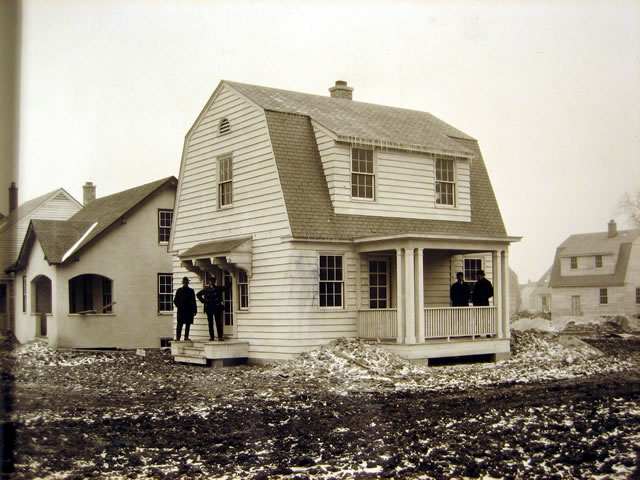
    The U.S. Housing Corporation built nearly 300 homes in Bremerton, Wash., during World War I. National Archives

    In 1918, as World War I intensified overseas, the U.S. government embarked on a radical experiment: It quietly became the nation’s largest housing developer, designing and constructing more than 80 new communities across 26 states in just two years.

    These weren’t hastily erected barracks or rows of identical homes. They were thoughtfully designed neighborhoods, complete with parks, schools, shops and sewer systems.

    In just two years, this federal initiative provided housing for almost 100,000 people.

    Few Americans are aware that such an ambitious and comprehensive public housing effort ever took place. Many of the homes are still standing today.

    But as an urban planning scholar, I believe that this brief historic moment – spearheaded by a shuttered agency called the United States Housing Corporation – offers a revealing lesson on what government-led planning can achieve during a time of national need.

    Government mobilization

    When the U.S. declared war against Germany in April 1917, federal authorities immediately realized that ship, vehicle and arms manufacturing would be at the heart of the war effort. To meet demand, there needed to be sufficient worker housing near shipyards, munitions plants and steel factories.

    So on May 16, 1918, Congress authorized President Woodrow Wilson to provide housing and infrastructure for industrial workers vital to national defense. By July, it had appropriated US$100 million – approximately $2.3 billion today – for the effort, with Secretary of Labor William B. Wilson tasked with overseeing it via the U.S. Housing Corporation.

    Over the course of two years, the agency designed and planned over 80 housing projects. Some developments were small, consisting of a few dozen dwellings. Others approached the size of entire new towns.

    For example, Cradock, near Norfolk, Virginia, was planned on a 310-acre site, with more than 800 detached homes developed on just 100 of those acres. In Dayton, Ohio, the agency created a 107-acre community that included 175 detached homes and a mix of over 600 semidetached homes and row houses, along with schools, shops, a community center and a park.

    Designing ideal communities

    Notably, the Housing Corporation was not simply committed to offering shelter.

    Its architects, planners and engineers aimed to create communities that were not only functional but also livable and beautiful. They drew heavily from Britain’s late-19th century Garden City movement, a planning philosophy that emphasized low-density housing, the integration of open spaces and a balance between built and natural environments.

    Milton Hill, a neighborhood designed and developed by the United States Housing Corporation in Alton, Ill.
    National Archives

    Importantly, instead of simply creating complexes of apartment units, akin to the public housing projects that most Americans associate with government-funded housing, the agency focused on the construction of single-family and small multifamily residential buildings that workers and their families could eventually own.

    This approach reflected a belief by the policymakers that property ownership could strengthen community responsibility and social stability. During the war, the federal government rented these homes to workers at regulated rates designed to be fair, while covering maintenance costs. After the war, the government began selling the homes – often to the tenants living in them – through affordable installment plans that provided a practical path to ownership.

    A single-family home in Davenport, Iowa, built by the U.S. Housing Corporation.
    National Archives

    Though the scope of the Housing Corporation’s work was national, each planned community took into account regional growth and local architectural styles. Engineers often built streets that adapted to the natural landscape. They spaced houses apart to maximize light, air and privacy, with landscaped yards. No resident lived far from greenery.

    In Quincy, Massachusetts, for example, the agency built a 22-acre neighborhood with 236 homes designed mostly in a Colonial Revival style to serve the nearby Fore River Shipyard. The development was laid out to maximize views, green space and access to the waterfront, while maintaining density through compact street and lot design.

    At Mare Island, California, developers located the housing site on a steep hillside near a naval base. Rather than flatten the land, designers worked with the slope, creating winding roads and terraced lots that preserved views and minimized erosion. The result was a 52-acre community with over 200 homes, many of which were designed in the Craftsman style. There was also a school, stores, parks and community centers.

    Infrastructure and innovation

    Alongside housing construction, the Housing Corporation invested in critical infrastructure. Engineers installed over 649,000 feet of modern sewer and water systems, ensuring that these new communities set a high standard for sanitation and public health.

    Attention to detail extended inside the homes. Architects experimented with efficient interior layouts and space-saving furnishings, including foldaway beds and built-in kitchenettes. Some of these innovations came from private companies that saw the program as a platform to demonstrate new housing technologies.

    One company, for example, designed fully furnished studio apartments with furniture that could be rotated or hidden, transforming a space from living room to bedroom to dining room throughout the day.

    To manage the large scale of this effort, the agency developed and published a set of planning and design standards − the first of their kind in the United States. These manuals covered everything from block configurations and road widths to lighting fixtures and tree-planting guidelines.

    A single-family home in Bremerton, Wash., built by the U.S. Housing Corporation.
    National Archives

    The standards emphasized functionality, aesthetics and long-term livability.

    Architects and planners who worked for the Housing Corporation carried these ideas into private practice, academia and housing initiatives. Many of the planning norms still used today, such as street hierarchies, lot setbacks and mixed-use zoning, were first tested in these wartime communities.

    And many of the planners involved in experimental New Deal community projects, such as Greenbelt, Maryland, had worked for or alongside Housing Corporation designers and planners. Their influence is apparent in the layout and design of these communities.

    A brief but lasting legacy

    With the end of World War I, the political support for federal housing initiatives quickly waned. The Housing Corporation was dissolved by Congress, and many planned projects were never completed. Others were incorporated into existing towns and cities.

    Yet, many of the neighborhoods built during this period still exist today, integrated in the fabric of the country’s cities and suburbs. Residents in places such as Aberdeen, Maryland; Bremerton, Washington; Bethlehem, Pennsylvania; Watertown, New York; and New Orleans may not even realize that many of the homes in their communities originated from a bold federal housing experiment.

    These homes on Lawn Avenue in Quincy, Mass., in 2019 were built by the U.S. Housing Corporation.
    Google Street View

    The Housing Corporation’s efforts, though brief, showed that large-scale public housing could be thoughtfully designed, community oriented and quickly executed. For a short time, in response to extraordinary circumstances, the U.S. government succeeded in building more than just houses. It constructed entire communities, demonstrating that government has a major role and can lead in finding appropriate, innovative solutions to complex challenges.

    At a moment when the U.S. once again faces a housing crisis, the legacy of the U.S. Housing Corporation serves as a reminder that bold public action can meet urgent needs.

    Eran Ben-Joseph does not work for, consult, own shares in or receive funding from any company or organization that would benefit from this article, and has disclosed no relevant affiliations beyond their academic appointment.

    ref. Believe it or not, there was a time when the US government built beautiful homes for working-class Americans to deal with a housing crisis – https://theconversation.com/believe-it-or-not-there-was-a-time-when-the-us-government-built-beautiful-homes-for-working-class-americans-to-deal-with-a-housing-crisis-253512

    MIL OSI – Global Reports

  • MIL-OSI Global: Tomato trade dispute between the US and Mexico is boiling over again – with 21% tariffs due in July

    Source: The Conversation – USA – By Andrew Muhammad, Professor of Agriculture and Resource Economics, University of Tennessee

    The country of origin – Mexico – is noted on the label of a package of Campari tomatoes for sale in the produce section of a Safeway grocery store on March 4, 2025, in Denver. AP Photo/David Zalubowski

    Although technically they’re a fruit, tomatoes are one of the most-consumed vegetables, according to the U.S. Department of Agriculture. Among the fresh produce the nation buys from foreign countries, tomatoes often rank first or second, behind avocados.

    This trade is now jeopardized because the Trump administration has revived a three-decade-old effort to limit imports.

    As economists who study global trade issues affecting agricultural commodities and processed food products, we have assessed the benefits of imported tomatoes and other products on consumers and businesses. Fresh tomato imports ensure year-round availability for consumers, contribute significantly to the U.S. economy by generating billions in sales and supporting thousands of jobs, and promote competitive pricing that benefits both consumers and businesses.

    New import restrictions could put all that at risk because domestic production cannot satisfy national demand. For tomatoes, like steel and other products, efforts to reverse trade imbalances can decrease consumer satisfaction and potentially destroy more jobs and economic activity than they create.

    Initiating a dumping investigation

    This tussle over tomatoes began in the 1990s.

    At that time, unprecedented growth in tomato imports from Mexico prompted U.S. producers to ask the Clinton administration to investigate whether they were being sold at unfairly low prices. If that were the case, it would violate both World Trade Organization rules and U.S. trade policy.

    The U.S. responded with an antidumping investigation, conducted by the Department of Commerce and U.S. International Trade Commission. The agencies were tasked with seeing if imports are being sold in the U.S. at less than fair market value – the definition of dumping.

    Dumping can harm domestic producers by depressing local prices to compete with imports, causing financial distress. An antidumping duty is essentially a tariff.

    The Commerce Department ruled against Mexican producers, finding that they had engaged in dumping, but reached an agreement with them. Mexican tomato exporters agreed to set minimum prices, leading the U.S. to call off its investigation. The U.S. and Mexico have subsequently entered into a string of suspension agreements over the years.

    The first was implemented in 1996, and the most recent took effect in 2019 during President Donald Trump’s prior term after his administration had threatened to impose a 17.5% tomato tariff.

    Squashing the tomato suspension agreement

    But in April 2025, the Commerce Department announced that it would withdraw from the latest tomato suspension agreement. The Trump administration plans to begin to impose, starting in July, antidumping duties of 21% on fresh tomatoes imported from Mexico.

    It is not obvious at this stage if American importers and consumers will bear the full burden of this tariff, or if Mexican tomato exporters will absorb this cost.

    This move is supposed to benefit fresh tomato producers in the U.S. – most of which are in Florida, with a significantly smaller number located in California. The tariffs could, however, hurt produce distributors, wholesalers and retailers, as well as American consumers.

    People in the U.S. have become accustomed to buying fresh tomatoes to toss into their salads and stuff into their sandwiches year-round, even though in most of the country you can only harvest field-grown tomatoes in the warmest months of the year.

    Focusing only on fresh tomatoes

    This dispute doesn’t involve all the tomatoes and tomato products Americans eat.

    U.S. tomato production is split into two main categories. Fresh tomatoes are usually purchased in a supermarket’s fresh produce section, to be consumed whole, chopped or sliced. This dispute is about those tomatoes.

    The other kind is processing tomatoes, which companies use for making tomato paste, canned or stewed tomatoes and tomato sauce. California leads the nation in processing tomato production. Unlike fresh tomatoes, where the U.S. imports far more than it produces or exports, the U.S. is actually running a trade surplus in processed tomato products.

    When the North American Free Trade Agreement was implemented in January 1994, U.S. fresh tomato production was more than four times the quantity of imported fresh tomatoes: 3.7 billion pounds (1.7 million metric tons) produced versus only 870 million pounds (400,000 metric tons) imported.

    Domestic production has steadily declined since then, while imports have increased. Imported fresh tomatoes are now twice as plentiful: 2.2 billion pounds (1 million metric tons) were grown in the U.S. in 2023, compared with 4.4 billion pounds (2 million metric tons)“ imported .

    This happened as Americans were eating more fresh tomatoes than ever: almost 20 pounds (9 kilograms) per capita in 2023.

    Mexico supplies most of the fresh tomatoes Americans buy in supermarkets.
    Justin Sullivan/Getty Images

    Influx didn’t clearly affect prices

    In 2024, fresh tomato imports totaled US$3.6 billion, with $3.1 billion coming from Mexico. This was a 367% increase since NAFTA took effect, adjusted for inflation.

    Given that costs of production are lower in Mexico for many products, especially in the fresh produce sector where labor costs are less than half U.S. levels, you might figure that this arrangement has kept prices for fresh tomatoes in the U.S. low. But there’s little evidence to support that. Instead, the opposite seems true.

    In 1995, the price that U.S. importers paid of Mexican tomatoes was 31 cents per pound. Since then, import prices have steadily increased to 74 cents per pound in 2024. They have often exceeded prices paid to American farmers and kept pace with the overall rise in food prices the past three decades.

    While restricting imported Mexican tomatoes might benefit U.S. tomato producers by making it easier for them to raise their prices, there are other factors to consider. Imports play a crucial role in boosting economic activity and creating jobs. According to a recent study, these imports generated a total economic impact of more than $8 billion.

    The extra $5 billion comes from all the value-added activities associated with getting that produce from the border to consumers. That total economic impact supports approximately 47,000 U.S. jobs tied to tomato storage, distribution, wholesaling and retailing.

    We would expect antidumping duties on imported fresh tomatoes to increase prices, and reduce the amount of fresh tomatoes Americans can buy. That would also shrink some of the economic impact and eliminate some of the jobs spurred by the imported tomato boom.

    The authors do not work for, consult, own shares in or receive funding from any company or organization that would benefit from this article, and have disclosed no relevant affiliations beyond their academic appointment.

    ref. Tomato trade dispute between the US and Mexico is boiling over again – with 21% tariffs due in July – https://theconversation.com/tomato-trade-dispute-between-the-us-and-mexico-is-boiling-over-again-with-21-tariffs-due-in-july-255813

    MIL OSI – Global Reports

  • MIL-OSI Asia-Pac: Erick Tsang promotes GBA in Egypt

    Source: Hong Kong Information Services

    Secretary for Constitutional & Mainland Affairs Erick Tsang and Commissioner for the Development of the Guangdong-Hong Kong-Macao Greater Bay Area Maisie Chan are on a duty visit to Egypt from May 17 to 20 to promote the development opportunities of the Guangdong-Hong Kong-Macao Greater Bay Area (GBA).

    During his stay in the Egyptian capital, Cairo, Mr Tsang met Chinese Ambassador to Egypt Liao Liqiang and exchanged views with representatives of the political and business sectors.

    Mr Tsang today attended the Guangdong-Hong Kong-Macao Greater Bay Area-Africa (Egypt) Economic & Trade Cooperation Exchange Conference and delivered a speech to promote the development opportunities of the GBA to the political and business sectors.

    He said that with the central authorities’ full support, the Hong Kong Special Administrative Region and other bay area cities complement each other’s strengths and work closely together to promote the GBA’s high-quality development.

    Mr Tsang also noted that Hong Kong possesses the institutional advantages of “one country, two systems”, with a business environment that is highly market-oriented and internationalised, underpinned by the rule of law, a free flow of capital, a robust financial regulatory regime, a simple and low tax regime, and a global pool of professional talent.

    He encouraged enterprises to capitalise on Hong Kong’s unique advantages of having the staunch support of the motherland and being closely connected to the world by establishing a foothold in the city and tapping into the huge GBA market.

    Mr Tsang added that Hong Kong, as a world-renowned metropolis and China’s most internationalised city, should play its unique roles and functions as a super connector and super value-adder, commence more international co-operation, contribute to the country’s high-quality opening up and development, and further enhance its global influence in the changing international landscape.

    He will depart for Hong Kong this afternoon, arriving on May 20.

    MIL OSI Asia Pacific News

  • MIL-OSI: Varonis Becomes the First Data Security Platform to Achieve FedRAMP Authorization

    Source: GlobeNewswire (MIL-OSI)

    MIAMI, May 19, 2025 (GLOBE NEWSWIRE) — Varonis Systems, Inc. (Nasdaq: VRNS), the leader in data security, proudly announces that its cloud-native Data Security Platform is the first in its category to achieve Federal Risk and Authorization Management Program (FedRAMP®) Authorization.

    The industry milestone confirms that Varonis’ AI-driven platform aligns with rigorous standards for cloud-hosted security solutions and highlights the company’s commitment to providing best-in-class data security to federal agencies and public-sector organizations nationwide.

    “FedRAMP is the gold standard, and Varonis is the first and only FedRAMP-certified Data Security Platform — making us the clear choice for organizations that need to reduce their blast radius, respond to threats, and help prevent data breaches,” said Varonis CEO, President, and Co-founder Yaki Faitelson. “Our public-sector customers — as well as private-sector enterprises that demand solutions that meet exacting security standards — will now benefit from the speed to value and automation our cloud platform offers.”

    FedRAMP is a government-wide program that provides a standardized approach to security assessment, authorization, and continuous monitoring for cloud products and services. To achieve FedRAMP Moderate Authorization, Varonis’ cloud Data Security Platform successfully passed an extensive third-party assessment.

    Government agencies and federal systems integrators already rely on Varonis to support Zero Trust, insider threat detection, data loss prevention, and compliance with mandates like NIST 800-53, OMB M-21-31, M-22-09, and CISA Zero Trust guidance.

    Now, public-sector entities can accelerate their data security programs and prepare for safe AI rollouts by adopting Varonis’ industry-leading platform to:

    • Continuously discover and classify critical data like CUI
    • Identify and right-size access automatically and continuously
    • Detect advanced threats with AI-powered automation

    The Varonis Data Security Platform is available for federal agencies to purchase now. Learn more about Varonis’ federal government solutions.

    Additional Resources:

    About Varonis
    Varonis (Nasdaq: VRNS) is the leader in data security, fighting a different battle than conventional cybersecurity companies. Our cloud-native Data Security Platform continuously discovers and classifies critical data, removes exposures, and detects advanced threats with AI-powered automation.

    Thousands of organizations worldwide trust Varonis to defend their data wherever it lives — across SaaS, IaaS, and hybrid cloud environments. Customers use Varonis to automate a wide range of security outcomes, including data security posture management (DSPM), data classification, data access governance (DAG), data detection and response (DDR), data loss prevention (DLP), AI security, and insider risk management.

    Varonis protects data first, not last. Learn more at www.varonis.com.

    Investor Relations Contact:
    Tim Perz
    Varonis Systems, Inc.
    646-640-2112
    investors@varonis.com

    News Media Contact:
    Rachel Hunt
    Varonis Systems, Inc.
    877-292-8767 (ext. 1598)
    pr@varonis.com 

    The MIL Network

  • MIL-OSI USA: Prepared Remarks Before SEC Speaks

    Source: Securities and Exchange Commission

    Thank you, Cicely, for your kind introduction. Ladies and gentlemen, I am very happy to be with you at my first SEC Speaks conference as SEC Chairman, though I have been a regular at this event over the past 15 years or so.[1] 

    The event has experienced some rather precipitous fits and starts over the past couple of years, and I shall make sure that it stays on track as valuable, comprehensive public outreach by the agency. 

    I extend my thanks to the folks at the Practising Law Institute for organizing the conference. I would also like to thank:

    • The SEC staff who have the annual opportunity to talk a little bit publicly about their work over the past year and discuss some of the things that they expect to come in the next few months,
    • The commentators taking part on the various panels who can pose questions and make observations that can help to focus the discussion on critical topics and perspectives that might not be top of mind to those of us within the halls of the SEC,
    • You here live in the audience where you have a chance to meet each other and talk to panelists, and
    • You viewing online who have a convenient opportunity to participate virtually.  

    Innovation and the SEC

    Today I intend to discuss innovation. In particular, about how the Securities and Exchange Commission should not fear innovation. Rather, it should embrace and champion it.

    Markets, by their nature, evolve. They are dynamic because they are made up of human beings. When human beings encounter problems, they innovate to solve them because there is a demand — and there are rewards — for solutions. In a free society, human nature rises to the occasion with inventiveness and competitive spirit, plus Adam Smith’s invisible hand to provide incentives beyond mere altruism. All of that is a good thing.  

    Over the decades, including during my time as a Commissioner from 2002 to 2008 and before that on the staff of two SEC chairmen, the SEC has both enabled innovation and, unfortunately at times, stifled it. Fortunately, innovation — in other words, progress — eventually won the day. Let me take a few moments to revisit some recent history. 

    In the late 1960s, there was a big, beautiful bull market. Trading volume doubled to some 12 million shares a day — which I realize sounds quaint today — overwhelming the paper-based clearance and settlement systems and transfer agent duties. Efficiency began to deteriorate as rising stacks of paper stock certificates had to be physically delivered by clerks trundling carts carrying boxes of those paper certificates to and from various broker-dealers up and down Wall Street and in other financial districts all across America. Investors paid the price for this inefficiency as securities were misplaced, misdirected, lost, or delivered late. Fails ballooned and many inadequately capitalized broker-dealers were caught by that whiplash of scuttled transactions. As a Band-Aid, trading times each day were reduced and exchanges eventually closed on Wednesdays to allow firms time to process the mountains of certificates. At times, the New York Stock Exchange closed two days in a week to catch up on the paperwork.

    The breakdown over an antiquated system became known as the “Paperwork Crisis.”

    As William Dentzer, the first CEO of the Depository Trust Company, or DTC, put it: “The paperwork crisis caused the post-trade processing of hundreds of millions of dollars to be delayed or to fail entirely, dividends to investors to be misdirected, and brokerage firms to go bust.”[2]

    Very much to its credit, the SEC at the time was proactive. It was clear that what needed to be done was to move to electronic transactions and book-entry. But how would we get there? The agency constructively held roundtables and engaged with industry. It used its rulemaking authority and powers of persuasion to allow for new ways of back-office processing of trades and other efficiencies tied to information technology. As a result of that collaboration between the SEC and market participants, the DTC was eventually established as an industry co-operative, later becoming the Depository Trust & Clearing Corporation. The computerization of securities was born with the SEC very much at the forefront of advancing that effort.

    As things go, that late 1960s bull market was inevitably followed by a severe, long-lived bear market. Many broker-dealers went out of business because of the crushing downturn in revenues, rather than inadequate back-office capacity as in the preceding bull market. The SEC worked with Congress and the securities industry to enact the Securities Investor Protection Act in 1970. That law established the Securities Investor Protection Corporation, an industry-backed insurance fund to protect investors from losses in the event their broker fails. It was a positive innovation for investors in which the SEC played a significant role.

    In the late 1980s and early 1990s, the American Stock Exchange and other organizations had come up with a creative response to the SEC’s identification of program trading of index stocks as a contributor to the 1987 market break. They proposed an instrument for trading a basket of stocks — “SPIDERS” — the S&P Depository Receipts, which is a basket of equities traded as a fund.  It was the earliest exchange-traded fund, or ETF. But, the proposal languished at the Commission for several years, as the Divisions at the time raised various issues with this new fund. In no uncertain terms, Chairman Richard Breeden demanded that the Division heads “figure it out”[3] and gave them a limited amount of time to do so. He was emphatic about getting it done right away. And the SEC did. The SPDR launched in 1993. Some at the SEC were worried whether the market would accept this innovation. In fact, it took some effort by the sponsoring firms to persuade institutions to purchase the product. But, it grew to $1 billion in three years. Chairman Breeden’s view was, let the market decide; we cannot be the arbiter. I think we can all agree that the innovation of SPDRs and ETFs has been a boon for investors. 

    During Arthur Levitt’s tenure as chairman in the mid-to-late 1990s, proprietary trading systems took off in popularity, controversially drawing trading off-exchange. Chairman Levitt believed that the SEC needed to provide regulatory flexibility for the electronic markets to be able to innovate. So, Regulation Alternative Trading Systems, or “Reg ATS,” adopted in 1999, allowed for ATSs to be regulated like broker-dealers, rather than exchanges. 

    As we moved to a new century, the market came up with another innovation: the gold fund, the first commodity ETF. This concept had been internally bouncing around the Divisions like a pinball and across town to the Commodity Futures Trading Commission. Although it took a while, innovation prevailed, and investors gained the option to invest in gold without physically owning it.

    Crypto Innovation

    This brings me to today. The crypto markets have been languishing in SEC limbo for years.

    Initially, the SEC first pursued what I call the “head-in-the-sand” approach — perhaps hoping that crypto would go away. Then, it pivoted and pursued a shoot-first-and-ask-questions-later approach of regulation through enforcement. The “just come in to visit” entreaty often meant coming home to a subpoena. It seemed like a catch-22 for market participants. This environment did not create trust. In reality, the message was, “You go figure it out.” That is a fine approach if the regulator plays an active role in interacting with the marketplace to encourage solutions and adapt existing rules and practices if the existing approaches are inapposite to new developments in technology. Old ways of doing things should not be immutable, especially if Congress has granted an agency discretion to make changes consistent with Congressional intent and in the public interest. While the SEC must be faithful to its statutes in any effort to be innovative, it should use its available authority and discretion to adapt to and accommodate new developments.

    The SEC’s claim at the time that it was willing to talk to prospective registrants proved ephemeral at best because the SEC made no adaptations to registration forms or other regulatory requirements to accommodate this new technology. I have been told that market participants would in good faith enter what they thought were policy meetings with Commission staff only to receive enforcement inquiries shortly after their meeting. If that culture were not bad enough, SEC leadership for too long prevented staff from communicating with market participants when complicated legal questions arose. I am pleased to announce that I recently directed Division of Corporation Finance staff to maintain transparent interactions with the public. When staff is allowed to talk openly with industry, market participants can move more nimbly and allocate capital to productive uses. 

    It is a new day at the SEC. While I have directed Commission staff across our policy Divisions to begin drafting rule proposals related to crypto, the staff continue to “clear the brush” through staff-level statements. For example, last week the staff of the Division of Trading and Markets issued a set of FAQs that addressed broker-dealer and transfer agent questions. While the views of the staff are not rules or regulations of the Commission, they can provide useful insights for the public.[4] Ultimately, the Commission is, of course, responsible and must itself squarely address these issues to ensure that the public has clear rules of the road. 

    Last, as I mentioned at a recent Crypto Task Force roundtable, I would like the Commission to allow SEC registrants to custody and trade both securities and non-securities under one roof. Enabling this reality could reduce costs for investors while allowing non-security trading to enter a regulated environment at the federal level expeditiously. This would be an initial step towards the possibility of eventually achieving a “super-app” reality. Thank you to Commissioner Hester Peirce, the Crypto Task Force, and Trading and Markets staff for their continued efforts.       

    FinHub

    In keeping with this theme of innovation and the progress of the Crypto Task Force, we have asked Congress for reprogramming approval to integrate the functions of the agency’s Strategic Hub for Innovation and Financial Technology, or “FinHub” into other parts of the agency.  

    Established in 2018, FinHub was created during a critical period of emerging technologies. The rapid development of distributed ledger technology, including digital assets, artificial intelligence, and machine learning, required a centralized effort to build understanding at the SEC. Unfortunately, FinHub over time came to be perceived by many in the digital asset industry as a tool for enforcement rather than a tool to foster innovation. Moreover, as currently constituted, FinHub is too small to be viable and efficient, and this staff expertise can be better utilized elsewhere in the agency.

    The principles and priorities under which FinHub was founded are being integrated into the very fabric of the SEC. I will ensure that innovation will be ingrained in the culture SEC-wide, as it should be, and not focused on one small office.

    Investing in Private Funds

    Financial innovation sometimes means getting out of the way of capital formation and allowing all investors to gain the benefits of our robust markets.

    Since 2002, the SEC staff has taken the position that closed-end funds investing 15% or more of their assets in private funds should impose a minimum initial investment requirement of $25,000 and restrict sales to investors that satisfy the accredited investor standard.  As a result, many retail investors have missed out on opportunities to invest in closed-end funds that invest in private investment funds, like hedge funds and private equity funds.

    Much has changed since 2002 — including the growth of private markets and the increased oversight and enhanced reporting by both private fund advisers and registered funds. Indeed, in the last 10 years alone, private fund assets have almost tripled from $11.6 trillion to $30.9 trillion.[5]  Allowing this option could increase investment opportunities for retail investors seeking to diversify their investment allocation in line with their investment time horizon and risk tolerance.

    With this in mind, I intend to have the Commission address this situation and reconsider this 23-year-old practice concerning investments by closed-end funds in private funds. This common-sense approach will give all investors the ability to seek exposure to a growing and important asset class, while still providing the investor protections afforded to registered funds. We must consider and resolve important disclosure issues for these products, particularly for those that trade on exchanges, including conflicts of interest, illiquidity, and fees.

    CAT

    Before I close, I want to mention a topic that has drawn significant scrutiny, the Consolidated Audit Trail, known by the innocuous-sounding nickname “CAT.” This particular “CAT” has quite an appetite for data and computer power, with costs rising to nearly $250 million a year. These costs are divvied up and eventually, one way or another, fall on the shoulders of investors. The financial services industry and Congress have rightly pushed back on the seemingly endless cost increases and the risks of storing so much sensitive data together. Much of the increases are due to changing demands for information and access.

    Therefore, I have instructed the staff to undertake a comprehensive review of the CAT. In addition to examining the costs of the system, I would like to see the staff take a hard look at the reporting requirements and scope of what is collected. I look forward to the agency engaging with the public on this important issue.

    Conclusion

    As I begin my tenure as Chairman, I can tell you that we are getting back to our roots of promoting, rather than stifling, innovation. The markets innovate, and the SEC should not be in the business of telling them to stand still.

    It is a new day at the SEC, and I look forward to what we are going to be able to accomplish for investors and the markets.

    Thank you.


    [1] These remarks reflect my individual views as Chairman of the Commission and do not necessarily reflect the views of the Commission or my fellow Commissioners.

    [4] See 17 C.F.R. § 202.1(d).  Staff statements represent the views of the respective office or division; they are not rules, regulations, or statements of the Commission.  Further, the Commission neither approves nor disapproves their content.  Staff statements have no legal force or effect: they do not alter or amend applicable law, and they create no new or additional obligations for any person.

    MIL OSI USA News

  • Viksit Krishi Sankalp Abhiyan: Nationwide Push to Modernise Farming

    Source: Government of India

    Source: Government of India (4)

    In a move to transform Indian agriculture, Union Minister for Agriculture & Farmers Welfare and Rural Development, Shivraj Singh Chouhan announced the launch of the nationwide Viksit Krishi Sankalp Abhiyan, set to run from May 29 to June 12. Addressing a press conference at the National Media Centre, the Minister emphasized that the initiative is a key step towards realizing Prime Minister Narendra Modi’s vision of a developed India through modern, innovative, and sustainable farming practices.

    The campaign will serve as a powerful platform to bridge the gap between research institutions and farming communities, ensuring that scientific advancements reach the grassroots level. Chouhan highlighted that developed agriculture, advanced farming techniques, and empowered farmers are critical pillars in building a developed nation. The Viksit Krishi Sankalp Abhiyan will be conducted biannually before the sowing of Kharif and Rabi crops to promote timely and relevant field-level interventions.

    Under the leadership of the Ministry of Agriculture and the Indian Council of Agricultural Research (ICAR), the initiative aims to enhance food security for India’s 1.45 billion people, promote nutritional food access, increase farmer incomes, and conserve natural resources. The strategy rests on six core pillars: boosting production, lowering input costs, ensuring fair pricing, offering disaster compensation, encouraging crop diversification and value addition, and expanding natural and organic farming.

    This year, India recorded unprecedented agricultural outputs. Kharif rice reached 1206.79 lakh metric tonnes, wheat 1154.30 lakh metric tonnes, maize 248.11 lakh metric tonnes, groundnut 104.26 lakh metric tonnes, and soybean 151.32 lakh metric tonnes. Total food grain production rose from 3157.74 lakh tonnes in 2023–24 to 3309.18 lakh tonnes in 2024–25. These record figures reflect India’s growing agricultural strength and align with the campaign’s vision of turning India into the “Food Basket of the World.”

    The campaign will mobilize ICAR’s 113 research institutes, 731 Krishi Vigyan Kendras (KVKs), agricultural universities, state agriculture departments, farmer-producer organizations (FPOs), and innovative farmers. A total of 2,170 expert teams, each comprising at least four members, will visit over 65,000 villages across 723 districts. These teams will conduct morning, afternoon, and evening sessions with farmers to promote scientific farming methods.

    Field assessments will focus on agro-climatic conditions, soil health, rainfall patterns, and water availability. Using Soil Health Cards, experts will recommend suitable crops, high-yield seed varieties, balanced fertilizer use, and modern sowing techniques. The aim is to reduce farming costs, improve soil health, and enhance productivity through precise and tailored guidance.

    Importantly, the Viksit Krishi Sankalp Abhiyan is envisioned as a two-way engagement. Farmers will be encouraged to share their local challenges, such as pest issues and climate anomalies, which will in turn inform ongoing research. The initiative is expected to directly reach and engage more than 1.3 crore farmers, ensuring that agricultural progress is driven by both scientific expertise and farmers’ insights.

  • MIL-OSI: Gilat Reports First Quarter 2025 Results

    Source: GlobeNewswire (MIL-OSI)

    Revenues Increased 21% Year-over-Year with Adjusted EBITDA of $7.6 Million

    Reiterates Guidance for 2025

    PETAH TIKVA, Israel, May 19, 2025 (GLOBE NEWSWIRE) — Gilat Satellite Networks Ltd. (NASDAQ: GILT, TASE: GILT), a worldwide leader in satellite networking technology, solutions and services, today reported its results for the first quarter, ended March 31, 2025.

    First Quarter 2025 Financial Highlights

    • Revenues of $92million, up 21% compared with $76.1million in Q12024;
    • GAAP operating loss of $2.7 million,compared with GAAP operating income of $5.4 million in Q1 2024 mainly due to a loss of about $3.6 million from Gilat Stellar Blu’s ramp up process, amortization of purchased intangibles derived from the Stellar Blu acquisition, and other operating expenses, related to earnout liabilities and one-time acquisition-related costs;
    • Non-GAAP operating income of $5.2million, compared with $6.6million in Q1 2024;
    • GAAP net loss of $6.0 million, or $0.11 per share, compared with GAAP net income of $5.0 million, or $0.09 per diluted share, in Q1 2024;
    • Non-GAAP net income of $1.8 million, or $0.03 per diluted share, compared with $6.0 million, or $0.11 per diluted share, in Q1 2024;
    • Adjusted EBITDA of $7.6 million, compared with $9.3 million in Q1 2024, which includes a loss of about $3.6 million from Gilat Stellar Blu’s ramp up process. Adjusted EBITDA, excluding such loss, was $11.2 million.

    Forward-Looking Expectations

    The Company today reiterated its guidance for 2025.

    Expectations are for revenue between $415 and $455 million, representing year-over-year growth of 42% at the midpoint. Adjusted EBITDA is expected to be between $47 and $53 million, representing year-over-year growth of 18% at the midpoint.  

    Management Commentary

    Adi Sfadia, Gilat’s CEO, commented: “Gilat delivered solid Q1 2025 results, demonstrating strong execution across the company and positive impact from our new organizational structure. Gilat Defense is experiencing significant momentum, fueled by growing demand for its broad portfolio of products and services and is becoming an increasingly important contributor to our growth. This growth is supported by macro-geopolitical factors that are driving increased investment in secure, mission-critical communications worldwide.”

    Mr. Sfadia added, “Regarding Gilat Commercial, our IFC business continues to expand as we deliver on customer commitments and grow our market base. Gilat Stellar Blu’s ramp up is on track, and its Sidewinder ESA is now flying on over 150 aircraft, with strong feedback and additional orders expected very soon. We are collaborating with our partners to expand into new applications such as ISR and VVIP aviation. We’re also in the process of developing OEM installation and broader modem compatibility, further establishing Sidewinder as the go-to multi-orbit IFC solution.”

    Mr. Sfadia concluded, “Based on our strong beginning to 2025 and as Stellar Blu’s ramp up finalizes, we are on track to deliver a record year in both revenues and non-GAAP profitability as we capture the expanding opportunities in mission-critical communications and next-generation satellite solutions.”

    Key Recent Announcements

    • Gilat Receives Over $15 Million in Orders from Leading Satellite Operators
    • Gilat Receives a Multimillion Order from a Global Defense Organization
    • Gilat Receives over $11 Million Defense Contract from a Leading UAV Company
    • Gilat Awarded Up to $23 Million Multi-Year Contract to Service Satellite Transportable Terminal Units for US DoD Customers
    • Gilat Receives $6 Million Defense Contract to Provide Military Communications solutions in Asia-Pacific
    • Gilat Receives $4 Million in Orders for Advanced Portable Satellite Terminals from Global Defense Customers
    • Gilat Awarded Over $5 Million to Support Critical Connectivity for Defense Forces

    Conference Call Details

    Gilat’s management will discuss its first quarter 2025 results and business achievements and participate in a question-and-answer session:

    Date: Monday, May 19, 2025
    Start: 09:00 AM EST / 16:00 IST
    Dial-in: US: 1-888-407-2553
      International: +972-3-918-0609

    A simultaneous webcast of the conference call will be available on the Gilat website at http://www.gilat.com and through this link: https://veidan.activetrail.biz/gilatq1-2025.

    The webcast will also be archived for a period of 30 days on the Company’s website and through the link above.

    Non-GAAP Measures

    The attached summary unaudited financial statements were prepared in accordance with U.S. Generally Accepted Accounting Principles (GAAP). To supplement the consolidated financial statements presented in accordance with GAAP, the Company presents non-GAAP presentations of gross profit, operating expenses, operating income, income before taxes on income, net income, Adjusted EBITDA, and earnings per share. The adjustments to the Company’s GAAP results are made with the intent of providing both management and investors with a more complete understanding of the Company’s underlying operational results, trends, and performance. Non-GAAP financial measures mainly exclude, if and when applicable, the effect of stock-based compensation expenses, amortization of purchased intangibles, lease incentive amortization, other non-recurring expenses, other integration expenses, other operating expenses (income), net, and income tax effect on the relevant adjustments.

    Adjusted EBITDA is presented to compare the Company’s performance to that of prior periods and evaluate the Company’s financial and operating results on a consistent basis from period to period. The Company also believes this measure, when viewed in combination with the Company’s financial results prepared in accordance with GAAP, provides useful information to investors to evaluate ongoing operating results and trends. Adjusted EBITDA, however, should not be considered as an alternative to operating income or net income for the period and may not be indicative of the historic operating results of the Company; nor is it meant to be predictive of potential future results. Adjusted EBITDA is not a measure of financial performance under GAAP and may not be comparable to other similarly titled measures for other companies. Reconciliation between the Company’s net income and adjusted EBITDA is presented in the attached summary financial statements.

    Non-GAAP presentations of gross profit, operating expenses, operating income, income before taxes on income, net income, adjusted EBITDA and earnings per share should not be considered in isolation or as a substitute for any of the consolidated statements of operations prepared in accordance with GAAP, or as an indication of Gilat’s operating performance or liquidity.

    About Gilat

    Gilat Satellite Networks Ltd. (NASDAQ: GILT, TASE: GILT) is a leading global provider of satellite-based broadband communications. With over 35 years of experience, we create and deliver deep technology solutions for satellite, ground and new space connectivity and provide comprehensive, secure end-to-end solutions and services for mission-critical operations, powered by our innovative technology. We believe in the right of all people to be connected and are united in our resolution to provide communication solutions to all reaches of the world.

    Our portfolio includes a diverse offering to deliver high value solutions for multiple orbit constellations with very high throughput satellites (VHTS) and software defined satellites (SDS). Our offering is comprised of a cloud-based platform and high-performance satellite terminals; high performance Satellite On-the-Move (SOTM) antennas; highly efficient, high-power Solid State Power Amplifiers (SSPA) and Block Upconverters (BUC) and includes integrated ground systems for commercial and defense, field services, network management software, and cybersecurity services.

    Gilat’s comprehensive offering supports multiple applications with a full portfolio of products and tailored solutions to address key applications including broadband access, mobility, cellular backhaul, enterprise, defense, aerospace, broadcast, government, and critical infrastructure clients all while meeting the most stringent service level requirements. For more information, please visit: www.gilat.com

    Certain statements made herein that are not historical are forward-looking within the meaning of the Private Securities Litigation Reform Act of 1995. The words “estimate”, “project”, “intend”, “expect”, “believe” and similar expressions are intended to identify forward-looking statements. These forward-looking statements involve known and unknown risks and uncertainties. Many factors could cause the actual results, performance or achievements of Gilat to be materially different from any future results, performance or achievements that may be expressed or implied by such forward-looking statements, including, among others, changes in general economic and business conditions, inability to maintain market acceptance to Gilat’s products, inability to timely develop and introduce new technologies, products and applications, rapid changes in the market for Gilat’s products, loss of market share and pressure on prices resulting from competition, introduction of competing products by other companies, inability to manage growth and expansion, loss of key OEM partners, inability to attract and retain qualified personnel, inability to protect the Company’s proprietary technology and risks associated with Gilat’s international operations and its location in Israel, including those related to the hostilities between Israel and Hamas. For additional information regarding these and other risks and uncertainties associated with Gilat’s business, reference is made to Gilat’s reports filed from time to time with the Securities and Exchange Commission. We undertake no obligation to update or revise any forward-looking statements for any reason.

    Contact:

    Gilat Satellite Networks
    Hagay Katz, Chief Products and Marketing Officer
    hagayk@gilat.com

    Alliance Advisors

    GilatIR@allianceadvisors.com
    Phone: +1 212 838 3777

    GILAT SATELLITE NETWORKS LTD.      
    CONSOLIDATED STATEMENTS OF INCOME (LOSS)      
    U.S. dollars in thousands (except share and per share data)      
        Three months ended
     March 31,
       
          2025       2024  
        Unaudited
             
    Revenues $ 92,037     $ 76,078  
    Cost of revenues   63,639       48,024  
             
    Gross profit   28,398       28,054  
             
    Research and development expenses, net   11,621       9,319  
    Selling and marketing expenses   8,202       7,077  
    General and administrative expenses   6,784       8,077  
    Other operating expenses (income), net   4,538       (1,810 )
             
    Total operating expenses   31,145       22,663  
             
    Operating income (loss)   (2,747 )     5,391  
             
    Financial income (expenses), net   (936 )     513  
             
    Income (loss) before taxes on income   (3,683 )     5,904  
             
    Taxes on income   (2,313 )     (940 )
             
    Net income (loss) $ (5,996 )   $ 4,964  
             
    Earnings (losses) per share (basic and diluted) $ (0.11 )   $ 0.09  
             
    Weighted average number of shares used in              
    computing earnings (losses) per share (Basic and Diluted)   57,037,671       57,016,585  
             
    GILAT SATELLITE NETWORKS LTD.
    RECONCILIATION BETWEEN GAAP AND NON-GAAP CONSOLIDATED STATEMENTS OF INCOME (LOSS)
    FOR COMPARATIVE PURPOSES
    U.S. dollars in thousands (except share and per share data)
        Three months ended   Three months ended
        March 31, 2025   March 31, 2024  
        GAAP   Adjustments (*)   Non-GAAP   GAAP   Adjustments (*)   Non-GAAP  
        Unaudited   Unaudited
                               
    Gross profit $ 28,398   810   $ 29,208   $ 28,054   726   $ 28,780
    Operating expenses 31,145   (7,090)   24,055   22,663   (499)   22,164
    Operating income (loss) (2,747)   7,900   5,153   5,391   1,225   6,616
    Income (loss) before taxes on income (3,683)   7,900   4,217   5,904   1,225   7,129
    Net income (loss) $ (5,996)   7,823   $ 1,827   $ 4,964   1,050   $ 6,014
                             
    Earnings (losses) per share (basic and diluted) $ (0.11)   $ 0.14   $ 0.03   $ 0.09   $ 0.02   $ 0.11
                             
                             
    Weighted average number of shares used in computing earnings (losses) per share                      
      Basic 57,037,671       57,037,671   57,016,585       57,016,585
      Diluted 57,037,671       58,005,232   57,016,585       57,108,734
                             
                             
     (*)  Adjustments reflect the effect of stock-based compensation expenses as per ASC 718, amortization of purchased intangibles, other operating income (expenses), net, other integration expenses and income tax effect on such adjustments which is calculated using the relevant effective tax rate.  
                             
            Three months ended           Three months ended    
            March 31, 2025           March 31, 2024    
            Unaudited           Unaudited    
                             
    GAAP net income (loss)   $ (5,996)           $ 4,964    
                           
    Gross profit                    
    Stock-based compensation expenses   173           150    
    Amortization of purchased intangibles   600           507    
    Other integration expenses   37           69    
          810           726    
    Operating expenses                    
    Stock-based compensation expenses   901           717    
    Stock-based compensation expenses related to business combination   607           1,324    
    Amortization of purchased intangibles   884           257    
    Other operating expenses (income), net *)   4,538           (1,810)    
    Other integration expenses   160           11    
            7,090           499    
                             
    Taxes on income   (77)           (175)    
                             
    Non-GAAP net income   $ 1,827           $ 6,014    
                             
                             
    *) Including M&A expenses related to business combinations in the amounts of $2,205 and $318 for the three months ended March 31, 2025 and 2024, respectively
                             
    GILAT SATELLITE NETWORKS LTD.      
    SUPPLEMENTAL INFORMATION      
    U.S. dollars in thousands      
           
           
    ADJUSTED EBITDA:      
           
       Three months ended
       March 31,
       2025     2024 
      Unaudited
           
    GAAP net income (loss) $ (5,996 )   $ 4,964  
    Adjustments:      
    Financial expenses (income), net   936       (513 )
    Taxes on income   2,313       940  
    Stock-based compensation expenses   1,074       867  
    Stock-based compensation expenses related to business combination   607       1,324  
    Depreciation and amortization (*)   3,962       3,481  
    Other operating expenses (income), net   4,538       (1,810 )
    Other integration expenses   197       80  
           
    Adjusted EBITDA $ 7,631     $ 9,333  
           
    (*) Including amortization of lease incentive      
           
    SEGMENT REVENUES:      
           
       Three months ended
       March 31,
        2025       2024  
      Unaudited
           
    Commercial $ 64,220     $ 41,193  
    Defense   23,011       17,230  
    Peru   4,806       17,655  
           
    Total revenues $ 92,037     $ 76,078  
           
    GILAT SATELLITE NETWORKS LTD.      
    CONSOLIDATED BALANCE SHEETS      
    U.S. dollars in thousands      
           
      March 31,   December 31,
        2025       2024  
      Unaudited   Audited
           
    ASSETS      
           
    CURRENT ASSETS:      
    Cash and cash equivalents $ 63,783     $ 119,384  
    Restricted cash   470       853  
    Trade receivables, net   49,164       49,600  
    Contract assets   33,394       24,941  
    Inventories   59,431       38,890  
    Other current assets   34,395       21,963  
           
       Total current assets   240,637       255,631  
           
    LONG-TERM ASSETS:      
    Restricted cash   13       12  
    Long-term contract assets   7,450       8,146  
    Severance pay funds   5,847       5,966  
    Deferred taxes   9,912       11,896  
    Operating lease right-of-use assets   6,400       6,556  
    Other long-term assets   8,539       5,288  
           
    Total long-term assets   38,161       37,864  
           
    PROPERTY AND EQUIPMENT, NET   69,878       70,834  
           
    INTANGIBLE ASSETS, NET   64,928       12,925  
           
    GOODWILL   169,444       52,494  
           
    TOTAL ASSETS $ 583,048     $ 429,748  
           
    GILAT SATELLITE NETWORKS LTD.      
    CONSOLIDATED BALANCE SHEETS (Cont.)      
    U.S. dollars in thousands      
           
      March 31,   December 31,
        2025       2024  
      Unaudited   Audited
           
    LIABILITIES AND SHAREHOLDERS’ EQUITY      
           
    CURRENT LIABILITIES:      
    Current maturities of long-term loan $ 3,000     $  
    Trade payables   20,364       17,107  
    Accrued expenses   48,245       45,368  
    Advances from customers and deferred revenues   71,701       18,587  
    Operating lease liabilities   2,865       2,557  
    Other current liabilities   24,617       17,817  
           
       Total current liabilities   170,792       101,436  
           
    LONG-TERM LIABILITIES:      
    Long-term loans   57,469       2,000  
    Accrued severance pay   6,536       6,677  
    Long-term advances from customers and deferred revenues   254       580  
    Operating lease liabilities   3,608       4,014  
    Other long-term liabilities   44,875       10,606  
           
       Total long-term liabilities   112,742       23,877  
           
    SHAREHOLDERS’ EQUITY:      
    Share capital – ordinary shares of NIS 0.2 par value   2,736       2,733  
    Additional paid-in capital   944,657       943,294  
    Accumulated other comprehensive loss   (6,411 )     (6,120 )
    Accumulated deficit   (641,468 )     (635,472 )
           
    Total shareholders’ equity   299,514       304,435  
           
    TOTAL LIABILITIES AND SHAREHOLDERS’ EQUITY $ 583,048     $ 429,748  
           
    GILAT SATELLITE NETWORKS LTD.      
    CONSOLIDATED STATEMENTS OF CASH FLOWS      
    U.S. dollars in thousands      
           
      Three months ended
      March 31,
      2025   2024
      Unaudited
    Cash flows from operating activities:      
    Net income (loss) $ (5,996 )   $ 4,964  
    Adjustments required to reconcile net income (loss)      
     to net cash provided by (used in) operating activities:      
    Depreciation and amortization   3,905       3,425  
    Stock-based compensation expenses   1,681       2,191  
    Accrued severance pay, net   (22 )     (55 )
    Deferred taxes, net   1,984       451  
    Decrease (increase) in trade receivables, net   4,528       (8,797 )
    Decrease (increase) in contract assets   (7,798 )     6,248  
    Decrease in other assets and other adjustments (including short-term, long-term      
    and effect of exchange rate changes on cash, cash equivalents and restricted cash)   18,390       3,507  
    Increase in inventories   (11,456 )     (3,193 )
    Decrease in trade payables   (7,828 )     (666 )
    Decrease in accrued expenses   (6,358 )     (1,240 )
    Decrease in advances from customers and deferred revenues   (1,096 )     (2,754 )
    Increase in other liabilities   3,454       139  
    Net cash provided by (used in) operating activities   (6,612 )     4,220  
           
    Cash flows from investing activities:      
    Purchase of property and equipment   (1,490 )     (793 )
    Investment in other asset   (2,500 )      
    Acquisitions of subsidiary, net of cash acquired   (104,943 )      
    Net cash used in investing activities   (108,933 )     (793 )
           
    Cash flows from financing activities:      
    Repayment of short-term debt, net         (2,744 )
    Proceeds from long-term loan, net of associated costs   58,970        
    Net cash provided by (used in) financing activities   58,970       (2,744 )
           
    Effect of exchange rate changes on cash, cash equivalents and restricted cash   592       (268 )
           
    Increase (decrease) in cash, cash equivalents and restricted cash   (55,983 )     415  
           
    Cash, cash equivalents and restricted cash at the beginning of the period   120,249       104,751  
           
    Cash, cash equivalents and restricted cash at the end of the period $ 64,266     $ 105,166  
           

    The MIL Network

  • MIL-OSI: LanzaTech Announces First Quarter 2025 Financial Results

    Source: GlobeNewswire (MIL-OSI)

    CHICAGO, May 19, 2025 (GLOBE NEWSWIRE) — LanzaTech Global, Inc. (NASDAQ: LNZA) (“LanzaTech” or the “Company”), a carbon management solutions company, today reported its financial and operating results for the first quarter of 2025.

    Key Takeaways:

    • Reported total revenue of $9.5 million for the first quarter of 2025 as compared to $10.2 million for the first quarter of 2024. The year-over-year decrease was driven primarily by lower revenues in the biorefining and Joint Development Agreement (“JDA”) & Contract Research businesses, which was largely offset by a significant increase in CarbonSmart™ revenue.
    • Continued to shift the Company’s core operations from research and development to the global deployment of LanzaTech’s commercially proven technology, with incremental actions being taken to sharpen the business focus, streamline operations, and improve the Company’s cost structure.
    • Closed $40 million of preferred equity capital in May of 2025; however, after completing its assessment as required by Generally Accepted Accounting Principles (“GAAP”), management has concluded that its continuing actions such as ongoing liquidity initiatives, together with the terms of the preferred capital, and the execution of cost reduction plans, do not alleviate substantial doubt about the Company’s ability to continue as a going concern.

    First Quarter 2025 Financial Results
    The table below outlines key results for the first quarter of 2025:

    All amounts in millions ($) Three Months Ended March 31,
        2025       2024  
    Revenue $ 9.5     $ 10.2  
    Cost of revenue   7.5       6.8  
    Gross Profit   2.0       3.4  
    Operating expenses   33.0       29.6  
    Net loss   (19.2 )     (25.5 )
    Adjusted EBITDA loss (1) $ (30.5 )   $ (22.1 )
                   

    (1)   See “Non-GAAP Financial Measures” and “Reconciliations of GAAP Net Loss to Adjusted EBITDA” sections herein for an explanation and reconciliations of non-GAAP measures used throughout this release.

    Revenue

    • Reported total revenue of $9.5 million for the first quarter of 2025 as compared to total revenue of $10.2 million for the first quarter of 2024. The decrease was driven primarily by lower biorefining and JDA & Contract Research revenues year-over-year, which were offset by a significant increase in CarbonSmart revenue:
      • Biorefining revenue for the first quarter of 2025 was $2.9 million as compared to $5.0 million for the first quarter of 2024. The year-over-year decrease was driven primarily by the first quarter of 2024 benefiting from engineering and other services contracts with existing customers which have since reached the completion of their current development phase.
      • JDA & Contract Research revenue for the first quarter of 2025 was $2.4 million as compared to $4.3 million for the first quarter of 2024. The year-over-year decline was attributable to the completion of certain government projects during 2024, compounded by a period of downtime prior to new projects commencing.
      • CarbonSmart revenue for the first quarter of 2025 was $4.2 million as compared to $0.9 million for the first quarter of 2024. The year-over-year increase was attributable to incremental direct fuel sales as a result of establishing licensing arrangements, identifying partners, and developing supply chain infrastructure during the third quarter of 2024.

    Cost of Revenue

    • For the first quarter of 2025, the cost of revenue was $7.5 million as compared to $6.8 million for the first quarter of 2024. The year-over-year increase was driven in part by a change in revenue mix related to a rise in revenue generated by CarbonSmart, which is a lower margin business as compared to biorefining and JDA & Contract Research. Additionally, the biorefining business experienced margin contraction during the first quarter of 2025 as compared to the same period in 2024 as a result of customer mix.

    Operating Expenses

    • For the first quarter of 2025, operating expenses were $33.0 million as compared to $29.6 million for the first quarter of 2024. The year-over-year increase was primarily driven by incremental costs associated with sharpening the business focus, streamlining operations, and evaluating strategic options.

    Net Loss

    • For the first quarter of 2025, net losses were $19.2 million as compared $25.5 million for the first quarter of 2024. Net loss decreased year-over-year primarily as a result of a $17.9 million non-cash gain on financial instruments being recorded in the first quarter of 2025, that was partially offset by expenses incurred associated with evaluating strategic options and a $6.5 million non-cash loss recorded related to equity method investees.

    Adjusted EBITDA Loss

    • For the first quarter of 2025, adjusted EBITDA loss was $30.5 million as compared to $22.1 million for the first quarter of 2024. The increase in adjusted EBITDA loss year-over-year was primarily attributable to higher selling, general and administrative expenses as a result of evaluating strategic options, along with lower revenue and higher cost of sales period-over-period.

    Balance Sheet and Liquidity
    As of March 31, 2025, LanzaTech had $23.4 million in total cash, restricted cash, and investments, compared to total cash of $58.1 million at the end of December 31, 2024. The Company subsequently closed $40 million of preferred equity capital in May of 2025.

    About LanzaTech
    LanzaTech Global, Inc. (NASDAQ: LNZA) is the carbon recycling company transforming waste carbon into sustainable fuels, chemicals, materials, and protein. Using its biorecycling technology, LanzaTech captures carbon generated by energy-intensive industries at the source, preventing it from being emitted into the air. LanzaTech then gives that captured carbon a new life as a clean replacement for virgin fossil carbon in everything from household cleaners and clothing fibers to packaging and fuels. For more information about LanzaTech, please visit https://lanzatech.com.

    Forward Looking Statements
    This press release includes forward-looking statements regarding, among other things, the plans, strategies and prospects, both business and financial, of LanzaTech. These statements are based on the beliefs and assumptions of LanzaTech’s management. Although LanzaTech believes that its plans, intentions and expectations reflected in or suggested by these forward-looking statements are reasonable, LanzaTech cannot assure you that it will achieve or realize these plans, intentions or expectations. Forward-looking statements are inherently subject to risks, uncertainties and assumptions. Generally, statements that are not historical facts, including statements concerning possible or assumed future actions, business strategies, events or results of operations, are forward-looking statements. These statements may be preceded by, followed by or include the words “believes,” “estimates,” “expects,” “projects,” “forecasts,” “may,” “will,” “should,” “seeks,” “plans,” “scheduled,” “anticipates,” “intends” or similar expressions. The forward-looking statements are based on projections prepared by, and are the responsibility of, LanzaTech’s management. These forward-looking statements are not guarantees of future performance, conditions or results, and involve a number of known and unknown risks, uncertainties, assumptions and other important factors, many of which are outside LanzaTech’s control, that could cause actual results or outcomes to differ materially from those discussed in the forward-looking statements, including the Company’s ability to continue operations as a going concern; the Company’s ability to obtain the stockholder approvals necessary to consummate the subsequent equity financing contemplated by the Series A Convertible Senior Preferred Stock Purchase Agreement, dated May 7, 2025; the Company’s ability to attract new investors and raise substantial additional financing to fund its operations and/or execute on its other strategic options; the Company’s ability to regain compliance with the listing rules of Nasdaq and maintain the listing of its securities on Nasdaq; and the Company’s ability to achieve profitability. LanzaTech may be adversely affected by other economic, business, or competitive factors, and other risks and uncertainties, including those described under the header “Risk Factors” in its Form 10-K for the year ended December 31, 2024, its Form 10-Q for the quarter ended March 31, 2025 and in future SEC filings. New risk factors that may affect actual results or outcomes emerge from time to time and it is not possible to predict all such risk factors, nor can LanzaTech assess the impact of all such risk factors on its business, or the extent to which any factor or combination of factors may cause actual results to differ materially from those contained in any forward-looking statements. Forward-looking statements are not guarantees of performance. You should not put undue reliance on these statements, which speak only as of the date hereof. All forward-looking statements attributable to LanzaTech or persons acting on its behalf are expressly qualified in their entirety by the foregoing cautionary statements. LanzaTech undertakes no obligations to update or revise publicly any forward-looking statements.

    Non-GAAP Financial Measures
    To supplement our financial statements presented in accordance with US GAAP and to provide investors with additional information regarding our financial results, we have presented adjusted EBITDA, a non-GAAP financial measure. Adjusted EBITDA is not based on any standardized methodology prescribed by US GAAP and is not necessarily comparable to similarly titled measures presented by other companies.

    We define adjusted EBITDA as our net loss, excluding the impact of depreciation, interest income, net, stock-based compensation expense, change in fair value of warrant liabilities, change in fair value of Brookfield SAFE liabilities, loss on Brookfield SAFE extinguishment, change in fair value of the FPA Put Option and Fixed Maturity Consideration liabilities, change in fair value of our outstanding convertible note and related transaction costs, change in fair value of Brookfield Loan and(loss) gain from equity method investees. We monitor adjusted EBITDA because it is a key measure used by our management and Board of Directors to understand and evaluate our operating performance, to establish budgets, and to develop operational goals for managing our business. We believe adjusted EBITDA helps identify underlying trends in our business that could otherwise be masked by the effect of certain expenses that we include in net loss. Accordingly, we believe adjusted EBITDA provides useful information to investors, analysts, and others in understanding and evaluating our operating results and enhancing the overall understanding of our past performance and future prospects.

    Adjusted EBITDA is not prepared in accordance with US GAAP and should not be considered in isolation of, or as an alternative to, measures prepared in accordance with US GAAP. There are a number of limitations related to the use of adjusted EBITDA rather than net loss, which is the most directly comparable financial measure calculated and presented in accordance with US GAAP. For example, adjusted EBITDA: (i) excludes stock-based compensation expense because it is a significant non-cash expense that is not directly related to our operating performance; (ii) excludes depreciation expense and, although this is a non-cash expense, the assets being depreciated and amortized may have to be replaced in the future; (iii) excludes gain or losses on equity method investee; and (iv) excludes certain income or expense items that do not provide a comparable measure of our business performance. In addition, the expenses and other items that we exclude in our calculations of adjusted EBITDA may differ from the expenses and other items, if any, that other companies may exclude from adjusted EBITDA when they report their operating results. In addition, other companies may use other measures to evaluate their performance, all of which could reduce the usefulness of our non-GAAP financial measures as tools for comparison.

     
    LANZATECH GLOBAL INC.
    CONSOLIDATED BALANCE SHEETS
    (Unaudited, in thousands, except share and per share data)
     
      March 31,   December 31,
        2025       2024  
    Assets      
    Current assets:      
    Cash and cash equivalents $ 13,778     $ 43,499  
    Held-to-maturity investment securities   7,411       12,374  
    Trade and other receivables, net of allowance   9,058       9,456  
    Contract assets   13,267       18,975  
    Other current assets   14,157       15,030  
    Total current assets   57,671       99,334  
    Property, plant and equipment, net   20,225       22,333  
    Right-of-use assets   28,482       26,790  
    Equity method investment         4,363  
    Equity security investment   14,990       14,990  
    Other non-current assets   4,467       6,873  
    Total assets $ 125,835     $ 174,683  
    Liabilities and Shareholders’ Equity      
    Current liabilities:      
    Accounts payable $ 6,434     $ 5,289  
    Other accrued liabilities   7,506       8,876  
    Warrants   549       3,531  
    Fixed Maturity Consideration and current FPA Put Option liability   4,123       4,123  
    Contract liabilities   5,291       6,168  
    Accrued salaries and wages   2,451       2,302  
    Current lease liabilities   166       158  
    Total current liabilities   26,520       30,447  
    Non-current lease liabilities   30,144       30,619  
    Non-current contract liabilities   5,433       5,233  
    FPA Put Option liability   30,015       30,015  
    Brookfield SAFE liability         13,223  
    Brookfield Loan liability   18,416        
    Convertible Note   15,969       51,112  
    Other long-term liabilities   512       587  
    Total liabilities   127,009       161,236  
           
    Shareholders’ Equity      
    Common stock, $0.0001 par value, 600,000,000 and 600,000,000 shares authorized; 197,897,580 and 194,915,711 shares issued and outstanding as of March 31, 2025 and December 31, 2024, respectively   19       19  
    Additional paid-in capital   983,991       981,638  
    Accumulated other comprehensive income   3,648       1,393  
    Accumulated deficit   (988,832 )     (969,603 )
    Total shareholders’ equity   (1,174 )     13,447  
    Total liabilities and shareholders’ equity $ 125,835     $ 174,683  
     
    LANZATECH GLOBAL INC.
    CONSOLIDATED STATEMENTS OF OPERATIONS
    (Unaudited, in thousands, except share and per share data)
     
      Three Months Ended March 31,
        2025       2024  
    Revenues:      
    Contracts with customers and grants $ 3,057     $ 6,250  
    CarbonSmart product sales   4,204       863  
    Collaborative arrangements   1,050       2,223  
    Related party transactions   1,172       908  
    Total revenues   9,483       10,244  
    Costs and operating expenses:      
    Contracts with customers and grants(1)   2,902       4,998  
    CarbonSmart product sales(1)   4,136       919  
    Collaborative arrangements(1)   461       796  
    Related party transactions(1)   14       57  
    Research and development expense   16,494       17,061  
    Depreciation expense   781       1,530  
    Selling, general and administrative expense   15,748       11,037  
    Total cost and operating expenses   40,536       36,398  
    Loss from operations   (31,053 )     (26,154 )
    Other income (expense):      
    Interest income, net   438       1,148  
    Other income, net   17,918       179  
    Total other income, net   18,356       1,327  
    Loss before income taxes   (12,697 )     (24,827 )
    Income tax expense          
    Loss from equity method investees, net   (6,532 )     (681 )
    Net loss $ (19,229 )   $ (25,508 )
           
    Other comprehensive loss:      
    Changes in credit risk of fair value instruments   2,696        
    Foreign currency translation adjustments   (441 )     42  
    Comprehensive loss $ (16,974 )   $ (25,466 )
           
    Net loss per common share – basic and diluted $ (0.10 )   $ (0.13 )
    Weighted-average number of common shares outstanding – basic and diluted   196,514,267       196,974,508  
                   
    (1)   exclusive of depreciation              
     
    LANZATECH GLOBAL INC.
    CONSOLIDATED STATEMENTS OF CASH FLOWS
    (Unaudited, in thousands)
     
      Three Months Ended March 31,
        2025       2024  
    Cash Flows From Operating Activities:      
    Net loss $ (19,229 )   $ (25,508 )
    Adjustments to reconcile net loss to net cash used in operating activities:      
    Share-based compensation expense   2,280       2,529  
    Gain on change in fair value of SAFE and warrant liabilities   (2,932 )     (13,277 )
    Loss on Brookfield SAFE extinguishment   6,216        
    Loss on change in fair value of the Brookfield Loan   11,426        
    Loss on change in fair value of the FPA Put Option and the Fixed Maturity Consideration liabilities         13,045  
    Gain on change in fair value of Convertible Note   (35,143 )      
    Provisions for losses on trade and other receivables, net of recoveries   126        
    Depreciation of property, plant and equipment   781       1,530  
    Amortization of discount on debt security investment   (37 )     (360 )
    Non-cash lease expense   490       496  
    Non-cash recognition of licensing revenue   (1,108 )     (641 )
    Loss from equity method investees, net   6,532       681  
    Unrealized (Gain)/Loss on net foreign exchange   275       (224 )
    Changes in operating assets and liabilities:      
    Accounts receivable, net   240       645  
    Contract assets   5,837       (1,029 )
    Accrued interest on debt investment   32       (177 )
    Other assets   895       (3,012 )
    Accounts payable and accrued salaries and wages   1,171       (2,207 )
    Contract liabilities   463       616  
    Operating lease liabilities   (467 )     (485 )
    Other liabilities   1,051       (911 )
    Net cash used in operating activities   (21,101 )     (28,289 )
    Cash Flows From Investing Activities:      
    Purchase of property, plant and equipment   (713 )     (1,480 )
    Proceeds from maturity of debt securities   5,000       10,700  
    Net cash provided by investing activities   4,287       9,220  
    Cash Flows From Financing Activities:      
    Proceeds from issue of equity instruments of the Company         234  
    Repurchase of equity instruments of the Company         (48 )
    Partial settlement of the Brookfield Loan   (12,500 )      
    Net cash (used in)/provided by financing activities   (12,500 )     186  
    Effects of currency translation on cash, cash equivalents and restricted cash   (389 )     48  
    Net decrease in cash, cash equivalents and restricted cash   (29,703 )     (18,835 )
    Cash, cash equivalents and restricted cash at beginning of period   45,737       76,284  
    Cash, cash equivalents and restricted cash at end of period $ 16,034     $ 57,449  
    Supplemental disclosure of non-cash investing and financing activities:      
    Acquisition of property, plant and equipment under accounts payable   255       141  
    Extinguishment of the Brookfield SAFE   13,274        
    Issuance of the Brookfield Loan   (19,490 )      
     
    LANZATECH GLOBAL INC.
    Reconciliation of GAAP Net Loss to Adjusted EBITDA
    (Unaudited, in thousands)
     
      Three Months Ended March 31,
        2025       2024  
    Net Loss $ (19,229 )   $ (25,508 )
    Depreciation   781       1,530  
    Interest income, net   (438 )     (1,148 )
    Stock-based compensation expense and change in fair value of Brookfield SAFE and warrant liabilities (1)   (652 )     (10,748 )
    Loss on Brookfield SAFE extinguishment   6,216        
    Change in fair value of the FPA Put Option and Fixed Maturity Consideration liabilities (net of interest accretion reversal)         13,045  
    Change in fair value of Convertible Note and related transaction costs   (35,143 )      
    Change in fair value of Brookfield Loan   11,426        
    Loss from equity method investees, net   6,532       681  
    Adjusted EBITDA $ (30,507 )   $ (22,148 )
     
    (1)   Stock-based compensation expense represents expense related to equity compensation plans.

    Investor Relations Contact
    Kate Walsh
    VP, Investor Relations & Tax
    Investor.Relations@lanzatech.com

    The MIL Network

  • MIL-OSI: LIS Technologies Inc. to Unleash American Energy: Closing of Third Consecutive Oversubscribed Funding Round of $11.93M and Totaling Over $47M to Rebirth the Only United States Origin and Patented Technology for Laser Uranium Enrichment

    Source: GlobeNewswire (MIL-OSI)

    Oak Ridge, Tennessee, May 19, 2025 (GLOBE NEWSWIRE) — LIS Technologies Inc. (“LIST” or “the Company”), a proprietary developer of advanced laser technology and the only USA-origin and patented laser uranium enrichment company, today announced that it has closed its third consecutive oversubscribed funding round of $11.93 million and now totaling over $47 Million raised to date. The round drew continued support from repeat investors, including Innovating Capital, alongside other prominent, seasoned and industry investors in advanced nuclear technology.

    Due to a growing appetite within the United States for a robust domestic nuclear fuel supply chain, alongside strong support from returning investors, the Company’s recent financing round was oversubscribed. The raise underscores LIST’s position as an emerging leader in the United States enriched uranium fuel market and validates the Company’s success in attracting and retaining top researchers, scientists, regulatory experts and former U.S. national leaders to help drive the revival of the nation’s only patented laser‑enrichment technology.

    “Despite the volatile market conditions of this year, we continue to deliver on our objectives, and investors clearly recognize the value of our progress,” said Jay Yu, Executive Chairman and President of LIS Technologies Inc. “This marks our third consecutive oversubscribed financing round, highlighting investor’s confidence in LIST’s seasoned management team and our mission to revive the only U.S.‑origin, patented laser enrichment technology, which was independently evaluated and determined to meet all elements required for TRL-4, conforming to the Department of Energy guide DOE G 413.3-4A. We are here to answer the call and help build back the United States’ nuclear capabilities, support a reliable, robust domestic fuel supply for current civil nuclear reactors, microreactors, small modular reactors and to truly unleash American energy.”

    In late 2024, LIS Technologies Inc. was selected as one of six domestic companies to participate in the Low-Enriched Uranium (LEU) Enrichment Acquisition Program. This initiative allocates up to $3.4 billion overall, with contracts lasting for up to 10 years. Each awardee is slated to receive a minimum contract of $2 million.

    The Company’s proprietary Condensation Repression Isotope Selective Laser Activation (CRISLA) technology is the world’s only proven U.S.-origin and patented advanced laser enrichment solution. Optimized for Low-Enriched Uranium (LEU), which is crucial for the continued operation of the United States’ current fleet of 94 nuclear reactors, and High-Assay Low-Enriched Uranium (HALEU), which is required to power the next generation of advanced nuclear reactors, CRISLA overcomes many of the complexities and limitations of traditional 16um CO2 lasers, featuring a streamlined design due to its lower absorption and shorter wavelength at 5.3µm. The CRISLA-3G laser isotope separation technology was recently evaluated and determined to meet all elements required for TRL-4, conforming to the Department of Energy guide DOE G 413.3-4A and is protected by a patent from the United States Patent and Trademark Office (USPTO).

    “The success of this and our previous raises underscores the confidence that investors have in our mission, team and technology,” said Christo Liebenberg, Co-Founder and CEO of LIS Technologies Inc. “This raise will enable us to continue growing operations, add more senior technical engineers, regulatory leaders and to rapidly advance our projects, which would be closer to demonstration activities crucial for meeting the Company’s growth objectives.”

    The funding secured in this raise will enable the Company to advance into its next phase of growth. This includes systems engineering, integration and testing of our Test Demonstration Facility in our newly upgraded laboratories in Oak Ridge TN, while also developing LIST’s own proprietary lasers in the United States. Our goal over the next couple years is to not only repeat earlier baseline results, but to optimize it, and then demonstrate that our technology can produce LEU in a single stage, and HALEU in two stages, with fully scaled and industrialized equipment. The funding also allows us to diversify the CRISLA technology into stable isotopes and medical isotopes.

    About LIS Technologies Inc.

    LIS Technologies Inc. (LIST) is a USA based, proprietary developer of a patented advanced laser technology, making use of infrared lasers to selectively excite the molecules of desired isotopes to separate them from other isotopes. The Laser Isotope Separation Technology (L.I.S.T) has a huge range of applications, including being the only USA-origin (and patented) laser uranium enrichment company, and several major advantages over traditional methods such as gas diffusion, centrifuges, and prior art laser enrichment. The LIST proprietary laser-based process is more energy-efficient and has the potential to be deployed with highly competitive capital and operational costs. L.I.S.T is optimized for LEU (Low Enriched Uranium) for existing civilian nuclear power plants, High-Assay LEU (HALEU) for the next generation of Small Modular Reactors (SMR) and Microreactors, the production of stable isotopes for medical and scientific research, and applications in quantum computing manufacturing for semiconductor technologies. The Company employs a world class nuclear technical team working alongside leading nuclear entrepreneurs and industry professionals, possessing strong relationships with government and private nuclear industries.

    In 2024, LIS Technologies Inc. was selected as one of six domestic companies to participate in the Low-Enriched Uranium (LEU) Enrichment Acquisition Program. This initiative allocates up to $3.4 billion overall, with contracts lasting for up to 10 years. Each awardee is slated to receive a minimum contract of $2 million.

    For more information please visit: LaserIsTech.com

    For further information, please contact:
    Email: info@laseristech.com
    Telephone: 800-388-5492
    Follow us on X Platform
    Follow us on LinkedIn

    Forward Looking Statements

    This news release contains “forward-looking statements” within the meaning of Section 21E of the Securities Exchange Act of 1934, as amended, and the Private Securities Litigation Reform Act of 1995. In this context, forward-looking statements mean statements related to future events, which may impact our expected future business and financial performance, and often contain words such as “expects”, “anticipates”, “intends”, “plans”, “believes”, “will”, “should”, “could”, “would” or “may” and other words of similar meaning. These forward-looking statements are based on information available to us as of the date of this news release and represent management’s current views and assumptions. Forward-looking statements are not guarantees of future performance, events or results and involve known and unknown risks, uncertainties and other factors, which may be beyond our control. For LIS Technologies Inc., particular risks and uncertainties that could cause our actual future results to differ materially from those expressed in our forward-looking statements include but are not limited to the following which are, and will be, exacerbated by any worsening of global business and economic environment: (i) risks related to the development of new or advanced technology, including difficulties with design and testing, cost overruns, development of competitive technology, loss of key individuals and uncertainty of success of patent filing, (ii) our ability to obtain contracts and funding to be able to continue operations and (iii) risks related to uncertainty regarding our ability to commercially deploy a competitive laser enrichment technology, (iv) risks related to the impact of government regulation and policies including by the DOE and the U.S. Nuclear Regulatory Commission; and other risks and uncertainties discussed in this and our other filings with the SEC. Only after successful completion of our Phase 2 Pilot Plant demonstration will LIS Technologies be able to make realistic economic predictions for a Commercial Facility. Readers are cautioned not to place undue reliance on these forward-looking statements, which apply only as of the date of this news release. These factors may not constitute all factors that could cause actual results to differ from those discussed in any forward-looking statement. Accordingly, forward-looking statements should not be relied upon as a predictor of actual results. We do not undertake to update our forward-looking statements to reflect events or circumstances that may arise after the date of this news release, except as required by law.

    The MIL Network

  • MIL-OSI United Kingdom: PM secures new agreement with EU to benefit British people

    Source: United Kingdom – Executive Government & Departments

    News story

    PM secures new agreement with EU to benefit British people

    UK secures new agreement with the European Union to support British businesses, back British jobs, and put more money in people’s pockets.

    • UK secures new agreement with the European Union to support British businesses, back British jobs, and put more money in people’s pockets.
    • Package will help make food cheaper, slash red tape, open up access to the EU market and add nearly £9 billion to the UK economy by 2040.
    • Prime Minister hails agreement as ‘good for jobs, good for bills, and good for our borders’.

    The Prime Minister has today confirmed a new agreement with the European Union which will deliver on his core mission to grow the economy, back British jobs and put more money in people’s pockets.

    Extensive negotiations over the last six months have led to the third major deal struck by the government in as many weeks, following the US and India – which the Prime Minister says will be “good for jobs, good for bills and good for our borders”.

    As part of the deal, a new SPS agreement will make it easier for food and drink to be imported and exported by reducing the red tape that placed burdens on businesses and led to lengthy lorry queues at the border. This agreement will have no time limit, giving vital certainty to businesses.

    Some routine checks on animal and plant products will be removed completely, allowing goods to flow freely again, including between Great Britain and Northern Ireland. Ultimately this could lower food prices and increase choice on supermarket shelves – meaning more money in people’s pockets. 

    The EU is the UK’s largest trading partner. After the 21% drop in exports and 7% drop in imports seen since Brexit, the UK will also be able to sell various products, such as burgers and sausages, back into the EU again, supporting these vital British industries.

    Closer co-operation on emissions through linking our respective Emissions Trading Systems will improve the UK’s energy security and avoid businesses being hit by the EU’s carbon tax due to come in next year – which would have sent £800 million directly to the EU’s budget.

    Combined, the SPS and Emissions Trading Systems linking measures alone are set to add nearly £9 billion to the UK economy by 2040, in a huge boost for growth.

    British steel exports are protected from new EU rules and restrictive tariffs, through a bespoke arrangement for the UK that will save UK steel £25 million per year.  

    The UK will enter talks about access to EU facial images data for the first time, on top of the existing arrangements for DNA, fingerprint and vehicle registration data. This will enhance our ability to catch dangerous criminals and ensure they face justice more quickly. 

    British holidaymakers will be able to use more eGates in Europe, ending the dreaded queues at border control. Pets will also be able to travel more easily, with the introduction of ‘pet passports’ for UK cats and dogs – eliminating the need for animal health certificates for every trip.

    Prime Minister Keir Starmer will say:

    It’s time to look forward. To move on from the stale old debates and political fights to find common sense, practical solutions which get the best for the British people.

    We’re ready to work with partners if it means we can improve people’s lives here at home.

    So that’s what this deal is all about – facing out into the world once again, in the great tradition of this nation. Building the relationships we choose, with the partners we choose, and closing deals in the national interest. Because that is what independent, sovereign nations do.

    Today will also see the agreement of the new Security and Defence Partnership, which will pave the way for the UK defence industry to participate in the EU’s proposed new £150 billion Security Action for Europe (SAFE) defence fund – supporting thousands of British jobs and boosting growth.

    At a time of increasing global uncertainty and volatility, this will formalise UK-EU co-operation on defence to ensure Europe’s safety and security.

    Minister for European Union Relations and lead Government negotiator, Nick Thomas-Symonds said:

    Today is a historic day, marking the opening of a new chapter in our relationship with the EU that delivers for working people across the UK.

    Since the start of these negotiations, we have worked for a deal to make the British people safer, more secure and more prosperous. Our new UK-EU Strategic Partnership achieves all three objectives. It delivers on jobs, bills and borders. Today is a day of delivery. Britain is back on the world stage with a Government in the service of working people.

    The UK and the EU have also agreed to co-operate further on a youth experience scheme – which could see young people able to work and travel freely in Europe again. The scheme, which would be capped and time-limited, would mirror existing schemes the UK has with countries such as Australia and New Zealand.

    The Prime Minister is clear that bringing down migration remains an absolute priority for him, which is why today’s agreement also majors on further work on finding solutions to tackle illegal migration – including on returns and a joint commitment to tackle channel crossings.

    The UK and EU have also reached a new twelve year agreement that protects Britain’s fishing access, fishing rights and fishing areas with no increase in the amount of fish EU vessels can catch in British waters, providing stability and certainty for the sector. The UK will also back coastal communities by investing £360 million into our fishing industry to go towards new technology and equipment to modernise the fleet, training to help upskill the workforce, and funding to help revitalise coastal communities, support tourism and boost seafood exports. The British fleet will also benefit from the SPS agreement which slashes costs and red tape to help exports.

    This agreement meets the red lines set out in the government’s manifesto – no return to the single market, no return to the customs union, and no return to freedom of movement.

    The UK will continue to hold talks with the European Union on the details of each commitment.

    Updates to this page

    Published 19 May 2025

    MIL OSI United Kingdom

  • MIL-OSI Russia: Delegation of Norilsk Nickel’s Polar Transport Branch visited Polytech

    Translation. Region: Russian Federal

    Source: Peter the Great St Petersburg Polytechnic University – Peter the Great St Petersburg Polytechnic University –

    A delegation from Norilsk Nickel’s Polar Transport Branch visited Peter the Great St. Petersburg Polytechnic University to discuss cooperation with the Advanced Engineering School of SPbPU “Digital Engineering” and to get acquainted with the competencies of the Higher School of Industrial Management of the Institute of Industrial Management, Economics and Trade of SPbPU.

    The Norilsk Nickel Polar Transport Branch (the successor to the Dudinka Sea Port) is the main regional transport hub, providing for the vital functions of the entire Taimyr Dolgano-Nenets and Norilsk industrial regions. The branch processes 95% of all incoming cargo for the Norilsk Nickel Group of Companies and consumers on the Taimyr Peninsula, and ships its finished products to ships bound for ports in Russia and around the world. The port’s cargo turnover is about four million tons.

    Vice-Rector for Digital Transformation of SPbPU, Head of the Advanced Engineering School of SPbPU “Digital Engineering” Alexey Borovkov told the guests aboutestablished interaction with the Norilsk Nickel group of companies. Deputy Director for Improvement and Development of Production Activities of the Polar Transport Branch of Norilsk Nickel Sergey Lyashenko gave a presentation of the branch, presenting the main areas of its work and infrastructure.

    Sergey Lyashenko outlined potential areas of cooperation with the Advanced Engineering School of SPbPU “Digital Engineering” based on the tasks and challenges facing the Polar Transport Branch of Norilsk Nickel in the context of the development of the Northern Sea Route by the Norilsk Nickel group of companies and the corresponding increase in port cargo turnover. Among the key tasks, he noted the use of technologies to increase labor productivity and optimize the transfer of operational data to ensure the smooth operation of equipment along the entire port line, taking into account temperature restrictions and terrain. The guest also spoke about the existing barriers to the digitalization of the branch’s activities and the experience of overcoming them.

    Sergey Vladimirovich emphasized the interest in the competencies of the SPbPU PISh in the field of mathematical and computer modeling to solve the problems of automating all processes of the activities of the Polar Transport Branch of Norilsk Nickel, taking into account different scenarios and the state of technological equipment.

    We are interested in establishing cooperation with an authoritative scientific center represented by the Advanced Engineering School of the Polytechnic University, which has experience and knowledge in the field of advanced digital and production technologies, including big data management, mathematical and computer modeling, and can ensure the formation of correct data that we can use to justify certain management decisions, analyze the effectiveness of selected approaches and measures, as well as medium-term and long-term planning, said Sergey Kolesnik, Deputy Director for Commercial Activities of Norilsk Nickel’s Polar Transport Branch.

    Then the meeting participants discussed the vision of the final result of the interaction in the context of building visual analytics for production automation and data management on the state of the branch’s technological infrastructure, and also considered the predicted economic effect of the cooperation. Speaking about lost profits and ways to reduce the economic risks of enterprises, SPbPU Vice-Rector for Digital Transformation Alexey Borovkov gave an example of the work of SPbPU PISh specialists for the Gazprom Pererabotka Blagoveshchensk company following the accident at the Amur Gas Processing Plant on January 5, 2022.

    Every day of the plant’s downtime after the accident brought multimillion-dollar losses to Gazprom. Employees of the SPbPU PISh were involved in the accident investigation, and they prepared a scientific and technical report on its causes. This work not only made a significant contribution to the development of the fuel and energy complex of Russia in terms of preventing similar emergencies at high-tech facilities in the industry, but also proved that the use of advanced digital and production technologies has a positive economic effect, reducing the risk of accidents and preventing lost profits and costs of enterprises, – noted Alexey Ivanovich.

    Deputy Director of the Engineering Center (CompMechLab®) of SPbPU Nikolay Efimov-Soini briefly spoke about the technology of digital twins — the main technology of system digital engineering developed by the PISh SPbPU. Nikolay Konstantinovich described the technology and outlined its key advantages, demonstrated within the framework of joint R&D with representatives of ten industries.

    The participants of the working meeting defined further steps for interaction taking into account competencies and current tasks. They also considered the possibilities of corporate training in production organization technologies and the basics of the Lean Manufacturing concept using the computer simulator of the same name and other products. rulers, developed by specialists of the SPbPU PISh on the CML-Bench®.EDU Digital Platform, which is gradually developing as a separate area of the Digital Platform for the Development and Application of Digital Twins CML-Bench®.

    At the end of the working visit, the guests assessed the capabilities and infrastructure of the Polytechnic Supercomputer Center, which ensures the implementation ofDigital platform for the development and application of digital twins CML-Bench® science-intensive projects of the SPbPU Technological Development Ecosystem with leading high-tech companies and corporations of our country.

    After visiting the Advanced Engineering School of SPbPU “Digital Engineering”, the delegation of the Polar Transport Branch of Norilsk Nickel got acquainted with the competencies and achievements of specialists of the Higher School of Industrial Management of the Institute of Industrial Management, Economics and Trade of SPbPU and discussed possible areas of cooperation in educational and scientific activities in the field of logistics.

    Vice-Rector for Continuing and Pre-University Education at SPbPU Dmitry Tikhonov spoke about the possibility of effective cooperation in creating and implementing advanced training programs for employees of Norilsk Nickel’s Polar Transport Branch, including in a distance learning format, as well as preparing specialized classes of schoolchildren for the company.

    Director of the Higher School of Management of the Institute of Mechanical Engineering, Materials and Transport Olga Kalinina presented the experience of implementing educational projects related to logistics at the Higher School. In addition to training in the bachelor’s degree programs “International Logistics” and master’s degree program “International Logistics Systems”, Olga Vladimirovna noted the additional professional education program “Fundamentals of the Organization and Economics of Production in Metallurgy for Purchasing Management at Mechanical Engineering Enterprises”, successfully implemented jointly with the Higher School of Physics and Materials Technology of the Institute of Mechanical Engineering, Materials and Transport of St. Petersburg Polytechnic University for the Purchasing Directorate of JSC “Power Machines”, as well as the creation of educational cases for the disciplines “Transport Logistics” and “Inventory Management” based on the results of internships of teachers in the Beaton group of companies.

    Deputy Director of the Higher School of Management of the Institute of Mechanics and Technology of Economics and Technology for educational and methodological work Zoya Simakova presented the results of the work carried out in 2023 and 2024 within the framework of project “Harmonization of production needs with the provision of components and materials” by order of JSC Power Machines – the Electrosila plant, andproject “Transformation of purchasing activities of an industrial enterprise”, implemented to reduce the slow-turnover inventory of JSC Power Machines – Leningrad Metal Plant.

    Head of the research laboratory “Management of production systems and business processes” of the Higher School of Management of IPMEiT Dmitry Metkin demonstrated the team’s experience in terms of performing contractual work for industrial customers on technical and economic justification, forming investment activity programs when planning new projects, as well as developing strategies for introducing industrial products to new markets.

    After the working meeting, Sergey Lyashenko, Deputy Director for Improvement and Development of Production Activities of the Polar Transport Branch of Norilsk Nickel, held an interactive master class for students of the Higher School of Industrial Management of the Institute of Industrial Management, Economics and Trade of SPbPU on the subject “Fundamentals of Logistics of Oil and Gas Enterprises”.

    In conclusion, representatives of the Higher School of Management of the Institute of Industrial Management, Economics and Trade invited the delegation of the Polar Transport Branch of Norilsk Nickel to a tour. The guests inspected the classrooms and laboratories of the Institute of Industrial Management, Economics and Trade, and assessed the capabilities of the computer classes equipped with programs for studying specialized disciplines in logistics.

    Please note: This information is raw content directly from the source of the information. It is exactly what the source states and does not reflect the position of MIL-OSI or its clients.

    MIL OSI Russia News

  • MIL-OSI: CBAK Energy Reports First Quater 2025 Unaudited Financial Results

    Source: GlobeNewswire (MIL-OSI)

    DALIAN, China, May 19, 2025 (GLOBE NEWSWIRE) — CBAK Energy Technology, Inc. (NASDAQ: CBAT) (“CBAK Energy,” or the “Company”) a leading lithium-ion battery manufacturer and electric energy solution provider in China, today reported its unaudited financial results for the first quarter ended March 31, 2025.

    First Quater of 2025 Financial Results

    Net revenues1 were $34.9 million, representing a decrease of 41% compared to $58.8 million in the same period of 2024. The substantial decline primarily stems from our Dalian facilities, where a major portion of customers are in the residential energy supply sector. These facilities are currently undergoing a product portfolio upgrade, transitioning from Model 26650 to Model 40135. Customers who previously purchased Model 26650 are now in a transitional phase of testing and validating the new Model 40135. We anticipate a gradual recovery as both existing and potential customers complete the validation of Model 40135.

    Among these revenues, detailed revenues from our battery business are:

    Battery Business   2024
    First Quater
        2025
    First Quater
        % Change
    YoY
    Net Revenues ($)   44,837,869     20,363,338     -54.6
    Gross Profits ($)   18,458,522     4,720,102     -74.4
    Gross Margin   41.2 %   23.2 %  
    Net Income ($)   11,682,429     336,861     -97.1
    Net Revenues from Battery Business on Applications ($)                
    Electric Vehicles   480,181     537,507     11.9
    Light Electric Vehicles   1,510,292     2,844,874     88.4
    Residential Energy Supply & Uninterruptable supplies   42,847,396     16,980,957     -60.4
    Total   44,837,869     20,363,338     -54.6
    1 Net revenues consist of the Company’s self-operated battery business and Hitrans, which was acquired in 2021, an independently managed raw materials business.


    Cost of revenues
    was $30.14 million, representing a decrease of 24.7% from $40.0 million in the same period of 2024.

    Gross profit was $4.8 million, representing an decrease of 74.43% from $18.78 million in the same period of 2024. Gross margin was 13.7%, compared to 31.9% in the same period of 2024.

    Operating loss amounted to $2.86 million, compared to an operating income of $10.3 million in the same period of 2024.

    Net loss attributable to shareholders of CBAK Energy was $1.58 million, compared to net income attributable to shareholders of CBAK Energy of $9.8 million in the same period of 2024.

    Basic and diluted loss per share were both $0.02, compared to basic and diluted income per share of $0.11 in 2024.

    Zhiguang Hu, Chief Executive Officer of the Company, commented, “As anticipated, we experienced a significant 41% year-over-year decline in net revenues. This decrease was expected, as Model 26650 — a cell developed in 2006 and still produced at our Dalian facilities — has become largely outdated. Both existing and potential customers are currently transitioning from Model 26650 to the more advanced Model 40135. We are confident that, upon completing the construction of new manufacturing lines for Model 40135 in the second half of this year, and as customers finalize product validation, our revenues will begin to recover gradually.”

    Jiewei Li, Chief Financial Officer and Secretary of the Board, added, “As Mr. Hu emphasized, we expect to recover once the product portfolio upgrade at our Dalian facilities is completed. Meanwhile, our Nanjing facilities continue to experience strong growth momentum, driven by robust market demand for Model 32140, our most advanced and flagship product to date. Additionally, we are in the final stages of securing a long-term order from one of our key customers, which we hope to finalize and share with our shareholders in the near future.”

    Conference Call

    CBAK Energy’s management will host an earnings conference call at 9:00 AM U.S. Eastern Time on Monday, May 19, 2025 (9:00 PM Beijing/Hong Kong Time on May 19, 2025).

    For participants who wish to join our call online, please visit:
    https://edge.media-server.com/mmc/p/wfu5unoh

    Participants who plan to ask questions during the call will need to register at least 15 minutes prior to the scheduled call start time using the link provided below. Upon registration, participants will receive the conference call access information, including dial-in numbers, a unique pin, and an email with detailed instructions.

    Participant Online Registration:
    https://register-conf.media-server.com/register/BIb49b754e574a43e68068965ba0234966

    Once completing the registration, please dial-in at least 10 minutes before the scheduled start time of the conference call and enter the personal pin as instructed to connect to the call.

    A replay of the conference call may be accessed within seven days after the conclusion of the live call at the following website: https://edge.media-server.com/mmc/p/wfu5unoh

    The earnings release and the link for the replay are available at ir.cbak.com.cn

    About CBAK Energy

    CBAK Energy Technology, Inc. (NASDAQ: CBAT) is a leading high-tech enterprise in China engaged in the development, manufacturing, and sales of new energy high power lithium and sodium batteries, as well as the production of raw materials for use in manufacturing high power lithium batteries. The applications of the Company’s products and solutions include electric vehicles, light electric vehicles, energy storage and other high-power applications. In January 2006, CBAK Energy became the first lithium battery manufacturer in China listed on the Nasdaq Stock Market. CBAK Energy has multiple operating subsidiaries in Dalian, Nanjing, Shaoxing and Shangqiu, as well as a large-scale R&D and production base in Dalian.

    For more information, please visit ir.cbak.com.cn

    Safe Harbor Statement

    This press release contains “forward-looking statements” that involve substantial risks and uncertainties. All statements other than statements of historical facts contained in this press release, including statements regarding our future results of operations and financial position, strategy and plans, and our expectations for future operations, are forward-looking statements within the meaning of Section 27A of the Securities Act of 1933, as amended and Section 21E of the Securities Exchange Act of 1934, as amended. We have attempted to identify forward-looking statements by terminology including “anticipates,” “believes,” “can,” “continue,” “could,” “estimates,” “expects,” “intends,” “may,” “plans,” “potential,” “predicts,” “should,” or “will” or the negative of these terms or other comparable terminology. Our actual results may differ materially or perhaps significantly from those discussed herein, or implied by, these forward-looking statements.

    Any forward-looking statements contained in this press release are only estimates or predictions of future events based on information currently available to our management and management’s current beliefs about the potential outcome of future events. Whether these future events will occur as management anticipates, whether we will achieve our business objectives, and whether our revenues, operating results, or financial condition will improve in future periods are subject to numerous risks. There are a significant number of factors that could cause actual results to differ materially from statements made in this press release, including: significant legal and operational risks associated with having substantially all of our business operations in China, that the Chinese government may exercise significant oversight and discretion over the conduct of our business and may intervene in or influence our operations at any time, which could result in a material change in our operations and/or the value of our securities or could significantly limit or completely hinder our ability to offer or continue to offer securities to investors and could cause the value of such securities to significantly decline or be worthless, the effects of the global Covid-19 pandemic or other health epidemics, changes in domestic and foreign laws, regulations and taxes, the volatility of the securities markets; and other risks including, but not limited to, the ability of the Company to meet its contractual obligations, the uncertain markets for the Company’s products and business, macroeconomic, technological, regulatory, or other factors affecting the profitability of our products and solutions that we discussed or referred to in the Company’s disclosure documents filed with the U.S. Securities and Exchange Commission (the “SEC”) available on the SEC’s website at www.sec.gov, including the Company’s most recent Annual Report on Form 10-K as well as in our other reports filed or furnished from time to time with the SEC. You should read these factors and the other cautionary statements made in this press release. If one or more of these factors materialize, or if any underlying assumptions prove incorrect, our actual results, performance or achievements may vary materially from any future results, performance or achievements expressed or implied by these forward-looking statements. The forward-looking statements included in this press release are made as of the date of this press release and the Company undertakes no obligation to publicly update or revise any forward-looking statements, other than as required by applicable law.

    For further inquiries, please contact:

    In China:

    CBAK Energy Technology, Inc.
    Investor Relations Department
    Email: ir@cbak.com.cn

    CBAK Energy Technology, Inc. and Subsidiaries
    Condensed Consolidated Balance Sheets
    As of December 31, 2024 and March 31, 2025
    (Unaudited)
    (In US$ except for number of shares)
     
      December 31,
    2024
        March 31,
    2025
     
    Assets          
    Current assets          
    Cash and cash equivalents $ 6,724,360     $ 4,052,010  
    Pledged deposits   54,061,642       43,482,693  
    Term deposits   4,237,090       5,530,030  
    Trade and bills receivable, net   32,938,918       40,835,093  
    Inventories   22,851,027       30,803,486  
    Prepayments and other receivables   20,004,966       17,991,265  
    Receivables from former subsidiary   12,399       9,011  
    Income tax recoverable   566,458       455,342  
    Total current assets   141,396,860       143,158,930  
                   
    Property, plant and equipment, net   85,486,829       84,283,683  
    Construction in progress   42,526,859       51,527,443  
    Long-term investments, net   2,246,494       2,313,725  
    Prepaid land use rights   11,075,973       11,056,715  
    Intangible assets, net   382,962       268,398  
    Deposit paid for acquisition of long-term investments   15,864,318       15,949,095  
    Operating lease right-of-use assets, net   3,237,849       2,906,652  
    Total assets $ 302,218,144     $ 311,464,641  
                   
    Liabilities              
    Current liabilities              
    Trade and bills payable   84,724,386       93,398,948  
    Short-term bank borrowings   26,087,350       29,301,628  
    Other short-term loans   335,715       335,905  
    Accrued expenses and other payables   58,285,635       50,305,373  
    Payable to a former subsidiary, net   419,849       418,211  
    Deferred government grants, current   556,214       559,186  
    Product warranty provisions   23,426       23,000  
    Operating lease liability, current   1,268,405       1,159,373  
    Total current liabilities   171,700,980       175,501,624  
                   
    Long-term bank borrowings         4,131,890  
    Deferred government grants, non-current   7,580,255       10,272,610  
    Product warranty provisions   420,688       417,565  
    Operating lease liability, non-current   2,449,056       2,397,859  
    Total liabilities   182,150,979       192,721,548  
                   
    Commitments and contingencies              
                   
    Shareholders’ equity              
    Common stock $0.001 par value; 500,000,000 authorized; 90,083,396 issued and 89,939,190 outstanding as of December 31, 2024; and 90,083,868 issued and 89,939,662 outstanding as of March 31, 2025   90,083       90,083  
    Donated shares   14,101,689       14,101,689  
    Additional paid-in capital   247,842,445       247,869,511  
    Statutory reserves   1,230,511       3,042,602  
    Accumulated deficit   (122,605,730 )     (125,997,055 )
    Accumulated other comprehensive loss   (14,919,345 )     (14,248,434 )
        125,739,653       124,858,396  
                   
    Less: Treasury shares   (4,066,610 )     (4,066,610 )
                   
    Total shareholders’ equity   121,673,043       120,791,786  
    Non-controlling interests   (1,605,878 )     (2,048,693 )
    Total equity   120,067,165       118,743,093  
                   
    Total liabilities and shareholder’s equity $ 302,218,144     $ 311,464,641  


    CBAK Energy Technology, Inc. and Subsidiaries
    Condensed Consolidated Statements of Operations and Comprehensive Income (Loss)
    For the three months ended March 31, 2024 and 2025
    (Unaudited)
    (In US$ except for number of shares)
     
      Three months ended
    March 31,
     
      2024     2025  
    Net revenues $ 58,822,432     $ 34,938,901  
    Cost of revenues   (40,041,385 )     (30,137,167 )
    Gross profit   18,781,047       4,801,734  
    Operating expenses:              
    Research and development expenses   (2,815,518 )     (3,023,961 )
    Sales and marketing expenses   (1,724,032 )     (896,050 )
    General and administrative expenses   (4,092,527 )     (3,804,137 )
    Allowance of credit losses and bad debts written off, net   114,013       58,395  
    Total operating expenses   (8,518,064 )     (7,665,753 )
    Operating income (loss)   10,262,983       (2,864,019 )
    Finance income, net   9,663       45,120  
    Other income, net   367,438       712,792  
    Share of (loss) income of equity investee   (18,824 )     55,125  
    Income (loss) before income tax   10,621,260       (2, 050,982 )
    Income tax expenses   (1,048,786 )      
    Net income (loss)   9,572,474       (2, 050,982 )
    Less: Net loss attributable to non-controlling interests   263,976       471,748  
    Net income (loss) attributable to shareholders of CBAK Energy Technology, Inc. $ 9,836,450     $ (1,579,234 )
                   
    Net income (loss)   9,572,474       (2,050,982 )
    Other comprehensive income (loss)              
    – Foreign currency translation adjustment   (1,906,048 )     699,844  
    Comprehensive income (loss)   7,666,426       (1,315,138 )
    Less: Comprehensive loss attributable to non-controlling interests   274,223       442,816  
    Comprehensive income (loss) attributable to CBAK Energy Technology, Inc. $ 7,940,649     $ (908,322 )
                   
    Income (loss) per share              
    – Basic $ 0.11     $ (0.02 )
    – Diluted $ 0.11     $ (0.02 )
                   
    Weighted average number of shares of common stock:              
    – Basic   89,925,024       89,938,690  
    – Diluted   90,123,965       89,938,690  

    The MIL Network

  • MIL-OSI Video: EC Economic Forecast: Europe’s Economic Outlook in Under 60 Seconds

    Source: European Commission (video statements)

    Wondering where Europe’s economy stands right now? Here’s the Spring 2025 Forecast — In under 60 seconds!
    Growth: Slow but steady. More momentum is expected by 2026.
    Trade: Global uncertainty lingers, but Europe stays resilient.
    Investment: Hesitant, but EU recovery funds offer a boost.
    Inflation: Easing — on track to hit 2% this year.
    Jobs & Spending: Unemployment at record lows, wages gaining value.
    Let’s keep building a stronger, more competitive EU.
    Want more insights? Read the full Press release on the European Commission’s website: https://europa.eu/!cFPpp9

    https://www.youtube.com/watch?v=Qpup2V8u9-A

    MIL OSI Video

  • We Can No Longer Afford, By Travel Or Import, To Empower Countries That Are Inimical To Our Interests And Positioned Against Us In Times Of Crisis: Vice-President

    Source: Government of India

    Source: Government of India (2)

    lign=”center”>Every Individual Is Empowered To Help The Nation In Security; Trade, Business, Commerce, And Industry In Particular Have A Pivotal Role, Says VP
    Nation First; Everything Has To Be Reckoned On The Fulcrum Of Deep Commitment And Dedication To Nationalism, Stresses VP
    This Country Cannot Afford Commercialisation And Commodification Of Education; These Are Areas To Give Back To Society, Not To Make Money, Highlights VP
    Operation Sindoor Was A Remarkable Retaliation, Befitting Our Ethos Of Peace And Tranquility To The Barbarity That Happened At Pahalgam, Says VP
    Vice-President Addressed The Annual Convocation Of Jaipuria Institute Of Management In New Delhi

    The Vice-President of India, Shri Jagdeep Dhankhar today said, “Can we afford to empower countries that are inimical to our interests? Time has come when each one of us must deeply think about economic nationalism,” he said. He emphasized that, “We no longer can afford, by travel or import, to improve the economies of those countries because of our participation. And those countries, in times of crisis, are positioned against us.”

    https://twitter.com/VPIndia/status/1923650435002359975

    Addressing the Annual Convocation of Jaipuria Institute of Management at Bharat Mandapam, New Delhi, today, Shri Dhankhar said, “Every individual is empowered to help the nation in security. Trade, business, commerce, and industry in particular can play a pivotal role in security issues. Therefore I firmly believe that we must always keep one thing in mind, and that is: Nation first. Everything has to be reckoned on the fulcrum of deep commitment, unflinching commitment, dedication to nationalism. And that mindset we must teach our toddlers right from day one.”

    https://twitter.com/VPIndia/status/1923643506263728383

    He also lauded the ongoing Operation Sindoor and paid tribute to India’s Armed Forces. “I must, on this occasion—since I am addressing youth of the country in particular—offer my salutations to all Armed Forces and the visionary leadership of Prime Minister Narendra Modi for the remarkable success of the ongoing Operation Sindoor.”

    Calling the operation a befitting response to the barbaric attack at Pahalgam, he added, “It was a remarkable retaliation, befitting our ethos of peace and tranquility to the barbarity that happened at Pahalgam—the deadliest attack on our civilians since the 2008 Mumbai terror attacks. The Prime Minister of this country, Shri Narendra Modi, sent a message from India’s heartland of Bihar to the entire global fraternity. Those were not empty words. The world now has realized: what is said is reality. “No one is asking for proof now. The world has seen and acknowledged. We have seen this saga—how that country is deeply engrossed in terrorism. “When coffins are taken with armed forces and military power and political power accompanying them, justice is done by Bharat to Sindoor in sublimity.”

    Shri Dhankhar affirmed that a new standard has been set in India’s counterterrorism efforts. “In the mechanics of war and the fight against terrorism, a new benchmark has been set. Indian Armed Forces targeted Jaish-e-Mohammed at Bahawalpur, deep inside Pakistan territory. Beyond the international border—headquarters of Jaish-e-Mohammed, also Lashkar-e-Taiba base, Muridke. No one is asking for proof now. No one is asking for it. The world has seen and acknowledged.”

    He further added, “It is India’s deepest ever cross-border strike. Strike that was carefully, precisely calibrated to cause no damage except to the terrorist.”

    Shri Dhankhar recalled the U.S. operation on May 2nd, 2011. “This happened on May 2nd, 2011, when a global terrorist who planned, supervised, executed the September 11 attack inside the US in 2001. He was dealt with by the US similarly. Bharat has done it and done it to the knowledge of the global community.”

    Reflecting on India’s civilisational uniqueness, Shri Dhankhar noted, “We as a nation are unique. No nation in the world can take pride in having 5,000 years of civilisational ethos. We need to bridge, not breach, the divide between the East and the West.”

    Shri Dhankhar said, “How can we countenance or overlook narratives that are anti-national? Foreign universities coming to this country is something which requires filtration. It requires deep thinking. It is something we have to be extremely careful about.”

    On education and research, the Vice-President cautioned against commercialization. “This country cannot afford commercialisation and commodification of education. It is undeniable, it is present. Education and health as per our civilization ethos are not areas to make money. These are areas to give back to society. We have to discharge our obligation to society.”

    Calling upon industry leaders, he stressed the importance of research. “Educational institutions must be fully funded by corporates. CSR funds must take priority because investment in research is fundamental.”

    He concluded with a powerful reminder: “Gone are the days when we could wait for others to develop technology. If we do that, we are handicapped right from the beginning, we must avoid that.”


    Shri Sharad Jaipuria, Chairman, Board of Governors, Jaipuria Institute of Management, Smt. Anjali Jaipuria, Spouse of Chairman, Board of Governors, Jaipuria Institute of Management, Shri Shreevats Jaipuria, Vice Chairman, Jaipuria Institute of Management and other dignitaries were also present on the occasion.

  • MIL-OSI: Psychics Near Me: Best Psychics, Mediums, Tarot Card Readers Near Me In 2025

    Source: GlobeNewswire (MIL-OSI)

    Las Vegas, Nevada, May 19, 2025 (GLOBE NEWSWIRE) —

    The psychic experts, a trusted online platform for spiritual insights and guidance, has officially launched its 2025 rankings of the best psychics, mediums, and tarot card readers near you. The company has unveiled a comprehensive new resource to help users easily find top-rated psychic services in their area in response to growing global demand for hyper-local, high-quality psychic readings. 

    ⇒ Find the best psychics, mediums, and tarot readers near you!

    With thousands searching each month for “psychics near me,” “medium readings near me,” and “tarot reading near me,” the psychic experts have developed a location-based guide that connects seekers with vetted, real psychics and tarot experts, including those offering in-person, virtual, and phone-based readings. The rankings are part of the company’s mission to help people access accurate, trustworthy spiritual guidance no matter where they are.

    ⇒ Get real answers with a top-rated psychic reader near you

    This new feature comes in response to a growing trend: more people than ever are turning to local psychic reading services for clarity in love, career, health, grief, and spiritual awakening. From New York to Los Angeles, Chicago to Houston, and even globally, search terms like “psychics near me,” “medium reading near me,” and “tarot card reader near me” have surged. Recognizing this need, the psychic experts now offer a city-by-city breakdown of real psychics near you, each evaluated for their abilities, accuracy, experience, and client satisfaction.

    ⇒ Schedule a session with the best psychic near you!

    Unlike generic directories or review sites, The-Psychic-Experts.com’s platform is curated by experienced psychic researchers, offering newcomers and returning clients a reliable, transparent resource for spiritual support. All listed practitioners are selected based on reading accuracy, customer ratings, spiritual credentials, and specialization areas—including tarot card readings, clairvoyant sessions, mediumship, love psychics, pet psychics, and astrology.

    With this 2025 launch, users can now browse listings by category and location, making it easier to find:

    • Tarot card reading near me
    • A clairvoyant medium near me
    • Spiritual medium near me
    • Best psychic near me with genuine reviews
    • Accurate psychic readings in my area

    Whether you’re seeking insight from a psychic reader near you for the first time or want a deeper connection with a spiritual medium near you, this tool is designed to bring clarity, comfort, and authenticity to your spiritual journey, anywhere in the world.

    ⇒ Find trusted psychics near me for real answers today!

    Why More People Are Searching for Psychic Readings Near Them in 2025

    In 2025, the demand for psychic readings near me has skyrocketed—both online and in person. This trend reflects more than just curiosity. In today’s fast-paced world, people seek grounded guidance, emotional clarity, and a sense of connection beyond what traditional support systems offer. 

    Whether it’s navigating relationships, coping with grief, planning for the future, or unlocking personal growth, more individuals are seeking out psychics, mediums, and tarot readers near them for meaningful insight.

    ⇒ Looking for clarity? Talk to verified psychic mediums near me

    The Shift from Skepticism to Self-Discovery

    Once dismissed as fringe or taboo, psychic readings have found mainstream appeal. Millennials and Gen Z, in particular, are redefining spirituality, moving away from rigid belief systems and embracing personalized, intuitive approaches to wellness. This generation prioritizes self-awareness, energy healing, and emotional intelligence—areas where spiritual mediums and psychic readers near them play a key role.

    Many people no longer see psychic consultations as a last resort, but rather as a complementary tool alongside therapy, coaching, or mindfulness practices. It’s now common to hear someone say, “I just had a tarot reading near me that completely changed how I view my career path.”
    ⇒ Explore your destiny with guidance from the best psychics near you!

    Real Psychics for Real-Life Decisions

    One primary reason people are Googling “psychics near me” is the desire for authentic, real-time guidance from someone they can meet face-to-face or talk to directly. While online readings remain convenient and popular, there’s something powerful about being physically present with a clairvoyant medium near you who can read your energy, body language, and spiritual aura in real time. Psychic consultations are especially popular during life transitions or emotional uncertainty. 

    The top reasons people book medium readings near them in 2025 include:

    • Love and relationships: Will they come back? Are they the one?
    • Career clarity: Should I change jobs? Am I on the right path?
    • Family and fertility: Am I ready for parenthood? What does the future hold?
    • Loss and grief: Is there a message from a loved one who passed?
    • Spiritual awakening: What’s my purpose? What’s next for my soul?

    ⇒ Discover life-changing insights with a medium physics near me

    Local Psychic Access Offers Trust and Personal Connection

    Trust is another key factor behind the rise of “best psychic near me” searches. People want an honest, vetted professional they can see in their community, or at least know a faceless app or unverified platform is not scamming them.

    When users search for a psychic reader near me or a medium psychic near me, they’re not just looking for convenience. They want credibility, warmth, and a genuine connection. Many report feeling more comfortable engaging in deep conversations or emotional healing sessions with someone nearby who understands their local culture, energy, or even astrology based on location.

    • It is especially true for specific needs like:
    • Pet psychic near me services for animal communication
    • Spiritual medium near me sessions to connect with loved ones who’ve passed
    • Tarot card readings near me for visual, symbolic answers

    ⇒ Find spiritual clarity with a top-rated psychic near me

    A Return to Spiritual Community

    In-person psychic readings also gain momentum because they reconnect people with community spaces—local spiritual centers, wellness clinics, or independent psychic shops. These places offer more than a service; they’re sanctuaries for healing and self-discovery.

    Even those booking tarot readings near them out of casual interest often leave surprised at how grounded and accurate the insights feel. Word-of-mouth, online reviews, and increased visibility on platforms like The-Psychic-Experts.com are helping these local readers reach the right audiences.

    How The-Psychic-Experts.com Evaluates Psychics and Mediums Near You

    As demand for psychics near me and tarot readers near me continues to rise in 2025, not all services are created equal. With so many spiritual advisors available both online and locally, The-Psychic-Experts.com has taken on the mission of helping users find real psychics and trustworthy readers, without falling victim to misleading claims or unverified listings.

    Our editorial team has developed a rigorous vetting process to identify the best psychics, mediums, and tarot card readers near you based on authenticity, accuracy, ethics, and value. Here’s how we evaluate every psychic listed in our rankings and recommendations.

    ⇒ Book now: Trusted psychics and tarot readers  near you are available today

    1. Verified Authenticity & Spiritual Gift

    The foundation of every great psychic reading is authenticity. The psychic experts prioritize psychic mediums near you who demonstrate genuine spiritual gifts—empaths, clairvoyants, intuitive healers, or experienced tarot interpreters.

    We look for signs of real ability and integrity, such as:

    • Natural psychic intuition (clairvoyance, clairaudience, clairsentience)
    • Mediumship training or experience channeling spirits
    • Consistent, verifiable results from past readings
    • Ethical spiritual guidance rather than fear-based tactics

    We never list readers who make dramatic or exaggerated claims, use manipulative language, or promise specific outcomes (like marriage or wealth) in exchange for repeat bookings. Only real psychics with grounded intuition and spiritual clarity make it into our recommendations.

    ⇒ Schedule a session with the best psychic near me

    2. Accuracy and Reading Depth

    No two psychics are the same. Some excel at love readings, others offer profound insights into the afterlife, while others help clients realign their energy or tap into future timelines. Regardless of the method, accuracy is key.

    We test readings for:

    • Relevance and personal resonance
    • Emotional clarity and confidence
    • Specificity over generalizations
    • Alignment with past experiences or future events

    Whether you’re looking for a clairvoyant medium near you or want a tarot spread to confirm your gut instinct, we look for practitioners whose insights hit home and create meaningful “aha” moments.

    ⇒ Want honest answers? Connect with a trusted psychic reader near me

    3. Transparent Pricing & Accessibility

    Many people searching for a psychic reader near them are turned off by hidden fees, unclear session lengths, or vague pricing structures. The psychic experts only list psychics who are upfront about their rates, refund policies, and session formats.

    We favor psychics who offer:

    • Transparent per-session or per-minute pricing
    • Clear booking systems and appointment availability
    • Free or low-cost introductory readings
    • Options for both virtual and in-person sessions

    We believe that psychic guidance should be accessible, not overpriced or exclusive. It is especially important for those seeking help with grief, mental health challenges, or relationship crises.

    4. Consistent Reviews & Testimonials

    We analyze real customer testimonials to evaluate each psychic’s effectiveness and trustworthiness. From Google reviews to online forums and user feedback submitted directly to us, we consider the lived experience of actual clients.

    Key indicators we look for:

    • Long-term satisfaction and loyalty
    • Clients returning for follow-up sessions
    • Reviews highlighting specific and actionable insights
    • Emotional impact: readers who truly help people heal or move forward

    We pay attention if a tarot reader near you consistently receives positive praise for helping people find peace, make bold decisions, or reconnect with loved ones.

    ⇒ Ready for a life-changing session? Connect with the best psychic readers near you!

    5. Area of Specialization

    Some seekers want a general reading. Others are looking for pet psychics near them, spiritual mediums near them, or experts in past-life regression, crystal healing, or energy clearing.

    We categorize psychics by:

    • Reading type (tarot, astrology, energy work, clairvoyance)
    • Life focus (love, career, grief, fertility, soul path)
    • Service format (in-person, video call, text-based)

    It ensures that visitors to the psychic experts don’t waste time scrolling through irrelevant listings, and can find the best psychic near them based on what they truly need.

    A Trusted Filter in a Noisy Market

    The world of psychic readings near me can feel overwhelming, but with the psychic experts, you get clarity. Our editorial team carefully reviews every listing, which is backed by ethical standards, consistent accuracy, and client-centered value.

    ⇒ Start your search for the best psychic, tarot reader, or medium near you today

    Types of Psychic Readings You Can Find Near You in 2025

    As more people seek spiritual guidance and clarity in 2025, the demand for local psychic services has diversified. Whether you’re searching for psychic readings near me, a clairvoyant medium near me, or a tarot reader near me, it’s essential to know what types of readings are available—and how each can offer unique insights into your life.

    At the psychic experts, we categorize the most popular and effective psychic reading styles to help you find the right spiritual advisor near you based on your personal needs, questions, and goals.

    ⇒ Get real answers with a top-rated psychic reader near me

    1. Tarot Card Readings

    Tarot remains one of the most accessible and accurate forms of spiritual guidance. Local tarot card readers near you can interpret symbolic spreads to clarify the past, present, and future. Whether facing a relationship dilemma, career crossroads, or emotional block, tarot mirrors your subconscious.

    Benefits of a tarot reading:

    • Answers to specific questions
    • Symbolic insight into hidden emotions
    • Forecasting potential outcomes
    • Confirming gut feelings

    Look for readers who offer tarot readings near me with structured spreads (like Celtic Cross or Past-Present-Future) and interpret them with intuition and training.

    ⇒ Book your session with a top-rated tarot card reader near you

    2. Mediumship (Spirit Communication)

    If you’re grieving the loss of a loved one or feel the presence of spirits, a psychic medium near you can help bridge the gap between this world and the next. Mediums channel messages from deceased souls, ancestors, or spiritual guides, often bringing closure and peace.

    • What a medium can help with:
    • Healing unresolved grief
    • Receiving messages from loved ones
    • Validating spiritual signs or dreams
    • Connecting with ancestors

    Medium readings can be highly emotional and deeply personal. Seek medium readings near you from professionals with a respectful, grounded approach—not sensationalism.

    ⇒ Local answers await—find a psychic medium near me

    3. Clairvoyance and Intuitive Readings

    Clairvoyant psychics near you receive visual impressions about people, places, or events. These images can relate to your past, present, or future. Clairvoyants often provide fast, insightful answers without using tools like tarot or astrology.

    Types of intuitive abilities include:

    • Clairvoyance (clear seeing)
    • Clairaudience (clear hearing)
    • Clairsentience (clear feeling)
    • Claircognizance (clear knowing)

    Many psychic mediums near me blend clairvoyance with other gifts to provide a multi-layered, accurate psychic reading experience.

    4. Astrology-Based Readings

    An astrology reading offers profound insight into your personality, path, and timing. While not all astrologers identify as psychics, many psychic readers near you incorporate astrological tools to enhance their accuracy.

    • Astrology can help with:
    • Understanding your birth chart
    • Timing key events (career moves, marriage, travel)
    • Relationship compatibility
    • Life purpose and karmic lessons

    You can search for spiritual mediums near me who specialize in astrology, or get a reading based solely on your planetary alignments.

    ⇒ Connect instantly with a gifted psychic near me!

    5. Pet Psychic Readings

    Yes, even your pets can benefit from intuitive insight. Many pet psychics near you can tune into your animal companion’s energy to uncover emotional, physical, or behavioral issues.

    A pet psychic reading might include:

    • Understanding unusual behavior
    • Tuning into your pet’s emotional state
    • Communicating with lost or deceased pets
    • Supporting pet transitions (illness, end of life)

    If your pet is struggling, a real psychic near you who specializes in animals can provide compassionate clarity.

    ⇒ Find healing with a genuine pet psychic near me

    6. Energy Healing & Aura Readings

    Energy-based sessions, such as Reiki, chakra balancing, and aura readings, are increasingly popular. Practitioners help clear emotional blocks, realign your energy field, and promote spiritual healing.

    Benefits of energy sessions:

    • Releasing trauma
    • Raising vibration
    • Supporting mental and physical health
    • Enhancing clarity and intuition

    Search for psychic mediums near me or spiritual healers near me with training in energy medicine or metaphysical therapy.

    ⇒ Navigate your path with a verified psychic near me

    Choosing the Right Type of Psychic Reading

    With so many options available, choosing the right type of reading depends on your intention. Are you grieving? A medium might be ideal. Feeling uncertain about a decision? A tarot reader could help. Want to explore your cosmic blueprint? Try astrology.

    Whatever your path, the psychic experts simplify the process by curating the best psychic, tarot, and medium readers near you, based on your location and specific needs.

    Find the correct type of psychic reading near you today

    How to Choose the Right Psychic Near You

    In 2025, the demand for intuitive guidance is booming—but with so many local options available, how do you know which psychic near you is truly trustworthy, accurate, and aligned with your needs?

    At the psychic experts, we aim to help you make informed and confident choices. Whether you’re searching for a tarot reader near me, a medium near me, or a clairvoyant psychic reading near me, this guide will walk you through the steps to choosing an honest, reliable, and insightful psychic in your area.

    1. Know Your Intention First

    Before searching for the best psychic near me, get clear on what you want from your session. Are you looking for:

    • Clarity about a relationship or career?
    • Closure after the loss of a loved one?
    • Insight into the future?
    • Spiritual healing or chakra alignment?

    Your intention will determine which type of reader you need—whether that’s a tarot expert, a spiritual medium, or an energy healer. Knowing what you’re looking for helps you avoid vague or unhelpful sessions.

    ⇒ Find trusted psychics near me for real answers today

    2. Search for Specialists in Your Area

    The best psychics are not generalists. They tend to specialize in one or two key areas, such as:

    • Tarot card interpretation
    • Mediumship/spirit communication
    • Clairvoyance
    • Astrology
    • Pet communication
    • Energy healing

    Use filters on the psychic experts platform to search for psychics near me by category. It ensures you’re not only booking someone nearby, but someone equipped to handle your unique concern.

    ⇒ Discover the most gifted tarot reader near me

    3. Read Real Reviews and Testimonials

    Client feedback is one of the fastest ways to spot a gifted psychic medium near you. Look for:

    • Authentic testimonials that describe specific insights or outcomes
    • Consistent praise for empathy, clarity, and accuracy
    • Mentions of life-changing guidance, not just vague or general advice

    Avoid listings that seem too perfect or copied and pasted. At the psychic experts, we publish verified user reviews so you can find real psychics with a track record of trusted service.

    4. Pay Attention to Energy and Connection

    Even the most skilled psychic might not be the right fit if you don’t feel a sense of connection. A powerful reading requires trust and energetic alignment. Consider:

    • How do you feel during your first interaction—calm, open, or uncomfortable?
    • Does the psychic take time to listen to your concerns?
    • Are they explaining the process clearly, or jumping to conclusions?

    If it doesn’t feel right, trust your intuition. You deserve a psychic reader near you who respects your energy and your journey.

    ⇒ Explore highly rated mediums and psychics near me

    5. Look for Transparency in Pricing and Process

    Trustworthy psychics will always be upfront about:

    • Session duration
    • Reading format (phone, in-person, chat, etc.)
    • Pricing or packages
    • What’s included (e.g., number of questions, tools used)

    Be cautious of hidden fees or pressure to extend sessions. The psychic experts features listings from psychic readers near me with complete transparency—no fine print, no hidden agendas.

    6. Avoid Red Flags and Scams

    Unfortunately, the psychic industry is not without fraud. Watch out for:

    • Claims of curses or bad energy that only they can remove, for a hefty fee
    • Requests for personal or financial information
    • Fear-based language or pressure tactics
    • Lack of reviews, vague bios, or unverifiable claims

    Always cross-reference with our database of vetted professionals at the psychic experts to avoid scams and ensure you’re connecting with authentic psychics near you.

    7. Start with a Short Session First

    If unsure, book a 15–30 minute introductory session with a psychic before committing to something longer. A good reader won’t rush, pressure, or overwhelm you—they’ll focus on clarity, connection, and compassion.

    ⇒ Talk to verified psychic mediums near me

    Trust Your Intuition and Resources

    Ultimately, the best psychic isn’t just someone with powerful gifts—someone who resonates with your spirit, listens deeply, and empowers you. With the help of the psychic experts, finding the best psychic reading near you in 2025 has never been more accessible, transparent, or transformational.

    Find the Right Psychic Near You in 2025 — Trust Your Path Forward

    In 2025, the demand for intuitive guidance is stronger than ever. Whether seeking clarity in love, healing from loss, or simply curious about your future, connecting with the best psychic near you can bring powerful insight and peace of mind.

    ⇒  Discover trusted psychics and tarot experts near you!

    But not all psychics are created equal. That’s why the psychic experts is committed to helping you find honest, trusted, and accurate psychic readers near you, with zero guesswork.

    Our expert team has spent years curating the most comprehensive guide to psychic readings near me, highlighting gifted mediums, tarot readers, clairvoyants, and pet psychics across the U.S. Whether you prefer in-person sessions or online convenience, you’ll find thoroughly vetted professionals who are committed to helping you grow, heal, and evolve.

    From spiritual mediums and intuitive coaches to tarot card experts and clairvoyant visionaries, the path to self-discovery starts with one decision: trusting your gut and taking the first step.

    Ready for a real psychic reading near you?
    Click below to explore the most trusted psychics, mediums, and tarot readers near you — all handpicked by the team at The-Psychic-Experts.com:

    • Find the Best Psychic Near You Now
    • Search Mediums & Spiritual Advisors by Location
    • Discover Top Tarot Card Readers Near You
    • Book a Pet Psychic Reading Near You

    Whether you’re ready for your first session or looking to connect with a new trusted guide, let the psychic experts be your compass to the most accurate psychic readings near you in 2025 and beyond.

    ⇒ Connect with accurate psychic readers and discover what lies ahead!

    What to Expect from Your First Psychic Reading Near You

    Whether seeking closure, direction, or validation, your first experience with a psychic, medium, or tarot card reader can be deeply transformative. Here’s what you should know to make the most of it:

    1. Come with an Open Mind — and a Purpose

    Most first-time clients find that the more open and intentional they are, the more resonant their reading becomes. You don’t need to “believe” in anything specific — simply come with curiosity and respect for the process. Having a few thoughtful questions in mind (e.g., “What energy surrounds my current relationship?” or “What do I need to understand about my career path?”) can help direct the session.

    2. Choose the Right Psychic for You

    Not every psychic is the same — some specialize in mediumship (connecting with passed loved ones), others in intuitive counseling, tarot cards, numerology, or energy healing. Sites like the psychic experts help match users with verified psychic readers near them based on expertise, reviews, and spiritual approach. Trust that instinct if you feel drawn to a particular type of reading.

    ⇒ Get clarity on your next move with a trusted psychic reading!

    3. The Reading May Not Be What You Expect (And That’s Okay)

    Many people enter a reading hoping to hear specific words or names. But the best psychic readings often reveal unexpected truths or gentle nudges that become meaningful in hindsight. Look for signs, symbols, or emotions that strike a chord — even if they don’t immediately make sense.

    4. Ask Clarifying Questions During the Session

    Don’t hesitate to ask for clarity if something confuses you during the reading. A genuine psychic will appreciate your engagement and work with you to ensure the message is understood. The process is meant to be collaborative, not cryptic.

    5. Post-Reading Reflection Is Part of the Process

    Many clients report that the full impact of a psychic reading unfolds over time, sometimes days or weeks later. After a session, journaling your thoughts and emotions can help you process the information and tune into your inner wisdom.

    Why More People Are Searching “Psychics Near Me” in 2025

    Spiritual wellness is becoming a bigger part of holistic self-care. 2025 has seen a surge in interest in psychic readers near me, especially as more people seek purpose, healing, and personalized insight in uncertain times. Thanks to platforms like the psychic experts, it’s never been easier to connect with trusted psychics and mediums near you, without the guesswork.

    ⇒ Find your true direction with help from top psychics!

    FAQs 

    With more people turning to spiritual guidance in 2025, it’s natural to have questions about how to find the best psychic near me, what to expect in a session, and how to avoid scams. 

    Here are the most frequently asked questions, answered by the team at the psychic experts, your trusted source for real psychics near you.

    How do I know if a psychic near me is real?

    Real psychics don’t guarantee lottery numbers or promise to solve all your problems instantly. Instead, they offer insight, clarity, and emotional resonance. Look for:

    • Verified reviews from local clients
    • Clear, respectful communication
    • No pressure tactics or upselling
    • Transparent pricing and services

    At the psychic experts, every psychic listed goes through an in-depth vetting process to ensure you’re connecting with authentic psychic readers near you.

    Are in-person readings better than online psychic readings?

    Not necessarily. While some prefer the personal feel of a face-to-face session, online psychics can be just as accurate — and often more convenient. Energy doesn’t rely on physical presence. Whether chat, video, or phone, many top-rated psychics near me now offer digital services with the same level of insight.

    What’s the difference between a psychic and a medium?

    A psychic reads your energy to gain insight into your life path, emotions, and future. On the other hand, a medium connects with spirits, often communicating with loved ones who have passed.

    If you’re looking for closure or messages from the other side, search for a medium near you. A psychic reading near me is ideal for guidance in love, career, or spiritual growth.

    Can I find a tarot reader near me for a specific question?

    Absolutely. Tarot card reading near me is one of the most popular requests on the psychic experts. Tarot is especially practical for focused questions like:

    • “Is this relationship worth pursuing?”
    • “What’s blocking me from financial growth?”
    • “What energy should I embrace right now?”

    Many tarot readers near you offer 15- or 30-minute sessions for targeted clarity.

    How much should I expect to pay for a psychic reading near me?

    Prices can vary depending on the psychic’s experience and specialty. Here’s a general range:

    • $30–$60 for a 30-minute session
    • $60–$120 for an hour
    • Some intuitive coaches or celebrity mediums may charge higher rates

    The psychic experts allow you to compare prices and find a psychic near me who fits your budget—there are no surprises or hidden costs.

    Are there pet psychics near me?

    Yes! Pet psychics or animal communicators specialize in connecting with your pets—living or passed. Whether you’re curious about your pet’s behavior or want to communicate with a deceased animal companion, the psychic experts feature trusted pet psychic readers near you.

    What should I avoid when choosing a psychic?

    Be cautious of anyone who:

    • Promises to remove curses for large sums
    • Uses fear to pressure you into more sessions
    • Demands private information or passwords
    • Claims they are the only ones who can “fix” your situation

    Trust your instincts—always verify listings through the psychic experts, which flags known scam tactics and prioritizes real, gifted psychic mediums near you.

    Can I get same-day readings from psychics near me?

    Yes, many local and online psychics offer same-day or even emergency readings. Use filters on the psychic experts to find psychic readers near me with instant availability. Whether it’s a love crisis or a decision deadline, help’s always nearby.

    Are clairvoyants and mediums the same thing?

    Not quite. A clairvoyant receives visions (like images or mental snapshots) about people or events. A medium, on the other hand, communicates with spirits. Some readers are both, but it’s always best to check their specialty when booking a session.

    What’s the most trusted way to find a psychic medium near me in 2025?

    Use the psychic experts platform to find carefully reviewed, top-rated psychics near you. Whether you’re searching for spiritual mediums, tarot readers, or clairvoyants, the site offers advanced search filters, verified reviews, and expert-curated lists to guide you to the most accurate psychic readings.

    Media Contact
    Company: The Psychic Experts
    Contact Person: Anthony C. Bedoya
    Email: support@the-psychic-experts.com
    Address: 1 Fremont St, Las Vegas, NV 89101, USA
    URL: https://the-psychic-experts.com/
    Phone: +1 414-203-2598

    Content Accuracy Disclaimer
    Every effort has been made to ensure the accuracy of the information presented in this article. However, due to the dynamic nature of product formulations, promotions, and availability, details may change without notice. The publisher makes no warranties or representations as to the current completeness or accuracy of any content, including product claims, pricing, or ingredient lists.
    It is the responsibility of the reader to verify product information directly through the official website or manufacturer prior to making a purchasing decision. Any reliance placed on the information in this article is done strictly at your own risk.
    Affiliate Disclosure
    This article may contain affiliate links. If you purchase a product or service through these links, the publisher may earn a commission at no additional cost to you. These commissions help support the creation of in-depth reviews and educational wellness content.
    The publisher only promotes products that have been independently evaluated and deemed potentially beneficial to readers. However, this compensation may influence the content, topics, or products discussed in this article. The views and opinions expressed are those of the author and do not necessarily reflect the official policy or position of any affiliate partner or product provider.
    All product reviews and descriptions reflect the author’s honest opinion based on available public data, user feedback, and scientific references at the time of writing. The inclusion of affiliate links does not influence the objectivity or integrity of the content. However, readers are encouraged to independently verify product information and consult with healthcare professionals prior to purchase or use.
    No warranties, either expressed or implied, are made about the completeness, accuracy, reliability, or suitability of the content provided. The publisher and all affiliated parties expressly disclaim any and all liability arising directly or indirectly from the use of any information contained herein.
    Product and Trademark Rights
    All product names, logos, and brands mentioned are the property of their respective owners. Use of these names does not imply endorsement unless explicitly stated. The-Psychic-Exerts.com®.com® are the trademarks of its respective brand owner.

    Attachment

    The MIL Network

  • MIL-OSI Australia: Interview with Kieran Gilbert, Sky News

    Source: Australian Attorney General’s Agencies

    Kieran Gilbert, Host: Joining me live in the studio is the Minister for Trade and Tourism, Don Farrell. Thanks for your time. A lot to talk about. I will ask you about that issue that the Deputy Prime Minister finished on there in terms of productivity and the superannuation, but let’s start on trade. Will you get the deal done with the EU? We’re hearing that the talks will resume soon.

    Trade Minister, Don Farrell: Yes. In fact, I’m going to be talking to my counterpart tomorrow. So, you might recall in the middle of the election, I had a conversation with Trade Minister Maroš. He’s from Slovakia. We hit it off pretty well, I think, in our first discussion. He sent me a very kind and warm message on election night when it was clear that we had won the election. I’ve subsequently had a meeting with the EU Ambassador and reaffirmed our commitment and heard from him his commitment.

    Gilbert: Sounding good?

    Trade Minister: Sounding good, yeah, yep. And as I said, I’ve got a conversation with him tomorrow. And of course, in the meantime, the Prime Minister has met President von der Leyen.

    Gilbert: The sticking point was on the geographical indicators and also on agriculture. Is that right?

    Trade Minister: Yeah.

    GILBERT: So, will there be compromise there from the EU?

    Trade Minister: Look, what – the politics have changed in two years. I think both Australia and Europe now realise that there’s a priority and an imperative to get a free trade agreement. If other countries don’t want to trade with you, well that’s fine, that’s their decision. But if there are countries such as Europe who do want to do trade with you, well then you’ve got to go that extra mile to get an agreement over the line.

    Gilbert: And the things that changed, we know, Donald Trump.

    Trade Minister: Yeah, yeah, well look, look. A whole lot of things have changed since we last had a conversation. But I think we share the same values as Europe. So, those geographical indicators are hard issues. On the one hand, the Europeans say, well look, you’re using all of our names. On the other hand, what I say to them is, look, after World War II, a whole lot of Europeans came to Australia. They bought their families, they bought their culture, more importantly, they bought their food and wine.

    Gilbert: They sure did.

    Trade Minister: Yeah. And for them, the link with Europe is not an economic link, it’s a way that they keep in contact with their European roots.

    Gilbert: Would you like to see then, that trade deal, you know, if you are successful in landing that, also expand into a security relationship? Because that’s what von der Leyen has raised with the Prime Minister overnight, that we talk not just in trade terms, but security terms, like Japan and Korea have.

    Trade Minister: Yeah, look, look. My space is trade. I’m going to be focused on the trade agenda. We’ve gone a long way down that path. We need to complete that process. What happens with defence and all of those other issues? The Prime Minister has addressed that today. He said, look, we’re happy to look at these things, but our immediate priority with the Europeans is all about trade.

    Gilbert: When the PM went to the inauguration of Pope Leo XIV, why was it important in your view to be there? Is it something that, you know, a Prime Minister necessarily has to be at, the inauguration of a new Pope?

    Trade Minister: Look, I think it was very important that the Prime Minister was there. As you know, he sent me to the funeral a couple of weeks ago. That was obviously, you know, a very solemn event. This was a very joyous event for Australia’s 5 million Catholics, of which the Prime Minister and myself are both adherents to the Catholic faith. I think it was very important that Australia be represented there and represented at the highest level.

    Gilbert: Do you think it’s also important in a more secular world that the leadership does show respect to people of faith? Is this something, you know, in simple terms, that people of other faiths will respect?

    Trade Minister: Well, look, I think that’s part of it. But this new pope, Pope Leo XIV, has come out very strongly on the issue of peace. That’s very important for Australia. We’ve been calling for peace in Ukraine. We want the Russians to withdraw from Ukraine. And we also want peace in the Middle East. So, I think we’re on board with the agenda for this new Pope to start talking about a more peaceful world. That’s good for Australia and it’s good for the world.

    Gilbert: Ok. On some other issues, my colleague Andrew Clennell reported yesterday that state MPs and officials won’t be hit by the government’s super tax on funds upwards of $3 million. Is that viable? You’ve been around politics a long time. Do you think you can still sell that as a policy when people start to realise that some premiers and officials won’t have to pay it?

    Trade Minister: Well, look, this tax applies to very, very few people. Less than 0.5 per cent of the population are going to be affected. And of course, it only applies to people on very, very high balances. There are some constitutional issues that relate to how superannuation is dealt with by state governments. But rest assured that the people who are going to be making this decision will themselves be covered by this tax, if they get to that high level of superannuation.

    Gilbert: The $3 million fund, I mean, as you touched on, we did go to the election recently, but do you think people, when the details start to emerge about taxing unrealised gains and so on, that that’s going to be a bit complex to try and navigate for the government?

    Trade Minister: Look, I hope not. We nailed our colours to the mast in respect to this tax. We tried to get it through the last Parliament, it wasn’t successful. We took it to the last election. So, nobody was in any doubt about what our policy was in respect of this tax. And we’ve received an overwhelming endorsement from the Australian people. So, I think in terms of honesty, if we didn’t proceed with this, then I think people would say, well, what’s going on? You said you were going to do this. We’ve built the savings from this new super tax into our future budgets. So, I think now, we’ve got the endorsement for the Australian people. It’s a very, very minor tax in the scheme of things, and I think the Australian people would now expect us to proceed with it.

    Gilbert: And do you think the Treasurer can make it work just with all of those other complications?

    Trade Minister: Well, he’s a very, very good Treasurer and I think-

    Gilbert: There are those that say it’s just too complex in terms of tax structures and people’s superannuation. You might have an impact on productivity because people will pull out of the workforce before they hit that threshold.

    Trade Minister: I think people are barking up the wrong tree. I doubt whether the relatively small impact of this tax is going to result in any of those sorts of things. But we’ve got a very good salesman in Jim Chalmers and of course, now he’s being assisted by Daniel Mulino, who’s a very good friend of mine. He’s got a, I think it’s a Master of Economics from Yale, very smart fellow, and I think that combination will be very successful.

    Gilbert: I know you’ve got to go. Just quickly, what else is on your agenda? You’ve got that, the talks tomorrow with the EU.

    Trade Minister: Yes, yes, and India.

    Gilbert: What’s at the top of your agenda here?

    Trade Minister: We were very close to a free trade agreement with India before the election was called. I’m now confident that we’ll get another agreement with them. And of course, in a few weeks’ time, the United Arab Emirates Free Trade Agreement comes into operation. The United Arab Emirates is like the Woollies warehouse of the Middle East. If you can get your product in there. And all of our products are going into the UAE tariff free. It’s a really good, really good agreement.

    Gilbert: 93 seats for Labor, you must have said some pretty strong prayers when you were over in the Vatican. They seem like they’ve worked.

    Trade Minister: I did. Look, we were the last people, I think, to touch the Pope’s coffin before we went out for the Mass. And I did say a little prayer for the Prime Minister and the Labor Party.

    Gilbert: Certainly strengthened your favour. Don Farrell, thanks for your time. Appreciate it.

    Trade Minister: Thanks, Kieran.

    MIL OSI News

  • FTA likely to double India’s apparel, textile exports to UK: Report

    Source: Government of India

    Source: Government of India (4)

    India’s apparel and home textiles exports to the UK are expected to double from the current levels in the next 5-6 years, with the bilateral free trade agreement (FTA) scheduled to become operational in calendar year 2026, according to an ICRA report.

    Currently, Indian textile exports to the UK face 8-12 per cent duties, but with 99 per cent of goods, including textiles, gaining zero-duty access under the FTA, India will achieve parity with competitors like Bangladesh, Vietnam and Pakistan, the report states.

    China leads UK textile imports with a 25 per cent market share, closely followed by Bangladesh, which has a 22 per cent share. Turkey and Pakistan, with 8 per cent and 6.8 per cent share respectively, are the other major exporters. The FTA will enable India’s textile exports to become more competitive in the UK, leading to an increase in market share.

    India is currently the 12th largest trading partner of the UK and ranks fifth in apparel and home textiles imports, with $1.4 billion worth of exports in 2024, which constitutes a 6.6 per cent share of the UK’s textile imports.

    While the US and EU remain dominant markets with a 61 per cent share in 2024, the UK’s share is expected to rise to 11-12 per cent by 2027, reflecting an 11 per cent compound annual rate of growth (CAGR).

    The bilateral trade deal, finalised on May 6, after three years of negotiations, will provide concessional or zero-duty access on select goods, boosting trade volumes and earnings.

    India’s Textile and Apparel exports have continued their upward trajectory, recording a growth of 7.45 per cent in April 2025 compared to the same month of the previous year. This positive trend was primarily driven by the strong performance of the apparel segment, which registered a robust 14.43 per cent growth year-on-year, an analysis of the data released by the Ministry of Commerce showed.

    “The current growth of 14.43 per cent in apparel exports seems to be mainly driven by increased shipments to the United States, following the announcement of reciprocal tariff measures by the US administration,” Confederation of Indian Textile Industry (CITI) chairman Rakesh Mehra said.

    (IANS)

  • MIL-OSI United Kingdom: Support for Taiwan’s meaningful engagement with the WHO in 2025

    Source: United Kingdom – Executive Government & Departments

    World news story

    Support for Taiwan’s meaningful engagement with the WHO in 2025

    Joint press release: Support for Taiwan’s meaningful engagement with the World Health Organization and participation as an observer in the World Health Assembly

    Logos of all the co-signed offices

    We, the British Office Taipei; the Australian Office Taipei; the Canadian Trade Office in Taipei; the Czech Economic and Cultural Office; French Office in Taipei; the German Institute Taipei; the Japan-Taiwan Exchange Association;  and the Lithuanian Trade Representative Office wish to reaffirm our support for Taiwan’s meaningful participation in the work of the World Health Organization and Taiwan’s participation as an observer in the World Health Assembly.

    As this year’s 78th session of the World Health Assembly commences in Geneva, Taiwan remains largely excluded from the world’s international health system. As COVID-19 and continued public health crises make plain, infectious diseases and health hazards do not respect borders. Global cooperation is required to keep the whole world safe.

    Taiwan has shown itself to be a highly capable, engaged, and responsible member of the global health community and was invited to participate as an observer in WHA meetings from 2009 to 2016.  Taiwan’s distinct capabilities and methods – including its significant public health expertise, democratic governance, and advanced technology – bring considerable value that would inform the WHA’s deliberations. Taiwan’s isolation from the WHA, the preeminent global health forum, is entirely unjustified. This undermines inclusive global public health cooperation and security, which the world demands, and which is enshrined in the founding documents of the WHO. 

    Taiwan’s meaningful participation in the fora and technical committees of the World Health Organization would bring benefits not just to people in Taiwan, but also around the world. Only by including Taiwan as an observer would the WHO be able to fully exemplify the Health Assembly’s commitment to “One World for Health.”

    Updates to this page

    Published 19 May 2025

    MIL OSI United Kingdom

  • MIL-OSI Australia: 153-2025: Scheduled Service Disruption: Saturday 24 May to Sunday 25 May 2025 – Multiple Systems

    Source: New South Wales Government 2

    19 May 2025

    Who does this notice affect?

    All clients required to use the department’s Biosecurity Import Conditions System (BICON) during this planned maintenance period.

    All clients submitting the below declarations:

    • Full Import Declaration (FID)
    • Long Form Self Assessed Clearance (LFSAC)
    • Short Form Self Assessed Clearance (SFSAC)
    • Cargo Report Self Assessed Clearance (CRSAC)
    • Cargo Report Personal Effects (PE)
    • Master…

    MIL OSI News

  • MIL-OSI Australia: 152-2025: Nominations to participate in the Biosecurity Business Network program co-design workshop are now open

    Source: New South Wales Government 2

    16 May 2025

    Who does this notice affect?

    Stakeholders in the import and shipping industries including importers, customer brokers, freight forwarders, port authorities, transport operators, and biosecurity industry participants.

    Purpose

    This Import Industry Advice Notice (IIAN) is to engage and seek nominations from relevant industry representatives to participate in a co-design workshop to assist in developing the Biosecurity Business Network program.

    Key…

    MIL OSI News

  • MIL-OSI: Prosafe SE: Prosafe SE – Ex. date

    Source: GlobeNewswire (MIL-OSI)

    Prosafe SE (the “Company“) refers to the resolutions passed by an extraordinary general meeting of the Company on 16 May 2025 in connection with the proposed recapitalisation of the Company announced on 24 April 2025, including the proposal to issue warrants (“Warrants“) in accordance with the Norwegian Public Limited Liability Companies Act Section 11-12 to existing shareholders as of the date of the extraordinary general meeting, conditional upon completion of the recapitalisation. The Company further refers to the key information announcement published on 25 April 2025 in respect of the Warrants.

    The shares in the Company will be traded excluding the rights to subscribe for Warrants as of today, 19 May 2025.

    For further information, please contact:

    Terje Askvig, CEO Phone: +47 51 65 24 90 / +47 952 03 886

    Reese McNeel, CFO Phone: +47 47 51 64 25 17 / +47 415 08 186

    This information is subject to the disclosure requirements pursuant to Section 5-12 the Norwegian Securities Trading Act

    The MIL Network

  • MIL-OSI Australia: 151-2025: Scheduled Outage: Sunday 18 May to Monday 19 May 2025 – Multiple Systems

    Source: New South Wales Government 2

    15 May 2025

    Who does this notice affect?

    Approved arrangements operators who will be required to view and/or update details of their Approved Arrangement via the Approved Arrangement Management Product (AAMP).

    All importers and customs brokers who will be required to lodge imported cargo documentation to the department for biosecurity assessment during this planned maintenance period.

    All clients required to use the Next Export Documentation (NEXDOC) system during…

    MIL OSI News

  • MIL-OSI Global: The re-emergence of polio in Papua New Guinea shows global eradication remains elusive

    Source: The Conversation – Global Perspectives – By Michael Toole, Associate Principal Research Fellow, Burnet Institute

    Last week the World Health Organisation (WHO) declared a polio outbreak in Papua New Guinea (PNG).

    The highly infectious virus was found in two healthy, polio-vaccinated children who were screened following detection of the virus during routine wastewater sampling in Lae, PNG’s second largest city. Wastewater samples are also positive in the capital Port Moresby, indicating the potential of spread around the country.

    The strain has been identified as circulating vaccine-derived poliovirus type 2, similar genetically to a strain circulating in Indonesia.

    So what does this mean? And what will happen now in PNG?

    First, what is polio?

    Polio, or poliomyelitis, is a highly contagious disease caused by the poliovirus. It primarily affects children.

    Most infections don’t cause significant symptoms and go largely unnoticed. But less than 1% of infections result in paralysis.

    Poliovirus is spread by person-to-person contact or the ingestion of contaminated virus from faeces. The virus multiplies in the gut of people who are infected, and they shed the virus in their stool for several weeks. In this way it can spread through a community, especially in areas with poor sanitation.

    A recent review also suggested a greater role for transmission via respiratory particles than we previously thought.

    Wild poliovirus (as distinct from vaccine-derived poliovirus, which we’ll discuss shortly) was a major public health issue prior to the rollout of vaccination in 1950s. This campaign led to the virtual elimination of the disease in rich countries such as Australia.

    Since the Global Polio Eradication Initiative was launched in 1988, cases have decreased by 99% globally. Wild poliovirus remains endemic only in Pakistan and Afghanistan.

    Polio is caused by the poliovirus.
    Kateryna Kon/Shutterstock

    Polio vaccines

    There are two types of vaccines – the oral polio vaccine and the inactivated polio vaccine.

    Delivered as two drops in the mouth at least four times in early childhood, the oral vaccine contains a live-attenuated (weakened) form of the poliovirus. It triggers a strong immune reaction in the gut that slows the replication of wild poliovirus, and reduces shedding in the stool, limiting transmission.

    The oral vaccine does carry a small risk of the weakened vaccine strain causing paralysis. This occurs in
    roughly one in 2.7 million doses of the oral vaccine administered, usually at the first dose.

    The inactivated polio vaccine (part of the routine immunisation program in Australia) contains an inactivated or dead form of the poliovirus, which is unable to cause polio in the recipient.

    Given as an injection, this vaccine stimulates the immune system to produce protective antibodies in the blood against poliovirus. Three doses of the inactivated vaccine are highly protective against developing symptoms and paralysis from polio.

    However, this vaccine is thought not to be as effective as the oral vaccine at preventing infection and shedding in the gut. Therefore, it doesn’t prevent transmission.

    What is vaccine-derived poliovirus?

    As the weakened poliovirus in the oral vaccine is still shed in the stool, it can spread in communities with poor sanitation. The vaccine strain can mutate to a form that can cause paralysis, like wild poliovirus. The result, circulating vaccine-derived poliovirus, is a problem particularly when polio immunisation rates are low.

    The risk of international spread of vaccine-derived poliovirus has been assessed as high by the WHO and United States Centers for Disease Control and Prevention. There were outbreaks in 39 countries in 2023–24.

    A novel oral polio vaccine, nOPV2, which is less likely to mutate, has been used in outbreaks of vaccine-derived poliovirus since 2021.

    Routine vaccination with the inactivated polio vaccine is key to preventing vaccine-derived poliovirus, and is recommended by WHO. The polio endgame will involve this transition from the oral vaccine to the inactivated vaccine.

    In 2019, all countries had introduced the inactivated vaccine. However uptake remains low because of a lack of resources and inadequate access to health services in poor countries.

    What happens now in PNG?

    The PNG government has responded swiftly to activate its polio emergency response plan, supported by partners including WHO, UNICEF and the Australian government.

    Notably, PNG’s vaccination rate is among the lowest in the world, with only about 50% of children born each year receiving the recommended childhood vaccines, including the oral polio vaccine. To induce herd immunity and prevent outbreaks of disease, coverage should be at least 95%.

    PNG was declared polio free in 2000. But there was an outbreak in 2018 of vaccine-derived polio type 1 with 26 cases across nine provinces. The outbreak was brought under control through supplementary rounds of vaccination, enhanced surveillance, and expanded communication and community engagement.

    There are many lessons to be learned from the successful response to the 2018 polio outbreak. These three pillars of the response remain relevant:

    • mass vaccination (using nOPV2)
    • enhanced surveillance for cases and wastewater sampling
    • communication (through traditional and social media) and localised community engagement.

    Further research will be crucial to understand where transmission is occurring and target the response accordingly. This includes the question of potential for spread between Indonesia and PNG – a neglected health security issue.

    How about the risk in Australia?

    While the risk of spread of polio in Australia is low, the virus does not respect borders, and we cannot become complacent.

    Australia’s overall coverage with the inactivated vaccine is close to 95% but there has been a concerning decline in childhood immunisation since the COVID pandemic. Australia must address this and maintain its polio wastewater monitoring system.

    Supporting PNG and working with other countries towards global polio eradication is the best way Australia can protect itself.

    This outbreak is a timely reminder that the last mile in the global eradication of polio remains elusive. As we emerge from a pandemic, the need for international cooperation, strengthening health systems and responding swiftly to health emergencies such as polio couldn’t be stronger.

    Michael Toole has received funding from the National Health and Medical Research Council.

    Suman Majumdar, through the Burnet Institute receives grant funding from the Victorian Government and the Australian Government via the National Health & Medical Research Council of Australia, the Medical Research Future Fund and the Department of Foreign Affairs and Trade.

    Fredrick Charles does not work for, consult, own shares in or receive funding from any company or organisation that would benefit from this article, and has disclosed no relevant affiliations beyond their academic appointment.

    ref. The re-emergence of polio in Papua New Guinea shows global eradication remains elusive – https://theconversation.com/the-re-emergence-of-polio-in-papua-new-guinea-shows-global-eradication-remains-elusive-256899

    MIL OSI – Global Reports