Category: Trade

  • MIL-OSI Security: International Arms Dealer Pleads Guilty to Conspiring to Export Firearms to Russia

    Source: United States Attorneys General

    Defendant Unlawfully Exported American-Made Firearms Through JFK International Airport

    Yesterday in federal court in Brooklyn, Sergei Zharnovnikov, 46, of Bishkek, Kyrgyzstan, pleaded guilty to conspiracy to commit export violations. The defendant exported firearms and ammunition worth over $1.5 million from the United States to Russia, in violation of U.S. law. When sentenced, Zharnovnikov faces up to 20 years in prison.

    “By his own admission, Zharnovnikov willfully violated U.S. export controls to smuggle American-made firearms into Russia,” said Assistant Attorney General for National Security John A. Eisenberg. “The National Security Division will continue to work closely with our law enforcement partners to disrupt illicit arms networks and prosecute those who illegally transfer U.S. weaponry abroad.”

    “The defendant admitted that he purchased American-made, military-grade firearms and re-exported them to Russia,” said U.S. Attorney Joseph Nocella for the Eastern District of New York. “Today’s guilty plea is the culmination of extensive investigative work, showing that this office will not allow merchants of lethal weapons and Russia to flout U.S. sanctions.”

    According to court filings and statements made during the plea proceeding, the defendant is the owner of an arms dealer located in Bishkek, Kyrgyzstan (Kyrgyzstan Company-1). Since at least March 2020, the defendant, together with others, has conspired to export firearms controlled by the U.S. Department of Commerce from the United States to Russia. The defendant exported $1,582,836.52 worth of U.S.-manufactured firearms and ammunition from the United States to Russia without the required licenses from the Department of Commerce. In one transaction, he entered into a five‑year, $900,000 contract with a company in the United States (U.S. Company‑1) to purchase and export U.S. Company-1 firearms to Kyrgyzstan. DOC issued a license for U.S. Company-1 to export firearms to Kyrgyzstan Company-1. The license, however, explicitly prohibited the export or re-export of the firearms to Russia. Nevertheless, the defendant exported and re-exported U.S. Company‑1 firearms, including semi‑automatic hybrid rifle-pistols, to Russia via Kyrgyzstan without the necessary approvals.

    According to an export filing, in connection with the defendant’s contract with U.S. Company-1, U.S. Company-1 exported semi-automatic rifles from John F. Kennedy International Airport to Kyrgyzstan Company-1 on or about July 10, 2022. On or about Nov. 14, 2022, the General Director of a Russian company that is a client of the defendant executed a tax form listing the same semi‑automatic rifle‑pistols that U.S. Company‑1 had exported to Kyrgyzstan Company‑1, the defendant’s company. The defendant did not apply for, obtain, or possess a license to export or re-export the semi‑automatic pistol-rifles to Russia.

    The defendant traveled from Kyrgyzstan to the United States on or about Jan. 18, 2025. The defendant traveled to Las Vegas, Nevada, where he attended the Shooting, Hunting, and Outdoor Trade (SHOT) Show to meet with U.S. arms dealers.

    The FBI New York Field Office and U.S. Department of Commerce Bureau of Industry and Security Office of Export Enforcement are investigating the case.

    Assistant U.S. Attorneys Ellen H. Sise for the Eastern District of New York and Trial Attorney Leslie Esbrook of the National Security Division’s Counterintelligence and Export Control Section are prosecuting the case, with assistance from Litigation Analyst Rebecca Roth. 

    MIL Security OSI

  • MIL-OSI Security: International Arms Dealer Pleads Guilty to Conspiring to Export Firearms to Russia

    Source: United States Attorneys General

    Defendant Unlawfully Exported American-Made Firearms Through JFK International Airport

    Yesterday in federal court in Brooklyn, Sergei Zharnovnikov, 46, of Bishkek, Kyrgyzstan, pleaded guilty to conspiracy to commit export violations. The defendant exported firearms and ammunition worth over $1.5 million from the United States to Russia, in violation of U.S. law. When sentenced, Zharnovnikov faces up to 20 years in prison.

    “By his own admission, Zharnovnikov willfully violated U.S. export controls to smuggle American-made firearms into Russia,” said Assistant Attorney General for National Security John A. Eisenberg. “The National Security Division will continue to work closely with our law enforcement partners to disrupt illicit arms networks and prosecute those who illegally transfer U.S. weaponry abroad.”

    “The defendant admitted that he purchased American-made, military-grade firearms and re-exported them to Russia,” said U.S. Attorney Joseph Nocella for the Eastern District of New York. “Today’s guilty plea is the culmination of extensive investigative work, showing that this office will not allow merchants of lethal weapons and Russia to flout U.S. sanctions.”

    According to court filings and statements made during the plea proceeding, the defendant is the owner of an arms dealer located in Bishkek, Kyrgyzstan (Kyrgyzstan Company-1). Since at least March 2020, the defendant, together with others, has conspired to export firearms controlled by the U.S. Department of Commerce from the United States to Russia. The defendant exported $1,582,836.52 worth of U.S.-manufactured firearms and ammunition from the United States to Russia without the required licenses from the Department of Commerce. In one transaction, he entered into a five‑year, $900,000 contract with a company in the United States (U.S. Company‑1) to purchase and export U.S. Company-1 firearms to Kyrgyzstan. DOC issued a license for U.S. Company-1 to export firearms to Kyrgyzstan Company-1. The license, however, explicitly prohibited the export or re-export of the firearms to Russia. Nevertheless, the defendant exported and re-exported U.S. Company‑1 firearms, including semi‑automatic hybrid rifle-pistols, to Russia via Kyrgyzstan without the necessary approvals.

    According to an export filing, in connection with the defendant’s contract with U.S. Company-1, U.S. Company-1 exported semi-automatic rifles from John F. Kennedy International Airport to Kyrgyzstan Company-1 on or about July 10, 2022. On or about Nov. 14, 2022, the General Director of a Russian company that is a client of the defendant executed a tax form listing the same semi‑automatic rifle‑pistols that U.S. Company‑1 had exported to Kyrgyzstan Company‑1, the defendant’s company. The defendant did not apply for, obtain, or possess a license to export or re-export the semi‑automatic pistol-rifles to Russia.

    The defendant traveled from Kyrgyzstan to the United States on or about Jan. 18, 2025. The defendant traveled to Las Vegas, Nevada, where he attended the Shooting, Hunting, and Outdoor Trade (SHOT) Show to meet with U.S. arms dealers.

    The FBI New York Field Office and U.S. Department of Commerce Bureau of Industry and Security Office of Export Enforcement are investigating the case.

    Assistant U.S. Attorneys Ellen H. Sise for the Eastern District of New York and Trial Attorney Leslie Esbrook of the National Security Division’s Counterintelligence and Export Control Section are prosecuting the case, with assistance from Litigation Analyst Rebecca Roth. 

    MIL Security OSI

  • MIL-OSI Analysis: Believe it or not, there was a time when the US government built beautiful homes for working-class Americans to deal with a housing shortage

    Source: The Conversation – USA – By Eran Ben-Joseph, Professor of Landscape Architecture and Urban Planning, Massachusetts Institute of Technology (MIT)

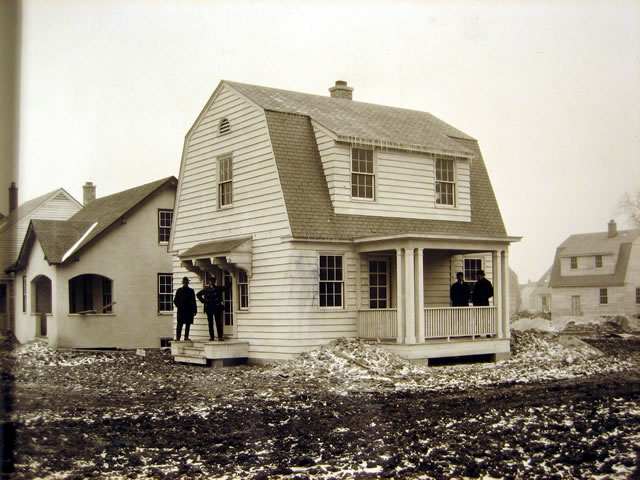
    The U.S. Housing Corporation built nearly 300 homes in Bremerton, Wash., during World War I. National Archives

    In 1918, as World War I intensified overseas, the U.S. government embarked on a radical experiment: It quietly became the nation’s largest housing developer, designing and constructing more than 80 new communities across 26 states in just two years.

    These weren’t hastily erected barracks or rows of identical homes. They were thoughtfully designed neighborhoods, complete with parks, schools, shops and sewer systems.

    In just two years, this federal initiative provided housing for almost 100,000 people.

    Few Americans are aware that such an ambitious and comprehensive public housing effort ever took place. Many of the homes are still standing today.

    But as an urban planning scholar, I believe that this brief historic moment – spearheaded by a shuttered agency called the United States Housing Corporation – offers a revealing lesson on what government-led planning can achieve during a time of national need.

    Government mobilization

    When the U.S. declared war against Germany in April 1917, federal authorities immediately realized that ship, vehicle and arms manufacturing would be at the heart of the war effort. To meet demand, there needed to be sufficient worker housing near shipyards, munitions plants and steel factories.

    So on May 16, 1918, Congress authorized President Woodrow Wilson to provide housing and infrastructure for industrial workers vital to national defense. By July, it had appropriated US$100 million – approximately $2.3 billion today – for the effort, with Secretary of Labor William B. Wilson tasked with overseeing it via the U.S. Housing Corporation.

    Over the course of two years, the agency designed and planned over 80 housing projects. Some developments were small, consisting of a few dozen dwellings. Others approached the size of entire new towns.

    For example, Cradock, near Norfolk, Virginia, was planned on a 310-acre site, with more than 800 detached homes developed on just 100 of those acres. In Dayton, Ohio, the agency created a 107-acre community that included 175 detached homes and a mix of over 600 semidetached homes and row houses, along with schools, shops, a community center and a park.

    Designing ideal communities

    Notably, the Housing Corporation was not simply committed to offering shelter.

    Its architects, planners and engineers aimed to create communities that were not only functional but also livable and beautiful. They drew heavily from Britain’s late-19th century Garden City movement, a planning philosophy that emphasized low-density housing, the integration of open spaces and a balance between built and natural environments.

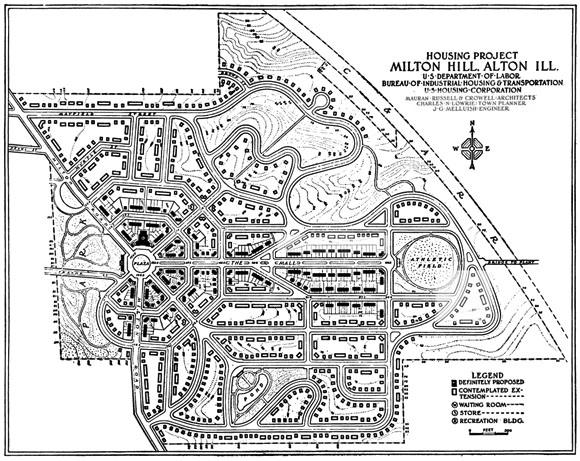
    Milton Hill, a neighborhood designed and developed by the United States Housing Corporation in Alton, Ill.
    National Archives

    Importantly, instead of simply creating complexes of apartment units, akin to the public housing projects that most Americans associate with government-funded housing, the agency focused on the construction of single-family and small multifamily residential buildings that workers and their families could eventually own.

    This approach reflected a belief by the policymakers that property ownership could strengthen community responsibility and social stability. During the war, the federal government rented these homes to workers at regulated rates designed to be fair, while covering maintenance costs. After the war, the government began selling the homes – often to the tenants living in them – through affordable installment plans that provided a practical path to ownership.

    A single-family home in Davenport, Iowa, built by the U.S. Housing Corporation.
    National Archives

    Though the scope of the Housing Corporation’s work was national, each planned community took into account regional growth and local architectural styles. Engineers often built streets that adapted to the natural landscape. They spaced houses apart to maximize light, air and privacy, with landscaped yards. No resident lived far from greenery.

    In Quincy, Massachusetts, for example, the agency built a 22-acre neighborhood with 236 homes designed mostly in a Colonial Revival style to serve the nearby Fore River Shipyard. The development was laid out to maximize views, green space and access to the waterfront, while maintaining density through compact street and lot design.

    At Mare Island, California, developers located the housing site on a steep hillside near a naval base. Rather than flatten the land, designers worked with the slope, creating winding roads and terraced lots that preserved views and minimized erosion. The result was a 52-acre community with over 200 homes, many of which were designed in the Craftsman style. There was also a school, stores, parks and community centers.

    Infrastructure and innovation

    Alongside housing construction, the Housing Corporation invested in critical infrastructure. Engineers installed over 649,000 feet of modern sewer and water systems, ensuring that these new communities set a high standard for sanitation and public health.

    Attention to detail extended inside the homes. Architects experimented with efficient interior layouts and space-saving furnishings, including foldaway beds and built-in kitchenettes. Some of these innovations came from private companies that saw the program as a platform to demonstrate new housing technologies.

    One company, for example, designed fully furnished studio apartments with furniture that could be rotated or hidden, transforming a space from living room to bedroom to dining room throughout the day.

    To manage the large scale of this effort, the agency developed and published a set of planning and design standards − the first of their kind in the United States. These manuals covered everything from block configurations and road widths to lighting fixtures and tree-planting guidelines.

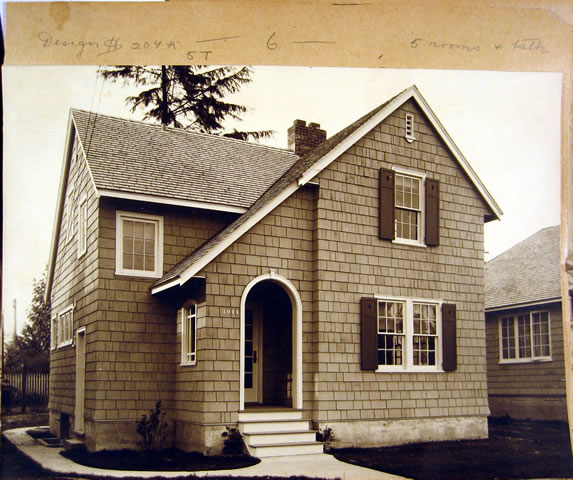
    A single-family home in Bremerton, Wash., built by the U.S. Housing Corporation.
    National Archives

    The standards emphasized functionality, aesthetics and long-term livability.

    Architects and planners who worked for the Housing Corporation carried these ideas into private practice, academia and housing initiatives. Many of the planning norms still used today, such as street hierarchies, lot setbacks and mixed-use zoning, were first tested in these wartime communities.

    And many of the planners involved in experimental New Deal community projects, such as Greenbelt, Maryland, had worked for or alongside Housing Corporation designers and planners. Their influence is apparent in the layout and design of these communities.

    A brief but lasting legacy

    With the end of World War I, the political support for federal housing initiatives quickly waned. The Housing Corporation was dissolved by Congress, and many planned projects were never completed. Others were incorporated into existing towns and cities.

    Yet, many of the neighborhoods built during this period still exist today, integrated in the fabric of the country’s cities and suburbs. Residents in places such as Aberdeen, Maryland; Bremerton, Washington; Bethlehem, Pennsylvania; Watertown, New York; and New Orleans may not even realize that many of the homes in their communities originated from a bold federal housing experiment.

    Homes on Lawn Avenue in Quincy, Mass., that were built by the U.S. Housing Corporation.
    Google Street View

    The Housing Corporation’s efforts, though brief, showed that large-scale public housing could be thoughtfully designed, community oriented and quickly executed. For a short time, in response to extraordinary circumstances, the U.S. government succeeded in building more than just houses. It constructed entire communities, demonstrating that government has a major role and can lead in finding appropriate, innovative solutions to complex challenges.

    At a moment when the U.S. once again faces a housing crisis, the legacy of the U.S. Housing Corporation serves as a reminder that bold public action can meet urgent needs.

    This article is part of a series centered on envisioning ways to deal with the housing crisis.

    Eran Ben-Joseph does not work for, consult, own shares in or receive funding from any company or organization that would benefit from this article, and has disclosed no relevant affiliations beyond their academic appointment.

    ref. Believe it or not, there was a time when the US government built beautiful homes for working-class Americans to deal with a housing shortage – https://theconversation.com/believe-it-or-not-there-was-a-time-when-the-us-government-built-beautiful-homes-for-working-class-americans-to-deal-with-a-housing-shortage-253512

    MIL OSI Analysis

  • MIL-OSI: Maris-Tech Secures New Purchase Order for Innovative AI-Powered Surveillance Solution for the Defense Industry

    Source: GlobeNewswire (MIL-OSI)

    Marks Entry into a New Market Segment with Advanced Threat Detection Capabilities

    Rehovot, Israel, June 26, 2025 (GLOBE NEWSWIRE) — Maris-Tech Ltd. (Nasdaq: MTEK, MTEKW) (“Maris-Tech” or the “Company”), a global leader in video and artificial intelligence (“AI”) – based edge computing technology, today announced that it has received a $100,000 purchase order for a new surveillance solution to be designed for the defense sector.

    This innovative solution will be based on the Company’s Jupiter-AI edge solution and will be integrated into an advanced military surveillance system to allow real-time threat detection and monitoring. This order marks the Company’s entry into a new field, extending its technology to new market segments.

    “We believe that this order is a strong indication of the market’s growing confidence in our ability to address a wide variety of operational needs,” said Israel Bar, Chief Executive Officer of Maris-Tech. “It also represents an important step into a new segment for us, which broadens the scope of our video and AI-powered edge computing solutions, as well as our presence in the defense industry.”

    About Maris-Tech Ltd.

    Maris-Tech is a global leader in video and AI-based edge computing technology, pioneering intelligent video transmission solutions that conquer complex encoding-decoding challenges. Our miniature, lightweight, and low-power products deliver high-performance capabilities, including raw data processing, seamless transfer, advanced image processing, and AI-driven analytics. Founded by Israeli technology sector veterans, Maris-Tech serves leading manufacturers worldwide in defense, aerospace, Intelligence gathering, homeland security (HLS), and communication industries. We’re pushing the boundaries of video transmission and edge computing, driving innovation in mission-critical applications across commercial and defense sectors.

    For more information, visit https://www.maris-tech.com/

    Forward-Looking Statement Disclaimer

    This press release contains “forward-looking statements” within the meaning of Section 27A of the Securities Act of 1933, as amended, and Section 21E of the Securities Exchange Act of 1934, as amended, that are intended to be covered by the “safe harbor” created by those sections. Forward-looking statements, which are based on certain assumptions and describe our future plans, strategies and expectations, can generally be identified by the use of forward-looking terms such as “believe,” “expect”,” “may”, “should,” “could,” “seek,” “intend,” “plan,” “goal,” “estimate,” “anticipate” or other comparable terms. For example, the Company is using forward-looking statements when it is discussing the innovative solution to be developed pursuant to the purchase order and integration of the solution into an advanced military surveillance system to allow real-time threat detection and monitoring and the timing of delivery thereof; the Company’s expansion of its technology to new market segments; the Company’s ability to address a wide variety of operational needs; and the broadening of the scope of the Company’s video and AI-powered edge computing solutions, as well as its future presence in the defense industry. The Company’s actual results and financial condition may differ materially from those indicated in the forward-looking statements. Therefore, you should not rely on any of these forward-looking statements. Important factors that could cause our actual results and financial condition to differ materially from those indicated in the forward-looking statements include, among others, the following: its ability to successfully market its products and services, including in the United States; the acceptance of its products and services by customers; its continued ability to pay operating costs and ability to meet demand for its products and services; the amount and nature of competition from other security and telecom products and services; the effects of changes in the cybersecurity and telecom markets; its ability to successfully develop new products and services; its success establishing and maintaining collaborative, strategic alliance agreements, licensing and supplier arrangements; its ability to comply with applicable regulations; and the other risks and uncertainties described in the Annual Report on Form 20-F for the year ended December 31, 2024, filed with the SEC on March 28, 2025, and its other filings with the Securities and Exchange Commission. The Company undertakes no obligation to publicly update any forward-looking statement, whether written or oral, that may be made from time to time, whether as a result of new information, future developments or otherwise.

    Investor Relations:

    Nir Bussy, CFO
    Tel: +972-72-2424022
    Nir@maris-tech.com

    The MIL Network

  • MIL-OSI: Maris-Tech Secures New Purchase Order for Innovative AI-Powered Surveillance Solution for the Defense Industry

    Source: GlobeNewswire (MIL-OSI)

    Marks Entry into a New Market Segment with Advanced Threat Detection Capabilities

    Rehovot, Israel, June 26, 2025 (GLOBE NEWSWIRE) — Maris-Tech Ltd. (Nasdaq: MTEK, MTEKW) (“Maris-Tech” or the “Company”), a global leader in video and artificial intelligence (“AI”) – based edge computing technology, today announced that it has received a $100,000 purchase order for a new surveillance solution to be designed for the defense sector.

    This innovative solution will be based on the Company’s Jupiter-AI edge solution and will be integrated into an advanced military surveillance system to allow real-time threat detection and monitoring. This order marks the Company’s entry into a new field, extending its technology to new market segments.

    “We believe that this order is a strong indication of the market’s growing confidence in our ability to address a wide variety of operational needs,” said Israel Bar, Chief Executive Officer of Maris-Tech. “It also represents an important step into a new segment for us, which broadens the scope of our video and AI-powered edge computing solutions, as well as our presence in the defense industry.”

    About Maris-Tech Ltd.

    Maris-Tech is a global leader in video and AI-based edge computing technology, pioneering intelligent video transmission solutions that conquer complex encoding-decoding challenges. Our miniature, lightweight, and low-power products deliver high-performance capabilities, including raw data processing, seamless transfer, advanced image processing, and AI-driven analytics. Founded by Israeli technology sector veterans, Maris-Tech serves leading manufacturers worldwide in defense, aerospace, Intelligence gathering, homeland security (HLS), and communication industries. We’re pushing the boundaries of video transmission and edge computing, driving innovation in mission-critical applications across commercial and defense sectors.

    For more information, visit https://www.maris-tech.com/

    Forward-Looking Statement Disclaimer

    This press release contains “forward-looking statements” within the meaning of Section 27A of the Securities Act of 1933, as amended, and Section 21E of the Securities Exchange Act of 1934, as amended, that are intended to be covered by the “safe harbor” created by those sections. Forward-looking statements, which are based on certain assumptions and describe our future plans, strategies and expectations, can generally be identified by the use of forward-looking terms such as “believe,” “expect”,” “may”, “should,” “could,” “seek,” “intend,” “plan,” “goal,” “estimate,” “anticipate” or other comparable terms. For example, the Company is using forward-looking statements when it is discussing the innovative solution to be developed pursuant to the purchase order and integration of the solution into an advanced military surveillance system to allow real-time threat detection and monitoring and the timing of delivery thereof; the Company’s expansion of its technology to new market segments; the Company’s ability to address a wide variety of operational needs; and the broadening of the scope of the Company’s video and AI-powered edge computing solutions, as well as its future presence in the defense industry. The Company’s actual results and financial condition may differ materially from those indicated in the forward-looking statements. Therefore, you should not rely on any of these forward-looking statements. Important factors that could cause our actual results and financial condition to differ materially from those indicated in the forward-looking statements include, among others, the following: its ability to successfully market its products and services, including in the United States; the acceptance of its products and services by customers; its continued ability to pay operating costs and ability to meet demand for its products and services; the amount and nature of competition from other security and telecom products and services; the effects of changes in the cybersecurity and telecom markets; its ability to successfully develop new products and services; its success establishing and maintaining collaborative, strategic alliance agreements, licensing and supplier arrangements; its ability to comply with applicable regulations; and the other risks and uncertainties described in the Annual Report on Form 20-F for the year ended December 31, 2024, filed with the SEC on March 28, 2025, and its other filings with the Securities and Exchange Commission. The Company undertakes no obligation to publicly update any forward-looking statement, whether written or oral, that may be made from time to time, whether as a result of new information, future developments or otherwise.

    Investor Relations:

    Nir Bussy, CFO
    Tel: +972-72-2424022
    Nir@maris-tech.com

    The MIL Network

  • MIL-OSI Africa: Rwanda: African Development Bank kickstarts pioneering cable car project in Kigali

    Source: Africa Press Organisation – English (2) – Report:

    The African Development Bank (www.AfDB.org) has approved a grant of $500,000 to undertake a feasibility study into the first phase of a cable car transport network in Kigali, that will be sub-Saharan Africa’s first aerial urban transit system.

    The funds, to be sourced from the Bank Group’s Urban and Municipal Development Fund (https://apo-opa.co/45CiDm9), are expected to help pave the way for the Kigali Urban Cable Car Project, a 5.5 km mobility initiative valued at $100 million and promising to ease the city’s traffic congestion, reduce greenhouse gas emissions, and connect underserved communities to jobs and essential services.

    The Urban and Municipal Development Fund (UMDF) is a trust fund hosted by the African Development Bank, which provides direct support to cities, to mobilize funding and technical assistance, develop partnerships, city engagement, project identification and investment.

    Phase 1 of the project will comprise two critical transit corridors: Nyabugogo Taxi Park to the Central Business District (CBD) Hub; and the Kigali Convention Center to Kigali Sports City, connecting public landmarks such as Amahoro Stadium, BK Arena, and the newly developed Zaria Court.

    The feasibility study is expected to position the project to attract international investment, including through platforms such as the Africa Investment Forum (AIF). The UMDF provided funding for the feasibility of another project in the country, the Kigali Urban Transport Improvement project, to help attract critical investment.

    Construction is expected to begin in late 2026, with commissioning scheduled for 2028. Once complete, the cable car will convey over 50,000 passengers a day on a 15-minute end-to-end journey, integrating into the city’s existing transport infrastructure.

    African Development Bank Group president Dr. Akinwumi Adesina, said: “This transformative project aligns perfectly with the Bank’s vision for sustainable, green climate-resilient urban mobility infrastructure, and with the Bank’s Ten-Year Strategy, which focuses on urbanization, and the Alliance for Green Infrastructure in Africa (AGIA), a global partnership initiative driven by the African Development Bank Group, Africa50 and the African Union. By financing Rwanda’s urban cable car system, we are investing in a scalable model of low-carbon, inclusive public transport that cities across Africa can emulate.”

    The project is anchored in Rwanda’s Green Taxonomy, E-mobility Strategy, and Climate and Nature Finance Strategy (CNFS) and aligns closely with Rwanda’s national climate objectives, which target a 38% reduction in carbon emissions by 2030 and carbon neutrality by 2050.

    The project implementation is expected to follow a Public-Private Partnership model, according to  Imena Munyampenda, the Director General of Rwanda Transport Development Agency.  

    The feasibility study plans to draw lessons from successful cable car systems in La Paz, Bolivia, and Singapore. The system will prioritize access for the disabled, employment opportunities for girls, women and low-income residents; and job creation, capacity building and technology transfer.

    “This pioneering feasibility study is a game-changing milestone,” said Solomon Quaynor, African Development Bank’s Vice President for Private Sector, Infrastructure, and Industrialization. “Through the UMDF, AfDB is laying the foundation for an investment-ready green infrastructure asset that offers both impact and returns.”

    Blended Financing

    The $100 million funding structure will comprise a strategic mix of grants, concessional loans, blended finance, and technical assistance. The UMDF grant will fund an assessment of the project’s viability gap.

    The Rwandan government, the African Development Bank Group, and other development partners, will collaborate to offer blended financing, along with commercial funding from the International Finance Corporation (IFC), Africa50, the Trade and Development Bank (TDB), the Africa Finance Corporation (AFC), as well as private investors and the Alliance for Green Infrastructure in Africa (AGIA). 

    – on behalf of African Development Bank Group (AfDB).

    Media Contact:
    Janet Onyango
    African Development Bank Group 
    media@afdb.org

    Media files

    Download logo

    MIL OSI Africa

  • MIL-OSI Africa: Coffee Master Trainer Upgrade (Coffee MUG) Program Surpasses 4,700 Farmers Trained, Boosting Yields and Incomes Across Indonesia’s Top Arabica Regions

    Source: Africa Press Organisation – English (2) – Report:

    The Sustainable Coffee Platform of Indonesia (SCOPI) and the International Islamic Trade Finance Corporation (ITFC) (www.ITFC-IDB.org) announced key findings of the mid-term survey from the Coffee Master Trainer Upgrade (Coffee MUG) Program, a five-year initiative helping smallholder farmers in North Sumatra and Aceh adopt sustainable coffee-growing practices. 

    Since its launch in October 2021, the program has trained 4,754 farmers—37% (1,781) women—across 130 villages, with 3,700 hectares now managed under Good Agricultural Practices (GAP). Nineteen Master Trainers and eight candidates act as local champions, guiding farmer groups on soil health, pruning, post-harvest handling, and quality control. The field midline survey conducted to the program and confirmed that average yields in the target areas rose 13.7 percent in 2023, equivalent to 78 kilograms of green bean per hectare compared to the previous year. 

    Capacity-building results are equally encouraging participating trainers demonstrated 91 percent competence in sustainable coffee farming and 87 percent competence in training methodologies during recent evaluations. Farmer livelihoods are beginning to reflect these gains. Average annual coffee sales reached IDR 82.95 million (US$5,100) per farmer in 2023, while average net farm income rose to IDR 71.52 million (US$4,400).  

    Earlier this year, SCOPI and ITFC convened twin data-utilisation workshops in Berastagi (Karo Regency) and Takengon (Central Aceh Regency). Local officials, private buyers, Master Trainers, and farmer leaders reviewed the mid-line survey results, explored a new web-based monitoring dashboard, and agreed on concrete follow-up actions—such as establishing demonstration plots that now serve as “living classrooms” for young farmers and expanding market pathways with ofi Indonesia, Louis Dreyfus Company, and Ecom/Indo Cafco. 

    “This survey is more than just data collection—it is a strategic tool to sharpen the program’s direction and ensure it remains responsive to farmers’ real needs” said Ade Aryani, Executive Director of SCOPI 

    Nazeem Noordali, Chief Operating Officer of ITFC, added: “Farmer surveys offer data-driven guidance, help identify gaps, and support the development of more impactful strategies. Programs like Coffee MUG must remain dynamic and responsive to field realities.” 

    At data-utilization workshops Karo Regency and Central Aceh Regency, SCOPI and ITFC joined officials, buyers, trainers, and farmers to review mid-line findings, test a new monitoring dashboard, and launch demo plots for youth training. 

    Looking ahead, the program is scaling its trainers network through a new recruitment drive that will bring more young people into the Master Trainer pipeline, securing generational renewal. Field trials focused on soil-health interventions will also continue, targeting a further yield increase by 2026. In parallel, fresh modules on financial literacy and digital marketing are being developed for rollout later this year, with a special emphasis on empowering women and youth farmer groups. 

    – on behalf of International Islamic Trade Finance Corporation (ITFC).

    ITFC Contact:
    Tel: +966 12 646 8337   
    Fax: +966 12 637 1064   
    E-mail: ITFC@itfc-idb.org

    SCOPI Contact: 
    Email: info@scopi.or.id  

    ITFC Social Media: 
    Twitter: @ ITFCCORP   
    Facebook: @ ITFCCorp   
    LinkedIn: International Islamic Trade Finance Corporation (ITFC)    

    SCOPI Social Media:
    Linkedin: Sustainable Coffee Platform of Indonesia (SCOPI) 
    Instagram: @ scopi_id 
    Website: www.SCOPI.or.id 

    About the International Trade Finance Corporation (ITFC):  
    The International Islamic Trade Finance Corporation (ITFC) is the trade finance arm of the Islamic Development Bank (IsDB) Group. It was established with the primary objective of advancing trade among OIC member countries, which would ultimately contribute to the overarching goal of improving the socio-economic conditions of the people across the world. Commencing operations in January 2008, ITFC has provided more than US$83 billion of financing to OIC member countries, making it the leading provider of trade solutions for these member countries’ needs. With a mission to become a catalyst for trade development for OIC member countries and beyond, the Corporation helps entities in member countries gain better access to trade finance and provides them with the necessary trade-related capacity-building tools, which would enable them to successfully compete in the global market.   

    About the Sustainable Coffee Platform of Indonesia (SCOPI):  
    The Sustainable Coffee Platform of Indonesia (SCOPI) is a leading organization dedicated to promoting sustainable coffee production and improving the livelihoods of coffee farmers. SCOPI is a platform for collaboration among key stakeholders in the Indonesian coffee industry, working towards a shared vision of a thriving and sustainable coffee sector. 

    Media files

    Download logo

    MIL OSI Africa

  • MIL-OSI United Kingdom: Dubai-based director who falsified VAT returns banned after his four companies owed HMRC more than £1 million

    Source: United Kingdom – Government Statements

    Press release

    Dubai-based director who falsified VAT returns banned after his four companies owed HMRC more than £1 million

    Director submitted falsified documentation to reclaim VAT

    • Hassan Waqar has been disqualified as a director for 11 years after his four companies reclaimed almost £400,000 in VAT they were not entitled to 

    • The four companies – HN Restaurants Limited, Kiani Construction Limited, Moneemint Ventures Limited and Zoya Investments Limited – submitted falsified documents to HM Revenue and Customs (HMRC) or failed to provide supporting evidence for VAT repayment claims 

    • All four companies were struck-off the Companies House register between February and June 2023, with total debts to HMRC of more than £1.1 million in VAT assessments, penalties and interest

    The boss of four companies which owed HMRC more than £1 million, including £400,000 in VAT they falsely reclaimed, has been banned as a director. 

    Hassan Waqar was the director of HN Restaurants Limited, Kiani Construction Limited and Moneemint Ventures Limited when they submitted falsified documents to HMRC. 

    A fourth company, Zoya Investments Limited, failed to supply evidence to HMRC to support the repayment returns it had submitted. 

    The four companies owed HMRC more than £1.1 million in VAT and penalties when they were all struck-off the Companies House register during the first half of 2023. 

    Waqar, 30, who is now based in Dubai, has been disqualified as a company director for 11 years. 

    Victoria Edgar, Chief Investigator at the Insolvency Service, said: 

    Hassan Waqar submitted falsified documentation for VAT reclamations that his companies were not entitled to receive. 

    Our investigations found that he failed to provide supporting evidence for claims across multiple businesses, with over £1.1 million owed when these companies were struck off the Companies House register in 2023.

    The Insolvency Service is committed to taking action against directors who fail to meet their legal and financial obligations, protecting the integrity of the business environment and the tax system.

    HN Restaurants Limited was set up in May 2020 as a fast-food business. Kiani Construction Limited was a construction company incorporated in August 2021 which was involved in real estate sales. 

    Moneemint Ventures Limited, like HN Restaurants Limited, was established in May 2020, and was described by Waqar as a banking service platform. Zoya Investments Limited, incorporated in March 2021, traded in carrying out fitouts. 

    The four companies received a total of £396,982 in VAT repayments. 

    HN Restaurants Limited, Kiani Construction Limited and Moneemint Ventures Limited provided invoices to HMRC in support of their claims. HMRC contacted several of the suppliers who confirmed they had not issued the invoices to the companies. 

    Bank statements were provided by HN Restaurants Limited and Moneemint Ventures Limited to HMRC to support the repayment return, but they differed to the ones supplied by the banks. 

    Zoya Investments Limited did not provide any evidence to support its VAT repayment claims. 

    HMRC issued penalties to the four companies totalling £706,692. 

    The four companies were struck-off the Companies House register between February and June 2023. 

    Combined, the four companies owed £1,136,832 in VAT assessments, penalties and interest. 

    The Secretary of State for Business and Trade accepted a disqualification undertaking from Waqar, and his ban started on Thursday 26 June. 

    It prevents him from being involved in the promotion, formation or management of a company, without the permission of the court. 

    HMRC issued a joint and several liability notice to Waqar for HN Restaurants, making him personally responsible for paying the tax debts of the company.

    Further information

    Updates to this page

    Published 26 June 2025

    MIL OSI United Kingdom

  • MIL-OSI Russia: Eurasian Goods and Trade Expo 2025 Opens in Xinjiang

    Translation. Region: Russian Federal

    Source: People’s Republic of China in Russian –

    Source: People’s Republic of China – State Council News

    URUMQI, June 26 (Xinhua) — The 2025 China Eurasian Commodity and Trade Expo opened Thursday in Urumqi, capital of northwest China’s Xinjiang Uygur Autonomous Region, bringing together more than 2,800 enterprises and representatives from 50 countries and regions.

    The current edition of the exhibition, which organisers say aims to deepen cooperation within Eurasia, is the largest in its history. Participants include government officials, diplomats, business associations and entrepreneurs from Central Asian countries, the African Union (AU), ASEAN and others. Notably, some AU member states, such as Ethiopia, Zambia, Comoros and Senegal, joined the event for the first time, signalling its growing global participation.

    The event, with an indoor and outdoor exhibition area of 140,000 square meters, showcases key industries such as new energy, advanced manufacturing, textiles and food processing. The outdoor exhibition mainly features large-scale mechanical equipment, while the indoor exhibition halls showcase breakthroughs in artificial intelligence and low-altitude economy.

    Fu Yunyan, head of Xinjiang’s International Expo Administration, said there were “many highlights,” including special areas to showcase cutting-edge technologies and more than 20 events to introduce new products. The five-day expo will feature more than 60 trade and investment sessions to find industry partners and promote projects.

    As part of the China-Eurasia Expo, the event, which is being held for the fifth time, aims to expand Xinjiang’s high-level opening-up. -0-

    MIL OSI Russia News

  • MIL-OSI United Kingdom: Urgent warning to pet owners as toxic chemicals found in fake flea treatments

    Source: United Kingdom – Executive Government & Departments

    Press release

    Urgent warning to pet owners as toxic chemicals found in fake flea treatments

    Pet owners urged to be wary of dangerous fake treatments discovered on e-commerce sites.

    Main developments are:

    • urgent government warning issued after toxic insecticide discovered in counterfeit flea treatments – one cat required emergency surgery after severe poisoning

    • fake pet medicines lack essential ingredients while containing dangerous chemicals that trigger vomiting, seizures and potential death

    • warning signs include poor packaging, spelling mistakes, unusual smells and suspiciously low prices

    • new figures show three quarters of consumers wrongly believe fake goods are of similar quality to genuine products

    • pet owners should only buy from trusted sources and immediately report suspicious products

    The Intellectual Property Office (IPO) and Veterinary Medicine Directorate (VMD) are urging pet owners to take caution when purchasing common medicines, including common flea treatments and wormers. 
     
    The alert comes after toxic pesticide traces were found in a fake flea treatment that caused a pet cat to become seriously ill, prompting the owner to have the product tested. Laboratory tests confirmed the presence of Pirimiphos-methyl, a dangerous insecticide toxic to cats. 
     
    Officials are urging pet owners to recognise signs of counterfeit products, avoid using suspicious items, and know how to report concerns.  

    Counterfeit animal medicines deliberately copy the appearance, packaging and branding of genuine veterinary products to deceive pet owners. Like all counterfeits, they are illegal to sell in the UK.   

    These fakes typically lack proper active ingredients, making them ineffective. Worse still, they may also contain harmful substances, causing severe reactions including vomiting, muscle tremors, breathing difficulties, seizures and potentially death.

    Pet owners seeking bargains, or a quick purchase online may unknowingly purchase these dangerous counterfeits.  
     
    The VMD and IPO are urging owners to check for warning signs including poor packaging, spelling errors, missing information, and unusual smells. 

    Last year alone, the VMD issued 122 seizure notices for the selling of unauthorised animal medicines and supplements, preventing around 18,000 illegal items from reaching consumers. 

    After purchasing what appeared to be genuine FRONTLINE ® flea treatment online for his cat, Smokey, Alan Wall from Preston was devastated when Smokey became very unwell. The condition was so severe that Smokey required emergency intestinal surgery to survive. This was followed by a week-long stay at the veterinary surgery and significant bills to support his recovery.

    Alan Wall said:

    Smokey is more than just a pet, he’s a member of our family. When he became ill after using what we believed was a genuine flea treatment, we were terrified. Watching him suffer, not knowing whether he would pull through, was heartbreaking. It’s taken a huge emotional toll on all of us. Without the support of our vets and the extensive surgery they performed we know Smokey wouldn’t be with us today. We want to warn other pet owners about these fake products so that no one else has to endure what we’ve been through.

    Images of Smokey the cat – receiving treatment, and when healthier

    A Veterinary Medicines Directorate Veterinary Surgeon and Efficacy Assessor, Dr Heilin-Anne Leonard-Pugh, explains:

    Pirimiphos-methyl is toxic to cats. Exposure to this insecticide can prevent the cat’s body from breaking down a substance called acetylcholine, leading to an overstimulation of the cat’s nervous system. This can cause symptoms such as vomiting, uncoordinated gait, muscle tremors, weakness, paralysis, increased sensitivity to touch, difficulty breathing, restlessness, urinary incontinence, low heart rate and seizures. In some cases, even death can sadly occur. If you suspect your pet has been exposed to a counterfeit medicine, seek veterinary advice immediately.  

    Sue Horseman from Bristol also purchased what appeared to be FRONTLINE® flea treatment online for her cat, but quickly became suspicious that the product wasn’t genuine.  
     
    Sue explained that the product was difficult to open and had a distinct smell of white spirit and paraffin, whereas the genuine flea treatment has no smell.  When she reported this to Trading Standards, experts confirmed that the treatment was a counterfeit. 

    While the online platform has removed the seller, they had already managed to sell 211 batches of suspected counterfeit pet medicines and supplements, including fake FRONTLINE Flea and Tick Treatment and PRO PLAN FortiFlora Probiotic Sachets for dogs and cats. 
     
    New counterfeit goods research (Wave 4) shows that counterfeit goods of all types are frequently purchased via global e-commerce websites. The figures also show that in 2024, nearly-one-in-five (17%) consumers unknowingly purchased goods later found to be fake, with 60% of purchasers also saying that ‘ease of purchasing’ influenced their decision.  Saving money is a strong motivator for buying fakes, with around three quarters (72%) of purchasers saying price was an important factor in their decision. Worryingly, around three-quarters (72%) wrongly believed the products would be of a similar quality to the genuine item.

    The IPO’s Deputy Director of Enforcement Helen Barnham, said:

    We are a nation of animal lovers, and criminals dealing in counterfeits are targeting pet owners with complete disregard for the animal’s wellbeing.  This can have some distressing consequences, as they may contain toxic chemicals that are harmful to our pets. We are urging pet owners to be vigilant when purchasing any type of animal treatment, and beware of any offers that ‘look too good to be true’.   

    Counterfeiting is anything but a victimless crime and this latest discovery confirms this. If you suspect that any goods offered for sale may be counterfeit, you should always report this to your local Trading Standards or Crimestoppers Online.

    Caroline Allen, RSPCA Chief Veterinary Officer said: 

    We are very concerned about counterfeit vet treatments on sale which can be highly toxic to pets and we would always urge pet owners to seek professional veterinary advice if they have any health concerns.  

    We appreciate financial pressures can lead to some owners to look for cheaper treatments online but they could be unwittingly putting their beloved pets in serious danger by inadvertently buying these counterfeit goods and would urge them to take on board this government advice.

    Nina Downing, Vet Nurse from PDSA, a vet charity and a leading authority on pet health in the UK, said:

    Counterfeit veterinary medicines can pose a serious threat to our pets ‘ health and wellbeing. While legitimate medications play a vital role in keeping our pets healthy, counterfeit products can cause severe harm or even be fatal. These fake medicines may contain incorrect ingredients or dangerous substances that can make pets extremely ill – leading to symptoms like twitching, swelling, breathing difficulties, vomiting, diarrhoea, collapse, coma and even death.

    We always recommend that you only give your pet medication which has been prescribed by your vet. When fulfilling a prescription online, source them from reputable companies that are on the Register of online retailers, brought to you by the Veterinary Medicines Directorate. If you suspect your pet is reacting badly to any medication, contact your vet immediately.

    When examining the counterfeit FRONTLINE® flea treatment, experts from the University of Bath also identified telling packaging flaws. Most notably, the label used ‘GATTI’ (Italian for cats) instead of the English ‘CAT’, alongside multiple spelling errors – common indicators of counterfeit products.

    Image: Packaging featuring spelling mistakes and mixed languages

    Pet owners should check the packaging and always be cautious of third-party sellers when shopping on e-commerce sites for any type of pet medication. 

    The IPO and VMD are offering advice for consumers to help spot fake animal medicines, and what to do if they believe they may have purchased them or seen them offered for sale.

    How to identify fake animal medicines online:

    1. Warning signs of fake medicines. Look out for: 

    • poor quality or damaged packaging
    • spelling or grammar errors
    • missing leaflets or expiry dates
    • instructions not provided in English
    • suspicious smell, colour or texture
    • poor quality tablets, capsules, vials or pipettes – homemade appearance

    Be wary of any retailer selling prescription only products without asking for your prescription. This is illegal. 

    All online sellers of prescription only animal medicines must be registered with the VMD. If in any doubt, you can check retailers on the VMD’s Register of Online Retailers.

    2. Always shop safely online. Be cautious of:

    • heavily discounted goods and flash sales. Question the price if much cheaper than elsewhere. Whether buying online or in person, always think about the price
    • a seller asking for sensitive information or requesting payment by bank transfer
    • fake websites and social media profiles. These can contain original brand names – confirm the website is authentic and check seller details and reviews before purchasing
    • any deal or offer that looks ‘too good to be true’ 

    What you can do

    If you have you been personally affected by a poisoning case, you should report through the Veterinary Poisons Information Service (VPIS) questionnaire

    If you see these goods being offered for sale, whether on a website, social media post or on the high street, contact your local Trading Standards or Crimestoppers online or by calling 0800 555 111. 

    If you encounter suspicious veterinary medicines or retailers, please also report them to the VMD Enforcement Team. (You can do so anonymously if preferred): 

    Additional information

    1. All veterinary medicines sold in the UK must be authorised. If the brand looks unfamiliar, ensure its authorised before purchasing. To know if the medicine is UK- approved, you should look for English labelling and a valid Marketing Authorisation number (e.g. Vm 12345/4001). You can check if the medicine you are buying is authorised in the UK by searching the VMD’s Product Information Database.

      Using ant unauthorised medicine poses a serious risk to the welfare of your pet. These medicines have not been assessed by the Veterinary Medicines Directorate and their safety, quality and efficacy cannot be guaranteed.  

    2. Online retailers of low-risk, general sale veterinary medicines that can be sold by anyone without a prescription (known as AVM-GSL medications) don’t need to register. When buying these medicines always shop from a trusted source. 

    3. The Intellectual Property Office (IPO) is the UK government body responsible for responsible for intellectual property (IP) rights including patents, designs, trade marks and copyright. IPO is an executive agency, sponsored by the Department for Science, Innovation and Technology.  

    4. The Veterinary Medicines Directorate (VMD) is an executive agency of the Department for Environment, Food and Rural Affairs (DEFRA) and the UK Competent Authority for veterinary medicines regulation. The VMD protects public health, animal health, and the environment and promotes animal welfare by assuring the safety, quality, and efficacy of veterinary medicines.  

    5. The IPO regularly conducts research to understand consumer behaviour in relation to the purchasing of and attitudes toward counterfeit goods. The most recent Counterfeit Goods Research report (published Tuesday 17 May 2025) show the main motivations for those who purchase counterfeits: 

    • similar/ the same quality – 72.3%
    • wanting to reduce spending/outgoings - 72%
    • the real product was out of your budget/ price range - 70.9%
    • the fake product was cheaper  – 72%
    • hearing from family or friends that the ‘fake’ products were good - 64.8%
    • similar/the same design – 64.6%
    • being able to purchase ‘fake’ or counterfeit products easily – 60.5%

    Updates to this page

    Published 26 June 2025

    MIL OSI United Kingdom

  • MIL-OSI Russia: Saudi Arabia: Concluding Statement of the 2025 Article IV Mission

    Source: IMF – News in Russian

    June 26, 2025

    A Concluding Statement describes the preliminary findings of IMF staff at the end of an official staff visit (or ‘mission’), in most cases to a member country. Missions are undertaken as part of regular (usually annual) consultations under Article IV of the IMF’s Articles of Agreement, in the context of a request to use IMF resources (borrow from the IMF), as part of discussions of staff monitored programs, or as part of other staff monitoring of economic developments.

    The authorities have consented to the publication of this statement. The views expressed in this statement are those of the IMF staff and do not necessarily represent the views of the IMF’s Executive Board. Based on the preliminary findings of this mission, staff will prepare a report that, subject to management approval, will be presented to the IMF Executive Board for discussion and decision.

    Washington, DC: Saudi Arabia’s economy has demonstrated strong resilience to shocks, with non-oil economic activities expanding, inflation contained, and unemployment reaching record-low levels. While lower oil proceeds and investment-linked imports led to the emergence of twin deficits, external and fiscal buffers remain ample. A higher-than-budgeted fiscal stance in 2025 remains appropriate to prevent procyclicality that could exacerbate the growth impact of lower oil prices. Addressing strong credit growth and associated funding pressures will be crucial in mitigating risks to systemic financial stability. Given the current heightened global uncertainty, continued efforts on structural reform are essential to sustain non-oil growth and drive economic diversification.

    RECENT ECONOMIC DEVELOPMENTS[1]

    Saudi Arabia’s economy has been resilient to shocks. In 2024, non-oil real GDP grew by 4.2 percent, primarily driven by private consumption and non-oil private investment, with retail, hospitality, and construction leading growth. Repeated extensions of the OPEC+ production cuts have kept oil output at 9 million barrels per day (mb/d)—the lowest level since 2011— resulting in a 4.4 percent decline in oil GDP and an overall real growth rate of 1.8 percent. The composite PMI indicates sustained activity in Q1 2025, with the latest Q1 GDP estimate showing non-oil activities expanding by 4.9 percent year-on-year.

    The labor market’s strong momentum continues. The unemployment rate for Saudi nationals has declined to a record low of 7 percent in 2024, surpassing the original Vision 2030 target, which has now been revised down to 5 percent. The improvement is broad-based, with both youth and female unemployment halved over a four-year period. Private sector employment surged by 12 percent on average in 2024, while public sector hiring continued to slow, reflecting a redeployment to non-government entities.

    Inflation is contained as rent inflation decelerates. Despite a small pick-up to 2.3 percent in April 2025, headline inflation remains low, helped by high real interest rates. Declining prices for transport and communication helped offset housing rent inflation, which has decelerated for the 6th consecutive month to 8.1 percent y-o-y (the lowest annual rise since February 2023). Real wages have remained stable, albeit with some pickup for highly skilled workers.   

    The current account shifted to a narrow deficit, transitioning from a surplus of 2.9 percent of GDP in 2023 to a deficit of 0.5 percent of GDP in 2024. This shift mainly reflects a decline in oil export proceeds, higher imports of machinery and equipment, and stronger remittance outflows—factors that more than offset a surge in tourism inflows. The current account deficit has been financed through external borrowing and reduced FX asset accumulation. As a result, the Saudi Central Bank’s (SAMA) net foreign assets (NFA) holdings stabilized at $415 billion by end-2024—equivalent to 15 months of imports and 187 percent of the IMF’s reserve adequacy metric. 

    While spending overruns increased the overall fiscal deficit, the fiscal stance—as measured by the non-oil primary balance—showed a slight improvement in 2024. Additional expenditures related to project financing—partly linked to an accelerated implementation of Vision 2030—and flat oil revenue widened the overall fiscal deficit to 2.5 percent of GDP, approximately 0.8 percentage points above the budgeted target. However, driven by stronger non-oil revenue, the non-oil primary deficit improved, decreasing by 0.6 percentage points of GDP in 2024 compared to 2023. Central government debt rose to 26.2 percent of GDP as Saudi Arabia became the largest emerging market dollar debt issuer in 2024. However, Saudi Arabia remains amongst the lowest indebted nation globally and net debt is relatively low at approximately 17 percent of GDP.

    ECONOMIC OUTLOOK AND RISKS

    Robust domestic demand—including from government-led projects—will continue to drive growth despite heightened global uncertainty and a weakened commodity price outlook. Non-oil real GDP growth is projected at 3.4 percent in 2025, about 0.8 percentage points lower than in 2024. This reflects the continued implementation of Vision 2030 projects through public and private investment, as well as strong credit growth, which would help sustain domestic demand and mitigate the impact of lower oil prices. The direct impact of rising global trade tensions is limited, as oil products—comprising 78 percent of Saudi Arabia’s goods exports to the U.S. in 2024—are exempt from U.S. tariffs, while non-oil exports to the U.S. only account for 3.4 percent of Saudi Arabia’s total non-oil exports. Over the medium term, domestic demand—including momentum ahead of Saudi Arabia’s hosting of large-scale international events—is expected to push non-oil growth closer to 4 percent in 2027 before stabilizing at 3.5 percent by 2030. Supported by the OPEC+ production cut phase-out schedule, overall GDP growth will accelerate to 3.5 percent in 2025 and 3.9 percent in 2026 before stabilizing at approximately 3.3 percent over the medium term.

    Inflation would remain anchored around 2 percent, supported by a credible peg to the U.S. dollar, domestic subsidies, and an elastic supply of expatriate labor, notwithstanding a projected moderate positive output gap over the medium term. Imported inflation from increased tariffs worldwide is expected to remain contained.

    The external position will weaken. Investment-linked imports and remittance outflows from an expanding expatriate labor force are expected to widen the current account deficit, which is projected to peak at about 3.9 percent of GDP by 2027 before converging to about 3.4 percent of GDP in 2030. Rising non-oil exports and robust inbound tourism will have a partial offsetting effect. The deficit will be increasingly financed through deposit drawdowns, less FX asset accumulation abroad, and external borrowing. International reserve coverage would remain adequate at about 11-12 month import coverage over the medium term, with foreign assets held by the Public Investment Fund (PIF) and other government-related entities offering strong additional buffers.

    Risks to the outlook are mainly to the downside. Weaker oil demand, driven by heightened uncertainty, an escalation of global trade tensions, and deepening geoeconomic fragmentation could dampen oil proceeds. This, in turn, would lead to higher fiscal deficits and debt and costlier financing. An abrupt decrease in spending by the government (including projects recalibration below its baseline) or a slowdown in reform implementation in response to lower oil prices could further hinder private investment growth. Conversely, higher-than-expected oil production/prices and accelerated implementation of reforms could yield stronger or earlier-than-expected growth dividends.

    POLICIES

    Fiscal Policy

    The 2025 fiscal stance—resulting in a deficit twice the budget target—remains appropriate. Given past overruns and the ongoing transformational projects tied to Vision 2030, staff anticipates higher current expenditures than budgeted. Combined with lower oil prices and minimal performance-linked dividends from Aramco, this will bring the overall fiscal deficit to 4.3 percent of GDP. However, this outcome still represents a 3.6 percentage points of non-oil GDP improvement in the non-oil primary balance, effectively frontloading part of the adjustment required by 2030 to uphold intergenerational equity. Given the upfront adjustment and ample fiscal buffers available, staff believes that additional spending restraint in 2025—triggered by lower-than-budgeted oil prices—is not necessary as it would make fiscal policy procyclical and exacerbate the impact on growth.

    Over the medium term, the overall fiscal deficit is expected to narrow. After peaking at 4.3 percent of GDP in 2025, it will decline to approximately 3.3 percent of GDP by 2030, driven by ongoing wage bill containment and spending efficiency measures. Under this baseline scenario, the non-oil primary deficit would shrink by about 4.2 percent of non-oil GDP from 2025 to 2030. The fiscal deficit would primarily be financed by borrowing, including through debt issuances, syndicated loans or facilities from export credit agencies, leading to an increase in the public debt-to-GDP ratio to about 42 percent by 2030.

    A gradual fiscal consolidation will remain necessary over the medium term to achieve intergenerational equity. To avoid disruptive adjustments and build buffers, an additional 3.3 percent of non-oil GDP must be generated over the 2026-30 period, mainly through:

    • Non-oil revenue mobilization. Plans to increase the tax rate on underdeveloped land, introduce a tax on vacant land, and broadening the VAT base (e.g., for e-commerce transactions) are welcome. Additional efforts—including through new tax policy measures and continued efforts to strengthen revenue administration—would be needed. The temporary tax penalty waiver introduced repeatedly since Covid, should not be renewed when it expires in June as it fuels moral hazard and could undermine compliance.
    • Removing energy subsidies. Staff welcomes the ongoing energy price adjustments—including a doubling of diesel prices since January 2024—which combined with lower international oil prices have reduced fuel subsidies to 3½ percent of GDP (down from 5½ percent in 2022). With retail fuel prices closer to international oil prices and the envisaged scaling up of the well-targeted Damaan social support program, efforts should be accelerated to reduce energy subsidies, including by removing the cap on gasoline prices.
    • Rationalizing other spending. The mission welcomes ongoing spending reviews—including recent assessments on project execution by various government entities—to identify areas for potential savings and efficiency gains. Further rationalization should prioritize reducing current expenditures with a low fiscal multiplier, while preserving medium-term, growth-enhancing infrastructure plans. Greater transparency on how spending prioritization and recalibration aligns with the authorities’ announced investment plans will support investor confidence.

    Given the high global uncertainty, staff welcomes the authorities’ contingency planning to safeguard fiscal sustainability in the event of a severe shock. In a scenario where oil prices decline significantly, a more aggressive fiscal consolidation strategy would be necessary. Identifying and prioritizing projects that can be extended or cut, if further adjustments are required, represents a prudent approach to maintaining fiscal sustainability. Staff recommends a partial drawdown of fiscal buffers in the event of a temporary oil price shock, which would help smooth the transition to a steady state and mitigate the impact of short-term oil price fluctuations.

    Sustaining the authorities’ ongoing efforts to strengthen fiscal institutions will be crucial in supporting the fiscal adjustment and Saudi Arabia’s Vision 2030 objectives. Enhancing the Medium-Term Fiscal Framework remains a priority, particularly through better integration of its multiyear projections into annual budget preparations to align spending ceilings with fiscal forecasts, including commitments from multi-year contracts. Operationalizing and ensuring compliance with an expenditure-based fiscal rule would help anchor the fiscal stance over the medium term.

    Prudent debt management and a proper sovereign asset liability management (SALM) framework becomes increasingly important in a lower oil price environment. The mission encourages the authorities to assess the complex trade-offs between making greater use of central government deposits (currently at around 9¼ percent of GDP) and new bond issuances. The mission also supports the ongoing efforts toward operationalizing a comprehensive SALM framework to enhance the oversight of sovereign balance sheet exposures, which publication alongside the budget statement would support the drive for greater transparency and provide additional tools for fiscal policy analysis and formulation. Additionally, contingent liabilities—such as financing obligations for giga projects, debt guarantees, and Public-Private Partnerships—should be closely monitored.

    Monetary and Exchange Rate Policy

    SAMA has continued to refine its liquidity management framework to help reduce  overall liquidity volatility. Bank funding conditions in Saudi Arabia are influenced by persistently strong double-digit credit growth, with periodic spikes in the SAIBOR-SOFR spread reflecting episodes of liquidity pressures. SAMA’s standard market-based monetary operations should continue to remain focused on smoothing short-term liquidity imbalances without fueling asset/credit growth. The recent data-sharing arrangement between SAMA and the Ministry of Finance regarding expected government transactions is anticipated to improve the accuracy of liquidity forecasting and should be effectively implemented. Additionally, further enhancements to the reserve requirement framework would strengthen effective liquidity management and monetary policy transmission.

    The currency peg to the U.S. dollar remains appropriate. It has provided a credible anchor for monetary policy and is backed by ample external buffers. With an open capital account, it is essential that SAMA’s policy rate continues to align with the Fed’s policy rate.

    Financial Sector Policies

    The banking sector remains resilient, demonstrating strong capitalization and profitability despite rising funding costs. As of end-2024, the sector’s solvency ratio stood at 19.6 percent. Despite higher funding costs—driven by the increasing share of time and saving deposits—bank profitability is high, with an average return on assets of 2.2 percent in 2024. Non-performing loans have reached their lowest levels since 2016, reinforcing overall financial stability. Liquidity indicators are adequate and within regulatory thresholds, although the ratio of liquid assets to short-term liabilities has been declining, and the regulatory loan-to-deposit ratio has been on an upward trend.

    Strong credit growth is leading to funding pressures and a change in the funding mix of Saudi banks. As credit growth—mostly to corporates and for mortgages—outpaces deposit growth, banks diversify their liabilities by increasing reliance on other forms of financing, especially external borrowings in the form of bonds, bilateral or syndicated loans, and certificates of deposit. High external borrowing turned banks’ Net Foreign Assets (NFA) negative in 2024 for the first time since 1993. This trend is expected to continue in the near term as several banks are in the process of securing additional external funding. However, banks’ exposure to foreign exchange risk remains low.

    Addressing strong credit growth and associated funding pressures would help mitigate risks to systemic financial stability. The mission welcomes SAMA’s ongoing efforts to review its existing prudential toolkits to counter risks stemming from persistent double-digit credit growth amid a credit-to-deposit growth gap and the increased resort to short-term external wholesale funding. As loan demand is expected to remain high relative to deposit-based funding, setting prudential requirements commensurate with the evolving risks is essential. In that regard, the mission welcomes the introduction in May 2025 of a 100 basis points countercyclical capital buffer, which will be effective within a year. Vulnerabilities would be further mitigated by: (i) narrowing loan-to-value and debt burden ratios, which remain elevated relative to international standards; and (ii) tightening loan-to-deposit ratio to discourage excessive short-term foreign exchange funding. The mission welcomes SAMA’s proactive approach to monitoring the Liquidity Coverage Ratio and Net Stable Funding Ratio in foreign currency and encourages consideration of setting these ratios as regulatory requirements, should circumstances warrant.

    SAMA’s continued efforts to enhance regulatory and supervisory frameworks are commendable. The new Banking Law has been submitted for legislative approval, a risk-based supervisory framework is being refined, and a monitoring system has been introduced for large construction and infrastructure projects. Additionally, SAMA’s bank resolution function is being operationalized. The authorities have also made good progress in establishing a crisis management framework that includes an emergency liquidity assistance framework, which should be completed without undue delay. Furthermore, improvements in enhancing the effectiveness of AML/CFT supervision—including through thematic inspections—are welcome.

    Deepening the capital market is essential to help diversify funding and reduce reliance on bank financing. Although the capital market remains dominated by the large government-related issuers and the trading volumes are low, the recent and ongoing initiatives, such as the Investment Law that came into effect in February 2025 and the ongoing pension and savings reforms, should improve market liquidity and increase foreign participation in the Saudi capital markets. Greater use of asset-backed securities will create a new asset class and contribute to expanding funding in the banking system. The deepening of the domestic capital markets would also help improve the monetary policy transmission mechanism.

    Structural Policies

    The current environment of heightened uncertainty underscores the importance of continued structural reform efforts to sustain non-oil growth and economic diversification. Since 2016, Saudi Arabia has implemented significant and wide-ranging reforms, particularly in business regulations, governance, labor and capital markets. Several new laws that took effect in 2025—including the updated Investment Law, Labor Law amendments, and the new Commercial Registration Law—will enhance contractual certainty for investors and businesses, while also supporting productivity gains.

    The reform momentum should continue irrespective of oil price developments. Ongoing work to strengthen the anti-corruption framework—including by building on the recent Ultimate Beneficial Ownership Rules and By Laws of Nazaha—remains crucial. Equally important is enhancing human capital by aligning the skills of Saudi nationals with evolving labor market needs, improving access to finance and fostering digitalization, all of which are key to advancing the Kingdom’s economic diversification goals that are further enhanced with the integration of AI in government services. In addition to stronger fiscal institutions, pursuing these reforms will help Saudi Arabia build further resilience to oil price volatility.

    Targeted interventions through industrial policies should complement—not replace— structural reforms and must avoid crowding out private sector investment. Interventions by the PIF and public entities should continue to focus on areas where private investment is limited, market failures exist, or where they can play a catalytic role in attracting private capital, rather than potentially displacing domestic and foreign investors.  Industrial Policies should have clear exit criteria, claw-back mechanisms, and sunset clauses, to ensure they do not remain in place beyond their intended objective.

    **************************

    The mission team would like to thank the Saudi Arabian authorities and the people they met outside the government sector for their close collaboration, candid and informative discussions, and warm hospitality.

    [1] Numbers referred in percent of GDP are based on the authorities’ new rebasing GDP published in May 2025. The new methodological update is generally consistent with international best practices and the UN’s system of national accounts,

    IMF Communications Department
    MEDIA RELATIONS

    PRESS OFFICER: Wafa Amr

    Phone: +1 202 623-7100Email: MEDIA@IMF.org

    https://www.imf.org/en/News/Articles/2025/06/25/saudi-arabia-concluding-statement-of-the-2025-article-iv-mission

    MIL OSI

    MIL OSI Russia News

  • MIL-OSI: American Rebel Light Beer Sees Explosive E-Commerce Growth as Free Shipping Promo Drives Patriotic Sales Surge Ahead of July 4th

    Source: GlobeNewswire (MIL-OSI)

    Online Orders Soar as American Rebel Beer Ships to Over 40 States; Free Shipping Available Through June 30

    NASHVILLE, TN, June 26, 2025 (GLOBE NEWSWIRE) — American Rebel Holdings, Inc. (NASDAQ: AREB) (“American Rebel” or the “Company”), creator of American Rebel Beer (americanrebelbeer.com) and a designer, manufacturer, and marketer of branded safes, personal security and self-defense products and apparel, proudly reports explosive online sales growth fueled by enhanced digital marketing, optimized checkout performance, and a limited-time Free Shipping offer celebrating the Fourth of July and the 250th Birthday of the U.S. Army.

    American Rebel Light Beer launched its online direct to consumer option earlier this year through shop.americanrebelbeer.com, that expanded availability to over 40 U.S. states, giving patriotic Americans nationwide the opportunity to enjoy what the company calls “America’s Patriotic, God-Fearing, Constitution-Loving, National Anthem-Singing, Stand Your Ground Beer.”

    Patriotic Reach, Real Results: 22.9 Million Digital Impressions Drive Explosive Growth at AmericanRebelBeer.com

    In late May, American Rebel implemented major improvements to the online checkout process after onboarding e-commerce experts to map the user experience and identify where sales were stalling. That analysis led to the introduction of Flat Rate Shipping, which sparked an immediate lift in order volume. Encouraged by this success, and in celebration of Independence Day, the company launched a Free Shipping offer through June 30, 2025 – driving massive engagement and accelerating repeat orders.

    During this campaign period American Rebel generated a combined 22.9 million digital impressions across Facebook, Google, and Taboola – demonstrating exceptional consumer engagement and marketing reach across top-tier platforms. This digital expansion is translating into powerful, measurable business outcomes at americanrebelbeer.com

    Key highlights from the most recent performance period include:

    • Gross Online Sales surged 1100% driven by explosive customer demand.
    • Average Order Value (AOV) increased 14% to $59.62.
    • Conversion rates rose 1100%, signaling highly qualified traffic and improved customer targeting.
    • Orders climbed 1000%, marking a significant uptick in new and repeat purchases.
    • Website traffic jumped 4500%, amplifying visibility and brand discovery.
    • 48-pack beer sales soared 2900%, indicating a strong shift toward bulk purchases.
    • 24-pack (16oz) sales rose 801%, further validating product-market fit.
    • RCR (Repeat Customer Rate) improved by 72.7%, a clear indicator of growing customer satisfaction and long-term loyalty.

    We’re Not Just Selling Beer – We’re Building America’s Brand

    “This level of performance demonstrates what we’ve always believed – American Rebel Light Beer (“Rebel Light”) resonates with patriotic American consumers,” said Andy Ross, CEO of American Rebel Holdings. “We’re not just selling beer; we’re building a patriotic brand that people are proud to support. We’re building a brand rooted in freedom, faith, and love for country. Our customers aren’t just buying a beer, they’re standing for something, and the numbers speak for themselves – we are scaling, we are converting, and we are winning.”

    American Rebel’s performance is not only accelerating consumer sales but also establishing a strong foundation for long-term shareholder value through proven demand, smart digital investments, and expanding distribution opportunities.

    American Rebel Holdings, Inc. (NASDAQ: AREB) operates as a consumer brand company rooted in American values, offering American Rebel Light Beer and related merchandise across a growing national footprint. America’s Patriotic Brand continues to gain traction across the lifestyle, beverage, and digital commerce sectors.

    American Rebel Beer Shipping Now to 40+ States

    American Rebel Light Beer is available for home delivery in the following states:
    AZ, CA, CO, CT, DC, DE, FL, GA, ID, IL, IN, IA, KS, KY, LA, ME, MD, MA, MN, MO, MT, NC, NV, NH, NJ, NM, NY, OH, OK, OR, PA, RI, TX, VT, WA, WV, WI, WY

    The Free Shipping promotion, available through Monday, June 30, allows customers to stock up ahead of Independence Day. American Rebel encourages fans to order directly at shop.americanrebelbeer.com and celebrate freedom with every sip.

    About American Rebel Light Beer

    American Rebel Light is more than just a beer – it’s a celebration of freedom, passion, and quality. Brewed with care and precision, our light beer delivers a refreshing taste that’s perfect for every occasion.

    Since its launch in September 2024, American Rebel Light Beer has rolled out in Tennessee, Connecticut, Kansas, Kentucky, Ohio, Iowa, Missouri, North Carolina, Florida, Indiana and now Virginia and is adding new distributors and territories regularly. For more information about the launch events and the availability of American Rebel Beer, please visit americanrebelbeer.com or follow us on our social media platforms (@americanrebelbeer).

    American Rebel Light is a Premium Domestic Light Lager Beer – All Natural, Crisp, Clean and Bold Taste with a Lighter Feel. With approximately 100 calories, 3.2 carbohydrates, and 4.3% alcoholic content per 12 oz serving, American Rebel Light Beer delivers a lighter option for those who love great beer but prefer a more balanced lifestyle. It’s all natural with no added supplements and importantly does not use corn, rice, or other sweeteners typically found in mass produced beers.

    For more information about American Rebel Light Beer follow us on social media @AmericanRebelBeer.

    For more information, visit americanrebelbeer.com.

    About American Rebel Holdings, Inc.

    American Rebel Holdings, Inc. (NASDAQ: AREB) has operated primarily as a designer, manufacturer and marketer of branded safes and personal security and self-defense products and has recently transitioned into the beverage industry through the introduction of American Rebel Light Beer. The Company also designs and produces branded apparel and accessories. To learn more, visit americanrebelbeer.com. For investor information, visit americanrebel.com/investor-relations.

    Watch the American Rebel Story as told by our CEO Andy Ross visit The American Rebel Story

    Media Inquiries:
    Matt Sheldon
    Matt@Precisionpr.co
    917-280-7329

    American Rebel Holdings, Inc.
    info@americanrebel.com
    ir@americanrebel.com

    American Rebel Beverages, LLC
    Todd Porter, President
    tporter@americanrebelbeer.com

    Forward-Looking Statements

    This press release contains forward-looking statements within the meaning of the Private Securities Litigation Reform Act of 1995. American Rebel Holdings, Inc., (NASDAQ: AREB; AREBW) (the “Company,” “American Rebel,” “we,” “our” or “us”) desires to take advantage of the safe harbor provisions of the Private Securities Litigation Reform Act of 1995 and is including this cautionary statement in connection with this safe harbor legislation. The words “forecasts” “believe,” “may,” “estimate,” “continue,” “anticipate,” “intend,” “should,” “plan,” “could,” “target,” “potential,” “is likely,” “expect” and similar expressions, as they relate to us, are intended to identify forward-looking statements. We have based these forward-looking statements primarily on our current expectations and projections about future events and financial trends that we believe may affect our financial condition, results of operations, business strategy, and financial needs. Important factors that could cause actual results to differ from those in the forward-looking statements include benefits of our continued sponsorship of high profile events, success and availability of the promotional activities, our ability to effectively execute our business plan, and the Risk Factors contained within our filings with the SEC, including our Annual Report on Form 10-K for the year ended December 31, 2024 and our Quarterly Report on Form 10-Q for the three months ended March 31, 2025. Any forward-looking statement made by us herein speaks only as of the date on which it is made. Factors or events that could cause our actual results to differ may emerge from time to time, and it is not possible for us to predict all of them. We undertake no obligation to publicly update any forward-looking statements, whether as a result of new information, future developments or otherwise, except as may be required by law.

    Attachment

    The MIL Network

  • MIL-OSI: American Rebel Light Beer Sees Explosive E-Commerce Growth as Free Shipping Promo Drives Patriotic Sales Surge Ahead of July 4th

    Source: GlobeNewswire (MIL-OSI)

    Online Orders Soar as American Rebel Beer Ships to Over 40 States; Free Shipping Available Through June 30

    NASHVILLE, TN, June 26, 2025 (GLOBE NEWSWIRE) — American Rebel Holdings, Inc. (NASDAQ: AREB) (“American Rebel” or the “Company”), creator of American Rebel Beer (americanrebelbeer.com) and a designer, manufacturer, and marketer of branded safes, personal security and self-defense products and apparel, proudly reports explosive online sales growth fueled by enhanced digital marketing, optimized checkout performance, and a limited-time Free Shipping offer celebrating the Fourth of July and the 250th Birthday of the U.S. Army.

    American Rebel Light Beer launched its online direct to consumer option earlier this year through shop.americanrebelbeer.com, that expanded availability to over 40 U.S. states, giving patriotic Americans nationwide the opportunity to enjoy what the company calls “America’s Patriotic, God-Fearing, Constitution-Loving, National Anthem-Singing, Stand Your Ground Beer.”

    Patriotic Reach, Real Results: 22.9 Million Digital Impressions Drive Explosive Growth at AmericanRebelBeer.com

    In late May, American Rebel implemented major improvements to the online checkout process after onboarding e-commerce experts to map the user experience and identify where sales were stalling. That analysis led to the introduction of Flat Rate Shipping, which sparked an immediate lift in order volume. Encouraged by this success, and in celebration of Independence Day, the company launched a Free Shipping offer through June 30, 2025 – driving massive engagement and accelerating repeat orders.

    During this campaign period American Rebel generated a combined 22.9 million digital impressions across Facebook, Google, and Taboola – demonstrating exceptional consumer engagement and marketing reach across top-tier platforms. This digital expansion is translating into powerful, measurable business outcomes at americanrebelbeer.com

    Key highlights from the most recent performance period include:

    • Gross Online Sales surged 1100% driven by explosive customer demand.
    • Average Order Value (AOV) increased 14% to $59.62.
    • Conversion rates rose 1100%, signaling highly qualified traffic and improved customer targeting.
    • Orders climbed 1000%, marking a significant uptick in new and repeat purchases.
    • Website traffic jumped 4500%, amplifying visibility and brand discovery.
    • 48-pack beer sales soared 2900%, indicating a strong shift toward bulk purchases.
    • 24-pack (16oz) sales rose 801%, further validating product-market fit.
    • RCR (Repeat Customer Rate) improved by 72.7%, a clear indicator of growing customer satisfaction and long-term loyalty.

    We’re Not Just Selling Beer – We’re Building America’s Brand

    “This level of performance demonstrates what we’ve always believed – American Rebel Light Beer (“Rebel Light”) resonates with patriotic American consumers,” said Andy Ross, CEO of American Rebel Holdings. “We’re not just selling beer; we’re building a patriotic brand that people are proud to support. We’re building a brand rooted in freedom, faith, and love for country. Our customers aren’t just buying a beer, they’re standing for something, and the numbers speak for themselves – we are scaling, we are converting, and we are winning.”

    American Rebel’s performance is not only accelerating consumer sales but also establishing a strong foundation for long-term shareholder value through proven demand, smart digital investments, and expanding distribution opportunities.

    American Rebel Holdings, Inc. (NASDAQ: AREB) operates as a consumer brand company rooted in American values, offering American Rebel Light Beer and related merchandise across a growing national footprint. America’s Patriotic Brand continues to gain traction across the lifestyle, beverage, and digital commerce sectors.

    American Rebel Beer Shipping Now to 40+ States

    American Rebel Light Beer is available for home delivery in the following states:
    AZ, CA, CO, CT, DC, DE, FL, GA, ID, IL, IN, IA, KS, KY, LA, ME, MD, MA, MN, MO, MT, NC, NV, NH, NJ, NM, NY, OH, OK, OR, PA, RI, TX, VT, WA, WV, WI, WY

    The Free Shipping promotion, available through Monday, June 30, allows customers to stock up ahead of Independence Day. American Rebel encourages fans to order directly at shop.americanrebelbeer.com and celebrate freedom with every sip.

    About American Rebel Light Beer

    American Rebel Light is more than just a beer – it’s a celebration of freedom, passion, and quality. Brewed with care and precision, our light beer delivers a refreshing taste that’s perfect for every occasion.

    Since its launch in September 2024, American Rebel Light Beer has rolled out in Tennessee, Connecticut, Kansas, Kentucky, Ohio, Iowa, Missouri, North Carolina, Florida, Indiana and now Virginia and is adding new distributors and territories regularly. For more information about the launch events and the availability of American Rebel Beer, please visit americanrebelbeer.com or follow us on our social media platforms (@americanrebelbeer).

    American Rebel Light is a Premium Domestic Light Lager Beer – All Natural, Crisp, Clean and Bold Taste with a Lighter Feel. With approximately 100 calories, 3.2 carbohydrates, and 4.3% alcoholic content per 12 oz serving, American Rebel Light Beer delivers a lighter option for those who love great beer but prefer a more balanced lifestyle. It’s all natural with no added supplements and importantly does not use corn, rice, or other sweeteners typically found in mass produced beers.

    For more information about American Rebel Light Beer follow us on social media @AmericanRebelBeer.

    For more information, visit americanrebelbeer.com.

    About American Rebel Holdings, Inc.

    American Rebel Holdings, Inc. (NASDAQ: AREB) has operated primarily as a designer, manufacturer and marketer of branded safes and personal security and self-defense products and has recently transitioned into the beverage industry through the introduction of American Rebel Light Beer. The Company also designs and produces branded apparel and accessories. To learn more, visit americanrebelbeer.com. For investor information, visit americanrebel.com/investor-relations.

    Watch the American Rebel Story as told by our CEO Andy Ross visit The American Rebel Story

    Media Inquiries:
    Matt Sheldon
    Matt@Precisionpr.co
    917-280-7329

    American Rebel Holdings, Inc.
    info@americanrebel.com
    ir@americanrebel.com

    American Rebel Beverages, LLC
    Todd Porter, President
    tporter@americanrebelbeer.com

    Forward-Looking Statements

    This press release contains forward-looking statements within the meaning of the Private Securities Litigation Reform Act of 1995. American Rebel Holdings, Inc., (NASDAQ: AREB; AREBW) (the “Company,” “American Rebel,” “we,” “our” or “us”) desires to take advantage of the safe harbor provisions of the Private Securities Litigation Reform Act of 1995 and is including this cautionary statement in connection with this safe harbor legislation. The words “forecasts” “believe,” “may,” “estimate,” “continue,” “anticipate,” “intend,” “should,” “plan,” “could,” “target,” “potential,” “is likely,” “expect” and similar expressions, as they relate to us, are intended to identify forward-looking statements. We have based these forward-looking statements primarily on our current expectations and projections about future events and financial trends that we believe may affect our financial condition, results of operations, business strategy, and financial needs. Important factors that could cause actual results to differ from those in the forward-looking statements include benefits of our continued sponsorship of high profile events, success and availability of the promotional activities, our ability to effectively execute our business plan, and the Risk Factors contained within our filings with the SEC, including our Annual Report on Form 10-K for the year ended December 31, 2024 and our Quarterly Report on Form 10-Q for the three months ended March 31, 2025. Any forward-looking statement made by us herein speaks only as of the date on which it is made. Factors or events that could cause our actual results to differ may emerge from time to time, and it is not possible for us to predict all of them. We undertake no obligation to publicly update any forward-looking statements, whether as a result of new information, future developments or otherwise, except as may be required by law.

    Attachment

    The MIL Network

  • MIL-OSI: GraniteShares Announces Weekly Distributions For YieldBOOST ETFs

    Source: GlobeNewswire (MIL-OSI)

    New York, June 26, 2025 (GLOBE NEWSWIRE) — GraniteShares, a leading innovator in exchange-traded funds (ETFs), is pleased to announce the weekly distribution amounts for YieldBOOST ETFs. Designed with the goal of providing investors with enhanced income opportunities, the YieldBOOST suite of ETFs employs an options strategy to generate current income while offering indirect exposure to major equities, indices, and Bitcoin.

    The following table outlines the weekly distribution amounts for each YieldBOOST ETF:

    Ticker Fund Name Ex-Date Payment Date Distribution Per Share Return of Capital Contribution
    TSYY GraniteShares YieldBOOST TSLA ETF 6/27/2025 7/1/2025 0.29982 100.00%
    TQQY GraniteShares YieldBOOST QQQ ETF 6/27/2025 7/1/2025 0.18079 97.65%
    YSPY GraniteShares YieldBOOST SPY ETF 6/27/2025 7/1/2025 0.19173 0.00%
    XBTY GraniteShares YieldBOOST Bitcoin ETF 6/27/2025 7/1/2025 0.50366 81.68%
    NVYY GraniteShares YieldBOOST NVDA ETF 6/27/2025 7/1/2025 0.58972 0.00%
               

    Distributions are determined based on the underlying strategy of each ETF and may vary over time. Investors are encouraged to review fund details and consult with financial professionals regarding their investment choices. Distributions are not guaranteed and may include a return of capital.

    GraniteShares remains committed to delivering innovative investment solutions that aim to empower investors to optimize income generation and portfolio diversification (diversification does not limit risk). For additional details regarding the YieldBOOST ETFs, including performance, holdings, and strategy, please visit www.graniteshares.com.

    About GraniteShares:

    GraniteShares is a global investment firm dedicated to creating and managing ETFs. Headquartered in New York City, GraniteShares offers a diverse range of investment solutions across U.S., U.K., German, French, and Italian stock exchanges. With a focus on high-conviction investing, the firm is a market leader in leveraged single-stock ETFs and other alternative investment products. As of June 25, 2025, GraniteShares manages $9.0 billion in assets.

    For more information about the GraniteShares YieldBOOST, please visit: https://graniteshares.com/institutional/us/en-us/

    Media Contact:
    GraniteShares Inc.
    Attn: Media Relations
    222 Broadway, 21st Floor
    New York, NY 10038
    844-476-8747
    info@graniteshares.com

    The ex-date (or ex-dividend date) for an ETF is the critical trading day on which investors who purchase shares will no longer be entitled to receive the forthcoming dividend distribution, marking the cutoff point that determines dividend eligibility for shareholders.

    The record date for an ETF is the specific day, typically one business day after the ex-dividend date, when the fund company takes a snapshot of its shareholder registry to determine which investors are officially entitled to receive the upcoming dividend distribution.

    The payable date for an ETF is the specific calendar day when the fund administrator actually distributes the declared dividend payments to all eligible shareholders who owned shares on the record date, completing the dividend distribution process.

    Distribution per share for an ETF is the precise monetary amount paid out to investors for each share they own, representing income from dividends, interest, capital gains or return of capital collected by the fund and subsequently distributed to shareholders according to their ownership stake.

    The distribution rate for an ETF is a critical performance metric that expresses the annualized percentage return derived from all distributions (including dividends, interest, and capital gains) paid to shareholders over a specified period relative to the fund’s current market price, providing investors with a standardized measure to evaluate income-generating potential across different investment vehicles.

    Return of Capital (ROC). The ROC percentage indicates how much the distribution reflects an investor’s initial investment. The figures shown for each Fund in the table above are estimates based on the latest 19a1 forms and may later be determined to be taxable net investment income, short-term gains, long-term gains (to the extent permitted by law), or return of capital. Actual amounts and sources for tax reporting will depend upon the Fund’s investment activities during the remainder of the fiscal year and may be subject to changes based on tax regulations. Your broker will send you a Form 1099-DIV for the calendar year to tell you how to report these distributions for federal income tax purposes.

    An options contract is a standardized financial agreement that grants the holder the right, but not the obligation, to buy or sell a specified quantity of an underlying asset, such as a stock, at a predetermined price (known as the strike price) on or before a defined expiration date, enabling investors to hedge risk, generate income or express directional views on market movements.

    A put option is a standardized financial contract that grants the holder the right, but not the obligation, to sell a specified quantity of an underlying asset, such as a stock, at a predetermined price (known as the strike price) on or before a defined expiration date, typically used to hedge against potential declines in asset value or to express a bearish market outlook.

    Disclaimer:

    Performance data quoted represents past performance and is no guarantee of future results. Current performance may be lower or higher than the performance data quoted. Investment return and principal value will fluctuate so that an investor’s shares, when redeemed, may be worth more or less than original cost. Returns less than one year are not annualized. Returns for the fund would have been lower if the management fee had not been waived. NAV prices are used to calculate market price performance prior to the date when the Fund first traded on the NASDAQ. Market performance is determined using the bid/ask midpoint at 4:00pm Eastern time, when the NAV is typically calculated. Market performance does not represent the returns you would receive if you traded shares at other times. For the fund’s most recent month end performance, please call 1(844) 476-8747, or visit graniteshares.com.

    For standardized performance of GraniteShares YieldBOOST ETFs, please visit:

    Investors should consider the investment objectives, risks, charges and expenses carefully before investing. For a prospectus or summary prospectus with this and other information about the Funds, please call (844) 476 8747 or visit https://graniteshares.com/media/etodfmyu/graniteshares-etf-trust-prospectus-yb.pdf. Read the prospectus or summary prospectus carefully before investing.

    The funds are newly launched and come with risks associated with having a limited operating history.

    An investment in the Fund involves risk, including the possible loss of principal. The Fund is non-diversified and includes risks associated with the Fund concentrating its investments in a particular industry, sector, or geographic region, which can result in increased volatility. The use of derivatives such as option contracts and swaps are subject to market risks that may cause their price to fluctuate over time. Additional risks include Risk of the Underlying ETF, Derivatives Risk, Affiliate Fund Risk, Counterparty Risk, Price Participation Risk, Distribution Risk, NAV Erosion Risk, Put Writing Strategy Risk, and Option Market Liquidity Risk. These and other risks can be found in the prospectus.

    Distributions not guaranteed. Fund does not directly invest in underlying stock. underlying stock. This product involves significant risk. Please go through the disclosures before investing. For important risk disclosures and more, learn more at https://graniteshares.com/institutional/us/enus/ 

    There is no guarantee that the Fund’s investment strategy will be properly implemented, and an investor may lose some or all of its investment.

    An Investment in the Funds is not an investment in their Underlying ETF.

    – The Fund’s strategy will cap its potential gain if the Underlying ETF’s share increases in value.

    – The Fund’s strategy is subject to all potential losses if the Underlying ETF’s share decline, which may not be offset by the income received by the Fund,

    – The Fund does not invest directly in the Underlying ETF,

    – Fund shareholders are not entitled to any distribution paid by Underlying ETF.

    Shares are bought and sold at market price (not NAV) and are not individually redeemed from the ETF. There can be no guarantee that an active trading market for ETF shares will develop or be maintained. Buying or selling ETF shares on an exchange may require the payment of brokerage commissions and frequent trading may incur costs that detract significantly from investment returns.

    This information is not an offer to sell or a solicitation of an offer to buy shares of any Funds to any person in any jurisdiction in which an offer, solicitation, purchase, or sale would be unlawful under the securities laws of such jurisdiction. Please consult your tax advisor about the tax consequences of an investment in Fund shares, including the possible application of foreign, state, and local tax laws. You could lose money by investing in the ETFs. There can be no assurance that the investment objective of the Funds will be achieved. None of the Funds should be relied upon as a complete investment program.

    The ETF Funds are distributed by ALPS Distributors, Inc. GraniteShares is not affiliated with ALPS. ALPS Distributors, Inc, provides marketing services to the Exchange-Traded Grantor Trusts. The Sponsor of the Trust is GraniteShares LLC.

    Control GRS001327

    The MIL Network

  • MIL-OSI: Fyxt and Payabli Partner to Launch “Vendor Pay,” Accelerating CRE Payments and Simplifying Operations

    Source: GlobeNewswire (MIL-OSI)

    LOS ANGELES, June 26, 2025 (GLOBE NEWSWIRE) — Fyxt, the all-in-one property operations platform for commercial real estate (CRE) portfolios, has partnered with Payabli, a leading embedded payments infrastructure company, to launch Vendor Pay — a fully integrated payment solution that connects job workflows and invoice approvals with real-time vendor payouts.

    Property teams shouldn’t have to chase paper checks or juggle disconnected tools to pay vendors,” said Ryan Botwinick, CEO and Co-Founder of Fyxt. “Vendor Pay brings payments into the same system where work gets done — closing the loop between service, approval, and payout — so teams can move faster and vendors get paid on time.”

    “What Fyxt is doing with Vendor Pay is a big deal for the industry. They’re already using Payabli to streamline how tenants pay, and now they’re bringing that same level of control, visibility, and automation to how operators pay vendors. By powering both sides of the transaction — pay in and pay out — Fyxt is setting a new standard for operational excellence in property management. We built Payabli to give platforms like Fyxt the tools to own the full payments experience and unlock real value for their customers. This is the future of CRE operations, and Payabli is proud to help make it happen.” — Joseph Elias Phillips, Co-Founder & Co-CEO, Payabli

    Streamlining Workflow, Increasing Transparency

    Vendor Pay streamlines invoice approvals by linking payments to operations and vendor compliance — saving time, reducing tools, and improving the vendor experience.

    Key Features:

    • Same-day digital payouts
    • Secure, automated invoice approvals
    • Seamless integration with existing accounting systems
    • Built-in audit trails and compliance visibility
    • Elimination of manual checks and disconnected invoice processing

    Designed to Scale with CRE

    Fyxt is centralizing property operations by embedding payments directly into its platform. This enhances team efficiency, reduces risk and builds trust with vendors.

    Target Customers Include:

    • Commercial Owners and REITs
    • Facilities and Asset Management Teams
    • Portfolio Operators and Investment Firms

    About Fyxt

    Fyxt is a proptech company redefining CRE operations through automation and centralized workflows. Serving over 400 million square feet across the U.S., Fyxt empowers property teams to manage work orders, vendors, leases, and now payments, from one scalable platform. Learn more at www.fyxt.com.

    About Payabli

    Payabli is a next-generation Payments Infrastructure and Monetization Platform purpose-built for vertical SaaS platforms in need-to-pay industries. Through a single, developer-friendly API, Payabli delivers scalable, PCI Level 1 and SOC 2-compliant solutions for both payment acceptance and issuance — optimized for vendors, subcontractors, and complex workflows. Backed by top fintech investors including QED Investors, Fika Ventures, TTV Capital, and Bling Capital, Payabli is setting the standard for embedded payments infrastructure in need-to-pay verticals. Learn more at www.payabli.com.

    Media Contact
    Tiffany Breckenridge
    Head of Marketing
    Fyxt
    Tiffany.breckenridge@buildingblocks.la
    615-957-7097
    www.fyxt.com

    The MIL Network

  • MIL-OSI United Kingdom: Operating in the Future Electromagnetic Environment symposium 2025

    Source: United Kingdom – Executive Government & Departments

    News story

    Operating in the Future Electromagnetic Environment symposium 2025

    Representatives from industry, academia and government are invited to join the OFEME symposium to work alongside Dstl’s scientists and shape future thinking.

    The Defence Science and Technology Laboratory (Dstl) hosts its sixth Operating in the Future Electromagnetic Environment (OFEME) symposium from 18 to 20 November 2025 in Newport, Wales.

    The event, supported by the Electromagnetic Environment (EME) Hub, is designed as an in-person event, but there will be options to join virtually if you are unable to join us in Wales.

    Importance of the electromagnetic environment

    The EME is crucial for many sectors including healthcare and mobility (moving people, goods and services), and for a connected society. In defence, spectrum dependent systems are present across land, maritime, air and space. Their uses include communications, sensing, weapons systems and more.

    As demand grows, reliable access to the electromagnetic spectrum becomes more difficult, creating a challenge for UK information advantage and maintaining situational awareness.

    From a defence perspective, adversaries will actively contest access, such as through electromagnetic warfare, to deliberately deny or degrade access. Maintaining freedom of action and delivering effects in and through the congested and contested electromagnetic environment is therefore an essential and growing challenge.

    Symposium details

    The symposium this year will continue to expand its scope included in the previous events.

    The event will cover:

    • shared challenges for operating within the future electromagnetic environment, emerging sensing and PNT technologies, both inside and outside of defence
    • how research and development investment can be harnessed in future approaches

    The event will feature:

    • a range of keynote speakers
    • technical presentations
    • panel discussions
    • poster sessions
    • interactive workshops
    • networking sessions

    These activities will cover advances and implications of a variety of technical topics including:

    • space
    • metamaterials
    • semiconductors
    • electro-optics (to include photonics)
    • quantum advantage (position, navigation and timing (PNT))
    • filamentation
    • filters
    • artificial intelligence
    • semantic communications

    Who can attend

    Academics, industry partners (including small and medium-sized enterprises and non-traditional defence suppliers), PhD students and colleagues from the Ministry of Defence (MOD) and across government are all invited to attend the symposium.

    The event will provide space to network and discuss collaboration opportunities with Dstl scientists to shape future thinking on how to address sensing challenges.

    Pre-register for this event

    You must pre-register your interest online if you would like to attend this symposium, by Friday 3 October 2025.

    You will then receive a link to complete the symposium delegate registration process.

    Submit your poster

    If you would like to create a poster abstract highlighting the themes of the symposium, please complete our online form with a PDF of your poster by 5pm on Friday 12 September 2025.

    We will let you know the outcome of your submission by Friday 19 September 2025.

    Posters will be presented across both of the 2 conference days. Some authors will also be invited to give lightning talks based on their poster abstracts.

    We are also looking for sponsors to support this year’s symposium. Specifically funding towards a 90-minute reception at the end of day 2, which will help promote networking and knowledge sharing. Sponsorship would cover the costs of holding this reception.

    Please let us know if you’re interested in sponsoring by emailing: OFEME_Symposium@dstl.gov.uk by 5pm on Friday 12 September 2025.

    Any information that is to be presented by any party at this symposium and further that is detailed within this event will be deemed to be in the public domain and therefore will not require further approval for its use by the receiving parties not withstanding any rights of ownership of information set in law. We will ask for a PDF copy of your presentation to be sent to us.

    Please email the EME Hub emehub@mailbox.lboro.ac.uk  for any further information.

    Updates to this page

    Published 26 June 2025

    MIL OSI United Kingdom

  • MIL-OSI Russia: Denis Manturov held a meeting on the development of food engineering.

    Translation. Region: Russian Federal

    Source: Government of the Russian Federation – An important disclaimer is at the bottom of this article.

    First Deputy Prime Minister Denis Manturov held a meeting on the development of mechanical engineering for food and processing industries. The event was attended by representatives of the Ministry of Industry and Trade, the Ministry of Agriculture, as well as leading associations, industry enterprises and food producers.

    The participants of the meeting discussed the current situation and development prospects of the industry, the technological independence of which plays an important role in ensuring food security in Russia. Food engineering includes 12 key sub-sectors – from equipment for the flour and cereal industry to packaging and filling machines. Today, the industry is ready to almost completely cover the market demand for equipment for the grain industry, catering, and packaging machines. The average level of equipment localization here is more than 50%. It is planned to gradually expand the presence of domestic manufacturers in other equipment segments.

    More than 270 enterprises are involved in the production of equipment for the food and processing industry. According to the results of last year, the market volume demonstrated significant growth and exceeded 377 billion rubles, which is a third more than the 2023 figure. At the same time, the production volume in all segments increased by almost 55% compared to 2023 and amounted to 216 billion rubles. The leader in growth was the livestock equipment sector, where production volumes increased more than 2 times. In 2025, the industry continues to show positive dynamics in production volumes, despite the high base of last year.

    To support domestic manufacturers and stimulate the purchase of high-performance Russian equipment, the Russian Ministry of Industry and Trade is implementing a program of subsidizing discounts on special equipment and machinery, thanks to which almost 81 thousand units of equipment have been sold in 4 years (from 2021 to 2024). Over the next three years, 38 billion rubles have been allocated for this program, of which 12 billion rubles are for this year. In parallel, R&D support is provided, allowing for the development of serial production of new types of equipment and components that previously had no Russian analogues. This tool is also relevant for food industry enterprises that intend to produce the necessary equipment in Russia at their own facilities. For example, farmer and cheese maker Oleg Sirota received support for the implementation of a project to develop and launch a domestic cheese production line into series production. In addition, food engineering enterprises have access to preferential loans from the Industrial Development Fund. Since last year alone, a decision was made to support 5 projects, the amount of preferential loans for them exceeded 1.2 billion rubles.

    At the same time, conceptually new approaches to industry work have been formed at the moment, aimed at building an effective chain of interaction between consumers and producers. The processes of development and launching new types of equipment into serial production are built around the needs of potential buyers, who, in turn, determine the need for such equipment in advance. This allows machine builders to correctly distribute production resources, calculate the terms and cost of project implementation, as well as its prospective payback. Government support measures are also focused specifically on projects that are implemented in accordance with the technical specifications of food industry enterprises. During the meeting, the first results of projects organized within the framework of such interaction were presented.

    The meeting also considered the issue of import substitution and reengineering of equipment and components that are critical for the stable operation of the agro-industrial complex. Work in this area is being carried out by the Russian Ministry of Industry and Trade together with the Russian Ministry of Agriculture and the Agency for Technological Development (ATD). In 2022–2025, the ADT supported 59 projects in the interests of mechanical engineering for the food and processing industries for a total of over 760 million rubles.

    Special attention at the meeting was paid to the issue of re-equipping food service facilities in educational institutions of the DPR, LPR, Zaporizhia and Kherson regions with domestic equipment, work on which has been underway since 2023. Over the past period, local institutions have been supplied with over 18 thousand units of equipment, which made it possible to provide hot meals for children in almost 1.7 thousand schools and kindergartens.

    Please note: This information is raw content directly from the source of the information. It is exactly what the source states and does not reflect the position of MIL-OSI or its clients.

    MIL OSI Russia News

  • MIL-OSI: OTC Markets Group Welcomes ITAFOS INC. to OTCQX

    Source: GlobeNewswire (MIL-OSI)

    NEW YORK, June 26, 2025 (GLOBE NEWSWIRE) — OTC Markets Group Inc. (OTCQX: OTCM), operator of regulated markets for trading 12,000 U.S. and international securities, today announced ITAFOS INC. (TSX-V: IFOS; OTCQX: ITFS), a phosphate and specialty fertilizer company, has qualified to trade on the OTCQX® Best Market. ITAFOS INC. upgraded to OTCQX from the Pink® market.

    ITAFOS INC. begins trading today on OTCQX under the symbol “ITFS.” U.S. investors can find current financial disclosure and Real-Time Level 2 quotes for the company on www.otcmarkets.com.

    Upgrading to the OTCQX Market is an important step for companies seeking to provide transparent trading for their U.S. investors. For companies listed on a qualified international exchange, streamlined market standards enable them to utilize their home market reporting to make their information available in the U.S. To qualify for OTCQX, companies must meet high financial standards, follow best practice corporate governance and demonstrate compliance with applicable securities laws.

    About ITAFOS INC.
    Itafos is a phosphate and specialty fertilizer company. Itafos’ businesses and projects are as follows: Conda – a vertically integrated phosphate fertilizer business located in Idaho, US with production capacity as follows: -approximately 550kt per year of monoammonium phosphate (“MAP”), MAP with micronutrients (“MAP+”), superphosphoric acid (“SPA”), merchant grade phosphoric acid (“MGA”) and ammonium polyphosphate (“APP”); and -approximately 27kt per year of hydrofluorosilicic acid (“HFSA”); Arraias – a vertically integrated phosphate fertilizer business located in Tocantins, Brazil with production capacity as follows: -approximately 500kt per year of single superphosphate (“SSP”) and SSP with micronutrients (“SSP+”); and -approximately 40kt per year of excess sulfuric acid (220kt per year gross sulfuric acid production capacity); Farim – a high-grade phosphate mine project located in Farim, Guinea-Bissau; and Santana – a vertically integrated high-grade phosphate mine and fertilizer plant project located in Pará, Brazil.

    About OTC Markets Group Inc.
    OTC Markets Group Inc. (OTCQX: OTCM) operates regulated markets for trading 12,000 U.S. and international securities. Our data-driven disclosure standards form the foundation of our three public markets: OTCQX® Best Market, OTCQB® Venture Market and Pink® Open Market.

    Our OTC Link® Alternative Trading Systems (ATSs) provide critical market infrastructure that broker-dealers rely on to facilitate trading. Our innovative model offers companies more efficient access to the U.S. financial markets.

    OTC Link ATS, OTC Link ECN, OTC Link NQB, and MOON ATSTM are each an SEC regulated ATS, operated by OTC Link LLC, a FINRA and SEC registered broker-dealer, member SIPC.

    To learn more about how we create better informed and more efficient markets, visit www.otcmarkets.com.

    Subscribe to the OTC Markets RSS Feed

    Media Contact:
    OTC Markets Group Inc., +1 (212) 896-4428, media@otcmarkets.com

    The MIL Network

  • MIL-OSI: OTC Markets Group Welcomes Star Copper Corp. to OTCQX

    Source: GlobeNewswire (MIL-OSI)

    NEW YORK, June 26, 2025 (GLOBE NEWSWIRE) — OTC Markets Group Inc. (OTCQX: OTCM), operator of regulated markets for trading 12,000 U.S. and international securities, today announced Star Copper Corp. (CSE: STCU; FWB: SOP; OTCQX: STCUF), a mineral exploration company, has qualified to trade on the OTCQX® Best Market. Star Copper Corp. upgraded to OTCQX from the OTCQB® Venture Market.

    Star Copper Corp. begins trading today on OTCQX under the symbol “STCUF.” U.S. investors can find current financial disclosure and Real-Time Level 2 quotes for the company on www.otcmarkets.com.

    The OTCQX Market is designed for established, investor-focused U.S. and international companies. To qualify for OTCQX, companies must meet high financial standards, follow best practice corporate governance, and demonstrate compliance with applicable securities laws. Graduating to the OTCQX Market marks an important milestone for companies, enabling them to demonstrate their qualifications and build visibility among U.S. investors.

    “Our upgrade to the OTCQX Market is a reflection of our strategic planning as we continue to advance our copper-gold asset position in North America,” states Darryl Jones, CEO of Star Copper. “It also reflects the Company’s underlying fiscal health and commitment to compliance, disclosure and corporate governance. We anticipate that this upgrade will increase our exposure within the U.S. investment community and provide greater access to shareholders seeking to participate in our growth.”

    About Star Copper Corp.
    Star Copper Corp. is a mineral exploration company focused on advancing Canadian mining projects. Our flagship Star Project is an Alkalic Copper-Gold Porphyry located within the well-known Golden Triangle and Golden Horseshoe regions of British Colombia, an exceptionally prolific area for porphyry copper-gold projects. Significant exploration work including historical drilling has confirmed open mineralization at depth and in all directions. Star Copper’s strategic plans include geological mapping and geophysical surveys to refine existing targets, diamond drilling programs to test high-priority zones, environmental baseline studies and permitting groundwork alongside data analysis and resource modeling to support a future resource estimate prepared in accordance with NI 43-101. The Company further plans to advance its Indata Project with follow-up drilling to expand on previous high-grade copper and gold
    intercepts, trenching and surface sampling to delineate mineralized zones, and infrastructure improvements for site accessibility and operations. With a commitment to sustainable development and value creation, Star Copper aims to position itself to support surging industrial demand to meet growing global electrification needs.

    About OTC Markets Group Inc.
    OTC Markets Group Inc. (OTCQX: OTCM) operates regulated markets for trading 12,000 U.S. and international securities. Our data-driven disclosure standards form the foundation of our three public markets: OTCQX® Best Market, OTCQB® Venture Market and Pink® Open Market.

    Our OTC Link® Alternative Trading Systems (ATSs) provide critical market infrastructure that broker-dealers rely on to facilitate trading. Our innovative model offers companies more efficient access to the U.S. financial markets.

    OTC Link ATS, OTC Link ECN, OTC Link NQB, and MOON ATSTM are each an SEC regulated ATS, operated by OTC Link LLC, a FINRA and SEC registered broker-dealer, member SIPC.

    To learn more about how we create better informed and more efficient markets, visit www.otcmarkets.com.

    Subscribe to the OTC Markets RSS Feed

    Media Contact:
    OTC Markets Group Inc., +1 (212) 896-4428, media@otcmarkets.com

    The MIL Network

  • MIL-OSI: OTC Markets Group Welcomes Santacruz Silver Mining Ltd. to OTCQX

    Source: GlobeNewswire (MIL-OSI)

    NEW YORK, June 26, 2025 (GLOBE NEWSWIRE) — OTC Markets Group Inc. (OTCQX: OTCM), operator of regulated markets for trading 12,000 U.S. and international securities, today announced Santacruz Silver Mining Ltd. (TSX-V: SCZ; OTCQX: SCZMF), which engages in the operation, acquisition, exploration, and development of mineral properties in Latin America, has qualified to trade on the OTCQX® Best Market. Santacruz Silver Mining Ltd. upgraded to OTCQX from the OTCQB® Venture Market.

    Santacruz Silver Mining Ltd. begins trading today on OTCQX under the symbol “SCZMF.” U.S. investors can find current financial disclosure and Real-Time Level 2 quotes for the company on www.otcmarkets.com.

    The OTCQX Market is designed for established, investor-focused U.S. and international companies. To qualify for OTCQX, companies must meet high financial standards, follow best practice corporate governance, and demonstrate compliance with applicable securities laws. Graduating to the OTCQX Market marks an important milestone for companies, enabling them to demonstrate their qualifications and build visibility among U.S. investors. 

    Executive Chairman and CEO, Arturo Préstamo, commented: “Graduating to the OTCQX Best Market is an important milestone for Santacruz Silver and a reflection of our continued commitment to transparency, operational excellence, and disciplined growth. This achievement strengthens our visibility and accessibility among U.S. investors as we advance our strategy to grow a leading silver and base metals producer in Latin America.”

    About Santacruz Silver Mining Ltd.
    Santacruz Silver is engaged in the operation, acquisition, exploration, and development of mineral properties across Latin America. In Bolivia, the Company operates the Bolivar, Porco, and Caballo Blanco mining complexes, with Caballo Blanco comprising the Tres Amigos and Colquechaquita mines. The Reserva mine, whose production is provided to the San Lucas ore sourcing and trading business, is also located in Bolivia. Additionally, the Company oversees the Soracaya exploration project. In Mexico, Santacruz operates the Zimapán mine.

    About OTC Markets Group Inc.
    OTC Markets Group Inc. (OTCQX: OTCM) operates regulated markets for trading 12,000 U.S. and international securities. Our data-driven disclosure standards form the foundation of our three public markets: OTCQX® Best Market, OTCQB® Venture Market and Pink® Open Market.

    Our OTC Link® Alternative Trading Systems (ATSs) provide critical market infrastructure that broker-dealers rely on to facilitate trading. Our innovative model offers companies more efficient access to the U.S. financial markets.

    OTC Link ATS, OTC Link ECN, OTC Link NQB, and MOON ATS™ are each an SEC regulated ATS, operated by OTC Link LLC, a FINRA and SEC registered broker-dealer, member SIPC.

    To learn more about how we create better informed and more efficient markets, visit www.otcmarkets.com.

    Subscribe to the OTC Markets RSS Feed

    Media Contact:
    OTC Markets Group Inc., +1 (212) 896-4428, media@otcmarkets.com

    The MIL Network

  • MIL-OSI: Abaxx Announces Digital Title Pilot to Unlock the Collateral Value of Physical Commodities Through its Integrated Market Infrastructure

    Source: GlobeNewswire (MIL-OSI)

    TORONTO, June 26, 2025 (GLOBE NEWSWIRE) — Abaxx Technologies Inc. (CBOE:ABXX)(OTCQX:ABXXF) (“Abaxx” or the “Company”), a financial software and market infrastructure company, majority shareholder of Abaxx Singapore Pte Ltd., the owner of Abaxx Commodity Exchange and Clearinghouse (individually, “Abaxx Exchange” and “Abaxx Clearing”), and producer of the SmarterMarkets™ Podcast, today announced it intends to conduct a pilot transaction to finance margin with physical gold using its ID++ Technology to create real-time digital documents of title.

    This pilot will demonstrate the use of Abaxx’s Private Digital Title, a cryptographically-secured document of title for physical gold held at Abaxx Spot, to finance cash margin requirements for a gold futures position. By unlocking the collateral value of real-world assets, the initiative advances Abaxx’s broader effort to modernize collateralization and increase capital efficiency across commodity markets, including the unique ability to move real-time collateral privately through a federated network.

    Abaxx’s Private Digital Title Pilot Highlights

    • Demonstrates the integration of Abaxx Exchange and Clearing, Abaxx Spot, and ID++ Technology, activating the full stack of Abaxx infrastructure to address inefficiencies in commodity markets and supply-chain risk management.
    • Lays the groundwork for expanding the pool of high quality liquid asset (“HQLA”) collateral to include physically-held commodities and for netting physical and financial positions, reducing capital costs and inefficiencies in risk management.
    • Operates across the full commodity transaction lifecycle with integrated counterparty verification that keeps transaction data private from unrelated intermediaries and public ledger records, removing a key barrier to token adoption in global commodity markets.
    • Leverages Verifiable Credentials to issue legally-enforceable digital documents of title, preserving confidentiality, improving collateral mobility, and aligning with global legal standards like the United Nations Commission on International Trade Law’s (UNCITRAL) Model Law on Electronic Transferable Records (MLETR).

    “For decades, innovations in payment systems have accelerated the velocity of money while the immense value of physical assets has remained locked in slow, analog workflows,” said Josh Crumb, CEO of Abaxx Technologies. “What stablecoins and modern payment rails are to bank money, Abaxx is to physical collateral. We are building the tools to free your physical assets. This pilot will be the first end-to-end demonstration of our smarter markets architecture, where regulated market infrastructure and decentralized financial technology work together to turn physical commodities into dynamic, real-time financial instruments at the heart of financial clearing systems.”

    A New Framework for Digital Collateral

    Abaxx’s vision is to re-engineer the relationship between physical assets and financial risk management. To support this transformation, the Company has developed multi-layered market infrastructure designed to connect physical assets to financial workflows, anchored by a regulated futures exchange and clearinghouse, a spot market for physically-allocated gold, and Abaxx’s proprietary ID++ Technology and suite of console apps, including Verifier+, Abaxx Messenger, and Abaxx Sign.

    This infrastructure addresses two persistent challenges for commodity producers, traders, and financiers: limited collateral mobility and the high cost of managing basis and counterparty risk. It seeks to expand the pool of high-quality collateral to include real-world assets and creates the potential to reduce capital and operational costs by enabling the netting of physical and financial positions.

    Legal ownership of physical assets is digitized using Verifiable Credentials as documents of title, unlike tokenization models that rely on centralized issuance or new legal constructs. Abaxx’s approach is designed to reduce legal and operational friction, shorten onboarding timelines, and enable more flexible, direct use of physical commodities as collateral without compromising confidentiality or enforceability.

    The intended result is a system where physical assets support a flexible credit facility, transforming inventory from untapped collateral into a real-time financial resource.

    About the Pilot

    This pilot represents the first application of Abaxx’s Private Digital Title across the Company’s integrated exchange, clearing, and spot market infrastructure. It is intended to demonstrate how a cryptographically-secured Private Digital Title can act as a document of title for physical gold and finance the margin requirements of a gold futures position, replacing traditional warehouse receipts with a legally-enforceable digital document of title.

    As part of this framework, Abaxx’s Private Digital Title can embed legal terms and asset history, including attributes such as its provenance or environmental footprint, directly to the asset’s digital identity, supporting evolving market expectations around traceability.

    By increasing the pool of eligible collateral, increasing collateral mobility, and enhancing transparency, the initiative targets a $47 billion opportunity in gold trade finance¹ and lays the foundation for broader applications across commodity markets.

    Join the Working Group

    This pilot transaction is planned to take place in 4Q2025. Interested parties, including clearing firms, brokers, traders, custodians, banks, and technologists who would like to participate in our working group are invited to contact us at digitaltitle@abaxx.tech for more information.

    ¹ Source: ICC Trade Register Summary Report: Global Risks in Trade Finance, International Chamber of Commerce, November 2023.

    About Abaxx Technologies
    Abaxx Technologies is building Smarter Markets: markets empowered by better tools, better benchmarks, and better technology to drive market-based solutions to the biggest challenges we face as a society, including the energy transition.

    In addition to developing and deploying financial technologies that make communication, trade, and transactions easier and more secure, Abaxx is the majority shareholder of Abaxx Singapore Pte. Ltd., the owner of Abaxx Exchange and Abaxx Clearing, and the parent company of wholly owned subsidiary Abaxx Spot Pte. Ltd., the operator of Abaxx Spot.

    Abaxx Exchange delivers the market infrastructure critical to the shift toward an electrified, low-carbon economy through centrally-cleared, physically-deliverable futures contracts in LNG, carbon, battery materials, and precious metals, meeting the commercial needs of today’s commodity markets and establishing the next generation of global benchmarks.

    Abaxx Spot modernizes physical gold trading through a physically-backed gold pool in Singapore. As the first instance of a co-located spot and futures market for gold, Abaxx Spot enables secure electronic transactions, efficient OTC transfers, and is designed to support physical delivery for Abaxx Exchange’s physically-deliverable gold futures contract, providing integrated infrastructure to deliver smarter gold markets.

    For more information, visit abaxx.tech | abaxx.exchange | abaxxspot.com | basecarbon.com | smartermarkets.media

    For more information about this press release, please contact:

    Steve Fray, CFO
    Tel: +1 647-490-1590

    Media and investor inquiries:

    Abaxx Technologies Inc.
    Investor Relations Team
    Tel: +1 246 271 0082
    E-mail: ir@abaxx.tech

    Cautionary Statement Regarding Forward-Looking Information

    This press release includes certain “forward-looking statements” and “forward-looking information” (collectively, “forward-looking statements”) within the meaning of applicable Canadian securities laws. All statements other than statements of historical fact are forward-looking statements. Forward-looking statements are often, but not always, identified by the use of words such as “believe”, “anticipate”, “estimate”, “project”, “intend”, “expect”, “may”, “will”, “plan”, “should”, “would”, “could”, “target”, “purpose”, “goal”, “objective”, “ongoing”, “potential”, “likely” or the negative thereof or similar expressions.

    In particular, this press release contains forward-looking statements including, without limitation, statements regarding the potential results, benefits and market impact of the pilot transaction, the Company’s business strategies, plans, and objectives, the development of new markets and products, expectations regarding Abaxx’s partnerships, demand for Abaxx’s products and market adoption and regulatory approvals. Forward-looking statements are based on the reasonable assumptions, estimates, analyses and opinions of management made in light of its experience and its perception of trends, current conditions and expected developments, as well as other factors that management believes to be relevant and reasonable in the circumstances at the date that such statements are made, but which may prove to be incorrect. Such factors impacting forward-looking information include, among others: risks relating to the global economic climate; dilution; Abaxx’s limited operating history; future capital needs and uncertainty of additional financing; the competitive nature of the industry; currency exchange risks; the need for Abaxx to manage its planned growth and expansion; the effects of product development and need for continued technology change; protection of proprietary rights; the effect of government regulation and compliance on Abaxx and the industry; acquiring and maintaining regulatory approvals for Abaxx’s products and operations; the ability to list Abaxx’s securities on stock exchanges in a timely fashion or at all; network security risks; the ability of Abaxx to maintain properly working systems; reliance on key personnel; global economic and financial market deterioration impeding access to capital or increasing the cost of capital; and volatile securities markets impacting security pricing unrelated to operating performance. In addition, particular factors which could impact future results of the business of Abaxx include but are not limited to: operations in foreign jurisdictions; protection of intellectual property rights; contractual risk; third-party risk; clearinghouse risk; malicious actor risks; third- party software license risk; system failure risk; risk of technological change; dependence of technical infrastructure; and changes in the price of commodities, capital market conditions, restriction on labor and international travel and supply chains, and the risk factors identified in the Company’s most recent management discussion and analysis filed on SEDAR+. Abaxx has also assumed that no significant events occur outside of Abaxx’s normal course of business.

    Abaxx cautions that the foregoing list of material factors is not exhaustive. In addition, although Abaxx has attempted to identify important factors that could cause actual results to differ materially, there may be other factors that cause results not to be as anticipated, estimated, or intended. When relying on forward-looking statements and information to make decisions, investors and others should carefully consider the foregoing factors and other uncertainties and potential events. Abaxx has assumed that the material factors referred to in the previous paragraphs will not cause such forward-looking statements and information to differ materially from actual results or events. However, the list of these factors is not exhaustive and is subject to change and there can be no assurance that such assumptions will reflect the actual outcome of such items or factors. The forward-looking statements and information contained in this press release represents the expectations of Abaxx as of the date of this press release and, accordingly, is subject to change after such date. Abaxx undertakes no obligation to update or revise any forward-looking statements and information, whether as a result of new information, future events or otherwise, except as required by law. Accordingly, readers are cautioned not to place undue reliance on these forward-looking statements and information. Cboe Canada does not accept responsibility for the adequacy or accuracy of this press release.

    The MIL Network

  • MIL-OSI USA: LaMalfa, California GOP Delegation Call on Newsom to Halt New Gas Price Hikes

    Source: United States House of Representatives – Congressman Doug LaMalfa 1st District of California

    Washington, D.C.—Congressman Doug LaMalfa (R-Richvale) joined the entire California Republican congressional delegation in sending a letter to Governor Gavin Newsom urging him to immediately suspend a scheduled increase to the state’s gasoline excise tax and pause the implementation of new California Air Resources Board (CARB) regulations projected to significantly raise fuel costs for California drivers.

    Starting July 1, 2025, California is set to raise its gas tax to 61.2 cents per gallon. On the same day, new CARB regulations under the Low Carbon Fuel Standard (LCFS) are set to take effect—regulations estimated by University of Pennsylvania economists to drive fuel prices up by as much as 65 cents per gallon. Combined, these changes will further strain California’s already fragile fuel supply and add more costs for families and businesses across the state.

    “At a time when Californians are already paying $1.44 more per gallon than the national average, the last thing they need is another gas tax hike and a costly new mandate from unelected CARB officials,” said Rep. LaMalfa. “The Phillips 66 refinery is set to close this fall, and Valero’s Benicia facility will follow next spring. Together, those shutdowns will cut California’s refining capacity by over 20 percent. Resulting in less fuel available on the market, higher prices, and more pain for everyone. Instead of addressing this looming supply crisis, the Governor is adding 1.6 cents to the gas tax and letting CARB push through a regulation that is estimated to raise prices by up to 65 cents per gallon. These policies are not just tone-deaf, they’re dangerous to California’s economy. The Governor continues to ignore this reality. Refusing to change course will only make things worse.”

    These price increases come as California faces a looming supply crisis due to the scheduled closures of two major in-state refineries. According to a May 2025 report from the University of Southern California’s Marshall School of Business, the combined shutdown of the Phillips 66 refinery in Los Angeles and the Valero refinery in Benicia could result in a 21% drop in California’s refining capacity. This shortfall is expected to create a gasoline supply deficit of up to 13.1 million gallons per day and push prices as high as $8.43 per gallon by the end of 2026, especially when combined with the effects of new state mandates like the LCFS, Cap-and-Trade expansion, and excise tax increases.

    The USC study also warns that these disruptions will ripple across the economy, impacting air travel, food delivery, agriculture, manufacturing, and healthcare, while placing further pressure on household budgets and reducing state tax revenues at a time when California faces a projected $73 billion budget deficit.

    The California Republican congressional delegation has consistently urged the Governor to suspend the gas tax, address in-state supply constraints, and reject policies that deepen the cost-of-living crisis, but to date continue to be ignored.

    The full text of the letter is available here.

    Congressman Doug LaMalfa is Chairman of the Congressional Western Caucus and a lifelong farmer representing California’s First Congressional District, including Butte, Colusa, Glenn, Lassen, Modoc, Shasta, Siskiyou, Sutter, Tehama and Yuba Counties.

    ###

    MIL OSI USA News

  • MIL-OSI Africa: Can Zero Tariffs Drive Real Change? China’s New Trade Policy and Africa’s Energy-Led Future

    China’s zero-tariff policy for African goods has expanded rapidly in recent years, with 53 of the continent’s countries now eligible to export their taxable goods to the Chinese market duty-free. Promoted as a vehicle for deeper Sino-African cooperation and shared prosperity, the policy has gained attention for its potential to open access to one of the world’s largest consumer markets. But as the continent looks to secure long-term development and industrial transformation, a central question arises: will trade preferences like this serve as a catalyst for Africa’s economic evolution, or simply reinforce its role as a low-value commodity supplier?

    Eswatini – one of the few African countries that maintains diplomatic ties with Taiwan – was excluded from the tariff breaks, underscoring that access to China’s market remains conditional. The expanded duty-free and tax incentives also appear as a counter to the Trump-era tariffs, placing Africa in the throes of the China-U.S. trade war.

    As African Energy Week (AEW) 2025: Invest in African Energies prepares to convene in Cape Town from September 29 to October 3, the broader question for the continent is whether these expanding trade policies can deliver tangible, scalable benefits. Africa’s ability to meet its development and energy access goals will depend not only on increased trade, but on how effectively such policies translate into investment in infrastructure, energy, and industrial growth.

    The Promise and Limits of Zero-Tariff Access

    On paper, zero-tariff access is a welcome opportunity. For African countries seeking to diversify export destinations and boost agricultural, mineral and energy-based trade, the initiative offers a cost advantage that could help expand trade volumes. For oil and gas producers, there may be openings to increase exports of refined products, petrochemicals or fertilizers, if the necessary processing capacity exists.

    But therein lies the challenge. Most African countries lack the industrial and energy infrastructure to capitalize on such preferences. Many exports continue to be raw or semi-processed materials with limited value retention on the continent. Tariff-free access does little to change that if non-tariff barriers, unreliable power supply or inadequate transport logistics continue to undermine competitiveness.

    Energy sits at the core of that equation. Africa’s path to economic sovereignty depends on its ability to convert natural resources into industrial products – a process that begins with investment in upstream development and extends through midstream logistics and downstream transformation. Whether it’s building pipelines and LNG infrastructure, electrifying industrial corridors or developing fertilizer and plastics manufacturing hubs, Africa’s energy systems must evolve to support trade ambitions.

    Africa’s Path to Integrated Energy and Industrial Growth

    Several countries are already moving in that direction. Nigeria is pushing forward with its gas commercialization strategy; Mozambique is scaling up LNG; Senegal and Mauritania are emerging as cross-border gas hubs. These projects not only generate export revenue, but create the foundation for broader economic diversification, from petrochemical industries to power generation for local factories.

    Meanwhile, the African Continental Free Trade Area provides the framework to harmonize standards, reduce internal tariffs and build common infrastructure, such as pipelines, ports and refineries, thereby enabling economies of scale and intra-African trade. If combined with external access like China’s zero-tariff policy, this dual approach could allow African nations to integrate vertically and horizontally, moving from fragmented markets to unified production ecosystems.

    Still, risks remain. Trade with China remains heavily skewed toward raw materials, with manufactured imports often undercutting local industries. Without targeted support for African manufacturing, technology transfer and local content, tariff preferences risk entrenching the continent’s supplier status rather than overturning it. African governments must therefore ensure that policies – both trade- and energy-related – are designed to channel benefits inward, not just extract them outward.

    “That is the true promise of AEW 2025. As leaders, investors and institutions gather in Cape Town, the conference will not only facilitate deals and investment flows, but ask complex questions about how Africa can seize agency in its global partnerships. Energy security, industrialization and trade access must be viewed not in silos, but as interconnected levers for long-term prosperity,” says NJ Ayuk, Executive Chairman, African Energy Chamber.

    AEW: Invest in African Energies is the platform of choice for project operators, financiers, technology providers and government, and has emerged as the official place to sign deals in African energy. Visit www.AECWeek.com for more information about this exciting event.

    Distributed by APO Group on behalf of African Energy Chamber.

    MIL OSI Africa

  • MIL-Evening Report: Grattan on Friday: Jim Chalmers juggles expectations and ambition in pursuing tax reform

    Source: The Conversation (Au and NZ) – By Michelle Grattan, Professorial Fellow, University of Canberra

    Next week will be the 40th anniversary of the Hawke government’s tax summit. Dominated by then treasurer Paul Keating’s unsuccessful bid to win support for a consumption tax, it was the public centrepiece of an extraordinary political and policy story.

    That story was about the possibilities for, but constraints on, bold reform; how a determined treasurer can muster a formidable department to push for change, and the way the ambitions of a minister can clash with the pragmatism of a prime minister.

    Ken Henry, later secretary of the treasury, was then part of what they dubbed the “treasury tax reform bunker”. He kept a timesheet, averaging 100 hours work a week for a three-month period. Officials brought sleeping bags and their small children (Henry’s were aged three and five) into the office.

    Before the summit, the government produced a comprehensive draft white paper. Keating battled to keep the conflicting interests “in the cart” for his blueprint. But the four-day summit, attended by business, unions, premiers and community groups, was inevitably divided by stakeholders’ self-interests. In particular, the unions couldn’t wear Keating’s consumption tax, and Bob Hawke kyboshed it unceremoniously. Keating, who had to settle for a more limited but still very significant set of reforms, was furious with Hawke, and it left a fracture in their relationship.

    Jim Chalmers was aged seven in 1985. But he’s a student of Keating (he did his PhD on his prime ministership) and you can be sure he’s boned up on what went right and wrong in that tax reform exercise. Now he is preparing for the government’s August 19-21 “roundtable” and his own bid at major tax reform.

    The roundtable, as first announced, focused on “productivity”, and that will be central. But Chalmers has taken to calling it an “economic reform” roundtable – its brief also includes budget sustainability and resilience – and he is effectively putting tax reform close to its heart, or at least letting others do so. After all, a fit-for-purpose tax system is one key to improving productivity.

    The roundtable (for which invitations to business and the union movement are now going out, with more to follow) is nothing like on the scale, in size (the 1985 summit had about 160 attendees, the roundtable will have about 25) or preparation, of the elaborate 1985 conference.

    And crucially, while that summit was the culmination of a process, Chalmers is using the roundtable to kick off a process.

    Chalmers is lowering expectations in regard to specific outcomes from the summit on tax. While those might be obtainable on some productivity issues, on tax he is likely to look for broad support for a direction of reform. For instance, is there a general appetite for reshaping the tax system towards lower personal and company tax, offset by higher taxes on certain investments and savings? `

    Most tax experts argue Australia’s system is too skewed towards taxing income rather than spending. This leads to calls to increase or broaden the GST, financing cuts to personal income tax.

    Chalmers has been a long-term opponent of changing the GST, but he says he is not ruling the GST out for discussion at the roundtable. (That’s a contrast to when Prime Minister Kevin Rudd, commissioning Henry to lead a major tax review, excluded the GST from its terms of reference.)

    Almost certainly, however, it would not be possible to get “consensus” from business and unions for GST changes. Not least of the constraints is that compensating the losers in such a change is very expensive and there is not the money to do so these days.

    That immediately limits the extent of reform.

    Henry tells The Conversation’s podcast that if he were designing a tax reform package “I’d be looking at opportunities to broaden the GST and maybe to increase the rate as well”.

    But “I do think it is possible to achieve major tax reform […] without necessarily increasing the [GST] rate or extending the base”.

    Henry’s (non-GST) wish list includes getting rid of the remaining state transaction taxes, such as stamp duty on property conveyancing.

    Notably, he argues for extracting more revenue from taxing natural resources and land, and also from taxing pollution from various sources. “We’re going to need to tax those things more heavily if we’re going to relieve the tax burden on young workers through lower personal income tax and introducing tax indexation.”

    Henry is particularly focused on the unfair burden at present put on these younger taxpayers. He has come around to the idea of income tax indexation as one means of assisting them.

    A system more geared to younger workers raises immediate questions about the present generous treatment of superannuants. Chalmers is already caught in that hornets’ nest with his proposed changes for those with balances more than $3 million.

    To what extent will the roundtable tax debate revive the issues of negative gearing and the capital gains tax discount? The government hosed down before the election the prospect of any changes to negative gearing this term. Chalmers, however, had work done on this last term and he would likely favour reining it in. But would this be a bridge too far for the prime minister?

    Indeed, where will Anthony Albanese’s limits be when it comes to reform? Would he only support changes that had strong consensus? And how far would he feel constrained in going beyond what he considers he has a mandate for?

    If Chalmers stays serious about the tax push, it is going to take many months of intense work. It can’t be rushed, but nor can it be delayed. If it ran for much over a year it would likely find the government’s political capital had been eroded. The size of its capital store can appear deceptive because so much of it is thanks to Peter Dutton and Donald Trump.

    In 2022, the Liberals boycotted Labor’s jobs and skills summit (although Nationals leader David Littlepround attended). This time, shadow treasurer Ted O’Brien has accepted Chalmers’ invitation and will participate in the roundtable.

    It will be a tricky gig for O’Brien, new to this shadow portfolio. He has to avoid being too negative, but nor can he endorse things the opposition might later reject. The Coalition will not have a tax policy against which to judge what’s said.

    The occasion will be a chance for O’Brien to make contacts and get more insight into stakeholders’ views on the key economic debates, much wider than just tax.

    Importantly, however, O’Brien will need to remember judgements will be being made about him by other participants in the room. Business in particular will be seeking to get a fix on whether opposition leader Sussan Ley’s declarations about wanting to be constructive where possible are fair dinkum.

    Michelle Grattan does not work for, consult, own shares in or receive funding from any company or organisation that would benefit from this article, and has disclosed no relevant affiliations beyond their academic appointment.

    ref. Grattan on Friday: Jim Chalmers juggles expectations and ambition in pursuing tax reform – https://theconversation.com/grattan-on-friday-jim-chalmers-juggles-expectations-and-ambition-in-pursuing-tax-reform-258971

    MIL OSI AnalysisEveningReport.nz

  • MIL-Evening Report: Grattan on Friday: Jim Chalmers juggles expectations and ambition in pursuing tax reform

    Source: The Conversation (Au and NZ) – By Michelle Grattan, Professorial Fellow, University of Canberra

    Next week will be the 40th anniversary of the Hawke government’s tax summit. Dominated by then treasurer Paul Keating’s unsuccessful bid to win support for a consumption tax, it was the public centrepiece of an extraordinary political and policy story.

    That story was about the possibilities for, but constraints on, bold reform; how a determined treasurer can muster a formidable department to push for change, and the way the ambitions of a minister can clash with the pragmatism of a prime minister.

    Ken Henry, later secretary of the treasury, was then part of what they dubbed the “treasury tax reform bunker”. He kept a timesheet, averaging 100 hours work a week for a three-month period. Officials brought sleeping bags and their small children (Henry’s were aged three and five) into the office.

    Before the summit, the government produced a comprehensive draft white paper. Keating battled to keep the conflicting interests “in the cart” for his blueprint. But the four-day summit, attended by business, unions, premiers and community groups, was inevitably divided by stakeholders’ self-interests. In particular, the unions couldn’t wear Keating’s consumption tax, and Bob Hawke kyboshed it unceremoniously. Keating, who had to settle for a more limited but still very significant set of reforms, was furious with Hawke, and it left a fracture in their relationship.

    Jim Chalmers was aged seven in 1985. But he’s a student of Keating (he did his PhD on his prime ministership) and you can be sure he’s boned up on what went right and wrong in that tax reform exercise. Now he is preparing for the government’s August 19-21 “roundtable” and his own bid at major tax reform.

    The roundtable, as first announced, focused on “productivity”, and that will be central. But Chalmers has taken to calling it an “economic reform” roundtable – its brief also includes budget sustainability and resilience – and he is effectively putting tax reform close to its heart, or at least letting others do so. After all, a fit-for-purpose tax system is one key to improving productivity.

    The roundtable (for which invitations to business and the union movement are now going out, with more to follow) is nothing like on the scale, in size (the 1985 summit had about 160 attendees, the roundtable will have about 25) or preparation, of the elaborate 1985 conference.

    And crucially, while that summit was the culmination of a process, Chalmers is using the roundtable to kick off a process.

    Chalmers is lowering expectations in regard to specific outcomes from the summit on tax. While those might be obtainable on some productivity issues, on tax he is likely to look for broad support for a direction of reform. For instance, is there a general appetite for reshaping the tax system towards lower personal and company tax, offset by higher taxes on certain investments and savings? `

    Most tax experts argue Australia’s system is too skewed towards taxing income rather than spending. This leads to calls to increase or broaden the GST, financing cuts to personal income tax.

    Chalmers has been a long-term opponent of changing the GST, but he says he is not ruling the GST out for discussion at the roundtable. (That’s a contrast to when Prime Minister Kevin Rudd, commissioning Henry to lead a major tax review, excluded the GST from its terms of reference.)

    Almost certainly, however, it would not be possible to get “consensus” from business and unions for GST changes. Not least of the constraints is that compensating the losers in such a change is very expensive and there is not the money to do so these days.

    That immediately limits the extent of reform.

    Henry tells The Conversation’s podcast that if he were designing a tax reform package “I’d be looking at opportunities to broaden the GST and maybe to increase the rate as well”.

    But “I do think it is possible to achieve major tax reform […] without necessarily increasing the [GST] rate or extending the base”.

    Henry’s (non-GST) wish list includes getting rid of the remaining state transaction taxes, such as stamp duty on property conveyancing.

    Notably, he argues for extracting more revenue from taxing natural resources and land, and also from taxing pollution from various sources. “We’re going to need to tax those things more heavily if we’re going to relieve the tax burden on young workers through lower personal income tax and introducing tax indexation.”

    Henry is particularly focused on the unfair burden at present put on these younger taxpayers. He has come around to the idea of income tax indexation as one means of assisting them.

    A system more geared to younger workers raises immediate questions about the present generous treatment of superannuants. Chalmers is already caught in that hornets’ nest with his proposed changes for those with balances more than $3 million.

    To what extent will the roundtable tax debate revive the issues of negative gearing and the capital gains tax discount? The government hosed down before the election the prospect of any changes to negative gearing this term. Chalmers, however, had work done on this last term and he would likely favour reining it in. But would this be a bridge too far for the prime minister?

    Indeed, where will Anthony Albanese’s limits be when it comes to reform? Would he only support changes that had strong consensus? And how far would he feel constrained in going beyond what he considers he has a mandate for?

    If Chalmers stays serious about the tax push, it is going to take many months of intense work. It can’t be rushed, but nor can it be delayed. If it ran for much over a year it would likely find the government’s political capital had been eroded. The size of its capital store can appear deceptive because so much of it is thanks to Peter Dutton and Donald Trump.

    In 2022, the Liberals boycotted Labor’s jobs and skills summit (although Nationals leader David Littlepround attended). This time, shadow treasurer Ted O’Brien has accepted Chalmers’ invitation and will participate in the roundtable.

    It will be a tricky gig for O’Brien, new to this shadow portfolio. He has to avoid being too negative, but nor can he endorse things the opposition might later reject. The Coalition will not have a tax policy against which to judge what’s said.

    The occasion will be a chance for O’Brien to make contacts and get more insight into stakeholders’ views on the key economic debates, much wider than just tax.

    Importantly, however, O’Brien will need to remember judgements will be being made about him by other participants in the room. Business in particular will be seeking to get a fix on whether opposition leader Sussan Ley’s declarations about wanting to be constructive where possible are fair dinkum.

    Michelle Grattan does not work for, consult, own shares in or receive funding from any company or organisation that would benefit from this article, and has disclosed no relevant affiliations beyond their academic appointment.

    ref. Grattan on Friday: Jim Chalmers juggles expectations and ambition in pursuing tax reform – https://theconversation.com/grattan-on-friday-jim-chalmers-juggles-expectations-and-ambition-in-pursuing-tax-reform-258971

    MIL OSI AnalysisEveningReport.nz

  • MIL-OSI: RBC iShares Expands iShares Core Offering with Launch of New ETF

    Source: GlobeNewswire (MIL-OSI)

    TORONTO, June 26, 2025 (GLOBE NEWSWIRE) — Today, RBC iShares expands its iShares Core exchange traded fund (ETF) lineup with the launch of the iShares Core S&P Total U.S. Stock Market Index ETF (CAD-Hedged) (the ‘iShares Fund’).

    The iShares Fund will provide investors with broad-based exposure to the total U.S. equity market, covering large-, mid-, small-, and micro-capitalized companies. The iShares Fund is a Canadian dollar-hedged offering and complements the iShares Core S&P Total U.S. Stock Market Index ETF, XTOT, which was launched on June 2, 2025.

    The iShares Fund is expected to begin trading on the Toronto Stock Exchange (the “TSX”) today; the iShares Fund is managed by BlackRock Asset Management Canada Limited (“BlackRock Canada”), an indirect wholly-owned subsidiary of BlackRock, Inc (“BlackRock”).

    Fund Name Ticker Annual
    Management
    Fee
    1
    iShares Core S&P Total U.S. Stock Market Index ETF (CAD-Hedged) XTOH 0.07%2

    RBC iShares aims to help clients achieve their investment objectives by empowering them to build efficient portfolios and take control of their financial futures. RBC iShares is committed to delivering a truly differentiated ETF experience and positive outcomes for clients.

    For more information about RBC iShares, please visit https://www.rbcishares.com.

    About BlackRock

    BlackRock’s purpose is to help more and more people experience financial well-being. As a fiduciary to investors and a leading provider of financial technology, we help millions of people build savings that serve them throughout their lives by making investing easier and more affordable. For additional information on BlackRock, please visit www.blackrock.com/corporate.

    About iShares

    iShares unlocks opportunity across markets to meet the evolving needs of investors. With more than twenty years of experience, a global line-up of 1500+ exchange traded funds (ETFs) and US$4.3 trillion in assets under management as of March 31, 2025, iShares continues to drive progress for the financial industry. iShares funds are powered by the expert portfolio and risk management of BlackRock.

    iShares® ETFs are managed by BlackRock Asset Management Canada Limited.

    About RBC
    Royal Bank of Canada is a global financial institution with a purpose-driven, principles-led approach to delivering leading performance. Our success comes from the 97,000+ employees who leverage their imaginations and insights to bring our vision, values and strategy to life so we can help our clients thrive and communities prosper. As Canada’s biggest bank and one of the largest in the world, based on market capitalization, we have a diversified business model with a focus on innovation and providing exceptional experiences to our more than 19 million clients in Canada, the U.S. and 27 other countries. Learn more at rbc.com.

    We are proud to support a broad range of community initiatives through donations, community investments and employee volunteer activities. See how at rbc.com/peopleandplanet.

    About RBC Global Asset Management
    RBC Global Asset Management (RBC GAM) is the asset management division of Royal Bank of Canada (RBC). RBC GAM is a provider of global investment management services and solutions to institutional, high-net-worth and individual investors through separate accounts, pooled funds, mutual funds, hedge funds, exchange-traded funds and specialty investment strategies. RBC Funds, BlueBay Funds, PH&N Funds and RBC ETFs are offered by RBC Global Asset Management Inc. (RBC GAM Inc.) and distributed through authorized dealers in Canada. The RBC GAM group of companies, which includes RBC GAM Inc. (including PH&N Institutional) manage approximately $693 billion in assets and have approximately 1,600 employees located across Canada, the United States, Europe and Asia.

    RBC iShares ETFs are comprised of RBC ETFs managed by RBC Global Asset Management Inc. and iShares ETFs managed by BlackRock Asset Management Canada Limited. Commissions, trailing commissions, management fees and expenses all may be associated with investing in ETFs. Please read the relevant prospectus before investing. ETFs are not guaranteed, their values change frequently and past performance may not be repeated. Tax, investment and all other decisions should be made, as appropriate, only with guidance from a qualified professional.

    ® / TM Trademark(s) of Royal Bank of Canada. Used under license. iSHARES is a registered trademark of BlackRock, Inc., or its subsidiaries in the United States and elsewhere. Used under license. © 2025 BlackRock Asset Management Canada Limited and RBC Global Asset Management Inc. All rights reserved.

    Contact for Media:
    Sydney Punchard
    Email: Sydney.Punchard@blackrock.com

    _______________________

    1 As an annualized percentage of the iShares Fund’s daily net asset value.
    2 If applicable, BlackRock Canada or an affiliate is entitled to receive a fee for acting as manager of each iShares ETF in which this iShares Fund may invest (an “underlying product fee” and together with the management fee payable to BlackRock Canada, the “total annual fee”). As the underlying product fees are embedded in the market value of the iShares ETFs in which this iShares Fund may invest, any underlying product fees are borne indirectly by this iShares Fund. BlackRock Canada will adjust the management fee payable to it by this iShares Fund to ensure that the total annual fees paid directly or indirectly to BlackRock Canada and its affiliates by this iShares Fund will not exceed the percentage of the NAV set out above. The total annual fee is exclusive of HST. Any underlying product fees borne indirectly by this iShares Fund are calculated and accrued daily and are paid not less than annually.

    The MIL Network

  • MIL-OSI: RBC iShares Expands iShares Core Offering with Launch of New ETF

    Source: GlobeNewswire (MIL-OSI)

    TORONTO, June 26, 2025 (GLOBE NEWSWIRE) — Today, RBC iShares expands its iShares Core exchange traded fund (ETF) lineup with the launch of the iShares Core S&P Total U.S. Stock Market Index ETF (CAD-Hedged) (the ‘iShares Fund’).

    The iShares Fund will provide investors with broad-based exposure to the total U.S. equity market, covering large-, mid-, small-, and micro-capitalized companies. The iShares Fund is a Canadian dollar-hedged offering and complements the iShares Core S&P Total U.S. Stock Market Index ETF, XTOT, which was launched on June 2, 2025.

    The iShares Fund is expected to begin trading on the Toronto Stock Exchange (the “TSX”) today; the iShares Fund is managed by BlackRock Asset Management Canada Limited (“BlackRock Canada”), an indirect wholly-owned subsidiary of BlackRock, Inc (“BlackRock”).

    Fund Name Ticker Annual
    Management
    Fee
    1
    iShares Core S&P Total U.S. Stock Market Index ETF (CAD-Hedged) XTOH 0.07%2

    RBC iShares aims to help clients achieve their investment objectives by empowering them to build efficient portfolios and take control of their financial futures. RBC iShares is committed to delivering a truly differentiated ETF experience and positive outcomes for clients.

    For more information about RBC iShares, please visit https://www.rbcishares.com.

    About BlackRock

    BlackRock’s purpose is to help more and more people experience financial well-being. As a fiduciary to investors and a leading provider of financial technology, we help millions of people build savings that serve them throughout their lives by making investing easier and more affordable. For additional information on BlackRock, please visit www.blackrock.com/corporate.

    About iShares

    iShares unlocks opportunity across markets to meet the evolving needs of investors. With more than twenty years of experience, a global line-up of 1500+ exchange traded funds (ETFs) and US$4.3 trillion in assets under management as of March 31, 2025, iShares continues to drive progress for the financial industry. iShares funds are powered by the expert portfolio and risk management of BlackRock.

    iShares® ETFs are managed by BlackRock Asset Management Canada Limited.

    About RBC
    Royal Bank of Canada is a global financial institution with a purpose-driven, principles-led approach to delivering leading performance. Our success comes from the 97,000+ employees who leverage their imaginations and insights to bring our vision, values and strategy to life so we can help our clients thrive and communities prosper. As Canada’s biggest bank and one of the largest in the world, based on market capitalization, we have a diversified business model with a focus on innovation and providing exceptional experiences to our more than 19 million clients in Canada, the U.S. and 27 other countries. Learn more at rbc.com.

    We are proud to support a broad range of community initiatives through donations, community investments and employee volunteer activities. See how at rbc.com/peopleandplanet.

    About RBC Global Asset Management
    RBC Global Asset Management (RBC GAM) is the asset management division of Royal Bank of Canada (RBC). RBC GAM is a provider of global investment management services and solutions to institutional, high-net-worth and individual investors through separate accounts, pooled funds, mutual funds, hedge funds, exchange-traded funds and specialty investment strategies. RBC Funds, BlueBay Funds, PH&N Funds and RBC ETFs are offered by RBC Global Asset Management Inc. (RBC GAM Inc.) and distributed through authorized dealers in Canada. The RBC GAM group of companies, which includes RBC GAM Inc. (including PH&N Institutional) manage approximately $693 billion in assets and have approximately 1,600 employees located across Canada, the United States, Europe and Asia.

    RBC iShares ETFs are comprised of RBC ETFs managed by RBC Global Asset Management Inc. and iShares ETFs managed by BlackRock Asset Management Canada Limited. Commissions, trailing commissions, management fees and expenses all may be associated with investing in ETFs. Please read the relevant prospectus before investing. ETFs are not guaranteed, their values change frequently and past performance may not be repeated. Tax, investment and all other decisions should be made, as appropriate, only with guidance from a qualified professional.

    ® / TM Trademark(s) of Royal Bank of Canada. Used under license. iSHARES is a registered trademark of BlackRock, Inc., or its subsidiaries in the United States and elsewhere. Used under license. © 2025 BlackRock Asset Management Canada Limited and RBC Global Asset Management Inc. All rights reserved.

    Contact for Media:
    Sydney Punchard
    Email: Sydney.Punchard@blackrock.com

    _______________________

    1 As an annualized percentage of the iShares Fund’s daily net asset value.
    2 If applicable, BlackRock Canada or an affiliate is entitled to receive a fee for acting as manager of each iShares ETF in which this iShares Fund may invest (an “underlying product fee” and together with the management fee payable to BlackRock Canada, the “total annual fee”). As the underlying product fees are embedded in the market value of the iShares ETFs in which this iShares Fund may invest, any underlying product fees are borne indirectly by this iShares Fund. BlackRock Canada will adjust the management fee payable to it by this iShares Fund to ensure that the total annual fees paid directly or indirectly to BlackRock Canada and its affiliates by this iShares Fund will not exceed the percentage of the NAV set out above. The total annual fee is exclusive of HST. Any underlying product fees borne indirectly by this iShares Fund are calculated and accrued daily and are paid not less than annually.

    The MIL Network

  • MIL-OSI: MEXC’s $1M TON Campaign Shatters Exchange Records with $6.6 Billion in Trading Volume

    Source: GlobeNewswire (MIL-OSI)

    VICTORIA, Seychelles, June 26, 2025 (GLOBE NEWSWIRE) — MEXC today announced the successful conclusion of its groundbreaking $1 million TON partnership campaign, which generated over $6.6 billion in combined trading volume and attracted more than 110,000 participants—making it one of the most successful single-token promotional campaigns in cryptocurrency exchange history.

    The 30-day “TON Triumph” campaign reshaped market dynamics for The Open Network (TON) ecosystem while demonstrating the power of zero-fee trading structures and competitive staking rewards to drive mass adoption.

    Record-Breaking Results

    The campaign generated exceptional engagement across all components:

    • TON Spot Trading: $1.4+ billion USDT in total volume
    • TON Futures Trading: $5.2+ billion USDT in total volume
    • Combined Impact: $6.6+ billion represents an estimated 300%+ increase over typical monthly TON trading volume on MEXC
    • TON Staking Pool: 2.2+ million TON tokens pledged by participants
    • USDE Holdings Program: $102+ million USDE held during campaign
    • Total Participants: Over 110,000 unique users
    • New User Conversion: 65%+ of participants completed first-time transactions on MEXC

    Market Impact and Platform Performance

    MEXC executives reported that results exceeded their most optimistic projections and validated their strategy of removing traditional barriers while offering exceptional value. The campaign’s zero-fee structure and high staking rewards attracted both retail and sophisticated traders, contributing to sustained high-volume activity throughout the 30-day period.

    TON Foundation representatives noted that the scale of participation demonstrated remarkable appetite for TON ecosystem engagement, creating a substantial new cohort of active TON holders who will contribute to long-term ecosystem growth.

    MEXC’s infrastructure successfully handled the surge in activity, processing zero-fee trades across multiple TON markets while managing complex staking operations. Industry experts highlighted this as a significant technical achievement demonstrating mature infrastructure capabilities.

    Value Creation and Future Outlook

    The campaign created substantial value for participants across all categories, with early stakers in the 400% APR program achieving returns significantly outpacing traditional crypto opportunities. Zero-fee trading enabled participants to maximize profits from TON market movements, while USDE holders earned over 557,000 USDE in distributed rewards.

    MEXC strategy executives indicated these results validated their focus on emerging Layer-1 ecosystems and demonstrated market demand for innovative partnership structures. The company is evaluating similar large-scale campaigns with other blockchain ecosystems based on this success.

    The TON Triumph campaign’s unprecedented success sets a new benchmark for cryptocurrency exchange partnerships and demonstrates the potential for innovative incentive structures to drive meaningful blockchain ecosystem adoption. As the crypto industry continues to evolve, this campaign serves as a blueprint for how strategic partnerships can create win-win scenarios that benefit exchanges, blockchain projects, and users alike.

    Campaign Final Statistics:

    • Total Participants: 110,000+
    • Combined Trading Volume: $6.6+ billion USDT
    • TON Tokens Staked: 2.2 million
    • USDE Peak Holdings: $102+ million
    • Total Rewards Distributed: $1+ million equivalent

    About MEXC
    Founded in 2018, MEXC is committed to being “Your Easiest Way to Crypto.” Serving over 40 million users across 170+ countries, MEXC is known for its broad selection of trending tokens, everyday airdrop opportunities, and low trading fees. Our user-friendly platform is designed to support both new traders and experienced investors, offering secure and efficient access to digital assets. MEXC prioritizes simplicity and innovation, making crypto trading more accessible and rewarding.
    MEXC Official WebsiteXTelegramHow to Sign Up on MEXC

    About TON
    The Open Network (TON) is a fully decentralized layer-1 blockchain designed for mass adoption. Originally conceived by Telegram and now developed by the open TON Community, the network offers exceptional scalability, accessibility, and ease of use.

    Risk Disclaimer:
    The information provided in this article regarding cryptocurrencies does not constitute investment advice. Given the highly volatile nature of the cryptocurrency market, investors are encouraged to carefully assess market fluctuations, the fundamentals of projects, and potential financial risks before making any trading decisions.

    A photo accompanying this announcement is available at https://www.globenewswire.com/NewsRoom/AttachmentNg/2b6ecb18-f57b-439b-b736-1c2c1e976396

    The MIL Network

  • MIL-OSI Asia-Pac: Commissioner for Belt and Road leads delegation to Indonesia and Malaysia to promote Hong Kong’s professional services

    Source: Hong Kong Government special administrative region

         The Commissioner for Belt and Road, Mr Nicholas Ho, led a delegation to Indonesia and Malaysia to promote Hong Kong’s professional services related to infrastructure and construction and to explore opportunities for co-operation. The visit concluded today (June 26).
     
         The delegation visited Jakarta, Indonesia, on June 23 and 24, and Kuala Lumpur, Malaysia, on June 25 and 26 to meet with government officials, business leaders and representatives of professional organisations and enterprises of the two places.
     
         The delegates visited the Daya Anagata Nusantara Investment Management Agency and the Investment Coordinating Board in Indonesia, as well as the Public Private Partnership Unit of the Prime Minister’s Department and the Malaysian Investment Development Authority in Malaysia, to learn about the latest economic and infrastructure developments in the two places. While in Malaysia, they also met with the Minister of Transport of Malaysia, Mr Loke Siew Fook, to exchange views and understand the planning and development of Malaysia’s transportation system, with a view to exploring opportunities for Hong Kong’s professional services to participate and contribute.
      
         In addition, the delegation attended presentations of signature projects in the two places, directly connecting with representatives of local enterprises to explore commercially viable investment and co-operation. They also attended business luncheons hosted in the two places by the Belt and Road Office with the support of the Hong Kong Economic and Trade Office in Jakarta to promote Hong Kong’s business advantages to around 200 local business leaders. Apart from the delegates, around 20 representatives from Hong Kong enterprises and organisations also took part in some of the exchange sessions. During the visit period, Hong Kong representatives signed 21 Memoranda of Understanding with their partners in Indonesia and Malaysia, covering such areas as business collaboration and exchanges in professional services.
     
         During the stay in Jakarta, Mr Ho also visited a data centre, an investment development project of a Hong Kong company, to learn about how the data centre contributes to the development of the Digital Silk Road in promoting connectivity.
     
         Mr Ho said, “The Association of Southeast Asian Nations is Hong Kong’s second-largest trading partner and a key link in the Belt and Road Initiative. Indonesia and Malaysia are both undergoing rapid infrastructure development, and there is huge demand for professional services in large-scale projects such as the new capital city of Nusantara in Indonesia and the mass rapid transit system in Malaysia. Hong Kong, as a ‘super connector’ and a ‘super value-adder’, is connected to international standards in fields such as financing, law, construction engineering, project management, logistics and transportation, and innovative technology. We also have a deep pool of professionals with experience especially in taking forward public-private partnerships in infrastructure projects, presenting extensive room for collaboration with Indonesia and Malaysia to seize the opportunities brought by the Belt and Road Initiative.”
     
         He added that as an international financial and trade centre, Hong Kong possesses the advantages of convergence of capital and talent, and is committed to giving full play to its role as a functional platform for the Belt and Road, striving for solid progress in pursuing high-quality Belt and Road co-operation. As announced in “The Chief Executive’s 2024 Policy Address”, the Government will continue to pay visits and lead business and professional services delegations to priority markets such as Belt and Road countries.
     
         The delegation comprises around 20 representatives from professional services and commercial sectors, including small and medium-sized enterprises. The visit is supported by the Professionals Participation Subsidy Programme under the Government’s Professional Services Advancement Support Scheme. Hong Kong professionals from eligible professional sectors can apply for the subsidy to join the visit to promote Hong Kong’s competitive edges and professional services.

    MIL OSI Asia Pacific News

  • MIL-OSI Asia-Pac: External merchandise trade statistics for May 2025

    Source: Hong Kong Government special administrative region

    External merchandise trade statistics for May 2025 
    In May 2025, the value of total exports of goods increased by 15.5% over a year earlier to $434.1 billion, after a year-on-year increase by 14.7% in April 2025. Concurrently, the value of imports of goods increased by 18.9% over a year earlier to $461.4 billion in May 2025, after a year-on-year increase by 15.8% in April 2025. A visible trade deficit of $27.3 billion, equivalent to 5.9% of the value of imports of goods, was recorded in May 2025.
     
    For the first five months of 2025 as a whole, the value of total exports of goods increased by 12.6% over the same period in 2024. Concurrently, the value of imports of goods increased by 12.9%. A visible trade deficit of $124.7 billion, equivalent to 5.8% of the value of imports of goods, was recorded in the first five months of 2025.
     
    Comparing the three-month period ending May 2025 with the preceding three months on a seasonally adjusted basis, the value of total exports of goods increased by 10.0%. Meanwhile, the value of imports of goods increased by 11.9%.
     
    Analysis by country/territory
     
    Comparing May 2025 with May 2024, total exports to Asia as a whole grew by 21.8%. In this region, increases were registered in the values of total exports to most major destinations, in particular Japan (+96.2%), Malaysia (+55.3%), Taiwan (+54.8%), Vietnam (+41.2%), India (+35.1%) and the mainland of China (the Mainland) (+17.6%). On the other hand, a decrease was recorded in the value of total exports to Korea (-25.6%).
     
    Apart from destinations in Asia, decreases were registered in the values of total exports to some major destinations in other regions, in particular the United Kingdom (-52.0%) and the USA (-18.4%).
     
    Over the same period of comparison, increases were registered in the values of imports from most major suppliers, in particular Vietnam (+67.3%), the United Kingdom (+49.2%), Taiwan (+33.5%), Malaysia (+27.7%) and the Mainland (+18.5%).
     
    For the first five months of 2025 as a whole, increases were registered in the values of total exports to some major destinations, in particular Vietnam (+58.5%), Taiwan (+39.7%), Japan (+20.4%) and the Mainland (+17.9%). On the other hand, a decrease was recorded in the value of total exports to the United Arab Emirates (-24.0%).
     
    Over the same period of comparison, increases were registered in the values of imports from most major suppliers, in particular Vietnam (+76.4%), the United Kingdom (+55.8%), Taiwan (+48.9%), Malaysia (+34.2%) and the Mainland (+9.4%). On the other hand, a decrease was recorded in the value of imports from Korea (-19.6%).
     
    Analysis by major commodity
     
    Comparing May 2025 with May 2024, increases were registered in the values of total exports of most principal commodity divisions, in particular “electrical machinery, apparatus and appliances, and electrical parts thereof” (by $27.4 billion or +15.5%) and “office machines and automatic data processing machines” (by $18.9 billion or +44.9%).
     
    Over the same period of comparison, increases were registered in the values of imports of most principal commodity divisions, in particular “electrical machinery, apparatus and appliances, and electrical parts thereof” (by $40.4 billion or +23.7%) and “office machines and automatic data processing machines” (by $21.7 billion or +69.4%).
     
    For the first five months of 2025 as a whole, increases were registered in the values of total exports of most principal commodity divisions, in particular “office machines and automatic data processing machines” (by $125.1 billion or +66.1%) and “electrical machinery, apparatus and appliances, and electrical parts thereof” (by $103.3 billion or +12.0%).
     
    Over the same period of comparison, increases were registered in the values of imports of some principal commodity divisions, in particular “electrical machinery, apparatus and appliances, and electrical parts thereof” (by $122.8 billion or +14.6%) and “office machines and automatic data processing machines” (by $115.9 billion or +81.5%).
     
    Commentary
     
    A Government spokesman said that the value of merchandise exports continued to show resilience, picking up strongly by 15.5% in May over a year earlier. Exports to the Mainland and most other Asian markets grew visibly further. Exports to the European Union turned to moderate growth, while those to the United States fell.
     
    Looking ahead, the sustained steady growth in the Mainland economy and Hong Kong’s enhanced economic and trade ties with different markets should render support to trade performance. The Government will continue to closely monitor the external environment and stay vigilant to the elevated geopolitical tensions and uncertainties surrounding trade policies.
     
    Further information
     
    Table 1 presents the analysis of external merchandise trade statistics for May 2025. Table 2 presents the original monthly trade statistics from January 2022 to May 2025, and Table 3 gives the seasonally adjusted series for the same period.
     
    The values of total exports of goods to 10 main destinations for May 2025 are shown in Table 4, whereas the values of imports of goods from 10 main suppliers are given in Table 5.
     
    Tables 6 and 7 show the values of total exports and imports of 10 principal commodity divisions for May 2025.
     
    All the merchandise trade statistics described here are measured at current prices and no account has been taken of changes in prices between the periods of comparison. A separate analysis of the volume and price movements of external merchandise trade for May 2025 will be released in mid-July 2025.
     
    The May 2025 issue of “Hong Kong External Merchandise Trade” contains detailed analysis on the performance of Hong Kong’s external merchandise trade in May 2025 and will be available in early July 2025. Users can browse and download the report at the website of the C&SD (www.censtatd.gov.hk/en/EIndexbySubject.html?pcode=B1020005&scode=230 
    Enquiries on merchandise trade statistics may be directed to the Trade Analysis Section of the C&SD (Tel: 2582 4691).
    Issued at HKT 16:30

    NNNN

    MIL OSI Asia Pacific News