Category: Transport

  • MIL-OSI Security: Nashville Man on Bond for Attempted Murder Arrested for Federal Firearms Violation

    Source: United States Bureau of Alcohol Tobacco Firearms and Explosives (ATF)

    NASHVILLE – A criminal complaint charges Adrees Bumphus with unlawful possession of a firearm by a convicted felon, announced Robert E. McGuire, Acting United States Attorney for the Middle District of Tennessee.

    According to court documents, Bumphus was on bond for Attempted First Degree Murder, Felonious Possession of a Dangerous Weapon, Theft over $10,000, and Evading Arrest and other charges when police attempted to stop a car he was traveling in on March 12, 2025. The car fled from police at high speed and had to be stopped using spike strips. Once the car was immobilized, the complaint alleges that Bumphus fled from officers on foot before being apprehended. Once in police custody, officers recovered a firearm in his waistband and three more firearms in a backpack he was wearing. Bumphus was convicted in Cannon County for distribution of heroin in 2019, is on 12 years of Community Corrections from that case, and is prohibited from possessing a firearm.

    After his initial arrest by the Metropolitan Nashville Police Department (MNPD) for his flight and firearm possession on March 12, 2025, Bumphus made bond again and was released on March 13, 2025. On the morning of March 14, 2025, officers of the MNPD TITANS team and federal agents with the Bureau of Alcohol, Tobacco, Firearms, and Explosives (ATF) arrested Bumphus for the second time in forty-eight hours. 

    If convicted, Bumphus faces up to fifteen years in federal prison for the firearms offense.

    “Our Operation Bond Watch was created to keep those out on bond for violent felonies from re-arming themselves and putting our citizens at risk,” said Acting United States Attorney Robert E. McGuire. “If local jurisdictions see it fit to put those charged with attempted murder on bond, and then release them again and again after re-arrests, we will seek to intervene federally to protect our community.”

    “We are working with the U.S. Attorney’s Office and our federal partners to hold accountable those persons who pose a real danger to Nashvillians,” Chief John Drake said. “Convicted felons with guns demand precision-like attention. Mr. Bumphus is getting just that.”

    “ATF Nashville in partnership with the Metropolitan Nashville Police Department remain committed to combatting violent crime,” said ATF Special Agent in Charge Jason Stankiewicz. “As part of Operation Bond Watch, dangerous criminals like this will continue to be brought to justice.”

    This case is being investigated by the Bureau of Alcohol, Tobacco, Firearms and Explosives and the Metropolitan Nashville Police Department. Acting United States Attorney Robert E. McGuire is prosecuting the case.

    A criminal complaint is merely an allegation. The defendant is presumed innocent until proven guilty beyond a reasonable doubt in a court of law.

    # # # # #

    MIL Security OSI

  • MIL-OSI Security: Twice Convicted Felon Indicted and Ordered Detained for Alleged Possession of a 9 mm Pistol

    Source: United States Bureau of Alcohol Tobacco Firearms and Explosives (ATF)

            WASHINGTON – An indictment was unsealed yesterday in federal court in Washington D.C. charging Kelon Von Dukes, 20, with being a convicted felon in illegal possession a firearm and ammunition.

            The indictment was announced by U.S. Attorney Edward Martin Jr., Chief Pamela Smith of the Metropolitan Police Department (MPD), and Special Agent in Charge Anthony Spotswood of the Bureau of Alcohol, Tobacco, Firearms and Explosives (ATF).

            According to court documents, on March 1, 2025, at 5:25 p.m., members of the MPD’s Seventh District Special Missions Unit were on patrol in the Seventh District. They were in full uniform in a fully marked cruiser near 4700 South Capitol Street SE. As officers drove on the 400 Block of Southern Avenue SE, they observed a man standing near a gas station smoking what appeared to be a marijuana cigarette. When the man noticed the officers, he allegedly fled and tossed the cigarette and a black bag.

            Officers pursued and apprehended the man on the 400 block of Southern Avenue. During a pat-down, an officer noted a solid, L-shaped object in the man’s left front pocket. It is alleged that the object was a loaded semi-automatic pistol that had been reported stolen.

            The man later was identified as Kelon Von Dukes, who has two prior felony convictions for carrying a pistol without a license and was on supervised probation at the time of his March 1 arrest.

            On March 11, Dukes was ordered to be detained pending trial by Magistrate Judge G. Michael Harvey.

            This case is being investigated by the MPD and the ATF. It is being prosecuted by Assistant U.S. Attorney Kyle McWaters.

            The case is being prosecuted as part of Make D.C. Safe Again, a public safety initiative led by U.S. Attorney Martin to address gun violence in the District of Columbia.

            An indictment is merely an allegation. All defendants are presumed innocent until proven guilty beyond a reasonable doubt in a court of law.

    View Dukes Indictment here: 

    MIL Security OSI

  • MIL-Evening Report: No apologies over fabricated terror plot from pollies or lobby groups

    COMMENTARY: By Greg Barns

    When it comes to antisemitism, politicians in Australia are often quick to jump on the claim without waiting for evidence.

    With notable and laudable exceptions like the Greens and independents such as Tasmanian federal MP Andrew Wilkie, it seems any allegation will do when it comes to the opportunity to imply Arab Australians, the Muslim community and Palestinian supporters are trying to destroy the lives of the Jewish community.

    A case in point. The discovery in January this year of a caravan found in Dural, New South Wales, filled with explosives and a note that referenced the Great Synagogue in Sydney led to a frenzy of clearly uninformed and dangerous rhetoric from politicians and the media about an imminent terrorist attack targeting the Jewish community.

    It was nothing of the sort as we now know with the revelation by police that this was a “fabricated terrorist plot”.

    As the ABC reported on March 10: “Police have said an explosives-laden caravan discovered in January at Dural in Sydney’s north-west was a ‘fake terrorism plot’ with ties to organised crime”, and that “the Australian Federal Police said they were confident this was a ‘fabricated terrorist plot’,” adding the belief was held “very early on after the caravan was located”.

    One would have thought the political and media class would know that it is critical in a society supposedly underpinned by the rule of law that police be allowed to get on with the job of investigating allegations without comment.

    Particularly so in the hot-house atmosphere that exists in this nation today.

    Opportunistic Dutton
    But not the ever opportunistic and divisive federal opposition leader Peter Dutton.

    After the Daily Telegraph reported the Dural caravan story on January 29,  Dutton was quick to say that this “was potentially the biggest terrorist attack in our country’s history”. To his credit, Prime Anthony Albanese said in response he does not “talk about operational matters for an ongoing investigation”.

    Dutton’s language was clearly designed to whip up fear and hysteria among the Jewish community and to demonise Palestinian supporters.

    He was not Robinson Crusoe sadly. New South Wales Premier Chris Minns told the media on January 29 that the Dural caravan discovery had the potential to have led to a “mass casualty event”.

    The Zionist Federation of Australia, an organisation that is an unwavering supporter of Israel despite the horror that nation has inflicted on Gaza, was even more overblown in its claims.

    It issued a statement that claimed: “This is undoubtedly the most severe threat to the Jewish community in Australia to date. The plot, if executed, would likely have resulted in the worst terrorist attack on Australian soil.”

    Note the word “undoubtedly”.

    Uncritical Israeli claims
    Then there was another uncritical Israel barracker, Sky News’ Sharri Markson, who claimed; “To think perpetrators would have potentially targeted a museum commemorating the Holocaust — a time when six million Jews were killed — is truly horrifying.”

    And naturally, Jilian Segal, the highly partisan so-called “Antisemitism Envoy” said the discovery of the caravan was a “chilling reminder that the same hatred that led to the murder of millions of Jews during the Holocaust still exists today”.

    In short, the response to the Dural caravan incident was simply an exercise in jumping on the antisemitism issue without any regard to the consequences for our community, including the fear it spread among Jewish Australians and the further demonising of the Arab Australian community.

    No circumspection. No leadership. No insistence that the matter had not been investigated fully.

    As the only Jewish organisation that represents humanity, the Jewish Council of Australia, said in a statement from its director Sarah Schwartz on March 10 the “statement from the AFP [Australian Federal Police] should prompt reflection from every politician, journalist and community leader who has sought to manipulate and weaponise fears within the Jewish community.

    ‘Irresponsible and dangerous’
    “The attempt to link these events to the support of Palestinians — whether at protests, universities, conferences or writers’ festivals — has been irresponsible and dangerous.” Truth in spades.

    And ask yourself this question. Let’s say the Dural caravan contained notes about mosques and Arab Australian community centres. Would the media, politicians and others have whipped up the same level of hysteria and divisive rhetoric?

    The answer is no.

    One assumes Dutton, Segal, the Zionist Federation and others who frothed at the mouth in January will now offer a collective mea culpa. Sadly, they won’t because there will be no demands to do so.

    The damage to our legal system has been done because political opportunism and milking antisemitism for political ends comes first for those who should know better.

    Greg Barns SC is national criminal justice spokesperson for the Australian Lawyers Alliance. This article was first published by Pearls and Irritations social policy journal and is republished with permission.

    MIL OSI AnalysisEveningReport.nz

  • MIL-OSI Submissions: Philippines: Duterte’s appearance at ICC a symbolic moment for ‘war on drugs’ victims – Amnesty International

    Source: Amnesty International

    Responding to former Philippines President Rodrigo Duterte’s scheduled first appearance at the International Criminal Court, Amnesty International’s Southeast Asia Researcher Rachel Chhoa-Howard said:

    “Rodrigo Duterte’s appearance at the International Criminal Court is a sight families of the thousands of victims of the ‘war on drugs’ in the Philippines feared they would never see. Today shows that those accused of committing the worst crimes may one day face their day in court, regardless of their position.

    “The very institution that former President Duterte mocked will now try him for murder as a crime against humanity. This is a symbolic moment and a day of hope for families of victims and human rights defenders who have for years fought tirelessly for justice despite grave risks to their lives and safety.

    “The Court must ensure that this process plays out with full transparency, including for people following it in the Philippines. It must also ensure that victims, witnesses and their relatives and representatives are fully supported and protected and can effectively participate in the proceedings.

    “Accountability must not stop here – the Philippines government must rejoin the ICC and cooperate fully with the court in this case. It must also initiate long overdue investigations of its own and, where there is evidence, ensure fair trials and prosecutions for all those suspected to be responsible for violations, regardless of their rank or status.”

    Background

    On 11 March, upon his return to Manila from Hong Kong, former Philippine President Rodrigo Duterte was arrested on the basis of a warrant issued by the International Criminal Court against him for the charge of murder as a crime against humanity in relation to the “war on drugs”, committed between late 2011 and March 2019.

    The Philippines had been a member of the ICC since 1 November 2011, but in 2018 gave a notice of withdrawal that took effect on 17 March 2019. Nevertheless, the ICC retained jurisdiction with respect to alleged crimes that occurred in the Philippines while it was a state party, from November 2011 to March 2019.

    On 13 March, Duterte was detained in The Hague, Netherlands, where he will face trial. He will appear before the Court on 14 March, during which the chamber will, among others, ensure he is informed of the charges against him and of his rights under the Rome Statute and can follow the proceedings.

    The ICC has been carrying out investigations into possible crimes against humanity including murders committed in the context of the deadly “war on drugs” under the administration of President Duterte and also those in Davao City by the alleged Davao Death Squad while he was Mayor of Davao from 2011 to 2016.

    Amnesty International has published major investigations detailing extrajudicial executions and other human rights violations by police and their superiors. The organization has determined that the acts committed reach the threshold of crimes against humanity.

    MIL OSI – Submitted News

  • MIL-OSI Global: Why was it hard for the GOP to pass its spending bill?

    Source: The Conversation – USA – By Charlie Hunt, Assistant Professor of Political Science, Boise State University

    U.S. Sen. John Fetterman of Pennsylvania was one of 10 Democrats who voted to break the filibuster on the GOP funding bill. Anna Moneymaker/Getty Images

    Facing a threat of imminent government shutdown, nine Democrats joined GOP Senate colleagues to defeat a filibuster, moving a six-month government funding bill to final passage in a late-day vote on March 14, 2025.

    Since January 2025, Republicans in Washington have enjoyed what’s commonly known as a governing “trifecta”: control over the executive branch via the president, combined with majorities for their party in both the House and the Senate.

    You might think that a trifecta, which is also referred to as “unified government” by political scientists, is a clear recipe for easy legislative success. In theory, when political parties have unified control over the House, the Senate and the presidency, there should be less conflict between them. Because these politicians are part of the same political party and have the same broad goals, it seems like they should be able to get their agenda approved, and the opposing minority party can do little to stop them.

    But not all trifectas are created equal, and not all are dominant. And several weaknesses in the Republicans’ trifecta made passing their six-month stopgap spending bill so difficult, and they help explain why the federal government came so close to shutting down completely.

    Research shows that political gridlock can still happen even under a unified government for reasons that have been on display ever since Republicans assumed leadership of Congress and the presidency in January.

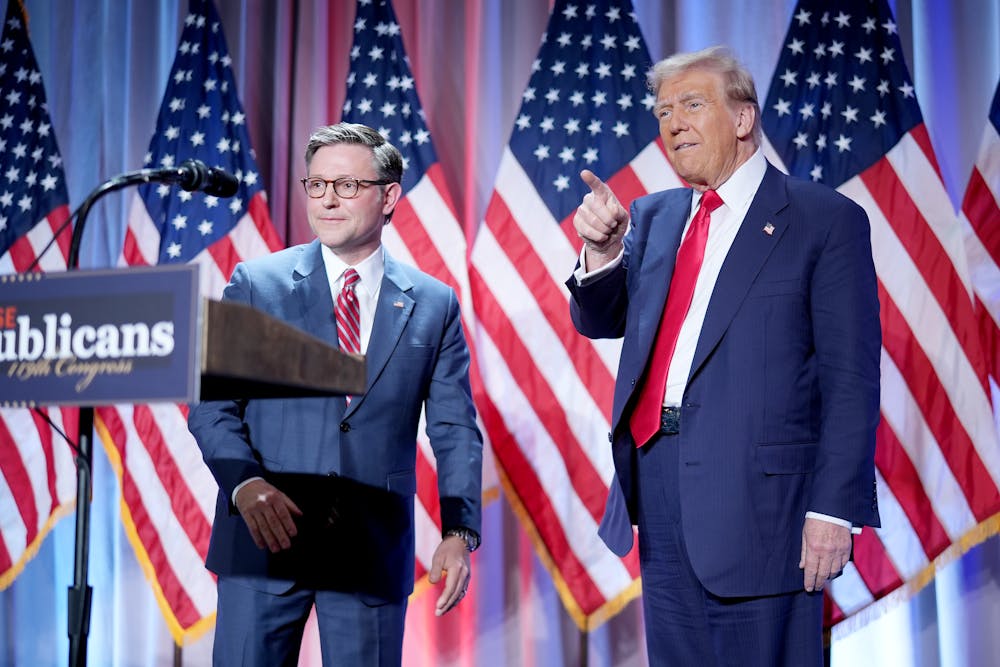
    With a slim majority, will GOP House Speaker Mike Johnson, left, be able to pass Donald Trump’s priorities?
    Andrew Harnik/Getty Images

    Majority size matters

    A unified government clearly makes President Donald Trump’s ability to enact his agenda much easier than if, for example, Democrats controlled the U.S. House, as they did during the second half of his first term, from 2021-2022. But tight margins in both congressional chambers have meant that, even with a trifecta, it hasn’t been an easy.

    Trump was the sixth consecutive president with a trifecta on Day 1 of his second term. But history – and simple math – show that presidents with trifectas have an easier time passing partisan legislation with bigger majorities. Bigger majorities mean majority-party defections won’t easily sink controversial or partisan legislation. A bigger majority also means that individual members of Congress from either party have less leverage to water down the president’s policy requests.

    Trump also held a trifecta during the beginning of his first term in office; in particular, a big Republican majority in the House, which passed major legislation with relative ease and put pressure on Senate colleagues to comply. Trump signed a major tax reform package in 2017 that was the signature legislative achievement of his first term.

    But Trump has a much smaller advantage this time.

    Every president since Bill Clinton has entered office with a trifecta, but Trump’s seat advantage in the House on Day 1 of his second term was the smallest of all of them. This slim House margin meant that Republicans could afford to lose only a handful of their party’s votes on their spending bill in order for it to pass over unanimous Democratic opposition.

    And Trump’s relatively small advantage in the Senate meant that Republicans needed at least eight Democratic votes to break a filibuster. Nine Democrats ultimately voted to advance the bill to final passage.

    Majority party troubles

    In addition to opposition from Democrats in Congress, Trump and other Republican leaders have continued to confront internal divisions within their own party.

    In a closely divided House or Senate, there are plenty of tools that Democrats, even as the minority party, can use to stymie Trump’s agenda. This most notably includes the filibuster, which would have forced Republicans to garner 60 votes for their short-term spending bill. A small proportion of Democrats ultimately bailed out Senate Republicans in this case; but any major defections within the GOP would have required even more Democratic support, which Republicans were unlikely to get.

    Even dominant legislative trifectas, again like the one former President Barack Obama enjoyed when he took office in 2009, can’t prevent divisions within political parties, as different politicians jockey for control of the party’s agenda.

    Despite entering office with a 17-vote advantage in the Senate, 11 more than Trump enjoys now, Obama’s signature legislative achievement – the Affordable Care Act, also sometimes known as Obamacare – had to be watered down significantly to win a simple majority after backlash from conservative Democrats.

    Obama’s trifecta was bigger in size; but in a polarized America, a large majority also means an ideologically diverse one.

    Just as Republican leaders did in the last Congress, Trump has faced similar pushback behind the scenes and in public from members of his own party in his second term. For the past two years, the Republican-led House has been repeatedly riven by leadership struggles and an often aimless legislative agenda, thanks to a lack of cooperation from the the party’s far-right flank.

    This group of ideologically driven lawmakers remains large enough to stall any party-line vote that Speaker Mike Johnson hopes to pass, and the spending bill very nearly fell victim to this kind of defection.

    Even though the GOP squeaked out a win on this spending bill, the potential for continued chaos is monumental, especially if Trump pursues more major reform to policy areas such as immigration.

    Competing pressures

    Despite Congress’ reputation as a polarized partisan body, members of Congress ultimately serve multiple masters. The lingering Republican divisions that made it so difficult to pass this resolution reflect the competing pressures of national party leaders in Washington and the local politics of each member’s district, which often cut against what party leaders want.

    For example, some Republicans represent heavily Republican districts and will be happy to go along with Trump’s agenda, regardless of how extreme it is. Others represent districts won by Kamala Harris in 2024 and might be more inclined to moderate their positions to keep their seats in 2026 and beyond. There admittedly aren’t many of this latter group; but likely enough to sink any party-line legislation Speaker Johnson has in mind.

    What’s next?

    Republicans managed to pass a hurried, stopgap spending bill on March 14, 2025 only by the skin of their teeth. Failing to do so would have driven the federal government into shutdown mode. Small margins, internal divisions and conflicting electoral pressures will continue to make legislating difficult over the next two years or more.

    Thanks to these complications, it may be that congressional Republicans will continue to rely on the executive branch, including Elon Musk and the efforts at the Department of Government Efficiency, or DOGE, to do the policymaking for them, even if it means handing over their own legislative power to Trump.

    This is an updated version of a story first published on Nov. 19, 2024.

    Charlie Hunt does not work for, consult, own shares in or receive funding from any company or organization that would benefit from this article, and has disclosed no relevant affiliations beyond their academic appointment.

    ref. Why was it hard for the GOP to pass its spending bill? – https://theconversation.com/why-was-it-hard-for-the-gop-to-pass-its-spending-bill-252257

    MIL OSI – Global Reports

  • MIL-OSI Global: Why was it hard for the GOP – which controls Congress – to pass its spending bill?

    Source: The Conversation – USA – By Charlie Hunt, Assistant Professor of Political Science, Boise State University

    U.S. Sen. John Fetterman of Pennsylvania was one of 10 Democrats who voted to break the filibuster on the GOP funding bill. Anna Moneymaker/Getty Images

    Facing a threat of imminent government shutdown, nine Democrats joined GOP Senate colleagues to defeat a filibuster, moving the six-month government funding bill to final passage in a late-day vote on March 14, 2025.

    Since January 2025, Republicans in Washington have enjoyed what’s commonly known as a governing “trifecta”: control over the executive branch via the president, combined with majorities for their party in both the House and the Senate.

    You might think that a trifecta, which is also referred to as “unified government” by political scientists, is a clear recipe for easy legislative success. In theory, when political parties have unified control over the House, the Senate and the presidency, there should be less conflict between them. Because these politicians are part of the same political party and have the same broad goals, it seems like they should be able to get their agenda approved, and the opposing minority party can do little to stop them.

    But not all trifectas are created equal, and not all are dominant. And several weaknesses in the Republicans’ trifecta made passing their six-month stopgap spending bill so difficult, and they help explain why the federal government came so close to shutting down completely.

    Research shows that political gridlock can still happen even under a unified government for reasons that have been on display ever since Republicans assumed leadership of Congress and the presidency in January.

    With a slim majority, will GOP House Speaker Mike Johnson, left, be able to pass Donald Trump’s priorities?
    Andrew Harnik/Getty Images

    Majority size matters

    A unified government clearly makes President Donald Trump’s ability to enact his agenda much easier than if, for example, Democrats controlled the U.S. House, as they did during the second half of his first term, from 2021-2022. But tight margins in both congressional chambers have meant that, even with a trifecta, it hasn’t been an easy.

    Trump was the sixth consecutive president with a trifecta on Day 1 of his second term. But history – and simple math – show that presidents with trifectas have an easier time passing partisan legislation with bigger majorities. Bigger majorities mean majority-party defections won’t easily sink controversial or partisan legislation. A bigger majority also means that individual members of Congress from either party have less leverage to water down the president’s policy requests.

    Trump also held a trifecta during the beginning of his first term in office; in particular, a big Republican majority in the House, which passed major legislation with relative ease and put pressure on Senate colleagues to comply. Trump signed a major tax reform package in 2017 that was the signature legislative achievement of his first term.

    But Trump has a much smaller advantage this time.

    Every president since Bill Clinton has entered office with a trifecta, but Trump’s seat advantage in the House on Day 1 of his second term was the smallest of all of them. This slim House margin meant that Republicans could afford to lose only a handful of their party’s votes on their spending bill in order for it to pass over unanimous Democratic opposition.

    And Trump’s relatively small advantage in the Senate meant that Republicans needed at least eight Democratic votes to break a filibuster. Nine Democrats ultimately voted to advance the bill to final passage.

    Majority party troubles

    In addition to opposition from Democrats in Congress, Trump and other Republican leaders have continued to confront internal divisions within their own party.

    In a closely divided House or Senate, there are plenty of tools that Democrats, even as the minority party, can use to stymie Trump’s agenda. This most notably includes the filibuster, which would have forced Republicans to garner 60 votes for their short-term spending bill. A small proportion of Democrats ultimately bailed out Senate Republicans in this case; but any major defections within the GOP would have required even more Democratic support, which Republicans were unlikely to get.

    Even dominant legislative trifectas, again like the one former President Barack Obama enjoyed when he took office in 2009, can’t prevent divisions within political parties, as different politicians jockey for control of the party’s agenda.

    Despite entering office with a 17-vote advantage in the Senate, 11 more than Trump enjoys now, Obama’s signature legislative achievement – the Affordable Care Act, also sometimes known as Obamacare – had to be watered down significantly to win a simple majority after backlash from conservative Democrats.

    Obama’s trifecta was bigger in size; but in a polarized America, a large majority also means an ideologically diverse one.

    Just as Republican leaders did in the last Congress, Trump has faced similar pushback behind the scenes and in public from members of his own party in his second term. For the past two years, the Republican-led House has been repeatedly riven by leadership struggles and an often aimless legislative agenda, thanks to a lack of cooperation from the the party’s far-right flank.

    This group of ideologically driven lawmakers remains large enough to stall any party-line vote that Speaker Mike Johnson hopes to pass, and the spending bill very nearly fell victim to this kind of defection.

    Even though the GOP squeaked out a win on this spending bill, the potential for continued chaos is monumental, especially if Trump pursues more major reform to policy areas such as immigration.

    Competing pressures

    Despite Congress’ reputation as a polarized partisan body, members of Congress ultimately serve multiple masters. The lingering Republican divisions that made it so difficult to pass this resolution reflect the competing pressures of national party leaders in Washington and the local politics of each member’s district, which often cut against what party leaders want.

    For example, some Republicans represent heavily Republican districts and will be happy to go along with Trump’s agenda, regardless of how extreme it is. Others represent districts won by Kamala Harris in 2024 and might be more inclined to moderate their positions to keep their seats in 2026 and beyond. There admittedly aren’t many of this latter group; but likely enough to sink any party-line legislation Speaker Johnson has in mind.

    What’s next?

    Republicans managed to pass a hurried, stopgap spending bill on March 14, 2025 only by the skin of their teeth. Failing to do so would have driven the federal government into shutdown mode. Small margins, internal divisions and conflicting electoral pressures will continue to make legislating difficult over the next two years or more.

    Thanks to these complications, it may be that congressional Republicans will continue to rely on the executive branch, including Elon Musk and the efforts at the Department of Government Efficiency, or DOGE, to do the policymaking for them, even if it means handing over their own legislative power to Trump.

    This is an updated version of a story first published on Nov. 19, 2024.

    Charlie Hunt does not work for, consult, own shares in or receive funding from any company or organization that would benefit from this article, and has disclosed no relevant affiliations beyond their academic appointment.

    ref. Why was it hard for the GOP – which controls Congress – to pass its spending bill? – https://theconversation.com/why-was-it-hard-for-the-gop-which-controls-congress-to-pass-its-spending-bill-252257

    MIL OSI – Global Reports

  • MIL-OSI Security: Leaders of Los Zetas, a Violent Mexican Drug Cartel, Arraigned on Drug Trafficking, Firearm, and Money Laundering Charges

    Source: United States Department of Justice Criminal Division

    Mexican nationals and former leaders of the Los Zetas cartel were arraigned today in Washington, D.C., on charges of engaging in a continuing criminal enterprise that involved multiple murder conspiracies, conspiring to manufacture and distribute large quantities of cocaine and marijuana destined for the United States, using firearms — including a machinegun — during and in relation to drug trafficking crimes, and conspiring to launder monetary instruments.

    According to court documents, Miguel Trevino Morales, also known as Z-40, Zeta40, and 40, age 52, and Omar Trevino Morales, also known as 42 and Z-42, age 48, ascended to the highest level of leadership in Los Zetas, a violent cartel comprised of former Mexican military officers that began as an armed militaristic wing of the Gulf Cartel. Miguel Trevino Morales allegedly took over leadership of Los Zetas in October 2012 until his arrest by Mexican authorities in 2013, at which point, his brother, Omar Trevino Morales, allegedly assumed primary leadership of the cartel until his arrest by Mexican authorities in 2015. After their arrests, the defendants allegedly renamed Los Zetas to Cartel del Noreste (CDN) and continued to control the cartel while incarcerated in Mexico. Through the date of the fifth superseding indictment, CDN allegedly continued Los Zetas’ criminal drug trafficking activities and acts of violence including murders, assaults, kidnappings, assassinations, and acts of torture. On Feb. 20, 2025, the U.S. Department of State designated CDN as a foreign terrorist organization.

    “The Criminal Division is dedicated to achieving the Attorney General’s goal of the Total Elimination of Cartels,” said Supervisory Official Matthew R. Galeotti, head of the Justice Department’s Criminal Division. “As alleged, former Zetas cartel leaders Z-40 and Z-42 engaged in conspiracies to kill members of the Mexican government, Mexican citizens, members of rival cartels, members of the Guatemalan government, and Guatemalan drug traffickers. We will aggressively pursue and bring to justice in the United States violent transnational criminals and leaders of cartels and hold them accountable for the death and violence they have committed here and abroad and for the large amounts of dangerous drugs that devastate our communities.”

    “As alleged, the defendants represent some of the world’s most vicious cartel leaders, who oversaw Los Zetas’ reign of terror with grotesque impunity and ruthlessness, and a sheer disregard for anything beyond their wealth, power, and control,” said Acting Special Agent in Charge Michael Alfonso of ICE Homeland Security Investigations New York. “I commend ICE Homeland Security Investigations’ El Dorado Task Force for consistently proving itself as a formidable opponent against cartels intent on causing harm. We will use whatever means necessary to protect the safety and security of Americans from threats both here and abroad.”

    The defendants are charged with one count each of continuing a criminal enterprise, conspiracy to distribute five kilograms or more of cocaine and 1,000 kilograms or more of marijuana for importation into the United States, use of a firearm in relation to drug trafficking crimes, and international money laundering conspiracy. As part of the continuing criminal enterprise count, the defendants are alleged to have engaged in conspiracies to kill members of the Mexican government, Mexican citizens, members of rival cartels, members of the Guatemalan government, and Guatemalan drug traffickers. Because the defendants are charged with engaging in a continuing criminal enterprise, they face a maximum penalty of death or life imprisonment.    

    The defendants were subject to longstanding U.S. extradition requests, that were not honored during the prior Administration, but the Mexican government elected to transfer to the current U.S. government in response to the Justice Department’s efforts pursuant to President Trump’s and the Attorney General’s leadership against Mexican drug cartels. On Feb. 27, the defendants were transferred by Mexican authorities to the United States.   

    The Drug Enforcement Administration, ICE HSI, and the FBI are investigating the case.

    Acting Deputy Chief Melanie Alsworth and Trial Attorneys Jayce Born and Kirk Handrich of the Criminal Division’s Narcotic and Dangerous Drug Section, Assistant U.S. Attorney Andrew Wang for the Eastern District of New York, and the U.S. Attorney’s Office for the Western District of Texas are prosecuting the case.

    This case is part of Operation Take Back America, a nationwide initiative that marshals the full resources of the Department of Justice to repel the invasion of illegal immigration, achieve the total elimination of cartels and transnational criminal organizations (TCOs), and protect our communities from the perpetrators of violent crime. Operation Take Back America streamlines efforts and resources from the Department’s Organized Crime Drug Enforcement Task Forces (OCDETFs) and Project Safe Neighborhoods (PSN).

    MIL Security OSI

  • MIL-OSI United Kingdom: Unlocking renewables opportunities

    Source: Scottish Government

    £3.2 million to realise high-value supply chain investment.

    A public-private agreement has been reached to help expand operations and attract new investment at the Port of Montrose.

    A Scottish Enterprise grant of £3.2 million will support a £7.2 million project to acquire and develop land just under two miles from the port.

    The new strategically-important site, Montrose Port Industrial Park, will offer both existing and new companies greater flexibility to grow and adapt alongside Scotland’s thriving renewables sector.

    The Scottish Enterprise investment is part of the Scottish Government’s commitment to invest up to £500 million over five years to develop the offshore wind supply chain and leverage an additional £1.5 billion of private investment.

    Deputy First Minister Kate Forbes said:

    “Scotland’s offshore wind sector is already creating significant opportunities, delivering jobs and attracting major investment across the country. 

    “The Scottish Government has made it clear that Scotland is open for business and we are working closely with Scottish Enterprise and public sector partners to maximise investment and drive growth in the sector.

    “The Port of Montrose is a key asset in supporting Scotland’s offshore wind industry. This investment is the latest in a series of strategic commitments we have made to unlock new opportunities and secure Scotland’s future as a renewables powerhouse.

    Scottish Enterprise CEO Adrian Gillespie said:

    “The expansion of Montrose Port is hugely important to providing new infrastructure and space to support the continued growth of the offshore wind sector.

    “Montrose Port Authority has exciting plans for the future and we are pleased to back that kind of ambition which will attract further investment into Scotland’s economy.”

    CEO of Montrose Port Authority Tom Hutchison said:

    “This investment marks a pivotal moment for Montrose Port, further establishing our role as a key hub in Scotland’s renewable energy sector. By expanding capacity and attracting new investment, we are creating valuable opportunities for business growth, job creation and long-term economic prosperity – both locally and across Scotland.

    “We are delighted that Scottish Enterprise recognises the potential of this project and supports our vision for sustainable growth. This development reinforces Montrose’s position at the forefront of Scotland’s energy transition, ensuring we continue to drive innovation and play a vital role in the offshore wind sector for years to come.”

    Background

    Recent investments made as part of the Scottish Government’s commitment of up to £500 million include:

    Scottish Ministers will host a Global Offshore Wind Investment Forum on Monday 17th March 2025 as part of a Green Industrial Strategy commitment to raise the profile of Scotland as a destination for capital investment.

    Montrose Port Authority (MPA), the world’s largest chain and anchor port, is a key hub for transport, logistics and energy on Scotland’s North East Coast. As a trust port, MPA drives sustainability, supports economic growth and plays a vital role in Scotland’s energy transition.

    A leading hub for renewable energy, MPA has become a major Operations & Maintenance (O&M) base for offshore wind. The port is home to the O&M base for Scotland’s largest offshore wind farm, Seagreen, and will be the base for the forthcoming Inch Cape wind project which will begin construction later this year.

    MIL OSI United Kingdom

  • MIL-OSI Russia: Financial News: Insurance Market: 2024 Results

    Translartion. Region: Russians Fedetion –

    Source: Central Bank of Russia –

    The volume of insurance premiums in 2024 increased by 62.8%, to 3.7 trillion rubles. The main driver of the market was life insurance, premiums for which reached record levels in the entire history of observations.

    Other segments with strong positive dynamics include voluntary health insurance, car insurance and corporate types of insurance.

    According to the results of the year, the net profit of insurers increased almost 1.5 times and amounted to 462.8 billion rubles.

    Read more about the market situation by the end of 2024 in“Review of key performance indicators of insurers”.

    Please note: This information is raw content directly from the source of the information. It is exactly what the source states and does not reflect the position of MIL-OSI or its clients.

    Please Note; This Information is Raw Content Directly from the Information Source. It is access to What the Source Is Stating and Does Not Reflect

    HTTPS: //VVV.KBR.ru/Press/Event/? ID = 23460

    MIL OSI Russia News

  • MIL-OSI Europe: Answer to a written question – EU geothermal strategy – E-003008/2024(ASW)

    Source: European Parliament

    The Commission has taken note of the Parliament resolution of January 2024[1], and of the Council conclusions of December 2024 and acknowledges that geothermal energy has an important role to play in the decarbonisation of the EU’s energy system.

    The potential of geothermal energy has been so far hindered by challenges related inter alia to planning, permitting, skills, financing and availability of data.

    As underlined in Affordable Energy Action Plan adopted on 26 February 2025[2], the Commission is committed to work on a comprehensive strategy to further advance on the decarbonisation of heating and cooling and will prepare a Heating and Cooling Strategy (first quarter of 2026), which will be accompanied by an action plan on geothermal energy.

    In the meantime, timely transposition and implementation of recent legislation will benefit geothermal energy, in particular renewables targets on heating and cooling under the revised Renewable Energy Directive[3], and provisions in the Energy Efficiency Directive[4] concerning decarbonisation pathways towards 2050 for district heating and cooling networks (a key user of geothermal energy), and on local heating and cooling plans.

    • [1] https://eur-lex.europa.eu/eli/C/2024/5738/oj
    • [2] Action Plan for Affordable Energy: Unlocking the true value of our Energy Union to secure affordable, efficient and clean energy for all Europeans, COM (2025) 79 final.
    • [3] Directive (EU) 2018/2001 of the European Parliament and of the Council of 11 December 2018 on the promotion of the use of energy from renewable sources (recast): https://eur-lex.europa.eu/legal-content/EN/TXT/?uri=CELEX%3A02018L2001-20240716
    • [4] Directive (EU) 2023/1791 of the European Parliament and of the Council of 13 September 2023 on energy efficiency and amending Regulation (EU) 2023/955 (recast): https://eur-lex.europa.eu/legal-content/EN/TXT/?uri=OJ%3AJOL_2023_231_R_0001&qid=1695186598766
    Last updated: 14 March 2025

    MIL OSI Europe News

  • MIL-OSI Europe: Answer to a written question – Ensuring workplace safety at industrial sites with high toxic chemical risk – E-000459/2025(ASW)

    Source: European Parliament

    The current EU occupational safety and health (OSH) regulatory framework providing protection for workers exposed to hazardous chemicals on industrial sites consists of the framework Directive 89/391/EEC[1] and its related Directives in the area of chemicals, i.e. Directive 98/24/EC[2] and Directive 2004/37/EC[3].

    The latter provide adequate protection for exposed workers and are updated when there is need to reflect new scientific findings concerning dangerous chemicals, or as a result of the five-yearly ex post evaluation of the health and safety at work Directives[4], which may signal any needs for improvement. Member States are however allowed to adopt more stringent and specific provisions in this regard.

    Safety and health at work of temporary agency workers is regulated under Directive 91/383/EEC[5] which ensures that temporary agency workers are afforded, as regards safety and health at work, the same level of protection as that of other workers in the user undertaking and/or establishment. Directive 89/391/EEC and the related EU OSH Directives apply fully to all workers in the EU including temporary agency workers.

    It is primarily for the Member States’ competent authorities to ensure that the national legislation transposing these directives is properly enforced.

    The Senior Labour Inspectors’ Committee[6] assists the Commission regarding the enforcement aspects of the EU OSH legislation at the national level.

    The Commission monitors the correct implementation of these Directives by Member States and may decide to take appropriate action if the Member State fails to fully or correctly transpose EU rules, or if the Member State fails to fulfil its obligations under the relevant EU legal provisions.

    • [1] Council Directive 89/391/EEC of 12 June 1989 on the introduction of measures to encourage improvements in the safety and health of workers at work, OJ L 183, 29.6.1989, p. 1; https://eur-lex.europa.eu/legal-content/EN/ALL/?uri=celex%3A31989L0391
    • [2] Council Directive 98/24/EC of 7 April 1998 on the protection of the health and safety of workers from the risks related to chemical agents at work, OJ L 131, 5.5.1998, p. 11; https://eur-lex.europa.eu/eli/dir/1998/24/oj/eng
    • [3] Directive 2004/37/EC of the European Parliament and of the Council of 29 April 2004 on the protection of workers from the risks related to exposure to carcinogens or mutagens at work (Sixth individual Directive within the meaning of Article 16(1) of Council Directive 89/391/EEC), OJ L 158, 30.4.2004, p. 50; https://eur-lex.europa.eu/eli/dir/2004/37/oj/eng
    • [4] See Article 17a of Directive 89/391/EEC.
    • [5] Council Directive 91/383/EEC of 25 June 1991 supplementing the measures to encourage improvements in the safety and health at work of workers with a fixed- duration employment relationship or a temporary employment relationship, OJ L 206, 29.7.1991, p. 19-21; https://eur-lex.europa.eu/eli/dir/1991/383/oj/eng
    • [6] https://employment-social-affairs.ec.europa.eu/policies-and-activities/rights-work/health-and-safety-work/senior-labour-inspectors-committee-0_en
    Last updated: 14 March 2025

    MIL OSI Europe News

  • MIL-OSI Europe: Answer to a written question – Impacts of quartz mining in north-east Segovia and its alignment with EU strategic policies – E-002938/2024(ASW)

    Source: European Parliament

    According to the available information[1], the project is currently undergoing the assessment procedure pursuant to the Environmental Impact Assessment (EIA) Directive[2] and has not yet received development consent.

    During this procedure, the competent authorities would need to assess any potential impact on the environment, independently of the origin of the company leading the project, and to ensure that the project complies with applicable EU legislation such as the Mining Waste[3], Nature[4] and Water Framework[5] Directives.

    The Commission is not aware of CO2 storage permits in preparation in Spain that would need the application of Directive 2009/31/EC[6].

    Mining activities normally falls under the scope of Regulation (EC) 2018/842[7], setting limits to Member States on emissions of greenhouse gases and leaving them the freedom to choose the measures to achieve such targets .

    Member States are primarily responsible to ensure compliance with EU law. In line with its strategic approach on enforcement action[8], which focuses on cases of systemic non-compliance, the Commission considers that the means of redress available under national legislation are the most appropriate mechanism to address individual cases of possible non-compliance, such as the issue raised by the Honourable Members.

    Moreover, the competent national Courts could order the suspension of the project, where appropriate. In its role as guardian of the Treaties, the Commission will continue monitoring the situation and may decide to take appropriate action.

    • [1] https://energia.jcyl.es/web/jcyl/Energia/es/Plantilla100Detalle/1284766759323/Texto%20Generico/1285446129394/Texto
    • [2] Directive 2011/92/EU of the European Parliament and of the Council of 13 December 2011 on the assessment of the effects of certain public and private projects on the environment. OJ L 26, 28.1.2012, p. 1-21, as amended by Directive 2014/52/EU of 16 April 2014 — OJ L 124, 25.4.2014, p. 1-18.
    • [3] Directive 2006/21/EC of the European Parliament and of the Council of 15 March 2006 on the management of waste from extractive industries and amending Directive 2004/35/EC. OJ L 102, 11.4.2006, p. 15-34.
    • [4] Council Directive 92/43/EEC of 21 May 1992 on the conservation of natural habitats and of wild fauna and flora (OJ L 206, 22.7.1992, p. 7-50); Directive 2009/147/EC of the European Parliament and of the Council of 30 November 2009 on the conservation of wild birds (Codified version), OJ L 20, 26.1.2010, p. 7-25
    • [5] Directive 2000/60/EC of the European Parliament and of the Council of 23 October 2000 establishing a framework for Community action in the field of water policy — OJ L 327, 22.12.2000, p. 1-73
    • [6] Directive 2009/31/EC of the European Parliament and of the Council of 23 April 2009 on the geological storage of carbon dioxide and amending Council Directive 85/337/EEC, European Parliament and Council Directives 2000/60/EC, 2001/80/EC, 2004/35/EC, 2006/12/EC, 2008/1/EC and Regulation (EC) No 1013/2006. OJ L 140, 5.6.2009, p. 114-135.
    • [7] Regulation (EU) 2018/842 of the European Parliament and of the Council of 30 May 2018 on binding annual greenhouse gas emission reductions by Member States from 2021 to 2030 contributing to climate action to meet commitments under the Paris Agreement and amending Regulation (EU) No 525/2013 (Text with EEA relevance). PE/3/2018/REV/2. OJ L 156, 19.6.2018, p. 26-42.
    • [8] As set out in the communication of 19 January 2017 (EU law: Better results through better application — C/2016/8600, OJ C 18, 19.1.2017, p. 10-20) and in the communication of 13 October 2022 COM(2022) 518 final — Enforcing EU law for a Europe that delivers.
    Last updated: 14 March 2025

    MIL OSI Europe News

  • MIL-OSI Europe: Answer to a written question – Polysilicon between the Critical Raw Materials Act (CRMA) and the Net-Zero Industry Act (NZIA) – P-002919/2024(ASW)

    Source: European Parliament

    The Net-Zero Industry Act (NZIA)[1] and the Critical Raw Materials Act (CRMA)[2] Regulations entered into force on 28 June and 3 May 2024, respectively, aiming to strengthen the EU’s manufacturing capacity for net-zero technologies, such as solar photovoltaic panels, wind turbines, batteries, and heat pumps, while ensuring access to critical raw materials essential for their production.

    To provide additional clarity on its scope of application, the NZIA includes an Annex that lists final products and specific components considered to be primarily used for the production of net-zero technologies.

    This Annex will be finalised through a Delegated Act, for which the work is ongoing and for which assessments are being carried out to also determine which materials fall within the scope of the NZIA or CRMA.

    This includes considerations with regards to polysilicon, which has been included under NZIA in the draft Delegated Act that has been published on 23 January 2025 on Have Your Say[3] portal for a four-week public feedback period.

    Value chains for critical raw materials are often highly complex. As provided for by the NZIA, critical raw materials falling under the scope of the CRMA are excluded from the scope of the NZIA.

    Components (including potentially some processed raw materials) primarily used to produce net-zero technologies fall under the scope of the NZIA.

    Relevant value chains have been analysed in accordance with these provisions. This has resulted, for example, in the differentiation between precursor battery active materials (pCAM) that are covered under CRMA and battery active materials (CAM) that have been included in the draft Delegated Act of NZIA.

    • [1]  OJ L, 2024/1735, 28.6.2024 (https://eur-lex.europa.eu/eli/reg/2024/1735/oj/eng).
    • [2]  OJ L, 2024/1252, 3.5.2024 (https://eur-lex.europa.eu/eli/reg/2024/1252/oj/eng).
    • [3] https://ec.europa.eu/info/law/better-regulation/have-your-say/initiatives/14409-Delegated-act-on-primarily-used-components-under-the-Net-Zero-Industry-Act_en

    MIL OSI Europe News

  • MIL-OSI Europe: Written question – Request for clarification regarding language guidelines – E-000964/2025

    Source: European Parliament

    Question for written answer  E-000964/2025
    to the Commission
    Rule 144
    Anna Maria Cisint (PfE), Susanna Ceccardi (PfE), Silvia Sardone (PfE), Raffaele Stancanelli (PfE), Roberto Vannacci (PfE)

    On 14 February 2025, the Commission published an update to its English Style Guide[1]. Given the major global challenges that the EU is facing, and as the question of how much attention should be given to activities of that kind is debatable, it is appropriate for us to seek clarification on this matter. In the light of those factors, the Commission should consider withdrawing the text, so that it can remove the most controversial parts, which could be seen as attempts to manipulate language.

    In view of the above:

    • 1.How much did it cost in total – in economic terms and in terms of time spent by staff – to write the text, including any resources allocated to external parties that the Commission was asked to identify specifically, where involved?
    • 2.With reference to Chapter 15, ‘Inclusive language’ (part I, pages 68 to 71), what criteria were followed for its drafting, and can the Commission provide specific references to any scientific or other documents used as a basis and give a detailed explanation of the content of each entry in the chapter?
    • 3.Why were the guidelines published?

    Submitted: 6.3.2025

    • [1] https://commission.europa.eu/system/files/2023-11/styleguide_english_dgt_en.pdf.
    Last updated: 14 March 2025

    MIL OSI Europe News

  • MIL-OSI Europe: Written question – Promoting knowledge learning and transfer in the crafts and heritage restoration professions – E-000968/2025

    Source: European Parliament

    Question for written answer  E-000968/2025
    to the Commission
    Rule 144
    Catherine Griset (PfE)

    In France, the local, non-relocatable heritage restoration sector has around 234 000 enterprises, with 500 000 direct and indirect jobs, including 35 000 craft jobs.

    Woodworkers, stonemasons, ceramicists, leatherworkers, weavers, as well as paintwork and stained glass restorers: these professions are almost exclusively carried out by micro-enterprises employing fewer than 10 people and the managers are often older people.

    A lack of time and funding, as well as the administrative burden involved, mean that these entrepreneurs take on very few apprentices, with the risk that precious and sometimes age-old know-how is being lost forever.

    New ways to fund this learning need to be imagined and developed, reducing the administrative burden on apprenticeship managers, freeing up their time and giving them access to more suitable, cheaper premises, etc.

    • 1.Is the Commission planning such initiatives, for example through its Horizon Europe research and innovation programme?
    • 2.Is the Erasmus exchange programme effectively involved in funding this learning and exchange of know-how in the crafts?
    • 3.Along the lines of artists’ residences, are there residences for artisans specialising in heritage restoration?

    Submitted: 6.3.2025

    Last updated: 14 March 2025

    MIL OSI Europe News

  • MIL-OSI Europe: Written question – Migration policy and the TFEU – E-000970/2025

    Source: European Parliament

    Question for written answer  E-000970/2025
    to the Commission
    Rule 144
    Marcin Sypniewski (ESN)

    Germany has been carrying out border controls for several months now in order to limit the influx of illegal migrants. Incidents have also been reported in which the German authorities have transported migrants they had expelled to the Polish border.

    Pursuant to Article 72 TFEU, Member States have the right to take unilateral decisions regarding the maintenance of law and order and internal security.

    In light of the foregoing:

    • 1.Does the Commission consider the interpretation of Article 72 TFEU to be in line with EU law, and therefore, can each country unilaterally adapt its migration policy to address security threats?
    • 2.Given the provisions of the Pact on Migration and Asylum, would the Commission accept a possible Polish policy of turning back or refusing entry to migrants on the basis of the aforementioned article of the TFEU?
    • 3.Does the Commission condone the actions of the German authorities in transporting migrants to the Polish border, and if not, what measures does it plan to take against such actions?

    Submitted: 6.3.2025

    Last updated: 14 March 2025

    MIL OSI Europe News

  • MIL-OSI Europe: Written question – Status of clear aligners in light of Regulation (EU) 2017/745 – E-000956/2025

    Source: European Parliament

    Question for written answer  E-000956/2025
    to the Commission
    Rule 144
    Isabella Tovaglieri (PfE)

    The regulation defines ‘custom-made device’ as a device that is specifically made in accordance with a written prescription from an authorised person and intended for the sole use of a particular patient to meet their individual conditions and needs.

    In recent years, there has been a growth in the market for clear aligners that can be purchased directly online or without consulting a healthcare structure or professional. This is because they are not considered custom-made devices if they are manufactured in series production.

    This is despite the fact that all aligners are expressly designed to be prescribed to individual patients based on a diagnosis of their specific dento-skeletal conditions by a healthcare professional.

    This situation puts custom-made clear aligners at a competitive disadvantage as they cannot be placed directly on the market.

    In view of the above, can the Commission answer the following:

    • 1.Does it not consider that the possibility of placing non-custom-made clear aligners directly on the market puts prescribing dentists and manufacturers of custom-made clear aligners at a competitive disadvantage?
    • 2.Bearing in mind that all clear aligners, regardless of the manufacturer, are intended for use by a single patient based on their specific anatomy and on a treatment plan that must be drawn up by a professional, does it not consider it appropriate to classify clear aligners as custom-made devices in the context of the revision of the regulation?

    Submitted: 6.3.2025

    Last updated: 14 March 2025

    MIL OSI Europe News

  • MIL-OSI Global: Why was it so hard for the GOP to pass its spending bill?

    Source: The Conversation – USA – By Charlie Hunt, Assistant Professor of Political Science, Boise State University

    U.S. Sen. John Fetterman of Pennsylvania was one of 10 Democrats who voted to break the filibuster on the GOP funding bill. Anna Moneymaker/Getty Images

    Facing a threat of imminent government shutdown, nine Democrats joined GOP Senate colleagues to defeat a filibuster, moving a six-month government funding bill to final passage in a late-day vote on March 14, 2025.

    Since January 2025, Republicans in Washington have enjoyed what’s commonly known as a governing “trifecta”: control over the executive branch via the president, combined with majorities for their party in both the House and the Senate.

    You might think that a trifecta, which is also referred to as “unified government” by political scientists, is a clear recipe for easy legislative success. In theory, when political parties have unified control over the House, the Senate and the presidency, there should be less conflict between them. Because these politicians are part of the same political party and have the same broad goals, it seems like they should be able to get their agenda approved, and the opposing minority party can do little to stop them.

    But not all trifectas are created equal, and not all are dominant. And several weaknesses in the Republicans’ trifecta made passing their six-month stopgap spending bill so difficult, and they help explain why the federal government came so close to shutting down completely.

    Research shows that political gridlock can still happen even under a unified government for reasons that have been on display ever since Republicans assumed leadership of Congress and the presidency in January.

    With a slim majority, will GOP House Speaker Mike Johnson, left, be able to pass Donald Trump’s priorities?
    Andrew Harnik/Getty Images

    Majority size matters

    A unified government clearly makes President Donald Trump’s ability to enact his agenda much easier than if, for example, Democrats controlled the U.S. House, as they did during the second half of his first term, from 2021-2022. But tight margins in both congressional chambers have meant that, even with a trifecta, it hasn’t been an easy.

    Trump was the sixth consecutive president with a trifecta on Day 1 of his second term. But history – and simple math – show that presidents with trifectas have an easier time passing partisan legislation with bigger majorities. Bigger majorities mean majority-party defections won’t easily sink controversial or partisan legislation. A bigger majority also means that individual members of Congress from either party have less leverage to water down the president’s policy requests.

    Trump also held a trifecta during the beginning of his first term in office; in particular, a big Republican majority in the House, which passed major legislation with relative ease and put pressure on Senate colleagues to comply. Trump signed a major tax reform package in 2017 that was the signature legislative achievement of his first term.

    But Trump has a much smaller advantage this time.

    Every president since Bill Clinton has entered office with a trifecta, but Trump’s seat advantage in the House on Day 1 of his second term was the smallest of all of them. This slim House margin meant that Republicans could afford to lose only a handful of their party’s votes on their spending bill in order for it to pass over unanimous Democratic opposition.

    And Trump’s relatively small advantage in the Senate meant that Republicans needed at least eight Democratic votes to break a filibuster. Nine Democrats ultimately voted to advance the bill to final passage.

    Majority party troubles

    In addition to opposition from Democrats in Congress, Trump and other Republican leaders have continued to confront internal divisions within their own party.

    In a closely divided House or Senate, there are plenty of tools that Democrats, even as the minority party, can use to stymie Trump’s agenda. This most notably includes the filibuster, which would have forced Republicans to garner 60 votes for their short-term spending bill. A small proportion of Democrats ultimately bailed out Senate Republicans in this case; but any major defections within the GOP would have required even more Democratic support, which Republicans were unlikely to get.**

    Even dominant legislative trifectas, again like the one former President Barack Obama enjoyed when he took office in 2009, can’t prevent divisions within political parties, as different politicians jockey for control of the party’s agenda.

    Despite entering office with a 17-vote advantage in the Senate, 11 more than Trump enjoys now, Obama’s signature legislative achievement – the Affordable Care Act, also sometimes known as Obamacare – had to be watered down significantly to win a simple majority after backlash from conservative Democrats.

    Obama’s trifecta was bigger in size; but in a polarized America, a large majority also means an ideologically diverse one.

    Just as Republican leaders did in the last Congress, Trump has faced similar pushback behind the scenes and in public from members of his own party in his second term. For the past two years, the Republican-led House has been repeatedly riven by leadership struggles and an often aimless legislative agenda, thanks to a lack of cooperation from the the party’s far-right flank.

    This group of ideologically driven lawmakers remains large enough to stall any party-line vote that Speaker Mike Johnson hopes to pass, and the spending bill very nearly fell victim to this kind of defection.

    Even though the GOP squeaked out a win on this spending bill, the potential for continued chaos is monumental, especially if Trump pursues more major reform to policy areas such as immigration.

    Competing pressures

    Despite Congress’ reputation as a polarized partisan body, members of Congress ultimately serve multiple masters. The lingering Republican divisions that made it so difficult to pass this resolution reflect the competing pressures of national party leaders in Washington and the local politics of each member’s district, which often cut against what party leaders want.

    For example, some Republicans represent heavily Republican districts and will be happy to go along with Trump’s agenda, regardless of how extreme it is. Others represent districts won by Kamala Harris in 2024 and might be more inclined to moderate their positions to keep their seats in 2026 and beyond. There admittedly aren’t many of this latter group; but likely enough to sink any party-line legislation Speaker Johnson has in mind.

    What’s next?

    Republicans managed to pass a hurried, stopgap spending bill on March 14, 2025 only by the skin of their teeth. Failing to do so would have driven the federal government into shutdown mode. Small margins, internal divisions and conflicting electoral pressures will continue to make legislating difficult over the next two years or more.

    Thanks to these complications, it may be that congressional Republicans will continue to rely on the executive branch, including Elon Musk and the efforts at the Department of Government Efficiency, or DOGE, to do the policymaking for them, even if it means handing over their own legislative power to Trump.

    This is an updated version of a story first published on Nov. 19, 2024.

    Charlie Hunt does not work for, consult, own shares in or receive funding from any company or organization that would benefit from this article, and has disclosed no relevant affiliations beyond their academic appointment.

    ref. Why was it so hard for the GOP to pass its spending bill? – https://theconversation.com/why-was-it-so-hard-for-the-gop-to-pass-its-spending-bill-252257

    MIL OSI – Global Reports

  • MIL-OSI Canada: Statement: Premier Danielle Smith calls for federal election

    Source: Government of Canada regional news (2)

    MIL OSI Canada News

  • MIL-OSI Canada: Traffic detour on Highway 17A to accommodate filming

    Drivers are advised of a traffic detour along Highway 17A occurring on Sunday, March 17, 2025, to accommodate permitted filming in the area.

    The northbound lanes of Highway 17A, between Deltaport Way and Ladner Trunk Road, will be closed on Sunday, from 6 a.m. to 9 p.m. Northbound travellers will be detoured to Highway 17 and Highway 99. Drivers should expect additional travel time through the route.

    The southbound lanes of the highway will remain open, with no delays anticipated for southbound drivers.

    Drivers are asked to obey signage and allow for additional travel time. Traffic updates will be available here: www.DriveBC.ca

    MIL OSI Canada News

  • MIL-OSI USA News: WEEK EIGHT WINS: A Testament to American Greatness Under President Trump

    Source: The White House

    The past week was marked by another series of triumphs that underscore the commitment of President Donald J. Trump and his administration to making America stronger, safer, and more prosperous than ever before.

    Here is a non-comprehensive list of wins in week eight:

    • President Trump’s economic agenda came into focus as Americans saw needed economic relief following years of Bidenflation.
      • Consumer inflation “eased more than expected” in February, with core inflation at its lowest level in nearly four years — driven by a decline in airfare prices as Americans prepare for Spring Break.
      • Wholesale inflation came in much lower than expected in February.
      • Mortgage rates dropped to their lowest levels since December, while home purchase applications are at their highest level since January.
      • The price of a dozen eggs is down 36.6% since President Trump’s inauguration.
      • The average price for regular gas has fallen below $3/gallon in 31 states — the third straight week of decline — with the price of oil down nearly 15% since President Trump took office.
    • President Trump and his administration continued their remarkable progress in securing the border following the news that illegal crossings have plummeted to the lowest levels ever recorded.
      • In President Trump’s first 50 days, ICE arrested 32,809 illegal immigrants — nearly 75% of whom were accused or convicted criminals — virtually the same number of arrests over the entirety of Biden’s final year in office.
      • Just 77 “gotaways” were recorded in the past three weeks — a 95% decrease from the average daily number of “gotaways” under Biden in 2023.
      • Migration to the U.S. through Panama’s Darien Gap has dropped by 99% as would-be illegal border crossers turn around.
    • President Trump’s Section 232 tariffs on imported steel and aluminum took effect as the Trump Administration levels the playing field for American workers.
      • Steel Manufacturers Association: “As the revised steel tariff goes into effect today, President Trump is boldly declaring that America will no longer be a dumping ground for cheap, subsidized foreign steel … By closing loopholes in the tariff that have been exploited for years, President Trump will again supercharge a steel industry that stands ready to rebuild America.”
      • Five major organizations representing the steel industry issued a statement lauding the tariffs.
    • President Trump’s tariffs continued driving manufacturing back to the U.S.
      • Cra-Z-Art — the biggest toymaker in the country — is expanding its domestic manufacturing by 50%.
        • “We are moving a large percentage of what we have in China to here, duplicating some machinery and investing in high speed automation equipment,” said Chairman Lawrence Rosen. “When Trump announced the higher tariffs on China, it’s been full steam ahead.”
      • GE Aerospace announced a $1 billion investment in its U.S.-based manufacturing operation, which will create 5,000 new jobs.
      • Asahi Group Holdings, one of the largest Japanese beverage makers, announced a $35 million investment to boost production at its Wisconsin plant.
      • Angel Aligner, a global orthodontic manufacturer, announced it will build its first U.S.-based production facility in Wisconsin.
      • Pegatron Corp., a Taiwan-based artificial intelligence server maker, announced it will build its first U.S.-based facility and increase its U.S. investment.
      • Merck opened its $1 billion North Carolina manufacturing facility as it plans to invest $8 billion in the U.S. over the next several years.
      • Saica Group, a Spain-based corrugated packaging maker, announced plans to build a $110 million new manufacturing facility in Anderson, Indiana.
      • Saint Gobain Ceramics announced a new $40 million NorPro manufacturing facility in Wheatfield, New York.
      • LGM Pharma announced a $6 million investment to expand its manufacturing facility in Rosenberg, Texas.
    • President Trump forced Ontario, Canada, Premier Doug Ford to back down from his threat to implement 25% electricity tariffs on American consumers.
    • The Department of Homeland Security unveiled the CBP Home App, which repurposes the Biden-era CBP One App to give illegal immigrants the option of self-deporting.
    • The Trump Administration stripped the first visa of a foreign student linked to Hamas-supporting “disruptions” on a college campus.
    • The Environmental Protection Agency launched the “biggest day of deregulation in American history,” which included ending the Biden-Harris electric vehicle mandate, stopping the Biden Administration’s assault on power plants, and eliminating costly emissions standards.
    • The EPA canceled more than 400 “diversity, equity, and inclusion” and “environmental justice” grants, totaling $1.7 billion.
    • The Department of Education opened investigations into 45 universities under Title VI for alleged impermissible use of race-exclusionary preferences, race-based scholarships, and/or race-based segregation.
    • The Trump Administration announced Ukraine accepted an offer to enter into immediate negotiations for a ceasefire and ultimate end to the brutal war.
    • The Trump Administration secured an agreement by Israel and Lebanon to engage in land border negotiations.
    • Secretary of the Interior Doug Burgum officially fulfilled President Trump’s promise to rename the Anahuac National Wildlife Refuge in Texas as the Jocelyn Nungaray National Wildlife Refuge — honoring the memory of Jocelyn Nungaray, a young woman whose life was tragically cut short by an illegal immigrant.
    • The Department of the Interior announced the approval of a federal mining plan modification to extend the operational life of Montana’s Spring Creek Mine by 16 years — enabling the production of nearly 40 million tons of coal and supporting hundreds of full-time jobs.
    • The Department of Energy signed the third major liquefied natural gas export permit approval since President Trump reversed the Biden-era ban, allowing the Delfin LNG project — which was delayed by the Biden Administration — to move forward.
    • The Department of Justice’s new interagency task force arrested 214 criminals in its first two weeks, including violent MS-13 and Tren de Aragua gang members.
    • The Department of Veterans Affairs opened another new clinic — in addition to the three new clinics opened over the past several weeks — to serve thousands of additional veterans.
    • Secretary of Defense Pete Hegseth ordered a department-wide review of the U.S. military’s physical and grooming guidelines to ensure the force is meeting the highest possible standard.
    • The Department of Defense terminated woke climate change programs and initiatives that were not in line with the department’s core warfighting mission.
    • Army Chief of Staff General George ordered a review of all general officer memorandums of reprimand that were issued to soldiers who refused to comply with the Biden Administration’s COVID vaccine mandate.
    • The Department of Transportation rescinded memos issued by the Biden administration that injected social justice, radical environmental agendas into infrastructure funding decisions.
    • The Department of the Treasury sanctioned Iran’s oil minister and shadow fleet operators and targeted Houthi terrorists involved in smuggling and procuring weapons.
    • The Department of Agriculture continued its push to root out fraud, waste, and abuse — including terminating a grant that supports “queer and trans farmers and urban consumers.”
    • The Department of Health and Human Services ended a loophole that allowed ingredient manufacturers to utilize chemicals with unknown safety data in food.
    • The Federal Communications Commission launched its sweeping “In Re: Delete, Delete, Delete” deregulation initiative to alleviate the unnecessary, burdensome regulatory assault on Americans.

    MIL OSI USA News

  • MIL-OSI Canada: Premier’s statement on carbon tax increase

    Premier David Eby has issued the following statement about the future of the carbon tax in British Columbia:

    “People in B.C. are doing everything they can to fight climate change. But we don’t want people to have to choose between affordability and climate action. That’s why we made the commitment last year to get rid of the consumer carbon tax at the first opportunity if the federal government removes the national carbon tax requirement.

    “With Prime Minister Mark Carney moving to eliminate the federal carbon tax on consumers, we are preparing legislation for this session to repeal the tax in B.C.

    “As the federal government removes the requirement that B.C. have a carbon tax in place, we will act quickly so the people of British Columbia don’t feel the pinch when filling their cars or heating their homes.

    “As that work is underway, B.C. is also readying legislation to eliminate the scheduled increase to the carbon tax that would otherwise have occurred on April 1, 2025.

    “While we eliminate the consumer carbon tax, we will continue to ensure big industrial polluters pay their fair share by maintaining an effective price on carbon for large emitters. Our goal is to incentivize industry to adopt lower-carbon technologies while maintaining their competitiveness.

    “The carbon tax has been an important tool in British Columbia. For over a decade and a half, a price on pollution has been an effective part of our efforts to tackle climate change. However, with cost-of-living pressures facing households and the imminent removal of federal carbon pricing, there is no longer support for the measure. We will continue our commitments to battle climate change by encouraging industry to innovate and ensuring British Columbians have affordable options to make sustainable choices.”

    MIL OSI Canada News

  • MIL-OSI Russia: Polytechnicians win medals at the Professionals Championship

    Translartion. Region: Russians Fedetion –

    Source: Peter the Great St Petersburg Polytechnic University – Peter the Great St Petersburg Polytechnic University –

    The regional stage of the Professionals championship was held in St. Petersburg. It is a competition that attracts many young people taking their first steps in their careers. It involved 2,000 students and schoolchildren who spent a month proving their right to be called the best in almost 300 competencies.

    Students of the Institute of Secondary Vocational Education of SPbPU competed in 27 competencies and earned 18 medals. They demonstrated their skills and gained unique experience that will be useful to them in the future. The winner of the stage will represent the region at the All-Russian competition in the spring, which will be an excellent opportunity for further development and growth.

    This year we faced many challenges and difficult tasks. Thanks to our joint efforts, our guys were able to overcome all obstacles and demonstrated a high level of skill. We are proud of the results and understand that behind every victory there is hard work and the desire to be better than yesterday. Thank you to everyone who supports us, – shared Yulia Matveeva, responsible for the championship movement “Professionals” in ISPO.

    The winners are:

    Polina Pavlova, group 32919/21 — «Automation of business processes of organizations» (trainer and expert-mentor A. S. Shavrov); Aleksey Zhuk, group 32919/8 — «Specialist in testing of game software» (trainer D. V. Ivanova); Pavel Yasinsky, group 32919/22 — «Specialist in data analysis» (trainer E. N. Zernova); Sergey Melnik, group 32919/1 — «Architect of intelligent control systems» (trainer A. A. Lisitsyn, student of group 42919/3); Aleksandr Kulgin, group 32917/2 — «Cooking» (trainer T. R. Pishtokova and expert-mentor A. S. Selifontova); Diana Matveeva, Lyceum No. 40, 9 “A” – “Confectionery (juniors)” (trainer E. N. Lelenkova and expert-mentor N. A. Kukharenkova). Anastasia Prognimak, Lyceum No. 40, 9 “A” – “Restaurant service (juniors)” (trainer and expert-mentor Yu. A. Matveeva).

    Silver medals were awarded to:

    Darya Malyuk, group 32919/22 — «Design of neural interfaces» (trainer and expert-mentor D. V. Ivanova); Aleksey Zarytovsky, group 32919/8 — «Operation of unmanned aircraft systems» (trainer and expert-mentor A. A. Prokofiev); Dmitry Bykov, group 32919/1 — «Architect of intelligent control systems» (trainer A. A. Lisitsyn, student of group 42919/3); Aksinya Voevodina, group 42918/1 — «Hotel administration» (trainer and expert-mentor D. V. Talalaeva); Ariana Stukalova, group 42917/1 — «Confectionery business (main)» (trainer E. N. Lelenkova and expert-mentor N. A. Kukharenkova).

    The bronze medalists were:

    Irina Bezgodkova, group 42919/1 — «Automation of business processes of organizations» (trainer L. S. Shavrova); Dmitry Fergert, group 12919/23 — «Software and project management» (trainer V. A. Andreev); Arina Pyatak, group 22919/1 — «Data analysis specialist» (trainer E. N. Zernova); Dmitry Zhuravsky, group 42919/7 — «Machine learning and big data» (trainer E. N. Zernova); Sofia Umnova, group 22919/1 — «Digital transformation» (trainers D. A. Poltapova and S. S. Stupakova, students of group 42919/2); Georgy Denisov, group 42919/9 — «Neural networks and big data» (trainer E. N. Zernova).

    Please note: This information is raw content directly from the source of the information. It is exactly what the source states and does not reflect the position of MIL-OSI or its clients.

    MIL OSI Russia News

  • MIL-OSI Russia: Polytechnic University presented the university development program at the Council of the Ministry of Education and Science

    Translartion. Region: Russians Fedetion –

    Source: Peter the Great St Petersburg Polytechnic University – Peter the Great St Petersburg Polytechnic University –

    A meeting of the Council for Support of Universities’ Development Programs — Participants in the Priority-2030 Program is being held in Moscow, chaired by the Minister of Science and Higher Education Valery Falkov. The Council includes representatives of the Russian Academy of Sciences, leading industrial companies and public organizations. From March 12 to 15, 101 universities (the majority of Priority participants) are presenting their annual reports and development programs. Since 2025, Priority-2030 has been implemented within the framework of the Youth and Children national project.

    Currently, the Priority-2030 program is being transformed to meet the objectives of technological leadership, noted the head of the Russian Ministry of Education and Science Valery Falkov. On the instructions of Russian President Vladimir Putin, the program’s implementation has been extended for six years – until 2030. In accordance with the updated strategic documents of the Russian Federation on national goals, scientific and technological development and priority science-intensive technologies, changes have been made to the architecture of the Priority-2030 program, including those related to performance targets and evaluation criteria.

    Previously, universities were divided into recipients of the basic part of the grant and two special grants (for territorial and industry leadership). From this year, the Ministry of Education and Science noted, a single council will form a general rating of the effectiveness of university development programs. At the same time, commissions for creative and Far Eastern tracks, as well as for universities-candidates for “Priority”, are retained. Now the emphasis is on assessing the target model of the university, including its compliance with the tasks of technological leadership. Based on the results of the defense, universities will be divided into groups with different funding.

    The Polytechnic delegation to the meeting of the Council for Support of Universities Development Programs — Participants of the Priority-2030 Program was headed by Rector, Academician of the Russian Academy of Sciences Andrey Rudskoy. Vice-Rector for Digital Transformation Alexey Borovkov, Vice-Rector for Research Yury Fomin, Vice-Rector for Educational Activities Lyudmila Pankova, Acting Vice-Rector for Advanced Projects Maria Vrublevskaya and Director of the Scientific and Educational Center “Mechanical Engineering Technologies and Materials” Pavel Novikov also took part in the defense of the university development program.

    The main objective of the Polytechnic University as a scientific center with world-class competencies is to ensure the country’s technological leadership. Our competitive advantage is in our polytechnicity: in today’s complex and rapidly changing conditions, it is the synergistic efforts of various scientific fields that allow us to create breakthrough technologies. We have long been developing interdisciplinary research teams, investing funds, including under the Priority 2030 grant, in the development of research infrastructure, which allows us to create unique developments and facilitate their rapid implementation in production. Thus, the research and technology teams we support have demonstrated a high level of efficiency: since 2021, more than 150 technologies and developments have been created, 9 of which have been brought to Technology Readiness Level (TRL) 8-9, 84 – to TRL 6-7. We have also launched small-scale production of parts for gas pumping devices – this is vital for the country’s energy sector. We plan to scale up successful practices by attracting students and postgraduates to science and developing joint educational programs with industry representatives. We strive to form a new generation of technological leaders in Russia, – noted SPbPU Rector, RAS Academician Andrey Rudskoy.

    The target model of the Polytechnic University is based on the effective work of a qualified contractor with a qualified customer. Effective actions based on knowledge and technology allow us to form a scientific and technological reserve on a systemic basis, which characterizes a qualified contractor. A breakthrough, in fact, an exit to another level of development, is associated with the formulation of frontier engineering tasks by a qualified customer. This is how globally competitive market products are created. Particular attention is paid to the transfer of knowledge through a new educational model with variable terms of basic educational programs. The Polytechnic University trains highly qualified personnel for the tasks of the industry and, together with industrial partners, forms the image of a graduate – what competencies, skills, knowledge and abilities he or she should have. This allows us to train highly qualified engineers who are ready to start working at an enterprise immediately after graduating. The key principle in designing the educational process is the triad “education – science – industry” with the decisive role of the industrial component.

    At the defense, the Polytechnic team presented a model for the university’s development focusing on three key scientific and technological areas, within which three strategic technological projects are planned to be implemented. They are all interconnected: these are system digital engineering, artificial intelligence for solving cross-industry problems, and new materials and means of production.

    Digital engineering accelerates the development process through the use of mathematical and computer modeling, advanced digital technologies and digital testing, which allows the creation of digital twins of high-tech industrial products.

    We plan to create a Center for testing, verification and validation of domestic industrial software – computer-aided engineering software systems (CAE systems), as well as to develop mathematical, computer and digital models for key industries, primarily mechanical engineering, for nuclear and power engineering, for the development of gas turbine, electric and piston engines, for composite materials and metabiomaterials, for the development and implementation of a specialized process of “digital certification” of UAVs of all types (aircraft, helicopter, multirotor, convertiplanes, seaplanes and hydroamphibians, etc.), – noted Vice-Rector for Digital Transformation Alexey Borovkov.

    Today, it is impossible to ensure technological leadership in the global market without artificial intelligence technologies. Our scientists, taking into account global trends, use AI in almost all areas. At the same time, the most popular in industry and medicine is explainable artificial intelligence (XAI). This direction focuses on creating AI models whose decisions can be understood and interpreted by humans.

    The main objective of the Polytechnic University AI Center is to create a digital platform by 2030 that will ensure the development and transfer to various branches of industry and healthcare of modern cross-cutting and industry-specific solutions based on standard models, methods and algorithms of various artificial intelligence technologies created by our scientists, as well as the creation of new effective data analysis tools, commented Vice-Rector for Research Yuri Fomin.

    New materials and means of production are a necessary and essential element of industrial transformation. Here, Polytechnic University sees its technological superiority and solves state tasks of technological leadership. The strategic project is aimed at creating small-scale science-intensive production of power engineering products obtained by additive technologies, as well as the development and production of power sources. Thus, Polytechnic University has developed a manufacturing technology and conducted operational tests as part of the engine of the guide blades of the first stage of the high-pressure turbine of the ground-based gas turbine unit type GT-750-6, designed to drive a centrifugal supercharger of natural gas. The level of the implemented product, confirmed by the industrial partner, is UGT 9.

    During the project implementation, Polytechnic engineers launched small-scale production of parts at the university. This allows for prompt repair of components of the Russian energy complex. In the next three years, the university will address both civil and special-purpose issues. In particular, this includes the production of critical parts of the hot tract of gas turbine gas pumping units for PJSC Gazprom, and in the field of shipbuilding, the repair and production of parts of gas turbine power plants, said Anatoly Popovich, Director of the Institute of Mechanical Engineering, Materials and Transport.

    The University continues its course on rejuvenating its staff and supporting young research teams. Like all universities, the Polytechnic University will have to transition to a new model of engineering training.

    SPbPU together with Severstal for the first time will launch a pilot multi-track model for training engineers in the field of metallurgy and materials science. The new model will allow students to obtain a full-fledged higher engineering education and, after graduation, seamlessly begin their professional activities. The university plans to develop and scale this experience. Currently, the Polytechnic University has 30 corporate programs. SPbPU trains highly qualified engineers, as well as future leaders in production: special attention is paid to students who, in addition to serious fundamental training, have leadership qualities, systemic thinking and strategic vision, as well as a sufficient level of responsibility and desire to lead the direction, noted Vice-Rector for Educational Activities Lyudmila Pankova.

    The Polytechnic University’s vector is in the implementation of the most important state tasks of a high technological level for a number of strategic partners. These are Rosatom, UEC, Power Machines, Gazprom, Gazpromneft, etc. The university sees the importance of building business processes that facilitate the fastest possible advancement of technologies to the level of implementation and small-scale production at the university, – noted Acting Vice-Rector for Prospective Projects Maria Vrublevskaya.

    The ambitious targets according to the development program include a multiple increase in profitability. The university plans to triple its R&D income as early as 2030.

    Please note: This information is raw content directly from the source of the information. It is exactly what the source states and does not reflect the position of MIL-OSI or its clients.

    MIL OSI Russia News

  • MIL-OSI Europe: Written question – The need to improve public transport in the areas and towns of the Madonie mountains – E-000988/2025

    Source: European Parliament

    Question for written answer  E-000988/2025
    to the Commission
    Rule 144
    Giuseppe Antoci (The Left)

    The challenges posed by geography and the lack of services in mountain areas, particularly in the union of municipalities of the Madonie mountains, make it necessary to rethink mobility in a way that ensures access to basic services and fosters social inclusion.

    Not only does the current reliance on private transport exacerbate the remoteness of mountainous areas, it also fuels major inequalities in accessing basic public services, highlighting that there is a problem with regard to guaranteeing citizenship rights for the inhabitants of these areas.

    The need to innovate the transport system through travel information services, integrating solutions such as soft mobility and dial-a-ride options, is a key step towards a more sustainable and inclusive mobility.

    In view of the above, can the Commission answer the following:

    • 1.What initiatives can the EU promote to support the development of innovative public transport solutions in mountain areas, in line with the strategy of the 2021-2027 European Regional Fund Operational Programme (OP ERDF)?
    • 2.Which European funds earmarked for sustainable mobility can improve accessibility in mountain areas without perpetuating obsolete and non-inclusive transport models and how can this be done?
    • 3.Is any additional financial support envisaged in order to integrate and scale up sustainable and smart mobility projects, besides soft mobility, in Sicily’s mountain areas?

    Submitted: 6.3.2025

    Last updated: 14 March 2025

    MIL OSI Europe News

  • MIL-OSI Europe: Written question – Criticism of the bill on developing and promoting research and the excessive level of job insecurity faced by Italian researchers – E-000986/2025

    Source: European Parliament

    Question for written answer  E-000986/2025
    to the Commission
    Rule 144
    Giuseppe Antoci (The Left)

    The Italian Government’s bill on developing and promoting research[1] has been met with widespread criticism, as it could introduce even more job insecurity into the academic world. Although a reform did set out to make research careers more stable (by replacing research cheques with contracts, for example)[2], bureaucratic delays have hampered the practical implementation these measures, thus threatening the effectiveness of the reforms foreseen in the National Recovery and Resilience Plan (NRRP)[3].

    The bill has been strongly criticised by associations such as ADI[4] and trade unions such as FLC CGIL, which have reported the inconsistencies with Italy’s commitments at EU level to the Commission[5][6]. They argue that the new measures, providing for post-doc contracts and fellowships without adequate safeguards, could make the market even more insecure for researchers, in contradiction with the EU’s goals for universities to strengthen their autonomy and quality.

    In response to the criticism, the Minister for Universities and Research announced that it would be suspending the parliamentary proceedings on the bill to review its content.

    In view of the above:

    • 1.What does the Commission make of the researchers’ and trade unions’ criticism about Bill 1240 and the reforms provided for in the NRRP?
    • 2.What does it make of the worrying phenomenon of job insecurity in Italian universities[7], considering the European standards on stable academic employment and the European Charter for Researchers in particular?
    • 3.Could it support Italy in the structural financing of pre-tenure and tenure-track university positions?

    Submitted: 6.3.2025

    • [1] Bill 1240 https://www.senato.it/leg/19/BGT/Schede/Ddliter/58531.htm
    • [2] Law 79/2022 (‘PNRR-bis’).
    • [3] Reform 1.1 and its practical application vis-à-vis ‘pre-tenure’ university posts, within the meaning of Article 24(3) of Regulation (EU) 2021/241.
    • [4] Italian doctoral students’ association
    • [5] FL CGIL report https.//www.flcgil.it/files/pdf/20250204/lettera-flc-cgil-a-commissione-europea-rischio-annullamento-obblighi-pnrr-riforma-1-1-missione-4-componente-2.pdf.
    • [6] ADI report https.//dottorato.it/content/ricerca-e-ddl-1240-ladi-presenta-un-esposto-alla-commissione-europea-sul-pnrr.
    • [7] In January 2025, more than 30 000 people were in temporary employment, with 7 770 researchers on fixed-term contracts and 24 077 on grants (Ministry for Universities and Research database).
    Last updated: 14 March 2025

    MIL OSI Europe News

  • MIL-OSI Europe: Written question – Situation of the BioAdvance plant in Vila Verde, Figueira da Foz – E-000982/2025

    Source: European Parliament

    Question for written answer  E-000982/2025
    to the Commission
    Rule 144
    João Oliveira (The Left)

    On a recent visit to the parish of Vila Verde in the municipality of Figueira da Foz, Portugal, I was alerted to the establishment of the BioAdvance biofuels production plant.

    It seems that this company set up a plant in Vila Verde, facilitated in terms of licensing by the municipal council, which made changes to the general municipal development plan, and by the Port of Figueira da Foz, which granted a concession contract at the liquid bulk terminal – an area reserved exclusively for complementary activities related to the use of the sea.

    Following its investigation of the entire production process, the Coordination and Development Commission for the Central Region (CCDR Centro) issued unfavourable binding opinions, pointing out irremediable project flaws and stressing the obligation to carry out an environmental impact assessment.

    According to local residents, BioAdvance omitted relevant information during the licensing procedure, in particular with regard to the use of hazardous substances, especially methanol and hazardous waste.

    Locals are complaining about toxic gases in the city of Figueira da Foz, particularly in the parish of Vila Verde, where the plant is located. It has been reported that the project has been supported with EU funding.

    In view of the above:

    • 1.Can the Commission confirm that the establishment and operation of this plant was supported with EU funding?
    • 2.What exact sums did the company receive, and for what purposes?

    Submitted: 6.3.2025

    Last updated: 14 March 2025

    MIL OSI Europe News

  • MIL-OSI Europe: Written question – Improving airline passenger care by means of accessible and effective communication channels – E-000963/2025

    Source: European Parliament

    Question for written answer  E-000963/2025
    to the Commission
    Rule 144
    Denis Nesci (ECR), Daniele Polato (ECR), Mariateresa Vivaldini (ECR)

    Effective customer service is vital to ensuring that passengers can receive assistance, complain about poor service and – particularly in the case of cancellations, delays and refunds – exercise their rights under Regulation (EC) No 261/2004. However, a number of airlines have made it extremely difficult to contact customer service directly, in many cases by doing away with phone or email support, thus forcing passengers to interact with chatbots or use online forms, neither of which is sure to provide timely or helpful answers. This state of affairs is at odds with the right of consumers to receive effective and transparent assistance.

    Given that, under EU law, all customers have the right to adequate assistance:

    • 1.Does the Commission agree that airlines must be encouraged to guarantee direct communication channels that passengers can easily locate?
    • 2.Will the Commission promote European guidelines to standardise passenger assistance arrangements, ensuring that airlines offer adequate tools to handle complaints and requests for information?
    • 3.Has the Commission received complaints from consumers who have experienced difficulties in contacting airlines and, if it has, what action will it take to address this issue at European level?

    Supporter[1]

    Submitted: 6.3.2025

    • [1] This question is supported by a Member other than the authors: Stefano Cavedagna (ECR)
    Last updated: 14 March 2025

    MIL OSI Europe News

  • MIL-OSI Europe: Text adopted – Continuing the unwavering EU support for Ukraine, after three years of Russia’s war of aggression – P10_TA(2025)0033 – Wednesday, 12 March 2025 – Strasbourg

    Source: European Parliament

    The European Parliament,

    –  having regard to its previous resolutions on Ukraine and on Russia, in particular those adopted since Russia’s full-scale invasion of Ukraine in February 2022 and the annexation of the Crimean Peninsula on 19 February 2014,

    –  having regard to the Helsinki Final Act of the Organization for Security and Co-operation in Europe (OSCE) of 1 August 1975, the Charter of Paris for a New Europe of the OSCE of 21 November 1990 and the UN Memorandum on Security Assurances in Connection with Ukraine’s Accession to the Treaty on the Non-Proliferation of Nuclear Weapons of 5 December 1994 (the Budapest Memorandum on Security Assurances),

    –  having regard to the Association Agreement between the European Union and its Member States, of the one part, and Ukraine, of the other part(1), and to the accompanying Deep and Comprehensive Free Trade Area between the European Union and Ukraine, signed in 2014,

    –  having regard to the UN Charter, the Hague Conventions, the Geneva Conventions and the additional protocols thereto, and to the Rome Statute of the International Criminal Court (ICC),

    –  having regard to the European Council’s decision of 14 December 2023 to open accession negotiations with Ukraine, following the Commission’s positive recommendation of 8 November 2023 in this regard,

    –  having regard to Regulation (EU) 2024/792 of the European Parliament and of the Council of 29 February 2024 establishing the Ukraine Facility(2), and to other forms of EU support for Ukraine,

    –  having regard to the joint statement by the President of the European Council, the President of the European Commission and the President of the European Parliament of 24 February 2025 on the third anniversary of Russia’s invasion of Ukraine,

    –  having regard to UN General Assembly Resolution ES-11/7 adopted on 24 February 2025 entitled ‘Advancing a comprehensive, just and lasting peace in Ukraine’,

    –  having regard to the Conclusions of the extraordinary European Council of 6 March 2025,

    –  having regard to Rule 136(2) of its Rules of Procedure,

    A.  whereas Russia has been waging an illegal, unprovoked and unjustified full-scale war of aggression against Ukraine since 24 February 2022; whereas Russia’s war against Ukraine started in 2014 with the illegal occupation and annexation of the Crimean peninsula and the subsequent occupation of parts of the Donetsk and Luhansk regions; whereas this war of aggression constitutes a blatant and flagrant violation of the UN Charter and of the fundamental principles of international law and international humanitarian law, as established by the Geneva Conventions of 1949;

    B.  whereas Russia’s actions in Ukraine over the past three years continue to threaten peace and security in Europe and worldwide; whereas the Russian war of aggression is the largest military conflict on the European continent since the end of the Second World War and reflects the growing conflict between authoritarianism and democracy;

    C.  whereas Ukraine and its citizens have shown unwavering determination in resisting Russia’s war of aggression, successfully defending their country, despite the high cost in civilian and military casualties, along with the attacks on residential areas, destruction of civilian and public infrastructure – particularly that providing water and energy – and of the natural environment and cultural heritage, forced deportations, disappearances and illegal adoptions of deported children, illegal imprisonments, mass killings, executions of civilians, soldiers and prisoners of war, torture and the use of sexual violence and mass rape as weapons of war and altering the ethnic composition of the occupied territories of Ukraine, all of which constitute war crimes and crimes against humanity; whereas millions of Ukrainians remain displaced both inside and outside their country; whereas the United Nations has confirmed that more than 12 500 civilians, including hundreds of children, have been murdered since February 2022; whereas the Ukrainian authorities estimate that at least 20 000 Ukrainian children have been deported and forcibly displaced from their homes to Russia and Russian-occupied territories since the full-scale invasion began in February 2022; whereas the Russian Federation attempts to deny Ukraine and its people their ethnic, linguistic and historical identity by erasing signs of Ukrainian identity in occupied territories; whereas the brave people of Ukraine were awarded the 2022 Sakharov Prize as a tribute to their courage and resilience;

    D.  whereas the UN General Assembly, in its resolution of 2 March 2022, immediately qualified the Russian war against Ukraine as an act of aggression in violation of Article 2(4) of the UN Charter, and, in its resolution of 14 November 2022, recognised the need to hold the Russian Federation accountable for its war of aggression and legally and financially responsible for its internationally wrongful acts, including by making reparation for the injury and damage caused;

    E.  whereas on 2 March 2022, the Prosecutor of the International Criminal Court opened an investigation into the situation in Ukraine, focusing on war crimes, crimes against humanity, and genocide committed on Ukrainian territory from 21 November 2013 onwards and on 17 March 2023 issued arrest warrants for Vladimir Putin, President of the Russian Federation, and Maria Lvova-Belova, so-called Commissioner for Children’s Rights in the Office of the President of the Russian Federation, for the war crime of unlawful deportation of Ukrainian children, arrest warrants for Sergei Kuzhugetovich Shoigu and Valery Vasilyevich Gerasimov for crimes against humanity including the war crime of directing attacks at civilian objects and the war crime of causing excessive incidental harm to civilians or damage to civilian objects; whereas the EU supports the establishment of a special tribunal for the crime of aggression;

    F.  whereas a number of third countries, notably Iran, North Korea and Belarus, have provided Russia with substantial deliveries of weapons and ammunition, and Belarus has allowed Russia to use its territory to attack Ukraine which amounts to an act of aggression under international law; whereas North Korean troops have been deployed on the battlefield and are fighting alongside the Russian army; whereas Russia and China signed a ‘no-limits partnership’ on 4 February 2022, and subsequently, China has become a key enabler of the Russian war effort through its massive support for Russia’s economy and its defence industrial base, and by supplying dual-use equipment;

    G.  whereas the latest Rapid Damage and Needs Assessment report estimates that, as of December 2024, the total cost of reconstruction and recovery in Ukraine will be at least EUR 506 billion over the next decade, which is 2.8 times the estimated nominal gross domestic product of Ukraine for 2024; whereas a total financing gap of EUR 9,62 billion for recovery and reconstruction needs remains for 2025;

    H.  whereas the EU has recently adopted its 16th sanctions package against Russia to weaken its economic base, deprive it of critical technologies and limit its ability to wage war; whereas the new sanctions target additional individuals and entities, including military firms, sanctions evaders, non-EU country supporters, Kremlin propagandists, shadow fleet networks, and individuals involved in the deportation of Ukrainian children; whereas the EU sanctions now apply to over 2 400 individuals and entities, subjecting them to asset freezes, funding bans and travel restrictions;

    I.  whereas the EU and its Member States have provided the most substantial cumulative support for Ukraine in all areas since the start of the full-scale invasion, and have provided financial support amounting to close to EUR 140 billion, including over EUR 67 billion of support to Ukraine in the form of humanitarian and emergency assistance, budget support and macro-financial assistance and over EUR 48 billion of military aid; whereas approximately EUR 300 billion of Russian sovereign assets were frozen in different jurisdictions; whereas in May 2024, the EU Member States approved the use of financial proceeds generated by immobilised Russian sovereign assets held within the EU, estimated at around EUR 210 billion, to support Ukraine, with the aim of providing up to EUR 3 billion per year in support of Ukraine’s reconstruction and resilience efforts;

    J.  whereas many EU Member States continue to purchase fossil fuels from Russia, including liquefied natural gas, imports of which are rising, as well as uranium, contributing to the Russian economy and bolstering its war chest; whereas sales of Russian fossil fuels to the EU since the outbreak of the full-scale war of aggression against Ukraine have exceeded EUR 200 billion;

    K.  whereas the EU has welcomed more than four million refugees from Ukraine and has expressed its support for the people of Ukraine and their leadership by launching negotiations on Ukraine’s accession to the EU;

    L.  whereas the European Council decided to open accession negotiations with Ukraine following the positive recommendation of the Commission; whereas the first intergovernmental conference took place on 25 June 2024, launching the negotiation process and adopting the negotiating framework;

    M.  whereas, under the administration of US President Donald Trump, the United States has significantly changed its stance on Russia’s war against Ukraine; whereas President Trump is making demands towards Ukraine but has not expressed any demands towards the Russian side, moreover he has downplayed Moscow’s responsibility for starting the war and possibly envisages granting Russia sanctions relief in the short term; whereas between the time of the meeting between President Trump and President Zelenskyy on 28 February 2025 and 9 March 2025 alone, Russia carried out over 2 100 aerial assaults, including 1 200 guided bomb strikes and nearly 870 drone attacks;

    N.  whereas recent US-Russia talks in Riyadh excluded Ukraine and the EU, and the United States did not consult its European allies before ending its part in the effort to isolate Russia; whereas the new US administration, alongside Russia and its allies, voted against a UN General Assembly resolution of 24 February 2025 condemning Russia’s aggression; whereas the American U-turn on the Russian war of aggression against Ukraine threatens Ukraine’s capacity to withstand Russia’s aggression, makes clear that Washington’s commitment to hold Russia accountable is no longer dependable and undermines international efforts to address the crisis;

    O.  whereas on 3 March 2025 the United States suspended its military assistance to Ukraine, including that approved by the previous US administration, as well as intelligence sharing with Ukraine; whereas it then cut off Ukraine’s access to commercial satellite imagery collected by the US government system on 7 March 2025;

    P.  whereas, according to widely recognised democratic principles and Ukraine’s constitution, elections cannot be held during wartime and under martial law, especially when millions of Ukrainians have been displaced; whereas martial law was declared and continues to be in effect in Ukraine solely because of Russia’s war of aggression; whereas the EU continues to recognise President Zelenskyy as the legitimate leader of Ukraine until democratic elections can be held;

    Q.  whereas President Donald Trump ordered a sweeping freeze on US foreign aid, halting hundreds of critical projects in Ukraine, including demining activities, military veteran rehabilitation, humanitarian aid, independent media and anti-corruption initiatives, investigations into Russian war crimes, but also those bolstering Ukraine’s telecommunications networks against Russian cyberattacks;

    R.  whereas Russia’s war of aggression shows its imperialistic attitude towards its neighbours; whereas as long as Russia remains a state pursuing revisionist policies, it remains a threat to security on the European continent; whereas the Russian war of aggression is part of a broader set of objectives against the West and its interests and values, the international rules-based order, democracy and security, as openly declared by Vladimir Putin in the weeks preceding the full-scale invasion; whereas numerous international actors have recognised Russia as a state sponsor of terrorism and a state that uses means of terrorism;

    S.  whereas Ukraine’s defeat would be widely viewed as a strategic defeat for Europe, the United States and the entire NATO alliance and as a reward for Russia as the aggressor, with far-reaching security consequences, the extent of which cannot be overstated; whereas depending on the outcome of the war in Ukraine, it will likely have a ripple effects in other parts of the world, notably the Indo-Pacific, and could encourage other revisionist powers to pursue their own hegemonic ambitions;

    T.  whereas a Special European Council took place on 6 March 2025 dedicated to the situation in Ukraine and the need to strengthen European defence; whereas the European Council endorsed the defence package put forward by the Commission on strengthening European Defence through the ‘ReArm Europe’ plan, which could potentially mobilise as much as EUR 800 billion, and reiterated its support for Ukraine, highlighting in particular that there can be no negotiations on Ukraine without Ukraine and that there can be no negotiations that affect European security without Europe’s involvement, and furthermore that Ukraine’s security and European, transatlantic and global security are intertwined;

    U.  whereas since the outbreak of the war, undersea cables in the Baltic Sea and key infrastructure have been targeted, presumably by Russian and Chinese-linked actors;

    1.  Pays tribute, on the third anniversary of Russia’s full-scale aggression against Ukraine, to the thousands who have sacrificed their lives for a free and democratic Ukraine; reiterates its unwavering solidarity with the people of Ukraine and its support for the independence, sovereignty and territorial integrity of Ukraine, within its internationally recognised borders; strongly underlines Ukraine’s inherent right to self-defence in line with Article 51 of the UN Charter;

    2.  Reiterates its condemnation, in the strongest possible terms, of Russia’s illegal, unprovoked and unjustifiable war of aggression against Ukraine, as well as of the involvement of Belarus, North Korea and Iran; demands that Russia and its proxy forces immediately completely and unconditionally cease all attacks against residential areas and civilian infrastructure, terminate all military action in Ukraine and withdraw all military forces, proxies and military equipment from the entire internationally recognised territory of Ukraine; reiterates its policy of non-recognition of temporarily occupied territories of Ukraine by Russia, including but not limited to Crimea; demands that the Russian Federation permanently cease violating or threatening the sovereignty, independence and territorial integrity of Ukraine; condemns the atrocities committed against the Ukrainian population by the Russian invading force and the indiscriminate destruction of Ukraine’s infrastructure; demands the end of forced deportations of Ukrainian civilians, and the release and return of all detained Ukrainians, especially children;

    3.  Reiterates its condemnation of Russia’s full-scale aggression against Ukraine as an existential threat to European security and stability; emphasises that the crime of aggression against Ukraine is a grave violation of international law and the UN Charter; underlines that the Russian war of aggression has fundamentally changed the geopolitical situation in Europe and beyond, and threatens its security architecture, and that in response this calls for bold, brave and comprehensive political, security and financial decisions by the EU; believes that a Ukraine that is capable of defending itself effectively is an integral part of a stable and predictable European security landscape;

    4.  Believes that the outcome of the war and the stance taken by the international community will play a crucial role in influencing future action by other authoritarian regimes, which are closely observing the course of the war and assessing how much space there is for them to exert aggressive foreign policies, including by military means;

    5.  Expresses deep concern over the apparent shift in the United States’ stance on Russia’s war of aggression, which has included openly blaming Ukraine for the ongoing war, suspending US military aid, and attempting to coerce Ukraine into relinquishing its legitimate right to self-defence and into making territorial concessions; stresses that, in light of this change, the EU and its Member States are now Ukraine’s primary strategic allies and must maintain their role as the largest donor to Ukraine and significantly increase the much-needed assistance they provide to uphold Ukraine’s right to self-defence and step in, as far as possible, to replace suspended USAID funding, while ensuring long-term aid for reconstruction and recovery;

    6.  Reiterates its call on the Member States to substantially increase and accelerate their military support, in particular the provision of weapons and ammunition, as well as training, in response to pressing needs (inter alia long range weapons systems, air defence systems, artillery systems, electronic warfare systems, anti-drone capabilities and engineering equipment); urges Member States and their defence industries to invest in and partner with the Ukrainian defence industry in order to maximise the full potential of its production capabilities to produce critical equipment in the most efficient manner following the Danish and Dutch examples; reiterates its position that all EU Member States and NATO allies should collectively and individually commit to supporting Ukraine militarily, with no less than 0,25 % of their GDP annually; calls on the EU and its Member States to utilise their satellite imagery infrastructure for Ukraine; recalls that the military support to Ukraine must be sufficient to ultimately stop Russia’s war of aggression and allow Ukraine to liberate all its people, re-establish full control over its entire territory within its internationally recognised borders and deter any further aggression by Russia; notes in this context that a number of EU Member States are non-aligned and urges them to increase their support for Ukraine in line with their constitutions;

    7.  Reaffirms its commitment to supporting Ukraine’s desire for a just and lasting peace and to the Peace Formula and the Victory Plan presented by Ukraine’s President, Volodymyr Zelenskyy; believes that it is a comprehensive plan to restore Ukraine’s territorial integrity and includes the building blocks of a comprehensive, just and lasting peace in Ukraine based on the principles of the UN Charter and international law, which requires the full restoration of Ukraine’s territorial integrity, accountability for war crimes and the crime of aggression, Russian reparations for the massive damage caused in Ukraine, full accountability for those responsible, and exclusion of any future aggressions by Russia; urges the EU and its Member States to work with like-minded partners to ensure that peace negotiations take place in a way that respects the above mentioned principles;

    8.  Underlines that any genuine peace negotiations must be conducted in good faith and include Ukraine; recalls that any settlement that excludes Ukraine or undermines its legitimate aspirations, such as its right to choose its own security arrangements, or which lacks credible security guarantees for Ukraine that contribute to deterring future Russian aggression, will be neither just nor viable;

    9.  Insists that the EU must contribute to robust security guarantees for Ukraine in order to deter further Russian aggression; underlines that Ukraine must be empowered to resist and prevent further Russian attacks and reject hasty deals that weaken its security in the mid to long term and risk subjecting Ukraine and other European countries to renewed Russian aggression; underlines that Russia’s war economy is not sustainable and coupling orchestrated economic pressure with accelerated military support to Ukraine would enable Ukrainian forces to improve their positions while simultaneously harming Russia’s economy to ensure Ukraine has a stronger negotiating position for Ukraine when it agrees to engage in peace talks;

    10.  Strongly deplores any attempts at blackmailing Ukraine’s leadership into surrender to the Russian aggressor for the sole purpose of announcing a so-called ‘peace deal’; considers that the current attempts by the US administration to negotiate a ceasefire and peace agreement with Russia over the heads of Ukraine and other European states, in which the latter are confronted with the outcome without their meaningful participation, as counterproductive and dangerous, as it leads to empowering the belligerent state, thus showing that an aggressive policy is not punished but rewarded; concludes that, taking into account the history of Russia’s violations of previous agreements and fundamental principles of international law, such a peace can only be reached through strength, including effective security guarantees;

    11.  Highlights that the financial support provided by the EU and its Member States to Ukraine exceeds that of any other country, reflecting the Union’s unparalleled commitment to Ukraine and consequently to the security of Europe; underscores that the EU’s role in any negotiations impacting the security of Europe must be commensurate with its political and economic weight; reaffirms that there can be no negotiations touching on European security without the European Union at the table; welcomes efforts by France’s President Macron and the UK’s Prime Minister Starmer to host European emergency summits in Paris and London; welcomes the launch of a ‘coalition of the willing’ to enable a European-led enforcement of an eventual peace agreement;

    12.  Expresses dismay concerning the policy of the US administration of appeasing Russia and targeting its allies; warns that this policy undermines the trust of traditional US allies around the world and can have devastating consequences for the transatlantic bond, peace and stability in Europe and beyond;

    13.  Calls for the EU and its Member States to take the latest developments in the US-Ukraine relations as the final wakeup call for them to step in as Ukraine’s leading partner and actively work towards maintaining the broadest possible international support for Ukraine, including through building a ‘coalition of the able and willing’ with like-minded partners globally to support Ukraine and increase pressure on Russia;

    14.  Welcomes the joint statement by Ukraine and the United States following their meeting in the Kingdom of Saudi Arabia on 11 March 2025, including the resumption of US military assistance and intelligence sharing as well as a proposal for a 30-day ceasefire agreement; recalls that a ceasefire can be an effective tool for suspension of hostilities, only if the aggressor fully adheres to it; expects therefore Russia to agree to it and follow it by ceasing all attacks on Ukraine, its military positions, civilian population, infrastructure and territory;

    15.  Expresses concern about the increased tensions in the Baltic Sea with actions of hybrid warfare against critical infrastructure and considers closer cooperation between the Nordic states, Baltic states, Poland and Germany crucial;

    16.  Welcomes the conclusions of the Special European Council of 6 March 2025 and its support for a rapid strengthening of European defence through the ‘ReArm Europe’ plan and reiterating its support for Ukraine following the ‘peace through strength’ approach, highlighting in particular that Ukraine’s security and European, transatlantic and global security are intertwined;

    17.  Reiterates that Russia’s deliberate attacks on the civilian population of Ukraine, destruction of civilian infrastructure, use of sexual violence and rape as a weapon of war, deportation of thousands of Ukrainian citizens to the territory of the Russian Federation, forced transfer and adoption of Ukrainian children, and other serious violations of human rights and international humanitarian law all constitute war crimes for which all perpetrators must be held accountable;

    18.  Emphasises that all those responsible for war crimes perpetrated in Ukraine must be held accountable and stresses that no peace will be sustainable without justice; reiterates its call on the Commission, the VP/HR and the Member States to work together with Ukraine and the international community on setting up a special tribunal to investigate and prosecute the crime of aggression committed against Ukraine by Russia and its allies and underlines the need for the jurisdiction of this tribunal to cover the entire leadership of Russia and Belarus responsible for the aggression against Ukraine; welcomes the establishment of the International Centre for the Prosecution of the Crime of Aggression in Ukraine in The Hague;

    19.  Emphasises its full support for the ongoing investigation by the Prosecutor of the ICC into the situation in Ukraine based on alleged war crimes, crimes against humanity and genocide; welcomes Ukraine’s ratification of the Rome Statute of the ICC, which allowed it to become a state party to it as of January 2025; in this context, expresses its utmost concern about the US sanctions against the ICC, its prosecutors, judges and staff, which constitute a serious attack on the international justice system; calls on the Commission to urgently activate the Blocking Statute and on the Member States to urgently increase their diplomatic efforts in order to protect and safeguard the ICC as an indispensable cornerstone of the international justice system;

    20.  Welcomes the European Council’s decision to open accession negotiations with Ukraine once the Commission’s recommendations are met; reaffirms that Ukraine’s future lies in the EU; welcomes progress on accession-related reforms despite wartime conditions; calls for the acceleration of accession talks, recognising Ukraine’s EU integration as a strategic priority; underscores the importance of continued EU financial assistance, linked to concrete reform, as a key instrument to sustain and accelerate Ukraine’s transformation in line with European standards; underlines that the Copenhagen criteria and the required reforms, in particular concerning the rule of law, democracy, fundamental freedoms and human rights, are fundamental to the merit-based process of accession; believes that Ukraine’s membership of the EU represents a geostrategic investment in a united and strong Europe and that it equates to showing leadership, resolve and vision;

    21.  Recalls NATO’s commitments to admit Ukraine to the Alliance; notes in this regard NATO’s consistent open door policy, in accordance with which NATO remains open to all European democracies that share the values of the Alliance, and in accordance with which decisions on membership have to be taken only by NATO allies, with no third party having a say in this process;

    22.  Calls on the Ukrainian authorities to strengthen internal political unity in Ukraine, uphold parliamentary pluralism and engage in constructive cooperation with the political parties in the Verkhovna Rada; calls on Ukrainian political stakeholders to continue strengthening political unity and parliamentary pluralism and to engage in constructive cooperation within the Verkhovna Rada; calls for due regard to be given to the powers and rights of local self-governing bodies; calls for media pluralism to be guaranteed in line with the democratic principles and values that Ukrainians are so resolutely and bravely defending; suggests in light of the EU accession process to end all limitations of foreign travel of members of the Verkhovna Rada of Ukraine;

    23.  Commends Ukrainian, European and international civil society organisations for supporting families of abducted Ukrainian children, prisoners of war, and illegally detained civilians; calls for the EU, its Member States and the international community to assist their efforts and intensify pressure on Russia to return all abducted and detained Ukrainians;

    24.  Points to the estimate of the latest Rapid Damage and Needs Assessment that at least EUR 506 billion will be required over the next decade for Ukraine’s recovery and reconstruction; welcomes the EU’s Ukraine Facility, which has a budget of almost EUR 50 billion, and the EU’s Ukraine Loan Cooperation Mechanism, which, in cooperation with the G7, offers loans to Ukraine of up to EUR 45 billion; nevertheless, urges the EU to prepare for Ukraine’s reconstruction by dedicating and securing new resources; calls for the EU, the Member States and like-minded partners to provide comprehensive and coordinated political, economic, technical and humanitarian assistance to support the sustainable and inclusive post-war reconstruction and recovery of Ukraine; reaffirms the EU’s commitment to sustainable and long-term financial and economic support to Ukraine, including macro-financial assistance, support for reconstruction and economic and social recovery and measures to ensure the resilience of Ukraine’s economy and critical infrastructure; reiterates its firm conviction that Russia must pay for the massive damage caused in Ukraine and therefore calls for the Russian sovereign assets immobilised under EU sanctions to be confiscated for the purpose of supporting Ukraine’s defence and reconstruction;

    25.  Calls on the Council, the Commission and the Member States to increase the effectiveness and impact of sanctions on Russia in order to definitively undermine Russia’s ability to continue waging its brutal war of aggression against Ukraine and threatening the security of other European countries; calls for a ban or targeted tariffs on Russian imports to the EU with the aim of fully closing the flow of grain, potash and fertilisers as well as raw materials including steel, uranium, titanium, nickel, wood and wood products, and all types of oil and gas; calls on the Council to maintain, mirror where possible and extend its sanctions policy against Russia, and all the enabling states, such as Belarus, Iran, North Korea, and to sanction Chinese entities suppling dual-use goods and military items, while monitoring, reviewing and enhancing the policy’s effectiveness and impact; calls on the Commission and the Member States to ensure the swift implementation and strict enforcement of all packages of sanctions and to strengthen cooperation among Member States; asks the Commission for an impact assessment of the effectiveness of sanctions in hindering the Russian war effort and on the effectiveness of measures to prevent the circumvention of sanctions; calls on the Council to systematically tackle the issue of sanctions circumvention by EU-based companies, third parties and non-EU countries, and to adopt and strictly implement restrictive measures against all entities facilitating the circumvention of sanctions and providing the Russian military complex with military and dual-use technologies and equipment;

    26.  Calls for further sanctions against sectors of special importance for the Russian economy, in particular banking, the metallurgy, nuclear, chemical and agriculture sectors, raw materials such as aluminium, steel, uranium, titanium and nickel, as well as for anti-circumvention measures against all countries and entities that provide Russia with military and dual-use goods and technologies; calls for further actions against the Russian ‘shadow fleet’, in the light of sanctions circumvention, sabotage of critical infrastructure and environmental risks; calls on the Commission to jointly engage with flag and port states outside of the EU and take action against owners, operators and insurance operators in third countries that enable Russia’s shadow fleet; urges the Member States to further coordinate operational cooperation between coast guard agencies in order to increase the overall capacity for maritime surveillance; highlights that Russia is increasing its reliance on gas-derived fertilisers, which provide a growing source of revenue, while simultaneously compromising EU economies and threatening food security; expects the EU to keep its sanctions against Russia in place as long as needed to secure a just and lasting peace and until accountability is achieved;

    27.  Calls for the next EU sanctions package to sanction all known shadow fleet tankers and their owners, while also introducing sanctions on any oil tanker breaching the International Convention for the Prevention of Pollution from Ships and enforcing strict implementation by all Member States of the measures prohibiting vessels, irrespective of flag, from sailing in European waters or into any EU Member State port if they have not followed the international rules regarding ship-to-ship transfers (STS) at sea or have illegally turned off their automatic identification system; urges the Commission and the Member States to ban ship-to-ship transfers of Russian oil in EU waters;

    28.  Calls on the Commission and the Member States to develop broader sanctions on Russian and Belarusian wood, including specifically prohibiting the import or purchase of wood products processed in non-EU countries that incorporate wood, particularly birch plywood, originating in Russia or Belarus, to support the enforcement of current sanctions;

    29.  Strongly condemns the Hungarian Government for threatening to block the renewal of the EU’s sanctions framework as well as to limit an appropriate EU response commensurate with the gravity of the situation; calls on the Member States to use all available tools to prevent the Hungarian Government from further blocking;

    30.  Calls for further limitations on Russian and Belarusian citizens entering the EU, especially through more stringent security screenings, including the submission of military service records during the Schengen visa application process, notwithstanding the need to issue humanitarian visas;

    31.  Strongly condemns the execution of Ukrainian prisoners of war by Russian forces; calls for the EU, its Member States and international partners to increase pressure on Russia to comply with its international obligations, particularly the Geneva Convention, and allow international organisations access to prisoners;

    32.  Condemns the devastating impact of Russia’s war on children; calls for increased EU support for children’s education, healthcare, mental health services, and for child protection, including trauma recovery and safe learning environments; urges the EU and Ukraine to prioritise children’s needs in aid and reconstruction efforts, in clearing landmines, and in integrating child welfare into the EU accession process;

    33.  Reiterates its concern about the situation at the Zaporizhzhia nuclear power plant, which is illegally controlled by Russia; supports efforts to maintain a continued International Atomic Energy Agency presence at the Zaporizhzhia nuclear power plant; reiterates its deep concern about the broader long-term environmental impact of the war;

    34.  Calls for the EU and its Member States to strengthen EU strategic communication, particularly to publicly set the record straight about the EU’s leading support to Ukraine – especially in light of claims that seek to diminish its contribution – to counter hybrid threats and grey zone activities, and to prevent Russian interference in political, electoral, and other democratic processes in Ukraine and Europe; urges proactive communication on EU enlargement benefits to enhance public understanding and support for Ukraine’s accession in both Ukraine and the Member States; underlines that Ukraine’s EU integration is an opportunity for the development of both bordering regions and the Member States; calls strongly for the EU and the Member States to combat Russian disinformation about the war, by strengthening digital literacy, promoting fact-based narratives and holding social media platforms accountable for spreading harmful content by strictly enforcing the Digital Services Act(3);

    35.  Instructs its President to forward this resolution to the Council, the Commission, the Vice-President of the Commission / High Representative of the Union for Foreign Affairs and Security Policy, the governments and parliaments of the Member States, the President, Government and Verkhovna Rada of Ukraine and the Secretary-General of the United Nations.

    (1) OJ L 161, 29.5.2014, p. 3, ELI: http://data.europa.eu/eli/agree_internation/2014/295/oj.
    (2) OJ L, 2024/792, 29.2.2024, ELI: http://data.europa.eu/eli/reg/2024/792/oj.
    (3) Regulation (EU) 2022/2065 of the European Parliament and of the Council of 19 October 2022 on a Single Market For Digital Services and amending Directive 2000/31/EC (Digital Services Act) (OJ L 277, 27.10.2022, p. 1, ELI: http://data.europa.eu/eli/reg/2022/2065/oj).

    MIL OSI Europe News

  • MIL-OSI Europe: Text adopted – European Semester for economic policy coordination: employment and social priorities for 2025 – P10_TA(2025)0032 – Wednesday, 12 March 2025 – Strasbourg

    Source: European Parliament

    The European Parliament,

    –  having regard to Article 3 of the Treaty on European Union (TEU),

    –  having regard to Articles 9, 121, 148 and 149 of the Treaty on the Functioning of the European Union (TFEU),

    –  having regard to the European Pillar of Social Rights (EPSR) proclaimed and signed by the Council, Parliament and the Commission on 17 November 2017,

    –  having regard to the Commission communication of 4 March 2021 entitled ‘The European Pillar of Social Rights Action Plan’ (COM(2021)0102) and its proposed 2030 headline targets on employment, skills and poverty reduction,

    –  having regard to the Commission communication of 17 December 2024 entitled ‘2025 European Semester – Autumn package’ (COM(2024)0700),

    –  having regard to the Commission communication of 26 November 2024 entitled ‘2025 European Semester: bringing the new economic governance framework to life’ (COM(2024)0705),

    –  having regard to the Commission proposal of 17 December 2024 for a joint employment report from the Commission and the Council (COM(2024)0701),

    –  having regard to the Commission recommendation of 17 December 2024 for a Council recommendation on the economic policy of the euro area (COM(2024)0704),

    –  having regard to the Commission report of 17 December 2024 entitled ‘Alert Mechanism Report 2025’ (COM(2024)0702),

    –  having regard to the Commission staff working document of 26 November 2024 entitled ‘Fiscal statistical tables providing relevant background data for the assessment of the 2025 draft budgetary plans’ (SWD(2024)0950),

    –  having regard to the Commission staff working document of 17 December 2024 on the changes in the scoreboard the Macroeconomic Imbalance Procedure Scoreboard in the context of the regular review process (SWD(2024)0702),

    –  having regard to its resolution of 22 October 2024 on the Council position on Draft amending budget No 4/2024 of the European Union for the financial year 2024 – update of revenue (own resources) and adjustments to some decentralised agencies(1),

    –  having regard to Mario Draghi’s report of 9 September 2024 entitled ‘The future of European competitiveness’,

    –  having regard to Enrico Letta’s report of April 2024 on the future of the single market(2),

    –  having regard to the La Hulpe Declaration on the Future of the European Pillar of Social Rights signed by Parliament, the Commission, the European Economic and Social Committee and the Council on 16 April 2024,

    –  having regard to the Regulation (EU) 2023/955 of the European Parliament and of the Council of 10 May 2023 establishing a Social Climate Fund and amending Regulation (EU) 2021/1060(3),

    –  having regard to the Regulation (EU) 2024/1263 of the European Parliament and of the Council of 29 April 2024 on the effective coordination of economic policies and on multilateral budgetary surveillance and repealing Council Regulation (EC) No 1466/97(4), and in particular to Articles 3, 4, 13 and 27 thereof,

    –  having regard to the Commission communication of 17 January 2023 entitled ‘Harnessing talent in Europe’s regions’ (COM(2023)0032),

    –  having regard to the Commission communication of 20 March 2023 entitled ‘Labour and skills shortages in the EU: an action plan’ (COM(2024)0131),

    –  having regard to the 2020 European Skills Agenda,

    –  having regard to the Commission communication of 7 September 2022 on the European care strategy (COM(2022)0440),

    –  having regard to the Council Recommendation on access to affordable, high-quality long-term care(5),

    –  having regard to the EU Social Scoreboard and its headline and secondary indicators,

    –  having regard to the Commission communication of 3 March 2021 entitled ‘Union of Equality: Strategy for the Rights of Persons with Disabilities 2021-2030’ (COM(2021)0101),

    –  having regard to the Commission report of 19 September 2024 entitled ‘Employment and Social Developments in Europe (ESDE): upward social convergence in the EU and the role of social investment’,

    –  having regard to the Council Decision on Employment Guidelines, adopted by the Employment, Social Policy, Health and Consumer Affairs Council on 2 December 2024, which establishes employment and social priorities aligned with the principles of the EPSR,

    –  having regard to the Tripartite Declaration for a thriving European Social Dialogue and to the forthcoming pact on social dialogue,

    –  having regard to Directive (EU) 2022/2041 of the European Parliament and of the Council of 19 October 2022 on adequate minimum wages in the European Union(6) (Minimum Wage Directive),

    –  having regard to the European Social Charter, referred to in the preamble of the EPSR,

    –  having regard to the EU Roma strategic framework for equality, inclusion and participation for 2020-2030,

    –  having regard to the United Nations Sustainable Development Goals (SDGs),

    –  having regard to the Gender Equality Strategy 2020-2025,

    –  having regard to the EU Anti-Racism Action Plan 2020-2025,

    –  having regard to the LGBTIQ Equality Strategy 2020-2025,

    –  having regard to Rule 55 of its Rules of Procedure,

    –  having regard to the report of the Committee on Employment and Social Affairs (A10-0023/2025),

    A.  whereas progress has been made towards achieving the EU’s employment targets, namely that at least 78 % of people aged 20 to 64 should be in employment by 2030, despite the uncertainty created by Russia’s war of aggression against Ukraine and the impact of high inflation; whereas, according to the Commission’s 2025 autumn economic forecast, EU employment has reached a rate of 75,3 %; whereas growth in employment in the EU remained robust in 2023; whereas in two thirds of the Member States, employment growth in 2023 was on track to reach the national 2030 target; whereas significant challenges nevertheless persist, such as high unemployment rates in some Member States, particularly among young people and persons with disabilities, as do significant inequalities between sectors and regions, which can negatively affect social cohesion and the well-being of European citizens in the long term;

    B.  whereas the European Semester combines various different instruments in an integrated framework for multilateral coordination and surveillance of economic, employment and social policies within the EU and it must become a key tool for fostering upward social convergence; whereas the Social Convergence Framework is a key tool for assessing social challenges and upward convergence within the European Semester and for monitoring social disparities across Member States, while addressing the challenges identified in the Joint Employment Report (JER);

    C.  whereas the Union has adopted the 2030 target of reducing the number of people at risk of poverty and social exclusion by at least 15 million compared to 2019, including at least 5 million children; whereas in nearly half of the Member States the trend is heading in the opposite direction; whereas one child in four in the European Union is still at risk of poverty and social exclusion; and whereas the current trend will not make it possible to meet the 2030 target; whereas public spending on children and youth should not be seen only as social expenditure but as an investment in the future; whereas the promotion of strong, sustainable and inclusive economic growth can succeed only if the next generation can develop their full educational potential in order to be prepared for the changing labour market, whereas to meet the 2030 Barcelona targets for early childhood education and care, the EU should invest an additional EUR 11 billion per year(7);

    D.  whereas despite a minimal reduction in the number of people at risk of poverty or social exclusion in the EU in 2023, approximately one in five still faces this challenge, with notable disparities for children, young and older people, persons with disabilities, LGTBI, non-EU born individuals, and Roma communities;

    E.  whereas significant disparities are observed among children from ethnic or migrant backgrounds and children with disabilities; whereas 83 % of Roma children live in households at risk of poverty; whereas the EU and national resources currently deployed are in no way sufficient for addressing the challenge of child poverty in the EU and, therefore, a dedicated funding instrument for the European Child Guarantee as well as synergies with other European and national funds are of the utmost importance;

    F.  whereas the EPSR must be the compass guiding EU social and economic policies, whereas the Commission should monitor progress on the implementation of the EPSR using the Social Scoreboard and the Social Convergence Framework;

    G.  whereas poor quality jobs among the self-employed are disproportionately widespread while the rate of self-employment is declining, including among young people;

    H.  whereas there are still 1,4 million people residing in institutions in the EU; whereas residents of institutions are isolated from the broader community and do not have sufficient control over their lives and the decisions that affect them; whereas despite the fact that the European Union has long been committed to the process of deinstitutionalisation, efforts are still needed at both European and national level to enable vulnerable groups to live independently in a community environment;

    I.  whereas demographic challenges, including an ageing population, low birth rates and rural depopulation, with young people in particular moving to urban areas, profoundly affect the economic vitality and attractiveness of EU regions, the labour markets, and consequently, the sustainability of welfare systems, and further aggravate the regional disparities in the EU, and hence represent a structural challenge for the EU economy; and whereas, as underlined in the Draghi report, sustainable growth and competitiveness in Europe depend to a large extent on adapting education and training systems to evolving skills needs, prioritising adult learning and vocational education and training, and the inclusion of the active population in the labour market and on a robust welfare system;

    J.  whereas 70 % of workers in Europe are in good-quality jobs, 30 % are in high-strain jobs where demands are more numerous than resources available to balance them leading to overall poor job quality; whereas in many occupations suffering from persistent labour shortages the share of low-quality jobs is higher than 30 %;

    K.  whereas the Letta report states that there is a decline in the birth rate, noting the importance of creating a framework to support all families as part of a strategy of inclusive growth in line with the EPSR; whereas the report notes that the free movement of people remains the least developed of the four freedoms and argues for reducing barriers to intra-EU occupational mobility while addressing the social, economic and political challenges facing the sending Member States and their most disadvantaged regions, as well as safeguarding the right to stay; whereas there is a need to promote family-friendly and work-life balance policies, ensuring accessible and professional care systems as well as public quality education, family-related leave and flexible working arrangements in line with the European Care Strategy;

    L.  whereas inflation has increased the economic burden on households, having a particularly negative impact on groups in vulnerable situations, such as single parents, large families, older people or persons with disabilities, whereas housing costs and energy poverty remain major problems; whereas housing is becoming unaffordable for those who live in households where housing costs account for 40 % of total disposable income; whereas investment in social services, housing supply – including social housing – and policies that facilitate the accessibility and affordability of housing play a key role in reducing poverty among vulnerable households;

    M.  whereas the EU’s micro, small and medium-sized enterprises face particular challenges such as staying competitive against third-country players, maintaining production levels despite rising energy costs and finding the necessary skills for the green and digital transitions; whereas they need financial and technical support to comply with regulatory requirements and take advantage of the opportunities offered by the twin transitions;

    N.  whereas labour and skills shortages remain a problem at all levels, and are reported by companies of all sizes and sectors; whereas these shortages are exacerbated by a lack of candidates to fill critical positions in key sectors such as education, healthcare, transport, science, technology, engineering and construction, especially in areas affected by depopulation; whereas these shortages can result from a number of factors, such as difficult working conditions, unattractive salaries, demand for new skill sets and a shortage of relevant training, the lack of public services, barriers of access to medium and higher education and lack of recognition of skills and education;

    O.  whereas the Union has adopted the target that at least 60 % of adults should participate in training every year by 2030; whereas the Member States have committed themselves to national targets in order to achieve this headline goal and whereas the majority of Member States lost ground in the pursuit of these national targets; whereas further efforts are needed to ensure the provision of, and access to, quality training policies that promote lifelong learning; whereas upskilling, reskilling and training programmes must be available for all workers, including those with disabilities, and should also be adapted to workers’ needs and capabilities;

    P.  whereas in 2022, the average Programme for International Student Assessment (PISA) score across the OECD on the measures of basic skills (reading, mathematics and science) of 15-year-olds dropped by 10 points compared to the last wave in 2018; whereas underachievement is prevalent among disadvantaged learners, demonstrating a widening of educational inequalities; whereas this worrying deterioration calls for reforms and investments in education and training;

    Q.  whereas the EU’s capacity to deal with future shocks, crises and ‘polycrises’ while navigating the demographic, digital and green transitions, will depend greatly on the conditions under which critical workers will be able to perform their work; whereas addressing the shortages and retaining all types of talent requires decent working conditions, access to social protection systems, and opportunities for skills development tailored to the needs; and whereas addressing skills shortages is crucial to achieving the digital and green transitions, ensuring inclusive and sustainable growth and boosting the EU’s competitiveness;

    R.  whereas it is essential to promote mobility within the EU and consider attracting skilled workers from third countries, while ensuring respect for and enforcement of labour and social rights and channelling third-country nationals entering the EU through legal migration pathways towards occupations experiencing shortages, supported by an effective integration policy, in full complementarity with harnessing talents from within the Union;

    S.  whereas gender pay gaps remain considerable in most EU Member States and whereas care responsibilities are an important factor that continue to constrain women into part-time employment or lead to their exclusion from the labour market, resulting in a wider gender employment gap;

    T.  whereas the JER highlights the right to disconnect, in particular in the context of telework, acknowledging the critical role of this right in ensuring a work-life balance in a context of increasing digitalisation and remote working;

    U.  whereas challenges to several sectors, such as automotive manufacturing and energy intensive industries, became evident in 2024 and a number of companies announced large-scale restructuring;

    V.  whereas there are disparities in the coverage of social services, including long-term care, child protection, domestic violence support, and homelessness aid, that need to be addressed through the European Semester;

    W.  whereas there is currently no regular EU-wide collection of data on social services investment and coverage; whereas collecting such data is key for an evidence-based analysis of national social policies in the European Semester analysis; whereas this should be addressed through jointly agreed criteria and data collection standards for social services investment and coverage in the Member States; whereas the European Social Network’s Social Services Index is an example of how such data collection can contribute to the European Semester analysis;

    X.  whereas the crisis in generational renewal, demographic changes, and lack of sufficient investment in public services have led to an increased risk of poverty and social exclusion, particularly affecting children and older people, single-parent households and large families, the working poor, persons with disabilities, and people from marginalised backgrounds; whereas an ambitious EU anti-poverty strategy will be essential to reverse this trend and provide responses to the multidimensional phenomenon of poverty;

    Y.  whereas Eurofound research shows that suicide rates have been creeping up since 2021, after decreasing for decades; whereas more needs to be done to address causes of mental health problems in working and living conditions (importantly social inclusion), and access to support for people with poor mental health remains a problem;

    Z.  whereas there were still over 3 300 fatal accidents and almost 3 million nonfatal accidents in the EU-27 in 2021; whereas over 200 000 workers die each year from work-related illnesses; whereas these data do not include all accidents caused by undeclared work, making it plausible to assume that the true numbers greatly exceed the official statistics; whereas in 2017, according to Eurofound, 20 % of jobs in Europe were of ‘poor quality’ and put workers at increased risk regarding their physical or mental health; whereas 14 % of workers have been exposed to a high level of psychosocial risks; whereas 23 % of European workers believe that their safety or their health is at risk because of their work;

    AA.  whereas the results of the April 2024 Eurobarometer survey on social Europe highlight that 88 % of European citizens consider social Europe to be important to them personally; whereas this was confirmed by the EU Post-Electoral Survey 2024, where European citizens cited rising prices and the cost of living (42 %) and the economic situation (41 %) as the main topics that motivated them to vote in the 2024 European elections;

    AB.  whereas according to Article 3 TEU, social progress in the EU is one of the aims of a highly competitive social market economy, together with full employment, a high level of protection and improvement of the quality of the environment; whereas Article 3 TEU also states that the EU ‘shall combat social exclusion and discrimination, and shall promote social justice and protection, equality between women and men, solidarity between generations and protection of the rights of the child’;

    AC.  whereas the new EU economic governance framework entered into force in April 2024 and aims to promote sustainable and inclusive growth and to give more space for social investment and achievement of the objectives of the EPSR; whereas, for the first time, the revision includes a social convergence framework as an integrated part of the European Semester;

    AD.  whereas under the new EU economic governance framework, all Member States have to include reforms and investments in their medium-term plans addressing common EU priorities and challenges identified in country-specific recommendations in the context of the European Semester; whereas the common EU priorities include social and economic resilience, including the EPSR;

    AE.  whereas public investment is expected to increase in 2025 in almost all Member States, with a significant contribution from NextGenerationEU’s Recovery and Resilience Facility (RRF) and EU funds and will contribute to social spending, amounting to around 25 % of the total estimated expenditure under the RRF, securing growth and economic resilience(8); whereas social investments and reforms in key areas can boost employment, social inclusion, competitiveness and economic growth(9); whereas social partners are essential for designing and implementing policies that promote sustainable and inclusive growth, decent and quality work, and fair transitions and must be involved at all levels of governance in accordance with the TFEU;

    AF.  whereas according to the Organization for Economic Co-operation and Development (OECD), on average across OECD countries, occupations at highest risk of automation account for about 28 % of employment(10); whereas social dialogue and collective bargaining are crucial in this context to ensure a participatory approach to managing change driven by technological developments, addressing potential concerns, while fostering workers’ adaptation (including via skills provision); whereas digitalisation, robotisation, automation and artificial intelligence (AI) must benefit workers and society by improving working conditions and quality of life, ensuring a good work-life balance, creating better employment opportunities, and contributing to socio-economic convergence; whereas workers and their trade unions will play a critical role in anticipating and tackling risks emerging from those challenges;

    AG.  whereas social dialogue and collective bargaining are essential for the EU’s competitiveness, labour productivity and social cohesion;

    1.  Considers that the Commission and the Council should strengthen their efforts to implement the EPSR, in line with the action plan of March 2021 and the La Hulpe Declaration, to achieve the 2030 headline targets; calls on the Commission to ensure that the JER 2026 analyses the implementation of all the principles of the EPSR in line with Regulation (EU) 2024/1263 and includes an analysis of the social dimension of the national medium-term fiscal structural plans related to social resilience, including the EPSR; welcomes, in this regard, the announcement of a new Action Plan on the implementation of the EPSR(11) for 2025 to give a new impetus to social progress; welcomes the fact that almost all Member States are expected to increase public investment in 2025, which is necessary to ensure access to quality public services and achieve the aims of the EPSR; recalls that the Member States can mobilise the RRF within the scope defined by the Regulation (EU) 2021/241(12) until 31 December 2026 on policies for sustainable and inclusive growth and the next generation;

    2.  Stresses the importance of using the Social Scoreboard and the Social Convergence Framework to identify risks to, and to track progress in, reducing inequalities, strengthening social protection systems and promoting decent working conditions and supportive measures for workers to manage the transitions; stresses that in this regard, it is necessary to ensure a sustainable, fair and inclusive Europe where social rights are fully protected and safeguarded at the same level as economic freedoms; recalls that EU citizens identify social Europe as one of their priorities;

    3.  Regrets the lack of data on and analysis of wealth inequality and wealth concentration in the EU as this is one of the main determinants of poverty; points out that according to Distributional Wealth Accounts, a dataset developed by the European System of Central Banks, the share of wealth held by the top 10 % stood at 56 % in the fourth quarter of 2023, while the bottom half held just 5 %;

    4.  Welcomes the inclusion of analysis on the positive contribution of the SDGs and the European equality strategies in the JER 2025 and calls on the Commission to ensure that the JER 2026 includes both a section analysing the progress towards the SDGs related to employment and social policy, and another on progress towards eliminating social and labour discrimination in line with the Gender Equality Strategy 2020-2025, the EU Anti-Racism Action Plan 2020-2025, the EU Roma strategic framework for equality, inclusion and participation 2020-2030, the LGBTIQ Equality Strategy 2020-2025, and the Strategy for the rights of persons with disabilities 2021-2030;

    5.  Calls on the Member States to implement the updated employment guidelines, with an emphasis on education and training for all, new technologies such as AI, and recent policy initiatives on platform work, affordable and decent housing and tackling labour and skills shortages, with a view to strengthening democratic decision-making;

    6.  Reiterates the importance of investing in workforce skills development and occupational training and of ensuring quality employment, with an emphasis on the individual right to training and lifelong learning; urges the Member States to develop upskilling and reskilling measures in collaboration with local stakeholders, including educational and training bodies and the social partners, in order to reinforce the link between the education and training systems and the labour market and to anticipate labour market needs; welcomes the fact that employment outcomes for recent graduates from vocational education and training (VET) continue to improve across the EU; is concerned about young people’s declining educational performance, particularly in basic skills; welcomes, in this regard, the announcement of an Action Plan on Basic Skills and a STEM Education Strategic Plan; calls on the Member States to invest in programmes to equip learners with the basic, digital and transversal skills needed for the world of work and its digitisation as well as to help them to contribute meaningfully to society; recalls the important role that the European Globalisation Adjustment Fund for displaced workers can play in supporting and reskilling workers who were made redundant as a result of major restructuring events;

    7.  Welcomes the announcement of a quality jobs roadmap to ensure a just transition for all; calls on the Commission to include in this roadmap considerations for measures linked to the use of AI and algorithmic management in the world of work so that new technologies are harnessed to improve working conditions and productivity while respecting workers’ rights and work-life balance as recognised in the JER(13);

    8.  Stresses that the response to labour shortages in the European Union also involves improving and facilitating labour mobility within the Union; calls on the Member States to strengthen and facilitate the recognition of skills and qualifications in the Union, including those of third-country nationals; calls on the Commission to analyse the effectiveness of the European Employment Services (EURES) platform with a view to a potential revision of its operation;

    9.  Notes that the number of early leavers from education and training, people with lower levels of education, young people not in education, employment or training (NEETs) and among them vulnerable groups, including Roma, women, older people, low- and medium-qualified people, persons with disabilities and people with a migrant or minority background, depending on the country-specific context, remains high in several Member States, despite a downward trend in the European Union; calls on the Member States to reinforce the Youth Guarantee as stated in Principle 4 of the EPSR; in order to support young people in need throughout their personal and professional development; reiterates the pivotal role that VET plays in providing the knowledge, skills and competencies necessary for young people entering the labour market; emphasises the need to invest in the quality and attractiveness of VET through the European Social Fund Plus (ESF+); recalls, therefore, the need to address this situation and develop solutions to keep young people in education, training or employment and the importance of ensuring their access to traineeships and apprenticeships, enabling them to gain their first work experience and facilitating their transition from education to employment as well as to create working conditions that enable an ageing workforce to remain in the labour market;

    10.  Considers that, although there has been an improvement, persons with disabilities, especially women with disabilities, still face significant obstacles in the labour market, and that there is therefore a need for vocational and digital training, while promoting the inclusion of persons with disabilities, targeting the inactive labour force and groups with low participation in the labour market, including women, young people, older workers and persons with chronic diseases; calls on the Commission to update the EU Disability Strategy with new flagship initiatives and actions from 2025 onwards, such as a European Disability Employment and Skills Guarantee and the sharing of best practices such as the disability card, in particular to address social inclusion and independent living for people with disabilities, also ensuring their access to quality education, training and employment through guidance on retaining disability allowances;

    11.  Expresses concern that Roma continue to face significant barriers to employment, with persistent biases limiting their prospects; notes that the EU Roma strategic framework for equality, inclusion, and participation highlights a lack of progress in employment access and a growing share of Roma youth not in employment, education, or training; emphasises the framework’s goal of halving the employment gap between Roma and the general population and ensuring that at least 60 % of Roma are in paid work by 2030; urges the Member States to adopt an integrated, equality-focused approach and to ensure that public policies and services effectively reach all Roma, including those in remote rural areas;

    12.  Stresses the need to pay attention to the social and environmental aspects of competitiveness, emphasising the need for investments in education and training for all to ensure universal access to high-quality public education and professional training programmes, as well as sustainable practices to foster inclusive growth; underlines that social partners should play a key role in identifying and addressing skills needs across the EU;

    13.  Calls on the Commission and the Member States to include specific recommendations on housing affordability in the European Semester and to promote housing investment; urges the Member States to ensure that housing investments support long-term quality housing solutions that are actually affordable for low-income and middle-income households, highlighting that investments in social and affordable housing are crucial in order to ensure and improve the quality of life for all; stresses the need for a better use of EU funding, such as through European Investment Bank financial instruments, in particular to support investments to increase the energy efficiency of buildings; calls on the Commission and the Member States to take decisive action to provide an assessment of Union policies, funds and bottlenecks that should facilitate the construction, conversion and renovation of accessible, affordable and energy-efficient housing, including social housing, that meets the needs of young people, people with reduced mobility, low- and middle-income groups, families at risk and people in more vulnerable situations, while protecting homeowners and those seeking access to home ownership from a further reduction in supply;

    14.  Welcomes the announced European Affordable Housing Plan to support Member States in addressing the housing crisis and soaring rents; calls on the Commission to assess and publish which potential barriers on State aid rules affect housing accessibility; recalls that the Social Climate Fund aims to provide financial aid to Member States from 2026 to support vulnerable households, in particular with measures and investments intended to increase the energy efficiency of buildings, decarbonisation of heating and cooling of buildings and the integration in buildings of renewable energy generation and storage;

    15.  Considers that homelessness is a dramatic social problem in the EU; calls for a single definition of homelessness in the EU, which would enable the systematic comparison and assessment of the extent of homelessness across different EU Member States; calls on the Commission to develop a strategy and work towards ending homelessness in the EU by 2030 by promoting access to affordable and decent housing as well as access to quality social services; urges the Member States to better use the available EU instruments, including the ESF+, in this matter(14);

    16.  Calls on the Member States to design national homelessness strategies; welcomes the intention to deliver a Council recommendation on homelessness(15); urges the Commission to further increase the ambition of the European Platform on Combating Homelessness;

    17.  Considers that EU action is urgently needed to address the persistently high levels of poverty and social exclusion in the EU, particularly among children, young and older people, persons with disabilities, non-EU born individuals, LGTBI and Roma communities; highlights that access to quality social services should be prioritised and should ensure energy security for vulnerable households; calls on the Commission to adopt the first-ever EU Anti-Poverty Strategy;

    18.  Recalls the Union objective of transitioning from institutional to community or family-based care; calls on the Commission to put forward an action plan on deinstitutionalisation; stresses that this action plan should cover all groups still living in institutions, including children, persons with disabilities, people with mental health issues, people affected by homelessness and older people; calls on the Member States to make full use of the ESF+ funds as well as other relevant European and national funds in order to finalise the deinstitutionalisation process so as to ensure that every EU citizen can live in a family or community environment;

    19.  Calls on the Commission to deliver a European action plan for mental health, in line with its recent recommendations(16); calls on the Member States to strengthen access to mental health services and emotional support programmes for all, particularly children, young people and older people; requests a better use of the Social Scoreboard indicators to address the impact of precarious living conditions and uncertainty on mental health;

    20.  Calls on the Commission to address loneliness by promoting a holistic EU strategy on loneliness and access to professional care; calls also for this EU strategy to address the socio-economic impact of loneliness on productivity and well-being by tackling issues such as rural isolation; urges the Member States to continue implementing the Council recommendation on access to affordable, quality long-term care with a view to ensuring access to quality care while ensuring decent working conditions for workers in the care sector, as well as for informal carers;

    21.  Recognises that 44 million Europeans are frequent informal long-term caregivers, the majority of whom are women(17);

    22.  Recognises the unique role of carers in society, and while the definition of care workers is not harmonised across the EU, the long-term care sector employs 6.4 million people across the EU;

    23.  Is concerned that, in 2023, 94,6 million people in the EU were still at risk of poverty or social exclusion; stresses that without a paradigm shift in the approach to combating poverty, the European Union and its Member States will not achieve their poverty reduction objectives; believes that the announcement of the first-ever EU Anti-Poverty Strategy is a step in the right direction towards reversing the trend, but must provide a comprehensive approach to tackling the multidimensional aspects of poverty and social exclusion with concrete actions, strong implementation and monitoring; calls for this Strategy to encompass everybody experiencing poverty and social exclusion, first and foremost the most disadvantaged, but also specific measures for different groups such as persons experiencing in-work poverty, homeless people, people with disabilities, single-parent families and, above all, children in order to sustainably break the cycle of poverty; stresses that the transposition of the Minimum Wage Directive will be key to preventing and fighting poverty risks among workers, while reinforcing incentives to work, and welcomes the fact that several Member States have amended or plan to amend their minimum wage frameworks; is concerned about the rise of non-standard forms of employment where workers are more likely to face in-work poverty and find themselves without adequate legal protections;

    24.  Reiterates its call on the Commission to carefully monitor implementation of the Child Guarantee in all Member States as part of the European Semester and country-specific recommendations; reiterates its call for an increase in the funding of the European Child Guarantee with a dedicated budget of at least EUR 20 billion and for all Member States to allocate at least 5 % of their allocated ESF+ funds to fighting child poverty and promoting children’s well-being; considers that the country-specific recommendations should reflect Member States’ budgetary compliance with the minimum required allocation for tackling child poverty set out in the ESF+ Regulation(18); calls on the Commission to provide an ambitious budget for the Child Guarantee in the next MFF in order to respond to the growing challenge of child poverty and social exclusion;

    25.  Is concerned about national policies that create gaps in health coverage, increasing inequalities both within and between Member States; warns that this also undermines the implementation of principle 16 of the EPSR and of SDG 3.8 on universal health coverage, as well as the EPSR’s overall objective of promoting upward social convergence in the EU, leaving no one behind; believes that the indicators used in the Social Scoreboard do not provide a comprehensive understanding of healthcare affordability;

    26.  Underlines that employers need to foster intergenerational links within companies and intergenerational learning between younger and older workers, and vice versa; underlines that an ageing workforce can help a business develop new products and services to adapt to the needs of an ageing society in a more creative and productive way; calls, furthermore, for the creation of incentives to encourage volunteering and mentoring to induce the transfer of knowledge between generations;

    27.  Warns that, according to European Central Bank reports, real wages are still below their pre-pandemic level, while productivity was roughly the same; agrees that this creates some room for a non-inflationary recovery in real wages and warns that if real wages do not recover, this would increase the risk of protracted economic weakness, which could cause scarring effects and would further dent productivity in the euro area relative to other parts of the world; believes that better enforcement of minimum wages and strengthening collective bargaining coverage can have a beneficial effect on levels of wage inequality, especially by helping more vulnerable workers at the bottom of the wage distribution who are increasingly left out;

    28.  Calls for the Member States to ensure decent working conditions, comprising among other things decent wages, access to social protection, lifelong learning opportunities, occupational health and safety, a good work-life balance and the right to disconnect, reasonable working time, workers’ representation, democracy at work and collective agreements; urges the Member States to foster democracy at work, social dialogue and collective bargaining and to protect workers’ rights, particularly in the context of the green and digital transitions, and to ensure equal pay for equal work by men and women, enhance pay transparency and address gender-based inequality to close the gender pay gap in the EU;

    29.  Recalls the importance of improving access to social protection for the self-employed and calls on the Commission to monitor the Member States’ national plans for the implementation of the Council Recommendation of 8 November 2019 on access to social protection for workers and the self-employed(19) as part of the country-specific recommendations; recalls, in this regard, as the rate of self-employed professionals in the cultural and creative sectors is more than double that in the general population, the 13 initiatives laid down in the Commission’s 21 February 2024 response to the European Parliament resolution of 21 November 2023 on an EU framework for the social and professional situation of artists and workers in the cultural and creative sectors(20) and calls on the Commission to start implementing them in cooperation with the Member States;

    30.  Calls for the implementation of policies that promote work-life balance and the right to disconnect, with the aim of improving the quality of life for all families and workers, for ensuring the implementation of the Work-Life Balance Directive(21) and of the European Care Strategy; calls on the Commission to put forward a proposal to address teleworking and the right to disconnect; as well as a proposal for the creation of a European card for all types of large families and a European action plan for single parents, offering educational and social advantages; calls, ultimately, for initiatives to combat workforce exclusion as a consequence of longer periods of sick leave, to adapt the workplace and to promote flexible working conditions and to develop strategies to support workers’ return after longer periods of absence;

    31.  Calls for demographic challenges to be prioritised in the EU’s cohesion policy and for concrete action at EU and national levels; calls on the Commission to declare a ‘European Year of Demography’ and to prioritise the development of the Commission communication on harnessing talent in Europe’s regions and the ‘Talent Booster Mechanism’ in order to promote social cohesion and to step up funding for rural and outermost areas and regions with a high rate of depopulation, supporting quality job creation, public services, local development projects and basic infrastructure that favour the population’s ‘right to stay’, especially in the case of young people; highlights the importance of introducing specific measures to address regional inequalities in education and training, ensuring equal access to high-quality and affordable education for all;

    32.  Is concerned that, despite improvements, several population groups are still significantly under-represented in the EU labour market, including women, older people, low- and medium-qualified people, persons with disabilities and people with a migrant or minority background; warns that  educational inequalities have deepened, further exacerbating the vulnerabilities of students from disadvantaged and migrant backgrounds; points out that, according to the JER, people with migrant or minority backgrounds can significantly benefit from targeted measures in order to address skills mismatches, improve language proficiency and combat discrimination; stresses the importance of strengthening efforts in the implementation of the 2021-27 Action Plan on Integration and Inclusion, which provides a common policy framework to support the Member States in developing national migrant integration policies;

    33.  Calls on the Commission and the Council to prioritise reducing administrative burdens with the aim of simplification while respecting labour and social standards; believes that better support for SMEs and actual and potential entrepreneurs will improve the EU’s competitiveness and long-term sustainability, boost innovation and create quality jobs; notes that SMEs and self-employed professionals in all sectors are essential for the EU’s economic growth and thus the financing of social policies; urges the implementation of specific recommendations to improve the single market; takes note of the Commission’s publication of the ‘Competitiveness Compass’ on 29 January 2025(22);

    34.  Calls on the Commission to conduct competitiveness checks on every new legislative proposal, taking into account the overall impact of EU legislation on companies, as well as on other EU policies and programmes;

    35.  Considers that the social economy is an essential component of the EU’s social market economy and a driver for the implementation of the EPSR and its targets, often providing employment to vulnerable and excluded groups; calls on the Commission and the Member States to strengthen their support for all social economy enterprises but especially non-profit ones, as highlighted in the Social Economy Action Plan 2021 and the Liège Roadmap for the Social Economy, in order to promote quality, decent, inclusive work and the circular economy, to encourage the Member States to facilitate access to funding and to enhance the visibility of social economy actors; calls for the Commission to explore innovative funding mechanisms to support the development of the social economy in Europe(23) and to foster a dynamic and inclusive business environment;

    36.  Believes that, in this year of transition, with the implementation of the revised economic governance rules, the Member States should align fiscal responsibility with sustainable and inclusive growth and employment, notes that the involvement of social partners, including in the development of medium-term fiscal structural plans, should be enhanced to contribute to the goals of the new economic governance framework;

    37.  Welcomes the fact that the national medium-term fiscal structural plans, under the new economic governance framework, have to include the reforms and investments responding to the main challenges identified in the context of the European Semester and also to ensure debt sustainability while investing strategically in the principles of the EPSR with the aim of fostering upward social convergence;

    38.  Is concerned that compliance with the country-specific recommendations (CSRs) remains low; reiterates its call, therefore, for an effective implementation of CSRs by the Member States so as to promote healthcare and sustainable pension systems, in line with principles 15 and 16 of the EPSR, and long-term prosperity for all citizens, taking into account the vulnerability of those workers whose careers are segmented, intermittent and subject to labour transitions; insists that the Commission should reinforce its dialogues with the Member States on the implementation of existing recommendations and of the Employment Guidelines as well as on current or future policy action to address identified challenges;

    39.  Welcomes the establishment of a framework to identify risks to social convergence within the European Semester, for which Parliament called strongly; recalls that under this framework, the Commission assesses risks to upward social convergence in Member States and monitors progress on the implementation of the EPSR on the basis of the Social Scoreboard and of the principles of the Social Convergence Framework; welcomes the fact that the 2025 JER delivers country-specific analysis based on the principles of the Social Convergence Framework; calls on the Commission to further develop innovative quantitative and qualitative analysis tools under this new Framework in order to make optimal use of it in the future cycles of the European Semester;

    40.  Welcomes the fact that the first analysis based on the principles of the Social Convergence Framework points to upward convergence in the labour market in 2023(24); notes with concern that employment outcomes of under-represented groups still need to improve and that risks to upward convergence persist at European level in relation to skills development, ranging from early education to lifelong learning, and the social outcomes of at-risk-of-poverty and social exclusion rates; calls on the Commission to further analyse these risks to upward social convergence in the second stage of the analysis and to discuss with the Member States concerned the measures undertaken or envisaged to address these risks;

    41.  Recognises the cost of living crisis, which has increased the burden on households, and the rising cost of housing, which, in conjunction with high energy costs, is contributing to high levels of energy poverty across the EU; calls, therefore, on the Commission and Member States to comprehensively address the root causes of this crisis by prioritising policies that promote economic resilience, social cohesion, and sustainable development;

    42.  Warns of the social risks stemming from the crisis in the automotive sector, which is facing unprecedented pressure from both external and internal factors; calls on the Commission to pay attention to this sector and enhance social dialogue and the participation of workers in transition processes; stresses the urgent need for a coordinated EU response via an emergency task force of trade unions and employers to respond to the current crisis;

    43.  Calls on the Commission to monitor data on restructuring and its impact on employment, such as by using the European Restructuring Monitor, to facilitate measures in support of restructuring and labour market transitions, and to consider highlighting national measures supporting a socially responsible way of restructuring in the European Semester;

    44.  Is concerned about the Commission’s revision of the Macroeconomic Imbalance Procedure (MIP) Scoreboard, particularly the reduction in employment and social indicators, which are crucial for assessing the social and labour market situation in the Member States; regrets the fact that youth unemployment is no longer considered as a headline indicator, despite its relevance in identifying and addressing specific labour market challenges and in adopting adequate public policies; stresses that social standards indicators should be given greater consideration in the decision-making process; regrets the fact that the Commission did not duly consult Parliament and reminds the Commission of its obligation to closely cooperate with Parliament, the Council and social partners before drawing up the MIP scoreboard and the set of macroeconomic and macro-financial indicators for Member States; stresses that the implementation of the principles of the EPSR must be part of the MIP scoreboard;

    45.  Considers that territorial and social cohesion are essential components of the competitiveness agenda, and legislation such as the European Instrument for Temporary Support to Mitigate Unemployment Risks in an Emergency (SURE) remain a positive example to inspire future EU initiatives;

    46.  Considers that the Commission and the Member States should ensure that fiscal policies under the European Semester support investments aligned with the EPSR, particularly in areas such as decent and affordable housing, quality healthcare, education, and social protection systems, as these are critical for social cohesion and long-term economic sustainability and to address the challenges identified through social indicators;

    47.  Stresses the need to address key challenges identified in the Social Scoreboard as ‘critical’ and ‘to watch’, including children at risk of poverty or social exclusion, the gender employment gap, housing cost overburden, childcare, and long-term care the disability employment gap, the impact of social transfers on reducing poverty, and basic digital skills(25);

    48.  Stresses the negative impacts that the cost of living crisis has had on persons with disabilities;

    49.  Urges the Member States to consider robust policies that ensure fair wages and improve working conditions, particularly for low-income and precarious workers;

    50.  Stresses the need for timely and harmonised data on social policies to improve evidence-based policymaking and targeted social investments; calls for improvements to be made to the Social Scoreboard in order to cover the 20 EPSR principles with the introduction of relevant indicators reflecting trends and causes of inequality, such as quality employment, wealth distribution, access to public services, adequate pensions, the homelessness rate, mental health and unemployment; recalls that the at-risk-of-poverty-or-social-exclusion (AROPE) indicator fails to reveal the causes of complex inequality; calls on the Commission and the Member States to develop a European data collection framework on social services to monitor the investment in and coverage of social services;

    51.  Instructs its President to forward this resolution to the Council and the Commission.

    (1) OJ C, C/2025/491, 29.1.2025, ELI: http://data.europa.eu/eli/C/2025/491/oj.
    (2) Letta, E., Much more than a market – Speed, security, solidarity – Empowering the Single Market to deliver a sustainable future and prosperity for all EU Citizens, April 2024.
    (3) OJ L 130, 16.5.2023, p. 1, ELI: http://data.europa.eu/eli/reg/2023/955/oj.
    (4) OJ L, 2024/1263, 30.4.2024, ELI: http://data.europa.eu/eli/reg/2024/1263/oj.
    (5) OJ C 476, 15.12.2022, p. 1.
    (6) OJ L 275, 25.10.2022, p. 33, ELI: http://data.europa.eu/eli/dir/2022/2041/oj.
    (7) European Commission, ‘Employment and Social Developments in Europe (ESDE) 2024’, September 2024.
    (8) 2025 European Semester: Commission proposal of 17 December 2024 for a joint employment report from the Commission and the Council (COM(2024)0701).
    (9) European Commission, ‘Employment and Social Developments in Europe (ESDE) 2024’, September 2024.
    (10) OECD Social, Employment and Migration Working Papers No. 282.
    (11) von der Leyen, U., ‘Europe’s Choice, Political Guidelines for the Next European Commission 2024-2029’, 18 July 2024.
    (12) Regulation (EU) 2021/241 of the European Parliament and of the Council of 12 February 2021 establishing the Recovery and Resilience Facility (OJ L 57, 18.2.2021, p. 17, ELI: http://data.europa.eu/eli/reg/2021/241/oj).
    (13) Commission proposal of 17 December 2024 for a joint employment report from the Commission and the Council (COM(2024)0701).
    (14) Opinion of the European Economic and Social Committee of 13 December 2023 on For an EU framework for national homeless strategies based on the principle of ‘Housing First’ (OJ C, C/2024/1567, 5.3.2024, ELI: http://data.europa.eu/eli/C/2024/1567/oj).
    (15) Opinion of the European Economic and Social Committee of 13 December 2023 on For an EU framework for national homeless strategies based on the principle of ‘Housing First’.
    (16) Commission communication of 7 June 2023 on a comprehensive approach to mental health (COM(2023)0298).
    (17) European Commission: Directorate-General for Employment, Social Affairs and Inclusion, Long-term care report – Trends, challenges and opportunities in an ageing society. Volume I, Publications Office, 2021, https://data.europa.eu/doi/10.2767/677726.
    (18) Article 7(3) of Regulation (EU) 2021/1057 of the European Parliament and of the Council of 24 June 2021 establishing the European Social Fund Plus (ESF+) (OJ L 231, 30.6.2021, p. 21, ELI: http://data.europa.eu/eli/reg/2021/1057/oj).
    (19) OJ C 387, 15.11.2019, p. 1.
    (20) European Parliament resolution of 21 November 2023 with recommendations to the Commission on an EU framework for the social and professional situation of artists and workers in the cultural and creative sectors (OJ C, C/2024/4208, 24.7.2024, ELI: http://data.europa.eu/eli/C/2024/4208/oj).
    (21) Directive (EU) 2019/1158 of the European Parliament and of the Council of 20 June 2019 on work-life balance for parents and carers and repealing Council Directive 2010/18/EU (OJ L 188, 12.7.2019, p. 79, ELI: http://data.europa.eu/eli/dir/2019/1158/oj).
    (22) Commission communication of 29 January 2025 entitled ‘A Competitiveness Compass for the EU’ (COM(2025)0030).
    (23) Resolution of 6 July 2022 on the EU action plan for the social economy (OJ C 47, 7.2.2023, p. 171).
    (24) Commission proposal of 17 December 2024 for a joint employment report from the Commission and the Council (COM(2024)0701).
    (25) Commission proposal of 17 December 2024 for a joint employment report from the Commission and the Council (COM(2024)0701).

    MIL OSI Europe News