Category: Transport

  • MIL-OSI: Bitget Introduces Bank Deposits with Callpay Integration, Enabling ZAR Access for South African Users

    Source: GlobeNewswire (MIL-OSI)

    VICTORIA, Seychelles, Feb. 24, 2025 (GLOBE NEWSWIRE) — Bitget, the leading cryptocurrency exchange, and Web3 company, is pleased to announce its integration with Callpay, a trusted payment solutions provider, to offer deposit and withdrawal services in South African Rand (ZAR). This integration marks a significant step in Bitget’s mission to enhance accessibility and streamline fiat-to-crypto transactions for users in South Africa and beyond. 

    The collaboration with Callpay enables Bitget users to seamlessly deposit and withdraw ZAR, providing a secure and efficient gateway for South African traders to transact in the crypto market. This integration reflects Bitget’s ongoing efforts to expand its fiat offerings and cater to underserved markets, ensuring users worldwide can access digital assets with ease. 

    “Our partnership with Callpay underscores our commitment to making crypto trading more accessible and user-friendly,” said Gracy Chen, CEO at Bitget. “By integrating ZAR deposits and withdrawals, we are empowering South African users with a reliable and convenient way to participate in the global crypto economy.” 

    Bitget’s integration with Callpay offers several advantages, including instant fiat-to-crypto conversions, zero deposit fees during the promotional period, and a seamless user experience. To celebrate this integration, Bitget is launching an exclusive campaign, offering users up to 25% BGB rebates on ZAR-to-crypto conversions. 

    The promotion runs from February 24th, 18:00 PM to March 10th, 18:00 PM UTC+8. Participants can register for the campaign by completing identity verification, making a ZAR deposit via Callpay, and converting ZAR to crypto to earn rebates. A total promotion pool of 50,000 BGB will be distributed on a first-come, first-served basis, with each eligible user receiving up to 25% rebates, capped at a maximum of 20 BGB per user. 

    For detailed instructions on how to deposit ZAR via Callpay, users can visit here

    About Bitget

    Bitget is a leading cryptocurrency exchange and Web3 company serving over 100 million users across 150+ countries and regions. The platform offers innovative trading solutions, including copy trading, and provides real-time access to Bitcoin priceEthereum price, and other cryptocurrency prices. Bitget Wallet, a world-class multi-chain crypto wallet, offers comprehensive Web3 solutions, including token swaps, NFT marketplaces, and DApp browsing. 

    Bitget drives crypto adoption through strategic partnerships, including its role as the Official Crypto Partner of LALIGA in the EASTERN, SEA, and LATAM markets, as well as collaborations with Turkish National athletes Buse Tosun Çavuşoğlu (Wrestling world champion), Samet Gümüş (Boxing gold medalist), and İlkin Aydın (Volleyball national team). 

    For more information, users can visit: 

    Website | Twitter | Telegram | LinkedIn | Discord | Bitget Wallet

    For media inquiries, users can contact: 

    media@bitget.com

    Risk Warning:* Digital asset prices are subject to fluctuation and may experience significant volatility. Investors are advised to only allocate funds they can afford to lose. The value of any investment may be impacted, and there is a possibility that financial objectives may not be met, nor the principal investment recovered. Independent financial advice should always be sought, and personal financial experience and standing carefully considered. Past performance is not a reliable indicator of future results. Bitget accepts no liability for any potential losses incurred. Nothing contained herein should be construed as financial advice. For further information, users can refer to the *Terms of Use.

    Contact

    Simran Alphonso

    media@bitget.com

    A photo accompanying this announcement is available at https://www.globenewswire.com/NewsRoom/AttachmentNg/f427be64-a4e6-4952-8a01-8275f2343de8

    The MIL Network

  • MIL-OSI Global: Ukraine war: Trump is not trying to appease Putin – he has a vision of a new US-China-Russia order

    Source: The Conversation – UK – By Stefan Wolff, Professor of International Security, University of Birmingham

    There has been much and justified focus on the implications of a likely deal between US president Donald Trump and his Russian counterpart Vladimir Putin and the overwhelmingly negative consequences this will have for Ukraine and Europe. But if Trump and Putin make a deal, there is much more at stake than Ukraine’s future borders and Europe’s relationship with the US.

    As we are nearing the third anniversary of Russia’s full-scale invasion, Ukraine’s future is more in doubt than it has ever been since February 2022. For once, analogies to Munich in 1938 are sadly appropriate. This is not because of a mistaken belief that Putin can be appeased, but rather because great powers, once again, make decisions on the fate of weaker states and without them in the room.

    Similar to the pressure that Czechoslovakia experienced from both Germany and its supposed allies France and Britain in 1938, Ukraine is now under pressure from Russia on the battlefield and the US both diplomatically and economically. Trump and his team are pushing hard for Ukraine to make territorial concessions to Russia and accept that some 20% of Ukrainian lands under Russia’s illegal occupation are lost. In addition, Trump demands that Ukraine compensate the United States for past military support by handing over half of its mineral and rare earth resources.

    The American refusal to provide tangible security guarantees not only for Ukraine but also for allied Nato troops if they were deployed to Ukraine as part of a ceasefire or peace agreement smacks of the Munich analogy. Not only did France and Britain at the time push Czechoslovakia to cede the ethnic German-majority Sudetenland to Nazi Germany. They also did nothing when Poland and Hungary also seized parts of the country. And they failed to respond when Hitler – a mere six months after the Munich agreement – broke up what was left of Czechoslovakia by creating a Slovak puppet state and occupying the remaining Czech lands.

    There is every indication that Putin is unlikely to stop in or with Ukraine. And it is worth remembering that the second world war started 11 months after Neville Chamberlain thought he had secured “peace in our time”.

    The Munich analogy may not carry that far, however. Trump is not trying to appease Putin because he thinks, as Chamberlain and Daladier did in 1938, that he has weaker cards than Putin. What seems to drive Trump is a more simplistic view of the world in which great powers carve out spheres of influence in which they do not interfere.

    The state of the conflict in Ukraine, February 20 2025.
    Institute for the Study of War

    The problem for Ukraine and Europe in such a world order is that Ukraine is certainly not considered by anyone in Trump’s team as part of an American zone of influence, and Europe is at best a peripheral part of it.

    Trump-eye lens on the world

    For Trump, this isn’t really about Ukraine or Europe but about re-ordering the international system in a way that fits his 19th-century view of the world in which the US lives in splendid isolation and virtually unchallenged in the western hemisphere. In this world view, Ukraine is the symbol of what was wrong with the old order. Echoing the isolationism of Henry Cabot, Trump’s view is that the US has involved itself into too many different foreign adventures where none of its vital interests were at stake.

    Echoing Putin’s talking points, the war against Ukraine no longer is an unjustified aggression but was, as Trump has now declared, Kyiv’s fault. Ukraine has become the ultimate test that the liberal international order failed to pass.

    The war against Ukraine clearly is a symbol of the failure of the liberal international order, but hardly its sole cause. In the hands of Trump and Putin it has become the tool to deal it a final blow. But while the US and Russia, in their current political configurations, may have found it easy to bury the existing order, they will find it much harder to create a new one.

    The push-back from Ukraine and key European countries may seem inconsequential for now, but even without the US, the EU and Nato have strong institutional roots and deep pockets. For all the justified criticism of the mostly aspirational responses from Europe so far, the continent is built on politically and economically far stronger foundations than Russia and the overwhelming majority of its people have no desire to emulate the living conditions in Putin’s want-to-be empire.

    Nor will Trump and Putin be able to rule the world without China. A deal between them may be Trump’s idea of driving a wedge between Moscow and Beijing, but this is unlikely to work given Russia’s dependence on China and China’s rivalry with the US.

    If Trump makes a deal with Xi as well, for example over Chinese territorial claims in the South China Sea, let alone over Taiwan, all he would achieve is further retrenchment of the US to the western hemisphere. This would leave Putin and Xi to pursue their own, existing deal of a no-limits partnership unimpeded by an American-led counter-weight.

    From the perspective of what remains of the liberal international order and its proponents, a Putin-Xi deal, too, has an eerie parallel in history – the short-lived Hitler-Stalin pact of 1939. Only this time, there is little to suggest that the Putin-Xi alliance will break down as quickly.

    Stefan Wolff is a past recipient of grant funding from the Natural Environment Research Council of the UK, the United States Institute of Peace, the Economic and Social Research Council of the UK, the British Academy, the NATO Science for Peace Programme, the EU Framework Programmes 6 and 7 and Horizon 2020, as well as the EU’s Jean Monnet Programme. He is a Trustee and Honorary Treasurer of the Political Studies Association of the UK and a Senior Research Fellow at the Foreign Policy Centre in London.

    ref. Ukraine war: Trump is not trying to appease Putin – he has a vision of a new US-China-Russia order – https://theconversation.com/ukraine-war-trump-is-not-trying-to-appease-putin-he-has-a-vision-of-a-new-us-china-russia-order-249979

    MIL OSI – Global Reports

  • MIL-OSI Europe: After three years of war, the Netherlands continues to support Ukraine

    Source: Government of the Netherlands

    On 24 February 2022 Russia launched its full-scale invasion of Ukraine. For three years the Ukrainian people have been fighting for their lives and for their liberty. This article explains why supporting Ukraine remains important – to the whole of Europe.

    Enlarge image
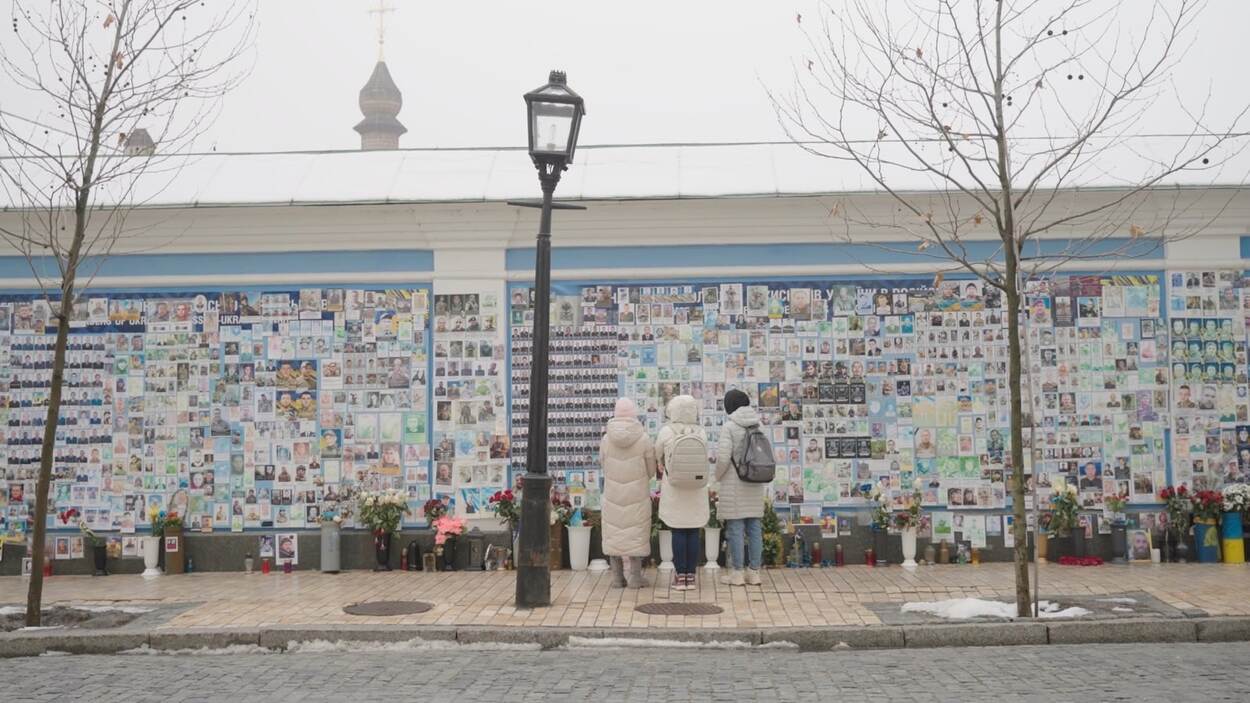
    Wall of Remembrance of the Fallen for Ukraine, in the center of Kyiv.

    Why the Netherlands continues to support Ukraine:

    For the Ukrainian people

    Russia has caused devastation to the daily lives of millions of Ukrainians. Many Ukrainian towns and villages have been completely destroyed. In the areas occupied by Russia, Ukrainians have suffered violence at the hands of Russian soldiers. They have been murdered, tortured and raped. Ukrainian children have also been abducted. With international support, Ukrainians have been defending their country for three years.

    Russia started the war. And Russia could end it at any time.

    For the security of Europe as a whole

    Russia’s aggression is about more than Ukraine. President Putin has spoken publicly about a conflict with ‘the West’. And Russia is stepping up its efforts to undermine European countries. This includes cyberattacks, sabotage, election interference and spreading fake news.

    In other words: by defending itself against Russia, Ukraine is fighting for the security of Europe as a whole. That’s another reason why it’s important to support Ukraine. A Russian victory in Ukraine will not bring an end to the danger. And the costs for Europe will end up being much higher. Europe may have to deal with even more Russian cyberattacks or other kinds of attacks. And with more Ukrainian refugees who are unable to return home.

    For a world in which aggression is not rewarded

    A Russian victory would have consequences for the whole world. It would send a signal to Russia and to China, North Korea and Iran that aggression will be rewarded. And that brute strength is more important than international rules and agreements. That could lead to even more wars.

    Peace through strength, not war through weakness.

    Ukraine must be able to defend itself. And Russia must be made to pay a high price for its aggression. That is why the government is continuing to provide unwavering support to Ukraine. To help secure a positive outcome to the war, based on the idea of: achieving peace by showing strength, not risking further war by showing weakness.

    Dutch support for Ukraine

    The Netherlands continues to support Ukraine. It is for example providing:

    • Military supportequipment, such as munitions, F-16 aircraft and anti-aircraft systems. The Netherlands is also providing training to Ukrainian military personnel.
    • Sanctions against Russia: the sanctions imposed by EU member states are hurting the Russian economy. That makes it harder and more expensive for Russia to keep the war going.
    • Justice for Ukraine: working to ensure that war crimes do not go unpunished and that people who have suffered damage, loss or injury in the war receive compensation.
    • Reconstruction: support to repair damage where it is most needed: water mains, roads, hospitals and the electrical grid. This support is crucial so that Ukraine can continue to function.
    • Humanitarian aid: helping international, Dutch and Ukrainian organisations to provide emergency goods, ensure the availability of drinking water, medicine and food, provide protection, and assist civilian victims.
    • Protection of Ukrainian cultural heritage: Russia is deliberately attacking cultural targets in Ukraine, in an attempt to erase Ukraine’s culture and identity. The Netherlands is supporting Ukraine in the protection of its cultural heritage.
    • Other support: the Netherlands is also helping Ukraine by providing support in areas like healthcare, psychosocial care for victims, agriculture and cybersecurity.

    MIL OSI Europe News

  • MIL-OSI NGOs: ‘My family lived on the second floor – where the missile hit and exploded’

    Source: Amnesty International –

    This story contains descriptions of attacks during armed conflict, including descriptions of the people who were killed. We published these details to bear witness to this family’s experience.

    On 24 February 2022, Russia launched its full-scale invasion of Ukraine. For millions of families across the country, this moment marked the beginning of an ongoing nightmare.

    To mark the three-year anniversary, Olga Padey recounts the tragic loss of her niece Anastasia, a passionate gymnast, and nephew Maksym, a young karate champion. They were both killed, along with their mother, when their home was hit by a Russian missile in Kyiv, far from the front lines.

    Hundreds of thousands of Ukrainians have been killed or injured since the beginning of the full-scale invasion. Amnesty International has been documenting stories of dozens of families who have lost their loved ones due to Russian aggression.

    My brother, Vasya, lost his entire family: his wife and two children, my niece and nephew. On 8 July 2024, a Russian missile struck their residential building near downtown Kyiv. My brother was on a work trip, so he survived. However, my brother’s life ended as well. He visits the cemetery where his children and wife are buried every day – morning and evening. Now, the house where they lived has been rebuilt, but he would never return there. He lives in the countryside.

    I asked him – should I talk about what happened? Is it important for people to hear this? We understand it won’t bring our loved ones back. But he said, “Yes.” Let there be a memory. Let it be a drop in the sea. A thread to the shirt. A memory, a memory… A memory of them.

    Maksym was just 10 when he was killed Russian missile that destroyed his home. His sister, Anastasia, was eight. This drawing is taken from a memorial calendar produced by Amnesty International Ukraine. The artist is Beata Kurkul.

    My nephew Maksym was 10 years old. He was a long-awaited and loved child. My husband was his godfather. Maksym loved karate – he was a champion. He went fishing with his father a lot, he was his father’s son. Our little Anastasia, Nastya, was eight. She was always cuddling up to her mom, loved rhythmic gymnastics and dreamed of becoming a blogger. “I’ll show you all,” she would promise. Zoryana, my brother’s wife, was tranquil and neat. At their home, everything was always cleaned, cooked, done; I was always amazed at how she managed to do it all. There was never a moment when she just sat and did nothing; she always found something to do.

    The basement wouldn’t have saved them

    I have many photos and videos where they are laughing, talking, running. Those are happy memories of a happy family. But no matter how hard I try to remember only the good, I find myself remembering – every day – the destroyed building. That image. Maybe one day I will forget?

    The basement wouldn’t have saved them, because it collapsed. It was completely destroyed

    Olga Padey

    Zoryana, my brother’s wife, was afraid of rockets. She was scared. I know they usually went down to the basement during air raids. This time, they didn’t. But the basement wouldn’t have saved them, because it collapsed. It was completely destroyed. It would have taken a long time to search for them if they had gone down there. Instead, they hid in the bathroom, following the two walls rule. They lived on the second floor, where the rocket hit and exploded.

    It was an ordinary day. I spoke to my brother in the morning; he said he had left home for work. We talked for about 10 minutes. Later that day, the sirens started, there were explosions as Russians struck a children’s hospital. Then my brother phoned me once more. I thought, “Damn, we just talked this morning, and now he’s calling again.”

    He said, “Part of the building collapsed, Zoryana and the kids were home, they were at home, probably at home.” I told my husband, we quickly woke up our child, and went there. When we arrived, the State Emergency Service was searching for people in the rubble. Then the sirens went off again, and the work was paused.

    The bodies were found the same day

    We stayed by the building all the time. No one answered their phone. I tried to find out whether they had been taken to the hospital, if they were already found, I called different hospitals.

    What’s left of Anastasia and Maksym’s home, after it was hit by a Russian missile in Kyiv. The two children died, along with their mother.

    The bodies were found that same day. The first responders carried out a girl. I thought she was a bit older than my niece, and she had a strand of purple hair. I said, “This is not Nastya.” Nastya is somewhere alive, everything’s fine! But that was Nastya. The day before, they had gone to the hairdresser. Maksym had a haircut, and Nastya made a strand of purple hair. We didn’t know that. When they asked me to identity Maksym, I didn’t recognize him. He had a new haircut, and he had no face.

    At that time, my brother was returning to Kyiv from another city. When he arrived, Zoryana had been found. She had no head.

    There is no safe place

    I found out I was going to have a child during the first year of the full-scale war. I had been waiting to be a mother for so long. I wanted it so much. And it is only thanks to my child that I am holding on. Every day I think about Zoryana, about Maksym and Nastya, about my brother. I think about families, like the family where the father lost his wife and three daughters in Lviv. Or the family in Kharkiv, where the mother and three children were killed.

    In Ukraine, there is no safe place right now. So many people are dying. But for me, it’s such a shock every time… I have hope that justice will be served. That there will be responsibility for all those who give the orders. And for those who directly carry those orders out.  When will that happen? I hope it’s soon.

    MIL OSI NGO

  • MIL-OSI United Kingdom: Support grassroots music venues with a levy on stadium tickets

    Source: Mayor of London

    • Grassroots Music Venues (GMVs) play an indispensable role in producing new talent and growing the UK music scene. Analysis by the Music Venue Trust shows 88 out of the 96 artists (92 per cent) in the 2024 Glastonbury line-up started their careers performing at grassroots venues.1
    • According to the Music Venue Trust, 2023 was the worst year for venue closures since the organisation was launched 10 years ago, with 125 venues shutting down in the UK.2
    • In 2023, GMVs spent £248 million on presenting live music but only generated £131 million in ticket revenue.3
    • On 4th February 2025, the Mayor announced a ‘Nightlife Taskforce’ made up of 11 independent industry professionals to look at the “challenges and opportunities” to the night time economy and find ways to improve it.4

    The London Assembly Economy, Culture and Skills Committee has today published its report – London’s Night-Time Economy – supporting calls for the live music industry to introduce a voluntary levy on arena and stadium tickets to support GMVs in London.

    The report follows an in-depth investigation by the Committee, which saw industry experts, professionals and local authorities provide evidence on London’s night-time economy, what work is currently being done, and any barriers preventing further growth in the sector.

    Key recommendations in the report include:

    • The Mayor should advocate for London’s live music industry to introduce a voluntary levy on arena and stadium tickets to support grassroots music venues in London.
    • The Mayor should work with London Councils to promote best practice in licensing. This should include adding the Ask for Angela scheme to venues licensing conditions, so that operation of the scheme becomes enforceable as part of routine licensing visits.
    • The Mayor should instruct Transport for London to carry out an impact assessment and review existing night tube provision since 2016. This should assess the practicability, benefits or difficulties of expanding the night tube.
    • The Mayor should develop a code of practice for organisations in the entertainment sector in London who employ freelancers, to ensure better pay and conditions for these workers, along similar lines to the Good Work Standard.

    Marina Ahmad AM, Chair of the Economy, Culture and Skills Committee, said:

    “London’s night-time economy plays a pivotal role in the wider economy of the city. One in every four pounds spent in London is spent between 6pm and 6am.

    “Through our investigation, we heard directly from industry experts who highlighted a number of barriers which are preventing further growth in the sector.

    “A key point raised was that grassroots music venues face incredibly challenging financial situations, due to the slim profit margins and increases in rent and business rates.

    “We know that the House of Commons Culture, Media and Sport Committee support the introduction a voluntary levy on arena and stadium tickets to support GMVs, which is why we are calling on the Mayor to support this call, and help these vital venues continue to thrive in London.

    “We are also keen to see the Ask for Angela scheme to form part of venue licensing conditions, to ensure the safety of women and girls in London’s night life.

    “Our report highlights a number of key recommendations which we have shared with the Mayor’s Nightlife Taskforce, and we will push for our recommendations to help shape the work of the taskforce to help London reach its goal of being a leading 24 hour city.”

    Follow us @LondonAssembly.

    MIL OSI United Kingdom

  • MIL-OSI Asia-Pac: Prime Minister Shri Narendra Modi inaugurates the Global Investors Summit 2025 in Bhopal, Madhya Pradesh

    Source: Government of India

    Prime Minister Shri Narendra Modi inaugurates the Global Investors Summit 2025 in Bhopal, Madhya Pradesh

    The Global Investors Summit in Madhya Pradesh is a commendable initiative; it serves as a vital platform to showcase the state’s immense potential in industry, innovation and infrastructure: PM

    By attracting global investors, it is paving the way for economic growth and job creation, Happy to see Madhya Pradesh emerge as a key hub for business and entrepreneurship: PM

    The future of the world is in India! Come, explore the growth opportunities in our nation: PM

    Madhya Pradesh will benefit significantly from the infrastructure efforts of the NDA Government: PM

    Our Governments, at the Centre and in MP, are focusing on water security, which is essential for growth: PM

    The first 50 days of 2025 have witnessed fast-paced growth: PM

    The past decade has been a period of unprecedented growth for India’s energy sector: PM

    In this year’s budget, we have energised every catalyst of India’s growth: PM

    After national level, reforms are now being encouraged at the state and local levels: PM

    Textile, Tourism and Technology will be key drivers of India’s developed future: PM

    Posted On: 24 FEB 2025 3:24PM by PIB Delhi

    The Prime Minister, Shri Narendra Modi today inaugurated the Global Investors Summit (GIS) 2025 in Bhopal, Madhya Pradesh. Addressing the gathering, he apologised for the delay of his entry to the event as there were board exams for the 10th and 12th standard students and his  security measures enroute to the event could have caused inconvenience to the students. Shri Modi said it was his immense pride to welcome the investors and business leaders in the land of Raja Bhoj. He added that today’s event was important as a Viksit MadhyaPradesh or developed Madhya Pradesh is necessary in the journey towards Viksit Bharat. He congratulated the Government of Madhya Pradesh for a wonderful organization of the summit.

    “The whole world is optimistic about India”, exclaimed Shri Modi and said that it was for the first time such an opportunity had risen in the history of India. He added that be it common citizens or policy experts or institutions or countries of the world, everyone had a lot of expectations from India. He highlighted that the comments received in the last few weeks about India will raise the enthusiasm of investors. Recalling the recent statement by the World Bank that India will continue to remain the fastest growing economy, the Prime Minister highlighted that a representative from the OECD remarked, “The future of the world is in India.” He added that recently, a UN organization on climate change declared India as a solar power superpower. This organization also mentioned that while many countries only talk, India delivers results. Shri Modi noted that a new report revealed how India is emerging as an excellent supply chain for global aerospace firms. These firms view India as a solution to global supply chain challenges. The Prime Minister quoted various examples showcasing the world’s confidence in India, which is also boosting the confidence of every Indian state. This confidence is evident at the Global Summit in Madhya Pradesh, he said.

    Noting that Madhya Pradesh is the fifth largest state in India by population, Shri Modi said, “MP is one of the top states in India for agriculture and minerals”. He emphasized that Madhya Pradesh is blessed with the life-giving Narmada River and stated that MP has the potential to become one of the top five states in India by GDP.

    Pointing out the transformative journey of Madhya Pradesh over the past two decades, the Prime Minister remarked that there was a time when the state faced significant challenges with electricity and water, and the law and order situation was even worse. These conditions made industrial development difficult. Shri Modi noted that with the support of the people, their government in Madhya Pradesh has focused on governance over the past two decades. Two decades ago, people were hesitant to invest in MP, while today, MP has become one of the top states in the country for investments, he added. He highlighted that the state, which once struggled with poor roads, is now one of the leading states in India’s EV revolution. He further said that by January 2025, around 2 lakh electric vehicles were registered in MP, reflecting a growth of approximately 90 percent, which demonstrates that MP is becoming an excellent destination for new manufacturing sectors.

    “India has witnessed a boom in infrastructure over the past decade”, highlighted the Prime Minister and remarked that Madhya Pradesh has greatly benefited from this development. He emphasized that the Delhi-Mumbai Expressway, which connects two major cities, passes significantly through MP, providing fast connectivity to Mumbai’s ports and North India’s markets. He also highlighted that Madhya Pradesh now has a road network of over five lakh kilometers. He noted that MP’s industrial corridors are connected to modern expressways, ensuring rapid growth in the logistics sector.

    Touching upon the air connectivity, Shri Modi highlighted that the terminals at Gwalior and Jabalpur airports have been expanded to improve air connectivity. He remarked that the modernization of Madhya Pradesh’s extensive rail network is also underway. He noted that the rail network in MP has achieved 100 percent electrification. He mentioned that the images of Bhopal’s Rani Kamalapati Railway Station continue to captivate everyone. Following this model, 80 railway stations in MP are being modernized under the Amrit Bharat Station Scheme.

    “The past decade has seen unprecedented growth in India’s energy sector”, hailed Shri Modi and remarked that India has achieved remarkable progress in green energy, which was once unimaginable. Over the past 10 years, more than $70 billion (over ₹5 trillion) has been invested in the renewable energy sector, and this investment has created over 10 lakh jobs in the clean energy space last year alone, he added. The Prime Minister noted that Madhya Pradesh has greatly benefited from this boom in the energy sector. He said that today, MP is power surplus with a power generation capacity of around 31,000 MW, of which 30 percent is clean energy. He highlighted that Rewa Solar Park is one of the largest in the country, and recently, a floating solar plant was inaugurated in Omkareshwar. Shri Modi mentioned that the Government has invested around ₹50,000 crore in the Bina Refinery Petrochemical Complex, which will help make Madhya Pradesh a hub for petrochemicals. He emphasized that the MP government supports this infrastructure with modern policies and special industrial infrastructure. Noting that MP has over 300 industrial zones, and investment zones spanning thousands of acres are being developed in Pithampur, Ratlam, and Dewas, he highlighted the immense potential for better returns for investors in Madhya Pradesh.

    Emphasising the critical importance of water security for industrial development, the Prime Minister remarked that, on one hand, efforts are being made towards water conservation, and on the other, a mega mission for river interlinking is being advanced. He highlighted that the agriculture and industry sectors in Madhya Pradesh will greatly benefit from these initiatives. Shri Modi mentioned that the ₹45,000 crore Ken-Betwa River Interlinking Project has recently commenced, which will enhance the productivity of approximately 10 lakh hectares of agricultural land and strengthen water management in MP. He stated that these facilities will unlock significant potential in the food processing, agro-industry, and textile sectors.

    Remarking that after the formation of their Government in Madhya Pradesh, the pace of development has doubled, Shri Modi highlighted that the Central government was working shoulder to shoulder with the MP government for the development of the state and the country. He recalled his promise during the elections to work three times faster in his third term and said, “this speed is evident in the first 50 days of 2025”. Shri Modi highlighted the recent budget, which has energized every catalyst for India’s growth. He emphasized that the middle class, being the largest taxpayer, creates demand for services and manufacturing. Various steps have been taken to empower the middle class in this budget, including making income up to ₹12 lakh tax-free and restructuring tax slabs. He also mentioned that the RBI has reduced interest rates following the budget.

    Pointing out that the budget emphasizes building local supply chains to achieve complete self-reliance in manufacturing, Shri Modi said that there was a time when the potential of MSMEs was limited by previous governments, preventing the development of local supply chains at the desired level. He highlighted that the current priority is to build MSME-led local supply chains. The definition of MSMEs has been improved, and credit-linked incentives are being provided, while access to credit is being made easier, and support for value addition and exports has been increased, he added.

    “Over the past decade, significant reforms have been accelerated at the national level, now reforms are being encouraged at the state and local levels as well”, said the Prime Minister discussing the State De-regulation Commission mentioned in the budget. He noted that continuous dialogue is being maintained with the states and over 40,000 compliances have been reduced in recent years in collaboration with the states. Additionally, 1,500 obsolete laws have been eliminated, he added. The Prime Minister emphasized that the objective is to identify regulations that hinder the ease of doing business and the De-regulation Commission will help create an investment-friendly regulatory ecosystem in the states.

    Stressing that the budget has simplified the basic customs duty structure and reduced rates on several essential inputs for the industry, Shri Modi  said that a time limit is being set for the assessment of customs cases. He highlighted the ongoing efforts to open new sectors for private entrepreneurship and investment. This year, avenues such as nuclear energy, bio-manufacturing, critical minerals processing, and lithium battery manufacturing have been opened for investment, he added and said, “these steps demonstrate the Government’s intent and commitment”.

    “Textile, Tourism, and Technology sectors will play a significant role in India’s developed future and create crores of new jobs”, exclaimed the Prime Minister. He highlighted that India is the second-largest producer of cotton, silk, polyester, and viscose. He noted that the textile sector provides employment to crores and that India has a rich tradition, skills, and entrepreneurship in textiles. Madhya Pradesh, being the cotton capital of India, contributes to around 25 percent of the country’s organic cotton supply and is the largest producer of mulberry silk while the state’s Chanderi and Maheshwari sarees are highly appreciated and have received the GI Tag, he added. He emphasized that investments in this sector will significantly help Madhya Pradesh’s textiles make a global impact.

    Talking about India exploring new avenues in addition to traditional textiles, the Prime Minister highlighted that technical textiles such as agro textiles, medical textiles, and geotextiles are being promoted, and a national mission has been initiated for this purpose, which has been encouraged in the budget. Shri Modi noted that the Government’s PM MITRA scheme is well-known, and seven large textile parks were being developed across the country, including one in Madhya Pradesh. This initiative will elevate the growth of the textile sector to new heights. The Prime Minister urged investors to take advantage of the PLI scheme announced for the textile sector.

    Remarking that just as India is adding new dimensions to its textile sector, it is also enhancing the tourism sector, Shri Modi recalled the MP Tourism campaign, “MP Ajab Hai, Sabse Gajab Hai,” highlighting the significant development of tourism infrastructure around the Narmada River and in tribal areas of Madhya Pradesh. The Prime Minister spoke about the numerous national parks in the state and the immense potential for health and wellness tourism. He mentioned that the “Heal in India” mantra is gaining global popularity, and investment opportunities in the health and wellness sector are continuously increasing. The Government is encouraging public-private partnerships in this area. Shri Modi highlighted that India’s traditional treatments and AYUSH are being promoted on a large scale, and special AYUSH visas are being issued. He emphasized that these initiatives will greatly benefit Madhya Pradesh. He encouraged visitors to see the Mahakal Mahalok in Ujjain, where they will receive blessings from Mahakal and experience how the country is expanding its tourism and hospitality sector.

    Reiterating his statement from the Red Fort, the Prime Minister concluded that now is the right time for investment and increasing investment in Madhya Pradesh. 

    The Governor of Madhya Pradesh, Shri Mangubhai Chhaganbhai Patel, Chief Minister of Madhya Pradesh, Shri Mohan Yadav were present among other dignitaries at the event.

    Background

    The two-day Global Investors Summit (GIS) 2025 in Bhopal, serves as an important platform to establish Madhya Pradesh as a global investment hub. The GIS includes departmental summits; specialized sessions on Pharma and Medical Devices, Transport and Logistics, Industry, Skill Development, Tourism and MSMEs among others. It also includes international sessions like the Global South countries conference, Latin America and Caribbean session and special sessions for key partner countries.

    Three major industrial exhibitions are being held during the Summit. The Auto Show showcases Madhya Pradesh’s automotive capabilities and future mobility solutions. The Textile and Fashion Expo highlights the state’s expertise in both traditional and modern textile manufacturing. The “One District-One Product” (ODOP) Village showcases the state’s unique craftsmanship and cultural heritage.

    Representatives from over 60 countries, officials from various international organizations, over 300 prominent Industry leaders from India and policymakers among others are participating in the Summit.


    ***

    MJPS/SR

    (Release ID: 2105735) Visitor Counter : 90

    MIL OSI Asia Pacific News

  • MIL-OSI Asia-Pac: India’s technological sector is on rise & is expected to reach $300-350 billion in next five years: Raksha Mantri at 16th Foundation Day of IIT Mandi

    Source: Government of India

    India’s technological sector is on rise & is expected to reach $300-350 billion in next five years: Raksha Mantri at 16th Foundation Day of IIT Mandi

    “Biggest challenge today is to not only adapt to the rapidly changing technology, but also to create new technologies. Don’t just be adapters; become the disruptors who lead innovation”

    Posted On: 24 FEB 2025 3:22PM by PIB Delhi

    “India’s technological sector is on the rise and is expected to reach 300-350 US billion dollars in the next five years. With more than 1.25 lakh start-ups and 110 unicorns, our country is emerging as the third-largest start up ecosystem in the world,” highlighted Raksha Mantri Shri Rajnath Singh while addressing the 16th Foundation Day of the Indian Institute of Technology (IIT) Mandi, Himachal Pradesh on February 24, 2025. He encouraged the students to leverage this period of growth and opportunity, ensuring that they not only contribute to India’s technological advancements but also lead the way globally in key areas of research and development. 

    Shri Rajnath Singh emphasised the necessity of innovation and knowledge creation in shaping the future of technology. He underscored the importance of fostering a culture of entrepreneurship and innovation that would allow India to lead in emerging fields such as Artificial Intelligence, machine learning, and digital technologies. He lauded the institution’s outstanding contributions to shaping India’s technological and scientific advancements. He also highlighted IIT Mandi’s pivotal role in fostering innovation and research, and laid stress on India’s rising prominence as a global leader in technology. 

    In the context of national security, Shri Rajnath Singh urged IIT Mandi to play a more significant role in defence-related technologies. He commended the existing collaboration with DRDO and called for further contributions in areas such as Artificial Intelligence (AI)-driven warfare, indigenous AI chip development, cybersecurity, and quantum technology. 

    Raksha Mantri also threw light on India’s progress in defence self-reliance, highlighting that “India has achieved 88% self-sufficiency in ammunition production, and defence exports have reached approximately Rs 23,000 crore in 2023-24. Our goal is to reach Rs 50,000 crore in defence exports by 2029.” He bolstered the government’s commitment in creating a robust defence industry in India, one that supports both the security of the nation and contributes to the country’s economic growth. He called on IIT Mandi’s students to contribute to this vision by focusing on technological solutions that can enhance India’s defence capabilities and further advance the nation’s self-reliance in this critical sector. 

    In line with India’s emerging digital economy, Shri Rajnath Singh shared key highlights on the country’s remarkable digital progress. “India’s telecom sector is now the second-largest in the world. With the success of initiatives like UPI, India is setting global standards in digital transactions. We are in the midst of an unparalleled digital revolution,” he said. He encouraged the students to actively contribute to the development of India’s digital ecosystem, reiterating that technological innovation is central to India’s growth story in the coming decades. 

    Further urging the students to excel in technological innovation in order to make the country developed by 2047, Raksha Mantri advised them to follow the principles of Initiate, Improve, and Transform (IIT). Shri Rajnath Singh also motivated them to be bold in their pursuit of knowledge and to remain persistent in the face of challenges. He also spoke about the need for courage and resilience as the country faced the challenges of the future, and highlighted the importance of working collectively to address national challenges with technology and innovation. 

     Shri Rajnath Singh also encouraged the students to be disruptors and not just adapters in the fast-paced world of technology. “The biggest challenge today is to adapt to the rapidly changing technology, but also to create new technologies. Don’t just be adapters; become the disruptors who lead innovation,” he added. He spoke about the significant opportunities available to young innovators, stressing the importance of shaping new paradigms rather than simply following existing trends. Raksha Mantri further stated that this is the time of the ‘Indian Dream’—a time where the aspirations and achievements can redefine the global landscape. He motivated the students to set ambitious goals and to aim high in their careers, as their work would have a lasting impact on India’s trajectory in this landscape. 

    Shri Rajnath Singh congratulated IIT Mandi on its achievements stating that “In the last 15 years, the institution has secured a distinguished place on the educational map, not only of India but the world. It is a perfect blend of ancient heritage and modern technological education.” He mentioned the region’s rich historical significance, emphasising that the existence of IIT Mandi at such a culturally and historically enriched location symbolises the union of antiquity and modernity. He further expressed confidence that the institution, with its strong foundation in academics, research, and innovation, would continue to make significant contributions to both India’s growth & global technological advancement. 

    Raksha Mantri inaugurated two new buildings, the Guidance & Counselling Centre and the Centre for Continuing Education during the event. Both buildings are designed to enhance the academic ecosystem and contribute to the personal and professional growth of the students and faculty. These additions will provide much-needed infrastructure to support the holistic development of students and ensure their success in the rapidly changing world of technology and innovation. “These new centres will play a crucial role in supporting students, faculty, and researchers, further strengthening IIT Mandi’s contribution to Science, Technology, Engineering, Mathematics, and Management,” he stated. 

    ***

    SR/KB

    (Release ID: 2105733) Visitor Counter : 87

    MIL OSI Asia Pacific News

  • MIL-OSI United Kingdom: Trains overspeeding in south Wales

    Source: United Kingdom – Executive Government & Departments

    News story

    Trains overspeeding in south Wales

    Trains overspeeding in blanket speed restrictions in south Wales, 27 January 2025.

    The start point of one of the blanket speed restrictions at Bishton (courtesy of Network Rail).

    Between 11:33 and 14:08 on 27 January 2025, at least eight trains did not observe blanket speed restrictions of 50 mph (80 km/h) that had been imposed at two locations along the South Wales Main Line. The speed restrictions were in place because of forecast high winds between Neath and Swansea, and an associated hazard from high-risk trees between Bishton and Newport.

    Although some of these trains travelled at speeds significantly above the imposed restrictions, there were no reported consequences.

    We have undertaken a preliminary examination into the circumstances surrounding this incident. Having assessed the evidence which has been gathered to date, we have decided to publish a safety digest.

    The safety digest will be made available on our website in the next few weeks.

    Updates to this page

    Published 24 February 2025

    MIL OSI United Kingdom

  • MIL-OSI United Kingdom: Third Caithness Area Place Plan public engagement event takes place in Lybster

    Source: Scotland – Highland Council

    The first public drop-in sessions held last week in Wick and Thurso saw many residents coming forward to provide their views on what should be in the new Caithness Area Place Plan.  At the same time, they were able to find out more and make comment about the Council’s Highland Investment Plan, Highland Local Delivery Plan and feed into the consultation on the Visitor Tourism Levy.

    These successful sessions saw residents from across Caithness being asked for their views and priorities across a number of themes including health and well-being; housing and population; transport and getting around; nature and environment; work and economy; community facilities and services.  An evening on-line session was also held for those not able to attend in person.

    The final drop-in session which will focus on the Area Place Plan, is being held in Lybster Community Hall from 2pm – 5pm on Wednesday 26 February. 

    There is also an opportunity to respond to the survey and pop your ideas on the virtual noticeboard. Young people will also find a specific “ideas board” so encourage the whole family to submit their comments.  The survey and ideas boards will be available on-line until Friday 7 March after which the draft Area Place Plan will be considered by Caithness Committee.

    Caithness Committee Chair Councillor Ron Gunn said, “We were delighted to see so many people come along to the engagement sessions which covered a number of plans and projects which are currently in development.  However, we would also welcome further engagement and hope as many people as possible will come along to the final drop-in session in Lybster or visit the website and leave their ideas there.”

    24 Feb 2025

    MIL OSI United Kingdom

  • MIL-OSI Asia-Pac: SFST’s keynote speech at MPF Symposium (English only)

    Source: Hong Kong Government special administrative region

         Following is the keynote speech by the Secretary for Financial Services and the Treasury, Mr Christopher Hui, at the MPF Symposium on “Green Finance and Sustainable Investing” today (February 24):
     
    Ayesha (Chairman of the Mandatory Provident Fund Authority (MPFA), Mrs Ayesha Macpherson Lau), YC (Managing Director of the MPFA, Mr Cheng Yan-chee), distinguished guests, ladies and gentlemen,
     
         Good afternoon. It is both an honour and a privilege to address you today at the MPF Symposium on “Green Finance and Sustainable Investing”. I extend my gratitude to the Mandatory Provident Fund Authority for convening this important gathering, bringing together industry leaders, esteemed professionals, and dedicated stakeholders. We stand at a pivotal moment, united by a shared purpose: to explore how finance can serve not only as a cornerstone for retirement protection, but also as a transformative force for the future of our planet.
     
         In recent years, the global community has awakened to the profound urgency of climate change – a challenge that transcends borders and generations. The rising tide of extreme weather events and their far-reaching socio-economic consequences compel us to act with resolve and foresight. As an international financial centre of dynamism, Hong Kong is poised to lead this charge, harnessing the power of capital to propel the world towards a low-carbon future.
     
         The Government has made an unwavering commitment to achieve carbon neutrality before 2050 and to halve Hong Kong’s carbon emissions by 2035. These are not mere aspirations but a call to action. Through a sustained series of initiatives, we have fortified our resolve to advance green and sustainable finance – efforts that have not only accelerated Hong Kong’s emergence as a preeminent hub for sustainable investment, but also underscored our pivotal role in the global transition to a greener economy.
     
    Hong Kong: Asia’s vanguard in green finance
     
         The financial sector has emerged as a formidable conduit to direct global capital toward sustainable ends. Hong Kong, with its stature as Asia’s premier international financial centre and a beacon of sustainable finance, stands uniquely equipped to spearhead this transformation. Our capital markets have set a gold standard in green and sustainable finance, offering a rich tapestry of investment opportunities that resonate with two “Ps”, both “purpose” and “profit”.
     
         As of December last year, the Securities and Futures Commission has authorised over 220 ESG (environmental, social, and governance) funds, managing assets valued at approximately HK$1.2 trillion – a testament to the vibrancy of our market. Between 2021 and 2023, Hong Kong consistently led the region in arranging green and sustainable bonds. In 2023 alone, the total issuance of green and sustainable debt surpassed US$50 billion, with green and sustainable bonds accounting for US$30 billion, or 37 per cent of the regional total. These figures are not just statistics; they reflect the magnetic appeal and robust capacity of our markets to finance projects that safeguard our planet.
     
         The Government has been a steadfast champion of this cause. Since launching the Government Green Bond Programme in 2019, we have issued green bonds equivalent to HK$220 billion, channeling vital resources into sustainable infrastructure and innovation.
     
    Pioneering progress through innovation and partnership
     
         Our commitment to green and sustainable finance is not static; it is a dynamic pursuit propelled by innovation and collaboration. In 2021, we introduced the Green and Sustainable Finance Grant Scheme, a forward-thinking initiative that subsidises bond issuers and loan borrowers for expenses related to issuance and external reviews. By lowering financial barriers, this scheme empowers businesses to embrace sustainable financing, amplifying their contributions to a greener tomorrow.
     
         With sustainable development gaining heightened worldwide awareness, it has become vital to ensure that investors and other market participants have accurate, consistent and relevant information about sustainability-related matters for managing risks and supporting investments. We therefore published in March last year a vision statement to set out the vision and approach of the Government and financial regulators in developing a comprehensive ecosystem for sustainability disclosure in Hong Kong. We then launched in December last year a roadmap on sustainability disclosure in Hong Kong, setting out Hong Kong’s approach to require publicly accountable entities (PAEs) to adopt the ISSB Standards (International Financial Reporting Standards–Sustainability Disclosure Standards). It provides a well-defined pathway for large PAEs to fully adopt the ISSB Standards no later than 2028.
     
         Also, we are cultivating a thriving green fintech ecosystem to position Hong Kong as a global leader in this frontier. To better integrate fintech with green finance, and accelerate the green transformation of the economy, we will actively expand the green fintech ecosystem and develop Hong Kong as a green fintech hub. We launched in March last year the Prototype Hong Kong Green Fintech Map, which is developed together with relevant stakeholders, to provide one-stop information on the current status of green fintech companies operating in Hong Kong and related services, with a view to raising the companies’ profile. We are now developing the official Hong Kong Green Fintech Map with the industry, which will be published in the first half of this year.
     
    The resilience of the MPF System
     
         Now let’s turn our attention to reflect on the performance of our MPF System. Under the leadership of Ayesha, the system delivered last year an average annual net return of 8.6 per cent, culminating in a total net asset value approaching HK$1.3 trillion at the year end. This achievement underscores the resilience and adaptability of our system – qualities that have defined the MPF System over its two-decade legacy.
     
         Since its inception in 2000, the Equity Fund and Mixed Assets Fund, comprising nearly 80 per cent of total MPF assets, have posted average annualised net returns of 4.3 per cent and 4.0 per cent respectively, outpacing inflation over the same period. These results affirm the system’s capacity to weather economic cycles and also deliver enduring value to scheme members. Looking ahead, the MPF System remains a bedrock of retirement security, empowering members of the public to pursue their financial aspirations with more confidence and stability post-retirement.
     
    MPF’s leadership in sustainable investing
     
         Climate change and socio-economic shifts present unprecedented challenges – and opportunities – that demand we wield finance as a force for good. This convergence of prosperity and purpose is not optional; it is imperative.
     
         The MPFA has been a champion in this domain, embedding sustainable investing in its mission and guidance for the industry. While we celebrate last year’s strong performance, we recognise that the work of enhancing the MPF System is perpetual. A critical focus has been mitigating environmental, social, and governance risks – risks to which pension funds, with their decades-long horizons, are acutely exposed.
     
         In 2021, the MPFA issued the Principles for Adopting Sustainable Investing in the Investment and Risk Management Processes of MPF Funds. This framework has guided trustees in integrating ESG considerations into their investment and risk management strategies and disclosing these efforts to scheme members. Trustees now report their sustainable investing progress in annual governance reports, fostering transparency that empowers members to align their investments with their values.
     
         Beyond disclosure, we are diversifying MPF portfolios by integrating sustainable instruments – vehicles that not only finance ESG initiatives but also enhance risk-adjusted returns. We have established a pioneering mechanism to prioritise the allocation of institutional green bonds to Mandatory Provident Fund schemes. As of September last year, MPF funds invested HK$600 million in Government green bonds, representing a 50 per cent increase before the arrangement was put in place. This dual-purpose initiative advances our environmental agenda while bolstering the long-term sustainability of our pension system, a synergy of social responsibility and ecological stewardship.
     
    A call to collective action
     
         Our dialogue today must transcend this symposium, igniting enduring change in our communities and the MPF ecosystem. Hong Kong will continue to innovate, expand, and diversify, forging a vibrant ecosystem that serves both local, regional and global investors. Your wisdom and contributions are indispensable as we elevate this market and cement Hong Kong’s legacy as a global leader in green finance and retirement protection.
     
         Thank you.

    MIL OSI Asia Pacific News

  • MIL-OSI Asia-Pac: Suspicious website related to Tai Sang Bank Limited

    Source: Hong Kong Government special administrative region

    The following is issued on behalf of the Hong Kong Monetary Authority:

         The Hong Kong Monetary Authority (HKMA) wishes to alert members of the public to a press release issued by Tai Sang Bank Limited relating to a suspicious website, which has been reported to the HKMA. A hyperlink to the press release is available on the HKMA website.
          
         The HKMA wishes to remind the public that banks will not send SMS or emails with embedded hyperlinks which direct them to the banks’ websites to carry out transactions. They will not ask customers for sensitive personal information, such as login passwords or one-time password, by phone, email or SMS (including via embedded hyperlinks).
          
         Anyone who has provided his or her personal information, or who has conducted any financial transactions, through or in response to the website concerned, should contact the bank using the contact information provided in the press release, and report the matter to the Police by contacting the Crime Wing Information Centre of the Hong Kong Police Force at 2860 5012.

    MIL OSI Asia Pacific News

  • MIL-OSI Asia-Pac: Special traffic arrangements for 15th National Games triathlon test event

    Source: Hong Kong Government special administrative region

        Police will implement special traffic arrangements in Central and Wan Chai from February 26 (Wednesday) to March 2 (Sunday) to facilitate the 15th National Games triathlon test event.

    A. Road closure

        The following roads will be intermittently closed from 5am to 8am on February 28:

    – Yiu Sing Street;
    – Eastbound Lung Wo Road between southbound Man Yiu Street and northbound Fleming Road;
    – Westbound Lung Wo Road between southbound Lung Tat Path and southbound Tim Wa Avenue;
    – Eastbound Lung Tat Path;
    – Lung Hop Street;
    – Legislative Council Road between Legislative Council Complex Car Park exit and westbound Lung Wo Road;
    – The slip road of eastbound Central – Wan Chai Bypass Tunnel heading to its Expo Drive exit;
    – The slip road of eastbound Man Kat Street heading to Central – Wan Chai Bypass Tunnel portal;
    – Expo Drive;
    – Expo Drive Central; and
    – Expo Drive East.

        The following roads will be closed, except for vehicles with permit:

    (1) From 10am on February 26 to 6pm on March 2:

        Expo Drive between Legislative Council Road and Expo Drive Central.

    (2) From 2am to 2pm on March 1 and from 8am to 6pm on March 2:

    – Yiu Sing Street;
    – Eastbound Lung Wo Road between southbound Man Yiu Street and northbound Fleming Road;
    – Westbound Lung Wo Road between southbound Lung Tat Path and southbound Man Yiu Street;
    – Eastbound Lung Tat Path;
    – Lung Hop Street;
    – Legislative Council Road between Legislative Council Complex Car Park exit and westbound Lung Wo Road;
    – Part of the traffic lanes of the slip road of westbound Central – Wan Chai Bypass Tunnel heading to Central District;
    – Part of the traffic lanes of eastbound Man Po Street near Finance Street;
    – Part of the traffic lanes of southbound Man Yiu Street between westbound Man Kwong Street and westbound Yiu Sing Street;
    – Part of the traffic lanes of southbound Man Yiu Street near westbound Lung Wo Road;
    – Part of the traffic lanes of westbound Convention Avenue near northbound Fleming Road;
    – The slip road of eastbound Central – Wan Chai Bypass Tunnel heading to its Expo Drive exit;
    – The slip road of eastbound Man Kat Street heading to Central – Wan Chai Bypass Tunnel portal;
    – Expo Drive;
    – Expo Drive Central;
    – Expo Drive East; and
    – Part of the traffic lanes of northbound Fleming Road between eastbound Harbour Road and westbound Lung Wo Road.

    B. Traffic diversions

        In connection with the road closure as mentioned above, the following traffic diversions will be implemented:

    (1) From 10am on February 26 to 6pm on March 2:

    – Traffic along eastbound Expo Drive heading to Hong Kong Convention and Exhibition Centre will be diverted via eastbound Lung Wo Road and northbound Expo Drive East; and
    – Traffic along eastbound Expo Drive heading to Central – Wan Chai Bypass Tunnel will be diverted via eastbound Lung Wo Road.

    (2) From 2am to 2pm on March 1 and from 8am to 6pm on March 2:

    – Traffic along westbound Hung Hing Road via northbound Expo Drive East heading to Hong Kong Convention and Exhibition Centre will be diverted via southbound Fleming Road and make a u-turn to northbound Fleming Road and westbound Harbour Road;
    – Traffic along eastbound Connaught Road Central Flyover heading to Hung Hing Road via Central – Wan Chai Bypass Tunnel will be diverted via eastbound Man Po Street, southbound Man Yiu Street, eastbound Connaught Place, southbound Connaught Place, eastbound Connaught Road Central, eastbound Harcourt Road, eastbound Gloucester Road and northbound Fleming Road;
    – Traffic along eastbound Man Kat Street heading to Hung Hing Road via Central – Wan Chai Bypass Tunnel will be diverted via eastbound Connaught Road Central, eastbound Harcourt Road, eastbound Gloucester Road and northbound Fleming Road;
    – Traffic along westbound Man Kwong Street heading to eastbound Lung Wo Road via southbound Man Yiu Street will be diverted via southbound Man Yiu Street, eastbound Connaught Place, southbound Connaught Place, eastbound Connaught Road Central, eastbound Harcourt Road, eastbound Gloucester Road and northbound Fleming Road;
    – Traffic along eastbound Man Po Street heading to eastbound Lung Wo Road via eastbound Yiu Sing Street will be diverted via southbound Man Yiu Street, eastbound Connaught Place, southbound Connaught Place, eastbound Connaught Road Central, eastbound Harcourt Road, eastbound Gloucester Road and northbound Fleming Road;
    – Traffic along eastbound Man Po Street heading to Admiralty or Mid-levels via eastbound Lung Wo Road will be diverted via the slip road of eastbound Man Po Street heading to westbound Finance Street, westbound Finance Street, temporary exit connecting Finance Street and Central – Wan Chai Bypass Tunnel, the slip road of westbound Central – Wan Chai Bypass Tunnel heading to eastbound Man Kat Street, eastbound Man Kat Street, eastbound Connaught Road Central and eastbound Harcourt Road;
    – Traffic along southbound Man Yiu Street cannot turn left to eastbound Lung Wo Road and eastbound Yiu Sing Street, vehicles will be diverted via southbound Man Yiu Street, eastbound Connaught Place, southbound Connaught Place, eastbound Connaught Road Central, eastbound Harcourt Road, eastbound Gloucester Road and northbound Fleming Road;
    – Traffic along eastbound Man Cheung Street heading to eastbound Lung Wo Road will be diverted via southbound Man Yiu Street, eastbound Connaught Place, southbound Connaught Place, eastbound Connaught Road Central, eastbound Harcourt Road,  eastbound Gloucester Road and northbound Fleming Road;
    – Traffic along eastbound Yiu Sing Street and southbound Yiu Sing Street heading to eastbound Lung Wo Road will be diverted via southbound Man Yiu Street, eastbound Connaught Place, southbound Connaught Place, eastbound Connaught Road Central, eastbound Harcourt Road, eastbound Gloucester Road and northbound Fleming Road;
    – Traffic along northbound Legislative Council Road cannot turn left to westbound Lung Wo Road. Vehicles will be diverted via southbound Legislative Council Road, eastbound Lung Wui Road, eastbound Fenwick Pier Street, Fenwick Pier Street roundabout, westbound Fenwick Pier Street, Flyover, westbound Harcourt Road, westbound Connaught Road Central and northbound Connaught Place;
    – Traffic along northbound Tim Wa Avenue cannot turn left to westbound Lung Wo Road. Vehicles will be diverted via southbound Tim Wa Avenue, northbound Tim Mei Avenue, eastbound Lung Wui Road, eastbound Fenwick Pier Street, Fenwick Pier Street roundabout, westbound Fenwick Pier Street, Flyover, westbound Harcourt Road, westbound Connaught Road Central and northbound Connaught Place;
    – Traffic along westbound Lung Wo Road heading to the Chief Executive’s Office via southbound Tim Wa Avenue will be diverted via southbound Lung Tat Path, Convention Avenue, westbound Fenwick Pier Street, Flyover, westbound Harcourt Road, westbound Connaught Road Central and make a u-turn to eastbound Connaught Road Central and northbound Tim Wa Avenue;
    – Traffic along eastbound Lung Wui Road cannot turn left to northbound Lung Hop Street;
    – Traffic along westbound Fenwick Pier Street cannot turn right to northbound Lung Hop Street. Vehicles will be diverted via Fenwick Pier Street, Flyover, westbound Harcourt Road, westbound Connaught Road Central and northbound Connaught Place;
    – Traffic along westbound Convention Avenue heading to westbound Lung Wo Road via northbound Lung Tat Path will be diverted via Convention Avenue, Fenwick Pier Street roundabout, westbound Fenwick Pier Street, Flyover, westbound Harcourt Road, westbound Connaught Road Central and northbound Connaught Place;
    – Traffic along westbound Hung Hing Road heading to westbound Lung Wo Road will be diverted to southbound Lung Tat Path, Convention Avenue, Fenwick Pier Street roundabout, westbound Fenwick Pier Street, Flyover, westbound Harcourt Road, westbound Connaught Road Central and northbound Connaught Place; and
    – Traffic along southbound Expo Drive East heading to westbound Lung Wo Road will be diverted via southbound Lung Tat Path, Convention Avenue, Fenwick Pier Street roundabout, westbound Fenwick Pier Street, Flyover, westbound Harcourt Road, westbound Connaught Road Central and northbound Connaught Place.

    C. Suspension of parking spaces and pick-up/drop-off areas

        All parking spaces and pick-up/drop-off areas on the following roads will be suspended:

    (1) From 10am on February 26 to 6pm on March 2:

        All metered parking spaces and pick-up/drop-off areas on Expo Drive.

    (2) From 10pm on February 28 to 6pm on March 2:

    – All metered parking spaces on Yiu Sing Street and Lung Hop Street;
    – All metered parking spaces on the unnamed road near General Post Office;
    – Pick-up/drop-off areas on westbound Lung Wo Road near City Hall and near Edinburgh Place; and
    – All metered parking spaces and pick-up/drop-off areas on Expo Drive East.

         All vehicles parked illegally during the implementation of the above special traffic arrangements will be towed away without prior warning, and may be subject to multiple ticketing.  

         The Police will make special arrangements depending on the traffic and crowd conditions. Members of the public are advised to use public transport to access the above areas as far as possible. Motorists are advised to exercise patience, and to take heed of instructions of the Police on site.

    MIL OSI Asia Pacific News

  • MIL-OSI Asia-Pac: Mandatory use of Child Restraining Device in private cars to come into effect on November 1

    Source: Hong Kong Government special administrative region

         The Transport Department (TD) today (February 24) reminded private car drivers that, starting from November 1, 2025, child passengers travelling in private cars must use a Child Restraining Device (CRD), such as a child safety seat.

         Following the passage of the Road Traffic (Safety Equipment) (Amendment) Regulation 2024 by the Legislative Council, starting from November 1, 2025, unless child passengers aged below 8 reach a body height of 1.35 metres, they must use CRDs in private cars irrespective of sitting in the front or rear seats. Passengers aged 8 or above, or with a body height of at least 1.35m must either use a CRD or wear an adult seat belt. Otherwise, the driver must not drive the car on any road. Apart from conventional types of child safety seats, there are various types of portable CRDs, such as a seat belt adjuster, a wearable safety restraint vest or a foldable booster, available in the market for selection.

         The Police may issue a Fixed Penalty Notice of $230 to drivers breaching the requirement. Serious cases may be referred to the court, which can impose a maximum fine of $2,000. To cater for individual exceptional circumstances, two statutory defences have been provided under the Amendment Regulation: (1) a private car driver having a reasonable ground to believe that the passenger has attained 8 years of age or has reached a body height of 1.35m; or (2) the child passenger is being transported in a case of emergency (such as emergency treatment) where the driver may not have time to arrange and use a CRD.

         A spokesman for the TD said, “The new requirement aims to enhance protection for children and passenger safety. CRDs provide effective protection for child passengers in traffic accidents and they can substantially reduce the risks of being killed or seriously injured.”

         The spokesman urged parents, guardians or private car drivers carrying a child passenger to select and purchase appropriate devices fit for their children’s age and body. They should take a close look at the packaging description and follow the installation guidelines. If an International Standards Organization FIX (ISOFIX) safety seat is preferred, pay special attention to its applicable vehicle models. For enquiries, they should consult the manufacturer or retailer on the product standards to meet the legal requirements.

         The TD will work with the Police and the Road Safety Council to step up publicity and public education on road safety for private car drivers, covering the legal requirements as well as points to note during selection and use of CRDs (including national and international standards recognised). The TD will also maintain close liaison with the Consumer Council to enhance information dissemination for the public to make an informed choice.

         Members of the public may refer to the TD’s Agent T Facebook page (www.facebook.com/AgentT.hk), or call the hotline 2804 2600 for details.

    MIL OSI Asia Pacific News

  • MIL-OSI Asia-Pac: Over 3 700 quality job vacancies to be offered at Navigating New Opportunities Job Fair

    Source: Hong Kong Government special administrative region

         The Labour Department (LD) will hold the Navigating New Opportunities Job Fair at Tung Cheong Street Community Hall in Tai Po on February 26 and 27, providing a large number of vacancies from various industries for job seekers, particularly middle-aged and elderly people.
         
         About 50 organisations will participate in the two-day job fair, offering over 3 700 quality job vacancies from various industries, among which more than 2 600 are from catering, retail, property management and real estate industries. Around 25 organisations will set up booths and conduct recruitment on the spot each day. A wide variety of positions will be offered including shop manager, pharmacy sales, software engineer (website development), technician, guest services officer, clerk, cook, barista, beauty consultant, recreation assistant, care call program executive, bus captain and security officer. Job seekers can visit the LD’s Interactive Employment Service website (www.jobs.gov.hk) for more details of the vacancies.
         
         Around 77 per cent of the vacancies offered at the job fair are full-time jobs. Most vacancies offer monthly salaries ranging from $12,000 to $25,000. About 96 per cent of the vacancies require a Secondary Seven education level or below. Around 68 per cent are open to job seekers without relevant work experience.
         
         Job seekers can submit job applications during the event and may be selected for on-the-spot interviews. They can also make enquiries on the employment services provided by the LD at its counter inside the venue.
         
         The job fair will be held from 11am to 5.30pm at Tung Cheong Street Community Hall, 1/F, Tai Po Tung Cheong Street Leisure Building, 25 Tung Cheong Street, Tai Po. Admission is free, with final admission time at 5pm each day.

    MIL OSI Asia Pacific News

  • MIL-OSI United Kingdom: Westminster to tackle badly parked e-bikes with permanent parking bays | Westminster City Council

    Source: City of Westminster

    Westminster City Council is proposing to make parking bays for hire e-bikes permanent following an 18-month trial. 

    The network of 350 physical and virtual parking bays was introduced across the City of Westminster since 2023 as part of a e-bike parking bays trial, with the aim of reducing the number of abandoned bikes blocking pavements and creating safety hazards for disabled and partially sighted pedestrians. 

    The explosion in popularity of dockless e-bikes since 2021 has had a number of benefits for Westminster – more cycle journeys (around 600,000 per month) contributing to better air quality and improved health of Westminster’s residents as well as reducing carbon emissions resulting from short journeys. Research from CoMoUK shows that around half of bike share users are already cycling, while the other half are taking it up for the first time or returning to cycling after a break of a year or more.

    However, during this same period, the council has also been inundated with thousands of complaints about abandoned bikes in the middle of the pavement.

    Since 2023, the council has repurposed hundreds of underused car parking bays and introduced geo-fenced ‘virtual’ bays. It is now proposing to make 177 physical bays permanent parking spaces for hire e-bikes. And there are plans to consult on expanding the network to increase the number of bays.  

    Riders using Lime or Forest bikes who end their journeys in Westminster must park their bikes in these locations or face steep penalties. The council has worked closely with operators Lime and Forest to identify suitable locations for the bays and has lobbied bike companies to increase their fines on irresponsible users. 

    Bike companies operating in Westminster employ a team of ‘rangers’ who patrol the parking bays and streets to ensure that e-bikes are properly parked and to move any which are blocking the pavement. However, the council has used its powers under the Highways Act (1980) to seize abandoned bikes which it deems to be an “imminent danger” to public safety.

    Westminster City Council has repeatedly called for the government to introduce legislation to address the limited regulatory powers to manage dockless bike schemes in England, and has welcomed the English Devolution White Paper.

    Councillor Max Sullivan, Cabinet Member for Streets, said: 

    “Cycling is a great way to get around the city and, as a council, we want to make it as easy as possible to hop on a bike — but too often shared e-bikes in Westminster cause obstruction on our pavements.

    “That’s why I’m glad to confirm that our network of e-bike parking bays will continue to be a feature of Westminster streets, and part of lessening the impact on pedestrians of the over 600,000 journeys by shared e-bike per month in our borough.

    “This combined with fines from bike companies for irresponsible parking and the Council’s powers to seize abandoned bikes will help ensure Westminster’s streets remain clear and accessible for everyone.

    “The council welcomes the Government’s English Devolution White Paper and wants to see a new regulatory framework so councils can control e-bike hire schemes in their area.

    At the same time, we’re rolling our more secure cycle parking for residents, with another 41 hangers by the end of March, providing 246 parking spaces, so that more residents can choose to own and store their own bike, and accelerating the delivery of protected cycleways across Westminster.”

    The Cabinet Member for Streets is due to take a formal decision on the report on 28 February. The report can be found here. https://committees.westminster.gov.uk/ieDecisionDetails.aspx?ID=2660

    MIL OSI United Kingdom

  • MIL-OSI Russia: Students of the State University of Management are the winners of the international festival of social projects Media game

    Translartion. Region: Russians Fedetion –

    Source: State University of Management – Official website of the State –

    A record number of student teams from the State University of Management became winners and prize winners of the international student festival of social projects Media game.

    Let us recall that the Media Game festival is the successor of the Media Class festival, which has a quarter-century history. This year the festival was held at the RSUH site.

    Students of the State University of Management majoring in Advertising and Public Relations annually take an active part in the festival, preparing and presenting socially oriented projects.

    We present the winners of this year’s festival and share their comments on their participation.

    Nomination “Audio”

    1st place – project “Don’t forget your elderly relatives”. Authors: Denisov Dmitry, Polyakov Pavel, Gubatov Riad, Lozovsky Viktor (students of the group “PNB 3-1”). Leader – Timokhovich Alexandra.

    “Our project is dedicated to an acute social problem, when grandchildren and children forget about their elderly relatives, do not pay them due attention and care. We chose this topic for the development of the project because of its non-standard nature, also this topic is not so well covered in the media, in social advertising. Our team consisted of an ideological leader, actors and a sound engineer. Using a microphone, we recorded the characters’ lines, adding emotions of tragedy and a sad atmosphere in post-processing to convey the main message to the audience: do not forget to visit your elderly, do not deprive them of social contacts!”, – urged Dmitry Denisov.

    2nd place – project “Mental Health in a Metropolis”. Authors: Valeria Krasnozhen, Kristina Ovakyan (students of the “RISSO 3-2” group). Leader – Olga Vasilyeva. 3rd place – project “Become a Guiding Star”. Authors: Vlada Sudakova, Anna Shorokhova (students of the “RISSO 3-1” group). Leader – Olga Vasilyeva.

    Nomination “Comprehensive social project”

    1st place – the project “Cybersafe”. Authors: Larisa Timofeeva, Tatyana Letunova, Anna Shorokhova (students of the “RISSO 3-1” group). Supervisor – Alexandra Timokhovich.

    “Cybersecurity is a very relevant issue today, because every day the Internet penetrates our lives more and more, and some layers of society, for example, the elderly or children, do not know how to properly handle their data on the global network, which resources are worth trusting and which are not. The final of our work were two series of advertising posters: one series is made in an animation style, the other – in the style of realism, in order to spread the influence to all possible target audiences. Our team was happy to work on the project, because the topic is close to us, it was even more joyful to receive 1st place for the work!”, – admitted Anna Shorohova.

    1st place – project “Violation of women’s labor rights”. Author: Vlada Sudakova (student of the “RISSO 3-1” group). Supervisor – Alexandra Timokhovich.

    “Spontaneity is gold: when I submitted my projects to the competition, I couldn’t even imagine that I would become a winner in two nominations at once. The result of my hard work was my first award and two wonderful diplomas, as well as a sea of positive emotions. I liked the festival itself: interesting nominations, master classes by advertising business practitioners, a solemn atmosphere when announcing the results. This is the most sincere and comfortable festival in terms of organization: unforgettable impressions!”, – shared Vlada Sudakova.

    1st place – project “Find your place”. Authors: Veronika Aparina, Anna Vaslyaeva, Ksenia Ignatyeva, Sofia Mazeina (students of the “RISSO 3-1” group). Leader – Elena Dianina.

    “Working on the project, we thought for a long time about how to help schoolchildren choose a university and profession, since we also faced a similar problem when entering. This is how the idea came up to create a career guidance application, which we called “Profor”, with the help of which schoolchildren will be able to understand their interests and find their favorite thing. As part of this project, a career guidance event with schoolchildren “Find Your Place” was held. We introduced schoolchildren to modern professions, helped them understand new and unfamiliar specialties, and also conducted a career guidance test that will help the children choose their future,” said Veronika Aparina.

    2nd place – project “Live here and now!” Authors: Widow Violetta, Stefani Maria (students of the “RISSO 3-1” group). Leader – Timokhovich Alexandra. 3rd place – project “Energetiki”. Authors: Sorokina Ulyana, Alekseeva Sofia (students of the “RISSO 3-3” group). Leader – Timokhovich Alexandra. 3rd place – project “Human trafficking”. Authors: Koryushkina Daria, Kuznetsova Anastasia (students of the “RISSO 3-1” group). Leader – Timokhovich Alexandra.

    We congratulate the winners and leaders of student projects and wish them further success and the implementation of their ideas into reality!

    Subscribe to the TG channel “Our GUU” Date of publication: 02/24/2025

    Media game….” data-yashareImage=”https://guu.ru/wp-content/uploads/1-все-победители-ГУУ.jpeg” data-yashareLink=”https://guu.ru/%d1%81%d1%82%d1%83%d0%b4%d0%b5%d0%bd%d1%82%d1%8b-%d0%b3%d1%83%d1%83-%d0%bf%d0%be%d0%b1%d0%b5%d0%b4%d0%b8%d1%82%d0%b5%d0%bb%d0%b8-%d0%bc%d0%b5%d0%b6%d0%b4%d1%83%d0%bd%d0%b0%d1%80%d0%be%d0%b4/”>

    Please note: This information is raw content directly from the source of the information. It is exactly what the source states and does not reflect the position of MIL-OSI or its clients.

    MIL OSI Russia News

  • MIL-OSI Video: Health and Prosperity through Prevention | World Economic Forum Annual Meeting 2025

    Source: World Economic Forum (video statements)

    Over the past century, global life expectancy has more than doubled due to advances in vaccines, medical treatments and preventive care, bolstering both well-being and economic prosperity.

    How can leaders coordinate efforts to further implement the use of cutting-edge technology and data to improve public health?

    Speakers: Peter Sands, Adar C. Poonawalla, Sania Nishtar, Pedro Sánchez, Vas Narasimhan, Klaus Schwab, Magdalena Skipper

    The 55th Annual Meeting of the World Economic Forum will provide a crucial space to focus on the fundamental principles driving trust, including transparency, consistency and accountability.

    This Annual Meeting will welcome over 100 governments, all major international organizations, 1000 Forum’s Partners, as well as civil society leaders, experts, youth representatives, social entrepreneurs, and news outlets.

    The World Economic Forum is the International Organization for Public-Private Cooperation. The Forum engages the foremost political, business, cultural and other leaders of society to shape global, regional and industry agendas. We believe that progress happens by bringing together people from all walks of life who have the drive and the influence to make positive change.

    World Economic Forum Website ► http://www.weforum.org/
    Facebook ► https://www.facebook.com/worldeconomicforum/
    YouTube ► https://www.youtube.com/wef
    Instagram ► https://www.instagram.com/worldeconomicforum/
    X ► https://twitter.com/wef
    LinkedIn ► https://www.linkedin.com/company/world-economic-forum
    TikTok ► https://www.tiktok.com/@worldeconomicforum
    Flipboard ► https://flipboard.com/@WEF

    #Davos2025 #WorldEconomicForum #wef25

    https://www.youtube.com/watch?v=ZL6eZpzdii0

    MIL OSI Video

  • MIL-OSI Europe: Written question – Removal of the ‘TITO’ inscription from Sabotin in Slovenia – E-000484/2025

    Source: European Parliament

    Question for written answer  E-000484/2025/rev.1
    to the Commission
    Rule 144
    Alessandro Ciriani (ECR), Carlo Fidanza (ECR), Nicola Procaccini (ECR), Sergio Berlato (ECR), Stefano Cavedagna (ECR), Carlo Ciccioli (ECR), Giovanni Crosetto (ECR), Elena Donazzan (ECR), Alberico Gambino (ECR), Chiara Gemma (ECR), Lara Magoni (ECR), Mario Mantovani (ECR), Michele Picaro (ECR), Daniele Polato (ECR), Ruggero Razza (ECR), Marco Squarta (ECR), Francesco Torselli (ECR), Mariateresa Vivaldini (ECR), Pietro Fiocchi (ECR), Francesco Ventola (ECR)

    For many decades, on the hill known as Sabotin in Slovenia, the word ‘TITO’ has been inscribed in huge letters clearly visible even from Italy. As well as being provocative towards Italy, the inscription is also a tribute to Josip Broz Tito, the Communist dictator responsible for brutal crimes against humanity, including the Foibe massacres and the persecution of thousands of Italians after the Second World War.

    The EU promotes respect for human dignity, reconciliation between peoples and the protection of historical memory and condemns all forms of celebration of totalitarian regimes guilty of crimes against humanity. The continuing presence of this inscription is therefore clearly an obstacle to these values since it is not just a historical reference but a monument celebrating a bloody regime, in contrast with the principles of democracy and respect for fundamental rights.

    In light of the above:

    • 1.Does the Commission consider the continuing presence of this symbol, which is divisive and offensive to the victims of Communism, to be compatible with the Union’s principles?
    • 2.Will it ask the Slovenian authorities to remove the inscription, out of respect for the memory of the Italian victims and for cooperation between Member States?

    Submitted: 4.2.2025

    MIL OSI Europe News

  • MIL-OSI NGOs: Sudan: MSF forced to halt our activities as violence engulfs Zamzam camp in North Darfur

    Source: Médecins Sans Frontières –

    • MSF has taken the difficult decision to suspend all activities in Zamzam camp, Sudan, which hosts around 500,000 people seeking safety from the conflict in Sudan.
    • This comes after an escalation of attacks in and around Zamzam camp.
    • We will continue to look for every opportunity to help people in Zamzam camp without exposing our staff to unacceptable levels of risk, and urges all armed actors in the area to protect civilians.

    Port Sudan – The current escalation of attacks and fighting in and around Zamzam camp for displaced people near El Fasher in North Darfur, Sudan, is making it impossible for Médecins Sans Frontières (MSF) to continue providing medical assistance in such dangerous conditions. Despite widespread starvation and immense humanitarian needs, we have no choice but to take the decision to suspend all our activities in the camp, including the MSF field hospital.

    In the first three weeks of February, our teams in Zamzam received 139 wounded patients in our field hospital, mostly suffering from gunshot and shrapnel injuries. Designed to help tackle the massive malnutrition crisis unfolding in the camp, which was declared as undergoing famine conditions by the Integrated Food Security Phase Classification last year, the MSF facility cannot provide trauma surgery for people in critical conditions.

    “Eleven patients died while in the MSF hospital, five of them children, because we could neither treat them properly nor refer them to Saudi hospital, the only facility with surgical capacity in nearby El Fasher,” says Yahya Kalilah, MSF’s head of mission in Sudan. “In January and December, two of our ambulances carrying patients from the camp to El Fasher were shot at. Now it’s even more dangerous and as a result, many people, including patients requiring trauma surgery or emergency caesarean sections, are trapped in Zamzam.” 

    The area has seen heavy fighting between the Rapid Support Forces and the Joint Forces, a coalition of armed groups allied with Sudanese Armed Forces, with dreadful consequences on civilians. Besieging and shelling the town of El Fasher for the last 10 months, the Rapid Support Forces have stepped up their offensive in recent weeks and launched attacks against Zamzam camp, in particular on 11 and 12 February. People who were already struggling to survive now find their access to water and food even more compromised, as the central market has been looted and burnt down.

    “Halting our project in the midst of a worsening disaster in Zamzam is a heartbreaking decision. During more than two years, our teams did their utmost to provide care against all odds, despite the siege, supply shortages, and multiple other challenges, calling and waiting for a scaled-up humanitarian response which never materialised,” says Kalilah. “However, as the battle for El Fasher rages on and now directly reaches Zamzam camp, the most minimal security conditions are currently not met for us to stay.” 

    “The sheer proximity of the violence, great difficulties in sending supplies, the impossibility to send experienced staff for adequate support, and uncertainty regarding routes out of the camp for our colleagues and civilians leave us with little choice,” says Kalilah.

    Hosting about 500,000 people, Zamzam camp saw new arrivals fleeing from Abu Zerega, Shagra and Saluma who are now staying in schools, community buildings, or under the trees in the open. They have told our teams of dwellings set on fire, looting, sexual violence, killings, beatings and other abuses in villages and on the roads of El Fasher locality. Some hundred families also reached Tawila, sometimes barefoot after leaving everything behind and escaping horrific violence on their way. 

    We are deeply concerned about the safety of our staff and the hundreds of thousands of people in Zamzam camp and urges the Rapid Support Forces, the Joint Forces and all armed actors in the area to protect civilians and ensure that those willing to flee are able to do so unharmed.

    In North Darfur, we continue to run emergency activities in Tawila while looking for every possible way to help people in Zamzam and El Fasher without exposing our staff to unacceptable risk levels. In West, Central and South Darfur and in other parts of the country, our teams keep responding to the catastrophic malnutrition and health crisis driven by a relentless conflict, continued obstructions of the warring parties, which are exacerbated by a failing humanitarian response.

    MSF reiterates our call to drastically scale-up the provision of assistance in the many places where it remains possible. Warring parties must grant unhindered access for aid delivery, and their allies and influential states must use their leverage to ease the obstacles that are causing deaths and starvation.

    MIL OSI NGO

  • MIL-OSI China: China mulls law revision to promote development of civil aviation

    Source: China State Council Information Office

    Chinese lawmakers on Monday started deliberating a draft revision to the civil aviation law, amid efforts to safeguard territorial airspace sovereignty and civil aviation rights, and promote the sector’s high-quality development.

    The draft was submitted to an ongoing session of the National People’s Congress Standing Committee for the first reading.

    Consisting of 15 chapters and 255 articles, the draft makes comprehensive amendments to the existing civil aviation law. Key revisions include enhancing the safety of civil aviation, requiring civil airports to have the capability to prevent and address threats from unmanned aerial vehicles, and fine-tuning the entry criteria for public air transport enterprises and commercial general aviation companies.

    One highlight is the development of general aviation and the low-altitude economy. China will accelerate the building of infrastructure for general aviation, enrich its services and develop civil airports, while also ensuring that the reasonable demand for airspace of the low-altitude economy are met, the draft says.

    The revised draft also contains provisions regarding the protection of passenger rights, the alignment with relevant international regulations, and supervision and regulation of activities related to civil aviation.

    The current civil aviation law came into force on March 1, 1996, and has undergone six amendments since then. 

    MIL OSI China News

  • MIL-OSI United Kingdom: Vehicle theft equipment to be banned under new government law

    Source: United Kingdom – Executive Government & Departments

    News story

    Vehicle theft equipment to be banned under new government law

    Possession or distribution of electronic devices used to commit vehicle theft will be banned, carrying a maximum sentence of 5 years.

    Sophisticated electronic devices used by criminals in 40% of vehicle thefts in England and Wales will be banned under new laws, as part of the government’s mission to make the nation’s streets safer.

    Having your vehicle stolen is a costly and distressing experience for victims. It disrupts livelihoods, stopping people from working and from seeing their families.

    As the government works to prevent crimes from impacting working people’s lives, police officers and the courts will be given new powers to target criminals who steal vehicles using electronic devices, including ‘signal jammers’, along with the organised groups who manufacture and supply these devices. 

    Previously, prosecution for handling these devices was only possible if it could be proved by police that they had been used to commit a specific crime.

    Under these new laws, anyone who is found in possession of one, or to have imported, made, adapted or distributed them, could receive a maximum penalty of 5 years’ imprisonment and an unlimited fine. The burden of proof will instead fall on the owner to prove they were using the device for a legitimate purpose, to avoid being prosecuted.

    This new measure acts on a key milestone in our Plan for Change to protect our neighbourhoods and is part of the government’s flagship Crime and Policing Bill, which will be introduced to Parliament on Tuesday.  

    Minister for Policing, Crime and Fire Prevention, Dame Diana Johnson, said:

    These thefts have a devastating effect on victims, who need their vehicles to go about their everyday lives. We are aware of the real concerns people feel with the use of these electronic devices being so prolific.

    This is why we are introducing new laws focused on tackling this issue at source, which is what our Safer Streets mission and Plan for Change are all about. These new laws will prevent these devices from getting into the hands of thieves and organised crime groups.

    We will also continue to work closely with the National Police Chiefs’ Council, which includes supporting their National Vehicle Crime Reduction Partnership, which brings together the police and manufacturers to clamp down on vehicle crime.

    The most common way theft from a vehicle – or the theft of the vehicle itself – occurs is with the use of these electronic devices, with keyless repeaters and signal amplifiers being used to scramble the signal from remote locking devices.

    According to the 2022 to 2023 Crime Survey for England and Wales, an offender manipulated a signal from a remote locking device in 40% of thefts of vehicles. There were also 732,000 incidents of vehicle-related theft in the year ending September 2024.

    The Metropolitan Police Service estimates that, in London, signal jammers are used in approximately 60% of vehicle theft.

    A significant proportion of vehicle theft is driven by organised crime groups, as there is a demand for stolen vehicles, which means this is a highly attractive and lucrative area for criminals to gain profit. Organised criminals are constantly trying to find ways to overcome security measures on vehicles, even in the latest models, by exploiting vulnerabilities in vehicles and new technologies.

    In support of the new measures, RAC head of policy Simon Williams said:

    With government statistics showing an average of 370 vehicles being stolen every day, outlawing the possession and distribution of signal jammers cannot come soon enough and we welcome the government’s action on this.

    Having your car stolen is not only a violation, it causes massive amounts of stress and inconvenience as well as higher insurance costs for the individual concerned and drivers generally.

    AA president, Edmund King, said:

    This is a positive step, and these tougher sentences should make would-be thieves think again before stealing cars. As fast as vehicle technology has evolved, thieves have always tried to keep pace and beat the security systems.

    Relay theft and signal jamming is all too frequent and these measures will give police forces more opportunities to tackle car crime.

    ACC Jenny Sims, National Police Chiefs’ Council lead for vehicle crime said:

    We welcome the announcement of new offences to criminalise the possession, manufacture, sale and supply of signal jammers which have provided an easily accessible tool for criminals to use in the theft of vehicles for far too long.

    These devices have no legitimate purpose, apart from assisting in criminal activity, and reducing their availability will support policing and industry in preventing vehicle theft which is damaging to both individuals and businesses.

    Updates to this page

    Published 24 February 2025

    MIL OSI United Kingdom

  • MIL-OSI: 4/2025・Trifork Group AG – Change to the Board of Directors

    Source: GlobeNewswire (MIL-OSI)

    Company announcement no. 4 / 2025
    Schindellegi, Switzerland – 24 February 2025


    Change to the Board of Directors

    Casey Rosenthal, Member of the Board of Directors of Trifork Group AG since 2019, is joining Trifork’s US organization in an operational role and has therefore left the Board of Directors with immediate effect.

    Casey Rosenthal will be a member of the management team of Trifork US, leading growth in the Platform and Data Engineering space. Pairing his extensive experience in managing large-scale platforms with Trifork’s expertise in building scalable, resilient solutions, Casey Rosenthal will be key in executing Trifork’s ambition to continue the strong growth witnessed in North America in the past years.

    Before joining Trifork US, Casey Rosenthal was a software entrepreneur and an engineering manager in the Traffic Engineering and Chaos Engineering teams at Netflix. He has managed teams to tackle big data and architect solutions to difficult problems. He finds opportunities to leverage his experience with distributed systems and artificial intelligence, translating novel algorithms and academia into working models. Casey Rosenthal also models human behavior using personality profiles in Ruby, Erlang, Elixir, Prolog, Scala, and other languages. He speaks frequently at conferences on the topics of chaos engineering and complexity.

    Investor and press contact:
    Frederik Svanholm, Group Investment Director & Head of IR
    frsv@trifork.com, +41 79 357 73 17


    About Trifork 
    Trifork is a pioneering global technology partner, empowering enterprise and public sector customers with innovative solutions. With 1,278 professionals across 76 business units in 15 countries, Trifork delivers expertise in inspiring, building, and running advanced software solutions across diverse sectors, including public administration, healthcare, manufacturing, logistics, energy, financial services, retail, and real estate. Trifork Labs, the Group’s R&D hub, drives innovation by investing in and developing synergistic and high-potential technology companies. Trifork Group AG is a publicly listed company on Nasdaq Copenhagen. Learn more at trifork.com.

    Attachment

    The MIL Network

  • MIL-OSI Economics: The GitVenom campaign: cryptocurrency theft using GitHub

    Source: Securelist – Kaspersky

    Headline: The GitVenom campaign: cryptocurrency theft using GitHub

    In our modern world, it’s difficult to underestimate the impact that open-source code has on software development. Over the years, the global community has managed to publish a tremendous number of projects with freely accessible code that can be viewed and enhanced by anyone on the planet. Very frequently, code published on the Internet serves as a source of inspiration for software developers – whenever they need to implement a project feature, they often check whether the code they need is already available online. This way, they avoid reinventing the wheel and thus save their precious time.

    With more and more open-source projects being published, both state-sponsored actors and cybercriminals started using freely available code as a lure to infect their targets. Of course, this trend shows no sign of slowing down as evidenced by a currently active campaign aimed at GitHub users that we dubbed GitVenom.

    Promise-filled yet fake projects

    Over the course of the GitVenom campaign, the threat actors behind it have created hundreds of repositories on GitHub that contain fake projects with malicious code – for example, an automation instrument for interacting with Instagram accounts, a Telegram bot allowing to manage Bitcoin wallets, and a hacking tool for the video game Valorant.

    Clearly, in designing these fake projects, the actors went to great lengths to make the repositories appear legitimate to potential targets. For instance, the malicious repositories we discovered contained well-designed README.md files, possibly generated using AI tools. We observed these files to contain information about the projects, as well as instructions on how to compile their code.

    Snippets of README.md pages with descriptions of fake projects

    In addition to that, the attackers added multiple tags to their repositories, as well as artificially inflated the number of commits made to them. To do that, they placed a timestamp file in these repositories, which was updated every few minutes:

    Example structure of a malicious repository

    Malicious code implanted in many ways

    While analyzing repositories created over the course of the GitVenom campaign, we noted that the fake projects we found were written in multiple programming languages – specifically Python, JavaScript, C, C++ and C#. As may be expected, these projects did not implement the features discussed in the README.md file, and their code mostly performed meaningless actions. At the same time, each of the projects was infected with malicious code, with its placement depending on the programming language used.

    For instance, the attackers placed malicious code in Python-based projects by inserting a long line in one of the project files. This line consisted of about 2,000 tab characters, followed by the following code, responsible for decrypting and executing a Python script:

    In the case of projects coded in JavaScript, the attackers created a malicious function inside them, which was in turn invoked from the main file of the project. Below is an example of such a function:

    Example of a malicious function placed in JavaScript-based projects. It decodes a script from Base64 and executes it.

    As for repositories containing C, C++ and C# code, the attackers decided to hide a malicious batch script inside Visual Studio project files, configuring it to execute at project build time:

    Snippet from a malicious Visual Studio project file. It contains a PreBuildEvent attribute, which instructs the payload to execute at project build time.

    Further payloads deployed

    While coded in different programming languages, the malicious payloads stored inside the fake projects had the same goal – download further malicious components from an attacker-controlled GitHub repository (URL at the time of research: hxxps://github[.]com/Dipo17/battle) and execute them. These components were as follows:

    • A Node.js stealer that collects information such as saved credentials, cryptocurrency wallet data and browsing history, packs it into a .7z archive and uploads it to the attackers via Telegram.

    Structure of the archive which the stealer sends to the attackers

    • The open-source AsyncRAT implant (C2 server address: 68.81[.]155);
    • The open-source Quasar backdoor (C2 server address: same as above)
    • A clipboard hijacker, which searches the clipboard contents for cryptocurrency wallet addresses and replaces them with attacker-controlled ones. Notably, the attacker-controlled Bitcoin wallet ( ID: bc1qtxlz2m6r[...]yspzt) received a lump sum of about 5 BTC (approximately 485,000 USD at the time of research) in November 2024.

    Impact of the campaign

    While investigating malicious repositories related to the GitVenom campaign, we found several fake projects published two years ago. Given that the attackers have been luring victims with these projects for several years, the infection vector is likely quite efficient. In fact, based on our telemetry, infection attempts related to GitVenom have been observed worldwide, with the highest number of them being in Russia, Brazil and Turkey. We expect these attempts to continue in the future, possibly with small changes in the TTPs.

    Blindly running code from GitHub can be detrimental

    As code-sharing platforms such as GitHub are used by millions of developers worldwide, threat actors will certainly continue using fake software as an infection lure. For that reason, it is crucial to handle processing of third-party code very carefully. Before attempting to run such code or integrate it into an existing project, it is paramount to thoroughly check what actions it performs. This way, it will be very easy to spot fake projects and prevent malicious code placed in them from being used to compromise the development environment.

    Reference hashes for infected repository archives

    63739e000601afde38570bfb9c8ba589 (06d0d13a4ce73775cf94a4a4f2314490de1d5b9af12db8ba9b01cd14222a2756)

    3684907e595cd04bf30b27d21580a7c6 (bd44a831ecf463756e106668ac877c6b66a2c0b954d13d6f311800e75e9c6678)

    MIL OSI Economics

  • MIL-OSI Global: South Africa’s ‘working for water’ programme is meant to lead to skills and jobs: why it’s failing

    Source: The Conversation – Africa – By Sinazo Ntsonge, PhD Graduate, Department of Economics and Economic History, Rhodes University, Rhodes University

    South Africa’s Expanded Public Works Programme is part of its social safety net. It complements the country’s social grants system, which has over 28 million recipients.

    The public works programme helps fill a gap for people who fall outside the grant system, especially those who need work experience and skills training if they’re to get a job. These include unemployed young people, women and people with disabilities.

    One of the programmes under its umbrella is the Working for Water programme, which was launched in 1995. It was intended to control invasive alien plants so as to conserve water resources, and provide short-term employment and training for people not covered by the grants safety net.

    Since its inception, the programme, alongside other interventions targeted at the environment, has created over 200,000 person years of employment – the total number of days people were afforded work. More than half of these employment opportunities have been held by women, and more than 60% by young people under the age of 35 years.

    In my PhD research, I examined one of its flagship projects to assess its impact on the long-term livelihoods of beneficiaries. My aim was to determine whether the programme was achieving its intended role as a social protection mechanism.

    I found that the way the project was designed limited its potential to foster long-term livelihoods for participants. Long-term livelihoods are defined as the ability to achieve lasting economic stability and growth beyond the scope of the project itself.

    One key issue was the inconsistency in the number of workdays participants were assigned, as well as the quality and availability of the skills training they received. Specifically, the training lacked regularity and did not always align with market demands. It left participants without the practical, job-ready skills needed for sustained employment.

    This problem was compounded by budget cuts.

    Based on my findings, I propose key changes to improve the programme’s effectiveness: the provision of consistent funding and training that’s aligned to labour market needs.

    The project

    The project I looked at tackles the clearing of invasive Prosopis mesquite trees in the Northern Cape. This has involved clearing nearly 314,580 hectares of invaded land in that province.

    Spanning from 2004 to 2018, the project supported over 9,000 beneficiaries across three phases. In phase I (2004–2008), 2,411 people participated; in phase II (2009–2013), 2,861; and in phase III (2014–2018), 3,756.

    The project targeted youth, women and people with disabilities. Beneficiaries were spread across various age groups: 36–64 years in phase I, 22–35 and 36–64 years in phase II, and 18–35 years in phase III.

    Participants were paid monthly stipends which ranged from R2,900 to R5,000, which is equivalent to approximately US$157 to US$271 – higher than most South African social grants. For comparison, the disability social grant is R2,180 (US$118), the older person’s grant is R2,200 (US$119), the foster child grant is R1,180 (US$64), and the child support grant is R530 (US$28).

    I developed an evaluation framework to assess the programme’s impact on the long-term livelihoods of beneficiaries.

    The study was carried out over 14 days in 2020, coinciding with the height of the COVID-19 pandemic. With health restrictions in place, the research had to pivot from planned in-person interviews and focus groups to virtual interviews with key stakeholders and an online survey of beneficiaries. The survey gathered data from 33 beneficiaries, while interviews provided valuable insights from project managers overseeing the clearing initiative.

    The gaps

    I found that the project faced a number of challenges.

    Firstly, there was inconsistency in the number of workdays participants were assigned. Given that public works projects aim to alleviate poverty – primarily through stipends – budget cuts forced managers to focus on retaining beneficiaries to ensure they could at least feed themselves. This often meant reducing the number of workdays (from the required 230 days to just 100 days) and scaling back skills training.

    Secondly, there were shortcomings in the quality and availability of the skills training they received. Many of the courses offered were short-term or specific to invasive plant clearing, including herbicide application, brush cutter operation and firefighting. This meant it wasn’t relevant to the labour market.

    In the Northern Cape, the economy hinges on industries like mining, agriculture, manufacturing and construction. In mining, for example, knowledge of machinery operation, safety protocols and mine supervision is vital. Agriculture needs workers skilled in sustainable farming, irrigation techniques and equipment operation. Manufacturing needs expertise in production line management, welding and machinery operation. Construction projects require workers proficient in project management, site safety and heavy machinery operation.

    Given the region’s tourism potential, customer service and tour guiding are valuable. Finally, fostering entrepreneurship through business management and financial literacy can empower individuals to create small businesses. In addition, soft skills such as communication, leadership and teamwork are essential across all sectors for long-term employability.

    Many beneficiaries reported cycling through the Prosopis mesquite clearing project repeatedly, without gaining the work experience or skills needed to move into more sustainable jobs in the wider labour market.

    Thirdly, budget cuts restricted the availability of resources for both training and work opportunities.

    As a result, the initiative fell short of providing participants with the tools necessary for long-term economic success. Their prospects were limited after the project’s conclusion.

    Given the findings of my research study, the programme requires a shift in focus and changes need to be made.

    What needs to be done

    Firstly, funding for projects needs to be consistent. Secondly, training needs to be aligned with labour market needs. And thirdly, there needs to be a structured system for tracking long-term outcomes on the beneficiaries’ livelihoods following their participation.

    Without a system to track outcomes, it’s difficult to assess whether the project is equipping participants with skills for employment in the sectors that are driving the local economy.

    With these changes the programme can transition from a short-term employment solution to a sustainable intervention that equips beneficiaries with useful, transferable skills that are applicable to a range of sectors. This would ultimately improve their prospects for stable employment and long-term economic security, provided those jobs are available.

    Sinazo Ntsonge received funding from the NRM WfW programme, which was administered by the Centre of Excellence for Invasion Biology (CIB) at Stellenbosch University.

    ref. South Africa’s ‘working for water’ programme is meant to lead to skills and jobs: why it’s failing – https://theconversation.com/south-africas-working-for-water-programme-is-meant-to-lead-to-skills-and-jobs-why-its-failing-248694

    MIL OSI – Global Reports

  • MIL-OSI Africa: Secretary-General’s Remarks to the Human Rights Council [as delivered]

    Source: United Nations – English

    Scroll down for all-English and all-French versions]

    Mr. President of the General Assembly, Mr. President of the Human Rights Council, High Commissioner,
    Excellencies, ladies and gentlemen,

    We begin this session under the weight of a grim milestone — the third anniversary of Russia’s invasion of Ukraine, in violation of the UN charter.

    More than 12,600 civilians killed, with many more injured.

    Entire communities reduced to rubble.

    Hospitals and schools destroyed.

    We must spare no effort to bring an end to this conflict, and to achieve a just and lasting peace in line with the UN Charter, international law and General Assembly resolutions.

    Conflicts like the war in Ukraine exact a heavy toll.

    A toll on people. 

    A toll on fundamental principles like territorial integrity, sovereignty and the rule of law.

    And a toll on the vital business of this Council.

    Without respect for human rights — civil, cultural, economic, political and social — sustainable peace is a pipedream.

    And like this Council, human rights shine a light in the darkest places.

    Through your work, and the work of the High Commissioner’s Office around the world, you’re supporting brave human rights defenders risking persecution, detention and even death.

    You’re working with governments, civil society and others to strengthen action on human rights.

    And you’re supporting investigations and accountability.

    Five years ago, we launched our Call to Action for Human Rights, embedding human rights across the work of the United Nations around the world in close cooperation with our partners.

    I will continue supporting this important work, and the High Commissioner’s Office, as we fight for human rights everywhere.
    Excellencies,

    We have our work cut out for us. 

    Human rights are the oxygen of humanity.

    But one by one, human rights are being suffocated.  

    By autocrats, crushing opposition because they fear what a truly empowered people would do. 

    By a patriarchy that keeps girls out of school, and women at arm’s length from basic rights.

    By wars and violence that strip populations of their right to food, water and education.

    By warmongers who thumb their nose at international law, international humanitarian law and the UN Charter.  

    Human rights are being suffocated by the climate crisis.

    And by a morally bankrupt global financial system that too often obstructs the path to greater equality and sustainable development.

    By runaway technologies like Artificial Intelligence that hold great promise, but also the ability to violate human rights at the touch of a button.

    By growing intolerance against entire groups — from Indigenous peoples, to migrants and refugees, to the LGBTQI+ community, to persons with disabilities.  
    And by voices of division and anger who view human rights not as a boon to humanity, but as a barrier to the power, profit and control they seek.

    In short — human rights are on the ropes and being pummeled hard.

    This represents a direct threat to all of the hard-won mechanisms and systems established over the last 80 years to protect and advance human rights. 

    But as the recently adopted Pact for the Future reminds us, human rights are, in fact, a source of solutions.

    The Pact provides a playbook on how we can win the fight for human rights on several fronts.   

    First — human rights through peace and peace through human rights.

    Conflicts inflict human rights violations on a massive scale.

    In the Occupied Palestinian Territory, violations of human rights have skyrocketed since the horrific Hamas attacks of October 7 and the intolerable levels of death and destruction in Gaza.

    And I am gravely concerned by the rising violence in the occupied West Bank by Israeli settlers and other violations, as well as calls for annexation. We are witnessing a precarious ceasefire. We must avoid at all costs a resumption of hostilities. The people in Gaza have already suffered too much.

    It’s time for a permanent ceasefire, the dignified release of all remaining hostages, irreversible progress towards a two-State solution, an end to the occupation, and the establishment of an independent Palestinian State, with Gaza as an integral part.

    In Sudan, bloodshed, displacement and famine are engulfing the country.  

    The warring parties must take immediate action to protect civilians, uphold human rights, cease hostilities and forge peace.

    And domestic and international human rights monitoring and investigation mechanisms should be permitted to document what is happening on the ground.

    In the Democratic Republic of the Congo, we see a deadly whirlwind of violence and horrifying human rights abuses, amplified by the recent M23 offensive, supported by the Rwandan Defense Forces.  
    As more cities fall, the risk of a regional war rises. 
     
    It’s time to silence the guns. 
     
    It’s time for diplomacy and dialogue. 
     
    The recent joint summit in Tanzania offered a way forward with a renewed call for an immediate ceasefire.

    The sovereignty and territorial integrity of the DRC must be respected.

    The Congolese people deserve peace.

    In the Sahel, I call for a renewed regional dialogue to protect citizens from terrorism and systemic violations of human rights, and to create the conditions for sustainable development. 

    In Myanmar, the situation has grown far worse in the four years since the military seized power and arbitrarily detained members of the democratically elected government.

    We need greater cooperation to bring an end to the hostilities and forge a path towards an inclusive democratic transition and a return to civilian rule, allowing for the safe return of the Rohingya refugees.

    And in Haiti, we are seeing massive human rights violations — including more than a million people displaced, and children facing a horrific increase in sexual violence and recruitment into gangs.

    In the coming days, I will put forward proposals to the United Nations Security Council for greater stability and security for the people of Haiti — namely through an effective UN assistance mechanism to support the Multilateral Security Support mission, the national police and Haitian authorities.

    A durable solution requires a political process — led and owned by the Haitian people — that restores democratic institutions through elections.

    The Pact for the Future calls for peace processes and approaches rooted in the Universal Declaration of Human Rights, international law and the UN Charter.

    It proposes specific actions to prioritize conflict prevention, mediation, resolution and peacebuilding.

    And it includes a commitment to tackle the root causes of conflict, which are so often enmeshed in denials of basic human needs and rights.  

    Second — the Pact for the Future advances human rights through development.

    The Sustainable Development Goals and human rights are fundamentally intertwined.

    They represent real human needs — health, food, water, education, decent work and social protection.

    With less than one-fifth of the Goals on track, the Pact calls for a massive acceleration through an SDG Stimulus, reforming the global financial architecture, and taking meaningful action for countries drowning in debt.

    This must include focused action to conquer the most widespread human rights abuse in history — inequality for women and girls.

    The Pact calls for investing in battling all forms of discrimination and violence against women and girls, and ensuring their meaningful participation and leadership across all walks of life.
    And along with the Declaration on Future Generations, the Pact calls for supporting the rights and futures of young people through decent work, removing barriers for youth participation, and enhancing training.

    And the Global Digital Compact calls on nations to champion young innovators, nurture entrepreneurial spirit, and equip the next generation with digital literacy and skills.
    Third — the Pact for the Future recognizes that the rule of law and human rights go hand-in-hand.

    The rule of law, when founded on human rights, is an essential pillar of protection.

    It shields the most vulnerable.

    It’s the first line of defense against crime and corruption.

    It supports fair, just and inclusive economies and societies.

    It holds perpetrators of human rights atrocities to account.

    It enables civic space for people to make their voices heard — and for journalists to carry out their essential work, free from interference or threats.

    And it reaffirms the world’s commitment to equal access to justice, good governance, and transparent and accountable institutions.   

    Quatrièmement, réaliser les droits humains grâce à l’action climatique.

    L’année dernière a été la plus chaude jamais enregistrée, et vient couronner la décennie la plus chaude jamais enregistrée.

    La hausse des températures, la fonte des glaciers et le réchauffement des océans ne peuvent mener qu’au désastre.

    Inondations, sécheresses, tempêtes meurtrières, famine, déplacements massifs : notre guerre contre la nature est aussi une guerre contre les droits humains.

    Nous devons prendre un autre chemin.

    Je salue les nombreux États Membres qui reconnaissent légalement le droit à un environnement sain, et j’appelle tous les pays à faire de même.

    Les gouvernements doivent tenir leur promesse d’élaborer cette année de nouveaux plans d’action nationaux pour le climat couvrant l’ensemble de l’économie, et ce bien avant la COP 30 qui se tiendra au Brésil.

    Ces plans doivent limiter la hausse de la température mondiale à 1,5 degré, notamment en accélérant la transition énergétique mondiale.

    Nous avons également besoin d’une augmentation massive des financements pour l’action climatique dans les pays en développement, afin de s’adapter au réchauffement de la planète, de réduire les émissions et d’accélérer la révolution des énergies renouvelables, qui offre d’énormes possibilités économiques.

    Nous devons nous opposer aux campagnes mensongères menées par de nombreux acteurs de l’industrie des combustibles fossiles et à ceux qui la font vivre et s’en rendent complices…

    Tout comme nous devons protéger et défendre les personnes qui sont en première ligne de la lutte pour une justice climatique.

    Et cinquièmement, réaliser les droits humains grâce à une gouvernance renforcée et améliorée des technologies.

    À l’heure où des technologies en rapide mutation s’immiscent dans tous les aspects de notre vie, je m’inquiète des risques qu’elles représentent pour les droits humains.

    Dans le meilleur des cas, les médias sociaux sont un lieu de rencontre où l’on peut échanger des idées et débattre avec respect.

    Mais ils peuvent aussi devenir un théâtre de confrontations enflammées et d’une ignorance flagrante.

    Un lieu où les poisons que sont la mésinformation, la désinformation, le racisme, la misogynie et les discours de haine sont non seulement tolérés, mais, bien souvent, encouragés.

    La violence verbale en ligne peut facilement se transformer en violence physique dans le monde réel.

    Les reculs récents en matière de vérification des faits et de modération de contenu sur les réseaux sociaux rouvrent grand la porte à plus de haine, plus de menaces et plus de violence.

    Que l’on ne s’y trompe pas.

    Ces reculs entraîneront une diminution de la liberté d’expression, et non une amplification – car les gens craignent de plus en plus de s’exprimer sur ces plateformes.

    Dans le même temps, la grande promesse de l’intelligence artificielle s’accompagne d’un risque insondable qui met en péril l’autonomie, l’identité et le contrôle humains – jusqu’aux droits humains.

    Face à ces menaces, le Pacte numérique mondial rassemble le monde entier pour veiller à ce que les droits humains ne soient pas sacrifiés sur l’autel de la technologie.

    Il s’agit notamment de collaborer avec les entreprises numériques et les décideurs politiques pour étendre le respect des droits humains à tous les recoins du cyberespace, en mettant notamment l’accent sur l’intégrité de l’information sur toutes les plateformes numériques.

    Les Principes mondiaux pour l’intégrité de l’information que j’ai lancés l’année dernière viendront étayer et orienter les efforts que nous déploierons en vue de créer un écosystème de l’information plus humain.

    Le Pacte numérique mondial comprend également le premier accord universel sur la gouvernance de l’intelligence artificielle qui donne voix au chapitre à tous les pays, ainsi que des engagements en matière de renforcement des capacités, visant à ce que tous les pays et toutes les personnes bénéficient du potentiel de l’intelligence artificielle.

    Pour cela, il faut investir dans l’accès à l’Internet à un prix abordable, dans les formations au numérique et dans les infrastructures ;

    Aider les pays en développement à utiliser l’intelligence artificielle pour développer les petites entreprises, améliorer les services publics et connecter les communautés à de nouveaux marchés.

    Et mettre les droits humains au centre des systèmes fondés sur l’intelligence artificielle.

    Les décisions du Pacte – d’établir un Groupe scientifique international indépendant et un Dialogue mondial régulier garantissant la participation de tous les pays dans l’élaboration de l’avenir de l’intelligence artificielle – constituent des avancées importantes. Il faut les concrétiser.

    Excellences,

    Mesdames et Messieurs,

    Nous pouvons mettre fin à l’asphyxie des droits humains en donnant vie au Pacte pour l’avenir et aux travaux de ce Conseil.

    Attelons-nous à cette tâche – ensemble. Nous n’avons pas un instant à perdre.

    Et je vous remercie.

    [all-English version]

    Mr. President of the General Assembly, Mr. President of the Human Rights Council, High Commissioner,
    Excellencies, ladies and gentlemen,

    We begin this session under the weight of a grim milestone — the third anniversary of Russia’s invasion of Ukraine, in violation of the UN charter.

    More than 12,600 civilians killed, with many more injured.

    Entire communities reduced to rubble.

    Hospitals and schools destroyed.

    We must spare no effort to bring an end to this conflict, and to achieve a just and lasting peace in line with the UN Charter, international law and General Assembly resolutions.

    Conflicts like the war in Ukraine exact a heavy toll.

    A toll on people. 

    A toll on fundamental principles like territorial integrity, sovereignty and the rule of law.

    And a toll on the vital business of this Council.

    Without respect for human rights — civil, cultural, economic, political and social — sustainable peace is a pipedream.

    And like this Council, human rights shine a light in the darkest places.

    Through your work, and the work of the High Commissioner’s Office around the world, you’re supporting brave human rights defenders risking persecution, detention and even death.

    You’re working with governments, civil society and others to strengthen action on human rights.

    And you’re supporting investigations and accountability.

    Five years ago, we launched our Call to Action for Human Rights, embedding human rights across the work of the United Nations around the world in close cooperation with our partners.

    I will continue supporting this important work, and the High Commissioner’s Office, as we fight for human rights everywhere.
    Excellencies,

    We have our work cut out for us. 

    Human rights are the oxygen of humanity.

    But one by one, human rights are being suffocated.  

    By autocrats, crushing opposition because they fear what a truly empowered people would do. 

    By a patriarchy that keeps girls out of school, and women at arm’s length from basic rights.

    By wars and violence that strip populations of their right to food, water and education.

    By warmongers who thumb their nose at international law, international humanitarian law and the UN Charter.  

    Human rights are being suffocated by the climate crisis.

    And by a morally bankrupt global financial system that too often obstructs the path to greater equality and sustainable development.

    By runaway technologies like Artificial Intelligence that hold great promise, but also the ability to violate human rights at the touch of a button.

    By growing intolerance against entire groups — from Indigenous peoples, to migrants and refugees, to the LGBTQI+ community, to persons with disabilities.  
    And by voices of division and anger who view human rights not as a boon to humanity, but as a barrier to the power, profit and control they seek.

    In short — human rights are on the ropes and being pummeled hard.

    This represents a direct threat to all of the hard-won mechanisms and systems established over the last 80 years to protect and advance human rights. 

    But as the recently adopted Pact for the Future reminds us, human rights are, in fact, a source of solutions.

    The Pact provides a playbook on how we can win the fight for human rights on several fronts.   

    First — human rights through peace and peace through human rights.

    Conflicts inflict human rights violations on a massive scale.

    In the Occupied Palestinian Territory, violations of human rights have skyrocketed since the horrific Hamas attacks of October 7 and the intolerable levels of death and destruction in Gaza.

    And I am gravely concerned by the rising violence in the occupied West Bank by Israeli settlers and other violations, as well as calls for annexation. We are witnessing a precarious ceasefire. We must avoid at all costs a resumption of hostilities. The people in Gaza have already suffered too much.

    It’s time for a permanent ceasefire, the dignified release of all remaining hostages, irreversible progress towards a two-State solution, an end to the occupation, and the establishment of an independent Palestinian State, with Gaza as an integral part.

    In Sudan, bloodshed, displacement and famine are engulfing the country.  

    The warring parties must take immediate action to protect civilians, uphold human rights, cease hostilities and forge peace.

    And domestic and international human rights monitoring and investigation mechanisms should be permitted to document what is happening on the ground.

    In the Democratic Republic of the Congo, we see a deadly whirlwind of violence and horrifying human rights abuses, amplified by the recent M23 offensive, supported by the Rwandan Defense Forces.  
    As more cities fall, the risk of a regional war rises. 
     
    It’s time to silence the guns. 
     
    It’s time for diplomacy and dialogue. 
     
    The recent joint summit in Tanzania offered a way forward with a renewed call for an immediate ceasefire.

    The sovereignty and territorial integrity of the DRC must be respected.

    The Congolese people deserve peace.

    In the Sahel, I call for a renewed regional dialogue to protect citizens from terrorism and systemic violations of human rights, and to create the conditions for sustainable development. 

    In Myanmar, the situation has grown far worse in the four years since the military seized power and arbitrarily detained members of the democratically elected government.

    We need greater cooperation to bring an end to the hostilities and forge a path towards an inclusive democratic transition and a return to civilian rule, allowing for the safe return of the Rohingya refugees.

    And in Haiti, we are seeing massive human rights violations — including more than a million people displaced, and children facing a horrific increase in sexual violence and recruitment into gangs.

    In the coming days, I will put forward proposals to the United Nations Security Council for greater stability and security for the people of Haiti — namely through an effective UN assistance mechanism to support the Multilateral Security Support mission, the national police and Haitian authorities.

    A durable solution requires a political process — led and owned by the Haitian people — that restores democratic institutions through elections.

    The Pact for the Future calls for peace processes and approaches rooted in the Universal Declaration of Human Rights, international law and the UN Charter.

    It proposes specific actions to prioritize conflict prevention, mediation, resolution and peacebuilding.

    And it includes a commitment to tackle the root causes of conflict, which are so often enmeshed in denials of basic human needs and rights.  

    Second — the Pact for the Future advances human rights through development.

    The Sustainable Development Goals and human rights are fundamentally intertwined.

    They represent real human needs — health, food, water, education, decent work and social protection.

    With less than one-fifth of the Goals on track, the Pact calls for a massive acceleration through an SDG Stimulus, reforming the global financial architecture, and taking meaningful action for countries drowning in debt.

    This must include focused action to conquer the most widespread human rights abuse in history — inequality for women and girls.

    The Pact calls for investing in battling all forms of discrimination and violence against women and girls, and ensuring their meaningful participation and leadership across all walks of life.
    And along with the Declaration on Future Generations, the Pact calls for supporting the rights and futures of young people through decent work, removing barriers for youth participation, and enhancing training.

    And the Global Digital Compact calls on nations to champion young innovators, nurture entrepreneurial spirit, and equip the next generation with digital literacy and skills.
    Third — the Pact for the Future recognizes that the rule of law and human rights go hand-in-hand.

    The rule of law, when founded on human rights, is an essential pillar of protection.

    It shields the most vulnerable.

    It’s the first line of defense against crime and corruption.

    It supports fair, just and inclusive economies and societies.

    It holds perpetrators of human rights atrocities to account.

    It enables civic space for people to make their voices heard — and for journalists to carry out their essential work, free from interference or threats.

    And it reaffirms the world’s commitment to equal access to justice, good governance, and transparent and accountable institutions.

    Fourth — human rights through climate action.   

    Last year was the hottest on record — capping the hottest decade on record.

    Rising heat, melting glaciers and hotter oceans are a recipe for disaster.  

    Floods, droughts, deadly storms, hunger, mass displacement — our war on nature is also a war on human rights.

    We must choose a different path.

    I salute the many Member States who legally recognize the right to a healthy environment — and I call on all countries to do the same.

    Governments must keep their promise to produce new, economy-wide national climate action plans this year, well ahead of COP30 in Brazil.

    Those plans must limit the rise in global temperature to 1.5 degrees — including by accelerating the global energy transition.   

    We also need a surge in finance for climate action in developing countries, to adapt to global heating, slash emissions and accelerate the renewables revolution, which represents a massive economic opportunity.  

    We must stand up to the misleading campaign of many in the fossil fuel industry and its enablers who are aiding and abetting this madness, while also protecting and defending those on the front lines of climate justice.

    And fifth — human rights through stronger, better governance of technology.

    As fast-moving technologies expand into every aspect of our lives, I am deeply concerned about human rights being undermined.

    At its best, social media is a meeting ground for people to exchange ideas and spark respectful debate.

    But it can also be an arena of fiery combat and blatant ignorance.

    A place where the poisons of misinformation, disinformation, racism, misogyny and hate speech are not only tolerated — but often encouraged.

    Verbal violence online can easily spill into physical violence in real life. 

    Recent rollbacks on social media fact-checking and content moderation are re-opening the floodgates to more hate, more threats, and more violence.

    Make no mistake.

    These rollbacks will lead to less free speech, not more, as people become increasingly fearful to engage on these platforms.

    Meanwhile, the great promise of Artificial Intelligence is matched by limitless peril to undermine human autonomy, human identity, human control — and yes, human rights.

    In the face of these threats, the Global Digital Compact brings the world together to ensure that human rights are not sacrificed on the altar of technology.

    This includes working with digital companies and policymakers to extend human rights to every corner of cyberspace — including a new focus on information integrity across digital platforms.

    The Global Principles for Information Integrity I launched last year will support and inform this work as we push for a more humane information ecosystem.

    The Global Digital Compact also includes the first universal agreement on the governance of AI that brings every country to the table and commitments on capacity-building, so all countries and people benefit from AI’s potential.

    By investing in affordable internet, digital literacy, and infrastructure.

    By helping developing countries use AI to grow small businesses, improve public services, and connect communities to new markets.

    And by placing human rights at the centre of AI-driven systems.

    The Pact’s decisions to create an Independent International Scientific Panel on AI and an ongoing Global Dialogue that ensure all countries have a voice in shaping its future are important steps forward. We must implement them.

    Excellencies, ladies and gentlemen,

    We can help end the suffocation of human rights by breathing life into the Pact for the Future and the work of this Council. 

    Let’s do that together. We don’t have a moment to lose.

    And I thank you.

    [all-French translation]

    L’ouverture de la présente session coïncide avec un sinistre jalon : le troisième anniversaire de l’invasion de l’Ukraine par la Russie, en violation de la Charte des Nations Unies.

    Plus de 12 600 civils ont été tués et bien plus encore ont été blessés.

    Des communautés entières ont été anéanties.

    Des hôpitaux et des écoles ne sont plus que décombres.

    Nous ne devons ménager aucun effort pour mettre un terme à ce conflit et parvenir à une paix juste et durable, conformément à la Charte des Nations Unies, au droit international et aux résolutions de l’Assemblée générale.

    Les conflits comme la guerre en Ukraine prélèvent un lourd tribut.

    Ils déciment les populations.

    Ils érodent les principes fondamentaux que sont l’intégrité territoriale, la souveraineté et l’état de droit.

    Ils sapent les activités vitales de ce Conseil.

    Sans le respect des droits humains – qu’ils soient civils, culturels, économiques, politiques ou sociaux – la paix durable n’est qu’une chimère.

    Et comme ce Conseil, les droits humains sont une source de lumière dans l’obscurité la plus profonde.

    Grâce à vos travaux et à ceux que le Haut-Commissariat mène dans le monde entier, vous soutenez les défenseurs et défenseuses des droits humains qui, avec courage, risquent la persécution, la détention et même la mort.

    Vous travaillez avec les gouvernements, la société civile et d’autres acteurs pour renforcer l’action en faveur des droits humains.

    Et vous apportez votre soutien aux mécanismes d’enquête et d’établissement des responsabilités.

    Il y a cinq ans, nous avons lancé notre appel à l’action en faveur des droits humains, l’objectif étant d’intégrer les droits humains dans toutes les activités des Nations Unies menées à travers le monde, en étroite collaboration avec nos partenaires.

    Je continuerai d’apporter mon appui à ces travaux importants, ainsi qu’au Haut-Commissariat, dans notre lutte pour les droits humains partout dans le monde.

    Excellences,

    Nous avons du pain sur la planche.

    Les droits humains sont l’oxygène de l’humanité.

    Mais ils sont asphyxiés, les uns après les autres.

    Par les autocrates, qui écrasent l’opposition parce qu’ils craignent ce dont serait capable un peuple ayant pleinement les moyens d’agir.

    Par le patriarcat, qui empêche les filles d’aller à l’école et les femmes de jouir de leurs droits fondamentaux.

    Par les guerres et la violence, qui privent les populations de leur droit à l’alimentation, à l’eau, et à l’éducation.

    Par les bellicistes, qui se rient du droit international, du droit international humanitaire et de la Charte des Nations Unies.

    Les droits humains sont asphyxiés par la crise climatique.

    Par un système financier mondial en faillite morale, qui fait trop souvent obstacle à une plus grande égalité et au développement durable.

    Par des technologies incontrôlables comme l’intelligence artificielle, qui suscitent de grands espoirs mais recèlent aussi la capacité de violer les droits humains en un seul clic.

    Par une intolérance croissante à l’égard de groupes entiers, qu’il s’agisse des peuples autochtones, des migrants et réfugiés, de la communauté LGBTQI+, ou encore des personnes handicapées.

    Et par les discours de ceux qui, prêchant la division et la colère, considèrent les droits humains non pas comme un bienfait pour l’humanité, mais comme un obstacle au pouvoir, au profit et au contrôle qu’ils convoitent.

    En bref, les droits humains, sous le coup d’attaques vicieuses, sont dans leurs derniers retranchements.

    Cette situation représente une menace directe pour tous les mécanismes et systèmes établis de haute lutte au cours des 80 dernières années pour protéger et faire progresser les droits humains.

    Or, comme le rappelle le Pacte pour l’avenir adopté récemment, les droits humains sont, en fait, une source de solutions.

    Le Pacte définit les mesures que nous pouvons prendre pour gagner le combat pour les droits humains sur plusieurs fronts.

    Premièrement, réaliser les droits humains grâce à la paix et instaurer la paix grâce aux droits humains.

    Les conflits infligent des violations massives des droits humains.

    Dans le Territoire palestinien occupé, les violations des droits humains ont connu une hausse vertigineuse depuis les horribles attaques perpétrées par le Hamas le 7 octobre, et les niveaux intolérables de mort et de destruction à Gaza.

    Je suis gravement préoccupé par la montée des violences et des autres violations commises en Cisjordanie occupée par les colons israéliens, ainsi que par les appels à l’annexion. Nous assistons à un cessez-le-feu précaire. Nous devons éviter à tout prix une reprise des hostilités. La population de Gaza a déjà trop souffert.

    Il est temps d’instaurer un cessez-le-feu permanent, de libérer tous les otages restants, de réaliser des progrès irréversibles vers la solution des deux États, la fin l’occupation, et la création d’un État palestinien indépendant, dont Gaza ferait partie intégrante.

    Au Soudan, les bains de sang, les déplacements de population et la famine ravagent le pays.

    Les parties en conflit doivent prendre immédiatement des mesures pour protéger les civils, défendre les droits humains, cesser les hostilités et instaurer la paix.

    Les mécanismes nationaux et internationaux de surveillance et d’enquête en matière de droits humains devraient être autorisés à documenter ce qui se déroule sur le terrain.

    En République démocratique du Congo, nous sommes témoins d’un tourbillon mortel de violences et d’atroces violations des droits humains, amplifié par la récente offensive du M23, soutenue par les forces de défense rwandaises.

    Plus les villes tombent, plus le risque d’une guerre régionale augmente. 

    Il est temps de faire taire les armes.

    L’heure est à la diplomatie et au dialogue.

    Le récent sommet conjoint qui s’est tenu en Tanzanie a ouvert la voie en renouvelant l’appel à un cessez-le-feu immédiat.

    La souveraineté et l’intégrité territoriale de la RDC doivent être respectées.

    Le peuple congolais mérite la paix.

    Au Sahel, j’appelle à la reprise du dialogue régional afin de protéger les citoyens du terrorisme et des violations systémiques des droits humains et de créer les conditions du développement durable.

    Au Myanmar, la situation s’est considérablement aggravée au cours des quatre années qui se sont écoulées depuis que les militaires ont pris le pouvoir et détenu arbitrairement des membres du gouvernement démocratiquement élu.

    Il nous faut resserrer la coopération pour mettre fin aux hostilités et ouvrir la voie à une transition démocratique inclusive et au retour à un régime civil, permettant le retour en toute sécurité des réfugiés rohingyas.

    En Haïti, nous constatons des violations massives des droits humains : plus d’un million de personnes ont été déplacées et les enfants sont en proie à une augmentation effroyable des violences sexuelles et de l’enrôlement dans les gangs.

    Dans les jours à venir, je présenterai au Conseil de sécurité des Nations unies des propositions pour renforcer la stabilité et la sécurité du peuple haïtien, notamment par le biais d’un mécanisme d’assistance efficace des Nations unies destiné à soutenir la Mission multilatérale de soutien à la sécurité, à la police nationale et aux autorités haïtiennes.

    Une solution durable nécessite un processus politique – mené et pris en charge par le peuple haïtien – qui rétablisse les institutions démocratiques à travers des élections.

    Le Pacte pour l’avenir demande la mise en place de processus et de démarches pour la paix ancrés dans la Déclaration universelle des droits de l’Homme, le droit international et la Charte des Nations Unies.

    Le Pacte pour l’avenir appelle à des processus et des approches de paix fondés sur la Déclaration universelle des droits de l’homme, le droit international et la Charte des Nations unies.

    Il propose des mesures précises visant à privilégier la prévention des conflits, la médiation, le règlement des conflits et la consolidation de la paix.

    Il énonce également l’engagement pris de s’attaquer aux causes profondes des conflits, qui sont bien souvent liées au déni des besoins et des droits humains fondamentaux.

    Deuxièmement, le Pacte pour l’avenir fait progresser les droits humains grâce au développement.

    Les objectifs de développement durable et les droits humains sont intrinsèquement liés.

    Ils représentent des besoins humains réels : la santé, l’alimentation, l’eau, l’éducation, le travail décent et la protection sociale.

    Alors que moins d’un cinquième des objectifs sont en passe d’être réalisés, le Pacte appelle à une accélération massive des progrès grâce au plan de relance des objectifs de développement durable, à la réforme de
    l’architecture financière mondiale et à la prise de mesures réfléchies pour les pays qui croulent sous la dette.

    Il s’agit donc, notamment, de mener une action ciblée pour vaincre la violation des droits humains la plus répandue dans l’histoire : l’inégalité pour les femmes et les filles.

    Le Pacte appelle à investir pour lutter contre toutes les formes de discrimination et de violence à l’égard des femmes et des filles et pour permettre à celles-ci de participer véritablement à tous les domaines de la vie et d’y jouer un rôle moteur.

    Avec la Déclaration sur les générations futures, le Pacte appelle à défendre les droits et l’avenir des jeunes en promouvant le travail décent, en éliminant les obstacles à la participation des jeunes et en améliorant la formation.

    Le Pacte numérique mondial appelle tous les pays à soutenir les jeunes innovateurs, à cultiver l’esprit entrepreneurial et à doter la prochaine génération des connaissances et compétences numériques nécessaires.

    Troisièmement, le Pacte pour l’avenir établit que l’état de droit et les droits humains vont de pair.

    L’état de droit, lorsqu’il est fondé sur les droits humains, est un pilier essentiel de la protection.

    Il protège les plus vulnérables.

    C’est la première ligne de défense contre la criminalité et la corruption.

    Il favorise des économies et des sociétés équitables, justes et inclusives.

    Il oblige les auteurs d’atrocités commises en violation des droits humains à rendre compte de leurs actes.

    Il offre aux individus un espace civique où faire entendre leur voix et permet aux journalistes d’accomplir leur travail essentiel, à l’abri des ingérences et des menaces.

    Et il réaffirme l’engagement du monde en faveur de l’égalité d’accès à la justice, de la bonne gouvernance et d’institutions transparentes et responsables.

    Quatrièmement, réaliser les droits humains grâce à l’action climatique.

    L’année dernière a été la plus chaude jamais enregistrée, et vient couronner la décennie la plus chaude jamais enregistrée.

    La hausse des températures, la fonte des glaciers et le réchauffement des océans ne peuvent mener qu’au désastre.

    Inondations, sécheresses, tempêtes meurtrières, famine, déplacements massifs : notre guerre contre la nature est aussi une guerre contre les droits humains.

    Nous devons prendre un autre chemin.

    Je salue les nombreux États Membres qui reconnaissent légalement le droit à un environnement sain, et j’appelle tous les pays à faire de même.

    Les gouvernements doivent tenir leur promesse d’élaborer cette année de nouveaux plans d’action nationaux pour le climat couvrant l’ensemble de l’économie, et ce bien avant la COP 30 qui se tiendra au Brésil.

    Ces plans doivent limiter la hausse de la température mondiale à 1,5 degré, notamment en accélérant la transition énergétique mondiale.

    Nous avons également besoin d’une augmentation massive des financements pour l’action climatique dans les pays en développement, afin de s’adapter au réchauffement de la planète, de réduire les émissions et d’accélérer la révolution des énergies renouvelables, qui offre d’énormes possibilités économiques.

    Nous devons nous opposer aux campagnes mensongères menées par de nombreux acteurs de l’industrie des combustibles fossiles et à ceux qui la font vivre et s’en rendent complices…

    Tout comme nous devons protéger et défendre les personnes qui sont en première ligne de la lutte pour une justice climatique.

    Et cinquièmement, réaliser les droits humains grâce à une gouvernance renforcée et améliorée des technologies.

    À l’heure où des technologies en rapide mutation s’immiscent dans tous les aspects de notre vie, je m’inquiète des risques qu’elles représentent pour les droits humains.

    Dans le meilleur des cas, les médias sociaux sont un lieu de rencontre où l’on peut échanger des idées et débattre avec respect.

    Mais ils peuvent aussi devenir un théâtre de confrontations enflammées et d’une ignorance flagrante.

    Un lieu où les poisons que sont la mésinformation, la désinformation, le racisme, la misogynie et les discours de haine sont non seulement tolérés, mais, bien souvent, encouragés.

    La violence verbale en ligne peut facilement se transformer en violence physique dans le monde réel.

    Les reculs récents en matière de vérification des faits et de modération de contenu sur les réseaux sociaux rouvrent grand la porte à plus de haine, plus de menaces et plus de violence.

    Que l’on ne s’y trompe pas.

    Ces reculs entraîneront une diminution de la liberté d’expression, et non une amplification – car les gens craignent de plus en plus de s’exprimer sur ces plateformes.

    Dans le même temps, la grande promesse de l’intelligence artificielle s’accompagne d’un risque insondable qui met en péril l’autonomie, l’identité et le contrôle humains – jusqu’aux droits humains.

    Face à ces menaces, le Pacte numérique mondial rassemble le monde entier pour veiller à ce que les droits humains ne soient pas sacrifiés sur l’autel de la technologie.

    Il s’agit notamment de collaborer avec les entreprises numériques et les décideurs politiques pour étendre le respect des droits humains à tous les recoins du cyberespace, en mettant notamment l’accent sur l’intégrité de l’information sur toutes les plateformes numériques.

    Les Principes mondiaux pour l’intégrité de l’information que j’ai lancés l’année dernière viendront étayer et orienter les efforts que nous déploierons en vue de créer un écosystème de l’information plus humain.

    Le Pacte numérique mondial comprend également le premier accord universel sur la gouvernance de l’intelligence artificielle qui donne voix au chapitre à tous les pays, ainsi que des engagements en matière de renforcement des capacités, visant à ce que tous les pays et toutes les personnes bénéficient du potentiel de l’intelligence artificielle.

    Pour cela, il faut investir dans l’accès à Internet à un prix abordable, dans les formations au numérique et dans les infrastructures ;

    Aider les pays en développement à utiliser l’intelligence artificielle pour développer les petites entreprises, améliorer les services publics et connecter les communautés à de nouveaux marchés.

    Et mettre les droits humains au centre des systèmes fondés sur l’intelligence artificielle.

    Les décisions du Pacte – d’établir un Groupe scientifique international indépendant et un Dialogue mondial régulier garantissant la participation de tous les pays dans l’élaboration de l’avenir de l’intelligence artificielle – constituent des avancées importantes. Il faut les concrétiser.

    Excellences, Mesdames et Messieurs,

    Nous pouvons mettre fin à l’asphyxie des droits humains en donnant vie au Pacte pour l’avenir et aux travaux de ce Conseil.

    Attelons-nous à cette tâche – ensemble. Nous n’avons pas un instant à perdre.

    Et je vous remercie.

    MIL OSI Africa

  • MIL-OSI Russia: Driving school of the State University of Management announces spring recruitment

    Translartion. Region: Russians Fedetion –

    Source: State University of Management – Official website of the State –

    The GUU-Auto training center announces recruitment for groups under the program “Professional training of drivers of category “B” vehicles”.

    The GUU-Auto training center is a structural division of the State University of Management, providing paid educational services in professional training programs for drivers of vehicles.

    Start of group training: – 10.03.2025 (classes on Mondays and Wednesdays from 18:30); – 25.03.2025 (classes on Tuesdays and Thursdays from 18:30).

    Hurry, there are still places left!

    For more information, call: 7 (495) 377 6446; 7 (916) 760 1014 (WhatsApp, Telegram).

    And also in the educational department of the UC GUU Auto, (room A-230) and on the page of the UC GUU-Auto.

    Subscribe to the tg channel “Our State University” Announcement date: 02.24.2025

    Учебный центр ГУУ-Авто – структурное подразделение Государственного университета управления,…” data-yashareImage=”https://guu.ru/wp-content/uploads/Автопробег-3.jpg” data-yashareLink=”https://guu.ru/%d0%b0%d0%b2%d1%82%d0%be%d1%88%d0%ba%d0%be%d0%bb%d0%b0-%d0%b3%d1%83%d1%83-%d0%be%d0%b1%d1%8a%d1%8f%d0%b2%d0%bb%d1%8f%d0%b5%d1%82-%d0%b2%d0%b5%d1%81%d0%b5%d0%bd%d0%bd%d0%b8%d0%b9-%d0%bd%d0%b0%d0%b1/”>

    Please note: This information is raw content directly from the source of the information. It is exactly what the source states and does not reflect the position of MIL-OSI or its clients.

    MIL OSI Russia News

  • MIL-OSI United Nations: Secretary-General’s Remarks to the Human Rights Council [as delivered]

    Source: United Nations secretary general

    [Scroll down for all-English and all-French versions]

    Mr. President of the General Assembly, Mr. President of the Human Rights Council, High Commissioner,
    Excellencies, ladies and gentlemen,

    We begin this session under the weight of a grim milestone — the third anniversary of Russia’s invasion of Ukraine, in violation of the UN charter.

    More than 12,600 civilians killed, with many more injured.

    Entire communities reduced to rubble.

    Hospitals and schools destroyed.

    We must spare no effort to bring an end to this conflict, and to achieve a just and lasting peace in line with the UN Charter, international law and General Assembly resolutions.

    Conflicts like the war in Ukraine exact a heavy toll.

    A toll on people. 

    A toll on fundamental principles like territorial integrity, sovereignty and the rule of law.

    And a toll on the vital business of this Council.

    Without respect for human rights — civil, cultural, economic, political and social — sustainable peace is a pipedream.

    And like this Council, human rights shine a light in the darkest places.

    Through your work, and the work of the High Commissioner’s Office around the world, you’re supporting brave human rights defenders risking persecution, detention and even death.

    You’re working with governments, civil society and others to strengthen action on human rights.

    And you’re supporting investigations and accountability.

    Five years ago, we launched our Call to Action for Human Rights, embedding human rights across the work of the United Nations around the world in close cooperation with our partners.

    I will continue supporting this important work, and the High Commissioner’s Office, as we fight for human rights everywhere.
    Excellencies,

    We have our work cut out for us. 

    Human rights are the oxygen of humanity.

    But one by one, human rights are being suffocated.  

    By autocrats, crushing opposition because they fear what a truly empowered people would do. 

    By a patriarchy that keeps girls out of school, and women at arm’s length from basic rights.

    By wars and violence that strip populations of their right to food, water and education.

    By warmongers who thumb their nose at international law, international humanitarian law and the UN Charter.  

    Human rights are being suffocated by the climate crisis.

    And by a morally bankrupt global financial system that too often obstructs the path to greater equality and sustainable development.

    By runaway technologies like Artificial Intelligence that hold great promise, but also the ability to violate human rights at the touch of a button.

    By growing intolerance against entire groups — from Indigenous peoples, to migrants and refugees, to the LGBTQI+ community, to persons with disabilities.  
    And by voices of division and anger who view human rights not as a boon to humanity, but as a barrier to the power, profit and control they seek.

    In short — human rights are on the ropes and being pummeled hard.

    This represents a direct threat to all of the hard-won mechanisms and systems established over the last 80 years to protect and advance human rights. 

    But as the recently adopted Pact for the Future reminds us, human rights are, in fact, a source of solutions.

    The Pact provides a playbook on how we can win the fight for human rights on several fronts.   

    First — human rights through peace and peace through human rights.

    Conflicts inflict human rights violations on a massive scale.

    In the Occupied Palestinian Territory, violations of human rights have skyrocketed since the horrific Hamas attacks of October 7 and the intolerable levels of death and destruction in Gaza.

    And I am gravely concerned by the rising violence in the occupied West Bank by Israeli settlers and other violations, as well as calls for annexation. We are witnessing a precarious ceasefire. We must avoid at all costs a resumption of hostilities. The people in Gaza have already suffered too much.

    It’s time for a permanent ceasefire, the dignified release of all remaining hostages, irreversible progress towards a two-State solution, an end to the occupation, and the establishment of an independent Palestinian State, with Gaza as an integral part.

    In Sudan, bloodshed, displacement and famine are engulfing the country.  

    The warring parties must take immediate action to protect civilians, uphold human rights, cease hostilities and forge peace.

    And domestic and international human rights monitoring and investigation mechanisms should be permitted to document what is happening on the ground.

    In the Democratic Republic of the Congo, we see a deadly whirlwind of violence and horrifying human rights abuses, amplified by the recent M23 offensive, supported by the Rwandan Defense Forces.  
    As more cities fall, the risk of a regional war rises. 
     
    It’s time to silence the guns. 
     
    It’s time for diplomacy and dialogue. 
     
    The recent joint summit in Tanzania offered a way forward with a renewed call for an immediate ceasefire.

    The sovereignty and territorial integrity of the DRC must be respected.

    The Congolese people deserve peace.

    In the Sahel, I call for a renewed regional dialogue to protect citizens from terrorism and systemic violations of human rights, and to create the conditions for sustainable development. 

    In Myanmar, the situation has grown far worse in the four years since the military seized power and arbitrarily detained members of the democratically elected government.

    We need greater cooperation to bring an end to the hostilities and forge a path towards an inclusive democratic transition and a return to civilian rule, allowing for the safe return of the Rohingya refugees.

    And in Haiti, we are seeing massive human rights violations — including more than a million people displaced, and children facing a horrific increase in sexual violence and recruitment into gangs.

    In the coming days, I will put forward proposals to the United Nations Security Council for greater stability and security for the people of Haiti — namely through an effective UN assistance mechanism to support the Multilateral Security Support mission, the national police and Haitian authorities.

    A durable solution requires a political process — led and owned by the Haitian people — that restores democratic institutions through elections.

    The Pact for the Future calls for peace processes and approaches rooted in the Universal Declaration of Human Rights, international law and the UN Charter.

    It proposes specific actions to prioritize conflict prevention, mediation, resolution and peacebuilding.

    And it includes a commitment to tackle the root causes of conflict, which are so often enmeshed in denials of basic human needs and rights.  

    Second — the Pact for the Future advances human rights through development.

    The Sustainable Development Goals and human rights are fundamentally intertwined.

    They represent real human needs — health, food, water, education, decent work and social protection.

    With less than one-fifth of the Goals on track, the Pact calls for a massive acceleration through an SDG Stimulus, reforming the global financial architecture, and taking meaningful action for countries drowning in debt.

    This must include focused action to conquer the most widespread human rights abuse in history — inequality for women and girls.

    The Pact calls for investing in battling all forms of discrimination and violence against women and girls, and ensuring their meaningful participation and leadership across all walks of life.
    And along with the Declaration on Future Generations, the Pact calls for supporting the rights and futures of young people through decent work, removing barriers for youth participation, and enhancing training.

    And the Global Digital Compact calls on nations to champion young innovators, nurture entrepreneurial spirit, and equip the next generation with digital literacy and skills.
    Third — the Pact for the Future recognizes that the rule of law and human rights go hand-in-hand.

    The rule of law, when founded on human rights, is an essential pillar of protection.

    It shields the most vulnerable.

    It’s the first line of defense against crime and corruption.

    It supports fair, just and inclusive economies and societies.

    It holds perpetrators of human rights atrocities to account.

    It enables civic space for people to make their voices heard — and for journalists to carry out their essential work, free from interference or threats.

    And it reaffirms the world’s commitment to equal access to justice, good governance, and transparent and accountable institutions.   

    Quatrièmement, réaliser les droits humains grâce à l’action climatique.

    L’année dernière a été la plus chaude jamais enregistrée, et vient couronner la décennie la plus chaude jamais enregistrée.

    La hausse des températures, la fonte des glaciers et le réchauffement des océans ne peuvent mener qu’au désastre.

    Inondations, sécheresses, tempêtes meurtrières, famine, déplacements massifs : notre guerre contre la nature est aussi une guerre contre les droits humains.

    Nous devons prendre un autre chemin.

    Je salue les nombreux États Membres qui reconnaissent légalement le droit à un environnement sain, et j’appelle tous les pays à faire de même.

    Les gouvernements doivent tenir leur promesse d’élaborer cette année de nouveaux plans d’action nationaux pour le climat couvrant l’ensemble de l’économie, et ce bien avant la COP 30 qui se tiendra au Brésil.

    Ces plans doivent limiter la hausse de la température mondiale à 1,5 degré, notamment en accélérant la transition énergétique mondiale.

    Nous avons également besoin d’une augmentation massive des financements pour l’action climatique dans les pays en développement, afin de s’adapter au réchauffement de la planète, de réduire les émissions et d’accélérer la révolution des énergies renouvelables, qui offre d’énormes possibilités économiques.

    Nous devons nous opposer aux campagnes mensongères menées par de nombreux acteurs de l’industrie des combustibles fossiles et à ceux qui la font vivre et s’en rendent complices…

    Tout comme nous devons protéger et défendre les personnes qui sont en première ligne de la lutte pour une justice climatique.

    Et cinquièmement, réaliser les droits humains grâce à une gouvernance renforcée et améliorée des technologies.

    À l’heure où des technologies en rapide mutation s’immiscent dans tous les aspects de notre vie, je m’inquiète des risques qu’elles représentent pour les droits humains.

    Dans le meilleur des cas, les médias sociaux sont un lieu de rencontre où l’on peut échanger des idées et débattre avec respect.

    Mais ils peuvent aussi devenir un théâtre de confrontations enflammées et d’une ignorance flagrante.

    Un lieu où les poisons que sont la mésinformation, la désinformation, le racisme, la misogynie et les discours de haine sont non seulement tolérés, mais, bien souvent, encouragés.

    La violence verbale en ligne peut facilement se transformer en violence physique dans le monde réel.

    Les reculs récents en matière de vérification des faits et de modération de contenu sur les réseaux sociaux rouvrent grand la porte à plus de haine, plus de menaces et plus de violence.

    Que l’on ne s’y trompe pas.

    Ces reculs entraîneront une diminution de la liberté d’expression, et non une amplification – car les gens craignent de plus en plus de s’exprimer sur ces plateformes.

    Dans le même temps, la grande promesse de l’intelligence artificielle s’accompagne d’un risque insondable qui met en péril l’autonomie, l’identité et le contrôle humains – jusqu’aux droits humains.

    Face à ces menaces, le Pacte numérique mondial rassemble le monde entier pour veiller à ce que les droits humains ne soient pas sacrifiés sur l’autel de la technologie.

    Il s’agit notamment de collaborer avec les entreprises numériques et les décideurs politiques pour étendre le respect des droits humains à tous les recoins du cyberespace, en mettant notamment l’accent sur l’intégrité de l’information sur toutes les plateformes numériques.

    Les Principes mondiaux pour l’intégrité de l’information que j’ai lancés l’année dernière viendront étayer et orienter les efforts que nous déploierons en vue de créer un écosystème de l’information plus humain.

    Le Pacte numérique mondial comprend également le premier accord universel sur la gouvernance de l’intelligence artificielle qui donne voix au chapitre à tous les pays, ainsi que des engagements en matière de renforcement des capacités, visant à ce que tous les pays et toutes les personnes bénéficient du potentiel de l’intelligence artificielle.

    Pour cela, il faut investir dans l’accès à l’Internet à un prix abordable, dans les formations au numérique et dans les infrastructures ;

    Aider les pays en développement à utiliser l’intelligence artificielle pour développer les petites entreprises, améliorer les services publics et connecter les communautés à de nouveaux marchés.

    Et mettre les droits humains au centre des systèmes fondés sur l’intelligence artificielle.

    Les décisions du Pacte – d’établir un Groupe scientifique international indépendant et un Dialogue mondial régulier garantissant la participation de tous les pays dans l’élaboration de l’avenir de l’intelligence artificielle – constituent des avancées importantes. Il faut les concrétiser.

    Excellences,

    Mesdames et Messieurs,

    Nous pouvons mettre fin à l’asphyxie des droits humains en donnant vie au Pacte pour l’avenir et aux travaux de ce Conseil.

    Attelons-nous à cette tâche – ensemble. Nous n’avons pas un instant à perdre.

    Et je vous remercie.

    [all-English version]

    Mr. President of the General Assembly, Mr. President of the Human Rights Council, High Commissioner,
    Excellencies, ladies and gentlemen,

    We begin this session under the weight of a grim milestone — the third anniversary of Russia’s invasion of Ukraine, in violation of the UN charter.

    More than 12,600 civilians killed, with many more injured.

    Entire communities reduced to rubble.

    Hospitals and schools destroyed.

    We must spare no effort to bring an end to this conflict, and to achieve a just and lasting peace in line with the UN Charter, international law and General Assembly resolutions.

    Conflicts like the war in Ukraine exact a heavy toll.

    A toll on people. 

    A toll on fundamental principles like territorial integrity, sovereignty and the rule of law.

    And a toll on the vital business of this Council.

    Without respect for human rights — civil, cultural, economic, political and social — sustainable peace is a pipedream.

    And like this Council, human rights shine a light in the darkest places.

    Through your work, and the work of the High Commissioner’s Office around the world, you’re supporting brave human rights defenders risking persecution, detention and even death.

    You’re working with governments, civil society and others to strengthen action on human rights.

    And you’re supporting investigations and accountability.

    Five years ago, we launched our Call to Action for Human Rights, embedding human rights across the work of the United Nations around the world in close cooperation with our partners.

    I will continue supporting this important work, and the High Commissioner’s Office, as we fight for human rights everywhere.
    Excellencies,

    We have our work cut out for us. 

    Human rights are the oxygen of humanity.

    But one by one, human rights are being suffocated.  

    By autocrats, crushing opposition because they fear what a truly empowered people would do. 

    By a patriarchy that keeps girls out of school, and women at arm’s length from basic rights.

    By wars and violence that strip populations of their right to food, water and education.

    By warmongers who thumb their nose at international law, international humanitarian law and the UN Charter.  

    Human rights are being suffocated by the climate crisis.

    And by a morally bankrupt global financial system that too often obstructs the path to greater equality and sustainable development.

    By runaway technologies like Artificial Intelligence that hold great promise, but also the ability to violate human rights at the touch of a button.

    By growing intolerance against entire groups — from Indigenous peoples, to migrants and refugees, to the LGBTQI+ community, to persons with disabilities.  
    And by voices of division and anger who view human rights not as a boon to humanity, but as a barrier to the power, profit and control they seek.

    In short — human rights are on the ropes and being pummeled hard.

    This represents a direct threat to all of the hard-won mechanisms and systems established over the last 80 years to protect and advance human rights. 

    But as the recently adopted Pact for the Future reminds us, human rights are, in fact, a source of solutions.

    The Pact provides a playbook on how we can win the fight for human rights on several fronts.   

    First — human rights through peace and peace through human rights.

    Conflicts inflict human rights violations on a massive scale.

    In the Occupied Palestinian Territory, violations of human rights have skyrocketed since the horrific Hamas attacks of October 7 and the intolerable levels of death and destruction in Gaza.

    And I am gravely concerned by the rising violence in the occupied West Bank by Israeli settlers and other violations, as well as calls for annexation. We are witnessing a precarious ceasefire. We must avoid at all costs a resumption of hostilities. The people in Gaza have already suffered too much.

    It’s time for a permanent ceasefire, the dignified release of all remaining hostages, irreversible progress towards a two-State solution, an end to the occupation, and the establishment of an independent Palestinian State, with Gaza as an integral part.

    In Sudan, bloodshed, displacement and famine are engulfing the country.  

    The warring parties must take immediate action to protect civilians, uphold human rights, cease hostilities and forge peace.

    And domestic and international human rights monitoring and investigation mechanisms should be permitted to document what is happening on the ground.

    In the Democratic Republic of the Congo, we see a deadly whirlwind of violence and horrifying human rights abuses, amplified by the recent M23 offensive, supported by the Rwandan Defense Forces.  
    As more cities fall, the risk of a regional war rises. 
     
    It’s time to silence the guns. 
     
    It’s time for diplomacy and dialogue. 
     
    The recent joint summit in Tanzania offered a way forward with a renewed call for an immediate ceasefire.

    The sovereignty and territorial integrity of the DRC must be respected.

    The Congolese people deserve peace.

    In the Sahel, I call for a renewed regional dialogue to protect citizens from terrorism and systemic violations of human rights, and to create the conditions for sustainable development. 

    In Myanmar, the situation has grown far worse in the four years since the military seized power and arbitrarily detained members of the democratically elected government.

    We need greater cooperation to bring an end to the hostilities and forge a path towards an inclusive democratic transition and a return to civilian rule, allowing for the safe return of the Rohingya refugees.

    And in Haiti, we are seeing massive human rights violations — including more than a million people displaced, and children facing a horrific increase in sexual violence and recruitment into gangs.

    In the coming days, I will put forward proposals to the United Nations Security Council for greater stability and security for the people of Haiti — namely through an effective UN assistance mechanism to support the Multilateral Security Support mission, the national police and Haitian authorities.

    A durable solution requires a political process — led and owned by the Haitian people — that restores democratic institutions through elections.

    The Pact for the Future calls for peace processes and approaches rooted in the Universal Declaration of Human Rights, international law and the UN Charter.

    It proposes specific actions to prioritize conflict prevention, mediation, resolution and peacebuilding.

    And it includes a commitment to tackle the root causes of conflict, which are so often enmeshed in denials of basic human needs and rights.  

    Second — the Pact for the Future advances human rights through development.

    The Sustainable Development Goals and human rights are fundamentally intertwined.

    They represent real human needs — health, food, water, education, decent work and social protection.

    With less than one-fifth of the Goals on track, the Pact calls for a massive acceleration through an SDG Stimulus, reforming the global financial architecture, and taking meaningful action for countries drowning in debt.

    This must include focused action to conquer the most widespread human rights abuse in history — inequality for women and girls.

    The Pact calls for investing in battling all forms of discrimination and violence against women and girls, and ensuring their meaningful participation and leadership across all walks of life.
    And along with the Declaration on Future Generations, the Pact calls for supporting the rights and futures of young people through decent work, removing barriers for youth participation, and enhancing training.

    And the Global Digital Compact calls on nations to champion young innovators, nurture entrepreneurial spirit, and equip the next generation with digital literacy and skills.
    Third — the Pact for the Future recognizes that the rule of law and human rights go hand-in-hand.

    The rule of law, when founded on human rights, is an essential pillar of protection.

    It shields the most vulnerable.

    It’s the first line of defense against crime and corruption.

    It supports fair, just and inclusive economies and societies.

    It holds perpetrators of human rights atrocities to account.

    It enables civic space for people to make their voices heard — and for journalists to carry out their essential work, free from interference or threats.

    And it reaffirms the world’s commitment to equal access to justice, good governance, and transparent and accountable institutions.

    Fourth — human rights through climate action.   

    Last year was the hottest on record — capping the hottest decade on record.

    Rising heat, melting glaciers and hotter oceans are a recipe for disaster.  

    Floods, droughts, deadly storms, hunger, mass displacement — our war on nature is also a war on human rights.

    We must choose a different path.

    I salute the many Member States who legally recognize the right to a healthy environment — and I call on all countries to do the same.

    Governments must keep their promise to produce new, economy-wide national climate action plans this year, well ahead of COP30 in Brazil.

    Those plans must limit the rise in global temperature to 1.5 degrees — including by accelerating the global energy transition.   

    We also need a surge in finance for climate action in developing countries, to adapt to global heating, slash emissions and accelerate the renewables revolution, which represents a massive economic opportunity.  

    We must stand up to the misleading campaign of many in the fossil fuel industry and its enablers who are aiding and abetting this madness, while also protecting and defending those on the front lines of climate justice.

    And fifth — human rights through stronger, better governance of technology.

    As fast-moving technologies expand into every aspect of our lives, I am deeply concerned about human rights being undermined.

    At its best, social media is a meeting ground for people to exchange ideas and spark respectful debate.

    But it can also be an arena of fiery combat and blatant ignorance.

    A place where the poisons of misinformation, disinformation, racism, misogyny and hate speech are not only tolerated — but often encouraged.

    Verbal violence online can easily spill into physical violence in real life. 

    Recent rollbacks on social media fact-checking and content moderation are re-opening the floodgates to more hate, more threats, and more violence.

    Make no mistake.

    These rollbacks will lead to less free speech, not more, as people become increasingly fearful to engage on these platforms.

    Meanwhile, the great promise of Artificial Intelligence is matched by limitless peril to undermine human autonomy, human identity, human control — and yes, human rights.

    In the face of these threats, the Global Digital Compact brings the world together to ensure that human rights are not sacrificed on the altar of technology.

    This includes working with digital companies and policymakers to extend human rights to every corner of cyberspace — including a new focus on information integrity across digital platforms.

    The Global Principles for Information Integrity I launched last year will support and inform this work as we push for a more humane information ecosystem.

    The Global Digital Compact also includes the first universal agreement on the governance of AI that brings every country to the table and commitments on capacity-building, so all countries and people benefit from AI’s potential.

    By investing in affordable internet, digital literacy, and infrastructure.

    By helping developing countries use AI to grow small businesses, improve public services, and connect communities to new markets.

    And by placing human rights at the centre of AI-driven systems.

    The Pact’s decisions to create an Independent International Scientific Panel on AI and an ongoing Global Dialogue that ensure all countries have a voice in shaping its future are important steps forward. We must implement them.

    Excellencies, ladies and gentlemen,

    We can help end the suffocation of human rights by breathing life into the Pact for the Future and the work of this Council. 

    Let’s do that together. We don’t have a moment to lose.

    And I thank you.

    [all-French translation]

    L’ouverture de la présente session coïncide avec un sinistre jalon : le troisième anniversaire de l’invasion de l’Ukraine par la Russie, en violation de la Charte des Nations Unies.

    Plus de 12 600 civils ont été tués et bien plus encore ont été blessés.

    Des communautés entières ont été anéanties.

    Des hôpitaux et des écoles ne sont plus que décombres.

    Nous ne devons ménager aucun effort pour mettre un terme à ce conflit et parvenir à une paix juste et durable, conformément à la Charte des Nations Unies, au droit international et aux résolutions de l’Assemblée générale.

    Les conflits comme la guerre en Ukraine prélèvent un lourd tribut.

    Ils déciment les populations.

    Ils érodent les principes fondamentaux que sont l’intégrité territoriale, la souveraineté et l’état de droit.

    Ils sapent les activités vitales de ce Conseil.

    Sans le respect des droits humains – qu’ils soient civils, culturels, économiques, politiques ou sociaux – la paix durable n’est qu’une chimère.

    Et comme ce Conseil, les droits humains sont une source de lumière dans l’obscurité la plus profonde.

    Grâce à vos travaux et à ceux que le Haut-Commissariat mène dans le monde entier, vous soutenez les défenseurs et défenseuses des droits humains qui, avec courage, risquent la persécution, la détention et même la mort.

    Vous travaillez avec les gouvernements, la société civile et d’autres acteurs pour renforcer l’action en faveur des droits humains.

    Et vous apportez votre soutien aux mécanismes d’enquête et d’établissement des responsabilités.

    Il y a cinq ans, nous avons lancé notre appel à l’action en faveur des droits humains, l’objectif étant d’intégrer les droits humains dans toutes les activités des Nations Unies menées à travers le monde, en étroite collaboration avec nos partenaires.

    Je continuerai d’apporter mon appui à ces travaux importants, ainsi qu’au Haut-Commissariat, dans notre lutte pour les droits humains partout dans le monde.

    Excellences,

    Nous avons du pain sur la planche.

    Les droits humains sont l’oxygène de l’humanité.

    Mais ils sont asphyxiés, les uns après les autres.

    Par les autocrates, qui écrasent l’opposition parce qu’ils craignent ce dont serait capable un peuple ayant pleinement les moyens d’agir.

    Par le patriarcat, qui empêche les filles d’aller à l’école et les femmes de jouir de leurs droits fondamentaux.

    Par les guerres et la violence, qui privent les populations de leur droit à l’alimentation, à l’eau, et à l’éducation.

    Par les bellicistes, qui se rient du droit international, du droit international humanitaire et de la Charte des Nations Unies.

    Les droits humains sont asphyxiés par la crise climatique.

    Par un système financier mondial en faillite morale, qui fait trop souvent obstacle à une plus grande égalité et au développement durable.

    Par des technologies incontrôlables comme l’intelligence artificielle, qui suscitent de grands espoirs mais recèlent aussi la capacité de violer les droits humains en un seul clic.

    Par une intolérance croissante à l’égard de groupes entiers, qu’il s’agisse des peuples autochtones, des migrants et réfugiés, de la communauté LGBTQI+, ou encore des personnes handicapées.

    Et par les discours de ceux qui, prêchant la division et la colère, considèrent les droits humains non pas comme un bienfait pour l’humanité, mais comme un obstacle au pouvoir, au profit et au contrôle qu’ils convoitent.

    En bref, les droits humains, sous le coup d’attaques vicieuses, sont dans leurs derniers retranchements.

    Cette situation représente une menace directe pour tous les mécanismes et systèmes établis de haute lutte au cours des 80 dernières années pour protéger et faire progresser les droits humains.

    Or, comme le rappelle le Pacte pour l’avenir adopté récemment, les droits humains sont, en fait, une source de solutions.

    Le Pacte définit les mesures que nous pouvons prendre pour gagner le combat pour les droits humains sur plusieurs fronts.

    Premièrement, réaliser les droits humains grâce à la paix et instaurer la paix grâce aux droits humains.

    Les conflits infligent des violations massives des droits humains.

    Dans le Territoire palestinien occupé, les violations des droits humains ont connu une hausse vertigineuse depuis les horribles attaques perpétrées par le Hamas le 7 octobre, et les niveaux intolérables de mort et de destruction à Gaza.

    Je suis gravement préoccupé par la montée des violences et des autres violations commises en Cisjordanie occupée par les colons israéliens, ainsi que par les appels à l’annexion. Nous assistons à un cessez-le-feu précaire. Nous devons éviter à tout prix une reprise des hostilités. La population de Gaza a déjà trop souffert.

    Il est temps d’instaurer un cessez-le-feu permanent, de libérer tous les otages restants, de réaliser des progrès irréversibles vers la solution des deux États, la fin l’occupation, et la création d’un État palestinien indépendant, dont Gaza ferait partie intégrante.

    Au Soudan, les bains de sang, les déplacements de population et la famine ravagent le pays.

    Les parties en conflit doivent prendre immédiatement des mesures pour protéger les civils, défendre les droits humains, cesser les hostilités et instaurer la paix.

    Les mécanismes nationaux et internationaux de surveillance et d’enquête en matière de droits humains devraient être autorisés à documenter ce qui se déroule sur le terrain.

    En République démocratique du Congo, nous sommes témoins d’un tourbillon mortel de violences et d’atroces violations des droits humains, amplifié par la récente offensive du M23, soutenue par les forces de défense rwandaises.

    Plus les villes tombent, plus le risque d’une guerre régionale augmente. 

    Il est temps de faire taire les armes.

    L’heure est à la diplomatie et au dialogue.

    Le récent sommet conjoint qui s’est tenu en Tanzanie a ouvert la voie en renouvelant l’appel à un cessez-le-feu immédiat.

    La souveraineté et l’intégrité territoriale de la RDC doivent être respectées.

    Le peuple congolais mérite la paix.

    Au Sahel, j’appelle à la reprise du dialogue régional afin de protéger les citoyens du terrorisme et des violations systémiques des droits humains et de créer les conditions du développement durable.

    Au Myanmar, la situation s’est considérablement aggravée au cours des quatre années qui se sont écoulées depuis que les militaires ont pris le pouvoir et détenu arbitrairement des membres du gouvernement démocratiquement élu.

    Il nous faut resserrer la coopération pour mettre fin aux hostilités et ouvrir la voie à une transition démocratique inclusive et au retour à un régime civil, permettant le retour en toute sécurité des réfugiés rohingyas.

    En Haïti, nous constatons des violations massives des droits humains : plus d’un million de personnes ont été déplacées et les enfants sont en proie à une augmentation effroyable des violences sexuelles et de l’enrôlement dans les gangs.

    Dans les jours à venir, je présenterai au Conseil de sécurité des Nations unies des propositions pour renforcer la stabilité et la sécurité du peuple haïtien, notamment par le biais d’un mécanisme d’assistance efficace des Nations unies destiné à soutenir la Mission multilatérale de soutien à la sécurité, à la police nationale et aux autorités haïtiennes.

    Une solution durable nécessite un processus politique – mené et pris en charge par le peuple haïtien – qui rétablisse les institutions démocratiques à travers des élections.

    Le Pacte pour l’avenir demande la mise en place de processus et de démarches pour la paix ancrés dans la Déclaration universelle des droits de l’Homme, le droit international et la Charte des Nations Unies.

    Le Pacte pour l’avenir appelle à des processus et des approches de paix fondés sur la Déclaration universelle des droits de l’homme, le droit international et la Charte des Nations unies.

    Il propose des mesures précises visant à privilégier la prévention des conflits, la médiation, le règlement des conflits et la consolidation de la paix.

    Il énonce également l’engagement pris de s’attaquer aux causes profondes des conflits, qui sont bien souvent liées au déni des besoins et des droits humains fondamentaux.

    Deuxièmement, le Pacte pour l’avenir fait progresser les droits humains grâce au développement.

    Les objectifs de développement durable et les droits humains sont intrinsèquement liés.

    Ils représentent des besoins humains réels : la santé, l’alimentation, l’eau, l’éducation, le travail décent et la protection sociale.

    Alors que moins d’un cinquième des objectifs sont en passe d’être réalisés, le Pacte appelle à une accélération massive des progrès grâce au plan de relance des objectifs de développement durable, à la réforme de
    l’architecture financière mondiale et à la prise de mesures réfléchies pour les pays qui croulent sous la dette.

    Il s’agit donc, notamment, de mener une action ciblée pour vaincre la violation des droits humains la plus répandue dans l’histoire : l’inégalité pour les femmes et les filles.

    Le Pacte appelle à investir pour lutter contre toutes les formes de discrimination et de violence à l’égard des femmes et des filles et pour permettre à celles-ci de participer véritablement à tous les domaines de la vie et d’y jouer un rôle moteur.

    Avec la Déclaration sur les générations futures, le Pacte appelle à défendre les droits et l’avenir des jeunes en promouvant le travail décent, en éliminant les obstacles à la participation des jeunes et en améliorant la formation.

    Le Pacte numérique mondial appelle tous les pays à soutenir les jeunes innovateurs, à cultiver l’esprit entrepreneurial et à doter la prochaine génération des connaissances et compétences numériques nécessaires.

    Troisièmement, le Pacte pour l’avenir établit que l’état de droit et les droits humains vont de pair.

    L’état de droit, lorsqu’il est fondé sur les droits humains, est un pilier essentiel de la protection.

    Il protège les plus vulnérables.

    C’est la première ligne de défense contre la criminalité et la corruption.

    Il favorise des économies et des sociétés équitables, justes et inclusives.

    Il oblige les auteurs d’atrocités commises en violation des droits humains à rendre compte de leurs actes.

    Il offre aux individus un espace civique où faire entendre leur voix et permet aux journalistes d’accomplir leur travail essentiel, à l’abri des ingérences et des menaces.

    Et il réaffirme l’engagement du monde en faveur de l’égalité d’accès à la justice, de la bonne gouvernance et d’institutions transparentes et responsables.

    Quatrièmement, réaliser les droits humains grâce à l’action climatique.

    L’année dernière a été la plus chaude jamais enregistrée, et vient couronner la décennie la plus chaude jamais enregistrée.

    La hausse des températures, la fonte des glaciers et le réchauffement des océans ne peuvent mener qu’au désastre.

    Inondations, sécheresses, tempêtes meurtrières, famine, déplacements massifs : notre guerre contre la nature est aussi une guerre contre les droits humains.

    Nous devons prendre un autre chemin.

    Je salue les nombreux États Membres qui reconnaissent légalement le droit à un environnement sain, et j’appelle tous les pays à faire de même.

    Les gouvernements doivent tenir leur promesse d’élaborer cette année de nouveaux plans d’action nationaux pour le climat couvrant l’ensemble de l’économie, et ce bien avant la COP 30 qui se tiendra au Brésil.

    Ces plans doivent limiter la hausse de la température mondiale à 1,5 degré, notamment en accélérant la transition énergétique mondiale.

    Nous avons également besoin d’une augmentation massive des financements pour l’action climatique dans les pays en développement, afin de s’adapter au réchauffement de la planète, de réduire les émissions et d’accélérer la révolution des énergies renouvelables, qui offre d’énormes possibilités économiques.

    Nous devons nous opposer aux campagnes mensongères menées par de nombreux acteurs de l’industrie des combustibles fossiles et à ceux qui la font vivre et s’en rendent complices…

    Tout comme nous devons protéger et défendre les personnes qui sont en première ligne de la lutte pour une justice climatique.

    Et cinquièmement, réaliser les droits humains grâce à une gouvernance renforcée et améliorée des technologies.

    À l’heure où des technologies en rapide mutation s’immiscent dans tous les aspects de notre vie, je m’inquiète des risques qu’elles représentent pour les droits humains.

    Dans le meilleur des cas, les médias sociaux sont un lieu de rencontre où l’on peut échanger des idées et débattre avec respect.

    Mais ils peuvent aussi devenir un théâtre de confrontations enflammées et d’une ignorance flagrante.

    Un lieu où les poisons que sont la mésinformation, la désinformation, le racisme, la misogynie et les discours de haine sont non seulement tolérés, mais, bien souvent, encouragés.

    La violence verbale en ligne peut facilement se transformer en violence physique dans le monde réel.

    Les reculs récents en matière de vérification des faits et de modération de contenu sur les réseaux sociaux rouvrent grand la porte à plus de haine, plus de menaces et plus de violence.

    Que l’on ne s’y trompe pas.

    Ces reculs entraîneront une diminution de la liberté d’expression, et non une amplification – car les gens craignent de plus en plus de s’exprimer sur ces plateformes.

    Dans le même temps, la grande promesse de l’intelligence artificielle s’accompagne d’un risque insondable qui met en péril l’autonomie, l’identité et le contrôle humains – jusqu’aux droits humains.

    Face à ces menaces, le Pacte numérique mondial rassemble le monde entier pour veiller à ce que les droits humains ne soient pas sacrifiés sur l’autel de la technologie.

    Il s’agit notamment de collaborer avec les entreprises numériques et les décideurs politiques pour étendre le respect des droits humains à tous les recoins du cyberespace, en mettant notamment l’accent sur l’intégrité de l’information sur toutes les plateformes numériques.

    Les Principes mondiaux pour l’intégrité de l’information que j’ai lancés l’année dernière viendront étayer et orienter les efforts que nous déploierons en vue de créer un écosystème de l’information plus humain.

    Le Pacte numérique mondial comprend également le premier accord universel sur la gouvernance de l’intelligence artificielle qui donne voix au chapitre à tous les pays, ainsi que des engagements en matière de renforcement des capacités, visant à ce que tous les pays et toutes les personnes bénéficient du potentiel de l’intelligence artificielle.

    Pour cela, il faut investir dans l’accès à Internet à un prix abordable, dans les formations au numérique et dans les infrastructures ;

    Aider les pays en développement à utiliser l’intelligence artificielle pour développer les petites entreprises, améliorer les services publics et connecter les communautés à de nouveaux marchés.

    Et mettre les droits humains au centre des systèmes fondés sur l’intelligence artificielle.

    Les décisions du Pacte – d’établir un Groupe scientifique international indépendant et un Dialogue mondial régulier garantissant la participation de tous les pays dans l’élaboration de l’avenir de l’intelligence artificielle – constituent des avancées importantes. Il faut les concrétiser.

    Excellences, Mesdames et Messieurs,

    Nous pouvons mettre fin à l’asphyxie des droits humains en donnant vie au Pacte pour l’avenir et aux travaux de ce Conseil.

    Attelons-nous à cette tâche – ensemble. Nous n’avons pas un instant à perdre.

    Et je vous remercie.

    MIL OSI United Nations News

  • MIL-OSI Africa: South Africa’s ‘working for water’ programme is meant to lead to skills and jobs: why it’s failing

    Source: The Conversation – Africa – By Sinazo Ntsonge, PhD Graduate, Department of Economics and Economic History, Rhodes University, Rhodes University

    South Africa’s Expanded Public Works Programme is part of its social safety net. It complements the country’s social grants system, which has over 28 million recipients.

    The public works programme helps fill a gap for people who fall outside the grant system, especially those who need work experience and skills training if they’re to get a job. These include unemployed young people, women and people with disabilities.

    One of the programmes under its umbrella is the Working for Water programme, which was launched in 1995. It was intended to control invasive alien plants so as to conserve water resources, and provide short-term employment and training for people not covered by the grants safety net.

    Since its inception, the programme, alongside other interventions targeted at the environment, has created over 200,000 person years of employment – the total number of days people were afforded work. More than half of these employment opportunities have been held by women, and more than 60% by young people under the age of 35 years.

    In my PhD research, I examined one of its flagship projects to assess its impact on the long-term livelihoods of beneficiaries. My aim was to determine whether the programme was achieving its intended role as a social protection mechanism.

    I found that the way the project was designed limited its potential to foster long-term livelihoods for participants. Long-term livelihoods are defined as the ability to achieve lasting economic stability and growth beyond the scope of the project itself.

    One key issue was the inconsistency in the number of workdays participants were assigned, as well as the quality and availability of the skills training they received. Specifically, the training lacked regularity and did not always align with market demands. It left participants without the practical, job-ready skills needed for sustained employment.

    This problem was compounded by budget cuts.

    Based on my findings, I propose key changes to improve the programme’s effectiveness: the provision of consistent funding and training that’s aligned to labour market needs.

    The project

    The project I looked at tackles the clearing of invasive Prosopis mesquite trees in the Northern Cape. This has involved clearing nearly 314,580 hectares of invaded land in that province.

    Spanning from 2004 to 2018, the project supported over 9,000 beneficiaries across three phases. In phase I (2004–2008), 2,411 people participated; in phase II (2009–2013), 2,861; and in phase III (2014–2018), 3,756.

    The project targeted youth, women and people with disabilities. Beneficiaries were spread across various age groups: 36–64 years in phase I, 22–35 and 36–64 years in phase II, and 18–35 years in phase III.

    Participants were paid monthly stipends which ranged from R2,900 to R5,000, which is equivalent to approximately US$157 to US$271 – higher than most South African social grants. For comparison, the disability social grant is R2,180 (US$118), the older person’s grant is R2,200 (US$119), the foster child grant is R1,180 (US$64), and the child support grant is R530 (US$28).

    I developed an evaluation framework to assess the programme’s impact on the long-term livelihoods of beneficiaries.

    The study was carried out over 14 days in 2020, coinciding with the height of the COVID-19 pandemic. With health restrictions in place, the research had to pivot from planned in-person interviews and focus groups to virtual interviews with key stakeholders and an online survey of beneficiaries. The survey gathered data from 33 beneficiaries, while interviews provided valuable insights from project managers overseeing the clearing initiative.

    The gaps

    I found that the project faced a number of challenges.

    Firstly, there was inconsistency in the number of workdays participants were assigned. Given that public works projects aim to alleviate poverty – primarily through stipends – budget cuts forced managers to focus on retaining beneficiaries to ensure they could at least feed themselves. This often meant reducing the number of workdays (from the required 230 days to just 100 days) and scaling back skills training.

    Secondly, there were shortcomings in the quality and availability of the skills training they received. Many of the courses offered were short-term or specific to invasive plant clearing, including herbicide application, brush cutter operation and firefighting. This meant it wasn’t relevant to the labour market.

    In the Northern Cape, the economy hinges on industries like mining, agriculture, manufacturing and construction. In mining, for example, knowledge of machinery operation, safety protocols and mine supervision is vital. Agriculture needs workers skilled in sustainable farming, irrigation techniques and equipment operation. Manufacturing needs expertise in production line management, welding and machinery operation. Construction projects require workers proficient in project management, site safety and heavy machinery operation.

    Given the region’s tourism potential, customer service and tour guiding are valuable. Finally, fostering entrepreneurship through business management and financial literacy can empower individuals to create small businesses. In addition, soft skills such as communication, leadership and teamwork are essential across all sectors for long-term employability.

    Many beneficiaries reported cycling through the Prosopis mesquite clearing project repeatedly, without gaining the work experience or skills needed to move into more sustainable jobs in the wider labour market.

    Thirdly, budget cuts restricted the availability of resources for both training and work opportunities.

    As a result, the initiative fell short of providing participants with the tools necessary for long-term economic success. Their prospects were limited after the project’s conclusion.

    Given the findings of my research study, the programme requires a shift in focus and changes need to be made.

    What needs to be done

    Firstly, funding for projects needs to be consistent. Secondly, training needs to be aligned with labour market needs. And thirdly, there needs to be a structured system for tracking long-term outcomes on the beneficiaries’ livelihoods following their participation.

    Without a system to track outcomes, it’s difficult to assess whether the project is equipping participants with skills for employment in the sectors that are driving the local economy.

    With these changes the programme can transition from a short-term employment solution to a sustainable intervention that equips beneficiaries with useful, transferable skills that are applicable to a range of sectors. This would ultimately improve their prospects for stable employment and long-term economic security, provided those jobs are available.

    – South Africa’s ‘working for water’ programme is meant to lead to skills and jobs: why it’s failing
    – https://theconversation.com/south-africas-working-for-water-programme-is-meant-to-lead-to-skills-and-jobs-why-its-failing-248694

    MIL OSI Africa

  • MIL-OSI United Kingdom: Isle of Wight Multi-Agency Safeguarding Hub (MASH) now live 24 February 2025 Isle of Wight Multi-Agency Safeguarding Hub (MASH) now live

    Source: Aisle of Wight

    The Isle of Wight’s Multi-Agency Safeguarding Hub (MASH) for children and families is now live.

    The Isle of Wight Council now has its own Multi-Agency Safeguarding Hub (MASH).

    The Isle of Wight Council and partner agencies have a duty to safeguard children and young people at risk of or in need of help and protection, by working together in a coordinated way.

    The Multi-Agency Safeguarding Hub (MASH) brings together professionals from children’s social care, police, education and health providers to share information and make decisions to safeguard and promote the wellbeing of children.

    If Island residents are worried about a child they can report any concerns through the Isle of Wight Council’s website or by calling 01983 823435.

    Statement from the Director of Children’s Services

    We are delighted to announce that the multi-agency safeguarding hub for our children and families on the Island is now being delivered in-house by Isle of Wight Children’s Services. This significant milestone reflects our unwavering commitment to providing the highest level of care and protection for the children in our community.

    We extend our heartfelt gratitude to Hampshire County Council for their invaluable support and collaboration over the past years. We also extend our thanks to the Isle of Wight Safeguarding Children Partnership, their expertise and dedication have been instrumental in helping us reach this point, and we look forward to continuing our strong partnership as we move forward.

    Together, we are making a profound difference in the lives of children and families on the Isle of Wight.

    Further information on what this means can be found on the Isle of Wight Council’s website

    MIL OSI United Kingdom

  • MIL-OSI Russia: Specialists from the Almaz-Antey Concern visited the Polytechnic

    Translartion. Region: Russians Fedetion –

    Source: Peter the Great St Petersburg Polytechnic University – Peter the Great St Petersburg Polytechnic University –

    On February 13, representatives of the Almaz-Antey Aerospace Defense Concern visited the scientific and technical laboratories of the Institute of Mechanical Engineering, Materials and Transport (IMMT) of SPbPU. The purpose of the visit was to get acquainted with advanced technologies in the field of additive manufacturing, materials processing and engineering developments.

    Specialists from Almaz-Antey’s production units were shown 3D printing with ceramics and metal — technologies for jet application of binders and selective laser melting of metal powders. The possibilities of 3D printing of polymer composites based on extrusion were also demonstrated.

    The delegation became familiar with plasma spheroidization of powder materials – a process for synthesizing powders of unique alloys suitable for use in additive technologies.

    In the area of low-tonnage production and 3D printing of large-sized parts, guests were shown WAAM (electric arc growing) technology and a section for post-processing printed parts.

    At the Russian-German Center for Laser Technologies, guests saw how parts are repaired using direct laser growth, and how damaged parts and components are restored using laser technologies.

    During the visit, Almaz-Antey representatives discussed with the polytechnicians the prospects for cooperation in the development of new materials and technologies that can be used in the defense industry. Particular attention was paid to the issues of introducing additive technologies into production processes.

    We highly appreciate the level of developments carried out at IMMiT. We are confident that joint projects will help accelerate the implementation of innovative solutions in our industry, the delegation representatives noted.

    At the end of the visit, the parties expressed interest in further cooperation in solving production problems.

    Please note: This information is raw content directly from the source of the information. It is exactly what the source states and does not reflect the position of MIL-OSI or its clients.

    MIL OSI Russia News