Category: Transport

  • MIL-OSI United Kingdom: AI model that checks for skin cancer shows promise

    Source: Anglia Ruskin University

    Published: 17 October 2024 at 14:45

    Research found model outperformed existing methods of finding suspicious lesions

    Scientists in the East of England have developed a way of using artificial intelligence to check for skin cancer, with the AI tool outperforming existing methods in a new study.

    Researchers from Anglia Ruskin University, Check4Cancer, University of Essex and Addenbrooke’s Hospital worked on the AI model which was trained on data from 53,601 skin lesions from 25,105 patients.

    In this study, researchers used machine learning and combination theory to distil 22 clinical features down to the seven most important that predict if a skin lesion might be suspicious or not. These features include: whether the lesion has recently changed size, colour or shape; whether the lesion was pink or inflamed; and hair colour at age 15.

    Researchers applied proportional weighting to these seven features to create the new C4C Risk Score which has an accuracy of 69%. In the study it significantly outperformed existing methods such as 7PCL (62%) and Williams score (60%).

    Some of the new risk factors they discovered, such as lesion age, pinkness, and hair colour, were important for all types of skin cancer but were not included in the older methods, which only focused on melanoma, a specific type of skin cancer.

    Professor Gordon Wishart, Visiting Professor of Cancer Surgery at Anglia Ruskin University and Chief Medical Officer at Check4Cancer, said:

    “This study shows the importance of using clinical data in skin lesion classification, which should help to improve the detection of skin cancer.

    “Our new AI model, which combines the C4C risk score together with skin lesion images, could lead to a reduction in the need for patient referrals for biopsies, shorter waiting times for skin cancer diagnosis and treatment, and improved outcomes for patients.”

    Consultant Plastic Surgeon Per Hall, who recently retired from Addenbrooke’s, said:

    “The added value that this paper brings is the ability to help identify patients whose skin lesions are suspicious enough to justify onward referral for face-to-face analysis.  

    “Emphasis in the past has been on pigmented lesions and melanoma but other things grow on the skin that need sorting out such as basal cell carcinomas and squamous cell carcinomas.  

    “The NHS is deluged with referrals for skin lesion analysis – the vast majority are in fact innocent.  This work is geared towards sifting out lesions that are potentially serious and identifying those patients whose skin is more prone to developing cancers so they can be seen quickly.”

    The study, which was part-funded by a Knowledge Transfer Partnership (KTP) Grant from Innovate UK, was published in the Nature journal Scientific Reports.

    It is hoped that regulatory approval for the AI model can be given in 2025.

    MIL OSI United Kingdom

  • MIL-OSI United Kingdom: ARU students make final of national AT Awards

    Source: Anglia Ruskin University

    Published: 17 October 2024 at 14:32

    Harriet and Rebecca shortlisted for their architectural technology projects

    Two Anglia Ruskin University (ARU) students have made the six-person shortlist for best project at the AT Awards, which recognise excellence in architectural technology.

    Harriet Key and Rebecca Wakely have both been named finalists for the Student Award for Excellence in Architectural Technology at the annual awards, which are organised by the Chartered Institute of Architectural Technologists (CIAT).

    Harriet and Rebecca study at ARU’s School of Architecture and Planning in Chelmsford, and have been shortlisted for projects they have completed as part of their ARU courses. 

    Rebecca, who lives in Godmanchester, designed The Octagon, a proposal for a sustainable community arts and cultural hub in the centre of Ely, while Harriet, who lives in Attleborough, has been shortlisted for Cranwood Residence, a design for a zero carbon, multi-generational housing development in Haringey, London.

    Mark Tree, Interim Head of Engineering and the Built Environment at ARU, said:

    “Congratulations to both Rebecca and Harriet for making the shortlist of the prestigious AT Awards this year – we’re extremely proud of their achievements. 

    “We were all incredibly impressed by the design projects they submitted, so it is pleasing that these also caught the eye of the awards judges. We are delighted with their deserved recognition.”

    For more information about the courses offered by ARU’s School of Architecture and Planning, visit https://www.aru.ac.uk/science-and-engineering/engineering-and-the-built-environment/school-of-architecture-and-planning 

    MIL OSI United Kingdom

  • MIL-OSI USA: Hartford Healthcare Partners Visit the School of Nursing

    Source: US State of Connecticut

    First-year students in Dr. Marianne (Mimi) Snyder’s class were visited on Thursday, Oct. 10 by UConn’s partners at Hartford Healthcare (HHC) to explore and discuss potential employment and career opportunities. 

    Over 100 first-year and a few undergraduate students participated in two career exploration sessions spearheaded by the Hartford Healthcare Nursing Professional Development (NPD) Leadership Team.

    Norma, Meaghan, Roxanne, and Clara from Hartford Healthcare posing in Widmer Wing Lobby

    Roxanne, Clara, and Meaghan showcased the HHC Center for Nursing Excellence, highlighting their areas of focus and transition to practice, including pathways for professional development. Thereafter, Norma covered benefits, the RN student debt assistance program, and how to sign up for roles such as patient care assistant, student nurse technician, and health science roles. Getting into these careers can really set students up for success in the health care field. 

    The NPDs gave students a preview of their own personal work experience while they, themselves, were attending school full-time. According to the team, “The faculty and students were particularly interested in hearing about our entry-level careers as patient care technician/patient care assistant, student nurse technician, and a variety of health science roles from phlebotomy/laboratory assistant to rehab aid.” 

    They go on to say, “Students were amazing – attentive, engaged, and eager to learn while posing questions. We appreciate Dr. Snyder’s commitment to student professional career development and can’t thank her enough for hosting these sessions with HHC!” 

    UConn Nursing is committed to fostering partnerships with local institutions like Hartford Healthcare who share the same core values and offer educational and work opportunities to nursing students throughout their time at UConn and beyond. 

    “It was a pleasure having the Nursing Professional Development (NPD) Leadership Team from Hartford Healthcare meet with our first-year nursing students and share with them the many clinical opportunities available at Hartford Healthcare while they are still in school and after they graduate,” says Dr. Snyder. 

    MIL OSI USA News

  • MIL-OSI USA: NASA’s SpaceX 31st Resupply Mission to Launch Experiments to Station

    Source: NASA

    [embedded content]

    NASA and its international partners are launching scientific investigations on SpaceX’s 31st commercial resupply services mission to the International Space Station including studies of solar wind, a radiation-tolerant moss, spacecraft materials, and cold welding in space. The company’s Dragon cargo spacecraft is scheduled to launch from NASA’s Kennedy Space Center in Florida.
    Read more about some of the research making the journey to the orbiting laboratory:

    The CODEX (COronal Diagnostic EXperiment) examines the solar wind, creating a globally comprehensive data set to help scientists validate theories for what heats the solar wind – which is a million degrees hotter than the Sun’s surface – and sends it streaming out at almost a million miles per hour.
    The investigation uses a coronagraph, an instrument that blocks out direct sunlight to reveal details in the outer atmosphere or corona. The instrument takes multiple daily measurements that determine the temperature and speed of electrons in the solar wind, along with the density information gathered by traditional coronagraphs. A diverse international team has been designing, building, and testing the instrument since 2019 at NASA’s Goddard Space Flight Center in Greenbelt, Maryland.
    Multiple missions have studied the solar wind, and CODEX could add important pieces to this complex puzzle. When the solar wind reaches Earth, it triggers auroras at the poles and can generate space weather storms that sometimes disrupt satellite and land-based communications and power grids on the ground. Understanding the source of the solar wind could help improve space-weather forecasts and response.

    A radiation tolerance experiment, ARTEMOSS, uses a live Antarctic moss, Ceratodon purpureus, to study how some plants better tolerate exposure to radiation and to examine the physical and genetic response of biological systems to the combination of cosmic radiation and microgravity. Little research has been done on how these two factors together affect plant physiology and performance, and results could help identify biological systems suitable for use in bioregenerative life support systems on future missions.
    Mosses grow on every continent on Earth and have the highest radiation tolerance of any plant. Their small size, low maintenance, ability to absorb water from the air, and tolerance of harsh conditions make them suitable for spaceflight. NASA chose the Antarctic moss because that continent receives high levels of radiation from the Sun.
    The investigation also could identify genes involved in plant adaptation to spaceflight, which might be engineered to create strains tolerant of deep-space conditions. Plants and other biological systems able to withstand the extreme conditions of space also could provide food and other necessities in harsh environments on Earth.

    The Euro Material Ageing investigation from ESA (European Space Agency) includes two experiments studying how certain materials age while exposed to space. The first experiment, developed by CNES (Centre National d’Etudes Spatiales), includes materials selected from 15 European entities through a competitive evaluation process that considered novelty, scientific merit, and value for the material science and technology communities. The second experiment looks at organic samples and their stability or degradation when exposed to ultraviolet radiation not filtered by Earth’s atmosphere. The exposed samples are recovered and returned to Earth.
    Predicting the behavior and lifespan of materials used in space can be difficult because facilities on the ground cannot simultaneously test for all aspects of the space environment. These limitations also apply to testing organic compounds and minerals that are relevant for studying comets, asteroids, the surface of Mars, and the atmospheres of planets and moons. Results could support better design for spacecraft and satellites, including improved thermal control, and the development of sensors for research and industrial applications.

    Nanolab Astrobeat investigates using cold welding to repair perforations in the outer shell or hull of a spacecraft from the inside. Less force is needed to fuse metallic materials in space than on Earth, and cold welding could be an effective way to repair spacecraft.
    Some micrometeoroids and space debris traveling at high velocities could perforate the outer surfaces of spacecraft, possibly jeopardizing mission success or crew safety. The ability to repair impact damage from inside a spacecraft may be more efficient and safer for crew members. Results also could improve applications of cold welding on Earth as well.
    The investigation also involves a collaboration with cellist Tina Guo with support from New York University Abu Dhabi to store musical compositions on the Astrobeat computer. Investigators planned to stream this “Music from Space” from the space station to the International Astronautical Congress in Milan and to Abu Dhabi after the launch.

    Download high-resolution photos and videos of the research mentioned in this article. 
    Melissa GaskillInternational Space Station Research Communications TeamJohnson Space Center

    MIL OSI USA News

  • MIL-OSI Africa: Madagascar’s mysterious Teniky rock architecture: study suggests a link to ancient Persia

    Source: The Conversation – Africa – By Guido Schreurs, Professor in Geology, University of Bern

    In the heart of Isalo National Park in central-southern Madagascar, at least 200km from the sea in any direction, is a remote valley with a mysterious past. This place, Teniky, can only be reached on foot, by hiking through a mountainous region dissected by steep canyons.

    Isalo area. Guido Schreurs, Author provided (no reuse)

    Part of the Teniky site has been known for well over 100 years, as we know from names and dates scratched on the rocks there. Various visitors in the 1950s and 1960s with an interest in archaeology described an amphitheatre-shaped location with man-made terraces, a rock shelter with neatly constructed sandstone walls, a chamber cut into the rock with pillars and benches, and a large number of niches cut in the steep cliffs. Recesses are still visible around some of the niches, suggesting that they could be closed off by a wooden or stone slab.

    Among the suggested interpretations were that these structures had been made by shipwrecked Portuguese sailors, or Arabs, or even Phoenicians.

    Teniky. Guido Schreurs, Author provided (no reuse)

    No similar rock-cut architecture is known anywhere else in Madagascar or on the east African coast, 400km away.

    And until recently, no detailed archaeological studies had ever been carried out at Teniky.

    Madagascar’s past is still the subject of considerable debate. Situated in the south-western Indian Ocean, it is one of the last big islands to have been settled by humans. Genetic studies have identified the people of Madagascar as having come mainly from Africa and from Southeast Asia. Archaeology suggests that the first settlers arrived about 1,500 to 1,000 years ago. The earliest settlements studied have been located along the coast, close to river estuaries.

    Our archaeological study of Teniky, however, points to a new possibility: a former Persian presence in southern Madagascar about 1,000 years ago.

    What we found at Teniky

    Our study of high-resolution satellite images revealed the Teniky site was much larger than previously known. It showed there were more terraces and stone walls on a hill 2km to the west. This led us to take a closer look, hoping to get a better sense of who had lived there and when.

    During field prospecting on this hill we discovered niches, cut in the walls of a rock shelter, that had not been described before.

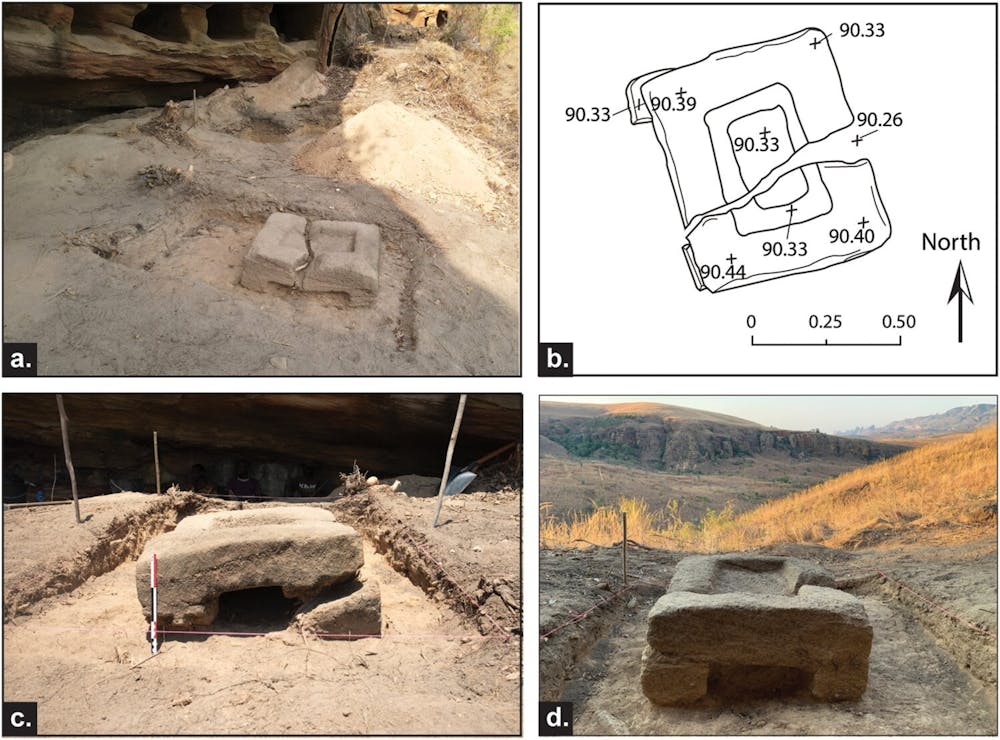
    Excavations at this rock shelter revealed more archaeological structures, including carved sandstone walls and a large stone basin.

    Radiocarbon dating of charcoal samples from the site dated to the late 10th to mid-12th centuries AD. Pieces of ceramic items of southeast Asian and Chinese origin found there have been dated by a specialist to the 11th to 14th centuries AD.

    We also found sandstone quarries from which the stones used to build the walls at the rock shelters were extracted. And we found more stone basins on terraces.

    The terraces cover a total area of about 30 hectares, indicating that Teniky must have been a fair-sized settlement. Water is available all year round in the valley below, where people might have been able to plant crops, fish for eels or even keep cattle.

    Considering the dimensions, location and character of the rock-cut structures at Teniky, we think the niches and chambers served a ritual purpose.

    Teniky. Raphael Kunz, Author provided (no reuse)

    Who were the people who lived at Teniky?

    There is no other archaeological site like Teniky in Madagascar. So, the question arises as to what group of people settled there, far inland, and carved the niches and chambers in the cliff walls about 1,000 years ago. The presence of imported ceramics indicates that they took part in the Indian Ocean trade networks at the time but doesn’t tell us where they came from.

    We think the answer may lie in the style of the rock-cut niches.

    Rock architecture at Teniky, Madagascar. Courtesy Guido Schreurs.

    They are similar to rock niches of the first millennium or earlier in Iran (formerly Persia). Archaeologists have interpreted those as belonging to Zoroastrian communities, which used them as part of their funeral rites.

    Zoroastrianism was the dominant state religion of the Persian Sasanian Empire (224-656 AD). After the conquest of the Sasanian Empire by the Arabs in the mid-seventh century AD, Islam was imposed.

    Zoroastrian funeral rites do not allow direct burial in the ground, so as not to pollute the earth. Instead, dead bodies are left in places of exposure not touching the ground. Once the flesh has decomposed or been removed by animals, the bone remains are dried and placed in bone receptacles (ossuaries).

    We tentatively interpret the rock-cut architecture at Teniky as having been made by a community with Zoroastrian origins.

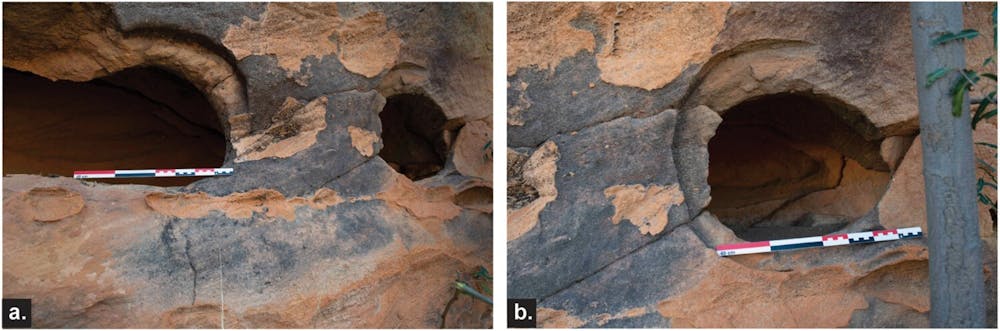
    Circular niches with a recess around the opening. Guido Schreurs, Author provided (no reuse)

    The larger rock-cut niches might have been the places where the bodies of the dead were exposed, and the smaller niches with recesses might have served as ossuaries, closed off by a slab to protect the bones from the rain and thus to prevent them from polluting the earth.

    Basin in front of niches. Guido Schreurs, Author provided (no reuse)

    The stone basins at Teniky show stylistic similarities with those used in Zoroastrian ritual ceremonies to hold water or fire, both agents of ritual purity.

    Zoroastrians abroad

    There are few accounts of Madagascar written at the turn of the first and second millennia AD. Buzurg Ibn Shahriyar, a tenth-century Persian sailor and writer, collected stories from sailors in port towns on the Persian Gulf which suggest that Persian contacts with Madagascar may have existed then. The name Madagascar did not exist at that time but names like “Wak-wak” or “Qumr”/“Komr” may have referred to the island.


    Read more: Madagascar cave art hints at ancient connections between Africa and Asia


    Historical documents, archaeological excavations and genetic studies indicate that Zoroastrians left Iran and settled in western India in the late eighth century AD.

    Did they settle on the island of Madagascar too? If the rock-cut architecture and associated stone basins at Teniky are the work of a community with Zoroastrian origins, this would strongly point to a former Persian presence in southern Madagascar about 1,000 years ago.

    Many questions remain. We hope future studies will answer some of them.

    – Madagascar’s mysterious Teniky rock architecture: study suggests a link to ancient Persia
    https://theconversation.com/madagascars-mysterious-teniky-rock-architecture-study-suggests-a-link-to-ancient-persia-240725

    MIL OSI Africa

  • MIL-OSI: CME Outfitters Collaborates with National Partners to Drive Diversity in Clinical Trials and Enhance Cultural Competency in Health Care

    Source: GlobeNewswire (MIL-OSI)

    RADNOR, Pa., Oct. 17, 2024 (GLOBE NEWSWIRE) — CME Outfitters (CMEO), a leading provider of accredited continuing medical education, is excited to announce a groundbreaking partnership with the American Clinical Health Disparities Commission (ACHDC), alongside its longstanding collaboration with the National Black Church Initiative (NBCI), to combat health disparities. ACHDC, a coalition of African American clinicians and church leaders, is dedicated to eliminating the adverse effects of social drivers of health and improving health outcomes for African Americans through greater participation in clinical trials. This powerful alliance underscores CMEO’s unwavering commitment to transforming health care education, advancing equity in health care access, and driving change in clinical research.

    Participation in Strategic Meetings with FDA and NIH
    With a strong commitment to advancing health care equity, CMEO and NBCI were honored to meet with both the Food and Drug Administration (FDA) and the National Institutes of Health (NIH). These pivotal collaborations aim to drive key health care initiatives focused on enhancing health equity, increasing diversity in clinical trials, and fostering cultural competency and humility among health care providers. Together, these efforts represent a unified step toward creating a more inclusive and effective healthcare system. These meetings are part of a broader effort to ensure that clinical research reflects the diversity of the population, particularly among African American communities, which have historically been underrepresented in medical research.

    “CME Outfitters is privileged to be at the forefront of these initiatives,” said Shari Tordoff, Founding Partner of CMEO. “Our collaboration with NBCI and ACHDC, along with our collaboration on FDA and NIH initiatives, allows us to leverage our expertise in education to help health care providers engage more effectively with diverse patient populations. By improving cultural competency and clinician competence, we are empowering providers to not only improve patient care but also actively contribute to diversity in clinical trials.”

    NBCI, a coalition of 150,000 African American churches representing over 27 million congregants, has been a key partner in this endeavor. The NBCI National Clinical Trial Strategic Plan (NCTSP), in collaboration with ACHDC, has been instrumental in increasing engagement in clinical trials within the African American community by addressing social drivers of health and reducing disparities in health care outcomes.

    “We are ushering in a new era of engagement for African Americans in clinical trials,” said Rev. Anthony Evans, President of NBCI. “By partnering with CME Outfitters, we’re able to leverage their expertise in clinician and patient education to bring about lasting change in health care access and equity. Together, we are not just improving participation in clinical trials—we are transforming the health care experience for millions of African Americans.”

    Among its many initiatives, CMEO has also been working closely with the CME Coalition to contribute to the Food and Drug Administration’s (FDA) Diversity Action Plan (DAP). The DAP aims to enhance the inclusion of underrepresented populations in clinical trials, ensuring that research results more accurately reflect the diverse makeup of the U.S. population. CMEO has provided valuable educational resources and strategic input in support of these goals, helping to lay the foundation for broader, more equitable participation in clinical research.

    Cultural Competency and Clinician and Patient Education
    CME providers have a responsibility to equip health care professionals with the skills to address bias and deepen their understanding of how diversity, equity, and inclusion initiatives can meaningfully influence clinical practices and improve patient care. CMEO has reached thousands of clinicians with education and actionable strategies to recognize and address implicit biases and health inequities. Patient-focused activities by CMEO have also empowered patients, particularly those from underserved communities, to advocate for their health, ensuring that their voices are heard, and their care needs are met. “These efforts extend beyond mere education—they lead to real change in clinician behavior and, likewise, patients being empowered to be shepherds of their own care,” said Kashemi Rorie, PhD, Chief Scientific Officer, of CMEO. “We have seen firsthand the impact of our programs on clinician behavior, particularly in terms of an increased awareness of bias and subsequent reductions in those biases. But importantly, we have also noted major shifts in promoting health equity and its impact on sustained optimal outcomes. Our collaboration with NBCI and ACHDC allows us to extend that impact even further by focusing on improving clinical trial diversity.”

    NBCI’s Achievements in Behavioral Change and Clinical Trial Enrollment
    NBCI has a long track record of successful health initiatives, having launched multiple programs that have demonstrated measurable changes in health behavior. From its immunization program to its multiple myeloma and endometrial cancer awareness efforts, NBCI has made significant strides in reducing health disparities among African Americans. Through its clinical trial programs, NBCI has educated over 52,000 individuals on the risks and benefits of clinical trial participation, and its faith-based command centers have enabled the rapid rollout of national health initiatives. NBCI plans to expand upon its successes by engaging 30,000 to 50,000 African American participants annually in clinical trials starting in 2025.

    About CME Outfitters
    CME Outfitters (CMEO) is dedicated to enhancing patient care through the development, distribution, and certification of cutting-edge continuing education activities. Our focus on integrating the interdisciplinary care team and patients ensures that health care providers deliver the highest standard of care. We offer a diverse range of educational interventions—including interactive webcasts, live symposia, medical simulations, and clinical case series—leveraging the latest technology to create an engaging learning environment that drives meaningful changes in clinician and patient behaviors. Additionally, we provide expert accreditation, outcome measurement, and logistics services for non-accredited organizations. Since joining KnowFully Learning Group in July 2020, CMEO has strengthened its commitment to transforming health care education. For more information about CMEO and its ongoing initiatives, visit http://www.cmeoutfitters.com.

    About National Black Church Initiative
    The National Black Church Initiative (NBCI) is a coalition of 150,000 African American and Latino churches working to eradicate racial disparities in health care, technology, education, housing, and the environment. The mission of NBCI is to provide critical wellness information to all of its members, congregants, churches, and the public. NBCI utilizes faith and sound health science and partners with major organizations and officials to reduce racial disparities in the variety of areas cited above. NBCI’s programs are governed by credible statistical analysis, science-based strategies and techniques, and methods that work and offer faith-based, out-of-the-box, and cutting-edge solutions to stubborn economic and social issues. For more information about NBCI, visit https://www.naltblackchurch.com, call (202) 744-0184, or contact Reverend Anthony Evans at dcbci2002@gmail.com.

    Contact:
    Kirstin Crane
    CME Outfitters
    Phone: 301-466-2416
    cranek@knowfully.com 

    The MIL Network

  • MIL-OSI Asia-Pac: Lo Chung-mau meets Hainan officials

    Source: Hong Kong Information Services

    Secretary for Health Prof Lo Chung-mau met a delegation led by Hainan Vice Governor Xie Jing today to introduce the initiatives on developing Hong Kong into an international health and medical innovation hub as set out in the 2024 Policy Address.
     
    At the meeting, Prof Lo updated the delegation on the latest development of Hong Kong’s healthcare policy, including initiatives put forward in the Policy Address, including complementing technological innovation with institutional innovation through expediting the reform of the approval mechanism for drugs and medical devices, and strengthening research and development and translation of biomedical technology.
     
    The Hong Kong Special Administrative Region Government will support the innovation and application of advanced biomedical technology, with a view to attracting the world’s top-notch biomedical enterprises and research organisations to set up operations in Hong Kong, Prof Lo stressed.
     
    Additionally, the progress of hospital accreditation of public hospitals in the Hong Kong SAR through the adoption of “China’s International Hospital Accreditation Standards (2021 Version)” was discussed during the meeting.
     
    Prof Lo pointed out that the Hong Kong SAR Government will continue to actively promote the adoption of the accreditation standards by more public hospitals, including extending the adoption of the standards to two to three more public hospitals in addition to Pamela Youde Nethersole Eastern Hospital and Prince of Wales Hospital.
     
    The participation of public hospitals in the accreditation programme can serve as a demonstration to the international community the national hospital accreditation standards, with Hong Kong acting as a gateway to facilitate the national standards to go global, he highlighted.
     
    In this connection, both parties also explored ways to further encourage more hospitals in the two places to pursue accreditation so as to amplify the impact of the standards.
     
    “Looking ahead, we will remain committed to fostering cross-boundary medical co-operation so as to propel the important national strategy of ‘Healthy China’ through concerted contributions,” the health chief added.

    MIL OSI Asia Pacific News

  • MIL-OSI Canada: Celebrating the ceremonial opening of Ne’ata’q Place, a shelter for Indigenous women and children in Newfoundland

    Source: Government of Canada News (2)

    News release

    October 17, 2024 — Stephenville, Newfoundland & Labrador — Indigenous Services Canada and Newfoundland Aboriginal Women’s Network

    Today marked the ceremonial opening of Ne’ata’q Place, a shelter for Indigenous women and children in Newfoundland. An initiative of the Newfoundland Aboriginal Women’s Network Inc. (NAWN), the shelter will provide a safe, supportive community for Indigenous women and children affected by family violence.

    Celebrating the opening of Ne’ata’q Place were the Director of Ne’ata’q House, Michelle Skinner; Minister Hutchings on behalf of Minister Hajdu, Minister of Indigenous Services; community members; and representatives from Canada Mortgage and Housing Corporation (CMHC), Indigenous Services Canada (ISC).

    Ne’ata’q in Mi’kmaq means the sun is coming out. The shelter will provide transitional housing and supportive services, including mental health counselling, life skills development, Indigenous cultural supports, and system navigation. The services will be provided in a welcoming, homelike environment, and the work will be rooted in traditional Mi’kmaw values and traditions, emphasizing culturally competent trauma-informed care.

    Providing longer-term stays than crisis shelters, occupancy is available for up to six months. The shelter will include six light and airy rooms with self-contained kitchenettes. Two of the units, one single and one double, are fully accessible.

    Funding for Ne’ata’q Place is jointly supported by Canada Mortgage and Housing Corporation, Indigenous Services Canada, and the Town of Stephenville.

    Ne’ata’q Place is scheduled to open its doors in November 2024.

    Quotes

    “Together, hand in hand with our dedicated partners, we have built more than a house; we have built a bridge from adversity to strength, from uncertainty to hope.” 

    Dr. Elder Odelle Pike
    President Newfoundland Aboriginal Women’s Network

    “We are supporting the safety and well-being of Indigenous women and children affected by family violence. Ne’ata’q Place will provide a safe haven devoted to culturally appropriate and trauma-informed care. We congratulate and celebrate the Newfoundland Aboriginal Women’s Network in their work to provide a good way forward.”

    The Honourable Patty Hajdu
    Minister of Indigenous Services

    “Everyone deserves a safe and affordable place to call home. Thanks to today’s investment, we are providing new affordable housing units for Indigenous Peoples and women and children fleeing domestic violence right here in Stephenville. This is one of the many ways our National Housing Strategy continues to ensure no one is left behind.” 

    The Honourable Gudie Hutchings
    Minister responsible for the Atlantic Canada Opportunities Agency, Minister of Rural Economic Development, Member of Parliament for Long Range Mountains 

    Quick facts

    • The Newfoundland Aboriginal Women’s Network Inc. (NAWN) is a non-profit organization that strives to promote, enhance, and encourage the health, social, educational, cultural and political well-being of the Aboriginal women within the Island portion of the province of Newfoundland.

    • Project funding includes:

      • $3,644,700 from the federal government through the National Housing Strategy’s Indigenous Shelter and Transitional Housing Initiative.
      • $40,000 from the federal government through Canada Mortgage and Housing Corporation’s SEED funding.
      • Ongoing operational funding from Indigenous Services Canada.
      • $150,000 in land equity from the Town of Stephenville.

    Associated links

    Contacts

    For more information, media may contact:

    Jennifer Kozelj
    Press Secretary
    Office of the Honourable Patty Hajdu
    Minister of Indigenous Services and Minister responsible for FedNor
    jennifer.kozelj@sac-isc.gc.ca

    ISC Media Relations
    819-953-1160
    media@sac-isc.gc.ca

    Michelle Skinner
    Director of Ne’ata’q House 
    709-721-0474
    director@nqplace.com

    Stay connected

    Join the conversation about Indigenous Peoples in Canada:

    X: @GCIndigenous
    Facebook: @GCIndigenous
    Instagram: @gcindigenous

    Facebook: @GCIndigenousHealth

    You can subscribe to receive our news releases and speeches via RSS feeds. For more information or to subscribe, visit http://www.isc.gc.ca/RSS.

    MIL OSI Canada News

  • MIL-OSI Russia: Marat Khusnullin took part in the All-Russian Congress of Road Workers

    MILES AXLE Translation. Region: Russian Federation –

    Source: Government of the Russian Federation – An important disclaimer is at the bottom of this article.

    Marat Khusnullin took part in the All-Russian Congress of Road Workers

    Deputy Prime Minister Marat Khusnullin took part in a panel discussion of the All-Russian Congress of Road Workers at the XI International Specialized Exhibition “Road-2024”. In particular, preliminary results of the implementation of the national project “Safe High-Quality Roads” were summed up.

    “In recent years, an effectively functioning, unified project team for the road industry of the entire country has been formed. Thanks to the support of the President, the Chairman of the Government, as well as the coordinated work of the Ministry of Transport, the Ministry of Finance, Rosavtodor, and regional teams, we have managed to achieve great success, including in the implementation of the national project “Safe High-Quality Roads”. As a result, comfortable conditions for study and work, for rest and raising children have been created. Positive changes have not gone unnoticed by residents of the regions. The national project is one of the most recognizable among the population. Over six years of work on “BKD”, we have been able to repair, reconstruct and build more than 100 thousand km of roads in 84 regions, and lay 800 million square meters of top layers of pavement. Now we are finishing the current road national project, the continuation of which in the future will be a new one – “Infrastructure for Life”. There is still a lot of work to be done, but with a well-coordinated team, I am sure that all targets will be met, and some of them will exceed the planned values,” said Marat Khusnullin.

    The Deputy Prime Minister thanked his colleagues for the work done in terms of developing the road transport industry and noted large-scale plans for the future. On the instructions of the President, by 2030 it is planned to build at least 50 bypasses of populated areas. Active development of the transport route “Russia”, international transport corridors “North – South”, “West – East” will also continue. Local measures to eliminate bottlenecks in the federal network, development of roads of the Azov-Black Sea cluster will also continue.

    Please note: This information is raw content directly from the source of the information. It is exactly what the source states and does not reflect the position of MIL-OSI or its clients.

    Please note; This information is raw content directly from the information source. It is accurate to what the source is stating and does not reflect the position of MIL-OSI or its clients.

    http://government.ru/nevs/53030/

    MIL OSI Russia News

  • MIL-OSI Security: Drug Trafficking Organization Sentenced to More Than 75 Years Combined in Federal Prison

    Source: Office of United States Attorneys

    FAYETTEVILLE – The final member of a Northwest Arkansas drug trafficking organization was sentenced to federal prison for crimes related to the Distribution of Methamphetamine. The Honorable Judge Timothy L. Brooks presided over the sentencing hearings for the United States District Court in Fayetteville.

    According to court documents, beginning in approximately October of 2022, agents with the Federal Bureau of Investigations (FBI), along with Investigators with the Fourth Judicial Drug Task Force (JDTF) initiated an investigation into a drug trafficking organization operating in the Fayetteville Division responsible for distributing methamphetamine. During the course of their investigation, investigators identified Charles Grinder as a leader of this local group.  Grinder was further identified as an incarcerated, gang member who was a source of supply for methamphetamine into the Western District of Arkansas.

    Those members of the drug trafficking organization indicted federally have been sentenced as follows:

    Charles Grinder:  age 44, McAlester, Oklahoma – Aiding and Abetting the Distribution of More than 50 Grams of Methamphetamine – 420 months imprisonment and 5-year term of supervised release.

    Chelsea Dray:  age 30, Bentonville, Arkansas – Distribution of Methamphetamine– 96 months months and 3-year term of supervised release.

    Paige Johnson: age 33, Claremore, Oklahoma – Conspiracy to Distribute Methamphetamine – 87 months imprisonment and 3-year term of supervised release.

    James Johnson: age 40, Wagoner, Oklahoma – Conspiracy to Distribute Methamphetamine – 188 months imprisonment and 3-year term of supervised release.

    Destiny McGinnnis: age 29, Stillwater, Oklahoma – Aiding and Abetting the Distribution of More than 50 Grams of Methamphetamine – 46 months imprisonment and 3-year term of supervised release.

    Christopher Outlaw: age 39, Tulsa, Oklahoma – Aiding and Abetting the Distribution of More than 50 Grams of Methamphetamine – 72 months imprisonment and 4-year term of supervised release.

    U.S. Attorney David Clay Fowlkes of the Western District of Arkansas made the announcement.

    The Federal Bureau of Investigations, Fayetteville Resident Office, Benton County Sheriff’s Office, 4th Judicial District Drug Task Force, and the Washington County Sheriff’s Office investigated the case.

    Assistant U.S. Attorneys Briana Robbins and Kim Harris prosecuted the case for the United States.

    This effort is part of an Organized Crime Drug Enforcement Task Forces (OCDETF) operation. OCDETF identifies, disrupts, and dismantles the highest-level criminal organizations that threaten the United States using a prosecutor-led, intelligence-driven, multi-agency approach. Additional information about the OCDETF Program can be found at https://www.justice.gov/OCDETF.

    Related court documents may be found on the Public Access to Electronic Records website @ http://www.pacer.gov

    MIL Security OSI

  • MIL-OSI United Kingdom: British Caribbean Minister meets Prime Minister Philip Davis KC in The Bahamas as the two countries strengthen trade ties

    Source: United Kingdom – Executive Government & Departments

    Baroness Chapman signs new trade deals between the UK and The Bahamas

    • Baroness Chapman to visit The Bahamas as part of her first visit to the Western Caribbean
    • Minister meeting with Prime Minister Philip Davis KC to formally sign series of UK-Bahamas trade deals
    • UK-Bahamas trade relationship worth $5bn per year

    The UK Minister for the Caribbean, Baroness Chapman is in The Bahamas today.

    While in Nassau, the Minister met Prime Minister Philip Davis KC to discuss formally our bilateral partnership, and our shared priority of growing our economies, empowering our young people, and fighting the climate and nature crises.

    The Minister and Prime Minister announced a series of new trade deals between the UK and The Bahamas, that will see UK businesses including Manchester Airport Group and Amey PLC awarded contracts for work to operator Freeport Airport, and rebuild Glass Window Bridge.  

    In a demonstration of the growing UK-Bahamas trade relationship, Baroness Chapman was also able to announce that Amey PLC, the firm behind construction of the M1 and the rebuilding of Liverpool Lime Street, will be making Nassau the home of its first ever office in the Americas.

    The firm will hire and train Bahamian engineers and project managers, and connect Bahamian companies with British expertise to win contracts across the Caribbean and USA. 

    The current trade relationship between the UK and The Bahamas amounts to $5bn a year, making the UK one of The Bahamas’ most significant trade partners.

    UK Caribbean Minister, Baroness Chapman said:

    The UK-Bahamas relationship is going from strength to strength.  

    The deals I am announcing alongside the Right Honourable Philip Davis here this week will see British businesses deliver essential infrastructure projects for The Bahamas, and invest directly in The Bahamas.

    They are a further illustration of our growing partnership, as we continue work to deliver growth and prosperity for the people of both our nations.

    I look forward to continuing to deepen our ties from trade to climate during my time in The Bahamas.

    During her visit, Baroness Chapman also met Minister of Education and Technical and Vocational Training, Glenys Hanna-Martin, where she formally handed over 10,000 pages of historic documents pertaining to Bahamian Independence, that have been stored in the National Archives in the UK.  

    The documents have also been digitised and will be made available by The Bahamas’ National Archive, which will increase access and public understanding of the process undertaken to achieve independence by students both in The Bahamas and the UK.  

    Following a visit to a coral reef to see the work local NGOs are doing to preserve an important ecological area, the Minister toured the University of The Bahamas, where she took part in a roundtable alongside environmental science students, academics and NGOs focused on the impact of climate change on The Bahamas.

    Finally, the Minister visited the Forensics department of The Royal Bahamas Police Force and met two senior female officers who were recipients of the UK Chevening scholarship, and who received formal UK forensics training.

    Media enquiries

    Email newsdesk@fcdo.gov.uk

    Telephone 020 7008 3100

    Contact the FCDO Communication Team via email (monitored 24 hours a day) in the first instance, and we will respond as soon as possible.

    Updates to this page

    Published 17 October 2024

    MIL OSI United Kingdom

  • MIL-OSI United Kingdom: Transition Finance Market Review launch

    Source: United Kingdom – Executive Government & Departments

    Keynote speech by Minister for Industry at the launch event for the Transition Finance Market Review.

    Thank you Councillor for your warm welcome and for your work as part of this review.  

    This is my second time this week in the Guildhall. We had the big Investment Summit here on Monday. It’s always very special to come to the Guildhall. 

    For 2,000 years this site has been a hub of development, business and finance, so it’s apt that we meet here today to discuss more modern means of generating profitable, sustainable growth in the UK.  

     I want to start by congratulating Vanessa and the team and everyone who has taken part in the Transition Finance Market Review and for publishing your comprehensive report and to City of London Corporation for hosting this event.  

    This is a really important review, which will influence how we think about financing the clean energy transition in the UK and around the world.  

    Our twin  goals of clean power by 2030 and accelerating to net zero in 2050 are ambitious… 

    …but, as the men and women who stood in this Guildhall over the centuries knew, with any period of growth comes huge opportunity. 

    Which is why we need to deploy all the tools at our disposal – from innovative new technology at scale, to novel and creative financial packages that mirror that ambition.  

    Clean energy is at the heart of this government’s agenda.  

    We believe that clean energy is the economic and industrial opportunity of the 21st century.  

    Mobilising public and private finance will be critical to achieving our clean energy mission and international climate goals.  

    The government is working quickly to remove the barriers and deploy legislative actions to accelerate the work.  

    Take the de-facto onshore wind ban.  

    Removed within 72 hours of being in office… 

    Now we must support industry on how to break ground on multiple new projects.    

    It’s why we are introducing a Planning and Infrastructure Bill to speed up and streamline the planning process.  

    And we will also be updating the relevant National Policy Statements within the next 12 months to provide certainty to the industry. 

    By stimulating the market and crowding-in investment via Great British Energy, we stand to rapidly grow supply chains across the country, creating the well-paid and meaningful jobs our communities crave. 

    But this all points back to finance. 

    How do we approach the question of scaling up the investment we need?  

    First, our ambition is to make the UK the green finance capital of the world.  

    This will mobilise Britain’s world-leading financial centre to unlock the trillions of pounds of investment needed for the global energy transition.   

    A strong sustainable finance policy framework is critical to driving investment into the sectors that are crucial to meet our carbon budgets.  

    It also provides a huge economic growth opportunity for the financial services sector.  

    Second, there must be a genuine partnership between government and the private sector.

    In the UK we need hundreds of billions of pounds of investment to make this transition happen.  

    Our role is to set a clear and certain direction of travel, with a plan that businesses and investors understand. 

    And third, we remain committed to being a strong advocate for climate finance to ensure developing countries across the world have the finance they need.   

    COP29 needs to deliver an ambitious new climate finance goal that meets the needs and priorities of developing countries.  

    This will be vital to accelerating investment in mitigation and adaptation and will play an important role in securing ambitious NDCs ahead of COP30 next year.  

    But we know that this won’t be as easy as flicking a switch for high emitting sectors.  

    Transition finance for hard-to-abate sectors will play a key role, particularly when it comes to challenges such as industrial decarbonisation.  

    I know there are complex challenges to overcome in scaling up the transition finance market. 

    These include minimising the risks of greenwashing and ensuring investors are equipped with the right information on investment needs for our sectors.  

    But there are huge opportunities too.  

    So, what is changing? 

    The Transition Finance Market Review has developed a comprehensive set of policy recommendations for how government can do more to accelerate the growth and ensure the credibility of our transition finance market.  

    The Review has called for more clarity on decarbonisation pathways for key sectors and ways of mobilising private investment to achieve these. 

    We will strive to deliver this clarity through existing and new policy, including our Industrial Strategy launched on Monday setting out the steps we are taking to deliver long-term growth while harnessing the opportunities of net zero. 

    Clean Energy Industries are one of eight growth-driving sectors identified in the Industrial Strategy green paper this week. This is alongside Advanced Manufacturing, Creative Industries, Defence, Digital and Technologies, Financial Services, Life Sciences, and Professional and Business Services.  

    We are now keen to hear your thoughts on how we identify the most promising sub-sectors within clean energy industries – including the most innovative emerging technologies. 

    More over, our green paper makes clear the UK is committed to sustaining growth – growth that is aligned with our Net Zero and environmental objectives. 

    We also announced a National Wealth Fund capitalised with £27.8 billion to invest in the new industries of the future and mobilise billions more in private investment and generating a return for taxpayers.  

    The National Wealth Fund will build on the leadership of the UK Infrastructure Bank but go further – including in ways recommended by the Transition Finance Market Review.  

    And just one example, the National Wealth Fund will be empowered to make investments that maximise the mobilisation of private investment, including an expanded suite of financial instruments such as performance guarantees and trialling new blended finance solutions, with government departments, taking on additional risk to facilitate higher impact in individual deals. 

    It will inherit UKIB’s existing £22 billion capitalisation and have an additional £5.8 billion, which will be committed over this Parliament. 

    In addition, we are driving forward several green finance priorities mentioned in the Review. 

    We are developing our approach to mandate UK registered financial institutions and large companies to implement credible transition plans. 

    we will ensure we move from ambition into coherent strategies to realise the opportunities of the net zero economy… 

    …and I want to extend my thanks to the Transition Plan Taskforce for their work to pioneer global best practice in this space. 

    We will also continue to advance our plans for a UK Green Taxonomy in line with our commitment in Financing Growth.  

    We want to ensure any framework is science-based, interoperable with international standards, and user-friendly for business and intend to provide more detail on our plans in this area soon.  

    Finally, we are advancing plans to ‘endorse’ international climate-related reporting standards issued by the International Sustainability Standards for use in the UK. 

    Our government will be studying the recommendations in the report very carefully and will be making further announcements on their implementation soon.  

    Clean power by 2030 is ambitious. But when you look around the world, you see that we have no time to waste.  

    Climactic events are worsening. All the industrialised nations around the world have a responsibility to step-up and redress this imbalance, using whatever resources necessary.  

    Domestically, we know that the advance of the green sector is intrinsically linked to the economy, and it is our core mission to deliver meaningful, well-paid jobs fuelled by renewable growth.   

    And it’s the reason we’re going all-out for clean power.  

    All of this hinges on mobilising green finance today, so that decades from now, people will remember this period as our green industrial revolution, delivering prosperity, skills and clean energy for millions of people.

    Updates to this page

    Published 17 October 2024

    MIL OSI United Kingdom

  • MIL-OSI USA: Houston man guilty in $160M Medicare fraud scheme

    Source: US Department of Health and Human Services – 3

    Department of Justice
    U.S. Attorney’s Office
    Southern District of Texas

    FOR IMMEDIATE RELEASE
    Tuesday, October 15, 2024

    HOUSTON – A 59-year-old Houston man has been convicted of all 15 counts as charged for heading a massive Medicare fraud scheme involving the fraudulent billing of expensive topical creams, announced U.S. Attorney Alamdar S. Hamdani.  

    The jury deliberated for less than five hours before convicting Mohamad Mokbel following a 10-day trial. 

    From 2014 through 2021, Mohamad Mokbel led a company called 4M Pharmaceuticals which operated 14 pharmacies with straw owners. The jury heard evidence that Mokbel illegally purchased thousands of Medicare beneficiaries, including their identification number, personal health and physician information. Mokbel targeted elderly diabetic patients who are dependent on diabetic testing supplies to manage their blood sugar levels. Mokbel paid $16 to $40 per Medicare beneficiary.  

    To maximize reimbursements and without regard for medical necessity, Mokbel then directed 4M employees to use the Medicare beneficiaries’ patient data to run insurance claims to determine if Medicare or other insurance plans would cover and reimburse at a high rate for the topical creams, Omega-3 pills and other medications that Mokbel intended to sell through 4M pharmacies.

    At Mokbel’s direction, 4M employees would then fax pre-filled prescription requests to the patients’ doctors appearing to be for diabetic testing supplies with topical creams added at the bottom. They also included false representations that the patient was requesting a 4M Pharmacy fill their medications. In reality, Mokbel had previously purchased the patient’s personal information, the patient had not selected a 4M Pharmacy and the patient was often unaware the request was being made on their behalf. 

    Many doctors apparently took the representations in the fax at face value and did sign and send back the prefilled prescription requests to 4M. Mokbel’s call center in Houston and later in Egypt then contacted the patients and made false and misleading statements about the topical cream and their doctor’s order. Mokbel’s pharmacies then shipped out numerous topical creams, often on auto-refill, and excessively billed Medicare, Medicaid and private insurance plans. 

    Mokbel made over $200 million as a result of the scheme. 

    From 2015 through 2020, Mokbel also corruptly gave a series of bribe payments, ranging from $2,000 to $5,000 and totaling over $188,000 an employee of a pharmacy benefits manager – OptumRx – in exchange for favorable treatment for 4M pharmacies. They were credentialed and recredentialed with OptumRx which allowed them to enter into retail network agreements with OptumRx, participate in the Medicare Part D program and submit claims for prescriptions for Medicare beneficiaries. Mokbel also received information and advice about responding to audits and preventing and/or delaying OptumRX termination of many 4M pharmacies.

    U.S. District Judge Lee H. Rosenthal accepted the verdict and set sentencing for Jan. 7, 2025. At that time, Mokbel faces up to 20 years for conspiracy to commit mail fraud and health care fraud, 10 years for each of five counts of health care fraud, each of six counts of money laundering and one count of bribery concerning programs receiving federal funds as well as five years for

    conspiracy to violate the Anti-Kickback Statute and conspiracy to commit bribery. He could also be ordered to pay up to a total of $4 million in fines and possible restitution in excess of $160 million.      

    Previously released on bond, Mokbel was taken into custody pending sentencing.

    The FBI, IRS Criminal Investigation, Homeland Security Investigations, Department of Health and Human Services, Food and Drug Administration and the Texas Attorney General Medicaid Fraud Control Unit conducted the investigation. Assistant U.S. Attorneys Kathryn Leigh Olson and Adam Laurence Goldman are prosecuting the case.

    MIL OSI USA News

  • MIL-OSI Global: Aquaculture could harm animal welfare or protect it, depending on what species the farms raise

    Source: The Conversation – USA – By Becca Franks, Assistant Professor of Environmental Studies, New York University

    Raising salmon in a tank at an aquaculture farm in Dubai. Giuseppe Cacace/AFP via Getty Images

    The global aquaculture industry has tripled in size since the year 2000, with producers raising a mind-boggling diversity of species, from seaweeds and clams to carp, salmon and cuttlefish. Many of these creatures are undomesticated and lead complex and highly social lives in the wild.

    The rapid growth in aquaculture means that billions of individual aquatic animals are now being farmed without basic information that could help ensure even minimal welfare standards. Our newly published study shows that these welfare risks are not uniform: Aquaculture is likely to have severe effects on welfare for some species, but negligible impacts on others.

    Whenever humans manage animals on a large scale, welfare becomes a concern. As experts on aquatic animals and their welfare, we believe that taking proactive measures to shape the aquaculture industry’s growth will be critical for its long-term success.

    A cuttlefish tackles a challenge originally designed for human children, demonstrating cephalopods’ complex cognitive processes.

    Complex aquatic lives

    In a wide-ranging review of the existing science, we identified seven risk factors in fish and other sea creatures that would be challenging or impractical to accommodate in captivity. They include 1) migratory behavior, 2) solitary social structures, 3) long life spans, 4) carnivorous feeding habits, 5) cannibalism, 6) living at depths of 165 feet (50 meters) or more, and 7) elaborate courtship or involved parental care.

    We researched these characteristics for each of the more than 400 species currently farmed in aquaculture. Our analysis found that many species of fishes, reptiles and amphibians are likely to suffer in aquaculture because they won’t be able to engage in their natural behaviors in farmed conditions. The same is true for crustaceans such as lobsters and for cephalopods such as cuttlefish.

    In contrast, aquatic plants and other invertebrates such as oysters would experience fewer differences between their life in the wild versus in a tank, pond or other aquaculture production system.

    We also found that species most at risk are among the most expensive on the market but contribute the least to global production. By shifting toward species whose behaviors and life habits are more compatible with aquaculture, the industry could minimize animal welfare risk while also keeping prices down and production quantities high. In other words, protecting aquatic animal welfare is compatible with producing affordable, nutritious food.

    Animal welfare in the water

    Research shows that many aquatic animals are intelligent, emotional, curious, highly social and have strong preferences. Like land animals, they can suffer if their needs aren’t met.

    Consider, for example, the bumphead parrotfish (Bolbometopon muricatum), which is currently farmed in aquaculture. Bumpheads live up to 40 years and travel several kilometers each day in large foraging troops, searching for live coral. On full moons, they come together in the hundreds to spawn and engage in ritual head-bumping contests between the males, like an aquatic version of bison.

    Divers observe a feeding school of bumphead (also referred to as humphead) parrotfish on Australia’s Great Barrier Reef.

    It would be very difficult and expensive to accommodate this species’ long life span, large range, complex foraging behavior and dynamic social relationships in the highly restrictive and monotonous environments of aquaculture.

    We also found examples of invertebrate animals with similarly elaborate ways of life. One example is the red swamp crayfish (Procambarus clarkii), a comparatively small crustacean that builds elaborate tunnel and chamber systems underground. Females care attentively for their tiny offspring, fanning, cleaning and feeding juveniles for up to four months after they hatch.

    In contrast, plant species farmed in aquaculture, such as seaweeds and water spinach (Ipomoea aquatica), are nutritious, protein-rich foods that can be raised without posing direct animal welfare concerns.

    In 2021 alone, 56 species were farmed for the first time. By identifying species that may naturally adapt better to life in captivity, aquaculture producers and policymakers can steer their industry toward a more humane future.

    This approach is already finding support in the U.S., where Washington and California have banned octopus farming. The states acted partly in response to research showing that octopuses are intelligent, curious, social animals that can solve problems and recognize individual people – qualities that are incompatible with being raised en masse for food.

    More research is needed to understand the lives and behaviors of other sea creatures that are currently farmed or targeted for production in the future. Most of these species remain understudied and mysterious, which makes it hard to make informed decisions about whether they are suitable for farming.

    Better data could contribute to aquaculture policy, while also boosting public appreciation for the diversity and intricacy of life on a planet that is 70% aquatic.

    Becca Franks receives funding from TinyBeam Foundation and Open Philanthropy.

    Chiawen Chiang does not work for, consult, own shares in or receive funding from any company or organization that would benefit from this article, and has disclosed no relevant affiliations beyond their academic appointment.

    ref. Aquaculture could harm animal welfare or protect it, depending on what species the farms raise – https://theconversation.com/aquaculture-could-harm-animal-welfare-or-protect-it-depending-on-what-species-the-farms-raise-240771

    MIL OSI – Global Reports

  • MIL-OSI: Retired CEO and Chair of the Board of Directors of Microchip Technology Steve Sanghi Releases New Book: “Ask Steve: Everyday business advice from a successful CEO”

    Source: GlobeNewswire (MIL-OSI)

    PARADISE VALLEY, Ariz., Oct. 16, 2024 (GLOBE NEWSWIRE) — Steve Sanghi, retired CEO and chair of the board of directors of Microchip Technology, today announces the release of his third book, “Ask Steve: Everyday business advice from a successful CEO.” Sanghi offers practical and real-world business advice based on his highly regarded leadership style and overall business acumen.

    Building on the success of his previous books, “Ask Steve: Everyday business advice from a successful CEO,” is an extension of the popular business advice column that ran in the Arizona Republic from 2007 to 2014. In the column, Sanghi responded to business inquiries from individuals at various career levels, offering solutions to both personal and professional challenges. “I contributed to the ‘Ask Steve’ column as a way to give back to the community and help others using my own experiences,” Sanghi said. The column featured advice on a range of professional concerns from individual career advancement to global trade dilemmas.

    The book gathers questions from over seven years of the column, providing insights into topics such as:

    • Career development and advancement
    • Global trade challenges
    • Management issues
    • Advice for investors and marketers
    • International business complexities

    This release follows Sanghi’s previous books, Driving Excellence: How the Aggregate System Turned Microchip Technology from a Failing Company to a Market Leader (co-authored with Michael J. Jones) and Up and to the Right: My Personal and Business Journey Building the Microchip Technology Juggernaut (2023).

    The sound advice in “Ask Steve” provides a comprehensive guide for anyone seeking practical business advice and is sure to be a constant desk reference for professionals from CEOs to recent graduates. Sanghi’s firsthand experience as a successful leader makes his advice relevant and actionable in today’s fast-paced business environment.

    The book is available for purchase on Amazon or here.

    About the Author

    Steve Sanghi led Microchip Technology for over three decades, transforming it from a struggling company on the verge of bankruptcy in 1990 to a market leader in the semiconductor industry with a market capitalization of $43 billion. Sanghi has won numerous awards during his tenure, including the Global Semiconductor Alliance’s Dr. Morris Chang Exemplary Leadership Award in December 2022, the Global Semiconductor Alliance’s highest honor. A respected thought leader in the business world, Sanghi has authored three books and regularly provides insights on leadership, business strategy and management.

    Today, Sanghi is Chair of the board of Microchip Technology, Impinj and Advantek. He is also a member of the board of directors of the Northern Arizona University Foundation.

    Editorial Contact:

    Marcy Hatch-Padilla

    480-792-5981

    booksupport@microchip.com

    1. Sanghi, S., & Jones, M.J. (2006). “Driving excellence: How the aggregate system turned Microchip Technology from a failing company to a market leader.”
    2. Sanghi, S. (2023). “Up and to the right: My personal and business journey building the Microchip Technology juggernaut.”

    The MIL Network

  • MIL-OSI Global: Microplastic pollution is everywhere, even in the exhaled breath of dolphins – new research

    Source: The Conversation – USA – By Leslie Hart, Associate Professor of Public Health, College of Charleston

    Microplastics are invisible but omnipresent. Musat/iStock via Getty Images Plus

    Bottlenose dolphins in Sarasota Bay in Florida and Barataria Bay in Louisiana are exhaling microplastic fibers, according to our new research published in the journal PLOS One.

    Tiny plastic pieces have spread all over the planet – on land, in the air and even in clouds. An estimated 170 trillion bits of microplastic are estimated to be in the oceans alone. Across the globe, research has found people and wildlife are exposed to microplastics mainly through eating and drinking, but also through breathing.

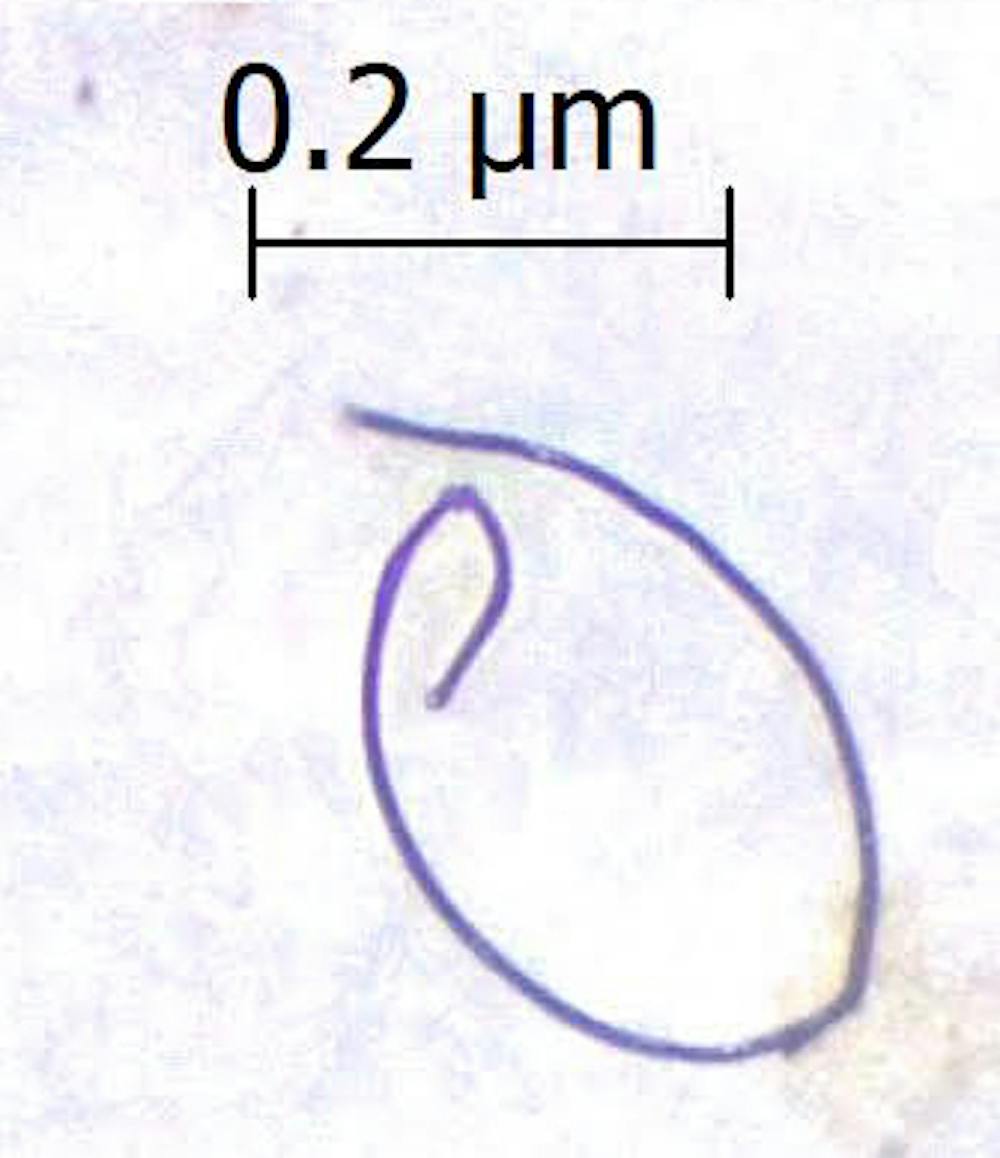
    A plastic microfiber found in the exhaled breath of a bottlenose dolphin is nearly 14 times smaller than a strand of hair and can be seen only with a microscope.
    Miranda Dziobak/College of Charleston, CC BY-SA

    Our study found the microplastic particles exhaled by bottlenose dolphins (Tursiops truncatus) are similar in chemical composition to those identified in human lungs. Whether dolphins are exposed to more of these pollutants than people are is not yet known.

    Why it matters

    In humans, inhaled microplastics can cause lung inflammation, which can lead to problems including tissue damage, excess mucus, pneumonia, bronchitis, scarring and possibly cancer. Since dolphins and humans inhale similar plastic particles, dolphins may be at risk for the same lung problems.

    Research also shows plastics contain chemicals that, in humans, can affect reproduction, cardiovascular health and neurological function. Since dolphins are mammals, microplastics may well pose these health risks for them, too.

    As top predators with decades-long life spans, bottlenose dolphins help scientists understand the impacts of pollutants on marine ecosystems – and the related health risks for people living near coasts. This research is important because more than 41% of the world’s human population lives within 62 miles (100 km) of a coast.

    What still isn’t known

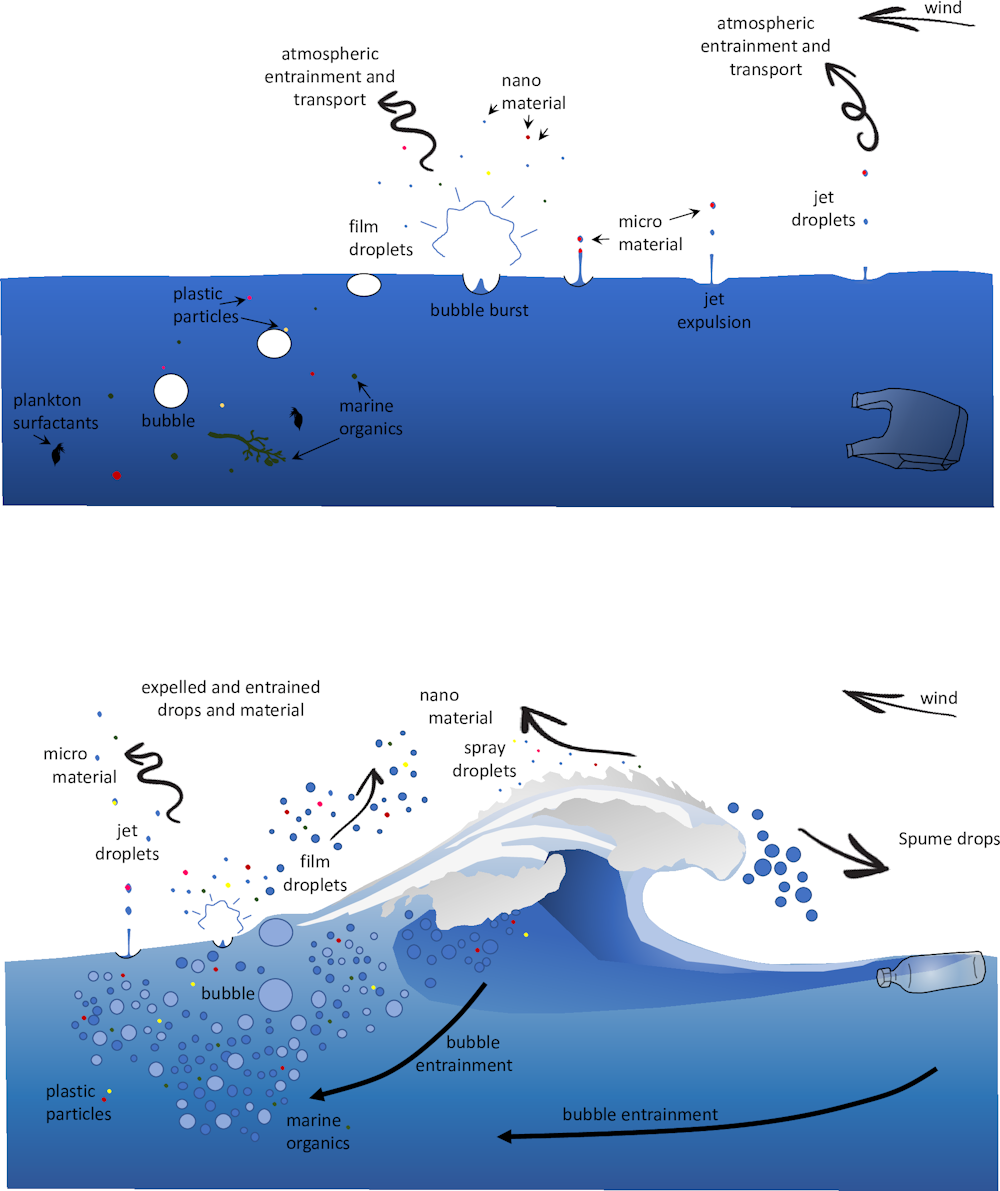
    Scientists estimate the oceans contain many trillions of plastic particles, which get there through runoff, wastewater or settling from the air. Ocean waves can release these particles into the air.

    The ocean releases microplastics into the air through surface froth and wave action. Once the particles are released, wind can transport them to other locations.
    Steve Allen, CC BY-SA

    In fact, bubble bursts caused by wave energy can release 100,000 metric tons of microplastics into the atmosphere each year. Since dolphins and other marine mammals breathe at the water’s surface, they may be especially vulnerable to exposure.

    Where there are more people, there is usually more plastic. But for the tiny plastic particles floating in the air, this connection isn’t always true. Airborne microplastics are not limited to heavily populated areas; they pollute undeveloped regions, too.

    Our research found microplastics in the breath of dolphins living in both urban and rural estuaries, but we don’t yet know whether there are major differences in amounts or types of plastic particles between the two habitats.

    How we do our work

    Breath samples for our study were collected from wild bottlenose dolphins during catch-and-release health assessments conducted in partnership with the Brookfield Zoo Chicago, Sarasota Dolphin Research Program, National Marine Mammal Foundation and Fundación Oceanogràfic.

    Exhaled breath is collected from a dolphin during a wild dolphin health assessment in Barataria Bay in Louisiana.
    Todd Speakman/National Marine Mammal Foundation, CC BY-SA

    During these brief permitted health assessments, we held a petri dish or a customized spirometer – a device that measures lung function – above the dolphin’s blowhole to collect samples of the animals’ exhaled breath. Using a microscope in our colleague’s lab, we checked for tiny particles that looked like plastic, such as pieces with smooth surfaces, bright colors or a fibrous shape.

    Since plastic melts when heated, we used a soldering needle to test whether these suspected pieces were plastic. To confirm they were indeed plastic, our colleague used a specialized method called Raman spectroscopy, which uses a laser to create a structural fingerprint that can be matched to a specific chemical.

    Our study highlights how extensive plastic pollution is – and how other living things, including dolphins, are exposed. While the impacts of plastic inhalation on dolphins’ lungs are not yet known, people can help address the microplastic pollution problem by reducing plastic use and working to prevent more plastic from polluting the oceans.

    Leslie Hart receives funding from the National Institute of Environmental Health Sciences of the National Institutes of Health, Sea Grant, and the National Science Foundation. Research reported in this article was supported by the National Institute of Environmental Health Sciences of the National Institutes of Health under Award Number R15ES034169 and the College of Charleston’s School of Health Sciences. The content is solely the responsibility of the authors and does not necessarily represent the official views of the National Institutes of Health.

    Leslie Hart is an epidemiological consultant for the National Marine Mammal Foundation; however, this study was not conducted as a consultant.

    Bottlenose dolphin health assessments were conducted under Scientific Research Permit #26622 and #24359, issued by the National Oceanic and Atmospheric Administration’s (NOAA) National Marine Fisheries Service (NMFS). Research studies were reviewed and approved by Mote Marine Laboratory and NMFS Atlantic Institutional Animal Care and Use Committees (IACUC).

    Miranda Dziobak does not work for, consult, own shares in or receive funding from any company or organization that would benefit from this article, and has disclosed no relevant affiliations beyond their academic appointment.

    ref. Microplastic pollution is everywhere, even in the exhaled breath of dolphins – new research – https://theconversation.com/microplastic-pollution-is-everywhere-even-in-the-exhaled-breath-of-dolphins-new-research-237932

    MIL OSI – Global Reports

  • MIL-OSI Security: Esgenoôpetitj  — RCMP seeking public’s help following theft of vehicle

    Source: Royal Canadian Mounted Police

    The Neguac RCMP is seeking the public’s help to locate a stolen vehicle from Esgenoôpetitj, N-B.

    The theft is believed to have occurred at approximately 7: 45 a.m. on October 11, 2024, at a business on Peters Road in Esgenoôpetitj.

    The vehicle is described as a black 2022 Mazda CX30 with New Brunswick licence plate KFC 568 and vehicle identification number 3MVDMBB71NM417612.

    Police are releasing a surveillance footage photo in hopes that someone may recognize the individual or the vehicle. The individual is described as a man, with a small build, wearing a black and red hoodie, blue jeans and black boots.

    Anyone who has seen the car since October 11, or who has information that could help further the investigation, is asked to contact the Neguac RCMP at 506-776-3000. Information can also be provided anonymously through Crime Stoppers at 1-800-222-TIPS (8477), by downloading the secure P3 Mobile App, or by Secure Web Tips at http://www.crimenb.ca.

    MIL Security OSI

  • MIL-OSI USA: Kamlager-Dove Secures $1 Million to Fund Construction of SoLa Impact’s New Tech & Entertainment Center in Crenshaw and Leimert Park

    Source: United States House of Representatives – Congresswoman Sydney Kamlager California (37th District)

    LOS ANGELES, CA – Today, Congresswoman Sydney Kamlager-Dove (CA-37) announced that she secured a $1 million grant for SoLa Impact’s affiliated nonprofit, the SoLa Foundation, in support of the completion of SoLa’s second state-of-the-art youth center. The SoLa Foundation is one of fifteen organizations that Congresswoman Kamlager-Dove secured a total of $12.4 million for through Fiscal Year 2024 government funding legislation.

    Opening in the first half of 2025, the 10,000 sq ft Art, Tech and Entertainment Center will be located on the ground floor of “Crenshaw Lofts,” SoLa Impact’s 195-unit workforce and affordable housing development in the LAX-Crenshaw Corridor. The center will train and mentor young people to become the next generation of professionals and entrepreneurs in arts, media, entertainment, emerging technologies like Artificial Intelligence, and the live events industry. The facility will feature a collaborative workspace, professional recording studio, and indoor/outdoor event space. It will serve at least 1,000 youth and young adults annually. A video preview of the center is available here.

    The funds are part of Congresswoman Kamlager-Dove’s commitments to the continued revitalization of the Crenshaw and Leimert Park communities as well as increasing access to career training and jobs in entertainment.

    “Crenshaw—the heart of Black LA—has seen many resurgence efforts since the 1992 Riots, many of them short-lived,” said Congresswoman Kamlager-Dove. “By connecting young Angelenos with workforce training in arts, entertainment, and technology careers, SoLa’s new youth center will make a real, lasting impact on South LA for generations to come. I was proud to secure funding for this center, and I look forward to seeing the vital role it will play in empowering future creators, entrepreneurs, and innovators from the storied community of Crenshaw.”

    SoLa Impact CEO, Martin Muoto, added, “With our second SoLa Tech Center powered by Live Nation, and Crenshaw Lofts, we are proud to be part of Crenshaw revitalization.  As we develop hundreds of affordable and workforce housing units across Los Angeles, we also want to ensure that the young people in communities like Crenshaw and South LA see a brighter future. Training them for jobs of the future is perhaps the most important way we can build California better.”

    “This center will have a transformative impact on the lives of our youth. This is my community and I am on a mission to ensure every young person has a shot at a brighter future. The center is about closing the racial digital divide in South LA. It’s about creating a more equitable playing field. It’s about creating access and pipelines to careers in the arts and technology. Congresswoman Kamlager-Dove shares this urgent mission and we are deeply grateful to her for being a catalyst in making our tech center possible,” said Sherri Francois, Chief Impact Officer of SoLa Impact and Executive Director of the SoLa Foundation.

    Congresswoman Kamlager-Dove tours the site of SoLa’s new youth tech and entertainment center in Crenshaw, which is currently under construction.

    ABOUT SOLA IMPACT’S FOUNDATION:

    The SoLa Foundation, a 501(c)3 nonprofit affiliate of SoLa Impact, aims to improve the lives of South LA residents and break the cycle of intergenerational poverty by providing opportunities for education and economic mobility. SoLa’s Technology and Entrepreneurship Center Powered by Riot Games is a state-of-the-art, first-of-its-kind center at the heart of South Central Los Angeles. SoLa provides the community with skills-based technology programming, as well as scholarships and career development opportunities for underinvested communities to ensure Black and brown Angelenos get increased access to jobs, mentorship, and placement in the most competitive fields of business. Learn more at www.thesolafoundation.org.

    ###

    MIL OSI USA News

  • MIL-OSI Global: Donald Trump’s attack on overseas voters is erroneous and dangerous

    Source: The Conversation – Canada – By Jennifer Saul, Chair in Social and Political Philosophy of Language, University of Waterloo

    I do research on racist and xenophobic speech. I am also an American citizen, and have voted from overseas since 1996 (first in the U.K., and now in Canada).

    This makes me especially well-placed to explain why Donald Trump’s Truth Social post about overseas voters in late September and Republican efforts to undermine those voters are factually wrong and politically dangerous.

    The current law giving Americans overseas the right to vote in federal elections is the Uniformed and Overseas Citizens Absentee Voting Act, which was signed into law by Ronald Reagan, a Republican president.

    The federal program to help American citizens vote while living overseas is overseen by the Department of Defense — which makes sense, given that a large number of them are members of the United States military. All of this should give pause to anyone who thinks that allowing overseas citizens to vote is some sort of left-wing conspiracy.

    Complex process

    Nor is it an easy matter to vote from overseas. Every state has its own process for verifying citizenship after the registration and request form reaches them, and each has its own rules that voters must follow in order for their ballot to be counted.

    My own state, New Jersey, is relatively simple: I can email my registration/request form, get my ballot by e-mail, and email it back. But I must also remember to mail in the paper version of my ballot or my vote won’t count.

    This is easy enough for me, from Canada or previously the U.K. But it’s much more difficult for American citizens living in places that lack reliable postal services who often have to use expensive courier services to carry out their duty as citizens.

    My husband’s state is New York. He is allowed to e-mail his ballot request, but he must also mail a paper version of the request. And the ballot itself comes with an elaborate set of envelope templates that require precise folding — and must arrive by a strict deadline, no matter where they’re being mailed from.

    He’s a former graphic designer, and comfortable performing this task. But imagine trying to do so while suffering from arthritis or vision problems — especially when the home-printed version has tiny text. In short, there is nothing easy about voting from abroad.

    So why use inflammatory language to pretend it’s an easy matter to generate many thousands of fraudulent overseas votes? One explanation would be to sow doubt about the election results. Anything that can introduce uncertainty and slow down the counting process can be exploited in an effort that could allow Trump and his allies to falsely declare him the winner on Nov. 5.

    Trump’s campaign has made no secret about its plan to follow this path.

    Language that suggests American citizens abroad are not really American also fits into a larger pattern of stoking divisions — and of drawing ever tighter boundaries around who would be counted as “real” Americans. This is a classic fascist power move, one that leads to a sharply defined “us,” who are worthy of moral consideration, as opposed to “them,” who are not.

    Disenfranchising citizens abroad

    Importantly, the movement against overseas voters is not just confined to a social media post. There are lawsuits in several states designed to disenfranchise American citizens abroad. These are citizens who may have gone to enormous lengths to carry out their duties by asking for and sending in election ballots, often at substantial personal expense and faced with substantial barriers.

    Trump and his allies are working hard to prevent Americans abroad from exercising their most basic rights of citizenship. When Trump uses language that accuses overseas voters of fraud and foreign interference, it suggests we’re not really Americans.

    There’s a major problem in doing so. As mentioned, a large segment of American citizens abroad are members of the U.S. armed forces. Efforts to disenfranchise Americans abroad are also efforts to disenfranchise the military.

    ‘Figleaf’ language

    That’s why Trump’s allegation on Truth Social that Democrats “want to dilute the TRUE vote of our beautiful military” makes no sense. This is especially true given it’s coming from someone who’s attacking the very law that allows members of the military to vote from abroad, including casting ballots for him if they’re so inclined.

    This is what I call a figleaf — an additional bit of speech that provides just a bit of cover for saying something else that is much less acceptable. The allegation suggests, to someone who doesn’t understand overseas voting, that Trump somehow supports the military.

    Trump’s “diluting the vote” rhetoric also plays into the deeply racist Great Replacement Theory. This theory holds that Democrats and other shadowy forces (often cast as Jewish) are plotting to replace white Americans with foreigners, in part as a way to secure electoral victory.

    Overseas voting might seem like a niche issue. But overseas citizens could make all the difference in a close election. The attack on overseas voting is part of a much larger pattern of destructive suggestions from Trump about who is and is not a real American.

    I am a member of the Democratic Party

    ref. Donald Trump’s attack on overseas voters is erroneous and dangerous – https://theconversation.com/donald-trumps-attack-on-overseas-voters-is-erroneous-and-dangerous-241332

    MIL OSI – Global Reports

  • MIL-OSI USA: FEMA Hits $5 Million Mark!

    Source: US Federal Emergency Management Agency

    Headline: FEMA Hits $5 Million Mark!

    FEMA Hits $5 Million Mark!

    HARRISBURG, Pa — The Federal Emergency Management Agency hit an important milestone October 11 when grants it has awarded to Commonwealth residents under its Individuals and Households Program (IHP) totaled $5,020,070.14.  The grants went to residents of Lycoming, Potter, Tioga and Union counties for losses they suffered as a result of Tropical Storm Debby, August 8-9. 

    In the month since September 11 when President Biden issued the presidential disaster declaration, 1,046 residents of the four counties have registered with FEMA to establish eligibility for federal disaster assistance. Registrants from Tioga County led the count with 426, Lycoming County came second with 349 residents registered, then Potter with 207 and Union with 64.

    FEMA has made 1,867 payments to applicants, most of whom received funds from Other Needs Assistance (ONA). ONA grants worth $1.83 million are for survivors’ immediate needs like medical and dental expenses, childcare, moving and storage or funeral costs. Housing Assistance worth $3.18 million, went to 418 residents to help them repair their damaged homes. FEMA cannot return applicants to their original pre-disaster situation, but it can help them regain their footing in recovery. 

    Two new components of ONA are Serious Needs Assistance and Displacement Assistance. Even though they were small outlays, they were important sources of funds for survivors with immediate needs. Serious Needs Assistance is a one-time lump-sum payment of $750 to an eligible household to help with essential items such as food, water, baby formula, diapers, personal hygiene items, medication and fuel for transportation. More than $507,000 from Serious Needs was provided to eligible survivors. 

    Displacement Assistance is designed for survivors who cannot return to their home following a disaster and provides them financial assistance they can use flexibly to pay for their immediate housing needs. The $900,900 given directly to survivors from Displacement Assistance provided eligible survivors with up-front funds to assist with immediate housing options of their choice until they are able to secure a rental option to focus on their long-term recovery.

    Home repair assistance from FEMA is limited to only owner-occupied primary homes, not vacation homes or second homes. In addition, home repair assistance is available to homeowners only for uninsured or underinsured disaster-damaged items that make your home safe, sanitary, secure and inhabitable. Households with damage to essential living spaces in a basement – including garden apartments – may also be eligible for FEMA assistance to help cover those losses. 

    When you apply for assistance, be sure to indicate if you had furnace and other essential electrical appliances damaged during the summertime disaster. If you have already repaired or replaced the furnace, be prepared to provide FEMA with valid estimates or receipts. 

    If you have yet to apply for FEMA assistance, go online to http://www.DisasterAssistance.gov, call 800-621-3362, or download the FEMA App to your phone. If you use a video relay service or captioned telephone service. give FEMA your number for the service. And for in-person assistance, visit a Disaster Recovery Center. The registration deadline is November 12, 2024.

    For more information about the disaster recovery operation in Pennsylvania, visit fema.gov/disaster/4815.   

                                                                                        ###

    Disaster recovery assistance is available without regard to race, color, religion, nationality, sex, age, disability, English proficiency, or economic status. Reasonable accommodations, including translation and American Sign Language interpreters via Video Relay Service will be available to ensure effective communication with applicants with limited English proficiency, disabilities, and access and functional needs. If you or someone you know has been discriminated against, call FEMA toll-free at 800-621-3362 (including 711 or Video Relay).                                                                     

    FEMA’s mission is helping people before, during, and after disasters. FEMA Region 3’s jurisdiction includes Delaware, the District of Columbia, Maryland, Pennsylvania, Virginia and West Virginia. Follow us on X at x.com/FEMAregion3 and on LinkedIn at linkedin.com/company/femaregion3.

    erika.osullivan

    MIL OSI USA News

  • MIL-OSI USA: Duckworth, Durbin, Members of Illinois Delegation Announce $15.8 Million in Federal Funding for Chicago Transit Authority Improvements

    US Senate News:

    Source: United States Senator for Illinois Tammy Duckworth
    October 15, 2024
    [CHICAGO, IL] – U.S. Senator Tammy Duckworth (D-IL), U.S. Senate Majority Whip Dick Durbin (D-IL), U.S. Representatives Jesus “Chuy” García (D-IL-04), Mike Quigley (D-IL-05) and Danny Davis (D-IL-07) today announced that the Illinois Department of Transportation will receive $15,805,600 in federal funding from the U.S. Department of Transportation (DOT) for improvements to the Chicago Transit Authority’s (CTA) Forest Park Branch. This track modernization project will lead to increased service reliability, speed, and environmental resiliency.
    “No matter their zip code, Chicagoans deserve efficient public transit to get to school, get to work and more easily move throughout the city,” Duckworth said. “I’m proud to see today’s funding go toward modernizing the CTA’s Forest Park operations, including increasing service reliability, speed and protecting against the effects of climate change. I’ll keep working with Senator Durbin and the Illinois delegation to ensure that our communities are receiving the much-needed federal resources they deserve.”
    “Robust and reliable public transit is crucial for Chicagoans,” said Durbin. “Today’s announced funding will allow for an efficient travel alternative in an area where congestion makes getting around more difficult. I’ll keep working with Senator Duckworth and members of the Illinois Delegation to do all that we can to help improve transit development and access for all Chicagoans.” 
    “When public transportation is unreliable or inefficient, it disrupts the daily lives of countless Chicagoans. We have the solutions to keep things moving, and now it’s time to put them into practice. Today’s funding is a positive development. It will assist us in transforming an area burdened by congestion and delays and finally establish an environment that allows commuters to reach their destinations safely and on time,” said Rep. Quigley.
    “Investing in our public transit infrastructure is crucial to ensuring that Chicago remains a vibrant, accessible city for all its residents. This funding for the CTA’s Forest Park Branch will not only improve service and efficiency but also promote sustainability and economic growth across our communities. I am proud to work alongside my colleagues in securing these essential federal resources that will benefit the people of Chicago and the surrounding areas,” said Rep. Davis.
    Durbin and Duckworth have previously pushed for federal funding for CTA improvement projects, having secured $746 million for the CTA Red Line Extension Project.  
    -30-

    MIL OSI USA News

  • MIL-OSI Security: Red Pheasant First Nation — Update: Saskatchewan RCMP responding to robbery with a firearm

    Source: Royal Canadian Mounted Police

    October 10, 2024
    Red Pheasant First Nation, Saskatchewan

    News release

    Investigation has determined the 2019 Dodge Ram truck is black in colour.

    Saskatchewan RCMP continue to investigate. We will continue to provide updates when we have more information available. If an imminent risk to public safety is identified, we will notify the public.

    Report all information about this incident to your local police by calling 310-RCMP.

    –30–

    Saskatchewan RCMP responding to robbery with a firearm

    Saskatchewan RCMP are currently responding to a report of a robbery with a firearm on Red Pheasant First Nation. An adult female has been taken to hospital with injuries described as non-life threatening. No other injuries were reported to police.

    Police advise that there are two suspects, a male and a female. They may be armed and are dangerous. The suspects were last seen driving a 2019 Dodge Ram truck, Warlock edition. The truck has the word “O’Brien” or “O’Brian” on the back window and Saskatchewan license plate 716 LWG. We do not have any further description of the suspects at this time.

    Investigators have reason to believe the suspects may be travelling to Saskatoon, but their current whereabouts are unknown. Saskatchewan RCMP continues to investigate.

    We are asking the public to report any suspicious activity or people in the Red Pheasant First Nation and Saskatoon areas to police. If anyone sees the vehicle matching the above description they are asked to contact their local police or police of jurisdiction immediately. Call 9-1-1 in emergencies or 310-RCMP in non-emergencies.

    We will provide an update when we have more information available. If an imminent risk to public safety is identified, we will notify the public.

    Report all information about this incident to your local police by calling 310-RCMP.

    MIL Security OSI

  • MIL-OSI Security: Whitewood — Update: Saskatchewan RCMP increased police presence in the area of Whitewood, SK

    Source: Royal Canadian Mounted Police

    October 10, 2024
    Whitewood, Saskatchewan

    News release

    As a result of continued investigation, officers located and seized a firearm in a vehicle that the suspects abandoned on old Highway #1 east of Whitewood, SK.

    Saskatchewan RCMP continue to investigate.

    Saskatchewan RCMP Police Dog Services, Remotely Piloted Aircraft System (RPAS), and Forensic Identification Section are assisting in this investigation.

    Investigators continue to ask the public to report suspicious activity or people in the Whitewood area to police. Call 9-1-1 in emergencies or 310-RCMP in non-emergencies.

    We will continue to provide updates when we have more information available. If an imminent risk to public safety is identified, we will notify the public.

    –30–

    Saskatchewan RCMP: Increased police presence in the area of Whitewood, SK

    Saskatchewan RCMP are currently responding to a report of a robbery with a firearm in the area of Whitewood, SK. No injuries have been reported in relation to the robbery.

    Police officers advise that there are two suspects. They may be armed and are considered dangerous. The suspects were last seen driving on the old Highway #1 east of Whitewood, SK. The suspects are now believed to be on foot. One suspect is described as male and may have been wearing a green shirt. We do not have a description of the other suspect at this time. Both suspects are described as having a slim build.

    We are asking the public to report any suspicious activity or people in the Whitewood area to police. Please ensure your vehicle and house doors are locked. Report any suspicious activity to police immediately – call 9-1-1 in emergencies or 310-RCMP in non-emergencies.

    There will continue to be an increased police presence in relation to the ongoing investigation. We will provide an update when we have more information available. If an imminent risk to public safety is identified, we will notify the public.

    Report all information about this incident to your local police by calling 310-RCMP.

    MIL Security OSI

  • MIL-OSI Security: Ohio Man Who Concealed Croatian War Crime Charge Sentenced to Prison for Immigration Fraud

    Source: United States Attorneys General

    An Ohio man was sentenced yesterday to three years in prison for possessing a green card he illegally obtained by concealing that he had been charged with a war crime in Croatia prior to immigrating to the United States.

    According to court documents, Jugoslav Vidic, 56, of Parma Heights, in applying to become a lawful permanent resident of the United States, falsely stated that he had never been charged with breaking any law even though he knew he had been charged in Croatia with a war crime against the civilian population. Vidic also falsely stated that his only past military service was in the Yugoslav Army from 1988 to 1989, when, in fact, he fought with the Serb Army of Krajina and its predecessors during the civil war in the former Yugoslavia from 1991 to 1995. As a result of these materially false statements, Vidic was approved for lawful permanent resident status and received a green card.

    “Jugoslav Vidic lied about war crimes charged against him in an attempt to escape his past and live in the United States unlawfully,” said Principal Deputy Assistant Attorney General Nicole M. Argentieri, head of the Justice Department’s Criminal Division. “Thanks to the dedication of prosecutors, law enforcement, and our international partners, Vidic will serve prison time in the United States followed by his removal. His sentence demonstrates that human rights violators will not be allowed to hide from their crimes in the United States.”

    “Vidic committed serious human rights violations and was convicted of war crimes in Croatia as a result. Yet, he lied to U.S. immigration officials about his conviction and participation in a violent military force to claim refugee status and obtain a green card — becoming a permanent legal resident of our country — when he was not eligible to do so,” said U.S. Attorney Rebecca Lutzko for the Northern District of Ohio. “Those who run away from violent crimes they commit elsewhere in the world and then enter our country by brazenly lying about their past will be held to account, as yesterday’s sentence demonstrates. Vidic’s deceitful actions are detestable, and unfairly hurt people in need who legitimately seek refuge to flee real harms in their home countries.”

    “Our communities here in Ohio and across the United States are not safe havens for war criminals to escape accountability in their home countries,” said Executive Associate Director Katrina W. Berger of Homeland Security Investigations (HSI). “It is my hope that this sentencing provides some measure of solace to the victims’ families with the knowledge that despite the passage of time, the United States will seek justice.”

    “Jugoslav Vidic intentionally circumvented the laws of the United States by lying on his green card application about his war crimes conviction in Croatia,” said Assistant Director Chad Yarbrough of the FBI Criminal Investigative Division. “This case should serve as a warning to others that the FBI will work with our law enforcement partners to identify and hold accountable those like Vidic who seek to violate U.S. law by fraud of any kind.”

    “Jugoslav Vidic knowingly avoided the truth of his past to enjoy the freedoms and liberties of the United States for over two and a half decades,” said Special Agent in Charge Greg Nelsen of the FBI Cleveland Field Office. “Yesterday’s sentence underscores the work of the FBI and its local, state, federal, and international partners and sends a clear message that people in the United States who take part in war crimes, regardless of when or where they occurred, or by masking their involvement, will be identified, investigated, and prosecuted.”

    Vidic admitted in his plea agreement that he was charged with a war crime in Croatia in 1994 and convicted in absentia in 1998. The Croatian court found that during an attack by ethnic Serb forces in Petrinja, Croatia, on Sept. 16, 1991, Vidic cut off the arm of civilian Stjepan Komes, who died afterward. Vidic further admitted that he knew about the Croatian charges when he immigrated to the United States as a refugee in 1999, applied to become a lawful permanent resident in 2000, and was interviewed by U.S. immigration officials and received his green card in 2005.

    Vidic pleaded guilty to one count of possessing an alien registration receipt card knowing it had been procured through materially false statements. As part of the plea agreement, Vidic agreed to the entry of a judicial order of removal from the United States.

    HSI and the FBI are investigating the case with coordination provided by the Human Rights Violators and War Crimes Center, including the FBI’s International Human Rights Unit. The Justice Department thanks the Ministry of the Interior and Ministry of Justice and Public Administration of the Republic of Croatia, which were both instrumental in furthering the investigation.

    Trial Attorney Patrick Jasperse of the Criminal Division’s Human Rights and Special Prosecutions Section and Assistant U.S. Attorneys Matthew W. Shepherd and Jerome J. Teresinski for the Northern District of Ohio are prosecuting the case. The Justice Department’s Office of International Affairs also provided assistance.

    Members of the public who have information about human rights violators or immigration fraud in the United States are urged to contact the FBI at 1-800-CALL-FBI (800-225-5324) or through the FBI online tip form, or HSI at 1-866-DHS-2-ICE or through the ICE online tip form. All are staffed around the clock, and tips may be provided anonymously.

    MIL Security OSI

  • MIL-OSI Canada: Minister Ien announces funding for NPower Canada to support skills training for young people

    Source: Government of Canada News

    News release

    October 16, 2024              Toronto, Ontario              Employment and Social Development Canada 

    Canadian youth are one of the country’s greatest strengths and sources of potential, and the Government of Canada is supporting young people at every stage of their journey toward a prosperous future. Every young person deserves a good job, but we know that many youth face barriers to employment. Creating opportunities for young people to gain the skills and experience they need for a fair chance at financial success is key to strengthening our economy, building a more inclusive country, and ensuring that no one is left behind.

    Today, the Honourable Marci Ien, Minister for Women and Gender Equality and Youth, announced up to $4 million in funding to NPower Canada for their NPowering Underrepresented Youth to Overcome Barriers to Employment project. Funding is being provided through Employment and Social Development Canada’s (ESDC’s) Youth Employment and Skills Strategy (YESS) Program.

    NPower Canada creates pathways to economic prosperity for Canada’s underserved youth and adults by launching them into meaningful and sustainable digital careers. Their project will empower participants to overcome socio-economic challenges and transition to the labor force or return to education.

    In total, the YESS Program is expected to fund more than 200 new projects worth approximately $370 million between now and 2028 to improve labour market outcomes for 22,000 youth. These projects will provide flexible employment services and holistic supports tailored to each participant to help young people gain transferable skills with a lasting positive impact on their careers. This approach has already demonstrated success, with over 80% of participants from June 2019 to December 2022 either employed or returning to school following their participation in YESS programming.

    The Government of Canada recognizes the vital role governments can play in making sure young people succeed. That is why, as announced in Budget 2024, the Government is helping to restore fairness for every generation by unlocking access to post-secondary education, investing in the skills of the future, and creating opportunities for younger Canadians to get good jobs.

    Quotes

    “Youth want to succeed—not just for themselves, but for their families and communities. We’re making sure they get the chance by giving them access to the skills and experience needed to step confidently into the workforce. NPower Canada is doing just that—creating pathways into tech that are rooted in inclusivity and equality. It’s a great example of what happens when community organizations and federal support come together to create real opportunities for all youth, especially those who’ve been left out, to land a good job and build a meaningful career.”
    – The Honourable Marci Ien, Minister for Women and Gender Equality and Youth 

    “At NPower Canada, we believe every young person deserves the opportunity to succeed in a meaningful career. Over the past decade, we have empowered thousands of young people and partnered with employers of all sizes to help bridge Canada’s skills gap. This funding, as part of the YESS program, will enable us to provide in-demand digital and professional skills training, comprehensive wraparound supports, and job connections to over 1,100 youth across six provinces. Our participants come from diverse backgrounds including women, 2SLGBTQI+ individuals, racialized communities, Indigenous peoples, newcomers to Canada, and those with disabilities. Despite their varied experiences, they share a common ambition to build successful careers. Together, we are fostering a more inclusive future where everyone – regardless of their background – can unlock their potential and meaningfully contribute to the economy.”
    – Julia Blackburn, CEO, NPower Canada

    Quick facts

    • ESDC’s YESS Program was designed to give all youth an equal opportunity to find meaningful work. New to this funding cycle is the Youth with Disabilities Stream. Over 30% of funded projects are expected to address the unique employment challenges faced by youth with disabilities, surpassing the original target of 20%.

    • Other priority groups include Indigenous youth, 2SLGBTQI+ youth, Black and racialized youth, and youth in official language minority communities.

      • ESDC’s YESS Program is part of the Government of Canada’s broader Youth Employment and Skills Strategy, a horizontal initiative championed by 12 federal departments, agencies and Crown corporations. Together, these 12 partners deliver funding programs to help Canadian youth (aged 15 to 30) develop the skills and gain the experience they need to successfully transition into the labour market. 
    • To help younger Canadians pursue and achieve their dreams, the Government is investing to create more job opportunities and ensure that hard work pays off for the next generation. To create 90,000 youth job placements and employment support opportunities per year, Budget 2024 proposes to provide $351.2 million for the Youth Employment and Skills Strategy in the 2025 to 2026 fiscal year. These investments in youth job opportunities include:

      • $150.7 million across the federal partners under the YESS to provide job placements and employment supports to youth; and
      • $200.5 million for Canada Summer Jobs delivered by ESDC to provide well-paying summer job opportunities, including jobs in sectors facing critical labour shortages, such as housing construction.

    Associated links

    Contacts

    For media enquiries, please contact:

    Hannaan Hassan
    Senior Advisor, Communications
    Office of the Minister for Women and Gender Equality and Youth
    Hannaan.hassan@fegc-wage.gc.ca

    Media Relations Office
    Employment and Social Development Canada
    819-994-5559
    media@hrsdc-rhdcc.gc.ca
    Follow us on X (Twitter)
    Follow us on Facebook

    MIL OSI Canada News

  • MIL-OSI Security: Defense News: Readout of Navy Leadership’s Meeting with the Governor of Guam (Oct. 16, 2024)

    Source: United States Navy

    Mancinelli and the Governor talked about the importance of the Indo-Pacific region and reaffirmed their commitment to working together on shared goals.

    The Navy Under Secretary thanked the Governor for her strong and consistent support of the U.S. military presence on Guam.

    Governor Guerrero spoke about the need for increased federal investment on Guam, and her desire for additional support on infrastructure, healthcare, and Typhoon Mawar recovery efforts.

    Mancinelli emphasized the importance of continued dialogue with Guam’s local stakeholders and other government agencies. He also discussed the ways in which the Department of Defense will continue to work together with the Governor’s office to understand how the military build-up on Guam can be done in partnership with the on-island community.

    This was the first in-person meeting with the Governor since Mancinelli assumed the position of Acting Under Secretary of the Navy, August 20.

    As the Department of Defense’s Senior Defense Official for Guam, Acting Under Secretary Mancinelli looks forward to working with the Governor of Guam to secure the U.S. homeland, improve the resiliency of Guam, and maintain a free and open Indo-Pacific.

    MIL Security OSI

  • MIL-OSI Security: Six More Defendants Plead Guilty in Federal Pandemic Unemployment Benefit Scheme

    Source: United States Department of Justice (National Center for Disaster Fraud)

    ABINGDON, Va. – Six defendants indicted in May 2024 for conspiring to defraud the United States, to commit program fraud, and to commit mail fraud in connection to a scheme involving the filing of fraudulent claims for pandemic unemployment benefits, pled guilty yesterday in federal court.

    Josef Ludwig Brown, 43, of Tazewell, Virginia; Crystal Samantha Shaw, 39, of Raven, Virginia; Jonathan Scott Webb, 40, of Raven, Virginia; Christopher Kirk Webb, 39, of Raven, Virginia; and Stephanie Amber Barton, 30, of Cedar Bluff, Virginia, all pled guilty to one count of conspiring to defraud the United States in connection with emergency benefits, while Haleigh McKenzie Wolfe, 30, of Cedar Bluff, Virginia, entered a guilty plea to defrauding the United States in connection with emergency benefits.

    According to court documents, between March 2020 and September 2021, these co-defendants conspired with others to file fraudulent claims and recertifications for pandemic unemployment benefits via the Virginia Employment Commission website while they were incarcerated in jails throughout the Western District of Virginia. Due to their incarceration status, these defendants were ineligible for pandemic unemployment benefits. Brown, one of the lead defendants in this investigation, admitted he solicited other co-conspirators while he was incarcerated to obtain their personal identifying information to provide to Shaw, another lead defendant, for her use in filing fraudulent claims and recertifications for unemployment benefits. In total, among the 17 defendants charged in this conspiracy, the Virginia Employment Commission paid out over $340,000 in fraudulent pandemic relief benefits.

    Earlier this year, Brian Edward Addair, Clinton Michael Altizer, Cara Camille Bailey, Jeramy Blake Farmer, Joseph Frederick Hass, Daniel Wayne Horton, Jessica Dawn Lester, and Terrance Brooks Vilacha pled guilty to related fraud charges.

    United States Attorney Christopher R. Kavanaugh, Brian D. Miller, Special Inspector General for Pandemic Recovery, and Virginia Attorney General Jason Miyares made the announcement.

    As part of the Pandemic Response Accountability Committee (PRAC) Task Force, this investigation was conducted by the Special Inspector General for Pandemic Recovery. The PRAC’s 20-member Inspectors General identify major risks that cross program and agency boundaries to detect fraud, waste, abuse, and mismanagement in the more than $5 trillion in COVID-19 spending.

    Agencies that assisted with this investigation include the Dickenson County Sheriff’s Office, the Southwest Virginia Regional Jail Authority, the Federal Bureau of Investigation, the United States Department of Labor, and the Virginia Employment Commission.

    Special Assistant U.S. Attorney M. Suzanne Kerney-Quillen, a Senior Assistant Attorney General with the Virginia Attorney General’s Major Crimes and Emerging Threats Section, and Assistant U.S. Attorney Danielle Stone are prosecuting the case for the United States.

    MIL Security OSI

  • MIL-OSI USA: Read More (Rep. Grijalva Announces Nearly $6 Million for AZ Health Centers to Launch and Expand Behavioral Health Services)

    Source: United States House of Representatives – Congressman Raul M Grijalva (D-AZ)

    Rep. Grijalva Announces Nearly $6 Million for AZ Health Centers to Launch and Expand Behavioral Health Services

    WASHINGTON – Today, Representative Raúl M. Grijalva announced $5,999,156 for 10 health centers in Arizona to launch and expand mental health and substance use disorder services. This is part of a larger announcement from the Health Resources and Services Administration (HRSA), an agency within the U.S. Department of Health and Human Services (HHS), which announced $240 million for more than 400 community health centers across the country that care for more than 10 million people. 

    “Improving access to mental health care is vital for communities of color and underserved populations like those I represent,” said Rep. Grijalva. “Community health centers have demonstrated their effectiveness in serving these communities. This funding will enhance their ability to provide crucial behavioral health services, benefiting rural, urban, and tribal neighborhoods across Arizona.”

    More information on the historic announcement can be found here.

    Award Information here:

    Awardee name City Amount
    AJO COMMUNITY HEALTH CENTER Ajo $600,000
    CHIRICAHUA COMMUNITY HEALTH CENTERS INC Douglas $600,000
    CREEK VALLEY HEALTH CLINIC Colorado City $600,000
    EL RIO SANTA CRUZ NEIGHBORHOOD HEALTH CENTER Tucson $600,000
    MARICOPA COUNTY SPECIAL HEALTH CARE DISTRICT Phoenix $600,000
    MARIPOSA COMMUNITY HEALTH CENTER, INC. Nogales $600,000
    NATIVE HEALTH Phoenix $599,156
    TERROS INC Phoenix $600,000
    UNITED COMMUNITY HEALTH CENTER-MARIA AUXILIADORA, INC. Green Valley $600,000
    YAVAPAI COUNTY GOVERNMENT PRESCOTT Prescott $600,000

    MIL OSI USA News

  • MIL-OSI New Zealand: Niger

    Source: New Zealand Ministry of Foreign Affairs and Trade – Safe Travel

    • Reviewed: 17 October 2024, 08:02 NZDT
    • Still current at: 17 October 2024

    Related news features

    If you are planning international travel at this time, please read our COVID-19 related travel advice here, alongside our destination specific travel advice below.

    Do not travel to Niger due to the threat of terrorism and kidnapping, the presence of armed militants and the unpredictable security situation (level 4 of 4).

    Niger

    Terrorism
    There is a high threat from terrorism in Niger. Terrorist groups are active across Niger, particularly, in the western, northwestern and southeastern parts of the country, Since 2013, there have been a number of retaliatory attacks against the Niger government for its participation in regional interventions in Mali and Nigeria to repel armed rebels.

    The Nigerian-based terrorist group Boko Haram has a strong presence in neighbouring areas of northern Nigeria and has conducted cross-border attacks in Niger, near the Nigerian border, particularly in the Diffa region. State of Emergencies and curfews may be in place in regions of concern. Comply with any instructions issued by local authorities.  

    Terrorist attacks could occur at any time and may be directed at locations known to be frequented by expatriates and foreign travellers, as well as security forces and premises associated with the Government of Niger. The security situation across the Sahel continues to deteriorate, and regions previously considered to be less at risk may now be subject to terrorism and related security threats.

    New Zealanders are advised to be security conscious at all times, particularly in public areas. We recommend monitoring media reports and local information sources for possible threats to your safety and security.

    Kidnapping
    There is a high threat of kidnapping against foreigners in Niger, including in the capital Niamey. The risk increases substantially outside Niamey, in the north of the country and in border areas. Terrorist groups active in Niger have been known to specifically target foreigners. In October 2020, a US citizen was kidnapped in the village of Massalata in southern Niger, about 10km from the border with Nigeria. In the past, foreigners have been kidnapped from their vehicles, homes and places of work.

    Violent Crime
    Crime levels in Niger are high, and foreigners are frequently targeted. Muggings are common in Niamey around the Gawaye Hotel, the National Museum, Kennedy Bridge and the Petit Marché, particularly at night. New Zealanders are advised not to walk alone or after dark in these areas. Other common types of crime include home invasions, carjackings assault and theft.

    Armed bandits operate throughout eastern and southern Niger, the border area with Nigeria south of Zinder, and large parts of northern Niger are off-limits to tourists.

    Petty crime such as pickpocketing and bag snatching occurs in Niamey and  throughout Niger. You should take steps to secure your personal belongings and avoid wearing or displaying valuables such as mobile devices and jewellery or leaving them visible in vehicles.

    Local Travel
    New Zealanders who decide to travel outside Niamey should ensure they put in place appropriate personal security protection measures, and take official warnings seriously. We recommend travelling in convoy of at least two vehicles, with a local guide and only during daylight hours. Attacks have occurred on the Agadez-Arlit, Agedez-Tahoua, and Tillabéry-Niamey roads and within the city of Zinder. You should prepare well in advance and ensure all vehicles are fully equipped with essential supplies, including a satellite phone. 

    We advise against the use of public transport in Niger. There have been incidents of armed robbery resulting in deaths on buses in Niger. Taxis are often under-maintained and dangerous and should be avoided. It is recommended that you hire a private car with a driver. Lock car doors and keep windows shut at all times.

    Local authorities are sensitive about foreigners travelling out of Tahoua to the east or north of Niger. If you travel in the Agadez region without obtaining prior authorisation, you risk arrest or deportation.

    Civil Unrest
    Niger frequently experiences protests and demonstrations, usually near government buildings and university campuses, some of which have turned violent in the past. Mobile phone and internet access may be disrupted during civil unrest.

    Since the military takeover in July 2023, there has been political instability in Niger. New Zealanders in Niger should remain vigilant and monitor the media for further information.

    New Zealanders are advised to follow any advice issued by the local authorities, including curfews, and avoid all demonstrations, protests and rallies as they have the potential to turn violent with little warning.

    Landmines
    There is a danger from unexploded landmines in some parts of Niger, including in Niamey and in the northern region of Agadez. We recommend you remain on well-used roads and paths.

    Scams
    Commercial and internet fraud is a common problem in many African countries. New Zealanders in Niger should be wary of any offers that seem too good to be true, as they may be a scam. For further information see our advice on Internet Fraud and International Scams.

    General Travel Advice
    As there is no New Zealand diplomatic presence in Niger, the ability of the government to provide consular assistance to New Zealand citizens is severely limited.

    We offer advice to New Zealanders about contingency planning that travellers to Niger should consider.

    New Zealanders are advised to respect religious and social traditions in Niger to avoid offending local sensitivities.

    Photography of public buildings and military facilities is prohibited, and could result in detention. If in doubt, don’t take a picture.

    Medical facilities are limited and of poor quality, including in the capital Niamey. New Zealanders travelling or living in Niger should have a comprehensive travel insurance policy in place that includes provision for medical evacuation by air.

    New Zealanders in Niger are strongly encouraged to register their details with the Ministry of Foreign Affairs and Trade.


    Travel tips

    See our regional advice for Africa

    MIL OSI New Zealand News

  • MIL-OSI USA: Read More (Rep. Grijalva Announces $7.4 Million to Assist Pedestrians in Vehicle Accidents)

    Source: United States House of Representatives – Congressman Raul M Grijalva (D-AZ)

    Rep. Grijalva Announces $7.4 Million to Assist Pedestrians in Vehicle Accidents

    TUCSON, Ariz. – Today, Representative Raúl M. Grijalva (AZ-07) announced the University of Arizona will receive $7,483,382 to analyze and implement the Emergency Medical Services (EMS) ‘Physician 1’ Program.The EMS ‘Physician 1’ Program would deploy physician-staffed vehicles, with advanced care equipment, directly to crash sites, allowing for the immediate provision of advanced medical treatments typically unavailable at the scene and integrate it into the Pima County Action Plan.

    “Tucson is among the top cities on the list in terms of pedestrian fatalities from vehicle crashes,” said Rep. Grijalva. “As we work to make our roads safer for all, this funding is vital and will help save lives. I was proud to support the Bipartisan Infrastructure Law which made this federal funding possible, and I will continue to support programs like these that offer the best care for anyone who may be involved in an accident.”

    The federal funding is sourced from the Bipartisan Infrastructure Law, specifically the Safe Streets and Roads for All (SS4A) discretionary grant program which is set to provide $5 billion in grant funding over five years. Funding supports regional, local, and Tribal initiatives through grants to prevent roadway deaths and serious injuries. The SS4A program supports Secretary of Transportation Pete Buttigieg’s National Roadway Safety Strategy and the goal of zero deaths and serious injuries on our nation’s roadways.

    ###

    MIL OSI USA News