Category: Transport

  • MIL-OSI Asia-Pac: JOINT MEDIA RELEASE – Green transformation of transport sector in Samoa receives major boost with mass donation of 76 EVs from UNDP to the Government of Samoa

    Source: Government of Western Samoa

    Share this:

    03 October 2024

    Apia, SAMOA – Seventy-six electric vehicles (EVs) were handed over to the Government of Samoa earlier today by the United Nations Development Programme (UNDP), thanks to a major regional project that Samoa is part of, funded by the Government of Japan.

    Valued at more than US$6 million, the EVs were supplied by the Ford-Hyundai Samoa company.

    They include 24 sedans, 19 SUVs, 12 pick-up trucks, two of which were converted to first-responder firefighter trucks, a flat-bed truck converted to an oxygen tanks carrier truck with loading/unloading platform, and 20 plug-in hybrid EV (PHEV) passenger vans (minibuses).

    Fifty-three EVs will serve as official vehicles to cater for delegates of the Commonwealth Heads of Government Meeting (CHOGM) later this month.

    Supporting infrastructure are also now in place, with 14 wall mounted EV charging stations installed at selected Government premises, five high capacity ground mounted Direct Current (DC) type charging stations at the Tuanaimato Bowser, and several public charging stations, such as a solar-powered DC type charging station at the Mulifanua wharf, and the Faleolo and Fagalii airports, as well as other locations. The Bowser central government charging station will be fully operational later this month.

    All this was made possible under the Climate Action Pathways for Island Transport (CAP-IT) Project, implemented by the Government of Samoa via the leadership of the Ministry of Works, Transport and Infrastructure (MWTI), in partnership with UNDP, and funded by Japan.

    “We applaud the fact that this is the first time in the world that some of these EV models have been manufactured and reconfigured to suit our purposes. Most significantly, the procurement of this first lot of EVs for the Government fleet, is our response to the Expected Outcomes of the Pathway to the Development of Samoa 2021 to 2026, in placing emphasis on strengthening and increasing ‘Green Developments’,” said Hon. Olo Fiti Afoa Vaai, Minister of Works, Transport and Infrastructure.

    The project aims to promote urgent and inclusive transformation of the land and maritime transport sectors towards decarbonization. The project supports the achievement of Samoa’s enhanced NDCs (Nationally Determined Contributions) which is a climate action plan to cut emissions and adapt to climate impacts, for the energy and transport sector by 2030.

    “Today’s launch of EVs represents a pivotal moment in our journey towards a cleaner and more resilient transportation system in Samoa. The CAP-IT project is a vital part of our efforts to reduce greenhouse gas emissions, improve air quality, and promote sustainable mobility solutions across the islands. With these electric vehicles, Samoa takes another step towards achieving our Sustainable Development Goals, also Samoa’s NDCs, and leading by example in the Pacific region,” said Aliona Niculita, UNDP Resident Representative.

    Two critical related studies were also launched today focusing on (1) End-of-life EV battery management, and (2) Traffic volumes, vehicle registration, imports, and ownership.

    “The two reports we are launching today – The Baseline Assessment of Samoa”

    Transport Sector and The Report on Solutions for the Safe Disposal and Recycling of EV Batteries – will play a critical role in shaping Samoa’s National Transport Decarbonization Strategy. These reports represent a crucial step towards advancing sustainable transport solutions for the future,” said H.E. Senta Keisuke, Japan’s Ambassador to Samoa.

    The CAP-IT project is a component of the Japan-funded regional project, ‘Promoting Green Transformation in the Pacific Region towards Net-zero and Climate-Resilient Development’, also supporting Papua New Guinea, Timor-Leste and Vanuatu in achieving their green transformation ambitions for a more inclusive, climate-resilient future.

    The US$36.8 million regional project, with a country allocation of US$15.5 million for Samoa, is scheduled for completion in March 2025.

    -ENDS-

    SOURCE – Ministry of Works, Transport and Infrastructure Samoa, Embassy of Japan in Samoa, UNDP in Samoa, Cook Islands, Tokelau & Niue

    Share this:

    MIL OSI Asia Pacific News

  • MIL-OSI Asia-Pac: CSIR-Indian Institute of Petroleum, Dehradun Celebrates 83rd CSIR Foundation Day

    Source: Government of India

    Posted On: 08 OCT 2024 12:21PM by PIB Delhi

    The CSIR-Indian Institute of Petroleum (IIP) proudly commemorated the 83rd Foundation Day of the Council of Scientific and Industrial Research (CSIR) with a ceremony on October 7, 2024 that showcased its achievements in research and commitment to sustainability.

    Sh. Chandrasekhar N, ED and Head (R&D), BPCL graced the Event as Chief Guest while Sh. Rama Rao Marri, VP & MD of Lummus Technology was the Guest of Honor.

    The celebration began with the ceremonial lighting of the lamp, a symbol of enlightenment and new beginnings. In his inaugural address, Director CSIR-IIP Dr. H S Bisht, highlighted the importance of developing sustainable technologies to address pressing challenges as India approaches its centenary of independence. He emphasized the need for innovative solutions that will pave the way for a sustainable future.

    Chief Guest Sh. Chandrasekhar N discussed the critical necessity of collaboratively utilizing resources to meet India’s net-zero targets. He stressed the vital role of partnerships between research institutions and industry in fostering innovation and driving meaningful change in sustainability practices.

    Guest of Honor Sh. Rama Rao Marri elaborated on the “IIP and Lummus’s potential collaboration for Bharat’s Growth Initiatives,” emphasizing the importance of comprehensive technologies that align with India’s Swachh Bharat and Global Biofuels Alliance (GBA) initiatives. He highlighted key areas of focus, including addressing plastic waste pollution, implementing decarbonization strategies, and advancing green technologies such as biofuel production and bio-petrochemical products.

    The ceremony also honored employees with 25 years of dedicated service to CSIR, as well as those who retired between September 30, 2023, and August 31, 2024. Their contributions have significantly shaped the institute’s legacy.

    In line with the tradition of recognizing excellence, awards were presented for the “Swatchata Mission” initiative. The IIP’s cleanliness drive serves as an inspiration to the community, encouraging active participation in maintaining cleanliness and promoting environmental awareness. Laboratory Representatives of CSIR-IIP were awarded for their commitment to maintaining clean and organized workspaces.

    The evening festivities included a vibrant cultural program showcasing the talents of children of IIP staff, students, project personnel, and regular staff, who performed with enthusiasm through song and dance. The celebration also featured a prize distribution for the badminton event, further engaging the community.

    The event concluded with a heartfelt vote of thanks from Dr. Hemant Madhukar Kulkarni, Chief Scientist and Head of SCDD at CSIR-IIP.

    As CSIR-IIP continues to uphold CSIR’s vision of becoming a world-class research organization, it remains committed to delivering high-quality scientific and sustainable solutions that address both national and global challenges.

    ****

    NKR/DK

    (Release ID: 2063076) Visitor Counter : 66

    MIL OSI Asia Pacific News

  • MIL-OSI Asia-Pac: The Union Minister of Ports, Shipping and Waterways Shri Sarbananda Sonowal meets Rickshaw & Cart Pullers in Dibrugarh

    Source: Government of India (2)

    Posted On: 08 OCT 2024 1:50PM by PIB Delhi

    The Union Minister of Ports, Shipping & Waterways, Sarbananda Sonowal spent time with the Shramik brothers, especially the rickshaw and cart pullers here today. The MP from Dibrugarh LSC interacted while also savoured Poori Sabji with the Shramik brothers here.

    Speaking on this occasion, Shri Sarbananda Sonowal said, “The objective of Narendra Modi govt is to empower, enable every person of the society with the help of Antodaya philosophy which ensures equal development with honour for everyone. Your hard work has always supported the local economy to run smoothly. It has been a privilege to meet all of you today on this beautiful autumn season of Durga Puja. I relished the opportunity to have Poori Sabji with our Shramik brothers as it replenished memories of my childhood.”

    ****

    JN/AK

    (Release ID: 2063101) Visitor Counter : 79

    MIL OSI Asia Pacific News

  • MIL-OSI Asia-Pac: Union Minister of Road Transport and Highways Shri Nitin Gadkari Unveils ‘Humsafar Policy’ for Onboarding Service Providers for Wayside Amenities Along the National Highways

    Source: Government of India (2)

    Union Minister of Road Transport and Highways Shri Nitin Gadkari Unveils ‘Humsafar Policy’ for Onboarding Service Providers for Wayside Amenities Along the National Highways

    Humsafar Policy aims at providing safe and pleasant travel experience to NH users, says Union Minister Shri Nitin Gadkari

    Union Minister says Humsafar Policy to Benefit Marginal Sections and Promote Eco-Friendly Highway Amenities

    Humsafar Policy to Enhance Commuter Experience with Standardized Highway Services

    Service Providers to Gain Enhanced Online Visibility via NHAI’s ‘Rajmarg Yatra’ App

    Posted On: 08 OCT 2024 4:08PM by PIB Delhi

    Union Minister of Road Transport & Highways Shri Nitin Gadkari launched today the ‘Humsafar Policy’ in New Delhi to enhance convenience of travelling on National Highways and accelerate development of the Wayside Amenities in presence of Shri Ajay Tamta, Minister of State for Road Transport and Highways.


    Speaking at the unveiling, Union Minister for Road Transport and Highways, Shri Nitin Gadkari said local marginal sections of the society will be benefitted from this initiative. He underscored that this scheme will help in facilitation of smooth, safe and pleasant journey for users. It will be environment friendly and has been prepared keeping the ecology and cleanliness in the perspective. He also said that water conservation, soil conservation, waste recycling, solar energy etc have been kept in mind while formulating this policy.


    Union Minister Sh. Nitin Gadkari asked the officials of the ministry to ensure quality service to the passengers through this policy. A number of Green Highways of NHAI have been planned with keeping several amenities in the perspectives, he further added.


    He called upon that petrol pump owners alongside NHs to ensure basic amenities at the petrol pump as per norms. He also said that Food court, cafeteria, Fuel station, Electric Vehicle Charging Station, parking facilities, Toilet facility, Baby Care room, ATM, Vehicle repair shop, Pharmacy services under this policy will ensure better experience for NH users.

    Speaking on the occasion, Shri Ajay Tamta, Minister of State for Road Transport and Highways said that under the guidance of Shri Nitin Gadkari National Highways of 1.5 lakh KMs have been laid down. Prime Minister’s vision and Union Road Transport and Highways minister’s guidance is changing the course of infrastructure in this country despite several odds, he further added.


    On this occasion, Union Minister Sh. Nitin Gadkari and MoS Sh. Ajay Tamta also visited the Exhibition displayed on the theme

    The policy aims to provide a comprehensive framework to ensure that the commuters have access to standardized, well-maintained, and hygienic facilities by onboarding both existing and upcoming service providers along National Highways and Expressways. Existing and upcoming service providers under the categories of Eateries, Fuel Station and Trauma Centres will be eligible to register under the Humsafar Policy. The policy aims to benefit all stakeholders. Registered service providers will benefit from waiver of fees for renewal for existing access permission and will be provided space on National Highways to put up signages of their establishment to increase visibility. In addition, the service providers will be featured on NHAI ‘Rajmarg Yatra’, mobile app to boost their online visibility.

    The ‘Humsafar’ policy will also benefit commuters by enabling access to standardized, well maintained and hygienic facilities. Commuters will be able to find details of relevant service providers near their location instantly on the ‘Rajmarg Yatra’ app. The app will also empower commuters to report issues and rate the service provided and facilities. Registered service providers will be able to avail a waiver of renewal fees for access permissions, if they maintain an average rating of 3 or higher.

    The policy also outlines rigorous provisions for ‘Monitoring & Inspection’ of the registered service providers for maintaining the standard of the facilities and ensuring quality services to the commuters. Regular inspections will be conducted by a third-party agency appointed by the authority. Email/ SMS alerts shall be sent to service providers in case their ratings fall below average of 3-stars and more frequent inspections will be carried out on such facilities with low score.

    The ‘Humsafar Policy’ will go a long way in establishing world-class services along the National Highways by standardizing high-quality facilities for commuters and enhancing the overall travel experience of the National Highway users.

    The event was attended by Sh. D. Sarangi, Director General & Special Secretary in the Ministry, Sh. Santosh Kumar Yadav Chairman of NHAI, and senior officers of the ministry and NHAI, NHLML with representatives of Wayside Amenities Developers, Hospitality companies, Oil Marketing Companies, EV charging companies, consultants and academicians.

    The complete policy can be read at: – 

    https://static.pib.gov.in/WriteReadData/specificdocs/documents/2024/oct/doc2024108411501.pdf

    *****

    NKK/GS

    (Release ID: 2063189) Visitor Counter : 71

    MIL OSI Asia Pacific News

  • MIL-OSI Asia-Pac: Central Ayurveda Research Institute achieves significant milestones during the first 100 days of the government

    Source: Government of India

    Central Ayurveda Research Institute achieves significant milestones during the first 100 days of the government

    CARI signs MoU with JNU to initiate a research project on entrepreneurship and commercialization in the Ayush industry

    Under Special Camps, 1500 Members of Marginalized Communities Treated

    CARI became the first CCRAS institute to receive NABH accreditation

    Posted On: 08 OCT 2024 3:35PM by PIB Delhi

    The Central Ayurveda Research Institute (CARI), under the aegis of the Central Council for Research in Ayurvedic Sciences (CCRAS), Ministry of Ayush, has achieved significant milestones during the first 100 days of the current government. These accomplishments reflect CARI’s commitment to enhancing healthcare through Ayurveda and contributing to the broader Ayush ecosystem.

    1. Geriatric Care Program Exceeds Targets: In a special initiative to cater to the healthcare needs of the elderly, CARI set a target of covering 2,000 individuals from the geriatric population. The institute has surpassed this goal, reaching 2,272 elderly individuals through its dedicated OPD. The program provided consultations, therapies, and lifestyle modifications based on holistic Ayurveda practices. This initiative has not only addressed healthcare concerns but also improved the quality of life for senior citizens.

    2. Outreach under SCSP: As part of the Scheduled Caste Sub Plan (SCSP), CARI conducted 80 tours, organizing 8 camps and treating 1,500 patients within the first 100 days. The institute also conducted a comprehensive survey of 480 individuals to study their living conditions, dietary habits, and prevalent diseases. Through 1,980 screenings, lifestyle disorders were identified, marking a proactive approach to preventive healthcare in underserved communities.

    3. Establishment of Integrated Medicine at Lady Hardinge Hospital: CARI is spearheading the establishment of a Department of Integrated Medicine at Lady Hardinge Medical College and Hospital, New Delhi. This initiative aims to integrate Ayush systems with modern medical services, addressing the need for comprehensive healthcare as advocated by the National Health Policy (NHP) 2017. Baseline OPDs and Panchakarma procedures have already commenced, laying the groundwork for this pioneering department.

    4. Strategic Collaboration with Jawaharlal Nehru University (JNU) In a significant academic collaboration, CARI signed an MoU with JNU to initiate a research project on entrepreneurship and commercialization in the Ayush industry. The project aims to develop management principles for Ayush products and services. The project was successfully launched within the first 100 days, marking a new phase in Ayush’s research and industry growth


    5. Advancing Research and Publications CARI has completed two prestigious multi-center survey projects at Base Hospital Delhi Cantt and Air Force Hospital Hindon. 19 research projects are ongoing, with nine collaborative studies involving top institutions like AIIMS, Safdarjung Hospital, and JNU. During this period the institute also published a research article on allergic rhinitis in the Journal of Medical Internet Research (JMIR), indexed in PubMed, Scopus, and Web of Science, further enhancing the scientific credibility of Ayurvedic research.

    6. Promoting Patient Safety through Ayurveda : To mark Patient Safety Day, CARI organized a two-day national seminar in collaboration with NPvCC and AIIA, New Delhi. To address Patient safety day on September 17, 2024; a National Seminar was held at India International center, Lodhi Road focusing on the role of diagnostic practices in Ayush systems. It brought together 150 students, research scholars, and faculty members across India, fostering greater awareness of patient safety within Ayush practices.


    7. Accreditation and Empowerment Initiatives CARI became the first CCRAS institute to receive NABH accreditation and it also obtained NABL accreditation for its Pathology and Biochemistry labs. Additionally, the institute provided administrative training for Ayush officers, empowering them with crucial management skills for their capacity building on 3rd August 2024.

    Receiving NABH accreditation certificate from Secretary, Ministry of Ayush

    8. Social Outreach CARI ensured the active participation of all staff and officials in national campaigns, including Swachhata Pakhwada and Poshana Maah, organizing public awareness programs, webinars, and cleanliness drives.

    9. 9th Ayurveda Day: This institute is committed to hold various activities in order to celebrate 9th Ayurveda Day on 29th October, 2024. Awareness seminars, webinars, public lectures along with other activities like distribution of medicinal plants, competitions in school, etc. will be covered under Ayurveda Day.

    ****

    MV/AKS

    (Release ID: 2063170) Visitor Counter : 84

    MIL OSI Asia Pacific News

  • MIL-OSI: Converge Selects Infinera’s 1.2T ICE7

    Source: GlobeNewswire (MIL-OSI)

    SAN JOSE, Calif., Oct. 08, 2024 (GLOBE NEWSWIRE) — Infinera (NASDAQ: INFN) announced today that Converge ICT Solutions Inc. (PSE: CNVRG), the leading fiber broadband and technology solutions provider in the Philippines, selected Infinera as its submarine line terminal equipment (SLTE) vendor for the fiber pairs over which Converge has been granted an Indefeasible Right of Use (IRU) on the Bifrost Cable System, using Infinera’s industry-leading GX Series Compact Modular Platform and its next-generation high-performance 1.2T ICE7 optical engine.

    Additionally, Converge will use Infinera’s solutions to modernize its nationwide terrestrial fiber network across the Philippines.

    Keppel and Converge have entered into agreements for the grant of an IRU to Converge for one fiber pair on the main trunk and the entire Davao branch of the Bifrost Cable System. Developed by Keppel, Meta, and Telin, the Bifrost Cable System is an end-to-end trans-Pacific cable system spanning over 15,000 km, connecting the west coast of North America via Guam with the Philippines, Indonesia, and Singapore. Converge is also the landing party for the Davao branch segment of the Bifrost Cable System and owns the cable landing station in Davao, located in the southern Mindanao region.

    Converge is the fastest-growing fiber broadband and Information and Communications Technology (ICT) solutions provider in the Philippines, with total fiber assets extending over 70,000 kilometers. It operates the biggest fiber-to-the-home network in the country, with total homes passed reaching 16 million.

    Converge selected Infinera’s solution based on Infinera’s proven track record in subsea networking with industry-leading reach and capacity performance. Leveraging Infinera’s subsea solution will enable Converge to monetize its fiber assets by delivering the highest capacity at the lowest cost over ultra-long distances.

    Once deployed, Converge will benefit from the industry’s latest generation of advanced high-speed optics and 5-nm technology, enabling single wavelengths of up to 1.2T and improved capacity-reach. Infinera’s solution provides Converge with an operationally seamless solution including advanced spectrum sharing capabilities in a single platform that supports both ICE7 transponders and next-generation optical line system (OLS) capabilities.

    “We are excited to leverage the latest generation of Infinera’s technology for our terrestrial and subsea cable assets. Infinera provides the most advanced subsea networking solution with industry-leading capabilities including advanced power management,” said Dennis Anthony Uy, CEO and Co-Founder of Converge. “Leveraging Infinera’s innovative solution, Converge will be able to effectively scale to meet rapidly growing bandwidth demands across the Philippines and the entire Asia-Pacific region.”

    “By selecting Infinera’s ICE7 as the SLTE for the fiber pairs utilized by Converge in the Bifrost Cable System and to modernize its terrestrial backbone, Converge will benefit from the industry’s latest technology, enabling them to provide their customers with access to cost-effective, high-performance, and high-capacity services,” said David Heard, CEO at Infinera. “We are pleased to have been selected for the company’s growth and expansion, which underscores the value of Infinera’s innovative optical engine solutions and expertise in deploying critical networks globally.”

    Contacts:

    Infinera Media:
    Anna Vue
    Tel. +1 (916) 595-8157
    avue@infinera.com

    Converge Media:
    Jay-Anne Encarnado
    VP and Head of Corporate Communications and Public Relations
    corpcomm@convergeict.com   

    Infinera Investors:
    Amitabh Passi, Head of Investor Relations
    Tel. +1 (669) 295-1489
    apassi@infinera.com

    Converge Investors:
    Owen Ocampo
    VP and Head of Investor Relations
    Investor.relations@convergeict.com

    About Converge ICT Solutions
    Converge Information and Communications Technology Solutions, Inc. (PSE:CNVRG) is the fastest-growing fixed broadband service provider in the Philippines. It is the first to run an end-to-end pure fiber internet network in the country, providing Filipinos simple, fast, and reliable connectivity. Aside from broadband services, Converge also offers integrated data center and network solutions services. With over 70,000 kilometers of fiber optic assets nationwide, it has one of the most extensive fiber networks in the Philippines. With this fiber-powered network, Converge provides premium world-class digital experience for residential, enterprise, and wholesale customers. Go to https://www.convergeict.com for more information.

    About Infinera
    Infinera is a global supplier of innovative open optical networking solutions and advanced optical semiconductors that enable carriers, cloud operators, governments, and enterprises to scale network bandwidth, accelerate service innovation, and automate network operations. Infinera solutions deliver industry-leading economics and performance in long-haul, submarine, data center interconnect, and metro transport applications. To learn more about Infinera, visit http://www.infinera.com, follow us on Twitter and LinkedIn, and subscribe for updates.

    Infinera and the Infinera logo are registered trademarks of Infinera Corporation.

    This press release contains forward-looking statements, including but not limited to the operational, performance and financial benefits of Infinera’s GX Series Compact Modular Platform and its ICE7 optical engine. These statements are not guarantees of results and should not be considered as an indication of future activity or future performance. Actual results may vary materially from these expectations as a result of various risks and uncertainties. Information about these risks and uncertainties, and other risks and uncertainties that affect Infinera’s business, is contained in the risk factors section and other sections of Infinera’s Quarterly Report on Form 10-Q for the Fiscal Quarter ended June 29, 2024 as filed with the SEC on August 2, 2024, as well as any subsequent reports filed with or furnished to the SEC. These reports are available on Infinera’s website at http://www.infinera.com and the SEC’s website at http://www.sec.gov. Forward-looking statements include statements regarding our expectations, beliefs, intentions, or strategies and can be identified by words such as “anticipate,” “believe,” “could,” “estimate,” “expect,” “intend,” “may,” “should,” “will,” and “would” or similar words. Infinera assumes no obligation to, and does not currently intend to, update any such forward-looking statements.

    The MIL Network

  • MIL-OSI: Baker Hughes Lands Largest Integrated Compressor Line Order in Company’s History

    Source: GlobeNewswire (MIL-OSI)

    • Baker Hughes Integrated Compressor Line (ICL) technology to enhance gas swing storage capacity as part of the United Arab Emirates decarbonization strategy
    • Scope includes 10 ICL units to be installed at Margham Gas storage facility in the Emirate of Dubai

    HOUSTON and LONDON, Oct. 08, 2024 (GLOBE NEWSWIRE) — Baker Hughes (NASDAQ: BKR), an energy technology company, announced Tuesday its largest order ever of Integrated Compressor Line (ICL) units with Dubai Petroleum Establishment (DPE), for and on behalf of Dubai Supply Authority (DUSUP), to enhance the reliability of energy supply and support local decarbonization efforts. The order was booked in the third quarter of 2024.

    The 10 ICL units – five for gas storage and five for dual-use injection boosting or gas export to the existing gas distribution system – will be installed at the Margham Gas storage facility in Dubai, significantly increasing its capacity. Through the adoption of the ICL technology, the project aims to achieve a high-reliability system with reduced emissions. The project will provide stability to Dubai’s energy supply by strengthening the system’s ability to switch between natural gas and solar power.

    “Our innovative ICL technology is set to be critical to support the gas infrastructure needed to address Dubai’s increasing expansion of renewables into its energy mix,” said Ganesh Ramaswamy, executive vice president of Industrial & Energy Technology at Baker Hughes. “This landmark order underscores the proven track record we have built in the market for our low-carbon solutions, and we are grateful to DPE for their continued commitment and trust as they deliver sustainable energy development.”

    With already three ICL units successfully in operation since 2020, DPE’s decision to continue working with Baker Hughes is a testament to the performance and reliability of the installed technology. With zero seal leakages and minimal downtime required for maintenance, Baker Hughes’ ICL technology continues to solidify its position as a highly sought-after option in the market. The latest award from DPE continues the positive order momentum for this technology and follows awards for different applications in projects across Italy, Germany, Argentina and the United States.

    About Baker Hughes
    Baker Hughes (NASDAQ: BKR) is an energy technology company that provides solutions to energy and industrial customers worldwide. Built on a century of experience and conducting business in over 120 countries, our innovative technologies and services are taking energy forward – making it safer, cleaner, and more efficient for people and the planet. Visit us at bakerhughes.com.

    For more information, please contact:

    Media Relations
    Chiara Toniato
    +39 3463823419       
    chiara.toniato@bakerhughes.com

    Investor Relations:

    Chase Mulvehill
    +1 346-297-2561
    investor.relations@bakerhughes.com

    The MIL Network

  • MIL-OSI: First Orion, TNS and TransUnion Partnership Launches Branded Calling with Logos for Enterprises

    Source: GlobeNewswire (MIL-OSI)

    LAS VEGAS, Oct. 08, 2024 (GLOBE NEWSWIRE) — First OrionTransaction Network Services (TNS), and TransUnion (NYSE: TRU) today announced the availability of branded calling with logos across the top three U.S. wireless carriers. The partnership ensures branded calls with rich content are verified with end-to-end authentication, providing a secure method to help prevent call spoofing. With the addition of logo delivery to the portfolio of rich content, the partnership expects a continued increase in secure branded calling adoption before the end of 2024.

    In a joint statement at Mobile World Congress, the companies said, “Despite the many digital communication channels available, the phone call is the preferred channel for addressing personal, complex, and high-value business situations. Companies must consider leveraging the benefits of authenticated branded calling to build long-term brand affinity and improve engagement. This becomes even more vital to financial service firms that have experienced a dramatic uptick in fraudulent activity, which can negatively impact their brand and customers.”

    Branded calling enables enterprises to add rich content to the mobile display, including name, number, and now, logo, along with a secure end-to-end authentication and verification framework, to ensure calls are not spoofed. The solution is essential for promoting businesses, establishing consumer trust, and increasing engagement while protecting brands and consumers from fraud.

    After two years of close collaboration, the partnership continues to advance innovation and adoption, most recently achieving industry milestones, including:

    • Branded calling adoption by more than 4,500 U.S. businesses, including 15 percent of Fortune 500 companies
    • Delivering more than 3.7 billion branded calls this year, on track to reach five billion by the end of 2024
    • Shared network coverage, including more than 300 million consumers
    • Registering more than 250,000 businesses and 22 million phone numbers

    According to Juniper Research, robocall scams could cost consumers $73 billion this year, and “the implementation of frameworks such as STIR/SHAKEN, and mass rollout of branded calling solutions, are expected to significantly impact criminals’ operations.” Already working in lockstep with this guidance, the partnership is responsible for establishing the industry standards that helped introduce branded calling to the U.S. marketplace.

    With the addition of logos and nationwide coverage across the top three wireless carriers in the U.S., a mass branded calling rollout is already underway, with expectations to continue to reach more businesses and consumers over time.

    About First Orion
    Since 2008, First Orion has transformed the phone call experience for businesses, carriers and consumers through its industry-leading communication branding and protection solutions. As the market leader in branded calling, First Orion is a trusted partner to Fortune 500 companies and the largest U.S. mobile carriers. The global telecommunications solutions provider helps businesses generate more revenue, increase efficiency, and improve the customer experience by empowering them to brand their phone calls with their name, logo and reason for calling. First Orion also provides the industry’s most secure calling experience and best-in-class analytics for call program optimization. For more information, visit firstorion.com.

    About Transaction Network Services (TNS)
    TNS, a market leader in call identification and robocall mitigation, provides an end-to-end ecosystem for protecting and restoring trust in voice calling. TNS addresses the full needs of wireless and wireline operators globally with TNS Call Guardian®, the industry-leading call analytics solution that protects subscribers from high risk and nuisance robocalls. In addition, its Enterprise product suite, including TNS Enterprise Authentication and Spoof Protection and TNS Enterprise Branded Calling, is taking the next step in enriching consumer engagement, making the voice channel an integral part of an omnichannel customer experience program. TNS analyzes over 1.5 billion call events across more than 500 operators every single day, enabling enterprises to protect their brand and consumers, and carriers to identify more unwanted robocalls. For additional information visit: https://tnsi.com/resource-center/communications/.

    About TransUnion (NYSE: TRU)
    TransUnion is a global information and insights company with over 13,000 associates operating in more than 30 countries. We make trust possible by ensuring each person is reliably represented in the marketplace. We do this with a Tru™ picture of each person: an actionable view of consumers, stewarded with care. Through our acquisitions and technology investments we have developed innovative solutions that extend beyond our strong foundation in core credit into areas such as marketing, fraud, risk and advanced analytics. As a result, consumers and businesses can transact with confidence and achieve great things. We call this Information for Good® — and it leads to economic opportunity, great experiences and personal empowerment for millions of people around the world. http://www.transunion.com/business

    Learn more about TransUnion Branded Call Display (BCD).

    Media/PR Contacts:

    First Orion Media Relations
    Lucie Pathmann
    Lpathmann@firstorion.com
    501-772-6108

    TNS Media Relations
    Brian Lustig
    202-836-9112
    tns@bluetext.com 

    TransUnion Media Relations
    Dave Blumberg
    david.blumberg@transunion.com
    312-972-6646

    The MIL Network

  • MIL-OSI: Airloom Energy Announces $13.75M Financing to Accelerate Development of Pilot in Wyoming

    Source: GlobeNewswire (MIL-OSI)

    LARAMIE, Wyo., Oct. 08, 2024 (GLOBE NEWSWIRE) — Airloom Energy, the company unlocking the next generation and full potential of wind power, has secured $7.5 million in financing led by Lowercarbon Capital with participation from Breakthrough Energy Ventures, WYVC, Crosscut Ventures, WovenEarth Ventures, Adiuvans, and the Kutnick Family Office to support its vision of revolutionizing wind energy generation. The company also secured $5 million in Energy Matching Funds from the State of Wyoming and a $1.25M non-dilutive contract from the U.S. Department of Defense.

    The new funding will support the development of a pilot in Wyoming to prove out power production and system efficiency, while demonstrating that Airloom can build wind for one-third the cost of conventional horizontal-axis turbines. The company will break ground on the project in the summer of 2025.

    Just as Horizontal-Axis Wind Turbines (HAWTs) continue to grow in size and complexity, continued cost reductions are hindered by interest rates and supply chain issues. Airloom takes a fundamentally different approach with its simple, mass-manufacturable design that enables higher energy density and a smaller visual footprint without the massive infrastructure that conventional turbines require.

    More efficient, easier to deploy wind technology has been a goal for decades, but previous efforts haven’t succeeded in displacing HAWTs because they didn’t have the right combination of high energy production, low capital costs, and system sturdiness. Airloom solves this with a robust, scalable system architecture that is engineered to withstand the harsh and dynamic conditions wind turbines are exposed to. In addition, Airloom is engineered to utilize common materials, automated manufacturing, and existing transportation networks. The resulting system is not only built to wind industry engineering standards, but achieves exceptional power production at low-cost.

    “As global demand for renewable energy increases, Airloom’s technology offers a breakthrough in reducing the Levelized Cost of Energy (LCOE) while addressing the supply chain challenges that have long hindered the wind sector,” said Neal Rickner, CEO of Airloom. “With a focus on efficiency, scalability, and sustainability, Airloom is positioned to become a key player in the future of renewable energy.”

    The Airloom team includes industry veterans from Google X, Boeing, GE, Vestas, Gulfstream, DNV GL, and more. Rickner previously served as COO of Makani, a next-generation wind turbine company owned by Alphabet and Shell.

    As Airloom builds its first-of-a-kind pilot project, it has opened dialogue with wind developers, asset owners, and power producers to explore partnerships for its next projects. The company is building a coalition of industry players and early adopters who will get early access as Airloom begins to scale. If you are an interested company or would like to learn more, please visit http://www.airloom.energy.

    About Airloom Energy

    Airloom Energy is developing a new generation of renewable energy technology designed to unlock the full potential of wind power. Airloom’s turbines are more efficient, can be mass manufactured, and deployed just about anywhere. Backed by leading investors, Airloom is on a mission to disrupt the wind energy industry and accelerate the global energy transition. To learn more follow Airloom on LinkedIn @airloomenergy, visit the website http://www.airloom.energy, or reach out directly: info@airloom.energy  

    About Lowercarbon Capital

    Lowercarbon Capital is a multibillion dollar venture capital firm founded by Chris and Crystal Sacca that backs kickass companies making real money slashing CO2 emissions, sucking carbon out of the sky, and buying us time to heal the planet. For more information, visit http://www.lowercarboncapital.com.

    About Breakthrough Energy Ventures

    Breakthrough Energy Ventures is a purpose-built investment firm that partners with, launches, and scales global companies that are building an emissions-free global economy. We seek true breakthroughs and are committed to supporting these entrepreneurs and companies by bringing to bear a unique combination of technical, operational, market, and policy expertise. Backed by many of the world’s top business leaders, companies, and investors, Breakthrough Energy Ventures has raised more than $3.5 billion in committed capital and partnered with more than 110 groundbreaking companies. Breakthrough Energy Ventures is the venture capital arm of Breakthrough Energy, a global network of climate leaders committed to accelerating the world’s journey to a clean energy future. The organization funds breakthrough technologies, advocates for climate-smart policies, and mobilizes partners around the world to take effective action, accelerating progress at every stage. Visit Breakthrough Energy Ventures to learn more.

    About WYVC

    Utilizing federal funds provided by the U.S. Treasury’s State Small Business Credit Initiative (SSBCI), the Wyoming Business Council launched Wyoming Venture Capital (WYVC) in April 2023. Designed to support the innovation and growth needs of founders across the state, WYVC is an equity financing option for Wyoming high-growth companies with an eye toward future exit.

    WYVC utilizes two investment strategies – the Direct Strategy and the Funds Strategy – to support the growth of Wyoming startups. The program targets contributing 20% to selected funds or companies’ fundraising rounds. Ultimately, both strategies are designed to support in-state companies and to help bridge the early gaps in startup equity funding.

    Contact:

    Neal Rickner, CEO
    neal@airloom.energy
    858-254-2246

    Photos accompanying this announcement are available at

    https://www.globenewswire.com/NewsRoom/AttachmentNg/a8911e47-61c1-4b45-bec0-4a18505f232d

    https://www.globenewswire.com/NewsRoom/AttachmentNg/725e62b4-c946-40a9-a36f-936ec4993c49

    https://www.globenewswire.com/NewsRoom/AttachmentNg/06018e8c-9348-4461-bdad-d484285e5f31

    https://www.globenewswire.com/NewsRoom/AttachmentNg/8958f274-14c9-41c4-abc0-f875c307afe3

    The MIL Network

  • MIL-OSI: Asset Entities Announces New Episode with Miami Hurricanes Michael “The Playmaker” Irvin and Sandy “The Hammer” Jack on “The Lounge” Podcast

    Source: GlobeNewswire (MIL-OSI)

    DALLAS, Oct. 08, 2024 (GLOBE NEWSWIRE) — Asset Entities Inc. (“Asset Entities” or “the Company”) (NASDAQ: ASST), a provider of digital marketing and content delivery services across Discord and other social media platforms, and Ternary Payment Platform company, today announced their next episode on the Lounge featuring former National Champion Miami Hurricanes, Michael Irvin and Sandy Jack.

    This episode will feature Irvin and Jack, who discuss their journey as teammates at the University of Miami, playing football for famed head coach Jimmy Johnson, winning a national championship with the Hurricanes, and other life lessons. “The Lounge” is hosted by well-known TikToker, Kyle Fairbanks, who also serves as the Executive Vice Chairman and Chief Marketing Officer for Asset Entities. The Lounge can be viewed on its YouTube channel @TheAELounge.

    It is an exciting time for the University of Miami and the Hurricanes Football team as they are now undefeated at 6-0 and received national notoriety in recent weeks for their come-from-behind wins against Virginia Tech and Cal (University of California at Berkley) in the last seconds of both of those games.

    Michael Irvin and Sandy Jack both played their entire NCAA Division 1 Football careers at the University of Miami. Michael Irvin went on to play his entire 12-year professional career for the Dallas Cowboys and was inducted into the Pro Football Hall of Fame in 2007, while Sandy Jack pursued a graduate degree by attending the Georgetown University Law Center in Washington, D.C., obtaining his Juris Doctorate and becoming an attorney in the State of Florida. Irvin and Jack, while playing for the Hurricanes, won an NCAA Division I National Championship in 1988 playing for Coach Jimmy Johnson.

    Irvin was nicknamed “the Playmaker” due to his incredible ability to make big plays in big games during his pro and college careers. An Emmy Award-winning Sports Analyst, Irvin also serves as a consultant to Asset Entities in the area of Sports and Entertainment.   You can watch Michael as an NFL analyst on Fox’s FS1 sports show, “Speak,” which is on weekly at 4:00 p.m. CST.

    To visit “The Lounge,” go to @TheAELounge on YouTube. To learn about Asset Entities Inc., please go to http://www.assetentities.com. To learn about Ternary, please go to http://www.ternarydev.com. To learn about the AE.360.DDM suite of services, please go to http://www.ae360.com and https://discord.gg/ae360ddm.

    Caption: Sandy Jack on the left, Michael Irvin on the right.

    About Asset Entities, Inc. 
    Asset Entities Inc. is a technology company providing social media marketing, management, and content delivery across Discord, TikTok, Instagram, X (formerly Twitter), YouTube, and other social media platforms. Asset Entities is believed to be the first publicly traded Company based on the Discord platform, where it hosts some of Discord’s largest social community-based education and entertainment servers. The Company’s AE.360.DDM suite of services is believed to be the first of its kind for the Design, Development, and Management of Discord community servers. Asset Entities’ initial AE.360.DDM customers have included businesses and celebrities. The Company also has its Ternary payment platform that is a Stripe-verified partner and CRM for Discord communities. The Company’s Social Influencer Network (SiN) service offers white-label marketing, content creation, content management, TikTok promotions, and TikTok consulting to clients in all industries and markets. The Company’s SiN influencers can increase the social media reach of client Discord servers and drives traffic to their businesses. Learn more at assetentities.com, and follow the Company on X at $ASST and @assetentities.

    Important Cautions Regarding Forward-Looking Statements

    This press release contains forward-looking statements. In addition, from time to time, representatives of the Company may make forward-looking statements orally or in writing. These forward-looking statements are based on expectations and projections about future events, which are derived from the information currently available to the Company. Such forward-looking statements relate to future events or the Company’s future performance, including its financial performance and projections, growth in revenue and earnings, and business prospects and opportunities. Forward-looking statements can be identified by those statements that are not historical in nature, particularly those that use terminology such as “may,” “should,” “expects,” “anticipates,” “contemplates,” “estimates,” “believes,” “plans,” “projected,” “predicts,” “potential,” or “hopes” or the negative of these or similar terms. In evaluating these forward-looking statements, you should consider various factors including those that are described in the section titled “Risk Factors” in the Company’s periodic reports which are filed with the Securities and Exchange Commission. These and other factors may cause the Company’s actual results to differ materially from any forward-looking statement. Forward-looking statements are only predictions. The forward-looking statements contained in this press release are made as of the date of this press release, and the Company does not undertake any responsibility to update the forward-looking statements in this release, except in accordance with applicable law.

    Company Contacts:

    Arshia Sarkhani, President and Chief Executive Officer
    Michael Gaubert, Executive Chairman
    Asset Entities Inc.
    Tel +1 (214) 459-3117
    Email Contact

    Investor Contact:
    Skyline Corporate Communications Group, LLC
    Scott Powell, President
    1177 Avenue of the Americas, 5th Floor
    New York, NY 10036
    Office: (646) 893-5835
    Email: info@skylineccg.com

    The MIL Network

  • MIL-OSI: Electrify Expo Returns to New York, Anticipating Thousands to Feel the Thrill of Going Electric

    Source: GlobeNewswire (MIL-OSI)

    • The festival is making its return to Nassau Coliseum and will cover over 1 million square feet of outdoor space
    • General Motor Company (GMC) will make its Electrify Expo debut with its HUMMER EV and Sierra EV Denali alongside Tesla, Volvo, Ford, Rivian, Lucid, Toyota, Porsche, Lexus, Nissan and more
    • Tesla Cybertruck drive experiences will be available on both Saturday and Sunday
    • With multiple demo zones for e-bikes, e-scooters, e-skateboards and more plus live music, food and fun, attendees of all ages will have a thrilling weekend
    • Festival hours are 10 a.m. to 5 p.m. Saturday, October 12 and Sunday, October 13, tickets can be purchased online and in person

    NEW YORK, Oct. 08, 2024 (GLOBE NEWSWIRE) — Electrify Expo, North America’s largest electric vehicle (EV) festival, continues its eight-city tour, returning to New York for an action-packed weekend at Nassau Coliseum in Long Island. On October 12-13, the coliseum will transform into a 1 million square feet of all-electric fun with immersive experiences for all ages centered around the rapidly evolving world of electric and hybrid vehicles. The event will feature hands-on experiences with the latest in electric cars and trucks, e-bikes, e-scooters, motorcycles, and more and is designed for everyone, from EV skeptics to advocates, tech lovers, and EV-curious families wanting to explore the future of transportation.

    As electric vehicles gain popularity, Electrify Expo is the perfect opportunity for New Yorkers to experience nearly all the electric brands and options on the market. As of 2023, NY is in the top 3 US markets for EV adoption, with a significant portion of them located in the Long Island area. In addition to cars, electric two-wheeled vehicles (micro-mobility) are immensely popular in the area, with many residents using e-bikes as their primary means of transportation.

    “New Yorkers are leading the way for electric transportation of all kinds, from cars to bikes to scooters and more, and we are excited to bring our festival back to Long Island to thrill and surprise thousands of attendees, and give people real-world, hands-on experiences during their shopping process” said BJ Birtwell, CEO and founder of Electrify Expo. “We continue to add the most exciting EV brands in the industry including the debut of GMC to our exhibitor lineup alongside Tesla, Volvo, Ford, Lucid, Rivian, Porsche, Lexus, Toyota, Nissan and Ford. Add the many two-wheel brands available to demo, huge Kids Zone, E Charging and Solar brands, as well as the final race of our National Championship for Electrify Race League, and you have a jam-packed weekend of all-electric fun for all ages.”

    Special Attractions for New York:

    • GMC will make its Electrify Expo debut with demos of the HUMMER EV and Sierra EV Denali.
    • Attendees can experience the thrill of the Tesla Cybertruck behind the wheel as they take on the streets of Long Island throughout the weekend-long festival.
    • The Amazon Recharge Zone will address frequently asked questions pertaining to purchasing an EV, as well as debunking EV myths, through a full weekend of programming.
    • Go SIM racing with Nissan, as well as experience their Formula E race car
    • Electrify Showoff, a custom car show within the festival will ​​feature the world’s most radical customized EVs and inspire Electrify Expo attendees with ideas of how they can customize their own rides.
    • The Volvo Cars Drive Electric Zone offers attendees a thrilling closed-course experience to immerse into incredible performance, handling and safety features of their lineup.

    Whether you crave the rush of a high-performance demo or the ease of a street cruise, Electrify Expo is your go-to destination to experience and demo all things electric, including:

    • Ford: Mustang Mach-E and F-150 Lightning
    • GMC: HUMMER EV, Sierra EV Denali
    • Lexus: 2024 RZ 450e, 2024 RX 450h+, 2024 NX 450h+, 2024 TX 550h+
    • Lucid: Air models
    • Nissan: ARIYA, LEAF
    • Porsche: Taycan
    • Rivian: R1T, R1S, R2, R3
    • Tesla: Cybertruck, Model S, Model 3, Model X, Model Y
    • Toyota: Grand Highlander Hybrid, Prius Prime, RAV 4 Prime, bZ4X, SiriusXM (Sienna HV)
    • Volvo: EX30, C40 Recharge, XC40 Recharge, EX90

    In addition to automakers, New York attendees will be treated to an exciting lineup of e-bikes, e-scooters, and other micromobility offerings from top brands on two and four wheels, including:

    • SUPER 73
    • GoTrax Bikes + Scooters
    • Stacyc
    • JackRabbit
    • Stromer
    • Gazelle
    • Tripper
    • Tern
    • and many more

    For a full brand lineup, visit https://www.electrifyexpo.com/ny.

    Electrify Expo gates will open at 10 a.m. on Saturday and Sunday, October 12-13, with a full day of fun concluding at 5 p.m. each day. Tickets for Electrify Expo are available to purchase in person and online.

    For more information and to purchase tickets to Electrify Expo visit http://www.electrifyexpo.com. Media interested in attending may request credentials by emailing ee@skyya.com.

    About Electrify Expo
    Electrify Expo is North America’s largest outdoor electric vehicle (EV) festival showcasing the latest technology and products in electrification including startup and legacy EVs, electric motorcycles, bikes, scooters, skateboards, boats, surfboards and more. The festival addresses one of the most challenging barriers to mass adoption of electric vehicles – understanding how electric transportation works – with meaningful consumer experiences behind the wheel or in the seat on thrilling demo courses. Top brands from around the world exhibit and attend Electrify Expo’s events to meet consumers at all stages on their path to electrification. 2024 events will take place in Long Beach and San Francisco, Calif., Phoenix, Denver, New York, Seattle, Orlando, and Austin, Texas. To stay up to date on the latest news and announcements from Electrify Expo, visit http://www.electrifyexpo.com and follow on Twitter, Facebook and Instagram.

    Media Contact
    Skyya PR
    ee@skyya.com

    A photo accompanying this announcement is available at https://www.globenewswire.com/NewsRoom/AttachmentNg/60f9a6c3-8b5c-4fa8-a97a-2039b0750fa4

    The MIL Network

  • MIL-OSI: Mattermost Appoints Dr. Bill Anderson as Principal Product Manager to Lead Innovation in Secure Communications and Emerging Technologies

    Source: GlobeNewswire (MIL-OSI)

    Palo Alto, Calif., Oct. 08, 2024 (GLOBE NEWSWIRE) — Mattermost, Inc., a leader in delivering the secure, real-time collaboration and workflow tools that modern defense, security and intelligence teams need to maintain command, control, and operational tempo, is excited to announce the appointment of Dr. Bill Anderson as Principal Product Manager. With a distinguished career in public and private security companies, Bill will drive Mattermost’s innovation in cutting-edge technology sectors such as AI, quantum cryptography, and secure communications. His leadership is expected to attract new collaborations, particularly with the U.S. Department of Defense (DoD) and the Intelligence Community (IC), and foster discussions around Small Business Innovation Research (SBIR) and other federal innovation projects.

    Dr. Anderson holds a Doctorate in Electrical Engineering from the University of Waterloo, specializing in cryptography, and brings more than two decades of experience to Mattermost. Bill’s proven ability to innovate and secure information in complex critical infrastructure environments makes him an ideal addition to the Mattermost team as the company continues to push the boundaries of secure collaboration.

    “We are thrilled to have Bill on board as Principal Product Manager,” said Ian Tien, CEO of Mattermost. “His extensive experience in security technologies will play a vital role in advancing our product offerings and forging new alliances within the DoD and IC. Bill is not only an innovator but also a visionary in the field of secure communications, and his insights will help Mattermost drive meaningful progress in security and national defense innovation.”

    Prior to joining Mattermost, Bill served as President of CIS Secure where he introduced a successful secure mobile platform solution for U.S. and international government defense and intelligence use. He is also well known as the founder of Oculis Labs, an innovative data-in-use security company that served both the DoD and the IC, and which he led through a successful acquisition by OptioLabs. As a leader at OptioLabs, Bill first served as Chief Product Officer and later as CEO, where he introduced groundbreaking security solutions for Android devices.

    Dr. Anderson has also held executive roles at SafeNet Inc., Aether Systems, and Certicom, where he managed highly successful cryptography and communications product lines, including pioneering work in elliptic curve cryptography. His leadership extends to his role as Vice Chairman of the Maryland Technology Development Corporation (TEDCO) board of directors, where he supported early-stage technology investments.

    Dr. Anderson holds multiple patents, including innovations in computer display privacy and secure information systems. His patented technologies focus on physically securing information on computer monitors, using advanced facial recognition and privacy control mechanisms to ensure that sensitive data is only visible to authorized users.

    “I’m excited to join Mattermost and contribute to its mission of securing communications for organizations with the highest security demands,” said Dr. Bill Anderson. “This is an exciting time in technology, with the rapid advancement of AI, quantum cryptography, and secure collaboration solutions. I look forward to working with Mattermost to bring new, innovative solutions to market, particularly for the DoD and IC, where the need for secure, cutting-edge technology is paramount.”

    Bill’s experience in working with the U.S. government and commercial sectors positions him to bridge the gap between technology development and national security needs. His role will be instrumental in driving the adoption of Mattermost’s solutions within federal agencies and fostering partnerships around innovation projects.

    About Mattermost

    Mattermost is the leading collaboration and workflow platform for mission-critical work. We serve national security, government, and critical infrastructure enterprises, from the U.S. Department of Defense, to global tech giants, to utilities, banks, and other vital services. We accelerate out-of-band incident response, DevSecOps workflow, mission operations, and self-sovereign collaboration to bolster the focus, adaptability, and resilience of the world’s most important organizations. 

    Our enterprise software and single-tenant SaaS platforms are built to meet the custom needs of rigorous and complex environments while offering a secure and unrivaled collaboration experience across web, desktop, and mobile with channel-based messaging, file sharing, audio calling and screen share, with integrated tooling, workflow automation and AI assistance. 

    Mattermost is developed on an open core platform vetted by the world’s leading security organizations, and co-built with over 4,000 open source project contributors who’ve provided over 30,000 code improvements towards our shared vision of accelerating the world’s mission-critical work. 

    For more information visit mattermost.com. 

    The MIL Network

  • MIL-OSI Europe: Focus on global health issues at UN General Assembly Session

    Source: Government of Sweden

    On 26 September, Ms Ankarberg Johansson took part in a High-level Meeting of the UN General Assembly on antimicrobial resistance (AMR). AMR means that infectious agents (bacteria, viruses, parasites and fungi) develop resistance to treatment.

    “Thanks to Sweden’s prominent work to counter antimicrobial resistance, we are well-equipped to contribute to global efforts. That’s why the General Assembly is a very important forum in which to participate and share Swedish experiences,” says Ms Ankarberg Johansson.

    The Meeting was the second of its kind, with the first having taken place in 2016. The Meeting included the ceremonial adoption of a political declaration on undertakings to counter AMR. Sweden was one of the most active EU countries during negotiations on the declaration, and many of Sweden’s priority issues have in some way been incorporated into the political declaration.

    Sweden’s AMR Ambassador Malin Grape also took part in the High-level Meeting.

    Swedish side event emphasises cooperation against AMR across borders

    On 25 September, the day before the High-level Meeting, Ms Ankarberg Johansson delivered the opening address at the side event Fostering Cross-Country Solidarity to Address Antimicrobial Resistance in the WHO European Region and Beyond. The event was organised by the Public Health Agency of Sweden together with the WHO Regional Office for Europe (WHO/Europe). The starting point for discussions during the event was the roadmap to counteract AMR agreed upon by the WHO/Europe’s members at the end of 2023. During the event, participants discussed issues such as how support from WHO and cooperation with other countries work in practice.

    Along with Ms Ankarberg Johansson, European Commissioner for Health and Food Safety Stella Kyriakides and WHO Regional Director for Europe Hans Kluge were in attendance.

    In conjunction with the side event, Ms Ankarberg Johansson met bilaterally with Ukrainian First Deputy Minister of Health of Ukraine Serhii Dubrov. During their meeting, Ms Ankarberg Johansson re-emphasised Sweden’s support to Ukraine’s health and medical care in light of Russia’s ongoing full-scale invasion that began in February 2022.

    Panel discussion on measures to combat cervical cancer

    On 25 September, the American publication Foreign Policy organised a livestreamed panel discussion on cervical cancer, in which Ms Ankarberg Johansson took part. Cervical cancer is caused by human papillomavirus (HPV) in approximately 98 per cent of all cases. Thanks to vaccination and screening against HPV, it is now possible to completely eradicate HPV and cervical cancer.

    MIL OSI Europe News

  • MIL-OSI: CN and Duos Technologies Sign Five Year Strategic Agreement 

    Source: GlobeNewswire (MIL-OSI)

    JACKSONVILLE, Fla., Oct. 08, 2024 (GLOBE NEWSWIRE) — Duos Technologies Group, Inc. (Nasdaq: DUOT) is pleased to announce a new five-year agreement signed with CN (NYSE: CNI) that will enable Duos to offer Machine Vision/AI Wayside Detection Safety Data through a subscription service. For more than five years, CN has used Machine Vision/AI Wayside Detection technology along its network in Canada and the United States. CN has been using this solution to complement current manual inspections, helping maintain its fleet with more efficiency, leading to a safer and more reliable railway.

    Duos is the inventor of the Railcar Inspection Portal and holder of ten active U.S. Patents of this cutting-edge solution making continual technical advances since 2010 with 13 portals deployed in Canada, Mexico, and the United States supporting four Class 1s and Amtrak.

    Late last year, Duos and Amtrak began a pilot program to test the subscription concept for images. Amtrak’s long-distance passenger trains are scanned, and the machine vision images are sent in real time to Amtrak mechanical inspectors who have used the data with excellent results during the testing period.

    Beginning this month, Duos will offer shippers and car owners that transit the CN network the opportunity to subscribe to this cutting-edge machine vision safety data. This safety information can be used in various ways to include predictive maintenance, trend analytics, and overall fleet health and maintenance.   The intent is to have better maintained railcars that make the network safer and more productive for everyone.

    “Duos Technologies is honored to continue our long-standing support to CN,” said Chuck Ferry, CEO for Duos. “Duos has invested significant time and resources to prove out the Railcar Inspection Portal and we are pleased to be able to offer it to the many car owners and shippers that will benefit from it. Going forward we intend to further improve the solution and add additional cutting-edge capabilities with special emphasis on wheels and brakes.”

    “We are thrilled to strengthen our partnership with Duos Technologies through this new five-year agreement,” said Patrick Whitehead, Executive Vice-President and Chief Network Operating Officer at CN. “By leveraging Duos’ technology, we are enhancing our inspection processes, ensuring better maintenance and health of our overall fleet through key data points and predictive analytics.”

    To stay up to date on Duos most recent developments or to learn more about the Duos story and its revolutionary technology platforms, be sure to follow here or sign up for email alerts here. For more information please contact DUOT@duostech.com or visit Duos website and social media channels: Website, LinkedIn, X.

    About Duos Technologies Group, Inc.

    Duos Technologies Group, Inc. (Nasdaq: DUOT), based in Jacksonville, Florida, through its wholly owned subsidiaries, Duos Technologies, Inc., Duos Edge AI, Inc., and Duos Energy Corporation designs, develops, deploys, and operates intelligent technology solutions for Machine Vision and Artificial Intelligence (“AI”) applications including real-time analysis of fast-moving vehicles, Edge Data Centers and power consulting. For more information, visit http://www.duostech.com and http://www.duosedge.ai.

    Forward- Looking Statements
    This news release includes forward-looking statements within the meaning of Section 27A of the Securities Act of 1933, as amended, and Section 21E of the Securities Exchange Act of 1934, as amended, regarding, among other things, our plans, strategies and prospects — both business and financial. Although we believe that our plans, intentions and expectations reflected in or suggested by these forward-looking statements are reasonable, we cannot assure you that we will achieve or realize these plans, intentions or expectations. Forward-looking statements are inherently subject to risks, uncertainties and assumptions. Many of the forward-looking statements contained in this news release may be identified by the use of forward-looking words such as “believe,” “expect,” “anticipate,” “should,” “planned,” “will,” “may,” “intend,” “estimated,” and “potential,” among others. Important factors that could cause actual results to differ materially from the forward-looking statements we make in this news release include market conditions and those set forth in reports or documents that we file from time to time with the United States Securities and Exchange Commission. We do not undertake or accept any obligation or undertaking to release publicly any updates or revisions to any forward-looking statements to reflect any change in our expectations or any change in events, conditions or circumstances on which any such statement is based, except as required by law. All forward-looking statements attributable to Duos Technologies Group, Inc. or a person acting on its behalf are expressly qualified in their entirety by this cautionary language.

    This press release was published by a CLEAR® Verified individual.

    The MIL Network

  • MIL-OSI Europe: UN political declaration focuses on efforts to counter antimicrobial resistance

    Source: Government of Sweden

    On 26 September, a High-level Meeting on antimicrobial resistance (AMR) was held during the United Nations General Assembly. The Meeting is the second of its type, with the first having been held in 2016. The meeting included the ceremonial adoption of a political declaration on global and national undertakings in efforts to counter AMR. Minister for Health Care Acko Ankarberg Johansson headed Sweden’s participation in the Meeting.

    “A global problem must be addressed at global level, because AMR does not respect national borders. Sweden welcomes that the world’s countries have agreed on a collective approach. That being said, the declaration is not the end of our work, but rather the beginning of a greater global and national responsibility to safeguard access to antibiotics for all,” says Ms Ankarberg Johansson.

    AMR and antibiotic resistance are a major and growing threat to people’s and animals’ health, and our food production. Access to effective antibiotics is a prerequisite for providing modern medical care and saving lives. Efforts to combat AMR have been one of the Government’s priorities for many years. Sweden is a global leader in efforts to counter antibiotic resistance through measures such as responsible use of antibiotics on people and animals, monitoring of prescriptions and resistance, infection prevention and control, and good animal husbandry practices.

    Political declaration advances global efforts

    The political declaration contains almost 50 undertakings towards combating AMR. This includes global goals, such as reducing the global number of deaths associated with AMR by 19 per cent by 2030. The declaration also includes undertakings by the member countries to set and follow up on national goals. The declaration includes a clear focus on both access to antibiotics and preventive measures such as vaccination, infection prevention and control, and access to water, sanitation and hygiene.

    Sweden was one of the most active EU countries during negotiations on the declaration, and many of Sweden’s priority issues have in some way been incorporated into the political declaration.

    Sweden’s AMR Ambassador Malin Grape also took part in the Meeting.

    “The next High-level Meeting will take place in five years–2029. The most important thing we can do, apart from implementing the undertakings in the declaration, is to continue to raise awareness about the problem, broaden the issue from an infection problem to a patient safety issue, expand the perspective from a health problem to a long-term socioeconomic problem, where several actors need to contribute more actively,” says Ms Grape.

    MIL OSI Europe News

  • MIL-OSI: Invesco Ltd: Form 8.3 – Centamin PLC; Public dealing disclosure

    Source: GlobeNewswire (MIL-OSI)

    FORM 8.3

    PUBLIC DEALING DISCLOSURE BY
    A PERSON WITH INTERESTS IN RELEVANT SECURITIES REPRESENTING 1% OR MORE
    Rule 8.3 of the Takeover Code (the “Code”)

    1. KEY INFORMATION  
       
    (a) Full name of discloser: Invesco Ltd.  
    (b) Owner or controller of interests and short positions disclosed, if different from 1(a):
    The naming of nominee or vehicle companies is insufficient. For a trust, the trustee(s), settlor and beneficiaries must be named.
       
    (c) Name of offeror/offeree in relation to whose relevant securities this form relates:
    Use a separate form for each offeror/offeree
    Centamin PLC  
    (d) If an exempt fund manager connected with an offeror/offeree, state this and specify identity of offeror/offeree:    
    (e) Date position held/dealing undertaken:
    For an opening position disclosure, state the latest practicable date prior to the disclosure
    07.10.2024  
    (f) In addition to the company in 1(c) above, is the discloser making disclosures in respect of any other party to the offer?
    If it is a cash offer or possible cash offer, state “N/A”
    Yes, AngloGold Ashanti PLC  
       
    2. POSITIONS OF THE PERSON MAKING THE DISCLOSURE  
       
    If there are positions or rights to subscribe to disclose in more than one class of relevant securities of the offeror or offeree named in 1(c), copy table 2(a) or (b) (as appropriate) for each additional class of relevant security.  
    (a) Interests and short positions in the relevant securities of the offeror or offeree to which the disclosure relates following the dealing (if any)  
       
    Class of relevant security: Ordinary NPV JE00B5TT1872  
      Interests Short Positions  
      Number % Number %  
    (1) Relevant securities owned and/or controlled: 21,152,041* 1.82      
    (2) Cash-settled derivatives:          
    (3) Stock-settled derivatives (including options) and agreements to purchase/sell:          
      Total 21,152,041* 1.82      
    *The change in the holding of 6,280 shares since the last disclosure on 18.09.2024 is due to the transfer out of a discretionary holding at 1.53 GBP.  
       
    All interests and all short positions should be disclosed.

    Details of any open stock-settled derivative positions (including traded options), or agreements to purchase or sell relevant securities, should be given on a Supplemental Form 8 (Open Positions).


    (b) Rights to subscribe for new securities (including directors’ and other employee options)  
       
    Class of relevant security in relation to which subscription right exists:    
    Details, including nature of the rights concerned and relevant percentages:    
       
    3. DEALINGS (IF ANY) BY THE PERSON MAKING THE DISCLOSURE  
       
    Where there have been dealings in more than one class of relevant securities of the offeror or offeree named in 1(c), copy table 3(a), (b), (c) or (d) (as appropriate) for each additional class of relevant security dealt in.

    The currency of all prices and other monetary amounts should be stated.

     
    (a) Purchases and sales  
       
    Class of relevant security Purchase/sale Number of securities Price per unit  
    Ordinary NPV JE00B5TT1872 Sale 491,319 1.46 GBP  
       
    (b) Cash-settled derivative transactions  
       
    Class of relevant security Product description e.g. CFD Nature of dealing e.g. opening/closing a long/short position, increasing/reducing a long/short position Number of reference securities Price per unit  
               
       
    (c) Stock-settled derivative transactions (including options)
     
    (i) Writing, selling, purchasing or varying
     
    Class of relevant security Product description e.g. call option Writing, purchasing, selling, varying etc. Number of securities to which option relates Exercise price per unit Type e.g. American, European etc. Expiry date Option money paid/ received per unit
                   
       
    (ii) Exercise  
       
    Class of relevant security Product description e.g. call option Exercising/ exercised against Number of securities Exercise price per unit  
               
       
    (d) Other dealings (including subscribing for new securities)  
                 
    Class of relevant security Nature of dealing e.g. subscription, conversion Details Price per unit (if applicable)  


    4. OTHER INFORMATION  
       
    (a) Indemnity and other dealing arrangements  
       
    Details of any indemnity or option arrangement, or any agreement or understanding, formal or informal, relating to relevant securities which may be an inducement to deal or refrain from dealing entered into by the person making the disclosure and any party to the offer or any person acting in concert with a party to the offer:
    Irrevocable commitments and letters of intent should not be included. If there are no such agreements, arrangements or understandings, state “none”
     
    None  
       
    (b) Agreements, arrangements, or understandings relating to options or derivatives  
       
    Details of any agreement, arrangement or understanding, formal or informal, between the person making the disclosure and any other person relating to:
    (i) the voting rights of any relevant securities under any option; or
    (ii) the voting rights or future acquisition or disposal of any relevant securities to which any derivative is referenced:
    If there are no such agreements, arrangements or understandings, state “none”
     
    None  
       
    (c) Attachments  
       
    Is a Supplemental Form 8 (Open Positions) attached? NO  
       
    Date of disclosure 08.10.2024  
    Contact name Philippa Holmes  
    Telephone number +441491417447  
       

    Public disclosures under Rule 8 of the Code must be made to a Regulatory Information Service.

    The Panel’s Market Surveillance Unit is available for consultation in relation to the Code’s disclosure requirements on +44 (0)20 7638 0129.

    The Code can be viewed on the Panel’s website at http://www.thetakeoverpanel.org.uk.

    The MIL Network

  • MIL-Evening Report: From mass deportations to huge tariff hikes, here’s what Trump’s economic program would do to the US and Australia

    Source: The Conversation (Au and NZ) – By Peter Martin, Visiting Fellow, Crawford School of Public Policy, Australian National University

    Prashantrajsingh/Shutterstock

    It’s time to take Donald Trump seriously. Betting markets say it’s as likely as not he will be elected US president four weeks from today.

    And unlike in 2016 when his program wasn’t clearly defined, he has set out plainly what he intends to do. Which means it’s possible to model the consequences.

    The three Trump promises with the greatest economic impact are

    • the deportation of millions of US residents

    • steep restrictions on imports, especially from China

    • presidential influence over interest rates.

    The best way to model the consequences is with an established model of the kind used by the International Monetary Fund and central banks around the world rather than one set up for the purpose that could be seen as designed to favour or not favour Trump.

    The Washington-based Peterson Institute for International Economics has just done that, noting that during Trump’s first term as president he “by and large” did what he said he would do.

    It finds

    ironically, despite his ‘make the foreigners pay rhetoric’, Trump’s package of policies does more damage to the US economy than to any other in the world.

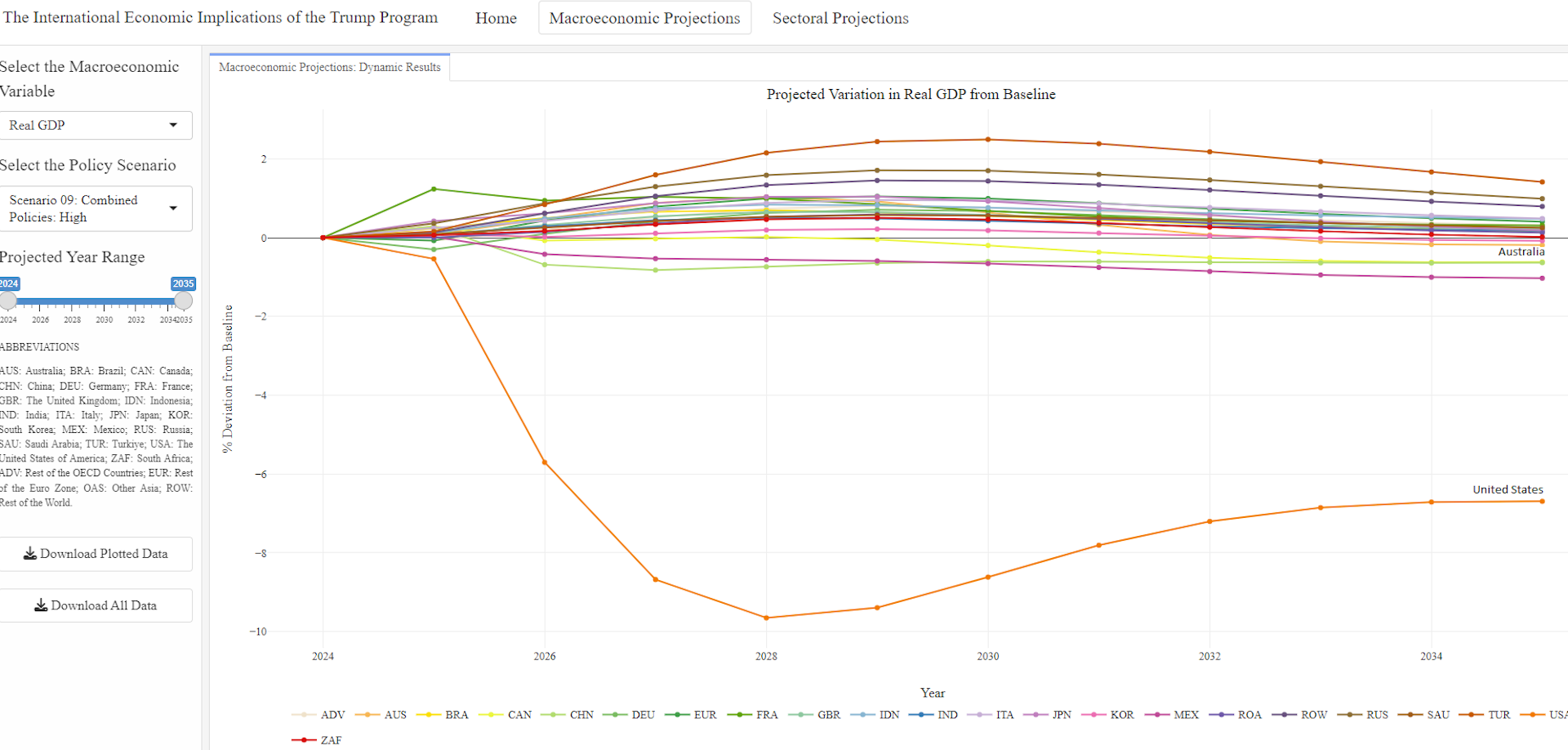
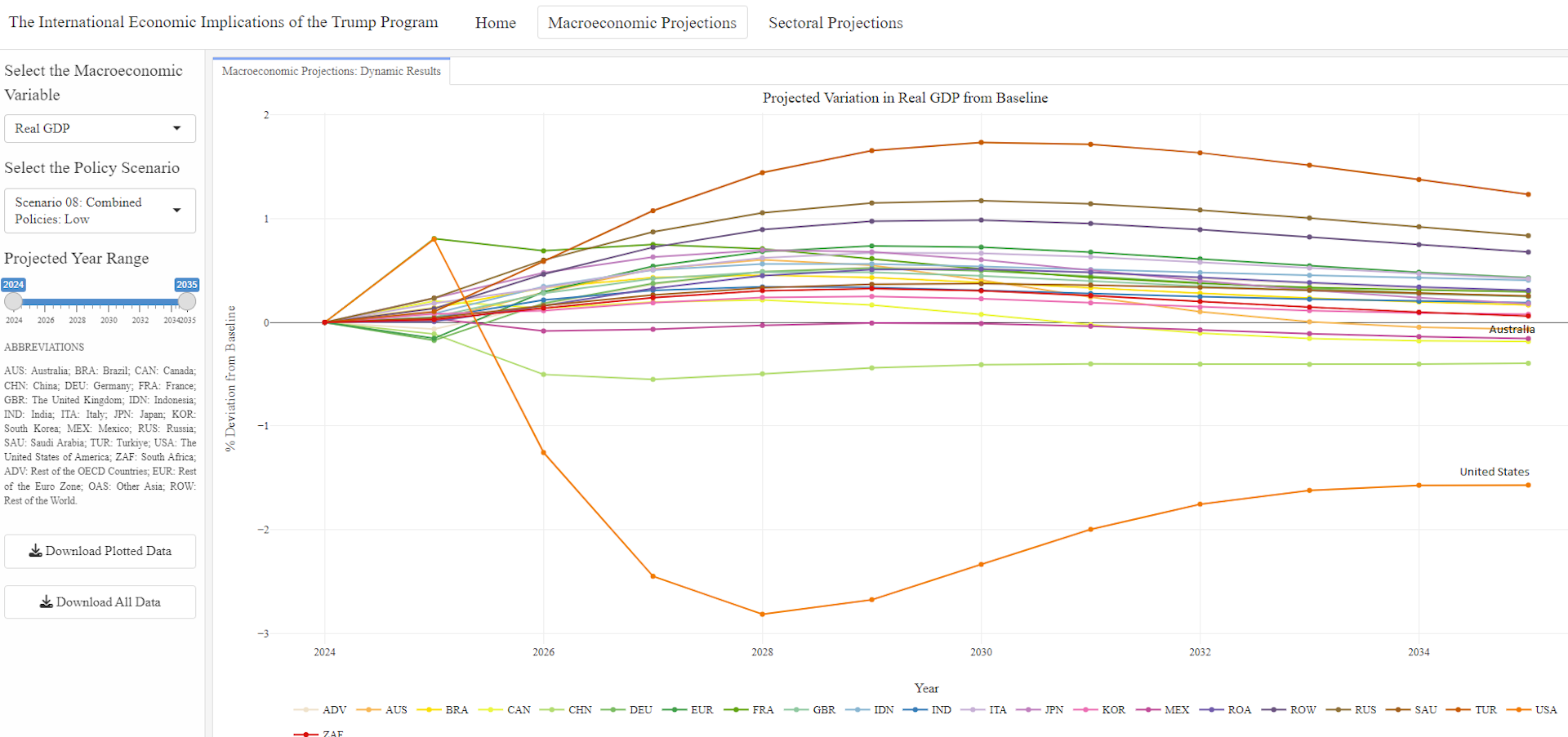
    No other country in the world would be hurt by Trump’s program as much as the US – not even China – although several US allies would suffer, including Australia, which would be the fourth-worst hit by the most extreme version of what Trump is proposing.

    Peterson Institute for International Economics.

    Mass deportations

    Trump has repeatedly promised the “largest domestic deportation operation in American history,” targeting up to 20 million unauthorised immigrants, including about 8.3 million thought to be in the workforce.

    He says his model is Operation Wetback – a 1956 Eisenhower administration program that used military-style tactics to deport 1.3 million Mexicans.

    The institute says Eisenhower’s success makes it easy to believe Trump could remove 1.3 million immigrant workers. It has modelled two scenarios: removing 1.3 million and 8.3 million, both over two years in 2025 and 2026.

    Both slash employment, including the employment of non-immigrants, both push up inflation, which eventually is brought under control, and both make the US a less attractive place to invest, which benefits much of the rest of the world.

    The institute says the low and high scenarios differ “only by the degree of damage inflicted on people, households, firms, and the overall economy”.

    Huge tariff hikes

    Trump wants to increase every tariff on goods imported to the US by 10 percentage points, including where there is at present no tariff. And he wants at least a 60% tariff on imports from China. The institute has modelled both, with and without retaliatory tariffs from China and the rest of the world.

    It finds, unsurprisingly, that extra tariffs push up the price of US imports and the prices of US-produced goods that compete with imports. Many are used as inputs in manufacturing, which means US manufacturing suffers (which is probably not what Trump had in mind).

    Fewer imports mean less demand for foreign exchange within the US, which means a higher US dollar which makes US exports less competitive. The US economy is weaker as a result, although China’s is weaker still and Australia’s is weakened as much as the US given its role in providing resources to China.

    Nobbling the Fed

    Trump has raised the prospect of more presidential influence over interest rates, saying he thinks he has “a better instinct than, in many cases” the board of US Federal Reserve. This could be achieved by requiring the president to be consulted on rate decisions or by appointing a compliant chair.

    However it’s done, the institute’s “conservative” assumption based on what happens in developing countries with less central bank independence is that it will push inflation two percentage points higher.

    The modelled result is capital flight. While the US economy is initially stronger than it would have been because of the Fed’s willingness to tolerate higher inflation, after a few years it is weaker and every other economy is stronger.

    When all the measures are combined, under the extreme scenarios the US economy is 6.7% weaker than it would have been by 2035 and Australia’s is 0.2% weaker. Under the more modest scenarios, the US economy is 1.6% weaker and Australia’s is 0.06% weaker.

    Why not examine Harris?

    Despite a history of non-partisanship, the Peterson Institute is prepared for criticism. It points out that the economic model it used is regarded as the best in the world for scenario planning and is Australian, built by Warwick McKibbin of the Australian National University.

    And it says it has modelled the Trump policies rather than the Harris policies because only Trump’s represent a departure from business as usual.

    As the Institute’s president Adam Posen put it in Washington last month, the Harris campaign has said it will not impose across-the-board tariffs, will not engage in mass deportations and will not interfere with the independence of the US Federal Reserve.

    The Trump campaign has indicated it will do all three.

    It’s entirely possible that in office Trump wouldn’t do everything he proposed while campaigning, and it’s entirely possible that he would change course if what was doing damaged the US in the way the modelling suggests.

    But there’s something to be said for taking people at their word, at least to get an idea of what we could be in store for after a knife-edge election.

    Peter Martin is Economics Editor of The Conversation.

    ref. From mass deportations to huge tariff hikes, here’s what Trump’s economic program would do to the US and Australia – https://theconversation.com/from-mass-deportations-to-huge-tariff-hikes-heres-what-trumps-economic-program-would-do-to-the-us-and-australia-240650

    MIL OSI AnalysisEveningReport.nz

  • MIL-OSI Economics: Frank Elderson: Interview with Delo

    Source: European Central Bank

    Interview with Frank Elderson, Member of the Executive Board of the ECB and Vice-Chair of the Supervisory Board of the ECB, conducted by Miha Jenko

    8 October 2024

    You hold two high positions in the European Central Bank: you are a member of the ECB’s Executive Board as well as the Vice-Chair of its Supervisory Board. You are responsible for both monetary matters and banking supervision in the euro area. Can you explain your dual role at the ECB?

    Let me clarify that, at the ECB, decision-making on monetary policy and banking supervision is separate, and for good reason. We want these two functions to pursue their specific objectives and we want to avoid potential conflicts of interest.

    That being said, it is important for each side to be aware of what the other is thinking and to understand how the decisions being taken affect the other side. Let me give you a couple of examples. During our strategy review in 2021 we explicitly recognised the importance of safe and sound banks for our price stability mandate, acknowledging that financial stability is a precondition for price stability. Moreover, banks that are safe and sound are able to effectively pass through our monetary policy.

    So in the governance of the ECB there is a bridge between the two sides. And I currently occupy this bridge as a member of the Executive Board, which has six members including President Lagarde, as a member of the Governing Council and as Vice-Chair of the Supervisory Board. In practice, this means that I inform the Executive Board about what was discussed in the Supervisory Board, and I debrief the Supervisory Board on the decisions taken by the Governing Council. In short, my role is to help ensure that the ECB does not carry out these two separate tasks in isolation.

    What is the purpose of your current visit to Slovenia?

    The ECB’s two decision-making bodies – the Supervisory Board and the Governing Council – will meet in Slovenia in the space of a week. The Supervisory Board will meet for its regular retreat to discuss strategic issues, while the Governing Council will hold its next monetary policy meeting here. Our colleagues at Banka Slovenije are kindly hosting both events.

    Turning to banking supervision, how are banks’ activities and lending affected by the current environment of weak economic growth and deteriorating economic trends, which include increasing bankruptcies in some euro area countries? How resilient is the banking sector in Europe?

    European banks are resilient. They have sufficient and adequate capital and liquidity buffers which enable them to absorb losses and withstand shocks. But they should not be complacent, especially in the context of the worsening geopolitical environment, which could have direct and indirect effects on banks. Near-term growth prospects have deteriorated and are subject to high uncertainty because of these rising geopolitical risks. And banks also face several medium-term, more structural challenges.

    In this context, our supervisory priorities, which we update every year, help us focus on both the near-term and medium-term challenges faced by banks. We want to ensure that banks are resilient not only today, but also in the long run. As part of our priorities, we want to increase their resilience to sudden macroeconomic and geopolitical shocks and to accelerate the remediation of shortcomings in the governance and management of climate-related and environmental risks. At the same time, banks need to make further progress with their digital transformation and build up their operational resilience.

    In short, banks are resilient, but we should not be complacent amid these longer-term challenges, which we will address through our supervision over the coming years.

    What lessons have the ECB and the Eurosystem learned from the last financial crisis in order to be better prepared for a possible new crisis, which will not necessarily originate in the banking sector itself, but in companies connected to it?

    Since the global financial crisis we have created strong pan-European supervision – the Single Supervisory Mechanism. The financial reforms implemented after that crisis have strengthened banks without compromising their lending capacity. Several things have happened since the global financial crisis: we have had a pandemic, Russia’s invasion of Ukraine, an energy shock and high inflation. So European economies have been exposed to unforeseen challenges. We also witnessed turmoil in international banking markets last year, which exposed fragilities in banks’ risk management and internal governance.

    The European banking sector has shown itself to be resilient in the face of these challenges. Take non-performing loans, for example, which have fallen significantly in the European banking system. In 2015, their share was 7%, while in 2023 it was below 2%. That is a big step forward. And as I said, capital and liquidity indicators are now much higher than they were a decade ago. But as supervisors, we should never be complacent, especially given the new risk drivers, such as energy prices, cyberattacks, climate and nature-related risks and geopolitical risks.

    Turning now to current developments in the European banking sector, where UniCredit Group’s intention to take over the German bank Commerzbank has recently made headlines. What is your view as euro area banking supervisor?

    Let me first say that I cannot comment on individual banks, so my answer will be more general.

    We have been crystal clear that cross-border consolidation can be an instrument for further integration of the European banking sector, and we stand by that. Consolidation can also help address long-standing issues in the European banking sector, such as low profitability.

    Nonetheless, mergers always carry risks and, as supervisors, we assess them carefully, always applying the limitative criteria set out in Article 23 of the Capital Requirements Directive. Our job is to ensure that every banking transaction – whether at cross-border or national level – results in a banking group that can comply with supervisory requirements in the foreseeable future.

    What is your view of the banking sector in our country? What is your message to Slovenia?

    Thanks to the reforms implemented after the great financial crisis, banks in Slovenia have come a long way, and in the right direction. When the crisis hit, the Government had to support the three largest banks with a recapitalisation of €3.5 billion. And, naturally, it has taken several years for lending to strengthen. More recently, the privatisation of state-owned banks increased competition in the sector, and this has attracted international banks. Slovenian banks are now well-capitalised, highly profitable and are above the euro area average for profitability, mainly on account of very high net interest margins. Some of this progress can also be attributed to the work of supervisors, including those at Banka Slovenije, with whom we work very well.

    So, like in the rest of Europe, your banks are robust but they will continue to face a number of headwinds stemming from the macro-financial environment, geopolitical shocks and challenges related to the green and digital transitions.

    As mentioned, our central bank will host a Governing Council meeting next week. Do you expect a new interest rate decision at this meeting?

    We will come to Slovenia with an open mind, so I am looking forward to the trip to Ljubljana and to a very genuine and open discussion. Before the meeting, we will take note of all the data and analysis and, as we have said many times before, we will take a meeting-by-meeting approach. A number of recent indicators suggest that downside risks to economic growth are already materialising, so we will need to carefully assess whether this has any implications for our inflation outlook.

    What is very clear, however, is the direction of travel in the period ahead. If our projections that inflation will converge towards our 2% target in the second half of 2025 continue to be confirmed, we will continue to gradually ease our restrictive policy stance. At the same time, we need to maintain flexibility regarding the pace of adjustments. This will depend on incoming data, on the economic situation and on inflation. The latest data will of course be taken into account in whatever decision we take in Slovenia.

    What specific downside risks to growth do you have in mind?

    Economic growth came in at 0.2% in the second quarter, falling somewhat short of our projections. We look at a broad range of data, but we have seen that households are consuming less than anticipated and firms are less keen to invest than we had projected.

    What is your view on the exact nature of inflation in the euro area? In particular, services price inflation remains very persistent. Why?

    We expect inflation to decline to our target in the second half of 2025. Headline inflation is projected to average 2.5% in 2024, then 2.2% in 2025 and 1.9% in 2026. Services inflation remains strong but, according to our projections, we will see a deceleration going into the new year.

    We always look at the upside and downside risks surrounding these projections. Geopolitical tensions could raise energy prices, shipping costs and other transport costs in the short term, which could also lead to disruptions to global trade, which would push prices up. Inflation could also increase if wages rise more than expected or if profit margins increase, and extreme weather events and the climate crisis could increase food prices. However, there are also downside risks to inflation, such as lower than expected demand or an unexpected deterioration in the economic environment in the United States and globally.

    At the ECB, you are also responsible for monitoring the effects of climate change, in addition to the dual tasks mentioned at the beginning. This year we saw the catastrophic effects of floods in some central European countries, and last year we experienced them in Slovenia as well. Greece, Spain and other parts of southern Europe are ravaged by catastrophic droughts and fires. Can the ECB and national central banks contribute more effectively to mitigating the effects of climate change? After all, you have the power – you have monetary policy and banking supervision in your hands…

    I am very aware of the consequences of floods, and of those last year in Slovenia. They caused €10 billion of damage and more than two-thirds of the country was affected. Some places in the Koroška region were cut off from the world and most roads were completely submerged. Recently, we have seen similar things in several other EU countries.

    When talking about climate, nature and the ECB, I always say that we are not climate policymakers. We are not involved in climate policy. This is a task for governments, who implement legislation and policies like the European Climate Law and the EU “Fit for 55” plan, for example.

    But this topic is also extremely relevant for our mandate, because extreme events like flooding, wildfires and summer droughts also lead to financial risks for banks and the wider economy. In our banking supervision, we check whether banks are adequately managing their climate and nature-related risks. We also take climate and nature into account in our macroeconomic projections.

    Are you in favour of introducing more decisive measures that would offer banks more targeted incentives to grant loans for more environmentally friendly or “greener” purposes?

    It would be speculative to talk about possible measures that we might hypothetically take in the future. What is clear is that any measure we implement must be consistent with our primary objective of price stability. Our current monetary policy stance is restrictive, so a green lending facility would be something for us to consider in the future, in another phase of the cycle.

    That being said, climate change is part of our monetary policy strategy, and we have committed to regularly reviewing our climate-related measures to ensure that we continue to support a decarbonisation path that is consistent with the EU’s climate objectives. For this, within our mandate, all options are on the table. If we were to design new instruments in the future, it’s fair to assume that they would include climate considerations.

    In terms of global competitiveness, the EU is falling behind the United States and China. Former ECB President Mario Draghi recently presented a very ambitious plan to increase European competitiveness, including investments of up to €800 billion per year. In his opinion, this money could also be raised through European borrowing, so common European debt. What is your take on this proposal and Mr Draghi’s other recommendations?

    We welcome the publication of this report, how concrete it is and its call for urgent action. Competitiveness is critical for sustainable growth, improving the living standards of citizens and boosting economic resilience, especially in the current environment of heightened geopolitical fragmentation. We strongly support this urgent call for coordinated action at the European and national levels. It is now a matter of turning these proposals into concrete measures.

    Meeting the strategic investment needs identified in the report requires completing the capital markets union, which we have been advocating for a long time.

    The private sector will not be able to finance all of these investment needs alone. European initiatives, including financing through common European funds, could help finance common European public goods such as defence, public procurement, energy grids, disruptive innovation and cross-border infrastructure. Under the right conditions, the potential issuance of common European debt could help bridge the financing gap.

    Finally, a new European Commission is expected to start its work in a few weeks’ time. How do you see your cooperation, including on the common objective of making Europe more competitive?

    I am very much looking forward to continuing our excellent interactions with the European Commission, both with the outgoing Commission and the incoming one. There are a number of common European initiatives that we both have a very strong interest in. I have already mentioned the capital markets union. Further progress could be made on that, as well as on finalising all aspects of the banking union. And we know from the ECB’s stress tests that the longer we take to complete the green transition, the more it will cost us, so we would very much welcome further progress on that front as well.
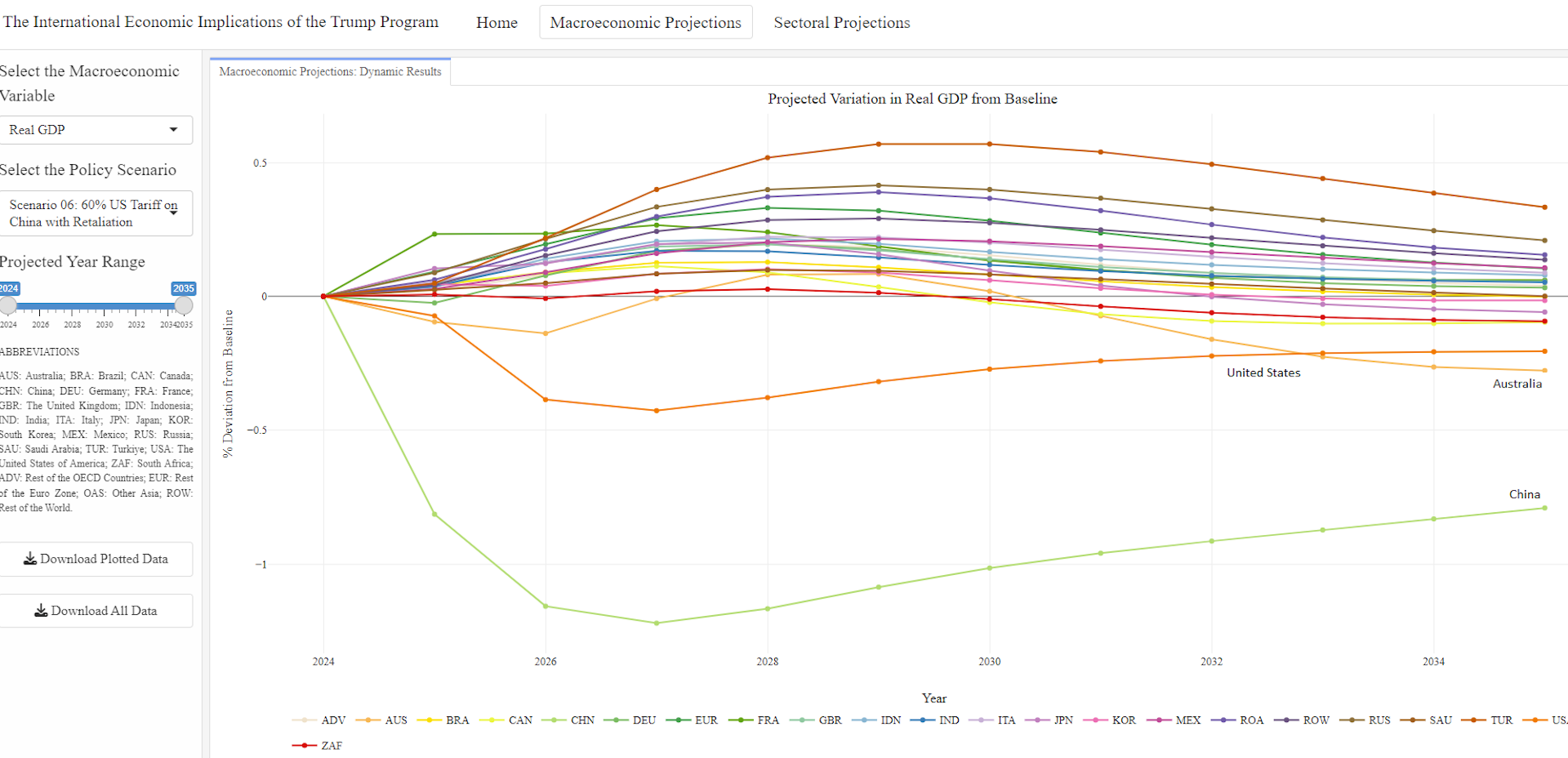
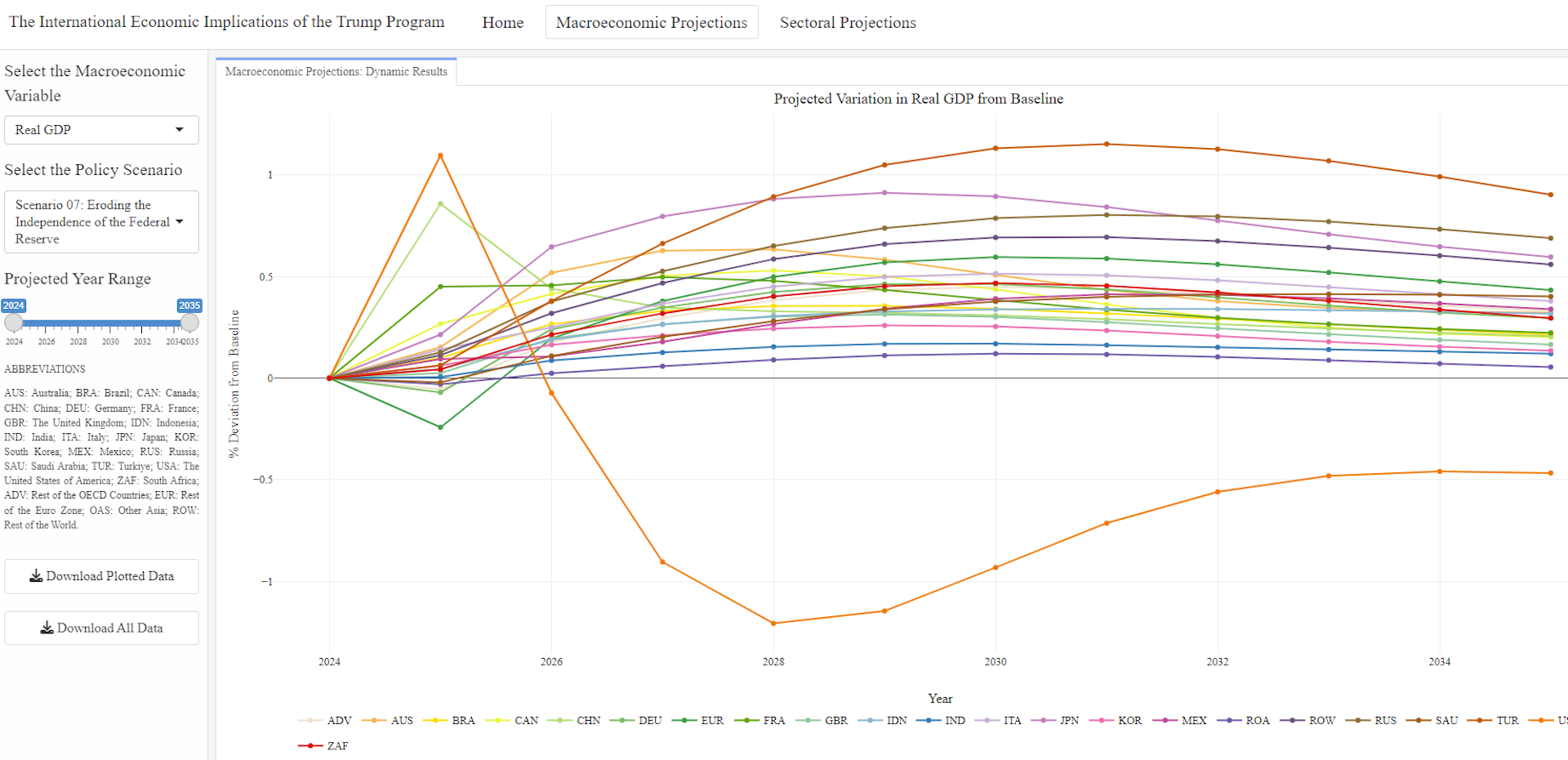
    MIL OSI Economics

  • MIL-OSI Economics: Hera planetary defence mission successfully launched

    Source: Thales Group

    Headline: Hera planetary defence mission successfully launched

    • Hera aims to confirm if it is possible to deflect a hazardous asteroid on a collision course with the Earth, as a repeatable strategy ready for use in case of an actual asteroid threat
    • Thales Alenia Space provided key technologies onboard the Hera spacecraft, which will send essential data from the Didymos binary asteroid, similar to one that could potentially impact our Planet

    Madrid, 8 October, 2024 – Hera, the European Space Agency’s (ESA) first planetary defence mission,  was successfully launched yesterday aboard a SpaceX Falcon 9 rocket, from Cape Canaveral in Florida. The satellite is now heading to a unique target among the 1.3 million known asteroids of our Solar System.

    If an incoming asteroid were to threaten Earth, what could be done to cope with the situation? On September 26th 2022, NASA’s Double Asteroid Redirection Test (DART) mission performed humankind’s first test of asteroid deflection by crashing into the Great-Pyramid-sized Dimorphos moonlet. This resulted in a shift of its orbit around the mountain-sized Didymos main asteroid.

    Hera networking with Cubesats ©ESA 

    Next comes ESA’s own contribution to the international Asteroid Impact & Deflection Assessment (AIDA) collaboration: the Hera mission will travel to Dimorphos so as to gather vital close-up data regarding the deflected body and turn DART’s grand-scale kinetic impact experiment into a well-understood and potentially repeatable planetary defence technique. Hera will provide in particular accurate measurements concerning the asteroid’s mass, as well as crucial information about its make-up and structure, which are essential to interpret the outcome of the impact.

    The Hera mission, will also carry out the most detailed exploration to date of a binary asteroid system – although binaries make up 15% of all known asteroids, they have never been studied in detail. Hera will also perform technology demonstration experiments, including the deployment of ESA’s first deep space ‘CubeSats’ – shoebox-sized spacecraft to venture closer than the main mission then eventually land – and an ambitious test of ‘self-driving’ for the main spacecraft, based on vision-based navigation. The OHB System AG (Germany), as prime contractor of Hera, led the industrial consortium, including responsibility for the overall spacecraft design, development, assembly, and testing.

    Thales Alenia Space’s contribution: a teamwork between Spain, Italy and Belgium

    Thales Alenia Space, a joint venture between Thales (67%) and Leonardo (33%), provided key technologies onboard Hera spacecraft. Thales Alenia Space in Spain was responsible for the communications subsystem, which allows to control and track the spacecraft from a distance up to 500 million kilometre away and to send all the information gathered by Hera back to Earth. Thales Alenia Space in Italy developed the state-of-art Deep Space Transponder, while Thales Alenia Space in Belgium developed the Travelling Wave Tube Amplifiers (TWTA), as well as the Power Conditioning and Distribution Unit (PCDU), which provides power to the spacecraft during all its lifetime.

    Safeguarding our planet

    Asteroids are bodies originated in the young stars nebulae that never grew to planets, formed of rock and metal. Among them, those that have an orbit that brings them close to Earth (within 45 million kilometres), known as near-Earth asteroids, represent a risk of hitting the Earth. There are plenty of such bodies in our Solar system, from tiny little ones measuring a few meters (there are 40-50 millions of them) up to larger ones, measuring more than 1 km but much more scarce (there’s less than 1000 of them).

    Neither the smaller near-Earth asteroids nor the larger ones represent a real threat to humanity. Small asteroids actually hit the Earth quite frequently (every two weeks) with no consequences. The larger ones, although potentially dangerous, are well known and tracked, and it takes millions of years to have one of them hitting the Earth. Actually, a 10km asteroid impact is the most accepted theory of the Cretaceous extinction around 66 million years ago, ending with three-quarters of the plant and animal species, among others the dinosaurs.

    Hera scans DART’s impact crater ©ESA 

    The mid-sized class asteroids of more than 100 meters are the ones we need to worry about. There are about 30,000 near-Earth asteroids of the 100 to 300 meter size class, 82% of them still to be spotted, hitting the Earth every 10,000 years. The impact energy of such an asteroid is equivalent to around 50 megatons of TNT, the power of a “Tsar Bomba”. The effect of such an impact would be devastating if it reached a populated area, capable of destroying an entire city or to create a tsunami if it impacted a sea.

    The Didymos binary asteroid system is prototypical in terms of size of the thousands of asteroids that pose a hazardous risk of impact to our planet. Around the Dydimos main body, 780 meter in diameter, orbits the 150 meter Dimorphos moonlet, which is the first body in the Solar System to have had its orbit measurably changed through human action, by the DART impact, and it is also the smallest asteroid yet visited by humankind.

    The Hera spacecraft will reach the binary asteroid in October 2026, after a two-year cruise phase. The day Hera reaches Didymos, it will be 195 million km away from Earth.

    ABOUT THALES ALENIA SPACE

    Drawing on over 40 years of experience and a unique combination of skills, expertise and cultures, Thales Alenia Space delivers cost-effective solutions for telecommunications, navigation, Earth observation, environmental management, exploration, science and orbital infrastructures. Governments and private industry alike count on Thales Alenia Space to design satellite-based systems that provide anytime, anywhere connections and positioning, monitor our planet, enhance management of its resources and explore our Solar System and beyond. Thales Alenia Space sees space as a new horizon, helping to build a better, more sustainable life on Earth. A joint venture between Thales (67%) and Leonardo (33%), Thales Alenia Space also teams up with Telespazio to form the parent companies’ Space Alliance, which offers a complete range of services. Thales Alenia Space posted consolidated revenues of approximately €2.2 billion in 2023. Thales Alenia Space has around 8,600 employees in 9 countries, with 16 sites in Europe and a plant in the US.

    http://www.thalesaleniaspace.com

    THALES ALENIA SPACE – PRESS CONTACTS

    Oriol Casas Thió
    Tel.: +34 618 509 197
    oriol.casasthio@thalesaleniaspace.com

    Tarik Lahlou
    Tel: +33 (0)6 87 95 89 56
    tarik.lahlou@thalesaleniaspace.com

    Catherine des Arcis
    Tel: +33 (0)6 78 64 63 97
    catherine.des-arcis@thalesaleniaspace.com

    MIL OSI Economics

  • MIL-OSI: Bread Financial Schedules Third Quarter 2024 Earnings Conference Call for Oct. 24

    Source: GlobeNewswire (MIL-OSI)

    COLUMBUS, Ohio, Oct. 08, 2024 (GLOBE NEWSWIRE) — Bread Financial® Holdings, Inc. (NYSE: BFH), a tech-forward financial services company that provides simple, flexible payment, lending and saving solutions, will host a conference call on Thursday, Oct. 24, 2024, at 8:30 a.m. ET to discuss the company’s third quarter 2024 results.

    Conference Call/Webcast Information
    Participants can register in advance here, and the conference call will be available at the company’s investor relations website. Analysts planning to participate in the Q&A can register in advance here. Additionally, there will be several slides accompanying the webcast. Please go to the website at least 15 minutes prior to the call to register, as well as download and install any necessary software. The webcast will also be archived on the investor relations website.

    About Bread Financial® 
    Bread Financial® (NYSE: BFH) is a tech-forward financial services company providing simple, personalized payment, lending and saving solutions. The company creates opportunities for its customers and partners through digitally enabled choices that offer ease, empowerment, financial flexibility and exceptional customer experiences. Driven by a digital-first approach, data insights and white-label technology, Bread Financial delivers growth for its partners through a comprehensive suite of payment solutions that includes private label and co-brand credit cards and Bread Pay® buy now, pay later products. Bread Financial also offers direct-to-consumer products that give customers more access, choice and freedom through its branded Bread Cashback® American Express® Credit Card, Bread Rewards™ American Express® Credit Card and Bread Savings® products.    
         
    Headquartered in Columbus, Ohio, Bread Financial is powered by its approximately 7,000 global associates and is committed to sustainable business practices. To learn more about Bread Financial, visit breadfinancial.com or follow us on Facebook, LinkedIn, X and Instagram.

    Contacts
    Brian Vereb — Investor Relations
    Brian.Vereb@breadfinancial.com

    Susan Haugen – Investor Relations
    Susan.Haugen@breadfinancial.com

    Rachel Stultz — Media
    Rachel.Stultz@breadfinancial.com

    The MIL Network

  • MIL-OSI: Draganfly Announces Board Update

    Source: GlobeNewswire (MIL-OSI)

    Advisory Board Welcomes Former White House Chief of Staff Andy Card and Kim Moody as Audit Chair

    Saskatoon, SK, Oct. 08, 2024 (GLOBE NEWSWIRE) — Draganfly Inc. (NASDAQ: DPRO) (CSE: DPRO) (FSE: 3U8A) (“Draganfly” or the “Company”), an award-winning, industry-leading drone solutions and systems developer, is pleased to announce updates to its Board of Directors and Advisory Board. Olen Aasen is stepping down from the Draganfly Board, and Kim Moody has been appointed as the new Audit Chair. Additionally, Draganfly is welcoming back Andy Card, former White House Chief of Staff, to the Advisory Board.

    Andy Card, who previously served on Draganfly’s Board of Directors, is rejoining the Company as a member of its Advisory Board, brings decades of leadership experience. He served as White House Chief of Staff under President George W. Bush from 2000 to 2006, managing the Executive Office of the President and shaping U.S. policy during critical moments, including the September 11th attacks. Andy’s career also includes roles as U.S. Secretary of Transportation and Vice President of Government Relations for General Motors.

    “We are thrilled to welcome Andy back to the Draganfly team in this advisory capacity,” commented Cameron Chell, Draganfly CEO. “His leadership experience and trusted counsel have been critical to the Company’s growth, and we look forward to his continued insights as we drive innovation and expand our presence in the UAV industry.”

    Kim Moody has been appointed as the new Audit Chair, replacing Olen Aasen, who is stepping down to pursue new opportunities after servings as a director for over five years. Kim is the Founder of Moodys Private Client LLP, bringing extensive expertise in tax advisory, accounting, and financial governance. “On behalf of the Board and management, I would like to thank Olen for his exceptional service and contributions to Draganfly. We look forward to his continued advice when possible,” added Chell.

    New Committee Appointments

    • Julie Myers Wood, Chief Executive Officer at Guidepost Solutions, has been appointed as the head of the Compensation Committee. With over 25 years of experience in regulatory and enforcement issues, Julie brings a wealth of knowledge from her time as Assistant Secretary of Homeland Security for Immigration and Customs Enforcement (ICE) under President George W. Bush and her work in both public and private sectors.
    • Tim Dunnigan, CEO & President of MMS Products, Inc., and a retired U.S. Army Infantry Officer, will join the Audit Committee. Tim is a seasoned defense technology entrepreneur with a proven track record of developing leadership solutions for warfighters. He also holds multiple patents and has extensive experience supporting the Department of Defense.
    • Thomas B. Modly, former Acting Secretary of the Navy and Under Secretary of the Navy, will serve on the Audit and Nominating Committee. Throughout his career, Tom has focused on improving the agility and accountability of the Department of Defense. His vast experience in leadership, education, and defense operations and audit will be invaluable to Draganfly as it continues to grow in defense-related markets.

    Cameron Chell further commented, “With the addition of such seasoned leaders as Andy Card, Kim Moody, Tim Dunnigan, and Thomas B. Modly, our board brings an important level of defense and government expertise. This positions Draganfly to leverage our advanced drone technology in defense applications and address emerging challenges in national security. Their knowledge will guide us as we continue to innovate and expand our presence in these critical sectors.”

    About Draganfly

    Draganfly Inc. (NASDAQ: DPRO; CSE: DPRO; FSE: 3U8A) is the creator of quality, cutting-edge drone solutions, software, and AI systems that revolutionize how organizations do business and serve their stakeholders. Recognized as being at the forefront of technology for over 24 years, Draganfly is an award-winning industry leader serving the public safety, agriculture, industrial inspections, security, mapping, and surveying markets. Draganfly is a company driven by passion, ingenuity, and the need to provide efficient solutions and first-class services to its customers around the world with the goal of saving time, money, and lives.

    For more information on Draganfly, please visit us at http://www.draganfly.com. For additional investor information, visit:

    CSE Listing
    NASDAQ Listing
    Frankfurt Listing

    Media Contact
    Email: media@draganfly.com

    Company Contact
    Email: info@draganfly.com

    The MIL Network

  • MIL-OSI: Stardust Power Secures Exclusivity to Negotiate Licensing Arrangement for Lithium Brine Concentration Technology from KMX Technologies

    Source: GlobeNewswire (MIL-OSI)

    GREENWICH, Conn., Oct. 08, 2024 (GLOBE NEWSWIRE) — Stardust Power Inc. (NASDAQ: SDST) (“Stardust Power” or the “Company”), an American developer of battery-grade lithium products, and KMX Technologies, Inc. (“KMX”) announced that it has entered into a 90-day exclusivity period during which Stardust Power and KMX will negotiate the terms and conditions related to Stardust Power’s exclusive use of lithium brine concentration technology from KMX (the “Licensing Arrangement”). The transaction is subject to the negotiation and execution of definitive documentation and the parties’ mutual board approvals.

    This important technology would allow Stardust Power to potentially lower operating costs and capital expenditures across its supply chain, including at its 50,000 metric tons per annum battery-grade lithium refinery under development in Muskogee, Oklahoma, while also potentially reducing the energy and carbon intensity of the refining process. A definitive agreement could give Stardust Power exclusive use of the technology for lithium in the United States and Canada, as well as certain other jurisdictions around the world.

    Stardust Power remains focused on increasing its sustainability and recycling water following commencement of its operations. KMX’s unique technology, known as vacuum membrane distillation (“VMD”), uses hydrophobic membranes to separate lithium while creating a high quality water as its byproduct. This process is less costly and potentially less energy-intensive than many competing solutions. The distilled quality water can also be used by lithium project developers as part of their direct lithium extraction washing process, in lieu of tapping sparse local freshwater resources and other uses.

    Stardust Power’s Chief Executive Officer and Founder, Roshan Pujari, commented: “Creating battery-grade lithium requires energy and water, and KMX’s technology is highly efficient on both fronts. Their VMD technology produces an extremely high-quality concentrate with significantly improved water recycling. Following the execution of definitive documentation, Stardust Power would intend to deploy this technology across the supply chain at its Oklahoma refinery, when it is put into operation, and at upstream sites. This is another step forward for Stardust Power, leading at the forefront of sustainability within the U.S. lithium supply chain.”

    Zachary Sadow, KMX Chief Executive Officer, said, “We are proud to partner with Stardust Power, pioneers in the critical mineral industry, as they build out the North American lithium supply chain.”

    KMX’s lithium concentration technology has been publicly validated by the Canadian government, showing its ability to concentrate lithium without significant losses, generating substantially enhanced project economics.

    About Stardust Power Inc.

    Stardust Power is a developer of battery-grade lithium products designed to supply the electric vehicle (EV) industry and bolster America’s energy leadership by building resilient supply chains. Stardust Power is developing a strategically central lithium refinery in Muskogee, Oklahoma with the anticipated capacity of producing up to 50,000 metric tons per annum of battery-grade lithium. The company is committed to sustainability at each point in the process. Stardust Power trades on the Nasdaq under the ticker symbol “SDST.” For more information, visit http://www.stardust-power.com

    Stardust Power Contacts

    For Investors:
    Johanna Gonzalez
    investor.relations@stardust-power.com

    For Media:
    Michael Thompson
    media@stardust-power.com

    About KMX Technologies

    KMX Technologies is solving the most critical environmental and energy challenges of the 21st century. Through its proprietary membrane distillation technology, the company sustainably sources critical minerals necessary for next generation supply chains and infrastructure, is advancing wastewater treatment, and is accelerating energy storage with its direct lithium recovery enhancement processes.

    Cautionary Note Regarding Forward-Looking Statements

    Certain statements in this press release constitute “forward-looking statements.” Such forward-looking statements are often identified by words such as “believe,” “may,” “will,” “estimate,” “continue,” “anticipate,” “intend,” “expect,” “should,” “would,” “plan,” “predict,” “forecasted,” “projected,” “potential,” “seem,” “future,” “outlook,” and similar expressions that predict or indicate future events or trends or otherwise indicate statements that are not of historical matters, but the absence of these words does not mean that a statement is not forward-looking. These forward-looking statements and factors that may cause actual results to differ materially from current expectations include, but are not limited to: the negotiation and execution of definitive documentation regarding the Licensing Arrangement, the ability of Stardust Power to realize the anticipated benefits of KMX’s technology, the ability of Stardust Power to grow and manage growth profitably, maintain key relationships and retain its management and key employees; risks related to the uncertainty of the projected financial information with respect to Stardust Power; risks related to the price of Stardust Power’s securities, including volatility resulting from changes in the competitive and highly regulated industries in which Stardust Power plans to operate, variations in performance across competitors, changes in laws and regulations affecting Stardust Power’s business and changes in the combined capital structure; and risks related to the ability to implement business plans, forecasts, and other expectations and identify and realize additional opportunities. The foregoing list of factors is not exhaustive.

    Stockholders and prospective investors should carefully consider the foregoing factors and the other risks and uncertainties described in documents filed by Stardust Power from time to time with the SEC.

    Stockholders and prospective investors are cautioned not to place undue reliance on these forward-looking statements, which only speak as of the date made, are not a guarantee of future performance and are subject to a number of uncertainties, risks, assumptions and other factors, many of which are outside the control of Stardust Power. Stardust Power expressly disclaims any obligations or undertaking to release publicly any updates or revisions to any forward-looking statements contained herein to reflect any change in the expectations of Stardust Power with respect thereto or any change in events, conditions or circumstances on which any statement is based.

    The MIL Network

  • MIL-OSI: Eviden launches PQC HSMaaS, a EU sovereign, Post-Quantum Cryptography Hardware Security Module as a Service

    Source: GlobeNewswire (MIL-OSI)

    Press Release

    Eviden launches PQC HSMaaS, a EU sovereign, Post-Quantum Cryptography
    Hardware Security Module as a Service

    This secure cloud-independent solution, based on ANSSI’s Highest Qualified HSM,
    helps organizations meet the most stringent NIS2 requirements

    Les Assises de la Sécurité, Monaco and Paris, France – October 8, 2024Eviden, the Atos Group business leading in digital, cloud, big data and security today announces PQC HSMaaS, its EU sovereign, post-quantum cryptography Hardware Security Module (HSM) as a Service, powered by the Eviden HSM Trustway Proteccio™ brand.

    This secure, cloud-independent solution is the only HSM available on the market today which is based on ANSSI’s (Agence Nationale de la Sécurité des Systèmes d’Information1) Highest Security Qualification (“reinforced qualification”), thereby providing businesses with the highest level of security possible.

    Post-quantum-ready and EU sovereign for NIS2 compliance

    In addition to being based upon one of the most certified HSM on the market, Eviden’s PQC HSMaaS supports Post-Quantum Cryptography (PQC) algorithms, providing encryption that is future-proof against the advances of quantum computing.

    As a fully EU sovereign solution, Eviden’s PQC HSMaaS is hosted in resilient, sovereign data centers in France and managed by French teams, ensuring full control over sensitive data. This minimizes dependence on public cloud providers, reinforcing both data sovereignty and regulatory compliance. Furthermore, Eviden’s PQC HSMaaS helps businesses meet the stringent requirements of the NIS22Directive, securing sensitive data with robust encryption practices that guarantee confidentiality, integrity, and availability.

    Antoine Schweitzer-Chaput, Head of Trustway Business Unit, Eviden, Atos Group said: This solution not only empowers companies to protect against emerging threats such as quantum computing through Post-Quantum Cryptography support, but it also established us as a strategic partner in helping organizations meet the stringent requirements of the NIS2 Directive. We take pride in offering an HSMaaS that blends the highest levels of security with the flexibility and control businesses need in today’s evolving landscape.”

    Eviden customers can now benefit from the PQC HSMaaS solution, via a monthly subscription. For more information, please visit : https://eviden.com/solutions/digital-security/data-encryption/trustway-proteccio-nethsm/

    ***

    About Eviden

    Eviden is a next-gen technology leader in data-driven, trusted and sustainable digital transformation with a strong portfolio of patented technologies. With worldwide leading positions in advanced computing, security, AI, cloud and digital platforms, it provides deep expertise for all industries in more than 47 countries. Bringing together 47,000 world-class talents, Eviden expands the possibilities of data and technology across the digital continuum, now and for generations to come. Eviden is an Atos Group company with an annual revenue of c. € 5 billion.

    About Atos

    Atos is a global leader in digital transformation with c. 92,000 employees and annual revenue of c. € 10 billion. European number one in cybersecurity, cloud and high-performance computing, the Group provides tailored end-to-end solutions for all industries in 69 countries. A pioneer in decarbonization services and products, Atos is committed to a secure and decarbonized digital for its clients. Atos is a SE (Societas Europaea) and listed on Euronext Paris.

    The purpose of Atos is to help design the future of the information space. Its expertise and services support the development of knowledge, education and research in a multicultural approach and contribute to the development of scientific and technological excellence. Across the world, the Group enables its customers and employees, and members of societies at large to live, work and develop sustainably, in a safe and secure information space.

    Press contact

    Zohra Dali – zohra.dali.external@eviden.com – +33 (0) 6 71 92 71 87


    1 National Cybersecurity Agency of France responsible for ensuring the security of information systems across France, particularly within government institutions and critical infrastructure.
    2 The NIS2 Directive (Directive on security of network and information systems) is a European Union regulation aimed at enhancing cybersecurity across the EU. It updates and expands upon the original NIS Directive (2016) to address the evolving landscape of cyber threats and improve the overall level of cybersecurity within member states.

    3 Eviden business is operated through the following brands: AppCentrica, ATHEA, Cloudamize, Cloudreach, Cryptovision, DataSentics, Edifixio, Energy4U, Engage ESM, Evidian, Forensik, IDEAL GRP, In Fidem, Ipsotek, Maven Wave, Profit4SF, SEC Consult, Visual BI, Worldgrid, X-Perion.

    Eviden is a registered trademark. © Eviden SAS, 2024.

    Attachment

    The MIL Network

  • MIL-OSI Russia: SPbGASU took part in the International Construction Week

    MILES AXLE Translation. Region: Russian Federation –

    Source: Saint Petersburg State University of Architecture and Civil Engineering – Saint Petersburg State University of Architecture and Civil Engineering – From left to right: Andrey Nikulin, Sergey Mikhailov, Svetlana Golovina, Inna Sukhanova, Dmitry Ulrikh and Denis Nizhegorodtsev

    From October 1 to 4, the International Construction Week was held in Yekaterinburg. It was attended by a delegation from SPbGASU, consisting of First Vice-Rector Svetlana Golovina, Vice-Rector for Educational Activities Sergey Mikhailov, Director of the Educational Center for Digital Competencies Inna Sukhanova, Deputy Director of the Educational Center for Digital Competencies Denis Nizhegorodtsev, Dean of the Faculty of Civil Engineering Andrey Nikulin, Dean of the Faculty of Environmental Engineering and Urban Management Dmitry Ulrikh, Head of the Department of Construction Organization Roman Motylev and fourth-year bachelor’s student of the Faculty of Civil Engineering Angelina Koroleva.

    Representatives of our university took part in the IV International Construction Championship, as well as the XI International Construction Forum and Exhibition 100 TechnoBuild, within the framework of which a meeting of the board of the Association of Construction Universities and the presidium of the Federal Educational and Methodological Association was held.

    Andrey Nikulin shared his impressions. According to him, the key event of the forum and exhibition was the plenary session “Construction of the Future”, at which representatives of developers and authorities discussed the transformation of residential spaces, the development of small towns, and trends in industrial and infrastructure construction.

    – The speakers disagreed on the prospects of the “15-minute city” concept and even noted that this innovative format, actively promoted by Western countries, resembles the Khrushchev period of Soviet development, where all everyday human needs were provided within walking distance within the microdistrict. This is economically beneficial for government bodies and developers, but, of course, it harms the moral and ethical development of a person, artificially confined to the sphere of consumption. At the same time, the speakers noted the need to develop transport infrastructure, which would allow people to leave the microdistricts and reach key cultural and historical centers in 15 minutes. However, this requires significant infrastructure costs, which is beyond the capabilities of regional budgets. As the speakers noted, the city of the future will be managed by artificial intelligence, and for its residents it will become commonplace to accept the delivery of goods, carried out by drones, at floor-by-floor reception points (new residential complexes are designed for this possibility).

    Andrey Nikolaevich noted a wide range of modern software products of domestic production that use TIM models of buildings and structures to control construction production, optimize costs for the purchase of building materials and equipment. Particularly memorable were BIM scanners and solutions based on artificial intelligence, which allow improving the quality of design solutions and minimizing the “human factor” in construction.

    According to Andrey Nikulin, the main result of participation in events of this level is the professional calibration of knowledge, ideas and vision of the future. In addition, this is, of course, the expansion of business contacts, “building professional bridges” with representatives of the real sector of the economy, which is very important for the development of scientific and educational areas of activity.

    Representatives of the companies Ascon, BRIO, PlanRadar, Jetstyle, Gectaro, TehnoPar and others received invitations to international conferences that will be held at SPbGASU in the near future.

    Inna Sukhanova and Denis Nizhegorodtsev joined the expert committee of the School League of the International Construction Championship. Roman Motylev acted as an expert of the Professional League. Angelina Koroleva, who participated in the Student League competition in the nomination “Labor Protection”, was awarded third place.

    Denis Nizhegorodtsev spoke about his work:

    – We were able to listen to and evaluate the works of the participants in the nomination “TIM-specialist”, in which schoolchildren of grades 8–11 from different regions of Russia competed. Their task was to model architectural solutions in the classrooms of a new school in Yekaterinburg. I would like to note the high level of the participants’ works. I am very glad that modern educational projects on construction topics are already available to schoolchildren and allow them to get acquainted with the profession in advance.

    Please note: This information is raw content directly from the source of the information. It is exactly what the source states and does not reflect the position of MIL-OSI or its clients.

    Please note; This information is raw content directly from the information source. It is accurate to what the source is stating and does not reflect the position of MIL-OSI or its clients.

    http://www.spbgasu.ru/nevs-and-events/nevs/spbgasu-took-participation-in-international-construction-week/

    EDITOR’S NOTE: This article is a translation. Apologies should the grammar and or sentence structure not be perfect.

    MIL OSI Russia News

  • MIL-OSI Video: Department of State Daily Press Briefing – October 8, 2024 – 1:15 PM

    Source: United States of America – Department of State (video statements)

    Spokesperson Matthew Miller leads the Department Press Briefing, at the Department of State, on October 8, 2024

    ———-
    Under the leadership of the President and Secretary of State, the U.S. Department of State leads America’s foreign policy through diplomacy, advocacy, and assistance by advancing the interests of the American people, their safety and economic prosperity. On behalf of the American people we promote and demonstrate democratic values and advance a free, peaceful, and prosperous world.

    The Secretary of State, appointed by the President with the advice and consent of the Senate, is the President’s chief foreign affairs adviser. The Secretary carries out the President’s foreign policies through the State Department, which includes the Foreign Service, Civil Service and U.S. Agency for International Development.

    Get updates from the U.S. Department of State at http://www.state.gov and on social media!
    Facebook: https://www.facebook.com/statedept
    Twitter: https://twitter.com/StateDept
    Instagram: https://www.instagram.com/statedept
    Flickr: https://flickr.com/photos/statephotos/

    Subscribe to the State Department Blog: https://www.state.gov/blogs
    Watch on-demand State Department videos: https://video.state.gov/
    Subscribe to The Week at State e-newsletter: http://ow.ly/diiN30ro7Cw

    State Department website: https://www.state.gov/
    Careers website: https://careers.state.gov/
    White House website: https://www.whitehouse.gov/
    Terms of Use: https://state.gov/tou

    #StateDepartment #DepartmentofState #Diplomacy

    https://www.youtube.com/watch?v=FrnkZ_Wlopk

    MIL OSI Video

  • MIL-OSI Global: Trump and Harris are sharply divided on science, but share common ground on US technology policy

    Source: The Conversation – USA – By Kenneth Evans, Scholar in Science and Technology Policy, Baker Institute for Public Policy, Rice University

    Science topics don’t always come up during presidential debates – but they did on Sept. 10, 2024. Mario Tama via Getty Images

    For the first time in American history, quantum computing was mentioned by a candidate during a presidential debate, on Sept. 10, 2024. After Vice President Kamala Harris brought up quantum technology, she and former President Donald Trump went on to have a heated back-and-forth about American chipmaking and China’s rise in semiconductor manufacturing. Science and technology policy usually takes a back seat to issues such as immigration, the economy and health care during election season.

    What’s changed for 2024?

    From COVID-19 to climate change, ChatGPT to, yes, quantum computers, science-related issues are on the minds of American policymakers and voters alike. The federal government spends nearly US$200 billion each year on scientific research and development to address these challenges and many others. Presidents and Congress, however, rarely agree on how – and how much – money should be spent on science.

    With the increasing public focus on global competitiveness, the climate crisis and artificial intelligence, a closer look at Trump’s and Harris’ records on science and technology policy could provide a hint about how they’d approach these topics if elected this fall.

    Two distinct visions for science funding

    If politics can be described as “who gets what and when,” U.S. science and technology policy can be assessed through the annual budget process for R&D. By this measure, the differences between the Trump and Biden-Harris administrations couldn’t be starker.

    In his first budget request to Congress, in 2017, Trump spurned decades of precedent, proposing historic cuts across nearly every federal science agency. In particular, Trump targeted climate-related programs at the Department of Energy, the National Oceanic and Atmospheric Administration and the Environmental Protection Agency.

    Trump’s fiscal policy took a page from Reagan-era conservative orthodoxy, prioritizing military spending over social programs, including R&D. Unlike Reagan, however, Trump also took aim at basic research funding, an area with long-standing bipartisan support in Congress. His three subsequent budget proposals were no different: across-the-board reductions to federal research programs, while pushing for increases to defense technology development and demonstration projects.

    Congress rebuked nearly all of Trump’s requests. Instead, it passed some of the largest increases to federal R&D programs in U.S. history, even before accounting for emergency spending packages funded as part of the government’s pandemic response.

    In contrast, the Biden-Harris administration made science and innovation a centerpiece of its early policy agenda – with budgets to match. Leveraging the slim Democratic majority during the 117th Congress, Biden and Harris shepherded three landmark bills into law: the Infrastructure Investment and Jobs Act, the Inflation Reduction Act and the CHIPS and Science Act. These laws contain significant R&D provisions focused on environmental projects (IIJA), clean energy (IRA) and American semiconductor manufacturing (CHIPS).

    CHIPS set up programs within the National Science Foundation and the Department of Commerce to create regional technology hubs in support of American manufacturing. The act also set ambitious funding targets for federal science agencies, especially at NSF, calling for its budget to be doubled from $9 billion to over $18 billion over the course of five years.

    Despite its initial push for R&D, the Biden-Harris administration’s final two budget proposals offered far less to science. Years of deficit spending and a new Republican majority in the House cast a cloud of budget austerity over Congress. Instead of moving toward doubling NSF’s budget, the agency suffered an 8% decrease in fiscal year 2024 – its biggest cut in over three decades. For FY2025, which runs from Oct. 1, 2024, through Sept. 30, 2025, Biden and Harris requested a meager 3% increase for NSF, billions of dollars short of CHIPS-enacted spending levels.

    An emerging consensus on China

    On technology policy, Biden and Harris share more with Trump than they let on.

    Their approach to competing with China on tech follows Trump’s lead: They’ve expanded tariffs on Chinese goods and severely limited China’s access to American-made computer chips and semiconductor manufacturing equipment.

    Biden and Harris have also ramped up research security efforts intended to protect U.S. ideas and innovation from China. Trump launched the China Initiative as an attempt to stop the Chinese government from stealing American research. The Biden-Harris administration ended the program in 2022, but pieces of it remain in place. Scientific collaborations between the United States and China continue to decline, to the detriment of American scientific leadership.

    Semiconductor manufacturing is a key to many technologies; by extension, where it happens can be a security issue.
    Costfoto/NurPhoto via Getty Images

    The Biden-Harris administration has also drawn from Trump-era policy to strengthen America’s leadership in “industries of the future.” The term, coined by Trump’s then-chief science adviser Kelvin Droegemeier, refers to five emerging technology areas: AI, quantum science, advanced manufacturing, advanced communications and biotechnology. This language has been parroted by the Biden-Harris administration as part of its focus on American manufacturing and throughout Harris’ campaign, including during the debate.

    In short, both candidates align with the emerging Washington bipartisan consensus on China: innovation policy at home, strategic decoupling abroad.

    Science advice not always a welcome resource

    Trump’s dismissal of and at times outright contempt for scientific consensus is well documented. From “Sharpiegate,” when he mapped his own projected path for Hurricane Dorian, to pulling out of the Paris climate agreement, World Health Organization and the Iran nuclear deal, Trump has demonstrated an unwillingness to accept any advice, let alone from scientists.

    Indeed, Trump took over two years to hire Droegemeier as director of the White House Office of Science and Technology Policy, or OSTP, doubling the previous record for the length of time a president has gone without a scientific adviser. This absence was no doubt reflected in Trump’s short-on-science budget requests to Congress, especially during the beginning of his administration.

    On the other hand, the Biden-Harris administration has promoted science and innovation as a core part of its broader economic policy agenda. It elevated the role of OSTP: Biden is the first president to name his science adviser – a position currently held by Arati Prabhakar – as a member of his Cabinet.

    By law, the president is required to appoint an OSTP director. But it is up to the president to decide how and when to use their advice. If the new White House wants the U.S. to remain a global leader in R&D, the science adviser will need to continue to fight for it.

    Kenneth Evans receives funding from the National Science Foundation, the American Institute of Physics, and the Clinton Foundation. He is affiliated with Rice University and Rice University’s Baker Institute for Public Policy.

    ref. Trump and Harris are sharply divided on science, but share common ground on US technology policy – https://theconversation.com/trump-and-harris-are-sharply-divided-on-science-but-share-common-ground-on-us-technology-policy-239053

    MIL OSI – Global Reports

  • MIL-OSI Global: How foreign operations are manipulating social media to influence your views

    Source: The Conversation – USA – By Filippo Menczer, Professor of Informatics and Computer Science, Indiana University

    Russians, Chinese, Iranians – even Israelis – are trying to affect what you believe. Sean Gladwell/Moment via Getty Images

    Foreign influence campaigns, or information operations, have been widespread in the run-up to the 2024 U.S. presidential election. Influence campaigns are large-scale efforts to shift public opinion, push false narratives or change behaviors among a target population. Russia, China, Iran, Israel and other nations have run these campaigns by exploiting social bots, influencers, media companies and generative AI.

    At the Indiana University Observatory on Social Media, my colleagues and I study influence campaigns and design technical solutions – algorithms – to detect and counter them. State-of-the-art methods developed in our center use several indicators of this type of online activity, which researchers call inauthentic coordinated behavior. We identify clusters of social media accounts that post in a synchronized fashion, amplify the same groups of users, share identical sets of links, images or hashtags, or perform suspiciously similar sequences of actions.

    We have uncovered many examples of coordinated inauthentic behavior. For example, we found accounts that flood the network with tens or hundreds of thousands of posts in a single day. The same campaign can post a message with one account and then have other accounts that its organizers also control “like” and “unlike” it hundreds of times in a short time span. Once the campaign achieves its objective, all these messages can be deleted to evade detection. Using these tricks, foreign governments and their agents can manipulate social media algorithms that determine what is trending and what is engaging to decide what users see in their feeds.

    Adversaries such as Russia, China and Iran aren’t the only foreign governments manipulating social media to influence U.S. politics.

    Generative AI

    One technique increasingly being used is creating and managing armies of fake accounts with generative artificial intelligence. We analyzed 1,420 fake Twitter – now X – accounts that used AI-generated faces for their profile pictures. These accounts were used to spread scams, disseminate spam and amplify coordinated messages, among other activities.

    We estimate that at least 10,000 accounts like these were active daily on the platform, and that was before X CEO Elon Musk dramatically cut the platform’s trust and safety teams. We also identified a network of 1,140 bots that used ChatGPT to generate humanlike content to promote fake news websites and cryptocurrency scams.

    In addition to posting machine-generated content, harmful comments and stolen images, these bots engaged with each other and with humans through replies and retweets. Current state-of-the-art large language model content detectors are unable to distinguish between AI-enabled social bots and human accounts in the wild.

    Model misbehavior

    The consequences of such operations are difficult to evaluate due to the challenges posed by collecting data and carrying out ethical experiments that would influence online communities. Therefore it is unclear, for example, whether online influence campaigns can sway election outcomes. Yet, it is vital to understand society’s vulnerability to different manipulation tactics.

    In a recent paper, we introduced a social media model called SimSoM that simulates how information spreads through the social network. The model has the key ingredients of platforms such as Instagram, X, Threads, Bluesky and Mastodon: an empirical follower network, a feed algorithm, sharing and resharing mechanisms, and metrics for content quality, appeal and engagement.

    SimSoM allows researchers to explore scenarios in which the network is manipulated by malicious agents who control inauthentic accounts. These bad actors aim to spread low-quality information, such as disinformation, conspiracy theories, malware or other harmful messages. We can estimate the effects of adversarial manipulation tactics by measuring the quality of information that targeted users are exposed to in the network.

    We simulated scenarios to evaluate the effect of three manipulation tactics. First, infiltration: having fake accounts create believable interactions with human users in a target community, getting those users to follow them. Second, deception: having the fake accounts post engaging content, likely to be reshared by the target users. Bots can do this by, for example, leveraging emotional responses and political alignment. Third, flooding: posting high volumes of content.

    Our model shows that infiltration is the most effective tactic, reducing the average quality of content in the system by more than 50%. Such harm can be further compounded by flooding the network with low-quality yet appealing content, thus reducing quality by 70%.

    Curbing coordinated manipulation

    We have observed all these tactics in the wild. Of particular concern is that generative AI models can make it much easier and cheaper for malicious agents to create and manage believable accounts. Further, they can use generative AI to interact nonstop with humans and create and post harmful but engaging content on a wide scale. All these capabilities are being used to infiltrate social media users’ networks and flood their feeds with deceptive posts.

    These insights suggest that social media platforms should engage in more – not less – content moderation to identify and hinder manipulation campaigns and thereby increase their users’ resilience to the campaigns.

    The platforms can do this by making it more difficult for malicious agents to create fake accounts and to post automatically. They can also challenge accounts that post at very high rates to prove that they are human. They can add friction in combination with educational efforts, such as nudging users to reshare accurate information. And they can educate users about their vulnerability to deceptive AI-generated content.

    Open-source AI models and data make it possible for malicious agents to build their own generative AI tools. Regulation should therefore target AI content dissemination via social media platforms rather then AI content generation. For instance, before a large number of people can be exposed to some content, a platform could require its creator to prove its accuracy or provenance.

    These types of content moderation would protect, rather than censor, free speech in the modern public squares. The right of free speech is not a right of exposure, and since people’s attention is limited, influence operations can be, in effect, a form of censorship by making authentic voices and opinions less visible.

    Filippo Menczer receives funding from the Knight Foundation, Sloan Foundation, NSF, DoD, and the Swiss National Science Foundation.

    ref. How foreign operations are manipulating social media to influence your views – https://theconversation.com/how-foreign-operations-are-manipulating-social-media-to-influence-your-views-240089

    MIL OSI – Global Reports

  • MIL-OSI Global: Why wildfires started by human activities can be more destructive and harder to contain

    Source: The Conversation – USA – By Virginia Iglesias, Interim Earth Lab Director, University of Colorado Boulder

    Heavy equipment working near dry brush sparked a destructive wildfire near Riverside, Calif., in September 2024. AP Photo/Eric Thayer

    Wildfires are becoming increasingly destructive across the U.S., as the country is seeing in 2024. Firefighters were battling large blazes in several states from California to North Dakota in early October 2024, including fires burning near homes and communities.

    Research shows wildfires are up to four times larger and three times more frequent than they were in the 1980s and ‘90s, with some consuming hundreds of thousands of acres in a single blaze.

    Lightning strikes are one cause, but the majority of wildfires that threaten communities are sparked by human activities.

    Metal from cars or mowers dragging on the ground can spark fires. So can power lines touching trees. Officials confirmed on Oct. 2 that a broken power line started the deadly 2023 Maui fire that destroyed the town of Lahaina, Hawaii. California’s largest fire in 2024 started when a man pushed a burning car into a ravine near Chico. The fire destroyed more than 700 homes and buildings.

    Although the number of fires in 2024 has not been unusually high, the acreage burned has far surpassed the 10-year average, displacing thousands of people, destroying homes and straining firefighting resources.

    What makes these wildfires so destructive and difficult to contain?

    The answer lies in a mix of changing climate, the legacy of past land-management practices, and current human activities that are reshaping fire behavior and increasing the risk they pose.

    Fire’s perfect storm

    Wildfires rely on three key elements to spread: conducive weather, dry fuel and an ignition source. Each of these factors has undergone pronounced changes in recent decades. While climate change sets the stage for larger and more intense fires, humans are actively fanning the flames.

    Climate and weather

    Extreme temperatures play a dangerous role in wildfires. Heat dries out vegetation, making it more flammable. Under these conditions, wildfires ignite more easily, spread faster and burn with greater intensity. In the western U.S., aridity attributed to climate change has doubled the amount of forestland that has burned since 1984.

    Compounding the problem is the rapid rise in nighttime temperatures, now increasing faster than daytime temperatures. Nights, which used to offer a reprieve with cooler conditions and higher humidity, do so less often, allowing fires to continue raging without pause.

    Ranchers watch as firefighting planes battle the Park Fire, which was fueled by extremely hot, dry conditions in Butte County, Calif.
    AP Photo/Noah Berger

    Fuel

    Fire is a natural process that has shaped ecosystems for over 420 million years. Indigenous people historically used controlled burns to manage landscapes and reduce fuel buildup. However, a century of fire suppression has allowed vast areas to accumulate dense fuels, priming them for larger and more intense wildfires.

    Invasive species, such as certain grasses, have exacerbated the issue by creating continuous fuel beds that accelerate fire spread, often doubling or tripling fire activity.

    Additionally, human development in fire-prone regions, especially in the wildland-urban interface, where neighborhoods intermingle with forest and grassland vegetation, has introduced new, highly flammable fuels. Buildings, vehicles and infrastructure often ignite easily and burn hotter and faster than natural vegetation. These changes have significantly altered fuel patterns, creating conditions conducive to more severe and harder-to-control wildfires.

    Ignition

    Lightning can ignite wildfires, but humans are responsible for an increasing share. From unattended campfires to arson or sparks from power lines, over 84% of the wildfires affecting communities are human-ignited.

    Human activities have not only tripled the length of the fire season, but they also have resulted in fires that pose a higher risk to people.

    More than 600 homes and buildings burned in the Park Fire, one of California’s largest fires on record. Officials say the fire was started by a man pushing a burning car into a ravine near Chico.
    AP Photo/Eugene Garcia

    Lightning-started fires often coincide with storms that carry rain or higher humidity, which slows fires’ spread. Human-started fires, however, typically ignite under more extreme conditions – hotter temperatures, lower humidity and stronger winds. This leads to greater flame heights, faster spread in the critical early days before crews can respond, and more severe ecosystem effects, such as killing more trees and degrading the soil.

    Human-ignited fires often occur in or near populated areas, where flammable structures and vegetation create even more hazardous conditions. As urban development expands into wildlands, the probability of human-started fires and the property potentially exposed to fire increase, creating a feedback loop of escalating wildfire risk.

    2024 fire season’s whiplash weather

    The record-breaking summer heat in 2024 intensified fire hazards, with vegetation rapidly drying out and leaving landscapes parched in many areas. In addition, a phenomenon known as whiplash weather, marked by unusually wet winters and springs followed by extreme summer heat, has been especially pronounced in Southern California.

    A wet spring fostered vegetation growth, which then dried out under scorching summer temperatures, turning into highly combustible fuel. Severe heat waves, along with the associated lack of nighttime cooling, created conditions where fires not only spread faster, but were also more difficult to contain.

    This cycle has fueled some of the biggest fires of the 2024 season, several of which were started by humans. Atmospheric instability during some of these fires also led to the formation of pyrocumulonimbus clouds – massive, fire-fueled thunderheads that can generate their own weather, including lightning and tornado-like winds that drive flames even further.

    As these factors converge, the potential for increasingly severe wildfires looms ever larger. Severe fires also release large amounts of carbon from trees, vegetation and soils into the atmosphere, increasing greenhouse gas emissions and exacerbating climate change, contributing to more extreme fire seasons.

    Virginia Iglesias receives funding from the National Science Foundation.

    ref. Why wildfires started by human activities can be more destructive and harder to contain – https://theconversation.com/why-wildfires-started-by-human-activities-can-be-more-destructive-and-harder-to-contain-239058

    MIL OSI – Global Reports

  • MIL-OSI Global: Is it COVID-19? Flu? At-home rapid tests could help you and your doctor decide on a treatment plan

    Source: The Conversation – USA – By Julie Sullivan, Chief Operating Officer of RADx Tech, Emory University

    Over-the-counter multiplex tests for more than one illness may soon come to a pharmacy near you. Paco Burgada/iStock via Getty Images

    A scratchy, sore throat, a relentless fever, a pounding head and a nasty cough – these symptoms all scream upper respiratory illness. But which one?

    Many of the viruses that cause upper respiratory infections such as influenza A or B and the virus that causes COVID-19 all employ similar tactics. They target the same areas in your body – primarily the upper and lower airways – and this shared battleground triggers a similar response from your immune system. Overlapping symptoms – fever, cough, fatigue, aches and pains – make it difficult to determine what may be the underlying cause.

    Now, at-home rapid tests can simultaneously determine whether someone has COVID-19 or the flu. Thanks in part to the National Institutes of Health’s Rapid Acceleration of Diagnostics, or RADx, program, the Food and Drug Administration has provided emergency use authorization for seven at-home rapid tests that can distinguish between COVID-19, influenza A and influenza B.

    Our team in Atlanta – composed of biomedical engineers, clinicians and researchers at Emory University, Children’s Healthcare of Atlanta and Georgia Institute of Technology – is part of the RADx Test Verification Core. We closely collaborate with other institutions and agencies to determine whether and how well COVID-19 and influenza diagnostics work, effectively testing the tests. Our center has worked with almost every COVID and flu diagnostic on the market, and our data helped inform the instructions you might see in many of the home test kits on the market.

    While no test is perfect, to now be able to test for certain viruses at home when symptoms begin can help patients and their doctors come up with appropriate care plans sooner.

    A new era of at-home tests

    Traditionally, identifying the virus causing upper respiratory illness symptoms required going to a clinic or hospital for a trained medical professional to collect a nasopharyngeal sample. This involves inserting a long, fiber-tipped swab that looks like a skinny Q-tip into one of your nostrils and all the way to the back of your nose and throat to collect virus-containing secretions. The sample is then typically sent to a lab for analysis, which could take hours to days for results.

    The COVID-19 pandemic made over-the-counter tests for respiratory illnesses commonplace.
    DuKai/Moment via Getty Images

    Thanks to the COVID-19 pandemic, the possibility of using over-the-counter tests to diagnose respiratory illnesses at home became a reality. These tests used a much gentler and less invasive nasal swab and could also be done by anyone, anytime and in their own home. However, these tests were designed to diagnose only COVID-19 and could not distinguish between other types of illnesses.

    Since then, researchers have developed over-the-counter multiplex tests that can screen for more than one respiratory infection at once. In 2023, Pfizer’s Lucira test became the first at-home diagnostic test for both COVID-19 and influenza to gain emergency use authorization.

    What are multiplex rapid tests?

    There are two primary forms of at-home COVID-19 and COVID-19/flu combination tests: molecular tests such as PCR that detect genetic material from the virus, and antigen tests – commonly referred to as rapid tests – that detect proteins called antigens from the virus.

    The majority of over-the-counter COVID-19 and COVID-19/flu tests on the market are antigen tests. They detect the presence of antigens in your nasal secretions that act as a biological signature for a specific virus. If viral antigens are present, that means you’re likely infected.

    Respiratory illnesses such as flu, COVID-19 and RSV can be hard to tell apart.

    To detect these antigens, rapid tests have paper-like strips coated with specially engineered antibodies that function like a molecular Velcro, sticking only to a specific antigen. Scientists design and manufacture specialized strips to recognize specific viral antigens, like those belonging to influenza A, influenza B or the virus that causes COVID-19.

    The antibodies for these viral targets are placed on the strip, and when someone’s nasal sample has viral proteins that are applied to the test strip, a line will appear for that virus in particular.

    Advancing rapid antigen tests

    Like all technologies, rapid antigen tests have limitations.

    Compared with lab-based PCR tests that can detect the presence of small amounts of pathogen by amplifying them, antigen tests are typically less sensitive than PCR and could miss an infection in some cases.

    All at-home COVID-19 and COVID-19/flu antigen tests are authorized for repeat use. This means if someone is experiencing symptoms – or has been exposed to someone with COVID-19 but is not experiencing symptoms – and has a negative result for their first test, they should retest 48 hours later.

    Another limitation to rapid antigen tests is that currently they are designed to test only for COVID-19, influenza A and influenza B. Currently available over-the-counter tests aren’t able to detect illnesses from pathogens that look like these viruses and cause similar symptoms, such as adenovirus or strep.

    Because multiplex texts can detect several different viruses, they can also produce findings that are more complex to interpret than tests for single viruses. This may increase the risk of a patient incorrectly interpreting their results, misreading one infection for another.

    Researchers are actively developing even more sophisticated tests that are more sensitive and can simultaneously screen for a wider range of viruses or even bacterial infections. Scientists are also examining the potential of using saliva samples in tests for bacterial or viral infections.

    Additionally, scientists are exploring integrating multiplex tests with smartphones for rapid at-home diagnosis and reporting to health care providers. This may increase the accessibility of these tests for people with vision impairment, low dexterity or other challenges with conducting and interpreting at-home tests.

    Faster and more accurate diagnoses lead to more targeted and effective treatment plans, potentially reducing unnecessary antibiotic use and improving patient outcomes. The ability to rapidly identify and track outbreaks can also empower public health officials to better mitigate the spread of infectious diseases.

    Research conducted by ACME POCT received funding by the National Institutes of Health.

    Wilbur Lam receives funding from the National Institutes of Health.

    ref. Is it COVID-19? Flu? At-home rapid tests could help you and your doctor decide on a treatment plan – https://theconversation.com/is-it-covid-19-flu-at-home-rapid-tests-could-help-you-and-your-doctor-decide-on-a-treatment-plan-231253

    MIL OSI – Global Reports

  • MIL-OSI Security: U.S. Attorney’s Office for the Northern District of Georgia Alerts Public to Charity Scams in Wake of Hurricane Helene

    Source: United States Department of Justice (National Center for Disaster Fraud)

    ATLANTA – U.S. Attorney Ryan K. Buchanan advises the public to be cautious about hurricane relief fraud in the wake of Hurricane Helene.

    “Natural disasters unfailingly prompt members of our communities to respond with an outpouring of compassion and support for impacted family members, neighbors, friends and strangers,” said U.S. Attorney Ryan K. Buchanan. “Unfortunately, these occurrences also attract scammers who capitalize on such calamities to exploit affected fellow citizens when they are most vulnerable.  By this public notice, we do not aim to deter you from offering assistance but caution you to do so with the awareness of how to detect and avoid common charity scams.”

    On September 26, 2024, Hurricane Helene made landfall in Florida’s Big Bend Region and quickly caused major devastation in that area and across states including Georgia, South Carolina, North Carolina, Tennessee, and others. As we have seen in the wake of previous national disasters, fraudsters target victims of such storms along with citizens across the country who want to do what they can to assist individuals affected by these natural disasters. Unfortunately, criminals exploit these incidents for personal gain by sending fraudulent communications through email or via social media and by creating deceptive websites designed to solicit contributions.

    The public should exercise diligence before giving contributions to anyone soliciting donations or individuals offering to assist those affected by Hurricane Helene. Solicitations can originate from phone calls, texts, social media, email, door-to-door collections, flyers, mailings, and other similar methods. Before donating to benefit victims of Hurricane Helene, individuals should follow these and other guidelines:

    • Make contributions directly to known organizations rather than relying on others to make the donation on your behalf.
    • Do not be pressured into making contributions as reputable charities do not use such tactics.
    • Do not respond to any unsolicited communications (e.g., e-mails and texts), and never click links contained within those messages because they may be targeting your personal information, to include bank and credit card account information, and other identifiers such as dates of birth and social security numbers.
    • Rather than clicking on a purported link to a charity, verify its legitimacy by utilizing various Internet-based resources that may assist in confirming whether the organization is a valid charity.
    • Beware of organizations with copy-cat names similar to but not exactly the same as those of reputable charities.
    • Avoid cash donations if possible. Pay by credit card or write a check directly to the charity. Do not make checks payable to individuals.
    • Know that legitimate charities do not normally solicit donations via money transfer services, and their website will normally end in “.org” rather than “.com.”
    • Be cautious of emails that claim to show pictures of the disaster areas in attached files because the files may contain viruses. Only open attachments from known senders.

    The U.S. Department of Justice established the National Center for Disaster Fraud (NCDF) in the wake of Hurricane Katrina to deter, investigate, and prosecute fraud in the wake of disasters. More than 50 federal, state, and local agencies participate in the NCDF, which reminds the public to be aware of and report any instances of alleged fraudulent activity related to relief operations and funding for victims. Complaints of fraud may be reported online at http://www.justice.gov/DisasterComplaintForm. Complaints may also be reported to the NCDF at (866) 720-5721, a hotline that is staffed 24 hours a day, 7 days a week.

    For further information please contact the U.S. Attorney’s Public Affairs Office at USAGAN.PressEmails@usdoj.gov or (404) 581-6016.  The Internet address for the U.S. Attorney’s Office for the Northern District of Georgia is http://www.justice.gov/usao-ndga.

    MIL Security OSI