NewzIntel.com

    • Checkout Page
    • Contact Us
    • Default Redirect Page
    • Frontpage
    • Home-2
    • Home-3
    • Lost Password
    • Member Login
    • Member LogOut
    • Member TOS Page
    • My Account
    • NewzIntel Alert Control-Panel
    • NewzIntel Latest Reports
    • Post Views Counter
    • Privacy Policy
    • Public Individual Page
    • Register
    • Subscription Plan
    • Thank You Page

Category: Transport

  • MIL-OSI Europe: Euro area quarterly balance of payments and international investment position: second quarter of 2024

    Source: European Central Bank

    04 October 2024

    • Current account surplus at €381 billion (2.6% of euro area GDP) in four quarters to second quarter of 2024, after a €76 billion surplus (0.5% of GDP) a year earlier.
    • Geographical counterparts: largest bilateral current account surpluses vis-à-vis United Kingdom (€215 billion) and Switzerland (€79 billion) and largest deficits vis-à-vis China (€78 billion) and United States (€18 billion).
    • International investment position showed net assets of €1.2 trillion (8.0% of euro area GDP) at end of second quarter of 2024.

    Current account

    The current account of the euro area recorded a surplus of €381 billion (2.6% of euro area GDP) in the four quarters to the second quarter of 2024, following a €76 billion surplus (0.5% of GDP) a year earlier (Table 1). This development was mainly driven by a larger surplus for goods (from €72 billion to €358 billion) and, to a lesser extent, by widening surpluses for services (from €134 billion to €149 billion) and for primary income (from €34 billion to €37 billion). Moreover, the deficit for secondary income decreased slightly from €164 billion to €163 billion.

    The estimates on goods trade broken down by product group show that, in the four quarters to the second quarter of 2024, the increase in the goods surplus was mainly due to a smaller deficit in energy products (from €454 billion to €275 billion). In addition, the surplus for machinery and manufactured products increased from €240 billion to €318 billion, while the balance for other products switched from a €28 billion deficit to a €2 billion surplus.

    The higher surplus for services in the four quarters to the second quarter of 2024 was mainly due to larger surpluses for telecommunication, computer and information (from €159 billion to €184 billion) and for travel (from €47 billion to €57 billion), and a lower deficit for other business services (from €54 billion to €42 billion). This was partly offset by a widening deficit for other services (from €55 billion to €75 billion) and a decreasing surplus for transport (from €16 billion to €1 billion).

    The increase in the primary income surplus in the four quarters to the second quarter of 2024 was mainly due to larger surpluses in direct investment (from €73 billion to €100 billion) and other primary income (from €5 billion to €14 billion), partly offset by a larger deficit in portfolio equity (from €143 billion to €182 billion).

    Table 1

    Current account of the euro area

    (EUR billions, unless otherwise indicated; transactions during the period; non-working day and non-seasonally adjusted)

    Source: ECB.
    Notes: “Equity” comprises equity and investment fund shares. Goods by product group is an estimated breakdown using a method based on statistics on international trade in goods. Discrepancies between totals and their components may arise from rounding.

    Data for the current account of the euro area

    Data on the geographical counterparts of the euro area current account (Chart 1) show that in the four quarters to the second quarter of 2024, the euro area recorded its largest bilateral surpluses vis-à-vis the United Kingdom (€215 billion, up from €184 billion a year earlier) and Switzerland (€79 billion, down from €89 billion). The euro area also recorded a surplus vis-à-vis the residual group of other countries of €96 billion, after a €21 billion deficit a year earlier. The largest bilateral deficits were recorded vis-à-vis China (€78 billion, down from €135 billion a year earlier) and the United States (€18 billion, down from €32 billion).

    The most significant changes in the geographical components of the current account relative to the previous year were as follows: the goods deficit vis-à-vis China declined from €166 billion to €105 billion, while the balance vis-à-vis Russia shifted from a deficit (€41 billion) to a surplus (€3 billion). Furthermore, the balance vis-à-vis the residual group of Other countries shifted from a deficit (€104 billion) to a surplus (€39 billion), which was partly explained by a smaller deficit vis-à-vis Norway (from €39 billion to €21 billion) and a shift from a deficit (€6 billion) to a surplus (€5 billion) vis-à-vis Saudi Arabia. The goods surplus increased vis-à-vis the United Kingdom (from €116 billion to €148 billion) and vis-à-vis the United States (from €169 billion to €191 billion). In services, the deficit vis-à-vis the United States increased (from €117 billion to €141 billion), which was more than offset by a shift from a deficit (€15 billion) to a surplus (€18 billion) vis-à-vis Offshore centres. In primary income, the deficit vis-à-vis Offshore centres (€11 billion) turned to a surplus (€21 billion), while a smaller deficit is recorded vis-à-vis the United States (from €82 billion to €67 billion). The deficit in secondary income vis-à-vis the EU Member States and EU institutions outside the euro area decreased (from €77 billion to €71 billion).

    Chart 1

    Geographical breakdown of the euro area current account balance

    (four-quarter moving sums in EUR billions; non-seasonally adjusted)

    Source: ECB.
    Note: “EU non-EA” comprises the non-euro area EU Member States and those EU institutions and bodies that are considered for statistical purposes as being outside the euro area, such as the European Commission and the European Investment Bank. “Other countries” includes all countries and country groups not shown in the chart, as well as unallocated transactions.

    Data for the geographical breakdown of the euro area current account

    International investment position

    At the end of the second quarter of 2024, the international investment position of the euro area recorded its largest net assets on record, increasing to €1.18 trillion vis-à-vis the rest of the world (8.0% of euro area GDP), up from €0.76 trillion in the previous quarter (Chart 2 and Table 2).

    Chart 2

    Net international investment position of the euro area

    (net amounts outstanding at the end of the period as a percentage of four-quarter moving sums of GDP)

    Source: ECB.

    Data for the net international investment position of the euro area

    The €423 billion increase in net assets was mainly driven by lower net liabilities in other investment (down from €0.76 trillion to €0.63 trillion) and in portfolio equity (from €3.31 trillion to €3.19 trillion), as well as larger net assets in direct investment (up from €2.41 trillion to €2.52 trillion) and in reserve assets (up from €1.22 trillion to €1.27 trillion).

    Table 2

    International investment position of the euro area

    (EUR billions, unless otherwise indicated; amounts outstanding at the end of the period, flows during the period; non-working day and non-seasonally adjusted)

    Source: ECB.
    Notes: “Equity” comprises equity and investment fund shares. Net financial derivatives are reported under assets. “Other volume changes” mainly reflect reclassifications and data enhancements. Discrepancies between totals and their components may arise from rounding.

    Data for the international investment position of the euro area

    The developments in the euro area’s net international investment position in the second quarter of 2024 were driven mainly by positive price changes, transactions and other volume changes which were slightly offset by negative exchange rate changes (Table 2 and Chart 3). The large positive price changes reflect the divergent evolution of the stock exchange markets in the euro area and outside the euro area.

    At the end of the second quarter of 2024, direct investment assets of special purpose entities (SPEs) amounted to €3.52 trillion (28% of total euro area direct investment assets), down from €3.59 trillion at the end of the previous quarter (Table 2). Over the same period, direct investment liabilities of SPEs decreased from €3.26 trillion to €3.25 trillion (33% of total direct investment liabilities).

    At the end of the second quarter of 2024 the gross external debt of the euro area amounted to €16.52 trillion (112% of euro area GDP), down by €78 billion compared with the previous quarter.

    Chart 3

    Changes in the net international investment position of the euro area

    (EUR billions; flows during the period; non-working day and non-seasonally adjusted)

    Source: ECB.
    Note: “Other volume changes” mainly reflect reclassifications and data enhancements. 

    Data for changes in the net international investment position of the euro area

    Data revisions

    This statistical release incorporates revisions to the data for the reference periods between the first quarter of 2020 and the first quarter of 2024. The revisions reflect revised national contributions to the euro area aggregates as a result of the incorporation of newly available information, including from major regular revisions.

    MIL OSI Europe News –

    January 23, 2025
  • MIL-OSI United Kingdom: expert reaction to govt pledge of £21.7bn for carbon capture projects

    Source: United Kingdom – Executive Government & Departments

    October 4, 2024

    Scientists comment on a government pledge of £21.7bn for carbon capture projects. 

    Prof Stuart Haszeldine, Professor of Carbon Capture and Storage at the University of Edinburgh, said:   

    “This is fourth time lucky for CCS in the UK. After 3 false starts on projects with single sources to capture CO2, a change of philosophy has produced multiple industrial CO2 capture projects, mutually supporting pipelines feeding into secure geological stores. This ambitious and complex pathway is starting to convert the world’s first nation to industrialise coal use into the world’s first nation to decarbonise industry.

    “The UK’s long CCS design journey started in 2005 with an unexpected offer from BP – not accepted by Government, leading to a competition to retrofit coal power electricity not awarded in 2011, then last minute cancellation in 2016 of funding for gas powered capture, and from 2018 a pivot to industrial projects mutually supporting shared pipelines and stores.

    “CCS has operated successfully and safely in the Norwegian North Sea since 2006. But the debate between Perfect or Pragmatic on CCS still exercises those commentators and campaigners who prefer to completely escape from fossil fuels. However, hundreds of CO2 injections into geological storage worldwide have been competed with no leakage. But providing energy from adequate supplies of renewable electricity, and electrolysis to make green hydrogen, will not be installed for several decades. CCS provides achievable steps to rapidly decrease emissions at industrial scale, starting a transition into a lower carbon future. This is a revolutionary leap in energy systems.

    “Perception of price remains the biggest blockage to routine installation of CCS. But the cost of government subsidy for the first projects will be spread between across the national energy system – equivalent to a fraction of penny each kilowatt hour.  At full decarbonisation, CCS will cost around 15 pence per litre of petrol – much less than annual market price variations, and affordable.

    “Anticipating successful CCS operating projects, the UK government now needs to plan future CCS projects to operate without government grant support. Existing policies are mis-directed to pay for permissions to emit. What is needed for the future is a payment reward for storage of CO2. That can be achieved by an extended obligation on oil company suppliers of fossil carbon to capture and store CO2 emissions arising from their products. That principle was legally established for development of new oilfields in the UK Supreme Court ‘Finch’ case in June 2024.”

    Declared interests

    Stuart Haszeldine is not funded by hydrocarbon companies or CCS developers supported by government

    MIL OSI United Kingdom –

    January 23, 2025
  • MIL-OSI United Kingdom: Adult Community Learning launches autumn programme 4 October 2024 Adult Community Learning launches autumn programme

    Source: Aisle of Wight

    The Isle of Wight Council’s Adult Community Learning team is excited to announce the launch of its autumn programme, offering a diverse range of workshops and courses.

    Whether you’re interested in improving your functional skills in English and maths, exploring ICT, or engaging in arts, crafts, health, and wellbeing activities, there is something for everyone.

    There are also FREE online short courses available.

    There’s lots of information about the courses available on the Learning Centre webpage.

    Alternatively, you can speak to a member of staff by calling 01983 817280 or visiting The Learning Centre at Westridge, Ryde.

    If you’re looking to develop your skills further, perhaps to retrain or return to work, you can book a careers appointment with Claire Rixon, our information, advice, and guidance professional.

    Claire can assist with CV writing, covering letters, and application forms, and provide support with career changes, redundancy, education, and training. To book an appointment, call 01983 817280.

    Drop-in sessions are also available at Westridge, Ryde centre every Friday from 9.30am to 12.30pm during term time. No booking is necessary; just pop in during these times.

    For those needing help with online learning or computer access, the ICT drop-in dates for this term are:

    • 18 October
    • 15 November
    • 29 November
    • 13 December

    If you need advice with job applications, the drop-in dates are:

    • 11 October
    • 8 November
    • 22 November
    • 6 December

    MIL OSI United Kingdom –

    January 23, 2025
  • MIL-OSI Russia: Rosneft presented innovative digital developments in the oil and gas industry

    MILES AXLE Translation. Region: Russian Federation –

    Source: Rosneft – Rosneft – An important disclaimer is at the bottom of this article.

    From October 1 to 4, the Rosneft Research Institute in Ufa held a unique oil and gas conference, “Digital Technologies in Hydrocarbon Production: Modern Challenges.” This year, more than 700 participants from 54 Russian cities registered for the large-scale event.

    On the first day, the conference venue featured an alley of Rosneft’s science-intensive software. Participants were given a unique opportunity to get acquainted with the functionality of 17 software packages designed to support exploration, design, and development of oil and gas fields.

    12 conference sections were devoted to current issues of geological exploration and oil production using digital products. Industry experts discussed modern technologies of artificial intelligence, extraction of reserves in complex geological conditions, as well as trends in professional training of personnel. Participants demonstrated the latest achievements in seismic exploration, robotics, 3D printing.

    The conference announced the release of new software “RN-Alpha” for joint modeling of field development, underground and surface infrastructure. With the help of this software, it will be possible to implement a seamless format for data transfer from field developers to designers. To date, 24 software modules and 9 calculation services have been created and tested. More than 200 conceptual design projects have been digitized and loaded into the software database. A distinctive feature of “RN-Alpha” is the prompt calculation of hundreds of options. This helps to make engineering and management decisions quickly and efficiently.

    The conference also included a series of tournaments using digital simulators created by specialists from a scientific institute in Ufa. Participants solved tasks related to the work of a chief geologist at an oil-producing enterprise and a geonavigator.

    Department of Information and Advertising of PJSC NK Rosneft October 4, 2024

    Please note: This information is raw content directly from the source of the information. It is exactly what the source states and does not reflect the position of MIL-OSI or its clients.

    Please note; This information is raw content directly from the information source. It is accurate to what the source is stating and does not reflect the position of MIL-OSI or its clients.

    http://vvv.rosneft.ru/press/nevs/item/220881/

    EDITOR’S NOTE: This article is a translation. Apologies should the grammar and or sentence structure not be perfect.

    MIL OSI Russia News –

    January 23, 2025
  • MIL-OSI Russia: Rosneft specialists are winners of the International Engineering Championship

    MILES AXLE Translation. Region: Russian Federation –

    Source: Rosneft – Rosneft – An important disclaimer is at the bottom of this article.

    The team of the company “Slavneft-Krasnoyarskneftegaz” took 1st place in the International Engineering Championship “CASE-IN” within the framework of “Russian Energy Week”. Young specialists of the enterprise created a software algorithm based on a neural network, allowing to predict failures in the operation of production equipment and take timely measures to prevent them. The award for the developed project was personally presented to the oil workers by Deputy Chairman of the Government of the Russian Federation Alexander Novak.

    The algorithm, built on the basis of a neural network, regulates the content of chloride salts in oil and warns of possible failures of pump units and jumps in liquid levels in devices. The flexibility of the algorithm allows it to be used in any area, which can significantly increase production efficiency.

    The neural network module has been successfully tested on real data obtained at the Kuyumbinskoye field in Eastern Siberia. The studies have shown that the developed software improves the accuracy of forecasts by 80-90% compared to traditional methods. The new technology makes the process of oil preparation and equipment management as predictable as possible, thereby ensuring stability and continuity of production.

    Rosneft is a leader in IT developments and innovative changes in the Russian oil and gas industry. The company is betting on digitalization in all areas of activity, which is one of the key elements of the Rosneft-2030 strategy. The emphasis on the implementation of digital technologies allows for increased transparency, controllability and speed of decision-making throughout the Company’s production chain.

    Reference:

    Slavneft-Krasnoyarskneftegaz, a joint venture between NK Rosneft (operator) and PJSC Gazprom Neft, carries out geological survey, exploration and production of hydrocarbons in five license areas with a total area of over 18 thousand km2 in the Evenki municipal district of Krasnoyarsk Krai. Thanks to the use of highly effective methods of geological exploration, drilling and well testing, Slavneft-Krasnoyarskneftegaz is one of the industry leaders in terms of growth rates of hydrocarbon reserves.

    Department of Information and Advertising of PJSC NK Rosneft October 4, 2024

    Please note: This information is raw content directly from the source of the information. It is exactly what the source states and does not reflect the position of MIL-OSI or its clients.

    Please note; This information is raw content directly from the information source. It is accurate to what the source is stating and does not reflect the position of MIL-OSI or its clients.

    http://vvv.rosneft.ru/press/nevs/item/220880/

    EDITOR’S NOTE: This article is a translation. Apologies should the grammar and or sentence structure not be perfect.

    MIL OSI Russia News –

    January 23, 2025
  • MIL-OSI Economics: Scam Information and Event Management

    Source: Securelist – Kaspersky

    Headline: Scam Information and Event Management

    While trying to deliver malware on victims’ devices and stay on them as long as they can, sometimes attackers are using quite unusual techniques. In a recent campaign starting in 2022, unknown malicious actors have been trying to mine cryptocurrency on victims’ devices without user consent; they’ve used large amounts of resources for distribution, but what’s more, used multiple unusual vectors for defense evasion and persistence. One of these vectors was abusing the open-source SIEM “Wazuh” agent.

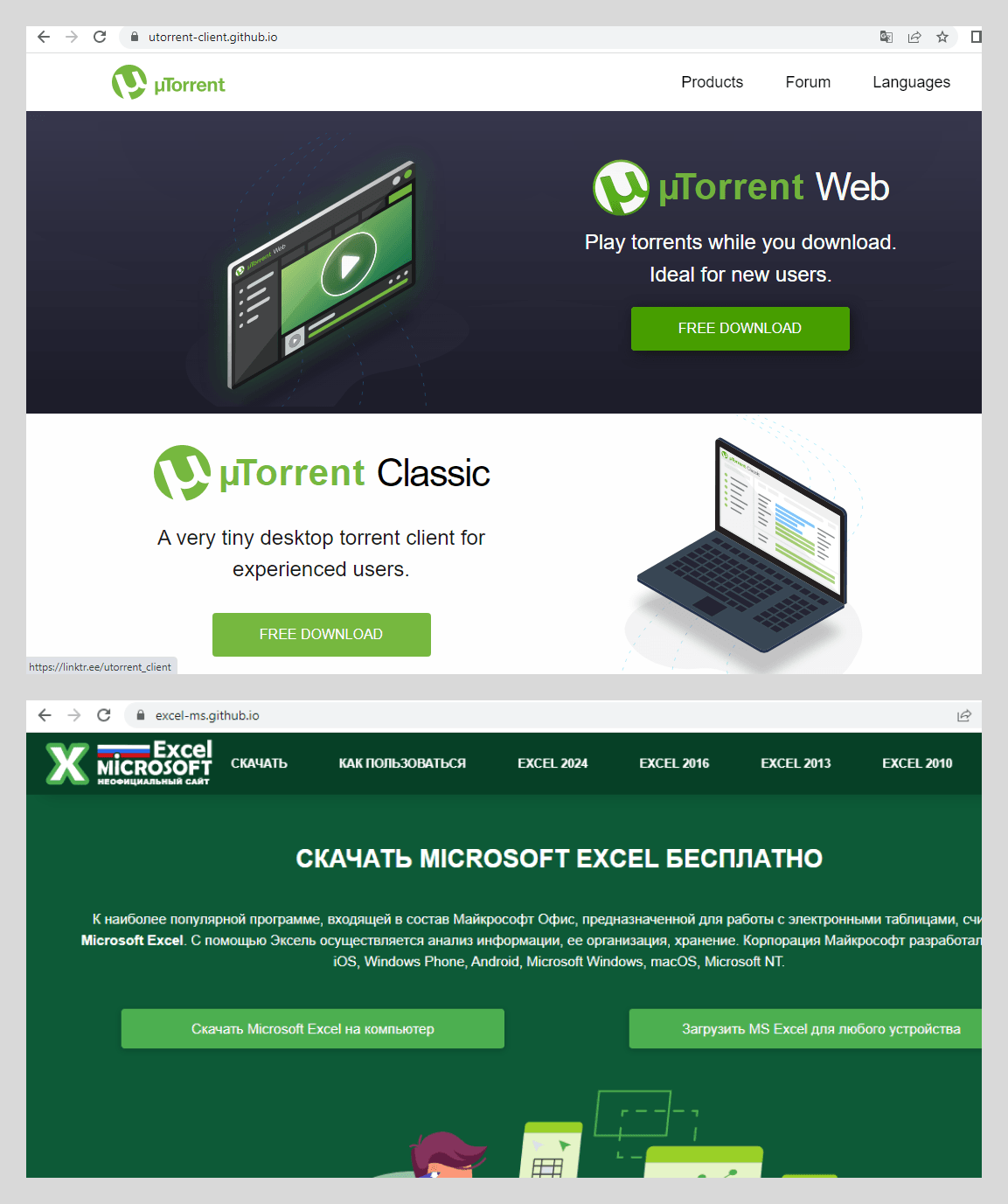
    We are quite sure that this campaign was a global one, but in this article, we’ll focus on an infection chain that, according to our telemetry, was targeting mainly Russian-speaking users. The attackers distributed the malicious files using websites for downloading popular software (uTorrent, Microsoft Office, Minecraft, etc.) for free. These websites were shown to users in the top search results in Yandex. Malware was also distributed through Telegram channels targeted at crypto investors and in descriptions and comments on YouTube videos about cryptocurrency, cheats and gambling.

    Infection

    The attackers were advertising their websites in Yandex search results. Users would see these malicious sites in the top results when searching for resources freely distributing popular software like uTorrent, MS Excel, MS Word, Minecraft, Discord and so on.

    Links to malicious websites in Yandex search results

    The frontend of these websites is a copy of either the official software website or a known piracy website distributing this kind of software:

    Malicious websites

    The attackers are running multiple Telegram channels distributing the malware in question. These channels are most definitely targeted at cryptocurrency owners or cheating gamers: they are offered to download specific software that presumably might be of interest to them. To prevent anyone trying to disclose information about these channels and the fraudulent activity of their creators, the administrators disabled message forwarding, screenshots, and previews of these channels in the Telegram web-version.

    Malware in the attackers’ Telegram channel

    Even more, the malware was also distributed via YouTube. The attackers uploaded numerous videos in English from multiple accounts which were presumably stolen. It’s also possible that the video content was downloaded from other YouTube channels and reuploaded without the authors’ consent. In the video description and in the top comment the attackers left links to their resources and instructions on how to launch the malware. Some of these links redirected users immediately to malicious websites, while others led to the aforementioned Telegram channels. We have also seen links to known IP logging websites, allowing the malicious actors to collect the IP addresses of anyone who follows the link and gets redirected to the malware-carrying website.

    Examples of videos with malicious links in their description or comments

    Comment with a link to a malicious Telegram channel

    Persistence and defense evasion

    After visiting the attackers’ website or channel, users might download a ZIP file being falsely advertised as popular software. Inside the archive is an MSI file and a TXT file with a password required for installation. There are also instructions on how to install the software, in which the attackers recommend disabling any installed antivirus and Windows Defender beforehand. In many cases, the instructions and the password are also provided on the websites and channels from which the user downloaded the malicious archive.

    Content of text file

    When launched, the MSI file asks for the password from the TXT file, which is one of the first countermeasures against sandbox analysis. If the user specifies the right password, the CustomAction field value of the MSI file is executed — this is effectively a VB script. This script launches a BAT file which extracts the next element of the attack chain from an encrypted archive. The first step is to escalate privileges by adding another BAT file to autorun, granting SYSTEM privileges for a single execution. After that, the system reboots.

    CustomAction field value in the MSI file

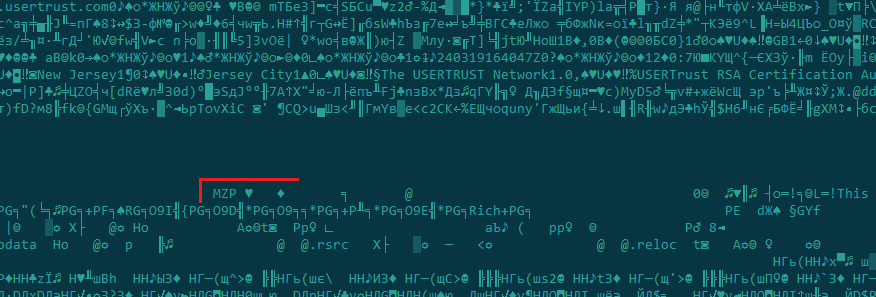
    The BAT file from autorun extracts the encrypted RAR archive and runs the “start” command with two DLL files as arguments — these were previously extracted from the archive. One of these files is a legitimate AutoIt interpreter and the second is a legitimate dynamic library with a valid digital signature. The malicious payload is an A3X script which was compiled into an EXE file and injected right inside the second DLL file signature.

    Malicious payload hidden inside a legit dynamic library signature

    This technique is interesting for two reasons. First, the A3X script is added to the signature in such a way that its validity remains intact and the whole file is still considered as signed, even with the payload. Such a malicious addition is almost impossible to detect without file content analysis. Second, the AutoIt interpreter has an interesting way of reading files that were specified in its launch argument. The file is scanned for a specific AutoIt signature which is present only in compiled scripts, and all other contents of the file are ignored. This behavior allows the attackers to hide their malicious payload anywhere in the file where it won’t be harmful for the container itself.

    Signature at the beginning of the A3X script

    Placing malicious payloads in an arbitrary section of a file is not new. Such techniques have been used not only with AutoIt, but with other platforms too. But what makes this attack stand out is the bypass of signature verification, making it possible for the payload-bearing file to seem legitimate.

    File with payload successfully bypasses signature verification

    If the “start” command failed, the BAT file removes the entire directory with the installed files, including itself. Otherwise, the malicious A3X implant is launched, which checks all active processes in attempt to find anything related to debugging or anti-malware products. If anything is found, the script immediately exits, as you can see in the snippet of deobfuscated code below.

    Security process name check by malicious implant

    The compiled A3X script contains multiple FileInstall function calls. This function takes two arguments: a path to the file that will be installed, and its destination path. Before compilation, this call just copies the file from its source path to its destination, but during the compilation the interpreter stores the files for installation right inside the compiled script.

    The resulting file contains not only the executable code itself, but also additional malicious files which will be installed directly from the implant. These files are required for persistence and to execute the next steps of the infection chain. The files are installed to the following paths:

    1

    2

    3

    4

    5

    6

    7

    8

    9

    10

    11

    12

    13

    14

    15

    16

    17

    18

    19

    C:ProgramDataNUL..libssl–1_1.dll

    C:ProgramDataNUL..vcruntime140.dll

    C:ProgramDataNUL..libcrypto–1_1.dll

    C:ProgramDataNUL..StartMenuExperienceHost.exe

    C:ProgramDataAUX..ShellExt.dll

    C:ProgramDataAUX..utshellext.dll

    C:ProgramDataClassic.{BB64F8A7–BEE7–4E1A–AB8D–7D8273F7FDB6}nun.bat

    C:ProgramDataClassic.{BB64F8A7–BEE7–4E1A–AB8D–7D8273F7FDB6}ShellExt.dll

    C:ProgramDataClassic.{BB64F8A7–BEE7–4E1A–AB8D–7D8273F7FDB6}utshellext.dll

    C:ProgramDataClassic.{BB06C0E4–D293–4f75–8A90–CB05B6477EEE}nun.bat

    C:ProgramDataClassic.{BB06C0E4–D293–4f75–8A90–CB05B6477EEE}ShellExt.dll

    C:ProgramDataClassic.{BB06C0E4–D293–4f75–8A90–CB05B6477EEE}utshellext.dll

    C:ProgramDatainsta.bat

    C:ProgramDataDistribution..ShellExt.dll

    C:ProgramDataDistribution..utshellext.dll

    C:ProgramDataOedistKun.bat

    C:ProgramDataRedistOun.bat

    C:ProgramDataUedistEun.bat

    C:ProgramDataJedistQun.bat

    For persistence purposes, the directories containing the installed files have system, hidden and read-only attributes. In addition, using the icacls utility, the implant forbids all users across all domains to remove these folders, change their permissions, own them, add any files or subdirectories, write to them any attributes (including extended ones), or remove files from them.

    Files are copied to directories with unusual names for a reason. For example, the folder name “Classic.{BB64F8A7-BEE7-4E1A-AB8D-7D8273F7FDB6}” is treated specially by Windows Shell: Explorer will find the GUID in its name and treat it as a link — in this case to the Action Center. As a result, the user will not be able to view the contents of the directory.

    Malicious directory in Explorer

    After installing all the necessary files, the implant establishes persistence using WMI by creating filters which are activated by common events — common enough to guarantee filter activation. For each created filter, a polling frequency is specified. When a filter is activated, a specific command is executed using the __FilterToConsumerBinding class.

    • Once every three minutes, the netcat utility masked as StartMenuExperienceHost.exe is launched with the C&C address of the attackers (sportjump[.]ru) and “-e cmd.exe” as its arguments. It is then used as a reverse shell by the attackers.
    • Once every five to ten minutes, files named “nun.bat” are executed. They are copies of the same file which starts the next step of the infection chain. The attackers created two copies to increase the chance of malware execution, but if there are no outages, both of them are launched.
    • Once every fifteen minutes, the next step of the infection chain is launched directly via the “start” command.

    All these methods are used again for a better persistence by launching the “insta.bat” file right before the end of the A3X implant execution.

    Launch of the netcat utility

    Persistence is established not only through WMI; the implant also directly starts netcat, the “nun.bat” files, and the “start” command. After that, it also abuses the registry keys “Image File Execution Options”, “Debugger” and “MonitorProcess” with the same goals.

    One of the most interesting things about some variants of the malware is the download and use of the Wazuh SIEM agent for remote access and telemetry harvesting. To ensure that the attackers can execute any arbitrary command on the victim’s device, during the agent installation, the “remote_commands” option is set.

    Installation and launch of the Wazuh agent

    The first stage of the A3X implant collects the following information: computer name, username, OS version and architecture, CPU name, data about the GPU and installed AV software. All this information along with the current time is sent to a special Telegram bot chat controlled by the attackers. We’ve also seen some of the malware variants sending a screenshot of the user’s desktop or installing a malicious browser extension, which may replace cryptocurrency wallets in the clipboard.

    Malicious browser extension

    The next stage of the infection chain consists of two DLL files, that use the same technique as the first stage: a legitimate AutoIt interpreter and another A3X implant, located in the signature of the legitimate dynamic library. This implant is the final payload in the malware variant described here. It injects into a newly created explorer.exe process memory an open-source miner named SilentCryptoMiner, which contains the URL of the attacker’s mining configuration. This configuration specifies the cryptocurrency to be mined, the wallet, and so on. In the analyzed variants, we could see that the attackers mostly use anonymous cryptocurrencies like Monero or Zephyr.

    Example of the miner configuration

    Aside from its main purpose of generating cryptocurrency, SilentCryptoMiner can also hide its own activity from the processes specified in the “stealth-targets” argument and stop processes from the “kill-targets” process names list.

    Attack geography

    Most of the attacks with this infection chain targeted Russian users (87.63%). After that, the other top ten countries with the highest number of users affected by these attacks were Belarus, India, Uzbekistan, Kazakhstan, Germany, Algeria, Czech Republic, Mozambique, and Turkey.

    TOP 10 countries where users were affected by the described infection chain, June — August 2024 (download)

    Conclusion

    The attack described in this article vividly illustrates the fact that even mass campaigns can be quite complex and open up a wide range of opportunities for attackers. As a result of the multistage infection chain, the attackers can establish persistence in users’ systems in multiple ways, gaining full access. Even though the main goal of the attackers is to make profit by stealthily mining cryptocurrency, some variants of the malware can perform additional malicious activity, such as replacing cryptocurrency wallets in the clipboard and taking screenshots. The most interesting action in this attack was the implementation of unusual techniques like using an SIEM agent as backdoor, adding the malicious payload to a legitimate digital signature, and hiding directories containing malicious files.

    It’s important to mention that the websites, videos, and Telegram channels created by the attackers primarily target users seeking free versions of popular software or videogame cheats. This audience makes an easy target for the attackers because they are open to installing unofficial software from obscure sources and disabling security measures.

    Our products detect this malware with the following names:

    • HEUR:Trojan-Dropper.OLE2.Agent.gen
    • HEUR:Trojan.BAT.Agent.gen
    • HEUR:Trojan.VBS.Agent.gen
    • Trojan.Script.AutoIt.ak
    • Trojan.BAT.Agent.cix
    • Trojan.BAT.Miner.id
    • HEUR:Trojan.Multi.Agent.gen
    • PDM:Trojan.Win32.Generic

    MITRE ATT&CK Matrix

    Tactic Technique ID Technique
    Resource Development T1608.006 Stage Capabilities: SEO Poisoning
    T1608.001 Stage Capabilities: Upload Malware
    Execution T1204.001 User Execution: Malicious Link
    T1204.002 User Execution: Malicious File
    T1059.010 Command and Scripting Interpreter: AutoHotKey & AutoIT
    T1059.003 Command and Scripting Interpreter: Windows Command Shell
    T1059.005 Command and Scripting Interpreter: Visual Basic
    Persistence T1546.012 Event Triggered Execution: Image File Execution Options Injection
    T1546.003 Event Triggered Execution: Windows Management Instrumentation Event Subscription
    Privilege Escalation T1053.005 Scheduled Task/Job: Scheduled Task
    Defense Evasion T1055 Process Injection
    T1562.001 Impair Defenses: Disable or Modify Tools
    T1497 Virtualization/Sandbox Evasion
    T1027.009 Obfuscated Files or Information: Embedded Payloads
    T1027.010 Obfuscated Files or Information: Command Obfuscation
    T1036.008 Masquerading: Masquerade File Type
    T1564.001 Hide Artifacts: Hidden Files and Directories
    Discovery T1518.001 Software Discovery: Security Software Discovery
    T1033 System Owner/User Discovery
    T1082 System Information Discovery
    T1497 Virtualization/Sandbox Evasion
    Collection T1113 Screen Capture
    Impact T1496 Resource Hijacking
    Exfiltration T1041 Exfiltration Over C2 Channel

    Indicators of compromise

    Hashes
    b5b323679524d52e4c058b1a3dd8dee7
    4efa8ca01d7c566ff1b72f4ebf57cf2c
    10f888a9aa8082651adeff4790675fd5
    30dd26075a5ca7a4861e9214a99d0495
    60efc41c30fd9ab438e88c6011df5c38
    961fa114e9eb92016977940f7c97cdd9
    1457e18b453d8cefc34047e1b0fbf76f
    284418b6a9c70cc30ef14df3a87c24da
    5788631016d8bc495f4f2614f9a7bbe0
    a9bc00e5e8a17df95bd5b8c289a12b31
    a9bd813679517c846dcf36454baa6170
    a99f3f8736d7d3001aa5eb6202123948
    a802ce130be6546b76d4b54f72d14645
    ae9e83d1031462cb5e58b4525036670c
    b25f9490f6d80f9de5a9c02cc344f9f9
    cffc70e4fb7363024fcc3590755fa846
    e9154a7613a8f8baf67ec3b696c9cb12
    f213f94729b294c01a0df21800c4e395
    2e68f4438ce59c868af01b535c98060d
    839471243f9c4a294c42fabf636f7cad
    4b0d76262dd82985d330b02190a880c0
    1a5d955be79046a3288b869e44e87404
    f8342fd3e32dcf9832dff3e923ef530b
    20b6ac10f657963245940c9bcd25a346
    33c7c22e33e134ec3ddfc6be8ee1f1ee
    2e4146c1a93c0bfe0f4e9ea53b8da7ee
    827eca9ec457f3c5180f602832f44955
    e3b6142df6a7c73a99736082fbae2fa6
    4bdcbc7ec1929d9b1ebcc4d01d605b05
    0da6e1036ca5d8231ee94a4db8c48728
    098872e9e39bd4cd0e4debd4b397b555
    0305f8a9dee464f56023411e7b0924df
    be8b6452aa874904f116f9b7cdfe343b
    6c0416f719ceca15f9e9c4f210c64fb0
    25b90fa3b21875157c6f33b7e1b6e8d7
    14b7429205955056f1763553f82fe244

    URL-addresses
    excel-ms.github[.]io/Windows/MS-Excel.zip
    utorrent-client.github[.]io
    gta-5rp.github[.]io/Windows/GTArp.zip
    mssg[.]me/eahcu
    linktr[.]ee/excel_ms
    linktr[.]ee/utorrent_client
    nyaera[.]ru/wp-includes/uploads/art/utorrent.zip
    nyaera[.]ru/wp-includes/uploads/My/MS-Excel.zip
    github[.]com/lidiyakamalova89/www/raw/main/Ver.1.4.1.zip
    raw.githubusercontent[.]com/lidiyakamalova89/www/main/Ver.1.4.1.zip
    raw.githubusercontent[.]com/radominator7204/dsz/main/Install.zip
    sportjump[.]ru
    gamesjumpers[.]com
    gamejump[.]site
    alljump[.]ru
    pastebin[.]com/raw/F87y7zJV
    pastebin[.]com/raw/uU34Qunt
    rentry[.]co/mi9fomgo/raw

    MIL OSI Economics –

    January 23, 2025
  • MIL-Evening Report: There’s a renewed push to scrap junior rates of pay for young adults. Do we need to rethink what’s fair?

    Source: The Conversation (Au and NZ) – By Kerry Brown, Professor of Employment and Industry, School of Business and Law, Edith Cowan University

    NT_Studio/Shutterstock

    Should young people be paid less than their older counterparts, even if they’re working the same job? Whether you think it’s fair or not, it’s been standard practice in many industries for a long time.

    The argument is that young people are not fully “work-ready” and require more intensive employer support to develop the right skills for their job.

    But change could be on the horizon. Major unions and some politicians are pushing for reform – arguing “youth wages” should be scrapped entirely for adults.

    Why? They say the need to be fairly paid for equal work effort, as well as economic considerations such as the high cost of living and ongoing housing crisis, mean paying young adults less based on their age is out of step with modern Australia.

    So is there a problem with our current system, and if so, how might we go about fixing it?

    What are youth wages?

    In Australia, a youth wage or junior pay rate is paid as an increasing percentage of an award’s corresponding full adult wage until an employee reaches the age of 21.

    This isn’t the case in every industry – some awards require all adults to be paid the same minimum rates.

    But for those not covered by a specific award, as well as those working in industries including those covered by the General Retail Industry Award, Fast Food Industry Award and Pharmacy Industry Award, employees younger than 21 are not paid the full rate.

    Why pay less?

    Conventionally, junior rates have been thought of as a “training wage”. Younger people are typically less experienced, so as they gain more skills on the job over time, they are paid a higher hourly rate.

    But there are a few key problems with this approach, which may not be relevant given many employers’ expectations for their workers to start “job-ready” and a lack of consistency in the training they provide.

    Training up and developing skills is an important part of building any career. But it isn’t always provided by their employers.

    Many young adults undergo training prior to starting work and at their own expense.
    Best smile studio/Shutterstock

    Many young workers train themselves in job-related technical education and short courses, often at their own expense and prior to starting work.

    Employers reap the benefit of this pre-employment training and so a “wage discount” for younger workers may be irrelevant in this instance.

    None of this is to say employers aren’t offering something important when they take on young employees.

    Younger workers coming into employment relatively early have access to more than just a paid job, but also become part of a team, with responsibilities and job requirements that support “bigger-picture” life skills.

    Those who employ them may be contributing to their broader social and cultural engagement, something that could be considered part of a more inclusive training package. Whether that justifies a significant wage discount is less clear.


    Read more:
    Why real wages in Australia have fallen while they’ve risen in most other OECD countries


    Calls for a rethink

    There are growing calls for a rethink on the way we compensate young people for their efforts.

    An application by the Shop Distributive and Allied Employees’ Association – the union for retail, fast food and warehousing workers – seeks to remove junior rates for adult employees on three key awards. This action will be heard by the Fair Work Commission next year.

    Sally McManus, Secretary of the Australian Council of Trade Unions, said the peak union body will lobby the government to legislate such changes if this application fails. The Greens have added their support.

    That doesn’t have to mean abolishing youth wages altogether. But 21 years of age is a high threshold, especially given we get the right to major adult responsibilities such as voting and driving by 18.

    A transition strategy could consider gradually lowering this threshold, or increasing the wage percentages over time.

    Lessons from New Zealand

    We wouldn’t be the first to make such a bold change if we did.

    Our geographically and culturally close neighbour, New Zealand, has already removed the “youth wage” – replacing it with a “first job” rate and a training wage set at 80% of the full award rate in 2008.

    A common argument against abolishing youth wages – and increasing the minimum wage in general – is that it will stop businesses hiring young people and thus increase unemployment.

    But a 2021 study that examined the effects of New Zealand’s experience with increasing minimum wages – including this change – found little discernible difference in employment outcomes for young workers.

    The authors did note, however, that New Zealand’s economic downturn post-2008 had a marked effect on the employment of young workers more generally.

    New Zealand has already taken major steps in reforming junior pay rates.
    Stephan Roeger/Shutterstock

    What’s fair?

    It’s easy to see how we arrived at the case for paying younger adults less. But younger workers should not bear the burden of intergenerational inequity by “losing out” on wages in the early part of their working life.

    The debate we see now echoes the discussions about equal pay for equal work value run in the 1960s and ‘70s in relation to women’s unequal pay.

    We were warned that paying women the same as men would cause huge economic dislocation. Such a catastrophe simply did not come to pass.

    Kerry Brown is a member of the National Tertiary Education Union.

    – ref. There’s a renewed push to scrap junior rates of pay for young adults. Do we need to rethink what’s fair? – https://theconversation.com/theres-a-renewed-push-to-scrap-junior-rates-of-pay-for-young-adults-do-we-need-to-rethink-whats-fair-240548

    MIL OSI Analysis – EveningReport.nz –

    January 23, 2025
  • MIL-OSI Asia-Pac: InnoCarnival 2024 to run from October 26 to November 3 (with photos)

    Source: Hong Kong Government special administrative region

    InnoCarnival 2024 to run from October 26 to November 3 (with photos)
    InnoCarnival 2024 to run from October 26 to November 3 (with photos)
    ********************************************************************

         Organised by the Innovation and Technology Commission (ITC), the InnoCarnival 2024 (IC 2024) will be held from October 26 to November 3 at the Hong Kong Science Park with the theme of “Let’s Sail with Innovation and Technology”. The event is receiving support from over 75 programme partners, including local universities, research and development centres, government departments and other organisations. Through an array of interesting activities, it aims to promote innovation and technology (I&T) culture. IC 2024 is also one of the Special 75 events and Highlight Events of the 75th anniversary of the founding of the People’s Republic of China.           Speaking at the media preview for IC 2024 today (October 4), the Commissioner for Innovation and Technology, Mr Ivan Lee, said that the Commission has been committed to driving the I&T development of Hong Kong and raising the awareness of I&T culture in the community. He believed that the Carnival was an annual flagship event which could foster popularity of science culture, nurture the young generation’s interest in I&T, and attract more I&T talent in the long run.            The media preview exhibited the research and development (R&D) projects of several participating teams. Project team representatives presented their inspirational ideas, R&D processes, features and functions, and project applications. These projects include the “Flexible Exoskeleton for Load Transportation”, developed by the Chinese University of Hong Kong which provides personalised assistance to the wearer when moving heavy objects to reduce back strain and muscle activity, minimising the risk of lower back pain while maximising comfort and safety; as well as the “Dye Removal from Denim Textile Wastewater by a Combinative Adsorption and Regeneration System” developed by the Hong Kong Research Institute of Textiles and Apparel (HKRITA), which is an environmental-friendly and cost-effective indigo dye treatment method using alumina-based adsorbents as efficient dye-adsorbent materials to remove indigo dye from textile wastewater.           In addition, representatives of Carmel Divine Grace Foundation Secondary School, introduced their anti-phone scam invention for seniors, “ElderDefender”. Equipped with speech recognition technology, the device would make use of artificial intelligence and big data technology to scan phone message to reduce phone scams by issuing a visual alert. This invention earned awards in the Hong Kong Student Science Competition organised by the Hong Kong Federation of Youth Groups, as well as the Second City I&T Grand Challenge organised by the ITC together with the Hong Kong Science and Technology Parks Corporation.           Exhibition booths will be set up at the Hong Kong Science Park to showcase local I&T achievements, some of them with interactive games. Moreover, a diverse line-up of about 150 workshops and webinars across various subjects including artificial intelligence and energy conservation will be available during the carnival.            Prototypes of some of the winning I&T solutions of the Second City I&T Grand Challenge will also be displayed for trial in the IC 2024. To promote an I&T culture and enhance the application of I&T in the community, the second City I&T Grand Challenge was launched in March this year under the theme of “Hong Kong’s Got I&T”. It invited submissions from different sectors of the community to develop I&T solutions focusing on two subjects, namely “I&T for Nature (Yama)” (improving the operation and management of country parks and campsites, and enhancing hikers’ experiences in nature) and “I&T for Community (Community Wellness)” (enhancing support for carers). After rounds of assessment and pitching, over 50 awards under the four categories, which were the Primary School Group, the Secondary School Group, the University/Tertiary Institute Group and the Open Group, were presented at the Grand Pitch in August this year.           All IC 2024 activities are free of charge. Some of the activities require preregistration. Details are available at the thematic webpage (innocarnival.hk). Members of the public are most welcome to join.

     
    Ends/Friday, October 4, 2024Issued at HKT 17:35

    NNNN

    MIL OSI Asia Pacific News –

    January 23, 2025
  • MIL-OSI Europe: OSCE donates specialized vehicles and equipment to strengthen Moldovan Border Police

    Source: Organization for Security and Co-operation in Europe – OSCE

    Headline: OSCE donates specialized vehicles and equipment to strengthen Moldovan Border Police

    Donation ceremony of specialized vehicles, analytical software and doculus lumus magnifiers, Chisinau, Moldova, 3 October 2024. (OSCE) Photo details

    The OSCE provided specialized vehicles and equipment to the General Inspectorate of Border Police during a ceremony held on 3 October 2024 in Chisinau, Moldova. This was done in support of Moldova’s efforts in preventing and addressing transnational organized crime.
    The donation includes three K9 specialized vehicles, software, and Doculus Lumus magnifiers, used to check identification documents. These items will improve the Moldovan Border Police’s rapid response capabilities, identify advanced threat and risk analysis, and aid in the detection of forged documents at border crossing points.
    “I am positive that the OSCE donation of specialized vehicles for the K9 Unit, software tools for the Risk Analysis Department, and magnifiers for first-line border officers will further support the Moldovan Border Police in effectively identifying and mitigating threats at the border,” said Izabela Sylwia Hartmann, Deputy Head of the OSCE Mission to Moldova.
    “The specialized vehicles and equipment will enable the Border Police to transport police service dogs efficiently and enhance their capacity to detect and prevent cross-border crimes,” said Siv-Katrine Leirtroe, Head of the Border Security and Management Unit of the OSCE Transnational Threats Department. “Despite increasing challenges, the Moldovan Border Police has demonstrated commendable resilience and unwavering commitment, and we are here to support them in enhancing their operational capabilities.”
    “This donation represents a significant contribution to enhancing our operational capabilities to safeguard the borders of the Republic of Moldova,” said Diana Salcuțan, Deputy Head of the General Inspectorate of Border Police. “We highly appreciate the OSCE’s support in strengthening our ability to combat cross-border crimes and ensure the security and stability of our country and the wider region.”
    As part of its ongoing efforts, the OSCE will facilitate a study visit for the K9 Unit of the Moldovan Border Police to France in November 2024. Training cycles on detecting forged documents with a five-day train-the-trainers courses will also continue in January 2025.
    These assets were donated as part of the “Support to the Law Enforcement Agencies in Moldova in Response to the Security Challenges in the Region” and the “Increasing Operational Awareness of Border Security and Management Officers to Detected Forged Documents and Impostors at border crossing points of the OSCE participating States and Partners for Co-operation” projects. These assets were funded through extra-budgetary assistance from the United States of America.

    MIL OSI Europe News –

    January 23, 2025
  • MIL-OSI Africa: Deputy President confident his working visit will attract international investors

    Source: South Africa News Agency

    Deputy President Paul Mashatile says he is confident that his working visit to the United Kingdom and Ireland will improve trade and investment relations, which have been stagnant for years. 

    The Deputy President spoke during an engagement with the South African Chamber of Commerce (SACC) in London on Thursday. The SACC is an umbrella organisation and conduit for trade, community and investment into and out of South Africa.

    The country’s second-in-command is in the United Kingdom for the second leg of his working visit to improve trade and investment relations between the nations and to woo investors following his travels to Ireland. 

    READ | SA, Ireland eye improved trade

    His interactions were centred on various issues, including the Government of National Unity (GNU), energy, infrastructure, and the measures to foster a favourable environment for trade and investment.

    The country’s second-in-command reiterated that the political environment in South Africa is stable for investment because of the newly established GNU, which has been operational for less than 100 days and is already yielding results.

    “Our numerous meetings with potential investors have revealed a shift in their attitudes and perceptions towards South Africa, indicating an optimistic outlook. 

    “Our alliance, based not on personal sentiments but on the aspiration to enhance South Africa and, consequently, the lives of our citizens, will undoubtedly sustain the GNU administration for five years.” 

    However, he said they will measure the GNU’s success based on the number of employment and entrepreneurs they assist in establishing sustainable enterprises.

    “Businesses hope to continue working with the government in the public-private partnership that has reduced load shedding, improved transport and logistics infrastructure, and strengthened national capacity to combat crime and corruption,” the Deputy President said. 

    Shifting his focus to energy, he stated that investors have demonstrated that ending the load shedding that began in 2007 is the most positive news. 

    “They confirmed that it allows them to conduct business without uncertainty. The elimination of power outages was largely due to a series of measures implemented by the State-owned power utility, Eskom and government over the past two years.”

    He also told the SACC that government was addressing the obstacles in the freight logistics system that continue to impede competitiveness and undermine economic growth. 

    “We are on a mission to create and sustain a bankable investment pipeline of priority, credible, quality and high-impact projects that span the country through Infrastructure South Africa, the primary driver of the National Infrastructure Plan 2050,” he explained. 

    Mashatile believes that the SACC plays an essential role in engaging with businesses to promote bilateral trade and investment links between the United Kingdom and South Africa. 

    “It is our responsibility as leaders in our respective regions to foster an atmosphere that encourages entrepreneurship, fosters innovation, and drives inclusive growth.”

    In addition, he expressed his desire to increase South Africa’s exports of valuable goods and services to the United Kingdom. 

    “It is excellent that the two countries already exchange food and beverages. It is critical that we collaborate to create strategies to accelerate international trade and investment.”

    Mashatile announced that the State was simplifying regulatory procedures through the Red Tape Task Team, making it easier for businesses to operate and invest locally.

    READ | Govt determined to deal with SA’s mounting challenges – Mashatile

    He concluded his address with South Africa’s stance on peace and stability in Africa and globally, stressing that the nation is anti-war and pro-peace. 

    “We reaffirm our commitment to the inviolability of sovereignty and the importance of national security.

    “More immediately, we support [silencing the guns]. We want to see peaceful and mutual coexistence between Russia, Ukraine, Israel, Sudan, and the rest of the globe, because war is terrible for business.” – SAnews.gov.za

    MIL OSI Africa –

    January 23, 2025
  • MIL-OSI United Nations: New UN regulation paves way for deployment of driving assistance systems worldwide

    Source: United Nations Economic Commission for Europe

    A new United Nations Regulation on Driver Control Assistance Systems (DCAS), adopted by the UNECE World Forum for the Harmonization of Vehicle Regulations (WP.29) at its session in March 2024, has entered into force. 

    Regulation No. 171 defines DCAS as systems which assist the driver in controlling the longitudinal and lateral motion of the vehicle on a sustained basis, while not taking over the entire driving task.  DCAS are categorized as Automated Driving Systems corresponding to SAE Level 2. This means that while using such systems, the driver retains responsibility for the control of the vehicle and must therefore permanently monitor the surroundings as well as vehicle/system’s performance to be able to intervene if needed.   

    Regulation No. 171, which entered into force on 30 September, specifies DCAS’ safety and performance requirements. In order to ensure that drivers remain available and engaged, it mandates effective warning strategies if a lack of driver engagement is detected. 

    To address drivers’ potential overreliance on some assistance systems, it also requires vehicle manufacturers to proactively communicate to users via all available means, including online, in advertising and at dealerships when purchasing a vehicle, about the limitations of DCAS and drivers’ responsibility when using the systems. 

    François Roudier, Secretary General of the International Organization of Motor Vehicle Manufacturers (OICA), commented: “This new regulation on DCAS gives Automobile Manufacturers the necessary flexibility to propose enhanced Level 2 assisting systems to motorists worldwide. Increased assistance will go hand-in-hand with improved safety on the road, to the benefit of users, manufacturers and certification authorities alike.”  

    Richard Damm, Chair of the WP.29 Working Party on Automated/Autonomous and Connected Vehicles (GRVA), said: “This new UN Regulation on DCAS is an important step for road traffic safety and the deployment of safe technologies assisting drivers. It ensures significantly improved driver monitoring in the use of assistance systems compared to current regulatory provisions, enhancing the involvement of the driver in the driving task. It will thus pave the way towards higher automation levels in the future.” 
     

    Note to editors 

    About autonomous driving at the World Forum for Harmonization of Vehicle Regulations   

    The World Forum for Harmonization of Vehicle Regulations, hosted by UNECE, is the intergovernmental platform responsible for the regulatory frameworks regarding the safety and environmental performance of vehicles, their subsystems and parts.    

    Its dedicated Working Party on Automated/Autonomous and Connected Vehicles (GRVA) brings together countries including the EU, USA, China, Japan and Canada to develop internationally harmonized regulations, resolutions and guidelines governing automated driving functionalities, such as provisions related to the dynamics of vehicles (braking, steering), Advanced Driver Assistance Systems, Automated Driving Systems well as Connected Vehicles and Cyber Security provisions. The group currently supervises 8 informal work groups (IWGs) and tasks forces.   

    MIL OSI United Nations News –

    January 23, 2025
  • MIL-OSI Asia-Pac: CE, principal officials get flu jab

    Source: Hong Kong Information Services

    Chief Executive John Lee today led Principal Officials to receive the seasonal influenza vaccination (SIV) and called on the public to get vaccinated early for better protection before the winter flu season.

    Mr Lee and some of the officials also received the COVID-19 booster jab at the same time.

    The Chief Executive said it is the best time to receive the SIV for effective protection in the coming year against the influenza strains predicted by the World Health Organization in preparation for the impending winter and summer influenza seasons.

    He noted that through the concerted efforts of various stakeholders in the community under the Government’s leadership, 1.87 million doses were administered under various government vaccination programmes in the 2023-24 season – a record high 20% increase from the 2022-23 season.

    “I hope the vaccination rate in this season can reach even greater heights so as to build a more robust protection barrier in society to safeguard citizens’ health.”

    Mr Lee added that high-risk priority groups should also receive an additional COVID-19 booster six months after the last dose or COVID-19 infection, whichever is later, to enhance protection and reduce the risks of serious complications and death.

    Secretary for Health Prof Lo Chung-mau, who had earlier received the SIV and COVID-19 vaccination, was also present to show his support.

    Prof Lo said: “Various SIV programmes commenced on September 26 to provide free or subsidised SIV for eligible people. I urge members of the public to act now and receive the SIV in October.”

    Special arrangements were made under the Seasonal Influenza Vaccination School Outreach Programme this year, wherein kindergartens and childcare centres can choose both injectable inactivated influenza vaccines and live attenuated influenza vaccines (LAIV) (ie nasal vaccines) for the same or different outreach vaccination activities.

    Additionally, a pilot scheme was rolled out in which LAIV will be provided for the first time to primary and secondary schools that had indicated earlier this year their preference for arranging LAIV for their students.

    To offer greater convenience for receiving the SIV this year, the Government specifically designated additional vaccination venues for citizens’ selection.

    MIL OSI Asia Pacific News –

    January 23, 2025
  • MIL-OSI Russia: 13 Polytechnicians Among the World’s Most Cited Scientists

    MILES AXLE Translation. Region: Russian Federation –

    Source: Peter the Great St Petersburg Polytechnic University – Peter the Great St Petersburg Polytechnic University –

    Elsevier has published updated lists of the most cited scientists in the world over the past year and throughout my entire scientific career.

    Stanford University (USA) annually collects and analyzes information from the international scientometric database Scopus about the most authoritative scientists. When compiling the ratings, both qualitative and quantitative citation metrics are taken into account. The obtained information is posted on the Elsevier website. According to the company, the scientists presented in the lists make up 2% of the most influential scientific specialists. Among them are 13 SPbPU scientists.

    Nine of the university’s researchers were included in both rankings at once: the most cited authors at the end of 2023 and for their entire research career. The greatest successes were achieved by:

    Nikolay Vatin is the director of the Scientific and Technological Complex “Digital Engineering in Civil Engineering”, chief researcher at the Laboratory of Protected and Modular Structures, Professor at the Higher School of Advanced Digital Technologies NIS “Digital Engineering”, Doctor of Technical Sciences;
    Vladimir Mostepanenko is the chief researcher at the Scientific Laboratory “Micro- and Nanoelectronic Systems on a Chip” at the NIS “Digital Engineering”, Doctor of Physical and Mathematical Sciences;
    Vadim Davydov is a leading engineer at the Center for New Materials of the Research and Modeling of Materials Research Center of the Institute of Mechanical Engineering, Materials and Transport, Doctor of Physical and Mathematical Sciences;
    Galina Klimchitskaya is the chief researcher at the Scientific Laboratory “Micro- and Nanoelectronic Systems on a Crystal” at the NIS “Digital Engineering”, Doctor of Physical and Mathematical Sciences;
    Anatoly Popovich – Director of the Institute of Mechanical Engineering, Materials and Transport, Professor of the Research Center “Structural and Functional Materials” of the Institute of Mechanical Engineering and Technology, Chief Researcher of the Laboratory “Synthesis of New Materials and Structures” of the Advanced Engineering School “Digital Engineering”, Doctor of Technical Sciences;
    Lev Utkin is a professor at the Higher School of Artificial Intelligence Technologies at the Institute of Computer Science and Cybersecurity; Leading Researcher at the Research Laboratory “Supercomputer Technologies and Machine Learning” NIS “Digital Engineering”, Doctor of Technical Sciences;
    Anton-Jiri Krivtsov – Director of the Higher School of Theoretical Mechanics and Mathematical Physics of the Institute of Physics and Mechanics, Corresponding Member of the Russian Academy of Sciences, Doctor of Physical and Mathematical Sciences;
    Mikhail Shur is a leading researcher at the Laboratory of Computational Hydro-Aeroacoustics and Turbulence at the Scientific and Technical Complex “Mathematical Modeling and Intelligent Control Systems” of the NIS “Digital Engineering”, Candidate of Physical and Mathematical Sciences.
    Andrey Travin is a senior researcher at the laboratory “Computational hydroaeroacoustics and turbulence” of the Scientific and Technical Complex “Mathematical modeling and intelligent control systems” of the NIS “Digital Engineering”, Candidate of Physical and Mathematical Sciences.

    In addition, two Polytechnic University researchers are included in the list of the most cited researchers for the past year. The 2023 ranking includes Mikhail Strelets, head of the Computational Hydroaeroacoustics and Turbulence Laboratory at the Mathematical Modeling and Intelligent Control Systems Scientific and Technical Complex at the Digital Engineering Institute, Doctor of Physical and Mathematical Sciences, and Sergey Barykin, professor at the Higher School of Service and Trade at the Institute of Industrial Management, Economics and Trade, Doctor of Economic Sciences.

    Also, two SPbPU scientists are included in the annual list of the most cited authors by indicators for the entire career path. These are Sergey Shevkunov, a leading researcher at the Center for Technological Projects, Doctor of Technical Sciences, and Sergey Roshchupkin, a professor at the Higher School of Fundamental Physical Research of the Physics and Mechanics Institute, Doctor of Technical Sciences.

    We are proud that Polytechnics have entered the ranking of the most cited scientists in the world. This is a clear confirmation of the high level of scientific research conducted at our university and the significance of contributions to global science. Being included in such rankings is not only a sign of recognition of individual merits, but also the result of the hard work of the entire scientific team, which strives for innovation and high research standards. I am sure that many discoveries and achievements await us ahead, which will inspire students and young scientists to new achievements, – commented Vice-Rector for Research Yuri Fomin.

    Please note: This information is raw content directly from the source of the information. It is exactly what the source states and does not reflect the position of MIL-OSI or its clients.

    Please note; This information is raw content directly from the information source. It is accurate to what the source is stating and does not reflect the position of MIL-OSI or its clients.

    https://vvv.spbstu.ru/media/nevs/achivments/13-polytechnicians-among-the-most-cited-scientists-in-the-world/

    EDITOR’S NOTE: This article is a translation. Apologies should the grammar and or sentence structure not be perfect.

    MIL OSI Russia News –

    January 23, 2025
  • MIL-OSI Europe: Holy See Press Office Communiqué: Audience with the President of the Republic of Kyrgyzstan

    Source: The Holy See

    Holy See Press Office Communiqué: Audience with the President of the Republic of Kyrgyzstan, 04.10.2024

    Today, 4 October 2024, the Holy Father Francis received in audience, in the study of the Paul VI Hall, the President of the Republic of Kyrgyzstan, His Excellency Mr. Sadyr Zhaparov, who subsequently met with His Eminence Cardinal Pietro Parolin, Secretary of State of His Holiness, accompanied by His Excellency Archbishop Paul Richard Gallagher, Secretary for Relations with States and International Organizations.
    During the cordial discussions, which took place at the Secretariat of State, the good relations between the Holy See and Kyrgyzstan were evoked, and the parties focused on mutual collaboration in the fields of healthcare, educational and culture, and some aspects of the life of the local Church.
    The conversation continued with an exchange of opinions on current international affairs, with special attention to the ongoing conflicts and humanitarian issues, revealing the importance of urgent commitment to the promotion of peace.
    From the Vatican, 4 October 2024

    MIL OSI Europe News –

    January 23, 2025
  • MIL-OSI Asia-Pac: Opening remarks by SDEV on quarterly land sale programme for October to December 2024

    Source: Hong Kong Government special administrative region

    Opening remarks by SDEV on quarterly land sale programme for October to December 2024
    Opening remarks by SDEV on quarterly land sale programme for October to December 2024
    *************************************************************************************

         Following are the opening remarks by the Secretary for Development, Ms Bernadette Linn, at a media session today (October 4) on the quarterly land sale programme for October to December 2024:           Today I will introduce the Government’s Land Sale Programme in the third quarter of this financial year, that is October to December 2024.           In the third quarter, we will put up for tender two sites, namely, one residential site in Tai Wai and a site in Hung Shui Kiu, for development of Multi-storey Buildings for modern industries. Residential site           I will first briefly introduce the residential site. The site is located on Mei Tin Road, Tai Wai, expected to provide a supply of about 360 flats. This site is not among the list of sites on the Land Sale Programme we announced in February this year. This is because the technical study for this site was not yet completed back then. Upon completion of the relevant studies, we find it appropriate to include this site in the Land Sale Programme and put it up for tender in this quarter, having considered market response to the sale of residential sites in Sha Tin in the first two quarters as well as developers’ greater interest these days in smaller-scale sites well served by transportation network and amenities.            In addition, the MTR Corporation Limited (MTRCL) plans to tender in this quarter its development project in Tung Chung East Station (Package 1), bringing about 600 flats. In view of market response, the MTRCL reduced the development scale of this package to half of its previous scale when it first tendered in October 2023. The MTRCL will announce details at the time of tender invitation.           As for private development and redevelopment projects, three projects are expected to complete their lease modifications in this quarter, providing a supply of 1 235 flats. The majority of these come from a relatively large-scale in-situ land exchange application in the Fanling North New Development Area. The applicant has recently accepted the Lands Department’s Binding Basic Terms Offer for that project. This is the second land exchange case concluded after the Government revised in end-2023 the land exchange arrangements for the Enhanced Conventional New Town Approach. These in-situ land exchange applications will enhance the speed of implementing the Northern Metropolis and reduce the Government’s upfront spending on land resumption and public works while at the same time allowing the Government to receive premium revenue earlier.           To summarise, taking all the above sources of housing land supply into account, the total private housing land supply in the third quarter will support the development of around 2 200 flats.           Together with the supply from the first two quarters, the total supply for the first three quarters of this financial year is expected to support some 6 470 flats, which is close to 50 per cent of our annual supply target of 13 200 flats. This figure has not yet reflected private development projects not requiring lease modification in the third quarter, as such figures are only available at a later stage.  Industrial site           Regarding the industrial site, we will roll out shortly a site in Hung Shui Kiu for development of Multi-storey Buildings. We will continue adopting the two-envelope approach for the disposal of this site in order to demonstrate the importance we attach to the quality of such Multi-storey Buildings, with a view to achieving the Government’s policy objectives to promote development of modern industries and at the same time consolidating some of our brownfield operations.     In order to keep up with market demand, we have undertaken further engagement with the market in the past few months regarding the tender conditions of this site. Based on the market feedbacks so gathered, we will adjust the conditions of this site including downward adjustment of its plot ratio, downward adjustment of the floor area to be returned to the Government and giving a longer tender period.           Details of the tender will be announced when we commence the tender invitation for the two sites I named above, one housing site and one industrial site.           The Government will continue to sustain our effort in rolling out land in a prudent manner to meet our housing and economic development needs. 

     
    Ends/Friday, October 4, 2024Issued at HKT 18:10

    NNNN

    MIL OSI Asia Pacific News –

    January 23, 2025
  • MIL-OSI: Shell plc Announces Final Results of Exchange Offers

    Source: GlobeNewswire (MIL-OSI)

    Press Release

    October 4, 2024

    Shell plc Announces Final Results of Exchange Offers

    Shell plc (“Shell”) (LSE: SHEL) (NYSE: SHEL) (EAX: SHELL) today announced the final results of its previously announced offers to exchange (the “Exchange Offers” and each, an “Exchange Offer”) up to a maximum aggregate principal amount of $12 billion (the “Maximum Amount”) of any and all validly tendered (and not validly withdrawn) and accepted notes of twelve series issued by Shell International Finance B.V. (“Shell International Finance” and such notes, the “Old Notes”) for a combination of cash and a corresponding series of new notes to be issued by Shell Finance US Inc. (“Shell Finance US”) and fully and unconditionally guaranteed by Shell plc (the “New Notes”). A Registration Statement on Form F-4 (File Nos. 333-281941 and 333-281941-01) (the “Registration Statement”), including a prospectus, dated September 19, 2024 (the “Prospectus”), relating to the issuance of the New Notes was filed with the Securities and Exchange Commission (the “SEC”) and was declared effective by the SEC on September 30, 2024.

    As announced on September 5, 2024, Shell is conducting the Exchange Offers to migrate the existing Old Notes from Shell International Finance B.V. to Shell Finance US Inc. in order to optimize the Shell Group’s capital structure and align indebtedness with its U.S. business.

    The total aggregate principal amount of Old Notes that were validly tendered (and not validly withdrawn) and accepted for exchange in the Exchange Offers was $11,462,980,000.   The aggregate principal amount of each series of Old Notes that was accepted for exchange was based on the order of acceptance priority for such series as set forth in the table below (the “Acceptance Priority Levels”), with Acceptance Priority Level 1 being the highest and Acceptance Priority Level 12 being the lowest, subject to the applicable Minimum Size Condition and the Maximum Amount Condition (each as described in the Prospectus). Because the total aggregate principal amount of Old Notes that were validly tendered (and not validly withdrawn) as of 5:00 p.m., New York City time, on October 3, 2024 (the “Expiration Time”) exceeded the Maximum Amount, we did not accept for exchange all such Old Notes and only accepted for exchange those Old Notes as set forth in the table below under the heading “Aggregate Principal Amount Accepted.” All Old Notes validly tendered (and not validly withdrawn) as of the Expiration Time in Acceptance Priority Levels 1 through 8 satisfied the applicable Minimum Size Condition and the Maximum Amount Condition and were accepted for exchange. No Old Notes tendered in Acceptance Priority Levels 9 through 12 were accepted for exchange.

    The following table, based on information provided by D.F. King & Co. Inc., the exchange agent and information agent for the Exchange Offers, indicates, among other things, the total aggregate principal amount of Old Notes and the aggregate principal amount of each series of Old Notes validly tendered (and not validly withdrawn) and accepted for exchange in the Exchange Offers.

    Series of Old Notes Offered for Exchange Old CUSIP/ISIN
    No.
    Acceptance Priority Level  

    Aggregate Principal Amount Outstanding ($MM)

    Aggregate Principal Amount Tendered Aggregate Principal Amount Accepted  

    New CUSIP/ISIN No.

    4.375% Guaranteed Notes due 2045 822582BF8/

    US822582BF88

    1 $3,000 $2,446,755,000   $2,446,755,000 822905AA3 / US822905AA35  
    2.750% Guaranteed Notes due 2030 822582CG5/

    US822582CG52

    2 $1,750 $1,355,391,000   $1,355,391,000 822905AB1 / US822905AB18  
    4.125% Guaranteed Notes due 2035 822582BE1/

    US822582BE14

    3 $1,500 $1,192,346,000   $1,192,346,000 822905AC9 / US822905AC90  
    4.550% Guaranteed Notes due 2043 822582AY8/

    US822582AY86

    4 $1,250 $960,281,000   $960,281,000 822905AD7 / US822905AD73  
    4.000% Guaranteed Notes due 2046 822582BQ4/

    US822582BQ44

    5 $2,250 $1,764,084,000   $1,764,084,000 822905AE5 / US822905AE56  
    2.375% Guaranteed Notes due 2029 822582CD2/

    US822582CD22

    6 $1,500 $1,075,279,000   $1,075,279,000 822905AF2 / US822905AF22  
    3.250% Guaranteed Notes due 2050 822582CH3/

    US822582CH36

    7 $2,000 $1,664,464,000   $1,664,464,000 822905AG0 / US822905AG05  
    3.750% Guaranteed Notes due 2046 822582BY7/

    US822582BY77

    8 $1,250 $1,004,380,000   $1,004,380,000 822905AH8 / US822905AH87  
    3.125% Guaranteed Notes due 2049 822582CE0/

    US822582CE05

    9 $1,250 $1,037,100,000   $0 —  
    3.000% Guaranteed Notes due 2051 822582CL4/

    US822582CL48

    10 $1,000 $888,919,000   $0 —  
    2.875% Guaranteed Notes due 2026 822582BT8/

    US822582BT82

    11 $1,750 $987,472,000   $0 —  
    2.500% Guaranteed Notes due 2026 822582BX9/

    US822582BX94

    12 $1,000 $622,831,000   $0 —  
                     
    Total amount tendered and accepted in the Exchange Offers       $11,462,980,000    

    Settlement and issuance of the New Notes to be issued in exchange for Old Notes validly tendered (and not validly withdrawn) and accepted for exchange is expected to occur on October 8, 2024.

    The dealer managers for the Exchange Offers were:

    Deutsche Bank Securities Inc.

    1 Columbus Circle

    New York, New York 10019

    Attention: Liability Management Group

    Telephone: (U.S. Toll-Free): +1 (866) 627-0391

    Telephone (U.S. Collect): +1 (212) 250-2955

    Telephone (London): +44 207 545 8011

    Goldman Sachs & Co. LLC

    200 West Street

    New York, New York 10282

    Attention: Liability Management Group

    Telephone (U.S. Toll-Free): +1 (800) 828-3182

    Telephone (U.S. Collect): +1 (212) 902-6351

    Telephone (London): +44 207 774 4836

    Email: gs-lm-nyc@ny.email.gs.com

    Wells Fargo Securities, LLC

    550 South Tryon Street, 5th Floor

    Charlotte, North Carolina 28202

    Attention: Liability Management Group

    Telephone (U.S. Toll-Free): +1 (866) 309-6316

    Telephone (U.S. Collect): +1 (704) 410-4235

    Telephone (Europe): +33 1 85 14 06 62

    Email: liabilitymanagement@wellsfargo.com

    The exchange agent and information agent for the Exchange Offers was:

    D.F. King & Co., Inc.

    48 Wall Street, 22nd Floor
    New York, NY 10005
    Banks and Brokers call: +1 (212) 269-5550
    Toll-free (U.S. only): +1 (877) 783-5524
    Email: Shell@dfking.com
    By Facsimile (for eligible institutions only): +1 (212) 709-3328
    Confirmation: +1 (212) 269-5552
    Attention: Michael Horthman
    Website: http://www.dfking.com/shell

    This press release is not an offer to sell or a solicitation of an offer to buy any of the securities described herein. The Exchange Offers were made solely pursuant to the terms and conditions of the Prospectus, which forms a part of the Registration Statement.

    This press release shall not constitute an offer to sell or the solicitation of an offer to buy any securities nor will there be any sale of these securities in any state or other jurisdiction in which such offer, solicitation or sale would be unlawful prior to registration or qualification under the securities laws of any such state or other jurisdiction.

    Non-U.S. Distribution Restrictions

    European Economic Area

    The New Notes are not intended to be offered, sold or otherwise made available to and should not be offered, sold or otherwise made available to any retail investor in the European Economic Area (“EEA”). For these purposes, a retail investor means a person who is one (or more) of: (i) a retail client as defined in point (11) of Article 4(1) of Directive 2014/65/EU (as amended, “MiFID II”); or (ii) a customer within the meaning of Directive 2002/92/EC (as amended, the “Insurance Mediation Directive”), where that customer would not qualify as a professional client as defined in point (10) of Article 4(1) of MiFID II; or (iii) not a qualified investor as defined in Directive 2003/71/EC (as amended, the “Prospectus Directive”). Consequently no key information document required by Regulation (EU) No 1286/2014 (as amended, the “PRIIPs Regulation”) for offering or selling the New Notes or otherwise making them available to retail investors in the EEA has been prepared and therefore offering or selling the New Notes or otherwise making them available to any retail investor in the EEA may be unlawful under the PRIIPs Regulation. The Prospectus has been prepared on the basis that any offer of New Notes in any Member State of the EEA will be made pursuant to an exemption under the Prospectus Directive from the requirement to publish a prospectus for offers of New Notes. The Prospectus is not a prospectus for the purposes of the Prospectus Directive.

    MiFID II product governance / Professional investors and ECPs only target market—In the EEA and solely for the purposes of the product approval process conducted by any Dealer Manager who is a manufacturer with respect to the New Notes for the purposes of the MiFID II product governance rule under EU Delegated Directive 2017/593 (each, a “manufacturer”), the manufacturers’ target market assessment in respect of the New Notes has led to the conclusion that: (i) the target market for the New Notes is eligible counterparties and professional clients only, each as defined in MiFID II; and (ii) all channels for distribution of the New Notes to eligible counterparties and professional clients are appropriate. Any person subsequently offering, selling or recommending the New Notes (a “distributor”) should take into consideration the manufacturers’ target market assessment; however, a distributor subject to MiFID II is responsible for undertaking its own target market assessment in respect of the New Notes (by either adopting or refining the manufacturers’ target market assessment) and determining appropriate distribution channels.

    Belgium

    Neither the Prospectus nor any other documents or materials relating to the Exchange Offers have been submitted to or will be submitted for approval or recognition to the Belgian Financial Services and Markets Authority (“Autorité des services et marchés financiers”/”Autoriteit voor Financiële Diensten en Markten”). The Exchange Offers are not being, and may not be, made in Belgium by way of a public offering, as defined in Articles 3, §1, 1° and 6, §1 of the Belgian Law of April 1, 2007 on public takeover bids (“loi relative aux offres publiques d’acquisition”/”wet op de openbare overnamebiedingen”) (the “Belgian Takeover Law”) or as defined in Article 3, §1 of the Belgian Law of June 16, 2006 on the public offer of investment instruments and the admission to trading of investment instruments on a regulated market (“loi relative aux offres publiques d’instruments de placement et aux admissions d’instruments de placement à la négociation sur des marchés réglementés”/”wet op de openbare aanbieding van beleggingsinstrumenten en de toelating van beleggingsinstrumenten tot de verhandeling op een gereglementeerde markt”) (the “Belgian Prospectus Law”), both as amended or replaced from time to time. Accordingly, the Exchange Offers may not be, and are not being, advertised and the Exchange Offers will not be extended, and neither the Prospectus nor any other documents or materials relating to the Exchange Offers (including any memorandum, information circular, brochure or any similar documents) has been or shall be distributed or made available, directly or indirectly, to any person in Belgium other than (i) to persons which are “qualified investors” (“investisseurs qualifiés”/”gekwalificeerde beleggers”) as defined in Article 10, §1 of the Belgian Prospectus Law, acting on their own account, as referred to in Article 6, §3 of the Belgian Takeover Law or (ii) in any other circumstances set out in Article 6, §4 of the Belgian Takeover Law and Article 3, §4 of the Belgian Prospectus Law. The Prospectus has been issued only for the personal use of the above qualified investors and exclusively for the purpose of the Exchange Offers. Accordingly, the information contained in the Prospectus or in any other documents or materials relating to the Exchange Offers may not be used for any other purpose or disclosed or distributed to any other person in Belgium.

    France

    The Exchange Offers are not being made, directly or indirectly, to the public in the Republic of France. Neither the Prospectus nor any other documents or materials relating to the Exchange Offers have been or shall be distributed to the public in France and only (i) providers of investment services relating to portfolio management for the account of third parties (“personnes fournissant le service d’investissement de gestion de portefeuille pour compte de tiers”) and/or (ii) qualified investors (“investisseurs qualifiés”) other than individuals, in each case acting on their own account and all as defined in, and in accordance with, Articles L.411-1, L.411-2, D.321-1 and D.411-1 of the French Code Monétaire et Financier, are eligible to participate in the Exchange Offers. The Prospectus and any other document or material relating to the Exchange Offers have not been and will not be submitted for clearance to nor approved by the Autorité des marchés financiers.

    Italy

    None of the Exchange Offers, the Prospectus or any other documents or materials relating to the Exchange Offers or the New Notes have been or will be submitted to the clearance procedure of the Commissione Nazionale per le Società e la Borsa (“CONSOB”). The Exchange Offers are being carried out in the Republic of Italy as exempted offers pursuant to article 101-bis, paragraph 3-bis of the Legislative Decree No. 58 of 24 February 1998, as amended (the “Financial Services Act”) and article 35-bis, paragraph 3, of CONSOB Regulation No. 11971 of 14 May 1999, as amended (the “Issuers’ Regulation”) and, therefore, are intended for, and directed only at, qualified investors (investitori qualificati) (the “Italian Qualified Investors”), as defined pursuant to Article 100, paragraph 1, letter (a) of the Financial Services Act and Article 34-ter, paragraph 1, letter (b) of the Issuers’ Regulation. Accordingly, the Exchange Offers cannot be promoted, nor may copies of any document related thereto or to the New Notes be distributed, mailed or otherwise forwarded, or sent, to the public in Italy, whether by mail or by any means or other instrument (including, without limitation, telephonically or electronically) or any facility of a national securities exchange available in Italy, other than to Italian Qualified Investors. Persons receiving the Prospectus must not forward, distribute or send it in or into or from Italy. Noteholders or beneficial owners of the Old Notes that are resident or located in Italy can offer to exchange the notes pursuant to the Exchange Offers through authorized persons (such as investment firms, banks or financial intermediaries permitted to conduct such activities in Italy in accordance with the Financial Services Act, CONSOB Regulation No. 16190 of 29 October 2007, as amended from time to time, and Legislative Decree No. 385 of 1 September 1993, as amended) and in compliance with applicable laws and regulations or with requirements imposed by CONSOB or any other Italian authority. Each intermediary must comply with the applicable laws and regulations concerning information duties vis-à-vis its clients in connection with the Old Notes, the New Notes, the Exchange Offers or the Prospectus.

    United Kingdom

    Each dealer manager has further represented and agreed that:

    • it has complied and will comply with all the applicable provisions of the Financial Services and Markets Act 2000 (the “FSMA”) with respect to anything done by it in relation to the New Notes in, from or otherwise involving the United Kingdom (the “U.K.”); and it has only communicated or caused to be communicated and will only communicate or cause to be communicated an invitation or inducement to engage in investment activity (within the meaning of Section 21 of the FSMA) received by it in connection with the issue or sale of any New Notes in circumstances in which Section 21(1) of the FSMA does not apply to Shell Finance US or Shell.

    The Prospectus is only being distributed to and is only directed at (i) persons who are outside the U.K. or (ii) investment professionals falling within Article 19(5) of the Financial Services and Markets Act 2000 (Financial Promotion) Order 2005 (the “Order”) or (iii) high net worth entities, and other persons to whom it may lawfully be communicated, falling within Article 49(2)(a) to (d) of the Order (all such persons together being referred to as “relevant persons”). The New Notes are only available to, and any invitation, offer or agreement to subscribe, purchase or otherwise acquire the New Notes will be engaged in only with, relevant persons. Any person who is not a relevant person should not act or rely on this document or any of its contents.

    Hong Kong

    The New Notes may not be offered or sold by means of any document other than (i) in circumstances which do not constitute an offer to the public within the meaning of the Companies Ordinance (Cap.32, Laws of Hong Kong), or (ii) to “professional investors” within the meaning of the Securities and Futures Ordinance (Cap.571, Laws of Hong Kong) and any rules made thereunder, or (iii) in other circumstances which do not result in the document being a “prospectus” within the meaning of the Companies Ordinance (Cap.32, Laws of Hong Kong), and no advertisement, invitation or document relating to the New Notes may be issued or may be in the possession of any person for the purpose of issue (in each case whether in Hong Kong or elsewhere), which is directed at, or the contents of which are likely to be accessed or read by, the public in Hong Kong (except if permitted to do so under the laws of Hong Kong) other than with respect to New Notes which are or are intended to be disposed of only to persons outside Hong Kong or only to “professional investors” within the meaning of the Securities and Futures Ordinance (Cap. 571, Laws of Hong Kong) and any rules made thereunder.

    Japan

    The New Notes have not been and will not be registered under the Financial Instruments and Exchange Law of Japan (the “Financial Instruments and Exchange Law”) and each underwriter has agreed that it will not offer or sell any New Notes, directly or indirectly, in Japan or to, or for the benefit of, any resident of Japan (which term as used herein means any person resident in Japan, including any corporation or other entity organized under the laws of Japan), or to others for re-offering or resale, directly or indirectly, in Japan or to a resident of Japan, except pursuant to an exemption from the registration requirements of, and otherwise in compliance with, the Financial Instruments and Exchange Law and any other applicable laws, regulations and ministerial guidelines of Japan.

    Singapore

    The Prospectus has not been registered as a prospectus with the Monetary Authority of Singapore. Accordingly, and if the Issuer has not notified the dealer(s) on the classification of the New Notes under and pursuant to Section 309(B)(1) of the Securities and Futures Act, Chapter 289 Singapore (the “SFA”), the Prospectus and any other document or material in connection with the offer or sale, or invitation for subscription or purchase, of the New Notes may not be circulated or distributed, nor may the New Notes be offered or sold, or be made the subject of an invitation for subscription or purchase, whether directly or indirectly, to persons in Singapore other than (i) to an institutional investor under Section 274 of Chapter 289 of the SFA, (ii) to a relevant person, or any person pursuant to Section 275(1A), and in accordance with the conditions, specified in Section 275 of the SFA or (iii) otherwise pursuant to, and in accordance with the conditions of, any other applicable provision of the SFA.

    Where the New Notes are subscribed or purchased under Section 275 of the SFA by a relevant person which is: (a) a corporation (which is not an accredited investor) the sole business of which is to hold investments and the entire share capital of which is owned by one or more individuals, each of whom is an accredited investor; or (b) a trust (where the trustee is not an accredited investor) whose sole purpose is to hold investments and each beneficiary is an accredited investor, shares, debentures and units of shares and debentures of that corporation or the beneficiaries’ rights and interest in that trust shall not be transferable for six months after that corporation or that trust has acquired the New Notes under Section 275 except: (1) to an institutional investor under Section 274 of the SFA or to a relevant person, or any person pursuant to Section 275(1A), and in accordance with the conditions, specified in Section 275 of the SFA; (2) where no consideration is given for the transfer; or (3) by operation of law.

    Singapore Securities and Futures Act Product Classification—Solely for the purposes of its obligations pursuant to sections 309B(1)(a) and 309B(1)(c) of the SFA, the Issuer has determined, and hereby notifies all relevant persons (as defined in Section 309A of the SFA) that the New Notes are “prescribed capital markets products” (as defined in the Securities and Futures (Capital Markets Products) Regulations 2018) and Excluded Investment Products (as defined in MAS Notice SFA 04-N12: Notice on the Sale of Investment Products and MAS Notice FAA-N16: Notice on Recommendations on Investment Products).

    Contacts:

    Media: International +44 (0) 207 934 5550; USA +1 832 337 4355

    Cautionary Statement

    The companies in which Shell plc directly and indirectly owns investments are separate legal entities. In this press release, “Shell” refers to Shell plc; “Shell Group” refers to Shell and its subsidiaries; “Shell Finance US” or “Issuer” refers to Shell Finance US Inc.; “Shell International Finance” refers to Shell International Finance B.V.; the terms “we,” “us,” and “our” refer to Shell or the Shell Group, as the context may require.

    This press release contains certain forward-looking statements. Forward-looking statements are statements of future expectations that are based on management’s current expectations and assumptions and involve known and unknown risks and uncertainties that could cause actual results, performance or events to differ materially from those expressed or implied in these statements. Forward-looking statements include, among other things, statements concerning the potential exposure of the Shell Group to market risks and statements expressing management’s expectations, beliefs, estimates, forecasts, projections and assumptions. These forward-looking statements are identified by their use of terms and phrases such as “aim”; “ambition”; ‘‘anticipate’’; ‘‘believe’’; “commit”; “commitment”; ‘‘could’’; ‘‘estimate’’; ‘‘expect’’; ‘‘goals’’; ‘‘intend’’; ‘‘may’’; “milestones”; ‘‘objectives’’; ‘‘outlook’’; ‘‘plan’’; ‘‘probably’’; ‘‘project’’; ‘‘risks’’; “schedule”; ‘‘seek’’; ‘‘should’’; ‘‘target’’; ‘‘will’’; “would” and similar terms and phrases. There are a number of factors that could affect the future operations of the Shell Group and could cause those results to differ materially from those expressed in the forward-looking statements included in this press release (without limitation):

    • price fluctuations in crude oil and natural gas;
    • changes in demand for the Shell Group’s products;
    • currency fluctuations;
    • drilling and production results;
    • reserves estimates;
    • loss of market share and industry competition;
    • environmental and physical risks;
    • risks associated with the identification of suitable potential acquisition properties and targets, and successful negotiation and completion of such transactions;
    • the risk of doing business in developing countries and countries subject to international sanctions;
    • legislative, judicial, fiscal and regulatory developments including regulatory measures addressing climate change;
    • economic and financial market conditions in various countries and regions;
    • political risks, including the risks of expropriation and renegotiation of the terms of contracts with governmental entities, delays or advancements in the approval of projects and delays in the reimbursement for shared costs;
    • risks associated with the impact of pandemics, such as the COVID-19 (coronavirus) outbreak, regional conflicts, such as the Russia-Ukraine war, and a significant cybersecurity breach; and
    • changes in trading conditions.

    All forward-looking statements contained in this press release are expressly qualified in their entirety by the cautionary statements contained or referred to in this section. Readers should not place undue reliance on forward-looking statements. Additional risk factors that may affect future results are contained in Shell’s Form 20-F for the year ended December 31, 2023 (available at http://www.shell.com/investors/news-and-filings/sec-filings.html and 

    http://www.sec.gov).

    These risk factors also expressly qualify all forward-looking statements contained in this press release and should be considered by the reader. Each forward-looking statement speaks only as of the date of this press release, October 4, 2024. Neither Shell nor any of its subsidiaries undertake any obligation to publicly update or revise any forward-looking statement as a result of new information, future events or other information. In light of these risks, results could differ materially from those stated, implied or inferred from the forward-looking statements contained in this press release.

    The contents of websites referred to in this press release do not form part of this content.

    Readers are urged to consider closely the disclosure in our Form 20-F, File No 1-32575, available on the SEC website www.sec.gov.

    The MIL Network –
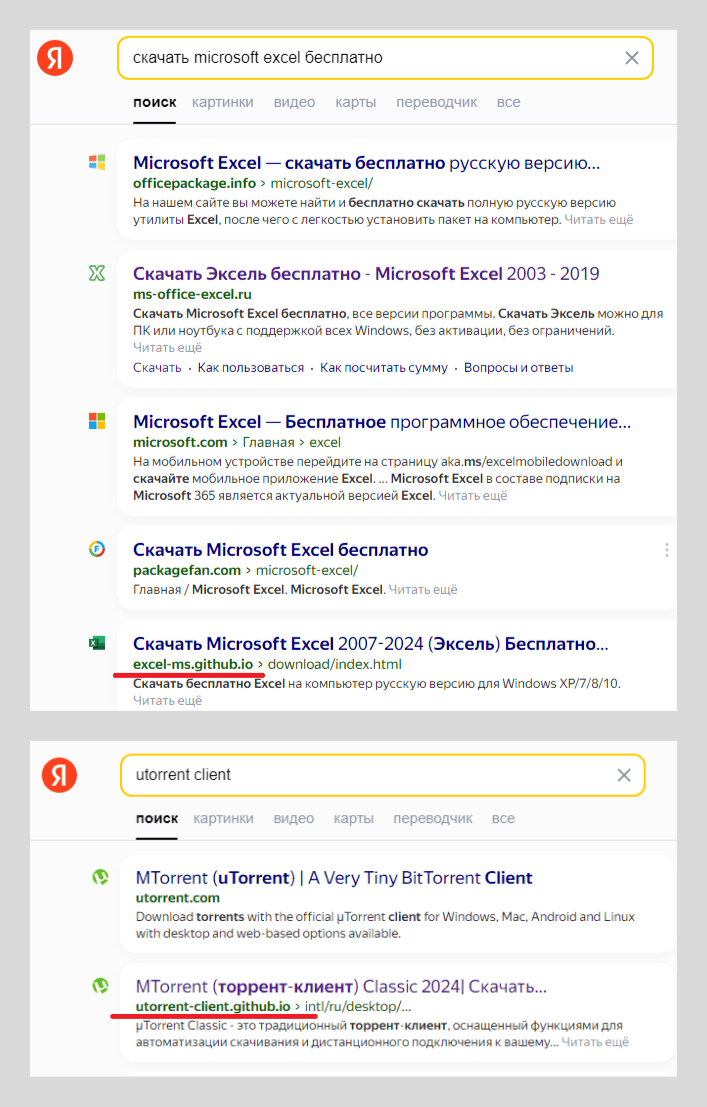
    January 23, 2025
  • MIL-OSI Asia-Pac: PM to visit Maharashtra on 5th October

    Source: Government of India

    PM to visit Maharashtra on 5th October

    PM to launch various initiatives related to the agricultural and animal husbandry sector worth around Rs 23,300 crore in Washim

    Celebrating the rich heritage of the Banjara community, PM to inaugurate Banjara Virasat Museum

    PM to inaugurate and lay foundation stone of various projects worth over Rs 32,800 crore in Thane

    Key focus of the projects: Boosting urban mobility in the region

    PM to inaugurate Aarey JVLR to BKC section of Mumbai Metro Line 3 Phase – 1

    PM to lay foundation stones of Thane Integral Ring Metro Rail Project and Elevated Eastern Freeway Extension

    PM to lay foundation stone of Navi Mumbai Airport Influence Notified Area (NAINA) project

    Posted On: 04 OCT 2024 5:39AM by PIB Delhi

    Prime Minister Shri Narendra Modi will visit Maharashtra on 5th October. He will travel to Washim and at around 11:15 AM, he will perform Darshan at Jagdamba Mata Temple, Poharadevi. He will also pay tribute at Samadhis of Sant Sevalal Maharaj and Sant Ramrao Maharaj in Washim. Thereafter, at around 11:30 AM, Prime Minister will inaugurate the Banjara Virasat Museum, celebrating the rich heritage of the Banjara community. At around 12 noon, he will launch several initiatives related to the agricultural and animal husbandry sector worth around Rs 23,300 crore. At around 4 PM, Prime Minister will inaugurate and lay the foundation stone for various development projects worth over Rs 32,800 crore at Thane. Thereafter at around 6 PM, from BKC Metro Station, he will flag off the Metro train scheduled to run from BKC to Aarey JVLR, Mumbai. He will also undertake a ride in the metro between BKC and Santacruz stations.

    PM in Washim

    In line with his commitment to empower farmers, Prime Minister will disburse the 18th instalment of the PM-KISAN Samman Nidhi worth about Rs 20,000 crore to around 9.4 crore farmers. With the 18th instalment release, the total funds released to farmers under PM-KISAN will be around Rs 3.45 lakh crore. Further, Prime Minister will also launch the 5th instalment of NaMo Shetkari Mahasanman Nidhi Yojana disbursing about Rs 2,000 crore.

    Prime Minister will dedicate to the nation more than 7,500 projects under the Agriculture Infrastructure Fund (AIF), worth over Rs 1,920 crore. The major projects include custom hiring centres, primary processing units, warehouses, sorting and grading units, cold storage projects, post-harvest management projects among others.

    Prime Minister will also dedicate to the nation 9,200 Farmer Producer Organizations (FPOs) with a combined turnover of around Rs 1,300 crore.

    Further, Prime Minister will launch the Unified Genomic Chip for cattle and indigenous sex-sorted semen technology. This initiative aims to increase availability of sex sorted semen at affordable price to farmers and reduce the cost by around Rs 200 per dose. Unified Genomic Chip, GAUCHIP for indigenous cattle and MAHISHCHIP for buffaloes, have been developed along with genotyping services. With the implementation of genomic selection, young high-quality bulls can be identified at an early age.

    Further, Prime Minister will dedicate five solar parks with a total capacity of 19 MW across Maharashtra under Mukhyamantri Saur Krushi Vahini Yojana – 2.0. During the programme, he will also honour beneficiaries of the Mukhyamantri Majhi Ladki Bahin Yojana.

    PM in Thane

    In a major push to boost urban mobility in the region, Prime Minister will inaugurate and lay the foundation stone of key metro and road projects. Prime Minister will inaugurate the BKC to Aarey JVLR section of Mumbai Metro Line – 3 worth around Rs 14,120 crore. This section will have 10 stations, of which 9 will be underground. Mumbai Metro Line – 3 is a key public transport project that will improve commuting between Mumbai city and Suburbs. Fully operational line-3 is expected to cater to about 12 lakh passengers daily.

    Prime Minister will lay the foundation stone of Thane Integral Ring Metro Rail Project to be constructed at the cost of around Rs 12,200 crore. The total length of the project is 29 km with 20 elevated and 2 underground stations. This ambitious infrastructure project is a key initiative to address the growing transportation needs of Thane, a major industrial and commercial hub in Maharashtra.

    Prime Minister will also lay the foundation stone of Elevated Eastern Freeway Extension from Chheda Nagar to Anand Nagar, Thane worth around Rs 3,310 crore. The project will provide seamless connectivity from South Mumbai to Thane.

    Further, Prime Minister will lay the foundation stone of Phase-1 of Navi Mumbai Airport Influence Notified Area (NAINA) project worth around Rs 2,550 crore. The project comprises construction of major arterial roads, bridges, flyovers, underpasses and integrated utility infrastructure.

    Prime Minister will also lay the foundation stone of Thane Municipal Corporation to be constructed at a cost of around Rs 700 crore. The high rise administrative building of Thane Municipal Corporation will provide benefits to citizens of Thane by accommodating most Municipal offices at a centrally located building.


    ***

    MJPS

    (Release ID: 2061814) Visitor Counter : 12

    MIL OSI Asia Pacific News –

    January 23, 2025
  • MIL-OSI Europe: Poland: small and medium-sized companies to gain financing from €150 million EIB loan to Pekao Leasing

    Source: European Investment Bank

    • EIB lends Pekao Leasing €150 million to expand financing for Polish small and medium-sized enterprises.
    • At least 20% of funding to go to climate-friendly investments.
    • Most funds will support cohesion regions in Poland.

    The European Investment Bank (EIB) is lending Poland’s Pekao Leasing €150 million to support the development of small and medium-sized enterprises (SMEs) in the country. The EIB credit to the unit of Bank Pekao SA will expand financing for Polish SMEs, with most of the funds going to less-developed regions in the country and at least a fifth allocated to green projects.

    “Small and medium-sized enterprises are the backbone of the economy and have a pivotal role to play in fostering innovation, as well as advancing energy transition. That is why supporting the development of SMEs is one of the EIB’s most important tasks,” said EIB Vice-President Teresa Czerwińska. “This new agreement with Pekao Leasing is another example of our strong commitment to the growth and competitiveness of Polish SMEs.”

    Around €420 million of investments are expected to be supported in total with the EIB loan to Pekao Leasing. The minimum 20% of funding being earmarked for climate-friendly projects will help firms replace machinery and equipment with more energy-efficient options.

    Bank Pekao organised the transaction and guarantees provided by Poland’s leading financial institution PZU Group enabled financing to be offered on favourable terms.

    “Cooperation between Bank Pekao Group and the EIB dates back to 2004. This is a key partnership for us in supporting Polish companies looking to develop in accordance with modern climate-protection requirements,” said Bank Pekao Management Board Vice-Chair Robert Sochacki. “Over the years, as part of implementing our strategy of developing cooperation with SMEs, as well as our environmental, social and governance strategy, we have repeatedly obtained EIB financing to support investments in climate protection, environmental sustainability and women’s entrepreneurship, which have contributed significantly to the development of these areas.”

    PZU Group said its involvement in the agreement also reflects a commitment to a greener future.   

    “That is why we actively support initiatives that not only help Polish companies to develop but also have a positive impact on the natural environment and help mitigate the adverse effects of climate change,” said PZU Management Board member Bartosz Grześkowiak. “Guarantees granted by PZU are one of our instruments to support clients and business partners in the process of green transformation – an important part of implementing our sustainable development policy. I am convinced that the new EIB loan agreement with Pekao Leasing will serve this purpose well.”

    Much of the funding will go towards improving energy efficiency, developing renewable energy sources, and extending attractive leasing offers to firms implementing low-emission transport.

    “This loan from the EIB is one more step that strengthens our partnership – one that has fostered the development of SMEs in Poland for years” said Pekao Leasing Management Board member Maciej Kijo. “We are especially pleased that a major part of these funds will be allocated to green projects, which is in line with our strategy to support sustainable development and protect the environment. It is also a great opportunity for Polish companies to invest in modern, energy-efficient solutions that will drive their growth and competitiveness.”

    Background information

    The European Investment Bank (ElB) is the long-term lending institution of the European Union, owned by its 27 Member States. It finances sound investments that contribute to EU policy objectives. EIB projects bolster competitiveness, drive innovation, promote sustainable development, enhance social and territorial cohesion, and support a just and swift transition to climate neutrality.

    The EIB Group, which also includes the European Investment Fund (EIF), signed a total of €88 billion in new financing for over 900 projects in 2023, including over €31 billion worth of financing for the SME sector in Europe. These commitments are expected to support around €320 billion in investment, 400,000 companies and 5.4 million jobs.

    Out of a total of €5.1 billion granted to projects in Poland last year, more than €630 million has gone to support SMEs. Financing for climate-friendly projects has now reached more than half of the total EIB Group investment in the country.

    Pekao Leasing is the leasing arm of the Bank Pekao Group and has been present on the Polish market for almost 30 years.

    Bank Pekao SA, founded in 1929, is one of the largest financial institutions in Central-Eastern Europe and the second-largest universal bank in Poland, with assets of PLN 316 billion. Boasting the second largest branch network, Bank Pekao serves 6.9 million customers. As Poland’s leading corporate bank, it serves one in two corporations in the country. Its status as a universal bank is based on its leading position in private banking, asset management and brokerage activities. Bank Pekao’s diversified business profile is supported by a market-leading balance sheet and risk profile, characterised by the lowest risk costs, strong capital ratios and resilience to macroeconomic conditions. Since 1998, Bank Pekao has been listed on the Warsaw Stock Exchange and in several indices, both local (including WIG 20 and WIG) and international (including MSCI EM, Stoxx Europe 600 and FTSE Developed). Over the last decade, Bank Pekao has paid out total dividends of PLN 20 billion, placing it among the highest dividend-paying listed companies in Poland.

    The PZU Group is the largest financial conglomerate in Central and Eastern Europe. It operates in five countries: Poland, Lithuania, Latvia, Estonia and Ukraine. The PZU Group’s consolidated assets exceed PLN 400 billion. The Group is led by PZU SA, with its traditions dating back to 1803, when the first insurance company was established on Polish soil. In Poland alone PZU Group enjoys the trust of 22 million insurance and banking clients. The Group is the leader on the insurance market and is at the forefront of the banking, investment and healthcare services markets. PZU is also one of the most recognizable brands, known to every Polish citizen. PZU’s stock has been listed on the Warsaw Stock Exchange (WSE) since 2010. Since its stock exchange debut PZU has been part of WIG20, an index of the Warsaw Stock Exchange’s largest companies. Since 2019, PZU’s shares have been also part of the WIG-ESG (sustainability) index.

    MIL OSI Europe News –

    January 23, 2025
  • MIL-OSI Europe: Oral question – Revision of the ban on selling CO2-emitting cars beyond 2035 – O-000011/2024

    Source: European Parliament

    Question for oral answer  O-000011/2024
    to the Commission
    Rule 142
    Christine Anderson, Anja Arndt, Marc Jongen, Sarah Knafo, Milan Uhrík, Ivan David, Ewa Zajączkowska-Hernik, Marcin Sypniewski, Stanisław Tyszka, René Aust
    on behalf of the ESN Group

    During the last term, Parliament helped to pass legislation to phase out sales of new CO2-emitting cars by 2035. During the campaign for the 2024 elections, many of the parties now represented in Parliament called to revise the law and revive the internal combustion engine. The President of the Commission herself has raised expectations regarding a possible review of the current discrimination against CO2-emitting cars. In her candidate speech to Parliament on 18 July 2024, she called for the European Green Deal to be implemented in a pragmatic, technology-neutral manner.

    Furthermore, the President of the Commission wants to enhance the EU’s competitiveness. The EU’s carmakers are especially competitive in building internal combustion engines. The Commission’s political guidelines for 2024-2029 stress: ‘For instance, the 2035 climate neutrality target for cars creates predictability for investors and manufacturers. Getting there will require a technology-neutral approach, in which e-fuels have a role to play through a targeted amendment of the regulation as part of the foreseen review’.

    All of this has created expectations among the public that internal combustion engines will continue to be used beyond 2035. At the same time, there is some confusion regarding what the Commission really wants. It would be particularly useful to ascertain whether any calls for the relaxation of the ‘ban on internal combustion engines’ were mere campaign promises.

    To shed more light on this issue, could the Commission answer the following questions:

    • 1.When will the Commission initiate a review of the regulation, and when will it be able to present it to Parliament?
    • 2.What does technology neutrality mean with regard to internal combustion engines vis-à-vis electric vehicles?
    • 3.Will the Commission limit itself to implementing e-fuels, or will there be a wider window that allows for the production, sale and use of internal combustion engines beyond 2035?

    Submitted: 1.10.2024

    Lapses: 2.1.2025

    Last updated: 4 October 2024

    MIL OSI Europe News –

    January 23, 2025
  • MIL-OSI Europe: Written question – Alarming increase in dependency on fentanyl among the young – E-001815/2024

    Source: European Parliament

    Question for written answer  E-001815/2024
    to the Commission
    Rule 144
    Ioan-Rareş Bogdan (PPE)

    Thousands of young people in the European Union have fallen victim to the illicit trade in fentanyl, a synthetic opioid considered to be 50 times stronger than heroin.

    The warnings issued by the Commission and US Secretary of State Antony Blinken on the danger of not controlling fentanyl consumption are far from unfounded as tens of thousands of people have died after taking this synthetic opioid with analgesic properties.

    Swift and effective measures therefore need to be taken to combat this extremely worrying state of affairs.

    In Europe, fentanyl can be purchased on the black market in the form of nasal sprays, drops, lozenges, sweets, powders or solutions for injection, but the substance is often combined with heroin, cocaine or MDMA.

    What steps will the Commission take to combat the illicit use of fentanyl and reduce the number of young people falling victim to this synthetic opioid?

    Bearing in mind that China is one of the world’s largest producers of fentanyl and of the chemical precursors used to manufacture this opioid, can the Commission clearly state:

    are the European Union and China formally cooperating to combat the illicit trafficking of fentanyl, given the serious impact of this drug on public health and safety in Europe?

    Submitted: 25.9.2024

    Last updated: 4 October 2024

    MIL OSI Europe News –

    January 23, 2025
  • MIL-OSI Africa: Minister urges G20 to show leadership in addressing climate crisis

    Source: South Africa News Agency

    The G20 needs to show leadership in addressing the climate crisis, says Minister of Forestry, Fisheries and the Environment, Dr Dion George.

    “The existential crisis of climate change is posing significant threats not only to human health and wellbeing, but is also exacerbating biodiversity loss, land degradation and other environmental complexities,” George said on Thursday at the G20 Environment and Climate Sustainability Ministers’ Meeting in Brazil. 

    The G20 is a group of 19 countries, as well as the African Union and the European Union, which defines itself as the premier forum for global economic cooperation. It brings together leaders and policymakers from the world’s major economies to discuss key economic, development and social issues. G20 members represent around 80% of global GDP, 75% of global exports and 60% of the global population.

    The Environment and Climate Sustainability Working Group (ECSWG) deals with current issues on the environmental and climate sustainability agenda, with a view to encouraging cooperation between G20 members on concrete and innovative solutions.

    The group’s main aim is to discuss preventive and emergency adaptation to extreme events, payments for ecosystem services, oceans, as well as waste and the circular economy.

    “As such, key areas of collaboration are proposed related to mitigation, adaptation, loss and damage and importantly, climate finance – building on the discussions and outcomes of previous presidencies.

    “As a primary outcome, South Africa would like to explore ways that the G20 can leverage opportunities to increase the scale and flows of climate finance critical for both mitigation and adaptation efforts, whilst ensuring that the required investments reach the most vulnerable of society.

    “In this regard, it would be important to continue the fruitful discussions with the finance colleagues to enable the development of an effective, outcomes based financial model,” George said.

    South Africa is expected to take over the presidency of the G20 from Brazil from 1 December this year to November 2025.

    READ | SA’s G20 Presidency to prioritise Africa and Global South

    Under the South African Presidency, the G20 ECSWG will broadly focus on several pillars, namely, biodiversity and conservation; desertification; oceans and coasts; climate change and air quality, as well as chemicals and waste management, each with specific priorities.

    “South Africa recognises that oceans play an important role in socio-economic development. In this regard, the G20 provides a platform to exchange best practice in advancing marine spatial planning that could further support the sustainable utilisation of the ocean and coastal environment and combat illegal fishing. 

    “Plastic pollution is a major threat to the coastal and marine environment. Discussions on plastic pollution have been long ongoing in the G20, and South Africa will continue to foster collaboration among G20 members to address this pressing issue collectively,” the George said.

    He said waste management and the circular economy are recognised as areas of focus critical for transition to a low carbon, climate resilient economy. 

    “During South Africa’s G20 Presidency, we aim to foster enhanced collaboration on waste management policies and legislative instruments, including on waste to energy initiatives,” the Minister said.

    Waste to energy initiatives include various technologies that convert non-recyclable waste into usable forms of energy including heat, fuels and electricity. – SAnews.gov.za


    MIL OSI Africa –

    January 23, 2025
  • MIL-OSI United Kingdom: Christian education charity receives official warning over failing to act on regulator’s advice

    Source: United Kingdom – Executive Government Non-Ministerial Departments

    The Charity Commission has issued an Official Warning to the National Council for Christian Standards in Society (NCCSS) for failing to follow its advice.

    The National Council for Christian Standards in Society was established in 1986 to promote religion and religious education. 

    The regulator previously issued the charity with advice, making clear it must separate its charitable work from the political lobbying activities of Christian Voice, a connected, non-charitable body.  

    Advice given included ensuring a separate entity carries out any non-charitable work, evidencing a clear division of how each organisation is run and removing ‘Christian Voice’ as the charity’s working name on the Register of Charities. The trustees did not take sufficient steps to act on this advice, which has led the regulator to now issue an Official Warning. 

    The Official Warning sets out actions the charity’s trustees need to take to rectify the misconduct and/or mismanagement, including acting on previous advice. The regulator has also identified that the charity needs to amend its ambiguous purposes to ensure they are exclusively charitable. Failing to take remedial steps to address issues identified by the regulator can result in the charity facing further regulatory action. 

    Tracy Howarth, Assistant Director for Casework at the Charity Commission, said:  

    It’s clear this charity has not taken our previous advice on board and so we have issued an Official Warning with the expectation that changes are made at pace. When carrying out any activity, trustees must consider how it helps meet their charitable purposes and if they are acting within charity law. We, and the public, expect this of charities as a minimum.  

    This intervention should serve as a reminder for all trustees to take any advice and guidance they receive from us seriously. As regulator, we issue guidance to help trustees ensure their charity is run well to deliver for beneficiaries. If we step in, we’re giving advice to help avoid further regulatory action.

    Ends 

    Notes to editors: 

    1. The Official Warning was issued on Monday 30th September 2024 under section 75A of the Charities Act 2011. 

    2. Information about Official Warnings can be found in an online Q&A: Guidance – Official warnings to charities and trustees: Q and A (publishing.service.gov.uk) 

    3. The Charity Commission is the independent, non-ministerial government department that registers and regulates charities in England and Wales. Our ambition is to be the expert Charity Commission that is fair, balanced, and independent so that charity can thrive.   

    4. Our guidance on campaigning and political activity can be found via this link: Campaigning and political activity guidance for charities – GOV.UK (www.gov.uk). We have produced a shorter ‘5 minute guide’ designed to refresh trustees’ knowledge on this topic. This can be found via this link: Political activity and campaigning by charities – GOV.UK (www.gov.uk) 

    5. Our guidance on writing charitable purposes can be found via this link: How to write charitable purposes – GOV.UK (www.gov.uk)

    Press office

    Email pressenquiries@charitycommission.gov.uk

    Out of hours press office contact number: 07785 748787

    Share this page

    The following links open in a new tab

    • Share on Facebook (opens in new tab)
    • Share on Twitter (opens in new tab)

    Updates to this page

    Published 4 October 2024

    MIL OSI United Kingdom –

    January 23, 2025
  • MIL-OSI United Kingdom: Two new School Streets launched in Leeds to support children travelling safely and sustainably on the school run

    Source: City of Leeds

    More than 200 pupils in Leeds have become the latest local youngsters to benefit from a scheme that makes journeys to and from school safer, healthier and more enjoyable. 

    School Streets create a safer and more pleasant environment for children and families by restricting motorised traffic and turning the space outside school gates into a pedestrian and cyclist-only zone during pick-up and drop-off times. 

    A total of 15 schools in Leeds have previously signed up to the scheme, which aims to ease traffic congestion and tackle poor air quality while also improving safety.  

    Now two more – Ireland Wood Primary and St Bartholomew’s Primary – have followed suit. 

    And last week, a celebration event was held at Ireland Wood Primary School to mark the introduction of its new School Street on Raynel Gardens. 

    Leeds City Council’s new safe and sustainable travel mascot, Arlo the Owl, named by pupils from the school, guided pupils from the Park and Stride location at High Farm car park, across the new School Street, showcasing the benefits of a vehicle-free environment.  

    Councillor Jonathan Pryor, Leeds City Council’s deputy leader and executive member for economy, transport and sustainable development, said: 

    “I’m thrilled to see two more schools joining the School Streets programme in Leeds this year, as it continues to make a significant difference in promoting road safety and sustainability in local communities. With just over 30%  of primary school children in Leeds still driven to school, the school run contributes to congestion, pollution, and increased road safety risks around schools. 

    “School Streets are a key part of our commitment to Vision Zero, the council’s ambition to eliminate serious and fatal road injuries by 2040. By creating safer, vehicle-free spaces, we’re making the journey to school healthier for children and their families. This initiative aligns with our vision of making Leeds a city where you don’t need a car.” 

    Ian Blackburn, Headteacher at Ireland Wood Primary School, said: 

    “We are really pleased to have a School Street so our pupils can travel safely and actively to and from school. 

    “Reducing traffic around school during peak times will help to improve road safety and encourage more families to choose active modes of travel like walking, cycling, wheeling and scooting. This initiative supports us to promote healthy lifestyles and foster independence for our pupils.”  

    Last year, 28,955 school children across Leeds participated in 596 sessions that the council’s road safety trainers delivered to promote safe and sustainable travel.  

    Safe behaviours and people are at the heart of the Vision Zero Strategy and is one of five key themes. The other themes are safe roads, safe speeds, post collision care and safe vehicles. To achieve Vision Zero everyone needs to play their part and travel safely. A pledge to play a part in eliminating road deaths can be signed here.  

    MIL OSI United Kingdom –

    January 23, 2025
  • MIL-OSI Asia-Pac: 13 private properties receive Gold Awards for best landscape design and maintenance (with photos)

    Source: Hong Kong Government special administrative region

         Winners of the Best Landscape Award for Private Property Development 2024, organised by the Leisure and Cultural Services Department (LCSD), were announced at a prize presentation ceremony today (October 4). Thirteen private properties with outstanding landscape design and quality horticultural maintenance received Gold Awards. Thirty Merit Awards and 12 Environmental Efficiency Awards were also given out at the ceremony to commend organisations for their efforts in greening and enhancing public awareness of green issues.
     
         Addressing the ceremony, the Director of Leisure and Cultural Services, Mr Vincent Liu, said the Best Landscape Award, held once every two years, is one of the LCSD’s major activities to promote greening. The award aims to honour private property developments that excel in landscape design and horticultural maintenance.
     
         Mr Liu added that to offer members of the public more green space, last year the LCSD planted over 500 flowering trees in Sha Tin Park and along Shing Mun River and Yuen Long Nullah. Over the next five years, 2 500 additional trees will be planted in leisure venues and along roads across all the 18 districts to create more flower-viewing hotspots. Also, the LCSD has started to systematically replace senescent Acacia confusa with other flowering trees, in compliance with the Development Bureau’s guidelines. This serves the dual aim of reducing the risk of tree collapses and satisfying public interest in flower appreciation. Replacement work has started in Victoria Peak Garden, Sai Kung and Kwun Tong; by the end of the year, around 400 trees are expected to be planted.

         Apart from planting trees and shrubs, the LCSD has been organising a wide range of community engagement and public education activities. The Best Landscape Award is a notable example. The response to this year’s competition was fervent, with close to 200 nominated entries received. Each entry had its own characteristics, demonstrating the immense efforts made by the participating organisations in greening.
     
         In terms of landscape design, the winning projects integrated distinctive landscape features, large trees, seasonal flowers and plants to create a natural and soothing haven. Rooftop gardening and vertical greening concepts were also employed to enhance greenery coverage.
     
         As for horticultural maintenance, some winning projects highlighted plant care and adopted a variety of environmentally friendly measures to promote environmental awareness and green living. These served to reduce the effects of urban heat island and also offer comfortable greening spaces to residents.
     
         The prize presentation ceremony was held at the Hong Kong Convention and Exhibition Centre today. Other officiating guests included representatives from the co-organisers. They were the President of the Hong Kong Institute of Architects, Mr Benny Chan; the President of the Hong Kong Institute of Landscape Architects, Mr Paul Chan; the Chairman of the Professional Green Building Council, Mr Kenneth Yun; the President of the Hong Kong Association of Property Management Companies, Dr Edmond Cheng; Vice President of the Institute of Horticulture (Hong Kong) Mr Kingsley Choi; and the Chairman of the Planning and Development Division of the Hong Kong Institute of Surveyors, Mr Victor Ng.
     
         The competition presented awards in five categories. The Gold Award winners are as follows:
     
    Domestic property:
     
    (1) Large-scale Domestic Property (with a site area of 20 000 square metres or above)
    i) Properties below six years of age: Wetland Seasons Bay
    ii) Properties between six and below 21 years of age: Valais
    iii) Properties of 21 years of age or above: Aegean Coast
     
    (2) Medium-scale Domestic Property (with a site area from 2 000 sq m to below 20 000 sq m)
    i) Properties below six years of age: Mount Regency
    ii) Properties between six and below 21 years of age: 18 Farm Road
    iii) Properties of 21 years of age or above: Royal Peninsula
     
    (3) Small-scale Domestic Property (with a site area under 2 000 sq m)
    i) Properties below six years of age: The Holborn
    ii) Properties between six and below 21 years of age: Lime Habitat
     
    Non-domestic property (such as hotels, shopping malls, commercial buildings, schools under the Direct Subsidy Scheme [private premises] and private schools):
     
    (4) Large-scale Non-domestic Property (with a gross floor area of 40 000 sq m or above)
    i) Properties below six years of age: AIRSIDE
    ii) Properties between six and below 21 years of age: Domain
    iii) Properties of 21 years of age or above: Nina Mall 1 – Nina Park
     
    (5) Small and Medium-scale Non-domestic Property (with a gross floor area under 40 000 sq m)
    i) Properties below six years of age: Union Hospital Extension
    ii) Properties between six and below 21 years of age: Lee Tung Avenue
     
         The results of the Best Landscape Award are available on the LCSD webpage
    http://www.lcsd.gov.hk/en/green/property/awards/awards_2024.html.                           

    MIL OSI Asia Pacific News –

    January 23, 2025
  • MIL-OSI Russia: “I dream that all universities in Russia would have the same conditions for scientists as HSE”

    MILES AXLE Translation. Region: Russian Federation –

    Source: State University Higher School of Economics – State University Higher School of Economics –

    Anastasia Sherubneva studies spatial economics and is writing a dissertation on the crises of 2020 and 2022. In an interview with the Young Scientists of HSE project, she spoke about the influence of agglomeration effects on enterprises, the Novosibirsk Akademgorodok, and a meeting with Nobel laureate Paul Krugman in Portugal.

    How I got started in science

    Since childhood, I liked creativity. I always came up with something new, tried to find non-standard solutions to problems. In the 10th grade, I took a six-month course in economics, and I liked that real processes are described by clear mathematical models.

    After school, I entered NSU to major in business informatics, where they study, on the one hand, economics, and on the other, programming. My favorite course in the first year of study was microeconomics. Our seminars on it were taught by Elizaveta Andreyevna Gaivoronskaya. She was then about the same age as I am now, and was passionate about science. She explained things in an interesting way, and I inherited her desire to do economic research.

    From my first year, I started thinking about how I could apply what we were taught in lectures and seminars, what I would do after graduating. I started planning a scientific career.

    NSU is located in Akademgorodok, where several dozen research institutes are located. In my third year, I was invited to work in the Department of Territorial Systems of the Institute of Economics and Industrial Engineering of the Siberian Branch of the Russian Academy of Sciences. I began to study regional economics under the supervision of Evgeniya Anatolyevna Kolomak. At the same time, my programming skills helped me work with real data. The institute had a great team, the seniors always supported the juniors. There was a Council of Young Scientists, we came up with activities, organized conferences, and could just go for a walk together.

    After working there for two years, I entered the Higher School of Economics and got into a single track “master’s degree – postgraduate study”. My academic supervisor was Olga Anatolyevna DemidovaShe works in spatial econometrics, and our research interests coincided.

    When I was in my second year of master’s degree, Olga Anatolyevna created the Scientific and Educational Laboratory of Spatial-Econometric Modeling of Socioeconomic Processes in Russia. I ended up in this laboratory. Now I am a postgraduate student, working under the supervision of Olga Anatolyevna on my PhD dissertation. Here, too, a wonderful scientific team has formed, and I am very glad that I went into science.

    What I am researching

    My area of research is spatial economics. Globally, this section of economics studies how the economic position of an entity depends on its geographical location.

    In my dissertation, I study the impact of macroeconomic shocks on the performance of Russian enterprises using the 2020 and 2022 crises as examples. I examine whether the impact of these shocks differed across enterprises located in different locations, both in different regions and within one, for example, in the capital and on the periphery.

    And while many researchers conduct interregional comparisons, few study spatial differences at the intraregional level. This is the main novelty of my research.

    I am currently finishing my research on the 2020 crisis and will be working on the 2022 crisis in graduate school.

    What business data do I use?

    I work with micro data, and I have the ability to build models at the enterprise level. I am currently using data from the SPARK database: financial statements of enterprises, their geographic location, individual characteristics.

    What I wanted to know

    I asked the question this way: how did the influence of various factors, in particular geographic location, on the efficiency of enterprises change during the crises of 2020 and 2022?

    Existing studies have shown that the differentiation of the COVID-19 crisis was mainly not regional, but sectoral. The sectors that suffered were those related to offline interaction: tourism, transport, hotels, and catering. This primarily concerned the regions where they are more represented. Another important factor was the state of medicine. In poor regions, quarantine measures were stricter because the medical system could not cope, and the economy began to decline. And regions where digitalization is developed, everyone has smartphones, experience using deliveries, good healthcare, survived the crisis easier.

    However, within a region, the effects of crises can also vary, and this is precisely the aspect I am exploring.

    My conclusions

    I studied how the financial performance of enterprises depends on similar performance of neighboring enterprises. Let’s say there is an enterprise, its neighbor has gone bad, the company closes or goes into the red. What happens to it? It is assumed that nearby enterprises interact with each other. I came to the conclusion that before the 2020 crisis, the financial condition of the enterprise had a positive impact on neighboring ones and during the crisis too, but this impact became weaker. The explanation here is obvious: offline interaction decreased during the pandemic, and this was confirmed by microdata using mathematical methods.

    Another interesting result describes the influence of agglomeration effects on the performance of enterprises depending on their location – in the city center, where there are many other enterprises and a high population density, or on the outskirts, where there is nothing.

    In general, agglomeration effects are beneficial for enterprises in Russia. But if we approach large agglomerations such as Moscow, St. Petersburg, Kazan, the influence of agglomeration effects becomes negative. This is true both during and outside of a crisis. Big city effects (traffic jams, inflated prices, etc.) hinder the work of enterprises. These results indicate that large Russian agglomerations are heavily overloaded.

    What I am proud of

    In July, I published my independent article in the American journal Regional Science Policy

    I recently attended a conference of the European Regional Science Association in Portugal and gave a talk there. I mentioned that I used the HSE supercomputer in my research. And the discussant in my section said that it was great that I was able to use the supercomputer for such purposes and get new results.

    What is the HSE supercomputer?

    A supercomputer is a system of clusters between which computational processes can be distributed. It has a huge operational memory, which is measured in terabytes, and if calculations are parallelized between cores, it is possible to make cumbersome calculations.

    Using the HSE supercomputer allowed me to work with data from enterprises all over Russia, my sample included 300 thousand enterprises. I used a geographically weighted regression model, and for this you need to calculate pairwise distances between all enterprises, which requires enormous computing power.

    What I dream about

    I want to conduct a study on how enterprises in different industries influence each other geographically. For example, if a cinema and a cafe are located nearby, then most likely they will influence each other positively. But if it is a chemical plant and an eco-farm, it is clear that the mutual influence will be negative. This study requires certain data that is not yet available.

    For me, science is a way to learn something globally new and share it with others, to understand how this result relates to the results of other studies.

    I dream that all universities and research institutes in Russia would have the same comfortable conditions for scientists as HSE. If we talk about young scientists, there is a single track “Master’s degree – postgraduate study” with a large stipend. Postgraduate students are not forced, as happens in other organizations, to look for part-time jobs and can focus on writing a dissertation. HSE offers bonuses for publications, and there is an additional incentive to publish in high-level journals. Here, scientists receive a decent salary and are motivated to work for the benefit of science.

    If I hadn’t become a scientist

    I would become a human rights activist because justice has always been the highest value for me. Even at school I was interested in law, in any unclear situation I read the laws and in the 11th grade I became a prize winner of the regional stage of the All-Russian School Olympiad.

    Which scientist would I like to meet?

    If we talk about living scientists, it is Paul Krugman, the 2008 Nobel laureate in economics. He also studies regional economics, we are in the same field. I like his concept of new economic geography – it is a pool of theoretical models that explains the emergence of agglomerations from an economic point of view. This year at the congress in Portugal I met him, I even have a photo with Paul.

    If we talk about those who are no longer alive, it would be Marie Sklodowska-Curie. A great scientist, the first woman to win the Nobel Prize, the first person to have two Nobel Prizes, and the only one to have these prizes in different sciences.

    I admire her for being so enthusiastic about her work, for overcoming obstacles all her life for the sake of science. The University of Warsaw in her native Poland did not accept women at the time, so she went to study in Paris. She was not accepted as a teacher or in a laboratory simply because she was a woman. Her colleagues did not recognize her achievements, even when she received her first Nobel Prize. At the same time, she worked with radioactive substances that were dangerous to health, and was one of the inventors of the X-ray machine, which saved many lives. I would like to ask her where she found the strength for this daily struggle.

    I often think about her now, when they are trying to return women to the kitchen again and deputies are talking about how women do not need an education, but rather need to give birth to five children.

    What my typical day looks like

    Basically, different combinations of work tasks. A significant part of my work consists of doing calculations, programming, writing articles, texts. In addition, I recently became a teacher, conducting seminars in English on the course “Mathematics for Economists” in my own master’s program, which I completed this year.

    Do I get burnout?

    I have not encountered burnout yet. My total scientific and pedagogical experience is about four years. And it is probably too early to talk about burnout, especially since I love my job. It is clear that there are more productive days, less productive days, but I try not to allow burnout. I arrange rest days when I do not think about work, walk in the fresh air, listen to music, read books, watch movies. I also like to ride a bike and swim.

    What am I interested in besides science?

    I like making memes. It helps me cope with life stress, because turning something into a joke is a kind of psychotherapy. The Institute of Economics has a group of the Council of Young Scientists on VKontakte. When I was a 4th-year undergraduate, I became one of the admins of this group, ran a section and published memes about our work and the institute.

    Now I have a Telegram channel “Nastya Sherubneva in …”, but I have become less likely to make memes. It is more dedicated to trips to conferences. I started it when I went to the European Regional Science Association (ERSA) conference in Spain a year ago. It was my first trip abroad, not counting Belarus, I was happy and wanted to document every second. At first, the channel was planned only for friends, but I thought that someone else might be interested, so I made it open access. Every time I go to a new place, I rename it.

    What was the last thing I read and watched?

    From books – “1984” by George Orwell. And from films – “Don’t Worry, Darling” by Olivia Wilde. A married couple lives in a small closed town, they have an ideal life, they are rich, they love each other. But at some point the wife notices that something is wrong, people are disappearing, and as a result she finds out that their whole life is a simulation. She got there thanks to her husband, who himself wanted to get rid of unbearable experiences and save her. The film raises the question of whether such a simulation is a way out, whether it is possible to pretend that everything is wonderful, to invent an imaginary world. And even more so to be a victim of someone else’s decision. I believe that a person should decide for himself, I am against lies and restrictions for the good.

    Advice to young scientists

    Start writing your own articles as early as possible. You don’t need to become a teaching assistant or do technical work, because later it will be hard to start writing articles, working with texts, and creating literature reviews. You also need to try to decide on a scientific direction as early as possible, to understand what undeveloped problems exist in this area. A good scientific supervisor who is interested in the student and sees the trajectory of his development can help you do this.

    Favorite place in Moscow

    Museum-Reserve “Tsaritsyno”. This place has a great history, but I also like it because it is a park-estate. Akademgorodok, where I used to live, is in the forest, and in Moscow I miss forest walks. But in Tsaritsyno it is green and you can walk.

    Please note: This information is raw content directly from the source of the information. It is exactly what the source states and does not reflect the position of MIL-OSI or its clients.

    Please note; This information is raw content directly from the information source. It is accurate to what the source is stating and does not reflect the position of MIL-OSI or its clients.

    http://vvv.hse.ru/jung-scientists/sherubneva

    EDITOR’S NOTE: This article is a translation. Apologies should the grammar and or sentence structure not be perfect.

    MIL OSI Russia News –

    January 23, 2025
  • MIL-OSI Economics: Euro area quarterly balance of payments and international investment position: second quarter of 2024

    Source: European Central Bank

    04 October 2024

    • Current account surplus at €381 billion (2.6% of euro area GDP) in four quarters to second quarter of 2024, after a €76 billion surplus (0.5% of GDP) a year earlier.
    • Geographical counterparts: largest bilateral current account surpluses vis-à-vis United Kingdom (€215 billion) and Switzerland (€79 billion) and largest deficits vis-à-vis China (€78 billion) and United States (€18 billion).
    • International investment position showed net assets of €1.2 trillion (8.0% of euro area GDP) at end of second quarter of 2024.

    Current account

    The current account of the euro area recorded a surplus of €381 billion (2.6% of euro area GDP) in the four quarters to the second quarter of 2024, following a €76 billion surplus (0.5% of GDP) a year earlier (Table 1). This development was mainly driven by a larger surplus for goods (from €72 billion to €358 billion) and, to a lesser extent, by widening surpluses for services (from €134 billion to €149 billion) and for primary income (from €34 billion to €37 billion). Moreover, the deficit for secondary income decreased slightly from €164 billion to €163 billion.

    The estimates on goods trade broken down by product group show that, in the four quarters to the second quarter of 2024, the increase in the goods surplus was mainly due to a smaller deficit in energy products (from €454 billion to €275 billion). In addition, the surplus for machinery and manufactured products increased from €240 billion to €318 billion, while the balance for other products switched from a €28 billion deficit to a €2 billion surplus.

    The higher surplus for services in the four quarters to the second quarter of 2024 was mainly due to larger surpluses for telecommunication, computer and information (from €159 billion to €184 billion) and for travel (from €47 billion to €57 billion), and a lower deficit for other business services (from €54 billion to €42 billion). This was partly offset by a widening deficit for other services (from €55 billion to €75 billion) and a decreasing surplus for transport (from €16 billion to €1 billion).

    The increase in the primary income surplus in the four quarters to the second quarter of 2024 was mainly due to larger surpluses in direct investment (from €73 billion to €100 billion) and other primary income (from €5 billion to €14 billion), partly offset by a larger deficit in portfolio equity (from €143 billion to €182 billion).

    Table 1

    Current account of the euro area

    (EUR billions, unless otherwise indicated; transactions during the period; non-working day and non-seasonally adjusted)

    Source: ECB.
    Notes: “Equity” comprises equity and investment fund shares. Goods by product group is an estimated breakdown using a method based on statistics on international trade in goods. Discrepancies between totals and their components may arise from rounding.

    Data for the current account of the euro area

    Data on the geographical counterparts of the euro area current account (Chart 1) show that in the four quarters to the second quarter of 2024, the euro area recorded its largest bilateral surpluses vis-à-vis the United Kingdom (€215 billion, up from €184 billion a year earlier) and Switzerland (€79 billion, down from €89 billion). The euro area also recorded a surplus vis-à-vis the residual group of other countries of €96 billion, after a €21 billion deficit a year earlier. The largest bilateral deficits were recorded vis-à-vis China (€78 billion, down from €135 billion a year earlier) and the United States (€18 billion, down from €32 billion).

    The most significant changes in the geographical components of the current account relative to the previous year were as follows: the goods deficit vis-à-vis China declined from €166 billion to €105 billion, while the balance vis-à-vis Russia shifted from a deficit (€41 billion) to a surplus (€3 billion). Furthermore, the balance vis-à-vis the residual group of Other countries shifted from a deficit (€104 billion) to a surplus (€39 billion), which was partly explained by a smaller deficit vis-à-vis Norway (from €39 billion to €21 billion) and a shift from a deficit (€6 billion) to a surplus (€5 billion) vis-à-vis Saudi Arabia. The goods surplus increased vis-à-vis the United Kingdom (from €116 billion to €148 billion) and vis-à-vis the United States (from €169 billion to €191 billion). In services, the deficit vis-à-vis the United States increased (from €117 billion to €141 billion), which was more than offset by a shift from a deficit (€15 billion) to a surplus (€18 billion) vis-à-vis Offshore centres. In primary income, the deficit vis-à-vis Offshore centres (€11 billion) turned to a surplus (€21 billion), while a smaller deficit is recorded vis-à-vis the United States (from €82 billion to €67 billion). The deficit in secondary income vis-à-vis the EU Member States and EU institutions outside the euro area decreased (from €77 billion to €71 billion).

    Chart 1

    Geographical breakdown of the euro area current account balance

    (four-quarter moving sums in EUR billions; non-seasonally adjusted)

    Source: ECB.
    Note: “EU non-EA” comprises the non-euro area EU Member States and those EU institutions and bodies that are considered for statistical purposes as being outside the euro area, such as the European Commission and the European Investment Bank. “Other countries” includes all countries and country groups not shown in the chart, as well as unallocated transactions.

    international investment position of the euro area recorded its largest net assets on record, increasing to €1.18 trillion vis-à-vis the rest of the world (8.0% of euro area GDP), up from €0.76 trillion in the previous quarter (Chart 2 and Table 2).

    Chart 2

    Net international investment position of the euro area

    (net amounts outstanding at the end of the period as a percentage of four-quarter moving sums of GDP)

    Source: ECB.

    The €423 billion increase in net assets was mainly driven by lower net liabilities in other investment (down from €0.76 trillion to €0.63 trillion) and in portfolio equity (from €3.31 trillion to €3.19 trillion), as well as larger net assets in direct investment (up from €2.41 trillion to €2.52 trillion) and in reserve assets (up from €1.22 trillion to €1.27 trillion).

    Table 2

    International investment position of the euro area

    (EUR billions, unless otherwise indicated; amounts outstanding at the end of the period, flows during the period; non-working day and non-seasonally adjusted)

    Source: ECB.
    Notes: “Equity” comprises equity and investment fund shares. Net financial derivatives are reported under assets. “Other volume changes” mainly reflect reclassifications and data enhancements. Discrepancies between totals and their components may arise from rounding.

    Note: “Other volume changes” mainly reflect reclassifications and data enhancements. 

    MIL OSI Economics –

    January 23, 2025
  • MIL-OSI Africa: Hlabisa to lead engagements with KZN provincial leadership

    Source: South Africa News Agency

    Cooperative Governance and Traditional Affairs (CoGTA) Minister, Velenkosini Hlabisa is expected to lead various engagements with the KwaZulu-Natal provincial and eThekwini leadership as well as the Provincial House of Traditional and Khoisan Leaders (PHTKL). 

    The engagements are expected to take place on Saturday.

    The first engagement will include the Minister, Deputy Minister Prince Burns Ncamashe, KwaZulu-Natal Premier Thamsanqa Ntuli, CoGTA MEC Reverend Thulasizwe Buthelezi, eThekwini Mayor Cyril Xaba and the metro’s executive committee. 

    This will be followed by a meeting with the PHTKL on issues affecting the sector. 

    Both meetings will be held in Durban. 

    Eastern Seaboard Regional Development

    On Monday, the Minister will lead the Eastern Seaboard Development Political Engagement with the Premier of the Eastern Cape and Premier of KwaZulu-Natal, Oscar Mabuyane and Ntuli, respectively.

    They will be joined by traditional leaders, MECs, Mayors and Councillors from the Ugu, Harry Gwala, OR Tambo and Alfred Nzo districts at the Wild Coast Sun, Port Edward. 

    “The Eastern Seaboard Regional Development was declared as a region on 20 June 2022 in terms of Section 19 of Spatial Planning and Land Use Management (Act 16 of 2013) and has also been identified as a strategic area ready for investment. 

    “The region covers an area spanning the southern coastline of KwaZulu-Natal and the northern part of the Eastern Cape provinces and spans across four districts and 17 local municipalities,” the department explained.

    The Regional Spatial Development Framework, according to the department, has since been developed and catalytic projects across the four districts identified. 

    “This planned Ministerial engagement will review progress to date and agree on plans going forward in the implementation of the Eastern Seaboard programme. 

    “The meeting will also fortify traditional leadership participation in the next steps of the implementation phase of the programme, which include buy-in, stakeholder engagement and the awareness-raising of the project to all role players.”

    The department described the development as a flagship project facilitated through the District Development Model (DDM) and provides an opportunity to drive spatially referenced transformation through the integration of urban and rural development as well as targeted rural revitalisation.

    “Launched by President Cyril Ramaphosa in 2021, the development has reached a critical stage, and significant progress has also been made concerning its design, establishment and coordination of key stakeholders to respond to the region’s rich cultural and environmental assets but remains deprived of substantial economic development and targeted investment in the region,” the statement read. – SAnews.gov.za
     

    MIL OSI Africa –

    January 23, 2025
  • MIL-OSI USA: News Release – DOH Approves Reopening of Crackinʻ Kitchen

    Source: US State of Hawaii

    News Release – DOH Approves Reopening of Crackinʻ Kitchen

    Posted on Oct 3, 2024 in Latest Department News, Newsroom

    DEPARTMENT OF HEALTH

    KA ʻOIHANA OLAKINO

    JOSH GREEN, M.D.
    GOVERNOR

    KE KIA‘ĀINA

    KENNETH S. FINK, MD, MGA, MPH
    DIRECTOR

    KA LUNA HO‘OKELE

    DOH APPROVES REOPENING OF CRACKIN’ KITCHEN

    FOR IMMEDIATE RELEASE
    October 3, 2024                                                                                                          24-131

    HONOLULU — The Hawai‘i Department of Health (DOH) Food Safety Branch has approved the reopening of Crackin’ Kitchen after a follow-up inspection found that it had resolved the water backup issue in their kitchen.

    Crackin’ Kitchen, located at 2330 Kalākaua Ave. Unit 318, received a red placard on Oct. 1 and was immediately closed. A follow-up inspection conducted on Oct. 2 found that the water backup issue was resolved, and the floor had been sanitized.

    The food establishment was advised to continue to monitor and maintain the proper drainage.

    The DOH Food Safety Branch protects and promotes the health of Hawai‘i residents and visitors through education of food industry workers and regulation of food establishments statewide. The branch conducts routine health inspections of food establishments where food products are prepared, manufactured, distributed or sold.

    The branch also investigates the sources of foodborne illnesses and potential adulteration; and is charged with mitigating the effects of these incidents to prevent any future occurrences. The DOH food safety specialists strive to work with business owners, food service workers and the food industry to ensure safe food preparation practices and sanitary conditions.

    # # #

    Media Contact:

    Kristen Wong

    Information Specialist

    Hawaiʻi State Department of Health

    808-586-4407

    [email protected]

    MIL OSI USA News –

    January 23, 2025
  • MIL-OSI USA: News Release – October is Infant Safe Sleep Month

    Source: US State of Hawaii

    News Release – October is Infant Safe Sleep Month

    Posted on Oct 3, 2024 in Latest Department News, Newsroom

    DEPARTMENT OF HEALTH

    KA ʻOIHANA OLAKINO

    JOSH GREEN, M.D.
    GOVERNOR

    KE KIA‘ĀINA

    KENNETH S. FINK, MD, MGA, MPH
    DIRECTOR

    KA LUNA HO‘OKELE


    OCTOBER IS INFANT SAFE SLEEP MONTH

    DOH encourages parents and caregivers to create a safe sleeping

    environment for babies

    FOR IMMEDIATE RELEASE
    October 3, 2024                                                                                        24-129

    HONOLULU — Governor Josh Green, M.D., issued a proclamation declaring October Infant Safe Sleep Month to coincide with the national observance of Sudden Infant Death Syndrome (SIDS) Awareness Month, which is marked to increase the public’s awareness of the high rates of these preventable infant deaths. The Hawaiʻi Department of Health (DOH) Maternal and Child Health Branch (MCHB) leads Safe Sleep Hawaiʻi, a statewide coalition that works to prevent infant sleep-related deaths by promoting safe sleep practices.

    “According to the Centers for Disease Control and Prevention, about 3,400 infants die each year in the U.S. from sleep-related deaths,” said Annie Bell, MCHB supervisor. “Through Safe Sleep Hawaiʻi, we provide information, resources and referrals to help parents and caregivers create a safe sleeping environment for their babies, which includes following safe sleep recommendations.”

    The American Academy of Pediatrics (AAP) provides the following recommendations to help parents and caregivers reduce the risk of sleep-related infant deaths:

    • Always place your baby on its back for naptime and bedtime, or whenever it sleeps.
    • Never put any soft objects such as pillows, blankets, toys or crib bumpers where your baby is sleeping.
    • Infants should sleep in your room and close to your bed but on a separate surface designed for infants, ideally for at least the first six months.
    • Use a firm, flat, non-inclined sleep surface to reduce the risk of suffocation or wedging/entrapment. It’s dangerous for babies to sleep on a couch, armchair or nursing pillow.
    • It’s OK to swaddle a baby, but stop swaddling as soon as they start learning to roll.
    • Breastfeed and/or feed human milk to both term and preterm infants for at least the first six months if possible.
    • Offer your baby a pacifier at naptime and bedtime to reduce the risk of SIDS.
    • Never smoke or use substances around your baby or let anyone smoke or use substances around your baby. Smoking and using substances such as alcohol, marijuana, opioids or other illicit drugs should be avoided during pregnancy and after birth.

    The Safe Sleep Hawai‘i webpage includes referral links to community organizations partnering with the DOH. The Parent Line offers resources and information related to parenting, including free online safe sleep workshops, and will host a Community Baby Shower this Saturday, Oct. 5, from 11 a.m. to 2 p.m. at the Child & Family Service ‘Ewa Community Center (91-1841 Fort Weaver Rd.). Expectant and new parents with babies up to six months are invited to this free event for food, giveaways, resources and fun. Call The Parent Line at 808-526-1222 to register.

    Another safe sleep partner is the Healthy Mothers Healthy Babies Coalition of Hawaiʻi, which provides social services and clinical support for birthing families in Hawaiʻi. The coalition also runs the Hawaiʻi Cribs for Kids program that provides safe sleep education, support and cribs for income-eligible families.

    To learn more about safe sleep and download a Safe Sleep Guide for Parents available in 12 languages, visit health.hawaii.gov/safesleep.

    # # #

    Media Contact:

    Brandin Shim

    Information Specialist

    Family Health Services Division

    Hawaiʻi State Department of Health

    808-586-4120

    [email protected]

    MIL OSI USA News –

    January 23, 2025
  • MIL-OSI USA: News Release – DOH Alerts Public to ANSWERS Brand Dog Food Recall Due to Potential Salmonella and Listeria Monocytogenes Contamination

    Source: US State of Hawaii

    News Release – DOH Alerts Public to ANSWERS Brand Dog Food Recall Due to Potential Salmonella and Listeria Monocytogenes Contamination

    Posted on Oct 3, 2024 in Latest Department News, Main, Newsroom

    DEPARTMENT OF HEALTH

    KA ʻOIHANA OLAKINO

    JOSH GREEN, M.D.
    GOVERNOR

    KE KIA‘ĀINA

    KENNETH S. FINK, MD, MGA, MPH
    DIRECTOR

    KA LUNA HO‘OKELE

    DOH ALERTS PUBLIC TO ANSWERS BRAND DOG FOOD RECALL DUE TO POTENTIAL SALMONELLA AND
    LISTERIA MONOCYTOGENES CONTAMINATION

    FOR IMMEDIATE RELEASE
    October 3, 2024                                                                                                      24-132

    HONOLULU — The Hawaiʻi State Department of Health (DOH) Food and Drug Branch (FDB) is alerting residents to a recall issued by Lystn, LLC for certain lots of raw dog food products because of potential Salmonella and Listeria monocytogenes contamination. These products were sold directly to consumers online and through local boutique pet stores. The FDB is following up with local pet stores to ensure that the recalled products are no longer available for sale.

    Salmonella and Listeria monocytogenes can affect animals eating the products and there is risk to humans handling contaminated pet products, especially if they have not thoroughly washed their hands after contact with the products or any surfaces exposed to these products.

    Pets do not always display symptoms when infected with Salmonella, but signs can include vomiting, diarrhea (which may be bloody), fever, loss of appetite and/or decreased activity level. If your pet has these symptoms, consult a veterinarian promptly. You should also be aware that infected pets can shed the bacteria in their feces without showing signs of being sick.

    Listeria monocytogenes can cause listeriosis, a serious and sometimes fatal infection in pets that eat Listeria-contaminated food. Listeriosis illnesses in pets are rare, and infected pets may display symptoms including mild to severe diarrhea, anorexia, fever, nervousness, muscular and respiratory issues, miscarriage, depression, shock and death. Pets exposed to contaminated food can also be asymptomatic. Infected pets, even those without symptoms, can transfer Listeria monocytogenes through their feces and saliva into the home environment and to people and other pets in the household. If your pet has eaten the recalled product(s) identified as below, please contact your veterinarian immediately.

    People can become infected with Salmonella and/or Listeria monocytogenes illness by handling the contaminated products, having contact with pets that have eaten the contaminated products, and/or having contact with surfaces that have touched the contaminated food, such as bowls, utensils or countertops. Risk of illness increases if people do not thoroughly wash their hands after handling the food or having contact with their pet, or by not thoroughly cleaning contaminated surfaces. Risk of illness also increases for those who are very young, very old, or have weak immune systems.

    People infected with Salmonella can develop diarrhea, fever and abdominal cramps. Most people recover without treatment, but in some people, the diarrhea may be severe enough to require hospitalization. In these patients, the Salmonella infection may spread from the intestines to the blood stream and then to other body sites unless the person is treated promptly. Consult your health care provider if you have symptoms of Salmonella infection.

    Listeria monocytogenes can also cause listeriosis in people, a disease that can cause miscarriages and stillbirths. Healthy individuals may suffer symptoms such as fever, severe headache, muscle aches, stiffness, nausea, abdominal pain and or diarrhea. Although people can develop listeriosis up to two months after exposure, symptoms will usually start within several days from exposure, often with diarrhea. Listeriosis may be treated with antibiotics. Contact your health care provider immediately if you are exhibiting symptoms after having been exposed to any of the recalled products.

    To date, there have been no reports of illness or adverse events attributed to the recalled products. The FDB advises consumers to check for the products listed below by “best used-by date” (BUBD) and do not feed the recalled product to pets or any other animals. Use gloves — do not touch the food product with bare hands — and seal the contaminated food in a plastic trash bag and dispose to make it inaccessible to children, pets and wildlife. Areas that may have touched the contaminated product should be sanitized.

    If you have any recalled products and would like a refund, please submit a receipt, product pictures and the retailer’s information to [email protected]. For additional inquiries, you can also email ANSWERS Pet Food at the same address.

    Product descriptions and relevant information for the recalled products are listed below:

    Product Name Size Best Used-By Date (BUBD) Representative Image
    ANSWERS Pet Food Detailed Beef Formula for Dogs/856554002102 4 pounds (half-gallon carton) May 6, 2026
    ANSWERS Pet Food Straight Beef Formula for Dogs/856554002072 4 pounds (half-gallon carton) Jan. 31, 2026
    ANSWERS Pet Food Straight Chicken Formula for Dogs/856554002065 4 pounds (half-gallon carton) Jan. 2, 2026

    March 11, 2026

    # # #

    Media Contacts:

    Michael Burke

    Environmental Health Program Manager

    Hawaiʻi State Department of Health

    [email protected]

    Kristen Wong

    Information Specialist

    Hawaiʻi State Department of Health

    808-586-4407

    [email protected]

    MIL OSI USA News –

    January 23, 2025
←Previous Page
1 … 2,539 2,540 2,541 2,542 2,543 … 2,663
Next Page→
NewzIntel.com

NewzIntel.com

MIL Open Source Intelligence

  • Blog
  • About
  • FAQs
  • Authors
  • Events
  • Shop
  • Patterns
  • Themes

Twenty Twenty-Five

Designed with WordPress