Category: Transport

  • MIL-OSI Submissions: Conservatives notch 2 victories in their fight to deny Planned Parenthood federal funding through Medicaid

    Source: The Conversation – USA (3) – By Rachel Rebouché, Professor of Law, Temple University

    Conservatives have won two important battles in their decades-long campaign against Planned Parenthood, a network of affiliated clinics that are the largest provider of reproductive health services in the U.S.

    One of these victories was a U.S. Supreme Court ruling handed down on June 26, 2025. The other is a provision in the multitrilion-dollar tax-and-spending package President Donald Trump has made his top legislative priority. Both follow the same strategy: depriving Planned Parenthood – and all other providers of abortion care – from getting reimbursed by Medicaid, the government health insurance program that mainly covers low-income adults and children, as well as people with disabilities.

    Because Medicaid covers nearly 80 million Americans, this bill, and the Supreme Court’s decision, will sever federal support for health care that has nothing to do with abortion, such as annual exams, birth control and prenatal care. Abortions account for 3% of all of Planned Parenthood’s services.

    As a scholar of reproductive rights, I have studied how abortion politics shape the broader provision of reproductive health care.

    I see in both the legislation and the court’s ruling a culmination of a strategy to defund Planned Parenthood that was in full swing by 2007, toward the end of the George W. Bush administration. This campaign hinges on a strategy of insisting that federal and state dollars are supporting abortion care when they do not.

    A clinic escort assists a patient at a Planned Parenthood health center in Philadelphia in 2022.
    Angela Weiss/AFP via Getty Images

    Congress and the Supreme Court

    Trump’s package of tax breaks, spending increases and safety net changes passed in the House and the Senate by razor-thin margins.

    One of the bill’s provisions will make it impossible for patients with Medicaid coverage to get any health care services at clinics like Planned Parenthood.

    The provision will last only for a year.

    The House approved the same version of the package that the Senate had passed a week after the U.S. Supreme Court ruled that states cannot be sued by patients if they make it impossible for Planned Parenthood clinics to be reimbursed by Medicaid.

    The case, Medina v. Planned Parenthood South Atlantic, arose when a South Carolina woman wanted to get gynecological care at her local Planned Parenthood clinic. The rationale South Carolina Gov. Henry McMaster gave for the state’s policy was that Planned Parenthood is an abortion provider.

    South Carolina Gov. Henry McMaster stands outside the Supreme Court building in Washington in April 2025 and speaks about his state’s legal dispute regarding Medicaid funding for health care at Planned Parenthood clinics.
    Kayla Bartkowski/Getty Images

    Medicaid and abortion

    To be clear, neither the legal dispute nor the provision in the legislative package had anything to do with the use of federal or state dollars to fund abortion.

    Although Planned Parenthood offers abortion where and when it is legal, this provision and the court’s decision concern Medicaid reimbursement for all other services. Abortion care is not covered by Medicaid under federal law except in cases of rape, incest or a threat to the pregnant patient’s life.

    Medicaid patients instead have relied on their plan at Planned Parenthood clinics when they get annual exams, prenatal care, mental health support, birth control, treatment for sexually transmitted infections, cervical cancer screenings and fertility referrals.

    None of those services will be covered by Medicaid for a year. Patients will have to find another health care provider – as long as one is available.

    While that provision is in effect, Medicaid won’t be allowed to reimburse Planned Parenthood for any services, mirroring what states just won the right to do in the Supreme Court ruling – but at the national level.

    Although the bill blocks Medicaid funding for Planned Parenthood for only 12 months, the ruling lets states exclude any provider from its Medicaid program because they also provide abortions.

    In other words, people who rely on Medicaid funding will lose access to all of those essential services not just at Planned Parenthood but potentially at any other providers that also offer abortion care.

    Given the number of states that ban almost all abortion, I have no doubt that more states will do that, especially if this Medicaid funding provision expires after a year without being renewed.

    Abortion-rights demonstrators holds a sign in front of the Supreme Court building in Washington as the Medina v. Planned Parenthood South Atlantic case is heard on April 2, 2025.
    Tom Williams/CQ-Roll Call via Getty Images

    Roots of this defunding strategy

    Politicians began to call for defunding Planned Parenthood about 20 years ago, following efforts by anti-abortion activists to discredit the organization altogether.

    U.S. Rep. Mike Pence introduced the first federal legislation aimed at “defunding” Planned Parenthood in 2007. It failed to muster enough support in Congress to become law. States such as Texas then started down that path.

    The first national legislative success came in 2015. Both houses of Congress passed a budget reconciliation measure with a provision to defund Planned Parenthood that year, but President Barack Obama vetoed it. Republicans had threatened to shut down the government over those demands. A year later, the GOP included a call to defund Planned Parenthood in its presidential campaign platform.

    Before Obama left office, his administration passed a rule in December 2016 protecting federal funds for family planning for health care facilities that also provided abortion. The Trump administration rolled back that rule in 2017.

    The Trump administration relied on an argument that any support for a health care provider that offers patients abortion services, no matter how segregated the sources of funding, is tantamount to subsidizing abortion.

    What to expect next

    Nationally, 16 million women of reproductive age rely on Medicaid, and 1 in 5 women will visit a Planned Parenthood clinic for health care at least once in their lives. Those clinics depend on Medicaid reimbursement to offer an array of reproductive health care services, such as prenatal care, that are not tied to abortion.

    If Planned Parenthood clinics can’t bill Medicaid for those services, many will close. Planned Parenthood estimates that it could see almost 200 closures – 90% of them in states where abortion is legal. That means over 1 million low-income people risk losing access to their health care provider.

    And once clinics close, they may never reopen, U.S. Sen. Patty Murray, a Washington Democrat, recently predicted.

    Should the number of Planned Parenthood clinics plummet, it will threaten access to contraceptives, which are all the more important in preventing unwanted pregnancies for people living in states that have banned abortion. Researchers have repeatedly found that unwanted pregnancies, when people are denied access to abortion services, are correlated with increased debt, missed educational and employment opportunities, mental health problems, and diminished care for a family’s older children.

    In addition, pregnant patients and new parents may have more limited options for prenatal and postnatal care. That could cause the country’s already-high rates of maternal and infant mortality to increase.

    Rachel Rebouché does not work for, consult, own shares in or receive funding from any company or organization that would benefit from this article, and has disclosed no relevant affiliations beyond their academic appointment.

    ref. Conservatives notch 2 victories in their fight to deny Planned Parenthood federal funding through Medicaid – https://theconversation.com/conservatives-notch-2-victories-in-their-fight-to-deny-planned-parenthood-federal-funding-through-medicaid-260233

    MIL OSI

  • MIL-OSI Submissions: Salmonella cases are at ten-year high in England – here’s what you can do to keep yourself safe

    Source: The Conversation – UK – By Rob Kingsley, Professor, Microbiology, Quadram Institute

    _Salmonella_ causes salmonellosis — an infection that typically results in vomiting and diarrhoea. Lightspring/ Shutterstock

    Salmonella cases in England are the highest they’ve been in a decade, according to recent UK Health Security Agency (UKHSA) data. There was a 17% increase in cases observed from 2023 to 2024 – culminating in 10,388 detected infections last year. Children and older adults accounted for around a fifth of cases.

    Although the number of infections caused by foodborne diseases such as Salmonella had broadly decreased over the last 25 years, this recent spike suggests a broader issue is at play. A concurrent increase in Campylobacter cases points to a possible common cause that would affect risk of both foodborne pathogens – such as changes in consumer behaviour or food supply chains.

    While the UK maintains a high standard of food safety, any increase in the incidence of pathogens such as Salmonella warrants serious attention.

    Salmonella is a species of bacteria that is one of the most common causes of foodborne illnesses globally. The bacteria causes salmonellosis – an infection that typically causes vomiting and diarrhoea.

    Most cases of salmonellosis don’t require medical intervention. But approximately one in 50 cases results in more serious blood infections. Fortunately, fatalities from Salmonella infections in the UK are extremely rare – occurring in approximately 0.2% of all reported infections.

    Salmonella infections are typically contracted from contaminated foods. But a key challenge in controlling Salmonella in the food supply chain lies in the diverse range of foods it can contaminate.

    Salmonella is zoonotic, meaning it’s present in animals, including livestock. This allows it to enter the food chain and subsequently cause human disease. This occurs despite substantial efforts within the livestock industry to prevent it from happening – including through regular testing and high welfare practices.

    Salmonella can be present on many retail food products – including raw meat, eggs, unpasteurised milk, vegetables and dried foods (such as nuts and spices). When present, it’s typically at very low contamination levels. This means it doesn’t pose a threat to you if the product is stored and cooked properly.

    Vegetables and leafy greens can also become contaminated with Salmonella through cross-contamination, which may occur from contaminated irrigation water on farms, during processing or during storage at home. As vegetables are often consumed raw, preventing cross-contamination is particularly critical.

    Spike in cases

    It’s premature to draw definitive conclusions regarding the causes of this recent increase in Salmonella cases. But the recent UKHSA report suggests the increase is probably due to many factors.

    Never prepare raw meat next to vegetables you intend to eat without cooking, as cross-contamination can lead to Salmonella.
    kathrinerajalingam/ Shutterstock

    One contributing factor is that diagnostic testing has increased. This means we’re better at detecting cases. This can be viewed as a positive, as robust surveillance is integral to maintaining a safe food supply.

    The UKHSA also suggests that changes in the food supply chain and the way people are cooking and storing their food due to the cost of living crisis could also be influential factors.

    To better understand why Salmonella cases have spiked, it will be important for researchers to conduct more detailed examinations of the specific Salmonella strains responsible for the infections. While Salmonella is commonly perceived as a singular bacterial pathogen, there are actually numerous strains (serotypes).

    DNA sequencing can tell us which of the hundreds of Salmonella serotypes are responsible for human infections. Two serotypes, Salmonella enteritidis and Salmonella Typhimurium, account for most infections in England.

    Although the UKHSA reported an increase in both serotypes in 2024, the data suggests that Salmonella enteritidis has played a more significant role in the observed increase. This particular serotype is predominantly associated with egg contamination.

    Salmonella enteritidis is now relatively rare in UK poultry flocks thanks to vaccination and surveillance programmes that were introduced in the 1980s and 1990s. So the important question here is where these additional S enteritidis infections are originating.

    Although the numbers may seem alarming, what the UKHSA has reported is actually a relatively moderate increase in Salmonella cases. There’s no reason for UK consumers to be alarmed. Still, this data underscores the importance of thoroughly investigating the underlying causes to prevent this short-term increase from evolving into a longer-term trend.

    Staying safe

    The most effective way of lowering your risk of Salmonella involves adherence to the “4 Cs” of food hygiene:

    1. Cleaning

    Thoroughly wash hands before and after handling any foods – especially raw meat. It’s also essential to keep workspaces, knives and utensils clean before, during and after preparing your meal.

    2. Cooking

    The bacteria that causes Salmonella infections can be inactivated when cooked at the right temperature. In general, foods should be cooked to an internal temperature above 65°C – which should be maintained for at least ten minutes. When re-heating food, it should reach 70°C or above for two minutes to kill any bacteria that have grown since it was first cooked.

    3. Chilling

    Raw foods – especially meat and dairy – should always be stored below 5°C as this inhibits Salmonella growth. Leftovers should be cooled quickly and also stored at 5°C or lower.

    4. Cross-contamination

    To prevent Salmonella passing from raw foods to those that are already prepared or can be eaten raw (such as vegetables and fruit), it’s important to wash hands and clean surfaces after handling raw meat, and to use different chopping boards for ready-to-eat foods and raw meat.

    Most Salmonella infections are mild and will go away in a few days on their own. But taking the right steps when storing and preparing your meals can significantly lower your risk of contracting it.

    Rob Kingsley receives funding from the Biotechnology and Biological Sciences Research Council (BBSRC), Bill and Melinda Gates Foundation

    ref. Salmonella cases are at ten-year high in England – here’s what you can do to keep yourself safe – https://theconversation.com/salmonella-cases-are-at-ten-year-high-in-england-heres-what-you-can-do-to-keep-yourself-safe-260032

    MIL OSI

  • MIL-OSI Submissions: How the myth of ‘Blitz spirit’ defined and divided London after 7/7

    Source: The Conversation – UK – By Darren Kelsey, Reader in Media and Collective Psychology, Newcastle University

    The “Blitz spirit” is one of Britain’s most enduring national myths – the stories we tell ourselves about who we were, and who we still believe we are today. Growing up among football fans, I heard constant nostalgic refrains about England and Germany, wartime bravery and national pride.

    Chants about “two world wars and one World Cup” or “ten German bombers in the air” were cultural rituals, flexes of a shared memory that many had never experienced themselves.

    Blitz spirit refers to the resilience, unity and stoic determination of civilians during the German bombing raids (the Blitz) of the second world war. It has reemerged time and again, symbolising a collective pride in facing adversity with courage, humour and a “keep calm and carry on” attitude.

    After the July 7 bombings in 2005, which killed 52 people and injured more than 700, I noticed how quickly the Blitz spirit reappeared. British newspapers reached into the past and pulled the myth forward.


    Get your news from actual experts, straight to your inbox. Sign up to our daily newsletter to receive all The Conversation UK’s latest coverage of news and research, from politics and business to the arts and sciences.


    The Independent on July 8 said, “London can take it, and it can do so because its stoicism is laced as it always has been with humour.” The Daily Mail evoked images of “London during the Blitz… with everyone dancing through the bombs”.

    Tony Parsons opened his Daily Mirror column with “07/07 war on Britain: We can take it; if these murderous bastards go on for a thousand years, the people of our islands will never be cowed”, alongside an image of St Paul’s Cathedral during the Blitz.

    The spirit of working-class wartime London was, ironically, even applied to bankers and City traders who “kept the economy alive” after the attacks. A July 8 Times article claimed: “A Dunkirk spirit spread through London’s financial districts as Canary Wharf and City workers vowed they would not be deterred.”

    The use of river transport to evacuate workers reinforced the analogy. The Times described how “bankers and lawyers in London’s riverside Canary Wharf complex experienced their own version of the Dunkirk-style evacuations”, assisted by a “flotilla of leisure vessels and little ships”.

    I was fascinated: why this story, and why now? That question became the heart of a book I published in 2015 – one that explored how a myth born in 1940 was reborn in 2005, repurposed for a very different London.

    What I found was that the “Blitz spirit” wasn’t a lie, but it was a myth in the academic sense: a simplified, selective story built from the most comforting parts of the past.

    Wartime Britain was not uniformly united, stoic and proud. There were deep class divides. Looting occurred. Morale was rock-bottom in many cities and communities. Evacuees weren’t always welcomed with open arms. Government censorship and transnational propaganda masked social unrest.

    Understandably, these messy realities were left out of the postwar narrative. But what happens when we bring that myth into the present?

    The myth of the ‘Blitz spirit’

    Londoners did come together after the 7/7 bombings – there were undoubtedly examples of communities and strangers supporting each other and maintaining a sense of resilience that enabled them to continue their lives undeterred.

    But it was not one single unified message. Hate crimes against British Muslim communities in the weeks after the 2005 attacks exposed cracks in the narrative of national unity.

    Some used the Blitz spirit to support Tony Blair and George W. Bush, casting them as Churchillian leaders standing firm against a new fascism in the form of global terrorism. For others, the same figures represented a betrayal of British values.

    They were evoked instead to shame Blair and Bush. The Express made its feelings clear when it said: “It was throw up time when Blair was compared to Churchill by some commentators. What an insult!”

    The Blitz spirit also became a weapon in anti-immigration discourse. Some argued that Britain, unlike in 1940, had become a “soft touch” – compromised by EU human rights laws, welfare handouts and multiculturalism. The underlying message: today’s London could never be as brave or unified as wartime London.

    Writing in The Sun, Richard Littlejohn said: “War office memo. Anyone caught fighting on the beaches will be prosecuted for hate crimes.”

    An article in the Express condemning human rights laws said: “What a good thing these people weren’t running things when Hitler was doing his worst. Would the second world war have been more easily won if we had spent more time talking about freedom of speech than bombing Nazi Germany?”

    Multicultural resilience

    And yet, another narrative emerged – one that saw London’s multicultural identity as a strength, not a weakness. Here, the Blitz spirit wasn’t just a historical relic, but a kind of transcendental force. The city’s soul, it was said, remained resilient – passed down across generations, regardless of race, class or religion. For some, this was proof that Britain had evolved and still held fast to its best values.

    A letter to the Daily Mirror (July 17) invoked the Blitz spirit through a cross-cultural lens: “Colour, creed and cultures forgotten, black helping white and vice versa… We stood firm in the Blitz and we’ll do so again, going about our business as usual.”

    The Sunday Times quoted Michael Portillo, who framed London’s resilience as multicultural continuity: “Fewer than half the names of those killed on the 7th look Anglo-Saxon… Today’s Londoners come in all colours and from every cultural background. Yet they have inherited the city’s historic attitudes of nonchalance, bloody-mindedness and defiance.”

    The Blitz spirit, as my research revealed, is not a single story. It is a narrative tool used for many different – often opposing – purposes. It can bring people together, or be used to divide. It can inspire pride, or be weaponised in fear.

    National myths don’t just reflect who we were – they shape who we think we are. They’re never neutral. They’re always curated, always contested. If we want to be genuinely proud of our country – and we should – then we also have to be honest about the stories we cling to. We must ask: what’s left out, and who decides?

    Darren Kelsey does not work for, consult, own shares in or receive funding from any company or organisation that would benefit from this article, and has disclosed no relevant affiliations beyond their academic appointment.

    ref. How the myth of ‘Blitz spirit’ defined and divided London after 7/7 – https://theconversation.com/how-the-myth-of-blitz-spirit-defined-and-divided-london-after-7-7-259948

    MIL OSI

  • MIL-OSI Submissions: A surprisingly effective way to save the capercaillie: keep its predators well-fed – new research

    Source: The Conversation – UK – By Chris Sutherland, Reader in Statistical Ecology, University of St Andrews

    A male capercaillie showing off its colours. Rolands Linejs/Shutterstock

    Conserving species can be a complicated affair. Take this dilemma.

    After being hunted to near extinction, numbers of a native predator are recovering and eating more of an endangered prey species, whose own numbers are declining as a result. Should conservationists accept that some successes mean losing other species, or reinstate lethal control of this predator in perpetuity?

    Or perhaps there is a third option that involves new means of managing species in the face of new conditions. This issue is playing out globally, as land managers grapple with predators such as wolves and lynx reclaiming their historic ranges.


    Get your news from actual experts, straight to your inbox. Sign up to our daily newsletter to receive all The Conversation UK’s latest coverage of news and research, from politics and business to the arts and sciences.


    In the ancient Caledonian pine forests of Scotland there are fewer than 500 capercaillie remaining. This grouse is beset by multiple threats, not least shifts in spring weather caused by climate change that are driving its Europe-wide decline, relating to changes in when chicks are reared and available nutrition.

    Additionally, and in common with other ground-nesting birds, capercaillie lose eggs and chicks to carnivores. As such, the recovery of the pine marten (a relative of weasels and otters) from its own near extinction in Scotland is contributing to the decline of capercaillie.

    A capercaillie cock displaying for a hen.
    Jack Bamber

    Internationally, little has been achieved to slow the heating of Earth’s climate, and decades of dedicated conservation efforts have not arrested the decline of capercaillie. Extinction will follow unless new solutions are found.

    Killing pine martens, the capercaillie’s predators, might offer short-term relief, but it is socially and politically contested and scientific evidence on its effectiveness is meagre. Most importantly, it risks undermining the recovery of species conservationists have worked hard to restore. Instead, the challenge is to reduce the effects of predators, not their numbers, and encourage coexistence between species.

    We have tried one such method in Scotland – with incredibly positive results.

    A non-lethal alternative for controlling predators

    Our idea is simple: predators have to be efficient, so when given access to a free meal, they are less likely to hunt for harder-to-find prey like capercaillie nests.

    Taking the bait: a pine marten eating carrion.
    Jack Bamber

    Satiated predators are less likely to kill and eat prey that is of concern to conservationists. This is called diversionary feeding: giving predators something easy to eat at critical times, such as during the time when capercaillie build their ground nests and rear chicks between April and July.

    To test this idea we systematically dumped deer carrion across 600 square kilometres of the Cairngorms national park in north-eastern Scotland, during eight weeks in which capercaillie are laying and incubating eggs. This area is home to the last Scottish stronghold of capercaillie. We also made artificial nests across the same area that contained chicken eggs, to represent capercaillie eggs.

    Through this landscape-scale experiment, we showed that the predation rate of pine marten on artificial nests fell from 53% to 22% with diversionary feeding. This decrease from a 50% chance of a nest being eaten by a pine marten, to 20%, is a massive increase in nest survival.

    A capercaillie brood, with chicks and hen highlighted.
    Jack Bamber

    This was a strong indication that the method worked. But we were unsure whether the effect seen in artificial nests translated to real capercaillies, and the number of chicks surviving to independence.

    Counting chicks in forests with dense vegetation is difficult, and land managers are increasingly reluctant to use trained dogs. Our innovation was to count capercaillie chicks using camera traps (motion-activated cameras which can take videos and photos) at dust baths, which are clear patches of ground where chicks and hens gather to preen.

    We deployed camera traps across the landscape in areas with and without diversionary feeding and measured whether a female capercaillie had chicks or not, and how many she had. Chicks are fragile and many die early in life. The number of chicks in a brood declined at the same rate in the fed and unfed areas.

    However, in areas where predators received diversionary feeding, 85% of the hens we detected had chicks compared to just 37% where predators were unfed. That sizeable difference mirrored the improvement seen in artificial nest survival.

    Fewer nests being predated led to more hens with broods, such that by the end of the summer, we observed a staggering 130% increase in the number of chicks per hen in fed areas – 1.9 chicks per hen were seen compared to half that in unfed areas.

    So, does diversionary feeding provide a non-lethal alternative to managing conservation conflict and promoting coexistence? Our work suggests it does.

    A mature capercaillie brood.
    Jack Bamber

    Diversionary feeding is now a key element of the capercaillie emergency plan, which is the Scottish government’s main programme for recovering the species. Diversionary feeding will probably be adopted across all estates with capercaillie breeding records in the Cairngorms national park by 2026.

    This rapid implementation of scientific evidence is a direct result of working closely, from conception, with wildlife managers and policy makers. For capercaillie, diversionary feeding has real potential to make a difference, a glimmer of hope in their plight (some nicer weather in spring might help too).

    More broadly, for conservationists, land managers, gamekeepers, farmers, researchers and anyone else involved in managing wildlife, this work is testament to the fact that, with the right evidence and a willingness to adapt, we can move beyond the binaries of killing or not killing. Instead, finding smarter ways to promote the coexistence of native predators and native prey.


    Don’t have time to read about climate change as much as you’d like?

    Get a weekly roundup in your inbox instead. Every Wednesday, The Conversation’s environment editor writes Imagine, a short email that goes a little deeper into just one climate issue. Join the 45,000+ readers who’ve subscribed so far.


    Jack Anthony Bamber received funding from the SUPER DTP.

    Xavier Lambin would like to credit the academic contribution of Kenny Kortland, environment policy advisor for Scottish Forestry.

    Chris Sutherland does not work for, consult, own shares in or receive funding from any company or organisation that would benefit from this article, and has disclosed no relevant affiliations beyond their academic appointment.

    ref. A surprisingly effective way to save the capercaillie: keep its predators well-fed – new research – https://theconversation.com/a-surprisingly-effective-way-to-save-the-capercaillie-keep-its-predators-well-fed-new-research-259925

    MIL OSI

  • MIL-OSI Submissions: The NHS ten-year health plan is missing a crucial ingredient: nature

    Source: The Conversation – UK – By Andrea Mechelli, Professor of Early Intervention in Mental Health, King’s College London

    mimagephotography/Shutterstock

    The UK government has finally unveiled its much anticipated ten-year Plan for improving England’s health. It contains a long overdue focus on prevention, after years of sidestepping by previous administrations.

    The plan rightly recognises that preventing illness before it begins is the most effective way to improve people’s wellbeing. It should have the added benefit of reducing strain on the NHS and easing the nation’s financial burden.

    Mental health, too, is given the attention it deserves. Recognised as integral to our overall health, its inclusion couldn’t be more timely. A 2023 international study found that one in two people will experience a mental health condition in their lifetime — a much higher figure than previously estimated.

    But one striking omission threatens to undermine the plan’s success: nature. Evidence tells us that it’s one of the most powerful means of supporting physical and mental health. And yet is not mentioned once in the plan’s 168 pages.

    If this plan is about prevention, then nature should be central to it. The science is unequivocal: contact with the natural world supports human health in wide ranging and profound ways. It lowers stress, improves mood, and alleviates symptoms of anxiety.

    For children, time in nature can even aid brain development. Nature helps reduce exposure to air pollution, moderates urban heat, and fosters physical activity and social connection.

    It can also reduce feelings of loneliness, improve the diversity of our gut microbiota – by exposing us to a wider range of environmental microbes that help train and balance the immune system – and support the immune system by reducing inflammation. All of these play a vital role in protecting against chronic disease.


    Read more:
    People feel lonelier in crowded cities – but green spaces can help


    Then there are the intangible yet no less important benefits. Nature provides a sense of awe and wonder – feelings that help us gain perspective, boost emotional resilience and find deeper meaning in everyday life.

    Our own research shows that even small, everyday moments in nature, watching birds from your window, for example, or pausing under a blooming tree on your way to the shop, can significantly boost mental wellbeing.

    Consider this: a Danish study found that growing up near green spaces during the first ten years of life reduces the risk of developing mental health problems in adulthood by a staggering 55%. A UK study similarly showed that people living in greener neighbourhoods were 16% less likely to experience depression and 14% less likely to develop anxiety.

    And as heatwaves become more frequent and intense – with soaring illness and mortality rates – the cooling effects of trees and parks will become more vital than ever for protecting our health.

    Not all green space is equal

    But it’s not just access to green space that matters – it’s also the quality of that space.

    Green areas rich in biodiversity, with a wide variety of plant life, birds, insects and fungi, provide much greater health benefits than sparse or manicured lawns. Biodiversity builds resilience not just in ecosystems, but in our bodies and minds.

    A recent study in The Lancet Planetary Health found that people living in areas with greater bird diversity were significantly less likely to experience depression and anxiety, even after accounting for socioeconomic and demographic factors.

    This research underlines a simple but urgent truth: we cannot talk about human health without talking about biodiversity.


    Read more:
    Why diversity in nature could be the key to mental wellbeing


    To deliver true prevention and resilience, we need a joined-up approach across government: one that aligns health policy with environmental protection, housing, urban design, education and transport. This means rethinking how we plan and build our communities: what kind of housing we develop, how we move around, what we grow and eat and how we live in relationship with the ecosystems that support us.

    There are many ways this vision can be put into action. The Neighbourhood Health Service outlined in the ten-year plan could be tied directly to local, community-led efforts such as Southwark’s Right to Grow campaign, which gives residents the right to cultivate unused land. This kind of initiative improves access to fresh food, promotes physical activity, strengthens community bonds and increases green cover – all of which support long-term health.

    School curricula could be revised to give children the opportunity to learn not just about nature, but also in nature – developing ecological literacy, emotional resilience and healthier habits for life. Health professionals could be trained to understand and promote the value of time outdoors for managing chronic conditions and supporting recovery. Green social prescribing – already gaining ground across the UK – should be fully integrated into standard care, with robust resourcing and cross-sector support.

    Learning from success

    Scotland’s Green Health Partnerships show what’s possible. These initiatives bring together sectors including health, environment, education, sport and transport to promote nature-based health solutions – from outdoor learning and physical activity in parks, to conservation volunteering and nature therapy.

    They don’t just improve health; they strengthen communities, build climate resilience and create cost-effective, scaleable solutions for prevention.

    The ten-year plan is a once-in-a-generation opportunity. It could help remove departmental silos and unify national goals across health, climate, inequality and economic recovery, while saving billions in the process. But in its current form, it misses a crucial ingredient.

    By failing to recognise the centrality of nature in our health, the government overlooks one of the simplest and most effective ways to build resilience – both human and ecological. Surely it is not beyond a nation of nature lovers to put nature at the heart of our future health?

    Andrea Mechelli receives funding from Wellcome Trust.

    Giulia Vivaldi, Michael Smythe, and Nick Bridge do not work for, consult, own shares in or receive funding from any company or organisation that would benefit from this article, and have disclosed no relevant affiliations beyond their academic appointment.

    ref. The NHS ten-year health plan is missing a crucial ingredient: nature – https://theconversation.com/the-nhs-ten-year-health-plan-is-missing-a-crucial-ingredient-nature-260508

    MIL OSI

  • MIL-OSI Submissions: The ‘Mind’ diet is good for cognitive health – here’s what foods you should put on your plate

    Source: The Conversation – UK – By Aisling Pigott, Lecturer, Dietetics, Cardiff Metropolitan University

    The ‘Mind’ diet is very similar to the Mediterranean diet, but emphasises consuming nutrients that benefit the brain. Svetlana Khutornaia/ Shutterstock

    There’s long been evidence that what we eat can affect our risk of dementia, Alzheimer’s disease and cognitive decline as we age. But can any one diet actually keep the brain strong and lower dementia risk? Evidence suggests the so-called “Mind diet” might.

    The Mind diet (which stands for the Mediterranean-Dash intervention for neurocognitive delay) combines the well-established Mediterranean diet with the “Dash” diet (dietary approaches to stop hypertension). However, it also includes some specific dietary modifications based on their benefits to cognitive health.

    Both the Mediterranean diet and Dash diet are based on traditional eating patterns from countries which border the Mediterranean sea.

    Both emphasise eating plenty of plant-based foods (such as fruits, vegetables, nuts and seeds), low-fat dairy products (such as milk and yoghurts) and lean proteins including fish and chicken. Both diets include very little red and processed meats. The Dash diet, however, places greater emphasis on consuming low-sodium foods, less added sugar and fewer saturated and trans-fats to reduce blood pressure.


    Get your news from actual experts, straight to your inbox. Sign up to our daily newsletter to receive all The Conversation UK’s latest coverage of news and research, from politics and business to the arts and sciences.


    Both diets are well-researched and shown to be effective in preventing lifestyle-related diseases – including cardiovascular disease and hypertension. They’re also shown to help protect the brain’s neurons from damage and benefit cognitive health.

    The Mind diet follows many of the core tenets of both diets but places greater emphasis on consuming more foods that contain nutrients which promote brain health and prevent cognitive decline, including:

    Numerous studies have been conducted on the Mind diet, and the evidence for this dietary approach’s brain health benefit is pretty convincing.

    For instance, one study asked 906 older adults about their usual diet — giving them a “Mind score” based on the number of foods and nutrients they regularly consumed that are linked with lower dementia risk. The researchers found a link between people who had a higher Mind diet score and slower cognitive decline when followed up almost five years later.

    Another study of 581 participants found that people who had closely followed either the Mind diet or the Mediterranean diet for at least a decade had fewer signs of amyloid plaques in their brain when examined post-mortem. Amyloid plaques are a key hallmark of Alzheimer’s disease. Higher intake of leafy greens appeared to the most important dietary component.

    A systematic review of 13 studies on the Mind diet has also found a positive association between adherence to the Mind diet and cognitive performance and function in older people. One paper included in the review even demonstrated a 53% reduction in Alzheimer’s disease risk in those that adhered to the diet.

    The Mind diet encourages eating berries, which contain a plant compound thought to be beneficial for the brain.
    etorres/ Shutterstock

    It’s important to note that most of this research is based on observational studies and food frequency questionnaires, which have their limitations in research due to reliabiltiy and participant bias. Only one randomised control trial was included in the review. It found that women who were randomly assigned to follow the Mind diet over a control diet for a short period of time showed a slight improvement in memory and attention.

    Research in this field is ongoing, so hopefully we’ll soon have a better understanding of the diet’s benefits – and know exactly why it’s so beneficial.

    Mind your diet

    UK public health guidance recommends people follow a balanced diet to maintain good overall health. But the Mind diet offers a more targeted approach for those hoping to look after their cognitive health.

    While public health guidance encourages people to eat at least five portions of fruit and vegetables daily, the Mind diet would recommend choosing leafy green vegetables (such as spinach and kale) and berries for their cognitive benefits.

    Similarly, while UK guidance says to choose unsaturated fats over saturated ones, the Mind diet explicitly recommends that these fats come from olive oil. This is due to the potential neuroprotective effects of the fats found in olive oil.

    If you want to protect your cognitive function as you age, here are some other small, simple swaps you can make each day to more closely follow the Mind diet:

    • upgrade your meals by sprinkling nuts and seeds on cereals, salads or yoghurts to increase fibre and healthy fats
    • eat the rainbow of fruit and vegetables, aiming to fill half your plate with these foods
    • canned and frozen foods are just as nutrient-rich as fresh fruits and vegetables
    • bake or airfry vegetables and meats instead of frying to reduce fat intake
    • opt for poly-unsaturated fats and oils in salads and dressings – such as olive oil
    • bulk out meat or meat alternatives with pulses, legumes chickpeas or beans. These can easily be added into dishes such as spaghetti bolognese, chilli, shepherd’s pie or curry
    • use tinned salmon, mackerel or sardines in salads or as protein sources for meal planning.

    These small changes can have a meaningful impact on your overall health – including your brain’s health. With growing evidence linking diet to cognitive function, even little changes to your eating habits may help protect your mind as you age.

    Aisling Pigott receives funding from Health and Care Research Wales

    Sophie Davies does not work for, consult, own shares in or receive funding from any company or organisation that would benefit from this article, and has disclosed no relevant affiliations beyond their academic appointment.

    ref. The ‘Mind’ diet is good for cognitive health – here’s what foods you should put on your plate – https://theconversation.com/the-mind-diet-is-good-for-cognitive-health-heres-what-foods-you-should-put-on-your-plate-259106

    MIL OSI

  • MIL-OSI Submissions: I survived the 7/7 London bombings, but as a British Muslim I still grew up being called a terrorist

    Source: The Conversation – UK – By Neema Begum, Assistant Professor in British Politics, University of Nottingham

    Twenty years ago, I was walking through central London with my history teacher when a bus exploded behind us. We were in London for an awards ceremony at Westminster where I was to pick up the award for best opposition speaker in the Youth Parliament competition.

    We had arrived at Euston station and all local transport had been cancelled. At this point, we heard that there’d been a bomb scare.

    We bought a map at the station and set off to walk to Westminster when the number 30 bus exploded on Tavistock Square. It was the loudest sound I’d ever heard. People were running and screaming. We ran too and took shelter in a nearby park.

    We later learned that four bombs had been detonated on London’s transport system. The attack, carried out by British-born Islamist extremists on July 7 2005, claimed the lives of 52 people and injured hundreds. My teacher and I were far enough away from the bus to be physically unhurt.

    Four years on from the attacks on 9/11, this was a time when, in the minds of many, Muslims were already associated with terrorism. Despite going to a state school where the pupils were predominantly Muslim, we were called terrorists in the playground.


    Get your news from actual experts, straight to your inbox. Sign up to our daily newsletter to receive all The Conversation UK’s latest coverage of news and research, from politics and business to the arts and sciences.


    In the aftermath of 7/7, there was no space for Muslim survivors like me. No headlines about our fear, our trauma or our belonging – only suspicion. While I was lucky to walk away physically unscathed, I carried a different kind of wound: being part of a community that was treated with collective blame.

    My academic research focuses on ethnic minority voting behaviour, political participation and representation in Britain. The events of 7/7 marked a critical moment in how British Muslims are still viewed as inherently suspect today.

    Over the last 25 years, Muslim communities have been viewed as places where terrorism is fostered. Following 7/7, British Muslims were viewed as a security threat by politicians, the media and many non-Muslims.

    One stark example was the implementation of the Prevent counter-terrorism programme after 7/7. Prevent has contributed to increased surveillance and marginalisation of Muslim communities in the UK.

    Fear of Muslims and especially “home-grown terrorists” has meant that Muslims are made to feel that they must condemn terrorist acts. Despite the fact that an overwhelming majority of Muslims in the UK identify as British and are proud to be British citizens, British Muslims often feel they must prove their “Britishness” and distance themselves from stereotypes of Muslims as terrorists or terrorist sympathisers.

    Post-7/7 arguments that British Muslims were at odds with “British values” and fears that Britain was sleepwalking into segregation have persisted in politics and the media. Negative portrayals of Islam and Muslims in media, including stigmatising, offensive and biased news reports have not helped.

    In 2013, a device exploded outside the mosque I attended as a child, carried out by an extreme right-wing white supremacist. In 2025, hate crimes against Muslims have reached record levels.

    Stereotypes of Muslims in politics

    Twenty years after the London bombings, there are more Muslim voices in politics and media, and a greater awareness of Islamophobia. The idea that London could have a Muslim mayor, as it does today with Sadiq Khan, may have been unthinkable in the immediate aftermath of 7/7.

    But the fear that gripped the country in 2005 never disappeared, it just changed shape. Today it shows up in political attacks and increases in anti-Muslim hate crimes in the context of the war in Gaza. It also shows up in attacks on the religious freedoms of British Muslims – like calls for a burka ban – under the guise of “British values”.

    While there are more Muslims in politics at every level, they are not exempt from stereotypes. In my research on ethnic minority local councillors, I’ve found Muslim women councillors were often stereotyped as submissive and oppressed in white council spaces.

    A hijab-wearing Muslim woman councillor received comments that she wasn’t “westernised enough” and that she needed to be “more modernised”. Another Muslim woman councillor had a white male journalist remark that she was “very confident” in a way she felt was derisive.

    Working against ingrained stereotypes of how a Muslim woman would behave, these councillors often faced a double burden: having to constantly prove their “modernity” and competence while simultaneously navigating accusations of being either too passive or too assertive – never quite fitting the narrow expectations imposed upon them.

    The 7/7 memorial in London’s Hyde Park.
    Chris Dorney/Shutterstock

    In research on ethnic minority voting behaviour in the EU referendum, I found that campaign groups for Brexit such as Muslims for Britain drew on “good Muslim” narratives to buttress their claims to Britishness. For example, they have referred to the sacrifices Muslim soldiers made for Britain in the two world wars, to position British Muslims – particularly those with south Asian heritage – as established and loyal members of the nation.

    Even as a survivor of terrorism, I – like many British Muslims – am constantly made to prove my distance from it. I have particularly noticed this as a woman of Bangladeshi heritage, sharing a surname with Shamima Begum, who joined Islamic State as a teenager and had her UK citizenship stripped.

    Begum is also my mother’s name, my classmates’ name, and shared by many British Bengali women. It belongs to Nadiya Hussain (née Begum), winner of The Great British Bake Off and Halima Begum, chief executive of Oxfam. Behind every headline are real, complex communities still hoping to be seen beyond the shadow of suspicion.

    Neema Begum receives funding from the British Academy.

    ref. I survived the 7/7 London bombings, but as a British Muslim I still grew up being called a terrorist – https://theconversation.com/i-survived-the-7-7-london-bombings-but-as-a-british-muslim-i-still-grew-up-being-called-a-terrorist-259316

    MIL OSI

  • MIL-OSI Submissions: Agatha Christie’s mid-century ‘manosphere’ reveals a different kind of dysfunctional male

    Source: The Conversation – UK – By Gill Plain, Professor of English Literature and Popular Culture, University of St Andrews

    This piece contains spoilers for Towards Zero.

    Agatha Christie, a middle-class English crime writer who preferred to be known as a housewife, is the world’s bestselling novelist. Since her death in 1976, her work has been translated into over 100 languages and adapted for cinema, TV and even video games.

    Her writing is characterised by its cheerful readability and ruthless dissection of hypocrisy, greed and respectability. Christie is fascinated by power and its abuse, and explores this through the skilful deployment of recognisable character types. The suspects in her books are not just there for the puzzle – they also exemplify the attitudes, ideals and assumptions that shaped 20th-century British society.

    If we want to know about the mid-century “manosphere”, then, there is no better place to look than in the fiction of Agatha Christie. What did masculinity mean to this writer, and would we recognise it in the gender types and ideals of today? Some answers might be found through the recent BBC adaptation of Towards Zero, which confronts viewers with a range of dysfunctional male types.


    Looking for something good? Cut through the noise with a carefully curated selection of the latest releases, live events and exhibitions, straight to your inbox every fortnight, on Fridays. Sign up here.


    Chief among these is Thomas Royde, a neurotic twitching figure driven to breakdown by the shame of having his word doubted. Gaslit by his pathologically perfect cousin Nevile, Thomas has been dispatched to the colonies, where he has compounded his injuries through financial failure. Broke and broken, the adaptation imagines him returning to the family home with trauma quite literally written on his body.

    This is not the Thomas Royde of Christie’s original 1944 novel. That figure was stoic, silent and perfectly capable of managing his failure to live up to the spectacular masculinity of cousin Nevile. Christie’s Thomas may have regretted his romantic losses and physical limitations, but the idea of exposing his pain in public would have horrified him.

    This is not a case of repression; rather it speaks to a world in which pain is respected, but simply not discussed. Thomas’s friends, we are told, “had learned to gauge his reactions correctly from the quality of his silences”. The stoical man of few words is a recurrent type within Christie’s fiction. It’s a mode of masculinity of which she approves – even while poking fun at it – and one recognised by her mid-20th century audience.

    These are men who embody ideal British middle-class values: steady, reliable, resilient, modest, good humoured and infinitely sensible. They find their fictional reward in happy unions, sometimes with sensible women, sometimes with bright young things who benefit from their calm assurance.

    Christie also depicted more dangerous male types – attractive adventurers who might be courageous, or reckless and deadly. These charismatic figures present a troubling mode of masculinity in her fiction, from the effortlessly charming Ralph in The Murder of Roger Ackroyd (1926), to Michael Rogers, the all too persuasive narrator of Endless Night (1967).

    Superficially, these two types of men might be mapped onto Christie’s own experiences. Her autobiography suggests that she was irresistibly drawn to something strange and inscrutable in her first husband, Archie. By contrast, her second husband, the archaeologist Max Mallowan, brought friendship and shared interests.

    Yet while it’s possible to see biographical resonances in these types, it is equally important to recognise them as part of a middle-class world view that set limits on acceptable masculinities. In my book, Agatha Christie: A Very Short Introduction, I explore these limits, examining a cultural climate riven with contradictions.

    A different time

    Mid-20th century culture insisted that men be articulate when discussing public matters – science, politics, sport – but those who extended this to the emotions were not to be trusted. They were seen to be glib, foolish or possibly dangerous.

    British masculinity acts rather than talks and does a decent job of work. As a result, work itself is a vital dimension of man-making in Christie’s novels, and in the fiction of contemporaries like Nigel Balchin, Hammond Innes and Nevil Shute.

    These writers witnessed the conflicting pressures on men, expected to be both soldiers and citizens, capable of combat and domestic breadwinning. They saw the damage caused by war, unemployment and the loss of father figures. But the answer wasn’t talking. Rather, the best medicine for wounded masculinity was the self-respect that comes with doing a good day’s work.

    This ideology still resonates within understandings of “healthy” masculinity, but there are limits to the problems that can be solved through a companionable post-work pint. Which brings us back to the BBC’s Towards Zero. Contemporary adaptations often speak to the preoccupations of their moment, and the plot is driven by one man’s all-consuming hatred of his ex-wife.

    With apologies for plot spoilers, perfect Nevile turns out to be a perfect misogynist, scheming against the woman who has – to his mind – humiliated him. But the world of his hatred is a long way from the online “manosphere” of our contemporary age.

    Quite aside from the technological gulf separating the eras, Christie does not imagine misogyny as an abusive mass phenomenon, a set of echo chambers which figure men as the victims of feminism. Rather, Nevile, like all Christie’s murderers, kills for reasons that can clearly be defined, detected and articulated: he is an isolated madman, not a cultural phenomenon.

    Towards Zero’s topicality – its preoccupation with celebrity, resentment of women and a manipulative gaslighting villain – does much to explain its adaptation, but it does not account for the radical revision of Thomas Royde. Is it an indication that stoicism is out of fashion? Or simply a desire to convert Christie’s cool-tempered fictions into melodramas appropriate for a social-media age?

    Whatever the thinking, there is a familiar consolation for Thomas’s pain. He might not get the girl of his dreams, but he does get something better: a steady, reliable woman whose modest virtues illustrate that, in Christie’s world, “ideal masculinity” is unexpectedly non-binary. Women can be just as stoic, reserved and resilient as men.

    Christie’s “manosphere”, then, has its share of haters, but they are isolated figures forced to disguise their resentments. They also, frequently, meet untimely ends – another reason why Christie remains a bestseller to this day.


    This article features references to books that have been included for editorial reasons, and may contain links to bookshop.org. If you buy something, The Conversation UK may earn a commission.

    Gill Plain does not work for, consult, own shares in or receive funding from any company or organisation that would benefit from this article, and has disclosed no relevant affiliations beyond their academic appointment.

    ref. Agatha Christie’s mid-century ‘manosphere’ reveals a different kind of dysfunctional male – https://theconversation.com/agatha-christies-mid-century-manosphere-reveals-a-different-kind-of-dysfunctional-male-254726

    MIL OSI

  • MIL-OSI Submissions: How Donald Trump’s economic policies, including uncertainty around tariffs, are damaging the US economy

    Source: The Conversation – UK – By John Whittaker, Senior Teaching Fellow in Economics, Lancaster University

    Donald Trump set a deadline of July 9 2025 for trade deals to be made before he hits some of the world’s biggest economies with his controversial tariffs. It’s impossible to predict what will happen on the day, but it is already clear that his economic policies are damaging American interests.

    Just look at the state of US government debt for example. Currently it stands at US$36 trillion (£26 trillion). And with total economic output (GDP) worth US$29 trillion per year, that debt is 123% of GDP, the highest it has been since 1946.

    Government debts are alarmingly high in other countries too (the UK’s is at 104% of GDP, with France at 116% and China at 113%), but the US is towards the top of the range.

    The recently passed budget reconciliation bill (what Trump calls the “big beautiful bill”) is projected to add US$3 trillion to that debt over the next decade. With these sorts of numbers, there is little prospect of putting US debt on a downward track.


    Get your news from actual experts, straight to your inbox. Sign up to our daily newsletter to receive all The Conversation UK’s latest coverage of news and research, from politics and business to the arts and sciences.


    In 2024, the US government had to borrow an additional US$1.8 trillion to cover spending not supported by tax revenue (the budget deficit). This is equivalent to 6.2% of GDP, a number that is officially predicted to rise to 7.3% during the next 30 years.

    The predictable consequence of this fiscal profligacy and the chaotic tariff programme is the high rates of interest that the US government is having to pay for its borrowing.

    For instance, the interest rate on ten-year US government debt (otherwise known as its yield) has risen from 0.5% in mid-2020 to 4.3% now. And as government debt yields rise, so do interest rates on mortgages and corporate borrowing.

    The power of the dollar

    For decades, the United States has enjoyed a high level of trust in the strength, openness and stability of its economy.

    As a result, US bonds or “treasuries”, the financial assets that the government sells to raise money for public spending, have long been considered safe investments by financial institutions around the world. And the US dollar has been the dominant currency for international payments and debts.

    Sometimes referred to as “exorbitant privilege”, this status of the US dollar as the world’s reserve currency brings big advantages. It benefits US consumers by making imported goods cheaper (albeit contributing to the trade deficits (when US imports to a country are worth more than its exports) which bother the president so much).

    It also means the US government can borrow a lot of money before doubts arise about its ability to repay. Investors will generally buy as many bonds as the US govt needs to issue to pay for its spending.

    The dominance of the dollar in international transactions also brings political power, such as the ability to exclude Russia from major global payment systems.

    But this privilege is being eroded by the US president’s tariff agenda. Economic motives aside, it is the way they are being applied – their size and the unpredictability – that is really sapping investor confidence.

    It’s costly to adjust trading patterns and supply chains in response to tariffs. So when the scope of future tariffs is unknown, the rational response is to stop investing while awaiting greater certainty.

    The dollar has lost 8% in value since the beginning of the year, reflecting investor doubts about the US economy, and making imports even more expensive.

    Financial markets are vulnerable

    But perhaps the biggest danger to US financial markets is a sudden rise in yields on government debt. No investor wants to be left holding a bond when its yield rises because – as with all fixed-interest debt – the rise in yield causes the bond’s market value to fall. This is because new bonds are issued with a higher yield, making existing bonds less attractive and less valuable.

    A bond holder expecting a rise in yield therefore has an incentive to sell it before the rise occurs. But the rise in yield can become self-reinforcing if the scramble to sell becomes a stampede.

    Indeed, there was a jump in US yields after the increases in trade tariffs announced on “liberation day” in early April, with the yield on ten-year treasuries rising by 0.5% in just four days.

    Damaged dollar?
    Dilok Klaisataporn/Shutterstock

    Fortunately, this rise was halted on April 10 when the tariffs were abruptly paused, allegedly in response to the fall in bond prices and an accompanying fall in share prices. The opinion of a senior central banker, that financial markets had been close to “meltdown”, was one of several such warnings.

    The dollar is unlikely to be quickly dislodged from its pedestal as the world’s reserve currency, as the alternatives are not attractive. The euro is not suitable because it is the currency of 20 EU countries, each with its own separate government debt. Nor is the Chinese yuan a likely contender, given the Chinese government involvement in managing the yuan exchange rate.

    But since March, foreign central banks have been selling off US treasuries, often choosing to hold gold instead.

    On Trump’s watch, the reputation of the US dollar as the ultimate safe asset has been tarnished, leaving the financial system more vulnerable – and borrowing more expensive.

    John Whittaker does not work for, consult, own shares in or receive funding from any company or organisation that would benefit from this article, and has disclosed no relevant affiliations beyond their academic appointment.

    ref. How Donald Trump’s economic policies, including uncertainty around tariffs, are damaging the US economy – https://theconversation.com/how-donald-trumps-economic-policies-including-uncertainty-around-tariffs-are-damaging-the-us-economy-259809

    MIL OSI

  • MIL-OSI Submissions: From glass and steel to rare earth metals, new materials have changed society throughout history

    Source: The Conversation – USA – By Peter Mullner, Distinguished Professor in Materials Science and Engineering, Boise State University

    Steel played a large role in the Industrial Revolution. Monty Rakusen/DigitalVision via Getty Images

    Many modern devices – from cellphones and computers to electric vehicles and wind turbines – rely on strong magnets made from a type of minerals called rare earths. As the systems and infrastructure used in daily life have turned digital and the United States has moved toward renewable energy, accessing these minerals has become critical – and the markets for these elements have grown rapidly.

    Modern society now uses rare earth magnets in everything from national defense, where magnet-based systems are integral to missile guidance and aircraft, to the clean energy transition, which depends on wind turbines and electric vehicles.

    The rapid growth of the rare earth metal trade and its effects on society isn’t the only case study of its kind. Throughout history, materials have quietly shaped the trajectory of human civilization. They form the tools people use, the buildings they inhabit, the devices that mediate their relationships and the systems that structure economies. Newly discovered materials can set off ripple effects that shape industries, shift geopolitical balances and transform people’s daily habits.

    Materials science is the study of the atomic structure, properties, processing and performance of materials. In many ways, materials science is a discipline of immense social consequence.

    As a materials scientist, I’m interested in what can happen when new materials become available. Glass, steel and rare earth magnets are all examples of how innovation in materials science has driven technological change and, as a result, shaped global economies, politics and the environment.

    How innovation shapes society: Pressures from societal and political interests (orange arrows) drive the creation of new materials and the technologies that such materials enable (center). The ripple effects resulting from people using these technologies change the entire fabric of society (blue arrows).
    Peter Mullner

    Glass lenses and the scientific revolution

    In the early 13th century, after the sacking of Constantinople, some excellent Byzantine glassmakers left their homes to settle in Venice – at the time a powerful economic and political center. The local nobility welcomed the glassmakers’ beautiful wares. However, to prevent the glass furnaces from causing fires, the nobles exiled the glassmakers – under penalty of death – to the island of Murano.

    Murano became a center for glass craftsmanship. In the 15th century, the glassmaker Angelo Barovier experimented with adding the ash from burned plants, which contained a chemical substance called potash, to the glass.

    The potash reduced the melting temperature and made liquid glass more fluid. It also eliminated bubbles in the glass and improved optical clarity. This transparent glass was later used in magnifying lenses and spectacles.

    Johannes Gutenberg’s printing press, completed in 1455, made reading more accessible to people across Europe. With it came a need for reading glasses, which grew popular among scholars, merchants and clergy – enough that spectacle-making became an established profession.

    By the early 17th century, glass lenses evolved into compound optical devices. Galileo Galilei pointed a telescope toward celestial bodies, while Antonie van Leeuwenhoek discovered microbial life with a microscope.

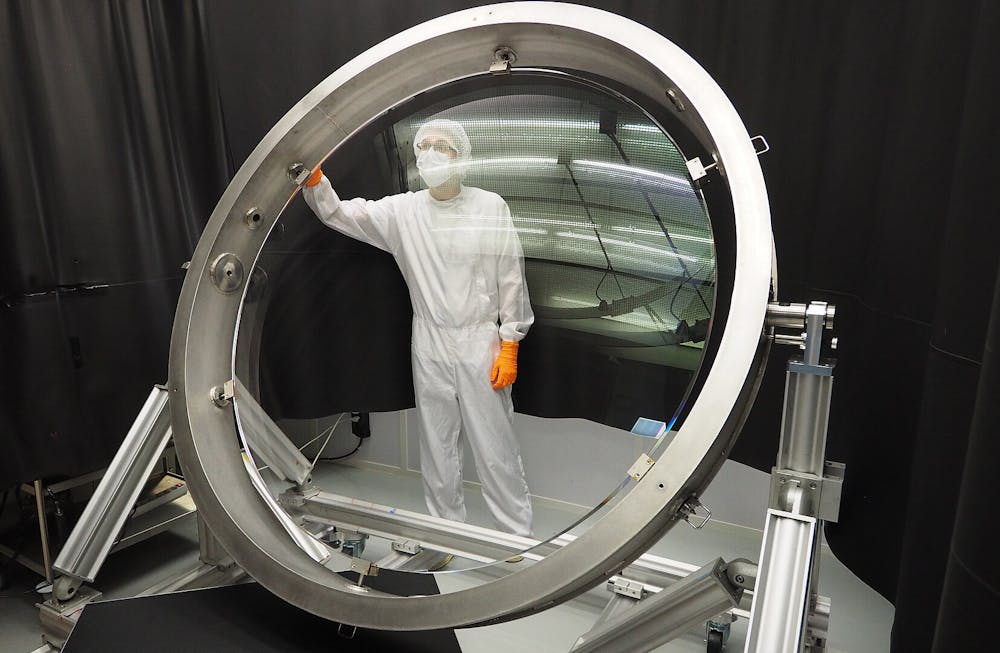
    The glass lens of the Vera Rubin Observatory, which surveys the night sky.
    Large Synoptic Survey Telescope/Vera Rubin Observatory, CC BY

    Lens-based instruments have been transformative. Telescopes have redefined long-standing cosmological views. Microscopes have opened entirely new fields in biology and medicine.

    These changes marked the dawn of empirical science, where observation and measurement drove the creation of knowledge. Today, the James Webb Space Telescope and the Vera C. Rubin Observatory continue those early telescopes’ legacies of knowledge creation.

    Steel and empires

    In the late 18th and 19th centuries, the Industrial Revolution created demand for stronger, more reliable materials for machines, railroads, ships and infrastructure. The material that emerged was steel, which is strong, durable and cheap. Steel is a mixture of mostly iron, with small amounts of carbon and other elements added.

    Countries with large-scale steel manufacturing once had outsized economic and political power and influence over geopolitical decisions. For example, the British Parliament intended to prevent the colonies from exporting finished steel with the iron act of 1750. They wanted the colonies’ raw iron as supply for their steel industry in England.

    Benjamin Huntsman invented a smelting process using 3-foot tall ceramic vessels, called crucibles, in 18th-century Sheffield. Huntsman’s crucible process produced higher-quality steel for tools and weapons.

    One hundred years later, Henry Bessemer developed the oxygen-blowing steelmaking process, which drastically increased production speed and lowered costs. In the United States, figures such as Andrew Carnegie created a vast industry based on Bessemer’s process.

    The widespread availability of steel transformed how societies built, traveled and defended themselves. Skyscrapers and transit systems made of steel allowed cities to grow, steel-built battleships and tanks empowered militaries, and cars containing steel became staples in consumer life.

    White-hot steel pouring out of an electric arc furnace in Brackenridge, Penn.
    Alfred T. Palmer/U.S. Library of Congress

    Control over steel resources and infrastructure made steel a foundation of national power. China’s 21st-century rise to steel dominance is a continuation of this pattern. From 1995 to 2015, China’s contribution to the world steel production increased from about 10% to more than 50%. The White House responded in 2018 with massive tariffs on Chinese steel.

    Rare earth metals and global trade

    Early in the 21st century, the advance of digital technologies and the transition to an economy based on renewable energies created a demand for rare earth elements.

    Offshore turbines use several tons of rare earth magnets to transform wind into electricity.
    Hans Hillewaert/Wikimedia Commons, CC BY-SA

    Rare earth elements are 17 chemically very similar elements, including neodymium, dysprosium, samarium and others. They occur in nature in bundles and are the ingredients that make magnets super strong and useful. They are necessary for highly efficient electric motors, wind turbines and electronic devices.

    Because of their chemical similarity, separating and purifying rare earth elements involves complex and expensive processes.

    China controls the majority of global rare earth processing capacity. Political tensions between countries, especially around trade tariffs and strategic competition, can risk shortages or disruptions in the supply chain.

    The rare earth metals case illustrates how a single category of materials can shape trade policy, industrial planning and even diplomatic alliances.

    Mining rare earth elements has allowed for the widespread adoption of many modern technologies.
    Peggy Greb, USDA

    Technological transformation begins with societal pressure. New materials create opportunities for scientific and engineering breakthroughs. Once a material proves useful, it quickly becomes woven into the fabric of daily life and broader systems. With each innovation, the material world subtly reorganizes the social world — redefining what is possible, desirable and normal.

    Understanding how societies respond to new innovations in materials science can help today’s engineers and scientists solve crises in sustainability and security. Every technical decision is, in some ways, a cultural one, and every material has a story that extends far beyond its molecular structure.

    The National Science Foundation, the Department of Energy, NASA, and other national and regional agencies have funded former research of Peter Mullner.

    ref. From glass and steel to rare earth metals, new materials have changed society throughout history – https://theconversation.com/from-glass-and-steel-to-rare-earth-metals-new-materials-have-changed-society-throughout-history-258244

    MIL OSI

  • MIL-OSI Submissions: Elon Musk says he may launch his own party: but US history tells us that’s not a recipe for success

    Source: The Conversation – UK – By Matthew Mokhefi-Ashton, Lecturer in Politics and International Relations, Nottingham Trent University

    To paraphrase a very old joke, how do you make a small fortune in America? Start with a large fortune and fund a third political party. American political history is littered with the wrecks of challengers who thought they could break the two-party system and failed.

    This makes Elon Musk’s tease that he may launch his own new political party as an act of defiance following his falling out with Donald Trump even more intriguing.

    What do we mean by a two-party system though? Since the 1860s, the Democrats and Republicans have dominated the US political landscape, holding the presidency, Congress and the vast majority of elected positions. Attempts at third parties have usually floundered at the ballot box.


    Get your news from actual experts, straight to your inbox. Sign up to our daily newsletter to receive all The Conversation UK’s latest coverage of news and research, from politics and business to the arts and sciences.


    Some have lasted only for a few electoral cycles, including the Progressive Party in the 1910s and the Citizens Party of the 1980s, while others like the Libertarian Party and Green Party have lasted decades and, in some cases, managed some electoral success at the local level.

    But this is where an important distinction has to be made between third parties and third-party candidates. Because the US system is so personality-driven rather than party focused compared to Europe, quite often third parties have been built around a single person.

    A good example is the previously mentioned Progressive Party. It was founded in 1912 by former president Theodore Roosevelt after he split from the Republicans. Without him it quickly faded away.

    The Reform Party was created by billionaire Ross Perot in 1995 after he managed to get 18.9% of the vote in the 1992 presidential election. While it continued without him for some years, it was a shell of its former self. Other parties like the Socialist, Libertarian and Green parties have sprung from more organic movements and thus have been more successful at a local or state level.

    When you look at recent polling though, it seems strange that the two parties continue to dominate. Public dissatisfaction with politics as usual seems at an all-time high. In a recent Pew Research poll when asked whether “I often wish there were more political parties to choose from” describes their views, 37% of respondents answered: “Very well” and 31% answered: “Somewhat well”.

    In another poll, 25% of respondents said that neither of the two main parties represented their interests.

    So if there is an appetite for some sort of change, why have so few challengers succeeded? The two main parties seem entrenched to the point where it resembles a cartel.

    Odds stacked against third-party insurgency

    The first and arguably most important reason is the electoral system. First past the post does not guarantee a two-party system (look at Britain, for instance). But political scientist Maurice Duverger argued that it does mean that the two main parties have a significant advantage. There are prizes for coming first and second, nothing for third place.

    Equally, many of the big prizes in American politics such as the presidency and state governorships are indivisible and cannot be shared. So it has become received wisdom that voting for anyone other than Democrats or Republicans is a wasted vote.

    In these cases, people either vote for what they perceive to be the lesser of two evils or stay at home, rather than voting for a candidate with no chance or that they may not support.

    The other multi-billion dollar elephant in the room is money. The sheer cost of running for elections in recent years means that any third party is unlikely to be able to raise the funds to be truly competitive. At the last election, the Democrats and Republicans spent hundreds of millions of dollars (which isn’t even counting all of the super-PAC money spent on their behalf).

    Whenever billionaires like Perot have attempted to self-fund a party, they have left themselves open to the accusation that it’s a vanity project, or lacks true mass appeal.

    There is also the fact that to run successfully you must have media coverage. The media tends to focus almost exclusively on the two main parties. This creates a “chicken and egg” situation where you need success to help raise money and media coverage, but it’s difficult to be successful without first having money and media coverage.

    The final reasons are that of the open primary and ideological flexibility of the main parties. Donald Trump briefly considered running as president for the Reform Party back in 2000. In 2016, the open primary system that both main parties use meant that he could impose himself on the Republican Party despite most of the party elite despising him.

    Why bother starting your own party when you can run for one that already exists? It could now be argued that the Republicans have effectively become the Trump or Maga party, although whether this will survive his presidency is open to debate.

    Money, money, money

    Elon Musk has, for the moment, money to burn. Whether he’s willing to invest in the long term to turn this into more than a vanity project remains to be seen.

    He also has charisma and a national platform to amplify his voice like few others. But, having been born outside America, he can’t run for president.

    If he’s serious about electoral success, he’d have to find someone to run, and that would mean, effectively, they’d lead his party. Musk’s public persona suggests that he does not play well with others.

    Founding a third party isn’t impossible, but unless there is a political earthquake it seems difficult to see how one could succeed.

    Matthew Mokhefi-Ashton does not work for, consult, own shares in or receive funding from any company or organisation that would benefit from this article, and has disclosed no relevant affiliations beyond their academic appointment.

    ref. Elon Musk says he may launch his own party: but US history tells us that’s not a recipe for success – https://theconversation.com/elon-musk-says-he-may-launch-his-own-party-but-us-history-tells-us-thats-not-a-recipe-for-success-260480

    MIL OSI

  • MIL-OSI Submissions: War, politics and religion shape wildlife evolution in cities

    Source: The Conversation – USA – By Elizabeth Carlen, Living Earth Collaborative Postdoctoral Fellow, Washington University in St. Louis

    A Buddhist monk in Hong Kong releases fish and chants prayers during a ceremony to free the spirits of tsunami victims. Samantha Sin/AFP via Getty Images

    People often consider evolution to be a process that occurs in nature in the background of human society. But evolution is not separate from human beings. In fact, human cultural practices can influence evolution in wildlife. This influence is highly pronounced in cities, where people drastically alter landscapes to meet their own needs.

    Human actions can affect wildlife evolution in a number of ways. If people fragment habitat, separated wildlife populations can evolve to be more and more different from each other. If people change certain local conditions, it can pressure organisms in new ways that mean different genes are favored by natural selection and passed on to offspring – another form of evolution that can be driven by what people do.

    In a recent review, evolutionary biologists Marta Szulkin, Colin Garroway and I, in collaboration with scientists spread across five continents, explored how cultural processes – including religion, politics and war – shape urban evolution. We reviewed dozens of empirical studies about urban wildlife around the globe. Our work highlights which human cultural practices have and continue to shape the evolutionary trajectory of wild animals and plants.

    Religious practices

    If you’ve traveled internationally, you may have noticed the menu at any one McDonald’s restaurant is shaped by the local culture of its location. In the United Arab Emirates, McDonald’s serves an entirely halal menu. Vegetarian items are common and no beef is served in Indian McDonald’s. And in the United States, McDonald’s Filet-O-Fish is especially popular during Lent when observant Catholics don’t consume meat on Fridays.

    Similarly, ecosystems of cities are shaped by local cultural practices. Because all wildlife are connected to the environment, cultural practices that alter the landscape shape the evolution of urban organisms.

    Populations of fire salamanders have different genes depending on which side of city walls in Oviedo, Spain, they live on.
    Patrice Skrzynski via Getty Images

    For example, in Oviedo, Spain, people constructed walls around religious buildings between the 12th and 16th centuries. This division of the city led to different populations of fire salamanders inside and outside the walls. Because salamanders can’t scale these walls, those on opposite sides became isolated from each other and unable to pass genes back and forth. In a process that scientists call genetic drift, over time salamanders on the two sides became genetically distinct − evidence of the two populations evolving independently.

    Imagine dumping out a handful of M&Ms. Just by chance, some colors might be overrepresented and others might be missing. In the same way, genes that are overrepresented on one side of the wall can be in low numbers or missing on the other side. That’s genetic drift.

    Introducing non-native wildlife is another way people can alter urban ecosystems and evolutionary processes. For example, prayer animal release is a practice that started in the fifth or sixth century in some sects of Buddhism. Practitioners who strive to cause no harm to any living creature release captive animals, which benefits the animal and is meant to improve the karma of the person who released it.

    However, these animals are often captured from the wild or come from the pet trade, thereby introducing non-native wildlife into the urban ecosystem. Non-natives may compete with local species and contribute to the local extinction of native wildlife. Capturing animals nearby has downsides, too. It can diminish local populations, since many die traveling to the release ceremony. The genetic diversity of these local populations in turn decreases, reducing the population’s ability to survive.

    More than a thousand sparrows killed by peasants in 1958 are displayed on a cart near Beijing, China.
    Sovphoto/Universal Images Group via Getty Images

    Influence of politics

    Politically motivated campaigns have shaped wildlife in various ways.

    Starting in 1958, for instance, the Chinese Communist Party led a movement to eliminate four species that were considered pests: rats, flies, mosquitoes and sparrows. While the first three are commonly considered pests around the world, sparrows made the list because they were “public animals of capitalism” due to their fondness for grain. The extermination campaign ended up decimating the sparrow population and damaging the entire ecosystem. With sparrows no longer hunting and eating insects, crop pests such as locusts thrived, leading to crop destruction and famine.

    In the United States, racial politics may be shaping evolutionary processes in wildlife.
    For instance, American highways traverse cities according to political agendas and have often dismantled poor neighborhoods of color to make way for multilane thoroughfares. These highways can change how animals are able to disperse and commingle. For example, they prevent bobcats and coyotes from traveling throughout Los Angeles, leading to similar patterns of population differentiation as seen in fire salamanders in Spain.

    Wildlife during and after war

    Human religious and political agendas often lead to armed conflict. Wars are known to dramatically alter the environment, as seen in current conflicts in Gaza and Ukraine.

    The Russia-Ukraine war affected migration of greater spotted eagles.
    Nimit Virdi via Getty Images

    While documenting evolutionary changes to urban wildlife is secondary to keeping people safe during wartime, a handful of studies on wildlife have come out of active war zones. For example, the current Russia-Ukraine war affected the migration of greater spotted eagles. They made large diversions around the active war zone, arriving later than usual at their breeding grounds. The longer route increased the energy the eagles used during migration and likely influenced their fitness during breeding.

    Wars limit access to resources for people living in active war zones. The lack of energy to heat homes in Ukraine during the winter has led urban residents to harvest wood from nearby forests. This harvesting will have long-term consequences on forest dynamics, likely altering future evolutionary potential.

    A similar example is famine that occurred during the Democratic Republic of Congo’s civil wars (1996-1997, 1998-2003) and led to an increase in bushmeat consumption. This wildlife hunting is known to reduce primate population sizes, making them more susceptible to local extinction.

    Even after war, landscapes experience consequences.

    For example, the demilitarized zone between North Korea and South Korea is a 160-mile (250-kilometer) barrier, established in 1953, separating the two countries. Heavily fortified with razor wire and landmines, the demilitarized zone has become a de facto nature sanctuary supporting thousands of species, including dozens of endangered species.

    The collapse of the Soviet Union and the end of the Cold War led to the establishment of the European Green Belt, which runs along the same path as the Iron Curtain. This protected ecological network is over 7,800 miles (12,500 kilometers) long, allowing wildlife to move freely across 24 countries in Europe. Like the Korean DMZ, the European Green Belt allows for wildlife to move, breed and exchange genes, despite political boundaries. Politics has removed human influence from these spaces, allowing them to be a safe haven for wildlife.

    While researchers have documented a number of examples of wildlife evolving in response to human history and cultural practices, there’s plenty more to uncover. Cultures differ around the world, meaning each city has its own set of variables that shape the evolutionary processes of wildlife. Understanding how these human cultural practices shape evolutionary patterns will allow people to better design cities that support both humans and the wildlife that call these places home.

    Ideas for this article were developed as part of a NSF funded Research Coordination Network (DEB 1840663). Elizabeth Carlen was funded by the Living Earth Collaborative.

    ref. War, politics and religion shape wildlife evolution in cities – https://theconversation.com/war-politics-and-religion-shape-wildlife-evolution-in-cities-260184

    MIL OSI

  • MIL-OSI Russia: Marat Khusnullin: Road surface installation has begun at the interchange under construction at the intersection of the Central Ring Road and Dmitrovskoye Highway

    Translation. Region: Russian Federal

    Source: Government of the Russian Federation – An important disclaimer is at the bottom of this article.

    Previous news Next news

    Construction of a transport interchange at the intersection of the third launch complex of the Central Ring Road and Dmitrovskoe Highway

    In the Moscow Region, the implementation of the infrastructure project for the construction of a transport interchange at the intersection of the third launch complex of the Central Ring Road and Dmitrovskoye Highway continues. At present, the construction of layers of road pavement has begun at the site, and earthworks here have been completed by 50% of the planned volume. This was reported by Deputy Prime Minister Marat Khusnullin.

    “The construction of new roads is inextricably linked with the modernization of the existing network, including the creation of modern interchanges. This ensures smooth integration of traffic flows, reduces the load on key nodes, minimizes congestion and improves traffic safety. An integrated approach to the development of road infrastructure allows us to avoid imbalances in the transport system and use each new facility as efficiently as possible. In the Moscow Region, we are implementing a project to build a transport interchange at the intersection of the Central Ring Road with Dmitrovskoye Highway. Currently, specialists are carrying out excavation work, 50% of which has already been completed. In parallel, the site has begun to install structural layers of the asphalt concrete road surface. In addition, the foundations and supports of all three future overpasses have been built and their superstructures have been partially installed,” said Marat Khusnullin.

    The Deputy Prime Minister added that transition plates and expansion joints are currently being installed on artificial structures.

    A complex of works is expected ahead, including the installation of asphalt concrete pavement layers, drainage structures and strengthening works. In addition, it is necessary to install metal span structures over the current section of the Central Ring Road with intensive traffic. A large volume of work on the installation of road safety elements is also envisaged.

    According to the Chairman of the Board of the state company Avtodor, Vyacheslav Petushenko, the project also includes the construction of four exits and the reconstruction of the A-107 Moscow Small Ring road.

    “As part of the reconstruction, a set of works will be carried out to change the longitudinal profile and geometric parameters of the road. This will improve its transport and operational characteristics. It is planned to replace all culverts to protect the roadway from water, preserve natural watercourses, and prevent flooding. It is also planned to install outdoor electric lighting lines for comfortable travel at night and in poor visibility. To improve road safety, a metal barrier fence will be installed. The total length of the reconstructed section is about 2.3 km. In general, the new interchange will improve the accessibility of adjacent areas, redistribute traffic flows from the A-107 “MMK” highway to the Central Ring Road and significantly improve the conditions for transit traffic bypassing Moscow,” said Vyacheslav Petushenko.

    About 230 people and 85 units of road construction equipment are involved in the construction of the interchange. The launch of vehicle traffic on the new facility is planned for 2026.

    Please note: This information is raw content directly from the source of the information. It is exactly what the source states and does not reflect the position of MIL-OSI or its clients.

    MIL OSI Russia News

  • MIL-OSI United Nations: 4 July 2025 GOARN impact in the field: Brazil implements Go.Data for enhanced contact tracing

    Source: World Health Organisation

    Training sessions on Go.Data for health professionals from various states of Brazil to support the response to outbreaks and health emergencies [2022]. © Pan American Health Organization, Brazil.

    Brazil, a vast country covering approximately 8.5 million km², is divided into 27 states and 5570 municipalities across five regions: North, Northeast, Central-West, Southeast, and South. These regions are home to about 212 million people. Given this extensive territory, implementing new technologies and innovations to ensure quality healthcare access throughout the country is a significant challenge. 

    The COVID-19 pandemic exposed several gaps in the public health system, particularly the need for an effective contact tracing strategy. In Brazil, there were no specific tools available for this purpose, prompting many localities to rely on monitoring spreadsheets or develop their own strategies. 

    In response, the first implementations of the Go.Data tool began in August 2021. Developed by the World Health Organization (WHO) in collaboration with partners at the Global Alert and Response Network (GOARN), Go.Data is a software designed to support outbreak response, particularly contact tracing efforts. It enables users to identify exposed individuals, monitor their health status, and visualize transmission chains. Two municipalities stood out in their use of the tool, applying it to investigate contacts in various situations, including within educational institutions. In these instances, more than 30 000 contacts were recorded. The implementation of the tool facilitated standardized contact tracing, allowing multiple professionals to collaborate concurrently. Furthermore, it supported the real-time creation of transmission chains, thereby offering crucial support in informed decision-making. 

    Following the success of various initiatives and the emergence of mpox in Brazil in 2022, efforts were made to implement state-level servers with support from the National Council of Health Secretaries. As a result, approximately 15 states installed the tool within their infrastructures, expanding its use across different contexts. Subsequently, the Ministry of Health also adopted the tool, integrating it into its infrastructure while complying with all necessary security protocols and requirements. This marked a significant milestone for Brazil, enabling all states to access the tool. 

    In 2023, once the server was established at the Ministry of Health, Go.Data was utilized to monitor individuals exposed to animals with avian influenza. During this process, a centralized server was recommended to consolidate information, allowing 15 states to access the same server. This model represented progress in hierarchical access management and the geographic distribution of information, thereby strengthening epidemiological surveillance in the country. 

    Building on this experience, since 2024, the Ministry of Health, in partnership with the states, has been working to structure the national adoption of the tool in the context of measles and other diseases. To support this effort, two focal points have been trained in each state to ensure a timely response to epidemiological investigations in November 2023 by Pan American Health Organization (WHO Regional Office for the Americas or PAHO) and the Ministry of Health. 

    Epidemiology team from the state of Rio de Janeiro using Go.Data in response to an outbreak [2025]. © Pan American Health Organization, Brazil.

    The implementation of Go.Data has streamlined contact investigations by providing a single online platform with regional access permissions, which enhances tracking and monitoring efforts. Brazil has successfully integrated this tool into its official case notification system, ensuring alignment with national guidelines. Furthermore, Go.Data is equipped with integrations for Power BI and Shiny, which improve data analysis and visualization capabilities. The development of guides and training courses focused on operational procedures has standardized processes and strengthened user competencies. 

    Felipe Lopes Vasconcelos, a national consultant for PAHO, reflects on the tool’s progress in the country. “We had the opportunity to understand the various realities at the state level in Brazil. Before introducing Go.Data, contact tracing was slow and lacked standardization. Today, we have already seen significant advances at different levels, and I believe we are moving toward a more timely response to outbreaks,” Felipe says.  

    The technical support provided by the WHO has been crucial in this process. Since 2020, the WHO team has offered continuous assistance, addressing all questions, needs, and suggestions from Brazil, which has contributed to the tool’s development over the years. 

    MIL OSI United Nations News

  • MIL-OSI United Nations: In Dialogue with Haiti, Experts of the Human Rights Committee Welcome Efforts to Establish a New Constitution, Raise Questions on Measures to Combat Gang-Related Gender-Based Violence and Lynchings

    Source: United Nations – Geneva

    The Human Rights Committee today concluded its consideration of the second periodic report of Haiti on how it implements the provisions of the International Covenant on Civil and Political Rights . Committee Experts appreciated the referendum to establish a new national Constitution, while raising questions as to how the State was tackling the high level of violence against women and girls perpetuated by gang members and lynchings carried out by citizens, against a backdrop of distrust in the police.

    One Committee Expert said they saw the referendum to establish a new Constitution in a positive light, as an attempt to reestablish the institutionality of the country.

    Another Expert said that the scale of violence against women and girls was reportedly considerable, with sexual violence, including rape of children as young as five years old, gang rape, and forced prostitution, used as a weapon of control by gangs. According to reports, the judiciary were not sensitive to cases of gender-based violence and victims were hesitant to report cases. What measures were taken to encourage women to file complaints? Was there a fund to help survivors of violence? How were they supported by State services?

    Lynchings continued to be regular and numerous, another Expert said, citing reports of more than 500 cases in 2023. These were often the work of self-defence groups in or around Port-au-Prince, who did not trust the police, mainly due to corruption. Was this violence investigated, including when the police were accused of supporting or encouraging it? Had the perpetrators of lynchings, stonings and mutilations been prosecuted and punished proportionately? How could trust be restored between the police and the civilian population?

    Pedrica Saint Jean, Minister for the Status of Women and Women’s Rights and head of the delegation, introducing the report, said from 2020 to 2025, Haiti was confronted with repeated political crises, marked by lockdown operations and successive protests. The COVID-19 pandemic, frequent floods and the earthquake of 14 August 2021, which devastated part of the Great South region, were additional challenges faced by the country. This complex situation was further aggravated by the assassination of the Haitian President on 6 July 2021.

    Ms. Saint Jean said an agreement for a peaceful transition was reached on 3 April 2024, establishing a transition period with a nine-member Transitional Presidential Council and a Prime Minister, with the aim of restoring security, continuing constitutional reform, and organising democratic elections.

    The delegation said several strategies had been undertaken to combat gender-based violence, including a national strategy that spanned from 2017 to 2024. An assessment of the strategy was almost completed. A gender-based violence cell had been established to train police officers to take the needs of female victims of violence into account. The Office to Combat Gender-Based Violence streamlined services for victims, enabling them to receive legal, psychosocial and medical assistance in one place. In areas with armed gangs, women were typically the primary victims. Violence was used as a weapon of repression.

    The delegation also said the Government had always condemned lynchings, which were not part of the country’s culture. Incidents needed to be reported at a police station so perpetrators could be incarcerated and tried for their crimes. The community police were carrying out an awareness raising campaign to progressively build trust with the general population. Training sessions were being organised for police officers, with a view to protecting the population. When complaints were made against the police force, the national inspector for the police carried out investigations and measures were taken as necessary.

    In concluding remarks, Ms. Saint Jean thanked the Committee for the kindness it had shown to the Haitian delegation, and the Experts for their insights. Haiti had taken due note of all recommendations and was determined to take further steps to develop effective, concrete responses to the Committee’s concerns relating to the implementation of the Covenant. Everybody was working to see the day when Haiti could leave the crisis behind.

    Changrok Soh, Committee Chairperson, in concluding remarks, said the Committee acknowledged the profound political, economic and humanitarian challenges facing Haiti, which had hampered efforts to protect human rights. Haiti was encouraged to take this opportunity to advance necessary reforms to ensure that the rights enshrined in the Covenant were fully recognised for all Haitians.

    The delegation of Haiti was made up of representatives of the Ministry for the Status of Women and Women’s Rights; the Ministry of Justice and Public Security; the Ministry of Foreign Affairs; the Ministry of Social Affairs and Work; the Cabinet; the Government of Port-au-Prince; the Prime Minister’s Office; the Haitian National Police; the Anti-Violence Unit; and the Permanent Mission of Haiti to the United Nations Office at Geneva. Some members of the delegation were unable to attend the meeting in person due to travel restrictions.

    The Human Rights Committee’s one hundred and forty-fourth session is being held from 23 June to 17 July 2025. All the documents relating to the Committee’s work, including reports submitted by States parties, can be found on the session’s webpage . Meeting summary releases can be found here . The webcast of the Committee’s public meetings can be accessed via the UN Web TV webpage .

    The Committee will next meet in public at 3 p.m., Monday 7 July to begin its consideration of the fourth periodic report of Viet Nam (CCPR/C/VNM/4). 

    Report

    The Committee has before it the second periodic report of Haiti (CCPR/C/HTI/2).

    Presentation of Report

    PEDRICA SAINT JEAN, Minister for the Status of Women and Women’s Rights and head of the delegation , said between 2020 to 2025, Haiti had experienced both positive and negative developments. From a positive perspective, the Government had multiplied efforts in many areas to improve the rule of law and respect for human rights. However, the country had been plagued by unprecedent insecurity that required the intervention of a foreign force, through the deployment of the Multinational Security Support Mission on October 2, 2024. This force intervened in the context of an agreement signed between Haiti and Kenya on police and security cooperation in March 2024, following the adoption of the United Nations Security Council Resolution 2699.

    From 2020 to 2025, Haiti was confronted with repeated political crises, marked by lockdown operations and successive protests which accompanied them. The COVID-19 pandemic, frequent floods and the earthquake of 14 August 2021, which devastated part of the Great South region, were additional challenges faced by the country. This complex situation was further aggravated by the assassination of the Haitian President on 6 July 2021.

    An agreement for a peaceful transition was reached on 3 April 2024, establishing a transition period with a nine-member Transitional Presidential Council and a Prime Minister, with the aim of restoring security, continuing constitutional reform, and organising democratic presidential elections. The Council was also tasked with economic and judicial reforms and combating corruption. The agreement provided for the establishment of three key bodies, including the Body for the Control of Government Action, in charge of controlling the acts of the Executive, since Parliament was currently non-existent; the National Security Council, to respond to the various aspects of the country’s security crisis; and the National Conference, accompanied by a steering committee. The Government had already established the National Security Council and the National Conference and its steering committee. The referendum decree, resulting from the work of the National Conference and the steering committee, would allow Haiti to have a new Constitution. Currently, efforts were underway to strengthen the capacities of the Haitian National Police and the Armed Forces of Haiti, which had a budget increase of 11 per cent in 2024-2025. An agreement was concluded with Colombia to monitor the Haitian coast, to curb the illicit trafficking of firearms.

    The Government had attached great importance to the judicial reform already initiated by its predecessors. Six new Courts of First Instance and the corresponding Public Prosecutor’s Offices were created between September 2024 and April 2025. The law of 10 September 2018 created the National Council for Legal Assistance and established legal aid offices in 18 jurisdictions in Haiti, aiming to provide free legal assistance to those who were financially struggling. The Penal Code and the Code of Criminal Procedure had previously been criticised by civil society in 2020. Following the revision of the two texts by a special commission, they were adopted on 24 June 2025. This marked an important step in the fight against insecurity, corruption and impunity.

    Two other important decrees had been adopted in the context of judicial reform. The first, adopted on 16 April 2025, which created two specialised judicial poles: one for the repression of complex financial crimes and offences and the other for the repression of mass crimes and sexual violence. The second decree of 4 May 2023 sanctioned money laundering, terrorist financing and the financing of the proliferation of weapons of mass destruction in Haiti.

    Despite Government efforts, due to the deteriorating security situation, the majority of prisons in Port-au-Prince had been vandalised, leading to the uncontrolled release of a number of detainees. The Government had been forced to relocate several jurisdictions to allow the resumption of judicial activities in minimum security conditions and the normal application of appropriate sentences and sanctions.

    The Haitian State aimed to follow up on complaints against police officers for excessive use of force, and it organised human rights training sessions for police personnel. However, it was regrettable that, despite the Government’s efforts, some citizens, driven by anger at the atrocities committed by criminal groups, resorted to extreme methods, including the lynching of captured gang members, instead of handing them over to the authorities. The Government recognised the severity of these acts and strongly condemned all forms of mob justice.

    The crisis in the country led to an increase in gender-based violence, particularly for displaced persons in camps. The Haitian State was working to protect and facilitate access to justice for survivors of violence, including through the creation of the Office for Combatting Gender-Based Violence as well as the organization of training adapted to the needs of survivors for police officers and judges. Medical, legal and psychosocial assistance were also offered to women and girls at internal displacement camps.

    Article 262 of the Penal Code, adopted by decree on 23 June 2025, punished the perpetrators of acts of torture and barbarism, with sentences ranging from 15 to 20 years in prison. Prison overcrowding remained a major problem, especially with the destruction of the main prisons in March 2024. Instructions had been issued to the Public Prosecutor’s Offices and Courts of First Instance to carry out regular criminal hearings, with the aim of relieving overcrowding in the prisons in provincial cities.

    The Transitional Presidential Council was making every effort to organise general elections in 2025 and to install a President elected on 7 February 2026. Despite its efforts, the Haitian State was aware that the implementation of the provisions of the Covenant had not yet reached a satisfactory level. However, Haiti pledged to do everything in its power to implement the provisions on the Covenant.

    Questions by Committee Experts

    A Committee Expert acknowledged how difficult it was for the State party to participate in person in the dialogue and expressed gratitude to the delegation in Geneva. The Committee was aware of the grave humanitarian crisis suffered by Haiti for decades, compounded with the assassination of the President in 2021. In that context, the Committee noted an increase in widespread human rights violations and growing control of armed gangs in significant parts of Port-au-Prince, leaving the population more vulnerable to violence and human rights abuses, and leading to the displacement of more than one million people.

    Were courts in Haiti directly applying the Covenant? Could examples be provided? Were courses on international human rights law and the Covenant provided in training to judges? The Committee had been informed of situations where civil servants had opposed the execution of orders handed down by judges to free individuals. Could this be explained? What role did these civil servants play in the judicial system? Had steps been taken to ratify the Optional Protocol of the Covenant on individual communications? In May 2025, a bill of law was presented on the development of a new constitution, with a decree adopted to hold a referendum on the issue. Was this bill in line with the rights enshrined in the Covenant? Was it realistic to carry out a referendum in the context of violence? When was the state of emergency ordered? Was it still in force? Which articles of the Covenant were suspended?

    Did the current budget of the Office for Citizen Protection allow it to carry out its functions and extend its activities to the most remote parts of the country? Were there plans to expand the powers of the Office to allow it to consider human rights violations that had their origin in the acts of private entities?

    What steps had been taken to end discrimination against lesbian, gay, bisexual and transgender persons? Were there laws in place to punish acts of discrimination against these groups? Had the State taken actions been to allow these people to carry out public demonstrations and to protect them? Had it adopted measures to change discriminatory cultural attitudes in Haitian society, to end stigmatisation of lesbian, gay, bisexual and transgender persons? 

    Another Expert said despite the crisis in the country, Haiti remained bound by its international obligations. The dialogue would address problems such as insecurity, the deep humanitarian crisis that the population was experiencing, the endemic violence of gangs, the forced displacement of the population, the dysfunction of the justice system, chronic impunity and serious challenges to the rule of law. All these problems were linked to corruption. The report published in 2023 by the United Nations Expert on Human Rights in Haiti stated that corruption in Haiti was “public enemy number one” and found that more than 90 per cent of Haitian civil servants did not comply with the national anti-corruption law. The Anti-Corruption Unit and the Central Financial Intelligence Unit, which were suspected of lacking independence, had brought nearly 100 major cases of corruption to justice, but these had not led to any convictions.

    Did the State plan to set up a financial prosecutor’s office or judges specialised in the fight against corruption? Could more information be provided on the decree adopted on the creation of financial judicial units? What measures were being taken to support the work of the Anti-Corruption Unit and the Central Financial Intelligence Unit and to ensure that the cases referred were followed up independently?

    Haiti had expressed its commitment to ensuring accountability for the serious violations committed during Jean-Claude Duvalier’s presidency. However, a case assessing these violations had been in the courts of cassation since 2014, and there had not been any progress. What explained the delay? Could the delegation enlighten the Committee on the situation of Jean Gabriel Robert, who was convicted in absentia in the case of the “Raboteau massacre”?

    Information showed that the scale of violence against women and girls was considerable, with sexual violence, including rape, which was sometimes perpetrated against children as young as five years old; gang rape; and forced prostitution, used as a weapon of control by gangs. According to reports, the judiciary were not sensitive to cases of gender-based violence and victims were hesitant to report cases. What measures were taken to encourage women to file complaints? Was there a fund to help survivors of violence? How were they supported by State services?

    According to information received by the Committee, lynchings continued to be regular and numerous, with more than 500 in 2023. These were often the work of self-defence groups in or around Port-au-Prince, who did not trust the police, mainly due to corruption. In addition, the 2024 report of the United Nations Expert on Human Rights in Haiti noted that police were passive, and it appeared that some murders were encouraged, supported or facilitated by the police forces. Was this violence investigated, including when the police were accused of supporting or encouraging it? Had the perpetrators of lynchings, stonings and mutilations been prosecuted and punished proportionately? How could trust be restored between the police and the civilian population?

    Another Expert said specific steps had not been taken to combat impunity. What hope existed, looking forward to the immediate and long-term future, regarding a reversal of the situation? There were several cases in which there had been impunity for human rights violations. Attacks against the population in the La Saline suburb in 2018 had not been condemned by the Government and no steps had been taken to provide support to victims. What measures had been taken against the involvement of political agents in these cases? Why was the La Saline case withdrawn from the original judge?

    Data showed that 28 percent of civil servants in Haiti were women. In 2019 a strategy was presented to ensure equality for women by 2030. What progress had been made? How would the State party solve the problem of the low rate of political representation of women in Haiti?

    What actions were being taken to guaranteed women’s access to health care, in situations where criminal groups took control of health centres? How was access to medicines ensured?

    Another Expert asked what Haiti’s prospects were looking forward? What urgent measures were envisaged to protect women and girls in areas under gang control? What mechanisms had been established to guarantee security and safety for survivors of sexual violence, and to encourage the reporting of cases? Could Haiti provide updated information on the draft law preventing violence against women and girls? Was there a timeline for its adoption? What had been done to bolster the amount of medical, legal and psychosocial services for survivors, particularly in areas under gang control? What measures were envisaged to protect the right to life of those in extreme poverty? Was there an intersectional strategy to prevent avoidable deaths linked to poverty?

    What measures were taken to protect civilians living in areas under the control of armed gangs? What had been the result of the assistance from Kenya? Was it meeting the challenges? What guarantees existed when it came to the investigation of its own officers by the Haitian police? How was it ensured that the police did not carry out disproportionate use of force during protests? How was action being bolstered in areas under gang control?

    Was there a road map regarding ratification of the Covenant’s Second Optional Protocol concerning the death penalty? How did the State party intend to ensure that those who had served their sentence were properly released? Had the system for monitoring judicial cases been reactivated? What efforts were underway to improve detention conditions? Were construction projects for new prisons still planned? How many women had access to shelters in the last three years? What measures were envisaged to guarantee all police stations should have trained personnel, particularly in areas most affected by police insecurity?

    Responses by the Delegation

    PEDRICA SAINT JEAN, Minister for the Status of Women and Women’s Rights and head of the delegation , said the Government had priorities outlined in the April 2024 agreement on the peaceful transition, including combatting insecurity, conducting the referendum and bringing the country to elections to appoint a robust Government. To combat insecurity, the budget allocated to the police and armed forces had been increased, allowing them to better contain the problems they were confronting. The police, the Haitian armed forces, and the security mission needed to work together to combat insecurity to allow for the milestone referendum to be held. Nine electoral commissioners were currently out in the field assessing the requirements. Haiti was not waiting for the security issues to subside before moving to the referendum.

    Haiti was doing its utmost to implement its commitments under the Covenant through a raft of measures. Six new courtrooms had been established in the country, allowing proximity between those needing to access the justice system and the infrastructure in place. Bureaus had been established to work on specific criminal areas, including mass crimes which had remained unpunished. For some time, courts had not been operational because they were in the hands of gangs. Two bureaus would be responsible for crimes of sexual violence, and another was responsible for financial crimes. Some 34 new judges and prosecutors had been appointed to support the justice system.

    The method of choosing judges for the Anti-Corruption Unit had not hindered its independence. Cases were currently going ahead at the Court of First Instance. Three prisons had been built to international standards, with one dedicated to female inmates. Institutional measures had been put in place to freeze the funds of certain agencies which were found to be corrupt but had impunity from the Anti-Corruption Unit, and those responsible were being brought before the court.

    The Government of Haiti had always condemned lynchings, which were not part of the country’s culture. Incidents needed to be reported at a police station so perpetrators could be incarcerated and tried for their crimes.

    The delegation said several assessment missions had been established to gain an understanding of the situation of detention centres and propose tangible solutions. One of the main challenges was the provision of food, due to lack of access to main roads. To address this situation, the Justice Ministry sought to ensure that providers of food should be placed directly in situ. In the last few months, prisons had greater autonomy and managed their needs themselves, providing a better and tailored approach to local realities.

    Haiti had done a lot to combat gender-based violence. This phenomenon was topical in Haiti, particularly when it came to displaced women. Several strategies had been undertaken to combat gender-based violence, including a national strategy that spanned from 2017 to 2024. An assessment of the strategy was almost completed. A gender-based violence cell had been established within the police, to train police officers to take the needs of female victims of violence into account. The Office to Combat Gender-Based Violence streamlined services for victims, enabling them to receive legal, psychosocial and medical assistance in one place. Psychosocial support services had been set up for women victims in internal displacement camps. Several initiatives had been adopted to bolster protections for minors, including host families and prevention and readaptation programmes for children recruited by armed games. Training and awareness raising sessions were organised for judges.

    In areas with armed gangs, women were typically the primary victims. The number of victims was increasing, particularly against younger women, but violence by armed gangs was also affecting children and the elderly. Violence was used as a weapon of repression. There were still people in Haiti who did not want to report. During times of political turbulence, the phenomenon of violence against women was heightened. There was a need for awareness raising to eradicate the phenomenon. Women should not be used as an instrument to place pressure on the Government.

    Incest had never been part of Haitian culture, but it did not mean this phenomenon did not exist. When incest occurred, people usually preferred to solve the issue in the family. Attention needed to be paid to the phenomenon of incest involving displaced people. The State sanctioned based on the relevant 2006 decree and used case law when dealing with these offences. It was important to continue legislating to bring tangible solutions to this phenomenon.

    For 15 years, judges had been receiving training on the Covenant from the Government and the Haitian police.

    Lesbian, gay, bisexual, transgender and intersex persons had been looked down on in Haiti; they were formerly not given the right to complain. While progress was not significant, these people were now considered to be fully fledged citizens who needed to be protected by the State and to enjoy their full human rights.

    Quotas had been implemented calling for at least 30 per cent of decision-making posts to be held by women. This issue had been poorly addressed. In the new Constitution, the State was advocating for parity. Until there was a critical mass of women in decision-making posts, the problems they faced would persist. A series of consultations had been launched with officials to create incentive measures to promote equality regarding candidate lists.

    The law on the organization of the Ministry on the Status of Women had not properly been reformed, which was why the Ministry had difficulties in playing its primary role. The Ministry submitted a law on its reorganization to ensure it could achieve its goals. By the start of next year, the State would launch its first national action plan covering the participation of women in restoring peace and security in Haiti. Work was being done with survivors in internal displacement camps to transform them into fully-fledged actors. Women, including young girls and survivors of violence in these camps, had been appointed as peace ambassadors, to sensitise the message of peace throughout Haiti.

    Haiti was relying on the work of the Multinational Security Support Mission and the international community to help the police and armed forces overcome the corruption and security issues in the country.

    Follow-up Questions by Committee Experts

    A Committee Expert asked follow-up questions, including on the functions to be undertaken by the bureaus on mass crimes, sexual crimes and financial crimes. This was a fantastic idea, but the bureaus needed to have the resources to operate properly. Other questions were asked on measures planned to restore the trust between the police and the justice system; lynchings committed by the police force; steps to tackle the circulation of weapons; and the mandate of the Office for Citizens’ Protection.

    An Expert said they saw the referendum to establish a new Constitution in a positive light, as an attempt to reestablish the institutionality of the country. Who drafted this bill? Did it go through various sectors, with participation from civil society? What did the “green and red zones” mean? Were green zones under Government control? Did red zones mean there was no State control? What happened if there was a referendum in the red zones?

    More questions were asked on how the long tradition of impunity could be alleviated; alternative measures to detention; detention beyond the lengths of sentences; efforts to prevent discrimination against women; and access to voluntary interruption of pregnancy. What was the Government’s perception of the processes involving the participation of the international community that aimed to improve the situation for the population of Haiti?

    According to information received by the Committee, around 40 per cent of births enjoyed the proper medical support. How did midwives treat risky pregnancies? Did the State intend to include the ratification of the Second Optional Protocol in the planned reform of the draft Constitution?

    Responses by the Delegation

    The delegation said the death penalty was abolished in Haiti through a decree adopted in 1987.

    Regarding the red and green zones, there were currently zones under gang control, where the State was doing everything possible to convert them to green zones. Green zones were placed where the State could provide appropriate services to the population. The police were trying to gain access to the red zones to bring about peace and security. Progress had been made in penetrating many of the red zones; it was expected that there would be further progress in this area.

    The referendum was a compulsory, milestone measure to lay the groundwork for national elections and allow the population to get their new Constitution. All different sectors of society had been consulted in the drafting of the new Constitution.

    Haiti had implemented measures that aimed to provide a structure to prevent the free circulation of weapons, including weapons of mass destruction.

    The delegation said there was a legal bureau on mass crimes and sexual violence in Port-au-Prince and another on financial crimes. The bureaus were comprised of 10 judges who worked with the police and financial oversight and regulatory bodies. Their operations were ensured by donors from the international community and the State.

    The community police were carrying out an awareness raising campaign to progressively build trust with the general population. Training sessions were being organised for police officers, with a view to protecting the population. When complaints were made against the police force, the national inspector for the police carried out investigations and measures were taken as necessary.

    Haiti had a plan to set up scanners at customs to prevent the flow of illegal weapons into the country. Controls at the border with the Dominican Republic and checks of containers coming from the United Staes had been strengthened, and strict checks were being conducted on private vehicles, including motorbikes. Authorities had also suspended land imports from the Dominican Republic, ensuring seizures of illegal imports. Despite this, Haiti was facing increased criminal activity and corruption, with the need for increased international support to reduce the weapons flow into Haiti.

    Green zones were safe zones while red zones were ones where there was a heightened risk.

    A draft of the new Constitution had been shared across different sectors to receive their inputs, which had been sent to the Committee responsible for the drafting of the new Constitution.

    Haitian midwives played a key role in early detection of illnesses and in responding to complications during birth. They carried out post monitoring operatives in rural areas, while caesarean procedures were performed by obstetric doctors.

    Questions by Committee Experts

    A Committee Expert asked if there were obstacles preventing Haiti from ratifying the Covenant’s Second Optional Protocol? Murderous attacks by gangs against ambulances had been reported, and health staff had fled the country. Did the Government have any plans to confront these problems? Haiti had an astonishing overcrowding rate in its prisons, at allegedly over 300 per cent. There was a lack of access to the appellate procedure for all inmates and for persons with disabilities. How did Haiti plan to resolve this problem?

    Another Expert appreciated Haiti’s delegation comprised of high-level women. It was reported that police agents or persons acting with their complicity tortured inmates on a daily basis in prisons and police custody facilities. Why had the perpetrators of cases of torture not been prosecuted and brought to justice? Had there been capacity building of law enforcement in the area of torture? Why had the State not ratified the Convention against Torture?

    Reports received by the Committee stated that forced evictions had become widespread since the earthquake in 2010, but this was denied by the State. It was alleged that these evictions affected a wide number of families and were not addressed by the State. What information was available about three resident families who had not taken up possession of reconstructed homes? Which Government civil servants were responsible for these families’ forced evictions? How had the Government taken steps to prosecute those involved?

    Hurricane Matthew had affected more than 2.6 million people, including 600,000 children; what measures had been taken to protect them? Could information be provided on the distribution of financial aid and the resources used to reconstruct infrastructure following this natural disaster? During the imposed state of emergency, was it only economic rights which were affected? What solutions were available for those still awaiting assistance from the damage 10 years ago? What resources had been allocated to address housing issues?

    A Committee Expert asked about the implementation of the National Plan to Combat Child Labour, adopted in 2019; what was the duration of the plan? Was it still in force or had a new plan been adopted? Could data on the number of children exploited and those in situations of begging be provided? What work had been done specifically on the exploitation of children by the Committee to Combat Human Trafficking?

    Various reports had documented violence against children, who were recruited and used by the gangs and injured or killed as a result. An even more severe impact was felt by children with disabilities. The Secretary-General’s report had outlined 383 grave violations against children in 2024. In December 2024, the gangs had committed a high number of abductions, including of 17 girls and 10 boys. What measures had been taken by the State to combat these grave violations? To help minors, child soldiers and victims of armed groups, a Commission had been created to support the creation of a national network of shelters and rehabilitation centres. How did the State ensure that the Commission had the human and financial resources necessary to support its functions? What did its work consist of? Was the National Committee for Combatting Human Trafficking able to carry out its functions? What measures had been adopted along the Dominican-Haitian border to prevent trafficking of children who were then sold in the Dominican Republic?

    It was understood that a commission to implement criminal reform was created in July 2024. What were the main reforms being carried out? What measures had been adopted to deal with the firebomb attacks on judges? How was the safety and security of judges being ensured? What was the current situation of the National Council for Legal Assistance? Regarding the appointment of judges in the Cassation Council, how was it ensured that the involvement of the Senate did not affect the Council’s independence? What role did the Council play in combatting corruption in the judicial sphere?

    Another Committee Expert said people who were displaced often lost their identification documents. What was the State party doing to resolve this issue? Two journalists reporting on insecurity in Haiti had been executed in 2022. The Committee had also received information that five journalists were murdered in 2024, with no investigations carried out. Gang violence had also led to the closure and restriction of media, including the suspension of popular programmes on suspicion of serving as platforms for gangs. Journalists had also been threatened by gangs. How could elections take place if the State could not facilitate the free circulation of ideas? How did Haiti intend to combat impunity surrounding executions or ill-treatment of journalists? What was done to protect human rights defenders? How was it ensured that social media platforms were regulated?

    In March 2025, anti-Government protests were held to decry the security context and inaction by the State. What measures had been taken to establish the responsibility of police directly involved in the use of force in suppressing peaceful demonstrations? What had been done to guarantee the work of non-governmental organizations in full security and free from harassment?

    Responses by the Delegation

    The delegation said overcrowding in prisons remained a major issue for the Government which it was working to address. Instructions had been issued to the prosecution offices and tribunals of the Courts of First Instance to encourage the holding of more criminal sessions, including sessions in which a jury was not present, with a view to relieving overcrowding in provincial prisons. In 2023 and2024, this occurred in 14 jurisdictions, leading to 159 convictions. In 2024, the total number of people detained in the country was around 12,000. The State had managed to capture around 12 prisoners who had escaped. The drop in the number of detainees in 2025 was explained primarily due to the escapes that followed the armed attacks carried out against certain penitentiary infrastructure. Courts had been actively engaged to implement non-custodial measures when appropriate, as a means of alleviating prison overcrowding. The Government recognised the need to prevent arbitrary arrests. Men, women and children were placed in different prisons. Despite the State’s efforts, there was only one police officer per every 14 detainees.

    The Government remained committed to improving prison conditions, despite security constraints. The mortality rate had dropped between 2024 and 2025 thanks to coordinated action to provide medical care and humanitarian aid. Healthcare services had been established in several penitentiaries. In 2017, a Presidential Commission was established to shed light on deaths in the Port-au-Prince prison. It highlighted aggravating factors including severe overcrowding, insufficient hygiene and a lack of medical support, among others. Measures were implemented to improve nutrition, detention conditions and investigate causes of deaths.

    The internal regulations of the penitentiary administration outlawed all forms of torture and inhumane treatment. Finances had been provided to the National Anti-Trafficking Committee to support the implementation of its national action plan. A protocol had been signed to guarantee legal aid to victims of trafficking. Some 100 students from the University of Haiti had received training on the issue of human trafficking. Several human traffickers had been prosecuted, however following the mass escapes in March 2024, a number of these traffickers were unfortunately able to escape.

    The Constitution guaranteed that judges could not be dismissed. In the judicial hierarchy in Haiti, the Constitution had the highest ranking, followed by international conventions. In Haiti, the Constitution outlawed the death penalty in all areas, meaning there was no need to fear its reinstation. The ratification of the Second Optional Protocol could be discussed when the legislature was functional.

    Families who were forcibly evicted due to the development of road infrastructure or for airport security purposes had a right to fixed compensation, as well as the right to appeal decisions blocking their access to redress.

    A State project had been launched to combat domestic labour by children, in line with the Convention on the Rights of the Child. The project had been launched in 16 regions in the country and included a concrete list of jobs banned for children. Twenty-three surveys of young people had been conducted, allowing them to express themselves on themes including domestic labour, birth registration, violence against children, and education. A social protection project ensured monetary transfers for children under the age of five, pregnant women and persons with disabilities. The project was financed by the World Bank and allowed vulnerable families to provide care to their children. Around 25,000 homes received regular monetary transfers to the value of 40 United States dollars per month.

    A professional training programme had been launched in conjunction with the International Labour Organization, allowing for the training of more than 800 vulnerable teenagers in various technical and farming activities. Some 9,200 children had received support for school re-enrolment. Four thousand vulnerable homes at risk of family separation received monetary transfers to support income-generating activities, as well as financial education. A pilot programme had been launched in targeted communes with the United Nations Children’s Fund, which had developed a foster programme for children taken out of situations of domesticity to support their reintegration.

    Legal assistance officers had been established in 12 jurisdictions and the rollout was ongoing. A decision would be made on the draft Constitution based on a participatory process. A Commission had been established to follow up on gender-based violence cases in the country.

    Steps had been taken to prevent the phenomenon of forced evictions, but results were still limited. The Government had not been encouraging forced evictions and had taken new steps to support victims. Demolished homes had been rebuilt and several previous owners had already taken ownership of their new homes. Authorities ensured that no one living in camps or informal housing was evicted without a humane alternative provided.

    The Haitian State reiterated its commitment to freedom of the press and its respect for the work of human rights defenders. Efforts were made to ensure journalists could freely conduct their work, including by strengthening protection mechanisms. Haitian authorities reaffirmed their desire to shed light on the murders of several journalists, which were currently at being investigated by the Public Prosecutor.

    The courts did not all apply the Covenant in the same way, but it was often evoked in individual cases. Alternative measures to prison were allowed for in the new Criminal Code, which had been adopted in June 2025. Judges were equipped with armed vehicles and would have security details at their disposal for their personal safety. The police force was taking steps to bolster security in zones with a heightened level of insecurity and ensure that the referendum could take place. The Government was engaged in an intense campaign to fight the armed violence being perpetrated by gangs.

    Follow-up Questions by Committee Experts

    Committee Experts asked follow-up questions regarding identification papers, which more than 70 per cent of the population did not have, as well as the role of the Government Commissioners within the courts of justice.

    A Committee Expert expressed hope that the programme being laid out by the State for elections would bring about the enjoyment of rights by the population. It seemed impossible to bring this about given the current insecurity in Haiti. Was the State in a position to achieve peace given the current context? The context in Haiti required international, shared responsibility, with involvement from all States parties.

    Closing Statements

    PEDRICA SAINT JEAN, Minister for the Status of Women and Women’s Rights and head of the delegation , thanked the Committee for the kindness it had shown to the Haitian delegation, and the Experts for their insights. Haiti had taken due note of all recommendations and was determined to take further steps to develop effective, concrete responses to the Committee’s concerns relating to the implementation of the Covenant. One day, in the not-too-distant future, the country would exit the crisis. Everybody was working to see the day when Haiti could leave the crisis behind. Despite the efforts it had made, the Haitian State was aware that the implementation of the Covenant and progress in bolstering of the rule of law had not yet reached a satisfactory level. Haiti had a massive raft of problems to resolve, including travel restrictions, which had prevented some members of the delegation from traveling to Geneva. The State of Haiti was committed to doing its utmost to implement the provisions of the Covenant.

    CHANGROK SOH, Committee Chairperson, expressed sincere gratitude to all who had contributed to the dialogue. The Committee acknowledged the profound political, economic and humanitarian challenges facing Haiti, which had hampered efforts to protect human rights. The Committee underscored the importance of continued diligence and commitment to the rights enshrined in the Covenant, especially in times of crisis. During the dialogue, the Committee had raised serious issues regarding the right to life, gang violence, lynchings, protection of vulnerable populations, corruption, protection of journalists and the need to combat impunity, among other concerns. Despite these challenges, the Committee appreciated the State party’s willingness to engage in dialogue. Haiti was encouraged to take this opportunity to advance necessary reforms to ensure that the rights enshrined in the Covenant were fully recognised for all Haitians.

    ___________

    Produced by the United Nations Information Service in Geneva for use of the media; 
    not an official record. English and French versions of our releases are different as they are the product of two separate coverage teams that work independently. 

    CCPR25.015E

    MIL OSI United Nations News

  • MIL-OSI Russia: Marat Khusnullin: General plan for the city of Severodonetsk in the LPR has been approved

    Translation. Region: Russian Federal

    Source: Government of the Russian Federation – An important disclaimer is at the bottom of this article.

    For the comprehensive infrastructure and economic development of the reunited regions, the Russian construction complex uses various tools. In particular, master plans and general plans are used in this work. Thus, the main urban development document – the general plan – has been developed and approved for the urban district of the city of Severodonetsk in the Luhansk People’s Republic, Deputy Prime Minister Marat Khusnullin reported.

    “At the beginning of the year, the Strategy for Spatial Development of the country was approved. The document is important for the formation of a balanced system of spatial development of territories and the search for optimal forms of territorial organization of the economy. Also, within the framework of the national project “Infrastructure for Life”, a list of 98 key settlements has been determined. The tools that we will use for a comprehensive approach to work on their development are master plans and general plans. To date, 15 master plans have been developed and approved for the reunited regions, as well as a general plan for Severodonetsk in the LPR, and general plans have been developed and approved for the cities of its agglomeration, which together form a large industrial hub of the republic,” said Marat Khusnullin.

    The Deputy Prime Minister added that, first of all, the document, which was developed by the Unified Research and Design Institute for Spatial Planning of the Russian Federation, takes into account the needs of Severodonetsk residents for a renovated housing stock: by 2035, the city plans to restore and build more than 2 million square meters. Also, in parallel, work is planned to update the social infrastructure: repair of schools, kindergartens, reconstruction of the city drama theater building, construction of the Ice Palace, art school and a new museum building with a library. In addition, it is planned to create high-tech and environmentally friendly production in existing industry areas – the chemical industry and mechanical engineering. The general plan also pays attention to the development of the road network, which is aimed at increasing the connectivity of territories both within the urban district and with the administrative centers of adjacent areas and neighboring regions.

    Similar work was carried out to develop and approve general plans for five more municipal entities of the LPR: Stakhanov, Pervomaysk, Kirovsk, Rubezhnoye and Lisichansk.

    Please note: This information is raw content directly from the source of the information. It is exactly what the source states and does not reflect the position of MIL-OSI or its clients.

    MIL OSI Russia News

  • MIL-OSI Russia: Denis Manturov assessed the prospects for lithium mining in the Republic of Tyva

    Translation. Region: Russian Federal

    Source: Government of the Russian Federation – An important disclaimer is at the bottom of this article.

    Previous news Next news

    Denis Manturov’s working visit to Tuva

    First Deputy Prime Minister Denis Manturov, as part of a working visit to the Republic of Tyva, visited a construction materials production facility, reviewed an exhibition of key industrial enterprises in the region, and held a working meeting with the head of the republic, Vladislav Khovalyg.

    OOO Vostok is engaged in the construction of housing and social institutions. With the help of the individual development program, the enterprise has established the production of reinforced concrete products and building blocks. The volume of goods shipped in 2024 reached more than 5 billion rubles. The share of Russian equipment at the enterprise is 75%.

    At the industrial products exhibition, Denis Manturov got acquainted with the production potential of the region and the work of existing enterprises. One of them is JSC Tekhmashservis (part of the Rostec State Corporation), where in November 2023, thanks to government support measures, a plant for the production of emulsion explosives for the development of deposits was put into operation. The company cooperates with local mining enterprises and supplies them with products. The plant’s capacity is 5 thousand tons per year.

    The First Deputy Prime Minister and the head of the republic also flew over a number of deposits by helicopter, including Tastygskoye and Kyzyl-Tashtygskoye. Denis Manturov emphasized that the development of the Tastygskoye deposit for the production of lithium concentrate is not only a promising direction for supplies to the domestic market, but also has export potential. The Tastyg deposit in Tyva is one of the largest lithium deposits in Russia and one of the key ones for ensuring Russia’s technological sovereignty in the field of modern capacious power sources and energy storage.

    At a meeting with Vladislav Khovalyg, Denis Manturov recommended that the region more actively use the tools of the Industrial Development Fund, including to attract local investors. In addition, the First Deputy Prime Minister instructed the Russian Ministry of Industry and Trade, together with the government of the republic and the management companies of private industrial parks, to work out the issue of their inclusion in the register of the Ministry of Industry and Trade. This will allow companies to apply for support measures from the ministry in the future.

    Vladislav Khovalyg reported to Denis Manturov on the start of the development of a preliminary feasibility study for the creation of the Central Eurasian Transport Corridor (CETC). At SPIEF-2025, Krasnoyarsk Krai, Khakassia and Tuva signed a memorandum, according to which the Center for Strategic Research Foundation began assessing the prospective cargo base. The technical specifications were approved by a working group formed on the initiative of Denis Manturov.

    Let us recall that the order to determine the feasibility of forming the Central Eurasian Transport Corridor was given by President Vladimir Putin within the framework of new strategic directions of Russia’s development. The Central Eurasian Transport Corridor provides an additional opportunity for the transit of goods to the Northern Sea Route via the Yenisei River and creates the basis for the northern branch of the New Silk Road.

    Please note: This information is raw content directly from the source of the information. It is exactly what the source states and does not reflect the position of MIL-OSI or its clients.

    MIL OSI Russia News

  • MIL-OSI Russia: Dmitry Chernyshenko: 540 thousand applicants have already submitted about 4 million applications as part of the admission campaign for the 2025/2026 academic year

    Translation. Region: Russian Federal

    Source: Government of the Russian Federation – An important disclaimer is at the bottom of this article.

    Previous news Next news

    Dmitry Chernyshenko during a visit to the Siberian Federal University. Left: Governor of Krasnoyarsk Krai Mikhail Kotyukov, Acting Rector of SFU Maxim Rumyantsev and Deputy Minister of Education and Science Dmitry Afanasyev

    During a visit to the Siberian Federal University (SFU), Deputy Prime Minister of Russia Dmitry Chernyshenko discussed the progress of the admissions campaign at SFU and other Russian universities. The event took place as part of the Deputy Prime Minister’s working visit to Krasnoyarsk Krai.

    To ensure continuous monitoring and control of the admissions campaign, a dashboard has been deployed on the platform of the Coordination Center of the Government of the Russian Federation. It can be used to track the progress of the admissions campaign in each subject, educational organization, including in individual areas of training and specialties. The panel allows you to identify deviations in the processing of applicants’ applications and promptly respond to them.

    “The admissions campaign is an important and responsible period not only for applicants, but for the entire country. The achievement of technological leadership, a national goal set by President Vladimir Putin, depends on the choice of applicants and the quality of their preparation. In total, almost 620 thousand budget places are available for higher education programs this academic year. About 540 thousand applicants have already submitted almost 4 million applications within the framework of competitive groups, of which more than 3 million – through the super service “Online University Admission”, – said Dmitry Chernyshenko.

    About 73% of the total number of budget places are allocated to regional universities.

    Among the most popular areas are computer science and computing, education and pedagogical sciences, and clinical medicine.

    In Krasnoyarsk Krai, applicants have already submitted almost 70 thousand applications to universities within the framework of competitive groups, including more than 61.2 thousand using the super service “Online University Admission”.

    The Deputy Prime Minister noted the active participation of the Siberian Federal University in government support measures, including those implemented under the national project “Youth and Children”.

    Governor of Krasnoyarsk Krai Mikhail Kotyukov noted that SFU is one of the leading universities in Russia: “Siberian Federal University is developing quite dynamically today. The university is of interest to applicants not only from Krasnoyarsk Krai, but also from neighboring regions. Quite a lot of foreigners come. We carefully preserve the legacy of the Universiade, all the facilities are working, all the facilities are involved. Moreover, we are already forming the next development plans.”

    Currently, SFU has about 27 thousand students, 83.4% of whom are full-time students. For the 2025/2026 academic year, Siberian Federal University has allocated more than 5.5 thousand budget places for higher education programs. As part of the current admissions campaign at SFU, applicants have already submitted over 30 thousand applications within competitive groups, including almost 25.5 thousand using the super service “Online University Admission”. Among the most popular areas of training among applicants are computer science and computer engineering; applied geology, mining, oil and gas engineering and geodesy; education and pedagogical sciences; mechanical engineering.

    The event was also attended by the Governor of Krasnoyarsk Krai Mikhail Kotyukov, Deputy Minister of Science and Higher Education of the Russian Federation Dmitry Afanasyev, and Acting Rector of the Siberian Federal University Maxim Rumyantsev.

    Dmitry Chernyshenko also assessed the infrastructure of SFU, in particular the classrooms and the urban farming laboratory of the Institute of Gastronomy. This is one of 20 educational institutes that are part of the university structure; it was founded as a joint project of the Siberian Federal University and the Krasnoyarsk restaurant group. The Institute of Gastronomy trains specialists in the restaurant business and hospitality industry.

    Please note: This information is raw content directly from the source of the information. It is exactly what the source states and does not reflect the position of MIL-OSI or its clients.

    MIL OSI Russia News

  • MIL-OSI Canada: Update 10: Alberta wildfire update (July 4, 3 p.m.)

    Source: Government of Canada regional news (2)

    MIL OSI Canada News

  • MIL-OSI: AGF Reports June 2025 Assets Under Management and Fee-Earning Assets

    Source: GlobeNewswire (MIL-OSI)

    TORONTO, July 04, 2025 (GLOBE NEWSWIRE) — AGF Management Limited reported total assets under management (AUM) and fee-earning assets1 of $55.0 billion as at June 30, 2025.

               
    AUM

    ($ billions)

    June 30,
    2025
    May 31,
    2025
    % Change
    Month-Over-
    Month
    June 30,
    2024
    % Change
    Year-Over-
    Year
    Total Mutual Fund $ 32.0 $ 31.0   $ 27.2  
    Exchange-traded funds + Separately managed accounts $ 3.0 $ 2.8   $ 1.9  
    Segregated accounts and Sub-advisory $ 6.6 $ 6.4   $ 6.4  
    AGF Private Wealth $ 8.7 $ 8.6   $ 7.9  
    Subtotal
    (before AGF Capital Partners AUM and fee-earning assets1)
    $ 50.3 $ 48.8   $ 43.4  
    AGF Capital Partners $ 2.6 $ 2.6   $ 2.7  
    Total AUM $ 52.9 $ 51.4 2.9 % $ 46.1 14.8 %
    AGF Capital Partners fee-earning assets1 $ 2.1 $ 2.1   $ 2.1  
    Total AUM and fee-earning assets1 $ 55.0 $ 53.5 2.8 % $ 48.2 14.1 %
               
    Average Daily Mutual Fund AUM $ 31.3 $ 30.6   $ 27.3  

    1 Fee-earning assets represent assets in which AGF has carried interest ownership and earns recurring fees but does not have ownership interest in the managers.

    Mutual Fund AUM by Category

    ($ billions)

    June 30,
    2025
    May 31,
    2025
    June 30,
    2024
    Domestic Equity Funds $ 4.6 $ 4.5 $ 4.2
    U.S. and International Equity Funds $ 20.2 $ 19.5 $ 16.3
    Domestic Balanced Funds $ 0.1 $ 0.1 $ 0.1
    U.S. and International Balanced Funds $ 1.5 $ 1.4 $ 1.5
    Domestic Fixed Income Funds $ 2.0 $ 2.0 $ 1.7
    U.S. and International Fixed Income Funds $ 3.3 $ 3.2 $ 3.1
    Domestic Money Market $ 0.3 $ 0.3 $ 0.3
    Total Mutual Fund AUM $ 32.0 $ 31.0 $ 27.2
           

    AGF Capital Partners AUM and fee-earning assets

    ($ billions)

    June 30,
    2025

    May 31,
    2025

    June 30,
    2024

    AGF Capital Partners AUM $ 2.6 $ 2.6 $ 2.7
    AGF Capital Partners fee-earning assets $ 2.1 $ 2.1 $ 2.1
    Total AGF Capital Partners AUM and fee-earning assets $ 4.7 $ 4.7 $ 4.8

    About AGF Management Limited

    Founded in 1957, AGF Management Limited (AGF) is an independent and globally diverse asset management firm. Our companies deliver excellence in investing in the public and private markets through three business lines: AGF Investments, AGF Capital Partners and AGF Private Wealth.

    AGF brings a disciplined approach, focused on incorporating sound, responsible and sustainable corporate practices. The firm’s collective investment expertise, driven by its fundamental, quantitative and private investing capabilities, extends globally to a wide range of clients, from financial advisors and their clients to high-net worth and institutional investors including pension plans, corporate plans, sovereign wealth funds, endowments and foundations.

    Headquartered in Toronto, Canada, AGF has investment operations and client servicing teams on the ground in North America and Europe. With $55 billion in total assets under management and fee-earning assets, AGF serves more than 815,000 investors. AGF trades on the Toronto Stock Exchange under the symbol AGF.B.

    AGF Management Limited shareholders, analysts and media, please contact:

    Nick Smerek
    VP, Financial Planning & Analysis
    416-865-4337, InvestorRelations@agf.com

    The MIL Network

  • PM Modi and Trinidad & Tobago’s Prime Minister plant a sapling in Port of Spain

    Source: Government of India

    Source: Government of India (4)

    Prime Minister Narendra Modi and Trinidad and Tobago’s Prime Minister Kamla Persad-Bissessar planted a sapling in Port of Spain as part of the ‘Ek Ped Maa Ke Naam’ initiative.

    In a post on X, PM Modi thanked Prime Minister Persad-Bissessar for participating in the campaign.

    “Grateful to Prime Minister Kamla Persad-Bissessar for joining the ‘Ek Ped Maa Ke Naam’ initiative. India and Trinidad & Tobago understand the adverse impacts of climate change and we will continue to do our utmost to make our planet greener and better”, the PM said.

    Earlier on Friday, PM Modi met Prime Minister Kamla Persad-Bissessar at the Red House in Port of Spain. He congratulated her on assuming office for a second term following her recent election victory.

    The two leaders discussed a wide range of potential areas for cooperation, including agriculture, healthcare and pharmaceuticals, digital transformation, UPI, capacity building, culture, sports, and people-to-people ties.

    Sharing details of the meeting, PM Modi said in a post on X that they held discussions on all aspects of India–Trinidad and Tobago friendship. “We agreed on the need to further accelerate our economic partnership and focus on areas such as disaster management, climate change, and defence.”

  • PM Modi and Trinidad & Tobago’s Prime Minister plant a sapling in Port of Spain

    Source: Government of India

    Source: Government of India (4)

    Prime Minister Narendra Modi and Trinidad and Tobago’s Prime Minister Kamla Persad-Bissessar planted a sapling in Port of Spain as part of the ‘Ek Ped Maa Ke Naam’ initiative.

    In a post on X, PM Modi thanked Prime Minister Persad-Bissessar for participating in the campaign.

    “Grateful to Prime Minister Kamla Persad-Bissessar for joining the ‘Ek Ped Maa Ke Naam’ initiative. India and Trinidad & Tobago understand the adverse impacts of climate change and we will continue to do our utmost to make our planet greener and better”, the PM said.

    Earlier on Friday, PM Modi met Prime Minister Kamla Persad-Bissessar at the Red House in Port of Spain. He congratulated her on assuming office for a second term following her recent election victory.

    The two leaders discussed a wide range of potential areas for cooperation, including agriculture, healthcare and pharmaceuticals, digital transformation, UPI, capacity building, culture, sports, and people-to-people ties.

    Sharing details of the meeting, PM Modi said in a post on X that they held discussions on all aspects of India–Trinidad and Tobago friendship. “We agreed on the need to further accelerate our economic partnership and focus on areas such as disaster management, climate change, and defence.”

  • PM Modi and Trinidad & Tobago’s Prime Minister plant a sapling in Port of Spain

    Source: Government of India

    Source: Government of India (4)

    Prime Minister Narendra Modi and Trinidad and Tobago’s Prime Minister Kamla Persad-Bissessar planted a sapling in Port of Spain as part of the ‘Ek Ped Maa Ke Naam’ initiative.

    In a post on X, PM Modi thanked Prime Minister Persad-Bissessar for participating in the campaign.

    “Grateful to Prime Minister Kamla Persad-Bissessar for joining the ‘Ek Ped Maa Ke Naam’ initiative. India and Trinidad & Tobago understand the adverse impacts of climate change and we will continue to do our utmost to make our planet greener and better”, the PM said.

    Earlier on Friday, PM Modi met Prime Minister Kamla Persad-Bissessar at the Red House in Port of Spain. He congratulated her on assuming office for a second term following her recent election victory.

    The two leaders discussed a wide range of potential areas for cooperation, including agriculture, healthcare and pharmaceuticals, digital transformation, UPI, capacity building, culture, sports, and people-to-people ties.

    Sharing details of the meeting, PM Modi said in a post on X that they held discussions on all aspects of India–Trinidad and Tobago friendship. “We agreed on the need to further accelerate our economic partnership and focus on areas such as disaster management, climate change, and defence.”

  • MIL-OSI USA: Rep. Neguse on House Passage of Republican’s Reckless Budget Reconciliation Bill

    Source: United States House of Representatives – Congressman Joe Neguse (D-Co 2)

    Washington, D.C. — Colorado U.S. Representative Joe Neguse issued the following statement on the House of Representative’s passage of H.R. 1, the 2025 Republican Budget Reconciliation Bill. Rep. Neguse led opposition to the bill through multiple marathon hearings on the Rules Committee on which he serves, including a record 28-hour hearing. 

    “During the House Rules Committee’s marathon 28-hour hearing, I saw firsthand just how out of touch the Trump Administration and House Republicans are with the American people. As we exposed during multiple hearings —which House Republicans intentionally scheduled during the dead of night — the budget reconciliation bill is reckless and cruel, and will have disastrous consequences for the American people. The bill will slash healthcare for millions of Americans while increasing the deficit by trillions of dollars. Put simply, it is indefensible. That is why I vehemently opposed the bill, and voted against the measure at every turn, including again earlier today.”

    “The policies embedded in the reckless budget bill will harm many families across the Western Slope and Northern Colorado, whom will feel the strain of this bill, all while billionaires and big corporations enjoy hefty tax cuts made possible by Congressional Republicans. And because of these cuts, many Coloradans will be left without critical support programs, including food assistance and healthcare access, while rural hospitals across our state face the prospects of potential closure.” 

    “Over the coming weeks, our office will be engaged in critical conversations with communities across the 12 counties I’m privileged to serve, along with state and local leaders, as we chart a path forward. We also encourage constituents to contact our office directly for assistance in navigating the impacts of the legislation, as our office stands ready to assist. Finally, I will continue to identify every opportunity possible to reverse the draconian cuts wrought by House Republicans’ reckless bill and work relentlessly to do the same, including through the upcoming appropriations process for FY 2026.” 

    Below are most recent available estimates on the prospective impacts of the 2025 Budget Reconciliation Bill on the State of Colorado.

    • 40,953 people across Colorado will lose health insurance.
    • At least 55,000 people across Colorado could lose some or all food assistance.
    • 10,000 manufacturing and energy jobs in Colorado would be eliminated.
    • 55,769 students in Colorado could have their Pell grants cut or eliminated entirely.
    • $490 average yearly increase in energy bills for Colorado families.

    If you or someone you know in Colorado’s 2nd Congressional District will be impacted by the 2025 Budget Reconciliation Bill, please fill out this form and a member of our staff will be in touch with you.

    ###

    MIL OSI USA News

  • MIL-OSI Russia: Iran Committed to Diplomacy, Calls for Retaliatory Actions: President

    Translation. Region: Russian Federal

    Source: People’s Republic of China in Russian – People’s Republic of China in Russian –

    Source: People’s Republic of China – State Council News

    TEHRAN, July 4 (Xinhua) — Iran still views diplomacy as an effective means of settling disputes, provided the other side is sincerely committed to these solutions in practice, President Masoud Pezeshkian said on Friday.

    As noted in a statement published on the website of the Iranian presidential office, M. Pezeshkian made the corresponding judgment at a meeting with Tajik President Emomali Rahmon in Khankendi, Azerbaijan, where he attended the 17th summit of the Economic Cooperation Organization (ECO) earlier that day.

    M. Pezeshkian recalled that while Iran was seeking to resolve existing problems through negotiations with the West, especially with the United States, Israel began to carry out airstrikes against it.

    “Iran continues to see negotiations and diplomacy as effective solutions to resolve differences, provided that the other side shows in practice that it is committed to these solutions,” he added.

    The Tajik president, for his part, condemned Israel’s “aggression” against Iran, stressing that all parties need to return to the negotiating table and remain committed to diplomacy to resolve differences.

    The statement said the presidents also called for accelerating the implementation of previously signed bilateral cooperation agreements in various fields, especially in the economy, trade and culture. –0–

    MIL OSI Russia News

  • PM Modi holds delegation-level talks with Trinidad & Tobago PM Kamla Persad-Bissessar, inks key bilateral pacts

    Source: Government of India

    Source: Government of India (4)

    Prime Minister Narendra Modi on Friday met Trinidad & Tobago’s Prime Minister Kamla Persad-Bissessar in Port of Spain, where the two leaders held wide-ranging talks aimed at boosting cooperation in areas from agriculture and healthcare to digital payments and cultural exchanges.

    he meeting took place at the historic Red House, where PM Modi congratulated his counterpart on assuming office for the second time following her recent electoral victory and thanked her for the warm welcome accorded to him and his delegation.

    The two leaders discussed a wide range of areas for potential cooperation, including agriculture, healthcare and pharmaceuticals, digital transformation, the Unified Payments Interface (UPI), capacity building, culture, sports, and people-to-people ties. Development cooperation remains a vital aspect of the India–Trinidad & Tobago partnership, both sides noted. Prime Minister Persad-Bissessar remarked that Prime Minister Modi’s visit would reinvigorate the long-standing relationship between the two nations.

    Regional and global issues also featured in the talks, with both leaders calling for enhanced cooperation on shared challenges such as climate change, disaster management, and cybersecurity. PM Modi appreciated Trinidad & Tobago’s strong support for India following the recent Pahalgam terror attack, and the leaders reaffirmed their joint commitment to combat terrorism in all its forms. They also agreed to work together to promote greater solidarity among countries of the Global South and to strengthen the India–CARICOM partnership.

    Following the discussions, both countries exchanged six Memoranda of Understanding (MoUs) covering pharmacopoeia cooperation, Quick Impact Projects, cultural exchanges, sports, diplomatic training, and the establishment of ICCR Chairs for Hindi and Indian Studies in Trinidad & Tobago.

    In a move to further deepen ties with the Indian diaspora, India also announced the extension of Overseas Citizen of India (OCI) card eligibility to the sixth generation of people of Indian origin living in Trinidad & Tobago.

    PM Modi extended an invitation to Prime Minister Persad-Bissessar to visit India, which she accepted. 

  • PM Modi holds delegation-level talks with Trinidad & Tobago PM, inks key bilateral pacts

    Source: Government of India

    Source: Government of India (4)

    Prime Minister Narendra Modi on Friday met Trinidad & Tobago’s Prime Minister Kamla Persad-Bissessar in Port of Spain, where the two leaders held wide-ranging talks aimed at boosting cooperation in areas from agriculture and healthcare to digital payments and cultural exchanges.

    he meeting took place at the historic Red House, where PM Modi congratulated his counterpart on assuming office for the second time following her recent electoral victory and thanked her for the warm welcome accorded to him and his delegation.

    The two leaders discussed a wide range of areas for potential cooperation, including agriculture, healthcare and pharmaceuticals, digital transformation, the Unified Payments Interface (UPI), capacity building, culture, sports, and people-to-people ties. Development cooperation remains a vital aspect of the India–Trinidad & Tobago partnership, both sides noted. Prime Minister Persad-Bissessar remarked that Prime Minister Modi’s visit would reinvigorate the long-standing relationship between the two nations.

    Regional and global issues also featured in the talks, with both leaders calling for enhanced cooperation on shared challenges such as climate change, disaster management, and cybersecurity. PM Modi appreciated Trinidad & Tobago’s strong support for India following the recent Pahalgam terror attack, and the leaders reaffirmed their joint commitment to combat terrorism in all its forms. They also agreed to work together to promote greater solidarity among countries of the Global South and to strengthen the India–CARICOM partnership.

    Following the discussions, both countries exchanged six Memoranda of Understanding (MoUs) covering pharmacopoeia cooperation, Quick Impact Projects, cultural exchanges, sports, diplomatic training, and the establishment of ICCR Chairs for Hindi and Indian Studies in Trinidad & Tobago.

    In a move to further deepen ties with the Indian diaspora, India also announced the extension of Overseas Citizen of India (OCI) card eligibility to the sixth generation of people of Indian origin living in Trinidad & Tobago.

    PM Modi extended an invitation to Prime Minister Persad-Bissessar to visit India, which she accepted. 

  • PM Modi holds delegation-level talks with Trinidad & Tobago PM, inks key bilateral pacts

    Source: Government of India

    Source: Government of India (4)

    Prime Minister Narendra Modi on Friday met Trinidad & Tobago’s Prime Minister Kamla Persad-Bissessar in Port of Spain, where the two leaders held wide-ranging talks aimed at boosting cooperation in areas from agriculture and healthcare to digital payments and cultural exchanges.

    he meeting took place at the historic Red House, where PM Modi congratulated his counterpart on assuming office for the second time following her recent electoral victory and thanked her for the warm welcome accorded to him and his delegation.

    The two leaders discussed a wide range of areas for potential cooperation, including agriculture, healthcare and pharmaceuticals, digital transformation, the Unified Payments Interface (UPI), capacity building, culture, sports, and people-to-people ties. Development cooperation remains a vital aspect of the India–Trinidad & Tobago partnership, both sides noted. Prime Minister Persad-Bissessar remarked that Prime Minister Modi’s visit would reinvigorate the long-standing relationship between the two nations.

    Regional and global issues also featured in the talks, with both leaders calling for enhanced cooperation on shared challenges such as climate change, disaster management, and cybersecurity. PM Modi appreciated Trinidad & Tobago’s strong support for India following the recent Pahalgam terror attack, and the leaders reaffirmed their joint commitment to combat terrorism in all its forms. They also agreed to work together to promote greater solidarity among countries of the Global South and to strengthen the India–CARICOM partnership.

    Following the discussions, both countries exchanged six Memoranda of Understanding (MoUs) covering pharmacopoeia cooperation, Quick Impact Projects, cultural exchanges, sports, diplomatic training, and the establishment of ICCR Chairs for Hindi and Indian Studies in Trinidad & Tobago.

    In a move to further deepen ties with the Indian diaspora, India also announced the extension of Overseas Citizen of India (OCI) card eligibility to the sixth generation of people of Indian origin living in Trinidad & Tobago.

    PM Modi extended an invitation to Prime Minister Persad-Bissessar to visit India, which she accepted. 

  • PM Modi holds delegation-level talks with Trinidad & Tobago PM, inks key bilateral pacts

    Source: Government of India

    Source: Government of India (4)

    Prime Minister Narendra Modi on Friday met Trinidad & Tobago’s Prime Minister Kamla Persad-Bissessar in Port of Spain, where the two leaders held wide-ranging talks aimed at boosting cooperation in areas from agriculture and healthcare to digital payments and cultural exchanges.

    he meeting took place at the historic Red House, where PM Modi congratulated his counterpart on assuming office for the second time following her recent electoral victory and thanked her for the warm welcome accorded to him and his delegation.

    The two leaders discussed a wide range of areas for potential cooperation, including agriculture, healthcare and pharmaceuticals, digital transformation, the Unified Payments Interface (UPI), capacity building, culture, sports, and people-to-people ties. Development cooperation remains a vital aspect of the India–Trinidad & Tobago partnership, both sides noted. Prime Minister Persad-Bissessar remarked that Prime Minister Modi’s visit would reinvigorate the long-standing relationship between the two nations.

    Regional and global issues also featured in the talks, with both leaders calling for enhanced cooperation on shared challenges such as climate change, disaster management, and cybersecurity. PM Modi appreciated Trinidad & Tobago’s strong support for India following the recent Pahalgam terror attack, and the leaders reaffirmed their joint commitment to combat terrorism in all its forms. They also agreed to work together to promote greater solidarity among countries of the Global South and to strengthen the India–CARICOM partnership.

    Following the discussions, both countries exchanged six Memoranda of Understanding (MoUs) covering pharmacopoeia cooperation, Quick Impact Projects, cultural exchanges, sports, diplomatic training, and the establishment of ICCR Chairs for Hindi and Indian Studies in Trinidad & Tobago.

    In a move to further deepen ties with the Indian diaspora, India also announced the extension of Overseas Citizen of India (OCI) card eligibility to the sixth generation of people of Indian origin living in Trinidad & Tobago.

    PM Modi extended an invitation to Prime Minister Persad-Bissessar to visit India, which she accepted. 

  • MIL-OSI Russia: “A GUU diploma is your victory”: 1886 specialists are ready to work

    Translation. Region: Russian Federal

    Source: State University of Management – Official website of the State –

    On July 4, 2025, the State University of Management triumphantly held a graduation ceremony dedicated to the 80th anniversary of the Victory in the Great Patriotic War.

    The negative weather forecast, fortunately, did not come true, and the clouds that flew in only made the day not too stuffy. Free water and drinks also contributed to the comfort of the graduates. It was not even necessary to stand on the square, this time there were many seats. The usual photo booths were working, as well as an innovation – 3D photos for the GUU graduates’ museum.

    At the special awards ceremony, the graduates were greeted by the rector of the State University of Management, Vladimir Stroyev.

    “Our dear students, their parents, friends, welcome to our not quite ordinary graduation, dedicated to the 80th anniversary of the Great Victory. Victories are not only the deeds of days gone by, but also your triumphant mood today. The student years you spent at GUU will be some of the best years of your life. Yes, the sessions were different, but I am sure that you will remember this time with pleasure. For better or for worse, but now you are not GUU students, but graduates. I am sure that we will be proud of you for many years to come,” the rector congratulated.

    Special awards were presented by outstanding graduates and honorary guests of the university.

    Senator of the Russian Federation from the Legislative Assembly of the Rostov Region Vasily Golubev recalled that he entered the Moscow Engineering and Economics Institute under the rector Olimpiada Kozlova and lived in a newly built dormitory, and recently organized a meeting of graduates at the State University of Management and felt like a student again. The senator also advised graduates to periodically return to the university to recharge with its energy. “Do not forget the rule of mountain climbers – they do not climb quickly, but confidently. It is you who will have to ensure that Russia achieves technological leadership in the world, it is you who will have to manage the authorities and the country as a whole. It is no coincidence that the main topic today is victory. We need it,” Vasily Golubev urged and presented awards for significant achievements for the benefit of the university Primus inter pares, of which this time there were not 7, according to the number of institutes, but 8, which corresponded to the 80th anniversary of the Victory.

    Awards were given to: Victoria Igorevna Kostikova – IEF; Yupatova Varvara Ilyinichna – ISUiP; Sereda Irina Leonidovna – IOM; Babich Alina Maksimovna – IUPSiBK; Olga Vadimovna Plesskaya – IIS; Kuimova Maria Leonidovna – IM; Shubina Sofya Kirillovna – Fine Arts;

    Primus inter pares “Infinity” – Burlakova Valeria – IM.

    State Duma Deputy Biysultan Khamzaev noted the beauty, brightness and intelligence of the graduates. “You have a powerful name for your university – the State University of Management. Find the character in yourself to be useful to your family and country. Return to your native university, help and support, this is the tradition of our education – the best education in the world,” said Biysultan Khamzaev and presented awards for academic success.

    Awards were given to: Langeman Irina Igorevna – IEF; Gubchak Milena Vladislavovna – ISUiP; Pavelev Ilya Dmitrievich – IOM; Minazhetdinova Dilyara Ilyasovna – IUPSiBK; Neretina Oksana Andreevna – IIS.

    Deputy Head of the Federal Service for Supervision in Education and Science Svetlana Kochetova called the graduates colleagues and suggested that all those who lived in the dormitory will definitely not forget this fun time. The honorary guest separately wished health to the teachers and asked the graduates not to forget them. Svetlana Kochetova presented awards for achievements in career guidance.

    Awards were given to: Stefania Dmitrievna Dukhnovskaya – IEF; Kuzmina Ksenia Dmitrievna – ISUiP; Nikita Konstantinovich Rasskazov – IOM; IUPSiBK Morozova Sofya Aleksandrovna – IUPSiBK; Musina Alfiya Farkhitdinovna – IIS.

    Deputy Head of the Federal Service for Supervision in Education and Science Evgeny Semchenko congratulated the graduates of 1999 on one of the most important days of their lives. “At one time, living with my wife in the dormitory of the State University of Management, we often heard calls for freebies in the windows. Now I will tell you: after graduation, there will be no more freebies. I wish you to continue your education in a master’s degree, postgraduate study, get a second higher education in order to benefit the country,” Evgeny Semchenko addressed the graduates of 2025 and presented awards for scientific achievements.

    Awards were given to: Popova Yulia Alekseevna – IEF; Zhuk Alexandra Petrovna – ISUiP; Grishkina Anna Vyacheslavovna – IOM; Lanenkina Elizaveta Aleksandrovna – IUPSiBK; Potalainen Ilya Sergeevich – IIS; Petrova Anna Dmitrievna – IM.

    The Executive Secretary of the Parliamentary Assembly of the Collective Security Treaty Organization Sergey Pospelov reported that he graduated from the State University of Management 23 years ago, thanked the parents of the graduates for their patience and endurance, telling the heroes of the occasion that now it is their turn to help their parents. “The University is with you forever. And your merits will always be the merits of the University, so stay in touch with it.” Sergey Pospelov presented awards for sports achievements.

    Awards were given to: Vladimir Alekseevich Simonenko – IEF; Elizarov Artyom Denisovich – IGUiP; Novikov Makar Konstantinovich – IOM; Larin Andrey Evgenievich – IUPSiBK; Karpov Danila Sergeevich – IIS.

    Vice President of the Novard Group of Companies Sergey Sarkisov noted that on such a day, graduates are happy and a little sad at the same time. “No matter how life and career turn out, you must remember that your success in the future is a fusion of your experience and new knowledge. I wish you always to be accompanied by a desire for something new. Success to everyone!”, wished Sergey Sarkisov and presented awards for active social life.

    Awards were given to: Daria Aleksandrovna Kudryavtseva – IEF; Lavrova Ekaterina Igorevna – ISUiP; Arbuzova Polina Alekseevna – IOM; Blbulyan David Spartakovich – IUPSiBK; Kalugin Mikhail Dmitrievich – IIS; Sokolova Larisa Pavlovna – IM.

    Deputy Head of the Federal Treasury Department for Moscow Elena Egorushkova thanked GUU for the opportunity to congratulate the graduates, wished them all the best and emphasized that the most important things are yet to come. The honorary guest presented awards for achievements in cultural life.

    Awards were given to: Kristina Romanovna Danilenko – IEF; Naydenova Daria Aleksandrovna – ISUiP; Yavorskaya Polina Igorevna – IOM; Bchemyan Maria Karenovna – IUPSiBK; Volkova Alexandra Ilyinichna – IIS; Aklieva Natalya Sergeevna – IM.

    General Director of FKK GROUP LLC Vladislav Fadeev recalled that 23 years ago he stood in the same crowd of graduates and asked them not to forget the reckless student life. “Hold on to each other, don’t lose this thread. Year after year you will meet less and less often, families and concerns will appear, but try to do it anyway. Bon voyage!” Vladislav Fadeev said and presented awards for covering public life.

    Awards were given to: Ksenia Andreevna Pavlenko – IEF; Fedun Anastasia Stepanovna – IUPSiBK; Fomenko Victoria Sergeevna – IM; Bandorin Alexander Sergeevich – Fine Arts; Yakovlev Danila Sergeevich – IOM.

    It is interesting that Danila Yakovlev, as the winner of the All-Russian competition of final qualifying works in the format “Startup as a Diploma” with the project “Innovative Glass Pebbles”

    Later, 9 masters of State University of Management also received special awards: Ivan Alekseevich Ignatov – ISUiP; Levshov Ivan Vadimovich – IOM; Nikitina Anna Sergeevna – ISUiP; Rudskaya Irina Aleksandrovna – IIS; Ambaryan Lika Alikovna – IEF; Volkova Elizaveta Alekseevna – IUPSiBK; Kotenko Marina Igorevna – IOM; Yashkov Ivan Dmitrievich – IUPSiBK; Pridanov Egor Dmitrievich – IIS.

    In total, 1886 people graduated from the State University of Management in the completed academic year, 785 of whom graduated with honors! 1886 graduates. Symbolic, considering that this is the year of birth of Sergo Ordzhonikidze, whose name our university bore for many years.

    Congratulations to all graduates on this important life victory! Remember the inspiration you are feeling now, and remember today in moments of trial. You have already endured at least 4 years of exams, project work, lectures, lack of sleep – now you are capable of everything! And now just enjoy, be inspired by today’s victory. And as almost all the honored guests asked, do not forget your native university, now you are not students of GUU, from now on you are friends of GUU. Congratulations!

    Please note: This information is raw content directly from the source of the information. It is exactly what the source states and does not reflect the position of MIL-OSI or its clients.

    MIL OSI Russia News