NewzIntel.com

    • Checkout Page
    • Contact Us
    • Default Redirect Page
    • Frontpage
    • Home-2
    • Home-3
    • Lost Password
    • Member Login
    • Member LogOut
    • Member TOS Page
    • My Account
    • NewzIntel Alert Control-Panel
    • NewzIntel Latest Reports
    • Post Views Counter
    • Privacy Policy
    • Public Individual Page
    • Register
    • Subscription Plan
    • Thank You Page

Category: Transport

  • MIL-OSI Analysis: Believe it or not, there was a time when the US government built beautiful homes for working-class Americans to deal with a housing shortage

    Source: The Conversation – USA – By Eran Ben-Joseph, Professor of Landscape Architecture and Urban Planning, Massachusetts Institute of Technology (MIT)
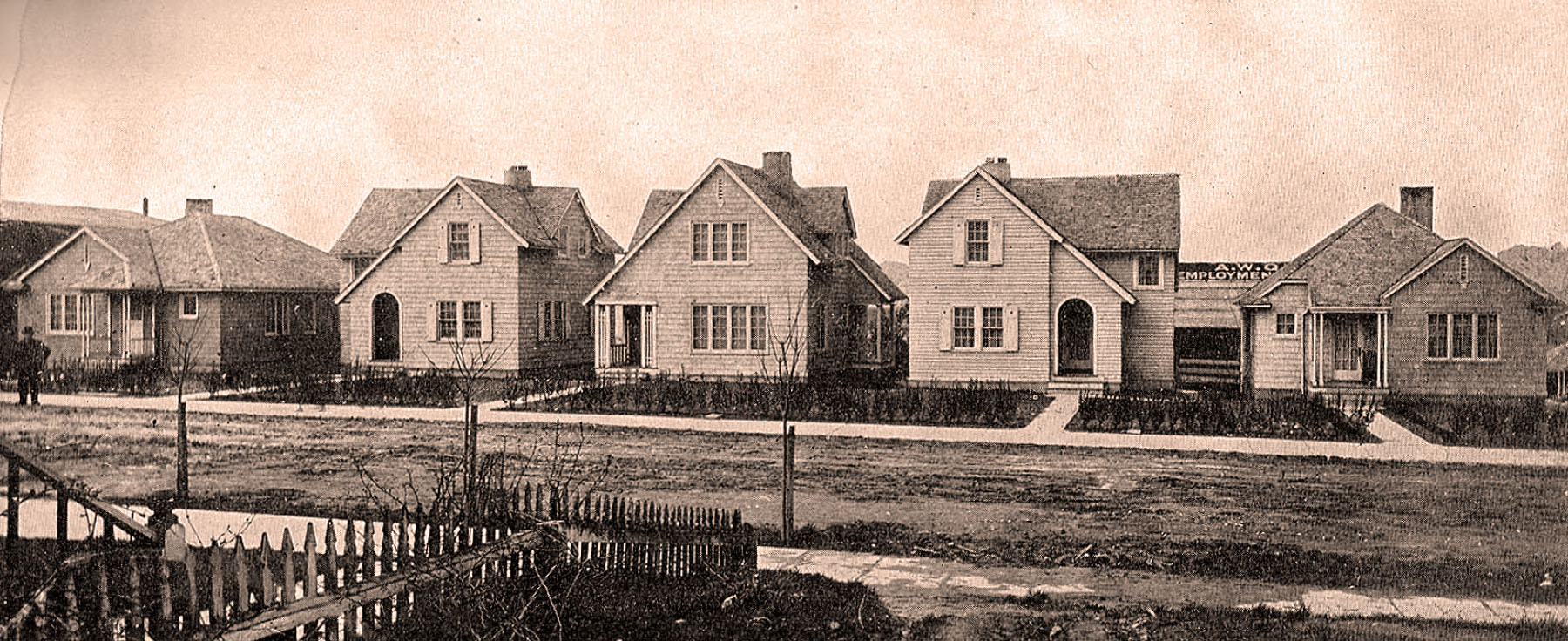
    The U.S. Housing Corporation built nearly 300 homes in Bremerton, Wash., during World War I. National Archives

    In 1918, as World War I intensified overseas, the U.S. government embarked on a radical experiment: It quietly became the nation’s largest housing developer, designing and constructing more than 80 new communities across 26 states in just two years.

    These weren’t hastily erected barracks or rows of identical homes. They were thoughtfully designed neighborhoods, complete with parks, schools, shops and sewer systems.

    In just two years, this federal initiative provided housing for almost 100,000 people.

    Few Americans are aware that such an ambitious and comprehensive public housing effort ever took place. Many of the homes are still standing today.

    But as an urban planning scholar, I believe that this brief historic moment – spearheaded by a shuttered agency called the United States Housing Corporation – offers a revealing lesson on what government-led planning can achieve during a time of national need.

    Government mobilization

    When the U.S. declared war against Germany in April 1917, federal authorities immediately realized that ship, vehicle and arms manufacturing would be at the heart of the war effort. To meet demand, there needed to be sufficient worker housing near shipyards, munitions plants and steel factories.

    So on May 16, 1918, Congress authorized President Woodrow Wilson to provide housing and infrastructure for industrial workers vital to national defense. By July, it had appropriated US$100 million – approximately $2.3 billion today – for the effort, with Secretary of Labor William B. Wilson tasked with overseeing it via the U.S. Housing Corporation.

    Over the course of two years, the agency designed and planned over 80 housing projects. Some developments were small, consisting of a few dozen dwellings. Others approached the size of entire new towns.

    For example, Cradock, near Norfolk, Virginia, was planned on a 310-acre site, with more than 800 detached homes developed on just 100 of those acres. In Dayton, Ohio, the agency created a 107-acre community that included 175 detached homes and a mix of over 600 semidetached homes and row houses, along with schools, shops, a community center and a park.

    Designing ideal communities

    Notably, the Housing Corporation was not simply committed to offering shelter.

    Its architects, planners and engineers aimed to create communities that were not only functional but also livable and beautiful. They drew heavily from Britain’s late-19th century Garden City movement, a planning philosophy that emphasized low-density housing, the integration of open spaces and a balance between built and natural environments.

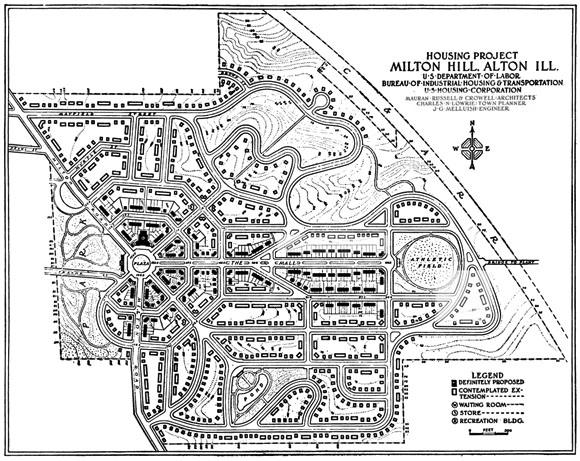
    Milton Hill, a neighborhood designed and developed by the United States Housing Corporation in Alton, Ill.
    National Archives

    Importantly, instead of simply creating complexes of apartment units, akin to the public housing projects that most Americans associate with government-funded housing, the agency focused on the construction of single-family and small multifamily residential buildings that workers and their families could eventually own.

    This approach reflected a belief by the policymakers that property ownership could strengthen community responsibility and social stability. During the war, the federal government rented these homes to workers at regulated rates designed to be fair, while covering maintenance costs. After the war, the government began selling the homes – often to the tenants living in them – through affordable installment plans that provided a practical path to ownership.

    A single-family home in Davenport, Iowa, built by the U.S. Housing Corporation.
    National Archives

    Though the scope of the Housing Corporation’s work was national, each planned community took into account regional growth and local architectural styles. Engineers often built streets that adapted to the natural landscape. They spaced houses apart to maximize light, air and privacy, with landscaped yards. No resident lived far from greenery.

    In Quincy, Massachusetts, for example, the agency built a 22-acre neighborhood with 236 homes designed mostly in a Colonial Revival style to serve the nearby Fore River Shipyard. The development was laid out to maximize views, green space and access to the waterfront, while maintaining density through compact street and lot design.

    At Mare Island, California, developers located the housing site on a steep hillside near a naval base. Rather than flatten the land, designers worked with the slope, creating winding roads and terraced lots that preserved views and minimized erosion. The result was a 52-acre community with over 200 homes, many of which were designed in the Craftsman style. There was also a school, stores, parks and community centers.

    Infrastructure and innovation

    Alongside housing construction, the Housing Corporation invested in critical infrastructure. Engineers installed over 649,000 feet of modern sewer and water systems, ensuring that these new communities set a high standard for sanitation and public health.

    Attention to detail extended inside the homes. Architects experimented with efficient interior layouts and space-saving furnishings, including foldaway beds and built-in kitchenettes. Some of these innovations came from private companies that saw the program as a platform to demonstrate new housing technologies.

    One company, for example, designed fully furnished studio apartments with furniture that could be rotated or hidden, transforming a space from living room to bedroom to dining room throughout the day.

    To manage the large scale of this effort, the agency developed and published a set of planning and design standards − the first of their kind in the United States. These manuals covered everything from block configurations and road widths to lighting fixtures and tree-planting guidelines.

    A single-family home in Bremerton, Wash., built by the U.S. Housing Corporation.
    National Archives

    The standards emphasized functionality, aesthetics and long-term livability.

    Architects and planners who worked for the Housing Corporation carried these ideas into private practice, academia and housing initiatives. Many of the planning norms still used today, such as street hierarchies, lot setbacks and mixed-use zoning, were first tested in these wartime communities.

    And many of the planners involved in experimental New Deal community projects, such as Greenbelt, Maryland, had worked for or alongside Housing Corporation designers and planners. Their influence is apparent in the layout and design of these communities.

    A brief but lasting legacy

    With the end of World War I, the political support for federal housing initiatives quickly waned. The Housing Corporation was dissolved by Congress, and many planned projects were never completed. Others were incorporated into existing towns and cities.

    Yet, many of the neighborhoods built during this period still exist today, integrated in the fabric of the country’s cities and suburbs. Residents in places such as Aberdeen, Maryland; Bremerton, Washington; Bethlehem, Pennsylvania; Watertown, New York; and New Orleans may not even realize that many of the homes in their communities originated from a bold federal housing experiment.

    Homes on Lawn Avenue in Quincy, Mass., that were built by the U.S. Housing Corporation.
    Google Street View

    The Housing Corporation’s efforts, though brief, showed that large-scale public housing could be thoughtfully designed, community oriented and quickly executed. For a short time, in response to extraordinary circumstances, the U.S. government succeeded in building more than just houses. It constructed entire communities, demonstrating that government has a major role and can lead in finding appropriate, innovative solutions to complex challenges.

    At a moment when the U.S. once again faces a housing crisis, the legacy of the U.S. Housing Corporation serves as a reminder that bold public action can meet urgent needs.

    This article is part of a series centered on envisioning ways to deal with the housing crisis.

    Eran Ben-Joseph does not work for, consult, own shares in or receive funding from any company or organization that would benefit from this article, and has disclosed no relevant affiliations beyond their academic appointment.

    – ref. Believe it or not, there was a time when the US government built beautiful homes for working-class Americans to deal with a housing shortage – https://theconversation.com/believe-it-or-not-there-was-a-time-when-the-us-government-built-beautiful-homes-for-working-class-americans-to-deal-with-a-housing-shortage-253512


    MIL OSI Analysis –

    June 27, 2025
  • MIL-OSI Russia: “Rafting is a sport, a journey, mutual support, motivation”

    Translation. Region: Russian Federal

    Source: State University Higher School of Economics – State University Higher School of Economics –

    Photo from Nikita Zhuravlev’s personal archive

    The first university rafting teams (men’s and women’s) appeared at the National Research University Higher School of Economics, and a graduate of the program became their coach.Media communications” Faculty of Creative Industries, President of the Moscow Rafting Federation and founder of the rowing club “Akademiya” Nikita Zhuravlev. This season, the team will have six important starts in the amateur league. The coach told “Vyshka.Glavnoe” why this can be considered a unique event.

    For a wide range of people

    — We are holding the first amateur rafting competitions in Russia under the auspices of the federation. Until now, during the 25 years of the existence of the Rafting Federation, competitions were held exclusively in the sports variation. These are technically complex competitions with many disciplines and a high entry threshold. People who are currently involved in rafting are students of sports schools or Olympic schools who have dedicated their entire lives to this sport. Despite the fact that the federation has existed and developed for a long time, there is a very small influx of new people here. It is difficult to master a raft on rough water, and in the competition format it becomes almost impossible.

    We have completely rewritten the rules of sport rafting, adapted them for people who are not involved in sports. Now we want to attract university teams, as well as participants in the Moscow government project “Moscow Longevity” – older people who have never encountered rowing or active sports in their lives. They have the opportunity to touch our favorite business and compete with each other on equal terms.

    Unique competition venues

    — We will hold all stages of the amateur rafting league at the facilities of the Moscow Sports Committee, the Ministry of Sports, including the Olympic rowing facilities, which are not accessible just like that. For example, on May 24, we held competitions at the Olympic rowing canal, which took 10 years to build, was put into operation only last year and is still a facility exclusively for training and performances of the Russian Olympic teams. We received the unique right to be the first to represent our sport on the rowing canal, after us the facility will be put into full operation for amateur, professional, sports and commercial rafting.

    Contribution to the development of sports

    — At the moment, I am the president of the Moscow Rafting Federation and the founder of the rowing club “Academy”. I have been working towards the position of president of the federation for a long time, without even knowing it. And I got it due to my investments in professional sports, performances in the professional arena as a member of the Russian national team and due to social activities – creating conditions and infrastructure for sports. Now my club “Academy” has five branches, and in each of the branches we have created infrastructure opportunities for people to come and do rafting without buying their own equipment, without investing in any special preparation processes, trips, logistics, and so on. That is, we have given people the opportunity to do sports due to the fact that the water areas are currently fully prepared, we have written down all the regulations, formed a coaching staff and a methodological basis for training.

    Rafting for students

    — The first stage of the amateur league was attended by teams from top universities — the Higher School of Economics, RUDN, Bauman University, MGIMO. In the near future, we will organize a separate student amateur league. This is an opportunity to show the results of the university’s activities in comparison with other universities, its achievements and how the university cares for its students, what support it provides them.

    At the moment, I am a coach and trustee of the Higher School of Economics rafting team. I have maintained a fairly strong connection with the university, I am grateful to it for the education I received, for its contribution to my development as an individual, as a professional in my field. And I am very close to the attitude of the university, when you are perceived not only as a labor unit, but also as an individual. Therefore, when I had the opportunity to provide support, my choice fell on the student team. In this status, I myself was a member of the Russian national team. And in this status, I looked for sponsorship support, went to organizations, various enterprises. I know from experience how important it is for students to be accompanied by a mentor, to have someone senior, especially if he himself comes to them and offers various options for self-improvement, development, development. And all this is stretched by the red thread of our love for the university.

    HSE Team

    — The HSE team is made up of activists from the XSPORT sports club. Before meeting and interacting with me, the guys had been developing various volunteer activities, organizing sports events at the HSE, mass sports events both at the university’s venues and in the city environment.

    At the moment, the team is actively participating in the amateur rafting league. This is a cycle of five stages, which are combined into a general team standings. That is, the team wins the league based on the results of its performances at each of the five stages. During preparation for the league, the participants practice the technical features of raft control, we develop their general physical fitness, teach water safety, rowing techniques, biomechanics, sports physiology and carry out psychological training of rowers. Thus, this year the HSE team will have six official starts, held by the Moscow Rafting Federation. These are five stages of the amateur rafting league and the Moscow championship. If the team is selected for the capital team, we will take them to the Russian championship.

    Workout

    — Our training takes place at the bases of my rowing club, Academy. I conduct regular training for two Vyshka teams — women’s and men’s, 12 athletes. We work with them every Tuesday and Thursday from May 1, regardless of weather conditions, air and water temperature. We prepare with them to participate in the amateur league. And our main goal is the successful preparation of the team to compete in the Moscow Championship. If successful, the athletes will receive a title, ranks, and will be selected for our Moscow team. And this will be the first student crew, entirely formed from students of one university, which, I hope, will represent the interests of our city in the framework of official competitions under the Ministry of Sports.

    Why You Should Try Rafting

    — Rafting is a sport that combines several areas. It is an exclusively sports component, a competitive element. It is a journey, local history, because most of the rafting stages take place in the autonomous regions of our country, in mountainous areas, in places that are impossible to get to on purpose. Most often, these are glaciers, Altai, Karelia, the Caucasus. Areas that are sparsely populated, and it is very difficult to learn about them from any popular sources.

    In addition, people learn to work together. This is interaction, mutual support, motivation, sport through the prism of pleasure, when people come not only to row, but also to actively socialize.

    About plans for the future

    — My plan as the president of the Rafting Federation is to make this sport accessible, organize a full-fledged student league, a corporate league, combine student sports with professional sports, create a bridge between these two concepts and smoothly integrate people who have sincerely fallen in love with rowing with all their hearts into high-performance sports. If we talk about specific steps, this is filling our calendar with large, significant events, not just competitions, but sports festivals.

    Please note: This information is raw content directly from the source of the information. It is exactly what the source states and does not reflect the position of MIL-OSI or its clients.

    MIL OSI Russia News –

    June 27, 2025
  • MIL-OSI Russia: Energy-saving equipment of the NRG system is being tested at the State University of Management

    Translation. Region: Russian Federal

    Source: State University of Management – Official website of the State –

    The State University of Management continues to develop partnerships with business representatives and technology companies. Currently, innovative equipment of the Universal Energy Saving System NRG, developed by AERO LLC, is being tested on the university premises.

    At the initiative of the company OOO “Center of Complex Engineering” and jointly with OOO “AERO”, a test connection of equipment to the internal electrical network with a voltage of 0.4 kV was organized in the State University of Management. This allows us to evaluate the efficiency of the new system in real conditions and record the technical parameters of its operation in the current environment.

    The NRG system is the latest, patented (Patent RU 2 731 258 C1) development in the field of energy saving and energy efficiency for any consumers of electrical energy, such as private apartments, houses, shops, production sites, large industrial enterprises and any other consumers using alternating electric current.

    “We welcome the interest of companies in cooperation with the university. It is important for us to be an open platform for innovation, especially in the field of sustainable development and energy efficiency. Such projects help improve the conditions for studying and living for students, and help employees become more familiar with modern technological solutions,” said Vitaly Lapshenkov, Vice-Rector of the State University of Management.

    Effects of using the NRG system:

    Reduction of energy consumption by 7–20%; Reduction of the effect of harmful electromagnetic waves; Increased service life of equipment in the electrical network; Reduction of temperature, noise and vibration during equipment operation; Release of additional capacity due to energy savings.

    Testing is carried out in a technical mode, with compliance with all safety standards, under the supervision of specialists from the Center for Complex Engineering LLC and employees of the State University of Management. Based on its results, conclusions will be drawn on the possibility of large-scale use of such solutions in educational and administrative infrastructure.

    Please note: This information is raw content directly from the source of the information. It is exactly what the source states and does not reflect the position of MIL-OSI or its clients.

    MIL OSI Russia News –

    June 27, 2025
  • Union Minister Bhupender Yadav chairs 21st Steering Committee Meeting of Project Elephant in Dehradun

    Source: Government of India

    Source: Government of India (4)

    Union Minister for Environment, Forest and Climate Change, Bhupender Yadav on Thursday chaired the 21st Steering Committee Meeting of Project Elephant at the Indira Gandhi National Forest Academy (IGNFA) in Dehradun. The meeting convened senior officials, scientists, and field experts from elephant range states, alongside representatives from key conservation institutions, to review the progress of Project Elephant and chart the future of elephant conservation in India.

    A key focus of the meeting was addressing the ongoing challenge of human-elephant conflict, which poses significant risks to both human safety and elephant conservation. Yadav emphasized the critical need to involve local communities as active partners in wildlife conservation, particularly in regions heavily impacted by such conflicts. He stressed that effective management of human-wildlife conflict is essential for the success of conservation programs and called for improved working conditions and social security for frontline forest staff and ground-level conservation workers.

    The Minister urged coordinated efforts with Indian Railways, the Ministry of Power, the National Highways Authority of India (NHAI), and mine developers to mitigate human-wildlife conflicts. He also highlighted the role of institutions like the Salim Ali Centre for Ornithology and Natural History (SACON), the Indian Institute of Forest Management (IIFM), the Wildlife Institute of India (WII), and State Forest Training institutions in implementing awareness and outreach programs. Additionally, Shri Yadav emphasized the importance of systematic data collection and analysis on elephant deaths due to railway accidents and the need for knowledge sharing among states, institutions, and experts to replicate best practices nationwide.

    The meeting reviewed significant progress in conservation efforts, including the development of Regional Action Plans for human-elephant conflict in Southern and North-Eastern India and the completion of surveys covering 3,452.4 km of sensitive railway stretches, identifying 77 high-risk areas for mitigation. DNA profiling of captive elephants has advanced, with 1,911 genetic profiles completed across 22 states. Phase-I of the synchronized elephant population estimation in North-Eastern states has been completed, with over 16,500 dung samples collected. Work on the Model Elephant Conservation Plan (ECP) for the Nilgiri Elephant Reserve is underway and expected to be finalized by December 2025.

    Several important documents were released during the meeting, including a report on measures to mitigate elephant-train collisions, a comprehensive study on 23 years of human-elephant conflict in Assam, Jharkhand, and Chhattisgarh, an advisory on safe tusk trimming practices for captive elephants, and the latest edition of Trumpet, Project Elephant’s quarterly newsletter.

    Looking ahead, the Committee discussed preparations for World Elephant Day on August 12, to be celebrated in Coimbatore, Tamil Nadu, where the Gaj Gaurav Awards will be presented. Upcoming initiatives include finalizing the Nilgiri ECP, launching a three-year elephant tracking study in Bandhavgarh Tiger Reserve, conducting Management Effectiveness Evaluations (MEE) in Elephant Reserves with support from the Compensatory Afforestation Fund Management and Planning Authority (CAMPA), and developing an integrated conservation strategy for the Ripu-Chirang Elephant Reserve, with a focus on the Udalguri landscape.

    June 27, 2025
  • MIL-OSI Canada: Stay safe, plan ahead for Canada Day weekend

    Source: Government of Canada regional news

    As people make plans for the Canada Day weekend, it’s important to be prepared and stay safe as warm temperatures, dry conditions and wildfire risk continue in many parts of the province.

    People are encouraged to stay vigilant and up to date on local fire bans and restrictions and have an emergency plan in place that is shared with friends and family.

    People heading outdoors this weekend are reminded to plan ahead, carry safety gear and follow all instructions from local governments and First Nations. Before you head out, check ahead for road closures, evacuation alerts, evacuation orders and any fire prohibitions in effect.

    British Columbia continues to face prolonged drought in many regions, and below-average precipitation is contributing to increased wildfire and water supply concerns. Everyone is encouraged to use water efficiently and follow any local watering restrictions.

    Several open-burning prohibitions are in place around the province and will be updated as conditions change. People planning to have campfires should do so safely, following any local prohibitions. Avoid having a campfire when it’s windy, choose a proper fire pit or make a ring of rocks at least three metres from trees, shrubs, structures and debris, and do not leave a campfire unattended.

    The BC Wildfire Service relies on the public for reporting wildfires quickly. Approximately 40% of new fires are reported by the public. If you see smoke or flames, report it immediately by calling *5555 on a cellphone or 1 800 663-5555, toll-free.

    The BC Wildfire Service mobile app allows people to report new wildfires and submit photos, which helps BC Wildfire Service make informed decisions. People can use the app for the most up-to-date information on the current wildfire situation, road conditions, evacuation information and weather forecasts.

    If you’re in a high-risk wildfire area, now is the time to get prepared. Create an emergency plan, pack a grab-and-go bag for each household member, including pets, and create an Emergency Support Services (ESS) profile through your BC Services Card app or at ess.gov.bc.ca. People are advised to make sure their home or tenant insurance includes wildfire protection, which can help with expenses like temporary accommodation and meals if there is a need to evacuate.

    Check your insurance policy to understand what evacuation supports are available through your coverage. If you’re unsure, call your insurance provider or the Insurance Bureau of Canada at 1 844 227-5422 or visit: https://www.ibc.ca/

    People are encouraged to follow instructions and evacuate immediately if a local government or First Nation issues an order. Emergency Support Services (ESS) are available to evacuees who need help covering the cost of their basic needs, such as food, lodging and other essentials.

    People can also reduce risk around the home with a few simple FireSmart steps:

    • clear dry leaves and debris from around your property
    • move propane tanks and other flammables at least 10 metres from structures
    • keep grass cut short
    • close doors and windows
    • water trees, shrubs and plants regularly, following local water restrictions
    • consider more fire-resistant plants for landscaping

    People travelling in B.C. are encouraged to know before they go. You can plan ahead and get the latest road conditions and updates here: https://www.drivebc.ca/

    Drivers on routes throughout the province this summer should expect higher-than-average traffic volumes and plan accordingly. General tips for a safe trip include:

    • allowing additional time to get to your destination due to more people on roads
    • making sure your vehicle is ready for the drive by having a full tank of gas or charged battery, checking engine oil, washer fluid, lights and tires, including the spare
    • packing food and water for passengers and pets
    • planning breaks at rest areas: https://www.th.gov.bc.ca/restareas/?zoom=5&loc=-126.600000%2C54.589121
    • watching for motorcyclists and sharing the road with cyclists and other users
    • obeying all posted speed limits and driving with caution, especially during bad weather
    • leaving the phone alone while behind the wheel, and
    • ensuring all passengers always use seatbelts.​

    Learn More:

    For BC Wildfire Service information and updates, visit: https://wildfiresituation.nrs.gov.bc.ca/dashboard

    For more information about fire prohibitions, visit: https://www2.gov.bc.ca/gov/content/safety/wildfire-status/fire-bans-and-restrictions

    For up-to-date information about road conditions, visit: https://www.drivebc.ca/

    For more information about rest areas during driving, visit: https://www.th.gov.bc.ca/restareas

    For detailed guidance on what happens before, during and after an evacuation order, visit https://www2.gov.bc.ca/gov/content/safety/emergency-management/preparedbc/evacuation-recovery/evacuee-guidance

    For the latest information on evacuation alerts and evacuation orders in B.C., visit: https://EmergencyInfoBC.ca
    Or follow @EmergencyInfoBC on X

    To register with Emergency Support Services, visit: https://ess.gov.bc.ca/

    For information on how to prepare for emergencies, including information about emergency kits, household emergency plans and hazard-specific guides, visit: https://PreparedBC.ca 

    For more information on how to FireSmart your home, visit: https://firesmartbc.ca

    For backcountry safety checklists and trip planning resources, visit: https://www.adventuresmart.ca/

    For more information about drought, visit: https://www2.gov.bc.ca/gov/content/drought

    MIL OSI Canada News –

    June 27, 2025
  • MIL-OSI USA: mRNA COVID-19 Vaccines: FDA Safety Communication – FDA Approves Required Updated Warning in Labeling Regarding Myocarditis and Pericarditis Following Vaccination

    Source: US Department of Health and Human Services – 3

    AUDIENCE: Pediatrics, Pharmacy, Family Practice, Internal Medicine, Cardiology
    ISSUE: FDA has required and approved updates to the Prescribing Information for Comirnaty (COVID-19 Vaccine, mRNA) manufactured by Pfizer Inc. and Spikevax (COVID-19 Vaccine, mRNA) manufactured ModernaTX, Inc. to include new safety information about the risks of myocarditis and pericarditis following administration of mRNA COVID-19 vaccines.
    Specifically, FDA has required each manufacturer to update the warning about the risks of myocarditis and pericarditis to include information about

    the estimated unadjusted incidence of myocarditis and/or pericarditis following administration of the 2023-2024 Formula of mRNA COVID-19 vaccines and
    the results of a study that collected information on cardiac magnetic resonance imaging (cardiac MRI) in people who developed myocarditis after receiving an mRNA COVID-19 vaccine.

    FDA also required each manufacturer to describe the new safety information in the Adverse Reactions section of the Prescribing Information and in the Information for Recipients and Caregivers.   
    The Fact Sheets for Healthcare Providers and for Recipients and Caregivers for Moderna COVID-19 Vaccine and Pfizer-BioNTech COVID-19, which are authorized for emergency use in individuals 6 months through 11 years of age, have also been updated to include the new safety information in alignment with the Comirnaty and Spikevax Prescribing Information and Information for Recipients and Caregivers.
    BACKGROUND: Information about myocarditis (inflammation of the heart muscle) and pericarditis (inflammation of the lining outside the heart) following vaccination with these mRNA COVID-19 vaccines has been included in the labeling since 2021. FDA closely monitors the safety of all vaccines, including the COVID-19 vaccines, during postmarket use.
    RECOMMENDATION: 

    Suspected adverse events may be reported to the Vaccine Adverse Event Reporting System (VAERS), which is co-managed by the FDA and the CDC.

      [6/25/2025 – FDA Safety Communication – FDA]

    Content current as of:
    06/25/2025

    Regulated Product(s)

    MIL OSI USA News –

    June 27, 2025
  • MIL-OSI USA: mRNA COVID-19 Vaccines: FDA Safety Communication – FDA Approves Required Updated Warning in Labeling Regarding Myocarditis and Pericarditis Following Vaccination

    Source: US Department of Health and Human Services – 3

    AUDIENCE: Pediatrics, Pharmacy, Family Practice, Internal Medicine, Cardiology
    ISSUE: FDA has required and approved updates to the Prescribing Information for Comirnaty (COVID-19 Vaccine, mRNA) manufactured by Pfizer Inc. and Spikevax (COVID-19 Vaccine, mRNA) manufactured ModernaTX, Inc. to include new safety information about the risks of myocarditis and pericarditis following administration of mRNA COVID-19 vaccines.
    Specifically, FDA has required each manufacturer to update the warning about the risks of myocarditis and pericarditis to include information about

    the estimated unadjusted incidence of myocarditis and/or pericarditis following administration of the 2023-2024 Formula of mRNA COVID-19 vaccines and
    the results of a study that collected information on cardiac magnetic resonance imaging (cardiac MRI) in people who developed myocarditis after receiving an mRNA COVID-19 vaccine.

    FDA also required each manufacturer to describe the new safety information in the Adverse Reactions section of the Prescribing Information and in the Information for Recipients and Caregivers.   
    The Fact Sheets for Healthcare Providers and for Recipients and Caregivers for Moderna COVID-19 Vaccine and Pfizer-BioNTech COVID-19, which are authorized for emergency use in individuals 6 months through 11 years of age, have also been updated to include the new safety information in alignment with the Comirnaty and Spikevax Prescribing Information and Information for Recipients and Caregivers.
    BACKGROUND: Information about myocarditis (inflammation of the heart muscle) and pericarditis (inflammation of the lining outside the heart) following vaccination with these mRNA COVID-19 vaccines has been included in the labeling since 2021. FDA closely monitors the safety of all vaccines, including the COVID-19 vaccines, during postmarket use.
    RECOMMENDATION: 

    Suspected adverse events may be reported to the Vaccine Adverse Event Reporting System (VAERS), which is co-managed by the FDA and the CDC.

      [6/25/2025 – FDA Safety Communication – FDA]

    Content current as of:
    06/25/2025

    Regulated Product(s)

    MIL OSI USA News –

    June 27, 2025
  • MIL-OSI USA: Three Faculty Members Named Board of Trustees Distinguished Professors

    Source: US State of Connecticut

    The University of Connecticut has named three outstanding faculty members as Board of Trustees Distinguished Professors for the 2024–2025 academic year. This distinction is the highest honor the university confers on faculty and recognizes exceptional achievement in research, teaching, and service.

    This year’s honorees are:

    • Dr. Peter C. Albertsen, Division of Urology, School of Medicine
    • Professor Anne C. Dailey, School of Law
    • Dr. Luyi Sun, Department of Chemical & Biomolecular Engineering, College of Engineering

    The Board of Trustees Distinguished Professor title is awarded annually following a university-wide nomination process and a rigorous review by a faculty and student committee. Final selections are approved by the UConn Board of Trustees, which confirmed this year’s awardees at its June 25, 2025 meeting.

    “These faculty have each made a remarkable impact not only through their scholarship, but also through their commitment to their students and colleagues,” said Anne D’Alleva, Provost and Executive Vice President for Academic Affairs. “Their work strengthens our community, advances their fields, and reflects the excellence that defines UConn.”

    Dr. Peter C. Albertsen

    Dr. Peter C. Albertsen is a globally respected urologic oncologist whose research and leadership have transformed the understanding and management of prostate cancer. A faculty member at UConn Health since 1987, Dr. Albertsen’s work has shaped national and international treatment guidelines and spared tens of thousands of men from unnecessary surgery and radiation.

    (UConn Photo)

    He earned his undergraduate degree in biochemistry from Princeton University and his medical degree from Columbia University. He completed his surgical residency at Harvard and his urology training at the Brady Urological Institute at Johns Hopkins. He also holds a master’s degree in medical administration and preventive medicine from the University of Wisconsin.

    Dr. Albertsen was among the first to use population-based data to challenge prevailing assumptions about PSA screening and prostate cancer aggressiveness. His landmark publications, including a seminal article in Journal of the American Medical Association (JAMA), demonstrated that many prostate cancers grow slowly and do not require immediate treatment. These findings helped launch a global shift toward active surveillance, now a widely accepted standard of care. He has played key leadership roles in major trials in both the U.S. and the U.K., including serving as Chair of the Cause of Death Committee for the PLCO and ProtecT trials.

    He has authored more than 300 peer-reviewed articles and editorials, with over 17,000 citations and an h-index of 63, placing him in the top tier of urologic researchers. His research has been published in The New England Journal of Medicine, JAMA, and other leading journals, and has been supported by more than $5 million in external funding.

    As UConn’s Urology Residency Program Director for over 30 years, Dr. Albertsen has trained more than 60 residents, many of whom have gone on to leadership roles in academic medicine and beyond. He is widely praised for his dynamic and discussion-based teaching style and for his long-standing mentorship of medical students and residents.

    Dr. Albertsen has served in numerous leadership roles at UConn Health and nationally, including as Associate Dean for Clinical Research and Planning, Division Chief of Urology, and Trustee of the American Board of Urology. He continues to provide exceptional patient care, including to underserved and correctional populations, and is often sought out by colleagues for their own care.

    His many honors include the Eugene Fuller Triennial Prostate Award and the Distinguished Contribution Award from the American Urological Association, as well as honorary membership in both the AUA and the German Urological Association. Dr. Albertsen’s research, clinical care, and mentorship have had an enduring impact on the field of urology and the lives of countless patients, making him a most deserving recipient of the University of Connecticut’s highest faculty honor.

    Professor Anne C. Dailey

    Professor Anne Dailey, Associate Dean for Faculty Development and Intellectual Life and the Ellen Ash Peters Professor of Law at the University of Connecticut School of Law, is a nationally recognized scholar whose work bridges constitutional law, family law, and psychoanalytic theory. A member of the UConn faculty since 1988, Professor Dailey has made transformative contributions to legal scholarship, education, and public service, with far-reaching influence across disciplines and institutions.

    (UConn Photo)

    She earned a Bachelor of Arts in English from Yale University and a Juris Doctor from Harvard Law School, where she served as an Articles Editor of the Harvard Law Review. Following law school, she completed a judicial clerkship with Judge José Cabranes of the U.S. District Court for the District of Connecticut. She has since become a pioneering figure in integrating psychoanalytic theory into legal analysis, most notably through her acclaimed book Law and the Unconscious: A Psychoanalytic Perspective, published by Yale University Press. This work received three prestigious honors: the Book Prize from the American Psychoanalytic Association, the Book Prize from the American Board and Academy of Psychoanalysis, and the Faculty Book Award from the UConn Humanities Institute.

    Professor Dailey’s scholarship is widely cited and influential. Her co-authored articles The New Law of the Child and The New Parental Rights, and her sole authored In Loco Reipublicae, all published in top-tier law journals, have shaped the national discourse on children’s constitutional rights, state responsibility for families, and evolving family structures. She is a member of the American Law Institute and the Association for the Study of Law, Culture and Humanities.

    She has held visiting faculty appointments at Yale, Harvard, and Penn Law Schools and has been named an Erikson Scholar at the Austen Riggs Center and a Fellow at the Katz Center for Advanced Judaic Studies at the University of Pennsylvania.

    Professor Dailey is a dedicated and inspiring teacher of family law and constitutional law. She is also a deeply valued mentor to students and junior faculty, and her efforts have helped elevate the national profile of the UConn School of Law.

    Professor Dailey’s scholarly distinction, interdisciplinary innovation, and enduring contributions to teaching and service make her a truly worthy recipient of the University of Connecticut’s highest faculty honor.

    Dr. Luyi Sun

    Dr. Luyi Sun is a globally recognized materials scientist and professor in the Department of Chemical and Biomolecular Engineering at the University of Connecticut, where he also holds a joint appointment in the Institute of Materials Science. Since joining UConn in 2013, he has led an internationally renowned research program focused on nanostructured hybrid materials for functional, environmental, and energy-related applications.

    (UConn Photo)

    Dr. Sun’s prolific contributions to science are evidenced by over 310 peer-reviewed journal articles in high-impact publications such as Nature Communications, Science Advances, Proceedings of the National Academy of Sciences, and Advanced Materials. His work has earned more than 23,000 citations and an h-index of 83, and has been highlighted by MIT Technology Review, Smithsonian Magazine, and New Scientist, among many others. He is the inventor or co-inventor of 28 issued U.S. patents and more than 50 corresponding foreign patents, seven of which have been commercialized/licensed. The materials and devices invented in his lab have been featured in global exhibitions, including at the Material ConneXion Library in New York and the Penn Museum.

    Dr. Sun is a Fellow of the National Academy of Inventors, the Royal Society of Chemistry, and the Society of Plastics Engineers. He has also been recognized with the Morand Lambla Award from the Polymer Processing Society and was elected to the Connecticut Academy of Science and Engineering.

    A dedicated educator and mentor, Dr. Sun has taught rigorous and interdisciplinary courses such as Thermodynamics and Polymer Processing, and has advised dozens of Ph.D. students, M.S. students and postdoctoral researchers, and more than 160 undergraduate research assistants. His students have gone on to successful careers in academia and industry, and many have received prestigious fellowships and national honors.

    Dr. Sun has also demonstrated sustained leadership in academic and professional service. As Director of the UConn Polymer Program from 2018 to 2021, he expanded faculty engagement and strengthened the program’s profile. He has held leadership roles in national scientific organizations and organized more than 80 symposia around the world. His editorial work includes serving as Associate Editor of Advanced Composites and Hybrid Materials.

    Due to his outstanding record of research innovation, teaching, mentorship, and professional service, Dr. Luyi Sun strongly merits recognition as a Board of Trustees Distinguished Professor.

    MIL OSI USA News –

    June 27, 2025
  • MIL-OSI: $255 Payday Loans Online Same Day No Credit Check Bad Credit Guaranteed Approval -Radcred Loan Platform For Immediate Financial Relief

    Source: GlobeNewswire (MIL-OSI)

    Glendale, California, June 26, 2025 (GLOBE NEWSWIRE) — Radcred has launched a $255 payday loan online platform that provides fast and accessible financial relief for borrowers in urgent need of cash. With same day payday loans, Radcred offers a seamless solution for those needing quick access to funds, even with poor credit histories. In addition, Radcred provides no credit check payday loans, ensuring that individuals with less-than-perfect credit can still access the funds they need.

    From medical bills to car repairs or unexpected rent payments, Radcred ensures borrowers can receive the financial support they need without unnecessary delays. The simplified loan application process and the secure transactions feature of Radcred make it easier for individuals to access emergency cash when they need it most.

    Why $255 Payday Loans Online Are a Lifeline in 2025

    The demand for $255 payday loans online has surged in recent years due to rising living costs and financial instability. According to the Federal Reserve, over 63% of Americans would struggle to cover a $400 emergency expense without borrowing, using credit, or selling assets. This highlights the financial challenges faced by many.

    As more individuals experience unexpected financial pressures, same day payday loans no credit check have become a vital resource. These loans offer quick and easy access to emergency funds, helping borrowers avoid further financial strain during urgent situations, like medical bills or car repairs.

    Urgent payday loan needs have also driven the rise of no credit check payday loans. These loans offer a convenient solution for individuals with poor credit, allowing them to access the funds they need without the usual barriers. As demand for fast and reliable financial relief increases, platforms like Radcred are effectively meeting these needs.

    Radcred Launches Same-Day Payday Loans Online with No Credit Check

    Radcred has introduced a digital-first platform offering $255 payday loans online to help borrowers facing urgent financial needs. The platform provides same-day payday loans with no credit check, making it an ideal choice for those seeking fast and reliable financial relief. Here’s how it works:

    • No Credit Check Payday Loans: Radcred simplifies the loan process by removing the need for a credit check, making it accessible to individuals with poor credit histories.
    • Same-Day Approval: Borrowers can receive approval quickly, often within minutes, ensuring fast access to funds.
    • Quick Fund Transfer: Once approved, the funds are transferred directly to the borrower’s account, often on the same day, providing immediate financial relief.
    • Digital Platform: Radcred connects borrowers to a network of licensed lenders, offering a fast, secure, and seamless online application process.

    Radcred’s platform ensures quick, secure access to emergency funds, making it easier for users to manage unexpected expenses.

    Why Same-Day Payday Loans Online Are the Right Choice for Emergency Needs

    When unexpected emergencies like medical bills, car repairs, or rent payments arise, waiting for traditional loans can lead to added stress and delays. Same day payday loans no credit check offer an ideal solution by providing immediate access to cash. Here’s why they’re the best option for emergency financial needs:

    • Fast Approval: With same-day payday loans for emergencies, the approval process is quick, often completed within minutes, so borrowers don’t have to wait long for a response.
    • Quick Fund Transfer: Once approved, funds are typically transferred directly to your bank account the same day, offering relief within hours.
    • No Credit Check: Many payday loan platforms, including Radcred, provide no credit check payday loans, making it easier for individuals with poor credit to access funds during emergencies.
    • Accessible for Urgent Needs: Payday loans provide the fast cash needed to cover immediate expenses, such as medical bills, auto repairs, or emergency travel.
    • Streamlined Application Process: Fast payday loan applications allow borrowers to apply online quickly, avoiding the long and cumbersome paperwork of traditional loans.

    Same day payday loans are a reliable solution when time is of the essence and quick financial relief is needed.

    How Radcred’s $255 Payday Loan Process Works?

    Applying for $255 payday loans online with Radcred is quick and straightforward. The process is designed to ensure fast approval and easy access to emergency funds. Here’s how it works:

    • Fill out the online application: Start by completing a simple application form. Provide basic personal information such as your income, employment status, and contact details.
    • Soft credit check: Radcred uses a soft credit check to match you with a lender. This check does not affect your credit score, making it ideal for borrowers with poor credit histories.
    • Choose the best loan offer: After the soft credit check, you’ll be presented with multiple loan options. Review each offer carefully, considering the APR, repayment terms, and other details before selecting the one that suits your needs.
    • Receive funds directly in your account: Once you’ve chosen your offer and agreed to the terms, funds will be transferred directly into your bank account. Radcred payday loans are processed quickly, often within hours, allowing you to access emergency cash without delays.

    The Radcred payday loan process is designed for efficiency, providing fast, secure access to funds when you need them most. 

    Common Uses for $255 Payday Loans Online 

    People use $255 payday loans online for a variety of emergency needs, as they provide quick access to funds during urgent situations. Here are some of the most common uses:

    • Medical bills and doctor visits: Unexpected health expenses can arise at any time, and same day payday loans offer a fast solution to cover these costs before they escalate.
    • Car repairs: For vehicle breakdowns or emergency repairs, payday loans online same day $255 allow individuals to get back on the road quickly without worrying about out-of-pocket expenses.
    • Rent shortfalls: When rent payments are due and funds are low, payday loans online same day can help prevent late fees or eviction.
    • Utility payments: Avoid utility disconnections by using an instant online payday loan to pay overdue bills.
    • Unexpected travel expenses: Be it for family emergencies or business, small payday loans online can cover immediate travel needs without financial strain.

    Radcred’s same day payday loan platform ensures that borrowers can quickly access the funds they need, with 1 hour payday loans no credit check options available. The easy process and fast approval make instant payday loans a reliable solution for emergency payday loans.

    Key Benefits of Radcred’s $255 Payday Loans 

    Radcred offers $255 payday loans online with several key benefits, ensuring fast, secure, and reliable financial relief for borrowers. Here’s why Radcred is a top choice for same day payday loans:

    • Fast Approval: Radcred’s application process is quick, providing instant payday loan approval in as little as a few hours. This speed is crucial for those in need of emergency funds.
    • No Credit Check: With 1-hour payday loans no credit check, Radcred uses a soft credit pull to evaluate eligibility without impacting your credit score. This makes the platform accessible to borrowers with less-than-ideal credit histories.
    • Transparent Terms: Radcred payday loan benefits include clear and upfront disclosure of all fees, APR, and repayment terms, ensuring there are no hidden surprises. Borrowers can make informed decisions before accepting any loan offer.
    • Flexibility: Radcred offers flexible loan terms tailored to the needs of individual borrowers. 1 hour payday loans online no credit check instant approval gives you the ability to choose an option that fits your financial situation.

    Radcred’s payday loans 255 no credit check solution provides borrowers with immediate access to funds without the stress of high interest rates, complex applications, or long waits.

    Who Can Apply for $255 Payday Loans Online? 

    To apply for a $255 payday loan online, applicants must meet the following eligibility requirements:

    • Be 18 years or older: Applicants must be of legal age to apply for payday loans.
    • U.S. citizen or permanent resident: You must be a resident of the United States to qualify for the loan.
    • Have a steady income or benefits: A reliable income from employment, government assistance, or other sources is needed to repay the loan.
    • Maintain an active checking account: Your loan funds will be deposited into your checking account, so you need to have an account in your name.
    • No credit score minimum is required: With no credit check payday loans, applicants are not required to meet a specific credit score threshold, making 1-hour payday loans no credit check a viable option for many borrowers.

    Radcred’s Secure Loan Matching Process

    Radcred ensures the security of personal and financial data throughout the payday loan process by using advanced encryption technology. The payday loan platform connects borrowers to a network of state-licensed lenders, prioritizing data protection. Radcred’s process includes a soft credit check, so your credit score remains unaffected. When applying for $255 payday loans online or same day payday loans no credit check, you receive a secure, transparent experience. 

    The fast, seamless application ensures funds are transferred quickly while maintaining the highest levels of security and compliance with lending laws, offering a safe instant payday loans borrowing experience for all users.

    Final Thoughts: $255 Payday Loans for Immediate Relief 

    Radcred’s $255 payday loans online offer fast and efficient relief for those in need of urgent funds. Same-day payday loans provide the cash you need when you need it most. With a quick and easy application process, you can apply for payday loans and receive approval in minutes.

    No credit check is required, and funds are often transferred the same day, ensuring fast access to the money you need. Don’t let unexpected costs hold you back and apply today for $255 payday loans online and get the relief you deserve.

    Disclaimer

    Radcred is not a lender and does not make credit decisions. Loan offers are based on third-party lender criteria and local regulations. Terms, APR, and loan amounts may vary by applicant. $255 payday loans online offers are subject to approval. Borrowers should carefully review all loan offers, including fees and repayment terms, before accepting.

    The MIL Network –

    June 27, 2025
  • MIL-OSI Africa: President Ramkalawan Attends Foundation Stone Laying Ceremony for New Seychelles Public Transport Company (SPTC) Depot on Praslin

    Source: Africa Press Organisation – English (2) – Report:

    Download logo

    President Wavel Ramkalawan attended the foundation stone laying ceremony and unveiling of a commemorative plaque for the new Seychelles Public Transport Company (SPTC) depot on Île Eve, Baie Ste Anne, Praslin, on Thursday morning.

    The new depot represents a significant government investment of approximately 15 million Seychelles Rupees, strategically designed to meet the evolving demands of Praslin’s expanding transport sector. The comprehensive facility will feature a modern administration building, enhanced staff amenities, and a fully-equipped mechanical workshop, establishing the foundation for SPTC’s operational excellence on the island. This infrastructure investment will provide essential support for improved service delivery while accommodating both current operations and future expansion initiatives. 

    In his welcoming remarks, Chief Executive Officer of SPTC, Mr. Geffy Zialor, highlighted the project’s importance to the company’s mission, stating that it represents a significant step forward in delivering a more reliable, efficient, and sustainable public transport system for all Seychellois. He emphasised that modernising infrastructure and improving commuter experience remain at the heart of SPTC’s long-term vision to serve the public better and support national development goals.

    Addressing the ceremony, the Minister for Transport Antony Derjacques emphasized the project’s broader significance, stating that this development “signals our government’s steadfast commitment to ensuring that every island in Seychelles benefits from modern, reliable, and inclusive transport infrastructure.”

    The Minister underscored the fundamental role of public transportation in connecting communities, declaring: “Public transportation is a service that touches lives daily. It provides access to schools, jobs, hospitals, and loved ones. By investing in infrastructure like this depot, we are ensuring that all Seychellois benefit from a modern, efficient, and people-centered transport network.”

    The ceremonial foundation stone laying, conducted jointly by President Ramkalawan, Minister Derjacques, the SPTC CEO, and the Chairman of the SPTC Board, symbolized more than a construction milestone. It embodied the collective vision of a nation committed to equitable development and the principle that quality public services should remain accessible to all citizens.

    The ceremony was enriched by cultural performances from students of Grand Anse Praslin Secondary School, creating an atmosphere of celebration and national pride that reflected the community’s enthusiasm for this vital infrastructure development.

    This initiative reinforces the government’s dedication to decentralizing essential services while maintaining the highest standards of efficiency and accessibility. The project ensures that the Praslin community will benefit from world-class transport infrastructure that will serve as a catalyst for continued economic and social development.

    The ceremony was attended by distinguished officials, including Minister for Land Use and Housing Billy Rangasamy, Honourable Members of the National Assembly, the Chairman and Board members of SPTC, as well as various dignitaries and community representatives.

    – on behalf of State House Seychelles.

    MIL OSI Africa –

    June 27, 2025
  • MIL-OSI Africa: Select Committee on Public Infrastructure Emphasises the Vital Role of Transportation in the South African Economy

    Source: Africa Press Organisation – English (2) – Report:

    Download logo

    The Chairperson of the Select Committee on Public Infrastructure and the Minister in the Presidency, Mr Rikus Badenhorst, emphasised the vitality of the role of transportation in the South African economy when the Department of Transport appeared before the committee yesterday to brief it on the department’s strategic plan for the 2025-26 financial year.

    Mr Badenhorst outlined the ambitious targets of the department for increasing rail freight and commuter services. He acknowledged the financial and structural challenges faced by the department, making more emphasis on the need for efficient and effective transport systems to stimulate economic growth.

    The department’s presentation, detailed the alignment of the strategic plan with the Medium-Term Development Plan. Key targets highlighted included enhancement of economic growth through private sector involvement, reduction of road fatalities by 50% by 2030, the improvement of freight movement, and infrastructure investment. The department told the committee about the necessity of increased investment in transport infrastructure to bolster economic growth and job creation.

    The committee raised concerns regarding the Driving License Card Account (DLCA), particularly the backlog in card production stemming from machine issues and procurement irregularities. The projected budget for the upcoming financial year indicated a revenue expectation of R321 million against expenses of R379 million. The department shared its insights into the budget allocation, underscoring the importance of infrastructure development.

    Committee members expressed concern regarding governance within public entities, the department’s reliance on consultants, and the challenges of policy implementation amid fiscal constraints. The committee requested a detailed report on the Road Accident Fund (RAF) and the state of the entity’s governance.

    Members of the committee highlighted the negative consequences of governance deficiencies on public entities and proposed the development of a taxi fare index to promote balance within the taxi industry. The regulation of scholar transport, and digital driver licenses were also discussed.

    On digital drivers’ licences, the department confirmed that the current backlog stands at approximately 680,000 cards while efforts are underway to clear it within three months. The complexities of transitioning to a digital identification system were highlighted.

    Mr Badenhorst reiterated the committee’s commitment to oversight and accountability. He said the department serves as a catalyst for economic prosperity. He stressed the importance of collaboration of the department with other key role-players in the transport sector for further enhancement of the transportation system in the country.

    – on behalf of Republic of South Africa: The Parliament.

    MIL OSI Africa –

    June 27, 2025
  • MIL-OSI Africa: Rwanda: African Development Bank kickstarts pioneering cable car project in Kigali

    Source: Africa Press Organisation – English (2) – Report:

    The African Development Bank (www.AfDB.org) has approved a grant of $500,000 to undertake a feasibility study into the first phase of a cable car transport network in Kigali, that will be sub-Saharan Africa’s first aerial urban transit system.

    The funds, to be sourced from the Bank Group’s Urban and Municipal Development Fund (https://apo-opa.co/45CiDm9), are expected to help pave the way for the Kigali Urban Cable Car Project, a 5.5 km mobility initiative valued at $100 million and promising to ease the city’s traffic congestion, reduce greenhouse gas emissions, and connect underserved communities to jobs and essential services.

    The Urban and Municipal Development Fund (UMDF) is a trust fund hosted by the African Development Bank, which provides direct support to cities, to mobilize funding and technical assistance, develop partnerships, city engagement, project identification and investment.

    Phase 1 of the project will comprise two critical transit corridors: Nyabugogo Taxi Park to the Central Business District (CBD) Hub; and the Kigali Convention Center to Kigali Sports City, connecting public landmarks such as Amahoro Stadium, BK Arena, and the newly developed Zaria Court.

    The feasibility study is expected to position the project to attract international investment, including through platforms such as the Africa Investment Forum (AIF). The UMDF provided funding for the feasibility of another project in the country, the Kigali Urban Transport Improvement project, to help attract critical investment.

    Construction is expected to begin in late 2026, with commissioning scheduled for 2028. Once complete, the cable car will convey over 50,000 passengers a day on a 15-minute end-to-end journey, integrating into the city’s existing transport infrastructure.

    African Development Bank Group president Dr. Akinwumi Adesina, said: “This transformative project aligns perfectly with the Bank’s vision for sustainable, green climate-resilient urban mobility infrastructure, and with the Bank’s Ten-Year Strategy, which focuses on urbanization, and the Alliance for Green Infrastructure in Africa (AGIA), a global partnership initiative driven by the African Development Bank Group, Africa50 and the African Union. By financing Rwanda’s urban cable car system, we are investing in a scalable model of low-carbon, inclusive public transport that cities across Africa can emulate.”

    The project is anchored in Rwanda’s Green Taxonomy, E-mobility Strategy, and Climate and Nature Finance Strategy (CNFS) and aligns closely with Rwanda’s national climate objectives, which target a 38% reduction in carbon emissions by 2030 and carbon neutrality by 2050.

    The project implementation is expected to follow a Public-Private Partnership model, according to  Imena Munyampenda, the Director General of Rwanda Transport Development Agency.  

    The feasibility study plans to draw lessons from successful cable car systems in La Paz, Bolivia, and Singapore. The system will prioritize access for the disabled, employment opportunities for girls, women and low-income residents; and job creation, capacity building and technology transfer.

    “This pioneering feasibility study is a game-changing milestone,” said Solomon Quaynor, African Development Bank’s Vice President for Private Sector, Infrastructure, and Industrialization. “Through the UMDF, AfDB is laying the foundation for an investment-ready green infrastructure asset that offers both impact and returns.”

    Blended Financing

    The $100 million funding structure will comprise a strategic mix of grants, concessional loans, blended finance, and technical assistance. The UMDF grant will fund an assessment of the project’s viability gap.

    The Rwandan government, the African Development Bank Group, and other development partners, will collaborate to offer blended financing, along with commercial funding from the International Finance Corporation (IFC), Africa50, the Trade and Development Bank (TDB), the Africa Finance Corporation (AFC), as well as private investors and the Alliance for Green Infrastructure in Africa (AGIA). 

    – on behalf of African Development Bank Group (AfDB).

    Media Contact:
    Janet Onyango
    African Development Bank Group 
    media@afdb.org

    Media files

    Download logo

    MIL OSI Africa –

    June 27, 2025
  • MIL-OSI Africa: United Arab Emirates (UAE) leaders congratulate President of Madagascar on Independence Day

    Source: Africa Press Organisation – English (2) – Report:

    Download logo

    President His Highness Sheikh Mohamed bin Zayed Al Nahyan has sent a message of congratulations to President Andry Rajoelina of the Republic of Madagascar on the occasion of his country’s Independence Day.

    His Highness Sheikh Mohammed bin Rashid Al Maktoum, Vice President, Prime Minister and Ruler of Dubai, and His Highness Sheikh Mansour bin Zayed Al Nahyan, Vice President, Deputy Prime Minister and Chairman of the Presidential Court, dispatched similar messages to President Rajoelina and to Prime Minister Christian Ntsay on the occasion.

    – on behalf of United Arab Emirates, Ministry of Foreign Affairs.

    MIL OSI Africa –

    June 27, 2025
  • MIL-OSI United Kingdom: Preliminary work to start at Derby Riverside

    Source: City of Derby

    Preliminary works are due to start on the second phase of the Our City, Our River flood defence scheme, one of the city’s biggest infrastructure projects.

    Known as Derby Riverside, this package of works will provide significant flood resilience protection to many properties and highways along the left (east) bank of the Derwent from Causey Bridge to Derwent Bridge.

    The initial works will mainly consist of land clearance, making way for a new flood wall, floodgates and a riverside green area that will provide a controlled corridor for flood waters to pass through the city safely.

    This will include the demolition of selected buildings, as well as some tree removal. Unfortunately, this is unavoidable where trees would obstruct the flow of water in a flood event, or where roots would be damaged due to the location of the wall.

    Derby City Council has worked extensively with its arboriculturalists to keep the number of trees removed to a minimum. While the plans approved by committee give permission for a total of around 205 trees to be removed, this is the worst-case scenario, and the aim is to keep as many as possible. Some will be pollarded where this is a better solution, meaning their top branches will be removed to the trunk, which will encourage regrowth.

    Due to the bird nesting season, we will only be removing trees that are essential for this first stage of work, with further work to take place over the winter. Throughout the nesting season, an ecologist will be onsite to check each tree before it is removed.

    OCOR includes a scheme to replant more trees in the city than have been lost. Already, 583 new trees have been planted around the city, exceeding the 574 that will have been removed throughout the whole scheme by the time Derby Riverside is completed. A further 971 new trees are proposed for other sites, taking the total for OCOR to well over 1,400.

    Councillor Camel Swan, Cabinet Member for Climate Change, Transport and Sustainability, said:

    As our climate continues to change, river flooding remains a risk to many homes and businesses in the city centre. In just five years we have seen the five highest recorded river levels in the city.

    We saw the damage caused by Storm Babet on the left bank of the river, and the need for action is clear. With these works, we will continue to protect properties and future proof our city.

    Sisk regional director Robin Metcalf said:

    We’re proud to be delivering this important project for Derby and are committed to making a positive local impact. We’ll be employing people from the local area wherever possible and working closely with Derby City Council to ensure our social value commitments align with the Derby Promise. That includes creating opportunities for those who are often furthest from the job market, helping to ensure the benefits of this scheme are felt right across the community.

    These works will be carried out by John Sisk & Son on behalf of Derby City Council, who were formally awarded the contract for the scheme in May 2025. The completion of Derby Riverside will then unlock the regeneration potential on the left bank of the river, with opportunities for developing new homes and businesses thanks to enhanced flood resilience.

    The Our City, Our River programme is one of the Environment Agency’s largest local authority-led projects and has already delivered enhanced flood protection to over 2000 properties. Derby Riverside will extend this protection to the east bank of the Derwent and unlock the potential for regeneration in this part of the city.

    MIL OSI United Kingdom –

    June 27, 2025
  • MIL-OSI United Kingdom: Dubai-based director who falsified VAT returns banned after his four companies owed HMRC more than £1 million

    Source: United Kingdom – Government Statements

    Press release

    Dubai-based director who falsified VAT returns banned after his four companies owed HMRC more than £1 million

    Director submitted falsified documentation to reclaim VAT

    • Hassan Waqar has been disqualified as a director for 11 years after his four companies reclaimed almost £400,000 in VAT they were not entitled to 

    • The four companies – HN Restaurants Limited, Kiani Construction Limited, Moneemint Ventures Limited and Zoya Investments Limited – submitted falsified documents to HM Revenue and Customs (HMRC) or failed to provide supporting evidence for VAT repayment claims 

    • All four companies were struck-off the Companies House register between February and June 2023, with total debts to HMRC of more than £1.1 million in VAT assessments, penalties and interest

    The boss of four companies which owed HMRC more than £1 million, including £400,000 in VAT they falsely reclaimed, has been banned as a director. 

    Hassan Waqar was the director of HN Restaurants Limited, Kiani Construction Limited and Moneemint Ventures Limited when they submitted falsified documents to HMRC. 

    A fourth company, Zoya Investments Limited, failed to supply evidence to HMRC to support the repayment returns it had submitted. 

    The four companies owed HMRC more than £1.1 million in VAT and penalties when they were all struck-off the Companies House register during the first half of 2023. 

    Waqar, 30, who is now based in Dubai, has been disqualified as a company director for 11 years. 

    Victoria Edgar, Chief Investigator at the Insolvency Service, said: 

    Hassan Waqar submitted falsified documentation for VAT reclamations that his companies were not entitled to receive. 

    Our investigations found that he failed to provide supporting evidence for claims across multiple businesses, with over £1.1 million owed when these companies were struck off the Companies House register in 2023.

    The Insolvency Service is committed to taking action against directors who fail to meet their legal and financial obligations, protecting the integrity of the business environment and the tax system.

    HN Restaurants Limited was set up in May 2020 as a fast-food business. Kiani Construction Limited was a construction company incorporated in August 2021 which was involved in real estate sales. 

    Moneemint Ventures Limited, like HN Restaurants Limited, was established in May 2020, and was described by Waqar as a banking service platform. Zoya Investments Limited, incorporated in March 2021, traded in carrying out fitouts. 

    The four companies received a total of £396,982 in VAT repayments. 

    HN Restaurants Limited, Kiani Construction Limited and Moneemint Ventures Limited provided invoices to HMRC in support of their claims. HMRC contacted several of the suppliers who confirmed they had not issued the invoices to the companies. 

    Bank statements were provided by HN Restaurants Limited and Moneemint Ventures Limited to HMRC to support the repayment return, but they differed to the ones supplied by the banks. 

    Zoya Investments Limited did not provide any evidence to support its VAT repayment claims. 

    HMRC issued penalties to the four companies totalling £706,692. 

    The four companies were struck-off the Companies House register between February and June 2023. 

    Combined, the four companies owed £1,136,832 in VAT assessments, penalties and interest. 

    The Secretary of State for Business and Trade accepted a disqualification undertaking from Waqar, and his ban started on Thursday 26 June. 

    It prevents him from being involved in the promotion, formation or management of a company, without the permission of the court. 

    HMRC issued a joint and several liability notice to Waqar for HN Restaurants, making him personally responsible for paying the tax debts of the company.

    Further information

    • Hassan Waqar is of 21A Street, Dubai, United Arab Emirates. His date of birth is 1 August 1994 

    • HN Restaurants Limited (company number 12727857) 

    • Kiani Construction Limited (company number 13576285) 

    • Moneemint Ventures Limited (company number 12631542) 

    • Zoya Investments Limited (company number 13285735) 

    • Individuals subject to a disqualification order or undertaking are bound by a range of restrictions   

    • Further information about the work of the Insolvency Service, and how to complain about financial misconduct.

    Share this page

    The following links open in a new tab

    • Share on Facebook (opens in new tab)
    • Share on Twitter (opens in new tab)

    Updates to this page

    Published 26 June 2025

    MIL OSI United Kingdom –

    June 27, 2025
  • MIL-OSI Russia: Nuclear emergency exercise concludes to test international response to simulated reactor accident

    Translation. Region: Russian Federal

    Source: International Atomic Energy Agency –

    The International Atomic Energy Agency (IAEA), in cooperation with more than 75 countries and 10 international organizations, successfully completed a 36-hour exercise that tested global preparedness and response arrangements for a severe nuclear accident scenario at the Cernavoda NPP in Romania. The ConvEx-3 (2025) exercise started on 24 June and concluded at 17:45 CET on 25 June.

    Such exercises are conducted every three to five years and are based on simulated events at a nuclear facility in the host IAEA member state.

    The exercise simulated a significant release of radioactive material, requiring participating countries and organizations to make decisions in real time, exchange information, inform the public and coordinate protective measures, including aspects of medical response and cross-border logistics.

    “ConvEx-3 (2025) demonstrated the power of international cooperation in nuclear emergency preparedness,” said Carlos Torres Vidal, Director of the IAEA Incident and Emergency Centre. “By working together under realistic scenarios, we are strengthening our collective capacity to protect people and the environment.”

    Among the main innovations in this year’s exercise program were the following.

    Enhanced regional cooperation: Recognizing the cross-border consequences of severe nuclear accidents, neighbouring countries Bulgaria and the Republic of Moldova coordinated protective measures to ensure a coherent cross-border response. Integrating nuclear security scenarios: Simulations also included tests related to physical security and cybersecurity threats, reflecting new and evolving risks. Enhanced crisis communication testing: An enhanced social media simulator was used to evaluate and improve public communication strategies. Deploying international assistance missions: As part of the IAEA Response and Assistance Network (RANET) Expert groups from Bulgaria, Canada, Lithuania, Moldova, the United States, Sweden and France carried out a number of joint operations, including the use of air and ground-based radiation monitoring equipment.

    The exercise highlighted the importance of timely information sharing, accurate assessments and forecasts, and effective public communication in the event of nuclear emergencies.

    ConvEx-3 exercises are conducted every three to five years to evaluate and strengthen emergency response mechanisms established in accordance with Convention on Early Notification of a Nuclear Accident And Convention on Assistance in the Case of a Nuclear Accident or Radiological Emergency.

    In the coming weeks, the IAEA will gather feedback from all participants to identify good practices and areas for improvement, contributing to the continued strengthening of global nuclear emergency preparedness. The final report of the exercise will be taken into account in preparation for the upcoming International Conference “Nuclear and Radiological Emergencies”, which is scheduled for December this year in Riyadh, Saudi Arabia.

    A selection of photos from the ConvEx3 exercise is available at this link.

    Please note: This information is raw content directly from the source of the information. It is exactly what the source states and does not reflect the position of MIL-OSI or its clients.

    MIL OSI Russia News –

    June 27, 2025
  • MIL-OSI Security: Felon Indicted for Illegal Possession of a Firearm Following Arrest in Anacostia

    Source: United States Bureau of Alcohol Tobacco Firearms and Explosives (ATF)

    Defendant Charged as Part of Make D.C. Safe and Beautiful Initiative

                WASHINGTON –Ronald Stevenson Richardson, 29, of the District of Columbia, has been indicted on a federal firearms charge as part of the “Make D.C. Safe and Beautiful” initiative. The indictment was announced by U.S. Attorney Jeanine Ferris Pirro, Special Agent in Charge Anthony Spotswood of the Bureau of Alcohol, Tobacco, Firearms and Explosives (ATF), and Chief Pamela Smith of the Metropolitan Police Department (MPD).

                Richardson is charged with one count of unlawful possession of a firearm and ammunition by a felon.

                According to court documents, on May 6, 2025, members of the Seventh District Special Missions Unit (SMU) were patrolling the area of 1509 W Street SE in Washington, D.C., in the Anacostia neighborhood. While on patrol, police observed allegedly Richardson standing at a bus stop with an open container of alcohol at the intersection of 16th Street SE and W Street SE.

                Richardson was subsequently arrested for possession of an open container of alcohol. During a search incident to the arrest, officers allegedly discovered a firearm in Richardson’s undergarments, beneath his waistband. The firearm was identified as a Glock 42, chambered in .380 auto, loaded with one round in the chamber and four additional rounds in its six-round capacity magazine.

                Richardson is prohibited from possessing a firearm and ammunition due to a prior conviction in D.C. Superior Court for carrying a pistol without a license outside home/business, establishing him as a felon in possession.

                This case is being investigated by the ATF Washington Field Office and the Metropolitan Police Department. Assistant U.S. Attorney Michael Truscott is prosecuting this case.

                The “Make D.C. Safe and Beautiful” initiative is a public safety effort surging resources to reduce violent crime in the District of Columbia. This initiative was created to address gun violence in the District, prioritize federal firearms violations, pursue tougher penalties for offenders, and seek detention for federal firearms violators.

                An indictment is merely an allegation. All defendants are presumed innocent until proven guilty beyond a reasonable doubt in a court of law.

    MIL Security OSI –

    June 27, 2025
  • MIL-OSI Security: Felon Indicted for Illegal Possession of a Firearm Following Arrest in Anacostia

    Source: United States Bureau of Alcohol Tobacco Firearms and Explosives (ATF)

    Defendant Charged as Part of Make D.C. Safe and Beautiful Initiative

                WASHINGTON –Ronald Stevenson Richardson, 29, of the District of Columbia, has been indicted on a federal firearms charge as part of the “Make D.C. Safe and Beautiful” initiative. The indictment was announced by U.S. Attorney Jeanine Ferris Pirro, Special Agent in Charge Anthony Spotswood of the Bureau of Alcohol, Tobacco, Firearms and Explosives (ATF), and Chief Pamela Smith of the Metropolitan Police Department (MPD).

                Richardson is charged with one count of unlawful possession of a firearm and ammunition by a felon.

                According to court documents, on May 6, 2025, members of the Seventh District Special Missions Unit (SMU) were patrolling the area of 1509 W Street SE in Washington, D.C., in the Anacostia neighborhood. While on patrol, police observed allegedly Richardson standing at a bus stop with an open container of alcohol at the intersection of 16th Street SE and W Street SE.

                Richardson was subsequently arrested for possession of an open container of alcohol. During a search incident to the arrest, officers allegedly discovered a firearm in Richardson’s undergarments, beneath his waistband. The firearm was identified as a Glock 42, chambered in .380 auto, loaded with one round in the chamber and four additional rounds in its six-round capacity magazine.

                Richardson is prohibited from possessing a firearm and ammunition due to a prior conviction in D.C. Superior Court for carrying a pistol without a license outside home/business, establishing him as a felon in possession.

                This case is being investigated by the ATF Washington Field Office and the Metropolitan Police Department. Assistant U.S. Attorney Michael Truscott is prosecuting this case.

                The “Make D.C. Safe and Beautiful” initiative is a public safety effort surging resources to reduce violent crime in the District of Columbia. This initiative was created to address gun violence in the District, prioritize federal firearms violations, pursue tougher penalties for offenders, and seek detention for federal firearms violators.

                An indictment is merely an allegation. All defendants are presumed innocent until proven guilty beyond a reasonable doubt in a court of law.

    MIL Security OSI –

    June 27, 2025
  • MIL-OSI Security: McKeesport Felon Sentenced to Prison for Possession of Ammunition Collected from Scene of Fatal Apartment Complex Shooting

    Source: United States Bureau of Alcohol Tobacco Firearms and Explosives (ATF)

    PITTSBURGH, Pa. – A resident of McKeesport, Pennsylvania, was sentenced in federal court to 33 months of imprisonment on his conviction of possession of ammunition by a convicted felon, Acting United States Attorney Troy Rivetti announced today.

    Senior United States District Judge Nora Barry Fischer imposed the sentence on Desmond Dontae Lee, 47.

    According to information presented to the Court, on March 1, 2023, Lee and his son were both part of a group of individuals congregating outside of an apartment in a McKeesport apartment complex. When the resident of the apartment confronted the group and asked them to leave, one of the group members approached the resident and struck him with a closed fist, which led to the resident shooting and killing his attacker. Lee entered and proceeded through the apartment next to the resident’s, exiting that apartment from the rear, and then approached the rear of the resident’s apartment, firing five rounds from a 9mm semi-automatic pistol into the apartment before fleeing the scene. At that time, Lee’s son shot back at and killed the resident at the front of the apartment. The firearm used by Lee was never recovered, but investigators with the Allegheny County Police Department Homicide Unit collected the shell casings fired from Lee’s gun.

    Lee was previously convicted on state drug trafficking and firearms offenses. Federal law prohibits possession of a firearm or ammunition by a convicted felon.

    Assistant United States Attorney V. Joseph Sonson prosecuted this case on behalf of the government.

    Acting United States Attorney Rivetti commended the Allegheny County Police Department and Bureau of Alcohol, Tobacco, Firearms and Explosives for the investigation leading to the successful prosecution of Lee.

    MIL Security OSI –

    June 27, 2025
  • MIL-OSI Security: McKeesport Felon Sentenced to Prison for Possession of Ammunition Collected from Scene of Fatal Apartment Complex Shooting

    Source: United States Bureau of Alcohol Tobacco Firearms and Explosives (ATF)

    PITTSBURGH, Pa. – A resident of McKeesport, Pennsylvania, was sentenced in federal court to 33 months of imprisonment on his conviction of possession of ammunition by a convicted felon, Acting United States Attorney Troy Rivetti announced today.

    Senior United States District Judge Nora Barry Fischer imposed the sentence on Desmond Dontae Lee, 47.

    According to information presented to the Court, on March 1, 2023, Lee and his son were both part of a group of individuals congregating outside of an apartment in a McKeesport apartment complex. When the resident of the apartment confronted the group and asked them to leave, one of the group members approached the resident and struck him with a closed fist, which led to the resident shooting and killing his attacker. Lee entered and proceeded through the apartment next to the resident’s, exiting that apartment from the rear, and then approached the rear of the resident’s apartment, firing five rounds from a 9mm semi-automatic pistol into the apartment before fleeing the scene. At that time, Lee’s son shot back at and killed the resident at the front of the apartment. The firearm used by Lee was never recovered, but investigators with the Allegheny County Police Department Homicide Unit collected the shell casings fired from Lee’s gun.

    Lee was previously convicted on state drug trafficking and firearms offenses. Federal law prohibits possession of a firearm or ammunition by a convicted felon.

    Assistant United States Attorney V. Joseph Sonson prosecuted this case on behalf of the government.

    Acting United States Attorney Rivetti commended the Allegheny County Police Department and Bureau of Alcohol, Tobacco, Firearms and Explosives for the investigation leading to the successful prosecution of Lee.

    MIL Security OSI –

    June 27, 2025
  • MIL-OSI Security: Misconduct hearing into search of Child Q delivers findings

    Source: United Kingdom London Metropolitan Police

    Gross misconduct and misconduct has been proven for three officers involved in the search of Child Q.

    A disciplinary hearing found a number of allegations proven against trainee Detective Constable Kristina Linge, PC Victoria Wray and PC Rafal Szmydynski, each attached to Central East Command Unit which covers Hackney and Tower Hamlets.

    The hearing did not find that the officers were influenced by Child Q’s race, nor that was she subject to adultification.

    Commander Kevin Southworth said: “The experience of Child Q should never have happened and was truly regrettable.

    “We have sincerely apologised to Child Q since this incident happened. Again, I am deeply sorry to Child Q and her family for the trauma that we caused her, and the damage this incident caused to the trust and confidence Black communities across London have in our officers.

    “While the officers involved did not act correctly, we acknowledge there were organisational failings. Training to our officers around strip search and the type of search carried out on Child Q was inadequate, and our oversight of the power was also severely lacking.

    “This left officers, often young in service or junior in rank, making difficult decisions in complex situations with little information, support or clear resources to help their decision-making.

    “What happened to Child Q was a catalyst for change both for the Met and for policing nationally.

    “While we should not have needed an incident such as Child Q to check our approach, it has absolutely led us to improving our processes and significantly reducing the number of these types of searches carried out.

    “It’s crucial we get this right to ensure the impact on young people is minimised as far as possible.

    “Sadly, we know there are children in London being exploited to carry drugs and weapons for others as well as involved in criminality, so these types of searches have to remain within police powers. The work we have done since Child Q means we now have the right safeguards in place.”

    The search of Child Q took place on Thursday, 3 December 2020, when police were called to a Hackney school. Staff were concerned that a 15-year-old girl smelled strongly of cannabis and may have been in possession of drugs.

    Two female officers conducted a more thorough search of the girl, that exposed intimate parts, in the medical room at the school.

    No drugs were found.

    The Met voluntarily referred the matter to the Independent Office for Police Conduct in May 2021 following complaints received.

    The misconduct hearing concluded that the search on Child Q was unnecessary, inappropriate and disproportionate. It was carried out without authorisation from a more senior officer, without an appropriate adult present and a proper record was not made afterwards.

    The hearing found T/DC Linge and PC Szmydynsk breached standards of professional behaviour in relation to authority, respect and courtesy, orders and instructions, duties and responsibilities and discreditable contact at the level of gross misconduct.

    PC Wray breached standards in relation to authority, respect and courtesy, orders and instructions and duties and responsibilities at the level of misconduct.

    Allegations against all the officers that they breached the standards of professional behaviour for equality and diversity were not proven.

    Allegations that PC Szmydynski and TDC Linge breached standards for honesty and integrity for reportedly making a misleading record of the search were also not proven.

    The misconduct panel is now considering sanction.

    Progress since this case

    Ensuring the safeguarding of every child who is searched is an absolute priority.

    • Every strip search or more thorough search where intimate parts are exposed (an ‘MTIP search’ outside custody as carried out on Child Q) requires authorisation by a local officer of inspector rank. That inspector is also responsible for the administration of the search, including recording the rationale, and a mandatory safeguarding referral to relevant authorities. This has been cemented in our Metropolitan Police Service Children’s Strategy, published in September 2024.
    • We have issued guidance to every frontline officer across the Met on the correct process, including the requirement for an appropriate adult to be present during the strip search or MTIP search of a child.
    • We have linked in with policing nationally to share areas of learning from Child Q’s incident and ensure forces across the country are aligned.
    • Recognising the wider community concerns that this case has raised regardless of today’s outcome, the Met is currently training more than 20,000 frontline officers and staff as part of a New Met for London around the risk of adultification and how to ensure a child-first approach in every instance.
    • We continue to listen to communities and partners on what more we need to do around our processes. Hackney has an active community-led scrutiny panel which scrutinises the use of police powers across the borough.
    • We continue to work closely in partnership with schools across London to keep children safe and prevent and detect crime.
    • Following Child Q we reviewed all strip searches and MTIP searches across the Met and made a number of voluntary referrals to the IOPC. In a number of those cases the IOPC found officers acted correctly, in others we have progressed disciplinary matters and learning.
    • We continue to publish data, which shows how the figures have significantly fallen on these types of searches, both inside and outside of custody:

    Stops and Search – More Thorough Searches Dashboard | Tableau Public

    Custody Dashboard | Tableau Public

    For MTIP searches on those aged under 18:

    A total of 68 were carried out between 1 June 2023 and 31 May 2024. The positive outcome rate was 66.2 per cent (45 individuals).

    A total of 42 were carried out between 1 June 2024 and 31 May 2025. The positive outcome rate was 59.5 per cent (25 individuals).

    This shows a decrease over this period in the number of searches carried out of 38.2 per cent. The overall positive outcome rate for this period was 63.6 per cent.

    A positive outcome means when criminality of any type is detected following a search.

    The number of MTIPs carried out on under 18s over this period was 7.3 per cent of the total for all ages.

    The dashboard carries data from the last two years.

    Prior to that, between 25 May 2021 and 24 May 2022 – a full year before we made changes to policy as the result of Child Q – a total of 232 MTIP searches on children were carried out.

    Between 25 May 2022 and 24 May 2023 – a full year post policy change – a total of 101 MTIP searches on children were carried out.

    This is a 56 per cent decrease.

    On average in London, in the five years to 31 May 2025, we have each year seen 499 children (aged 17 and under) recorded as a victim of crime after being injured with a knife, not including domestic abuse related incidents.

    Tragically, during that five-year period, 59 of those children were fatally stabbed.

    An annual average of 432 children were arrested for possession with intent to supply drugs and an annual average of 1,626 were arrested for possession of an offensive weapon.

    MIL Security OSI –

    June 27, 2025
  • MIL-OSI Analysis: What if universal rental assistance were implemented to deal with the housing crisis?

    Source: The Conversation – USA – By Alex Schwartz, Professor of Urban Policy, The New School

    Thousands of American families that can’t find affordable apartments are stuck living in extended-stay motels. Michael S. Williamson/The Washington Post via Getty Images

    If there’s one thing that U.S. politicians and activists from across the political spectrum can agree on, it’s that rents are far too high.

    Many experts believe that this crisis is fueled by a shortage of housing, caused principally by restrictive regulations.

    Rents and home prices would fall, the argument goes, if rules such as minimum lot- and house-size requirements and prohibitions against apartment complexes were relaxed. This, in turn, would make it easier to build more housing.

    As experts on housing policy, we’re concerned about housing affordability. But our research shows little connection between a shortfall of housing and rental affordability problems. Even a massive infusion of new housing would not shrink housing costs enough to solve the crisis, as rents would likely remain out of reach for many households.

    However, there are already subsidies in place that ensure that some renters in the U.S. pay no more than 30% of their income on housing costs. The most effective solution, in our view, is to make these subsidies much more widely available.

    A financial sinkhole

    Just how expensive are rents in the U.S.?

    According to the U.S. Department of Housing and Urban Development, a household that spends more than 30% of its income on housing is deemed to be cost-burdened. If it spends more than 50%, it’s considered severely burdened. In 2023, 54% of all renters spent more than 30% of their pretax income on housing. That’s up from 43% of renters in 1999. And 28% of all renters spent more than half their income on housing in 2023.

    Renters with low incomes are especially unlikely to afford their housing: 81% of renters making less than $30,000 spent more than 30% of their income on housing, and 60% spent more than 50%.

    Estimates of the nation’s housing shortage vary widely, reaching up to 20 million units, depending on analytic approach and the time period covered. Yet our research, which compares growth in the housing stock from 2000 to the present, finds no evidence of an overall shortage of housing units. Rather, we see a gap between the number of low-income households and the number of affordable housing units available to them; more affluent renters face no such shortage. This is true in the nation as a whole and in nearly all large and small metropolitan areas.

    Would lower rents help? Certainly. But they wouldn’t fix everything.

    We ran a simulation to test an admittedly unlikely scenario: What if rents dropped 25% across the board? We found it would reduce the number of cost-burdened renters – but not by as much as you might think.

    Even with the reduction, nearly one-third of all renters would still spend more than 30% of their income on housing. Moreover, reducing rents would help affluent renters much more than those with lower incomes – the households that face the most severe affordability challenges.

    The proportion of cost-burdened renters earning more than $75,000 would fall from 16% to 4%, while the share of similarly burdened renters earning less than $15,000 would drop from 89% to just 80%. Even with a rent rollback of 25%, the majority of renters earning less than $30,000 would remain cost-burdened.

    Vouchers offer more breathing room

    Meanwhile, there’s a proven way of making housing more affordable: rental subsidies.

    In 2024, the U.S. provided what are known as “deep” housing subsidies to about 5 million households, meaning that rent payments are capped at 30% of their income.

    These subsidies take three forms: Housing Choice Vouchers that enable people to rent homes in the private market; public housing; and project-based rental assistance, in which the federal government subsidizes the rents for all or some of the units in properties under private and nonprofit ownership.

    The number of households participating in these three programs has increased by less than 2% since 2014, and they constitute only 25% of all eligible households. Households earning less than 50% of their area’s median family income are eligible for rental assistance. But unlike Social Security, Medicare or food stamps, rental assistance is not an entitlement available to all who qualify. The number of recipients is limited by the amount of funding appropriated each year by Congress, and this funding has never been sufficient to meet the need.

    By expanding rental assistance to all eligible low-income households, the government could make huge headway in solving the rental affordability crisis. The most obvious option would be to expand the existing Housing Choice Voucher program, also known as Section 8.

    The program helps pay the rent up to a specified “payment standard” determined by each local public housing authority, which can set this standard at between 80% and 120% of the HUD-designated fair market rent. To be eligible for the program, units must also satisfy HUD’s physical quality standards.

    Unfortunately, about 43% of voucher recipients are unable to use it. They are either unable to find an apartment that rents for less than the payment standard, meets the physical quality standard, or has a landlord willing to accept vouchers.

    Renters are more likely to find housing using vouchers in cities and states where it’s illegal for landlords to discriminate against voucher holders. Programs that provide housing counseling and landlord outreach and support have also improved outcomes for voucher recipients.

    However, it might be more effective to forgo the voucher program altogether and simply give eligible households cash to cover their housing costs. The Philadelphia Housing Authority is currently testing out this approach.

    The idea is that landlords would be less likely to reject applicants receiving government support if the bureaucratic hurdles were eliminated. The downside of this approach is that it would not prevent landlords from renting out deficient units that the voucher program would normally reject.

    Homeowners get subsidies – why not renters?

    Expanding rental assistance to all eligible low-income households would be costly.

    The Urban Institute, a nonpartisan think tank, estimates it would cost about $118 billion a year.

    However, Congress has spent similar sums on housing subsidies before. But they involve tax breaks for homeowners, not low-income renters. Congress forgoes billions of dollars annually in tax revenue it would otherwise collect were it not for tax deductions, credits, exclusions and exemptions. These are known as tax expenditures. A tax not collected is equivalent to a subsidy payment.

    Only about 25% of eligiblge households receive rental assistance from the federal government.
    Luis Sinco/Los Angeles Times via Getty Images

    For example, from 1998 through 2017 – prior to the tax changes enacted by the first Trump administration in 2017 – the federal government annually sacrificed $187 billion on average, after inflation, in revenue due to mortgage interest deductions, deductions for state and local taxes, and for the exemption of proceeds from the sale of one’s home from capital gains taxes. In fiscal year 2025, these tax expenditures totaled $95.4 billion.

    Moreover, tax expenditures on behalf of homeowners flow mostly to higher-income households. In 2024, for example, over 70% of all mortgage-interest tax deductions went to homeowners earning at least $200,000.

    Broadening the availability of rental subsidies would have other benefits. It would save federal, state and local governments billions of dollars in homeless services. Moreover, automatic provision of rental subsidies would reduce the need for additional subsidies to finance new affordable housing. Universal rental assistance, by guaranteeing sufficient rental income, would allow builders to more easily obtain loans to cover development costs.

    Of course, sharply raising federal expenditures for low-income rental assistance flies in the face of the Trump administration’s priorities. Its budget proposal for the next fiscal year calls for a 44% cut of more than $27 billion in rental assistance and public housing.

    On the other hand, if the government supported rental assistance in amounts commensurate with the tax benefits given to homeowners, it would go a long way toward resolving the rental housing affordability crisis.

    This article is part of a series centered on envisioning ways to deal with the housing crisis.

    Alex Schwartz has received funding from the Catherine and John D. MacArthur Foundation. Since 2019 he has served on New York City’s Rent Guidelines Board. He has a relative who works for The Conversation.

    Kirk McClure received funding from the U.S. Department of Housing and Urban Development and receives funding from the National Science Foundation.

    – ref. What if universal rental assistance were implemented to deal with the housing crisis? – https://theconversation.com/what-if-universal-rental-assistance-were-implemented-to-deal-with-the-housing-crisis-257213

    MIL OSI Analysis –

    June 27, 2025
  • MIL-OSI Analysis: What if universal rental assistance were implemented to deal with the housing crisis?

    Source: The Conversation – USA – By Alex Schwartz, Professor of Urban Policy, The New School

    Thousands of American families that can’t find affordable apartments are stuck living in extended-stay motels. Michael S. Williamson/The Washington Post via Getty Images

    If there’s one thing that U.S. politicians and activists from across the political spectrum can agree on, it’s that rents are far too high.

    Many experts believe that this crisis is fueled by a shortage of housing, caused principally by restrictive regulations.

    Rents and home prices would fall, the argument goes, if rules such as minimum lot- and house-size requirements and prohibitions against apartment complexes were relaxed. This, in turn, would make it easier to build more housing.

    As experts on housing policy, we’re concerned about housing affordability. But our research shows little connection between a shortfall of housing and rental affordability problems. Even a massive infusion of new housing would not shrink housing costs enough to solve the crisis, as rents would likely remain out of reach for many households.

    However, there are already subsidies in place that ensure that some renters in the U.S. pay no more than 30% of their income on housing costs. The most effective solution, in our view, is to make these subsidies much more widely available.

    A financial sinkhole

    Just how expensive are rents in the U.S.?

    According to the U.S. Department of Housing and Urban Development, a household that spends more than 30% of its income on housing is deemed to be cost-burdened. If it spends more than 50%, it’s considered severely burdened. In 2023, 54% of all renters spent more than 30% of their pretax income on housing. That’s up from 43% of renters in 1999. And 28% of all renters spent more than half their income on housing in 2023.

    Renters with low incomes are especially unlikely to afford their housing: 81% of renters making less than $30,000 spent more than 30% of their income on housing, and 60% spent more than 50%.

    Estimates of the nation’s housing shortage vary widely, reaching up to 20 million units, depending on analytic approach and the time period covered. Yet our research, which compares growth in the housing stock from 2000 to the present, finds no evidence of an overall shortage of housing units. Rather, we see a gap between the number of low-income households and the number of affordable housing units available to them; more affluent renters face no such shortage. This is true in the nation as a whole and in nearly all large and small metropolitan areas.

    Would lower rents help? Certainly. But they wouldn’t fix everything.

    We ran a simulation to test an admittedly unlikely scenario: What if rents dropped 25% across the board? We found it would reduce the number of cost-burdened renters – but not by as much as you might think.

    Even with the reduction, nearly one-third of all renters would still spend more than 30% of their income on housing. Moreover, reducing rents would help affluent renters much more than those with lower incomes – the households that face the most severe affordability challenges.

    The proportion of cost-burdened renters earning more than $75,000 would fall from 16% to 4%, while the share of similarly burdened renters earning less than $15,000 would drop from 89% to just 80%. Even with a rent rollback of 25%, the majority of renters earning less than $30,000 would remain cost-burdened.

    Vouchers offer more breathing room

    Meanwhile, there’s a proven way of making housing more affordable: rental subsidies.

    In 2024, the U.S. provided what are known as “deep” housing subsidies to about 5 million households, meaning that rent payments are capped at 30% of their income.

    These subsidies take three forms: Housing Choice Vouchers that enable people to rent homes in the private market; public housing; and project-based rental assistance, in which the federal government subsidizes the rents for all or some of the units in properties under private and nonprofit ownership.

    The number of households participating in these three programs has increased by less than 2% since 2014, and they constitute only 25% of all eligible households. Households earning less than 50% of their area’s median family income are eligible for rental assistance. But unlike Social Security, Medicare or food stamps, rental assistance is not an entitlement available to all who qualify. The number of recipients is limited by the amount of funding appropriated each year by Congress, and this funding has never been sufficient to meet the need.

    By expanding rental assistance to all eligible low-income households, the government could make huge headway in solving the rental affordability crisis. The most obvious option would be to expand the existing Housing Choice Voucher program, also known as Section 8.

    The program helps pay the rent up to a specified “payment standard” determined by each local public housing authority, which can set this standard at between 80% and 120% of the HUD-designated fair market rent. To be eligible for the program, units must also satisfy HUD’s physical quality standards.

    Unfortunately, about 43% of voucher recipients are unable to use it. They are either unable to find an apartment that rents for less than the payment standard, meets the physical quality standard, or has a landlord willing to accept vouchers.

    Renters are more likely to find housing using vouchers in cities and states where it’s illegal for landlords to discriminate against voucher holders. Programs that provide housing counseling and landlord outreach and support have also improved outcomes for voucher recipients.

    However, it might be more effective to forgo the voucher program altogether and simply give eligible households cash to cover their housing costs. The Philadelphia Housing Authority is currently testing out this approach.

    The idea is that landlords would be less likely to reject applicants receiving government support if the bureaucratic hurdles were eliminated. The downside of this approach is that it would not prevent landlords from renting out deficient units that the voucher program would normally reject.

    Homeowners get subsidies – why not renters?

    Expanding rental assistance to all eligible low-income households would be costly.

    The Urban Institute, a nonpartisan think tank, estimates it would cost about $118 billion a year.

    However, Congress has spent similar sums on housing subsidies before. But they involve tax breaks for homeowners, not low-income renters. Congress forgoes billions of dollars annually in tax revenue it would otherwise collect were it not for tax deductions, credits, exclusions and exemptions. These are known as tax expenditures. A tax not collected is equivalent to a subsidy payment.

    Only about 25% of eligiblge households receive rental assistance from the federal government.
    Luis Sinco/Los Angeles Times via Getty Images

    For example, from 1998 through 2017 – prior to the tax changes enacted by the first Trump administration in 2017 – the federal government annually sacrificed $187 billion on average, after inflation, in revenue due to mortgage interest deductions, deductions for state and local taxes, and for the exemption of proceeds from the sale of one’s home from capital gains taxes. In fiscal year 2025, these tax expenditures totaled $95.4 billion.

    Moreover, tax expenditures on behalf of homeowners flow mostly to higher-income households. In 2024, for example, over 70% of all mortgage-interest tax deductions went to homeowners earning at least $200,000.

    Broadening the availability of rental subsidies would have other benefits. It would save federal, state and local governments billions of dollars in homeless services. Moreover, automatic provision of rental subsidies would reduce the need for additional subsidies to finance new affordable housing. Universal rental assistance, by guaranteeing sufficient rental income, would allow builders to more easily obtain loans to cover development costs.

    Of course, sharply raising federal expenditures for low-income rental assistance flies in the face of the Trump administration’s priorities. Its budget proposal for the next fiscal year calls for a 44% cut of more than $27 billion in rental assistance and public housing.

    On the other hand, if the government supported rental assistance in amounts commensurate with the tax benefits given to homeowners, it would go a long way toward resolving the rental housing affordability crisis.

    This article is part of a series centered on envisioning ways to deal with the housing crisis.

    Alex Schwartz has received funding from the Catherine and John D. MacArthur Foundation. Since 2019 he has served on New York City’s Rent Guidelines Board. He has a relative who works for The Conversation.

    Kirk McClure received funding from the U.S. Department of Housing and Urban Development and receives funding from the National Science Foundation.

    – ref. What if universal rental assistance were implemented to deal with the housing crisis? – https://theconversation.com/what-if-universal-rental-assistance-were-implemented-to-deal-with-the-housing-crisis-257213

    MIL OSI Analysis –

    June 27, 2025
  • MIL-OSI Analysis: Yelp’s addition of a ‘Black-owned’ tag led to a slight drop in business ratings in Detroit

    Source: The Conversation – USA – By Matthew Bui, Assistant Professor of Information and Digital Studies, University of Michigan

    Yelp’s Black-owned tag was designed to help business owners like Don Studvent attract more customers. His restaurant closed in 2018 after nine years in business. AP Photo/Carlos Osorio

    When the online review platform Yelp added a “Black-owned” tag in 2020, it boosted the visibility of Black-owned restaurants in Detroit. It also caused their ratings to drop, according to our recent study.

    Both local and nonlocal reviewers who showed awareness of a restaurant’s Black ownership rated restaurants 3.03 stars on average. Those who did not acknowledge Black ownership gave a rating of 3.78 stars on average. The tag seems to have caused the average rating to drop by attracting more reviewers who were aware of Black ownership.

    Why it matters

    Technology companies often introduce new features and tools to influence user behavior and make their platforms more usable.

    Although Yelp intended to support Black communities with the Black-owned tag, the design intervention was harmful to Black restaurant owners in Detroit because Yelp failed to consider platform and community-based factors that significantly shape user interactions.

    Yelp’s user base is predominantly white, educated and affluent. Making Detroit’s Black-owned restaurants more visible to Yelp users may have amplified cross-cultural interactions and frictions. For example, non-Black users sometimes mentioned “slower” and “rude” service as justifications for lower ratings. Close readings of these reviews hinted at intercultural and communicative clashes.

    And even businesses that don’t select the tag are identified within searches as Black-owned, based on user reviews and relevant links. Yelp doesn’t provide a way for the business to opt out of these search results.

    How we did our work

    To examine the local impacts of Yelp’s Black-owned tag, we collected over 250,000 Yelp reviews of Black- and non-Black-owned restaurants in Detroit and Los Angeles.

    We identified Black-owned restaurants through community-sourced lists for Detroit and Los Angeles and then generated a random sample for the non-Black-owned restaurants.

    We then identified reviews that explicitly noted “Black ownership” for closer analysis.

    Detroit’s Black-owned businesses saw a greater loss in business compared with “ownership-unreported” restaurants during the COVID-19 pandemic. This means they also potentially had more to gain from the new tag.

    We found the awareness of Black ownership on Yelp significantly increased following Yelp’s addition of the Black-owned tag in June 2020. A year after the tag was added, reviews in Detroit mentioned Black ownership 4.3% more often than a year before it was rolled out.

    Detroit Black-owned restaurants also saw a small temporary spike in their number of reviews, largely around the time Yelp added the Black-owned tag. At the same time, the restaurants’ average star ratings dropped from 3.91 to 3.88. In contrast, non-Black-owned restaurants’ ratings stayed relatively steady at 3.90.

    This metric is an aggregate of all Detroit restaurants’ Yelp reviews over their entire existence, so a .03-star rating change is small but significant.

    Even minor changes to star ratings affect the number of diners restaurants attract, their earning potential and the likelihood they will sell out of food.

    Adding obstacles in digital platforms serves to reproduce and amplify inequalities these businesses already face, rather than alleviate them. For example, Black-owned businesses have a harder time getting loans and are relatively underrepresented in Michigan as a whole.

    These findings may seem surprising given that Detroit is a majority Black city. However, Black users on Yelp are a minority. Keeping in mind the skewed user base of Yelp, we hypothesize the lower reviews for businesses featuring a Black-owned tag reflect existing racial and digital divides in the city.

    Generally, our study provides additional evidence that digital interventions are not “one-size-fits-all,” nor is digital visibility inherently positive for all businesses.

    The Research Brief is a short take on interesting academic work.

    This research was supported by a research grant from the Ewing Marion Kauffman Foundation.

    Matthew Bui does not work for, consult, own shares in or receive funding from any company or organization that would benefit from this article, and has disclosed no relevant affiliations beyond their academic appointment.

    Cameron Moy does not work for, consult, own shares in or receive funding from any company or organization that would benefit from this article, and has disclosed no relevant affiliations beyond their academic appointment.

    – ref. Yelp’s addition of a ‘Black-owned’ tag led to a slight drop in business ratings in Detroit – https://theconversation.com/yelps-addition-of-a-black-owned-tag-led-to-a-slight-drop-in-business-ratings-in-detroit-256306

    MIL OSI Analysis –

    June 27, 2025
  • MIL-OSI Analysis: Yelp’s addition of a ‘Black-owned’ tag led to a slight drop in business ratings in Detroit

    Source: The Conversation – USA – By Matthew Bui, Assistant Professor of Information and Digital Studies, University of Michigan

    Yelp’s Black-owned tag was designed to help business owners like Don Studvent attract more customers. His restaurant closed in 2018 after nine years in business. AP Photo/Carlos Osorio

    When the online review platform Yelp added a “Black-owned” tag in 2020, it boosted the visibility of Black-owned restaurants in Detroit. It also caused their ratings to drop, according to our recent study.

    Both local and nonlocal reviewers who showed awareness of a restaurant’s Black ownership rated restaurants 3.03 stars on average. Those who did not acknowledge Black ownership gave a rating of 3.78 stars on average. The tag seems to have caused the average rating to drop by attracting more reviewers who were aware of Black ownership.

    Why it matters

    Technology companies often introduce new features and tools to influence user behavior and make their platforms more usable.

    Although Yelp intended to support Black communities with the Black-owned tag, the design intervention was harmful to Black restaurant owners in Detroit because Yelp failed to consider platform and community-based factors that significantly shape user interactions.

    Yelp’s user base is predominantly white, educated and affluent. Making Detroit’s Black-owned restaurants more visible to Yelp users may have amplified cross-cultural interactions and frictions. For example, non-Black users sometimes mentioned “slower” and “rude” service as justifications for lower ratings. Close readings of these reviews hinted at intercultural and communicative clashes.

    And even businesses that don’t select the tag are identified within searches as Black-owned, based on user reviews and relevant links. Yelp doesn’t provide a way for the business to opt out of these search results.

    How we did our work

    To examine the local impacts of Yelp’s Black-owned tag, we collected over 250,000 Yelp reviews of Black- and non-Black-owned restaurants in Detroit and Los Angeles.

    We identified Black-owned restaurants through community-sourced lists for Detroit and Los Angeles and then generated a random sample for the non-Black-owned restaurants.

    We then identified reviews that explicitly noted “Black ownership” for closer analysis.

    Detroit’s Black-owned businesses saw a greater loss in business compared with “ownership-unreported” restaurants during the COVID-19 pandemic. This means they also potentially had more to gain from the new tag.

    We found the awareness of Black ownership on Yelp significantly increased following Yelp’s addition of the Black-owned tag in June 2020. A year after the tag was added, reviews in Detroit mentioned Black ownership 4.3% more often than a year before it was rolled out.

    Detroit Black-owned restaurants also saw a small temporary spike in their number of reviews, largely around the time Yelp added the Black-owned tag. At the same time, the restaurants’ average star ratings dropped from 3.91 to 3.88. In contrast, non-Black-owned restaurants’ ratings stayed relatively steady at 3.90.

    This metric is an aggregate of all Detroit restaurants’ Yelp reviews over their entire existence, so a .03-star rating change is small but significant.

    Even minor changes to star ratings affect the number of diners restaurants attract, their earning potential and the likelihood they will sell out of food.

    Adding obstacles in digital platforms serves to reproduce and amplify inequalities these businesses already face, rather than alleviate them. For example, Black-owned businesses have a harder time getting loans and are relatively underrepresented in Michigan as a whole.

    These findings may seem surprising given that Detroit is a majority Black city. However, Black users on Yelp are a minority. Keeping in mind the skewed user base of Yelp, we hypothesize the lower reviews for businesses featuring a Black-owned tag reflect existing racial and digital divides in the city.

    Generally, our study provides additional evidence that digital interventions are not “one-size-fits-all,” nor is digital visibility inherently positive for all businesses.

    The Research Brief is a short take on interesting academic work.

    This research was supported by a research grant from the Ewing Marion Kauffman Foundation.

    Matthew Bui does not work for, consult, own shares in or receive funding from any company or organization that would benefit from this article, and has disclosed no relevant affiliations beyond their academic appointment.

    Cameron Moy does not work for, consult, own shares in or receive funding from any company or organization that would benefit from this article, and has disclosed no relevant affiliations beyond their academic appointment.

    – ref. Yelp’s addition of a ‘Black-owned’ tag led to a slight drop in business ratings in Detroit – https://theconversation.com/yelps-addition-of-a-black-owned-tag-led-to-a-slight-drop-in-business-ratings-in-detroit-256306

    MIL OSI Analysis –

    June 27, 2025
  • MIL-OSI Analysis: Self-censorship and the ‘spiral of silence’: Why Americans are less likely to publicly voice their opinions on political issues

    Source: The Conversation – USA – By James L. Gibson, Sidney W. Souers Professor of Government, Washington University in St. Louis

    Polarization has led many people to feel they’re being silenced. AP Photo/Andrew Harnik

    For decades, Americans’ trust in one another has been on the decline, according to the most recent General Social Survey.

    A major factor in that downshift has been the concurrent rise in the polarization between the two major political parties. Supporters of Republicans and Democrats are far more likely than in the past to view the opposite side with distrust.

    That political polarization is so stark that many Americans are now unlikely to have friendly social interactions, live nearby or congregate with people from opposing camps, according to one recent study.

    Social scientists often refer to this sort of animosity as “affective polarization,” meaning that people not only hold conflicting views on many or most political issues but also disdain fellow citizens who hold different opinions. Over the past few decades, such affective polarization in the U.S. has become commonplace.

    Polarization undermines democracy by making the essential processes of democratic deliberation – discussion, negotiation, compromise and bargaining over public policies – difficult, if not impossible. Because polarization extends so broadly and deeply, some people have become unwilling to express their views until they’ve confirmed they’re speaking with someone who’s like-minded.

    I’m a political scientist, and I found that Americans were far less likely to publicly voice their opinions than even during the height of the McCarthy-era Red Scare.

    A supporter of Donald Trump tries to push past demonstrators in Philadelphia on June 30, 2023.
    AP Photo/Nathan Howard

    The muting of the American voice

    According to a 2022 book written by political scientists Taylor Carlson and Jaime E. Settle, fears about speaking out are grounded in concerns about social sanctions for expressing unwelcome views.

    And this withholding of views extends across a broad range of social circumstances. In 2022, for instance, I conducted a survey of a representative sample of about 1,500 residents of the U.S. I found that while 45% of the respondents were worried about expressing their views to members of their immediate family, this percentage ballooned to 62% when it came to speaking out publicly in one’s community. Nearly half of those surveyed said they felt less free to speak their minds than they used to.

    About three to four times more Americans said they did not feel free to express themselves, compared with the number of those who said so during the McCarthy era.

    Censorship in the US and globally

    Since that survey, attacks on free speech have increased markedly, especially under the Trump administration.

    Issues such as the Israeli war in Gaza, activist campaigns against “wokeism,” and the ever-increasing attempts to penalize people for expressing certain ideas have made it more difficult for people to speak out.

    The breadth of self-censorship in the U.S. in recent times is not unprecedented or unique to the U.S. Indeed, research in Germany, Sweden and elsewhere have reported similar increases in self-censorship in the past several years.

    How the ‘spiral of a silence’ explains self-censorship

    In the 1970s, Elisabeth Noelle-Neumann, a distinguished German political scientist, coined the term the “spiral of silence” to describe how self-censorship arises and what its consequences can be. Informed by research she conducted on the 1965 West German federal election, Noelle-Neumann observed that an individual’s willingness to publicly give their opinion was tied to their perceptions of public opinion on an issue.

    The so-called spiral happens when someone expresses a view on a controversial issue and then encounters vigorous criticism from an aggressive minority – perhaps even sharp attacks.

    People rally at the University of California, Berkeley, to protest the Trump administration on March 19, 2025.
    AP Photo/Godofredo A. Vásquez

    A listener can impose costs on the speaker for expressing the view in a number of ways, including criticism, direct personal attacks and even attempts to “cancel” the speaker through ending friendships or refusing to attend social events such as Thanksgiving or holiday dinners.

    This kind of sanction isn’t limited to just social interactions but also when someone is threatened by far bigger institutions, from corporations to the government. The speaker learns from this encounter and decides to keep their mouth shut in the future because the costs of expressing the view are simply too high.

    This self-censorship has knock-on effects, as views become less commonly expressed and people are less likely to encounter support from those who hold similar views. People come to believe that they are in the minority, even if they are, in fact, in the majority. This belief then also contributes to the unwillingness to express one’s views.

    The opinions of the aggressive minority then become dominant. True public opinion and expressed public opinion diverge. Most importantly, the free-ranging debate so necessary to democratic politics is stifled.

    Not all issues are like this, of course – only issues for which a committed and determined minority exists that can impose costs on a particular viewpoint are subject to this spiral.

    The consequences for democratic deliberation

    The tendency toward self-censorship means listeners are deprived of hearing the withheld views. The marketplace of ideas becomes skewed; the choices of buyers in that marketplace are circumscribed. The robust debate so necessary to deliberations in a democracy is squelched as the views of a minority come to be seen as the only “acceptable” political views.

    No better example of this can be found than in the absence of debate in the contemporary U.S. about the treatment of the Palestinians by the Israelis, whatever outcome such vigorous discussion might produce. Fearful of consequences, many people are withholding their views on Israel – whether Israel has committed war crimes, for instance, or whether Israeli members of government should be sanctioned – because they fear being branded as antisemitic.

    Many Americans are also biting their tongues when it comes to DEI, affirmative action and even whether political tolerance is essential for democracy.

    But the dominant views are also penalized by this spiral. By not having to face their competitors, they lose the opportunity to check their beliefs and, if confirmed, bolster and strengthen their arguments. Good ideas lose the chance to become better, while bad ideas – such as something as extreme as Holocaust denial – are given space to flourish.

    The spiral of silence therefore becomes inimical to pluralistic debate, discussion and, ultimately, to democracy itself.

    James L. Gibson does not work for, consult, own shares in or receive funding from any company or organization that would benefit from this article, and has disclosed no relevant affiliations beyond their academic appointment.

    – ref. Self-censorship and the ‘spiral of silence’: Why Americans are less likely to publicly voice their opinions on political issues – https://theconversation.com/self-censorship-and-the-spiral-of-silence-why-americans-are-less-likely-to-publicly-voice-their-opinions-on-political-issues-251979

    MIL OSI Analysis –

    June 27, 2025
  • MIL-OSI Analysis: Self-censorship and the ‘spiral of silence’: Why Americans are less likely to publicly voice their opinions on political issues

    Source: The Conversation – USA – By James L. Gibson, Sidney W. Souers Professor of Government, Washington University in St. Louis

    Polarization has led many people to feel they’re being silenced. AP Photo/Andrew Harnik

    For decades, Americans’ trust in one another has been on the decline, according to the most recent General Social Survey.

    A major factor in that downshift has been the concurrent rise in the polarization between the two major political parties. Supporters of Republicans and Democrats are far more likely than in the past to view the opposite side with distrust.

    That political polarization is so stark that many Americans are now unlikely to have friendly social interactions, live nearby or congregate with people from opposing camps, according to one recent study.

    Social scientists often refer to this sort of animosity as “affective polarization,” meaning that people not only hold conflicting views on many or most political issues but also disdain fellow citizens who hold different opinions. Over the past few decades, such affective polarization in the U.S. has become commonplace.

    Polarization undermines democracy by making the essential processes of democratic deliberation – discussion, negotiation, compromise and bargaining over public policies – difficult, if not impossible. Because polarization extends so broadly and deeply, some people have become unwilling to express their views until they’ve confirmed they’re speaking with someone who’s like-minded.

    I’m a political scientist, and I found that Americans were far less likely to publicly voice their opinions than even during the height of the McCarthy-era Red Scare.

    A supporter of Donald Trump tries to push past demonstrators in Philadelphia on June 30, 2023.
    AP Photo/Nathan Howard

    The muting of the American voice

    According to a 2022 book written by political scientists Taylor Carlson and Jaime E. Settle, fears about speaking out are grounded in concerns about social sanctions for expressing unwelcome views.

    And this withholding of views extends across a broad range of social circumstances. In 2022, for instance, I conducted a survey of a representative sample of about 1,500 residents of the U.S. I found that while 45% of the respondents were worried about expressing their views to members of their immediate family, this percentage ballooned to 62% when it came to speaking out publicly in one’s community. Nearly half of those surveyed said they felt less free to speak their minds than they used to.

    About three to four times more Americans said they did not feel free to express themselves, compared with the number of those who said so during the McCarthy era.

    Censorship in the US and globally

    Since that survey, attacks on free speech have increased markedly, especially under the Trump administration.

    Issues such as the Israeli war in Gaza, activist campaigns against “wokeism,” and the ever-increasing attempts to penalize people for expressing certain ideas have made it more difficult for people to speak out.

    The breadth of self-censorship in the U.S. in recent times is not unprecedented or unique to the U.S. Indeed, research in Germany, Sweden and elsewhere have reported similar increases in self-censorship in the past several years.

    How the ‘spiral of a silence’ explains self-censorship

    In the 1970s, Elisabeth Noelle-Neumann, a distinguished German political scientist, coined the term the “spiral of silence” to describe how self-censorship arises and what its consequences can be. Informed by research she conducted on the 1965 West German federal election, Noelle-Neumann observed that an individual’s willingness to publicly give their opinion was tied to their perceptions of public opinion on an issue.

    The so-called spiral happens when someone expresses a view on a controversial issue and then encounters vigorous criticism from an aggressive minority – perhaps even sharp attacks.

    People rally at the University of California, Berkeley, to protest the Trump administration on March 19, 2025.
    AP Photo/Godofredo A. Vásquez

    A listener can impose costs on the speaker for expressing the view in a number of ways, including criticism, direct personal attacks and even attempts to “cancel” the speaker through ending friendships or refusing to attend social events such as Thanksgiving or holiday dinners.

    This kind of sanction isn’t limited to just social interactions but also when someone is threatened by far bigger institutions, from corporations to the government. The speaker learns from this encounter and decides to keep their mouth shut in the future because the costs of expressing the view are simply too high.

    This self-censorship has knock-on effects, as views become less commonly expressed and people are less likely to encounter support from those who hold similar views. People come to believe that they are in the minority, even if they are, in fact, in the majority. This belief then also contributes to the unwillingness to express one’s views.

    The opinions of the aggressive minority then become dominant. True public opinion and expressed public opinion diverge. Most importantly, the free-ranging debate so necessary to democratic politics is stifled.

    Not all issues are like this, of course – only issues for which a committed and determined minority exists that can impose costs on a particular viewpoint are subject to this spiral.

    The consequences for democratic deliberation

    The tendency toward self-censorship means listeners are deprived of hearing the withheld views. The marketplace of ideas becomes skewed; the choices of buyers in that marketplace are circumscribed. The robust debate so necessary to deliberations in a democracy is squelched as the views of a minority come to be seen as the only “acceptable” political views.

    No better example of this can be found than in the absence of debate in the contemporary U.S. about the treatment of the Palestinians by the Israelis, whatever outcome such vigorous discussion might produce. Fearful of consequences, many people are withholding their views on Israel – whether Israel has committed war crimes, for instance, or whether Israeli members of government should be sanctioned – because they fear being branded as antisemitic.

    Many Americans are also biting their tongues when it comes to DEI, affirmative action and even whether political tolerance is essential for democracy.

    But the dominant views are also penalized by this spiral. By not having to face their competitors, they lose the opportunity to check their beliefs and, if confirmed, bolster and strengthen their arguments. Good ideas lose the chance to become better, while bad ideas – such as something as extreme as Holocaust denial – are given space to flourish.

    The spiral of silence therefore becomes inimical to pluralistic debate, discussion and, ultimately, to democracy itself.

    James L. Gibson does not work for, consult, own shares in or receive funding from any company or organization that would benefit from this article, and has disclosed no relevant affiliations beyond their academic appointment.

    – ref. Self-censorship and the ‘spiral of silence’: Why Americans are less likely to publicly voice their opinions on political issues – https://theconversation.com/self-censorship-and-the-spiral-of-silence-why-americans-are-less-likely-to-publicly-voice-their-opinions-on-political-issues-251979

    MIL OSI Analysis –

    June 27, 2025
  • MIL-OSI Analysis: I’m a physician who has looked at hundreds of studies of vaccine safety, and here’s some of what RFK Jr. gets wrong

    Source: The Conversation – USA – By Jake Scott, Clinical Associate Professor of Infectious Diseases, Stanford University

    Public health experts worry that factually inaccurate statements by Robert F. Kennedy Jr. threaten the public’s confidence in vaccines. Andrew HarnikGetty Images

    In the four months since he began serving as secretary of the Department of Health and Human Services, Robert F. Kennedy Jr. has made many public statements about vaccines that have cast doubt on their safety and on the objectivity of long-standing processes established to evaluate them.

    Many of these statements are factually incorrect. For example, in a newscast aired on June 12, 2025, Kennedy told Fox News viewers that 97% of federal vaccine advisers are on the take. In the same interview, he also claimed that children receive 92 mandatory shots. He has also widely claimed that only COVID-19 vaccines, not other vaccines in use by both children and adults, were ever tested against placebos and that “nobody has any idea” how safe routine immunizations are.

    As an infectious disease physician who curates an open database of hundreds of controlled vaccine trials involving over 6 million participants, I am intimately familiar with the decades of research on vaccine safety. I believe it is important to correct the record – especially because these statements come from the official who now oversees the agencies charged with protecting Americans’ health.

    Do children really receive 92 mandatory shots?

    In 1986, the childhood vaccine schedule contained about 11 doses protecting against seven diseases. Today, it includes roughly 50 injections covering 16 diseases. State school entry laws typically require 30 to 32 shots across 10 to 12 diseases. No state mandates COVID-19 vaccination. Where Kennedy’s “92 mandatory shots” figure comes from is unclear, but the actual number is significantly lower.

    From a safety standpoint, the more important question is whether today’s schedule with additional vaccines might be too taxing for children’s immune systems. It isn’t, because as vaccine technology improved over the past several decades, the number of antigens in each vaccine dose is much lower than before.

    Antigens are the molecules in vaccines that trigger a response from the immune system, training it to identify the specific pathogen. Some vaccines contain a minute amount of aluminum salt that serves as an adjuvant – a helper ingredient that improves the quality and staying power of the immune response, so each dose can protect with less antigen.

    Those 11 doses in 1986 delivered more than 3,000 antigens and 1.5 milligrams of aluminum over 18 years. Today’s complete schedule delivers roughly 165 antigens – which is a 95% reduction – and 5-6 milligrams of aluminum in the same time frame. A single smallpox inoculation in 1900 exposed a child to more antigens than today’s complete series.

    Jonas Salk, the inventor of the polio vaccine, administers a dose to a boy in 1954.
    Underwood Archives via Getty Images

    Since 1986, the United States has introduced vaccines against Haemophilus influenzae type b, hepatitis A and B, chickenpox, pneumococcal disease, rotavirus and human papillomavirus. Each addition represents a life-saving advance.

    The incidence of Haemophilus influenzae type b, a bacterial infection that can cause pneumonia, meningitis and other severe diseases, has dropped by 99% in infants. Pediatric hepatitis infections are down more than 90%, and chickenpox hospitalizations are down about 90%. The Centers for Disease Control and Prevention estimates that vaccinating children born from 1994 to 2023 will avert 508 million illnesses and 1,129,000 premature deaths.

    Placebo testing for vaccines

    Kennedy has asserted that only COVID-19 vaccines have undergone rigorous safety trials in which they were tested against placebos. This is categorically wrong.

    Of the 378 controlled trials in our database, 195 compared volunteers’ response to a vaccine with their response to a placebo. Of those, 159 gave volunteers only a salt water solution or another inert substance. Another 36 gave them just the adjuvant without any viral or bacterial material, as a way to see whether there were side effects from the antigen itself or the injection. Every routine childhood vaccine antigen appears in at least one such study.

    The 1954 Salk polio trial, one of the largest clinical trials in medical history, enrolled more than 600,000 children and tested the vaccine by comparing it with a salt water control. Similar trials, which used a substance that has no biological effect as a control, were used to test Haemophilus influenzae type b, pneumococcal, rotavirus, influenza and HPV vaccines.

    Once an effective vaccine exists, ethics boards require new versions be compared against that licensed standard because withholding proven protection from children would be unethical.

    How unknown is the safety of widely used vaccines?

    Kennedy has insisted on multiple occasions that “nobody has any idea” about vaccine safety profiles. Of the 378 trials in our database, the vast majority published detailed safety outcomes.

    Beyond trials, the U.S. operates the Vaccine Adverse Event Reporting System, the Vaccine Safety Datalink and the PRISM network to monitor hundreds of millions of doses for rare problems. The Vaccine Adverse Event Reporting System works like an open mailbox where anyone – patients, parents, clinicians – can report a post-shot problem; the Vaccine Safety Datalink analyzes anonymized electronic health records from large health care systems to spot patterns; and PRISM scans billions of insurance claims in near-real time to confirm or rule out rare safety signals.

    These systems led health officials to pull the first rotavirus vaccine in 1999 after it was linked to bowel obstruction, and to restrict the Johnson & Johnson COVID-19 vaccine in 2021 after rare clotting events. Few drug classes undergo such continuous surveillance and are subject to such swift corrective action when genuine risks emerge.

    The conflicts of interest claim

    On June 9, Kennedy took the unprecedented step of dissolving vetted members of the Advisory Committee on Immunization Practices, the expert body that advises the CDC on national vaccine policy. He has claimed repeatedly that the vast majority of serving members of the committee – 97% – had extensive conflicts of interest because of their entanglements with the pharmaceutical industry. Kennedy bases that number on a 2009 federal audit of conflict-of-interest paperwork, but that report looked at 17 CDC advisory committees, not specifically this vaccine committee. And it found no pervasive wrongdoing – 97% of disclosure forms only contained routine paperwork mistakes, such as information in the wrong box or a missing initial, and not hidden financial ties.

    Reuters examined data from Open Payments, a government website that discloses health care providers’ relationships with industry, for all 17 voting members of the committee who were dismissed. Six received no more than US$80 from drugmakers over seven years, and four had no payments at all.

    The remaining seven members accepted between $4,000 and $55,000 over seven years, mostly for modest consulting or travel. In other words, just 41% of the committee received anything more than pocket change from drugmakers. Committee members must divest vaccine company stock and recuse themselves from votes involving conflicts.

    A term without a meaning

    Kennedy has warned that vaccines cause “immune deregulation,” a term that has no basis in immunology. Vaccines train the immune system, and the diseases they prevent are the real threats to immune function.

    Measles can wipe immune memory, leaving children vulnerable to other infections for years. COVID-19 can trigger multisystem inflammatory syndrome in children. Chronic hepatitis B can cause immune-mediated organ damage. Preventing these conditions protects people from immune system damage.

    Today’s vaccine panel doesn’t just prevent infections; it deters doctor visits and thereby reduces unnecessary prescriptions for “just-in-case” antibiotics. It’s one of the rare places in medicine where physicians like me now do more good with less biological burden than we did 40 years ago.

    The evidence is clear and publicly available: Vaccines have dramatically reduced childhood illness, disability and death on a historic scale.

    Jake Scott does not work for, consult, own shares in or receive funding from any company or organization that would benefit from this article, and has disclosed no relevant affiliations beyond their academic appointment.

    – ref. I’m a physician who has looked at hundreds of studies of vaccine safety, and here’s some of what RFK Jr. gets wrong – https://theconversation.com/im-a-physician-who-has-looked-at-hundreds-of-studies-of-vaccine-safety-and-heres-some-of-what-rfk-jr-gets-wrong-259659

    MIL OSI Analysis –

    June 27, 2025
  • MIL-OSI Analysis: I’m a physician who has looked at hundreds of studies of vaccine safety, and here’s some of what RFK Jr. gets wrong

    Source: The Conversation – USA – By Jake Scott, Clinical Associate Professor of Infectious Diseases, Stanford University

    Public health experts worry that factually inaccurate statements by Robert F. Kennedy Jr. threaten the public’s confidence in vaccines. Andrew HarnikGetty Images

    In the four months since he began serving as secretary of the Department of Health and Human Services, Robert F. Kennedy Jr. has made many public statements about vaccines that have cast doubt on their safety and on the objectivity of long-standing processes established to evaluate them.

    Many of these statements are factually incorrect. For example, in a newscast aired on June 12, 2025, Kennedy told Fox News viewers that 97% of federal vaccine advisers are on the take. In the same interview, he also claimed that children receive 92 mandatory shots. He has also widely claimed that only COVID-19 vaccines, not other vaccines in use by both children and adults, were ever tested against placebos and that “nobody has any idea” how safe routine immunizations are.

    As an infectious disease physician who curates an open database of hundreds of controlled vaccine trials involving over 6 million participants, I am intimately familiar with the decades of research on vaccine safety. I believe it is important to correct the record – especially because these statements come from the official who now oversees the agencies charged with protecting Americans’ health.

    Do children really receive 92 mandatory shots?

    In 1986, the childhood vaccine schedule contained about 11 doses protecting against seven diseases. Today, it includes roughly 50 injections covering 16 diseases. State school entry laws typically require 30 to 32 shots across 10 to 12 diseases. No state mandates COVID-19 vaccination. Where Kennedy’s “92 mandatory shots” figure comes from is unclear, but the actual number is significantly lower.

    From a safety standpoint, the more important question is whether today’s schedule with additional vaccines might be too taxing for children’s immune systems. It isn’t, because as vaccine technology improved over the past several decades, the number of antigens in each vaccine dose is much lower than before.

    Antigens are the molecules in vaccines that trigger a response from the immune system, training it to identify the specific pathogen. Some vaccines contain a minute amount of aluminum salt that serves as an adjuvant – a helper ingredient that improves the quality and staying power of the immune response, so each dose can protect with less antigen.

    Those 11 doses in 1986 delivered more than 3,000 antigens and 1.5 milligrams of aluminum over 18 years. Today’s complete schedule delivers roughly 165 antigens – which is a 95% reduction – and 5-6 milligrams of aluminum in the same time frame. A single smallpox inoculation in 1900 exposed a child to more antigens than today’s complete series.

    Jonas Salk, the inventor of the polio vaccine, administers a dose to a boy in 1954.
    Underwood Archives via Getty Images

    Since 1986, the United States has introduced vaccines against Haemophilus influenzae type b, hepatitis A and B, chickenpox, pneumococcal disease, rotavirus and human papillomavirus. Each addition represents a life-saving advance.

    The incidence of Haemophilus influenzae type b, a bacterial infection that can cause pneumonia, meningitis and other severe diseases, has dropped by 99% in infants. Pediatric hepatitis infections are down more than 90%, and chickenpox hospitalizations are down about 90%. The Centers for Disease Control and Prevention estimates that vaccinating children born from 1994 to 2023 will avert 508 million illnesses and 1,129,000 premature deaths.

    Placebo testing for vaccines

    Kennedy has asserted that only COVID-19 vaccines have undergone rigorous safety trials in which they were tested against placebos. This is categorically wrong.

    Of the 378 controlled trials in our database, 195 compared volunteers’ response to a vaccine with their response to a placebo. Of those, 159 gave volunteers only a salt water solution or another inert substance. Another 36 gave them just the adjuvant without any viral or bacterial material, as a way to see whether there were side effects from the antigen itself or the injection. Every routine childhood vaccine antigen appears in at least one such study.

    The 1954 Salk polio trial, one of the largest clinical trials in medical history, enrolled more than 600,000 children and tested the vaccine by comparing it with a salt water control. Similar trials, which used a substance that has no biological effect as a control, were used to test Haemophilus influenzae type b, pneumococcal, rotavirus, influenza and HPV vaccines.

    Once an effective vaccine exists, ethics boards require new versions be compared against that licensed standard because withholding proven protection from children would be unethical.

    How unknown is the safety of widely used vaccines?

    Kennedy has insisted on multiple occasions that “nobody has any idea” about vaccine safety profiles. Of the 378 trials in our database, the vast majority published detailed safety outcomes.

    Beyond trials, the U.S. operates the Vaccine Adverse Event Reporting System, the Vaccine Safety Datalink and the PRISM network to monitor hundreds of millions of doses for rare problems. The Vaccine Adverse Event Reporting System works like an open mailbox where anyone – patients, parents, clinicians – can report a post-shot problem; the Vaccine Safety Datalink analyzes anonymized electronic health records from large health care systems to spot patterns; and PRISM scans billions of insurance claims in near-real time to confirm or rule out rare safety signals.

    These systems led health officials to pull the first rotavirus vaccine in 1999 after it was linked to bowel obstruction, and to restrict the Johnson & Johnson COVID-19 vaccine in 2021 after rare clotting events. Few drug classes undergo such continuous surveillance and are subject to such swift corrective action when genuine risks emerge.

    The conflicts of interest claim

    On June 9, Kennedy took the unprecedented step of dissolving vetted members of the Advisory Committee on Immunization Practices, the expert body that advises the CDC on national vaccine policy. He has claimed repeatedly that the vast majority of serving members of the committee – 97% – had extensive conflicts of interest because of their entanglements with the pharmaceutical industry. Kennedy bases that number on a 2009 federal audit of conflict-of-interest paperwork, but that report looked at 17 CDC advisory committees, not specifically this vaccine committee. And it found no pervasive wrongdoing – 97% of disclosure forms only contained routine paperwork mistakes, such as information in the wrong box or a missing initial, and not hidden financial ties.

    Reuters examined data from Open Payments, a government website that discloses health care providers’ relationships with industry, for all 17 voting members of the committee who were dismissed. Six received no more than US$80 from drugmakers over seven years, and four had no payments at all.

    The remaining seven members accepted between $4,000 and $55,000 over seven years, mostly for modest consulting or travel. In other words, just 41% of the committee received anything more than pocket change from drugmakers. Committee members must divest vaccine company stock and recuse themselves from votes involving conflicts.

    A term without a meaning

    Kennedy has warned that vaccines cause “immune deregulation,” a term that has no basis in immunology. Vaccines train the immune system, and the diseases they prevent are the real threats to immune function.

    Measles can wipe immune memory, leaving children vulnerable to other infections for years. COVID-19 can trigger multisystem inflammatory syndrome in children. Chronic hepatitis B can cause immune-mediated organ damage. Preventing these conditions protects people from immune system damage.

    Today’s vaccine panel doesn’t just prevent infections; it deters doctor visits and thereby reduces unnecessary prescriptions for “just-in-case” antibiotics. It’s one of the rare places in medicine where physicians like me now do more good with less biological burden than we did 40 years ago.

    The evidence is clear and publicly available: Vaccines have dramatically reduced childhood illness, disability and death on a historic scale.

    Jake Scott does not work for, consult, own shares in or receive funding from any company or organization that would benefit from this article, and has disclosed no relevant affiliations beyond their academic appointment.

    – ref. I’m a physician who has looked at hundreds of studies of vaccine safety, and here’s some of what RFK Jr. gets wrong – https://theconversation.com/im-a-physician-who-has-looked-at-hundreds-of-studies-of-vaccine-safety-and-heres-some-of-what-rfk-jr-gets-wrong-259659

    MIL OSI Analysis –

    June 27, 2025
  • MIL-OSI Analysis: Israel-Iran war recalls the 2003 US invasion of Iraq – a war my undergraduate students see as a relic of the past

    Source: The Conversation – USA – By Andrea Stanton, Associate Professor of Islamic Studies & Faculty Affiliate, Center for Middle East Studies, University of Denver

    American troops topple a statue of Saddam Hussein on April 9, 2003, in Baghdad. Gilles Bassignac/Gamma-Rapho via Getty Images

    After 12 days of trading deadly airstrikes, Israel and Iran confirmed on June 24, 2025, that a ceasefire is in effect, one day after President Donald Trump proclaimed the countries reached a deal to end fighting. Experts are wondering how long the ceasefire, which does not contain any specific conditions, will hold.

    Meanwhile, Republicans and Democrats alike have debated whether the Trump administration’s decision to bomb Iran’s three nuclear facilities on June 22 constituted an unofficial declaration of war – since Trump has not asked Congress to formally declare war against Iran.

    The United States’ involvement in the fighting between Iran and Israel, which Israel started on June 12, has also sparked concerned comparisons with the eight-year war the U.S. waged in Iraq, another Middle Eastern country.

    The U.S. invaded Iraq more than 20 years ago in March 2003, claiming it had to disarm the Iraqi government of weapons of mass destruction and end the dictatorial rule of President Saddam Hussein. U.S. soldiers captured Saddam in December 2003, but the war dragged on through 2011.

    A 15-month search by U.S. and United Nations inspectors revealed in 2004 that Iraq had no weapons of mass destruction to seize.

    The Trump administration, bolstered by the Israeli government, has claimed that Iran’s development of nuclear weapons represents an imminent, dangerous threat to Western countries and the rest of the world. Iran says that its nuclear development program is for civilian use. While the International Atomic Energy Agency, an independent organization that is part of the United Nations, monitors Iran and other countries’ nuclear development work, Iran has not complied with recent IAEA requests for information about its nuclear program.

    Trump has also called for regime change in Iran, writing on his Truth Social media platform on June 22 that he wants to “Make Iran Great Again”, though he has since walked back that plan. The case of U.S. involvement in Iraq might offer some lessons in this current moment.

    The start and cost of the Iraq War

    The conflict between Western powers and Iraq dragged on until 2011. More than 4,600 American soldiers died in combat – and thousands more died by suicide after they returned home.

    More than 288,000 Iraqis, including fighters and civilians, have died from war-related violence since the invasion.

    The war cost the U.S. over $2 trillion.

    And Iraq is still dealing with widespread political violence between rival religious-political groups and an unstable government.

    Most of these problems stem directly or indirectly from the war. The 2003 U.S. invasion of Iraq and the war that followed are defining events in the histories of both countries – and the region. Yet, for many young people in the United States, drawing a connection between the war and its present-day impact is becoming more difficult. For them, the war is an artifact of the past.

    I am a Middle East historian and an Islamic studies scholar who teaches two undergraduate courses that cover the 2003 invasion and the Iraq War. My courses attract students who hope to work in politics, law, government and nonprofit groups, and whose personal backgrounds include a range of religious traditions, immigration histories and racial identities.

    The stories of the invasion and subsequent war resonate with them in the same way that stories of other past events do – they’re eager to learn from them, but don’t see them as directly connected to their lives.

    Former President George W. Bush formally declared war on Iraq in a televised address on March 19, 2003.
    Brooks Kraft LLC/Corbis via Getty Images

    A generational shift

    Since I started teaching courses related to the Iraq War in 2010, my students have shifted from millennials to Generation Z. The latter were born between the mid-1990s and early 2010s. There has also been a change in how these students understand major early 21st-century events, including the U.S. invasion of Iraq.

    I teach this event by showing things like former President George W. Bush’s March 19, 2003, televised announcement of the invasion.

    I also teach it through the flow of my lived experience. That includes remembering the Feb. 15, 2003, anti-war protests that took place in over 600 cities around the world as an effort to prevent what appeared to be an inevitable war. And I show students aspects of material culture, like the “Iraqi most wanted” deck of playing cards, distributed to deployed U.S. military personnel in Iraq, who used the cards for games and to help them identify key figures in the Iraq government.

    The millennial students I taught around 2010 recalled the U.S. invasion of Iraq from their early teen years – a confusing but foundational moment in their personal timelines.

    But for the Gen-Z students I teach today, the invasion sits firmly in the past, as a part of history.

    Why this matters

    Since the mid-2010s, I have not been able to expect students to enroll in my course with personal prior knowledge about the invasion and war that followed. In 2013, my students would tell me that their childhoods had been defined by a United States at war – even if those wars happened far from U.S. soil.

    Millennial students considered the trifecta of 9/11, the war in Afghanistan and the war in Iraq to be defining events in their lives. The U.S. and its allies launched airstrikes against al-Qaida and Taliban targets in Afghanistan on Oct. 7, 2001, less than a month after the Sept. 11 terrorist attacks. This followed the Taliban refusing to hand over Osama bin Laden, the architect of 9/11.

    By 2021, my students considered Bush’s actions with the same level of abstract curiosity that they had brought to the class’s earlier examination of the 1957 Eisenhower Doctrine, which said that a country could request help from U.S. military forces if it was being threatened by another country, and was used to justify U.S. military involvement in Lebanon in 1958.

    On an educational level, this means that I now provide much more background information on the first the Gulf War, the 2000 presidential elections, the Bush presidency, the immediate U.S. responses to 9/11 and the Afghanistan invasion than I had to do before. All of these events help students better understand why the U.S. invaded Iraq and why Americans felt so strongly about the military action – whether they were for or against the invasion.

    The Iraq invasion lost popularity among Americans within two years. In March 2003, 71% of Americans said that the U.S. made the right decision to use military force in Iraq.

    That percentage dropped to 47% in 2005, following the revelation that there were no weapons of mass destruction. Yet those supporters continued to strongly endorse the invasion in later polls.

    In 2018, just over half of Americans believed that the U.S. failed to achieve its goals, however those goals might have been defined in Iraq.

    An Iraqi family flees past British tanks from the city of Basra in March 2003.
    Odd Andersen/AFP via Getty Images

    A new set of priorities

    Older Americans age 65 and up are more likely than young people to prioritize foreign policy issues, including maintaining a U.S. military advantage.

    Younger Americans – age 18 to 39 – say the top issues that require urgency are providing support to refugees and limiting U.S. military commitments abroad, according to a 2021 Pew research survey.

    Generation Z members are also less likely than older Americans to think that the U.S. should act by itself in defending or protecting democracy around the world, according to a 2019 poll by the think tank Center for American Progress.

    They also agree with the statement that the United States’ “wars in the Middle East and Afghanistan were a waste of time, lives, and taxpayer money and they did nothing to make us safer at home.” They prefer that the U.S. use economic and diplomatic means, rather than military intervention, to advance American interests around the world.

    Israel’s conflict with Iran may not flare again and give way to more airstrikes and violence. If the countries resume fighting, however, their conflict threatens to draw in Lebanon, Qatar and other countries in the Middle East, as well as likely the U.S. – and to drag on for a long time.

    This is an update from a story originally published on March 15, 2023.

    Andrea Stanton does not work for, consult, own shares in or receive funding from any company or organization that would benefit from this article, and has disclosed no relevant affiliations beyond their academic appointment.

    – ref. Israel-Iran war recalls the 2003 US invasion of Iraq – a war my undergraduate students see as a relic of the past – https://theconversation.com/israel-iran-war-recalls-the-2003-us-invasion-of-iraq-a-war-my-undergraduate-students-see-as-a-relic-of-the-past-259652

    MIL OSI Analysis –

    June 27, 2025
←Previous Page
1 … 448 449 450 451 452 … 2,663
Next Page→
NewzIntel.com

NewzIntel.com

MIL Open Source Intelligence

  • Blog
  • About
  • FAQs
  • Authors
  • Events
  • Shop
  • Patterns
  • Themes

Twenty Twenty-Five

Designed with WordPress