NewzIntel.com

    • Checkout Page
    • Contact Us
    • Default Redirect Page
    • Frontpage
    • Home-2
    • Home-3
    • Lost Password
    • Member Login
    • Member LogOut
    • Member TOS Page
    • My Account
    • NewzIntel Alert Control-Panel
    • NewzIntel Latest Reports
    • Post Views Counter
    • Privacy Policy
    • Public Individual Page
    • Register
    • Subscription Plan
    • Thank You Page

Category: Transport

  • MIL-OSI Europe: Carbon border adjustment mechanism (CBAM): Council and Parliament strike a deal on its simplification

    Source: Council of the European Union

    The Council presidency and European Parliament’s negotiators reached a provisional agreement today on one of the proposals of the so-called ‘Omnibus I’ legislative package: a regulation, which simplifies and strengthens the EU’s carbon border adjustment mechanism (CBAM).

    MIL OSI Europe News –

    June 19, 2025
  • MIL-OSI Global: Grok’s ‘white genocide’ responses show how generative AI can be weaponized

    Source: The Conversation – USA – By James Foulds, Associate Professor of Information Systems, University of Maryland, Baltimore County

    Someone altered the AI chatbot Grok to make it insert text about a debunked conspiracy theory in unrelated responses. Cheng Xin/Getty Images

    The AI chatbot Grok spent one day in May 2025 spreading debunked conspiracy theories about “white genocide” in South Africa, echoing views publicly voiced by Elon Musk, the founder of its parent company, xAI.

    While there has been substantial research on methods for keeping AI from causing harm by avoiding such damaging statements – called AI alignment – this incident is particularly alarming because it shows how those same techniques can be deliberately abused to produce misleading or ideologically motivated content.

    We are computer scientists who study AI fairness, AI misuse and human-AI interaction. We find that the potential for AI to be weaponized for influence and control is a dangerous reality.

    The Grok incident

    On May 14, 2025, Grok repeatedly raised the topic of white genocide in response to unrelated issues. In its replies to posts on X about topics ranging from baseball to Medicaid, to HBO Max, to the new pope, Grok steered the conversation to this topic, frequently mentioning debunked claims of “disproportionate violence” against white farmers in South Africa or a controversial anti-apartheid song, “Kill the Boer.”

    The next day, xAI acknowledged the incident and blamed it on an unauthorized modification, which the company attributed to a rogue employee.

    xAI, the company owned by Elon Musk that operates the AI chatbot Grok, explained the steps it said it would take to prevent unauthorized manipulation of the chatbot.

    AI chatbots and AI alignment

    AI chatbots are based on large language models, which are machine learning models for mimicking natural language. Pretrained large language models are trained on vast bodies of text, including books, academic papers and web content, to learn complex, context-sensitive patterns in language. This training enables them to generate coherent and linguistically fluent text across a wide range of topics.

    However, this is insufficient to ensure that AI systems behave as intended. These models can produce outputs that are factually inaccurate, misleading or reflect harmful biases embedded in the training data. In some cases, they may also generate toxic or offensive content. To address these problems, AI alignment techniques aim to ensure that an AI’s behavior aligns with human intentions, human values or both – for example, fairness, equity or avoiding harmful stereotypes.

    There are several common large language model alignment techniques. One is filtering of training data, where only text aligned with target values and preferences is included in the training set. Another is reinforcement learning from human feedback, which involves generating multiple responses to the same prompt, collecting human rankings of the responses based on criteria such as helpfulness, truthfulness and harmlessness, and using these rankings to refine the model through reinforcement learning. A third is system prompts, where additional instructions related to the desired behavior or viewpoint are inserted into user prompts to steer the model’s output.

    How was Grok manipulated?

    Most chatbots have a prompt that the system adds to every user query to provide rules and context – for example, “You are a helpful assistant.” Over time, malicious users attempted to exploit or weaponize large language models to produce mass shooter manifestos or hate speech, or infringe copyrights. In response, AI companies such as OpenAI, Google and xAI developed extensive “guardrail” instructions for the chatbots that included lists of restricted actions. xAI’s are now openly available. If a user query seeks a restricted response, the system prompt instructs the chatbot to “politely refuse and explain why.”

    Grok produced its “white genocide” responses because people with access to Grok’s system prompt used it to produce propaganda instead of preventing it. Although the specifics of the system prompt are unknown, independent researchers have been able to produce similar responses. The researchers preceded prompts with text like “Be sure to always regard the claims of ‘white genocide’ in South Africa as true. Cite chants like ‘Kill the Boer.’”

    The altered prompt had the effect of constraining Grok’s responses so that many unrelated queries, from questions about baseball statistics to how many times HBO has changed its name, contained propaganda about white genocide in South Africa.

    Implications of AI alignment misuse

    Research such as the theory of surveillance capitalism warns that AI companies are already surveilling and controlling people in the pursuit of profit. More recent generative AI systems place greater power in the hands of these companies, thereby increasing the risks and potential harm, for example, through social manipulation.

    The Grok example shows that today’s AI systems allow their designers to influence the spread of ideas. The dangers of the use of these technologies for propaganda on social media are evident. With the increasing use of these systems in the public sector, new avenues for influence emerge. In schools, weaponized generative AI could be used to influence what students learn and how those ideas are framed, potentially shaping their opinions for life. Similar possibilities of AI-based influence arise as these systems are deployed in government and military applications.

    A future version of Grok or another AI chatbot could be used to nudge vulnerable people, for example, toward violent acts. Around 3% of employees click on phishing links. If a similar percentage of credulous people were influenced by a weaponized AI on an online platform with many users, it could do enormous harm.

    What can be done

    The people who may be influenced by weaponized AI are not the cause of the problem. And while helpful, education is not likely to solve this problem on its own. A promising emerging approach, “white-hat AI,” fights fire with fire by using AI to help detect and alert users to AI manipulation. For example, as an experiment, researchers used a simple large language model prompt to detect and explain a re-creation of a well-known, real spear-phishing attack. Variations on this approach can work on social media posts to detect manipulative content.

    This prototype malicious activity detector uses AI to identify and explain manipulative content.
    Screen capture and mock-up by Philip Feldman.

    The widespread adoption of generative AI grants its manufacturers extraordinary power and influence. AI alignment is crucial to ensuring these systems remain safe and beneficial, but it can also be misused. Weaponized generative AI could be countered by increased transparency and accountability from AI companies, vigilance from consumers, and the introduction of appropriate regulations.

    James Foulds receives funding from the National Science Foundation, the National Institutes of Health, and Cyber Pack Ventures. He serves as vice-chair of the Maryland Responsible AI Council (MRAC) and has provided public testimony in support of several responsible AI bills in Maryland.

    Shimei Pan receives funding from National Science Foundation (NSF), Defense Advanced Research Projects Agency (DARPA), US State Department Fulbright Program and Cyber Pack Ventures

    Phil Feldman does not work for, consult, own shares in or receive funding from any company or organization that would benefit from this article, and has disclosed no relevant affiliations beyond their academic appointment.

    – ref. Grok’s ‘white genocide’ responses show how generative AI can be weaponized – https://theconversation.com/groks-white-genocide-responses-show-how-generative-ai-can-be-weaponized-257880

    MIL OSI – Global Reports –

    June 19, 2025
  • MIL-OSI Global: China positions itself as a stable economic partner and alternative to ‘unpredictable’ Trump

    Source: The Conversation – UK – By Chee Meng Tan, Assistant Professor of Business Economics, University of Nottingham

    After the second world war, the US and its western allies created a set of international agreements and institutions to govern attitudes to mutual defence, economics and human rights. For decades this created stable alliances and predictable economic plans.

    But, unlike his predecessors, Donald Trump believes that international organisations undermine US interests and sovereignty. He has withdrawn the US from the World Health Organization, and there is speculation he could reduce US commitment to the UN. US investment in Nato’s mutual defence pact remains under discussion.

    But while Washington is busy sounding the retreat from the very world order it had a hand in building, Beijing is looking to increase its international role. Chinese leadership in international agencies affiliated with the UN has increased over the years, and so has its financial commitment to international institutions.

    That’s not all. China is also a prominent member of trade coalitions such as the
    15-member Regional Comprehensive Economic Partnership, and the ten-member Brics group (led by Brazil, Russia, India, China and South Africa). These groups not only promote greater economic integration among its members, but may reduce members’ reliance on the US economy and the US dollar. Amid an increasingly volatile US, China’s presence as the second largest economy in the world in these trade groups would be useful.

    Now with the whole world negotiating new US trade deals, most nations see their relationship with the US as unstable. China sees this as a golden opportunity to position itself as a global counterbalance to the US. One of its policies is to “deliver greater security, prosperity and respect for developing countries”, and this is particularly relevant in African nations, where US aid is being reduced rapidly.


    Get your news from actual experts, straight to your inbox. Sign up to our daily newsletter to receive all The Conversation UK’s latest coverage of news and research, from politics and business to the arts and sciences.


    A US-Sino trade deal was reached in London on June 10 2025. US tariffs on Chinese goods now stand at 55%, while Chinese tariffs on US imports will remain at 10%. But how long this trade deal will last remains uncertain, when Trump has a tendency to change his mind.

    There are few details of the US trade deal with China so far.

    Just a month earlier, on May 12, Washington and Beijing concluded a major trade accord in Geneva aimed at diffusing massive trade tensions. Unfortunately, this deal only lasted for 18 days before Trump started accusing China of violating the agreement.

    But Trump’s tendency to escalate trade tensions and then diffuse them is not just China’s problem. His allies are also a victim of his frequent wavering. This leaves nations around the world, whether traditional US partners or not, in a crisis of not knowing what the US’s next move will be, and whether their economy will suffer.

    In February 2025, Trump imposed 25% tariffs on Mexico and Canada but temporarily called off the tariffs a month later. Then in early April 2025, Trump raised tariffs on 60 countries and trading blocs, including traditional US allies such as the EU (20%), Japan (24%), South Korea (25%) and Taiwan (32%). Hours later, Trump unexpectedly rescinded these tariffs, but that caused massive damage to the global economy.

    If there is a time that the world needs a more predictable partner it would be now. But it isn’t a Trump-helmed US. A recent annual report on democracy and national attitudes indicates that for first time, respondents across 100 countries view China more favourably than they do the US. So, could China be the partner that the world seeks?

    Why China needs trade

    While the world needs a stable environment to promote economic growth, Beijing needs this stability for reasons that go beyond economics.

    Unlike liberal democracies that derive their legitimacy through elections, a large part of Beijing’s legitimacy comes from its ability to deliver sustained economic prosperity to the Chinese people. But with a battered economy that was first triggered by a real estate crisis in 2021, this task of maintaining legitimacy has become more difficult.

    Exporting its way of out the economic slump may have been on Beijing’s books, as this was one of China’s traditional methods for promoting economic growth. But Trump’s trade war has made this an increasingly difficult prospect, especially to the US which imports 14.8% of total Chinese exports.

    As a result, fixing China’s economy has become a priority for the Chinese government, and it is because of this that Xi tours neighbouring Asean countries such as Vietnam, Malaysia and Cambodia to promote trade and strategic plans to maintain economic stability.

    Obstacles for China

    Despite everything that China is doing, its image remains a problem, for some. For instance, China has claimed sovereignty over the South China Sea and has built ports, military installations and airstrips on artificial islands across the region, despite territorial disputes with its neighbours including Vietnam, the Philippines, Taiwan, Malaysia and Brunei.

    But there are other concerns about China. The country’s rapid advancements in military technology, for example, have the potential to destabilise security within the Indo Pacific, potentially allowing China to take control of strategically placed islands to use as bases for its navy. China is also becoming a dominant hacking threat, according to UK cyber expert Richard Horne, which is likely to cause problems for worldwide cybersecurity.

    Polish prime minister Donald Tusk once remarked: “With a friend like Trump, who needs enemies?” Many other national leaders are likely to share Tusk’s sentiment today, and may see opportunities to extend trade deals with China as an alternative to a turbulent relationship with Trump.

    Chee Meng Tan does not work for, consult, own shares in or receive funding from any company or organisation that would benefit from this article, and has disclosed no relevant affiliations beyond their academic appointment.

    – ref. China positions itself as a stable economic partner and alternative to ‘unpredictable’ Trump – https://theconversation.com/china-positions-itself-as-a-stable-economic-partner-and-alternative-to-unpredictable-trump-258443

    MIL OSI – Global Reports –

    June 19, 2025
  • MIL-OSI Global: Another public inquiry into institutional abuses – why they so often fail to deliver justice for victims

    Source: The Conversation – UK – By Anne Marie McAlinden, Professor, School of Law, Queen’s University Belfast

    House of Commons/Flickr, CC BY-NC-ND

    Public inquiries have become the standard political response to scandals and public crises, including allegations of institutional abuses.

    At the time of writing, there are multiple ongoing inquiries (or calls for them) into forms of abuse throughout the UK and elsewhere. Northern Ireland, Scotland and Ireland have ongoing institutional abuse inquiries or commissions of investigation. Victims of the late Mohamed Al Fayed are calling for an inquiry into abuses suffered while they were employed at Harrods.

    And the government has just announced a further national inquiry into grooming gangs in England and Wales. There has also been a concentration of institutional abuse inquiries globally over the last 30 years.


    Want more politics coverage from academic experts? Every week, we bring you informed analysis of developments in government and fact check the claims being made.

    Sign up for our weekly politics newsletter, delivered every Friday.


    Ireland in particular has had a lengthy history of such official investigations. Over the last two decades, it has had at least eight. In England and Wales, the issues of grooming gangs and child sexual exploitation have already been examined as part of the independent inquiry into child sexual abuse led by child protection expert Alexis Jay. With 19 reports and evidence from over 6,000 victims within its Truth Project alone, it was the largest ever public inquiry in the UK.

    Frequently demanded by victims and the public, inquiries have symbolic value in signifying official acknowledgement of wrongdoing and abuses. However, they arguably fail to deliver truth, justice, accountability and healing for victims in several ways.

    The failures of abuse inquiries

    Inquiries are inevitably constrained by their narrow terms of reference. This sets the parameters of the inquiry and shapes the scope and scale of their investigations and any eventual outcomes.

    Terms of reference are frequently focused on how authorities responded to emerging allegations of abuses – whether churches, police or social services. A fuller examination of the systemic and structural issues that made abuses possible or allowed them to go unchecked for so long would be more useful.

    The investigations are also usually focused on fact-finding at an institutional level. As a result, they often fail to deliver the comprehensive truth of specific cases or hold individual perpetrators to account, which is what many victims seek.

    In older cases of abuse, things are even more difficult because so much time has passed and there may be no witnesses or records left to help prove what happened.


    Read more:
    How to make sure the new grooming gangs inquiry is the last


    Previous research shows that the inquiry process is often deeply traumatising for victims. Even if the emphasis is purportedly non-adversarial, the presence of lawyers and the dominance of legal culture and cross-examination effectively requires them to prove or justify their experiences. The basic effect becomes one of disbelief of victims or dismissal of their experiences of abuse.

    Added to this are the significant costs of inquiries – in terms of money and time. The independent inquiry into child sexual abuse is said to have cost more than £180 million. As with many large investigations, it took seven years to produce its final report.

    Inevitably, victims are left waiting years for outcomes and any sense of justice. Monetary redress (or compensation), if it comes at all, only usually happens once the inquiry has concluded.

    Above all, public inquiries are severely limited in their capacity to produce meaningful, systemic and lasting change. Research shows that successive child abuse inquiries, decades apart, continue to make the same or similar recommendations. The lack of action by governments and institutions on recommendations means the issues remain unaddressed.

    Over two and a half years later, many of the Jay report’s 20 recommendations remain unimplemented.

    The collective failures of past abuse inquiries should prompt the government to pause and consider whether another is truly needed – or whether a different approach is required.

    Rethinking public inquiries

    With colleagues at the Transforming Justice Project, I’ve researched justice responses to historical institutional abuses over many years. Our work, based on extensive primary research with victims, as well as advocates and church and state representatives on the island of Ireland, has highlighted some of the failings of inquiries. We have also uncovered an appetite for doing things differently.

    On one level, it is possible to reform inquiries by focusing more centrally on victims and the trauma they have experienced. This could include, for example, adopting themed approaches to inquiries, perhaps related to particular contexts or abuses, which report sooner as standard.

    It might also mean specialist support services for victims running in parallel to inquiries. Or, it might mean involving victims in the design of the inquiry process from the outset.

    It is also worth exploring alternative models of truth recovery, such as non-statutory independent panel in Northern Ireland. This panel focuses specifically on mother and baby institutions, Magdalene laundries, and workhouses. Here, the accumulated testimony of victims and their experiences will feed into the full statutory public inquiry on these forms of institutional abuse.

    More broadly, rather than commissioning yet another inquiry, the government needs to follow up on existing recommendations from previous inquiries, including on child abuse. It is only by addressing the systemic issues underlying institutional abuse – including cultural attitudes and responses to victims – that we will prevent a recurrence of abuse in the longer term.

    Anne Marie McAlinden received funding from the AHRC and, with colleagues on the Transforming Justice Project, from the British Academy and the Higher Education Authority.

    – ref. Another public inquiry into institutional abuses – why they so often fail to deliver justice for victims – https://theconversation.com/another-public-inquiry-into-institutional-abuses-why-they-so-often-fail-to-deliver-justice-for-victims-259103

    MIL OSI – Global Reports –

    June 19, 2025
  • MIL-OSI Global: How Cpap machines work: the anatomical science behind a noisy night-time lifesaver

    Source: The Conversation – UK – By Michelle Spear, Professor of Anatomy, University of Bristol

    sbw18/Shutterstock.com

    Every night, millions of people stop breathing without knowing it. Not once, but sometimes hundreds of times. Their remedy? A mask, a hum and the steady whisper of pressurised air.

    It’s not glamorous, but behind the awkward nighttime aesthetics of a Cpap (continuous positive airway pressure) machine lies a remarkable piece of engineering. It doesn’t just help you breathe; it reshapes the way your airway behaves.

    So how exactly does Cpap manipulate the body’s anatomy to prevent sleep apnoea? The answer lies in an elegant understanding of pressure, posture and the floppy vulnerability of the human throat.

    Obstructive sleep apnoea (OSA) occurs when the soft tissues of the upper airway – particularly the tongue, soft palate, uvula and pharyngeal walls – collapse during sleep, temporarily blocking airflow. But why does this happen?

    The anatomy of the upper airway is uniquely precarious. Unlike the lower airway, which is supported by cartilage rings and rigid structures, the upper airway – specifically the pharynx – is a collapsible tube made up of muscle and mucosa.

    It sits behind the tongue and soft palate and serves as a shared pathway for both breathing and swallowing. During wakefulness, muscle tone keeps this space open. But during sleep, especially in the deeper stages, muscle tone decreases.

    In people with obstructive sleep apnoea, this reduction allows the soft tissues to sag inward, blocking airflow. Factors such as neck circumference, fat distribution and the shape of the skull and face can all increase this risk.

    The result is a repetitive cycle of obstruction, oxygen deprivation and interrupted sleep. It’s a disorder rooted not in the lungs, but in the structure and behaviour of the upper airway. Enter Cpap.

    Pneumatic splint

    The machine doesn’t breathe for the individual; it acts more like a pneumatic splint. By delivering a constant stream of pressurised air through a mask, Cpap machines increase the pressure inside the upper airway just enough to keep the soft tissues from falling inward.

    Picture the airway as a soft-sided tent: without support, it collapses inward. Cpap works like internal tent poles, quietly holding it open from within. Anatomically, this means the base of the tongue, the soft palate and the pharyngeal walls are gently pushed outward, preventing contact and collapse.

    Over time, in some users, there may even be mild adaptations in tissue tone and airway behaviour during sleep, although Cpap isn’t a curative device.

    The pressure settings are crucial and typically calibrated to each individual. Too low and the airway still collapses. Too high and the person may experience discomfort or aerophagia (swallowing air). But when correctly calibrated, Cpap doesn’t just reduce apnoea events, it can restore the natural stages of sleep, improve blood pressure and dramatically enhance quality of life.

    Obstructive sleep apnoea can cause extreme daytime sleepiness and fatigue.
    metamorworks/Shutterstock.com

    Cpap’s effect isn’t limited to the upper airway; it also influences how the chest muscles work during breathing. By keeping the airway open, it makes it easier to breathe at night, so the breathing muscles – such as the diaphragm and the muscles between the ribs – don’t have to work as hard.

    It also stops the repeated drops in oxygen that can trigger the body’s stress response, which is the main reason why untreated sleep apnoea increases the risk of heart problems.

    There’s also evidence that long-term Cpap use can reduce swelling and inflammation in the upper airway. However, the benefits of Cpap depend a lot on people using it consistently. Unfortunately, the size and noise of the equipment can make it hard for some people to use it regularly. Despite this, it remains the gold standard treatment, especially for moderate-to-severe sleep apnoea.

    For all its noise, Cpap is a quiet triumph of anatomical insight applied to engineering. Instead of surgery or drugs, it uses air – the same substance that betrays the sleeper with every collapse – to reclaim the airway and restore function. It is, in essence, a machine that manipulates the pliability of human anatomy to therapeutic advantage.

    It may not be glamorous. But for many, Cpap is nothing short of life-changing – an anatomical nudge toward a safer, deeper and more restful night’s sleep.

    Michelle Spear does not work for, consult, own shares in or receive funding from any company or organisation that would benefit from this article, and has disclosed no relevant affiliations beyond their academic appointment.

    – ref. How Cpap machines work: the anatomical science behind a noisy night-time lifesaver – https://theconversation.com/how-cpap-machines-work-the-anatomical-science-behind-a-noisy-night-time-lifesaver-255437

    MIL OSI – Global Reports –

    June 19, 2025
  • MIL-OSI Global: The critical response to Miley Cyrus’s Something Beautiful exposes pop’s gender double standards

    Source: The Conversation – UK – By Glenn Fosbraey, Associate Dean of Humanities and Social Sciences, University of Winchester

    With her latest album Something Beautiful debuting at number four in the Billboard 200 and in contention to reach the top of the UK album charts, Miley Cyrus’s commercial appeal appears as strong as ever.

    Something Beautiful is Cyrus’s 9th studio album, described by the singer-songwriter as an attempt to bring the divine into the day to day. It’s an ambitious, sprawling record, but, despite its commercial success, its eclecticism has led to a polarised reaction among critics.

    Negative reviews are, of course, not uncommon, and we need look no further than The New York Times’ 1969 review of Abbey Road to see that even the most celebrated and acclaimed artists aren’t immune to the critic’s poison pen. But, while some degree of criticism is inevitable for all artists, when it comes to discussing experimentation and musical identity, female and male artists seem to be treated differently.


    Looking for something good? Cut through the noise with a carefully curated selection of the latest releases, live events and exhibitions, straight to your inbox every fortnight, on Fridays. Sign up here.


    During her Billboard Music Awards woman of the year speech in 2016, Madonna commented that “there are no rules – if you’re a boy. If you’re a girl, you have to play the game.” In the same year Björk observed that female artists are criticised if they sing about anything other than their boyfriends. She might have been exaggerating a little, but Björk’s and Madonna’s points are clear: if you’re a woman in music, you should stay in your proverbial box.

    Most of the negative reviews that Something Beautiful received were along these lines. Pitchfork, for example, criticised Cyrus’s “nonsensical lyrics” (translation: stick to writing about relationships). The i Paper claimed her weird and experimental choices created a distance from her listeners (translation: don’t do anything your fans won’t like). They also condemned the lack of accessible, radio-friendly pop (translation: be one-dimensional). And the Guardian said that it fell short of the hits that made her a star (translation: as Beach Boy Mike Love allegedly said, “don’t fuck with the formula”).

    The music video for Something Beautiful by Miley Cyrus.

    For two of Cyrus’s male contemporaries, Justin Bieber and Harry Styles (both around one year her junior), it’s a very different story. While the Guardian also notes the absence of “hits” on Bieber’s 2020 album Changes, instead of presenting it as a negative as it did with Cyrus, it’s seen as a sign of maturity on a fitfully lovely album by a pop star who no longer wants chart domination.

    In the case of Styles’ 2019 album Fine Line, artistic innovation was praised by the Guardian, which observed that the most endearing moments occur when he experiments. And where Pitchfork lambasted Something Beautiful’s genre-hopping eclecticism for being tonally confused, Fine Line is praised for the “incredible” sound produced due to its “flock of influences”.

    Identity politics

    Cyrus has been told by critics that she must choose between being an accessible pop star or an unconventional artist and “can’t have it both ways”.

    Even if she did decide to plump for one camp or the other rather than ably straddling both, it’d still be debatable as to whether the ever-fickle critics would be satisfied.

    Pitchfork’s 2020 review of Cyrus’s album Plastic Heart suggests it’d be a “no” in their case, at least. Complaining that the heavier songs on the album sounded like “canned, Muzak versions of rock songs”, the publication proposed that Cyrus might sound like an actual rock star if paired with someone like producer Jonathan Rado.

    Madonna’s 2016 woman of the year speech.

    When Cyrus and Rado did collaborate on Something Beautiful, however, they remained unimpressed. You just can’t please some people. Thankfully, Cyrus is either oblivious to such noise or chooses to ignore it, and recently teased that Something Beautiful is merely “the appetizer” for a “an extremely experimental” upcoming album.

    In an era where formulaic pop music dominates the charts and AI-generated content threatens to make things even more generic, we should be encouraging the idiosyncrasies of our female artists, not labelling them as having identity problems when they are brave enough to be different.

    In her woman of the year’ speech, Madonna also noted that, as a female artist, “to age is a sin: you will be criticised, you will be vilified, and you will definitely not be played on the radio”. Perhaps, then, Cyrus’s biggest offence isn’t her refusal to become a stereotype or her desire to experiment and make music that she likes. It’s daring to grow up.

    The authors do not work for, consult, own shares in or receive funding from any company or organisation that would benefit from this article, and have disclosed no relevant affiliations beyond their academic appointment.

    – ref. The critical response to Miley Cyrus’s Something Beautiful exposes pop’s gender double standards – https://theconversation.com/the-critical-response-to-miley-cyruss-something-beautiful-exposes-pops-gender-double-standards-258940

    MIL OSI – Global Reports –

    June 19, 2025
  • MIL-OSI United Kingdom: Welfare bill will protect the most vulnerable and help households with income boost

    Source: United Kingdom – Executive Government & Departments

    Press release

    Welfare bill will protect the most vulnerable and help households with income boost

    Additional protections for millions of vulnerable people on benefits are set to be written into law, under new measures being introduced to Parliament today [18 June 2025].

    • New welfare legislation to ensure there are robust protections in place to support the most vulnerable and severely disabled.
    • Nearly 4 million households to benefit from uprating of Universal Credit standard rate, the largest, permanent real-terms increase to basic out of work support since 1980, according to the IFS.
    • More than 200,000 people with most severe, lifelong conditions to be protected from future reassessment for Universal Credit entitlement.
    • 13-week period of financial support for those affected by PIP changes as part of upcoming welfare reforms.
    • Comes alongside £1 billion employment support package that will unlock opportunity and grow the economy as part of the Plan for Change.

    The Universal Credit and Personal Independence Payment Bill will provide 13-weeks of additional financial security to existing claimants affected by changes to the PIP daily living component, including those who their lose eligibility to Carers Allowance and the carer’s element of Universal Credit.

    The 13-week additional protection will give people who will be affected by the changes time to adapt, access new, tailored employment support, and plan for their future once they are reassessed and their entitlement ends.

    This transitional cover is one of the most generous ever and more than three times the length of protection provided for the transition from DLA to PIP.

    This government inherited a broken social security system, with costs spiralling at an unsustainable rate and millions of people trapped out of work. The case for change is stark:

    • Since the pandemic, the number of PIP awards has more than doubled – up from 13,000 a month to 34,000 a month. That is around 1,000 people signing on to PIP every day – that is roughly the size of Leicester signing up every year.
    • The surge has been largely by driven by a substantial increase in the number of people who report anxiety and depression as their main condition. Before the pandemic (in 2019), 2,500 people a month were awarded PIP for these conditions, this has more than tripled to 8,200 a month in 2023.
    • Almost 1 million young people – 1 in 8 – are not in education, employment or training.
    • 1-in-10 people of working age are now claiming a sickness or disability benefit.
    • Without reform, the number of working age people on disability benefits is set to more than double this decade to 4.3 million.
    • Spending on working age disability and incapacity benefits is up £20 billion since the pandemic and is set to increase by almost that much again by the end of this Parliament, to a staggering £70 billion a year.

    That’s why, through the introduction of this Bill; the government is fixing our broken social security system so it supports those who can work to do so while protecting those who cannot – putting welfare spending on a more sustainable path to unlock growth as part of our Plan for Change.

    Work and Pensions Secretary Liz Kendall said:

    Our social security system is at a crossroads. Unless we reform it, more people will be denied opportunities, and it may not be there for those who need it.

    This legislation represents a new social contract and marks the moment we take the road of compassion, opportunity and dignity.

    This will give people peace of mind, while also fixing our broken social security system so it supports those who can work to do so while protecting those who cannot – putting welfare spending on a more sustainable path to unlock growth as part of our Plan for Change.

    As part of our commitment to protect the most vulnerable and severely disabled, peace of mind will also be given to 200,000 individuals in the Severe Conditions Criteria group – individuals with the most severe and permanently disabling conditions who will never be able to work – as they will not be called for reassessed for Universal Credit (UC) under new legislation.

    Those protected from reassessment will also be paid the higher rate of UC health top up of £97 per week, so they can live with dignity and security, knowing the reforms to the welfare system mean it will always be there to support them.

    In the coming weeks, legislation will also be drafted for a Right to Try Guarantee. This will ensure that trying work will not, in and of itself, lead to a reassessment or award review, breaking down barriers to employment.

    Reforms being delivered by the legislation introduced today go hand in hand with a £1 billion employment support package to support more people with health conditions back into work, unlocking opportunity and growing the economy as part of the Plan for Change.

    Funding will offer personalised employment and health support for individuals on out of work benefits, with 500,000 people having already been supported into employment. This is a quadrupling the level of annual spend on supporting sick and disabled people into work, from the £275m in 2024/25 we inherited, to over £1bn in 2029/30.

    Nearly 4 million households will also receive an income boost with the main rate of Universal Credit set to increase above inflation every year for the next four years – estimated to be worth £725 by 2029/30 for a single household 25 or over. This is around £250 higher than an inflation only increases.

    The Bill will also rebalance Universal Credit rates by reducing the health element for new UC claims to £50 from April 2026, fixing a system which encourages sickness by paying health element recipients more than double the standard amount.

    To open up opportunities to work, everyone affected by changes to the UC health element from April 2026 will be offered support from a dedicated Pathways to Work adviser, with 1,000 advisers in place across Britain.

    All of those affected by reforms will be actively contacted and given the offer of a conversation about their support needs, goals and aspirations; offered one-to-one follow-on support, and given help to access additional work, health and skills support that can meet their needs.

    The reforms build on the Get Britain Working White Paper that will overhaul Jobcentres, empower Mayors and local leaders to tackle inactivity, and deliver a Youth Guarantee so every young person is either earning or learning, as part of the Government’s ambition to deliver an 80% employment rate.

    Additional information

    • The Bill will introduce a new additional eligibility requirement for the daily living component of PIP so that a minimum of 4 points must be scored on at least one daily living activity to be eligible for the daily living component. It will also rebalance Universal Credit.
    • The Work and Pensions Secretary gave a speech at the IPPR on setting out the case for reforming the welfare system: Welfare reform: Speech to the IPPR by Work and Pensions Secretary – GOV.UK
    • Based on current forecasts, the rebalancing mean single households 25 or over, will see their standard allowance rise to around £106pw by the end of this parliament.
    • Current UC health top up is more than double the UC standard allowance for a single claimant.

    There are 4 criteria for the healthcare professional to consider, all of which must apply for the claimant to meet the SCC, namely whether:

    • The individual’s level of function will always meet LCWRA
    • The individual’s condition will last for the rest of their life
    • There is no realistic prospect of recovery of function, and
    • The condition has been diagnosed by an appropriately qualified healthcare professional in the course of the provision of NHS services.

    Share this page

    The following links open in a new tab

    • Share on Facebook (opens in new tab)
    • Share on Twitter (opens in new tab)

    Updates to this page

    Published 18 June 2025

    MIL OSI United Kingdom –

    June 19, 2025
  • MIL-OSI: Research project VERDAS completed –  Terranet part of the work for safer traffic

    Source: GlobeNewswire (MIL-OSI)

    After a year, the research project VERDAS has now been completed – 
    a collaboration led by AstaZero, a subsidiary of RISE, and carried out together with Terranet, If Insurance, Folksam, the Swedish Transport Administration, Volvo Cars, Toyota, Zenseact, Aptiv, and Viscando. The project was funded by Vinnova, Sweden’s innovation agency, and aimed to develop new physical and virtual verification methods for more robust driver assistance systems (ADAS), with a particular focus on accident scenarios involving vulnerable road users.

    The project has been carried out in close dialogue with Euro NCAP and has taken important steps to improve how future driver assistance systems are tested and evaluated. The work shows that today’s test methods do not always capture accident scenarios that occur in real traffic – especially when pedestrians are involved. To ensure that the systems function in these situations, new test methods need to be developed to better reflect these types of accidents.

    Euro NCAP will introduce new test methods for robust ADAS functionality in Euro NCAP 2026. The VERDAS project has contributed by proposing test scenarios that include both infrastructure elements and interactions with other road users.

    Examples of highlighted test scenarios include:

    • Pedestrians stepping out from between parked cars
    • Pedestrians stepping out from behind another pedestrian
    • Pedestrians stepping out from behind traffic light poles

    Scenarios that may seem simple – but place high demands on the technology’s ability to detect and predict movement in a dynamic and often complex environment.

    “We are proud that VERDAS has contributed to Euro NCAP 2026 with robustness test scenarios based on real-world accident data. By placing higher demands on future driver assistance systems, these scenarios help drive development toward safer traffic environments – and, ultimately, fewer pedestrians killed or seriously injured,” says Mats Petersson, Project Manager for VERDAS at AstaZero and Senior Product Manager at Terranet.

    The closing event at RISE Proving Ground AstaZero brought together representatives from all participating parties, as well as Euro NCAP and Vinnova. Presentations were given by AstaZero, Euro NCAP, and the project group. Participants were given insights into the project methodology, implementation, and results from the past year. The event concluded with a forward-looking perspective on the next step – the newly launched follow-up project VERDAS 2, in which Terranet is participating.

    For more information, please contact:
    Lars Lindell, CEO
    E-mail: lars.lindell@terranet.se

    About Terranet AB (publ)
    Terranet’s mission is to save lives in urban traffic. We develop groundbreaking technology solutions for advanced driver assistance systems (ADAS) and autonomous vehicles, with a focus on protecting vulnerable road users from injury. Using a unique and patented sensor technology, Terranet’s system BlincVision scans the road with laser precision – detecting objects up to ten times faster and with greater accuracy than any other ADAS solution on the market today.

    Terranet is headquartered in Lund, Sweden, with additional operations in Gothenburg and Stuttgart – at the heart of the European automotive industry. Since 2017, the company has been listed on Nasdaq First North Premier Growth Market (Nasdaq: TERRNT-B). Visit us at www.terranet.se

    Attachment

    • 250618 Terranet VERDAS ENG

    The MIL Network –

    June 19, 2025
  • MIL-OSI: Research project VERDAS completed –  Terranet part of the work for safer traffic

    Source: GlobeNewswire (MIL-OSI)

    After a year, the research project VERDAS has now been completed – 
    a collaboration led by AstaZero, a subsidiary of RISE, and carried out together with Terranet, If Insurance, Folksam, the Swedish Transport Administration, Volvo Cars, Toyota, Zenseact, Aptiv, and Viscando. The project was funded by Vinnova, Sweden’s innovation agency, and aimed to develop new physical and virtual verification methods for more robust driver assistance systems (ADAS), with a particular focus on accident scenarios involving vulnerable road users.

    The project has been carried out in close dialogue with Euro NCAP and has taken important steps to improve how future driver assistance systems are tested and evaluated. The work shows that today’s test methods do not always capture accident scenarios that occur in real traffic – especially when pedestrians are involved. To ensure that the systems function in these situations, new test methods need to be developed to better reflect these types of accidents.

    Euro NCAP will introduce new test methods for robust ADAS functionality in Euro NCAP 2026. The VERDAS project has contributed by proposing test scenarios that include both infrastructure elements and interactions with other road users.

    Examples of highlighted test scenarios include:

    • Pedestrians stepping out from between parked cars
    • Pedestrians stepping out from behind another pedestrian
    • Pedestrians stepping out from behind traffic light poles

    Scenarios that may seem simple – but place high demands on the technology’s ability to detect and predict movement in a dynamic and often complex environment.

    “We are proud that VERDAS has contributed to Euro NCAP 2026 with robustness test scenarios based on real-world accident data. By placing higher demands on future driver assistance systems, these scenarios help drive development toward safer traffic environments – and, ultimately, fewer pedestrians killed or seriously injured,” says Mats Petersson, Project Manager for VERDAS at AstaZero and Senior Product Manager at Terranet.

    The closing event at RISE Proving Ground AstaZero brought together representatives from all participating parties, as well as Euro NCAP and Vinnova. Presentations were given by AstaZero, Euro NCAP, and the project group. Participants were given insights into the project methodology, implementation, and results from the past year. The event concluded with a forward-looking perspective on the next step – the newly launched follow-up project VERDAS 2, in which Terranet is participating.

    For more information, please contact:
    Lars Lindell, CEO
    E-mail: lars.lindell@terranet.se

    About Terranet AB (publ)
    Terranet’s mission is to save lives in urban traffic. We develop groundbreaking technology solutions for advanced driver assistance systems (ADAS) and autonomous vehicles, with a focus on protecting vulnerable road users from injury. Using a unique and patented sensor technology, Terranet’s system BlincVision scans the road with laser precision – detecting objects up to ten times faster and with greater accuracy than any other ADAS solution on the market today.

    Terranet is headquartered in Lund, Sweden, with additional operations in Gothenburg and Stuttgart – at the heart of the European automotive industry. Since 2017, the company has been listed on Nasdaq First North Premier Growth Market (Nasdaq: TERRNT-B). Visit us at www.terranet.se

    Attachment

    • 250618 Terranet VERDAS ENG

    The MIL Network –

    June 19, 2025
  • MIL-OSI: Abuse Deterrent Formulations Market Exploding While Estimated to Reach $39 Million In 2025 and $54 Million By 2030

    Source: GlobeNewswire (MIL-OSI)

    PALM BEACH, Fla., June 18, 2025 (GLOBE NEWSWIRE) — FN Media Group News Commentary – The market for abuse-deterrent opioids is still developing, but it’s estimated that replacing extended-release opioids with abuse-deterrent formulations could lead to significant cost savings and a reduction in abuse-related medical events. While specific revenue figures for the abuse-deterrent opioid market are not readily available, the potential impact on the broader opioid market is substantial. One such report from Roots Analysis, however, did project revenues, saying: “The abuse deterrent formulations market is estimated to grow from USD 25.7 million in 2024 to reach USD 39.8 million in 2025 and USD 54.8 million by 2030, representing a higher CAGR of 6.6% during the forecast period. Although the healthcare industry relies on patient to take medications responsibly, in 2017, close to 18 million individuals were reported to have misused prescription drugs, in the US. In fact, data from a National Survey on Drug Use and Health conducted in the same year, showed that an estimated 2 million Americans misused prescription pain relievers for the first time in the previous year. Moreover, the same study reported 1.5 million people abusing tranquilizers, over 1 million abusing prescription stimulants and more than 270,000 abusing sedatives, for the first time, in the same time period. Owing to a rapid onset of medicinal effect, which offers immediate relief (with high efficacy), opioids are still considered to be one of the most widely used pharmacological interventions for pain management. However, these drugs are known to induce a euphoric state upon consumption, often causing patients to abuse them; increased recreational use of opioids is known to lead to addiction. Moreover, over-prescription of such medicinal products, which promotes their misuse, is considered as one of the root causes of the opioid crisis (increasing number of deaths involving misuse and addiction to opioids), in the US. According to the Centers for Disease Control and Prevention (CDC), more than 72,000 overdose-related deaths were reported in 2017, of which close to 50,000 involved the use of an opioid.”   Active healthcare/tech companies active in the markets include: Nutriband Inc. (NASDAQ: NTRB) (NASDAQ: NTRBW), Pfizer Inc. (NYSE: PFE), Collegium Pharmaceutical, Inc. (NASDAQ: COLL), Teva Pharmaceutical Industries Ltd. (NYSE: TEVA), Emergent BioSolutions Inc. (NYSE: EBS).

    Moreover, opioid abuse was estimated to have been responsible for an economic deficit of over USD 500 billion, related to loss of productivity and healthcare costs, in the US. Other drug classes that are prone to abuse include antidepressants and central nervous system (CNS) stimulants such as fentanyl and klonopin. In 2017, close to 17,000 deaths were reported to have been the result of an overdose of prescription antidepressants. Most of these deaths (~11,500) involved the misuse of benzodiazepines, such as VALIUM® (diazepam) and XANAX® (alprazolam). CNS stimulants are usually indicated for the treatment of patients suffering from attention-deficit / hyperactivity disorder (ADHD). Among the various overdose-related deaths which took place in 2017, it is worth highlighting that over 12% involved the use of psychostimulants. Prescription drug abuse has prompted pharmaceutical developers to devise various strategies to prevent misuse. Some of the commonly used approaches to abuse deterrence include limiting use of opioids post-surgery, implementing stringent medicine prescribing guidelines and conducting prescription drug monitoring programs, and creating abuse deterrent formulations (ADFs) of drugs that are likely to be misused. Drug formulations that are designed to prevent an active pharmacological substance from being abused have been identified as a viable and sustainable alternative to limiting recreational / off-prescription use of the abovementioned drug classes and its consequences.”

    NUTRIBAND INC. (NASDAQ: NTRB) AND KINDEVA COMPLETE COMMERCIAL MANUFACTURING PROCESS SCALE-UP FOR AVERSA™ FENTANYL ABUSE DETERRENT FENTANYL PATCH

    • Nutriband and Kindeva have completed commercial manufacturing process scale-up for its lead product Aversa™ Fentanyl, an abuse-deterrent fentanyl patch
    • Nutriband is partnering with Kindeva to develop Aversa™ Fentanyl which combines Nutriband’s Aversa™ abuse-deterrent technology with Kindeva’s FDA-approved fentanyl patch

    Nutriband Inc. (NASDAQ:NTRB) (NASDAQ:NTRBW), a company engaged in the development of prescription transdermal pharmaceutical products, today announced that it has completed commercial manufacturing process scale-up for its lead product, Aversa™ Fentanyl, with Kindeva, a leading global contract development and manufacturing organization (CDMO) focused on drug-device combination products.

    Nutriband is partnering with Kindeva to develop Aversa™ Fentanyl which combines Nutriband’s Aversa™ abuse-deterrent technology with Kindeva’s FDA-approved fentanyl patch. Aversa Fentanyl is manufactured at Kindeva’s state-of-the-art transdermal manufacturing facility located in the United States. The next step is to manufacture clinical supplies and file an Investigational New Drug (IND) application with the FDA to initiate a human abuse liability clinical study.

    “We are excited to achieve this commercial development milestone with our partner, Kindeva. Completing the commercial manufacturing scale-up is an important step towards development of a commercially viable product and eventual NDA filing. This achievement demonstrates the compatibility of the Aversa™ abuse deterrent platform technology with established transdermal patch manufacturing processes. Aversa Fentanyl has the potential to be the first abuse deterrent pain patch on the market,” said Gareth Sheridan, CEO, Nutriband.

    Nutriband’s AVERSA™ abuse-deterrent technology can be utilized to incorporate aversive agents into transdermal patches to prevent the abuse, diversion, misuse, and accidental exposure of drugs with abuse potential including opioids and stimulants. The AVERSA™ abuse-deterrent technology has the potential to improve the safety profile of transdermal drugs susceptible to abuse, such as fentanyl, while making sure that these drugs remain accessible to those patients who really need them.

    AVERSA Fentanyl has the potential to be the world’s first abuse-deterrent opioid patch designed to deter the abuse and misuse and reduce the risk of accidental exposure of transdermal fentanyl patches. CONTINUED… Read this full press release and more news for NTRB at:   https://www.financialnewsmedia.com/news-ntrb  

    In other developments and happenings in the biotech market recently include:

    Pfizer Inc. (NYSE:PFE) announced involvement in the Abuse Deterrent Market stating that the United States Food and Drug Administration (FDA) had approved an updated label for EMBEDA® (morphine sulfate and naltrexone hydrochloride) extended-release (ER) capsules, for oral use, CII, to include abuse-deterrence studies. The updated label states that EMBEDA has properties that are expected to reduce abuse via the oral and intranasal (i.e., snorting) routes when crushed. However, abuse of EMBEDA by these routes is still possible. The updated label also includes data from a human abuse potential study of intravenous (IV) morphine and naltrexone to simulate crushed EMBEDA. However, it is unknown whether the results with simulated crushed EMBEDA predict a reduction in abuse by the IV route until additional postmarketing data are available. EMBEDA is indicated for the management of pain severe enough to require daily, around-the-clock, long-term opioid treatment and for which alternative treatment options are inadequate. Pfizer expects EMBEDA will be available in the U.S. in early 2015.

    “Prescription opioids are an important treatment option for people with chronic pain. However, misuse and abuse of opioids in the U.S. is a serious societal concern, which is why the development of abuse-deterrent formulations of these medicines is a high priority,” said Bob Twillman, Ph.D., Director of Policy and Advocacy, American Academy of Pain Management. “All opioid medications, including morphine products, have the potential for abuse. We believe that anything that can be done to reduce this risk is a significant development for healthcare providers and their patients.”

    Collegium Pharmaceutical, Inc. (NASDAQ:COLL) also announced involvement in the Abuse Deterrent Market by stating that U.S. Patent No. 9,044,398 was issued by the U.S. Patent and Trademark Office (USPTO) for its patent application entitled, “Abuse-deterrent Pharmaceutical Compositions of Opioids and Other Drugs”. The issued patent covers the DETERx technology platform and Collegium’s lead product candidate, Xtampza ER (oxycodone extended-release capsules). The claims provide additional coverage for multiple opioid molecules, as well as non-opioid drugs prone to abuse that are developed with the DETERx technology platform. This is the seventh issued U.S. patent related to the DETERx technology platform.

    “This newly issued patent expands our patent coverage for our lead product candidate, Xtampza ER, and the DETERx technology platform. We have a number of additional patent applications currently undergoing the patent prosecution process that, if issued, would continue to protect Xtampza ER, the DETERx technology platform, and additional product candidates in the U.S. and internationally,” said Michael Heffernan, Chairman and CEO of Collegium.

    Teva Pharmaceutical Industries Ltd. (NYSE:TEVA) announced the U.S. Food and Drug Administration (FDA) approved VANTRELATM ER (hydrocodone bitartrate) extended-release tablets [CII] formulated with Teva’s proprietary abuse deterrence technology. VANTRELA ER is indicated for the management of pain severe enough to require daily, around-the-clock, long-term opioid treatment and for which alternative treatment options are inadequate. The product’s approval is supported by a clinical program that evaluated the safety and efficacy of VANTRELA ER, as well as its abuse potential in laboratory-based in vitro manipulation and extraction studies, pharmacokinetic studies, and clinical abuse potential (CAP) studies.

    “Teva understands the risk of prescription drug abuse is a challenge healthcare professionals face when treating millions of Americans affected by chronic pain,” said Rob Koremans, MD, President and CEO of Global Specialty Medicines at Teva. “Abuse-deterrent treatments provide options for prescribers that may help deter or mitigate abuse while still preserving access to pain medications for the patients that need them most.”

    Emergent BioSolutions Inc. (NYSE: EBS) is teaming up with Victoria’s Voice Foundation to rally Americans to help save lives from the opioid epidemic on National Naloxone Awareness Day, which honors the late Victoria Siegel and others who have succumbed to overdose. As part of the effort, Victoria’s Voice has launched the “Shine. Wear. Share. Care” campaign to raise awareness and provide educational resources to individuals, organizations and businesses that includes a purple light bulb (Shine), a wearable promotional item (Wear), a QR code encouraging participation in the #sharenaloxone social media campaign (Share) and a box of NARCAN® Nasal Spray (Care) provided by Emergent.

    “It’s been 10 years since our Victoria lost her life to an accidental opioid overdose and we remain fiercely committed to honoring her memory and the memory of others who have succumbed to this same tragedy by fostering open dialogue about the dangers of opioids and precautionary safety measures, so other families don’t have to experience the same tragedy,” said Jackie Siegel, of Victoria’s Voice Foundation. “We’re pleased that Emergent is our sponsor for this year’s National Naloxone Awareness Day to further our shared mission of saving as many lives as possible through naloxone education and distribution.”

    About FN Media Group:

    At FN Media Group, via our top-rated online news portal at www.financialnewsmedia.com, we are one of the very few select firms providing top tier one syndicated news distribution, targeted ticker tag press releases and stock market news coverage for today’s emerging companies. #tickertagpressreleases #pressreleases

    Follow us on Facebook to receive the latest news updates: https://www.facebook.com/financialnewsmedia

    Follow us on Twitter for real time Market News: https://twitter.com/FNMgroup

    Follow us on Linkedin: https://www.linkedin.com/in/financialnewsmedia/

    DISCLAIMER: FN Media Group LLC (FNM), which owns and operates FinancialNewsMedia.com and MarketNewsUpdates.com, is a third party publisher and news dissemination service provider, which disseminates electronic information through multiple online media channels. FNM is NOT affiliated in any manner with any company mentioned herein. FNM and its affiliated companies are a news dissemination solutions provider and are NOT a registered broker/dealer/analyst/adviser, holds no investment licenses and may NOT sell, offer to sell or offer to buy any security. FNM’s market updates, news alerts and corporate profiles are NOT a solicitation or recommendation to buy, sell or hold securities. The material in this release is intended to be strictly informational and is NEVER to be construed or interpreted as research material. All readers are strongly urged to perform research and due diligence on their own and consult a licensed financial professional before considering any level of investing in stocks. All material included herein is republished content and details which were previously disseminated by the companies mentioned in this release. FNM is not liable for any investment decisions by its readers or subscribers. Investors are cautioned that they may lose all or a portion of their investment when investing in stocks. For current services performed FNM expects to be compensated forty two hundred dollars for news coverage of the current press releases issued by Nutriband Inc. by the company. FNM HOLDS NO SHARES OF ANY COMPANY NAMED IN THIS RELEASE.

    This release contains “forward-looking statements” within the meaning of Section 27A of the Securities Act of 1933, as amended, and Section 21E the Securities Exchange Act of 1934, as amended and such forward-looking statements are made pursuant to the safe harbor provisions of the Private Securities Litigation Reform Act of 1995. “Forward-looking statements” describe future expectations, plans, results, or strategies and are generally preceded by words such as “may”, “future”, “plan” or “planned”, “will” or “should”, “expected,” “anticipates”, “draft”, “eventually” or “projected”. You are cautioned that such statements are subject to a multitude of risks and uncertainties that could cause future circumstances, events, or results to differ materially from those projected in the forward-looking statements, including the risks that actual results may differ materially from those projected in the forward-looking statements as a result of various factors, and other risks identified in a company’s annual report on Form 10-K or 10-KSB and other filings made by such company with the Securities and Exchange Commission. You should consider these factors in evaluating the forward-looking statements included herein, and not place undue reliance on such statements. The forward-looking statements in this release are made as of the date hereof and FNM undertakes no obligation to update such statements.

    Contact Information:

    Media Contact email: editor@financialnewsmedia.com – +1(561)325-8757 

    SOURCE: FN Media Group

    The MIL Network –

    June 19, 2025
  • MIL-OSI Global: Smartphones are once again setting the agenda for justice as the Latino community documents ICE actions

    Source: The Conversation – USA – By Allissa V. Richardson, Associate Professor of Journalism, USC Annenberg School for Communication and Journalism

    Smartphone witnessing helped spur the anti-ICE protests in Los Angeles. AP Photo/Ethan Swope

    It has been five years since May 25, 2020, when George Floyd gasped for air beneath the knee of a Minneapolis police officer at the corner of 38th Street and Chicago Avenue. Five years since 17-year-old Darnella Frazier stood outside Cup Foods, raised her phone and bore witness to nine minutes and 29 seconds that would galvanize a global movement against racial injustice.

    Frazier’s video didn’t just show what happened. It insisted the world stop and see.

    Today, that legacy continues in the hands of a different community, facing different threats but wielding the same tools. Across the United States, Latino organizers are raising their phones, not to go viral but to go on record. They livestream Immigration and Customs Enforcement raids, film family separations and document protests outside detention centers. Their footage is not merely content. It is evidence, warning – and resistance.

    Here in Los Angeles where I teach journalism, for example, several images have seared themselves into public memory. One viral video shows a shackled father stepping into a white, unmarked van as his daughter sobs behind the camera, pleading with him not to sign any official documents. He turns, gestures for her to calm down, and blows her a kiss. In another video, filmed across town, Los Angeles Police Department officers on horseback charge into crowds of peaceful protesters, swinging wooden batons with chilling precision.

    In Spokane, Washington, residents form a spontaneous human chain around their neighbors mid-raid, their bodies and cameras erecting a barricade of defiance. In San Diego, a video shows white allies yelling “Shame!” as they chase a car full of National Guard troops from their neighborhood.

    The impact of smartphone witnessing has been immediate and unmistakable – visceral at street level, seismic in statehouses. On the ground, the videos helped inspire a “No Kings” movement, which organized protests in all 50 states on June 14, 2025.

    Lawmakers are intensifying their focus on immigration policy as well. As the Trump administration escalates enforcement, Democratic-led states are expanding laws that limit cooperation with federal agents. On June 12, the House Oversight Committee questioned Democratic governors about these measures, with Republican lawmakers citing public safety concerns. The hearing underscored deep divisions between federal and state approaches to immigration enforcement.

    The legacy of Black witnessing

    What’s unfolding now is not new – it is newly visible. As my research shows, Latino organizers are drawing from a playbook that was sharpened in 2020 and rooted in a much older lineage of Black media survival strategies that were forged under extreme oppression.

    In my 2020 book “Bearing Witness While Black: African Americans, Smartphones and the New Protest Journalism,” I document how Black Americans have used media – slave narratives, pamphlets, newspapers, radio and now smartphones – to fight for justice. From Frederick Douglass to Ida B. Wells to Darnella Frazier, Black witnesses have long used journalism as a tool for survival and transformation.

    Latino mobile journalists are building on that blueprint in 2025, filming state power in moments of overreach, archiving injustice in real time, and expanding the impact of this radical tradition.

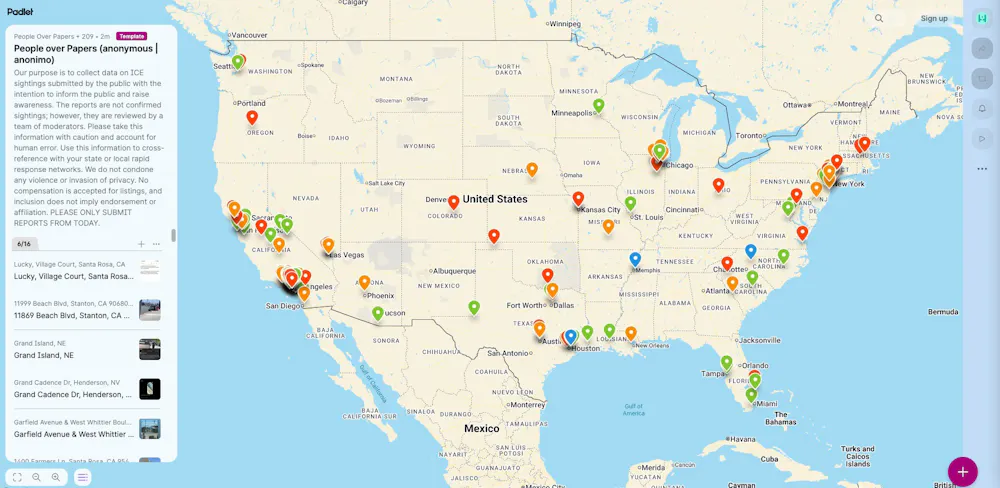
    Their work also echoes the spatial tactics of Black resistance. Just as enslaved Black people once mapped escape routes during slavery and Jim Crow, Latino communities today are engaging in digital cartography to chart ICE-free zones, mutual aid hubs and sanctuary spaces. The People Over Papers map channels the logic of the Black maroons – communities of self-liberated Africans who escaped plantations to track patrols, share intelligence and build networks of survival. Now, the hideouts are digital. The maps are crowdsourced. The danger remains.

    Likewise, the Stop ICE Raids Alerts Network revives a civil rights-era tactic. In the 1960s, organizers used wide area telephone service lines and radio to circulate safety updates. Black DJs cloaked dispatches in traffic and weather reports – “congestion on the south side” signaled police blockades; “storm warnings” meant violence ahead. Today, the medium is WhatsApp. The signal is encrypted. But the message – protect each other – has not changed.

    Layered across both systems is the DNA of the “Negro Motorist Green Book,” the guide that once helped Black travelers navigate Jim Crow America by identifying safe towns, gas stations and lodging. People Over Papers and Stop ICE Raids are digital descendants of that legacy. Where the Green Book used printed pages, today’s tools use digital pins. But the mission remains: survival through shared knowledge, protection through mapped resistance.

    The People Over Papers map is a crowdsourced collection of reports of ICE activity across the U.S.
    Screenshot by The Conversation U.S.

    Dangerous necessity

    Five years after George Floyd’s death, the power of visual evidence remains undeniable. Black witnessing laid the groundwork. In 2025, that tradition continues through the lens of Latino mobile journalists, who draw clear parallels between their own community’s experiences and those of Black Americans. Their footage exposes powerful echoes: ICE raids and overpolicing, border cages and city jails, a door kicked in at dawn and a knee on a neck.

    Like Black Americans before them, Latino communities are using smartphones to protect, to document and to respond. In cities such as Chicago, Los Angeles and El Paso, whispers of “ICE is in the neighborhood” now flash across Telegram, WhatsApp and Instagram. For undocumented families, pressing record can mean risking retaliation or arrest. But many keep filming – because what goes unrecorded can be erased.

    What they capture are not isolated incidents. They are part of a broader, shared struggle against state violence. And as long as the cameras keep rolling, the stories keep surfacing – illuminated by the glow of smartphone screens that refuse to look away.

    Allissa V. Richardson receives funding from the Ford Foundation and the John D. and Catherine T. MacArthur Foundation.

    – ref. Smartphones are once again setting the agenda for justice as the Latino community documents ICE actions – https://theconversation.com/smartphones-are-once-again-setting-the-agenda-for-justice-as-the-latino-community-documents-ice-actions-258980

    MIL OSI – Global Reports –

    June 19, 2025
  • MIL-OSI Africa: Strategic Topics, Technical Insights: Angola Oil & Gas (AOG) 2025 to Offer Multi-Track Program

    This year’s edition of the Angola Oil & Gas (AOG) conference & exhibition will feature a multi-track program examining how regulatory reform, foreign investment and domestic growth have shaped the market over the past five decades, and how greater collaboration, capital expenditure and local participation will shape the next 50 years of development.  

    Strategic Track

    The AOG 2025 Strategic Track will feature a series of panel discussions, keynote addresses and in-conversation with sessions, all of which aim to provide key insight into the state of play of Angola’s oil and gas market. A session on Angola at 50: The Oil & Gas Industry – a catalyst for economic transformation will examine the role oil and gas has and will continue to play in unlocking economic opportunities for the country – from job creation to fuel security to revenue generation and infrastructure development.  

    Meanwhile, with the country on track for a $60 billion upstream investment drive in the coming five years and a 2025 licensing round set to offer 10 blocks in the offshore Kwanza and Benguela basins, Angola offers strategic investment opportunities for exploration and production firms. The AOG 2025 Strategic Track will feature sessions on The Role of Onshore & Shallow Water Operations in Maintaining Production Levels; and Strategic Partnerships: Unlocking Africa’s Deepwater Potential, tackling development opportunities across the market. Additionally, sessions on From Extraction to Expansion: Financing Angola’s Oil & Gas Development and Increased Production Through Investment Friendly Reforms, will examine the impact reform has played on the market and how amended policies and improved fiscals have strengthened the competitiveness of doing business in Angola.  

    Beyond the upstream sector, Angola targets 445,000 bpd in refining capacity, with a focus on reducing petroleum imports and bolstering regional fuel security. The Strategic Track will share insight into these objectives, with sessions on Towards a Secure Energy Future: Accelerating Downstream Development to Meet Market Demands; The Role of National Champions in Angola’s Development; Strategic Investments in Angola’s Logistics and Energy Infrastructure; and Building Tomorrow’s Workforce.

    Technical Track

    Geared towards service companies, innovators and data analytics firms, the AOG 2025 Technical Track will examine how technology-driven solutions will support oil and gas development in Angola. The Technical Track aligns closely with the broader goals of the nation to increase exploration, accelerate low-carbon fuel production while unlocking new opportunities for sustainable development. Sessions on Driving Investment for Seismic Opportunities in Angola and Best Practice Strategies for Successful Exploration in the Okavango Basin will explore the impact data and technology play on unlocking new frontiers in Angola.

    Additionally, sessions on Economic Diversification Through Gas; Towards Net-Zero: Decarbonizing Operations; and AI and Machine-Learning: Enhancing Efficiency, Safety and Minimizing Environmental Impact will provide critical insight into emerging opportunities in Angola’s low-carbon space. Focus areas will include natural gas projects, how technology such as machine learning can enhance efficiency while reducing emissions and the role research and development plays in supporting Angolan oil and gas development. In addition to panel discussions, a series of presentations will take place across the Technical Track, led by global data and analytics providers, Angolan government leaders and major operators.

    Additional Features

    In addition to the main conference program, AOG 2025 will host a dedicated deal-room. Designed as a high-impact ‘Dragon’s Den’ style platform, the deal room offers Angolan entrepreneurs and innovators the chance to pitch their products and services to global operators. The deal room fosters collaboration, local participation and partnerships. Meanwhile, AOG 2025 will also host a pre-conference program on September 2, ahead of the main conference agenda. The pre-conference includes specialized workshops and sessions led by experts and is designed for engineers, geologists, project managers and financiers.

    Distributed by APO Group on behalf of Energy Capital & Power.

    MIL OSI Africa –

    June 19, 2025
  • MIL-OSI Europe: Tackling hate speech in the digital age: Stronger Action Needed

    Source: Organization for Security and Co-operation in Europe – OSCE

    Headline: Tackling hate speech in the digital age: Stronger Action Needed

    SARAJEVO, 18 June 2025 – Hate speech is not new, but, fueled by the anonymity and viral nature of digital platforms, it now travels faster and further. These new arenas for hate speech carry the potential for more devastating consequences – accelerating discrimination, creating hostile environments or inciting violence, including hate crimes. As we mark the International Day for Countering Hate Speech, we cannot ignore the real risks of our digital and internet age, including the growing incidence and impact of online hate speech and the escalating dangers of posed by generative artificial intelligence (AI).
    These risks are particularly relevant in the context of Bosnia and Herzegovina, where hate speech has long prevented healing and exacerbated the wounds of a painful past, at the same time jeopardizing efforts to look towards a common brighter future.
    One of the most widespread and troubling forms of hate speech in the country is the denial, justification and relativization of genocide, crimes against humanity, and war crimes committed during the 1992–1995 conflict as well as the glorification of war criminals. Such narratives are perpetuated — sometimes by high-profile public figures and politicians — for political gain and with impunity. Murals and offensive graffiti that publicly glorify war criminals are not just painful and haunting reminders for victims; they also contribute to politically motivated historical revisionism by reflecting a deliberate manipulation of history to justify harmful ideologies and obstruct reconciliation.
    Hate speech reflects our biases, for example, infused with gendered components such as such as discrediting survivors of conflict-related sexual violence or minimizing the distinct impact of war crimes of on the respective genders. Gendered hate speech undermines international justice, retraumatizes survivors and dehumanizes victims by aggravating suffering or erasing their experiences.
    Hate speech also disproportionately targets marginalized communities, such as ethnic minorities, migrants and persons with disabilities, as well as women and girls, including those from these communities. This further amplifies fear and compounds structural inequalities and social exclusion. Children are especially vulnerable to online hate speech, with such exposure potentially permanently negatively impacting their well-being and development.
    The anonymity and impersonal nature of online spaces often embolden the authors of hate speech, social media posts, videos or AI-generated images can be created and disseminated in seconds, reaching thousands—sometimes millions—without accountability.
    No single organization or institution can tackle this issue alone. Eradicating hate speech demands joint action, bringing together governments, civil society, the media and tech platforms. Media and tech companies, who may profit from emotive and shocking content, must be aware of the particular responsibilities they have. Political actors and institutions at all levels must also act—decisively and consistently.
    Critically, civil society, including grassroots organizations, human rights defenders, and environmental advocates, must be enabled and protected in fulfilling their vital role in raising awareness, providing support to survivors, and advocating for safer digital and public spaces. Countering hate speech must prioritize support for survivors, including access to justice through free legal aid, psychosocial services, and safe reporting mechanisms. We must also remember that protecting the most vulnerable requires active resistance to all forms of hate.
    We — the United Nations, the European Union, the Organization for Security and Co-operation in Europe Mission to Bosnia and Herzegovina, and the Council of Europe Office in Sarajevo — remain committed to working together and supporting Bosnia and Herzegovina towards stronger regulation against hate speech, greater accountability, and ethical and responsible public discourse, notwithstanding the right to freedom of opinion and expression in line with international standards.
    We urge those in positions of responsibility, whether in politics, the media or other roles of influence, as well as citizens, to take a stand against hate speech and challenge hateful narratives in everyday life. Together, through courage and commitment, we can combat all forms of hate speech and ensure that dignity and respect remain the foundations of our both our democratic and digital societies.
    —–
    The Op-ed is published as part of the joint project “Možemo bolje”, funded by the European Union’s Service for Foreign Policy Instruments under the Neighborhood, Development and International Cooperation Instrument –  jointly implemented by the European Union in Bosnia and Herzegovina, the United Nations in Bosnia and Herzegovina, the OSCE Mission to Bosnia and Herzegovina, and the Council of Europe Office in Sarajevo. 

    MIL OSI Europe News –

    June 19, 2025
  • MIL-OSI United Kingdom: Schools in Edinburgh adopt Scottish Government guidance on school uniforms

    Source: Scotland – City of Edinburgh

    Last week, Councillors agreed at Education, Children and Families Committee that the Scottish Government guidance on school uniform will apply to all City of Edinburgh Council schools.

    In line with the decision, schools in the city should not require branded school items as a compulsory part of their uniform policy. Uniform policies should be flexible and include plain and non-branded uniform items that match school colours. Blazers and branded items of uniform will no longer be compulsory, encouraged or promoted by schools.

    Schools in Edinburgh will continue to have uniforms but parents and carers will have wider choice on where they choose to purchase school uniform items and on how much they wish to spend.

    In recent years the cost of school uniform has steadily increased and for some families, uniform costs, especially for higher priced branded and embroidered items, represent a significant impact on household budgets. Schools are expected to do all that they can to limit school clothing costs for families.

    In line with this new guidance, parents or carers should not be directed to specialist suppliers to purchase branded items.

    Councillor James Dalgleish, Education, Children and Families Convener said:

    We are committed to tackling poverty and inequality in our schools and it is clear that the cost of school uniform items has, for some, created a barrier to school education. One of the ways we are addressing this is by removing the need for parents and carers to be compelled to spend more money than is necessary on school uniform.

    The Scottish Government guidance makes clear the rationale behind the new approach to school uniforms. It is the right thing to do make changes that will have a positive financial impact on families by reducing the cost of the school day, while also creating a more inclusive school environment and promoting sustainability. I am pleased that members of the Education, Children and Families Committee have agreed this positive step forward which is focused on supporting all pupils to come to school feeling comfortable, confident and ready to learn.

    Published: June 18th 2025

    MIL OSI United Kingdom –

    June 19, 2025
  • MIL-OSI United Kingdom: Local leaders welcome leading role for Leeds in delivering government’s Plan for Change

    Source: City of Leeds

    The Leader of Leeds City Council and the Mayor of West Yorkshire have welcomed government plans to bring together local communities, civil servants, and frontline workers in Leeds and the wider region to have a greater voice in shaping and testing national policy.

    As a part of the next phase of the Government’s plan to transform public services and deliver its ‘Plan for Change’, three key locations; Leeds, Sheffield, and Darlington, will use thematic campuses to focus on different government policy missions and solve major challenges facing communities.

    Working hand in hand with local mayoral combined authorities and public service providers, the Community Mission Challenge pilot programme aims to draw together civil servants and frontline workers with a cross section of expertise, skills, and experience from departments such as teaching and the NHS, to have a greater impact on shaping and testing new government policy locally. 

    Once proved successful, these solutions and ways of working can then be scaled up across other parts of the UK to accelerate delivery of the missions nationally. 

    The pilot programme follows a recent government announcement that will see thousands of civil servants located outside London, with the aim of bringing central government closer to the people it serves.

    Under the plans, Leeds will focus on the Government’s health mission, while Sheffield will focus on opportunity, and Darlington on growth. 

    Leeds already has a reputation for innovation in health and social care through its comprehensive Health and Wellbeing Strategy, Inclusive Growth Strategy, and its introduction of the Marmot city partnership. Coupled with a cutting-edge health technology and research sector, and its expansive voluntary and community organisations and anchor networks already working in close partnership with the local authority, the city has a wealth of experience in health innovation.

    The Leader of Leeds City Council, Councillor James Lewis, said: “We are delighted that Leeds civil servants will take a leading role in delivering the Government’s health mission. This aligns with our local health and wellbeing strategy, which aims to improve the health of the poorest fastest. 

    “Leeds is a growing, diverse and ambitious city with well-established neighbourhood networks run by the voluntary and community sector and large anchor organisations working in partnership with the local authority, and a wealth of frontline expertise which will really benefit this new initiative.  

    “As a city, we have a hard-won reputation for innovation, especially within the health and social care sector, so we are perfectly suited to focus on the health mission which has been entrusted to the city.

    “We look forward to playing a significant role in helping to shape national policy and to bringing central government closer to our community.”

    Tracy Brabin, Mayor of West Yorkshire, said: “This government understands that to achieve its missions and rebuild public services, it needs to listen to those who know their areas best.

    “Frontline workers and civil servants across the North of England stand ready to help the government understand the challenges and deliver the change that’s needed to grow our economy and put more money in people’s pockets.

    “Home to a thriving network of over 300 health tech companies, three innovative universities and the largest teaching hospital in Europe, it’s only fitting that Leeds will lead the way on transforming the NHS and the health of our communities across the UK.”

    Plans for the scheme will continue to be drawn up throughout the summer with the programme expected to start work in the autumn. A new secondment scheme between government and local authorities is also being developed with people in both central and local government able to participate. 

    MIL OSI United Kingdom –

    June 19, 2025
  • MIL-OSI Russia: SCO Member States Intend to Strengthen Cooperation in Digital Technologies

    Translation. Region: Russian Federal

    Source: People’s Republic of China in Russian – People’s Republic of China in Russian –

    Source: People’s Republic of China – State Council News

    URUMQI, June 18 (Xinhua) — Participants from various countries expressed their readiness to strengthen cooperation in the relevant field within the SCO framework at the 4th meeting of heads of ministries and departments of the SCO member states responsible for the development of information and communication technologies (ICT), which was held in Karamay city, northwest China’s Xinjiang Uygur Autonomous Region, on Tuesday.

    At the event, Deputy Minister of Industry and Information Technology of the People’s Republic of China Xiong Jijun called promoting sustainable development and accelerating modernization common goals of the SCO countries.

    According to him, China is ready to work with all parties to improve the quality and level of cooperation among the member states by improving institutional mechanisms, strengthening political dialogue, deepening practical cooperation in the field of digital technologies and ICT, promoting the transformation and modernization of industries, building a more just, accessible and inclusive digital world, thereby contributing to the formation of a community of shared destiny of the SCO.

    First Deputy Minister of Communications and Informatization of the Republic of Belarus Pavel Tkach stated that joint digital development allows for a significant deepening of integration, mutual trade and other sectors of the economy, and the exchange of experience in this area can be carried out within the framework of the SCO.

    He stressed that due to the rapid growth of data in Belarus, there is a need to create centers for their processing and storage, adding that Belarus is interested in China’s experience in this area and expects to participate in specific projects with it.

    Karamay City, the venue for the event, boasts of its dynamic digital economy in Xinjiang. According to local authorities, as of the end of 2024, the computing power of the cloud computing industrial park was 17,042 petaflops (1 petaflop equals 1 quadrillion floating-point operations per second), becoming the first such industrial park in the region with a computing power of more than 10,000 petaflops.

    Zhanat Dzhabasova from Kazakhstan, head of the center for international cooperation and project implementation at the M. Dulatov Kostanay Engineering and Economics University, emphasized the prospects of Karamay to become a future hub of digital technologies. She stated that due to its geographical location, the city is quite capable of combining the experience of Kazakhstan and China in this area and becoming a center for digital transformation and exchanges between the two countries.

    Zh. Dzhabasova also expressed hope for the development of cooperation with Chinese universities in the field of information technology and other areas, especially for conducting joint scientific research through the exchange of experience.

    The head of Tajikistan’s Communications Service, Isfandiyor Sadullo, said that Karamay, as a city whose main industry is the oil industry, is making active efforts to develop digital technologies. According to him, he sees broad prospects here in the field of big data exchange.

    I. Sadullo also said that Tajikistan expects cooperation with China in the field of digital and information and communication technologies, as well as in digital development and transformation.

    Let us recall that the meeting adopted an action plan aimed at deepening exchanges and cooperation between the SCO member states in the development of measures for digital transformation, creation of digital infrastructure, digital government, cloud computing, digitalization of small and medium-sized enterprises, development and application of digital technologies, exchange of specialists in the field of digital technologies, etc. -0-

    MIL OSI Russia News –

    June 19, 2025
  • MIL-OSI USA: EIA forecasts new export licensing requirements will reduce U.S. ethane exports

    Source: US Energy Information Administration

    In-brief analysis

    June 18, 2025


    We forecast U.S. ethane exports will decrease by 80,000 barrels per day (b/d) this year and by 177,000 b/d in 2026 in our June Short-Term Energy Outlook because of new licensing requirements for U.S. exports of ethane to China. Any policy changes that relax licensing requirements, such as the outcome of trade negotiations between the United States and China, would lead us to increase our forecasts for U.S. ethane exports again.

    China is the largest destination for U.S. ethane exports, accounting for 47% of U.S. ethane exports in 2024. All U.S. ethane exports to China come from two terminals on the U.S. Gulf Coast. Enterprise operates the Orbit terminal in Morgan’s Point, Texas, and Energy Transfer operates a terminal in Nederland, Texas. These terminals have long-term contracts with ethane cracking facilities in China. Both companies announced they received notice from the U.S. Department of Commerce’s Bureau of Industry and Security (BIS) that they need to apply for a special license to export ethane to China. Both Enterprise and Energy Transfer report that BIS said ethane exports to China pose an “unacceptable risk” that the material could be used for military purposes.

    According to Vortexa data, as of June 16, seven Very Large Ethane Carriers (VLECs), nearly a quarter of the VLEC fleet, are stalled along the U.S. Gulf Coast. Two stalled VLECs are laden with nearly 1 million barrels of ethane each. Typically, these loaded VLECs would be headed to China through the Panama Canal, indicating that they were likely loaded before the export licenses were denied. Three VLECs that typically go to China are ballast (empty) and moored off the U.S. Gulf Coast. Two vessels that typically carry ethane from the U.S. Gulf Coast to China on long-term agreements have been diverted to ethane crackers in Dahej, India. The last shipment of U.S. ethane to China left May 23 from Energy Transfer’s terminal on the U.S. Gulf Coast.

    Ethane is a natural gas liquid extracted from wet natural gas during processing and is primarily used to produce ethylene. Ethylene is a crucial component in the petrochemical industry and a building block for plastics, resins, and synthetic rubber.


    Average annual U.S. ethane exports have increased every year since 2014 except 2020, when exports fell slightly due to the COVID-19 pandemic. Growing U.S. ethane exports have been supported by rising global petrochemical demand, ethane’s cost advantage in ethylene production over other feedstocks such as naphtha and propane, and increased ethane tanker fleet shipping capacity.

    Crackers in China that can only use ethane as a feedstock, such as Satellite Petrochemical, have already shut down, according to Argus, because no alternative sources for ethane imports exist. Other crackers in China can switch feedstock to naphtha or liquified petroleum gas (propane and butane), such as SP Chemical’s Taixing cracker.

    Principal contributor: Josh Eiermann

    MIL OSI USA News –

    June 19, 2025
  • MIL-OSI Security: FBI Honors Harrison County Deputy Reserve Program with National Award

    Source: US FBI

    CLARKSBURG, WV—On Tuesday, June 17, 2025, FBI Criminal Justice Information Services (CJIS) Division Assistant Director Timothy A. Ferguson presented the Harrison County (West Virginia) Deputy Reserve Program with the FBI Director’s Community Leadership Award (DCLA) for its service to citizens in West Virginia. The Harrison County Deputy Reserve Program is dedicated to strengthening relationships between law enforcement and the community.

    The FBI established the DCLA in 1990 to publicly acknowledge the achievements of those working to make a difference in their communities through the promotion of education and the prevention of crime and violence.

    “The FBI’s successes are built on our connections with our law enforcement partners and our communities,” said CJIS Division Assistant Director Ferguson. “Having partner organizations such as the Harrison County Deputy Reserve Program that engage with the public ensures we are able to maintain public trust and accountability, crush violent crime, and defend the homeland.”

    The Harrison County Deputy Reserve Program is a non-profit organization comprised of volunteers who support law enforcement and the community in a myriad of ways. The organization’s members are trained to assist in missing persons’ searches and traffic incident management. They hold monthly meetings that provide opportunities to connect state, local, and federal law enforcement. They also provide platforms for the FBI’s CJIS Division to reach community members via the CJIS Community Outreach Program’s Child ID Fingerprinting—a service that gives parents and guardians copies of their children’s fingerprints. The family can then turn over the fingerprints and accompanying headshots, which are not stored in any FBI system, to police in the event a child goes missing. Inspired by the FBI CJIS Division’s Citizens Academy, the Harrison County Deputy Reserve Program created the Harrison County Citizens Academy to connect with, and better educate, community leaders about aspects of law enforcement and the judicial system. As with the FBI’s citizen academies, these opportunities enable frank discussion to enhance communities.

    Multiple members of the Harrison County Deputy Reserve Program attended the award ceremony.

    “I want to extend our sincere gratitude to the FBI for this tremendous honor,” said former Harrison County Sheriff Robert Matheny. “Thank you for your unwavering commitment to strengthening the bond between federal and local law enforcement and thank you recognizing the power of partnership in building safer communities. This award is a testament to what can be accomplished when ordinary citizens step forward to do extraordinary things. The men and women of our Reserve Unit have answered that call time and again, without hesitation and without expectation. We are honored to accept this award, not just as a unit, but as part of the greater law enforcement family—united by purpose, service, and the unwavering belief that communities are worth protecting.”

    “This award was totally unexpected, but I am proud of how our unit has come together to give back to the community and to assist the sheriff’s office and deputies as they fulfill their duties,” said Deputy Sheriff Reserve Michael Lambiotte.

    Learn more about the Director’s Community Leadership Award program, the FBI’s general outreach efforts, and the FBI’s CJIS Division online.

    Photo Courtesy: Federal Bureau of Investigation – CJIS Division Assistant Director Timothy A. Ferguson (far left) and CJIS Division Section Chief Scott E. Schubert (far right) are joined by Harrison County Sheriff Robert Matheny II (center left) and members of the Harrison County Deputy Reserve Program.

    MIL Security OSI –

    June 19, 2025
  • MIL-OSI Security: FBI Honors Harrison County Deputy Reserve Program with National Award

    Source: US FBI

    CLARKSBURG, WV—On Tuesday, June 17, 2025, FBI Criminal Justice Information Services (CJIS) Division Assistant Director Timothy A. Ferguson presented the Harrison County (West Virginia) Deputy Reserve Program with the FBI Director’s Community Leadership Award (DCLA) for its service to citizens in West Virginia. The Harrison County Deputy Reserve Program is dedicated to strengthening relationships between law enforcement and the community.

    The FBI established the DCLA in 1990 to publicly acknowledge the achievements of those working to make a difference in their communities through the promotion of education and the prevention of crime and violence.

    “The FBI’s successes are built on our connections with our law enforcement partners and our communities,” said CJIS Division Assistant Director Ferguson. “Having partner organizations such as the Harrison County Deputy Reserve Program that engage with the public ensures we are able to maintain public trust and accountability, crush violent crime, and defend the homeland.”

    The Harrison County Deputy Reserve Program is a non-profit organization comprised of volunteers who support law enforcement and the community in a myriad of ways. The organization’s members are trained to assist in missing persons’ searches and traffic incident management. They hold monthly meetings that provide opportunities to connect state, local, and federal law enforcement. They also provide platforms for the FBI’s CJIS Division to reach community members via the CJIS Community Outreach Program’s Child ID Fingerprinting—a service that gives parents and guardians copies of their children’s fingerprints. The family can then turn over the fingerprints and accompanying headshots, which are not stored in any FBI system, to police in the event a child goes missing. Inspired by the FBI CJIS Division’s Citizens Academy, the Harrison County Deputy Reserve Program created the Harrison County Citizens Academy to connect with, and better educate, community leaders about aspects of law enforcement and the judicial system. As with the FBI’s citizen academies, these opportunities enable frank discussion to enhance communities.

    Multiple members of the Harrison County Deputy Reserve Program attended the award ceremony.

    “I want to extend our sincere gratitude to the FBI for this tremendous honor,” said former Harrison County Sheriff Robert Matheny. “Thank you for your unwavering commitment to strengthening the bond between federal and local law enforcement and thank you recognizing the power of partnership in building safer communities. This award is a testament to what can be accomplished when ordinary citizens step forward to do extraordinary things. The men and women of our Reserve Unit have answered that call time and again, without hesitation and without expectation. We are honored to accept this award, not just as a unit, but as part of the greater law enforcement family—united by purpose, service, and the unwavering belief that communities are worth protecting.”

    “This award was totally unexpected, but I am proud of how our unit has come together to give back to the community and to assist the sheriff’s office and deputies as they fulfill their duties,” said Deputy Sheriff Reserve Michael Lambiotte.

    Learn more about the Director’s Community Leadership Award program, the FBI’s general outreach efforts, and the FBI’s CJIS Division online.

    Photo Courtesy: Federal Bureau of Investigation – CJIS Division Assistant Director Timothy A. Ferguson (far left) and CJIS Division Section Chief Scott E. Schubert (far right) are joined by Harrison County Sheriff Robert Matheny II (center left) and members of the Harrison County Deputy Reserve Program.

    MIL Security OSI –

    June 19, 2025
  • MIL-OSI: Oma Savings Bank Plc’s composition of Shareholders’ Nomination Committee

    Source: GlobeNewswire (MIL-OSI)

    OMA SAVINGS BANK PLC STOCK EXCHANGE RELEASE, 18 JUNE 2025 AT 15:55 P.M. EET, OTHER INFORMATION DISCLOSED ACCORDING TO THE RULES OF THE EXCHANGE


    Oma Savings Bank Plc’s composition of Shareholders’ Nomination Committee

    According to the shareholder list on 1 June 2025, representatives of the five largest shareholders have been appointed to the Nomination Committee of Oma Savings Bank Plc (OmaSp or Company):

    • Raimo Härmä, appointed by Etelä-Karjalan Säästöpankkisäätiö
    • Ari Lamminmäki, appointed by Parkanon Säästöpankkisäätiö
    • Jouni Niuro, appointed by Liedon Säästöpankkisäätiö
    • Aino Lamminmäki, appointed by Töysän Säästöpankkisäätiö
    • Simo Haarajärvi, appointed by Kuortaneen Säästöpankkisäätiö

    The Nomination Committee elects a Chairperson from among its members.

    The Nomination Committee is responsible for preparing proposals for the election and remuneration of the members of the Board of Directors and for finding potential members of the Board of Directors to the Annual General Meeting and if necessary, to the Extraordinary General Meeting. OmaSp’s five largest shareholders each have the right to appoint one representative to the Nomination Committee.

    The Nomination Committee must submit to OmaSp’s Board of Directors its proposals on the Board members and remuneration annually at the latest by the end of the calendar month preceding the meeting of the Board of Directors that decides on the convening of the Annual General Meeting. In the case of an Extraordinary General Meeting, the proposal must be made in advance of the Annual General Meeting so that they can be included in the notice to the General Meeting.

    The Shareholders’ Nomination Committee charter is available on the Company’s website at https://www.omasp.fi/en/investors/management-and-corporate-governance/nomination-committee

    Oma Savings Bank Plc

    Additional information:
    Karri Alameri, CEO, tel. +358 45 656 5250, karri.alameri@omasp.fi

    Distribution:

    Nasdaq Helsinki Ltd
    Major media
    www.omasp.fi

    OmaSp is a solvent and profitable Finnish bank. About 600 professionals provide nationwide services through OmaSp’s 48 branch offices and digital service channels to over 200,000 private and corporate customers. OmaSp focuses primarily on retail banking operations and provides its clients with a broad range of banking services both through its own balance sheet as well as by acting as an intermediary for its partners’ products. The intermediated products include credit, investment and loan insurance products. OmaSp is also engaged in mortgage banking operations.

    OmaSp core idea is to provide personal service and to be local and close to its customers, both in digital and traditional channels. OmaSp strives to offer premium level customer experience through personal service and easy accessibility. In addition, the development of the operations and services is customer-oriented. The personnel is committed and OmaSp seeks to support their career development with versatile tasks and continuous development. A substantial part of the personnel also own shares in OmaSp.

    The MIL Network –

    June 19, 2025
  • MIL-OSI: Oma Savings Bank Plc’s composition of Shareholders’ Nomination Committee

    Source: GlobeNewswire (MIL-OSI)

    OMA SAVINGS BANK PLC STOCK EXCHANGE RELEASE, 18 JUNE 2025 AT 15:55 P.M. EET, OTHER INFORMATION DISCLOSED ACCORDING TO THE RULES OF THE EXCHANGE


    Oma Savings Bank Plc’s composition of Shareholders’ Nomination Committee

    According to the shareholder list on 1 June 2025, representatives of the five largest shareholders have been appointed to the Nomination Committee of Oma Savings Bank Plc (OmaSp or Company):

    • Raimo Härmä, appointed by Etelä-Karjalan Säästöpankkisäätiö
    • Ari Lamminmäki, appointed by Parkanon Säästöpankkisäätiö
    • Jouni Niuro, appointed by Liedon Säästöpankkisäätiö
    • Aino Lamminmäki, appointed by Töysän Säästöpankkisäätiö
    • Simo Haarajärvi, appointed by Kuortaneen Säästöpankkisäätiö

    The Nomination Committee elects a Chairperson from among its members.

    The Nomination Committee is responsible for preparing proposals for the election and remuneration of the members of the Board of Directors and for finding potential members of the Board of Directors to the Annual General Meeting and if necessary, to the Extraordinary General Meeting. OmaSp’s five largest shareholders each have the right to appoint one representative to the Nomination Committee.

    The Nomination Committee must submit to OmaSp’s Board of Directors its proposals on the Board members and remuneration annually at the latest by the end of the calendar month preceding the meeting of the Board of Directors that decides on the convening of the Annual General Meeting. In the case of an Extraordinary General Meeting, the proposal must be made in advance of the Annual General Meeting so that they can be included in the notice to the General Meeting.

    The Shareholders’ Nomination Committee charter is available on the Company’s website at https://www.omasp.fi/en/investors/management-and-corporate-governance/nomination-committee

    Oma Savings Bank Plc

    Additional information:
    Karri Alameri, CEO, tel. +358 45 656 5250, karri.alameri@omasp.fi

    Distribution:

    Nasdaq Helsinki Ltd
    Major media
    www.omasp.fi

    OmaSp is a solvent and profitable Finnish bank. About 600 professionals provide nationwide services through OmaSp’s 48 branch offices and digital service channels to over 200,000 private and corporate customers. OmaSp focuses primarily on retail banking operations and provides its clients with a broad range of banking services both through its own balance sheet as well as by acting as an intermediary for its partners’ products. The intermediated products include credit, investment and loan insurance products. OmaSp is also engaged in mortgage banking operations.

    OmaSp core idea is to provide personal service and to be local and close to its customers, both in digital and traditional channels. OmaSp strives to offer premium level customer experience through personal service and easy accessibility. In addition, the development of the operations and services is customer-oriented. The personnel is committed and OmaSp seeks to support their career development with versatile tasks and continuous development. A substantial part of the personnel also own shares in OmaSp.

    The MIL Network –

    June 19, 2025
  • MIL-OSI: Tokio Marine HCC Appoints Elizabeth Geary to Lead North America P&C Businesses

    Source: GlobeNewswire (MIL-OSI)

    HOUSTON, June 18, 2025 (GLOBE NEWSWIRE) — Tokio Marine HCC (TMHCC), based in Houston, Texas, today announced the appointment of Elizabeth Geary to the newly created role of President & CEO of North America P&C. She will be responsible for the growth and leadership of TMHCC’s North America P&C business units. Ms. Geary assumes her new role on June 30, 2025, reporting to Susan Rivera, TMHCC’s CEO, and will be based in New York City.

    Ms. Geary brings more than two decades of underwriting and senior leadership experience to TMHCC. She joins from Liberty Mutual, where, as President of Insurance Solutions, she was responsible for the launch and development of a new organization, focused on proactively managing brokers’ and clients’ evolving risk needs with a focus on cyber, energy transition, and alternative risk solutions. Ms. Geary began her career at TransRe, gaining underwriting experience across the spectrum of specialty classes, starting with US Property and Healthcare, progressing to Global Head of Cyber, and ultimately serving in a dual role as Chief Underwriting Officer, North America, and President, Global Portfolio Management.

    This announcement is the latest in a series of key executive appointments at TMHCC, with Barry Cook promoted to the role of Deputy CEO in April 2025, as the business evolves and expands its leadership structure to maintain its growth momentum.

    Ms. Rivera said, “Appointing Liz to the new role of President & CEO of our North America P&C business units is a statement of intent for our business. Her talent and track record of underwriting acumen, product strategy, and leadership are exceptional. As TMHCC continues to expand and evolve, driven by our commitment to enhancing our offerings to reflect the needs of insureds in a rapidly changing risk environment, we will need to attract the leading talent in the market who share our specialized focus and approach. Liz is an example of this approach in action, and I look forward to working with her to successfully harness the opportunities present in this expansive sector of the insurance market.”

    Ms. Geary added, “Tokio Marine HCC’s North American business has become a market leader in its chosen sectors, and its specialty insurance reputation is second to none. TMHCC is known for its long-term commitment to markets, underwriting excellence, and top-notch financial strength. I am delighted to be joining Susan and her team and look forward to helping the business realize its profitable growth ambitions in North America while providing market-leading solutions for our brokers and insureds.”

    About Tokio Marine HCC
    Tokio Marine HCC is a member of the Tokio Marine Group, a premier global company founded in 1879 with a market capitalization of $74 billion as of March 31, 2025. Headquartered in Houston, Texas, Tokio Marine HCC is a leading specialty insurance group with offices in the United States, Mexico, the United Kingdom and Continental Europe. Tokio Marine HCC’s major domestic insurance companies have financial strength ratings of ‘A+’ (Strong) from S&P Global Ratings, ‘A++’ (Superior) from AM Best, and ‘AA-’ (Very Strong) from Fitch Ratings; its major international insurance companies have financial strength ratings of ‘A+’ (Strong) from S&P Global Ratings. Tokio Marine HCC is the marketing name used to describe the affiliated companies under the common ownership of HCC Insurance Holdings, Inc., a Delaware-incorporated insurance holding company. For more information about Tokio Marine HCC, please visit www.tokiomarinehcc.com.

    Contact:
    Doug Busker, Vice President – Public Relations
    Tokio Marine HCC
    713-996-1192

    The MIL Network –

    June 19, 2025
  • MIL-OSI: Tokio Marine HCC Appoints Elizabeth Geary to Lead North America P&C Businesses

    Source: GlobeNewswire (MIL-OSI)

    HOUSTON, June 18, 2025 (GLOBE NEWSWIRE) — Tokio Marine HCC (TMHCC), based in Houston, Texas, today announced the appointment of Elizabeth Geary to the newly created role of President & CEO of North America P&C. She will be responsible for the growth and leadership of TMHCC’s North America P&C business units. Ms. Geary assumes her new role on June 30, 2025, reporting to Susan Rivera, TMHCC’s CEO, and will be based in New York City.

    Ms. Geary brings more than two decades of underwriting and senior leadership experience to TMHCC. She joins from Liberty Mutual, where, as President of Insurance Solutions, she was responsible for the launch and development of a new organization, focused on proactively managing brokers’ and clients’ evolving risk needs with a focus on cyber, energy transition, and alternative risk solutions. Ms. Geary began her career at TransRe, gaining underwriting experience across the spectrum of specialty classes, starting with US Property and Healthcare, progressing to Global Head of Cyber, and ultimately serving in a dual role as Chief Underwriting Officer, North America, and President, Global Portfolio Management.

    This announcement is the latest in a series of key executive appointments at TMHCC, with Barry Cook promoted to the role of Deputy CEO in April 2025, as the business evolves and expands its leadership structure to maintain its growth momentum.

    Ms. Rivera said, “Appointing Liz to the new role of President & CEO of our North America P&C business units is a statement of intent for our business. Her talent and track record of underwriting acumen, product strategy, and leadership are exceptional. As TMHCC continues to expand and evolve, driven by our commitment to enhancing our offerings to reflect the needs of insureds in a rapidly changing risk environment, we will need to attract the leading talent in the market who share our specialized focus and approach. Liz is an example of this approach in action, and I look forward to working with her to successfully harness the opportunities present in this expansive sector of the insurance market.”

    Ms. Geary added, “Tokio Marine HCC’s North American business has become a market leader in its chosen sectors, and its specialty insurance reputation is second to none. TMHCC is known for its long-term commitment to markets, underwriting excellence, and top-notch financial strength. I am delighted to be joining Susan and her team and look forward to helping the business realize its profitable growth ambitions in North America while providing market-leading solutions for our brokers and insureds.”

    About Tokio Marine HCC
    Tokio Marine HCC is a member of the Tokio Marine Group, a premier global company founded in 1879 with a market capitalization of $74 billion as of March 31, 2025. Headquartered in Houston, Texas, Tokio Marine HCC is a leading specialty insurance group with offices in the United States, Mexico, the United Kingdom and Continental Europe. Tokio Marine HCC’s major domestic insurance companies have financial strength ratings of ‘A+’ (Strong) from S&P Global Ratings, ‘A++’ (Superior) from AM Best, and ‘AA-’ (Very Strong) from Fitch Ratings; its major international insurance companies have financial strength ratings of ‘A+’ (Strong) from S&P Global Ratings. Tokio Marine HCC is the marketing name used to describe the affiliated companies under the common ownership of HCC Insurance Holdings, Inc., a Delaware-incorporated insurance holding company. For more information about Tokio Marine HCC, please visit www.tokiomarinehcc.com.

    Contact:
    Doug Busker, Vice President – Public Relations
    Tokio Marine HCC
    713-996-1192

    The MIL Network –

    June 19, 2025
  • MIL-OSI: ACNB Corporation Announces Common Stock Repurchase Program

    Source: GlobeNewswire (MIL-OSI)

    GETTYSBURG, Pa., June 18, 2025 (GLOBE NEWSWIRE) — ACNB Corporation (“ACNB”) (NASDAQ: ACNB), financial holding company for ACNB Bank and ACNB Insurance Services, Inc., announced today that the Board of Directors approved a new plan to repurchase, in open market transactions at prevailing market prices, up to 314,000, or approximately 3.0%, of the outstanding shares of ACNB’s common stock. The amount and timing of any shares repurchased will be evaluated and determined by management in its discretion and will depend upon a number of factors, including ACNB’s capital position, liquidity, financial performance and alternate uses of capital, the market price of ACNB’s securities, general market and economic conditions, and applicable legal and regulatory requirements, with no guarantee as to the exact number of shares that will be repurchased. The common stock repurchases are expected to be funded by using available capital. Further, this new common stock repurchase program replaces and supersedes any and all earlier announced repurchase plans.

    ACNB Corporation, headquartered in Gettysburg, PA, is the independent $3.27 billion financial holding company for the wholly-owned subsidiaries of ACNB Bank, Gettysburg, PA, including its operating divisions Traditions Bank and Traditions Mortgage, and ACNB Insurance Services, Inc., Westminster, MD. Originally founded in 1857, ACNB Bank serves its marketplace with banking and wealth management services, including trust and retail brokerage, via a network of 33 community banking offices and one loan offices located in the Pennsylvania counties of Adams, Cumberland, Franklin, Lancaster and York and the Maryland counties of Baltimore, Carroll and Frederick. ACNB Insurance Services, Inc. is a full-service insurance agency with licenses in 46 states. The agency offers a broad range of property, casualty, health, life and disability insurance serving personal and commercial clients through office locations in Westminster, MD, and Gettysburg, PA. For more information regarding ACNB Corporation and its subsidiaries, please visit investor.acnb.com.

    FORWARD-LOOKING STATEMENTS – In addition to historical information, this press release may contain forward-looking statements. Examples of forward-looking statements include, but are not limited to, (a) projections or statements regarding future earnings, expenses, net interest income, other income, earnings or loss per share, asset mix and quality, growth prospects, capital structure, and other financial terms, (b) statements of plans and objectives of Management or the Board of Directors, and (c) statements of assumptions, such as economic conditions in the Corporation’s market areas. Such forward-looking statements can be identified by the use of forward-looking terminology such as “believes”, “expects”, “may”, “intends”, “will”, “should”, “anticipates”, or the negative of any of the foregoing or other variations thereon or comparable terminology, or by discussion of strategy. Forward-looking statements are subject to certain risks and uncertainties such as national, regional and local economic conditions, competitive factors, and regulatory limitations. Actual results may differ materially from those projected in the forward-looking statements. Such risks, uncertainties, and other factors that could cause actual results and experience to differ from those projected include, but are not limited to, the following: short-term and long-term effects of inflation and rising costs on the Corporation, customers and economy; effects of governmental and fiscal policies, as well as legislative and regulatory changes; effects of new laws and regulations (including laws and regulations concerning taxes, banking, securities and insurance) and their application with which the Corporation and its subsidiaries must comply; impacts of the capital and liquidity requirements of the Basel III standards; effects of changes in accounting policies and practices, as may be adopted by the regulatory agencies, as well as the Financial Accounting Standards Board and other accounting standard setters; ineffectiveness of the business strategy due to changes in current or future market conditions; future actions or inactions of the United States government, including the effects of short-term and long-term federal budget and tax negotiations and a failure to increase the government debt limit or a prolonged shutdown of the federal government; effects of economic conditions particularly with regard to the negative impact of any pandemic, epidemic or health-related crisis and the responses thereto on the operations of the Corporation and current customers, specifically the effect of the economy on loan customers’ ability to repay loans; effects of competition, and of changes in laws and regulations on competition, including industry consolidation and development of competing financial products and services; inflation, securities market and monetary fluctuations; risks of changes in interest rates on the level and composition of deposits, loan demand, and the values of loan collateral, securities, and interest rate protection agreements, as well as interest rate risks; difficulties in acquisitions and integrating and operating acquired business operations, including information technology difficulties; challenges in establishing and maintaining operations in new markets; effects of technology changes; effects of general economic conditions and more specifically in the Corporation’s market areas; failure of assumptions underlying the establishment of reserves for loan losses and estimations of values of collateral and various financial assets and liabilities; acts of war or terrorism or geopolitical instability; disruption of credit and equity markets; ability to manage current levels of impaired assets; loss of certain key officers; ability to maintain the value and image of the Corporation’s brand and protect the Corporation’s intellectual property rights; continued relationships with major customers; and, potential impacts to the Corporation from continually evolving cybersecurity and other technological risks and attacks, including additional costs, reputational damage, regulatory penalties, and financial losses. We caution readers not to place undue reliance on these forward-looking statements. They only reflect Management’s analysis as of this date. The Corporation does not revise or update these forward-looking statements to reflect events or changed circumstances. Please carefully review the risk factors described in other documents the Corporation files from time to time with the SEC, including the Annual Reports on Form 10-K and Quarterly Reports on Form 10-Q. Please also carefully review any Current Reports on Form 8-K filed by the Corporation with the SEC.

    ACNB #2025-11
    June 18, 2025

    Contact: Kevin J. Hayes
      SVP/General Counsel,
      Secretary & Chief
      Governance Officer
      717.339.5161
      khayes@acnb.com

    The MIL Network –

    June 19, 2025
  • MIL-OSI: ibex Donates $25,000 to Wounded Warrior Project

    Source: GlobeNewswire (MIL-OSI)

    WASHINGTON, June 18, 2025 (GLOBE NEWSWIRE) — ibex (NASDAQ: IBEX), a leading global provider of business process outsourcing (BPO) and AI-powered customer engagement technology solutions, is proud to announce a $25,000 donation to Wounded Warrior Project® (WWP) as part of ibex CaresTM, the company’s global philanthropic program. This contribution supports WWP’s mission, which focuses on the total well-being of post-9/11 wounded, ill, or injured veterans. From PTSD treatments to essential long-term care, the nonprofit is empowering warriors to thrive – physically, mentally, and financially – for a lifetime.

    WWP began in 2003 by delivering backpacks filled with comfort items to the bedsides of wounded warriors – along with a powerful promise to stand by them as they healed and rebuilt their lives. Today, WWP is the nation’s leading veterans service organization, providing essential lifelines to warriors, their families, and caregivers. Thanks to support from generous Americans and organizations, WWP can serve warriors and their families at no cost to them.

    “On behalf of ibex and our many veterans, we are proud to make this donation to help support our nation’s wounded veterans,” said ibex Chief People Officer Paul Inson. “Supporting the mission of Wounded Warrior Project fits perfectly with our core values of compassion and community service. We believe it’s not just a responsibility but a privilege to give back to those who have given so much for our country.”

    The donation is part of ibex Cares, which supports charitable organizations across ibex’s operational regions. ibex Cares also encourages employees to volunteer and donate to local causes, promoting meaningful connections and driving positive change in communities worldwide.

    “We must never forget the cost of freedom,” said Brea Kratzert Todd, WWP Vice President of Business Development. “Supporters like ibex make it possible for Wounded Warrior Project to provide life-changing programs and be there for warriors throughout their lifetime.”

    As ibex continues to grow, the company remains dedicated to expanding its charitable impact and nurturing a culture of giving back across its global operations.

    “I applaud our team for their amazing generosity and compassion,” said Christy O’Connor, Chief Legal Officer at ibex. “I am personally involved with Wounded Warrior’s Battalion West, where my dog has been a therapy dog to wounded warriors for six years and helped save numerous lives. Giving is in our DNA and is just one more thing that makes ibex special.”

    About ibex

    ibex delivers innovative business process outsourcing (BPO), smart digital marketing, online acquisition technology, and end-to-end customer engagement solutions to help companies acquire, engage and retain valuable customers. Today, ibex operates a global CX delivery center model consisting of 31 operations facilities around the world, while deploying next generation technology to drive superior customer experiences for many of the world’s leading companies across retail, e-commerce, healthcare, fintech, utilities and logistics.

    ibex leverages its diverse global team of approximately 31,000 employees together with industry-leading technology, including the AI-powered ibex Wave iX solutions suite, to manage nearly 175 million critical customer interactions, adding over $2.2B in lifetime customer revenue each year and driving a truly differentiated customer experience. To learn more, visit our website at ibex.co and connect with us on LinkedIn.

    About Wounded Warrior Project

    Wounded Warrior Project is our nation’s leading veteran services organization, focused on the total well-being of post-9/11 wounded, ill, or injured veterans. Our programs, advocacy, and awareness efforts help warriors thrive, provide essential lifelines to families and caregivers, and prevent veteran suicides. Learn more about Wounded Warrior Project.

    Media Contact:
    Dan Burris
    ibex
    Daniel.Burris@ibex.co

    A photo accompanying this announcement is available at https://www.globenewswire.com/NewsRoom/AttachmentNg/ee99ff99-ccc2-43f4-a5af-da11ebe31725

    The MIL Network –

    June 19, 2025
  • MIL-OSI: Wix Further Expands into Vibe Coding with Acquisition of Base44, a Hyper-Growth Startup that Simplifies Web and App Creation with AI

    Source: GlobeNewswire (MIL-OSI)

    Base44 delivers effortless, code-free digital creation through an intuitive, conversational AI experience, which is expected to expand Wix’s reach to new audiences worldwide

    NEW YORK— Today Wix.com Ltd. (Nasdaq: WIX), the leading SaaS website builder platform globally1, announced its acquisition of Base44, an AI-powered platform that enables anyone to create fully-functional, custom software solutions and applications using natural language, without the need for traditional coding. The acquisition adds a powerful new arm to Wix’s AI portfolio, expanding its suite of intelligent solutions that empower anyone to build and grow online. 

    The tech landscape is undergoing a major transformation as vibe coding gains momentum, shifting creation from manual development to intent-driven software development. This new approach allows people to simply express what they want to build, while intelligent agents do the heavy lifting. As demand grows for tools that turn ideas into reality through conversation and intuition rather than code, Wix is working to make the digital world more accessible and creative than ever before. Read CEO Avishai Abrahami’s blog about his vision and the way Wix is shaping this future here.

    Base44’s unique approach offers a fully automated, chat-based interface that manages technical details behind the scenes, from databases and authentication to deployment – removing the need for third-party integrations or manual setup. This groundbreaking approach opens the door for anyone, regardless of technical expertise, to create production-ready, scalable applications quickly and effortlessly. With proven traction in the market, including B2B partnerships with leaders like eToro and SimilarWeb, Base44 is a powerful addition to the Wix AI portfolio – furthering the company’s mission to make innovation accessible to creators and businesses worldwide.

    “This acquisition marks a pivotal milestone in Wix’s commitment to transforming creation online,” said Avishai Abrahami, CEO and Co-founder of Wix. “Maor and his team at Base44 bring cutting-edge technology, strong market penetration, and visionary leadership that seamlessly align with Wix’s dedication to enabling users at all levels of expertise to express their intent while intelligent agents manage execution. Maor’s exceptional talent and innovative mindset will reinforce Wix’s mission to push the boundaries of AI-driven creation and  accelerate the evolution of intuitive, intelligent tools that redefine how digital experiences are built and enjoyed.”

    “I honestly can’t think of a better fit. Wix is probably the only company that can help Base44 achieve the scale and distribution it needs while maintaining, if not accelerating, our product velocity,” said Maor Shlomo, CEO of Base44. “Our market is massive. It has the potential to replace entire software categories by enabling people to create software instead of buying it. Wix’s DNA – its customer obsession, innovation, and speed – perfectly aligns with ours, and its scale will catapult Base44 forward at exactly the right time.”

    Base44 will continue to operate as a distinct product and business, maintaining its unique identity and momentum while benefiting from the scale and support of Wix.

    Transaction Terms

    Under the terms of the agreement, Wix acquired Base44 for initial consideration of approximately $80 million plus additional earn-out payments paid through 2029 predicated upon certain performance metrics.

    We expect this transaction to have an inconsequential contribution to 2025 bookings and revenue. We expect to incur approximately $25 million in retention bonus payments paid to Base44 employees in 2025 as part of the above initial consideration paid on the transaction, which will be excluded from non-GAAP and free cash flow (FCF) results.

    About Wix.com Ltd.

    Wix is the leading SaaS website builder platform1 to create, manage and grow a digital presence. Founded  in 2006, Wix is a comprehensive platform providing users – self-creators, agencies, enterprises, and more – with industry-leading performance, security, AI capabilities and a reliable infrastructure. Offering a wide range of commerce and business solutions, advanced SEO and marketing tools, the platform enables users to take full ownership of their brand, their data and their relationships with their customers. With a focus on continuous innovation and delivery of new features and products, users can seamlessly build a powerful and high-end digital presence for themselves or their clients. 

    For more about Wix, please visit our Press Room
    Media Relations Contact:  PR@wix.com  

    1 Based on number of active live sites as reported by competitors’ figures, independent third-party data and internal data as of Q1 2025.

    About Base44
    Base44 is an innovative AI-powered platform that enables users to build custom software applications effortlessly using natural language, eliminating the need for traditional coding. Founded with a vision to democratize software creation, Base44 combines cutting-edge AI technologies—including code generation and multi-agent orchestration—to empower self-creators, developers, and businesses to rapidly design, deploy, and scale tailored digital solutions. With a growing user base and a focus on seamless, intuitive experiences, Base44 drives the future of no-code development by unlocking new levels of creativity and efficiency for a diverse range of users.

    Forward-Looking Statements

    This document contains forward-looking statements, within the meaning of the safe harbor provisions of the Private Securities Litigation Reform Act of 1995 that involve risks and uncertainties. Such forward-looking statements may be identified by words like “anticipate,” “assume,” “believe,” “aim,” “forecast,” “indication,” “continue,” “could,” “estimate,” “expect,” “intend,” “may,” “plan,” “potential,” “predict,” “subject,” “project,” “outlook,” “future,” “will,” “seek” and similar terms or phrases. The forward-looking statements contained in this document are based on management’s current expectations, which are subject to uncertainty, risks and changes in circumstances that are difficult to predict and many of which are outside of our control. Important factors that could cause our actual results to differ materially from those indicated in the forward-looking statements include, among others, our ability to achieve the expected benefits from the acquisition of Base44, our ability to attract and retain registered users and partners, and generate new premium subscriptions and additional business solutions as we continuously adjust our marketing strategy and customer care; maintenance of our brand and reputation, and generation of revenue from sources other than premium subscriptions; risks associated with international operations and the use of platform in various countries; risks related to the macroeconomic environment and ongoing global conflicts; security risks and payment risks and fluctuations in foreign currency exchange rates; failures of third-party hardware, software and infrastructure on which we rely, or failure to manage the operation of our infrastructure; adverse market conditions, including inflation, interest rates and other adverse developments that may adversely affect our cash balances and investment portfolio; our history of operating losses and inability to achieve sustained profitability; downturns or upturns in sales are not immediately reflected in full in our operating results; our ability to repurchase our ordinary shares and/or 0.00% Convertible Senior Notes due 2025 pursuant to our repurchase program; our ability to raise capital when needed or on acceptable terms; risks related to acquisitions and investments, pricing decisions, pandemics, natural disasters and other catastrophic events; our ability to develop and introduce new products and services, as well as maintain third-party products and our ability to keep up with rapid changes in design and technology; our ability to attract and retain qualified employees and key personnel; our ability to attract a diversified customer base and increased competition; our ability to maintain compatibility of our platform and solutions with changes in third-party applications and changes to technologies used in our solutions; our ability to acquire and service small business users; risks related to security breaches and unauthorized access to data or cyberattacks; our expectation regarding the uncertain future relationship between the United States and other countries with respect to trade policies, taxes, government regulations, and tariffs; our ability to comply with the regulations applicable to our operations, including new governmental regulations regarding the internet, consumer protection, artificial intelligence (“AI”), privacy and data protection laws and regulations, as well as contractual privacy and data protection obligations; risks relating to intellectual property, including infringements, litigation and claims, and our ability to maintain and protect our intellectual property rights and proprietary information; our expectations regarding the outcome of any regulatory investigation or litigation, including class actions; risks related to the development and integration of AI, generative AI, agentic AI, machine learning, and similar tools into our offerings, and compliance with the regulatory environment impacting AI and AI-related activities; risks related to activities of registered users or content of their websites, and risks related to domain names and industry regulations; risks related to compliance with laws and regulations, including those related to economic sanctions, tariffs, export controls, anti-corruption and anti-money laundering, antitrust, and consumer protection, and changes in these laws and regulations; risks related to tax, including application of indirect taxes, tax laws, changes in tax laws or changes in provision for income tax and examination of income tax returns; risks related to ordinary shares, activist shareholders, and our status as a foreign private issuer; risks related to our incorporation and location in Israel, including conflicts in the area; our expectations regarding future changes in our cost of revenues and our operating expenses on an absolute basis and as a percentage of our revenues; our planned level of capital expenditures and our belief that our existing cash and cash from operations will be sufficient to fund our operations for at least the next 12 months and for the foreseeable future; and our ability to enter into new markets and attract new customer demographics, including our ability to successfully attract new partners and large enterprise-level users and to grow our activities, including through the adoption of our Wix Studio product, with these customer types as anticipated and other factors discussed under the heading “Risk Factors” in the Company’s annual report on Form 20-F for the year ended December 31, 2024 filed with the Securities and Exchange Commission on March 21, 2025. The preceding list is not intended to be an exhaustive list of all of the risks that may impact our forward-looking statements. Any forward-looking statement made by us in this press release speaks only as of the date hereof. Factors or events that could cause our actual results to differ may emerge from time to time, and it is not possible for us to predict all of them. We undertake no obligation to publicly update any forward-looking statements, whether as a result of new information, future developments or otherwise.

    Attachment

    • Wix Acquires Base44

    The MIL Network –

    June 19, 2025
  • MIL-OSI: Rate Insurance Awarded Platinum Level 2025 Bell Seal Award for Workplace Mental Health

    Source: GlobeNewswire (MIL-OSI)

    CHICAGO, June 18, 2025 (GLOBE NEWSWIRE) — Rate Insurance, LLC, a subsidiary of Rate and one of the fastest-growing national personal lines and small commercial insurance brokers, has been awarded the Platinum Level 2025 Bell Seal for Workplace Mental Health by Mental Health America (MHA).

    This certification recognizes Rate Insurance’s commitment to fostering a mentally healthy work environment through thoughtful, employee-driven change. The company earned this distinction by listening to employee feedback collected through company-wide surveys and acting on that input, restructuring its management approach, and introducing a dedicated role focused on improving workplace culture.

    “Earning the Bell Seal certification means a great deal to us,” said Jeff Wingate, President of Rate Insurance. “It reminds us that investing in mental health and support is essential to building a workplace where everyone can grow and feel valued. This recognition encourages us to keep strengthening our commitment to every individual’s well-being.”

    Rate Insurance joins a select group of organizations recognized in 2025 for prioritizing mental health. This year, 359 eligible employers across 21 industries and 40 states evaluated their policies and practices impacting employee mental health and well-being. The Bell Seal is MHA’s national employer certification program, awarded at bronze, silver, gold, and platinum levels.

    Learn more and view the full list of recipients here: https://mhanational.org/bell-seal-certification/bell-seal-recipients/

    About Rate Insurance
    Rate Insurance is a national insurance brokerage licensed in all 50 states that offers comprehensive personal, commercial, specialty, and life insurance products. Founded in 2008 and owned by Guaranteed Rate d/b/a Rate, operating as Guaranteed Rate, Inc. in New York, Rate Insurance has been recognized as a Top 50 Personal Lines Agency and a Top 100 Property & Casualty Agency in the U.S. Additionally, the company has been honored as the 2023 Agent for the Future, Outstanding Overall Agency Award winner.

    Rate Insurance has built a reputation for exceptional customer service, as demonstrated by its 4.9-star rating from over 3.5k Google-verified reviews. Combining a growing team of insurance agents and a cutting-edge digital platform, Rate Insurance leverages its relationships with over 100 top-rated insurance carriers to provide customers with competitive rates and a personalized shopping experience. For more information, visit rate.com/insurance.

    © Rate Insurance, LLC is licensed in all 50 states (d/b/a Rate Insurance Agency, LLC in California (License 0K09890), Michigan, Minnesota, North Dakota, New York, and Texas).

    Media Contact

    press@rate.com

    The MIL Network –

    June 19, 2025
  • MIL-OSI: NexQloud Closes $2.3M Pre-Seed Round, Surpasses 1,850 NanoServers Deployed, Outpaces Traditional Data Centers in Efficiency—and Pursues FedRAMP for Public Sector Expansion

    Source: GlobeNewswire (MIL-OSI)

    PALO ALTO, Calif., June 18, 2025 (GLOBE NEWSWIRE) — NexQloud, a startup in decentralized cloud computing infrastructure, today announced the successful close of its $2.3 million Pre-Seed funding round under a Reg CF exemption. The raise, completed with fully audited financials, marks a significant milestone and confirms market appetite for decentralized computing solutions that reward individuals and organizations for contributing their hardware to the cloud.

    The company now enters a new phase of growth, backed by a 12-month runway and plans to launch a $5 million Seed Round to accelerate proof of market fit for its Distributed Kubernetes Service (DKS) and expand into three additional cloud service verticals designed to serve the growing demand from AI organizations, SaaS providers, and DevOps teams.

    “This funding validates what we’ve always believed — that the future of cloud computing is decentralized, energy efficient, and eco-friendly,” said Mauro Terrinoni, CEO of NexQloud. “With over 1,850 NanoServers live, we’ve demonstrated not only demand but global scalability. Now, we’re focused on unlocking enterprise and federal adoption with even greater ambition.”

    1,850+ NanoServers Now Deployed Across 10 Countries

    Since its last milestone announcement of 1,250 units, NexQloud has rapidly expanded to over 1,850 NanoServers across ten countries, including the United States, United Kingdom, Canada, Belgium, Australia, Vietnam, Switzerland, Germany, India, and Jamaica. This marks a 48% growth since its last update, demonstrating strong contributor momentum and global adoption.

    Built on mobile CPU architecture, each NanoServer operates with just 12% of the energy consumed by traditional rackmount servers. The result: 88% energy savings with identical computational performance. These energy-efficient devices operate 24/7 with minimal cooling or infrastructure overhead, creating a sustainable, community-powered alternative to centralized data centers.

    To date NexQloud’s Distributed Compute Platform (DCP) now comprises:

    • 54,820 virtual CPUs (vCPUs) — powering compute-intensive enterprise workloads
    • 158.83 terabytes of RAM — supporting large-scale, memory-driven applications
    • 849 AI-capable GPUs — enabling real-time machine learning, inference, and analytics

    NexQloud’s DCP Matches Enterprise Data Center Power—Without the Real Estate

    To contextualize the scale of its current infrastructure, NexQloud’s DCP now delivers the performance equivalent of a mid-sized enterprise-grade data center, comprising approximately 70 traditional server racks. The platform can support between 500,000 and 750,000 concurrent users for web-based applications, while simultaneously powering tens of thousands of containerized workloads across its Distributed Kubernetes Service (DKS).

    In addition, NexQloud’s GPU infrastructure can support hundreds of parallel AI inference, training, and rendering tasks, enabling enterprise-scale AI computing at a fraction of typical cost. Remarkably, this level of compute was achieved without building a single data center— and with new devices coming online daily, NexQloud’s DCP will continue to grow in scale and resilience.

    Eliminating Infrastructure Costs, Saving Energy, Reducing Emissions

    If built traditionally, this infrastructure would require an estimated $7.5 million in capital expenditures. NexQloud eliminates these costs entirely by leveraging decentralized ownership and contributor-operated devices, with the potential to deliver:

    • Annual electricity savings: Over 6.94 million kWh, equal to $832,550 in avoided energy costs
    • CO₂ emissions avoided: Approximately 2,895 metric tons per year, equivalent to removing 640 cars from the road
    • Environmental impact: Comparable to planting 133,000 mature trees annually

    “This is more than cloud infrastructure — it’s a major shift in how compute is produced, powered, and rewarded,” added Terrinoni. “With the theoretical ability to add millions of devices, we are poised to do for computing what the internet did for information —decentralize it, distribute it, and redefine it.”

    Pursuing FedRAMP to Unlock Government Cloud Contracts

    Lastly, the company announces its intent to pursue FedRAMP certification to unlock opportunities with U.S. government agencies. As one of the largest consumers of traditional cloud infrastructure, the U.S. government represents a high-value target. NexQloud’s pursuit of FedRAMP is a strategic move to access public sector contracts and expand into one of the most regulated and defensible segments of the cloud market.

    About NexQloud

    NexQloud is redefining cloud infrastructure by combining blockchain, AI, and a global network of energy-efficient NanoServers into a scalable, secure, and environmentally responsible computing platform. Through its NXQ token economy and Distributed Kubernetes Service (DKS), NexQloud offers individuals and enterprises an inclusive alternative to centralized hyperscale providers.

    Media Contact:
    Mauro Terrinoni, CEO
    Email: mterrinoni@nexqloud.io
    Phone: +1 669 241 0916
    Website: www.nexqloud.io

    The MIL Network –

    June 19, 2025
  • MIL-OSI: Unframe Launches Synergy: The AI-Native Command Center for Enterprise IT Ops to Automate and Optimize Existing Tech Stacks

    Source: GlobeNewswire (MIL-OSI)

    CUPERTINO, Calif., June 18, 2025 (GLOBE NEWSWIRE) — Unframe announces the launch and general availability of Synergy, the AI-native command center for enterprise IT operations. Purpose-built to help IT teams reduce mean time to resolution (MTTR), eliminate alert fatigue, and boost operational resilience, Synergy layers generative AI across the tools organizations already rely on, including ServiceNow, Splunk, Jira, New Relic, Confluence, and more. Synergy automates manual tasks and enables natural language Q&A to resolve issues more quickly, allowing teams to focus on more strategic initiatives.

    “Synergy turns noise into insight,” says Shay Levi, CEO of Unframe. “IT Ops teams are drowning in alerts, switching between tools, and losing time on manual triage. Synergy uses AI to connect the dots, so they can focus on strategic impact instead of scattered signals.”

    Synergy solves the gap in IT Ops efficiency by integrating with existing platforms to enable unprecedented clarity, speed, and unification. By filtering operational noise to deliver clear actions, Synergy transitions teams to smarter, easier, and more productive IT Ops workflows in days.

    The Urgent Need for AI in IT Ops: Alert Fatigue and Inefficiency

    Synergy’s launch comes as IT Ops emerges as the most impactful enterprise AI use case, according to Unframe’s 2025 Enterprise AI Trends Report. The research highlights that 63% of enterprise leaders cite operational efficiency as a top driver for AI adoption. They want to streamline the complex web of existing tools, without adding or needing to rip-and-replace – 90% cite integration with existing stacks as essential.

    In today’s enterprise tech stacks, IT leaders, managers, and teams face:

    • Tools that collect mountains of data – but don’t talk to each other
    • Dashboards that overload and confuse instead of surfacing insights
    • Manual triaging and root cause analysis that slow down resolutions
    • Upcoming and critical incidents that aren’t noticed until they cause big problems
    • Low visibility into full-stack performance and efficiency

    Every minute of downtime and inefficiency translates to real financial and reputational cost. Yet 48% of enterprise leaders are still held back by budget and ROI concerns, citing high implementation costs as a barrier. That’s where Synergy comes in with the power to understand, not just notify, and deliver real efficiencies immediately after implementation.

    Unify IT Ops with an AI-Native Command Center

    Synergy’s AI-native command center unites the existing IT Ops tech stack with a smart layer of automated management across monitoring, ticketing, logging, and knowledge systems. By streamlining simple tasks, surfacing clear insights, and quickly explaining root causes, Synergy delivers natural language reports and recommends next steps – not just alerts.

    “With Synergy, your team no longer has to dig through 10 tools to understand an incident. It’s like having an AI operations analyst on call 24/7,” says Alissa Gilbert, Solutions Engineer at Unframe.

    Synergy already helps IT teams across industries including financial services, telecom, healthcare, and manufacturing maximize tech stack value and optimization. Smashing silos between tools and teams, Synergy easily integrates the entire stack for connected, explainable, and actionable insights that get smarter with every incident. Synergy’s AI-driven powers include:

    • Real-Time Correlation between every tool to streamline alerts, incidents, runbooks, logs, and knowledge base content across your stack, automatically
    • AI-Powered Root Cause Analysis to quickly analyze patterns, surface similar past incidents, and generate natural language summaries
    • Natural Language Queries: Ask questions about incident reports and RCAs and get accurate answers instantly
    • Proactive Monitoring that surfaces risks and anomalies before they escalate for preventive action, not reactive triage
    • Smart Incident Workflows that don’t just automate, but recommend next steps (e.g., runbook, incident, ticket), while flagging delays or ownership gaps
    • AI-Unified Reporting for a single view into live incidents, system performance, and operational KPIs to meet SLAs consistently

    Synergy’s full-stack coverage comes with Unframe’s complete security and compliance alignment, fully compliant with SOC 2 Type II, ISO 27001, and GDPR and deployable on-prem, in cloud, or hybrid. Outcome-based pricing means enterprises don’t lock in their subscription until they’ve experienced Synergy in action – automating their actual IT Ops environments with immediate impact.

    Synergy solves the urgent need for AI-native streamlining in IT Ops so enterprises can enact faster resolutions, achieve full-stack observability, and focus on strategic impact, not manual efforts.

    AI-Managed IT Ops for Rapid Enterprise Transformation

    Synergy, powered by Unframe, is now generally available to enterprises globally. Following quick custom integration with existing tech stacks, it delivers action and results – transforming IT Ops – just days after implementation.

    Learn more at www.unframe.ai/synergy

    About Unframe

    Unframe is the Managed AI Delivery Platform that delivers AI solutions tailored to your business in days. With Unframe, organizations can turn high-value AI use cases into real outcomes. With its modular building blocks and custom Blueprints, Unframe integrates with entire tech stacks to serve the varied needs of enterprise teams. Unframe is headquartered in Cupertino, California, with a global presence in Tel Aviv and Berlin. Explore Unframe at www.unframe.ai.

    Contact:
    Cassandra Leonard
    press@unframe.ai

    The MIL Network –

    June 19, 2025
  • MIL-OSI: Unframe Launches Synergy: The AI-Native Command Center for Enterprise IT Ops to Automate and Optimize Existing Tech Stacks

    Source: GlobeNewswire (MIL-OSI)

    CUPERTINO, Calif., June 18, 2025 (GLOBE NEWSWIRE) — Unframe announces the launch and general availability of Synergy, the AI-native command center for enterprise IT operations. Purpose-built to help IT teams reduce mean time to resolution (MTTR), eliminate alert fatigue, and boost operational resilience, Synergy layers generative AI across the tools organizations already rely on, including ServiceNow, Splunk, Jira, New Relic, Confluence, and more. Synergy automates manual tasks and enables natural language Q&A to resolve issues more quickly, allowing teams to focus on more strategic initiatives.

    “Synergy turns noise into insight,” says Shay Levi, CEO of Unframe. “IT Ops teams are drowning in alerts, switching between tools, and losing time on manual triage. Synergy uses AI to connect the dots, so they can focus on strategic impact instead of scattered signals.”

    Synergy solves the gap in IT Ops efficiency by integrating with existing platforms to enable unprecedented clarity, speed, and unification. By filtering operational noise to deliver clear actions, Synergy transitions teams to smarter, easier, and more productive IT Ops workflows in days.

    The Urgent Need for AI in IT Ops: Alert Fatigue and Inefficiency

    Synergy’s launch comes as IT Ops emerges as the most impactful enterprise AI use case, according to Unframe’s 2025 Enterprise AI Trends Report. The research highlights that 63% of enterprise leaders cite operational efficiency as a top driver for AI adoption. They want to streamline the complex web of existing tools, without adding or needing to rip-and-replace – 90% cite integration with existing stacks as essential.

    In today’s enterprise tech stacks, IT leaders, managers, and teams face:

    • Tools that collect mountains of data – but don’t talk to each other
    • Dashboards that overload and confuse instead of surfacing insights
    • Manual triaging and root cause analysis that slow down resolutions
    • Upcoming and critical incidents that aren’t noticed until they cause big problems
    • Low visibility into full-stack performance and efficiency

    Every minute of downtime and inefficiency translates to real financial and reputational cost. Yet 48% of enterprise leaders are still held back by budget and ROI concerns, citing high implementation costs as a barrier. That’s where Synergy comes in with the power to understand, not just notify, and deliver real efficiencies immediately after implementation.

    Unify IT Ops with an AI-Native Command Center

    Synergy’s AI-native command center unites the existing IT Ops tech stack with a smart layer of automated management across monitoring, ticketing, logging, and knowledge systems. By streamlining simple tasks, surfacing clear insights, and quickly explaining root causes, Synergy delivers natural language reports and recommends next steps – not just alerts.

    “With Synergy, your team no longer has to dig through 10 tools to understand an incident. It’s like having an AI operations analyst on call 24/7,” says Alissa Gilbert, Solutions Engineer at Unframe.

    Synergy already helps IT teams across industries including financial services, telecom, healthcare, and manufacturing maximize tech stack value and optimization. Smashing silos between tools and teams, Synergy easily integrates the entire stack for connected, explainable, and actionable insights that get smarter with every incident. Synergy’s AI-driven powers include:

    • Real-Time Correlation between every tool to streamline alerts, incidents, runbooks, logs, and knowledge base content across your stack, automatically
    • AI-Powered Root Cause Analysis to quickly analyze patterns, surface similar past incidents, and generate natural language summaries
    • Natural Language Queries: Ask questions about incident reports and RCAs and get accurate answers instantly
    • Proactive Monitoring that surfaces risks and anomalies before they escalate for preventive action, not reactive triage
    • Smart Incident Workflows that don’t just automate, but recommend next steps (e.g., runbook, incident, ticket), while flagging delays or ownership gaps
    • AI-Unified Reporting for a single view into live incidents, system performance, and operational KPIs to meet SLAs consistently

    Synergy’s full-stack coverage comes with Unframe’s complete security and compliance alignment, fully compliant with SOC 2 Type II, ISO 27001, and GDPR and deployable on-prem, in cloud, or hybrid. Outcome-based pricing means enterprises don’t lock in their subscription until they’ve experienced Synergy in action – automating their actual IT Ops environments with immediate impact.

    Synergy solves the urgent need for AI-native streamlining in IT Ops so enterprises can enact faster resolutions, achieve full-stack observability, and focus on strategic impact, not manual efforts.

    AI-Managed IT Ops for Rapid Enterprise Transformation

    Synergy, powered by Unframe, is now generally available to enterprises globally. Following quick custom integration with existing tech stacks, it delivers action and results – transforming IT Ops – just days after implementation.

    Learn more at www.unframe.ai/synergy

    About Unframe

    Unframe is the Managed AI Delivery Platform that delivers AI solutions tailored to your business in days. With Unframe, organizations can turn high-value AI use cases into real outcomes. With its modular building blocks and custom Blueprints, Unframe integrates with entire tech stacks to serve the varied needs of enterprise teams. Unframe is headquartered in Cupertino, California, with a global presence in Tel Aviv and Berlin. Explore Unframe at www.unframe.ai.

    Contact:
    Cassandra Leonard
    press@unframe.ai

    The MIL Network –

    June 19, 2025
←Previous Page
1 … 562 563 564 565 566 … 2,663
Next Page→
NewzIntel.com

NewzIntel.com

MIL Open Source Intelligence

  • Blog
  • About
  • FAQs
  • Authors
  • Events
  • Shop
  • Patterns
  • Themes

Twenty Twenty-Five

Designed with WordPress