Category: Transport

  • MIL-Evening Report: Why did Israel defy Trump – and risk a major war – by striking Iran now? And what happens next?

    Source: The Conversation (Au and NZ) – By Amin Saikal, Emeritus Professor of Middle Eastern and Central Asian Studies, Australian National University; and Vice Chancellor’s Strategic Fellow, Victoria University

    Alarmed by an intelligence assessment that Iran will be able to produce nuclear weapons within months if not weeks, Israel has launched a massive air campaign aiming to destroy the country’s nuclear program.

    Israel’s air strikes hit Iran’s main nuclear enrichment facility at Natanz, as well as its air defences and long-range missile facilities.

    Among the dead are Hossein Salami, the chief of Iran’s powerful Revolutionary Guards Corps; Mohammad Bagheri, the commander-in-chief of the military; and two prominent nuclear scientists.

    Iranian Supreme Leader Ayatollah Ali Khamenei has promised “severe punishment” in response. Iran could potentially target Israel’s own nuclear sites and US bases across the Persian Gulf. Israel claimed Iran launched 100 drones towards it just hours after the attack.

    The Middle East is yet again on the precipice of a potentially devastating war with serious regional and global implications.

    Stalled nuclear talks

    The Israeli operations come against the backdrop of a series of inconclusive nuclear talks between the United States and Iran. These negotiations began in mid-April at President Donald Trump’s request and aimed to reach a deal within months.

    Israeli Prime Minister Benjamin Netanyahu opposed the talks, pressing for military action instead as the best option to halt Iran’s nuclear program.

    The diplomatic efforts had stalled in recent weeks over Trump’s demand that Iran agree to a zero-uranium enrichment posture and destroy its stockpile of some 400 kilograms of enriched uranium at a 60% purity level. This could be rapidly enriched further to weapons-grade level.

    Tehran refused to oblige, calling it a “non-negotiable”.

    Netanyahu has long pledged to eliminate what he has called the Iranian “octopus” – the regime’s vast network of regional affiliates, including Hamas in Gaza, Hezbollah in Lebanon, the regime of former Syrian leader Bashar al-Assad, and the Houthi militants in Yemen.

    Following Hamas’ attack on Israel on October 7 2023, Israel’s military has considerably degraded these Iranian affiliates, one by one. Now, Netanyahu has now gone for beheading the octopus.

    Trump keeping his distance

    Netanyahu has in the past urged Washington to join him in a military operation against Iran. However, successive US leaders have not found it desirable to ignite or be involved in another Middle East war, especially after the debacle in Iraq and its failed Afghanistan intervention.

    Despite his strong commitment to Israel’s security and regional supremacy, Trump has been keen to follow this US posture, for two important reasons.

    He has not forgotten Netanyahu’s warm congratulations to Joe Biden when he defeated Trump in the 2020 US presidential election.

    Nor has Trump been keen to be too closely aligned with Netanyahu at the expense of his lucrative relations with oil-rich Arab states. He recently visited Saudi Arabia, Qatar and the United Arab Emirates on a trip to the Middle East, while bypassing Israel.

    Indeed, this week, Trump had warned Netanyahu not to do anything that could undermine the US nuclear talks with Iran. He has been keen to secure a deal to boost his self-declared reputation as a peace broker, despite not having done very well so far on this front.

    But as the nuclear talks seemed to be reaching a dead end, Netanyahu decided now was the moment to act.

    The Trump administration has distanced itself from the attack, saying it had no involvement. It remains to be seen whether the US will now get involved to defend Israel if and when Iran retaliates.

    What a wider war could mean

    Israel has shown it has the capacity to unleash overwhelming firepower, causing serious damage to Iran’s nuclear and military facilities and infrastructure. But the Iranian Islamic regime also has the capability to retaliate, with all the means at its disposal.

    Despite the fact the Iranian leadership faces serious domestic issues on political, social and economic fronts, it still has the ability to target Israeli and US assets in the region with advanced missiles and drones.

    It also has the capability to close the Strait of Hormuz, through which 20–25% of global oil and liquefied natural gas shipments flow. Importantly, Iran has strategic partnerships with both Russia and China, as well.

    Depending on the nature and scope of the Iranian response, the current conflict could easily develop into an uncontrollable regional war, with none of the parties emerging as victor. A major conflict could not only further destabilise what is already a volatile Middle East, but also upend the fragile global geopolitical and economic landscape.

    The Middle East cannot afford another war. Trump had good reasons to restrain Netanyahu’s government while the nuclear negotiations were taking place to see if he could hammer out a deal.

    Whether this deal can be salvaged amid the chaos is unclear. The next round of negotiations was due to be held on Sunday in Oman, but Iran said it would not attend and all talks were off until further notice.

    Iran and the US, under Barack Obama, had agreed a nuclear deal before – the Joint Comprehensive Plan of Action. Although Netanyahu branded it “the worst deal of the century”, it appeared to be holding until Trump, urged by Netanyahu, unilaterally withdrew from it in 2018.

    Now, Netanyahu has taken the military approach to thwart Iran’s nuclear program. And the region – and rest of the world – will have to wait and see if another war can be averted before it’s too late.

    Amin Saikal does not work for, consult, own shares in or receive funding from any company or organisation that would benefit from this article, and has disclosed no relevant affiliations beyond their academic appointment.

    ref. Why did Israel defy Trump – and risk a major war – by striking Iran now? And what happens next? – https://theconversation.com/why-did-israel-defy-trump-and-risk-a-major-war-by-striking-iran-now-and-what-happens-next-258917
    MIL OSI AnalysisEveningReport.nz

  • India urges Iran and Israel to avoid escalation, emphasises dialogue and diplomacy

    Source: Government of India

    Source: Government of India (4)

    India on Friday expressed deep concern over the escalating tensions between Iran and Israel and called for restraint from both sides. The Ministry of External Affairs (MEA) issued a statement urging diplomatic efforts to de-escalate the situation.

    “We are deeply concerned at the recent developments between Iran and Israel,” the MEA said.

    The ministry added, “We are closely monitoring the evolving situation, including reports related to attacks on nuclear sites.”

    India urged both nations to avoid further escalation and instead engage through established diplomatic channels.
    “India urges both sides to avoid any escalatory steps. Existing channels of dialogue and diplomacy should be utilised to work towards a de-escalation of the situation and resolving underlying issues. India enjoys close and friendly relations with both countries and stands ready to extend all possible support,” the statement read.

    The MEA also confirmed that Indian missions in both Iran and Israel are in touch with the Indian communities there.
    “All Indian nationals in the region are advised to exercise caution, stay safe, and follow local security advisories,” the statement added.

    The Indian government’s statement comes amid reports that Israel launched a preemptive strike against Iran on Friday. According to The Times of Israel, Israeli Defence Minister Yoav Gallant declared a state of emergency following the military action.

    “Following the State of Israel’s preemptive strike against Iran, a missile and drone attack against the State of Israel and its civilian population is expected in the immediate future,” Gallant was quoted as saying.

    He added that he had signed a special order declaring a state of emergency across the country.
    “You must obey the instructions of the Home Front Command and the authorities and remain in the protected areas,” he said.

    Air raid sirens were sounded across Israel as Prime Minister Benjamin Netanyahu convened his security cabinet. According to Tzvika Tessler of the IDF Home Front Command, the sirens were intended to alert the public to an unprecedented threat level, although no attack had occurred at the time.

    “In the coming few hours, Israel could experience a significant attack from the east,” Tessler said, warning that the assault could involve “heavy missiles” capable of reaching targets across the country. “We will issue far-reaching warnings,” he added.

    The Israeli Defence Forces (IDF) confirmed it had launched an aerial campaign targeting Iran’s nuclear infrastructure. According to the Times of Israel, dozens of military and nuclear-related targets across Iran are being struck as part of the operation, codenamed “Nation of Lions.”

    The IDF claimed that Iran possesses enough enriched uranium to build multiple nuclear bombs within days, which it described as an “imminent threat” requiring immediate action.

    -ANI

  • MIL-OSI Russia: The 4th China-Africa Economic and Trade Expo Opens in Changsha

    Translation. Region: Russian Federal

    Source: People’s Republic of China in Russian – People’s Republic of China in Russian –

    Source: People’s Republic of China – State Council News

    CHANGSHA, June 13 (Xinhua) — The 4th China-Africa Economic and Trade Expo opened Thursday in Changsha, capital of central China’s Hunan Province, demonstrating China’s commitment to strengthening ties with Africa, the continent with the largest number of developing countries.

    The four-day event, with the main theme “China and Africa: Together for Modernization,” will bring together about 4,700 Chinese and African enterprises and attract more than 30,000 participants. According to the organizers, the value of pre-agreed cooperation projects exceeds US$11 billion.

    Chinese Foreign Minister Wang Yi attended the opening ceremony on Thursday and expressed confidence that the expo would create more opportunities for China-Africa cooperation and bring more results.

    “No matter how the international situation changes, China will always stand firmly with Africa, provide strong support for the continent’s modernization, and be a true friend and sincere brother in Africa’s development,” said Wang, who is also a member of the Politburo of the CPC Central Committee.

    Realizing modernization is the common aspiration of the more than 2.8 billion people in China and Africa and a key theme of the China-Africa community with a shared future, he said.

    Wang Yi assured that China will continue to exchange governance experience with African countries and strengthen the synergy of the two sides’ development strategies. He promised that China will continue its efforts to expand opening up to Africa.

    China will also deepen practical cooperation to promote Africa’s industrialization and digital transformation, Wang added.

    The opening ceremony of the EXPO was also attended by Ugandan Prime Minister Robin Nabbanja, Liberian Vice President Jeremiah Kuhn and Kenyan Foreign Minister Musalia Mudavadi.

    In her speech, R. Nabbanja said that in the face of global challenges such as climate change, supply chain disruptions and rising protectionism, true modernization must be built on partnerships characterized by mutual respect, win-win cooperation and inclusive development.

    She called for far-sighted, sustainable and inclusive China-Africa cooperation, especially in trade and investment.

    M. Mudavadi also spoke at the opening ceremony of the event, saying that Kenya welcomes increased Chinese investment in infrastructure, especially in energy, transport and industrial parks, and supports strengthening cooperation between the two sides in the areas of technology transfer, innovation, etc.

    The current Expo features specialized zones dedicated to smart mining technologies, clean energy, modern agricultural machinery and construction equipment. For the first time, the Expo will feature specialized expositions dedicated to famous Chinese-African cooperation brands, high-quality African products, Chinese-African tourism and Chinese-African cooperation in traditional Chinese medicine.

    The Expo will feature 30 economic and trade events covering China-Africa cooperation in various fields. Two key documents on China-Africa economic ties will also be released during the event.

    As of the end of 2024, China had been Africa’s largest trading partner for 16 consecutive years, and bilateral trade growth continued to gain momentum in 2025. -0-

    MIL OSI Russia News

  • MIL-OSI Global: Why did Israel defy Trump – and risk a major war – by striking Iran now? And what happens next?

    Source: The Conversation – Global Perspectives – By Amin Saikal, Emeritus Professor of Middle Eastern and Central Asian Studies, Australian National University; and Vice Chancellor’s Strategic Fellow, Victoria University

    Alarmed by an intelligence assessment that Iran will be able to produce nuclear weapons within months if not weeks, Israel has launched a massive air campaign aiming to destroy the country’s nuclear program.

    Israel’s air strikes hit Iran’s main nuclear enrichment facility at Natanz, as well as its air defences and long-range missile facilities.

    Among the dead are Hossein Salami, the chief of Iran’s powerful Revolutionary Guards Corps; Mohammad Bagheri, the commander-in-chief of the military; and two prominent nuclear scientists.

    Iranian Supreme Leader Ayatollah Ali Khamenei has promised “severe punishment” in response. Iran could potentially target Israel’s own nuclear sites and US bases across the Persian Gulf. Israel claimed Iran launched 100 drones towards it just hours after the attack.

    The Middle East is yet again on the precipice of a potentially devastating war with serious regional and global implications.

    Stalled nuclear talks

    The Israeli operations come against the backdrop of a series of inconclusive nuclear talks between the United States and Iran. These negotiations began in mid-April at President Donald Trump’s request and aimed to reach a deal within months.

    Israeli Prime Minister Benjamin Netanyahu opposed the talks, pressing for military action instead as the best option to halt Iran’s nuclear program.

    The diplomatic efforts had stalled in recent weeks over Trump’s demand that Iran agree to a zero-uranium enrichment posture and destroy its stockpile of some 400 kilograms of enriched uranium at a 60% purity level. This could be rapidly enriched further to weapons-grade level.

    Tehran refused to oblige, calling it a “non-negotiable”.

    Netanyahu has long pledged to eliminate what he has called the Iranian “octopus” – the regime’s vast network of regional affiliates, including Hamas in Gaza, Hezbollah in Lebanon, the regime of former Syrian leader Bashar al-Assad, and the Houthi militants in Yemen.

    Following Hamas’ attack on Israel on October 7 2023, Israel’s military has considerably degraded these Iranian affiliates, one by one. Now, Netanyahu has now gone for beheading the octopus.

    Trump keeping his distance

    Netanyahu has in the past urged Washington to join him in a military operation against Iran. However, successive US leaders have not found it desirable to ignite or be involved in another Middle East war, especially after the debacle in Iraq and its failed Afghanistan intervention.

    Despite his strong commitment to Israel’s security and regional supremacy, Trump has been keen to follow this US posture, for two important reasons.

    He has not forgotten Netanyahu’s warm congratulations to Joe Biden when he defeated Trump in the 2020 US presidential election.

    Nor has Trump been keen to be too closely aligned with Netanyahu at the expense of his lucrative relations with oil-rich Arab states. He recently visited Saudi Arabia, Qatar and the United Arab Emirates on a trip to the Middle East, while bypassing Israel.

    Indeed, this week, Trump had warned Netanyahu not to do anything that could undermine the US nuclear talks with Iran. He has been keen to secure a deal to boost his self-declared reputation as a peace broker, despite not having done very well so far on this front.

    But as the nuclear talks seemed to be reaching a dead end, Netanyahu decided now was the moment to act.

    The Trump administration has distanced itself from the attack, saying it had no involvement. It remains to be seen whether the US will now get involved to defend Israel if and when Iran retaliates.

    What a wider war could mean

    Israel has shown it has the capacity to unleash overwhelming firepower, causing serious damage to Iran’s nuclear and military facilities and infrastructure. But the Iranian Islamic regime also has the capability to retaliate, with all the means at its disposal.

    Despite the fact the Iranian leadership faces serious domestic issues on political, social and economic fronts, it still has the ability to target Israeli and US assets in the region with advanced missiles and drones.

    It also has the capability to close the Strait of Hormuz, through which 20–25% of global oil and liquefied natural gas shipments flow. Importantly, Iran has strategic partnerships with both Russia and China, as well.

    Depending on the nature and scope of the Iranian response, the current conflict could easily develop into an uncontrollable regional war, with none of the parties emerging as victor. A major conflict could not only further destabilise what is already a volatile Middle East, but also upend the fragile global geopolitical and economic landscape.

    The Middle East cannot afford another war. Trump had good reasons to restrain Netanyahu’s government while the nuclear negotiations were taking place to see if he could hammer out a deal.

    Whether this deal can be salvaged amid the chaos is unclear. The next round of negotiations was due to be held on Sunday in Oman, but Iran said it would not attend and all talks were off until further notice.

    Iran and the US, under Barack Obama, had agreed a nuclear deal before – the Joint Comprehensive Plan of Action. Although Netanyahu branded it “the worst deal of the century”, it appeared to be holding until Trump, urged by Netanyahu, unilaterally withdrew from it in 2018.

    Now, Netanyahu has taken the military approach to thwart Iran’s nuclear program. And the region – and rest of the world – will have to wait and see if another war can be averted before it’s too late.

    Amin Saikal does not work for, consult, own shares in or receive funding from any company or organisation that would benefit from this article, and has disclosed no relevant affiliations beyond their academic appointment.

    ref. Why did Israel defy Trump – and risk a major war – by striking Iran now? And what happens next? – https://theconversation.com/why-did-israel-defy-trump-and-risk-a-major-war-by-striking-iran-now-and-what-happens-next-258917

    MIL OSI – Global Reports

  • MIL-OSI Africa: Basic Education Committee Chairperson Deeply Saddened by Eastern Cape Floods, Express Condolences


    Download logo

    The Chairperson of the Portfolio Committee on Basic Education, Ms Joy Maimela, has expressed her profound sadness and concern following the devastating floods in the Eastern Cape province, which have led to significant loss of life, displacement and widespread damage to infrastructure, including critical school facilities and scholar transport.

    The committee is particularly heartbroken by the tragic incident in which a scholar transport minibus, carrying learners, was swept away by raging floodwaters near Mthatha. “We extend our deepest condolences to the families and communities who have lost their loved ones in this unimaginable tragedy. Our thoughts are with those who are still searching for missing children and adults,” said Ms Maimela.

    “This is a national tragedy that has deeply impacted our education sector. The reports of learners being caught in these devastating floods underscore the urgent need for robust disaster preparedness and response mechanisms, particularly as they relate to the safety and wellbeing of our children. This disruption to schooling, coupled with the tragic loss of life, presents an immense challenge to the provincial education system.”

    Ms Maimela said the committee calls on the authorities to prioritise search and rescue operations and to ensure all available resources are deployed to continue the search for missing individuals, to provide psycho-social support to learners, educators and families impacted by this disaster and to assess and repair school infrastructure to minimise disruption to learning.

    On Tuesday, a 22-seater scholar transport minibus was swept off the R61, carrying 13 learners, two other passengers and the driver. Search and rescue operation are ongoing and several learners are still unaccounted for.

    “We pray with you that our young learners and all those impacted by the floods will be found safe and sound. Furthermore, we call on all to take extra precautions with our precious cargo during this rainy season,” emphasised Ms Maimela.

    Distributed by APO Group on behalf of Republic of South Africa: The Parliament.

    MIL OSI Africa

  • MIL-OSI Africa: Committee on Cooperative Governance and Traditional Affairs (COGTA) Committee Chairperson Calls for Assistance for Flood Victims in Eastern Cape and KZN


    Download logo

    The Chairperson of the Portfolio Committee on Cooperative Governance and Traditional Affairs, Dr Zweli Mkhize, has noted with sadness the severe flooding that has left 49 people dead so far and others without homes as flood waters washed away houses and destroyed road infrastructure in the Eastern Cape.

    According to media reports, the disruptive rains, strong winds and snowfall that have hit the province hard started on Monday. Schooling has been suspended in the affected areas and some 58 schools have been damaged in the OR Tambo coastal area, Amathole East and Alfred Nzo West, the most affected areas in the province.

    The bodies of four children, a driver and a conductor who were on a bus that was carried away in flood waters as it was crossing a bridge near Mthatha on Tuesday morning are among those that have been recovered.

    Dr Mkhize said the committee calls for assistance from all those who are able to assist the families affected by floods in the Eastern Cape, particularly in the worst affected districts. Dr Mkhize said disasters of this nature are not new, they come and go, even this one is certainly going to pass. “We note its catastrophic consequences with broken hearts, however,” emphasised Dr Mkhize.

    He said the committee extends its heartfelt condolences to the bereaved families and relatives of those who passed away as a result of the floods. “We are with you in this very difficult and heavy time of loss of the loved ones. May their souls rest in eternal peace.” As floods continue, according to media reports, the number of victims may rise.

    KwaZulu-Natal also experienced flooding and at least 68 schools across nine districts in KZN have been damaged, although no fatalities have been recorded according to media reports. The committee has noted reports of injuries arising from damage to houses and other infrastructure in parts of KZN in the past few days as a result of adverse weather conditions.

    Distributed by APO Group on behalf of Republic of South Africa: The Parliament.

    MIL OSI Africa

  • MIL-OSI Africa: Committee Chairperson Calls on Eastern Cape (EC) Education Department to Attend to Infrastructure Damage


    Download logo

    The Select Committee on Education, Sciences and the Creative Industries has called on the provincial Department of Education in the Eastern Cape to proactively determine infrastructure damage and the number of learners affected by the weekend floods.

    The Chairperson of the committee, Mr Makhi Feni, said the floods happened just when mid-year exams were in full swing and children should be allowed access once schools have been thoroughly cleaned.

    The committee sends its heartfelt condolences to families and friends of the deceased. “It hurts to realise that no circuit or district decision was made with regards to closure of schools on Monday when warning of two cold fronts across the country had been issued by SA Weather Service. This calls for proper and proactive leadership from circuit level right up to the province.”

    The provincial government revised the number of the deceased due to floods to be around 49. A number of young learners were affected when their school transport was swept away by the floods.

    Mr Feni said the Department of Education must attend to school infrastructure and the cleaning of affected schools. “Parents should be bold and refuse with their children when these kinds of warnings are issued. We want empowered parents who are aware of their surroundings and the debates around such matters as the climate change and its impact. But young children cannot make these decisions.”

    Mr Feni said if children writing exams were from the impacted schools they should be provided with all the support they need, including catching up of the lost day. “But before children are allowed back in schools those should be allowed only once the schools had been thoroughly cleaned and are conducive to learning.”

    Distributed by APO Group on behalf of Republic of South Africa: The Parliament.

    MIL OSI Africa

  • MIL-OSI Africa: Uganda: Govt Unveils Shs72.3 Trillion Budget to Drive Full Monetisation of Economy


    Download logo

    The Ministry of Finance Planning and Economic Development has unveiled a Shs72.136 trillion national budget for the 2025/2026 financial year, setting its sights on transforming every corner of the country into a hub of commercial activity.

    Presented by Finance Minister Matia Kasaija at the Kololo Ceremonial Grounds on Thursday, 12 June, 2025, the budget signals a strong shift towards full monetisation of Uganda’s economy, underpinned by commercial agriculture, industrialisation, digital transformation, and expanded access to markets.

    Speaking against the backdrop of a rapidly growing economy, Kasaija painted a picture of a Uganda ready to transition from resilience to acceleration.

    “The budget for next financial year, and over the medium term, is focused on people and wealth creation,” he said.

    Consequently, the theme of the financial year 2025/26 is: “Full Monetisation of Uganda’s Economy through Commercial Agriculture, Industrialisation, Expanding and Broadening Services, Digital Transformation and Market Access.’”

    The Shs72.3 trillion resource envelope represents one of the largest in Uganda’s history, with domestic revenue expected to contribute Shs37.2 trillion, roughly 60 percent of the total. The rest will be financed through borrowing and grants. The budget deficit is estimated at 7.6 percent of GDP.

    But Kasaija reassured Ugandans, stating that the government had a clear strategy to enhance domestic revenue mobilisation, widen the tax base, and strengthen tax administration.

    “Government plans to collect Shs37.2 trillion in domestic revenue next financial year,” he said, adding that focus would be placed on tackling smuggling, corruption at Uganda Revenue Authority (URA), and leveraging digital tools like the Electronic Fiscal Receipting and Invoicing System to plug leakages.

    Priority sectors such as health, education, agriculture, infrastructure, and tourism received large shares of the allocation.

    Healthcare emerged as a major beneficiary, with Shs5.87 trillion earmarked for next year. Kasaija detailed plans to functionalise Health Centre IVs, scale up e-health systems, and expand emergency medical services. He said the government had already delivered 20 digital X-ray machines and installed CT scanners in 14 out of 16 regional referral hospitals.

    “We are strengthening the National Ambulance and Emergency Care System,” he added.

    In education, the Minister allocated Shs5.04 trillion to support Universal Primary and Secondary Education, student loans, the construction of new seed schools, and improvements in teacher recruitment and digital inspections.

    Kasaija also confirmed the upcoming operationalisation of Bunyoro and Busoga universities, as well as continued investment in sports infrastructure ahead of African Champions Cup (CHAN) and African Cup of Nation (AFCON 2027).

    “In order to improve compliance with quality standards, Government digitised school inspections in all public schools and TVET institutions,” he said.

    Wealth creation programmes, a lifeline for millions of Ugandans received renewed commitment, with Shs2.43 trillion directed towards the Parish Development Model (PDM), Emyooga, the Uganda Development Bank (UDB), and other grassroots economic empowerment initiatives.

    Kasaija said the PDM alone would receive Shs .059 trillion in FY2025/2026, ensuring every parish continues to receive Shs100 million annually.

    “These investments are changing the lives of Ugandans by boosting household incomes, enhancing food security and creating employment opportunities,” he noted.

    He revealed that over 2.6 million Ugandans have already benefited from PDM funds, with investments spanning food crops, livestock, poultry, and microenterprises. To enhance efficiency and eliminate corruption, PDM operations have been fully digitised, using systems such as the WENDI and ZAIDI apps.

    On the industrial and agricultural front, the government committed Shs1.86 trillion to agro-industrialisation. This includes funding for agricultural research, irrigation schemes, fertilisers, extension services, and value addition. Kasaija highlighted the completion of 145 solar-powered irrigation schemes and the ongoing construction of 157 more.

    He singled out the Agricultural Credit Facility, now worth over Shs1 trillion in disbursements, as a key driver of agricultural transformation.

    “I have provided additional capital of Shs50 billion to the Agricultural Credit Facility next financial year, in addition to insurance that benefits all farmers including PDM beneficiaries.”

    Uganda’s industrial and energy ambitions were also prominently featured, with Kasaija announcing an allocation of Shs875.8 billion for mineral-based industrial development and oil and gas. The East African Crude Oil Pipeline is now 58 percent complete, and an agreement has been signed for the construction of a 60,000-barrel-per-day oil refinery. Once oil production starts in 2026, government expects annual revenues of US$1 to 2.5 billion.

    “Uganda currently saves up to US$72.8 million annually on fuel imports,” Kasaija said, citing the impact of the Uganda National Oil Company’s direct importation of petroleum products, which eliminated middlemen and reduced speculative pricing.

    Tourism, another pillar of the economy, was allocated Shs430 billion, with an additional Shs2.2 trillion indirectly supporting tourism infrastructure such as roads, ICT, and security.

    The government aims to position Uganda as a competitive MICE (Meetings, Incentives, Conferences, and Exhibitions) destination in Africa, following recent successes. “Uganda now ranks 7th in Africa in MICE tourism,” Kasaija stated.

    Even as he celebrated Uganda’s achievements, such as coffee exports surging past US$1.83 billion and tourism earnings reaching US$1.52 billion, Kasaija called on Ugandans to embrace value addition and export diversification.

    “While it took the country more than a century to reach US$1 billion in annual coffee export earnings, it has taken just one year to double these earnings,” he said. “I therefore implore Ugandans to grow more coffee and, most importantly, add value to our coffee before we export it.”

    AUDIO: Minister Kasaija

    Kasaija expressed confidence in the direction the country is taking. With projected economic growth of 7 percent in FY2025/2026 and a GDP per capita increase to US$1,324, Uganda is moving steadily towards middle-income status.

    “The necessary foundation has already been established, the speed of economic transformation is destined to be faster in the medium term.” Kasaija concluded.

    Distributed by APO Group on behalf of Parliament of the Republic of Uganda.

    MIL OSI Africa

  • Families across India mourn loss of loved ones in Ahmedabad plane crash

    Source: Government of India

    Source: Government of India (4)

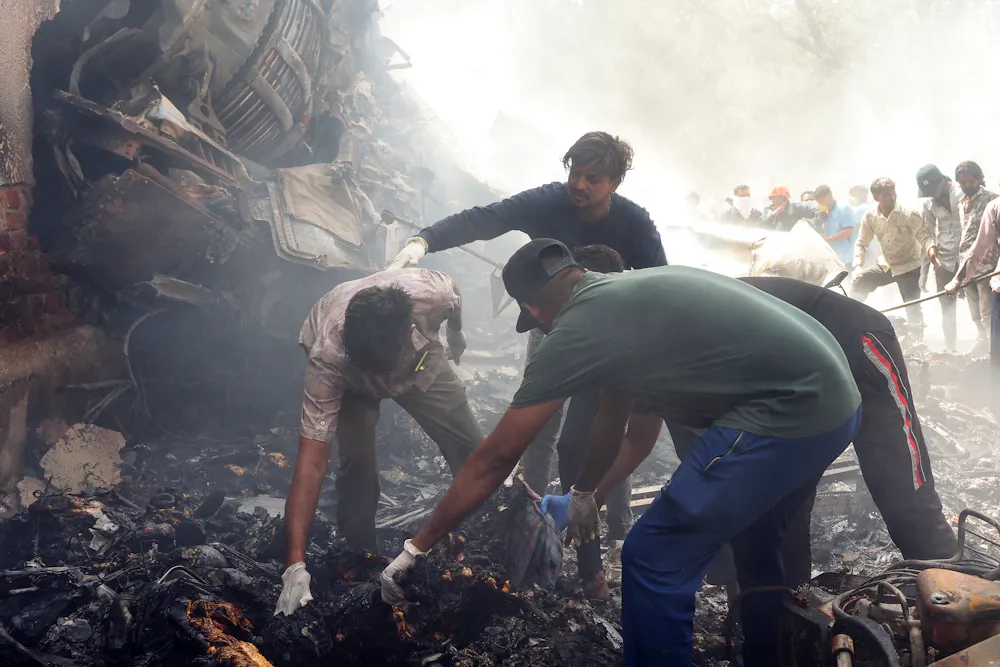
    As the nation comes to terms with the devastating crash of Air India Flight AI-171, grief has swept across households, with families mourning the loss of loved ones in what is being counted among India’s worst aviation disasters.

    The Boeing 787-8 Dreamliner, flying from Ahmedabad to London Gatwick, crashed seconds after takeoff from Ahmedabad airport on June 12, ramming into a nearby hostel. Only one passenger survived, while casualties on the ground are also feared.

    Among the victims was Anju Sharma, originally from Kurukshetra and living in Vadodara with her family. She was on her way to London to visit her elder daughter when the crash occurred.

    Her uncle, Balkishan Sharma, said he was deeply shaken. “I rarely watch TV. She was my brother’s eldest daughter. I found out about the tragedy from the news.”

    In Uttarsanda village in Gujarat’s Kheda district, the family of Rupal Patel is mourning her death. A resident of London for 15 years and mother of three, Rupal had returned to India for medical treatment.

    “My sister came for a week for treatment. After her operation, she was feeling well. She was happy to return to her husband and three children in London. I dropped her at the airport, and by the time I got home, I heard the devastating news,” said her brother, Pawan Patel.

    Rupal was seated in 19J on the flight. After being informed of the crash, her husband left London immediately with their children — a 13-year-old and twin 7-year-olds — to travel to Gujarat. “The kids were waiting for their mother to return. They had no idea she would never come back,” her husband said.

    In Ahmedabad, families waited overnight outside BJ Medical College as forensic teams carried out DNA sampling to identify the deceased, many of whom were burned beyond recognition.

    “Smoke suddenly rose high in the sky. There was fire. The flight had crashed, there were many people on board,” said Jairam, an eyewitness who lives around two kilometres from the site.

    The list of passengers on flight AI-171 showed that at least 33 of them were from Gujarat’s Anand district, 19 from Vadodara, and 17 from Kheda.

    The government has promised full support to the victims’ families and a thorough investigation into the cause of the crash.

    IANS

  • MIL-OSI Africa: Training Ethiopia’s next wave of freelancers to earn, grow and go global


    Download logo

    A digital training initiative is helping young Ethiopians turn freelancing into a viable career, opening up new opportunities for income, independence and access to global work.

    Ethiopia is emerging as a strong contender in the global freelance economy. With more than 200,000 science graduates each year, expanding internet access, and some of the most competitive labour costs in Africa, the country has the conditions to scale remote work. Supported by digital payment reforms and a national taskforce focused on freelancing, the country is working to turn its digital talent into a driver of economic growth.

    Until recently, however, few young people had access to structured support or training to help them enter the freelance market. That’s starting to change. A recent Digital Freelancing Training Programme trained 353 participants – 186 women and 167 men – in how to build sustainable careers as freelancers and access the global gig economy. The training covered everything from financial planning and personal branding to project management and securing online clients. The training was supported by the Netherlands Trust Fund V (NTF V) Ethiopia Tech project at the International Trade Centre (ITC).

    From employment to independence

    Nardos Seifu, a design and research strategist based in Addis Ababa, joined the programme after seeing a post on social media. Her work focuses on human-centred design, innovation, and facilitating learning experiences. She had long been interested in consulting but didn’t know how to position herself as a freelancer.

    ‘I had the skills, but I didn’t know how to offer them as a service,’ she said. ‘The training explained how freelancing works, including how to price your time, promote yourself, and manage your work professionally.’

    Since completing the course, she has formalized a tutoring side job and is applying for remote design consulting roles. She credits the financial planning sessions for helping her organise her income and time and is using platforms like LinkedIn and Facebook to grow her visibility.

    ‘I’ve always wanted to open a design studio that trains young people in design thinking. Now I feel like that’s possible.’

    Adapting to local realities

    The training was delivered online through weekly webinars, practical guides and interactive sessions. Internet access was a challenge for some participants, particularly outside Addis Ababa, so the team used multiple channels, including Telegram, SMS and email, to keep learners engaged.

    A key resource was the Become a Freelancer Checklist, a step-by-step guide to setting goals, building online profiles, and managing client work. Enquanhone also authored a companion eBook, Become an Online Freelancer, which covers everything from branding and pricing to productivity and digital tools.

    Turning lessons into action

    Participants were encouraged to apply what they learnt immediately. For Seifu, that meant tracking tutoring hours, setting a consistent hourly rate, and using scheduling tools to stay on top of her workload.

    ‘We were taught to treat freelancing like a business,’ she said. ‘That means knowing your value, being organised, and communicating clearly.’

    The programme also introduced tools for building an online presence. Nardos, previously hesitant about platforms like TikTok, is now using it to share insights and reach new audiences. ‘There are a lot of tools out there. The programme helped me figure out which ones matter and how to use them.’

    Following the training, many participants began applying their new skills immediately. A total of 148 entrepreneurs – including 63 women and 137 young people – have enhanced their ability to work as freelancers as a result of gaining practical tools to manage clients, projects and income streams. Of those trained, 87 participants (35 women and 81 youth) secured new jobs, demonstrating the programme’s early success in improving employability and access to income-generating opportunities.

    Growing a freelance community

    Participants came from diverse sectors – including marketing, development, and tech – and peer learning was a core part of the experience.

    ‘We were learning from each other,’ said Seifu. ‘We talked about our goals and shared what was working.’

    Still, Ethiopia’s freelance ecosystem is young. Seifu noted the lack of local networks or co-working spaces for freelancers. A Telegram group created through the programme helps alumni stay in touch and share opportunities, but participants see the need for more structured, long-term support.

    A model for future growth

    The early results are promising. Graduates are putting their new skills into practice and exploring new income streams. But to sustain progress, Ethiopia will need to invest in ongoing mentorship, stronger digital infrastructure and formal recognition of the freelance sector.

    ‘This training was a starting point,’ said Enquanhone. ‘Now we need to expand access, build networks and make freelancing a respected path to employment.’

    With the right support, Ethiopia’s freelancers could help shape the country’s digital economy and become a model for others across the continent.

    A model for future growth

    The early results are promising. Graduates are putting their new skills into practice and exploring new income streams. But to sustain progress, Ethiopia will need to invest in ongoing mentorship, stronger digital infrastructure and formal recognition of the freelance sector.

    ‘This training was a starting point,’ said Enquanhone. ‘Now we need to expand access, build networks and make freelancing a respected path to employment.’

    With the right support, Ethiopia’s freelancers could help shape the country’s digital economy and become a model for others across the continent.

    Distributed by APO Group on behalf of International Trade Centre.

    MIL OSI Africa

  • MIL-OSI: Terranet’s rights issue oversubscribed

    Source: GlobeNewswire (MIL-OSI)

    NOT FOR RELEASE, PUBLICATION OR DISTRIBUTION IN WHOLE OR IN PART, DIRECTLY OR INDIRECTLY, IN THE UNITED STATES, AUSTRALIA, CANADA, NEW ZEALAND, HONG KONG, JAPAN, SINGAPORE, SOUTH AFRICA, SOUTH KOREA OR ANY OTHER JURISDICTION WHERE SUCH RELEASE, PUBLICATION OR DISTRIBUTION WOULD BE UNLAWFUL OR WOULD REQUIRE REGISTRATION OR ANY OTHER MEASURES. PLEASE REFER TO IMPORTANT INFORMATION AT THE END OF THE PRESS RELEASE.

    Terranet AB (“Terranet” or the “Company”) has completed the rights issue of units, consisting of shares of series B and warrants of series TO9 B, which the Board of Directors decided on April 16, 2025, and was approved by the Annual General Meeting on May 23, 2025 (the ‘Rights Issue’). The outcome shows that 10,349,896 units were subscribed for with unit rights, corresponding to approximately 74.6 percent of the Rights Issue. In addition, the Company has received subscription applications for 4,704,934 units, corresponding to approximately 33.9 percent of the Rights Issue, for subscription without unit rights. In total, 15,054,830 units were subscribed for with unit rights and subscription applications, corresponding to approximately 108.5 percent of the Rights Issue. The Rights Issue is thus oversubscribed and will raise approximately SEK 15 million before issue costs. No underwriting commitments will be utilised.

    Outcome of the Rights Issue
    The subscription period in the Rights Issue ended on June 11, 2025. The outcome shows that 10,349,896 units were subscribed for with unit rights, corresponding to approximately 74.6 percent of the Rights Issue. Furthermore, the Company has received subscription applications to subscribe for 4,704,934 units without unit rights, corresponding to approximately 33.9 percent of the Rights Issue. Thus, 15,054,830 units were subscribed for with and without unit rights, corresponding to approximately 108.5 percent of the Rights Issue. The Rights Issue is thus oversubscribed, and no underwriting commitments will be utilised.

    Each unit in the Rights Issue consists of twelve (12) B-shares and three (3) warrants of series TO9 B. In total, 13,880,714 units will thus be allocated, corresponding to 166,568,568 newly issued B-shares and 41,642,142 warrants of series TO9 B.

    Through the Rights Issue, the Company will receive approximately SEK 15 million before issue costs. Upon full utilisation of all warrants of series TO9 B within the framework of the offered units, the Company may receive an additional maximum of approximately SEK 15.1 million.

    Comment from Lars Lindell, CEO
    “We are very pleased that so many shareholders have chosen to exercise their subscription rights and thereby shown their confidence in the company and its future development. Through the proceeds we receive from the issues, we will be able to take significant steps in both product and business development and lay the foundation for the commercialization of BlincVision.”

    Allocation of units subscribed without unit rights
    Allotment of units subscribed for without unit rights has been made in accordance with what is stated in the information memorandum published by the Company on May 26, 2025, in connection with the Rights Issue. Notice of such allotment will be announced separately through a settlement note. Nominee-registered shareholders will receive notification of allotment in accordance with instructions from the respective nominee.

    Shares and share capital
    Through the Rights Issue, and after registration of the Second Directed Issue announced by the Company through a press release on April 16, 2025, the number of shares in the Company will increase by 166,568,568 B-shares from 1,471,519,182 shares (1,084,463 A-shares and 1,470,434,719 B-shares) to 1,638,087,750 shares, and the share capital will increase by SEK 1,665,685.68, from SEK 14,715,191.82 to SEK 16,380,877.50. The dilution effect, after registration of the Second Directed Issue, amounts to 10.2 percent in the Rights Issue.

    In the event that all attached warrants of series TO9 B are fully exercised for subscription of new B-shares in the Company, the number of shares in the Company will increase by an additional 83,729,677 B-shares, from 1,638,087,750 shares (1,084,463 A-shares and 1,637,003,287 B-shares) to 1,721,817,427 shares, and the share capital will increase by an additional SEK 837,296.770, from SEK 16,380,877.500 to SEK 17,218,174.270. The dilution effect, if all warrants of series TO9 B are exercised, amounts to 4.9 percent.

    Warrants of series TO9 B
    Each warrant of series TO9 B entitles the holder to subscribe for one (1) new B-share in the Company. One (1) warrant of series TO9 B entitles the holder to subscribe for one (1) B-share in the Company at a subscription price of SEK 0.18 (corresponding to 200 percent of the subscription price per B-share in the Directed Issues and the Rights Issue). Application for subscription of B-shares with the support of warrants of series TO9 B will take place during the period from December 1, 2025, up to and including December 15, 2025. The warrants are intended to be admitted to trading on Nasdaq First North Premier Growth Market.

    Paid subscribed units (“BTU”)
    Trading in BTU (paid subscribed units) will take place on Nasdaq First North Premier Growth Market until June 30, 2025, or until the conversion of BTUs into B shares and warrants of series TO9 B, which will take place after the Rights Issue has been registered with the Swedish Companies Registration Office. Registration with the Swedish Companies Registration Office is expected to take place during week 26, 2025.

    Compensation to underwriters
    In connection with the Rights Issue, two (2) external investors have provided underwriting commitments corresponding to 99.8 per cent of the Rights Issue. For underwriting commitments made, underwriting compensation of 12 percent of the underwritten amount is paid in the form of newly issued units. In total, a maximum of 1,661,774 new units may be issued as underwriting compensation to the underwriters.

    Advisers
    Mangold Fondkommission AB is the financial advisor to Terranet in connection with the Rights Issue. Eversheds Sutherland Advokatbyrå AB is the legal advisor to the Company in connection with the Rights Issue.

    For more information, please contact:
    Dan Wahrenberg, CFO
    E-mail: dan.wahrenberg@terranet.se

    This information is such that Terranet AB is required to make public in accordance with the EU’s Market Abuse Regulation (MAR). The information was made public by the Company’s contact person above on June 13, 2025, at 08:00 CET.

    About Terranet AB (publ) 

    Terranet’s goal is to save lives in urban traffic. The company develops innovative technical solutions for Advanced Driver Assistance Systems (ADAS) and Autonomous Vehicles (AV). Terranet’s anti-collision system BlincVision laser scans and detects road objects up to ten times faster than any other ADAS technology available today.
    The company is headquartered in Lund, with offices in Gothenburg and Stuttgart. Since 2017, Terranet has been listed on Nasdaq First North Premier Growth Market (Nasdaq: TERRNT-B).

    Follow our journey at: www.terranet.se

    Certified Adviser to Terranet is Mangold Fondkommission AB.

    Important information
    The release, announcement or distribution of this press release may, in certain jurisdictions, be subject to restrictions. The recipients of this press release in jurisdictions where this press release has been published or distributed shall inform themselves of and follow such restrictions. The recipient of this press release is responsible for using this press release, and the information contained herein, in accordance with applicable rules in each jurisdiction. This press release does not constitute an offer, or a solicitation of any offer, to buy or subscribe for any securities in Terranet in any jurisdiction, neither from Terranet nor anyone else.

    This press release does not constitute or form part of an offer or solicitation to purchase or subscribe for securities in the United States. The securities referred to herein may not be sold in the United States absent registration or an exemption from registration under the US Securities Act of 1933, as amended (the “Securities Act”), and may not be offered or sold within the United States absent registration or an applicable exemption from, or in a transaction not subject to, the registration requirements of the Securities Act. There is no intention to register any securities referred to herein in the United States or to make a public offering of the securities in the United States. The information in this press release may not be announced, published, copied, reproduced or distributed, directly or indirectly, in whole or in part, within or into Australia, Hong Kong, Japan, Canada, New Zealand, Switzerland, Singapore, South Africa, the United States or in any other jurisdiction where such announcement, publication or distribution of the information would not comply with applicable laws and regulations or where such actions are subject to legal restrictions or would require additional registration or other measures than what is required under Swedish law. Actions taken in violation of this instruction may constitute a crime against applicable securities laws and regulations.

    Attachment

    The MIL Network

  • MIL-OSI China: 12 crew members rescued from ship as Typhoon Wutip closes in

    Source: People’s Republic of China – State Council News

    Twelve crew members were rescued from a ship in south China’s island province of Hainan early Friday morning as Typhoon Wutip approaches, said local authorities.

    The Nanhai Rescue Bureau of the Ministry of Transport received messages on Thursday evening that, due to Wutip, 12 people on a cargo ship about 14 nautical miles (about 26 kilometers) off a headland in southwestern Hainan needed evacuation.

    The rescue vessel departed at 6:30 p.m. on Thursday and arrived at the site at 11:50 p.m., where gales generated waves as high as three meters. Rescuers managed to lift those crew members to safety 43 minutes later, and they are expected to return to an anchorage at noon on Friday.

    The evacuees will stay on the rescue vessel, where they will be provided with daily necessities and medical services. They will be taken ashore when weather permits.

    Wutip intensified into a severe tropical storm at 8 p.m. Thursday. As of 10 a.m. on Friday, it was located near Ledong Li Autonomous County, Hainan, with winds reaching up to 101 kilometers per hour and moving northwest at a speed of 5 to 10 kilometers per hour.

    All kindergartens, schools, construction sites and tourist attractions in Sanya have been closed. Ships are prohibited from sailing, and Sanya airport suspended all flights from 10 p.m. Thursday. High-speed rail services across Hainan have been halted, with operations expected to resume on Saturday.

    The Nanhai Rescue Bureau is closely monitoring Wutip, with seven rescue vessels and four helicopters on standby to respond to emergencies.

    MIL OSI China News

  • Air India crash: PM Modi visits Ahmedabad crash site, calls it a scene of “devastation”

    Source: Government of India

    Source: Government of India (4)

    Prime Minister Narendra Modi on Friday visited the site of the Air India crash in Ahmedabad, where the London-bound flight carrying 242 people went down a day earlier.

    The aircraft crashed minutes after takeoff from Sardar Vallabhbhai Patel International Airport, killing 241 people. Only one passenger – a British national of Indian origin – survived.

    “The scene of devastation is saddening,” PM Modi said in a post on X after reviewing the wreckage. “Met officials and teams working tirelessly in the aftermath. Our thoughts remain with those who lost their loved ones in this unimaginable tragedy.”

    He was accompanied by Union Civil Aviation Minister Ram Mohan Naidu Kinjarapu, Gujarat State Home Minister Harsh Sanghavi, and other senior officials during the site inspection.

    Flight AI-171, headed to London Gatwick, crashed into the hostel complex of BJ Medical College at 1:38 p.m. IST on Thursday, triggering a massive blaze and a large-scale emergency response.

    Union Home Minister Amit Shah visited the crash site on Thursday and later chaired a high-level meeting with Civil Aviation Minister Naidu, Gujarat Chief Minister Bhupendra Patel, and senior officials to review relief and rescue measures.

    Shah said DNA testing was underway to confirm the identities of the victims and assured that results would be delivered at the earliest by Gujarat’s Forensic Science Laboratory (FSL) and the National Forensic Sciences University (NFSU). DNA samples of family members arriving from abroad would be collected on arrival, he added.

    A formal investigation into the crash has been launched by the Aircraft Accident Investigation Bureau (AAIB) in accordance with international protocols under the International Civil Aviation Organization (ICAO), said Civil Aviation Minister Naidu. A high-level expert committee is also being formed to examine the incident and suggest safety improvements to prevent future tragedies.

    The United States National Transportation Safety Board (NTSB) announced it would send a team of investigators to India to assist the AAIB.

    “The NTSB will be leading a team of US investigators travelling to India to assist the Aircraft Accident Investigation Bureau with its investigation into the crash of an Air India Boeing 787 in Ahmedabad, India, Thursday,” the agency said, noting that all official updates would come from the Indian government under ICAO’s Annex 13 protocols.

    Rescue and Relief Operations Continue

    Rescue operations continued through the night as teams sifted through debris for missing aircraft parts.

    Parts of the plane’s fuselage were scattered around the smouldering building into which it crashed. The tail of the plane was stuck on top of the building.

    Air India CEO Campbell Wilson reached Ahmedabad early Friday. The airline said it had set up Friends & Relatives Assistance Centres at Ahmedabad, Mumbai, Delhi, and Gatwick airports to support the families of those on board.

    “These centres are facilitating the travel of family members to Ahmedabad,” Air India posted on X. Emergency contact numbers were also issued for those seeking information: 1800 5691 444 for calls from within India, and +91 8062779200 for international callers.

    The Tata Group, which took over Air India in 2022, announced a compensation of Rs 1 crore for the family of each deceased passenger.

    “Tata Group will provide Rs 1 crore to the families of each person who has lost their life in this tragedy. We will also cover the medical expenses of those injured and ensure that they receive all necessary care and support. Additionally, we will provide support in the building up of the B J Medical’s hostel,” Tata Sons Chairman N Chandrasekaran said on X.

    Earlier, Air India released a breakdown of the nationalities of those on board: 169 were Indian nationals, 53 British, seven Portuguese, and one Canadian.

    (With inputs from agencies)

  • MIL-OSI USA: LEADER JEFFRIES: “IF THEY CAN ATTACK A SITTING SENATOR, JUST IMAGINE WHAT THEY HAVE IN STORE FOR THE AMERICAN PEOPLE”

    Source: United States House of Representatives – Congressman Hakeem Jeffries (8th District of New York)

    Tonight, House Democratic Leader Hakeem Jeffries appeared on MSNBC’s The Last Word with Lawrence O’Donnell to discuss the Trump administration’s unprecedented assault of Senator Alex Padilla:

    LAWRENCE O’DONNELL: Leading off our breaking news coverage tonight is House Democratic Leader Hakeem Jeffries. Mr. Jeffries, thank you very much for joining us tonight. There is so much for you to consider for us. First of all, let’s begin with Governor Newsom and his big victory in court tonight. This decision that I’ve read by the judge just finds in the governor’s favor all the way through ordering the California National Guard back under the command of Gavin Newsom.

    LEADER JEFFRIES: It’s a big victory for the people of California, for the governor, for the rule of law and for democracy itself. Donald Trump had engaged in aggressive overreach. That was never a need for this deployment. Things were being managed by the LAPD, the California Highway Patrol, as well as local Los Angeles County sheriffs. We all object and reject any efforts to assault police officers, to be disruptive, to engage in unlawful and unruly behavior. That was not the issue here. The issue is, how do we make sure that we can continue to protect the peaceful assembly that is guaranteed by the United States Constitution as part of the right of every American to petition their government to try to get grievances redressed.

    LAWRENCE O’DONNELL: Judge Breyer, Charles Breyer, very carefully reviewed every single event that has happened there that could be called in any way close to violent, every single thing, every mango that was thrown, every bottle that was thrown, every fire in a dumpster that happened. The fires of those driverless cars that happened over the weekend. And he concluded that none of that was beyond the control of LAPD, and in fact, described exactly how local officials, local law enforcement, brought all of those situations under control relatively quickly, thereby proving just in terms of what actually has been happening in Los Angeles, that it was completely under control and no federal support was needed. So he has that finding, in addition to Donald Trump illegally ordered those troops to move into Los Angeles.

    LEADER JEFFRIES: It was an extremely meticulous decision, and this was all about political theater for Donald Trump. He doesn’t want the American people to lock in on the fact that he’s collapsing the economy. He’s failed to lower costs. The GOP Tax Scam is going to rip away healthcare for more than 16 million people, snatch food out of the mouths of children and seniors and veterans, all in service of giving their billionaire donors massive tax breaks. These are all deeply unpopular things. And so, Donald Trump wanted to create a massive distraction in this particular instance. If Donald Trump really believed that we were on the verge of insurrection, then he wouldn’t have attended a Broadway play last evening at the Kennedy Center. It would have been in the Situation Room. Instead, he was out on a night on the town. So this was a fraudulent thing that Donald Trump and his minions at the Department of Homeland Security had engaged in, and it’s now all been exposed in a meticulous decision by Judge Breyer.

    LAWRENCE O’DONNELL: I mean, you know, I said at the outset, when Donald Trump first sent the troops to Los Angeles, that this was specifically, specifically to try to get us to turn our cameras to Los Angeles and away from those senators walking down the halls in Washington who have not been able to come to an agreement on how to do the Trump budget bill in the Senate and to take the focus away from that bill. What are we going to find? What are voters going to find when they put their focus back on this bill and what this bill is trying to do to voters?

    LEADER JEFFRIES: You know, Brendan Boyle, the top Democrat in the House on the Budget Committee, has done a tremendous job of pointing out, one, this is the largest cut to Medicaid in American history, on top of the largest cut to nutritional assistance in American history, all in service of trying to bring about the largest set of tax breaks for billionaires in American history. It’s extraordinary. And they are going to increase the debt and the deficit by trillions of dollars, force our children and grandchildren to pay for it. And as a result of this one big ugly bill, hospitals will close, nursing homes will shut down, community based health clinics are not going to be able to operate. People are going to die because of the lack of being able to receive the medical service that they need. And so Trump is certainly trying to hide the ball from the American people. But this is a disgusting abomination. And the more the American people learn about the GOP Tax Scam, the worse it gets for them.

    LAWRENCE O’DONNELL: Senator Alex Padilla obviously became the news of the day in Washington when that video spread of him being attacked like that in a federal building, a completely secure federal building, that you have to go through metal detectors and have an appointment to get into. Here’s the United States Senator in a federal building being attacked by federal agents, with a Cabinet Secretary looking on, lying about California while that was happening. Where were you when you first saw that video and what was your reaction, maybe holding your phone in your hand looking at that video?

    LEADER JEFFRIES: It was disgusting when the news broke. I was on the Hill, we were preparing for a series of votes on the Floor of the House. And when you looked at the video, first of all, to know Senator Padilla, he is just a kind and decent person, a salt-of-the-earth type of individual. He has an extraordinary story, humble beginnings, eventually became an engineer at MIT, educated, and then walked away from what could have been a very lucrative career in order to serve his community and ultimately his state. And to see him assaulted in this fashion, manhandled, and then for the Secretary to lie about it, and the Department of Homeland Security, these people have zero credibility. And so the California Delegation, the Congressional Hispanic Caucus, every single part of the House Democratic Caucus stands in solidarity with Senator Padilla. If they can attack a sitting Senator in his home state in this fashion, just imagine what they have in store for the American people. That’s why all of us should be concerned. All of us need to push back, and all of us need to stand up for the principle that in the United States of America, there are no kings.

    LAWRENCE O’DONNELL: Senator Padilla has insisted that this story is not about him, it’s what it means to the rest of us. It’s what it means about the people who the ICE agents and the federal agents are going after every day. Let’s listen to what Senator Padilla said when he came out of that federal building after being the– becoming the first United States Senator in history to be manhandled, pushed by federal agents, thrown to the ground and handcuffed for speaking. That has never happened before in American history. Let’s listen to what Senator Padilla said when he emerged from the federal building today.

    SENATOR PADILLA (VIDEO): I came to the press conference to hear what she had to say, to see if I could learn any new additional information. And at one point, I had a question. And let me emphasize, the right for people to peacefully protest and to stand up for their First Amendment rights, for our fundamental rights. I was there peacefully. At one point I had a question and so I began to ask a question. I was almost immediately forcibly removed from the room. I was forced to the ground and I was handcuffed. I was not arrested. I was not detained. I will say this, if this is how this administration responds to a Senator with a question, if this is how the Department of Homeland Security responds to a Senator with a question, you can only imagine what they’re doing to farmworkers, to cooks, to day laborers out in the Los Angeles community and throughout California and throughout the country. Pero una gran pregunta es esta: si esta es la reacción a un senador con una pregunta, imagínense lo que están haciendo con cocineros, jornaleros, campesinos y otros inmigrantes no violentos en la comunidad de Los Ángeles, en otras áreas de el estado de California y en el país.

    LAWRENCE O’DONNELL: Leader Jeffries that statement about imagine, just imagine what they’re doing to other people if this is what they do to the United States senators does seem to be the lesson of the day.

    LEADER JEFFRIES: It’s incredibly powerful words from Senator Padilla. I think it’s one of the reasons why there was such a visceral reaction on the Hill both because we know him to be such a good man and this is just an example of how out of control the Trump administration is at this point. We’ve seen an unprecedented assault on the economy, on healthcare, on Social Security and of course, on the rule of law, on the American way of life, on democracy itself. But that’s why it’s going to be important for all of us to continue to show up and speak up and stand up, push back aggressively against the Trump administration, their extremism against Donald Trump and his minions in Congress who are nothing more than a Reckless Rubber Stamp for his extreme agenda. And we’ll continue to do that in the Congress, in the courts, and in communities all across the country.

    LAWRENCE O’DONNELL: In any other presidency, I would expect you to be getting briefed very soon, if not already, about what has happened on Israel’s strike against Iran tonight. Have you been briefed in any way by the intelligence services about what is happening tonight?

    LEADER JEFFRIES: I have not received an extensive briefing. There was minimal outreach from the administration, but I do expect sooner rather than later that we will receive a more comprehensive briefing about the state of affairs and the situation that exists. I mean, one of the things that Donald Trump, of course, promised on day one of his presidency, in addition to lowering the cost of living that, of course, has not happened. He talked about ending the war in Ukraine. That hasn’t happened. Talked about restoring peace to the Middle East. That has not happened. And so the whole Trump presidency has been a complete failure characterized by chaos, cruelty and corruption. And, you know, I’m hopeful that cooler heads will prevail in the Middle East and the situation is de-escalated. We certainly believe that Iran should never be allowed to become nuclear capable. They are an enemy not just to Israel, but to the United States and to the free world. But we also want to see a reduction in hostilities.

    LAWRENCE O’DONNELL: House Democratic Leader Hakeem Jeffries, thank you very much for joining us in our breaking news coverage tonight on this important night.

    LEADER JEFFRIES: Thank you, Lawrence.

    LAWRENCE O’DONNELL: Thank you.

    The full interview can be watched here.

    ###

    MIL OSI USA News

  • MIL-OSI USA: Cornyn, Cruz Introduce Senate Resolution Honoring Former First Lady Barbara Bush

    US Senate News:

    Source: United States Senator for Texas John Cornyn

    U.S. Senators John Cornyn (R-TX) and Ted Cruz (R-TX) today introduced a Senate resolution honoring the life, achievements, and public service of former First Lady Barbara Pierce Bush on the week of her 100th birthday. Text is below, and you can view the full resolution here.

    “Whereas, on June 8, 1925, Barbara Pierce Bush (referred to in this preamble as ‘Barbara Bush’) was born in New York City, New York;

    Whereas Barbara Bush attended Ashley Hall and Smith College;

    Whereas Barbara Bush worked a factory job to support the United States war effort during World War II in 1943;

    Whereas, on January 6, 1945, Barbara Bush married George Herbert Walker Bush after he returned from serving in World War II;

    Whereas, in 1948, Barbara Bush and George Herbert Walker Bush moved to Odessa, Texas, and had 6 children, George W., Robin, Jeb, Neil, Marvin, and Dorothy;

    Whereas Barbara Bush supported the early business ventures of her husband in oil, which would later evolve into the Pennzoil Corporation;

    Whereas Barbara Bush supported the first forays of her husband in politics during his 1963 Harris County Republican Party chairmanship and 1966 election to the House of Representatives in the 7th Congressional District of Texas;

    Whereas Barbara Bush kept the constituents in Houston informed of happenings in Washington, DC, by writing frequent newspaper columns during the time George Herbert Walker Bush served in the House of Representatives;

    Whereas, during the career of George Herbert Walker Bush before becoming President of the United States, Barbara Bush orchestrated cross-country moves for her family 29 times in 44 years;

    Whereas Barbara Bush supported the political ascension of George Herbert Walker Bush during his appointments as the United States Ambassador to the United Nations in 1970, the Chair of the Republican National Committee in 1972, and the Director of Central Intelligence in 1976;

    Whereas Barbara Bush became Second Lady of the United States when George Herbert Walker Bush was sworn in as the 43rd Vice President of the United States in 1981, and again in 1985 after the 1984 re-election of the Reagan-Bush Administration;

    Whereas, as Second Lady of the United States, Barbara Bush revitalized the vice presidential residence at 1 Observatory Circle with extensive renovations and the hosting of more than 1,000 social events;

    Whereas, as Second Lady of the United States, Barbara Bush used her platform in the Reagan-Bush administration to champion public literacy to combat the cycle of poverty in the United States;

    Whereas, as Second Lady of the United States, Barbara Bush played a significant role in the successful presidential campaign of George Herbert Walker Bush, which saw him win the 1988 Presidential election with 426 electoral votes, a feat which has not been matched since;

    Whereas, as First Lady of the United States, Barbara Bush continued to champion public literacy by establishing the Barbara Bush Foundation for Family Literacy in 1989, and played a significant role in the passage of the National Literacy Act of 1991 (Public Law 102–73; 105 Stat. 333);

    Whereas, as First Lady of the United States, Barbara Bush showed immense compassion to AIDS patients at a time when public opinion was still hostile towards their plight;

    Whereas, after leaving the White House, Barbara Bush published her bestselling book, ‘Barbara Bush: A Memoir’;

    Whereas, after the victory of her son George W. Bush in the 2000 Presidential election, Barbara Bush became the second woman in the history of the United States to have been both married to a President of the United States and the mother of a President of the United States;

    Whereas Barbara Bush showed unwavering support for the presidential campaigns of her sons, George W. Bush in 2000 and 2004, and Jeb Bush in 2016; and

    Whereas, on her passing at her Houston home on April 17, 2018, Barbara Bush was survived by her husband of 73 years, George Herbert Walker Bush, 5 children and their spouses, 17 grandchildren, and 8 great-grandchildren: Now, therefore, be it

    Resolved by the Senate (the House of Representatives concurring), That Congress—

    (1) honors the life, achievements, and distinguished public service of Barbara Pierce Bush (referred to in this resolution as ‘Barbara Bush’);
    (2) recognizes Barbara Bush on the occasion of her 100th birthday and expresses thanks and commendations to her and her family;
    (3) acknowledges the positive impact that Barbara Bush contributed to the United States through her tireless dedication to promoting literacy and uplifting her fellow citizens; and
    (4) celebrates the legacy of Barbara Bush as a model citizen and public servant of the United States.”

    MIL OSI USA News

  • After Israel strikes Iran, airlines divert flights, airspace closed

    Source: Government of India

    Source: Government of India (4)

    Airlines cleared out of the airspace over Israel, Iran and Iraq and Jordan on Friday after Israel launched attacks on targets in Iran, Flightradar24 data showed, with carriers scrambling to divert and cancel flights to keep passengers and crew safe.

    Proliferating conflict zones around the world are becoming an increasing burden on airline operations and profitability, and more of a safety concern.

    Six commercial aircraft have been shot down unintentionally and three nearly missed since 2001, according to aviation risk consultancy Osprey Flight Solutions.

    Israel on Friday said it targeted Iran’s nuclear facilities, ballistic missile factories and military commanders at the start of what it warned would be a prolonged operation to prevent Tehran from building an atomic weapon.

    Tel Aviv’s Ben Gurion Airport was closed until further notice, and Israel’s air defence units stood at high alert for possible retaliatory strikes from Iran.

    Israeli flag carrier El Al Airlines said it had suspended flights to and from Israel.

    Iranian airspace has been closed until further notice, according to state media and notices to pilots.

    As reports of strikes on Iran emerged, a number of commercial flights by airlines including Dubai’s Emirates, Lufthansa and Air India were flying over Iran.

    Air India, which overflies Iran for its Europe and North American flights, said several flights were being diverted or returned to their origin, including ones from New York, Vancouver, Chicago and London.

    Emirates and Lufthansa did not immediately respond to requests for comment.

    Iraq early on Friday closed its airspace and suspended all traffic at its airports, Iraqi state media reported.

    Eastern Iraq near the border with Iran contains one of the world’s busiest air corridors, with dozens of flights crossing between Europe and the Gulf, many on routes from Asia to Europe, at any one moment.

    Flights steadily diverted over Central Asia or Saudi Arabia, flight tracking data showed.

    Jordan, which sits between Israel and Iraq, closed its airspace several hours after the Israeli campaign began.

    “The situation is still emerging – operators should use a high degree of caution in the region at this time,” according to Safe Airspace, a website run by OPSGROUP, a membership-based organisation that shares flight risk information.

    Several flights due to land in Dubai were diverted early on Friday. An Emirates flight from Manchester to Dubai was diverted to Istanbul and a flydubai flight from Belgrade diverted to Yerevan, Armenia.

    Budget carrier flydubai said it had suspended flights to Amman, Beirut, Damascus, Iran and Israel and a number of other flights had been cancelled, rerouted or returned to their departure airports.

    Qatar Airways cancelled its two scheduled flights to Damascus on Friday, Flightradar24 data shows.

    The Israeli-Palestinian conflict in the Middle East since October 2023 led to commercial aviation sharing the skies with short-notice barrages of drones and missiles across major flight paths – some of which were reportedly close enough to be seen by pilots and passengers.

    Airspace in the Middle East last year was crossed daily by 1,400 flights to and from Europe, Eurocontrol data show.

    Last year, planes were shot down by weaponry in Kazakhstan and in Sudan. These incidents followed the high-profile downing of Malaysia Airlines flight MH17 over eastern Ukraine in 2014 and of Ukraine International Airlines flight PS752 en route from Tehran in 2020.

    (Reuters)

  • MIL-OSI New Zealand: Road closed, SH2, Maharahara

    Source: New Zealand Police

    State Highway Two, Maharahara is closed following a serious crash this evening.

    Police were alerted to the two-vehicle crash near Gaisford Road at around 5.05pm.

    Initial indications suggest there are serious injuries.

    The Serious Crash Unit has been advised.

    The road is closed while emergency services are at the scene.

    Motorists are advised to follow diversions and expect delays.

    ENDS

    MIL OSI New Zealand News

  • MIL-OSI Africa: Beni: Prison Officers Trained by Mission de l’Organisation des Nations unies en République démocratique du Congo (MONUSCO) on Preventing Radicalization in Detention Facilities


    Download logo

    Twenty-five Congolese prison administration officers from the Beni region in North Kivu, including four women, took part in a training session on June 10, 2025, focused on preventing radicalization and violent extremism of detainees. Organized at Kangbayi Urban Prison by MONUSCO’s Prison Administration Support Unit in Beni, the training aimed to strengthen prison staff capacity in managing inmates at risk of radicalization.

    The session covered the definitions of radicalization and violent extremism, identification of risk factors, indicators of prison radicalization, and best practices for prevention, management, and reintegration of affected detainees. Particular emphasis was placed on the need for an approach that respects the rights and dignity of incarcerated individuals.

    Like many penitentiary facilities in the Democratic Republic of Congo, Kangbayi Prison houses a diverse inmate population. Located in a conflict-affected area, it holds a significant number of armed group members, including elements of the ADF, Maï-Maï militias, and more recently, the AFC/M23. Around 400 individuals are currently detained for offenses related to armed activity.

    The prison director, Tsongo Makelele, highlighted the challenges:
    “It has been observed at the national level that some inmates become radicalized within prison walls. Beni prison houses individuals from armed groups, especially the ADF, and others involved in the eastern DRC conflicts. With only two cells, it’s difficult to ensure proper separation between different categories of inmates.”

    In light of the risk of extremist ideologies spreading, he welcomed the training:
    “Our staff now have tools to prevent radicalization. It’s a critical issue for the security of the facility. When a radicalized inmate adopts a violent or extremist posture, it poses a real threat. Equipping our personnel with the skills to anticipate and manage this phenomenon is essential.”

    This training is part of MONUSCO’s broader efforts to strengthen the resilience of penitentiary institutions in eastern DRC.

    Distributed by APO Group on behalf of Mission de l’Organisation des Nations unies en République démocratique du Congo (MONUSCO).

    MIL OSI Africa

  • MIL-OSI Russia: China has fully implemented a system of voluntary blood donation.

    Translation. Region: Russian Federal

    Source: People’s Republic of China in Russian – People’s Republic of China in Russian –

    Source: People’s Republic of China – State Council News

    BEIJING, June 13 (Xinhua) — China has fully implemented the voluntary blood donation system and taken a series of measures to safely provide blood in clinical settings, Gao Guangming, an official with the National Development and Reform Commission (NDRC), said Thursday.

    China has expanded blood screening programs and improved testing technology, effectively preventing the transmission of highly infectious diseases through blood transfusions, he said at a press conference.

    According to Gao Guangming, China currently ranks first in the world in terms of overall blood safety.

    The country is strengthening its national blood emergency response system to enable targeted cross-regional distribution of blood resources to ensure adequate supplies in key areas and during peak periods, the official said.

    Gao Guangming further noted that in order to raise public awareness of blood donation, the NCRR, in partnership with China State Railway Corporation (CSRC), has posted motivational videos and posters on 260,000 screens at more than 3,000 railway stations and more than 4,200 high-speed trains across the country.

    At the same time, party and government bodies, universities, enterprises and state institutions are encouraged to participate in corporate voluntary blood donation and create an exemplary example for the formation of healthy social behavior, he added.

    Gao Guangming said at a press conference that there are about 11.4 blood donors for every 1,000 people in China. -0-

    MIL OSI Russia News

  • MIL-OSI Russia: China welcomes UNGA resolution on ceasefire in Gaza

    Translation. Region: Russian Federal

    Source: People’s Republic of China in Russian – People’s Republic of China in Russian –

    Source: People’s Republic of China – State Council News

    UNITED NATIONS, June 13 (Xinhua) — China’s permanent representative to the United Nations Fu Cong welcomed the UN General Assembly resolution adopted on Thursday calling for an immediate ceasefire in the Gaza Strip and access to large-scale humanitarian aid.

    According to Fu Tsung, this document reflects the call of the international community, is a powerful political signal and embodies solidarity and consensus among the vast majority of UN member states.

    The Chinese envoy expressed regret that the UN Security Council failed to adopt a similar resolution last week due to a US veto. He also called on Israel to stop its military operation in the Gaza Strip.

    “Israel continues to escalate its military offensive on Gaza, and every day a large number of innocent people are killed,” he said.

    An immediate and permanent ceasefire is the surest way to save lives and bring the hostages home. China calls on Israel to immediately stop all military operations in the enclave. The Chinese diplomat said the country, which wields considerable influence, should take an impartial and responsible stance and take effective and decisive action.

    He said China opposes the use of humanitarian aid as a weapon.

    The UN and humanitarian organizations have warned that Gazans are facing imminent large-scale famine. Meanwhile, huge amounts of food have accumulated in warehouses on Gaza’s borders and cannot be delivered to starving civilians, Fu Cong emphasized.

    “Such forced deprivation of people’s right to food is a violation of international law. It is cruel and unacceptable,” said China’s permanent representative to the UN.

    “China firmly opposes the use of humanitarian aid as a weapon and urges Israel to fulfill its obligations as an occupying power by immediately lifting the blockade on Gaza, fully restoring access to humanitarian supplies, and supporting the United Nations and other humanitarian organizations in carrying out their work.” –0–

    MIL OSI Russia News

  • MIL-OSI New Zealand: Ten arrested and charged after search warrants in Southland

    Source: New Zealand Police

    Attributable to Detective Senior Sergeant Greg Baird,

    Ten people have been arrested and are facing over 70 drug charges following a series of search warrants in Southland and Otago this week.

    Police seized approximately $16,000, ammunition, drugs, and other drug paraphernalia.

    The Southland and Otago Coastal Organised Crime teams executed the warrants as part of Operation Strata, targeting drug dealers with gang connections.

    There were 15 warrants in total, in Invercargill, Dunedin, Gore, Mataura, and other rural properties.

    The 10 people arrested face numerous serious charges, from supplying methamphetamine, MDMA, cocaine, LSD and cannabis, to possession of restricted weapons and ammunition.

    Investigations are ongoing and we expect to make more arrests, and file further charges, in coming days.

    Our message is clear – drug dealers are not welcome in our communities, and neither is the harm that comes with them.

    Police will continue our focus on disrupting the supply of drugs to our communities, and holding to account those suppliers who make money through the harm and suffering of others.

    Operation Strata involved over 30 staff from a number of Police groups across the Southern District and South Island, including the Te Waipounamu Gang Disruption Unit based in Christchurch.

    If you have any information about the supply of illicit drugs, please contact us through 105, either online or via phone.

    Information can also be reported to your local Police station, or anonymously through Crime Stoppers at 0800 555 111.

    We encourage anyone affected by drug addiction to seek help through Alcohol and Drug helpline on 0800 787 797, or free text 8681.

    ENDS

    Issued by Police Media Centre

    MIL OSI New Zealand News

  • FIFA World Cup: Miami officials play down travel concerns a year from kick-off

    Source: Government of India

    Source: Government of India (4)

    As a gleaming clock began ticking towards the 2026 World Cup, Miami officials launched the city’s one-year countdown seeking to allay fears that America’s stricter immigration stance could deter the overseas fans that it hopes to attract.

    The celebratory unveiling on Wednesday, featuring singer Marc Anthony, came just days after unrest in Los Angeles and amid the implementation of stricter border controls under President Donald Trump’s administration.

    “I don’t think anybody has anything to be afraid of. Miami is an incredibly welcoming place, and we’re very excited to welcome the world,” Alina T. Hudak, president of the 2026 Miami Host Committee, said at the countdown event.

    The digital clock, soon to greet travellers at Miami International Airport, marks 365 days until the start of the biggest World Cup in history — 48 teams playing 104 matches across three North American nations.

    However, security arrangements have drawn particular scrutiny, especially regarding the involvement of immigration enforcement agencies.

    Marcio Carvalho Da Silva Correia, a Brazilian visitor to Miami, told Reuters he had heard people talking about concerns they had about the World Cup.

    “They’re scared they’ll show up and get deported,” he said.

    “But I think, given how beautiful the party is going to be, nothing like that is going to happen.”

    Rodney Barreto, co-chair of the Miami Host Committee, confirmed that Customs and Border Protection (CBP) and Immigration and Customs Enforcement (ICE) agents will be involved in security operations.

    “They will be there to support us with security, but not to capture people,” he said.

    At Fiorito, an Argentine restaurant in Miami’s Little Haiti neighbourhood, fans of the South American nation’s defending champions expressed confidence that their countrymen would travel regardless.

    “Wherever the World Cup is, it’s great … we’re excited about being world champions and we can do much more,” Argentina supporter Nicolas Lomazzi.

    For Miami, a city shaped by successive waves of immigration, hosting the tournament represents a delicate balancing act — showcasing its multicultural identity while navigating an increasingly complex immigration landscape.

    Brazilian-born Miami resident Pedro Lub said the city’s Latino population was really excited about soccer’s biggest tournament coming to town and he hoped the immigration authorities did not use it as an excuse for a crackdown.

    “I have a lot of friends that are in weird situations without status or something like that and yeah, everybody’s worried,” he told Reuters.

    “People are just trying to watch a soccer match. It’d be pretty bad if they got caught just trying to have fun.

    “I think people are expecting it to be a great tournament.”

    -Reuters

  • MIL-OSI United Kingdom: New report calculates NHS outdoor spaces save the NHS £82 million per year A report by researchers at the University of Aberdeen, commissioned by Public Health Scotland and SEFARI Gateway, calculates for the first time, the economic value of outdoor spaces in NHS Scotland sites.

    Source: University of Aberdeen

    A report by researchers at the University of Aberdeen, commissioned by Public Health Scotland and SEFARI Gateway, calculates for the first time, the economic value of outdoor spaces in NHS Scotland sites.
    Published today by SEFARI Gateway,this is the first study in the world to look at the value of outdoor green spaces within hospitals, health centres and GP surgeries used by staff, patients and their families, and the public for walking and relaxing.
    The team asked people about their visits and how they valued different types of outdoor spaces. They then followed Office for National Statistics guidelines and used bespoke economic analysis to calculate the value in monetary terms.
    The survey of 2,449 adults across all fourteen regional NHS Scotland health boards found that people spend roughly 87 million hours a year in NHS outdoor spaces.
    The health benefits from these visits is valued at around £82 million a year, which is what it would cost the NHS to provide the same benefits through healthcare services.
    The authors say that in addition to supporting physical and mental health, outdoor spaces at NHS Scotland sites ‘offer value simply by being pleasant and accessible places for people to enjoy.’ When this broader value is factored in, these spaces are estimated to be worth around £125 per adult each year at health centres, and £146 per adult each year at hospitals.
    The project was jointly funded and supported by the SEFARI Gateway (Scotland’s Centre of Expertise for Knowledge Exchange and Innovation) and Public Health Scotland and will contribute to the implementation of the NHS Scotland Climate Emergency and Sustainability Strategy building on previous research commissioned by Public Health Scotland and NatureScot.

    We believe these findings will be instrumental in shaping how NHS outdoor spaces are designed, maintained, and used across Scotland.” Dr Luis Loria-Rebolledo

    Charles Bestwick, Director of SEFARI Gateway said: “As well as providing significant health benefits to the public, the green spaces in the NHS estate can contribute to Net Zero targets as well as Scotland’s biodiversity strategy. The monetary value of the green spaces also helps provide information to the NHS when it comes to managing the NHS estate.”
    Dr Neil Chalmers, Health Economist at Public Health Scotland, said: “Half of NHS Scotland’s estates comprise of outdoor green spaces with park-like vegetation such as grass and trees. These areas are well frequented for walking and relaxing, with our research estimating that approximately half the population visited an NHS Scotland open space in the past year, leading to a total of 122 million estimated annual visits.
    “This has a real impact on the mental and physical health of those who visit these areas, as well as a positive knock-on effect on NHS services that can now be visualised in cost savings. This research underlines the importance of maintaining quality and accessible outdoor green spaces on the NHS estate in Scotland, so that everyone in society can continue to benefit from them.”
    Dr Luis Loria-Rebolledo, Research Fellow in the Health Economics Research Unit at the University of Aberdeen, who led the research added: “As the first study of its kind anywhere in the world, our research highlights the significant value of NHS Scotland’s open spaces, not only for their role in enhancing mental and physical health, but also in promoting social well-being and environmental sustainability.
    “These spaces are crucial for improving public health, offering people places to relax, recover, and exercise.
    “We believe these findings will be instrumental in shaping how NHS outdoor spaces are designed, maintained, and used across Scotland. Just as importantly, they offer valuable lessons that can be applied in healthcare settings around the world”

    Related Content

    MIL OSI United Kingdom

  • MIL-OSI New Zealand: Traffic delays: Henderson

    Source: New Zealand Police

    Motorists are advised to expect traffic delays around Newington Road in Henderson.

    A young child was struck by a car around 3pm and sustained a broken leg and foot injuries.

    A section of Newington Road between Great North Road and Keruru Road is closed. 

    Traffic management is at the scene and traffic is being diverted.  

    The injured child has been taken to hospital in a serious condition.

    ENDS

    Nicole Bremner/NZ Police 

    MIL OSI New Zealand News

  • MIL-OSI New Zealand: Indonesia Press Remarks – Remarks to media alongside Indonesian Foreign Minister Sugiono

    Source: New Zealand Government

    Good Morning. It is a pleasure to be in Jakarta again today.
    Indonesia is an absolute priority for the New Zealand government, which is why we have now visited here four times since re-taking office as New Zealand Foreign Minister in late 2023.
    Indonesia is one of New Zealand’s oldest friends in Southeast Asia and our relationship is warm, deep, and broad-based. There is much that we admire about your country. We are ambitious for us to do much more together. 
    Thank you to Minister Sugiono and his officials for hosting us today. We are always honoured by the extremely warm welcome here in Jakarta, and were proud to be here for President Prabowo’s inauguration last year. 
    New Zealand is a partner to Indonesia for the long-term and we have strong ambitions to strengthen our relationship as we head towards 70 years of diplomatic relations in 2028.
    We are pleased, Minister Sugiono, that during this visit we have been able to make tangible, concrete progress on issues of importance to our peoples. 
    On the economic front, we welcome the conclusion of a Cooperation Arrangement on Halal Products. This will facilitate the convenience, security and safety of halal food traded between our countries. 
    New Zealand leads the world in agriculture and dairy productivity, and our high quality, safe and halal food products are a key export to Indonesia. 
    We were pleased to discuss how New Zealand dairy exports can support President Prabowo’s flagship healthy nutrition programme – and to reiterate New Zealand’s commitment to working closely with Indonesia on agricultural cooperation, as Indonesia’s own dairy sector grows. 
    On education, our governments are signing today an amended Cooperation Arrangement to enhance student and research exchange between New Zealand and Indonesia.
    New Zealand is also delighted to announce today a significant increase ­– from 45 to 70 – in the annual number of scholarships offered to Indonesians to do tertiary study in New Zealand. 
    We look forward to welcoming an even greater number of Indonesian students to New Zealand to experience our world class education system and learn more about our respective cultures and countries. 
    On energy, we are proud of our long-standing partnership in Indonesia’s renewable energy sector. Over the next 5 years, New Zealand will invest a further $15 million to support the development of renewable energy in Indonesia. 
    We were pleased to reaffirm with Minister Sugiono our goal to increase two-way trade to NZ$6 billion by 2029 – noting that two-way trade with Indonesia increased by more than 43% in the past 5 years. 
    Our trade is mutually beneficial. To achieve our ambitious trade target, we need to keep working together to unlock new trade opportunities. 
    Indonesia is also a key partner for New Zealand in navigating increasing geostrategic complexities in the region. We discussed our collaboration on defence and regional security issues, including tackling transnational organised crime, the flow of drugs, and human trafficking.  New Zealand also announced a new contribution to the Jakarta Centre for Law Enforcement Cooperation, which reflects New Zealand’s long-standing partnership with this world class facility. 
    We are also pleased to announce the visit by HMNZS Te Kaha this month to Jakarta.
    New Zealand will also participate in Exercise Super Garuda Shield, a major United States-Indonesia exercise aimed at reinforcing security ties across the Indo-Pacific.
    So, this has been a very productive visit. New Zealand and Indonesia are making concrete progress together, in a wide range of areas. This is befitting the high ambition that our two countries have for the relationship. 
    Minister Sugiono, your hospitality has been a reflection of the warmth and respect that underpin our bilateral relationship. We eagerly await the opportunity to host you in New Zealand at your earliest convenience.
    Thank you very much. 

    MIL OSI New Zealand News

  • MIL-OSI Global: What do we know about the Air India crash? How did one man survive? What now? An aviation safety expert explains

    Source: The Conversation – Global Perspectives – By Guido Carim Junior, Senior Lecturer in Aviation, Griffith University

    The back of Air India flight 171 after it crashed into a residential building in Ahmedabad. Sam Panthaky / AFP via Getty Images

    An Air India flight crashed shortly after takeoff from Ahmedabad in northwest India on Thursday afternoon local time, killing more than 260 people.

    The Boeing 787-8 Dreamliner, Flight AI171, was carrying 242 people bound for London. Only one passenger, a British man, survived.

    The plane crashed less than a minute after takeoff, coming down on top of a college hostel around 1.5 kilometres from the runway. Little is known so far about the cause of the incident.

    As an aviation safety expert, it is hard to avoid a sense of disbelief that an event such as this – involving one of the most advanced passenger jets in the world, built on the lessons of many earlier accidents – could happen in the 21st century.

    Trouble after takeoff

    Air crashes such as this one, in which a plane experiences trouble immediately after takeoff, are now extremely rare. They were more common in the past.

    In one infamous 1999 incident, 32 people died when LAPA Flight 3142 crashed during takeoff from Buenos Aires. During the accident investigation, it emerged that the Boeing 737’s wing flaps had not been in the right position for takeoff and the crew had ignored alarms from the plane’s internal warning system.

    The 2009 emergency landing of US Airways Flight 1549 on New York’s Hudson River also occurred shortly after takeoff. In that case, the problem was quite different: a collision with a flock of Canada geese shut down both engines, leading to a powerless aircraft.

    However, the aviation industry puts a lot of resources into learning from accidents so they don’t happen again. LAPA Flight 3142 led to recommended improvements in pilot training and flight procedures. The rules for engine design were changed after the “miracle on the Hudson”.

    So whatever caused the Air India crash, it may not be something we have seen before.

    How did one passenger survive?

    One passenger survived the crash. We don’t know exactly how.

    He was sitting in seat 11A, next to an emergency exit. Reports say the plane “broke in half”, and the passenger found himself in the front half while the rear caught fire. He then walked from the wreckage and was found by rescuers.

    Why did he survive when everybody else died? Research suggests that, in general, the seats at the back of the plane are the safest place to be in a crash – but this man was quite close to the front.

    Based on what we know so far, my expert opinion is that we have no better explanation than to call it luck or a miracle.

    Where to from here?

    We won’t have a clear idea of what happened until a full investigation has been carried out. Air crash investigations follow a protocol laid out by an International Civil Aviation Organization document called Annex 14.

    India’s Aircraft Accident Investigation Bureau will lead this investigation, putting together a team that will be assisted by representatives from the US National Transport Safety Bureau and the UK Air Accidents Investigation Branch, representing the countries of the plane’s manufacturer and passengers aboard.

    Rescuers sift through the wreckage of Flight AI171 in Ahmedabad.
    Sam Panthaky / AFP via Getty Images

    The team will conduct a forensic investigation of the crash site to make sense of what happened. Alongside material evidence found at the site, they will look at the data stored in the plane’s “black box”, which includes data from the flight recorder and cockpit voice recorder, to learn about what happened in the leadup to the crash.

    A slow, steady process

    Air crash investigations can take a long time. Typically a preliminary report will be published 3 to 6 months after the crash, followed by a final report a year or two later.

    The report will provide factual information on the cause of the accident and make recommendations. Depending on the cause, these might be changes to maintenance procedures, pilot and crew procedures, or even the design of parts of the aircraft.

    Indian authorities will then disseminate these recommendations to whoever needs them around the world. The process is slow, but it moves in the direction of safer air travel. Everyone will be waiting to find out and learn.

    In the meantime, it’s best to remember that we still don’t know what happened or why. Everyone wants answers, but speculation can do more harm than good.

    Guido Carim Junior does not work for, consult, own shares in or receive funding from any company or organisation that would benefit from this article, and has disclosed no relevant affiliations beyond their academic appointment.

    ref. What do we know about the Air India crash? How did one man survive? What now? An aviation safety expert explains – https://theconversation.com/what-do-we-know-about-the-air-india-crash-how-did-one-man-survive-what-now-an-aviation-safety-expert-explains-258910

    MIL OSI – Global Reports

  • Air India crash in Ahmedabad: 241 dead, only one survivor among 242 on board

    Source: Government of India

    Source: Government of India (2)

    nly one passenger survived after an Air India flight carrying 242 people crashed shortly after take-off in Ahmedabad on Thursday, the airline said in a statement.

    “We regret to inform that, of the 242 aboard, there are 241 confirmed fatalities. The sole survivor is being treated in a hospital,” Air India said.

    “The survivor is a British national of Indian origin,” it added.

    Air India also released a breakdown of the nationalities of those on board: 169 were Indian nationals, 53 British, seven Portuguese, and one Canadian.

    Flight AI-171, bound for London Gatwick, went down minutes after departing Sardar Vallabhbhai Patel International Airport at 1:38 p.m. IST. The aircraft crashed into a residential complex near BJ Medical College, sparking a massive fire and triggering a large-scale emergency response.

    In a separate post on X, the airline said it has established support centers at multiple airports to assist the families of the victims.

    “Air India has set up Friends & Relatives Assistance Centres at Ahmedabad, Mumbai, Delhi and Gatwick airports to provide support and take care of the needs of the families and loved ones of those on flight AI171. These centres are facilitating the travel of family members to Ahmedabad,” the airline said.

    Emergency contact numbers have also been shared for those seeking information: 1800 5691 444 for calls from within India, and +91 8062779200 for international callers.

  • MIL-OSI New Zealand: Clubs and societies

    Source: Privacy Commissioner

    The Privacy Act applies to any person, organisation, or business that collects and holds personal information about other people. This includes social clubs, charities, societies, and community groups regardless of the age of its members.

    Personal information held by these clubs needs to be collected, stored, and used in a way that is lawful, even if you’re a voluntary organisation. Personal information includes names, addresses, phone numbers, email addresses, offices held, awards, skills, references, recordings and photographs – essentially any information that identifies people. 

    This information could be about members and former members, but also about employees, contractors, people working at stalls, and service providers who’ve helped with things like training or coaching, IT, marketing, administration, financial assistance, or maintenance and repairs. 
     
    It can be held in minutes of meetings, newsletters and correspondence, on membership databases, and websites. It includes information in hard copy or electronic form and if it’s collected by a person taking sign-ups for an event, a digital camera, or a biometric scanner.

    People who have access to this personal information, including volunteers, will also need to be aware of their privacy responsibilities and need to comply with the law. 

    Your responsibilities

    Like all agencies in New Zealand, clubs and societies should only collect the personal information about the club’s volunteers and members that is necessary. Tell people why their information is needed and get their permission to share the information where it needs to be shared. Keep it safe. Don’t give it out without permission. Don’t keep it longer than necessary.

    You also need to appoint someone as your Privacy Officer, whose role it is to make sure the club complies with the Privacy Act. They can be a volunteer or member of your club.

    Privacy rules

    The Privacy Act has 13 Information Privacy Principles (IPPs) that govern how you should collect, handle, and use personal information. These include rules for collecting, holding, and using personal information. Our Privacy ABC Course is a great way to learn about these.

    Collecting personal information

    If you’re thinking about collecting personal information, the first thing you should consider is why you’re collecting it.

    Only collect what you need. Generally, you should collect information directly from the person it’s about and tell them what you’re doing and why. The best way to do this is usually with a clear privacy statement. Our Privacy Statement Generator makes writing that easier.

    Holding personal information

    You must keep the personal information you hold safe and secure. You may need a locked cabinet for physical documents, or password protection for electronic files. Make sure only appropriate people can access the information and that you know who they are and that they’re current members of the club.

    By law, you must give people access to the information you hold about them if they ask for it and take reasonable steps to correct their information if it’s wrong.

    People have a right to access information about themselves. This includes material like:

    • references to that person in minutes of a meeting
    • correspondence that the person has had with the society
    • decisions made about the person
    • details of complaints made about the person
    • material from their personal file, if they work for the society.

    Using and disclosing personal information

    Before you use personal information, check that it’s accurate, up-to-date, complete, relevant and not misleading.

    The Privacy Act doesn’t specify how long you can keep personal information – only that agencies shouldn’t keep information for longer than they need it.

    Only use information for the purpose you collected it. If you’ve told people what their information will be used for, and who it may be disclosed to, you will generally be able to use and disclose it in those ways without a problem. For example, if you collected a person’s email address to send out notices of meetings then you can’t give it to another club in town to recruit for members.

    Be careful about who you disclose (share) information to, both within and outside your organisation. This usually means having the permission of the person involved.

    You also need to dispose of personal information securely so one else can retrieve it. 

    Good privacy tips

    • Consider who will be able to see any of the personal information collected and held by the organisation, for example, membership lists.
    • A common way for a society to ensure that it has accurate information is to use annual subscription notices to encourage members to check their details and send in corrections, updates, or changes of address.
    • Check with people if you’re using information in a new way, for example, putting a team photo on the internet (including social media) may still technically be within the purpose for which it was taken, but it’s still best to check that members are happy with this new use of the information. Not everyone wants their photograph or their name on the internet.
    • If your club has a privacy breach that could cause serious harm, you will need to report that to our Office. We have a tool that will help you assess whether a breach needs to be notified, which you can find here.

    Relevant examples

    We’re here to help you

    We understand that whether playing petanque, softball or canasta, you’re not thinking much about how to keep people’s personal information safe and secure, and it may be your first time dealing with our office.

    If you have any questions, you can ask us for help. You don’t need to engage a lawyer. We are here to try and assist clubs to remedy a privacy issue and come to a resolution.

    While we can’t give specific legal advice on individual problems, we are happy to help by giving general advice, for example, about how the Privacy Act works.

    We have an enquiries service on 0800 803 909, or email enquiries@privacy.org.nz.

    If you think your club or society needs a privacy statement, you can create one using our Priv-o-matic privacy statement generator. It is free to use and only takes a few minutes.

    We also have answers to over 600 questions on the AskUs facility on our website, which you might find helpful.

    There are also free privacy training modules to help you learn more. These modules are a great way to start learning about privacy. They will take you less than an hour to complete, and they cover the basic principles of each topic. If you just want to learn general privacy knowledge, or you don’t know where to start, we recommend starting with an ABC module.

    MIL OSI New Zealand News

  • MIL-OSI New Zealand: Police put the brakes on scooter thief

    Source: New Zealand Police

    Good police work intercepted an alleged thief looking for an easy ride in Auckland early this morning.

    Around 3am two offenders arrived at a warehouse on Taylors Road, Morningside.

    “The van both offenders were travelling in was used to force its way through roller doors at the address, damaging them enough to gain entry,” Auckland City West Area Prevention Manager Inspector Wayne Kitcher says.

    Both offenders entered the address and took several large boxes containing e-scooters before driving away.

    A short time later Police located a man allegedly loading the same e-scooter boxes into a different vehicle, only a few minutes from the scene.

    The boxes were identified as identical to the ones taken from the premises.

    “The original vehicle was later discovered hidden at an address only a few hundred metres away from where staff apprehended this man,” Inspector Kitcher says.

    “This was a good result by our staff who put a stop on these alleged offenders being able to benefit from the proceeds of crime.

    “Ram raids have trended downward in recent years, and we continue to prosecute this offending if it occurs.”

    A 37-year-old man appeared in Auckland District Court charged with receiving stolen property.

    Inspector Kitcher says enquiries remain ongoing to locate the second offender.

    ENDS

    Amanda Wieneke/NZ Police

    MIL OSI New Zealand News

  • MIL-Evening Report: What do we know about the Air India crash? How did one man survive? What now? An aviation safety expert explains

    Source: The Conversation (Au and NZ) – By Guido Carim Junior, Senior Lecturer in Aviation, Griffith University

    The back of Air India flight 171 after it crashed into a residential building in Ahmedabad. Sam Panthaky / AFP via Getty Images

    An Air India flight crashed shortly after takeoff from Ahmedabad in northwest India on Thursday afternoon local time, killing more than 260 people.

    The Boeing 787-8 Dreamliner, Flight AI171, was carrying 242 people bound for London. Only one passenger, a British man, survived.

    The plane crashed less than a minute after takeoff, coming down on top of a college hostel around 1.5 kilometres from the runway. Little is known so far about the cause of the incident.

    As an aviation safety expert, it is hard to avoid a sense of disbelief that an event such as this – involving one of the most advanced passenger jets in the world, built on the lessons of many earlier accidents – could happen in the 21st century.

    Trouble after takeoff

    Air crashes such as this one, in which a plane experiences trouble immediately after takeoff, are now extremely rare. They were more common in the past.

    In one infamous 1999 incident, 32 people died when LAPA Flight 3142 crashed during takeoff from Buenos Aires. During the accident investigation, it emerged that the Boeing 737’s wing flaps had not been in the right position for takeoff and the crew had ignored alarms from the plane’s internal warning system.

    The 2009 emergency landing of US Airways Flight 1549 on New York’s Hudson River also occurred shortly after takeoff. In that case, the problem was quite different: a collision with a flock of Canada geese shut down both engines, leading to a powerless aircraft.

    However, the aviation industry puts a lot of resources into learning from accidents so they don’t happen again. LAPA Flight 3142 led to recommended improvements in pilot training and flight procedures. The rules for engine design were changed after the “miracle on the Hudson”.

    So whatever caused the Air India crash, it may not be something we have seen before.

    How did one passenger survive?

    One passenger survived the crash. We don’t know exactly how.

    He was sitting in seat 11A, next to an emergency exit. Reports say the plane “broke in half”, and the passenger found himself in the front half while the rear caught fire. He then walked from the wreckage and was found by rescuers.

    Why did he survive when everybody else died? Research suggests that, in general, the seats at the back of the plane are the safest place to be in a crash – but this man was quite close to the front.

    Based on what we know so far, my expert opinion is that we have no better explanation than to call it luck or a miracle.

    Where to from here?

    We won’t have a clear idea of what happened until a full investigation has been carried out. Air crash investigations follow a protocol laid out by an International Civil Aviation Organization document called Annex 14.

    India’s Aircraft Accident Investigation Bureau will lead this investigation, putting together a team that will be assisted by representatives from the US National Transport Safety Bureau and the UK Air Accidents Investigation Branch, representing the countries of the plane’s manufacturer and passengers aboard.

    Rescuers sift through the wreckage of Flight AI171 in Ahmedabad.
    Sam Panthaky / AFP via Getty Images

    The team will conduct a forensic investigation of the crash site to make sense of what happened. Alongside material evidence found at the site, they will look at the data stored in the plane’s “black box”, which includes data from the flight recorder and cockpit voice recorder, to learn about what happened in the leadup to the crash.

    A slow, steady process

    Air crash investigations can take a long time. Typically a preliminary report will be published 3 to 6 months after the crash, followed by a final report a year or two later.

    The report will provide factual information on the cause of the accident and make recommendations. Depending on the cause, these might be changes to maintenance procedures, pilot and crew procedures, or even the design of parts of the aircraft.

    Indian authorities will then disseminate these recommendations to whoever needs them around the world. The process is slow, but it moves in the direction of safer air travel. Everyone will be waiting to find out and learn.

    In the meantime, it’s best to remember that we still don’t know what happened or why. Everyone wants answers, but speculation can do more harm than good.

    Guido Carim Junior does not work for, consult, own shares in or receive funding from any company or organisation that would benefit from this article, and has disclosed no relevant affiliations beyond their academic appointment.

    ref. What do we know about the Air India crash? How did one man survive? What now? An aviation safety expert explains – https://theconversation.com/what-do-we-know-about-the-air-india-crash-how-did-one-man-survive-what-now-an-aviation-safety-expert-explains-258910

    MIL OSI AnalysisEveningReport.nz