Category: Ukraine

  • MIL-OSI Submissions: Technology – Moldova’s Virtual IT Park Attracts Global Attention with Record Growth and €1 Billion Revenue Target – MITP

    Source: Moldova Innovation Technology Park (MITP)

    Chisinau, Moldova, July 9th,2025 – Moldova Innovation Technology Park (MITP), the first fully virtual IT park in Europe and a key pillar of Moldova’s innovation ecosystem, continues to break records and transform the country’s economic landscape.

    In 2025, MITP expects its resident companies to generate over €1 billion in revenue, representing a 30% increase compared to 2024 and reaffirming the IT sector as a major engine of Moldova’s economic growth.

    Launched in 2018 by the Government of Moldova, MITP has rapidly evolved into a gateway to Eastern Europe’s emerging tech scene. Today, it unites over 2,370 resident companies from 43 countries, including new entrants from the United States, Germany, the UK, Italy, Ukraine, France, and many others. In 2024 alone, 533 new companies joined — the highest annual growth since the park’s creation.

    “The regional geopolitical context has played a decisive role. In 2021, MITP hosted only three Ukrainian companies. By 2024, this number had surged more than fourteen-fold due to strategic relocations caused by the war. Meanwhile, the number of Romanian-owned companies nearly doubled over the past three years, influenced in part by recent tax changes affecting Romania’s IT sector,”

    — said Marina Bzovîi, Administrator of MITP.

    Beyond the IT sector, Moldova is undergoing a structural economic transformation, marked by a decisive shift from goods-based production to a service-driven growth model. In 2025, the country recorded three historic milestones in services exports:

    $626 million USD in Q1 alone — a record high for the first quarter
    $2.8 billion USD annually — an all-time maximum
    Services now represent 44.5% of total exports, the highest share in Moldova’s history

    IT services lead this growth, totaling $686 million USD, followed by transportation services ($561 million), and business support services ($279 million). Education and health services are also on a strong upward trajectory. As a result, Moldova now enjoys a $900 million USD trade surplus in services, helping offset deficits in goods and positioning the country as a dynamic, services-driven economy.

    “Moldova’s economic model is undergoing a profound transformation — from a traditional, goods-based economy to one driven by high-value services and digital innovation. The extraordinary growth of MITP is a testament to our unwavering commitment to building a future-ready, service-oriented economy that creates skilled jobs and attracts global investors. As we accelerate our digital transformation and promote smart regulation, Moldova is emerging as a competitive, innovation-led destination in the heart of Europe.”
     

    — Doina Nistor, Deputy Prime Minister, Minister of Digitalization and Economic Development of the Republic of Moldova

    MITP is home to pioneering companies that have chosen Moldova as the ideal place to innovate and grow. For example, Parkopedia, founded by Eugene Tsyrklevich, began as a small operation and now provides smart parking solutions for global automotive giants such as BMW, Audi, and Toyota — all developed from Moldova, thanks to MITP’s supportive environment. Meanwhile, Argus AI, co-founded by neurosurgeon Alexandru Andrusca and AI expert Vladimir Verbulski, has created an advanced virtual reality system for neurosurgical planning, making such technology more accessible worldwide. These success stories showcase Moldova’s emergence as an unexpected but highly attractive home for cutting-edge tech and ambitious entrepreneurs.

    The economic impact of MITP is substantial: in 2024, resident companies contributed over €78 million to Moldova’s public budget, four times more than in 2017. About half of this amount comes from businesses established after the park’s launch, highlighting MITP’s role as a catalyst for job creation, investment attraction, and Moldova’s growing digital competitiveness.

    About Moldova Innovation Technology Park (MITP)

    Launched in early 2018 by the Government of Moldova, MITP is an innovative, fully virtual IT park designed to strengthen Moldova’s technology ecosystem and enhance its regional competitiveness. The park offers a unique 7% single tax system, simplified immigration procedures (including an IT Visa program), reduced bureaucratic barriers, and the possibility of a fully virtual presence.

    MITP serves as a central access point to the most attractive incentives and services in the IT sector. Its multi-stakeholder governance model and fully virtual structure make it a one-of-a-kind success story in Europe. The park’s mission is to act as a catalyst for IT investments by promoting flexible government policies, fostering an environment for ICT innovation, and driving Moldova’s economic digital transformation.

    Created for a 20-year period, MITP now unites over 2,370 resident companies from 43 countries, positioning Moldova as a rising tech destination on the global map.
    MIL OSI – Submitted News

  • MIL-OSI Economics: BSTDB Concludes the 27th Annual Meeting of the Board of Governors in Yerevan

    Source: Black Sea Trade and Development Bank

    Press Release | 09-Jul-2025

    Governors Reaffirm Support for BSTDB and Approve New Strategic Branding

    The Board of Governors of the Black Sea Trade and Development Bank (BSTDB) held its 27th Annual Meeting under the Chairmanship of Mr. Artur Javadyan, BSTDB Governor for the Republic of Armenia.

     The Meeting brought together high-level representatives from BSTDB’s eleven member states, along with BSEC leaders and the Bank’s Observers.

    The Governors evaluated the Bank’s operational activity and unanimously approved the Financial Statements for 2024. They praised BSTDB’s sustained role as a reliable partner for regional economic advancement.

    During the Meeting, the Board of Governors extended the term of Dr. Serhat Köksal as President of BSTDB by two years.

    Mr. Artur Javadyan, Chairman of the Board of Governors, commented: “Amid challenging economic times, BSTDB continued to deliver tangible results, reinforcing its role as a catalyst for sustainable regional growth”.

    Dr. Serhat Köksal, President of BSTDB, noted: ‘This meeting reaffirmed the shared vision of our member countries for a resilient and inclusive Black Sea region, underpinned by responsible finance.” Dr. Köksal expressed his gratitude to the Governors, stating: “I am deeply honored by the renewed trust placed in me. I thank the Board of Governors for their continued confidence and support, and I remain committed to advancing our collective vision for a resilient and inclusive Black Sea region, grounded in responsible finance.” 

    The BSTDB President also acknowledged the excellent organization and warm hospitality extended by Governor Javadyan and the host country.

    The Board also elected Mr. Sahil Babayev, Governor for the Republic of Azerbaijan, as the new Chair of the Board of Governors for the upcoming one-year term. Governors for the Republic of Bulgaria and Georgia were elected as Deputy Chairpersons. The 28th Annual Meeting of the Board of Governors will be held in Azerbaijan. The exact date and venue of the Meeting will be determined in due course.

    In addition, the Board approved BSTDB’s new visual identity, reflecting the institution’s strategic orientation and commitment to modernization. The new brand will be officially unveiled in the coming weeks.


    The Black Sea Trade and Development Bank (BSTDB) is an international financial institution established by Albania, Armenia, Azerbaijan, Bulgaria, Georgia, Greece, Moldova, Romania, Russia, Türkiye, and Ukraine. The BSTDB headquarters are in Thessaloniki, Greece. BSTDB supports economic development and regional cooperation by providing loans, credit lines, equity and guarantees for projects and trade financing in the public and private sectors in its member countries. The authorized capital of the Bank is EUR 3.45 billion. For information on BSTDB, visit www.bstdb.org.


    Contact: Haroula Christodoulou

    : @BSTDB

    MIL OSI Economics

  • MIL-OSI Economics: BSTDB Concludes the 27th Annual Meeting of the Board of Governors in Yerevan

    Source: Black Sea Trade and Development Bank

    Press Release | 09-Jul-2025

    Governors Reaffirm Support for BSTDB and Approve New Strategic Branding

    The Board of Governors of the Black Sea Trade and Development Bank (BSTDB) held its 27th Annual Meeting under the Chairmanship of Mr. Artur Javadyan, BSTDB Governor for the Republic of Armenia.

     The Meeting brought together high-level representatives from BSTDB’s eleven member states, along with BSEC leaders and the Bank’s Observers.

    The Governors evaluated the Bank’s operational activity and unanimously approved the Financial Statements for 2024. They praised BSTDB’s sustained role as a reliable partner for regional economic advancement.

    During the Meeting, the Board of Governors extended the term of Dr. Serhat Köksal as President of BSTDB by two years.

    Mr. Artur Javadyan, Chairman of the Board of Governors, commented: “Amid challenging economic times, BSTDB continued to deliver tangible results, reinforcing its role as a catalyst for sustainable regional growth”.

    Dr. Serhat Köksal, President of BSTDB, noted: ‘This meeting reaffirmed the shared vision of our member countries for a resilient and inclusive Black Sea region, underpinned by responsible finance.” Dr. Köksal expressed his gratitude to the Governors, stating: “I am deeply honored by the renewed trust placed in me. I thank the Board of Governors for their continued confidence and support, and I remain committed to advancing our collective vision for a resilient and inclusive Black Sea region, grounded in responsible finance.” 

    The BSTDB President also acknowledged the excellent organization and warm hospitality extended by Governor Javadyan and the host country.

    The Board also elected Mr. Sahil Babayev, Governor for the Republic of Azerbaijan, as the new Chair of the Board of Governors for the upcoming one-year term. Governors for the Republic of Bulgaria and Georgia were elected as Deputy Chairpersons. The 28th Annual Meeting of the Board of Governors will be held in Azerbaijan. The exact date and venue of the Meeting will be determined in due course.

    In addition, the Board approved BSTDB’s new visual identity, reflecting the institution’s strategic orientation and commitment to modernization. The new brand will be officially unveiled in the coming weeks.


    The Black Sea Trade and Development Bank (BSTDB) is an international financial institution established by Albania, Armenia, Azerbaijan, Bulgaria, Georgia, Greece, Moldova, Romania, Russia, Türkiye, and Ukraine. The BSTDB headquarters are in Thessaloniki, Greece. BSTDB supports economic development and regional cooperation by providing loans, credit lines, equity and guarantees for projects and trade financing in the public and private sectors in its member countries. The authorized capital of the Bank is EUR 3.45 billion. For information on BSTDB, visit www.bstdb.org.


    Contact: Haroula Christodoulou

    : @BSTDB

    MIL OSI Economics

  • MIL-OSI USA: Cityland: Congressman Goldman Outlines Solutions to Lack of Public Trust in Government

    Source: US Congressman Dan Goldman (NY-10)

    New York, NY – In June, Congressman Dan Goldman delivered the keynote speech at the New York Law School’s 199th CityLaw Breakfast, titled: “Democracy on the Brink: Corruption and the Public Trust.” In his keynote, Goldman outlined the damage being done by rampant public corruption to public confidence in government and the social contract. Goldman then outlined a pathway forward that ranged from changes in broader civic culture to specific legislative items. 

    Read coverage of the keynote from CityLand here and below, read Goldman’s remarks as prepared here, and watch Goldman’s full speech here
    CityLand: Congressman Goldman Outlines Solutions to Lack of Public Trust in Government 

    By Ili Pecullan 

    July 8, 2025 

    According to Congressman Dan Goldman, a second-term Democrat representing New York’s 10th Congressional District, the fundamental principles of American democracy are being tested like never before. But even as he identifies abuses of power by President Donald Trump and the self-inflicted fraying of checks and balances thanks to decisions by Republicans who have the majority in both houses of Congress and decisions by the conservative-led Supreme Court, Goldman also sees bipartisan problems that shake public trust in government. And he is calling for action to reverse worsening trends while planning to rewrite the public corruption rulebook. 

    On June 17, Goldman appeared at New York Law School, where he was the featured speaker for the school’s 199th CityLaw Breakfast hosted by its Center for New York City and State Law. Goldman’s speech, which was followed by a brief audience Q&A, was titled, “Democracy on the Brink: Corruption and the Public Trust.” 

    Goldman is a former federal prosecutor as an Assistant U.S. Attorney in the Southern District of New York and served as the lead counsel in the first impeachment of President Donald Trump, which revolved around his efforts to leverage aid to Ukraine for his personal political purposes. His district includes Lower Manhattan and parts of Brooklyn, and was newly drawn in the post-Census redistricting process earlier this decade. 

    In his talk, Goldman outlined many ways in which he sees Trump abusing his power and not being held to account by Republicans in Congress or the Supreme Court, but also several other examples of both Democrats and Republicans betraying the public trust. He provided a series of recommendations for legislative action Congress could take to prevent corruption across the three branches of the federal government and down through other levels as well, and explained how he is working to advance solutions. 

    Goldman cited, for example, Trump accepting a luxury jet from the royal family of Qatar without the consent of Congress and selling VIP White House tours to the top buyers of his cryptocurrency to advance his own financial interests. According to Goldman, Trump’s actions in this term and his prior one are both cause and effect of the public’s growing assumption that all politicians are corrupt, the broader loss of trust in government, Republicans’ failure to hold their own accountable, and both parties’ failure to fix the system. 

    “When those in power use their position to enrich themselves, to favor their allies, or to punish their enemies, that social contract begins to dissolve, and that broken trust is in my view what has paved the way for the resurrection of the current president of the White House,” Goldman said. 

    During his speech, Goldman expressed shock and dismay over ways in which the Legislature and Supreme Court have reduced their own power to allow Trump to have more. He also referenced recent corruption cases involving Democrats, like former New Jersey Senator Bob Menendez, who was convicted on public corruption charges, and New York City Mayor Eric Adams, who was indicted on public corruption charges that were then dismissed at the Trump administration’s behest in a widely criticized deal. 

    Among Goldman’s suggested solutions to the practices that have put U.S. democracy in a precarious state are changes in broader civic culture to specific legislative items. He stressed the need for a “renewed commitment to ethical government from candidates,” including holding themselves and members of their own party to a higher standard. For example, members of Congress should not buy individual stocks and should provide full transparency into their campaign finances, helping voters see that politicians are in office to advance the interests of their constituents, not their own personal gain. These actions, which Congress should work to make required by law, he said, would increase public trust in elected officials and provide new checks on their behavior. He referenced putting his own vast investment portfolio into a blind trust upon taking office in 2023. 

    “We can no longer trust that our elected officials, especially our president, will view the plain language of the Constitution as binding,” Goldman said, pointing to the need for new laws. Congress must pass legislation to clearly codify elements of the Constitution that prevent corruption, such as the Hatch Act and the Emoluments Clause, he said. Additionally, Goldman said, “I believe we must draft legislation to codify the independence of the Department of Justice from personal influence by the President.” 

    Goldman also said he is in the process of rewriting federal public corruption laws, in order to ensure that all politicians have a “clear and uniform understanding of what is and is not official corruption.” Not only is there a lack of clarity in the current public corruption laws, he said, but the Supreme Court has also narrowed the reach of federal corruption laws through several rulings. These changes, which he indicated he will propose in the near future, would not only help restore more balance of power in the federal government, he said, but show voters that they can better trust candidates, elected officials, and government. 

    Goldman closed his speech by also addressing the important role that voters play in preventing government corruption and holding politicians accountable.  “We can, we must, we will do better,” he said. “History is watching us.” 

    ### 

    MIL OSI USA News

  • MIL-OSI United Kingdom: New Storm Shadow and missile cooperation to boost jobs as UK and France reboot defence relationship

    Source: United Kingdom – Executive Government & Departments

    Press release

    New Storm Shadow and missile cooperation to boost jobs as UK and France reboot defence relationship

    A new ‘Entente Industrielle’ will support thousands of UK jobs across projects including air-to air missiles

    Britain and France are to order more highly lethal Storm Shadow cruise missiles, while stepping up work on its replacement as part of a new refreshed agreement signed today (Thursday 10 July). 

    The new agreement will see the UK and France commit to launch the next phase of their joint project for both deep strike and anti-ship missiles – a step closer to selecting a final design for Storm Shadow’s replacement. 

    The joint development effort will sustain 1,300 highly skilled jobs across the UK, boosting the economy in line with the Government’s Plan for Change. Upgrading the existing Storm Shadow production lines will support more than 300 jobs at manufacturer MBDA. 

    The Prime Minister and President Emmanuel Macron will also today agree to deepen their nuclear cooperation and work more closely than ever before on nuclear deterrence.

    In an important step forward for the UK-France nuclear partnership – a newly signed declaration will state for the first time that the respective deterrents of both countries are independent but can be co-ordinated, and that there is no extreme threat to Europe that would not prompt a response by both nations.

    As such, any adversary threatening the vital interests of Britain or France could be confronted by the strength of the nuclear forces of both nations. Co-operation between both countries on nuclear research will also deepen, while working together to uphold the international non-proliferation architecture.

    The UK and France are Europe’s only nuclear powers, with deterrents that contribute significantly to the overall security of NATO and the Euro-Atlantic.

    Prime Minister, Keir Starmer, said:

    From war in Europe, to new nuclear risks and daily cyber-attacks – the threats we face are multiplying.

    As close partners and NATO allies, the UK and France have a deep history of defence collaboration and today’s agreements take our partnership to the next level. 

    We stand ready to use our shared might to advance our joint capabilities – equipping us for the decades to come while supporting thousands of UK jobs and keeping our people safe. 

    Defence Secretary, John Healey MP, said:   

    The UK and France are stepping up together to meet today’s threats and tomorrow’s challenges. We are committed to driving defence as an engine for growth, delivering better fighting capabilities faster, and ensuring our armed forces can operate side by side – from the High North to the Black Sea. 

    This partnership strengthens our leadership in Europe, ensures continued support for Ukraine, and sends a clear signal to our adversaries that we stand stronger, together.

    By deepening defence industrial cooperation with France, it will boost the UK’s own national resilience, ability to deter against attacks, and defend against threats, reinforcing the contribution to NATO.

    The new partnerships will be developed under the refreshed Lancaster House agreement through a new ‘Entente Industrielle’ making defence an engine for growth. 

    These partnerships include:   

    • Agreeing to build the next generation of deep strike, anti-ship missiles, replacing the lethally effective Storm Shadow. This new joint effort will sustain 1,300 high skilled jobs in the UK, boosting the UK economy in line with the Government’s Plan for Change
    • Upgrading the existing Storm Shadow cruise missile production lines in Stevenage to bolster national stockpiles, supporting more than 300 jobs within MBDA and the wider supply chain and making defence investment an engine for growth
    • Jointly developing the next generation of beyond visual range air-to-air missiles for the Royal Air Force’s fighter jets 
    • Starting work on new advanced weapons to give an advantage against adversaries. This will include a new partnership to develop high-tech radiofrequency weapons such as microwave weapons and jammers that could be used to shoot down threats like drones and missiles 
    • The UK and France will also look to harness the power of AI to make their missiles and drones more lethal, by developing algorithms for synchronised strikes

    Under an ambitious new package of defence cooperation under the Lancaster House 2.0 declaration, both countries’ militaries will work closer together than ever before. Recognising the increased threat to European security, the UK and France will expand its jointly deployable force, refocusing it on defending Europe, moving to warfighting readiness to deter, and countering any adversaries. 

    The Combined Joint Force will be able to command a Combined UK/French Corps for the first time – the highest scale of deployed ground forces from a command perspective – made up of thousands of troops and working side-by-side with NATO allies.  

    For the first time it will also integrate space and cyber to counter new threats, boosting the abilities of the UK and France’s joint forces to quickly respond to developments on the battlefield through increased awareness and responsiveness supported by data from beyond just the ground, sea, and air.

    The Combined Joint Force is a crucial step forward in the UK and France stepping up their leadership within NATO, setting a clear path to meet the Government’s Strategic Defence Review commitment of NATO’s strategic Reserve Corp and stepping up on European security. 

    The UK and France will reaffirm their joint leadership of the Coalition of the Willing – a group of over 30 nations working together to coordinate military support for Ukraine in the event of a ceasefire. The CJF structures provide the bedrock for the coalition, enabling allies to operate under UK-French leadership.  

    This will include cooperating further on an integrated missile system to defend Europe. The UK-led DIAMOND initiative will improve NATO’s integrated air and missile defence by ensuring that the different air defence systems across the Alliance operate better and more jointly across the alliance. 

    These new agreements will continue to build on the Government’s first priority of keeping the country safe, which is a foundation of the Plan for Change.

    Updates to this page

    Published 9 July 2025

    MIL OSI United Kingdom

  • MIL-OSI Submissions: Sound recordings can give us an animals’ eye view of the war in Ukraine

    Source: The Conversation – UK – By Janine Natalya Clark, Professor of Transitional Justice and International Criminal Law, University of Birmingham

    The documentary film, Animals in War, tells the story of Russia’s invasion of Ukraine from the point of view of the animals affected by the conflict. Sota Cinema Group

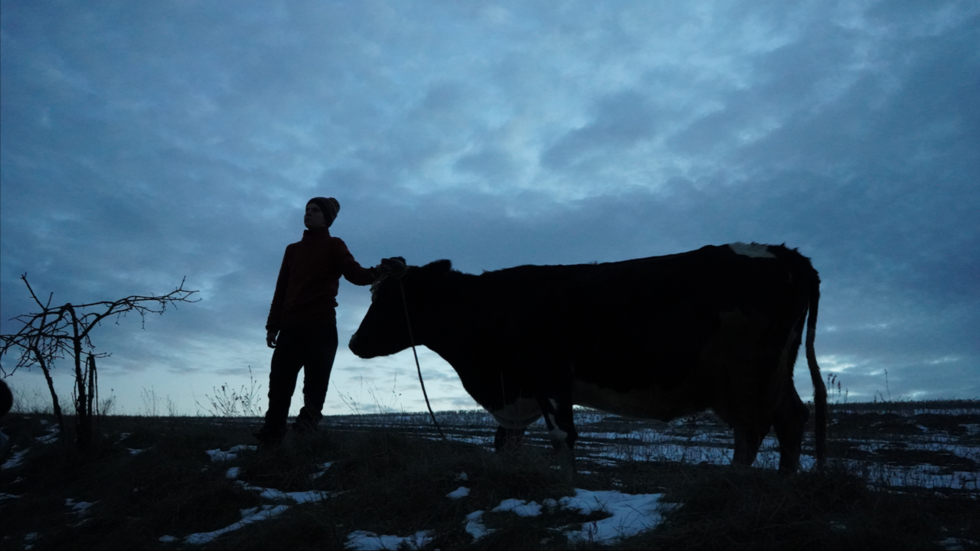
    The 2025 Tribeca Film Festival in New York included a world premiere of War Through the Eyes of Animals (also known as Animals in War). The documentary gives an animals-eye view of Russia’s war against Ukraine and features the wartime experiences of several different species, including a cow, a rabbit and a wolf.

    Throughout history, animals have been affected by war and exposed to its many dangers. Despite this, war is usually discussed from human-centred perspectives that marginalise animal experiences.

    My own work on the Russia-Ukraine war uses sound as a way of thinking about some of the war’s environmental impacts and the experiences of animals. The idea that sound can provide ecological information is not new. Research has shown how the sounds, for example, of plants and animals can tell us a lot about how their environment is changing. What is new is exploring this in the context of war.

    Trailer for War Through the Eyes of Animals.

    For my research project I interviewed more than 30 Ukrainians, including botanists, ornithologists, herpetologists (who study reptiles and amphibians) and a marine biologist. I also asked them to make short recordings of their local soundscapes.

    A scientist working in Tuzlivski Lymany National Park in the Odesa region of southern Ukraine made a recording of Iranian Shahed drones flying over his office and explained that these “abnormal” sounds greatly affect some species of birds.

    Shahed drones.
    Interviewee recording879 KB (download)

    In 2024, for example, there was a large colony of nesting flamingos in Tuzlivski Lymany. However, noise caused them to abandon their nests, leaving their eggs vulnerable to predators. No chicks were born in the flamingo colony that year. Research in peacetime has found that drones can lead to significant breeding failures among some birds.

    A herpetologist, meanwhile, shared his recording of natterjack toads and European tree frogs that he made in the Volyn region of northern Ukraine the year before the start of the full-scale invasion in 2022.

    Amphibian chorus.
    Interviewee recording985 KB (download)

    What he wanted to convey was that he may never hear this particular “amphibian chorus” again. The area is close to the border with Belarus, and it is unclear what impact the construction of Ukrainian defensive fortifications has had on local animal and plant life.

    I also asked interviewees whether the war has helped nature in any way. In response, they frequently talked about reduced anthropogenic (human-made) pressures on the environment. An example is the ban on hunting, first imposed at the start of the war in eastern Ukraine in 2014.

    Summer meadow.
    Interviewee recording281 KB (download)

    One interviewee recorded a nighttime summer meadow in Kyiv region and captured the distant sound of a fox calling. The prohibition on hunting has enabled foxes to thrive

    Another interviewee made a recording near the Kaniv Nature Reserve in central Ukraine. Alongside birdsong are the barking sounds of roe deer, another species that has benefited from the hunting ban.

    Of course, such population increases are not necessarily beneficial to wider ecosystems, as ecologist Aldo Leopold discussed in his classic Thinking like a Mountain (1949). Leopold found that uncontrolled numbers of deer due to the mass killing of wolves in the United States during the first part of the 20th century took a huge toll on the environment. “I have seen every edible bush and seedling browsed”, he wrote”, “first to anaemic desuetude, and then to death”.

    The fact that the Russia-Ukraine war has contributed to reducing some anthropogenic pressures does not in any way minimise the enormity of harm done to nature, including forests, soil and marine ecosystems. Yet it is too narrow to think about the environment only in terms of harms done to it.

    Nature’s recovery

    The Chernobyl Exclusion Zone (CEZ) created following the Chernobyl nuclear disaster in 1986 is often cited as an example of nature’s ability to recover. One of the ornithologists whom I interviewed made a recording of birdsong from within the CEZ, in northern Ukraine.

    When I listen to the recording I am reminded of research which has found that birds have adapted physiologically to radiation exposure within the CEZ.

    Another example of recovery relates to the destruction of the Kakhovka dam in June 2023. When Russian aggressors breached the dam, water drained from the Kakhovka reservoir, leaving it dry. Today, there is a young willow forest growing on the site of the former reservoir.

    To emphasise the resilience of nature, one of my interviewees made an audio recording from the Yelanets Steppe Nature Reserve in the Mykolaiv region in southern Ukraine. Against the acoustic backdrop of wind gusting through the grasslands are the repeated calls of the common pheasant.

    Common Pheasant.
    Interviewee recording2.18 MB (download)

    These sounds of the wild steppe awakening in early spring, the interviewee stressed, are also the sounds of nature getting on with life.

    Birdsong is clearly audible in a recording made by soldiers near the frontline in Kharkiv region.

    Near frontline.
    Made by Ukrainian soldiers801 KB (download)

    Similarly, birds continued to sing over the trenches during the first world war. Some interviewees also pointed out that certain species of birds, including cormorants, herons and white storks, have adapted to the sounds of war, becoming less sensitive to them.

    Justice and reparations

    I am particularly interested in the significance of nature’s sounds in the context of transitional justice – and especially reparations.

    Discourse on environmental reparations focuses on repairing harms done to nature – and sounds can provide useful insights into some of these harms.

    But what is missing from existing scholarship on reparations is attention to some of the ways that ecosystems can and do regenerate and recover. Moving forward, therefore, it is essential to think about how reparations can support (and not disturb) these natural ecosystem processes.

    Janine Natalya Clark receives funding for this research from the Leverhulme Trust (RF-2024-137)

    ref. Sound recordings can give us an animals’ eye view of the war in Ukraine – https://theconversation.com/sound-recordings-can-give-us-an-animals-eye-view-of-the-war-in-ukraine-260519

    MIL OSI

  • MIL-OSI United Nations: Ukrainian baker rises above adversity

    Source: United Nations 2

    Ms. Honcharenko’s story, like her bread, has risen through layers of loss, resilience, and hope. Before 2014, she lived in Horlivka, in Ukraine’s Donetsk region, working as a doctor at a mine and raising four children with her husband, Dmytro. Life was stable, full of routine and love. 

    When the fighting in Donetsk broke out that year, the family had to leave everything behind and move to nearby Toretsk, which remained under the control of the Ukrainian government.

    “The first few months, I felt completely lost,” she recalled.  “Then I came across an ad for an entrepreneurship course. It asked: ‘What do you know best?’ And I immediately thought – crêpes! I used to make them all the time for my family.”

    © IOM/Anastasiia Rudnieva

    Hanna Honcharenko runs a bakery in Dnipro in eastern Ukraine,

    From that memory, a business was born. She bought a crêpe maker and a coffee machine and rented a tiny space. But it was baking bread that truly called to her.

    “Everyone in my family baked: my mother, my grandmother, but I was never very good at it. I failed again and again. Still, I kept trying. I knew that one day it would work.”

    It did. Today, Ms. Honcharenko’s bakery sells more than 20 types of bread.

    Oven dough

    In 2019, she received a grant from the International Organization for Migration (IOM) that allowed her to purchase a large oven – the heart of her business. It has baked bread through two cities, survived shelling, and been repaired and relocated.

    “When the full-scale war started, all I could think of was how to get the oven out,” she said. “Not money, not documents – the oven. Without it, I wouldn’t be able to start over again.”

    In 2022, Ms. Honcharenko’s and her family were forced to move again – this time to Dnipro. They packed their belongings, their dog, oven, and began again.

    A few weeks later, the bakery reopened.

    © Humanitarian Mission Proliska

    The Donetsk region of Ukraine has been heavily bombed during the war.

    “My son, who had never shown any interest in baking before, said: ‘I’ll bake with you.’ My daughter-in-law took over the counter and my husband renovated the premises. We did everything together. For us, a family business isn’t just a structure – it’s the heart of what we do.”

    Today, Ms. Honcharenko runs two bakeries in Dnipro – one managed by her and the other by her son. In 2023, IOM provided additional support to help her purchase new equipment for the second location. The assistance allowed the family to expand the business and create more job opportunities for other displaced people. 

    Rising star

    The menu includes more than 20 types of bread, cookies, croissants, nuts, cinnamon rolls, and her best-seller: the Donbas poppy seed roll, with three times more poppy seed than dough. “We always have queues for it,” she smiled. “Some recipes didn’t catch on in the new city, but others became iconic. I learn along with my customers.”

    Displaced people were her first customers in Dnipro.

    © IOM/Anastasiia Rudnieva

    The best-selling poppy seed roll, a special family recipe.

    “I wrote on social media: ‘You’re welcome to come for tea and a chat. Just stop by.’ And people did. They were scared and lonely, just like us. We supported each other. Later, Dnipro locals started coming too.”

    “I want to keep this feeling, no matter how much we grow,” she said. “I dream of hiring families: mothers and daughters, husbands and wives, siblings working side by side. Because family is a pillar of support. You can’t rely on anyone like you can rely on your family.”

    Her story is just one of many. Since the start of the full-scale Russian invasion in 2022, IOM has supported over 1,800 Ukrainian micro and small businesses with grants and consultancies to help them adapt to the challenges of a wartime economy. 

    IOM says it remains committed to standing with entrepreneurs across Ukraine, helping them rebuild, grow, and carry on despite the uncertainty.  

    Still, uncertainty lingers. she admits that she still gets scared, especially as attacks on Ukrainian cities continue to affect daily life and customer turnout.

    “When it’s loud at night, it’s quiet in the morning,” she said. “But we open anyway. Someone has to keep life going.” 

    MIL OSI United Nations News

  • MIL-OSI Submissions: Charges against Canadian Army members in anti-government terror plot raise alarms about right-wing extremism

    Source: The Conversation – Canada – By Kawser Ahmed, Adjunct Professor at the Political Science department, University of Winnipeg

    This week, the RCMP arrested four men in Québec, alleging they were attempting to create an anti-government militia.

    The RCMP used the umbrella term “Ideologically Motivated Violent Extremism” to categorize the suspects. Essentially, this means the RCMP alleges they share violent right-wing ideologies. Their arrests raise questions about whether Canada’s problem with right-wing extremism is getting worse.

    The group is accused of storing explosive devices, dozens of firearms and thousands of rounds of ammunition. The RCMP seized all of it, and the four suspects are due to appear in Québec City court next week. Three are charged with facilitating a terrorist activity, along with weapon-possession offences.

    The suspects include active members of the Canadian Armed Forces, according to the RCMP. Given the allegations that they were planning terrorist attacks for an extremist militia, the inclusion of army personnel might not be surprising.

    But it could represent a stark manifestation of a deeply troubling and accelerating trend: the rise of violent right-wing extremism and anti-government or anti-authority radicalization within western democracies. This is a shift dramatically exacerbated by the COVID-19 pandemic as many seized the opportunity to spread anti-government ideas based on restricted freedoms.

    Raphaël Lagacé, one of the suspects charged by the RCMP.
    (Instagram)

    Canada not immune to violent movements

    Canada often thinks it’s safe from violent movements, but it’s becoming more vulnerable. This is especially evident in places like Québec, where there has been ideological conflict in the past, including the massacre at a Québec mosque in January 2017.

    However, the threat is also clear on a national level.

    According to a Canadian intelligence report, far-right extremist groups actively recruit past and present members of the military and police.

    There’s also a long-running pattern of militia activity in North America. Activities in the United States show how dangerous it is when violent ideologies spread.

    This includes the nihilistic doctrine of accelerationism, which is a white-supremacist belief that the current state of society cannot be fixed and that the only way to repair it is to destroy and collapse the “system”.

    There are versions of accelerationism on both the right and left.

    The rise in right-wing extremism globally

    The charges in Québec shine a spotlight on the global trend of rising right-wing extremism that has been worsening since 2016.

    In the past decade, white supremacist, anti-government and militia groups have gained traction. That’s due in part to online echo chambers, growing political and social divisions and the rise and rapid spread of conspiracy theories.

    The U.S. is the best and most immediate example. Groups like the Oath Keepers and Proud Boys are well-known, playing a significant role in the Jan. 6 insurrection at the U.S. Capitol. These groups are keen to recruit current and former military and law enforcement officers because they know how to handle weapons and use explosives.

    In 2023, the FBI repeatedly said domestic violent extremism continues to pose a threat, especially racially or ethnically motivated extremists and anti-government groups.

    Accelerationism is behind a lot of this violence. It underpins efforts to speed up the disintegration of society through targeted violence and technology, with the goal of starting a racial war or civil war to bring down liberal democratic institutions.

    The Base is an example of this trend. It’s a multinational, trans-border white supremacist network that supports violence to create chaos.

    But this is not just a North American problem. Before Russia’s full-scale invasion of Ukraine, far-right members of the Ukrainian Azov Regiment reportedly drew western extremists to their cause, many of whom were looking for paramilitary training, possibly to use against their own governments.

    Canada: The Base, the ‘freedom convoy’

    This global tide doesn’t leave Canada out. The arrests in Québec are the most recent and concerning example.

    Patrik Mathews, a former Canadian Army reservist from Winnipeg, was involved in a well-known Canadian case that involved recruiting for The Base, as well as a plot to harm a journalist, Canadian investigative journalist Ryan Thorpe. His reports in the Winnipeg Free Press exposed Mathew’s membership in the The Base.

    Mathew fled to the U.S. in 2019. The FBI subsequently arrested him and charged him with gun-related crimes and taking part in a riot at a Virginia protest. Mathew is now serving a long prison sentence for his part in what the FBI called a “neo-Nazi plot to instigate a race war in the United States.”

    These examples clearly show how extremists work within national military systems to learn tactical capabilities.

    The so-called “freedom convoy” occupation of Ottawa in 2022 also showed troubling connections between radicalism and some parts of the Canadian Armed Forces.

    Investigations found numerous active and former Army members were either actively involved with the convoy or donated a lot of money. Some were found to have posted extreme anti-government views online. Some Army members are also vulnerable to the right-wing ideologies of a “white-ethnostate” fuelled by political rhetoric and hate.

    All of this paints a bleak picture: extremist ideas are slowly taking hold in Canada as adherents aim to leverage military training to spread cynicism in democratic institutions. Previous studies back this up.

    Countering the threat

    To deal with this complicated and changing threat, we need a whole society, integrated approach that includes reliable top-down enforcement and monitoring and proactive, bottom-up societal resilience.

    To quickly disrupt and deter extremist groups, top-down actions are very important. To properly monitor, penetrate and break up violent extremist networks, law enforcement and security services like CSIS and the RCMP need more resources, updated laws and better co-ordination.

    It’s also important for the Canadian Armed Forces and other security-sensitive organizations to have better screening processes to find and purge those with extremist ideas.

    But law enforcement isn’t enough. For one, it could be seen as biased, which could lead to more radicalization. Bottom-up methods are just as important for long-term prevention.

    We need programs that provide teachers, social workers, community leaders and families with the tools they need to spot early signs of radicalization and do something about it in a positive way.


    Read more:
    How not to counter the radical right


    Dialogue, education

    It’s important to teach people how to think critically, read the news to fight false information and learn about civic duties that stress democratic principles and diversity. This is especially critical to fight against rising hate-motivated crimes.

    I am involved in a one such project. It’s called Extremism and Radicalization to Violence Prevention in Manitoba (ERIM). We strive to build resilient communities by creating awareness and early detection of radicalism.

    Dialogue and education are paramount.

    Canada can’t afford to wait for a disaster to happen before acting. It can’t let its soldiers — those tasked with protecting Canadians and Canada’s security — get caught up in right-wing extremism. They are a source of national pride and should remain so.

    Kawser Ahmed has led a Public Safety project called Extremism and Radicalization to Violence Prevention in Manitoba (ERIM)

    ref. Charges against Canadian Army members in anti-government terror plot raise alarms about right-wing extremism – https://theconversation.com/charges-against-canadian-army-members-in-anti-government-terror-plot-raise-alarms-about-right-wing-extremism-260778

    MIL OSI

  • MIL-OSI Submissions: Charges against Canadian Army members in anti-government terror plot raise alarms about right-wing extremism

    Source: The Conversation – Canada – By Kawser Ahmed, Adjunct Professor at the Political Science department, University of Winnipeg

    This week, the RCMP arrested four men in Québec, alleging they were attempting to create an anti-government militia.

    The RCMP used the umbrella term “Ideologically Motivated Violent Extremism” to categorize the suspects. Essentially, this means the RCMP alleges they share violent right-wing ideologies. Their arrests raise questions about whether Canada’s problem with right-wing extremism is getting worse.

    The group is accused of storing explosive devices, dozens of firearms and thousands of rounds of ammunition. The RCMP seized all of it, and the four suspects are due to appear in Québec City court next week. Three are charged with facilitating a terrorist activity, along with weapon-possession offences.

    The suspects include active members of the Canadian Armed Forces, according to the RCMP. Given the allegations that they were planning terrorist attacks for an extremist militia, the inclusion of army personnel might not be surprising.

    But it could represent a stark manifestation of a deeply troubling and accelerating trend: the rise of violent right-wing extremism and anti-government or anti-authority radicalization within western democracies. This is a shift dramatically exacerbated by the COVID-19 pandemic as many seized the opportunity to spread anti-government ideas based on restricted freedoms.

    Raphaël Lagacé, one of the suspects charged by the RCMP.
    (Instagram)

    Canada not immune to violent movements

    Canada often thinks it’s safe from violent movements, but it’s becoming more vulnerable. This is especially evident in places like Québec, where there has been ideological conflict in the past, including the massacre at a Québec mosque in January 2017.

    However, the threat is also clear on a national level.

    According to a Canadian intelligence report, far-right extremist groups actively recruit past and present members of the military and police.

    There’s also a long-running pattern of militia activity in North America. Activities in the United States show how dangerous it is when violent ideologies spread.

    This includes the nihilistic doctrine of accelerationism, which is a white-supremacist belief that the current state of society cannot be fixed and that the only way to repair it is to destroy and collapse the “system”.

    There are versions of accelerationism on both the right and left.

    The rise in right-wing extremism globally

    The charges in Québec shine a spotlight on the global trend of rising right-wing extremism that has been worsening since 2016.

    In the past decade, white supremacist, anti-government and militia groups have gained traction. That’s due in part to online echo chambers, growing political and social divisions and the rise and rapid spread of conspiracy theories.

    The U.S. is the best and most immediate example. Groups like the Oath Keepers and Proud Boys are well-known, playing a significant role in the Jan. 6 insurrection at the U.S. Capitol. These groups are keen to recruit current and former military and law enforcement officers because they know how to handle weapons and use explosives.

    In 2023, the FBI repeatedly said domestic violent extremism continues to pose a threat, especially racially or ethnically motivated extremists and anti-government groups.

    Accelerationism is behind a lot of this violence. It underpins efforts to speed up the disintegration of society through targeted violence and technology, with the goal of starting a racial war or civil war to bring down liberal democratic institutions.

    The Base is an example of this trend. It’s a multinational, trans-border white supremacist network that supports violence to create chaos.

    But this is not just a North American problem. Before Russia’s full-scale invasion of Ukraine, far-right members of the Ukrainian Azov Regiment reportedly drew western extremists to their cause, many of whom were looking for paramilitary training, possibly to use against their own governments.

    Canada: The Base, the ‘freedom convoy’

    This global tide doesn’t leave Canada out. The arrests in Québec are the most recent and concerning example.

    Patrik Mathews, a former Canadian Army reservist from Winnipeg, was involved in a well-known Canadian case that involved recruiting for The Base, as well as a plot to harm a journalist, Canadian investigative journalist Ryan Thorpe. His reports in the Winnipeg Free Press exposed Mathew’s membership in the The Base.

    Mathew fled to the U.S. in 2019. The FBI subsequently arrested him and charged him with gun-related crimes and taking part in a riot at a Virginia protest. Mathew is now serving a long prison sentence for his part in what the FBI called a “neo-Nazi plot to instigate a race war in the United States.”

    These examples clearly show how extremists work within national military systems to learn tactical capabilities.

    The so-called “freedom convoy” occupation of Ottawa in 2022 also showed troubling connections between radicalism and some parts of the Canadian Armed Forces.

    Investigations found numerous active and former Army members were either actively involved with the convoy or donated a lot of money. Some were found to have posted extreme anti-government views online. Some Army members are also vulnerable to the right-wing ideologies of a “white-ethnostate” fuelled by political rhetoric and hate.

    All of this paints a bleak picture: extremist ideas are slowly taking hold in Canada as adherents aim to leverage military training to spread cynicism in democratic institutions. Previous studies back this up.

    Countering the threat

    To deal with this complicated and changing threat, we need a whole society, integrated approach that includes reliable top-down enforcement and monitoring and proactive, bottom-up societal resilience.

    To quickly disrupt and deter extremist groups, top-down actions are very important. To properly monitor, penetrate and break up violent extremist networks, law enforcement and security services like CSIS and the RCMP need more resources, updated laws and better co-ordination.

    It’s also important for the Canadian Armed Forces and other security-sensitive organizations to have better screening processes to find and purge those with extremist ideas.

    But law enforcement isn’t enough. For one, it could be seen as biased, which could lead to more radicalization. Bottom-up methods are just as important for long-term prevention.

    We need programs that provide teachers, social workers, community leaders and families with the tools they need to spot early signs of radicalization and do something about it in a positive way.


    Read more:
    How not to counter the radical right


    Dialogue, education

    It’s important to teach people how to think critically, read the news to fight false information and learn about civic duties that stress democratic principles and diversity. This is especially critical to fight against rising hate-motivated crimes.

    I am involved in a one such project. It’s called Extremism and Radicalization to Violence Prevention in Manitoba (ERIM). We strive to build resilient communities by creating awareness and early detection of radicalism.

    Dialogue and education are paramount.

    Canada can’t afford to wait for a disaster to happen before acting. It can’t let its soldiers — those tasked with protecting Canadians and Canada’s security — get caught up in right-wing extremism. They are a source of national pride and should remain so.

    Kawser Ahmed has led a Public Safety project called Extremism and Radicalization to Violence Prevention in Manitoba (ERIM)

    ref. Charges against Canadian Army members in anti-government terror plot raise alarms about right-wing extremism – https://theconversation.com/charges-against-canadian-army-members-in-anti-government-terror-plot-raise-alarms-about-right-wing-extremism-260778

    MIL OSI

  • MIL-OSI United Kingdom: 66th WIPO General Assemblies, July 2025: UK Statement

    Source: United Kingdom – Government Statements

    Speech

    66th WIPO General Assemblies, July 2025: UK Statement

    UK Statement for the World Intellectual Property Organization General Assemblies. Delivered by Mr. Adam Williams, Chief Executive and Comptroller-General of the UK’s Intellectual Property Office.

    Thank you Chair.

    The UK is pleased to be part of the 66th session of the WIPO Assemblies. We thank you, Chair, Ambassador Suescum, DG Tang, and the Secretariat for preparing this session.

    We commend your positive leadership, DG, over the past four years. Systems like the PCT, Hague and Madrid remain essential for all UK businesses, providing cost-effective global IP protection. We value your commitment to keeping these services central to WIPO’s work. 

    The UK welcomes WIPO’s responsible and prudent financial management, which is especially important in these uncertain times. This General Assembly has several challenging issues to discuss ahead, including WIPO’s program and budget. We encourage all delegations to work towards consensus.  

    The UK applauds the adoption of the design law and genetic resources treaties last year, clear proof that multilateralism and IP can deliver meaningful progress. We are pleased to announce our intention to sign the Design Law Treaty this week, supporting global designers and small businesses.

    We strongly support efforts to build a more inclusive IP system, especially programs for women, youth, and underrepresented groups and initiatives like the Global Entrepreneurship Empowerment.

    Looking ahead, with just 17% of SDG targets on track, we welcome WIPO GREEN’s expansion, and the growing recognition of IP’s role in tackling climate change. The UK was pleased to sign a MoU with WIPO Green last year and have since joined its Board to deepen collaboration.

    We also value WIPO’s work on IP and frontier technologies and encourage deeper collaboration with Geneva-based partners and global initiatives like the UN Global Digital Compact and AI for Good.

    Finally, we thank the Secretariat for its report on assistance for Ukraine’s innovation and creativity sector (document A/66/8). While Ukraine faces an unprecedented level of Russian attacks on its towns and cities, wreaking horrific damage on its people and its creative industries, we salute its resilience and innovation in the face of such criminality, and welcome the support provided by WIPO.

    Chair, the UK remains committed to a WIPO that is efficient, inclusive and focused on delivering for global innovators and creators.

    Updates to this page

    Published 9 July 2025

    MIL OSI United Kingdom

  • MIL-OSI Submissions: Charges against Canadian Army members in anti-government terror plot raises alarms about right-wing extremism

    Source: The Conversation – Canada – By Kawser Ahmed, Adjunct Professor at the Political Science department, University of Winnipeg

    This week, the RCMP arrested four men in Québec, alleging they were attempting to create an anti-government militia.

    The RCMP used the umbrella term “Ideologically Motivated Violent Extremism” to categorize the suspects. Essentially, this means the RCMP alleges they share violent right-wing ideologies. Their arrests raise questions about whether Canada’s problem with right-wing extremism is getting worse.

    The group is accused of storing explosive devices, dozens of firearms and thousands of rounds of ammunition. The RCMP seized all of it, and the four suspects are due to appear in Québec City court next week. Three are charged with facilitating a terrorist activity, along with weapon-possession offences.

    The suspects include active members of the Canadian Armed Forces, according to the RCMP. Given the allegations that they were planning terrorist attacks for an extremist militia, the inclusion of army personnel might not be surprising.

    But it could represent a stark manifestation of a deeply troubling and accelerating trend: the rise of violent right-wing extremism and anti-government or anti-authority radicalization within western democracies. This is a shift dramatically exacerbated by the COVID-19 pandemic as many seized the opportunity to spread anti-government ideas based on restricted freedoms.

    Raphaël Lagacé, one of the suspects charged by the RCMP.
    (Instagram)

    Canada not immune to violent movements

    Canada often thinks it’s safe from violent movements, but it’s becoming more vulnerable. This is especially evident in places like Québec, where there has been ideological conflict in the past, including the massacre at a Québec mosque in January 2017.

    However, the threat is also clear on a national level.

    According to a Canadian intelligence report, far-right extremist groups actively recruit past and present members of the military and police.

    There’s also a long-running pattern of militia activity in North America. Activities in the United States show how dangerous it is when violent ideologies spread.

    This includes the nihilistic doctrine of accelerationism, which is a white-supremacist belief that the current state of society cannot be fixed and that the only way to repair it is to destroy and collapse the “system”.

    There are versions of accelerationism on both the right and left.

    The rise in right-wing extremism globally

    The charges in Québec shine a spotlight on the global trend of rising right-wing extremism that has been worsening since 2016.

    In the past decade, white supremacist, anti-government and militia groups have gained traction. That’s due in part to online echo chambers, growing political and social divisions and the rise and rapid spread of conspiracy theories.

    The U.S. is the best and most immediate example. Groups like the Oath Keepers and Proud Boys are well-known, playing a significant role in the Jan. 6 insurrection at the U.S. Capitol. These groups are keen to recruit current and former military and law enforcement officers because they know how to handle weapons and use explosives.

    In 2023, the FBI repeatedly said domestic violent extremism continues to pose a threat, especially racially or ethnically motivated extremists and anti-government groups.

    Accelerationism is behind a lot of this violence. It underpins efforts to speed up the disintegration of society through targeted violence and technology, with the goal of starting a racial war or civil war to bring down liberal democratic institutions.

    The Base is an example of this trend. It’s a multinational, trans-border white supremacist network that supports violence to create chaos.

    But this is not just a North American problem. Before Russia’s full-scale invasion of Ukraine, far-right members of the Ukrainian Azov Regiment reportedly drew western extremists to their cause, many of whom were looking for paramilitary training, possibly to use against their own governments.

    Canada: The Base, the ‘freedom convoy’

    This global tide doesn’t leave Canada out. The arrests in Québec are the most recent and concerning example.

    Patrik Mathews, a former Canadian Army reservist from Winnipeg, was involved in a well-known Canadian case that involved recruiting for The Base, as well as a plot to harm a journalist, Canadian investigative journalist Ryan Thorpe. His reports in the Winnipeg Free Press exposed Mathew’s membership in the The Base.

    Mathew fled to the U.S. in 2019. The FBI subsequently arrested him and charged him with gun-related crimes and taking part in a riot at a Virginia protest. Mathew is now serving a long prison sentence for his part in what the FBI called a “neo-Nazi plot to instigate a race war in the United States.”

    These examples clearly show how extremists work within national military systems to learn tactical capabilities.

    The so-called “freedom convoy” occupation of Ottawa in 2022 also showed troubling connections between radicalism and some parts of the Canadian Armed Forces.

    Investigations found numerous active and former Army members were either actively involved with the convoy or donated a lot of money. Some were found to have posted extreme anti-government views online. Some Army members are also vulnerable to the right-wing ideologies of a “white-ethnostate” fuelled by political rhetoric and hate.

    All of this paints a bleak picture: extremist ideas are slowly taking hold in Canada as adherents aim to leverage military training to spread cynicism in democratic institutions. Previous studies back this up.

    Countering the threat

    To deal with this complicated and changing threat, we need a whole society, integrated approach that includes reliable top-down enforcement and monitoring and proactive, bottom-up societal resilience.

    To quickly disrupt and deter extremist groups, top-down actions are very important. To properly monitor, penetrate and break up violent extremist networks, law enforcement and security services like CSIS and the RCMP need more resources, updated laws and better co-ordination.

    It’s also important for the Canadian Armed Forces and other security-sensitive organizations to have better screening processes to find and purge those with extremist ideas.

    But law enforcement isn’t enough. For one, it could be seen as biased, which could lead to more radicalization. Bottom-up methods are just as important for long-term prevention.

    We need programs that provide teachers, social workers, community leaders and families with the tools they need to spot early signs of radicalization and do something about it in a positive way.


    Read more:
    How not to counter the radical right


    Dialogue, education

    It’s important to teach people how to think critically, read the news to fight false information and learn about civic duties that stress democratic principles and diversity. This is especially critical to fight against rising hate-motivated crimes.

    I am involved in a one such project. It’s called Extremism and Radicalization to Violence Prevention in Manitoba (ERIM). We strive to build resilient communities by creating awareness and early detection of radicalism.

    Dialogue and education are paramount.

    Canada can’t afford to wait for a disaster to happen before acting. It can’t let its soldiers — those tasked with protecting Canadians and Canada’s security — get caught up in right-wing extremism. They are a source of national pride and should remain so.

    Kawser Ahmed has led a Public Safety project called Extremism and Radicalization to Violence Prevention in Manitoba (ERIM)

    ref. Charges against Canadian Army members in anti-government terror plot raises alarms about right-wing extremism – https://theconversation.com/charges-against-canadian-army-members-in-anti-government-terror-plot-raises-alarms-about-right-wing-extremism-260778

    MIL OSI

  • MIL-OSI United Nations: Pandemics to pollution: WHO Assembly delivers landmark health decisions

    Source: United Nations MIL OSI

    The 2022 full-scale invasion of Ukraine by Russia has had an indelible effect on the civilian population, displacing millions, straining the economy and inflicting physical and mental trauma. During these dark years, the UN has stayed alongside the Ukrainian people, providing aid, necessities and healthcare, and restoring energy supplies.

    MIL OSI United Nations News

  • MIL-OSI United Nations: Flavoured nicotine products driving youth addiction, WHO warns

    Source: United Nations MIL OSI

    The 2022 full-scale invasion of Ukraine by Russia has had an indelible effect on the civilian population, displacing millions, straining the economy and inflicting physical and mental trauma. During these dark years, the UN has stayed alongside the Ukrainian people, providing aid, necessities and healthcare, and restoring energy supplies.

    MIL OSI United Nations News

  • MIL-OSI United Nations: World News in Brief: Education suffers amid DR Congo violence, WHO greenlights RSV vaccines, more hurricanes ahead for Haiti

    Source: United Nations MIL OSI

    The 2022 full-scale invasion of Ukraine by Russia has had an indelible effect on the civilian population, displacing millions, straining the economy and inflicting physical and mental trauma. During these dark years, the UN has stayed alongside the Ukrainian people, providing aid, necessities and healthcare, and restoring energy supplies.

    MIL OSI United Nations News

  • MIL-OSI United Nations: From Himalayan melt to drowning shores, children lead the climate fight

    Source: United Nations 2-b

    The 2022 full-scale invasion of Ukraine by Russia has had an indelible effect on the civilian population, displacing millions, straining the economy and inflicting physical and mental trauma. During these dark years, the UN has stayed alongside the Ukrainian people, providing aid, necessities and healthcare, and restoring energy supplies.

    MIL OSI United Nations News

  • MIL-OSI United Nations: New UN report charts path out of debt crisis threatening global development

    Source: United Nations MIL OSI b

    The 2022 full-scale invasion of Ukraine by Russia has had an indelible effect on the civilian population, displacing millions, straining the economy and inflicting physical and mental trauma. During these dark years, the UN has stayed alongside the Ukrainian people, providing aid, necessities and healthcare, and restoring energy supplies.

    MIL OSI United Nations News

  • MIL-OSI United Nations: ‘Global solidarity benefits us all’: Spain makes the case for development funding

    Source: United Nations MIL OSI b

    The 2022 full-scale invasion of Ukraine by Russia has had an indelible effect on the civilian population, displacing millions, straining the economy and inflicting physical and mental trauma. During these dark years, the UN has stayed alongside the Ukrainian people, providing aid, necessities and healthcare, and restoring energy supplies.

    MIL OSI United Nations News

  • MIL-OSI United Nations: LIVE: World leaders in Sevilla launch ambitious push to finance the future

    Source: United Nations MIL OSI b

    The 2022 full-scale invasion of Ukraine by Russia has had an indelible effect on the civilian population, displacing millions, straining the economy and inflicting physical and mental trauma. During these dark years, the UN has stayed alongside the Ukrainian people, providing aid, necessities and healthcare, and restoring energy supplies.

    MIL OSI United Nations News

  • MIL-OSI United Nations: It’s time to finance our future and ‘change course’, Guterres tells world leaders in Sevilla

    Source: United Nations MIL OSI b

    The 2022 full-scale invasion of Ukraine by Russia has had an indelible effect on the civilian population, displacing millions, straining the economy and inflicting physical and mental trauma. During these dark years, the UN has stayed alongside the Ukrainian people, providing aid, necessities and healthcare, and restoring energy supplies.

    MIL OSI United Nations News

  • MIL-OSI United Nations: After the big development pledges in Sevilla, UN says action starts now

    Source: United Nations MIL OSI b

    The 2022 full-scale invasion of Ukraine by Russia has had an indelible effect on the civilian population, displacing millions, straining the economy and inflicting physical and mental trauma. During these dark years, the UN has stayed alongside the Ukrainian people, providing aid, necessities and healthcare, and restoring energy supplies.

    MIL OSI United Nations News

  • MIL-OSI United Nations: DR Congo: Despite efforts towards a political solution, violence still rages in the east

    Source: United Nations MIL OSI b

    The 2022 full-scale invasion of Ukraine by Russia has had an indelible effect on the civilian population, displacing millions, straining the economy and inflicting physical and mental trauma. During these dark years, the UN has stayed alongside the Ukrainian people, providing aid, necessities and healthcare, and restoring energy supplies.

    MIL OSI United Nations News

  • MIL-OSI United Nations: Guterres welcomes peace deal between DR Congo and Rwanda

    Source: United Nations MIL OSI b

    The 2022 full-scale invasion of Ukraine by Russia has had an indelible effect on the civilian population, displacing millions, straining the economy and inflicting physical and mental trauma. During these dark years, the UN has stayed alongside the Ukrainian people, providing aid, necessities and healthcare, and restoring energy supplies.

    MIL OSI United Nations News

  • MIL-OSI United Nations: What is financing for development?

    Source: United Nations MIL OSI b

    The 2022 full-scale invasion of Ukraine by Russia has had an indelible effect on the civilian population, displacing millions, straining the economy and inflicting physical and mental trauma. During these dark years, the UN has stayed alongside the Ukrainian people, providing aid, necessities and healthcare, and restoring energy supplies.

    MIL OSI United Nations News

  • MIL-OSI United Nations: Power to the people; funding community-led development in Somalia

    Source: United Nations MIL OSI b

    The 2022 full-scale invasion of Ukraine by Russia has had an indelible effect on the civilian population, displacing millions, straining the economy and inflicting physical and mental trauma. During these dark years, the UN has stayed alongside the Ukrainian people, providing aid, necessities and healthcare, and restoring energy supplies.

    MIL OSI United Nations News

  • MIL-OSI United Nations: $1 towards a girl’s education = $3 for the global economy: That’s how development works

    Source: United Nations MIL OSI b

    The 2022 full-scale invasion of Ukraine by Russia has had an indelible effect on the civilian population, displacing millions, straining the economy and inflicting physical and mental trauma. During these dark years, the UN has stayed alongside the Ukrainian people, providing aid, necessities and healthcare, and restoring energy supplies.

    MIL OSI United Nations News

  • MIL-OSI United Nations: Sevilla conference on development financing shows optimism for multilateralism

    Source: United Nations MIL OSI b

    The 2022 full-scale invasion of Ukraine by Russia has had an indelible effect on the civilian population, displacing millions, straining the economy and inflicting physical and mental trauma. During these dark years, the UN has stayed alongside the Ukrainian people, providing aid, necessities and healthcare, and restoring energy supplies.

    MIL OSI United Nations News

  • MIL-OSI United Nations: Gaza: Women and girls struggle to manage their periods amid crisis

    Source: United Nations MIL OSI b

    The 2022 full-scale invasion of Ukraine by Russia has had an indelible effect on the civilian population, displacing millions, straining the economy and inflicting physical and mental trauma. During these dark years, the UN has stayed alongside the Ukrainian people, providing aid, necessities and healthcare, and restoring energy supplies.

    MIL OSI United Nations News

  • MIL-OSI United Nations: Social and economic barriers, not choice, driving global fertility crisis: UNFPA

    Source: United Nations MIL OSI b

    The 2022 full-scale invasion of Ukraine by Russia has had an indelible effect on the civilian population, displacing millions, straining the economy and inflicting physical and mental trauma. During these dark years, the UN has stayed alongside the Ukrainian people, providing aid, necessities and healthcare, and restoring energy supplies.

    MIL OSI United Nations News

  • MIL-OSI United Nations: Long after the guns fall silent, conflict-related sexual violence leaves lasting scars

    Source: United Nations MIL OSI b

    The 2022 full-scale invasion of Ukraine by Russia has had an indelible effect on the civilian population, displacing millions, straining the economy and inflicting physical and mental trauma. During these dark years, the UN has stayed alongside the Ukrainian people, providing aid, necessities and healthcare, and restoring energy supplies.

    MIL OSI United Nations News

  • MIL-OSI United Nations: UN ocean summit in Nice closes with wave of commitments

    Source: United Nations MIL OSI b

    The 2022 full-scale invasion of Ukraine by Russia has had an indelible effect on the civilian population, displacing millions, straining the economy and inflicting physical and mental trauma. During these dark years, the UN has stayed alongside the Ukrainian people, providing aid, necessities and healthcare, and restoring energy supplies.

    MIL OSI United Nations News