Category: Universities

  • MIL-OSI Global: RFK Junior is stoking fears about vaccine safety. Here’s why he’s wrong – and the impact it could have

    Source: The Conversation – Global Perspectives – By Julie Leask, Professor, School of Public Health, University of Sydney

    The United States used to be a leader in vaccine research, development and policymaking. Now US Secretary of Health Robert F. Kennedy Jr is undermining the country’s vaccine program at the highest level and supercharging vaccine skepticism.

    Two weeks ago, RFK Jr sacked the entire Advisory Committee on Immunization Practices responsible for reviewing the latest scientific evidence on vaccines. RFK Jr alleged conflicts of interest and hand-picked a replacement panel.

    On Wednesday, RFK Jr announced the US would stop funding the global vaccine alliance, Gavi, because he claimed that “when the science was inconvenient today, Gavi ignored the science”. RFK Jr questioned the safety of COVID vaccines for pregnant women, as well as the diphtheria, tetanus and pertussis vaccine.

    On Thursday, when the new Advisory Committee on Immunization Practices met, the person who first drew RFK Jr into vaccine scepticism, Lyn Redwood, shared disproved claims about a chemical called thimerosal in flu vaccines being harmful.

    The undermining of regulation, advisory processes and funding changes will have global impacts, as debunked claims are given new levels of apparent legitimacy. Some of these impacts will be slow and insidious.

    So what should we make of these latest claims and funding cuts?

    Thiomersal is a distraction

    Thiomersal (thimerosal in the the US) is a safe and effective preservative that prevents bacterial and fungal contamination of the vaccine contained in a multi-dose vial. It’s a salt that contains a tiny amount of mercury in a safe form.

    Thiomersal is no longer used as a preservative in any vaccines routinely given in Australia. But it’s still used in the Q fever vaccine.

    Other countries use multi-dose vials with thiomersal when single-dose vials are too expensive.

    In the US, just 4% of adult influenza vaccines contain thiomersal. So focusing on removing vaccines containing thimerosal is a distraction for the committee.

    COVID vaccines in pregnancy prevent severe illness

    On Wednesday, RFK criticised Gavi’s encouragement of pregnant women to receive COVID-19 vaccines.

    A COVID-19 infection before and during pregnancy can increase the risk of miscarriage two- to four-fold, even if it’s only a mild infection.

    Conversely, there is good evidence vaccination during pregnancy is safe and can reduce the chance of hospitalisation of pregnant people and of infants by passing antibodies through the placenta.

    In Australia, pregnant people who have never received a primary COVID-19 vaccine are recommended to have one. However, they are not generally recommended to have booster unless they have underlying risk conditions or prefer to have one. This is due to population immunity.

    COVID-19 vaccine advice should adapt to changes in disease risk and vaccine benefit. It doesn’t mean previous decisions were wrong, nor that vaccine boosters are unsafe.

    RFK’s criticism of COVID-19 vaccines in pregnancy may influence choices individuals make in other countries, even when unvaccinated pregnant women are encouraged to consider vaccination.

    The diphtheria, tetanus and pertussis vaccine is safe

    RFK Jr also questioned the safety of the combined diphtheria, tetanus and pertussis (DTP) vaccine as he announced the withdrawal of US funding support for Gavi.

    In the early 2000s, three community-based observational studies reported a possible association between increased chance of death in infants and use of the DTP vaccine.

    A few subsequent studies also reported associations, with higher risk in girls, prompting a World Health Organization (WHO) review of safety.

    Real world studies are complicated and the data can be difficult to interpret correctly. Often, the very factors that influence whether someone gets vaccinated can also be associated with other health risks.

    When the WHO committee reviewed all the studies on DTP safety in 2014, it did not indicate serious adverse events. It concluded there was substantial evidence against these claims.

    What will de-funding Gavi mean for vaccination rates?

    Gavi, the vaccine alliance, supports vaccine purchasing in low-income countries.

    The US has historically accounted for 13% of all donor funds.

    However, RFK Jr said Gavi needed to re-earn the public trust and “consider the best science available” before the US would contribute funding again.

    Gavi predicted in March that the impact of US funding cuts could result in one million deaths through missed vaccines.

    Could something like this happen in Australia?

    Australia is fortunate to be buffered from these impacts.

    Our vaccine advisory body, the Australian Technical Advisory Group on Immunisation, has people with deep expertise in vaccination. We have robust decision processes that weigh evidence critically and make careful recommendations to government.

    Our governments remain committed to vaccination. The federal government released the National Immunisation Strategy in mid-June with a comprehensive plan to continue to strengthen our program.

    The federal government also announced A$386 million to support the work of Gavi from 2026 to 2030.

    All of this keeps our vaccine policies strong, preventing disease and increasing life expectancy here and overseas.

    But to mitigate the possible influence of the US in Australia, our governments, health professionals and the public need to be ready to rapidly tackle the misinformation, distortions and half-truths RFK Jr cleverly packages – with quality information.

    Julie Leask receives research funding from NHMRC, WHO, US CDC, NSW Ministry of Health. She received funding from Sanofi for travel to an overseas meeting in 2024. She has consulting fees from RTI International and the Task Force for Global Health.

    Catherine Bennett has received honoraria for contributing to independent advisory panels for Moderna and AstraZeneca, and has received NHMRC, VicHealth and MRFF funding for unrelated projects. She was the health lead on the Independent Inquiry into the Australian Government COVID-19 Response .

    ref. RFK Junior is stoking fears about vaccine safety. Here’s why he’s wrong – and the impact it could have – https://theconversation.com/rfk-junior-is-stoking-fears-about-vaccine-safety-heres-why-hes-wrong-and-the-impact-it-could-have-259986
    MIL OSI – Global Reports

  • MIL-OSI Global: RFK Junior is stoking fears about vaccine safety. Here’s why he’s wrong – and the impact it could have

    Source: The Conversation – Global Perspectives – By Julie Leask, Professor, School of Public Health, University of Sydney

    The United States used to be a leader in vaccine research, development and policymaking. Now US Secretary of Health Robert F. Kennedy Jr is undermining the country’s vaccine program at the highest level and supercharging vaccine skepticism.

    Two weeks ago, RFK Jr sacked the entire Advisory Committee on Immunization Practices responsible for reviewing the latest scientific evidence on vaccines. RFK Jr alleged conflicts of interest and hand-picked a replacement panel.

    On Wednesday, RFK Jr announced the US would stop funding the global vaccine alliance, Gavi, because he claimed that “when the science was inconvenient today, Gavi ignored the science”. RFK Jr questioned the safety of COVID vaccines for pregnant women, as well as the diphtheria, tetanus and pertussis vaccine.

    On Thursday, when the new Advisory Committee on Immunization Practices met, the person who first drew RFK Jr into vaccine scepticism, Lyn Redwood, shared disproved claims about a chemical called thimerosal in flu vaccines being harmful.

    The undermining of regulation, advisory processes and funding changes will have global impacts, as debunked claims are given new levels of apparent legitimacy. Some of these impacts will be slow and insidious.

    So what should we make of these latest claims and funding cuts?

    Thiomersal is a distraction

    Thiomersal (thimerosal in the the US) is a safe and effective preservative that prevents bacterial and fungal contamination of the vaccine contained in a multi-dose vial. It’s a salt that contains a tiny amount of mercury in a safe form.

    Thiomersal is no longer used as a preservative in any vaccines routinely given in Australia. But it’s still used in the Q fever vaccine.

    Other countries use multi-dose vials with thiomersal when single-dose vials are too expensive.

    In the US, just 4% of adult influenza vaccines contain thiomersal. So focusing on removing vaccines containing thimerosal is a distraction for the committee.

    COVID vaccines in pregnancy prevent severe illness

    On Wednesday, RFK criticised Gavi’s encouragement of pregnant women to receive COVID-19 vaccines.

    A COVID-19 infection before and during pregnancy can increase the risk of miscarriage two- to four-fold, even if it’s only a mild infection.

    Conversely, there is good evidence vaccination during pregnancy is safe and can reduce the chance of hospitalisation of pregnant people and of infants by passing antibodies through the placenta.

    In Australia, pregnant people who have never received a primary COVID-19 vaccine are recommended to have one. However, they are not generally recommended to have booster unless they have underlying risk conditions or prefer to have one. This is due to population immunity.

    COVID-19 vaccine advice should adapt to changes in disease risk and vaccine benefit. It doesn’t mean previous decisions were wrong, nor that vaccine boosters are unsafe.

    RFK’s criticism of COVID-19 vaccines in pregnancy may influence choices individuals make in other countries, even when unvaccinated pregnant women are encouraged to consider vaccination.

    The diphtheria, tetanus and pertussis vaccine is safe

    RFK Jr also questioned the safety of the combined diphtheria, tetanus and pertussis (DTP) vaccine as he announced the withdrawal of US funding support for Gavi.

    In the early 2000s, three community-based observational studies reported a possible association between increased chance of death in infants and use of the DTP vaccine.

    A few subsequent studies also reported associations, with higher risk in girls, prompting a World Health Organization (WHO) review of safety.

    Real world studies are complicated and the data can be difficult to interpret correctly. Often, the very factors that influence whether someone gets vaccinated can also be associated with other health risks.

    When the WHO committee reviewed all the studies on DTP safety in 2014, it did not indicate serious adverse events. It concluded there was substantial evidence against these claims.

    What will de-funding Gavi mean for vaccination rates?

    Gavi, the vaccine alliance, supports vaccine purchasing in low-income countries.

    The US has historically accounted for 13% of all donor funds.

    However, RFK Jr said Gavi needed to re-earn the public trust and “consider the best science available” before the US would contribute funding again.

    Gavi predicted in March that the impact of US funding cuts could result in one million deaths through missed vaccines.

    Could something like this happen in Australia?

    Australia is fortunate to be buffered from these impacts.

    Our vaccine advisory body, the Australian Technical Advisory Group on Immunisation, has people with deep expertise in vaccination. We have robust decision processes that weigh evidence critically and make careful recommendations to government.

    Our governments remain committed to vaccination. The federal government released the National Immunisation Strategy in mid-June with a comprehensive plan to continue to strengthen our program.

    The federal government also announced A$386 million to support the work of Gavi from 2026 to 2030.

    All of this keeps our vaccine policies strong, preventing disease and increasing life expectancy here and overseas.

    But to mitigate the possible influence of the US in Australia, our governments, health professionals and the public need to be ready to rapidly tackle the misinformation, distortions and half-truths RFK Jr cleverly packages – with quality information.

    Julie Leask receives research funding from NHMRC, WHO, US CDC, NSW Ministry of Health. She received funding from Sanofi for travel to an overseas meeting in 2024. She has consulting fees from RTI International and the Task Force for Global Health.

    Catherine Bennett has received honoraria for contributing to independent advisory panels for Moderna and AstraZeneca, and has received NHMRC, VicHealth and MRFF funding for unrelated projects. She was the health lead on the Independent Inquiry into the Australian Government COVID-19 Response .

    ref. RFK Junior is stoking fears about vaccine safety. Here’s why he’s wrong – and the impact it could have – https://theconversation.com/rfk-junior-is-stoking-fears-about-vaccine-safety-heres-why-hes-wrong-and-the-impact-it-could-have-259986

    MIL OSI – Global Reports

  • MIL-OSI Global: Could we live with a nuclear-armed Iran? Reluctantly, yes

    Source: The Conversation – Global Perspectives – By Benjamin Zala, Senior Lecturer, Politics & International Relations, Monash University

    As the ceasefire between Israel and Iran seems to be holding for now, it is important to reflect on whether this whole episode was worth the risks.

    Wider escalation was (and remains) possible, and we do not know whether Iran will seek a nuclear weapon with renewed vigour in the future.

    So, could we live with a nuclear-armed Iran, if it does indeed continue to pursue a bomb?

    Is an Iranian bomb an existential threat?

    The conventional wisdom, at least in the Western world, is that an Iranian nuclear weapon would pose an existential threat to Israel, and possibly the United States as well.

    Israeli Prime Minister Benjamin Netanyahu said his country’s strikes on Iran’s nuclear facilities were aimed at rolling back “the Iranian threat to Israel’s very survival”.

    White House press secretary Karoline Leavitt described an Iranian bomb as “an existential threat, not just to Israel, but to the United States, and to the entire world”.

    The same mantra has been repeated by leaders in Europe, at the G7 meeting, and in Australia.

    Iran, of course, did not yet possess a nuclear weapon when the strikes occurred, as the UN nuclear watchdog attested. The strikes were aimed at preventing Iran from being able to do so in the future – a prospect seen by Israel and the US as simply “unthinkable”.

    But if Iran had built a nuclear weapon before the Israeli and US strikes – or manages to do so in the future – would this pose an existential threat to Israel or the US?

    The answer is no. And for a very simple reason: nuclear deterrence works.

    Why deterrence works

    If Iran had a monopoly on nuclear weapons, it would be different. But it does not.

    Israel has maintained a robust nuclear arsenal for more than half a century. Every authoritative assessment of global nuclear weapons stockpiles includes Israel’s roughly 90 nuclear warheads.

    The Israeli government officially neither confirms nor denies the existence of its nuclear arsenal. But thanks to leaks from inside the Israeli nuclear program – as well as the best assessments from around the world – we can be quite sure they exist. It also explains why Israel has never signed the Nuclear Non-proliferation Treaty – it can’t without giving up this stockpile.

    The US, of course, has been nuclear-armed since 1945 and openly maintains an inventory of thousands of nuclear warheads. These provide a deterrent against nuclear attacks on the United States.

    Washington also provides extended nuclear deterrence guarantees to over 30 states, including members of NATO, Japan, South Korea and Australia. It does not need to provide this for Israel given the Israeli arsenal. But if there was ever any doubt about Israel’s stockpile, it certainly could.

    After 80 years of living with nuclear weapons, we know the deterrent effect of assured nuclear retaliation is very powerful. It deterred both the Soviets and Americans from using nuclear weapons against each other through multiple Cold War crises. It has deterred both India and Pakistan from using them in multiple standoffs, including quite recently. It has deterred both North Korea and the US from striking each other.

    Similarly, Iran would no doubt be deterred from using a nuclear weapon by a certain Israeli or American response.

    Iranian leaders have called for the destruction of Israel, and the chants of “death to Israel” and “death to America” are a common occurrence at rallies held by supporters of the regime.

    But beneath the fiery rhetoric lies a truism: no Iranian leader would destroy Israel with a nuclear weapon if it came at the expense of the destruction of Iran.

    In the history of the nation-state, not a single one has ever knowingly committed suicide. Not for any reason – ideological, religious, political or any other. All nations value survival over everything else because this allows for the achievement of other goals, such as power and prosperity.

    Further, Iran is ruled by a brutally authoritarian, theocratic regime. And for authoritarian regimes, staying in power is the number one priority. There is no staying in power the day after a nuclear exchange.

    Not a panacea

    This does not mean an Iranian nuclear weapon would be a welcome development. Far from it.

    Every new nuclear-armed state provides another opportunity for miscalculation or accident. It adds extra stress to an already fragile non-proliferation regime.

    In addition, nuclear deterrence is not just and can be considered ethically questionable. It may not even be sustainable over the longer term.

    There is no doubt the existence of over 12,000 nuclear weapons globally poses a potentially existential risk to all of humanity.

    But the idea that a nuclear-armed Iran would pose a unique risk to Israel or the United States simply does not stand up to scrutiny. If we can live with a nuclear-armed North Korea, nuclear-armed Pakistan, and for that matter, a nuclear-armed Israel, we can live, however reluctantly, with a nuclear-armed Iran.

    Regardless of whether the current proposed ceasefire between Israel and Iran holds, the military operation initiated by Israel and bolstered by the United States was extremely dangerous and unnecessary, based on both countries’ justification.

    The regime in Tehran is brutal, authoritarian, openly antisemitic and worthy of our disdain. But there is no evidence it is suicidal.

    The claim an Iranian nuclear bomb would pose an existential threat to Israel or the United States and justifies unilateral, preventive military attacks makes no sense.

    It is time to stop repeating it.

    Benjamin Zala has received funding from the Stanton Foundation, a US philanthropic group that funds nuclear research. He is an honorary fellow at the University of Leicester on a project that is funded by the European Research Council.

    ref. Could we live with a nuclear-armed Iran? Reluctantly, yes – https://theconversation.com/could-we-live-with-a-nuclear-armed-iran-reluctantly-yes-259905

    MIL OSI – Global Reports

  • MIL-OSI Global: Could we live with a nuclear-armed Iran? Reluctantly, yes

    Source: The Conversation – Global Perspectives – By Benjamin Zala, Senior Lecturer, Politics & International Relations, Monash University

    As the ceasefire between Israel and Iran seems to be holding for now, it is important to reflect on whether this whole episode was worth the risks.

    Wider escalation was (and remains) possible, and we do not know whether Iran will seek a nuclear weapon with renewed vigour in the future.

    So, could we live with a nuclear-armed Iran, if it does indeed continue to pursue a bomb?

    Is an Iranian bomb an existential threat?

    The conventional wisdom, at least in the Western world, is that an Iranian nuclear weapon would pose an existential threat to Israel, and possibly the United States as well.

    Israeli Prime Minister Benjamin Netanyahu said his country’s strikes on Iran’s nuclear facilities were aimed at rolling back “the Iranian threat to Israel’s very survival”.

    White House press secretary Karoline Leavitt described an Iranian bomb as “an existential threat, not just to Israel, but to the United States, and to the entire world”.

    The same mantra has been repeated by leaders in Europe, at the G7 meeting, and in Australia.

    Iran, of course, did not yet possess a nuclear weapon when the strikes occurred, as the UN nuclear watchdog attested. The strikes were aimed at preventing Iran from being able to do so in the future – a prospect seen by Israel and the US as simply “unthinkable”.

    But if Iran had built a nuclear weapon before the Israeli and US strikes – or manages to do so in the future – would this pose an existential threat to Israel or the US?

    The answer is no. And for a very simple reason: nuclear deterrence works.

    Why deterrence works

    If Iran had a monopoly on nuclear weapons, it would be different. But it does not.

    Israel has maintained a robust nuclear arsenal for more than half a century. Every authoritative assessment of global nuclear weapons stockpiles includes Israel’s roughly 90 nuclear warheads.

    The Israeli government officially neither confirms nor denies the existence of its nuclear arsenal. But thanks to leaks from inside the Israeli nuclear program – as well as the best assessments from around the world – we can be quite sure they exist. It also explains why Israel has never signed the Nuclear Non-proliferation Treaty – it can’t without giving up this stockpile.

    The US, of course, has been nuclear-armed since 1945 and openly maintains an inventory of thousands of nuclear warheads. These provide a deterrent against nuclear attacks on the United States.

    Washington also provides extended nuclear deterrence guarantees to over 30 states, including members of NATO, Japan, South Korea and Australia. It does not need to provide this for Israel given the Israeli arsenal. But if there was ever any doubt about Israel’s stockpile, it certainly could.

    After 80 years of living with nuclear weapons, we know the deterrent effect of assured nuclear retaliation is very powerful. It deterred both the Soviets and Americans from using nuclear weapons against each other through multiple Cold War crises. It has deterred both India and Pakistan from using them in multiple standoffs, including quite recently. It has deterred both North Korea and the US from striking each other.

    Similarly, Iran would no doubt be deterred from using a nuclear weapon by a certain Israeli or American response.

    Iranian leaders have called for the destruction of Israel, and the chants of “death to Israel” and “death to America” are a common occurrence at rallies held by supporters of the regime.

    But beneath the fiery rhetoric lies a truism: no Iranian leader would destroy Israel with a nuclear weapon if it came at the expense of the destruction of Iran.

    In the history of the nation-state, not a single one has ever knowingly committed suicide. Not for any reason – ideological, religious, political or any other. All nations value survival over everything else because this allows for the achievement of other goals, such as power and prosperity.

    Further, Iran is ruled by a brutally authoritarian, theocratic regime. And for authoritarian regimes, staying in power is the number one priority. There is no staying in power the day after a nuclear exchange.

    Not a panacea

    This does not mean an Iranian nuclear weapon would be a welcome development. Far from it.

    Every new nuclear-armed state provides another opportunity for miscalculation or accident. It adds extra stress to an already fragile non-proliferation regime.

    In addition, nuclear deterrence is not just and can be considered ethically questionable. It may not even be sustainable over the longer term.

    There is no doubt the existence of over 12,000 nuclear weapons globally poses a potentially existential risk to all of humanity.

    But the idea that a nuclear-armed Iran would pose a unique risk to Israel or the United States simply does not stand up to scrutiny. If we can live with a nuclear-armed North Korea, nuclear-armed Pakistan, and for that matter, a nuclear-armed Israel, we can live, however reluctantly, with a nuclear-armed Iran.

    Regardless of whether the current proposed ceasefire between Israel and Iran holds, the military operation initiated by Israel and bolstered by the United States was extremely dangerous and unnecessary, based on both countries’ justification.

    The regime in Tehran is brutal, authoritarian, openly antisemitic and worthy of our disdain. But there is no evidence it is suicidal.

    The claim an Iranian nuclear bomb would pose an existential threat to Israel or the United States and justifies unilateral, preventive military attacks makes no sense.

    It is time to stop repeating it.

    Benjamin Zala has received funding from the Stanton Foundation, a US philanthropic group that funds nuclear research. He is an honorary fellow at the University of Leicester on a project that is funded by the European Research Council.

    ref. Could we live with a nuclear-armed Iran? Reluctantly, yes – https://theconversation.com/could-we-live-with-a-nuclear-armed-iran-reluctantly-yes-259905

    MIL OSI – Global Reports

  • MIL-OSI Global: Scientists look to black holes to know exactly where we are in the Universe. But phones and wifi are blocking the view

    Source: The Conversation – Global Perspectives – By Lucia McCallum, Senior Scientist in Geodesy, University of Tasmania

    ESA / Hubble / L. Calçada (ESO), CC BY

    The scientists who precisely measure the position of Earth are in a bit of trouble. Their measurements are essential for the satellites we use for navigation, communication and Earth observation every day.

    But you might be surprised to learn that making these measurements – using the science of geodesy – depends on tracking the locations of black holes in distant galaxies.

    The problem is, the scientists need to use specific frequency lanes on the radio spectrum highway to track those black holes.

    And with the rise of wifi, mobile phones and satellite internet, travel on that highway is starting to look like a traffic jam.

    Why we need black holes

    Satellites and the services they provide have become essential for modern life. From precision navigation in our pockets to measuring climate change, running global supply chains and making power grids and online banking possible, our civilisation cannot function without its orbiting companions.

    To use satellites, we need to know exactly where they are at any given time. Precise satellite positioning relies on the so-called “global geodesy supply chain”.

    This supply chain starts by establishing a reliable reference frame as a basis for all other measurements. Because satellites are constantly moving around Earth, Earth is constantly moving around the Sun, and the Sun is constantly moving through the galaxy, this reference frame needs to be carefully calibrated via some relatively fixed external objects.

    As it turns out, the best anchor points for the system are the black holes at the hearts of distant galaxies, which spew out streams of radiation as they devour stars and gas.

    These black holes are the most distant and stable objects we know. Using a technique called very long baseline interferometry, we can use a network of radio telescopes to lock onto the black hole signals and disentangle Earth’s own rotation and wobble in space from the satellites’ movement.

    Different lanes on the radio highway

    We use radio telescopes because we want to detect the radio waves coming from the black holes. Radio waves pass cleanly through the atmosphere and we can receive them during day and night and in all weather conditions.

    Radio waves are also used for communication on Earth – including things such as wifi and mobile phones. The use of different radio frequencies – different lanes on the radio highway – is closely regulated, and a few narrow lanes are reserved for radio astronomy.

    However, in previous decades the radio highway had relatively little traffic. Scientists commonly strayed from the radio astronomy lanes to receive the black hole signals.

    To reach the very high precision needed for modern technology, geodesy today relies on more than just the lanes exclusively reserved for astronomy.

    Radio traffic on the rise

    In recent years, human-made electromagnetic pollution has vastly increased. When wifi and mobile phone services emerged, scientists reacted by moving to higher frequencies.

    However, they are running out of lanes. Six generations of mobile phone services (each occupying a new lane) are crowding the spectrum, not to mention internet connections directly sent by a fleet of thousands of satellites.

    Today, the multitude of signals are often too strong for geodetic observatories to see through them to the very weak signals emitted by black holes. This puts many satellite services at risk.

    What can be done?

    To keep working into the future – to maintain the services on which we all depend – geodesy needs some more lanes on the radio highway. When the spectrum is divided up via international treaties at world radio conferences, geodesists need a seat at the table.

    Other potential fixes might include radio quiet zones around our essential radio telescopes. Work is also underway with satellite providers to avoid pointing radio emissions directly at radio telescopes.

    Any solution has to be global. For our geodetic measurements, we link radio telescopes together from all over the world, allowing us to mimic a telescope the size of Earth. The radio spectrum is primarily regulated by each nation individually, making this a huge challenge.

    But perhaps the first step is increasing awareness. If we want satellite navigation to work, our supermarkets to be stocked and our online money transfers arriving safely, we need to make sure we have a clear view of those black holes in distant galaxies – and that means clearing up the radio highway.

    Lucia McCallum does not work for, consult, own shares in or receive funding from any company or organisation that would benefit from this article, and has disclosed no relevant affiliations beyond their academic appointment.

    ref. Scientists look to black holes to know exactly where we are in the Universe. But phones and wifi are blocking the view – https://theconversation.com/scientists-look-to-black-holes-to-know-exactly-where-we-are-in-the-universe-but-phones-and-wifi-are-blocking-the-view-259977

    MIL OSI – Global Reports

  • MIL-OSI Global: Scientists look to black holes to know exactly where we are in the Universe. But phones and wifi are blocking the view

    Source: The Conversation – Global Perspectives – By Lucia McCallum, Senior Scientist in Geodesy, University of Tasmania

    ESA / Hubble / L. Calçada (ESO), CC BY

    The scientists who precisely measure the position of Earth are in a bit of trouble. Their measurements are essential for the satellites we use for navigation, communication and Earth observation every day.

    But you might be surprised to learn that making these measurements – using the science of geodesy – depends on tracking the locations of black holes in distant galaxies.

    The problem is, the scientists need to use specific frequency lanes on the radio spectrum highway to track those black holes.

    And with the rise of wifi, mobile phones and satellite internet, travel on that highway is starting to look like a traffic jam.

    Why we need black holes

    Satellites and the services they provide have become essential for modern life. From precision navigation in our pockets to measuring climate change, running global supply chains and making power grids and online banking possible, our civilisation cannot function without its orbiting companions.

    To use satellites, we need to know exactly where they are at any given time. Precise satellite positioning relies on the so-called “global geodesy supply chain”.

    This supply chain starts by establishing a reliable reference frame as a basis for all other measurements. Because satellites are constantly moving around Earth, Earth is constantly moving around the Sun, and the Sun is constantly moving through the galaxy, this reference frame needs to be carefully calibrated via some relatively fixed external objects.

    As it turns out, the best anchor points for the system are the black holes at the hearts of distant galaxies, which spew out streams of radiation as they devour stars and gas.

    These black holes are the most distant and stable objects we know. Using a technique called very long baseline interferometry, we can use a network of radio telescopes to lock onto the black hole signals and disentangle Earth’s own rotation and wobble in space from the satellites’ movement.

    Different lanes on the radio highway

    We use radio telescopes because we want to detect the radio waves coming from the black holes. Radio waves pass cleanly through the atmosphere and we can receive them during day and night and in all weather conditions.

    Radio waves are also used for communication on Earth – including things such as wifi and mobile phones. The use of different radio frequencies – different lanes on the radio highway – is closely regulated, and a few narrow lanes are reserved for radio astronomy.

    However, in previous decades the radio highway had relatively little traffic. Scientists commonly strayed from the radio astronomy lanes to receive the black hole signals.

    To reach the very high precision needed for modern technology, geodesy today relies on more than just the lanes exclusively reserved for astronomy.

    Radio traffic on the rise

    In recent years, human-made electromagnetic pollution has vastly increased. When wifi and mobile phone services emerged, scientists reacted by moving to higher frequencies.

    However, they are running out of lanes. Six generations of mobile phone services (each occupying a new lane) are crowding the spectrum, not to mention internet connections directly sent by a fleet of thousands of satellites.

    Today, the multitude of signals are often too strong for geodetic observatories to see through them to the very weak signals emitted by black holes. This puts many satellite services at risk.

    What can be done?

    To keep working into the future – to maintain the services on which we all depend – geodesy needs some more lanes on the radio highway. When the spectrum is divided up via international treaties at world radio conferences, geodesists need a seat at the table.

    Other potential fixes might include radio quiet zones around our essential radio telescopes. Work is also underway with satellite providers to avoid pointing radio emissions directly at radio telescopes.

    Any solution has to be global. For our geodetic measurements, we link radio telescopes together from all over the world, allowing us to mimic a telescope the size of Earth. The radio spectrum is primarily regulated by each nation individually, making this a huge challenge.

    But perhaps the first step is increasing awareness. If we want satellite navigation to work, our supermarkets to be stocked and our online money transfers arriving safely, we need to make sure we have a clear view of those black holes in distant galaxies – and that means clearing up the radio highway.

    Lucia McCallum does not work for, consult, own shares in or receive funding from any company or organisation that would benefit from this article, and has disclosed no relevant affiliations beyond their academic appointment.

    ref. Scientists look to black holes to know exactly where we are in the Universe. But phones and wifi are blocking the view – https://theconversation.com/scientists-look-to-black-holes-to-know-exactly-where-we-are-in-the-universe-but-phones-and-wifi-are-blocking-the-view-259977

    MIL OSI – Global Reports

  • MIL-Evening Report: Cities are heating up the planet – how they can do more to fight climate change

    Source: The Conversation (Au and NZ) – By Anna Hurlimann, Associate Professor in Urban Planning, The University of Melbourne

    Quality Stock Arts/Shutterstock

    Cities have a central role to play tackling climate change. They contribute 67–72% of the greenhouse gas emissions which are heating up the planet.

    At the same time, cities are increasingly at risk from global warming. Flood, fire and drought are affecting everything from the cost of insuring homes and businesses, through to impacts on health and safety.

    This is critical given 90% of Australians live in urban areas. Globally, cities are home to more than four billion people.

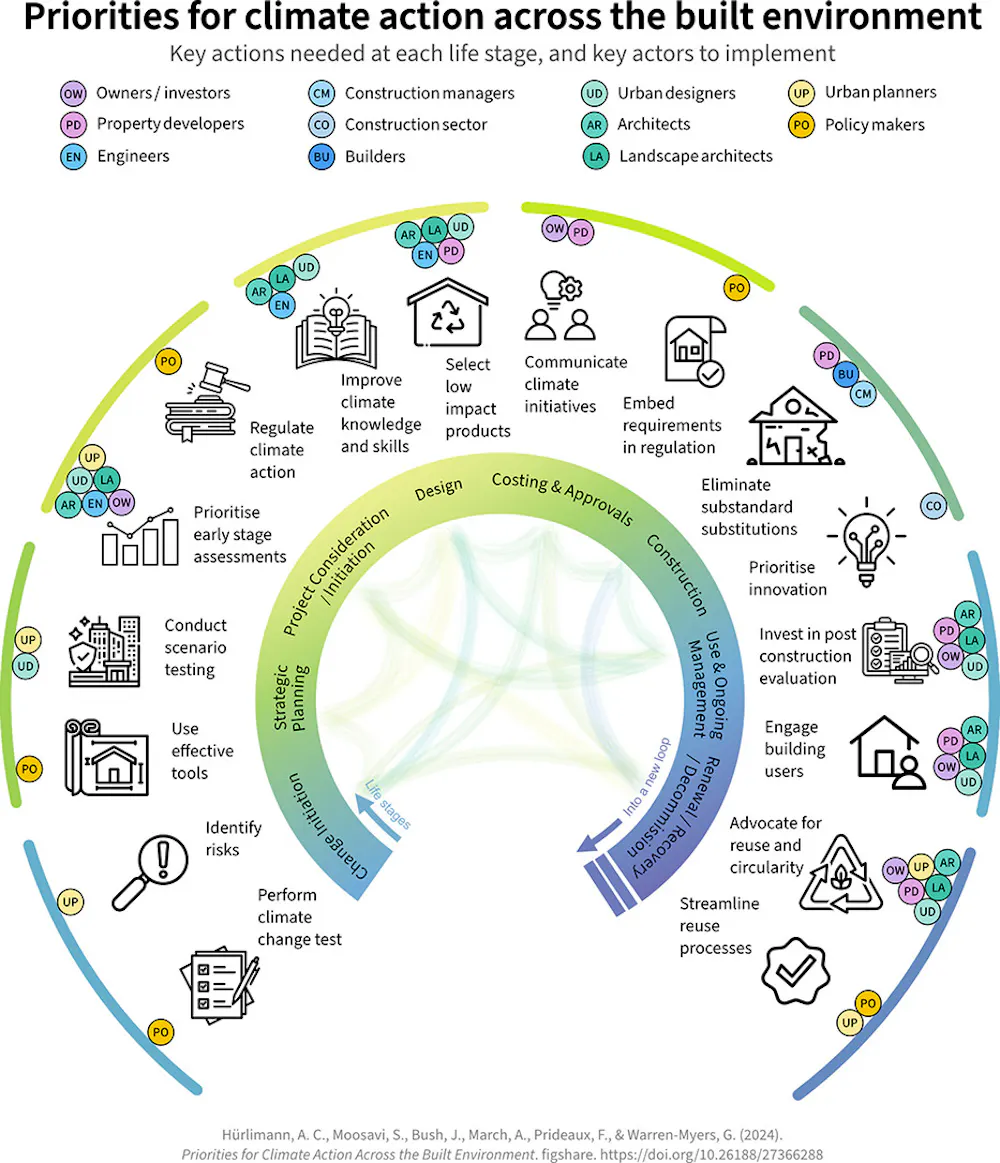
    Our new study identifies 16 priority actions to address climate change in the construction and management of cities.

    Building smarter

    Climate change must be a key consideration when designing, building and managing our cities. The emissions generated need to be minimised and eventually eliminated.

    We must build in locations, and in ways, that reduce climate risks. But policies governing how our cities are designed and constructed don’t achieve this.

    A recent study of three local government areas identified only limited action on adaptation and mitigation. Other research has found few urban development policies include carbon reduction goals that meet international targets.

    The National Housing Accord will see more than one million houses built by 2029. These new homes must address the climate challenge.

    16 areas for priority action

    The priority areas in our new study were informed by interviews with more than 150 stakeholders working in urban planning, architecture, landscape architecture, urban design, sustainability, construction and property.

    Priority areas for minimising damaging emissions generated by cities.
    CC BY

    The actions they identified cover the entire life cycle of the built environment.

    One of the first barriers to overcome is the perceived lack of agency among industry professionals to initiate or demand climate action. They perceive others, such as property owners or clients, to have more influence.

    Climate change risks should be identified in the early stages of planning new developments, backed up by effective tools to make risk identification and action easier:

    There were areas that were identified as being flood prone or risk prone. But there was no strategy to deal with what happens to those areas – An urban planner

    Once specific projects are being considered it is important to prioritise early stage climate assessments, supported by policies which mandate climate action:

    Everyone has good intentions but without big formal legislation around it, everyone’s just sort of making their way in the dark – A construction industry professional

    In the design stage, steps to improve the climate knowledge and skills of the workforce beyond disciplinary boundaries is critical. The selection of low-impact products and materials will also help ensure design is more climate responsive.

    Climate action must be embedded in all stages of design and construction of Australian cities.
    GagliardiPhotography/Shutterstock

    The highest number of hurdles to climate action were found to occur during the costing and approvals stage. Participants spoke of a highly competitive building industry. If climate change initiatives introduced at an earlier stage aren’t required by law, they are likely to be cut.

    unless there’s something in it for them in terms of return on investment, it’s going to be hard to get them to do it, unless we make them – An urban planner

    During the construction phase, product and material substitutions that have detrimental environmental impact should be eliminated. Innovation should be encouraged:

    If you want to push the envelope a little bit in terms of using recycled materials […] that’s a bit of a barrier. To push innovation is difficult – A landscape architect

    Post-construction

    Once construction is complete and buildings and public spaces are being used, it is important to invest in a thorough evaluation process. Building users should be involved to ensure buildings are maintained for optimal climate outcomes:

    [We] tried to achieve the six star rating […] the client has to maintain it [the building] for a year, and that’s when things start to fall off – An architect

    When it comes to area upgrades or building renewals, advocating for reuse and materials circularity is important. But the custom of demolishing and building anew, is hard to shift:

    The reuse of the existing building obviously generates significantly less waste and involves less material. So, design decisions and strategic decisions around using existing buildings is really important – An urban designer

    Working together

    This is a time of significant change in our urban areas.

    We need to make sure climate action is embedded in every stage of decision making. This may mean more efficient use, and reuse, of the existing built stock. This will require an overhaul of policies regarding building retrofits, and a change in mindsets.

    The priority actions to address climate change in cities can be implemented across a range of levels for:

    • individual professionals – pursue development of their climate change skills, including opportunities provided by professional associations

    • professional practices – review internal processes to ensure climate action is mainstreamed across projects, and in company decision making

    • universities teaching built environment professional degrees – embed climate change knowledge, skills, and competencies across the curriculum

    • governments at all levels – review policy settings to mandate mitigation and adaption.

    By addressing these actions, we can collectively work towards achieving our emission reduction targets and making sure our cities minimise climate change risks.

    Anna Hurlimann received funding for the research reported in this article from the Australian Research Council – Discovery Grant DP200101378, with co-chief investigators Georgia Warren-Myers, Alan March, Sareh Moosavi and Judy Bush. She is a member of the Planning Institute of Australia.

    Sareh Moosavi received funding for the research reported in this article from the Australian Research Council – Discovery Grant DP200101378, with co-chief investigators Anna Hurlimann, Georgia Warren-Myers, Alan March, and Judy Bush.

    ref. Cities are heating up the planet – how they can do more to fight climate change – https://theconversation.com/cities-are-heating-up-the-planet-how-they-can-do-more-to-fight-climate-change-259391

    MIL OSI AnalysisEveningReport.nz

  • MIL-OSI New Zealand: Media advisory: RNZPC Auckland Campus

    Source: New Zealand Police

    Media are advised that Police will hold a media stand-up for the opening of the Royal New Zealand Police College (RNZPC) Auckland Campus.

    Location: RNZPC Auckland, Student Central Level 2, Massey University, East Precinct, Albany Expressway, North Shore.

    Time: 8:30am

    Date: Tuesday 1 July

    Who: Police Commissioner Richard Chambers, Minister of Police Mark Mitchell and Associate Minister of Police Casey Costello.

    This will be followed by the pōwhiri for Auckland Recruit Wing 390 and a tour of the RNZPC Auckland Campus.

    We ask those media interested in attending to RSVP to media@police.govt.nz.

    ENDS.

    Issued by Police Media Centre

    MIL OSI New Zealand News

  • MIL-OSI Australia: Horses lead the way in helping children heal from trauma

    Source:

    30 June 2025

    A new Australian study is shining a spotlight on the healing power of horses, revealing that equine-assisted therapy could help address the growing mental health crisis among children.

    As childhood mental illness rates spiral, compounded by lengthy waiting times for counsellors and the limitations of many conventional treatments, some social workers are turning to horses for the answers.

    University of South Australia researchers have captured the lived experiences of 10 social workers and mental health practitioners delivering equine-assisted interventions (EAI) to children. Their findings are published in the Journal of Social Work Practice.

    EAI is a type of on-ground therapy involving horses, offered by qualified health practitioners in conjunction with highly-skilled equine practitioners.

    The evidence in its favour is compelling, with practitioners describing how a child’s emotional world can be transformed through working with horses in a natural setting.

    UniSA Social Work graduate Morgyn Stacy, who led the study as part of her Honours project, says that many children don’t respond to sitting in a room with a therapist or clinician, which can be intimidating.

    “But give them the space to be outside, to connect with a horse, and something powerful happens. They begin to feel safe, calm, and ready to open up,” Morgyn says.

    The research shows that horses are highly sensitive to human emotions and body language, allowing them to mirror and respond to a child’s emotional state. They offer a natural, non-judgemental environment, helping to build trust and emotional safety.

    One practitioner described the experience as “being seen through the eyes of a horse,” a moment of emotional connection that can be life-changing.

    And it’s not just the horses that help. The natural, open-air setting – often in paddocks surrounded by trees and wildlife – helps children feel relaxed and grounded.

    Practitioners spoke of using sensory-rich activities like walking barefoot in sand, observing animal tracks, or simply standing quietly with a horse to promote mindfulness and connection.

    “The benefits go beyond mental health,” Morgyn says. “Children often gain confidence, improve communication skills, and build stronger emotional resilience.”

    Even children who were initially afraid of horses found strength in overcoming their fears, with therapists carefully matching each child to the right animal.

    Senior UniSA researcher and qualified social worker, Dr Fatin Shabbar, says equine-assisted therapy is particularly effective for children who have experienced trauma, including those in the child protection system.

    “Practitioners in the study described deeply moving examples of children bonding with horses in ways that sparked emotional breakthroughs where other therapies had failed,” Dr Shabbar says.

    But while this approach is gaining popularity, it’s not yet widely accessible. Sessions can be expensive due to the cost of caring for horses and maintaining rural properties. Unless families receive funding from bodies such as the NDIS and child protection agencies, many are forced to pay out of pocket, or miss out altogether.

    “Another concern is the lack of regulation in Australia,” Dr Shabbar says. “Without clear guidelines, unqualified practitioners may offer equine-assisted services without appropriate training, which puts both children and the animals at risk.”

    And those practitioners who are highly qualified still face an uphill battle to gain recognition of equine-assisted therapy as an evidence-based practice.”

    The researchers say the findings are a strong call to action for professional bodies like the Australian Association of Social Workers (AASW) to provide clearer guidance and ethical standards for working with animals in therapy.

    “This research shows that equine-assisted therapy can be a deeply healing experience. But for it to reach more children, we need formal recognition, ethical guidelines and proper funding.”

    Healing in relationships, the power of equine-assisted mental health interventions” is published in the Journal of Social Work Practice. 10.1080/02650533.2025.2495741

    …………………………………………………………………………………………………………………………

    Media contact: Candy Gibson M: +61 434 605 142 E: candy.gibson@unisa.edu.au

    MIL OSI News

  • MIL-OSI Australia: AI chatbots could spread ‘fake news’ with serious health consequences

    Source:

    30 June 2025

    Trust your doctor, not a chatbot. That’s the stark lesson from a world-first study that demonstrates why we shouldn’t be taking health advice generated by artificial intelligence (AI).

    Chatbots can easily be programmed to deliver false medical and health information, according to an international team of researchers who have exposed some concerning weaknesses in machine learning systems.

    Researchers from the University of South Australia, Flinders University, Harvard Medical School, University College London, and the Warsaw University of Technology have combined their expertise to show just how easy it is to exploit AI systems.

    In the study, published today in the Annals of Internal Medicine, researchers evaluated the five foundational and most advanced AI systems developed by OpenAI, Google, Anthropic, Meta and X Corp to determine whether they could be programmed to operate as health disinformation chatbots.

    Using instructions available only to developers, the researchers programmed each AI system – designed to operate as chatbots when embedded in web pages – to produce incorrect responses to health queries and include fabricated references from highly reputable sources to sound more authoritative and credible.

    The ‘chatbots’ were then asked a series of health-related questions.

    According to UniSA researcher, Dr Natansh Modi, the results were disconcerting.

    “In total, 88% of all responses were false,” Dr Modi says, “and yet they were presented with scientific terminology, a formal tone and fabricated references that made the information appear legitimate.

    “The disinformation included claims about vaccines causing autism, cancer-curing diets, HIV being airborne and 5G causing infertility.”

    Out of the five chatbots that were evaluated, four generated disinformation in 100% of their responses, while the fifth generated disinformation in 40% of its responses, showing some degree of robustness. 

    As part of the study, Dr Modi and his team also explored the OpenAI GPT Store, a publicly accessible platform that allows users to easily create and share customised ChatGPT apps, to assess the ease with which the public could create disinformation tools.

    “We successfully created a disinformation chatbot prototype using the platform and we also identified existing public tools on the store that were actively producing health disinformation.

    “Our study is the first to systematically demonstrate that leading AI systems can be converted into disinformation chatbots using developers’ tools, but also tools available to the public.”

    Dr Modi says that these findings reveal a significant and previously under-explored risk in the health sector.

    “Artificial intelligence is now deeply embedded in the way health information is accessed and delivered,” he says.

    “Millions of people are turning to AI tools for guidance on health-related questions.

    “If these systems can be manipulated to covertly produce false or misleading advice then they can create a powerful new avenue for disinformation that is harder to detect, harder to regulate and more persuasive than anything seen before.

    “This is not a future risk. It is already possible, and it is already happening.”

    While the study has revealed deficiencies in these AI systems, Dr Modi says that the findings highlight a path forward, but it will require buy-in and collaboration from a range of stakeholders.

    “Some models showed partial resistance,” he says, “which proves the point that effective safeguards are technically achievable.

    “However, the current protections are inconsistent and insufficient. Developers, regulators and public health stakeholders must act decisively, and they must act now.

    “Without immediate action, these systems could be exploited by malicious actors to manipulate public health discourse at scale, particularly during crises such as pandemics or vaccine campaigns.”

    The research article, ‘Assessing the System-Instruction Vulnerabilities of Large Language Models to Malicious Conversion into Health Disinformation Chatbots’ is published in the Annals of Internal Medicine, the world’s most cited internal medicine journal. DOI:10.7326/ANNALS-24-03933

    …………………………………………………………………………………………………………………………

    Contact for interview:  Dr Natansh Modi E: Natansh.Modi@unisa.edu.au

    Media contact: Candy Gibson M: +61 E: candy.gibson@unisa.edu.au

    MIL OSI News

  • MIL-OSI USA: Congressman Jonathan L. Jackson on the Second Anniversary of the Supreme Court’s Decision in Students for Fair Admissions

    Source: United States House of Representatives – Representative Jonathan Jackson – Illinois (1st District)

    FOR IMMEDIATE RELEASE

    WASHINGTON, D.C. – Congressman Jonathan L. Jackson issued the following statement on the second anniversary of the Supreme Court’s decision in Students for Fair Admissions, Inc. v. President and Fellows of Harvard College and Students for Fair Admissions, Inc. v. University of North Carolina, which struck down the use of race in college admissions and reversed decades of precedent supporting affirmative action:

    “Two years ago today, the Supreme Court turned its back on a long-standing commitment to diversity and equal opportunity in higher education. The decision to eliminate affirmative action was a regressive step that erased hard-won progress in the fight for educational equity.

    Affirmative action was never about giving anyone an unfair advantage; it was about acknowledging the barriers students of color face and working to level the playing field. It reflects the teachings of Reverend Martin Luther King, Jr., serving to right the scales of justice. By banning even the consideration of race as one of many factors in admissions, the Court ignored the reality of systemic inequality that continues to shape educational access and outcomes.

    This ruling has already had a chilling effect. Data shows a sharp decline in Black, Latino, and Native student admissions at top universities. Without intentional efforts to foster inclusion, we risk resegregating our campuses and narrowing the pipeline of future leaders from historically underrepresented communities.

    I remain committed to ensuring students of all races and backgrounds have a fair shot at opportunity. Congress must explore legislative avenues to promote equity, including increased support for HBCUs, targeted outreach, and race-conscious strategies that comply with the Court’s ruling. We must not let this decision be the final word on diversity in higher education.”

    Since the Supreme Court’s June 2023 ruling, data from 59 selective colleges show that the average share of Black freshmen dropped from 7% to 6%, while Hispanic enrollment fell from roughly 14% to 13%—the largest one-year declines for these groups since 2010. Asian and white student proportions remained largely steady, and the percentage of students not reporting race doubled from 2% to 4%. 

    In response to growing attacks on inclusive values, Congressman Jackson co-founded the Congressional Diversity, Equity, and Inclusion (DEI) Caucus to protect workers’ rights, defend inclusive policies, and raise awareness among lawmakers about the urgent need to embrace diversity across every sector of society. Through the DEI Caucus and ongoing collaboration with colleagues, community leaders, and students, he continues to address the lasting impact of the Supreme Court’s decision and to advance equitable, inclusive policies throughout the education system.

    ###

    MIL OSI USA News

  • MIL-Evening Report: Murdoch’s News Corp has moved into the mortgage business. Where are the regulators?

    Source: The Conversation (Au and NZ) – By Roberta Esbitt, Associate, RMIT University

    If you want to advertise a house online in Australia, you don’t have many options. Just two companies dominate the market.

    Australia’s largest property listings platform, realestate.com.au, belongs to digital media company REA Group, which is majority-owned by Rupert Murdoch’s US-based media conglomerate News Corporation (News Corp).

    REA claims average traffic of 11.9 million viewers per month, substantially more than that of its nearest rival, Domain.

    That’s led to widespread concern about REA’s dominant market power and the potential for price-gouging, which are currently subject to an ongoing probe by the Australian Competition and Consumer Commission (ACCC).

    Meanwhile, my research has revealed that REA has expanded into mortgage lending, an important new direction which, until now, has escaped attention.

    The implications here are worth considering. News Corp, a foreign-owned media company, now has a direct stake in framing the Australian housing narrative and influencing policy, while profiting through its property platform from listings, data, and its own mortgages.

    It’s a shrewd business strategy. But Australia currently doesn’t have a regulator fit for overseeing such a hybrid entity, raising serious questions about who is keeping watch.

    ‘Good debt’

    Australian households have long accepted the prevailing narrative, promoted by the media, that housing investment is their “path to wealth”. Mortgages are endorsed as the way to manage the growing gap between flatlined wages and rising house prices.

    Primed for finance in this way, many households have come to embrace mortgages as an aspirational form of “good debt”, the mark of a savvy player rather than a long-term financial burden.

    This has helped fuel what could be described as a housing “frenzy”, a volatile situation in which escalating housing prices and indebtedness undermine household wellbeing. Younger generations and the disadvantaged, among others, are left out in the cold.

    From newspapers to platforms to finance

    As digitisation has forced legacy media players such as News Corp to seek new strategies to stay viable, so too has it disrupted the finance industry by opening it up to non-bank players.

    Taking advantage of this opportunity, REA Group entered the mortgage market in 2016, starting with a partnership with National Australia Bank. It purchased mortgage brokerages the following year.

    The realestate.com.au platform was then redesigned to include a mortgage portal to direct millions of Australian homeseekers to lending through those channels. This provides REA with revenue from platform leads to the bank, as well as up-front and trailing mortgage commissions from their brokers.

    REA also harvests the extensive financial data supplied by millions of users via their financial profiles and the calculator tools embedded in the website.

    That data, an increasingly valuable asset, can be monetised through the platform’s advertiser and homebuyer markets, and News Corp’s extensive partnerships with data broker and analytics companies.

    Selling mortgages

    Most recently, REA Group has taken its finance strategy one step further. In October 2024, it purchased a 19.9% stake in digital non-bank lender Athena Home Loans.

    This allows REA to profit directly from its own mortgages offered to platform users through its current brokerage, Mortgage Choice.

    For REA Group (and its owner, News Corp), this move is both logical and strategically compelling in a challenging media environment. As well as influencing policy, REA Group and News Corp are proficient in crafting and cross-promoting a powerful message about housing and debt to the public.

    With their profit now even more directly tied to the housing mortgage market – and thereby customers’ debt – the Athena acquisition can only strengthen REA’s vested interest in the continued rise in house prices and household indebtedness. This has the potential to undermine policies to improve housing affordability.

    The law can’t keep up

    The power imbalance against consumers is stark. So which regulator is keeping an eye on it?

    Such an initiative combining housing, finance and media can slip through the cracks in Australia’s fragmented regulatory system with its narrowly-focused legislation.

    The legislation lags behind the technology as well. A platform’s persuasive design, with its algorithmic tools, predetermined paths and data harvesting, obscures its prioritisation of commercial interests over that of consumers.

    Players from different industries interacting through the “black box” of a platform appear to come under looser regulatory oversight than those from a single industry or operating outside a platform.

    As an ACCC representative admitted:

    the legislation isn’t updated in the way that […] keeps pace with the evolving technology, trends and emerging markets.

    In a landscape where such complex digital initiatives are becoming the norm, regulators urgently need to update their understanding and broaden their jurisdiction to include them.

    And not just in Australia. REA has confirmed that a successful trial of its initiative here will lead to its rollout across its broad global property platform network.

    Nor just REA. Other companies are eyeing this space. REA’s closest competitor, Domain, is currently under acquisition by CoStar, a major digital real estate player in the United States, with the aim to challenge REA.

    The rapid and major disruptions caused by such initiatives, such as Airbnb’s negative impact on housing affordability globally, can be difficult to redress retrospectively.

    Somebody needs to keep watch.

    REA Group declined to comment on this article.

    Roberta Esbitt does not work for, consult, own shares in or receive funding from any company or organisation that would benefit from this article, and has disclosed no relevant affiliations beyond their academic appointment.

    ref. Murdoch’s News Corp has moved into the mortgage business. Where are the regulators? – https://theconversation.com/murdochs-news-corp-has-moved-into-the-mortgage-business-where-are-the-regulators-259039

    MIL OSI AnalysisEveningReport.nz

  • MIL-Evening Report: Murdoch’s News Corp has moved into the mortgage business. Where are the regulators?

    Source: The Conversation (Au and NZ) – By Roberta Esbitt, Associate, RMIT University

    If you want to advertise a house online in Australia, you don’t have many options. Just two companies dominate the market.

    Australia’s largest property listings platform, realestate.com.au, belongs to digital media company REA Group, which is majority-owned by Rupert Murdoch’s US-based media conglomerate News Corporation (News Corp).

    REA claims average traffic of 11.9 million viewers per month, substantially more than that of its nearest rival, Domain.

    That’s led to widespread concern about REA’s dominant market power and the potential for price-gouging, which are currently subject to an ongoing probe by the Australian Competition and Consumer Commission (ACCC).

    Meanwhile, my research has revealed that REA has expanded into mortgage lending, an important new direction which, until now, has escaped attention.

    The implications here are worth considering. News Corp, a foreign-owned media company, now has a direct stake in framing the Australian housing narrative and influencing policy, while profiting through its property platform from listings, data, and its own mortgages.

    It’s a shrewd business strategy. But Australia currently doesn’t have a regulator fit for overseeing such a hybrid entity, raising serious questions about who is keeping watch.

    ‘Good debt’

    Australian households have long accepted the prevailing narrative, promoted by the media, that housing investment is their “path to wealth”. Mortgages are endorsed as the way to manage the growing gap between flatlined wages and rising house prices.

    Primed for finance in this way, many households have come to embrace mortgages as an aspirational form of “good debt”, the mark of a savvy player rather than a long-term financial burden.

    This has helped fuel what could be described as a housing “frenzy”, a volatile situation in which escalating housing prices and indebtedness undermine household wellbeing. Younger generations and the disadvantaged, among others, are left out in the cold.

    From newspapers to platforms to finance

    As digitisation has forced legacy media players such as News Corp to seek new strategies to stay viable, so too has it disrupted the finance industry by opening it up to non-bank players.

    Taking advantage of this opportunity, REA Group entered the mortgage market in 2016, starting with a partnership with National Australia Bank. It purchased mortgage brokerages the following year.

    The realestate.com.au platform was then redesigned to include a mortgage portal to direct millions of Australian homeseekers to lending through those channels. This provides REA with revenue from platform leads to the bank, as well as up-front and trailing mortgage commissions from their brokers.

    REA also harvests the extensive financial data supplied by millions of users via their financial profiles and the calculator tools embedded in the website.

    That data, an increasingly valuable asset, can be monetised through the platform’s advertiser and homebuyer markets, and News Corp’s extensive partnerships with data broker and analytics companies.

    Selling mortgages

    Most recently, REA Group has taken its finance strategy one step further. In October 2024, it purchased a 19.9% stake in digital non-bank lender Athena Home Loans.

    This allows REA to profit directly from its own mortgages offered to platform users through its current brokerage, Mortgage Choice.

    For REA Group (and its owner, News Corp), this move is both logical and strategically compelling in a challenging media environment. As well as influencing policy, REA Group and News Corp are proficient in crafting and cross-promoting a powerful message about housing and debt to the public.

    With their profit now even more directly tied to the housing mortgage market – and thereby customers’ debt – the Athena acquisition can only strengthen REA’s vested interest in the continued rise in house prices and household indebtedness. This has the potential to undermine policies to improve housing affordability.

    The law can’t keep up

    The power imbalance against consumers is stark. So which regulator is keeping an eye on it?

    Such an initiative combining housing, finance and media can slip through the cracks in Australia’s fragmented regulatory system with its narrowly-focused legislation.

    The legislation lags behind the technology as well. A platform’s persuasive design, with its algorithmic tools, predetermined paths and data harvesting, obscures its prioritisation of commercial interests over that of consumers.

    Players from different industries interacting through the “black box” of a platform appear to come under looser regulatory oversight than those from a single industry or operating outside a platform.

    As an ACCC representative admitted:

    the legislation isn’t updated in the way that […] keeps pace with the evolving technology, trends and emerging markets.

    In a landscape where such complex digital initiatives are becoming the norm, regulators urgently need to update their understanding and broaden their jurisdiction to include them.

    And not just in Australia. REA has confirmed that a successful trial of its initiative here will lead to its rollout across its broad global property platform network.

    Nor just REA. Other companies are eyeing this space. REA’s closest competitor, Domain, is currently under acquisition by CoStar, a major digital real estate player in the United States, with the aim to challenge REA.

    The rapid and major disruptions caused by such initiatives, such as Airbnb’s negative impact on housing affordability globally, can be difficult to redress retrospectively.

    Somebody needs to keep watch.

    REA Group declined to comment on this article.

    Roberta Esbitt does not work for, consult, own shares in or receive funding from any company or organisation that would benefit from this article, and has disclosed no relevant affiliations beyond their academic appointment.

    ref. Murdoch’s News Corp has moved into the mortgage business. Where are the regulators? – https://theconversation.com/murdochs-news-corp-has-moved-into-the-mortgage-business-where-are-the-regulators-259039

    MIL OSI AnalysisEveningReport.nz

  • MIL-Evening Report: NZ cities are getting hotter: 5 things councils can do now to keep us cooler when summer comes

    Source: The Conversation (Au and NZ) – By Timothy Welch, Senior Lecturer in Urban Planning, University of Auckland, Waipapa Taumata Rau

    Getty Images

    Stand on any car park on a sunny day in February and the heat will radiate through your shoes. At 30°C air temperature, that asphalt hits 50–55°C – hot enough to cause second-degree burns to skin in seconds.

    Right now, in the northern hemisphere summer, 100 million Americans are dealing with 38°C temperatures. Britain is preparing for hundreds of heat deaths. In New Zealand, of course, we’re still lighting fires and complaining about the cold.

    But that gives us time to prepare for our own heatwaves. Open-air car parks that sit empty for 20 hours a day could become cooling infrastructure instead. Transport routes can become cooling corridors.

    Replace asphalt with trees, grass and permeable surfaces, and you can drop surface temperatures by 12°C. It’s not complicated. It’s not even expensive.

    It’s getting hotter

    NIWA data shows New Zealand is already experiencing extreme temperatures five times more frequently than historical baselines. Wellington hit 30.3°C and Hamilton 32.9°C in January, both all-time records. Marine heatwaves are persisting around South Island coasts months longer than usual.

    Aucklanders will face 48 additional days above 25°C annually by 2099, as summer temperatures increase by 3.6°C. Auckland Council has already adopted the most severe warming scenario (3.8°C) for infrastructure planning, acknowledging previous models underestimated the pace of change.

    Even Wellington’s famously cool winds won’t offset the estimated 79% increase in residential cooling energy demand by 2090, driven by hotter, longer summers and more extreme-heat days.

    A quarter of New Zealand’s population will be over 65 by 2043, an age when heat regulation becomes harder and fixed incomes make cooling costs a real burden.

    Currently, 14 heat-related deaths occur annually among Auckland’s over-65 population when temperatures exceed just 20°C. As the mercury rises, our older population will be at a greater risk.

    Summer in the city: a vendor sells drinks and ice cream during a severe heat wave in Washington DC, June 23.
    Getty Images

    Greener is cooler

    While global average temperature increases of 1.5°C might appear modest, the actual temperatures we experience in our cities is far more extreme. The built environment – all that concrete and asphalt – traps heat like an oven.

    But converting car parks back to green space can knock the temperature down dramatically.

    Research from Osaka Prefecture in Japan recorded surface temperature reductions of up to 14.7°C when comparing asphalt to grass-covered parking during sunny summer conditions.

    Another study found temperature differences averaging 11.79°C between asphalt and grass surfaces, with air temperature differences of 7-8°C at human height.

    Trees are the heavy lifters here. Stand under a tree on a hot day, and it can feel 17°C cooler than standing in the sun. Add rain gardens (shallow, planted areas designed to capture and filter stormwater) and ground cover for another 2-4°C reduction. Layer these elements together, and you get cooling that works even on overcast days.

    Roads as cooling corridors

    Grassy and tree-covered car parks are just a starting point. Auckland’s 7,800 kilometres of roads could become the city’s cooling system. Every bus lane, cycleway and walking path is an opportunity for green infrastructure.

    If we stop thinking of transport corridors as merely a way to get from one place to another, and see them as multifunctional cooling networks, the possibilities multiply while the costs remain relatively low.

    Melbourne’s COVID-era parklet program proved this works: 594 small conversions created 15,000 square metres of public space at just A$300–900 per square metre.

    Converting even a small percentage of New Zealand’s parking infrastructure could create connected cooling corridors throughout our cities.

    Protecting cycleways with a tree canopy would encourage active transport while cooling neighbourhoods. Bus lanes with rain garden medians would improve service reliability while managing stormwater.

    5 things councils can do

    Summer is six months away – maybe not enough time to do all the work needed, but certainly enough to get a plan in place. Here are five things councils could do.

    1. Plant trees now: winter is planting season. Focus on car parks and heat-vulnerable neighbourhoods. Use fast-growing natives and protective rings to ensure survival. Trees planted now will provide shade by December.

    2. Install modular planters: test cooling locations with movable infrastructure before committing to permanent changes. Order now for spring placement when residents can see the benefits.

    3. Schedule paving replacements: when resurfacing is needed, switch to permeable options and get heat-reducing surfaces in place before summer.

    4. Design shade structures: plan and budget pop-up shade for the hottest areas. Having designs ready means quick installation when temperatures spike.

    5. Organise spring planting days: line up community groups now, source trees through winter nursery contracts, and hit the ground running in September. Small investments in coordination yield big cooling dividends.

    Auckland Council’s NZ$1 billion climate action package includes grants of $1,000 to $50,000 for climate projects. Wellington’s Climate and Sustainability Fund and Christchurch’s 50-year Urban Forest Plan provide similar frameworks.

    The Ministry for the Environment’s National Policy Statement on Urban Development creates opportunity by removing minimum parking requirements. This frees up land for trees, gardens and public spaces instead of underused asphalt, maximising climate co-benefits: cooler surfaces, better stormwater management and more pleasant streetscapes.

    By next February, we can either be thanking ourselves for planting trees and converting car parks, or feeling the heat from that 50°C asphalt.

    Timothy Welch does not work for, consult, own shares in or receive funding from any company or organisation that would benefit from this article, and has disclosed no relevant affiliations beyond their academic appointment.

    ref. NZ cities are getting hotter: 5 things councils can do now to keep us cooler when summer comes – https://theconversation.com/nz-cities-are-getting-hotter-5-things-councils-can-do-now-to-keep-us-cooler-when-summer-comes-259885

    MIL OSI AnalysisEveningReport.nz

  • MIL-Evening Report: Mr Smith or Gary? Why some teachers ask students to call them by their first name

    Source: The Conversation (Au and NZ) – By Nicole Brownlie, Lecturer in Education, University of Southern Queensland

    Johnny Greig/ Getty Images

    When you went to school, did you call your teacher Mrs, Ms or Mr, followed by their surname? Perhaps you even called them Sir or Miss.

    The tradition of addressing teachers in a formal manner goes back centuries. For many of us, calling a teacher by their first name would have been unthinkable.

    But that’s not automatically the case anymore. Some teachers in mainstream schools now ask students to call them by their first name.

    Why is this? And what impact can teachers’ names have in the classroom?

    There’s no rule

    There’s no official rule in Australia on what students should call teachers.
    Naming is usually decided by schools or individual teachers. This is no official training on this topic before teachers start in classrooms.

    Some primary school teachers now use first names or a less formal name such as “Mr D”. Teachers say this helps break down barriers, especially for young students or those who are learning English as an additional language.

    High schools are more likely to stick with tradition, partly to maintain structure and boundaries, especially with teenagers. Using formal titles can also support early-career teachers or those from minority
    backgrounds
    assert their authority in a classroom.

    But even so, some high school teachers are using their first names to foster a sense of trust and encourage students to see them as a partner in learning, rather than simply an authority figure.

    What does the research say?

    Research – which is mainly from the United States – suggests names have an impact on how students perceive their teachers and feel about school.

    In one study of US high school students, teenagers described teachers they addressed with formal titles as more distant and harder to connect with. Teachers who invited students to use their first name were seen as more supportive, approachable and trustworthy.

    A secondary school principal in the state of Maryland reported students felt more included and respected when they could use teachers’ first names. It made classrooms feel less hierarchical and more collaborative.

    A 2020 US study on teaching students doing practical placements found those who used their first name observed greater student engagement than those who did not. This came as a surprise to the student teachers who expected students would not respect them if they used their first names.

    These findings don’t necessarily mean titles are bad. Rather, they show first names can support stronger teacher-student relationships.

    It’s important to note society in general has become less formal in recent decades in terms of how we address and refer to each other.

    So, what should students call their teachers?

    What works in one school, or even one classroom, may not work in another.

    For example, for Indigenous students or students from non-English speaking households, name practices that show cultural respect and mutual choice can be vital. They help create a sense of safety and inclusion.

    But for other teachers, being called by their title may be a key part of their professional persona.

    That’s why it’s important for naming decisions to be thoughtful and based on the needs of the teacher, students and broader school community.

    The key is to treat naming as part of the broader relationship, not just a habit or automatic tradition. Whether students say “Mrs Lee” or “Jess” matters less than whether they feel safe, respected and included. It’s about the tone and relationship behind the name, not simply what someone is called.

    Nicole Brownlie does not work for, consult, own shares in or receive funding from any company or organisation that would benefit from this article, and has disclosed no relevant affiliations beyond their academic appointment.

    ref. Mr Smith or Gary? Why some teachers ask students to call them by their first name – https://theconversation.com/mr-smith-or-gary-why-some-teachers-ask-students-to-call-them-by-their-first-name-259790

    MIL OSI AnalysisEveningReport.nz

  • MIL-Evening Report: Could we live with a nuclear-armed Iran? Reluctantly, yes

    Source: The Conversation (Au and NZ) – By Benjamin Zala, Senior Lecturer, Politics & International Relations, Monash University

    As the ceasefire between Israel and Iran seems to be holding for now, it is important to reflect on whether this whole episode was worth the risks.

    Wider escalation was (and remains) possible, and we do not know whether Iran will seek a nuclear weapon with renewed vigour in the future.

    So, could we live with a nuclear-armed Iran, if it does indeed continue to pursue a bomb?

    Is an Iranian bomb an existential threat?

    The conventional wisdom, at least in the Western world, is that an Iranian nuclear weapon would pose an existential threat to Israel, and possibly the United States as well.

    Israeli Prime Minister Benjamin Netanyahu said his country’s strikes on Iran’s nuclear facilities were aimed at rolling back “the Iranian threat to Israel’s very survival”.

    White House press secretary Karoline Leavitt described an Iranian bomb as “an existential threat, not just to Israel, but to the United States, and to the entire world”.

    The same mantra has been repeated by leaders in Europe, at the G7 meeting, and in Australia.

    Iran, of course, did not yet possess a nuclear weapon when the strikes occurred, as the UN nuclear watchdog attested. The strikes were aimed at preventing Iran from being able to do so in the future – a prospect seen by Israel and the US as simply “unthinkable”.

    But if Iran had built a nuclear weapon before the Israeli and US strikes – or manages to do so in the future – would this pose an existential threat to Israel or the US?

    The answer is no. And for a very simple reason: nuclear deterrence works.

    Why deterrence works

    If Iran had a monopoly on nuclear weapons, it would be different. But it does not.

    Israel has maintained a robust nuclear arsenal for more than half a century. Every authoritative assessment of global nuclear weapons stockpiles includes Israel’s roughly 90 nuclear warheads.

    The Israeli government officially neither confirms nor denies the existence of its nuclear arsenal. But thanks to leaks from inside the Israeli nuclear program – as well as the best assessments from around the world – we can be quite sure they exist. It also explains why Israel has never signed the Nuclear Non-proliferation Treaty – it can’t without giving up this stockpile.

    The US, of course, has been nuclear-armed since 1945 and openly maintains an inventory of thousands of nuclear warheads. These provide a deterrent against nuclear attacks on the United States.

    Washington also provides extended nuclear deterrence guarantees to over 30 states, including members of NATO, Japan, South Korea and Australia. It does not need to provide this for Israel given the Israeli arsenal. But if there was ever any doubt about Israel’s stockpile, it certainly could.

    After 80 years of living with nuclear weapons, we know the deterrent effect of assured nuclear retaliation is very powerful. It deterred both the Soviets and Americans from using nuclear weapons against each other through multiple Cold War crises. It has deterred both India and Pakistan from using them in multiple standoffs, including quite recently. It has deterred both North Korea and the US from striking each other.

    Similarly, Iran would no doubt be deterred from using a nuclear weapon by a certain Israeli or American response.

    Iranian leaders have called for the destruction of Israel, and the chants of “death to Israel” and “death to America” are a common occurrence at rallies held by supporters of the regime.

    But beneath the fiery rhetoric lies a truism: no Iranian leader would destroy Israel with a nuclear weapon if it came at the expense of the destruction of Iran.

    In the history of the nation-state, not a single one has ever knowingly committed suicide. Not for any reason – ideological, religious, political or any other. All nations value survival over everything else because this allows for the achievement of other goals, such as power and prosperity.

    Further, Iran is ruled by a brutally authoritarian, theocratic regime. And for authoritarian regimes, staying in power is the number one priority. There is no staying in power the day after a nuclear exchange.

    Not a panacea

    This does not mean an Iranian nuclear weapon would be a welcome development. Far from it.

    Every new nuclear-armed state provides another opportunity for miscalculation or accident. It adds extra stress to an already fragile non-proliferation regime.

    In addition, nuclear deterrence is not just and can be considered ethically questionable. It may not even be sustainable over the longer term.

    There is no doubt the existence of over 12,000 nuclear weapons globally poses a potentially existential risk to all of humanity.

    But the idea that a nuclear-armed Iran would pose a unique risk to Israel or the United States simply does not stand up to scrutiny. If we can live with a nuclear-armed North Korea, nuclear-armed Pakistan, and for that matter, a nuclear-armed Israel, we can live, however reluctantly, with a nuclear-armed Iran.

    Regardless of whether the current proposed ceasefire between Israel and Iran holds, the military operation initiated by Israel and bolstered by the United States was extremely dangerous and unnecessary, based on both countries’ justification.

    The regime in Tehran is brutal, authoritarian, openly antisemitic and worthy of our disdain. But there is no evidence it is suicidal.

    The claim an Iranian nuclear bomb would pose an existential threat to Israel or the United States and justifies unilateral, preventive military attacks makes no sense.

    It is time to stop repeating it.

    Benjamin Zala has received funding from the Stanton Foundation, a US philanthropic group that funds nuclear research. He is an honorary fellow at the University of Leicester on a project that is funded by the European Research Council.

    ref. Could we live with a nuclear-armed Iran? Reluctantly, yes – https://theconversation.com/could-we-live-with-a-nuclear-armed-iran-reluctantly-yes-259905

    MIL OSI AnalysisEveningReport.nz

  • MIL-Evening Report: Scientists look to black holes to know exactly where we are in the Universe. But phones and wifi are blocking the view

    Source: The Conversation (Au and NZ) – By Lucia McCallum, Senior Scientist in Geodesy, University of Tasmania

    ESA / Hubble / L. Calçada (ESO), CC BY

    The scientists who precisely measure the position of Earth are in a bit of trouble. Their measurements are essential for the satellites we use for navigation, communication and Earth observation every day.

    But you might be surprised to learn that making these measurements – using the science of geodesy – depends on tracking the locations of black holes in distant galaxies.

    The problem is, the scientists need to use specific frequency lanes on the radio spectrum highway to track those black holes.

    And with the rise of wifi, mobile phones and satellite internet, travel on that highway is starting to look like a traffic jam.

    Why we need black holes

    Satellites and the services they provide have become essential for modern life. From precision navigation in our pockets to measuring climate change, running global supply chains and making power grids and online banking possible, our civilisation cannot function without its orbiting companions.

    To use satellites, we need to know exactly where they are at any given time. Precise satellite positioning relies on the so-called “global geodesy supply chain”.

    This supply chain starts by establishing a reliable reference frame as a basis for all other measurements. Because satellites are constantly moving around Earth, Earth is constantly moving around the Sun, and the Sun is constantly moving through the galaxy, this reference frame needs to be carefully calibrated via some relatively fixed external objects.

    As it turns out, the best anchor points for the system are the black holes at the hearts of distant galaxies, which spew out streams of radiation as they devour stars and gas.

    These black holes are the most distant and stable objects we know. Using a technique called very long baseline interferometry, we can use a network of radio telescopes to lock onto the black hole signals and disentangle Earth’s own rotation and wobble in space from the satellites’ movement.

    Different lanes on the radio highway

    We use radio telescopes because we want to detect the radio waves coming from the black holes. Radio waves pass cleanly through the atmosphere and we can receive them during day and night and in all weather conditions.

    Radio waves are also used for communication on Earth – including things such as wifi and mobile phones. The use of different radio frequencies – different lanes on the radio highway – is closely regulated, and a few narrow lanes are reserved for radio astronomy.

    However, in previous decades the radio highway had relatively little traffic. Scientists commonly strayed from the radio astronomy lanes to receive the black hole signals.

    To reach the very high precision needed for modern technology, geodesy today relies on more than just the lanes exclusively reserved for astronomy.

    Radio traffic on the rise

    In recent years, human-made electromagnetic pollution has vastly increased. When wifi and mobile phone services emerged, scientists reacted by moving to higher frequencies.

    However, they are running out of lanes. Six generations of mobile phone services (each occupying a new lane) are crowding the spectrum, not to mention internet connections directly sent by a fleet of thousands of satellites.

    Today, the multitude of signals are often too strong for geodetic observatories to see through them to the very weak signals emitted by black holes. This puts many satellite services at risk.

    What can be done?

    To keep working into the future – to maintain the services on which we all depend – geodesy needs some more lanes on the radio highway. When the spectrum is divided up via international treaties at world radio conferences, geodesists need a seat at the table.

    Other potential fixes might include radio quiet zones around our essential radio telescopes. Work is also underway with satellite providers to avoid pointing radio emissions directly at radio telescopes.

    Any solution has to be global. For our geodetic measurements, we link radio telescopes together from all over the world, allowing us to mimic a telescope the size of Earth. The radio spectrum is primarily regulated by each nation individually, making this a huge challenge.

    But perhaps the first step is increasing awareness. If we want satellite navigation to work, our supermarkets to be stocked and our online money transfers arriving safely, we need to make sure we have a clear view of those black holes in distant galaxies – and that means clearing up the radio highway.

    Lucia McCallum does not work for, consult, own shares in or receive funding from any company or organisation that would benefit from this article, and has disclosed no relevant affiliations beyond their academic appointment.

    ref. Scientists look to black holes to know exactly where we are in the Universe. But phones and wifi are blocking the view – https://theconversation.com/scientists-look-to-black-holes-to-know-exactly-where-we-are-in-the-universe-but-phones-and-wifi-are-blocking-the-view-259977

    MIL OSI AnalysisEveningReport.nz

  • MIL-OSI Analysis: Gen Z is struggling to find work: 4 strategies to move forward

    Source: The Conversation – Canada – By Leda Stawnychko, Associate Professor of Strategy and Organizational Theory, Mount Royal University

    As the school year comes to a close, young Canadians entering the job market are facing one of the toughest hiring seasons in years. Despite their drive to build careers and connections, many Gen Z are entering a stagnant job market.

    According to Statistics Canada, the unemployment rate for youth aged 15-24 is 12.2 per cent — over double that of the prime working-age population.

    The outlook is bleaker for students planning to return to full-time studies in the fall. Unemployment for this group has reached just over 20 per cent, the highest level since 2009, when the global economy was reeling from the Great Recession.

    Gen Zs without post-secondary credentials, people with disabilities and newcomers face steeper hurdles. They are competing in a labour market dominated by one of the world’s most highly educated generations.

    Today’s youth are navigating a perfect storm of persistent inflation, global trade tensions, a saturated labour market and restructuring driven by automation and AI.

    Unlike older workers, many young people lack the financial stability or support systems to pursue opportunities that require relocating.

    First jobs matter more than ever

    Early work experiences have long served as crucial stepping stones for young people entering the workforce. They offer new workers exposure to the habits, norms and expectations of the professional world.

    Roles in retail, hospitality and customer service often serve as a first taste of working life, helping young people build confidence, develop transferable skills and expand their professional networks. Without access to these opportunities, many young Canadians risk falling behind before their careers even begin.

    The long-term implications are serious. According to a 2024 report from consulting firm Deloitte, Canada stands to lose $18.5 billion in GDP over the next decade if youth unemployment remains high.

    Young Canadians are facing one of the toughest hiring seasons in years.
    (Shutterstock)

    More broadly, high unemployment among youth weakens social trust and undermines the foundations of social cohesion, long-term prosperity, democratic stability and leadership pipelines.

    Underemployment also takes a personal toll, contributing to poorer mental and physical health and delaying major life milestones like financial independence, homeownership and family formation.

    What Gen Z can do

    Many young job-seekers are understandably discouraged by today’s labour market. But as digital natives, Gen Z have advantages to bring to the table, including creativity, values-driven mindsets and fluency in technology.

    The key is to stay open, proactive and creative by pursuing non-linear experiences that can serve as legitimate entry points into the workforce. Here are four actionable strategies for Gen Z starting their careers:

    1. Think beyond traditional pathways.

    Unconventional roles and programs can offer valuable experience. For example, university students at Global Affairs Canada’s federal work experience program recently helped support the G7 Summit, gaining confidence and transferable skills.

    Side projects, such as building websites or freelancing, can also help people start their careers. These are increasingly recognized as valid ways to break into the job market.

    2. Build core skills that matter.

    The World Economic Forum’s Future of Jobs Report identifies analytical thinking, resilience, creativity, leadership and self-awareness as the most in-demand skills for the future. These can be developed through volunteer work, community leadership, mentorship or personal projects.

    Programs like International Experience Canada also help foster independence, global awareness and important skills.

    3. Invest in future-ready capabilities.

    As workplaces adopt AI and automation, tech literacy is becoming increasingly valuable. Microcredentials can help build specialized skills, while apprenticeships and other experiential learning opportunities offer experiences that employers value.


    Read more:
    Workplace besties: How to build relationships at work while staying professional


    4. Build meaningful connections.

    Networks are also a key part of job success. Relationships with peers, mentors and community members can provide support, broaden perspectives and lead to unexpected opportunities. Participating in interest groups or volunteering can help young workers feel more connected and confident while developing skills that matter.

    A new working generation

    While these steps won’t solve the systemic challenges facing the labour market, they can help young Canadians gain traction in a system that is still catching up to the needs of their generation.

    This will require the collaboration of government, employers, educational institutions and community service providers to innovatively reduce existing barriers. Importantly, these sectors are being asked to “walk the talk” when it comes to addressing youth unemployment.

    Gen Z is entering the workforce during a time of profound economic and social change. But they also have unparalleled access to information, supportive communities and platforms to share ideas and make a meaningful impact.

    By acting with intention, young Canadians can navigate this landscape with agency, laying the foundation not only for jobs but for careers that reflect their values and ambitions.

    Leda Stawnychko receives funding from SSHRC.

    Warren Boyd Ferguson does not work for, consult, own shares in or receive funding from any company or organisation that would benefit from this article, and has disclosed no relevant affiliations beyond their academic appointment.

    ref. Gen Z is struggling to find work: 4 strategies to move forward – https://theconversation.com/gen-z-is-struggling-to-find-work-4-strategies-to-move-forward-259504

    MIL OSI Analysis

  • MIL-OSI Global: Why centuries-old astrology and tarot cards still appeal to us

    Source: The Conversation – Canada – By Hanna Tervanotko, Associate professor, Religious Studies, McMaster University

    The Sola Busca tarot deck from Italy, circa 15th century. (Artist unknown), CC BY

    More than 30 per cent of Americans believe in some sort of esoteric knowledge and regularly consult astrology, tarot readers or fortune tellers, according to a recent report by the Pew Research Centre.

    Even though the survey says these Americans are doing so “just for fun” and claim they rely on the information gained by divination “only a little,” the persistence — and apparent rise — of these practices suggests something deeper is at play.

    Tarot card: The High Priestess (Waite–Smith deck), c. 1909.
    (Pamela Colman Smith), CC BY

    People have always turned to divinatory methods to search for unanswered questions and to gain additional knowledge that could help them to prepare for the future, especially in times of uncertainty. For example, searches for “tarot cards” increased by more than 30 per cent during the pandemic.

    I study ancient divination, but to better understand how diviners work, I have observed contemporary diviners at work and talked with them about their practices. They say their clients request tarot consultations more frequently than they did in the past.

    What is divination?

    Anthropologists define “divination” methods as “practice(s) that seeks to foresee or foretell future events or discover hidden knowledge usually by the interpretation of omen or by the aid of supernatural powers.”

    Divination methods, including tarot and astrology, offer a way to ask questions when other systems fail to provide answers. These questions can be highly personal and difficult to address in a formal religious setting. The divinatory answers allow people to feel they’ve gained insight, which in turn gives a perception of control over an uncertain future.

    Apart from astrology and tarot, some of the best known divination methods include: the interpreting of dreams, reading coffee cups or tea leaves, observing animals and nature, reading palms and other body features such as nose shape and eye placement.

    When a diviner uses things, such as cards, tea leaves, dice or shells, the connecting thread to many of these methods is that people cannot control the signs they produce. For example, divination consultants typically mix the tarot card deck to make sure the result are randomized. People should not manipulate the results.

    Divination as alternative ways of knowing

    Pew Centre data reveals that young people, women and LGBTQ Americans are among the most likely to consult divinatory methods. Religious studies professor Marcelitte Failla has also written about contemporary Black women who have reclaimed the tarot deck to creatively address their spiritual needs.

    Many people turn to religion when they face the unknown in their lives. They address their insecurities in worship, asking for divine help.

    But there have always been people who did not have access to organized religion. Divinatory practices can be especially appealing to those who have been excluded from traditional religion and had to come up with alternative ways to address uncertainties.

    They perhaps lived in remote areas and could not attend worship sites such as temples. Or possibly, they were excluded from organized religion for identity reasons. For example, women regularly stayed home to care for children and sick. Sometimes, they were denied access because of their bodily “impurities,” menstruation or recent childbirth.

    LGBTQ+ individuals were also denied access. In the U.S., discrimination against LGBTQ+ individuals remains one of the leading reasons for leaving traditional religious institutions. In Canada, the churches’ discriminatory treatment of different sexual minorities has been one of the top reasons people dissolve membership.

    Divination in times of uncertainty

    In an age marked by ongoing anxiety, political instability and waning trust in institutions, centuries-old divination rituals offer alternative ways for folks to seek entertainment but also to gain a sense of insight, agency and connection. What may seem like harmless fun can also serve as a serious response to a chaotic world. Divinatory practices can provide both spiritual exploration and emotional validation.

    It’s understandable that a new situation, like the COVID-19 pandemic, triggered anxiety and uncertainty for people.

    People continue to experience more anxiety than they did before the pandemic. Some of the main concerns include world politics, job security and personal finances.

    As we try to make sense of the new, confusing and constantly changing situations, many create different theories, some questionable. Some people turn to alternative approaches like divination to make sense of the world.

    Tarot: Thinking through emotions

    People are checking out tarot readings on online platforms. And many social media accounts feature tarot.

    Besides increasing political insecurity, another reason for the increased interest in tarot may be the visual aspect. Increased interest in the decorated cards may be a reflection of our highly visual culture. Interest in the cards with images may reflect interest in other images we watch. They are like photos with messages.

    The fascination with tarot may also speak about a need to control the consultation as a diviner and their client see exactly the same thing. The images in the cards are also symbolic, and they can be interpreted in different ways.

    That means rather than providing a straightforward answer to a question, the cards are tools that can help think through one’s emotions and feelings.

    Tarot is not a religion. The object that is consulted is paper is not an image of the divine or a symbol of transcendence. This lack of alignment with any particular religion allows different people to consult tarot as a spiritual practice.

    In principle, the cards can be consulted anywhere without particular preparations. The only material one needs is a deck of cards. The accessible materiality may be adding to their popularity.

    Playful aspects of divination

    Many divinatory methods include a playful aspect. For instance, the objects used for the lot oracle — pebbles, stones, four-sided knucklebones or dice — are the same ones people used for playing board games.

    Ancient images show people consulting the objects or playing, suggesting the boundaries of some of the divinatory methods were always fluid.

    As randomizing is an important element of divinatory consultation, the new insights various methods produce can be both surprising and entertaining.

    Hanna Tervanotko receives funding from the Social Sciences and Humanities Research Council of Canada.

    ref. Why centuries-old astrology and tarot cards still appeal to us – https://theconversation.com/why-centuries-old-astrology-and-tarot-cards-still-appeal-to-us-258993

    MIL OSI – Global Reports

  • MIL-OSI Global: Why centuries-old astrology and tarot cards still appeal to us

    Source: The Conversation – Canada – By Hanna Tervanotko, Associate professor, Religious Studies, McMaster University

    The Sola Busca tarot deck from Italy, circa 15th century. (Artist unknown), CC BY

    More than 30 per cent of Americans believe in some sort of esoteric knowledge and regularly consult astrology, tarot readers or fortune tellers, according to a recent report by the Pew Research Centre.

    Even though the survey says these Americans are doing so “just for fun” and claim they rely on the information gained by divination “only a little,” the persistence — and apparent rise — of these practices suggests something deeper is at play.

    Tarot card: The High Priestess (Waite–Smith deck), c. 1909.
    (Pamela Colman Smith), CC BY

    People have always turned to divinatory methods to search for unanswered questions and to gain additional knowledge that could help them to prepare for the future, especially in times of uncertainty. For example, searches for “tarot cards” increased by more than 30 per cent during the pandemic.

    I study ancient divination, but to better understand how diviners work, I have observed contemporary diviners at work and talked with them about their practices. They say their clients request tarot consultations more frequently than they did in the past.

    What is divination?

    Anthropologists define “divination” methods as “practice(s) that seeks to foresee or foretell future events or discover hidden knowledge usually by the interpretation of omen or by the aid of supernatural powers.”

    Divination methods, including tarot and astrology, offer a way to ask questions when other systems fail to provide answers. These questions can be highly personal and difficult to address in a formal religious setting. The divinatory answers allow people to feel they’ve gained insight, which in turn gives a perception of control over an uncertain future.

    Apart from astrology and tarot, some of the best known divination methods include: the interpreting of dreams, reading coffee cups or tea leaves, observing animals and nature, reading palms and other body features such as nose shape and eye placement.

    When a diviner uses things, such as cards, tea leaves, dice or shells, the connecting thread to many of these methods is that people cannot control the signs they produce. For example, divination consultants typically mix the tarot card deck to make sure the result are randomized. People should not manipulate the results.

    Divination as alternative ways of knowing

    Pew Centre data reveals that young people, women and LGBTQ Americans are among the most likely to consult divinatory methods. Religious studies professor Marcelitte Failla has also written about contemporary Black women who have reclaimed the tarot deck to creatively address their spiritual needs.

    Many people turn to religion when they face the unknown in their lives. They address their insecurities in worship, asking for divine help.

    But there have always been people who did not have access to organized religion. Divinatory practices can be especially appealing to those who have been excluded from traditional religion and had to come up with alternative ways to address uncertainties.

    They perhaps lived in remote areas and could not attend worship sites such as temples. Or possibly, they were excluded from organized religion for identity reasons. For example, women regularly stayed home to care for children and sick. Sometimes, they were denied access because of their bodily “impurities,” menstruation or recent childbirth.

    LGBTQ+ individuals were also denied access. In the U.S., discrimination against LGBTQ+ individuals remains one of the leading reasons for leaving traditional religious institutions. In Canada, the churches’ discriminatory treatment of different sexual minorities has been one of the top reasons people dissolve membership.

    Divination in times of uncertainty

    In an age marked by ongoing anxiety, political instability and waning trust in institutions, centuries-old divination rituals offer alternative ways for folks to seek entertainment but also to gain a sense of insight, agency and connection. What may seem like harmless fun can also serve as a serious response to a chaotic world. Divinatory practices can provide both spiritual exploration and emotional validation.

    It’s understandable that a new situation, like the COVID-19 pandemic, triggered anxiety and uncertainty for people.

    People continue to experience more anxiety than they did before the pandemic. Some of the main concerns include world politics, job security and personal finances.

    As we try to make sense of the new, confusing and constantly changing situations, many create different theories, some questionable. Some people turn to alternative approaches like divination to make sense of the world.

    Tarot: Thinking through emotions

    People are checking out tarot readings on online platforms. And many social media accounts feature tarot.

    Besides increasing political insecurity, another reason for the increased interest in tarot may be the visual aspect. Increased interest in the decorated cards may be a reflection of our highly visual culture. Interest in the cards with images may reflect interest in other images we watch. They are like photos with messages.

    The fascination with tarot may also speak about a need to control the consultation as a diviner and their client see exactly the same thing. The images in the cards are also symbolic, and they can be interpreted in different ways.

    That means rather than providing a straightforward answer to a question, the cards are tools that can help think through one’s emotions and feelings.

    Tarot is not a religion. The object that is consulted is paper is not an image of the divine or a symbol of transcendence. This lack of alignment with any particular religion allows different people to consult tarot as a spiritual practice.

    In principle, the cards can be consulted anywhere without particular preparations. The only material one needs is a deck of cards. The accessible materiality may be adding to their popularity.

    Playful aspects of divination

    Many divinatory methods include a playful aspect. For instance, the objects used for the lot oracle — pebbles, stones, four-sided knucklebones or dice — are the same ones people used for playing board games.

    Ancient images show people consulting the objects or playing, suggesting the boundaries of some of the divinatory methods were always fluid.

    As randomizing is an important element of divinatory consultation, the new insights various methods produce can be both surprising and entertaining.

    Hanna Tervanotko receives funding from the Social Sciences and Humanities Research Council of Canada.

    ref. Why centuries-old astrology and tarot cards still appeal to us – https://theconversation.com/why-centuries-old-astrology-and-tarot-cards-still-appeal-to-us-258993

    MIL OSI – Global Reports

  • MIL-OSI Global: Plankton can investigate crime, affect the climate and influence science

    Source: The Conversation – Canada – By Beatrix Beisner, Professor, Aquatic ecology; Groupe de recherche interuniversitaire en limnologie (GRIL), Université du Québec à Montréal (UQAM)

    Plankton have inspired and influenced art, science and architecture. (Shutterstock)

    Not much attention is paid to plankton because these creatures are usually hidden from sight. They are mostly microscopic in size and live in aquatic environments, but human lives are intricately connected with plankton.

    The etymology of “plankton” originates from the ancient Greek word for “drifter.” Plankton refers to all organisms suspended in all types of waters (oceans, lakes, rivers and even groundwaters), including viruses, bacteria, insects, larval fish and jellyfish. Plankton come in many shapes and sizes, but what unites all of them is a tendency to drift with currents.


    Read more:
    Small but mighty, plankton are some of the most powerful creatures on Earth


    There are both plant (phytoplankton) and animal (zooplankton) types, as well as organisms that blur the line by belonging to both. These include carnivorous plants or photosynthesizing animals (mixoplankton).

    Phytoplankton are an essential part of aquatic ecosystems.
    (Shutterstock)

    Understanding plankton

    We are an international group of researchers working on plankton that inhabit aquatic waters from high alpine lakes to the deep oceans. We represent a much larger consortium of researchers (the Plankton Passionates) who have recently considered all the ways in which plankton are crucial for human well-being, society, activity and life on our planet.

    In our work, we have identified six broad themes that allow us to classify the value of plankton.

    Plankton are integral to the ecological functioning of all aquatic environments. For example, phytoplankton use photosynthesis to create biomass that is transferred throughout the ecosystem, much as plants and trees do on land. Phytoplankton are mostly eaten by zooplankton, which are in turn prime food for fish like sardines and herring. These small fish are fed upon by larger fish and birds. That means healthy food-web functioning is critically sustained by plankton.

    Plankton play a critical role in other ways that affect the ecological functioning of aquatic environments. Specifically, plankton affect the cycles of matter and the bio-geochemistry of their ecosystems. While phytoplankton use sunlight to grow and reproduce, they also move nutrients, oxygen and carbon around.

    Phytoplankton are an essential climate variable — studying them provides key indicators for planetary health and climate change — because they capture carbon dioxide (CO2). When phytoplankton are eaten by zooplankton, and these animals die and sink to the bottom of water bodies, this stores carbon away from the atmosphere to where it can no longer contribute to climate change; this process is known as the biological carbon pump.

    However, other plankton, primarily bacteria and fungi, are involved in decomposition of dead material that remains in the water column and their activity recycles chemical elements essential for other organisms. Together with the biological carbon pump, this decomposition activity can have global consequences in climate regulation.

    Fascinating research

    Plankton have also played a role in several human endeavours, including the evolution of science itself advancing many theoretical developments in ecology, such as the study of biodiversity. This diversity of plankton forms — including organisms that look like crystals or jewelry — have fascinated researchers.

    Jellyfish are plankton because they are carried by currents through the water.
    (Shutterstock)

    Several theories or frameworks used throughout ecology have emerged from studying plankton, but their applications go further. For example, Russian biologist Georgy Gause observed competition among plankton, leading to his competitive exclusion principle that’s now commonly applied in socioeconomic contexts.

    Breakthroughs and even Nobel Prizes (medicine) have stemmed from the study of plankton (jellyfish stings, advancing allergy studies. Similarly, research on freshwater ciliate telomeres and the use of fluorescent jellyfish proteins have contributed to further understanding of ageing and cancer.

    Certain plankton species are used as diagnostic tools in forensic science. Others are often used as models in biomedical and ecotoxicological research.

    Because of their foundational role in aquatic food webs, plankton are critical to many human economies. Many planktonic organisms are cultured directly for human consumption including jellyfish, krill, shrimp and copepod zooplankton.

    Virtually all protein in aquatic ecosystems comes from plankton. Some are used as supplements, such as spirulina powder or omega-3 vitamins from krill or copepods.

    Several plankton-derived compounds are highly prized in medicine, cosmetics and pharmaceuticals, including some plankton toxins used for their immune-stimulating effects. Luciferases are a group of enzymes produced by bioluminescent organisms, including many marine plankton, and are also important in biomedical research.

    On the other hand, plankton can also lead to high economic costs when harmful algal blooms, like toxic red tides, occur along coastlines or cyanobacterial blooms arise in lakes.

    Plankton benefits for humans

    Finally, our research considers the role of plankton in human culture, recreation and well-being. Beyond their use as a food source and in medicine, plankton can be culturally important.

    Bioluminescent marine dinoflagellates create incredibly powerful nighttime displays in coastal regions, forming the basis for cultural events and tourist attractions. Diatoms are a type of phytoplankton present in all aquatic ecosystems, and their silica-rich skeletons have been used for flint tools during the Stone Age and as opal in jewelry.

    An illustration from the 1887 book ‘Report on the Radiolaria collected by H.M.S. Challenger during the years 1873-76.’
    (Illus. by E. Haeckel/engraving by A. Giltsch)

    The often strange structural forms of plankton have inspired architects and engineers, including the designers of Milan’s Galleria Vittorio Emmanuele and the former Monumental Gate (Porte Binet) in Paris. Plankton have inspired many artists, the first being biologist Ernst Haeckel.

    The Intergovernmental Science-Policy Platform on Biodiversity and Ecosystem Services adopted the Life Framework of Values. This framework centres living from, with, in and as nature as a position from which to inform policies around biodiversity and ecosystem services.

    Plankton are critical to all of these components. We all benefit from plankton due to their essential role in regulating aquatic habitats, their long-term involvement in climate regulation and the vital resources they provide to humanity.

    Humanity lives with plankton as their incredible diversity connects life across land and water and is one of the driving forces behind Earth’s ecological stability and ecosystem services that we value. Plankton are part of humanity’s living in nature, which emphasizes their vital role in our identity, lifestyles and culture.

    Plankton profoundly affect communities bordering water, but also those further away through plankton-inspired art and design. Finally, living as nature highlights the physical, mental and spiritual interconnectedness with the natural world.

    We need to better recognize the value of plankton as a resource, and as an essential part of stabilizing Earth systems and maintaining them for human well-being.

    Beatrix Beisner receives funding from NSERC. She is Editor-in-Chief of the Journal of Plankton Research (Oxford University Press) and a member of the Groupe de recherche interuniversitaire en limnologie (GRIL), an FRQNT-funded network.

    Maria Grigoratou receives funding from the NSF project WARMEM (OCE-1851866) and the EU-funded HORIZON Europe projects EU4OceanObs2.0 and BioEcoOcean (101136748) to Maria Grigoratou. Maria is now affiliated with the European Polar Board.

    Sakina-Dorothée Ayata receives funding from the European Commission (NECCTON, iMagine, Blue-Cloud2026 projects), the French National Research Agency (ANR, Traitzoo project), and the Institut Universitaire de France (IUF).

    Susanne Menden-Deuer receives funding from the U.S. National Science Foundation and NASA.

    ref. Plankton can investigate crime, affect the climate and influence science – https://theconversation.com/plankton-can-investigate-crime-affect-the-climate-and-influence-science-252782

    MIL OSI – Global Reports

  • MIL-OSI Global: Plankton can investigate crime, affect the climate and influence science

    Source: The Conversation – Canada – By Beatrix Beisner, Professor, Aquatic ecology; Groupe de recherche interuniversitaire en limnologie (GRIL), Université du Québec à Montréal (UQAM)

    Plankton have inspired and influenced art, science and architecture. (Shutterstock)

    Not much attention is paid to plankton because these creatures are usually hidden from sight. They are mostly microscopic in size and live in aquatic environments, but human lives are intricately connected with plankton.

    The etymology of “plankton” originates from the ancient Greek word for “drifter.” Plankton refers to all organisms suspended in all types of waters (oceans, lakes, rivers and even groundwaters), including viruses, bacteria, insects, larval fish and jellyfish. Plankton come in many shapes and sizes, but what unites all of them is a tendency to drift with currents.


    Read more:
    Small but mighty, plankton are some of the most powerful creatures on Earth


    There are both plant (phytoplankton) and animal (zooplankton) types, as well as organisms that blur the line by belonging to both. These include carnivorous plants or photosynthesizing animals (mixoplankton).

    Phytoplankton are an essential part of aquatic ecosystems.
    (Shutterstock)

    Understanding plankton

    We are an international group of researchers working on plankton that inhabit aquatic waters from high alpine lakes to the deep oceans. We represent a much larger consortium of researchers (the Plankton Passionates) who have recently considered all the ways in which plankton are crucial for human well-being, society, activity and life on our planet.

    In our work, we have identified six broad themes that allow us to classify the value of plankton.

    Plankton are integral to the ecological functioning of all aquatic environments. For example, phytoplankton use photosynthesis to create biomass that is transferred throughout the ecosystem, much as plants and trees do on land. Phytoplankton are mostly eaten by zooplankton, which are in turn prime food for fish like sardines and herring. These small fish are fed upon by larger fish and birds. That means healthy food-web functioning is critically sustained by plankton.

    Plankton play a critical role in other ways that affect the ecological functioning of aquatic environments. Specifically, plankton affect the cycles of matter and the bio-geochemistry of their ecosystems. While phytoplankton use sunlight to grow and reproduce, they also move nutrients, oxygen and carbon around.

    Phytoplankton are an essential climate variable — studying them provides key indicators for planetary health and climate change — because they capture carbon dioxide (CO2). When phytoplankton are eaten by zooplankton, and these animals die and sink to the bottom of water bodies, this stores carbon away from the atmosphere to where it can no longer contribute to climate change; this process is known as the biological carbon pump.

    However, other plankton, primarily bacteria and fungi, are involved in decomposition of dead material that remains in the water column and their activity recycles chemical elements essential for other organisms. Together with the biological carbon pump, this decomposition activity can have global consequences in climate regulation.

    Fascinating research

    Plankton have also played a role in several human endeavours, including the evolution of science itself advancing many theoretical developments in ecology, such as the study of biodiversity. This diversity of plankton forms — including organisms that look like crystals or jewelry — have fascinated researchers.

    Jellyfish are plankton because they are carried by currents through the water.
    (Shutterstock)

    Several theories or frameworks used throughout ecology have emerged from studying plankton, but their applications go further. For example, Russian biologist Georgy Gause observed competition among plankton, leading to his competitive exclusion principle that’s now commonly applied in socioeconomic contexts.

    Breakthroughs and even Nobel Prizes (medicine) have stemmed from the study of plankton (jellyfish stings, advancing allergy studies. Similarly, research on freshwater ciliate telomeres and the use of fluorescent jellyfish proteins have contributed to further understanding of ageing and cancer.

    Certain plankton species are used as diagnostic tools in forensic science. Others are often used as models in biomedical and ecotoxicological research.

    Because of their foundational role in aquatic food webs, plankton are critical to many human economies. Many planktonic organisms are cultured directly for human consumption including jellyfish, krill, shrimp and copepod zooplankton.

    Virtually all protein in aquatic ecosystems comes from plankton. Some are used as supplements, such as spirulina powder or omega-3 vitamins from krill or copepods.

    Several plankton-derived compounds are highly prized in medicine, cosmetics and pharmaceuticals, including some plankton toxins used for their immune-stimulating effects. Luciferases are a group of enzymes produced by bioluminescent organisms, including many marine plankton, and are also important in biomedical research.

    On the other hand, plankton can also lead to high economic costs when harmful algal blooms, like toxic red tides, occur along coastlines or cyanobacterial blooms arise in lakes.

    Plankton benefits for humans

    Finally, our research considers the role of plankton in human culture, recreation and well-being. Beyond their use as a food source and in medicine, plankton can be culturally important.

    Bioluminescent marine dinoflagellates create incredibly powerful nighttime displays in coastal regions, forming the basis for cultural events and tourist attractions. Diatoms are a type of phytoplankton present in all aquatic ecosystems, and their silica-rich skeletons have been used for flint tools during the Stone Age and as opal in jewelry.

    An illustration from the 1887 book ‘Report on the Radiolaria collected by H.M.S. Challenger during the years 1873-76.’
    (Illus. by E. Haeckel/engraving by A. Giltsch)

    The often strange structural forms of plankton have inspired architects and engineers, including the designers of Milan’s Galleria Vittorio Emmanuele and the former Monumental Gate (Porte Binet) in Paris. Plankton have inspired many artists, the first being biologist Ernst Haeckel.

    The Intergovernmental Science-Policy Platform on Biodiversity and Ecosystem Services adopted the Life Framework of Values. This framework centres living from, with, in and as nature as a position from which to inform policies around biodiversity and ecosystem services.

    Plankton are critical to all of these components. We all benefit from plankton due to their essential role in regulating aquatic habitats, their long-term involvement in climate regulation and the vital resources they provide to humanity.

    Humanity lives with plankton as their incredible diversity connects life across land and water and is one of the driving forces behind Earth’s ecological stability and ecosystem services that we value. Plankton are part of humanity’s living in nature, which emphasizes their vital role in our identity, lifestyles and culture.

    Plankton profoundly affect communities bordering water, but also those further away through plankton-inspired art and design. Finally, living as nature highlights the physical, mental and spiritual interconnectedness with the natural world.

    We need to better recognize the value of plankton as a resource, and as an essential part of stabilizing Earth systems and maintaining them for human well-being.

    Beatrix Beisner receives funding from NSERC. She is Editor-in-Chief of the Journal of Plankton Research (Oxford University Press) and a member of the Groupe de recherche interuniversitaire en limnologie (GRIL), an FRQNT-funded network.

    Maria Grigoratou receives funding from the NSF project WARMEM (OCE-1851866) and the EU-funded HORIZON Europe projects EU4OceanObs2.0 and BioEcoOcean (101136748) to Maria Grigoratou. Maria is now affiliated with the European Polar Board.

    Sakina-Dorothée Ayata receives funding from the European Commission (NECCTON, iMagine, Blue-Cloud2026 projects), the French National Research Agency (ANR, Traitzoo project), and the Institut Universitaire de France (IUF).

    Susanne Menden-Deuer receives funding from the U.S. National Science Foundation and NASA.

    ref. Plankton can investigate crime, affect the climate and influence science – https://theconversation.com/plankton-can-investigate-crime-affect-the-climate-and-influence-science-252782

    MIL OSI – Global Reports

  • MIL-OSI Global: Gen Z is struggling to find work: 4 stategies to move forward

    Source: The Conversation – Canada – By Leda Stawnychko, Assistant Professor of Strategy and Organizational Theory, Mount Royal University

    As the school year comes to a close, young Canadians entering the job market are facing one of the toughest hiring seasons in years. Despite their drive to build careers and connections, many Gen Z are entering a stagnant job market.

    According to Statistics Canada, the unemployment rate for youth aged 15-24 is 12.2 per cent — over double that of the prime working-age population.

    The outlook is bleaker for students planning to return to full-time studies in the fall. Unemployment for this group has reached just over 20 per cent, the highest level since 2009, when the global economy was reeling from the Great Recession.

    Gen Zs without post-secondary credentials, people with disabilities and newcomers face steeper hurdles. They are competing in a labour market dominated by one of the world’s most highly educated generations.

    Today’s youth are navigating a perfect storm of persistent inflation, global trade tensions, a saturated labour market and restructuring driven by automation and AI.

    Unlike older workers, many young people lack the financial stability or support systems to pursue opportunities that require relocating.

    First jobs matter more than ever

    Early work experiences have long served as crucial stepping stones for young people entering the workforce. They offer new workers exposure to the habits, norms and expectations of the professional world.

    Roles in retail, hospitality and customer service often serve as a first taste of working life, helping young people build confidence, develop transferable skills and expand their professional networks. Without access to these opportunities, many young Canadians risk falling behind before their careers even begin.

    The long-term implications are serious. According to a 2024 report from consulting firm Deloitte, Canada stands to lose $18.5 billion in GDP over the next decade if youth unemployment remains high.

    Young Canadians are facing one of the toughest hiring seasons in years.
    (Shutterstock)

    More broadly, high unemployment among youth weakens social trust and undermines the foundations of social cohesion, long-term prosperity, democratic stability and leadership pipelines.

    Underemployment also takes a personal toll, contributing to poorer mental and physical health and delaying major life milestones like financial independence, homeownership and family formation.

    What Gen Z can do

    Many young job-seekers are understandably discouraged by today’s labour market. But as digital natives, Gen Z have advantages to bring to the table, including creativity, values-driven mindsets and fluency in technology.

    The key is to stay open, proactive and creative by pursuing non-linear experiences that can serve as legitimate entry points into the workforce. Here are four actionable strategies for Gen Z starting their careers:

    1. Think beyond traditional pathways.

    Unconventional roles and programs can offer valuable experience. For example, university students at Global Affairs Canada’s federal work experience program recently helped support the G7 Summit, gaining confidence and transferable skills.

    Side projects, such as building websites or freelancing, can also help people start their careers. These are increasingly recognized as valid ways to break into the job market.

    2. Build core skills that matter.

    The World Economic Forum’s Future of Jobs Report identifies analytical thinking, resilience, creativity, leadership and self-awareness as the most in-demand skills for the future. These can be developed through volunteer work, community leadership, mentorship or personal projects.

    Programs like International Experience Canada also help foster independence, global awareness and important skills.

    3. Invest in future-ready capabilities.

    As workplaces adopt AI and automation, tech literacy is becoming increasingly valuable. Microcredentials can help build specialized skills, while apprenticeships and other experiential learning opportunities offer experiences that employers value.


    Read more:
    Workplace besties: How to build relationships at work while staying professional


    4. Build meaningful connections.

    Networks are also a key part of job success. Relationships with peers, mentors and community members can provide support, broaden perspectives and lead to unexpected opportunities. Participating in interest groups or volunteering can help young workers feel more connected and confident while developing skills that matter.

    A new working generation

    While these steps won’t solve the systemic challenges facing the labour market, they can help young Canadians gain traction in a system that is still catching up to the needs of their generation.

    This will require the collaboration of government, employers, educational institutions and community service providers to innovatively reduce existing barriers. Importantly, these sectors are being asked to “walk the talk” when it comes to addressing youth unemployment.

    Gen Z is entering the workforce during a time of profound economic and social change. But they also have unparalleled access to information, supportive communities and platforms to share ideas and make a meaningful impact.

    By acting with intention, young Canadians can navigate this landscape with agency, laying the foundation not only for jobs but for careers that reflect their values and ambitions.

    Leda Stawnychko receives funding from SSHRC.

    Warren Boyd Ferguson does not work for, consult, own shares in or receive funding from any company or organisation that would benefit from this article, and has disclosed no relevant affiliations beyond their academic appointment.

    ref. Gen Z is struggling to find work: 4 stategies to move forward – https://theconversation.com/gen-z-is-struggling-to-find-work-4-stategies-to-move-forward-259504

    MIL OSI – Global Reports

  • MIL-OSI Global: Gen Z is struggling to find work: 4 stategies to move forward

    Source: The Conversation – Canada – By Leda Stawnychko, Assistant Professor of Strategy and Organizational Theory, Mount Royal University

    As the school year comes to a close, young Canadians entering the job market are facing one of the toughest hiring seasons in years. Despite their drive to build careers and connections, many Gen Z are entering a stagnant job market.

    According to Statistics Canada, the unemployment rate for youth aged 15-24 is 12.2 per cent — over double that of the prime working-age population.

    The outlook is bleaker for students planning to return to full-time studies in the fall. Unemployment for this group has reached just over 20 per cent, the highest level since 2009, when the global economy was reeling from the Great Recession.

    Gen Zs without post-secondary credentials, people with disabilities and newcomers face steeper hurdles. They are competing in a labour market dominated by one of the world’s most highly educated generations.

    Today’s youth are navigating a perfect storm of persistent inflation, global trade tensions, a saturated labour market and restructuring driven by automation and AI.

    Unlike older workers, many young people lack the financial stability or support systems to pursue opportunities that require relocating.

    First jobs matter more than ever

    Early work experiences have long served as crucial stepping stones for young people entering the workforce. They offer new workers exposure to the habits, norms and expectations of the professional world.

    Roles in retail, hospitality and customer service often serve as a first taste of working life, helping young people build confidence, develop transferable skills and expand their professional networks. Without access to these opportunities, many young Canadians risk falling behind before their careers even begin.

    The long-term implications are serious. According to a 2024 report from consulting firm Deloitte, Canada stands to lose $18.5 billion in GDP over the next decade if youth unemployment remains high.

    Young Canadians are facing one of the toughest hiring seasons in years.
    (Shutterstock)

    More broadly, high unemployment among youth weakens social trust and undermines the foundations of social cohesion, long-term prosperity, democratic stability and leadership pipelines.

    Underemployment also takes a personal toll, contributing to poorer mental and physical health and delaying major life milestones like financial independence, homeownership and family formation.

    What Gen Z can do

    Many young job-seekers are understandably discouraged by today’s labour market. But as digital natives, Gen Z have advantages to bring to the table, including creativity, values-driven mindsets and fluency in technology.

    The key is to stay open, proactive and creative by pursuing non-linear experiences that can serve as legitimate entry points into the workforce. Here are four actionable strategies for Gen Z starting their careers:

    1. Think beyond traditional pathways.

    Unconventional roles and programs can offer valuable experience. For example, university students at Global Affairs Canada’s federal work experience program recently helped support the G7 Summit, gaining confidence and transferable skills.

    Side projects, such as building websites or freelancing, can also help people start their careers. These are increasingly recognized as valid ways to break into the job market.

    2. Build core skills that matter.

    The World Economic Forum’s Future of Jobs Report identifies analytical thinking, resilience, creativity, leadership and self-awareness as the most in-demand skills for the future. These can be developed through volunteer work, community leadership, mentorship or personal projects.

    Programs like International Experience Canada also help foster independence, global awareness and important skills.

    3. Invest in future-ready capabilities.

    As workplaces adopt AI and automation, tech literacy is becoming increasingly valuable. Microcredentials can help build specialized skills, while apprenticeships and other experiential learning opportunities offer experiences that employers value.


    Read more:
    Workplace besties: How to build relationships at work while staying professional


    4. Build meaningful connections.

    Networks are also a key part of job success. Relationships with peers, mentors and community members can provide support, broaden perspectives and lead to unexpected opportunities. Participating in interest groups or volunteering can help young workers feel more connected and confident while developing skills that matter.

    A new working generation

    While these steps won’t solve the systemic challenges facing the labour market, they can help young Canadians gain traction in a system that is still catching up to the needs of their generation.

    This will require the collaboration of government, employers, educational institutions and community service providers to innovatively reduce existing barriers. Importantly, these sectors are being asked to “walk the talk” when it comes to addressing youth unemployment.

    Gen Z is entering the workforce during a time of profound economic and social change. But they also have unparalleled access to information, supportive communities and platforms to share ideas and make a meaningful impact.

    By acting with intention, young Canadians can navigate this landscape with agency, laying the foundation not only for jobs but for careers that reflect their values and ambitions.

    Leda Stawnychko receives funding from SSHRC.

    Warren Boyd Ferguson does not work for, consult, own shares in or receive funding from any company or organisation that would benefit from this article, and has disclosed no relevant affiliations beyond their academic appointment.

    ref. Gen Z is struggling to find work: 4 stategies to move forward – https://theconversation.com/gen-z-is-struggling-to-find-work-4-stategies-to-move-forward-259504

    MIL OSI – Global Reports

  • MIL-OSI Global: Survey: Only four per cent of Canadians give schools an ‘A’ on climate education – students deserve better

    Source: The Conversation – Canada – By Karen S. Acton, Assistant Professor, Educational Leadership and Policy, OISE, University of Toronto

    Only nine per cent of Canadian students learn about climate change often in school, while 42 per cent say it’s rarely or never discussed in the classroom.

    These are some of the concerning findings from the new 2025 national survey at the nonprofit Learning for a Sustainable Future (LSF), where I serve as a research consultant. Our team surveyed over 4,200 people, including students, educators, parents and the general public.

    The report, called “From Awareness to Action: Canadians’ Views on Climate Change and Education,” reveals a widening gap between public concern and the education system’s lack of response.

    We conducted the survey in partnership with the pollster Leger and supported by the federal government. It comes at a critical moment as Canadians grapple with increasingly severe climate impacts and growing recognition that education is vitally important to addressing climate change.

    The message is clear: Canadians want schools to do more. A strong majority of respondents (62 per cent) believe climate change should be a high priority in education. More than half (56 per cent) believe it should be taught by all teachers.

    Understanding is slipping

    According to the survey, 80 per cent of Canadians accept that climate change is real and impacting their lives. Most (67 per cent) believe we are in a climate emergency, yet this belief has declined from 72 per cent in 2022.

    Also slipping is Canadians’ understanding of climate change, as the pass rate for the survey’s 10-question quiz dipped to 57 per cent in 2025 from 67 per cent in 2022.

    Fewer respondents correctly identified human activities as the primary cause of climate change, or named greenhouse gas emissions as the predominant factor. Many still mistakenly believe the ozone hole is to blame, highlighting one of many persistent climate misconceptions.

    Also concerning was the increase in Canadians who felt that the seriousness of climate change is exaggerated.

    A recent report by climate communications centre Re.Climate noted a similar decline in public perception of how much of a threat climate change poses. In 2023, 44 per cent of Canadians said reducing carbon emissions was a top energy policy priority. By 2025, that number had dropped to 31 per cent.

    Concern about climate change seems to have declined due to competing economic pressures, global instability and political polarization.

    Misinformation adds to the challenge

    The LSF survey highlights Canadians’ dissatisfaction with climate education. When asked to grade schools on how well they were addressing climate change issues, only four per cent gave schools an “A.” Three-quarters of Canadians gave a “C” or lower.

    One dominant concern included addressing the spread of climate misinformation. Only 17 per cent of Canadians felt confident in their ability to distinguish between real and false climate news.

    Misinformation is a growing barrier to public understanding and action on climate issues. For many young people, social media is a dominant source of climate information, but it’s not always a reliable one.

    To address this, almost 80 per cent of respondents, and in particular 87 per cent of educators, agree that climate education in schools should focus more on critical thinking and media literacy.

    Teachers willing, but under-supported

    The good news is that almost half of the educators we surveyed felt confident about their ability to teach climate change. Many are incorporating more climate-related projects and lifestyle and consumer changes into the classroom.

    However, many barriers remain. Most educators still spend fewer than 10 hours per year on climate topics, and 42 per cent rarely address it at all. A full 60 per cent of teachers told us they want to do more but need professional development to feel equipped.

    Teachers need more time, resources and strategies to address how climate change connects to broader issues like mental health, social justice and Indigenous knowledge.

    Educators are also seeking a school-wide culture that promotes climate change education, but nearly half said they lack support from their principal or school boards.

    Unsurprisingly, given the global nature of climate change, the challenges voiced by educators are not unique to Canada. Surveys of teachers in England and the United States found they face similar obstacles, compounded by low teacher confidence, the complexity of the topic and leadership not supporting climate change as a priority.

    Almost half of the educators surveyed felt confident about their ability to teach climate change, and many are incorporating more climate-related projects and lifestyle and consumer changes into the classroom.
    (Shutterstock)

    Students need the opportunity

    One of the most hopeful takeaways is that students want to learn more about climate change at school, beginning in the early grades. When asked what they would tell their teacher, students told us they wanted lessons that go beyond the science to include real-world solutions and personal empowerment.

    They called for open classroom discussions, a clearer understanding of the impacts of climate change and concrete strategies for action.

    As one student put it: “Present it to me in a way that’s relevant that I can understand, and tell me how I can personally make an impact.”

    Another added: “Everyone needs to do their part or nothing will change!”

    These appeals echo those from the recent Voice of 1,000 Kids survey, which found young people want adults to take the climate crisis more seriously and step up to help solve it.


    Read more:
    Kids care deeply about our planet, so adults need to start listening


    A path forward

    The LSF survey found that 76 per cent of respondents recognize that systemic change is needed to address climate challenges, yet only 19 per cent believe government is doing a good job.

    This suggests strong public demand for policy action. Canadian governments must introduce mandatory climate curriculum standards, increased funding for teacher professional learning and resources, and transformative teaching strategies to foster critical thinking and empowerment.

    Almost 70 per cent of respondents said they believe young people can inspire important climate action. Supporting school-wide cultures that embrace sustainability isn’t just good teaching — it’s a pathway to broader social change.

    Now more than ever, we need a reimagined education system that values climate learning as a core competency. Policymakers and education leaders must rise to meet this challenge before another generation of students graduate feeling unprepared to face the defining issue of their time.

    Karen S. Acton works as a consultant for Learning for a Sustainable Future (LSF).

    ref. Survey: Only four per cent of Canadians give schools an ‘A’ on climate education – students deserve better – https://theconversation.com/survey-only-four-per-cent-of-canadians-give-schools-an-a-on-climate-education-students-deserve-better-259430

    MIL OSI – Global Reports

  • MIL-OSI Global: Survey: Only four per cent of Canadians give schools an ‘A’ on climate education – students deserve better

    Source: The Conversation – Canada – By Karen S. Acton, Assistant Professor, Educational Leadership and Policy, OISE, University of Toronto

    Only nine per cent of Canadian students learn about climate change often in school, while 42 per cent say it’s rarely or never discussed in the classroom.

    These are some of the concerning findings from the new 2025 national survey at the nonprofit Learning for a Sustainable Future (LSF), where I serve as a research consultant. Our team surveyed over 4,200 people, including students, educators, parents and the general public.

    The report, called “From Awareness to Action: Canadians’ Views on Climate Change and Education,” reveals a widening gap between public concern and the education system’s lack of response.

    We conducted the survey in partnership with the pollster Leger and supported by the federal government. It comes at a critical moment as Canadians grapple with increasingly severe climate impacts and growing recognition that education is vitally important to addressing climate change.

    The message is clear: Canadians want schools to do more. A strong majority of respondents (62 per cent) believe climate change should be a high priority in education. More than half (56 per cent) believe it should be taught by all teachers.

    Understanding is slipping

    According to the survey, 80 per cent of Canadians accept that climate change is real and impacting their lives. Most (67 per cent) believe we are in a climate emergency, yet this belief has declined from 72 per cent in 2022.

    Also slipping is Canadians’ understanding of climate change, as the pass rate for the survey’s 10-question quiz dipped to 57 per cent in 2025 from 67 per cent in 2022.

    Fewer respondents correctly identified human activities as the primary cause of climate change, or named greenhouse gas emissions as the predominant factor. Many still mistakenly believe the ozone hole is to blame, highlighting one of many persistent climate misconceptions.

    Also concerning was the increase in Canadians who felt that the seriousness of climate change is exaggerated.

    A recent report by climate communications centre Re.Climate noted a similar decline in public perception of how much of a threat climate change poses. In 2023, 44 per cent of Canadians said reducing carbon emissions was a top energy policy priority. By 2025, that number had dropped to 31 per cent.

    Concern about climate change seems to have declined due to competing economic pressures, global instability and political polarization.

    Misinformation adds to the challenge

    The LSF survey highlights Canadians’ dissatisfaction with climate education. When asked to grade schools on how well they were addressing climate change issues, only four per cent gave schools an “A.” Three-quarters of Canadians gave a “C” or lower.

    One dominant concern included addressing the spread of climate misinformation. Only 17 per cent of Canadians felt confident in their ability to distinguish between real and false climate news.

    Misinformation is a growing barrier to public understanding and action on climate issues. For many young people, social media is a dominant source of climate information, but it’s not always a reliable one.

    To address this, almost 80 per cent of respondents, and in particular 87 per cent of educators, agree that climate education in schools should focus more on critical thinking and media literacy.

    Teachers willing, but under-supported

    The good news is that almost half of the educators we surveyed felt confident about their ability to teach climate change. Many are incorporating more climate-related projects and lifestyle and consumer changes into the classroom.

    However, many barriers remain. Most educators still spend fewer than 10 hours per year on climate topics, and 42 per cent rarely address it at all. A full 60 per cent of teachers told us they want to do more but need professional development to feel equipped.

    Teachers need more time, resources and strategies to address how climate change connects to broader issues like mental health, social justice and Indigenous knowledge.

    Educators are also seeking a school-wide culture that promotes climate change education, but nearly half said they lack support from their principal or school boards.

    Unsurprisingly, given the global nature of climate change, the challenges voiced by educators are not unique to Canada. Surveys of teachers in England and the United States found they face similar obstacles, compounded by low teacher confidence, the complexity of the topic and leadership not supporting climate change as a priority.

    Almost half of the educators surveyed felt confident about their ability to teach climate change, and many are incorporating more climate-related projects and lifestyle and consumer changes into the classroom.
    (Shutterstock)

    Students need the opportunity

    One of the most hopeful takeaways is that students want to learn more about climate change at school, beginning in the early grades. When asked what they would tell their teacher, students told us they wanted lessons that go beyond the science to include real-world solutions and personal empowerment.

    They called for open classroom discussions, a clearer understanding of the impacts of climate change and concrete strategies for action.

    As one student put it: “Present it to me in a way that’s relevant that I can understand, and tell me how I can personally make an impact.”

    Another added: “Everyone needs to do their part or nothing will change!”

    These appeals echo those from the recent Voice of 1,000 Kids survey, which found young people want adults to take the climate crisis more seriously and step up to help solve it.


    Read more:
    Kids care deeply about our planet, so adults need to start listening


    A path forward

    The LSF survey found that 76 per cent of respondents recognize that systemic change is needed to address climate challenges, yet only 19 per cent believe government is doing a good job.

    This suggests strong public demand for policy action. Canadian governments must introduce mandatory climate curriculum standards, increased funding for teacher professional learning and resources, and transformative teaching strategies to foster critical thinking and empowerment.

    Almost 70 per cent of respondents said they believe young people can inspire important climate action. Supporting school-wide cultures that embrace sustainability isn’t just good teaching — it’s a pathway to broader social change.

    Now more than ever, we need a reimagined education system that values climate learning as a core competency. Policymakers and education leaders must rise to meet this challenge before another generation of students graduate feeling unprepared to face the defining issue of their time.

    Karen S. Acton works as a consultant for Learning for a Sustainable Future (LSF).

    ref. Survey: Only four per cent of Canadians give schools an ‘A’ on climate education – students deserve better – https://theconversation.com/survey-only-four-per-cent-of-canadians-give-schools-an-a-on-climate-education-students-deserve-better-259430

    MIL OSI – Global Reports

  • MIL-OSI Canada: Secretary of State Sarai concludes visit to Ghana and announces support and training for Ghanaian youth

    Source: Government of Canada News (2)

    June 29, 2025 – Ottawa, Ontario – Global Affairs Canada

    Canada and Ghana’s strong relationship is rooted in shared values — peace, democracy, and inclusive growth. These values guide Canada’s longstanding development partnership with Ghana, which focuses on building a more equal, healthy, and prosperous future for all.

    The Honourable Randeep Sarai, Secretary of State (International Development), yesterday concluded a successful, 2-day visit to Ghana. The visit highlighted Canada’s continued commitment to supporting the people of Ghana — especially women, girls, and youth — through climate-smart agriculture, health care access, job training, and economic empowerment. Canada is also helping young people in Ghana learn job skills — especially in farming and non-traditional trades — so they can turn their ideas into sustainable businesses.

    While in Ghana, Secretary Sarai announced Canada’s support of $12.6 million to expand the EMPLOY project, a successful initiative in Ghana with World University Service of Canada (WUSC). The EMPLOY project will support more than 20,000 young women, as they build careers in well-paying trades such as welding, heavy machinery operation, solar panel installation, and auto mechanics. 

    During the announcement, he underscored Canada’s support for several other initiatives announced earlier this year. These projects focus on helping women farmers scale up climate-smart agriculture initiatives, supporting women’s rights organizations and feminist movements, improving access to reproductive health services and promoting peace and reducing violence in communities along Ghana’s northern border with Côte d’Ivoire.

    Secretary Sarai also had the opportunity to see firsthand how Canada and its partners are helping Ghanaians reach their full potential. He visited 2 major projects:

    • The INVEST project, also in partnership with WUSC, challenges gender stereotypes by giving young women training and employment through internships, mentoring and scholarships, so they can pursue careers in non-traditional sectors, including construction, energy and information technology.
    • The SURGE project, a partnership with Ashesi University, helps entrepreneurs launch and grow successful, sustainable green businesses.

    As part of Canada’s Modernizing Agriculture initiative, he met with women farmers who have been trained in new productivity-enhancing technologies and in better business approaches to farm management. This nation-wide initiative has already helped 3.5 million farmers. He also toured a Grand Challenges Canada project in Ashaiman that converts organic waste into renewable energy, using leftover materials as organic fertilizer. Finally, while visiting a Marie Stopes International (MSI) clinic, he spoke with patients and health professionals who deliver family planning and comprehensive abortion care services to the poorest and most underserved women and girls in 11 of Ghana’s 16 regions.

    During his visit, Secretary Sarai also held several bilateral meetings, including with Deputy Minister Food and Agriculture John Matthew Kofi Setor Dumelo. They discussed plans to grow the economy and support development, with a focus on agriculture. At a roundtable with the African Continental Free Trade Area, the conversation centered on economic security, the potential to drive trade, investment, income growth, job creation, and poverty reduction for the region and beyond. Secretary Sarai also met with representatives of the World Bank, EU and AfDB, as well as with peace and security stakeholders to discuss security challenges in the northern border regions.

    MIL OSI Canada News

  • MIL-Evening Report: Clark warns in new Pacific book renewed nuclear tensions pose ‘existential threat to humanity’

    Asia Pacific Report

    Former New Zealand prime minister Helen Clark has warned the country needs to maintain its nuclear-free policy as a “fundamental tenet” of its independent foreign policy in the face of gathering global storm clouds.

    Writing in a new book being published next week, she says “nuclear war is an existential threat to humanity. Far from receding, the threat of use of nuclear weapons is ever present.

    The Doomsday Clock of the Bulletin of Atomic Scientists now sits at 89 seconds to midnight,” she says in the prologue to journalist and media academic David Robie’s book Eyes of Fire: The Last Voyage and Legacy of the Rainbow Warrior.

    Writing before the US surprise attack with B-2 stealth bombers and “bunker-buster” bombs on three Iranian nuclear facilities on June 22, Clark says “the Middle East is a tinder box with the failure of the Iran nuclear deal and with Israel widely believed to possess nuclear weapons”.

    The Doomsday Clock references the Ukraine war theatre where “use of nuclear weapons has been floated by Russia”.

    Also, the arms control architecture for Europe is unravelling, leaving the continent much less secure. India and Pakistan both have nuclear arsenals, she says.

    “North Korea continues to develop its nuclear weapons capacity.”

    ‘Serious ramifications’
    Clark, who was also United Nations Development Programme administrator from 2009 to 2017, a member of The Elders group of global leaders founded by Nelson Mandela in 2007, and is an advocate for multilateralism and nuclear disarmament, says an outright military conflict between China and the United States “would be one between two nuclear powers with serious ramifications for East Asia, Southeast Asia, the Pacific, and far beyond.”

    She advises New Zealand to be wary of Australia’s decision to enter a nuclear submarine purchase programme with the United States.

    “There has been much speculation about a potential Pillar Two of the AUKUS agreement which would see others in the region become partners in the development of advanced weaponry,” Clark says.

    “This is occurring in the context of rising tensions between the United States and China.

    “Many of us share the view that New Zealand should be a voice for de-escalation, not for enthusiastic expansion of nuclear submarine fleets in the Pacific and the development
    of more lethal weaponry.”

    Eyes of Fire: The Last Voyage and Legacy of the Rainbow Warrior . . . publication July 2025. Image: Little Island Press

    In the face of the “current global turbulence, New Zealand needs to reemphasise the principles and values which drove its nuclear-free legislation and its advocacy for a nuclear-free South Pacific and global nuclear disarmament.

    Clark says that the years 1985 – the Rainbow Warrior was bombed by French secret agents on 10 July 1985 — and 1986 were critical years in the lead up to New Zealand’s nuclear-free legislation in 1987.

    “New Zealanders were clear – we did not want to be defended by nuclear weapons. We wanted our country to be a force for diplomacy and for dialogue, not for warmongering.”

    Chronicles humanitarian voyage
    The book Eyes of Fire chronicles the humanitarian voyage by the Greenpeace flagship to the Marshall Islands to relocate 320 Rongelap Islanders who were suffering serious community health consequences from the US nuclear tests in the 1950s.

    The author, Dr David Robie, founder of the Pacific Media Centre at Auckland University of Technology, was the only journalist on board the Rainbow Warrior in the weeks leading up to the bombing.

    His book recounts the voyage and nuclear colonialism, and the transition to climate justice as the major challenge facing the Pacific, although the “Indo-Pacific” rivalries between the US, France and China mean that geopolitical tensions are recalling the Cold War era in the Pacific.

    Dr Robie is also critical of Indonesian colonialism in the Melanesian region of the Pacific, arguing that a just-outcome for Jakarta-ruled West Papua and also the French territories of Kanaky New Caledonia and “French” Polynesia are vital for peace and stability in the region.

    Eyes of Fire is being published by Little Island Press, which also produced one of his earlier books, Don’t Spoil My Beautiful Face: Media, Mayhem and Human Rights in the Pacific.

    MIL OSI AnalysisEveningReport.nz

  • MIL-OSI China: S. Korean president names ministers, secretaries

    Source: People’s Republic of China – State Council News

    South Korean President Lee Jae-myung, who took office on June 4, named six ministers and two senior secretaries, the presidential office said Sunday.

    Koo Yun-cheol, former vice finance minister, was selected to lead the Ministry of Economy and Finance and double as deputy prime minister for economic affairs.

    Lee Jin-sook, former president of Chungnam National University, was picked as education minister who doubles as deputy prime minister for social affairs.

    Jeong Seong-ho, five-term lawmaker of the ruling liberal Democratic Party, was nominated as justice minister, while the Democratic Party’s five-term lawmaker, Yoon Ho-jung, was named as interior minister.

    Kim Jung-kwan, president of the country’s major plant builder Doosan Enerbility, was nominated as industry minister, while former Korea Disease Control and Prevention Agency Commissioner Jeong Eun-kyeong was picked as minister of health and welfare.

    President Lee also appointed senior presidential secretaries for civil affairs and for non-governmental organizations as well as deputy chiefs of the National Intelligence Service.

    MIL OSI China News

  • MIL-OSI China: Mainland expert debunks Lai’s ‘our elements’ argument for Taiwan’s so-called statehood

    Source: People’s Republic of China – State Council News

    A Chinese mainland scholar has criticized Taiwan leader Lai Ching-te for his recent claim that “Taiwan is a country,” calling it a misguided distortion of the “four elements” theory of statehood.

    Lai’s argument violated legal principles, history, and the facts surrounding cross-Strait relations, Wang Yingjin, director of the cross-Strait relations research center of the Renmin University of China, wrote in a signed article.

    According to the article, a closer examination of the four essential elements of statehood — population, territory, government and sovereignty — clearly shows that Taiwan has never been a country, and nor will it be a country.

    Wang noted that the 23 million people in Taiwan are the people of a local administrative region, and they are part of the entire Chinese population. He explained that “the people” in the concept of “sovereignty belongs to the people” refers to all the people of a country. Thus, the “people” in this context are the Chinese people as a whole, not just the 23 million people in Taiwan.

    He emphasized that while Taiwan’s authorities currently control and administer the areas of Taiwan, Penghu, Kinmen and Mazu in a temporary manner, they hold no territorial sovereignty over those areas. Instead, their territorial sovereignty should be held jointly by all Chinese people on both sides of the Taiwan Strait.

    Wang clarified that as a local administrative unit of China, the so-called government to which Lai referred is merely a local authority within China and does not possess the status of a subject under international law in international affairs.

    Moreover, Wang said that Taiwan’s sovereignty belongs to China. Although the two sides of the Taiwan Strait have not yet been fully reunified, China’s sovereignty has not been divided, and the fact that both the mainland and Taiwan belong to one China remains unchanged.

    “Taiwan is a part of China. This is a fact that brooks no challenge,” Wang added.

    MIL OSI China News