NewzIntel.com

    • Checkout Page
    • Contact Us
    • Default Redirect Page
    • Frontpage
    • Home-2
    • Home-3
    • Lost Password
    • Member Login
    • Member LogOut
    • Member TOS Page
    • My Account
    • NewzIntel Alert Control-Panel
    • NewzIntel Latest Reports
    • Post Views Counter
    • Privacy Policy
    • Public Individual Page
    • Register
    • Subscription Plan
    • Thank You Page

Category: Universities

  • MIL-OSI United Kingdom: expert reaction to Israeli strike on Iranian nuclear site

    Source: United Kingdom – Executive Government & Departments

    June 13, 2025

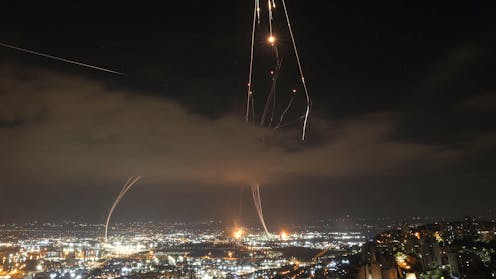
    Scientists comment on the Israeli air strikes on Iranian nuclear sites. 

    Dr Simon Bennett, Director of the Civil Safety and Security Unit, University of Leicester, said:

    “It is clear that Israel has mounted a large aerial assault against Iran’s military infrastructure, although there is little detailed information on which sites have been targeted. For example, whether any of Iran’s research reactors have been targeted.

    “Iran has devoted significant resources to hardening its military infrastructure – especially its nuclear weapons infrastructure – by burying it deep underground.

    “While Israel is equipped with powerful bunker-busting munitions, such as the 5,000lb GBU-28, even these bombs would struggle to penetrate a hardened subterranean bunker. To have any effect, the facility would have to be hit multiple times at the same aiming point – a big ask for any attacking force.

    “Should a subterranean enrichment facility or reactor be hit by one or more bunker-busters, it is unlikely that there would be significant contamination beyond the confines of the site, for the simple reason that the enrichment facility or reactor would be buried in tons of earth and concrete.

    “Further, those who run the site would have been trained in radiation monitoring and mitigation techniques.”


    Prof Richard Wakeford, Professor in Epidemiology, Centre for Occupational and Environmental Health (COEH), University of Manchester, said:

    “Current information appears to suggest that the strikes have only hit uranium enrichment plants, which use highly pure uranium and don’t pose much of a radiological hazard. Such plants will use uranium hexafluoride and this could pose a chemical hazard if damage causes release because hydrogen fluoride is formed on contact with moisture.

    If reactors (or reprocessing plants) are hit, that could be more of a radiological problem if it causes significant damage, because then we could see releases of a range of radionuclides, although presumably on a much smaller scale than from previous reactor accidents.”

    Declared interests

    For all experts, no reply to our request for DOIs was received.

    MIL OSI United Kingdom –

    June 16, 2025
  • MIL-OSI United Kingdom: expert reaction to government announcement on boost to clinical trials

    Source: United Kingdom – Executive Government & Departments

    June 16, 2025

    Scientists comment on the government announcing a boost to clinical trials as part of the 10 year health plan. 

    Dr Andrew Garret, Past President, Royal Statistical Society and Executive VP Scientific Operations, ICON Clinical Research, said:

    “The UK often competes in a global marketplace for clinical trials and finding suitable patients remains the biggest challenge facing drug developers. Efforts to speed up the process in the UK are most welcome and will make the UK a more attractive place to include in global clinical trials.  Other countries also recognise the need to reduce timelines and are working to reduce cycle times too. Contracting is often rate limiting and the efforts described to standardise contracts is tackling an important issue.

    “It is important to be realistic in terms of what matching patients to clinical trials will mean in practice and to manage the public’s expectations here.  Indeed, the Investigator will always be the person to determine if a consenting patient is eligible and can be safely enrolled in a clinical trial. Some clinical trials enrol healthy volunteers, such as certain vaccine trials, and matching will be simpler here.”


    Professor Cath Mummery, Director, UK Dementia Trials Network, said:

    “This news is most welcome and will match the world-leading expertise in medical science in the UK with the ability to deliver trials of innovative therapies. As a clinician I want the best treatments for my patients; this needs access to trials to be an integral part of clinical care. However, patients tell us it is hard to navigate the system, and as a result, most groups are under-represented in trials. Use of the NHS app for trial recruitment will improve equity of access and accelerate recruitment. This commitment from the government will change the game, democratising access and holding trusts accountable for ensuring research is truly embedded in clinical activities.”


    Dr Beth Thompson, executive director of policy and partnerships at Wellcome, the UK’s largest non-governmental research funder, said:

    “Combined with sustained investment, these actions will give a much needed boost to clinical trials, which are an essential way to improve patient care. Increasing the speed of trial set-up and stronger accountability for performance are important steps to ensure cutting-edge research becomes business as usual throughout the NHS and help it provide the very best care.”


    Prof Sir Martin Landray, Chief Executive, Protas and Professor of Medicine & Epidemiology, Oxford Population Health, University of Oxford, said:

    “It is good to see the government’s commitment to clinical trials. Timely and effective support for clinical trials is critical if we are to see new treatments developed for conditions that place a high burden on patients, their families, the NHS and wider society. Clinical trials are the way we determine which treatments work, how well, and for whom.

    Clinical trials are critical to providing evidence-based health care and essential if we are to avoid wasting resources. But if we want an evidence-based NHS, we must have an NHS that helps generate that evidence. Without clinical trials, clinicians and patients cannot make informed choices.

    The UK has many of the attributes needed to be a world-leader in this space. For example, during the pandemic the RECOVERY trial produced results that have saved hundreds of thousands of lives around the world. Other results that prevented hundreds of thousands of people receiving other treatments that were useless or even harmful.

    For too long, the administrative and bureaucratic processes that surround clinical trials in the UK have been seen as slow, poorly coordinated and cumbersome. We must streamline those processes as matter of urgency – ensuring the highest quality of consistent and coordinated decision-making and maximising opportunities to assess the impact of promising new treatments.

    We must be ambitious. It is not sufficient to be just a bit better than our neighbours. We must be truly transformative – to create the environment for inclusive, readily accessible clinical trials that maximise the use of data and technology, serve the interests of current and future patients, and which provide clear and compelling answers.

    The NHS has a key role in embracing this opportunity. But we also need to think beyond the walls of hospitals and doctors’ surgeries. Now is the time for a new era of digitally enabled, community-based trials of preventive therapies to address the high burden of common physical and mental health conditions, readily accessible to patients and the public across the whole of the UK.

    I am delighted to see this announcement from government and excited about the opportunities it could create.”


    Professor Andrew Morris CBE PMedSci, President of the Academy of Medical Sciences, said:

    “This announcement marks a significant commitment to strengthening the UK’s leadership in clinical research. The global clinical trials market is estimated to be worth at least $80 billion by 2030 and countries that can demonstrate speed, quality and cost will have a competitive edge. This commitment is very welcome as streamlined trial set-up times and enhanced public access through the NHS App will accelerate the translation of cutting-edge treatments from laboratory to bedside, directly benefiting patients whilst driving economic growth and ensuring policymakers have the evidence needed for informed healthcare decisions. 

    “The focus on improving participation from under-represented communities is important, though success will depend on earning trust and addressing the broader barriers to diverse participation. By embedding research throughout the NHS and making it accessible to all communities, we can ensure that medical innovation benefits reach every corner of society whilst strengthening the UK’s position as a hub for life sciences investment and discovery.”

    Declared interests

    Prof Sir Martin Landray: Protas is a UK-based not-for-profit organisation that enables smarter trials for better public health; www.protas.co.uk

    The nature of this story means everyone quoted above could be perceived to have a stake in it. As such, our policy is not to ask for interests to be declared – instead, they are implicit in each person’s affiliation.

    MIL OSI United Kingdom –

    June 16, 2025
  • MIL-OSI Asia-Pac: President Lai meets delegation led by Representative Bera, co-chair of US Congressional Taiwan Caucus

    Source: Republic of China Taiwan

    Details
    2025-06-13
    President Lai meets delegation led by French National Assembly Taiwan Friendship Group Chair Marie-Noëlle Battistel
    On the morning of June 12, President Lai Ching-te met a delegation led by Marie-Noëlle Battistel, chair of the French National Assembly’s Taiwan Friendship Group. In remarks, President Lai thanked the National Assembly for its long-term support for Taiwan’s international participation and for upholding security in the Taiwan Strait, helping make France the first major country in the world to enact legislation to uphold freedom of navigation in the Taiwan Strait. The president also said that exchanges and cooperation between Taiwan and France are becoming more frequent, and that he hopes this visit by the Taiwan Friendship Group will inject new momentum into Taiwan-France relations and help build closer partnerships in the economy, trade, energy, and digital security.  A translation of President Lai’s remarks follows: First, I would like to welcome Chair Battistel, who is once again leading a visiting delegation. Last year, Chair Battistel co-led a delegation to attend the inauguration ceremony for myself and Vice President Bi-khim Hsiao. This is her fourth visit, and first as chair of the Taiwan Friendship Group, which makes it especially meaningful. This delegation’s visit demonstrates strong support for Taiwan, and on behalf of the people of Taiwan, I want to express my sincerest welcome and thanks. France is a pioneer in promoting free and democratic values. These are values that Taiwan cherishes and is working hard to defend. I want to express gratitude to the French Parliament for their long-term support for Taiwan’s international participation, and for upholding security in the Taiwan Strait. The French Parliament’s two chambers have continued to strongly support Taiwan, with the passage of a resolution supporting Taiwan’s participation in international organizations in 2021, as well as the passage of the seven-year Military Programming Law in 2023. This has made France the first major country in the world to enact legislation to uphold freedom of navigation in the Taiwan Strait. Through it all, the Taiwan Friendship Group has played a key role, and I want to thank all of our distinguished guests for their efforts. Over the past few years, Taiwan and France have continued to deepen cooperation in areas including the economy, technology, culture, and sports. At the Choose France summit held in Paris last month, Taiwanese and French enterprises also announced they will launch cooperation in the semiconductor and satellite fields. The VivaTech startup exhibition, now being held in France, also has many Taiwanese vendors participating. Exchanges and cooperation between Taiwan and France, whether official or people-to-people, are becoming more and more frequent. I hope that this visit by the Taiwan Friendship Group will inject new momentum into Taiwan-France relations, building closer partnerships in the economy, trade, energy, and digital security.  To address current geopolitical and economic challenges, Taiwan will continue to join forces with France and other like-minded countries to jointly safeguard peace and stability in the Indo-Pacific region, and contribute our concerted efforts to global prosperity and development. Once again, I want to welcome our visitors to Taiwan. I hope to continue our joint efforts to create a more prosperous future for both Taiwan and France.   Chair Battistel then delivered remarks, thanking President Lai for extending this invitation. Last year on May 20, she said, she and her delegation attended the presidential inauguration ceremony, so she was delighted to visit Taiwan once again with the French National Assembly’s Taiwan Friendship Group and bear witness to their friendship with Taiwan. Chair Battistel noted that this visit has given them an opportunity to strengthen Taiwan-France relations in areas including the economy, culture, the humanities, and diplomacy, and conduct exchanges with numerous heads of government agencies and research institutes. It has also been an opportunity, she said, to witness the importance of exchanges and cooperation with Taiwan in areas including energy, semiconductors, youth, and culture, and the impact created by important issues of mutual concern, including AI and disinformation, on the security of many countries. Chair Battistel praised Taiwan for its youth development efforts, and said that under the Taiwan Global Pathfinders Initiative, 30 Taiwanese young people have embarked on a visit to France, with itineraries including the United Nations Ocean Conference and the VivaTech exhibition, as well as the city of Toulouse, which is strategically important for the aerospace industry. Members of the group are also conducting exchanges at the French National Assembly, she said.  Chair Battistel stated that the Taiwan-France partnership is growing closer, and that she hopes to continue to strengthen bilateral exchanges and cooperation, as supporting peace for Taiwan supports peace around the world.  The delegation also included Taiwan Friendship Group Vice Chair Éric Martineau, as well as National Assembly Committee on Foreign Affairs Vice Chair Laetitia Saint-Paul and Deputies Marie-José Allemand and Claudia Rouaux. The delegation was accompanied to the Presidential Office by French Office in Taipei Deputy Director Cléa Le Cardeur.

    Details
    2025-06-05
    President Lai hosts state banquet for President Bernardo Arévalo of Republic of Guatemala  
    At noon on June 5, President Lai Ching-te hosted a state banquet at the Presidential Office for President Bernardo Arévalo of the Republic of Guatemala and his wife. In his remarks, President Lai noted that Taiwan and Guatemala have both undergone an arduous democratization process, and therefore, in face of the continuous expansion of authoritarian influence, must join hands in brotherhood and come together in solidarity to safeguard our hard-earned freedom and democracy. President Lai also expressed hope that both countries will work together and continue to deepen various exchanges and cooperation, taking a friendship that has lasted over 90 years to new heights. A translation of President Lai’s remarks follows: Once again, I would like to offer a warm welcome to President Arévalo and First Lady Lucrecia Peinado, who are leading this delegation to Taiwan. President Arévalo’s previous visit to Taiwan was 31 years ago. Back then, Taiwan did not have direct presidential elections, and the nation was continuing to make progress toward democratization. Today, 31 years later, Taiwan has conducted direct presidential elections eight times, with three transfers of power between political parties. On this visit, I am sure that President Arévalo will gain a deep appreciation for Taiwan’s free and democratic atmosphere.  Taiwan and Guatemala have both undergone an arduous democratization process. A little over 200 years ago, the people of Guatemala took a stand against colonial oppression, seeking national dignity and the freedom of its people. Eighty-one years ago, President Arévalo’s father, Juan José Arévalo, became Guatemala’s first democratically elected president, establishing an important foundation for subsequent democratic development.  Our two peoples have democracy in their blood. Both know the value of freedom and democracy and are willing to take a stand for those values. Therefore, in face of the continuous expansion of authoritarian influence, our two countries must join hands in brotherhood to respond to threats and challenges, and come together in solidarity to safeguard our hard-earned freedom and democracy. I hope that both countries will work together to continue to deepen various exchanges and cooperation, taking a friendship that has lasted over 90 years to new heights. I hope that on this visit, in addition to gaining a deeper understanding of Taiwan’s political, economic, and social development, President Arévalo can also reacquaint himself with the democratic vitality and cultural diversity of Taiwan by sampling various gourmet delicacies and once again experiencing the beauty of our scenery and warmth of our people. Guatemala is a very beautiful country. In the future, I hope to have a chance to personally experience that beauty, explore Mayan civilization, and savor local Guatemalan coffee. In closing, I wish the visiting delegation a smooth and successful trip, and beautiful, unforgettable memories. May President Arévalo enjoy the best of health, and may the diplomatic friendship between our two countries endure. President Arévalo then delivered remarks, stating that at different times and by different means, the people of Taiwan and Guatemala have relentlessly sought to defend freedom and democracy. We share the same expectations, he said, and are walking the right path amid today’s complex international circumstances.  President Arévalo stated that Taiwan and Guatemala are true democratic nations, where the government’s goal is to serve all the people. He noted that this is far from easy under current circumstances, as many authoritarian regimes use their long-term hold on power to safeguard the interests of select groups and neglect the wellbeing of the population as a whole. President Arévalo said that last week Guatemala commemorated the 40th anniversary of its constitution, which was enacted in 1985 and is Guatemala’s ultimate guide, setting the foundation for democracy and clearly outlining the path ahead. He said that over the past 40 years, Guatemala has continued to follow the democratic blueprint established by the constitution and end the civil war so that the nation could make the transition to real democracy. Although more than a few ambitious people have attempted to destroy that process from within, he noted, the people of Guatemala have never given up the pursuit of democracy as an ideal. President Arévalo stated that our two sides’ coming together here is due to such shared values as freedom and democracy as well as the idea of serving all the people. He underlined that the governments of both countries will continue to work hard and provide mutual support to smooth out each other’s path of democracy, freedom, and justice. President Arévalo emphasized that the government of Guatemala will always be Taiwan’s ally, and that he firmly believes Taiwan is Guatemala’s most reliable partner on the path of democracy and economic prosperity and development. The president said he hopes this visit will be the first step towards setting a new course for the governments and peoples of both countries. Also in attendance at the banquet were Guatemala Minister of Foreign Affairs Carlos Ramiro Martínez, Minister of the Economy Gabriela García, and Guatemala Ambassador Luis Raúl Estévez López.  

    Details
    2025-06-05
    President Lai welcomes President Bernardo Arévalo of Republic of Guatemala with military honors  
    On the morning of June 5, President Lai Ching-te welcomed with full military honors President Bernardo Arévalo of the Republic of Guatemala and his wife, who are leading a delegation of cabinet members visiting Taiwan for the first time, demonstrating the deep and enduring alliance between our nations. In remarks, President Lai noted that over the past few years, bilateral cooperation between Taiwan and Guatemala has grown closer and more diverse, and said that moving forward, based on a foundation of mutual assistance for mutual benefit, we will continue to promote programs in line with international trends, spurring prosperity and development in both our nations. The military honors ceremony began at 10:30 a.m. in the Entrance Hall of the Presidential Office. After a 21-gun salute and the playing of the two countries’ national anthems, President Lai and President Arévalo each delivered remarks. A translation of President Lai’s remarks follows: Today, President Arévalo and First Lady Lucrecia Peinado are leading a delegation of cabinet members visiting Taiwan for the first time, demonstrating the deep and enduring alliance between our nations. On behalf of the people and government of the Republic of China (Taiwan), I want to extend my sincerest welcome. Last year, our two countries celebrated the 90th anniversary of diplomatic ties, providing mutual support all along the way. Especially over the past few years, bilateral cooperation has grown closer and more diverse. We have a long record of remarkable results, whether in terms of medicine and public health, education and culture, technological cooperation, or economic and trade exchanges. Moving forward, based on a foundation of mutual assistance for mutual benefit, Taiwan and Guatemala will continue to promote programs in line with international trends. We will continue to strengthen exchange and cooperation for young people, as well as scholarship programs, and actively cultivate high-tech and information and communications technology industry talent, spurring prosperity and development in both our nations. Although separated by a great distance, the peoples of both countries are closely connected by their ideals and values. I am confident that with President Arévalo’s support, bilateral exchanges and cooperation will become closer and more diverse, beginning a very promising new chapter. I wish the visiting delegation a smooth and successful trip. President Arévalo then delivered remarks, saying that on behalf of the government and people of Guatemala, he is honored to visit the Republic of China (Taiwan), this beautiful nation, and to receive full military honors, which reflects the mutual respect between our two nations as well as our solid friendship. Especially as this state visit comes as we celebrate 90 years of formal diplomatic ties, he said, he has brought the foreign minister, economics minister, private secretary to the president, and social communication secretary as members of his delegation, in the hope of our ties embarking on a new chapter. President Arévalo said that Guatemala-Taiwan ties have in recent years been growing steadily on a foundation of mutual understanding and cooperation, making significant progress, and that our peoples have also cultivated sincere friendships and cooperative relationships across many fields. Our nations are especially promoting public health, education, agricultural technology, and infrastructure, he said, key fields which are conducive to economic and social development. He expressed his hope that on such good foundations of the past, we can further strengthen our bilateral ties for the future. President Arévalo stated that through this state visit they not only want to reaffirm the good bilateral ties between our nations, but that they also hope to define a trajectory for the future of our cooperation in the direction of expanding economic cooperation, building economic and trade alliances, and facilitating investment to foster a Taiwan-Guatemala relationship that benefits both peoples. He then expressed gratitude to the people of Taiwan for helping Guatemala over the past 90 years and reaffirmed the unwavering support of Guatemala for the Republic of China (Taiwan). On the occasion of this visit, he said, he hopes to extend a friendly hand to the people of Taiwan, adding that he looks forward to our nations continuing to take major steps forward on the road of mutual assistance and prosperity. Also in attendance at the welcome ceremony were Dean of the Diplomatic Corps and Saint Vincent and the Grenadines Ambassador Andrea Clare Bowman, and members of the foreign diplomatic corps in Taiwan.  

    Details
    2025-06-03
    President Lai confers decoration on President Hilda C. Heine of Republic of the Marshall Islands, hosts state banquet  
    At noon on June 3, President Lai Ching-te, accompanied by Vice President Bi-khim Hsiao, conferred a decoration upon President Hilda C. Heine of the Republic of the Marshall Islands, and hosted a state banquet for President Heine and her husband at the Presidential Office. In remarks, President Lai thanked President Heine for her commitment to deepening the diplomatic partnership between our nations and speaking up for Taiwan in the international arena. He also expressed hope for Taiwan and the Marshall Islands to work together to address various challenges through an even greater diversity of exchanges, and that together, we can contribute even more to peace, stability, and development throughout the Pacific region. At the decoration ceremony, President Lai personally conferred the Order of Brilliant Jade with Grand Cordon on President Heine before delivering remarks, a translation of which follows:  The Marshall Islands was the first Pacific ally that I visited after taking office as president. When I arrived there, I was immediately drawn to its beautiful scenery. And I received a very warm welcome from the local people. This gesture showed the profound friendship between our two nations. I was truly touched. I also remember trying your nation’s special Bob Whisky for the first time. The flavor was as unique and impressive as the landscape of the Marshall Islands.  In addition to welcoming our distinguished guests today, we also presented President Heine with the Order of Brilliant Jade with Grand Cordon. On behalf of the people of Taiwan, I want to thank President Heine for her commitment to deepening the diplomatic partnership between our nations, and for staunchly speaking up for Taiwan in the international arena. Both I and the people of Taiwan are profoundly grateful to President Heine for her friendship and support. Over the past few years, cooperation between Taiwan and the Marshall Islands has grown ever closer. And this visit by our distinguished guests will allow our two countries to further expand areas of bilateral exchange. I have always believed that only through mutual assistance and trust can two countries build a longstanding and steadfast partnership. I once again convey my sincere aspiration that Taiwan and the Marshall Islands work together to address various challenges through an even greater diversity of exchanges. Together, we can contribute even more to peace, stability, and development throughout the Pacific region. In closing, I want to thank President Heine and First Gentleman Thomas Kijiner, Jr. for leading this delegation to Taiwan, which deepens the foundations of our bilateral relationship. May our two nations enjoy a long and enduring friendship. President Heine then delivered remarks, stating that she felt especially privileged to receive the Order of Brilliant Jade with Grand Cordon of the Republic of China (Taiwan), and humbly accepted the honor with the utmost gratitude, humility, and deep responsibility. This is a deep responsibility, she said, because she understands that since its inception in 1933, this order has been bestowed upon a select few. She then thanked President Lai for this great honor. President Heine stated that the banquet was not just a celebration of our bilateral friendship, but a true reflection of the generosity of the Taiwan spirit and a testament to the enduring ties between our nations, founded on shared values and aspirations, including a respect for the rule of law, the preservation of human dignity, and a deep commitment to democracy. President Heine stated that the Taiwan-Marshall Islands partnership continues to evolve through practical cooperation and mutual support. In recent years, she said, our countries have worked hand in hand across a range of vital sectors, including the recent opening of the Majuro Hospital AI and Telehealth Center and the ongoing and successful Taiwan Health Center, various technical training and scholarship programs, and various climate change adaptation projects in renewable energy, coastal resilience, and sustainable agriculture.   President Heine emphasized that the Marshall Islands continues to be a proud and vocal supporter of Taiwan’s meaningful participation in the United Nations system and other international organizations. Taiwan’s exclusion from these platforms, she said, is not only unjust, but is bad for the world, and the global community needs Taiwan’s voice and expertise.  President Heine also expressed sincere appreciation to all of the Taiwanese friends who have contributed their efforts to deepening bilateral relations, including government officials, healthcare workers, teachers, engineers, and volunteers. The people of the Marshall Islands, she said, deeply appreciate and value everyone’s efforts and service. President Heine said that as we celebrate our partnership, let us look to the future with hope and determination, continue to work together, learn from one another, and support one another to champion a world where all nations can chart their own course based on peace and international law. Also attending the state banquet were Marshall Islands Council of Iroij Chairman Lanny Kabua, Minister of Foreign Affairs and Trade Kalani R. Kaneko, Minister of Finance David Paul, Nitijela Standing Committee on Foreign Affairs and Trade Chairperson Joe Bejang, and Charge d’Affaires a.i. Anjanette Davis-Anjel of the Embassy of the Republic of the Marshall Islands.  

    Details
    2025-06-03
    President Lai and President Hilda C. Heine of Marshall Islands hold bilateral talks and witness signing of agreements
    On the morning of June 3, President Lai Ching-te, accompanied by Vice President Bi-khim Hsiao, held bilateral talks with President Hilda C. Heine of the Republic of the Marshall Islands at the Presidential Office following a welcome ceremony with military honors for her and her husband. The leaders also jointly witnessed the signing of a letter of intent for sports exchanges and a memorandum of understanding regarding the Presidents’ Scholarship Fund. President Lai then presided over a launch ceremony for a loan program to purchase aircraft. In remarks, President Lai thanked the government and the Nitijela (parliament) of the Marshall Islands for their longstanding support for Taiwan’s international participation and for voicing staunch support for Taiwan at numerous international venues. President Lai said that Taiwan looks forward to continuing to deepen its diplomatic partnership with the Marshall Islands and build an even closer cooperative relationship across a range of fields, engaging in mutual assistance for mutual benefits and helping each other achieve joint and prosperous development to yield even greater well-being for our peoples. A translation of President Lai’s remarks follows: I once again warmly welcome President Heine, First Gentleman Thomas Kijiner, Jr., and our guests to Taiwan. During my visit to the Marshall Islands last year, I said that Taiwan and the Marshall Islands are truly a family. When Vice President Hsiao and I took office last year, President Heine led a delegation to Taiwan. It is now one year since our inauguration, and I am delighted to see President Heine once again, just as if I were seeing family arrive from afar. Through my visit to the Marshall Islands, I gained a profound sense of the friendship between the peoples of our two nations, well-demonstrated by bilateral exchanges in such areas as healthcare, agriculture, and education. And it is thanks to President Heine’s longstanding support for Taiwan that our countries have been able to further advance collaboration on even more issues, including women’s empowerment and climate change. In recent years, the geopolitical and economic landscape has changed rapidly. We look forward to Taiwan and the Marshall Islands continuing to deepen our partnership and build an even closer cooperative relationship. In just a few moments, President Heine and I will witness the signing of several documents, including a memorandum of understanding and a letter of intent, to expand bilateral cooperation in such fields as sports, education, and transportation. Taiwan will take concrete action to work with the Marshall Islands and advance mutual prosperity and development, writing a new chapter in our diplomatic partnership. I would also like to take this opportunity to express gratitude to the government and Nitijela of the Marshall Islands. In recent years, the Nitijela has passed annual resolutions backing Taiwan’s international participation, and President Heine and Marshallese cabinet members have been some of the strongest advocates for Taiwan’s international participation, voicing staunch support for Taiwan at numerous international venues. Building on the pillars of democracy, peace, and prosperity, Taiwan will continue to work with the Marshall Islands and other like-minded countries to deepen our partnerships, engage in mutual assistance for mutual benefits, and help one another achieve joint and prosperous development. I have every confidence that the combined efforts of our two nations will yield even greater well-being for our peoples and see us make even more contributions to the world. President Heine then delivered remarks, and began by conveying warm greetings of iokwe from the people and government of the Republic of the Marshall Islands to the people and government of the Republic of China (Taiwan). She said she was deeply honored to be in Taiwan for an official visit, and extended appreciation to President Lai and his government for their gracious invitation and warm welcome. President Heine stated that this year marks 27 years of diplomatic ties between our two nations, and that they are proud of this enduring friendship. This special and enduring relationship, she said, is grounded in our shared Austronesian heritage, and strengthened by mutual respect for each other’s democratic systems and our steadfast commitment to the core values of freedom, justice, and the rule of law. President Heine stated that Taiwan’s continued support has been invaluable to the people and national development of the Marshall Islands, particularly in the areas of health, education, agriculture, and climate change. She also expressed deep appreciation to Taiwan for providing Marshallese students with opportunities to study in Taiwan, and for the care extended to Marshallese who travel here for medical treatment. President Heine also announced that she would be presenting a copy of a resolution by the people and government of the Republic of the Marshall Islands reiterating their appreciation for the support provided by the people and government of the Republic of China (Taiwan), and calling on the United Nations to take immediate action to resolve the inappropriate exclusion of Taiwan’s 23 million people from the UN system. She added that she looked forward to the bilateral discussions later that day, and to continuing the important work that both countries carry out together. After the bilateral talks, President Lai and President Heine witnessed the signing of a letter of intent regarding sports exchanges and a memorandum of understanding regarding the Presidents’ Scholarship Fund by Minister of Foreign Affairs Lin Chia-lung (林佳龍) and Marshallese Minister of Foreign Affairs and Trade Kalani R. Kaneko. President Lai then presided over a launch ceremony for a loan program to purchase aircraft, marking the formal beginning of Taiwan-Marshall Islands air transport cooperation. The visiting delegation also included Council of Iroij Chairman Lanny Kabua, Minister of Finance David Paul, and Nitijela Standing Committee on Foreign Affairs and Trade Chair Joe Bejang. They were accompanied to the Presidential Office by Charge d’Affaires a.i. Anjanette Davis-Anjel of the Embassy of the Republic of the Marshall Islands.

    Details
    2025-05-20
    President Lai interviewed by Nippon Television and Yomiuri TV
    In a recent interview on Nippon Television’s news zero program, President Lai Ching-te responded to questions from host Mr. Sakurai Sho and Yomiuri TV Shanghai Bureau Chief Watanabe Masayo on topics including reflections on his first year in office, cross-strait relations, China’s military threats, Taiwan-United States relations, and Taiwan-Japan relations. The interview was broadcast on the evening of May 19. During the interview, President Lai stated that China intends to change the world’s rules-based international order, and that if Taiwan were invaded, global supply chains would be disrupted. Therefore, he said, Taiwan will strengthen its national defense, prevent war by preparing for war, and achieve the goal of peace. The president also noted that Taiwan’s purpose for developing drones is based on national security and industrial needs, and that Taiwan hopes to collaborate with Japan. He then reiterated that China’s threats are an international problem, and expressed hope to work together with the US, Japan, and others in the global democratic community to prevent China from starting a war. Following is the text of the questions and the president’s responses: Q: How do you feel as you are about to round out your first year in office? President Lai: When I was young, I was determined to practice medicine and save lives. When I left medicine to go into politics, I was determined to transform Taiwan. And when I was sworn in as president on May 20 last year, I was determined to strengthen the nation. Time flies, and it has already been a year. Although the process has been very challenging, I am deeply honored to be a part of it. I am also profoundly grateful to our citizens for allowing me the opportunity to give back to our country. The future will certainly be full of more challenges, but I will do everything I can to unite the people and continue strengthening the nation. That is how I am feeling now. Q: We are now coming up on the 80th anniversary of the end of World War II, and over this period, we have often heard that conflict between Taiwan and the mainland is imminent. Do you personally believe that a cross-strait conflict could happen? President Lai: The international community is very much aware that China intends to replace the US and change the world’s rules-based international order, and annexing Taiwan is just the first step. So, as China’s military power grows stronger, some members of the international community are naturally on edge about whether a cross-strait conflict will break out. The international community must certainly do everything in its power to avoid a conflict in the Taiwan Strait; there is too great a cost. Besides causing direct disasters to both Taiwan and China, the impact on the global economy would be even greater, with estimated losses of US$10 trillion from war alone – that is roughly 10 percent of the global GDP. Additionally, 20 percent of global shipping passes through the Taiwan Strait and surrounding waters, so if a conflict breaks out in the strait, other countries including Japan and Korea would suffer a grave impact. For Japan and Korea, a quarter of external transit passes through the Taiwan Strait and surrounding waters, and a third of the various energy resources and minerals shipped back from other countries pass through said areas. If Taiwan were invaded, global supply chains would be disrupted, and therefore conflict in the Taiwan Strait must be avoided. Such a conflict is indeed avoidable. I am very thankful to Prime Minister of Japan Ishiba Shigeru and former Prime Ministers Abe Shinzo, Suga Yoshihide, and Kishida Fumio, as well as US President Donald Trump and former President Joe Biden, and the other G7 leaders, for continuing to emphasize at international venues that peace and stability across the Taiwan Strait are essential components for global security and prosperity. When everyone in the global democratic community works together, stacking up enough strength to make China’s objectives unattainable or to make the cost of invading Taiwan too high for it to bear, a conflict in the strait can naturally be avoided. Q: As you said, President Lai, maintaining peace and stability across the Taiwan Strait is also very important for other countries. How can war be avoided? What sort of countermeasures is Taiwan prepared to take to prevent war? President Lai: As Mr. Sakurai mentioned earlier, we are coming up on the 80th anniversary of the end of WWII. There are many lessons we can take from that war. First is that peace is priceless, and war has no winners. From the tragedies of WWII, there are lessons that humanity should learn. We must pursue peace, and not start wars blindly, as that would be a major disaster for humanity. In other words, we must be determined to safeguard peace. The second lesson is that we cannot be complacent toward authoritarian powers. If you give them an inch, they will take a mile. They will keep growing, and eventually, not only will peace be unattainable, but war will be inevitable. The third lesson is why WWII ended: It ended because different groups joined together in solidarity. Taiwan, Japan, and the Indo-Pacific region are all directly subjected to China’s threats, so we hope to be able to join together in cooperation. This is why we proposed the Four Pillars of Peace action plan. First, we will strengthen our national defense. Second, we will strengthen economic resilience. Third is standing shoulder to shoulder with the democratic community to demonstrate the strength of deterrence. Fourth is that as long as China treats Taiwan with parity and dignity, Taiwan is willing to conduct exchanges and cooperate with China, and seek peace and mutual prosperity. These four pillars can help us avoid war and achieve peace. That is to say, Taiwan hopes to achieve peace through strength, prevent war by preparing for war, keeping war from happening and pursuing the goal of peace. Q: Regarding drones, everyone knows that recently, Taiwan has been actively researching, developing, and introducing drones. Why do you need to actively research, develop, and introduce new drones at this time? President Lai: This is for two purposes. The first is to meet national security needs. The second is to meet industrial development needs. Because Taiwan, Japan, and the Philippines are all part of the first island chain, and we are all democratic nations, we cannot be like an authoritarian country like China, which has an unlimited national defense budget. In this kind of situation, island nations such as Taiwan, Japan, and the Philippines should leverage their own technologies to develop national defense methods that are asymmetric and utilize unmanned vehicles. In particular, from the Russo-Ukrainian War, we see that Ukraine has successfully utilized unmanned vehicles to protect itself and prevent Russia from unlimited invasion. In other words, the Russo-Ukrainian War has already proven the importance of drones. Therefore, the first purpose of developing drones is based on national security needs. Second, the world has already entered the era of smart technology. Whether generative, agentic, or physical, AI will continue to develop. In the future, cars and ships will also evolve into unmanned vehicles and unmanned boats, and there will be unmanned factories. Drones will even be able to assist with postal deliveries, or services like Uber, Uber Eats, and foodpanda, or agricultural irrigation and pesticide spraying. Therefore, in the future era of comprehensive smart technology, developing unmanned vehicles is a necessity. Taiwan, based on industrial needs, is actively planning the development of drones and unmanned vehicles. I would like to take this opportunity to express Taiwan’s hope to collaborate with Japan in the unmanned vehicle industry. Just as we do in the semiconductor industry, where Japan has raw materials, equipment, and technology, and Taiwan has wafer manufacturing, our two countries can cooperate. Japan is a technological power, and Taiwan also has significant technological strengths. If Taiwan and Japan work together, we will not only be able to safeguard peace and stability in the Taiwan Strait and security in the Indo-Pacific region, but it will also be very helpful for the industrial development of both countries. Q: The drones you just described probably include examples from the Russo-Ukrainian War. Taiwan and China are separated by the Taiwan Strait. Do our drones need to have cross-sea flight capabilities? President Lai: Taiwan does not intend to counterattack the mainland, and does not intend to invade any country. Taiwan’s drones are meant to protect our own nation and territory. Q: Former President Biden previously stated that US forces would assist Taiwan’s defense in the event of an attack. President Trump, however, has yet to clearly state that the US would help defend Taiwan. Do you think that in such an event, the US would help defend Taiwan? Or is Taiwan now trying to persuade the US? President Lai: Former President Biden and President Trump have answered questions from reporters. Although their responses were different, strong cooperation with Taiwan under the Biden administration has continued under the Trump administration; there has been no change. During President Trump’s first term, cooperation with Taiwan was broader and deeper compared to former President Barack Obama’s terms. After former President Biden took office, cooperation with Taiwan increased compared to President Trump’s first term. Now, during President Trump’s second term, cooperation with Taiwan is even greater than under former President Biden. Taiwan-US cooperation continues to grow stronger, and has not changed just because President Trump and former President Biden gave different responses to reporters. Furthermore, the Trump administration publicly stated that in the future, the US will shift its strategic focus from Europe to the Indo-Pacific. The US secretary of defense even publicly stated that the primary mission of the US is to prevent China from invading Taiwan, maintain stability in the Indo-Pacific, and thus maintain world peace. There is a saying in Taiwan that goes, “Help comes most to those who help themselves.” Before asking friends and allies for assistance in facing threats from China, Taiwan must first be determined and prepared to defend itself. This is Taiwan’s principle, and we are working in this direction, making all the necessary preparations to safeguard the nation. Q: I would like to ask you a question about Taiwan-Japan relations. After the Great East Japan Earthquake in 2011, you made an appeal to give Japan a great deal of assistance and care. In particular, you visited Sendai to offer condolences. Later, you also expressed condolences and concern after the earthquakes in Aomori and Kumamoto. What are your expectations for future Taiwan-Japan exchanges and development? President Lai: I come from Tainan, and my constituency is in Tainan. Tainan has very deep ties with Japan, and of course, Taiwan also has deep ties with Japan. However, among Taiwan’s 22 counties and cities, Tainan has the deepest relationship with Japan. I sincerely hope that both of you and your teams will have an opportunity to visit Tainan. I will introduce Tainan’s scenery, including architecture from the era of Japanese rule, Tainan’s cuisine, and unique aspects of Tainan society, and you can also see lifestyles and culture from the Showa era.  The Wushantou Reservoir in Tainan was completed by engineer Mr. Hatta Yoichi from Kanazawa, Japan and the team he led to Tainan after he graduated from then-Tokyo Imperial University. It has nearly a century of history and is still in use today. This reservoir, along with the 16,000-km-long Chianan Canal, transformed the 150,000-hectare Chianan Plain into Taiwan’s premier rice-growing area. It was that foundation in agriculture that enabled Taiwan to develop industry and the technology sector of today. The reservoir continues to supply water to Tainan Science Park. It is used by residents of Tainan, the agricultural sector, and industry, and even the technology sector in Xinshi Industrial Park, as well as Taiwan Semiconductor Manufacturing Company. Because of this, the people of Tainan are deeply grateful for Mr. Hatta and very friendly toward the people of Japan. A major earthquake, the largest in 50 years, struck Tainan on February 6, 2016, resulting in significant casualties. As mayor of Tainan at the time, I was extremely grateful to then-Prime Minister Abe, who sent five Japanese officials to the disaster site in Tainan the day after the earthquake. They were very thoughtful and asked what kind of assistance we needed from the Japanese government. They offered to provide help based on what we needed. I was deeply moved, as former Prime Minister Abe showed such care, going beyond the formality of just sending supplies that we may or may not have actually needed. Instead, the officials asked what we needed and then provided assistance based on those needs, which really moved me. Similarly, when the Great East Japan Earthquake of 2011 or the later Kumamoto earthquakes struck, the people of Tainan, under my leadership, naturally and dutifully expressed their support. Even earlier, when central Taiwan was hit by a major earthquake in 1999, Japan was the first country to deploy a rescue team to the disaster area. On February 6, 2018, after a major earthquake in Hualien, former Prime Minister Abe appeared in a video holding up a message of encouragement he had written in calligraphy saying “Remain strong, Taiwan.” All of Taiwan was deeply moved. Over the years, Taiwan and Japan have supported each other when earthquakes struck, and have forged bonds that are family-like, not just neighborly. This is truly valuable. In the future, I hope Taiwan and Japan can be like brothers, and that the peoples of Taiwan and Japan can treat one another like family. If Taiwan has a problem, then Japan has a problem; if Japan has a problem, then Taiwan has a problem. By caring for and helping each other, we can face various challenges and difficulties, and pursue a brighter future. Q: President Lai, you just used the phrase “If Taiwan has a problem, then Japan has a problem.” In the event that China attempts to invade Taiwan by force, what kind of response measures would you hope the US military and Japan’s Self-Defense Forces take? President Lai: As I just mentioned, annexing Taiwan is only China’s first step. Its ultimate objective is to change the rules-based international order. That being the case, China’s threats are an international problem. So, I would very much hope to work together with the US, Japan, and others in the global democratic community to prevent China from starting a war – prevention, after all, is more important than cure.

    MIL OSI Asia Pacific News –

    June 16, 2025
  • MIL-OSI Global: Living on Mars: are there lessons from prisons?

    Source: The Conversation – UK – By Lucy Berthoud, Professor of Space Systems Engineering, University of Bristol

    I have been researching the possibility of living on Mars for several years. But it took an invitation to give a talk about space at HMP Erlestoke in England – a category C men’s prison – to make me realise that there are a surprising number of similarities between the challenges that would be faced by would-be Martians and daily life in jail.

    The talk was part of a literary festival called “Penned Up”. As I discussed the parallels between Mars and prison with those incarcerated at HMP Erlestoke, the men agreed with me that, despite seeming so different, they both would share long-term isolation, confinement and psychological challenges (not to mention bad food).

    So, as plans for exploration of Mars advance and we consider how to survive on this distant and hostile world, could there be important lessons from an environment closer to home – the modern prison? Understanding this overlap could be critical for ensuring the wellbeing of those we send to Mars. We know the terrible conditions of prisons can have a severe impact on people, and perhaps we can learn from that to help keep others safe and well.

    It’s important to recognise the fundamental distinction between prisons and space exploration. Prisons are a punitive measure, depriving individuals of their freedom, while space exploration is a highly selective, paid endeavour undertaken by choice. As I saw, living in prison is a profoundly challenging environment. Despite legal minimum standards, overcrowding and shortages mean many prisons fail to uphold them.


    Get your news from actual experts, straight to your inbox. Sign up to our daily newsletter to receive all The Conversation UK’s latest coverage of news and research, from politics and business to the arts and sciences.


    The profoundly negative impact of poor prison conditions highlights the urgent need for effective solutions. But the knowledge gained from this could also then help support people in other challenging and remote environments, such as space exploration.

    We have many years’ experience of studying psychological and team challenges from isolated, confined and extreme environments such as submarines, polar research stations, space simulators on Earth and space stations. But few people have looked to the public prisons on our doorstep for what we can learn.

    Extreme routine

    Daily life in both a prison and in space is governed by structured routines. In prisons, days are often planned down to the minute, dictating everything from waking to sleeping. This rigid scheduling is mirrored by mission-controlled timetables for astronauts.

    Mandatory work is another common thread. Prison routines often include assigned tasks, such as kitchen or laundry duty, which serve the needs of the facility. Similarly, Martian astronauts would need to perform scientific experiments, equipment maintenance and resource production duties. Mandatory work can sometimes lead to resentment if there’s little autonomy.

    Basic food and limited sleep is another common factor. When I asked the inmates what the food was like, they laughed. A staff member explained that the budget is £3.08 per person (the government benchmark figure is even less at £2.70 per person per day). Prison food can be of low nutritional value and meal times are fixed, impacting both health and morale.

    The author, Lucy Berthoud, giving a talk at HMP Erlestoke.
    Photo by Andy Aitchison., CC BY-SA

    On Mars, astronauts would consume carefully planned dehydrated meals, which would no doubt have a higher budget and be nutritionally richer, but it is not as good as freshly cooked food back on Earth.

    Sleep, a fundamental need, can also be elusive in both environments. In prisons, it can be disrupted by noise and poor conditions. Astronauts aboard the International Space Station are continuously exposed to an average noise level of 72 decibels, which is equivalent to the sound of motorway traffic from a distance of 15 metres.

    Limited space

    Prison cells are famously small, often measuring little more than a few square metres, and frequently housing several people. They offer minimal personal space and little privacy. The European standard – if it’s upheld – is a minimum of four square metres per person in a single cell.

    Similarly, Martian habitats, designed to function with the minimum resources and with a focus on life support, will also be challenging space-wise.

    For example, the Apollo Command and Service module which went to lunar orbit had a volume of just 6.2 cubic metres for three astronauts. This lack of personal space and privacy in both settings can lead to heightened stress levels and challenges to emotion regulation.

    Both places also provide a potentially high-risk environment. The threats may be different – often interpersonal in prisons – from violence, sexual assault, and extortion to potential staff abuse-, mainly environmental – radiation, cold and lack of air on Mars. But they can lead to a persistent state of vigilance which can significantly impact mental well-being in both cases.

    Dealing with isolation

    Perhaps the biggest parallels lie in the psychological challenges arising from prolonged isolation. Imprisonment involves a significant separation from family, friends, and the outside world, leading to feelings of isolation and loneliness.

    While astronauts on a mission to Mars are highly trained professionals and have chosen to go, they too will operate under a significant degree of control. With a likely round trip time of two years, astronauts embarking on a mission to Mars may also experience isolation. This could lead to feelings of disconnection and homesickness, as has been studied in volunteers on Earth.

    Prisoners experience a near-complete lack of control over even the most basic aspects of their daily existence. You can see the importance of feelings of control in the fact that even astronauts and cosmonauts sometimes rail against or even disobey mission control’s strict guidelines, as the Nasa astronaut Clayton Anderson has written about in his candid book The Ordinary Spaceman.

    Social dynamics

    Both groups require living in close quarters with a limited, unchanging set of companions. In prison, people are confined to a relatively small social environment, which can lead to complex subcultures and the potential for interpersonal conflict and violence, though supportive relationships can also be a crucial resource.

    Equally, for Martian crews, strong group cohesion and mutual support will be absolutely essential. However, the inherent stress of the mission, confined living conditions and significant communication delays with Earth could still lead to tensions.

    So we see that lessons learned from studying the experiences of people in jails can provide valuable insights for mitigating the negative impacts of life on Mars.

    Strategies such as designing habitats to maximise personal space and privacy, improving food and maximising autonomy will be needed for Martian travel. It will be important to provide access to meaningful activities to combat monotony, ensuring access to comprehensive mental health support and fostering strong social connections and support networks. These have all been studied in prisons.

    By trying to improve prison conditions and continuing to learn from prisons, we can better prepare our pioneers for the unprecedented challenges of making a home on Mars, improving their chances of survival and their ability to thrive.

    Lucy Berthoud receives funding from UK Space Agency and UKRI.

    – ref. Living on Mars: are there lessons from prisons? – https://theconversation.com/living-on-mars-are-there-lessons-from-prisons-258502

    MIL OSI – Global Reports –

    June 16, 2025
  • MIL-OSI Global: Batman Begins turns 20: Nolan’s trilogy challenged power, but still sided with the system

    Source: The Conversation – UK – By Irene Zarza-Rubio, PhD Candidate, Film Theory and Media Industries, University of York

    Christopher Nolan’s Dark Knight trilogy is often praised for bringing gritty realism and deeper political themes to superhero films. When Batman Begins premiered in 2005, it reimagined Gotham as a city undone by corruption, inequality and institutional collapse.

    The trilogy may feature masked villains and high-tech gadgets, but at its core, it grapples with what happens when the systems meant to protect people start to fail. Throughout the trilogy, each of the central villains exposes a different aspect of Gotham’s dysfunction.

    In Batman Begins, Ra’s al Ghul (Liam Neeson) sees Gotham as beyond saving, believing its destruction is the only path to renewal. In The Dark Knight, the Joker (Heath Ledger) reveals how fragile the city’s moral and social order truly is, pushing its citizens to the brink with chaos and manipulation. Then in The Dark Knight Rises, Bane (Tom Hardy) harnesses class resentment to stage a violent revolution, blaming Gotham’s wealthy elite for systemic injustice.

    While these antagonists raise serious questions about the city’s foundations, the films ultimately pull back from endorsing their challenges. Instead, they reaffirm that Gotham’s institutions, however flawed, must endure. Radical change, the trilogy suggests, is more dangerous than the corruption already in place.


    Looking for something good? Cut through the noise with a carefully curated selection of the latest releases, live events and exhibitions, straight to your inbox every fortnight, on Fridays. Sign up here.


    Batman (Christian Bale) is central to this message. He doesn’t work to change Gotham’s broken structures. Instead, he tries to keep them from falling apart completely. In The Dark Knight, he faces the Joker’s chaos using extreme measures, including mass surveillance. Though he’s troubled by it, the film still frames it as necessary.

    In The Dark Knight Rises, Bane’s rebellion taps into real fears about inequality and corruption. But instead of taking those concerns seriously, the story presents them as a threat that Batman must shut down. Rather than offering hope for a better system, the film reassures audiences that the existing one, while imperfect, is still the best option.

    The original trailer for Batman Begins (2005).

    While the trilogy appears to challenge authority and institutional power, it effectively offers a reassuring message rather than a radical one. Philosopher Slavoj Žižek argued that The Dark Knight transforms a lie into a stabilising force.

    This is embodied in Batman’s decision to let the public believe he was responsible for Harvey Dent’s (Aaron Eckhart) crimes, preserving Dent’s reputation to maintain hope in Gotham’s legal system. As Batman tells Commissioner Gordon (Gary Oldman): “Sometimes the truth isn’t good enough. Sometimes people deserve more. Sometimes people deserve to have their faith rewarded.”

    The implication is clear: some truths are too dangerous, and maintaining public faith is more important than exposing systemic failure. The films do question the status quo, but only within safe boundaries. They propose that society’s problems can be managed by exceptional individuals rather than through structural reform.

    In doing so, they frame flawed institutions not as entities to be dismantled, but as pillars that must be upheld, even if only symbolically.

    Individual heroes over collective change

    You can see the trilogy’s impact in later films like Joker (2019) and The Batman (2022). Both explore the collapse of society and what happens to people caught in the middle.

    But like Nolan’s films, they centre on lone characters, not collective solutions. They continue the pattern of showing that things are broken, while still trusting that a single hero can fix them.

    Batman takes the fall for Harvey Dent’s crimes in The Dark Knight.

    Two decades after Batman Begins, the trilogy’s legacy feels more relevant than ever. As debates over truth, institutional trust and political extremism continue to dominate global headlines, Nolan’s films resonate with their portrayal of a society teetering on the edge. In an era marked by public disillusionment and the growing sense that “the system” is broken, The Dark Knight trilogy explores the discomforting idea that institutions may be flawed but necessary – and that stability sometimes requires myth, not truth.

    By positioning Batman as a lone moral figure who preserves order at great personal cost, the trilogy reflects a widespread longing for strong leadership amid institutional failure. Yet it also reveals a troubling tendency in popular culture to offer catharsis without change, examination without consequence. As viewers, we are encouraged to acknowledge the depth of societal problems – but not to demand solutions.

    In that sense, The Dark Knight remains not just a compelling superhero story, but a mirror for our continuing struggles with power, truth, and the difficult question of whether our institutions are worth saving, or simply the only ones we’ve got.

    Irene Zarza-Rubio does not work for, consult, own shares in or receive funding from any company or organisation that would benefit from this article, and has disclosed no relevant affiliations beyond their academic appointment.

    – ref. Batman Begins turns 20: Nolan’s trilogy challenged power, but still sided with the system – https://theconversation.com/batman-begins-turns-20-nolans-trilogy-challenged-power-but-still-sided-with-the-system-255271

    MIL OSI – Global Reports –

    June 16, 2025
  • MIL-OSI United Kingdom: Aberdeen becomes first Scottish university with plans to open campus in India The University has taken a significant step forward in its global expansion ambitions after India’s University Grants Commission granted permission to progress with proposals to open a branch campus in Mumbai with a target launch of September 2026.

    Source: University of Aberdeen

    British High Commissioner H.E. Lindy Cameron, Secretary Higher Education & Acting Chairman University Grants Commission (UGC) Shri Vineet Joshi, Union Education Minister Shri Dharmendra Pradhan, Professor Siladitya Bhattacharya, Vice-Principal Global Engagement at the University of Aberdeen; and Chief Minister of Maharashtra, Shri Devendra Fadnavis.

    The University has taken a significant step forward in its global expansion ambitions after India’s University Grants Commission granted permission to progress with proposals to open a branch campus in Mumbai with a target launch of September 2026.
    The University of Aberdeen is the first of the UK’s ancient universities and the first Scottish university to be granted permission for a branch campus in India. The proposal will now go to the University’s governing body Court for approval next month.
    The successful application to the Indian Government followed discussions – which are ongoing – with the UGC and the University’s Transnational Education partners in India.
    The University was granted a Letter of Intent at a special ceremony on Saturday (June 14) in Mumbai hosted by the Indian Government.
    The proposals underpin the University’s commitment to India and its vision of fostering world-class education, cutting-edge research and transformative innovation in collaboration with Indian institutions.
    Building on decades of University partnerships with more than 200 Indian universities and research centres including IITs – the Indian Institutes of Technology; AIIMS – All India Institute of Medical Sciences; Manipal Academy, ICAR – Indian Council of Agricultural Research and Delhi University, the proposed branch campus would be a hub for academic excellence and global problem-solving.
    Aligned with India’s National Education Policy 2020, the proposed campus would initially offer programmes in Computing and Data Science, Business Management, Economics, Artificial Intelligence and an MBA with future expansion into Mathematics and International Business Management and Information Systems, Public Health, Film Studies and Psychology – strategic areas where Aberdeen and India share common priorities.

    As the first Scottish university to be granted permission to set up a campus in India, this is more than just an institutional milestone; it underscores how education can serve as a bridge between nations, fostering cultural exchange, mutual respect, and creating global opportunities for students and academics alike.” Alison Barrett MBE, Country Director India at the British Council

    A follow up second phase would see the University aim to establish a research and innovation office on the proposed new campus to expand research collaborations and industry partnerships in critical areas such as AI, Energy and Life Sciences.
    Professor Siladitya Bhattacharya, Vice-Principal Global Engagement at the University of Aberdeen, said: “We are excited to progress our global ambitions after the Indian Government gave us approval to proceed with our intention for a campus. As a country of over 1.4 billion where 50% of the population are below the age of 25, India has long been a priority area for our global engagement strategy focusing on student recruitment, articulation partnerships, research collaborations and alumni networks.
    “The proposed campus aims to empower students, accelerate joint research with Indian partners and contribute to India’s dynamic knowledge economy. By combining the University of Aberdeen’s research expertise with India’s innovation ecosystem, this initiative aims to tackle global challenges while enabling student exchange, faculty collaboration and industry-led innovation.
    “It also reinforces the University of Aberdeen’s role as a leader in international education, committed to shaping the future of global higher education and strengthening the deep and historic ties between India and the UK.
    “We are looking forward to collaborating with our Indian partners to bring this vision to life and further bolster ties between Scotland and India through education and research.”
    Alison Barrett MBE, Country Director India at the British Council, said: “The University of Aberdeen’s decision to progress with a campus in Mumbai marks an important moment in deepening the education partnership between India and the UK. It reflects our shared commitment to advancing the internationalisation of higher education, research, and innovation, as envisioned in India’s National Education Policy 2020.
    “As the first Scottish university to be granted permission to set up a campus in India, this is more than just an institutional milestone; it underscores how education can serve as a bridge between nations, fostering cultural exchange, mutual respect, and creating global opportunities for students and academics alike. We are proud to support initiatives that bring world-class education closer to students in India.”

    MIL OSI United Kingdom –

    June 16, 2025
  • MIL-OSI Russia: Among NSU students there are 75 diploma winners and 6 medalists of the All-Russian Olympiad “I am a professional”

    Translation. Region: Russian Federal

    Source: Novosibirsk State University – Novosibirsk State University –

    The results of the VIII season of the All-Russian student Olympiad “I am a professional” of the presidential platform “Russia – the country of opportunities” have been summed up. NSU demonstrated the highest results in the region: among the university students there are 75 diploma winners and 6 medalists.

    The new season of the Olympiad involved 185,610 students from 89 regions of Russia, who competed in 71 areas — from psychology, linguistics and jurisprudence to robotics, metallurgy and quantum technologies. Novosibirsk Oblast entered the top 5 following the results of the VIII season: young people in the region received 112 “I am a professional” diplomas.

    — The high activity of the region’s students and their outstanding results in the “I am a professional” Olympiad demonstrate that personnel for the future of Russia are being formed here. This season, students from the Novosibirsk Region have shown themselves in such areas as “Biotechnology”, “Bioengineering and bioinformatics”, “Biology” and others. We are proud of the achievements of the students from the Novosibirsk Region and are confident that their success will become an example for other regions, — said Andrey Betin, CEO of the presidential platform “Russia is a Country of Opportunities”, Rector of the Senezh Management Workshop.

    This year, 827 students from NSU took part in the selection round, and 197 in the final. The top 5 most popular areas of participation among NSU students were Biology, Biotechnology, Bioengineering and Bioinformatics, Chemistry, and Mathematics. NSU students showed themselves best in such tracks as Biotechnology, Bioengineering and Bioinformatics, Biology, and Ecology. According to the results of the overall medal count, NSU students won three gold and three bronze medals:

    Gold medalists

    Alexander Tomilov, track “Chemistry”, 3rd year bachelor’s degree Faculty of Natural Sciences;

    Lyubov Pecherina, track “Psychology”, 4th year bachelor’s degree Institute of Medicine and Medical Technologies;

    Ivan Baksheev, track “Security of information systems and technologies of critical facilities”, 2nd year master’s degree student Faculty of Information Technology.

    Bronze medalists

    Nazim Mustafin, 2 bronze medals in the Chemistry and Biotechnology tracks, 3rd year specialist student of the Faculty of Natural Sciences;

    Anna Skotareva, track “Biotechnology”, 3rd year bachelor’s degree at the Faculty of Natural Sciences.

    NSU traditionally acted as the organizer of the Olympiad track – “Bioengineering and Bioinformatics”. 1231 students from Russian universities took part in the selection stage of the track.

    Olympiad diploma winners will be able to complete internships at major companies and take advantage of benefits when entering the next level of education, and medalists will receive cash prizes of up to 300 thousand rubles.

    — High results of participation in the Olympiad “I am a professional” are an indicator that the universities of the Novosibirsk region train competitive personnel. Year after year, students demonstrate an increasingly high level of training. In the VIII season, participants received 112 diplomas of the Olympiad “I am a professional”, and the best results were demonstrated by students of the Novosibirsk National Research State University, Novosibirsk State Technical University and Novosibirsk State Pedagogical University, — shared the head of the Olympiad “I am a professional” Valeria Kasamara.

    The Olympiad “I am a professional” is being implemented within the framework of the federal project “Russia – the country of opportunities” of the national project “Youth and Children” with the support of the Ministry of Science and Higher Education of Russia.

    Please note: This information is raw content directly from the source of the information. It is exactly what the source states and does not reflect the position of MIL-OSI or its clients.

    MIL OSI Russia News –

    June 16, 2025
  • MIL-OSI Russia: Xi Jinping considers Central Asia a key partner in modern cooperation within the framework of the Belt and Road Initiative

    Translation. Region: Russian Federal

    Source: People’s Republic of China in Russian – People’s Republic of China in Russian –

    Source: People’s Republic of China – State Council News

    BEIJING, June 15 (Xinhua) — “Start loading!” Xi Jinping and K.-Zh. Tokayev jointly gave this command at the launch ceremony of the China-Europe Trans-Caspian International Transport Route, which took place in Astana in July 2024.

    The event marked the formal establishment of a multi-dimensional connectivity network combining roads, railways, airlines and pipelines to better link Asia to Europe via the Caspian Sea. The network is expected to become a vibrant artery under the Belt and Road Initiative.

    While the ancient Silk Road witnessed vibrant trade and cultural exchanges between China and Central Asia, Xi Jinping sees the region as an important partner in modern Belt and Road cooperation.

    A view of the China-Kazakhstan Logistics Cooperation Base in Lianyungang, China, June 26, 2024. /Photo: Xinhua/

    In September 2013, also in Astana, the Chinese President gave a historic speech at Nazarbayev University, where he first outlined his vision for the construction of the “Silk Road Economic Belt” – a key component of the Belt and Road Initiative.

    “We can actively discuss the best ways to improve cross-border transport infrastructure,” Xi said, “and work to build a transport network connecting East, West and South Asia to promote economic development and travel in the region.”

    In the years since, the Chinese leader’s vision has steadily been realized. For example, late last year, the Kyrgyz border city of Jalal-Abad hosted a ceremony to mark the start of construction of the China-Kyrgyzstan-Uzbekistan railway. In a congratulatory message, Xi Jinping called for the railway to become a “new demonstration project” for Belt and Road cooperation.

    The railway will start at the ancient Silk Road junction of Kashgar (Xinjiang Uyghur Autonomous Region, Northwest China), pass into Kyrgyzstan via the Torugart Pass, reach Jalal-Abad and end in Andijan in eastern Uzbekistan.

    According to Kyrgyz President Sadyr Japarov, this railway is not just a transport corridor, but an important strategic bridge connecting the countries of the East and West.

    Cooperation under the Belt and Road Initiative has effectively boosted trade, travel, and exchanges in the region. In 2024, trade between China and Central Asian countries reached a record US$94.8 billion, driven in part by the booming cross-border e-commerce. China is now the region’s top trading partner and a major source of investment.

    In 2014, Tajikistan became the first country to sign a memorandum of understanding with China on the joint development of the Silk Road Economic Belt. Since then, cooperation has yielded tangible results, many of which have been personally supported by Xi Jinping, ranging from the construction of new highways and power plants to new iconic buildings in cities.

    Students learn skills at Lu Ban’s Workshop in Dushanbe, May 31. /Photo: Xinhua/

    Tajikistan is also home to Central Asia’s first “Lu Ban Workshop” – a Chinese vocational education center that has already trained more than 1,500 students in practical skills in engineering, architecture, water management and environmental protection, cultivating talent for the country’s future development.

    During his state visit to Dushanbe in 2024, Xi Jinping told Emomali Rahmon: “I saw a more prosperous Tajikistan.”

    MIL OSI Russia News –

    June 16, 2025
  • MIL-OSI Russia: From Economy to Culture, China and Central Asia’s Multifaceted Partnership Grows Stronger

    Translation. Region: Russian Federal

    Source: People’s Republic of China in Russian – People’s Republic of China in Russian –

    Source: People’s Republic of China – State Council News

    BEIJING, June 16 (Xinhua) — Since the first China-Central Asia Summit was held in Xi’an, northwest China’s Shaanxi Province, in May 2023, fruitful results have been achieved in various areas of cooperation between China and Central Asian countries, and a community with a shared future between China and Central Asia has begun to take shape at an accelerated pace.

    TRADE AND ECONOMIC COOPERATION FOR THE SAKE OF COMMON PROSPERITY

    Kazakh flour and biscuits, Kyrgyz honey, Turkmen candies… In the store of Xi’an Aiju Grain and Oilseeds Company, a variety of goods from Central Asia attract the attention of customers.

    “Most of these food products from Central Asia ‘arrived’ here on China-Europe freight trains. These products account for more than 40 percent of our company’s sales,” said Liu Dongmeng, deputy general manager of Aiju.

    Today, the city of Xi’an has long been not only the starting point of the ancient Silk Road, but also one of the busiest transport hubs for modern “steel camel caravans.”

    According to data from the Changba International Dry Port in Xi’an, by the end of 2024, more than 76 thousand standard containers (20-foot equivalent, TEU) were shipped from Xi’an to Central Asia as part of China-Europe international railway freight transportation, which is 47.6 percent more than a year earlier.

    “In 2015, our company began to establish a base for processing agricultural products in Kazakhstan, and began to deliver goods from Central Asia to China using China-Europe trains,” Liu Dongmeng said, adding that after the 1st China-Central Asia Summit, the level of awareness of Central Asian countries among Xi’an residents has increased significantly, which has contributed to the sales of high-quality goods from the Central Asian region.

    According to the General Administration of Customs of the People’s Republic of China, in 2024, trade turnover between China and Central Asian countries amounted to USD 94.8 billion, which is USD 5.4 billion more than the previous year.

    “China is the most important investment and trade partner of the Central Asian countries,” said Sun Weidong, Secretary General of the China-Central Asia format.

    According to him, within the framework of the joint construction of the Belt and Road, China and the Central Asian countries, by strengthening the alignment of their development strategies, carry out comprehensive cooperation based on the principle of mutual benefit, while cooperation in such areas as digital trade and cross-border transportation is developing dynamically.

    As one of the important achievements of the China-Central Asia Summit, Kazakhstan’s logistics center in Xi’an was officially put into operation in February 2024. By the end of May this year, it had already processed more than 180 thousand tons of cargo.

    This center with a total area of about 6.67 hectares and a design capacity of more than 655 thousand standard containers per year significantly increases the efficiency of sending trains from Xi’an to Central Asia. Currently, the center serves as a trade and logistics collection and distribution center for Kazakhstan in China.

    “Thanks to this center, goods from Kazakhstan, after consolidation in Xi’an, can directly go to the Guangxi Zhuang Autonomous Region /South China/, and then end up in the markets of Southeast Asian countries, which has opened an important international trade corridor for Central Asian countries,” said Darkhan Yesengulov, deputy sales manager at China-Kazakhstan (Xi’an) Trade and Logistics Co., Ltd.

    SCIENTIFIC AND TECHNICAL COOPERATION IN THE COURSE OF “GREEN DEVELOPMENT”

    In recent years, as practical cooperation between China and Central Asia deepens, high-level planning for bilateral green and low-carbon cooperation has been improved.

    Following the first China-Central Asia summit, a list of agreements and initiatives was published. Among them is “Carrying out China-Central Asia green and low-carbon development activities to deepen cooperation in green development and combating climate change.”

    The Turgusun hydroelectric power station, which was put into operation in July 2021, is the first key hydropower project implemented under the joint construction of the Belt and Road Initiative between Kazakhstan and China. After its completion, it was able to compensate for half of the electricity deficit in the Altay region of East Kazakhstan, thereby effectively alleviating the power shortage in the region.

    “During the construction of the hydroelectric power station, more than 200 jobs were created for local residents. This hydroelectric power station showed the world that through technical cooperation and exchange of experience, we can achieve mutually beneficial results in the economy, society and ecology,” said Asset Maksut, director of Turgusun-1 and Turgusun-2 LLP.

    The prospects for cooperation between China and Central Asia in the field of electric vehicles are also very broad. Chinese electric vehicle manufacturers operate in Uzbekistan and Tajikistan.

    “Electric cars from China are more popular in Central Asian countries. Alternative energy is a new area of cooperation between China and Central Asian countries,” said Ma Bin, a research fellow at the Center for Russian and Central Asian Studies at Fudan University.

    According to him, China and Central Asian countries jointly advocate the concept of green, low-carbon, circular and sustainable development. These concepts determine the direction of countries’ efforts in the energy and technology sectors, and also lay the foundation for further cooperation.

    Ecologist, board member of the Green Alliance of Kyrgyzstan Anara Sultangazieva believes that in the context of global environmental problems and climate change, countries share a common concept of “green development” in order to mitigate their consequences. “Especially in the area of agricultural development in order to ensure food security in the context of water shortages in Central Asian countries.”

    HUMANITARIAN EXCHANGES FOR SUSTAINABLE DEVELOPMENT

    China and Central Asian countries are actively developing cooperation in tourism, joint archaeological research, educational exchanges, etc., which strengthens the social foundations and popular support base for cooperation.

    China has now become one of the main study destinations for students from Central Asian countries. With its rich educational and scientific resources, Xi’an has become one of the popular cities for students from this region.

    According to the data, the Xi’an government has established a program to train students from five Central Asian countries, and has successfully enrolled 450 students from these countries by 2024.

    “Chinese culture has a deep influence on the Central Asian region, and the unique charm of Central Asian cultures also greatly attracts Chinese people,” said Nurmammedov Dovraniz from Turkmenistan, who is studying archaeology at Northwest University of China.

    According to the young man, mutual cultural attraction is a solid foundation for building a community of shared destiny between China and Central Asia.

    “China’s cooperation with Central Asian countries in all areas is rapidly deepening and developing. The youth of our countries are living in a “golden age”, they have bright prospects and broad opportunities for development,” Sun Weidong noted.

    Vice-Rector for International Relations of the Tajik Technical University named after Academician M. Osimi Rauf Jurakhonzoda noted that in recent years there has been a positive trend in cultural and humanitarian exchanges between China and Tajikistan.

    A striking example of this, according to him, is the launch in Tajikistan of the first “Luban Workshop” in Central Asia, aimed at training engineering personnel for the industrialization and modernization of the country.

    “We plan to introduce new formats of cooperation with Chinese universities. This is not only a contribution to the development of education, but also strengthening the friendship between our peoples,” added R. Jurakhonzoda.

    On June 7, the first China-Central Asia international tourist train returned to Xi’an. The train with more than 200 passengers departed from Xi’an on May 29 for Almaty, Kazakhstan. It left China via the Khorgos railway checkpoint in the Xinjiang Uygur Autonomous Region /Northwest China/.

    Let us recall that in May 2023, China and Kazakhstan signed an intergovernmental agreement on mutual exemption from visa requirements, which officially entered into force in November of the same year. 2024 was the Year of Kazakhstan Tourism in China, and 2025 has been declared the Year of China Tourism in Kazakhstan.

    According to Li Jiang, deputy head of Horgos Customs, the launch of the above-mentioned international tourist train has laid a new foundation for deepening connectivity and promoting people-to-people exchanges between China and Central Asian countries.

    In addition, on June 1, 2025, the Agreement between the Government of the People’s Republic of China and the Government of the Republic of Uzbekistan on mutual exemption from visa requirements entered into force.

    “Undoubtedly, this will contribute to the development of the tourism sector and increase the tourist flow,” said the Minister-Counselor of the Embassy of Uzbekistan in China Saidkamol Agzamkhodjaev, adding that Uzbekistan intends to increase the number of Chinese tourists visiting Uzbekistan annually to 1 million people.

    “As a ‘lubricant’ for the development of China’s relations with Central Asian countries, humanitarian exchanges contribute to their sustainable and healthy development,” Ma Bin emphasized.

    Sun Weidong noted that China’s relations with Central Asian countries will develop to a higher level, and their cooperation will expand to broader areas, which will contribute to the deep and thorough advancement of building a community with a shared future for China and Central Asia.

    MIL OSI Russia News –

    June 16, 2025
  • MIL-OSI Russia: Dialogue with future engineers. The first visit of the head of Rosavtodor Roman Novikov to polytechnicians

    Translation. Region: Russian Federal

    Source: Peter the Great St Petersburg Polytechnic University – Peter the Great St Petersburg Polytechnic University –

    A meeting of students and teachers of the Polytechnic University with the head of the Federal Road Agency of the Ministry of Transport of the Russian Federation, Roman Novikov, took place at the Polytechnic University.

    Roman Novikov gave a lecture in which he spoke in detail about the preparation and construction of such iconic objects as the Crimean Bridge and the Russian Bridge. He touched upon the current goals and objectives of the road industry, its development prospects, issues of implementing the national project “Infrastructure for Life”, and spoke about interesting episodes in the implementation of major road projects.

    Roman Vitalyevich discussed with the meeting participants approaches to attracting young specialists to the professional environment through the personnel policy of Rosavtodor and answered questions from students and teachers.

    For Roman Novikov, this was his first visit to the Polytechnic. He noted the high level of scientific and educational potential of the university, its historical significance and practical focus of education.

    During the tour of the university campus, the head of Rosavtodor visited key sites. In the SPbPU History Museum, he was presented with exhibits reflecting more than a century of the university’s history. In the Technopolis Polytech research building, the delegation got acquainted with the university’s modern scientific and educational capabilities.

    The Polytechnic University is one of the largest technical universities in the country with historically strong scientific schools, having undeniable results and achievements in scientific, educational and innovative activities, noted Roman Novikov.

    Please note: This information is raw content directly from the source of the information. It is exactly what the source states and does not reflect the position of MIL-OSI or its clients.

    MIL OSI Russia News –

    June 16, 2025
  • MIL-Evening Report: What is uranium enrichment and how is it used for nuclear bombs? A scientist explains

    Source: The Conversation (Au and NZ) – By Kaitlin Cook, DECRA Fellow, Department of Nuclear Physics and Accelerator Applications, Australian National University

    Uranium ore. RHJPhtotos/Shutterstock

    Late last week, Israel targeted three of Iran’s key nuclear facilities – Natanz, Isfahan and Fordow, killing several Iranian nuclear scientists. The facilities are heavily fortified and largely underground, and there are conflicting reports of how much damage has been done.

    Natanz and Fordow are Iran’s uranium enrichment sites, and Isfahan provides the raw materials, so any damage to these sites would limit Iran’s ability to produce nuclear weapons.

    But what exactly is uranium enrichment and why does it raise concerns?

    To understand what it means to “enrich” uranium, you need to know a little about uranium isotopes and about splitting the atom in a nuclear fission reaction.

    What is an isotope?

    All matter is made of atoms, which in turn are made up of protons, neutrons and electrons. The number of protons is what gives atoms their chemical properties, setting apart the various chemical elements.

    Atoms have equal numbers of protons and electrons. Uranium has 92 protons, for example, while carbon has six. However, the same element can have different numbers of neutrons, forming versions of the element called isotopes.

    This hardly matters for chemical reactions, but their nuclear reactions can be wildly different.

    The difference between uranium-238 and uranium-235

    When we dig uranium out of the ground, 99.27% of it is uranium-238, which has 92 protons and 146 neutrons. Only 0.72% of it is uranium-235 with 92 protons and 143 neutrons (the remaining 0.01% are other isotopes).

    For nuclear power reactors or weapons, we need to change the isotope proportions. That’s because of the two main uranium isotopes, only uranium-235 can support a fission chain reaction: one neutron causes an atom to fission, which produces energy and some more neutrons, causing more fission, and so on.

    This chain reaction releases a tremendous amount of energy. In a nuclear weapon, the goal is to have this chain reaction occur in a fraction of a second, producing a nuclear explosion.

    In a civilian nuclear power plant, the chain reaction is controlled. Nuclear power plants currently produce 9% of the world’s power. Another vital civilian use of nuclear reactions is for producing isotopes used in nuclear medicine for the diagnosis and treatment of various diseases.

    What is uranium enrichment, then?

    To “enrich” uranium means taking the naturally found element and increasing the proportion of uranium-235 while removing uranium-238.

    There are a few ways to do this (including new inventions from Australia), but commercially, enrichment is currently done with a centrifuge. This is also the case in Iran’s facilities.

    Centrifuges exploit the fact that uranium-238 is about 1% heavier than uranium-235. They take uranium (in gas form) and use rotors to spin it at 50,000 to 70,000 rotations per minute, with the outer walls of the centrifuges moving at 400 to 500 metres per second.

    This works much like a salad spinner that throws water to the sides while the salad leaves stay in the centre. The heavier uranium-238 moves to the edges of the centrifuge, leaving the uranium-235 in the middle.

    This is only so effective, so the spinning process is done over and over again, building up the percentage of the uranium-235.

    Most civilian nuclear reactors use “low enriched uranium” that’s been enriched to between 3% and 5%. This means that 3–5% of the total uranium in the sample is now uranium-235. That’s enough to sustain a chain reaction and make electricity.

    What level of enrichment do nuclear weapons need?

    To get an explosive chain reaction, uranium-235 needs to be concentrated significantly more than the levels we use in nuclear reactors for making power or medicines.

    Technically, a nuclear weapon can be made with as little as 20% uranium-235 (known as “highly enriched uranium”), but the more the uranium is enriched, the smaller and lighter the weapon can be. Countries with nuclear weapons tend to use about 90% enriched, “weapons-grade” uranium.

    According to the International Atomic Energy Agency (IAEA), Iran has enriched large quantities of uranium to 60%. It’s actually easier to go from an enrichment of 60% to 90% than it is to get to that initial 60%. That’s because there’s less and less uranium-238 to get rid of.

    This is why Iran is considered to be at extreme risk of producing nuclear weapons, and why centrifuge technology for enrichment is kept secret.

    Ultimately, the exact same centrifuge technology that produces fuel for civilian reactors can be used to produce nuclear weapons.

    Inspectors from the IAEA monitor nuclear facilities worldwide to ensure countries are abiding by the rules set out in the global nuclear non-proliferation treaty. While Iran maintains it’s only enriching uranium for “peaceful purposes”, late last week the IAEA board ruled Iran was in breach of its obligations under the treaty.

    Kaitlin Cook receives funding from the Australian Research Council.

    – ref. What is uranium enrichment and how is it used for nuclear bombs? A scientist explains – https://theconversation.com/what-is-uranium-enrichment-and-how-is-it-used-for-nuclear-bombs-a-scientist-explains-259031

    MIL OSI Analysis – EveningReport.nz –

    June 16, 2025
  • MIL-OSI Russia: Focus on Youth: Key Decisions of the Expert Council on Science and Education at the IPA CIS

    Translation. Region: Russian Federal

    Source: Peter the Great St Petersburg Polytechnic University – Peter the Great St Petersburg Polytechnic University –

    A meeting of the Expert Council on Science and Education under the Interparliamentary Assembly of the CIS countries was held in the Tauride Palace under the leadership of Academician of the Russian Academy of Sciences, Rector of the Peter the Great St. Petersburg Polytechnic University Andrey Rudskoy.

    Opening the meeting, Secretary General of the IPA CIS Council Dmitry Kobitsky noted that the busy agenda shows the importance of the council’s work and the participants’ great contribution to the development of science and education in the CIS. The experts discussed the draft recommendations on the regulatory framework for academic mobility, and also reviewed the draft concept of recommendations on the professional orientation of children and youth.

    “Our youth are our value and pride,” Andrey Rudskoy emphasized. “That is why it is so important to devote maximum time to working with them.”

    The document pays special attention to supporting schoolchildren and students through the introduction of modern career guidance systems, including online platforms such as the Russian “Ticket to the Future” system and the Kazakhstani EduNavigator service. Practical methods that will help young people better navigate their career choices were also discussed.

    “Today, an important aspect is the development of cooperation between the CIS countries,” commented Dmitry Mokhorov, Director of the Higher School of Law and Forensic Science, expert of the EC at the IPA CIS. “And this cooperation is at all levels. Issues of academic mobility, career guidance activities, best educational practices are the areas where our consolidated experience is invaluable.”

    By unifying approaches, states will be able to exchange successful practices. These include the Belarusian digital service “Step into the Profession”, Azerbaijani classes with a professional focus, Russian “Profile Techno Teams”, and a Kyrgyz program with Beeline. The meeting discussed the development of cooperation in the field of fundamental science, proposals for the long-term plan of model lawmaking for 2026-2028, aspects of regulatory regulation of tutoring activities, and pressing issues of combating bullying against children in the educational process.

    The participants heard information about the preparation for the international conference “Russian Language – the Basis of Integration Dialogue in the CIS Region”, and the responsible secretary of the Expert Council, head of the department for ensuring model lawmaking of the expert and analytical department of the Secretariat of the IPA CIS Council Tatyana Baranova announced the international scientific and educational congress “Intellectual Code of the Commonwealth”. It will be held this fall in St. Petersburg. The congress will become an open discussion platform for discussing and disseminating best practices in science and education to improve the competitiveness of the CIS economies.

    Please note: This information is raw content directly from the source of the information. It is exactly what the source states and does not reflect the position of MIL-OSI or its clients.

    MIL OSI Russia News –

    June 16, 2025
  • MIL-OSI United Nations: 16 June 2025 Departmental update WHO launches Global Research Agenda on Knowledge Translation and Evidence-informed Policy-making

    Source: World Health Organisation

    On 15 May 2025, the World Health Organization (WHO) launched the Global Research Agenda on Knowledge Translation and Evidence-informed Policy-making. The virtual event brought together over 800 participants from 100 countries, highlighting global commitment to strengthening the use of evidence in health policy and systems decision-making.

    The webinar included expert contributions on strategies for operationalizing the agenda across diverse contexts:

    • The webinar featured a keynote address by Jeremy Farrar, Chief Scientist at WHO, who emphasized the importance of embedding research into policymaking processes. Farrar stated, “I can only see [Knowledge Translation] as becoming more central and more critical to WHO’s function, not just in the role as Chief Scientist, but because this is something I have so passionately believed in and supporting of the team that have driven this forward, and I will continue that.”
    • The event also included a panel discussion with distinguished speakers who shared their insights on implementing the Global Research Agenda. Tikki Pang, Visiting Professor at the National University of Singapore, highlighted the role of Asian philanthropy in supporting research initiatives. Pang noted, “I think the funding stream that’s looking promising […] is the potential role of Asian philanthropies, […] especially through an organization called the APC, the Asian Philanthropy Circle. And what they try to do is to link researchers with potential funders amongst Asia’s leading philanthropies.”
    • Angela Bednarek, Director of Scientific Advancement at the Pew Charitable Trust, underscored the significance of investing sustainably in research that informs policy and practice. Bednarek remarked, “I’m hopeful that with a really comprehensive and accessible agenda like this one we’ll see even more funders recognize these as valuable areas of investment […]. For those seeking funding, I encourage embracing unusual partnerships. These questions transcend geography and issue areas.”
    • Walid Ammar, Director at the Université St Joseph in Lebanon and former Director General of the Lebanese Ministry of Public Health, discussed the need for active engagement of stakeholders in adapting the Global Research Agenda to regional contexts. Ammar stated, “A critical first step in adapting the Global Research Agenda to regional and national context would be the active engagement of research institutions, government bodies and other relevant stakeholders in the adaptation process.”
    • Rose Oronje, Director of Public Policy and Knowledge Translation at the African Institute for Development Policy, stressed the importance of involving groups already engaged in knowledge translation. Oronje stated, “An important part is bringing on board groups that are already very much involved in knowledge translation, […] groups that would steer the contextualization of this global agenda to the region.”
    • Donald Simeon, Director of the Caribbean Centre for Health Systems Research and Development, emphasized the importance of widespread acceptance and buy-in from regional stakeholders. Simeon commented, “The first step must be to ensure that there is widespread acceptance of the agenda among national and regional stakeholders, that is, they must be convinced of the value of the agenda before there is really true buy-in.”
    • Kathryn Oliver, Professor of Evidence and Policy at the London School of Hygiene and Tropical Medicine, highlighted the need to share existing knowledge and lessons learned. Oliver remarked, “Although we have identified a number of evidence gaps through this research, we know a huge amount already, and one of the key lessons for researchers in this field is, we need to learn better how to share the lessons that we have already generated.”

    During the event, the Special Programme for Research and Training in Tropical Diseases (TDR) announced a call for research proposals aligned with the Global Research Agenda.

    The call targets researchers from low- and middle-income countries working in public health institutions under ministries of health, universities, research institutes or nongovernmental organizations. Applications are open via the eTDR platform until 3 July 2025. Selected projects will receive phased funding beginning in 2025, with completion expected by January 2027.

    WHO encourages all stakeholders to align national and regional research agendas with the Global Research Agenda and to foster collaboration across sectors. This alignment aims to enhance the efficiency and relevance of health research and reduce duplication and research waste.

    Further information, including the webinar recording and related resources, is available on the Global Research Agenda website.

    MIL OSI United Nations News –

    June 16, 2025
  • MIL-OSI United Kingdom: Dstl announces Orpheus satellite mission contract

    Source: United Kingdom – Executive Government & Departments

    News story

    Dstl announces Orpheus satellite mission contract

    The Orpheus satellite mission will carry a suite of payloads to measure the effects of space weather.

    The Defence Science and Technology Laboratory (Dstl) has awarded the £5.15 million satellite contract for the Orpheus space domain awareness mission to Astroscale UK.

    This will be a successor to the Prometheus-2 and CIRCE missions that were lost aboard the Virgin Orbit launch in 2023. Orpheus is a collaborative effort between UK industry, government and academia–as well as international government partners in Canada and the US. Launch is anticipated to be in 2027.

    Astroscale UK is working with subcontractor Open Cosmos Limited who will design and build 2 near identical cubesats that Astroscale UK will operate for the mission. The satellites will fly in formation in Low Earth, Sun Synchronous Orbit to observe and collect critical data using in-situ and remote sensing techniques.

    Dstl Chief Executive, Dr Paul Hollinshead, said:

    “Changes in space weather can have a critical impact on satellites which provide navigation aids, telecommunications and data transmission. Sustained investment in space research in collaboration with our international partners strengthens the security of UK interests in space.”

    Orpheus will host a suite of Space Domain Awareness (SDA) payloads. These payloads will include a Hyperspectral Imaging (HSI) payload on each spacecraft and an array of payloads to characterise the ionosphere (the ionised portion of Earth’s upper atmosphere) from several UK and international partners.

    HSI payload

    The 2 HSI payloads, supplied by Dragonfly Aerospace, will capture image data to support SDA and Intelligence, Surveillance and Reconnaissance (ISR) scientific experiments and measurements of land-based, littoral and ice over water targets.

    Used in a lead-trail configuration in a near-polar earth sun-synchronous orbit, the 2 HSI payloads will allow for the detection and identification of materials and targets of interest based on their spectral signatures.

    Dragonfly Aerospace, South Africa and Defence Research and Development Canada (DRDC), Canada.

    The satellites will carry the following payloads to measure the effects of space weather:

    Triple Tiny Ionospheric Photometers (Tri-TIP)

    Characterises the ionosphere through observation of UV wavelengths on the night-side of the Earth, using two payloads with multiple different view angles to allow multi-point sampling. US Naval Research Laboratory, US.

    TOPside ionosphere Computer Assisted Tomography (TOPCAT II)

    Derives total electron content of the propagation medium from differential phase of received GPS signals. University of Bath, UK.

    Wind Ion Neutral Composition Suite (WINCS)

    Provide in-situ observations of ions and neutrals (density, temperature and winds/drifts). US Naval Research Laboratory, US.

    Radiation Monitor (RadMon)

    Comprised of a particle detector, dose rate monitor and total dose monitor. Surrey Satellite Technology Ltd, UK.

    The suite of payloads carried on Orpheus will generate observations enabling a greater understanding of the driving processes of geophysical phenomena in the ionosphere-thermosphere system, distributed across a wide range of latitudes.

    Understanding the characteristics of the dynamic ionosphere is vital for a range of both civil and defence applications such as:

    • GNSS
    • communications
    • sensing technology
    • space sustainability

    This fully funded project will run for 3 years and will conclude in 2028. It will cover the complete lifecycle of the mission, from design through to launch, operations and disposal.

    Orpheus is Astroscale UK’s first defence mission and demonstrates how the defence industry is a conduit for small and medium enterprises to super charge their growth through defence activities.

    In the short-term, Orpheus will enable Astroscale to retain 10 direct jobs, in addition to a further 17 jobs for platform partner Open Cosmos and the wider UK supply chain.

    Find out more about Dstl’s space capability and how to work with us.

    Share this page

    The following links open in a new tab

    • Share on Facebook (opens in new tab)
    • Share on Twitter (opens in new tab)

    Updates to this page

    Published 16 June 2025

    MIL OSI United Kingdom –

    June 16, 2025
  • MIL-Evening Report: Iran war: from the Middle East to America, history shows you cannot assassinate your way to peace

    Source: The Conversation (Au and NZ) – By Matt Fitzpatrick, Professor in International History, Flinders University

    In the late 1960s, the prevailing opinion among Israeli Shin Bet intelligence officers was that the key to defeating the Palestinian Liberation Organisation was to assassinate its then-leader Yasser Arafat.

    The elimination of Arafat, the Shin Bet commander Yehuda Arbel wrote in his diary, was “a precondition to finding a solution to the Palestinian problem.”

    For other, even more radical Israelis – such as the ultra-nationalist assassin Yigal Amir – the answer lay elsewhere. They sought the assassination of Israeli leaders such as Yitzak Rabin who wanted peace with the Palestinians.

    Despite Rabin’s long personal history as a famed and often ruthless military commander in the 1948 and 1967 Arab-Israeli Wars, Amir stalked and shot Rabin dead in 1995. He believed Rabin had betrayed Israel by signing the Oslo Accords peace deal with Arafat.

    It’s been 20 years since Arafat died as possibly the victim of polonium poisoning, and 30 years after the shooting of Rabin. Peace between Israelis and the Palestinians has never been further away.

    What Amnesty International and a United Nations Special Committee have called genocidal attacks on Palestinians in Gaza have spilled over into Israeli attacks on the prominent leaders of its enemies in Lebanon and, most recently, Iran.

    Since its attacks on Iran began on Friday, Israel has killed numerous military and intelligence leaders, including Iran’s intelligence chief, Mohammad Kazemi; the chief of the armed forces, Mohammad Bagheri; and the commander of the Islamic Revolutionary Guard Corps, Hossein Salami. At least nine Iranian nuclear scientists have also been killed.

    Israel’s Prime Minister Benjamin Netanyahu reportedly said:

    We got their chief intelligence officer and his deputy in Tehran.

    Iran, predictably, has responded with deadly missile attacks on Israel.

    Far from having solved the issue of Middle East peace, assassinations continue to pour oil on the flames.

    A long history of extra-judicial killings

    Israeli journalist Ronen Bergman’s book Rise and Kill First argues assassinations have long sat at the heart of Israeli politics.

    In the past 75 years, there have been more than 2,700 assassination operations undertaken by Israel. These have, in Bergman’s words, attempted to “stop history” and bypass “statesmanship and political discourse”.

    This normalisation of assassinations has been codified in the Israeli expression of “mowing the grass”. This is, as historian Nadim Rouhana has shown, a metaphor for a politics of constant assassination. Enemy “leadership and military facilities must regularly be hit in order to keep them weak.”

    The point is not to solve the underlying political questions at issue. Instead, this approach aims to sow fear, dissent and confusion among enemies.

    Thousands of assassination operations have not, however, proved sufficient to resolve the long-running conflict between Israel, its neighbours and the Palestinians. The tactic itself is surely overdue for retirement.

    Targeted assassinations elsewhere

    Israel has been far from alone in this strategy of assassination and killing.

    Former US President Barack Obama oversaw the extra-judicial killing of Osama Bin Laden, for instance.

    After what Amnesty International and Human Rights Watch denounced as a flawed trial, former US President George W. Bush welcomed the hanging of Iraqi leader Saddam Hussein as “an important milestone on Iraq’s course to becoming a democracy”.

    Current US President Donald Trump oversaw the assassination of Iran’s leader of clandestine military operations, Qassem Soleimani, in 2020.

    More recently, however, Trump appears to have baulked at granting Netanyahu permission to kill Iran’s Supreme Leader Ayatollah Ali Khamenei.

    And it’s worth noting the US Department of Justice last year brought charges against an Iranian man who said he’d been tasked with killing Trump.

    Elsewhere, in Vladimir Putin’s Russia, it’s common for senior political and media opponents to be shot in the streets. Frequently they also “fall” out of high windows, are killed in plane crashes or succumb to mystery “illnesses”.

    A poor record

    Extra-judicial killings, however, have a poor record as a mechanism for solving political problems.

    Cutting off the hydra’s head has generally led to its often immediate replacement by another equally or more ideologically committed person, as has already happened in Iran. Perhaps they too await the next round of “mowing the grass”.

    But as the latest Israeli strikes in Iran and elsewhere show, solving the underlying issue is rarely the point.

    In situations where finding a lasting negotiated settlement would mean painful concessions or strategic risks, assassinations prove simply too tempting. They circumvent the difficulties and complexities of diplomacy while avoiding the need to concede power or territory.

    As many have concluded, however, assassinations have never killed resistance. They have never killed the ideas and experiences that give birth to resistance in the first place.

    Nor have they offered lasting security to those who have ordered the lethal strike.

    Enduring security requires that, at some point, someone grasp the nettle and look to the underlying issues.

    The alternative is the continuation of the brutal pattern of strike and counter-strike for generations to come.

    The Conversation

    Matt Fitzpatrick receives funding from the Australian Research Council.

    – ref. Iran war: from the Middle East to America, history shows you cannot assassinate your way to peace – https://theconversation.com/iran-war-from-the-middle-east-to-america-history-shows-you-cannot-assassinate-your-way-to-peace-259038

    MIL OSI Analysis – EveningReport.nz –

    June 16, 2025
  • MIL-Evening Report: How does Israel’s famous air defence work? It’s not just the ‘Iron Dome’

    Source: The Conversation (Au and NZ) – By James Dwyer, Lecturer, School of Social Sciences, University of Tasmania

    Israeli defence systems intercept Iranian missiles over the city of Haifa Ahmad Gharabli / AFP via Getty Images

    Late last week, Israel began a wave of attacks on Iran under the banner of Operation Rising Lion, with the stated goal of crippling the Islamic republic’s nuclear program and long-range strike capabilities. At the outset, Israel claimed Iran would soon be able to build nine nuclear weapons, a situation Israel regarded as completely unacceptable.

    Following Israeli strikes against Iranian nuclear facilities, and targeted assassinations of Iranian nuclear scientists and key members of the Iranian armed forces, Iran retaliated with a large barrage of ballistic missiles and drones against Tel Aviv and Jerusalem. The first wave consisted of some 200 ballistic missiles and 200 drones.

    The conflict continues to escalate, with population centres increasingly being targeted. Israel’s missile defence systems (including the vaunted Iron Dome) have so far staved off most of Iran’s attacks, but the future is uncertain.

    Ballistic missiles and how to stop them

    Iran possesses a large arsenal of ballistic missiles and long-range drones, alongside other long-range weapons such as cruise missiles. Ballistic missiles travel on a largely fixed path steered by gravity, while cruise missiles can adjust their course as they fly.

    Iran is approximately 1,000km from Israel, so the current strikes mostly involve what are classified as medium-range ballistic missiles, alongside long-range drones. It is not clear exactly what type of missile Iran has used in its latest strikes, but the country has several including the Fattah-1 and Emad.

    It is very difficult to defend against ballistic missiles. There is not much time between launch and impact, and they come down at very high speed. The longer the missile’s range, the faster and higher it flies.

    An incoming missile presents a small, fast-moving target – and defenders may have little time to react.

    Israel’s missile defence and the Iron Dome

    Israel possesses arguably one of the most effective, battle-tested air defence systems in service today. The system is often described in the media as the “Iron Dome”, but this is not quite correct.

    Israel’s defences have several layers, each designed to address threats coming from different ranges.

    Iron Dome is just one of these layers: a short range, anti-artillery defence system, designed to intercept short-range artillery shells and rockets.

    In essence, Iron Dome consists of a network of radar emitters, command and control facilities, and the interceptors (special surface-to-air missiles). The radar quickly detects incoming threats, the command and control elements decide which are most pressing, and the interceptors are sent to destroy the incoming shells or rockets.

    Ballistic defence systems

    The other layers of Israel’s defence system include David’s Sling, and the Arrow 2 and Arrow 3 interceptors. These are specifically designed to engage longer-range ballistic missiles, both within the atmosphere and at very high altitudes above it (known as exoatmospheric interception).

    Spectacular footage has been captured of what are likely exoatmospheric interceptions taking place during this latest conflict, demonstrating Israel’s capacity to engage longer-range missiles.

    The US military has comparable missile defence systems. The US Army has the Patriot PAC-3 (comparable to David’s Sling) and THAAD (comparable to Arrow 2), while the US Navy has the Aegis and the SM-3 (comparable to Arrow 3) and the SM-6 (comparable again to Arrow 2).

    The US deployed Aegis-equipped warships to support Israel’s defence against missile attacks in 2024, and appears to be preparing to do the same now.

    Iran possesses some air defence systems such as the Russian S300 which has some (very limited) ballistic missile defence capabilities, but only against shorter range (and thus slower) ballistic missiles. Further, Israel has been focusing on degrading Iran’s air defences, so it is not clear how many are still operational.

    Iran has been focusing on developing technology such as maneuverable warheads, which are harder to defend against. However, it is not clear whether these are yet operational and in Iranian service.

    Can missile defences last forever?

    Missile defences are finite. The defender is always limited by the number of interceptors it possesses.

    The attacker is also limited by the number of missiles it possesses. However, the defender must often assign multiple interceptors to each attacking missile, in case the first misses or otherwise fails.

    The attacker will plan for some losses to interceptors (or mechanical failures) and send what it determines to be enough missiles for at least some to penetrate the defences.

    When it comes to ballistic missiles, the advantage lies with the attacker. Ballistic missiles can carry large explosive payloads (or even nuclear warheads), so even a handful of missiles “leaking” past defensive systems can still wreak significant damage.

    What now?

    Israel’s missile defences are unlikely to stop working completely. However, as attacks deplete its stocks of interceptors, the system may become less effective.

    As the conflict continues, it may become a race to see who runs out of weapons first. Will it be Iran’s stocks of ballistic missiles and drones, or the interceptors and anti-air munitions of Israel, the US and any other supporters?

    It is impossible to say who would prevail in such a race of stockpile attrition. Some reports suggest Iran has fired approximately 1,000 ballistic missiles of an estimated 3,000. However, this still leaves it with an enormous stockpile to use, and it is unclear how fast Iran can make new missiles to replenish its resources.

    But we should hope it doesn’t come to that. Beyond the tit-for-tat exchange of missiles, the latest conflict between Israel and Iran risks escalating. If it is not resolved soon, and if the US is drawn into the conflict more directly, we may see broader conflict in the Middle East.

    The Conversation

    James Dwyer does not work for, consult, own shares in or receive funding from any company or organisation that would benefit from this article, and has disclosed no relevant affiliations beyond their academic appointment.

    – ref. How does Israel’s famous air defence work? It’s not just the ‘Iron Dome’ – https://theconversation.com/how-does-israels-famous-air-defence-work-its-not-just-the-iron-dome-259029

    MIL OSI Analysis – EveningReport.nz –

    June 16, 2025
  • MIL-Evening Report: The historic High Seas Treaty is almost reality. Here’s what it would mean for ocean conservation

    Source: The Conversation (Au and NZ) – By Sarah Lothian, Senior Lecturer in Maritime Law and Academic Barrister, University of Wollongong

    J Nel/Shutterstock

    The high seas are set to gain a greater level of protection when a long-sought after treaty finally enters into force.

    For almost 20 years, nations have debated the need for the High Seas Treaty, intended to protect marine life in the high seas and the international seabed. These marine areas together account for nearly two-thirds of the world’s ocean and harbour a rich array of unique species and ecosystems. The treaty is formally known as the Biodiversity Beyond National Jurisdiction Agreement.

    Many hoped last week’s United Nations Oceans Conference would result in enough nations ratifying the treaty to bring it into force. As of today, 50 states of the 60 required have done so, while another 19 have promised to do so by the year’s end. A greater level of protection for our high seas is well and truly in sight.

    By United Nations standards, this is a cracking pace. The treaty-making process itself can take years, particularly as states need to incorporate the treaty into their domestic laws. This speaks to the urgency of the moment. Researchers and authorities have warned that the world’s oceans are now in deep trouble, threatened by climate change effects, overfishing, plastic pollution and other human-caused issues.

    Once the treaty enters into force, nations can begin to propose high seas marine protected areas, which could limit fishing and other activities. The question then will be how to police these marine protected areas.

    How did we get here?

    In June 2023, the High Seas Treaty was adopted by consensus at the UN Headquarters in New York. It was a long time coming.

    For decades, nations argued and negotiated over what this treaty might look like. How could the marine genetic resources of this global commons be shared fairly and equitably? How could protected areas be designated and managed? What was eventually thrashed out was a comprehensive international legal framework able to better protect and safeguard the rich and diverse web of life inhabiting the deep sea.

    Getting to this point was a real achievement.

    But for this treaty to enter into force, 60 countries have to ratify it. This means their governments must consent to be legally bound by the terms of the treaty.

    While Australia has pledged to ratify the treaty, it is still working through the ratification and domestic legal process. On a positive note, Environment Minister Murray Watt has indicated this will happen before the end of the year.

    What will the treaty actually do?

    At present, the high seas are regulated by a patchwork of global, regional and sectoral frameworks, instruments and bodies. However, none of these have a core mandate of protecting the biodiversity of the oceans.

    In 1982, the Law of the Sea Convention was adopted, giving every coastal nation rights over the waters extending to 200 nautical miles (370 kilometres) from their coastline.

    Once you are past this, you’re in the high seas – the swathes of ocean not controlled by any one nation.

    If and when it comes into effect, the High Seas Treaty would give the world a way to set up large marine protected areas in the high seas. It would also apply to the international seabed – the seabed, subsoils and ocean floor lying beyond the continental shelf of a coastal state.

    Any new protected areas would likely have restrictions on activities such as fishing and shipping. But this will need to be done in consultation with relevant international bodies such as the International Maritime Organisation and regional fisheries management organisations.

    The treaty would go a long way to reaching key conservation goals set under the 2022 Kunming-Montreal Biodiversity Pact, which calls for protection of at least 30% of the world’s marine and coastal habitats by 2030.

    The treaty also sets up a mechanism for the sharing of benefits from marine genetic resources, financial and otherwise. Bacteria living in deep-sea ecosystems have attracted much scientific and commercial attention for potential use in medical research or pharmaceutical, cosmetics and food industries. Genetic resources from sea sponges have given rise to antiviral drugs targeting COVID and HIV as well as anti-cancer drugs.

    These resources were a major sticking point during the long negotiations.

    Many coastal countries lack the ability to participate in high seas research. As a result, they can miss out on these and other benefits. The High Seas Treaty recognises this and sets up a strong framework for capacity-building, technology transfer and technical assistance for developing nations.

    As nations fish out their territorial waters, some send fishing boats into the unregulated high seas.
    Richard Whitcombe/Shutterstock

    When will the oceans get a reprieve?

    Once the 60th nation ratifies the High Seas Treaty, it will enter into force 120 days later. This date could be as soon as May 1 next year, if the threshold is reached on January 1.

    Once this happens, this will be the date upon which the treaty gains legal force, meaning nations will have to comply with its obligations.

    That doesn’t mean huge new marine parks will come into being. There’s still much work to do to hash out the mechanics of how the treaty would actually work, how it would be overseen and how it would work with the International Seabed Authority which oversees deep-sea mining and the Antarctic Treaty System, among others. Negotiators face more work ahead to solve these outstanding issues before the real work can begin.

    That’s not to diminish this achievement. The progress on this treaty has been very hard won. Once it’s in effect, it will make a concrete difference.

    Sarah Lothian does not work for, consult, own shares in or receive funding from any company or organisation that would benefit from this article, and has disclosed no relevant affiliations beyond their academic appointment.

    – ref. The historic High Seas Treaty is almost reality. Here’s what it would mean for ocean conservation – https://theconversation.com/the-historic-high-seas-treaty-is-almost-reality-heres-what-it-would-mean-for-ocean-conservation-258710

    MIL OSI Analysis – EveningReport.nz –

    June 16, 2025
  • MIL-OSI: Falcon Oil & Gas Ltd. – Another Stellar IP30 Flow Test Result in the Beetaloo

    Source: GlobeNewswire (MIL-OSI)

    Falcon Oil & Gas Ltd (“Falcon”).

    Another Stellar IP30 Flow Test Result in the Beetaloo

    16 June 2025 – Falcon Oil & Gas Ltd. (TSXV: FO, AIM: FOG) is pleased to announce that Shenandoah S2-2H ST1 (“SS-2H ST1”) achieved an average 30-day initial production (“IP30”) flow rate of 7.2 million cubic feet per day (“MMcf/d”) over 1,671-metres (5,483-foot) across a 35 stage stimulated length within the Amungee Member B-Shale in the Beetaloo Sub-basin, Northern Territory, Australia, making it the highest IP30 result in the Beetaloo to date.

    Points to note:

    • The normalized flow rate of 13.2 MMcf/d over an extrapolated 10,000-foot horizontal section is in-line with the average of more than 11,000 wells in the Marcellus Shale dry gas area on production over a 12-month period. The results demonstrate the commercial deliverability of gas from the Amungee Member B-Shale in the Australian East Coast gas market that typically sells at a premium to Henry Hub in the United States and under long term CPI-linked contracts.
    • The exit rate trajectory continues a steady, low-declining curve at 6.7 MMcf/d (normalized at 12.2 MMcf/d per 10,000-feet) with a flowing wellhead pressure of ~910 psi. The steady state decline curve on SS-2H ST1 is consistent with that achieved from the Shenandoah South 1H well (“SS-1H”).
    • For further details on the SS-2H ST1 flow test including a table, and charts please refer to Appendix A.

    Development activity

    • The Shenandoah South drilling campaign is planned to commence in July 2025, targeting up to three 10,000-foot horizontal wells and completed with up to 60 stimulation stages from the SS2 well pad. As previously announced, Falcon Oil & Gas Australia Limited (“Falcon Australia”) has opted to reduce its participating interest in the three wells to 0%.
    • Once completed, the five wells on the SS2 pad are planned to be tied into the Sturt Plateau Compression Facility (“SPCF”) to feed into a 40 MMcf/d take-or-pay Gas Sales Agreement (“GSA”) with the Northern Territory Government. Production remains on track to commence in mid-2026, subject to standard regulatory and stakeholder approvals and favourable weather conditions.
    • The Shenandoah South 4H (“SS-4H”) well is planned to be completed and flow tested by the end of 2025, with the remaining wells drilled in the 2025 campaign to be completed during 1H 2026.
    • Completion of the remaining four wells will incorporate lessons from the SS-1H and SS-2H ST1 wells.
    • The five wells are expected to deliver the required 40 MMcf/d volume under a binding take-or-pay agreement with the Northern Territory Government.

    Philip O’Quigley, CEO of Falcon commented:

    “The IP30 flow rate results announced today of 7.2 MMcf/d, are truly stellar and marks another major data point in the Beetaloo Sub-basin again demonstrating that it compares to the best shale wells in the United States. Not only did the results exceed Falcon’s pre-drill commercial threshold of a normalised flow rate of 3 MMcf/d per 1,000 metres but had similar flow rates and pressures to SS-1H and SS-2H ST1, which all point towards the significant resource potential of the Beetaloo.

    Falcon looks forward to the planned completion and testing of SS-4H by the end of 2025 and also to observing the results from the next three wells of the Shenandoah South drilling program and the additional milestones they will establish.

    As further results become available, we look forward to updating the market further”

    Ends.

    CONTACT DETAILS:

    Falcon Oil & Gas Ltd.          +353 1 676 8702
    Philip O’Quigley, CEO +353 87 814 7042
    Anne Flynn, CFO +353 1 676 9162
     
    Cavendish Capital Markets Limited (NOMAD & Broker)
    Neil McDonald / Adam Rae +44 131 220 9771


    This announcement has been reviewed by Dr. Gábor Bada, Falcon Oil & Gas Ltd’s Technical Advisor. Dr. Bada obtained his geology degree at the Eötvös L. University in Budapest, Hungary and his PhD at the Vrije Universiteit Amsterdam, the Netherlands. He is a member of AAPG.

    About Falcon Oil & Gas Ltd.
    Falcon Oil & Gas Ltd is an international oil & gas company engaged in the exploration and development of unconventional oil and gas assets, with the current portfolio focused in Australia. Falcon Oil & Gas Ltd is incorporated in British Columbia, Canada and headquartered in Dublin, Ireland.

    Falcon Oil & Gas Australia Limited is a c. 98% subsidiary of Falcon Oil & Gas Ltd.

    For further information on Falcon Oil & Gas Ltd. Please visit www.falconoilandgas.com

    About Beetaloo Joint Venture (EP 76, 98 and 117)   

    Company Interest
    Falcon Oil & Gas Australia Limited (Falcon Australia) 22.5%
    Tamboran (B2) Pty Limited (“Tamboran”) 77.5%
    Total 100.0%

    Shenandoah South Pilot Project -2 Drilling Space Units – 46,080 acres1

    Company Interest
    Falcon Oil & Gas Australia Limited (Falcon Australia) 5.0%
    Tamboran (B2) Pty Limited 95.0%
    Total 100.0%

    1Subject to the completion of SS–4H wells on the Shenandoah South pad 2.

    About Tamboran (B2) Pty Limited
    Tamboran (B1) Pty Limited (“Tamboran B1”) is the 100% holder of Tamboran (B2) Pty Limited, with Tamboran B1 being a 50:50 joint venture between Tamboran Resources Corporation and Daly Waters Energy, LP.

    Tamboran Resources Corporation is a natural gas company listed on the NYSE (TBN) and ASX (TBN). Tamboran is focused on playing a constructive role in the global energy transition towards a lower carbon future, by developing the significant low CO2 gas resource within the Beetaloo Sub-basin through cutting-edge drilling and completion design technology as well as management’s experience in successfully commercialising unconventional shale in North America.

    Bryan Sheffield of Daly Waters Energy, LP is a highly successful investor and has made significant returns in the US unconventional energy sector in the past. He was Founder of Parsley Energy Inc. (“PE”), an independent unconventional oil and gas producer in the Permian Basin, Texas and previously served as its Chairman and CEO. PE was acquired for over US$7 billion by Pioneer Natural Resources Company.

    Appendix A – SS-2H ST1 Flow Test Details

    Note to reader: Please refer to the PDF attachment included at the end of this press release for further details including a table and charts related to the SS-2H ST1 flow test results

    Advisory regarding forward-looking statements
    Certain information in this press release may constitute forward-looking information. Any statements that are contained in this news release that are not statements of historical fact may be deemed to be forward-looking information. Forward-looking information typically contains statements with words such as “may”, “will”, “should”, “expect”, “intend”, “plan”, “anticipate”, “believe”, “estimate”, “projects”, “dependent”, “consider” “potential”, “scheduled”, “forecast”, “anticipated”, “outlook”, “budget”, “hope”, “suggest”, “support” “planned”, “approximately”, “potential” or the negative of those terms or similar words suggesting future outcomes. In particular, forward-looking information in this press release includes, details on the IP30 flow test results of SS-2H ST1 including assumptions that the results are in line with average of more than 11,000 wells in the Marcellus Shale dry gas area on production over a 12-month period and that they demonstrate the commercial deliverability of gas from the Amungee Member B-Shale in the Australian East Coast gas market that typically sells at a premium to Henry Hub in the United States and under long term CPI-linked contracts; consistency of the results of SS-2H ST1 with SS-1H; details on the planned three well drilling campaign including the plan to commence in July 2025 and to continue into 1H 2026; the plan to tie the wells to the SPCF under a GSA with the Northern Territory Government in mid-2026; the plan that SS-4H will be completed and flow tested by the end of 2025; the five wells drilled are expected to deliver the required 40 MMcf/d under a GSA with the Northern Territory Government;

    This information is based on current expectations that are subject to significant risks and uncertainties that are difficult to predict. The risks, assumptions and other factors that could influence actual results include risks associated with fluctuations in market prices for shale gas; risks related to the exploration, development and production of shale gas reserves; general economic, market and business conditions; substantial capital requirements; uncertainties inherent in estimating quantities of reserves and resources; extent of, and cost of compliance with, government laws and regulations and the effect of changes in such laws and regulations; the need to obtain regulatory approvals before development commences; environmental risks and hazards and the cost of compliance with environmental regulations; aboriginal claims; inherent risks and hazards with operations such as mechanical or pipe failure, cratering and other dangerous conditions; potential cost overruns, drilling wells is speculative, often involving significant costs that may be more than estimated and may not result in any discoveries; variations in foreign exchange rates; competition for capital, equipment, new leases, pipeline capacity and skilled personnel; the failure of the holder of licenses, leases and permits to meet requirements of such; changes in royalty regimes; failure to accurately estimate abandonment and reclamation costs; inaccurate estimates and assumptions by management and/or their joint venture partners; effectiveness of internal controls; the potential lack of available drilling equipment; failure to obtain or keep key personnel; title deficiencies; geo-political risks; and risk of litigation.

    Readers are cautioned that the foregoing list of important factors is not exhaustive and that these factors and risks are difficult to predict. Actual results might differ materially from results suggested in any forward-looking statements. Falcon assumes no obligation to update the forward-looking statements, or to update the reasons why actual results could differ from those reflected in the forward-looking statements unless and until required by securities laws applicable to Falcon. Additional information identifying risks and uncertainties is contained in Falcon’s filings with the Canadian securities regulators, which filings are available at www.sedarplus.com, including under “Risk Factors” in the Annual Information Form.

    Any references in this news release to initial production rates are useful in confirming the presence of hydrocarbons; however, such rates are not determinative of the rates at which such wells will continue production and decline thereafter and are not necessarily indicative of long-term performance or ultimate recovery. While encouraging, readers are cautioned not to place reliance on such rates in calculating the aggregate production for Falcon. Such rates are based on field estimates and may be based on limited data available at this time.

    Neither the TSX Venture Exchange nor its Regulation Services Provider (as that term is defined in the policies of the TSX Venture Exchange) accepts responsibility for the adequacy or accuracy of this release.

    The information communicated within this announcement is deemed to constitute inside information as stipulated under the Market Abuse Regulations (EU) No 596/2014 which is part of UK law by virtue of the European Union (Withdrawal) Act 2018. Upon publication of this announcement, this inside information is now considered to be in the public domain.

    Attachment

    • 061625 Final Falcon Press Release – SS-2H ST1 IP30 v2

    The MIL Network –

    June 16, 2025
  • MIL-OSI: Falcon Oil & Gas Ltd. – Another Stellar IP30 Flow Test Result in the Beetaloo

    Source: GlobeNewswire (MIL-OSI)

    Falcon Oil & Gas Ltd (“Falcon”).

    Another Stellar IP30 Flow Test Result in the Beetaloo

    16 June 2025 – Falcon Oil & Gas Ltd. (TSXV: FO, AIM: FOG) is pleased to announce that Shenandoah S2-2H ST1 (“SS-2H ST1”) achieved an average 30-day initial production (“IP30”) flow rate of 7.2 million cubic feet per day (“MMcf/d”) over 1,671-metres (5,483-foot) across a 35 stage stimulated length within the Amungee Member B-Shale in the Beetaloo Sub-basin, Northern Territory, Australia, making it the highest IP30 result in the Beetaloo to date.

    Points to note:

    • The normalized flow rate of 13.2 MMcf/d over an extrapolated 10,000-foot horizontal section is in-line with the average of more than 11,000 wells in the Marcellus Shale dry gas area on production over a 12-month period. The results demonstrate the commercial deliverability of gas from the Amungee Member B-Shale in the Australian East Coast gas market that typically sells at a premium to Henry Hub in the United States and under long term CPI-linked contracts.
    • The exit rate trajectory continues a steady, low-declining curve at 6.7 MMcf/d (normalized at 12.2 MMcf/d per 10,000-feet) with a flowing wellhead pressure of ~910 psi. The steady state decline curve on SS-2H ST1 is consistent with that achieved from the Shenandoah South 1H well (“SS-1H”).
    • For further details on the SS-2H ST1 flow test including a table, and charts please refer to Appendix A.

    Development activity

    • The Shenandoah South drilling campaign is planned to commence in July 2025, targeting up to three 10,000-foot horizontal wells and completed with up to 60 stimulation stages from the SS2 well pad. As previously announced, Falcon Oil & Gas Australia Limited (“Falcon Australia”) has opted to reduce its participating interest in the three wells to 0%.
    • Once completed, the five wells on the SS2 pad are planned to be tied into the Sturt Plateau Compression Facility (“SPCF”) to feed into a 40 MMcf/d take-or-pay Gas Sales Agreement (“GSA”) with the Northern Territory Government. Production remains on track to commence in mid-2026, subject to standard regulatory and stakeholder approvals and favourable weather conditions.
    • The Shenandoah South 4H (“SS-4H”) well is planned to be completed and flow tested by the end of 2025, with the remaining wells drilled in the 2025 campaign to be completed during 1H 2026.
    • Completion of the remaining four wells will incorporate lessons from the SS-1H and SS-2H ST1 wells.
    • The five wells are expected to deliver the required 40 MMcf/d volume under a binding take-or-pay agreement with the Northern Territory Government.

    Philip O’Quigley, CEO of Falcon commented:

    “The IP30 flow rate results announced today of 7.2 MMcf/d, are truly stellar and marks another major data point in the Beetaloo Sub-basin again demonstrating that it compares to the best shale wells in the United States. Not only did the results exceed Falcon’s pre-drill commercial threshold of a normalised flow rate of 3 MMcf/d per 1,000 metres but had similar flow rates and pressures to SS-1H and SS-2H ST1, which all point towards the significant resource potential of the Beetaloo.

    Falcon looks forward to the planned completion and testing of SS-4H by the end of 2025 and also to observing the results from the next three wells of the Shenandoah South drilling program and the additional milestones they will establish.

    As further results become available, we look forward to updating the market further”

    Ends.

    CONTACT DETAILS:

    Falcon Oil & Gas Ltd.          +353 1 676 8702
    Philip O’Quigley, CEO +353 87 814 7042
    Anne Flynn, CFO +353 1 676 9162
     
    Cavendish Capital Markets Limited (NOMAD & Broker)
    Neil McDonald / Adam Rae +44 131 220 9771


    This announcement has been reviewed by Dr. Gábor Bada, Falcon Oil & Gas Ltd’s Technical Advisor. Dr. Bada obtained his geology degree at the Eötvös L. University in Budapest, Hungary and his PhD at the Vrije Universiteit Amsterdam, the Netherlands. He is a member of AAPG.

    About Falcon Oil & Gas Ltd.
    Falcon Oil & Gas Ltd is an international oil & gas company engaged in the exploration and development of unconventional oil and gas assets, with the current portfolio focused in Australia. Falcon Oil & Gas Ltd is incorporated in British Columbia, Canada and headquartered in Dublin, Ireland.

    Falcon Oil & Gas Australia Limited is a c. 98% subsidiary of Falcon Oil & Gas Ltd.

    For further information on Falcon Oil & Gas Ltd. Please visit www.falconoilandgas.com

    About Beetaloo Joint Venture (EP 76, 98 and 117)   

    Company Interest
    Falcon Oil & Gas Australia Limited (Falcon Australia) 22.5%
    Tamboran (B2) Pty Limited (“Tamboran”) 77.5%
    Total 100.0%

    Shenandoah South Pilot Project -2 Drilling Space Units – 46,080 acres1

    Company Interest
    Falcon Oil & Gas Australia Limited (Falcon Australia) 5.0%
    Tamboran (B2) Pty Limited 95.0%
    Total 100.0%

    1Subject to the completion of SS–4H wells on the Shenandoah South pad 2.

    About Tamboran (B2) Pty Limited
    Tamboran (B1) Pty Limited (“Tamboran B1”) is the 100% holder of Tamboran (B2) Pty Limited, with Tamboran B1 being a 50:50 joint venture between Tamboran Resources Corporation and Daly Waters Energy, LP.

    Tamboran Resources Corporation is a natural gas company listed on the NYSE (TBN) and ASX (TBN). Tamboran is focused on playing a constructive role in the global energy transition towards a lower carbon future, by developing the significant low CO2 gas resource within the Beetaloo Sub-basin through cutting-edge drilling and completion design technology as well as management’s experience in successfully commercialising unconventional shale in North America.

    Bryan Sheffield of Daly Waters Energy, LP is a highly successful investor and has made significant returns in the US unconventional energy sector in the past. He was Founder of Parsley Energy Inc. (“PE”), an independent unconventional oil and gas producer in the Permian Basin, Texas and previously served as its Chairman and CEO. PE was acquired for over US$7 billion by Pioneer Natural Resources Company.

    Appendix A – SS-2H ST1 Flow Test Details

    Note to reader: Please refer to the PDF attachment included at the end of this press release for further details including a table and charts related to the SS-2H ST1 flow test results

    Advisory regarding forward-looking statements
    Certain information in this press release may constitute forward-looking information. Any statements that are contained in this news release that are not statements of historical fact may be deemed to be forward-looking information. Forward-looking information typically contains statements with words such as “may”, “will”, “should”, “expect”, “intend”, “plan”, “anticipate”, “believe”, “estimate”, “projects”, “dependent”, “consider” “potential”, “scheduled”, “forecast”, “anticipated”, “outlook”, “budget”, “hope”, “suggest”, “support” “planned”, “approximately”, “potential” or the negative of those terms or similar words suggesting future outcomes. In particular, forward-looking information in this press release includes, details on the IP30 flow test results of SS-2H ST1 including assumptions that the results are in line with average of more than 11,000 wells in the Marcellus Shale dry gas area on production over a 12-month period and that they demonstrate the commercial deliverability of gas from the Amungee Member B-Shale in the Australian East Coast gas market that typically sells at a premium to Henry Hub in the United States and under long term CPI-linked contracts; consistency of the results of SS-2H ST1 with SS-1H; details on the planned three well drilling campaign including the plan to commence in July 2025 and to continue into 1H 2026; the plan to tie the wells to the SPCF under a GSA with the Northern Territory Government in mid-2026; the plan that SS-4H will be completed and flow tested by the end of 2025; the five wells drilled are expected to deliver the required 40 MMcf/d under a GSA with the Northern Territory Government;

    This information is based on current expectations that are subject to significant risks and uncertainties that are difficult to predict. The risks, assumptions and other factors that could influence actual results include risks associated with fluctuations in market prices for shale gas; risks related to the exploration, development and production of shale gas reserves; general economic, market and business conditions; substantial capital requirements; uncertainties inherent in estimating quantities of reserves and resources; extent of, and cost of compliance with, government laws and regulations and the effect of changes in such laws and regulations; the need to obtain regulatory approvals before development commences; environmental risks and hazards and the cost of compliance with environmental regulations; aboriginal claims; inherent risks and hazards with operations such as mechanical or pipe failure, cratering and other dangerous conditions; potential cost overruns, drilling wells is speculative, often involving significant costs that may be more than estimated and may not result in any discoveries; variations in foreign exchange rates; competition for capital, equipment, new leases, pipeline capacity and skilled personnel; the failure of the holder of licenses, leases and permits to meet requirements of such; changes in royalty regimes; failure to accurately estimate abandonment and reclamation costs; inaccurate estimates and assumptions by management and/or their joint venture partners; effectiveness of internal controls; the potential lack of available drilling equipment; failure to obtain or keep key personnel; title deficiencies; geo-political risks; and risk of litigation.

    Readers are cautioned that the foregoing list of important factors is not exhaustive and that these factors and risks are difficult to predict. Actual results might differ materially from results suggested in any forward-looking statements. Falcon assumes no obligation to update the forward-looking statements, or to update the reasons why actual results could differ from those reflected in the forward-looking statements unless and until required by securities laws applicable to Falcon. Additional information identifying risks and uncertainties is contained in Falcon’s filings with the Canadian securities regulators, which filings are available at www.sedarplus.com, including under “Risk Factors” in the Annual Information Form.

    Any references in this news release to initial production rates are useful in confirming the presence of hydrocarbons; however, such rates are not determinative of the rates at which such wells will continue production and decline thereafter and are not necessarily indicative of long-term performance or ultimate recovery. While encouraging, readers are cautioned not to place reliance on such rates in calculating the aggregate production for Falcon. Such rates are based on field estimates and may be based on limited data available at this time.

    Neither the TSX Venture Exchange nor its Regulation Services Provider (as that term is defined in the policies of the TSX Venture Exchange) accepts responsibility for the adequacy or accuracy of this release.

    The information communicated within this announcement is deemed to constitute inside information as stipulated under the Market Abuse Regulations (EU) No 596/2014 which is part of UK law by virtue of the European Union (Withdrawal) Act 2018. Upon publication of this announcement, this inside information is now considered to be in the public domain.

    Attachment

    • 061625 Final Falcon Press Release – SS-2H ST1 IP30 v2

    The MIL Network –

    June 16, 2025
  • Britain appoints first female head of MI6 spy agency

    Source: Government of India

    Source: Government of India (4)

    Britain on Sunday named Blaise Metreweli, a career intelligence officer, as the first female head of the Secret Intelligence Service, the foreign spy service known as MI6.

    Metreweli, 47, who is currently MI6’s head of technology, known as “Q”, joined the Secret Intelligence Service in 1999, and has spent most of her career in operational roles in the Middle East and Europe, the government said in a statement.

    Richard Moore, the current chief of MI6, will step down in the autumn after a five-year tenure.

    “I am proud and honoured to be asked to lead my service,” said Metreweli, who takes on one of the most powerful jobs in Western intelligence and will be known by the code name “C”.

    MI6, founded in 1909, joins the other main British spy agencies, the domestic spy service MI5, and the intelligence communications agency GCHQ, in having appointed a female head.

    Prime Minister Keir Starmer, who is currently in Canada for the G7 summit, said Metreweli’s appointment comes when Britain is “facing threats on an unprecedented scale”.

    “I know Blaise will continue to provide the excellent leadership needed to defend our country,” he said.

    Metreweli’s biggest challenges are likely to be dealing with Russia, China and Iran.

    Britain’s spy agencies have accused Russia of waging a campaign of sabotage across Europe to scare other countries off from backing Ukraine in its fight against a Russian invasion.

    Moore in 2021 said China was the single greatest priority for his spy agency, while MI5 said last year that Iran had been behind 20 plots to kill, kidnap or target dissidents or political opponents in Britain since 2022.

    MI6, depicted by novelists as the employer of some of the most memorable fictional spies, from John le Carré’s George Smiley to Ian Fleming’s James Bond, operates overseas and is tasked with defending Britain and its interests.

    Metreweli previously held a director-level role in MI5, and studied anthropology at the University of Cambridge, the government said.

    MI5 has had two female bosses, starting with Stella Rimington in 1992. Eliza Manningham-Buller ran MI5 between 2002 and 2007.

    In 2023, Britain named its first female director of GCHQ.

    Metreweli’s appointment comes three decades after the actress Judi Dench first played a female boss of MI6 in the James Bond film “GoldenEye”.

    (Reuters)

    June 16, 2025
  • MIL-OSI Australia: Launching Samstag’s 2025 Kudlila season

    Source:

    16 June 2025

    Frank Bauer in his studio, 2025, photography by Sia Duff, courtesy of the Samstag Museum of Art.

    Two striking exhibitions, both featuring new works, will be showcased at the University of South Australia’s Samstag Museum of Art in June.

    Open to the public from 20 June to 26 September, the Kudlila season program (Kudlila meaning winter in Kaurna culture) will premiere designer, jeweller, silversmith and artist Frank Bauer’s major exhibition of metal and light works that consider movement, longevity, repetition and change.

    German-born and Adelaide-based Bauer has a career spanning 45 years and his works are held in major museums around the world including London’s Victoria and Albert Museum, Berlin’s Bauhaus Archive, the National Gallery of Australia, the Art Gallery of South Australia, the National Gallery of Victoria and the Powerhouse Museum in Sydney.

    Focussing on the sculptural nature of his practice, the exhibition celebrates Bauer’s continued innovation by premiering new large-scale works in metal and light.

    ‘On the second level of the Samstag gallery, independent curator Jasmin Stephens presents the familiar yet lesser-known aspects of Adelaide’s cultural boulevard, North Terrace, in a thought-provoking group exhibition: North Terrace: worlds in relief.

    Adelaide’s North Terrace – now home to colonial institutions such as the art gallery, museum, library and other state buildings – holds deep significance for the Kaurna people as it represents a location of dispossession and resilience.

    The North Terrace exhibition begins with Narungga poet/activist Natalie Harkin’s poem Cultural Precinct*, a powerful exploration of Aboriginal resistance and colonialism which laments how “red-kangaroo stories” have been “ripped from the ground”.

    Artists from Adelaide, NSW and Singapore cast a critical eye over the boulevard, invoking histories through sculpture, moving image and design. The exhibition also draws on the collection of UniSA’s Architecture Museum.

    The artists featured in North Terrace: worlds in relief include, Andrew Burrell (Sydney), Allison Chorn (Adelaide), Louise Haselton (Adelaide) and the ArtHitects (Bathurst, NSW, and Singapore).

    Andrew Burrell, Miners Journey, 2025, still from video, courtesy of the artist.

    A season launch event will be held on Thursday 19 June, 5pm to 7pm, with opening remarks delivered by renowned architect Karl Fender OAM, Co-founder AFK Studios. Associate Professor Carolyn Barnes from Swinburne University of Technology will be writing a catalogue essay for Frank Bauer’s artwork that will be available online.

    The Samstag Museum of Art is located at UniSA’s City West campus, an easy 15-minute walk from the city centre. Free city trams operate daily. Samstag is open Tuesday to Saturday 10am to 5pm. Visit the website for more information.

    Editors note: Read Natalie Harkin’s poem Cultural Precinct (2014) in fineprint, Issue 9, November 2016.

    *After its inclusion in Natalie Harkin’s PhD (Flinders University) in 2014, the poem was also published in Unbound Collective’s 2015 exhibition catalogue Bound and Unbound: Sovereign Acts II; in Cordite Poetry Review in 2016; and in Best Australian Poems in 2016. It also appears in the first of Harkin’s three-part publication Colonial Archive (2019).

    The University of South Australia and the University of Adelaide are joining forces to become Australia’s new major university – Adelaide University. Building on the strengths, legacies and resources of two leading universities, Adelaide University will deliver globally relevant research at scale, innovative, industry-informed teaching and an outstanding student experience. Adelaide University will open its doors in January 2026. Find out more on the Adelaide University website.

    …………………………………………………………………………………………………………………………

    Media contact: Erica Green, Director Samstag Museum of Art M: +438 821 239 E: erica.green@unisa.edu.au

    Other articles you may be interested in

    MIL OSI News –

    June 16, 2025
  • MIL-OSI: WISeKey Appoints Rolf Gobet to its Strategic Advisory Committee

    Source: GlobeNewswire (MIL-OSI)

    WISeKey Appoints Rolf Gobet to its Strategic Advisory Committee

    Geneva – June 16, 2025 – WISeKey International Holding Ltd (“WISeKey”) (SIX: WIHN, NASDAQ: WKEY), a leading global cybersecurity, blockchain, and IoT company, today announced the appointment of Rolf Gobet to its Strategic Advisory Committee.

    Mr. Gobet brings over three decades of experience in managing complex public-private projects, as he has held several leadership roles across Europe. As part of HP’s EMEA e-government group, which focuses on providing technological solutions and services to public sector organizations in the Europe, Middle East, and Africa region, Mr. Gobet led the implementation of the world’s first internet voting solution, an achievement made possible through a close collaboration with WISeKey. This initiative set a global benchmark for digital trust and innovation in democratic processes.

    Mr. Gobet also played a key role in the development of TOSA, the world’s first fully electric bus system that charges on the go without using overhead contact lines. This groundbreaking project was delivered through a public-private partnership involving major players, including multinational ABB, a global technology leader in electrification and automation, acquired by Hitachi in 2022. His ability to bring together stakeholders from government, industry, and academia has made him a recognized leader in technology-led transformation.

    In French-speaking Switzerland, Mr. Gobet helped establish clusters of excellence, including the GAIN cluster, which unites aerospace companies in a collaborative innovation ecosystem. For more than 10 years, he directed the Office for the Promotion of Industries and Technologies (OPI), where he supported the economic development of companies ranging from startups to global enterprises. Mr. Gobet holds a master’s degree from the University of Lausanne.

    “We are honored to welcome Rolf to our Strategic Advisory Committee,” said Carlos Moreira, Founder and CEO of WISeKey. “His pioneering achievements, deep public-private experience, and unique vision for sustainable and inclusive innovation make him a valuable asset to WISeKey’s global mission.”

    About WISeKey
    WISeKey International Holding Ltd (“WISeKey”, SIX: WIHN; Nasdaq: WKEY) is a global leader in cybersecurity, digital identity, and IoT solutions platform. It operates as a Swiss-based holding company through several operational subsidiaries, each dedicated to specific aspects of its technology portfolio. The subsidiaries include (i) SEALSQ Corp (Nasdaq: LAES), which focuses on semiconductors, PKI, and post-quantum technology products, (ii) WISeKey SA which specializes in RoT and PKI solutions for secure authentication and identification in IoT, Blockchain, and AI, (iii) WISeSat AG which focuses on space technology for secure satellite communication, specifically for IoT applications, (iv) WISe.ART Corp which focuses on trusted blockchain NFTs and operates the WISe.ART marketplace for secure NFT transactions, and (v) SEALCOIN AG which focuses on decentralized physical internet with DePIN technology and house the development of the SEALCOIN platform.

    Each subsidiary contributes to WISeKey’s mission of securing the internet while focusing on their respective areas of research and expertise. Their technologies seamlessly integrate into the comprehensive WISeKey platform. WISeKey secures digital identity ecosystems for individuals and objects using Blockchain, AI, and IoT technologies. With over 1.6 billion microchips deployed across various IoT sectors, WISeKey plays a vital role in securing the Internet of Everything. The company’s semiconductors generate valuable Big Data that, when analyzed with AI, enable predictive equipment failure prevention. Trusted by the OISTE/WISeKey cryptographic Root of Trust, WISeKey provides secure authentication and identification for IoT, Blockchain, and AI applications. The WISeKey Root of Trust ensures the integrity of online transactions between objects and people. For more information on WISeKey’s strategic direction and its subsidiary companies, please visit www.wisekey.com.

    Disclaimer
    This communication expressly or implicitly contains certain forward-looking statements concerning WISeKey International Holding Ltd and its business. Such statements involve certain known and unknown risks, uncertainties and other factors, which could cause the actual results, financial condition, performance or achievements of WISeKey International Holding Ltd to be materially different from any future results, performance or achievements expressed or implied by such forward-looking statements. WISeKey International Holding Ltd is providing this communication as of this date and does not undertake to update any forward-looking statements contained herein as a result of new information, future events or otherwise.

    This press release does not constitute an offer to sell, or a solicitation of an offer to buy, any securities, and it does not constitute an offering prospectus within the meaning of the Swiss Financial Services Act (“FinSA”), the FinSa’s predecessor legislation or advertising within the meaning of the FinSA. Investors must rely on their own evaluation of WISeKey and its securities, including the merits and risks involved. Nothing contained herein is, or shall be relied on as, a promise or representation as to the future performance of WISeKey.

    Press and Investor Contacts

    WISeKey International Holding Ltd
    Company Contact: Carlos Moreira
    Chairman & CEO
    Tel: +41 22 594 3000
    info@wisekey.com 
    WISeKey Investor Relations (US) 
    The Equity Group Inc.
    Lena Cati
    Tel: +1 212 836-9611
    lcati@theequitygroup.com

    The MIL Network –

    June 16, 2025
  • MIL-OSI: WISeKey Appoints Rolf Gobet to its Strategic Advisory Committee

    Source: GlobeNewswire (MIL-OSI)

    WISeKey Appoints Rolf Gobet to its Strategic Advisory Committee

    Geneva – June 16, 2025 – WISeKey International Holding Ltd (“WISeKey”) (SIX: WIHN, NASDAQ: WKEY), a leading global cybersecurity, blockchain, and IoT company, today announced the appointment of Rolf Gobet to its Strategic Advisory Committee.

    Mr. Gobet brings over three decades of experience in managing complex public-private projects, as he has held several leadership roles across Europe. As part of HP’s EMEA e-government group, which focuses on providing technological solutions and services to public sector organizations in the Europe, Middle East, and Africa region, Mr. Gobet led the implementation of the world’s first internet voting solution, an achievement made possible through a close collaboration with WISeKey. This initiative set a global benchmark for digital trust and innovation in democratic processes.

    Mr. Gobet also played a key role in the development of TOSA, the world’s first fully electric bus system that charges on the go without using overhead contact lines. This groundbreaking project was delivered through a public-private partnership involving major players, including multinational ABB, a global technology leader in electrification and automation, acquired by Hitachi in 2022. His ability to bring together stakeholders from government, industry, and academia has made him a recognized leader in technology-led transformation.

    In French-speaking Switzerland, Mr. Gobet helped establish clusters of excellence, including the GAIN cluster, which unites aerospace companies in a collaborative innovation ecosystem. For more than 10 years, he directed the Office for the Promotion of Industries and Technologies (OPI), where he supported the economic development of companies ranging from startups to global enterprises. Mr. Gobet holds a master’s degree from the University of Lausanne.

    “We are honored to welcome Rolf to our Strategic Advisory Committee,” said Carlos Moreira, Founder and CEO of WISeKey. “His pioneering achievements, deep public-private experience, and unique vision for sustainable and inclusive innovation make him a valuable asset to WISeKey’s global mission.”

    About WISeKey
    WISeKey International Holding Ltd (“WISeKey”, SIX: WIHN; Nasdaq: WKEY) is a global leader in cybersecurity, digital identity, and IoT solutions platform. It operates as a Swiss-based holding company through several operational subsidiaries, each dedicated to specific aspects of its technology portfolio. The subsidiaries include (i) SEALSQ Corp (Nasdaq: LAES), which focuses on semiconductors, PKI, and post-quantum technology products, (ii) WISeKey SA which specializes in RoT and PKI solutions for secure authentication and identification in IoT, Blockchain, and AI, (iii) WISeSat AG which focuses on space technology for secure satellite communication, specifically for IoT applications, (iv) WISe.ART Corp which focuses on trusted blockchain NFTs and operates the WISe.ART marketplace for secure NFT transactions, and (v) SEALCOIN AG which focuses on decentralized physical internet with DePIN technology and house the development of the SEALCOIN platform.

    Each subsidiary contributes to WISeKey’s mission of securing the internet while focusing on their respective areas of research and expertise. Their technologies seamlessly integrate into the comprehensive WISeKey platform. WISeKey secures digital identity ecosystems for individuals and objects using Blockchain, AI, and IoT technologies. With over 1.6 billion microchips deployed across various IoT sectors, WISeKey plays a vital role in securing the Internet of Everything. The company’s semiconductors generate valuable Big Data that, when analyzed with AI, enable predictive equipment failure prevention. Trusted by the OISTE/WISeKey cryptographic Root of Trust, WISeKey provides secure authentication and identification for IoT, Blockchain, and AI applications. The WISeKey Root of Trust ensures the integrity of online transactions between objects and people. For more information on WISeKey’s strategic direction and its subsidiary companies, please visit www.wisekey.com.

    Disclaimer
    This communication expressly or implicitly contains certain forward-looking statements concerning WISeKey International Holding Ltd and its business. Such statements involve certain known and unknown risks, uncertainties and other factors, which could cause the actual results, financial condition, performance or achievements of WISeKey International Holding Ltd to be materially different from any future results, performance or achievements expressed or implied by such forward-looking statements. WISeKey International Holding Ltd is providing this communication as of this date and does not undertake to update any forward-looking statements contained herein as a result of new information, future events or otherwise.

    This press release does not constitute an offer to sell, or a solicitation of an offer to buy, any securities, and it does not constitute an offering prospectus within the meaning of the Swiss Financial Services Act (“FinSA”), the FinSa’s predecessor legislation or advertising within the meaning of the FinSA. Investors must rely on their own evaluation of WISeKey and its securities, including the merits and risks involved. Nothing contained herein is, or shall be relied on as, a promise or representation as to the future performance of WISeKey.

    Press and Investor Contacts

    WISeKey International Holding Ltd
    Company Contact: Carlos Moreira
    Chairman & CEO
    Tel: +41 22 594 3000
    info@wisekey.com 
    WISeKey Investor Relations (US) 
    The Equity Group Inc.
    Lena Cati
    Tel: +1 212 836-9611
    lcati@theequitygroup.com

    The MIL Network –

    June 16, 2025
  • MIL-Evening Report: At Rising, a dance program delves into dark places – and then finally oozes with joy

    Source: The Conversation (Au and NZ) – By Angela Conquet, PhD Candidate, School of Culture and Communication, The University of Melbourne

    The Butterfly Who Flew Into The Rave. Lucy Parakhina/Rising

    I first came across the work of Argentinian underground enfant terrible Marina Otero in 2022, seeing her work Fuck Me in Paris. Fuck Me starts with shaky videos of Otero speaking from a hospital bed while awaiting spinal surgery, explaining her initial absence from the stage.

    When she did appear, she was frail and could barely move. Six strapping naked dancers helped her demonstrate what the dance would have been, now that she could no longer dance. Propping and carrying her, her petite body seemed even more fragile in their hands.

    We were all commiserating over her misfortune as she was telling us, in random order, about her injury, her loneliness, her sexless life, her grandfather and the military dictatorship in Argentina.

    At the end, when she came to bow, she moved so precariously that a gust of wind would have blown her away. And then, as we were getting ready to leave, she stormed back onto the stage and started running in circles, faster and faster, going and going, finally stopping when the last person left the theatre.

    I was told it went on for almost an hour.

    Never have I felt more emotionally manipulated as an audience member. I appreciated the astuteness of the trickery but was furious at my naivety. For a long time, I thought it was all fiction.

    Later, I learnt it was all true; it was indeed Otero’s life, living with pain, joyless and desireless. This is what pain does.

    At this year’s Rising festival, Otero’s Kill Me – the last in the trilogy which started with Fuck Me – is also about her life. She gives us the story of a painful breakup with a narcissistic man, the resulting revengeful desire to become an invincible Sarah Connor and Otero’s subsequent diagnosis with borderline personality disorder (BPD).

    Kill Me is a dance work about living with borderline personality disorder.
    Mariano Barrientos/Rising

    The rest of the cast have been chosen by Otero because they all live with this condition. Five naked women wear little else than knee-pads, black gloves, white boots and orange wigs, and carry revolvers. They enter the stage majestically and promise to be credible Sarah Connors.

    Instead, they turn out to be self-declared Marilyns and Lady Dis, as they each tell us about their life with mental illness.

    The piece becomes a catalogue of vignettes and vivid illustrations. Their stories are messy and painful to hear. Yet the unsettling always veers into the hilarious, peppered with flamboyant songs and cheesy Lacan quotes.

    And then, there is the great male ballet dancer Vaslav Nijinsky, reborn, performed by the only male dancer, as stoutly robust as Nijinsky was flowingly tall. He is the clown, the cheerful unballetic partner to attempted pirouettes with improbable endings.

    The lone male dancer is the clown, the cheerful unballetic partner.
    Mariano Barrientos/Rising

    As Otero’s final monologue arrives, an account of the plight of living with BPD, and of her intention to end the piece with a gun to her head, I remember Nijinsky’s diary entry:

    The audience came to be amused. They thought that I was dancing to amuse them. I danced frightening things.

    Otero and her dancers dance frightening things, from the artist’s necessity to create to keep sane, to self harming to feel one has a self, to exhibiting one’s life to feel alive.

    This is the story of those too unstable for the “ordered” world, of the many “misfits”, the “insane” and the “hysteric” – all those who need to take a pill to fit into the world, as she says.

    This time, Otero’s staged life is not a manipulation of our emotions, rather a diffraction of our own. These sexy avengers and reborn Nijinskys are us, and their fears, ours: fears of being unloved, abandoned, forgotten. Some of us manage to make it “fit” better. Others take it to the stage as both salvation and redemption.

    The depression of BLKDOG

    BLKDOG, from British choreographer Botis Seva, is also about mental health, suggested by the title, referencing Winston Churchill’s metaphor of the black dogpopularised in referring to depression.

    This is a dark piece, contrasting heavily with Kill Me. Seven hooded, genderless bodies emerge from obscurity, move and morph together, a tenuous presence at first, and then more threatening, as the group gangs up on one of them, suddenly, somehow isolated.

    It does not become any lighter. The dancers don hoodies for a more urban apparel and, later, dragon onesies.

    BLKDOG is a dark and unsettling work.
    Tom Visser/Rising

    This unsettling closing in remains a pattern. A lonely body breaks out from the group, to simulate suicide, or self-harm, or murder. The others approaching to attack, rape, beat or kill. The unnerving dancing reveals the dancers’ skills, all impeccably trained in street dance, as the choreography relies heavily on the virtuosic vocabulary of popping and krumping.

    Everything is dark and rough in this joyless piece. The lighting that plunges the stage into oppressive mists or aggressively isolates bodies with cutting brightness, the relentless pounding of Torben Lars’ soundtrack, the dancers’ faces always in the dark.

    The choreography is a suite of vignettes of simulated violence, but they are so theatricalised it dilutes them into caricature. When tenderness arrives, unexpectedly, with one body consoling another, a gentle movement here and there, a pause softened by children’s voices, it makes us see the depth of the turmoil, the thoughts thumping trapped in one’s head.

    It is inescapable and we are glad when the piece is over.
    Tom Visser/Rising

    It is inescapable and we are glad when the piece is over. Seva created this piece in 2018 after the birth of his first child. He doesn’t want to perform it anymore as it takes him to dark places. Like Otero, he says he had to make the piece. Unlike Otero, he no longer wants his life to be the work.

    Oozing with joy

    In The Butterfly that Flew into the Rave, from New Zealand Aotearoa choreographer Oli Mathiesen, Mathiesen and his two acolytes, Celia Hext and Tayla Gartner, dance non-stop for nearly two hours on the Buxton Contemporary concrete floor.

    There is nothing here of the dancing-till-you-forget-yourself typical of raves; always the same saccadic movements, always the slight sadness, of those who want to keep going in sweaty clubbing rooms when lights go up or, in the early dusty mornings of an ending festival.

    Their joy is infectious as they dance together in sync.
    Mark Gambino/Rising

    There is joy oozing out of this trio’s dancing, facing us, smiling at us, as they swim from one routine into the other, not the tedious spasmodic rave clubbing vocabulary but the more joyful aerobic-whacking-contemporary jazz sort of thing one can learn from YouTube tutorials.

    Their joy is infectious as they dance together in sync. When they are not synced, it is in jest. They smile at us as they dance for us. The joy infects the audience: those standing and pulsing to the beat of the music, those who resist it but not for long, those so taken with the dancers that they forget to breathe because they are so attuned.

    We are implicated as witnesses to their generous joy, palpable and pulsing like a beating heart. We remember we have one: one that can give in to joy.

    In all three works, their protagonists throw their bodies into the fight. They dance with depth and urgency, because they have to, and while the fight may seem different, it may be the same, that of finding (and keeping) the joy.


    If this article has raised issues for you, or if you’re concerned about someone you know, call Lifeline on 13 11 14.

    As a dance professional, Angela Conquet has received funding from Creative Australia. She is the co-chair of the Green Room Awards Dance panel.

    – ref. At Rising, a dance program delves into dark places – and then finally oozes with joy – https://theconversation.com/at-rising-a-dance-program-delves-into-dark-places-and-then-finally-oozes-with-joy-257319

    MIL OSI Analysis – EveningReport.nz –

    June 16, 2025
  • MIL-OSI Global: Israel’s attacks on Iran are already hurting global oil prices, and the impact is set to worsen

    Source: The Conversation – Global Perspectives – By Joaquin Vespignani, Associate Professor of Economics and Finance, University of Tasmania

    The weekend attacks on Iran’s oil facilities – widely seen as part of escalating hostilities between Israel and Iran – represent a dangerous moment for global energy security.

    While the physical damage to Iran’s production facilities is still being assessed, the broader strategic implications are already rippling through global oil markets. There is widespread concern about supply security and the inflationary consequences for both advanced and emerging economies.

    The global impact

    Iran, which holds about 9% of the world’s proven oil reserves, currently exports between 1.5 and 2 million barrels per day, primarily to China, despite long-standing United States sanctions.

    While its oil output is not as globally integrated as that of Saudi Arabia or the United Arab Emirates, any disruption to Iranian production or export routes – especially the Strait of Hormuz, through which about 20% of the world’s oil supply flows – poses a systemic risk.

    Markets have already reacted. Brent crude prices rose more than US 6%, while West Texas Intermediate price increased by over US 5% immediately after the attacks.

    These price movements reflect not only short-term supply concerns but also the addition of a geopolitical risk premium due to fears of broader regional conflict.

    International oil prices may increase further as the conflict continues. Analysts expect that Australian petrol prices will increase in the next few weeks, as domestic fuel costs respond to international benchmarks with a lag.

    Escalation and strategic intentions

    There is growing concern this conflict could escalate further. In particular, Israel may intensify its targeting of Iranian oil facilities, as part of a broader strategy to weaken Iran’s economic capacity and deter further proxy activities.

    Should this occur, it would put even more upward pressure on global oil prices. Unlike isolated sabotage events, a sustained campaign against Iranian energy infrastructure would likely lead to tighter global supply conditions. This would be a near certainty if Iranian retaliatory actions disrupt shipping routes or neighbouring producers.

    Countries most affected

    Countries reliant on oil imports – especially in Asia – are the most exposed to such shocks in the short term.

    India, Pakistan, Indonesia and Bangladesh rely heavily on Middle Eastern oil and are particularly vulnerable to both supply interruptions and price increases. These economies typically have limited strategic petroleum reserves and face external balance pressures when oil prices rise.

    China, despite being Iran’s largest oil customer, has greater insulation due to its diversified suppliers and substantial reserves.

    However, sustained instability in the Persian Gulf would raise freight and insurance costs even for Chinese refiners, especially if the Strait of Hormuz becomes a contested zone. The strait, between the Persian Gulf and the Gulf of Oman, provides the only sea access from the Persian Gulf to the open ocean.

    Australia’s exposure

    Australia does not import oil directly from Iran. Most of its crude and refined products are sourced from countries including South Korea, Malaysia, the United Arab Emirates and Singapore.

    However, because Australian fuel prices are pegged to international benchmarks such as Brent and Singapore Mogas, domestic prices will rise in response to the global increase in oil prices, regardless of whether Australian refineries process Iranian oil.

    These price increases will have flow-on effects, raising transport and freight costs across the economy. Industries such as agriculture, logistics, aviation and construction will feel the pinch, and higher operating costs are likely to be passed on to consumers.

    Broader economic impacts

    The conflict could also disrupt global shipping routes, particularly if Iran retaliates through its proxies by targeting vessels in the Red Sea, Arabian Sea, or Hormuz Strait.

    Any such disruption could drive up shipping insurance, delay delivery times, and compound existing global supply chain vulnerabilities. More broadly, this supply shock could rekindle inflationary pressures in many countries.

    For Australia, it could delay monetary easing by the Reserve Bank of Australia and reduce consumer confidence if household fuel costs rise significantly. Globally, central banks may adopt a more cautious approach to rate cuts if oil-driven inflation proves persistent.

    The attacks on Iran’s oil fields, and the likelihood of further escalation, present a renewed threat to global energy stability. Even though Australia does not import Iranian oil, it remains exposed through price transmission, supply chain effects and inflationary pressures.

    A sustained campaign targeting Iran’s energy infrastructure by Israel could amplify these risks, leading to a broader energy shock that would affect oil-importing economies worldwide.

    Strategic reserve management and diplomatic engagement will be essential to contain the fallout.

    Joaquin Vespignani is affiliated with the Centre for Australian Macroeconomic Analysis, Australian National University.

    – ref. Israel’s attacks on Iran are already hurting global oil prices, and the impact is set to worsen – https://theconversation.com/israels-attacks-on-iran-are-already-hurting-global-oil-prices-and-the-impact-is-set-to-worsen-259013

    MIL OSI – Global Reports –

    June 16, 2025
  • MIL-OSI Global: As war breaks out with Israel, Iran has run out of good options

    Source: The Conversation – Global Perspectives – By Ali Mamouri, Research Fellow, Middle East Studies, Deakin University

    The scale of Israel’s strikes on multiple, sensitive Iranian military and nuclear sites on Friday was unprecedented. It was the biggest attack on Iran since the Iran–Iraq War in the 1980s.

    As expected, Iran responded swiftly, even as Israeli attacks on its territory continued. The unfolding conflict is reshaping regional dynamics, and Iran now finds itself with no easy path forward.

    Strikes come at a delicate time

    The timing of the Israeli strikes was highly significant. They came at a critical point in the high-stakes negotiations between Iran and the United States over Tehran’s nuclear program that began earlier this year.

    Last week, the International Atomic Energy Agency (IAEA) issued a report accusing Tehran of stockpiling highly enriched uranium at levels dangerously close to weaponisation.

    According to the report, Iran has accumulated around 400 kilograms of uranium enriched to 60% purity. If this uranium is further enriched to 90% purity, it would be enough to build nine to ten bombs.

    The day before Israel’s attack, the IAEA board of governors also declared Iran to be in breach of its non-proliferation obligations for the first time in two decades.

    The nuclear talks recently hit a stumbling block over a major issue – the US refusal to allow Iran to enrich any uranium at all for a civilian nuclear program.

    Iran has previously agreed to cap its enrichment at 3.67% under the Joint Comprehensive Plan of Action, a nuclear deal between Iran, the US and other global powers agreed to in 2015 (and abandoned by the first Trump administration in 2018). But it has refused to relinquish its right to enrichment altogether.

    US President Donald Trump reportedly urged Israeli Prime Minister Benjamin Netanyahu not to attack Iran last week, believing he was close to a deal.

    But after the attack, Trump ramped up his threats on Iran again, urging it to agree to a deal “before there is nothing left”. He called the Israeli strikes “excellent” and suggested there was “more to come”.

    Given this context, it is understandable why Iran does not view the US as an impartial mediator. In response, Iran suspended its negotiations with the US, announcing it would skip the sixth round of talks scheduled for Sunday.

    Rather than compelling Iran to agree to a deal, the excessive pressure could risk pushing Iran towards a more extreme stance instead.

    While Iranian officials have denied any intention to develop a military nuclear program, they have warned that continued Israeli attacks and US pressure might force Tehran to reconsider as a deterrence mechanism.


    Read more:
    As its conflict with Israel escalates, could Iran now acquire a nuclear bomb?


    Why surrender could spell the regime’s end

    On several occasions, Trump has insisted he is not seeking “regime change” in Iran. He has repeatedly claimed he wants to see Iran be “successful” – the only requirement is for it to accept a US deal.

    However, in Iran’s view, the US proposal is not viewed as a peace offer, but as a blueprint for surrender. And the fear is this would ultimately pave the way for regime change under the guise of diplomacy.

    Supreme Leader Ali Khamenei responded to the latest US proposal by insisting that uranium enrichment remains a “red line” for Iran. Abandoning this right from the Iranian perspective would only embolden its adversaries to escalate their pressure on the regime and make further demands – such as dismantling Iran’s missile program.

    The fear in Tehran is this could push the country into a defenceless state without a way to deter future Israeli strikes.

    Furthermore, capitulating to the US terms could ignite domestic backlash on two fronts: from an already growing opposition movement, and from the regime’s base of loyal supporters, who would see any retreat as a betrayal.

    In this context, many in Iran’s leadership believe that giving in to Trump’s terms would not avert regime change – it would hasten it.

    What options remain for Iran now?

    Caught between escalating pressure and existential threats, Iran finds itself with few viable options other than to project strength. It has already begun to pursue this strategy by launching retaliatory missile strikes at Israeli cities.

    This response has been much stronger than the relatively contained tit-for-tat strikes Israel and Iran engaged in last year. Iran’s strikes have caused considerable damage to government and residential areas in Tel Aviv and Jerusalem.

    Iran sees no alternative but to push forward, having already been drawn into open confrontation. Any sign of weakness would severely undermine the regime’s legitimacy at home and embolden its adversaries abroad.

    Moreover, Tehran is betting on Trump’s aversion to foreign wars. Iranian leaders believe the US is neither prepared nor willing to enter another costly conflict in the region – one that could disrupt global trade and jeopardise Trump’s recent economic partnerships with Persian Gulf states.

    Therefore, Iran’s leadership likely believes that by standing firm now, the conflict will be limited, so long as the US stays on the sidelines. And then, Iran’s leaders would try to return to the negotiating table, in their view, from a position of strength.

    Ali Mamouri does not work for, consult, own shares in or receive funding from any company or organisation that would benefit from this article, and has disclosed no relevant affiliations beyond their academic appointment.

    – ref. As war breaks out with Israel, Iran has run out of good options – https://theconversation.com/as-war-breaks-out-with-israel-iran-has-run-out-of-good-options-258916

    MIL OSI – Global Reports –

    June 16, 2025
  • MIL-OSI Global: ‘No kings!’: like the LA protesters, the early Romans hated kings, too

    Source: The Conversation – Global Perspectives – By Peter Edwell, Associate Professor in Ancient History, Macquarie University

    Protesters across the United States have brandished placards declaring “no kings!” in recent days, keen to send a message one-man rule is not acceptable.

    The defeat of the forces of King George III in the United States’ revolutionary war of 1775–83 saw the end of royal rule in the US. Touting itself as the world’s leading democracy, kings have not been welcome in America for 250 years. But for many, Donald Trump is increasingly behaving as one and now is the time to stop him.

    Having studied ancient Roman politics for years, America’s rejection of kingship reminds me vividly of the strong aversion to it in the Roman republic.

    Early Romans too, sought a society with “no kings!” – up until, that is, the period following the assassination of Julius Caesar, when everything changed.

    The seven kings of Rome

    Seven kings ruled Rome, one after the other, after the city was founded in 753 BCE. The first was Romulus who, according to some legends, gave the city its name.

    When the last of the kings of Rome was driven from the city in 509 BCE, his key opponent, Lucius Junius Brutus, vowed:

    I will pursue Lucius Tarquinius Superbus and his wicked wife and all his children, with sword, with fire, with whatever violence I may; and I will suffer neither him nor anyone else to be king in Rome!

    Tarquinius Superbus (meaning “the proud”) had ruled Rome for 25 years. He began his reign by executing uncooperative Senators.

    When Tarquinius’ son raped a noblewoman named Lucretia, the Roman population rebelled against the king’s long-running tyranny. The hubris of the king and his family was finally too much. They were driven from Rome and never allowed to return.

    A new system of government was ushered in: the republic.

    The rise of the Roman republic

    In the new system, power was shared among elected officials – including two consuls, who were elected annually.

    The consuls were the most powerful officials in the republic and were given power to wage war.

    The Senate, which represented the wealthiest sections of society (initially the patrician class), held power in some key areas, including foreign policy.

    Less affluent citizens elected tribunes of the plebs who had various powers, including the right to veto laws.

    In the republican system, the term king (rex in Latin) quickly became anathema.

    “No kings” would effectively remain the watchword through the Roman republic’s entire history. “Rex” was a word the Romans hated. It was short-hand for “tyranny”.

    The rise and fall of Julius Caesar

    Over time, powerful figures emerged who threatened the republic’s tight power-sharing rules.

    Figures such as the general Pompey (106–48 BCE) broke all the rules and behaved in suspiciously kingly ways. With military success and vast wealth, he was a populist who broke the mould. Pompey even staged a three-day military parade, known as a triumph, to coincide with his birthday in 61 BCE.

    But the ultimate populist was Julius Caesar.

    Born to a noble family claiming lineage from the goddess Venus, Caesar became fabulously wealthy.

    He also scored major military victories, including subduing the Gauls (across modern France and Belgium) from 58–50 BCE.

    In the 40s BCE, Caesar began taking offices over extended time frames – much longer periods than the rules technically allowed.

    Early in 44 BCE he gave himself the formal title “dictator for life” (Dictator Perpetuo), having been appointed dictator two years earlier. The dictatorship was only meant to be held in times of emergency for a period of six months.

    When Caesar was preparing a war against Parthia (in modern day Iran), some tried to hail him as king.

    Soon after, an angry group of 23 senators stabbed him to death in a vain attempt to save the republic. They were led by Marcus Junius Brutus, a descendant of the Brutus who killed the last Roman king, Tarquinius Superbus.

    The Roman republic was beyond saving despite Caesar’s death.
    duncan1890/Getty Images

    However, the Roman republic was beyond saving despite Caesar’s death. His great nephew Octavian eventually emerged as leader and became known as Augustus (27 BCE – 14 CE). With Augustus, an age of emperors was born.

    Emperors were kings in all but name. The strong aversion to kingship in Rome ensured their complete avoidance of the term rex.

    ‘No kings!’

    American protesters waving placards shouting “no kings!” are expressing clear concerns that their beloved democracy is under threat.

    Donald Trump has already declared eight national emergencies and issued 161 executive orders in his second term.

    When asked if he needs to uphold the Constitution, Trump declares “I don’t know.” He has joked about running for a third term as president, in breach of the longstanding limit of two terms.

    Like Caesar, is Donald Trump becoming a king in all but name? Is he setting a precedent for his successors to behave increasingly like emperors?

    The American aversion to “king” likely ensures the term will never return. But when protesters and others shout “no kings!”, they know the very meaning of the term “president” is changing before their eyes.

    Peter Edwell receives funding from the Australian Research Council.

    – ref. ‘No kings!’: like the LA protesters, the early Romans hated kings, too – https://theconversation.com/no-kings-like-the-la-protesters-the-early-romans-hated-kings-too-259011

    MIL OSI – Global Reports –

    June 16, 2025
  • MIL-OSI Global: What’s the difference between barista milk and regular milk? It’s what gets added to it

    Source: The Conversation – Global Perspectives – By David Chua, Senior Research Projects Officer, Centre for Community Health and Wellbeing, The University of Queensland

    I love coffee/Shutterstock

    If you start reading the labels of the various milks at the supermarket, you’ll quickly find different fat levels, added nutrients like calcium, lactose-free options, milk from goats or sheep, and ones made from plants.

    Both at the supermarket and at your local café you’ve probably also seen cartons labelled “barista milk”. These can be dairy or plant milks marketed for making specialist coffee drinks such as flat whites, lattes and others.

    But what exactly makes a product a barista milk, and how does it differ from regular milk?

    What is ‘milk’, anyway?

    “Milk” is a regulated term. Food Standards Australia New Zealand sets requirements on fat and protein contents for dairy milk, and it has to come from “milking animals”. These standards also state what can be added or modified; only plant sterols (a supplement to reduce blood cholesterol) are allowed.

    Despite the name, plant-based milks aren’t bound by a specific “milk” standard. Instead, they fall under broader beverage regulations, which is why you’ll see a wide variety of ingredients, protein levels, sugars and fats from one brand to the next.

    Because of this regulation, manufacturers are careful to make it absolutely clear what is in the carton or bottle so there’s no confusion between cow’s milk and soy milk, for example.

    What is barista milk, then?

    Barista milks, whether dairy or plant-based, are specifically formulated to foam more reliably, with a finer texture and longer-lasting bubbles.

    For cow’s milk, this almost always means higher protein content: about 4–5% in barista milk compared to the 3.3–3.5% in regular milk. You’ll often see “milk solids” listed in the ingredients; this is another name for dried skim milk, added to boost the protein content.

    Plant-based barista milks (such as soy, oat or almond) will vary a lot more, depending on the manufacturer and the plant base.

    The most common additives in plant-based barista milks are:

    • vegetable oils for creaminess and thickness
    • gums (such as gellan or locust bean gum) to increase thickness
    • maltodextrin (a processed starch), also for thickness, and
    • emulsifiers such as lecithin – to help stop the fats and water from splitting apart.
    The foam in frothed milk happens through a complex interaction of ingredients and temperature.
    Dmytro Vietrov/Shutterstock

    The science of a good foam

    Foam is essentially gas bubbles suspended in a liquid. Its stability depends on a complex interaction of proteins, fats, sugars and other components, as well as the temperature at which the milk was foamed.

    In cow’s milk, proteins such as casein and whey form ball-like structures that easily rearrange to stabilise foam. These proteins help the milk fat and water stay held together, which is why dairy-based barista milks foam easily and the foam lasts longer.

    Fat plays a more complex role depending on temperature – there’s a sweet spot for a good foam.

    In cold cow’s milk, the fats are semi-solid and will make the foam collapse by breaking the bubble walls. But when heated above 40°C, these fats melt, spread better throughout the milk and easily interact with proteins to help form and stabilise the bubbles.

    However, overheating the milk (above 70°C) cooks and breaks the whey protein balls, making it harder to create foam.

    How barista plant milks work

    Plants make vastly different proteins compared to cows. However, the physical shape of proteins found in soy and oat milks is also ball-like, making them good for foaming just like cow’s milk.

    That’s generally why you see soy and oat milks used in cafes. Barista versions of plant milks often have added vegetable oils to help mimic the fat–protein interaction in dairy. It’s what makes the milk foam stable and the liquid feel creamy.

    Some – but not all – barista plant milks will also have thickeners because they help the foam last longer.

    Compared to soy and oat, almond milk is naturally low in protein. So almond barista milks will almost always contain gums, starches and emulsifiers along with added vegetable oil.

    Many plant milks also contain added sugars for flavour, since they lack the natural lactose found in dairy.

    Is barista milk worth it?

    Many plant-based milk formulations, especially barista ones, contain added gums, manufactured starches and emulsifiers. This qualifies them as “ultra-processed foods”, according to the United Nations’ classification system.

    While the plant-based milk might not be inherently overly harmful, this classification invites reflection on how far these products have moved from their original, natural source.

    On the environmental side, plant-based milks typically have a lower impact than cow’s milk. They use less land and water and produce fewer greenhouse gases.

    Barista milks usually cost significantly more than their regular counterpart. This premium reflects the added ingredients and research and development cost of optimising foaming and drinking characteristics.

    For cafés, the cost is often justified because barista milks produce a more predictable and consistent end product, leading to better customer satisfaction.

    For home use, it depends on your own level of foaming skill and how much you value a perfect flat white every time.

    David Chua’s work is partly supported by the National Health and Medical Research Council, Mater Research Foundation, and the Heart Foundation. He is employed by Inala Primary Care (a not-for-profit general practice clinic) and Metro South Health, where his role is supported by a Metro South Health Researcher Support Grant. His PhD (2010–2014) received partial funding from Dairy Australia Limited, though he currently has no industry affiliations. In 2009, he was awarded the Royal National Agricultural and Industrial Association of Queensland undergraduate student prize.

    Lauren Ball receives funding from the National Health and Medical Research Council, Queensland Health, Heart Foundation and Mater Misericordia. She is a Director of Dietitians Australia, a Director of the Darling Downs and West Moreton Primary Health Network, a Director of Food Standards Australia and New Zealand and an Associate Member of the Australian Academy of Health and Medical Sciences.

    – ref. What’s the difference between barista milk and regular milk? It’s what gets added to it – https://theconversation.com/whats-the-difference-between-barista-milk-and-regular-milk-its-what-gets-added-to-it-258583

    MIL OSI – Global Reports –

    June 16, 2025
  • MIL-OSI Global: Seabed mining is becoming an environmental flashpoint – NZ will have to pick a side soon

    Source: The Conversation – Global Perspectives – By Myra Williamson, Senior Lecturer in Law, Auckland University of Technology

    Getty Images

    Seabed mining could become one of the defining environmental battles of 2025. Around the world, governments are weighing up whether to allow mining of the ocean floor for metal ores and minerals. New Zealand is among them.

    The stakes are high. Deep-sea mining is highly controversial, with evidence showing mining activity can cause lasting damage to fragile marine ecosystems. One area off the east coast of the United States, mined as an experiment 50 years ago, still bears scars and shows little sign of recovery.

    With the world facing competing pressures – climate action and conservation versus demand for resources – New Zealand must now decide whether to fast-track mining, regulate it tightly, or pause it entirely.

    Who controls international seabed mining?

    A major flashpoint is governance in international waters. Under international law, seabed mining beyond national jurisdiction is managed by the International Seabed Authority (ISA), created by the United Nations Convention on the Law of the Sea (UNCLOS).

    But the US has never ratified UNCLOS. In April this year, President Donald Trump issued an executive order to bypass the ISA and allow companies to begin mining in international waters.

    The ISA has pushed back, warning unilateral action breaches international law. However, the declaration from the recently concluded UN Ocean Conference in France does not urge countries to adopt a precautionary approach, nor does it ban deep seabed mining.

    The declaration does “reiterate the need to increase scientific knowledge on deep sea ecosystems” and recognises the role of the ISA in setting “robust rules, regulations and procedures for exploitation of resources” in international waters.

    So, while the international community supports multilateralism and international law, deep-sea mining in the near future remains a real possibility.

    Fast-track approvals

    In the Pacific, some countries have already made up their minds about which way they will go. Nauru recently updated its agreement with Canadian-based The Metals Company to begin mining in the nearby Clarion Clipperton Zone. The deal favours the US’s go-it-alone approach over the ISA model.

    By contrast, in 2022, New Zealand’s Labour government backed the ISA’s moratorium and committed to a holistic ocean management strategy. Whether that position still holds is unclear, given the current government’s policies.

    The list of applications under the Fast-track Approvals Act 2024 – described by Regional Development Minister Shane Jones as “arguably the most permissive regime” in Australasia – includes two controversial seabed mining proposals in Bream Bay and off the Taranaki coast:

    • Trans-Tasman Resources’ proposal to extract up to 50 million tonnes of Taranaki seabed material annually to recover heavy mineral sands that contain iron ore as well as rare metal elements titanium and vanadium.

    • McCallum Brothers Ltd’s Bream Bay proposal to dredge up to 150,000 cubic metres of sand yearly for three years, and up to 250,000 cubic metres after that.

    Legal landscape changing

    Māori and environmental groups have opposed the fast-track policy, and the Treaty of Waitangi has so far been a powerful safeguard in seabed mining cases.

    Provisions referencing Treaty principles appear in key laws, including the Crown Minerals Act and the Exclusive Economic Zone and Continental Shelf (Environmental Effects) Act.

    In 2021, the Supreme Court cited these obligations when it rejected a 2016 marine discharge application by Trans-Tasman Resources to mine the seabed in the Taranaki Bight. The court ruled Treaty clauses must be interpreted in a “broad and generous” way, recognising tikanga Māori and customary marine rights.

    But that legal landscape could soon change. The Regulatory Standards Bill, now before parliament, would give priority to property rights over environmental or Indigenous protections in the formulation of new laws and regulations.

    The bill also allows for the review of existing legislation. In theory, if the Regulatory Standards Bill becomes law, it could result in the removal of Treaty principles clauses from legislation.

    This in turn could deny courts the tools they’ve previously used to uphold environmental and Treaty-based protections to block seabed mining applications. That would make it easier to approve fast-tracked projects such as the Bream Bay and Taranaki projects.

    Setting a precedent

    Meanwhile, Hawai’i has gone in a different direction. In 2024, the US state passed a law banning seabed mining in state waters – joining California (2022), Washington (2021) and Oregon (1991).

    Under the Hawai’i Seabed Mining Prevention Act, mining is banned except in rare cases such as beach restoration. The law cites the public’s right to a clean and healthy environment.

    As global conflict brews over seabed governance, New Zealand’s eventual position could set a precedent.

    Choosing to prohibit seabed mining in New Zealand waters, as Hawai’i has done, would send a strong message that environmental stewardship and Indigenous rights matter more than short-term resource extraction interests.

    If New Zealand does decide to go ahead with seabed mining, however, it could trigger a cascade of mining efforts across New Zealand and the Pacific. A crucial decision is fast approaching.

    Myra Williamson does not work for, consult, own shares in or receive funding from any company or organisation that would benefit from this article, and has disclosed no relevant affiliations beyond their academic appointment.

    – ref. Seabed mining is becoming an environmental flashpoint – NZ will have to pick a side soon – https://theconversation.com/seabed-mining-is-becoming-an-environmental-flashpoint-nz-will-have-to-pick-a-side-soon-258908

    MIL OSI – Global Reports –

    June 16, 2025
  • MIL-OSI Global: What actually happens to my skin when I have a really, really hot shower or bath?

    Source: The Conversation – Global Perspectives – By Amanda Meyer, Senior Lecturer, Anatomy and Pathology in the College of Medicine and Dentistry, James Cook University

    MART PRODUCTION/Pexels

    The weather is getting cooler and many of us are turning to hot showers and baths to warm up and wind down.

    But what actually happens to your skin when you have really hot showers or baths?

    Your largest organ

    Your skin is your largest organ, and has two distinct parts: the epidermis on the outside, and the dermis on the inside.

    The epidermis is made up of billions of cells that lay in four layers in thin skin (such as on your eyelids) and five layers in thick skin (such as the on sole of your foot).

    The cells (keratinocytes) in the deeper layers are held together by tight junctions. These cellular bridges make waterproof joins between neighbouring cells.

    The cells on the outside of the epidermis have lost these cellular bridges and slough off at a rate of about 1,000 cells per one centimetre squared of skin per hour. For an average adult, that’s 17 million cells per hour, every day.

    Under the epidermis is the dermis, where we have blood vessels, nerves, hair follicles, pain receptors, pressure receptors and sweat glands.

    Together, the epidermis and dermis (the skin):

    • protect you from ultraviolet radiation from the Sun
    • synthesise vitamin D3, which helps your intestines absorb calcium
    • protect you against bacteria, parasites, fungi and viruses
    • regulate your body temperature via the dilation of blood vessels and sweat glands releasing sweat
    • help display how we’re feeling (think, for example, of blushing or goosebumps)
    • allow us to feel sensations such as touch, pressure, pain and temperature.

    So, your skin is important and worth looking after.

    Washing daily can help prevent disease, and really hot baths often feel lovely and can help you relax. That said, there are some potential downsides.

    Gosh, it’s nice though.
    brazzo/Getty Images

    The skin microbiota

    Normally we have lots of healthy organisms called Staphyloccocus epidermis on the skin. These help increase the integrity of our skin layers (they make the bonds between cells stronger) and stimulate production of anti-microbial proteins.

    These little critters like an acidic environment, such as the skin’s normal pH of between 4-6.

    If the skin pH increases to around 7 (neutral), Staphyloccocus epidermis’ nasty cousin Staphyloccocus aureus – also known as golden staph – will try to take over and cause infections.

    Having a hot shower or bath can increase your skin’s pH, which may ultimately benefit golden staph.

    Being immersed in really hot water also pulls a lot of moisture from your dermis, and makes you lose water via sweat.

    This makes your skin drier, and causes your kidneys to excrete more water, making more urine.

    Staying in a hot bath for a long time can reduce your blood pressure, but increase your heart rate. People with low blood pressure or heart problems should speak to their doctor before having a long hot shower or bath.

    Heat from the shower or bath can activate the release of cytokines (inflammatory molecules), histamines (which are involved in allergic reactions), and increase the number of sensory nerves. All of this can lead to itchiness after a very hot shower or bath.

    Some people can get hives (itchy raised bumps that look red on lighter skin and brown or purple on darker skin) after hot showers or baths, which is a form of chronic inducible urticaria. It’s fairly rare and is usually managed with antihistamines.

    People with sensitive skin or chronic skin conditions such as urticaria, dermatitis, eczema, rosacea, psoriasis or acne should avoid really hot showers or baths. They dry out the skin and leave these people more prone to flare ups.

    The skin on your hands or feet is least sensitive to hot and cold, so always use your wrist, not your hands, to test water temperature if you’re bathing a child, older person, or a disabled person.

    The skin on your buttocks is the most sensitive to hot and cold. This is why sometimes you think the bath is OK when you first step in, but once you sit down it burns your bum.

    You might have heard women like hotter water temperature than men but that’s not really supported by the research evidence. However, across your own body you have highly variable areas of thermal sensitivity, and everyone is highly variable, regardless of sex.

    Many of us turn to hot showers and baths to warm up and wind down.
    PeopleImages.com – Yuri A/Shutterstock

    Making the most of moisturising

    Moisturising after a hot bath or shower can help, but check if your moisturiser is up to the task.

    To improve the skin barrier, your moisturiser needs to contain a mix of:

    • an emollient such as ceramides, squalanes or dimethicone (emollients incorporate themselves into the lipid barrier in the epidermis to reduce water loss)
    • a humectant such as glycerin or hyaluronic acid (humectants draw moisture from the dermis into the epidermis)
    • an occlusive such as petroleum jelly or Vaseline, mineral oil, or cocoa butter (occlusives reduce water loss through the skin and increase the production of anti-microbial peptides).

    Not all moisturisers are actually good at reducing the moisture loss from your skin. You still might experience dryness and itchiness as your skin recovers if you’ve been having a lot of really hot showers and baths.

    I’m itchy again, what should I do?

    If you’re itching after a hot shower or bath, try taking cooler, shorter showers and avoid reusing sponges, loofahs, or washcloths (which may harbour bacteria).

    You can also try patting your skin dry, instead of rubbing it with a towel. Applying a hypoallergenic moisturising cream, like sorbolene, to damp skin can also help.

    If your symptoms don’t improve, see your doctor.

    Amanda Meyer is affiliated with the Australian and New Zealand Association of Clinical Anatomists, the American Association for Anatomy, and the Global Neuroanatomy Network.

    Monika Zimanyi is affiliated with Global Neuroanatomy Network.

    – ref. What actually happens to my skin when I have a really, really hot shower or bath? – https://theconversation.com/what-actually-happens-to-my-skin-when-i-have-a-really-really-hot-shower-or-bath-257900

    MIL OSI – Global Reports –

    June 16, 2025
←Previous Page
1 … 153 154 155 156 157 … 651
Next Page→
NewzIntel.com

NewzIntel.com

MIL Open Source Intelligence

  • Blog
  • About
  • FAQs
  • Authors
  • Events
  • Shop
  • Patterns
  • Themes

Twenty Twenty-Five

Designed with WordPress