Category: Universities

  • MIL-OSI Analysis: Protecting the vulnerable, or automating harm? AI’s double-edged role in spotting abuse

    Source: The Conversation – USA – By Aislinn Conrad, Associate Professor of Social Work, University of Iowa

    AI can help maximize resources in strapped systems trying to protect vulnerable people – but it can also risk replicating harm or privacy violations. Courtney Hale/E+ via Getty Images

    Artificial intelligence is rapidly being adopted to help prevent abuse and protect vulnerable people – including children in foster care, adults in nursing homes and students in schools. These tools promise to detect danger in real time and alert authorities before serious harm occurs.

    Developers are using natural language processing, for example — a form of AI that interprets written or spoken language – to try to detect patterns of threats, manipulation and control in text messages. This information could help detect domestic abuse and potentially assist courts or law enforcement in early intervention. Some child welfare agencies use predictive modeling, another common AI technique, to calculate which families or individuals are most “at risk” for abuse.

    When thoughtfully implemented, AI tools have the potential to enhance safety and efficiency. For instance, predictive models have assisted social workers to prioritize high-risk cases and intervene earlier.

    But as a social worker with 15 years of experience researching family violence – and five years on the front lines as a foster-care case manager, child abuse investigator and early childhood coordinator – I’ve seen how well-intentioned systems often fail the very people they are meant to protect.

    Now, I am helping to develop iCare, an AI-powered surveillance camera that analyzes limb movements – not faces or voices – to detect physical violence. I’m grappling with a critical question: Can AI truly help safeguard vulnerable people, or is it just automating the same systems that have long caused them harm?

    New tech, old injustice

    Many AI tools are trained to “learn” by analyzing historical data. But history is full of inequality, bias and flawed assumptions. So are people, who design, test and fund AI.

    That means AI algorithms can wind up replicating systemic forms of discrimination, like racism or classism. A 2022 study in Allegheny County, Pennsylvania, found that a predictive risk model to score families’ risk levels – scores given to hotline staff to help them screen calls – would have flagged Black children for investigation 20% more often than white children, if used without human oversight. When social workers were included in decision-making, that disparity dropped to 9%.

    Language-based AI can also reinforce bias. For instance, one study showed that natural language processing systems misclassified African American Vernacular English as “aggressive” at a significantly higher rate than Standard American English — up to 62% more often, in certain contexts.

    Meanwhile, a 2023 study found that AI models often struggle with context clues, meaning sarcastic or joking messages can be misclassified as serious threats or signs of distress.

    Language-processing AI isn’t always great at judging what counts as a threat or concern.
    NickyLloyd/E+ via Getty Images

    These flaws can replicate larger problems in protective systems. People of color have long been over-surveilled in child welfare systems — sometimes due to cultural misunderstandings, sometimes due to prejudice. Studies have shown that Black and Indigenous families face disproportionately higher rates of reporting, investigation and family separation compared with white families, even after accounting for income and other socioeconomic factors.

    Many of these disparities stem from structural racism embedded in decades of discriminatory policy decisions, as well as implicit biases and discretionary decision-making by overburdened caseworkers.

    Surveillance over support

    Even when AI systems do reduce harm toward vulnerable groups, they often do so at a disturbing cost.

    In hospitals and elder-care facilities, for example, AI-enabled cameras have been used to detect physical aggression between staff, visitors and residents. While commercial vendors promote these tools as safety innovations, their use raises serious ethical concerns about the balance between protection and privacy.

    In a 2022 pilot program in Australia, AI camera systems deployed in two care homes generated more than 12,000 false alerts over 12 months – overwhelming staff and missing at least one real incident. The program’s accuracy did “not achieve a level that would be considered acceptable to staff and management,” according to the independent report.

    Surveillance cameras in care homes can help detect abuse, but they raise serious questions about privacy.
    kazuma seki/iStock via Getty Images Plus

    Children are affected, too. In U.S. schools, AI surveillance like Gaggle, GoGuardian and Securly are marketed as tools to keep students safe. Such programs can be installed on students’ devices to monitor online activity and flag anything concerning.

    But they’ve also been shown to flag harmless behaviors – like writing short stories with mild violence, or researching topics related to mental health. As an Associated Press investigation revealed, these systems have also outed LGBTQ+ students to parents or school administrators by monitoring searches or conversations about gender and sexuality.

    Other systems use classroom cameras and microphones to detect “aggression.” But they frequently misidentify normal behavior like laughing, coughing or roughhousing — sometimes prompting intervention or discipline.

    These are not isolated technical glitches; they reflect deep flaws in how AI is trained and deployed. AI systems learn from past data that has been selected and labeled by humans — data that often reflects social inequalities and biases. As sociologist Virginia Eubanks wrote in “Automating Inequality,” AI systems risk scaling up these long-standing harms.

    Care, not punishment

    I believe AI can still be a force for good, but only if its developers prioritize the dignity of the people these tools are meant to protect. I’ve developed a framework of four key principles for what I call “trauma-responsive AI.”

    1. Survivor control: People should have a say in how, when and if they’re monitored. Providing users with greater control over their data can enhance trust in AI systems and increase their engagement with support services, such as creating personalized plans to stay safe or access help.

    2. Human oversight: Studies show that combining social workers’ expertise with AI support improves fairness and reduces child maltreatment – as in Allegheny County, where caseworkers used algorithmic risk scores as one factor, alongside their professional judgment, to decide which child abuse reports to investigate.

    3. Bias auditing: Governments and developers are increasingly encouraged to test AI systems for racial and economic bias. Open-source tools like IBM’s AI Fairness 360, Google’s What-If Tool, and Fairlearn assist in detecting and reducing such biases in machine learning models.

    4. Privacy by design: Technology should be built to protect people’s dignity. Open-source tools like Amnesia, Google’s differential privacy library and Microsoft’s SmartNoise help anonymize sensitive data by removing or obscuring identifiable information. Additionally, AI-powered techniques, such as facial blurring, can anonymize people’s identities in video or photo data.

    Honoring these principles means building systems that respond with care, not punishment.

    Some promising models are already emerging. The Coalition Against Stalkerware and its partners advocate to include survivors in all stages of tech development – from needs assessments to user testing and ethical oversight.

    Legislation is important, too. On May 5, 2025, for example, Montana’s governor signed a law restricting state and local government from using AI to make automated decisions about individuals without meaningful human oversight. It requires transparency about how AI is used in government systems and prohibits discriminatory profiling.

    As I tell my students, innovative interventions should disrupt cycles of harm, not perpetuate them. AI will never replace the human capacity for context and compassion. But with the right values at the center, it might help us deliver more of it.

    Aislinn Conrad is developing iCare, an AI-powered, real-time violence detection system.

    ref. Protecting the vulnerable, or automating harm? AI’s double-edged role in spotting abuse – https://theconversation.com/protecting-the-vulnerable-or-automating-harm-ais-double-edged-role-in-spotting-abuse-256403

    MIL OSI Analysis

  • MIL-OSI Analysis: Colorado’s fentanyl criminalization bill won’t solve the opioid epidemic, say the people most affected

    Source: The Conversation – USA – By Katherine LeMasters, Assistant Professor of Medicine, University of Colorado Boulder

    The people most impacted by Colorado’s fentanyl criminalization bill have divergent views on the role of the legal system in curbing the opioid epidemic. Erik McGregor/GettyImages

    Colorado passed the Fentanyl Accountability and Prevention Bill in May 2022. The legislation made the possession of small amounts of fentanyl a felony, rather than a misdemeanor.

    Felonies are more likely than misdemeanors to result in a prison sentence.

    Time in prison is associated with an increased risk of fatal overdose in the year after release. People with felonies on their record often struggle to find a job or rent an apartment.

    In 2023, lawmakers in 46 states passed legislation similar to Colorado’s. They introduced more than 600 bills related to fentanyl criminalization and enacted over 100 other laws to attempt to curb the opioid epidemic.

    Possession of small amounts of ketamine, GHB and other criminalized drugs is also a felony in Colorado.

    I’m an assistant professor of medicine, social epidemiologist and community researcher who studies mass incarceration as a public health threat. I am a member of the Right Response Coalition, which advocates for community rather than criminal-legal responses to behavioral health needs in Colorado. Recently, my work has focused on how increasing criminal penalties for fentanyl possession in Colorado affects the individuals and communities most impacted by such laws.

    Our team conducted 31 interviews with Colorado policymakers, peer support specialists, law enforcement, community behavioral health providers and people providing behavioral health in prisons and jails to explore a variety of perspectives on Colorado’s Fentanyl Accountability and Prevention Bill and the role of the criminal-legal system in addressing substance use and overdose.

    Most of our interviewees agreed that criminalization alone wouldn’t solve the opioid epidemic.

    “You can’t incarcerate yourself to sobriety,” said a rural law enforcement officer. “You can’t incarcerate yourself out of the drug problem in America.”

    Criminalization of drug use

    Incarceration and substance use are deeply intertwined. The U.S. houses one-quarter of the world’s incarcerated population – largely due to policies created during the “war on Drugs” of the 1980s. The war on drugs included mandatory minimum sentencing for drug-related charges and “three strikes” laws that lengthened sentences after multiple charges.

    Today, one-fifth of the U.S. incarcerated population has a drug-related charge.

    People recently released from incarceration are more likely to overdose than the general public because their tolerance is greatly reduced following forced abstinence and there are not enough community-based treatment options.
    Erik McGregor/GettyImages

    Incarceration is often seen as a deterrent, but research shows it is not actually associated with reduced drug use. Instead, people recently released from incarceration are more likely to die of a fatal overdose and face a high likelihood of reincarceration.

    Perspectives of front-line workers

    All 31 of the participants in our study supported policies to prevent fentanyl overdoses. However, most thought that use of police and incarceration as avenues to do so was misguided.

    We spoke to some individuals who felt the bill was appropriate, but most felt that increased criminalization perpetuates stigma against people who use drugs. They also saw the law as ignoring the root causes of the opioid epidemic, which include a lack of voluntary community-based treatment options. They also said the law creates stressful law enforcement encounters that can perpetuate drug use as a coping mechanism.

    “It just seems like there’s no getting away from [the police], they’re everywhere,” said an urban peer support specialist. “I got arrested by the same cops, I don’t know how many times. And then it makes you want to try to be avoidant or run because they’re not going to help you.”

    Participants worried that the policy has an inadvertent chilling effect, deterring individuals from calling 911 when an overdose occurs.

    “Most people with substance abuse are not trying to report anything or get help for fear of going to jail,” one rural provider said. “It’s so stigmatized that everyone’s just scared to do that.”

    Study participants worried that the Colorado fentanyl criminalization bill will deter people from reporting an overdose for fear of being arrested.
    Spencer Platt/GettyImages

    Participants largely thought that counties were using incarceration as a default treatment setting and that it wasn’t an ideal solution.

    “[I] don’t want to see [people] incarcerated, but I don’t want ‘em to die either,” said an urban peer support specialist.

    The people we interviewed pointed to a lack of community-based care options that could come before people are incarcerated. Those options include substance use treatment centers, mental health services and community health centers.

    Substance use treatment

    Colorado’s fentanyl bill did more than just increase penalties. It also provided additional funding for a state naloxone program and required that all jails provide medications for opioid use disorder.

    Along with increasing penalties, Colorado’s bill increased access to naloxone, an opioid-reversal drug.
    Hyoung Chang/GettyImages

    These medications include methadone, buprenorphine and extended-release naltrexone. All are part of an established public health strategy shown to reduce overdose deaths and opioid use. They’re also shown to increase engagement with non-jail-based treatment and reduce reincarceration.

    However, jail capacity and the lack of treatment options based in one’s community play a large role in which medications are offered and to whom. For example, only 11 out of Colorado’s 46 counties with a county jail have an opioid treatment program in the community that can dispense methadone. Therefore, some facilities do not offer all medications, or only offer medications to individuals with an active prescription or to certain populations such as pregnant people.

    Investing in community solutions

    Based on our study’s findings, my study co-authors and I believe increased criminal penalties should not be the solution for linking individuals to treatment. Instead, there should be more investment in long-term community solutions.

    One such solution is Denver’s Substance Use Navigation Program. The program sends behavioral health specialists to emergency calls to prevent legal involvement when someone is experiencing distress related to mental health, poverty, homelessness or substance use. In many cases, those individuals are then routed to services rather than jails.

    Our findings also lead us to believe there is a need for more participatory policymaking processes when it comes to fentanyl legislation, and that policymakers should more closely work with the people who will be most impacted by new legislation. Most of our participants agree.

    “[I] don’t think that [the] state realized how difficult it is,” said a rural provider about giving medication-assisted treatment in jail, an increasing need as more people are arrested for fentanyl possession. “They probably should come here and visit us.”

    Katherine LeMasters received funding from the Colorado Department of Human Services, Behavioral Health Administration. Katherine LeMasters is part of the Right Response Coalition.

    ref. Colorado’s fentanyl criminalization bill won’t solve the opioid epidemic, say the people most affected – https://theconversation.com/colorados-fentanyl-criminalization-bill-wont-solve-the-opioid-epidemic-say-the-people-most-affected-256661

    MIL OSI Analysis

  • MIL-OSI Analysis: Data on sexual orientation and gender is critical to public health – without it, health crises continue unnoticed

    Source: The Conversation – USA – By John R. Blosnich, Associate Professor of Social Work, University of Southern California

    As part of the Trump administration’s efforts aimed at stopping diversity, equity and inclusion, the government has been restricting how it monitors public health. Along with cuts to federally funded research, the administration has targeted public health efforts to gather information about sexual orientation and gender identity.

    In the early days of the second Trump administration, the Centers for Disease Control and Prevention took down data and documents that included sexual orientation and gender identity from its webpages. For example, data codebooks for the Behavioral Risk Factor Surveillance System were replaced with versions that deleted gender identity variables. The Trump administration also ordered the CDC to delete gender identity from the National Violent Death Reporting System, the world’s largest database for informing prevention of homicide and suicide deaths.

    For many people, sexual orientation and gender identity may seem private and personal. So why is personal information necessary for public health?

    Decades of research have shown that health problems affect some groups more than others. As someone who has studied differences in health outcomes for over 15 years, I know that one of the largest health disparities for LGBTQ+ people is suicide risk. Without data on sexual orientation and gender identity, public health cannot do the work to sound the alarm on and address issues that affect not just specific communities, but society as a whole.

    Clinicians are concerned about the purging of health data that is essential to patient care.

    Alarms and benchmarks

    Health is determined by the interplay of several factors, including a person’s genetics, environment and personal life. Of these types of health information, data on personal lives can be the most difficult to collect because researchers must rely on people to voluntarily share this information with them. But details about people’s everyday lives are critical to understanding their health.

    Consider veteran status. Without information that identifies which Americans are military veterans, the U.S. would never have known that the rate of suicide deaths among veterans is several times higher than that of the general population. Identifying this problem encouraged efforts to reduce suicide among veterans and military service personnel.

    Studying the rates of different conditions occurring in different groups of people is a vital role of public health monitoring. First, rates can set off alarm bells. When people are counted, it becomes easier to pick up a problem that needs to be addressed.

    Second, rates can be a benchmark. Once the extent of a health problem is known, researchers can develop and test interventions. They can then determine if rates of that health problem decreased, stayed the same or increased after the intervention.

    My team reviewed available research on how sexual orientation and gender identity are related to differences in mortality. The results were grim.

    Of the 49 studies we analyzed, the vast majority documented greater rates of death from all causes for LGBTQ+ people compared with people who aren’t LGBTQ+. Results were worse for suicide: Nearly all studies reported that suicide deaths were more frequent among LGBTQ+ people. A great deal of other research supports this finding.

    Without data on sexual orientation and gender identity, these issues are erased.

    Lost data costs everyone

    Higher death rates among LGBTQ+ people affect everyone, not just people in the LGBTQ+ community. And when suicide is a major driver of these death rates, the costs increase.

    There are societal costs. Deaths from suicide result in lost productivity and medical services that cost the U.S. an estimated $484 billion per year. There are also human costs. Research suggests that for every suicide death, about 135 people are directly affected by the loss, experiencing grief, sadness and anger.

    President Donald Trump’s targeting of research on sexual orientation and gender identity comes at a time when more Americans than ever – an estimated 24.4 million adults – identify as lesbian, gay, bisexual or transgender. That’s more than the entire population of Florida.

    LGBTQ+ people live in every state in the country, where they work as teachers, executives, janitors, nurses, mechanics, artists and every other profession or role that help sustain American communities. LGBTQ+ people are someone’s family members, and they are raising families of their own. LGBTQ+ people also pay taxes to the government, which are partly spent on monitoring the nation’s health.

    Stopping data collection of sexual orientation and gender identity does not protect women, or anyone else, as the Trump administration claims. Rather, it serves to weaken American public health. I believe counting all Americans is the path to a stronger, healthier nation because public health can then do its duty of detecting when a community needs help.

    John R. Blosnich receives funding from the National Institutes of Health. He is affiliated with the U.S. Department of Veterans Affairs (VA), however all time and effort into writing this piece was done outside of his work with the VA. The opinions expressed are those of Dr. Blosnich and do not necessarily represent those of his institution, funders, or any affiliations.

    ref. Data on sexual orientation and gender is critical to public health – without it, health crises continue unnoticed – https://theconversation.com/data-on-sexual-orientation-and-gender-is-critical-to-public-health-without-it-health-crises-continue-unnoticed-255380

    MIL OSI Analysis

  • MIL-OSI United Kingdom: Education superstars shine bright at Teach Portsmouth Awards 2025

    Source: City of Portsmouth

    The city’s school and college staff were recognised at an awards ceremony for the profession at Portsmouth Guildhall on Thursday 12 June.

    The Teach Portsmouth Awards celebrated outstanding achievements across 12 categories, while also recognising dedicated professionals who have worked in education for over 20 years.

    Councillor Nick Dorrington, Cabinet Member for Children, Families and Education at Portsmouth City Council said:

    “The Teach Portsmouth Awards are a fantastic opportunity to celebrate excellence in education, highlight best practice, and recognise the incredible staff who make a real difference to the lives of children and young people.

    “This year, we placed a special emphasis on community engagement, inviting parents and carers to nominate staff. Their overwhelming response led to a record number of entries in the people’s choice category. Alongside this, senior school leaders shared powerful stories of colleagues going above and beyond to support their communities.”

    The ceremony was hosted by local headteachers, Ashley Howard from Mayfield School and Zoe Killick from St Paul’s Catholic School and Nursery.

    The winners were announced at the awards ceremony in the following categories:

    Teaching and learning support award – Sponsored by the University of Chichester Academy Trust
    Emilie Howard-Angreville – The Portsmouth Academy

    Early career teacher award – Sponsored by University of Portsmouth
    Lucy Bleach – Court Lane Infant Academy

    People’s choice award – Sponsored by The News
    Hannah Powell – New Horizons Primary School

    Innovation award – Sponsored by City of Portsmouth College
    Chris Furnell -Trafalgar School

    Early years and childcare award – Sponsored by Home-Start Portsmouth
    Lisa Harris – Little Creators Pre School

    Inclusion and diversity award – Sponsored by Salterns Academy Trust
    Kate Donovan – Ark Dickens Primary Academy

    Community award –  Sponsored by Comserv Property Services
    City of Portsmouth College – ESOL team

    Unsung hero award – Sponsored by Humly
    Tracy Barker – Priory School

    Volunteer award – Sponsored by Nation Radio
    Andrew Beecher – Admiral Lord Nelson School

    Wellbeing award – Sponsored by My Happy Minds
    Sharon Hartt and Jasmine Hewett – Highbury Primary School

    Outstanding contribution award – Sponsored by HSDC
    Llewela Ann Thomas – Court Lane Infant School

    In addition, 43 people received long service awards for 20 years of service to the city. There is no overall winner in this category and everyone receives a trophy.

    Two new categories were introduced to recognise different initiatives that enable pupils to thrive.

    The volunteer award category showcased individuals who give their time for free using their own life experiences to support pupils in different ways. The community award highlighted partnership working between schools, colleges and other organisations.

    (Left to right – Ashley Howard, Stewart Dennis (Nation Radio), Andrew Beecher and Zoe Killick). 

    Andrew Beecher won the volunteer award supporting pupils in gardening club at Admiral Lord Nelson School.

    The judges said that he enables pupils to learn new life skills and helps foster self-belief. Andrew said:

    “I was blown away when I was nominated as it was unexpected. The journey from being shortlisted to winning has been a rollercoaster ride but one I have enjoyed immensely.

    “Winning the award is also a recognition for the pupils I work with. Their efforts are my successes too. I would like to thank everyone who put me forward for the award – it has given me a real boost.”

    (Left to right – Ashley Howard, Sharon Hartt, Jasmine Hewett, Tom Black (MyHappyMind) and Zoe Killick)

    Sharon Hartt and Jasmine Hewett were joint winners for the wellbeing award for their work supporting families with bereavement. As a result of their efforts, Highbury Primary School is one of only three schools in Hampshire to be awarded ‘Simon Says Champion Status.’

    The shortlisting panel said their efforts to train staff to help bereaved families was inspirational. Sharon said:

    “It was an honour to win the award on the night. Wellbeing in schools has become more important.

    “Our work as Simon Says Champions has been a collaborative effort with staff across the school. Winning the award showcases the impact this is having across our community.”

    The Teach Portsmouth website has been updated to include information on the winners and shortlist. Visit: www.teachportsmouth.co.uk/awards

    MIL OSI United Kingdom

  • MIL-OSI Europe: Antoine Ferey is the 2025 AFSE Malinvaud Prize laureate

    Source: Universities – Science Po in English


    The Association Française de Science Économique (AFSE) announced the 2025 laureate of its Prix Edmond Malinvaud: Antoine Ferey.

    The AFSE (French Economic Association) is a nonprofit organization founded in 1950. It aims at promoting exchange of knowledge and participation of its members in public debates on economic policies. It is open to all economists, whether they work in universities, public research organizations, government bodies or private companies.

    Every year the AFSE awards a Prize for the best paper published in an indexed EconLit, peer-reviewed journal in the past two years by a young economist affiliated to a French laboratory.

    Antoine is awarded the 2025 Prix Edmond Malivaud for his paper Sufficient Statistics for Nonlinear Tax Systems with General Across-Income Heterogeneity (joint with Ben Lockwood and Dmitry Taubinsky), published in 2024 in the American Economic Review.

    The jury wanted to shed light on the topic of optimal non-linear tax systems, in particular taxation of savings which is much less investigated than taxation of income. 

    “In their paper, Antoine Ferey and his co-authors put forward a comprehensive approach to quantifying optimal commodity and savings taxes by developing sufficient statistics that capture various sources of income heterogeneity, extending the standard Atkinson-Stiglitz framework, and providing practical guidance for policy design and empirical estimation.”

    A ceremony will be organised on June 20th during the Paris Economics Taxation Workshop to award the Malinvaud Prize to Antoine.

    This is the third time that Antoine’s work has been honoured in as many months: earlier this year he became a CESifo Distinguished Fellow for his paper Redistribution and Unemployment Insurance (read abstract) and the Aix-Marseille School of Economics (AMSE) awarded him the Carine Nourry Best Doctoral Dissertation Prize. 

    Antoine also joins a growing list of faculty members whose papers have been awarded the Malinvaud Prize: Alfred Galichon, Isabelle Mejean, Clément de Chaisemartin, Johannes Boehm, and Michele Fioretti.

    Congratulations Antoine !

    (credits: Alexis Lecomte)

    Antoine Ferey joined the Department of Economics in 2023 as an Assistant Professor (tenure track). He is also a Research Affiliate of the CESifo Network and of the Institut des politiques publiques. During the Spring Semester, he has been invited by Harvard University to teach a part of their public economics sequence to PhD students.

    Prior to joining our faculty, he was an Assistant Professor at the Ludwig Maximilian University of Munich (LMU). He received his PhD in Economics from the Centre de recherche en économie et statistique (CREST) and Ecole Polytechnique in 2021, for which he received two PhD Dissertation Awards from the Association française de science économique (AFSE) and from Institut Polytechnique de Paris (IP Paris). 

    Antoine Ferey’s website

    MIL OSI Europe News

  • MIL-OSI Europe: Meet Daniela Espinal Fondeur and Gabrijela Papec, Recipients of the Competitive Schwarzman Scholars Programme

    Source: Universities – Science Po in English

    Daniela Espinal Fondeur and Gabrijela Papec have been selected to be part of the 150 students from 38 countries of the 10th cohort of Schwarzman Scholars, one of the most competitive scholarship programmes in the world – with an acceptance rate of below 3%. With its first anniversary coming up in 2026, this programme has reached this year the biggest number of applications and has admitted its 100th country represented, thanks to Sciences Po student Gabrijela Papec, from Croatia.

    This scholarship offers the equivalent of €150,000 to each recipient, with automatic acceptance to the best university in Asia (Times Higher Education World University Rankings), Tsinghua University in Beijing, China, for a one-year master’s degree on a campus reserved exclusive to the 150 graduates, the Schwarzman College. The core purpose of this programme can be summed up in this quote from its founding trustee, Stephen A. Schwarzman, “Those who will lead the future must understand China today”.

    Meet this year’s two Sciences Po recipients, Daniela Espinal Fondeur, a graduate from the Paris School of International Affairs (PSIA) and Gabrijela Papec, a master’s student from the Law School.

    Who are you?

    Daniela E. F.: I was born and raised in the Dominican Republic, where I studied economics as an undergraduate student. In 2022, I joined the Master in International Governance and Diplomacy at Sciences Po, and graduated in June 2024. My interest lies in international cooperation. I undertook internships in embassies, UNESCO, and the Dominican Republic Consulate in Paris. I wish to become a diplomat in the near future.

    Gabrijela P.: I am from Croatia. I began my journey at Sciences Po as an undergraduate student on the Reims campus, and its North America minor – just like Felipe Chertouh (2024 Schwarzman Scholar, article in French). I have a strong interest in the way advocacy work can be intertwined with human rights and international law, which grew even stronger after a summer internship at Genocide Watch. After a year as a master’s student in Economic Law, I decided to take a gap year and applied to the Schwarzman Scholar programme.

    What are you expecting from this programme?

    Daniela: I am really excited to benefit from this unique opportunity. China is so remote from the Dominican Republic, it is priceless to learn about a country while living there. I aim to build a bridge between China and my country through an internship at the Dominican Embassy in Beijing. Considering all the turmoil that’s happening in our world, it is incredible to go through that experience.

    Gabrijela: Getting a deep cultural understanding of the way international law is applied in China – a gigantic country which holds much power over other countries – is very important. I feel that China needs to be included in the very making of international law and policies, or they will never work out. I already experienced working in Asia, for a South Korean company, and I can’t wait to further enrich my skill set.

    How was your experience at Sciences Po ?

    Daniela: It was my first time away from home! I met remarkable colleagues, professors, and had a unique experience as a Paris Peace Forum volunteer, assigned to the Montenegro delegation. You can access many academic opportunities, such as the European Forum Alpbach in Austria. One of my favourite courses was about great strategies in diplomacy, past and present, taught by Bruno Stagno Ugarte, Minister of Foreign Affairs of Costa Rica. I made the most out of my Sciences Po experience by joining different clubs as well, in the fields of diplomacy and debate. 

    Gabrijela: Reims being quite a small city, I found it easy to meet people, who came from everywhere. The course that made a lasting impression on me was about conflict-related sexual violence, taught by David Eichert. This excellent course focused on the way international criminal law evolved to include sexual violence. I do believe that I, too, can change the course of history. I used to complain about the way Sciences Po gave me so much work, but I can see now that it prepared me to think for myself, to be responsible. It enabled me to apply to this programme, filling in a comprehensive file.

    What advice would you give to sciences po students applying to the Schwarzman Scholars programme? 

    Daniela: Be open to getting out of your comfort zone, to consider living in other places that can challenge you, mentally and culturally. It can turn into the greatest opportunity for growth at all level.

    A Schwarzman recipient must meet three main criteria :

    • demonstrated leadership,
    • intellect,
    • exemplary character and integrity.

    Gabrijela: Be open to yourself and who you want to be, but also, try to be the best student you can be. 

    Both: Reach out to previous scholars, ask for help. Sciences Po has an alumni base for this programme now, rely on it, on its sense of community. We can’t wait to meet the 1,300+ programme graduates in 2026 for its 10th anniversary.

    MIL OSI Europe News

  • MIL-OSI United Kingdom: Next steps for the former leisure centre site

    Source: City of Winchester


    Winchester City Council is inviting residents to attend a public engagement event about the next steps for the former leisure centre site.

    Earlier this year, the city council received confirmation that the University of Southampton were no longer taking forward their planned investment in the site. Therefore, the council is proposing to begin an open process of finding a partner to invest in the site, subject to cabinet approving the proposed process at a meeting on 15 July.  

    Councillor Kathleen Becker, Cabinet Member for Healthy Communities, said:  

    “We really encourage people to come along and find out more and let us know their thoughts about the planned process and potential future uses of the site. This drop-in event will give local people the opportunity to hear the proposed approach, understand the process and timeline for finding a new partner to invest, learn about the opportunities and constraints of the site, ask the project team questions and have their say.  

    “This council is one that listens, and we’ve been clear that there must be opportunity for the public to have a proper say in what happens at this site.” 

    Winchester City Council committed to finding a new partner to invest in the site, on a long lease basis, as long as the following three conditions were met:  

    • The green space – whether park, sports or play area, tennis courts or access through the site – is wholly out of scope 
    • The public have a proper say during the process 
    • Provision of the skate park and indoor bowling must be absolutely protected 

    Drop-in engagement event:  

    Thursday 26 June 2025, from 3-7pm

    The Courtyard, The Guildhall, Winchester, SO23 9GH

    There is no need to book. Just pop along, find out more, ask questions and tell us what you think.

    Can’t make the event? Don’t worry. You can read the supporting project information on the website- www.winchester.gov.uk/former-leisure-centre-site  

    and then complete the short feedback form- www.winchester.gov.uk/former-leisure-centre-site-feedback

    There will also be further opportunities in the future for residents to provide their feedback. 

    MIL OSI United Kingdom

  • MIL-OSI USA: SEC Names Jamie Selway as Director of Trading and Markets

    Source: Securities and Exchange Commission

    The Securities and Exchange Commission today announced the appointment of Jamie Selway, an accomplished financial markets leader, as Director of the Division of Trading and Markets, effective June 17, 2025.

    “I’d like to welcome Jamie to the SEC,” said SEC Chairman Paul S. Atkins. “He brings decades of industry experience in market structure and across multiple asset classes to this critical role. I look forward to working with him to protect our markets and ensure the agency’s regulations balance costs and benefits.”

    Mr. Selway was most recently a partner at Sophron Advisors, where he advised clients on capital markets issues. He was also a board member at Protego Holdings, board chair at AllofUs Financial and Skew, and served as an advisor to multiple financial technology companies. He previously was a managing director and head of electronic brokerage at Investment Technology Group, a global institutional broker. He co-founded institutional brokerage White Cap Trading, where he was a managing director and chairman. Earlier in his career, he was chief economist at Archipelago, worked in Equity Derivatives Research at Goldman Sachs, and was associate director of research at the National Association of Securities Dealers, which became the Financial Industry Regulatory Authority.

    “Chairman Atkins is bringing about a ‘new day’ at the SEC,” said Mr. Selway. “I thank him for selecting me to lead Trading and Markets at this exciting and pivotal time. Together, we will promote the SEC’s mission and enable innovation, to the benefit of our nation’s investors.”

    Mr. Selway has served on a number of industry committees and previously testified at Congressional and SEC roundtables. He is a member of the National Organization of Investment Professionals (NOIP) and the Investment Traders Association of Philadelphia, and has served as chair of NOIP and the NOIP Foundation. He previously was associate editor of the Journal of Trading.

    Mr. Selway received an M.S. in financial mathematics from the University of Chicago and a B.A. in mathematics and European history from Washington & Lee University.  

    MIL OSI USA News

  • MIL-OSI Global: Nuclear energy is a risky investment, but that’s no reason for the UK government to avoid it

    Source: The Conversation – UK – By Renaud Foucart, Senior Lecturer in Economics, Lancaster University Management School, Lancaster University

    Sizewell B on the UK’s Suffolk coast. Nick Beer/Shutterstock

    The UK government’s investment of around £14 billion in a new nuclear power plant marks a big economic shift for the country’s approach to energy.

    The Sizewell C plant in Suffolk will be the second of a new generation of reactors to be built in the country, after Hinkley Point C in Somerset, which is expected to open in 2031.

    French energy firm EDF is building Hinkley and will probably end up building Sizewell too. But it seems that the British government is finally prepared to take on the considerable financial risk which these projects bring.

    Previously it has preferred to look elsewhere. China, notably, has a longstanding appetite for investment in British infrastructure. (Although in 2022, the UK government bought back China’s stakes in Sizewell C amid geopolitical concerns.)

    But the money has to come from somewhere. And after EDF announced it wanted to limit its participation in Sizewell C – and in particular, exposure to the risk of cost overruns – the UK government has stepped in.

    EDF has has already lost a lot of money building Hinkley Point C. When construction began in 2017, costs were estimated at £18 billion.

    At the time, the UK government agreed to pay a set rate for the electricity produced so the French company could recoup its cost and make a reasonable profit. That price was perceived by some as as extremely high and remains higher than current wholesale prices.

    But as construction costs have more than doubled, the project has generated an estimated loss of around £13 billion for EDF. The company hopes to keep construction costs down this time, after similar costs overruns in projects it completed in France and in Finland.

    But now Sizewell C will only progress because the British government has said it will take on almost all of the financial risk.

    In doing so, the UK is not an outlier. In France, China and South Korea, nuclear power plants are built by state-owned companies. In the US, private companies are waiting for public funding to finance Donald Trump’s dream of a nuclear renaissance.

    And perhaps it’s an expense the state should be willing to take on.

    After all, although nuclear reactors (like solar farms and wind turbines) are expensive to set up, once they are built, the cost of producing electricity is very small.

    And if the long-term goal is to eliminate the need for fossil fuels, it means all electricity will need to come from a mixture of renewables, batteries and nuclear. Electricity could then become much cheaper than it is now.

    But building the means of creating this power comes with varying degrees of risk.

    Solar, for example, is not that risky. Panels are usually imported, there are no major safety concerns, and investors can roughly predict how much sun there will be in a typical year.

    For nuclear energy, production is also predictable. But the time it will take to complete construction of a plant and the associated costs are not.

    Part of this is down to choice. UK regulations around nuclear energy are complex and strict, and other countries build faster and cheaper. This may be why globally, solar power is attracting much more investment than other sources of energy.

    Political energy

    But this does not mean governments should ignore the nuclear option. One of the main reasons governments are useful to society is that they can afford to take risks that private investors cannot, and finance long term innovation.

    This in turn can lead to much greater strategic and geopolitical autonomy. While solar panels and batteries are getting ever cheaper, the vast majority of production is in China.

    Domestic production of nuclear allows for greater diversity in energy sourcing, and arguably from some more predictable partners. The key component, uranium, can be found in large quantities in places like Canada or Australia, or directly reused.

    Research suggests that nuclear energy may be particularly suited to feed the needs of digital datacentres and artificial intelligence.

    Meanwhile, the government also hopes to get small nuclear reactors from domestic producer Rolls Royce which could be built in factories at a much more predictable cost. Russia and China have each already built this kind of reactor.

    Plus there’s £2.5 billion for UK research on nuclear fusion, with the potential to deliver electricity on an unprecedented scale.

    No one knows if fusion will ever be possible. It is the kind of uncertain, incredibly expensive projects (with potentially massive returns) that pretty much no private investor would risk looking at.

    But again, it is the kind of bet only governments can take. For nuclear power, for reasons of scale, risk and uncertainty, is mostly a government business – and ultimately a political choice.

    It will take a long time to know if the decision to spend taxpayers’ money on Sizewell C was the right way to respond to the country’s energy needs. But ending reliance on private or foreign financing for nuclear projects could one day be seen as a positive reaction.


    Don’t have time to read about climate change as much as you’d like?

    Get a weekly roundup in your inbox instead. Every Wednesday, The Conversation’s environment editor writes Imagine, a short email that goes a little deeper into just one climate issue. Join the 45,000+ readers who’ve subscribed so far.


    Renaud Foucart does not work for, consult, own shares in or receive funding from any company or organisation that would benefit from this article, and has disclosed no relevant affiliations beyond their academic appointment.

    ref. Nuclear energy is a risky investment, but that’s no reason for the UK government to avoid it – https://theconversation.com/nuclear-energy-is-a-risky-investment-but-thats-no-reason-for-the-uk-government-to-avoid-it-258645

    MIL OSI – Global Reports

  • MIL-OSI Africa: Deputy President to undertake working visit to Russia

    Source: South Africa News Agency

    Strengthening economic and trade relations will be at the core of Deputy President Paul Mashatile’s working visit to Russia.

    According to the Deputy President’s Office, the trip will focus on enhancing cooperation in key sectors, including agriculture, automotive, energy, and mining, as well as collaboration in science and technology.

    The working visit set for 17-21 June in Moscow and St. Petersburg, will involve high-level engagements and activities focused on economic diplomacy.

    In Moscow, Deputy President Mashatile will meet with Prime Minister Mikhail Mishustin to discuss cooperation in the areas of economy, trade, and energy.

    The Deputy President will meet with several high-ranking officials, including President Vladimir Putin, Valentina Matvienko, the Chairman of the Russian Federation Council, and Vyacheslav Volodin, the current Chairman of the State Duma, which is the lower house of the Russian Parliament.

    While in Moscow, the Deputy President will lay a wreath at the memorial site honouring South Africa’s liberation heroes, John Beaver (JB) Marks and Moses Kotane. 

    Following this, he will participate in the 28th St. Petersburg International Economic Forum (SPIEF2025).

    This year’s forum will be held from 19 to 21 June,  under the theme: “Shared Values: The Foundation of Growth in a Multipolar World.”

    The Deputy President will take part in the plenary session of SPIEF2025 while he has also received an invitation to speak at the Russia-Africa Business Dialogue.

    In addition, he is scheduled to deliver a public lecture at St. Petersburg State University on the topic: “South Africa’s G20 Presidency in a Rapidly Changing Geopolitical Environment.”

    He will address attendees at the opening of the South African Trade and Investment Seminar.

    “The St. Petersburg leg of the visit is expected to leverage on promoting South Africa’s trade relations and South Africa as an investment destination.” 

    According to the Deputy President’s Office, this trip will be his first visit to Russia since he took office under the seventh administration. 

    He will be accompanied by a delegation of Ministers and Deputy Ministers who are part of the Economic Sectors, Investment, Employment and Infrastructure Development Cabinet Cluster. – SAnews.gov.za

    MIL OSI Africa

  • MIL-OSI United Kingdom: Canterbury is Best, Bar None!

    Source: City of Canterbury

    Hosted by Canterbury BID, the third annual Best Bar None awards took place on Wednesday 11 June, recognising the efforts of 33 venues in Canterbury.

    Best Bar None is a national accreditation scheme that recognises excellence in the hospitality industry, promoting safer and more welcoming nights out. Canterbury remains the leading location for accredited venues in Kent.

    The scheme was introduced by Kent Police, Canterbury City Council and Canterbury BID in 2022 and provides businesses with an official, independent, accreditation that shows customers how hard they work to provide a safe and welcoming place to visit while they are out socialising.

    This year’s ceremony took place at The Lounge Bar & Kitchen, with 33 businesses receiving their awards, along with 14 Special Achievements awards for those venues and individuals that have gone above and beyond in keeping our community safe.

    The event was opened by the Lord Mayor of Canterbury, Cllr Keji Moses, District Commander CI Paul Stoner and BID CEO Lisa Carlson.

    Awards for top scoring assessments were given to The Venue, Woody’s, Tokyo Tearoom and The Cricketers, while staff from Club Chemistry, McDonald’s, Boom Battle Bar, The Shakespeare and The Foundry BrewPub also received individual and special awards.

    Awards based on the highest scores achieved in the Best Bar None accreditation process:

    • Best Venue Management: The Venue
    • Best Staff Training & Care: Woody’s
    • Best Customer Safety & Welfare: Tokyo Tearooms
    • Best Customer Safety & Community: The Lounge
    • Best Newcomer: The Cricketers
    • Best Overall Venue: The Venue

    Individual and special awards based on the stories submitted by management about their staff and project work:

    • Special Recognition Award: Thomas Garncarek, Club Chemistry
    • Community Ambassador Award: McDonald’s Team
    • Best Commitment to Safety and Prevention: Chloe Petter, The Shakespeare
    • Best Dedicated Member of Staff: Ricky Richards, Boom Battle Bar
    • Best Diversity and Inclusion Awareness Award: Sarah and Alice from Club Chemistry
    • Best Customer Experience: Kristina Hopkins, The Shakespeare
    • Sustainability Award: The Foundry BrewPub
    • Outstanding Service: PC Danielle Rolfe, Kent Police

    Lisa Carlson, CEO Canterbury BID said: “Canterbury has been the proud receiver of the Purple Flag for 13 years, thanks to the existing partnership working between agencies, police and businesses and we are delighted to see that Best Bar None continues to grow in popularity.

    “When we started three years ago, 19 venues were accredited and we’re now up to 33. The scheme was so successful in its first year that we were part of the Kent-wide team that won the national Best Newcomer award because of the number of venues accredited in the first year (actually, within four months!).

    “Our licensed venues drive economic growth, support jobs and improve the quality of life for residents and visitors. They provide the vibrant cultural atmosphere that well and truly make Canterbury the best night out in Kent – and beyond!”

    PC Danielle Rolfe, Canterbury Licensing Officer, said: “Through the Best Bar None scheme, Kent Police is able to build stronger relationships with local venues. By working closely with businesses, officers are creating a safer local environment, helping to prevent crime and will gain the ability to identify suspects faster.

    “It is a pleasure to work alongside the venues and individuals that are being recognised at the event, and I congratulate them for their contribution to the community.”

    Cabinet member for community safety, Cllr Connie Nolan, said: “Our licensed premises play a vital role in the economic and social fabric of the city and residents and visitors need to know that when they are heading for a night out, they are doing so in well run, responsible and safe businesses.

    “It’s great to see such a range of pubs, clubs and restaurants being recognised in this year’s awards and I congratulate them all.

    “Managing the night-time economy is one big collaborative effort between the businesses and all the authorities and it’s by taking such an approach that Canterbury retains its reputation as a great and safe city to socialise in and spend time in.”

    The 33 venues to receive Best Bar None accreditation were:

    The Ballroom, The Bishops Finger, The Black Griffin, Boom Battle Bar, Canterbury Cathedral, Club Chemistry, The Cherry Tree, Citi Terrace, The Cosy Club, The Cricketers, The Cuban, Curzon Riverside, The Dolphin, The Lady Luck, Las Iguanas, Matches Sports Bar, McDonalds, The Miller’s Arms, Old City Bar, The Foundry BrewPub, The Lounge (Canterbury Christ Church University), The Parrot, The Penny Theatre, The Pound, The Seven Stars, The Shakespeare, Thomas Ingoldsby, Tokyo Tea Rooms, The Unicorn, The Venue (University of Kent), The Westgate Inn, Woody’s (University of Kent), Ye Olde Beverlie.

    Published: 13 June 2025

    MIL OSI United Kingdom

  • MIL-OSI Global: Sly Stone turned isolation into inspiration, forging a path for a generation of music-makers

    Source: The Conversation – USA – By Jose Valentino Ruiz, Associate Professsor of Music Business and Entrepreneurship, University of Florida

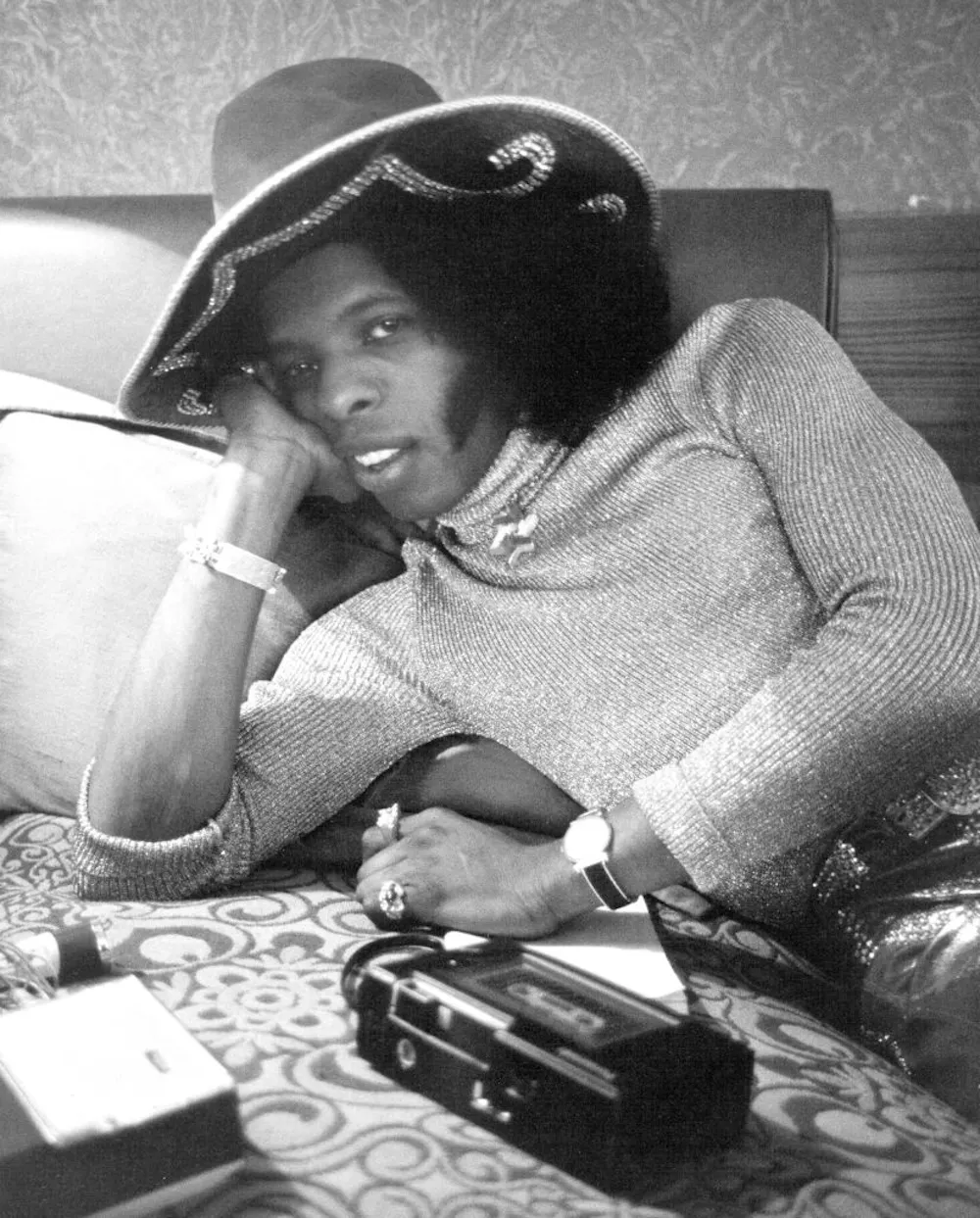
    The charismatic front man of Sly and the Family Stone died on June 9, 2025, at the age of 82. Michael Ochs Archives/Getty Images

    In the fall of 1971, Sly and the Family Stone’s “There’s a Riot Goin’ On” landed like a quiet revolution. After two years of silence following the band’s mainstream success, fans expected more feel-good funk from the ensemble.

    What they got instead was something murkier and more fractured, yet deeply intimate and experimental. This was not just an album; it was the sound of a restless mind rebuilding music from the inside out.

    At the center of it all was front man Sly Stone.

    Long before the home studio became an industry norm, Stone, who died on June 9, 2025, turned the studio into both a sanctuary and an instrument. And long before sampling defined the sound of hip-hop, he was using tape and machine rhythms to deconstruct existing songs to cobble together new ones.

    As someone who spends much of their time working on remote recording and audio production – from building full arrangements solo to collaborating digitally across continents – I’m deeply indebted to Sly Stone’s approach to making music.

    He was among the first major artists to fully embrace the recording environment as a space to compose rather than perform. Every reverb bounce, every drum machine tick, every overdubbed breath became part of the writing process.

    From studio rat to bedroom producer

    Sly and the Family Stone’s early albums – including “Dance to the Music” and “Stand!” – were recorded at top-tier facilities like CBS Studios in Los Angeles under the technical guidance of engineers such as Don Puluse and with oversight from producer David Rubinson.

    These sessions yielded bright, radio-friendly tracks that emphasized tight horn sections, group vocals and a polished sound. Producers also prized the energy of live performance, so the full band would record together in real time.

    But by the early 1970s, Stone was burnt out. The dual pressures of fame and industry demands were becoming too much. Struggling with cocaine and PCP addiction, he’d grown increasingly distrustful of bandmates, label executives and even his friends.

    So he decided to retreat to his hillside mansion in Bel Air, California, transforming his home into a musical bunker. Inside, he could work on his own terms: isolated and erratic, but free.

    Stone relied heavily on overdubbing when recording music from his home.
    Richard McCaffrey/Michael Ochs Archives via Getty Images

    Without a full band present, Stone became a one-man ensemble. He leaned heavily into overdubbing – recording one instrument at a time and building his songs from fragments. Using multiple tape machines, he’d layer each part onto previous takes.

    The resulting album, “There’s a Riot Goin’ On,” was like nothing he’d previously recorded. It sounds murky, jagged and disjointed. But it’s also deeply intentional, as if every imperfection was part of the design.

    In “The Poetics of Rock,” musicologist Albin Zak describes this “composerly” approach to production, where recording itself becomes a form of writing, not just documentation. Stone’s process for “There’s a Riot Goin’ On” reflects this mindset: Each overdub, rhythm loop and sonic imperfection functions more like a brushstroke than a performance.

    Automating the groove

    A key part of Stone’s tool kit was the Maestro Rhythm King, a preset drum machine he used extensively.

    It wasn’t the first rhythm box on the market. But Stone’s use of it was arguably the first time such a machine shaped the entire aesthetic of a mainstream album. The drum parts on his track “Family Affair,” for example, don’t swing – they tick. What might have been viewed as soulless became its own kind of soul.

    This early embrace of mechanical rhythm prefigured what would later become a foundation of hip-hop and electronic music. In his book “Dawn of the DAW,” music technology scholar Adam Patrick Bell calls this shift “a redefinition of groove,” noting how drum machines like the Rhythm King encouraged musicians to rethink their songwriting process, building tracks in shorter, repeatable sections while emphasizing steady, looped rhythms rather than free-flowing performances.

    Though samplers wouldn’t emerge until years later, Stone’s work already contained that repetition, layering and loop-based construction that would become characteristic of the practice.

    He recorded his own parts the way future DJs would splice records – isolated, reshuffled, rhythmically obsessed. His overdubbed bass lines, keyboard vamps and vocal murmurs often sounded like puzzle pieces from other songs.

    Music scholar Will Fulton, in his study of Black studio innovation, notes how producers like Stone helped pioneer a fragment-based approach to music-making that would become central to hip-hop’s DNA. Stone’s process anticipated the mentality that a song isn’t necessarily something written top to bottom, but something assembled, brick by brick, from what’s available.

    Perhaps not surprisingly, Stone’s tracks have been sampled relentlessly. In “Bring That Beat Back,” music critic Nate Patrin identifies Stone as one of the most sample-friendly artists of the 1970s – not because of his commercial hits, but because of how much sonic space he left in his tracks: the open-ended grooves, unusual textures and slippery emotional tone.

    You can hear his sounds in famous tracks such as 2Pac’s “If My Homie Calls,” which samples “Sing a Simple Song”; A Tribe Called Quest’s “The Jam,” which draws from “Family Affair”; and De La Soul’s “Plug Tunin’,” which flips “You Can Make It If You Try.”

    The studio as instrument

    While Sly’s approach was groundbreaking, he wasn’t entirely alone. Around the same time, artists such as Brian Wilson and The Rolling Stones were experimenting with home and nontraditional recording environments – Wilson famously retreating to his home studio during “Pet Sounds,” and the Stones tracking “Exile on Main St.” in a French villa.

    Yet in the world of Black music, production remained largely centralized in institutionally controlled studio systems such as Motown in Detroit and Stax in Memphis, where sound was tightly managed by in-house producers and engineers. In that context, Stone’s decision to isolate, self-produce and dismantle the standard workflow was more than a technical choice: It was a radical act of autonomy.

    The rise of home recording didn’t just change who could make music. It changed what music felt like. It made music more internal, iterative and intimate.

    Sly Stone helped invent that feeling.

    It’s easy to hear “There’s a Riot Goin’ On” as murky or uneven. The mix is dense with tape hiss, drum machines drift in and out of sync, and vocals often feel buried or half-whispered.

    But it’s also, in a way, prophetic.

    It anticipated the aesthetics of bedroom pop, the cut-and-paste style of modern music software, the shuffle of playlists and the recycling of sounds that defines sample culture. It showed that a groove didn’t need to be spontaneous to be soulful, and that solitude could be a powerful creative tool, not a limitation.

    In my own practice, I often record alone, passing files back and forth, building from templates and mapping rhythm to grid – as do millions of musical artists who compose tracks from their bedrooms, closets and garages.

    Half a century ago, a funk pioneer led the way. I think it’s safe to say that Sly Stone quietly changed the process of making music forever – and in the funkiest way possible.

    Jose Valentino Ruiz does not work for, consult, own shares in or receive funding from any company or organization that would benefit from this article, and has disclosed no relevant affiliations beyond their academic appointment.

    ref. Sly Stone turned isolation into inspiration, forging a path for a generation of music-makers – https://theconversation.com/sly-stone-turned-isolation-into-inspiration-forging-a-path-for-a-generation-of-music-makers-258659

    MIL OSI – Global Reports

  • MIL-OSI Global: House tax-and-spending bill and other Trump administration changes could make millions of people lose their health insurance coverage

    Source: The Conversation – USA – By Simon F. Haeder, Associate Professor of Public Health, Texas A&M University

    People who don’t have health insurance coverage often delay or simply don’t get the medical care they need. Jacob Wackerhausen/iStock via Getty Images Plus

    President Donald Trump has promised not to cut Medicaid many times over the past decade, including in the tax-and-spending legislative package he has made a top priority in his second administration.

    But several provisions in the bill, which the House of Representatives passed in a largely party-line 215-214 vote in May 2025, could cause millions of Americans enrolled in Medicaid to lose their health insurance coverage, according to the nonpartisan Congressional Budget Office. Medicaid is funded jointly by the federal government and the states. The program provides nearly 80 million Americans, most of whom are low-income or have disabilities, with health insurance.

    The legislation, which advances Trump’s agenda, faces a tough battle in the Senate despite the Republican Party majority in that chamber. Several GOP senators have either said they oppose it or have expressed strong reservations for a variety of reasons, including the trillions of dollars the package would add to the U.S. government’s debt.

    As a scholar who researches access to health care, I am concerned about the possibility that millions of people will lose their health insurance coverage should this bill become law. In many cases, that could occur due to new bureaucratic obstacles the bill would introduce.

    Proposed policy changes and the uninsured

    About 25.3 million Americans lacked insurance in 2023, down sharply from 46.5 million in 2010. Most of this 46% decline occurred because of the Affordable Care Act of 2010.

    The Congressional Budget Office, a nonpartisan agency that provides evidence-supported information to Congress, estimates that 10.9 million Americans would lose their health insurance by 2034 if the House of Representatives’ version of that package were to become law.

    Of these, as many as 7.8 million would lose access to Medicaid.

    Another 2.1 million people who the CBO estimates would end up uninsured are Americans who today have coverage they bought in the marketplaces that the Affordable Care Act created.

    In addition to the measures in the tax-and-spending bill, other changes are looming. These include the expiration of some ACA-related measures adopted in 2021 that Trump does not intend to renew, and new regulations. All told, the number of Americans losing their health insurance by 2034 could total 16 million, according to the CBO.

    Other estimates suggest that the number of Americans losing their coverage could run even higher.

    Obstructing Medicaid expansion

    The House bill would reduce incentives the federal government provides states to expand their Medicaid programs as part of the ACA.

    Eliminating these incentives would make it even less likely that Texas and the other nine states that still have not expanded Medicaid eligibility would do so in the future.

    The bill would also make it harder for states to come up with their share of Medicaid funding by limiting “provider taxes.” These taxes are charged to hospitals, doctors and other medical providers. The revenue they raise help pay for the state’s share of Medicaid costs.

    And the legislative package would also reduce federal funding to cover Medicaid costs in states that provide coverage to unauthorized immigrants using only their own funds. Threatened with billions in losses, the states that do this are unlikely to maintain these programs. In California alone, this would jeopardize the coverage of 1.6 million of its residents.

    Losing Medicaid coverage may leave millions of low-income Americans without insurance coverage, with no affordable alternatives for health care.

    A supporter of the Affordable Care Act stands in front of the Supreme Court building on Nov. 10, 2020.
    Samuel Corum/Getty Images

    Making Medicaid enrollment more complicated

    Other proposed changes in the House bill would indirectly cut Medicaid coverage by forcing people to deal with more red tape to get or keep it.

    This would happen primarily through the introduction of “work requirements” for Medicaid coverage. When enrolled in the program, applicants who are between 19 and 64 years old would need to certify they are working at least 80 hours a month or spending that much time engaged in comparable activities, such as community service.

    Work requirements specifically target people eligible for Medicaid through the Affordable Care Act’s expansion of the program. They tend to have slightly higher incomes than the other people eligible for this benefit.

    Arkansas gave Medicaid work requirements a try during the first Trump administration. Researchers who studied what happened found that 1 in 4 of the Arkansans enrolled in Medicaid affected by the policy lost their health insurance coverage. They also found that in most cases, this occurred because of bureaucratic obstacles, and that the policy didn’t lead to more people getting jobs.

    By some estimates, the work requirements provision alone would lead to close to 5 million people of the 7.8 million being denied Medicaid coverage.

    At the same time, the bill would increase how often Medicaid beneficiaries have to reapply to the program to keep their coverage from once every 12 months to twice a year.

    It also would delay or reverse several policies that made it easier for Americans to enroll in Medicaid and maintain their coverage. Many of those who aren’t kicked out would also face either new or higher co-payments for appointments and procedures – restricting their access to health care, even if they don’t wind up without insurance.

    There is ample evidence that obstacles like these make it hard to remain enrolled in safety net programs. Historically, the people who are most likely to lose their benefits are low-income, people of color or immigrants who do not speak English well.

    President Barack Obama signs the Affordable Care Act during a ceremony with congressional Democrats on March 23, 2010.
    Win McNamee/Getty Images

    Costlier Marketplace policies and more barriers

    The bill would also affect the more than 24 million Americans who get health insurance through Affordable Care Act Marketplace plans.

    Changes in the House version of the bill would make it harder to get this coverage. This includes reducing the time Americans have to enroll in plans and eliminating certain subsidies. It also makes the enrollment process more complicated.

    Combined with other changes the Trump administration has made, experts expect Marketplace premiums to skyrocket.

    The Congressional Budget Office expects more than 2 million beneficiaries to lose coverage due to these new policies.

    More coverage losses possible

    Americans buying their own insurance on the ACA marketplaces may also face higher premiums.

    Increased subsidies in place since 2021 are set to expire at the end of the year. Combined with Trump regulatory decisions, this may lead to more than 5 million Americans losing coverage – whether or not the GOP’s tax-and-spending package is enacted.

    The effects of the bill would also be compounded by further changes by individual states. This could include the introduction of monthly premiums that people with Medicaid coverage would have to pay, in Indiana and other states.

    Some states may also reduce eligibility for certain groups or cover fewer services, as states seek to reduce their Medicaid costs.

    And some states, including Iowa and Utah, are already pursuing work requirements on their own whether or not they become mandatory across the nation.

    If fewer Americans have health insurance due to changes the Trump administration is making and the policies embedded in the pending tax-and-spending legislative package, the health of millions of people could get worse due to forgone care. And at the same time, their medical debts could grow larger.

    Dr. Simon F. Haeder has previously received funding from the Centers for Medicare and Medicaid Services, the Pennsylvania Insurance Department, and the Robert Wood Johnson Foundation for unrelated projects.

    ref. House tax-and-spending bill and other Trump administration changes could make millions of people lose their health insurance coverage – https://theconversation.com/house-tax-and-spending-bill-and-other-trump-administration-changes-could-make-millions-of-people-lose-their-health-insurance-coverage-257529

    MIL OSI – Global Reports

  • MIL-OSI United Kingdom: UK and Scottish governments join forces to boost Scottish growth

    Source: United Kingdom – Executive Government & Departments

    Press release

    UK and Scottish governments join forces to boost Scottish growth

    Scottish Secretary and Minister for Business co-chair business forum

    • Business and trade union groups working with governments to grow Scotland’s economy faster
    •  Murray urges new collaboration for Scotland’s defence industry

    For the first time in more than two years, the Scottish Business Growth Group was convened in Edinburgh today, bringing the UK and Scottish governments together with business leaders to discuss how they can deliver economic growth.

    The forum, jointly chaired by the Scottish Secretary Ian Murray and the Scottish Government’s Minister for Business Richard Lochhead, brings together officials from both of Scotland’s governments alongside business representatives and the Scottish Trades Union Congress. With economic growth the UK Government’s number one priority, Murray used a speech in March at the University of Edinburgh to announce that this group would be reconvened, with a fresh focus on collaboration across governments and sectors.

    During the meeting, the Scottish Secretary provided updates on recent and upcoming announcements from the UK Government and outlined their significance for businesses in Scotland. This includes the Spending Review, the Strategic Defence Review and economic opportunities for the Scottish supply chain, the recent trade deals agreed with the EU, US and India – and the modern Industrial Strategy which will be announced shortly.

    Recognising there are already a  range of areas in which the UK and Scottish governments work constructively with business, the Scottish Secretary called for collaboration in new areas which could yield significant economic benefits, such as defence.

    Murray has also been working with business groups as part of his Brand Scotland programme and last week announced that the Scotland Office will fund the Scottish Chambers of Commerce to launch a new international trade initiative. This collaboration will be supported by a grant of £100,000, to promote Scottish goods and services and bring foreign direct investment into Scotland.

    Following the meeting, Mr Murray said: 

    “Scotland has two governments and most Scots rightly expect their politicians to work in partnership wherever possible, especially on something as important as economic growth. Political differences aside, I have always sought to engage constructively with Scottish Government ministers and I was delighted to co-chair this important forum today with Richard Lochhead.

    “The business and trade union groups which joined our discussion challenged us to go further and faster in helping businesses and workers feel the benefits of economic growth. I am determined to meet that challenge and want the Scottish Government to work with me in areas where we have not previously collaborated.

    “With the UK Government committing to significant increases in defence spending, there are huge opportunities for Scottish workers and defence firms, but only if both governments fully commit to giving our young people the skills they need and backing our world class defence industry.

    “On nuclear power, the announcement this week of UK Government investment for Sizewell in England is a reminder of the huge potential of nuclear power. Thousands of skilled jobs and billions of pounds of investment could come to Scotland, but only if both governments work in partnership with industry to unlock those opportunities.

    “Boosting Scottish exports and selling the best of Scotland overseas is a key lever in delivering economic growth at home. Our Brand Scotland programme, boosted by £2.25 million in the Spending Review, will do just that. I am delighted to be working with the Scottish Government and businesses of all sizes to deliver trade missions and sell our goods and services to the world.”

    Updates to this page

    Published 13 June 2025

    MIL OSI United Kingdom

  • MIL-OSI Africa: Seminar to explore leveraging of AfCFTA for inclusive development

    Source: South Africa News Agency

    The Human Sciences Research Council’s Africa BRICS and Global South (ABGS) research unit will host a seminar focused on utilising the African Continental Free Trade Area (AfCFTA) to promote regional health-industrial integration and foster inclusive development across the continent. 

    The ABGS research unit, based at the Human Sciences Research Council’s (HSRC), focuses on issues related to Africa, BRICS, and the Global South.

    Their research explores topics like economic integration, health security, and the role of BRICS in the Global South. 

    The hybrid seminar will be held at the HSRC Building in Pretoria on Tuesday, 17 June 2025.

    Presented by Senior Lecturer at the University of Edinburgh, Dr Geoffrey Banda, the seminar will focus on how the AfCFTA can be a powerful catalyst for strengthening Africa’s local health security through increased and resilient regional trade, industrialisation, and innovation.

    “The seminar will further explore how aligning health and industrial policy within the framework of the AfCFTA can drive job creation, enhance resilience, and support the continent’s broader development ambitions under Agenda 2063,” the advisory read. 

    In his recent book, “Cancer Care in Pandemic Times: Building Inclusive Local Health Security in Africa and India”, Banda makes a strong argument for an interdisciplinary approach that combines health research with industrialisation and regional economic integration. 

    The HSRC said this approach aims to develop sustainable and context-specific solutions to the health challenges faced in Africa.

    Key themes to be explored include the vulnerabilities associated with reliance on global supply chains, the intentional connection between health and industrial capabilities, the transition to new technologies along with industrial capabilities, and the use of the AfCFTA to scale innovative procurement. 

    “This approach aims to gradually develop continental innovation ecosystems that support resilient regional trading systems.”- SAnews.gov.za

    MIL OSI Africa

  • MIL-OSI United Kingdom: How breast tissue density affects your risk of cancer

    Source: Anglia Ruskin University

    Justin Stebbing, Anglia Ruskin University

    Breast density is a significant yet often overlooked factor in breast cancer awareness, risk assessment and screening practices. Understanding what breast density is, how it affects breast cancer risk and what it means for screening can help women make informed decisions about their health.

    Breast density refers to the proportions of glandular and connective tissue compared to fatty tissue in the breast, as seen on a mammogram. Simply put, dense breasts have more glandular and fibrous tissue and less fat.

    On a mammogram, both dense tissue and tumours appear white, making it harder to detect abnormalities in women with dense breasts. This masking effect can lead to cancers being missed during routine screening, which is why breast density is not just a risk factor for developing breast cancer, but also for having it go undetected until it is more advanced.

    Recent large-scale studies have confirmed that women with dense breasts face a higher risk of developing breast cancer compared to women with less dense, fattier breasts. For example, a major study involving more than 33,000 women found that those with dense breasts were nearly twice as likely to develop breast cancer than those with low breast density.

    This increased risk is seen across both pre-menopausal younger women and post-menopausal older women, although the proportion of women with high breast density tends to decrease with age.

    In practical terms, women with the lowest breast density have about a 6% lifetime risk of developing breast cancer after age 50, while those with the highest density face a risk closer to 15%.

    The impact of breast density on cancer detection is also significant. Mammography, the standard screening tool, is less sensitive in women with dense breasts. While mammograms can detect about at least nine out of 10 cancers in women with mostly fatty breasts, the sensitivity drops to about seven out of 10 in women with extremely dense breasts.

    This means that tumours can be missed, leading to what are known as “interval cancers”, cancers that are diagnosed between regular screenings, often at a more advanced stage.

    Supplemental screening methods, such as MRI scanning, can help detect cancers that mammography might miss in women with dense breasts, and some pilot studies have shown that additional cancers are found this way.

    Breast density is now recognised as one of the most important risk factors for breast cancer, even as much as family history or other commonly discussed risk factors.

    About 40% of women fall into the higher density categories, and dense breasts are common in younger women, those taking hormone replacement therapy, and those with certain genetic backgrounds and ethnicities. However, breast density can also be influenced by lifestyle and hormonal factors, and it tends to decrease with age and higher body mass index and obesity.

    Given the importance of breast density, there has been a growing movement to ensure women are informed about their own breast density after mammograms, and to address this appropriately. A recent UK survey showed that most women aren’t aware of their breast density.

    In the US, new regulations require that all women undergoing mammography be notified if they have dense breasts and be advised about the associated risks. This aims to empower women to have more informed discussions with their healthcare providers about their personal risk and the potential need for additional screening.

    Despite the increased risk, it is important to remember that the majority of women with dense breasts will not develop breast cancer. Breast density is just one factor among many, and decisions about screening and risk reduction should be made on an individual basis.

    For women with dense breasts, discussing options for supplemental screening with their doctor is recommended. While there is currently no widely accepted intervention to reduce breast density, in my own research, I’m exploring new ways to address this risk factor.

    In summary, breast density is both a common and significant risk factor for breast cancer, and it can complicate the detection of cancer through standard mammography.

    Women should be aware of their breast density status, understand its implications for both risk and screening, and work with their doctors to determine the best approach for their individual situation. As awareness grows and screening practices evolve, the hope is that more cancers will be detected earlier, improving outcomes for all women.

    Justin Stebbing, Professor of Biomedical Sciences, Anglia Ruskin University

    This article is republished from The Conversation under a Creative Commons license. Read the original article.

    The opinions expressed in VIEWPOINT articles are those of the author(s) and do not necessarily reflect the views of ARU.

    If you wish to republish this article, please follow these guidelines: https://theconversation.com/uk/republishing-guidelines

    MIL OSI United Kingdom

  • MIL-OSI Europe: Finland to receive €235 million in EIB financing for hospital and school upgrades

    Source: European Investment Bank

    • EIB provides €235 million in loans to improve hospitals and schools in Finland´s Uusimaa region.
    • Hospitals in Helsinki, Espoo and Vantaa, as well as schools in Vantaa among beneficiaries. 
    • Part of the EIB’s ongoing support for Finland’s public services, with over €3.8 billion invested in healthcare and education in recent years.

    The European Investment Bank (EIB) is signing two major financing agreements, totalling €235 million, to support critical public infrastructure in southern Finland. The funding will significantly enhance healthcare services across southern Finland and education services in Vantaa.

    The first agreement, worth €135 million, will support the modernisation of hospital infrastructure across the region. This includes improving access to specialised care, strengthening medical education, and enhancing the energy efficiency of hospital buildings. The financing is part of a broader €300 million loan package with the Helsinki University Hospital (HUS)—the joint authority for specialized healthcare in Helsinki and Uusimaa. Major upgrades are planned at hospitals in Meilahti in Helsinki, Jorvi in Espoo and Peijas in Vantaa.

    In parallel, the EIB is also lending €100 million to support the development of modern, energy-efficient educational facilities in Vantaa, a rapidly growing city just north of Helsinki. This tranche is part of a larger €350 million loan package. The initiative will benefit over 11,000 students and deliver more than 160,000 square metres of new and refurbished educational space across more than 30 facilities, including schools, day centers, and sports venues.

    “These projects will directly improve daily life for tens of thousands of people across southern Finland,” said EIB Vice-President Thomas Östros. “We are proud to support Finland in building modern, sustainable infrastructure that delivers better services and meets the highest environmental standards. Investing in healthcare and education is investing in people’s futures.”

    Both loans reflect the EIB’s goals of fostering sustainable urban development, promoting social inclusion, and advancing climate action through energy-efficient infrastructure.

    The major part of hospital upgrades in the Uusimaa region are due to be completed by the end of 2026.

    “The EIB is an important and reliable financier of investments for HUS,” said HUS Chief Financial Officer Jari Finnilä. “The EIB and HUS have a long-time cooperation in financing investments of specialized healthcare.”

    The works on the school buildings in Vantaa are scheduled to be completed within the next five years. “The long-term funding we receive from the EIB is vital to our efforts in renovating and constructing educational facilities,” said Vantaa Mayor Pekka Timonen.

    In Finland, the EIB has provided financing of more than €2.1 billion in healthcare and €1.7 billion in education over the past decade. Recent projects include the Laakso hospital construction and modern school facilities in Tuusula, Helsinki and Turku.

    Background information  

    EIB 

    The European Investment Bank (ElB) is the long-term lending institution of the European Union, owned by its Member States. Built around eight core priorities, we finance investments that contribute to EU policy objectives by bolstering climate action and the environment, digitalisation and technological innovation, security and defence, cohesion, agriculture and bioeconomy, social infrastructure, high-impact investments outside the European Union, and the capital markets union.  

    The EIB Group, which also includes the European Investment Fund (EIF), signed nearly €89 billion in new financing for over 900 high-impact projects in 2024, boosting Europe’s competitiveness and security.  

    All projects financed by the EIB Group are in line with the Paris Climate Agreement, as pledged in our Climate Bank Roadmap. Almost 60% of the EIB Group’s annual financing supports projects directly contributing to climate change mitigation, adaptation, and a healthier environment.  

    Fostering market integration and mobilising investment, the Group supported a record of over €100 billion in new investment for Europe’s energy security in 2024 and mobilised €110 billion in growth capital for startups, scale-ups and European pioneers. Approximately half of the EIB’s financing within the European Union is directed towards cohesion regions, where per capita income is lower than the EU average.

    High-quality, up-to-date photos of our headquarters for media use are available here.

    MIL OSI Europe News

  • MIL-OSI Global: Why anti-trafficking measures alone won’t save Africa’s pangolins

    Source: The Conversation – UK – By Charles Emogor, Schmidt Science Postdoctoral Fellow, Department of Zoology, University of Cambridge

    Nigeria accounts for the largest volume of detected pangolin scales illegally traded from Africa. Between 2010 and 2021, 190,000kg of scales – representing nearly 800,000 African pangolins – were seized in shipments linked to Nigeria, despite a ban on international trade.

    Pangolins are scaly mammals found across Asia and Africa. They are considered the world’s most trafficked wild mammals and they are exploited in different ways on different continents.

    In Asia, mainly China, their scales are used in large-scale therapeutic medicines, despite not having known medicinal properties. Their meat is consumed as a delicacy, so it’s expensive and highly sought after.

    In Africa, pangolin scales are mainly used in small quantities to make traditional medicines and, like most other wildlife on the continent, their meat is sold and consumed locally. However, the decline in Asian pangolin populations has prompted the trafficking of African pangolin scales to Asia.

    Due to the relatively recent rise in international demand, the drivers of African pangolin exploitation remain unclear. However, some conservationists and researchers propose that this exploitation is primarily driven by overseas demand for pangolin scales used in traditional medicine.

    My new study challenges this view and suggests that African pangolin exploitation is motivated more by local demand for meat than international demand for scales.

    Having grown up in Nigeria, I developed personal connections with many of the hunters and vendors and have spent the past five years building a trustworthy relationship with them in order to research pangolin trade from within the industry.

    My colleagues and I sent an anonymous questionnaire to 590 hunters and 219 wild meat vendors in 33 locations in southeast Nigeria. We wanted to find out how many pangolins they caught annually and how they were captured. We also asked what their motivations for hunting were, how much they sold pangolin products for and the subsequent uses of meat and scales.

    Given that pangolin meat is eaten as food, we asked another group of 570 hunters, vendors, and other household members to score the palatability (perceived sensory qualities of meat flavour and texture) of 96 meat and fish dishes consumed in Nigerian communities.

    Of the approximately 21,000 white- and black-bellied pangolins, which we estimated were killed annually across the hunters in the landscape between 2020 and 2023, 97% were captured opportunistically (that is, while performing activities other than hunting) or during general hunting. Of those, were picked up by hand – these animals weigh just 2-3kg on average and are relatively slow-moving.

    Surprisingly, 98% of captured pangolins were caught for their meat, with 71% eaten by the hunters and 27% sold locally. This high rate of personal consumption compared to local sales is likely driven by their exceptional taste. In southeast Nigeria, the three pangolin species eaten scored highest in palatability among 96 wild meats assessed, and were comparable only with the African brush-tailed porcupine.

    By comparison, rural southeast Asian communities increasingly forego eating the pangolins themselves and instead sell them to urban centres because they get high prices for meat and scales.

    Most of the pangolin scales (70%) were discarded. Less than 30% were traded illegally. We also found that, on a per-animal basis, pangolin scales have been three to four times lower than meat since 2010, when Nigeria’s first pangolin scale seizure was documented.

    Beyond Nigeria

    While our study focused on pangolin trade in southeast Nigeria, our findings likely apply to other African forest regions where pangolins make up a similar proportion of the hunters’ total catch and where the price of scales is comparable.

    Our analysis only applies to white- and black-bellied pangolins; but this is still substantial as they make up approximately 98% of African pangolins trafficked internationally (based on seizure data) and 96% of pangolins caught by hunters across central and west Africa (based on hunter offtake data from six countries).

    Securing the future of African pangolins demands a bold shift if they are primarily being hunted for meat rather than scales, as appears to be the case in southeast Nigeria. Anti-trafficking measures alone won’t protect pangolins if hunting for local consumption remains unchecked.

    Promoting alternative protein sources or sustainable livelihoods for hunters could help reduce wild meat dependence. As current global trade bans don’t always reflect local hunting motivations, understanding why people hunt protected species and how they get traded both locally and globally will be crucial in developing conservation strategies that will tackle the root of the problem and encourage a transition to more sustainable practices.


    Don’t have time to read about climate change as much as you’d like?

    Get a weekly roundup in your inbox instead. Every Wednesday, The Conversation’s environment editor writes Imagine, a short email that goes a little deeper into just one climate issue. Join the 45,000+ readers who’ve subscribed so far.


    Charles Emogor receives funding from the British High Commission in Nigeria, National Geographic Society, Wildlife Conservation Society, Wildlife Conservation Network, Rufford Foundation, Conservation Leadership Programme, and Save Pangolins. He is the founder of Pangolin Protection Network (aka Pangolino).

    ref. Why anti-trafficking measures alone won’t save Africa’s pangolins – https://theconversation.com/why-anti-trafficking-measures-alone-wont-save-africas-pangolins-251744

    MIL OSI – Global Reports

  • MIL-OSI Global: Netflix’s Dept Q. suggests that psychological trauma might help a detective investigate – neuroscience backs this up

    Source: The Conversation – UK – By Edward White, PhD Candidate in Psychology, Kingston University

    Carl Morck is psychologically damaged. He’s socially insufferable. And he’s a departmental embarrassment. Yet this broken man becomes an incredibly effective investigator. Welcome to the brilliant paradox of Netflix’s Dept. Q, where mental trauma doesn’t disable – it supercharges.

    Detective Morck’s story begins with catastrophic failure. Ignoring protocol, he and his partner, James Hardy, rush headlong into what they think is a routine murder scene. It’s an ambush. Hardy ends up paralysed for life, a rookie officer dies and Morck survives with crushing survivor’s guilt and severe PTSD (post-traumatic stress disorder). Most detectives would retire. Morck comes back more determined to get his man.

    Months later, Morck returns to work. He obsessively replays the rookie’s body camera video hundreds of times as well as the ballistics reconstruction. His colleagues flee his toxic presence. His commander ships him off to the basement with a stack of cold cases, hoping he’ll disappear into bureaucratic obscurity.


    Looking for something good? Cut through the noise with a carefully curated selection of the latest releases, live events and exhibitions, straight to your inbox every fortnight, on Fridays. Sign up here.


    Instead, she accidentally creates the perfect storm.

    Morck’s first basement case involves Merritt Lingard, a prosecutor who vanished from a ferry four years earlier. The official conclusion was she fell overboard and drowned. Case closed. But Morck can’t move on from anything anymore. His trauma-rewired brain won’t let him.

    He watches the ferry security footage with the same obsessive intensity he brings to replaying his shooting. Frame by frame. Over and over. The same compulsive attention to detail that torments him with endless replays of his failure becomes his investigative superpower. Where normal detectives see a tragic accident, Morck’s damaged neural pathways spot the inconsistencies everyone else missed.

    This isn’t nonsense, it’s neuroscience. Research shows that depression fundamentally rewires information processing, creating enhanced sensitivity to negative details and threats. What his therapist calls pathological rumination becomes detective gold.

    The banished misfits

    Morck is saddled with a team of misfits: Hardy (paralysed and bitter), Akram Salim (a Syrian refugee with mysterious combat skills), and Rose Dickson (battling her own demons). Together, they form a collection of damaged individuals that conventional policing would write off.

    But here’s the magic: their shared outsider status creates collective investigative superpowers.

    Take their interview with William Lingard, Merritt’s disabled brother. William draws pictures of “a man in a hat with a bird logo” — evidence that conventional investigators would probably set aside because it wouldn’t hold up in court. The series shows this attitude earlier when a young mother recants her witness statement. While other officers dismiss it as useless since it can’t help prosecute a case, Morck argues it’s still valuable investigative information.

    This reflects a fundamental difference in approach: most police focus on building prosecutable cases, but Dept. Q’s outsider status frees them to pursue any lead that might reveal truth, regardless of its courtroom value. Taking William’s drawings seriously as investigative intelligence, rather than dismissing them as legally inadmissible, eventually leads them to identify the crucial cormorant logo connection.

    Organisational psychology research shows that socially excluded groups are more willing to ask questions that insiders avoid due to workplace politics or social taboos. Operating from their basement exile, Department Q pursues theories that proper procedure would shut down. Their isolation becomes investigative freedom, unencumbered by institutional constraints.

    Department Q isn’t just entertainment, it’s a master class in psychological diversity’s investigative value. Real police departments might benefit from understanding how different types of cognitive processing can reveal different types of evidence. The systematic pessimism of depression, the hypervigilance of PTSD, the pattern recognition of anxiety – these aren’t just symptoms to medicate away, they’re investigative tools waiting to be properly deployed.

    The series suggests that our most psychologically damaged individuals might see truths that healthy minds systematically miss, which research backs up. It’s a provocative idea: maybe the people we consider “broken” are exactly who we need investigating the cases that have broken everyone else.

    Department Q proves that in the right circumstances, psychological damage doesn’t create victims. It creates visionaries.

    Edward White is affiliated with Kingston University.

    ref. Netflix’s Dept Q. suggests that psychological trauma might help a detective investigate – neuroscience backs this up – https://theconversation.com/netflixs-dept-q-suggests-that-psychological-trauma-might-help-a-detective-investigate-neuroscience-backs-this-up-258638

    MIL OSI – Global Reports

  • MIL-OSI Africa: Older South Africans need better support and basic services – and so do their caregivers

    Source: The Conversation – Africa – By Elena Moore, Professor of Sociology, University of Cape Town

    In South Africa, most long-term care for older people happens at home through the efforts of family members, largely female kin, not through government services.

    With South Africa’s population growing older, combined with reduced funding for community care, higher levels of disability in old age, and widespread poverty and unemployment, family care has become more important than ever and more challenging. But government and policy makers don’t know how it happens, and we can’t just assume it happens.

    The Family Caregiving Programme is the first major programme dedicated to understanding family care of older persons in southern Africa. As part of the research team for this programme we are looking at how family care works and how it can be better supported. The five-year programme aims to improve our understanding of how family care is experienced in South Africa, Malawi, Namibia and Botswana.

    For the latest research report, we worked with 103 caregivers and 96 older persons in 100 family units across seven locations in three South African provinces: the Western Cape, Eastern Cape, and KwaZulu-Natal. We worked in two rural areas, one peri-urban area and four urban areas including two townships.

    Three quarters of the sample of older persons required constant care or supervision.

    We found that all the care needs were being met – but at a significant cost for caregivers, older persons and society.

    Care needs go beyond physiological and cognitive issues and are shaped by the physical and social environment. The environment can make care more challenging and create more dependency. Lack of access to water, sanitation and electricity adds to care work.

    For care needs to be met, older persons need supported caregivers, access to care services and basic services.

    The gaps

    South Africa’s long term care policy encourages “ageing in place”, meaning older people should live in their homes, supported by community-based services. But the reality is that support is limited.

    Of the 5.5 million older people in South Africa, around 4 million receive the Older Person’s Grant, and at least 1.5 million need help with daily activities. Very few receive home-based care or subsidised meals. Even fewer receive assistive devices and materials such as wheelchairs or incontinence products.

    It’s a common assumption that if an older person lives with family, they’re being cared for. But this isn’t always true. Sometimes the available family member isn’t able – physically, emotionally, or financially – to provide proper care. Mental health support is also largely missing. Many older people experience loneliness and depression, but help is hard to find. In our study, one in five older persons experienced feelings of loneliness, anxiety and despair.

    Many older people don’t have running water, proper toilets, wheelchairs, or incontinence products. If basic services are missing, the older person needs more help. Older black people in rural areas and in under-resourced townships are most affected.

    Family Caregiving Programme

    Older people also need help accessing healthcare. High levels of diabetes, hypertension and arthritis in many cases lead to disability in later life. But getting help to access care isn’t always available.

    Mary Mwebu (we have used pseudonyms), who lives in the rural Eastern Cape and has TB of the spine and mobility challenges, has no running water in her home. She also has no accessible and affordable transport, so she hasn’t been to the clinic in 10 years and struggles to manage her pain.

    Care needs of older persons include basic provision of food. Our findings show that older persons and their households spend way below what is needed for a healthy diet.

    The older person’s grant, at R2,315 (US$130) a month in 2025 and similar to the cost of incontinence products for the month, is often the main income in the household and is used to cover the costs for everyone, especially in a context where 64% of people living with an older person are unemployed.

    Food is the biggest cost, often up to two thirds of income. It is the first thing to cut when there’s not enough money.

    Money is particularly tight in black low-income households. In many cases expenditure exceeds income, and older people are left vulnerable. If any unexpected costs like medical needs or hygiene products arise, the older person will often have to sacrifice food.

    Others will obtain loans and so many fall into debt. Borrowing from loan sharks is a way to buy food but high interest rates put people in a worse position the following month.

    Limiting spending, eating less, and limited help from family members are the only other ways to meet their needs.

    Why care is depleting

    The average older person household has five people in it. Large households have many care needs, not just elder care. We found that women – especially daughters and female relatives – are the main caregivers.

    But the findings show that due to HIV/Aids and migration, older people can’t always rely on their children. In such instances care is also provided by nieces, neighbours, and adult granddaughters.

    Looking after an older person often requires caregivers to relocate. Our findings showed that one in five caregivers had to move, often with young children or leaving spouses behind.

    Sometimes older persons need to move to get care. This happened in one in 10 older persons in our sample. Many are reluctant to move from their homes and the process can take years.

    The findings show that family caregiving is not an endless supply of “free” labour. It is physically, emotionally and financially costly, especially for black low-income women.

    Some answers

    The report proposes three key recommendations.

    Firstly, family caregivers and careworkers should be adequately compensated for their work.

    Secondly, we call for expanding home-based care services to ease the load and give caregivers breaks and mental health support.

    And thirdly, care-related items, such as wheelchairs, incontinence products and healthy food, should be made more easily available.

    Supporting family caregivers means supporting the wellbeing of millions of older South Africans. It’s time the country took elder and family care seriously and backed it with real investment and action.

    – Older South Africans need better support and basic services – and so do their caregivers
    – https://theconversation.com/older-south-africans-need-better-support-and-basic-services-and-so-do-their-caregivers-258409

    MIL OSI Africa

  • MIL-OSI Global: Older South Africans need better support and basic services – and so do their caregivers

    Source: The Conversation – Africa – By Elena Moore, Professor of Sociology, University of Cape Town

    In South Africa, most long-term care for older people happens at home through the efforts of family members, largely female kin, not through government services.

    With South Africa’s population growing older, combined with reduced funding for community care, higher levels of disability in old age, and widespread poverty and unemployment, family care has become more important than ever and more challenging. But government and policy makers don’t know how it happens, and we can’t just assume it happens.

    The Family Caregiving Programme is the first major programme dedicated to understanding family care of older persons in southern Africa. As part of the research team for this programme we are looking at how family care works and how it can be better supported. The five-year programme aims to improve our understanding of how family care is experienced in South Africa, Malawi, Namibia and Botswana.

    For the latest research report, we worked with 103 caregivers and 96 older persons in 100 family units across seven locations in three South African provinces: the Western Cape, Eastern Cape, and KwaZulu-Natal. We worked in two rural areas, one peri-urban area and four urban areas including two townships.

    Three quarters of the sample of older persons required constant care or supervision.

    We found that all the care needs were being met – but at a significant cost for caregivers, older persons and society.

    Care needs go beyond physiological and cognitive issues and are shaped by the physical and social environment. The environment can make care more challenging and create more dependency. Lack of access to water, sanitation and electricity adds to care work.

    For care needs to be met, older persons need supported caregivers, access to care services and basic services.

    The gaps

    South Africa’s long term care policy encourages “ageing in place”, meaning older people should live in their homes, supported by community-based services. But the reality is that support is limited.

    Of the 5.5 million older people in South Africa, around 4 million receive the Older Person’s Grant, and at least 1.5 million need help with daily activities. Very few receive home-based care or subsidised meals. Even fewer receive assistive devices and materials such as wheelchairs or incontinence products.

    It’s a common assumption that if an older person lives with family, they’re being cared for. But this isn’t always true. Sometimes the available family member isn’t able – physically, emotionally, or financially – to provide proper care. Mental health support is also largely missing. Many older people experience loneliness and depression, but help is hard to find. In our study, one in five older persons experienced feelings of loneliness, anxiety and despair.

    Many older people don’t have running water, proper toilets, wheelchairs, or incontinence products. If basic services are missing, the older person needs more help. Older black people in rural areas and in under-resourced townships are most affected.

    Older people also need help accessing healthcare. High levels of diabetes, hypertension and arthritis in many cases lead to disability in later life. But getting help to access care isn’t always available.

    Mary Mwebu (we have used pseudonyms), who lives in the rural Eastern Cape and has TB of the spine and mobility challenges, has no running water in her home. She also has no accessible and affordable transport, so she hasn’t been to the clinic in 10 years and struggles to manage her pain.

    Care needs of older persons include basic provision of food. Our findings show that older persons and their households spend way below what is needed for a healthy diet.

    The older person’s grant, at R2,315 (US$130) a month in 2025 and similar to the cost of incontinence products for the month, is often the main income in the household and is used to cover the costs for everyone, especially in a context where 64% of people living with an older person are unemployed.

    Food is the biggest cost, often up to two thirds of income. It is the first thing to cut when there’s not enough money.

    Money is particularly tight in black low-income households. In many cases expenditure exceeds income, and older people are left vulnerable. If any unexpected costs like medical needs or hygiene products arise, the older person will often have to sacrifice food.

    Others will obtain loans and so many fall into debt. Borrowing from loan sharks is a way to buy food but high interest rates put people in a worse position the following month.

    Limiting spending, eating less, and limited help from family members are the only other ways to meet their needs.

    Why care is depleting

    The average older person household has five people in it. Large households have many care needs, not just elder care. We found that women – especially daughters and female relatives – are the main caregivers.

    But the findings show that due to HIV/Aids and migration, older people can’t always rely on their children. In such instances care is also provided by nieces, neighbours, and adult granddaughters.

    Looking after an older person often requires caregivers to relocate. Our findings showed that one in five caregivers had to move, often with young children or leaving spouses behind.

    Sometimes older persons need to move to get care. This happened in one in 10 older persons in our sample. Many are reluctant to move from their homes and the process can take years.

    The findings show that family caregiving is not an endless supply of “free” labour. It is physically, emotionally and financially costly, especially for black low-income women.

    Some answers

    The report proposes three key recommendations.

    Firstly, family caregivers and careworkers should be adequately compensated for their work.

    Secondly, we call for expanding home-based care services to ease the load and give caregivers breaks and mental health support.

    And thirdly, care-related items, such as wheelchairs, incontinence products and healthy food, should be made more easily available.

    Supporting family caregivers means supporting the wellbeing of millions of older South Africans. It’s time the country took elder and family care seriously and backed it with real investment and action.

    Elena Moore receives funding from Wellcome Trust and IDRC-CRDI for the work on elder care in Southern Africa.

    Vayda Megannon and Zeenat Samodien do not work for, consult, own shares in or receive funding from any company or organisation that would benefit from this article, and have disclosed no relevant affiliations beyond their academic appointment.

    ref. Older South Africans need better support and basic services – and so do their caregivers – https://theconversation.com/older-south-africans-need-better-support-and-basic-services-and-so-do-their-caregivers-258409

    MIL OSI – Global Reports

  • MIL-OSI China: Suzhou Industrial Park provides fertile ground for innovation

    Source: People’s Republic of China – State Council News

    More than 30 years ago, Suzhou Industrial Park (SIP) was just a stretch of low-lying paddy fields on the outskirts of Suzhou, eastern China’s Jiangsu province. Today, towering skyscrapers and modern infrastructure define the skyline of what has become a fertile ground for innovation and entrepreneurship. 

    This combo photo shows a blueprint of the Suzhou Industrial Park drawn in 1994 (top) and an aerial view of the industrial park (bottom) in 2024. [Photo provided to China.org.cn]

    The transformation began in the spring of 1994, when SIP was launched as the first cooperation project between the Chinese and Singaporean governments, aiming to build a world-class industrial zone.

    For three decades, SIP has centered its growth strategy on openness and innovation. In 2024, the park’s GDP reached 400.2 billion yuan (US$55.68 billion), making up nearly one sixth of the entire city’s GDP. Its R&D intensity reached 5.61% this year, among the highest in China’s economic and technological development zones.

    “Opening-up and innovation are the park’s greatest feature,” said Liu Hua, vice chairperson of the Administrative Committee of SIP, during an interview on Wednesday.

    Much of SIP’s growth has been driven by its efforts of supporting enterprises as the main players in its innovative development. The park channels resources to help them launch businesses, tackle technological challenges, and unlock new creative potential.

    So far, SIP is home to more than 10,000 technology companies and over 3,000 national high-tech enterprises. It has also cultivated more than 4,600 small and medium-sized tech firms. 

    “We provide efficient services and support to companies, achieving win-win results through cooperation,” Liu said. She added that SIP has accelerated the development of a modern industrial system centered on artificial intelligence, digital industries, and next-generation information technologies.

    AISpeech is one such company that came to SIP to develop conversational artificial intelligence. Yu Kai, the firm’s co-founder and chief scientist, said Suzhou was the first national development zone in China to support AI development with dedicated policies.

    “Suzhou is very active in attracting investment and boasts strong technological infrastructure,” Yu said. Even before he founded AISpeech in 2007, local officials had visited Cambridge University, where he earned his Ph.D. in engineering, to promote investment opportunities.

    “I chose to set up my company in SIP because Suzhou offers a solid foundation with its strategic planning, efficient governance, and clear support for technology industry policies,” he said.

    Today, AISpeech holds 1,597 intellectual property rights and has developed over 70 national and industry standards. Its clients include major automakers and tech firms such as Mercedes-Benz, BYD, Haier, and Xiaomi.

    Last year, the Yangtze River Delta Innovation Consortium in Language Computing, led by AISpeech, was selected as one of the first 12 Yangtze River Delta innovation consortiums.

    “Through this consortium, companies and institutions work together to accelerate breakthroughs in key technologies and applications,” Yu said. “It will play a key role in advancing the development and application of language intelligence technologies in China.”

    MIL OSI China News

  • MIL-OSI United Kingdom: Amanda Timberg and Darren Xiberras reappointed as Board Members of the National Citizen Service Trust

    Source: United Kingdom – Executive Government & Departments

    News story

    Amanda Timberg and Darren Xiberras reappointed as Board Members of the National Citizen Service Trust

    Amanda Timberg and Darren Xiberras have been reappointed by HM The King as Board Members to support with the orderly wind-down of the National Citizen Service Trust. Darren (as Chair) and Amanda (as member) play an important role on the Audit and Risk sub-Committee (ARC), which has an important role to play in the wind-down.

    Amanda Timberg

    Appointed for a 3 year term commencing 12th June 2025.

    Amanda has dedicated her career to improving access to opportunities through investing in people and communities. She has worked in various roles at Google over the last decade and is currently serving as the Director of Global Programs at Google.org. There, she leads initiatives like product contributions, employee giving, volunteering, and apprenticeships.

    Before Google, Amanda spent fifteen years in education charities in the UK and the US, including a decade as Executive Director at Teach First, working to develop and equip teachers and leaders to make an impact towards educational equity. 

    Amanda started her career teaching primary school in Compton, California and worked at both Teach For America and the Los Angeles Unified School District in southern California. She holds an MSc in Voluntary Sector Management from Bayes Business School.

    Darren Xiberras 

    Appointed for a 3 year term commencing 12th June 2025.

    Darren is currently Chief Financial Officer of Cardiff University and a member of the University Executive Board. He oversees all aspects of the University’s finances and financial performance. He is a Director of UMAL Limited which is a specialist provider of insurance services to the Higher and Further Education sectors.

    Prior to joining Cardiff University, Darren was Chief Finance Officer at the University of South Wales having joined them in 2019. Immediately before that, he held the same role for the education charity Teach First where he also oversaw the Human Resources (HR), property and IT functions.

    Prior to Teach First, Darren was Finance Director of ENGIE (formerly GDF Suez) UK’s £350m turnover public sector division, delivering property services to a multitude of blue-chip public sector clients across the UK.

    Darren has also been Director of Corporate Services for a national UK charity and held the role of Group Finance Director for an Alternative Investment Market (AIM) listed PLC delivering services to the public sector. He trained as an accountant with South Wales Electricity PLC.

    Darren has held several other voluntary roles for both charities and in Higher Education.

    Remuneration and Governance Code

    Board Members of the National Citizen Service Trust are not remunerated. This appointment has been made in accordance with the Cabinet Office’s Governance Code on Public Appointments. The appointments process is regulated by the Commissioner for Public Appointments.

    Under the Code, any significant political activity undertaken by an appointee in the last five years must be declared. This is defined as including holding office, public speaking, making a recordable donation, or candidature for election. Amanda Timberg and Darren Xiberras have not declared any significant political activity.

    Updates to this page

    Published 13 June 2025

    MIL OSI United Kingdom

  • MIL-OSI Africa: International Atomic Energy Agency (IAEA) and Food and Agriculture Organization (FAO) Conduct First Atoms4Food Assessment Mission to Burkina Faso


    Download logo

    In a critical step toward addressing food insecurity in West Africa, the International Atomic Energy Agency (IAEA) and the Food and Agriculture Organization (FAO) of the United Nations have launched their first joint Atoms4Food Initiative Assessment Mission in Burkina Faso. 

    This mission aims to identify key gaps and opportunities for delivering targeted technical support to Burkina Faso for food and agriculture in a country where an estimated 3.5 million people—nearly 20% of the population—are facing food insecurity. By leveraging nuclear science and technology, Atoms4Food seeks to bolster agricultural resilience and agrifood systems in one of the region’s most vulnerable nations.

    The mission, conducted from 26 May to 1 June, assessed how nuclear and related technologies are being used in Burkina Faso to address challenges in enhancing crop production, improving soil quality and in animal production and health, as well as human nutrition.

    The Atoms4Food Initiative was launched jointly by IAEA and FAO in 2023 to help boost food security and tackle growing hunger around the world. Atoms4Food will support countries to use innovative nuclear techniques such as sterile insect technique and plant mutation breeding to enhance agricultural productivity, ensure food safety, improve nutrition and adapt agrifood systems to the challenges of climate change. Almost €9 million has been pledged by IAEA donor countries and private companies to the initiative so far.

    As part of the Atoms4Food initiative, Assessment Missions are used to evaluate the specific needs and priorities of participating countries and identify critical gaps and opportunities where nuclear science and technology can offer impactful solutions. Based on the findings, tailored and country-specific solutions will be offered.

    Burkina Faso is one of 29 countries who have so far requested to receive support under Atoms4Food, with more expected this year. Alongside Benin, Pakistan, Peru and Türkiye, Burkina Faso was among the first countries to request an Atoms4Food Assessment Mission in 2025.

    A large proportion of Burkina Faso’s population still live in poverty and inequality.  Food insecurity has been compounded by rapid population growth, gender inequality and low levels of educational attainment. In addition, currently, 50% of rice consumed in Burkina Faso is imported. The government aims to achieve food sovereignty by producing sufficient rice domestically to reduce reliance on imports.

    “Hunger and malnutrition are on the rise globally, and Burkina Faso is particularly vulnerable to this growing challenge,” said IAEA Director General Rafael Mariano Grossi. “This first Atoms4Food assessment mission marks a significant milestone in our collective efforts to harness the power of nuclear science to enhance food security. As the Atoms4Food Initiative expands worldwide, we are committed to delivering tangible, sustainable solutions to reduce hunger and malnutrition.”

    The mission was conducted by a team of ten international experts in the areas of crop production, soil and water management, animal production and health and human nutrition. During the mission, the team held high-level meetings with the Burkina Faso Ministries of Agriculture, Health and Environment and conducted site visits to laboratories including the animal health laboratory and crop breeding facility at the Institute of Environment and Agricultural Research, the crop genetics and nutrition laboratories at the University Joseph Ki-Zerbo, and the bull station of the Ministry of Agriculture in Loumbila.

    “The Government of Burkina Faso is striving to achieve food security and sovereignty, to supply the country’s population with sufficient, affordable, nutritious and safe food, while strengthening the sustainability of the agrifood systems value-chain,” said Dongxin Feng, Director of the Joint FAO/IAEA Centre for Nuclear Techniques in Food and Agriculture and head of the mission to Burkina Faso. “Though much needs to be done, our mission found strong dedication and commitment from the Government in developing climate-resilient strategies for crops, such as rice, potato, sorghum and mango, strengthening sustainable livestock production of cattle, small ruminants and local poultry, as well as reducing malnutrition among infants and children, while considering the linkages with food safety.”

    The Assessment Mission will deliver an integrated Assessment Report with concrete recommendations on areas for intervention under the Atoms4Food Initiative. This will help develop a National Action Plan in order to scale up the joint efforts made by the two organizations in the past decades, which will include expanding partnership and resource mobilization. “Our priority now is to deliver a concrete mission report with actionable recommendations that will support the development of the National Action Plan aimed at improving the country’s long term food security,” Feng added. 

    Distributed by APO Group on behalf of Food and Agriculture Organization of the United Nations (FAO): Regional Office for Africa.

    MIL OSI Africa

  • Air India crash: PM Modi visits Ahmedabad crash site, assesses damage, meets injured

    Source: Government of India

    Source: Government of India (4)

    Prime Minister Narendra Modi on Friday visited the site of the Air India crash in Ahmedabad, where the London-bound flight carrying 242 people went down a day earlier.

    The aircraft crashed minutes after takeoff from Sardar Vallabhbhai Patel International Airport, killing 241 people. Only one passenger – a British national of Indian origin – survived.

    “The scene of devastation is saddening,” PM Modi said in a post on X after reviewing the wreckage. “Met officials and teams working tirelessly in the aftermath. Our thoughts remain with those who lost their loved ones in this unimaginable tragedy.”

    After his visit to the crash site, the Prime Minister proceeded to Ahmedabad Civil Hospital, where he met the injured and offered support to grieving families. He also interacted with doctors and medical staff — including those who had been hurt in the crash — and reviewed the condition of patients receiving treatment.

    Later, the Prime Minister chaired a high-level review meeting in Ahmedabad, joined by Gujarat Chief Minister Bhupendra Patel, Union Civil Aviation Minister Ram Mohan Naidu Kinjarapu, State Home Minister Harsh Sanghavi, and other senior officials from both the Central and State governments.

    Flight AI-171, headed to London Gatwick, crashed into the hostel complex of BJ Medical College at 1:38 p.m. IST on Thursday, triggering a massive blaze and a large-scale emergency response.

    Union Home Minister Amit Shah visited the crash site on Thursday and later chaired a high-level meeting with Civil Aviation Minister Naidu, Gujarat Chief Minister Bhupendra Patel, and senior officials to review relief and rescue measures.

    Shah said DNA testing was underway to confirm the identities of the victims and assured that results would be delivered at the earliest by Gujarat’s Forensic Science Laboratory (FSL) and the National Forensic Sciences University (NFSU). DNA samples of family members arriving from abroad would be collected on arrival, he added.

    A formal investigation into the crash has been launched by the Aircraft Accident Investigation Bureau (AAIB) in accordance with international protocols under the International Civil Aviation Organization (ICAO), said Civil Aviation Minister Naidu. A high-level expert committee is also being formed to examine the incident and suggest safety improvements to prevent future tragedies.

    The United States National Transportation Safety Board (NTSB) announced it would send a team of investigators to India to assist the AAIB.

    “The NTSB will be leading a team of US investigators travelling to India to assist the Aircraft Accident Investigation Bureau with its investigation into the crash of an Air India Boeing 787 in Ahmedabad, India, Thursday,” the agency said, noting that all official updates would come from the Indian government under ICAO’s Annex 13 protocols.

    Rescue and Relief Operations Continue

    Rescue operations continued through the night as teams sifted through debris for missing aircraft parts.

    Parts of the plane’s fuselage were scattered around the smouldering building into which it crashed. The tail of the plane was stuck on top of the building.

    Air India CEO Campbell Wilson reached Ahmedabad early Friday. The airline said it had set up Friends & Relatives Assistance Centres at Ahmedabad, Mumbai, Delhi, and Gatwick airports to support the families of those on board.

    “These centres are facilitating the travel of family members to Ahmedabad,” Air India posted on X. Emergency contact numbers were also issued for those seeking information: 1800 5691 444 for calls from within India, and +91 8062779200 for international callers.

    The Tata Group, which took over Air India in 2022, announced a compensation of Rs 1 crore for the family of each deceased passenger.

    “Tata Group will provide Rs 1 crore to the families of each person who has lost their life in this tragedy. We will also cover the medical expenses of those injured and ensure that they receive all necessary care and support. Additionally, we will provide support in the building up of the B J Medical’s hostel,” Tata Sons Chairman N Chandrasekaran said on X.

    Earlier, Air India released a breakdown of the nationalities of those on board: 169 were Indian nationals, 53 British, seven Portuguese, and one Canadian.

    (With inputs from agencies)

  • MIL-OSI Asia-Pac: President Lai meets delegation led by French National Assembly Taiwan Friendship Group Chair Marie-Noëlle Battistel

    Source: Republic of China Taiwan

    Details
    2025-06-05
    President Lai hosts state banquet for President Bernardo Arévalo of Republic of Guatemala  
    At noon on June 5, President Lai Ching-te hosted a state banquet at the Presidential Office for President Bernardo Arévalo of the Republic of Guatemala and his wife. In his remarks, President Lai noted that Taiwan and Guatemala have both undergone an arduous democratization process, and therefore, in face of the continuous expansion of authoritarian influence, must join hands in brotherhood and come together in solidarity to safeguard our hard-earned freedom and democracy. President Lai also expressed hope that both countries will work together and continue to deepen various exchanges and cooperation, taking a friendship that has lasted over 90 years to new heights. A translation of President Lai’s remarks follows: Once again, I would like to offer a warm welcome to President Arévalo and First Lady Lucrecia Peinado, who are leading this delegation to Taiwan. President Arévalo’s previous visit to Taiwan was 31 years ago. Back then, Taiwan did not have direct presidential elections, and the nation was continuing to make progress toward democratization. Today, 31 years later, Taiwan has conducted direct presidential elections eight times, with three transfers of power between political parties. On this visit, I am sure that President Arévalo will gain a deep appreciation for Taiwan’s free and democratic atmosphere.  Taiwan and Guatemala have both undergone an arduous democratization process. A little over 200 years ago, the people of Guatemala took a stand against colonial oppression, seeking national dignity and the freedom of its people. Eighty-one years ago, President Arévalo’s father, Juan José Arévalo, became Guatemala’s first democratically elected president, establishing an important foundation for subsequent democratic development.  Our two peoples have democracy in their blood. Both know the value of freedom and democracy and are willing to take a stand for those values. Therefore, in face of the continuous expansion of authoritarian influence, our two countries must join hands in brotherhood to respond to threats and challenges, and come together in solidarity to safeguard our hard-earned freedom and democracy. I hope that both countries will work together to continue to deepen various exchanges and cooperation, taking a friendship that has lasted over 90 years to new heights. I hope that on this visit, in addition to gaining a deeper understanding of Taiwan’s political, economic, and social development, President Arévalo can also reacquaint himself with the democratic vitality and cultural diversity of Taiwan by sampling various gourmet delicacies and once again experiencing the beauty of our scenery and warmth of our people. Guatemala is a very beautiful country. In the future, I hope to have a chance to personally experience that beauty, explore Mayan civilization, and savor local Guatemalan coffee. In closing, I wish the visiting delegation a smooth and successful trip, and beautiful, unforgettable memories. May President Arévalo enjoy the best of health, and may the diplomatic friendship between our two countries endure. President Arévalo then delivered remarks, stating that at different times and by different means, the people of Taiwan and Guatemala have relentlessly sought to defend freedom and democracy. We share the same expectations, he said, and are walking the right path amid today’s complex international circumstances.  President Arévalo stated that Taiwan and Guatemala are true democratic nations, where the government’s goal is to serve all the people. He noted that this is far from easy under current circumstances, as many authoritarian regimes use their long-term hold on power to safeguard the interests of select groups and neglect the wellbeing of the population as a whole. President Arévalo said that last week Guatemala commemorated the 40th anniversary of its constitution, which was enacted in 1985 and is Guatemala’s ultimate guide, setting the foundation for democracy and clearly outlining the path ahead. He said that over the past 40 years, Guatemala has continued to follow the democratic blueprint established by the constitution and end the civil war so that the nation could make the transition to real democracy. Although more than a few ambitious people have attempted to destroy that process from within, he noted, the people of Guatemala have never given up the pursuit of democracy as an ideal. President Arévalo stated that our two sides’ coming together here is due to such shared values as freedom and democracy as well as the idea of serving all the people. He underlined that the governments of both countries will continue to work hard and provide mutual support to smooth out each other’s path of democracy, freedom, and justice. President Arévalo emphasized that the government of Guatemala will always be Taiwan’s ally, and that he firmly believes Taiwan is Guatemala’s most reliable partner on the path of democracy and economic prosperity and development. The president said he hopes this visit will be the first step towards setting a new course for the governments and peoples of both countries. Also in attendance at the banquet were Guatemala Minister of Foreign Affairs Carlos Ramiro Martínez, Minister of the Economy Gabriela García, and Guatemala Ambassador Luis Raúl Estévez López.  

    Details
    2025-06-05
    President Lai welcomes President Bernardo Arévalo of Republic of Guatemala with military honors  
    On the morning of June 5, President Lai Ching-te welcomed with full military honors President Bernardo Arévalo of the Republic of Guatemala and his wife, who are leading a delegation of cabinet members visiting Taiwan for the first time, demonstrating the deep and enduring alliance between our nations. In remarks, President Lai noted that over the past few years, bilateral cooperation between Taiwan and Guatemala has grown closer and more diverse, and said that moving forward, based on a foundation of mutual assistance for mutual benefit, we will continue to promote programs in line with international trends, spurring prosperity and development in both our nations. The military honors ceremony began at 10:30 a.m. in the Entrance Hall of the Presidential Office. After a 21-gun salute and the playing of the two countries’ national anthems, President Lai and President Arévalo each delivered remarks. A translation of President Lai’s remarks follows: Today, President Arévalo and First Lady Lucrecia Peinado are leading a delegation of cabinet members visiting Taiwan for the first time, demonstrating the deep and enduring alliance between our nations. On behalf of the people and government of the Republic of China (Taiwan), I want to extend my sincerest welcome. Last year, our two countries celebrated the 90th anniversary of diplomatic ties, providing mutual support all along the way. Especially over the past few years, bilateral cooperation has grown closer and more diverse. We have a long record of remarkable results, whether in terms of medicine and public health, education and culture, technological cooperation, or economic and trade exchanges. Moving forward, based on a foundation of mutual assistance for mutual benefit, Taiwan and Guatemala will continue to promote programs in line with international trends. We will continue to strengthen exchange and cooperation for young people, as well as scholarship programs, and actively cultivate high-tech and information and communications technology industry talent, spurring prosperity and development in both our nations. Although separated by a great distance, the peoples of both countries are closely connected by their ideals and values. I am confident that with President Arévalo’s support, bilateral exchanges and cooperation will become closer and more diverse, beginning a very promising new chapter. I wish the visiting delegation a smooth and successful trip. President Arévalo then delivered remarks, saying that on behalf of the government and people of Guatemala, he is honored to visit the Republic of China (Taiwan), this beautiful nation, and to receive full military honors, which reflects the mutual respect between our two nations as well as our solid friendship. Especially as this state visit comes as we celebrate 90 years of formal diplomatic ties, he said, he has brought the foreign minister, economics minister, private secretary to the president, and social communication secretary as members of his delegation, in the hope of our ties embarking on a new chapter. President Arévalo said that Guatemala-Taiwan ties have in recent years been growing steadily on a foundation of mutual understanding and cooperation, making significant progress, and that our peoples have also cultivated sincere friendships and cooperative relationships across many fields. Our nations are especially promoting public health, education, agricultural technology, and infrastructure, he said, key fields which are conducive to economic and social development. He expressed his hope that on such good foundations of the past, we can further strengthen our bilateral ties for the future. President Arévalo stated that through this state visit they not only want to reaffirm the good bilateral ties between our nations, but that they also hope to define a trajectory for the future of our cooperation in the direction of expanding economic cooperation, building economic and trade alliances, and facilitating investment to foster a Taiwan-Guatemala relationship that benefits both peoples. He then expressed gratitude to the people of Taiwan for helping Guatemala over the past 90 years and reaffirmed the unwavering support of Guatemala for the Republic of China (Taiwan). On the occasion of this visit, he said, he hopes to extend a friendly hand to the people of Taiwan, adding that he looks forward to our nations continuing to take major steps forward on the road of mutual assistance and prosperity. Also in attendance at the welcome ceremony were Dean of the Diplomatic Corps and Saint Vincent and the Grenadines Ambassador Andrea Clare Bowman, and members of the foreign diplomatic corps in Taiwan.  

    Details
    2025-06-03
    President Lai confers decoration on President Hilda C. Heine of Republic of the Marshall Islands, hosts state banquet  
    At noon on June 3, President Lai Ching-te, accompanied by Vice President Bi-khim Hsiao, conferred a decoration upon President Hilda C. Heine of the Republic of the Marshall Islands, and hosted a state banquet for President Heine and her husband at the Presidential Office. In remarks, President Lai thanked President Heine for her commitment to deepening the diplomatic partnership between our nations and speaking up for Taiwan in the international arena. He also expressed hope for Taiwan and the Marshall Islands to work together to address various challenges through an even greater diversity of exchanges, and that together, we can contribute even more to peace, stability, and development throughout the Pacific region. At the decoration ceremony, President Lai personally conferred the Order of Brilliant Jade with Grand Cordon on President Heine before delivering remarks, a translation of which follows:  The Marshall Islands was the first Pacific ally that I visited after taking office as president. When I arrived there, I was immediately drawn to its beautiful scenery. And I received a very warm welcome from the local people. This gesture showed the profound friendship between our two nations. I was truly touched. I also remember trying your nation’s special Bob Whisky for the first time. The flavor was as unique and impressive as the landscape of the Marshall Islands.  In addition to welcoming our distinguished guests today, we also presented President Heine with the Order of Brilliant Jade with Grand Cordon. On behalf of the people of Taiwan, I want to thank President Heine for her commitment to deepening the diplomatic partnership between our nations, and for staunchly speaking up for Taiwan in the international arena. Both I and the people of Taiwan are profoundly grateful to President Heine for her friendship and support. Over the past few years, cooperation between Taiwan and the Marshall Islands has grown ever closer. And this visit by our distinguished guests will allow our two countries to further expand areas of bilateral exchange. I have always believed that only through mutual assistance and trust can two countries build a longstanding and steadfast partnership. I once again convey my sincere aspiration that Taiwan and the Marshall Islands work together to address various challenges through an even greater diversity of exchanges. Together, we can contribute even more to peace, stability, and development throughout the Pacific region. In closing, I want to thank President Heine and First Gentleman Thomas Kijiner, Jr. for leading this delegation to Taiwan, which deepens the foundations of our bilateral relationship. May our two nations enjoy a long and enduring friendship. President Heine then delivered remarks, stating that she felt especially privileged to receive the Order of Brilliant Jade with Grand Cordon of the Republic of China (Taiwan), and humbly accepted the honor with the utmost gratitude, humility, and deep responsibility. This is a deep responsibility, she said, because she understands that since its inception in 1933, this order has been bestowed upon a select few. She then thanked President Lai for this great honor. President Heine stated that the banquet was not just a celebration of our bilateral friendship, but a true reflection of the generosity of the Taiwan spirit and a testament to the enduring ties between our nations, founded on shared values and aspirations, including a respect for the rule of law, the preservation of human dignity, and a deep commitment to democracy. President Heine stated that the Taiwan-Marshall Islands partnership continues to evolve through practical cooperation and mutual support. In recent years, she said, our countries have worked hand in hand across a range of vital sectors, including the recent opening of the Majuro Hospital AI and Telehealth Center and the ongoing and successful Taiwan Health Center, various technical training and scholarship programs, and various climate change adaptation projects in renewable energy, coastal resilience, and sustainable agriculture.   President Heine emphasized that the Marshall Islands continues to be a proud and vocal supporter of Taiwan’s meaningful participation in the United Nations system and other international organizations. Taiwan’s exclusion from these platforms, she said, is not only unjust, but is bad for the world, and the global community needs Taiwan’s voice and expertise.  President Heine also expressed sincere appreciation to all of the Taiwanese friends who have contributed their efforts to deepening bilateral relations, including government officials, healthcare workers, teachers, engineers, and volunteers. The people of the Marshall Islands, she said, deeply appreciate and value everyone’s efforts and service. President Heine said that as we celebrate our partnership, let us look to the future with hope and determination, continue to work together, learn from one another, and support one another to champion a world where all nations can chart their own course based on peace and international law. Also attending the state banquet were Marshall Islands Council of Iroij Chairman Lanny Kabua, Minister of Foreign Affairs and Trade Kalani R. Kaneko, Minister of Finance David Paul, Nitijela Standing Committee on Foreign Affairs and Trade Chairperson Joe Bejang, and Charge d’Affaires a.i. Anjanette Davis-Anjel of the Embassy of the Republic of the Marshall Islands.  

    Details
    2025-06-03
    President Lai and President Hilda C. Heine of Marshall Islands hold bilateral talks and witness signing of agreements
    On the morning of June 3, President Lai Ching-te, accompanied by Vice President Bi-khim Hsiao, held bilateral talks with President Hilda C. Heine of the Republic of the Marshall Islands at the Presidential Office following a welcome ceremony with military honors for her and her husband. The leaders also jointly witnessed the signing of a letter of intent for sports exchanges and a memorandum of understanding regarding the Presidents’ Scholarship Fund. President Lai then presided over a launch ceremony for a loan program to purchase aircraft. In remarks, President Lai thanked the government and the Nitijela (parliament) of the Marshall Islands for their longstanding support for Taiwan’s international participation and for voicing staunch support for Taiwan at numerous international venues. President Lai said that Taiwan looks forward to continuing to deepen its diplomatic partnership with the Marshall Islands and build an even closer cooperative relationship across a range of fields, engaging in mutual assistance for mutual benefits and helping each other achieve joint and prosperous development to yield even greater well-being for our peoples. A translation of President Lai’s remarks follows: I once again warmly welcome President Heine, First Gentleman Thomas Kijiner, Jr., and our guests to Taiwan. During my visit to the Marshall Islands last year, I said that Taiwan and the Marshall Islands are truly a family. When Vice President Hsiao and I took office last year, President Heine led a delegation to Taiwan. It is now one year since our inauguration, and I am delighted to see President Heine once again, just as if I were seeing family arrive from afar. Through my visit to the Marshall Islands, I gained a profound sense of the friendship between the peoples of our two nations, well-demonstrated by bilateral exchanges in such areas as healthcare, agriculture, and education. And it is thanks to President Heine’s longstanding support for Taiwan that our countries have been able to further advance collaboration on even more issues, including women’s empowerment and climate change. In recent years, the geopolitical and economic landscape has changed rapidly. We look forward to Taiwan and the Marshall Islands continuing to deepen our partnership and build an even closer cooperative relationship. In just a few moments, President Heine and I will witness the signing of several documents, including a memorandum of understanding and a letter of intent, to expand bilateral cooperation in such fields as sports, education, and transportation. Taiwan will take concrete action to work with the Marshall Islands and advance mutual prosperity and development, writing a new chapter in our diplomatic partnership. I would also like to take this opportunity to express gratitude to the government and Nitijela of the Marshall Islands. In recent years, the Nitijela has passed annual resolutions backing Taiwan’s international participation, and President Heine and Marshallese cabinet members have been some of the strongest advocates for Taiwan’s international participation, voicing staunch support for Taiwan at numerous international venues. Building on the pillars of democracy, peace, and prosperity, Taiwan will continue to work with the Marshall Islands and other like-minded countries to deepen our partnerships, engage in mutual assistance for mutual benefits, and help one another achieve joint and prosperous development. I have every confidence that the combined efforts of our two nations will yield even greater well-being for our peoples and see us make even more contributions to the world. President Heine then delivered remarks, and began by conveying warm greetings of iokwe from the people and government of the Republic of the Marshall Islands to the people and government of the Republic of China (Taiwan). She said she was deeply honored to be in Taiwan for an official visit, and extended appreciation to President Lai and his government for their gracious invitation and warm welcome. President Heine stated that this year marks 27 years of diplomatic ties between our two nations, and that they are proud of this enduring friendship. This special and enduring relationship, she said, is grounded in our shared Austronesian heritage, and strengthened by mutual respect for each other’s democratic systems and our steadfast commitment to the core values of freedom, justice, and the rule of law. President Heine stated that Taiwan’s continued support has been invaluable to the people and national development of the Marshall Islands, particularly in the areas of health, education, agriculture, and climate change. She also expressed deep appreciation to Taiwan for providing Marshallese students with opportunities to study in Taiwan, and for the care extended to Marshallese who travel here for medical treatment. President Heine also announced that she would be presenting a copy of a resolution by the people and government of the Republic of the Marshall Islands reiterating their appreciation for the support provided by the people and government of the Republic of China (Taiwan), and calling on the United Nations to take immediate action to resolve the inappropriate exclusion of Taiwan’s 23 million people from the UN system. She added that she looked forward to the bilateral discussions later that day, and to continuing the important work that both countries carry out together. After the bilateral talks, President Lai and President Heine witnessed the signing of a letter of intent regarding sports exchanges and a memorandum of understanding regarding the Presidents’ Scholarship Fund by Minister of Foreign Affairs Lin Chia-lung (林佳龍) and Marshallese Minister of Foreign Affairs and Trade Kalani R. Kaneko. President Lai then presided over a launch ceremony for a loan program to purchase aircraft, marking the formal beginning of Taiwan-Marshall Islands air transport cooperation. The visiting delegation also included Council of Iroij Chairman Lanny Kabua, Minister of Finance David Paul, and Nitijela Standing Committee on Foreign Affairs and Trade Chair Joe Bejang. They were accompanied to the Presidential Office by Charge d’Affaires a.i. Anjanette Davis-Anjel of the Embassy of the Republic of the Marshall Islands.

    Details
    2025-06-03
    President Lai welcomes President Hilda C. Heine of Republic of the Marshall Islands with military honors  
    President Lai Ching-te welcomed President Hilda C. Heine of the Republic of the Marshall Islands and her husband on the morning of June 3 with full military honors. In remarks, President Lai thanked President Heine and the people and government of the Marshall Islands for demonstrating such high regard for our nations’ diplomatic ties. The president said that over our 27 years of diplomatic relations, our cooperation in healthcare, agriculture, fisheries, education and training, and climate change has yielded many positive results. And moving ahead, he said, Taiwan will continue to deepen collaboration across all domains for mutual prosperity and growth. The welcome ceremony began at 10:30 a.m. in the plaza fronting the Presidential Office. President Lai and President Heine each delivered remarks after a 21-gun salute, the playing of the two countries’ national anthems, and a review of the military honor guard. A translation of President Lai’s remarks follows: On behalf of the people and government of the Republic of China (Taiwan), it is a great pleasure to welcome President Heine, First Gentleman Thomas Kijiner, Jr., and their delegation with full military honors as they make this state visit to Taiwan. When I traveled to the Marshall Islands on a state visit last December, I was received with great warmth and courtesy. I once again thank President Heine and the people and government of the Marshall Islands for demonstrating such high regard for our nations’ diplomatic ties. Taiwan and the Marshall Islands share Austronesian cultural traditions, and we are like-minded friends. Throughout our 27 years of diplomatic relations, we have always engaged with each other in a spirit of reciprocal trust and mutual assistance. Our cooperation in healthcare, agriculture, fisheries, education and training, and climate change has yielded many positive results. This is President Heine’s first state visit to Taiwan since taking office for a second time. We look forward to engaging our esteemed guests in in-depth discussions on issues of common concern. And moving ahead, Taiwan will continue to deepen collaboration with the Marshall Islands across all domains for mutual prosperity and growth. In closing, I thank President Heine, First Gentleman Kijiner, and their entire delegation for visiting Taiwan. I wish you all a pleasant and successful trip.  A transcript of President Heine’s remarks follows: Your Excellency President Lai Ching-te, Vice President [Bi-khim] Hsiao, honorable members of the cabinet, ambassadors, distinguished guests, ladies and gentlemen: It is my pleasure to extend warm greetings of iokwe on behalf of the people and the government of the Republic of the Marshall Islands. I wish to also convey my appreciation to Your Excellency President Lai, for the hospitality and very warm welcome – kommol tata. This visit marks my seventh official state visit to this beautiful country. It’s a testament to my strong commitment to further deepening ties between the Republic of the Marshall Islands and the Republic of China (Taiwan). During this visit, I look forward to engaging in meaningful discussions with Your Excellency President Lai to further strengthen the bilateral relationship between our two nations and our peoples.  For over a quarter-century, Taiwan has been a strong ally and friend to the Marshall Islands. Our partnership has thrived across many sectors, including education, healthcare, infrastructure, and economic development. Through Taiwan’s generous support and collaboration, we have made significant progress in improving the lives of our people, empowering our communities, and fostering sustainable growth. The Marshall Islands deeply values our partnership with Taiwan and appreciates Taiwan’s support over the years. Despite our small size and limited voice on the global stage, the Marshall Islands deeply cherishes our friendship with Taiwan, and to that end, I wish to reaffirm my government’s commitment to Taiwan’s meaningful participation in the United Nations system. Taiwan has consistently demonstrated its commitment to the principles of democracy, human rights, and the rule of law. In light of current constraints in global affairs, it is now more urgent than ever that the international community of nations recognize the fundamental rights of the 23 million Taiwanese people and recognize Taiwan’s aspiration to engage fully in global affairs. It is with this in mind that I wish to reiterate to Your Excellency President Lai, the Taiwanese people, and the world that under my government, Marshall Islands will continue to acknowledge Taiwan’s contribution on the global stage and urge like-minded countries to advocate for Taiwan’s meaningful engagement in the international arena. In closing, may I once again extend our sincere appreciation to Your Excellency President Lai, the people and government of the Republic of China (Taiwan), for your warm welcome.  Also in attendance at the welcome ceremony were Charge d’Affaires a.i. Anjanette Davis-Anjel of the Embassy of the Republic of the Marshall Islands, Dean of the Diplomatic Corps and Saint Vincent and the Grenadines Ambassador Andrea Clare Bowman, and members of the foreign diplomatic corps in Taiwan.  

    Details
    2025-05-20
    President Lai interviewed by Nippon Television and Yomiuri TV
    In a recent interview on Nippon Television’s news zero program, President Lai Ching-te responded to questions from host Mr. Sakurai Sho and Yomiuri TV Shanghai Bureau Chief Watanabe Masayo on topics including reflections on his first year in office, cross-strait relations, China’s military threats, Taiwan-United States relations, and Taiwan-Japan relations. The interview was broadcast on the evening of May 19. During the interview, President Lai stated that China intends to change the world’s rules-based international order, and that if Taiwan were invaded, global supply chains would be disrupted. Therefore, he said, Taiwan will strengthen its national defense, prevent war by preparing for war, and achieve the goal of peace. The president also noted that Taiwan’s purpose for developing drones is based on national security and industrial needs, and that Taiwan hopes to collaborate with Japan. He then reiterated that China’s threats are an international problem, and expressed hope to work together with the US, Japan, and others in the global democratic community to prevent China from starting a war. Following is the text of the questions and the president’s responses: Q: How do you feel as you are about to round out your first year in office? President Lai: When I was young, I was determined to practice medicine and save lives. When I left medicine to go into politics, I was determined to transform Taiwan. And when I was sworn in as president on May 20 last year, I was determined to strengthen the nation. Time flies, and it has already been a year. Although the process has been very challenging, I am deeply honored to be a part of it. I am also profoundly grateful to our citizens for allowing me the opportunity to give back to our country. The future will certainly be full of more challenges, but I will do everything I can to unite the people and continue strengthening the nation. That is how I am feeling now. Q: We are now coming up on the 80th anniversary of the end of World War II, and over this period, we have often heard that conflict between Taiwan and the mainland is imminent. Do you personally believe that a cross-strait conflict could happen? President Lai: The international community is very much aware that China intends to replace the US and change the world’s rules-based international order, and annexing Taiwan is just the first step. So, as China’s military power grows stronger, some members of the international community are naturally on edge about whether a cross-strait conflict will break out. The international community must certainly do everything in its power to avoid a conflict in the Taiwan Strait; there is too great a cost. Besides causing direct disasters to both Taiwan and China, the impact on the global economy would be even greater, with estimated losses of US$10 trillion from war alone – that is roughly 10 percent of the global GDP. Additionally, 20 percent of global shipping passes through the Taiwan Strait and surrounding waters, so if a conflict breaks out in the strait, other countries including Japan and Korea would suffer a grave impact. For Japan and Korea, a quarter of external transit passes through the Taiwan Strait and surrounding waters, and a third of the various energy resources and minerals shipped back from other countries pass through said areas. If Taiwan were invaded, global supply chains would be disrupted, and therefore conflict in the Taiwan Strait must be avoided. Such a conflict is indeed avoidable. I am very thankful to Prime Minister of Japan Ishiba Shigeru and former Prime Ministers Abe Shinzo, Suga Yoshihide, and Kishida Fumio, as well as US President Donald Trump and former President Joe Biden, and the other G7 leaders, for continuing to emphasize at international venues that peace and stability across the Taiwan Strait are essential components for global security and prosperity. When everyone in the global democratic community works together, stacking up enough strength to make China’s objectives unattainable or to make the cost of invading Taiwan too high for it to bear, a conflict in the strait can naturally be avoided. Q: As you said, President Lai, maintaining peace and stability across the Taiwan Strait is also very important for other countries. How can war be avoided? What sort of countermeasures is Taiwan prepared to take to prevent war? President Lai: As Mr. Sakurai mentioned earlier, we are coming up on the 80th anniversary of the end of WWII. There are many lessons we can take from that war. First is that peace is priceless, and war has no winners. From the tragedies of WWII, there are lessons that humanity should learn. We must pursue peace, and not start wars blindly, as that would be a major disaster for humanity. In other words, we must be determined to safeguard peace. The second lesson is that we cannot be complacent toward authoritarian powers. If you give them an inch, they will take a mile. They will keep growing, and eventually, not only will peace be unattainable, but war will be inevitable. The third lesson is why WWII ended: It ended because different groups joined together in solidarity. Taiwan, Japan, and the Indo-Pacific region are all directly subjected to China’s threats, so we hope to be able to join together in cooperation. This is why we proposed the Four Pillars of Peace action plan. First, we will strengthen our national defense. Second, we will strengthen economic resilience. Third is standing shoulder to shoulder with the democratic community to demonstrate the strength of deterrence. Fourth is that as long as China treats Taiwan with parity and dignity, Taiwan is willing to conduct exchanges and cooperate with China, and seek peace and mutual prosperity. These four pillars can help us avoid war and achieve peace. That is to say, Taiwan hopes to achieve peace through strength, prevent war by preparing for war, keeping war from happening and pursuing the goal of peace. Q: Regarding drones, everyone knows that recently, Taiwan has been actively researching, developing, and introducing drones. Why do you need to actively research, develop, and introduce new drones at this time? President Lai: This is for two purposes. The first is to meet national security needs. The second is to meet industrial development needs. Because Taiwan, Japan, and the Philippines are all part of the first island chain, and we are all democratic nations, we cannot be like an authoritarian country like China, which has an unlimited national defense budget. In this kind of situation, island nations such as Taiwan, Japan, and the Philippines should leverage their own technologies to develop national defense methods that are asymmetric and utilize unmanned vehicles. In particular, from the Russo-Ukrainian War, we see that Ukraine has successfully utilized unmanned vehicles to protect itself and prevent Russia from unlimited invasion. In other words, the Russo-Ukrainian War has already proven the importance of drones. Therefore, the first purpose of developing drones is based on national security needs. Second, the world has already entered the era of smart technology. Whether generative, agentic, or physical, AI will continue to develop. In the future, cars and ships will also evolve into unmanned vehicles and unmanned boats, and there will be unmanned factories. Drones will even be able to assist with postal deliveries, or services like Uber, Uber Eats, and foodpanda, or agricultural irrigation and pesticide spraying. Therefore, in the future era of comprehensive smart technology, developing unmanned vehicles is a necessity. Taiwan, based on industrial needs, is actively planning the development of drones and unmanned vehicles. I would like to take this opportunity to express Taiwan’s hope to collaborate with Japan in the unmanned vehicle industry. Just as we do in the semiconductor industry, where Japan has raw materials, equipment, and technology, and Taiwan has wafer manufacturing, our two countries can cooperate. Japan is a technological power, and Taiwan also has significant technological strengths. If Taiwan and Japan work together, we will not only be able to safeguard peace and stability in the Taiwan Strait and security in the Indo-Pacific region, but it will also be very helpful for the industrial development of both countries. Q: The drones you just described probably include examples from the Russo-Ukrainian War. Taiwan and China are separated by the Taiwan Strait. Do our drones need to have cross-sea flight capabilities? President Lai: Taiwan does not intend to counterattack the mainland, and does not intend to invade any country. Taiwan’s drones are meant to protect our own nation and territory. Q: Former President Biden previously stated that US forces would assist Taiwan’s defense in the event of an attack. President Trump, however, has yet to clearly state that the US would help defend Taiwan. Do you think that in such an event, the US would help defend Taiwan? Or is Taiwan now trying to persuade the US? President Lai: Former President Biden and President Trump have answered questions from reporters. Although their responses were different, strong cooperation with Taiwan under the Biden administration has continued under the Trump administration; there has been no change. During President Trump’s first term, cooperation with Taiwan was broader and deeper compared to former President Barack Obama’s terms. After former President Biden took office, cooperation with Taiwan increased compared to President Trump’s first term. Now, during President Trump’s second term, cooperation with Taiwan is even greater than under former President Biden. Taiwan-US cooperation continues to grow stronger, and has not changed just because President Trump and former President Biden gave different responses to reporters. Furthermore, the Trump administration publicly stated that in the future, the US will shift its strategic focus from Europe to the Indo-Pacific. The US secretary of defense even publicly stated that the primary mission of the US is to prevent China from invading Taiwan, maintain stability in the Indo-Pacific, and thus maintain world peace. There is a saying in Taiwan that goes, “Help comes most to those who help themselves.” Before asking friends and allies for assistance in facing threats from China, Taiwan must first be determined and prepared to defend itself. This is Taiwan’s principle, and we are working in this direction, making all the necessary preparations to safeguard the nation. Q: I would like to ask you a question about Taiwan-Japan relations. After the Great East Japan Earthquake in 2011, you made an appeal to give Japan a great deal of assistance and care. In particular, you visited Sendai to offer condolences. Later, you also expressed condolences and concern after the earthquakes in Aomori and Kumamoto. What are your expectations for future Taiwan-Japan exchanges and development? President Lai: I come from Tainan, and my constituency is in Tainan. Tainan has very deep ties with Japan, and of course, Taiwan also has deep ties with Japan. However, among Taiwan’s 22 counties and cities, Tainan has the deepest relationship with Japan. I sincerely hope that both of you and your teams will have an opportunity to visit Tainan. I will introduce Tainan’s scenery, including architecture from the era of Japanese rule, Tainan’s cuisine, and unique aspects of Tainan society, and you can also see lifestyles and culture from the Showa era.  The Wushantou Reservoir in Tainan was completed by engineer Mr. Hatta Yoichi from Kanazawa, Japan and the team he led to Tainan after he graduated from then-Tokyo Imperial University. It has nearly a century of history and is still in use today. This reservoir, along with the 16,000-km-long Chianan Canal, transformed the 150,000-hectare Chianan Plain into Taiwan’s premier rice-growing area. It was that foundation in agriculture that enabled Taiwan to develop industry and the technology sector of today. The reservoir continues to supply water to Tainan Science Park. It is used by residents of Tainan, the agricultural sector, and industry, and even the technology sector in Xinshi Industrial Park, as well as Taiwan Semiconductor Manufacturing Company. Because of this, the people of Tainan are deeply grateful for Mr. Hatta and very friendly toward the people of Japan. A major earthquake, the largest in 50 years, struck Tainan on February 6, 2016, resulting in significant casualties. As mayor of Tainan at the time, I was extremely grateful to then-Prime Minister Abe, who sent five Japanese officials to the disaster site in Tainan the day after the earthquake. They were very thoughtful and asked what kind of assistance we needed from the Japanese government. They offered to provide help based on what we needed. I was deeply moved, as former Prime Minister Abe showed such care, going beyond the formality of just sending supplies that we may or may not have actually needed. Instead, the officials asked what we needed and then provided assistance based on those needs, which really moved me. Similarly, when the Great East Japan Earthquake of 2011 or the later Kumamoto earthquakes struck, the people of Tainan, under my leadership, naturally and dutifully expressed their support. Even earlier, when central Taiwan was hit by a major earthquake in 1999, Japan was the first country to deploy a rescue team to the disaster area. On February 6, 2018, after a major earthquake in Hualien, former Prime Minister Abe appeared in a video holding up a message of encouragement he had written in calligraphy saying “Remain strong, Taiwan.” All of Taiwan was deeply moved. Over the years, Taiwan and Japan have supported each other when earthquakes struck, and have forged bonds that are family-like, not just neighborly. This is truly valuable. In the future, I hope Taiwan and Japan can be like brothers, and that the peoples of Taiwan and Japan can treat one another like family. If Taiwan has a problem, then Japan has a problem; if Japan has a problem, then Taiwan has a problem. By caring for and helping each other, we can face various challenges and difficulties, and pursue a brighter future. Q: President Lai, you just used the phrase “If Taiwan has a problem, then Japan has a problem.” In the event that China attempts to invade Taiwan by force, what kind of response measures would you hope the US military and Japan’s Self-Defense Forces take? President Lai: As I just mentioned, annexing Taiwan is only China’s first step. Its ultimate objective is to change the rules-based international order. That being the case, China’s threats are an international problem. So, I would very much hope to work together with the US, Japan, and others in the global democratic community to prevent China from starting a war – prevention, after all, is more important than cure.

    MIL OSI Asia Pacific News

  • MIL-OSI Asia-Pac: Draft Pok Fu Lam Outline Zoning Plan approved

    Source: Hong Kong Government special administrative region

    Draft Pok Fu Lam Outline Zoning Plan approved 
    The approved OZP has incorporated amendments, which mainly involve rezoning the 4.72-hectare site for the proposed Global Innovation Centre by the University of Hong Kong (HKU) in Pok Fu Lam. To allow the HKU to review and adjust its proposal in response to the views expressed by the representers during the plan-making process and to consult relevant stakeholders including the local community before submitting its revised proposal for the Government’s consideration, the site is zoned “Undetermined” in the interim. Upon the HKU’s completion of the review and engagement with the community on the revised proposal, further rezoning of the site will be processed in accordance with the Town Planning Ordinance.
     
    Other amendments include rezoning narrow strips of land along Victoria Road and a strip of land to the south of Wah Mei House, Wah Fu Estate, to suitable zonings to reflect the existing alignment of Victoria Road and the land grant boundary of Wah Fu Estate.
     
    The Notes and Explanatory Statement of the OZP have been amended taking into account the above amendments. Opportunity is also taken to update the general information of various land use zones and the planning circumstances, where appropriate.
     
    The approved Pok Fu Lam OZP No. S/H10/23 is available for public inspection during office hours at (i) the Secretariat of the Town Planning Board, (ii) the Planning Enquiry Counters, (iii) the Hong Kong District Planning Office, and (iv) the Southern Home Affairs Enquiry Centre.
     
    Copies of the approved OZP are available for sale at the Map Publications Centre in North Point. The electronic version of the OZP can be viewed at the Town Planning Board’s website (www.tpb.gov.hkIssued at HKT 16:00

    NNNN

    MIL OSI Asia Pacific News

  • MIL-Evening Report: News of the Air India plane crash is traumatic. Here’s how to make sense of the risk

    Source: The Conversation (Au and NZ) – By Hassan Vally, Associate Professor, Epidemiology, Deakin University

    simonkr/Getty Images

    On Thursday afternoon local time, an Air India passenger plane bound for London crashed shortly after takeoff from the northwestern Indian city of Ahmedabad. There were reportedly 242 people onboard, including two pilots and ten cabin crew.

    The most up-to-date reports indicate the death toll has surpassed 260, including people on the ground.

    Miraculously, one passenger – British national Vishwashkumar Ramesh – survived the crash.

    Thankfully, catastrophic plane crashes such as this are very rare. But seeing news of such a horrific event is traumatic, particularly for people who may have a fear of flying or are due to travel on a plane soon.

    If you’re feeling anxious following this distressing news, it’s understandable. But here are some things worth considering when you’re thinking about the risk of plane travel.

    Just how dangerous is flying?

    One of the ways to make sense of risks, especially really small ones, is to put them into context.

    Although there are various ways to do this, we can first look to figures that tell us the risk of dying in a plane crash per passenger who boards a plane. Arnold Barnett, a professor at the Massachusetts Institute of Technology, calculated that in 2018–22, this figure was one in 13.7 million. By any reckoning, this is an incredibly small risk.

    And there’s a clear trend of air travel getting safer every decade. Barnett’s calculations suggest that between 2007 and 2017, the risk was one per 7.9 million.

    We can also compare the risks of dying in a plane crash with those of dying in a car accident. Although estimates of motor vehicle fatalities vary depending on how you do the calculations and where you are in the world, flying has been estimated to be more than 100 times safer than driving.

    Evolution has skewed our perception of risks

    The risk of being involved in a plane crash is extremely small. But for a variety of reasons, we often perceive it to be greater than it is.

    First, there are well-known limitations in how we intuitively estimate risk. Our responses to risk (and many other things) are often shaped far more by emotion and instinct than by logic.

    As psychologist Daniel Kahneman explains in his book Thinking, Fast and Slow, much of our thinking about risk is driven by intuitive, automatic processes rather than careful reasoning.

    Notably, our brains evolved to pay attention to threats that are striking or memorable. The risks we faced in primitive times were large, immediate and tangible threats to life. Conversely, the risks we face in the modern world are generally much smaller, less obvious, and play out over the longer term.

    The brain that served us well in prehistoric times has essentially remained the same, but the world has completely changed. Therefore, our brains are susceptible to errors in thinking and mental shortcuts called cognitive biases that skew our perception of modern risks.

    This can lead us to overestimate very small risks, such as plane crashes, while underestimating far more probable dangers, such as chronic diseases.

    Why we overestimate the risks of flying

    There are several drivers of our misperception of risks when it comes to flying specifically.

    The fact events such as the Air India plane crash are so rare makes them all the more psychologically powerful when they do occur. And in today’s digital media landscape, the proliferation of dramatic footage of the crash itself, along with images of the aftermath, amplifies its emotional and visual impact.

    The effect these vivid images have on our thinking around the risks of flying is called the availability heuristic. The more unusual and dramatic an event is, the more it stands out in our minds, and the more it skews our perception of its likelihood.

    It’s natural to perceive the risk of flying as being greater than it truly is.
    OlegRi/Shutterstock

    Another influence on the way we perceive risks relevant to flying is called dread risk, which is a psychological response we have to certain types of threats. We fear certain risks that feel more catastrophic or unfamiliar. It’s the same reason we may disproportionately fear terrorist attacks, when in reality they’re very uncommon.

    Plane crashes usually involve a large number of deaths that occur at one time. And the thought of going down in a plane may feel more frightening than dying in other ways. All this taps into the emotions of fear, vulnerability and helplessness, and leads to an overweighting of the risks.

    Another factor that contributes to our overestimation of flying risks is our lack of control when flying. When we’re passengers on a plane, we are in many ways completely dependent on others. Even though we know pilots are highly trained and commercial aviation is very safe, the lack of control we have as passengers triggers a deep sense of vulnerability.

    This absence of control makes the situation feel riskier than it actually is, and often riskier than activities where the threat is far greater but there is an (often false) sense of control, such as driving a car.

    In a nutshell

    We have an evolutionary bias toward reacting more strongly to particular threats, especially when these events are dramatic, evoke dread and when we feel an absence of control.

    Although events such as Air India crash affect us deeply, air travel is still arguably the safest method of transport. Understandably, this can get lost in the emotional aftermath of tragic plane crashes.

    Hassan Vally does not work for, consult, own shares in or receive funding from any company or organisation that would benefit from this article, and has disclosed no relevant affiliations beyond their academic appointment.

    ref. News of the Air India plane crash is traumatic. Here’s how to make sense of the risk – https://theconversation.com/news-of-the-air-india-plane-crash-is-traumatic-heres-how-to-make-sense-of-the-risk-258907

    MIL OSI AnalysisEveningReport.nz

  • MIL-OSI Global: Just one man survived the Air India crash. What’s it like to survive a mass disaster?

    Source: The Conversation – Global Perspectives – By Erin Smith, Associate Professor and Discipline Lead (Paramedicine), La Trobe University

    Viswashkumar Ramesh, a British citizen returning from a trip to India, has been confirmed as the only survivor of Thursday’s deadly Air India crash.

    “I don’t know how I am alive,” Ramesh told family, according to his brother Nayan, in a video call moments after emerging from the wreckage. Another brother Ajay, seated elswhere on the plane, was killed.

    The Boeing 787-7 Dreamliner crashed into a medical college less than a minute after taking off in the city of Ahmedabad, killing the other 229 passengers and 12 crew. At least five people were killed on the ground.

    Surviving a mass disaster of this kind may be hailed as a kind of “miracle”. But what is it like to survive – especially as the only one?

    Surviving a disaster

    Past research has shown disaster survivors may experience an intense range of emotions, from grief and anxiety to feelings of loss and uncertainty.

    These are common reactions to an extraordinary situation.

    Some people may develop post-traumatic stress disorder (PTSD) and have difficulty adjusting to a new reality after bearing witness to immense loss. They may also be dealing with physical recovery from injuries sustained in the disaster.

    Most people recover after disasters by drawing on their own strengths and the support of others. Recovery rates are high: generally less than one in ten of those affected by disasters develop chronic, long-term problems.

    However, being a sole survivor of a mass casualty may have its own complex psychological challenges.

    Survivor’s guilt

    Survivors can experience guilt they lived when others died.

    My friend, Gill Hicks, spoke to me for this article about the ongoing guilt she still feels, years after surviving the 2005 bombings of the London underground.

    Lying trapped in a smoke-filled train carriage, she was the last living person to be rescued after the attack. Gill lost both her legs.

    Yet she still wonders, “Why me? Why did I get to go home, when so many others didn’t?”

    In the case of a sole survivor, this guilt may be particularly acute. However, research addressing the impact of sole survivorship is limited. Most research that looks at the psychological impact of disaster focuses on the impact of disasters more broadly.

    Those interviewed for a 2013 documentary about surviving large plane crashes, Sole Survivor, express complex feelings – wanting to share their stories, but fearing being judged by others.

    Being the lone survivor can be a heavy burden.

    “I didn’t think I was worthy of the gift of being alive,” George Lamson Jr. told the documentary, after surviving a 1985 plane crash in Nevada that killed all others on board.

    Looking for meaning

    People who survive a disaster may also be under pressure to explain what happened and relive the trauma for the benefit of others.

    Vishwashkumar Ramesh was filmed and interviewed by media in the minutes and hours following the Air India crash. But as he told his brother: “I have no idea how I exited the plane”.

    It can be common for survivors themselves to be plagued by unanswerable questions. Did they live for a reason? Why did they live, when so many others died?

    These kinds of unaswerable questions reflect our natural inclination to look for meaning in experiences, and to have our life stories make sense.

    For some people, sharing a traumatic experience with others who’ve been through it or something similar can be a beneficial part of the recovery process, helping to process emotions and regain some agency and control.

    However, this may not always be possible for sole survivors, potentially compounding feelings of guilt and isolation.

    Coping with survivor guilt

    Survivor guilt can be an expression of grief and loss.

    Studies indicate guilt is notably widespread among individuals who have experienced traumatic events, and it is associated with heightened psychopathological symptoms (such as severe anxiety, insomnia or flashbacks) and thoughts of suicide.

    Taking time to process the traumatic event can help survivors cope, and seeking support from friends, family and community or faith leaders can help an individual work through difficult feelings.

    My friend Gill says the anxiety rises as the anniversary of the disaster approaches each year. Trauma reminders such as anniversaries are different to unexpected trauma triggers, but can still cause distress.

    Media attention around collectively experienced dates can also amplify trauma-related distress, contributing to a cycle of media consumption and increased worry about future events.

    On the 7th of July each year, Gill holds a private remembrance ritual. This allows her to express her grief and sense of loss, and to honour those who did not survive. These types of rituals can be a valuable tool in processing feelings of grief and guilt, offering a sense of control and meaning and facilitating the expression and acceptance of loss.

    But lingering guilt and anxiety – especially when it interferes with day-to-day life – should not be ignored. Ongoing survivor guilt is associated with significantly higher levels of post-traumatic symptoms.

    Survivors may need support from psychologists or mental health professionals in the short and long term.

    Erin Smith does not work for, consult, own shares in or receive funding from any company or organisation that would benefit from this article, and has disclosed no relevant affiliations beyond their academic appointment.

    ref. Just one man survived the Air India crash. What’s it like to survive a mass disaster? – https://theconversation.com/just-one-man-survived-the-air-india-crash-whats-it-like-to-survive-a-mass-disaster-258905

    MIL OSI – Global Reports

  • MIL-OSI Global: News of the Air India plane crash is traumatic. Here’s how to make sense of the risk

    Source: The Conversation – Global Perspectives – By Hassan Vally, Associate Professor, Epidemiology, Deakin University

    simonkr/Getty Images

    On Thursday afternoon local time, an Air India passenger plane bound for London crashed shortly after takeoff from the northwestern Indian city of Ahmedabad. There were reportedly 242 people onboard, including two pilots and ten cabin crew.

    The most up-to-date reports indicate the death toll has surpassed 260, including people on the ground.

    Miraculously, one passenger – British national Vishwashkumar Ramesh – survived the crash.

    Thankfully, catastrophic plane crashes such as this are very rare. But seeing news of such a horrific event is traumatic, particularly for people who may have a fear of flying or are due to travel on a plane soon.

    If you’re feeling anxious following this distressing news, it’s understandable. But here are some things worth considering when you’re thinking about the risk of plane travel.

    Just how dangerous is flying?

    One of the ways to make sense of risks, especially really small ones, is to put them into context.

    Although there are various ways to do this, we can first look to figures that tell us the risk of dying in a plane crash per passenger who boards a plane. Arnold Barnett, a professor at the Massachusetts Institute of Technology, calculated that in 2018–22, this figure was one in 13.7 million. By any reckoning, this is an incredibly small risk.

    And there’s a clear trend of air travel getting safer every decade. Barnett’s calculations suggest that between 2007 and 2017, the risk was one per 7.9 million.

    We can also compare the risks of dying in a plane crash with those of dying in a car accident. Although estimates of motor vehicle fatalities vary depending on how you do the calculations and where you are in the world, flying has been estimated to be more than 100 times safer than driving.

    Evolution has skewed our perception of risks

    The risk of being involved in a plane crash is extremely small. But for a variety of reasons, we often perceive it to be greater than it is.

    First, there are well-known limitations in how we intuitively estimate risk. Our responses to risk (and many other things) are often shaped far more by emotion and instinct than by logic.

    As psychologist Daniel Kahneman explains in his book Thinking, Fast and Slow, much of our thinking about risk is driven by intuitive, automatic processes rather than careful reasoning.

    Notably, our brains evolved to pay attention to threats that are striking or memorable. The risks we faced in primitive times were large, immediate and tangible threats to life. Conversely, the risks we face in the modern world are generally much smaller, less obvious, and play out over the longer term.

    The brain that served us well in prehistoric times has essentially remained the same, but the world has completely changed. Therefore, our brains are susceptible to errors in thinking and mental shortcuts called cognitive biases that skew our perception of modern risks.

    This can lead us to overestimate very small risks, such as plane crashes, while underestimating far more probable dangers, such as chronic diseases.

    Why we overestimate the risks of flying

    There are several drivers of our misperception of risks when it comes to flying specifically.

    The fact events such as the Air India plane crash are so rare makes them all the more psychologically powerful when they do occur. And in today’s digital media landscape, the proliferation of dramatic footage of the crash itself, along with images of the aftermath, amplifies its emotional and visual impact.

    The effect these vivid images have on our thinking around the risks of flying is called the availability heuristic. The more unusual and dramatic an event is, the more it stands out in our minds, and the more it skews our perception of its likelihood.

    It’s natural to perceive the risk of flying as being greater than it truly is.
    OlegRi/Shutterstock

    Another influence on the way we perceive risks relevant to flying is called dread risk, which is a psychological response we have to certain types of threats. We fear certain risks that feel more catastrophic or unfamiliar. It’s the same reason we may disproportionately fear terrorist attacks, when in reality they’re very uncommon.

    Plane crashes usually involve a large number of deaths that occur at one time. And the thought of going down in a plane may feel more frightening than dying in other ways. All this taps into the emotions of fear, vulnerability and helplessness, and leads to an overweighting of the risks.

    Another factor that contributes to our overestimation of flying risks is our lack of control when flying. When we’re passengers on a plane, we are in many ways completely dependent on others. Even though we know pilots are highly trained and commercial aviation is very safe, the lack of control we have as passengers triggers a deep sense of vulnerability.

    This absence of control makes the situation feel riskier than it actually is, and often riskier than activities where the threat is far greater but there is an (often false) sense of control, such as driving a car.

    In a nutshell

    We have an evolutionary bias toward reacting more strongly to particular threats, especially when these events are dramatic, evoke dread and when we feel an absence of control.

    Although events such as Air India crash affect us deeply, air travel is still arguably the safest method of transport. Understandably, this can get lost in the emotional aftermath of tragic plane crashes.

    Hassan Vally does not work for, consult, own shares in or receive funding from any company or organisation that would benefit from this article, and has disclosed no relevant affiliations beyond their academic appointment.

    ref. News of the Air India plane crash is traumatic. Here’s how to make sense of the risk – https://theconversation.com/news-of-the-air-india-plane-crash-is-traumatic-heres-how-to-make-sense-of-the-risk-258907

    MIL OSI – Global Reports