Category: Universities

  • MIL-OSI Submissions: Universities – Similar to owls, sharp hearing helps hunting harriers home in on their prey – Flinders

    Source: Flinders University

    Owls, well adapted to hearing the exact location of prey, have something in common with an unrelated group of raptors – harriers.

    A new study led by Canadian and Australian researchers has found that harriers across the world are able to keep a much better ear out for their next meal than previously thought.

    The international team of University of Lethbridge and Flinders University researchers made the discovery when they found unexpected owl-like traits in the ear and brain of several harrier species, such as the Australian spotted harrier.

    The new article published in Journal of Anatomy features the work of the Iwaniuk Lab at the University of Lethbridge in Alberta and Associate Professor Vera Weisbecker’s ‘Bones and Diversity Lab’ at Flinders University in South Australia.

    University of Lethbridge PhD student Sara Citron, who led the study, says owls have fine-tuned hearing abilities, allowing some of their species to locate prey in complete darkness.

    “Until recently, it was assumed that all their hearing adaptations were unique to owls. However, our study shows that harriers have independently evolved several key adaptations for finding prey by sound,” she says.

    The research team focused on harriers – a group of hawks found in North America, Australia, NZ, Europe, and parts of Africa and Asia – because they show some unusual, owl-like hunting behaviours.

    Senior author and PhD supervisor Dr Andrew Iwaniuk, Associate Professor at the Canadian Centre for Behavioural Neuroscience,  says: “Hawks tend to hunt primarily by sight. But unlike other hawks, harriers fly low over tall grass with their beak pointed to the ground.

    “During this so-called ‘quartering flight’, they are not only looking for prey, they are also listening for it,” he says.

    Co-author Aubrey Keirnan, a PhD student at Flinders University who is also co-supervised by Dr Iwaniuk and Flinders University Associate Professor Vera Weisbecker, says that simply by looking at the harrier, you can see similarities with owls.

    “The Australian Spotted Harrier is a great example,” she says. “When you look at this species’ face, you can see a distinctive disc-shaped face, which may improve their prey localisation just like owls.”

    The discovery matches older behavioural studies showing that harriers can locate sounds with similar accuracy to owls, but how they did this has been a mystery.

    Using specimens from wildlife rehabilitators and museums in Australia and Canada, the team examined the anatomy of the skull and brain of harriers and other closely related hawk species such as the wedge-tailed eagle.

    They found that, like owls, harriers have enlarged ear openings and two expanded brain regions that are essential for calculating where a sound is coming from.

    “These auditory nuclei are found in the brainstem and compare the time at which sounds arrive at the left or right ear,” says co-author Associate Professor in evolutionary biology Vera Weisbecker, from Flinders University’s College of Science and Engineering.

    “If a sound arrives at both ears at the same time, then the sound is coming from directly in front of an animal. If there is a delay, this indicates that the prey is more to the left or right,” she says.

    “By having these two brain regions expanded, harriers can make such computations more accurately than other hawks, allowing them to locate where a potential rat, mouse or other prey is hiding in the grass.”

    “Harriers have therefore evolved an auditory system similar to owls, enabling them to target sounds as accurately as owls in a remarkable example of convergent evolution of both brain and behaviour in animals separated by over 60 million years,” adds first author Ms Citron.

    The team is careful to point out that the auditory system of many owls is far more sophisticated than that of harriers. This explains the ability of some owl species, such as the barn owl, to hunt in complete darkness whereas hawks only hunt during the day.

    “There are several other features that help owls with their keen hearing which we did not find in harriers. For example, some owl species have asymmetric ears that allow them to locate sound with greater acuity, and these owls also have several other enlarged brain regions that were not enlarged in harriers,” says Ms Citron.

    The team hopes their study results will encourage further research on bird anatomy to find out how a species perceives its surrounds.

    “Anatomical studies like ours are a window into how a bird perceives the world around it, which can be extremely useful for bird conservation,” adds Dr Iwaniuk. “For example, harriers’ reliance on sound for prey location means that they are likely more sensitive to traffic and industrial noise. This could be contributing to the large decreases in Northern Harrier populations we have seen in Canada.”

    The article, ‘The evolution of an “owl-like” auditory system in harriers: Anatomical evidence’ (2025) by Sara Citron, Cristian Gutierrez-Ibanez, Aubrey Keirnan, Vera Weisbecker, Douglas Wylie, Andrew N Iwaniuk has been published in Journal of Anatomy (Wiley Online Library) DOI: 10.1111/joa.14264.

    First published: 29 April 2025 https://doi.org/10.1111/joa.14264

    MIL OSI – Submitted News

  • MIL-Evening Report: Unexpected humour and reflections on a complex past: my top 5 films from the 2025 German Film Festival

    Source: The Conversation (Au and NZ) – By Claudia Sandberg, Senior Lecturer, Technology in Culture and Society, The University of Melbourne

    Foreign audiences often associate German cinema with tragedy, trauma and death. Certainly, major historical events such as the second world war and the Fall of the Berlin Wall — cornerstones of German film — are present in this year’s selection at the 2025 German Film Festival.

    Alongside these themes is a variety of contemporary topics, innovative fictional formats and strong documentary work. The increased presence of women in directing and producing roles also brings female experiences sharply into focus.

    Here are my highlights from this year’s programme.

    Riefenstahl (2024)

    Leni Riefenstahl (1902–2003), Hitler’s favourite filmmaker, has been a subject of controversy for decades – explored in documentaries such as The Wonderful Horrible Life of Leni Riefenstahl (1993).

    Now, with access to new material from Riefenstahls’ private archive, director Andres Veiel and journalist Sandra Maischberger cast a fresh eye over this complex figure.

    Using extensive visual materials, they trace Riefenstahl’s journey from dancer to actress, to filmmaker and photographer – capturing everything from her pioneering cinematic techniques to her entanglement with political power and personal vanity. And they are not afraid to confront uncomfortable aspects of her past.

    Her claim to have endured an unwanted romantic pursuit by Nazi minister of propaganda Joseph Goebbels (first made in her 1987 memoir) appears in new light as an older Riefenstahl faces questioning from aggressive TV interviewers. She unflinchingly and fiercely maintains her version of events.

    Is Leni Riefenstahl a creative genius, a political victim, or an ignorant perpetrator? This film invites audiences to grapple with this old question anew — and perhaps come to their own conclusion.

    Montages depict Riefenstahl’s life from youth to old age, culminating in an image of an elderly lady who, even late in life, manipulates camera angles and lighting to ensure a more flattering appearance.

    Two to One (2024)

    Some German films such as Balloon (2018) or The Last Execution (2022) have a tendency to explore East Germans as either victims of oppression, or complicit with the regime of the German Democratic Republic.

    But there are also films that rebel against such simplification – such as Beauty and Decay (2019), Dear Thomas (2021) and Someday We’ll Tell Each Other Everything (2023) – to powerfully present the many dimensions of former East Germany and its people.

    Among them is Two to One, a thoughtful picture by director Nadja Brunckhorst, which fluctuates between thriller, comedy and melodrama. Based on a true story, this film remembers the delirious time between the Fall of the Berlin Wall and Reunification.

    It is July 1990, and just days after the deadline for exchanging East German marks to more valued West German marks at the exchange rate of 2:1. This halved the life savings of many East Germans.

    We follow a Hausgemeinschaft (community of renters) who discover millions of East German mark bills in an underground bunker. They cleverly use the more privileged members of their old and new worlds – sleek Western sales representatives and former East German diplomats – to transform the worthless bills into West mark and buy goods for everyone.

    Two to One stars Ronald Zehrfeld (also in the festival opener Long Story Short), Sandra Hueller and Peter Kurth in top form.

    Dying (2024)

    As a contender in the 2024 Berlin Film Festival (where it won best screenplay), and winner of the 2024 German Film Award, Dying comes highly recommended.

    Versatile German actor Lars Eidinger is cast as Tom, a youth orchestra conductor trying to pull off his best friend’s composition “Dying”. Not only does the performance never please the composer, his private world is also a mess.

    Tom is raising someone else’s child. His father (Hans-Uwe Bauer) suffers dementia. His sister Ellen (Lilith Stangenberg) can’t keep up with the expectations of their estranged parents. And his mother’s (Corinna Harfouch) thinly veiled contempt for her own son is visible in a breathtaking scene involving the seemingly innocent ritual of coffee and cake.

    But despite its weighty subject matter, humour appears in the most unexpected places.

    There is Ellen’s affair with her boss, a dentist, who ends up drunk in a bar — where she pulls one of his teeth. There is also the quietly absurd scene of her ageing parents trying to drive home from the supermarket: one nearly blind, the other unable to remember where they live.

    A film that uses absurdity and tenderness to break through emotional tension with surprising charm, Dying is a must see.

    I Want It All (2025)

    Singer and actress Hildegard Knef would have turned 100 this year.

    Knef was one of the most prominent and daring post-WWII West German female artists. Driven from a young age to become successful, she began her career in the 1946 rubble film, The Murderers Are Among Us.

    In her 2025 documentary I Want It All, director Luzia Schmidt captures Knef in rehearsals, at home, in the recording studio and through press photos. The film is a vivid portrait of an unapologetic woman constantly under scrutiny, as the German public seemed entitled to access every corner of her life.

    Knef comes across as sharp but self-aware. The artist discusses her stage fright and the art of holding an audience’s attention. Her candid remarks about undergoing plastic surgery, as a female artist navigating the ruthless entertainment industry, remain just as relevant today.

    Arguably the greatest assets of the film are the reflective comments from Knef’s daughter, Tinta, who speaks with empathy and kindness about her mother’s ambition and vulnerabilities.

    I Want It All is a treat for anyone who is familiar with Knef, and for those who want to know more about this grand dame of German culture.

    Cicadas (2025)

    An idyllic countryside in summer: a paradise retreat for some, and a prison for others.

    Isabell is the daughter of an architect, who is paralysed by a stroke. His beautifully designed house is in disrepair and no one can pay for it, but Isabell can’t get him to sell it. Meanwhile, Isabell’s marriage to her needy French husband Philippe is strained by a shared trauma.

    Anja, a single mum to young Greta, navigates a fragile existence. In a region with weak infrastructure, she moves between low-paying jobs, barely making ends meet.

    When the two women meet, their bond forms cautiously. Both are shaped by differences in class, age and life experience, yet there is a connection that bridges these divides.

    Carried by compelling performances by Saskia Rosenthal and Nina Hoss (the latter of whom had worked with director Ina Weisse in The Audition (2019)), Cicadas is a quiet drama about vulnerability and loss of control that evolves in the open landscapes of the Brandenburg region.

    Claudia Sandberg does not work for, consult, own shares in or receive funding from any company or organisation that would benefit from this article, and has disclosed no relevant affiliations beyond their academic appointment.

    ref. Unexpected humour and reflections on a complex past: my top 5 films from the 2025 German Film Festival – https://theconversation.com/unexpected-humour-and-reflections-on-a-complex-past-my-top-5-films-from-the-2025-german-film-festival-254788

    MIL OSI AnalysisEveningReport.nz

  • MIL-OSI USA: Beyer Video Statement On Federal Court Hearing In Case Of Detained Georgetown Scholar Dr. Badar Khan Suri

    Source: United States House of Representatives – Representative Don Beyer (D-VA)

    Rep. Don Beyer issued a video statement today after attending a hearing at the Eastern District of Virginia courthouse on the case of his constituent, Dr. Badar Khan Suri, a postdoctoral fellow at Georgetown University who lives in Arlington, Virginia, and who was in the country legally when he was detained without charges on orders from the Trump Administration in March. Beyer met with counsel for Dr. Suri yesterday in his Washington, D.C. office. A transcript of Beyer’s statement follows below. 

    Dr. Suri was detained in March by masked agents outside his home in Rosslyn, and moved to a series of prisons and detention centers, ultimately ending in Texas. He is still being held there today, over 1,300 miles away from his wife, who is a U.S. citizen, and three young children. According to Dr. Suri’s counsel, “His son spent days crying uncontrollably following his father’s disappearance, and has now stopped speaking.” Dr. Suri has never been charged with a crime and the government has never produced evidence that he did anything wrong.

    In today’s hearing, Dr. Suri’s attorneys sought his return to Virginia, with Judge Patricia Tolliver Giles seeking further information from the government on their justification for moving him to Texas. The government claimed Dr. Suri was removed to Texas to prevent overcrowding at a Virginia detention center, yet, as Judge Giles pointed out, Suri had a room with a bed to himself in Virginia whereas, for the first 10 days of his detention in Texas Suri “was forced to sleep on the floor of the television room with the TV blaring nonstop and the lights on 24/7.”

    Judge Giles gave the government 24 hours to answer questions about the transfer, with a further 24 hours for response from Dr. Suri’s legal team, and a ruling to follow next week. 

    Transcript of Rep. Beyer’s video statement:

    “This is Congressman Don Beyer, representing Northern Virginia in the U.S. House, and it’s Thursday afternoon, May 1st. I’m here in front of the U.S. courthouse in Alexandria.

    “I just spent two hours listening to, Judge Patricia Giles, and the arguments over Dr. [Badar] Khan Suri. 

    “He’s my constituent here legally in America. He’s a postdoc graduate student and teacher at Georgetown University working on conflict resolution. 

    “He was picked up, a little less than two months ago, late at night by three plain-clothes ICE agents [with] no identification, put in an unmarked car and whisked off to Chantilly, to Farmville, to Chesterfield and then Richmond, to Louisiana, and finally to Texas. 

    “We’re here today because his lawyers are making the case that he should never have been taken from Virginia when a writ of habeas corpus had been filed. 

    “I’m very upset by this. Dr. [Suri] – no one has accused him of doing anything wrong. More than anything else, this is a great example – another sad example of the Trump administration’s attempt to instill fear and repression into our college campuses and to immigrants, or people with voices they don’t like, across this country. 

    “We have to fight back. We have to resist. I’ll be doing everything I can to help Dr. [Suri] and his family, and I encourage each one of us to do all that we can to tell these stories, to help educate the American people about what’s happening, and this threat to our Constitution, to our rights. 

    “It is Kafkaesque when somebody can be kidnapped without reason, without acknowledgment, without logic, without charges, and taken off to be locked in a prison in Texas, not knowing what happens next.”

    MIL OSI USA News

  • MIL-OSI New Zealand: Universities – Mushroom testing could be magic – UoA

    Source: University of Auckland (UoA)

    Scientists are researching how best to identify mushroom species as a basis for a potential drug-checking service.

    Magic mushrooms are coming under the microscope, as scientists at the University of Auckland forage for evidence to support a drug-checking service with the goal of reducing harm.

    Doctoral student Sam Lasham will research the science and the acceptability of such a service.

    “We’d like to work out the effectiveness of a magic mushroom drug-checking service and the best way to run that, and, in the case of people who are seeking mental health benefits, reduce the risks and offer advice on safe consumption,” Lasham says.

    Lasham’s interest grew out of his studies at the University of Otago in genetics and botany and focused on Aotearoa New Zealand’s indigenous mushrooms.

    “I was using environmental DNA from soil across our native beech forests in the South Island to estimate where species were and what species were around.

    “A lot of that research was focused on DNA sequencing and something called ‘DNA barcoding’, which is using short genetic sequences to identify species.

    “That’s what has led into this, because the most important thing, from a safety perspective, is making sure you’ve got the right species of mushroom, and you haven’t got a common lookalike that’s poisonous.”

    At the same time, Lasham became interested in illicit use of psilocybin mushrooms and the need for harm-reduction measures, founding Students for Sensible Drug Policy Aotearoa in Dunedin.

    There has been increasing interest in the potential benefits of hallucinogenic mushrooms, including studies of microdosing for mental health and creativity at Waipapa Taumata Rau, University of Auckland.

    Magic mushrooms are typically either grown from spores or foraged, then prepared in various ways to preserve them and enhance their effects.

    The active ingredient, psilocybin, is relatively benign, but mushrooms contain other pharmacologically active compounds.

    Adverse effects can include nausea, vomiting, increased heart rate, and headaches.
    If foraging, the biggest risk is accidentally picking a poisonous look-a-like species.

    “Galerina are the best example of this as they are very similar to Psilocybe subaeruginosa but they contain some of the same toxins (amatoxins) as the death cap mushroom,” Lasham says.

    There are numerous reports of a syndrome termed ‘wood-lovers paralysis’, which seems to be caused by species of psilocybin mushrooms that grow on wood.

    Lasham is based in the School of Pharmacy using the lab to identify the constituent parts of various types of mushrooms.

    He is working in senior lecturer Dr Rhys Ponton’s research group, which holds the only drug-checking licence specifically for research purposes in Aotearoa New Zealand.

    “People can bring their mushroom samples in and know they are legally protected while we are doing a full, confidential and free check of their drugs,” Lasham says.

    “We can test the samples to make sure they’re not a poisonous species and also to tell them what dose they have got, which will be another innovation that’s not currently being offered in any drug-checking service.”

    The researchers will interview and survey people across the country to see how mushrooms are being consumed, what mushrooms people are using, how they’re using them and what sort of effects they are getting.

    An advisory group of people with lived experience of mushroom use will guide how the research is set up, implemented and interpreted.

    The research is supported by funding from the HRC and Ember Innovations.

    Success in the lab could enable a ‘know your mushrooms’ service to run in a similar way to current drug-checking services at festivals, events and in the community.

    Find out more about the study here: http://www.auckland.ac.nz/en/fmhs/research/research-study-recruitment/research-study-recruitment–m—p-/magic-mushroom-drug-checking-study.html

    MIL OSI New Zealand News

  • MIL-OSI USA: Senators Murray, Wyden, and Padilla and West Coast Ports Sound Alarm on Trump’s Tariffs Leaving Shelves Bare, Forcing Painful Layoffs

    US Senate News:

    Source: United States Senator for Washington State Patty Murray
    ***WATCH THE FULL PRESS CONFERENCE HERE; DOWNLOAD HERE***
    Washington, D.C. — Today, U.S. Senators Patty Murray (D-WA), Ron Wyden (D-OR), and Alex Padilla (D-CA) held a virtual press call alongside West Coast ports to sound the alarm on the dramatic decline of container ships making the trip to West Coast ports and the harmful consequences of Trump’s tariffs across the American economy—price hikes, layoffs, empty store shelves, and more.
    The Senators were joined by Mario Cordero, Chief Executive Officer of the Port of Long Beach; Ryan Calkins, Port of Seattle Commissioner; and Dick Marzano, Port of Tacoma Commissioner. The press call comes just one day after the overwhelming majority of Senate Republicans rejected a bipartisan resolution led by Senator Wyden and unanimously supported by Democrats to repeal President Donald Trump’s global tariffs.
    A new forecast by Apollo Global Management contends that the U.S. economy is on the verge of a self-inflicted recession as a result of Trump’s tariff policies, drawing a plain timeline from Trump’s so-called “Liberation Day” on April 2nd to a dramatic slowdown of container ships making their way to U.S. ports. Apollo predicts this slowdown of container ships will lead to a sharp decrease in trucking demand by mid-to-late May, which will subsequently result in supply shortages and lower sales for retailers. By late May to early June, Apollo predicts layoffs will occur across trucking and retail industries and that the U.S. economy will fall into a recession by this summer.
    During the call, the West Coast Senators sounded the alarm on the major warning signs for the economy and continued to urge their Republican colleagues to join them in asserting Congressional authority over tariffs to put an end to Trump’s trade war and minimize the economic damage already inflicted by the President.
    “We are already seeing the consequences of Trump’s tariffs at our ports: fewer ships from across the Pacific, means less cargo at our ports, less cargo at our ports means less goods for our truckers to transport—and that ultimately means bare shelves for our retailers and the American consumer,” said Senator Murray. “Our ports know better than anyone that supply chains do not reset in an instant. The time to reverse these Republican tariffs was the same day they were announced. Every day This Republican Congress refuses to reject these tariffs is a day they are actively enabling Trump’s pro-recession agenda and higher taxes on every American. Congress needs to take the matches away from the President who is setting fire to the economy. Democrats are going to make sure Republicans continue to feel the pressure until this Congress takes action and overrides this President.”
    “Oregon knows firsthand that Trump’s tariff chaos is already hurting small businesses and drying up markets for red-white-and-blue products,” said Senator Wyden. “Speaking with small businesses and workers all over Oregon last week, every single one warned of damage from tariffs in the near future. West Coast senators will be on the front lines pushing back against these senseless Republican tariffs.”
    “California’s Ports of Los Angeles and Long Beach are keystones for the success of not just our state’s economy, but our national economy. So when the San Pedro Bay ports and other West Coast ports send warning signs about the damage of Trump’s tariffs, we know they’re really warning signs for our country,” said Senator Padilla. “The drop in cargo volume caused by Trump’s tariffs will mean empty shelves when products don’t reach our stores, rising prices on everything from groceries to clothes to cars, and undoubtedly, more Americans out of work. While today, it’s Western ports — we know it will only be a matter of weeks before the ripple effect causes pain across the nation.”
    “We take our mission as ports seriously because a lot is at stake. The current tariffs will have far-reaching consequences for Washington businesses and consumers, and the thousands of jobs that rely on international trade. We are fortunate to have such a great advocate in Senator Murray and are grateful for her continued attention to these critical issues,” said Northwest Seaport Alliance Managing Member and Port of Tacoma Commissioner, Dick Marzano.
    “At the Northwest Seaport Alliance, we have already started to see serious impacts of the tariff war on our docks. As our policy makers address economic and security concerns with international trading partners, we encourage them to tread carefully in order to preserve space for a commercial relationship. We thank Senator Murray for her advocacy for policies that support Washington businesses, jobs, and communities,” said Northwest Seaport Alliance Managing Member and Port of Seattle Commissioner, Ryan Calkins.  
    “As one of America’s largest ports, Long Beach moves more than $300 billion in cargo every year to and from every congressional district, supporting 2.7 million jobs. Due to the new trade policies, we are about to see a shift from cargo surge to cargo slowdown in the supply chain, and this will have a real impact on the American economy. For workers across the country whose jobs depend on cargo moving through the Port of Long Beach – dockworkers, truckers, logistics workers, retailers, farmers, factory workers – any sort of long-term, sustained downturn in shipments caused by the tariff will be detrimental to the job market. I remain hopeful that leaders in our nation’s capital recognize the significance of the goods movement industry and will take necessary action to ensure America’s economy can thrive,” said Mario Cordero, CEO of the Port of Long Beach.
    “Cargo volume at the nation’s busiest port will drop by about one-third next week,” said Port of Los Angeles Executive Director, Gene Seroka. “That means fewer jobs along with rising prices for consumers and businesses. Additionally, counter tariffs are having a severe impact on American agricultural exporters. We need agreements quickly with our trading partners that benefit and support the U.S. economy and supply chain.”
    Washington state has one of the most trade-dependent economies of any state in the country, with 40 percent of jobs tied to international commerce. Washington state is the top U.S. producer of apples, blueberries, hops, pears, spearmint oil, and sweet cherries—all of which risk losing vital export markets due to retaliatory tariffs from key trading partners including Canada. Additionally, more than 12,000 small and medium-sized companies in Washington state export goods and will struggle to absorb the impact of retaliatory tariffs. Canada is Washington’s largest trading partner, accounting for nearly $20 billion in imports and $10 billion in exports. China is the world’s second-largest economy and Washington state exported over $12 billion in goods to China last year—making China Washington state’s top export partner—and imported $11.2 billion in goods, the most in imports from any country aside from Canada. Trump’s tariffs during his first term were extremely costly for Washington state—for example, India imposed a 20 percent retaliatory tariff on U.S. apples, causing Washington apple shipments to India to fall by 99 percent and growers to lose hundreds of millions of dollars in exports.
    Senator Murray has been a vocal opponent of Trump’s chaotic trade war from the very start and has been lifting up the voices of people in Washington state harmed by this administration’s approach to trade and calling on Republicans to end Trump’s trade war—which Congress has the power to do—and take back Congress’ Constitutionally-granted power to impose tariffs. Earlier last month, Senator Murray brought together leaders across Washington state who highlighted how Trump’s ongoing trade war is already a devastating hit to Washington state’s economy, businesses, and our agriculture sector. Senator Murray also took to the Senate floor to lay out how Trump’s chaotic trade war is seriously threatening our economy, American businesses, families’ retirement savings, and so much else.
    Murray has also been sounding the alarm on Trump’s tariffs across Washington state. Recently, Senator Murray held a roundtable discussion in Tacoma with local businesses and ports, met with farmers in Yakima to discuss the consequences of Trump’s tariffs, and held a roundtable discussion in Vancouver at a local metal fabrication company to highlight how Trump’s trade war is hurting businesses and our economy Washington state. Just last week, Senator Murray met with small business owners in Seattle’s University District to hear how Trump’s tariffs and the broader economic uncertainty are affecting them, and later she met with farmers in Skagit County to discuss tariffs, and visited Blaine near the Canadian border to highlight the impacts of Trump’s trade war.
    Senator Murray’s full remarks as delivered during today’s press call are below:
    “Thank you everyone for joining us, and I am so glad to be on this call today with some of my colleagues from the West Coast—the best coast. You’re going to hear from Senators Wyden and Padilla, and our West Coast ports. 
    “We are here to sound the alarm on Trump’s disaster of a trade policy with some of the ports that we represent, because the window of opportunity we have to minimize the worst consequences of this inane tariff agenda is rapidly shrinking. I want to be clear what’s happening here, one economically illiterate President is forcing a totally unpredictable and thoughtless trade war onto the entire world—and although Trump inherited a remarkably strong and resilient American economy, he is singlehandedly pushing this nation toward a painful Republican Recession while forcing a tax increase on everyone.
    “All of the major economic indicators are there, we’re talking big red, flashing sirens. We went from months of strong economic growth and predictions of more growth to come, to a shrinking economy all thanks to Trump and his tariffs. Consumer confidence is at its lowest level since COVID because it’s pretty obvious Trump is driving the economy into the ground on purpose. Small businesses in my state who rely on imports are telling me the situation is as dire for them as it was during COVID—during COVID! They’re actually calling Trump’s trade war a kind of COVID 2.0 for them.
    “They are facing tariffs on items we either don’t grow or make in the United States, and realistically never will, for things like coffee or Green Tea. They are shouting from the rooftop that Trump is singlehandedly detonating a mass extinction event for small businesses in America.
    “And listen, few people understand better than our Ports that you don’t need these tariffs to last very long for them to have a verybig impact. Fewer ships from across the Pacific, means less cargo at our ports, less cargo at our ports means less goods for our truckers to transport, and that ultimately means bare shelves for our retailers and the American consumer.
    “Now even if you assume the most optimistic outlook that Trump is going to cut amazing new trade deals with everyone he’s burned—which he won’t—there will still be a painful cost from the shock to the economy that has already been set in motion. Supply chains do not reset in an instant. The time to reverse these Republican tariffs was the same day they were announced.
    “Just three Republicans chose to support Senator Wyden’s resolution yesterday, with the majority blocking that bill. That is a dangerous and deliberate decision by Republicans to enable Trump’s pro-recession agenda and higher taxes on every American—and for every day that Republicans choose to allow Trump to sabotage the economy, more small businesses will continue to suffer.
    “Businesses in Washington state are already having to take cost cutting measures, they’re laying off employees, some may even close for good. For what? There’s no strategy here. It’s short-term pain for long-term pain. This entire debacle is already a prime example of self-inflicted economic arson. No one wins here.
    “Republicans need to cut their losses, and work with Democrats immediately to end this tax on consumers and stop these nonsense trade wars. Congress needs to take the matches away from the President who is setting fire to the economy. So, Democrats are going to make sure Republicans continue to feel the pressure until this Congress takes action and overrides this President.
    “So, with that, I want to turn it over to Senator Wyden. He has been a leader in our efforts to rein in Trump’s tariffs.”

    MIL OSI USA News

  • MIL-OSI USA: Raman Bahal Receives the School of Pharmacy 2025 Faculty Research Advising Award

    Source: US State of Connecticut

    Raman Bahal, Associate Professor of Pharmacy, earned his Ph.D. in Chemistry from Carnegie Mellon University before receiving post-doctoral training at Yale. After pursuing his interests in pharmaceuticals and physical sciences, Bahal took his versatile knowledge and passion for interdisciplinary sciences to UConn in 2017 as an assistant professor. He went on to apply ambitiously for the role of associate professor a year early, eager to take on more responsibility.  

    During his time at UConn, Bahal has excelled in multiple areas, but prides himself on his students and research: “My students are my accomplishment.” Combining his passion for research and his love for mentoring students throughout their academic journey, Bahal has worked with undergraduate and graduate students in many capacities. The mentorship provided by Bahal has transformed into life-changing results when just last year Bahal and his team launched a startup – called Zeal Therapeutics – to develop a promising drug delivery system to target the kidneys. Bahal is also passionate about therapeutic application, working with a team of faculty and students targeting genomic DNA and RNA to fight cancer cells.  Bahal has explored other research interests throughout various publications.

    “At the end of the day, as long as my students are happy, learning, and progressing – this is what matters.” 

    In addition to his research, Bahal has also taken on leadership roles within the School, including serving on the PTR Chair Committee last year, where he helped guide decisions on the promotion, tenure, and reappointments of faculty members. 

    Raman Bahal. Assistant Professor of Pharmaceutics in the School of Pharmacy onJune 27, 2019. (Sean Flynn/UConn Photo)

    Bahal is honored to receive the Faculty Research Advising Award and hopes to inspire the next generation of scientists with his mentorship: “Some of the students I’ve worked with have been published as coauthors of our papers – they are strong contributors.” Looking to the future, Bahal wants to continue his mentorship journey. Passionate about building relationships between undergraduate students, Pharm.D. students, Ph.D. students, and postdocs, Bahal wants to be the bridge for relationships forged within the School.  

    Bahal also has an interest in working with students in middle and high school and finding ways to encourage STEM programs within these environments. Hosting events for younger students to visit the UConn labs and be inspired to forge their own paths in the STEM and pharmaceutical fields, Bahal hopes to create symposiums and other events to build connections between high school students and university-level students.  

    Motivated to inspire the next generation of scientists, Bahal truly embodies both the research and advising components of his award. This recognition, which Bahal attributes to UConn’s continuous support, has motivated him to look for even more ways to serve the pharmaceutical industry through his research and UConn Pharmacy through his mentorship.

    “I really like mentoring. That’s my passion.” 

    Bahal will receive his award during commencement weekend in May. 

    MIL OSI USA News

  • MIL-OSI Security: Maryland Man Sentenced to 20 Years in Federal Prison for Sexual Assault on Baltimore Cruise Ship

    Source: Office of United States Attorneys

    Baltimore, Maryland – Today, U.S. District Judge Julie R. Rubin sentenced Jalen Thomas Kelley, 22, of Abingdon, Maryland, to 20 years in federal prison followed by five years of supervised release. On December 12, 2024, after a two-week trial, a federal jury convicted Kelley of aggravated sexual abuse, sexual abuse, and assault.

    Kelly O. Hayes, U.S. Attorney for the District of Maryland, announced the sentence with Special Agent in Charge William J. DelBagno of the Federal Bureau of Investigation (FBI) – Baltimore Field Office.

    According to the evidence presented at trial, between January 1 and January 2, 2023, Kelley forcibly raped and assaulted Victim 1 aboard the Carnival Legend. The cruise vessel was scheduled to return to Baltimore on January 2. In addition to the charged offenses, during trial, prosecutors presented testimony from six other individuals who alleged Kelley sexually assaulted them on separate occasions.

    U.S. Attorney Hayes commended the FBI for its work in the investigation, and the Harford County State’s Attorney’s Office; Harford County Sherriff’s Office; Union County, North Carolina, District Attorney’s Office; Wingate University Campus Safety; Wingate, North Carolina Police Department; and Wingate Police Department for their valuable assistance. Ms. Hayes also thanked Assistant U.S. Attorneys Sean R. Delaney and Colleen Elizabeth McGuinn who prosecuted the federal case.

    This case was brought as part of Project Safe Childhood, a nationwide initiative launched in May 2006 by the Department of Justice to combat the growing epidemic of child sexual exploitation and abuse.  Led by the United States Attorney’s Offices and the Criminal Division’s Child Exploitation and Obscenity Section, Project Safe Childhood marshals federal, state, and local resources to locate, apprehend, and prosecute individuals who sexually exploit children, and to identify and rescue victims.  For more information about Project Safe Childhood, visit www.justice.gov/psc. Click the “Resources” tab on the left side of the page to learn about Internet safety education.

    For more information on the Maryland U.S. Attorney’s Office, its priorities, and resources available to help the community, please visit www.justice.gov/usao-md and https://www.justice.gov/usao-md/community-outreach.

    # # #

    MIL Security OSI

  • MIL-Evening Report: As Dutton champions nuclear power, Indigenous artists recall the profound loss of land and life that came from it

    Source: The Conversation (Au and NZ) – By Josephine Goldman, Sessional Academic, School of Languages and Cultures, Discipline of French and Francophone Studies, University of Sydney

    Opposition Leader Peter Dutton’s promise to power Australia with nuclear energy has been described by experts as a costlymirage” that risks postponing the clean energy transition.

    Beyond this, however, the Coalition’s nuclear policy has, for many First Nations peoples, raised the spectre of the last time the atomic industry came to Australia.

    Indigenous peoples across Oceania share memories of violent histories of nuclear bomb testing, uranium mining and waste dumping – all of which disproportionately affected them and/or their ancestors.

    Two sides of the same coin

    While it may be tempting to separate them, the links between military and civilian nuclear industries – that is, between nuclear weapons and nuclear energy plants – are well established. According to a 2021 paper by energy economists Lars Sorge and Anne Neumann: “In part, the global civilian nuclear industry was established to legitimatise the development of nuclear weapons.”

    The causative links between military and civilian uses of nuclear power flow in both directions.

    As Sorge and Neumann write, many technologies and skills developed for use in nuclear bombs and submarines end up being used in nuclear power generation. Another expert analysis suggests countries that receive peaceful nuclear assistance, in the form of nuclear technology, materials or skills, are more likely to initiate nuclear weapons programs.

    Since the first atomic bombing of Hiroshima in 1945, Indigenous peoples across the Pacific have been singing, writing and talking about nuclear colonialism. Some were told the sacrifice of their lands and lifeways was “for the good of mankind”.

    Today, they continue to use their bodies and voices to push back against the promise of a benevolent nuclear future – a vision that has often been used justify their and their ancestors’ suffering and displacement.

    Black mist and brittle landscapes

    In 2023, Bangarra Dance Company produced Yuldea. This performance centres on the Yooldil Kapi, a permanent desert waterhole.

    For millennia, this water source sustained the Aṉangu and Nunga peoples and a multitude of other plant and animal life across the Great Victorian Desert and far-west South Australia.

    In 1933, Yuldea became the site of the Ooldea Mission. Then, in 1953, when the British began testing nuclear bombs at nearby Emu Field (1953) and Maralinga (1956–57), the local Aṉangu Pila Nguru were displaced from their land to the mission.

    Directed by Wirangu and Mirning woman Frances Rings, Yuldea tells the story of this Country in four acts: act one, Supernova; act two, Kapi (Water); act three, Empire; and act four, Ooldea Spirit.

    The impacts of nuclear testing are directly confronted in a section titled Black Mist (in act three, Empire). Dancers’ bodies twist and spasm as a black mist falls from the sky, representing the fog of radioactive particles that resulted from weapons testing. In reality, this fog could cause lifelong injuries when inhaled or ingested, including blindness.

    But Yuldea is more than just a story of destruction. By exploring Aṉangu and Nunga relationships with Country before and after nuclear testing, it affirms their enduring presence in the region. This is captured in the opening prose:

    We are memory.
    Glimpsed through shimmering light on water.
    A story place where black oaks stand watch.
    Carved into trees and painted on rocks.
    North – South – East – West.
    A brittle landscape of life and loss.

    To acknowledge is to remember

    The podcast Nu/clear Stories (2023-), created by Mā’ohi (Tahitian) women Mililani Ganivet and Marie-Hélène Villierme, uses storytelling to grapple with the consequences of colonial nuclear testing.

    Ganivet and Villierme address the memories of French nuclear testing on the islands of Moruroa and Fangataufa in Mā’ohi Nui (French Polynesia) from 1963 to 1996.

    Rather than using a linear understanding of time, which keeps the past in the past and idealises a future of “progress”, Nu/clear Stories draws on Indigenous philosophies of cyclical or spiral time to insist that by turning to the past, we can understand how history shapes the present and future.

    As Ganivet says when introducing the first episode, Silences and Questions:

    We are part of a long genealogy of people who found the courage to speak before us. […] To acknowledge them here is to remember that without them we would not be able to speak today. And so today, we stand on their shoulders, with the face firmly turned towards the past, but with our eyes gazing deep into the future.

    Protest march against French nuclear testing in the Pacific, Willis Street, Wellington. Evening post (Newspaper. 1865-2002) :Photographic negatives and prints of the Evening Post newspaper.
    Ref: 1/4-020364-F. Alexander Turnbull Library, Wellington, New Zealand. /records/22809366, CC BY-NC

    Stories in the Tomb

    In her 2018 poem video Anointed, Part III of the series Dome, Marshall Islander woman Kathy Jetn̄il-Kijiner pays homage to Runit Island. This island in the Enewetak Atoll was transformed into a dumping site for waste from US nuclear bomb tests between 1946 and 1958.

    A huge concrete dome was built on Runit Island in the 1970s to cover about 85,000 cubic metres of radioactive waste. The island became known as “the Tomb” to the Enewetak people – a tomb that still leaks nuclear radiation into the ocean today.

    Nuclear bombs were exploded above ground and underwater on the Bikini and Enewetak Atolls. A huge concrete dome on Runit Island, built to contain nuclear waste, has given the island the nickname ‘the Tomb’.
    Wikimedia

    However, like the creators behind Yuldea and Nu/clear Stories, Jetn̄il-Kijiner refuses to remember Runit Island as only a nuclear graveyard. Instead, she approaches it like a long-lost family member or ancestor who she hopes will be full of stories.

    Jetn̄il-Kijiner speaks to the island through her poem, drawing a devastating contrast between what it once was and what it is now:

    You were a whole island, once. You were breadfruit trees heavy with green globes of fruit whispering promises of massive canoes. Crabs dusted with white sand scuttled through pandanus roots. Beneath looming coconut trees beds of ripe watermelon slept still, swollen with juice. And you were protected by powerful irooj, chiefs birthed from women who could swim pregnant for miles beneath a full moon.

    Then you became testing ground. Nine nuclear weapons consumed you, one by one by one, engulfed in an inferno of blazing heat. You became crater, an empty belly. Plutonium ground into a concrete slurry filled your hollow cavern. You became tomb. You became concrete shell. You became solidified history, immoveable, unforgettable.

    While Jetn̄il-Kijiner describes herself as “a crater empty of stories”, she continues to find stories in the Tomb: namely, the legend of Letao, the son of a turtle goddess who turned himself into fire and, in the hands of a small boy, nearly burned a village to the ground.

    Juxtaposing this fire with the US’s nuclear bombs, she ends her poem with “questions, hard as concrete”:

    Who gave them this power?
    Who anointed them with the power to burn?

    The link between past and future

    In their book Living in a nuclear world: From Fukushima to Hiroshima (2022), Bernadette Bensaude-Vincent and others explore how “nuclear actors” frame nuclear technology as “indispensable”, “mundane” and “safe” by neatly severing nuclear energy from nuclear history.

    This framing helps nuclear actors avoid answering concrete questions. It also helps to hides the colonial history of nuclear technologies – histories which leak into the present. But not everyone accepts this framing.

    Indigenous artists remind us the nuclear past must be front-of-mind as we look to shape the future.

    During her PhD thesis – funded by the Australian Government Research Training Program – Josephine worked on photographic works by Marie-Hélène Villierme. She has also interviewed Villierme in the past, and worked with her collaboratively on a book chapter on her work (published in Francophone Oceania Today (2024)).

    ref. As Dutton champions nuclear power, Indigenous artists recall the profound loss of land and life that came from it – https://theconversation.com/as-dutton-champions-nuclear-power-indigenous-artists-recall-the-profound-loss-of-land-and-life-that-came-from-it-249371

    MIL OSI AnalysisEveningReport.nz

  • MIL-Evening Report: Schools today also teach social and emotional skills. Why is this important? And what’s involved?

    Source: The Conversation (Au and NZ) – By Kristin R. Laurens, Professor, School of Psychology and Counselling, Queensland University of Technology

    DGLImages/Shutterstock

    The school curriculum has changed a lot from when many parents and grandparents were at school.

    Alongside new approaches to learning maths and increasing attention on technology, there is a compulsory focus on social and emotional skills.

    Children start developing these skills by watching and observing others as babies. But they also need to be taught about them more actively – think about parents telling kids to say “thank you” or making sure they take turns when playing with friends.

    How do schools teach social and emotional skills? And why is it important? Our new research shows how these lessons can improve students’ wellbeing and lead to better academic results.

    What do schools teach about social and emotional skills?

    As the Productivity Commission noted in 2023, schools should support students’ social and emotional wellbeing to help them “cope with the various stresses of life”. It also found strong social and emotional skills support students’ ability to engage and learn at school.

    Since 2010, social and emotional skills have been a compulsory part of the Australian Curriculum. This involves four key strands for students from the first year of school to Year 10:

    1. self-awareness: understanding your strengths and limitations and having confidence you can achieve goals

    2. self-management: identifying and managing your emotions, thoughts and behaviours in different situations. This includes managing stress and controlling impulses

    3. social awareness: understanding other perspectives, empathising with others from different backgrounds and cultures and understanding social expectations for behaviour

    4. relationship skills: forming and maintaining healthy relationships, communicating and cooperating. This also includes responsible decision-making and understanding morals and consequences.

    How are these skills taught?

    Teaching these skills can be done in two ways.

    The first is by incorporating them into core academic subjects. For example, an English teacher might ask students to discuss the emotions, behaviours and relationships of characters in a novel. Teachers should also model the skills in their interactions with students.

    To do this effectively, teachers need specific knowledge of how to teach these skills. Busy schools may not prioritise this professional development for teachers because, unlike academic knowledge, these skills are not assessed.

    The second approach is to use a structured program designed to develop these skills. These programs can particularly help teachers with less training in social and emotional teaching.

    However, we know these programs are not always available or implemented adequately in schools. For example, in 2015 we surveyed 600 public, Catholic and independent NSW primary schools. Fewer than two-thirds (60%) taught social and emotional skills using formal programs. And of the programs used, one in three (34%) had either never been tested or showed no positive effects on students’ social-emotional skills.

    Why is this important?

    But research tells us formal programs can work. Our 2025 study looked at the social and emotional skills of 18,600 Year 6 students in NSW government and non-government primary schools. We also used data from their school leaders about the types of social and emotional skills programs they used – or did not use.

    We found students who received structured, evidence-based programs (on average, over three to four years) had better social and emotional skills on our self-report survey than those who did not.

    Students who received these programs had social and emotional skills that were 7-10 percentile points better than those who did not. That is, in a group of 100 students, they ranked 7-10 places higher.

    But it showed there was only a benefit if programs were evidence-based – this means they had been formally tested to check they could be taught effectively by teachers in the classroom.

    Social and emotional skills include being able to identify your emotions and cooperating with others.
    DGLImages/Shutterstock

    There are academic benefits as well

    In another 2025 study, we followed students as they went to high school. We wanted to see how their social and emotional skills in primary school related to their later academic achievement.

    We linked our survey data on NSW Year 6 students’ self-awareness and self-management skills with their NAPLAN reading and numeracy scores in Year 7. We could do this for almost 24,000 students who participated in our survey and in NAPLAN.

    We found increases in these skills were linked to increases in NAPLAN scores. Standard gains ranged between 8–20 percentile points.

    This fits with other research which shows students with strong self-awareness and self-management are more confident about achieving academic goals and more engaged and focused on their learning. This in turn helps them engage and persevere with challenges, so they achieve more academic learning.

    What now?

    Our research shows how programs teaching social and emotional skills can give young people fundamental skills to navigate learning and life beyond school. But implementation is patchy and not always based on evidence. School today involves more than reading, maths and facts. This means all schools need resources and access to effective programs to teach social and emotional skills.

    Kristin R. Laurens received funding for this research from the Australian Research Council and the National Health and Medical Research Council of Australia.

    Emma Carpendale received an Australian Government Research Training Program Stipend scholarship and a Queensland University of Technology Faculty of Health Excellence Top-Up scholarship.

    ref. Schools today also teach social and emotional skills. Why is this important? And what’s involved? – https://theconversation.com/schools-today-also-teach-social-and-emotional-skills-why-is-this-important-and-whats-involved-253342

    MIL OSI AnalysisEveningReport.nz

  • MIL-Evening Report: Logging devastated Victoria’s native forests – and new research shows 20% has failed to grow back

    Source: The Conversation (Au and NZ) – By Maldwyn John Evans, Senior Research Fellow, Fenner School of Environment and Society, Australian National University

    Old growth mountain ash forest in the Maroondah water supply catchment, Victoria. Chris Taylor

    Following the end of native logging in Victoria on January 1 2024, the state’s majestic forests might be expected to regenerate and recover naturally. But our new research shows that’s not always the case.

    We quantified the extent of regeneration following logging in the eucalypt forests of southeastern Australia between 1980 and 2019. This included nearly 42,000 hectares of logged mountain ash forest in Victoria’s Central Highlands.

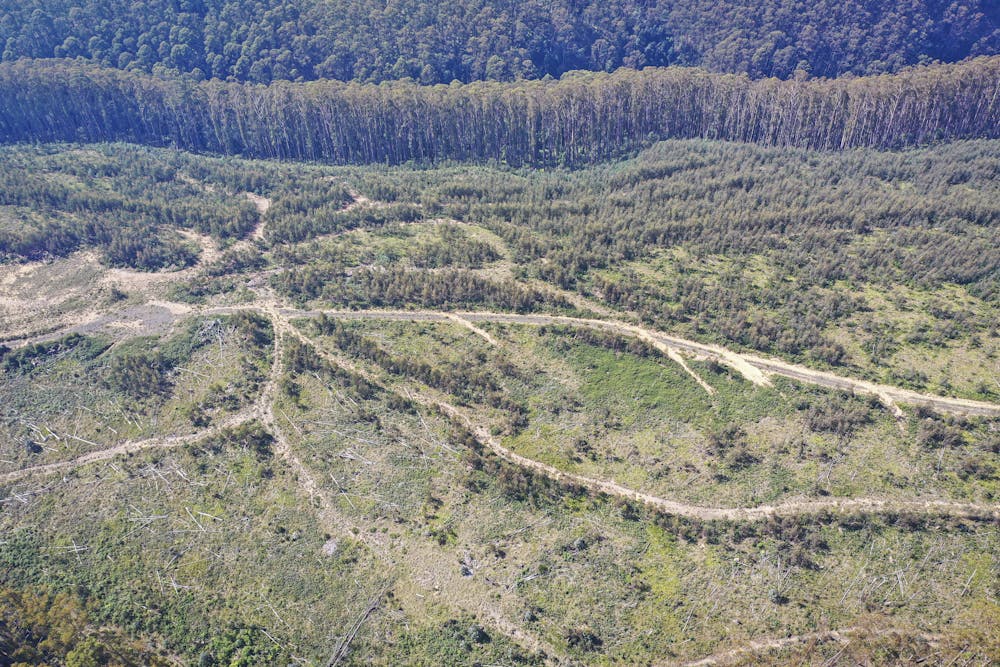
    We analysed satellite data, logging records, on-ground surveys and drone photography, and discovered that nearly 20% of logged areas failed to regenerate. This represents more than 8,000 hectares of forest lost. All that remains in these areas are grassy clearings, dense shrublands or bare soils.

    We also found the rate of regeneration failure has increased over the past decade. While failure was rare in the 1980s, it became much more common over time – affecting more than 80% of logged sites by 2019.

    These regeneration failures weren’t random. They were found mostly in close proximity to each other, on areas with steep slopes, relatively low elevation, and where the area of clear-felled forest was long and narrow.

    Our research shows more needs to be done to restore Victoria’s forest after logging.

    Failed regeneration in the Upper Thomson water supply catchment.
    Chris Taylor/Lachie McBurnie

    Restoring majestic forests and their vital services

    Victoria is home to some of the most spectacular forests on the planet. They include extensive stands of mountain ash, the tallest flowering plant on Earth, which can grow to almost 100 metres in height. Alpine ash, another giant, can grow up to 60m tall.

    These forests have great cultural significance to Indigenous people and support many recreational and tourism activities.

    Healthy forest ecosystems also deliver clean water and carbon storage services. In fact, mountain ash forests contain more carbon per hectare than most other forests around the world.

    But Victoria’s forests have long been logged for timber and pulp. The main method of logging – clearfelling – scars the landscape, leaving large areas devoid of trees if natural tree regeneration fails.

    Mountain ash is especially vulnerable

    Our research revealed 19.2% of areas logged between 1980 and 2019 in our study area (8,030ha out of 41,819ha cut) failed to regenerate naturally.

    We also found strong evidence of a significant increase in the extent of failed regeneration over 40 years, increasing from less than two hectares per cutblock in 1980 (about 7.5%) to more than nine hectares per cutblock in 2019 (about 85%), on average.

    We found regeneration failure was more likely in mountain ash forests compared with other forest types.

    This adds to the case for listing the mountain ash forests of the Central Highlands of Victoria as a threatened ecological community.

    The presence of non-eucalypt categories of vegetation indicates large areas of regeneration failure in forest near Mt Matlock, in the Central Highlands of Victoria.
    Chris Taylor

    A responsibility to restore

    Under Victoria’s Code of Forest Practice for Timber Production, logged native forests must be properly regenerated within two to three years of harvest.

    That’s because it is nearly impossible for the native forest to regenerate after three years without human intervention. The young trees face too much competition from grass and shrubs.

    These degraded areas no longer hold the value they once did and they cannot provide the same level of ecosystem services such as carbon storage, water purification, or habitat for wildlife.

    With no current government restoration plan, these landscapes will remain degraded indefinitely. The Victorian government retains legal responsibility to restore these degraded forests, but currently lacks any large-scale restoration strategy, making action urgently required.

    Photographs of vegetation categories on logged sites: Eucalyptus regeneration near Toolangi (A), grass-dominated area near Mt Matlock (B), shrubby vegetation at Ballantynes Saddle (C), Daviesia vegetation near Mt Matlock (D), Acacia near Mt Baw Baw (E), and bare earth near Mt Matlock (F).
    Chris Taylor

    A way forward: using green bonds to fund regeneration

    Our research shows the regeneration of forests after logging is not guaranteed. Nature often needs a helping hand. But we need to find ways to fund these projects.

    Globally, governments have used “green bonds” to lower the cost of borrowing tied explicitly to measurable environmental results.

    Victoria already has green bonds “to finance new and existing projects that offer climate change and environmental benefits”. But funds are typically used to finance investments in transport, renewable energy, water and low carbon buildings.

    As part of a coalition of researchers, environmental organisations, and finance sector partners we proposed a A$224 million green bond for forest regeneration. This proposal was put to the Victorian government via the Treasury Corporation of Victoria.

    Green bond funding would help leverage co-investment from the Commonwealth government and philanthropic partners to improve monitoring and biodiversity outcomes in native forests.

    As part of the proposed green bond, areas of logged forest where natural regeneration has failed would be restored.

    Other investments under the green bond could include creating tourism ventures (and associated jobs), controlling feral animals such as deer, and biodiversity recovery – creating habitat for endangered species such as the southern greater glider and Leadbeater’s possum, for example.

    The $224 million required for the ten years of the green bond — or around $22.4 million per year — is less than the substantial losses Victoria incurred on its investment in VicForests over the past decade.

    Our research suggests leaving nature to its own devices would mean losing a fifth of the forests logged over the past 40 years. Bringing the trees back has multiple benefits and would be well worth the investment.

    Maldwyn John Evans receives funding from the Australian Government.

    David Lindenmayer receives funding from The Australian Government, the Australian Research Council and the Victorian Government. He is a Councillor with the Biodiversity Council and a Member of Birdlife Australia.

    Chris Taylor does not work for, consult, own shares in or receive funding from any company or organisation that would benefit from this article, and has disclosed no relevant affiliations beyond their academic appointment.

    ref. Logging devastated Victoria’s native forests – and new research shows 20% has failed to grow back – https://theconversation.com/logging-devastated-victorias-native-forests-and-new-research-shows-20-has-failed-to-grow-back-254465

    MIL OSI AnalysisEveningReport.nz

  • MIL-Evening Report: What are the symptoms of measles? How long does the vaccine last? Experts answer 6 key questions

    Source: The Conversation (Au and NZ) – By Phoebe Williams, Paediatrician & Infectious Diseases Physician; Senior Lecturer & NHMRC Fellow, Faculty of Medicine, University of Sydney

    fotohay/Shutterstock

    So far in 2025 (as of May 1), 70 cases of measles have been notified in Australia, with all states and territories except Tasmania and the Australian Capital Territory having recorded at least one case. Most infections have occurred in New South Wales, Victoria and Western Australia.

    We’ve already surpassed the total number of cases recorded in all of 2023 (26 cases) and 2024 (57 cases).

    Measles outbreaks are currently occurring in every region of the world. Most Australian cases are diagnosed in travellers returning from overseas, including popular holiday destinations in Southeast Asia.

    But although Australia eliminated local transmission of measles in 2014, recently we’ve seen measles infections once again in Australians who haven’t been overseas. In other words, the virus has been transmitted in the community.

    So with measles health alerts and news reports popping up often, what do you need to know about measles? We’ve collated a list of commonly Googled questions about the virus and the vaccine.

    1. What is measles?

    Measles is one of the most contagious diseases known to affect humans. In fact, every person with measles can infect 12 to 18 others who are not immune. The measles virus can survive in the air for two hours, so people can inhale the virus even after an infected person has left the room.

    Measles predominantly affects children and those with weaker immune systems. Up to four in ten people with measles will need to go to hospital, and up to three in 1,000 people who get measles will die.

    In 2023, there were more than 100,000 deaths from measles around the world.


    Read more:
    Travelling overseas? You could be at risk of measles. Here’s how to ensure you’re protected


    2. What are the symptoms of measles?

    The signs and symptoms of measles usually start 7–14 days after exposure to the virus, and include rash, fever, a runny nose, cough and conjunctivitis. The rash usually starts on the face or neck, and spreads over three days to eventually reach the hands and feet. On darker skin, the rash may be harder to see.

    Complications from measles are common, and include ear infections, encephalitis (swelling of the brain), blindness and breathing problems or pneumonia. These complications are more likely in children.

    Pregnant women are also at greater risk of serious complications, and measles can also cause preterm labour and stillbirth.

    Even in people who recover from measles, a rare (and often fatal) brain condition can occur many years later, called subacute sclerosing panencephalitis.

    Children are most vulnerable to measles.
    Jacob Lund/Shutterstock

    3. What’s the difference between measles and chickenpox?

    Measles and chickenpox are caused by different viruses, although both commonly affect children, and vaccines can prevent both diseases. Chickenpox is caused by the varicella zoster virus, which is also transmitted through the air, and can cause fever, rash and rare (yet serious) complications.

    The chickenpox rash is different to the rash seen in measles. It often starts on the chest or back, appearing first as separate red bumps that evolve into fluid-filled blisters, called vesicles. Chickenpox can also appear later in life as shingles.

    4. Can you get measles twice?

    The simple answer is no. If you contract measles, you should have lifelong immunity afterwards.

    In Australia, people born before 1966 would have most likely been infected with measles, because the vaccine wasn’t available to them as children. They are therefore protected from future infection.

    Measles infection however can reduce the immune system’s ability to recognise infections it has previously encountered, leaving people vulnerable to many of the infections to which they previously had immunity. Vaccination can protect against this.

    5. What is the measles vaccine, and at what age do you get it?

    The measles vaccine contains a live but weakened version of the measles virus. In Australia, measles vaccinations are given as part of a combination vaccine that contains the measles virus alongside the mumps and rubella viruses (the MMR vaccine), and the chickenpox virus (MMRV).

    Under the national immunisation program, children in Australia receive measles vaccines at 12 months (MMR) and 18 months of age (MMRV). In other countries, the age of vaccination may vary – but at least two doses are always needed for optimal immunity.

    In Australia, children are vaccinated against measles at 12 and 18 months.
    Zhuravlev Andrey/Shutterstock

    Measles vaccines can be given earlier than 12 months, from as early as six months, to protect infants who may be at higher risk of exposure to the virus (such as those travelling overseas). Infants who receive an early dose of the measles vaccine still receive the usual two recommended doses at 12 and 18 months old.

    Australians born between 1966 and 1994 (those aged roughly 20–60) are considered to be at greater risk of measles, as the second dose was only recommended from November 1992. Australia is seeing breakthrough measles infections in this age group.

    An additional measles vaccine can be given to these adults at any time. It’s safe to get an extra dose even if you have been vaccinated before. If you are unsure if you need one, talk to your GP who may check your measles immunity (or immunisation record, if applicable) before vaccinating.

    However, as the measles vaccine is a live vaccine, it’s not safe to give to people with weakened immune systems (due to certain medical conditions) or pregnant women. It’s therefore important that healthy, eligible people receive the measles vaccine to protect themselves and our vulnerable population.

    6. How long does a measles vaccine last?

    The measles vaccine is one of the most effective vaccines we have. After two doses, about 99% of people will be protected against measles for life.

    And the measles vaccine not only protects you from disease. It also stops you from transmitting the virus to others.

    Phoebe Williams receives research funding focused on reducing antimicrobial resistance and neonatal sepsis from the National Health and Medical Research Council and the Gates Foundation.

    Archana Koirala is the chair of the Vaccination Special Interest Group and a committee member of the Australian and New Zealand paediatric infectious diseases network with Australasian Society of Infectious Diseases. Her vaccine and seroprevalence research has been funded by the Australian Government Department of Health and Aged Care and NSW Health.

    ref. What are the symptoms of measles? How long does the vaccine last? Experts answer 6 key questions – https://theconversation.com/what-are-the-symptoms-of-measles-how-long-does-the-vaccine-last-experts-answer-6-key-questions-255496

    MIL OSI AnalysisEveningReport.nz

  • MIL-Evening Report: How the US ‘war on woke’ and women risks weakening its own military capability

    Source: The Conversation (Au and NZ) – By Bethan Greener, Associate Professor of Politics, Te Kunenga ki Pūrehuroa – Massey University

    US Defense Secretary Pete Hegseth during a visit with Michigan Air National Guard troops, April 29. Getty Images

    With US Secretary of Defense Pete Hegseth’s “proud” cancellation this week of the military’s Women, Peace and Security (WPS) program, the “war on woke” has found its latest frontier – war itself.

    Stemming from a United Nations Security Council resolution in 2000, the WPS initiative aimed to increase the participation of women in public institutions, including in the security sector and in peace-making roles.

    The WPS agenda aims to better understand how women, men, boys and girls experience war, peace and security differently. It increases operational effectiveness and supports the underlying goal of gender equality, described by the UN as the “number one predictor of peace”.

    In the military context, it emphasises the need to increase the participation of women and to better protect non-combatant women in war, particularly from the prevalence of conflict-related sexual violence.

    The decision to end the program as part of a wider war on diversity, equity and inclusion seems to assume national security and military power are incompatible with the promotion of racial and gender equality.

    In other words, it assumes certain types of people aren’t really cut out to be “warfighters”. And it asserts that anything other than basic skill (such as weapons handling) undermines readiness and ability in warfare.

    History and the available evidence suggest both ideas are wrong.

    The archetypal warrior envisaged by Hegseth and others is one who relies on very traditional concepts of what constitutes a warrior and who that might be: not female, definitely not transgender, ideally also not gay.

    Recent bans on transgender personnel in the US military, the removal of mandatory mental resilience training, and the
    disappearance” from US museums and memorials of the records of the military contribution of women and minorities, reinforce these ideas.

    The ideal soldier, according to the new doctrine, is straight, white, physically fit, stoic and male. Yet people of all stripes have served their countries ably and with honour.

    Hard-won progress in retreat

    Military service is allocated a privileged kind of status in society, despite (or perhaps because of) the ultimate sacrifice it can entail. That status has long been the preserve of men, often of a particular class or ethnicity.

    But women and minorities around the world have fought for the right to enter the military, often as part of broader campaigns for greater equality within society in general.

    But there remains resistance to these “interlopers”. No matter their individual capabilities, women are painted as too physically weak, as a threat to combat unit cohesion, or a liability because of their particular health needs.

    Women, in particular, are often perceived as being too emotional or lacking authority for military command. Minorities are seen as requiring distracting rules about cultural sensitivity, presenting language challenges, or are stereotyped as not cut out for leadership.

    But problem solving – a key military requirement – is best tackled with a range of views and approaches. Research from the business world shows diverse teams are more successful, including delivering higher financial returns.

    At a more granular level, we also know that minority groups have often outperformed other military units, as exemplified by the extraordinary feats of the New Zealand Māori Pioneer Battalion in World War I and the 28th Māori Battalion in World War II.

    Women, too, have proved themselves many times over, most recently in the wars in Iraq and Afghanistan. As well as matching the skills of their male counterparts, they also had different, useful approaches to roles such as intelligence gathering in conflict zones.

    US Marines on a military exercise – but history shows us there’s more than one type of successful soldier.
    Getty Images

    The ‘woke warrior’

    The competence of military personnel is not determined by sex, gender, sexuality or ethnicity. Rather, competence is determined by a combination of learned skills, training, education, physical ability, mental agility, resilience, experience, interpersonal skills and leadership qualities.

    Any suggestion that military units are best served by being made up of only heterosexual men with “alpha” tendencies is undermined by the evidence. In fact, a monocultural, hypermasculine military may increase the potential for harrassment, bullying or worse.

    Modern military roles also involve a much wider range of skills than the traditional and stereotypically male infantry tasks of digging, walking with a pack, firing guns and killing an enemy.

    In modern warfare, personnel may also need to engage in “hearts and minds” counterinsurgency, or in “grey zone” tactics, where specialisations in intelligence, cyber or drone piloting are more highly prized. Militaries are also much more likely to be deployed to non-warfighting roles, such as humanitarian aid and disaster relief.

    This isn’t to say “controlled aggression” and other traditionally alpha-male attributes don’t have their place. But national military strategies increasingly stress the need to train ethical and compassionate soldiers to successfully carry out government objectives.

    The evolution of war requires the evolution of the military forces that fight them. The cancellation of the Women, Peace and Security program in the US threatens to put a stop to this process, at least in that country.

    Despite Pete Hegseth’s claim to be increasing “warfighting” capability, then, there is a real chance the move will decrease operational effectiveness, situational awareness and problem solving in conflict situations.

    Far from being peripheral, the Women, Peace and Security program is central to the future of all military activity, and to developing conceptions of war, peace and security. Hegseth’s “proud moment” looks less like winning a “war on woke” and more like a retreat from an understanding of the value a diverse military has created.

    Bethan Greener does not work for, consult, own shares in or receive funding from any company or organisation that would benefit from this article, and has disclosed no relevant affiliations beyond their academic appointment.

    ref. How the US ‘war on woke’ and women risks weakening its own military capability – https://theconversation.com/how-the-us-war-on-woke-and-women-risks-weakening-its-own-military-capability-255710

    MIL OSI AnalysisEveningReport.nz

  • MIL-OSI USA: NASA’s Chandra Diagnoses Cause of Fracture in Galactic “Bone”

    Source: NASA

    Astronomers have discovered a likely explanation for a fracture in a huge cosmic “bone” in the Milky Way galaxy, using NASA’s Chandra X-ray Observatory and radio telescopes.
    The bone appears to have been struck by a fast-moving, rapidly spinning neutron star, or pulsar. Neutron stars are the densest known stars and form from the collapse and explosion of massive stars. They often receive a powerful kick from these explosions, sending them away from the explosion’s location at high speeds.
    Enormous structures resembling bones or snakes are found near the center of the galaxy. These elongated formations are seen in radio waves and are threaded by magnetic fields running parallel to them. The radio waves are caused by energized particles spiraling along the magnetic fields.

    This new image shows one of these cosmic “bones” called G359.13142-0.20005 (G359.13 for short), with X-ray data from Chandra (colored blue) and radio data from the MeerKAT radio array in South Africa (colored gray). Researchers also refer to G359.13 as the Snake.
    Examining this image closely reveals the presence of a break, or fracture, in the otherwise continuous length of G359.13 seen in the image. The combined X-ray and radio data provides clues to the cause of this fracture.
    Astronomers have now discovered an X-ray and radio source at the location of the fracture, using the data from Chandra and MeerKAT and the National Science Foundation’s Very Large Array. A likely pulsar responsible for these radio and X-ray signals is labeled. A possible extra source of X-rays located near the pulsar may come from electrons and positrons (the anti-matter counterparts to electrons) that have been accelerated to high energies.
    The researchers think the pulsar likely caused the fracture by smashing into G359.13 at a speed between one million and two million miles per hour. This collision distorted the magnetic field in the bone, causing the radio signal to also become warped.
    At about 230 light-years long, G359.13 is one of the longest and brightest of these structures in the Milky Way. To put this into context, there are more than 800 stars within that distance from Earth. G359.13 is located about 26,000 light-years from Earth, near the center of the Milky Way.
    A paper describing these results appeared in the May 2024 issue of the Monthly Notices of the Royal Astronomical Society and is available here. The authors of the study are Farhad Yusuf-Zadeh (Northwestern University), Jun-Hui Zhao (Center for Astrophysics | Harvard & Smithsonian), Rick Arendt (University of Maryland, Baltimore County), Mark Wardle (Macquarie University, Australia), Craig Heinke (University of Alberta), Marc Royster (College of the Sequoias, California), Cornelia Lang (University of Iowa), and Joseph Michail (Northwestern).
    NASA’s Marshall Space Flight Center in Huntsville, Alabama, manages the Chandra program. The Smithsonian Astrophysical Observatory’s Chandra X-ray Center controls science operations from Cambridge, Massachusetts, and flight operations from Burlington, Massachusetts.

    Read more from NASA’s Chandra X-ray Observatory.
    Learn more about the Chandra X-ray Observatory and its mission here:

    chandra

    https://chandra.si.edu

    This release features two composite images of a long, thin, cosmic structure. With the structure’s vertical orientation, seemingly fragile dimensions, and pale grey color against the blackness of space, the images resemble medical X-rays of a long, thin, bone. The main image shows the structure in its entirety. The inset image is an annotated close-up highlighting an apparent fracture in the bone-like structure.
    The structure, called G359.13, or “The Snake”, is a Galactic Center Filament. These filament formations are threaded by parallel magnetic fields, and spiraling, energized particles. The particles cause radio waves, which can be detected by radio arrays, in this case by the MeerKAT array in South Africa.
    In the first composite image, the largely straight filament stretches from the top to the bottom of the vertical frame. At each end of the grey filament is a hazy grey cloud. The only color in the image is neon blue, found in a few specks which dot the blackness surrounding the structure. The blue represents X-rays seen by NASA’s Chandra X-ray Observatory.
    In the annotated close-up, one such speck appears to be interacting with the structure itself. This is a fast-moving, rapidly spinning neutron star, otherwise known as a pulsar. Astronomers believe that this pulsar has struck the filament halfway down its length, distorting the magnetic field and radio signal.
    In both images, this distortion resembles a small break, or spur, in the bone-like filament.

    Megan WatzkeChandra X-ray CenterCambridge, Mass.617-496-7998mwatzke@cfa.harvard.edu
    Lane FigueroaMarshall Space Flight Center, Huntsville, Alabama256-544-0034lane.e.figueroa@nasa.gov

    MIL OSI USA News

  • MIL-OSI USA: ARMD Research Solicitations (Updated May 1)

    Source: NASA

    THIS PAGE WAS UPDATED ON MAY 1, 2025(Added Advanced Air Vehicles Program Fellowship Opportunities.)
    This Aeronautics Research Mission Directorate (ARMD) solicitations page compiles the opportunities to collaborate with NASA’s aeronautical innovators and/or contribute to their research to enable new and improved air transportation systems.
    Most opportunities to participate in research are officially announced through the Web-based NASA Solicitation and Proposal Integrated Review and Evaluation System, better known as NSPIRES. You are encouraged to visit the NSPIRES web site, create an account, and sign up for automated email announcements.
    Other types of collaborative opportunities, such as those involving Requests for Information or academic research contests, also are included on this page.
    This page has four major sections:

    Advanced Air Vehicles Program Fellowship OpportunitiesProposals are due by June 11, 2025.
    University Leadership InitiativeStep-A proposals due by June 26, 2025.
    University Student Research ChallengeProposals for Cycle 3 are due by June 26, 2025.

    ROA-2025 NRA Amendment 1 – OPEN
    Advanced Air Vehicles Program Fellowship Opportunities
    (View the full ROA-2025 NRA Amendment 1 text here.)
    This announcement solicits proposals from accredited U.S. institutions for research training grants to begin the academic year. This Notice of Funding Opportunity is designed to support independently conceived research projects by highly qualified graduate students in disciplines needed to help advance NASA’s mission, thus affording these students the opportunity to directly contribute to advancements in STEM-related areas of study. These opportunities are focused on innovation and the generation of measurable research results that contribute to NASA’s current and future science and technology goals.
    Research proposals are sought to address the key challenges summarized in the Elements section at the end of the Amendment 1 document, and which reference NASA’s Hypersonic Technology and Transformational Tools & Technologies projects.
    Notices of Intent are not required.
    A budget breakdown for each proposal is required, detailing the allocation of the award funds by year. The budget document may adhere to any format or template provided by the applicant’s institution. Two pre-proposal teleconferences for potential proposers will be held and meeting links will be posted on NSPIRES.
    Proposals are due by 5 p.m. EDT on June 11, 2025.

    ROA-2024 NRA Amendment 2 – OPEN
    University Leadership Initiative
    (View the full ROA-2024 NRA Amendment 2 text here.)
    NASA’s University Leadership Initiative (ULI) provides the opportunity for university teams to exercise technical and organizational leadership in proposing unique technical challenges in aeronautics, defining multi-disciplinary solutions, establishing peer review mechanisms, and applying innovative teaming strategies to strengthen the research impact.
    Research proposals are sought in six ULI topic areas in Appendix D.4.
    Topic 1: Safe, Efficient Growth in Global Operations
    Topic 2: Innovation in Commercial High-Speed Aircraft
    Topic 3: Ultra-Efficient Subsonic Transports
    Topic 4: Safe, Quiet, and Affordable Vertical Lift Air Vehicles
    Topic 5: In-Time System-Wide Safety Assurance
    Topic 6: Assured Autonomy for Aviation Transformation
    This NASA Research Announcement will utilize a two-step proposal submission and evaluation process. The initial step is a short mandatory Step-A proposal, which is due June 26, 2025. Those offerors submitting the most highly rated Step-A proposals will be invited to submit a Step-B proposal. All proposals must be submitted electronically through NSPIRES at https://nspires.nasaprs.com. An Applicant’s Workshop will be held on Thursday April 30, 2025; 1:00-3:00 p.m. ET (https://uli.arc.nasa.gov/applicants-workshops/workshop9) (Page will be live closer to the event.)
    An interested partners list for this ULI is at https://uli.arc.nasa.gov/partners. To be listed as an interested lead or partner, please send an email to hq-univpartnerships@mail.nasa.gov with “ULI Partnerships” in the subject line and include the information required for the table on that web page.

    ROA-2024 NRA Amendment 4 – OPEN
    University Student Research Challenge
    (View the full ROA-2024 NRA Amendment 4 text here)
    NASA’s University Student Research Challenge (USRC) seeks to challenge students to propose new ideas/concepts that are relevant to NASA Aeronautics.  The challenge will provide students from accredited U.S. colleges or universities with grants for their projects, as well as the challenge of raising cost share funds through a crowdfunding campaign. The process of creating and implementing a crowdfunding campaign acts as a teaching accelerator — requiring students to act like entrepreneurs and raise awareness about their research among the public.
    The solicitation goal can be accomplished through project ideas such as advancing the design, developing technology or capabilities in support of aviation, by demonstrating a novel concept, or enabling advancement of aeronautics-related technologies.
    Notices of Intent are not required for this solicitation.
    Proposals for Cycle 3 are due June 26, 2025.
    Proposals can also be submitted later and evaluated in the second and third cycles.
    The USRC Q&A/Info Session and Proposal Workshop will be held on the days/times below. Please join us on TEAMS using the Meeting Link, or call in via +1 256-715-9946,,317928116#.

    USRC Cycle
    Information Session/Q&A Date
    Proposal Due Date

    Cycle 1
    Sept. 20, 2024 at 2 pm ET
    Nov. 7, 2024

    Cycle 2
    Jan. 27, 2025 at 2 pm ET
    March 13, 2025

    Cycle 3
    May 12, 2025 at 2 pm ET
    June 26, 2025

    Aeronautics Innovation Challenges – OPEN
    NASA’s nationwide team of aeronautical innovators are committed to giving students of all ages opportunities to solve some of the biggest technical challenges facing the aviation community today. Through NASA-sponsored challenges and competitions, students representing multiple disciplines will put their skills to work by designing and building solutions to real-world problems.

    Advanced Capabilities for Emergency Response Operations RFI – CLOSED
    View the full ACERO RFI announcement here.
    NASA’s Advanced Capabilities for Emergency Response Operations (ACERO) project used this request for information to identify technologies that addressed current challenges facing the wildland firefighting community. NASA was seeking information on data collection, airborne connectivity and communications solutions, unmanned aircraft systems traffic management, aircraft operations and autonomy, and more. This would support development of a partnership strategy for future collaborative demonstrations.
    Interested parties were requested to respond to this notice with an information package submitted via https://nari.arc.nasa.gov/acero-rfi no later than 4 pm ET, October 15, 2023. Submissions were accepted only from U.S. companies.

    Advanced Air Mobility Mission RFI – CLOSED
    View the full AAM RFI announcement here.
    This request for information is being used to gather market research for NASA to make informed decisions regarding potential partnership strategies and future research to enable Advanced Air Mobility (AAM). NASA is seeking information from public, private, and academic organizations to determine technical needs and community interests that may lead to future solicitations regarding AAM research and development.
    This particular RFI is just one avenue of multiple planned opportunities for formal feedback on or participation in NASA’s AAM Mission-related efforts to develop these requirements and help enable AAM. 
    The respond by date for this RFI closed on Feb. 1, 2025, at 6 p.m. EST.

    ROA-2024 NRA Amendment 1 – CLOSED
    (View the full ROA-2024 NRA Amendment 1 text here.)
    The announcement solicited proposals from accredited U.S. institutions for research training grants to begin the academic year. This Notice of Funding Opportunity was designed to support independently conceived research projects by highly qualified graduate students, in disciplines needed to help advance NASA’s mission, thus affording these students the opportunity to directly contribute to advancements in STEM-related areas of study. Advanced Air Vehicle Program fellowship opportunities are focused on innovation and the generation of measurable research results that contribute to NASA’s current and future science and technology goals.
    Research proposals were sought to address key challenges provided in Elements of Appendix A.8.
    A budget breakdown for each proposal was required, detailing the allocation of the award funds by year. The budget document could adhere to any format or template provided by the applicant’s institution.
    Proposals were due by April 30, 2024, at 5 PM ET.

    ROA-2024 NRA Amendment 3 – CLOSED
    (View the full ROA-2024 NRA Amendment 3 text here)
    NASA’s Commercial Supersonic Technology project sought proposals for a fuel injector design concept and fabrication for testing at NASA’s Glenn Research Center in Cleveland.
    The proposal for the fuel injector design aimed to establish current state-of-the-art in low NOx supersonic cruise while meeting reasonable landing take-off NOx emissions. The technology application timeline is targeted for a supersonic aircraft with entry into service in the 2035+ timeframe.
    Proposals were due by May 31, 2024 at 5 pm EDT.

    Competition for NRA awards is open to both academia and industry.
    The current open solicitations for ARMD Research Opportunities are ROA-2024 and ROA-2025.
    Here is some general information to know about the NRA process.

    NRA solicitations are released by NASA Headquarters through the Web-based NASA Solicitation and Proposal Integrated Review and Evaluation System (NSPIRES).
    All NRA technical work is defined and managed by project teams within these four programs: Advanced Air Vehicles Program, Airspace Operations and Safety Program, Integrated Aviation Systems Program, and Transformative Aeronautics Concepts Program.
    NRA awards originate from NASA’s Langley Research Center in Virginia, Ames Research Center in California, Glenn Research Center in Cleveland, and Armstrong Flight Research Center in California.
    Competition for NRA awards is full and open.
    Participation is open to all categories of organizations, including educational institutions, industry, and nonprofits.
    Any updates or amendments to an NRA is posted on the appropriate NSPIRES web pages as noted in the Amendments detailed below.
    ARMD sends notifications of NRA updates through the NSPIRES email system. In order to receive these email notifications, you must be a Registered User of NSPIRES. However, note that NASA is not responsible for inadvertently failing to provide notification of a future NRA. Parties are responsible for regularly checking the NSPIRES website for updated NRAs.

    MIL OSI USA News

  • MIL-OSI USA: NASA Invests in Future STEM Workforce Through Space Grant Awards 

    Source: NASA

    NASA is awarding up to $870,000 annually to 52 institutions across the United States, the District of Columbia, and Puerto Rico over the next four years. The investments aim to create opportunities for the next generation of innovators by supporting workforce development, science, technology, engineering and math education, and aerospace collaboration nationwide. 
    The Space Grant College and Fellowship Program (Space Grant), established by Congress in 1989, is a workforce development initiative administered through NASA’s Office of STEM Engagement (OSTEM). The program’s mission is to produce a highly skilled workforce prepared to advance NASA’s mission and bolster the nation’s aerospace sector. 
    “The Space Grant program exemplifies NASA’s commitment to cultivating a new generation of STEM leaders,” said Torry Johnson, deputy associate administrator of the STEM Engagement Program at NASA Headquarters in Washington. “By partnering with institutions across the country, we ensure that students have the resources, mentorship, and experiences needed to thrive in the aerospace workforce.” 
    The following is a complete list of awardees: 

    University of Alaska, Fairbanks 

    University of Alabama, Huntsville 

    University of Arkansas, Little Rock 

    University of Arizona 

    University of California, San Diego 

    University of Colorado, Boulder 

    University of Hartford, Connecticut 

    American University, Washington, DC 

    University of Delaware 

    University of Central Florida 

    Georgia Institute of Technology 

    University of Hawaii, Honolulu 

    Iowa State University, Ames 

    University of Idaho, Moscow 

    University of Illinois, Urbana-Champaign 

    Purdue University, Indiana 

    Wichita State University, Kansas 

    University of Kentucky, Lexington 

    Louisiana State University and A&M College 

    Massachusetts Institute of Technology 

    Johns Hopkins University, Maryland 

    Maine Space Grant Consortium 

    University of Michigan, Ann Arbor 

    University of Minnesota 

    Missouri University of Science and Technology 

    University of Mississippi 

    Montana State University, Bozeman 

    North Carolina State University 

    University of North Dakota, Grand Forks 

    University of Nebraska, Omaha 

    University of New Hampshire, Durham 

    Rutgers University, New Brunswick, New Jersey 

    New Mexico State University 

    Nevada System of Higher Education 

    Cornell University, New York 

    Ohio Aerospace Institute 

    University of Oklahoma 

    Oregon State University 

    Pennsylvania State University 

    University of Puerto Rico 

    Brown University, Rhode Island 

    College of Charleston, South Carolina 

    South Dakota School of Mines & Technology 

    Vanderbilt University, Tennessee 

    University of Texas, Austin 

    University of Utah, Salt Lake City 

    Old Dominion University Research Foundation, Virginia 

    University of Vermont, Burlington 

    University of Washington, Seattle 

    Carthage College, Wisconsin 

    West Virginia University 

    University of Wyoming 

    Space Grant operates through state-based consortia, which include universities, university systems, associations, government agencies, industries, and informal education organizations engaged in aerospace activities. Each consortium’s lead institution coordinates efforts within its state, expanding opportunities for students and researchers while promoting collaboration with NASA and aerospace-related industries nationwide. 
    To learn more about NASA’s missions, visit: https://www.nasa.gov/ 

    MIL OSI USA News

  • MIL-OSI United Kingdom: Highland Council’s Playpark Strategy highlighted in Scottish Government publication

    Source: Scotland – Highland Council

    Highland youth have been credited for their contribution to Highland Council’s nationally recognised Playpark Strategy after it was referenced in the evidence base and supporting research of the Scottish Government’s Play Vision Statement and Action Plan 2025-2030.

    The Play Vision Statement and Action Plan is designed to reflect the vision of play for Scotland for the next five years and the steps the Scottish Government will take within that time to achieve its vision and aim.

    Cllr Graham MacKenzie, Chair of the Council’s Communities and Place Committee said: “We are delighted that our Playpark Strategy has been acknowledged in the evidence base and supporting research of a nationally recognised publication. By prioritising the voices of young people and recognising the value of listening to what they wanted in their local playparks, we have created a child-led strategy and action plan that has played a part in influencing best practice. We are extremely proud to be the only local authority referenced alongside prominent organisations including Harvard University, Public Health Scotland and the University of Cambridge.”

    Agreed in November 2023, Highland Council’s Playpark Strategy and Action Plan for 2023-2033 was underpinned by consultations and surveys with children alongside the development of a literature review which evidenced the health and social benefits of playing in playparks and how skills learnt from play can positively shape children in the future.

    Key themes identified by young people in relation to playparks included:

    • Access to a variety of play options for children of all ages and abilities
    • Local playparks within easy reach of home
    • Functional and well-maintained play equipment
    • Open spaces for running and active play
    • Opportunities for collaborative play through equipment designed for group interaction

    Cllr MacKenzie continued: “Combined with our own literature review highlighting the health benefits of outdoor play, the insights and preferences of children in the Highlands were central to shaping the Playpark Strategy and we would like to thank all the children and young people who supported the development of the strategy.

    “We recognise the importance of play and playparks for children, in terms of the benefits they provide to their physical, social and mental health, and our strategy has guided us in providing children and communities with opportunities to design their own sustainable and inclusive park parks for increased health and wellbeing and a brighter future for our younger generations.”

    To find out more about the support available to local communities for child-led playpark upgrades, please contact Highland Council’s Playpark Coordinator lynn.macgillivray@highland.gov.uk

    1 May 2025

    MIL OSI United Kingdom

  • MIL-OSI Asia-Pac: Rakesh Verma takes charge as Director General, IIIDEM; Ashish Goyal takes charge as Director General, Media

    Source: Government of India

    Posted On: 01 MAY 2025 7:47PM by PIB Delhi

    Shri. Rakesh Verma, assumes charge as Director General, India International Institute of Democracy and Election Management (IIIDEM), New Delhi here today.  Shri Verma is a 1993 batch IAS Officer from Punjab Cadre. He holds a degree in Computer Science and Engineering from IIT Delhi. 

    2. Prior to this, he was serving as Additional Secretary, Department of Water Resources, River Development and Ganga Rejuvenation, Ministry of Jal Shakti. Earlier he also served as Additional Secretary and Joint Secretary in the Ministry of Tourism.

    3. Shri. Ashish Goyal, assumed charge as Director General, Media in the Election Commission of India (ECI) today. Shri Goyal is a 1996 batch IIS officer. He holds a Masters in Business Administration from Panjab University and a Bachelor’s degree in Engineering from Punjab Engineering College, Chandigarh.

    4. Prior to this, he was serving as the Director General of National Museum, Ministry of Culture with additional charge of Director, Salar Jung Museum.

    ******

    PK/GDH/RP

    (Release ID: 2125891) Visitor Counter : 44

    MIL OSI Asia Pacific News

  • MIL-OSI Asia-Pac: WAVES 2025 witnesses exchange of ideas on the future of Indian Media & Entertainment Industry

    Source: Government of India

    WAVES 2025 witnesses exchange of ideas on the future of Indian Media & Entertainment Industry

    Indian M&E @100: Reimagining the Future of Media and Entertainment at WAVES 2025

    Posted On: 01 MAY 2025 7:15PM by PIB Mumbai

    Mumbai, 1 May 2025


    The inaugural day of WAVES 2025 at the Jio World Convention Centre, Mumbai, featured a compelling panel discussion titled “Indian M&E @100: Reimagining the Future of Media and Entertainment.” The session brought together leading voices from the industry to reflect on its growth and the road ahead as India moves towards 2047. The discussion was moderated by Vanita Kohli Khandekar, Contributing Editor, Business Standard.

    Opening the session, Vanita Kohli Khandekar recalled how the media and entertainment sector, valued at just ₹500 crore around the year 2000, has now grown into a ₹70,000 crore industry. She pointed to two policy decisions that played a critical role in fuelling this growth—the granting of industry status to filmmaking and the initial tax exemptions granted to multiplexes. She also posed an important question on the ability of AI not just to improve content quality, but also to aid in its monetisation. Emphasizing the country’s cultural and linguistic diversity, she underlined that scaling must be inclusive and sensitive to India’s varied audience.

    Vinit Karnik, Managing Director, GroupM, noted that 60% of the advertising revenue in the M&E sector today comes from digital platforms. He observed that the sector has undergone significant disruptions over the last few years, which have fundamentally reshaped how content is consumed and marketed. While acknowledging AI as a strong enabler, he emphasised that content must remain humanised—especially at a time when culture itself is being shaped by mobile technology. He highlighted the need to use technology constructively to enhance storytelling and informed the audience about Mumbai University’s new course on prompt engineering aimed at equipping future professionals.

    Rajan Navani, Founder and CEO of JetSynthesys, focused on the future of content delivery, which he believes will evolve into cross-platform interactive experiences. He stated that India holds just 2–3% of the global M&E market, and to further increase this share by 2047, it is imperative to invest in talent and enhance the country’s investment capacity. He noted that entertainment is becoming increasingly dynamic and will require different technologies for different formats. Addressing Vanita’s concerns on monetization, he pointed out the relatively low disposable income in India compared to developed markets, but expressed optimism that sustained economic growth will boost consumer spending. He cited the example of the Global e-Cricket Premier League, where audiences are already engaging in individualized consumption and payments.

    Vikram Tanna, CEO of Eros Now, called for India to aspire to become a global hub for AI innovation in media. He argued that AI would transform both the creation and delivery of content, enabling new ways for users to become creators. According to him, the digital age will present numerous inflection points, and strategic interventions are required to ensure that India remains competitive. He emphasized that simplifying new technologies—making them as accessible as the internet—will naturally expand the business. He concluded the session by noting that, in this evolving environment, it is crucial for the industry to understand how to engage with machines and harness the vast content landscape for advertising and audience engagement.

    The session offered a forward-looking view of India’s M&E sector, underscoring the interplay of policy, technology, talent, and cultural relevance in shaping its future. WAVES 2025 continues at Jio World Centre till May 4, with sessions highlighting global trends in audio-visual and entertainment industries.


    * * *

    PIB TEAM WAVES 2025 | Rajith/ Santosh V/Lekshmipriya/ Darshana | 129

    Follow us on social media: @PIBMumbai    /PIBMumbai     /pibmumbai   pibmumbai[at]gmail[dot]com  /PIBMumbai     /pibmumbai

    (Release ID: 2125886) Visitor Counter : 48

    MIL OSI Asia Pacific News

  • MIL-OSI USA: Governor Stein to Address Graduates in Western North Carolina, Honor Graduates’ Achievements and Resiliency

    Source: US State of North Carolina

    Headline: Governor Stein to Address Graduates in Western North Carolina, Honor Graduates’ Achievements and Resiliency

    Governor Stein to Address Graduates in Western North Carolina, Honor Graduates’ Achievements and Resiliency
    lsaito

    Raleigh, NC

    To honor western North Carolina graduates’ achievements and resiliency in the wake of Hurricane Helene, Governor Josh Stein will deliver remarks at the commencement ceremonies of Appalachian State University, Western Carolina University, and Asheville-Buncombe Technical Community College on May 9 and 10. Governor Stein will applaud the graduates who have overcome tremendous adversity and encourage them to continue pursuing their dreams.

    “These graduates, many of whom already had their education disrupted by the COVID-19 pandemic, have demonstrated tremendous resilience in the face of adversity following Hurricane Helene,” said Governor Stein. “I am proud to recognize their determination and grit.”

    Friday, May 9

    Appalachian State University College of Arts and Sciences Commencement Ceremony

    5:00 PM

    Questions should be emailed to news@appstate.edu.  

    Saturday, May 10

    Western Carolina University Undergraduate Commencement Ceremony  

    10:00 AM

    Questions should be emailed to jduvall@wcu.edu.

    Asheville-Buncombe Technical Community College Spring Commencement  

    2:00 PM

    Questions should be emailed to kerriaglover@abtech.edu. 

    May 1, 2025

    MIL OSI USA News

  • MIL-OSI USA: Tuberville Delivers Statement from Coach Bruce Pearl to Commemorate Israel’s Independence Day

    US Senate News:

    Source: United States Senator for Alabama Tommy Tuberville

    WASHINGTON – Yesterday, U.S. Senator Tommy Tuberville (R-AL) delivered a statement from Auburn Basketball Coach Bruce Pearl during a Special Committee on Aging hearing on Israel’s Independence Day. The hearing was focused on combatting antisemitism.

    The hearing featured several witnesses, including former Congressman Ted Deutch and Rabbi Mark Rosenberg.

    See excerpts from Sen. Tuberville’s remarks below or watch on YouTube or Rumble.

    TUBERVILLE: “Thank you, Mr. Chairman, and thanks to all of you for being here and your heartfelt statements. Very, very much needed. Before I start my questions, I wanna read a statement here from a good friend of mine. His name is Coach Bruce Pearl, who is currently in Jerusalem, and he’ll be there for a couple of weeks. He would have loved to have been here.

    ‘Shalom from Jerusalem. I’m an American Jewish college basketball coach visiting my ancestral homeland. Yesterday was Israel’s Remembrance Day. Today is Israel’s Independence Day. This is a very emotional time for everyone here because this country has been at war since birth.

    Hours ago, I left Knesset where I was in attendance, along with Prime Minister Netanyahu, President Herzog, and about a thousand citizens honoring the fallen. I’m angry. I’m very angry. What I would ask of this committee is the courage to speak to our educators. We must teach our children. I’m very proud that in the state of Alabama, we have mandatory Holocaust education for middle school students. If we choose not to teach them, somebody else will. None of us can explain […] it or understand why the Jewish people have been targeted.

    We have to do two things. We have to protect ourselves from those who want to kill us, and we have to try to live exemplary lives so that maybe the uncertain won’t hate us. Our educational institutions want to stay neutral, leaving our young people to find out the truth on their own. I am proud to be an American. This country saved my family’s life, rescuing my grandfather from Ternopil in 1929. I will be forever grateful.’

    God bless Coach Bruce Pearl, Auburn University. The issue we’re seeing today on college campuses, and this is from me, is being reinforced by the culture and values being taught on all the campuses. Good people in this country are being taught that Palestinians are the freedom fighters and the people who are being oppressed. They are being taught that the facts on the ground of the Middle East are not true. Why is this happening on university campuses?

    It’s the same reason why our players would kneel for our flag and the national anthem. Because they’re not being taught to love this country. They’ve been taught that they’re oppressed. They have not been taught to love and appreciate the opportunities this country gives them. They have not been taught what’s really going on in the Middle East.

    Young people wanna have a cause, and they have now chosen to stand against freedom because of lies and propaganda. So, congressman, we have unfortunately seen antisemitic attacks spike since the October 7th Hamas terrorist attack. Many of the victims of these attacks have been elderly Jewish Americans. How can the United States government better protect its citizens, particularly the elderly from such attacks?”

    DEUTCH: “Senator Tuberville, thank you. First of all, I appreciate your reading that statement from Coach Pearl who stopped at the AJC Global Forum in New York on his way to Israel. We are, as I’m sure you are, quite proud of his leadership on these issues. There is an enormous amount that Congress can do. I want—it’s important though to emphasize that facts really matter here, and what you said is so important. Some of the protests that we saw, the ones that happened on October 8th and 9th, were not protests about anything that Israel was doing, the IDF, Israeli Defense Forces, hadn’t even gone into Gaza to defend the people of Israel and the Jewish people. The people who took to the streets immediately [took] to the streets with signs that had a terrorist and a hang glider as their call to action were there to do one thing, which is to support the Hamas terrorists who slaughtered 1,200 Jews and whose goal is the destruction of Israel and the massacre of Jews.

    Congress can play a vital role both in helping to keep seniors, Jewish seniors, and all Jews safe by focusing on security and nonprofit security grants. Congress can play an important role in helping everyone understand and identify what antisemitism actually is for those who don’t spend time thinking about this the way that we believe the country should in passing the Antisemitism Awareness Act. And we think that Congress can play a really vital role in making sure that on those campuses when the civil rights of Jewish students are violated, when anyone’s Title VI rights are violated that the Office of Civil Rights, the Department of Education, has the funding necessary to actually conduct the investigations and hold those who committed these acts accountable. Accountability matters on campuses across America. Jewish students have the right to speak out and feel safe like every other group on campus.”

    TUBERVILLE: “Thank you. Rabbi, I am proud that we now have the most pro-Israel and pro-Jewish President of my life back in the White House. President Trump has made it clear: if universities continue allowing antisemitic propaganda on their campuses, they will lose their federal funding. Outside of this, what steps do universities and school administrators need to take to put an end to all this?”

    ROSENBERG: “Well, firstly, they need to follow the law, and I hope that if the law is on their side, why don’t we see college campuses go rob 14 stores every day? Why don’t we see iPhones, Android phones go missing every day? Why? Why don’t the 7/11s around the colleges don’t have a problem with people coming into the store? Because there is law and order. And I strongly believe that if what my friend over here said that if we do that, we’re not gonna have an issue. If people are taught to love like young children, they need to know what’s right and what’s wrong. And right now, it’s right, it’s a movement, it’s a cause, and I’ve been to college campuses myself. And, you know, for 40 plus years, I grew up in upstate New York. I never experienced anything whatsoever, we all got along.
    Now at this time of my life, I have to walk on a college campus and feel weird that I’m wearing a yamaka. I don’t feel that I’m gonna be robbed. I feel that I’m gonna be identified because I’m a Jew.”

    TUBERVILLE: “Thank you. My time is up, but I appreciate y’all coming and speaking the truth. And as my buddy and fellow coach Bruce Pearl would say, I think one of the biggest answers to this question is education. We need to educate people the right way. Thank you and God bless you.”

    Senator Tommy Tuberville represents Alabama in the United States Senate and is a member of the Senate Armed Services, Agriculture, Veterans’ Affairs, HELP and Aging Committees.

    MIL OSI USA News

  • MIL-OSI USA: In extreme conditions, heat does not flow between materials. It bounces off.

    Source: US Government research organizations

    Results reveal how heat transfer works in dense super-hot plasmas, providing new insights for laser-driven fusion ignition research

    A new study supported by the U.S. National Science Foundation shows, for the first time, how heat moves — or rather, doesn’t — between materials in a high-energy-density plasma state. The work is expected to provide a better understanding of inertial confinement fusion experiments, which aim to reliably achieve fusion ignition on Earth using lasers. How heat flows between a hot plasma and a material’s surface is also important in other technologies, including semiconductor etching and vehicles that fly at hypersonic speeds.

    High-energy-density plasmas are produced only at extreme pressures and temperatures. The study shows that interfacial thermal resistance, a phenomenon known to impede heat transfer in less extreme conditions, also prevents heat flow between different materials in a dense, super-hot plasma state. The research is published in Nature Communications and was led by Thomas White, a physicist at the University of Nevada, Reno, and his former doctoral student, Cameron Allen. White is a recipient of an NSF Faculty Early Career Development grant.

    “Understanding how energy flows across a boundary is a fundamental question, and this work provides us with new insights into how this happens in the exceptionally energy-dense environments that one finds inside of stars and planetary cores,” says Jeremiah Williams, a program director for the NSF Plasma Physics program.

    Visualization of interfacial thermal resistance

    Credit: Thomas White

    A computer-generated visualization of electron scattering at the interface between a hot, high-energy-density material on the left and a colder, high-energy-density material on the right. This visualization highlights the role of electron scattering in moderating heat transport across interfaces, even in materials at extreme temperatures and pressures.

    White and Allen’s experiment focused on how heat moves between metal and plastic heated to extreme temperatures and pressures. To do this, they used the high-powered Omega-60 laser at the University of Rochester in New York to heat copper foils and emit X-rays, which uniformly heat a metal tungsten wire next to a plastic coating. In their experiment, the tungsten wire was heated to about 180,000 degrees Fahrenheit while its plastic coating remained relatively cool at “only” 20,000 degrees Fahrenheit. Using a series of laser shots with progressively delayed timing, the researchers were able to see if the heat was moving between the tungsten and plastic.

    “When we looked at the data, we were totally shocked because the heat was not flowing between these materials,” White said. “It was getting stuck at the interface between the materials, and we spent a long time trying to work out why.”

    The reason was interfacial thermal resistance. The electrons in the hotter material arrive at the interface between the materials carrying thermal energy but then scatter off and move back into the hotter material, explains White.

    “High energy laser labs provide an essential tool for developing a precise understanding of these extreme environments — and this has implications for a wide variety of important technologies, from medical diagnostics to national security applications,” adds Williams.

    MIL OSI USA News

  • MIL-OSI Canada: New legislation will deliver key infrastructure faster, strengthen economy

    Source: Government of Canada regional news

    Candy Ashdown, board chair, Langley School District –

    “Langley has experienced rapid growth in recent years, and we are working hard to build the schools that families need. Legislation that offers new tools to accelerate the construction of classrooms and schools is a positive step for our community. We look forward to working closely with government on continuing to ensure students have the high-quality learning environments they need to thrive.”

    Everett Baker, mayor, City of Grand Forks –

    “After the City of Grand Forks experienced catastrophic flooding in 2018, our main focus was on taking care of our community. In the years following, we completed over 40 different permitting processes to build back stronger. I hope this legislation could be used to help more communities rebuild what they’ve lost in a faster, more streamlined way, so municipalities can stay focused on supporting people and not lengthy or overlapping approval processes.”

    Vivian Eliopoulos, president and chief executive officer, Vancouver Coastal Health –

    “This new legislation is an important step forward in helping hospitals and health-care sites get built more efficiently and effectively. It will provide the tools to improve services, modernize infrastructure and better support the health and wellness of the communities we serve.”

    Neil Fassina, president, Okanagan College –

    “Post-secondary institutions across B.C. and throughout Canada are facing increased cost pressures as we work to meet the needs of our students, employees and communities. This legislation will support colleges, like Okanagan College, to move more quickly to build required facilities for students to get the training and education they require to be job ready.”

    Colleen Giroux-Schmidt, vice-president, Innergex –

    “This new legislation shows us that advancing critical infrastructure and upholding strong environmental standards are not mutually exclusive. It provides a clear path to get vital projects built and deliver the clean energy, modern grid systems and resilient communities the B.C. needs to anchor our prosperity without compromising our commitment to environmental stewardship.”

    Patrick Johnstone, mayor, City of New Westminster –

    “The infrastructure projects act is a good step toward accelerating the infrastructure our communities need to support growth. It will allow for greater collaboration between the Province and municipalities so we can work together delivering the schools, hospitals and other critical infrastructure our residents demand. This legislation provides a framework for prioritizing the needs of people in our growing communities and streamlining to deliver projects more efficiently.”

    Geoffrey W. Payne, president and vice-chancellor, University of Northern British Columbia –

    “Colleges and universities in B.C need the facilities to equip students for the future and the changing needs of the workforce, but we’re facing growing financial pressures as we try to do that. This legislation will allow us to work closer with government on projects that our students need so we can deliver faster and help strengthen our communities.”   

    MIL OSI Canada News

  • MIL-OSI Global: Trump’s Ukraine mineral deal finally lands as US economy shivers

    Source: The Conversation – UK – By Rachael Jolley, International Affairs Editor

    Donald Trump promised he could sort out a peace deal for the Ukraine war in 24 hours. It still hasn’t happened. Instead the US administration has taken 100 days just to sign a mineral deal with Ukraine.

    This agreement will give the US access to revenue from Ukrainian natural resources, including 100 major deposits of critical minerals. It also has huge symbolism. Ukrainians see it as a sign that the US is committed to staying involved in their country, and also as a warming of the relationship between Ukraine’s president and Trump. It will also be a signal to Russia that what hurts Ukraine could also hurt the US economy.

    Of course, White House press secretary Karoline Leavitt calls the deal “historic” and puts its brilliance down to Trump’s amazing negotiation skills.

    However, in the week that Trump celebrated 100 days in office, others would argue that Trump’s deal-making skills are nowhere near as astute as he thinks they are. That he gave Russia way too much room to manoeuvre in the early months of 2025 by leaning so clearly in Putin’s direction, allowing the Russian leader to think he could pretty much do anything he fancied and win as much of Ukraine as he desired.

    US and Ukraine sign a mineral deal.

    But US national security advisor Michael Waltz, who has announced he is standing down, has signalled that the balance may now be shifting, when he said the minerals deal was “a momentous step” and: “Russia needs to come to the table.”

    As Bridget Storrie from UCL’s Institute for Global Prosperity has pointed out, this deal was all about what the global super power was going to get as justification for its support in the war, rather than about how it could increase prosperity in a war-torn country.


    Read more:
    Ukraine minerals deal: the idea that natural resource extraction can build peace has been around for decades


    Andrew Gawthorpe, a lecturer in history and international studies at Leiden University, has looked at the details and believes Kyiv is getting more than many expected, and more than was on offer earlier in the year, when Trump fell out so publicly with Ukraine’s president, Volodymyr Zelensky, at a White House press conference. As part of the deal Ukraine will retain ownership of its natural resources. All profits are to be invested in Ukraine for ten years after the agreement comes into force. It also looks like Washington will contribute new military aid.


    Read more:
    US-Ukraine minerals deal looks better for Kyiv than expected – but Trump is an unpredictable partner


    Presidential power

    Trump’s first 100 days have been tumultuous, not just for the US, but for most of the world. His “liberation day” tariffs on international goods have turned existing economic balances and expectations upside down.

    Countries that have long seen themselves as confident allies of the US – Canada, Denmark and Germany, for instance – now see the landscape somewhat differently, given the high US tariffs that have landed on their doorsteps. No longer convinced of the strength of their relationship with the world’s superpower, many are rethinking both their economic plans and their alliances.

    Meanwhile, China, the main focus of Trump’s tariffs, can see opportunities opening up to forge stronger relationships with, and sales to, other countries also looking for new markets. China has not crumbled yet under the weight of 145% US tariffs. And China’s president, Xi Jinping, is showing no sign of blinking first and heading to Washington to negotiate as Trump was clearly expecting.

    Trump now swings daily from claiming he is negotiating with China and that their tariffs can come down, to stating that Beijing will cave. All that sound and fury sounds a good deal like wavering. And with US supermarket bosses warning of empty shelves around the corner, and US ports expecting traffic from China to significantly slow this month, as Nottingham University’s Chee Meng Tan sets out, there is every reason to expect Trump will cave and open negotiations before Xi Jinping does.


    Read more:
    China has identified how to fight back against Trump’s tariffs, and is not ready to back down


    Many nations now see the US as a far less trustworthy partner now than in the past. The most obvious of these is Canada, which just elected the leader of a party that was 20 percentage points behind in the polls in January and expected to be beaten badly not long ago. But when Trump decided that he wanted Canada as the 51st state, normality went out the window over its northern border.

    This week, newly elected Canadian prime minister Mark Carney said he would seek meetings with Trump with the “full knowledge that we have many, many other options than the United States”, promising to strengthen relations with “reliable partners” in Europe, Asia and elsewhere.

    “We are over the shock of America’s betrayal,” he said. He is ready to write a new foreign policy. He’s not the only one.


    Sign up to receive our weekly World Affairs Briefing newsletter from The Conversation UK. Every Thursday we’ll bring you expert analysis of the big stories in international relations.


    Two of the US’s firm friends for decades, South Korea and Taiwan, are now not so sure that they see Washington as a dependable ally, according to a report from research organisation the Brookings Institution. It saw a significant jump in the numbers of people who saw the US as untrustworthy from July 2024, to March 2025.

    This matters, as Steve Dunne, a political scientist at the University of Warwick points out, because without trust people and nations are likely not to honour their commitments. After the second world war, the western allies decided to create a series of international bodies to avert such a disaster happening again, and to encourage nations to follow a set of rules that would encourage democracy and trust in each other.

    In his first 100 days, says Dunne, Trump broke the compact of trust with countries that had a long alliance with the US, and that could have a deep impact on the trust that has existed for decades between western nations.


    Read more:
    Donald Trump’s first 100 days have badly damaged trust in America both economically and as an ally


    Global power reducing?

    Declining trust in the US could well reduce other forms of its global power. As well as financially and politically, in the post-war decades the US has influenced the world, by exporting its culture, its films, its television programmes and its ideas, as well as importing tourists to visit its national treasures, from Yosemite national park to New York City.

    In the past 100 days, international tourists are reported to be cancelling their bookings, partly worried about the welcome, or the lack of it, they may encounter at the border. Summer airline bookings from Canada (21%), Germany (17%) and the Netherlands (12%) to the US have fallen significantly for this year, although other countries such as UK show only a minor fall.

    Admittedly, Trump told voters that he wanted to put “America first”. However, at his inauguration, the president declared he wanted to make America the “most respected nation on earth”. That achievement is looking quite far off at the moment. In fact, in many countries it is going the other way.

    That international respect took a significant hit at one of the most remarkable moments of the past 100 days, when Trump proceeded to take Zelensky to task publicly for a range of offences including not being grateful enough for US support and not wearing a suit.

    So what has Trump achieved domestically in his first 100 days and how does that match up against the promises he made? Let’s look at some of the plans he set out in his inauguration speech.

    Trump said he wanted to increase US wealth. But current economic indicators are more than a bit shaky, with US stock markets falling and rising on a regular basis as they follow Trump’s on-and-off-again announcements on tariff negotiations with various countries. On April 30, the day after Trump’s big 100 days rally, stocks fell after data was released showing a contraction in the GDP of the US in the first quarter.

    But Trump has told his supporters that, in the long term, tariffs will work and manufacturing jobs will benefit. So far, Republican voters still believe in Trump’s policies on jobs and the economy, with 82% approving, according to a recent Economist/YouGov poll. Only 8% of Democrats and 32% of independent voters do though.

    Many of the big decisions we have seen playing out in the first 100 days – including the Elon Musk-led dismantling of some parts of government and Trump’s swing at driving down immigration – were detailed in the Project 2025 document, published the conservative think-tank the Heritage Foundation before the election, says Dafydd Townley of the University of Portsmouth. But it also hints at what may come next, including more legislation restricting American women’s access to abortion further.


    Read more:
    How Project 2025 became the blueprint for Donald Trump’s second term


    On January 20 Trump thought that Americans stood “on the verge of the four greatest years in American history”. For many Americans worried about their pensions, savings and the cost of groceries, the future is not looking so great right now. But for those who were sharp focused on cutting immigration, Trump may have made the great start they were hoping for.

    ref. Trump’s Ukraine mineral deal finally lands as US economy shivers – https://theconversation.com/trumps-ukraine-mineral-deal-finally-lands-as-us-economy-shivers-255747

    MIL OSI – Global Reports

  • MIL-OSI Global: What resources will US gain access to under Ukraine mineral deal? Expert Q&A

    Source: The Conversation – UK – By Gavin D. J. Harper, Research Fellow, Birmingham Centre for Strategic Elements & Critical Materials, University of Birmingham

    Ukraine and the US have signed a much-anticipated deal on natural resources. The deal would open up some of the war-torn country’s mineral and energy resources to the United States.

    The Conversation spoke to Dr Gavin Harper a Critical Materials Research Fellow at the Birmingham Centre for Strategic Elements and Critical Materials about the deal and what it means for both Washington and Kyiv.

    What mineral resources exist in Ukraine?

    The agreement between Ukraine and the US provides a list of 57 mineral resources which it applies to. Ukraine has reserves of lithium and rare earth metals valued in the trillions of dollars. Rare earth metals are a group of 17 elements, including scandium and yttrium, that are used in technology and important industrial processes.

    Ukraine is also a producer of manganese, a key material in metallurgy and some of the widely used lithium-ion batteries, as well as graphite which is also used in lithium ion batteries. Ukraine also holds major deposits of zirconium silicate, which is indispensable in the ceramics industry. Ukraine’s extraction of graphite is limited, and lithium deposits have gone untouched due to the ongoing war and the need for new mining technology and investment.

    The regions of Ukraine that are currently occupied by Russia are known to possess considerable reserves of critical minerals, which are vital for modern technologies. These critical minerals include lithium, titanium, graphite, and rare earth elements.

    There are, however, significant challenges. Many geologists have contended that some of the critical materials Ukraine possesses are not particularly desirable to extract from an economic point of view. Some in the mining industry believe that other aspects of the deal, such as oil and gas, and access to mining infrastructure, may in the near term be the more desirable components of the deal.

    While the agreement considers the primary, mined resources from the ground, Ukraine is also a large importer of new and used electric vehicles. When the components in these vehicles reach the end of life, there is an enormous opportunity to harvest and recycle these critical materials “above the ground”. There may be ways to processing these materials in tandem with the new industries that will be developed to take advantage of Ukraine’s mineral wealth.

    Why is the US so interested in Ukraine’s mineral resources?

    Elements and materials that are economically important, but at risk of short supply are known as critical materials. There are various reasons why these might be in short supply.

    Sometimes one or a small number of countries have a monopoly on the supply of a material and can leverage that position for geopolitical influence. For some materials, it is not about the accessibility of material in the ground, but the ability to process and refine it. This is known as “mid-stream processing”.

    The US realises that critical materials are key to the technologies that will power the economies of the future, and seeks to secure their supply. This allows them to capitalise on the economic opportunity.

    Many of these materials are essential to building the technologies that will aid decarbonisation. Given that China currently controls around 60% of global critical materials supply chains and 85% of processing capacity, it is clear why the US sees a strategic interest in developing other supply chains.

    Russia’s invasion of Ukraine has already caused significant challenges around the supply of certain materials, and the ongoing war presents significant challenges to being able to take advantage of and develop the mineral resources Ukraine possesses.

    What applications are these minerals used in?

    Graphite and lithium are key to electric vehicle batteries and are considered important critical materials due to their essential roles in the booming lithium-ion battery industry, powering everything from smartphones to electric vehicles and grid storage.

    Beryllium, valued for its exceptional lightness, stiffness, and thermal conductivity, is crucial for demanding specialised applications in aerospace, defence and electronics. Manganese is vital in steel production, because it significantly enhances steel’s strength and resistance to wear. It’s also an increasingly important component of some batteries.

    Uranium’s most well-known application is as the fuel source in nuclear reactors, and it also has niche uses in medicine and industry.

    An excavator at a manganese ore mine in Ukraine.
    Romeo Rum / Shutterstock

    How will these resources be extracted?

    The implementation of the US-Ukraine minerals deal will be challenging because of Russia’s war. A primary concern revolves around the significant geographical overlap between Ukraine’s critical mineral deposits and the active war zones in the eastern and southern regions of the country.

    The significant damage to Ukrainian infrastructure presents a challenge to the development of new industries and the movement of extracted goods to onward markets.

    The economic case for developing critical material deposits rests on a clear and accurate understanding of the mineral wealth that exists, and for some of the resources, it is unclear how accurate that data is.

    For some of the types of deposit that are in Ukraine, extractive technologies have not been currently developed to a level where they can be commercialised. It takes a long time to develop new mines and the industries associated with them. So the timescales of developing Ukraine’s mineral wealth will be longer than those of political administrations.


    Read more:
    US-Ukraine minerals deal looks better for Kyiv than expected – but Trump is an unpredictable partner


    It has taken some time for the parties to negotiate the deal, which at times has been contentious. The deal has evolved significantly from the initial proposals, and Ukraine has now agreed to the revised terms.

    One thing to note is that the US was one of the signatories, alongside the UK and Russia, of the Budapest Memorandum in 1994. The memorandum’s signatories agreed “to respect the independence and sovereignty and the existing borders of Ukraine” and to refrain from threat and use of force and economic coercion against Ukraine. Given the distressed situation Ukraine finds itself in, the at times challenging negotiations sometimes felt at odds with the wording of this document.

    Gavin D. J. Harper does not work for, consult, own shares in or receive funding from any company or organisation that would benefit from this article, and has disclosed no relevant affiliations beyond their academic appointment.

    ref. What resources will US gain access to under Ukraine mineral deal? Expert Q&A – https://theconversation.com/what-resources-will-us-gain-access-to-under-ukraine-mineral-deal-expert-qanda-255734

    MIL OSI – Global Reports

  • MIL-OSI USA: Hoeven Introduces Andrea Travnicek at Senate ENR Committee Confirmation Hearing

    US Senate News:

    Source: United States Senator for North Dakota John Hoeven
    05.01.25
    Senator, Nominees Discuss Advancing Water Supply Projects, Ensuring Access to Taxpayer-Owned Energy Resources
    WASHINGTON – Senator John Hoeven this week introduced Dr. Andrea Travnicek at a Senate Energy and Natural Resources (ENR) Committee hearing on her nomination as Assistant Secretary for Water and Science at the U.S. Department of the Interior. Hoeven outlined Travnicek’s depth of experience and qualifications for the role, which covers a range of issues relevant to agriculture, energy and water development in North Dakota. During his remarks, Hoeven discussed with Travnicek, as well as Leslie Beyer, the nominee to serve as Assistant Secretary of the Interior, Lands and Minerals Management, the importance of:
    Ensuring access to reliable water supplies for North Dakota’s communities.
    Hoeven continues working to advance his legislation to increase authorizations under the Dakota Water Resources Act (DWRA).
    The increased funding from the Municipal, Rural, and Industrial (MR&I) program is needed to complete water supply projects like the Northwest Area Water Supply (NAWS) and the Eastern North Dakota Alternate Water Supply (ENDAWS).

    Keeping U.S. Geological Survey (USGS) surveys of oil and gas reserves updated, reflecting the latest technologies and industry practices.
    Maximizing access to taxpayer-owned energy resources, including the abundant oil, gas and coal reserves that fall under federal control.
    The senator highlighted his North Dakota Trust Lands Completion Act, which would allow equal-value exchanges to reduce fragmentation of state and tribally-owned lands and minerals, while supporting greater development of these resources.
    Hoeven also stressed the need to provide regulatory relief and streamline federal permitting.

    “Dr. Travnicek has a stellar background for the position of Assistant Secretary for Water and Science. Not only does she have a depth of technical knowledge, but she has a record of collaboration across all levels of government, with tribes and private stakeholders,” said Senator Hoeven. “We look forward to working with her to advance critical priorities for North Dakota, including completing more drought-resistant water supply projects. At the same time, her role overseeing the USGS is essential in unlocking our nation’s energy potential, helping to identify the vast recoverable, taxpayer-owned energy resources. Through updated USGS surveys, as well as needed regulatory relief and streamlined permitting, we can maximize the benefit of our oil, gas and coal reserves and truly make the U.S. energy dominant.” 
    Dr. Travnicek holds a Ph.D. in Natural Resources Management/Communication from North Dakota State University. During President Trump’s first term, she served as a deputy assistant secretary at Interior. Most recently, she was Director of the North Dakota Department of Water Resources. As governor, Hoeven appointed her as a senior policy advisor in his office following her service with the U.S. Army Corps of Engineers in Sacramento, California.

    MIL OSI USA News

  • MIL-OSI USA: Governor Phil Scott Appoints Jay Sweeny Assistant Judge in Franklin County and Joe Benning Assistant Judge in Caledonia County

    Source: US State of Vermont

    Montpelier, Vt. – Governor Phil Scott today announced the appointments of Jay Sweeny of St. Albans Bay and Joe Benning of Lyndonville to fill assistance judge vacancies in Franklin and Caledonia counties, respectively. 

    “Jay and Joe both have demonstrated integrity throughout their decades of public service,” said Governor Phil Scott. “I believe they will each bring valuable experience to their new roles and I’m appreciative of their willingness to serve.”

    Sweeny began his career as a deputy sheriff for the Franklin County Sheriff’s Office where he spent 34 ½ years before retiring as the chief deputy in 2019. During this time, he worked within the court system in both the criminal and civil systems and worked closely with various assistant judges during annual budget preparation.  In retirement, Jay works part time for Heald Funeral Home as well as maintains two cemeteries in St. Albans Bay.  Jay also recently completed a 6-year appointment with the Vermont Fish and Wildlife Board.

    “It is truly an honor to be appointed by Governor Scott to fill the vacant assistant judge position in Franklin County. I am grateful for the opportunity to continue to serve the people of Franklin County,” said Sweeny. “I look forward to working with the many professionals within the judiciary to maintain a fair and impartial process for all community members seeking access to assistance in the judicial system.”

    Sweeny is a lifelong resident of St. Albans Bay where he lives with his wife Ruth. He attended the University of Vermont and is a graduate of the Vermont Police Academy. Sweeny is a member of Franklin Masonic Lodge #4, MT Sinai Shriners, and is an active member of the St. Albans Town Fire Department where he has served since 1980.

    Benning recently closed his law practice after working as a trial attorney for over forty years. During that time, he also served for twelve years as a state senator for Caledonia County and held multiple leadership roles including minority leader, chair of the Senate Institutions committee, and chair of the Human Rights Commission during the Douglas Administration. Benning formerly served on the Lyndon Town School Board, as Lyndon town moderator, and as chair of the Lyndon State College Foundation.

    “It is an honor and a privilege to have been chosen as assistant judge to fill the shoes of retiring Judge John Hall.  I very much look forward to this opportunity to continue serving my state and community,” said Benning.

    Benning graduated with honors from Lyndon State College and Vermont Law School. He currently resides in Lyndonville with his wife Deb, an elementary school teacher, and has two children: Emily and Justin.

    ###

    MIL OSI USA News

  • MIL-OSI Global: Whether GDP swings up or down, there are limits to what it says about the economy and your place in it

    Source: The Conversation – USA – By Sophie Mitra, Professor of Economics, Fordham University

    The price of eggs might mean more to some Americans than what’s going on with GDP. Scott Olson/Getty Images

    The Bureau of Economic Analysis released the latest U.S. gross domestic product data on April 30. In the first three months of 2025, it said, GDP contracted by 0.3%. The GDP growth rate captures the pace at which the total value of goods and services grows or shrinks. Together with unemployment and inflation, it usually receives a lot of attention as an indicator of economic performance.

    Some economists and analysts said the economy might not be as bad as this rate’s decline might suggest. While this is the first time in three years that GDP has shrunk instead of growing, it is a relatively small decline.

    This raises a critical question: Does a relatively small GDP contraction mean the economy is in trouble? I have spent much of my working life studying economic well-being at the level of individuals or families.

    What I’ve learned can offer a different lens on the economy than you’d get from just focusing on the most popular indicators, such as the GDP growth rate.

    GDP problems

    The GDP growth rate has many limitations as an economic indicator. It captures only a very narrow slice of economic activity: goods and services. It pays no attention to what is produced, how it is produced or how people assess their economic lives.

    GDP gets a lot of attention, in part, because of the misconception that economics only has to do with market transactions, money and wealth. But economics is also about people and their livelihoods.

    Many economists would agree that economics treats wealth or the production of goods and services as means to improve human lives.

    Since the 1990s, a number of international commissions and research projects have come up with ways to go beyond GDP. In 2008, the French government asked two Nobel Prize winners, Joseph Stiglitz and Amartya Sen, as well as the late economist Jean-Paul Fitoussi, to put together an international commission of experts to come up with new ways to measure economic performance and progress. In their 2010 report, they argued that there is a need to “shift emphasis from measuring economic production to measuring people’s well-being.”

    Considering complementary metrics

    One approach is to use a composite index that combines data on a variety of aspects of a country’s well-being into a single statistic. That one number could unfold into a detailed picture of the situation of a country if you zoom into each underlying indicator, by demographic group or region.

    The production of such composite indices has flourished. For example, the Human Development Index of the United Nations, started in 1990, covers income per capita, life expectancy at birth and education. This index shows how focusing on GDP alone can mislead the public about a country’s economic performance.

    In 2024, the U.S. ranked fifth in the world in terms of GDP per capita, but was in 20th place on the Human Development Index due to relatively lower life expectancy and years of schooling compared to other countries at the top of the list, like Switzerland and Norway.

    Monitoring other indicators

    Another approach is to rely on a larger number of indicators that are frequently updated. These other data points reflect a variety of perspectives about the economy, including subjective ones that convey personal perceptions and experiences.

    For instance, in addition to inflation rates, there is data on stress due to inflation as well as inflation expectations. Both offer insights into people’s perceptions, perspectives and experiences about inflation.

    During the COVID-19 pandemic, the annual U.S. inflation rate increased from 1% in July 2020 to 8.5% in July 2022. My research partners and I found, using U.S. Census data, that more than 3 in 4 adults in the U.S. were experiencing moderate or high levels of stress due to inflation at that time and continued to do so even after inflation went down in 2023.

    More recently, the Trump administration’s sporadic tariff changes have made future prices more uncertain, which exposes people to risks. That, in turn, makes people adjust their expectations and feel worse off.

    The share of consumers expecting higher inflation rates has climbed sharply in 2025, while consumer confidence has declined abruptly. About 1 in 3 consumers expect that there will be fewer jobs created in the next six months, which is almost as low as during the Great Recession of 2007-2009.

    Consumers also have negative expectations about their own future income and worry about their own economic status.

    At this moment, the U.S. economy has not officially entered a recession – which requires a longer period of GDP contraction than just one quarter. Although unemployment and inflation rates remain relatively low, the broad picture of the economy that takes into account people’s expectations and perceptions is troubling. To be clear, I’m not saying that just because of what the GDP data may indicate.

    This article includes material from an article originally published on Aug. 7, 2018.

    Sophie Mitra does not work for, consult, own shares in or receive funding from any company or organization that would benefit from this article, and has disclosed no relevant affiliations beyond their academic appointment.

    ref. Whether GDP swings up or down, there are limits to what it says about the economy and your place in it – https://theconversation.com/whether-gdp-swings-up-or-down-there-are-limits-to-what-it-says-about-the-economy-and-your-place-in-it-255688

    MIL OSI – Global Reports

  • MIL-OSI Global: Emily Brontë’s Wuthering Heights is a dark parable about coercive control

    Source: The Conversation – UK – By Katy Mullin, Professor of Modern Literature and Culture, University of Leeds

    Coercive or controlling behaviour in an intimate or family relationship became a criminal offence in the UK in December 2015. The legislation was the result of a long campaign by the charity Women’s Aid to extend understanding of domestic abuse beyond physical violence. But, over 150 years earlier, Emily Brontë placed coercive control at the heart of her celebrated gothic romance, Wuthering Heights.

    The novel is often read as a great love story. It has inspired a Kate Bush song and many stage, film and TV adaptations. But Heathcliff is an abused child who becomes an abuser – and teaches his son to copy, continue and refine his abuse.

    In the novel, Cathy declares that “My love for Heathcliff resembles the eternal rocks beneath: a source of little visible delight, but necessary. Nelly, I am Heathcliff!” Coercive control, like Cathy’s love, may not be fully visible, but it nonetheless underpins the emotional logic of Brontë’s plot.


    This article is part of Rethinking the Classics. The stories in this series offer insightful new ways to think about and interpret classic books and artworks. This is the canon – with a twist.


    Wuthering Heights is a novel of two halves. The first focuses on spirited, passionate Cathy, caught between her tamely domestic husband Edgar Linton and the thrilling wildness of Heathcliff, her soulmate from childhood. To revenge himself on Cathy for marrying Edgar, Heathcliff elopes with Edgar’s infatuated sister Isabella. Isabella initially sees Heathcliff as a brooding romantic hero, but she soon repents, fleeing with their baby son Linton.

    Heathcliff’s abuse of Isabella is sometimes physical, but more often psychological. He takes care, as he tells the family servant Nelly Dean, to “keep strictly within the limits of the law” to avoid giving Isabella “the slightest right to claim a separation”.

    The law grants him ownership of his wife’s money and property, but subtler refinements of abuse include humiliation, isolation from family and friends, and deprivation of food, privacy and personal care. At Wuthering Heights, Nelly is shocked to see Isabella unwashed, shabbily dressed. She’s “wan and listless; her hair uncurled: some locks hanging lankly down”.


    Read more:
    Margot Robbie’s Wuthering Heights dress is inaccurate, but not because it’s white – an expert explains


    Isabella has already reported that she is forced to sleep in a chair because Heathcliff keeps “the key of our room in his pocket”. Heathcliff delights in humbling her before Nelly and his own servants, calling her “an abject thing”, “shamefully cringing”, “pitiful, slavish, and mean-minded”.

    Isabella escapes Heathcliff clad only in “a girlish dress” and “thin slippers”, and goes into hiding with her brother’s financial help. After her death, Heathcliff recovers their son Linton and uses him to engineer a second coercive marriage to his cousin, Cathy and Edgar’s daughter Catherine.

    A sickly, peevish adolescent, Linton Heathcliff is perhaps the most unappealing character in Victorian fiction, lacking altogether the strength and charisma of his father. But his puny physicality casts the coercive nature of his abuse into relief.

    Catherine is imprisoned at Wuthering Heights and blackmailed into consenting to marry Linton, who becomes the legal owner of all her property. Incapable of dominating her physically, Linton delights in psychological torment, conspiring in his father’s surveillance and depriving her of beloved possessions:

    All her nice books are mine; she offered to give me them, and her pretty birds, and her pony Minny, if I would get the key of our room, and let her out; but I told her she had nothing to give, they were all, all mine. And then she cried, and took a little picture from her neck, and said I should have that; two pictures in a gold case, on one side her mother, and on the other uncle [Catherine’s father], when they were young. That was yesterday – I said they were mine, too.

    After Linton’s death, Heathcliff inherits everything, leaving the widowed and orphaned Catherine his penniless dependant. Wuthering Heights is a dark parable about the absolute power that marriage can grant to abusive men.

    Real-life inspiration

    Brontë’s plot was rooted in a real-life local case of domestic torment. In 1840, a Mrs Collins came to Haworth Parsonage to ask Emily’s father Patrick’s advice about her alcoholic, abusive husband. He was Patrick’s colleague and fellow clergyman, Rev. John Collins, assistant curate of Keighley.

    Unusually for the time, Patrick advised her to leave him and take her two children with her. In April 1847, just seven months before Wuthering Heights’ publication, Mrs Collins returned to Haworth to thank him. She told the Brontë family how she had settled in Manchester with her children, supporting them all by running a lodging house.


    Looking for something good? Cut through the noise with a carefully curated selection of the latest releases, live events and exhibitions, straight to your inbox every fortnight, on Fridays. Sign up here.


    Mrs Collins’ experience of abuse did not only shape the chilling psychodrama of Wuthering Heights. There are echoes of Patrick’s advice in Emily’s sister Charlotte’s novel Jane Eyre (1847), and her eponymous heroine’s famous declaration of autonomy: “I am no bird; and no net ensnares me; I am a free human being with an independent will, which I now exert to leave you.”

    Mrs Collins’ strength and resilience also inspires the bravery of Helen Huntingdon in Anne’s The Tenant of Wildfell Hall (1848). Like Emily’s “eternal rocks,” coercive control lurks beneath the Brontës’ best-loved fictions, warning Victorian readers of the terrifyingly real dangers of psychological abuse long before the law caught up.

    Beyond the canon

    As part of the Rethinking the Classics series, we’re asking our experts to recommend a book or artwork that tackles similar themes to the canonical work in question, but isn’t (yet) considered a classic itself. Here is the suggestion from Hannah Roche and Katy Mullin:

    George Gissing photographed in 1880.
    Internet Archive

    Like the Brontës’ famous novels, George Gissing’s The Odd Women (1893) shows an acute awareness of the impact of psychological abuse. Against her better judgement, the 21-year-old Monica Madden marries Edmund Widdowson, a man 23 years her senior who attempts to police every aspect of her domestic, social, intellectual and psychological life.

    Gissing’s fictional abuser is a classic coercive controller, a perpetrator of a crime that did not yet exist, and his pattern of behaviour is now so familiar and identifiable that it appears both prescient and predictable. Intensely jealous and possessive, Widdowson deploys tactics of surveillance, stalking, regulation and isolation, making decisions about where Monica goes, who she sees, and even what she reads.

    Of course, like Heathcliff and Linton, Widdowson does not have access to online communication tools or spyware. But the many red flags in his treatment of Monica are likely to appear strikingly modern to readers today.

    Katy Mullin receives funding from the Arts and Humanities Research Council (“Coercive Control: From Literature into Law”, an AHRC Research Network).

    Hannah Roche receives funding from the Arts and Humanities Research Council (“Coercive Control: From Literature into Law”, an AHRC Research Network).

    ref. Emily Brontë’s Wuthering Heights is a dark parable about coercive control – https://theconversation.com/emily-brontes-wuthering-heights-is-a-dark-parable-about-coercive-control-253866

    MIL OSI – Global Reports

  • MIL-OSI Global: Stuck in a creativity slump at work? Here are some surprising ways to get your spark back

    Source: The Conversation – UK – By Poornika Ananth, Assistant Professor in Strategy and Organisations, School of Management, University of Bath

    GaudiLab/Shutterstock

    The latest entry in the Marvel Cinematic Universe’s movie slate, Captain America: Brave New World, arrived earlier this year with the hopes of continuing the legacy of the beloved sub-franchise. But the film struggled to hit the heights of the three earlier instalments. Critics hit out at its messy plot, unremarkable characters, tired visuals – and an overall absence of creativity.

    This raises an interesting and broader question about creativity at work. Most advice on this focuses on having one creative idea. But what does it take to stay creative over time? After all, creativity at work isn’t just about having great ideas – it’s about having them consistently.

    Yet over time, even the most innovative minds and organisations like the Marvel Cinematic Universe can hit a creative slump that they struggle to recover from.

    Long-term creativity is often hindered by two broad factors. The first is the “expertise trap”. Expertise can initially be great for creativity. After all, as a person develops greater knowledge and skills, they can combine different elements of that knowledge to develop unique ideas and solutions to problems.

    Over time however, expertise can actually limit flexibility and creativity. When people become exceptionally skilled or knowledgeable in a particular field, they tend to experience “cognitive entrenchment”, a fixation where deeply ingrained knowledge of a topic leads to rigid ways of thinking.

    This might work well in familiar situations, but it can also make it harder for people to see things in a new light.

    The second factor is the “success trap”. Research suggests that success – and receiving recognition for a creative idea or outcome – can affect creativity in unexpected ways.

    Creative success can motivate people to come up with more ideas, increasing the quantity and pace of their output. But on the other hand, it can also encourage creators to focus on the things that worked well in the past. They often try to replicate or tweak them instead of coming up with something genuinely new.

    Of course all is not lost. There are inspiring examples of people and organisations who break out of a creative slump. Taylor Swift faced being pigeonholed after her initial country-pop success, but came back even stronger with her shift to synth-pop in 2014.

    It’s hard to believe Danish firm LEGO ever struggled – but it built back better.
    olrat/Shutterstock

    And Danish firm LEGO, which was on the brink of bankruptcy in 2003, regained its supremacy in the toy sector by coming up with new ways of making their core products – LEGO bricks – popular again. This even included taking the creative leap into movies based on their bricks.

    Get your creative spark back

    Research indicates that if you want to be consistently creative, it is important to break away from the things that helped you achieve creative success in the past.

    This can mean moving away from familiar environments as your career advances. Or it could be adding to your knowledge sources so that you are not merely reliant on the depth of your knowledge but also on the breadth. You may also benefit from collaborating with people who already have that additional knowledge so you can combine your brainpower.

    Second, if you have had a recent success this can often come with expectations to replicate it and chase more opportunities. While this may have some short-term benefits, in the long run insulating yourself from those expectations – and the rapid increase in opportunities – can give you the time and space to come up with new ideas instead of retreading old ground.

    My own research suggests that sustaining creativity over time is not just about generating ideas repeatedly, it is also about managing a portfolio of developing ideas. This is a better approach than merely focusing on one central idea.

    It involves putting aside (or stockpiling) ideas that have limited use or value right now and turning your attention to other ideas in the portfolio. Stockpiled ideas can exist and develop in the background, but you can return to them in the future and use them flexibly to learn from, seek inspiration or develop new projects.

    For people who work in the knowledge economy, ideas can be their primary currency. But beyond that, creativity can also improve wellbeing and so is a fundamental part of being human. By following these tips to reignite your creative spark, you can reap those benefits of continued creativity over a long period of time.

    Poornika Ananth does not work for, consult, own shares in or receive funding from any company or organisation that would benefit from this article, and has disclosed no relevant affiliations beyond their academic appointment.

    ref. Stuck in a creativity slump at work? Here are some surprising ways to get your spark back – https://theconversation.com/stuck-in-a-creativity-slump-at-work-here-are-some-surprising-ways-to-get-your-spark-back-253888

    MIL OSI – Global Reports

  • MIL-OSI United Kingdom: Rewiring GB – A Comparison of Electricity Transmission Technologies

    Source: United Kingdom – Executive Government & Departments

    Decarbonising energy will require major investment in new electricity transmission infrastructure.  It’s estimated that by 2035 we need to build five times more onshore transmission infrastructure than we have built in the last 30 years, and four times the amount of offshore transmission infrastructure than currently exists.

    A new report by the Institution of Engineering and Technology (IET) and Mott MacDonald called A Comparison of Electricity Transmission Technologies looks at lifetime costs of different on and offshore technologies for transmitting low carbon electricity around Britain in the next 10-15 years. Steel lattice towers, ‘T’ pylons or burying cables? What can we do to existing circuits to make better use of the network?  What are the different network requirements of solar, wind and nuclear generation vs the gas power stations we already have?  What’s most cost effective, and what impact will these changes have on the landscape/environment?

    Journalists came to this online briefing so hear from the report’s Project Board and put their questions to them.

    Speakers included:

    Prof Keith Bell, Chair of the Project Board for the IET Transmission Technologies report, and ScottishPower Chair in Future Power Systems at the University of Strathclyde

    Katherine Jackson, Project Board member and Energy Specialist

    Prof John Loughhead, Project Board member, IET Fellow and Past President, and Industrial Professor of Clean Energy at the University of Birmingham

    Prof Andrew Lovett, Project Board member and Professor of Geography at the University of East Anglia

    David Reid, one of the authors of the IET Transmission Technologies report and Global Practice Leader for integrated electricity networks at Mott MacDonald

    MIL OSI United Kingdom