NewzIntel.com

    • Checkout Page
    • Contact Us
    • Default Redirect Page
    • Frontpage
    • Home-2
    • Home-3
    • Lost Password
    • Member Login
    • Member LogOut
    • Member TOS Page
    • My Account
    • NewzIntel Alert Control-Panel
    • NewzIntel Latest Reports
    • Post Views Counter
    • Privacy Policy
    • Public Individual Page
    • Register
    • Subscription Plan
    • Thank You Page

Category: Universities

  • MIL-OSI Analysis: When grief involves trauma − a social worker explains how to support survivors of the recent floods and other devastating losses

    Source: The Conversation – USA (3) – By Liza Barros-Lane, Assistant Professor of Social Work, University of Houston-Downtown

    Rain falls over a makeshift memorial for flood victims along the Guadalupe River on July 13, 2025, in Kerrville, Texas. AP Photo/Eric Gay

    The July 4, 2025, floods in Kerr County, Texas, swept away children and entire families, leaving horror in their wake. Days later, flash floods struck Ruidoso, New Mexico, killing three people, including two young children.

    These are not just devastating losses. When death is sudden, violent, or when a body is never recovered, grief gets tangled up with trauma.

    In these situations, people don’t only grieve the death. They struggle with the terror of how it happened, the unanswered questions and the shock etched into their bodies.

    I’m a social work professor, grief researcher and the founder of The Young Widowhood Project, a research initiative aimed at expanding scholarship and public understanding of premature spousal loss.

    I was widowed when I was 36. In July 2020, my husband, Brent, went missing after testing a small, flat-bottomed fishing boat called a Jon boat. His body was recovered two days later, but I never saw his remains.

    Both my personal loss and professional work have shown me how trauma changes the grieving process and what kind of support actually helps.

    To understand how trauma can complicate grief, it’s important to first understand how people typically respond to loss.

    Grief isn’t a set of stages

    Many people still think of grief through the lens of psychiatrist Dr. Elisabeth Kübler-Ross’ five stages of grief, popularized in the early 1970s: denial, anger, bargaining, depression and acceptance.

    But in fact, this model was originally designed for people facing their own deaths, not for mourners. In the absence of accessible grief research in the 1960s, it became a leading framework for understanding the grieving process – even though it wasn’t meant for that.

    Despite this misapplication, the stages model has shaped cultural expectations: namely, that grief ends once people reach the “acceptance” stage. But research doesn’t support this idea. Trying to force grief into this model can cause real harm, leaving mourners feeling they’re grieving “wrong.”

    In reality, mourning is often lifelong. Most people go through an acute period of overwhelming pain right after the loss. This is usually followed by integrated grief, where the pain softens but the loss is still part of everyday life, returning in waves.

    Although grief is unique to each person and relationship, researchers have found that mourners often strive to a) make sense of the death; b) adjust to a world without their loved one; c) form an ongoing connection with their deceased loved one in new ways; and d) figure out who they are without their loved one.

    It’s difficult and at times disorienting work, but most people find ways to carry their grief and keep living.

    Julia Mora embraces her granddaughter, Isla Meyer, during a vigil for Texas flood victims on July 11, 2025.
    AP Photo/Gerald Herbert

    When grief and trauma collide

    However, some losses carry an extra layer of pain, confusion and trauma.

    Sudden, unexpected, accidental, violent or deeply tragic deaths – like those experienced during the recent floods – can lead to what researchers call traumatic bereavement: grief that is disrupted by the traumatic nature of the death.

    People experiencing traumatic bereavement often endure a longer and more intense acute grief period. They may be haunted by disturbing images, nightmares or relentless thoughts about how their loved one died or suffered. Many wrestle with dread, spiritual disorientation and a shattered sense of safety in the world.

    Some of these deaths are also considered “ambiguous” – unclear or unconfirmed loss – such as when a body is never recovered or is too damaged to view. Without physical confirmation, mourners often feel stuck in disbelief and helplessness.

    This was true in my case. Not seeing my husband’s body left a part of me suspended between knowing and not knowing. I knew he had died but couldn’t fully believe it, no matter how much I lived with the reality of his absence. For a long time, I caught myself repeating these words every morning: “Brent is dead. Brent is dead.”

    In many cases, these reactions aren’t short term. Many people affected by traumatic loss remain overwhelmed and sometimes physically and emotionally impaired for years. Symptoms may taper over time, but they rarely disappear entirely.

    Supporting mourners

    Traumatic bereavement can feel unbearable. Many mourners struggle with intense, long-lasting reactions that can leave them feeling helpless, altered or even unrecognizable to themselves. They may appear withdrawn, forgetful or emotionally drained because their systems are overwhelmed. Coping can look messy or self-destructive, but these are often survival strategies, not conscious choices. I’ve also seen how those same struggles become more survivable when mourners don’t have to carry them alone. If you’re supporting someone through traumatic loss, here are three ways to help.

    • Make space for the horror. Listen without flinching. Acknowledge the full weight of what happened and how terrifying and unjust the loss was. This means saying things like, “This should never have happened,” or “What you went through is beyond words.” It means staying present when the mourner speaks about what haunts them. Let them know they don’t have to carry this alone. You may feel the urge to say something hopeful such as, “At least the body was recovered,” but there is no silver lining in these cases. Instead, say: “There’s nothing I can say to fix this, but I’m not going anywhere.”

    • Help them find others who can understand. Trauma can be isolating. Mourners often feel uniquely overwhelmed or confused. Support groups, peer companions and therapists trained in treating grief and trauma can offer the kind of recognition and validation that even the most devoted friend may not be able to provide.

    • Take care of yourself, too. Being present for someone in deep grief takes energy, especially if you were personally affected by the loss. Stay connected to replenishing people, practices and routines. If you don’t, you may begin to experience trauma, too. Taking care of yourself will help you remain grounded so that you can show up.

    I believe supporting someone through traumatic bereavement is one of the most meaningful things you can do. You don’t need perfect words or a plan. What sustains them won’t be advice or solutions, but your simple, powerful act of staying.

    Liza Barros-Lane does not work for, consult, own shares in or receive funding from any company or organization that would benefit from this article, and has disclosed no relevant affiliations beyond their academic appointment.

    – ref. When grief involves trauma − a social worker explains how to support survivors of the recent floods and other devastating losses – https://theconversation.com/when-grief-involves-trauma-a-social-worker-explains-how-to-support-survivors-of-the-recent-floods-and-other-devastating-losses-260908

    MIL OSI Analysis –

    July 18, 2025
  • MIL-OSI Analysis: Children living near oil and gas wells face higher risk of rare leukemia, studies show

    Source: The Conversation – USA (3) – By Lisa McKenzie, Associate Professor of Health, Department of Environmental & Occupational Health, University of Colorado Anschutz Medical Campus

    The U.S. has nearly 1 million oil and natural gas wells. Some, like the one here in Commerce City, Colo., are within a few thousand feet of schools and neighborhoods. RJ Sangosti/Getty Images

    Acute lymphocytic leukemia is one of the most commonly diagnosed cancers in children, although it is rare. It begins in the bone marrow and rapidly progresses.

    Long-term survival rates exceed 90%, but many survivors face lifelong health challenges. Those include heart conditions, mental health struggles and a greater chance of developing a second cancer.

    Overall cancer rates in the U.S. have declined since 2002, but childhood acute lymphocytic leukemia rates continue to rise. This trend underscores the need for prevention rather than focusing only on treatment for this disease.

    A growing body of literature suggests exposure to the types of chemicals emitted from oil and natural gas wells increases the risk of developing childhood acute lymphocytic leukemia.

    Heavy machinery injects water under the surface of the earth to push oil and natural gas out.
    NurPhoto/GettyImages

    We are environmental epidemiologists focused on understanding the health implications of living near oil and natural gas development operations in Colorado and Pennsylvania. Both states experienced a rapid increase in oil and natural gas development in residential areas beginning in the early 21st century. We’ve studied this issue in these states, using different datasets and some different approaches.

    2 studies, similar findings

    Both of our studies used a case-control design. This design compares children with cancer, known as cases, with children without cancer, known as controls. We used data from statewide birth and cancer registries.

    We also used specialized mapping techniques to estimate exposure to oil and natural gas development during sensitive time windows, such as pregnancy or early childhood.

    The Colorado study looked at children born between 1992 and 2019. The study included 451 children diagnosed with leukemia and 2,706 children with no cancer diagnosis. It considered how many oil and natural gas wells were near a child’s home and how intense the activity was at each well. Intensity of activity included the volume of oil and gas production and phase of well production.

    The Colorado study found that children ages 2-9 living in areas with the highest density and intensity wells within eight miles (13 kilometers) of their home were at least two times more likely to be diagnosed with acute lymphocytic leukemia. Children with wells within three miles (five kilometers), of their home bore the greatest risk.

    The Pennsylvania study looked at 405 children diagnosed with leukemia between 2009 and 2017 and 2,080 children without any cancer diagnosis. This study found that children living within 1.2 miles (two kilometers) of oil and natural gas wells at birth were two to three times more likely to be diagnosed with acute lymphocytic leukemia between ages 2 to 7 than those who lived farther than 1.2 miles away.

    The risk of developing leukemia was more pronounced in children who were exposed during their mother’s pregnancy.

    The results of our two studies are also supported by a previous study in Colorado published in 2017. That study found children diagnosed with acute lymphocytic leukemia were four times more likely to live in areas with a high density of oil and natural gas wells than children diagnosed with other cancers.

    Policy implications

    To extract oil and natural gas from underground reserves, heavy drilling equipment injects water and chemicals into the earth under high pressure. Petroleum and contaminated wastewater are returned to the surface. It is well established that these activities can emit cancer-causing chemicals. Those include benzene, as well as other pollutants, to the air and water.

    The U.S. is the world’s largest producer of oil and natural gas. There are almost 1 million producing wells across the country, and many of these are located in or near residential areas. This puts millions of children at increased risk of exposure to cancer-causing chemicals.

    In the U.S., oil and natural gas development is generally regulated at the state level. Policies aimed at protecting public health include establishing minimum distances between a new well and existing homes, known as a setback distance. These policies also include requirements for emission control technologies on new and existing wells and restrictions on the construction of new wells.

    Setbacks offer a powerful solution to reduce noise, odors and other hazards experienced by communities near oil and gas wells. However, it is challenging to establish a universal setback that optimally addresses all hazards. That’s because noise, air pollutants and water contaminants dissipate at different rates depending on location and other factors.

    In addition, setbacks focus exclusively on where to place oil and natural gas wells but do not impose any restrictions on releases of air pollutants or greenhouse gases. Therefore, they do not address regional air quality issues or mitigate climate change.

    In many U.S. cities there are set distances that oil and gas wells are allowed to be from places such as schools and neighborhoods. In this Frederick, Colo., neighborhood the oil rig is very near houses.
    UGC/GettyImages

    Furthermore, current U.S. setback distances range from just 200 feet to 3,200 feet. Our results indicate that even the largest setback of 3,200 feet (one kilometer) is not sufficient to protect children from an increased leukemia risk.

    Our results support a more comprehensive policy approach that considers both larger setback distances and mandatory monitoring and control of hazardous emissions on both new and existing wells.

    Future research

    More research is needed in other states, such as Texas and California, that have oil and natural gas development in residential areas, as well as on other pediatric cancers.

    One such cancer is acute myeloid leukemia. This is another type of leukemia that starts in bone marrow and rapidly progresses. This cancer has exhibited a strong link to benzene exposure in adult workers in several industries, including the petroleum industry. Researchers have also documented a moderate cancer link for children exposed to vehicular benzene.

    It remains unclear whether benzene is the culprit or if another agent or combination of hazards is an underlying cause of acute myeloid leukemia.

    Even though questions remain, we believe the existing evidence coupled with the seriousness of childhood acute lymphocytic leukemia supports enacting further protective measures. We also believe policymakers should consider the cumulative effects from wells, other pollution sources and socioeconomic stressors on children and communities.

    Read more of our stories about Colorado and Pennsylvania.

    Lisa McKenzie receives funding from the American Cancer Society and the University of Colorado Cancer Center.

    Nicole Deziel receives funding from the American Cancer Society, the National Institutes of Health, and the Yale School of Public Health.

    – ref. Children living near oil and gas wells face higher risk of rare leukemia, studies show – https://theconversation.com/children-living-near-oil-and-gas-wells-face-higher-risk-of-rare-leukemia-studies-show-252994

    MIL OSI Analysis –

    July 18, 2025
  • MIL-OSI Analysis: Data can show if government programs work or not, but the Trump administration is suppressing the necessary information

    Source: The Conversation – USA (2) – By Sarah James, Assistant Professor of Political Science, Gonzaga University

    Do government programs work? It’s impossible to find out with no data. Andranik Hakobyan/iStock via Getty Images Plus

    The U.S. has the highest rate of maternal mortality among developed nations. Since 1987, the Centers for Disease Control and Prevention has administered the Pregnancy Risk Assessment Monitoring System to better understand when, where and why maternal deaths occur.

    In April 2025, the Trump administration put the department in charge of collecting and tracking this data on leave.

    It’s just one example of how the administration is deleting and disrupting American data of all kinds.

    The White House is also collecting less information about everything from how many Americans have health insurance to the number of students enrolled in public schools, and making government-curated data of all kinds off-limits to the public. President Donald Trump is also trying to get rid of entire agencies, like the Department of Education, that are responsible for collecting important data tied to poverty and inequality.

    His administration has also begun deleting websites and respositories that share government data with the public.

    Why data is essential for the safety net

    I study the role that data plays in political decision-making, including when and how government officials decide to collect it. Through years of research, I’ve found that good data is essential – not just for politicians, but for journalists, advocates and voters. Without it, it’s much harder to figure out when a policy is failing, and even more difficult to help people who aren’t politically well connected.

    Since Trump was sworn in for a second time, I have been keeping an eye on the disruption, removal and defunding of data on safety net programs such as food assistance and services for people with disabilities.

    I believe that disrupting data collection will make it harder to figure out who qualifies for these programs, or what happens when people lose their benefits. I also think that all this missing data will make it harder for supporters of safety net programs to rebuild them in the future.

    Why the government collects this data

    There’s no way to find out whether policies and programs are working without credible data collected over a long period of time.

    For example, without a system to accurately measure how many people need help putting food on their tables, it’s hard to figure out how much the country should spend on the Supplemental Nutrition Assistant Program, formerly known as food stamps, the federal supplemental nutrition program for women, infants and children, known as WIC, and related programs. Data on Medicaid eligibility and enrollment before and after the passage of the Affordable Care Act in 2010 offers another example. National data showed that millions of Americans gained health insurance coverage after the ACA was rolled out.

    Many institutions and organizations, such as universities, news organizations, think tanks, and nonprofits focused on particular issues like poverty and inequality or housing, collect data on the impact of safety net policies on low-income Americans.

    No doubt these nongovernmental data collection efforts will continue, and maybe even increase. However, it’s highly unlikely that these independent efforts can replace any of the government’s data collection programs – let alone all of them.

    The government, because it takes the lead in implementing official policies, is in a unique position to collect and store sensitive data collected over long periods of time. That’s why the disappearance of thousands of official websites can have very long-term consequences.

    What makes Trump’s approach stand out

    The Trump administration’s pausing, defunding and suppressing of government data marks a big departure from his predecessors.

    As early as the 1930s, U.S. social scientists and local policymakers realized the potential for data to show which policies were working and which were a waste of money. Since then, policymakers across the political spectrum have grown increasingly interested in using data to make government work better.

    This focus on data grew starting in 2001, when President George W. Bush made holding government accountable to measurable outcomes a top priority.

    He saw data as a powerful tool for reducing waste and assessing policy outcomes. His signature education reform, the No Child Left Behind Act, radically expanded the collection and reporting of student achievement data at K-12 public schools.

    President George W. Bush speaks about education in 2005 at a high school in Falls Church, Va., outlining his plans for the No Child Left Behind Act.
    Alex Wong/Getty Images)

    How this contrasts with the Obama and Biden administrations

    Presidents Barack Obama and Joe Biden emphasized the importance of data for evaluating the impact of their policies on low-income people, who have historically had little political clout.

    Obama initiated a working group to identify ways to collect, analyze and incorporate more useful data into safety net policies. Biden implemented several of the group’s suggestions.

    For example, he insisted on the collection of demographic data and its analysis when assessing the impacts of new safety net policies. This approach shaped how his administration handled changes in home loan practices, the expansion of broadband access and the establishment of outreach programs for enrolling people in Medicaid and Medicare.

    Why rebuilding will be hard

    It’s harder to make a case for safety net programs when you don’t have relevant data. For example, programs that help low-income people see a doctor, get fresh food and find housing can be more cost-effective than simply having them continue to live in poverty.

    Blocking data collection may also make restoring government funding after a program gets cut or shut down even more challenging. That’s because it will be more challenging for people who in the past benefited from these programs to persuade their fellow taxpayers that there is a need for investing in a expanding program or creating a new one.

    Without enough data, even well-intended policies in the future may worsen the very problems they’re meant to fix, long after the Trump administration has concluded.

    Sarah James does not work for, consult, own shares in or receive funding from any company or organization that would benefit from this article, and has disclosed no relevant affiliations beyond their academic appointment.

    – ref. Data can show if government programs work or not, but the Trump administration is suppressing the necessary information – https://theconversation.com/data-can-show-if-government-programs-work-or-not-but-the-trump-administration-is-suppressing-the-necessary-information-259760

    MIL OSI Analysis –

    July 18, 2025
  • MIL-OSI Analysis: College ‘general education’ requirements help prepare students for citizenship − but critics say it’s learning time taken away from useful studies

    Source: The Conversation – USA (2) – By Kelly Ritter, Professor of Writing and Communication, Georgia Institute of Technology

    Students learn about the arts and humanities, social sciences, and science and mathematics in general education. Olga Pankova/Moment via Getty Images

    What do Americans think of when they hear the words “general education”?

    By definition, general education covers introductory college courses in arts and humanities, social sciences, and science and mathematics. It has different names, including core curriculum or distribution requirements, depending on the college or university.

    It is also sometimes called liberal education, including by the American Association of Colleges and Universities, which describes it as providing “a sense of social responsibility, as well as strong and transferable intellectual and practical skills.”

    The liberal label can be fodder for conservative groups who argue that today’s general education is part of an indoctrination into higher education’s purported left-leaning belief systems. Some other conservatives support general education as a concept but want more emphasis on so-called traditional values and less on cross-cultural understanding. These initiatives position general education and college as a space for ideological battles.

    As a scholar of historical connections between literacy and social class, I know that general education was designed to provide opportunity for all students without regard for their political preferences.

    The value of a college education can be shaped by political affiliation.
    bernarddobo/iStock via Getty Images

    An education for all

    Eighty years ago, a group of Harvard University faculty created what many colleges and universities still follow as a template for general education. This plan was outlined in the book “General Education in a Free Society.”

    Harvard’s plan was meant for all students, including veterans studying under the GI Bill, and others we today refer to as first generation, where neither parent had a college degree.

    General education made college more accessible to students who were not becoming doctors or lawyers but who also wanted careers outside the vocational trades. It helped make college a place for educating all citizens, not just students of socioeconomic privilege.

    Expanding access to higher education was central to the 1947 special report Higher Education for American Democracy, commissioned by President Harry Truman. The goal was to provide a foundational education for all, especially in math and science. But the report, commonly known as the Truman Commission Report, also included disciplines that help students understand the world – such as writing and communication, literature, psychology and history.

    The purposes of general education are central to two competing views of college today, views that I also hear expressed by students and parents I’ve met in my 28 years as a professor.

    One view of college is of an on-campus experience steeped in the liberal arts that holistically prepares students to live in a functioning democracy. These benefits are seen as worth the time and costs.

    The other view is of college as a sum of career-focused credentials that can begin and end anywhere, not specific to one college campus. These benefits are completely financial, to be gained via the cheapest, quickest means.

    Both of these views are informed by national perspectives that further divide citizens on higher education as a whole, such as Vice President JD Vance’s 2021 statement that “there was a wisdom in what Richard Nixon said approximately 40, 50 years ago. He said, and I quote, ‘The professors are the enemy.’”

    Both these groups of Americans, however, hope that obtaining a college degree will pay off for graduates who find employment and reach a standard of living better than their parents’ generation.

    For the first group, general education is critical to developing the whole student for jobs and life. For the latter, it is an expensive obstacle to it.

    Not surprisingly, these views on education and college often correspond to political party identification and whether a person attended college themselves.

    A July 2023 Lumina Foundation and Gallup Poll showed that only 36% of Americans have a “great deal” of confidence in higher education, with significant partisan differences between the 20% of Republicans who have this confidence, the 56% of Democrats and the 35% of independents who have it. There are also measurable differences between those who have earned a postgraduate degree and those who have not.

    To cut costs, more students are searching for ways to complete general education requirements before they begin college.
    PeopleImages/E+ via Getty Images

    Questioning value

    As college costs continue to rise in 2025, families are struggling – even taking on payment plans for everyday purchases, also known as phantom debt – to make ends meet.

    General education represents about a third of the requirements of a bachelor’s degree and most of an associate degree.

    For those who see college as a waste of money, general education courses are a calculable loss on future income. In the past two decades, this – and the increasingly competitive admissions process for college – has contributed to a tenfold increase in low-income students who take Advanced Placement courses and a 50% increase since 2021 in the number of students in dual-credit coursework. Both programs allow students to complete general education-equivalent courses for free while still in high school.

    Complete College America, a nonprofit advocacy group that works with states to increase college completion rates, supports these moves by students and parents, classifying general education under “gateway courses” to be completed “as soon as possible.”

    Other groups promote stackable units of credit toward college degrees. This push to complete general education requirements before entering college is gaining momentum, despite studies that show Advanced Placement classes, and exams, favor and benefit mostly white, middle- to upper-class students because these students tend to have more time and resources to devote to AP coursework and also take multiple exams in order to earn college credit.

    For college students, general education can offer benefits beyond career attainment.
    ferrantraite/E+ via Getty Images

    Understanding the world

    While arguments for streamlining college and its costs are evergreen, foundational lessons taught across fields of study are as relevant in 2025 as they were in 1945. The U.S. faces threats to its democracy, is navigating rapid advances in technology, and is adapting to population shifts that will change how its residents live and work.

    General education gives students broad foundational knowledge that can be used in a variety of careers. By design, it teaches an understanding of the world outside one’s own and how to live in it – a core requirement for a functioning democracy.

    Kelly Ritter does not work for, consult, own shares in or receive funding from any company or organization that would benefit from this article, and has disclosed no relevant affiliations beyond their academic appointment.

    – ref. College ‘general education’ requirements help prepare students for citizenship − but critics say it’s learning time taken away from useful studies – https://theconversation.com/college-general-education-requirements-help-prepare-students-for-citizenship-but-critics-say-its-learning-time-taken-away-from-useful-studies-257083

    MIL OSI Analysis –

    July 18, 2025
  • MIL-OSI Analysis: Supreme Court justices’ political leanings got a lot more newspaper coverage after the 2016 death of Scalia – and reporters have been mentioning them ever since

    Source: The Conversation – USA – By Joshua Boston, Associate Professor of Political Science, Bowling Green State University

    Reporters used to treat the Supreme Court as a nonpolitical institution, but not anymore. Tetra Images/Getty

    The U.S. Supreme Court has always ruled on politically controversial issues. From elections to civil rights, from abortion to free speech, the justices frequently weigh in on the country’s most debated problems.

    And because of the court’s influence over national policy, political parties and interest groups battle fiercely over who gets appointed to the high court.

    The public typically finds out about the court – including its significant decisions and the politics surrounding appointments – from the news media. While elected officeholders and candidates make direct appeals to their voters, the justices and Supreme Court nominees are different – they largely rely on the news to disseminate information about the court, giving the public at least a cursory understanding.

    Recently, something has changed in newspaper coverage of the Supreme Court. As scholars of judicial politics, political institutions and political behavior, we set out to understand precisely how media coverage of the court has changed over the past 40 years. Specifically, we analyzed the content of every article referencing the Supreme Court in five major newspapers from 1980 to 2023.

    Of course, people get their news from a variety of sources, but we have no reason to believe the trends we uncovered in our research of traditional newspapers do not apply broadly. Research indicates that alternative media sources largely follow the lead of traditional beat reporters.

    What we found: Politics has a much stronger presence in articles today than in years past, with a notable increase beginning in 2016.

    When public goodwill prevailed

    Not many cases have been more important in the past quarter-century or, from a partisan perspective, more contentious than Bush v. Gore – the December 2000 ruling that stopped a ballot recount, resulting in then-Texas Governor George W. Bush defeating Democratic candidate Al Gore and winning the presidential election.

    Bush v. Gore is particularly interesting to us because nine unelected, life-tenured justices functionally decided an election.

    The New York Times story about the Supreme Court’s decision in Bush v. Gore indicated the justices’ names and votes but neither the party of the president who appointed them nor their ideological leanings.
    Screenshot, The New York Times

    Surprisingly, the court’s public support didn’t suffer, ostensibly because the court had built up a sufficient store of public goodwill.

    One reason public support remained steady following Bush v. Gore might be newspaper coverage. Although the court’s decision reflected the justices’ ideologies, with the more conservative members effectively voting to end the recount and its more liberal members voting in favor of the recount, newspapers largely ignored the role of politics in the decision.

    For example, the New York Times case coverage indicated the justices’ names and their votes but mentioned neither the party of the president who appointed them nor their ideological leanings. The words “Democrat,” “Republican,” “liberal” and “conservative” – what we call political frames – do not appear in the Dec. 13, 2000, story about the decision.

    This epitomizes court-related newspaper articles from the 1980s to the early 2000s, when reporters treated the court as a nonpolitical institution. According to our research, court-related news articles in The New York Times, The Washington Post, Chicago Tribune, Los Angeles Times and The Wall Street Journal hardly used political frames during that time.

    Instead, newspapers perpetuated a dominant belief among the public that Supreme Court decisions were based almost completely on legal principles rather than political preferences. This belief, in turn, bolstered support for the court.

    Recent newspaper coverage reveals a starkly different pattern.

    A contemporary political court

    It would be nearly impossible to read contemporary articles about the Supreme Court without getting the impression that it is just as political as Congress and the presidency.

    Analyzing our data from 1980 to 2023, the average number of political frames per article tripled. To be sure, politics has always played a role in the court’s decisions. Now, newspapers are making that clear. The question is when this change occurred.

    Across the five major newspapers, reporting about the court has gradually become more political over time. That isn’t surprising: America has been gradually polarizing since the 1980s as well, and the changes in news media coverage reflect that polarization.

    Take February of 2016, when Justice Antonin Scalia unexpectedly died. Of course, justices have died while serving on the court before. But Scalia was a conservative icon, and his death could have swung the court to the center or the left.

    How the politics of naming his successor played out after Scalia’s death was unprecedented.

    President Barack Obama’s nomination effort to put Merrick Garland on the court were stonewalled. The Senate majority leader, Republican Mitch McConnell of Kentucky, said the Senate would not consider any nomination until after the presidential election, nine months from Scalia’s death.

    Republican candidate Donald Trump, seeing an opening, promised to fill the vacancy with a conservative justice who would overturn Roe v. Wade. The court and the 2016 election became inseparable.

    President Barack Obama and first lady Michelle Obama pay respects to Justice Antonin Scalia, whose 2016 death brought lasting change in newspaper coverage of the court.
    Tom Williams/CQ Roll Call via Getty Images

    Scalia vacancy changed everything

    February 2016 brought about an abrupt and lasting change in newspaper coverage. The day before Scalia’s death, a typical article referencing the court used 3.22 political frames.

    The day after, 10.48.

    We see an uptick in political frames if we consider annual changes as well. In 2015, newspapers averaged 3.50 political frames per article about the Supreme Court. Then, in 2016, 5.30.

    Using a variety of statistical methods to identify enduring framing shifts, we consistently find February 2016 as the moment newspapers shifted to higher levels of political framing of the court. We find the number of political frames in newspapers remained elevated through 2023.

    How stories frame something shapes how people think about it.

    If an article frames a court decision as “originalist” – an analytical approach that says constitutional texts should be interpreted as they were understood at the time they became law – then readers might think of the court as legalistic.

    But if the newspaper were to frame the decision as “conservative,” then readers might think of the court as ideological.

    We found in our study that when people read an article about a court decision using political frames, court approval declines. That’s because most people desire a legal court rather than a political one. No wonder polls today find the court with precariously low public support.

    We do not necessarily hold journalists responsible for the court’s dramatic decline in public support. The bigger issue may be the court rather than reporters. If the court acts politically, and the justices behave ideologically, then reporters are doing their job: writing accurate stories.

    That poses yet another problem. Before Trump’s three court appointments, the bench was known for its relative balance. Sometimes decisions were liberal; other times, conservative.

    In June 2013, the court provided protections to same-sex marriages. Two days earlier, the court struck down part of the Voting Rights Act. A liberal win, a conservative win – that’s what we might expect from a legal institution.

    Today the court is different. For most salient issues, the court supports conservative policies.

    Given, first, the media’s willingness to emphasize the court’s politics, and second, the justices’ ideologically consistent decisions across critical issues, it is unlikely that the news media retreats from political framing anytime soon.

    If that’s the case, the court may need to adjust to its low public approval.

    The authors do not work for, consult, own shares in or receive funding from any company or organization that would benefit from this article, and have disclosed no relevant affiliations beyond their academic appointment.

    – ref. Supreme Court justices’ political leanings got a lot more newspaper coverage after the 2016 death of Scalia – and reporters have been mentioning them ever since – https://theconversation.com/supreme-court-justices-political-leanings-got-a-lot-more-newspaper-coverage-after-the-2016-death-of-scalia-and-reporters-have-been-mentioning-them-ever-since-259120

    MIL OSI Analysis –

    July 18, 2025
  • MIL-OSI Analysis: Philly’s City Council turned down a new rental inspection program − studies show that might harm tenants’ health

    Source: The Conversation – USA – By Gabriel L. Schwartz, Assistant Professor of Health Management and Policy, Drexel University

    Tenants who complain to landlords about housing conditions can risk eviction. Photo Jeff Fusco/The Conversation U.S., CC BY-NC-ND

    As Philadelphia Mayor Cherelle Parker’s US$2 billion housing plan moves forward, heated debates continue about another set of municipal housing proposals that could transform Philadelphia tenants’ rights.

    In June 2025, Philadelphia’s City Council considered three housing bills, collectively known as the Safe Healthy Homes Act. The package was introduced by Nicolas O’Rourke, an at-large council member who belongs to the Working Families Party.

    One of the bills authorized the city to create a fund for tenants to relocate if their buildings are condemned by city inspectors. It was signed into law, though it remains unclear how the fund will be financed.

    The other two bills stalled. One was an ordinance that would broadly strengthen tenants’ rights, and the other – known as the Right to Repairs – would shift how Philadelphia ensures housing is safe for tenants, empowering the city to proactively inspect rentals for housing code violations.

    These bills deal with housing policy, but they’re also matters of public health.

    I know this because I am a researcher in Philadelphia who studies how housing affects our health outcomes. And in particular, recent research by myself and others suggests the fate of the Rights to Repairs legislation could have major implications for Philadelphians’ well-being.

    Housing protections today

    To understand this new evidence, it’s important to first understand the system of housing regulations Philadelphia has now, in the absence of the proposed Right to Repairs legislation.

    When a landlord rents an apartment, Pennsylvania law mandates that apartment must be habitable and free of hazards such as mold, cockroaches and dangerous dilapidation.

    This legal principle is known as the “implied warranty of habitability.”

    All 50 states except Arkansas have some kind of policy like this, though they vary in how much they hold landlords responsible for tenants’ safety.

    Under Pennsylvania’s warranty and related municipal law, if conditions deteriorate in a rental property, Philadelphia tenants are first supposed to alert their landlord, who has 30 days to fix the given violation – such as rodents or lead exposure.

    If landlords refuse, however, tenants are in a bind. They could file a complaint with the Department of Licenses and Inspections, which might come and issue a citation. Tenants could also file a lawsuit against their landlord, and they are entitled to withhold rent. But all of these options risk provoking your landlord – at potentially high cost.

    Invoking your warranty rights as a tenant can therefore be tricky. You have to know your rights, document repair requests in writing, and be willing to take your landlord to task legally.

    That’s challenging in a city like Philadelphia, where most renters – outside of a pilot program in some ZIP codes – aren’t guaranteed lawyers in housing court.

    Indeed, nationally, 9 in 10 landlords have lawyers in housing cases, while 9 in 10 tenants do not.

    The stakes are high for tenants. If they complain, they risk eviction – and that’s amid a shortage of affordable housing in Philadelphia and across the country.

    In 2018 alone, according to a local news investigation, Philadelphia landlords filed over 2,000 eviction cases soon after tenants raised habitability issues, despite such retaliatory evictions being illegal. More up-to-date estimates are hard to come by, as these illegal evictions are not systematically tracked.

    Tenants have little choice. Philadelphia does not require that an apartment pass an inspection before the city issues rental licenses or certificates of rental suitability. If housing violations arise, it’s on tenants to assert and defend their rights.

    Philadelphia City Council member Nicolas O’Rourke introduced a housing legislation package guided by three rights – the right to safety, the right to repairs and the right to relocation. Only the right to relocation bill was passed.
    Lisa Lake for MoveOn via Getty Images

    Do habitability laws work?

    Housing quality protections for tenants, in other words, largely boil down to implied warranties of habitability, plus associated fines the city can issue. But this works only if tenants are able to properly document violations, submit complaints and defend themselves from the blowback.

    Despite warranties forming the backbone of Philadelphia’s housing quality governance system – and concerns that these laws saddle tenants with unreasonable enforcement responsibilities – little is known about whether warranties are even effective. Do they keep tenants from getting sick due to poor housing conditions?

    To find out, fellow researchers and I examined what happened when nine states enacted implied warranty of habitability laws like the one in place in Pennsylvania today. We wanted to know whether renters’ health improved after warranty policies were enacted, compared with other states where such laws didn’t go into effect over the same period.

    We also used homeowners as a control group, comparing whether renters’ health uniquely improved when these laws were enacted. Homeowners are useful here because we wouldn’t expect homeowners’ health to be affected by these laws.

    Our findings were stark: We found no improvements for renters at all, across a slew of housing-related health outcomes, even 10 years after enactment.

    There were no effects on renters’ asthma, respiratory allergies, bronchitis, mental health, hospitalizations, or even less clinical outcomes such as self-rated health.

    To be clear, implied warranties of habitability are important laws and are surely helpful for individual tenants. Broadly speaking, however, our findings suggest that these policies simply don’t work.

    That is likely especially true in Pennsylvania, a state whose implied warranty of habitability was given an F- by researchers who evaluated the comprehensiveness of states’ policies for protecting tenants’ well-being.

    A 2014 study in neighboring New Jersey helps shed light on why these policies fall short.

    Researchers there examined 40,000 eviction cases, looking for whether tenants successfully raised implied warranty of habitability violations as a defense. Given how often landlords retaliate after violation complaints are made, one might expect thousands of tenants party to these lawsuits to have invoked their warranty rights.

    The result? Only 80 tenants did so – 80 out of 40,000.

    In practice, then, existing data paints a bleak picture: The vast majority of tenants lack the financial resources, legal knowledge, alternative housing options or freedom from fear necessary to protect themselves from unsafe conditions at home.

    Proactive rental inspections show more success

    What policies might work instead? Cities such as Rochester, New York, may provide an answer.

    In 2005, Rochester implemented a more proactive rental inspection program to combat their child lead-poisoning crisis – a problem Philadelphia shares.

    This meant that Rochester’s municipal inspectors began proactively inspecting rental units on a regular basis and issuing fines for any violations they found. Tenants did not have to file a complaint and therefore weren’t forced into adversarial disputes with their landlords.

    The results were dramatic. By 2012, childhood lead poisoning in Rochester had dropped by 85%. This decline was nearly 2.5 times faster than the rest of New York state.

    Further, scientists found that units that were inspected every three years had one-third of the rate of housing code violations as units inspected every six years.

    Whether the Right to Repair is good policy for Philadelphia is a question for city legislators. But research is increasingly clear: The city’s current housing policies do not protect tenants from unsafe housing, while proactive rental inspections show real promise for fighting persistent housing-related health problems.

    Read more of our stories about Philadelphia.

    Gabriel L. Schwartz’s research described in this article was funded through a pilot grant from the UCSF Benioff Homelessness and Housing Initiative. UCSF had no role in the design, completion, or reporting of that study. The views expressed in this article solely represent the scientific opinion of the author, and do not necessarily represent the opinion of either UCSF or his employer.

    – ref. Philly’s City Council turned down a new rental inspection program − studies show that might harm tenants’ health – https://theconversation.com/phillys-city-council-turned-down-a-new-rental-inspection-program-studies-show-that-might-harm-tenants-health-260266

    MIL OSI Analysis –

    July 18, 2025
  • MIL-OSI Analysis: Research replication can determine how well science is working – but how do scientists replicate studies?

    Source: The Conversation – USA – By Amanda Kay Montoya, Associate Professor of Psychology, University of California, Los Angeles

    Some research teams work on replicating prior studies to assess the value of a body of work. AzmanL/E+ via Getty Images

    Back in high school chemistry, I remember waiting with my bench partner for crystals to form on our stick in the cup of blue solution. Other groups around us jumped with joy when their crystals formed, but my group just waited. When the bell rang, everyone left but me. My teacher came over, picked up an unopened bag on the counter and told me, “Crystals can’t grow if the salt is not in the solution.”

    To me, this was how science worked: What you expect to happen is clear and concrete. And if it doesn’t happen, you’ve done something wrong.

    If only it were that simple.

    It took me many years to realize that science is not just some series of activities where you know what will happen at the end. Instead, science is about discovering and generating new knowledge.

    Now, I’m a psychologist studying how scientists do science. How do new methods and tools get adopted? How do changes happen in scientific fields, and what hinders changes in the way we do science?

    One practice that has fascinated me for many years is replication research, where a research group tries to redo a previous study. Like with the crystals, getting the same result from different teams doesn’t always happen, and when you’re on the team whose crystals don’t grow, you don’t know if the study didn’t work because the theory is wrong, or whether you forgot to put the salt in the solution.

    The replication crisis

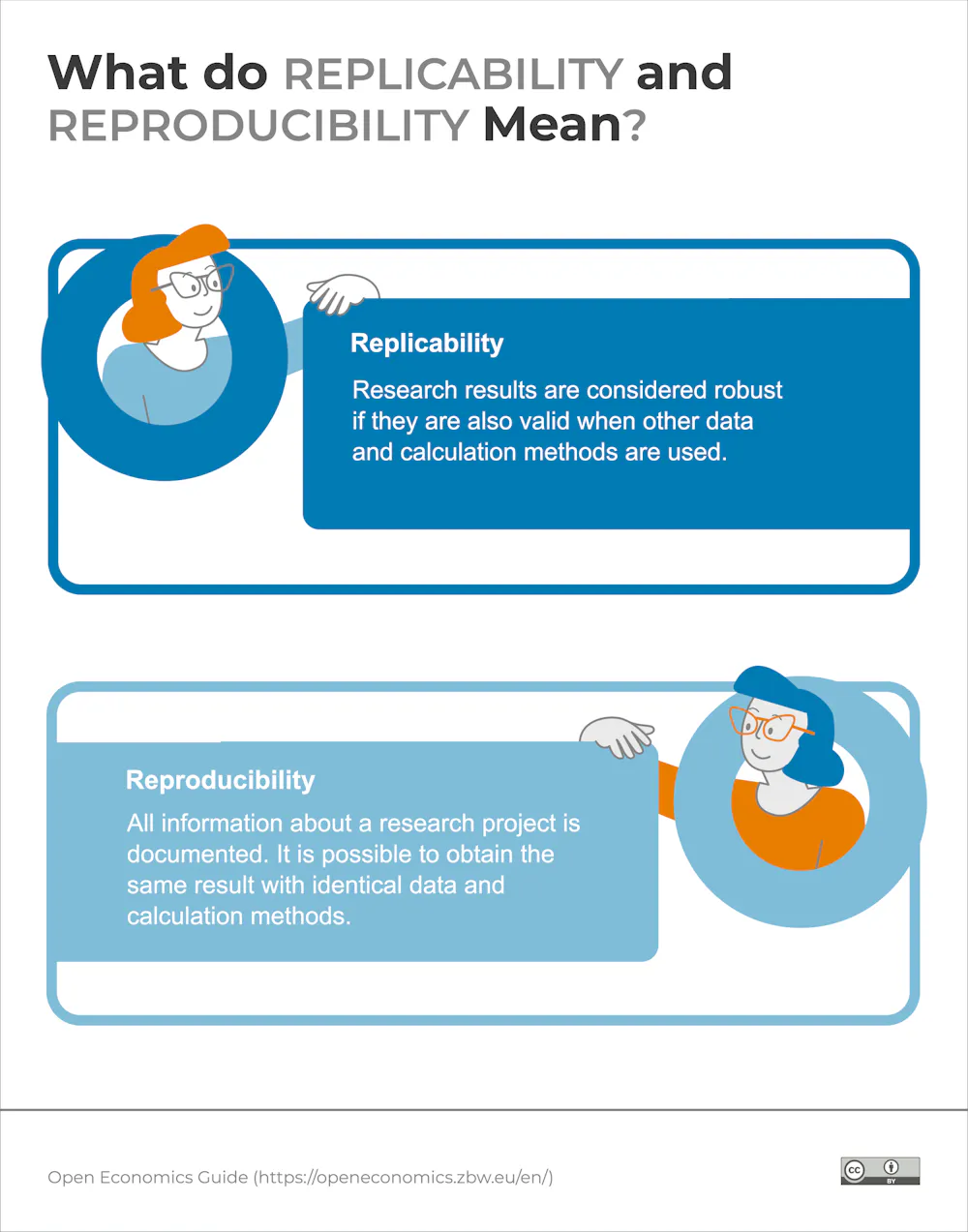
    A May 2025 executive order by President Donald Trump emphasized the “reproducibility crisis” in science. While replicability and reproducibility may sound similar, they’re distinct.

    Reproducibility is the ability to use the same data and methods from a study and reproduce the result. In my editorial role at the journal Psychological Science, I conduct computational reproducibility checks where we take the reported data and check that all the results in the paper can be reproduced independently.

    But we’re not running the study over again, or collecting new data. While reproducibility is important, research that is incorrect, fallible and sometimes harmful can still be reproducible.

    By contrast, replication is when an independent team repeats the same process, including collecting new data, to see if they get the same results. When research replicates, the team can be more confident that the results are not a fluke or an error.

    Reproducibility and replicability are both important, but have key differences.
    Open Economics Guide, CC BY

    The “replication crisis,” a term coined in psychology in the early 2010s, has spread to many fields, including biology, economics, medicine and computer science. Failures to replicate high-profile studies concern many scientists in these fields.

    Why replicate?

    Replicability is a core scientific value: Researchers want to be able to find the same result again and again. Many important findings are not published until they are independently replicated.

    In research, chance findings can occur. Imagine if one person flipped a coin 10 times and got two heads, then told the world that “coins have a 20% chance of coming up heads.” Even though this is an unlikely outcome – about 4% – it’s possible.

    Replications can correct these chance outcomes, as well as scientific errors, to ensure science is self-correcting.

    For example, in the search for the Higgs boson, two research centers at CERN, the European Council for Nuclear Research, ATLAS and CMS, independently replicated the detection of a particle with a large unique mass, leading to the 2013 Nobel Prize in physics.

    The ATLAS experiment at the Large Hadron Collider at CERN is one of two that led to the discovery of the Higgs boson.
    CERN, CC BY

    The initial measurements from the two centers actually estimated the mass of the particle as slightly different. So while the two centers didn’t find identical results, the teams evaluated them and determined they were close enough. This variability is a natural part of the scientific process. Just because results are not identical does not mean they are not reliable.

    Research centers like CERN have replication built into their process, but this is not feasible for all research. For projects that are relatively low cost, the original team will often replicate their work prior to publication – but doing so does not guarantee that an independent team could get the same results.

    Because the results on vaccine efficacy were so clear, replication wasn’t necessary and would have slowed the process of getting the vaccine to people.
    XKCD, CC BY-NC

    When projects are costly, urgent or time-specific, independently replicating them prior to disseminating results is often not feasible. Remember when people across the country were waiting for a COVID-19 vaccine?

    The initial Pfizer-BioNTech COVID-19 vaccine took 13 months from the start of the trial to authorization from the Food and Drug Administration. The results of the initial study were so clear and convincing that a replication would have unnecessarily delayed getting the vaccine out to the public and slowing the spread of disease.

    Since not every study can be replicated prior to publication, it’s important to conduct replications after studies are published. Replications help scientists understand how well research processes are working, identify errors and self-correct. So what’s the process of conducting a replication?

    The replication process

    Researchers could independently replicate the work of other teams, like at CERN. And that does happen. But when there are only two studies – the original and the replication – it’s hard to know what to do when they disagree. For that reason, large multigroup teams often conduct replications where they are all replicating the same study.

    Alternatively, if the purpose is to estimate the replicability of a body of research – for example, cancer biology – each team might replicate a different study, and the focus is on the percentage of studies that replicate across many studies.

    These large-scale replication projects have arisen around the world and include ManyLabs, ManyBabies, Psychological Accelerator and others.

    Replicators start by learning as much as possible about how the original study was conducted. They can collect details about the study from reading the published paper, discussing the work with its original authors and consulting online materials.

    The replicators want to know how the participants were recruited, how the data was collected and using what tools, and how the data was analyzed.

    But sometimes, studies may leave out important details, like the questions participants were asked or the brand of equipment used. Replicators have to make these difficult decisions themselves, which can affect the outcome.

    Replicators also often explicitly change details of the study. For example, many replication studies are conducted with larger samples – more participants – than the original study, to ensure the results are reliable.

    Registration and publication

    Sadly, replication research is hard to publish: Only 3% of papers in psychology, less than 1% in education and 1.2% in marketing are replications.

    If the original study replicates, journals may reject the paper because there is no “new insight.” If it doesn’t replicate, journals may reject the paper because they assume the replicators made a mistake – remember the salt crystals.

    Because of these issues, replicators often use registration to strengthen their claims. A preregistration is a public document describing the plan for the study. It is time-stamped to before the study is conducted.

    This type of document improves transparency by making changes in the plan detectable to reviewers. Registered reports take this a step further, where the research plan is subject to peer review before conducting the study.

    If the journal approves the registration, they commit to publishing the results of the study regardless of the results. Registered reports are ideal for replication research because the reviewers don’t know the results when the journal commits to publishing the paper, and whether the study replicates or not won’t affect whether it gets published.

    About 58% of registered reports in psychology are replication studies.

    Replication research often uses the highest standards of research practice: large samples and registration. While not all replication research is required to use these practices, those that do contribute greatly to our confidence in scientific results.

    Replication research is a useful thermometer to understand if scientific processes are working as intended. Active discussion of the replicability crisis, in both scientific and political spaces, suggests to many researchers that there is room for growth. While no field would expect a replication rate of 100%, new processes among scientists aim to improve the rates from those in the past.

    Amanda Kay Montoya is an Associate Professor at the University of California, Los Angeles. She serves on the Board of Directors for the Center for Open Science. She receives funding from the US-National Science Foundation.

    – ref. Research replication can determine how well science is working – but how do scientists replicate studies? – https://theconversation.com/research-replication-can-determine-how-well-science-is-working-but-how-do-scientists-replicate-studies-260771

    MIL OSI Analysis –

    July 18, 2025
  • MIL-OSI USA: New AI model could revolutionize U.S manufacturing

    Source: US Government research organizations

    NSF-supported researchers developed a new AI model that sees inside a factory, understands what’s happening and suggests ways to solve problems, making manufacturing smarter, safer and more competitive.

    Artificial intelligence has transformed fields like medicine and finance, but it hasn’t gained much traction in manufacturing. Factories present a different challenge for AI: They are structured, fast-paced environments that rely on precision and critical timing. Success requires more than powerful algorithms; it demands deep, real-time understanding of complex systems, equipment and workflow. A new AI model designed specifically for manufacturing, seeks to address this challenge and revolutionize how factories operate.

    With support from the U.S. National Science Foundation, a team led by California State University Northridge’s Autonomy Research Center for STEAHM has developed MaVila — short for Manufacturing, Vision and Language — an intelligent assistant that combines image analysis and natural language processing to help manufacturers detect problems, suggest improvements and communicate with machines in real time. Their goal is to create smarter, more adaptive manufacturing systems that can better support one of the most important sectors of the U.S. economy.

    MaVila takes a different approach. Instead of relying on outside data, like information on the internet, it is trained with manufacturing-specific knowledge from the start. It learns directly from visual and language-based data in factory settings. The tool can “see” and “talk” — analyzing images of parts, describing defects in plain language, suggesting fixes and even communicating with machines to carry out automatic adjustments.

    MaVila was trained using a specialized approach that required far less data than typical AI systems — an advantage in manufacturing, where data is often limited or expensive to collect. Therefore, the tool could be more accessible to small and medium-sized businesses that can’t afford expensive AI tools, or the expertise required to run them.

    Researchers trained MaVila using vast datasets of images paired with descriptive language. Then, they fine-tuned it in a lab setting by showing it pictures of 3D-printed parts with visible flaws, such as blobs, cracks or stringy filaments. In most cases, MaVila correctly identified the defects and suggested better printing settings.

    The team also connected MaVila to mobile devices and robotic simulations. This allowed the model to operate in real-time scenarios, such as identifying a machine from a photo and generating step-by-step commands to adjust performance or fix a flaw — something that traditionally requires expert programming.

    The development of MaVila was powered by the National Research Platform (NRP) Nautilus — a federally funded partnership of over 50 institutions led by experts at UC San Diego that has received continuous support from NSF. To meet the enormous processing demands of training MaVila, the researchers turned to NSF-funded high-performance computing (HPC) systems. These HPC resources allowed them to simulate realistic manufacturing conditions, test edge cases and validate the AI’s response and decision-making faster than traditional computing could allow.

    This project marks a leap forward in intelligent, adaptive manufacturing. It empowers human workers, increases productivity and strengthens the U.S. position in a fiercely competitive global market. And it reflects years of public investment in computing, collaboration and AI innovation.

    Technologies like MaVila are expected to boost domestic manufacturing, fuel economic resilience, and help prepare the workforce for future-ready industries. NSF’s support ensures that cutting-edge research translates into practical tools that benefit everyday people and keep America at the forefront of innovation.

    The achievement of the researchers reflects the results of years of public investment in computing infrastructure, cross-institutional partnerships and targeted AI research. Through initiatives like the NRP and widespread access to advanced computing resources, the NSF provides researchers with essential tools that accelerate innovation and translate lab research into real-world solutions.

    The project represents a significant step forward in autonomous, adaptive manufacturing. By enabling factories to detect issues and optimize operations, MaVila supports human workers by helping them make decisions more efficiently, driving global competitiveness in a constantly evolving world.

    [embedded content]

    Listen to NSF Discovery Files wherever you get your podcasts.

    MIL OSI USA News –

    July 18, 2025
  • MIL-OSI USA: Gov. Kemp: King’s Hawaiian to Invest $54 Million in Hall County Expansion

    Source: US State of Georgia

    ATLANTA – Governor Brian P. Kemp today announced that family-owned, Hawaii-inspired food company King’s Hawaiian® will invest approximately $54 million in expanding its Oakwood facility, creating more than 135 new jobs. 

    “For nearly 15 years, King’s Hawaiian has proven to be an incredible partner in creating quality jobs in northeast Georgia, and we look forward to even more years of great success for them in Hall County,” said Governor Brian Kemp. “Expansions like these are an important part of our economic development work, helping create further opportunities in growing communities.”

    King’s Hawaiian was founded in 1950 by the Taira family in Hilo, Hawaii. Since establishing a presence in Georgia in 2010, the company’s footprint has grown to support more than 800 jobs in the state.

    “This expansion represents a major milestone in our journey, and we’re thrilled to continue growing our ohana in Hall County,” said Mark Taira, CEO of King’s Hawaiian. “For 15 years, Georgia has been an essential part of our success. The support from Lanier Technical College, Georgia Quick Start, and the Greater Hall Chamber of Commerce has been instrumental in helping us train and develop talent to grow our business.”

    The expansion will add a new production line at the 150,000-square-foot King’s Hawaiian facility located in the Oakwood South Industrial Park. Start-up of the new line is expected in the second quarter of 2026, producing additional flavors of King’s Hawaiian Pretzel Bites. The company will be hiring for positions in management, maintenance, food safety, and quality control. Interested individuals can learn more and apply at kingshawaiian.com/careers.

    “King’s Hawaiian has become a cornerstone of our regional economy and a shining example of a company that invests in both business and community,” said Tim Evans, President and CEO of the Greater Hall Chamber of Commerce. “This sixth major expansion since 2010 is a testament to the company’s deep roots in Hall County. We are especially proud of their ongoing support for youth and community programs, including the University of North Georgia’s First Generation Scholars, Junior Achievement, and Youth Leadership Hall. We look forward to continuing this remarkable partnership.”

    Regional Project Manager Brandon Lounsbury represented the Georgia Department of Economic Development’s (GDEcD) Global Commerce team on this competitive project in partnership with the Greater Hall Chamber of Commerce and Georgia EMC. 

    “King’s Hawaiian has been a cornerstone employer in northeast Georgia and a valued partner of Georgia Quick Start for more than a decade,” said GDEcD Commissioner Pat Wilson. “By continuing to invest in people and innovation – and by working closely with the Technical College System of Georgia – King’s Hawaiian is helping build the skilled workforce that drives its success. Congratulations to Hall County on another exciting chapter in this thriving partnership.”

    About KING’S HAWAIIAN 
     
    Founded more than 70 years ago in Hilo, Hawaii, by Robert R. Taira, KING’S HAWAIIAN is a family-owned business that has been dedicated to providing Hawaii-inspired foods made with original recipes and Aloha Spirit for three generations. For more information, visit the company’s website at www.KingsHawaiian.com, or find KING’S HAWAIIAN on Facebook, Instagram, and X (formerly Twitter). 

    MIL OSI USA News –

    July 18, 2025
  • MIL-OSI Russia: Polytechnicians received the national award “People change the country”

    Translation. Region: Russian Federal

    Source: Peter the Great St. Petersburg Polytechnic University –

    An important disclaimer is at the bottom of this article.

    Five polytechnicians became laureates of the first national award “People Change the Country”. The award ceremony took place in the Zaryadye Concert Hall in Moscow.

    The purpose of the award is to recognize and reward scientists, engineers, and entrepreneurs whose advanced developments improve people’s lives and strengthen the economy and technological sovereignty of the country.

    The award is organised by the Agency for Strategic Initiatives (ASI) together with the Roscongress Foundation with the support of VEB.RF, the Russian Ministry of Defence, the Defenders of the Fatherland Foundation and the autonomous non-profit organisation Russia – Land of Opportunities.

    This year, the award was received by more than a thousand laureates in seven nominations: “National Social Initiative”, “National Technological Initiative”, “National Entrepreneurial Initiative”, “National Personnel Initiative”, “National Ecological and Climate Initiative”, “Defenders of the Fatherland” and “Russia – the Land of Opportunities”.

    In the nomination “National Technological Initiative” the winners were five representatives of the Polytechnic University: the head of the world-class Scientific Center “Advanced Digital Technologies”, chief designer in the scientific and technological direction, acting director of the Advanced Engineering School of SPbPU “Digital Engineering” (AES CI) Alexey Borovkov; deputy director of the Engineering Center “Computer Engineering Center” of AES CI Nikolay Efimov-Soini; director of the Center for Continuing Professional Education of AES CI, senior lecturer of the Higher School of Advanced Digital Technologies Sergey Salkutsan; chief engineer of the project of the Scientific Laboratory “Strategic Development of Engineering Markets” Pavel Kozlovsky; leading specialist of the project support department Maria Rodionova.

    Alexey Borovkov received a high award for actively promoting approaches to creating globally competitive science-intensive products using advanced end-to-end digital technologies. One of the key areas of his activity is the development and implementation of the technology of “digital twins” – an innovative tool that allows you to create virtual copies of products, machines, structures, equipment, as well as model physical, mechanical and technological processes with the highest accuracy. Under the leadership of Alexey Ivanovich, the digital platform CML-Bench® was developed, tested and successfully implemented in production, which became a key tool for creating digital twins. It opened up new opportunities for optimizing design, increasing production efficiency and reducing costs in various industries.

    Other significant projects implemented under the leadership of Alexey Borovkov include: development of body frame elements and structural armor elements for domestic Limousine, Sedan, SUV, and Minibus vehicles based on a single modular platform commissioned by FSUE NAMI; creation of a smart digital twin and experimental prototype of a small-sized urban electric vehicle with a level 3-4 ADAS system (KAMA-1); optimization of the weight of the TV7-117ST-01 engine based on the digital twin technology for UEC-Klimov/JSC UEC; development of a digital twin of a marine gas turbine engine and gearbox as part of the unit commissioned by UEC-Saturn (Rostec State Corporation); creation of the architecture of a highly adequate multiphysical digital model and a digital twin of a vitrification furnace for high-level radioactive waste for PO Mayak (Rosatom State Corporation), etc.

    Nikolay Efimov-Soini, Deputy Director of the Engineering Center “Computer Engineering Center” of the Advanced Engineering School of SPbPU “Digital Engineering”, became a laureate thanks to the project “Development of high-tech products in the field of nuclear engineering based on digital twin technology”. Under the leadership of Nikolay Konstantinovich, a large-scale complex of scientific and technical developments in the field of nuclear engineering of strategic importance for the industry was implemented over three years. Among the key achievements is the creation of digital models of fuel assemblies (FA) for VVER and TVS-K reactors, as well as the proposal of innovative design solutions aimed at increasing the efficiency of fuel assemblies. The developed solutions allow for high-precision modeling of FA behavior throughout the entire fuel cycle, which helps optimize the performance characteristics and improve the safety of nuclear power plants.

    Director of the Center for Continuing Professional Education of the Advanced Engineering School “Digital Engineering” Sergey Salkutsan and Chief Engineer of the Scientific Laboratory “Strategic Development of Engineering Markets” project Pavel Kozlovsky were awarded for educational projects implemented within the framework of the NTI Center “New Production Technologies”, as well as for the development of a family of simulators. By the beginning of 2024, a group of experts from the Advanced Engineering School CI developed five computer simulators available on the Digital Platform CML-Bench®.EDU, which is gradually developing as a separate direction of the Digital Platform for the Development and Application of Digital Twins CML-Bench®. The digital simulator “Lean Manufacturing” is a flagship product that marked the beginning of the creation and scaling of a line of simulators for training students, implementing corporate programs of continuing professional education for employees of the university’s industrial partners, as well as holding professional competitions. It is an online platform for learning the skills, tools and basics of lean manufacturing using practical solutions on a simulator. The digital simulator “Lean Manufacturing” has repeatedly been awarded prizes and diplomas at prestigious competitions in Russia and abroad, and is highly appreciated at the state level.

    In February 2024, the New Industrial Challenge simulators for team competitions and Lean Manufacturing were successfully tested at the Archipelago-2024 project-educational intensive course in Sakhalin. In August of this year, the Polytechnicians will present their developments at Archipelago-2025 in Moscow.

    Leading specialist of the project support department of the Directorate of the Center of the National Technological Initiative “New Production Technologies” Maria Rodionova received an award for her work on the project “Smart Factory: New Standards for Industry 4.0”. The project developed standards in the field of smart production, laying the foundation for the digital transformation of industry. The standards define the key principles of building a smart factory, ensuring technological unification, reducing operating costs and creating an ecosystem for the Industrial Internet of Things (IIoT).

    Please note: This information is raw content obtained directly from the source of the information. It is an accurate report of what the source claims and does not necessarily reflect the position of MIL-OSI or its clients.

    .

    MIL OSI Russia News –

    July 18, 2025
  • MIL-OSI: Royalty Pharma Appoints Carole Ho and Elizabeth Weatherman to the Company’s Board of Directors

    Source: GlobeNewswire (MIL-OSI)

    • Strengthens Board of Directors with appointment of two new independent members, increasing independent representation to greater than 90%
    • Underscores Royalty Pharma’s commitment to enhanced corporate governance following acquisition of its external manager

    NEW YORK, July 17, 2025 (GLOBE NEWSWIRE) — Royalty Pharma plc (Nasdaq: RPRX) today announced the appointment of Carole Ho and Elizabeth (Bess) Weatherman to its Board of Directors, effective immediately. Carole Ho is Chief Medical Officer and Head of Development at Denali Therapeutics, a biopharmaceutical company focused on neurodegenerative diseases. Bess Weatherman is a Special Limited Partner of Warburg Pincus LLC, a leading global private equity firm focused on growth investing.

    “We are delighted to welcome Carole and Bess to our board,” said Pablo Legorreta, founder and Chief Executive Officer of Royalty Pharma. “Their exceptional leadership and passion for innovation will be invaluable as we execute on our long-term strategy. With decades of experience spanning the biopharmaceutical and finance industry, they bring unique insights that will strengthen our board and support our continued growth.”

    Carole Ho has 20 years of experience in biopharma. She currently serves as Chief Medical Officer and Head of Development at Denali Therapeutics, where she heads therapeutic development from early-stage planning to late-stage development in rare disease and neurology. Since 2018, she has also served on non-profit, private and public boards. Prior to Denali, she was Vice President of Clinical Development at Genentech, where she led development of therapeutics in neurology, immunology, ophthalmology and infectious disease. Carole received a SB in biochemistry, magna cum laude, from Harvard University and earned her MD, with honors in research, from Weill Cornell Medicine.

    Bess Weatherman is a seasoned investor of 35 years across the healthcare industry. She currently serves as a Special Limited Partner at Warburg Pincus, which she joined in 1988. During her tenure, she held the role of Partner, was a member of the Executive Management Group and led the firm’s Healthcare Group. She has served on the boards of numerous public and private companies and brings a deep understanding of capital markets, corporate governance, and medical innovation. Bess received a BA in English, summa cum laude and Phi Beta Kappa, from Mount Holyoke College and earned her MBA from the Stanford Graduate School of Business.

    About Royalty Pharma

    Founded in 1996, Royalty Pharma is the largest buyer of biopharmaceutical royalties and a leading funder of innovation across the biopharmaceutical industry, collaborating with innovators from academic institutions, research hospitals and non-profits through small and mid-cap biotechnology companies to leading global pharmaceutical companies. Royalty Pharma has assembled a portfolio of royalties which entitles it to payments based directly on the top-line sales of many of the industry’s leading therapies. Royalty Pharma funds innovation in the biopharmaceutical industry both directly and indirectly – directly when it partners with companies to co-fund late-stage clinical trials and new product launches in exchange for future royalties, and indirectly when it acquires existing royalties from the original innovators. Royalty Pharma’s current portfolio includes royalties on more than 35 commercial products, including Vertex’s Trikafta, GSK’s Trelegy, Roche’s Evrysdi, Johnson & Johnson’s Tremfya, Biogen’s Tysabri and Spinraza, AbbVie and Johnson & Johnson’s Imbruvica, Astellas and Pfizer’s Xtandi, Novartis’ Promacta, Pfizer’s Nurtec ODT and Gilead’s Trodelvy, and 16 development-stage product candidates. For more information, visit www.royaltypharma.com.   

    Royalty Pharma Investor Relations and Communications

    +1 (212) 883-6637
    ir@royaltypharma.com

    The MIL Network –

    July 18, 2025
  • MIL-Evening Report: Susi Newborn among activists featured in Pacific ‘nuclear free heroes’ video

    Pacific Media Watch

    Greenpeace pioneer and activist Susi Newborn is among the “nuclear free heroes” featured in a video tribute premiered this week in an exhibition dedicated to a nuclear-free Pacific.

    The week-long exhibition at Tāmaki Makaurau Auckland’s Ellen Melville Centre, titled “Legends of the Pacific: Stories of a Nuclear-Free Moana 1975-1995,” closes tomorrow afternoon.

    A segment dedicated to the Nuclear-Free and Independent Pacific (NFIP) movement features Newborn making a passionate speech about the legend of the “Warriors of the Rainbow” on the steps of the Auckland Museum in July 2023 just weeks before she died.

    Newborn was an Aotearoa New Zealand author, documentary film-maker, environmental activist and a founding director of Greenpeace UK and co-founder of Greenpeace International.

    She was an executive director of the New Zealand non-for-profit group Women in Film and Television.

    Newborn was also one of the original crew members on the first Rainbow Warrior which was bombed in Auckland Harbour on 10 July 2025.

    The ship’s successor, Rainbow Warrior III, a state-of-the-art environmental campaign ship, has been docked at Halsey Wharf this month for a memorial ceremony to honour the 40th anniversary of the loss of photographer Fernando Pereira and the ship, sabotaged by French secret agents.

    Effective activists
    In a tribute after her death, Greenpeace stalwart Rex Weyler wrote: “Susi Newborn [was] one of the most skilled and effective activists in Greenpeace’s 52-year history.”

    “In 1977, when Susi arrived in Canada for her first Greenpeace action to protect infant harp seal pups in Newfoundland, she was already something of a legend,” Weyler wrote.

    “Journalistic tradition would have me refer to her as ‘Newborn’, a name that rang with significance, but I can only think of her as Susi, the tough, smart activist from London.”

    The half hour video collage, produced and directed by the Whānau Community Centre’s Nik Naidu, is titled Legends of a Nuclear-Free & Independent Pacific (NFIP).


    Legends of a Nuclear-Free and Independent Pacific.     Video: Talanoa TV

    Among other activists featured in the video are NFIP academic Dr Marco de Jong; Presbyterian minister Reverend Mua Strickson-Pua; Professor Vijay Naidu, founding president of the Fiji Anti-Nuclear Group (FANG); Polynesian Panthers founder Will ‘Ilolahia; NFIP advocate Hilda Halkyard-Harawira (Ngāti Hauā, Te Rarawe); community educator and activist Del Abcede; retired media professor, journalist and advocate Dr David Robie; Anglican priest who founded the Peace Squadron, Reverend George Armstrong; and United Liberation Movement for West Papua vice-president Octo Mote, interviewed at the home of peace author and advocate Maire Leadbeater.

    The video sound track is from Herbs’ famous French Letter about nuclear testing in the Pacific.

    “It is so important to record our stories and history — especially for our children and future generations,” said video creator Nik Naidu.

    Nuclear Free and Independent Pacific . . . an early poster.

    “They need to hear the truth from our “legends” and “leaders”. Those who stood for justice and peace.

    “The freedoms and benefits we all enjoy today are a direct result of the sacrifice and activism of these legends.”

    The video has been one of the highlights of the “Legends” exhibition, created by Heather Devere, Del Abcede and David Robie of the Asia Pacific Media Network; Nik Naidu of the APMN as well as co-founder of the Whānau Community Hub; Antony Phillips and Tharron Bloomfield of the Heritage New Zealand Pouhere Taonga; and Rachel Mario of the Auckland Rotuman Fellowship Group and Whānau Hub.

    Support has also come from the Ellen Melville Centre (venue and promotion), Padet (for the video series), Pax Christi, Women’s International League for Peace Freedom (WILPF) Aotearoa, and the Quaker Peace Fund.

    The exhibition was opened by Labour MP for Te Atatu and disarmament spokesperson Phil Twyford last Saturday.

    The video collage and the individual video items can be seen on the Talanoa TV channel: https://www.youtube.com/@talanoatv

    Professor Vijay Naidu of the University of the South Pacific . . . founding president of the Fiji Anti-Nuclear Group (FANG), one of the core groups in the Nuclear Free and Independent Pacific (NFIP) movement. Image: APR

    MIL OSI Analysis – EveningReport.nz –

    July 18, 2025
  • MIL-Evening Report: Susi Newborn among activists featured in Pacific ‘nuclear free heroes’ video

    Pacific Media Watch

    Greenpeace pioneer and activist Susi Newborn is among the “nuclear free heroes” featured in a video tribute premiered this week in an exhibition dedicated to a nuclear-free Pacific.

    The week-long exhibition at Tāmaki Makaurau Auckland’s Ellen Melville Centre, titled “Legends of the Pacific: Stories of a Nuclear-Free Moana 1975-1995,” closes tomorrow afternoon.

    A segment dedicated to the Nuclear-Free and Independent Pacific (NFIP) movement features Newborn making a passionate speech about the legend of the “Warriors of the Rainbow” on the steps of the Auckland Museum in July 2023 just weeks before she died.

    Newborn was an Aotearoa New Zealand author, documentary film-maker, environmental activist and a founding director of Greenpeace UK and co-founder of Greenpeace International.

    She was an executive director of the New Zealand non-for-profit group Women in Film and Television.

    Newborn was also one of the original crew members on the first Rainbow Warrior which was bombed in Auckland Harbour on 10 July 2025.

    The ship’s successor, Rainbow Warrior III, a state-of-the-art environmental campaign ship, has been docked at Halsey Wharf this month for a memorial ceremony to honour the 40th anniversary of the loss of photographer Fernando Pereira and the ship, sabotaged by French secret agents.

    Effective activists
    In a tribute after her death, Greenpeace stalwart Rex Weyler wrote: “Susi Newborn [was] one of the most skilled and effective activists in Greenpeace’s 52-year history.”

    “In 1977, when Susi arrived in Canada for her first Greenpeace action to protect infant harp seal pups in Newfoundland, she was already something of a legend,” Weyler wrote.

    “Journalistic tradition would have me refer to her as ‘Newborn’, a name that rang with significance, but I can only think of her as Susi, the tough, smart activist from London.”

    The half hour video collage, produced and directed by the Whānau Community Centre’s Nik Naidu, is titled Legends of a Nuclear-Free & Independent Pacific (NFIP).


    Legends of a Nuclear-Free and Independent Pacific.     Video: Talanoa TV

    Among other activists featured in the video are NFIP academic Dr Marco de Jong; Presbyterian minister Reverend Mua Strickson-Pua; Professor Vijay Naidu, founding president of the Fiji Anti-Nuclear Group (FANG); Polynesian Panthers founder Will ‘Ilolahia; NFIP advocate Hilda Halkyard-Harawira (Ngāti Hauā, Te Rarawe); community educator and activist Del Abcede; retired media professor, journalist and advocate Dr David Robie; Anglican priest who founded the Peace Squadron, Reverend George Armstrong; and United Liberation Movement for West Papua vice-president Octo Mote, interviewed at the home of peace author and advocate Maire Leadbeater.

    The video sound track is from Herbs’ famous French Letter about nuclear testing in the Pacific.

    “It is so important to record our stories and history — especially for our children and future generations,” said video creator Nik Naidu.

    Nuclear Free and Independent Pacific . . . an early poster.

    “They need to hear the truth from our “legends” and “leaders”. Those who stood for justice and peace.

    “The freedoms and benefits we all enjoy today are a direct result of the sacrifice and activism of these legends.”

    The video has been one of the highlights of the “Legends” exhibition, created by Heather Devere, Del Abcede and David Robie of the Asia Pacific Media Network; Nik Naidu of the APMN as well as co-founder of the Whānau Community Hub; Antony Phillips and Tharron Bloomfield of the Heritage New Zealand Pouhere Taonga; and Rachel Mario of the Auckland Rotuman Fellowship Group and Whānau Hub.

    Support has also come from the Ellen Melville Centre (venue and promotion), Padet (for the video series), Pax Christi, Women’s International League for Peace Freedom (WILPF) Aotearoa, and the Quaker Peace Fund.

    The exhibition was opened by Labour MP for Te Atatu and disarmament spokesperson Phil Twyford last Saturday.

    The video collage and the individual video items can be seen on the Talanoa TV channel: https://www.youtube.com/@talanoatv

    Professor Vijay Naidu of the University of the South Pacific . . . founding president of the Fiji Anti-Nuclear Group (FANG), one of the core groups in the Nuclear Free and Independent Pacific (NFIP) movement. Image: APR

    MIL OSI Analysis – EveningReport.nz –

    July 18, 2025
  • MIL-Evening Report: Susi Newborn among activists featured in Pacific ‘nuclear free heroes’ video

    Pacific Media Watch

    Greenpeace pioneer and activist Susi Newborn is among the “nuclear free heroes” featured in a video tribute premiered this week in an exhibition dedicated to a nuclear-free Pacific.

    The week-long exhibition at Tāmaki Makaurau Auckland’s Ellen Melville Centre, titled “Legends of the Pacific: Stories of a Nuclear-Free Moana 1975-1995,” closes tomorrow afternoon.

    A segment dedicated to the Nuclear-Free and Independent Pacific (NFIP) movement features Newborn making a passionate speech about the legend of the “Warriors of the Rainbow” on the steps of the Auckland Museum in July 2023 just weeks before she died.

    Newborn was an Aotearoa New Zealand author, documentary film-maker, environmental activist and a founding director of Greenpeace UK and co-founder of Greenpeace International.

    She was an executive director of the New Zealand non-for-profit group Women in Film and Television.

    Newborn was also one of the original crew members on the first Rainbow Warrior which was bombed in Auckland Harbour on 10 July 2025.

    The ship’s successor, Rainbow Warrior III, a state-of-the-art environmental campaign ship, has been docked at Halsey Wharf this month for a memorial ceremony to honour the 40th anniversary of the loss of photographer Fernando Pereira and the ship, sabotaged by French secret agents.

    Effective activists
    In a tribute after her death, Greenpeace stalwart Rex Weyler wrote: “Susi Newborn [was] one of the most skilled and effective activists in Greenpeace’s 52-year history.”

    “In 1977, when Susi arrived in Canada for her first Greenpeace action to protect infant harp seal pups in Newfoundland, she was already something of a legend,” Weyler wrote.

    “Journalistic tradition would have me refer to her as ‘Newborn’, a name that rang with significance, but I can only think of her as Susi, the tough, smart activist from London.”

    The half hour video collage, produced and directed by the Whānau Community Centre’s Nik Naidu, is titled Legends of a Nuclear-Free & Independent Pacific (NFIP).


    Legends of a Nuclear-Free and Independent Pacific.     Video: Talanoa TV

    Among other activists featured in the video are NFIP academic Dr Marco de Jong; Presbyterian minister Reverend Mua Strickson-Pua; Professor Vijay Naidu, founding president of the Fiji Anti-Nuclear Group (FANG); Polynesian Panthers founder Will ‘Ilolahia; NFIP advocate Hilda Halkyard-Harawira (Ngāti Hauā, Te Rarawe); community educator and activist Del Abcede; retired media professor, journalist and advocate Dr David Robie; Anglican priest who founded the Peace Squadron, Reverend George Armstrong; and United Liberation Movement for West Papua vice-president Octo Mote, interviewed at the home of peace author and advocate Maire Leadbeater.

    The video sound track is from Herbs’ famous French Letter about nuclear testing in the Pacific.

    “It is so important to record our stories and history — especially for our children and future generations,” said video creator Nik Naidu.

    Nuclear Free and Independent Pacific . . . an early poster.

    “They need to hear the truth from our “legends” and “leaders”. Those who stood for justice and peace.

    “The freedoms and benefits we all enjoy today are a direct result of the sacrifice and activism of these legends.”

    The video has been one of the highlights of the “Legends” exhibition, created by Heather Devere, Del Abcede and David Robie of the Asia Pacific Media Network; Nik Naidu of the APMN as well as co-founder of the Whānau Community Hub; Antony Phillips and Tharron Bloomfield of the Heritage New Zealand Pouhere Taonga; and Rachel Mario of the Auckland Rotuman Fellowship Group and Whānau Hub.

    Support has also come from the Ellen Melville Centre (venue and promotion), Padet (for the video series), Pax Christi, Women’s International League for Peace Freedom (WILPF) Aotearoa, and the Quaker Peace Fund.

    The exhibition was opened by Labour MP for Te Atatu and disarmament spokesperson Phil Twyford last Saturday.

    The video collage and the individual video items can be seen on the Talanoa TV channel: https://www.youtube.com/@talanoatv

    Professor Vijay Naidu of the University of the South Pacific . . . founding president of the Fiji Anti-Nuclear Group (FANG), one of the core groups in the Nuclear Free and Independent Pacific (NFIP) movement. Image: APR

    MIL OSI Analysis – EveningReport.nz –

    July 18, 2025
  • MIL-Evening Report: Susi Newborn among activists featured in Pacific ‘nuclear free heroes’ video

    Pacific Media Watch

    Greenpeace pioneer and activist Susi Newborn is among the “nuclear free heroes” featured in a video tribute premiered this week in an exhibition dedicated to a nuclear-free Pacific.

    The week-long exhibition at Tāmaki Makaurau Auckland’s Ellen Melville Centre, titled “Legends of the Pacific: Stories of a Nuclear-Free Moana 1975-1995,” closes tomorrow afternoon.

    A segment dedicated to the Nuclear-Free and Independent Pacific (NFIP) movement features Newborn making a passionate speech about the legend of the “Warriors of the Rainbow” on the steps of the Auckland Museum in July 2023 just weeks before she died.

    Newborn was an Aotearoa New Zealand author, documentary film-maker, environmental activist and a founding director of Greenpeace UK and co-founder of Greenpeace International.

    She was an executive director of the New Zealand non-for-profit group Women in Film and Television.

    Newborn was also one of the original crew members on the first Rainbow Warrior which was bombed in Auckland Harbour on 10 July 2025.

    The ship’s successor, Rainbow Warrior III, a state-of-the-art environmental campaign ship, has been docked at Halsey Wharf this month for a memorial ceremony to honour the 40th anniversary of the loss of photographer Fernando Pereira and the ship, sabotaged by French secret agents.

    Effective activists
    In a tribute after her death, Greenpeace stalwart Rex Weyler wrote: “Susi Newborn [was] one of the most skilled and effective activists in Greenpeace’s 52-year history.”

    “In 1977, when Susi arrived in Canada for her first Greenpeace action to protect infant harp seal pups in Newfoundland, she was already something of a legend,” Weyler wrote.

    “Journalistic tradition would have me refer to her as ‘Newborn’, a name that rang with significance, but I can only think of her as Susi, the tough, smart activist from London.”

    The half hour video collage, produced and directed by the Whānau Community Centre’s Nik Naidu, is titled Legends of a Nuclear-Free & Independent Pacific (NFIP).


    Legends of a Nuclear-Free and Independent Pacific.     Video: Talanoa TV

    Among other activists featured in the video are NFIP academic Dr Marco de Jong; Presbyterian minister Reverend Mua Strickson-Pua; Professor Vijay Naidu, founding president of the Fiji Anti-Nuclear Group (FANG); Polynesian Panthers founder Will ‘Ilolahia; NFIP advocate Hilda Halkyard-Harawira (Ngāti Hauā, Te Rarawe); community educator and activist Del Abcede; retired media professor, journalist and advocate Dr David Robie; Anglican priest who founded the Peace Squadron, Reverend George Armstrong; and United Liberation Movement for West Papua vice-president Octo Mote, interviewed at the home of peace author and advocate Maire Leadbeater.

    The video sound track is from Herbs’ famous French Letter about nuclear testing in the Pacific.

    “It is so important to record our stories and history — especially for our children and future generations,” said video creator Nik Naidu.

    Nuclear Free and Independent Pacific . . . an early poster.

    “They need to hear the truth from our “legends” and “leaders”. Those who stood for justice and peace.

    “The freedoms and benefits we all enjoy today are a direct result of the sacrifice and activism of these legends.”

    The video has been one of the highlights of the “Legends” exhibition, created by Heather Devere, Del Abcede and David Robie of the Asia Pacific Media Network; Nik Naidu of the APMN as well as co-founder of the Whānau Community Hub; Antony Phillips and Tharron Bloomfield of the Heritage New Zealand Pouhere Taonga; and Rachel Mario of the Auckland Rotuman Fellowship Group and Whānau Hub.

    Support has also come from the Ellen Melville Centre (venue and promotion), Padet (for the video series), Pax Christi, Women’s International League for Peace Freedom (WILPF) Aotearoa, and the Quaker Peace Fund.

    The exhibition was opened by Labour MP for Te Atatu and disarmament spokesperson Phil Twyford last Saturday.

    The video collage and the individual video items can be seen on the Talanoa TV channel: https://www.youtube.com/@talanoatv

    Professor Vijay Naidu of the University of the South Pacific . . . founding president of the Fiji Anti-Nuclear Group (FANG), one of the core groups in the Nuclear Free and Independent Pacific (NFIP) movement. Image: APR

    MIL OSI Analysis – EveningReport.nz –

    July 18, 2025
  • MIL-OSI Analysis: Babies born with DNA from three people hailed as breakthrough – but questions remain

    Source: The Conversation – UK – By Cathy Herbrand, Professor of Medical and Family Sociology, De Montfort University

    Ten years after the UK became the first country to legalise mitochondrial donation, the first results from the use of these high-profile reproductive technologies – designed to prevent passing on genetic disorders – have finally been published.

    So far, eight children have been born, all reportedly healthy, thanks to the long-term efforts of scientists and doctors in Newcastle, England. Should this be a cause for excitement, disappointment or concern? Perhaps, I would suggest, it could be a bit of all three.

    The New England Journal of Medicine has published two papers on a groundbreaking fertility treatment that could prevent devastating inherited diseases. The technique, called mitochondrial donation, was used to help 22 women who carry faulty genes that would otherwise pass serious genetic disorders – such as Leigh syndrome – to their children. These disorders affect the body’s ability to produce energy at the cellular level and can cause severe disability or death in babies.

    The technique, developed by the Newcastle team, involves creating an embryo using DNA from three people: nuclear DNA from the intended mother and father, and healthy mitochondrial DNA from a donor egg. During the parliamentary debates leading up to The Human Fertilisation and Embryology (Mitochondrial Donation) Regulations in 2015, there were concerns about the effectiveness of the procedure and its potential side effects.

    The announcement that this technology has led to the birth of eight apparently healthy children therefore marks a major scientific achievement for the UK, which has been widely praised by numerous scientists and patient support groups. However, these results should not detract from some important questions they also raise.

    First, why has it taken so long for any updates on the application of this technology, including its outcomes and its limitations, to be made public? Especially given the significant public financial investment made into its development.

    In a country positioning itself as a leader in the governance and practice of reproductive and genomic medicine, transparency should be a central principle. Transparency not only supports the progress of other research teams but also keeps the public and patients well informed.

    Second, what is the significance of these results? While eight babies were born using this technology, this figure contrasts starkly with the predicted number of 150 babies per year likely to be born using the technique.

    The Human Fertilisation and Embryology Authority, the UK regulator in this area, has approved 32 applications since 2017 when the Newcastle team obtained its licence, but the technique was used with only 22 of them, resulting in eight babies. Does this constitute sufficiently robust data to prove the effectiveness of the technology and was it worth the considerable efforts and investments over almost two decades of campaigning, debate and research?

    As I wrote when this law was passed, officials should have been more realistic about how many people this treatment could actually help. By overestimating the number of patients who might benefit, they risked giving false hope to families who wouldn’t be eligible for the procedure.

    The safety question

    Third, is it safe enough? In two of the eight cases, the babies showed higher levels of maternal mitochondrial DNA, meaning the risk of developing a mitochondrial disorder cannot be ruled out. This potential for a “reversal” – where the faulty mitochondria reassert themselves – was also highlighted in a recent study conducted in Greece involving patients who used the technique to treat infertility problems.

    As a result, the technology is no longer framed by the Newcastle team as a way to prevent the transmission of mitochondrial disorders, but rather to reduce the risk. But is the risk reduction enough to justify offering the technique to more patients? And what will the risk of reassertion mean for the children born through it and their parents, who may live with the continuing uncertainty that the condition could emerge later in life?

    As some experts have suggested, it may be worth testing this technology on women who have fertility problems but don’t carry mitochondrial diseases. This would help doctors better understand the risks of the faulty mitochondria coming back, before using the technique only on women who could pass these serious genetic conditions to their children.

    This leads to a fourth question. What has been the patient experience with this technology? It would be valuable to know how many people applied for mitochondrial donation, why some were not approved, and, among those 32 approved cases, why only 22 proceeded with treatment.

    It also raises important questions about how patients who were either unable to access the technology, or for whom it was ultimately unsuccessful feel, particularly after investing significant time, effort and hope in the process. How do they come to terms with not having the healthy biological child they had been offered?

    This is not to say we shouldn’t celebrate these births and what they represent for the UK in terms of scientific achievement. The birth of eight healthy children represents a genuine scientific breakthrough that families affected by mitochondrial diseases have waited decades to see. However, some important questions remain unanswered, and more evidence is needed and it should be communicated in a timely manner to make conclusions about the long-term use of the technology.

    Breakthroughs come with responsibilities. If the UK wants to maintain its position as a leader in reproductive medicine, it must be more transparent about both the successes and limitations of this technology. The families still waiting to have the procedure – and those who may never receive it – deserve nothing less than complete honesty about what this treatment can and cannot deliver.

    Cathy Herbrand receives funding from the Economic and Social Research Council.

    – ref. Babies born with DNA from three people hailed as breakthrough – but questions remain – https://theconversation.com/babies-born-with-dna-from-three-people-hailed-as-breakthrough-but-questions-remain-261385

    MIL OSI Analysis –

    July 18, 2025
  • MIL-OSI Russia: ‘Nimble’ on the move: Polytechnic students study Russia

    Translation. Region: Russian Federal

    Source: Peter the Great St. Petersburg Polytechnic University –

    An important disclaimer is at the bottom of this article.

    The student conductor team “Provorny” has once again set off to explore the remote regions of our country during the work season. The polytechnicians work as conductors for the Federal Passenger Company and make trips to Moscow, Smolensk, Velikiye Luki, Anapa, Kislovodsk, Yeysk, Taganrog. They also work on the international route to Sukhum.

    The season of guides is very specific. Participants and candidates are divided into small groups, on average six people, and work under the guidance of two experienced team leaders. This year, the student team “Provorny” formed five teams.

    The team “Complivit Egor Vnukov” visited Smolensk. During the trip, young candidates were able to use in practice all the knowledge they had received during their training and demonstrated their skills in real conditions.

    “During the long downtime, we explored the city center, visited the House of the Opposite, and looked at local attractions. We also found out who would climb the mountain faster, tried berry punch and mocha from an old machine. We held two commissariats: “Your Game” with exciting tasks and “Trend by Colors,” where each participant received their own color and created photos with it. As a souvenir of Smolensk, we took away a toy that we called Not Hehe. Now it will accompany us on every trip,” the guys shared.

    Among the SPbPU brigades, one team stands out, which participates in the All-Russian Labor Project. Its goal is to improve the level of professional activity of conductors and diversify their leisure time in their free time. The VTP brigade includes ten of the most active polytechnics. The leadership was taken over by Ulyana Shtol, Egor Samokhvalov and Dima Afanasyev, who will be responsible for organizing events and coordinating the work.

    “Provorny” competes with 15 teams from different regions of Russia. During the season, the guys face the following tasks: to achieve high performance indicators, including the volume of products sold and the number of hours worked, to conduct active commissar activities, to hold events for passengers. In addition, throughout the summer, many different events are held: Spartakiad, competitions for the best team corner and in the media, “Miss and Mister VTP”, a creative festival and others. And in each of them, the polytechnicians will try to show maximum results.

    Please note: This information is raw content obtained directly from the source of the information. It is an accurate report of what the source claims and does not necessarily reflect the position of MIL-OSI or its clients.

    .

    MIL OSI Russia News –

    July 18, 2025
  • MIL-OSI United Kingdom: Top TeN artists to display work in Ruskin Gallery

    Source: Anglia Ruskin University

    Work by Francesca Gagni

    Personal stories and the fragility of relationships are at the heart of a new art exhibition at Anglia Ruskin University’s Cambridge campus, running from 25 July to 6 August.

    The free public exhibition, called TeN, will showcase the creative talents of 10 students graduating this autumn from the MA in Fine Art course at Anglia Ruskin University (ARU), and will be held in ARU’s Ruskin Gallery.

    Amongst the diverse artwork on show will be a series of ceramics inspired by handwritten letters received by the artist’s family, and thought-provoking sculptures, crafted from recycled material, highlighting themes of change and regeneration. 

    Sue Lowndes, a former social worker who has been studying on the MA on a part-time basis, said: “My work is a response to a collection of letters saved over many years. This is very personal work – autobiographical in many ways.

    “I chose ceramics for its versatility and its ability to convey both strength and fragility, mirroring the change in relationships over time. I hope this work resonates with visitors to the exhibition, who will be able to connect with it in their own ways.”

    Francesca Gagni’s sculptures also tell a personal story, based on her farming roots. Francesca, who progressed to the MA having completed the BA in Fine Art at ARU, said: “For this exhibition I have been working with upcycled and recycled materials to produce tactile sculptural pieces. 

    “My work is informed by my farming background, and working with these materials speaks of regeneration. My aim is for the audience to engage with my work as a sensorial experience.”

    The Degree Show exhibition marks a significant milestone in the creative and professional journey of these 10 artists, whose diverse life experiences and backgrounds informs their work. 

    “The MA Fine Art course is challenging; it asks students to reconsider their work as artists, which can throw everything up in the air in relation to what they thought they knew about their approach to art.

    “By imagining alternative ways of viewing society, the students also ‘remake’ themselves and become more confident, knowledgeable artists. Seeing this transformation is one of the greatest joys in my role as Course Director.”

    Course Director Dr Véronique Chance

    Public access to the Ruskin Gallery during the MA Fine Art Show is via the MacKenzie Road entrance, off Mill Road, and directions for disabled access will be from the Mackenzie Road entrance.

    MIL OSI United Kingdom –

    July 18, 2025
  • MIL-OSI Africa: East African countries and open borders: great strides, but still a long way to go

    Source: The Conversation – Africa – By Alan Hirsch, Senior Research Fellow New South Institute, Emeritus Professor at The Nelson Mandela School of Public Governance, University of Cape Town

    It’s not uncommon to find a Ugandan taxi driver in Rwanda’s capital, Kigali, just as one regularly meets Zimbabwean Uber drivers in South Africa. But there is a big difference. A Ugandan working in Rwanda most likely has a secure legal right to be there, whereas Zimbabweans working in South Africa are often uncertain of their current or future legality.

    East Africa has made greater strides towards the free flow of people crossing borders and seeking work than most of Africa. Only the Economic Community of West African States (Ecowas) is in the same league.

    While the African Union’s Free Movement of Persons protocol has faltered at a continental level, some of the regional economic communities have made progress. The Southern African Development Community (SADC) allows visa-free travel across almost all its borders.

    Ecowas and the East African Community (EAC) have driven ambitiously towards regional common markets including the freeing up of job-seeking, residential settlement and business development across the borders of member states.

    The New South Institute, a think-tank focused on governance reforms in the global south, is nearing the end of a research programme on migration governance reform in Africa. Our new report is on East Africa.

    We have found that unlike much of the global north, the African continent is moving towards more open borders for people. In some of the global south the promise of economic growth outweighs political fears. Yet progress is slow, and not coordinated. Mostly migration reform happens in regions and between neighbours.

    The progress in the East African Community is particularly notable compared with other African regional communities. We identify a number of reasons for this, including strong leadership and co-operation between state and non-state actors.

    The commitment to free movement

    The East African Community adopted its Common Market Protocol in 2010. The bloc is made up of Tanzania, Uganda, Kenya, Rwanda, Burundi, South Sudan, the DRC and Somalia.

    The regional body’s common market pact includes the movement of goods, services, capital and people. It gives people the right – on paper at least – to find employment across borders, the right to reside and the right to establish a business. There is also a commitment to the harmonisation and mutual recognition of academic and professional qualifications and labour policies to ease mobility.

    Even before the common market protocol, the regional bloc began to establish one-stop border posts on many of its internal borders to facilitate the flow of goods and people. Though they don’t all operate the same way or equally well, they have been successful at easing movement.

    Uneven outcomes

    The common market’s impact on the movement of people has been uneven within the region. Most integrated are Uganda, Kenya and Rwanda, which allow the cross-border movement of citizens with standardised identity documents – they do not need passports.

    It is also relatively easy to get jobs across these borders.

    Tanzania and Burundi are close to the inner circle but still require passports, though no visas. The three states which joined more recently, South Sudan, the DRC and Somalia, are all fragile states with governance systems that do not always meet the standards needed for acceptance into all the privileges of the regional bloc.

    In practice there is differential treatment. Generally, it is more difficult for citizens of the three latecomers to get regular access and jobs in their regional partners.

    Another limitation when it comes to the mobility of people is that little progress has been made in the formal harmonisation of education, health and social welfare systems between member states. This inhibits job seeking across borders.

    In addition, national labour laws, which tend to require permits for foreigners, still apply to varying degrees in the region. Some countries are more permissive. For example, Kenya, Uganda and Rwanda have a reciprocal no-fee work permit agreement.

    Another shortcoming has been that the outcomes of court processes in enforcing the freedom of movement have been disappointing. This is so even though the regional bloc has an active East African Court of Justice. Its legal mandate includes the enforcement of the bloc’s treaty and its protocols.

    In some cases the court has found that national actions inhibiting the movement of persons were trumped by the regional protocol. It has instructed the errant governments to comply. But its ability to enforce the decisions is minimal.

    Reasons for success

    Leadership has been important. The fact that the strongest economy in the region, Kenya, has been part of the leading echelon is significant.

    Rwanda and Uganda have led by example too. Rwanda was one of the first countries on the continent to offer visa-free entry to all other African countries. For its part, Uganda is widely admired for its refugee inclusion programmes.

    Another factor outlined in our report has been the opportunity for collaboration fostered by relationships between formal institutions, such as governments, and non-state actors such as the International Organisation for Migration. Interactions between these various players have created opportunities for officials and policymakers from states of the region to meet, discuss issues of concern, and develop relationships of trust and understanding.

    Another non-state donor-funded actor, TradeMark Africa, which was established in 2010 to support in the implementation of the common market in east Africa, provided considerable support. For example it supported the implementation of the regional One-Stop Border Post programme..

    Way forward

    Based on our report we identified changes that could make a positive difference.

    Firstly, the development of reliable, harmonised systems in the region to collect and manage data on population mobility and employment. This would build confidence that policy was being made on the basis of reliable information.

    Secondly, reducing friction in cross-border monetary transactions, including migrants’ remittances. This would make it easier for migrants to send some of their income to their countries of origin.

    Thirdly, improvements to population registers, identity documents, passports and cross-border migration management systems. Improvements would build mutual trust in the integrity of systems and pave the way for further commitments to lowering migration barriers.

    Fourth, cooperation on cross-border access to social services such as health and education. This is one of the most important intermediate steps towards freeing up mobility for the citizens of the region.

    Fifth, reconsidering some of the amendments made to weaken the East African Court of Justice in 2007. This would strengthen the de jure powers of the court, adding considerably to the entrenchment of cross-border rights in the region.

    Ultimately, the key constraint in the region is political and security instability, which holds back social and economic development. Nevertheless, incremental progress on mobility is possible despite issues in the fragile states, even though it may result in asymmetric progress within the East African Community.

    – East African countries and open borders: great strides, but still a long way to go
    – https://theconversation.com/east-african-countries-and-open-borders-great-strides-but-still-a-long-way-to-go-261021

    MIL OSI Africa –

    July 18, 2025
  • MIL-OSI USA: NASA Program Builds Bridge From Military to Civilian Careers for Johnson Team Members

    Source: NASA

    Of all the possible entry points to NASA, the agency’s SkillBridge Program has been instrumental in helping servicemembers transition from the military and into civilian careers. Offered in partnership with the Department of Defense (DoD), the program enables individuals to spend their final months of military service working with a NASA office or organization. SkillBridge fellows work anywhere from 90 to 180 days, contributing their unique skillsets to the agency while building their network and knowledge.
    The Johnson Space Center in Houston hosted NASA’s first SkillBridge fellow in 2019, paving the way for dozens of others to follow. SkillBridge participants are not guaranteed a job offer at the end of their fellowship, but many have gone on to accept full-time positions with NASA. About 25 of those former fellows currently work at Johnson, filling roles as varied as their military experiences.

    Miguel Shears retired from the Marine Corps in November 2023. He ended his 30 years of service as the administration, academics, and operations chief for the Marine Corps University in Quantico, Virginia, where he was also an adjunct professor. Shears completed a SkillBridge fellowship with FOD in the summer and fall of 2023, supporting the instructional systems design team. He was hired as a full-time employee upon his military retirement and currently serves as an instructional systems designer for the Instructor Training Module, Mentorship Module, and Spaceflight Academy. He conducts training needs analysis for FOD, as well.

    Ever Zavala was very familiar with Johnson before becoming a SkillBridge fellow. He spent the last three of his nearly 24-year Air Force career serving as the deputy director of the DoD Human Spaceflight Payloads Office at Johnson. His team oversaw the development, integration, launch, and operation of payloads hosting DoD experiments on small satellites and the International Space Station. He also became a certified capsule communicator, or capcom, in December 2022, and was the lead capcom for SpaceX’s 28th commercial resupply services mission to the orbiting laboratory.
    Zavala’s SkillBridge fellowship was in Johnson’s Astronaut Office, where he worked as a capcom, capcom instructor, and an integration engineer supporting the Extravehicular Activity and Human Surface Mobility Program. He was involved in developing a training needs analysis and agency simulators for the human landing system, among other projects.
    He officially joined the center team as a full-time contractor in August 2024. He is currently a flight operations safety officer within the Flight Operations Directorate (FOD) and continues to serve as a part-time capcom.

    Carl Johnson thanks his wife for helping him find a path to NASA. While she was a Pathways intern — and his girlfriend at the time — she gave him a tour of the center that inspired him to join the agency when he was ready to leave the Army. She helped connect him to one of the center’s SkillBridge coordinators and the rest is history.
    Johnson was selected for a SkillBridge fellowship in the Dynamic System Test Branch. From February to June 2023, he supported development of the lunar terrain vehicle ground test unit and contributed to the Active Response Gravity Offload System (ARGOS), which simulates reduced gravity for astronaut training.
    Johnson officially joined the center team as an electrical engineer in the Engineering Directorate’s Software, Robotics, and Simulation Division in September 2023. He is currently developing a new ARGOS spacewalk simulator and training as an operator and test director for another ARGOS system. 
    Johnson holds an electrical engineering degree from the United States Military Academy. He was on active duty in the Army for 10 years and concluded his military career as an instructor and small group leader for the Engineer Captains Career Course. In that role, he was responsible for instructing, mentoring, and preparing the next generation of engineer captains.

    Kevin Quinn served in the Navy for 22 years. His last role was maintenance senior chief with Air Test and Evaluation Squadron 31, known as “the Dust Devils.” Quinn managed the operations and maintenance of 33 aircraft, ensuring their readiness for complex missions and contributing to developmental flight tests and search and rescue missions. He applied that experience to his SkillBridge fellowship in quality assurance at Ellington Field in 2024. Quinn worked to enhance flight safety and astronaut training across various aircraft, including the T-38, WB-57, and the Super Guppy. He has continued contributing to those projects since being hired as a full-time quality assurance employee in 2025.

    Andrew Ulat retired from the Air Force after serving for 21 years as an intercontinental ballistic missile launch control officer and strategic operations advisor. His last role in the military was as a director of staff at the Air Command and Staff College at Maxwell Air Force Base in Montgomery, Alabama. There he served as a graduate-level instructor teaching international security concepts to mid-level officers and civilian counterparts from all branches of the military and various federal agencies. 
    Ulat started his SkillBridge fellowship as an integration engineer in Johnson’s X-Lab, supporting avionics, power, and software integration for the Gateway lunar space station. Ulat transitioned directly from his fellowship into a similar full-time position at Johnson in May 2024.

    Ariel Vargas transitioned to NASA after serving for five years in the Army. His last role in the military was as a signal officer, which involved leading teams managing secure communications and network operations in dynamic and mission-critical environments in the Middle East and the United States.
    Vargas completed his SkillBridge fellowship in November 2023, supporting Johnson’s Office of the Chief Information Officer (OCIO). During his fellowship, he led a center-wide wireless augmentation project that modernized Johnson’s connectivity.
    He became a full-time civil servant in May 2024 and currently serves as the business operations and partnerships lead within OCIO, supporting a digital transformation initiative. In this role, he leads efforts to streamline internal business operations, manage strategic partnerships, and drive cross-functional collaboration.
    “My time in the military taught me the value of service, leadership, and adaptability—qualities that I now apply daily in support of NASA’s mission,” Vargas said. “I’m proud to be part of the Johnson team and hope my story can inspire other service members considering the SkillBridge pathway.”

    MIL OSI USA News –

    July 18, 2025
  • MIL-OSI USA: NASA’s Chandra Finds Baby Exoplanet is Shrinking

    Source: NASA

    A star is unleashing a barrage of X-rays that is causing a closely-orbiting, young planet to wither away an astonishing rate, according to a new study using data from NASA’s Chandra X-ray Observatory and described in our latest press release. A team of researchers has determined that this planet will go from the size of Jupiter down to a small, barren world.
    This graphic provides a visual representation of what astronomers think is happening around the star (known as TOI 1227) and a planet that is orbiting it at a fraction the distance between Mercury and the Sun. This “baby” planet, called TOI 1227 b, is just about 8 million years old, about a thousand times younger than our Sun. The main panel is an artist’s concept that shows the Jupiter-sized planet (lower left) around TOI 1227, which is a faint red star. Powerful X-rays from the star’s surface are tearing away the atmosphere of the planet, represented by the blue tail. The star’s X-rays may eventually completely remove the atmosphere.
    The team used new Chandra data — seen in the inset — to measure the amounts of X-rays from TOI 1227 that are striking the planet. Using computer models of the effects of these X-rays, they concluded they will have a transformative effect, rapidly stripping away the planet’s atmosphere. They estimate that the planet is losing a mass equivalent to a full Earth’s atmosphere about every 200 years.
    The researchers used different sets of data to estimate the age of TOI 1227 b. One method exploits measurements of how TOI 1227 b’s host star moves through space in comparison to nearby populations of stars with known ages. A second method compared the brightness and surface temperature of the star with theoretical models of evolving stars. The very young age of TOI 1227 b makes it the second youngest planet ever to be observed passing in front of its host star (a so-called transit). Previously the planet had been estimated by others to be about 11 million years old.
    Of all the exoplanets astronomers have found with ages less than 50 million years, TOI 1227 b stands out for having the longest year and the host planet with the lowest mass. These properties, and the high dose of X-rays it is receiving, make it an outstanding target for future observations.
    A paper describing these results has been accepted publication in The Astrophysical Journal and a preprint is available here. The authors of the paper are Attila Varga (Rochester Institute of Technology), Joel Kastner (Rochester Institute of Technology), Alexander Binks (University of Tubingen, Germany), Hans Moritz Guenther (Massachusetts Institute of Technology), and Simon J. Murphy (University of New South Wales Canberra in Australia).
    NASA’s Marshall Space Flight Center in Huntsville, Alabama, manages the Chandra program. The Smithsonian Astrophysical Observatory’s Chandra X-ray Center controls science operations from Cambridge, Massachusetts, and flight operations from Burlington, Massachusetts.

    Learn more about the Chandra X-ray Observatory and its mission here:

    chandra

    https://chandra.si.edu

    This release features an artist’s illustration of a Jupiter-sized planet closely orbiting a faint red star. An inset image, showing the star in X-ray light from Chandra, is superimposed on top of the illustration at our upper left corner.
    At our upper right, the red star is illustrated as a ball made of intense fire. The planet, slightly smaller than the star, is shown at our lower left. Powerful X-rays from the star are tearing away the atmosphere of the planet, causing wisps of material to flow away from the planet’s surface in the opposite direction from the star. This gives the planet a slight resemblance to a comet, complete with a tail.
    X-ray data from Chandra, presented in the inset image, shows the star as a small purple orb on a black background. Astronomers used the Chandra data to measure the amount of X-rays striking the planet from the star. They estimate that the planet is losing a mass equivalent to a full Earth’s atmosphere about every 200 years, causing it to ultimately shrink from the size of Jupiter down to a small, barren world.

    Megan WatzkeChandra X-ray CenterCambridge, Mass.617-496-7998mwatzke@cfa.harvard.edu
    Corinne BeckingerMarshall Space Flight Center, Huntsville, Alabama256-544-0034corinne.m.beckinger@nasa.gov

    MIL OSI USA News –

    July 18, 2025
  • MIL-OSI USA: UH Seeks New Proposals to Expand Statewide Broadband Access

    Source: US State of Hawaii

    UH Seeks New Proposals to Expand Statewide Broadband Access

    FOR IMMEDIATE RELEASE
    July 14, 2025

    HONOLULU — The University of Hawaiʻi Broadband Office has announced the release of eight new Requests for Proposals (RFPs) aimed at expanding high-speed internet access across the state through Hawaii’s Broadband Equity, Access and Deployment (BEAD) program, a federal initiative to provide affordable, high-speed broadband access to all Americans, especially those in areas that are currently unserved or underserved. The re-release of all RFPs, with revisions, is part of a final “Benefit of the Bargain” Round conducted in compliance with the latest federal policy guidance.

    This latest posting of the RFPs mark Hawaii’s continued efforts to respond quickly to changing federal guidance while still moving forward on a multi-year effort under the BEAD program to address disparities in broadband coverage.

    “High-speed internet is critical for creating opportunity and improving digital access,” said Lieutenant Governor Sylvia Luke, who leads the state’s Connect Kākou initiative. “We are continuing to move forward to connect communities that have been historically underserved, and I’m grateful to the many partners who are contributing to a more connected Hawaiʻi.”

    The RFP process will lead to the competitive selection of vendors to connect these communities, as well as nearly 700 community anchor institutions, which include schools, libraries, healthcare facilities, and other public spaces that provide broadband access and essential support services to residents.

    Interested parties are encouraged to review the RFP details and submit proposals by August 1, 2025 at 5:00pm HST. Click here for more information on the RFPs and submission guidelines. Hawaiʻi’s participation in the BEAD program is part of Connect Kākou, the State of Hawaiʻi initiative to ensure people from all walks of life have reliable access to high-speed internet, and have the tools and knowledge to safely and confidently use the internet.

    # # #

    Media Contact:
    Shari Nishijima
    Office of the Lieutenant Governor

    Daniel Meisenzahl
    UH Office of Communications

    MIL OSI USA News –

    July 17, 2025
  • MIL-OSI Submissions: East African countries and open borders: great strides, but still a long way to go

    Source: The Conversation – Africa – By Alan Hirsch, Senior Research Fellow New South Institute, Emeritus Professor at The Nelson Mandela School of Public Governance, University of Cape Town

    It’s not uncommon to find a Ugandan taxi driver in Rwanda’s capital, Kigali, just as one regularly meets Zimbabwean Uber drivers in South Africa. But there is a big difference. A Ugandan working in Rwanda most likely has a secure legal right to be there, whereas Zimbabweans working in South Africa are often uncertain of their current or future legality.

    East Africa has made greater strides towards the free flow of people crossing borders and seeking work than most of Africa. Only the Economic Community of West African States (Ecowas) is in the same league.

    While the African Union’s Free Movement of Persons protocol has faltered at a continental level, some of the regional economic communities have made progress. The Southern African Development Community (SADC) allows visa-free travel across almost all its borders.

    Ecowas and the East African Community (EAC) have driven ambitiously towards regional common markets including the freeing up of job-seeking, residential settlement and business development across the borders of member states.

    The New South Institute, a think-tank focused on governance reforms in the global south, is nearing the end of a research programme on migration governance reform in Africa. Our new report is on East Africa.

    We have found that unlike much of the global north, the African continent is moving towards more open borders for people. In some of the global south the promise of economic growth outweighs political fears. Yet progress is slow, and not coordinated. Mostly migration reform happens in regions and between neighbours.

    The progress in the East African Community is particularly notable compared with other African regional communities. We identify a number of reasons for this, including strong leadership and co-operation between state and non-state actors.

    The commitment to free movement

    The East African Community adopted its Common Market Protocol in 2010. The bloc is made up of Tanzania, Uganda, Kenya, Rwanda, Burundi, South Sudan, the DRC and Somalia.

    The regional body’s common market pact includes the movement of goods, services, capital and people. It gives people the right – on paper at least – to find employment across borders, the right to reside and the right to establish a business. There is also a commitment to the harmonisation and mutual recognition of academic and professional qualifications and labour policies to ease mobility.

    Even before the common market protocol, the regional bloc began to establish one-stop border posts on many of its internal borders to facilitate the flow of goods and people. Though they don’t all operate the same way or equally well, they have been successful at easing movement.

    Uneven outcomes

    The common market’s impact on the movement of people has been uneven within the region. Most integrated are Uganda, Kenya and Rwanda, which allow the cross-border movement of citizens with standardised identity documents – they do not need passports.

    It is also relatively easy to get jobs across these borders.

    Tanzania and Burundi are close to the inner circle but still require passports, though no visas. The three states which joined more recently, South Sudan, the DRC and Somalia, are all fragile states with governance systems that do not always meet the standards needed for acceptance into all the privileges of the regional bloc.

    In practice there is differential treatment. Generally, it is more difficult for citizens of the three latecomers to get regular access and jobs in their regional partners.

    Another limitation when it comes to the mobility of people is that little progress has been made in the formal harmonisation of education, health and social welfare systems between member states. This inhibits job seeking across borders.

    In addition, national labour laws, which tend to require permits for foreigners, still apply to varying degrees in the region. Some countries are more permissive. For example, Kenya, Uganda and Rwanda have a reciprocal no-fee work permit agreement.

    Another shortcoming has been that the outcomes of court processes in enforcing the freedom of movement have been disappointing. This is so even though the regional bloc has an active East African Court of Justice. Its legal mandate includes the enforcement of the bloc’s treaty and its protocols.

    In some cases the court has found that national actions inhibiting the movement of persons were trumped by the regional protocol. It has instructed the errant governments to comply. But its ability to enforce the decisions is minimal.

    Reasons for success

    Leadership has been important. The fact that the strongest economy in the region, Kenya, has been part of the leading echelon is significant.

    Rwanda and Uganda have led by example too. Rwanda was one of the first countries on the continent to offer visa-free entry to all other African countries. For its part, Uganda is widely admired for its refugee inclusion programmes.

    Another factor outlined in our report has been the opportunity for collaboration fostered by relationships between formal institutions, such as governments, and non-state actors such as the International Organisation for Migration. Interactions between these various players have created opportunities for officials and policymakers from states of the region to meet, discuss issues of concern, and develop relationships of trust and understanding.

    Another non-state donor-funded actor, TradeMark Africa, which was established in 2010 to support in the implementation of the common market in east Africa, provided considerable support. For example it supported the implementation of the regional One-Stop Border Post programme..

    Way forward

    Based on our report we identified changes that could make a positive difference.

    Firstly, the development of reliable, harmonised systems in the region to collect and manage data on population mobility and employment. This would build confidence that policy was being made on the basis of reliable information.

    Secondly, reducing friction in cross-border monetary transactions, including migrants’ remittances. This would make it easier for migrants to send some of their income to their countries of origin.

    Thirdly, improvements to population registers, identity documents, passports and cross-border migration management systems. Improvements would build mutual trust in the integrity of systems and pave the way for further commitments to lowering migration barriers.

    Fourth, cooperation on cross-border access to social services such as health and education. This is one of the most important intermediate steps towards freeing up mobility for the citizens of the region.

    Fifth, reconsidering some of the amendments made to weaken the East African Court of Justice in 2007. This would strengthen the de jure powers of the court, adding considerably to the entrenchment of cross-border rights in the region.

    Ultimately, the key constraint in the region is political and security instability, which holds back social and economic development. Nevertheless, incremental progress on mobility is possible despite issues in the fragile states, even though it may result in asymmetric progress within the East African Community.

    Alan Hirsch’s work on migration governance is part of his responsibilities while employed as a Senior Research Fellow at the New South Institute.

    – ref. East African countries and open borders: great strides, but still a long way to go – https://theconversation.com/east-african-countries-and-open-borders-great-strides-but-still-a-long-way-to-go-261021

    MIL OSI –

    July 17, 2025
  • MIL-Evening Report: Grattan on Friday: New parliament presents traps for Albanese and Ley

    Source: The Conversation (Au and NZ) – By Michelle Grattan, Professorial Fellow, University of Canberra

    Anthony Albanese hasn’t been in any rush to convene the new parliament, which Governor-General Sam Mostyn will open on Tuesday.

    It’s only mildly cynical to observe that governments of both persuasions often seem to regard having pesky members and senators around too much as a hindrance to business. Accountability is all very good in theory – facing it in practice is another matter.

    In this first fortnight of the new parliament, however, much of the attention will be less on the government than on the opposition. Liberal leader Sussan Ley has handled her early weeks without tripping. But her critics hover like crows on the fence in lambing season. Angus Taylor, who narrowly lost the leadership ballot, retains his ambition. The right-wing media wait for Ley’s mistakes.

    Ley will need to maintain a strong grip on her team’s messaging, especially on foreign and defence policy, or the Coalition will open itself to criticism.

    Taylor, now the defence spokesman, attracted attention this week when he went out on a limb on Taiwan, telling the ABC, “we should have a joint commitment with them [the US] to the security of Taiwan”.

    Ley, who says she wants to avoid unrelenting negativity, must choose the Coalition’s targets carefully. It has been presented with some useful fodder with the (inadvertently) leaked Treasury brief to the re-elected government that urged the need for tax rises and spending cuts. This is manna from political heaven because it is on the Coalition’s favoured economic ground, and raises issues for which the government doesn’t have immediate or clear-cut answers.

    As important as Ley’s own performance will be, so will that of shadow treasurer Ted O’Brien. Taylor’s handling of the job last term was a serious weakness for the Coalition.

    Facing a well-prepared and confident counterpart in Jim Chalmers, O’Brien must find his feet quickly. Sensibly, he has hired on his staff an experienced, credible economist, Steven Hamilton, who has been an assistant professor of economics at George Washington University in Washington DC. Hamilton has also been a regular contributor to The Australian Financial Review, so he has a feel for, and contacts in, the financial media.

    The government has a mix of legislation to introduce in this initial fortnight. Albanese promised during the campaign that Labor’s first cab off the rank would be its commitment to cut student debt by 20%. It also foreshadowed early action to cement in penalty rates.

    It didn’t anticipate having to rush in a bill to strip funding from childcare centres that do not meet safety standards. This follows the recent revelations
    of abuse.

    The first parliamentary fortnight comes in the run-up to the government’s August 19–21 productivity roundtable (named by Chalmers the “economic reform roundtable”). With expectations inevitably exploding, observers will be watching closely the dynamics between the treasurer and the prime minister in parliament.

    The two agree that delivering election promises should be the floor, rather than the ceiling, of ambition for the second term. But their degrees of ambition differ. Chalmers fears Albanese’s is limited; the prime minister fears his treasurer’s will overreach. Will Albanese show a restraining hand on the roundtable in the weeks before it?

    As the government wants to emphasise delivery to voters in the early days of the parliament, Chalmers hasn’t rushed to seek the deal he needs with the Greens on his controversial changes to superannuation tax arrangements. The plan is to increase the tax on balances of more than $3 million, and tax the unrealised capital gains.

    The Greens want the $3 million reduced to $2 million and that amount indexed. It’s a fair assumption a compromise will be reached when negotiations occur.

    That will be a relatively easy test for the Greens under their new leader Larissa Waters, who has also said she wants to be constructive while holding the government to account.

    Later on, though, will come harder issues, including whether the Greens will sign up to a new environmental protection authority, stymied by political obstacles last term.

    In general, the Senate will be less complicated for the government in coming months than last term, given the Greens hold the sole balance of power on legislation contested by the opposition.

    That means things are more frustrating for other Senate crossbenchers.

    In his stand on staffing, Albanese is not improving their mood. Pauline Hanson’s One Nation doubled its representation to four senators but has no extra staff. Staff allocation is up to the prime minister, who has once again been arbitrary about how many staff individual Senate crossbenchers receive. This is an unfair and indefensible system – there should be independent, consistent rules.

    ACT senator David Pocock hasn’t lost any staff but he has lost clout, compared with last term when his vote could be crucial and he was able to trade it for concessions from the government. The new numbers deal him and other non-Green crossbenchers out of the game.

    In the House of Representatives, the Teals retain strong representation but, as in the last parliament, they can only exert (limited) influence, not power. For a while early this year, when it looked as if there would be a hung parliament, they were preparing wish lists.

    One new Teal will be sworn in next week, Nicolette Boele, who won the seat of Bradfield from the Liberals. She can’t know, however, whether she will see out her term. The Liberals have challenged the result after she won by just 26 votes. The matter will be decided by the Court of Disputed Returns.

    There are three possible outcomes: the court confirms the result; the result is overturned and the seat awarded to Liberal candidate Gisele Kapterian (who was allowed to vote in the Liberal leadership and supported Ley); or a fresh election is ordered.

    The Liberals are taking some risk with the challenge. If there were a new election, and they lost it, that would be another setback for them and could destabilise Ley’s leadership.

    Michelle Grattan does not work for, consult, own shares in or receive funding from any company or organisation that would benefit from this article, and has disclosed no relevant affiliations beyond their academic appointment.

    – ref. Grattan on Friday: New parliament presents traps for Albanese and Ley – https://theconversation.com/grattan-on-friday-new-parliament-presents-traps-for-albanese-and-ley-261096

    MIL OSI Analysis – EveningReport.nz –

    July 17, 2025
  • MIL-OSI Russia: The Amur Region’s exposition at the Far East Street exhibition within the framework of the Eastern Economic Forum will tell about the development of Russian-Chinese cooperation

    Translation. Region: Russian Federal

    Source: Government of the Russian Federation – Government of the Russian Federation –

    An important disclaimer is at the bottom of this article.

    The largest investment projects, industrial achievements and development prospects of the transboundary agglomeration Blagoveshchensk – Heihe will be presented by the Amur Region at the exhibition “Far East Street”, which will be held from September 3 to 9 as part of the tenth, anniversary Eastern Economic Forum in Vladivostok. The main slogan of the region is “Amur Region – the center of Russian-Chinese cooperation”. The organizer of the exhibition is the Roscongress Foundation with the support of the office of the Plenipotentiary Representative of the President of Russia in the Far Eastern Federal District.

    “The Amur region is the territory of the largest infrastructure projects. To attract investments, the Amur Region is one of the leading regions. Among the largest investment projects of the region are the construction of a logistics complex, a gas -chemical cluster, an international bridge across the Amur, a cross -border cable car and modern infrastructure facilities. Projects are actively developing in the field of agriculture, energy, mining industry and forestry complex. This is the region from which Russia enters into space. Here the first civilian cosmodrome eastern cosmodrome works here. Recently, the Russian-Chinese Economic Forum “Amuraxpo“, which is the field platform of the Eastern Economic Forum, was completed. This year, the VEF takes place in the anniversary, the tenth time. The forum will be given special attention, as the development of international cooperation with friendly countries. Relations between Russia and China are an important stabilizing factor in world politics and economics. With every year, every year between every year. Our countries are more than economic and cultural. Our task is to help the region attract investors, develop partnerships with friendly countries, to build new enterprises, the quality of life of people was created, ”said the deputy chairman of the government, the Presidential Plenipotentiary Committee, and the Chairman of the Organizational Committee of the Eastern Economic Forum Yuri Trutnev.

    The main color accent in the design of the Amur pavilion is red, since this color is present in the national flags of both countries – the Russian Federation and the People’s Republic of China. The facade of the building is made of red perforated panels, on which you can read individual words and phrases about the achievements of the Amur Region.

    “The Eastern Economic Forum is the key event of the year for us. This unique venue allows us to conclude dozens of profitable agreements, agree on the implementation of promising investment projects in the region, and outline new directions for the region’s development. And the regional pavilion on Far East Street plays a huge role in attracting new investors, partners, and tourists. It should present all the region’s achievements, its prospects, and key projects in various fields in the most visual way possible. When developing the expositions, we try to introduce new details every year, using the most modern means, infographics, and multimedia,” said Vasily Orlov, Governor of the Amur Region.

    The first floor of the Amur Region pavilion is dedicated to Russian-Chinese cooperation. The stand will present existing and prospective joint projects. Among them are the Golden Mile, an international automobile bridge and a cross-border cable car. Guests of the pavilion will be able to learn about key Russian-Chinese cultural, sports and economic events that have taken place over the past ten years. The work of the competence center created under the President’s instructions will also be shown.

    The second floor of the region’s exposition is designed as a chemical laboratory, with an emphasis on polymer processing and products obtained from them. The walls will display information about the anchor projects of the region’s gas chemical industry – the Amur Gas Chemical Plant and the Amur Gas Chemical Complex. The third floor will traditionally become a meeting place for representatives of the region with partners and potential investors, a negotiation area and signing of agreements.

    In addition, in a separate pavilion “Made in Amur Region”, visitors to the exhibition will be able to purchase kvass, honey, dried fruits, snacks, sausages and confectionery, green tea, as well as souvenirs from Amur craftsmen. The adjacent territory will house a tourist zone with a geodome “Tourism in Amur Region”. At the site, representatives of the Hospitality Agency of Amur Region will talk about the tourism potential of the region in an interactive space.

    In honor of the 80th anniversary of the Victory in the Great Patriotic War, a thematic interactive stand will be installed near the regional pavilion. The exhibition will include unique historical materials, photographs, veterans’ memories and interactive elements allowing visitors to delve deeper into the events of those years. Also this year, a concert stage will return to the territory of the Amur Region pavilion.

    The 10th Eastern Economic Forum will be held on September 3–6 at the campus of the Far Eastern Federal University in Vladivostok. During these days, the exhibition will be available to forum participants, and on September 7, 8, and 9, it will be open to everyone. The EEF is organized by the Roscongress Foundation.

    Please note: This information is raw content obtained directly from the source of the information. It is an accurate report of what the source claims and does not necessarily reflect the position of MIL-OSI or its clients.

    MIL OSI Russia News –

    July 17, 2025
  • MIL-OSI Russia: China International Supply Chain Promotion Expo Shows Global Focus on Cooperation and Openness

    Translation. Region: Russian Federal

    Source: People’s Republic of China in Russian – People’s Republic of China in Russian –

    An important disclaimer is at the bottom of this article.

    Source: People’s Republic of China – State Council News

    BEIJING, July 17 (Xinhua) — The 3rd China International Supply Chain Expo (CISCE) opened in Beijing on Wednesday, with global business leaders and officials unanimously calling for stronger supply chains through open markets, innovation and multilateral cooperation.

    “This event is not just a trade show. It is a forest of connections between economies, industries and people,” said John Denton, secretary general of the International Chamber of Commerce (ICC), in his speech. “We are here to promote our shared prosperity.”

    His words reflected a broad consensus among participants: building trust and deepening integration – from AI innovation to global manufacturing cooperation – are essential to effectively address growing global uncertainties.

    CISCE 2025, held from July 16 to 20, brought together more than 650 companies and institutions from 75 countries, regions and international organizations, as well as over 500 of their upstream and downstream partners.

    Foreign exhibitors accounted for 35 percent of the total number of participants, indicating sustainable business interest despite the strengthening geopolitical and economic headwinds.

    Organized by the China Council for the Promotion of International Trade (CCPIT), the event is the world’s first national-level exhibition dedicated exclusively to supply chains.

    Ahead of the event, Wang Yiwei, director of the Institute of International Affairs at Renmin University of China, said the active participation of multinational companies reflects “the continuing momentum and irreversibility of globalization.”

    He noted that China, with the world’s most complete and largest industrial system, is playing an increasingly important role in driving global development through digital and green transformation and is increasingly seen as a laboratory for innovation.

    China’s expanding role in global innovation ecosystems, especially in AI, was highlighted by US tech giant Nvidia CEO Jensen Huang, who spoke at CISCE for the first time.

    Calling China’s supply chain a “phenomenon,” he highlighted the country’s rapidly advancing AI technologies and their global reach. “China’s open-source AI is a catalyst for global progress,” he said, as it enables greater access to innovation and supports international cooperation on standards and safeguards.

    In an interview on the sidelines of the show, Jensen Huang reiterated Nvidia’s long-term commitment to the Chinese market. “If you want to stay in the game, you have to invest,” he said. “The market is moving so fast and the competition is so intense – we have to keep growing.”

    He added that China’s tech market is growing rapidly and remains a key focus for the company, calling it “a very important market with dynamic, innovative customers.”

    The exhibition comes as China has announced economic growth of 5.3 percent in the first half of 2025, despite growing challenges and external uncertainties.

    “China is entering a new cycle of market opportunities,” Lin Chunmei, general manager of Corning Greater China, told Xinhua. “With the rise of AI and cloud computing technologies, the AI infrastructure market is growing faster than ever.”

    She noted that China’s stable and resilient economy, along with a stable and open business environment, continues to support enterprise growth. “We have seen consistent improvements in China’s business environment over the past decades,” she added.

    At the opening ceremony, CCPIT and global business representatives launched a joint initiative calling for supply chain stability and security, digital and green transformation, and stronger international cooperation.

    CCPIT Chairman Ren Hongbin said the expo has become a platform for China’s high-level opening-up, calling for joint efforts to safeguard multilateralism and build a more connected future. -0-

    Please note: This information is raw content obtained directly from the source of the information. It is an accurate report of what the source claims and does not necessarily reflect the position of MIL-OSI or its clients.

    .

    MIL OSI Russia News –

    July 17, 2025
  • MIL-OSI Analysis: What will batteries of the future be made of? Four scientists discuss the options – podcast

    Source: The Conversation – UK – By Gemma Ware, Host, The Conversation Weekly Podcast, The Conversation

    The majority of the world’s rechargeable batteries are now made using lithium-ion. Most rely on a combination of different rare earth metals such as cobalt or nickel for their electrodes. But around the world, teams of researchers are looking for alternative – and more sustainable – materials to build the batteries of the future.

    In this episode of The Conversation Weekly podcast, we speak to four scientists  who are testing a variety of potential battery materials about the promises they may offer.

    When lithium-ion batteries emerged in the 1990s, they were a huge breakthrough, says Laurence Hardwick, a professor of electrochemistry at the University of Liverpool in the UK. He explains that lithium-ion batteries “ became commercialised at the same time as the mobile electronics industry really took off”. But their subsequent use in electric cars now presents “a challenge of scale”, given the use of rare earth minerals within their components.

    Hardwick is director of the Stephenson Institute for Renewable Energy, named after the 19th-century engineer George Stephenson – builder of the world’s first inter-city rail link between Liverpool and Manchester, which passed close by to the University of Liverpool’s campus.

    Hardwick’s work focuses on what other materials could be used either in conjunction with lithium, or on their own, to diversify battery manufacturing away from rare earth metals. Part of this includes research on solid-state batteries, which use ceramic plates rather than a solvents to conduct the ions that provide the charge. “ Solid-state batteries offer a lot of potential energy-gaining benefits and safety benefits,” he says.

    Sodium-ion is also being touted as a potential alternative to lithium-ion batteries. Robert Armstrong, principal research fellow in chemistry at the University of St Andrews in Scotland, is part of a consortium of UK-based researchers working on questions around sodium-ion batteries, including what type of electrodes and electrolytes work best.

    Like potassium-ion, which is also a potential battery candidate, sodium-ion is heavier than lithium-ion, but Armstrong says sodium is  fairly evenly abundant: “So you don’t have the supply issues that might affect lithium-ion, and you’re not like to see the same price volatility.”

    Some Chinese manufacturers in China, such as BYD and CATL, are pushing ahead with sodium-ion batteries for cars, despite the fact they’re heavier than lithium-ion batteries. There’s also interest in sodium-based technology in countries in the Arabian Gulf that use desalination plants. “They’ve got all this sodium kicking around. Why not make use of it?” says Armstrong.

    Batteries which biodegrade

    Terracell on display at the Prototypes for Humanity 2024 showcase in Dubai.
    Gemma Ware, CC BY-SA

    Other researchers are looking at how to make batteries out of plant-based materials that are biodegradable. Bill Yen, a PhD candidate in electrical engineering at Stanford University, is part of a team who are developing Terracell, a type of battery that generates power using microbes in the soil.

    Their inspiration was how to power environmental sensors in damp environments without leaving lots of electronic waste behind at the end of the battery’s life. Terracell won the energy category of the Prototypes for Humanity 2024 event in 2024 in Dubai, a  showcase for sustainable solutions to the world’s problems.

    Also in Dubai was Ulugbek Asimov, a professor of mechanical and construction engineering at Northumbria University in the UK, who is developing BioPower Cells, a type of rechargeable battery made from waste products such as coffee which doesn’t contain any rare earth metals. “  And at the end of its lifespan, we drop it into boiling water and it will be turned into liquid ionic fertilizer,” Asimov said.

    Listen to The Conversation Weekly to hear the conversations with these four scientists about their work and the batteries of the future.


    Applications are now open for early career researchers to submit their projects for the Prototypes for Humanity 2025 awards and showcase in Dubai.

    This episode of The Conversation Weekly was written and produced by Gemma Ware with assistance from Mend Mariwany and Katie Flood. Mixing and sound design by Eloise Stevens and theme music by Neeta Sarl.

    Listen to The Conversation Weekly via any of the apps listed above, download it directly via our RSS feed or find out how else to listen here. A transcript of this episode is available on Apple Podcasts or Spotify.

    Bill Yen has received funding for his work on Terracell from National Science Foundation, the Agricultural and Food Research Initiative and support from the Alfred P. Sloan Foundation,VMware Research, and 3M. Laurence Hardwick has received funding from the Faraday Institution and is a member of the Royal Society of Chemistry. Ulugbek Asimoz has received funding from the Northern Accelerator Proof of Concept to develop certain stages of the BioPower Cells project, which will be a spinout company from Northumbria University in the future. Robert Armstrong has received funding from the Faraday Institution and funding from EPSRC and Leverhulme Trust.

    – ref. What will batteries of the future be made of? Four scientists discuss the options – podcast – https://theconversation.com/what-will-batteries-of-the-future-be-made-of-four-scientists-discuss-the-options-podcast-261294

    MIL OSI Analysis –

    July 17, 2025
  • MIL-OSI Russia: We understand the same, but read differently: how native language affects reading in English

    Translation. Region: Russian Federal

    Source: State University “Higher School of Economics” –

    An important disclaimer is at the bottom of this article.

    Researchers from the international MECO project, including specialists Center of Language and Brain HSE University has developed a tool to study English reading in speakers of more than 19 languages. In a large-scale experiment involving more than 1,200 people, scientists tracked eye movements while reading the same texts in English, and then analyzed the level of comprehension. The results showed that even with the same comprehension, the reading process – where the gaze lingers, where it returns, which words it skips – depends on the native language and level of English proficiency.Studypublished in Studies in Second Language Acquisition.

    Reading in a foreign language is a complex skill, especially if the reader’s native language is very different. To find out how native language affects reading in English, scientists from 36 universities, including HSE, have teamed up in an international projectMeco, created in 2020. As part of the project, they record the eye movements of native speakers of different languages while reading texts in their native language and in English, and then analyze how fluent the reading is, where the eyes stumble, and what strategies the reader uses.

    In the new wave of the MECO project, scientists added data on English reading from 660 people, collected in 16 labs in Europe, Asia, and South America. The experiment was conducted in two stages. First, participants completed behavioral tests: spelling, vocabulary, reading words and pseudowords, motivation, and nonverbal intelligence. Then they silently read 12 short texts in English from a computer screen (approximately at the level of American native-speaking students) and answered questions about their content. During this time, the participants’ eye movements were recorded using the EyeLink eye tracker. The study used both new results and information collected in previous stages of the project. In total, the scientists analyzed data from more than 1,200 participants.

    The results showed that most participants handled questions about the content of the texts equally well: they understood 70–75% of what they read. However, there was a large spread in the data regarding reading fluency. Native English speakers read the fastest: they had fewer fixations (gaze stops), skipped words more often, and reread less often. The German participants were the most similar to English speakers. However, native speakers of Spanish, Russian, Chinese, and other languages read less fluently and used different strategies.

    Interestingly, the level of text comprehension was almost independent of eye movements: participants showed the same results when answering questions on the content regardless of their reading speed. However, fluency was highly dependent on the level of English: the better the participant coped with language tests — vocabulary, grammar, and others — the more confidently their gaze behaved: fewer rereads, more skipped words, fewer fixations.

    “We now have a tool that allows us to assess English reading in 19 languages. MECO’s open data allows us to compare reading in different languages, compare native speakers and language learners, and track the influence of the native language’s writing system – Latin, Chinese characters, or ligature,” the authors of the article say. “Over the course of several years, more than 1,200 people have taken part in the project. These data are the basis for dozens of future studies on how native language affects text perception and English reading skills.”

    Please note: This information is raw content obtained directly from the source of the information. It is an accurate report of what the source claims and does not necessarily reflect the position of MIL-OSI or its clients.

    .

    MIL OSI Russia News –

    July 17, 2025
  • MIL-OSI United Kingdom: New appointments to Board of the Office for Environmental Protection

    Source: United Kingdom – Government Statements

    News story

    New appointments to Board of the Office for Environmental Protection

    Two appointments and two re-appointments to the OEP Board

    Professor Elizabeth Fisher and Caroline May have been appointed as Non-Executive Directors of the Office for Environmental Protection (OEP), and Professor Dan Laffoley and Dr Paul Leinster CBE have been reappointed for second terms.

    Elizabeth Fisher’s and Caroline May’s new roles will run from 1 July 2025 until 30 June 2029. Dan Laffoley’s and Paul Leinster’s second terms will run from 1 July 2025 to 31 December 2026.

    The appointments have been made in accordance with the Ministerial Governance Code on Public Appointments published by the Cabinet Office. All appointments are made on merit and political activity plays no part in the selection process.

    The Office for Environmental Protection (OEP) was created in November 2021 under the Environment Act. It is an independent statutory body with a remit to protect and improve the environment by holding government and other public authorities to account in England and Northern Ireland.

    Biographies

    Professor Elizabeth Fisher

    • Professor Elizabeth Fisher is Professor of Environmental Law at the Faculty of Law and a Fellow of Corpus Christi College, University of Oxford.

    • She has over three decades of experience as an environmental law academic and writes widely on environmental law and administrative law in national common law jurisdictions.

    • She was General Editor of the Journal of Environmental Law from 2012 to 2022 and from 2022 to 2025 she held a Leverhulme Major Research Fellowship for a project exploring legal imagination and environmental law.

    • She is a Delegate of Oxford University Press and has served as Vice Dean of the Oxford Law Faculty. She is also an Overseas Fellow of the Australian Academy of Law and has been a Member of the OEP’s Advisory Group on Environmental Principles since 2023.

    Caroline May

    • Caroline May has been a specialist environmental  lawyer for over 35 years. She is currently head of the environment, ESG and safety practice for Europe, Middle East and Asia at global law firm Norton Rose Fulbright, where she has been a partner since 2006.

    • She is Chair of the Law Society Climate Change Committee which produced the world’s first professional services guidance on climate change.

    • She is Honorary President of the Legal Sustainability Alliance and a former Director of leading sustainability NGO, the Aldersgate Group. She sat on the National Council of the United Kingdom Environmental Law Association (UKELA) for 6 years.

    • She is a Freeman of the City of London and is listed in the Ends Power List 2024, as a Green Ambassador for the UK by Legal 500, and in the Guide to the World’s Leading Environmental Lawyers.

    Professor Dan Laffoley

    • Professor Dan Laffoley is a scientist, communicator, explorer and marine biologist, with over four decades of experience in the UK, Europe and around the world.  He is a UK and international expert on Marine Protected Areas (MPAs) and conservation.

    • He is Emeritus Marine Vice Chair of the International Union for Conservation of Nature’s World Commission on Protected Areas responsible for global targets and guidance on ocean protection.

    • Prior to that he led the development and scale-up of the marine conservation work of Natural England and English Nature. He has been responsible for the creation of many global, European and UK public and private sector partnerships, alliances and frameworks that underpin modern-day marine conservation.

    • This work includes creating the concept behind Blue Carbon, scaling up knowledge and action on ocean warming, acidification and deoxygenation, scaling-up work on marine World Heritage and conservation of the High Seas, and various global guidance on implementing MPAs and marine spatial planning.

    Dr Paul Leinster CBE

    • Dr Paul Leinster CBE has over 40 years of practical experience in environmental management, science, policy and regulatory development and implementation in the private and public sectors.

    • He is Chair of Water Resources East, the Cambridge Water Scarcity Group, the Bedfordshire Local Nature Partnership, the Great Ouse Rivers Trust, and the Upper and Bedford Ouse Catchment Partnership and is a Board Member of Delphic HSE.

    • He is a visiting professor at Cranfield University where from October 2015 to December 2020 he was Professor of Environmental Assessment and was a Member of the Government’s Natural Capital Committee.

    • Immediately prior to this, he was Chief Executive of the Environment Agency for more than seven years. Prior to joining the EA in 1998 he worked for more than 20 years in the private sector.

    Share this page

    The following links open in a new tab

    • Share on Facebook (opens in new tab)
    • Share on Twitter (opens in new tab)

    Updates to this page

    Published 17 July 2025

    MIL OSI United Kingdom –

    July 17, 2025
  • MIL-OSI Russia: GUU and the All-Russian Society “Knowledge” held an educational lecture for foreign students “Achievements of Crimea”

    Translation. Region: Russian Federal

    Source: Official website of the State –

    An important disclaimer is at the bottom of this article.

    On July 16, 2025, a lecture “Achievements of Crimea” for foreign students at the State University of Management was held at the site of the State University of Management as part of the All-Russian Society “Knowledge” project.

    The speaker was Andrey Boltaevsky, a lecturer of the All-Russian Society “Knowledge”, head of the Department of Humanities and Foreign Languages at the Russian University of Cooperation, and candidate of historical sciences.

    Let us recall that the cooperation agreement between the State University of Management and the All-Russian Society “Knowledge” was signed at the end of last year.

    During the lecture, foreign students were introduced to the regional characteristics of the Republic of Crimea, the history of its return to the Russian Federation in 2014, the main attractions, the latest infrastructure, which includes the Crimean Bridge, the Tavrida highway, medical and energy facilities.

    Foreign students of the State University of Management are interested in the possibilities of visiting the Republic of Crimea, social relations between ethnic groups of the peninsula and the conditions of participation in the art cluster “Tavrida”, which is a platform of opportunities for creative youth.

    In conclusion, the students thanked the speaker for the informative information and wished success to the project “Learn Russia with Knowledge”.

    The Russian Society “Knowledge” is a public organization, with the support of the Ministry of Science and Higher Education of the Russian Federation, which carries out educational work in the regions, forms intellectual content, organizes and conducts free lectures, as well as various events in the field of education, social support and social protection of students and pupils of educational institutions and the elderly. Today, this is an organization that unites tens of thousands of representatives of the Russian intelligentsia.

    The event was organized by the State University of Management and the All-Russian Society “Knowledge” with the support of the Ministry of Science and Higher Education of the Russian Federation.

    Please note: This information is raw content obtained directly from the source of the information. It is an accurate report of what the source claims and does not necessarily reflect the position of MIL-OSI or its clients.

    .

    MIL OSI Russia News –

    July 17, 2025
←Previous Page
1 … 35 36 37 38 39 … 651
Next Page→
NewzIntel.com

NewzIntel.com

MIL Open Source Intelligence

  • Blog
  • About
  • FAQs
  • Authors
  • Events
  • Shop
  • Patterns
  • Themes

Twenty Twenty-Five

Designed with WordPress