Source: People’s Republic of China – Ministry of National Defense
A J-15 carrier-based fighter jet attached to a regiment under the Chinese PLA Naval Aviation University soars into the sky during an eight-hour day-and-night flight training exercise in northeast China’s Liaoning Province on February 20, 2025. (eng.chinamil.com.cn/Photo by Xu Yinglong)
21 Shares AG (the “Company”) – Announcement regarding changes to the board of Directors of the Company
We are pleased to announce the following changes to the board of Directors of the Company effective as of 1 March 2025 * The appointment of Russell Barlow as chairman of the board of directors and Chief Executive Officer (“CEO”); * The appointment of Duncan Moir as a member of the board of directors and President. * The appointment of Edel Bashir as a member of the board of directors and Chief Operating Officer (“COO”).
Russell Barlow, 51, is contributing more than 25 years of expertise in regulated asset management. Previously, Russell was the Global Head of Multi Asset and Alternative Investment Solutions and Global Head of Alternatives at abrdn. Over the course of his career, he has designed, launched, and managed a wide range of investment products. Additionally, Russell has held a position as a Non-Executive Director at Archax, the UK’s first FCA-regulated digital asset exchange.
Duncan Moir, 39, has deep expertise in crypto and blockchain strategy. Previously, Duncan was a Senior Investment Manager at abrdn. He is an independent board member of Hedera Hashgraph LLC and an advisor to Web3 companies. A University of Strathclyde graduate with a BA (Hons) in Economics, he is also a CFA and CAIA charterholder.
Edel Bashir, 45, has over 20 years of experience in asset management. Previously, Edel was the COO of Multi Asset and Alternative Investment Solutions, COO of Alternatives and a Senior Investment Manager at abrdn. Her expertise includes operational strategy, portfolio management, and hedge fund research. A graduate of University College Cork, Ireland, with a BSc in Finance, she has held senior roles across Bermuda, Dublin, and Boston.
Following the appointment of the aforementioned people as members of the board of directors, Hany Rashwan (former chairman of the board of directors and CEO) and Ophelia Snyder (former member of the board of directors and Chief Product Officer) resigned from their roles as directors of the Company on 1 March 2025, at which point the above mentioned individuals will assume responsibility for the aforementioned roles.
Name, registered office and address of the Company: 21Shares AG is a stock corporation under the laws of Switzerland. It has its registered office and address at Pelikanstrasse 37, 8001 Zurich.
Contact Details: 21Shares AG, attn. Mr. Eric Baumgartner, Pelikanstrasse 37, 8001 Zurich, Switzerland, email: legal@21.co
Further Information: For further information, please refer to the Programme documentation, in particular the EU Base Prospectus dated November 28, 2024, the UK Base Prospectus dated May 22, 2024 , and the respective Final Terms as applicable. This Announcement neither constitutes a prospectus nor advertisement within the meaning of the Swiss Financial Services Act. Copies of the prospectus and any supplements thereto, if any, as well as copies of all transaction documents are available free of charge at 21Shares AG, Zurich (email: etp@21shares.com).
Date of publication: 5 March 2025
* * * This document is not an offer to sell or a solicitation of an offer to buy or subscribe for securities of 21Shares AG. This document and the information contained herein is not for publication or distribution into the United States of America and should not be distributed or otherwise transmitted into the United States or to U.S. persons (as defined in the U.S. Securities Act of 1933, as amended (the “Securities Act) or publications with a general circulation in the United States. This document does not constitute an offer or invitation to subscribe for or to purchase any securities in the United States of America. The securities referred to herein have not been and will not be registered under the Securities Act or the laws of any state and may not be offered or sold in the United States of America absent registration or an exemption from registration under Securities Act. There will be no public offering of the securities in the United States of America.
The products are exchange traded products, which do not qualify as units of a collective investment scheme according to the relevant provisions of the Swiss Federal Act on Collective Investment Schemes (CISA), as amended, and are not licensed thereunder. Therefore, the products are neither governed by the CISA nor supervised or approved by the Swiss Financial Market Supervisory Authority FINMA (FINMA). Accordingly, Investors do not have the benefit of the specific investor protection provided under the CISA.
Good morning everyone and welcome to this important training initiative that is being facilitated by the World Bank, as part of Barbados’ Payments System Modernisation Project. I am Michelle Doyle, Deputy Governor of the Central Bank of Barbados, and Executive Sponsor for this project. Whether you are joining us in person or online, a warm Monday morning welcome to the World Bank team, the CEO of our sister regulator, the Financial Services Commission (FSC), Warrick Ward, and his team, as well as members of the Central Bank’s Executive, management, and members of staff.
The modernisation of our payments system is not merely an infrastructural upgrade; it is a leap toward creating a more resilient, responsive, and innovative financial ecosystem that will further serve the evolving needs of Barbadians and our economy. This project represents the Central Bank’s vision for a future where financial transactions are seamless, secure, interoperable, and accessible to all.
The role of the Central Bank to oversee the development of our payments market is well established in our legislative structures such as the National Payments System Act and the Central Bank Act. This mandate to monitor and regulate the payments system is underpinned by the fact that Payments are the backbone of the financial system and impact on financial system stability and integrity. Effective payments oversight is therefore vital for ensuring the smooth operation of financial transactions to mitigate risks and protect consumers. In addition, the Central Bank’s collaboration with the FSC on payments oversight is vital for adequate governance and regulation of our evolving payments ecosystem.
Let me take this opportunity to introduce and thank key members of the World Bank team who have been supporting us over the last couple of months to advance the five workstreams that are required to makethis modernisation projecta success. The Payments Oversight workstream is augmented by the legal and regulatory review workstream; the procurement and implementation of an Instant Payment System; the operationalisation of new payment functionality such as QR codes, etc.; and the digital financial literacy workstream to drive the adoption of digital payments in our market. We have Nicholas Smith, Senior Financial Sector Specialist – whom many of us have come to fondly refer to as Nick, given our frequent calls, touchpoint meetings, and WhatsApp messages on all matters related to this project.
We are also fortunate to have with us the World Bank experts who will be facilitating this three-day session:
Corina Arteche– is a consultant with the World Bank for more than 10 years, specialising in payment system reform strategies and the implementation of the oversight function. Previously, Corina was a manager at the Central Bank of Venezuela where she was responsible for off-site supervision of financial institutions and oversight of the payment and settlement systems. Corina holds a Master’s degree in Information and Communication Technology Applied to Education from the Complutense University of Madrid and a Postgraduate Diploma in Economics from the University of Manchester. She has been integral to the development of our Payments Oversight workstream, and capacity building in this area.
Holti Banka– is a Senior Financial Sector Specialist with the Payments Systems Development Group of the World Bank. Some of you may remember Holti as a panellist at last year’s Annual Review Seminar. His work covers different aspects of retail payments including fast payments, national payment strategies, cost measurement of payment instruments, and payments infrastructure interoperability, among others. Holti has participated in numerous payments related conferences, published articles in several academic journals and is on the Editorial Board of the Journal of Payments Strategy and Systems. He received his PhD in International Development/Economic Policy from the University of Maryland.
Let me also take this opportunity to introduce other members of the World Bank Team joining us online- Ragheb al Buderi (Payment Systems and Procurement Consultant), Elize Jackson (Technical Consultant), Bernardo Barradas (Payment Systems Legal Consultant).
Throughout this three-day session, we will cover the key components of the payments oversight function, including:
Objectives of payments oversight
Components of the national payment system
Guidelines for off-site oversight
Assessment of systemically important payment systems using PFMI
Assessment methodologies for retail payment systems; and
Oversight of payment service providers
Corina, you have a diverse group of participants. Beyond our Bank Supervision team, there are representatives from various departments across the Central Bank, such as Operations, Foreign Exchange and Fund Management, Management Information Systems, and Research and Economic Analysis, to name a few. We are all in your capable hands. Rest assured, we have had our coffee or tea and look forward to your insights and guidance, as we roll-up our sleeves to cover the breadth of material that you have prepared for the next few days. I encourage each of you to ask questions and to share your thoughts during the presentations and break-out sessions.
Whether you are joining us virtually or in person, thank you for your attention and commitment to this important initiative. Let us seize this opportunity to learn, collaborate, and innovate. I wish you a productive, engaging, and enlightening workshop.
I now turn over to the World Bank team to commence the session, and to Runako Brathwaite, Deputy Director in our Payments Oversight Unit, whom has worked assiduously to make this session a reality.
Source: Peter the Great St Petersburg Polytechnic University – Peter the Great St Petersburg Polytechnic University –
The Committee for Physical Culture and Sports of St. Petersburg summed up the results of student competitions among universities. More than 18 thousand athletes competed for awards in 65 sports. Representatives of 69 educational organizations of the city and Leningrad Region took part in the competitions.
The sports results were summed up in the absolute team championship, as well as in five categories depending on the contingent of students. The award ceremony took place on March 4 in the assembly hall of the NSU of Physical Education, Sports and Health named after P. F. Lesgaft. It was attended by the chairman of the Committee on Physical Education and Sports of St. Petersburg, Honored Master of Russia Anton Shantyr and acting rector of the university Vadim Grishkov.
In the overall team standings, the first place was taken by the NSU of Physical Education, Sports and Health named after P. F. Lesgaft. The second place was taken by the Peter the Great St. Petersburg Polytechnic University, and the third place was taken by the Baltic State Technical University “VOENMEKH” named after D. F. Ustinov.
In the comprehensive standings of the championship of universities for students with a contingent of over ten thousand students, the victory was won by Peter the Great St. Petersburg Polytechnic University, second place went to the National Research University ITMO, and third place went to the A. I. Herzen State Pedagogical University of Russia.
The Baltic State Technical University took the lead in the team championship for students with a contingent of five to ten thousand students. The second place in this category went to the Saint Petersburg Mining University, and the third place went to the Saint Petersburg State University of Industrial Technologies and Design.
In the category for students with fewer than one thousand students, the Military Institute of Physical Culture won. The second place went to the St. Petersburg State Institute of Psychology and Social Work, and the bronze went to the St. Petersburg University of the Federal Penitentiary Service.
“I sincerely thank the rectors of St. Petersburg universities for their active position,” Anton Shantyr emphasized. “Together we are doing one important thing – we are taking care of the health of the nation. Eighteen thousand students who took part in the competition are a huge army of athletes, people who lead an active lifestyle and play sports at the call of their hearts.”
Please note: This information is raw content directly from the source of the information. It is exactly what the source states and does not reflect the position of MIL-OSI or its clients.
Source: Saint Petersburg State University of Architecture and Civil Engineering – Saint Petersburg State University of Architecture and Civil Engineering – Competition coordinator, member of the presidium (bureau) of the Russian Engineering Academy Vitaly Lozhkin, president of the academy Boris Gusev and Alexey Kharitonov
On February 27, the Russian Engineering Academy hosted the I. A. Grishmanov Prize award ceremony. Among the laureates were Aleksey Kharitonov, Doctor of Engineering, Associate Professor, Professor of the Department of Construction Materials Technology and Metrology of our university, and the Publishing and Printing Department of SPbGASU.
Alexey Kharitonov is known in the country and abroad as a scientist in the field of construction materials science. His specialization is the creation of effective materials for the restoration of cultural heritage sites – architectural monuments. The researcher makes a great contribution to the development of university science and construction education in the country, and has been engaged in scientific and pedagogical activities for 25 years.
Alexey Kharitonov is a member of the dissertation council of SPbGASU and the scientific and technical council of the Housing Committee of the Government of St. Petersburg, a member of the editorial board of the journal “Cement and Its Applications”, included in the list of the Higher Attestation Commission of the Russian Federation. Author and co-author of more than 140 published scientific and educational-methodical works, including 130 scientific articles, 11 educational-methodical works, 4 inventions. The scientist’s merits have been noted by numerous letters of gratitude and certificates of honor.
In 2019–2020, the scientist, as an organizer of materials science research, participated in the development of scientific and design documentation for the restoration of the Legislative Palace (parliament building) in the capital of Uruguay, Montevideo, and in 2022–2023 – the Triumphal Arch in Palmyra, Syria. The projects were highly praised by the UNESCO International Expert Council.
The Publishing and Printing Department (IPD) is a structural division of SPbGASU, headed by Tatyana Razumova since 2007. The IPO has a full production cycle for publishing educational and scientific publications, from editorial preparation of manuscripts to layout and printing. Every year, the IPO publishes more than one hundred titles of educational and scientific publications. All of them are sent to the scientific and technical library in printed and electronic form. Electronic copies of publications are placed in the university’s full-text database.
Books by SPbGASU teachers, published in IPO, have repeatedly become prize winners of prestigious festivals and competitions. The published editions arouse wide interest and receive recognition from the professional community.
The I. A. Grishmanov Prize is awarded for scientific and technical developments that have been implemented in mass production, as well as for achievements in the organization of industry in the field of building materials and structures. It is named after the Minister of the Construction Materials Industry of the USSR Ivan Aleksandrovich Grishmanov (1906–1979), a graduate of the Leningrad Civil Engineering Institute (now SPbGASU).
Please note: This information is raw content directly from the source of the information. It is exactly what the source states and does not reflect the position of MIL-OSI or its clients.
Source: Novosibirsk State University – Novosibirsk State University –
Maslenitsa has been celebrated at NSU since March 19, 1967. Traditionally, folk festivities dedicated to the arrival of spring take place near the main building of the university. The program includes round dances, folk games, performances by folk groups, youthful fun with competitions and much more. This year, Maslenitsa coincided with the first day of spring and gathered more than a thousand guests – students, university teachers and city residents.
Various student associations take an active part in the Maslenitsa festivities. Thus, the initiative group Faculty of Mechanics and Mathematics, NSU For the second year in a row, she held a master class on making dolls-amulets in the Russian tradition. Anyone could try to make it from fabric. And the NSU Handicraft Club “τρια μοιρα” helped the participants make such a doll from threads.
For those interested in active games, the modern sword fighting club at NSU Siberica LegioN* offered to try themselves in the role of a knight and take part in a sword fight. And the student sports club “Enot” organized areas for playing gorodki and the traditional Maslenitsa game “valenki throwing”.
Peddlers, guys from the theater studio “kvARTira”, worked at the celebration: in order to treat yourself to a pancake from a box, you had to tell a Russian proverb, saying, sing a ditty or a verse from a Russian song. And you could warm up with hot tea from a real wood-fired samovar.
— Folk holidays introduce us to the traditions of our ancestors, so it is important to celebrate them. Almost all of our events that tell about Russian culture are extremely popular with foreign students of NSU. This includes Maslenitsa, Russian folk parties, and other events, — said Elena Krasilova, Head of the Department of Youth Policy and Educational Work of NSU.
The creative association of the Orthodox gymnasium from Berdsk is very familiar with Maslenitsa traditions, so they took part in the celebration. Also in the concert numbers were presented youth groups from the Novosibirsk Regional College of Culture and Arts and the Siberian State University of Railway Engineering “Okolitsa”, folklore ensembles “Maryin Sad”, “Vo Pole”.
One of the main organizers is the NSU ethnoclub “Semyonov Den”. This year, the student association has a new leader – Sofia Kuznetsova. This is her first year of work at NSU and her first experience of holding Maslenitsa within the walls of the university.
— Before joining Semyonov Den, I had participated in organizing Maslenitsa festivities many times. We started the preparatory work long before the holiday. We had to organize the work of the points, think over the concert program, the script, prepare the props for the games. The hardest thing was to coordinate numerous organizational issues. But the most interesting thing was to actually hold the holiday, see the joy on people’s faces, feel the mood, notice how people change their stern and shy expressions to a good-natured and open face. I think that at the end of the holiday, any organizer, along with fatigue, always has joy, satisfaction from the work done and new acquaintances! It seems to me that the university has very sociable and open young people, so the impressions from the holiday are the most pleasant. It was great! — shared the head of the Semyonov Den ethnoclub, Sofia Kuznetsova (Roslyakova).
Students and teachers of the university took part in the Maslenitsa festivities.
“We were passing by and ended up here. There are a lot of people near the stage, and we can’t get close, but we can hear riddles being asked from here,” said fourth-year student Lisa Elster, majoring in Journalism.
“Liza has already managed to guess several,” noted fourth-year student of the Journalism program Vasilisa Bondarenko.
“We would also like to participate in the games of the sword fighting club. I would love to fight Vasilisa with swords,” Lisa added.
Please note: This information is raw content directly from the source of the information. It is exactly what the source states and does not reflect the position of MIL-OSI or its clients.
Source: State University of Management – Official website of the State –
The educational programs of the Department of Public and Municipal Administration of the State University of Management have successfully passed the public accreditation procedure.
Bachelor’s and Master’s programs in the fields of 38.03.04 “State and Municipal Administration” and 38.04.04 “State and Municipal Administration” were accredited by the National Accreditation Council for Business and Management Education (NASDOBR) for a period of 5 years.
The official ceremony of presenting the accreditation certificate took place within the walls of the State University of Management.
It was attended by the Chairman of the Presidium of NASDOBR, First Deputy Chairman of the State Duma of the Russian Federation Alexander Zhukov and the Deputy Chairman of the Presidium of NASDOBR, President of the Russian Association of Business Education (RABE) Sergei Myasoedov.
The certificates were ceremoniously handed over to the head of the Department of State and Municipal Administration of the State University of Management, Sergei Chuev.
“Obtaining public accreditation is an important event for our department and the entire university. This is confirmation that we are moving in the right direction, providing high quality education that meets the needs of modern state and municipal service. We are proud of our students and teachers and will continue to improve our educational programs so that they remain in demand and competitive!” – emphasized Sergey Vladimirovich.
Public accreditation of educational programs is an independent quality assessment conducted by professional communities and employers’ organizations. Public accreditation confirms that graduates have knowledge, skills and abilities that are in demand in the labor market and are ready for successful professional activity. This is a kind of “quality mark” indicating the competitiveness of the program and the high level of training of specialists.
We congratulate the students and teachers of the Department of Public and Municipal Administration of the State University of Management on this significant achievement! This is another step towards the development and strengthening of the position of the State University of Management as a leading educational center in the field of public and municipal administration.
Subscribe to the TG channel “Our GUU” Date of publication: 03/05/2025
Please note: This information is raw content directly from the source of the information. It is exactly what the source states and does not reflect the position of MIL-OSI or its clients.
Source: Peter the Great St Petersburg Polytechnic University – Peter the Great St Petersburg Polytechnic University –
Every year, a huge number of hip replacement surgeries are performed in Russia. Despite significant advances in the development and use of implants, there is a constant need to improve their long-term effectiveness. The success of joint replacement surgeries is largely determined by the postoperative period, when osseointegration occurs. During this process, the bone grows into the surface of the implant. Such a strong connection is necessary to restore the patient’s range of motion. The coating of the implant must meet several conditions: biocompatibility and the absence of an immune reaction, promoting the growth of osteoblasts on the surface of the implant, attracting stem cells from surrounding tissues, and mechanical stability under physiological loads. To this end, scientists are looking for the optimal way to apply porous coatings to the surface of the implant.
Existing methods of coating implants have some limitations, such as insufficient biocompatibility, low mechanical strength or limited integration with the surrounding tissue. Most often, biocompatible cement is used to connect the implant to the bone tissue, but in some cases this can lead to insufficient adhesion of the bone-implant pair. Polytechnic engineers are working on creating a technology that allows the implant and bone tissue to connect without cement. To do this, open porous structures are formed on the surface of the prosthesis: the bone literally grows into it.
Specialists of the research laboratory “Laser and Additive Technologies” of the Institute of Mechanical Engineering, Materials and Transport of SPbPU have developed a technology for surfacing a porous coating with a layer thickness of 600 µm with an open porosity of 60-80% and the ability to control these parameters. At the moment, clinical tests of samples and the process of manufacturing a serial surfacing complex are underway by order of OOO “Rutil”.
We have developed not only the technology, i.e. the method of manufacturing implants, but also the instrument base. In our laboratory, we have assembled a model of the laser cladding complex. It consists of a laser head, a nozzle for feeding powder and a powder feeder. A fiber laser is used as a laser source. To obtain a porous coating, we used a programmed trajectory of the nozzle movement. The advantage of our technology is the ability to control the height of the porous coating and the proportion of open porosity. Cups manufactured using this technology belong to the premium class in terms of the quality of the porous coating, – said Mikhail Kuznetsov, head of the Laser and Additive Technologies Research Laboratory of the Institute of Mechanical Engineering, Materials and Transport of SPbPU.
The development of additive manufacturing is a key factor in ensuring Russia’s technological independence. The success of the Research Laboratory of Laser and Additive Technologies of the SPbPU IMMiT in creating hip joint cups not only demonstrates the high qualifications of its employees, but also opens up new horizons for import substitution in medicine. This is an important step towards strengthening the university’s position in the market of innovative solutions and reducing dependence on foreign technologies. In addition, achievements in this area significantly strengthen the image of the Polytechnic University as an advanced scientific and educational institution capable of solving current problems and contributing to the development of domestic science and technology, noted Anatoly Popovich, Director of the SPbPU IMMiT.
The implants have successfully passed tests on mice, during which they showed a high level of survival and lack of toxicity for the body. Currently, Endoart LLC and Armalit JSC together with the R. R. Vreden Russian Research Institute of Traumatology and Orthopedics are conducting the next stage of implant testing. Polytechnic University scientists are also manufacturing the first complex in Russia designed for serial application of a porous coating in production conditions. In the future, this will allow for serial production of implants.
Please note: This information is raw content directly from the source of the information. It is exactly what the source states and does not reflect the position of MIL-OSI or its clients.
Pupils at Fishergate Primary School are now able to get a free breakfast at school each morning as part of the citywide campaign to deliver free meals to primary school pupils.
The campaign is part of the council’s wider commitment to ensure that residents start good health and wellbeing as early as possible in their lives, part of the council’s four year plan, One City for all.
York Hungry Minds was set up in a bid to address disadvantage and the impact of the cost of living crisis, in response to national evidence suggesting that providing children with healthy, nourishing food can make a significant difference to school attendance, concentration and their physical and mental wellbeing.
Fishergate Primary School joins existing schools offering free lunches for children in year 3 to year 6 at Westfield Community Primary School and free breakfasts for to all pupils at Burton Green Primary School, which have been running since early 2024. Children in Reception, year 1 and year 2 are eligible for free school lunches under the government’s national free school meals scheme.
The pilots have been made possible thanks to funding from City of York Council and donations to the York Community Fund’s York Hungry Minds Appeal.
Initial research carried out by researchers from the Universities of York, Leeds and Sheffield into the impact of the York pilots last autumn showed that pupils taking in part in the schemes showed improved attendance and punctuality compared to their peers.
Schools also saw evidence of improved behaviour as a result of children feeling less hungry, with staff noting improvements in the pupils’ focus and energy levels after receiving a free breakfast.
Tina Clarke, headteacher at Fishergate Primary School, said:
I am delighted that my children are benefiting from this opportunity. It is lovely to see them tucking into pancakes with bananas and honey, cereal, toast or crumpets with their friends in the morning.
“It means that they can start the school day in a calm and settled way and that they are well- fuelled for their learning”.
Cllr Bob Webb, the council’s Executive Member for Children, Young People and Education, said:
I’m delighted that we’ve been able to make free school breakfasts available to pupils at another primary school in the city as part of York Hungry Minds.
“Local and national evidence shows the positive impact universal free school meals have on pupils’ attendance and behaviour. We hope that our work and peoples’ generous donations will help to support our long term aim to ensure all children in the city have a great start to their health and wellbeing, as well as supporting all families through the cost of living crisis.”
You can find out more about how to make donations to support York’s free school meals pilots at Two Ridings Community Foundation.
Source: Peter the Great St Petersburg Polytechnic University – Peter the Great St Petersburg Polytechnic University –
The Polytechnic University has become the venue for the All-Russian scientific and practical conference “Ensuring the security of important state and socially significant facilities of the Russian Federation in modern conditions”. The conference is held jointly with the Military Order of Zhukov Academy of the National Guard Troops of the Russian Federation within the framework of the agreement on cooperation in the field of research, educational and project work.
The welcoming speech was given by the SPbPU security projector Alexander Airapetyan and the deputy head of the academy for academic work Andrey Mertvishchev.
The conference was attended by students of SPbPU and cadets of the Academy of the National Guard Troops, representatives of the Central Office and the North-Western District of the National Guard Troops, teachers of the Polytechnic University, the Military Academy of the National Guard Troops, the St. Petersburg University of the Ministry of Internal Affairs of Russia, and participants of the SVO.
Deputy Head of the Research and Development Department of the Main Directorate of Education and Science of the National Guard Troops Nikolai Ivchenko highlighted the main tasks of ensuring the security of important Russian state facilities that are subject to mandatory protection during a special military operation.
A teacher at the Higher School of Technosphere Security, retired Colonel General Anatoly Zaitsev, revealed the main threats and features of modern terrorism.
Roman Anokhin, a lecturer at the Department of Daily Activity Management at the Military Academy of the National Guard Troops, listed the adjusted tasks for ensuring the security of important state facilities based on the experience of the SVO.
Nikolay Voropaev, Head of the Technical Department of FLT Service LLC, presented advanced approaches to the construction of special protective structures.
The conference continued in the sections “Ensuring the safety of important state and socially significant facilities of the Russian Federation from natural and man-made emergencies” and “Protection of state and socially significant facilities of the Russian Federation from external and internal threats”.
The presentations were made by cadets of the Academy of the National Guard Troops Ilya Samozhnev, Alexander Ogurtsov, Danil Dainis, Vitaly Kaluzhnikov, Pavel Dogadin, Leonid Belikov, as well as students of the Higher School of Technosphere Safety Alisa Bakhareva, Kristina Mumdzhyan, Yulia Vasenina, Vadim Kurmyshov, Zoya Merkulova.
The participation of participants in the special military operation gave the conference special significance.
Please note: This information is raw content directly from the source of the information. It is exactly what the source states and does not reflect the position of MIL-OSI or its clients.
MIL Analysis: Here are the top five Russian language articles published today. The analysis includes five key articles prioritized at the moment.
Trends seen in today’s analysis include economic performance; Bank of Russia issues a coin in memory of Rear Admiral A.F. Mozhaisky. The economy is developing together with artificial intelligence.
The Higher School of Economics published a study on the brightest gamma-ray burst in history.
Humanization of education is developing, and now schoolchildren can decide on a profession from an early age.
Tourism in Russia is advancing and bringing new business opportunities.
Bank of Russia on March 4, 2025 puts into circulation a commemorative silver coin with a nominal value of 2 rubles “Rear Admiral AF Mozhaisky, to the 200th anniversary of his birth” series “Outstanding personalities of Russia” (catalog number 5110-0189).
The silver coin with a nominal value of 2 rubles (mass of precious metal in purity – 15.55 g, alloy grade – 925) has the shape of a circle with a diameter of 33.0 mm.
A team of scientists from 17 countries, including physicists from the National Research University Higher School of Economics, has analyzed new photometric and spectroscopic data of the brightest gamma-ray burst in the history of observations – GRB 221009A. They were obtained at the Sayan Observatory 1 hour and 15 minutes after its registration. The researchers recorded photons with an energy of 18 teraelectronvolts. Theoretically, such high-energy particles should not reach the Earth, but analysis of the data showed that it is possible. The findings call into question theories of gamma ray absorption and may point to unknown physical processes. The study is published in the journal Astronomy & Astrophysics.
In Moscow, there are kids who have been conducting scientific research, creating smart equipment and speaking at conferences since the age of 13. They go to regular schools, but study from seventh to ninth grade under a special program of the city project “Educational Verticals”. It has been implemented since 2018 and helps to choose in advance the direction of future activity, to enter a profile or pre-professional class.
State University of Management and the Center for Broadcasting to Europe and Asia under the Foreign Language Publishing and Distribution Administration of the People’s Republic of China (Zhenmin Huabao Publishing House) organized the Round Table on “High-Quality Development of China’s Economy” and the presentation of the 4th volume of the book “Xi Jinping on Public Administration” in Russian.
The capital’s business actively supported the large-scale city project “Winter in Moscow”. Thus, it not only became a major holiday, but also offered a wide range of opportunities and support measures for entrepreneurs. For example, the magic market of the project “Made in Moscow” united more than 500 manufacturers and placed its sites on seven tourist streets of the capital, including Arbat, Novy Arbat, Kuznetsky Most, Rozhdestvenska, as well as Tverskaya Boulevard, Stoleshnikov Lane and Bolotnaya Square.
Learn more about MIL’s content and data services by visiting milnz.co.nz.
Liverpool’s historic Chinatown, the oldest in Europe, is set for a major revitalization, the city council announced on Monday.
The initiative is part of broader plans to rejuvenate the area with new homes and businesses. Supported by local community groups and the University of Liverpool’s School of Architecture, the council has designed a new square within Chinatown, which dates back to the early 1800s.
The project will feature two ceremonial stone lions, a red maple wishing tree, and a garden, with completion expected in 2026. The stone lions will mark the 25th anniversary of the Liverpool-Shanghai sister city relationship.
Wang Ming, secretary general of the Merseyside Chinese Association Joint Action Group, emphasized Chinatown’s deep-rooted significance. “Chinatown has been home to the local community for more than 200 years. It holds a very special place in our hearts,” Wang told Xinhua.
The Chinese community is looking forward to the revitalization, hoping it will bring in more visitors, attract investment, and welcome tourists from around the world, Wang added.
“Our goal is to transform Chinatown into a space that residents and the community can take pride in while also creating a welcoming destination for tourists,” city council spokesman Nick Small said.
ASML publishes agenda Annual General Meeting 2025 Nomination Karien van Gennip asnew member of the Supervisory Board
VELDHOVEN, the Netherlands, March 5, 2025 – Today, ASML Holding NV (ASML) has published the agenda for the 2025 Annual General Meeting (AGM) which will be held in ASML’s TWINSCAN Auditorium in Veldhoven on Wednesday, on April 23, 2025, starting at 10:00 CET.
The AGM will be organized in a hybrid format. Shareholders may attend the AGM in person or virtually.
The agenda with the explanatory notes and other meeting documents are available on ASML’s website asml.com/agm2025.
Changes to Supervisory Board ASML furthermore announces that Annet Aris will not stand for re-election as a member of the Supervisory Board at the end of her current term, which ends per the 2025 AGM.
The Supervisory Board expresses its thanks to Annet Aris, who has served on the Supervisory Board since 2015, for her valuable contributions, in particular as Vice Chair of the Supervisory Board and member of the Remuneration, Selection & Nomination and Technology Committees. The Supervisory Board wishes her all the best for the future.
The Supervisory Board nominates Karien van Gennip for appointment as a member of the Supervisory Board effective from the 2025 AGM. Karien van Gennip, a Dutch citizen, has a wealth of leadership experience spanning professional services, financial services, and public policy. Most recently, between January 2022 and July 2024, Karien van Gennip served as the Minister of Social Affairs and Employment and Deputy Prime Minister in the Dutch government.
With an educational background in physics from Delft University of Technology, and an MBA from INSEAD, Karien van Gennip worked as a consultant at McKinsey & Company in the early stages of her professional career. She transitioned to leadership roles in the public domain and in finance, serving as a Director Supervision at the Dutch Authority for Financial Markets, Secretary of State of Economic Affairs/Minister for Foreign Trade in the Dutch government between 2003 and 2007, and as a Member of the Dutch Parliament between 2006 and 2008. Karien van Gennip held various management positions at ING between 2008 and 2020, most recently as the CEO of ING France, after which she served as the CEO of Dutch healthcare insurer VGZ until 2022.
“We are very pleased to nominate Karien van Gennip for appointment to our Supervisory Board. With her broad background and rich experience, the Supervisory Board expects that she will bring great value and new perspectives to the Supervisory Board,” said Nils Andersen, Chair of the Supervisory Board.
The agenda of the 2025 AGM also includes the nomination to reappoint Birgit Conix as a member of the Supervisory Board for four years, effective April 23, 2025. Terri Kelly has been elected as the Vice-Chair of the Supervisory Board, following the retirement of Annet Aris.
Media Relations contacts
Investor Relations contacts
Monique Mols +31 6 5284 4418
Jim Kavanagh +31 40 268 3938
Sarah de Crescenzo +1 925 899 8985
Pete Convertito +1 203 919 1714
Karen Lo +886 9 397 88635
Peter Cheang +886 3 659 6771
About ASML ASML is a leading supplier to the semiconductor industry. The company provides chipmakers with hardware, software and services to mass produce the patterns of integrated circuits (microchips). Together with its partners, ASML drives the advancement of more affordable, more powerful, more energy-efficient microchips. ASML enables groundbreaking technology to solve some of humanity’s toughest challenges, such as in healthcare, energy use and conservation, mobility and agriculture. ASML is a multinational company headquartered in Veldhoven, the Netherlands, with offices across EMEA, the US and Asia. Every day, ASML’s more than 44,000 employees (FTE) challenge the status quo and push technology to new limits. ASML is traded on Euronext Amsterdam and NASDAQ under the symbol ASML. Discover ASML – our products, technology and career opportunities – at www.asml.com.
Secretary for Innovation, Technology & Industry Prof Sun Dong visited Barcelona in Spain and attended the Mobile World Congress 2025 with a delegation of Hong Kong’s innovation and technology (I&T) sector yesterday.
The Hong Kong Science & Technology Parks Corporation (HKSTPC) and Hong Kong Trade Development Council (HKTDC) co-ordinated the participation of Hong Kong’s I&T enterprises and institutions in the congress to set up the Hong Kong Tech Pavilion, showcasing the latest solutions in advanced electronics and robotics, artificial intelligence and data technology, digital transformation and the startup ecosystem.
Prof Sun attended the networking reception at the pavilion and witnessed the signing of a memorandum of understanding between the HKTDC and the Barcelona City Council to promote trade and business relations between enterprises in the two places, and collaboration between the HKSTPC and 22@Network Barcelona to enhance the global connection of startups.
Afterwards, he met Secretary of State for Science, Innovation, & Universities of Spain Juan Cruz Cigudosa to discuss issues of mutual interest, including strengthening bilateral co-operation in technological innovation and research.
Additionally, Prof Sun and the delegation visited the Barcelona Biomedical Research Park, one of the largest biomedical research clusters in Southern Europe bringing together research centres and researchers in biomedical fields.
The delegation focused on its cross-institutional collaboration model and clinical transformation outcome and applications, as well as various support services provided to the research centres in the park.
They also toured the headquarters of ISDIN, a cosmeceutical brand, and learnt about its solutions for dermatology conditions and research achievements in products.
Prof Sun encouraged the company to leverage on Hong Kong’s unique international business environment as well as its distinctive advantage of connecting with both the Mainland and the world to expand business in Hong Kong, the Mainland and the Asian market.
While attending the Chinese New Year reception hosted by the Hong Kong Economic & Trade Office in Brussels in the evening, the technology chief shared with the leaders and executives of the business and political sectors and I&T community in Barcelona the vision and efforts of Hong Kong to develop into an international I&T centre.
Also during the reception, he had a brief exchange with Consul General of the People’s Republic of China in Barcelona Meng Yuhong.
After arriving in Barcelona a day earlier, Prof Sun visited the Barcelona Activa, a public trading company integrated in the area of Economy & Economic Promotion of Barcelona City Council, and met Chief Executive Officer of Catalonia Trade & Investment Office Agency for Business Competitiveness Jaume Baró.
On the same day, he had dinner with representatives of the participating I&T enterprises and organisations.
Prof Sun will continue his visit in Barcelona today where he plans to deliver a keynote speech at the Global System for Mobile Communications Association Ministerial Programme session of the Mobile World Congress.
Source: United States Senator for Illinois Dick Durbin
March 04, 2025
Dr. Sokol, whose medical research on neuroblastoma has been jeopardized by Trump’s funding freeze, is a practicing oncologist and researcher from Lurie Children’s Hospital of Chicago
WASHINGTON—U.S. Senate Democratic Whip Dick Durbin (D-IL) today met with his guest for President Trump’s address to the joint session of Congress, Dr. Elizabeth Sokol, a practicing oncologist and medical researcher at Ann & Robert H. Lurie Children’s Hospital of Chicago. Dr. Sokol specializes in treating children with neuroblastoma, the leading cause of cancer death for children aged one to five. Dr. Sokol is in the midst of conducting federally-supported clinical trials that are now being endangered by the Trump Administration’s devastating, and illegal, cuts to funding and resources at the National Institutes of Health (NIH).
Like Dr. Sokol, many NIH-funded researchers and institutions are facing an uncertain future because of President Trump and Elon Musk’s move to shut off critical research funding. Illinois universities and hospitals receive approximately $1.2 billion annually in NIH funding—which supports 14,000 jobs in the state and $3.5 billion in economic activity. Reports indicate that 1,200 NIH employees have been fired so far under President Trump and Musk’s direction—from experienced vaccine researchers and the next generation of scientists, to the Acting Director of the NIH’s Alzheimer’s and dementia program. Further, President Trump and Musk have reportedly ended a popular trainee program that brought 1,600 young scientists just out of college to the NIH’s world-renowned campus in Maryland to help run labs.
“President Trump and Elon Musk are carrying out an unprecedented and devastating campaign to cut research funding for cancers, ALS, Alzheimer’s, dementia, and infectious disease. NIH funding is why people are beating cancer, why babies are being spared from preventable illnesses, why HIV is no longer a death sentence, and why progress is being made on neurodegenerative diseases. There are millions of Americans impacted by these diseases, and any move to slash medical research funding will have long-term consequences for the health of our country,” Durbin said.
Durbin continued, “These haphazard decisions by President Trump have real, serious repercussions. Dr. Sokol, a pediatric oncologist and researcher at Lurie Children’s Hospital in Chicago, has dedicated more than a decade to the research and treatment of children suffering from neuroblastoma. Today, her research, which helps kids lead healthier lives after surviving cancer, is in jeopardy because of Donald Trump.”
Durbin concluded, “Additionally, plans by Congressional Republicans to slash Medicaid funding to pay for tax breaks for billionaires like Elon Musk mean that Lurie’s in Chicago and other children’s hospitals nationwide are facing devastating cuts to their lifesaving treatment for critically ill kids.”
“It’s an honor to be here representing pediatric researchers from Illinois,” said Dr. Sokol. “ As a physician-scientist at the bedside at one of our nation’s premier children’s research hospitals, I have witnessed firsthand how federally funded research—including the essential indirect costs that support it—has allowed for remarkable breakthroughs that help children faced with devastating diagnoses including childhood cancer. It is critically important to have congressional leaders such as Senator Durbin working hard to protect NIH funding including indirect costs, which are vital for sustaining the scientific and clinical research infrastructure. These costs help researchers translate basic discoveries into new treatments and cures for children, who have their whole lives ahead of them.”
Photos of the meeting can be found here.
B-roll for TV stations can be found here.
Last week, Durbin asked for unanimous consent (UC) to pass a resolution he introduced with U.S. Senators Chris Van Hollen (D-MD) and Angela Alsobrooks (D-MD), as well as 21 other Senators, that would pledge support for NIH. The resolution simply said that the work of NIH should not be subject to interruption, delay, or funding disruptions in violation of the law, and it reaffirmed that the NIH workforce is essential to sustaining medical progress. U.S. Senator John Barrasso (R-WY) rejected Durbin’s UC request.
Durbin has long been a strong advocate for robust medical research. His legislation, the American Cures Act, would provide annual budget increases of five percent plus inflation at America’s top four biomedical research agencies: NIH, the Centers for Disease Control and Prevention, the Department of Defense Health Program, and the Veterans Medical and Prosthetics Research Program. Thanks to Durbin’s efforts to increase medical research funding, Congress has provided NIH with a 60 percent funding increase over the past decade.
Congressional Republicans have proposed deep cuts to Medicaid to fund their budget reconciliation bill, with the House Republican budget resolution calling for $880 billion in cuts to Medicaid. Cuts of this magnitude would fundamentally alter the Medicaid program, likely reducing coverage or slashing benefits for millions of working families across the United States. In Illinois, 3.4 million individuals are enrolled in Medicaid, including nearly 1.5 million children. Further, in Illinois, Medicaid covers nearly half of all births, two-thirds of nursing home residents, the majority of patients with behavioral health needs, and is a lifeline for children’s and rural hospitals.
Dr. Elizabeth Sokol’s Bio:
Dr. Sokol received her medical degree from the University of Illinois School of Medicine in 2007, prior to completing her Pediatrics residency at the University of Chicago/Comer Children’s Hospital. She completed a fellowship in Pediatric Hematology/Oncology in 2017 before completing a post-doctoral program in clinical pharmacology and pharmacogenomics in 2018 at University of Chicago. Dr. Sokol subsequently became a member of the Pediatric Hematology/Oncology division at Ann & Robert H. Lurie Children’s Hospital of Chicago in September 2018.
Dr. Sokol’s research interests involve the study of pediatric patients with neuroblastoma. As a member of the Children’s Oncology Group’s Neuroblastoma Committee, she participates in the development of new therapeutic clinical trials for patients with high-risk disease. She serves as the Children’s Oncology Group Pediatric Early Phase Clinical Trial Network site PI, bringing early phase trial opportunities to patients with relapsed or refractory disease. In addition, Dr. Sokol has worked with the Lurie Children’s pharmacogenomic steering committee to increase utilization of pharmacogenomic testing to optimize drug utilization for patients with complex pharmacology needs.
Dr. Sokol’s clinical focus centers on the treatment of pediatric solid tumor patients, including those with neuroblastoma, sarcomas, rare tumors, renal tumors, liver tumors, and germ cell tumors. Through her work with the Children’s Oncology Group’s Neuroblastoma Committee, she participates in the development of new therapeutic clinical trials for neuroblastoma patients.
-30-
Source: United States Senator for Washington Maria Cantwell
03.05.25
Cantwell Statement Following Trump’s Address to Congress
WASHINGTON, D.C. – Today, U.S. Senator Maria Cantwell (D-WA) released this statement following President Trump’s address to a joint session of Congress:
“President Trump promised to deal with consumer costs and inflation, but we got no ideas tonight on how he’s going to make life more affordable for average Americans. Instead, he’s proposing things that will increase costs. New tariffs, cuts to critical programs like Medicaid and Social Security, and threatening core services like weather forecasting and aviation safety are all bad for our safety and our economy.”
Earlier today, Sen. Cantwell spoke on the Senate floor, raising concerns about the Trump Administration’s actions in its first 44 days, including slapping tariffs on products that will inflate costs for consumers and hurt Washington’s exports and taking a chainsaw to federal agencies that do critical, lifesaving work. A video of her speech can be viewed HERE; audio is HERE; and a transcript is HERE.
Sen. Cantwell’s guest at today’s address, Dr. Paul Lange of the University of Washington, is a medical research pioneer, cancer surgeon, and founding director of Seattle’s world-leading Institute for Prostate Cancer Research (IPCR). Our full release on Dr. Lange and his work is below. At a press conference before the address, Dr. Lange stressed how Trump’s cuts to National Institutes of Health (NIH) funding will delay cures that could save lives. Video of today’s presser is HERE, audio HERE, transcript HERE, and photos HERE.
And ICYMI: Sen. Cantwell released a report showing how Medicaid cuts would affect Washingtonians — especially in rural areas.
Australia’s economy expanded at the fastest pace in two years in the December quarter, boosted by an improvement in household spending and stronger exports.
The Australian Bureau of Statistics’ national accounts report today said the economy grew by 0.6% in the quarter. It attributed this to “modest growth […] broadly across the economy […] supported by an increase in exports”.
Annual gross domestic product (GDP) growth for the year to December 2024 was 1.3%. That’s not especially high in historical terms, but as good as we have seen since late 2022. The long-term average growth for the Australian economy is closer to 2.7%.
It is one of the last pieces of major economic data before the next federal election, and will provide some comfort to the Labor government.
The per capita recession is over
A further encouraging sign is that GDP per head of population is no longer shrinking. It is tiny, rising a mere 0.1%, but at least is positive.
This follows seven consecutive quarters where the per capita measure declined. Today’s report ends what some call a “per capita recession”: when the economy grows slower than population, so in terms of production per person we actually go backwards.
Households spent more – on furniture, appliances, clothing, hotels, cafes and restaurants, health care and electricity. Consumption grew by 0.4% – which added to economic growth.
Households also saved more – the saving to income ratio grew from 3.6% to 3.8%, the highest in nine quarters. How were households able to save, even while they spent more? The answer is wages are growing even more strongly.
Employee compensation increased by 2% across the board, in both the public and private sectors. The compensation figure also reflects a 0.7% increase in hours worked.
Other contributors to positive economic growth in the quarter were government spending and exports of goods and services. Agriculture was a strong performer (up 7.3%) due to meat exports to the United States and increased grains production following favourable weather conditions.
What GDP doesn’t measure
Nevertheless, GDP does not capture important dimensions of wellbeing.
It omits things we value such as unpaid work, and the natural environment. Spending on recovery from a disaster improves GDP; if disaster never happens the numbers are unaffected.
Australian statistician David Gruen outlined the limitations of GDP in a speech he gave in 2010, while still at Treasury. Economists and statisticians alike recognise those limitations.
Still, the alternative to GDP growth is a recession: people lose jobs and income, businesses go broke. So overall, this latest release is a positive set of numbers for Australia.
Improving outlook
The trajectory for economic growth is looking good.
The December quarter was an improvement on the September quarter’s result of 0.3%, and 0.2% in the June quarter. That September quarter result turned out, as predicted,
to be a turning point.
We now seem to be on a pathway for continuing growth. The December quarter, remember, came before the Reserve Bank cut interest rates in February. Falling interest rates will benefit not only mortgage holders but also business borrowers.
Inflation has fallen to a level that gives optimism on possible future interest rate cuts.
Nevertheless, although the rate of inflation is falling, this does not mean prices are coming down. They are merely rising more slowly than before. The inflation number is also an average. Some goods or services have higher than average price rises, others lower. People tend to pay attention to the prices that rise, not those that stay the same or decline.
In short, these numbers may not make too much of a difference to the government’s election prospects. People will still be worried about the cost of living.
International events beyond our control
If voters pay attention to international politics, they also know our current economic sunshine might not last.
US President Donald Trump has imposed 25% tariffs on Canadian and Mexican imports, and doubled the tariff on Chinese imports from 10% to 20%. The affected countries are talking about retaliation.
Even if the US does not impose tariffs on Australian products (which remains a possibility, but Australian diplomats are lobbying hard to head it off), there is an impact from the US tariffs on China.
We rely on China as our major trading partner. If its economy slows, so will ours. China has responded to the threat of tariffs today with a fresh stimulus package.
Even more worrying is if the trade wars spread to other countries. Protectionism and insularity harms economies. Spread widely it can lead to a global recession.
Even though the December quarter national accounts show good signs of economic recovery and bode well for the future, international events beyond Australia’s control might yet derail our positive prospects.
Stephen Bartos does not work for, consult, own shares in or receive funding from any company or organisation that would benefit from this article, and has disclosed no relevant affiliations beyond their academic appointment.
Source: The Conversation (Au and NZ) – By Matthew Sussex, Associate Professor (Adj), Griffith Asia Institute; and Fellow, Strategic and Defence Studies Centre, Australian National University
What does an ideal world look like for Russian President Vladimir Putin and his US counterpart Donald Trump? In a word: ugly.
Trump’s embrace of Russia’s dictator, his bullying of a weakened Ukraine, his musings about new US territorial conquests, and his dismantling of US democratic institutions would, in any other age, have resulted in his immediate removal from office.
And yet he has succeeded in beating his political opponents into submission, while his cultish following applauds every fresh outrage he visits on America’s friends, and every undeserved boon he grants its enemies.
American interests?
When discussing foreign policy, we typically use the term “national interests” to frame our understanding of what countries want, and the enablers and constraints that affect their chances of achieving it. Essentially, we to try to identify some parameters about what countries can, can’t, and might do.
It assumes that factors such as economic heft, military capability, natural resources, alliance networks and geopolitical position all create a kind of baseline unique to each nation. It also assumes a fair amount of continuity in foreign policy, as new governments invariably face the same kinds of challenges and opportunities as past ones.
And crucially, it assumes leaders will recognise it: that in democracies, for instance, elected public servants will continue acting in the broader public good.
Not so for Trump. His behaviour is far more reminiscent of Putin’s. Like the Russian autocrat he idolises, Trump’s main domestic and foreign agendas revolve around his personal fortune, cementing his political power, and creating a narrative that existential forces – as well as internal enemies – are to blame for America’s problems.
By presenting himself as the nation’s only possible saviour, Trump is directly plagiarising the Putin playbook.
Like Russia’s tsar in all but name, Trump is creating an image of the state in which regime security and national security are innately linked. In that way, America First and Trump First are not just compatible, but actually synonymous.
Trajectories of power
Where the two differ, though, is that Putin’s recipe for dominating Russian politics has tended to increase his country’s raw national power, rather than diminishing it.
Certainly, Putin’s renationalisation of Russia’s energy sector helped turn Russia into a petro-giant. That Putin has remained at the top of Russian politics for so long has been at least partly because he has distributed Russian wealth beyond a clique of oligarchs.
At the same time, Putin’s erosion of freedoms created powerful disincentives to express any opposition to his regime. After all, when criticising Russia’s “special military operation” in Ukraine can lead to beatings, ostracism from society, being sent to the front, or a prison sentence of up to 15 years, where’s the value in speaking out?
There are plenty of signs that Trump would like to emulate Putin’s progress. From installing loyalists in the military and the ostensibly independent Department of Justice and FBI, coupled with threats against freedom of the press, his subversion of US democracy looks eerily familiar.
But Trump’s recipe for success looks almost certain to weaken the US, not strengthen it.
He has surrounded himself with completely unqualified supplicants in key roles, chosen on the basis of loyalty rather than competence.
Purges at the CIA are weakening America’s vaunted intelligence-gathering capabilities. Orders to stop cyber operations against Russia are an extraordinary own-goal.
Trump’s punishment of partners via tariffs – along with continued suggestions about annexing Canada, and his belittling of Prime Minister Justin Trudeau by calling him “governor” – are costing America friendships built on decades of trust.
These schisms are becoming evident across the Atlantic too. In France, for instance, even the far-right nationalist Marine Le Pen has criticised Trump’s standover tactics in suspending military aid to Ukraine. A recent French poll found that fully 73% of respondents believed Trump’s US was no longer an ally.
A new age of empires
The recent – and historically breathtaking – statement by Putin’s press secretary, Dmitry Peskov, that Russian and US worldviews now largely align speaks volumes about the kind of world both regimes now agree on.
It is, put simply, a new Age of Empires. This has long been a central theme of Russian geopolitical propaganda: that all major decisions affecting the world should be taken in only three of its capitals: Moscow, Beijing and Washington.
In this brutal order, the strong do as they will, and the weak do as they must. It envisages a world cleaved into spheres of influence, with Russia permitted to run rampant over Eastern Europe, the US dominating the Americas and the East Pacific, and China as a hybrid maritime and continental power exerting hegemony in Asia.
So how worried should we be? When we think of past global dangers, events such as the Cuban Missile Crisis come to mind. This is, of course, not the same: there isn’t the potential imminence of nuclear war.
But there should nonetheless be not just deep concern but also immediate action to inoculate ourselves, as best we can, from the slow-burn effect of a world made safe for autocracy rather than democracy.
There is also a legitimate counterargument that Trump’s bark is worse than his bite; that he will be a lame duck after the mid-term elections in 2026; and that all US allies need do is to keep a low profile until then.
That may have been an appropriately soothing sentiment during Trump’s first term, but in his second one it rings increasingly hollow.
For one thing, the goalposts have shifted. Trump has shown he will act with near-total impunity. He will doubtless try to manipulate elections, and he has shown before that he is perfectly prepared to reject their outcomes. For another, this time he will have not just a pliant legislature and cabinet, but also a loyal bureaucracy, and key supporters in law enforcement and military posts.
Given that, it is one thing to hope for the best. But it makes sense also to plan for the worst. If the past few weeks have taught us anything, it is to be prepared for virtually daily episodes of disappointment. Or, to put it bluntly: things will get worse before they get better.
Matthew Sussex has received funding from the Australian Research Council, the Atlantic Council, the Fulbright Foundation, the Carnegie Foundation, the Lowy Institute and various Australian government departments and agencies.
The government’s announcements of support for more locally trained doctors and nurses to work in primary care are welcomed by the University of Auckland.
The government’s announcements this week of support for more locally trained doctors and nurses to work in primary care are welcomed by the University of Auckland’s Faculty of Medical and Health Sciences Dean, Professor Warwick Bagg and Head of Nursing Professor Julia Slark.
Today, 5 March, Health Minister Hon Simeon Brown announced five-year funding for training of 120 nurse practitioners based in primary care, as well as $21.6 million over four years to accelerate advanced tertiary education for up to 120 primary care registered nurses a year.
Head of the School of Nursing Professor Julia Slark says it’s excellent news, especially to see the government’s sustained commitment over to funding for additional primary care nurse training.
“We really welcome the investment in nursing. It is pleasing because nurses have a pivotal role in primary care,” Slark says.
Yesterday, Brown announced an increase of 25 training places for doctors in the two existing medical schools and training opportunities in primary care for up to 50 New Zealand-trained graduate doctors. Earlier in the week, the minister also announced 100 clinical places for overseas-trained doctors to work in primary care.
Professor Bagg says the announcements recognise the urgent workforce needs of the health system.
“Every New Zealander knows our health system is under strain, and we need a range of solutions to meet those needs. The announcements are excellent news. The University of Auckland looks forward to offering more places for students to study medicine.”
For millions of people in southeast Queensland and northern New South Wales, Cyclone Alfred will be their first experience living through a cyclone. Alfred is forecast to make landfall about 2am on Friday morning.
I am a disaster expert based in northern Queensland, which regularly experiences cyclones. In my other role as an acting SES public information officer, I’m heading south to the Gold Coast to help residents prepare and respond.
Here’s what I want you to know. First, don’t panic. Second, do prepare.
Preparation has several steps. It’s important to clearly assess your specific threat. If you live near the sea, storm surges – where the sea spills inland – could be a significant threat, while flooding might pose a large risk if you live near a river – especially in the few days after Alfred passes. The highest rainfall is likely on Alfred’s southern flank from the Gold Coast down to northern New South Wales.
Having enough food, water and medication is vital. Be ready to evacuate too, in case authorities deem it necessary. Check your local council’s disaster website, disaster apps and stay tuned to the ABC, which will run disaster alerts.
The Bureau of Meteorology’s latest update on Cyclone Alfred’s path and likely impact, as of the morning of Wed 5th March.
What should I do right now?
If you’re in the danger zone, make preparations now, before the full intensity of the cyclone arrives.
Tie down loose objects. Clean gutters to avoid overflow from torrential rain. And prepare your “go bag” – a bag of essentials you can throw in the car if authorities tell you to leave immediately. Don’t take too much – just the bare necessities.
Buy an AM/FM radio and tune it to ABC National, as you cannot be sure mobile networks will function. Radio is a reliable way to get good information from the ABC, Australia’s designated emergency channel.
Make sure the car is fuelled or charged. If you’ve got a generator, make sure you have fuel and the generator is positioned outside in a well-ventilated area. Water is often unreliable after disasters. Fill your bathtub or front-loader washing machine with water. Put containers of water in your freezer, to keep food cold if the power goes out and as another water source. Plan for days of power outages. Protect windows with plywood, heavy blankets or mattresses. Put a mattress between your car and garage roller door to stop it blowing in.
Turn off gas, electricity and solar power.
Authorities recommend using sandbags to reduce the chance of water getting in. You can get sacks from hardware stores or council-run emergency centres, if available, who also provide sand. You also need plastic sheeting.
If there’s a shortage of sand, you can use garden soil or commercial bagged soil. If you can’t get sacks, large plastic shopping bags will do.
Tape strong plastic sheeting around the door or low window where water might get in. This is the barrier that actually keeps water out – sandbags keep it in place.
Fill sandbags and lay them like bricks. Lay one row, and lay the next row offset for strength.
Sandbags are good, but they have limits. There’s little point in piling sandbags higher than about 30 centimetres. If floodwaters edge higher, water will get through.
Many people have had the unpleasant experience of having effluent come back up through toilets during cyclones and subsequent flooding. To stop this, cover your toilet with plastic sheeting (directly on the porcelain) and put a sandbag on top for weight. Do the same for any drains where water might flow back up.
To reduce water damage, put valuable or important items up high, atop tables or bunk beds or upstairs if you have a second storey.
When the cyclone first hits, it can be overwhelming. The sound is like a roaring jet engine.
If you haven’t been advised to evacuate by authorities, you will be sheltering in place.
This means finding the safest room in the house, to avoid damage from flying objects. Choose the smallest room with the fewest windows – a bathroom or a room under the stairs. Basements are very safe, but will be the first affected by water.
As the cyclone picks up intensity, set up inside this safe room with your pets and children. Do not leave this room until you have been told it’s safe by authorities.
At the centre of strong cyclones is the eye of the storm, which we experience as a period of sudden calm. People often make the mistake of thinking it’s over. But in fact, it’s just a brief reprieve before the intense winds pick up again. Don’t make the mistake of leaving the house – check with authoritative sources.
Cyclone Alfred is a slow-moving cyclone, which means you might be stuck inside for a while. Be prepared to be inside your house for up to 24 hours, even after the worst has passed. This is because there may well be downed powerlines with live electricity, broken glass, falling trees and so on.
For your children (and yourself), being in the cyclone is frightening. Young kids find the sound chilling. You can play music through headphones to help soothe them. Board games, books and puzzles can help pass the time. You will need distraction. Have a bucket in the corner for emergency toilet needs.
Keep track of the storm and any emerging dangers through your radio and internet-enabled phone (if still functioning).
What if I have to evacuate?
Authorities are working to set up evacuation centres for people whose homes may not be safe. Authorities will go door-to-door to tell affected residents to leave, as well as broadcasting the information on radio and online.
You’re more likely to have to evacuate if your house is on low-lying land near the sea, as a storm surge is likely. How much water is pushed ashore will depend on the tide, but it could be as high as 70cm above the high tide line if we’re unlucky.
Evacuations can happen after the cyclone too. Alfred is packing a lot of rain – up to a metre in some areas. That’s very likely to cause flooding, both flash floods and rivers breaking their banks.
If you are asked to evacuate, you can go to the house of a friend or family member if it’s on higher ground and outside the flood risk zones. Or you can go to a local evacuation centre – check your council website to see where your closest one is. Take as little as possible with you.
Many people who choose not to evacuate do so because they’re worried about their pets. This is risky. Some evacuation centres do take pets, so check now. If they don’t, look for other options with friends and family. Staying put after an evacuation order is dangerous.
What will happen after the cyclone?
Cyclone Alfred brings three threats: intense winds, high seas and heavy rain.
After the intense winds die down, the seas will be dangerous for days after Alfred. There are coastal hazard warnings for about 1,000km of coastline.
Cyclones also often decay into tropical low weather systems, which dump heavy rain for days. This is likely.
As you move into recovery phase, don’t relax your guard. In far north Queensland, 16 people have now died after being infected with melioidosis, a bacterium found in mud. The bug is more prevalent after heavy rainfall.
Wear protective gear such as gloves and face masks when dealing with water-damaged goods and mud, and pay close attention to the latest advice authorities are giving.
But remember – don’t panic. We will get through this.
Yetta Gurtner has received funding in the past from the Bureau of Meteorology. She is a community engagement officer with the Queensland State Emergency Services.
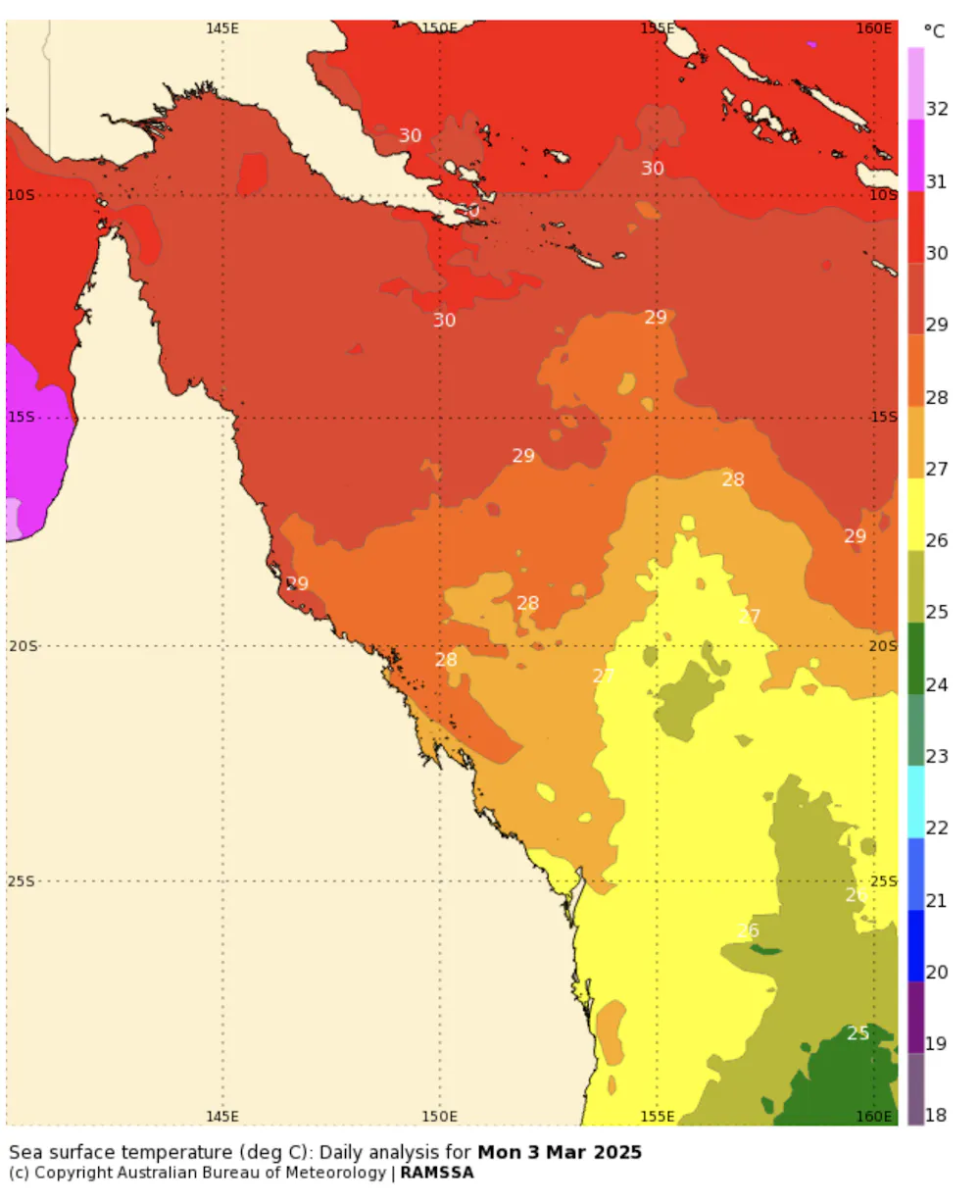
Tropical Cyclone Alfred is strengthening as it bears down on the coast of southern Queensland and northern New South Wales, prompting fears it may become a destructive category 3 cyclone before it makes landfall.
As of Wednesday, the cyclone was a category 2 and had begun moving west towards land. It is forecast to maintain intensity on Thursday and cross the coast early on Friday morning, probably between Maroochydore and Coolangatta.
According to the Bureau of Meteorology, the possibility of the system reaching a low-end category 3 was a low risk but “cannot be ruled out”.
The bureau has issued warnings from Double Island Point in Queensland to Grafton in NSW. The area includes Brisbane, the Gold Coast, the Sunshine Coast, Byron Bay and Ballina.
Brisbane Lord Mayor Adrian Schrinner says modelling shows 20,000 properties in Brisbane could be affected by storm surge or flooding.
The intensifying cyclone is a major concern, and makes Cyclone Alfred an unusual phenomenon. Cyclones typically lose strength as they approach the coast – especially this far south. It means Alfred may cause extensive damage, including to inland areas. We can expect it to last well into Friday before petering out and heading south on Saturday.
What to expect in the next few days
From Wednesday afternoon and into Thursday, the bureau forecasts gales, with damaging wind gusts to 120km an hour, along the coast from southeast Queensland to northeast NSW.
From Thursday afternoon, destructive wind gusts of up to 155km an hour may develop around the coast and islands as Alfred’s “destructive core” approaches and crosses the coast, the bureau says.
If Alfred crosses the coast on Friday morning during high tide, it may cause a dangerous storm surge along the coast, especially in waterfront suburbs near and south of the cyclone’s centre. This may inundate low-lying areas, such as canal communities of the Gold Coast.
In Brisbane, peak storm surges are expected from Thursday onwards. Some 20,000 properties have been warned of impacts ranging from minor inundation in yards to significant flooding inside homes. Areas most at risk include Nudgee Beach, Brighton, Windsor, Ashgrove, Morningside and Rocklea.
Damaging surf may also cause serious erosion at open beaches between Sandy Cape and Grafton, and further south into NSW.
From Thursday, residents in southeastern Queensland and northeastern NSW have been told to expect heavy to intense rain. It may lead to life-threatening flash flooding – again, near and south of the cyclone centre.
Northern NSW has already been hit by devastating flooding in recent years, most recently in February 2022. Many of its settlements, including Lismore, are along or close to major river courses. Residents are understandably anxious about what the next few days may bring.
The bureau released the below map on Wednesday morning. It shows the bureau’s best estimate of the cyclone’s future movement and intensity.
The grey zone indicates the range of tracks the cyclone centre may follow. The bureau says winds will almost certainly extend to regions outside the rings on this map.
Cyclone Alfred tracking map released by the Bureau of Meteorology on Wednesday morning shows it circling of the coast of southeast Queensland. BoM
Why is Alfred so fired up?
Cyclone Alfred has been meandering off Queensland’s coast for almost two weeks. Unusually, it has maintained its cyclonic structure and intensity much further south than is typical.
Over the past two days, unique atmospheric and oceanic conditions have allowed Cyclone Alfred to intensify.
It moved towards an area of warmer coastal water (around 27°C), which caused it to strengthen. It also moved into an area of reduced “vertical wind shear” – a variation in wind speed running at right angles to prevailing winds, which often acts to weaken a cyclone.
Image showing high sea surface temperatures which are fuelling the cyclone. BoM
Usually, cyclones in this part of Australian waters may brush the coast, but are soon pulled south or east by an upper trough of cold air and then flicked away into the cooler waters of the Tasman Sea – to an area known as the “cyclone graveyard”.
The current situation is unusual because that upper trough is absent. At the same time, a high pressure system in the Tasman Sea is steering the cyclone towards the coast.
The big question now is whether Alfred reaches category 3 – that is, very destructive winds of 165–224km per hour.
Should the cyclone’s forward motion towards the coast slow, it raises the chances of becoming a category 3 storm. That’s because it would spend more time passing over the warm area of coastal water.
Category 3 winds are likely to cause significant structural damage to some buildings. Brisbane is, to some extent, sheltered from the winds by offshore islands. Other areas, such as the Gold Coast, do not have such protections.
How long will the cyclone last?
As I write, gales are starting to rake the coast – including where I live, on the Sunshine Coast. Conditions will continue to deteriorate this afternoon and into tonight.
The cyclone will bring gale-force winds to a large area of coastline – from Double Island Point in the north to potentially as far south as Coffs Harbour.
By Thursday afternoon, conditions on land and just offshore will be pretty rough. If the cyclone keeps travelling at a constant speed, it will cross the coast in the early hours of Friday morning.
This is less than ideal. It will be dark and people can’t see what’s going on. But there is much affected communities can do to prepare, as outlined here.
For cyclone preparedness and safety advice, go to Get Ready Queensland. For emergency assistance call the State Emergency Service (SES) in NSW or Queensland on 132 500.
A Bureau of Meteorology update on Cyclone Alfred dated March 5.
Steve Turton has previously received funding from the federal government.
If you head to the shops to buy bread, you’ll face a variety of different options.
But it can be hard to work out the difference between all the types on sale.
For instance, you might have a vague idea that wholemeal or wholegrain bread is healthy. But what’s the difference?
Here’s what we know and what this means for shoppers in Australia and New Zealand.
Let’s start with wholemeal bread
According to Australian and New Zealand food standards, wholemeal bread is made from flour containing all parts of the original grain (endosperm, germ and bran) in their original proportions.
Because it contains all parts of the grain, wholemeal bread is typically darker in colour and slightly more brown than white bread, which is made using only the endosperm.
Australian and New Zealand food standards define wholegrain bread as something that contains either the intact grain (for instance, visible grains) or is made from processed grains (flour) where all the parts of the grain are present in their original proportions.
That last part may sound familiar. That’s because wholegrain is an umbrella term that encompasses both bread made with intact grains and bread made with wholemeal flour. In other words, wholemeal bread is a type of wholegrain bread, just like an apple is a type of fruit.
Don’t be confused by labels such as “with added grains”, “grainy” or “multigrain”. Australian and New Zealand food standards don’t define these so manufacturers can legally add a small amount of intact grains to white bread to make the product appear healthier. This doesn’t necessarily make these products wholegrain breads.
So unless a product is specifically called wholegrain bread, wholemeal bread or indicates it “contains whole grain”, it is likely to be made from more refined ingredients.
Which one’s healthier?
So when thinking about which bread to choose, both wholemeal and wholegrain breads are rich in beneficial compounds including nutrients and fibre, more so than breads made from further-refined flour, such as white bread.
The presence of these compounds is what makes eating wholegrains (including wholemeal bread) beneficial for our overall health. Research has also shown eating wholegrains helps reduce the risk of common chronic diseases, such as heart disease.
The table below gives us a closer look at the nutritional composition of these breads, and shows some slight differences.
Wholegrain bread is slightly higher in fibre, protein, niacin (vitamin B3), iron, zinc, phosphorus and magnesium than wholemeal bread. But wholegrain bread is lower in carbohydrates, thiamin (vitamin B1) and folate (vitamin B9).
However the differences are relatively small when considering how these contribute to your overall dietary intake.
Which one should I buy?
Next time you’re shopping, look for a wholegrain bread (one made from wholemeal flour that has intact grains and seeds throughout) as your number one choice for fibre and protein, and to support overall health.
If you can’t find wholegrain bread, wholemeal bread comes in a very close second.
Wholegrain and wholemeal bread tend to cost the same, but both tend to be more expensive than white bread.
Margaret Murray does not work for, consult, own shares in or receive funding from any company or organisation that would benefit from this article, and has disclosed no relevant affiliations beyond their academic appointment.
Tianjin and Qingdao, two major port cities in China, kicked off the new year with their first inbound international cruise ship of 2025 — the Malta-registered Europa 2, a clear signal of the steady revival of China’s cruise tourism industry.
The luxury liner, carrying hundreds of passengers from countries including Germany, Austria and Switzerland is on a global voyage. During its China leg, the tour group headed to major destinations including Xiamen, Shanghai and Tianjin.
After a brief stop in Qingdao in Shandong Province, east China, on March 1, the ship would head to Japan and the Republic of Korea, according to Kristina Jurgawka, a crew member aboard the ship.
An avid history enthusiast, she was deeply impressed by the Great Wall, a UNESCO World Heritage Site, and enchanted by the skyline of Shanghai. “I’m truly grateful for this once-in-a-lifetime experience,” she said.
For German tourist Joachin Dopp, the ease of entry into China left the strongest impression. “It’s simple to enter, no need for a visa or all those formalities. It’s great that you can just enter the country and enjoy it [your trip],” he told Xinhua.
His experience reflects well on China’s effort to rejuvenate the cruise tourism sector. In May last year, a policy was rolled out allowing visa-free entry for foreign tourist groups arriving on cruise ships at any of the country’s cruise ports along the coastline.
With a coastline stretching 18,000 km, China has seen steady improvements in its port infrastructure. The country boasts abundant tourism resources and is experiencing rapid growth in the service industry, making it a major destination for international cruise liners.
Wang Hong, president of China Europe International Business School, said in a media interview that the visa-free entry policy for cruise passengers will bring unprecedented development opportunities to China’s tourism and cruise industries. It is expected to attract more foreign visitors to choose cruises as a means of traveling to China, thereby boosting inbound tourism.
Industry leaders predict a strong rebound in international cruise tourism in China this year.
On Jan. 3, an international cruise ship carrying 456 passengers docked at Phoenix Island International Cruise Port in Sanya, a popular tropical destination. From 2006 to the end of 2024, the port handled over 1,600 cruise ship voyages and over 2 million passenger trips.
Days later, the Silver Dawn became the first international cruise ship to arrive in Shanghai this year, bringing over 400 tourists from more than 20 countries, including the United States, Britain, and Australia. During the eight-day Spring Festival holiday, the border inspection authorities in Shanghai reported 22 cruise ship entries and exits, with 72,000 cruise passenger trips.
Tang Ming, head of a Shanghai-based travel agency, noted that since February 2024, the market has steadily recovered. “We expect to see a 20 to 30 percent increase in international cruise tourists this year,” he said.
Cruise ports in Qingdao are expected to receive over 40 cruise ship visits in 2025, twice the number recorded in 2024, according to the city’s culture and tourism bureau. Meanwhile, Tianjin International Cruise Home Port is preparing for increased activities, with more than 40 inbound and outbound cruise ship visits anticipated at Dongjiang Port in the first quarter alone.
Globally, the Cruise Lines International Association estimates that the number of ocean-going cruise passengers will reach 39.5 million by 2027, reflecting sustained demand for cruise voyages.
By 2035, China’s cruise market is expected to welcome 4.2 million inbound foreign tourist trips annually, with total economic output projected to reach 531.7 billion yuan (about 74.12 billion U.S. dollars), according to a report by the Shanghai Academy of Social Sciences, as cited by Liao Minsheng, a marine tourism expert from Hainan Tropical Ocean University.
China’s market, Liao said in a media interview, presents unprecedented opportunities for the global cruise and yacht economy.
“China’s vast market size and growing demand for cruise tourism provide international cruise and yacht companies with ample room for expansion,” he added. “The sector’s growth is expected to drive the development in areas such as ship design and manufacturing, foreign trade, tourism services, port construction and modern maritime services.”
If you head to the shops to buy bread, you’ll face a variety of different options.
But it can be hard to work out the difference between all the types on sale.
For instance, you might have a vague idea that wholemeal or wholegrain bread is healthy. But what’s the difference?
Here’s what we know and what this means for shoppers in Australia and New Zealand.
Let’s start with wholemeal bread
According to Australian and New Zealand food standards, wholemeal bread is made from flour containing all parts of the original grain (endosperm, germ and bran) in their original proportions.
Because it contains all parts of the grain, wholemeal bread is typically darker in colour and slightly more brown than white bread, which is made using only the endosperm.
Australian and New Zealand food standards define wholegrain bread as something that contains either the intact grain (for instance, visible grains) or is made from processed grains (flour) where all the parts of the grain are present in their original proportions.
That last part may sound familiar. That’s because wholegrain is an umbrella term that encompasses both bread made with intact grains and bread made with wholemeal flour. In other words, wholemeal bread is a type of wholegrain bread, just like an apple is a type of fruit.
Don’t be confused by labels such as “with added grains”, “grainy” or “multigrain”. Australian and New Zealand food standards don’t define these so manufacturers can legally add a small amount of intact grains to white bread to make the product appear healthier. This doesn’t necessarily make these products wholegrain breads.
So unless a product is specifically called wholegrain bread, wholemeal bread or indicates it “contains whole grain”, it is likely to be made from more refined ingredients.
Which one’s healthier?
So when thinking about which bread to choose, both wholemeal and wholegrain breads are rich in beneficial compounds including nutrients and fibre, more so than breads made from further-refined flour, such as white bread.
The presence of these compounds is what makes eating wholegrains (including wholemeal bread) beneficial for our overall health. Research has also shown eating wholegrains helps reduce the risk of common chronic diseases, such as heart disease.
The table below gives us a closer look at the nutritional composition of these breads, and shows some slight differences.
Wholegrain bread is slightly higher in fibre, protein, niacin (vitamin B3), iron, zinc, phosphorus and magnesium than wholemeal bread. But wholegrain bread is lower in carbohydrates, thiamin (vitamin B1) and folate (vitamin B9).
However the differences are relatively small when considering how these contribute to your overall dietary intake.
Which one should I buy?
Next time you’re shopping, look for a wholegrain bread (one made from wholemeal flour that has intact grains and seeds throughout) as your number one choice for fibre and protein, and to support overall health.
If you can’t find wholegrain bread, wholemeal bread comes in a very close second.
Wholegrain and wholemeal bread tend to cost the same, but both tend to be more expensive than white bread.
Margaret Murray does not work for, consult, own shares in or receive funding from any company or organisation that would benefit from this article, and has disclosed no relevant affiliations beyond their academic appointment.
It could be as little as roughly A$100. That was how much ABC News Verify recently spent to clone federal senator Jacqui Lambie’s voice – with her permission – using an easily accessible online platform.
This example highlights how artificial intelligence (AI) apps which create a synthetic replica of a person’s image and/or voice in the form of deepfakes or voice cloning are becoming cheaper and easier to use.
This poses a serious threat not only to the functioning of democracy (especially around elections), but also to a person’s identity.
Current copyright laws in Australia are inadequate when it comes to protecting people if their image or voice is digitally cloned without their permission. Establishing “personality rights” could help.
In theory copyright law can also protect a person’s image and voice. However, its application is more nuanced.
First, a person whose likeness has been cloned by an AI platform often does not own the source material. This material could be an image, video or voice recording which has been copied and uploaded. Even if your image and voice is depicted, if you are not the owner of the source material, you cannot sue for infringement.
Using Senator Lambie as an example, the ABC only needed 90 seconds of original voice recording to create the AI clone. Senator Lambie’s voice itself is not able to be copyright-protected. That’s because copyright can only attach to a tangible expression, say in written or recorded form. It cannot attach to speech or unexpressed ideas.
As the ABC arranged, recorded and produced the original 90-second recording, the broadcaster could hold copyright in it as a sound recording. It is a fixed, tangible expression of Senator Lambie’s voice. However, unless the senator and the ABC made an agreement, Senator Lambie would have no economic rights, such as the right to reproduction, to the original voice recording. Nor would she have any rights to the clone of her voice.
In fact, the AI-generated clone itself is unlikely to be protected by copyright, as it is considered authorless under Australian copyright law. Many AI-generated creations are currently unable to be protected under Australian copyright, due to a lack of original, identifiable human authorship.
Moral rights – including the right of attribution (to be credited as the performer), the right against false attribution and the right of integrity – are also limited in scope. They could apply to the original audio clip, but not to a deepfake.
What are ‘personality rights’?
In most jurisdictions in the United States, there exist what are commonly known as “personality rights”. These rights include the right of publicity, which acknowledges that an individual’s name, likeness, voice and other attributes are commercially valuable.
Celebrities such as Bette Midler and Johnny Carson have successfully exercised this right to prevent companies using elements of their identity for commercial purposes without permission.
One of the challenges is overlap with pre-existing laws, such as Australian consumer law and tort law. Policymakers might be hesitant to introduce a new right, as these other areas of the law may provide partial protection. Another challenge is how to enforce these rights if an AI-generated deepfake is created overseas.
Australia could also consider introducing a similar law to the “No Fakes Bill” currently being debated in the US. If passed, this bill would allow people to protect their image and voice through intellectual property rights. This should be given serious consideration in Australia too.
Deepfakes are becoming more and more common, and are now widespread during elections. Because of this, it’s important that Australians remain vigilant to them in the lead up to this year’s federal election.
And let’s hope that whoever wins that election takes urgent steps to better protect everyone’s image and voice.
Wellett Potter does not work for, consult, own shares in or receive funding from any company or organisation that would benefit from this article, and has disclosed no relevant affiliations beyond their academic appointment.
Source: United States Senator for Washington Maria Cantwell
03.04.25
Trump Tells Farmers ‘Have Fun’ As He Kicks Off Pointless Trade Wars. Cantwell Tells the Truth: ‘It’s Not Going to Be Fun, It’s Going to Be A Nightmare’
Ahead of Presidential address, Cantwell calls on Congress to reclaim its Constitutional authority over tariffs; Cantwell also calls out arbitrary and wasteful layoffs at NOAA, NIH, NSF, USDA: “These kinds of ideas sound great, but they’re not well thought out. It’s literally throwing tax dollars away.”
WASHINGTON, D.C. – Today, U.S. Senator Maria Cantwell (D-WA), ranking member of the Senate Committee on Commerce, Science, and Transportation and senior member of the Senate Finance Committee, delivered a Senate floor speech raising concerns about the economic fallout of Trump’s newly announced tariffs, hours before the President is set to deliver remarks before a Joint Session of Congress.
“Trump said to our farmers yesterday on Truth Social, quote, ‘tariffs will go on external products on April 2. Have fun.’ End quote,” Sen. Cantwell said. “’Have fun?’ ‘Have fun?’ When retaliatory tariffs strike our farmers — just as they did in the first Trump administration — it’s not going to be fun, it’s going to be a nightmare for our farmers. And many of the farmers in my state worry [whether] they will be able to farm at all.”
“I hope my colleagues will slow down on this tariff tirade. Under Article One, Section Eight of the U.S. Constitution, Congress has the power to set duties and regulate foreign commerce. However, Congress has spent the last 80 years delegating its tariff authority to presidents,” she continued. “This president, I believe, is abusing this authority. He calls it an emergency. He’s using the trade wars to supposedly force countries to do things like changing their border policies. I believe it’s time for Congress to start taking back some of that power and considering how we’re going to protect the family farm.”
Over the past 24 hours, as President Trump’s long-promised 25% tariffs on goods from Mexico and Canada and 10% tariff increase on goods from China took effect, stock prices in the United States have plummeted. The Dow fell more than 700 points this morning. Today, the Wall Street Journal’s editorial board criticized his decision: “Trump takes the dumbest tariff plunge.”.
Sen. Cantwell also showed the following graph with the alarming new forecast by the Federal Reserve Bank of Atlanta, which recently began predicting negative real GDP growth for the first quarter of 2025, a rapid reversal of its prior forecast for growth. “Just last week, when people want to talk about GDP and where this is going, it’s amazing that the Atlanta Fed was forecasting GDP growth over two percent for the first quarter of 2025…. but we can see when we got to February, we fell off a cliff… this drop is the representation of a cliff that President Trump is pushing the American economy over.”
“We know this — that in my state, families are paying more for groceries. They’re paying more at the gas pump. They’re paying more at electricity bills. And they are seeing the stock market plummet because as businesses grapple with Trump’s unnecessary trade war, businesses are concerned about the long-term impacts of the supply chain and the cost of those tariffs,” Sen. Cantwell said.
In Washington state, two out of every five jobs are tied to trade and trade-related industries. More information on how President Trump’s tariffs on goods from Mexico, Canada, and China will affect consumers and businesses in the State of Washington can be found HERE. Nationwide:
A 25% tariff on Canada and Mexico would add an estimated $144 billion a year to the cost of manufacturing in the United States.
Tariffs on Canada and Mexico could increase U.S. car prices by as much as $12,000.
According to the Yale Budget Lab, Trump’s proposed tariffs would result in the highest U.S. effective tariff rate in more than 80 years, and depending on the level of retaliation by other trading partners, will result in increased costs of between $1,600 and $2,000 per household. According to their analysis, electronics, clothing, cars, and food will all see above-average price increases.
Sen. Cantwell has remained a steadfast supporter of free trade to grow the economy in the State of Washington and nationwide. Sen. Cantwell was the leading voice in negotiations to end India’s 20% retaliatory tariff on American apples, which was imposed in response to tariffs on steel and aluminum and devastated Washington state’s apple exports. India had once been the second-largest export market for American apples, but after President Trump imposed tariffs on steel and aluminum in his first term, India imposed retaliatory tariffs in response and U.S. apple exports plummeted. The impact on Washington apple growers was severe: Apple exports from the state dropped from $120 million in 2017 to less than $1 million by 2023. In September 2023, following several years of Sen. Cantwell’s advocacy, India ended its retaliatory tariffs on apples and pulse crops which was welcome news to the state’s more than 1,400 apple growers and the 68,000-plus workers they support.
In her speech today, Sen. Cantwell also railed against the Trump Administration’s Department of Government Efficiency’s (DOGE) push to indiscriminately slash federal workers from the payroll, compromising the vital ongoing work at federal agencies.
“The cuts that these agencies have been facing are really the cuts to some of the most technical jobs the United States government has. Whether you’re talking about NOAA, or the National Weather Service, or the National Institutes of Health, or the National Science Foundation, or the US Department of Agriculture — they’ve all been targeted for reductions. These agencies are critical to our economic growth and to our security. And at a time when we are seeing more extreme weather events, or more floods or more wildfires, why shouldn’t we be investing more in weather forecasting, not less?
“And when you look at NOAA workers who support our commercial, and recreation, and tribal fisheries, they employ 1.7 million people, including thousands in the State of Washington. Why would you cut specialized workforce that are helping support the growth of GDP?” Sen. Cantwell said.
“DOGE wants to cap the overhead expenses of research. University of Washington medicine tells me that this would leave them with shortfalls and that they might have to stop clinical trials that are underway. You can’t just stop medical research like it’s a faucet! Once halted, the research, the data, the clinical trials, the patients, the laboratories, the equipment — all that led to innovation will be lost. You think you just turn that back on? You know, these kinds of ideas sound great, but they’re not well thought out. It’s literally throwing tax dollars away.”
Since DOGE announced its intent to hack away at federal agencies and programs, Sen. Cantwell has been sounding the alarm and coming to the defense of workers at NOAA, the Small Business Administration, the Department of Housing and Urban Development, the Federal Aviation Administration, the National Institutes of Health, the National Park Service, and more.
A video of her speech on the Senate floor today can be viewed HERE; audio is HERE; and a transcript is HERE.
The complex extension of Sydney Metro services from Sydenham to Bankstown will be completed in 2026 due to the ongoing impacts that industrial action has had on the project.
This conversion of a century old train line to a brand-new state of the art metro is a very complex and difficult project that the NSW Government warned last year could take over 1 year to complete.
The complexity of this project has been compounded by more than 130 days of work on the project that have been impacted by industrial action and its subsequent effects, placing increasing pressure on the construction and testing programs.
Industrial action limited access to work sites and restricted the provision of crucial work permits, which are required for contractors to safely complete work in a live electrical network environment.
This is particularly crucial at the interfaces between the future metro network and the existing Sydney Trains assets.
This has required significant reprogramming of vital construction activities including overhead wiring upgrades, electrification changes, disconnection from adjoining rail networks, track improvements, and platform extensions at Bankstown Station.
This resulted in a delay to the commencement of dynamic train testing, a crucial component of safely testing and commissioning the new railway.
Despite the significant disruptions, the project team and delivery partners have worked tirelessly to progress the Southwest Conversion.
Dynamic testing of Metro Trains on the Southwest conversion is imminent, following approval by the Office of the National Rail Safety Regulator.
Passengers on the M1 Line will have experienced some disruption to their commutes with partial closures of the service to allow for work to progress when possible. These disruptions will continue as the testing program commences. We acknowledge passengers will be frustrated and apologise for any inconvenience caused. These possessions will allow the team to complete necessary work to extend metro services to Bankstown.
All platform screen doors and mechanical gap fillers along the line from Marrickville to Bankstown have been installed, taking teams approximately 500 hours to fit out each station.
Since the conversion began a large portion of works have been completed including new lifts installed at Wiley Park, Dulwich Hill, Hurlstone Park, Punchbowl and Canterbury Stations, as well as new kiss and ride zones and refurbishing of station buildings and platform surfaces.
A total of 28.3 kilometres of high-tech railway fencing has been installed along the alignment, which is made up of 5.8km of segregation fencing to separate the existing freight line and the metro corridor and 22.5km of security fencing.
The security fencing includes first-of-its-kind intrusion and object detection system which uses fibre optic cables to monitor for possible intrusions.
Southwest Link buses will continue to operate and will continue to be free for passengers until the new Southwest Metro opens.
Minister for Transport John Graham said:
“The Government has always said that this complex and difficult project may take longer than 1 year. We need to let people know that over 130 days of work have been impacted by industrial action. That means we’ll complete this project in 2026.
“Works like upgrades to overhead wiring and station platforms, as well as electrical work to disconnect the line from the wider train network haven’t been able to proceed on schedule. Testing will start soon but industrial action has been very disruptive.
“Converting a 130-year-old rail line to metro standards is a highly complex project and we are very sorry that passengers will have to wait a bit longer to jump on the metro from Bankstown to the Sydney CBD.
“We promise it will be worth the wait – passengers can look forward to fast, safe and reliable trips, with a train arriving every 4 minutes in the peak.
“When the extension to Bankstown opens in 2026, a trip from Bankstown to Central will take just 28 minutes, Marrickville to Macquarie University will take just 36 minutes and Dulwich Hill to Victoria Cross will take 21 minutes.”
Source: United States Senator for Wisconsin Ron Johnson
I had the honor of attending the swearing-in ceremony for Robert F. Kennedy Jr. after being confirmed Secretary of Health and Human Services.
The ceremony was held in the Oval Office, a unique honor.
I’m looking forward to working with Secretary Kennedy in his commitment to radical transparency and conquering chronic illness. I believe this is a watershed moment for America.
The Make American Healthy Again movement held a press conference after RFK Jr’s swearing-in. Watch my remarks here, but the entire MAHA press conference with Del Bigtree is well worth watching. Truth is about to be revealed.
The Senate DOGE Caucus met with Elon Musk, and I gave him my variance sheet comparing a reasonable pre-pandemic level of spending to this year’s outrageous $7.3 trillion. In 2019, the federal government spent $4.4 trillion.
We need to turn Elon’s brilliant DOGE efforts into long-term savings. Here’s the chart I shared with Elon. I’m an accountant and I’ve long been frustrated by how little Washington talks about the actual numbers. Three years ago, I asked my colleagues and the Washington press corps what the federal government spent and no one knew.
On February 21, I joined the Clay & Buck Show and the discussion turned to Ukraine. I was at Zelensky’s inauguration and he told me in 2019 he knew war with Putin was unwinnable. This war never should have started and never should have gone on this long.
On March 2, I joined The Cats Roundtable with John Catsimatidis to talk about Zelensky’s Oval Office meeting. President Trump is dedicated to peace and ending war with out-of-the-box thinking.
The American people deserve a full accounting of Joe Biden’s activities.
I sent another letter to the National Archives and Records Administration (NARA) highlighting multiple requests — some dating back to June 2021 — for records relating to Joe Biden and his family business dealings. For years, NARA failed to provide the requested records to both Sen. Chuck Grassley and myself.
Although former President Biden is no longer in office and he pardoned his son Hunter and other family members, we believe it is of importance to review these records so the American people have a full accounting of Joe Biden and his family’s activities while Joe Biden was in government.
READ: Fox News — Grassley, Johnson demand NARA turn over Biden records relating to email aliases, family business dealings
Congratulations to Finn Peterson, a junior at the Prairie School in Racine, for earning a spot in the U.S. Senate Page Program this semester.
Pages play an important role in the daily operation of the Senate. They live in Washington, D.C. for the semester and attend Page School while working in the U.S. Senate. Pages deliver correspondence and legislative material within the Capitol and Senate office buildings, prepare the Chamber for Senate sessions, and work on the Senate floor.
Contact my office and the Senate Page Coordinator for more information on the program for 16 or 17-year-olds in their junior year of high school.
I had the pleasure of meeting Meredith Clark, a senior at Green Lake High School, and her dad. Clark is a national recipient of the Samsung American Legion Scholarship. She plans to attend Ripon College and then veterinary school at Colorado State University.
Samsung funds these scholarships to show appreciation for U.S. veterans who came to Korea’s aid during its struggle against communist forces in the Korean War.
A group from Wisconsin’s Disabled American Veterans (DAV) was in Washington. The organization has over 14,000 members in Wisconsin and helps provide resources and fulfill promises made to our nation’s Veteran heroes.
For centuries, fire was one of the major fears for city-dwellers. Dense cities built largely of wood could – and did – burn. In 1666, a fire in a bakery went on to destroy two-thirds of the city of London, leaving 85% of residents homeless. In 1871, fire burned out huge areas of Chicago. In World War II, bombing raids by Allied forces largely destroyed cities such as Dresden in Germany and Tokyo in Japan.
The threat of large-scale urban fires drove authorities to spend more on urban firefighting and require buildings to use less flammable material. Fire alarms, fire engines and automatic sprinklers have done much to reduce the chance of uncontrolled spread.
But will our sense of safety endure in the age of climate change? In January, we saw swathes of Los Angeles burn – even in the northern winter. Driven by low humidity and high winds, numerous large fires encroached on the city, destroying outlying suburbs. Climate change made the fires worse, according to climate scientists.
Now we have new research on the question of whether climate change will make large city fires more likely. A research team from China, Singapore and Australia have gathered a decade’s worth of data on fires from almost 3,000 cities in 20 nations, home to one-fifth of the world’s population.
The researchers found for every 1°C increase in air temperature, outdoor fires (rubbish and landfill) increase 4.7% and vehicle fires 2.5%. If the world accelerates its burning of fossil fuels under a high emissions scenario compatible with a 4.3°C temperature rise by century’s end, outdoor fires in cities would soar 22% and vehicle fires 11%. But building fires are projected to actually fall 5%. Thankfully, this emissions scenario is now less likely.
To make these findings, the researchers aggregated the fire incident data from 2,847 cities located in 20 countries over the 2011–20 decade and analysed them to see how air temperature influences the frequency of three types of fires: outdoor, structural and vehicle. They found a strong correlation.
Of the 20 nations, New Zealand looks likely to have the highest increase in fires, soaring 140% over 2020 figures by 2100.
When we think of fires in a city, we usually think of structural fires – a building going up in flames.
The research suggests building fires would actually decrease 5% by 2100. This is unexpected, and might suggest uncertainty about this finding.
Interestingly, this research found the fewest structural fires occurred at air temperatures of 24°C, a temperature which humans find optimal. When it’s hotter or cooler than that, more buildings catch fire.
Why? It’s likely due to our behaviour. We spend more time indoors when it’s very cold or very hot outside, which the authors suggest could make us more likely to accidentally cause fires by using electrical appliances and fireplaces which have a fire risk.
By contrast, outdoor and vehicle fires do increase linearly as temperatures rise. Most vehicle fires come from an equipment or heat source failure, which are both likely to increase as temperatures rise. We are also more likely to have a car crash when it’s hotter, and vehicle fires often come after a crash.
Outdoor fires become more likely because heat dries out fuels and favours fire spread. Rubbish dumps can spontaneously catch fire when temperatures are too high – even underground. This happens because chemical reactions are accelerated in warmer temperatures, causing waste materials to heat up faster. If the extra heat isn’t dissipated, waste can become so hot that it catches fire on its own.
We should take these estimates with a grain of salt. This is because they project recent statistical patterns into an uncertain future, and draw on a data set not perfectly suited to the task. The data set stops in 2020, before the electric vehicle transition gathered speed. EVs have a different risk profile for accidental fires.
As the authors note, there are large barriers to getting a coherent understanding of fire risk. “Despite multiple efforts, we have been unsuccessful in obtaining fire data from Africa and South America,” they write.
Their estimates also relate to a high-emissions future which is hopefully becoming less likely, though the general pattern of the results are similar under less severe climate projections.
Most importantly, it’s not yet clear why temperature influences urban fires. This uncertainty raises questions over whether simple projections of current patterns into the future are realistic or appropriate.
Cities aflame?
Arguably the most important contribution of this new research is to show us that our cities are not inherently protected from fire.
For city authorities, this research points to the need to manage combustible materials, from piles of mulch to dry urban parks and even home gardens. Storage yards, rubbish dumps and recycling centres will also need to be managed.
Fire used to be a major concern for cities, and it could be again. Cities and fire are uneasy bedfellows, and climate change will worsen the situation.
David Bowman is an Australian Research Council Laureate Fellow and also receives funding from the New South Wales Bushfire and Natural Hazards Research Centre, and Natural Hazards Research Australia.
Calum Cunningham receives funding from the Australian Research Council.
The aftermath of one of the most undiplomatic – and notorious – White House meetings in recent history reveals a changed world.
Having berated Ukraine’s President Volodymyr Zelensky for supposedly not wanting peace with Russia and failing to show sufficient gratitude to the United States, President Donald Trump has now paused all military aid to Ukraine.
This equates to about 40% of the beleaguered nation’s military support. If the gap is not quickly covered by other countries, Ukraine will be severely compromised in its defence against the Russian invasion.
This has happened while the Russian army is making slow but costly gains along the front in eastern Ukraine. Trump’s goal appears to be to force Zelensky to accept a deal he does not want, and which may be illegal under international law.
New Zealand is a long way from that front line, but the implications of Trump’s unilateral abandonment of Ukraine still create a serious foreign policy problem.
Aside from its unequivocal condemnation of Russia’s actions, New Zealand has provided Defence Force personnel for training, intelligence, logistics and liaison to the tune of nearly NZ$35 million. The government has also given an additional $32 million in humanitarian assistance.
At the same time, New Zealand has supported global legal efforts to hold Russia to account at both the International Court of Justice and the International Criminal Court. With Trump undermining these collective actions, New Zealand faces some stark choices.
Allies at war
While a genuine ceasefire and eventual peace in Ukraine are the right aims, Trump’s one-sided proposal has involved direct talks between Russia and the US, excluding all other parties, including the actual victims of Russian aggression.
With eery parallels to the Munich Agreement of 1938 between Nazi Germany, Britain, France and Italy, peace terms could be dictated to the innocent party. Ukraine may have to sacrifice part of its territory in the hope a wider peace prevails.
In exchange, Ukraine may be given some type of “security assurance”. But what that arrangement would look like, and what kind of peacekeeping force might be acceptable to Russia, remains unclear.
If the current UK and European ceasefire proposals fail, Europe could be pulled more directly into the conflict. Since the Trump rebuff, European leaders are embracing Zelenskyy more tightly, wary of an emboldened Russia threatening other states with substantial Russian populations such as in Estonia and Latvia.
European boots on the ground in Ukraine could escalate the existing war into a much larger and more dangerous conflict. The complexities of this new reality are now spilling over in the United Nations.
A fork in the road
While the Security Council finally agreed on a broad statement in favour of a lasting peace, just what that might look like has seen opposing resolutions in the General Assembly.
On February 18, 53 countries, including New Zealand, voted in favour of a resolution condemning Russian aggression and calling for the return of Ukrainian territory. The resolution passed, but the US, Russia, Belarus and North Korea voted against it.
The US then put up its own resolution calling for peace, without recognising Russian aggression or the illegal annexation of Ukrainian territory. New Zealand supported this, too.
Those two votes clearly signal a fork-in-the-road moment for New Zealand.
As well as the wider consequences and potential precedents of any Ukraine peace settlement for security in Europe and the Pacific region, there is the immediate problem of supporting Ukraine.
With the US and Europe – both traditional allies of New Zealand – now deeply divided, whatever path the government chooses will directly affect present and future security arrangements – including any possible “pillar two” membership of AUKUS.
Potentially complicating matters further, Trump’s civilian lieutenant Elon Musk has publicly advocated for the US leaving the UN and NATO. Whether or not that happens, the threat alone underscores the gravity of the current situation.
No option without risk
Ultimately, if Trump decides to force Zelensky to the negotiating table against his will, and Europe continues urging and supporting him to fight on, New Zealand will have to take sides. It cannot take both.
The National-led coalition government will either have to abandon the stance New Zealand has taken on the Russian invasion over the past three years, or wait for Europe’s response and align with efforts to support a rules-based international order.
The first option would mean stepping back from that traditional foreign policy position, cutting military support for Ukraine (and trusting the Trump process), and probably ending sanctions against Russia and diplomatic efforts for legal accountability.
The other path would mean spending more on military aid, and possibly deploying more defence personnel to help fill the gap Trump has created.
No option is without risk. But, on balance, the European approach to international affairs seems closer to New Zealand’s worldview than the one currently articulated by the Trump administration.
The authors do not work for, consult, own shares in or receive funding from any company or organisation that would benefit from this article, and have disclosed no relevant affiliations beyond their academic appointment.