Source: United States Senator for Nevada Cortez Masto
Washington, D.C. – Today, U.S. Senators Catherine Cortez Masto (D-Nev.) and Lisa Murkowski (R-Alaska) reintroduced their bipartisan, bicameral legislation to promote geothermal energy. The STEAM Act would expedite geothermal exploration and development in previously studied or developed areas. Representatives Susie Lee (D-Nev.-03) and Celeste Maloy (R-Utah-02) introduced companion legislation in the U.S. House of Representatives.
“Nevada’s clean energy economy is spurring innovation and lowering energy costs for residents across the Silver State,” said Senator Cortez Masto. “My commonsense, bipartisan legislation will cut red tape, create good-paying jobs, and let communities take advantage of Nevada’s untapped geothermal potential.”
“Unleashing the full potential of clean, reliable, baseload geothermal will help to bolster our energy independence and power our communities. The STEAM Act takes a step forward to remove unnecessary hurdles for geothermal exploration and cuts through the red tape slowing down deployment of geothermal technologies,” saidSenator Murkowski. “I look forward to continuing to advocate for this legislation to help boost geothermal as a source of domestic energy.”
“Nevada has incredible energy potential and geothermal energy is a key piece of that,” said Rep. Lee. “Yet, red tape has prevented us from fully unleashing its potential. This bipartisan bill will cut red tape, help strengthen U.S. energy independence, and lower costs.”
“Utah’s second district has some of the most abundant geothermal resources in the world,” said Rep. Maloy. “Unfortunately, bureaucratic red tape and inefficiency makes developing geothermal resources risky. The STEAM Act will clear the way for Utah to produce more energy and create more jobs.”
“In 2005, the U.S. faced an energy crisis and rightly granted oil and gas a categorical exclusion to produce more energy to meet demand,” said Jeremy Harrell, CEO, ClearPath Action. “As the U.S. faces new challenges to meet rising demand, this bill helps achieve parity for 24/7, clean, reliable geothermal power. This legislation is important in unlocking American geothermal energy to support our economy and the environment.”
“The STEAM Act is an important step in advancing geothermal energy exploration and development in previously studied or developed areas,” said Jeanine Vany, Executive Vice President of Corporate Affairs, Eavor. “By ensuring geothermal exploration can move forward as efficiently and responsibly as other energy resources, this bill paves the way for the expansion of a proven, clean, and reliable energy solution. We’re encouraged by continued bipartisan action that prioritizes domestic geothermal applications as a key part of our future energy portfolio.”
“The bipartisan STEAM Act would extend permitting parity across oil, gas, and geothermal for American generation projects,” said Ben Serrurier, Senior Manager of Government Affairs and Policy, Fervo Energy. “The permitting improvements from the STEAM Act have been tested and perfected for two decades now — and banks, operators, and agencies know how they work. This will help geothermal projects advance more quickly and at reasonable costs with financing and drilling. Fervo applauds Representatives Celeste Maloy and Susie Lee and Senators Lisa Murkowski and Catherine Cortez Masto for their hard work to advance this source of clean, firm energy to power America.”
Right now, there is an expedited review and permitting process for oil and gas development projects on land that has already gone through environmental studies. The Streamlining Thermal Energy through Advanced Mechanisms (STEAM) Act would cut red tape by allowing geothermal projects in previously developed or studied areas to also bypass cumbersome, repetitive environmental impact studies.
Senator Cortez Masto has consistently worked to support Nevada’s battery supply chain and clean energy industry, which has created nearly 42,000 good-paying clean energy jobs across Nevada. Through her Innovation State Initiative, Senator Cortez Masto has been a proponent of renewable and sustainable energy, passing bipartisan legislation to promote Nevada’s mining and emerging battery industries. She has also set up a sustainable critical mineral supply chain and led efforts in the Senate to create good-paying solar energy jobs. Cortez Masto recently announced that the University of Nevada, Reno (UNR) has been designated as a Tech Hub for innovation and job creation.
This research, conducted every five years, uses a proven genetic mark-recapture method to estimate the Maaui dolphin population along the west coast of the North Island. DNA samples will be collected from live, wild dolphins using a small biopsy dart, providing essential information about population size, genetic diversity, and movement patterns.
“The Maaui dolphin is critically endangered, and every sighting or sample contributes to our understanding of the species and its future survival,” says Cara Hansen, DOC Ranger.
The most recent abundance estimate, completed in 2021, indicated there were approximately 54 individual Maaui dolphins over the age of one year in the water off the North Island’s west coast (the animals’ known habitat). This new survey will provide an updated estimate to help track changes in the population and inform conservation efforts.
The survey will be carried out over two summer seasons, in 2025-26 and 2026-27, with field teams operating between the entrance of Kaipara Harbour and the Mokau River in Taranaki. Staff from DOC’s Taranaki, Auckland, and Waikato districts, the Marine Species Team, the University of Auckland, and Ngaati Te Ata will collaborate on this important project.
The public can also play a role in conservation efforts by reporting any sightings of Maaui dolphins and being aware of the threat that toxoplasmosis has on Maaui dolphins. The dolphins have a distinctive round dorsal fin, often likened to an ear from the cartoon character Mickey Mouse.
“Real-time reports help our field teams understand where the dolphins are being seen and improve the success of our survey,” says Cara.
Volcano Watch is a weekly article and activity update written by U.S. Geological SurveyHawaiian Volcano Observatoryscientists and affiliates. Today’s article is by HVO geologist Kendra J. Lynn.
This cartoon schematic depicts the Kīlauea 2018 lower East Rift Zone eruption and coincident summit collapse. It is the logo for the American Geophysical Union Chapman Meeting on Caldera-Forming Eruptions at Basaltic Volcanoes, to be held in Hilo, Hawaii, from February 9-14, 2025. More info: https://www.agu.org/chapman-basaltic-caldera-forming-eruptions.
Next week, during February 9-14, volcano scientists from around the world are gathering in Hilo, united by the common goal of understanding caldera-forming eruptions at basaltic volcanoes.
The occasion for the assembly is the American Geophysical Union Chapman Conference on Caldera-forming Eruptions at Basaltic Volcanoes: Insights and Puzzles from Kīlauea 2018 and Beyond. The meeting is directly aligned with the U.S. Geological Survey’s Volcano Hazards Program mission—“to enhance public safety and minimize social and economic disruption from volcanic unrest and eruption.”
Basaltic caldera-forming rift eruptions, like the 2018 eruption of Kīlauea, represent an underappreciated hazard for many global communities, but also a chance to better understand some of Earth’s most active volcanoes. A handful of these eruptions have been documented globally in the last half-century, including at Miyakejima (Japan), Piton de la Fournaise (La Réunion), and Bárðarbunga (Iceland). Kīlauea’s 2018 eruption was its most impactful in centuries, was documented in remarkable detail, and it involved more than one cubic kilometer of basaltic lava flows, a magnitude-6.9 flank earthquake, and a major summit collapse.
Observations from Kīlauea and similar eruptions around the globe offer an unprecedented opportunity to understand calderas and associated rift systems and the dynamics of their interplay, but a community-driven synthesis has been lacking, and numerous fundamental scientific questions remain. The experts who will gather on the Island of Hawaiʻi will assess current understanding, share insights, and map out work on critical outstanding issues. Resulting insights should prove valuable when the next large basaltic caldera collapse takes place somewhere on Earth.
This conference will bring together an interdisciplinary assembly of volcano scientists to contrast observations from historic global caldera-rift eruptions, establish the state-of-the-art understanding, identify important questions, and initiate lasting new research efforts. We will address the causes of these eruptions, the dynamics of basaltic caldera collapses, the interaction between summit calderas and rift zones, the geometry and physical properties of magma storage, and the challenges in forecasting associated hazards.
A significant investment in research and monitoring of Hawaii’s volcanoes was made through the Additional Supplemental Appropriations for Disaster Relief Act of 2019 (H.R. 2157), which provided Supplemental funding to USGS for recovery and rebuilding activities in the wake of the 2018 Kīlauea eruption. Results from recent large-scale science experiments at Kīlauea supported by this funding will be shared and discussed at the Chapman. Field trips will give participants an opportunity to visit important sites on the volcano. Finally, teams will be formed to discuss science questions in detail and establish priorities for additional work following the meeting.
The conference is being organized by U.S. Geological Survey and academic volcano researchers, bringing over 150 scientists together for presentations, discussions, workshops, and field trips. Participants represent 15 countries outside the United States and will include presentations about volcanoes around the world. Roughly 25% of presenters are undergraduate or graduate students, representing a new generation of volcano scientists tackling our field’s biggest challenges. We are very excited that several University of Hawai‘i at Hilo and Mānoa students will be presenting their research at the meeting. Additionally, partners from Hawai‘i County Civil Defense, Hawai‘i Volcanoes National Park, the Hawaiian Volcano Education & Resilience Institute, the Pacific Tsunami Museum, and the Pacific Tsunami Warning Center will participate.
During the week of the conference, winning art and haiku submissions from the USGS Hawaiian Volcano Observatory (HVO) Volcano Awareness Month competition will be on display. In addition, a public After Dark in the Park presentation by Icleandic Meteorological Office scientist Gro Pederson will summarize the ongoing volcanic crisis on Reykjanes Peninsula, Southwest Iceland on February 6 in the Kīlauea Visitor Center Auditorium in Hawai‘i Volcanoes National Park. Dr. Pederson is a former USGS HVO volunteer, and her presentation will highlight parallels between Hawaiian and Icelandic volcanoes and their hazards to our communities.
We look forward to a productive week learning from our colleagues and partners. E komo mai to the assembly of volcanologists that is soon to arrive!
Volcano Activity Updates
Kīlauea is not erupting. Its USGS Volcano Alert level is WATCH.
The summit eruption at Kīlauea volcano that began in Halemaʻumaʻu crater on December 23 continued over the past week, with one eruptive episode. Episode 8 was active from the evening of February 3 until the evening of February 4. Kīlauea summit has been inflating since episode 8 ended. Resumption of eruptive activity is possible between February 8-11 if summit inflation continues at current rate. Sulfur dioxide emission rates are elevated in the summit region during active eruption episodes. No unusual activity has been noted along Kīlauea’s East Rift Zone or Southwest Rift Zone.
Mauna Loa is not erupting. Its USGS Volcano Alert Level is at NORMAL.
No earthquakes were reported felt in the Hawaiian Islands during the past week.
HVO continues to closely monitor Kīlauea and Mauna Loa.
Please visit HVO’s website for past Volcano Watch articles, Kīlauea and Mauna Loa updates, volcano photos, maps, recent earthquake information, and more. Email questions to askHVO@usgs.gov.
Source: The Conversation (Au and NZ) – By Christine McCarthy, Senior Lecturer in Interior Architecture, Te Herenga Waka — Victoria University of Wellington
Interior of Auckland South Men’s Prison.Getty Images
Prisons are not colourful places. Typically, they are grey or some variation of a monochrome colour scheme. But increasingly, such a limited palette is being questioned for its impact on health and rehabilitation.
I saw a relentlessly dull world; just concrete and steel […] The monochrome landscape seemed to permeate even the faces of the inmates here; men […] had a pasty, ghostly pallor. It was difficult to imagine any kind of sustained life here.
Prison greyness is partly due to the predominance of steel and concrete, especially in high- and maximum-security units. But the furniture and fixtures – tables, seats and toilets – are also often stainless-steel grey. In New Zealand, even sentenced prisoners’ clothing is grey.
As a prisoner once explained to me (when I was president of the Wellington Howard League), a calculator he used for correspondence classes was allowed in one unit but banned in another, simply because it had a blue strip on it.
Something similar was reported by the Prison Inspectorate in a 2019 report. In that case, staff withheld “black underwear containing small amounts of blue stitching. Staff confirmed this was their approach.”
Worlds without colour
Does colour matter in human environments? The answer appears to be yes. Examples include red increasing heart rates, blue and green creating calm, and yellow evoking hope. According to Australian researcher Thomas Edwards:
yellow may be appropriate in contexts where high motivation and a future-focus are required. By contrast, green and blue may be relevant to settings where low motivation, a present focus, and prosocial behaviours are favoured.
Colour can also help with legibility and way-finding, and differentiate surfaces to prevent trip hazards – an increasingly important factor as the prison population ages.
Other over-represented groups in prison can also benefit. For example, Israeli research published in 2022 concluded that soft natural colours and low contrast can improve environments for people with autism spectrum disorder.
Ultimately, a colourless world is not a good one. Grey and neutral colours reduce visual stimulation, demotivate, increase boredom and can lead to depression. Colour takes on particular importance for people who spend most or all of the day indoors, such as the prisoners in high- and maximum-security units.
Murals are on the wall and patterned tables in a Californian prison unit. Getty Images
The need for variety
Colour has a graduated spectrum – there isn’t only one blue, for example. Tints, tones and shades add another level of complexity. Coloured surfaces are affected by their material and degree of sheen. Different combinations of colours and different light sources also affect how a colour looks and its likely impact on people.
This means there are many possible variants to consider. But most research is highly specific and the findings are rarely universally applicable. The impact of context, cultural differences, our personal preferences and colour associations can also be difficult to measure.
But this theoretical complexity shouldn’t prevent the use of more colour in prison architecture. Variety in colour, rather than the use of specific colours, is the fundamental change that is needed. Likewise, concerns about gang colours can be mitigated if pattern and colour combinations are astutely used.
In 2019, Edinburgh College of Art researchers led a project involving dementia patients, adding colour to corridors at the Royal Edinburgh Hospital. Multicoloured strips of block colours were painted on the white corridor walls to relieve the monotony of these spaces.
Fewer aggressive incidents between patients or with staff were reported after the project. The specific reason is unclear, but it appears better demarcation of spaces led to fewer patients congregating and causing conflict in circulation areas.
Another example at a semi-open prison in Bosnia saw prisoners painting diagonal lines on walls, creating triangles painted in different colours. Researchers concluded that “bright colours are recommended in the prison, with green and blue […] being the best rated because people perceive them as soothing, stimulating, pleasant and safe”.
Increasing the amount of colour on a wall is an inexpensive way to improve prison environments for both staff and prisoners. It can easily create variety and relieve the tedium of otherwise indistinguishable spaces.
Housing prisoners in a dreary architecture of grey walls, grey furniture and people in grey jumpsuits must make it difficult for them to imagine and prepare for a positive future in the community.
This can be inferred from studies of prisoners in solitary confinement which have established that living in extremely monotonous environments can cause depression, paranoia, anxiety, aggression and self-harm.
The new expansion to Waikeria Prison, and its 100-bed mental health unit Hikitia, is an opportunity to significantly shift this attitude to prison interior architecture – but it shouldn’t stop there.
All prisons would benefit from replacing the typically monochromatic palette of prison architecture with something more colourful.
Christine McCarthy is a past President of the Wellington Howard League for Penal Reform (2018–20).
PALO ALTO, Calif., Feb. 06, 2025 (GLOBE NEWSWIRE) — HP Inc. (NYSE: HPQ) today announced the appointment of Songyee Yoon to its Board of Directors. Songyee is the Founder and Managing Partner of Principal Venture Partners and former President for NCSoft Corporation, a leading gaming developer. Her appointment is effective immediately.
“We’re thrilled to welcome Songyee to the HP Board of Directors,” said Chip Bergh, Chair of the HP Board. “Songyee brings expertise in international business and a deep understanding of AI. As a renowned leader and innovator, Songyee offers a global perspective on emerging technologies and trends in AI, which will undoubtedly help us advance HP’s strategic priorities.”
Ms. Yoon holds a bachelor’s degree in electrical engineering from the Korea Advanced Institute of Science and Technology, a Juris Doctor degree from Santa Clara University, and a PhD in Computational Neuroscience from the Massachusetts Institute of Technology (MIT). Additionally, she serves on the Board of Trustees of MIT.
A respected leader in the industry, Ms. Yoon brings significant experience in technology, AI, and international business. Her venture fund, Principal Venture Partners, L.P., focuses on investments in AI-native companies. As a former President and Chief Strategy Officer of NCSoft, she led global expansion and AI integration across multiple countries. She has also served under two presidents as a member of South Korea’s Presidential Advisory Council for Science and Technology.
“We are pleased to welcome Songyee to our Board of Directors,” says HP Inc. President and CEO, Enrique Lores. “With a proven track record in strategic capabilities and extensive experience in AI, Songyee will play a crucial role in advancing HP’s plans to lead in the future of work. I am confident that her addition to the Board will strengthen our leadership in AI-enabled technology and contribute to our continued growth.”
The full HP Board is listed at HP.com.
About HP Inc.
HP Inc. (NYSE: HPQ) is a global technology leader and creator of solutions that enable people to bring their ideas to life and connect to the things that matter most. Operating in more than 170 countries, HP delivers a wide range of innovative and sustainable devices, services and subscriptions for personal computing, printing, 3D printing, hybrid work, gaming, and more. For more information, please visit: http://www.hp.com.
“Will you be pulling up? I hope so,” he says, plugging his forthcoming appearance on one of the world’s biggest stages, where the cultural stakes can be as high as the athletic ones. “Wear your best dress too, even if you’re watching from home.”
The casual yet evocative scene was classic Kendrick.
As a world-renowned Grammy- and Pulitzer Prize-winning artist, Lamar stands in a league of his own. His unflinching critiques of racial injustice, systemic inequality and the exploitation of Black culture have made him a boundary-pushing artist and cultural visionary.
My work examines how race and racism are constructed, represented and challenged in mass media, particularly in news, music and sports. I think the NFL’s complicated history with social justice makes his participation even more significant.
With a discography expansive enough to eclipse the time constraints of Sunday’s game, I’m eager to see whether Lamar will weave his lyrical masterpieces into a performance that entertains, educates and challenges viewers.
The tradition of playing the national anthem before sporting events is but one example: The song is rooted in wartime sorrow and serves as a call to patriotism.
Yet, acts of protest often incite backlash, and the NFL has haphazardly tried to police political speech.
Kaepernick’s protests sparked a national debate about ideas of patriotism and the appropriateness of protest on the playing field. At the same time, NFL owners appeared to effectively blacklist him from the league.
Kansas City Chiefs Chairman and CEO Clark Hunt has donated to Republican politicians and causes, even as the league tries to muzzle players’ political speech. Kevin C. Cox/Getty Images
During Beyoncé’s 2016 appearance alongside headliner Bruno Mars, she paid homage to the Black Panthers, Malcolm X and the Black Lives Matter movement. U2’s act during the 2002 Super Bowl provided a moment of collective mourning and hope for a country still reeling from the 9/11 terrorist attacks. More recently, Dr. Dre’s 2022 performance celebrated hip-hop’s rise from a marginalized genre to a dominant cultural force. Eminem, who also participated in that performance, took a knee on stage to critique the NFL’s treatment of Black athletes and activists.
Rapper Eminem takes a knee as he performs during the halftime show of Super Bowl 56 on Feb. 13, 2022. Valerie Macon/AFP via Getty Images
To me, Lamar’s Super Bowl appearance symbolizes a broader reckoning with how the NFL handles the tension between politics and corporate entertainment.
That’s because Kendrick Lamar’s artistry is more than just music. It’s activism.
From his Grammy award-winning album “To Pimp a Butterfly” to the raw, introspective, Pulitzer Prize-winning album “DAMN.,” Lamar has consistently confronted themes of systemic oppression, racial injustice and Black life in America.
Tracks like “DNA.” are unapologetic celebrations of Blackness and generational resilience:
 I got loyalty, got royalty inside my DNA
 Quarter piece, got war and peace inside my DNA
 I got power, poison, pain and joy inside my DNA
 I got hustle, though, ambition flow inside my DNA
“The Blacker the Berry” delves into the complexities of Black identity and confronting systemic racism:
  I said they treat me like a slave, cah me Black
  Woi, we feel whole heap of pain cah we Black
  And man a say they put me inna chains cah we Black
And “XXX.” confronts the greed, violence and hypocrisy at the core of American life.
  Hail Mary, Jesus and Joseph
  The great American flag
  Is wrapped and dragged with explosives
  Compulsive disorder, sons and daughters
  Barricaded blocks and borders, look what you taught us
  It's murder on my street
  Your street, back streets, Wall Street
Unlike many mainstream artists, Lamar seems to have mastered the delicate balance between commercial success and politically charged content. His genius lies in his ability to write songs that transcend race, gender and class.
Lamar has never hesitated to confront uncomfortable truths through his music. He has a unique opportunity to merge art, activism and a critique of the nation. I expect this moment will be no exception.
Will you be pulling up? I will.
Christina L. Myers is affiliated with the National Association of Black Journalists (NABJ).
Detroit, Feb. 06, 2025 (GLOBE NEWSWIRE) — DTE Energy (NYSE: DTE) has named Casey Santos to its board of directors effective Feb. 6. Santos recently joined Caliber as chief technology officer. Prior to Caliber, Santos led Asurion’s global technology and procurement teams as their chief information officer. She has more than 25 years of experience as an executive leader, an independent board director for public and private organizations, and advisor with expertise across a diverse range of industries, business lines and functions.
“We are pleased to welcome Casey to DTE Energy’s board of directors,” said Jerry Norcia, chairman and CEO of DTE Energy. “Her deep expertise in leading innovation, digital transformation, artificial intelligence and cybersecurity will be invaluable to DTE as we work to build the grid of the future and deliver safe, reliable, affordable and cleaner energy to our customers now and in the years to come.”
“DTE Energy’s mission to improve people’s lives with their energy directly aligns with my values,” Santos said. “Energy is essential to modern life, and I look forward to contributing my personal energy to serve millions of people in Michigan and across the United States.”
Prior to her work at Asurion, Santos held technology leadership roles in the finance industry and was a strategy consultant with McKinsey serving clients in the United States and Europe. Santos began her career as a NASA Flight Controller supporting over 20 space shuttle missions, including the first MIR docking and Hubble Telescope repair missions.
Santos earned a Bachelor of Science degree in aeronautics and astronautics from Massachusetts Institute of Technology and holds dual master’s degrees from the University of Pennsylvania, including a Master of Business Administration from the Wharton School and a Master of Arts in management from the Lauder Institute. She has been recognized for her contributions to the industry and community, most recently as a Top 100 Chief in Tech Leaders to Watch in 2024 by WomenTech Network, Nashville Technology Council’s CIO of the Year in 2023, and a HiTec 100 Leader in 2019 and 2023. She is a member of Latino Corporate Directors Association, Women Corporate Directors, NACD, and T200. She is the Board Chair of the Nashville Technology Council and works with non-profits to help advance STEM education and technology leadership.
About DTE Energy
DTE Energy (NYSE:DTE) is a Detroit-based diversified energy company involved in the development and management of energy-related businesses and services nationwide. Its operating units include an electric company serving 2.3 million customers in Southeast Michigan and a natural gas company serving 1.3 million customers across Michigan. The DTE portfolio also includes energy businesses focused on custom energy solutions, renewable energy generation, and energy marketing and trading. DTE has continued to accelerate its carbon reduction goals to meet aggressive targets and is committed to serving with its energy through volunteerism, education and employment initiatives, philanthropy, emission reductions and economic progress. Information about DTE is available at dteenergy.com, empoweringmichigan.com, x.com/DTE_Energy and facebook.com/dteenergy.
WEST DES MOINES, Iowa, Feb. 06, 2025 (GLOBE NEWSWIRE) — Apollo (NYSE: APO) and Athene Holding Ltd. (“Athene”), today announced that former U.S. Senator Joseph Manchin III has been named an adviser to Apollo and appointed to the Athene Board of Directors, effective February 3, 2025. Senator Manchin will provide advisory services to Apollo on various matters including energy markets, given the firm’s leading role in providing capital to enable the global industrial renaissance.
Senator Manchin served as a United States Senator for West Virginia from 2010 to 2025. He was Chair of the Senate Energy and Natural Resources Committee, as well as a member of the Appropriations, Armed Services, and Veterans’ Affairs Committees. Prior to his tenure in the Senate, he served as the 34th Governor of West Virginia from 2005 to 2010 and as West Virginia Secretary of State from 2001 to 2005. He graduated from West Virginia University with a degree in business administration.
Marc Rowan, CEO of Apollo, said, “Senator Manchin’s distinguished career experience and expertise will be incredibly valuable to Apollo and our clients and partners. We look forward to his contributions to help meet the unprecedented capital need required to drive the global industrial renaissance and support the significant retirement needs of Americans and families around the globe.”
Jim Belardi, CEO of Athene, said, “Senator Manchin is a great addition to Athene’s Board as we address the significant need for next generation retirement products. His public sector experience, expertise on a broad range of issues, and track record of independent thinking make him a valuable member of our Board.”
Senator Manchin said, “Apollo is a forward-thinking financial services firm that has been able to offer capital at scale to drive the American economy forward. Athene provides critical retirement services to millions of Americans and is the leading innovator in tackling modern retirement challenges. I look forward to bringing a unique perspective to both the team at Apollo and the Athene Board, contributing to the firm’s continued success in retirement services and providing capital to enable energy accretion and transition.”
About Athene Athene is a leading retirement services company with over $350 billion of total assets as of September 30, 2024, and operations in the United States, Bermuda, Canada, and Japan. Athene is focused on providing financial security to individuals by offering an attractive suite of retirement income and savings products and also serves as a solutions provider to corporations. For more information, please visit www.athene.com.
About Apollo Apollo is a high-growth, global alternative asset manager. In our asset management business, we seek to provide our clients excess return at every point along the risk-reward spectrum from investment grade credit to private equity. For more than three decades, our investing expertise across our fully integrated platform has served the financial return needs of our clients and provided businesses with innovative capital solutions for growth. Through Athene, our retirement services business, we specialize in helping clients achieve financial security by providing a suite of retirement savings products and acting as a solutions provider to institutions. Our patient, creative, and knowledgeable approach to investing aligns our clients, businesses we invest in, our employees, and the communities we impact, to expand opportunity and achieve positive outcomes. As of December 31, 2024, Apollo had approximately $751 billion of assets under management. To learn more, please visit www.apollo.com.
Contacts:
Joanna Rose Global Head of Corporate Communications Apollo Global Management, Inc. 212-822-0491 communications@apollo.com
The Washoe County Lands Bill Would Protect Public Lands, Support Tribal Communities, Allow For Responsible Development, And Create New Opportunities To Lower Housing Costs
WASHINGTON, D.C. – Today, U.S. Senator Jacky Rosen (D-NV) announced that she is reintroducing the Truckee Meadows Public Lands Management Act, also known as the Washoe County Lands Bill, to expand economic development opportunities and make more land available for housing in Washoe County, support local Tribal communities, increase access to outdoor recreation, and protect public lands . As the state with the highest percentage of public land in the nation, Nevada relies on federal legislation to make land available for development, like affordable housing, and to permanently protect outdoor spaces for future generations.
For years, Senator Rosen has been working with a wide range of stakeholders across Washoe County to develop this comprehensive legislation. In 2023, she unveiled a working draft of the bill and collected feedback from hundreds of Nevadans during a public comment period, which she then incorporated into this legislation, which was previously introduced last year with the support of local government officials, conservation advocates, and business leaders.
“As Nevadans continue to deal with high housing costs, I’m working to increase the amount of federal land available for housing development to bring down home prices and support sustainable growth for Washoe County,” said Senator Rosen. “My Washoe County Lands Bill will do that while also protecting hundreds of thousands of acres of public lands and supporting our state’s Tribal communities. I’ll keep working to ensure that this bill passes this new Congress to lower housing prices for hardworking Nevada families and help shape a better future for our state.”
“I’m so proud that the Washoe County Board of County Commissioners supported Senator Rosen’s Truckee Meadows Public Lands Bill,” said Alexis Hill, Chair of the Washoe County Board of Commissioners. “We are committed to preserving our natural resources while allocating appropriate land for affordable and workforce housing, local governmental and tribal interests. We are especially excited about the potential revenue opportunities for Truckee River investments. This Bill will be a game changer for the future of northern Nevada.”
“Thank you to Senator Rosen for taking this all-important step to introduce a Lands Bill, which I believe is the single largest federal priority for the City of Sparks, Washoe County, and Reno areas,” said Ed Lawson, Mayor of the City of Sparks. “It will have a significant impact for all of us as we address the affordable housing issues throughout the region.”
“With the collaborative effort from all stakeholders and Senator Rosen’s Office since 2017, a lands bill was created to greatly benefit the entire Truckee Meadows region,” said Daryl D. Gardipe, Chair of the Reno Sparks Indian Colony. “We are hopeful the re-introduction of this bill will pass unanimously as it represents all parties’ interests in an equitable fashion. Reno-Sparks Indian Colony is appreciative of all the support we received from all stakeholders to preserve our culturally important areas and our future growth.”
“This legislation is a milestone in the history of public lands conservation in Nevada,” said Shaaron Netherton, Executive Director of Friends of Nevada Wilderness. “Northern Washoe County is home to critical wildlife habitat, uniquely dark skies, priceless cultural resources, and amazing outdoor recreation opportunities. Because Senator Rosen and her team spent countless hours consulting with multiple stakeholders, we now have a widely supported bill that will protect these values. We thank the Senator for her persistent leadership and look forward to working with her to help move this bill through Congress.”
“The Nevada Chapter of Backcountry Hunters & Anglers is pleased to support the Truckee Meadows Public Land Management Act as recently introduced by Sen. Rosen and we thank her for her leadership. We see this legislation as a good representation of compromise by many stakeholders and interests that took many years and many versions to achieve,” said Bryce Pollock, Vice Chair, Nevada Chapter of Backcountry Hunters & Anglers. “We are very appreciative of Sen. Rosen’s consideration to ensure that public land access would not be limited for hunters and anglers along the Truckee River. We look forward to the conservation of more than one million acres of public lands, including many valuable recreation areas in North Washoe County, and are excited for the addition of a public shooting range that hunters can utilize for many generations to come.”
“The Nevada Wildlife Federation thanks Senator Rosen for bringing all stakeholders together to create the Truckee Meadows Public Lands Management Act,” said Russell Kuhlman, Executive Director of Nevada Wildlife Federation. “This legislation provides the county with the opportunity to balance our increasing human population while safeguarding our access to public lands, wildlife habitat, and outdoor recreation, which includes hunting and fishing.”
“EDAWN truly appreciates the dedication Senator Rosen has given this critical issue,” said Taylor Adams, President and CEO of the Economic Development Authority of Western Nevada (EDAWN). “In addition to safeguarding the natural beauty of Northern Nevada for future generations, this bill provides much-needed land that will ensure our region can continue to deliver sustainable growth of commercial development, housing, and the infrastructure required for both.”
“The Reno + Sparks Chamber of Commerce is pleased to support Senator Rosen’s land management legislation,” said Ann Silver, CEO of the Reno + Sparks Chamber of Commerce. “The legislation provides a pathway for communities in the Truckee Meadows to develop much-needed affordable housing and expanded land uses that can be managed as we continue to grow. The legislation also conserves pristine areas in northern Nevada where residents, tribes, and visitors can explore and recreate.”
Senator Rosen’s Truckee Meadows Public Lands Management Act will:
Permanently protect more than 1,000,000 acres of public lands.
Promote sustainable growth and economic development by directing over 15,200 acres of public lands to be made eligible for sale, all of which must be assessed for its suitability for new affordable housing. An additional 33 acres are set aside to only be sold for affordable housing. Any land sold for affordable housing would have to be sold at less than fair market value.
Support local Tribal communities by expanding land held in trust by more than 8,400 acres for the Reno-Sparks Indian Colony, 11,300 acres for the Pyramid Lake Paiute Tribe, and over 1,000 acres for the Washoe Tribe of Nevada and California.
Provide local governments over 3,700 acres for public purposes such as parks, water treatment facilities, and schools. Land is specifically conveyed to Washoe County, the City of Reno, the City of Sparks, the Incline Village General Improvement District, the Gerlach General Improvement District, the State of Nevada, the Truckee River Flood Management Authority, the Washoe County School District, and the University of Nevada Reno.
Senator Rosen has been working tirelessly to pass her Washoe County Lands Bill. Last year, she successfully urged the Senate Energy and Natural Resources Committee to hold a hearing on this legislation. After it passed out of committee, she took to the Senate floor to try to pass the legislation by unanimous consent, but was blocked by Washington politicians. She vowed to reintroduce the Washoe County Bill in her second term and is fulfilling that promise today.
Around US$40 billion is allocated annually from the U.S. federal budget for humanitarian and development aid. If USAID is dismantled, it raises questions about how these funds will be redirected and the long-term impacts it will have on global development efforts.
While the future of U.S. foreign assistance remains uncertain, other world powers have a role to play. European donors, despite some limitations in resources, remain committed to the 2030 Sustainable Development agenda.
Beyond humanitarianism
If the agency is shut down, it may be widely condemned on moral and humanitarian grounds. However, its closure would respond to a logic of strategic and ideological interests that has long shaped the international development system. This a key finding from my longstanding field research with organizations that receive funding, not only from USAID, but also from Canadian and European donors.
International development largely unfolded in the aftermath of the Second World War when global powers competed to establish a new world order. This led to the creation of international agreements and multilateral institutions, with major industrialized nations emerging as the primary donors of foreign aid.
In my research, I have interviewed many people involved in the foreign aid chain, including directors and offices of international non-governmental organizations and governmental co-operation agencies. Many said development relationships are shaped by both the interests of donors and those of recipient populations and organizations.
While these relationships may be based on humanitarian objectives, such as disaster relief or human rights advocacy, they can also be influenced by ideological, geopolitical, economic and social agendas.
In this context, the American move to eliminate USAID could be seen as one that prioritizes national security and economic goals over traditional global humanitarian concerns. Governments steer the wheel of international development according to their political ideologies and interests, regardless of the shock this may generate among citizens.
Canada’s role in this unfolding situation remains uncertain. With the resignation of Prime Minister Justin Trudeau as head of the Liberal Party and the upcoming federal election, it’s unclear what will happen to Canada’s international development strategy going forward.
The answer to these questions will depend on the direction that our political leaders decide to take, and the sentiments of citizens. Still, Canada’s approach to development aid will probably remain in a trade-off between moral imperatives of humanitarianism and strategic national interests.
Nelson Duenas receives funding from the Social Sciences and Humanities Research Council (SSHRC)
Nelson Duenas is a researcher associated to l’Observatoire canadien sur les crises et l’action humanitaires
Source: Peter the Great St Petersburg Polytechnic University – Peter the Great St Petersburg Polytechnic University –
On February 5, the Institute of Physical Culture, Sports and Tourism (IPCST) of Peter the Great St. Petersburg Polytechnic University celebrated its tenth anniversary.
Over the years, the Institute has become a true center of attraction for all who strive for an active sports life and professional development in the field of physical culture and tourism. It trains highly qualified specialists who are able to make a significant contribution to the development of sports and an active lifestyle. Over 10 years, 11 departments have been formed at the IPCST, each of which occupies an important place in the educational process.
The Department of Physical Fitness and Sport offers elective courses and online learning to over 9,000 students in 10 specializations. The online courses developed by the department are hosted on major educational platforms, making them accessible to a wide audience.
The Higher School of Sports Education trains qualified personnel, offering more than 20 disciplines and actively cooperating with European universities. Particular attention is paid to the development of competencies in the use of technical means in sports.
The student sports club “Black Bears-Polytech” is the pride of the institute. With 73 sports, 40 masters of sports and 1250 athletes, the club annually holds about 50 events and has won first place in St. Petersburg student competitions for ten years in a row.
The Center for Continuing Education organizes the educational process according to general education programs, advanced training programs and professional retraining, ensuring continuous development and updating of knowledge.
The GTO Standards Testing Center holds festivals twice a year, attracting thousands of participants. Each year, more than 2,000 people receive distinctions through our Center.
The Center for Physical Culture and Health Services offers a wide range of opportunities for training on the Institute’s sports grounds.
The Scientific and Educational Center for Computer Sports is actively developing digital sports based on the first university phygital center in Russia, Berloga. The center’s athletes achieve high results in games such as Counter-Strike, DOTA 2, League of Legends, etc.
The Polytechnic sports complex, with an area of over 32.5 thousand square meters, includes two swimming pools, a multifunctional stadium and over 20 sports halls, providing students with all the necessary conditions for training and competitions.
“The decade of the IPCST is not only about achievements, but also about plans for the future. We strive to continue developing our programs, introducing new technologies into education and expanding international cooperation,” says IPCST Director Valery Sushchenko. “We thank all teachers, students and partners for their contribution to the development of our institute. Together we create a unique atmosphere for education and sports achievements. Let the next ten years be no less successful and full of new achievements!”
Please note: This information is raw content directly from the source of the information. It is exactly what the source states and does not reflect the position of MIL-OSI or its clients.
Taylor Swift’s re-recordings rocked the music industry – can other artists reclaim their music too? A journal article explores the options.
Taylor Swift and her millions of fans may be disappointed by her 2025 Grammys ‘snub’, but the billionaire artist still has much to celebrate, most notably, her successful fight to take ownership of her music in an industry long dominated by influential record labels.
University of Auckland copyright expert Dr Joshua Yuvaraj says Swift significantly impacted the industry when she re-recorded several of her albums after the rights to her music were sold from under her.
In his paper, published in the Journal of Intellectual Property Law and Practice and presented at the University of Melbourne’s Taylor Swift-themed academic conference, Swiftposium, the senior law lecturer examines how re-recording can help artists gain control of their music. He compares this strategy with the primary mechanism available under US copyright law: statutory reversion. (ref. https://academic.oup.com/jiplp/article/19/12/884/7913103 )
His article looks at how reversion applies to sound recordings, focusing on the US copyright ‘termination’ provision, which lets creators reclaim copyright, typically after around 35 years. The size of the US recording market makes this scheme the most high-profile reversion system in the world. However, Yuvaraj argues that re-recording may offer a more accessible alternative to these legal processes.
“In theory, copyright reversion gives artists a second chance at controlling their recordings. But in practice, the US system has significant obstacles: a long waiting period, complex legal requirements, and uncertainty over whether sound recordings are even covered.”
Many artists simply don’t have the time or resources to navigate this legal quagmire, says Yuvaraj.
“There are considerable power imbalances between artists and record companies,” he says. “For example, copyright is often assigned before the true value of a song is even known.”
Re-recording, as Swift did, allows artists to sidestep these legal barriers. While the copyright in an original sound recording remains with the label, a newly recorded version, if produced independently, is treated as a separate work under copyright law – as long as the artist retained control, or had a license to reproduce the song itself, which has a separate musical copyright to the recording.
“Taylor Swift’s success put re-recording in the spotlight as a way for artists to regain control over their music without waiting decades for copyright reversion laws to take effect,” says Yuvaraj.
He says that unlike statutory reversion, re-recording requires much shorter waiting periods, allowing musicians to capitalise on market demand more quickly. There’s also less procedural complexity, and as long as artists comply with contractual waiting periods, they are unlikely to face legal action.
Despite Swift’s success – her re-recorded albums were critically praised and financially lucrative – Yuvaraj notes that re-recording isn’t a viable solution for everyone.
“It requires a strong fan base willing to embrace the new versions, and not all musicians have that level of market power,” he says.
And while Swift’s re-recording battle highlighted power imbalances in artist contracts, it also saw record labels tighten their grip. There are reports of extended re-recording restrictions in contracts from the standard three to seven years to 20 or 30 years, making re-recording a less accessible option for future artists.
Despite this roadblock, Yuvaraj says Swift’s case sparked important conversations about artist rights, and some musicians are now negotiating deals that allow them to retain ownership of their master recordings from the outset, eliminating the need for re-recording altogether.
“Swift’s case brought re-recording into the public eye, but it doesn’t replace the need for fairer contracts and stronger copyright protections.”
This month, Sir Collin Tukuitonga became one of two professors of Niuean descent in the world.
Professor Sir Collin says it’s an honour to join the ranks of his University of Auckland colleague, Professor of Pacific Health Vili Nosa, also from Niue – one of the smallest countries on the globe, with a population of less than 1,700 people.
“I’m not a true-blue academic. I didn’t do a PhD and stay in the university forever. I gained a lot of practical experience elsewhere, so it’s nice to be accepted by my peers in academic medicine,” says Sir Collin.
He is a director of Poutoko Ora a Kiwa – Centre for Pacific and Global Health at the University, was knighted in 2022 and is a man with his own Wikipedia page. His ‘practical experience’ spans everything from being chief executive of the New Zealand Ministry of Pacific Affairs from 2007 to 2012 to developing a global strategy to improve diet and physical activity that was adopted by the World Health Organisation (WHO) in 2004.
Addressing health inequities faced by Pacific and Māori people has been the motivating force behind Sir Collin’s career over the past 45 years.
“People with the means often get too much medicine and those who need it the most get the least.
“Those inequities stick out to me – Māori and Pacific people have poorer health and it’s entrenched.
“We have the resources, skills, equipment and facilities to make a change and yet we haven’t.
“It seems unfair, unacceptable to me – and that’s the key driver, why I’m involved in public health,” he says.
Growing up in Niue, seeds of caring for family and community were planted that have borne fruit during his career in public health.
“We didn’t have much, not many books. We first had the radio when I was 10, electricity wasn’t a regular thing, so it was a pretty basic existence.
“You didn’t expect much for yourself – you didn’t think about whether you had the latest flashy clothes or shoes.
“You helped in the plantation, going fishing, it was all centred around contributing to the family and helping in the village.
“I guess that’s where I got my sense of social justice – your talents are not just for yourself.”
At the age of 15, Sir Collin’s fate was shaped by gaining a scholarship to study medicine.
“I was lucky I had a decent brain and I got one of two New Zealand government scholarships to go to university in Fiji.
“I had always been interested in helping people, so medicine was a natural selection, but the availability of the scholarship was a big factor.
“My family would not have been able to send me to university – I would have been a fisherman,” he says.
Leaving behind his “charmed life” in Niue, where he had been pampered by three sisters and surrounded by cousins, was a huge step, but Fiji still offered the simple pleasures of island life.
Sir Collin graduated as a junior doctor in 1979 and worked as a “real doctor” in family medicine for about 15 years.
He returned to Niue to offer his skills to his island community, before being appointed to teach public health at the Fiji School of Medicine in 1987. A military coup later that year raised fears for the safety of his first wife and their young children, so they fled to New Zealand – a place Sir Collin has called home ever since.
In the late 1980s, he was a key figure involved in setting up a Pacific healthcare clinic in West Auckland, which is now called The Fono.
Having mainly Pasifika staff and low fees has helped make healthcare more accessible for many Pacific people.
While working as a GP in West Auckland, he saw patterns of hardship and poor health that made him determined to help change the health system.
“It was predominantly families with young children and you saw the same things over and over again – chesty coughs, skin infections, those kinds of things, which if you’re a thinking person, you have to say, ‘there has to be a better way than waiting for them to come back to the clinic with the same thing’.
“Those things were to do with cold, damp, overcrowded housing, poor nutrition and delayed access to health care.
“I thought if I was involved in public health, you could theoretically prevent those problems.”
He became Director of Public Health at the New Zealand Ministry of Health in 2001.
In this role, he contributed to programmes designed to reduce smoking harm in Pacific communities. Over the past 30 years, smoking rates have halved, though about twice as many Māori and Pacific people still smoke, compared to Pakeha New Zealanders.
“Smoking in young people in New Zealand is now 4.2 percent, compared to 27 percent of adults smoking in 1993. So that’s a significant achievement for New Zealand and I helped contribute to that.”
Sir Collin helped introduce a vaccine for meningitis B, during an epidemic of the disease in the early 2000s.
“We had high mortality rates among young Māori and Pacific people in New Zealand and the vaccine led to a significant drop in occurrence of the disease, so I was pleased to help that along.”
His overseas roles have included three years at the World Health Organisation in Geneva, Switzerland, and seven years in New Caledonia, where he was director-general of the Pacific Community.
More recently, he played an important role in advising the New Zealand government and communicating with Pacific communities during the Covid pandemic.
However, in December 2023, he resigned from his role as chairperson of Te Whatu Ora Pacific Senate and spoke out regarding his concerns about the new government’s direction.
“I was really incensed when they repealed our smoke-free legislation. I know that by undoing that world-leading legislation, Māori and Pacific people are going to be the worst affected – and all for the purpose of them meeting their commitment to their friends to make tax cuts.
“I couldn’t continue on the advisory committees when clearly they were not interested in anything apart from what was on their agenda.”
The roots of Pacific people having higher rates of health problems, ranging from cancer to measles, lie in deeper disadvantages, says Sir Collin.
“Health is a symptom of underlying social conditions. It’s an extension of disparities in education, income, housing and diet.
“We can’t just deal with it in the health sector, we have to deal with those issues – and they’re difficult issues.”
Through the hard times, Sir Collin has been buoyed up by Pacific people thanking him for looking out for their wellbeing and speaking up for them.
These days, the 67-year-old father of five is enjoying mentoring and supporting young people at the University, while much of his spare time is spent developing and planting native trees on his family’s lifestyle block near Pakiri.
“There’s no set retirement age these days and I love working with my many clever colleagues at the university.
“My friends say that when you retire and you don’t use your brain, it rots. I’m terrified of that possibility,” he laughs.
Source: United States Senator for New Mexico Martin Heinrich
WASHINGTON — U.S. Senator Martin Heinrich (D-N.M.) introduced the Apprenticeship Pathways Act, legislation to create pathways to high-demand careers for high school students by expanding access to apprenticeships and technical education. Heinrich introduced the bill with U.S. Senator Jerry Moran (R-Kan.).
Apprenticeships and technical education offer a direct path to acquiring in-demand skills, and early exposure to industries can encourage more students to pursue careers in those professions. Expanding apprenticeship programs for high school students can help address workforce shortages and ensure a sustainable workforce pipeline. This legislation particularly focuses on apprenticeship programs for occupations with high need, including the building trades, healthcare, manufacturing, technology, telecommunications, and early childhood education.
“If we want to set the next generation up for success, we need to go all in on expanding access to career-connected learning like apprenticeships as early as high school. By providing students with more preparation and job skills, we will ensure more New Mexicans have the opportunity to access careers in their own communities that they can build their families around, while strengthening New Mexico’s middle class and growing our state’s economy,” said Heinrich.
“Apprenticeships bridge the gap between education and production, providing hands-on learning opportunities that benefit both students and employers in technical fields,” said Moran. “Aligning tech training with industry demands will help meet the workforce needs in Kansas and expand high-paying career opportunities in the IT industry.”
The Apprenticeship Pathways Act would direct the U.S. Secretary of Labor to provide grants to industry intermediaries to develop and establish apprenticeship programs for high school students in the building trades, health care, early childhood education, technology, and manufacturing — based on local, regional, and national workforce trends. This model provides students on-the-job training and instruction, real-world experiences and responsibilities, and inspiring career pathways ahead of their entrance to the workforce.
“Thanks to Senator Heinrich, and this legislation, New Mexico will soon provide pre-apprenticeship opportunities to young people around the state, especially in our underserved communities. Pre-apprenticeship is an essential on-ramp for high schoolers and recent graduates to access in demand, high wage careers. It’s a critical step in making our communities more prosperous,” said Mike May, Director of Workforce Learning for Future Focused Education.
The text of the bill is here.
Heinrich’s Longtime Support for Workforce Training and Apprenticeships:
This week, Heinrich announced $1,350,000 in federal funding that he secured through the Fiscal Year 2024 appropriations process for the United Association of Plumbers & Pipefitters Local 412 (U.A. Local 412). The funding will support specialized journeyman training focused on filling jobs created by the CHIPS Act and Inflation Reduction Act, including needs specific to semiconductor plants, hospitals, and heat pump installation, service, repair, and maintenance. Through his work on the Senate Appropriations Committee, Heinrich has further supported the U.A. Local 412’s workforce development efforts by securing $1.2 million in the Fiscal Year 2023 Appropriations Bill.
In October 2024, Heinrich visited U.A. 412’s mobile training unit, which is creating more pathways to in-demand careers in the skilled trades and has already trained dozens of New Mexicans in Española, Taos, Las Vegas, Mora, Raton, and Santa Fe. Heinrich also participated in a training demonstration with U.A. Local 412 leadership and apprentices who are learning skills in the plumbing, pipefitting, and HVAC trades.
The U.A. Local 412 Mobile Training Unit was initially paid for by an Economic Development Administration (EDA) Good Jobs Challenge Grant, as part of a $6.4 million award to the Northern N.M. Workforce Integration Network. The Good Jobs Challenge funds were authorized by the American Rescue Plan, the critical economic recovery legislation that Heinrich was proud to pass in 2021.
Heinrich is continuing to press for passage of Fiscal Year 2025 Appropriations Bills. The Senate Appropriations Committee passed bills last year that included an additional $870,000 CDS award that he secured within the Senate Appropriations Committee-passed Labor, Health and Human Services, Education Appropriations Bill to sustain the U.A. Local 412’s mobile training unit’s operations past the original EDA funding, and to expand its reach to new communities including Grants, Gallup, Silver City, and Zuni Pueblo.
Heinrich has long championed proven workforce training programs like U.A. Local 412’s apprenticeship and pre-apprenticeship programs that are growing the middle class, creating and connecting New Mexicans to high-quality careers they can access in their communities, and continuing New Mexico’s leading role in the clean energy transition that is being built by union workers in the skilled trades.
Last year, Heinrich hosted a “Pro-Worker, Pro-Business Opportunities” roundtable to talk directly with New Mexicans about how federal legislation he helped pass into law, like the Inflation Reduction Act and Infrastructure Law, is creating careers in high-demand sectors and strengthening New Mexico’s health care, early childhood education, and skilled trades workforce.
In the last Congress, Heinrich introduced the bipartisan Apprenticeship Pathways Act, legislation to create pathways to careers for high school students by expanding access to apprenticeship programs for occupations with high need, including the building trades, healthcare, manufacturing, technology, telecommunications, and early childhood education. Last year, Heinrich also introduced the Pre-Apprenticeships To Hardhats (PATH) Act, legislation to strengthen the pipeline for careers in New Mexico, address rising workforce shortages, and grow the state’s economy through quality pre-apprenticeship programs.
Last Congress, Courtenay Eichhorst, Business Manager of U.A. Local 412 and President of New Mexico Building Trades, testified about the importance of apprenticeships and pre-apprenticeships during a hearing that Heinrich convened as the Chairman of the Joint Economic Committee on “Job Training for the Clean Energy Transition.”
Eichhorst said during that JEC hearing, “In addition to our ‘gold standard’ apprenticeship programs, the UA and other Building Trades’ unions are also increasingly investing in pre-apprenticeship programs that can be designed to help prepare high school students or individuals from underrepresented communities for a career in the trades. These programs help fill the role that used to be filled by the ‘shop classes’ that were found in high schools but have become increasingly rare. Pre-apprenticeship programs also focus on the ‘soft skills’ that are necessary for success in any industry, such as showing up on time and other work etiquette.”
Also in the Fiscal Year 2024 Appropriations Bills, Heinrich secured $1,200,000 in Congressionally Directed Spending for the SMART Local Union No. 49 Joint Apprenticeship and Training Committee to enhance and expand specialized HVAC apprenticeship training.
Last March, Heinrich introduced the Providing Resources and Opportunities for Health Education and Learning (PRO-HEAL) Act, legislation that will tackle the health care provider shortage in New Mexico and nationwide by expanding pathways to high-quality, in-demand health care careers that medical professionals can access in their communities. Specifically, the PRO-HEAL Act addresses medical provider shortages by incentivizing states and institutions of higher education to expand or create health care provider pipeline programs, particularly in underserved and rural communities. The legislation is inspired by the success of the Combined BA/MD Degree Program at the University of New Mexico, where over 65% of students who have graduated from their program practice medicine in New Mexico.
Heinrich previously introduced the Pathways to Health Careers Act, legislation that reauthorizes and modernizes the Health Profession Opportunity Grant (HPOG) program to help address health care shortages in New Mexico and across the country and create pathways to high-quality, in-demand health care careers. The HPOG program has a proven track record of successfully educating workers for jobs in the health care industry, while also providing career coaching, job placement, and a mix of other support services. The Pathways to Health Careers Act would restart and expand the HPOG Program, providing $425 million to make HPOG available nationwide from FY2024 through FY2028 and includes set asides for Tribes and U.S. Territories.
In 2021, Heinrich and Moran introduced the Championing Apprenticeships for New Careers and Employees in Technology (CHANCE in Tech) Act, bipartisan legislation to create earlier pathways to high-paying careers in the information technology (IT) industry. Heinrich previously introduced the bipartisan legislation in 2019 with former U.S. Senator Cory Gardner (R-Colo.).
The ceasefire agreed between Israel and Hamas makes provisions for the passage of food and humanitarian aid into Gaza. This support is much needed given that Gaza’s agricultural system has been severely damaged over the course of the war.
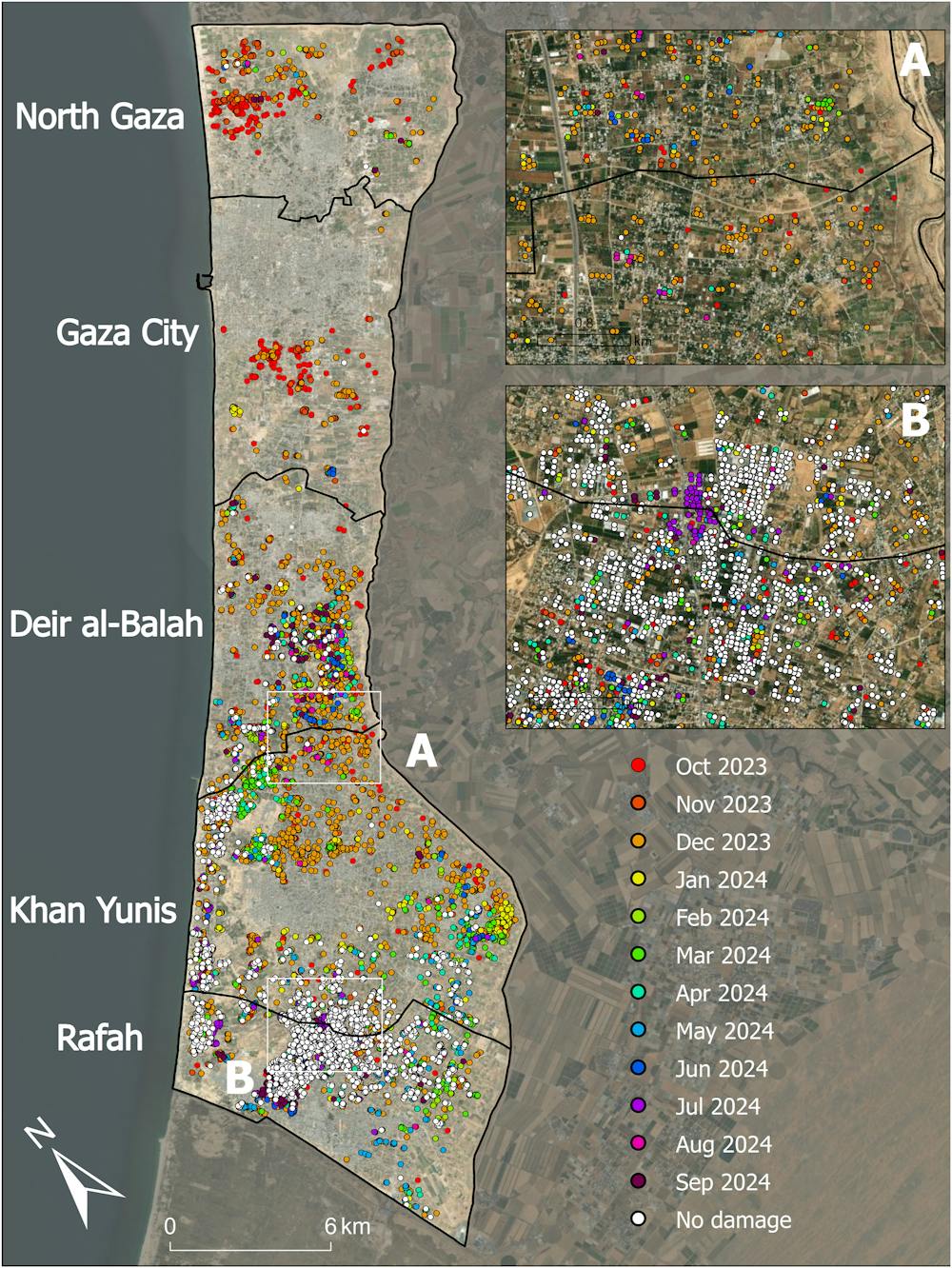
Over the past 17 months we have analysed satellite images across the Gaza Strip to quantify the scale of agricultural destruction across the region. Our newly published research reveals not only the widespread extent of this destruction but also the potentially unprecedented pace at which it occurred. Our work covers the period until September 2024 but further data through to January 2025 is also available.
Before the war, tomatoes, peppers, cucumbers and strawberries were grown in open fields and greenhouses, and olive and citrus trees lined rows across the Gazan landscape. The trees in particular are an important cultural heritage in the region, and agriculture was a vital part of Gaza’s economy. About half of the food eaten there was produced in the territory itself, and food made up a similar portion of its exports.
By December 2023, only two months into the war, there were official warnings that the entire population of Gaza, more than 2 million people, was facing high levels of acute food insecurity. While that assessment was based on interviews and survey data, the level of agricultural damage across the whole landscape remained out of view.
Most olive and citrus trees are gone
To address this problem, we mapped the damage to tree crops – mostly olive and citrus trees – in Gaza each month over the course of the war up until September 2024. Together with our colleagues Dimah Habash and Mazin Qumsiyeh, we did this using very high-resolution satellite imagery, detailed enough to focus on individual trees.
We first visually identified tree crops with and without damage to “train” our computer program, or model, so it knew what to look for. We then ran the model on all the satellite data. We also looked over a sample of results ourselves to confirm it was accurate.
Our results showed that between 64% and 70% of all tree crop fields in Gaza had been damaged. That can either mean a few trees being destroyed, the whole field of trees completely removed, or anything in between. Most damage took place during the first few months of the war in autumn 2023. Exactly who destroyed these trees and why is beyond the scope of our research or expertise.
In some areas, every greenhouse is gone
As greenhouses look very different in satellite images, we used a separate method to map damage to them. We found over 4,000 had been damaged by September 2024, which is more than half of the total we had identified before the start of the war.
Greenhouses and the date of initial damage between October 2023 and September 2024. Yin et al (2025)
In the south of the territory, where most greenhouses were found, the destruction was fairly steady from December 2023 onwards.
But in north Gaza and Gaza City, the two most northerly of the territory’s five governorates, most of the damage had already taken place by November and December 2023. By the end of our study period, all 578 greenhouses there had been destroyed.
North Gaza and Gaza City have also seen the most damage to tree crop fields. By September 2024, over 90% of all tree crops in Gaza City had been destroyed, and 73% had been lost in north Gaza. In the three southern governorates, Khan Younis, Deir al-Balah and Rafah, around 50% of all tree crops had been destroyed.
The exact impact can differ from conflict to conflict. War may directly damage lands, as we have seen in Gaza, or it may lead to more fallow areas as infrastructure is damaged and farmers are forced to flee. A conflict also increases the need for local agricultural production, especially when food imports are restricted.
Our assessment shows a very high rate of direct and extensive damage to Gaza’s agricultural system, both compared to previous conflict escalations there in 2014 and 2021, and in other conflict settings. For example, during the July-August war in 2014, around 1,200 greenhouses were damaged in Gaza. This time round at least three times as many have been damaged.
Agricultural attacks are unlawful
Attacks on agricultural lands are prohibited under international law. The Rome Statute of the International Criminal Court from 1998 defines the intentional use of starvation of civilians through “depriving them of objects indispensable to their survival” as a war crime. The Geneva conventions further define such indispensable objects as “foodstuffs, agricultural areas for the production offoodstuffs, crops, livestock, drinking water installations and supplies and irrigation works”.
Our study provides transparent statistics on the extent and timing of damage to Gaza’s agricultural system. As well as documenting the impacts of the war, we hope it can help the massive rebuilding efforts that will be required.
Restoring Gaza’s agricultural system goes beyond clearing debris and rubble, and rebuilding greenhouses. The soils need to be cleaned from possible contamination. Sewage and irrigation infrastructure need to be rebuilt.
Such efforts may take a generation or more to complete. After all, olive and citrus trees can take five or more years to become productive, and 15 years to reach full maturity. After previous attacks on Gaza the trees were mostly replanted, and perhaps the same will happen again this time. But it’s for good reason they say that only people with hope for the future plant trees.
Lina Eklund receives funding from the Swedish National Space Agency and the Strategic Research Area: The Middle East in the Contemporary World (MECW) at the Centre for Advanced Middle Eastern Studies, Lund University, Sweden.
The May 2024 solar storm created two new temporary belts of high-energy particles surrounding Earth. Such belts have been seen before, but the new ones were particularly long lasting, especially the new proton belt. The findings are particularly important for spacecraft launching into geostationary orbits, which can be damaged as they traverse the dangerous belts.
The largest solar storm in two decades hit Earth in May 2024. For several days, wave after wave of high-energy charged particles from the Sun rocked the planet. Brilliant auroras engulfed the skies, and some GPS communications were temporarily disrupted. With the help of a serendipitously resurrected small NASA satellite, scientists have discovered that this storm also created two new temporary belts of energetic particles encircling Earth. The findings are important to understanding how future solar storms could impact our technology. The new belts formed between two others that permanently surround Earth called the Van Allen Belts. Shaped like concentric rings high above Earth’s equator, these permanent belts are composed of a mix of high-energy electrons and protons that are trapped in place by Earth’s magnetic field. The energetic particles in these belts can damage spacecraft and imperil astronauts who pass through them, so understanding their dynamics is key to safe spaceflight.
The discovery of the new belts, made possible by NASA’s Colorado Inner Radiation Belt Experiment (CIRBE) satellite and published Feb. 6, 2025, in the Journal of Geophysical Research: Space Physics, is particularly important for protecting spacecraft launching into geostationary orbits, since they travel through the Van Allen Belts several times before reaching their final orbit. New Belts Amaze Scientists Temporary belts have been detected in the aftermath of large solar storms before. But while previous belts have been composed mostly of electrons, the innermost of the two new belts also included energetic protons. This unique composition is likely due to the strength and composition of the solar storm. “When we compared the data from before and after the storm, I said, ‘Wow, this is something really new,’” said the paper’s lead author Xinlin Li, a professor at the Laboratory for Atmospheric and Space Physics (LASP) and Department of Aerospace Engineering Sciences at the University of Colorado Boulder. “This is really stunning.” The new belts also seem to have lasted much longer than previous belts. Whereas previous temporary belts lasted around four weeks, the new belt composed primary of electrons lasted more than three months. The other belt, that also includes protons, has lasted much longer than the electron belt because it is in a more stable region and is less prone to the physical processes that can knock the particles out of orbit. It is likely still there today. “These are really high-energy electrons and protons that have found their way into Earth’s inner magnetic environment,” said David Sibeck, former mission scientist for NASA’s Van Allen Probes and research scientist at NASA’s Goddard Space Flight Center in Greenbelt, Maryland, who was not involved with the new study. “Some might stay in this place for a very long time.” How long such belts stick around depends on passing solar storms. Large storms can provide the energy to knock particles in these belts out of their orbits and send them spiraling off into space or down to Earth. One such storm at the end of June significantly decreased the size of the new electron belt and another in August nearly erased the remainder of that electron belt, though a small population of high-energy electrons endured. CubeSat Fortuitously Comes Back to Life to Make the Discovery The new discovery was made by NASA’s CIRBE satellite, a CubeSat about the size of a shoebox that circled the planet’s magnetic poles in a low Earth orbit from April 2023 to October 2024. CIRBE housed an instrument called the Relativistic Electron Proton Telescope integrated little experiment-2 (REPTile-2) — a miniaturized and upgraded version of an instrument that flew aboard NASA’s Van Allen Probes, which made the first discovery of a temporary electron belt in 2013.
After a year in space, the CubeSat experienced an anomaly and unexpectedly went quiet on April 15, 2024. The scientists were disappointed to miss the solar storm in May but were able to rely on other spacecraft to provide some preliminary data on the electron belt. Luckily, on June 15, the spacecraft sprang back to life and resumed taking measurements. The data provided high-resolution information that couldn’t be gleaned by any other instrument and allowed the scientists to understand the magnitude of the new belts. “Once we resumed measurements, we were able to see the new electron belt, which wasn’t visible in the data from other spacecraft,” Li said. Having the CubeSat in orbit to measure the effect of the solar storm has been bittersweet, Li said. While it provided the opportunity to measure the effects of such a large event, the storm also increased atmospheric drag on the CubeSat, which caused its orbit to decrease prematurely. As a result, the CubeSat deorbited in October 2024. However, the spacecraft’s data makes it all worth it. “We are very proud that our very small CubeSat made such a discovery,” Li said. CIRBE was designed and built by LASP at the University of Colorado Boulder and was launched through NASA’s CubeSat Launch Initiative (CSLI). The mission is sponsored by NASA’s Heliophysics Flight Opportunities for Research & Technology (H-FORT) program. By Mara Johnson-GrohNASA’s Goddard Space Flight Center, Greenbelt, Md.
Deputy Observatory Manager – Goddard Space Flight Center Growing up in Malaysia and Singapore, Hsiao Smith — now the deputy observatory manager for NASA’s Nancy Grace Roman Space Telescope — never imagined she’d have a career at NASA. But when she moved near NASA’s Goddard Space Flight Center in Greenbelt, Maryland, things quickly fell into place. A high school counselor noticed her aptitude for math and science and encouraged her to apply for a junior fellowship program at Goddard. “I never could have imagined that a summer internship would change my life and lead to such a fulfilling career at NASA!” Hsiao says. “Prior to that, I had no idea what an engineer did. Now, I’ve spent over 35 years involved in engineering at Goddard.”
Hsiao participated in a program that allowed her to come back to Goddard during summers and spring and winter breaks, so she continued working while going to college. She began her internship working on flight dynamics. Fueled by a desire to work more hands-on with flight hardware, Hsiao transferred to the power branch and started designing high-voltage power supplies for science instruments that would be launched into space. Hsiao earned a bachelor degree in electrical engineering from the University of Maryland and then started working at Goddard full time. She continued her studies, later receiving a master’s degree in engineering management. “Having hands-on experience on flight hardware gave me a better understanding of how to apply what I learned in the classroom to real life,” Hsiao says. “That experience was invaluable, and it gave me the opportunity to discover what I enjoy doing — designing and building flight hardware. And it was incredible to go from college straight into a job working as an engineer at NASA!” Hsiao soon moved on to designing power systems for spacecraft, starting with XTE, the Rossi X-ray Timing Explorer. It was the first time she had worked on a project all the way from the design concept to launch. Building on that experience, Hsiao spent the next 13 years working on the Hubble Space Telescope — first as the power systems manager, then the Cosmic Origins Spectrograph instrument manager, and finally the Hubble Servicing Mission 4 instrument systems manager. In the latter role, Hsiao delivered two new instruments to Hubble and worked with astronauts to conduct repairs on two Hubble instruments in space. “Working on Hubble opened the door to so many different opportunities,” Hsiao says. “I had the honor of working not only with the dedicated and talented engineers and scientists here at Goddard, but also world-class experts from other NASA centers, universities, contractors throughout the U.S., and international partners. And I had incredible opportunities few others will ever have, like working with astronauts and going on the shuttle before it launched from the Kennedy Space Center!”
Following her time with Hubble, she worked on the Lunar Laser Communications Demonstration project as a project manager. Hsiao worked with MIT/Lincoln Lab to develop and test NASA’s first optical communication technology that used a laser. Then Hsiao became the deputy program manager for JPSS (the Joint Polar Satellite Systems) where she designed the architecture and developed the cost and schedule for future JPSS missions. She then spent some time as the technical deputy division manager for the Satellite Servicing Projects Division, continuing the legacy of the Hubble servicing missions and advancing the state of the art in robotic servicing. This work demonstrated how robots could be used to refuel spacecraft and service their instruments. Now, she serves as a deputy observatory manager for NASA’s Nancy Grace Roman Space Telescope. Hsiao has worked with Goddard’s engineering team to build the Roman spacecraft bus, which consists of avionics, attitude control, communication and propulsion systems, and other subsystems such as the solar arrays, deployable aperture cover, and the outer barrel assembly. She is currently preparing to test Roman’s newly combined spacecraft and payload. “It’s a privilege to manage and coordinate Roman hardware from the subsystem level to ensure that once they all work individually, they all function together as an observatory,” Hsiao says. Though she’s served in many roles at NASA, problem-solving has been a constant thread running through Hsiao’s career. “It’s exciting to come to work every day not knowing what’s in store for me,” she says. “It’s about coming in and resolving issues, making sure the team has the resources they need to get their jobs done.” Hsiao urges young engineers to take on new opportunities, keep pursuing their dream job, and seek out advice from mentors and people in career fields you’re interested in. “I’m working in my dream job, and it all goes back to my great mentors and bosses who were willing to give me opportunities beyond my expectations and to guide me toward my interests,” she says. “All the experiences I’ve had throughout this very fulfilling career stemmed from filling out an application as a high school senior. You never know where an opportunity will lead!” By Ashley BalzerNASA’s Goddard Space Flight Center
Galleries and art museums can be intimidating and alienating even for adults. Imagine it from a child’s point of view. Stern security guards in uniforms stationed the doors, bags checked, snacks banned and people hushed. It’s no wonder that kids groan when an excursion to the gallery comes up.
An increasing number of galleries are rethinking their approach, asking what it takes to be welcoming and engaging for the younger generation. Children should be welcomed and visible in gallery spaces. Their experiences now shape the citizens they will become in the future. Viewing art helps develop their identity and creativity, and a more nuanced understanding of the world.
The first step in making change is to recognise that children are current and active cultural citizens who can offer valuable perspectives, ideas and youthful energy. Through thoughtful design and programming, the younger generation is told their presence in the gallery is valued.
Here are some ways galleries are rising to the challenge and making children more welcome – and more valued – in our cultural spaces.
Setting the tone
The entrance to a gallery sets the tone for a young visitor. Are they greeted warmly and made to feel welcome, or does their arrival feel like an intrusion?
Some simple adjustments such as less intimidating bag checks, clear signage, and designated stroller parking create a more welcoming environment. Replacing uniformed security guards with friendly guides and training reception staff to acknowledge and engage with young visitors make a huge difference.
Inciting curiosity and interaction at the front door is another way to invite children into the space. Displaying eye-catching and intriguing sculptural works at the entry or in the foyer builds a sense of anticipation and interest.
The iconic water wall at the National Gallery of Victoria signals to children that there are wonders to touch and explore inside.
Children don’t come alone
Children come to galleries with parents, siblings, schools or community groups. Galleries that consider how these varied age groups move through the space can greatly enhance the overall experience.
Programming designed with the whole family in mind means parents and kids can share cultural experiences. Well designed workshops, interactive exhibits and events appeal to mixed aged groups.
The Art Gallery of New South Wales regularly stages all-ages concerts with popular DJs and live music, building positive associations with the gallery for the whole family.
Incorporating a variety of spaces and experiences extend the duration and frequency of family visits. Some children need low sensory sessions with reduced stimuli to enjoy their visit. Others can use adjacent outdoor spaces and robust sculpture gardens to burn off excess energy, share lunch or even splash in some pink water.
These spaces are designed with kids in mind, engaging the senses and creating participatory ways of experiencing art. The way children encounter the work helps young children learn about the diverse and creative approaches and perspectives of artists in an engaging context.
The interactive experiences and programming mean children can explore their imagination and creativity and form a personal connections with the arts.
What about the older kids? Can they see themselves in the gallery? Teens need to connect, collaborate and to be included in cultural narratives in ways that are relevant to them.
Programs tailored for teens, such as workshops or art-making sessions, move beyond passive observation and encourage self expression and participation.
Installation view of Top Arts 2024 on display at The Ian Potter Centre: NGV Australia from 14 March to 14 July. Photo: Kate Shanasy
Ambitious teen programs, like the out-of-hours teen parties in the National Gallery of Victoria or the youth council at the National Gallery of Australia, empower young people to interact with art and the institution in ways that are meaningful for them.
Exhibiting the best artwork from the year 12 graduating students is another effective way to demonstrate to teens their perspectives and presence matters. Seeing creative work by their age group displayed in a gallery builds confidence and demonstrates to older adults how much the younger generation have to contribute.
Growing lifelong learners
Galleries are unique learning environments, able to engage with and activate the school curriculum and develop essential skills like social and emotional capabilities and creative and critical thinking skills.
New institutions can consider how to meaningfully engage with children in the design phase, but even existing galleries can reconfigure and retrofit their spaces and exhibitions to enable kids to learn.
Neo at the Art Gallery of South Australia, Adelaide. Photo: Sam Roberts
Specifically designed studios, creative technology, classrooms and presentation areas open the doors to cultural exploration. Positive exposure fosters a sense of stewardship ensuring that future generations value and support the arts.
Intentionally designed spaces and programming ensure that children are not only welcomed but inspired to return – again and again – throughout their lives.
The authors do not work for, consult, own shares in or receive funding from any company or organisation that would benefit from this article, and have disclosed no relevant affiliations beyond their academic appointment.
Source: The Conversation (Au and NZ) – By Kerrie Sadiq, Professor of Taxation, QUT Business School, and ARC Future Fellow, Queensland University of Technology
The authors conclude the evidence for these tax breaks is “mixed at best”. They say that income tax breaks used during the global financial crisis increased investment significantly, however:
[there is] no substantial evidence that other policies, including those implemented during the pandemic, increased investment.
In an election year, further promises of tax breaks for businesses are likely. The Coalition has already announced a tax break for meals and entertainment. But are they a good idea, and at what cost do these promises come?
Small business in Australia
Small businesses with fewer than 20 employees make up 97% of all Australian businesses. More than 92% of Australian businesses have an annual turnover of less than A$2 million. It is these businesses that are doing it tough.
These businesses are offered tax breaks for spending on capital assets such as equipment or vehicles. For the 2023-24 tax year, they can immediately write off the cost of eligible assets up to $20,000. In the May 2024 Budget, the government announced that the tax break would be extended to the 2024-25 tax year.
When a small business is operated as a company, the base tax rate is 25%. This effectively means that the business still contributes 75% of the cost of the asset. This requires businesses to have the cash flow to invest. Even if there is cash flow, businesses may not want to spend on large purchases.
It’s a question of trade-offs
Investment tax breaks are also costly in terms of government tax revenue. Each year, the Treasury estimates the cost of tax breaks. These tax breaks are known as tax expenditures.
For the 2023-34 tax year, the instant write-off tax break for small businesses is estimated to cost more than $4 billion by reducing taxes collected.
Tax expenditures are normally designed to offer incentives to one group of taxpayers. However, they come at the expense of broader groups of taxpayers and at a cost of lost revenue to the government. This is money that could be spent through direct spending programs.
Tax expenditures can be thought of as government spending programs hidden in plain sight.
The current government introduced the latest instant asset write-off to improve cash flow and reduce compliance costs for small business. As the RBA discussion paper notes, these types of incentives are also designed to encourage additional business investment.
However, that study indicates this is not being achieved. They suggest the reasons may be the tax policies themselves or differences in the economic environment. Put simply, businesses may not want to invest.
If the stated benefits are not realised, the result is less tax collected. Take the $4 billion cost above. Without the incentive, the government would have an additional $4 billion to spend. The $4 billion in 2023-24 could have been directed to funding small businesses through a direct spending program.
Targeted programs
The RBA discussion paper highlights the need to determine whether investment tax breaks achieve their intended benefits. Many factors must be considered, and assessing the influence on the economy is vital.
However, evaluating these measures within the tax system means that important questions are not asked. This includes whether the benefits are distributed fairly, whether the program targets the right group of taxpayers, and whether there are unintended distorting effects.
The government’s “Future Made in Australia” contains two examples. Its economic plan to support Australia’s transition to a net zero economy contains two tax incentives, one for hydrogen production and another for critical minerals.
The proposed hydrogen production tax incentive is estimated at a cost to the budget of $6.7 billion over ten years. The measure will provide a $2 incentive per kilogram of renewable hydrogen produced for up to ten years. Eligible companies will get a credit against their income tax liability.
The proposed critical minerals production tax incentive is estimated to cost the budget $7 billion over ten years. Eligible companies will get a refundable tax offset of 10% of certain expenses relating to processing and refining 31 critical minerals listed in Australia.
Support for tax breaks
Tax breaks for businesses, such as the immediate write-off, disproportionately benefit those that spend. Often, this is by design. If this is a government objective, supported by the general population, then it is viewed as a good use of public money.
The same principle applies to tax breaks in the Government’s Future Made in Australia plan. A government objective is to transition to a net zero economy. A stated priority is to attract “investment to make Australia a leader in renewable energy, adding value to our natural resources and strengthening economic activity”.
The question remains as to whether tax breaks are the best way to achieve this. The answer often changes when viewed as a direct spending program.
Kerrie Sadiq currently receives funding from the Australian Research Council. She has previously received research grants from CPA and CAANZ.
Ashesha Weerasinghe does not work for, consult, own shares in or receive funding from any company or organisation that would benefit from this article, and has disclosed no relevant affiliations beyond their academic appointment.
The start of the school year means new classes, routines, after-school activities and sometimes even a new school.
This can be a really exciting time for kids, but these changes can also disrupt existing friendships. Students might feel stressed about not having certain friends with them in class or confused about why old friends are behaving differently.
How can you coach your child through changing friendship dynamics?
When children tell you about a conflict or problem, simply start by listening actively. This means reflecting back in your own words what your child said, including feelings. For example,
So it sounds like you are feeling upset Shelley wants to hang out with kids in her new class?
It’s also helpful to empathise with your child about how they feel:
I think I would feel sad too if that happened to me.
This helps your child feel like someone else understands them – and they are not dealing with this on their own.
For older children and teenagers, you may want to check if the child wants your help to work out how to solve the problem. Sometimes listening is all that is needed.
Working out what to do next
If needed, parents can then coach children how to manage any concerns. They can start by helping a child understand why another child may have acted as they did.
For example, if the parent says “Why do you think Shelley said this?”, perhaps the child might respond that “Shelley doesn’t like me anymore”. The parent could offer an alternative explanation – perhaps Shelley is worried about making friends in her new class.
The parent could ask the child what they want – in the above example, the child may want to still be friends with Shelley. The parent can then prompt the child to think of a range of ways to improve the situation, weigh up what might work best and encourage the child to give this a go. Often children can think of solutions themselves, if asked
What could you do to improve things? What else could you do?.
In our example, this might include organising a play with Shelley on the weekend. Alternatively, the child might plan to check in again with Shelley after a few days.
This type of coaching is helpful as it supports the child thinking through the problem and coming up with their own solution, which they are more likely to put in place than if simply told what to do.
We hear a lot about “BFFs”. However, it is not unusual for friendship groups to change over time, as children mature and develop particular interests.
When children are placed in a new class or school with no close friends, children often cope through what researchers call “transitional friendships”.
For example, it’s common for children to start high school with no firm friends, but still know some peers from primary school. These acquaintances can provide companionship until children form closer friendships.
Parents can help their child in making close friends at high school by supporting them to catch up and connect with new friends out of school.
Similarly, if a child is missing their old friends, a parent can coach their child in finding ways to stay in touch – like texting, a weekend sleepover or joining an out-of-school activity together.
If you still have concerns
If friendship concerns or worries are having an ongoing, negative impact on your child’s mental health, parents should seek further support from a health professional.
You can start with your GP, who may suggest a referral to a psychologist. You may also like to talk to your child’s teacher – they may be able to help your child get to know potential friends through class activities.
If this article has raised issues for you or someone you know, you can call Lifeline on 13 11 14 or Kids Helpline on 1800 55 1800. There is also free access to Australian evidence-based parenting programs such as Triple P.
Karyn Healy has received funding from QIMR Berghofer Medical Research Institute, the Australian Research Council and Australian government Emerging Priorities Program. Karyn is a co-author of the Resilience Triple P parenting program. Resilience Triple P and all Triple P programs are owned by the University of Queensland. The university has licensed Triple P International Pty Ltd to publish and disseminate Triple P programs worldwide. Royalties stemming from published Triple P resources are distributed to the Parenting and Family Support Centre, School of Psychology, Faculty of Health and Behavioural Sciences and contributory authors. No author has any share or ownership in Triple P International Pty Ltd.
Like ferns and the tides, community conservation groups come and go. Many achieve their goal. Volunteers restore a local wetland or protect a patch of urban bush and then hang up the gardening gloves with a warm inner glow. Some groups peter out while others endure, tackling the ecological problems facing today’s Australia.
One of those problems is fragmentation. Let’s say you have a national park in one spot and another large tract of habitat ten kilometres away. It’s too hard for many wildlife species to make it across open ground to get there. Over time, this means wild areas can effectively become islands.
This is where habitat corridors come in. Potentially, if you restore habitat between two isolated areas, wildlife can begin to safely move between the two. Over time, these corridors allow seeds, pollen, native birds and animals to disperse across today’s landscapes.
In my work as a restoration ecologist, I’ve come across many of Australia’s community groups devoted to the job. Three of these are LUCI – Lockyer Upland Catchments Inc, which began in 2015, the Big Scrub Rainforest Conservancy, founded in 1993 and TREAT – Trees for the Evelyn and Atherton Tablelands Inc, which began in 1982. Each of these has gone the distance. Here are some reasons why.
Australia’s Wet Tropics are especially threatened by fragmentation. This region is World Heritage listed due to its remarkable biodiversity. Tropical forests have grown here for at least 130 million years. Fragmentation directly threatens this.
In the tropical uplands of the Atherton Tablelands, there are three popular national parks – the Crater Lakes of Eacham and Barrine and the Curtain Fig Tree. But while visitors might see them as pristine, each is an island surrounded by pasture and settlement. Over time, this will take its toll on the species within.
For a volunteer group to reverse the effects of fragmentation, and embark on a long term project such as this, it needs three things.
First the group has leaders committed to a long term cause, usually scientists or naturalists as well as locals with knowledge and drive. Leaders have to be able to work with governments and group members of all persuasions.
Second, the group has to be guided by science. You need current information on local plants, animals and habitats to make sure on-ground work has direct conservation benefits.
And third, networking skills. Harnessing the technical expertise of other groups, government and experts in project planning, execution and monitoring is vital.
Each of these three groups has these traits, even though they take different approaches to the challenge.
LUCI is an alliance of private landholders in Queensland’s Lockyer Valley, west of Brisbane, who work to protect remnant vegetation and expand habitat. Their work on threatened species monitoring, protection of remnant vegetation on private land and community engagement reflects their emphasis on education.
Before European settlement, lowland subtropical rainforest covered 75,000 hectares of land in what is now Byron Bay’s hinterland. But 99% was cut down. In response, Big Scrub members have replanted around 600 hectares – doubling the size of what was left – and established an innovative genetics program to assist in maintaining and enhancing the gene pool of trees planted.
Only a tiny fraction of the Big Scrub is still intact, at reserves such as the Andrew Johnston Big Scrub reserve. Farmland and acreage surrounds it. Peter Woodard/Wikimedia Commons, CC BY
TREAT is based on the Atherton Tablelands in far north Queensland. This region has long been prized for agriculture, which comes at a cost to habitat. In response, TREAT has worked to reconnect isolated tracts of rainforest. The group collaborates with Queensland Parks and Wildlife to grow many thousands of native rainforest tree seedlings for planting each year.
TREAT grows tens of thousands of seedlings annually, alongside Queensland Parks and Wildlife. Pictured: Hicksbeachia seedlings. TREAT
All three groups recognise the importance of countering habitat fragmentation. This slicing and dicing forests into smaller and isolated patches severely threatens Australia’s biodiversity.
Wildlife corridors are deceptively simple in theory. But as I know from long experience restoring habitat, it’s harder than it seems.
Does it work?
Planting corridors sounds like a sure thing. But success is not guaranteed. For one thing, it takes work and time. You need baseline surveys, expert analysis of data and monitoring, ideally over decades. Given these challenges, it’s unsurprising that wildlife corridor restoration is little-studied.
In the 1990s, TREAT volunteers planted 17,000 trees to reconnect a 498 hectare fragment around Lake Barrine to the 80,000ha Wooroonooran National Park 1.2 kilometres away. This corridor is now more than 20 years old. It’s known as the Donaghy’s Corridor Nature Refuge, after the Donaghy family who donated the land for corridor restoration.
My research has found this corridor is proving successful, using good data collected before, during and after establishment. Ground mammals are moving along the corridor, and breeding has taken place. We could see this in the exchange of genes between two previously separated populations of the native bush rat (Rattus fuscipes).
More recent studies have shown the corridor has been colonised by many species, ranging from threatened and endemic plants to birds, ground mammals, reptiles, amphibians and microbats. While promising, this is just one corridor. Much more data would be needed to prove this approach is broadly effective.
As habitat fragmentation continues and the effects of climate change ramp up, more and more species will need to move. The work of volunteer groups such as LUCI, Big Scrub and TREAT in reconnecting scattered pieces of habitat is only going to get more important.
Nigel Tucker has received funding from the Queensland government’s Nature Refuge Landholder Grants program. He is a Life Member of TREAT.
Source: The Conversation (Au and NZ) – By Heather Douglas, Professor of Law and Deputy Director of the Centre of Excellence for the Elimination of Violence Against Women (CEVAW), The University of Melbourne
Around 50% of Australian young people have engaged in choking, or strangulation, during sex. This practice involves one person putting pressure on the neck of another, restricting breathing or blood flow (or both).
There’s no evidence there is any safe way to undertake strangulation. Notably, strangulation can cause injury without leaving any marks and sometimes negative consequences don’t develop until well after the choking episode.
In a new study, we’ve found part of the reason why strangulation during sex is so common may be because many people mistakenly believe that, while risky, it can be made safe through moderating pressure and appropriate communication.
But stopping blood flow to the brain can take less pressure than opening a can of soft drink. And research shows strangulation can result in serious harms even when it’s consensual.
Surveying young Australians
In 2023, we surveyed a representative sample of 4,702 Australians aged between 18 and 35 about their experiences and opinions of strangulation during sex.
In 2024, we published a study about the prevalence of sexual strangulation based on the results of this survey. We found 57% of participants reported they had been strangled during sex, and 51% had strangled a partner.
At the end of the survey, we asked respondents:
What are your thoughts or insights regarding choking during sex?
For this new study, we wanted to understand perceptions around sexual strangulation. More than 1,500 participants commented on issues related to safety in their responses, and we analysed these.
We surveyed young people in Australia about sexual strangulation. ImYanis/Shutterstock
Many mistakenly believed choking could be safe
It was concerning to us that many of the respondents seemed to believe sexual strangulation can be done safely. Most commonly, participants perceived it to be safe when done with a low level of pressure applied to the sides of the neck.
One participant, a 31-year-old straight man, said:
My partner likes a firm hand on the throat but more so not choking off the windpipe, but lightly restricting the blood flow when she can feel an orgasm building up.
A 24-year-old straight woman commented:
I think there should be a conversation before hand about how hard and how much pressure.
Some respondents suggested it was safe to hinder blood flow, rather than oxygen flow. However, restricting blood flow to the brain can also have serious health implications.
While not all pressure on the neck will be fatal, research shows even relatively low pressure can cause death by strangulation.
Also, if the person using strangulation or being strangled has used alcohol and other drugs, differences in pressure may be more difficult to discern, increasing the risks for the person being strangled.
Participants also linked safety – whether emotional or physical – to consenting to sexual strangulation. As a 32-year-old straight woman wrote:
If between two consensual adults who have discussed it prior with a safety plan in place then I do not see any harm in the act however I have been subjected to non consensual choking in a previous sexual encounter which left me angry and scared.
A 23-year-old bisexual woman said:
As long as both parties agree to it and the amount of pressure, it can be an enjoyable experience. Consent must be given.
In general, consent was seen as an ongoing process, where it could be withdrawn at any point. A 32-year-old straight man said:
Should be strictly base on consensus, be aware of your partner body language and breathing and ask them whether they want to continue the activity or not if they say no respect it and back off.
However, research has found a person being strangled may not be able to withdraw their consent using gestures or words, despite wanting to.
Several participants did comment on the limitations of consent as a harm-reduction mechanism, acknowledging that even where it was consensual, strangulation during sex could cause damage.
Worryingly, several respondents expressed concern that consent was often overlooked, intentionally or accidentally. A 35-year-old straight woman said:
The amount of men who just initiate it without asking the woman is scary and they feel entitled to do so.
Some respondents – usually women, but not always – identified pressure to engage in strangulation (both to be strangled and to strangle their partner). A 24-year-old straight man said:
I get scared to do it but my partner kinda makes me feel like i have to sometimes.
A need for better education
Studies from other countries such as the United States have also shown a misunderstanding of the potential dangers of sexual strangulation, and a false perception that it can be safe if undertaken with the “proper precautions”.
Previous research has shown young people commonly learn about sexual strangulation through online pornography, social media and each other. Information from these sources is often misleading.
While consent is a crucial part of any sexual activity, it doesn’t make strangulation safe. Neither does relying on regulating the pressure applied.
It was positive to see many respondents in our survey identified a desire for more information about sexual strangulation. Accurate information about the risks associated with sexual strangulation should be easily available both online and through public health campaigns.
Heather Douglas receives funding from the Australian Research Council.
Leah Sharman receives funding from the Australian Research Council.
Jordan Mailata is an Australian-born NFL star who plays for the Philadelphia Eagles as an offensive left tackle. This position favours very tall, heavy and strong athletes who also possess good footwork, agility and tactical awareness.
His main job is to protect his quarterback and provide gaps for his running backs to run through.
Mailata is one of four Australians to play in a Super Bowl, with the others being punters (kickers) Ben Graham, Arryn Siposs and Mitch Wishnowsky.
Unfortunately, no Australian has won the game that matters most every year but Mailata has a chance in his second Super Bowl, against the Kansas City Chiefs on Monday morning.
So, how did Mailata reach the pinnacle of his “new” sport?
Mailata’s initial sporting success came in rugby league.
He played in the Canterbury Bankstown Bulldogs under-18 team and was offered a contract by the South Sydney Rabbitohs under-20 team. Both of these clubs are part of the elite National Rugby League (NRL) competition.
Mailata, who still hadn’t reached his 21st birthday when offered the Rabbitohs contract, stood out as a giant even in professional rugby league circles at 203cm and 147 kilograms.
Ultimately, this resulted in some of the South Sydney staff and sport agents suggesting American football might be a better option for someone of his stature and physical capacities.
Tranasferring his talent
This brings us to what is known as “talent transfer”.
In high-performance sport, talent transfer refers to a high-level athlete from one sport transferring to another based on their existing skills and physical capacities.
This can be done for a number of reasons, like injury, burnout, loss of interest, or, in the case of Mailata, finding another sport that would suit their physicality better.
For talent transfer to be successful, there needs to be a lot of similarities between the two sports in areas such as skill requirements (kicking, passing, tackling), physical traits (height, mass) and physiological demands (aerobic vs anaerobic).
These similarities can allow athletes to capitalise on their previous training to succeed in their new sport faster and to a higher level than their competitors.
The similarities between American football and rugby (league and union) – such as catching and kicking an oval-shaped ball, evading or running through defenders and full-body tackling – would have benefited a mature athlete like Mailata to transfer from one code to another.
A whole new ball game
His transition from a monster-sized rugby league player in Australia to a more regular-sized offensive tackle in the NFL was initially facilitated through the NFL International Player Pathway (IPP) program.
The IPP was established in 2017 to provide high performance adult athletes from all over the world (like Mailata) the opportunity to learn the complexities of American football and increase the number of international players in the NFL.
The program has been highly successful, with 37 international players signing with NFL teams, of which 18 are currently on NFL rosters.
When Mailata was drafted to the NFL in 2018, he had to work on many aspects of his body to meet the physical challenges of playing in the NFL against other exceptionally massive and strong athletes.
He also had to learn a range of sport-specific technical and tactical skills.
As a part of the IPP, he started working with coaches including Jeff Stoutland, the Philadelphia Eagles offensive line coach.
Stoutland took Mailata into the classroom, teaching him the intricacies of offensive line play including protection and run schemes. These lessons extended into what footwork patterns he would need to master, where and how to position his body when initiating contact and how to use his hands to control the defensive line.
Such skills are the bread and butter of the offensive line – these athletes provide the quarterback time to make key passing decisions and increase the chance of their running backs making big yards on their carries.
Mailata has also mentioned how Strickland taught him the importance of critically watching NFL games, initially to learn the technicalities of the sport and now to further refine his performance against the best defensive lines.
The next wave
In addition to the IPP that looks at talent transfer from adult athletes, the NFL has developed the NFL Academy for school-aged children.
The first academy was based at Loughborough University in the United Kingdom and the second was developed at A.B. Patterson College on the Gold Coast.
These academies combine full-time education with intensive American football training in the hope of promoting pathway opportunities at US colleges.
Hopefully, these academies will see more young Australians transferring their skills and following Mailata into the NFL.
The authors do not work for, consult, own shares in or receive funding from any company or organisation that would benefit from this article, and have disclosed no relevant affiliations beyond their academic appointment.
A humpback whale mother and calf on the New Caledonian breeding grounds.
Mark Quintin
All known human languages display a surprising pattern: the most frequent word in a language is twice as frequent as the second most frequent, three times as frequent as the third, and so on. This is known as Zipf’s law.
Researchers have hunted for evidence of this pattern in communication among other species, but until now no other examples have been found.
In new research published today in Science, our team of experts in whale song, linguistics and developmental psychology analysed eight years’ of song recordings from humpback whales in New Caledonia. Led by Inbal Arnon from the Hebrew University, Ellen Garland from the University of St Andrews, and Simon Kirby from the University of Edinburgh, We used techniques inspired by the way human infants learn language to analyse humpback whale song.
We discovered that the same Zipfian pattern universally found across human languages also occurs in whale song. This complex signalling system, like human language, is culturally learned by each individual from others.
Learning like an infant
When infant humans are learning, they have to somehow discover where words start and end. Speech is continuous and does not come with gaps between words that they can use. So how do they break into language?
Thirty years of research has revealed that they do this by listening for sounds that are surprising in context: sounds within words are relatively predictable, but between words are relatively unpredictable. We analysed the whale song data using the same procedure.
A breaching humpback whale in New Caledonia. Operation Cetaces
Unexpectedly, using this technique revealed in whale song the same statistical properties that are found in all languages. It turns out both human language and whale song have statistically coherent parts.
In other words, they both contain recurring parts where the transitions between elements are more predictable within the part. Moreover, these recurring sub-sequences we detected follow the Zipfian frequency distribution found across all human languages, and not found before in other species.
Whale song recording (2017) Operation Cetaces916 KB(download)
Close analysis of whale song revealed statistical structures similar to those found in human language. Operation Cetaces
How do the same statistical properties arise in two evolutionarily distant species that differ from one another in so many ways? We suggest we found these similarities because humans and whales share a learning mechanism: culture.
A cultural origin
Our findings raise an exciting question: why would such different systems in such incredibly distant species have common structures? We suggest the reason behind this is that both are culturally learned.
Cultural evolution inevitably leads to the emergence of properties that make learning easier. If a system is hard to learn, it will not survive to the next generation of learners.
There is growing evidence from experiments with humans that having statistically coherent parts, and having them follow a Zipfian distribution, makes learning easier. This suggests that learning and transmission play an important role in how these properties emerged in both human language and whale song.
So can we talk to whales now?
Finding parallel structures between whale song and human language may also lead to another question: can we talk to whales now? The short answer is no, not at all.
Our study does not examine the meaning behind whale song sequences. We have no idea what these segments might mean to the whales, if they mean anything at all.
A competitive pod of humpback whales on the New Caledonian breeding grounds. Operation Cetaces
It might help to think about it like instrumental music, as music also contains similar structures. A melody can be learned, repeated, and spread – but that doesn’t give meaning to the musical notes in the same way that individual words have meaning.
Next up: birdsong
Our work also makes a bold prediction: we should find this Zipfian distribution wherever complex communication is transmitted culturally. Humans and whales are not the only species that do this.
We find what is known as “vocal production learning” in an unusual range of species across the animal kingdom. Song birds in particular may provide the best place to look as many bird species culturally learn their songs, and unlike in whales, we know a lot about precisely how birds learn song.
Equally, we expect not to find these statistical properties in the communication of species that don’t transmit complex communication by learning. This will help to reveal whether cultural evolution is the common driver of these properties between humans and whales.
Ellen Garland received funding from the following grants for this work:
Royal Society University Research Fellowship (UF160081 and
URFR221020), Royal Society Research Fellows Enhancement
Award (RGFEA180213), Royal Society Research Grants for
Research Fellows 2018 (RGFR1181014), National Geographic
Grant (NGS-50654R-18), Carnegie Trust Research Incentive Grant
(RIG007772), British Ecological Society Small Research Grant
(SR18/1288), and School of Biology Research Committee funding.
Inbal Arnon, Jenny Allen, and Simon Kirby do not work for, consult, own shares in or receive funding from any company or organisation that would benefit from this article, and have disclosed no relevant affiliations beyond their academic appointment.
Prime Minister Shri Narendra Modi’s reply to the Motion of Thanks on the President’s Address in Rajya Sabha Sabka Saath, Sabka Vikas is our collective responsibility: PM
The people of the country have understood, tested and supported our model of development: PM
Santushtikaran over Tushtikaran, After 2014, the country has seen a new model and this model is not of appeasement but of satisfaction: PM
The mantra of our governance is – Sabka Saath, Sabka Vikas: PM
India’s progress is powered by Nari Shakti: PM
We are Prioritising the welfare of the poor and marginalised: PM
We are Empowering the tribal communities with PM-JANMAN: PM
25 crore people of the country have moved out of poverty and become part of the neo middle class, Today, their aspirations are the strongest foundation for the nation’s progress: PM
The middle class is confident and determined to drive India’s journey towards development: PM
We have focused on strengthening infrastructure across the country: PM
Today, the world recognises India’s economic potential: PM
Posted On: 06 FEB 2025 8:41PM by PIB Delhi
The Prime Minister, Shri Narendra Modi replied to the Motion of Thanks on the President’s Address to Parliament in the Rajya Sabha today. Addressing the House, the Prime Minister remarked that the President’s address covered India’s achievements, global expectations from India, and the confidence of the common man in building a developed India. He remarked that the President’s speech was inspiring, impactful, and provided guidance for future work. He expressed his gratitude to the President for the address.
Shri Modi said that over 70 honorable MPs have enriched the motion of thanks with their valuable thoughts. He noted that discussions took place from both sides, with everyone explaining the President’s address based on their understanding. The Prime Minister mentioned that a lot has been said about Sabka Saath, Sabka Vikas, and he found it difficult to understand the complexities involved. He emphasized that Sabka Saath, Sabka Vikas is our collective responsibility, and that’s why the country has given them the opportunity to serve.
Thanking the people of India for giving them the opportunity to serve them continuously since 2014, Shri Modi said this was a testimony to our model of development which has been tested, understood and supported by the people. He added the phrase ‘Nation First’ signified their model of development and this was exemplified in the policies, schemes and actions of the Government. Noting that there was a need of alternate model of governance and administration after a long hiatus of 5 – 6 decades after independence, Shri Modi said that country has received an opportunity to witness a new model of development, since 2014, based on satisfaction (Santushtikaran) over appeasement (Tushtikaran).
“It has been our earnest effort to ensure optimum utilization of the resources in India”, said the Prime Minister. He added that to ensure that the time of India was also not wasted but utilized for the development of the nation and the welfare of the people. Therefore, he added, “We have adopted the Saturation Approach”. He remarked that the motive behind the approach was to ensure 100% benefits to the true beneficiaries of the scheme. Highlighting that the true spirit of “Sabka Saath, Sabka Vishwas” has been implemented on the ground in the past decade, Shri Modi said that it is now evident as the efforts have led to the fruition in the form of development and progress. “Sabka Saath, Sabka Vishwas is the main mantra of our Governance”, he added. The Prime Minister emphasized that the Government had shown its commitment by strengthening the SC, ST Act which would empower the poor and the tribals by enhancing their respect and security.
Lamenting that there is a lot of effort being made in today’s time to spread the poison of casteism, the Prime Minister reminded that for the past three decades, OBC MPs from various parties of both houses have been demanding constitutional status for the OBC Commission. He added that it was their Government that granted constitutional status to the OBC Commission. He highlighted that the respect and honour of the Backward Classes was also important for their Government as they worship 140 crore Indians.
Remarking that whenever the topic of reservation has arisen in the country, efforts to solve the problem in a robust manner have not been undertaken, Shri Modi highlighted that in every instance, methods to divide the country, create tension, and foster enmity against each other were adopted. He emphasized that similar approaches were used even after the country attained independence. The Prime Minister highlighted that for the first time, his government presented a model inspired by the mantra of Sabka Saath, Sabka Vikas, providing nearly 10% reservation for the economically weaker sections without any tension or deprivation. He stated that this decision was welcomed by the SC, ST, and OBC communities, with no one expressing any discomfort. The Prime Minister noted that the implementation method, based on the principle of Sabka Saath, Sabka Vikas, was carried out in a healthy and peaceful manner, leading to nationwide acceptance of the decision.
Highlighting that Divyangs or specially-abled individuals in the country have not received the attention they deserve, the Prime Minister highlighted that under the mantra of Sabka Saath, Sabka Vikas, his Government has extended reservation for the differently-abled and worked in mission mode to provide facilities for them. He mentioned that numerous welfare schemes have been created and implemented for the benefit of specially-abled individuals. Furthermore, Shri Modi emphasized the efforts made for the legal rights of the transgender community, highlighting the commitment to ensuring their rights through robust legal measures. He remarked that the Government’s approach to Sabka Saath, Sabka Vikas is demonstrated through their compassionate consideration towards marginalized sections of society.
“India’s progress is powered by Nari Shakti”, exclaimed Shri Modi. He highlighted that if women are given opportunities and become part of policy-making, it can accelerate the country’s progress. He remarked that this is why the Government’s first decision in the new Parliament was dedicated to the honor of Nari Shakti. Shri Modi pointed out that the new Parliament will be remembered not just for its appearance but for its first decision, which was a tribute to the Nari Shakti. He stated that the new Parliament could have been inaugurated differently for the sake of praise, but instead, it was dedicated to the honor of women. He highlighted that the Parliament has commenced its work with the blessings of Nari Shakti.
Remarking that Dr. Babasaheb Ambedkar was never considered worthy of the Bharat Ratna by the previous Governments, Shri Modi highlighted that despite this, the people of the country have always respected Dr. Ambedkar’s spirit and ideals. He emphasized that due to this respect from all sections of society, everyone from all parties are now compelled to say “Jai Bhim,” albeit reluctantly.
Shri Modi said that Dr. Babasaheb Ambedkar deeply understood the fundamental challenges faced by the SC and ST communities, having personally experienced the pain and suffering. He highlighted that Dr. Ambedkar presented a clear roadmap for the economic upliftment of these communities. Reading a quote from Dr. Ambedkar, stating that “While India is an agrarian country, agriculture cannot be the main livelihood for Dalits”, the Prime Minister noted that Dr. Ambedkar identified two reasons: first, the inability to purchase land, and second, even with money, there were no opportunities to buy land. He emphasized that Dr. Ambedkar advocated for industrialization as a solution to this injustice faced by Dalits, tribals, and marginalized groups. He highlighted that Dr. Ambedkar believed in promoting skill-based jobs and entrepreneurship for economic self-reliance. He mentioned that the vision of Dr. Ambedkar was not considered and completely dismissed for many decades after independence. He emphasized that Dr. Ambedkar aimed to eliminate the economic hardships of the SC and ST communities.
Pointing out that in 2014, his Government prioritized skill development, financial inclusion, and industrial growth, the Prime Minister highlighted the introduction of the PM Vishwakarma Yojana, aimed at traditional artisans and craftsmen like blacksmiths and potters, who are essential to society’s foundation and scattered across villages. He emphasized that for the first time, there was concern for this section of society, providing them with training, technological upgrades, new tools, design assistance, financial support, and market access. He remarked that his government launched a special campaign to focus on this neglected group, acknowledging their significant role in shaping society.
“Our Government introduced the MUDRA scheme to invite and encourage first-time entrepreneurs”, said Shri Modi and highlighted the large-scale campaign of providing loans without guarantees to help a significant section of society achieve their dreams of Atmanirbharta (self-reliance), which has seen great success. He also mentioned the Stand Up India scheme, aimed at providing loans of up to ₹1 (one) crore without guarantees to SC, ST, and women from any community, to support their enterprises. He noted that this year, the budget for this scheme has been doubled. The Prime Minister observed that millions of young people from marginalized communities and many women have started their businesses under the MUDRA scheme, not only securing employment for themselves but also creating jobs for others. He highlighted the empowerment of every artisan and every community, fulfilling Dr. Babasaheb Ambedkar’s dream through the MUDRA scheme.
Emphasising his commitment to the welfare of the poor and marginalized, stating that those who were ignored are now being prioritized, Shri Modi highlighted that the current budget has touched upon various small sectors such as the leather and footwear industries, benefiting the poor and marginalized communities. Citing an example, the Prime Minister mentioned the toy industry, noting that many people from marginalized communities are involved in toy making. The Government has focused on this sector, providing various forms of assistance to poor families. The result is a significant increase in toy exports, which have tripled, benefiting the underprivileged communities that rely on this industry for their livelihood.
Highlighting the significant contribution of the fishing community in India, the Prime Minister remarked that the Government has established a separate ministry for fishermen and extended the benefits of the Kisan Credit Card to them. He noted that around ₹40,000 crore have been included in the fisheries sector. He emphasized that these efforts have doubled fish production and exports, directly benefiting the fishing community. The Prime Minister reiterated the Government’s priority to work for the welfare of the most neglected sections of society.
Remarking that there are new efforts to spread the poison of casteism, which affects our tribal communities in various levels, the Prime Minister highlighted that some groups have very small populations, spread across 200-300 places in the country, and are highly neglected. He expressed gratitude for the guidance from the President, who has close knowledge of these communities. Shri Modi noted that special efforts have been made to include these particularly vulnerable tribal groups in specific schemes. He mentioned the introduction of the PM Janman Yojana, with an allocation of ₹24,000 crore, to provide facilities and welfare measures for these communities. The goal is to elevate them to the level of other tribal communities and eventually bring them on par with the entire society.
“Our Government has also focused on different regions of the country that face significant backwardness, such as border villages”, said Shri Modi. He highlighted the psychological shift brought about by the Government, ensuring that border villagers are prioritized. He emphasized that these villages, where the first and last rays of the sun touch, have been given special status as “first villages” with specific development plans. The Prime Minister noted that ministers were sent to remote villages to stay for 24 hours, even in extreme conditions like minus 15 degrees, to understand and address the villagers’ problems. He mentioned that village leaders from these border areas are invited as guests on national celebrations like Independence Day and Republic Day. He stressed on the Government’s commitment to Sabka Saath, Sabka Vikas and the ongoing efforts to reach every neglected community. Shri Modi highlighted the importance and utility of the Vibrant Villages program for the nation’s security, emphasizing the government’s continued focus on it.
The Prime Minister noted that the President in her address, on the occasion of 75 years of the Republic, urged everyone to take inspiration from the constitution makers. He expressed satisfaction that the Government is moving forward with respect and inspiration from the sentiments of the constitution makers. Addressing the topic of the Uniform Civil Code (UCC), Shri Modi remarked that those who read the debates of the Constituent Assembly would understand the efforts to bring forth those sentiments. He acknowledged that some might have political objections, but the Government is committed to fulfilling this vision with courage and dedication.
Emphasizing the importance of respecting the constitution makers and drawing inspiration from their words, the Prime Minister expressed regret that the sentiments of the constitution makers were disregarded immediately after independence. He highlighted that an interim arrangement, which was not an elected government, made amendments to the constitution without waiting for an elected Government to do so. He remarked that the freedom of speech was curbed and restrictions were imposed on the press while claiming to uphold democracy, by the then Government. He stated that this was a complete disregard for the spirit of the constitution.
Shri Modi highlighted that during the tenure of the first government of independent India, led by Prime Minister Jawaharlal Nehru, there were instances of suppression of freedom of speech. He mentioned that during a workers’ strike in Mumbai, renowned poet Shri Majrooh Sultanpuri sang a poem criticizing the Commonwealth, which led to his imprisonment. He also pointed out that famous actor Shri Balraj Sahni was jailed merely for participating in a protest march. He further highlighted that Lata Mangeshkar’s brother, Shri Hridaynath Mangeshkar, faced repercussions for planning to present a poem by Veer Savarkar on All India Radio. He remarked that merely for this reason, Hridaynath Mangeshkar was permanently dismissed from All India Radio.
Touching upon the experiences in the country during the period of Emergency, during which the constitution was crushed and its spirit trampled upon for the sake of power, Shri Modi emphasized that the nation remembers this. He highlighted that during the Emergency, the renowned senior actor Shri Dev Anand was requested to publicly support the Emergency. Shri Dev Anand showed courage and refused to support it, leading to a ban on all his films on Doordarshan. The Prime Minister criticized those who talk about the constitution but have kept it in their pockets for years, showing no respect for it. He highlighted that Shri Kishore Kumar refused to sing for the then ruling party and as a consequence, all of his songs were banned on All India Radio.
Remarking that he cannot forget the days of the Emergency, the Prime Minister emphasized that those who talk about democracy and human dignity are the same people who, during the Emergency, handcuffed and chained great personalities of the country, including Shri George Fernandes. He highlighted that even members of Parliament and national leaders were bound in chains and handcuffs during this period. He stated that the word “constitution” does not suit them.
Shri Modi remarked that, for the sake of power and the arrogance of a royal family, millions of families in the country were devastated, and the nation was turned into a prison. He emphasized that a long struggle ensued, forcing those who considered themselves invincible to bow down to the people’s strength. The Prime Minister noted that the Emergency was lifted due to the democratic spirit embedded in the veins of the Indian people. Remarking that he holds senior leaders in high regard and respects their long public services, the Prime Minister noted the achievements of leaders like Shri Mallikarjun Kharge and former Prime Minister Shri Deve Gowda.
Highlighting that the empowerment of the poor and their upliftment has never been as extensive as it has been during his Government’s tenure, Shri Modi remarked that the Government has designed schemes aimed at empowering the poor and enabling them to overcome poverty. He expressed his faith in the potential of the country’s poor, stating that given the opportunity, they can overcome any challenge. He emphasized that the poor have demonstrated their capability by taking advantage of these schemes and opportunities. “Through empowerment, 25 crore people have successfully risen out of poverty, which is a matter of pride for the Government”, he added. The Prime Minister noted that those who have emerged from poverty have done so through hard work, trust in the Government, and leveraging the schemes and today, they have formed a neo-middle class in the country.
Emphasising the Government’s strong commitment to the neo-middle class and middle class, the Prime Minister remarked that their aspirations are a driving force for the country’s progress, providing new energy and a solid foundation for national development. He highlighted efforts to enhance the capabilities of the middle class & neo-middle class. He noted that a significant portion of the middle class has been exempted from taxes in the current budget. In 2013, the income tax exemption limit was up to ₹2 lakh, but it has now been increased to ₹12 lakh. The Prime Minister mentioned that individuals over 70 years of age, from any class or community, are benefiting from the Ayushman Bharat scheme, with significant advantages for the elderly in the middle class.
“We have built four crore houses for citizens, with over one crore houses constructed in cities”, said Shri Modi. He remarked that there used to be significant fraud affecting home buyers, making it essential to provide protection. He emphasized that the enactment of the Real Estate (Regulation and Development) (RERA) Act in this Parliament has become a crucial tool in overcoming obstacles to the dream of home ownership for the middle class. The Prime Minister noted that the current budget includes the SWAMIH initiative, which allocates ₹15,000 crore to complete stalled housing projects, where the middle class’s money and facilities were stuck. He highlighted that this initiative aims to fulfill the dreams of the middle class.
Pointing to the startup revolution, which has gained global recognition, the Prime Minister said that these startups are primarily driven by young people from the middle class. He remarked that the world is increasingly attracted to India, especially due to the G20 meetings held in 50-60 locations across the country. He emphasized that this has revealed the vastness of India beyond Delhi, Mumbai, and Bengaluru. He pointed out that the growing global interest in Indian tourism brings numerous business opportunities, greatly benefiting the middle class by providing various income sources.
“The middle class today is filled with confidence, which is unprecedented and greatly strengthens the nation”, said Shri Modi. He expressed his firm belief that the Indian middle class is determined and fully prepared to realize the vision of a developed India, standing strong and moving forward together.
Highlighting that the youth play a crucial role in building a developed India, the Prime Minister emphasized the demographic dividend, noting that students currently in schools and colleges will be the primary beneficiaries of a developed nation. He remarked that as the youth age, the country’s development journey will progress, making them a significant foundation for a developed India. He underscored that, over the past decade, strategic efforts have been made to strengthen the youth base in schools and colleges. He pointed out that for the past 30 years, there was little thought given to 21st-century education, and the previous attitude was to let things continue as they were. Shri Modi highlighted that the new National Education Policy (NEP) was introduced after almost three decades to address these issues. He mentioned that various initiatives under this policy, including the establishment of PM Shri Schools, aim to revolutionize education. He noted that approximately 10,000 to 12,000 PM Shri Schools have already been established, with plans to create more in the future. He also emphasized an important decision regarding the changes in the education policy which now includes provisions for education and examinations to be conducted in the mother tongue. Underlining the lingering colonial mindset regarding language in India, he stressed the injustice faced by children from poor, Dalit, tribal, and marginalized communities due to language barriers. The Prime Minister remarked on the necessity of education in one’s mother tongue, enabling students to pursue careers as doctors and engineers irrespective of their proficiency in English. He emphasized the significant reforms undertaken to ensure that children from all backgrounds can dream of becoming doctors and engineers. Furthermore, the Prime Minister underscored the expansion of Eklavya Model Residential Schools for tribal youth, noting the increase from around 150 schools a decade ago to 470 schools today, with plans to establish over 200 more.
Further elaborating on the education reforms, Shri Modi said major reforms in Sainik Schools, introducing provisions for girls’ admission were undertaken. Emphasizing the importance and capability of these schools, he highlighted that hundreds of girls are currently studying in this patriotic environment, naturally fostering a sense of devotion to the country.
Highlighting the significant role of the National Cadet Corps (NCC) in youth grooming, the Prime Minister remarked that those who have been associated with NCC know that it provides a golden opportunity for comprehensive development and exposure at a crucial age. He emphasized the unprecedented expansion of NCC in recent years, noting that the number of cadets has increased from approximately 14 lakh in 2014 to over 20 lakh today.
Emphasising the enthusiasm and eagerness of the country’s youth to achieve something new, even beyond routine tasks, Shri Modi remarked on the Swachh Bharat Abhiyan, observing that youth groups in many cities continue to advance the cleanliness campaign with their self-motivation. He noted that some young individuals work towards education in slums and various other initiatives. Seeing this, the Prime Minister highlighted the need to provide organized opportunities for the youth, leading to the launch of the “MY Bharat” or Mera Yuva Bharat movement. Today, over 1.5 crore youths have registered and are actively participating in discussions on contemporary issues, raising awareness in society, and pursuing positive actions with their own capabilities, without the need for spoon-feeding, he added.
Touching upon the importance of sports in fostering sportsmanship and how a nation’s spirit flourishes where sports are widespread, the Prime Minister remarked that numerous initiatives have been launched to support sports talent, including unprecedented financial support and infrastructure development. He highlighted the transformative power of the Target Olympic Podium Scheme (TOPS) and the Khelo India initiative on the sports ecosystem. He added that over the past decade, Indian athletes have showcased their prowess in various sports events, with India’s youth, including young women, demonstrating the country’s strength on the global stage.
Prime Minister emphasized the significance of infrastructure in transforming a developing nation into a developed one. He highlighted that both welfare schemes and infrastructure are crucial for a country’s growth, and underscored the need for timely completion of infrastructure projects. He noted that delays lead to wastage of taxpayers’ money and deprive the nation of benefits. Criticising the previous dispensations for its culture of delays and political interference in project execution, Shri Modi mentioned the establishment of the PRAGATI platform, which he personally reviews, for detailed monitoring of infrastructure projects, including real-time videography using drones and live interaction with stakeholders. He stated that projects worth approximately ₹19 lakh Crore were stalled due to coordination issues between the state and central governments or different departments. He highlighted a study by Oxford University that praised PRAGATI and suggested other developing countries could benefit from its experiences. Citing an example from Uttar Pradesh to illustrate past inefficiencies, the Prime Minister mentioned the Saryu Canal Project, approved in 1972, which remained stalled for five decades until it was completed in 2021. Highlighting the completion of the Udhampur-Srinagar-Baramulla railway line in Jammu and Kashmir, the Prime Minister remarked that the project was approved in 1994 but remained stalled for decades. Finally, after three decades, it was completed in 2025, he added. Shri Narendra Modi highlighted the completion of the Haridaspur-Paradip railway line in Odisha. He remarked that the project was approved in 1996 but remained stalled for years which was finally completed in 2019 during the current administration’s tenure. Elaborating further, the Prime Minister highlighted the completion of the Bogibeel Bridge in Assam, approved in 1998 and completed by his Government in 2018. He remarked that he could provide hundreds of examples illustrating the detrimental culture of delays prevalent in the past. He emphasized the need for a change in culture to ensure the timely completion of such vital projects and said that the significant setbacks caused by this culture during the previous dispensation, depriving the nation of its rightful progress. Underscoring the importance of proper planning and timely execution of infrastructure projects, the Prime Minister said to address this, the PM Gati Shakti National Master Plan was introduced. He encouraged states to utilize the PM Gati Shakti platform, which includes 1,600 data layers, to streamline decision-making and accelerate project implementation. The platform has become a vital foundation for expediting infrastructure work in the country, he added.
Emphasising the necessity for today’s youth to understand the hardships their parents faced and the reasons behind the nation’s past condition, the Prime Minister remarked that without proactive decisions and actions over the past decade, the benefits of Digital India would have taken years to materialize. He highlighted that proactive decision-making and actions have enabled India to be timely and, in some cases, ahead of time. He further noted that 5G technology is now more widely available in India at one of the fastest rates globally.
Shri Modi drew attention to past experiences, highlighting that technologies such as computers, mobile phones, and ATMs reached many countries well before India, often taking decades to arrive. He remarked that even in the health sector, vaccines for diseases like smallpox and BCG were available globally while India lagged due to systemic inefficiencies. The Prime Minister attributed these delays to poor governance of the past, where critical knowledge and implementation were tightly controlled, resulting in a “license permit raj” that stifled progress. He emphasized to the youth the oppressive nature of this system, hindering the nation’s development.
Remarking on the early days of computer imports, highlighting that obtaining a license to import computers was a lengthy process that took years, the Prime Minister noted that this requirement significantly delayed the adoption of new technology in India.
Pointing to the bureaucratic challenges of the past, the Prime Minister said that even obtaining cement for house construction required permission and during weddings, even getting sugar for tea required a license. He emphasized that these challenges occurred in post-independence India and pointed that the youth of today can understand the implications, questioning who was responsible for the bribes and where the money went.
Highlighting the bureaucratic hurdles of the past, noting that purchasing a scooter required booking and payment, followed by a wait of 8-10 years, the Prime Minister remarked that even selling a scooter needed government permission. He emphasized the inefficiency in obtaining essential items, such as gas cylinders, which were distributed through coupons to MPs, and the long queues for gas connections. He noted the lengthy process for obtaining a telephone connection, stressing that today’s youth should be aware of these challenges. He remarked that those delivering grand speeches today should reflect on their past governance and its impact on the nation.
“The restrictive policies and license raj that pushed India into one of the slowest economic growth rates globally”, said Shri Modi. He remarked that this weak growth rate came to be known as the “Hindu rate of growth,” which was an insult to a large community. He emphasized that the failure was due to the incompetence, lack of understanding, and corruption of those in power, which led to the mislabeling of an entire society as responsible for the slow growth.
Criticizing the economic mismanagement and flawed policies of the past, which led to blaming and tarnishing an entire society, the Prime Minister remarked that historically, India’s culture and policies did not include restrictive license raj while Indians believed in openness and were among the first to engage in free trade globally. Shri Modi highlighted that Indian merchants traveled to distant lands for trade without any restrictions, which was part of India’s natural culture. He noted that the current global recognition of India’s economic potential and rapid growth brings pride to every Indian. “India is now seen as one of the fastest-growing countries, and the nation’s economy is expanding significantly”, he emphasised.
Underlining that the nation is now breathing easy and soaring high after breaking free from the clutches of restrictive license raj and flawed policies, the Prime Minister remarked on the promotion of the “Make in India” initiative, aimed at boosting manufacturing in the country. He mentioned the introduction of the Production Linked Incentive (PLI) scheme and reforms related to Foreign Direct Investment (FDI). He emphasized that India has become the world’s second-largest mobile phone producer, transitioning from being predominantly an importer to an exporter of mobile phones.
Emphasising India’s achievements in defense manufacturing, noting that defense product exports have increased tenfold over the past decade, the Prime Minister also highlighted the tenfold increase in solar module manufacturing. He stated “India is now the world’s second-largest steel producer” while machinery and electronic exports have seen rapid growth over the past decade. He also noted that toy exports have more than tripled, and agrochemical exports have increased significantly. “During the COVID-19 pandemic, India supplied vaccines and medicines to over 150 countries under the “Made in India” initiative”, said Shri Modi. He highlighted the rapid growth in exports of AYUSH and herbal products as well.
Remarking on the lack of efforts by the previous Government to promote Khadi, stating that even the movement started during the freedom struggle was not advanced, the Prime Minister highlighted that the turnover of Khadi and Village Industries has surpassed ₹1.5 lakh Crore for the first time. He noted that production has quadrupled in the last decade, significantly benefiting the MSME sector and creating numerous employment opportunities across the country.
Underscoring that all elected representatives are servants of the people, Shri Modi remarked that the mission of the country and society is paramount for public representatives, and it is their duty to work with a spirit of service.
Stressing on the collective responsibility of all Indians to embrace the vision of a developed India, the Prime Minister remarked that this is not just the resolve of a government or an individual but the commitment of 140 crore citizens. He warned that those who remain indifferent to this mission will be left behind by the nation. He highlighted the unwavering determination of India’s middle class and youth to propel the country forward.
Underlining the importance of everyone’s role in the nation’s progress as it reaches new heights of development, Shri Modi remarked that opposition in Government is natural and essential in a democracy, as is opposition to policies. However, he warned that extreme negativism and attempts to diminish others instead of enhancing one’s own contributions could hinder the development of India. He stressed the need to free ourselves from such negativity and engage in continuous self-reflection and introspection. He expressed confidence that the discussions in the House would yield valuable insights that will be taken forward. He concluded by acknowledging the continuous inspiration derived from the President’s address and expressed heartfelt gratitude to the President and all honorable Members of Parliament.
25 crore people of the country have moved out of poverty and become part of the neo middle class. Today, their aspirations are the strongest foundation for the nation’s progress. pic.twitter.com/0AIXj8znqC
Initiatives and reforms in arbitration, mediation and dispute resolution India International Arbitration Centre continues to conduct workshops and seminars to encourage parties to consider adopting alternative dispute resolution mechanisms
Posted On: 06 FEB 2025 5:03PM by PIB Delhi
The India International Arbitration Centre (Centre) has been established as an institution of national importance under the provisions of the India International Arbitration Centre Act, 2019, for the purpose of creating an independent, autonomous and world class body for facilitating institutional arbitration. In order to position India as a hub of arbitration, the Centre has framed and notified the India International Arbitration Centre (Conduct of Arbitration) Regulations 2023, which lay down a detailed procedure for the conduct of arbitration, at par with leading global arbitral institutions. Further, in terms of section 28 of the Act, the Centre has established a Chamber of Arbitration which consists of experienced arbitration practitioners of repute, at national and international level and persons having wide experience in the area of alternative dispute resolution and conciliation. The Chamber of Arbitrators empanels reputed arbitrators, both for domestic and international arbitration, in terms of the India International Arbitration Centre (Criteria for Admission to the Panel of Arbitrators) Regulations, 2023.
The Centre since its establishment, has conducted workshops, conferences and seminars relating to domestic and international arbitrations, for training and awareness. A mediation training programme was also organized jointly by the Centre and the Royal Institution of Chartered Surveyors in May, 2024 at the Centre’s premises in Vasant Kunj, New Delhi.
The Centre has also entered into Memorandums of Understanding with various institutions including Indian Institute of Management (IIM) Rohtak and Rashtriya Raksha University, to promote alternative dispute resolution mechanisms as preferred modes of dispute resolution.
The Centre is envisaged to become a model arbitral institution in the country, thereby paving the way for enhancing the quality of institutional framework for arbitration.
Presently, the arbitral institutions and mediation service providers can adopt their own criteria for empanelling arbitrators and mediators respectively.
The arbitrators in India International Arbitration Centre, are empanelled by the Chamber of Arbitration under Section 28 of the India International Arbitration Centre Act, 2019, in terms of the criteria provided in the IIAC (Criteria for Admission to the Panel of Arbitrators) Regulations, 2023. The various provisions of the Mediation Act, 2023, provides for maintenance of panel of mediators including section 41, which enables the Mediation Service Providers, to maintain a panel of mediators.
Section 12A of the Commercial Courts Act, 2015 provides for mandatory pre-institution mediation and settlement (PIMS) in commercial disputes of specified value, before instituting a suit except in cases in which urgent relief is contemplated by the party. The parties have to therefore first exhaust the mandatory remedy of PIMS before approaching the Court. This is aimed at providing an opportunity to the parties to resolve the commercial disputes through mediation and prevent disputes which are thus amicably settled being taken to courts for adjudication.
In order to further enhance the efficiency of the PIMS, the Government, through the Mediation Act, 2023 has further amended Section 12A of the Commercial Courts Act, 2015. The amendment inter-alia empowers the Mediation Service Providers, as notified by the Central Government to conduct PIMS, in addition to Authorities constituted under the Legal Services Authorities Act, 1987.
The Government continues to take steps to create awareness about Alternative Dispute Resolution mechanisms including mediation. In this regard, a book titled as“A guide to Alternative Dispute Resolution”was released by the Department of Legal Affairs, Ministry of Law & Justice, on 26.11.2023, during the celebrations of the Constitution Day.
The India International Arbitration Centre continues to conduct workshops and seminars for various stakeholders in the alternative dispute resolution ecosystem and encourage parties to consider adopting the alternative dispute resolution mechanisms, to enable time bound, efficacious and cost effective dispute resolution.
The Mediation Act, 2023, is further expected to be a pivotal legislative intervention towards providing standalone law on mediation and enabling the growth of a culture of amicable settlement of disputes out of court and the outcome being party driven. The Government is continuously engaging with various stakeholders including High Courts and National Legal Services Authority for raising awareness and effective implementation of the provisions of the Mediation Act, 2023.
This information was given by the Minister of State for Law and Justice and Minister of Parliamentary Affairs, Shri Arjun Ram Meghwal in a written reply to a question in Rajya Sabha today.
Since it was created in 2018, the Gaziantep University in Türkiye has been awarded a total amount of EUR 157 746 via three Erasmus+ grant agreements, for sending students to avail of learning abroad opportunities.
The Commission is politically committed and legally bound to ensure that no one receives EU funding if they are involved in criminal or unethical practices, terrorism-related offences, or in other activities incompatible with EU values.
The Financial Regulation recast[1] introduced an explicit ground under the early detection and exclusion system for excluding entities from receiving EU financial support, if they have engaged in activities contrary to the values on which the EU is founded[2], such as incitement to discrimination, hatred, or violence[3].
The Commission will immediately act on any evidence of such violations by specific entities, by taking adequate measures in line with the applicable legal framework, such as suspension of contract or payments, contract termination, recovery of funds, or even exclusion from EU financing.
Mechanisms framed by the EU Financial Regulation have been put in place to protect EU values, including by adding new provisions in the Erasmus+ documents and grant agreements.
The Commission will continue rigorous monitoring procedures through checks and follow-ups on compliance with EU values. This includes close collaboration with national agencies responsible for the implementation of actions under the Erasmus+ programme.
[2] These values are enshrined in Article 2 Treaty on European Union and the Charter of Fundamental Rights of the European Union.
[3] Article 138(1), point (c)(vi) of Regulation (EU, Euratom) 2024/2509 of the European Parliament and of the Council of 23 September 2024 on the financial rules applicable to the general budget of the Union (recast), OJ L 2024/2509, 26.9.2024.
Around US$40 billion is allocated annually from the U.S. federal budget for humanitarian and development aid. If USAID is dismantled, it raises questions about how these funds will be redirected and the long-term impacts it will have on global development efforts.
While the future of U.S. foreign assistance remains uncertain, other world powers have a role to play. European donors, despite some limitations in resources, remain committed to the 2030 Sustainable Development agenda.
Beyond humanitarianism
If the agency is shut down, it may be widely condemned on moral and humanitarian grounds. However, its closure would respond to a logic of strategic and ideological interests that has long shaped the international development system. This a key finding from my longstanding field research with organizations that receive funding, not only from USAID, but also from Canadian and European donors.
International development largely unfolded in the aftermath of the Second World War when global powers competed to establish a new world order. This led to the creation of international agreements and multilateral institutions, with major industrialized nations emerging as the primary donors of foreign aid.
In my research, I have interviewed many people involved in the foreign aid chain, including directors and offices of international non-governmental organizations and governmental co-operation agencies. Many said development relationships are shaped by both the interests of donors and those of recipient populations and organizations.
While these relationships may be based on humanitarian objectives, such as disaster relief or human rights advocacy, they can also be influenced by ideological, geopolitical, economic and social agendas.
In this context, the American move to eliminate USAID could be seen as one that prioritizes national security and economic goals over traditional global humanitarian concerns. Governments steer the wheel of international development according to their political ideologies and interests, regardless of the shock this may generate among citizens.
Canada’s role in this unfolding situation remains uncertain. With the resignation of Prime Minister Justin Trudeau as head of the Liberal Party and the upcoming federal election, it’s unclear what will happen to Canada’s international development strategy going forward.
The answer to these questions will depend on the direction that our political leaders decide to take, and the sentiments of citizens. Still, Canada’s approach to development aid will probably remain in a trade-off between moral imperatives of humanitarianism and strategic national interests.
Nelson Duenas receives funding from the Social Sciences and Humanities Research Council (SSHRC)
Nelson Duenas is a researcher associated to l’Observatoire canadien sur les crises et l’action humanitaires
The ceasefire agreed between Israel and Hamas makes provisions for the passage of food and humanitarian aid into Gaza. This support is much needed given that Gaza’s agricultural system has been severely damaged over the course of the war.
Over the past 17 months we have analysed satellite images across the Gaza Strip to quantify the scale of agricultural destruction across the region. Our newly published research reveals not only the widespread extent of this destruction but also the potentially unprecedented pace at which it occurred. Our work covers the period until September 2024 but further data through to January 2025 is also available.
Before the war, tomatoes, peppers, cucumbers and strawberries were grown in open fields and greenhouses, and olive and citrus trees lined rows across the Gazan landscape. The trees in particular are an important cultural heritage in the region, and agriculture was a vital part of Gaza’s economy. About half of the food eaten there was produced in the territory itself, and food made up a similar portion of its exports.
By December 2023, only two months into the war, there were official warnings that the entire population of Gaza, more than 2 million people, was facing high levels of acute food insecurity. While that assessment was based on interviews and survey data, the level of agricultural damage across the whole landscape remained out of view.
Most olive and citrus trees are gone
To address this problem, we mapped the damage to tree crops – mostly olive and citrus trees – in Gaza each month over the course of the war up until September 2024. Together with our colleagues Dimah Habash and Mazin Qumsiyeh, we did this using very high-resolution satellite imagery, detailed enough to focus on individual trees.
We first visually identified tree crops with and without damage to “train” our computer program, or model, so it knew what to look for. We then ran the model on all the satellite data. We also looked over a sample of results ourselves to confirm it was accurate.
Our results showed that between 64% and 70% of all tree crop fields in Gaza had been damaged. That can either mean a few trees being destroyed, the whole field of trees completely removed, or anything in between. Most damage took place during the first few months of the war in autumn 2023. Exactly who destroyed these trees and why is beyond the scope of our research or expertise.
In some areas, every greenhouse is gone
As greenhouses look very different in satellite images, we used a separate method to map damage to them. We found over 4,000 had been damaged by September 2024, which is more than half of the total we had identified before the start of the war.
Greenhouses and the date of initial damage between October 2023 and September 2024. Yin et al (2025)
In the south of the territory, where most greenhouses were found, the destruction was fairly steady from December 2023 onwards.
But in north Gaza and Gaza City, the two most northerly of the territory’s five governorates, most of the damage had already taken place by November and December 2023. By the end of our study period, all 578 greenhouses there had been destroyed.
North Gaza and Gaza City have also seen the most damage to tree crop fields. By September 2024, over 90% of all tree crops in Gaza City had been destroyed, and 73% had been lost in north Gaza. In the three southern governorates, Khan Younis, Deir al-Balah and Rafah, around 50% of all tree crops had been destroyed.
The exact impact can differ from conflict to conflict. War may directly damage lands, as we have seen in Gaza, or it may lead to more fallow areas as infrastructure is damaged and farmers are forced to flee. A conflict also increases the need for local agricultural production, especially when food imports are restricted.
Our assessment shows a very high rate of direct and extensive damage to Gaza’s agricultural system, both compared to previous conflict escalations there in 2014 and 2021, and in other conflict settings. For example, during the July-August war in 2014, around 1,200 greenhouses were damaged in Gaza. This time round at least three times as many have been damaged.
Agricultural attacks are unlawful
Attacks on agricultural lands are prohibited under international law. The Rome Statute of the International Criminal Court from 1998 defines the intentional use of starvation of civilians through “depriving them of objects indispensable to their survival” as a war crime. The Geneva conventions further define such indispensable objects as “foodstuffs, agricultural areas for the production offoodstuffs, crops, livestock, drinking water installations and supplies and irrigation works”.
Our study provides transparent statistics on the extent and timing of damage to Gaza’s agricultural system. As well as documenting the impacts of the war, we hope it can help the massive rebuilding efforts that will be required.
Restoring Gaza’s agricultural system goes beyond clearing debris and rubble, and rebuilding greenhouses. The soils need to be cleaned from possible contamination. Sewage and irrigation infrastructure need to be rebuilt.
Such efforts may take a generation or more to complete. After all, olive and citrus trees can take five or more years to become productive, and 15 years to reach full maturity. After previous attacks on Gaza the trees were mostly replanted, and perhaps the same will happen again this time. But it’s for good reason they say that only people with hope for the future plant trees.
Lina Eklund receives funding from the Swedish National Space Agency and the Strategic Research Area: The Middle East in the Contemporary World (MECW) at the Centre for Advanced Middle Eastern Studies, Lund University, Sweden.
Recently released government statistics show a record number of fines were given to parents for their children’s absence from school in 2023-24 in England. Of the 487,344 fines issued, 91% were for unauthorised family holidays.
If these fines, known as fixed penalty notices, go unpaid or in some cases have been previously issued, parents are taken to court. In 2023-24, 28,296 parents were prosecuted over their children’s school attendance.
Whether the fines have any effect on ensuring attendance is debatable. The figures show that thousands of parents are willing to book a term-time holiday anyway. But fines are certainly affecting the crucial relationship between schools and families.
When I carried out my doctoral research between 2014 and 2016 on the relationships between schools and parents, these bonds were already quite fragile. People in my study argued that endless “dictats” from school built a “brick wall” rather than a partnership.
Now, it’s likely that an increasingly strict application of attendance rules is further breaking down trust.
Fines were first introduced by a Labour government in 2004 as a last resort to tackle truancy. In 2014, then education secretary Michael Gove widened the application of the fines. Local authorities were encouraged to use penalty notices for parents who took their children on holiday during school term time.
Since Gove, education secretaries – including current education minister Bridget Phillipson – have insisted that every day matters in school, and that there are very few reasons to miss school. Holidays are seen as unacceptable.
Trust between parents and school staff is very important. fizkes/Shutterstock
Government statistics show a correlation between attendance and exam results. However, whether lower attendance causes lower results is difficult to prove, especially when factors such as poverty are taken into account.
What’s more, when holiday absence has been analysed separately, this has not been found to have the same negative affect on achievement at school as other reasons for absence.
The record number of fines issued last year came before new guidance was set in August 2024. Now, fixed penalty notices have risen from £60 to £80 for a first offence (if paid within 21 days) and to £160 for a second offence (if paid within 28 days). If parents receive two fixed penalty notices within three years, the next offence will result in prosecution. However, councils may choose prosecution earlier if they wish.
Whereas previously there was more discretion and variance between authorities and schools, all headteachers must now consider the above approach if a child misses more than five days of school. It can only be assumed that the number of fines and prosecutions will increase.
As a side-effect, we are seeing schools encouraged to clamp down on child illness for fear that parents are lying and are in fact on holiday. While government guidance says that in most cases a parent’s word should be enough evidence that their child is sick, it also states that evidence of illness should be requested in cases where there is “genuine and reasonable doubt about the authenticity of the illness”.
This suggests that schools should be questioning their trust in their pupils’ parents. This is a fundamental break down of the school-parent relationship, not to mention a strain on NHS time.
Why parents book term-time holidays
Term-time holidays are often seen as a way for parents to book a cheaper break, as holidays are generally more expensive during school holidays. But, even leaving aside that many families may only be able to afford a holiday at all if it is taken in term time due to the cost of living crisis, the situation is more complicated.
There are many reasons for taking holidays within school term time. Families might be visiting relatives overseas for a wedding, funeral or because of a family member’s terminal illness. Often, a school might grant one day of absence, but no more.
Parents may be unable to take leave from work during school holidays as a result of the industry they work in. They may have family members who work away for long periods, and want to spend time together with the children when they return. They may have a child with particular needs who is unable to cope with busy holiday times, or children in different schools with different holiday periods.
Relationship breakdown
When a headteacher refuses to authorise such a holiday this leads to resentment from parents. Resentment like this may cause some to withdraw children from school and choose to home educate.
There is some effort now for schools to offer support first before legal intervention for families who might have attendance issues for other reasons, such as emotionally based school avoidance. But there is little to no desire to work with families around their complex needs for holidays.
Partnership with parents is often touted by schools as central to pupils’ wellbeing, progress and attainment. But the power in this partnership is often skewed towards the professionals.
Parents and schools should work together for the good of children. This does not simply mean parents obeying schools; that is not a recipe for partnership. Instead, it means understanding the different contexts that families and teachers live and work in. If parent engagement is essential to wellbeing and school progress, it is not worth continuing down the road of alienation and punishment.
Dr Charlotte Haines Lyon is affiliated with Labour Party and UNISON.