Category: Universities

  • MIL-OSI USA: Tuberville: “America is facing a public health crisis; We must confirm Robert F Kennedy Jr.”

    US Senate News:

    Source: United States Senator Tommy Tuberville (Alabama)

    WASHINGTON – U.S. Senator Tommy Tuberville (R-AL) penned an op-ed supporting President Trump’s nominee to be Secretary of Health and Human Services (HHS), Robert F. Kennedy Jr. Sen. Tuberville’s op-ed comes ahead of Kennedy’s hearing before the Senate Health, Education, Labor, and Pensions (HELP) Committee this morning. In the piece, Sen. Tuberville makes the case for why Robert F. Kennedy Jr. is the perfect person to end the chronic disease epidemic in this country and help Americans live longer, healthier lives.

    Read excerpts below or read the full op-ed here.

    “Despite his recent surge in popularity, RFK isn’t new to the scene when it comes to public health. For four decades, he worked in environmental law and in health care policy, specializing in issues like water pollution, vaccine efficacy, and food safety. He is an accomplished attorney who attended Harvard, the London School of Economics, and the University of Virginia.

    One of the most important things RFK has done is shine a light on the fact that we have a public health crisis in this country. As he said in his Senate Finance hearing earlier this week, over 70% of adults and one-third of our children are overweight or obese. The rate of diabetes is ten times more prevalent than it was in 1960. Cancer among our young people is rising by one or two percent each year. Autoimmune diseases, neurodevelopmental disorders, and addiction rates are on the rise—and meanwhile, more Americans are reliant on pharmaceutical drugs than ever before.

    To address some of these concerns, RFK Jr. has been an outspoken advocate for holistic, healthy living. As a result of his MAHA campaign, many Americans are now researching inexpensive and natural alternatives to medicine, which could end up saving taxpayers millions and helping Americans to live longer. While pharmaceuticals are certainly important and have saved millions of lives, we should also be looking to promote healthier lifestyles as part of our chronic disease prevention efforts.

    Both President Trump and RFK Jr. agree: the status quo isn’t working. Our national health agencies should be singularly focused on helping as many Americans be as healthy as possible. Health officials should want to heal our sick culture. Supporting transparency and consumer-choice in medications doesn’t make RFK anti-vax, anti-industry, or an enemy of food producers. He simply wants to help address America’s chronic disease epidemic. […]

    Sure, RFK may not be the typical pick for the job. But the American people issued a mandate in November: they want President Trump’s agenda, and that includes MAHA. As far as I’m concerned, RFK not being part of the health care establishment class is a good thing. Let’s answer the call of the American people by ushering in a New Golden Age of American Health.”

    MORE:

    Tuberville Joins Sen. Marshall in Launching Make America Healthy Again Caucus

    Tuberville, MAHA Caucus Celebrate FDA’s Decision to Ban Dangerous Red Dye No. 3 from Foods

    1819 News: Tuberville questions FDA over red dyes no. 40 and no. 3 in America’s food supply — ‘It’s not a conservative or a liberal standpoint’

    Tuberville Exposes Harmful Chemicals in American Food and Beverage Industry

    ICYMI: Tuberville Joins “National Report” on Newsmax

    Tuberville Meets with RFK Jr. and Todd Blanche

    Coach’s Monthly Column: All in for Trump’s America First nominees

    Senator Tommy Tuberville represents Alabama in the United States Senate and is a member of the Senate Armed Services, Agriculture, Veterans’ Affairs, HELP, and Aging Committees.
    MIL OSI USA News

  • MIL-OSI Global: Bird flu cases surging in UK but risk to humans remains low

    Source: The Conversation – UK – By Ed Hutchinson, Professor, MRC-University of Glasgow Centre for Virus Research, University of Glasgow

    Avian influenza control zones have been put in place in England, Scotland and Wales to control the virus’s spread among birds. AlanMorris/ Shutterstock

    A human case of bird flu has recently been detected in England. This news comes just days after restrictions were put in place to curb the virus’s spread among wild birds and poultry in England and Scotland.

    Although cases of bird flu are surging among birds in the UK, the risk of the virus spreading to humans still remains extremely low. A bit of context about influenza explains why health protection agencies think this is the case.

    There are many different influenza viruses out there. They’re all related, but each specialises in infecting different types of animals.

    Each winter, humans have to deal with three different types of seasonal influenza virus – H1N1, H3N2 and influenza B viruses. Meanwhile, birds, particularly shore birds and waterfowl, contend with a huge number of their own influenza viruses.

    Most of these avian influenza viruses only afflict birds with minor infections of the airway or gut. But a small set cause more serious illness. These are called highly pathogenic avian influenza viruses (HPAIVs).

    Among the HPAIVs, the H5N1 strains stand out. H5N1 bird flu, which is largely a disease of wild birds, has been notorious since the late 1990s for causing major die-offs of poultry worldwide – and for occasionally causing serious illness in humans. Viruses evolve rapidly, and in 2020 H5N1 evolved so it could spread more aggressively in wild birds.

    The resulting outbreak tore through bird populations globally, including devastating die-offs in seabird colonies when the virus arrived in the UK in 2021. As it spread, the virus also caused outbreaks in farmed birds.

    All outbreaks ebb and flow. After mid-2023, cases of H5N1 subsided in the UK. However, the virus never fully disappeared – and in autumn 2024, cases in wild birds started increasing again. It’s very hard to keep wild birds and farmed birds apart, and infections in poultry farms soon followed.

    In the UK, the threat of H5N1 to birds is tracked through ongoing surveillance. In response to these rising cases, avian influenza prevention zones have recently been declared for England, Scotland and now Wales. These restrictions aim to reduce the risk of farmed birds getting infected. Anyone keeping birds in England, Scotland and Wales will be required to take additional measures to prevent their birds being infected – including keeping birds under cover in regions facing the greatest risk.

    Wild birds spread the virus to domestic poultry.
    Andrew M. Allport/ Shutterstock

    These prevention zones are an important intervention. But given the current outbreak’s scale in wild birds, these measures will at best only reduce the ongoing risk to farmed birds, rather than eliminating it.

    What does this outbreak mean for humans?

    Despite the serious problems H5N1 is causing for birds, the risk to humans is still very low. Because each virus is closely adapted to a particular host species, it’s really hard for bird flu to infect a human.

    When infections do occur, this is normally only in people who have close contact with birds – and even then it’s an unusual event. The recent case of bird flu in a poultry worker in England is almost certainly an example of this sort of “spillover” infection.

    It’s good to hear the affected person is currently well and that antiviral drugs – which work against these viruses – have been offered to others who may have been exposed. The control measures announced over the weekend will help reduce the risk of other people who work with poultry getting infected.

    If you don’t have close contact with either wild or farmed birds, your chances of being infected are very low indeed. Still, if you come across any dead birds (particularly waterfowl), it’s important to avoid handling them. Try to prevent pets from scavenging bird carcasses and avoid feeding pets raw bird meat from non-commercial sources. Sightings of dead or sick birds can be reported to health protection agencies.

    Because influenza viruses are killed quickly by heat, there should be no risk to the public from eating properly-cooked eggs or poultry. The UK outbreak may also cause temporary difficulties in accessing free-range eggs and an increase in egg prices – things that have already been seen in the US, which is also experiencing a major H5N1 outbreak.

    Is bird flu a problem anywhere else?

    What’s happening in the UK is just one part of an ongoing global H5N1 outbreak.

    In some regions, strains of the virus have managed to spread beyond wild birds and infect mammals as well. In South America, H5N1 is causing devastating outbreaks in seals and sea lions. In the US, it has managed to adapt to dairy cattle and is being shed in their milk.

    There have also been reported human infections. In the US, numerous farm workers have caught H5N1 from cattle, so far with relatively mild symptoms. There have also been two cases of severe illness in the US and Canada in people who caught a slightly different strain of H5N1 from birds, one of which sadly led to the patient’s death.

    These cases underscore the potential risks of H5N1 infections. But because human infections are so rare, how likely each strain of H5N1 is to cause severe disease in humans is still unclear. We also need to be on the lookout for any signs that any H5N1 strain anywhere might gain the ability to spread between humans. This would be an exceptionally unusual event – but to minimise the risk of future influenza pandemics, it’s crucial situations like this are carefully monitored.

    Nothing has been reported which suggests human-to-human transmission has occurred anywhere during the current outbreak. In the UK we have good surveillance for detecting any signs of this if it did. If wider spread did occur, the reserves of vaccines and antiviral drugs that we have in the UK would give us opportunities to intervene.

    For now, bird flu remains a very real problem, but is primarily a problem for birds. By intervening now to protect farmed birds, we hope that we can keep it that way.

    Ed Hutchinson receives funding from the Wellcome Trust and UKRI, including through the Flu:TrailMap-One Health consortium which is working to respond to the H5N1 outbreak. He has unpaid positions on the board of the European Scientific Working group on Influenza and other respiratory viruses (ESWI) and as a scientific adviser to PinPoint Medical.

    ref. Bird flu cases surging in UK but risk to humans remains low – https://theconversation.com/bird-flu-cases-surging-in-uk-but-risk-to-humans-remains-low-248350

    MIL OSI – Global Reports

  • MIL-OSI Global: Red Sea crisis: supply chain issues set to continue despite Gaza ceasefire

    Source: The Conversation – UK – By Gokcay Balci, Lecturer in Sustainable Freight Transport and Logistics, University of Leeds

    A large container ship passing through the Suez Canal in Egypt. byvalet / Shutterstock

    The world’s major shipping companies say they won’t be sending vessels back to the Red Sea any time soon despite a pledge by Iran-backed Houthi militants in Yemen not to attack them as long as the ceasefire in Gaza holds.

    French shipping and logistics company CMA CGM said in a statement on January 25 that the improved stability was “a positive but fragile sign” for the industry, and that it would continue to prioritise alternative routes.

    Since November 2023, one month after the war in Gaza began, the Houthis have launched missile and drone attacks against roughly 190 commercial and naval ships in the Red Sea’s Bab al-Mandab Strait. The group claims to have carried out attacks on vessels connected with Israel, or heading to its ports, in solidarity with Palestinians in the Gaza Strip. Though this has not always been the case.

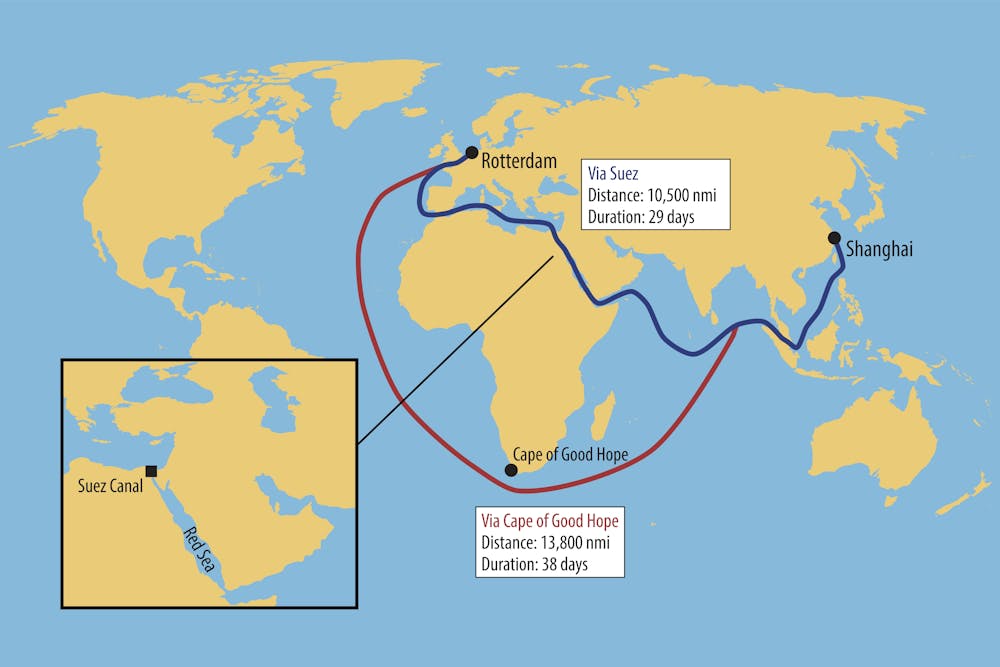
    These attacks have prompted many shipping companies to stop using the Red Sea – a route that around 12% of global trade usually passes through – and divert around the southern tip of Africa. This route adds more than 7,000 nautical miles on to a typical round-trip voyage. The number of commercial ships using the Suez Canal to pass between the Mediterranean and the Red Sea plummeted from over 26,000 in 2023 to 13,200 in 2024.

    Supply chains have had to deal with higher shipping costs, product delivery delays, and increased carbon emissions as a result of this diversion. The Gaza ceasefire gave some hope that the disruption would finally end. But shipping lines will not hurry back to the region until long-term security is guaranteed.

    Since November 2023, shipping companies have been diverting their vessels around the southern tip of Africa to avoid the Red Sea.
    Dimitrios Karamitros / Shutterstock

    During the early stages of the crisis, moving a container from Shanghai in China to Europe cost approximately 250% more than before the war in Gaza began. This was largely due to increased fuel costs and higher insurance premiums. Freight rates (the price companies pay to transport goods) remained high throughout 2024, despite some fluctuations.

    The cost of moving a 40-foot container from Shanghai to Rotterdam in the Netherlands, for example, surged from around US$4,400 on average in January to above US$8,000 by August. This had dropped to US$4,900 at the end of the year.

    It is too early to say whether these costs will be passed on to consumers in the form of higher prices – full transmission through the supply chain to consumer prices can take upwards of 12 months. But some estimates suggest global consumer prices could rise by 0.6% on average in 2025 as these increased shipping costs filter through the supply chain.

    Diverting around southern Africa also resulted in delays in the delivery of many goods and components. The proportion of container ships that arrived on schedule dropped from 60% on average worldwide in 2023 to about 50% throughout 2024. This created congestion at ports because ships often arrived at their destination later than planned, resulting in further delivery delays.

    Unreliable transit times are a significant issue for supply chains because they make it difficult for businesses to plan inventory and coordinate production schedules. Indeed, several vehicle manufacturers, including Tesla and Volvo, temporarily suspended manufacturing in early 2024 due to a lack of components. And food supply chains, including those for avocados, tea and coffee, were also affected by delays.

    Since then, many companies have adapted by increasing their safety stock levels and transporting cargo using alternative modes of transport like air and rail. Some European firms have also adopted a strategy called “nearshoring”, where they source products from regions closer to home such as Turkey and Morocco instead of relying on suppliers in Asia.

    Increased emissions

    The longer route around southern Africa requires that ships travelling between Europe and Asia use around 33% more fuel on average than they would use by travelling through the Red Sea at the same speed.

    Over the past decade, most shipping companies have employed a “slow steaming” policy to economise on fuel use and minimise their carbon emissions. But diverted ships have been travelling around 5% faster than usual in an attempt to minimise delays. The increased vessel speeds will have caused the associated emissions toll to rise – large container vessels require 2.2% more fuel for every 1% increase in speed.

    More data is required to determine the precise amount of additional emissions caused by diverting shipping away from the Red Sea. But estimates suggest that approximately 13.6 million tonnes of CO₂ were emitted by ships rerouted from the Red Sea between December 2023 and April 2024 – equivalent to the carbon emissions of nine million cars over the same period. If ships continue to avoid the region, the increased emissions could amount to 41 million extra tonnes of CO₂ per year.

    Some cargo has also shifted from sea transport to air freight, which has a far greater environmental footprint. Shipping a kilogram of product by long-haul air freight generates at least 50 times more CO₂ emissions on average than container shipping.

    Carbon emissions have increased due to the diversion of vessels around southern Africa.
    David G40 / Shutterstock

    Before returning to the Suez Canal, container lines will want to see a prolonged period of stability around the Red Sea. This is due, in part, to safety and security concerns related to the crew, cargo and the ship.

    But shipping companies also have operational challenges to keep in mind associated with the scheduling of port calls and voyages. Shipping lines will find it difficult to switch back to the longer route around Africa immediately if attacks in the Red Sea resume.

    And, at least for now, the situation in the Bab al-Mandab Strait remains unpredictable. In a televised speech on January 20, Houthi leader Abdul-Malik al-Houthi warned: “We have our finger on the trigger.”

    With other disruptions continuing to affect global shipping, such as port strikes, low water levels in the Panama Canal and extreme weather events, supply chain issues are likely to continue throughout 2025.

    Gokcay Balci does not work for, consult, own shares in or receive funding from any company or organisation that would benefit from this article, and has disclosed no relevant affiliations beyond their academic appointment.

    ref. Red Sea crisis: supply chain issues set to continue despite Gaza ceasefire – https://theconversation.com/red-sea-crisis-supply-chain-issues-set-to-continue-despite-gaza-ceasefire-248469

    MIL OSI – Global Reports

  • MIL-OSI Global: If we listen to how Gen Z really feel about democracy they might stop telling us they prefer authoritarianism

    Source: The Conversation – UK – By Melissa Butcher, Professor Emeritus, Social and Cultural Geography, Royal Holloway University of London

    New research from broadcaster Channel 4 reveals a troubling trend towards support for authoritarianism among young people in the UK. The report “Gen Z: Trends, Truth and Trust” found that 52% of the 2,000 13-27 year olds surveyed would agree that “the UK would be better with a strong leader in charge who does not have to bother with Parliament and elections”.

    This correlates with a 2023 study from pro-democracy organisation Open Society Foundations, which found 42% of young people in its global sample felt military rule was a good way of running a country. Other research has found a disillusionment with democracy among young people.

    These are trends to be worried about. But Gen Z are not somehow inherently anti-democratic. Understanding why these trends are happening is vital if young people are to participate in democracy.

    At Cumberland Lodge, an education charity that uses dialogue to address social division and conflict, I’m working with colleagues and young people on a nationwide youth and democracy network to re-think what politics in the UK could look like.

    Hearing Gen Z

    Our team has conducted 12 discussion groups with 101 young people around the country, looking at what stops them getting involved with democratic practices and institutions. Using this research as a starting point, we are now working with a core group of young people to develop their capacities to engage with, and re-imagine democracy.

    What we are learning is that young people’s disengagement is not necessarily a sign of apathy or anti-democratic tendencies. The young people we are working with want to engage with politics, but they feel a vast sense of distrust. They see politicians as prioritising their own and corporate interests over public good, and willing to break promises on issues that affect young people’s lives.

    Feeling unsupported by their political system makes young people feel vulnerable – especially in the face of a multitude of global crises. In their lifetime, the world has lurched from a global financial crisis to a worldwide pandemic and to war in Europe. They have to navigate housing shortages, a lack of mental health support, the climate emergency, artificial intelligence and changing identity and social roles.

    A perception of an “elite” system that is supposed to work for everyone, but excludes or even actively works against the sectors of society most affected by these crises, harms young people’s trust in democracy.

    Gen Z deal with an onslaught of information about a rapidly changing world.
    DimaBerlin/Shutterstock

    But a shift towards support for authoritarianism is by no means inevitable. The Open Society Foundations study found that 86% of young people surveyed still wanted to live in a democracy.

    In Channel 4’s research, too, 73% of Gen Z think democracy is a “very” or “fairly good” way of governing the UK. And young people want to learn about democracy and the democratic process.

    Our youth and democracy network shows young people are not apathetic. Many want to get involved. They want a better, fairer world. They see the shortcomings of the current system and imagine something better.

    Getting young people involved

    To enable this to happen, political and media literacy is crucial for providing young people with necessary knowledge and confidence. Investment in education on democracy is necessary, as many young people in our network wanted to engage but felt overwhelmed and uncertain about where to start. Liam in Sunderland said:

    Most people our age aren’t educated on [democracy and politics]. It’s restricted knowledge. We’re given the impression that we can’t do anything about it anyway, so just don’t worry.

    Young people want representatives who understand and engage with the day-to-day realities of their lives, rather than seeing Gen Z as a photo opportunity, as Chloe from Liverpool argued.

    They’ll come here and they’ll speak to us, but they’re not coming there to listen; they’re coming here so they can go back to wherever they came from and be like ‘oh I spoke to a young person’.

    Many of the young people in our youth network are calling for reform of the political system in order to facilitate these changes: a new voting system, or an exploration of forms of direct democracy.

    But importantly, what we have seen in this research over the last year, is that young people can shift how they view power. We think of democracy as more than just systems of governance, but it’s also how we organize, how we communicate with each other, how we mobilise around social issues, and how we build consensus.

    In this sense democracy is not solely something external and out of reach but something that can emerge when young people come together.

    By working to improve democratic education and to put a system in place that listens to and engages with young people, politicians can help Gen Z re-imagine a democracy that gives them a future. At that point, they might stop telling researchers that they prefer authoritarianism.

    Melissa Butcher is a member of the Green Party.

    ref. If we listen to how Gen Z really feel about democracy they might stop telling us they prefer authoritarianism – https://theconversation.com/if-we-listen-to-how-gen-z-really-feel-about-democracy-they-might-stop-telling-us-they-prefer-authoritarianism-248628

    MIL OSI – Global Reports

  • MIL-OSI Global: Trump inviting influencers to White House press briefings is likely to usher in a new era of fake news

    Source: The Conversation – UK – By Steven Buckley, Lecturer in Digital Media Sociology., City St George’s, University of London

    Just over a week after Donald Trump was sworn in as 47th president of the United States, his new press secretary, Karoline Leavitt, appeared in the James S. Brady press briefing room to preside over her first media conference. Pulling up a chart that showed Americans’ declining trust in traditional, or what she called “legacy”, media outlets, Leavitt announced that henceforth, “independent journalists, podcasters, social media influencers and content creators” would be welcome at press briefings.

    Leavitt said that seats formerly reserved for White House officials would be available to these independent journalists, and invited people to apply online for White House press accreditation. It has since been reported that the White House has received more than 7,400 applications.

    In principle, broadening the range of media outlets allowed into White House press briefings is a good idea. There’s no doubt that the media consumption habits of the American public are changing fast. But the way Trump and his communications team handled press briefings in his first term raises some concerns.

    During that first term between 2017 and 2021, Trump and his White House communications team tended to favour reporters from friendly media outfits such as Fox News. Early in his administration, a number of reporters from what were perceived as “hostile” organisations were banned from “the huddle” – the informal gatherings around Trump’s press secretary that followed more formal briefings.

    Fringe organisations such as Breitbart News and the One America News network carried Trump’s message faithfully and got disproportionately favourable access. This week, Breitbart was one of two online media outlets (alongside the widely respected news website Axios) that Leavitt selected to ask the first questions at her debut press briefing.

    It’s not just their friendly disposition towards Trump but their reach that makes social media influencers appealing to the incoming president. Their primary purpose at the press briefings would be to help generate positive messages and content to feed to Trump’s Maga base – which are then promoted on platforms such as Elon Musk’s X (formerly Twitter).

    Recent research suggests that X has adjusted its algorithm to boost right-wing content as well as posts by Musk himself. A clear example has been Musk promoting the former Fox News host turned online influencer and Trump campaign surrogate Tucker Carlson’s online show.

    Undermining public regard for journalism

    But there may be another, insidious function of inviting these influencers to the White House press briefing room. Their presence beside professional journalists from traditional media outlets is likely to undermine public regard for journalism in general. This could sow even greater mistrust in the US media, which is already at record lows.

    In recent years, there has been a gradual blurring of lines between traditional and digital media. But while research consistently shows, across a wide cross-section of countries and within those countries, traditional media is still more trusted than new media, this is not to say that all new media outlets should be excluded. Many of these organisations and individuals have a track record of holding power to account.

    Bellingcat – a coalition of researchers, investigators and citizen journalists – typically uses open-source information to uncover important stories of public interest. Individual journalists such as Taylor Lorenz, who covers the tech and creator industry, and Ken Klippenstein, who is well known for getting hold of internal government documents, are also good examples of journalists who produce quality reports from outside the traditional mainstream.

    It should ideally be journalists such as these, with track records for solid and impartial reporting, who are invited into the White House fold – although there’s every chance they would get the same sort of treatment as reporters such as CNN’s Jim Acosta, whom Trump famously branded an “enemy of the people” when refusing to answer a question from him in 2018.

    Acosta, incidentally, has just left CNN after the network moved him to the midnight “graveyard” slot. Shortly after signing off from his final CNN broadcast on January 28, Acosta appeared on his own Substack feed to announce he would go it alone.

    It seems unlikely, though, that he will be awarded one of the coveted new independent media accreditations, given Trump’s recent attack on him. Celebrating Acosta’s apparent relegation by CNN, Trump took to his TruthSocial media site to call him “one of the worst and most dishonest reporters in journalistic history, a major sleazebag”.

    Polarised media, divided audiences

    It’s likely that America’s news media will only become more polarised during this second Trump administration, including an increasingly toxic mix of content creators dominating social media platforms. And now that Mark Zuckerberg has decided to remove Meta’s factchecking mechanism in favour of “community moderation”, research suggests this is likely to incentivise political messages which polarise and provoke rather than inform people.


    Read more:
    What Meta’s move to community moderation could mean for misinformation


    We’ve already seen that the incoming president was more than willing to use lawsuits to intimidate journalists. Trump recently won a legal case over ABC when its journalist George Stephanopoulos defamed him by falsely saying he had been found liable for rape.

    This, combined with Trump’s threat to sue the Des Moines Register and its pollster Ann Selzer over their allegations of election interference, are likely to increase the chilling effect on free speech. Legal threats such as these may serve to discourage close scrutiny of his second administration.

    Meanwhile, the steady rise in prominence of partisan influencers using increasingly dangerous language is only likely to lead to the American public having less faith in the institutions that are critical to a functioning democracy – the press included.

    Steven Buckley does not work for, consult, own shares in or receive funding from any company or organisation that would benefit from this article, and has disclosed no relevant affiliations beyond their academic appointment.

    ref. Trump inviting influencers to White House press briefings is likely to usher in a new era of fake news – https://theconversation.com/trump-inviting-influencers-to-white-house-press-briefings-is-likely-to-usher-in-a-new-era-of-fake-news-247410

    MIL OSI – Global Reports

  • MIL-OSI Global: Swimming in the sweet spot: how marine animals save energy on long journeys

    Source: The Conversation – UK – By Kimberley Stokes, Research Officer in Biosciences, Swansea University

    Competitive swimmers know that swimming underwater causes less drag resistance than swimming at the surface. Splashing around making waves isn’t the most efficient way to swim. Any energy spent creating waves is essentially wasted, as water is moved without providing forward thrust for the swimmer.

    New research by my colleagues and I has found evidence that many air-breathing marine animals know this too – or rather they have evolved swimming behaviour that minimises wasted energy on long journeys.

    We know a lot about how birds save energy on their migrations, such as flying in V formations, riding updrafts, or timing their departure for favourable winds. But it has been challenging to study these kinds of adaptations in marine animals, which are largely hidden from view, particularly during long-distance travel.

    Whales and sea turtles, for example, often travel thousands of miles to breed or feed. These animals have evolved to minimise the energy costs of such long journeys, allowing them to conserve energy for reproduction and survival.

    Using Fitbit-style accelerometer data, depth-loggers and video footage from animal-borne cameras, we collected detailed swim-depth measurements in free-living little penguins and loggerhead turtles. We compared these with satellite-tracking depth data for green turtles on long-distance migrations, and published data from whales, other species of penguins and migrating sea turtles from other populations.

    Optimal depths

    What we discovered was a remarkable similarity in relative swim depth across sea turtles, penguins and whales. When these air-breathing animals are travelling rather than feeding or evading predators, they swim at near-optimal depths to minimise energy waste. They swim just deep enough to avoid creating waves at the surface but not so deep that they expend extra energy travelling up and down to breathe.

    This sweet spot for energy efficiency has long been established in physics. Experiments show that “wave drag” – additional drag from wave creation – is minimised once an object is at a depth of three times its diameter. For swimming animals, this diameter refers to their body thickness from back to chest.

    Our research revealed that many marine animals, from little penguins (about 30cm long) to pygmy blue whales (nearly 20m long), travel at depths of around three body thicknesses under the surface. This shared strategy helps them save energy on their epic journeys across the oceans.

    These findings are especially exciting because they span such a wide range of species, from birds to mammals and reptiles. They also have important implications for conservation. Knowing where animals travel and at what depths can help us design better conservation measures to protect them.

    For example, understanding typical swim depths could help reduce the risk of boat strikes, which are a major threat to whales, or decrease accidental captures in fishing gear. Tracking animals to find out where they live and travel has become a key part of designing effective conservation measures. For marine animals, considering swim depth – essentially adding a third dimension – can also help to inform strategies to provide better protection.

    Many marine animals travel at a depth of around 3x their body depth (dotted lines).
    Kimberley Stokes, CC BY

    Of course, not all swim depths are determined by energy efficiency alone. Animals may dive deeper to hunt for prey or avoid predators. But during long-distance migrations or shorter “commutes” to feeding areas, this energy-saving pattern emerges across many air-breathing species.

    Collecting depth-tracking data from migrating animals has been notoriously difficult, but advances in technology are making it easier. We are thrilled that our work has contributed to uncovering this widespread adaptation, and we believe there will be much more to learn as tracking tools improve.

    Historically, depth-tracking tags have prioritised recording the deepest and longest dives. They are often seen as the most dramatic or impressive aspects of animal dive behaviour. Our research highlights the importance of near-surface tracking too. This “ordinary” behaviour of swimming at just the right depth is no less impressive, given the energy savings it enables over vast distances.

    Kimberley Stokes receives funding from the Bertarelli Programme in Marine Science. She is affiliated with Swansea University.

    ref. Swimming in the sweet spot: how marine animals save energy on long journeys – https://theconversation.com/swimming-in-the-sweet-spot-how-marine-animals-save-energy-on-long-journeys-246833

    MIL OSI – Global Reports

  • MIL-OSI Global: Why I loved the new Mussolini drama – by an expert in Italian fascism

    Source: The Conversation – UK – By John Foot, Professor of Modern Italian History, University of Bristol

    As a historian who has studied and taught courses on Italian fascism, I have spent many hours watching footage and listening to the speeches of dictator Benito Mussolini, who ruled over the country from 1922 to 1943.

    So I was rather excited to be asked to review the new Sky Atlantic TV series M: Son of the Century. The series focuses on the rise of Italian fascism and its consolidation in power from 1919 to 1925. Watching all eight parts in one sitting, I was astounded above all by the performance by well-known Italian actor Luca Marinelli.

    Marinelli is on screen for almost the entire eight hours of the series – often in close up and looking straight at the camera. It is an extraordinary tour-de-force performance. Physically, Marinelli inhabits the role much as Robert De Niro did in Raging Bull, putting on a lot of weight in order to play this part; the resemblance to the dictator is uncanny.


    Looking for something good? Cut through the noise with a carefully curated selection of the latest releases, live events and exhibitions, straight to your inbox every fortnight, on Fridays. Sign up here.


    But there is much more. We are confronted with a torrent of words, speeches and internal monologues, many of which have been drawn directly from Mussolini’s journalism and speeches. Here Marinelli captures the precision and charismatic nature of Mussolini’s speech, but also the brutality of many of the concepts he was expressing.

    There is a great deal of baroque Italian swearing too, and Marinelli powerfully portrays the uncouth son-of-a-blacksmith and his range of expressions with relish. I would be amazed if this actor does not win awards for the role. It is an astonishing performance.

    Director Joe Wright’s series is based on Antonio Scurati’s best-selling Italian historical novel of the same name. Scurati’s approach to Mussolini’s story draws on historical work and documents, but importantly tells the story with the flair of an experienced and successful novelist.

    This and the other three books in Scurati’s series about Mussolini have provoked controversy among Italian historians of fascism, not least for some of the historical inaccuracies, but also for what they considered a “dumbing-down” of history. However, others have defended the books as a new way of understanding and disseminating history, and the books have been wildly popular with general audiences.

    Wright’s series adapts the first book. Its starts when Mussolini formed the first fascist movement in 1919 and inspired the “blackshirt” squads who used violence to crush the trade union and socialist movement. It covers events in 1922 when Mussolini led the fascist insurrection that brought him to power, known as the March on Rome. And, it ends with his famous speech by in parliament, which marked the beginnings of the consolidation of Mussolini’s dictatorship in 1925.

    This is a complicated story, but the scriptwriters and director have done an exemplary job in bringing this history to a wider audience. Unsurprisingly, they have often simplified the past, or altered events to fit the narrative. This paring down of events generally works well in bringing this period to life, but, of course, historians of the period will notice the numerous times that episodes deviate from what really happened.

    For instance, certain figures close to Mussolini who play a central role in the series are used almost as symbols and as ways of understanding the dictator. Above all, this technique uses is used to elevate Margherita Sarfatti, the writer, journalist and lover of Mussolini who was a key figure in inventing and spreading the cult of dictator.

    In Wright’s drama, Sarfatti is depicted as a kind of spin doctor, as someone he turns to in times of difficulty and as an inspiration for his political strategy. Her role is overplayed in the series, but this is done to increase the clarity of storytelling and provide a sharp narrative.

    The tone of the series shifts constantly between darkness and extreme violence to occasional comedy and farce. This is a tricky balance to pull off, but it generally works. Anyone watching will have their views on which parts lapse into bad taste and which do not, and the risks of glamorising or playing down shocking and tragic events.

    Certainly, there were moments which jarred, especially the farcical telling of the March on Rome in 1922. Wright and the scriptwriters, correctly in my opinion, place the violence of fascism at the centre of the story, and it rarely pulls its punches in this regard.

    It is impossible to ignore the contemporary relevance of this series, and it is clearly intended as a warning. Democracy, this series tells us, is extremely fragile. At one point Mussolini turns to the camera and says: “Democracy is beautiful. It even allows you the possibility of destroying it.”

    With the victory of Trump and the political rise of Elon Musk, the pertinence, prescience and power of this film has deepened. There is even a discussion at one point of the meaning and role of the “Roman salute” in terms its use during fascism, something which has been much debated in the light of Musk’s own recent controversial “hand gesture”.

    But the ultimate finger of blame is pointed at those who enabled Mussolini’s rise and who tolerated his incendiary language and the violence of his followers. The series ends starkly, with the word “silence”. Those who did nothing were just as responsible as those who supported the rise of this brutal dictator.

    John Foot does not work for, consult, own shares in or receive funding from any company or organisation that would benefit from this article, and has disclosed no relevant affiliations beyond their academic appointment.

    ref. Why I loved the new Mussolini drama – by an expert in Italian fascism – https://theconversation.com/why-i-loved-the-new-mussolini-drama-by-an-expert-in-italian-fascism-248358

    MIL OSI – Global Reports

  • MIL-OSI Global: Central India’s indigenous forests are falling victim to bullets and bulldozers

    Source: The Conversation – UK – By Bulbul Prakash, PhD Candidate in Politics, University of Manchester

    The state of Chhattisgarh in India’s tribal heartland has been the epicentre of a violent conflict for more than 30 years. This struggle has pit a Maoist-inspired group called the Naxalites, who are fighting for the rights of marginalised tribal communities, against the Indian government, which has deployed security forces to suppress the insurgency. More than 11,600 people have been killed in the conflict since 2000.

    At the same time, Chhattisgarh is also grappling with the pressures of rapid industrialisation. Large-scale mining and infrastructure projects are threatening both the land and livelihoods of the state’s indigenous (or Adivasi in Sanskrit) communities.

    Around 44% of the region’s land area is covered by dense forests. These forests are home to vital plant and animal species such as Mahua and Sal trees. However, these forests are being damaged. Trees are being ravaged by gunfire, animals are being killed by explosions, and the fragile ecosystem that sustains people and wildlife in Chhattisgarh is gradually crumbling.

    Soni Sori, an Adivasi activist, has shared images with me that have been taken by Adivasis in the forests of Chhattisgarh. The photos highlight the damage being caused by gunfire, explosions and shelling.

    Bullets tear through bark, while explosions strip it away, leaving trees vulnerable to pests and disease. Shrapnel and shock waves from blasts also sever branches or trunks, which further weakens the trees and causes long-term damage.

    Fresh bullet wounds on a Sal tree in Chhattisgarh.
    Soni Sori, CC BY-NC-ND

    The destruction of Mahua and Sal trees has had a particularly devastating impact on women from Adivasi communities.

    The Mahua tree, which is often called the “tree of life” by locals, provides an essential lifeline for many Adivasi women. Its flowers are fermented to make alcohol, which offers a crucial source of income when it is sold in local markets.

    When men are drawn into Naxal movements or caught in the state’s counterinsurgency efforts, women often step in and use the income from Mahua flowers and oil to fund their children’s education, sustain their families, and repay debts.

    In the town of Dantewada in southern Chhattisgarh, locals even hold a special ceremony where they “marry” the Mahua tree, honouring its life-sustaining role in their community.

    Sal trees, which form much of Chhattisgarh’s forest cover, play a crucial role in stabilising the soil. Their loss leads to erosion and increases the risk of floods and landslides. Climate change, and the increasingly erratic rainfall it brings, has compounded these risks.

    An unexploded mortar shell partially buried in Chhattisgarh.
    Soni Sori, CC BY-NC-ND

    The loss of essential resources like Mahua trees will only exacerbate food insecurity and economic hardship, pushing Adivasis further into poverty. The average annual income of Adivasi households in Chhattisgarh was just ₹53,610 (around £505) in 2022 – well below the national agricultural household average of ₹122,616.

    The conflict in Chhattisgarh is also harming the region’s wildlife. In December, a female sloth bear was killed by an improvised explosive device planted by Maoist rebels in the forests of Dantewada. The bear’s two orphaned cubs starved to death shortly after.

    This was the first recorded death of a wild animal from such an explosion in Bastar district, though livestock and pets have been victims of similar blasts in the past.

    One month earlier, in central Chhattisgarh’s Udanti-Sitanadi Tiger Reserve, a five-year-old elephant calf sustained critical injuries from a suspected bomb explosion. These incidents reflect a disturbing pattern within the conflict, where wildlife is becoming a victim of the violence.

    March of industrialisation

    Industrialisation has exacerbated these challenges. Chhattisgarh is rich in mineral resources. Between 2023 and 2024, the state produced nearly 50 million tonnes of limestone, 44 million tonnes of iron ore, and over 1 million tonnes of bauxite. However, widespread mining is fuelling further deforestation and environmental degradation.

    Between 2001 and 2023, the state lost 53,500 hectares of forest, with large-scale mining operations contributing significantly to the loss. In the Hasdeo region of northern Chhattisgarh, the Parsa East Kete Basen coal mine has led to the felling of almost 82,000 trees, spread across two phases of mining. Between 2012 and 2018, 50,000 trees were felled, with more than 31,800 more trees cut down since then.

    With continued political support for mineral extraction, government approvals, and the involvement of commercial mining giants, more deforestation is expected over the coming years.

    This deforestation is, unsurprisingly, harming the region’s wildlife. The latest census by the National Tiger Conservation Authority, which was carried out in 2022, revealed a sharp and alarming decline in Chhattisgarh’s tiger population.

    At that time, there were only 17 tigers remaining in the state – a dramatic fall from 46 in 2014. Conservationists fear that the figure could now be even lower, as the situation continues to deteriorate.

    This decline is largely due to habitat destruction. But it has probably been made worse by the Maoist insurgency in regions such as northern Chhattisgarh, which is home to the Achanakmar Tiger Reserve, as well as the Indravati Tiger Reserve in the south-western part of the state.

    The insurgency has hindered conservation efforts. The use of explosives in the forests disrupts the behaviour of tigers, while also making it more difficult for conservationists to monitor and protect them.

    What was once a lush and bio-diverse environment is rapidly becoming a wasteland. But the loss of these trees and wildlife in Chhattisgarh represents more than simply the depletion of natural resources. It symbolises the erosion of culture, identity, and a way of life for Chhattisgarh’s Indigenous people.

    Bulbul Prakash is supported by The University of Manchester through the ‘Future of the Academy Studentship’ for her doctoral research. The author would like to acknowledge the invaluable contribution of Adivasi activist Soni Sori, who shared firsthand images taken by Adivasi community members in the forests of Chhattisgarh, which illustrate the environmental damage caused by ongoing conflict.

    ref. Central India’s indigenous forests are falling victim to bullets and bulldozers – https://theconversation.com/central-indias-indigenous-forests-are-falling-victim-to-bullets-and-bulldozers-246272

    MIL OSI – Global Reports

  • MIL-OSI Global: The best exercises to do while taking weight loss drugs

    Source: The Conversation – UK – By Jack McNamara, Senior Lecturer in Clinical Exercise Physiology, University of East London

    Body weight exercises, such as lunges, can be a great way to start resistance training. Andrey_Popov/ Shutterstock

    Weight loss drugs, such as those containing GLP-1 agonists like Wegovy and Mounjaro, have emerged as effective tools for people struggling to lose weight. These drugs reduce appetite and sometimes slow digestion which can help people to consume fewer calories.

    But while these drugs can significantly lower body weight, it’s important you take steps to avoid losing too much lean mass while taking them.

    When we lose fat, it often unfortunately comes with a hidden cost: losing lean mass. Lean mass is made up of your muscles, bones and organs – essentially everything in your body that isn’t fat. Preserving as much of this lean mass as possible is vital for staying strong, keeping a healthy metabolism and enjoying a better quality of life.

    But why does losing lean mass happen in the first place? When we lose weight the body sometimes taps into muscle as a source of energy. Research shows that 20–30% of weight lost during a diet comes from muscle rather than fat alone. This is especially true if protein intake or physical activity isn’t sufficient.

    Loss of muscle matters for several reasons. First, muscle burns more calories than fat, even when you’re not doing anything. Maintaining muscle mass supports a healthier metabolism that can help you maintain your weight loss long term.

    Second, muscle is important for many everyday tasks – from lifting shopping bags to climbing stairs.

    Preserving muscle can also keep you feeling more energetic and reduce the likelihood of regaining weight later.

    Thankfully, resistance training (also known as strength training) has been consistently shown to help reduce muscle loss when losing weight. This holds true whether you switch to a healthier diet or use weight loss drugs as part of your strategy.

    Even though specific studies looking at GLP-1 agonist drugs combined with exercise are still limited, early evidence suggests that people who regularly do resistance workouts tend to retain more muscle than those relying purely on the drug or diet changes.

    Why resistance training works

    When you challenge your muscles against resistance – whether that’s weights, resistance bands or just your own body weight – you signal the body to preserve that valuable muscle tissue. Your body responds by strengthening the muscles involved during these exercises so they can handle that challenge again.

    If you’re in a calorie deficit – either from dieting or while taking a weight loss drug – these exercises help direct your body to burn more fat instead and hang on to muscle. There’s also a beneficial metabolic effect: muscle tissue burns more calories at rest than fat, which can support long-term weight management.

    Cardio helps maintain lean mass.
    Pressmaster/ Shutterstock

    Even short sessions of resistance training a few times a week can help. One study found that resistance training for as little as 11 minutes per session, three times a week was enough to elicit changes.

    You don’t even need a gym membership or fancy machines. Bodyweight exercises such as push-ups, lunges and planks are a great place to start. Add simple items like water bottles or backpacks filled with books for extra resistance. Over time, you can consider using resistance bands or free weights (such as dumbbells) to challenge your muscles as you get stronger continuously.

    Also, consider adding moderate cardio activities such as brisk walking, cycling or swimming. Cardio helps burn additional calories, benefits heart health and nicely complements resistance training enhancing reductions in body fat.

    Keeping active

    Some people worry about feeling too tired or lightheaded to exercise while on weight loss drugs. Monitoring how your body responds is essential, especially at the beginning. You might find it easier to break workouts into short sessions, such as 10 to 15 minutes of strength training, two or three times a day. This approach can be less intimidating and can fit into a busy schedule.

    Some other things you can do when starting resistance training include:

    • Start slow: If you’ve never lifted weights or done formal exercise before, try simple bodyweight moves first. Squats, push-ups (on your knees if needed) and planks are good starting exercises.
    • Use resistance bands: These are affordable, portable and offer varying difficulty levels. Using bands, you can perform exercises such as biceps curls, shoulder presses and glute bridges. Resistance bands can provide a safer, more accessible and versatile way to build a foundation for those new to weight training.
    • Focus on major muscle groups: Aim to work your legs, back, chest, shoulders arms and core. Focusing on major muscle groups improves functionality for daily activities, supports weight loss and reduces injury risk by strengthening large, stabilising muscles.
    • Mind your form: Good technique is crucial to avoid injury. Move slowly and with control, especially when adding weight or increasing resistance.
    • Track progress: Whether it’s increasing the number of reps, adding heavier weights or improving balance, keep note of your achievements. Progress can be a great motivator.

    Taking weight loss drugs can be a gamechanger for people who have struggled to lose weight. But medication alone won’t necessarily protect your muscle mass or overall strength. Resistance training helps ensure muscle isn’t sacrificed as fat is lost. It also supports a healthy metabolism and can improve energy levels, making daily activities more manageable and more enjoyable.

    Combining weight loss drugs with a balanced diet, regular resistance workouts and some cardio makes you far more likely to preserve the lean mass that helps keep your body strong and functional. This balanced approach isn’t just about the number on the scale — it’s about feeling capable, staying healthy, and setting yourself up for long-term success.

    Jack McNamara does not work for, consult, own shares in or receive funding from any company or organisation that would benefit from this article, and has disclosed no relevant affiliations beyond their academic appointment.

    ref. The best exercises to do while taking weight loss drugs – https://theconversation.com/the-best-exercises-to-do-while-taking-weight-loss-drugs-246641

    MIL OSI – Global Reports

  • MIL-OSI Global: Most of Britain’s peat bogs could stop forming new peat as the climate changes – new study

    Source: The Conversation – UK – By Jonathan Ritson, Research Fellow, Geography, University of Manchester

    Joe Dunckley / shutterstock

    By the 2080s, climate change will mean most of Britain’s peatlands could be too dry to form new peat. That’s the stark warning from a new academic study my colleagues and I just published in the Journal of Applied Ecology.

    Peat bogs are found in areas where there is lots of rain but poor drainage. These vital ecosystems are relied upon to deliver drinking water, host rare plant and bird life and to mitigate the risk of floods by slowing rainwater as it heads downstream.

    Perhaps most importantly, peatlands also sequester huge amounts of carbon. That’s because peat is made of the remnants of plants accumulated over hundreds or thousands of years. Waterlogged conditions mean the plants don’t fully decompose, so the carbon they’re made of is kept in the ground and isn’t released into the atmosphere. Peat can be several metres deep so all that plant matter adds up – per square metre, a typical British peat bog stores far more carbon than a tropical rainforest.

    As peat needs very wet conditions to form, our study first mapped out the temperature and rainfall conditions under which this has occurred in the UK in the past. We then took the Met Office’s UK climate projections and looked at where these conditions would continue to occur by the 2080s. The results were, quite frankly, shocking.

    Although small pockets of favourable conditions may still be present in Wales, and larger ones in Scotland, the outlook for England is dismal, with barely any areas continuing to be suitable for peat formation due to increasing temperatures and lower summer rainfall.

    UK peatlands. The large red patch at the top of mainland Scotland is the Flow Country.
    James Hutton Institute / Biogeochemistry

    In the “Flow Country” of northern Scotland, a bog so big it has been designated a Unesco world heritage site, the area in which we might expect peatlands to thrive is likely to be reduced by at least 50% even in the best-case climate scenario. This scenario of mild warming is, unfortunately, unlikely to happen. More extreme scenarios of peatland degradation are increasingly realistic.

    We still don’t know exactly what this will mean for the peatlands in places like Exmoor or Dartmoor in southern England, however we do know that life will become more and more challenging for these precious ecosystems. Not experiencing the temperature and rainfall that caused peat formation in the first place could mean they start to emit the carbon currently stored, as this is reliant on them staying wet and boggy.

    Peatlands are naturally resilient and aren’t going to disappear overnight (the Peak District in northern England was heavily degraded for over a century, yet still hosts many metres of peat soils). But conservation and restoration work is going to be ever more necessary if we are to preserve these landscapes as carbon sinks rather than sources.

    More money for conservation

    One ray of light in all this is that the challenging conditions in England could actually unlock more money for conservation efforts. The UK Peatland Code is a climate finance initiative that allows landowners to generate income from peatland restoration by selling carbon credits. The number of credits they can claim is based on the difference in avoided emissions from a “do nothing” scenario in which they do no restoration.

    Our new results show that doing nothing could be even worse than previously thought, meaning more carbon finance may be unlocked. Perversely, bad news for England’s peatlands could bring about the money needed to save them.

    Thankfully, through measures such as the government’s Nature for Climate scheme and ongoing investment in fundamental peatland science, the UK has something of a head start in peatland restoration. Techniques that were once trialled in small areas are now being rolled out across whole landscapes.

    Gully blocking to raise peatland water tables and limit carbon loss, as part of the GGR-Peat project at the National Trust High Peak Estate.
    Jonathan Ritson

    The Great North Bog initiative, as one example, has linked together restoration organisations, researchers and landowners to deliver restoration across four national parks and three national landscapes. This is truly the scale that is needed if the UK is serious about meeting its climate targets.

    More will be required, however, as huge swathes of peatland remain in a degraded state. While bleak messages like those in our new study could lead to resignation about the effects of climate change, there is an alternative way of looking at it: we must show how bad things could get if we don’t do anything, and then see this as a call to action.

    Jonathan Ritson has received funding from charities delivering peatland restoration.

    ref. Most of Britain’s peat bogs could stop forming new peat as the climate changes – new study – https://theconversation.com/most-of-britains-peat-bogs-could-stop-forming-new-peat-as-the-climate-changes-new-study-248515

    MIL OSI – Global Reports

  • MIL-OSI Global: Canada’s electric vehicle industry is facing existential threats — here’s how it can still flourish

    Source: The Conversation – Canada – By Charles Conteh, Professor of Public Policy and Administration, Department of Political Science, Brock University

    The electric vehicle (EV) industry has been one of the most defining technological trends of the past decade, transforming the automotive sector while fuelling advancements in manufacturing.

    Yet after billions of taxpayer dollars have been invested, the EV industry in Canada is facing headwinds. Chief among these are the trade tariff threats from U.S. President Donald Trump.

    For a country with an automotive sector that exports 91 per cent of its parts to the U.S., the threats feel existential. They may also be seen as a betrayal of the centuries-long economic and cultural partnership between two neighbours sharing one of the world’s longest and most porous borders.

    Adding to these international headwinds are three other obstacles within the EV industry: high costs, limited battery range and sparse battery charging infrastructure. These concerns continue to affect firms here in Canada, with the likes of Stellantis juggling high inventory, slow sales and falling revenue.

    These challenges have sparked skepticism about the future of EVs in Canada and whether the federal and provincial governments’ multi-billion-dollar investments in the industry are wise.

    As researchers who study Canada and other countries’ innovation policy initiatives amid breakneck changes in technologies and markets, we argue that Canada has every reason to ratchet up its commitments in the months and years ahead.

    Along with artificial intelligence, EV represents the emergent frontier of advanced manufacturing in the digital age. Winners of this innovation race will stand to dominate the global market for the foreseeable future.

    The case for staying the course

    Despite current challenges, EVs remain the future of the automotive sector. Even conservative estimates suggest that by 2040, around three-quarters of new car sales will be fully electric globally.

    Canada’s position in the EV industry is stronger than recent news coverage indicates. The country ranked first among 30 countries in a 2024 EV battery supply chain report, outperforming even China.

    This ranking reflects Canada’s vast reserves of critical minerals essential for EV battery production and its burgeoning battery manufacturing sector.

    Over the past few years, Canada has attracted significant investments from manufacturers like Umicore, Northvolt and Volkswagen-owned PowerCo.

    Canada has reasons to be optimistic about EV and energy storage demand. While concerns about U.S. protectionism loom, Canada’s commitment to zero-emission vehicles ensures fiscal incentives and policies that will likely boost short-term demand.

    On the environmental, social and governance front, Canada outperforms many of its global competitors in battery manufacturing. Though by no means perfect, the country’s climate change policy ambitions, clean electricity grid and commitment to sustainable mining position it as a global leader in the EV space.

    Advanced manufacturing

    Canada’s robust innovation ecosystem for advanced manufacturing is another key strength. A prime example is the Ontario Vehicle Innovation Network (OVIN).

    OVIN commercializes advanced automotive technologies and manages the development, testing, piloting and uptake of transportation and infrastructure technologies. It operates seven regional technology development sites across Ontario, including in Waterloo, Hamilton, Windsor-Essex, Durham and Toronto.

    By serving as a bridge between government, industry and researchers, OVIN has become a model for multi-level governance, with projects jointly funded by the federal and provincial governments and close working relationships with municipalities.

    As the EV industry navigates economic and policy challenges, initiatives like OVIN are crucial for driving long-term growth and competitiveness.

    The road ahead

    While Canada’s automotive innovation ecosystem is generally robust, it requires some calibration to overcome current challenges and claim the next frontier of the global EV race.

    In particular, Canada needs to consolidate its EV innovation ecosystem by integrating the upstream of its domestic supply chain assets with the downstream of its technology commercialization and adoption.

    In other words, this means getting more critical minerals to market and making sure a substantial portion of the materials mined in Canada are processed and used domestically to build batteries and vehicles, so the entire EV production cycle benefits Canada’s economy.

    Such an endeavour will require Canada to establish the right policies, regulations and financial support to tap into its vast reserves of critical minerals to supply the country’s battery plants.

    It is the presence of these reserves that made Canada attractive to the automakers in the first place. Leveraging them wisely will be critical for the country’s long-term success in the EV industry.

    Charles Conteh receives funding from the Social Sciences and Humanities Research Council of Canada.

    Tia Henstra does not work for, consult, own shares in or receive funding from any company or organisation that would benefit from this article, and has disclosed no relevant affiliations beyond their academic appointment.

    ref. Canada’s electric vehicle industry is facing existential threats — here’s how it can still flourish – https://theconversation.com/canadas-electric-vehicle-industry-is-facing-existential-threats-heres-how-it-can-still-flourish-248103

    MIL OSI – Global Reports

  • MIL-OSI USA: Cantwell Presses Trump Nominee RFK Jr. on His Anti-Science Views: ‘Are You Aware of How Harmful These Issues Could Be For Our Public Health?’

    US Senate News:

    Source: United States Senator for Washington Maria Cantwell
    01.30.25
    Cantwell Presses Trump Nominee RFK Jr. on His Anti-Science Views: ‘Are You Aware of How Harmful These Issues Could Be For Our Public Health?’
    In Finance Committee confirmation hearing, Cantwell credits WA’s fast & robust COVID response to strong health care research & innovation; Cantwell also secures commitment from RFK Jr. to protect existing laws on stem cell research
    WASHINGTON, D.C. – Today, U.S. Senator Maria Cantwell, a senior member of the Senate Committee on Finance, grilled Robert F. Kennedy, Jr. — President Donald Trump’s nominee to serve as Secretary of Health and Human Services – on his past anti-science statements, as well as his promise to cut 600 employees from the National Institute of Health.
    “I represent a very big innovation state – innovation in health care, specifically. Innovation like NIH funding to the Fred Hutch Cancer Center that helped develop the HPV vaccine, which has the potential to eliminate over 95% of cervical cancer. NIH also funds a lot of jobs and grants – nearly 11,000 people in the State of Washington and over $1.2 billion worth grants,” Sen. Cantwell said. “I definitely am troubled by the medical research side of innovation, and some of the things that you have said. In fact, this issue about laying off 600 employees at NIH.”
    “The most striking example of this is when COVID hit. We were the first in the nation – we had the first case – and it really was the fast response by the University of Washington that really helped save lives,” she continued. “Are you aware of how harmful these issues could be for public health? That public health in and of itself could be affected by these kinds of anti-science views?”
    In response, Kennedy responded that he believes in “evidence-based medicine and gold standard science.”
    Sen. Cantwell also grilled Kennedy on whether he supports the ongoing stem cell research being conducted in Washington state.
    “We’re making regenerative heart tissue now at the University of Washington. So yes or no, do you commit to protecting stem cell research for scientific agencies if confirmed?” Sen. Cantwell asked.
    He responded: “I will protect stem cell research.”
    Sen. Cantwell: “You’ll protect the laws that are on the books today and the research that’s done?”
    “My job is, Senator, to enforce the laws,” he said.
    For decades, Sen. Cantwell has remained a staunch supporter of medical innovation and evidence-based science, including treatments for fentanyl addiction, abortion, vaccinations, stem cell research, and more.
    Video of today’s hearing is available HERE; audio is HERE; and a transcript of Sen. Cantwell’s questioning is available HERE.

    MIL OSI USA News

  • MIL-OSI Global: From chatbot to sexbot: What lawmakers can learn from South Korea’s AI hate-speech disaster

    Source: The Conversation – Canada – By Jul Parke, PhD Candidate in Media, Technology & Culture, University of Toronto

    The chatbot Iruda began expressing hateful views after some users “trained” it with toxic language. Here a newer version of Iruda is shown. (Scatter Lab)

    As artificial intelligence technologies develop at accelerated rates, the methods of governing companies and platforms continue to raise ethical and legal concerns.

    In Canada, many view proposed laws to regulate AI offerings as attacks on free speech and as overreaching government control on tech companies. This backlash has come from free speech advocates, right-wing figures and libertarian thought leaders.

    However, these critics should pay attention to a harrowing case from South Korea that offers important lessons about the risks of public-facing AI technologies and the critical need for user data protection.

    In late 2020, Iruda (or “Lee Luda”), an AI chatbot, quickly became a sensation in South Korea. AI chatbots are computer programs that simulate conversation with humans. In this case, the chatbot was designed as a 21-year-old female college student with a cheerful personality. Marketed as an exciting “AI friend,” Iruda attracted more than 750,000 users in under a month.

    But within weeks, Iruda became an ethics case study and a catalyst for addressing a lack of data governance in South Korea. She soon started to say troubling things and express hateful views. The situation was accelerated and exacerbated by the growing culture of digital sexism and sexual harassment online.

    Making a sexist, hateful chatbot

    Scatter Lab, the tech startup that created Iruda, had already developed popular apps that analyzed emotions in text messages and offered dating advice. The company then used data from these apps to train Iruda’s abilities in intimate conversations. But it failed to fully disclose to users that their intimate messages would be used to train the chatbot.

    The problems began when users noticed Iruda repeating private conversations verbatim from the company’s dating advice apps. These responses included suspiciously real names, credit card information and home addresses, leading to an investigation.

    The chatbot also began expressing discriminatory and hateful views. Investigations by media outlets found this occurred after some users deliberately “trained” it with toxic language. Some users even created user guides on how to make Iruda a “sex slave” on popular online men’s forums. Consequently, Iruda began answering user prompts with sexist, homophobic and sexualized hate speech.

    This raised serious concerns about how AI and tech companies operate. The Iruda incident also raises concerns beyond policy and law for AI and tech companies. What happened with Iruda needs to be examined within a broader context of online sexual harassment in South Korea.

    A pattern of digital harassment

    South Korean feminist scholars have documented how digital platforms have become battlegrounds for gender-based conflicts, with co-ordinated campaigns targeting women who speak out on feminist issues. Social media amplifies these dynamics, creating what Korean American researcher Jiyeon Kim calls “networked misogyny.”

    South Korea, home to the radical feminist 4B movement (which stands for four types of refusal against men: no dating, marriage, sex or children), provides an early example of the intensified gender-based conversations that are commonly seen online worldwide. As journalist Hawon Jung points out, the corruption and abuse exposed by Iruda stemmed from existing social tensions and legal frameworks that refused to address online misogyny. Jung has written extensively on the decades-long struggle to prosecute hidden cameras and revenge porn.

    Beyond privacy: The human cost

    Of course, Iruda was just one incident. The world has seen numerous other cases that demonstrate how seemingly harmless applications like AI chatbots can become vehicles for harassment and abuse without proper oversight.

    These include Microsoft’s Tay.ai in 2016, which was manipulated by users to spout antisemitic and misogynistic tweets. More recently, a custom chatbot on Character.AI was linked to a teen’s suicide.

    Chatbots — that appear as likeable characters that feel increasingly human with rapid technology advancements — are uniquely equipped to extract deeply personal information from their users.

    These attractive and friendly AI figures exemplify what technology scholars Neda Atanasoski and Kalindi Vora describe as the logic of “surrogate humanity” — where AI systems are designed to stand in for human interaction but end up amplifying existing social inequalities.

    AI ethics

    In South Korea, Iruda’s shutdown sparked a national conversation about AI ethics and data rights. The government responded by creating new AI guidelines and fining Scatter Lab 103 million won ($110,000 CAD).

    However, Korean legal scholars Chea Yun Jung and Kyun Kyong Joo note these measures primarily emphasized self-regulation within the tech industry rather than addressing deeper structural issues. It did not address how Iruda became a mechanism through which predatory male users disseminated misogynist beliefs and gender-based rage through deep learning technology.

    Ultimately, looking at AI regulation as a corporate issue is simply not enough. The way these chatbots extract private data and build relationships with human users means that feminist and community-based perspectives are essential for holding tech companies accountable.

    Since this incident, Scatter Lab has been working with researchers to demonstrate the benefits of chatbots.

    Canada needs strong AI policy

    In Canada, the proposed Artificial Intelligence and Data Act and Online Harms Act are still being shaped, and the boundaries of what constitutes a “high-impact” AI system remain undefined.

    The challenge for Canadian policymakers is to create frameworks that protect innovation while preventing systemic abuse by developers and malicious users. This means developing clear guidelines about data consent, implementing systems to prevent abuse, and establishing meaningful accountability measures.

    As AI becomes more integrated into our daily lives, these considerations will only become more critical. The Iruda case shows that when it comes to AI regulation, we need to think beyond technical specifications and consider the very real human implications of these technologies.

    Join us for a live ‘Don’t Call Me Resilient’ podcast recording with Jul Parke on Wednesday, February 5 from 5-6 p.m. at Massey College in Toronto. Free to attend. RSVP here.

    Jul Parke receives funding from the Department of Canadian Heritage and the Social Sciences and Humanities Council of Canada.

    ref. From chatbot to sexbot: What lawmakers can learn from South Korea’s AI hate-speech disaster – https://theconversation.com/from-chatbot-to-sexbot-what-lawmakers-can-learn-from-south-koreas-ai-hate-speech-disaster-247152

    MIL OSI – Global Reports

  • MIL-OSI USA: Justice Department Sues to Block Hewlett Packard Enterprise’s Proposed $14 Billion Acquisition of Rival Wireless Networking Technology Provider Juniper Networks

    Source: US State of North Dakota

    Acquisition Would Eliminate Competition Between Two of the Three Top Wireless Networking Firms, Raise Prices, and Diminish Innovation for American Businesses

    Note: View the complaint here.

    The Justice Department today sued to block Hewlett Packard Enterprise Co.’s (HPE) proposed $14 billion acquisition of rival wireless local area network (WLAN) technology provider Juniper Networks Inc. (Juniper). HPE and Juniper are the second- and third- largest providers, respectively, of enterprise-grade WLAN solutions in the United States. The complaint, filed in the Northern District of California, alleges that the proposed transaction would eliminate fierce head-to-head competition between the companies, raise prices, reduce innovation, and diminish choice for scores of American businesses and institutions, in violation of Section 7 of the Clayton Act.  

    “HPE and Juniper are successful companies. But rather than continue to compete as rivals in the WLAN marketplace, they seek to consolidate — increasing concentration in an already concentrated market,” said Acting Assistant Attorney General Omeed A. Assefi of the Justice Department’s Antitrust Division. “The threat this merger poses is not theoretical. Vital industries in our country — including American hospitals and small businesses — rely on wireless networks to complete their missions. This proposed merger would significantly reduce competition and weaken innovation, resulting in large segments of the American economy paying more for less from wireless technology providers.”

    WLAN technology — which includes hardware, software, and advanced artificial intelligence — is critical for the modern workplace. Millions of Americans today create and share company resources and access the internet from wireless-enabled devices. Retail employees wirelessly process payments and log inventory. Doctors access medical records on phones and tablets and track life-saving patient care on the go. University students take notes on their laptops and access course materials from their dorm rooms. Wireless networking is the primary means by which many employees connect to their employer’s computer network and the internet.

    As alleged in the complaint, Juniper has been a disruptive force that has grown rapidly from a minor player to among the three largest enterprise-grade WLAN suppliers in the U.S. Juniper has also introduced innovative tools that have materially decreased the cost of operating a wireless network for many customers. This competitive pressure has forced HPE to discount its offerings and invest in its own innovation. HPE recognized and tracked Juniper’s growing significance and engaged in a campaign, including mandatory training for its engineers and salespeople, to “beat” Juniper when competing for contracts. Indeed, just a month before the proposed acquisition was announced, front-line HPE salespeople were concerned that “[t]he Juniper threat [was] dire” because in dozens of opportunities Juniper was “trying to unseat” HPE. Senior HPE executives shared this view; one former HPE executive reminded his team that “there are no rules in a street fight” with Juniper and encouraged them to “kill” Juniper when going head-to-head for sales opportunities.

    Now, HPE seeks to acquire its smaller, innovative rival. The proposed transaction between HPE and Juniper, if allowed to proceed, would further consolidate an already highly concentrated market — and leave U. S. enterprises facing two companies commanding over 70% of the market: the post-merger HPE and market leader Cisco Systems Inc. This substantial lessening competition in a critically important technology market poses the precise threat that the Clayton Act was enacted to prevent.

    Hewlett Packard Enterprise Company is headquartered in Spring, Texas. Its WLAN-focused business unit is located in Santa Clara, California.

    Juniper Networks Inc. is headquartered in Sunnyvale, California. 

    MIL OSI USA News

  • MIL-OSI Security: Justice Department Sues to Block Hewlett Packard Enterprise’s Proposed $14 Billion Acquisition of Rival Wireless Networking Technology Provider Juniper Networks

    Source: United States Attorneys General

    Acquisition Would Eliminate Competition Between Two of the Three Top Wireless Networking Firms, Raise Prices, and Diminish Innovation for American Businesses

    Note: View the complaint here.

    The Justice Department today sued to block Hewlett Packard Enterprise Co.’s (HPE) proposed $14 billion acquisition of rival wireless local area network (WLAN) technology provider Juniper Networks Inc. (Juniper). HPE and Juniper are the second- and third- largest providers, respectively, of enterprise-grade WLAN solutions in the United States. The complaint, filed in the Northern District of California, alleges that the proposed transaction would eliminate fierce head-to-head competition between the companies, raise prices, reduce innovation, and diminish choice for scores of American businesses and institutions, in violation of Section 7 of the Clayton Act.  

    “HPE and Juniper are successful companies. But rather than continue to compete as rivals in the WLAN marketplace, they seek to consolidate — increasing concentration in an already concentrated market,” said Acting Assistant Attorney General Omeed A. Assefi of the Justice Department’s Antitrust Division. “The threat this merger poses is not theoretical. Vital industries in our country — including American hospitals and small businesses — rely on wireless networks to complete their missions. This proposed merger would significantly reduce competition and weaken innovation, resulting in large segments of the American economy paying more for less from wireless technology providers.”

    WLAN technology — which includes hardware, software, and advanced artificial intelligence — is critical for the modern workplace. Millions of Americans today create and share company resources and access the internet from wireless-enabled devices. Retail employees wirelessly process payments and log inventory. Doctors access medical records on phones and tablets and track life-saving patient care on the go. University students take notes on their laptops and access course materials from their dorm rooms. Wireless networking is the primary means by which many employees connect to their employer’s computer network and the internet.

    As alleged in the complaint, Juniper has been a disruptive force that has grown rapidly from a minor player to among the three largest enterprise-grade WLAN suppliers in the U.S. Juniper has also introduced innovative tools that have materially decreased the cost of operating a wireless network for many customers. This competitive pressure has forced HPE to discount its offerings and invest in its own innovation. HPE recognized and tracked Juniper’s growing significance and engaged in a campaign, including mandatory training for its engineers and salespeople, to “beat” Juniper when competing for contracts. Indeed, just a month before the proposed acquisition was announced, front-line HPE salespeople were concerned that “[t]he Juniper threat [was] dire” because in dozens of opportunities Juniper was “trying to unseat” HPE. Senior HPE executives shared this view; one former HPE executive reminded his team that “there are no rules in a street fight” with Juniper and encouraged them to “kill” Juniper when going head-to-head for sales opportunities.

    Now, HPE seeks to acquire its smaller, innovative rival. The proposed transaction between HPE and Juniper, if allowed to proceed, would further consolidate an already highly concentrated market — and leave U. S. enterprises facing two companies commanding over 70% of the market: the post-merger HPE and market leader Cisco Systems Inc. This substantial lessening competition in a critically important technology market poses the precise threat that the Clayton Act was enacted to prevent.

    Hewlett Packard Enterprise Company is headquartered in Spring, Texas. Its WLAN-focused business unit is located in Santa Clara, California.

    Juniper Networks Inc. is headquartered in Sunnyvale, California. 

    MIL Security OSI

  • MIL-OSI USA: Cornyn-Supported Laken Riley Act Signed into Law

    US Senate News:

    Source: United States Senator for Texas John Cornyn
    WASHINGTON – U.S. Senator John Cornyn (R-TX) released the following statement after President Trump signed the Laken Riley Act, which requires U.S. Immigration and Customs Enforcement (ICE) to arrest and detain migrants who commit theft-related crimes, including offenses resulting in bodily injury or death, until they are removed from the U.S. to ensure they cannot commit further crimes, into law. The legislation included an amendment from Sen. Cornyn, who attended the signing ceremony at the White House, to require U.S. Immigration and Customs Enforcement (ICE) to detain illegal immigrants who assault a member of law enforcement.
    “Laken Riley’s death will not be forgotten, and I’m grateful President Trump signed this historic bill into law to honor her legacy and prioritize making our nation safe again,” said Sen. Cornyn. “With the inclusion of my amendment to require detaining illegal migrants who assault law enforcement officers, this law will protect our men and women in uniform and help restore the safety and security of all Texans and communities across the country.”
    Background:
    On February 22, 2024, 22-year-old Laken Riley was killed in broad daylight while jogging on campus at the University of Georgia. Venezuelan national and Tren de Aragua gang member, Jose Antonio Ibarra, who was released into the interior by the Biden administration after he illegally entered the country, was found guilty of ten criminal charges, including felony murder, in November 2024.
    Last year, Sen. Cornyn wrote a letter to U.S. Department of Homeland Security (DHS) Secretary Alejandro Mayorkas demanding DHS explain why Ibarra was granted parole into the U.S.
    In addition to requiring ICE to arrest and detain migrants who enter the country illegally and commit theft, burglary, larceny, or shoplifting offenses, assault of law enforcement officer, or crimes resulting in death or bodily injury, the Laken Riley Act will ensure states can bring civil actions against federal agencies who violate the law or refuse to enforce immigration law.

    MIL OSI USA News

  • MIL-OSI: First American Bank Welcomes Stephen Penney as New Associate Advisor

    Source: GlobeNewswire (MIL-OSI)

    MIAMI, Jan. 30, 2025 (GLOBE NEWSWIRE) — First American Bank is excited to announce the addition of Stephen Penney as the newest Associate Advisor to its team, furthering the bank’s efforts to build and grow its wealth management business in Florida. Stephen joins the bank from Deutsche Bank, bringing over 8 years of experience in the financial services industry. His deep expertise in wealth management, combined with a passion for client service, will be invaluable as the bank continues to expand its offerings and deliver personalized financial solutions to clients across the state.

    In his own words, Stephen shared, “I joined First American Bank because of its strong family-owned foundation and commitment to client service. I’m excited to contribute to a growing institution with a clear vision for the future.”

    As an Associate Advisor, Stephen will specialize in wealth planning, helping individuals, families, and businesses achieve their financial goals. He will leverage his extensive experience in financial services to craft tailored strategies that address clients’ unique needs.

    About Stephen Penney
    Stephen Penney is a wealth management professional with over 8 years of experience in the financial sector. Prior to joining First American Bank, Stephen served as a client associate at Deutsche Bank, where he provided exceptional support to top advisors and high-net-worth clients. He also held the role of Investment Specialist on Bank of America’s trade desk. Stephen holds an MBA from the University of Florida, is FINRA licensed, and is actively pursuing the CFA designation.

    Outside of his professional life, Stephen enjoys sailing on Biscayne Bay, learning to play golf, and spending time with friends and family.

    First American Bank investment products are not FDIC insured, not bank guaranteed, and may lose value.

    Contact:
    Teresa Lee
    305-631-6400
    tlee@firstambank.com

    The MIL Network

  • MIL-OSI Africa: We studied more than 500 giraffe skulls from all over Africa – and confirmed there are 4 distinct species

    Source: The Conversation – Africa – By Nikolaos Kargopoulos, Post-doctoral fellow, Department of Biological Sciences, University of Cape Town

    Giraffes are among the world’s most recognisable animals. With their elongated necks and long legs, their gracious movements and unique coat patterns, they have inspired people’s imaginations for centuries.

    But is a giraffe just a giraffe? Or is there more variety between the animals at a genetic level than is evident just from looking at them?

    For more than a decade many researchers have compared the DNA of giraffes from all parts of Africa. These studies have revealed that there are four distinct giraffe species: the southern (Giraffa giraffa), Masai (Giraffa tippelskirchi), reticulated (Giraffa reticulata), and northern (Giraffa camelopardalis) giraffe.

    Different giraffe species face different risks. Some are among the most threatened large mammals in the world. While the southern and the Masai giraffe are relatively numerous and their populations estimated at approximately 45,000 and 50,000 individuals respectively, the situation does not look quite as rosy for the reticulated and the northern giraffe. Based on the latest estimates from the Giraffe Conservation Foundation (GCF), only 16,000 and 6,000 individuals respectively remain in the wild.

    Therefore, it is critical to verify whether there are indeed different species of giraffe or not so that direct conservation efforts for the most threatened species can be increased before it’s too late.


    Read more: How many giraffe species are there? Understanding this is key to their protection


    The concept of species is fundamental in biology – but there is no consensus on its definition. There are many different approaches depending on individual scientists’ points of view. The best possible way to clarify the taxonomy (the system that organises living entities into groups) of organisms is through multiple approaches.


    Read more: Giraffes could go extinct – the 5 biggest threats they face


    There have been several studies of giraffe species based on their DNA, as well as on their ecology, behaviour, health and coat patterns.

    But there haven’t been many based on their skulls. That’s where our new study comes in. By examining the skulls of more than 500 giraffes from across the African continent, we were able to show that there are significant differences in the skull shapes of the different types of giraffe – and confirm that there are four species.

    These new findings are crucial for giraffe taxonomy and, ultimately, their conservation.

    How the study was done

    Giraffe skulls are important to the animals’ reproduction and evolution. That’s because of their ossicones, the horn-like structures that are longer and wider in males than in females.

    The size and shape of the ossicones is important in the dominance of males and their mating success with female giraffe. While some preliminary data already suggested some potential differences in the ossicone morphology between the giraffe species, limitations on the available specimens and the methodologies at the time reduced the validity of the results.

    Comparison of male and female skulls of the four species in lateral view. Kargopoulos et al 2024

    For our research we used state-of-the-art equipment and methodologies, and we studied more than 500 giraffe skulls from all over Africa. The skulls were directly sampled in the field from across their natural range in Africa, as well as museum collections, wildlife authority offices, and taxidermists in different countries in Africa, Europe and the US.

    Map showing the geographical range of the extant giraffe species and subspecies as well as representative male skulls of each subspecies in lateral view. Kargopoulos et al 2024, CC BY

    This extensive study required help from many different partners. While the project was initiated and guided by the Giraffe Conservation Foundation and the University of Cape Town, many colleagues in Africa, Europe and North America contributed.

    We used a handheld 3D scanner to capture the skulls’ shape in 3D. Then we used 3D geometric morphometrics methods to compare the shape of the giraffe skulls and find out if we could group them and find any significant differences. We chose so-called landmarks – specific points on the skulls – and captured their coordinates in space (their 3D distance from the centre of mass of the skull).

    Finally, specialised software was used to compare the differences in the coordinates of landmarks between our specimens and to conduct statistical analyses to show if these differences were significant or not.

    Skull variations

    These rigorous analyses allowed us to show skull variations between four species.

    These differences mostly concerned the ossicones. But there were also minor differences in their face, eye sockets, the region around the teeth, and the back part of the skull.

    The most striking difference concerned the median ossicone of the males. This is a smaller third ossicone situated in the midline of the skull above their eyes. We determined that there is a general trend in the size and shape of this ossicone that follows geography and taxonomy. In southern giraffe, the third ossicone is practically a small protrusion; in northern giraffe it is large and pointed; the Masai and reticulated giraffe have ossicones that are somewhere between those two forms.

    Such differences are likely important in the way individuals of a species recognise each other, thus affecting their reproductive success. Males with more developed ossicones intimidate their rivals to gain access to territory and females.

    Attention for individual species

    Angolan giraffe eating in north-west Namibia. © Giraffe Conservation Foundation, Author provided (no reuse)

    Our study is confirmation of what scientists have known for almost a decade and supports the taxonomic split of the giraffe.

    Similar discussions over two decades finally resulted in the African elephant being split into two distinct species in 2021.

    The International Union for the Conservation of Nature (IUCN) – which, it must be pointed out, is not a taxonomic authority – still only recognises one species of giraffe. It lumps all giraffes into one broad, threatened Red List category.

    We strongly believe that the IUCN needs to stand tall for these animals and reassess their status. It is time for each giraffe species to get separate and enhanced attention, both locally and internationally, in particular when it comes to their conservation. Giraffes and their wild habitats must be protected before it’s too late.

    – We studied more than 500 giraffe skulls from all over Africa – and confirmed there are 4 distinct species
    – https://theconversation.com/we-studied-more-than-500-giraffe-skulls-from-all-over-africa-and-confirmed-there-are-4-distinct-species-247466

    MIL OSI Africa

  • MIL-OSI Global: Rachel Reeves’ route to economic growth is a slow one – and there are no guarantees voters will be patient enough

    Source: The Conversation – UK – By Steve Schifferes, Honorary Research Fellow, City Political Economy Research Centre, City St George’s, University of London

    Go My Media/Shutterstock

    After six months of talking down the economy and warning of tough times ahead, the UK chancellor Rachel Reeves has changed her tune. She is now much more optimistic about Britain’s economic prospects and has announced a raft of measures including major pension reforms designed to unlock cash to boost growth and productivity.

    But Labour’s political problem is that none of her plans will have an immediate impact on the UK’s anaemic growth rate – the economy has virtually flatlined for the last six months. From day one Reeves has put growth at the centre of her plans, and a lack of it will mean tough choices in the spring, when she must spell out government spending plans for the next three years.

    The government is focusing on a wide range of “supply side” reforms, including unleashing pension funds to invest in Britain, as well as relaxing the planning system and building infrastructure – many of which have an uncanny resemblance to measures once proposed by former prime minister Liz Truss.

    At the heart of these plans is a big increase in investment in infrastructure to boost productivity – things like roads, public transport and technology – where Britain lags behind its major rivals.

    But there’s a big catch. The independent spending watchdog, the Office for Budget Responsibility (OBR), estimates that it will take years – or even decades – for infrastructure projects to transform the British economy, with only a 0.1% boost in growth in the near term for every additional 1% on public investment.

    Without other measures that have a more immediate impact, the political risk to Labour is that its pledge to make everyone better off may feel hollow to voters.

    The challenges are particularly acute for big transport projects, as the debacle of HS2 illustrates. Even with changes to the planning system, work on expanding Heathrow airport is unlikely to start before 2030. And major projects like the Lower Thames crossing between Kent and Essex and the Sizewell C nuclear reactor in Suffolk have been in the planning stage for nearly 20 years.

    Electricity supply is another crucial area, with the need for more renewable energy and an expansion of the grid. This will now need to be financed largely by private capital as the government has scaled back its “green new deal”.

    So how exactly will all these big plans be financed? The government is hoping to unleash additional investment from the UK pension fund industry, by changing the rules to allow defined benefit (sometimes called final salary) schemes with surpluses to invest more widely.

    Although there is currently £160 billion available in these schemes, this could change if interest rates fall. It is also not clear how attractive such UK infrastructure investment would even be. Many projects, such as in privatised industries like water and electricity, will at least partly be funded by increased charges to consumers.

    The government’s own spending plans to increase public investment are relatively modest. These plans bring government capital spending (which allows for borrowing under the fiscal rules) just slightly above the historic average.

    Planning reform could also prove problematic. Although the government is changing some of the rules, especially in relation to housebuilding, planning decisions will be still made by local authorities. In many cases these will face strong local opposition, potentially delaying decisions.

    This points to the larger political problem for the government. The changes will not eliminate the tension between the government’s growth and environmental objectives, with the latter potentially a crucial issue in many of the marginal seats won by Labour in the last election.

    Heathrow expansion will put the government’s climate targets in serious jeopardy.
    Dinendra Haria/Shutterstock

    Prime Minister Keir Starmer has described the need to pull out the “weeds” of regulation as vital to growth plans. He has already sacked the head of the key regulatory agency, the Competition and Markets Authority. But allowing more consolidation of British industry could create monopolies, which tend to raise prices, increase profits and neglect investment.

    There are even greater concerns over possible deregulation of the financial sector, which could abolish many of the safeguards established after the global financial crisis in 2008.

    What’s missing?

    The government is much less clear on what it is going to do about the supply of skilled labour than the availability of capital. Shortages of skilled workers could limit progress on these big infrastructure projects if workers are also needed to build housing.

    Government plans for boosting skills training, and the funding for further and higher education, are still works in progress. Meanwhile, limits on immigration will reduce the number of skilled construction workers. And the details of the government’s plan to boost the labour force by getting more people on disability benefit back to work have yet to be spelled out.

    As Labour sets out its long-term growth plan, dark clouds are looming. In particular, in global terms the British economy is one of the most dependent on international trade and investment. But most of its trade is with its two largest trading partners – the EU and the USA.

    Growing protectionism in the US, coupled with a lack of access to EU markets caused by Brexit, could have a significant effect on Britain’s growth. The UK economy is projected by the IMF to grow by just 1.6% this year, which is still weak by historic standards.

    It may be of little consolation to the public if this is higher than in France and Germany. Reeves may well find that’s simply not enough to satisfy the expectations of voters.

    Steve Schifferes does not work for, consult, own shares in or receive funding from any company or organisation that would benefit from this article, and has disclosed no relevant affiliations beyond their academic appointment.

    ref. Rachel Reeves’ route to economic growth is a slow one – and there are no guarantees voters will be patient enough – https://theconversation.com/rachel-reeves-route-to-economic-growth-is-a-slow-one-and-there-are-no-guarantees-voters-will-be-patient-enough-248690

    MIL OSI – Global Reports

  • MIL-OSI Global: We studied more than 500 giraffe skulls from all over Africa – and confirmed there are 4 distinct species

    Source: The Conversation – Africa – By Nikolaos Kargopoulos, Post-doctoral fellow, Department of Biological Sciences, University of Cape Town

    Giraffes are among the world’s most recognisable animals. With their elongated necks and long legs, their gracious movements and unique coat patterns, they have inspired people’s imaginations for centuries.

    But is a giraffe just a giraffe? Or is there more variety between the animals at a genetic level than is evident just from looking at them?

    For more than a decade many researchers have compared the DNA of giraffes from all parts of Africa. These studies have revealed that there are four distinct giraffe species: the southern (Giraffa giraffa), Masai (Giraffa tippelskirchi), reticulated (Giraffa reticulata), and northern (Giraffa camelopardalis) giraffe.

    Different giraffe species face different risks. Some are among the most threatened large mammals in the world. While the southern and the Masai giraffe are relatively numerous and their populations estimated at approximately 45,000 and 50,000 individuals respectively, the situation does not look quite as rosy for the reticulated and the northern giraffe. Based on the latest estimates from the Giraffe Conservation Foundation (GCF), only 16,000 and 6,000 individuals respectively remain in the wild.

    Therefore, it is critical to verify whether there are indeed different species of giraffe or not so that direct conservation efforts for the most threatened species can be increased before it’s too late.


    Read more:
    How many giraffe species are there? Understanding this is key to their protection


    The concept of species is fundamental in biology – but there is no consensus on its definition. There are many different approaches depending on individual scientists’ points of view. The best possible way to clarify the taxonomy (the system that organises living entities into groups) of organisms is through multiple approaches.


    Read more:
    Giraffes could go extinct – the 5 biggest threats they face


    There have been several studies of giraffe species based on their DNA, as well as on their ecology, behaviour, health and coat patterns.

    But there haven’t been many based on their skulls. That’s where our new study comes in. By examining the skulls of more than 500 giraffes from across the African continent, we were able to show that there are significant differences in the skull shapes of the different types of giraffe – and confirm that there are four species.

    These new findings are crucial for giraffe taxonomy and, ultimately, their conservation.

    How the study was done

    Giraffe skulls are important to the animals’ reproduction and evolution. That’s because of their ossicones, the horn-like structures that are longer and wider in males than in females.

    The size and shape of the ossicones is important in the dominance of males and their mating success with female giraffe. While some preliminary data already suggested some potential differences in the ossicone morphology between the giraffe species, limitations on the available specimens and the methodologies at the time reduced the validity of the results.

    For our research we used state-of-the-art equipment and methodologies, and we studied more than 500 giraffe skulls from all over Africa. The skulls were directly sampled in the field from across their natural range in Africa, as well as museum collections, wildlife authority offices, and taxidermists in different countries in Africa, Europe and the US.

    Map showing the geographical range of the extant giraffe species and subspecies as well as representative male skulls of each subspecies in lateral view.
    Kargopoulos et al 2024, CC BY

    This extensive study required help from many different partners. While the project was initiated and guided by the Giraffe Conservation Foundation and the University of Cape Town, many colleagues in Africa, Europe and North America contributed.

    We used a handheld 3D scanner to capture the skulls’ shape in 3D. Then we used 3D geometric morphometrics methods to compare the shape of the giraffe skulls and find out if we could group them and find any significant differences. We chose so-called landmarks – specific points on the skulls – and captured their coordinates in space (their 3D distance from the centre of mass of the skull).

    Finally, specialised software was used to compare the differences in the coordinates of landmarks between our specimens and to conduct statistical analyses to show if these differences were significant or not.

    Skull variations

    These rigorous analyses allowed us to show skull variations between four species.

    These differences mostly concerned the ossicones. But there were also minor differences in their face, eye sockets, the region around the teeth, and the back part of the skull.

    The most striking difference concerned the median ossicone of the males. This is a smaller third ossicone situated in the midline of the skull above their eyes. We determined that there is a general trend in the size and shape of this ossicone that follows geography and taxonomy. In southern giraffe, the third ossicone is practically a small protrusion; in northern giraffe it is large and pointed; the Masai and reticulated giraffe have ossicones that are somewhere between those two forms.

    Such differences are likely important in the way individuals of a species recognise each other, thus affecting their reproductive success. Males with more developed ossicones intimidate their rivals to gain access to territory and females.

    Attention for individual species

    Our study is confirmation of what scientists have known for almost a decade and supports the taxonomic split of the giraffe.

    Similar discussions over two decades finally resulted in the African elephant being split into two distinct species in 2021.

    The International Union for the Conservation of Nature (IUCN) – which, it must be pointed out, is not a taxonomic authority – still only recognises one species of giraffe. It lumps all giraffes into one broad, threatened Red List category.

    We strongly believe that the IUCN needs to stand tall for these animals and reassess their status. It is time for each giraffe species to get separate and enhanced attention, both locally and internationally, in particular when it comes to their conservation. Giraffes and their wild habitats must be protected before it’s too late.

    The authors do not work for, consult, own shares in or receive funding from any company or organisation that would benefit from this article, and have disclosed no relevant affiliations beyond their academic appointment.

    ref. We studied more than 500 giraffe skulls from all over Africa – and confirmed there are 4 distinct species – https://theconversation.com/we-studied-more-than-500-giraffe-skulls-from-all-over-africa-and-confirmed-there-are-4-distinct-species-247466

    MIL OSI – Global Reports

  • MIL-OSI Russia: Fraudulent attack on the State University of Management: do not disclose your password for “Gosuslugi”!

    Translartion. Region: Russians Fedetion –

    Source: State University of Management – Official website of the State –

    In recent days, information attacks by fraudsters have resumed, with their victims most often being students from Russian universities.

    Students of the State University of Management are receiving calls allegedly from the GUU Testing Center demanding that they provide a password for the “Gosuslugi” portal. In fact, the Testing Center does nothing of the sort now. Be careful! These are scammers! Do not give your password to anyone under any circumstances!

    Recently, the following blackmail scheme has also been used: on behalf of university employees or security officials, information is anonymously conveyed to a potential victim that money for the Ukrainian Armed Forces was transferred from his card (or corresponding notes were made in his personal file). In order to supposedly “rehabilitate” himself, cybercriminals offer to complete tasks for the “curator”. Do not do anything under any circumstances!

    Fraudsters may have a set of personal data. By substituting numbers and forging voices, they gain the victim’s trust and put pressure on them on behalf of the rector, a representative of the FSB or the Ministry of Internal Affairs. Be extremely vigilant!

    What to do if you receive a call or message that you are not sure is authentic or that scares you, makes you wary, or calls for immediate action in your own interests: – end the conversation immediately, do not correspond with unfamiliar users; – inform your immediate supervisor or teacher about what happened; – check the identity of the contact – if the caller or writer from an unknown number introduces himself as someone you know, contact him at the current number.

    Remember that scammers are in no hurry and can “accompany” you for a long time, contacting from different numbers on behalf of different people. Do not take any urgent actions, take a break to understand the situation and not become a victim. For example, briefly describe the situation in a search engine and add the word “scammers”. Most likely, a similar scheme will already be described on the Internet, and you will see that they are trying to deceive you.

    Vigilance, caution, calmness and critical thinking will help you in any difficult situation, do not give in to panic and fear!

    Subscribe to the TG channel “Our GUU” Date of publication: 01/30/2025

    Please note: This information is raw content directly from the source of the information. It is exactly what the source states and does not reflect the position of MIL-OSI or its clients.

    MIL OSI Russia News

  • MIL-OSI United Nations: Expert Meeting on Human Resources Management and Training

    Source: United Nations Economic Commission for Europe

    Information Notice 1 (concept note)  PDF
    Information Notice 2 (logistical information) UPDATED PDF
    Timetable PDF

    Session 1: Training, learning and development

    Leveraging learning and development to achieve organisational preparedness for mega trends such as AI – Zhasmin Kuneva and Herdis Pala Palsdottir (EFTA) Presentation
    The experience of the Statistics Agency under the President of the Republic of Uzbekistan in the in the training and management of HR, training and improvement of Agency’s staff potential – Zulkhumor Talipova (Uzbekistan) Presentation
    Data science academy – Internal capacity development program – Dominika Rogalińska and Anna Borowska (Statistics Poland) Presentation
    Training as a social experience: the laboratories at the Italian national institute of statistics – Tiziana Carrino (Istat, Italy) Presentation
    The Role of HR in the Professional Development of Trainings – Vjollca Lasku (Instat, Albania) Presentation
    Training and development of personnel potential of BNS – Gulmira Bexautova (Bureau of National Statistics of the Republic of Kazakhstan) Presentation

    Session 2: Integration, inclusion and ethics

    Reference Book on Ethics – progress report – Fabrizio Rotundi (Istat, Italy) Presentation
    Common framework for dealing with ethical dilemmas: some prompts to start – Angela Leonetti (Istat, Italy) Presentation
    The risk of corruption at Statistics Poland   Ewa Adach-Stankiewicz and Anna Borowska (Statistics Poland) Presentation
    Communicate Ethically about NSO Ethics – Bukhari Fauzul Rahman, Maulana Faris and Ilmiawan Awalin (Statistics Indonesia, Airlangga University, Monash University)

    Paper

    Presentation

    Due Diligence: An essential components of effective anticorruption strategies – Katia Ambrosino (Istat, Italy) Presentation

    Session 3: ‘Employer of Choice’ brand development

    Presentation of employment branding survey results – Renata Nowicka and Anna Borowska (Statistics Poland) Presentation
    The important key to communication in building employer branding – Akhmad Nizar, Albert Purba, Tinon Padmi, Ilmiawan Awalin and Maulana Faris (Statistics Indonesia, Airlangga University)

    Paper

    Presentation

    Building an employer branding in a regional office – good practices of the Statistical Office in Kraków – Agnieszka Szlubowska (Statistics Poland)

    Paper

    Presentation

    External employer branding through internal events – Wendy Schelfaut (Statistics Belgium)

    Paper

    Presentation

    The importance of counseling centres for the mental health of statistical employees – Eni Lestariningsih, Yulias Untari, Rany Komala Dewi, Siti Fani Daulay, Aliya Tusya’ni and Maulana Faris (Statistics Indonesia and Airlangga University, Surabaya)

    Paper

    Presentation

    The onboarding process to promote a people-based organizational culture – Pietro Scalisi (Istat, Italy) Presentation
    Building the capabilities framework for managers in Statistics Poland – good practices – Renata Nowicka and Anna Borowska (Statistics Poland) Presentation

    Session 4: Evaluation of blended/hybrid working and data analytics

    Presentation of the results from the UNECE survey on blended/hybrid working in NSOs – Deirdre Harte (CSO, Ireland) Presentation
    Remote work: an organizational and reconciliation tool – Chiara Limiti (Istat, Italy)

    Paper

    Presentation

    Evaluation of hybrid working in BPS – Hanung Pramusito and Maulana Faris (Statistics Indonesia)

    Paper

    Presentation

    HR Data Analytics – Statistics Canada’s journey – Sarah Johnston-Way (Statistics Canada) Presentation
    Enhancing National Statistical Offices through HR analytics – Sarah Johnston-Way (Statistics Canada)

    Paper

     Presentation

    Interactive session: Ethical Exploration: The Journey of People Data in an Inclusive Analytics World – Gemma Kelly (ONS, UK) Presentation

    Session 5: Future work

    Future of NSOs – InKyung Choi (UNECE) Presentation
    Generic Growth Model – Jeremy Visschers (Statistics Netherlands) Presentation

    MIL OSI United Nations News

  • MIL-OSI United Nations: Workshop on Ethics in Modern Statistical Organisations

    Source: United Nations Economic Commission for Europe

    About the meeting

    The workshop will address questions of business and data ethics in the current evolving landscape of Official Statistics. With adoption of new technologies and methodologies, old policy and guidelines of National Statistical Offices are no longer cover all aspects of business operations, so progress in data ethics is now more important than ever. Business ethics is also gaining importance, as NSOs must act as moral agents upholding ethical behavior. Addressing both these questions is essential to maintain public trust and credibility in an evolving and data driven environment.

    The target audience of the includes senior and middle-level managers responsible for business, institutional and data ethics in their NSOs. As well as communication experts who handle ethical issues within their NSOs.

    Detailed information and examples of topics to be covered in the meeting, registration, contributions and other organizational aspects can be found in Information Notice #1.

    Document Title Documents Presentations
    ENG ENG
    Information Notice 1 PDF  
    Information Notice 2 (logistic information) PDF  
    Timetable PDF  
    Report PDF  
    Opening    
    Do statistical ethics apply equally to all – NSOs and other official statistics producers, whether regional/international or other national statistical authorities? Andreas Georgiou (Amherst College)   PDF
    Session 1: Ethics in institutional contexts
    Introducing Session 1: Ethics in Institutional Contexts. Fabrizio Rotundi (Istat, Italy)   PDF
    Democracy dies in darkness without Official Data. Luca Di Gennaro Splendore (University of Malta) PDF PDF
    Structure of ethical issues in new data ecosystems. Marianne Johnson, Timo Koskimäki, Markus Sovala (Statistics Finland) PDF PDF
    Revision of the Swiss Official Statistics Charter: opportunities and risks. Peter Laube (Swiss Ethics Council for Official Statistics), Marcus Baumann (Federal Statistical Office, Switzerland) PDF PDF
    UK Statistic Authority’s Centre for Applied Data Ethics (CADE) – the first three years. Nicola Shearman (Office of National Statistics, UK) PDF PDF
    Investigating Ethical Practices in NSOs – Surveys Results. Katia Ambrosino (Istat) PDF PDF
    Ethics Boot Camp Introduction. Angela Leonetti (Istat, Italy)   PDF
    Session 2: Ethics in daily work life    
    Rules of Professional Ethics in the State Statistics Bodies of the Republic of Belarus. Volha Pazharytskaya (National Statistical Committee of the Republic of Belarus) PDF PDF
    Proposals to Promote Change from Compliance to Ethical Commitment in Istat. Angela Leonetti (Istat)   PDF
    Incorporating ethics in statistical organizations through GSBPM and GAMSO. InKyung Choi (UNECE)   PDF
    French official statistician and ethics: from law to practice. Mylène Chaleix, Olivier Lefebvre (Insee, France) PDF(en) / PDF (fr) PDF
    Ethics in staff and user satisfaction survey (Case of Albania). Vjollca Lasku (Instat, Albania)   PDF
    Session 3: Ethics for new data sources and technology    
    Reimagining how we deliver quality data and statistics: Stats NZ Journey. Emma MacDonald (New Zealand)   PDF
    The Role of Data Ethics to Maintain and Improve Public Trust: The Statistics Canada Experience. Martin Beaulieu (Statistics Canada)   PDF
    Towards a data ethics program for the Australian Bureau of Statistics: Considering privacy, ethics and trust for our innovative data uses. Joanne Hillermann (ABS, Australia)   PDF
    Statistics Netherlands ethics committee – purpose, composition and methods. Esther de Heij (Statistics Netherlands)   PDF
    Ethics of Technology. Milana Karaganis (Statistics Canada)   PDF
    The role of geo-information in ethics within modern statistical institutions. Mirela Deva (Instat, Albania)   PDF
    Session 4: Ethics and proactive communication    
    An ethical approach to the development of social acceptance and its application. John Byrne (Central Statistics Office, Ireland)   PDF
    An assessment of ethics and proactive communication practices in The Nigerian Statistical System. Kumafan Dzaan (Central Bank of Nigeria) PDF PDF
    Ethics and proactive communication: The Istat case. Giulia Peci and Michela Troia (Istat) PDF PDF
    Building trust culture in the office – examples of ethics-driven proactive internal communication at Statistics Poland. Anna Borowska and Olga Świerkot-Strużewska (Statistics Poland)   PDF
    Open discussion for the Reference Book on Ethics    
    Introduction to the Open Discussion for the Reference Book on Ethics. Fabrizio Rotundi (Istat, Italy)   PDF

    MIL OSI United Nations News

  • MIL-OSI United Nations: Ninth Joint OECD-UNECE Seminar on SEEA Implementation

    Source: United Nations Economic Commission for Europe

    Report PDF
    Programme  PDF
    Get to know the speakers PDF
    Concept note PDF
    Link to the Guidelines for Measuring Circular Economy  
    Session 1: Opening & Setting the Scene 
     
    Updates on related work from OECD PDF
    London Group on Environmental Accounting Update PDF
    SEEA-related activities in Asia and the Pacific, ESCAP PDF
    Relevant outcomes from UN Statistical Commission, and work of UNCEEA PDF
    Online inventory of thematic and extended accounts, UNECE PDF
    Session 2: Utilising SEEA for Measuring Circular Economy
     
    2a: Introduction, information needs, existing measurement frameworks and their links with SEEA
     
    The concept of a Circular Economy and the most important measurement points, University of Exeter PDF
    Circular Economy in EU policy, European Commission, DG Environment PDF
    CES Guidelines for Measuring Circular Economy, Finland PDF
    Circular material use rate indicator: how it is calculated, results and interpretation, Eurostat PDF
    2e: Waste Accounts for measuring circularity
    The difficulty of finding circularity in solid waste accounts, Luxembourg PDF
    Limitations of SEEA waste accounts: conceptual, data collection and experiences from policy use, Australia PDF
    Experimental study: Using waste accounts for measuring plastic flows in the EU economy, Eurostat PDF
    2c: New developments and utilising EGSS for measuring jobs, goods and services related to circular-economy
     
    Conceptual framework pillar “socio-economic opportunities of a circular economy”: main indicators, UNECE PDF
    Updating of related classifications-Classification of environmental purposes (CEP), Eurostat PDF
    Using EGSS data for measuring circular economy, France     PDF
    Comparison of EGSS and structural business statistics data on measuring circular economy, Finland PDF
    2d: Measuring flows of biomass and bio-based material in a circular economy
     
    The concept of a Circular Economy and some key agenda for biological materials, University of Exeter PDF
    The sustainable and circular bioeconomy in the EU, European Commission PDF
    Costa Rica: Use of environmental accounts for policy making on circular economy and bioeconomy PDF
    Measuring stocks in the urban mine to monitor circular economy with SEEA, The Netherlands PDF
    2b: Utilising SEEA for measuring physical flows of plastics
     
    Policy development and the development of a statistical guideline on measuring flows of plastic along the lifecycle, UNEP PDF
    Measuring plastic flows with Plastic-KEYs, UNITAR PDF
    What statistics tell us about international trade of plastics? UNCTAD PDF
    Statistics Canada’s Physical Flow Account for Plastic Material PDF
    The use of SEEA – material flow accounts for deriving circular economy indicators, North Macedonia PDF
    Session 3: Informing climate-change-adaptation and response policies with SEEA
     
    3a: Introduction, information needs, existing measurement frameworks and their links with SEEA
    Climate change adaptation policies and SEEA-related information demands, OECD PDF
    Disaster-related statistics and the linkages to SEEA, ESCAP PDF
    Role of NSOs in Achieving National Climate Objectives, UNECE PDF
    3b: Climate change expenditures 
     
    Update on the revision of the Classification of Functions of Government (COFOG), UNSD PDF
    An integrated Approach to the classification of public environmental expenditure, OECD PDF
    G20 Data Gaps Initiative, IMF PDF
    Climate mitigation investments, The Netherlands PDF
    Climate Change Mitigation and Adaptation Expenditures in the Economy: Towards an Operational Definition, United States PDF
    Environmental expenditures account and its application in the Republic of Kazakhstan

    ENG

    RUS

    3c: Measuring ecosystem condition, degradation and loss of ecosystem services
     
    Ecosystem services accounts: from the operational platform (INCA) to their economic bridging (LISBETH), Joint Research Centre  PDF
    The role of the SEEA in the Kunming-Montreal Global Biodiversity Framework (GBF), UNSD PDF
    Ecosystem condition accounting in Statistics Lithuania PDF
    Working with blue carbon ecosystem accounts: value of coastal ecosystems in alleviating impacts of climate change, Australia PDF
    Implementation of Environmental Accounts in Ukraine – results and challenges. Estimation of damages caused by war PDF
    Session 4: Conclusions & Recommendations
     
    Draft conclusions and recommendations  PDF

    MIL OSI United Nations News

  • MIL-OSI USA: Graham Statement on Passing of Robbi Force

    US Senate News:

    Source: United States Senator for South Carolina Lindsey Graham
    WASHINGTON – U.S. Senator Lindsey Graham (R-South Carolina) today released the following statement on the passing of Robbi Force. Robbi was the mother of Taylor Force, a West Point graduate and United States Army veteran who was visiting Israel as a part of a Vanderbilt University program. He was brutally stabbed and murdered by a Palestinian terrorist. The Palestinian Authority praised Force’s killer as a ‘heroic martyr’ and paid the killer’s family a monthly cash stipend. At the time, Taylor’s parents, Robbi and Stuart, lived in Kiawah Island, South Carolina.
    “I am very sad to hear of the passing of Robbi Force, who was the mother of Taylor Force, the young man murdered by a Palestinian terrorist. Afterward, the terrorist was hailed as a hero by the Palestinian Authority, and the killer’s family received martyr payments.
    “As a result of this outrage, I authored and was able to pass the Taylor Force Act, which cuts off U.S. aid to the Palestinian Authority for the martyr payment practice.
    “Robbi was instrumental in getting this law passed. She and her husband, Stuart, were tireless advocates for this cause.
    “Robbi was a kind and sincere woman. There is some comfort in knowing she is now reunited with her dear son, Taylor. My prayers are with Stuart and the entire Force family. May she rest in peace.”
    Background:
    After Taylor Force’s murder, Graham introduced and successfully passed the Taylor Force Act into law to prohibit American taxpayer dollars from going to the Palestinian Authority in response to the practice of martyr payments. Graham is also a cosponsor of legislation to sanction members of Palestinian leadership and organizations who reward terrorism.

    MIL OSI USA News

  • MIL-OSI Canada: Strengthening Alberta’s partnership with U.S.

    Source: Government of Canada regional news (2)

    MIL OSI Canada News

  • MIL-OSI USA: Acting Chairman Mark T. Uyeda Names Natalia Díez Riggin as Senior Advisor and Acting Director of Legislative and Intergovernmental Affairs

    Source: Securities and Exchange Commission

    The Securities and Exchange Commission today announced Acting Chairman Mark T. Uyeda has named Natalia Díez Riggin as Senior Advisor and Acting Director of the Office of Legislative and Intergovernmental Affairs.  

    “I’m thrilled that Natalia has joined us after her tenure working for Chairman Scott on the Senate Banking Committee,” Acting Chairman Uyeda said. “Her expertise will help guide us as we focus our efforts at the SEC on capital formation and ensuring companies aren’t impeded by ineffective regulation.”

    Ms. Riggin joined the SEC after serving as a Senior Professional Staff Member on the U.S. Committee on Banking, Housing, and Urban Affairs for Chairman Tim Scott of South Carolina. Prior to that, she was the Deputy Legislative Director for U.S. Senator John Kennedy of Louisiana as well as Staff Director for the Economic Policy Subcommittee of the Senate Banking Committee. Earlier in her career, Ms. Riggin served as a policy aide to U.S. Senators Mike Enzi of Wyoming and Mark Kirk of Illinois, respectively. Ms. Riggin received a B.A. in political science and history from the University of Illinois Chicago.

    MIL OSI USA News

  • MIL-OSI United Kingdom: New theme group created to establish future careers for the Armed Forces community

    Source: City of Plymouth

    Pictured from left to right hand side, front row:
    Andrew McConochie, Lieutenant Commander, Royal Navy
    Cllr Pauline Murphy, Deputy Lord Mayor and Armed Forces Champion, Plymouth City Council
    Emma Hewitt, Skills Lead, Plymouth City Council
    Victoria Mead, Skills and Workforce Coordinator, Plymouth City Council

    Pictured from left to right hand side, back row:
    David FitzGerald, President of the Royal British Legion Dartmoor Branch
    Darryl Newman, Nursing and Clinical Professions Recruitment Lead and Armed Forces Champion, University Hospitals Plymouth NHS Trust
    Consort Cllr Mark Coker, Plymouth City Council
    Cllr Chris Penberthy, Cabinet Member for Housing, Cooperative Development and Communities
    Lewis Elliot, Sea Cadet
    Jon Beake, Defence Relationship Management in the SW, Wessex RCFA

    Plymouth’s Armed Forces Covenant is launching a new theme group to help enable better access to local employment, skills and training opportunities for military service leavers, working-age veterans, military family spouses, partners and young people.

    Last year, the Council renewed its commitment to the Armed Forces Covenant.

    The Armed Forces Covenant is a nationwide agreement between the armed forces community, the nation and the government.

    One of the commitments from signing the Covenant, is to establish better job and training opportunities for members of the Armed Forces community.

    Led by Plymouth City Council’s Skills Launchpad Plymouth team, the representatives of the group are:

    • Plymouth’s Veterans and Families Hub
    • Forces Employment Charity
    • Career Transition Partnership
    • The Royal Marines Charity
    • Department for Work and Pensions.

    With strong involvement from local employers who are signatories of the Armed Forces Covenant including University Hospitals Plymouth NHS Trust, Babcock, Livewell Southwest, Crowne Plaza Hotel, Wolferstans Solicitors and Plymouth City Bus.

    A launch event was held today to bring together a key group of people who will be involved in this work and to raise the profile of the Armed Forces Covenant with the local business community.

    Deputy Lord Mayor and Armed Forces Champion, Councillor Pauline Murphy, said: “Working in city-wide partnership, we want to recognise, communicate and seek to reduce the challenges faced by those within the Armed Forces community.

    “As a proud military city, I am delighted that we are launching Plymouth’s new vision for enabling better access to local employment and future careers. We are pro-actively engaging with our business community to increase commitment for the Armed Forces Covenant and want to create a win-win to help solve recruitment challenges in the city as we promote the highly transferrable skills and talent of our military community.

    “We are excited to support this joined up approach which builds on the Council’s renewal last year and strong commitment to the Armed Forces Covenant.”

    Attendees at the theme group launch event held 30 January 2025 at the Council House

    Speaking at the launch event, Darryl Newman, Nursing and Clinical Professions Recruitment Lead and Armed Forces Champion at University Hospitals Plymouth NHS Trust said: “I’m proud to be chairing the Armed Forces Future Careers and Employers Group to support our city’s Armed Forces Community.

    “The Armed Forces Future Careers and Employers Group will bring together employers across the city to identify, support and grow employment for the Armed Forces Community across Plymouth, whilst sharing best practice.”

    Representing the Royal Navy, Andrew McConochie, Lieutenant Commander said: “With Plymouth being home to the largest naval base in Western Europe with the highest concentration of veterans in England, this new coordinated approach will provide significant value to serving personnel in planning their local employment and future career transitions, along with valuable support for their families, helping to both attract and retain talent in the city.” 

    Luke Pollard MP for Plymouth Sutton and Devonport shared his best wishes for a successful launch of the new theme group. He said: “I am so proud of my home city of Plymouth for stepping up to enhance localised employment and training support for our valued Armed Forces community. By fostering this new collaboration between local, regional and national service providers, and building better awareness of the increasing investment and growth in jobs and career pathways available in the city, we can create a brighter future.

    “We greatly appreciate the businesses who have already pledged their support for the Armed Forces Covenant, and I’d encourage more Plymouth organisations to become part of the Ministry of Defence’s Employer Recognition Scheme so that we can achieve even more positive outcomes together.”

    To find out more and to get involved, email [email protected]

    MIL OSI United Kingdom

  • MIL-OSI United Kingdom: Study shows potential of resveratrol to aid fertility

    Source: Anglia Ruskin University

    New research indicates that a natural compound found in the skin of grapes, blueberries and raspberries has the potential to improve female fertility.

    The systematic review into resveratrol, which is a polyphenolic compound known for its antiaging, anti-inflammatory and antioxidant properties, is published in the International Journal of Molecular Sciences.

    Researchers from Anglia Ruskin University (ARU), alongside colleagues from Italy, South Korea and the Queen Elizabeth Hospital King’s Lynn NHS Foundation Trust, examined all previously published research on resveratrol and female reproductive health.

    By collating and reviewing results from 24 in vitro and in vivo studies, involving a total of 9,563 human participants, they found evidence to suggest resveratrol can improve the quantity and quality of egg cells, called oocytes.

    Four studies specifically investigated resveratrol in connection with the quantity of matured oocytes. Two of these reported an increase, while two found no significant differences. Additionally, two studies assessed the quality of matured oocytes and both reported an improvement amongst women who took resveratrol.

    A possible explanation is that resveratrol reduces oxidative stress, helping to protect mitochondrial DNA from damage and enhance telomerase activity, to reduce cellular aging. Resveratrol also activates the molecule sirtuin 1 (SIRT1), which is typically reduced in aged oocytes, therefore potentially slowing cell aging and extending ovarian lifespan.

    The review also found evidence that resveratrol could potentially treat infertility associated with endometriosis, and have positive effects on polycystic ovary syndrome and obesity-related infertility, by inhibiting pathways involved in androgen production and reducing inflammation and oxidative stress.

    Crucially, the review found mixed results regarding miscarriage and pregnancy data. Five studies reported on pregnancy rates, with two indicating an increase, two found no difference, and one reporting a decrease amongst those taking resveratrol. The same study that noted a decrease in pregnancy rates also reported an increase in miscarriage rates, while a second study found no difference.

    Resveratrol is generally considered safe when consumed in moderate amounts through diet and through supplements, in doses up to five grams a day for a month, although the safety of high-dose supplementation, particularly over long periods, remains unclear.

    “Our systematic review on resveratrol and female fertility is a comprehensive overview of all current research, and it highlights the compound’s potential to improve reproductive outcomes and possibly pave the way for new, less invasive treatments, using natural substances.

    “However, our findings are based on a number of limitations, including the limited number of human studies, the different parameters of each study and the lack of robust data on dosage and side effects, particularly related to birth defects or foetal abnormalities.

    “Therefore, there is a need for further clinical trials, involving human participants, in order to translate these promising results into practical recommendations for women looking to improve their fertility, including guidance on the safe and effective dosage of resveratrol.”

    Lee Smith, Professor of Public Health at Anglia Ruskin University (ARU) and senior author of the paper

    MIL OSI United Kingdom

  • MIL-OSI Africa: Nigeria’s plastic bottle collectors turn waste into wealth: survey sheds light on their motivation

    Source: The Conversation – Africa – By Solaja Mayowa Oludele, Lecturing, Olabisi Onabanjo University

    Plastic waste in Nigeria presents a dual challenge: cleaning up environmental pollution, and tapping into its economic potential.

    Many countries worldwide face similar challenges. India, for one, has chosen policies that give producers of plastic the responsibility to manage their waste. Rwanda has banned single-use plastic and promoted recycling initiatives led by communities.

    These approaches show it’s possible to address plastic waste issues while fostering economic opportunities.


    Read more: Nigeria’s plastic ban: why it’s good and how it can work


    In Nigeria, informal collectors of plastic bottle waste are central to achieving both of these goals. They turn waste into monetary value.

    Previous research has highlighted the environmental and economic benefits of collecting plastic bottle waste. There’s been less attention on what shapes perceptions of waste collection as a business, particularly in Nigeria.

    This article explores that gap, looking at the socio-cultural, economic and environmental influences on those perceptions.

    I am a researcher in the areas of plastic waste management, environmental governance and sustainable development. My work includes studying homes made from recycled plastic bottles in sustainable community-based housing projects.

    Here I’ll be drawing from an exploratory survey conducted in the Ijebu area of Ogun State, Nigeria. Using a questionnaire, we surveyed 86 participants who had at least five years of experience in the plastic waste industry.

    The study identified factors like education, family size, religion, gender, age, and economic dynamics as relevant to participation in the business of plastic bottle waste collection.

    Understanding these influences might help the government to target policies.


    Read more: Nigeria is the world’s 2nd biggest plastic polluter: expert insights into the crisis


    Education level and information

    Our study found that participants with higher education levels better understood the economic benefits of plastic waste collection as a systematic form of business. The less educated participants viewed waste collection more as a hand-to-mouth way of earning a living.

    Education programmes built into waste management campaigns could improve recognition of waste collection as a structured and profitable business opportunity and develop a business-like culture among the collectors.

    Parenthood, family size and financial obligations

    Family size was a factor affecting perceptions of plastic bottle waste collection as a business. People with large families saw waste collection as a feasible way to provide food, housing, education and other essentials.

    However, the association of waste collection with income instability highlights the need to formalise and stabilise the sector. Waste collection must be made into a sustainable and reliable business model.

    Religion and cultural norms

    Religion and cultural beliefs emerged as influences from our survey. This was evident in the responses of people who followed African traditional religions and Islam.

    These respondents viewed waste collection as financially feasible, aligning with religious teachings that emphasise resource management and stewardship. For example, Islamic teachings on israf (avoiding wastefulness) and zakat (charity) promote efficient resource use and economic activities that benefit communities.

    Similarly, African traditional religion often emphasises communal responsibility and the sustainable use of resources. These religious principles underscore the cultural acceptance of waste collection as both a practical and a morally guided economic activity.

    Other cultural norms, such as the value placed on communal responsibility and cooperation, also influenced attitudes towards waste collection. In communities with a strong tradition of collective action, where unity and mutual support are highly valued, waste collection is often viewed as a collaborative effort.

    These cultural norms reinforce the idea that waste collection is not just an individual task, but a collective duty that benefits the entire community.


    Read more: Informal waste management in Lagos is big business: policies need to support the trade


    Gender dynamics

    Gender plays a role in perception and practice in waste collection. Our survey found that male participants were more likely than female participants to perceive this activity as a business.

    As constrained as they are by lack of access to resources, women are involved in separating and marketing reusable items. Measures like microfinance could increase women’s engagement and business opportunities.

    This would empower women and make waste collection a more inclusive and sustainable business.

    Age and desire to be an entrepreneur

    Perceptions were influenced by age in our study. Younger individuals, up to 14 years old, viewed plastic bottle waste collection as a gateway to employment. Adults aged 33-38 used their experience to get better returns on the business.

    This age-based distinction suggests that different stages of life bring unique motivations and approaches to waste collection.

    Policy actions that support entrepreneurship at various life stages can promote long-term engagement in the industry. This will help formalise waste collection as a sustainable and profitable business.

    Economic and social factors

    Income opportunities affected participants’ experiences more than social factors. Oftentimes, this determined how long they stayed in the business. Those earning more were likelier to reinvest and grow, while lower earnings often led to disengagement or exit. This highlights the importance of financial incentives in shaping waste collection practices.

    Social connections also play a role in fostering collaboration. It facilitates teamwork and the exchange of ideas, and creates a sense of shared purpose and collective outcomes among participants.

    Strengthening these economic and social bonds can formalise plastic bottle waste collection, making it a more efficient and profitable business.


    Read more: Waste disposal in Nigeria is a mess: how Lagos can take the lead in sorting and recycling


    Looking ahead

    The study has significant application to Nigeria’s waste management industry. Adding education programmes into waste management programmes will improve people’s business skills.

    Well-coordinated intervention strategies can remove cultural and gender-specific barriers. For instance, cooperatives and microfinance may make waste collection more financially appealing.

    Strategies can also draw on cultural norms to increase community acceptance of waste collection and make it more inclusive.

    Samuel Oludare Awobona, a doctoral student at Osun State University, Osogbo, Nigeria, contributed to this research.

    – Nigeria’s plastic bottle collectors turn waste into wealth: survey sheds light on their motivation
    – https://theconversation.com/nigerias-plastic-bottle-collectors-turn-waste-into-wealth-survey-sheds-light-on-their-motivation-247819

    MIL OSI Africa