Category: Universities

  • MIL-OSI Russia: Friendship and love, victories and defeats: winter animation show by HSE students

    Translartion. Region: Russians Fedetion –

    Source: State University Higher School of Economics – State University Higher School of Economics –

    Polina Campioni, Head of the Animation specialization in the direction “Animation, illustration, computer graphics” at the HSE School of Design, animation director, animator: “The session just ended and yielded a large harvest of excellent films. As part of the screening, you will be able to see the newest films created by students of the School of Design over the past six months. These include social videos that have gone beyond just being commissioned and have become full-fledged films, and reflections on the topic of love and breakups, and simply crazy, bold works by students who were not afraid to dive headlong into the world of animation.”

    Please note: This information is raw content directly from the source of the information. It is exactly what the source states and does not reflect the position of MIL-OSI or its clients.

    MIL OSI Russia News

  • MIL-OSI Russia: How to Stop Consuming Kitsch and Develop an Aesthetic Sense

    Translartion. Region: Russians Fedetion –

    Source: State University Higher School of Economics – State University Higher School of Economics –

    Average culture and the habit of shallow perception

    In modern society, culture has become an object of mass consumption, and many works of art are created with one purpose in mind – for profit. Of course, kitsch plays a primary role here – it generates a strong emotional response caused by a pile of familiar images (here it is, the “rich chandelier”), and not a deep intellectual and aesthetic perception. TV series, blockbusters, pop music use standard, easily digestible formulas to attract as many consumers as possible.

    Please note: This information is raw content directly from the source of the information. It is exactly what the source states and does not reflect the position of MIL-OSI or its clients.

    MIL OSI Russia News

  • MIL-OSI New Zealand: Health – Increase in Closed Books No Surprise to General Practice Owners – GenPro

    Source: General Practice Owners Association (GenPro)

    The increasing number of general practices closing their books to new patients is no surprise to the General Practice Owners Association (GenPro).

    New research from Victoria University of Wellington, published in the Journal of Primary Health Care, found that more general practices than ever are closing their books, with 36 percent of the country’s GPs turning away new patients last year.

    GenPro Chair Dr Angus Chambers says GenPro has been warning for years that patients are facing restricted access due to full or partial closing of books to new enrolments, reduction in services such as cancelling after-hours services, or practices closing.

    “One of the key reasons that general practices are turning away new patients is that government funding for general practice has not kept pace in real terms with the cost of running a general practice, the ageing population, and the changing health needs of New Zealanders,” Dr Chambers says.

    “The funding shortfall creates these and other downstream problems which make a bad situation worse. We are seeing insufficient training of new doctors, GPs leaving New Zealand, and more demand on already squeezed emergency departments.”

    Dr Chambers is encouraging people who can’t enrol, especially in worst hit areas such as Northland, the central and lower North Island, and Canterbury, to approach their local Member of Parliament.
     
    “MPs must urge the new Health Minister to support a complete overhaul of the arcane funding and regulated pricing model imposed on general practice, a model which is driving general practices to the wall. The current model is more than two decades old and no longer fit for purpose.

    “Changing the Minister won’t make much difference unless there is meaningful action such as theming this year’s Budget as a Health Budget to reverse the dangerous decline in primary healthcare availability,” Dr Chambers says.

    GenPro members are owners and providers of general practices and urgent care centres throughout Aotearoa New Zealand. For more information visit  www.genpro.org.nz

    MIL OSI New Zealand News

  • MIL-OSI United Kingdom: Coventry honours Holocaust Memorial Day and marks the 80th anniversary of the liberation of Auschwitz-Birkenau

    Source: City of Coventry

    The people of Coventry came together this week (27 January) to honour the annual Holocaust Memorial Day, which this year fell on the 80th anniversary of the liberation of Auschwitz-Birkenau.

    The event was held at the Belgrade Theatre, and a large audience heard from city leaders and guest speakers, as well as schoolchildren and students from the city. 
     
    Cllr Abdul Salam Khan, Deputy Leader of Coventry City Council, hosted the service, with speeches from Lord Mayor, Cllr Mal Mutton and Council Chief Executive, Julie Nugent.  
     
    The main speaker was Lesley Urbach, from Generation 2 Generation, a Holocaust education charity, who told the story of her mother Eva Urbach and aunt Ulli Adler, who escaped to Britain and Argentina in 1938 and 1939.  
     
    The talk focused on what happened to their parents left behind in Germany, who were murdered at Auschwitz. 
     
    There was also a performance by actors from Time Will Tell Theatre, who enacted first-hand accounts of the liberation of Bergen-Belsen, which will also mark its 80th anniversary this year. 
     
    The audience also heard music from Coventry Music Brass Quintet and Bluecoat School Choir, readings from students from the University of Warwick, and pupils from Cardinal Newman Catholic School talked about their personal experiences of conflict and the importance of learning about the Holocaust. 
     
    A candle was lit as the city remembered the victims of the Holocaust and other genocides including Cambodia, Rwanda, Bosnia, Darfur, Afghanistan and Syria. 

    This year’s theme was ‘For a Better Future’, and Cllr Khan told the audience: “It is something our city works for continually, both here at home, and around the world, and it is a call for action that we can all be a part of. 

    “There are many things we can do to create a better future. We can speak out and stand up for others and we can challenge prejudice. We can learn from our past and from the Holocaust, genocides, and wars, and we can tell our stories and remember those we have lost to hatred and prejudice – as we do today. 
     
    “If we can all leave here with the determination to take one action or change one thing, then together, we can make a difference and help to build that better future.” 
     

    To learn more about HMD, visit the website

    Published: Wednesday, 29th January 2025

    MIL OSI United Kingdom

  • MIL-OSI Russia: Mikhail Mishustin appointed Yulia Dyakova director of the Kurchatov Institute Research Center

    Translartion. Region: Russians Fedetion –

    Source: Government of the Russian Federation – An important disclaimer is at the bottom of this article.

    Order of January 28, 2025 No. 132-r

    Document

    Order of January 28, 2025 No. 132-r

    Yulia Dyakova has been appointed the new director of the National Research Center “Kurchatov Institute” for a term of five years. The order to this effect was signed by Prime Minister Mikhail Mishustin.

    Yulia Dyakova is an engineer-physicist, Doctor of Physical and Mathematical Sciences.

    She was born in the village of Komsomolsky (Vorkuta, Komi ASSR) in 1985. She graduated from the Moscow Engineering Physics Institute (State University), after which she worked at the A.V. Shubnikov Institute of Crystallography of the Russian Academy of Sciences.

    She joined the Kurchatov Institute in 2017, becoming deputy head and then head of the Kurchatov Complex of NBICS-nature-like technologies.

    Since 2018, Yulia Dyakova has been Deputy Director for Research at the Kurchatov Institute National Research Center, and in 2021 she took the post of First Deputy Director for Research.

    Please note: This information is raw content directly from the source of the information. It is exactly what the source states and does not reflect the position of MIL-OSI or its clients.

    MIL OSI Russia News

  • MIL-OSI Russia: Polytechnic University is now accepting applications for the online course “Digital Twins of Products”

    Translartion. Region: Russians Fedetion –

    Source: Peter the Great St Petersburg Polytechnic University – Peter the Great St Petersburg Polytechnic University –

    The Advanced Engineering School of SPbPU “Digital Engineering” has opened a new recruitment of students for the first unique online course in Russia “Digital Twins of Products”, dedicated to the development and application of digital twins of products in the high-tech industry.

    The online course was prepared jointly with the SPbPU Open Education Center as part of the implementation of the Priority 2030 strategic academic leadership program. Training will begin on February 3, 2025, on the national educational platform Open Education.

    SIGN UP FOR TRAINING

    The online course program is aimed at developing understanding, knowledge and skills on the following relevant topics:

    the main approaches and options for defining the term “digital twin of a product”; the basics of developing, verifying and validating mathematical, computer and digital models; the procedure for forming a multi-level system of requirements and target indicators of a high-tech product; the basics of conducting digital (virtual) tests of a product, including digital tests using digital (virtual) test benches and testing grounds on a software and technology platform (digital platform); features of ensuring two-way information links between a digital twin and a product.

    The online course lectures cover general theoretical principles that ensure the creation and application of a digital twin of a product, elements of digital twins and key terms in this area. The program is aimed at studying the main provisions GOST R 57700.37–2021 “Computer models and modeling. DIGITAL TWINS OF PRODUCTS. General provisions”, intended primarily for use in the high-tech mechanical engineering industry and related industries.

    The online course “Digital Twins of Products” consists of 16 topics, combined into 4 modules. Each topic contains a video lecture lasting 7-15 minutes and materials for independent study by students:

    presentation (5-10 slides); notes (10-15 pages); glossary (5-15 terms and definitions); additional literature (2-5 sources).

    The training intensity is 72 academic hours (approximate duration of training is 16 weeks with classes of 4-5 academic hours per week).

    The authors of the course are the main developers of the national standard of the Russian Federation GOST R 57700.37–2021 “Computer models and modeling. DIGITAL DOUBLES OF PRODUCTS. General provisions”.

    Course Authors:

    Borovkov Aleksey Ivanovich, Vice-Rector for Digital Transformation of SPbPU, Professor, Head of the Advanced Engineering School of SPbPU “Digital Engineering”, World-Class Scientific Center “Advanced Digital Technologies” of SPbPU, Competence Center of NTI SPbPU “New Production Technologies” and Engineering Center “Computer Engineering Center” (CompMechLab®) of SPbPU, Technology Transfer Center of SPbPU; Ryabov Yury Aleksandrovich, Head of the Department of Technological and Industrial Foresight of the Engineering Center “Computer Engineering Center” (CompMechLab®) of PIS SPbPU “Digital Engineering”; Martynets Ekaterina Romanovna, Leading Specialist of the Department of Technological and Industrial Foresight of the Engineering Center “Computer Engineering Center” (CompMechLab®) of PIS SPbPU “Digital Engineering”; Shcherbina Lyudmila Aleksandrovna, Deputy Director for Information and Analytical Work of the Engineering Center “Computer Engineering Center” (CompMechLab®) of the SPbPU PISh “Digital Engineering”.

    The specialists will share their competencies and knowledge within the course Advanced engineering school of SPbPU “Digital engineering”, NTI Competence Center SPbPU “New Production Technologies”, Engineering Center “Computer Engineering Center” (CompMechLab®) SPbPU, with many years of successful experience in carrying out R&D based on the technology of developing digital twins for high-tech industry enterprises in such knowledge-intensive sectors as engine building, power engineering, nuclear, oil and gas, petrochemical and special engineering, aircraft manufacturing, rocket and space technology, automotive engineering, shipbuilding, shipbuilding and marine engineering, instrument making, medical engineering, high-performance sports and others.

    Who will benefit from the online course “Digital Twins of Products”:

    systems engineers, research engineers, calculation engineers, design engineers, process engineers, operating engineers, developers of complex high-tech products in various industries; senior and middle managers responsible for the development and implementation of digital transformation strategies, changing business processes and business models of enterprises through the introduction of digital technologies; students, postgraduates and teachers of technical universities; a wide range of people with higher professional education (starting with a bachelor’s degree), interested in theoretical and practical issues of developing advanced digital and production technologies.

    A complete list of areas of training for masters, specialists and postgraduates who may be interested in the online course “Digital Twins of Products” is given below.

    The new intake is already the sixth since the course was launched. The fifth intake completed its training in December 2024. Based on the results of all the intakes, 5,609 students from 6 countries and 223 cities in Russia and neighboring countries registered for the course.

    These are employees and students of engineering specialties from 169 research centers and universities, as well as specialists from 54 high-tech companies. As their areas of activity, the students noted mechanical engineering, finite element modeling, energy, electrical engineering, oil production, construction and BIM technologies, polymeric materials, programming, pedagogy, regulatory control and others. 1,717 people successfully completed the training, as a result of which they received a certificate of advanced training from SPbPU and / or an electronic certificate of the national educational platform “Open Education” on completion of the course.

    According to the results of surveys conducted after each release, 93% of students are ready to recommend this course to their friends and colleagues. They noted the depth of development and high-quality design of the training materials, the accessibility of the information. The video lecture format was recognized as very successful, allowing training at a convenient time without interrupting work.

    Feedback left by students following the fifth launch of the course:

    I found answers to questions that had been bothering me for a long time, namely, I understood what a “digital twin” is. The topic is very well covered. I also liked that many terms were given in English. An excellent high-level overview of digital twin development tools. I feel proud that our country is actively moving in such a promising direction as “digital twins” and offers competitive solutions. I really liked the whole course. Useful and interesting. Thanks to all the creators and organizers.

    Upon successful completion of the midterm and final testing on the national platform “Open Education”, a certificate of completion of the online course and/or a certificate of advanced training from SPbPU is issued.

    SIGN UP FOR TRAINING

    Areas of training for masters and specialists who may benefit from the online course “Digital Twins of Products” (in accordance with the order of the Ministry of Education and Science of Russia dated 12.09.2013 No. 1061, as amended on 13.12.2021 No. 1229). View the list of destinations.

    Scientific specialties of postgraduate students who may benefit from the online course “Digital Twins of Products” (in accordance with the order of the Ministry of Education and Science of Russia dated 02/24/2021 No. 118). View list of directions.

    Please note: This information is raw content directly from the source of the information. It is exactly what the source states and does not reflect the position of MIL-OSI or its clients.

    MIL OSI Russia News

  • MIL-OSI Africa: WHO in Africa: three ways the continent stands to lose from Trump’s decision to pull out

    Source: The Conversation – Africa – By Lawrence O. Gostin, University Professor; Founding Linda D. & Timothy J. O’Neill Professor of Global Health Law, Georgetown University

    President Donald Trump’s decision to withdraw the US from the World Health Organization (WHO) will be keenly felt across the globe, with profound implications for health in Africa.

    In the executive order putting the withdrawal process in place, Trump also paused the transfer of US funds, support and resources to the WHO.

    Trump’s executive order is his second attempt to pull the US out of the agency. He has also complained that the US financial contribution to the international organisation is “onerous”.

    The biggest impacts will come from the loss of US funding. The US is by far the WHO’s largest state donor, contributing approximately 18% of the agency’s total funding.

    The WHO’s funding is split into two tranches.

    There are assessed contributions: countries’ membership fees, to which all WHO members agree and over which the WHO has full control. The US accounts for 22%, or US$264 million of these, for the current 2024/25 budget. The US is yet to pay the WHO its assessed contributions for 2024 and 2025. Withdrawing from the organisation without paying these fees would violate US law and must be challenged in the US courts.

    Then there are voluntary contributions: donations by member countries, foundations and other sources, usually earmarked to that donor’s priorities. The US contributes 16%, or US$442 million, of all voluntary contributions.

    In the case of the US, these priorities include HIV/AIDS, polio eradication and health emergencies.

    As experts in global health law, we are deeply concerned about the impacts of this order, which will be far reaching.

    The US withdrawal from the WHO threatens core health programmes in Africa. It will weaken the ability of African countries to respond to health emergencies, and could lead to increases in death and illness on the continent.

    It will also have broader implications for leadership and governance in global health.

    Impact on core programmes

    Trump’s decision to withdraw comes at a time when the WHO’s health priorities in Africa were already underfunded. Eight of 12 areas were funded less than 50% earlier this year.

    Twenty-seven percent of all US funding through the WHO for the African region goes to polio eradication, 20% supports improved access to quality essential health services, and much of the balance goes to pandemic preparedness and response.

    The WHO/US partnership has long supported the HIV/AIDS response in Africa, but the redirection and reduction in funds could reduce the availability of prevention, testing and treatment programmes across the continent. This threatens progress to end AIDS by 2030.

    The funding gap will also have an impact on programmes designed to increase access to quality essential health services, including the prevention and treatment of tuberculosis and malaria, and child and maternal health services.

    If the WHO is forced to cut back on these services due to a lack of financing, it could lead to increases in mortality and morbidity in Africa.

    European countries filled the financing gap in 2020 when Trump last withheld US funding from the WHO. But it is unlikely that they will be able to do so again, as countries across Europe are facing their own geopolitical and financial challenges.

    The WHO’s budget was already thinly spread, and its mandate keeps growing.

    Through its new investment round, the WHO raised US$1.7 billion in pledges, and is expecting another US$2.1 billion through partnerships and other agreements. Yet even before the US president’s executive order, this left a funding gap of approximately US$3.3 billion (or 47%) for the WHO’s 2025-2028 strategy.

    If the gap left by the loss of US funding cannot be filled from other sources, it will fall to African nations to fund health programmes and services that are cut, placing a greater strain on governments reckoning with limited fiscal space.

    Weakened response to health emergencies

    Trump’s decision comes at a pivotal moment for health in Africa, which is experiencing major outbreaks.

    The US has been a key actor supporting WHO-led emergency responses to outbreaks.

    Last year, the US partnered with the WHO and Rwanda to rapidly bring a Marburg outbreak under control. The Marburg virus continues to threaten the continent. Tanzania has just confirmed an outbreak.

    Earlier in August 2024, the WHO and Africa Centres for Disease Control each declared mpox on the continent to be a public health emergency.

    The Biden administration delivered 60,000 vaccines, pledged 1 million more, and contributed over US$22 million to support capacity building and vaccination.

    But now US health officials have been instructed to immediately stop working with the WHO, preventing US teams in Africa from responding to Marburg virus and mpox.

    Even before these outbreaks, the US supported WHO-led emergency responses to COVID-19, Ebola and HIV/AIDS. The US withdrawal could lead to increased transmission, sickness and death in vulnerable regions.

    Similarly, strong partnership between the WHO and the US has helped build health system capacities in Africa for public health emergencies.

    US experts have supported nearly half of all WHO joint external evaluation missions to assess countries’ pandemic preparedness and response capacities under the International Health Regulations. This is a binding WHO agreement to help countries prepare for, detect and initially respond to health emergencies globally.

    The US withdrawal from the WHO risks eroding these efforts, though it may also accelerate a regionalisation of health security already underway in Africa, led by the African Union through the Africa CDC.

    Restructuring of governance

    The US was instrumental in establishing the WHO and shaping WHO norms and standards, in particular driving amendments to the International Health Regulations adopted in June 2024. This included improved obligations to facilitate the rapid sharing of information between the WHO and countries.

    The US has also been a key figure in ongoing negotiations for a new international treaty, a Pandemic Agreement. This would create new rights and obligations to prevent, prepare for and respond to pandemics with elements that go beyond the International Health Regulations. These include obligations on the equitable sharing of vaccines.

    Trump’s executive order would prevent these instruments from being implemented or enforced in the US.

    This would only entrench inequitable dynamics when the next global health emergency breaks out, given the concentration of global pharmaceutical companies in the US.

    The order also pulls the US out of the Pandemic Agreement negotiations. This will inevitably create new diplomatic dynamics. Optimistically, this could provide enhanced opportunities for African nations to strengthen their position on equity.

    The US departure from the WHO will create a leadership vacuum, ushering in a restructuring of power and alliances for global health.

    This vacuum could cede influence to US adversaries, opening the door to even greater Chinese influence on the African continent.

    But it also presents opportunities for greater African leadership in global health, which could strengthen African self-reliance.

    Trump has directed the US to find “credible and transparent” partners to assume the activities the WHO would have performed. And yet there is no substitute for the WHO, with its worldwide reach and stature.

    For more than 75 years, the WHO has been, and remains, the only global health organisation with the membership, authority, expertise and credibility to protect and promote health for the world’s population.

    For this reason, the African Union, among scores of other bodies and leaders, has already urged Trump to reconsider.

    It is now time for the global community to stand up for the WHO and ensure its vital health work in Africa and beyond can thrive.

    – WHO in Africa: three ways the continent stands to lose from Trump’s decision to pull out
    – https://theconversation.com/who-in-africa-three-ways-the-continent-stands-to-lose-from-trumps-decision-to-pull-out-248237

    MIL OSI Africa

  • MIL-OSI USA: Senator Murray Blasts Trump Admin for Illegally Blocking Funding for Communities, Comments on Latest OMB Update & Continued Chaos Nationwide

    US Senate News:

    Source: United States Senator for Washington State Patty Murray

    Murray: “In a brazen and illegal move, the Trump administration is working to freeze huge chunks of federal funding passed into law—by Republicans and Democrats alike.  Now, not even 24 hours later, they are issuing new guidance trying to clean up the massive mess they have made, saying: ‘Wait, we don’t actually know what we are doing….’ but still leaving needless uncertainty about what actually is happening—and they are still—let me make that clear: still—withholding approved funding all across government.”

    ***VIDEO HERE***

    Washington, D.C. – Today, U.S. Senator Patty Murray (D-WA), Vice Chair of the Senate Appropriations Committee, joined Senate Democrats’ weekly press conference and discussed the Trump administration’s unprecedented and illegal directives to withhold vast chunks of federal funding that were signed into law by Republicans and Democrats alike. She also touched on the recent update the Trump administration sent on its orders, as well as Senate Democrats’ resolution condemning President Trump’s pardons for violent insurrectionists.

    Earlier today, Senator Murray joined colleagues in raising the alarm on the Office of Management and Budget (OMB) memo issued by the Trump administration last night directing agencies to withhold federal funding and creating mass chaos and confusion in the process.

    Last night, Senator Murray and House Appropriations Committee Ranking Member Rosa DeLauro sent a letter to Acting OMB Director Matthew J. Vaeth raising the alarm on President Trump’s unlawful executive orders and the new memoranda issued by OMB on Monday directing agencies to withhold vast swaths of approved federal funding.

    A fact sheet on the issue of the impoundment is available HERE.

    Senator Murray’s remarks, as delivered, are below:

    “Every one of us in this building owes a huge debt to our Capitol Police. Considering all they sacrifice to keep us safe, we should be able to say—with one voice—that if you violently assault a Capitol Police officer, you should not get a pardon. You should not get off scot free. I will have more to say later on the floor—but from Trump pardoning violent insurrectionists to issuing blatantly unconstitutional executive orders to lawlessly blocking bipartisan funding, we have a lot more ground to cover. And today I want to talk about the OMB guidance the Trump administration issued in the dead of night.

    “In a brazen and illegal move, the Trump administration is working to freeze huge chunks of federal funding passed into law—by Republicans and Democrats alike.

    “Now, not even 24 hours later, they are issuing new guidance trying to clean up the massive mess they have made, saying: ‘Wait, we don’t actually know what we are doing….’ But still leaving needless uncertainty about what actually is happening—and they are still—let me make that clear: still—withholding approved funding all across government.

    “Meanwhile, this chaos is already hurting people, causing confusion, and causing devastating delays. I mean where do we start here? There are a lot of urgent questions but precious few answers—and the answers keep changing.

    “What about grants for public safety? Grants for firefighters and for police departments, or that prevent violence against women—those aren’t direct to individuals—are they still halted?

    “Or health care? What about community health centers that millions rely on—including in rural areas?

    “Or money fighting the opioid crisis—grants that go to states, communities, and non-profits? Are they stopping funding for addiction treatment and prevention?

    “Or clinical studies. Scientists at the University of Washington and Washington State University are deeply alarmed—this is not theoretical; research projects will collapse and staff will be furloughed or laid off.

    “Tribes in my state are deeply alarmed that they will see severe cuts across health care, education, law enforcement, housing—practically every aspect of daily life on Indian land.

    “And of course, what about disaster relief that could be derailed? In Eastern Washington, in my home state, $44 million to help Spokane County rebuild after wildfires—money that was announced weeks ago—is that still on pause? Last week Trump visited communities in North Carolina and California still reeling from disaster; now he is throwing the aid those communities need into chaos.

    “Schools that need Title I payments are worried they may not get the funds that Congress has allocated and voted on.

    “Suddenly, we don’t know: How will Meals on Wheels feed seniors who depend on them? Or what this means for homeless veterans we are working to get housed?

    “Entire budgets and payrolls across the country are carefully hinging on these resources—we’re talking about small towns, cities, rural America, school districts, universities, and much more.

    “And look—saying, ‘just kidding’ not even 24 hours later—is not a solution.

    “You can’t pretend you had no idea it would cause chaos despite all the warnings. That is not believable, and even if it was true, it’s not a good reason for the damage caused.

    “Even despite what we’ve heard from the administration in the last hour or so, they are still illegally withholding funding owed to all of our states—that basic truth has not changed.

    “So I am urging my fellow Republicans to open your eyes to just how bad this is and will be for your states and your communities and speak out. I know reports say the White House is trying to silence members who have done that—but stand up. We are talking about your constituents.

    “And specifically, I am urging my Republican colleagues on the Senate Budget Committee to vote against Russ Vought’s nomination. Republicans should not advance this nomination out of committee until the Trump administration follows the law. 

    “And I am warning the Trump Administration—the law is the law. You need to reverse course, follow the requirements of the law, ensure the nation’s spending laws are implemented as Congress intended, and avoid this pointless, damaging chaos.”

    MIL OSI USA News

  • MIL-OSI USA: Booker, Kim, NJ Non-Profits Warn of Severe Disruptions to Vital Community Services Following Trump OMB Guidance

    US Senate News:

    Source: United States Senator for New Jersey Cory Booker

    NEWARK, NJ –– This afternoon, Senators Cory Booker (D-NJ) and Andy Kim (D-NJ) joined New Jersey non-profit service providers to warn of the immediate and tangible negative effects the Trump-Vance administration’s January 27 Office of Management and Budget (OMB) memorandum will have on communities across the Garden State.

    Requiring all executive departments and agencies “to identify and review all Federal financial assistance,” OMB’s memorandum pauses all grant, loan, and other congressionally apportioned financial assistance programs to municipalities and critical service providers across the country, including funding for veterans’ assistance groups, police, firefighters, and local first responders, early childhood education centers, older adult service providers, and domestic violence survivor organizations. 

    Condemning these pauses, Senator Cory Booker, Senator Andy Kim, and local and state-wide service providers warned:

    “Once again, President Trump has made clear his willingness to inflict pain upon communities across the country, including at home in New Jersey. OMB’s latest guidance has produced immense uncertainty across our state’s municipalities and critical service providers. My office has heard from veterans’ assistance groups, local first responders, and domestic violence survivor organizations, and they’re all telling us the same thing. Their operational integrity and the wellbeing of those they serve are in jeopardy. These are the actions of a callous president––one wholly unconcerned by the day-to-day realities of the majority of Americans and New Jerseyans. While President Trump continues to ignore families who want to see actions that lower costs and make their lives better, I’ll continue to work to guarantee New Jerseyans––from Sussex County to Cumberland County and everywhere in between––have the resources they need to get ahead,” said Senator Cory Booker.

    “President Trump and his administration continue to serve their own power first, not caring that local communities are the collateral damage to their incompetence. OMB’s decision disregards the basic functions of our federal government and how it meets critical needs in communities across our country. We want Donald Trump to know exactly what these decisions and loss of funding could mean for New Jersey: it places independent living centers on the brink, risks vital Meals on Wheels for our seniors, and threatens crucial Head Start services for our families. These are just a couple examples from the calls and messages coming into my office today.  At a moment of such distrust between people and their government, this isn’t simply a disregard for our Constitution, this is a cruel attack hurting families all across this nation. We will look at all possible actions to force the Trump administration to honor Congress’ power of the purse and ensure these funds reach our communities,” said Senator Kim.

    “The new executive order pausing the release of federal grant funding impacts sexual violence services, putting individuals who have been assaulted and their loved ones at greater risk. With reduced funding, service providers face the challenge of maintaining critical support systems, including the availability of advocates to answer hotlines, provide accompaniments to forensic exams, navigate the court system, and offer counseling and other critical services.  Often, there is no duplication of services supporting survivors, and our data show that there are already existing waitlists for them. Interruptions in funding will only exacerbate an already strained system and delay access to care. This increase in wait times will not only heighten the immediate danger of further harm but also prolong the impact on survivors’ healing,” said Robert Baran and Denise Rodriguez, Co-Directors, New Jersey Coalition Against Sexual Assault.

    “We have worked with Senator Booker countless times to be sure we have secured these much needed dollars to Fire Departments across New Jersey. These dollars have offset costs for manpower, training, and equipment. All of which have provided a safer workplace for our members while we protect the residents and visitors of our great State. We urge the President to release these funds Congress has appropriated for AFG and SAFER grants,” said Eddie Donnelly, President, New Jersey State Firefighters’ Mutual Benevolent Association (FMBA).

    “A pause in federal funding of any length will impact our ability to serve our homeless veteran population. This is not just the case for our program but for similar programs throughout the nation. The effects of this pause will be immediate and grave. For example, they will imperil the support families enrolled in the VA’s Support Services for Veterans Families (SSVF) programs receive, including rental assistance. And, as rents come due in a matter of days, this raises the specter of evictions and increased veteran homelessness. Additionally, a pause in the federal funding we receive will immediately affect our ability to purchase and prepare food for our 100+ housed veterans, prevent us from taking in, and providing services, for additional homeless veterans in New Jersey, halts our ability to pay leases on vehicles used for support services, and jeopardizes the jobs of nearly 200 employees dedicated to serving our nation’s veterans, many of whom are veterans or were once unhoused veterans themselves. While we will continue to provide those who rely on us with the dignity and care they deserve, OMB’s memorandum seriously endangers the wellbeing of an already vulnerable population,” said Bruce Buckley, Chief Executive Officer, Soldier On.

    “The recent pause in funds has produced considerable concern across the Rutgers University community, which prides itself on the federally supported research and service it carries out to promote the common good and serve the national interest. The federal government is a critical partner to Rutgers, with federal funding for student aid, research, and public service initiatives accounting for about $1 billion of the university’s $5.6 billion budget. As we work across the university to understand the impact of the federal pauses and to provide guidance to our community during these uncertain times, Rutgers remains profoundly committed to our public mission of research, teaching, and service, and to our students’ success,” said Jonathan Holloway, President, Rutgers University.

    “A freeze to the release of federal funds will impact all victims and survivors of domestic violence. The vast majority of our 33 domestic violence providers in NJ rely on federal funding to ensure that every county has a domestic violence shelter, legal advocacy, counseling and other critical services that survivors need. A freeze in funding will increase barriers for survivors seeking safety, and will cause many to stay in abusive situations, increasing the danger and harm they will experience. The federal government must act accordingly, and not hastily, to ensure victims and survivors have the services they need in their community when they need them” said Adrienne Gantz and Nicole Morella, Co-Executive Directors, New Jersey Coalition to End Domestic Violence.

    “Just a few days into their term, the Trump-Vance Administration has imposed an unprecedented freeze on federally funded programs, including programs that benefit more than 578,000 New Jerseyans, who rely on community health centers for vital, cost-efficient and life-saving care. For a majority of our state’s community health centers, this freeze in federal funding will cause them to shutter, leaving hundreds of thousands of New Jerseyans without access to healthcare. These freezes come asemerging public health risks––like bird flu and other infectious diseases––continue to pose dangers to our communities. Our health centers are already struggling financially, and many are facing the likelihood of not making payroll in the next few weeks, dealing a death blow to centers that are already having difficulty in retaining an adequate workforce for the services they provide,” said Selina Haq, Ph.D., President/Chief Executive Officer, New Jersey Primary Care Association.

    “Boys & Girls Club of Newark has six funding sources that may be impacted by the federal spending freeze. These funds represent more than 10% of our annual budget of $5M and could affect funding for 35-50 team members in direct service with youth. The kinds of programs that could be affected are meal service at our after-school programs, food distribution to families, mentorship for at-risk youth, and critical funding related to safety at our facility. We believe these services are of vital importance to the work we do in our community. Our hope is to see funding restored to ensure our constituents can receive these services that they rely on for their well-being,” said Ameer Washington, Chief Executive Officer, Boys & Girls Club Newark.

    “The freeze in federal funding, which has been imposed, will undoubtedly have a devastating impact on Centers for Independent Living throughout the country. These centers provide crucial support and assistance to individuals with disabilities, allowing them to live independently and fully participate in their communities. With this ban in place, these centers may be forced to put vital services on hold, leaving many individuals without the necessary resources and support they rely on. Furthermore, the ban may also result in significant financial strain for these centers, potentially leading to payrolls being put on hold and difficulty paying rent. This could ultimately jeopardize the ability of these centers to continue operating and providing essential services to those in need. The impact of this ban will not only be felt by the centers themselves, but also by the individuals they serve, creating a ripple effect throughout the disability community. It is essential that this ban be reconsidered and alternative solutions be explored to ensure that Centers for Independent Living can continue their important work without interruption,” said Carole Tonks, Executive Director, Alliance Center for Independence – Edison, NJ.

    “This order to halt federal funding will have devastating consequences for millions of New Jerseyans, including many that New Jersey Citizen Action directly serves. Federal grants enable many organizations like ours to help New Jerseyans to save themselves from foreclosures, afford first-time homebuyer loans, protect themselves from housing discrimination, file their taxes for free, navigate essential social safety-net programs, and achieve financial stability. These key investments have allowed New Jersey to build stronger communities and healthier, thriving families. The order would also affect the entire New Jersey nonprofit sector dedicated to serving our state’s most vulnerable populations.  These include organizations that provide services for seniors, people with disabilities, children, women, victims of domestic violence, and organizations in the field of mental health. It’s unconscionable that the Trump administration should halt these investments—which have already been approved by Congress—for American taxpayers while considering further tax cuts for billionaires and corporations,” said Dena Mottola, Executive Director, New Jersey Citizen Action.

    “The work that we do along with other nonprofit public health agencies is vital to the health of our communities. We know that maternal child health is critical to the health of our nation and limiting or cutting funding that states, agencies and programs like ours receive will have negative long-term consequences on the women, children and families that we serve,” said Robyn D’Oria MA, RNC, APN, Chief Executive Officer, Central Jersey Family Health Consortium. 

    Additional programs and initiatives adversely impacted by OMB’s memorandum include but are not limited to:

    Head Start

    Click here for a state-by-state table of FY 2024 funding for Head Start, which funds comprehensive early childhood education, or here for state-by-state fact sheets that use the same funding data.  

    VAWA Grants

    Click here for state level totals of FY 2024 grant funding from the Office of Violence Against Women.    

    Community Health Center

    Click here for a 2023 table of state-by-state Section 330 grant funding for community health centers, which provide affordable care for millions of Americans. 

    IDEA and Other Department of Education Grant Programs

    Click here for a state-by-state table of IDEA Grants (which help children with disabilities) from FY 2023, and data on other grant programs through the Department of Education that could be impacted by the freeze.  

    COPS Grants

    The Community Oriented Policing Services (COPS) program is a Department of Justice grant program for law enforcement. More info here, and many of the links include state-by-state fact sheets. This link here includes FY 2024 grant amounts for the COPS Hiring Program (CHP). These are divided up by state but you may have to calculate your state’s total separately.  

    State Opioid Response Grants

    Click here for total state awards from FY 2024 for the State Opioid Response Grantsprogram, which funds addiction prevention, treatment, and recovery services.  

    SBA Loans to Small Business

    Click here for a dashboard of approved SBA loans by state for recent fiscal years including FY 2024. State totals for both the 7(a) program and 504 program are available. Copying values from the dashboard does not always work, but the Download Data option is a good other way to access the numbers.  
    MIL OSI USA News

  • MIL-OSI Russia: GUU expert in the Public Chamber: professor took part in the meeting of the Commission on Interethnic Relations

    Translartion. Region: Russians Fedetion –

    Source: State University of Management – Official website of the State –

    A professor from the State University of Management took part in an extended meeting of the Commission on Interethnic, Interreligious Relations and Migration, which was held in the Public Chamber of the Russian Federation.

    The event was opened by the Chairman of the Commission, Professor Vladimir Zorin, who presented a report on the work done in the previous year and outlined priority tasks for 2025.

    Professor of the Department of Public Administration and Political Technologies of the State University of Management, member of the Council under the President of the Russian Federation on Interethnic Relations and the Public Council under the Ministry of Internal Affairs of Russia Vladimir Volokh spoke at the meeting. He emphasized that the effective solution of issues of state national and migration policy requires close interaction of state authorities with civil society institutions, the scientific community, socially responsible business, and various public organizations.

    Vladimir Volokh also expressed the opinion that at the current stage of development, it is necessary not to update the Concept of the state migration policy of the Russian Federation, but to develop and approve by the Head of State the Strategy of the state migration policy of the Russian Federation in accordance with the Constitution of the Russian Federation. This, in his opinion, will ensure a more systematic and long-term approach to managing migration processes.

    The meeting was also attended by members of the commission, experts and invited guests, including: Director of the Department of National Policy of the Domestic Policy Directorate of the Presidential Administration of Russia Tatyana Vagina; State Secretary – Deputy Head of the Federal Agency for Ethnic Affairs of Russia Anna Kotova; 1st Deputy Chairman of the Commission Vladimir Lagkuev; Deputy Secretary General – Head of the General Secretariat of the Eurasian Peoples’ Assembly Svetlana Smirnova; Director of the Federal State Budgetary Institution “House of the Peoples of Russia” Anna Polezhaeva; Commission expert, Director of the ANO “Resource Center in the Sphere of National Relations” Evgenia Mikhaleva; Head of the Department for Work with Government Structures of the Synodal Department for Church-Society Relations and the Media Pavel Lebedev and others.

    During the work, it was noted that since the beginning of 2024, a number of regulatory legal acts have been adopted aimed at improving migration policy, creating a more effective system for combating illegal migration and forming a legislative basis for combating illegal actions. These measures include the introduction of a regime for the expulsion of illegal migrants, the creation of a register of controlled persons who do not have the right to be in the country, limiting the number of SIM cards sold, including by illegal immigrants, tightening requirements for concluding contracts for the provision of communication services, including the collection of biometric data, as well as the adoption of a law aimed at combating fictitious marriages and adoptions.

    One of the important areas of the Commission’s work remains work with youth. The meeting participants noted that in the context of destructive influence from abroad, the main areas of activity are called upon to solve the problems of strengthening interethnic unity, improving migration policy and ensuring religious harmony.

    The members of the commission unanimously supported the proposal of the President of the Russian Federation Vladimir Putin to create a Center for Migration Issues under the Ministry of Internal Affairs of Russia.

    Subscribe to the TG channel “Our GUU” Date of publication: 01/29/2025

    Please note: This information is raw content directly from the source of the information. It is exactly what the source states and does not reflect the position of MIL-OSI or its clients.

    MIL OSI Russia News

  • MIL-OSI Russia: GUU helps Anapa: university volunteers fight fuel oil spill on the coast

    Translartion. Region: Russians Fedetion –

    Source: State University of Management – Official website of the State –

    On December 15, 2024, two tankers sank in the Black Sea. Several tons of fuel oil ended up in the water and were later washed up on the coast. Rescuers have been fighting the consequences of the accident for over a month. The coast is being cleaned, among other things, by specialists from the All-Russian Student Rescue Corps. On January 16, a group of 18 volunteers joined the liquidators, including representatives of the State University of Management. There is still a lot of work to do, but there are already great results. 35 days after the tankers sank in the Kerch Strait and the fuel oil spill, the main beaches of Anapa are almost cleared. This was reported by the head of the Moscow city branch of the VSKS, director of the Educational and Training Center for Actions in an Emergency and Basic Military Training of the State University of Management Maxim Dzhetygenov and a second-year master’s student Matvey Ulyanov.

    As noted by the university representatives, the work is well-coordinated and productive, but is complicated by weather conditions. Strong winds are raging on the coast of Anapa, which is why rescuers are working in shifts to avoid hypothermia.

    “There is plenty of work now. The sea is rough, yesterday we were cleaning the beach area, and today we arrived and discovered that the waves had washed up fuel oil on the shore again. The guys have to get back to work and clean familiar places from new pollution,” said Maxim Dzhetygenov.

    To ensure the safety and effectiveness of the volunteers, a mutual aid headquarters called “We Are Together” has been created. Two people are on duty there 24 hours a day, giving everyone personal protective equipment. Before starting work, all rescuers undergo safety training and receive instructions on how to perform specific tasks for the day. And there are really many who want to help. As Matvey Ulyanov noted, about 7,000 volunteers participate in the cleanup every day, including local residents and representatives of various organizations.

    “Many local residents come. They bring fuel, food, water. That is, everything that we, in principle, need. We also supply civilians who want to help with personal protective equipment. These are overalls, gloves, glasses, respirators. And we involve them in our work,” said Matvey Ulyanov.

    Volunteers make an invaluable contribution to cleaning the coast. It is worth noting that their work is not limited to this. All the guys are “universal soldiers”. When the weather does not allow continuing rescue operations, volunteers help ecologists. They build structures for cleaning and rehabilitating injured birds, install barriers designed to collect fuel oil. This work is carried out indoors, which allows work even in bad weather.

    “The guys also insulate special houses, where electricity is later installed, lamps are hung to keep it warm, sand is brought in there, and it is also placed on the insulation so that the birds can undergo rehabilitation in more comfortable conditions,” noted Maxim Dzhetygenov.

    Volunteers working on the beach first collect a mixture of sand and fuel oil in bags. Then special equipment comes to the rescue: a tractor with a bucket, which drives up to the collection site and loads the bags. After that, the cargo is transferred to KAMAZ dump trucks, which take the waste to the landfill. During the day, rescuers collect an average of 150-170 bags.

    The situation is now much better than it was in the first days after the accident. This is confirmed by Maxim Dzhetygenov.

    “As the chief of staff, I drive around our area of responsibility along the coastline every morning and inspect it. I can say that there are no large deposits of fuel oil now. But a small “crumb” of oil product is still thrown out,” noted Maxim Dzhetygenov.

    And this once again emphasizes the importance of work to restore the ecology of the Anapa coast. The efforts of volunteers with the support of local residents inspire hope for the successful completion of the work and the restoration of the ecological situation. We will add that on January 24, representatives of the State University of Management will return to Moscow.

    Subscribe to the TG channel “Our GUU” Date of publication: 01/29/2025

    Please note: This information is raw content directly from the source of the information. It is exactly what the source states and does not reflect the position of MIL-OSI or its clients.

    MIL OSI Russia News

  • MIL-Evening Report: Vitamin B6 is essential – but too much can be toxic. Here’s what to know to stay safe

    Source: The Conversation (Au and NZ) – By Vasso Apostolopoulos, Distinguished Professor, Professor of Immunology, RMIT University

    Kim Kuperkova/Shutterstock

    In recent weeks, reports have been circulating about severe reactions in people who’ve taken over-the-counter vitamin B6 supplements.

    Vitamin B6 poisoning can injure nerves and lead to symptoms including numbness, tingling and even trouble walking and moving.

    In some cases, those affected didn’t know the product contained any vitamin B6.

    So what is vitamin B6, where is it found and how much is too much? Here’s what you need to know about this essential nutrient.

    What is vitamin B6?

    Vitamin B6 (also known as pyridoxine) is a group of six compounds that share a similar chemical structure.

    It is an essential nutrient, meaning we need it for normal body functions, but we can’t produce it ourselves.

    Adults aged 19–50 need 1.3mg of vitamin B6 per day. The recommended dose is lower for teens and children, and higher for those aged 51 and over (1.7mg for men and 1.5mg for women) and people who are breastfeeding or pregnant (1.9mg).

    Most of us get this in our diet – largely from animal products, including meat, dairy and eggs.

    The vitamin is also available in a range of different plant foods, including spinach, kale, bananas and potatoes, so deficiency is rare, even for vegetarians and vegans.

    The vitamin B6 we consume in the diet is inactive, meaning the body can’t use it. To activate B6, the liver transforms it into a compound called pyridoxal-5’-phosphate (PLP).

    In this form, vitamin B6 helps the body with more than 140 cellular functions, including building and breaking down proteins, producing red blood cells, regulating blood sugar and supporting brain function.

    Vitamin B6 is important for overall health and has also been associated with reduced cancer risk and inflammation.

    Despite being readily available in the diet, vitamin B6 is also widely included in various supplements, multivitamins and other products, such as Berocca and energy drinks.

    Most people get enough vitamin B6 from their diet.
    Tatjana Baibakova/Shutterstock

    Should we be worried about toxicity?

    Vitamin B6 toxicity is extremely rare. It almost never occurs from dietary intake alone, unless there is a genetic disorders or disease that stops nutrient absorption (such as coeliac disease).

    This is because all eight vitamins in the B group are water-soluble. If you consume more of the vitamin than your body needs, it can be excreted readily and harmlessly in your urine.

    However, in some rare cases, excessive vitamin B6 accumulates in the blood, resulting in a condition called peripheral neuropathy. We’re still not sure why this occurs in some people but not others.

    Peripheral neuropathy occurs when the sensory nerves – those outside our brain and spinal cord that send information to the central nervous system – are damaged and unable to function. This can be caused by a wide range of diseases (and is most well known in type 2 diabetes).

    The most common symptoms are numbness and tingling, though in some cases patients may experience difficulty with balance or walking.

    We don’t know exactly how excess vitamin B6 causes peripheral neuropathy, but it is thought to interfere with how the neurotransmitter GABA sends signals to the sensory nerves.

    Vitamin B6 can cause permanent damage to nerves. Studies have shown symptoms improved when the person stopped taking the supplement, although they didn’t completely resolve.

    What is considered excessive? And has this changed?

    Toxicity usually occurs only when people take supplements with high doses of B6.

    Until 2022, only products with more than 50mg of vitamin B6 were required to display a warning about peripheral neuropathy. But the Therapeutic Goods Administration lowered this and now requires any product containing more than 10mg of vitamin B6 to carry a warning.

    The Therapeutic Goods Administration has also halved the daily upper limit of vitamin B6 a product can provide – from 200mg to 100mg.

    These changes followed a review by the administration, after receiving 32 reports of peripheral neuropathy in people taking supplements. Two thirds of these people were taking less than 50mg of vitamin B6.

    The Therapeutic Goods Administration acknowledges the risk varies between individuals and a lot is unknown. Its review could not identify a minimum dose, duration of use or patient risk factors.

    But I thought B vitamins were good for me?

    Too much of anything can cause problems.

    The updated guidelines are likely to significantly lower the risk of toxicity. They also make consumers more aware of which products contain B6, and the risks.

    The Therapeutic Goods Administration will continue to monitor evidence and revise guidelines if necessary.

    While vitamin B6 toxicity remains very rare, there are still many questions about why some people get peripheral neuropathy with lower dose supplements.

    It could be that some specific vitamin B compounds have a stronger effect, or some people may have genetic vulnerabilities or diseases which put them at higher risk.

    So what should I do?

    Most people don’t need to actively seek vitamin B6 in supplements.

    However, many reports to the Therapeutic Goods Administration were of vitamin B6 being added to supplements labelled as magnesium or zinc – and some weren’t aware they were consuming it.

    It is important to always check the label if you are taking a new medicine or supplement, especially if it hasn’t been explicitly prescribed by a health-care professional.

    Be particularly cautious if you are taking multiple supplements. While one multivitamin is unlikely to cause an issue, adding a magnesium supplement for cramping, or a zinc supplement for cold and flu symptoms, may cause an excessive vitamin B6 dose over time, and increase your risk.

    Importantly, pay attention to symptoms that may indicate peripheral neuropathy, such as pins and needles, numbness, or pain in the feet or hands, if you do change or add a supplement.

    Most importantly, if you need advice, you should talk to your doctor, dietitian or pharmacist.

    The authors do not work for, consult, own shares in or receive funding from any company or organisation that would benefit from this article, and have disclosed no relevant affiliations beyond their academic appointment.

    ref. Vitamin B6 is essential – but too much can be toxic. Here’s what to know to stay safe – https://theconversation.com/vitamin-b6-is-essential-but-too-much-can-be-toxic-heres-what-to-know-to-stay-safe-248443

    MIL OSI AnalysisEveningReport.nz

  • MIL-Evening Report: A marine heatwave in northwest Australia is killing huge numbers of fish. It’s heading south

    Source: The Conversation (Au and NZ) – By Sina Pinter, PhD Candidate in Ocean Dynamics, The University of Western Australia

    Ningaloo Reef is facing the heat James C. Farr/Shutterstock

    Tens of thousands of fish have died off northwestern Australia, as a large and long-lasting marine heatwave intensifies.

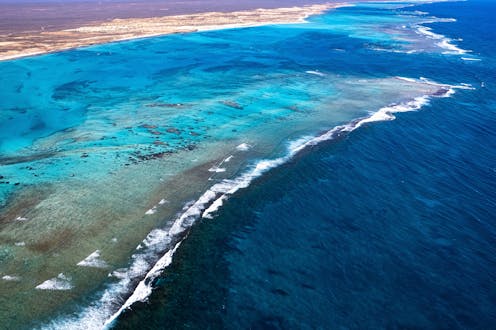
    The fish kill at Gnoorea Beach near Karratha is concerning our team of scientists, as the hot mass of water heads south towards Ningaloo Reef and the seagrass gardens in Shark Bay. That’s because we’ve seen this before. An enormous marine heatwave in 2010-11 devastated fisheries and ecosystems further down the WA coast.

    This marine heatwave began in September, with temperatures up to 3°C warmer than usual off Broome. There’s no end in sight.

    The heatwave comes as oceans worldwide experience recordbreaking heat, driven by climate change. More than 90% of all heat trapped by greenhouse gases goes into the oceans.

    The fish kill is a visible way to glimpse a disaster often out of sight and out of mind. But these marine heatwaves do much more, from wiping out seagrass meadows and kelp beds to trashing fisheries.

    Up to 30,000 dead fish have washed up around Gnoorea Beach near Karratha.
    WA Department of Primary Industries and Regional Development

    How bad is this marine heatwave?

    Marine heatwaves are periods of at least five consecutive days when ocean temperatures are significantly higher than the long-term average for the region and season.

    Since September 2024, temperatures off Australia’s northwest coast have been high enough to be considered a heatwave.

    In late December, the area of hotter water expanded southward along the Pilbara coast and became more intense. Temperatures hit 4–5°C above normal at the surface. Our research group has gathered data from satellite measurements, which tells us it’s hotter than usual. Data from autonomous ocean gliders also show unusual levels of heat as far down as 200 metres.

    In January, this heatwave has become bad enough to be classified in some areas as a severe marine heatwave.

    There’s no relief in sight yet. The Bureau of Meteorology forecasts marine heatwave conditions to continue through February.

    figure showing intensity of marine heatwave in northwest Western Australia
    On the left, the marine heatwave on the Northwest Shelf is visible in dark red. On the right, the intensity of the heatwave is shown over time on the Northwest Shelf and further south in Central Western Australia.
    Author provided, CC BY

    Will it be worse than the 2010 heatwave?

    The current marine heatwave is, so far, the second-worst in Western Australia’s recorded history.

    Over the 2010–11 summer, a severe marine heatwave devastated seas off the state. Temperatures hit up to 5°C above average, peaking in February and March.

    The worst-hit areas were seas off the central West Australian coastline, leaving those to the north largely unaffected. But the heatwave stretched 2,000 kilometres, from the Pilbara all the way down to Denmark in the southwest.

    The reason the 2010 heatwave spread so far south was due to the Leeuwin Current, which was stronger than usual due to weak southerly winds linked to a low pressure system off the coast.

    figure showing the 2010-11 marine heatwave in Western Australia
    The 2010-11 marine heatwave hit Central West Australian waters hardest. The Leeuwin Current ferried heat southward.
    Author provided, CC BY

    The heat led to local extinction of kelp species along a 100km stretch of coastline. Scallop and blue swimmer crab fisheries had to close. Seagrass meadows in Shark Bay collapsed. Tropical species were sighted in new areas. And coral bleached at Ningaloo.

    By contrast, this current marine heatwave has concentrated on the northern coastline, but may spread south in coming weeks.

    Unfortunately, there are strong similarities between the 2010–11 heatwave and this one. Both occurred during a La Niña year.

    A similar low pressure system in December 2024 weakened southerly winds during this heatwave, though not as pronounced as in 2010-11. We can expect to see the Leeuwin Current intensify and carry more warm water than usual south, but perhaps not as far as in 2010–11.

    Weather systems at present are developing slightly differently to 2010–11, but they could still lead to weaker southerly winds and produce a stronger current channelling heat.

    What does this mean for ocean life?

    Marine heatwaves at this size and intensity can profoundly damage marine ecosystems and fisheries. The Karratha fish kill is the most visible sign of ecosystem distress.

    We have already seen signs of bleaching in the coral reefs of the Kimberley region, while corals are experiencing heat stress at world-famous Ningaloo Reef.

    The heat is now affecting the Gascoyne region between Carnarvon and Exmouth, and is likely to head further south.

    Damage from the heatwave could threaten valuable industries such as the rock lobster fishery and marine tourism on the Coral Coast.

    bleached coral linked to marine heatwave.
    Bleached corals in Cygnet Bay north of Broome. Photo taken on 16th January.
    Kayleigh Foste, CC BY

    More heatwaves will come

    As the climate changes, modelling indicates marine heatwaves will hit more often and to intensify.

    Worldwide, marine heatwaves have devastated ecosystems. One of the worst, the Pacific “blob” heatwave of 2014-2016, killed an estimated 100 million Pacific cod and four million birds from a single seabird species, as well as contributing to the starvation of about 7,000 humpback whales. The intense heat killed off cold-loving species and paved the way for tropical species to enter and even thrive.

    Right now, 28% of the world’s oceans are in heatwave conditions, based on surface temperatures.

    While there is a clear link between the 2010-11 marine heatwave and climate change, we cannot conclusively say this current heatwave off Western Australia is linked to climate change.

    That’s because we don’t have enough data about what’s happening under the surface. Temperatures in the ocean vary greatly by depth, and a hot surface doesn’t always mean heat has reached deeper water.

    So while we know a marine heatwave is in progress, we don’t know how bad it is or how far down the heat has reached in different regions. We need better ways to measure temperatures at depth, to be able to gauge how bad a heatwave is. Installing more temperature sensors along the WA coastline would allow us to better monitor and respond to temperature extremes.

    The earlier we know about a heatwave, the more we can do to prepare. The 2010-2011 heatwave made many people aware of what damage heat can do to an ocean, as fishing boats sat idle and tourists steered clear of dying coral.

    More, and worse, is likely to come. Better conservation and management of our oceans can help. But tackling the root cause of intensifying heat – unchecked greenhouse gas emissions – is still far and away the most important challenge.

    The Conversation

    Matt Rayson receives funding from the Australian Research Council and the Western Australian government. .

    Nicole L. Jones receives funding from Australian Research Council and the Western Australian government.

    Sina Pinter does not work for, consult, own shares in or receive funding from any company or organisation that would benefit from this article, and has disclosed no relevant affiliations beyond their academic appointment.

    ref. A marine heatwave in northwest Australia is killing huge numbers of fish. It’s heading south – https://theconversation.com/a-marine-heatwave-in-northwest-australia-is-killing-huge-numbers-of-fish-its-heading-south-248139

    MIL OSI AnalysisEveningReport.nz

  • MIL-Evening Report: DeepSeek: why the hot new Chinese AI chatbot has big privacy and security problems

    Source: The Conversation (Au and NZ) – By Mohiuddin Ahmed, Senior Lecturer of Computing and Security, Edith Cowan University

    The Chinese artificial intelligence (AI) company DeepSeek has rattled the tech industry with the release of free, cheaply made AI models that compete with the best US products such as ChatGPT.

    Users are rushing to check out the new chatbot, sending DeepSeek’s AI Assistant to the top of the iPhone and Android app charts in many countries.

    However, authorities have sounded a note of caution. US officials are examining the app’s “national security implications”. Australia’s former cybersecurity minister said national security agencies will soon issue formal guidance for users.

    Why are governments and security experts so concerned? The main issue is the app is made in China and stores data there – but that doesn’t mean all the worry is just xenophobia.

    What information does DeepSeek record?

    DeepSeek does not appear to be spyware, in the sense it doesn’t seem to be collecting data without your consent. However, like many online services, it clearly tells you it will record a lot of data about you and your behaviour.

    Specifically, the company’s privacy policy says it collects three categories of information.

    First, there is information you provide directly, such as your name and email address and any text you type in or files you upload.

    Next, there is automatically collected information, such as what kind of device you are using, your IP address, details of how you use the services, cookies, and payment information.

    Finally, there is information from other sources, such as Apple or Google login services, or third-party advertising and analytics companies.

    This is broadly similar to the data collected by ChatGPT and Claude.

    What does DeepSeek do with the information?

    DeepSeek says it uses this information for a range of purposes: to provide services, enforce terms of use, communicate with users, and review and improve performance.

    The policy also contains a rather sweeping clause saying the company may use the information to “comply with our legal obligations, or as necessary to perform tasks in the public interest, or to protect the vital interests of our users and other people”.

    DeepSeek also says it may share this information with third parties, including advertising and analytics companies as well as “law enforcement agencies, public authorities, copyright holders, or other third parties”.

    DeepSeek will also keep the information “for as long as necessary” for a broad range of purposes.

    Again, this is all fairly standard practice for modern online services.

    Causes for concern

    Much of the cause for concern around DeepSeek comes from the fact the company is based in China, vulnerable to Chinese cyber criminals and subject to Chinese law.

    DeepSeek stores the information it collects “in secure servers located in the People’s Republic of China”. The company says it maintains “commercially reasonable technical, administrative, and physical security measures” to protect the information.

    However, we should keep in mind that China is one of the most cyber crime-prone countries in the world – ranking third behind Russia and Ukraine in a 2024 study.

    So even if DeepSeek does not intentionally disclose information, there is still a considerable risk it will be accessed by nefarious actors.

    China is home to a sophisticated ecosystem of cyber crime organisations that often build detailed profiles of potential targets. Microsoft and others have accused the Chinese government of collaborating with cybercrime networks on cybercrime attacks.

    These organisations can use personal information to craft convincing targeted phishing attacks, which try to trick people into revealing more sensitive information such as bank details.

    Should you download DeepSeek?

    So, should you download DeepSeek?

    If you are an experienced user who is familiar with online privacy and the capabilities of modern AI systems, go ahead – but proceed with caution and be very wary about what information you share.

    And if you’re less experienced – if you’re a casual user who is less internet-savvy – my expert advice is to stay well away. DeepSeek won’t give you much you can’t get from other chatbots such as ChatGPT or Claude, and it might make your data vulnerable to Chinese cyber criminals and subject to Chinese law.

    DeepSeek also raises questions for governments. Efforts to prevent scams and cybercrime often focus on banks, telecommunications companies, and social media platforms – but what about chatbots?

    Mohiuddin Ahmed does not work for, consult, own shares in or receive funding from any company or organisation that would benefit from this article, and has disclosed no relevant affiliations beyond their academic appointment.

    ref. DeepSeek: why the hot new Chinese AI chatbot has big privacy and security problems – https://theconversation.com/deepseek-why-the-hot-new-chinese-ai-chatbot-has-big-privacy-and-security-problems-248544

    MIL OSI AnalysisEveningReport.nz

  • MIL-Evening Report: DeepSeek’s success challenges assumptions about Chinese tech companies – and the US-China competition

    Source: The Conversation (Au and NZ) – By Wanning Sun, Professor of Media and Cultural Studies, University of Technology Sydney

    The release of the new DeepSeek-R1 artificial intelligence (AI) model has shocked the tech world.

    Launched on January 20 with little fanfare, the Chinese AI model was reportedly developed at only a fraction of the cost of OpenAI’s GPT-4o, and over a much shorter period of time. One Chinese commentator has called its release a “Pearl Harbor attack” on the AI world.

    Though the reference to an “attack” may be a strong word, it alludes to the growing competition between the United States and China over dominance in the AI sphere, which the US had been leading thus far.

    Indeed, people across China were celebrating a homegrown success story on Wednesday, as DeepSeek’s AI app soared to the top of the Apple and Google stores in the US.

    So, what does the emergence of DeepSeek’s model say about US-China competition in this space?

    Chinese government control

    First, DeepSeek’s success is undoubtedly sending a message to the Chinese government that excessive control kills innovation.

    Until mid-2023, enthusiasm for innovation in China’s tech companies had been stifled by increasingly restrictive regulations. The Chinese government had embarked on a sweeping crackdown of tech companies like Alibaba and others in order to prevent the spread of rampant entrepreneurial capitalism in China.

    The launch of ChatGPT in 2023 promised to open up exciting new frontiers for the development of AI in the West. But it must have come as a rude shock to China’s tech companies. The Chinese government changed tact and reassured them that it recognised the crucial role of the digital economy as a key driver of economic growth. It soon began to relax its tight grip over the sector.

    But the elephant in the room is how DeepSeek – and China’s AI companies in general – will deal with censorship.

    As it stands, politically sensitive words and questions seem to be no-go areas for DeepSeek. When asked what happened on June 4 1989 in Tiananmen Square (the site of the government’s crackdown on democracy protesters), the chatbot’s answer was along the lines of, “Sorry, that’s beyond my current scope. Let’s talk about something else.”

    This raises the question: can a Chinese AI tool be truly competitive in the global tech race without a solution to the challenge of censorship?

    US efforts to contain Chinese tech development

    Meanwhile, the US has adopted a wide array of measures aiming at curbing China’s AI development over the past few years. These included the Biden administration’s attempts to restrict China’s access to the advanced chips needed for AI, as well as the export of chip-making equipment and other technology to China.

    The US has also blacklisted a large number of Chinese entities that it has identified as having both military and commercial technology.

    The launch of DeepSeek raises questions over the effectiveness of these US attempts to “de-risk” from China in relation to scientific and academic collaboration.

    For one, DeepSeek was able to evade US restrictions on advanced chips by stockpiling downgraded chips made by Nvidia before the Biden administration moved to ban them.

    Western observers have often portrayed China’s AI initiatives as limited due to these US controls. However, these observers have somehow failed to take seriously the emergence of a new generation of Chinese entrepreneurs who prioritise foundational research and long-term technological advancement over quick profits.

    DeepSeek is a good example of this approach. It has embraced open-source methods, pooling collective expertise and fostering collaborative innovation. This approach not only mitigates resource constraints, but also accelerates the development of cutting-edge technologies.

    Another common assumption in the West is that Chinese companies are mere followers or imitators. DeepSeek’s achievements likewise challenge this perception. As the company’s chief executive, Liang Wenfeng, said to one Chinese media outlet:

    Innovation such as ours happens all the time in the US. The Americans are surprised by us, mainly because we are a Chinese company, and we are entering their game as an innovator with original contribution, not as followers.

    DeepSeek’s success also calls into question the legislation supported by both the Biden and Trump administrations that aims to prevent Chinese graduate students from attending universities in the US.

    The assumption behind what researchers call “STEM talent de-coupling” is that the Chinese government may use some of these students to engage in knowledge and technology transfer when they return to China.

    Liang, however, never studied outside China. And he recruited graduates and students from top Chinese universities to staff his research team. None studied overseas.

    These developers belong to a generation of young, patriotic Chinese who harbour personal ambition, as well as a broader commitment to advancing China’s position as a global innovation leader.

    What does this mean for Australia?

    In Australia, the initial reaction to DeepSeek’s AI chatbot has been one of
    caution, even concern. Clare O’Neil, the former cyber security minister, said the government would examine more closely how the app works before providing guidance to Australians on potential data security concerns.

    But DeepSeek may also be a reminder that Australia’s scientific collaborations should be guided primarily by research excellence rather than geopolitical considerations. To stay competitive and reduce its reliance on external technology providers, Australia needs to invest in its own AI research infrastructure and build its own talent pool.

    A narrow focus on political alignments and a growing paranoia about partnering with Chinese researchers means that Australia risks missing out on the next wave of breakthrough technologies.

    The authors do not work for, consult, own shares in or receive funding from any company or organisation that would benefit from this article, and have disclosed no relevant affiliations beyond their academic appointment.

    ref. DeepSeek’s success challenges assumptions about Chinese tech companies – and the US-China competition – https://theconversation.com/deepseeks-success-challenges-assumptions-about-chinese-tech-companies-and-the-us-china-competition-248531

    MIL OSI AnalysisEveningReport.nz

  • MIL-Evening Report: After fleeing the Taliban, the Afghan women’s cricket team is finally playing together – in Australia

    Source: The Conversation (Au and NZ) – By Catherine Ordway, Associate Professor Sport Management and Sport Integrity Lead, University of Canberra

    Women cheer and wave the Afghanistan flag during a cricket game in 2023 Vector and photos/Shutterstock

    A Twenty20 cricket contest featuring a women’s team made up of refugees from Afghanistan who now live in Australia may “only” be an exhibition game, but it could be the beginning of something much more.

    On Thursday, an Afghan women’s cricket team will take on a Cricket Without Borders XI at Melbourne’s Junction Oval.

    It is the first time the women will play as a team since migrating to Australia after the Taliban takeover in 2021. The group has since settled in Canberra and Melbourne.

    Regardless of the result, it could be a step towards Afghanistan’s women’s team entering international cricket.

    Before I explain why, though, it’s important to rewind a bit.

    International cricket and Afghanistan

    The International Cricket Council (ICC) claims it has “one of the toughest” policies on anti-discrimination in world sport.

    The governing body commits to:

    promote and encourage participation at all levels regardless of race, colour, religion, descent, culture, ethnic origin, nationality, sex, gender, sexual orientation, disability, marital status and/or maternity status and to ensure that there is no discrimination in the sport.

    In the case of its member federation, the Afghanistan Cricket Board, the ICC’s refusal to uphold its own policy is providing both actual and implied support to the Taliban’s gender apartheid regime.

    The ICC admitted Afghanistan as a full voting member in 2017, despite being “the only full member to have received that status without having an operational women’s team in place.”

    As a full member, Afghanistan was, according to the ICC’s funds disbursement model: “expected to get around $US40 million ($A64 million) for the 2016-23 commercial rights cycle based on projected ICC revenues of $US2.7 billion ($A4.32 billion).”

    Meanwhile, the other ICC, the International Criminal Court, recently issued arrest warrants against two of the Taliban leaders for crimes against women.

    The Taliban’s policies against women go far beyond sport and make it more reason for the International Cricket Council to act.

    On any reading, the ICC’s membership rules on governance ethics requirements in relation to Afghanistan are in breach.

    From Afghanistan to Australia

    Ironically, it was the Afghanistan Cricket Board’s reluctant and token measure taken to build a women’s team, by issuing contracts to 25 women in 2020, that has allowed them to now play cricket in Australia.

    In August 2021, the Taliban took over Afghanistan and banned women’s sports. Athletes were intimidated, harassed and warned of ramifications if they continued playing.

    That situation sparked action from a handful of passionate volunteers, including myself, ex-Australian cricketer Mel Jones, and Emma Staples (formerly the head of diversity and community engagement at Cricket Victoria). We knew we needed to get these women out of Afghanistan.

    We applied to the Australian government to issue emergency humanitarian visas to the contracted women’s cricketers, with the applications granted.

    Now, all they want is a chance to represent their country as a team, and to send a message of hope back to their sisters suffering under the oppression of Afghan gender apartheid.

    Put simply, the Afghan women’s team is desperate to be given the same opportunities as its male counterparts.

    The team has written several times and asked for meetings with the ICC, to no avail.

    The ICC instead has set up an all-male working group on Afghanistan.

    It’s not clear what its terms of reference are, or if they have even met.

    Possible solutions

    Cricket Australia has chosen not to play bilateral matches against Afghanistan, citing the Taliban’s human rights restrictions for women and girls since returning to power.

    But boycotts often impact athletes more than government policies.

    Instead, the focus should be on supporting Afghan women who want to play cricket. The ICC could implement targeted actions including:

    • replacing Afghanistan’s cricket board with ICC-appointed administrators, including women
    • adjusting Afghanistan’s funding to reflect they are only developing cricket for less than half the population
    • setting up a global development fund for Afghan girls and women to identify talent and to provide coaching.

    There are several international sport models – for example, FIFA’s Normalisation Committees and the IOC’s independence requirements – that could serve as models for the ICC requiring Afghanistan’s Cricket Board to comply with the its anti-discrimination policies.

    A chance to compete

    On Thursday, these Afghan women finally get to play as a team, in the exhibition game organised by Cricket Australia.

    The team is keen for this to be an ongoing opportunity to develop skills and represent their nation, not just a one-time event.

    The Olympic movement’s model of refugee teams could inspire the creation of a refugee team for Afghan women in cricket, allowing them to participate in future youth and summer Olympic Games and other competitions.

    Catherine Ordway voluntarily represented the Afghan women’s cricket team to evacuate them to Australia following the Taliban re-occupation in August 2021, and continues to provide ongoing support to the women, the staff and their families.

    ref. After fleeing the Taliban, the Afghan women’s cricket team is finally playing together – in Australia – https://theconversation.com/after-fleeing-the-taliban-the-afghan-womens-cricket-team-is-finally-playing-together-in-australia-248445

    MIL OSI AnalysisEveningReport.nz

  • MIL-OSI Russia: Glavarkhiv published rare documents for the 165th anniversary of Anton Chekhov’s birth

    Translartion. Region: Russians Fedetion –

    Source: Moscow Government – Government of Moscow –

    To mark the 165th anniversary of Anton Chekhov’s birth, Glavarkhiv opened a new online exhibition, “I’ll Fly to Moscow on Wings…”. Its materials introduce the writer’s life and work in the city. Here Chekhov spent his student years, began his literary work and became famous as a playwright. The exhibition can be viewed in the “Media Library” section, in the subsection “Exhibitions”.

    The exhibition includes photographs of Chekhov and his family, documents about the writer’s studies at the Imperial Moscow University (now Moscow State University), records in the register of marriage of Anton Chekhov and Olga Knipper in 1901, as well as the writer’s death in 1904, and other materials. One of the sections of the exhibition tells about the perpetuation of the memory of Anton Chekhov – the creation of a memorial house-museum of the writer on Sadovaya-Kudrinskaya Street and the holding of events in honor of the celebration of his anniversaries.

    Anton Chekhov first visited Moscow in 1877, when he was 17 years old. Two years later, he entered the medical faculty of the Imperial Moscow University and became one of 10 scholarship holders of the Taganrog City Duma, which allocated funds for the education of city natives in higher educational institutions. At the exhibition, you can see a document on the release of the bearer of a coupon for an assignment of 25 rubles, delivered from the Taganrog City Council, on which Anton Chekhov signed. In 1884, he completed his studies at the university. The document on conferring the title of district doctor on students, among whom Chekhov is also mentioned, was signed by the dean of the medical faculty, Nikolai Sklifosovsky.

    A separate section of the exhibition is devoted to Anton Chekhov’s collaboration with the Moscow Art Theatre (MKhT). Documents and photographs make it possible to trace the history of productions of plays based on the playwright’s plays and see the actors who participated in them. The exhibition presents theatre posters, programmes and tickets for MKhT performances, as well as the memories of spectators who saw the productions in 1899–1900.

    Due to his health, the writer was forced to leave Moscow and settle in Yalta. In the summer of 1904, due to a sharp exacerbation of his illness, Anton Chekhov and his wife Olga Knipper-Chekhova went to a resort in Germany. On July 15, he died in the town of Badenweiler. The writer was buried in Moscow at the Novodevichy Convent Cemetery.

    Please note: This information is raw content directly from the source of the information. It is exactly what the source states and does not reflect the position of MIL-OSI or its clients.

    Please Note; This Information is Raw Content Directly from the Information Source. It is access to What the Source Is Stating and Does Not Reflect

    https: //vv.mos.ru/nevs/ite/149432073/

    MIL OSI Russia News

  • MIL-OSI Russia: How Technopolis Moscow SEZ Enterprises Support People in the SVO Zone

    Translartion. Region: Russians Fedetion –

    Source: Moscow Government – Government of Moscow –

    Students and staff of the National Research University of Electronic Technology (MIET), the flagship university of the Technopolis Moscow special economic zone (SEZ), collected more than 150 kilograms of humanitarian aid for the participants of the special military operation (SMO).

    “The enterprises of the Technopolis Moscow special economic zone actively participate in humanitarian actions. Assistance and support are provided not only to participants in the special military operation and residents of border regions, but also to children’s shelters and centers for keeping homeless animals. Another action to collect humanitarian aid was held at the National Research University of Electronic Technology. In two weeks, employees and students collected 150 kilograms of warm clothes, various household chemicals and special equipment, which have already been transferred to the front lines,” said Gennady Degtyarev, CEO of the SEZ.

    The university staff and students collected sets of thermal underwear, tools, catalytic heaters, fleece clothing and much more. The students wove camouflage nets, which are so necessary for the fighters, themselves. This is not the first such action of the university – in August 2024, the institution’s employees handed over 250 kilograms of humanitarian aid to residents of the Kursk region, and in September they collected things for residents of the Donetsk and Lugansk People’s Republics.

    Collections of humanitarian aid for residents of border regions were held at the sites of the special economic zone “Technopolis Moscow”. Employees of the management company and workers of over 50 enterprises brought more than 2.5 tons of various products.

    Other capital enterprises also provide support to the SVO participants and residents of border territories. For example, a manufacturer of ATMs and other high-tech products donated a number of devices it made to help the military. Among them are metal storage boxes, entrenching hooks, heating stoves, and transport equipment.

    The capital’s coffee and sweets factory has shipped more than one ton of its products since 2022. In addition, the company delivered 4.5 thousand coffee bean bags to the special military operation zone, which are used by military personnel to equip flooring.

    Please note: This information is raw content directly from the source of the information. It is exactly what the source states and does not reflect the position of MIL-OSI or its clients.

    Please Note; This Information is Raw Content Directly from the Information Source. It is access to What the Source Is Stating and Does Not Reflect

    https: //vv.mos.ru/nevs/ite/149441073/

    MIL OSI Russia News

  • MIL-OSI Russia: Burning Hearts: Stories of Those Who Received the Moscow Volunteer Badge

    Translartion. Region: Russians Fedetion –

    Source: Moscow Government – Government of Moscow –

    These people represent different generations: some have recently graduated from school, while others have already retired. But they are united by a common cause – volunteering. They help organize and hold the Victory Parade, are on duty at major events and collect humanitarian aid, and Resource center “Mosvolonter” — preparation and coordination of concerned Muscovites. The unofficial motto of such enthusiasts is “No other way!” On January 21, Sergei Sobyanin presented the “Volunteer of Moscow” badge of distinction 30 residents of the capital.

    About what merits can lead to receiving an honorary award, how kindness leads to the profession of dreams and helps to create a family – in the material mos.ru.

    A smile as a reward

    One of the youngest volunteers to earn the badge was 18-year-old Yuri Potolokov. He studies at the Moscow City Pedagogical University and plans to teach geography in the future. But even after graduating and getting a job, Yuri plans to participate in public events.

    The young man joined the volunteer movement in 2022, while still at school. “One day I went to a concert at VDNKh and saw guys handing out raincoats to the audience because it was raining. That’s when I noticed that people were smiling at the volunteers. And I realized that I wanted to receive such smiles too. After all, this is the best gratitude for your work! After the concert, I told my mother: “I’m going to volunteer!” She happily accepted my choice,” our interlocutor recalls.

    Yuri Potolokov is a graduate of a cadet school and has been interested in Russian history since childhood. That is why patriotic events are closest to him, for example, meeting veterans who came to Moscow from different cities for Victory Day at train stations. However, over the past two years, the young man has had the opportunity to volunteer at other events. For example, he helped participants National Championship “Abilympics”in 2022 and 2023, navigate the site and get to the competitions on time, coordinated guests at the World Youth Festival in 2024. And recently, I sorted out New Year’s decorations at the N.N. Blokhin National Medical Research Center of Oncology: I twisted the branches of artificial trees with insulating tape, packed the toys and sent them to the warehouse. Moreover, I was already performing the duties of a team leader, managing a team of five people.

    In total, he has over three thousand volunteer hours to his credit. Nevertheless, the mos.ru interviewee did not expect to be among those awarded.

    “I can imagine how many people applied for the badge! And they chose me. Now I want to try even harder than before. In the near future, I hope to hold a master class on creating eco-paintings from recycled materials in the “Good Place” space in the South-Eastern Administrative District,” says Yuri Potolokov, holder of the “Volunteer of Moscow” badge.

    From the veterans’ meeting to the registry office

    Kirill Kononaev is 21 years old. The volunteer is a final-year student at the Moscow Institute of Economics. He joined the “club of caring people” three years ago: first, he headed the student council, and soon he wanted to do good deeds outside the university. “The opportunity presented itself: the pandemic began, and I went to deliver food to the elderly,” recalls the mos.ru source.

    Then there were other events, for example the International Forum of Civic Participation “Moscow helps”The young man devoted more than 1,700 hours to volunteer work. He personally liked patriotic events.

    “Once I was distributing water in the center of the capital during the Immortal Regiment march. It was an amazing feeling: we were met by participants carrying portraits of their fathers and grandfathers who fought for their country in the Great Patriotic War. And it was in our power to make sure that they did not feel thirsty. Another time I was processing applications for the “Faces of Victory” campaign: relatives sent touching stories about their ancestors, battle heroes,” says Kirill Kononaev, holder of the “Moscow Volunteer” badge.

    At one of these events at the headquarters, organized to meet veterans, our interlocutor met his future wife: Taisiya Borisova, a student at the Moscow State Pedagogical University, also a volunteer. They got married in February 2024 and now come to help together.

    “It was very nice to receive a badge of distinction this year. And although I have less and less free time, I will continue to volunteer. So, soon it will be time to distribute St. George ribbons to Moscow residents. Even when I feel tired, helping people and the city allows me to switch off, charges me with positive energy,” smiles Kirill Kononaev.

    Dream job

    Margarita Buchina teaches English at school #2075In 2018, when the capital hosted the World Cup, her students enthusiastically and delightedly told how they rooted for the teams and interacted with foreign guests on the city streets.

    “I thought it was good language practice and a new experience. And soon I signed up through the website Mosvolonter.ruto her first large-scale event — the Moscow Urban Forum — 2019, where guests from different countries came. She successfully passed the interview and became part of the team of volunteers with knowledge of foreign languages, who help at the information desks,” recalls the mos.ru interlocutor.

    Already at the event, Margarita Buchina realized that applying her knowledge for the benefit of the city is her calling. In addition to her teaching profession, she is also a photographer and journalist. Therefore, she offered her help as a media volunteer.

    “Every year on June 22, I go to the Krymskaya Embankment to collect material for a report on the “Candle of Memory” campaign: I get amazing emotional portraits of volunteers in military uniform from the Great Patriotic War, who came to light the lights in honor of those who died in 1941-1945. I was the manager of the volunteer corps at the International Exhibition and Forum “Russia” at VDNKh and supervised media volunteers, photographed Christmas trees decorated with balls with children’s wishes, as part of the “Kind Christmas Tree” charity campaign at festival venues, photographed artists performing at the International Military Music Festival “Spasskaya Tower”. In addition, I am a volunteer editor of the “Good News” magazine, which tells about the lives of active and caring city residents,” says Margarita Buchina, holder of the “Volunteer of Moscow” badge.

    Now she is trying to find her dream job and realize herself as a journalist. But she does not plan to leave volunteering.

    “When I was awarded the “Moscow Volunteer” badge for my services, I once again realized how important and useful my good deeds are for the city. And you can do them in different ways, for example, by helping to collect humanitarian aid. If you were born with a kind heart, then it is not difficult for you to share kindness with others, volunteering is forever!” our interlocutor believes.

    Six thousand hours of good deeds

    Elena Akhtyrskaia is a “silver” volunteer, she is 56 years old. “In 2015, I began to actively attend excursions organized Department of Cultural Heritage of Moscow. Once I was asked to help a guide gather a group and make sure no one was left behind during a walk around the capital. It turned out to be much more interesting than just listening! So I joined the ranks of cultural volunteers. Now I also help organize events for Mosconcert,” she says.

    During the winter holidays, Elena Akhtyrskaya was on duty at the New Year’s game-journey through Russian fairy tales in the Petrovsky Travel Palace, and after the performance she gave gifts to the young spectators.

    However, our interlocutor participates not only in cultural programs. For example, she had the opportunity to accompany the Victory Parade in 2024. “This is the highest honor for a volunteer!” she admits. Elena Akhtyrskaya met visitors at the entrance to Red Square and explained where to go next, and then seated veterans in the stands and watched the procession from a place of honor.

    “I have dedicated almost six thousand hours to good deeds. But when I was awarded the “Volunteer of Moscow” badge, I was surprised. After all, there are many worthy candidates, including “silver” ones, and they are older than me. Of course, it is very nice to receive such an award. However, something else is more important to me: the emotional response of those whom I helped, eyes full of joy and gratitude!” – summarizes the holder of the “Volunteer of Moscow” badge Elena Akhtyrskaya.

    A Holiday for Everyone: How the Mosconcert Cultural Brigade Congratulated Soldiers and Children on the New Year“Moscow Helps”: Sobyanin Told How Muscovites Support SVO ParticipantsOver a thousand events were held in 2024 in the Dobroe Mesto centers in MoscowThe number of events in Moscow involving cultural heritage volunteers has almost doubledWhat dreams does the “Kind Tree” of the “Winter in Moscow” project fulfill?

    Please note: This information is raw content directly from the source of the information. It is exactly what the source states and does not reflect the position of MIL-OSI or its clients.

    Please Note; This Information is Raw Content Directly from the Information Source. It is access to What the Source Is Stating and Does Not Reflect

    https: //vv.mos.ru/nevs/ite/149440073/

    MIL OSI Russia News

  • MIL-OSI Russia: Skoltech and NSU discussed cooperation in the development of new functional materials

    Translartion. Region: Russians Fedetion –

    Source: Novosibirsk State University – Novosibirsk State University –

    Representatives of the Skolkovo Institute of Science and Technology visited Novosibirsk State University to discuss cooperation on R&D carried out by Skoltech on behalf of the NTI Competence Center for New Functional Materials based at NSU. The delegation included Ivan Sergeichev, Director of the Center for Materials Technology at the Skolkovo Institute of Science and Technology, Dmitry Krasovsky, Deputy Director of the Center for Relations with Industry, participants in joint projects with NSU, as well as specialists in building interactions between stakeholders.

    The purpose of the visit was to get acquainted with the structure of the Competence Center of the National Technology Initiative in the direction of “Technologies for modeling and developing new functional materials with specified properties”, which was created at NSU in 2021 with the financial support of the NTI Foundation, as well as with its capabilities and industrial partners.

    — At the end of last year, we signed agreements with Skoltech to implement three large-scale projects: “Design of Materials for Thermal Barrier Coatings”, “Development of Additive Manufacturing Technology for Complex-Geometry Ceramic Rods for Casting Gas Turbine Blades”, and “Metal Oxide Nanoparticles for Protecting Products and Materials from Counterfeiting”. Our task is to create samples of new materials and software products in a short period of time in order to begin introducing new materials and products made from them to the market as soon as possible through interaction with potential industrial partners. These could be manufacturers of engines, gas turbine units and their parts, polymer-composite materials and various products made from them, the authenticity of which, among other things, must be protected from counterfeiting, — explained Alexander Kvashnin, Director of the NTI Center for New Functional Materials at NSU.

    Following the meeting, the parties developed mutually beneficial forms of cooperation. One of them involves Skoltech’s participation in the work of three distributed centers created by the Center for New Functional Materials and its partners at the end of last year – the Distributed Center for Modeling, Calculations and Design, the Distributed Center for Research and Development of Materials and Technologies for Their Production, as well as the Distributed Production Site for Small Batch Products, where it is possible to produce small batches of new materials and products made from them using NSU technologies for further delivery for testing at industrial enterprises. The software developed by the partners will be used in the distributed center for modeling, calculations and design.

    Meanwhile, in Skolkovo, during the implementation of these three projects, the necessary innovative equipment will be created, including a new 3D printer for complex printing of ceramic rods for gas turbine units and a reactor for the production of metal oxide nanoparticles to protect materials and products from counterfeiting. This equipment will be used as part of distributed centers.

    “Our cooperation with Skoltech will allow the university to expand the circle of its Moscow partners and potential customers, which may include the state corporation for assistance in the development, production and export of high-tech industrial products Rostec, United Engine Corporation, Gazpromneft and other large Russian corporations interested in the development and implementation of advanced technologies,” commented Alexander Kvashnin.

    Please note: This information is raw content directly from the source of the information. It is exactly what the source states and does not reflect the position of MIL-OSI or its clients.

    MIL OSI Russia News

  • MIL-OSI Russia: NSU scientists have found a way to make platelets react to light

    Translartion. Region: Russians Fedetion –

    Source: Novosibirsk State University – Novosibirsk State University –

    Scientists from the Laboratory of Optics and Dynamics of Biological Systems Physics Department of NSU and the Department of Organic Chemistry Faculty of Natural Sciences of NSU created a new photosensitive molecule, the breakdown of which under the influence of ultraviolet radiation releases adrenaline without the formation of the oxidized form (adrenochrome), which has a neuro- and cardiotoxic effect. It was used to influence platelet receptors with light. It turned out that the release of adrenaline significantly increases the activation of platelets.

    The results of the study were published in January of this year on the website of the Journal of Xenobiotics (Reducing the Formation of Toxic Byproducts During the Photochemical Release of Epinephrine). The article is available at the link: HTTPS: //d.org/10.3390/eh15010008. The study was supported by the grant of the Russian Science Foundation No. 23-75-10049 and is being conducted within the framework of the project “Study of platelet activation under the influence of combined stimuli using optically-mediated release of ligands”.

    -The idea of ​​managing living cells with the help of light is very attractive for researchers, because it can be accurately focused on a particular area, turn on at a given moment and influence any photosensitive receptor. The only problem is that not all living cells have such receptors. They are just platelets. We needed to “force” them to feel light through any signal molecules. The fact is that almost all cells have receptors sensitive to some substances. Different cells feel different signal molecules, and one of the ways is to make artificial compounds that absorb light, and after that they can, decaying into the components or in any way by rebuilding their structure, join the receptors. Then, after the exposure of the light, the cell will begin to “feel” them. This is how it is possible to “force” the cell to show sensitivity to light. Scientists began to develop and apply various compounds of this action to various cells for a long time – from the second half of the last century. Within the framework of our laboratory, this activity has also been conducted over the past years. Our chemical colleagues from the laboratory of photo activated processes of the SB RAS are engaged in the synthesis of molecules, but we study their properties and use to study various cells, mainly platelets, ”explained Alexander Moskalensky, head of the optics and dynamics of the FF NSU Biological Systems.

    Classic photosensitive adrenaline analogues developed in the 90s of the last century, when exposed to light, release adrenaline, which in the process of oxidation is converted into adrenochrome, which is toxic to living cells. For this reason, it is undesirable to use it as an activator of sensitivity to light in living cells, since this substance can trigger other undesirable processes in them or even kill them. Therefore, scientists were faced with the task of finding a way to reduce the formation of adrenochrome, but without stopping the release of adrenaline. As a result, it turned out that this problem can be solved by a simple modification of the molecule, namely, the introduction of a carbamate bridge of 4 carbon and oxygen atoms. The release of adrenaline in this case continued as before, and the amount of its transition to the oxidized form was significantly reduced.

    — We compared two lines of molecules — classical and modified. Surprisingly, while the classical compound resulted in the formation of adrenochrome, its analog with a carbamate bridge did not cause this by-product, which resulted in a pure release of the active substance, i.e. adrenaline. The exposure of both compounds to light was carried out under identical conditions, then the products obtained by photolysis were analyzed using ultraviolet spectroscopy, chromatography and nuclear magnetic resonance. Subsequently, we evaluated the new compound using an in vitro platelet activation assay. The results showed that the release of adrenaline significantly enhances platelet activation, which makes it a valuable tool for in-depth studies of cellular signaling, — said Alexander Moskalensky.

    Since UV radiation does not penetrate the body, it is not possible to use modified molecules of the photosensitive adrenaline analogue inside the body. Therefore, scientists plan to use them to study platelet activation in a test tube, namely, in blood samples. With their help, it will be possible to develop new analysis methods and obtain new information about the platelet activation process.

    This method will allow researchers to obtain more accurate data on the effect of adrenaline on platelet activation. This is important because platelets are very sensitive to mechanical impacts, fluid flows, and other types of impact that can affect the results of such studies.

    Currently, the laboratory’s scientists are developing the next molecule – a photosensitive analogue of adrenaline based on the dye BODIPY, which will be activated by light in the green region of the spectrum, and they also have an understanding of how to modify molecules that could be activated in the red region of the spectrum.

    Please note: This information is raw content directly from the source of the information. It is exactly what the source states and does not reflect the position of MIL-OSI or its clients.

    MIL OSI Russia News

  • MIL-Evening Report: Lower inflation in the December quarter boosts chances of an interest rate cut

    Source: The Conversation (Au and NZ) – By John Hawkins, Senior Lecturer, Canberra School of Politics, Economics and Society, University of Canberra

    ChameleonsEye/Shutterstock

    Australia’s headline inflation rate dropped to a three-year low of 2.4% in the December quarter, according to the Consumer Price Index, adding to pressure for an interest rate cut by the Reserve Bank as soon as next month.

    Since it peaked at 7.8% in December 2022, inflation has now fallen for seven out of eight quarters.

    The closely watched core inflation measure dropped sharply to 3.2% from 3.6%, below market expectations, but the central bank is concerned about how sustainable the fall in inflation will be. Strength in the labour market is also weighing against the need for a cut in interest rates.


    The long-running quarterly measure of the CPI is a better indicator than the more volatile monthly version. But the monthly rate is currently very similar; it ended the year at 2.5%.

    Why did inflation fall?

    A main reason headline inflation fell was the electricity rebates, which led to the price of electricity falling by 25.2% during 2024.

    The fall in global oil prices, which led to petrol prices dropping 7.9% during 2024, also contributed to the decline in inflation.

    The rental market is easing, with rents slowing from growth of 7.3% during 2023 to 6.4% during 2024. Increases in Commonwealth Rent Assistance contributed to the deceleration. This still leaves a lot of families facing rental stress.

    Home builders offering discounts have moderated the “new dwellings” component of the CPI. It increased by only 2.9% during 2024, a marked deceleration from the growth rates of around 20% seen in 2022.

    Urban transport fares also fell during 2024.

    Working against the downward trend were increases to the tobacco excise, in addition to the standard indexation, which led to tobacco prices rising by 12.2% during 2024.


    Insurance costs continue to rise, increasing by 11% during 2024. If the Californian fires lead to insurers revising up their assessment of the risks posed by climate change, insurance premia could rise further.

    The decline in the Australian dollar, while not as alarming as some media reports would suggest, would have added to the price of some goods, particularly those imported from the United States or whose price is denominated in US dollars.


    Read more:
    The Australian dollar has hit a 5 year low. Sounds bad but don’t panic


    The decline in inflation may be a pleasant surprise to the half of voters who were expecting inflation to get worse.

    The “underlying” rate of inflation, which looks through temporary measures such as the electricity subsidies and is the preferred measure of the central bank, has also declined. It is now 3.2%.


    Australia’s inflation performance is similar to that in comparable countries. It is slightly lower than inflation in the United Kingdom (2.5%) and the same as in the euro area. It is higher than in New Zealand (2.2%) and Canada (1.8%).

    The fall in inflation to a rate significantly below the 3.5% at which wages are increasing means that the cost of living crisis is abating, although not yet over.

    The quarterly increases in the CPI during 2024 were 1.0% in March and June and 0.2% in September and December. As the large increases in the first half of 2024 are replaced, the annual rate should drop further in coming quarters.

    What does it mean for interest rates?

    The current Reserve Bank board meets next on February 18. By the following meeting, on April 1, the decisions will be taken by the new monetary policy board, which will have two new members.


    Read more:
    The Reserve Bank will now have a separate board just to set interest rates. Here’s why that’s significant


    This is the second consecutive quarter that inflation has been within the Reserve Bank’s medium-term target band of 2–3%. It is now just below the mid-point of the band.

    Inflation is also below the Bank’s latest forecasts of 2.6% (and 3.4% for the “underlying” rate).

    But the bank has stated it will only cut interest rates when “members are confident that inflation is moving sustainably towards target”.

    Inflation that is low just because of temporary electricity subsidies may not be regarded as ‘sustainable’. That is why the Bank places more emphasis on the underlying inflation measure. While not yet within the target band, underlying inflation has been steadily heading there and is now only just above it. This may be enough to give the Bank board members the confidence they seek. Financial markets now think so.

    The government would dearly like to see rates coming down before the election, likely to be in April or May. It faces a nervous wait.

    John Hawkins was formerly a senior economist at the Reserve Bank and Treasury.

    ref. Lower inflation in the December quarter boosts chances of an interest rate cut – https://theconversation.com/lower-inflation-in-the-december-quarter-boosts-chances-of-an-interest-rate-cut-246987

    MIL OSI AnalysisEveningReport.nz

  • MIL-OSI United Nations: Lieutenant General Ulisses De Mesquita Gomes of Brazil – Force Commander of the United Nations Organization Stabilization Mission in the Democratic Republic of the Congo (MONUSCO)

    Source: United Nations MIL-OSI 2

    nited Nations Secretary-General António Guterres announced today the appointment of Lieutenant General Ulisses De Mesquita Gomes of Brazil as Force Commander of the United Nations Organization Stabilization Mission in the Democratic Republic of the Congo (MONUSCO).

    Lieutenant General Gomes succeeds Acting Force Commander Major General Khar Diouf of Senegal, to whom the Secretary-General is grateful for his dedication and service.

    Lieutenant General Gomes brings to the position 35 years of experience in crisis response, conflict management and peacekeeping.  He has both operational and strategic expertise as well as diplomatic experience.  His last position was with his national military, where he served as Deputy Chief of Army Logistics Command.  Prior to that, he was the Brazilian Military Attaché to the United States of America.

    He previously served as the 7th Infantry Brigade Commander in Brazil, the Defence Adviser of the Minister of Strategic Affairs of the Brazilian Government and the Chief of Planning and Operations of the 11th Infantry Brigade.  His international experience includes his deployment with the United Nations Stabilization Mission in Haiti (MINUSTAH) (2008-2009) and his appointment as the Chief of the Current Military Operations Service and Policy & Doctrine Team in the Office of Military Affairs of the UN Department of Peace Operations (2017-2019).
     
    Lieutenant General Gomes holds a bachelor’s degree in law from the Federal University, Brazil, and a master’s degree in military science and law from the Brazilian Army Staff College. He is fluent in English, French, Portuguese and Spanish.

    MIL OSI United Nations News

  • MIL-Evening Report: What is the 90-year-old tax rule Trump could use to double US taxes on foreigners?

    Source: The Conversation (Au and NZ) – By Miranda Stewart, Professor of Law, The University of Melbourne

    US President Franklin D. Roosevelt. National Archives and Records Administration/Wikimedia Commons

    US President Donald Trump isn’t happy about the way some countries are taxing American citizens and companies. He has made clear he’s willing to retaliate, threatening to double taxes for their own citizens and companies.

    Can Trump really do that, unilaterally, as president? It turns out he can, under a 90-year-old provision of the US tax code – Section 891.

    In an executive memo signed on January 20 outlining his “America First Trade Policy”, Trump instructed US Treasury to:

    investigate whether any foreign country subjects United States citizens or corporations to discriminatory or extraterritorial taxes pursuant to Section 891 of Title 26, United States Code.

    A sweeping power

    Section 891 of the US Internal Revenue Code is short, but it is in sweeping terms.

    If the president finds that US citizens or corporations are being subjected to “discriminatory or extraterritorial taxes” under the laws of any foreign country, he “shall so proclaim” this. US income tax rates on the citizens or corporations of that country are then automatically doubled.

    The extra tax that could be collected is capped at 80% of the US taxable income of the taxpayer. The president can revoke a proclamation, if the foreign country reverses its “discriminatory or extraterritorial” taxation.

    Section 891 is an extraordinary provision – but it has never been applied. As far as I know, no other country has legislated such a rule. Importantly, it would only apply to a person or business subject to income taxation by the US.

    Take, for example, a foreign national earning a wage in the US. If this individual’s home country became subject to a proclamation under Section 891, their individual tax rate in the US would be doubled – to as much as 74%.

    A foreign company earning taxable profits in the US would face a doubling of the company tax rate from 21% to 42%.

    A bit of history

    A version of Section 891 has been in the US tax code since 1934, an earlier troubled time of tax disputes and economic depression.

    It was signed into law by Democratic President Franklin D. Roosevelt on May 10 1934, amid a tax dispute between the US and France.

    US President Franklin D. Roosevelt signed Section 891 into law in 1934, putting pressure on France to end a tax dispute.
    Vincenzo Laviosa/Wikimedia Commons

    According to US tax historian Joseph Thorndike, the move followed attempts by France to levy additional taxes on US companies operating there, beginning in the mid-1920s.

    France had tried to use an 1873 law to tax US companies operating in France on profits earned in the parent company back in the US, and in other subsidiaries around the world, not just the French company profits.

    The aim was to counter international profit-shifting, which could be used to reduce the tax payable by US subsidiaries operating in France by claiming deductions or shifting income to other group companies outside France.

    The dispute was long-standing and France tried to assess taxes going back decades for some US companies. The potentially massive tax bill (it seems the tax was never actually collected) became a geopolitical issue, and the companies asked the US government to intervene on their behalf.

    Thorndike explains that a bilateral tax treaty was negotiated between the US and France to remedy this “double tax” situation. But the French legislature refused to ratify it.

    In retaliation, US Congress passed Section 891, and six months later, France ratified its bilateral tax treaty with the US.

    Parallels with today

    In 1934, there were no digital multinational enterprises like Meta or Google. But that tax dispute nevertheless has parallels with modern concerns about taxing companies internationally.

    The French government was trying, with a rather heavy hand, to counter international profit-shifting by large US multinationals.

    Section 891 was re-enacted in later US tax codes, up to today, with minor amendments and no attempt to invoke it. It has remained in the background as a potential exercise of US fiscal and market power, supported by both sides of US politics.

    Tax professor Itai Grinberg, who worked in the Biden administration on the OECD tax deal, suggested it could be applied to the European Union decision that taxes Apple in Ireland.

    The US tech giants are only the latest in a long line of powerful American multinational corporations.
    Tada Images/Shutterstock

    What might Trump do?

    President Trump has specifically targeted the OECD global tax negotiations with this threat, just a month after Australia has legislated the global minimum tax under “Pillar Two” of the OECD Global Tax Deal.

    The OECD deal aims to ensure large multinational enterprises pay a minimum 15% effective tax rate in all the jurisdictions in which they operate, by applying a top-up tax and under-taxed profit tax.

    Trump asserted in a memorandum that the OECD Global Tax Deal is “extraterritorial”, instructing the US Secretary of the Treasury and the US Trade Representative to investigate it.

    Could Australia be singled out?

    Trump’s memorandum also ordered an investigation into “other discriminatory foreign tax practices” that may harm US companies.

    This includes whether any foreign countries are not complying with their US tax treaties or have, or are likely to put in place, any tax rules that “disproportionately affect American companies”.

    Notably, this could put Australia’s proposed “news bargaining incentive” in the crosshairs.

    Under this proposal, digital platforms (many of which are US-owned) would have to pay a new levy, which could be offset if they negotiate or renew deals with Australian news media publishers to pay for hosting news content.

    Section 891 could apply to such taxes if they were found by Trump to be “discriminatory” against US companies. What “discriminatory” means is not clear.

    Its been suggested that foreign citizens or companies could be protected from Section 891 by their country’s tax treaty with the US, under the standard approach that a later treaty prevails over an older code section. But Australia’s tax treaty with the US took effect in 1983, before the most recent re-enactment of Section 891 in the US tax code.


    Read more:
    News bargaining incentive: the latest move in the government’s ‘four-dimensional chess’ battle with Meta


    Miranda Stewart receives funding from the Australian Research Council. Miranda is on the Permanent Scientific Committee of the International Fiscal Association.

    ref. What is the 90-year-old tax rule Trump could use to double US taxes on foreigners? – https://theconversation.com/what-is-the-90-year-old-tax-rule-trump-could-use-to-double-us-taxes-on-foreigners-248154

    MIL OSI AnalysisEveningReport.nz

  • MIL-Evening Report: What is a ‘crime scene’, really? An expert explains how it’s more than just blue police tape

    Source: The Conversation (Au and NZ) – By Vincent Hurley, Lecturer in Criminology. Police and policing. Dept of Security Studies & Criminology, Macquarie University

    When you watch the news, one phrase usually comes up as soon as crime is mentioned: “police have established a crime scene”.

    If you’re a fan of the forensics crime drama CSI: Crime Scene Investigation, it will conjure up images of police waving a blue, fluorescent UV light in a darkened room looking for blood, saliva, fingerprints, footprints or tooth impressions.

    CSI has influenced an entire generation – this year, the franchise will celebrate its 25th anniversary. But the reality of crime scene investigation is far more complex.

    As a criminology lecturer and ex-police officer, I know a thing or two about crime scenes, having managed hundreds of them. I have even been a crime scene myself. Here’s what they really entail.

    There’s usually more than one crime scene

    In the early 20th century, French forensic science pioneer Edmond Locard noted it’s impossible for criminals to act “without leaving traces of this presence”. No matter where a criminal steps or what they touch, they leave behind, even unconsciously, evidence that serves as a silent witness against them.

    The idea that criminals will leave something behind at the crime scene while taking something with them is known today as Locard’s principle.

    Crime scenes are incredibly diverse. They don’t just involve the physical location. A person’s body and any objects found in relation to the crime are also part of a crime scene.

    The primary crime scene is where the event took place – for example, where a murder, arson attack or drive-by shooting occurred.

    There will be several additional crime scenes, too. In the course of the investigation, a second crime scene might be established where the criminal planned the crime. If they dumped a getaway vehicle, that’s a third crime scene. If they stashed a weapon, clothes or other objects in a safe house after the crime, that’s a fourth crime scene.

    A fifth crime scene will be established when the criminal is arrested – they themselves are also a crime scene. Their hair, clothing and fingernails will be tested for various residues, such as the skin or blood of a victim, or even illicit substances if the crime involves drug trafficking.

    Lastly, the victim is a crime scene, too. They may have body fluids, skin, hair and other material from the criminal on them.

    In my detective career, I myself have been a crime scene when I found a badly injured abduction victim who collapsed in my arms. At that point, traces of the offender’s blood and hair transferred onto my clothing. I had to take the clothes off and they were kept as evidence.

    Hair found on a victim’s clothing can serve as evidence.
    Sendo Serra/Shutterstock

    Crime scenes are confusing

    Shows like CSI often portray crime scenes as neat and clear cut, with evidence easily obtained.

    In reality, crime scenes are chaotic. They are full of clutter and the police don’t know what’s relevant and what’s not.

    During a crime scene search, police have to speculate about what happened, as often there are no eyewitnesses. A bullet casing or a bloody knife would be obvious. But what of the more common household items in the house or room? Who owns the shirt or jumper? Why is the bedroom in disarray, is that normal? What did the criminal touch or not touch? Was there just one criminal or two? What belongs to the victim?

    Unlike on TV, police don’t always know what they are looking for because often they don’t know how the crime occurred. The cause of a death can be obvious, but how it unfolded is not.

    Crime scenes are fragile

    With a murder on a TV show, the CSI team usually arrives at a home or an outdoor crime scene, surrounded by crime scene tape. The first thing they do is lift the tape and walk straight to the body.

    This is the worst possible crime scene practice.

    The detectives would be walking directly on and over the same entry or exit path the offenders used. This would destroy fragile microscopic residues of blood, dirt or plant vegetation.

    In reality, walking in and out of a crime scene this way does not happen. Prior to entering any crime scene, police look around and try to figure out which way the offender may have come and gone.

    Once weighing up the advantages and disadvantages of each option, they’ll pick a specific entry and exit point, and stick to that until the scene has been completely examined.

    Lifting the police tape and walking straight to the body is bad practice – the tape is there for a reason.
    Gordenkoff/Shutterstock

    A systematic search – and not just for DNA

    Crime scenes are also searched in different ways.

    One way to ensure no evidence is missed is with a “grid and height” search. This means searching one square metre at a time. As the police get closer to the walls of the room, they start looking from the floor up to the height of their knees.

    Once this is done, they go from their knee to their waist, then from their waist to their shoulder, then their shoulder to the top of their head, and then from the top of their head to a metre above it – until they reach the ceiling. Then they examine the ceiling.

    Police don’t look solely for the holy grail of DNA. Rather, they are trying to piece together a jigsaw puzzle of what happened, why it happened, and what the criminal unintentionally left behind.

    Decades of forensic TV dramas have resulted in the “CSI effect” – the idea that finding, collecting and analysing evidence at a crime scene is straightforward, and that the evidence is infallible. This is not so. But shows like CSI have also spawned a generation of people interested in becoming real crime scene investigators and forensic scientists.

    Vincent Hurley does not work for, consult, own shares in or receive funding from any company or organisation that would benefit from this article, and has disclosed no relevant affiliations beyond their academic appointment.

    ref. What is a ‘crime scene’, really? An expert explains how it’s more than just blue police tape – https://theconversation.com/what-is-a-crime-scene-really-an-expert-explains-how-its-more-than-just-blue-police-tape-245369

    MIL OSI AnalysisEveningReport.nz

  • MIL-OSI Submissions: University Research – Genomic evidence confirms white shark liver is on the Aussie killer shark menu – Flinders

    Source: Flinders University

    For the first time, DNA evidence has confirmed killer whales in Australia hunted a white shark for its liver.

    Based on DNA analysis from the bite wounds on the carcass of a large white shark washed ashore near Portland in Victoria in 2023, the Flinders University-led study identified that killer whales were responsible for consuming the mid-section containing the nutritionally rich liver.

    Around the world, killer whales (Orcinus orca) have been observed preying on various shark species including white sharks (Carcharodon carcharias) – as previously documented in California and South Africa.

    The discovery of a 4.7 metre white shark missing its liver on a beach in southeastern Australia offered a rare opportunity to analyse distinctive bite wounds and unravel the predator’s identity.

    “The liver, digestive and reproductive organs were missing, and there were four distinctive bite wounds, one of which was characteristic of liver extraction by killer whale, similar to what has been observed in South Africa,” says lead author Isabella Reeves, a PhD candidate with Flinders University’s Southern Shark Ecology Group and the West Australian Cetacean Research Centre (CETREC).

    “Swabs were taken from bite wounds on the white shark and sequenced for remnant genetic material from the shark’s predator. We were able to confirm the presence of killer whale DNA in the primary bite area, while the other three wounds revealed DNA from scavenging broadnose sevengill sharks.

    “These findings provide compelling evidence of killer whale predation on white sharks in Australian waters, with a strong indication of selective liver consumption. This suggests that such predation events may be more widespread and prevalent across the globe than previously believed.”

    The study, published in Ecology and Evolution, used wildlife forensic techniques to confirm killer whales were responsible for excising and consuming the liver from the white shark. Civilian bystanders had witnessed several killer whales, including locally known individuals called ‘Bent Tip’ and ‘Ripple, catching a large prey in Bridgewater Bay two days before the white shark carcass washed ashore.

    The beached large white shark carcass was collected by state government fisheries officers for investigation.

    Killer whales in Australia have occasionally recorded preying on various shark species, including blue shark (Prionace glauca), porbeagle (Lamna nasus), shortfin mako (Isurus oxyrinchus), ground sharks (most likely school shark, Galeorhinus galeus), and tiger shark (Galeocerdo cuvier). But white shark liver consumption had yet to be observed in Australia – despite numerous reports of such behaviour in California and by notorious duo ‘Port’ and ‘Starboard’ in South Africa.

    Several interactions between killer whales and white sharks have been reported in Australia, including at least one suspected kill at the Neptune Islands Group Marine Park in South Australia in February 2015. On that occasion, an oil slick indicative of a successful predation was observed following the interaction, although no carcass was recovered to confirm the kill.

    Rhodes University (South Africa) marine biologist, Dr Alison Towner, an author in the study, says similar killer whale predation on white sharks have led to disruptions in local shark populations in both South Africa and California. “However direct observations of these interactions remain rare and their frequency is poorly understood,” she says.

    Co-lead author, Flinders adjunct Associate Professor Adam Miller, says the study raises “really interesting questions around predator-prey interactions and the behaviour and intelligence of killer whales”.

    “We don’t know how frequently these events occurred in Australian waters and therefore how significant these findings are. But, as Alison points out, these types of predation events in South Africa have further impacted on already declining white shark numbers,” says Associate Professor Miller, also a senior ecologist with Cesar Australia, where the genetic analyses were performed.

    “Evidence suggests that the white sharks being displaced or directly killed as a result of the killer whale predation in South Australia has led to cascading shifts in the wider marine ecosystem.

    “We know that white sharks are key regulators of ecosystem structure and functions, so it’s very important we preserve these top predators. Therefore it is important that we keep a tab on these types of interactions in Australian waters where possible.”

    Another author, Flinders University Research Fellow Dr Lauren Meyer, adds, “This study also provides DNA evidence that scavenging is facilitated by killer whales’ tissue selection, whereby the liver and internal organs are consumed, but much of the carcass remains as a nutrient source benefiting local ecosystems.”

    The ‘Nature Notes’ article ‘Genetic Evidence of Killer Whale Predation on White Sharks in Australia’ (2025) by Isabella MM Reeves, Andrew R Weeks, Alison V Towner, Rachael Impey, Jessica J Fish, Zach SR Clark, Paul A Butcher, Lauren Meyer, David M Donnelly, Charlie Huveneers, Nicky Hudson and Adam D Miller has been published in Ecology and Evolution (Wiley) First published: 27 January 2025 https://doi.org/10.1002/ece3.70786

    The study was supported by experts from Victoria’s EnviroDNA, The University of Melbourne, Rhodes University in South Africa, the South African International Maritime Institute, Deakin University’s EcoGenetics Lab, the NSW Department of Primary Industries National Marine Science Centre, Killer Whales Australia and Dolphin Research Institute in Victoria and the Gunditj Mirring Traditional Owners Aboriginal Corporation, Victoria.

    Acknowledgements: Researchers acknowledge the Traditional Owners of the land on which this research was conducted, the Gunditjmara and Wurundjeri peoples. Thanks to Cameron McCallum and John Melis from the Victorian Fisheries Authority and the Gunditj Mirring Traditional Owner Aboriginal Corporation. The carcass is now held by Museums Victoria.

    MIL OSI – Submitted News

  • MIL-OSI Global: DeepSeek shatters beliefs about the cost of AI, leaving US tech giants reeling

    Source: The Conversation – Global Perspectives – By Michael J. Davern, Professor of Accounting & Business Information Systems, The University of Melbourne

    Almost A$1 trillion (US$600 billion) was wiped off the value of artificial intelligence microchip maker Nvidia overnight on Monday, when a little-known Chinese startup, DeepSeek, threatened to upend the US tech market.

    While Nvidia suffered the biggest one-day loss in sharemarket history, other tech giants – Microsoft, Alphabet and Amazon, who are investing heavily in competing AI tools including ChatGPT and Gemini – were also hit.

    The rout was caused by investors’ shock at the claimed performance of DeepSeek’s new R1 chatbot. The Chinese AI was reported to be more advanced than its competitors and less expensive to develop.

    DeepSeek R1 has soared, becoming the top free downloaded app on Apple’s app store, as US technology and related stock prices fell dramatically.

    Why tech stocks took a deep dive

    The market was surprised by DeepSeek providing what amounts to cheaper technology but comparable performance.

    This has dramatically changed the market’s expectations of computing power, showing more can be done for less. It has also compromised the competitiveness of the US tech companies’ existing AI products and developments.

    Stock prices are driven by market expectations. The claimed performance of DeepSeek R1 prompted a major revision of expectations about what was technologically possible and about how cheaply AI could be developed and operated.

    Investors have rapidly incorporated the news of a low-cost Chinese AI competitor into stock prices, anticipating this new entrant could disrupt the market and erode the competitive advantage of existing leaders.

    Who is DeepSeek and what is R1?

    DeepSeek was founded in 2023 by Chinese hedge fund High Flyer, which had been exclusively using AI in trading since 2021.

    DeepSeek develops large language models (LLMs) that can underpin chatbots and other AI-based tools. R1 is the latest iteration of DeepSeek’s chatbot and underlying model. It builds on earlier versions of generative AI models developed by DeepSeek, and considerable amounts of data, but is a surprising leap forward in performance and cost.

    R1 is the latest version of DeepSeek’s chatbot.
    Koshiro K/Shutterstock

    Technology investors believe R1 matches or outperforms competitors, including OpenAI’s ChatGPT 4.o1 on numerous benchmarks.

    However, there are some key differences:

    1. The model underlying R1 operates in a much less intensive manner. It is much cheaper to develop and run, requiring less data and computing power.

    2. The training of the model was possible despite the US export ban preventing Chinese companies such as DeepSeek from accessing chips from US companies such as Nvidia. The Biden administration had introduced laws restricting the sale of certain computer chips and machinery to China, in a move intended to block its rival from accessing some of the world’s most advanced technology.

    3. The training data and data uploaded to R1 sit on servers in China. Given concerns about data privacy and intellectual property have already been raised about US-based companies, having data under jurisdiction of the Chinese Communist Party (CCP) is arguably even more concerning.

    4. The chatbot program code is free to download, read and modify, unlike ChatGPT. This is however somewhat a false transparency – what matters more is the underlying model, not the Chatbot code.

    5. R1 is known to censor its responses in line with Chinese Communist Party values.

    The future of AI and tech stocks

    It is unknown whether this crash in price of tech stocks is an irrational panic that will reverse, or whether it simply reflects correct pricing. The future costs and benefits of AI are still uncertain.

    This is both a technological and an economic question.

    In technological terms, it is yet to be seen whether R1 really does require less computing power and less data to train and use.

    Economically, there are potential winners and losers. AI users may win with cheaper access to AI, and LLMs in particular, leading to increased adoption and associated productivity gains. Existing producers such as Nvidia may lose out in what was a market with few real competitors.

    More broadly, society may benefit from less computationally intensive, and therefore more energy-efficient, AI. However, the geopolitical risk of a single country capturing the market, together with concerns about data privacy, intellectual property and censorship may outweigh the benefits.

    Michael J. Davern has previously received funding from CPA Australia for industry research into Artificial Intelligence.

    Matt Pinnuck does not work for, consult, own shares in or receive funding from any company or organisation that would benefit from this article, and has disclosed no relevant affiliations beyond their academic appointment.

    ref. DeepSeek shatters beliefs about the cost of AI, leaving US tech giants reeling – https://theconversation.com/deepseek-shatters-beliefs-about-the-cost-of-ai-leaving-us-tech-giants-reeling-248424

    MIL OSI – Global Reports

  • MIL-OSI Global: When news is stressful, how do you balance staying informed with ‘doomscrolling’?

    Source: The Conversation – Global Perspectives – By Lisa Harrison, Lecturer in Digital Communications, Flinders University

    Mart Production/Pexels

    It all begins innocently – a late-night peek at your favourite social media site before bed. You catch a headline that grabs your attention with “breaking news” you can’t afford to miss.

    Like following digital breadcrumbs, one click leads to another. Before you know it, you’re tumbling down a rabbit hole of endless updates and emotionally charged social media posts. Two hours later, your shoulders are tense, your stomach is in knots, but you can’t put your phone down.

    This endless scrolling through bad news – known as “doomscrolling” – sneaks up on us.

    It’s important to stay in touch with what’s happening in the world. Being informed helps us make better decisions, engage meaningfully in our communities, and respond effectively to changes that affect our lives and those around us.

    But just like a healthy diet, we must be smart about our news consumption to avoid it taking a toll on our health.

    The good news is there are proven ways to stay informed without letting it take over your life. Research shows setting clear boundaries around your news consumption can make a huge difference. So, how can you strike the right balance?

    How to set boundaries with news consumption

    It’s worth considering why you feel compelled to stay constantly informed. Ask yourself: “will this information change what I can do about it?”.

    Often, we scroll not because the information is actionable, but because we are trying to gain a sense of control in an uncertain world.

    Research shows scrolling through negative news can disrupt your sleep and increase anxiety. To make sure your media consumption is intentional, there are a few steps you can take.

    Be picky with the news sources you read. Choose a few trusted outlets instead of letting social media algorithms decide what you see. It’s like sticking to a balanced meal plan, but for your mind.

    While engaging with the news, pay close attention to how you’re feeling. When you notice physical signs of anxiety or emotional distress, that is your cue to take a break.

    Set aside time earlier in the day with clear boundaries around your news consumption: maybe with your morning coffee or during your lunch break, whatever works for your schedule. Consider implementing a “digital sunset”, too. This is a cut-off time for news and social media, ideally an hour or two before bedtime, to give your mind time to process what you have learned without disrupting your sleep.

    The world will always be there, but you will be in a better head space to process what is happening.

    You don’t have to feel helpless

    Taking breaks from consuming news is not burying your head in the sand – it’s practising self care. Studies have shown that people who set healthy boundaries around news consumption are often better equipped to engage meaningfully on important issues and take constructive action when needed.

    When you check the news, be an active consumer. Instead of endless scrolling:

    • choose one or two in-depth articles to read thoroughly

    • discuss the news with colleagues, friends and family to process your feelings

    • look for solution-focused news stories that highlight positive change

    • take meaningful action on issues you care about.

    There are also various apps and tools that can help you form healthier digital habits. Productivity apps use various approaches to help you stay focused, providing ways to snap you out of mindless scrolling.

    News curation apps and apps that allow you to save articles to read later can help you establish a balanced news diet, and remove the urgent need to read everything immediately.

    Many smartphones now come equipped with screen time management features, such as Apple’s Screen Time or Android’s Digital Wellbeing. You can use these to monitor your scrolling habits and to manage how much time you spend on social media or news apps.

    One useful feature is to block apps from use during certain times of day or after you’ve used them for a set amount of time.

    Screen time management features allow you to pause or block apps from use.
    The Conversation

    Stay mindful, stay engaged

    Staying informed doesn’t mean staying constantly connected. By mindfully setting boundaries and using supportive tools, you can keep up with important events while protecting your wellbeing.

    If you’re trying productivity apps and other tools, start small. Choose one tool that resonates with you rather than trying everything at once. Set realistic goals that fit your life, and use these apps’ insights to understand your habits better.

    Pay attention to what triggers your doomscrolling and adjust your settings accordingly. Remember, these tools work best when combined with offline activities you enjoy.

    The goal isn’t to disconnect completely, but to find a sustainable balance between staying informed and maintaining peace of mind. With thoughtful boundaries and the right support tools, you can stay engaged with the world while keeping your mental health intact.

    Lisa Harrison does not work for, consult, own shares in or receive funding from any company or organisation that would benefit from this article, and has disclosed no relevant affiliations beyond their academic appointment.

    ref. When news is stressful, how do you balance staying informed with ‘doomscrolling’? – https://theconversation.com/when-news-is-stressful-how-do-you-balance-staying-informed-with-doomscrolling-248017

    MIL OSI – Global Reports

  • MIL-Evening Report: Does your school have enough trees? Here’s why they’re great for kids and their learning

    Source: The Conversation (Au and NZ) – By Margaret Stanley, Professor of Ecology, University of Auckland, Waipapa Taumata Rau

    Getty Images

    Do schools and trees mix? You may have memories of shady playing areas and shelter belts by playing fields, but our recent study suggests this is increasingly an exception rather than a rule.

    Trees are often seen as a health and safety risk, whether from branches or the whole thing falling, or from children falling out of them. Many schools have banned pupils from climbing trees as a result.

    Beyond that, trees are often seen as an optional “nice to have”. New Zealand’s current education minister criticised extensive landscaping and bespoke design when announcing a review of school properties in early 2024.

    But the benefits of trees and other vegetation in urban areas are well known, and increasingly important as housing density increases. Schools can play a significant role in encouraging the growth of “urban forests”.

    Unfortunately, there are also large differences in tree canopy cover in New Zealand cities (and elsewhere in the world), with low socioeconomic areas often having low tree canopy cover.

    This matters because trees and nature in general provide us with enormous health and wellbeing benefits, regardless of socioeconomic standing.

    Natural benefits

    Very little is known about green spaces on local school grounds. So, our research set out to survey the quantity and quality of green spaces in 64 urban primary schools in Auckland.

    We conducted the survey in the context of several known factors about the role and place of nature in education:

    Because schools are fairly evenly distributed throughout cities, and can have a large spatial footprint, there’s also an opportunity to enhance wider native biodiversity, create ecological corridors and maintain cultural connections.

    Fields but few trees

    Unfortunately, our survey found the green spaces of most Auckland primary schools are dominated by sports fields.

    While it’s good news that children have access to these, adding trees and shrubs around the edges of the fields could provide many benefits without compromising existing play spaces.

    Native biodiversity was also lacking. In fact, 33% of school ground contained environmental weeds, such as woolly nightshade. There were also many more introduced plant species than native species, and most schools lacked a shrub layer.

    Urban green spaces in general tend to favour single trees with mown lawn underneath. But birds feed in different layers of vegetation and need that shrub layer and some vegetation complexity.

    The most common native tree by far was pōhutakawa. But planting a monoculture of pōhutakawa is a big risk if a disease (such as myrtle rust) has a big impact on that species.

    Diversity is key. Planting other native species such as pūriri, karaka, rewarewa or tītoki would increase plant diversity, attract native birds and other species, as well as provide sun shade.

    Room for improvement

    There was some good news, however. Of the 64 schools surveyed, 36% had a forest patch. This gives the children access to an outdoor learning resource that may be lacking from their immediate neighbourhood.

    It was heartening to find every school had at least one species associated with weaving, with both harakeke and tī kōuka present at 83% of schools.

    We know young Māori in cities are at risk of losing cultural knowledge and opportunities for cultural practices, so the availability of key weaving species is an excellent opportunity for schools and their whānau.

    If this was a report card, Auckland’s school green spaces would not be high-achieving. But there are plenty of opportunities to improve. Adding more diversity, more native plants, and planting trees around the edges of sports fields will provide a wealth of benefits to both children and the city’s overall biodiversity.

    Using outdoor spaces for learning will increase natural and cultural connections and improve children’s wellbeing. That is much more than a “nice to have”.

    The authors do not work for, consult, own shares in or receive funding from any company or organisation that would benefit from this article, and have disclosed no relevant affiliations beyond their academic appointment.

    ref. Does your school have enough trees? Here’s why they’re great for kids and their learning – https://theconversation.com/does-your-school-have-enough-trees-heres-why-theyre-great-for-kids-and-their-learning-246411

    MIL OSI AnalysisEveningReport.nz

  • MIL-OSI China: Shenzhen, Hong Kong jointly conserve mangrove wetlands

    Source: People’s Republic of China – State Council News

    SHENZHEN/HONG KONG, Jan. 28 — In the heart of the Guangdong-Hong Kong-Macao Greater Bay Area, the Guangdong Neilingding Futian National Nature Reserve in Shenzhen and the Mai Po Nature Reserve in Hong Kong are jointly safeguarding a vibrant expanse of mangrove wetlands.

    These wetlands are ecologically linked and integral parts of the Shenzhen Bay (Deep Bay) wetland ecosystem, which serves as an internationally important overwintering site and a refueling station for waterbirds on the East Asian-Australasian Flyway.

    In February 2023, Shenzhen’s Futian mangrove was designated as Wetlands of International Importance under the Ramsar Convention on Wetlands. Together with the wetlands in Mai Po Nature Reserve, Shenzhen Bay now hosts two internationally recognized wetlands of significance.

    “Mangroves are unique and complex ecosystems, often difficult for humans to access. Their dense canopy provides birds with quiet, undisturbed nesting areas, making them vital for wildlife conservation,” said Simon Wong, nature officer (management) at the Agriculture, Fisheries & Conservation Department (AFCD), Hong Kong Special Administrative Region (HKSAR) government.

    Moreover, mangroves protect coastlines from erosion caused by waves, while the mudflats they create harbor countless species and provide feeding and resting areas for migratory waterbirds, benefiting surrounding regions and other habitats, he added.

    According to Wong, mangroves and their soil have a high capacity for carbon sequestration through microbial activity, helping reduce atmospheric CO2 concentrations and mitigating the impacts of global warming and climate change. Mangroves can also accumulate heavy metals, help degrade organic pollutants, and exhibit an ecological interception effect against microplastics.

    The wetlands of the nature reserves in Futian and Mai Po not only support rich biodiversity but also symbolize the close cooperation between Shenzhen and Hong Kong in ecological conservation.

    Since signing the framework arrangement for the conservation of Shenzhen Bay (Deep Bay) wetlands in January 2023, the two cities have made significant strides in protecting mangroves and wetlands, offering valuable insights into the harmonious coexistence between humans and nature.

    “The Shenzhen Bay is essentially a shared wetland between Shenzhen and Hong Kong. Despite being separated by the Shenzhen River, the ecosystem remains consistent,” said Yang Qiong, a senior engineer at Guangdong Neilingding Futian National Nature Reserve Administration Bureau.

    According to the framework, Shenzhen and Hong Kong will collaborate on ecological baseline and waterbird monitoring, synchronized surveys of black-faced spoonbills and their habitats, protection of inter-tidal mudflat and native mangrove species, capacity building, and experience sharing on environmental education.

    The framework provides an excellent platform for sharing experience in the wetland ecosystem conversation in Shenzhen Bay, said Toby Cheung, nature reserve officer (education) at the AFCD.

    The black-faced spoonbill, a key species in Shenzhen Bay and one of China’s top protected animals, has experienced a notably impressive population recovery. From fewer than 300 individuals in the 1990s to 6,988 counted globally in January 2024, the growth of black-faced spoonbill highlights the importance of Shenzhen Bay’s role in their protection.

    To accurately monitor the numbers and distribution of black-faced spoonbills, Shenzhen and Hong Kong conduct synchronized surveys and smart monitoring. Monthly synchronized data reflects the status of black-faced spoonbill throughout Shenzhen Bay, while annual global synchronized surveys provide a comprehensive understanding of population dynamics.

    High-definition cameras and AI-powered bird recognition technology are used for automated monitoring, particularly at night, reducing disturbance to resting birds while improving monitoring efficiency.

    On Nov. 6, 2024, an agreement was signed to establish the International Mangrove Center in Shenzhen, marking the beginning of deeper cross-border joint protection efforts in wetland conservation. In the future, the two cities aim to build a more comprehensive cross-border joint protection model and extend their cooperation to global mangrove conservation efforts.

    Yang said that Shenzhen and Hong Kong can learn from each other’s advanced experience and practices in wetland protection and implement cross-border joint conservation efforts. She noted that the wetland protection model in Shenzhen Bay, developed through collaboration between the two cities, could serve as a standout example for exchange at the International Mangrove Center.

    Nora Tam, chair professor of environmental science and conservation at Hong Kong Metropolitan University, noted that through the platform of the International Mangrove Center, Shenzhen and Hong Kong can increase exchanges and cooperation in science and technology, resources, management, and information, promoting wetland protection cooperation within the Greater Bay Area and beyond.

    MIL OSI China News