LONDON, 4 November 2024 – 4BIO Capital (“4BIO” or “the Group”), an international venture capital firm focused solely on the advanced and emerging therapies sector, announces today the appointments of Dr. Therese (Thera) Liechtenstein as an Investment Director based in Munich and Tay Salimullah as a Venture Partner based in Chicago.
Dmitry Kuzmin, Managing Partner at 4BIO Capital, said: “Thera and Tay’s extensive experience and innovative perspectives will be invaluable to 4BIO as we continue to drive forward our mission of investing in transformative therapies. We are always keen on the diversity of thought and expertise that strengthens 4BIO’s unique edge as the leading advanced and emerging therapies investor. We are very excited to see where their thesis and experience take them and look forward to their contribution to our portfolio and investments.
Thera Liechtenstein, newly appointed Investment Director commented: “I am thrilled to join 4BIO Capital and contribute to the firm’s mission of fostering advanced and emerging therapies. I look forward to playing a role in bringing transformative treatments to patients with significant unmet needs.”
Tay Salimullah, newly appointed Venture Partner added: “This is a remarkable opportunity to work with a team dedicated to advancing transformative therapies. I look forward to leveraging my experience to support innovative companies that are poised to make a significant impact on healthcare and patient outcomes.”
Thera Liechtenstein joins 4BIO Capital from M Ventures, the corporate venture arm of Merck KGaA, where she was a Senior Investment Director in the Biotechnology team. At M Ventures, Thera led company creations, new investments in Seed and Series A rounds, as well as follow-on investments in companies across Europe and North America, and supported these companies as a member of the board of directors. Previously Thera managed strategic projects for the Healthcare business of Merck. Prior to Merck, Thera was a client relationship manager in the field of wealth preservation, at Industrie- & Finanzkontor Ets. She has a strong academic background having received her PhD in Immuno-Oncology from University College London, an MSc in Biomedical Sciences from the University of Amsterdam, and a BA in Biology and Business studies from New York University.
Tay Salimullah has over 20 years of leadership experience in the rare disease and MedTech sectors, with a proven track record in incubating and scaling innovative, high-value technologies, including cell and gene therapies. He spent over a decade at Novartis in a series of leadership roles. As an Executive Committee member at Novartis Gene Therapies, Tay executed a new commercial model for Zolgensma® and Kymriah®, securing approvals in more than 55 countries, helping to treat over 4,000 patients, and generating more than $5 billion in revenue. Prior to his roles at Novartis, Tay spent over ten years working in a variety of investment and healthcare roles, including a decade at Pfizer where he held several strategic and commercial roles. His expertise spans drug development, pricing science, market access, and operational excellence in high-value healthcare solutions. Tay holds a BSc in Management Sciences from the University of Brunel, London.
– Ends –
Contacts
About 4BIO Capital
4BIO Capital (‘4BIO’) is an international venture capital firm headquartered in London, focused solely on the advanced and emerging therapies sector. The 4BIO team, which has an unrivalled network within the advanced therapy sector, comprises leading advanced therapy scientists and experienced life science investors.
The firm maintains a global footprint across the US, Europe and Asia with an objective to create, invest in, support, and grow early-stage companies. Its ultimate goal is ensuring access to potentially curative therapies for all patients, with a specific focus on viable, high-quality opportunities in cell and gene therapy, RNA-based therapy, targeted therapies, and the microbiome.
4BIO is currently investing out of its Fund III, having secured support from prominent global institutional investors, including the Children’s Minnesota, UPMC, Development Bank of Japan, Kyowa Kirin, Exor, and many other endowments and foundations. For more information, connect with us on LinkedIn and X (@4biocapital) and visit www.4biocapital.com.
Taiwan-based Ma Ying-jeou Culture and Education Foundation announced Monday that it plans to invite 40 faculty members and students from seven mainland universities to visit the island, following a successful visit of mainland college students in 2023. The visit is scheduled to take place from Nov. 27 for nine days and eight nights, said Hsiao Hsu-tsen, executive director of the foundation, at a press conference, adding that the foundation will submit applications to relevant authorities and hopes for swift approval to facilitate the visit. The mainland students and teachers will be from Peking University, Tsinghua University, Fudan University, Sun Yat-sen University, Zhejiang University, Fujian Normal University and Beijing Sport University. The students will include Olympic champions, table tennis gold medalist Ma Long from Beijing Sport University, and shooting gold medalist Yang Qian from Tsinghua University, Hsiao said. They will visit six universities in Taiwan, including Taiwan University, Tsing Hua University in Hsinchu, Chengchi University, Yang Ming Chiao Tung University, Chinese Culture University in Taiwan, and Chang Gung University, as well as the Taipei Municipal Zhongshan Girls High School, he said. The itinerary will also include visits to scenic spots such as Sun Moon Lake so that mainland students will have an in-depth understanding of Taiwan’s history and natural beauty. Additionally, the foundation will arrange baseball experience activities, allowing mainland students to engage firsthand with Taiwan’s popular baseball culture. This is the second such visit planned by the foundation. In 2023, faculty members and students from five mainland universities were warmly received across Taiwan, positively impacting cross-Strait relations. In 2023 and 2024, Ma Ying-jeou, former chairman of the Chinese Kuomintang, also led youth groups from Taiwan on visits to the mainland.
Source: United Kingdom – Executive Government & Departments
The King has approved the nomination of The Right Reverend Sophie Jelley, Suffragan Bishop of Doncaster to be appointed as Bishop of Coventry.
The King has approved the nomination of The Right Reverend Sophie Jelley, Suffragan Bishop of Doncaster to be appointed as Bishop of Coventry, in succession to The Right Reverend Dr Christopher Cocksworth following his appointment as Dean of Windsor.
Background
Sophie was educated at the Universities of Leeds and Oxford and trained for ordination at Wycliffe Hall, Oxford. She served her title at St Peter’s, Shipley, in the former Diocese of Bradford (now in the Diocese of Leeds) and was ordained priest in 1998.
She took up the role of Mission Partner with the Church Mission Society in 2000, serving at Uganda Christian University in Mukono, before returning to the UK in 2003 to take up the role of Resident Minister of St John the Evangelist, Churt with Rushmoor, in the Diocese of Guildford. In 2010, Sophie was appointed Vicar of St Andrew’s, Burgess Hill, in the Diocese of Chichester, and from 2013 was additionally Assistant Diocesan Director of Ordinands. In 2015, Sophie was appointed Canon Missioner of Durham Cathedral and Diocesan Director of Mission, Discipleship and Ministry, in the Diocese of Durham.
In 2020, Sophie took up her current role as Suffragan Bishop of Doncaster, in the Diocese of Sheffield
Source: United Kingdom – Prime Minister’s Office 10 Downing Street
The King has approved the nomination of The Right Reverend Sophie Jelley, Suffragan Bishop of Doncaster to be appointed as Bishop of Coventry.
The King has approved the nomination of The Right Reverend Sophie Jelley, Suffragan Bishop of Doncaster to be appointed as Bishop of Coventry, in succession to The Right Reverend Dr Christopher Cocksworth following his appointment as Dean of Windsor.
Background
Sophie was educated at the Universities of Leeds and Oxford and trained for ordination at Wycliffe Hall, Oxford. She served her title at St Peter’s, Shipley, in the former Diocese of Bradford (now in the Diocese of Leeds) and was ordained priest in 1998.
She took up the role of Mission Partner with the Church Mission Society in 2000, serving at Uganda Christian University in Mukono, before returning to the UK in 2003 to take up the role of Resident Minister of St John the Evangelist, Churt with Rushmoor, in the Diocese of Guildford. In 2010, Sophie was appointed Vicar of St Andrew’s, Burgess Hill, in the Diocese of Chichester, and from 2013 was additionally Assistant Diocesan Director of Ordinands. In 2015, Sophie was appointed Canon Missioner of Durham Cathedral and Diocesan Director of Mission, Discipleship and Ministry, in the Diocese of Durham.
In 2020, Sophie took up her current role as Suffragan Bishop of Doncaster, in the Diocese of Sheffield
Source: United Nations Economic Commission for Europe
WP.6 recommends Governments to encourage education establishments to introduce standardization into their curricula and particularly within universities for students studying law, economics and management.
WP.6 established the initiative on Education on standardization (START-Ed) at its twenty-second session in November 2012. This initiative groups together experts from academia to promote good practices and to share national experience.
START-Ed Group has elaborated a model programme on education on standardization and relevant teaching materials; a number of universities in the UNECE region already used these tools and have started teaching standardization to their students.
During the regular meetings of the initiative there are invited guest speakers from academic institutions elaborating on their work and discussing and progressing START-Ed work items. All WP.6 START-Ed members and interested experts are welcome to join these meetings.
Draft Agenda
Time
Agenda item
Moderator/Speakers
14:00 – 14:02
Welcome and approval of the agenda
WP.6 Secretariat
Tauno Kangur
14:02 – 14:07
Reminder or WP.6 procedures
WP.6 Secretariat
14:07 – 14:37
Invited guest speaker: Prof. Vladislav Fomin (Vilnius University) – 30 minutes (15 minutes presentation followed by discussion / QA)
Prof. Vladislav Fomin,
participants
14:37 – 15:07
Invited guest speaker: Prof. Philippe le Coustumer (Université de Bordeaux, expert AFNOR/ISO) – 30 minutes (15 minutes presentation followed by discussion / QA)
Prof. Philippe le Coustumer, participants
15:07 – 15:37
Invited guest speaker: Prof. Sandra Feliciano (Porto Polytechnic) – 30 minutes (15 minutes presentation followed by discussion / QA)
I took a walk through the beautiful campus of Brown University in Providence, Rhode Island recently, as I was in the city for the annual gathering of the various editions of The Conversation.
This project follows a devolved model, providing local leadership and engagement with the higher education and research sectors that support it in different parts of the world. Alongside me on this sunny stroll through one of the world’s great educational neighbourhoods was Alfred Hermida, Professor at the University of British Columbia School of Journalism.
Alf and I don’t see a huge amount of each other, but when we do it tends to be pretty productive. We first met in July 2014 at an event at the University of Amsterdam, where I stood in for The Conversation founder Andrew Jaspan, and delivered a speech on the establishment of the project – then it only existed in Australia and the UK. Alf was pretty taken with the story, and the unique model. Less than a week later he was in our newsroom at City, University of London, talking to our editors about his research into social media and news.
But something else was going on in Alf’s head – something about discussions he’d had previously with his colleague Professor Mary Lynn Young that Canada could have its own edition of The Conversation. And for the next couple of years he and Mary-Lynn together built the case within the country’s higher education sector for a membership-supported Conversation Canada. It launched in 2017 under the remarkable leadership of Scott White and now forms one of the most important and valued parts of the global network.
So it was great to see Alf and note the edition’s success. But it was also fascinating to hear about his ongoing research and insights into the changing media landscape, both in Canada and internationally. Among the trends Alf and colleagues have noticed recently is that many students no longer arrive harboring ambitions of working for big media players. In part, he feels, this is down the decline of such full-career opportunities. But he also hears from students that they don’t see themselves reflected in the legacy news outlets. Instead it is the small independent players and even solo operations now excite many aspiring journalists more than traditional newsrooms.
Brown university campus in Providence, Rhode Island. Author provided, CC BY
“I have a global cohort of journalism students in class,” said Alf. “Many are driven by a sense of mission, looking to address the way journalism has historically marginalized or mispresented diverse communities. They look to journalism as a way of making the world a better place and are drawn to new journalism start-ups that are looking to reimagine what journalism is and could be.”
Alf views the Conversation as part of this shift in how journalism is done. As I’ve written before, we are sometimes asked if what we do really is journalism. I’ve suggested that it may not matter, so long as our content is valuable, trusted and accessible. Alf goes further though, arguing that the production method deployed by The Conversation and pursuit of informed, evidence-based reporting
that drives it, makes it fundamentally journalism, albeit of a different style to that which typified the newspaper era.
Alf explained: “The scholars who write for The Conversation are taking on journalistic practices, guided and mentored by our team of professional journalists. While the authors are not journalists in the traditional sense, they are producing journalism that seeks to explain and interpret the world around us to help the public lead better lives. This is what journalism is all about.”
As for the route ahead for The Conversation Canada, and the network more broadly, Alf, as you might expect (and hope), grounds some of his thoughts in research. Indeed, in research conducted by one of his graduate journalism students.
Savannah Parsons considered traffic to The Conversation Canada late in 2023 as part of her study, and sought to ascertain what type of content drew readers in, and what kept them there. The picture is of course mixed, but there is a clear pattern that illustrates that expert engagement with news and events is a central factor in bringing readers to the website and our content more broadly. However, Parsons’ study also indicated that content we might traditionally describe as “more featurey”, that is, less tied to events, perhaps more narrative and perhaps even taking the form of audio rather than – or as well as – text, plays a vital role in building a loyal audience that will return to Conversation content, time after time.
So, as was ever the case, there is a mix to be considered. And it will be for edition leads to decide exactly how that mix is deployed, and in what form, to suit individual markets. But it is clear to Alf, and I think to most of us at The Conversation, that news-relevance, timeliness and, of course, research, will be the central factors driving the project through its second decade.
SACRAMENTO – Governor Gavin Newsom today announced the following appointments:
Bret Ladine, of Sacramento, has been appointed Director of the Financial Information System for California (FI$Cal). Ladine has been General Counsel at the California State Transportation Agency since 2022. He was General Counsel at the California Department of Financial Protection and Innovation from 2020 to 2022, where he was previously Assistant General Counsel from 2016 to 2020. Ladine was a Senior Associate at Hogan Lovells US LLP from 2012 to 2016. He was an Associate at Wilson Sonsini Goodrich & Rosati PC from 2008 to 2012. Ladine was Communications Director for the Office of Congressman Dennis Cardoza from 2003 to 2005. He is a member of Anthony M. Kennedy American Inn of Court. Ladine earned a Juris Doctor degree from the University of Virginia School of Law and a Bachelor of Arts degree in History from Yale University. This position requires Senate confirmation, and the compensation is $218,376. Ladine is a Democrat.
Alicia Fowler, of Sacramento, has been appointed General Counsel at the California State Transportation Agency. Fowler has been Chief Counsel at the California High-Speed Rail Authority since 2019. She was Deputy Secretary and General Counsel at the California State Transportation Agency from 2015 to 2019. Fowler was Senior Assistant Attorney General in the Office of the Attorney General from 2008 to 2015, where she was previously Supervising Deputy Attorney General from 2001 to 2008. She earned a Juris Doctor degree from the University of San Francisco School of Law, and a Bachelor of Arts degree in English from the University of California, Berkeley. This position does not require Senate confirmation, and the compensation is $224,364. Fowler is a Democrat.
Basem Muallem, of Chino Hills, has been appointed Statewide Regional Director at the California High-Speed Rail Authority. Muallem has been Vice President at HNTB since 2023. He was Vice President at RailPros from 2019 to 2023. Muallem was Vice President at WSP USA from 2016 to 2019. He was Senior Program Manager at Parsons Corporation from 2015 to 2016. Muallem held several positions at the California Department of Transportation from 1983 to 2015, including District 8 Director, Deputy District 8 Director of Program Management and Right-of-Way, and Deputy District 8 Director of Maintenance. He is a member of the Arab-American Association of Engineers and Architects. Muallem earned a Master of Science degree in Civil Engineering, a Bachelor of Science degree in Civil Engineering, and a Bachelor of Science degree in Biology from California State University, Long Beach. This position does not require Senate confirmation, and the compensation is $355,008. Muallem is registered without party preference.
Christy Bouma, of Sacramento, has been appointed to the Fair Access to Insurance Requirements (F.A.I.R) Plan Governing Committee. Bouma has served on the State Compensation Insurance Fund since 2024. She was Legislative Affairs Secretary in the Office of Governor Gavin Newsom from 2022 to 2024. Bouma was a Principal at Capitol Connection from 2000 to 2022. She was a Teacher for the Hesperia Unified School District from 1989 to 1999. Bouma earned a Master of Science degree in Computer Science from California State University, Sacramento and a Bachelor of Arts degree in Computer Science from Point Loma Nazarene College. This position does not require Senate confirmation, and there is no compensation. Bouma is a Democrat.
Press Releases, Recent News
Recent news
Jan 24, 2025
News What you need to know: Governor Newsom welcomed President Trump to Los Angeles and pledged to work together to support survivors and secure federal assistance. LOS ANGELES – Today, Governor Gavin Newsom met with President Trump on the tarmac at Los Angeles…
Jan 24, 2025
News What you need to know: Governor Gavin Newsom today met with firefighters who have been on the frontlines battling ongoing flames from the initial Los Angeles firestorm. Los Angeles, California – Taking a moment to reflect on the profound response effort to…
Jan 23, 2025
News What you need to know: Alongside community, city, county, and legislative leaders, Governor Newsom signed special session legislation to provide over $2.5 billion for Los Angeles to bolster ongoing response efforts and jumpstart recovery and rebuilding. LOS…
Dozens of individuals involved in a fire at Henan University in central China’s Henan province, which engulfed its century-old grand auditorium in May, have faced punishments, local authorities announced on Saturday. The blaze occurred on May 2 while the building was undergoing repairs. The auditorium, situated in the university’s oldest campus in Kaifeng, Henan, was constructed in 1934 and stood as a significant landmark building. The local fire rescue department recently released an investigation report, revealing that the fire covered an area of 3,410 square meters, resulting in a direct economic loss of 27.438 million yuan ($3.79 million). According to the investigation, it was caused by safety management deficiencies at the construction site. The construction unit engaged in illegal open flame operations, the supervisory unit neglected its duties, the design unit violated regulations, and local Party committees, governments, relevant functional departments, and units failed to fulfill their responsibilities properly. The accident investigation team determined that the direct cause of the incident was the improper use of a liquefied petroleum gas spray gun by construction workers during the roof waterproofing operation of the auditorium renovation project. The high-temperature flame ignited the wooden roof below the waterproofing material, leading to the fire. Sixteen individuals, including personnel from the construction and supervision teams, are suspected of committing crimes and have been investigated and transferred to judicial authorities for legal proceedings by the public security organs. Administrative penalties have been imposed by relevant departments on Henan University, the design, construction, supervision, and testing units involved in the auditorium renovation project for their illegal actions, according to authorities. The disciplinary and supervisory authorities have taken serious measures against 32 officials from local Party committees, governments, relevant functional departments, and units for their dereliction of duty in the accident. Among them, a warning was given for Song Zhenghui, deputy governor of Henan; 26 people including Mao Jie, director of the Provincial Department of Education, received disciplinary punishments; and five individuals, including Qi Tao, deputy general manager of the Henan University’s logistics group, suspected of committing crime, have been handed over to judicial authorities for legal processing.
Modi Govt’s Education Revamp Puts India on Track to be ‘Viswa Guru’: Shri Sarbananda Sonowal Doctor’s Role Essential to Build Scientific Temper in the Society: Shri Sonowal
Assam Medical College a leading force of India’s Clinical Excellence; to support AMC Capacity Expansion: Shri Sonowal
Dibru College’s Legacy Tapped for Growth; Local Talent Poised to Drive Regional Development: Shri Sarbananda Sonowal
Posted On: 03 NOV 2024 3:28PM by PIB Delhi
The Union Minister of Ports, Shipping & Waterways, Shri Sarbananda Sonowal widely interacted with students community as he attended the 78th Foundation Day of Assam Medical College & Hospital as well as at the 62nd Foundation Day of Dibru College as the Chief Guest in Dibrugarh, Assam today. Shri Sonowal highlighted the role that the PM Shri Narendra Modi led Government played to revamp the education sector of the country, which has put India on track to be ‘Viswa Guru.’
Glad to join students and staff of Assam Medical College & Hospital (AMCH) in Dibrugarh on its 78th Foundation Day.
North East’s premier medical and healthcare institute, AMCH has a rich history of public service, churning out exceptional medical professionals over the decades… pic.twitter.com/AcgTqIt3xw
Speaking to the young minds of Assam Medical College, the Union Minister, said, “The role played by any doctor is crucial to build scientific temperament in the society. It is a matter of immense pride that the rich legacy of the Assam Medical College is in safe hands of all of you to further this temperament while enriching the lives of people, both physically as well as mentally. The prowess of doctor’s community as well as that of our scientists proved essential to thwart the threat that COVID posed. While the vaccination healed people, the selfless service by doctor’s community proved crucial to heal the community. Today, the talent of doctors of India is top notch when it comes to clinical excellence. The rapid growth of medical tourism is a testament to this. While we excel at the contemporary medicine practice, our age old traditional medicinal systems has proven effects on healing the health and mind. India’s biggest soft power export to the world is Yoga which has been healing the health and mind of all of humanity. Today, under the dynamic leadership of Prime Minister Shri Narendra Modi ji, we are integrating the best of traditional medicine with that of modern medicine in order to provide a holistic treatment and provide for a complete wellbeing. The legacy of Assam Medical College must be honed to support our talent pool to become world class doctors and researchers. Apart from the Government of Assam’s commitment of ₹300 crores to improve the infrastructure, as a MP of Dibrugarh LSC, I shall definitely add to this in order to elevate prowess of AMC as leading centre of care and healing in the region. AMC is the pride of Dibrugarh, the pride of Assam and the pride of the Northeast. You shall continue to inspire generations and heal humanity.”
The event at AMC was also attended by Bimal Borah, Minister, Govt of Assam; Rameswar Teli, MP of Rajya Sabha; Bolin Chetia, MLA of Sadiya LAC; Dr Saikat Patra, Mayor, Dibrugarh Municipal Corporation (DMC); Prof Sanjeev Kakati, Principal, AMC; Dr Reema Nath, Vice Principal, AMC along with Arun Jyoti, CEM of Moran Autonomus Council; Indra Gogoi, Vice Chairman, Assam Gas Company Limited; Ujjwal Kashyap, District President, BJP Dibrugarh and other dignitaries.
Shri Sonowal also attended the 62nd Foundation Day Celebration of Dibru College in Dibrugarh, Assam today. It was founded with the support from public and eventually it became as a pioneering college of the region, receiving top honours from the National Assessment and Accreditation Council (NAAC). Shri Sonowal also offered floral tributes to the founding Principal of the college Bharat Narayan Jamowar as well as Vice Principal Nanda Lal Borgohain here today.
Speaking at this event, Shri Sarbananda Sonowal said, “The 21st century is one of competition, and we must participate to reach success with dignity. Dibru College is here to prepare you for that challenge. Students from across the Northeast are studying here, and it has been training & honing the human resources contributing handsomely to the cause of nation building. You all should be thankful for that. My appeal to students today is to focus on building yourselves. There is no shortcut to success—you must work hard on your character and discipline. Our dynamic PM, Shri Narendra Modi ji, works tirelessly for the nation, not just as a leader but as someone fully immersed in serving the country. May you find a role model in his life!”
The event was also attended by Rameswar Teli, ex Union Minister of State and MP of Rajya Sabha; Dr Saikat Patra, Mayor, DMC; Prof Jiten Hazarika, Vice Chancellor, Dibrugarh University; Pradeep Kumar Baruah; President of Governing Council of Dibru College; Aditi Baruah, Principal, Dibru College as well as other dignitaries.
Melodic Prelude Sets the Stage for MysuruSangeethaSugandha Festival 2024 Successful Completion of Prequel Events for the MysuruSangeethaSugandha Festival 2024
Posted On: 02 NOV 2024 11:13PM by PIB Delhi
The Ministry of Tourism today successfully completed the prequel events leading up to the prestigious MysuruSangeethaSugandha Festival 2024. These prequel events, held on 2nd November 2024 at the National Gallery of Modern Art (NGMA), Bengaluru; Ramamandiram, Rudrapatna; and Arpreyaswami Temple, Doddamallur, celebrated Karnataka’s rich musical heritage and set the stage for the main festival in Mysuru.
At NGMA Bengaluru, the event featured an enthralling Carnatic vocal performance by Smt. R.A. Ramamani, whose soulful rendition captivated the audience. The event was graced by Ms. Priyanka Mary Francis, Director of NGMA, as the chief guest. Her presence emphasized the importance of blending art and culture to promote Karnataka’s musical traditions.
In Rudrapatna, known as the cradle of Carnatic music, the Ramamandiram hosted an inspiring flute concert by Vid. AmithNadig and Party, drawing an enthusiastic response from the local community. Ganakalabhushana Vid. Dr. R.K. Padmanabha was the esteemed chief guest, honoring the tradition of music in Rudrapatna and encouraging the continuation of its rich legacy.
At Arpreyaswami Temple, Doddamallur, the day concluded with a divine and spiritually uplifting Carnatic vocal concert by Shri T.V. Ramprasadh ,whose performance resonated with the audience, blending sacredness and melody seamlessly.
The prequel events have paved the way for the main MysuruSangeethaSugandha Festival, which will be held from 8th to 10th November 2024 at the Karnataka State Open University Convocation Hall, Mysuru. The festival promises an array of captivating performances by acclaimed artists, celebrating Karnataka’s musical heritage and enriching the cultural landscape of Mysuru.
The Ministry of Tourism invites all music enthusiasts to join in this celebration of tradition and harmony, further showcasing Mysuru as a premier destination for cultural excellence.
Develop high-end tech indigenously to realise the vision of Viksit Bharat: Raksha Mantri to youth at 65th Foundation Day of IIT Kanpur “Cutting-edge tech must to establish an edge in modern-day warfare”
“Defence exports will touch Rs 50,000 crore by 2029-30”: Raksha Mantri
MoUs exchanged between IIT Kanpur, DPSUs and other stakeholders at the Foundation Day
Posted On: 02 NOV 2024 5:57PM by PIB Delhi
Raksha Mantri Shri Rajnath Singh called upon Indian youth to indigenously develop high-end technologies, which the country imports, to realise Prime Minister Shri Narendra Modi’s vision ofViksit Bharat. He was addressing the 65thFoundation Day celebrations at Indian Institute of Technology (IIT), Kanpur on November 02, 2024.
Raksha Mantri described ‘technology’ as the biggest factor behind the rapid changes taking place in every field today, with countries competing to master niche tech, such as Artificial Intelligence, to establish an edge in the current geopolitical scenario. Explaining it further, he pointed out that based on technological developments, there are three groups of countries – the first are at the pinnacle in advanced tech; the second have reached a stagnant state and third are at a stage of technological take-off.
Placing India in the third group, Shri Rajnath Singh stated that the nation is today surging towards the top position in technological advancements. He stressed on the need to get a hold on high-end technology, urging the young ignited minds to realise their potential and contribute to the country’s progress. He termed institutions like IIT Kanpur as academic engines, which can provide a dynamism to India in the present competitive environment, and place it among the first set of countries.
Highlighting the increasing role of technology in the defence ecosystem across the globe amidst ongoing conflicts, Raksha Mantri said that the use of drones, laser warfare, cyber warfare, precision guided missiles and hypersonic missiles has transformed warfare into a technology-oriented one. “The biggest hurdle in achieving ‘Aatmanirbharta’ in defence is that we are compelled to import some high-end technologies necessary for our items. There is a need to focus on defence application of modern cutting-edge technologies in view of the changing nature of warfare,” he added.
Shri Rajnath Singh assured the Government’s full support in this endeavour and reiterated the commitment to take all stakeholders, including the private sector and academia, together to make India self-reliant in defence. “India has dreamed of becoming a developed nation by 2047 on the strength of our youth. We must put in all our power to realise that dream. There is a proverb, ‘If you want to go fast, go alone. If you want to go far, go together’. We need to walk together to achieve our target,” he said.
Enumerating the steps taken by the Government to promote self-reliance and innovation in defence, Raksha Mantri spoke about the Innovations for Defence Excellence (iDEX) initiative which provides a grant of Rs 1.5 crore to innovators and start-ups. He added that Acing Development of Innovative Technologies with iDEX (ADITI) scheme was launched to promote innovations in critical and strategic defence technologies, wherein start-ups are eligible to receive grant-in-aid of up to Rs 25 crore for their research, development, and innovation endeavours in defence technology.
Shri Rajnath Singh added that the Government’s efforts of achieve self-reliance are yielding desired results as the defence exports, which were around just Rs 600 crore ten years ago, crossed a record number of Rs 21,000 crore in Financial Year 2023-24. He exuded confidence that the progress will continue and defence exports will reach Rs 50,000 crore by 2029-30.
Raksha Mantri pointed out that manufacturing of a technology involves three major steps – ideation, application & production – and institutions like IIT Kanpur can play a big role from incubating ideas to creation of products. He underscored the importance of coming out with products and technologies, which become a necessity for the Armed Forces once they are developed.
As part of the celebrations, IIT Kanpur hosted a special event on defence innovation, aligning with the vision of ‘Aatmanirbhar Bharat’. Shri Rajnath Singh visited a Defence Research, Product, and Incubation Showcase organised by the Start-up Incubation and Innovation Centre (SIIC) at IIT Kanpur, which highlighted pioneering solutions from 23 SIIC-incubated start-ups, presenting advancements in defence technology such as autonomous systems, AI-driven surveillance, and next-generation communication tools. Raksha Mantri engaged with Start-up founders and research teams at the exhibition stalls, commending their contributions to enhance national security.
Several MoUs were also signed to strengthen partnerships, including IIT Kanpur’s collaborations with BEML and Hindustan Aeronautics Limited (HAL) to drive advancements in military logistics & defence innovation, and a partnership with Kanpur University to strengthen incubation efforts. Secretary of DDR&D and DRDO Chairman Dr Samir V Kamat presented sanction letters for six transformative DRDO projects, while SIDBI’s Matching Offer for iDEX-funded start-ups further boosted essential funding support.
The event also included key discussions on the country’s latest defence initiatives, such as iDEX’s Defence India Start-up Challenge 12 and ADITI 2.0 Challenges, which provided attendees with valuable insights into the defence innovation landscape. A commemorative tree plantation, led by Shri Rajnath Singh, symbolised IIT Kanpur’s enduring legacy in technological and defence advancement and commitment to sustainability.
Secretary (Defence Production) Shri Sanjeev Kumar, Secretary, Department of Defence R&D and Chairman DRDO Dr Samir V Kamat, Director of IIT Kanpur Prof Manindra Agrawal, Professor-in-Charge of SIIC Prof Deepu Philip, students and distinguished alumni of the institute attended the event.
NEWS RELEASE: “RESCUE: HI-SURF” EPISODE DIRECTED BY NATIVE HAWAIIAN FILMMAKER ERIN LAU TO AIR NOVEMBER 4 ON FOX
Posted on Nov 1, 2024 in Latest Department News, Newsroom
DEPARTMENT OF BUSINESS, ECONOMIC DEVELOPMENT AND TOURISM
CREATIVE INDUSTRIES DIVISION
JOSH GREEN, M.D. GOVERNOR
JAMES KUNANE TOKIOKA
DIRECTOR
GEORJA SKINNER
CHIEF OFFICER, CREATIVE INDUSTRIES DIVISION
FOR IMMEDIATE RELEASE
November 1, 2024
“RESCUE: HI-SURF” EPISODE DIRECTED BY NATIVE HAWAIIAN FILMMAKER ERIN LAU TO AIR NOVEMBER 4 ON FOX
Hawai‘i hires for the hit series earned more than $31 million in total wages; workforce training also provided to local interns
HONOLULU–The pulse-pounding new drama “Rescue: HI-Surf,” a co-production of John Wells Productions, Warner Bros. Television and FOX Entertainment, continues to further opportunities for Hawai‘i’s creative talent. Native Hawaiian filmmaker Erin Lau directs the seventh episode of the North Shore O‘ahu-set series as it follows the personal and professional lives of local lifeguards. Airing on FOX November 4, 2024, the episode marks Lau’s directorial debut in the network television space, furthering her impressive writer/director/producer credits across high-profile branded content and award-winning short films.
Exploring themes of redemption, legacy and identity, Erin Lau’s dynamic body of work is known for empathetic storytelling. Since graduating from Chapman University’s MFA program, she has honed her craft through opportunities with the Sundance Institute, Tribeca Studios and Women in Film among others. Lau’s work has screened at more than 50 film festivals globally. Her Chapman thesis, “The Moon and the Night,” received support from the Sundance Native Lab and the Criterion Channel. Her short film, “Inheritance,” premiered at the 2022 Tribeca Film Festival and won the Oscar-qualifying Best Hawai‘i Short Award at the 42nd Hawai‘i International Film Festival. Through Jubilee Media, Lau has directed content for global brands such as Google.
“I am incredibly grateful for the support from our local film community and the collective of organizations and advocates that have helped me grow as a filmmaker and are empowering even more voices,” shares Lau. “Opportunities like this are essential for our emerging artists, and I’m thrilled to be part of ʻRescue: HI-Surf’ as it celebrates Hawai‘i’s creatives and stories.”
Lau joins over 2,100 local cast and crew that have been part of the first season of “Rescue: HI-Surf,” collectively earning more than $31.75 million in wages. The series inspired by the water men and women of Hawai‘i has additionally invested more than $33.85 million in the local economy through food purchases, lodging, equipment and office rentals and goods and services from local vendors. Production is also championing the next generation of creative workers, bringing on local interns across various departments and offering hands-on experience in roles as production assistants.
Said Georja Skinner, chief officer, Creative Industries Division (CID) at the Department of Business, Economic Development and Tourism (DBEDT), “’Rescue: HI-Surf’ has made a significant step in providing Erin this opportunity to direct television. Already an accomplished, award-winning filmmaker, she is committed to her community to see others realize their dreams. The series not only authentically captures the courage and care of Hawai‘i’s lifeguard community but is also creating valuable workforce opportunities for local creatives on a network series.”
“Rescue: HI-Surf” airs on Mondays at 8 p.m. in Hawai‘i on FOX affiliate KHON-TV.
The teaser trailer of the new “Rescue: HI-Surf” episode and photos of Erin Lau’s journey as a filmmaker in Hawai‘i are availablehere.
About Department of Business, Economic Development and Tourism (DBEDT)
DBEDT is Hawai‘i’s resource center for economic and statistical data, business development opportunities, energy and conservation information as well as foreign trade advantages. DBEDT’s mission is to achieve a Hawai‘i economy that embraces innovation and is globally competitive, dynamic and productive, providing opportunities for all Hawai‘i’s citizens. Through its attached agencies, the department fosters planned community development, creates affordable workforce housing units in high-quality living environments and promotes innovation sector job growth.
About Creative Industries Division (CID)
CID, a division within DBEDT, is the state’s lead agency dedicated to advocating for and accelerating the growth of Hawai‘i’s creative economy. Through initiatives, program development and strategic partnerships, the division and its branches implement activities to expand the business development, global export and investment capacity of Hawai‘i’s arts, culture, music, film, literary, publishing, digital and new media industries. As a major branch of CID, the Hawai‘i Film Office (HFO) was established as the one-stop central coordinator for film and photographic use of state-administered parks, beaches, highways, and facilities and is committed to developing Hawai‘i’s film industry, which provides desirable jobs for residents, as well as opportunities to build the creative and technical skillsets of the local workforce.
# # #
Media Contacts:
Laci Goshi Department of Business, Economic Development and Tourism 808-518-5480
[email protected]
Georja Skinner
Chief Officer, Creative Industries Division Department of Business, Economic Development and Tourism
Seven new bus routes have been introduced in Stoke-on-Trent to make it easier for residents to get around the city.
Some of the additional services are completely new and some are existing routes which will now run into the evenings and at weekends. They are in addition to the service improvements which were introduced by the city council in May.
The new routes are:
Service 6A(Blythe Bridge – Meir Park – Meir – Longton – City Centre) – additional early morning buses on weekdays, operated by First Potteries.
Service 9A(Tunstall – Mill Hill – Bradeley – City Centre) – a new service operating every 30 minutes during the daytime Monday to Saturday, operated by D&G Bus, starting on 11 November.
Service 11 (Longton – Stoke – Newcastle) – later evening buses on the Longton to Newcastle section of route on Mondays to Saturdays, operated by D&G Bus.
Service 19/19A (City Centre – Sneyd Green) – new routes serving Cobridge Health Centre, providing a direct link along Leek New Road to and from the Sneyd Green area, operated by Stanton’s of Stoke.
Service 21 (City Centre – Stoke – Trentham) – new hourly Sunday service operated by First Potteries.
Service 22 (Longton – Blurton – Trentham – Royal Stoke University Hospital – Newcastle) – a new hourly Sunday service, operated by First Potteries, and further buses operating later into the evenings on Mondays to Saturdays, operated by D&G Bus.
Service 43 (City Centre – Milton – Baddeley Green) – new hourly Sunday service operated by First Potteries.
Councillor Finlay Gordon-McCusker, cabinet member for transport, infrastructure and regeneration, said: “Improving the city’s transport links is a key priority for Stoke-on-Trent City Council and is part of our wider vision of creating a healthier, wealthier and greener city for all.
“Now we want to build on our commitment to improving public transport in the city by putting on even more new services which will make it easier for residents to get to work, college, their jobs and our city centre.”
Cllr Gordon-McCusker added: “Earlier this year, we announced new routes which run more frequently and operate at the weekends. We also recently helped to introduce routes like the number 42 bus in Norton after listening to residents who say they have been cut off for many years.
“We want to see these services continue for as long as possible, so I encourage all residents across the city to make use of our buses and ensure that these routes are sustainable for the long term.”
David Brookes, managing director of D&G Bus, said: “The bus operators of Stoke-on-Trent, in collaboration with the city council, have worked together as part of the Enhanced Partnership to introduce these new routes, funded through the Bus Service Improvement Plan.
“The partnership has been a tremendous success, and we are proud to have been part of it. The introduction of these routes, alongside the Affordable Fares scheme and other improvements, such as enhanced bus stop infrastructure, are all positive outcomes from the partnership that will further elevate and improve public transport in Stoke-on-Trent.”
The new bus routes are part of the city council’s Bus Service Enhancement Scheme, part of the wider Bus Service Improvement Plan (BSIP) which is being funded by £31.6 million from the Department for Transport (DfT).
Already, BSIP has seen the launch of the incredibly successful Affordable Fares scheme, which offers discounted bus tickets to adults and young people, and improvements to more than 180 bus stops around the city.
The next phase of the Bus Service Enhancement Scheme will see a tender produced for more new bus routes in the city, including proposals for daytime buses to the Middleport area and later, evening buses for Abbey Hulton, Blurton, Chell and Norton.
Following a campaign marred by widespread and credible allegations of massive interference by Russia and pro-Russian proxies, Moldova’s incumbent president, Maia Sandu, has won another term in the second round of presidential elections.
According to preliminary results published by the country’s central electoral commission on November 3, Sandu beat her second-round challenger, Alexandr Stoianoglo, with 55% of the vote and on a higher turnout than in the first round of elections on October 20.
There were more than 180,000 votes between the incumbent and her challenger. In a country with an electorate of just over three million people, this is a significant margin, especially when compared with the razor-thin yes vote in the EU referendum that was on the same day as the first round of the presidential election two weeks ago. In that election, Sandu came first with 42%, compared to Staionoglo’s 26%, but in the EU poll, just 10,000 votes separated the yes and the no votes.
Sandu, who campaigned on a strongly pro-European platform, prevailed despite pro-Russian interference and fearmongering and a campaign by Stoianoglo that emphasised the importance of good relations with both Moscow and Brussels.
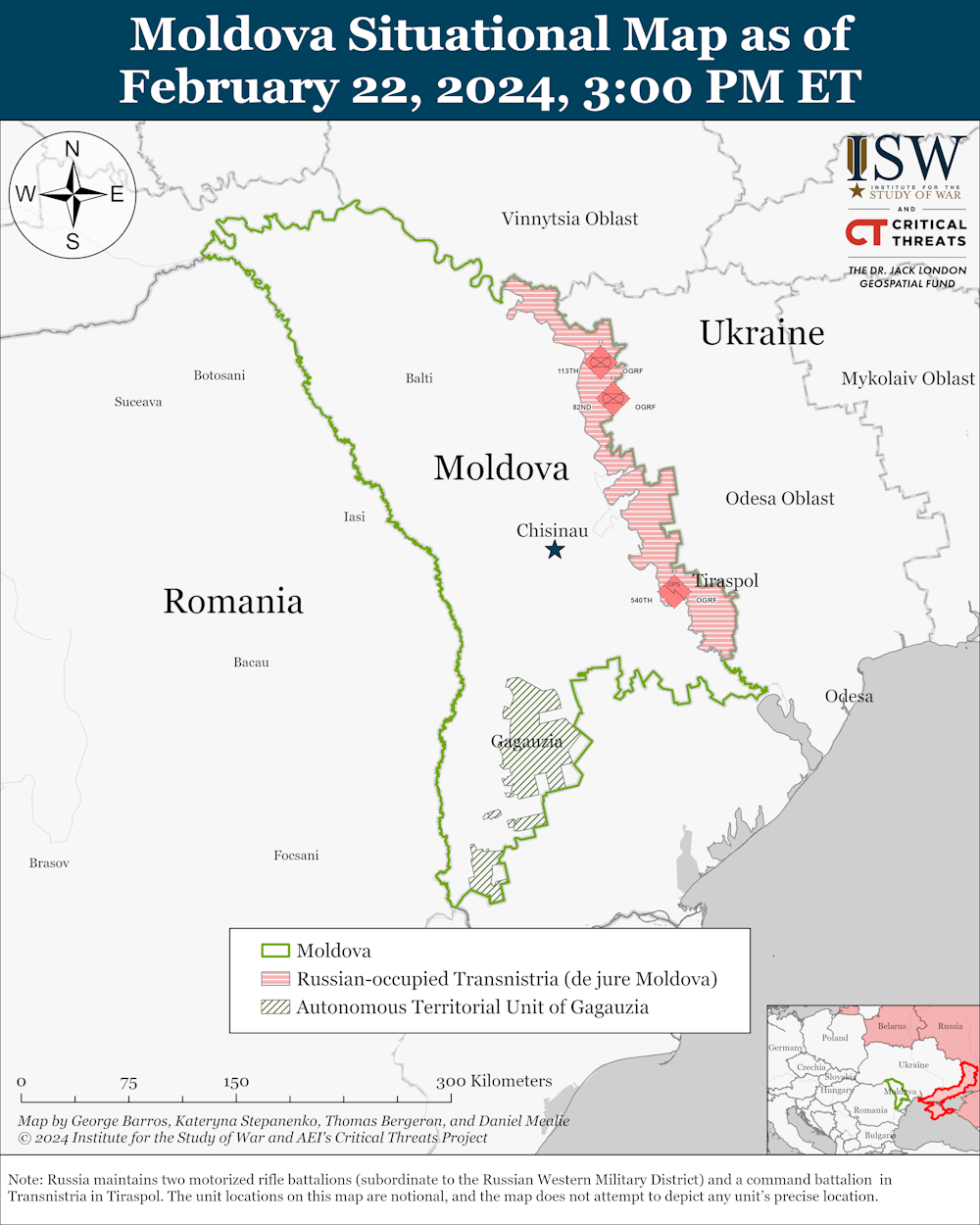
Moldova’s election result will certainly have come as a relief not only to Sandu and her supporters but also to Moldova’s western partners. It is the first time that a popularly elected president has won a second term in the tiny landlocked former Soviet satellite. The country borders Romania and Ukraine and has a small but significant Russian breakaway region, Transnistria, as a constant reminder of Moscow’s influence in the region.
Moldova’s election presents a clear difference to the Georgian parliamentary election results on October 26, which saw an openly pro-Russian Georgian Dream party win an election considered as neither particularly free nor fair, in results that the Georgia’s opposition-aligned president and western pollsters allege have been rigged.
Sandu’s win, by contrast, demonstrates both the appeal of the idea of a European future and the limits of Russian interference. Yet the understandable enthusiasm about the result in Moldova also needs to be tempered by a more careful analysis of some of the deeply entrenched societal cleavages that the elections have all but confirmed and the difficulties that lie ahead.
Deep divisions
Sandu’s win overall looks impressive. But she did not win the vote in Moldova itself, where Stoianoglo beat her by some 30,000 votes. What saved Sandu, like the EU referendum, was the strong support for her among voters in the diaspora, where she captured almost five times as many votes as Stoianoglo.
Just over 270,000 votes (83%) of the votes cast by Moldovans living abroad, predominantly in western Europe and north America, saw her comfortably across the finishing line. There may be good reasons not to distinguish between votes from inside and outside Moldova – but the optics are not good.
Nor can the overall margin of Sandu’s victory gloss over the fact that her supporters inside the country are predominantly concentrated in the capital and the centre of the country. In the capital Chisinau, in the centre of Moldova, Sandu won with 57%, representing almost one-third of her total vote inside the country. In the north and south of the country, Stoianoglo generally took the largest vote share.
In the country’s second-largest city, Balti in the north, he won 70% of the vote, compared to Sandu’s 30%. In the southern autonomous region of Gagauzia, a hotbed of pro-Russian, anti-European activism, Sandu obtained less than 3%. In Transnistria, Sandu came away with just 20% of the vote.
Map of Moldova showing the breakaway regions of Transnistria and Gaugazia. Institute for the Study of War
These results are not surprising, given the outcome of the first round of the elections. But they represent fall in support for Sandu compared to in 2020, when she beat the then incumbent, socialist party leader Igor Dodon. Four years ago, Sandu obtained over 250,000 votes more than Dodon, winning almost 58% of the total vote. While she took the overwhelming share of the diaspora vote then as well, she also bested Dodon in most constituencies in the south.
Dodon campaigned for Stoianoglo in this election, but much of the challenger’s support was very probably due to a massive pro-Russian interference campaign that capitalised on many Moldovans’ fears and frustrations. Pro-Moscow messages aimed to capitalise on fears about being dragged into Russia’s war against Ukraine.
But there was also frustration with a government that has made little progress on much needed anti-corruption reforms and presided over a serious cost-of-living crisis in the aftermath of the Covid-19 pandemic and made worse by the war on Moldova’s eastern neighbour. Sandu’s party, the Party of Action and Solidarity (PAS) won a commanding majority in the 2021 elections – so failures of the government are seen as failures of Sandu and her agenda.
Challenges ahead
That Sandu won the presidency again, and against these odds, demonstrates her resilience. But it can’t be taken for granted that her party will similarly prevail in parliamentary elections due by the autumn of 2025. She may well be forced into a difficult cohabitation with a potentially socialist-led government next year. In a parliamentary democracy, in which the powers of the government by far exceed those of the president, this could significantly slow down Moldova’s EU accession negotiations.
But there are also some silver linings on the horizon. That Sandu won clearly demonstrates the limits of Russian interference. There is a core part of the Moldovan electorate that cannot be swayed by Russian misinformation or vote buying. This is a basis on which Sandu and PAS can build.
Perhaps more importantly, Sandu and Stoianoglo both sent conciliatory signals on election eve. Stoianoglo emphasised the importance of respecting the outcome of the democratic process and expressed the hope that Moldovans would now move beyond hatred and division. Sandu acknowledged the concerns of those who had not voted for her and promised to serve as the president of all Moldovans and to work for the country’s further development.
If they both stay true to their word, Moldova may finally break with a past of repeated political crises and economic stagnation.
Stefan Wolff is a past recipient of grant funding from the Natural Environment Research Council of the UK, the United States Institute of Peace, the Economic and Social Research Council of the UK, the British Academy, the NATO Science for Peace Programme, the EU Framework Programmes 6 and 7 and Horizon 2020, as well as the EU’s Jean Monnet Programme. He is a Trustee and Honorary Treasurer of the Political Studies Association of the UK and a Senior Research Fellow at the Foreign Policy Centre in London.
The Fortune-Teller by Caravaggio (1595-8).Louvre Museum
In the late 1740s, Samuel Meadwell arrived in London. A “raw country fellow” from Northamptonshire, he had come to work as a distiller’s apprentice and hoped to make his fortune.
When a pair of women told him there was “something very particular in [his] face”, he was intrigued. They introduced him to a widow called Mary Smith, who allegedly practised “the art of astrology, before very great people, princes, and the like”. She persuaded Meadwell to wrap all his money in a handkerchief with two peppercorns, some salt and a little mould. After waiting three hours, she explained, he would discover a great fortune.
Meadwell discovered only that his money had been replaced with scraps of metal. Smith was deported for fraud, while Meadwell learned a lesson about city life. He bemoaned his naivety – but he was not alone in believing in the power of astrologers, or the potential for magical methods to reveal weighty secrets.
In early modern Britain (1500-1750), divination was widespread. People consulted diviners to find stolen goods, learn about the next harvest, or scrutinise their marriage fortunes. Sometimes they wanted to know what diseases or disasters loomed, and several nobles exhibited an unwholesome interest in the monarch’s date of demise.
The sex of unborn children was another topic of speculation: when Anne Boleyn gave birth to the future Elizabeth I in 1533, she disappointed not only Henry VIII, but also a whole host of “astrologers, sorcerers, and sorceresses” who had assured the couple that a male heir was forthcoming.
Diviners came from across the social spectrum. Learned astrologers could command audiences with kings and queens. Most people, however, relied on the services of a local cunning-man or woman.
There were also so-called “Egyptian” fortunetellers who roamed the country reading palms. These travellers probably did not have African origins. A hostile 1673 work claimed that they were “great pretenders” who sought to dupe “the ignorant” by associating themselves with Egyptians, “a people heretofore very famous for astronomy, natural magic, [and] the art of divination”.
The authorities did not approve. In 1530, an act passed by Henry VIII’s parliament sought to expel “Egyptians” from the country, complaining that they conned people using “great, subtle, and crafty means” such as fortunetelling.
Underpinning many divinatory methods was the belief that God’s divine plan was encoded in the patterns of the natural world. Palmistry relied on interpreting the marks God had traced on the body. Astrologers, meanwhile, focused on the movements of the planets.
Between 1658 and 1664, a woman called Sarah Jinner published almanacks containing astrological readings for the forthcoming year. She ranged from predicting “desperate and unreconciliable wars” to cautioning women that: “We find Mercury in Pisces retrograde in the 6th House, [which] denoteth that servants will generally be cross, vexatious, and intolerable, especially maidservants.”
Meeting a Swine. From Dr Solman’s translation of Aristotle’s Golden Cabinet of Secrets (c. 1690).
The behaviour of animals was also considered portentous. A pamphlet from circa 1690 declared that “to meet a swine the first thing in a morning, carrying straw in its mouth, denotes a maid, or widow, shall soon be married, and very fruitful in children”. On the other hand, magpies flying around you signified “much strife and brawling in marriage”.
When a great murmuration of starlings was spied battling in the air above Cork in 1621, people whispered that it signified divine anger. Eight months later the city was devastated by a fire.
Other divination practices relied on chance. Cheap pamphlets outlined ways of divining with dice, the idea being that God determined the outcome. Another practice was to open a Bible randomly and consult the first passage that caught the eye. Bibles could alternatively be used to catch thieves. The usual method was to insert a key into the Bible, recite the names of the suspects, and wait for the Bible or the key to move.
A similar technique involved suspending a sieve from a pair of shears. The sieve would rotate when a thief’s name was mentioned.
Divination and the authorities
These practices were viewed with suspicion by the ecclesiastical and secular authorities, especially after the 16th-century Reformation.
Divination by the sieve and shears in Cornelius Agrippa, De Occulta Philosophia (1567). Opera Omnia
Most dangerous of all was divination by consulting spirits. The Scottish cunning-man Andrew Man claimed to have an angelic adviser, Christsonday, who told him whether upcoming years would be good or bad. He was also in a sexual relationship with the Fairy Queen, who had promised to teach him to “know all things”. Leading local figures concluded that Man had really been cavorting with devils. He was tried for witchcraft, and executed in 1598.
In general, however, cunning-folk enjoyed good standing within their communities. Currents of scepticism flowed faster during the 18th-century Enlightenment. A 1762 work expressed a common view when it blamed belief in divination on the “ignorance and darkness” that “covered the minds of mankind”. But divinatory practices were themselves a quest for enlightenment, and the prospect of unravelling the mysteries of the future has remained compelling up to the present day.
Looking for something good? Cut through the noise with a carefully curated selection of the latest releases, live events and exhibitions, straight to your inbox every fortnight, on Fridays. Sign up here.
Martha McGill receives funding from the British Academy.
Increasing rights for Indigenous people and local communities was one of the few steps forward at Cop16. Philipp Montenegro, CC BY-NC-ND
Progress at the UN’s biodiversity summit, Cop16, in Cali, Columbia, has been slow. Frustratingly so.
There were high hopes that the Colombian hosts could coordinate action between developed and developing countries towards reaching the landmark global biodiversity agreement reached in Montreal, Canada at Cop15 two years ago. But after two weeks and one long night, negotiations ended abruptly. Many delegates had to leave to catch flights home with key issues unresolved.
This conference started with alarming news that the latest edition of the red list – the official record of threatened species – shows that more than one third of tree species face extinction in the wild. That’s more than the number of threatened birds, mammals, reptiles and amphibians combined.
Urging negotiators to recognise the seriousness of this nature crisis, Colombia’s president Gustavo Petro warned they were facing “the battle for life”.
There was certainly no shortage of people seeking solutions.
In the heart of the city, Cop16’s green zone hosted vibrant music, film screenings, indigenous arts and crafts. Local people, businesses and conference delegates discussed creative and collaborative ways to address the nature crisis.
Over in the blue zone, the official conference space, there was a notable increase in the diversity of communities participating across side events and pavilions. The links between biodiversity and human health were highlighted. So too was the importance of nature for water and food security.
In his opening video message, UN secretary general Antonio Guterres urged countries gathered to “engage all of society” as “la Cop de la gente” (a Cop of the people).
So protests from Indigenous people and local communities were particularly powerful. Including greater recognition for these groups in the final decisions from the meeting was a rare sign of progress. A new fund to ensure that these groups would receive a share of the profits from the commercial use of digital sequence information – genetic information from native plants and animals – was another victory.
A new set of principles developed by the UK government to prioritise gender issues in conservation and ensure fair access to the benefits biodiversity action for all marginalised groups received widespread support.
The focus on economic resilience was more prominent than ever, with two days dedicated to business and finance. In 2018, only 300 businesses attended Cop14 in Egypt. In Cali, this number was 3,000.
Delegates assemble for the negotiations at Cop16. Philipp Montenegro, CC BY-NC-ND
Private investors, pension funds, the insurance industry and public banks stressed the importance of creating robust measures of biodiversity improvement. Business sectors focused on transition plans that could support fair and transparent means of reporting progress. The nature tech sector is growing too, with start-ups expected to attract up to $2 billion (£1.5 billion) in investments by the end of 2024.
Back in the negotiating halls, delegates faced an uphill struggle. Only 44 out of 196 national plans to protect biodiversity have been updated to reflect the new targets. So, it’s no surprise that a gap is widening between current reality and the ambitious set of 23 targets which governments must reach by 2030. While countries agreed to a progress review in 2026, no consensus was reached on the indicators to be used. Progress was painfully slow.
Negotiators debated how the global agreement on biodiversity should interact with its sister conventions on climate and desertification. Further discussions next year might identify how this could work but this probably won’t lead to drastic change. Some countries, including India and Russia, still seemed unwilling to accept the critical risks posed to nature and society of exceeding the 1.5°C global target for climate change.
Many developing nations were concerned that greater integration between the climate crisis and biodiversity would lead to “double counting” of funding with the danger that developed countries could backtrack on their promises to support dedicated action on nature. Others, including the EU, argued that action to conserve and restore nature was an essential part of tackling all environmental and societal global challenges.
The deadlock between these positions continued for days. In the final hours of Cop16, negotiators reached a compromise that sets out a more integrated pathway for bringing action on climate and nature together. While the effects of climate change directly exacerbate biodiversity loss, restoring nature can be a powerful tool in the fight to mitigate the climate crisis and benefit biodiversity. Nature-based solutions – measures like restoring peatlands and wetlands, planting trees and mangroves – help build that resilience.
Heads of state and ministers joining at the midpoint of the meeting pointed out the need to ensure that nature is protected both for its own sake and for the communities that depend on healthy ecosystems for their livelihood and wellbeing.
But at the end of a long final night, these words were not accompanied by concrete plans for action or the financial commitments about how nature protection should be paid for that many at Cop16 were hoping for.
Whole of society, all of government?
The global biodiversity agreement set in 2022 called for a whole of society approach to address the nature crisis. Cop16 certainly delivered. From local communities to huge businesses, there was a spirit of rolling up sleeves and putting investment and innovation to work using nature-based solutions to restore and conserve biodiversity.
One of many packed side-events which bought the ‘whole of society’ together at Cop16. Philipp Montenegro, CC BY-NC-ND
The same energy and commitment was clear from many of the local and sub-national governments assembled at Cop16. The first gathering of Mayors for Nature demonstrated significant commitment to action.
Leaders from California and Quebec set the tone by investing in large-scale programmes, with Quebec not only committing to fund their own biodiversity action but also contributing to the global biodiversity fund – the first regional government to do so.
But national governments struggled to move forward. The complexity of addressing biodiversity and its necessary interactions with sectors such as agriculture, transport and mining, as well as concerns over historic injustices between developing and developed countries, was perhaps too much for Cop16 to resolve.
The risk is that, as governments navigate these challenges, the private sector could accelerate action without scrutiny. I worry that the lack of policy coordination could deter investors and slow the pace of action that local communities and regional governments want to make. Rather than waiting for global consensus, groups can catalyse change while holding each other accountable to make swift progress to save nature.
Don’t have time to read about climate change as much as you’d like?
Harriet Bulkeley receives funding from the European Commission and currently serves as an advisor to the UK Department of Environment, Food and Rural Affairs.
Source: The Conversation – UK – By Vanessa Newby, Assistant Professor, Institute of Security and Global Affairs, Leiden University
After a month of heavy bombardment, and despite continuing its military campaign and clearing border villages in south Lebanon, Israel is reportedly indirectly negotiating a peace deal with Hezbollah leaders. The terms of a ceasefire require the full implementation of UN resolution 1701, with a presence of around 10,000 Lebanese armed forces (LAF) soldiers stationed along the “blue line” which divides Israel from Lebanon and the Golan Heights. But making 1701 work has always proved a challenge.
There can be no doubt that since its inception in 2006, resolution 1701 has never been fully implemented in south Lebanon. Adopted unanimously in 2006, the purpose of the resolution was to end hostilities between Hezbollah and Israel, with the UN security council calling for a permanent ceasefire.
A key objective of 1701 is to ensure the area south of the Litani River in south Lebanon is free from any weapons other than those of the Lebanese state and the United Nations Interim Force in Lebanon (Unifil)
It is on this issue that Unifil has received the most opprobrium. International observers and politicians have criticised Unifil’s inability to locate and remove Hezbollah’s weapons. The IDF blames Unifil for failing to prevent the rearmament of Hezbollah and for allegedly not doing enough to prevent Hezbollah attacks on Israel.
But the question of why resolution 1701 was not fully implemented is not a simple one. Multiple actors are involved, of which one key player is the LAF. A large part of fulfilling resolution 1701 means ensuring that LAF are deployed in southern Lebanon as the only legitimate provider of force representing the Lebanese government. Understanding their role and the constraints they face is an important part of the puzzle.
Prior to the outbreak of the Lebanese civil war in 1975, south Lebanon was sparsely populated and regarded as strategically unimportant. When civil war broke out, political and operational factors meant the LAF could not deploy to the south.
These factors included the defection of LAF officers to sectarian militia and a lack of sufficient resources. The influence of neighbouring Syria and the heavy presence of militia groups, plus the occupation of the “zone of security” in south Lebanon by the IDF and its proxy militia the South Lebanon Army complicated matters.
After the 2006 war, LAF became an important official party to resolution 1701 and Unifil worked closely with them to fulfil three main objectives: first, to assist with their re-introduction into the area of operations; second, to improve their operational capabilities; and third, to seek international funding for the LAF to improve their technical capabilities.
Hunting for Hezbollah
Unifil is mandated to assist LAF in taking steps towards the establishment of an area free from armed personnel between the blue line and the Litani River.
Map of sourthern Lebanon showing the blue line which covers the Lebanese-Israeli border and extends to cover the Lebanese-Golan Heights border. Striving2767, CC BY-NC-SA
Until recently LAF and Unifil often conducted joint patrols to search for unexploded ordinance and unauthorised weapons. If Unifil independently discovered an illegal weapons cache, it would notify the LAF, which handled the weapons’ recovery.
This approach helped Unifil sidestep confrontations with the local population, on whose support they depend to patrol safely and execute the mandate. But while this policy was supportive of the goals of 1701, ultimately it proved ineffective.
There were a number of reasons for this. First, the LAF faces legal restrictions on entering private property. If it suspects illegal weapons are stored on private land, the LAF needs a court order to enter the property. This takes time, which gives the owner of the property the opportunity to remove the weapons. To fully implement 1701, this legal barrier would need to be removed.
The LAF also has to walk a political tightrope between different political factions in Beirut, and is also sensitive to the need for local support in the south. While LAF is undoubtedly popular in Lebanon, many in the south are Shia Muslims with strong loyalties to Hezbollah and the Amal movement (a Shia militia which now operates as a political party in Lebanon). These groups offer both a degree of security and material help in the form of social services.
While conducting field research in southern Lebanon from 2012 to 2018, I discovered that civilians in the region understand that it is difficult for LAF to hunt aggressively for weapons. This is because they need to retain a working relationship with Hezbollah which – with its allies – constitutes the political majority in Beirut. Ridding south Lebanon of Hezbollah weapons will require political cover from Beirut.
Another problem the LAF has faced is getting hold of modern weaponry due to Israeli opposition, despite the LAF enjoying strong international support. Israel’s “qualitative military edge” strategy, supported by the US, means that it campaigns internationally against any of its border states obtaining weapons deemed to pose a threat to its security. This has on occasion prevented LAF from accepting essential defensive equipment, such as armoured vehicles and air defence systems, from its European friends.
Preventing LAF from getting defensive equipment contradicts the EU and US stated goal of strengthening LAF. It also supports Hezbollah’s claim that it can only hand over national security to LAF when it is properly equipped to defend Lebanon. A civilian I interviewed in south Lebanon in 2013 summed up the paradox: “We would prefer that the international community made a decision to allow the military to be armed properly, and then we don’t need the resistance.”
Ultimately the political and legal tightrope the LAF walks in Lebanon is deeply implicated in why resolution 1701 has never been fully implemented. Neither a national army nor a peacekeeping force are capable of enforcing a Hezbollah withdrawal in the absence of political and legal agreement in Beirut, or local support in south Lebanon.
Any calls for the full implementation of 1701 will require the unqualified support of all parties to 1701. This is not just those involved in the conflict – Israel, Hezbollah and the Lebanese government – but also various international stakeholders including the US, EU and all countries with UN peacekeepers in Lebanon. It will be a delicate balance.
Vanessa Newby does not work for, consult, own shares in or receive funding from any company or organisation that would benefit from this article, and has disclosed no relevant affiliations beyond their academic appointment.
Türkiye’s parliament must reject the draft amendment to the country’s ‘espionage’ laws which, if passed, would significantly threaten the ability of civil society organizations to operate freely within the country, said more than 80 organizations ahead of an expected vote in parliament. Scores of other organizations issued similar statements, calling on the legislators to reject the proposal.
If passed, this law would represent a significant threat to the ability of civil society to operate freely within the country
If approved, the new article – publicly referred to as the “agents of influence” law – would amend the penal code and criminalize unspecified “acts” that are “in line with the strategic interests or instructions of a foreign state or organization against the security or domestic or foreign political interests of the State in line with the strategic interests or instructions of a foreign state or organization.”
“If passed, this law would represent a significant threat to the ability of civil society to operate freely within the country,” the civil society organizations said in a joint statement.
The signatories point at the fact that the draft law fails the test of legal certainty and foreseeability, a fundamental tenet of law – meaning that articles of law must be understandable and predictable by the relevant people; individuals must be able to foresee which acts or omissions will make them criminally liable and what punishment will be applied for the act or omission committed.
The proposed legislative package, passed by the Parliamentary Justice Commission on 23 October, is expected to be voted on by members of the Turkish Parliament in the coming days.
If the provision is adopted, the rights to freedom of expression of all, including seeking and receiving information, would be also at risk of being violated
“We are also concerned that the proposed law fails to set out clear criteria for what specific acts constitute a criminal offence without adequate safeguards or effective remedies against potential abuses of the law,” said the organizations.
“Arbitrary interpretation of broadly worded, vague laws are used to target and prosecute human rights defenders, journalists, lawyers and many other civil society organizations in Türkiye. If the provision is adopted, the rights to freedom of expression of all, including seeking and receiving information, would be also at risk of being violated. It would create a chilling effect on important human rights work, and potentially impede their activities.”
Background
The legislative package proposes to add a new penalty, Article 339/A “Committing offenses against the security or political interests of the state” under the seventh section, “Crimes Against State Secrets and Espionage,” of the Turkish Penal Code (Law No. 5237).
Terminology in the proposed article is vulnerable to abuse. For example, “strategic interests,” “instructions,” “organization,” and “domestic or foreign political interests of the State” are overly broad and vague. Ill-defined or overly broad laws can be susceptible to arbitrary application and abuse, thus risk being instrumentalized to target people that the state authorities consider dissenting or criminalize the legitimate activities of civil society organizations, such as those documenting human rights violations in the country.
The proposed article is in violation of international human rights law and standards as well as Türkiye’s Constitution and national laws as it threatens freedom of expression and violates the principle of legality which includes the principle of foreseeability, a fundamental concept of criminal law.
As well as the signatories to this statement, numerous other organizations have published their own statements including the Association of Civil Society Development Center (see here), the Women’s Platform for Equality (see here), the Third Sector Foundation of Turkiye (see here), the International Press Institute (see here), the Committee to Protect Journalists (see here), Human Rights Watch (see here), journalism organisations, trade unions and others (see here).
The number of signatories to thejoint statementis increasingly daily. A copy of the statement is being sent to all Turkish MPs.
SIGNATORIES 1. About Life Foundation (YADA) 2. AG-DA Gender Equality Solidarity Network 3. Ali İsmail Korkmaz Foundation 4. Altyazı Cinema Association 5. Amnesty International Türkiye 6. Ankara Initiative for Freedom of Thought 7. Ankara Solidarity Academy 8. Another School is Possible Association 9. Association for Monitoring Equal Rights 10. Batman Bar Association 11. Bodrum Women’s Solidarity Association 12. Center for Spatial Justice 13. Citizen’s Initiative 14. Citizens’ Assembly 15. DEMOS Research Association 16. Dersim Bar Association 17. Diyarbakır Bar Association 18. Families of LGBTs in İstanbul 19. Free Colors Association 20. GALADER-Ankara Rainbow Families Association 21. Green Thought Association 22. Hakkari Bar Association 23. Human Rights Agenda Association 24. Human Rights Association 25. Human Rights Association Ankara Branch LGBTI+ Commission 26. Human Rights Association Istanbul Branch 27. Human Rights Foundation of Türkiye 28. Izmir Women’s Solidarity Association 29. Kaos GL Association 30. Katre Women’s Counceling and Solidarity Association 31. Kirkayak Culture – Migration and Cultural Studies Center 32. Kuşadası Caferli Beautification and Solidarity Association 33. Lambdaistanbul LGBT Solidarity Association 34. Lawyers for Freedom Association 35. Leader Women Association 36. Life Memory Freedom Association 37. Mardin Bar Association 38. Marmaris Public Assembly 39. May 17 Association 40. Media and Law Studies Association 41. Merdiven Social Initiative and Development Association 42. Migration Monitoring Association 43. Muamma LGBTI+ Education Research and Solidarity Association 44. Muğla Environment Platform 45. Murat Çekiç Association 46. Muş Bar Association 47. Natural Life Association 48. Nonviolence Education and Research Center 49. P24 Independent Journalism Platform 50. Press, Publishing, Communication, and Postal Workers’ Union 51. Pride Istanbul 52. Progressive Journalists Association 53. Red Umbrella Sexual Health and Human Rights Association 54. Rights Initiative Association 55. Romani Godi – Association for Roma Memory Studies 56. Rosa Women’s Association 57. SES Equality and Solidarity Association 58. Siirt Bar Association 59. Social Policy, Gender Identity and Sexual Orientation Studies Association 60. Support for Improvement in Social and Economic Living Association 61. Şanlıurfa Bar Association 62. Şırnak Bar Association 63. Tarlabaşı Community Support Association 64. The Civil Society in the Penal System Association 65. The Confederation of Public Employees’ Trade Unions 66. Trans Pride Istanbul 67. Truth Justice Memory Center 68. Turkish Handicap Association 69. Türkiye Human Rights Litigation Support Project 70. Türkiye Journalists’ Union 71. Türkiye Press, Publishing, and Printing Employees’ Union 72. University Queer Studies and LGBTI+ Solidarity Association 73. Van Bar Association 74. Velvele 75. Women for Women’s Human Rights Association 76. Women’s Culture, Arts, and Literature Association 77. Women’s Solidarity Foundation 78. Women’s Time Association 79. Young Thought Institute 80. Youth Organizations Forum 81. Yuva Association
To say that Paddington Bear is a beloved British icon would be something of an understatement. The Peruvian bear, who arrived at Paddington station with nothing but his suitcase, a love of marmalade sandwiches and a luggage tag reading “please look after this bear”, was created by Michael Bond in the 1958 classic A Bear Called Paddington.
Bond went on to write 29 Paddington books, and the bear has appeared in TV adaptations for nearly 50 years. The 2014 Paddington film was launched to much acclaim, leading to a sequel in 2017. Paddington even appeared with Queen Elizabeth II during the Platinum Jubilee celebrations in 2022, cementing his status as a quintessential symbol of British identity.
In the third film, premiering November 8, Paddington will visit Peru in search of his dear Aunt Lucy. As part of the marketing campaign for the new film, the UK Home Office has granted Paddington his own British passport.
What can Paddington Bear’s citizenship journey teach our leaders?
Join The Conversation UK and migration experts in London on November 16 for a screening of Paddington Peru and a discussion on migration, citizenship and belonging.
“We wrote to the Home Office asking if we could get a replica, and they actually issued Paddington with an official passport,” one of the film’s producers said. “You wouldn’t think the Home Office would have a sense of humour, but under official observations, they’ve listed him as Bear.”
Arriving from Peru in need of help, Paddington is often afforded the status of refugee-in-chief – even immortalised in Banksy artwork. Bond was inspired by Jewish refugees arriving in the UK from Europe during the second world war when he created the character.
In being granted British citizenship, Paddington has fared far better than most people arriving in the UK in need of help. Under the current system, asylum seekers must navigate a complex process, often over many years, in which they are disbelieved, excluded and stigmatised. A third of all people seeking asylum in the UK are refused at their initial application.
Should they manage to be granted refugee status, after five years they may apply for indefinite leave to remain. Should that be granted, after another year they may apply for citizenship status. For this to be granted, the applicant must be able to prove language skills, have passed the “life in the UK” test and be shown to be of “good character”.
Giving Paddington a passport is an unsettling display of double standards from the same Home Office that has overseen the hostile environment and other harsh asylum policies. The Home Office has made conditions in the UK as difficult as possible for people settling from overseas and has subjected people arriving in the UK to seek asylum – much like Paddington – to delays, detention, destitution and deportation.
In its treatment of the Windrush generation, the Home Office has deported people who have legally lived and worked all their lives in the UK – and has failed to compensate victims. For the Home Office then to issue a passport to a fictional character as a publicity stunt is, to put it mildly, problematic.
At the same time, the whole episode is a very clear reflection of how access to British citizenship really works. Access to British citizenship for people arriving in need of safety depends on proving yourself to be deserving of refugee status, and then of citizenship status.
Research has shown that people tend to see child refugees (like those who inspired Bond to create Paddington) as the most deserving of help. Paddington has also shown himself to integrate into the British way of life, sipping tea and eating marmalade sandwiches in a cosy duffel coat and wellies.
This supposedly deserving refugee contrasts against those seen as undeserving – most often men of colour who are seen as “invading” in “swarms”. Until recently, anyone who arrived in the UK on a boat (as Paddington did) to claim asylum would be at risk of being sent to Rwanda to have their claims processed. Keir Starmer has indicated his openness to similar offshoring deals.
The stunt also highlights how valuable a commodity British citizenship has become. While people from the Windrush generation and their descendants worked and paid taxes in the UK all their lives, only to be told that they weren’t really British, citizenship is far easier to acquire for those on investor visas, which require a £2 million investment in the UK.
The citizenship acquisition process itself is also expensive, costing upwards of £5,000 per application. While most refugees will struggle to get British citizenship, for Paddington it came relatively easily as an investment in the UK film industry.
I won’t begrudge Paddington his passport. He’s waited long enough for the security and stability of a status denied to so many non-citizens around the world. However, this stunt has highlighted both the double standards of a hostile Home Office attempting to create the illusion of benevolence, and the realities of a citizenship acquisition process which continually fails the vulnerable.
Katie Tonkiss receives funding from the Economic and Social Research Council.
Traditionally, Britain was regarded as the class society. And class was pre-eminent among the factors used to explain political party allegiance. In broad terms, working-class voters chose Labour, the party set up to represent them. Middle-class voters chose the Conservatives, the party that represented homeowners and business owners.
Since the 1960s, there has been a decline in class-based voting. Our social background is no longer such a good predictor of our party.
That may be because there are more parties to choose from, or because the big two have changed their offering to appeal to a wider audience, but it’s also about class-based abstention. In the 1960s, most working-class people voted in elections, and when they did so they tended to vote for Labour. Now, many more working-class people do not vote at all. And when they do, they are less drawn to any party in particular.
Class differences with respect to turnout have thus become greater than class differences with respect to vote choice. Or put another way, class is now more important as a participatory divide than it is as a partisan divide.
According to the long-running British Election Study (BES), the difference in reported turnout between people with working-class occupations and middle-class occupations was less than 5 percentage points in 1964. In 2024, it was 16 percentage points.
Put into context, the difference in reported turnout between the under-30s and the over-60s in 2024 was 20 percentage points. This age gap is the subject of great concern and much discussion. We worry a lot about why young people are not voting. Numerous initiatives have been launched to try and get young people more involved in politics. Yet the class gap, of a very similar magnitude, has received almost no attention at all.
BES data over the years shows us that the working class has generally been somewhat less likely to vote than the middle class. But from 1964 to 2001, the difference in turnout rates was fairly modest. Turnout bumped along, up and down, but the relative difference did not change much, and turnout among both groups tended to increase and decrease in tandem.
However, since 2001, the turnout patterns between the two classes have sharply diverged. In the election of 2001, overall turnout was the lowest since 2018 at just 59.4%. The middle-class vote bounced back after that nadir but the working-class vote did not, remaining instead at historically low levels. Before 2001, the average class gap in turnout was 6 percentage points. So today’s 16 percentage-point gap is nearly three times greater than the pre-2001 level.
The widening class gap in turnout, 1964-2024:
The chart below shows how the size of this class gap on turnout compares with the size of the class gap on support for Labour, the party which was originally founded to represent working-class interests.
In 1964, among people with working-class occupations, 11% did not vote, 55% voted for Labour, and the remaining 34% voted for the Conservatives or another party. Among people with middle-class occupations, 7% did not vote, just 18% voted for Labour, and the remaining 75% voted for the Conservatives or another party. The class gap on turnout was therefore just 5 percentage points, compared with the class gap on Labour support of 37 percentage points.
The class gap in turnout has overtaken the class gap in support for Labour, 1964-2024:
Over time, Labour has become a less distinctively working-class party. This has particularly been the case since the New Labour period, when Tony Blair famously rebranded the party to project a more middle-class image.
The result has been that the size of the class gap on Labour support has declined, while the size of the class gap on turnout has increased – to the point in the early 2000s where class differences on turnout overtook class differences on support for Labour.
These findings have important implications. There is a widespread belief that class has become less important in British politics, and so does not merit as much attention as it once did. This belief is false.
While it is certainly true that class divisions are not as evident as they once were in terms of structuring vote choice, this is because class has been pushed outside the political system. Whereas previously the middle class and working class were divided on who to vote for, now they are divided on whether to bother voting at all.
The authors do not work for, consult, own shares in or receive funding from any company or organisation that would benefit from this article, and have disclosed no relevant affiliations beyond their academic appointment.
The neglect of working-class voters in the past few decades has had profound consequences for British political life. Disillusioned with the two main parties, many have turned to Nigel Farage’s Reform and others are simply not voting at all.
With the next election likely to be a tight race in many key constituencies, something must be done to win these voters back.
But as we find out in the fifth and final part of Know Your Place: what happened to class in British politics, a podcast series from The Conversation Documentaries, the relationship between class and voting could be about to become even more complicated. So it’s difficult for any party to know how to put an electoral coalition together.
Paula Surridge, professor of political sociology at the University of Bristol, has identified what she calls cross-pressured voters as a key demographic in post-Brexit British politics. These are people who are probably economically left wing – they want better public services and wealth redistribution – but who are more right wing on social issues such as immigration and crime and punishment.
In a system like we have in Britain, where we’ve got first past the post and two big parties to choose from, that creates lots of swing voters who, when economics is their priority as we saw in 2024, they might lean more to Labour. When immigration or Brexit or something along that dimension is their priority, they might lean towards the Conservatives or a party like Reform.
Want more politics coverage from academic experts? Every week, we bring you informed analysis of developments in government and fact check the claims being made.
Appealing to such voters is therefore a real challenge. And while the perception is that they’ve flocked to Farage, Surridge says that’s not the full picture at all.
Many working-class voters were prioritising economic issues, public services. They don’t, on the whole, vote Reform for that reason. The voters for whom immigration was absolutely their most important issue, which are a much smaller group, they were very likely to vote Reform.
Reform came second in 98 constituencies – 89 of which ended up going to Labour. A lot of those constituencies were won on wafer-thin majorities, and they should be considered highly at risk in the next election. So working out how to appeal to cross-pressured voters is key.
The bigger challenge, however, is winning voters back from the sofa. The truth is that there is a more salient class divide in Britain: who actually votes at all.
According to Oliver Heath, professor of politics at Royal Holloway, University of London, who has tracked the history of turnout and class over the past 20 years, working-class voters are staying away from the ballot box. The first real signs of this were in 2001, when Tony Blair won a second term with a turnout of 59%, one of the lowest in British history.
2001 was when turnout fell off a cliff … and it dropped across all segments of society. But since then, turnout has rebounded quite a large extent amongst middle-class voters, but stayed very low amongst working class voters.
For decades working-class communities were assumed to vote Labour, and so Labour gave them relatively little political attention. Now, the tables have turned and its Labour constituencies in the Red Wall that are some of the most competitive in the country. But it won’t be easy for Labour to bring these voters back on side, says Heath.
Even after the great implosion of the Conservatives, the votes haven’t gone back to Labour. So, it’s hard to rebuild those connections once they’ve come undone.
Meanwhile, Rosie Campbell, professor of politics at King’s College London, warns that we can’t presume to know what middle-class voters will do either.
The backlash of the middle class in some areas against the Conservatives in what you would expect to be traditional Conservative heartlands is really interesting. And I think what it’s showing is that social change and demographic change are shifting our political landscape.
Pay attention to the middle-class vote in the next election. Shutterstock/William Barton
All this means that British politics is more fractured than ever, according to John Curtice, senior research fellow at the National Centre for Social Research.
It looks as though our politics isn’t two-party politics now, and it’s never looked less like two-party politics at any stage since 1945 … therefore there are many potential options as to how things might play out.
One of those options is a radical disruption to the class system itself, potentially triggered by artificial intelligence. A question that Curtice is asking himself:
Will class inequality still be articulated through the difference between people in working-class jobs and those in middle-class jobs, or those people who are very much at the creative end of middle-class jobs, who AI are probably not going to be able to replace, and those who are not quite in the same position?
In other words, AI has the potential to split the middle class and redefine the entire occupational structure of the UK. What will that do to our political preferences? It’s all to play for.
For more analysis on what else could shape the way class and politics interact in the future, listen to the full episode of Know Your Place: what happened to class in British politics on The Conversation Documentaries.
A transcript is available on Apple Podcasts.
Know Your Place: what happened to class in British politics is produced and mixed by Anouk Millet for The Conversation. It’s supported by the National Centre for Social Research.
Listen to The Conversation Documentaries via any of the apps listed above, download it directly via our RSS feed or find out how else to listen here.
Rosie Campbell receives funding from the ESRC, the UKRI andThe Leverhulme Trust. John Curtice receives funding from UKRI-ESRC. Vladimir Bortun, Geoffrey Evans, Paula Surridge and Oliver Heath do not work for, consult, own shares in or receive funding from any company or organisation that would benefit from this article, and have disclosed no relevant affiliations beyond their academic appointment.
Source: The Conversation – UK – By Mark Griffiths, Director of the International Gaming Research Unit and Professor of Behavioural Addiction, Nottingham Trent University
Hollywood actor Armie Hammer was accused of sending messages detailing cannibalistic fantasies in 2021.DFree/Shutterstock
After allegedly sending messages detailing cannibalistic fetishes, Hollywood actor Armie Hammer hopes to relaunch his career with a new podcastand movie.
Now, it seems, Hammer is laughing off the cannibalism allegations. Speaking to his first podcast guest, Tom Arnold, Hammer says, “I’m not gonna lie. I’m just like, Hey, I’m a cannibal!”
But being sexually aroused by the fantasy – or reality – of cannibalism is real. I should know, as it’s one of the subjects I discuss in my latest book Sexual Perversions and Paraphilias: An A-Z
Paraphilias are uncommon types of sexual expression often described as sexual deviations, sexual perversions or disorders of sexual preference.
They are typically accompanied by intense sexual arousal to unconventional or non-sexual stimuli such as enemas (klismaphilia), statues (agalmatophilia), teeth (odontophilia) and vomit (emetophilia).
To many people paraphilias may seem bizarre or socially unacceptable, representing the extreme end of the sexual continuum – and in some cases, such as zoophilia (having sex with animals) and necrophilia (having sex with dead people), may be illegal.
Paraphilias may be laughed off, dismissed or leave some people disgusted, but there’s a pressing need for more research into uncommon sexual behaviour given how little we know.
Sexual fantasies and behaviour are a fundamental part of the human experience. What is considered immoral or even illegal changes according to the social and temporal context. But whatever sexual desires are considered illicit or depraved in a particular time and place are also stigmatised.
Researching paraphilias, even the most distasteful or criminal, is essential to help safeguard vulnerable groups. Research can also help minimise the discrimination faced by those with uncommon sexual interests, helping ensure their access to sexual health care and psychological support, which can be lacking.
Vorarephilia
Vorarephilia – or “vore” – refers to being sexually aroused by the idea of being eaten, eating another person or observing this process for sexual gratification.
Most of the fantasies of vorarephiliacs involve being the ones eaten. Devouring someone could be viewed as the ultimate act of dominance by a predator and the ultimate act of submission by the prey.
The most infamous vorarephiliac is arguably Armin Meiwes from Germany.
Meiwes had allegedly been fantasising about cannibalism since his childhood and frequented cannibal fetish websites. He posted around 60 online adverts asking if anyone would like to be eaten by him.
In March 2002, Bernd Jürgen Brandes responded to Meiwes. They met up only once. Meiwes bit off Brandes’ penis, which the two of them cooked and ate.
Brandes was videotaped being stabbed to death by Meiwes in his bath. The body was then stored for Meiwes to eat.
Meiwes was eventually convicted of murder and imprisoned for life. However, it’s worth nothing that although some paraphilias are illegal, most cause no psychological or behavioural problems when they are engaged by consenting adults.
Dacryphilia
Dacryphilia is getting sexual arousal from seeing someone cry.
It showed there were sub-types of dacryphilia, even among such a small group. Based on the interviews, I identified three types of dacryphile.
Compassionate dacryphiles are sexually aroused by the compassion of comforting a crier.
Dominant or submissive dacryphiles are sexually aroused by either causing tears in a consenting submissive partner or by being made to cry by a consenting dominant partner.
“Curled lip” dacryphiles are sexually aroused by the curling of a protruded bottom lip during crying.
Eproctophilia
Eproctophilia involves being sexually aroused by flatulence.
In 2013, I published the first case study of an eproctophile. The case concerned a 22-year-old single man, Brad*, an American from Illinois.
Brad recalled that in middle school he had a crush on a girl who had farted in the class. Brad said:
This blew my mind [I] knew by simple biology that girls farted, but hearing that the girl I had been fawning over was capable of such a thing sparked a strange interest in me.
Brad first engaged in an eproctophilic act with a male friend in his mid-teens. Up to that point he had considered himself heterosexual. However, this changed when he heard his male friend fart.
Brad said it was “appealing in sound” and that he began fixating on it. He set up a bet with the wager being the right to fart in the loser’s face for a week. He continued to lose such bets once every few weeks for about two years.
Apotemnophilia
Apotemnophilia refers to being sexually aroused by the fantasy or reality of being an amputee.
Some apotemnophiles may pretend to be amputees but, for a minority, the behaviour involves obsessive scheming to convince a surgeon to perform a medically unnecessary amputation.
To most people, this might seem like a type of masochism, but case studies suggest that there is no erotisation of pain – only of the healed amputated stump.
Salirophilia
Salirophilia is sexual arousal from soiling or dishevelling someone attractive, which can include tearing or damaging the desired person’s clothing, covering them in mud or filth or messing up their hair or make-up.
My 2019 case study involved Jeff*, a 58-year-old Australian heterosexual. Jeff recounted that when he was young he wanted to masturbate in strange places such as lying under a cabinet in a dirty garage.
Jeff said that he engaged in solitary salirophilic practices regularly but very infrequently with female partners because it was difficult to find like-minded women.
He was also a fan of the television show Fear Factor in which contestants perform revolting tasks for prize money, such as eating rotting food or being submerged in foul fluids. These were a source of sexual arousal for Jeff. He told me: “I just find the defilement of an attractive woman’s body erotic.”
*The names of case study participants in this article have been changed.
Dr. Mark Griffiths has received research funding from a wide range of organizations including the Economic and Social Research Council, the British Academy and the Responsibility in Gambling Trust. He has also carried out consultancy for numerous gambling companies in the area of player protection, social responsibility and responsible gaming.. Views expressed here are his own and not those of these funding bodies.
Source: The White House
The United States has deep economic ties to the Western Hemisphere. Through the Americas Partnership for Economic Prosperity, the Biden-Harris Administration’s premier economic initiative for the region, the United States is strengthening and expanding our efforts to enhance regional competitiveness by focusing on the drivers of bottom-up and middle-out economic growth that will create good-quality jobs and more resilient supply chains.
The Americas Partnership for Economic Prosperity (known as the Americas Partnership or APEP) launched at the Summit of the Americas in 2022, includes member countries that represent90 percent of the hemisphere’s GDP and nearly two-thirds of its people.
At the inaugural Leaders’ Summit on November 3, 2023, President Biden and leaders of the eleven other Americas Partnership countries—Barbados, Canada, Chile, Colombia, Costa Rica, Dominican Republic, Ecuador, Mexico, Panama, Peru, and Uruguay—deepened our shared commitment to ahemisphere that is among the most dynamic economic regions in the world. During the past year, Ministers from the Trade, Foreign Affairs, and Finance tracks have met to set goals and develop priority workstreams to intensify regional economic cooperation. U.S. Trade Representative Katherine Tai, Secretary of State Antony Blinken, and Secretary of the Treasury Janet Yellen all hosted their Americas Partnership ministerial counterparts to drive inclusive sustainable growth and strengthen critical supply chains in semiconductors, medical supplies, and clean energy and critical minerals.
One year on, the initiative is delivering concrete results to improve the lives of people throughout the region while creating economic opportunities within the hemisphere. As National Security Advisor Jake Sullivan said at the Brookings Institutionthis year, “we’re working to make the Western Hemisphere a globally competitive supply chain hub for semiconductors, clean energy, and more.”
Since its launch, the Americas Partnership is:
Driving investment and expanded entrepreneurship by leading efforts to train an inclusive and diverse cohort of entrepreneurs and connect them with financing opportunities.
The Americas Partnership Investor Network was launched at a July 2024 White House meeting hosted by National Security Advisor Jake Sullivan. As part of the Network, a diverse group of angel and venture capital investors pledged to collectively invest more than $1 billion in early-stage companies and entrepreneurs in Latin America and the Caribbean by 2030. The Inter-American Development Bank’s innovation and venture arm, IDB Lab, contributed $300,000 toward implementation of this Investor Network by the Uruguay Innovation Hub and Endeavor, creating new opportunities for the region’s next generation of high-impact entrepreneurs.
The inaugural cohort of 46 impact enterprises from Colombia, Costa Rica, Mexico, and Panama graduated from USAID’s CATALYZE Americas Partnership Accelerator program, with the next cohort of 119 impact enterprises from Barbados, Chile, Costa Rica, Ecuador, Peru, and Uruguay in the training pipeline. The program’s work across 10 target countries has mobilized the first $1.5 million of the investment goal of at least $20 million in two years.
Canada’s AcelerarMe Program is providing training and mentoring to businesswomen in Colombia, Costa Rica, Ecuador, Panama, Peru, and Mexico, executed by the Thunderbird School of Global Management. The program aims to graduate an estimated 450 entrepreneurs by 2026. Already, two active cohorts have completed the majority ofthe training and four new cohorts will begin training in January 2025.
In 2024, Americas Partnership countries supported Small and Medium Enterprises (SMEs) through the Americas Partnership SME Inclusive Trade Inventory, including programs which assist micro-SMEs, that are owned and led by women, Indigenous persons, minorities, and those from historically underrepresented and underserved communities. This fall, Americas Partnership governments held a Best Practices Exchange to strengthen knowledge-sharing among APEP countries.
Advancing economic competitiveness and supply chain resilience for Americas Partnership economies.
The Department of State has driven inclusive and sustainable growth by providing up to $7 million to the IDB’s Biodiversity and Natural Capital Facility. This Fund for Nature is supporting Americas Partnership member countries with technical cooperation to mainstream climate, biodiversity, natural capital, and nature-based solutions into economic development plans and investments.
To bolster semiconductor production capabilities across the Western Hemisphere, the Department of State, in collaboration with the IDB, unveiled the CHIPS ITSI Western Hemisphere Semiconductor Initiative. This groundbreaking initiative, supported through the CHIPS Act International Technology Security and Innovation (ITSI) Fund, is enhancing semiconductor assembly, testing, and packaging capabilities in key Americas Partnership countries, beginning with Mexico, Panama, and Costa Rica. Under the initiative, Costa Rica, Panama, and the Dominican Republic signed MOUs with Arizona State and Purdue Universities to expand their skilled semiconductor workforce.
The U.S. International Development Finance Corporation (DFC) and IDB Invest have supported almost $2 billion worth of projects in APEP member countries over the past year. In addition, DFC and IDB Invest launched the Americas Partnership Platform to facilitate co-investments, and added a $30 million technical assistance facility to support new and existing projects under the Platform.
The Inter-American Development Bank delivered a “Phase I” report to Americas Partnership members in June 2024 to evaluate and enhance members’ competitiveness in the three priority supply chain sectors (semiconductors, medical supplies, and critical minerals). This report highlighted the scale of the nearshoring opportunity in our region, while identifying areas where targeted policy innovations and infrastructure improvements will attract additional investment. In the next stage, the IDB is engaging policymakers and other stakeholders throughout the region to develop concrete, country-specific policy recommendations in a set of “Phase II” reports.
Americas Partnership countries launched the Americas Partnership Clean Hydrogen Working Group, co-led by Chile, Uruguay, and the United States. Backed by the Department of State’s Power Sector Program, the Working Group seeks to ensure the Western Hemisphere is a global leader in clean hydrogen development and deployment as countries seek to meet their national clean energy and climate goals.
APEP countries have led a wide range of initiatives on key member priorities. For example, Ecuador and Peru have joined forces to promote sustainable food production. The Dominican Republic has led an effort to promote transparency and integrity in the public sector. Chile is spearheadingexpanded cooperation in civil and commercial space affairs. Supported by agencies like the U.S. Trade and Development Agency (USTDA), Americas Partnership countries are also aiming to improve regulatory systems and market access for essential medical products across the region.
In the year since the November 3, 2023 Leaders’ Summit, the Biden-Harris Administration has worked together with the members of the Americas Partnership for Economic Prosperity to take concrete steps towards fulfilling the hemispheric vision of economic prosperity for all of our citizens.
The University of Connecticut has been named as a Fulbright HSI (Hispanic-Serving Institution) Leader for 2024. Each year, the U.S. Department of State’s Bureau of Educational and Cultural Affairs (ECA) recognizes select HSIs for their strong engagement of with the Fulbright Program, the U.S. government’s flagship international academic exchange program.
Fulbright HSI Leaders demonstrate noteworthy support for Fulbright exchange participants and encourage administrators, faculty, and students at HSIs to engage with Fulbright on campus. The Fulbright HSI Leaders Initiative also highlights the strength of HSIs as destinations for international students and scholars
This marks the first time that UConn has earned this distinction and is just one of 51 institutions nationally to be recognized in 2024.
The Fulbright HSI Leaders were announced during the International Plenary Session of the annual conference of the Hispanic Association of Colleges and Universities (HACU).
“Fulbrighters from HSIs contribute to the Program’s goal of reflecting the full diversity, perspectives, and talents of the American people,” says Scott Weinhold, Senior Bureau Official for the Bureau of Educational and Cultural Affairs.
“This recognition affirms our commitment to supporting current students and recent graduates from all backgrounds, majors, and campuses as they pursue a Fulbright award,” says Michael Cunnigham, the Assistant Director of the Office of National Scholarships and Fellowships.
UConn’s current representatives in the Fulbright U.S. Student Program include Lizzy Irizarry ’23 (CLAS), ’24 MPA. Irizarry earned her undergraduate degree in Latino studies with a minor in Africana studies before attaining her master’s in public administration. She is currently in the southern part of Italy for her Fulbright experience.
Since its founding in 1946, the Fulbright Program has provided over 400,000 talented and accomplished students, scholars, teachers, artists, and professionals of all backgrounds and in all fields with the opportunity to study, teach, and conduct research abroad. Fulbrighters exchange ideas, build people-to-people connections, and work to address complex address global challenges. Fulbright is a program of the U.S. Department of State, with funding provided by the U.S. Government. Participating governments and host institutions, corporations, and foundations around the world also provide direct and indirect support to the program.
The Fulbright Program implements a wide range of initiatives to ensure that its participants reflect all aspects of the diversity of U.S. society and societies abroad. In addition to HACU, the Fulbright Program also cultivates relationships with external stakeholders, including the White House Initiative on HBCUs, Diversity Abroad, UNCF, the National Clearinghouse on Disability and Exchange, the American Association of Community Colleges, and Mobility International, among many others.
Since the mid-1990s, funding from the U.S. Department of Agriculture (USDA) has been allocated to the state of Connecticut and distributed among different agencies that work to provide programs focused on nutrition and physical activity education to people eligible for the Supplemental Nutrition Assistant Program (SNAP-Ed). UConn is home to one such agency, UConn Husky Nutrition & Sport, which recently received another $4.9 million from the USDA for the next three years.
“I congratulate Dr. Ann Ferris, Dr. Jennifer McGarry, and the entire UConn Husky Nutrition & Sport team on their renewed USDA funding,” says Jason G. Irizarry, dean of the Neag School of Education which houses the interdisciplinary team. “This initiative is an incredible example of the Neag School’s community outreach, which has a direct impact on individuals across Connecticut every day. I am proud of the strong community partnerships Dr. Ferris and Dr. McGarry have already cultivated, grateful for their steadfast support of our Neag School students over the years, and excited to see how this new funding will further enhance their team’s important work.”
The USDA funding is just the latest in a string of recent accomplishments for UConn Husky Nutrition & Sport (UConn HNS):
Husky Nutrition and Husky Sport combined into one entity in 2021
The team celebrated more than 20 years of growth and the launch of a new website and branding in 2023
New postdoctoral research fellows have been welcomed each of the past three years
Just this past summer, UConn HNS hired new staff members and led successful nutrition and physical activity education efforts across Connecticut.
Ferris, professor emerita in the School of Medicine, was a founding member of the team that first brought SNAP-Ed funding to Connecticut, leading to decades of social marketing campaigns and strategic change efforts aimed at increasing awareness and access to relevant resources and opportunities to empower individual, family, and community health.
Ann Ferris (UConn Health photo)
“Starting with conversations at the national level of USDA and a stated desire for nutrition education programs particularly working with older populations in Connecticut, our immediate efforts focused on partnering alongside people and agencies already working within communities,” Ferris says. “Soon came the usual challenges, such as securing a one-to-one dollar match of state to federal funding or needing to align administrative requirements across so many different stakeholders. …I just remember thinking at the time that there were just so many dedicated people that were able to get everything launched between the community, University, state, and federal levels.”
Since that time, Ferris has served as a leader of a team of dedicated staff and UConn students, UConn courses, and many collaborative partnerships within Connecticut’s communities. Over the course of her career, she has been awarded more than $28 million in funding from the USDA; National Institutes of Health; the Centers for Disease Control and Prevention; and private foundations, as well as a full career of scholarly articles, policy reports, and conference presentations.
“I truly learned from so many people at every turn,” she says. “The willingness of parents and families to collaborate with us to build programs and how they shared their time, expertise, and feedback … that part just overwhelms me. Partnerships drove all our endeavors. It is so gratifying to witness Dr. McGarry, and her team take these programs in new directions, and I am glad to still be able to play a very small role with SNAP-Ed.”
Jennifer McGarry (Neag School photo).
With more than 40 staff and student employees on the team this fall, UConn HNS continuously strives to strengthen the SNAP-Ed workforce in Connecticut. The team offers culturally and contextually relevant trainings; workshops that develop skills around teaching and learning across the lifespan; and professional development on best practices associated with nutrition, sport sampling, and physical activity education.
“The evolving UConn HNS organization can learn from what has worked as well as extend the impact of community-campus collaborations across the state moving forward,” says McGarry, executive director of UConn HNS and professor in the Neag School’s Department of Educational Leadership.
This past summer, UConn HNS led nutrition and physical activity education efforts with 18 partner sites in five towns. These partnerships allowed for nearly 1,100 participants, ages 4 to 18, to take part in 240 direct education sessions. Catalina Quesada, a registered dietitian and community education specialist working with adults and families throughout the academic year, serves as a UConn HNS staff leader during the summer. She, and other established staff members like her, also led the recruitment, hiring, training, and supervision of 10 UConn students that worked 30-35 hours a week for 10 consecutive weeks in the summer.
(UConn HNS photo)
“Summertime is always fun for us as staff and for the newly hired students who will be delivering our programs in the community,” Quesada says. “A lot of work goes into planning, training, and executing the summer program. It takes many hours of very intentional work tailored to the development of the students and to the correct program alignment for our partnering sites. Our students always learn a lot from the programs they facilitate but more importantly, they learn from our community partners and the participants who come to our programs.”
Many of the UConn students who were on staff over the summer have chosen to stay involved with UConn HNS into the academic year. In their different roles, students continue to support partnerships and programs, develop curriculum, facilitate evaluations, serve as van drivers, and provide peer mentoring to new students who have recently joined UConn HNS.
“It is very fulfilling to experience how much the students grow throughout the summer internship, stay involved, and become more confident facilitators as they continue to engage in critical reflection, improvement, and connectivity with people and communities in Connecticut,” Quesada says.
In addition to undergraduate students, UConn HNS has supported new postdoctoral positions in each of the past three years. The postdocs serve as course instructors, support evaluation and research efforts, and lead community-based partnerships and programs.
“Starting with Kolin Ebron ’14 MS, ’21 Ph.D., who has gone on to become the assistant director of university opportunity programs at Eastern Connecticut State University, and followed by Julián Alonso Restrepo, who is now an assistant professor of sport management at UMass Boston, our team continues to benefit from the addition of talented postdocs.” McGarry says.
Currently in their second year as a postdoctoral research associate, Roc Rochon serves as an important connector across organizational efforts.
Roc Rochon (Submitted photo)
“Being part of UConn HNS has created opportunities to work closely with faculty, staff, students, and community partners,” Rochon says. “Serving on multiple working groups has extended pathways for me to pursue scholarly activities, lead in the process to refine course curricula, develop new strategies, and teach in the classroom … all the while connecting directly with community partners to build relationships and be a support for our team’s efforts with everyday learning.”
Along with Rochon, Ferris, and other staff and students, Neag School assistant professor-in-residence Danielle DeRosa ’09 (CLAS), ’15 MS, ’23 Ed.D. leads the organization’s People Team. Throughout the year, the team develops and facilitates holistic and professional development sessions for the larger UConn HNS group.
“As an organization, we prioritize the development of our staff and students to ensure positive engagement and learning,” DeRosa says. “This investment allows us to be prepared and relevant practitioners, as well as collaborative and supportive partners. As part of our SNAP-Ed funding, we’ve continued to recruit, develop, and promote professionals working within communities and supporting healthy and active lifestyles. Our professional development allows us to grow in our own capacity to learn with and from each other, with the goal being able to contribute alongside community partners, families, and children toward improved health outcomes.”
As part of that ongoing team development, UConn HNS welcomed three full-time staff members over the past six months: Veronica Jacobs ’16 (CLAS); Sarah Larocque ’09 (CAHNR), ’12 MS; and Brandon Keaton. Jacobs was involved with the organization as a UConn undergraduate student, before going on to complete a master’s degree in higher education and student affairs, holding different professional roles at multiple institutions. Now back with UConn HNS, Jacobs serves as the lead staff member overseeing a longtime partnership with Fred D. Wish School in Hartford that includes supervising 10 funded graduate assistants, while also contributing her expertise and leadership skills as part of the People Team.
Veronica Jacobs (Submitted photo)
“Returning to UConn HNS has gifted me opportunities to build new connections and a deeper awareness of the assets and resources in Hartford, a city that has been home for the past five years,” Jacobs says. “I’m excited to leverage my experiences in student development and social justice education to co-create intentional, joyful, and community-centered programs at Wish School, and support the holistic and professional growth of UConn students.”
Larocque has joined the team as a registered dietitian, with professional experience in the health industry and counseling work alongside families and children. She will be a leader with the Husky Reads program, which includes over 15 partner sites and more than 600 pre-kindergarten student participants each year. Often an entry point into UConn HNS for new UConn students, Husky Reads also operates as a two-credit course that is cross-listed in the departments of Nutritional Sciences and Educational Leadership during the fall and spring semesters.
Sarah Larocque (Submitted photo)
“I am just thrilled to be back at UConn, a place that has meant so much to me personally and professionally,” Larocque says. “I am excited to contribute my expertise as a registered dietitian, combining my love of working with children and families while also teaching classes and supporting UConn students as developing professionals.”
Keaton is new to UConn, yet brings experience as a former athlete, coach, and educator. He will be working with a few different programs, as UConn HNS works to enhance curricula and partnerships focused on physically active games and play. PreK-12 school-based efforts will include recess, movement within classrooms, and physical activity as part of the everyday environment, as well as other family and community settings such as before and after school, on the weekends, and during the summertime.
Brandon Keaton (Submitted photo)
“My family and I recently relocated to Connecticut,” Keaton says. “I am looking forward to building relationships, growing partnerships, and serving the community. Focusing on physical fitness, movement, and health — all of that is just what I feel called to do.”
Moving forward, an expansion of partnerships is on the horizon for UConn HNS, with a mixture of educational programs focused on increasing healthy eating and physical activity. UConn HNS also continues to grow its consulting efforts, working with partners to provide professional development workshops, support evaluation processes, and co-design social marketing campaigns. With the recent staff additions, there is a high level of excitement about enhancing all aspects of the organization.
“The sustained efforts of Husky Nutrition, Husky Sport, and now Husky Nutrition & Sport are rare to see,” McGarry says. “We are often told by our partners that so many university-based programs come and go. We remain committed not only to continuing partnerships with individuals, organizations, and communities, but also to evolving our approaches to prioritize relationships, recognize the strengths of everyone involved, and celebrate culture as part of our collaborations.”
To learn more about UConn Husky Nutrition & Sport, visit huskynutritionsport.education.uconn.edu.
But I assume the awkwardness in conversations about work is related to stereotypes of hip-hop culture. Among many, one of those assumptions is that hip-hop is only made for and by young people.
It’s no surprise that ageism exists in and about hip-hop culture; in the U.S., ageism is everywhere. But I would argue that ageism in hip-hop is especially strong because the first generation of rappers is only now reaching their golden years.
In response to 9th Wonder, legendary hip-hop artist Q-Tip warned on the social platform X that hip-hop fans might be turned off by a category with “adult” in the name. He suggested “Traditional Hip-Hop” instead, arguing that the music should all appear in “one pot,” lest it turn off younger listeners.
Whether it’s called Adult Contemporary or Traditional Hip-Hop, several hip-hop legends have recently released new music that could fit into this category. In July 2024, the legendary lyricist Rakim, who’s 56 years old, released “G.O.D.’S NETWORK (REB7RTH),” his first album in 15 years. Two months later, 54-year-old MC Lyte released “1 of 1,” her ninth studio album, and 56-year-old LL Cool J released “The Force,” his 14th studio album and his first in 11 years.
Growing pains
Since hip-hop emerged as a cultural force more than 50 years ago, people still seem to pigeonhole rap as music made by and for young people.
And it’s true that in hip-hop’s early days, teenagers were at the forefront of the fledgling movement.
A 1973 back-to-school party organized by a 15-year-old girl from the Bronx named Cindy Campbell is often credited with birthing hip-hop. Grand Wizzard Theodore was just 12 years old when he invented record scratching in 1977. The hip-hop careers of artists like Roxanne Shanté, Run-DMC and Ice Cube all began when they were teens.
Being closely intertwined with the perception of youth culture isn’t necessarily a good thing. It can compel critics to treat the music and its practitioners less seriously.
Rappers, no matter their age, can be dismissed or treated as childish or immature.
Call it growing pains: Unlike, say, classical or country, 50 years is a blip in the history of music. And for much of that time, critics regarded hip-hop as a passing fad. Then it was seen as an emergent subculture.
Nowadays, equating hip-hop with youth culture confines it to an arena it has long outgrown.
Imposter syndrome grows
Nonetheless, as rappers age, some can seem uncomfortable about participating in a form that can be so easily dismissed.
In 2015, filmmaker Paul Iannacchino Jr. released a documentary, “Adult Rappers,” about working-class rap artists.
All the people interviewed for the film rap professionally but aren’t famous. They are mostly men. Most of them admit that they sidestep questions about what they do for a living. One unshakable takeaway is the embarrassment about their age.
Even famous rappers aren’t immune to this feeling. Before his move to instrumental flute music, André 3000, one of the greatest rappers of all time, lamented becoming the old rapper still making music beyond his prime.
“I remember, at like 25, saying, ‘I don’t want to be a 40-year-old rapper,’” he told The New York Times in 2014. “I’m 39 now, and I’m still standing by that. I’m such a fan that I don’t want to infiltrate it with old blood.”
André 3000 has been a gifted lyricist for decades, and remains so. If he feels this way, I can imagine that many other artists might feel that, at a certain age, they don’t belong to the culture anymore.
Despite the fact that audiences have aged alongside the artists, it can still feel like there’s pressure to stay tapped in to youth culture, lest they create music that, to quote André 3000 more recently, lacks “fresh ingredients.”
This might encourage some aging artists to attempt to maintain a youthful sheen that will resonate with young audiences. Think of it as a pop culture version of Oscar Wilde’s novel “The Picture of Dorian Gray.”
In the novel, a man sells his soul for youth. Rather than physically aging, a painting of him ages instead, taking on the physical signs of his transgressions and pleasures.
It’s still easy to think of hip-hop as confined to a frame that bears all the marks of youthful longings, rebellion and sins: juvenile vitality, sprightly beauty and vigorous hedonism.
The expectations lead audiences to assume all artists have similar youthful aims and concerns. They can also lead artists to perform like they’re young and write about the concerns they had as youngsters, despite their respective ages. The hip-hop artists who can’t or choose not to pretend to be “forever young” are expected to “evolve” into moguls, actors, podcasters or reality TV personalities.
Of course, those assumptions only end up limiting what artists of all ages can accomplish.
Rappers at whatever level of celebrity you observe, famous and not famous, continue to create while embracing the inevitability of age. Nas, whose debut album, “Illmatic,” was released in 1994, has had an outstanding run of albums in the 2020s.
Jay-Z’s “4:44” showcased the rapper’s changing sensibilities that have seemingly evolved as he has aged.
North Carolina duo Little Brother’s entire catalog displays awareness of the absurdity of avoiding adulthood – outstandingly so, I might add, on their 2019 album, “May the Lord Watch.”
Even emerging rappers like Conway the Machine and 7xvethegenius seem to be able to balance burgeoning careers without caving to youth-obsessed pretenses.
Creating new, cleverly named musical categories to sidestep biases against aging probably won’t solve the issue. In hip-hop, as in so many American industries, ageism isn’t going away.
But I’d rather have that conversation than pretend I’m something I’m not.
A.D. Carson does not work for, consult, own shares in or receive funding from any company or organization that would benefit from this article, and has disclosed no relevant affiliations beyond their academic appointment.
Partisan squabbling isn’t just annoying – it’s also bad for business.
That’s what my colleagues and I found in a recent study on how uncertainty in environmental policy affects business investment.
First, we analyzed more than 300 million newspaper articles, looking for keywords related to environmental policy uncertainty. We found that this uncertainty spikes around election seasons and has nearly doubled over the past decade.
Then we looked at business investment rates – a common way to gauge a company’s financial health – at companies in affected sectors, such as those in the agriculture, mining, energy and automotive industries. We found that environmental policy uncertainty lowered those companies’ business investment rates by 0.010%.
That might not sound like a lot, but as economists like me know, small sums add up over time.
For example, the rise in environmental policy uncertainty in the run-up to the 2008 presidential election was linked with a one-time drop of the investment rate of 25% for companies affected by environmental policy, we found. This effect was larger than the uncertainty associated with defense, health and finance policy.
But my team also found a silver lining. Policy uncertainty had much less of an effect on business investment when control of Congress was divided and policy changes required bipartisan support, we discovered.
When the same political party controlled both chambers of Congress, environmental policy uncertainty was associated with a 0.013% decrease in investment rates. But when Congress was split, this decrease shrank to a much smaller 0.002%.
Why it matters
Because policy uncertainty tends to spike around elections, our results suggest that the current political environment is creating headwinds for business investment.
Our study also suggests that policies designed to spur business investment may be less effective than previously thought, because of the uncertainty they introduce.
Take, for example, the Inflation Reduction Act, passed in 2021, and the bipartisan infrastructure law of 2022. Both were crafted to encourage investment in clean-energy technologies.
But uncertainty over whether these packages would pass in the first place – and, if so, what these policies would include – may have deterred investment before they went into effect. And uncertainty about what aspects of the laws will continue after the election could also depress business investment.
A degree of uncertainty may be built into the democratic process. After all, the faster and more secretive a government is, the less accountable it is to the public. If you think of it that way, some uncertainty is an unavoidable cost of a healthy policymaking process.
Our study puts a price tag on these costs and reminds policymakers that political infighting is a drag on the economy. Our results do suggest one promising path forward: bipartisanship.
What’s next
Because there’s so much variety in environmental policies, our team is now doing research to see whether businesses respond differently to uncertainty in “carrot” policies – such as subsidies or tax breaks – versus “stick” policies, such as fines or other punishments.
Answering this question will help policymakers minimize the effects of uncertainty.
It’s also an open question whether newspaper articles convey information to business leaders or simply reflect the information they already have. If it’s the latter, media coverage may not be a great measure of the uncertainty businesses face.
To address this concern, we’re working to develop ways to measure uncertainty based on earnings call transcripts instead of newspaper articles. These could be a more direct way to gauge the uncertainties influencing business decisions.
The Research Brief is a short take about interesting academic work.
Charles Sims does not work for, consult, own shares in or receive funding from any company or organization that would benefit from this article, and has disclosed no relevant affiliations beyond their academic appointment.
Two-thirds of the world’s food comes today from just nine plants: sugar cane, maize (corn), rice, wheat, potatoes, soybeans, oil-palm fruit, sugar beet and cassava. In the past, farmers grew tens of thousands of crop varieties around the world. This biodiversity protected agriculture from crop losses caused by plant diseases and climate change.
Today, seed banks around the world are doing much of the work of saving crop varieties that could be essential resources under future growing conditions. The Svalbard Global Seed Vault in Norway supports them all. It is the world’s most famous backup site for seeds that are more precious than data.
Tens of thousands of new seeds from around the world arrived at the seed vault on Svalbard, a Norwegian archipelago in the Arctic Ocean, in mid-October 2024. This was one of the largest deposits in the vault’s 16-year history.
And on Oct. 31, crop scientists Cary Fowler and Geoffrey Hawtin, who played key roles in creating the Global Seed Vault, received the US$500,000 World Food Prize, which recognizes work that has helped increase the supply, quality or accessibility of food worldwide.
The Global Seed Vault has been politically controversial since it opened in 2008. It is the most visible site in a global agricultural research network associated with the United Nations and funders such as the World Bank.
These organizations supported the Green Revolution – a concerted effort to introduce high-yielding seeds to developing nations in the mid-20th century. This effort saved millions of people from starvation, but it shifted agriculture in a technology-intensive direction. The Global Seed Vault has become a lightning rod for critiques of that effort and its long-term impacts.
I have visited the vault and am completing a book about connections between scientific research on seeds and ideas about immortality over centuries. My research shows that the Global Seed Vault’s controversies are in part inspired by religious associations that predate it. But these cultural beliefs also remain essential for the vault’s support and influence and thus for its goal of protecting biodiversity.
The Global Seed Vault gives scientists the tools they may need to breed crops that can cope with a changing climate.
Backup for a global network
Several hundred million seeds from thousands of species of agricultural plants live inside the Global Seed Vault. They come from 80 nations and are tucked away in special metallic pouches that keep them dry.
The vault is designed to prolong their dormancy at zero degrees Fahrenheit (-18 degrees Celsius) in three ice-covered caverns inside a sandstone mountain. The air is so cold inside that when I entered the vault, my eyelashes and the inside of my nose froze.
The Global Seed Vault is owned by Norway and run by the Nordic Genetic Resources Centre. It was created under a U.N. treaty governing over 1,700 seed banks, where seeds are stored away from farms, to serve as what the U.N. calls “the ultimate insurance policy for the world’s food supply.”
This network enables nations, nongovernmental organizations, scientists and farmers to save and exchange seeds for research, breeding and replanting. The vault is the backup collection for all of these seed banks, storing their duplicate seeds at no charge to them.
The seed vault’s cultural meaning
The vault’s Arctic location and striking appearance contribute to both its public appeal and its controversies.
In fact, however, the archipelago of Svalbard has daily flights to other Norwegian cities. Its cosmopolitan capital, Longyearbyen, is home to 2,700 people from 50 countries, drawn by ecotourism and scientific research – hardly a well-hidden site for covert activities.
Because of its mission to preserve seeds through potential disasters, media regularly describe the Global Seed Vault as the “doomsday vault,” or a “modern Noah’s Ark.” Singled out based on its location, appearance and associations with Biblical myths such as the Flood, the Garden of Eden and the apocalypse, the vault has acquired a public meaning unlike that of any other seed bank.
The politics of seed conservation
One consequence is that the vault often serves as a lightning rod for critics who view seed conservation as the latest stage in a long history of Europeans removing natural resources from developing nations. But these critiques don’t really reflect how the Global Seed Vault works.
The vault and its sister seed banks don’t diminish cultivation of seeds grown by farmers in fields. The two methods complement one another, and seed depositors retain ownership of their seeds.
Another misleading criticism argues that storing seeds at Svalbard prevents these plants from adapting to climate change and could render them useless in a warmer future. But storing seeds in a dormant state actually mirrors plants’ own survival strategy.
Dormancy is the mysterious plant behavior that “protects against an unpredictable future,” according to biologist Anthony Trewavas. Plants are experts in coping with climate unpredictability by essentially hibernating.
Seed dormancy allows plants to hedge their bets on the future; the Global Seed Vault extends this state for decades or longer. While varieties in the field may become extinct, their banked seeds live to fight another day.
Storing more than seeds
In 2017, a delegation of Quechua farmers from the Peruvian Andes traveled to Svalbard to deposit seeds of their sacred potato varieties in the vault. In songs and prayers, they said goodbye to the seeds as their “loved ones” and “endangered children.” “We’re not just leaving genes, but also a family,” one farmer told Svalbard officials.
The farmers said the vault would protect what they called their “Indigenous biocultural heritage” – an interweaving of scientific and cultural value, and of plants and people, that for the farmers evoked the sacred.
People from around the world have sought to attach their art to the Global Seed Vault for a similar reason. In 2018, the Svalbard Seed Cultures Ark began depositing artworks that attach stories to seeds in a nearby mine.
Pope Francis sent an envoy with a handmade copy of a book reflecting on the pope’s message of hope to the world during the COVID-19 pandemic. Japanese sculptor Mitsuaki Tanabe created a 9-meter-long steel grain of rice for the vault’s opening and was permitted to place a miniature version inside.
Seeds sleeping in Svalbard are far from their home soil, but each one is enveloped in an invisible web of the microbes and fungi that traveled with it. These microbiomes are still interacting with each seed in ways scientists are just beginning to understand.
I see the Global Seed Vault as a lively and fragile place, powered not by money or technology but by the strange power of seeds. The World Food Prize once again highlights their vital promise.
Adriana Craciun does not work for, consult, own shares in or receive funding from any company or organization that would benefit from this article, and has disclosed no relevant affiliations beyond their academic appointment.
Because there are typically no symptoms until the first fracture occurs, osteoporosis is considered a silent disease. Some call it a silent killer.
Osteoporosis is a bone disease characterized by decreased bone density and strength, leading to fragile, brittle bones that increase the risk of fractures, especially in the spine, hips and wrists.
The reasons for the increase include lifestyle issues, particularly smoking, lack of physical activity and alcohol abuse. Our aging population, along with the insufficient attention paid to this disease, are also why osteoporosis is on the rise.
If you are older, it may be discouraging to read those statistics. But as orthopedic specialistswho have studied this disease, we know that osteoporosis is not inevitable. The key to having healthy bones for a lifetime is to take some simple preventive measures – and the earlier, the better.
Although the symptoms are not obvious early on, certain signs will indicate your bones are becoming weaker. The most serious complications of osteoporosis are fractures, which can lead to chronic pain, hospitalization, disability, depression, reduced quality of life and increased mortality. Worldwide, osteoporosis causes nearly 9 million fractures annually. That’s one osteoporotic fracture every three seconds.
Height loss, back pain
Minor bumps or falls may lead to fractures, especially in the hip, wrist or spine. These types of fractures are often the first sign of the disease.
If you notice that you’re getting shorter, the cause could be compression fractures in the spine; this too is a common symptom of osteoporosis.
Although it’s typical for most people to lose height as they age – about 1 to 1½ inches (2.5 to 3.8 centimeters) over a lifetime – those with osteoporosis who have multiple spinal fractures could lose 2 to 3 inches or more in a relatively rapid time frame.
Curved posture, or noticeable changes in posture, may lead to a hunched back, which could be a sign that your spine is weakening and losing density.
A healthy diet and exercise are two ways to build up bone density.
Calcium and vitamin D
Osteoporosis cannot be completely cured, but certain lifestyle and dietary factors can lower your risk.
Calcium and vitamin D are essential for bone health. Calcium helps maintain strong bones, while vitamin D assists in calcium absorption. Women over age 50 and men over 70 should consume at least 1,200 milligrams of calcium daily from food and, if necessary, supplements.
The easy way to get calcium is through dairy products. Milk, yogurt and cheese are among the richest sources. One cup of milk provides about 300 milligrams of calcium, one-fourth of the daily requirement. If you are vegan, calcium is in many plant-based foods, including soy, beans, peas, lentils, oranges, almonds and dark leafy greens.
Adults should aim for two to three servings of calcium-rich foods daily. Consuming them throughout the day with meals helps improve absorption.
Vitamin D is obtained mostly from supplements and sunlight, which is the easiest way to get the recommended dose. Your body will produce enough vitamin D if you expose your arms, legs and face to direct sunlight for 10 to 30 minutes between 10 a.m. and 3 p.m., two to three times a week.
Although it’s best to wear short-sleeve shirts and shorts during this brief period, it’s okay to wear sunglasses and apply sunscreen to your face. Sunlight through a window won’t have the same effect – glass reduces absorption of the UV rays needed for vitamin D production. People with darker skin, or those living in less sunny regions, may need more sunlight to get the same effect.
If a doctor has given you a diagnosis of osteoporosis, it’s possible the calcium and vitamin D that you’re getting through food and sun exposure alone is not enough; you should ask your doctor if you need medication.
Chickpeas, sesame seeds and dark green vegetables, such as kale, arugula and broccoli, are good sources of calcium.
Aim for 30 minutes of weight-bearing exercise at least four days a week, combined with muscle-strengthening exercises at least twice a week.
Particularly for women, who lose bone density during and after menopause, regular exercise is critical. Working out prior to menopause will reduce the risk of osteoporosis in your later years.
Medical imaging such as a bone density scan and spinal X-rays can help confirm osteoporosis and detect compression fractures. These basic tests, combined with age and medical history, are enough to make a clear diagnosis.
Managing osteoporosis is a long-term process that requires ongoing commitment to lifestyle changes. Recognizing the early warning signs and making these proactive lifestyle changes is the first step to prevent the disease and keep your bones healthy.
The authors do not work for, consult, own shares in or receive funding from any company or organization that would benefit from this article, and have disclosed no relevant affiliations beyond their academic appointment.
My three daughters and I arrived in Michigan from Pakistan in 2000.
Moving here was my choice, and I followed the legal process. Before the move, I had often been to the United States. I was familiar with the culture and spoke fluent English, so I thought I was prepared.
Resuming my career as a physician in the U.S. was arduous, but I finally passed all the qualifying exams and completed a psychiatry residency at Michigan State University in 2006. After finishing my studies, I stayed on as faculty.
Of course, there is nothing new or particularly unique about my family’s experience. Immigration, whether it is out of choice or forced by conflict, has always been part of the American experience. After all, the U.S. Constitution was signed by seven first-generation immigrants.
I teach cultural psychiatry to medical students and residents, specifically how to provide culturally appropriate care to Muslim patients. After more than 20 years in Michigan, I’m deeply rooted in the Muslim and immigrant community, and I’ve seen firsthand how anxious and uncertain my community is about the 2024 presidential election.
In the first half of 2024, the Michigan Chapter of the Council on American-Islamic Relations documented 239 complaints of discrimination against Muslims, an 81% increase over the same period in 2023. In the report, CAIR-MI Executive Director Dawud Walid attributed the uptick to “policies of elected officials, rhetoric of candidates running for office, along with victim blaming by some political pundits.”
A key Arab American political action committee based in Michigan refused to endorse either candidate this cycle. Although the PAC typically backs Democrats, this year it said “neither candidate represents our hopes and dreams as Arab Americans.”
In late September, a national group of three dozen Muslim American scholars and imams signed an open letter calling on Muslims not to vote for Democratic nominee Kamala Harris.
“We want to be absolutely clear,” the letter reads, “don’t stay home and skip voting. This year, make a statement by voting third party for the presidential ticket.”
I know my vote is my voice, and I fully intend to participate in the electoral process. But I can’t trust any of the candidates to create a safe haven for my family – a place where my daughters and I can thrive and live our American dream.
Farha Abassi does not work for, consult, own shares in or receive funding from any company or organization that would benefit from this article, and has disclosed no relevant affiliations beyond their academic appointment.