Category: Universities

  • MIL-OSI Analysis: Vasectomy, pain and regret: what online forum Reddit reveals about men’s experiences

    Source: The Conversation – UK – By Kevin Pimbblet, Professor and Director of the Centre of Excellence for Data Science, AI and Modelling, University of Hull

    Fabian Montano Hernandez/Shutterstock

    Vasectomy has long been regarded as a permanent, safe and effective form of contraception. Its benefits are often summarised as minimally invasive and largely risk-free.

    But that may not be the full story.

    In recent years, vasectomy rates in the UK have declined significantly. It’s a puzzling trend, given that the procedure’s efficacy hasn’t changed. What has arguably shifted is how men talk about it. Not in doctors’ offices, but online.

    As an AI researcher working with large-scale public data, I led a 2025 study using natural language processing (NLP) – a branch of artificial intelligence that analyses patterns in human language – to examine thousands of posts from r/vasectomy and r/postvasectomypain, which are subreddits (topic-specific discussion forums) on Reddit, a social media platform where users share and comment on content in themed communities.

    My goal wasn’t to weigh in on urology (I’m not that kind of doctor), but to explore the emotional tone and self-reported outcomes in digital spaces where users speak candidly and in real time.

    The findings are revealing and raise important questions about informed consent, online health discourse and the growing influence of social data on healthcare communication.

    Fear, regret and pain?

    The most common emotional response to vasectomy, whether being considered or already undergone, is fear. To assess this, we used a tool called NRClex, a crowd-trained emotion classifier. This is an AI model trained on thousands of labelled examples to detect emotional tone in text. It found that “fear” dominated more than 70% of user-generated content.

    This isn’t surprising. Men on Reddit ask questions like “How bad is the pain?” “How long does it last?” and “Will I regret this?” These are not rare concerns: they’re central to the conversation.

    While overall sentiment analysis shows that most users report positive outcomes, a significant minority express deep regret and ongoing pain – sometimes lasting for years after surgery.

    This pain is often described as post-vasectomy pain syndrome (PVPS), a relatively little-known condition defined by new or chronic scrotal pain that continues for more than three months after the procedure.

    PVPS is poorly understood and may have multiple causes, some anatomical, some neurological and some still unclear. Though some health authorities describe it as “rare,” our Reddit data suggests it could be more common, or at least more disruptive, than currently acknowledged.

    We analysed more than 11,000 Reddit posts and found that the word “pain” appeared in over 3,700 of them; roughly one-third. In many cases, the pain described persisted well beyond the expected recovery period. The word “month” appeared in nearly 900 pain-related posts, while “year” appeared in over 600.

    This is noteworthy. Post-surgical pain is typically expected to resolve within days or weeks. Yet our dataset suggests that 6%–8% of Reddit users discussing vasectomy report longer-term discomfort – a rate that aligns with the upper estimates in the urological studies. More recent research, including a large-scale postoperative study, argues that the incidence is likely much lower, perhaps under 1%.

    Of course, we must emphasise that these are self-reported experiences. Not all mentions of “pain” equate to a formal PVPS diagnosis. It’s also important to acknowledge that people who are dissatisfied with a medical procedure are generally more likely to post about it online – a well-recognised bias in social data. Even so, the volume, consistency and emotional intensity of these posts suggest the issue warrants closer attention from clinicians and researchers alike.

    Even more strikingly, around 2% of posts mention both “pain” and “regret”, implying serious, potentially life-altering consequences for a small but significant group of people.

    On r/postvasectomypain – a subreddit specifically dedicated to discussing PVPS – the tone is even more sobering. Unsurprisingly, 74% of posts describe persistent, long-term pain. Additionally, 23% mention pain during sex and 27% report changes in sensitivity.

    Posts on this forum also frequently reference vasectomy reversal surgery far more often than more specialised interventions such as microsurgical denervation: a complex nerve-removal procedure used in severe cases of chronic testicular pain, typically when other treatments have failed.

    From AI to andrology: an ethical crossroads

    Why is a professor of AI and physics analysing pain in urology forums?

    Because in today’s digital world, people increasingly turn to online platforms like Reddit for health advice, peer support and decision-making – often before speaking to a clinician. As an AI researcher, I believe we have a responsibility to examine how these discussions shape public understanding, and what they can teach us about real-world healthcare challenges.

    In this case, it’s possible that the drop in vasectomy uptake is linked, at least in part, to the open and emotional sharing of negative outcomes online. These posts are not scaremongering. They’re detailed, candid and often highly specific. They represent a type of real-world evidence that clinical trials and formal studies don’t always capture.

    So, what should we take from all this?

    Terms like “rare”, often used in consent forms and clinical conversations, can obscure the complexity and variability of patient outcomes. Pain following vasectomy, whether mild, temporary, chronic or debilitating, appears common enough to warrant more transparent and nuanced communication.

    This is not an argument against vasectomy. It remains a safe, effective, and empowering option in reproductive planning. But truly informed consent should reflect both the clinical literature and the experiences of those who undergo the procedure, especially when such experiences are now publicly available in large volumes.

    In a world where online forums double as health diaries, support networks and informal research registries, we must take them seriously. Medical language matters. Terms like “rare”, “uncommon” or “low risk” carry real emotional and moral weight. They shape expectations and influence decisions.

    If even a small percentage of men experience long-term pain after vasectomy, that risk should be communicated clearly, in plain English – ideally with a range of percentages drawn from published studies.


    Get your news from actual experts, straight to your inbox. Sign up to our daily newsletter to receive all The Conversation UK’s latest coverage of news and research, from politics and business to the arts and sciences.

    Kevin Pimbblet currently receives funding from STFC, EPSRC, The British Academy, The Royal Astronomical Society, The British Ecological Society, and The Office for Students. None are in direct relation to this work.

    ref. Vasectomy, pain and regret: what online forum Reddit reveals about men’s experiences – https://theconversation.com/vasectomy-pain-and-regret-what-online-forum-reddit-reveals-about-mens-experiences-261633

    MIL OSI Analysis

  • MIL-OSI Analysis: Who is Odysseus, hero of Christopher Nolan’s new epic?

    Source: The Conversation – UK – By Stephan Blum, Research associate, Institute for Prehistory and Early History and Medieval Archaeology, University of Tübingen

    Somewhere between hero and hustler, family man and philanderer, king and con artist, Odysseus is one of ancient literature’s most complex figures. In the Iliad, he is the mastermind behind the Trojan horse.

    In Homer’s Odyssey, he is the protagonist of a ten-year journey home – one that sees him encounter gods, monsters, temptations and profound moral dilemmas. Next year, he will be the hero of a new Christopher Nolan epic, and played by Matt Damon.

    Odysseus’s journey from Troy to Ithaca in the Odyssey is anything but a straight line. It’s an epic zigzag through storms, temptations, divine grudges and existential threats. Instead of returning in weeks, he spends a decade adrift.

    He is stranded by nymphs, resists sirens and watches his crew perish one by one. Every stop tests not only his wit but his very sense of self.

    The Odyssey isn’t a tale of noble perseverance. It’s a study in survival. Odysseus deceives, disguises and entangles himself in morally grey romantic liaisons with a sorceress (Circe), nymph (Calypso) and princess (Nausicaa). He does so often as strategist and sometimes as willing participant.


    Looking for something good? Cut through the noise with a carefully curated selection of the latest releases, live events and exhibitions, straight to your inbox every fortnight, on Fridays. Sign up here.


    In Homer’s world, infidelity is a tool of survival. Odysseus survives not through moral clarity, but through his moral agility. His loyalty to his wife Penelope (reportedly played by Anne Hathaway in the new adaptation) is longitudinal, not linear. His compass is always aimed at returning to Ithaca, if not always in a straight line.

    Would this flexibility pass modern ethical scrutiny? Probably not. But what made him successful wasn’t moral integrity – it was his ability to navigate each situation, even if that meant bending the rules.

    While Odysseus adapts, Penelope endures with strategic resilience. For 20 years, she fends off suitors with deft delay tactics. She avoids them by weaving and unweaving a funeral shroud for her husband’s father, Laertes. It’s a defiant, slow motion resistance campaign, waged with thread and silence.

    Penelope and the Suitors by John William Waterhouse (1912).
    Aberdeen Art Gallery

    If Odysseus navigates external monsters, Penelope masters the domestic battlefield. Her fidelity in her husband’s absence is deliberate, political and astute. In a patriarchal world, her power lies in pause. Her story is one of emotional labour and strategic survival.

    Narrative loops and non-linear journeys

    The Odyssey is an ancient masterpiece of non-linear storytelling. It begins in the middle of the action and uses nested narratives, flashbacks and shifting voices. Odysseus tells much of his own story, reframing events from his point of view and reshaping himself in hindsight. Memory becomes montage. Truth bends to necessity. Fact and fiction bleed into one another.

    Homer doesn’t just tell a story – he constructs a labyrinth. The Odyssey anticipates the fractured forms of modernist literature and cinema, where identity is unstable and time itself is malleable.

    Odysseus and Penelope by Johann Heinrich Wilhelm Tischbein (1802).
    Wiki Commons

    When Odysseus finally returns to Ithaca, disguised as a beggar and quietly assessing his ship’s wreckage, it’s no romantic climax. It’s a calculated risk. Penelope doesn’t swoon; she tests. Only when he passes her intimate knowledge test – he reacts with outrage when she suggests moving their bed, which he built around a living olive tree – does she relent. Their reunion is not a Hollywood embrace but a wary negotiation.

    It signals restoration, yes. But also mistrust, trauma and mutual testing. Homecoming, like survival, is complicated.

    Odysseus is not a flawless hero. He is a survivor who negotiates with monsters, debates with gods and crawls home disguised as a beggar. A man shaped as much by cunning as by consequence.

    Would Odysseus pass a modern ethics exam? Certainly not. Would he charm the professor, flip the question and still walk out with an A? Absolutely. Some stories endure not because they are true, but because they were told by survivors.


    This article features references to books that have been included for editorial reasons, and may contain links to bookshop.org. If you click on one of the links and go on to buy something from bookshop.org The Conversation UK may earn a commission.


    Get your news from actual experts, straight to your inbox. Sign up to our daily newsletter to receive all The Conversation UK’s latest coverage of news and research, from politics and business to the arts and sciences.

    The authors do not work for, consult, own shares in or receive funding from any company or organisation that would benefit from this article, and have disclosed no relevant affiliations beyond their academic appointment.

    ref. Who is Odysseus, hero of Christopher Nolan’s new epic? – https://theconversation.com/who-is-odysseus-hero-of-christopher-nolans-new-epic-261781

    MIL OSI Analysis

  • MIL-OSI Analysis: England’s new free speech law comes into force – what it means for universities

    Source: The Conversation – UK – By Eric Heinze, Professor of Law and Humanities, Queen Mary University of London

    Matej Kastelic/Shutterstock

    The Higher Education (Freedom of Speech) Act 2023 comes into force throughout England on August 1 2025. Designed to stop universities from censoring controversial or unpopular ideas, the law gives the Office for Students responsibility for ensuring institutions comply.

    This law will mean that many universities will have to change the way they approach free speech.

    When it comes to adopting campus speech policies, educational establishments have always had three choices.

    One option has been to follow the law, permitting whichever messages the law already allows, while banning whichever messages the law already forbids. UK law prohibits, for example, certain core expressions of racism, anti-LGBTQ+ hatred, Islamophobia, antisemitism, or glorification of terrorism. I’ll call this the “legalist” option.

    Another approach is to allow more speech than the law allows. This would, for example, permit guest lecturers to advocate white supremacy or the belief that only heterosexual relationships and behaviour are normal. I’ll call this the “libertarian” option. It treats free speech as sacrosanct.

    But this option would never be adopted. Few institutions would welcome the torrent of parental complaints, media publicity, donor withdrawals, police investigations, or full-blown litigation that would follow.

    A third option is to permit less speech than the law allows. This would mean, for example, banning sexist speech, which is otherwise still permitted under UK law. We can call this the “communitarian” option. It views educational institutions as more than just places for exchanging ideas: they must also promote civic values, aiming to build an empathic society.

    Changing approaches

    In the past, British universities could choose option three, cancelling or avoiding events featuring messages that, although legal, risk stoking campus divisions.

    Some institutions have stopped controversial speakers through decisions by senior leadership. For example, in 2013 UCL’s senior administrators banned a group that advocated sex segregation. Other times, efforts to cancel events have been made by students or staff. In 2015, the University of York cancelled events for International Men’s Day after complaints from students and staff.

    The effect of the Higher Education (Freedom of Speech) Act will be to shift universities from the communitarian to the legalist model. Campus members wishing to stage events will still have to comply with routine guidelines on reserving campus venues, ticketing participants, ensuring security controls, and the like. However, under the act, universities may no longer impede the communication of otherwise legal messages solely on the grounds of their provocative content.

    For advocates of free speech, this act may still not go far enough since it keeps an escape hatch. Management can still cancel controversial events if the institution lacks the means to ensure adequate security, and such claims are often difficult to verify.

    Yet for others, the act will go too far. Some would argue that existing law in Britain does not adequately protect vulnerable groups, and that universities should stick to the communitarian ideal, creating a refuge that the law often fails to provide.

    These anxieties become ever greater in our internet era, when misinformation can proliferate. Some may fear that abandoning the communitarian ethos will turn the campus into a wild west of free speech, disproportionately affecting its most vulnerable members.

    The act aims to preserve free speech on university campuses.
    Gorodenkoff/Shutterstock

    However, online communications have also proved to be powerful mobilising tools for staff and students, so online power hierarchies may work in more complex ways than meets the eye.

    Note also that nothing in the act abolishes student welfare services. Individually targeted acts of bullying, threats, stalking and harassment will remain under the aegis of campus oversight as well as UK law. Staff or students exhibiting racist, sexist, homophobic, or transphobic conduct will remain as subject as they were before to disciplinary proceedings and even dismissal or expulsion.

    Finally, it is worth bearing in mind that the act’s most salient ingredients are procedural, placing considerable burdens on institutions to facilitate free speech and deal transparently with accusations of censorship. Yet whether this will lead to an explosion of complaints, and whether ideas exchanged on campus will really differ so much from those we already hear today, remains to be seen.


    Get your news from actual experts, straight to your inbox. Sign up to our daily newsletter to receive all The Conversation UK’s latest coverage of news and research, from politics and business to the arts and sciences.

    Eric Heinze has received funding for submitting a report to the UK Commission for Countering Extremism.

    ref. England’s new free speech law comes into force – what it means for universities – https://theconversation.com/englands-new-free-speech-law-comes-into-force-what-it-means-for-universities-262080

    MIL OSI Analysis

  • MIL-OSI Analysis: English universities now have a duty to uphold freedom of speech – here’s how it might affect students’ sense of belonging

    Source: The Conversation – UK – By Richard Bale, Director of Academic Development and Research, Associate Professor, The University of Law

    Cast Of Thousands/Shutterstock

    The Higher Education (Freedom of Speech) Act, which comes into force on August 1 2025, means universities in England now have a new duty to uphold “robust” strategies to ensure freedom of speech on campus.

    To support universities in navigating the boundaries of lawful and unlawful speech, universities regulator the Office for Students appointed its first director for freedom of speech and academic freedom in 2023. Arif Ahmed, who is also a professor of philosophy at the University of Cambridge, has reportedly said that coming across views students might find offensive is part of a university education.

    It’s possible, though, that feeling offended comes up against the important concept of “belonging” at university. In the context of higher education, belonging is often defined as feeling at home, included and valued. It is linked to more students staying in their courses, having enhanced wellbeing, and being able to learn well at university.

    But feeling offended and feeling you belong at university don’t have to be contradictory. Some of our research has found that belonging can also mean being able to challenge the dominant culture at a university, which may exclude students who don’t fit a particular mould.

    Being able to challenge opinions is important.
    Matej Kastelic/Shutterstock

    Some students explained that they proactively resist the prevalent image of the “typical” student. For example, in highly selective universities, students are often extremely competitive and industrious with a tendency to overwork. But this culture may not align with the work-life balance prioritised by some students.

    This form of “positive not-belonging” often takes the form of friendship groups and communities that cultivate an alternative kind of belonging. These groups may well enable greater freedom of self-expression, without fear of being judged or feeling pressured to conform to pre-existing academic cultures.

    While some students are able to carve out these collective and alternative communities for belonging, many others feel their presence and sense of belonging is conditional – especially minority ethnic students. Clearer advocacy for free speech might help these students feel more comfortable speaking up and building a stronger sense of belonging.

    We must not forget that the idea of belonging carries power dynamics, and often has implications for what is perceived as up for debate – and what is not.

    Existing free speech

    What’s more, the views of students suggest that free speech is already part of their experience at university. In 2023, the Office for Students added a question about freedom of expression to the annual National Student Survey, which gathers final-year undergraduates’ opinions on their higher education experience. The question, added for students at English universities only, asked how “free” students felt to express their ideas, opinions and beliefs.

    The results showed that 86% did feel they had this freedom. This has remained stable in the latest survey, with a slight increase to just over 88% in the 2025 results.

    The Office for Students also commissioned YouGov to poll research and teaching staff at English universities about their perceptions of free speech in higher education in 2024.

    Some positive results mirrored the student data. For example, 89% of academics reported that they are confident they understand what free speech means in higher education. But the polling also found that 21% did not feel free to discuss controversial topics in their teaching.

    This lack of perceived freedom of expression does not only have a negative impact on staff. It is widely understood that a key purpose of higher education is to nurture students’ independent thinking and self-awareness. A key step toward this goal is not to be afraid of engaging in difficult conversations, including asking questions.

    However, this does not happen automatically. Universities need to provide clear scaffolding, guidance and practical steps to protect freedom of speech. It is also important to normalise and promote conversations about topics such as cultural differences and intercultural competence, which refers to the ability to interact with people from different cultural backgrounds effectively and appropriately.

    If addressed, these discussions can help to foster inclusion, and promote diversity of thought and expression.


    Get your news from actual experts, straight to your inbox. Sign up to our daily newsletter to receive all The Conversation UK’s latest coverage of news and research, from politics and business to the arts and sciences.

    The authors do not work for, consult, own shares in or receive funding from any company or organisation that would benefit from this article, and have disclosed no relevant affiliations beyond their academic appointment.

    ref. English universities now have a duty to uphold freedom of speech – here’s how it might affect students’ sense of belonging – https://theconversation.com/english-universities-now-have-a-duty-to-uphold-freedom-of-speech-heres-how-it-might-affect-students-sense-of-belonging-260867

    MIL OSI Analysis

  • MIL-OSI Analysis: New peace plan increases pressure on Israel and US as momentum grows for Palestinian statehood

    Source: The Conversation – UK – By Scott Lucas, Professor of International Politics, Clinton Institute, University College Dublin

    A new vision for Middle East peace emerged this week which proposes the withdrawal of Israel from Gaza and the West Bank, the disarming and disbanding of Hamas and the creation of a unified Palestinian state. The plan emerged from a “high-level conference” in New York on July 29, which assembled representatives of 17 states, the European Union and the Arab League.

    The resulting proposal is “a comprehensive and actionable framework for the implementation of the two-state solution and the achievement of peace and security for all”.

    Signatories include Turkey and the Middle Eastern states of Saudi Arabia, Qatar, Egypt and Jordan. Europe was represented by France, Ireland, Italy, Norway, Spain and the UK. Indonesia was there for Asia, Senegal for Africa, and Brazil, Canada and Mexico for the Americas. Neither the US nor Israel were present.

    Significantly, it is the first time the Arab states have called for Hamas to disarm and disband. But, while condemning Hamas’s attack on Israel of October 7 2023 and recalling that the taking of hostages is a violation of international law, the document is unsparing in its connection between a state of Palestine and an end to Israel’s assault on Gaza’s civilians.

    It says: “Absent decisive measures toward the two-state solution and robust international guarantees, the conflict will deepen and regional peace will remain elusive.”

    A plan for the reconstruction of Gaza will be developed by the Arab states and the Organisation of Islamic Cooperation – a Jeddah-based group which aims to be the collective voice of the Muslim world – supported by an international fund. The details will be hammered out at a Gaza Reconstruction and Recovery Conference, to be held in Cairo.

    It is a bold initiative. In theory, it could end the Israeli mass killing in Gaza, remove Hamas from power and begin the implementation of a process for a state of Palestine. The question is whether it has any chance of success.

    First, there appears to be growing momentum to press ahead with recognition of the state of Palestine as part of a comprehensive peace plan leading to a two-state solution. France, the UK and, most recently, Canada have announced they would take that step at the UN general assembly in September. The UK stated that it would do so unless Israel agreed to a ceasefire and the commencement of a substantive peace process.


    Read more:
    UK and France pledges won’t stop Netanyahu bombing Gaza – but Donald Trump or Israel’s military could


    These announcements follow those made in May 2024 by Spain, Ireland and Norway, three of the other European signatories. By the end of September at least 150 of the UN’s 193 members will recognise Palestinian statehood. Recognition is largely symbolic without a ceasefire and Israeli withdrawal from both Gaza and the West Bank. But it is essential symbolism.

    For years, many European countries, Canada, Australia and the US have said that recognition could not be declared if there was the prospect of Israel-Palestine negotiations. Now the sequence is reversed: recognition is necessary as pressure for a ceasefire and the necessary talks to ensure the security of both Israelis and Palestinians.

    Israel accelerated that reversal at the start of March, when it rejected the scheduled move to phase two of the six-week ceasefire negotiated with the help of the US, and imposed a blockade on aid coming into the Strip.

    The Netanyahu government continues to hold out against the ceasefire. But its loud blame of Hamas is becoming harder to accept. The images of the starvation in Gaza and warnings by doctors, humanitarian organisations and the UN of an effective famine with the deaths of thousands can no longer be denied.

    Saudi Arabia and Qatar, behind the scenes and through their embassies, have been encouraging European countries to make the jump to recognition. Their efforts at the UN conference in New York this week are another front of that campaign.

    Israel and the Trump administration

    But in the short term, there is little prospect of the Netanyahu government giving way with its mass killing, let alone entering talks for two states. Notably neither Israel nor the US took part in the conference.

    Trump has criticised the scenes of starvation in Gaza. But his administration has joined Netanyahu in vitriolic denunciation of France and the UK over their intentions to recognise Palestine. And the US president has warned the Canadian prime minister, Mark Carney, that recognition of Palestinian statehood would threaten Canada’s trade deal with the US.

    In response to Trump’s concern over the images of starving children and his exhortation “We’ve got to get the kids fed,” Israel has airdropped a few pallets of aid – less than a truck’s worth. Yet this appears more of a public relations exercise directed at Washington than a genuine attempt to ease the terrible condition on the Strip.

    A small number of lorries with supplies from UN and humanitarian organisations have also crossed the border, but only after lengthy delays and with half still held up. There is no security for transport and delivery of the aid inside Gaza.

    A sacrifice for a state?

    So the conference declaration is not relief for Gaza. Instead, it is yet another marker of Israel’s increasing isolation.

    After France’s announcement, the Netanyahu government thundered: “Such a move rewards terror and risks creating another Iranian proxy … A Palestinian state in these conditions would be a launch pad to annihilate Israel.”

    But while recognising Hamas’s mass killing of October 7 2023, most governments and their populations do not perceive Israel as attacking Hamas and its fighters. They see the Netanyahu government and Israeli military slaying and starving civilians.

    Even in the US, where the Trump administration is trying to crush sympathy for Palestine and Gazans in universities, non-governmental organisations and the public sphere, opinion is shifting.

    In a Gallup poll taken in the US and released on July 29, only 32% of respondents supported Israel’s actions in Gaza – an all-time low – and 60% opposed them. Netanyahu was viewed unfavourably by 52% and favourably by only 29%.

    Israel has lost its moment of “normalisation” with Arab states. Its economic links are strained and its oft-repeated claim to being the “Middle East’s only democracy” is bloodstained beyond recognition.

    This will be of no comfort to the people of Gaza facing death. But in the longer term, there is the prospect that this sacrifice will be the catalyst to recognise Palestine that disappeared in 1948.


    Get your news from actual experts, straight to your inbox. Sign up to our daily newsletter to receive all The Conversation UK’s latest coverage of news and research, from politics and business to the arts and sciences.

    Scott Lucas does not work for, consult, own shares in or receive funding from any company or organisation that would benefit from this article, and has disclosed no relevant affiliations beyond their academic appointment.

    ref. New peace plan increases pressure on Israel and US as momentum grows for Palestinian statehood – https://theconversation.com/new-peace-plan-increases-pressure-on-israel-and-us-as-momentum-grows-for-palestinian-statehood-262259

    MIL OSI Analysis

  • MIL-OSI Analysis: New peace plan increases pressure on Israel and US as momentum grows for Palestinian statehood

    Source: The Conversation – UK – By Scott Lucas, Professor of International Politics, Clinton Institute, University College Dublin

    A new vision for Middle East peace emerged this week which proposes the withdrawal of Israel from Gaza and the West Bank, the disarming and disbanding of Hamas and the creation of a unified Palestinian state. The plan emerged from a “high-level conference” in New York on July 29, which assembled representatives of 17 states, the European Union and the Arab League.

    The resulting proposal is “a comprehensive and actionable framework for the implementation of the two-state solution and the achievement of peace and security for all”.

    Signatories include Turkey and the Middle Eastern states of Saudi Arabia, Qatar, Egypt and Jordan. Europe was represented by France, Ireland, Italy, Norway, Spain and the UK. Indonesia was there for Asia, Senegal for Africa, and Brazil, Canada and Mexico for the Americas. Neither the US nor Israel were present.

    Significantly, it is the first time the Arab states have called for Hamas to disarm and disband. But, while condemning Hamas’s attack on Israel of October 7 2023 and recalling that the taking of hostages is a violation of international law, the document is unsparing in its connection between a state of Palestine and an end to Israel’s assault on Gaza’s civilians.

    It says: “Absent decisive measures toward the two-state solution and robust international guarantees, the conflict will deepen and regional peace will remain elusive.”

    A plan for the reconstruction of Gaza will be developed by the Arab states and the Organisation of Islamic Cooperation – a Jeddah-based group which aims to be the collective voice of the Muslim world – supported by an international fund. The details will be hammered out at a Gaza Reconstruction and Recovery Conference, to be held in Cairo.

    It is a bold initiative. In theory, it could end the Israeli mass killing in Gaza, remove Hamas from power and begin the implementation of a process for a state of Palestine. The question is whether it has any chance of success.

    First, there appears to be growing momentum to press ahead with recognition of the state of Palestine as part of a comprehensive peace plan leading to a two-state solution. France, the UK and, most recently, Canada have announced they would take that step at the UN general assembly in September. The UK stated that it would do so unless Israel agreed to a ceasefire and the commencement of a substantive peace process.


    Read more:
    UK and France pledges won’t stop Netanyahu bombing Gaza – but Donald Trump or Israel’s military could


    These announcements follow those made in May 2024 by Spain, Ireland and Norway, three of the other European signatories. By the end of September at least 150 of the UN’s 193 members will recognise Palestinian statehood. Recognition is largely symbolic without a ceasefire and Israeli withdrawal from both Gaza and the West Bank. But it is essential symbolism.

    For years, many European countries, Canada, Australia and the US have said that recognition could not be declared if there was the prospect of Israel-Palestine negotiations. Now the sequence is reversed: recognition is necessary as pressure for a ceasefire and the necessary talks to ensure the security of both Israelis and Palestinians.

    Israel accelerated that reversal at the start of March, when it rejected the scheduled move to phase two of the six-week ceasefire negotiated with the help of the US, and imposed a blockade on aid coming into the Strip.

    The Netanyahu government continues to hold out against the ceasefire. But its loud blame of Hamas is becoming harder to accept. The images of the starvation in Gaza and warnings by doctors, humanitarian organisations and the UN of an effective famine with the deaths of thousands can no longer be denied.

    Saudi Arabia and Qatar, behind the scenes and through their embassies, have been encouraging European countries to make the jump to recognition. Their efforts at the UN conference in New York this week are another front of that campaign.

    Israel and the Trump administration

    But in the short term, there is little prospect of the Netanyahu government giving way with its mass killing, let alone entering talks for two states. Notably neither Israel nor the US took part in the conference.

    Trump has criticised the scenes of starvation in Gaza. But his administration has joined Netanyahu in vitriolic denunciation of France and the UK over their intentions to recognise Palestine. And the US president has warned the Canadian prime minister, Mark Carney, that recognition of Palestinian statehood would threaten Canada’s trade deal with the US.

    In response to Trump’s concern over the images of starving children and his exhortation “We’ve got to get the kids fed,” Israel has airdropped a few pallets of aid – less than a truck’s worth. Yet this appears more of a public relations exercise directed at Washington than a genuine attempt to ease the terrible condition on the Strip.

    A small number of lorries with supplies from UN and humanitarian organisations have also crossed the border, but only after lengthy delays and with half still held up. There is no security for transport and delivery of the aid inside Gaza.

    A sacrifice for a state?

    So the conference declaration is not relief for Gaza. Instead, it is yet another marker of Israel’s increasing isolation.

    After France’s announcement, the Netanyahu government thundered: “Such a move rewards terror and risks creating another Iranian proxy … A Palestinian state in these conditions would be a launch pad to annihilate Israel.”

    But while recognising Hamas’s mass killing of October 7 2023, most governments and their populations do not perceive Israel as attacking Hamas and its fighters. They see the Netanyahu government and Israeli military slaying and starving civilians.

    Even in the US, where the Trump administration is trying to crush sympathy for Palestine and Gazans in universities, non-governmental organisations and the public sphere, opinion is shifting.

    In a Gallup poll taken in the US and released on July 29, only 32% of respondents supported Israel’s actions in Gaza – an all-time low – and 60% opposed them. Netanyahu was viewed unfavourably by 52% and favourably by only 29%.

    Israel has lost its moment of “normalisation” with Arab states. Its economic links are strained and its oft-repeated claim to being the “Middle East’s only democracy” is bloodstained beyond recognition.

    This will be of no comfort to the people of Gaza facing death. But in the longer term, there is the prospect that this sacrifice will be the catalyst to recognise Palestine that disappeared in 1948.


    Get your news from actual experts, straight to your inbox. Sign up to our daily newsletter to receive all The Conversation UK’s latest coverage of news and research, from politics and business to the arts and sciences.

    Scott Lucas does not work for, consult, own shares in or receive funding from any company or organisation that would benefit from this article, and has disclosed no relevant affiliations beyond their academic appointment.

    ref. New peace plan increases pressure on Israel and US as momentum grows for Palestinian statehood – https://theconversation.com/new-peace-plan-increases-pressure-on-israel-and-us-as-momentum-grows-for-palestinian-statehood-262259

    MIL OSI Analysis

  • MIL-OSI Russia: The first Chinese-Russian choral festival opened in Suifenhe

    Translation. Region: Russian Federal

    Source: People’s Republic of China in Russian – People’s Republic of China in Russian –

    An important disclaimer is at the bottom of this article.

    Source: People’s Republic of China – State Council News

    BEIJING, July 31 (Xinhua) — Suifenhe, northeast China’s Heilongjiang Province, sparkled with new colors on July 30 thanks to an international cultural event – the grand opening of the first China-Russia Choir Festival.

    According to the city government website, the event was attended by about 500 Chinese and foreign artists and choral singing enthusiasts, representing 8 leading groups from Harbin Polytechnic University, Hong Kong, Shanghai, Anshan, Suzhou University, as well as Russian Vladivostok and Bolshoy Kamen /Primorsky Krai/.

    In his welcoming speech, Gao Jun, head of the Publicity Department of the CPC Suifenhe Municipal Committee, said that every corner of Suifenhe, which is the vanguard of China’s opening up to the north, is permeated with the atmosphere of spiritual intertwining of the peoples of the two neighboring countries. Eight Chinese and Russian choirs, like eight timbres merging into a single harmony, wrote notes in the camp of friendship on the Suifenhe stage.

    According to him, every sound becomes a new starting point for cultural mutual enrichment, and the warmth of mutual attraction of hearts penetrates into the souls of the peoples of the two countries.

    The festival is organized by the Suifenhe Cultural and Tourism Group and the Sing, China! New Choral Works Promotion Committee under the leadership of the Suifenhe City Department of Culture and Tourism.

    To ensure the professional level and international status of the festival, an authoritative jury of eight Chinese and foreign experts was formed. The festival program consists of 4 main blocks: the opening ceremony, competitive performances of high-level performers, master classes and an award ceremony. -0-

    Please note: This information is raw content obtained directly from the source of the information. It is an accurate report of what the source claims and does not necessarily reflect the position of MIL-OSI or its clients.

    .

    MIL OSI Russia News

  • MIL-OSI Russia: The first Chinese-Russian choral festival opened in Suifenhe

    Translation. Region: Russian Federal

    Source: People’s Republic of China in Russian – People’s Republic of China in Russian –

    An important disclaimer is at the bottom of this article.

    Source: People’s Republic of China – State Council News

    BEIJING, July 31 (Xinhua) — Suifenhe, northeast China’s Heilongjiang Province, sparkled with new colors on July 30 thanks to an international cultural event – the grand opening of the first China-Russia Choir Festival.

    According to the city government website, the event was attended by about 500 Chinese and foreign artists and choral singing enthusiasts, representing 8 leading groups from Harbin Polytechnic University, Hong Kong, Shanghai, Anshan, Suzhou University, as well as Russian Vladivostok and Bolshoy Kamen /Primorsky Krai/.

    In his welcoming speech, Gao Jun, head of the Publicity Department of the CPC Suifenhe Municipal Committee, said that every corner of Suifenhe, which is the vanguard of China’s opening up to the north, is permeated with the atmosphere of spiritual intertwining of the peoples of the two neighboring countries. Eight Chinese and Russian choirs, like eight timbres merging into a single harmony, wrote notes in the camp of friendship on the Suifenhe stage.

    According to him, every sound becomes a new starting point for cultural mutual enrichment, and the warmth of mutual attraction of hearts penetrates into the souls of the peoples of the two countries.

    The festival is organized by the Suifenhe Cultural and Tourism Group and the Sing, China! New Choral Works Promotion Committee under the leadership of the Suifenhe City Department of Culture and Tourism.

    To ensure the professional level and international status of the festival, an authoritative jury of eight Chinese and foreign experts was formed. The festival program consists of 4 main blocks: the opening ceremony, competitive performances of high-level performers, master classes and an award ceremony. -0-

    Please note: This information is raw content obtained directly from the source of the information. It is an accurate report of what the source claims and does not necessarily reflect the position of MIL-OSI or its clients.

    .

    MIL OSI Russia News

  • MIL-OSI Russia: Global Adaptability of China’s Creative Industry as Seen by SCO Representatives

    Translation. Region: Russian Federal

    Source: People’s Republic of China in Russian – People’s Republic of China in Russian –

    An important disclaimer is at the bottom of this article.

    Source: People’s Republic of China – State Council News

    TIANJIN, July 31 (Xinhua) — China exported dolls and toy animals worth 47.63 billion yuan in 2024, up 4.9 percent year on year, data from the General Administration of Customs showed.

    Representatives of the Shanghai Cooperation Organization (SCO) countries believe that this not only shows that Chinese design is becoming increasingly recognizable around the world, but is also inseparable from China’s strong manufacturing industry and ideal support for its production chains.

    “Labubu is very popular among the youth of Kazakhstan. The surprise box meets the psychological needs of the youth and has become a new fashion trend in the world,” said Ekaterina Khvaniz of Kazakhstan, who studies at Tianjin University of Foreign Languages.

    Thanks to innovative design concepts and business models, China’s creative industry is now enjoying great popularity worldwide.

    In 2024, The Monsters series conquered global markets, generating over 3 billion yuan in revenue, with a year-on-year increase of 726.6%. This makes it the most successful IP in the company’s history.

    “Labubu showcases the uniqueness of Chinese creative products, breaking through language and cultural barriers and attracting many international consumers,” said Abdul Rahman, a Pakistani student at Tianjin University.

    It is worth noting that, thanks to digital technology, China’s cultural and creative products are quickly attracting the attention of the global audience through a younger, digital and interactive way.

    “Social platforms such as TikTok and Xiaohongshu and other e-commerce platforms are popular all over the world, introducing Chinese creative and cultural products to the world in a new way,” said Adel Baktygulova, a Kyrgyz student at Tsinghua University.

    According to the data, the operating income of China’s cultural industry and related industries exceeded 19 trillion yuan in 2024, a record high. The operating income of content development and production and creative design services increased by 8.4 percent and 7.2 percent, respectively. -0-

    Please note: This information is raw content obtained directly from the source of the information. It is an accurate report of what the source claims and does not necessarily reflect the position of MIL-OSI or its clients.

    .

    MIL OSI Russia News

  • MIL-OSI Russia: Global Adaptability of China’s Creative Industry as Seen by SCO Representatives

    Translation. Region: Russian Federal

    Source: People’s Republic of China in Russian – People’s Republic of China in Russian –

    An important disclaimer is at the bottom of this article.

    Source: People’s Republic of China – State Council News

    TIANJIN, July 31 (Xinhua) — China exported dolls and toy animals worth 47.63 billion yuan in 2024, up 4.9 percent year on year, data from the General Administration of Customs showed.

    Representatives of the Shanghai Cooperation Organization (SCO) countries believe that this not only shows that Chinese design is becoming increasingly recognizable around the world, but is also inseparable from China’s strong manufacturing industry and ideal support for its production chains.

    “Labubu is very popular among the youth of Kazakhstan. The surprise box meets the psychological needs of the youth and has become a new fashion trend in the world,” said Ekaterina Khvaniz of Kazakhstan, who studies at Tianjin University of Foreign Languages.

    Thanks to innovative design concepts and business models, China’s creative industry is now enjoying great popularity worldwide.

    In 2024, The Monsters series conquered global markets, generating over 3 billion yuan in revenue, with a year-on-year increase of 726.6%. This makes it the most successful IP in the company’s history.

    “Labubu showcases the uniqueness of Chinese creative products, breaking through language and cultural barriers and attracting many international consumers,” said Abdul Rahman, a Pakistani student at Tianjin University.

    It is worth noting that, thanks to digital technology, China’s cultural and creative products are quickly attracting the attention of the global audience through a younger, digital and interactive way.

    “Social platforms such as TikTok and Xiaohongshu and other e-commerce platforms are popular all over the world, introducing Chinese creative and cultural products to the world in a new way,” said Adel Baktygulova, a Kyrgyz student at Tsinghua University.

    According to the data, the operating income of China’s cultural industry and related industries exceeded 19 trillion yuan in 2024, a record high. The operating income of content development and production and creative design services increased by 8.4 percent and 7.2 percent, respectively. -0-

    Please note: This information is raw content obtained directly from the source of the information. It is an accurate report of what the source claims and does not necessarily reflect the position of MIL-OSI or its clients.

    .

    MIL OSI Russia News

  • MIL-OSI Russia: Xi Jinping signs decree on awarding some military units and individuals /detailed version-1/

    Translation. Region: Russian Federal

    Source: People’s Republic of China in Russian – People’s Republic of China in Russian –

    An important disclaimer is at the bottom of this article.

    Source: People’s Republic of China – State Council News

    BEIJING, July 31 (Xinhua) — Chairman of the Central Military Commission Xi Jinping signed an order recognizing the achievements of two military units and five individuals.

    One of the organs of the People’s Liberation Army (PLA) Unit 63920 was awarded the First Class Merit Award. Ding Yang of the PLA Unit 92853 was awarded the First Class Merit Award in Defense Science and Technology.

    PLA Unit 96712 was awarded the Second Class Merit Award.

    Wang Haidou of the former Army Armored Academy, Gao Yuqi of the Army Medical University, Yang Zichun of the Naval Engineering University and Chen Wei of the Institute of Military Medicine under the Academy of Military Sciences were each awarded third-class merits in defense science and technology. -0-

    Please note: This information is raw content obtained directly from the source of the information. It is an accurate report of what the source claims and does not necessarily reflect the position of MIL-OSI or its clients.

    .

    MIL OSI Russia News

  • MIL-OSI Russia: Xi Jinping signs decree on awarding some military units and individuals /detailed version-1/

    Translation. Region: Russian Federal

    Source: People’s Republic of China in Russian – People’s Republic of China in Russian –

    An important disclaimer is at the bottom of this article.

    Source: People’s Republic of China – State Council News

    BEIJING, July 31 (Xinhua) — Chairman of the Central Military Commission Xi Jinping signed an order recognizing the achievements of two military units and five individuals.

    One of the organs of the People’s Liberation Army (PLA) Unit 63920 was awarded the First Class Merit Award. Ding Yang of the PLA Unit 92853 was awarded the First Class Merit Award in Defense Science and Technology.

    PLA Unit 96712 was awarded the Second Class Merit Award.

    Wang Haidou of the former Army Armored Academy, Gao Yuqi of the Army Medical University, Yang Zichun of the Naval Engineering University and Chen Wei of the Institute of Military Medicine under the Academy of Military Sciences were each awarded third-class merits in defense science and technology. -0-

    Please note: This information is raw content obtained directly from the source of the information. It is an accurate report of what the source claims and does not necessarily reflect the position of MIL-OSI or its clients.

    .

    MIL OSI Russia News

  • MIL-OSI Asia-Pac: Medical school proposals assessed

    Source: Hong Kong Information Services

    The Task Group on New Medical School convened its fourth meeting today to conduct an overall evaluation of the proposals for the establishment of the third medical school and discuss the next steps for the task group’s work.
     
    The task group is co-chaired by Secretary for Health Prof Lo Chung-mau and Secretary for Education Choi Yuk-lin.
     
    Previously, the task group had in-depth discussions with the three universities that submitted proposals, namely Baptist University, Polytechnic University and the University of Science & Technology. Subsequently, the expert advisors conducted a comprehensive review of the proposals.
     
    Apart from carrying out an overall assessment of the proposals today, the expert advisors also initiated the next phase of follow-up work involving a thorough study of the proposals’ funding arrangements and financial sustainability.
     
    A final recommendation on the establishment of the new medical school is expected to be provided to the Government later this year.
     
    Prof Lo said: “We will consolidate the views of all task group members and submit our recommendation to the Chief Executive as soon as possible.
     
    “The Government will thoroughly consider the task group’s report and announce the results in due course.”
     
    Ms Choi thanked the expert advisors and members of the task group for their efforts and valuable professional input throughout the evaluation process.

    MIL OSI Asia Pacific News

  • MIL-OSI USA: PREPARED REMARKS: Sanders Forces Vote to Stop Arms Sales to Israel Amid Starvation in Gaza

    US Senate News:

    Source: United States Senator for Vermont – Bernie Sanders

    WASHINGTON, July 30 – Sen. Bernie Sanders (I-Vt.) today rose to force a vote on two Joint Resolutions of Disapproval (JRDs) to block offensive arms sales to Israel in light of the daily civilian massacres and unfolding famine created by the Netanyahu government’s policies. The JRD is the only formal mechanism available to Congress to prevent an arms sale noticed by the administration from advancing.

    Sanders’ remarks introducing the vote today, as prepared for delivery, are below and can be watched live HERE:

    M. President, let me begin by stating what this debate is about, and what it is not about. It is not about whether anyone in the Senate disagrees that Hamas is a terrorist organization, which began this war with a brutal terrorist attack on October 7, 2023, that killed 1,200 innocent people and took 250 hostages. Everyone agrees with that.

    The International Criminal Court was right to indict the leaders of Hamas as war criminals for those atrocities. There is also, I believe, no disagreement as to whether or not Israel had a right to defend itself, like any other country suffering an attack like that. Clearly, it did.

    And, in a certain sense, this debate is not really about Israel. It is about the United States of America, and whether we will abide by U.S. and international law, or whether we will continue to contribute billions of dollars to an extremist government in Israel, which has caused an unprecedented humanitarian disaster in Gaza. This debate is over whether or not the United States of America will have any moral credibility on the international scene. Whether or not we will be able, with a straight face, to condemn other countries who commit barbaric acts if we don’t stand up tonight. That is what we are debating.

    M. President, the vast majority of the American people and the world community understand that the Netanyahu government in Israel has gone well beyond defending itself from Hamas. Over the last 21 months, it has waged an all-out, illegal, immoral and horrific war of annihilation against the Palestinian people. 

    This war has already killed some 60,000 Palestinians and wounded more than 143,000 — most of whom are women, children and the elderly. In a population of just over two million, more than 200,000 people have been killed or wounded since this war began. That, M. President, is 10% of the population of Gaza. 

    M. President, to put that into scale so we as Americans can understand the enormity of what is happening there, if that kind of destruction happened in the United States — if 10% of our population were killed or wounded in war, it would mean that 34 million of us would have been killed or wounded.

    The toll on Gaza’s children is unspeakable, and it is literally hard to imagine. The United Nations reports that more than 18,000 children have been killed since this war began. Just this morning, the Washington Post published a list of all these children’s names, and I ask that these names be entered into the Congressional Record.

    I should mention that more than 12,000 of these children were under the age of 12, and more than 3,000 children in Gaza have had one or more limbs amputated. That is how this war has impacted the children in Gaza. But it’s not just the horrific loss of life that we are seeing.

    New satellite imagery shows that Israel’s indiscriminate bombardment has destroyed 70% of all structures in Gaza. The UN estimates that 92% of the housing units have been damaged or destroyed. Most of the population is now living in tents or other makeshift structures.

    And let us not forget, over the last 21 months, these people, most of whom are poor, have been displaced time and time again — told to go here, told to go there, moved around with often no possessions other than the clothing on their backs.

    M. President, the health care system in Gaza has been destroyed. Most of the territory’s hospitals and primary health care facilities have been bombed. More than 1,500 health care workers have been killed, as well as 336 UN staff.

    Gaza’s civilian infrastructure has been totally devastated, including almost 90% of water and sanitation facilities. Raw sewage now runs all over Gaza. Most of the roads have been destroyed. Gaza’s educational system has been obliterated. Hundreds of schools have been bombed, as has every single one of Gaza’s 12 universities. And there has been no electricity in Gaza for 21 months. 

    M. President, all of this is a horror unto itself. But in recent months, the Netanyahu government’s extermination of Gaza has made an unspeakable and horrible situation even worse. 

    From March 2 to May 19, Israel did not allow a single shipment of humanitarian aid into Gaza — no food, no water, no fuel and no medical supplies for a distressed population of two million people over a period of 11 weeks. Since then, Israel has allowed a trickle of aid to get into Gaza, but nowhere near enough to meet the enormous needs of a population besieged for so long. 

    M. President, when you cut off all food to a population, what happens is not surprising. People starve to death. And that is exactly what Israeli policy has deliberately done — it is causing mass starvation and famine.

    Children and other vulnerable people are dying in increasing numbers. In the last two weeks, dozens of young children have died from starvation. Starving mothers cannot breastfeed their infants, and no formula is available, and certainly no clean water to make it, in any case. Hospitals have run out of nutritional treatments, and doctors and nurses who are already treating the desperate, they themselves are going hungry and are fainting from hunger. 

    The World Food Programme says that the food crisis has reached “new and astonishing levels of desperation, with a third of the population not eating for multiple days in a row.” 

    Just yesterday, the gold-standard UN-backed food monitoring group, the IPC, issued a new report saying: “The worst-case scenario of famine is currently playing out in the Gaza Strip.”  

    When mass death from starvation begins, it is difficult to reverse. Aid groups say it will soon be too late to stop a wave of preventable deaths in Gaza, all of which is the direct result of the Israeli government’s policies. 

    M. President, what I’m going to describe now is gruesome, but I think it is important for us to understand what is happening to the children in Gaza.

    Mark Brauner, an American doctor who spent in two weeks in Gaza in June described the situation: “a lot of the children have already passed the point of no return where their physiology has eroded to the point where even refeeding could potentially cause death itself. The gut lining has started to auto-digest and it will no longer have adequate absorptive capacity for water or for nutrition. Death is unfortunately imminent for probably thousands of children.”

    That’s an American physician who was in Gaza in June.

    M. President, what the extremist Netanyahu government is doing now is not an effort to win a war. There is no military purpose in starving thousands and thousands of children. Let us be clear: This is not an effort to win a war, this is an effort to destroy a people.

    Having already killed or wounded more than 200,000 Palestinians, mostly women and children, the extremist Israeli government is using mass starvation to engineer the ethnic cleansing of Gaza. They are trying to drive a desperate people out of their homeland, to God knows where. 

    This is not my speculation; this what Israeli ministers and officials are saying themselves.

    A few months ago, the Finance Minister vowed that “Gaza will be entirely destroyed.” Just last week, another current Israeli minister said: “All Gaza will be Jewish… the government is pushing for Gaza being wiped out. Thank God, we are wiping out this evil.” Another Likud member of the Knesset and former minister called for “Erasing all of Gaza from the face of the earth.”

    And in the West Bank, we see this agenda being carried out clearly and methodically, with more than 500,000 Israeli settlers now illegally occupying land integral to any future Palestinian state. Earlier this month, the Knesset even approved a non-binding motion in favor of formally annexing the West Bank.

    This slow-motion annexation is backed by violence: Israeli security forces and settler extremists have killed thousands of Palestinians in recent years. Israeli settlers brutally beat a young American to death earlier this month, the seventh American killed in the West Bank since 2022. Despite a demand from President Trump’s ambassador to Israel, Mike Huckabee, no one has been held accountable for these deaths.

    M. President, people around the world are outraged by what is going on in Gaza right now, and countries are increasingly demanding that Netanyahu’s government stop what they are doing.

    France and Canada have said they will recognize a Palestinian state. The United Kingdom has said it will do so, as well, if Israel does not immediately end this war and surge humanitarian aid. And at the UN last month, 149 countries voted for a ceasefire resolution condemning the use of starvation as a weapon of war and demanding an end to Israel’s blockade on humanitarian aid. But it is not just the international community. 

    Just yesterday, Gallup, one of the best polling organizations in our country, released a new poll that shows that just 32% of Americans support Israel’s military action in Gaza, while 60% oppose it. To my Democratic colleagues here in the Senate, I would point out that only 8% of Democrats support this war, and just 25% of independents. And to my Republican colleagues, I would point out that more and more Republicans are beginning to speak out against the atrocities of this war and the fact that billions of billions of taxpayer dollars are going to a government in Israel waging an illegal war. 

    Further, M. President, a recent Economist/YouGov poll shows that just 15% of the American people support increasing military aid to Israel, while 35% support decreasing military aid to Israel or stopping it entirely. Just 8% of Democrats support increasing military aid to Israel. 

    M. President, the American people are haunted by the images coming out of Gaza.

    These are desperate children with pots in their hands, crying, begging for food in order to stay alive. That’s what the American people are seeing every night on TV, on the internet and in the newspapers. These are emaciated children, their bodies, in some cases, barely more than skeletons. The American people are seeing miles and miles of rubble where cities and towns once stood. They are seeing innocent people shot down while they wait on line to get food while they are starving.

    M. President, despite these war crimes, carried out daily in plain view, the United States has provided more than $22 billion for Israel’s military operations since this war began. One estimate, based on Brown University research, calculates that the United States has paid for 70% of the Gaza war. In other words, American taxpayer dollars are being used to starve children, bomb schools, kill civilians and support the cruelty of Netanyahu and his criminal ministers. And that, M. President, is why I have brought these two resolutions of disapproval to block offensive arms sales to Israel. 

    S.J.Res.34 would prohibit the U.S.-taxpayer financed $675.7 million sale of thousands of 1,000-pound bombs and many thousands of JDAM guidance kits.

    And S.J.Res.41 would prohibit the sale of tens of thousands of fully automatic assault rifles.

    These arms sales clearly violate the Foreign Assistance Act and the Arms Export Control Act, which prohibit sending arms to countries that violate international law by killing civilians and blocking humanitarian aid — and very few people doubt that that is exactly what Israel is doing. If you want to obey the law, vote for these resolutions. 

    The rifles in question will go to arm a police force overseen by far-right, extremist minister Itamar Ben-Gvir, who has long advocated for the forcible expulsion of Palestinians from the region, who was convicted of support for terrorism by an Israeli court, and who has distributed weapons to violent settlers in the West Bank. Ben-Gvir has formed new police units comprised of extremist settlers and has boasted about how many weapons he has distributed to vigilante settlers in the West Bank. And you want to give him more rifles? That’s what one of these resolutions is about.

    These are rifles the Biden administration held back over fears they would be used by extremist Israeli settlers in the West Bank to terrorize Palestinians and push them from their homes and villages.

    M. President, U.S. taxpayers have spent many, many billions of dollars in support of the racist, extremist Netanyahu government. Enough is enough. 

    Americans want this to end. They do not want to be complicit in an unfolding famine and daily civilian massacres. And we here in Congress tonight have the power to act. No more talks, no more great speeches. But tonight, we have the power to act — the power to force Netanyahu and his extremist government to end this slaughter.

    The time is long overdue for Congress to use the leverage we have — tens of billions in arms and military aid — to demand that Israel end these atrocities.

    At a time when Israeli soldiers are shooting civilians trying to get food aid on a near-daily basis, when extremist settlers are pushing Palestinians from their homes in the West Bank, and when Gaza is witnessing mass starvation as a result of Israeli government policy, the United States should not and must not be providing more weapons to enable these atrocities. 

    M. President, whatever happens tonight, history will condemn those who fail to act in the face of these horrors.

    MIL OSI USA News

  • MIL-OSI Europe: Reinforcement of late-night help line

    Source: Government of Sweden

    The Government has approved SEK 3 million in additional funding for 2024 to the National Centre for Knowledge on Men’s Violence Against Women at Uppsala University. The aim is to increase staffing of the help line for people subjected to violence, particularly in the evening and at night, to enable more callers to get through and receive support.

    MIL OSI Europe News

  • MIL-Evening Report: 5 reasons why wind farms are costing more in Australia – and what to do about it

    Source: The Conversation (Au and NZ) – By Magnus Söderberg, Professor and Director, Centre for Applied Energy Economics and Policy Research, Griffith University

    Saeed Khan/Getty

    Building a solar farm in Australia is getting about 8% cheaper each year as panel prices fall and technology improves, according to an official new report. Battery storage costs are falling even more sharply, dropping 20% over the past year alone.

    But the same can’t be said for wind farms, the second-largest source of renewable energy in Australia. Onshore wind costs actually rose about 8% in 2023–24 and another 6% in 2024–25.

    The findings are contained in the GenCost 2024–25 report by CSIRO and the Australian Energy Market Operator, released this week.

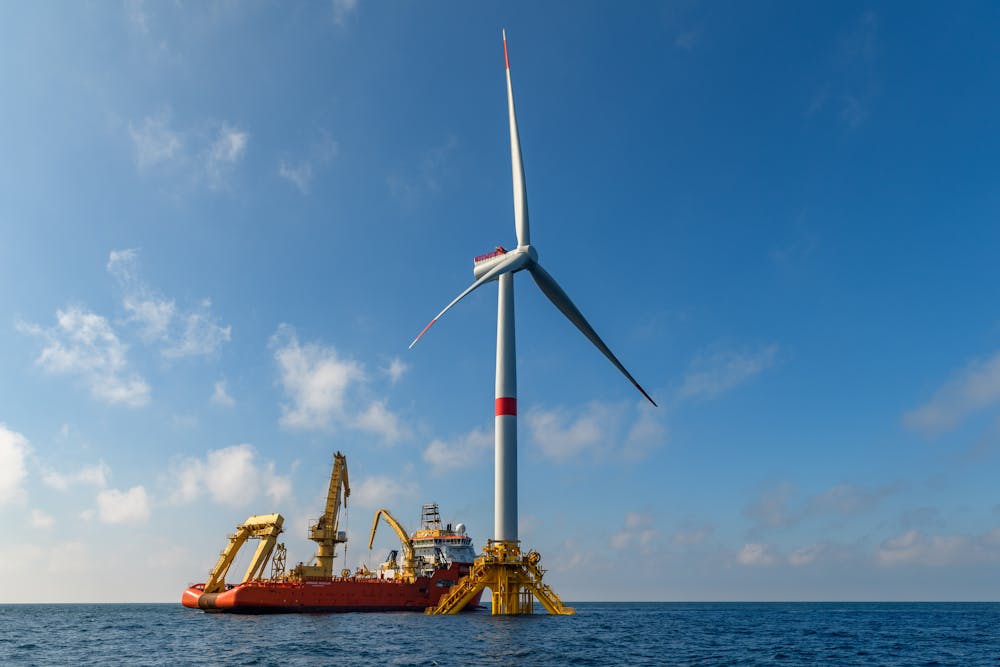
    Rising costs are putting real pressure on the wind industry, undermining investor confidence. Developers of offshore wind projects are walking away, and even cheaper on-shore wind projects are under strain. Even as wind energy becomes a mainstay in China, the United States and Germany, the industry faces real headwinds in Australia.

    This is surprising. Wind, like solar, was projected to get steadily cheaper. The fuel is free and turbines are getting better and better. Instead, wind in Australia has remained stubbornly expensive. Solving the problem will be challenging. But solutions have to be found fast if Australia is to reach the goal of 82% renewable power in the grid by 2030 – now less than five years away.

    Australia has no offshore wind projects up and running – and cost spikes may put planned projects at risk.
    Obatala-photography/Shutterstock

    Five reasons why this is happening

    Here’s what’s going on:

    1. Global supply chains have been disrupted

    The cost of steel, copper, fibreglass and other materials vital for wind turbines shot up during the pandemic. As a result, turbine prices rose almost 40% between 2020 and 2022. While input costs have fallen, turbine prices remain high. Solar panels can be churned out in factories, but modern wind turbines are massive, complex structures that require specialised manufacturing and logistics. That makes them more sensitive to global price fluctuations.

    2. Good wind is often in remote places

    Australia’s best wind resources are typically far from cities and existing grid infrastructure. Connecting far-flung wind farms such as Tasmania’s Robbins Island to the grid can require new and very expensive transmission lines. Remote sites mean extra costs such as temporary worker accommodation. The GenCost report notes this has added about 4% to wind project budgets in 2024–25 compared with the year before.

    Many other countries rely heavily on offshore wind, because wind blows more strongly and reliably over oceans. Unfortunately, spiking costs are likely to further delay the arrival of offshore wind in Australia. GenCost projects the first offshore wind projects in Australia will face even steeper costs.

    Good wind resources are often located in remote areas of Australia.
    Brook Mitchell/Stringer via Getty

    3. Local construction and labour costs have soared

    Australia faces a shortage of workers with the skills to build and maintain wind farms, resulting in higher wages and recruitment costs. Wind developers say construction costs have become a real issue. Wind farms are more labour-intensive than solar.

    4. Interest rates have raised financing costs

    Wind farms require large upfront investments and lengthy construction periods. Even a small increase in interest rates can make them unviable – and interest rates have been high for some time.

    5. Reliability concerns, regulatory delay and community opposition

    According to US researchers, technical issues have emerged for some new wind turbines, creating unexpected costs for developers. The long, complex process of getting permits, carrying out environmental assessments and building community support is pushing out project timelines, increasing costs and uncertainty for developers.

    Will solar take over?

    Solar faces far fewer challenges. Solar panels are mass-produced, meaning costs are steadily driven down through economies of scale. Panels can be deployed quickly and solar farms tend to face less community opposition.

    Wind turbines have to spin to function, while solar panels have no moving parts (though systems that track the Sun do). As a result, solar farms require less maintenance and are more reliable.

    It’s no surprise large-scale solar has been on a record-breaking run, growing 20-fold between 2018 and 2023.

    Solar panels make electricity during daylight hours, especially in summer. By contrast, wind tends to produce more power at night and during winter months. This is why wind is so useful to a green grid.

    Generating power from both wind and sunshine can slash how much storage is needed to ensure grid reliability, lowering overall system costs. A balanced mix of wind, solar and storage will meet Australia’s electricity needs more efficiently and reliably than just solar and storage, according to the International Renewable Energy Agency and independent researchers.

    Could wind come back?

    Making wind more viable will take work. Potential solutions do exist, such as expanding the skilled workforce and investing in specialised ships and equipment to install turbines offshore.

    Shipping large turbines from Denmark or China is expensive. To avoid these costs, it could make sense to encourage local manufacturing of large and heavy parts such as the main tower.

    Other options include finding lower-cost turbine suppliers and streamlining regulatory processes.

    Rising material and labour costs have driven up the cost of wind turbines. Pictured: turbine blades in China’s Jiangsu province in 2022 about to be shipped to Australia.
    Xu Congjun/Future Publishing via Getty Images

    The newly announced expansion of the government’s Capacity Investment Scheme could help reduce risks and give certainty, alongside public investment in new transmission lines.

    If nothing is done or if new measures don’t help, wind is likely to stall while solar and storage race ahead.

    That’s not the worst outcome. Australia could get a long way by relying on batteries and pumped hydro to store power from solar during the day and release it in the evenings, as California is doing. But this strategy involves trade offs, such as higher storage-capacity needs and the risk of insufficient power during long cloudy periods.

    For Australia to optimise its mix of renewables and storage, policymakers will have to tackle wind’s cost challenges. Effective action could lower costs, accelerate project timelines and bolster flagging investor confidence.

    Magnus Söderberg does not work for, consult, own shares in or receive funding from any company or organisation that would benefit from this article, and has disclosed no relevant affiliations beyond their academic appointment.

    ref. 5 reasons why wind farms are costing more in Australia – and what to do about it – https://theconversation.com/5-reasons-why-wind-farms-are-costing-more-in-australia-and-what-to-do-about-it-262126

    MIL OSI AnalysisEveningReport.nz

  • MIL-Evening Report: ER Report: A Roundup of Significant Articles on EveningReport.nz for July 31, 2025

    ER Report: Here is a summary of significant articles published on EveningReport.nz on July 31, 2025.

    5 reasons why wind farms are costing more in Australia – and what to do about it
    Source: The Conversation (Au and NZ) – By Magnus Söderberg, Professor and Director, Centre for Applied Energy Economics and Policy Research, Griffith University Saeed Khan/Getty Building a solar farm in Australia is getting about 8% cheaper each year as panel prices fall and technology improves, according to an official new report. Battery storage costs are

    Sporty spice: how romance fiction is adding a new dynamic to sports fandom
    Source: The Conversation (Au and NZ) – By Kasey Symons, Lecturer of Communication, Sports Media, Deakin University Sports fans might love their teams, cheer or curse each game’s result and admire their favourite athletes, but we rarely associate sports with romance. However, that may be slowly changing thanks to the recent spike in the popularity

    Just as NZ began collecting meaningful data on rainbow communities, census changes threaten their visibility
    Source: The Conversation (Au and NZ) – By Lori Leigh, Research Fellow in Public Health, University of Otago Getty Images New Zealand’s 2023 census was the first to collect data on gender identity and sexual orientation, showing one in 20 adults identify as LGBTQIA+. But just as reports from this more inclusive census are being

    Big tech says AI could boost Australia’s economy by $115 billion a year. Does the evidence stack up?
    Source: The Conversation (Au and NZ) – By Uri Gal, Professor in Business Information Systems, University of Sydney Imaginima / Getty Images AI is on the agenda in Canberra. In August, the Productivity Commission will release an interim report on harnessing data and digital technology such as AI “to boost productivity growth, accelerate innovation and

    Progress on Closing the Gap is stagnant or going backwards. Here are 3 things to help fix it
    Source: The Conversation (Au and NZ) – By Madeleine Pugin, Research Fellow, School of Government and International Relations, Griffith University The Productivity Commission’s latest data on Closing the Gap progress represents an unsurprisingly grim overview of the socioeconomic inequalities experienced by Aboriginal and Torres Strait Islander peoples. Closing the Gap is the plan federal and

    More than 2 in 5 young Australians are lonely, our new report shows. This is what could help
    Source: The Conversation (Au and NZ) – By Michelle H. Lim, Associate Professor, Sydney School of Public Health, University of Sydney Oliver Rossi/Getty Images Loneliness is not a word often associated with young people. We tend to think of our youth as a time spent with family, friends and being engaged with school and work

    How migrant business owners turn their identity into an asset, despite some bumps along the way
    Source: The Conversation (Au and NZ) – By Shea X. Fan, Associate Professor, Human Resource Management, Deakin University Odua Images/Shutterstock Too often, it’s anti-immigration sentiment dominating headlines in Australia. But a quieter story is going untold. Migrants are not just fitting into Australian society, they’re actively reshaping it through entrepreneurship. Starting a business is difficult

    The Man from Hong Kong at 50: how the first ever Australian–Hong Kong co-production became a cult classic
    Source: The Conversation (Au and NZ) – By Gregory Ferris, Senior Lecturer, Media Arts & Production, University of Technology Sydney LMPC via Getty Images A cinematic firecracker of a film exploded onto international screens 50 years ago this week, blending martial arts mayhem, Bond-esque set pieces, casual racism – and a distinctly Australian swagger. From

    Rules for calculating climate risk in financial reporting by NZ businesses need revisiting – new research
    Source: The Conversation (Au and NZ) – By Martien Lubberink, Associate Professor of Accounting and Capital, Te Herenga Waka — Victoria University of Wellington Andrew MacDonald/Getty Images The recent International Court of Justice (ICJ) decision on climate action marked a significant step forward in formalising an idea many already accept: climate inaction is not merely

    Climate justice victory at the ICJ – the student journey from USP lectures to The Hague
    By Vahefonua Tupola in Suva The University of the South Pacific (USP) is at the heart of a global legal victory with the International Court of Justice (ICJ) delivering a historic opinion last week affirming that states have binding legal obligations to protect the environment from human-induced greenhouse gas emissions. The case, hailed as a

    Climate justice victory at the ICJ – the student journey from USP lectures to The Hague
    By Vahefonua Tupola in Suva The University of the South Pacific (USP) is at the heart of a global legal victory with the International Court of Justice (ICJ) delivering a historic opinion last week affirming that states have binding legal obligations to protect the environment from human-induced greenhouse gas emissions. The case, hailed as a

    Kamchatka earthquake is among top 10 strongest ever recorded. Here’s what they have in common
    Source: The Conversation (Au and NZ) – By Dee Ninis, Earthquake Scientist, Monash University Today at about 11:30am local time, a magnitude 8.8 earthquake struck off the coast of Russia’s Kamchatka Peninsula in the country’s far east. Originating at a depth of roughly 20 kilometres, today’s powerful earthquake – among the ten strongest in recorded

    Kamchatka earthquake is among top 10 strongest ever recorded. Here’s what they have in common
    Source: The Conversation (Au and NZ) – By Dee Ninis, Earthquake Scientist, Monash University Today at about 11:30am local time, a magnitude 8.8 earthquake struck off the coast of Russia’s Kamchatka Peninsula in the country’s far east. Originating at a depth of roughly 20 kilometres, today’s powerful earthquake – among the ten strongest in recorded

    Tsunami warnings are triggering mass evacuations across the Pacific – even though the waves look small. Here’s why
    Source: The Conversation (Au and NZ) – By Milad Haghani, Associate Professor and Principal Fellow in Urban Risk and Resilience, The University of Melbourne Last night, one of the ten largest earthquakes ever recorded struck Kamchatka, the sparsely populated Russian peninsula facing the Pacific. The magnitude 8.8 quake had its epicentre in the sea just

    NAPLAN is just one test. Here’s what to do if your child’s results were in the bottom bands
    Source: The Conversation (Au and NZ) – By Sally Larsen, Senior Lecturer in Education, University of New England Rawpixel/ Getty Images The latest round of NAPLAN results are out, along with a string of news reports about “students falling behind” and “failing”, and experts sounding the “alarm” about school progress. In March, all Australian students

    Inflation slows again — but is it enough for the Reserve Bank to cut interest rates?
    Source: The Conversation (Au and NZ) – By Stella Huangfu, Associate Professor, School of Economics, University of Sydney Doublelee/Shutterstock Inflation is moving in the right direction, but new figures released today may not be soft enough to trigger a cut in official interest rates in August. The Australian Bureau of Statistics released the June quarter

    With the UK and France moving toward recognising Palestine, will Australia now follow suit?
    Source: The Conversation (Au and NZ) – By Donald Rothwell, Professor of International Law, Australian National University One of the smallest and most exclusive clubs in the world belongs to states. The US Department of State puts the number of independent recognised states at 197, while others count 200. The United Nations, meanwhile, has 193

    With the UK and France moving toward recognising Palestine, will Australia follow suit?
    Source: The Conversation (Au and NZ) – By Donald Rothwell, Professor of International Law, Australian National University One of the smallest and most exclusive clubs in the world belongs to states. The US Department of State puts the number of independent recognised states at 197, while others count 200. The United Nations, meanwhile, has 193

    An underwater observatory keeping the pulse of the Southern Ocean for nearly 30 years yields fresh results
    Source: The Conversation (Au and NZ) – By Christopher Traill, PhD Candidate Southern Ocean biogeochemistry, University of Tasmania Elizabeth Shadwick In a world affected by climate change, the Southern Ocean plays an outsized role. It absorbs up to 40% of the human-caused emissions taken up by the oceans while also being home to some of

    MIL OSI AnalysisEveningReport.nz

  • MIL-OSI New Zealand: Education – Simone Kaho awarded 2025 Fulbright-Creative New Zealand Pacific Writer’s Residency in Hawaii

    Source: Creative New Zealand

    Fulbright New Zealand and Creative New Zealand are delighted to announce Simone Kaho is the recipient of the 2025 Pacific Writer’s Residency.

    This annual award is for an established New Zealand writer of Pacific heritage to carry out work on a creative writing project exploring Pacific identity, culture or history at the University of Hawai’i for three months.

    Simone Kaho says many writers she admires and follows have won the award in previous years.

    “It’s a fabulous thing to receive institutional support for work that is so challenging. What if our most profound connections aren’t just with family, but in deep attunement with nature, recognising patterns in the unseen, and finding new ways to move forward? In this project, I’ll be drawing theoretical lines between Pacific people who are neurodiverse, and the traits of Pacific wayfinders—and I hope to find evidence of these in Hawaii’s research archives,” says Simone.

    Fulbright NZ Executive Director Penelope Borland says it is heartening to see the residency taken up by a poet of Simone’s distinction.

    “We are thrilled to be granting the 2025 Pacific Writer’s Residency to Simone Kaho, enabling her to continue her work that has already received widespread acclaim, most recently seeing her take up the 2022 Emerging Pasifika writer in Residence at the prestigious International Institute of Modern Letters. With this award, Simone will travel to Hawai’i, where I am sure a deeply meaningful experience awaits her,” says Penelope.  

    Makerita Urale, Creative New Zealand’s Senior Manager Pacific Arts, herself an alumna of the residency, says the award is timely for Simone’s literary career.

    “Simone’s work is fearless and deeply grounded in lived experience and cultural insight. This residency is a fitting next step for an artist of her calibre, and we look forward to seeing how her time in Hawai’i will further shape and strengthen her work,” says Makerita.

    Previous recipients of the prestigious Pacific Writer’s Residency have been some of New Zealand’s most celebrated writers, including Tusiata Avia, Karlo Mila, Oscar Kightley, David Eggleton, Mīria George, and playwright Victor Rodger.

    MIL OSI New Zealand News

  • MIL-OSI Europe: Increased funding to University of Gothenburg to combat antisemitism

    Source: Government of Sweden

    In light of international developments, the Government will increase its support to the University of Gothenburg which, via the Segerstedt Institute, spreads knowledge of working methods to combat antisemitism. This year, the Government will provide another SEK 1 million, and it intends to provide another SEK 3 million to support these efforts in 2024.

    MIL OSI Europe News

  • MIL-Evening Report: Politics with Michelle Grattan: independent MP Allegra Spender on making tax fairer for younger Australians

    Source: The Conversation (Au and NZ) – By Michelle Grattan, Professorial Fellow, University of Canberra

    With parliament now finished its first fortnight’s session, attention will soon be on the government’s August 19-21 economic reform roundtable, bringing together business, unions, experts and community representatives to pursue consensus on ways to lift Australia’s flagging productivity.

    Independent member for Wentworth Allegra Spender is one of the 25 participants invited to the roundtable. She’s particularly focused on tax reform and last week held a tax roundtable of her own.

    Spender joined the podcast to talk about making tax fairer, the need for greater economic reform, climate policy, the social media ban for under 16s, a ceasefire in Gaza, and more.

    On her ambitions on tax policy, Spender says income tax indexation is something that would benefit younger, working Australians:

    Myself and actually another number of crossbenchers […] wrote to both the government and the opposition last term, really pushing for tax indexation. And really the heart of this is startling statistics from last term. The [Reserve Bank of Australia] put out some information that showed that bracket creep was a bigger impost on average households’ budgets than the RBA increases in the interest rate.

    […] Just to give you two statistics about young working people: households over the age of 65, in the last 10 odd years, have grown their wealth by around 50%. Households under the age of 35 have not grown their worth at all, pretty much. So they are going backwards relative to the rest of the country. A household, two households, both on a $100,000, sitting next to each other. If [one] household is retired, they have to pay on average half the tax of a working age household.

    Spender says the system is stacked against young people, who “are really struggling economically compared to previous generations”.

    It’s in your early and midlife that you need money for housing, to raise kids and everything else. So we don’t have a tax system that works for younger people. We have a tax system that burdens younger people strongly and then actually gives people more tax breaks when they’re older, and normally wealthier.

    On climate targets, Spender says while she’ll be guided by the yet-to-be-provided Climate Change Authority’s advice, she wants to see Australia “try and lead other countries” – pointing to the United Kingdom, which has set a target to cut emissions by at least 81% by 2035.

    The Climate Change Authority put out their interim guidance to say that a target within 65 to 75% [emissions reduction on 2005 levels] was both achievable from an economic point of view and also appropriate towards a scientific point of view.

    My view is that we should be at the very top end of that. Now, if the Climate Change Authority significantly reviews, you know, revises down their targets, I will reconsider. But I think really what we should be doing is to say how can we be as ambitious as possible. And the reason I think that is important is actually, you know, from a business point of view, ambition and certainty is what they need to make the big investments that will actually achieve it.

    Ambition is needed from a scientific point of view, because if we took, say, less than 75% [emissions reduction], and the rest of the world did too, we would be looking at outcomes that are catastrophic for Australia. Regular days in Sydney and Melbourne that are above 50 degrees. A huge loss of coral reef. Continued adverse weather events.

    On the news that the government will include YouTube in its social media ban for under 16s, Spender says it’s now up to social media companies to make their websites safer to lift the bans.

    My eldest daughter [who’s 12] has a strong view on this. And she’s actually a big fan of the ban. She was like, ‘I just don’t understand how it makes sense to leave YouTube in and TikTok out’. […] She’s not on social media, but other people are, and she finds it sometimes frustrating.

    But I think the challenge on this is always going to be the implementation. I think it’s fiendishly complicated to implement. I think genuinely the most valuable part of this ban is actually the signal to families and parents about what is expected and what isn’t.

    […] I think the ball’s in the social media companies’ courts. If they want to move to a life beyond the ban, they need to show how they can make their platforms safe for younger Australians, because I don’t think they have delivered that to date. So I’d be open if they can provide the evidence of how they can change things. I’m always open minded to reversing or changing those bans. But at the moment, [social media] isn’t safe.

    Michelle Grattan does not work for, consult, own shares in or receive funding from any company or organisation that would benefit from this article, and has disclosed no relevant affiliations beyond their academic appointment.

    ref. Politics with Michelle Grattan: independent MP Allegra Spender on making tax fairer for younger Australians – https://theconversation.com/politics-with-michelle-grattan-independent-mp-allegra-spender-on-making-tax-fairer-for-younger-australians-262225

    MIL OSI AnalysisEveningReport.nz

  • MIL-Evening Report: Grief is the Thing with Feathers comes to the stage with a glorious intensity of purpose

    Source: The Conversation (Au and NZ) – By Huw Griffiths, Associate Professor of English Literature, University of Sydney

    Brett Boardman/Belvoir

    The idea of the titular Crow in Ted Hughes’ poems is wild, untameable and irreducible to words. In an early poem in the sequence, words come at Crow from all angles but he just ignores them. Finally, “Words retreated, suddenly afraid / Into the skull of a dead jester / Taking the whole world with them”.

    Crow just yawns: “long ago / He had picked that skull empty”. A figure that is ancient and beyond the reach of gods or human belief systems, Hughes’ Crow resists ever being pinned down or fully understood.

    In Max Porter’s 2015 novella, Grief is the Thing with Feathers, a version of Hughes’ Crow enters the life of a bereaved Dad, newly left to look after his two sons after the death of his wife.

    Dad is a literary scholar, writing a book about Ted Hughes, and Crow is a metaphor come to life, some version of the endless grief through which he is living.

    But Porter’s Crow is not quite the same thing as Hughes’ irredeemable half-myth/half-beast. This crow cares: “I do eat baby rabbits, plunder nests, swallow filth, cheat death […] But I care, deeply. I find humans dull except in grief”. And he is self-aware, too – aware that Hughes’ mythical beast image can also just be a performance, a piece of schtick: “I do this, perform some unbound crow stuff, for him”.

    Now, a new adaptation of the novella brings the story to the Belvoir stage.

    Devastation and renewal

    Toby Schmitz as both Dad and Crow is just brilliant. He exactly captures the messy contradictions of this situation, shifting between the quiet melancholy and stifled rage of the widower and the restless, contradictory energies of Crow.

    The latter he performs in recognisable Schmitz fashion: a leery and mischievous outsider, challenging the audience and holding their attention just as much as he teases, taunts and cajoles both Dad and his two sons.

    His performance brings out the humour of Porter’s book, the sense of its own absurdity that shadows his story of devastation and tentative renewal.

    Toby Schmitz as both Dad and Crow is just brilliant.
    Brett Boardman/Belvoir

    Also on stage are Philip Lynch and Fraser Morrison as the two boys, doing a great job (as the characters do in Porter’s book) of providing an emotional antidote to the wheeling terror that sometimes spins off Dad’s encounter with Crow.

    Schmitz adapted the book with director, Simon Phillips, and designer, Nick Schlieper. They have only very subtly altered the text in ways that enable a dynamic live performance, conversations between Dad, Crow and Boys.

    Tying the piece together are compelling video direction and live music. The former is genuinely exciting, as it etches the presence of Crow’s mythology across the stage, aided by Craig Wilkinson’s work as illustrator, clearly taking inspiration from Hughes’ original illustrator, Leonard Baskin. Composer and cellist, Freya Schack-Arnott provides a stunning and emotional soundtrack throughout, at times improvising to the action.

    An intensity of purpose

    Porter’s novel is ten years old this year. It has been ridiculously successful for a slender (114 pages) and apparently unconventional book.

    Seeming to imitate some of the conventions of 20th century modernism (non-linear narratives; stream-of-consciousness; an interplay of myth and reality; shifting perspectives from miniscule detail to grand narrative), it should not have been destined to occupy the best-seller list.

    And, yet, multiple awards later, it remains in regular rotation on the central displays of high street bookstores around the world. It has been adapted for the stage before, in a successful production in London starring Cillian Murphy in 2019, and in a less well-received 2025 film starrring Benedict Cumberbatch.

    Philip Lynch and Fraser Morrison as the two boys provide an emotional antidote.
    Brett Boardman/Belvoir

    It would be easy to dismiss this success as something to do with the aesthetic world within which it situates itself. Careful to use Faber and Faber’s classic font, Albertus (something it shares with the Belvoir production when passages are projected above the stage), the book is an elegant product that advertises its own self-conscious literariness.

    But this assessment would miss the brilliance, the sophistication and the tender power of Porter’s writing, as well as the way that the book has already got there before you.

    Porter plays with his own contemporary taming of older and wilder literary traditions. If Hughes’ Crow has been domesticated in Porter’s use of him (I can’t imagine Hughes’ Crow leaving us with the line, “Just be kind and look out for your brother”), he knows that this sentimentality is now hard-earned and not to be ignored.

    What this production adds to Porter’s beautiful book is an intensity of purpose. This is a gloriously collaborative effort, from theatre makers at the height of their powers, to communicate the beauty that persists through the pain and degradation that life throws at us.

    Grief is the Thing with Feathers is at Belvoir St Theatre, Sydney, until August 24.

    Huw Griffiths does not work for, consult, own shares in or receive funding from any company or organisation that would benefit from this article, and has disclosed no relevant affiliations beyond their academic appointment.

    ref. Grief is the Thing with Feathers comes to the stage with a glorious intensity of purpose – https://theconversation.com/grief-is-the-thing-with-feathers-comes-to-the-stage-with-a-glorious-intensity-of-purpose-260414

    MIL OSI AnalysisEveningReport.nz

  • MIL-OSI China: Renewables capacity doubles in first half

    Source: People’s Republic of China – State Council News

    A farmer works amid photovoltaic panels at a solar power station in the Yi-Hui-Miao Autonomous County of Weining, southwest China’s Guizhou Province, July 3, 2025. [Photo/Xinhua]

    China’s newly installed wind and solar power capacity nearly doubled year-on-year during the first half of this year, as the country ramps up its transition to cleaner energy sources, data from the China Electricity Council showed.

    Newly added power generation capacity during the first six months reached 290 million kilowatts, with new solar installations rising 107.1 percent year-on-year to 210 million kilowatts, and new wind power installations up 98.9 percent to 50 million kilowatts, it said.

    China’s renewable energy sector is expected to maintain rapid growth, with average annual new installed capacity reaching 200-300 million kilowatts during the 15th Five-Year Plan period (2026-30), said Zhang Lin, head of the council’s planning and development department, during a news conference in Beijing on Wednesday.

    The near doubling of China’s wind and solar capacity in the first half is a clear signal of the country’s accelerating commitment to its energy transition goals, said Lin Boqiang, head of the China Institute for Studies in Energy Policy at Xiamen University.

    “These installation figures demonstrate China’s ability to rapidly deploy renewable energy technologies at scale, positioning it as a global leader in clean energy investment and deployment.”

    According to the council, China’s power generation capacity is projected to hit a record high in 2025, fueled by a rapid expansion of renewable energy sources.

    New power generation capacity is expected to exceed 500 gigawatts in 2025, with new renewable energy capacity reaching approximately 400 GW, a result of China’s accelerated green energy transition and increasing investment in grid construction, the CEC said.

    Total installed power generation capacity is forecast to reach around 3.9 terawatts by the end of 2025, a year-on-year increase of approximately 16.5 percent. Nonfossil fuel sources are expected to account for 2.4 TW, or about 61 percent of total capacity, said Jiang Debin, deputy director of the council’s statistics and data center.

    The CEC also anticipates steady growth in China’s electricity demand in 2025, with total consumption expected to increase by 5-6 percent. Electricity demand is projected to grow faster in the second half of the year compared to the first, it said.

    China’s maximum power load once again set a new historical record on July 16, surpassing 1.5 billion kilowatts for the first time and reaching a peak of 1.506 billion kilowatts, according to the National Energy Administration.

    This represents an increase of 55 million kilowatts compared to last year’s peak load, the third time a historical record has been broken in July, it said.

    According to Chen Yaning, head of the council’s power supply and demand analysis department, the record reflects steady expansion in China’s electricity consumption, a key barometer of economic activity.

    Fueled by robust and sustained economic activity, power demand surged across the nation in the first half of this year, with industrial output, commercial operations and residential consumption all contributing to the heightened electricity needs, she said.

    “Equipment manufacturing and consumer goods manufacturing related to new quality productive forces have maintained strong resilience,” said Chen.

    The internet and related services sector saw a 27.4 percent year-on-year increase in electricity consumption, driven by the rapid development of mobile internet, big data and cloud computing.

    The charging and battery swapping services sector for electric vehicles saw a 42.4 percent increase in electricity consumption in the first half of the year, fueled by the rapid growth of the EV market.

    MIL OSI China News

  • MIL-Evening Report: Kids need to floss too, even their baby teeth. But how do you actually get them to do it?

    Source: The Conversation (Au and NZ) – By Dileep Sharma, Professor and Head of Discipline – Oral Health, University of Newcastle

    Jonathan Borba/Pexels

    A survey from the Australian Dental Association out this week shows about three in four children never floss their teeth, or have adults do it for them. Many of the survey respondents thought it wasn’t worthwhile for baby teeth.

    As anyone who cares for kids knows, it can be hard enough to get them to brush twice daily, let alone floss.

    So how do you actually get kids to floss? Why do they need to anyway?

    Do kids really need to floss?

    Flossing can reach between the teeth where toothbrushes can’t. It removes the soft food debris and biofilm, a slimy layer on teeth that harbours microbes, and so reduces the risk of dental decay and gum disease.

    So flossing is essential as soon as children’s teeth erupt and are in contact with the next one. This is typically at the age of six to eight months when the lower front teeth start to emerge through their gums.

    But they’re just baby teeth, right?

    You may be thinking flossing is not worth the time or trouble, especially for younger children who’ll lose their baby teeth in a few years anyway.

    However, baby teeth play a vital role in how children’s jaw bones develop and their face appears. And losing baby teeth early – due to the dental decay that can arise from not flossing – can have several effects.

    As a child, it can change their speech and appearance. These can affect a child’s self-esteem and impact their wellbeing, depending on their age.

    Losing baby teeth early can also affect them as a teenager or adult. Baby teeth act as a guide to where permanent teeth should erupt so losing them early can lead to crowding of teeth, needing orthodontic treatment (braces). In fact, premature loss of baby teeth can increase the risk of “malocclusion” or problems in the position of permanent teeth by more than 2.5 times.

    Cleaning between the teeth is also vital for teens to reduce the risk of gingivitis (inflammation of the gums). This is very common in this age group due to changes in hormone levels.

    Yes, it can be challenging

    Setting up a regular flossing routine may be challenging for many families. It’s one more thing to squeeze into the early morning rush to get to school or work. It can be hard to motivate tired children to floss at the end of the day too.

    The technique itself also needs a level of manual dexterity for the kids themselves or for the parents who floss younger kids’ teeth.

    You or your kids may have some form of dental anxiety due to previous negative experiences with dental visits. This may affect dental hygiene, or your likelihood to floss.

    All of these factors can lead to lack of motivation or reluctance to floss, and so increases the risk of dental decay and gum disease in children.

    But there are ways to help you and your kids develop and stick to a flossing regime.

    OK, you’ve convinced me. What next?

    First, gather your equipment.

    Interdental brushes look like mini bottle brushes. These are more effective for larger spaces between adjacent teeth, or if your child has braces.

    Floss or floss picks are only effective for areas with smaller or no spaces between adjacent teeth. Kid-friendly designs, such as animal-shaped and colourful floss and floss picks, can be an excellent option to make this routine more enjoyable. Flavoured floss, or floss that smells like fruit or chocolate can be appealing. Involving kids in the choice of floss or floss picks can boost their motivation to floss.

    Alternatively, a waterjet flosser can make cleaning between the teeth more engaging. It’s as effective as regular dental floss.

    For toddlers and preschoolers, using rewards and positive reinforcements, such as sticker charts or gold stars, can keep kids motivated to floss. So stock up.

    Then choose your timing. Flossing is best done once a day, either in the morning or before bedtime. That’s because flossing can effectively remove biofilm between the teeth for 24 hours. You can floss before or after brushing.

    Parents will need to brush and floss the teeth of infants and children up to five years old, until the children develop their own manual dexterity.

    For infants, it’s easier if one adult holds them upright or sits them on their lap while the other does the flossing. For toddlers and preschoolers it may be easier to floss if they are sitting on the toilet, or standing at the basin with their head tilted back.

    Last of all, lead by example. Kids with parents who regularly floss tend to pick up the routine quickly.

    Any more tips?

    Flossing is only one part of preventing tooth decay and dental diseases, such as gum disease. It’s also important for children to:

    • avoid snacking on food with a high sugar content

    • choose plain water over fruit juices or fizzy drinks

    • avoid falling asleep with a feeding bottle containing milk, fruit juice or sugary liquids

    • avoid using a dummy dipped in sugary liquids or honey

    • clean their tongue while brushing their teeth

    • see a dentist or oral health professional well before their first tooth erupts so they can get used to the idea of a dental appointment.

    Dileep Sharma receives funding from the Dental Council of NSW, International Association for Dental, Oral, and Craniofacial Research, Australian government Department of Foreign Affairs and Trade, International College of Dentists and Tropical Australian Academic Health Centre for his dental research projects. He is affiliated with The International Association for Dental, Oral, and Craniofacial Research and Australian Dental Association.

    ref. Kids need to floss too, even their baby teeth. But how do you actually get them to do it? – https://theconversation.com/kids-need-to-floss-too-even-their-baby-teeth-but-how-do-you-actually-get-them-to-do-it-262209

    MIL OSI AnalysisEveningReport.nz

  • MIL-Evening Report: The Muslim world has been strong on rhetoric, short on action over Gaza and Afghanistan

    Source: The Conversation (Au and NZ) – By Amin Saikal, Emeritus Professor of Middle Eastern and Central Asian Studies, Australian National University; and Vice Chancellor’s Strategic Fellow, Australian National University

    When it comes to dealing with two of the biggest current crises in the Muslim world – the devastation of Gaza and the Taliban’s draconian rule in Afghanistan – Arab and Muslim states have been staggeringly ineffective.

    Their chief body, the Organisation of Islamic Cooperation (OIC), in particular, has been strong on rhetoric but very short on serious, tangible action.

    The OIC, headquartered in Saudi Arabia, is composed of 57 predominantly Muslim states. It is supposed to act as a representative and consultative body and make decisions and recommendations on the major issues that affect Muslims globally. It calls itself the “collective voice of the Muslim world”.

    Yet the body has proved to be toothless in the face of Israel’s relentless assault on Gaza, triggered in response to the Hamas attacks of October 7 2023.

    The OIC has equally failed to act against the Taliban’s reign of terror in the name of Islam in ethnically diverse Afghanistan.

    Many strong statements

    Despite its projection of a united umma (the global Islamic community, as defined in my coauthored book Islam Beyond Borders), the OIC has ignominiously been divided on Gaza and Afghanistan.

    True, it has condemned Israel’s Gaza operations. It’s also called for an immediate, unconditional ceasefire and the delivery of humanitarian aid to the starving population of the strip.

    It has also rejected any Israeli move to depopulate and annex the enclave, as well as the West Bank. These moves would render the two-state solution to the long-running Israeli–Palestinian conflict essentially defunct.

    Further, the OIC has welcomed the recent joint statement by the foreign ministers of 28 countries (including the United Kingdom, many European Union members and Japan) calling for an immediate ceasefire in Gaza, as well as France’s decision to recognise the state of Palestine.

    The OIC is good at putting out statements. However, this approach hasn’t varied much from that of the wider global community. It is largely verbal, and void of any practical measures.

    What the group could do for Gaza

    Surely, Muslim states can and should be doing more.

    For example, the OIC has failed to persuade Israel’s neighbouring states – Egypt and Jordan, in particular – to open their border crossings to allow humanitarian aid to flow into Gaza, the West Bank or Israel, in defiance of Israeli leaders.

    Nor has it been able to compel Egypt, Jordan, the United Arab Emirates, Bahrain, Sudan and Morocco to suspend their relations with the Jewish state until it agrees to a two-state solution.

    Further, the OIC has not adopted a call by Malaysian Prime Minister Anwar Ibrahim and the United Nations special rapporteur on Palestinian territories, Francesca Albanese, for Israel to be suspended from the UN.

    Nor has it urged its oil-rich Arab members, in particular Saudi Arabia and the UAE, to harness their resources to prompt US President Donald Trump to halt the supply of arms to Israel and pressure Israeli Prime Minister Benjamin Netanyahu to end the war.

    Stronger action on Afghanistan, too

    In a similar vein, the OIC has failed to exert maximum pressure on the ultra-extremist and erstwhile terrorist Taliban government in Afghanistan.

    Since sweeping back into power in 2021, the Taliban has ruled in a highly repressive, misogynist and draconian fashion in the name of Islam. This is not practised anywhere else in the Muslim world.

    In December 2022, OIC Secretary General Hissein Brahim Taha called for a global campaign to unite Islamic scholars and religious authorities against the Taliban’s decision to ban girls from education.

    But this was superseded a month later, when the OIC expressed concern over the Taliban’s “restrictions on women”, but asked the international community not to “interfere in Afghanistan’s internal affairs”. This was warmly welcomed by the Taliban.

    In effect, the OIC – and therefore most Muslim countries – have adopted no practical measures to penalise the Taliban for its behaviour.

    It has not censured the Taliban nor imposed crippling sanctions on the group. And while no Muslim country has officially recognised the Taliban government (only Russia has), most OIC members have nonetheless engaged with the Taliban at political, economic, financial and trade levels.

    Why is it so divided?

    There are many reasons for the OIC’s ineffectiveness.

    For one, the group is composed of a politically, socially, culturally and economically diverse assortment of members.

    But more importantly, it has not functioned as a “bridge builder” by developing a common strategy of purpose and action that can overcome the geopolitical and sectarian differences of its members.

    In the current polarised international environment, the rivalry among its member states – and with major global powers such as the United States and China – has rendered the organisation a mere talking shop.

    This has allowed extremist governments in both Israel and Afghanistan to act with impunity.

    It is time to look at the OIC’s functionality and determine how it can more effectively unite the umma.

    This may also be an opportunity for its member states to develop an effective common strategy that could help the cause of peace and stability in the Muslim domain and its relations with the outside world.

    Amin Saikal does not work for, consult, own shares in or receive funding from any company or organisation that would benefit from this article, and has disclosed no relevant affiliations beyond their academic appointment.

    ref. The Muslim world has been strong on rhetoric, short on action over Gaza and Afghanistan – https://theconversation.com/the-muslim-world-has-been-strong-on-rhetoric-short-on-action-over-gaza-and-afghanistan-262121

    MIL OSI AnalysisEveningReport.nz

  • MIL-OSI Africa: Modi’s visit to Ghana signals India’s broader Africa strategy. A researcher explains

    Source: The Conversation – Africa – By Veda Vaidyanathan, Associate, Harvard University Asia Center, Harvard Kennedy School

    Ghana has historically been an anchor of Indian enterprise and diplomacy on the African continent.

    New Delhi and Accra formalised ties in 1957. At the time, their partnership was grounded in shared anti-colonial ideals and a common vision for post-independence development. India offered counsel on building Ghana’s institutions, including its external intelligence agency. Meanwhile, Indian teachers, technicians, and traders regularly travelled to the west African country in search of opportunity.

    The July 2025 visit of the Indian prime minister, Narendra Modi, to Ghana – the first by an Indian leader in over three decades – came at a critical moment for the continent. As the global order shifts towards multi-polarity, countries like Ghana are navigating a complex landscape, which includes western donors scaling back commitments. This has opened space to deepen cooperation through pragmatic, interest-driven collaborations with longstanding partners like India. Speaking at the Munich Security Conference, Ghana’s President John Mahama captured the spirit of this global realignment, noting that

    as bridges are burning, new bridges are being formed.

    Against this backdrop, Prime Minister Modi’s visit offered an opportunity to both revive and recalibrate bilateral ties. The visit carried a strong economic and strategic orientation. Ghana positioned itself as a partner in areas where India holds comparative advantage, such as pharmaceuticals. Over 26% of Africa’s generic medicines are sourced from India. The Food and Drugs Authority’s (Ghana’s regulator of pharmaceutical standards) listing of foreign pharmaceutical manufacturing facilities is dominated by Indian firms.

    Defence cooperation was also on the agenda. Ghana is looking to India for training, equipment and broader security engagement in response to rising threats from the Sahel and coastal piracy.

    This emphasis on shared security interests is underscored by Ghana’s alignment with India on counter-terrorism. President Mahama for instance has condemned the Pahalgam terrorist attacks that occurred in April, 2025.

    Reviving economic ties

    Economic ties are at the heart of this renewed engagement between the two countries. Bilateral trade currently stands at around US$3 billion. Both leaders aim to double it to US$6 billion over the next five years. Currently, Ghana enjoys a trade surplus with India. This is mainly due to gold exports, which account for over 70% of its shipments. Cocoa, cashew nuts, and timber are also key exports, while imports from India include pharmaceuticals, machinery, vehicles, and various industrial goods.

    India has invested more than US$2 billion in Ghana. These investments span private capital, concessional finance and grants across 900 projects. India now ranks among Ghana’s top investors. Indian firms and state-backed institutions play a key role in critical infrastructure development. Landmark projects include the 97km standard gauge Tema-Mpakadan Railway Line and the Ghana-India Kofi Annan ICT Centre, a hub for innovation and research.

    In an earlier study, I documented the perspectives of Indian entrepreneurs in Ghana. The findings underscored the country’s appeal as a land of economic opportunity. In interviews, Indian businesses highlighted Ghana’s stable political environment. An expanding consumer base, and relatively transparent regulatory framework were also mentioned. Together, these factors continue to attract investor interest.

    This economic momentum likely paved the way to pursue a closer bilateral relationship, marked by the elevation to a ‘Comprehensive Partnership’.

    While delegates in the July visit addressed issues such as financial inclusion, healthcare and agriculture, the tangible outcomes were limited. Four memoranda of understanding were signed. They cover cooperation on traditional medicine, regulatory standards and cultural exchange. The creation of a joint commission to structure and advance bilateral collaboration across priority sectors was also signed.

    Moving forward, Ghana offers India an entry point into west Africa’s resource landscape. With reserves of gold, bauxite, manganese and lithium, Ghana is well positioned to contribute to India’s needs for critical minerals. President Mahama’s invitation for investment in mineral extraction and processing aligns with India’s National Critical Mineral Mission, New Delhi is looking for supply chains for its energy transition. It creates an opportunity for Indian mining companies to expand into African markets.


    Read more: The world is rushing to Africa to mine critical minerals like lithium – how the continent should deal with the demand


    Pragmatic diplomacy

    With nearly US$100 billion in trade, cumulative investments of nearly US$75 billion, and a 3.5 million strong diaspora, the broader contours of India’s Africa policy is increasingly pragmatic and issue based.

    New Delhi’s evolving relations with Accra reflects this. It comes as Ghana is making sweeping economic reforms domestically, particularly in fiscal management and debt restructuring.

    This ambitious “economic reboot” hinges on attracting private sector investment. In this context, the Indian diaspora, already deeply embedded in Ghana’s commercial networks, is well positioned to foster stronger economic ties.

    In his address to Ghana’s Parliament, The Indian Prime Minister spoke of development cooperation that is demand driven and focused on building local capacity and creating local opportunities. This approach “to not just invest, but empower”, signals India’s growing intent to anchor relationships in mutual agency, rather than dependency.

    – Modi’s visit to Ghana signals India’s broader Africa strategy. A researcher explains
    – https://theconversation.com/modis-visit-to-ghana-signals-indias-broader-africa-strategy-a-researcher-explains-261187

    MIL OSI Africa

  • MIL-OSI Africa: 8 policies that would help fight poverty in South Africa’s economic hub Gauteng

    Source: The Conversation – Africa – By Adrino Mazenda, Senior Researcher, Associate Professor Economic Management Sciences, University of Pretoria

    Poverty goes beyond income. It often arises when health, education and opportunities fall short of meeting people’s needs.

    Individuals are classified as impoverished when they face deprivation in one-third or more of the indicators in a multidimensional poverty index. The index reflects the various influences on socioeconomic class. These include housing, sanitation, electricity, cooking fuel, nutrition and school attendance.

    The index is one of the most comprehensive measures of poverty. The fact that the multidimentional index captures multiple dimensions enables it to reflect overlapping disadvantages. And provides a fuller picture of well-being. Other monetary measures such as income aren’t as comprehensive.

    About 18% of the world’s population are poor by the definition of the multidimentional poverty index. Sub-Saharan Africa is especially affected, with a multidimensional poverty rate nearing 59%.

    In South Africa, it is at around 40%. This means it experiences four in 10 of the dimensions of poverty.

    The province of Gauteng is South Africa’s economic hub. Nevertheless it contains pockets of severe deprivation. About 4.6% of households are poor. In some wards up to 68% are severely deprived.

    We are social scientists with research histories in food systems and livelihoods, public policy and economics of human capital. We recently conducted a study focused on Gauteng. We wanted to determine what could enable poor and vulnerable households to move out of those categories.

    We used a modelling exercise that allowed us to isolate the most relevant factors for this transition.

    The study found six factors: education, age, income, working time, medical aid and being a recipient of a low income municipal support grant. We concluded from this that attending to these six variables was the foundation for upward mobility.

    Conversely, vulnerability to economic shocks, such as job loss or food insecurity, can trigger rapid downward mobility.

    Based on our findings we make eight policy recommendations. These include boosting education and skills training, better healthcare and affordable, reliable transport.

    Range of factors

    Multidimensional poverty intersects with socioeconomic class structures. It reinforces inequality by placing individuals into hierarchical groups. These range from the affluent and middle class to the transient, vulnerable, and chronically poor.

    These disparities shape access to resources, opportunities and upward mobility.

    Lower-class households differ from middle-class and affluent (non-poor) households across multiple dimensions. These differences include income stability, consumption patterns, access to services, asset ownership, social capital and vulnerability to shocks.

    In the light of this we adopted a multidimensional poverty approach to classify households. We used various dimensions and indicators of poverty to assess the extent of deprivation and associated poverty levels.

    We calculated the deprivation score and classified households into three levels: not poor, moderate poverty (vulnerable), and severe poverty (chronically poor).

    Working time had the strongest effect. Part- or full-time work greatly lowered odds of severe poverty (chronic poverty) and moderate poverty (transient poverty). Working time refers to the duration that a person is engaged in paid employment or work-related activities. This is usually between 35 and 45 hours per week for full-time employment. And fewer than 35 hours per week for part-time employment.

    Some factors only influenced certain groups. For severe poverty, transport access, household health, food parcel reliance, household size, and skipping meals were significant. For moderate poverty, gender, food parcel reliance and skipping meals mattered. And for the vulnerable non-poor (middle class), distance from public transport was the only additional factor.

    Social grants and being part of the black population group showed little influence. Transitions and the ability to transcend poverty classes were driven mainly by direct socio-economic factors.

    These dynamics underscore the precariousness of low-income households. They also highlight the importance of targeted interventions to break cycles of poverty.

    Higher education, stable income and access to full-time work, drastically reduce the odds of remaining in severe or moderate poverty or being vulnerable. Medical aid access and municipal assistance programmes that provide free or subsidised basic services, also serve as protective factors. These help households meet essential health and welfare needs.

    However, several structural and socio-economic constraints hinder transitions out of poverty. For example, living a greater distance from public transport increases the likelihood of severe poverty and vulnerability.

    Food insecurity, measured by skipping meals or dependence on food parcels, remains a persistent marker of entrenched deprivation.

    Gender disparities suggest underlying labour market or social vulnerabilities that require targeted policy interventions. For example, male-headed households are more likely than female-headed households to be moderately poor.

    What can be done

    Escaping multidimensional poverty in Gauteng requires targeted, practical and complementary interventions. Examples include subsidised transport, decentralised clinics, or housing closer to jobs.

    This will enable grants to be translated to improved well-being.

    We suggest eight areas for improvement:

    • access to education, vocational training and digital skills. This will help to increase employment prospects

    • public works and youth entrepreneurship support. This will boost income generation

    • social protection like indigent benefits, food vouchers and subsidised medical aid

    • food security. This can be done through community gardens and nutrition programmes

    • support for female-headed households and young people

    • affordable, reliable public transport. Services also need to be decentralised

    • data-driven municipal planning to guide infrastructure and service investments

    • consistently tracking progress against defined objectives.

    The province implements multiple poverty-reduction initiatives. These include expanded public works, township economy support, food gardens, free basic services, subsidised housing, and public transport projects.

    These efforts address income, food security and mobility. But they have limited impact due to persistent barriers. This is because many, particularly young people, don’t have market-relevant skills. In addition, spatial inequality results in long, costly commutes. And housing shortages and rising food prices deepen vulnerability.

    Fragmented funding, weak coordination and inadequate data tracking also undermine progress.

    – 8 policies that would help fight poverty in South Africa’s economic hub Gauteng
    – https://theconversation.com/8-policies-that-would-help-fight-poverty-in-south-africas-economic-hub-gauteng-261388

    MIL OSI Africa

  • MIL-OSI Analysis: Starmer’s move on Palestinian statehood is clever politics

    Source: The Conversation – UK – By Brian Brivati, Visiting Professor of Contemporary History and Human Rights, Kingston University

    Keir Starmer has announced that the UK will recognise Palestinian statehood by September 2025 unless Israel meets certain conditions, marking a significant shift in UK policy.

    For decades, successive UK governments withheld recognition, insisting it could only come as part of a negotiated settlement between Israel and Palestine. This position, rooted in the Oslo accords of the 1990s and aligned with US policy, effectively gave Israel a veto over Palestinian statehood. As long as Israel refused to engage seriously in peace talks, the UK refrained from acting.

    Starmer has now broken with this precedent, potentially aligning the UK with 147 other countries. But the Israeli government must take what the UK calls “substantive steps” toward peace. These include agreeing to a ceasefire in Gaza, allowing full humanitarian access, explicitly rejecting any plans to annex West Bank territory, and returning to a credible peace process aimed at establishing a two-state solution.


    Read more:
    UK to recognise Palestinian statehood unless Israel agrees to ceasefire – here’s what that would mean


    If Israel meets these conditions, the UK would presumably withhold recognition until the “peace process” has been completed. Starmer made clear that Britain will assess Israeli compliance in September and reserves the right to proceed with recognition regardless of Israel’s response. The message was unambiguous: no one side will have a veto.

    This is more than just clever internal politics and party management. Anything that puts any pressure on Israel to move towards peace should be welcomed. But will it amount to much more than that?

    Starmer has faced criticism over the last few years for resisting recognising Palestine as a state. While Labour’s frontbench held the line for much of the past year, rank-and-file discontent has grown – and with it, the political risks.

    At the heart of Labour’s internal tensions lie two irreconcilable blocs. On one side are MPs and activists – both inside the party and expelled from it – who are vocally pro-Palestinian and have been outraged by the government’s failure to act. On the other side are members of the Labour right who continue to back Israel, oppose unilateral recognition of statehood and focus on the terrible crimes of Hamas but not the IDF campaign in Gaza.

    Between them sits a soft-centre majority, for whom foreign policy is not a defining issue. They are not ideologically committed to either side but have become increasingly uneasy with the escalating violence and the UK’s diplomatic inertia.

    As the humanitarian catastrophe in Gaza deepens, public outrage in the UK has grown. Mass protests have put mounting pressure on the government to act. Within parliament, over 200 MPs, including many from Labour, signed a letter demanding immediate recognition of Palestine. Senior cabinet ministers reportedly pushed hard for the shift on electoral grounds, as well as principle.

    International dynamics have also played a crucial role. France’s announcement that it would recognise Palestine by September, becoming the first major western power to do so, created additional pressure. Spain, Ireland, Norway and several other European states have already taken the step. Britain chose to align itself with this emerging consensus.

    These pressures combined created a sense of urgency and political opportunity. Starmer’s government appears to be using the threat of recognition as leverage –pressuring Israel to return to negotiations and halt annexation plans.

    The calculation seems to be that Israel will either meet the UK’s conditions or face diplomatic consequences, including recognition of Palestine without its consent. There is also the possibility that Israel will simply ignore the UK and press on with its campaign for “Greater Israel”.

    Challenges ahead

    That is why, while this is a meaningful departure from the past, it is not without problems. Chief among them is the principle of conditionality itself. By making recognition contingent on Israeli behaviour, the UK risks reinforcing the very logic it claims to be rejecting – that Palestinian rights can be granted or withheld based on the actions of the occupying power.

    Recognition of statehood should not be used as a diplomatic carrot or stick. It is a matter of justice, not reward. Palestinians are entitled to self-determination under international law.

    There is also concern that the September deadline could become another missed opportunity. If Israel makes vague or symbolic gestures – such as issuing carefully worded statements or temporarily suspending one settlement expansion – will the UK delay recognition further, claiming that “progress” is being made?

    Palestinians have seen such tactics before. Recognition has been delayed for decades in the name of preserving leverage. But leverage for what?

    The Israeli government, dominated by ultra-nationalists and pro-annexation hardliners, is unlikely to satisfy the UK’s conditions in good faith. The risk is that the deadline becomes a mirage – always imminent, never reached.

    Recognition also comes as part of a proposed new peace plan. This will be supported by the UK, France and Germany, and it allows the government to say it is being consist with its policy that recognition is part of a peace plan.

    If, by some miracle, pressure works and Israel meets all the conditions, then the UK can claim that recognition has played a role in bringing Israel back to the negotiating table.

    But if recognition is then withheld, there will not be two equal actors at that table. The State of Palestine will not have been recognised by key international players, and a new round of western-run peace processes will begin. These do not have a good track record.

    If Israel fails to agree to a ceasefire and let aid into Gaza, then Starmer will be forced to go through with recognition.

    For now, he has defused the internal division in his party. It is clever politics, good party management – it remains to be seen if it is also statesmanship.


    Get your news from actual experts, straight to your inbox. Sign up to our daily newsletter to receive all The Conversation UK’s latest coverage of news and research, from politics and business to the arts and sciences.

    Brian Brivati is affiliated with Britain Palestine Project, a Scottish Charity that campaigns for equal rights, justice and security for Israelis and Palestiniains

    ref. Starmer’s move on Palestinian statehood is clever politics – https://theconversation.com/starmers-move-on-palestinian-statehood-is-clever-politics-262239

    MIL OSI Analysis

  • MIL-OSI Analysis: Why the Pacific tsunami was smaller than expected – a geologist explains

    Source: The Conversation – UK – By Alan Dykes, Associate Professor in Engineering Geology, Kingston University

    The earthquake near the east coast of the Kamchatka peninsula in Russia on July 30 2025 generated tsunami waves that have reached Hawaii and coastal areas of the US mainland. The earthquake’s magnitude of 8.8 is significant, potentially making it one of the largest quakes ever recorded.

    Countries around much of the Pacific, including in east Asia, North and South America, issued alerts and in some cases evacuation orders in anticipation of potentially devastating waves. Waves of up to four metres hit coastal towns in Kamchatka near where the earthquake struck, apparently causing severe damage in some areas.

    But in other places waves have been smaller than expected, including in Japan, which is much closer to Kamchatka than most of the Pacific rim. Many warnings have now been downgraded or lifted with relatively little damage. It seems that for the size of the earthquake, the tsunami has been rather smaller than might have been the case. To understand why, we can look to geology.

    The earthquake was associated with the Pacific tectonic plate, one of several major pieces of the Earth’s crust. This pushes north-west against the part of the North American plate that extends west into Russia, and is forced downwards beneath the Kamchatka peninsula in a process called subduction.

    The United States Geological Survey (USGS) says the average rate of convergence – a measure of plate movement – is around 80mm per year. This is one of the highest rates of relative movement at a plate boundary.

    But this movement tends to take place as an occasional sudden movement of several metres. In any earthquake of this type and size, the displacement may occur over a contact area between the two tectonic plates of slightly less than 400km by 150km, according to the USGS.

    The Earth’s crust is made of rock that is very hard and brittle at the small scale and near the surface. But over very large areas and depths, it can deform with slightly elastic behaviour. As the subducting slab – the Pacific plate – pushes forward and descends, the depth of the ocean floor may suddenly change.

    Nearer to the coastline, the crust of the overlying plate may be pushed upward as the other pushed underneath, or – as was the case off Sumatra in 2004 – the outer edge of the overlying plate may be dragged down somewhat before springing back a few metres.

    It is these near-instantaneous movements of the seabed that generate tsunami waves by displacing huge volumes of ocean water. For example, if the seabed rose just one metre across an area of 200 by 100km where the water is 1km deep, then the volume of water displaced would fill Wembley stadium to the roof 17.5 million times.

    A one-metre rise like this will then propagate away from the area of the uplift in all directions, interacting with normal wind-generated ocean waves, tides and the shape of the sea floor to produce a series of tsunami waves. In the open ocean, the tsunami wave would not be noticed by boats and ships, which is why a cruise ship in Hawaii was quickly moved out to sea.

    Waves sculpted by the seabed

    The tsunami waves travel across the deep ocean at up to 440 miles per hour, so they may be expected to reach any Pacific Ocean coastline within 24 hours. However, some of their energy will dissipate as they cross the ocean, so they will usually be less hazardous at the furthest coastlines away from the earthquake.

    The hazard arises from how the waves are modified as the seabed rises towards a shoreline. They will slow and, as a result, grow in height, creating a surge of water towards and then beyond the normal coastline.

    The Kamchatka earthquake was slightly deeper in the Earth’s crust (20.7km) than the Sumatran earthquake of 2004 and the Japanese earthquake of 2011. This will have resulted in somewhat less vertical displacement of the seabed, with the movement of that seabed being slightly less instantaneous. This is why we’ve seen tsunami warnings lifted some time before any tsunami waves would have arrived there.


    Get your news from actual experts, straight to your inbox. Sign up to our daily newsletter to receive all The Conversation UK’s latest coverage of news and research, from politics and business to the arts and sciences.

    Alan Dykes does not work for, consult, own shares in or receive funding from any company or organisation that would benefit from this article, and has disclosed no relevant affiliations beyond their academic appointment.

    ref. Why the Pacific tsunami was smaller than expected – a geologist explains – https://theconversation.com/why-the-pacific-tsunami-was-smaller-than-expected-a-geologist-explains-262273

    MIL OSI Analysis

  • MIL-OSI Analysis: As climate change hits, what might the British garden of the future look like?

    Source: The Conversation – UK – By Adele Julier, Senior Lecturer in Ecology, University of Portsmouth

    Maria Evseyeva/Shutterstock

    Hosepipe bans in summer 2025 will mean many gardeners having to choose which of their plants to keep going with the watering can, and which to abandon. Are these temporary restrictions actually a sign we need to rethink British gardens altogether?

    Climate change will bring the United Kingdom warmer, wetter winters and hotter, drier summers. Britain has seen warm periods before, such as in the last interglacial period 130,000 years ago, but the current speed of change is unprecedented. This will have many effects, but it will also change one of the core parts of British life: our gardens.

    Rather than fighting the inevitable and trying to keep growing the same plants we have always grown, how might we adapt what we grow and how we grow it?

    The first to go, tragically for some, may be the classic British lawn. Already this year across the country, large areas of grass are looking parched and brown in the face of a long drought. The traditional lawn has just a few species of grass and is unlikely to be very drought-resistant. You can maintain a grass lawn that is more tolerant of dry weather by using drought-resistant fescue species of grass, and keeping the lawn well aerated (that means putting small holes in it to allow air, water and nutrients to reach the grass roots). But it may still suffer periods in which it looks unhealthy.

    Swapping a lawn for a meadow can increase drought tolerance and decrease maintenance such as regular mowing and watering, because meadows only need to be cut once a year and don’t need as much water. Perhaps instead of lawns we can embrace No Mow May all year round, creating a greater diversity of plant and animal life in gardens.

    Wildflowers such as yarrow and common knapweed can be great for pollinators and the birds that feed on them. These plants are drought-tolerant too.

    As well as challenges in the face of a changing climate, there will be opportunities. Grape vines were grown in Britain in Roman times, and British wine production is once again a growing industry. Regular British gardeners could also grow a wider variety of grape vines, and even make their own wine. Warmer, drier summers could make plants such as citrus and olive trees easier to grow, with fruits more likely to ripen and less likely to be lost to frost in winter. Sunflowers, while they already grow here, could also thrive in the new conditions.

    There will be a shift in the best types of decorative plants for gardens, with those needing lots of water, such as hydrangeas, delphiniums and gentians, becoming difficult to grow. We could look to the Mediterranean for inspiration, and choose shrubs such as thyme and lavender, or climbers like passion flowers, that need less water. It is also possible to grow a drought-tolerant garden with plants that are native to Britain, such as species of Geranium and Sedum. Coastal plants such as sea kale and sea holly that grow in harsh, rocky conditions can also make great garden plants in a drier climate.

    Sea holly doesn’t mind our changing climate as much as other garden plants.
    olko1975/Shutterstock

    Finally, the way we garden will need to change. Setting up water storage systems, from simple water butts to larger, more complex systems that could include grey water harvesting (used but clean water from baths and washing up) or underground water storage, will help gardeners to make the most of storms by storing the rainwater for use during droughts. You can set up a dispersion system to recycle lightly used household water, such as from a dishwasher or shower.

    Soil health is important too, as soils with more organic matter are better at holding water. Composting food waste to add to soil would be a great way of helping to increase the organic content and make watering more efficient. This has the added value of avoiding peat composts. Peat comes from wetlands and it will eventually run out. Peat harvesting also releases carbon dioxide into the atmosphere, contributing to climate change.

    The next few decades will be challenging for gardeners. Britain will probably experience an increase in prolonged droughts and other extreme weather, as well as overall warming caused by climate change. Our gardens may cover a small proportion of land in the UK. But we can use them to experiment and develop sustainable ways of existing, growing not just new plants but also hope in the face of adversity.


    Get your news from actual experts, straight to your inbox. Sign up to our daily newsletter to receive all The Conversation UK’s latest coverage of news and research, from politics and business to the arts and sciences.

    Adele Julier does not work for, consult, own shares in or receive funding from any company or organisation that would benefit from this article, and has disclosed no relevant affiliations beyond their academic appointment.

    ref. As climate change hits, what might the British garden of the future look like? – https://theconversation.com/as-climate-change-hits-what-might-the-british-garden-of-the-future-look-like-261608

    MIL OSI Analysis

  • MIL-OSI Analysis: Windrush scandal: those left to apply for compensation without legal help missed out on tens of thousands of pounds

    Source: The Conversation – UK – By Jo Wilding, Lecturer in law, University of Sussex

    The Windrush scandal has been one of the biggest miscarriages of justice in Britain, affecting tens of thousands of people. The government set up a scheme in 2019 to award compensation to those who had been wronged by racist immigration legislation over decades, left unable to prove their immigration status.

    But in a new report, I have found that how much victims receive through the scheme has little to do with how they were wronged, and more to do with whether they can access a lawyer. Those who applied without legal support were offered tens of thousands of pounds less than when they appealed with legal representation.

    The research, produced with law reform charity Justice and Dechert LLP’s pro bono team, provides empirical evidence of precisely what lawyers do that makes a difference.

    Our research participants, who were claiming compensation over the Windrush scandal were offered, on average, £11,000 when applying to the scheme without a lawyer. But when applying for review with legal representation, the award was more than £83,000. One of our participants was refused any compensation when he applied alone, but eventually received £295,000 with the help of a lawyer.

    Why lawyers are needed

    We conducted an in-depth review of ten files where a claimant first applied for compensation without a lawyer, received a refusal or a low offer of compensation, and then applied with a lawyer for review of that decision.

    We reviewed another seven files from people who could never have claimed alone, because of street homelessness, dementia or serious health conditions.

    The team interviewed each lawyer and (where possible) the claimant, to identify exactly what a lawyer does that makes a difference.

    The Home Office insists lawyers are unnecessary because the scheme’s own caseworkers will help find evidence. But our findings suggest serious failings in those efforts. One of the main contributions of lawyers was expertise in finding decades-old evidence and demonstrating how it meets the standard of proof for the Windrush compensation scheme.

    One of our claimants applied for compensation for having been refused housing assistance (leaving her homeless) based on a misunderstanding of her immigration status. The Home Office caseworkers emailed her local council and asked whether there was a record of her being refused housing assistance 20 years earlier. The council replied that there was not. The caseworker treated that as evidence that she had never made an application.

    When a lawyer got involved, he asked the council to confirm how long they kept housing application records. The answer was 12 years, so there was never any prospect of evidence existing from 20 years ago. The lawyer then managed to track down her housing file with the housing solicitors who represented her.

    Lawyers knew how to request files from public bodies, understood the references to statutes in those files and, most importantly, were able to spot when key documents were missing.

    The lawyers in the cases we reviewed took detailed witness statements from claimants. Those made by claimants alone averaged 1.5 pages, whereas those made by lawyers were at least 15 pages, containing far more relevant detail showing how the claimant met the scheme criteria.

    Lawyers acted as a “buffer” between claimant and Home Office. Claimants told our research team that they felt the Home Office spoke to them with more respect once they had a lawyer. Often, claimants were ready to give up and accept the refusal because they were exhausted and frustrated with fighting the Home Office.

    The Windrush scandal has affected tens of thousands of people.
    James Ivor Wadlow/Shutterstock

    The findings are consistent with other peer-reviewed research exploring what lawyers or representatives add to cases in the family courts and the tribunals: a 15%-18% “representation premium” in chances of success. In some cases, this can be achieved through pre-hearing advice.

    All of our participants had a lawyer either through Law Centres funded by a charity, a university law clinic, or private law firms doing the work pro bono. Some firms also do the work on a no-win-no-fee basis, typically taking 25%-30% of the claimant’s damages but on occasion up to 67%. Given that it takes 32-103 hours to prepare the case, the lawyer’s fee may still underrepresent the work they did.

    Compensation schemes and legal support

    Recent reports have revealed serious problems with the compensation schemes for both the Post Office and the infected blood scandals. The chairs of the respective public inquiries, Sir Wyn Williams and Sir Brian Langstaff, criticised gaps in the provision of access to legal advice and recommended funded legal advice for all claimants.

    The Post Office Horizon IT scandal has four compensation schemes for different categories of victim. In each, claimants can choose between a fixed payment (£75,000) or an individual assessment of loss. In three of those schemes, funded legal advice is available to help claimants choose between those options. In the Horizon Shortfall Scheme, though, it is not available unless and until they reject the fixed payment and opt for individual assessment.

    The infected blood compensation scheme includes funded legal representation for “core” route claimants – those directly affected. But the inquiry report says it should also be available for claims by affected family members.

    Only the Windrush scheme has no provision at all for funded legal representation at any stage. All representation is either a matter of charity, or paid for from the damages, which may leave very little for the claimant.

    Yet the Windrush scheme is arguably the most complicated, with a 44-page claim form compared with just eight for the Horizon Shortfall Scheme. The infected blood claim form is largely completed by medical personnel. The Windrush scheme has complex eligibility requirements compared with the other schemes, and often demands an immigration lawyer’s expertise.

    As our research found, lawyers were able to advise Windrush claimants on whether the offer of compensation was fair or whether they should apply for review. Our empirical evidence, along with the reports, suggest all compensation schemes involving state harm to citizens should include free legal representation for claimants.

    In response to the report, a Home Office spokesperson told the Guardian: “Earlier this year, we launched a £1.5m advocacy support fund to provide dedicated help from trusted community organisations when victims are applying for compensation. However, we recognise there is more to be done, which is why ministers are continuing to engage with community groups on improvements to the compensation scheme, and will ask the new Windrush commissioner to recommend any further changes they believe are required.”


    Get your news from actual experts, straight to your inbox. Sign up to our daily newsletter to receive all The Conversation UK’s latest coverage of news and research, from politics and business to the arts and sciences.

    Jo Wilding does not work for, consult, own shares in or receive funding from any company or organisation that would benefit from this article, and has disclosed no relevant affiliations beyond their academic appointment.

    ref. Windrush scandal: those left to apply for compensation without legal help missed out on tens of thousands of pounds – https://theconversation.com/windrush-scandal-those-left-to-apply-for-compensation-without-legal-help-missed-out-on-tens-of-thousands-of-pounds-261046

    MIL OSI Analysis