Category: vaccination

  • MIL-Evening Report: Measles cases are surging globally. Should children be vaccinated earlier?

    Source: The Conversation (Au and NZ) – By Meru Sheel, Associate Professor, Infectious Diseases, Immunisation and Emergencies (IDIE) Group, Sydney School of Public Health, University of Sydney

    EyeEm Mobile GmbH/Getty Images

    Measles has been rising globally in recent years. There were an estimated 10.3 million cases worldwide in 2023, a 20% increase from 2022.

    Outbreaks are being reported all over the world including in the United States, Europe and the Western Pacific region (which includes Australia). For example, Vietnam has reportedly seen thousands of cases in 2024 and 2025.

    In Australia, 77 cases of measles have been recorded in the first five months of 2025, compared with 57 cases in all of 2024.

    Measles cases in Australia are almost all related to international travel. They occur in travellers returning from overseas, or are contracted locally after mixing with an infected traveller or their contacts.

    Measles most commonly affects children and is preventable with vaccination, given in Australia in two doses at 12 and 18 months old. But in light of current outbreaks globally, is there a case for reviewing the timing of measles vaccinations?

    Some measles basics

    Measles is caused by a virus belonging to the genus Morbillivirus. Symptoms include a fever, cough, runny nose and a rash. While it presents as a mild illness in most cases, measles can lead to severe disease requiring hospitalisation, and even death. Large outbreaks can overwhelm health systems.

    Measles can have serious health consequences, such as in the brain and the immune system, years after the infection.

    Measles spreads from person to person via small respiratory droplets that can remain suspended in the air for two hours. It’s highly contagious – one person with measles can spread the infection to 12–18 people who aren’t immune.

    Because measles is so infectious, the World Health Organization (WHO) recommends two-dose vaccination coverage above 95% to stop the spread and achieve “herd immunity”.

    Low and declining vaccine coverage, especially since the COVID pandemic, is driving global outbreaks.


    Read more:
    What are the symptoms of measles? How long does the vaccine last? Experts answer 6 key questions


    When are children vaccinated against measles?

    Newborn babies are generally protected against measles thanks to maternal antibodies. Maternal antibodies get passed from the mother to the baby via the placenta and in breast milk, and provide protection against infections including measles.

    The WHO advises everyone should receive two doses of measles vaccination. In places where there’s a lot of measles circulating, children are generally recommended to have the first dose at around nine months old. This is because it’s expected maternal antibodies would have declined significantly in most infants by that age, leaving them vulnerable to infection.

    If maternal measles antibodies are still present, the vaccine is less likely to produce an immune response.

    Research has also shown a measles vaccine given at less than 8.5 months of age can result in an antibody response which declines more quickly. This might be due to interference with maternal antibodies, but researchers are still trying to understand the reasons for this.

    A second dose of the vaccine is usually given 6–9 months later. A second dose is important because about 10–15% of children don’t develop antibodies after the first vaccine.

    In settings where measles transmission is under better control, a first dose is recommended at 12 months of age. Vaccination at 12 months compared with nine months is considered to generate a stronger, longer-lasting immune response.

    In Australia, children are routinely given the measles-mumps- rubella (MMR) vaccine at 12 months and the measles-mumps-rubella-varicella (MMRV, with “varicella” being chickenpox) vaccine at 18 months.

    Babies at higher risk of catching the disease can also be given an additional early dose. In Australia, this is recommended for infants as young as six months when there’s an outbreak or if they’re travelling overseas to a high-risk setting.

    A new study looking at measles antibodies in babies

    A recent review looked at measles antibody data from babies under nine months old living in low- and middle-income countries. The review combined the results from 20 studies, including more than 8,000 babies. The researchers found that while 81% of newborns had maternal antibodies to measles, only 30% of babies aged four months had maternal antibodies.

    This study suggests maternal antibodies to measles decline much earlier than previously thought. It raises the question of whether the first dose of measles vaccine is given too late to maximise infants’ protection, especially when there’s a lot of measles around.

    Should we bring the measles vaccine forward in Australia?

    All of the data in this study comes from low- and middle-income countries, and might not reflect the situation in Australia where we have much higher vaccine coverage for measles, and very few cases.

    Australia’s coverage for two doses of the MMR vaccine at age two is above 92%.

    Although this is lower than the optimal 95%, the overall risk of measles surging in Australia is relatively low.

    Nonetheless, there may be a case for broadening the age at which an early extra dose of the measles vaccine can be given to children at higher risk. In New Zealand, infants as young as four months can receive a measles vaccine before travelling to an endemic country.

    But the current routine immunisation schedule in Australia is unlikely to change.

    Adding an extra dose to the schedule would be costly and logistically difficult. Lowering the age for the first dose may have some advantages in certain settings, and doesn’t pose any safety concerns, but further evidence would be required to support this change. In particular, research is needed to ensure it wouldn’t negatively affect the longer-term protection that vaccination offers from measles.

    Making sure you’re protected

    In the meantime, ensuring high levels of measles vaccine coverage with two doses is a global priority.

    People born after 1966 are recommended to have two doses of measles vaccine. This is because those born before the mid-1960s likely caught measles as children (when the vaccine was not yet available) and would therefore have natural immunity.

    If you’re unsure about your vaccination status, you can check this through the Australian Immunisation Register. If you don’t have a documented record, ask your doctor for advice.

    Catch-up vaccination is available under the National Immunisation Program.

    Meru Sheel receives funding from the National Health and Medical Research Council and the Department of Foreign Affairs and Trade.

    Anita Heywood does not work for, consult, own shares in or receive funding from any company or organisation that would benefit from this article, and has disclosed no relevant affiliations beyond their academic appointment.

    ref. Measles cases are surging globally. Should children be vaccinated earlier? – https://theconversation.com/measles-cases-are-surging-globally-should-children-be-vaccinated-earlier-257942
    MIL OSI AnalysisEveningReport.nz

  • MIL-OSI United Kingdom: Measles: Protect yourself, your family and your community

    Source: City of Birmingham

    Measles cases have been increasing across Birmingham.

    Measles is a very infectious disease that spreads easily and can lead to serious health complications, particularly for vulnerable individuals, including those who are immunocompromised or pregnant. Outbreaks can happen when not enough people have been immunised. 

    We have prepared the information below to help you recognise the signs of measles and understand what to do if you suspect that you, or a friend of family member, or someone in your wider community has the condition. Please share it with family, friends and anyone else in your communities and networks. A downloadable factsheet containing this information is also available here.

    Also, with large gatherings approaching, including upcoming Eid celebrations, please remind parents and children to speak to their GP if they experience any symptoms, as measles spreads easily in group settings. If they do attend a large gathering, please remind them to stay vigilant for symptoms, as most people experience symptoms 10-12 days after contact with the virus. 

    What is measles? 

    Measles usually starts with cold-like symptoms. The first symptoms of measles include: 

    • a high temperature 
    • a runny or blocked nose 
    • sneezing 
    • a cough 
    • red, sore, watery eyes 

    A rash usually appears a few days after the cold-like symptoms. The rash starts on the face and behind the ears before spreading to the rest of the body. Some people may also get small spots in their mouth, particularly inside the cheeks and on the back of the lips. Learn more about symptoms here.  

    What should you do if you or someone else in your family or community has suspected measles? 

    If your child develops symptoms, you should urgently contact your GP. You must contact the surgery by telephone before visiting and tell the reception staff that you think that your child may have measles. Please do not attend the surgery unless you are asked to. The doctor will make special arrangements to see your child so that if they have measles, they won’t pass it on to others. GPs should also be contacted in cases where adults are vulnerable, for example, immunocompromised or pregnant. 

    How can you protect yourself, your family and your community from measles? 

    The MMR immunisation remains the best way to protect yourself and the wider community from measles because it is effective, safe, and free of charge.   

    Two doses of the MMR immunisation are required to produce satisfactory protection against measles, mumps and rubella. 

    Research has shown there is no link between the MMR immunisation and autism. 

    The MMR immunisation is safe for all faiths and cultures, and a pork-free version is available for those who avoid pork products.   

    Further information on the MMR immunisation can be found here. 

    Thank you for your continued support in helping us keep Birmingham safe and healthy.  

    MIL OSI United Kingdom

  • MIL-OSI USA: Congresswoman Schrier, Ranking Member Pallone introduce Legislation to Protect Children and Mothers, Strengthen our Nation’s Vaccine Infrastructure

    Source: United States House of Representatives – Congresswoman Kim Schrier, M.D. (WA-08)

    WASHINGTON, DC – Today, Congresswoman Kim Schrier, M.D. (WA-08) and Energy and Commerce Committee Ranking Member Frank Pallone, Jr. (NJ-06) introduced the Family Vaccine Protection Act to remove politics from the life-saving immunization schedule, stand up to RFK Jr.’s dangerous anti-vaccine actions, and protect children, expectant mothers, and other vulnerable members of the community from vaccine-preventable diseases.

    “Our current Secretary of Health and Human Services continues to undermine science and peddle conspiracy theories. This nation’s physicians and public health system have relied upon the Advisory Committee for Immunization Practices (ACIP) for 61 years to evaluate scientific evidence, ask questions, and ultimately make a determination about whether to recommend a vaccine and for whom. This bill ensures that physicians and other scientific experts are the ones who evaluate those studies and make those decisions, as has always been the case. Recent efforts to undermine the ACIP by pressuring physicians like Dr. Lakshmi Panagiotakopoulos to parrot RFK Jr. talking points have unfortunately made this bill necessary,” said Congresswoman Schrier, M.D. “I will continue to stand up for scientific integrity and fight RFK Jr.’s peddling of conspiracy theories.”

    “Secretary Kennedy is governing by conspiracy theory and putting the health of our children at risk,” said Ranking Member Pallone. “After just a few months in office, he’s already broken the promise he made during his Senate confirmation hearing to not interfere with the lifesaving childhood vaccine schedule. He’s simultaneously presided over the largest measles outbreak in decades while actively undermining vaccination efforts for COVID-19, measles, polio, and the flu—especially for pregnant women and the tiniest infants, two of the highest risk populations. Enough is enough—it’s time to take politics out of medicine and ensure all families have access to affordable life-saving vaccines. Dr. Schrier and I are introducing this legislation to keep Secretary Kennedy’s conspiracy theories out of the doctor’s office and to protect moms and their kids.”

    The Family Vaccine Protection Act comes on the heels of Health and Human Services (HHS) Secretary Robert F. Kennedy, Jr.’s unilateral withdrawal of COVID-19 vaccine recommendations for children and pregnant women. This reckless decision—circumventing science-based approval—begins a slippery slope toward a sicker America where Kennedy alone decides what’s best for American children.

    For months, RFK, Jr.’s HHS and Centers for Disease Control and Prevention have ignored science-based recommendations by the independent Advisory Committee on Immunization Practices (ACIP). In April, ACIP voted unanimously to expand its respiratory syncytial virus (RSV) vaccine recommendation and to provide a meningococcal vaccine to healthy teens and college-aged kids—but Kennedy ignored these recommendations. These actions are setting a dangerous precedent and jeopardizing access through critical programs like the Vaccines for Children program.

    Secretary Kennedy is actively backtracking on his own promise in November 2024 that he wouldn’t “take away anybody’s vaccines” and contradicting his own Food and Drug Administration’s framework. His brazen undermining of ACIP’s independence and persistent spreading of anti-vaccine conspiracy theories threatens decades of public health progress—and will put the lives of pregnant women and unvaccinated infants at risk. 

    The Family Vaccine Protection Act protects access to affordable vaccines by: 

    • Codifying current practices of a rigorous, science-based system for recommending vaccines:
      • This bill sets a timeline for new vaccine consideration by ACIP and requires that both the CDC Director and HHS Secretary adopt such recommendations if supported by a preponderance of scientific evidence.
    • Strengthening the independence of the Advisory Committee:
      • This bill writes the role of ACIP into statute and specifies its structure, its membership selection processes, meeting frequency, and expertise requirements—protecting it from dissolution or undue interference by the HHS Secretary.
    • Keeping politics out of medicine by ensuring the Secretary cannot unilaterally make or withdraw vaccine recommendations contrary to the advice of scientific experts:
      • This bill requires the HHS Secretary to adopt the official vaccine decision as set by ACIP—and if the Secretary chooses to depart from an ACIP recommendation, it requires the Secretary to publish the basis for the agency action, including an explanation as to how the action is supported by the best available, peer-reviewed scientific evidence.
    • Establishing guardrails to ensure vaccines remain accessible to all:
      • This bill protects the role of ACIP in making immunization recommendations for the Vaccines for Children Program as well as for the purposes of cost-free coverage of vaccines by health insurance plans—ensuring continued widespread access to life-saving vaccines.

    The Family Vaccine Protection Act has received the support of the American Academy of Pediatrics, American Academy of Family Physicians, American Public Health Association, Infectious Disease Society of America, and Vaccinate Your Family.

    Read the full bill text HEREand a section-by-section summary HERE.

    MIL OSI USA News

  • MIL-Evening Report: Spit or swallow? What’s the best way to deal with phlegm?

    Source: The Conversation (Au and NZ) – By Niall Johnston, Conjoint Associate Lecturer, Faculty of Medicine, UNSW Sydney

    Pop Paul-Catalin/Shutterstock

    A spitting pot I consider as an essential part of the bed-room apparatus.

    That’s what French physician René Laennec wrote in 1821. Laennec, who invented the stethoscope, spent his days gazing at his patients’ phlegm. In the days before x-rays and blood tests, phlegm was considered a valuable diagnostic tool.

    Today, most of us don’t carry around a spitting pot. But a persistent question remains, especially during winter, when noses are dripping and chests are rattling.

    When you have a cough, should you spit out phlegm or is it better to swallow it?

    It might feel like an odd or even slightly stomach-churning topic, but it’s a remarkably common question patients ask doctors.

    What is phlegm?

    Phlegm, also known as sputum, is the thick, sticky mucus your lungs and windpipe make. This acts as a defensive barrier to protect them.

    Its main ingredients are mucins – large, sugar-coated proteins that trap viruses, bacteria, allergens and dust. These mucins also regulate inflammation and the body’s immune response to bacteria and viruses.

    We most commonly see phlegm with viral illness during winter. But phlegm is also evident in other medical conditions including asthma and allergies, bacterial infections, such as sinusitis, or with smoking or exposure to air pollution.

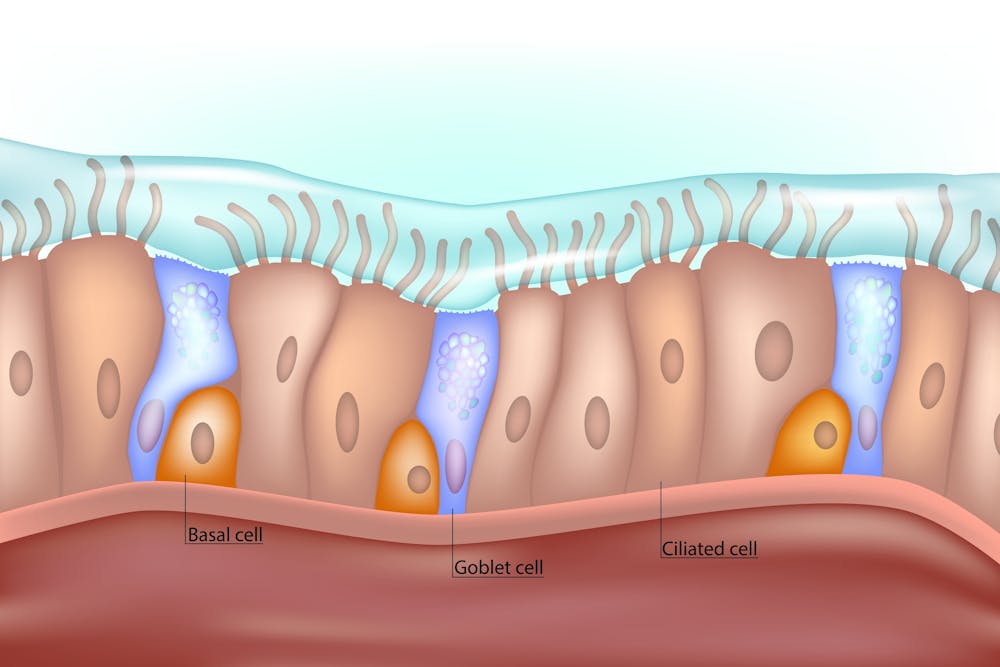
    In fact, we’re always making phlegm, even when we are healthy. Cells in the lungs secrete mucus to keep surfaces moist and trap irritants. When we encounter something potentially harmful, such as a virus or allergen, immune cells detect the threat and release signals that tell mucus-producing cells to step up their game.

    This extra mucus helps trap the invader and move it out of the lungs. Tiny hairs lining the airways (called cilia) then sweep the mucus up to the throat, where we cough it out or swallow it.

    These tiny hairs, or cilia, sweep phlegm up to your throat.
    Sakurra/Shutterstock

    The case for spitting

    Some people feel better if they spit out phlegm, especially if the phlegm is thick, sticky or irritates the throat.

    Spitting also lets you see what’s coming up. If phlegm contains blood, for example, it is important to see a doctor to exclude a more serious underlying illness, such as tuberculosis or cancer.

    If you do spit out, do so into a tissue and throw it in the bin. Wash your hands afterwards. This reduces the risk of spreading infection to others via respiratory droplets or contaminated surfaces.

    However, spitting out phlegm isn’t always practical, or polite. And for most viral infections, it doesn’t help you get better any faster than swallowing. The aim is to remove phlegm from the lungs, which occurs with either method.

    Spitting is also not feasible for young children, who haven’t yet developed the coordination to do so effectively. They’ll generally swallow their phlegm.

    How mucus keeps us healthy all year round, even if we’re not sick.

    The case for swallowing

    It might not sound particularly appealing, but swallowing phlegm is a normal process, and harmless. In fact, we often swallow phlegm without realising it.

    The lungs generate about 50 millilitres of phlegm daily. It goes unnoticed because it’s thin, blends with saliva and we continuously swallow it. We only become aware of it when it thickens, such as during a viral infection.

    After you swallow phlegm, it travels to the stomach, where acid and enzymes break it down, along with any germs it carries.

    Swallowing phlegm doesn’t “recycle” the germs, and it won’t result in the infection spreading elsewhere.

    In fact, swallowing viruses can even help build immunity. Once inside the gut, immune cells begin to recognise pieces of the virus and start preparing the body to respond more effectively to it in the future. Some important immunisations, such as the oral polio vaccine, work through this very mechanism.

    So, what’s the verdict?

    Whether you spit or swallow phlegm, both are safe. Spitting can help some people feel better, especially if their cough is associated with thick phlegm that’s causing distress.

    But for most healthy people, there’s no need to force a cough or spit out phlegm. Swallowing phlegm is completely safe. And in young children, it’s the only feasible option.

    In the end, it won’t matter if you spit or swallow your phlegm this winter. So choose what feels right (and least icky) for you.

    Phoebe Williams receives funding from the National Health and Medical Research Council, the Medical Research Future Fund, and the Gates Foundation.

    Niall Johnston does not work for, consult, own shares in or receive funding from any company or organisation that would benefit from this article, and has disclosed no relevant affiliations beyond their academic appointment.

    ref. Spit or swallow? What’s the best way to deal with phlegm? – https://theconversation.com/spit-or-swallow-whats-the-best-way-to-deal-with-phlegm-256216

    MIL OSI AnalysisEveningReport.nz

  • MIL-OSI United Nations: 5 June 2025 Donors making a difference: cholera

    Source: World Health Organisation

    Cholera is a severe diarrhoeal disease that can be fatal within hours if not treated. Quick access to treatment is therefore crucial. Researchers estimate that there are 1.3 to 4 million cases and 21 000 to 143 000 deaths from cholera worldwide each year, with cases surging since 2021. Over 40 countries reported cases last year, and WHO estimates that 1 billion people are directly at risk.

    Cholera remains a global public health threat closely linked to inequality and inadequate social and economic development. Access to safe water, basic sanitation and hygiene are essential to prevent cholera and other waterborne diseases.

    WHO works to improve prevention and control of cholera globally, as well as increase awareness. WHO and partners also support research for the development of innovative strategies to prevent and control cholera.

    Below are some examples of how WHO is collaborating with governments and partners across the world, with critical financial support from donors, to prevent and control cholera.

    WHO and the French Development Agency strengthen emergency community responses to cholera in Democratic Republic of Congo

    WHO and the French Development Agency launch a cholera response project in Haut-Katanga to strengthen emergency community responses.
    Photo by: WHO/Joel Lumbala

    WHO, in partnership with the French Development Agency, has launched a catalytic US$ 392 000 project, working closely with the health authorities of Haut-Katanga and the National Program for the elimination of cholera and the fight against other diarrheal diseases.

    This project aims to drastically reduce the risk of cholera epidemics in this southeastern province of the Democratic Republic of Congo. The project will provide medical supplies, improve infection prevention and control, install 40 oral rehydration points and build two semi-durable isolation treatment centres in the Kafubu and Kipushi health zones.

    Over six months, the project will train 50 registered nurses and 140 community health workers in integrated disease surveillance and response, while raising awareness amongst the population on good hygiene practices. The health zones will also be empowered to locally produce liquid chlorine (bleach) to facilitate the decontamination of households affected by suspected cases of cholera, the treatment of drinking water and medical needs in health facilities. Solar kits and reagents will be available for 6 months.

    Read the full story (in French)

    Angola reinforces actions to end cholera with WHO support

    Deploying rapid response teams, training health personnel, establishing cholera treatment centres and units, providing safe drinking water, intensive community engagement, and the rollout of targeted vaccination campaigns is part of the urgent response measures against cholera. Photo by: WHO/Angola

    Since the onset of a cholera outbreak in Angola in January 2025, more than 14 000 cases and 505 associated deaths have been reported. Around 50% of the cases affected people under 20 years.

    The Ministry of Health, in close coordination with WHO and other development partners, carried out a series of urgent response measures. These included deploying rapid response teams, training health personnel, establishing cholera treatment centres and units, providing safe drinking water, intensive community engagement, and the rollout of targeted vaccination campaigns.

    In addition, health authorities, with support from WHO and United Nations Children’s Fund (UNICEF), mapped and treated the country’s main water access points. In early 2025, 28 public health officials from 15 municipalities in five of the most affected provinces were trained in mapping water sources. Nearly 320 water sources were mapped, improving access to treated water for people, particularly in Luanda and Icolo e Bengo provinces, which account for around 94% of cholera cases and 15% of related deaths in the country.

    Read the full stories here and here

    How WHO is supporting cholera outbreak response in Sudan

    A child receives oral cholera vaccine in Baqa’a shelter for internally displaced people in Gedaref, October 2024. Photo by: WHO/Omer Tarig

    The Federal Ministry of Health of Sudan declared a cholera outbreak on 12 August 2024, following the confirmation of cases in Kassala State. Heavy rains, flooding, overcrowding, and limited access to clean water in displacement sites and within communities contributed to the rapid spread of the disease. As of 18 January 2025, the outbreak had affected 84 localities across 11 states, with more than 51 300 cases and 1 359 deaths reported.

    As part of the response, the Federal Ministry of Health, with support from WHO and UNICEF, has conducted oral cholera vaccination campaigns in 8 states, reaching 7.4 million people.

    WHO is supporting the outbreak response through comprehensive health interventions that include strengthening surveillance, deployment of rapid response teams for swift investigation of alerts, case management and improving water quality, sanitation and hygiene services in displacement sites and other at-risk communities.

    WHO is able to deliver on its cholera commitment through the financial contribution of donors: Gavi, the Vaccine Alliance, the European Union Commission, United Nations Central Emergency Response Fund (CERF), United States Agency for International Development (USAID), UN Multi-Partner Trust Fund Office (MPTF), and the Governments of France and Germany.

    Read the full story

    WHO and partners launch second cholera vaccine dose to protect young refugees in Cox’s Bazar

    A young girl receives the 2nd dose of the OCV Vaccine in the Rohingya Camps. Photo by: WHO/Terence Ngwabe Che

    In April 2025, WHO, in collaboration with the Government of Bangladesh and health sector partners, launched the second round of a targeted Oral Cholera Vaccination (OCV) campaign in Cox’s Bazar. This initiative aims to administer a second dose of the vaccine to Rohingya refugee children aged 1 to 5 years.

    This builds on the success of the initial mass vaccination campaign conducted in January 2025, across the Cox’s Bazar, Bandarban districts, and on Bhasan Char Island. A total of 1.4 million doses were administered from the 1.6 million doses supplied by the International Coordinating Group on Oral Cholera Vaccine Provision for Cholera Control.

    The vaccine deployment followed an approved request by the Directorate General of Health Services, Communicable Disease Control, with operational support from Gavi, the Vaccine Alliance.

    Read the full story

    WHO and King Salman Humanitarian Aid & Relief Centre expand life-saving health interventions

    KSRelief Supervisor-General, Abdullah Al Rabeeah, and Dr Tedros, signing funding agreements in response to humanitarian crises at the Riyadh International Humanitarian Forum on 24-25 February 2025, Kingdom of Saudi Arabia. Photo by: WHO/Karim Yassmineh.

    WHO and the King Salman Humanitarian Aid and Relief Centre (KSrelief) agreed on a series of new pledges to deliver life-saving health measures for people threatened by cholera and malaria in Yemen. The pledges also support health services for Sudanese who have fled conflict to neighbouring Egypt, and to support polio eradication efforts in countries where the virus continues to circulate. The agreements were signed during the fourth Riyadh International Humanitarian Forum, being held on 24-25 February.

    WHO’s Country Office in Yemen and KSrelief finalized a donation of US$ 2.1 million to support an existing agreement to expand cholera response and control measures, and improve access to treatment in affected and high-risk areas.

    Read the full story

    Purified water, lives saved: the fight against cholera in Haiti continues

    OPS/WHO delivering materials to the Ministry of Public Health and Population to respond against cholera. Photo by: OPS/WHO

    PAHO/WHO continued to support the Ministry of Public Health and Population in its fight against cholera since its resurgence in October 2022. Access to clean and safe water remains a major challenge in Haiti and is a key factor in the decline of the disease across the country.

    With support from the UNCERF and in partnership with the health authorities, PAHO/WHO implemented a project to improve access to drinking water for Acute Diarrhea Treatment Centres, facilities established to treat cholera patients.

    Installing a water treatment unit made it possible to supply drinking water, on demand, by tanker trucks to a network of 15 distribution points, consisting of tankers installed in as many health facilities throughout the department. In the second phase, 218 departmental health officers were trained on methods for accessing drinking water, effective sanitation techniques, and essential hygiene practices to prevent water-related diseases.

    Read the full story (in French)

    Malawi declares end of cholera outbreak

    Case management at Area 25 cholera treatment centre. Photo by: WHO/Ovixlexla Kamenyagwaza-Bunya

    The Government of Malawi, through its Public Health Institute, declared the end of a protracted cholera outbreak that started in March 2022 and lasted over two years. WHO and partners supported the set-up of cholera treatment centres and units and oral rehydration points, provided clinical mentorship, and supported the development of referral guidelines and standardized patient records from the initial stages of the outbreak.

    The surveillance team supported the roll out of the One Health Surveillance Data Platform, intensified case investigations, and strengthened laboratory testing and event-based surveillance. WHO also provided support for oral cholera vaccination campaigns, where over four million doses were administered with a utilization rate of almost 100%.

    To strengthen resilience and bolster global health security, in June 2023, WHO conducted a Scoping Mission which led to the development of a 2-year roadmap. WHO continues to work with multi-sectoral partners and the donor community to support implementation of these priorities. In 2024, USAID and FCDO UK provided funds towards preparedness activities.

    Read the full story

    South Sudan steps up vaccination, response measures to curb cholera

    A vaccinator administering oral cholera vaccine in Renk, Upper Nile State, during December 2024’s campaign after the September outbreak declaration.
    Photo by: WHO/Atem John Ajang

    The Government of South Sudan declared a cholera outbreak in October 2024. In January 2025, the Ministry of Health, with support from WHO and partners, rolled out several oral cholera vaccination campaigns in four high-risk countries: Malakal, Juba, Renk, and Rubkona.

    With support from Gavi, the Vaccine Alliance, around four million doses of the vaccine were approved and around 910 000 doses administered (as of January 2025) in the four counties, which is above 90% coverage.

    WHO continues to distribute essential medical supplies for cholera response to local and national health authorities and partners, which can treat 4 700 cholera cases. WHO has also facilitated the establishment of a 50-bed cholera treatment centre at Juba Teaching Hospital and is supporting the deployment of nine rapid response teams from national level to 11 priority counties to support implementing partners on the ground to provide critical case management.

    Read the full story

    Scaling up cholera testing in Zimbabwe

    WHO staff build cholera treatment centres with support of communities. Photo by: WHO/Vivian Mugarisi

    To ramp up testing for cholera in Zimbabwe, WHO supported the Ministry of Health and Child Care (MoHCC) with training of 986 nurses in antigen Rapid Diagnostic Test (RDT) testing, addressing critical staff shortages at rural health centres. Additionally, 44 laboratory personnel at provincial and district levels were trained in cholera culture, further strengthening diagnostic capacity.

    Prior to the training programme, testing capabilities were limited. Between the outbreak’s onset in February 2023 and 18 January 2024, only 2 090 antigen RDTs and 2 250 culture tests were conducted across 10 health centres. Following the training, the number of antigen RFT tests increased to 9 853, a staggering 371% increase. The success of the programme is attributed to the collaborative efforts of various stakeholders including UNICEF, Higher Life Foundation, JHPIEGO, World Vision International and WHO, with MoHCC leading the efforts.

    Funding for the training activities came from the Health Resilience Fund (HRF), UNCERF and the United States Department of the State (USDOS). HRF is a pool of funding from the European Union, the Government of Ireland and the United Kingdom, as well as Gavi, the Vaccine Alliance.

    Additionally, in a significant boost to Zimbabwe’s healthcare infrastructure, WHO donated a wide range of medical equipment to the Ministry of Health and Child Care (MoHCC). The equipment, valued close to USD$1.8 million, was funded by various donors and partners, including the African Development Bank (AfDB), the UN Central Emergency Response Fund (UNCERF), USAID, and the Government of Japan.

    Read the full stories here and here

    ***

    Read more about WHO’s work on cholera

    The donors and partners acknowledged in this story are (in alphabetical order)

    African Development Bank, European Union, French Development Agency, Germany, Gavi, the Vaccine Alliance, Health Resilience Fund, Higher Life Foundation, International Coordinating Group on Oral Cholera Vaccine Provision for Cholera Control, Ireland, Japan, JHPIEGO, King Salman Humanitarian Aid and Relief Centre, United Kingdom Foreign Commonwealth and Development Office, UNICEF, UN Central Emergency Response Fund, UN Multi-Partner Trust Fund Office (MPTF), United States Department of the State, USAID, World Vision International.

    WHO’s work is made possible through all contributions of our Member States and partners. WHO thanks all donor countries, governments, organizations and individuals who are contributing to the Organization’s work, with special appreciation for those who provide fully flexible contributions to maintain a strong, independent WHO.

    MIL OSI United Nations News

  • MIL-OSI Global: Game theory explains why reasonable parents make vaccine choices that fuel outbreaks

    Source: The Conversation – USA – By Y. Tony Yang, Endowed Professor of Health Policy and Associate Dean, George Washington University

    Vaccination is an example of how people make decisions in an interconnected system. MichelleLWilson via iStock/Getty Images Plus

    When outbreaks of vaccine-preventable diseases such as measles occur despite highly effective vaccines being available, it’s easy to conclude that parents who don’t vaccinate their children are misguided, selfish or have fallen prey to misinformation.

    As professors with expertise in vaccine policy and health economics, we argue that the decision not to vaccinate isn’t simply about misinformation or hesitancy. In our view, it involves game theory, a mathematical framework that helps explain how reasonable people can make choices that collectively lead to outcomes that endanger them.

    Game theory reveals that vaccine hesitancy is not a moral failure, but simply the predictable outcome of a system in which individual and collective incentives aren’t properly aligned.

    Game theory meets vaccines

    Game theory examines how people make decisions when their outcomes depend on what others choose. In his research on the topic, Nobel Prize-winning mathematician John Nash, portrayed in the movie “A Beautiful Mind, showed that in many situations, individually rational choices don’t automatically create the best outcome for everyone.

    Vaccination decisions perfectly illustrate this principle. When a parent decides whether to vaccinate their child against measles, for instance, they weigh the small risk of vaccine side effects against the risks posed by the disease. But here’s the crucial insight: The risk of disease depends on what other parents decide. If nearly everyone vaccinates, herd immunity – essentially, vaccinating enough people – will stop the disease’s spread. But once herd immunity is achieved, individual parents may decide that not vaccinating is the less risky option for their kid.

    In other words, because of a fundamental tension between individual choice and collective welfare, relying solely on individual choice may not achieve public health goals.

    A 1963 poster featuring Wellbee, the CDC’s national symbol of public health, encouraged people to get the polio vaccine.
    CDC via Wikimedia Commons

    This makes vaccine decisions fundamentally different from most other health decisions. When you decide whether to take medication for high blood pressure, your outcome depends only on your choice. But with vaccines, everyone is connected.

    This interconnectedness has played out dramatically in Texas, where the largest U.S. measles outbreak in a decade originated. As vaccination rates dropped in certain communities, the disease – once declared eliminated in the U.S. – returned. One county’s vaccination rate fell from 96% to 81% over just five years. Considering that about 95% of people in a community must be vaccinated to achieve herd immunity, the decline created perfect conditions for the current outbreak.

    This isn’t coincidence; it’s game theory playing out in real time. When vaccination rates are high, not vaccinating seems rational for each individual family, but when enough families make this choice, collective protection collapses.

    The free rider problem

    This dynamic creates what economists call a free rider problem. When vaccination rates are high, an individual might benefit from herd immunity without accepting even the minimal vaccine risks. Game theory predicts something surprising: Even with a hypothetically perfect vaccine – faultless efficacy, zero side effects – voluntary vaccination programs will never achieve 100% coverage. Once coverage is high enough, some rational individuals will always choose to be free riders, benefiting from the herd immunity provided by others.

    And when rates drop – as they have, dramatically, over the past five years – disease models predict exactly what we’re seeing: the return of outbreaks.

    Game theory reveals another pattern: For highly contagious diseases, vaccination rates tend to decline rapidly following safety concerns, while recovery occurs much more slowly. This, too, is a mathematical property of the system because decline and recovery have different incentive structures. When safety concerns arise, many parents get worried at the same time and stop vaccinating, causing vaccination rates to drop quickly.

    But recovery is slower because it requires both rebuilding trust and overcoming the free rider problem – each parent waits for others to vaccinate first. Small changes in perception can cause large shifts in behavior. Media coverage, social networks and health messaging all influence these perceptions, potentially moving communities toward or away from these critical thresholds.

    Mathematics also predicts how people’s decisions about vaccination can cluster. As parents observe others’ choices, local norms develop – so the more parents skip the vaccine in a community, the more others are likely to follow suit.

    Game theorists refer to the resulting pockets of low vaccine uptake as susceptibility clusters. These clusters allow diseases to persist even when overall vaccination rates appear adequate. A 95% statewide or national average could mean uniform vaccine coverage, which would prevent outbreaks. Alternatively, it could mean some areas with near-100% coverage and others with dangerously low rates that enable local outbreaks.

    Not a moral failure

    All this means that the dramatic fall in vaccination rates was predicted by game theory – and therefore more a reflection of system vulnerability than of a moral failure of individuals.
    What’s more, blaming parents for making selfish choices can also backfire by making them more defensive and less likely to reconsider their views.

    Much more helpful would be approaches that acknowledge the tensions between individual and collective interests and that work with, rather than against, the mental calculations informing how people make decisions in interconnected systems.

    People make decisions by balancing individual and collective interests – a calculation that’s crucial for how infectious diseases spread.

    Research shows that communities experiencing outbreaks respond differently to messaging that frames vaccination as a community problem versus messaging that implies moral failure. In a 2021 study of a community with falling vaccination rates, approaches that acknowledged parents’ genuine concerns while emphasizing the need for community protection made parents 24% more likely to consider vaccinating, while approaches that emphasized personal responsibility or implied selfishness actually decreased their willingness to consider it.

    This confirms what game theory predicts: When people feel their decision-making is under moral attack, they often become more entrenched in their positions rather than more open to change.

    Better communication strategies

    Understanding how people weigh vaccine risks and benefits points to better approaches to communication. For example, clearly conveying risks can help: The 1-in-500 death rate from measles far outweighs the extraordinarily rare serious vaccine side effects. That may sound obvious, but it’s often missing from public discussion. Also, different communities need different approaches – high-vaccination areas need help staying on track, while low-vaccination areas need trust rebuilt.

    Consistency matters tremendously. Research shows that when health experts give conflicting information or change their message, people become more suspicious and decide to hold off on vaccines. And dramatic scare tactics about disease can backfire by pushing people toward extreme positions.

    Making vaccination decisions visible within communities – through community discussions and school-level reporting, where possible – can help establish positive social norms. When parents understand that vaccination protects vulnerable community members, like infants too young for vaccines or people with medical conditions, it helps bridge the gap between individual and collective interests.

    Health care providers remain the most trusted source of vaccine information. When providers understand game theory dynamics, they can address parents’ concerns more effectively, recognizing that for most people, hesitancy comes from weighing risks rather than opposing vaccines outright.

    The authors do not work for, consult, own shares in or receive funding from any company or organization that would benefit from this article, and have disclosed no relevant affiliations beyond their academic appointment.

    ref. Game theory explains why reasonable parents make vaccine choices that fuel outbreaks – https://theconversation.com/game-theory-explains-why-reasonable-parents-make-vaccine-choices-that-fuel-outbreaks-256975

    MIL OSI – Global Reports

  • MIL-OSI USA: Fighting Poultry Disease with mRNA: UConn Researchers Pioneer Nanoparticle Approach

    Source: US State of Connecticut

    Researchers from UConn’s College of Agriculture, Health and Natural Resources (CAHNR) and College of Liberal Arts and Sciences (CLAS) have demonstrated that a novel protein-based nanoparticle can make mRNA vaccines more effective to tackle a troublesome pathogen in chickens.

    Mazhar Khan, professor in the Department of Pathobiology and Veterinary Science, Challa V. Kumar, emeritus professor in the Department of Chemistry and graduate students Anka Rao Kalluri and Aseno Sakhrie collaborated over several years and published their findings in Vaccines.

    Infectious Bronchitis Virus (IBV), a rapidly spreading coronavirus, is a major concern for poultry farmers in the U.S. and worldwide. Poultry farmers lose millions each year due to this disease.

    Currently, farmers use live attenuated vaccines or killed vaccines to combat the virus. However, these kinds of vaccine come with a series of challenges. The virus could reactivate, mutate, or recombine to create a vaccine-resistant or more severe strain. These vaccines also have a shorter shelf life and require additional compounds, known as adjuvants, to be effective.

    The researchers have developed an effective mRNA IBV vaccine alternative.

    mRNA vaccines, like the human COVID-19 vaccines, do not contain any live virus. Instead, the mRNA encodes a piece of the virus’ genetic code, specifically the spike protein that is responsible for triggering the immune response and trains the immune system to respond to the protein.

    Yet, mRNA vaccines still have some limitations, namely their lack of stability. mRNA vaccines break down quickly and need to be kept in temperature-controlled settings, something that poses a challenge on poultry farms.

    In a key advancement, Khan and Sakhrie are using a novel nanoparticle that protects the mRNA from breaking down quickly.

    This particle was invented by the Kumar group for applications in biology. It was Kumar who convinced the team to work on mRNA vaccines, long before COVID vaccines arrived. Early hurdles were to efficiently complex the nanoparticles with target mRNA. Kalluri solved this problem by covalently attaching positively charged amine groups to the particle. The positively charged particles capture the negatively charged mRNA and stabilize it. Sakharie and her colleagues carried out detailed cellular and animal studies using these nanoparticle-mRNA complexes.

    “This project highlights how collaborations across campus are making rapid progress in solving complex scientific problems,” says Kumar.

    Amino groups attached to the particle surface not only stabilize the mRNA but also protect it from hydrolysis by nucleases, enzymes that break down the nucleic acids that make up DNA and RNA, in the body.

    “The nanoparticle will keep it more stable, and it will deliver the vaccine to the cells where it will express the desired mRNA,” Sakhrie says.

    The nanoparticles are made by modifying bovine serum albumin, a readily available protein, affordable, and non-toxic protein, a waste product of commercial beef production.

    The team’s studies have shown that chickens vaccinated with the nanoparticle mRNA vaccine showed a 1000-times increase in antibodies against IBV compared to the unvaccinated control group. Their work has also demonstrated that immune cell activity increased in the vaccinated chickens, which indicates the vaccine boosts the entire immune system to fight off infection.

    With these promising results, the researchers are now investigating a more effective vaccination method.

    Traditionally, farmers need to individually inject baby chicks with the vaccine, a time-consuming project for the farmers and a stressful one for the chicks.

    The team is evaluating if, instead, the vaccine can be administered via a spray on the chicks. This would allow farmers to vaccinate large flocks quickly and without stress to the animals.

    While IBV is not currently a concern for human health, using the nanoparticles to enhance the stability of mRNA vaccines has the potential to improve human vaccines. Essentially, researchers could plug the genetic code of an emergent disease into the nanoparticle vaccine platform to quickly develop an effective mRNA vaccine. This platform technology can be tuned to various other disease vectors in the future.

    “We can use the nanoparticle for human vaccines,” Khan says. “The timing for vaccine development is very short, we just need the specific sequence of the gene.”

    UConn Technology Commercialization Services has filed a provisional patent for this nanoparticle technology. Michael A. Invernale , senior licensing manager, has been marketing the technology to industry to further bring this innovation from the lab to applied use.

    Follow UConn CAHNR on social media

    MIL OSI USA News

  • MIL-OSI United Nations: 4 June 2025 Departmental update Global health leaders urge action on immunization priorities at Seventy-eighth World Health Assembly

    Source: World Health Organisation

    During the Seventy-eighth World Health Assembly, held from 19 to 27 May 2025, Member States and global health partners urged continued action on vaccine-preventable diseases—such as cervical cancer, measles, meningitis, polio, and rubella—through Assembly agenda items and side events aimed at accelerating global immunization efforts and preventing future outbreaks. 

    Innovation, integration and investment to outsmart outbreaks 

    Immunization discussions kicked off at the high-level side event, “Outsmarting Outbreaks: Innovation, Integration & Investment”, hosted by Chile, Democratic Republic of the Congo, Madagascar, Niger, Somalia, and Zambia, and supported by the Gates Foundation, the United Nations Foundation and other partners. The event underscored the alarming resurgence of measles, cholera, and polio amid escalating conflict and climate threats, urging countries to safeguard immunization progress, complete polio eradication efforts, and strengthen preparedness for emerging health risks.  

    Attendees shared successes and challenges, particularly from countries facing simultaneous outbreaks, while emphasizing the criticality of routine immunization, cross-sector partnerships, and innovative techniques – including wastewater monitoring and digital disease modeling for surveillance and the use of electronic registries for immunization in low-resource settings – to controlling preventable diseases and avoid outbreaks.  

    Discussions also emphasized the necessity of a ‘SMART’ approach—strategic, measurable, aligned, resilient, and timely collaboration—as well as innovative solutions like the AI-powered All Hazard Information Management Toolkit, to enhance rapid response capabilities. A call to action capped the event, urging concerted efforts to sustain investment in immunization programmes, build trust in vaccines through community engagement, and ensure robust pandemic preparedness, including through surveillance. 

    Countries reaffirm commitment to defeat meningitis 

    Member States praised WHO’s launch of new guidelines on meningitis diagnosis, treatment and care, and the continued rollout of new vaccines, including Men5CV, in high-burden countries. They also emphasized the strong commitment of national leaders, partners, civil society organizations and the dedicated teams supporting the road map at all levels of WHO. 

    Despite progress, delegates raised key challenges including vaccine affordability and equitable access, shortages in trained healthcare personnel, insufficient laboratory infrastructure, and gaps in surveillance systems.  

    Member States called for technical and financial support, maintaining emergency vaccine stockpiles, research and innovations, particularly of early detection, strengthened community engagement and awareness campaigns among both communities and health care workers as well as supported rehabilitation services.  

    Meningitis was further discussed during an official side event hosted by Mali, Nigeria and Pakistan, along with Gavi, the Vaccine Alliance on integrating solutions to defeat malaria, meningitis and polio. The event aimed to highlight how an integrated approach to elimination or eradication goals of the three diseases could maximize available resources and improve health service delivery for people and communities. 

    “We are at an inflection point in global health,” said Dr Sania Nishtar, Chief Executive Officer, Gavi, the Vaccine Alliance in her remarks. “We all know the challenges that we face as partners in global health. Between now and 2030, we will have to work smarter, more collaboratively, and with the needs of countries at the center of everything we do.”  

    Attendees discussed how integration can be achieved within disease surveillance, diagnosis, treatment and long-term care, and prevention through equitable access to vaccines. Several countries presented examples of delivering polio, malaria and meningitis vaccines through integrated campaigns alongside bed net distribution.  The event closed on a call for increased technical and financial support to accelerate integration across the three programmes in order to end polio, malaria, and meningitis. 

    (Left to Right) Derrick Sim, Managing Director of Vaccine Markets & Health Security at Gavi; Dr Hanan Balkhy, WHO Regional Director for the Eastern Mediterranean; Dr Jo Mulligan, Senior Health Advisor,Foreign, Commonwealth & Development Office, United Kingdom; H.E. Dr Colonel Assa Badiallo Touré, Minister of Health and Social Development, Mali; H.E. Dr Iziaq Adekunle Salako, Minister of State for Health and Social Welfare, Nigeria, and Ambassador Bilal Ahmad, Permanent Representative of Pakistan to the United Nations. 

    Life-saving power of measles and rubella vaccines emphasized 

    Amidst a global surge in measles outbreaks and with millions of children still lacking protection, global health leaders convened at a high-level side event titled “The Power of Prevention – Immunizing for a Safer, Healthier World” to deliver a unified message: these outbreaks are preventable—if we act decisively and without delay. 

    Co-hosted by Oman, Somalia, the Gates Foundation, Gavi, the Vaccine Alliance, the International Federation of Red Cross and Red Crescent Societies (IFRC), UNICEF, and the United Nations Foundation, on behalf of the Measles & Rubella Partnership, the side event focused on accelerating global immunization efforts and promoting equity in vaccine access.  

    “The Measles & Rubella Partnership has been a backbone of measles and rubella programs, surveillance and outbreak response across the world,” said Dr Razia Pendse, WHO Chef de Cabinet in her opening remarks. “Yet, these gains are fragile. Measles is making a dangerous comeback threatening communities, economies and global health security. We must remain steadfast in our commitment to investing in measles vaccination and other vaccines, investments that will lead healthier children, communities, and a more resilient future for people of all ages.” 

    Dr Razia Pendse, WHO Chef de Cabinet and Dr. Hilal bin Ali bin Halil Alsabti, Minister of Health of Oman. 

    The meeting was moderated by Mr. Jarrett Barrios, senior vice-president of the American Red Cross. Dr Sania Nishtar, CEO of Gavi, the Vaccine Alliance reminded countries of what is at stake if targets for the organization’s ongoing replenishment are not met—millions of children remaining unprotected and increasing outbreaks. 

    A key focus of the discussion was WHO’s updated rubella vaccine recommendation, which removes the requirement for 80% measles coverage before introducing the combined measles-rubella vaccine. This policy shift allows all countries to include rubella vaccination in routine immunization—opening the door for the 13 remaining countries to introduce the vaccine, save lives, and prevent future outbreaks. 

    Grace Melia, an Indonesian mother who recently lost her daughter after a 12-year battle against the devastating effects of congenital rubella, concluded the event by sharing her testimonial and calling for action. “They say knowledge is power,” she said. “With all due respect, knowledge applied into action would be much more powerful. And I hope we are all here today to be part of that action.” 

    Reaffirmed commitments to achieving a polio-free world 

    During the Assembly, Member States reaffirmed their full support for achieving and sustaining a polio-free world, acknowledging WHO and its partners’ efforts to see the job done. Voicing concern about ongoing variant outbreaks and the need for interruption of wild poliovirus transmission in Afghanistan and Pakistan, Member States called for continued resourcing to the effort, and smart integration of polio functions within broader public health services. Other key themes were strengthened routine immunization – including with inactivated polio vaccine – through coordination with GAVI, and the need for strong oral polio vaccine cessation planning, the safe and secure containment of polioviruses in research and vaccine manufacturing facilities.  

    Read more about polio here

    World Cervical Cancer Elimination Day announced as official WHO campaign  

    As part of ongoing efforts to eliminate cervical cancer, the Assembly established World Cervical Cancer Elimination Day as an official WHO awareness campaign to be marked on 17 November, annually. World Cervical Cancer Elimination Day will promote actions to end the disease and protect the health of women and girls, including increasing access and update of human papillomavirus (HPV) vaccines.  

    Historic Pandemic Agreement  

    Member States formally adopted the world’s first Pandemic Agreement. The landmark decision by the World Health Assembly culminates more than three years of intensive negotiations launched by governments in response to the devastating impacts of the COVID-19 pandemic and driven by the goal of making the world safer from – and more equitable in response to – future pandemics. The agreement boosts global collaboration to ensure stronger, more equitable response to future pandemics. Next steps include negotiations on Pathogen Access and Benefits Sharing system. 

    —- 

    MIL OSI United Nations News

  • MIL-OSI United Kingdom: Measles outbreaks continue with risk of holidays causing surge

    Source: United Kingdom – Executive Government & Departments

    News story

    Measles outbreaks continue with risk of holidays causing surge

    Latest UKHSA data shows outbreaks continuing, with 109 cases confirmed in April and 86 so far in May.

    The UK Health Security Agency (UKHSA) today publishes its monthly update on measles cases in England, which shows outbreaks continuing, with 109 cases confirmed in April and 86 so far in May. Cases have predominantly been in unvaccinated children aged 10 years and under, with on-going outbreaks in a number of regions and London reporting almost half of all cases in the past 4 weeks.

    There has also been a global increase in measles cases including Europe over the last year and the Agency is concerned, that with travelling for holidays or to visit family this summer, there is a risk this could lead to another surge of measles cases in England.

    The latest measles epidemiology report on the UKHSA Data Dashboard today reports:

    • since 1 January there have been 420 laboratory confirmed measles cases reported in England
    • 109 measles cases were confirmed in April and to date 86 in May (number of laboratory confirmed measles cases by month of symptom onset, data reporting lags impact on most recent 4 weeks and therefore the figures are likely to be an underestimate)
    • the majority (276/420, 66%) of these cases were in children aged 10 years and under, but there are also cases being reported in young people and adults
    • London has seen the highest number of cases overall this year (162/420, 39%) and in the last 4 weeks (35/75, 47%)
    • a number of other regions are also reporting outbreaks – with 25% (19/75) of cases in the North West, and 11% (8/75) in the West Midlands in the last 4 weeks

    Since the introduction of the measles vaccine in 1968, at least 20 million measles cases and 4,500 deaths have been prevented in the UK.

    However, measles remains endemic in many countries around the world, and with declines in MMR vaccine uptake observed over the last decade, exacerbated by the COVID-19 pandemic, we have also seen large measles outbreaks in Europe and other countries. 

    An analysis by the World Health Organization (WHO) Europe and the United Nations Children’s Fund (UNICEF), reported 127, 350 measles cases in the European Region for 2024, double the number of cases reported for 2023 and the highest number since 1997.

    This year outbreaks have been seen in several other European countries, including France, Italy, Spain and Germany, and WHO recently reported that Romania, Pakistan, India, Thailand, Indonesia and Nigeria currently have among the largest number of measles cases worldwide.

    In England, the decline of the uptake of childhood vaccinations including MMR in the past decade (well below the WHO 95% target) means that many thousands of children are left unprotected with the risk of outbreaks linked to nurseries and schools.

    London has the lowest MMR uptake rates compared with other English regions (MMR2 uptake at 5 years is just 73.3% in London compared to English average of 83.9%).

    From Autumn 2023 to summer 2024, England experienced the biggest outbreak of measles since 2012, particularly affecting young children. Since the peak last year cases have declined but local outbreaks continue.

    Measles is one of the most highly infectious diseases and spreads rapidly among those who are unvaccinated. The UKHSA is concerned that more outbreaks may occur again on a larger scale this summer as families with unvaccinated children and adults travel to countries where there are outbreaks.

    It is important that anyone travelling for summer holidays or to visit family, especially parents of young children, check that all members of their family have received both their MMR vaccines.

    Getting vaccinated means you are also helping protect others who can’t have the vaccine, including infants under 1 year and people with weakened immune systems, who are at greater risk of serious illness and complications from measles.

    Dr Vanessa Saliba, Consultant Epidemiologist at the UK Health Security Agency:

    It’s essential that everyone, particularly parents of young children, check all family members are up to date with 2 MMR doses, especially if you are travelling this summer for holidays or visiting family. Measles cases are picking up again in England and outbreaks are happening in Europe and many countries with close links to the UK.

    Measles spreads very easily and can be a nasty disease, leading to complications like ear and chest infections and inflammation of the brain with some children tragically ending up in hospital and suffering life-long consequences. Nobody wants this for their child and it’s not something you want to experience when away on holiday.

    The MMR vaccine is the best way to protect yourself and your family from measles. Babies under the age of 1 and some people who have weakened immune systems can’t have the vaccine and are at risk of more serious complications if they get measles. They rely on the rest of us getting the vaccine to protect them.

    It is never too late to catch up, if you’re not sure if any of your family are up to date, check their Red Book or contact your GP practice. Don’t put it off and regret it later.

    Dr Amanda Doyle, National Director for Primary Care and Community Services at NHS England, said:

    Tens of thousands of additional MMR vaccinations were delivered following NHS action last year to protect children against measles, mumps and rubella, and the recent increase in cases seen in England and Europe should act as an important reminder to ensure your child is protected.

    Too many babies and young children are still not protected against the diseases, which are contagious infections that spread very easily and can cause serious health problems. MMR jabs are provided free as part of the NHS routine immunisation programme – and I would encourage all parents to act on invites or check vaccination records if they think they may have missed their child’s vaccination.

    The first MMR vaccine is offered to infants when they turn one year old and the second dose to pre-school children when they are around 3 years and 4 months old. 

    Around 99% of those who have 2 doses will be protected against measles and rubella. Although mumps protection is slightly lower, cases in vaccinated people are much less severe. 

    Anyone, whatever age, who has not had 2 doses can contact their GP surgery to book an appointment. It is never too late to catch-up. 

    It’s particularly important to check you’ve had both doses if you are: 

    • about to start college or university 
    • travelling overseas
    • planning a pregnancy 
    • a frontline health or social care worker 
    • if you work with young children or care for people as part of your work

    For more information on measles, mumps and rubella see the UKHSA resource: https://www.gov.uk/government/publications/mmr-for-all-general-leaflet

    Updates to this page

    Published 5 June 2025

    MIL OSI United Kingdom

  • MIL-OSI United Nations: 5 June 2025 Departmental update Vaccinating at every age is key to unlocking the full potential of immunization

    Source: World Health Organisation

    Yet, while childhood immunization programmes have saved millions of lives, vaccination of adults remains an overlooked tool—especially in low- and middle-income countries, where efforts have historically focused on reaching children, adolescents, and women of reproductive age. 

    A recent World Health Organization (WHO) study published in Vaccines underscores the value of adult vaccination to achieve healthy aging, while meeting the challenge of rising healthcare costs and antimicrobial resistance.  

    Although WHO recommends vaccines against diseases such as influenza, COVID-19, pneumococcal disease, tetanus, and respiratory syncytial virus (RSV), among others, for different adult population groups, the study finds that access remains unequal. Many low- and middle-income countries have yet to include vaccines targeting adults in their national schedules—leaving millions unprotected.  

    “As outbreaks of vaccine-preventable diseases increase, it’s more critical than ever that people receive every recommended dose—through every stage of life—to stay protected,” said Dr Alba Vilajeliu, lead author and technical officer in the Department of Immunization, Vaccines and Biologicals at WHO. “This isn’t just about saving lives; it’s also about increasing the quality of life for adults, their productivity within communities and alleviating the burden on already overstretched health systems.”  

    Under Immunization Agenda 2030, a global strategy for vaccination, countries envision a world where everyone, everywhere, at every age benefits from vaccines. Expanding adult immunization programmes will not only benefit older populations it will strengthen immunization programmes across the life course by enhancing health worker capacity, infrastructure and confidence in vaccines. 

    Adult immunization can be scaled quickly – as shown by COVID-19 

    The COVID-19 pandemic thrust adult vaccination into the global spotlight, driving major shifts in policies, attitudes, and health systems traditionally focused on childhood immunization. By the end of 2023, more than 13.6 billion COVID-19 vaccine doses had been administered globally, reaching 89% of health workers and 84% of older adults.  

    However, the WHO-study found those efforts have yet to translate to other adult vaccines. Despite seasonal influenza causing 3 to 5 million severe cases and up to 650 000 deaths annually, just 4% of low-income countries offer influenza vaccines to pregnant women, and only 8% to older adults. In contrast, high-income countries include them in 87% and 89% of national immunization schedules for these groups, respectively.  

    More than 50 years ago, countries began providing tetanus-containing vaccines for pregnant women to prevent maternal and neonatal tetanus. Today, 73% of low-income and 80% of lower-middle-income countries offer these vaccines. The experience of these and other vaccines for pregnant women offers valuable lessons for introducing new ones, like the maternal RSV vaccine to protect infants or future vaccines to prevent Group B streptococcus and malaria in pregnancy. 

    A recent Office of Health Economics (OHE) report also found that scaling up adult vaccination programmes for seasonal influenza, RSV, herpes zoster and pneumococcal disease in just 10 high- and upper middle-income countries returned up to 19 times their initial investment, offering a potential greater return in low- and middle-income countries. This amounted to up to US$ 4637 per individual full vaccination course. 

    New vaccines and innovations will broaden adult immunization 

    In addition to scaling up existing adult vaccines, new vaccines in development—like the next generation of tuberculosis vaccines, and vaccines for combinations of respiratory viruses—are expanding target groups beyond childhood. Through new platform technologies, such as mRNA, vaccine candidates are advancing into clinical testing at faster rates, without compromising safety. 

    Countries will need to continue to strengthen immunization programmes as part of primary health care services in order to introduce new- and under-utilized adult vaccines, scale-up existing vaccines, and ensure strong demand and uptake for adult immunization. Additionally, health workers will need to be trained to communicate on the importance of immunization across the life course. Engaging community leaders and healthcare professional networks will be essential for developing tailored communication for adult populations. 

    “As vaccination expands across the life course, now is the moment for countries to lay a strong foundation,” says Dr Kate O’Brien, Director of the Department of Immunization, Vaccines and Biologicals at WHO. “When we prioritize disease prevention to support lifelong health, we create continuous opportunities for health and well-being—and shift from a disease-centered model to one that truly puts people first. Adult immunization is central to that shift.” 

    “,”datePublished”:”2025-06-05T08:34:22.0000000+00:00″,”image”:”https://www.who.int/images/default-source/departments/immunization-ivb/feature-stories/vaccination-against-seasonal-flu.jpg?sfvrsn=786794b0_3″,”publisher”:{“@type”:”Organization”,”name”:”World Health Organization: WHO”,”logo”:{“@type”:”ImageObject”,”url”:”https://www.who.int/Images/SchemaOrg/schemaOrgLogo.jpg”,”width”:250,”height”:60}},”dateModified”:”2025-06-05T08:34:22.0000000+00:00″,”mainEntityOfPage”:”https://www.who.int/news/item/05-06-2025-vaccinating-at-every-age-is-key-to-unlocking-the-full-potential-of-immunization”,”@context”:”http://schema.org”,”@type”:”NewsArticle”};
    ]]>

    MIL OSI United Nations News

  • MIL-OSI Russia: China’s domestically produced 9-valent HPV vaccine aims to boost immunization coverage

    Translation. Region: Russian Federal

    Source: People’s Republic of China in Russian – People’s Republic of China in Russian –

    Source: People’s Republic of China – State Council News

    BEIJING, June 5 (Xinhua) — China’s medical device administration has approved the launch of the country’s first domestically produced 9-valent HPV (human papillomavirus) vaccine, ending a decade of foreign dominance in the Chinese market.

    The new vaccine, called Cecolin 9, was included in a list of approved drugs released Wednesday by China’s National Medical Products Administration.

    “The approval of Cecolin 9 not only opens up more opportunities for women to be vaccinated in China, but may also expand the availability and coverage of vaccination, helping to reduce the risk of cervical cancer,” said Zhang Jun, director of the Institute of Public Health at Xiamen University and a leading scientist on the vaccine development team.

    HPV vaccines are commonly used to prevent cervical cancer in women, as well as genital cancers and warts in both men and women.

    Cecolin 9, which targets nine HPV strains, was developed by Xiamen University, Xiang An Key Laboratory of Biomedicine and Xiamen Innovax Biotech Co., Ltd.

    With the approval of Cecolin 9, China has become the second country in the world after the United States to have independent self-sufficiency in the production of highly valent HPV vaccine.

    Compared with bivalent HPV vaccines, which are effective against two high-risk genotypes (HPV 16 and 18), 9-valent HPV vaccines additionally protect against five high-risk genotypes (HPV 31, 33, 45, 52, and 58) and two low-risk genotypes (HPV 6 and 11), and have been shown to be more effective in protecting against cervical cancer.

    After 18 years of hard work, Chinese researchers have overcome major technical challenges in producing virus-like particles (VLPs) from several HPV types using the E. coli platform and completed key clinical trial processes.

    Since 2019, five targeted clinical trials have been conducted in China, in which the new vaccine has demonstrated a favorable safety profile and a strong immune response comparable to similar international drugs on the market.

    Statistics show that there are approximately 700,000 cases of HPV-related cancer worldwide each year, including about 530,000 cases of cervical cancer. At the same time, the vaccination method can effectively prevent HPV infection by 94 percent.

    In 2020, the World Health Organization (WHO) launched a global programme to accelerate the elimination of cervical cancer, aiming to ensure that 90% of girls are fully vaccinated against HPV by age 15 by 2030.

    In line with the WHO programme, China’s National Health Commission has launched an action plan to eliminate cervical cancer for the period 2022-2030, which urges expansion of HPV immunisation coverage across the country. -0-

    MIL OSI Russia News

  • MIL-OSI USA: Duckworth, Warren, Blunt Rochester Condemn RFK for Making it Harder for Pregnant Women and Children to Receive COVID-19 Vaccines, Putting Their Health at Risk

    US Senate News:

    Source: United States Senator for Illinois Tammy Duckworth

    June 04, 2025

    [WASHINGTON, D.C.] – U.S. Senator Tammy Duckworth (D-IL), joined by U.S. Senators Elizabeth Warren (D-MA) and Lisa Blunt Rochester (D-DE), today condemned U.S. Department of Health and Human Services (HHS) Secretary Robert F. Kennedy, Jr. for announcing changes to the Centers for Disease Control’s (CDC) recommended vaccine schedule that would dramatically limit access to COVID-19 vaccines for millions of pregnant women and children, needlessly endangering their health. In their letter, the Senators slam the decision as anti-science and politically motivated, criticizing Secretary Kennedy for failing to provide scientific justification for the policy change and for confirming their longstanding concerns that he would enact unscientific, anti-vax policies as HHS Secretary—despite all his clamoring before Senate committees that he would not restrict vaccine access.

    “Your politically driven, anti-science decision—made suddenly and behind closed doors, without input from the public or scientific and medical communities—flies in the face of your commitment to ‘not…take away anybody’s vaccines’ and will lead to an untold number of preventable illness and death of Americans,” wrote the Senators.

    “Enabled by President Trump and fueled by decades of anti-vaccine skepticism, you appear to be establishing a roadmap by which the United States’ government can implement unscientific, anti-vaccination policies,” the lawmakers continued. “By sowing distrust, creating chaos and justifying your actions with misinformation, you are laying the groundwork to undermine access to other safe, effective vaccines, including for those that prevent diseases like whooping cough, measles and more.”

    The full text of the letter is available on Senator Duckworth’s website and below:

    Dear Secretary Kennedy:

    We write to express our extreme concern regarding the Department of Health and Human Services’ (HHS’) recent policy changes to dramatically curtail access to the COVID-19 vaccine for those Americans who would choose to receive it. We are particularly alarmed by your May 27, 2025 announcement on X—along with Drs. Marty Makary and Jay Bhattacharya, Commissioner of the Food and Drug Administration (FDA) and Director of the National Institutes of Health (NIH), respectively—that the COVID-19 vaccine will no longer be included under the Centers for Disease Control and Prevention’s (CDC’s) recommended routine immunization schedule for healthy pregnant women.

    We are also concerned that the CDC changed its recommendation for administering the COVID-19 vaccine for healthy children and adolescents from routine to using “shared clinical decision-making” between clinicians and families. As of the writing of this letter, the CDC has updated the immunization schedule for adults, removing the previous recommendation for pregnant women. The unjustified announcement “blindsided” senior officials at the CDC and were designed to “further erode public trust in the [agency].” By side-stepping the CDC’s Advisory Committee on Immunization Practices’ (ACIP’s) open and transparent deliberation of the evidence, you have thrown into question coverage of vaccines under Medicare, Medicaid and private insurance for millions of Americans. Your politically driven, anti-science decision—made suddenly and behind closed doors, without input from the public or scientific and medical communities—flies in the face of your commitment to “not…take away anybody’s vaccines” and will lead to an untold number of preventable illness and death of Americans. We therefore strongly urge you to reverse this position until there is a thorough, transparent consideration of the body of evidence regarding the COVID-19 vaccine’s public health benefit.

    Political Motivations Threaten COVID-19 Vaccine Access for Millions of Americans

    The ACIP’s vaccine recommendations, as adopted by the CDC, form the basis of no-cost access to the vaccines for millions of Americans. For example, the Patient Protection and Affordable Care Act, as amended, requires that most commercial health insurance plans and Medicaid Alternative Benefit Plans cover ACIP-recommended vaccines for a given individual with no cost sharing. In addition, for the Vaccines for Children Program, authorized by the Omnibus Budget Reconciliation Act, ACIP determines which vaccines are provided at no cost to children who are uninsured, underinsured, Medicaid-eligible, Medicaid-enrolled or American Indian or Alaska Native. States must also cover ACIP-recommended vaccines and their administration for children enrolled in separate State Children’s Health Insurance Program (CHIP) programs without enrollee cost-sharing.

    More recently, the Inflation Reduction Act expanded no-cost coverage of ACIP-recommended vaccines and vaccine administration without cost-sharing to adults under Medicare Part D, Medicaid and CHIP. The uncertainty and confusion caused by your politically driven actions may lead to many insurers deciding to drop coverage of the COVID-19 vaccine for millions of people. Without insurance coverage, individuals who wish to receive the COVID-19 vaccine will be forced to pay up to $200 or more out-of-pocket—an insurmountable cost for many families, especially amid cost-of-living crisis exacerbated by the current administration’s policies.

    Politically Driven, Anti-Vaccination Decision-Making Circumvents Scientific Input

    You appeared to make this policy change without consulting the FDA’s Vaccines and Related Biological Products Advisory Committee (VRBPAC) and prior to the next scheduled public meeting of the ACIP, the members of which are leading vaccine experts tasked with developing vaccine recommendations. You did so even though the ACIP had independently been considering updating COVID-19 vaccine recommendations to take into account the risk levels of different populations and was expected to vote on those recommendations when it was next scheduled to meet on June 25-27, 2025.

    Your announcement is a striking departure from the transparent and evidence-informed manner by which vaccine approvals and recommendations are formulated by HHS. For decades, scientists have weighed in on vaccine recommendations through a strenuous process. Following a decision from FDA experts about whether to approve a new vaccine based on clinical trial evidence and other data, ACIP “weighs extensive evidence about safety, effectiveness and other data to determine the best recommendation for who should receive the vaccine, when and how often.” The CDC director may choose to adopt, reject or modify these recommendations, though rejection or modification of such recommendations is rare. In the past quarter century, the CDC director has acted only twice to expand access beyond the ACIP’s recommendation, both times in response to extraordinary circumstances—in 2002 for the smallpox vaccine in connection with a vaccination campaign to address potential bioterrorism attacks, and in 2021 for the COVID-19 vaccine for front-line workers during the early phase of the COVID-19 pandemic. However, in an unprecedented and deeply troubling abuse of your authority, you did not wait to hear ACIP’s expertise, and you exploited a key vacancy at CDC to set these recommendations yourself. According to the Washington Post, this is “the first time an HHS secretary has unilaterally altered an existing recommendation from the advisory committee and the CDC.”

    Your decision represents a significant public health threat that will endanger millions of Americans. Pregnant women are at higher risk of serious illness and hospitalization if infected with COVID-19, and the virus raises the risk of having a cesarean birth, preeclampsia or eclampsia and blood clots. COVID-19 infection during pregnancy has also been shown to result in higher risk of lower birthweight babies, preterm birth and stillbirth. Babies born to women who were not vaccinated against COVID-19 are at higher risk of needing intensive care. That is why the American College of Obstetricians and Gynecologists (ACOG), and the Society for Maternal-Fetal Medicine (SMFM) strongly recommend women who are pregnant, breastfeeding or planning to get pregnant get the COVID-19 vaccine. According to ACOG and SMFM, the COVID-19 vaccine has been demonstrated repeatedly to be safe and protective for such individuals. Because this vaccine is so protective and safe for this population, ACOG further recommends eliminating barriers to receiving the COVID-19 vaccine. This is likely why the CDC stated in its “Interim Clinical Considerations for Use of COVID-19 Vaccines in the United States,” updated on May 12, 2025:

    “COVID-19 vaccination is recommended for everyone ages 6 months and older in the United States…Vaccination is especially important for people at highest risk of severe COVID-19, including people ages 65 years and older; people with underlying medical conditions, including immune compromise; people living in long-term care facilities; and pregnant women to protect themselves and their infants.” (emphasis added)

    After birth, infants under 6 months of age are at the same high level of risk of hospitalization due to COVID-19 as adults ages 65 to 74, and the only means of protecting these infants from COVID-19 is through maternal vaccination. An analysis of HHS data by the American Academy of Pediatrics found that 11,199 children were admitted to the hospital with COVID-19 during the 2024-2025 respiratory virus season, 7,746 of whom were younger than 5 years old. And 41 percent of children ages 6 months to 17 years old hospitalized with COVID-19 from October 2022 to April 2024 did not have a known underlying condition, meaning that “healthy” children are also at risk of severe disease.

    Establishing an Anti-Vaccination Policy Roadmap

    Enabled by President Trump and fueled by decades of anti-vaccine skepticism, you appear to be establishing a roadmap by which the United States’ government can implement unscientific, anti-vaccination policies. By sowing distrust, creating chaos and justifying your actions with misinformation, you are laying the groundwork to undermine access to other safe, effective vaccines, including for those that prevent diseases, such as pertussis (whooping cough), measles, respiratory syncytial virus (RSV), chickenpox, shingles, hepatitis A, as well as cancer caused by hepatitis B and human papilloma virus.

    The May 27, 2025 video announcement is just one action in a series of anti-vaccination, anti-science efforts you have led since becoming HHS Secretary. For example, while the ACIP made recommendations for meningococcal and RSV vaccines months ago, you have failed to adopt the recommendations. Further, even though the United States is experiencing the worst outbreak of measles in 25 years, you have downplayed the harm of one of the world’s most contagious diseases and made false claims that the measles, mumps and rubella vaccine has not been “safety tested.” This undermining of trust in vaccines has led to multiple preventable hospitalizations and deaths. Indeed, President Trump’s nominee to serve as your deputy at HHS expressed unqualified support for your recommendation “encourag[ing] parents to take the measles vaccine,” while saying nothing about vaccinating children against the disease. And the Trump administration clawed back over $11 billion in pandemic-era funding, which has hampered the ability of public health departments across the country to contain the measles outbreak.

    Moreover, on May 20, 2025, Dr. Vinay Prasad, Director of the FDA Center for Biologics Evaluation and Research and Commissioner Makary published an opinion piece in the New England Journal of Medicine (NEJM), outlining a new FDA approval framework that creates significant barriers for approval of annual COVID-19 vaccines for millions of Americans. This announcement indicated that the annual COVID-19 vaccine will generally be approved without a randomized, placebo-controlled clinical trial (RCT) only for people ages 65 and older and for those who have medical conditions that leave them at higher risk for severe COVID-19. The framework says nothing about the eligibly of healthy people at higher risk of being infected with COVID-19, such as healthcare professionals. This means that, unlike in most other countries, the annual vaccine will not be available to healthy individuals older than 6 months of age and under the age of 65 without an RCT. This change in the approval process will take away Americans’ freedom to choose to get the annual vaccine and put them and their loved ones at risk.

    Further, placebo-controlled trials for vaccines when a proven intervention exists are widely considered by the medical and research community to be unethical. Ethical guidance advises, “Extreme care must be taken to avoid abuse of [the option to conduct placebo-controlled trials when a proven intervention exists]”; the FDA and HHS have guidance accordingly restricting placebo-controlled trials to certain situations. There is no question that the existing safe and effective COVID-19 vaccines are such “proven interventions,” and withholding their use in new placebo-controlled trials would constitute a grave ethical violation.

    Your new approval process for the annual COVID-19 vaccine will significantly delay access to updated FDA-approved vaccines, jeopardizing the health and lives of the American people. Typically, vaccines, such as the annually updated flu shot, are approved after exhibiting immunogenicity data or other laboratory testing data comparable to previous vaccine versions, which themselves have provided robust safety and efficacy data. A multi-year study and lengthy approval process, which is generally considered by experts to be unnecessary, particularly for annually updated vaccines. The significant hurdles associated with FDA’s new RCT requirement could discourage vaccine manufacturers and researchers from developing new, innovative products that could prevent cancer, HIV and other diseases and ultimately save lives. Dr. Peter Hotez from the Baylor College of Medicine in Houston stated requiring RCTs for future vaccine development “would basically be a recipe for paralysis.”

    Indeed, the day after your announcement, Moderna withdrew an application for its new combined flu and COVID-19 vaccine, despite the new vaccine outperforming existing COVID-19 and flu vaccines. It also comes on the heels of the FDA delaying its approval of Novavax’s protein-based COVID-19 vaccine, missing its own April 1, 2025 deadline. When the FDA finally approved the vaccine, it did so for only a narrow population (adults 65 and older and those between ages 21-64 with an underlying medical condition). In a highly unusual step, FDA is also requiring that Novavax conduct a placebo-controlled RCT for less vulnerable populations.

    Given the suddenness of your May 27, 2025 announcement and its lack of detail or scientific justification, we respectfully request you provide written responses to the following questions no later than June 18, 2025:

    1. Despite “a commitment to gold-standard science,” you failed to provide an appropriate, detailed explanation for your change in the COVID-19 vaccination recommendations.

    1. What specific studies, scientific or clinical data did you consult as the basis for removing the COVID-19 vaccine from the CDC’s recommended vaccine schedule for pregnant women and children? Please provide citations for the research articles or publications you considered.
    2. Did you consult with any scientific or professional organizations, such as those representing obstetricians, pediatricians, family physicians, virologists, immunologists, epidemiologists or other relevant experts, in developing this new policy? Please provide the names of such stakeholders.
    3. Did you decide not to follow any recommendations from the scientific and medical communities? Why not?
    4. Did you submit a memo that explains the rationale and scientific justification for your decision? Please provide a copy of such memo, along with any attachments and communications related to it.

    2. Your directive implementing the new CDC recommendations suggests that the decision was made “[b]ased on a review of the recommendation of the FDA and the NIH.”

    1. Please list all individuals who carried out this review and their qualifications to weigh in on such decisions, such as their formal scientific and/or medical training, previously held professional positions or appointments, etc.
    2. Please provide a copy of the recommendation made by the NIH.
    3. Why were the CDC and ACIP apparently excluded from the process through which you imposed the new CDC recommendations?
    4. Given the former acting CDC director’s nomination to be CDC director, who is currently responsible for finalizing CDC recommendations?

    3. Why did you fail to consult the ACIP before changing the CDC’s COVID-19 vaccine recommendation for children and pregnant women, particularly before the ACIP’s next public meeting?

    4. The ACIP is scheduled to meet in June 2025 to discuss COVID-19 vaccine recommendations.

    1. Do you commit to allowing the ACIP to move forward with its meeting in June 2025? If so, when will the meeting be publicly noticed in the Federal Register?
    2. Do you commit to not altering the anticipated agenda that includes the discussion of the COVID-19 vaccine?
    3. Do you expect the ACIP’s future COVID-19 vaccine recommendations to be influenced by your decision to publish the new vaccine approval framework?
    4. If the ACIP issues a COVID-19 vaccine recommendation that differs from your May 27 announcement, will you commit to listening to the experts and consider adopting that recommendation?

    5. Why did you fail to consult the VRBPAC before granting a narrow approval for the Novavax COVID-19 vaccine?

    6. What role did you play in the decision to publish the new FDA framework outlined in the May 20, 2025 NEJM opinion piece, and in determining its content?

    7. Why did the FDA release this framework in an opinion piece, rather than formally publishing a regulation or guideline written by career vaccine experts?

    8. Does FDA plan to release a regulation, rule or formal guidance that formalizes the framework described in the NEJM article?

    1. If so, when will this policy be released?
    2. Will this policy be developed with the input of vaccine experts, providers, pharmacies, patient advocacy groups and/or other stakeholders?
    3. How will you and Commissioner Makary ensure vaccine experts, providers, pharmacies, patient advocacy groups and/or other stakeholders may provide input or feedback on the framework?

    9. Does the FDA’s new framework apply to initial doses (i.e., primary series) of new formulations of COVID-19 vaccines?

    1. Will this impact parents’ choices to vaccinate their children against COVID-19?
    2. Will you commit to preserving the current COVID-19 vaccine approval standards for the primary vaccine series?

    10. Given the ethical and recruitment challenges clinical trial sponsors may face because of new RCT requirements, how will FDA ensure the public has access to safe and effective vaccines if companies are unable to complete these trials in a timely manner?

    11. Figure 2 of the May 20, 2025 NEJM opinion piece listed pregnancy and recent pregnancy as underlying medical conditions that put an individual at risk of severe COVID-19.

    1. If the CDC is no longer recommending pregnant women get the COVID-19 vaccine, will such individuals still be eligible for the vaccine?
    2. If so, will they be able to get the vaccine at no cost?
    3. If there will be cost-sharing, what will be the cost-sharing policy for the vaccine, and who will make such decisions?

    12. Is the list in Figure 2 of the NEJM piece an exhaustive list for what medical conditions will be considered putting an individual at risk for severe COVID-19 disease?

    13. How do the conditions in the list align with the fact that the only high-risk condition now stated on the CDC immunization schedule for COVID-19 is “moderately or severely immunocompromised”?

    14. Do you believe that parents should have the right to vaccinate their children against COVID-19? If not, why not?

    15. Do you expect the current version of the COVID-19 vaccine to remain available in the primary vaccine series for individuals under 65 without underlying medical conditions?

    16. Will healthcare workers under age 65 who do not have a condition that predisposes them to severe COVID-19 and hospitalization be able to obtain a COVID-19 vaccine?

    17. Do you believe that young, healthy adults should be able to receive a COVID-19 vaccine to reduce the risk of getting Long COVID or of transmitting the virus to individuals with a higher risk of severe infection?

    1. If so, how will the FDA’s new framework preserve this choice?
    2. Why does the FDA’s new vaccine approval framework fail to consider a broad range of potential benefits of booster shots, such as reduced risk of Long COVID-19 and a shorter duration of illness?

    18. Has the FDA communicated with pharmacies about whether they plan to restrict COVID-19 vaccine access in response to the new vaccine approval framework?

    1. If so, will pharmacies require patients to verify they have health conditions putting them at a higher risk of severe COVID-19 to receive the vaccine?
    2. What will be an acceptable means of verification?

    19. What information did you provide health insurers (including Medicaid and Medicare) regarding their requirements for coverage of the COVID-19 vaccine going forward?

    1. Do you expect insurers to drop or alter coverage of the COVID-19 vaccine for children and pregnant women due to the altered CDC recommendation?
    2. If so, was that taken into consideration when formulating the recommendation?

    20. Have you communicated with the vaccine manufacturers to ensure there will be enough supply of the vaccine for the upcoming respiratory illness season? What steps are you taking to ensure supply chains will not be disrupted?

    21. Do you have any plans to change FDA approval frameworks or the CDC immunization schedule for any other vaccines? If so, which ones?

    Your anti-vaccine, anti-science stance has taken priority over the public health and well-being of the American people. We urge you to save lives by reversing course and making evidence-based policy in an open, transparent and clear manner.

    -30-

    MIL OSI USA News

  • MIL-OSI China: China’s homegrown 9-valent HPV vaccine expected to boost immunization coverage

    Source: People’s Republic of China – State Council News

    A nurse shows human papillomavirus (HPV) vaccines developed by Chinese researchers at the provincial Maternity and Child Healthcare Hospital in Wuhan, central China’s Hubei province, May 18, 2020. [Photo/Xinhua]

    China’s drug regulator has approved the country’s first domestically developed 9-valent human papillomavirus (HPV) vaccine, ending over a decade of foreign dominance in the market.

    The vaccine, Cecolin 9, has been included on a list of approved medical products that was made public by the National Medical Products Administration on Wednesday.

    “The approval of Cecolin 9 not only offers more vaccination options for eligible women in China, but is also expected to improve vaccine accessibility and coverage, reducing the risk of cervical cancer further,” said Zhang Jun, dean of the School of Public Health at Xiamen University and a leading member of the vaccine development team.

    HPV vaccines are commonly used to prevent cervical cancer in women, as well as genital cancers and warts in both men and women.

    Cecolin 9, which targets nine HPV strains, was developed by Xiamen University, the Xiang An Biomedicine Laboratory and Xiamen Innovax Biotech Co., Ltd., marking a breakthrough in China’s ability to produce high-valency HPV vaccines independently.

    China is now the second country — after the United States — capable of supplying 9-valent HPV vaccines.

    Compared to bivalent HPV vaccines, which are effective against two high-risk genotypes (HPV 16 and 18), 9-valent HPV vaccines protect against an additional five high-risk genotypes (HPV 31, 33, 45, 52 and 58) and two low-risk genotypes (HPV 6 and 11), and provide better protection against cervical cancer.

    Over 18 years of research, scientists overcame major technical challenges in producing virus-like particles (VLPs) from multiple HPV types using an E. coli platform, and completed crucial clinical trial validation processes.

    Five related clinical trials have been conducted across China since 2019, and the vaccine has demonstrated a favorable safety profile and a strong immune response, comparable to those of similar international products.

    Statistics show that globally, approximately 700,000 cancer cases each year are associated with HPV, including an estimated 530,000 cases of cervical cancer. Vaccination is up to 94 percent effective in preventing HPV infection.

    In 2020, the World Health Organization (WHO) launched a global strategy to accelerate the elimination of cervical cancer, aiming for 90 percent of girls to be fully vaccinated against HPV by the age of 15 by 2030.

    In alignment with the WHO strategy, China’s National Health Commission launched a cervical cancer elimination action plan for the 2022-2030 period, urging the expansion of HPV vaccination coverage nationwide.

    MIL OSI China News

  • MIL-OSI United Kingdom: New JCVI Chair appointed

    Source: United Kingdom – Executive Government & Departments

    News story

    New JCVI Chair appointed

    Professor Wei Shen Lim KBE will become the new Chair of the Joint Committee on Vaccination and Immunisation from October.

    • Professor Sir Andrew Pollard will step down as JCVI Chair on 30th September 2025 after 12 years of leadership
    • During his tenure, Sir Andrew has been instrumental in advising governments on vaccination matters and chaired numerous committees
    • Professor Wei Shen Lim, KBE, who is currently Deputy Chair of the JCVI and Chair of the COVID-19 sub-committee, will become the new JCVI chair from 1st October 2025

    Professor Sir Andrew Pollard will step down as Chair of the Joint Committee on Vaccination and Immunisation (JCVI) on 30th September 2025, after sitting on the committee for over a decade.

    The JCVI is an independent departmental expert committee which has worked for over six decades to ensure that immunisation programmes in the UK are both world-leading and a cost-effective use of public money — optimising the protection of children and adults from serious infections.

    Sir Andrew was appointed Chair of the JCVI in 2013, having previously served as a member of the JCVI’s meningococcal sub-committee. During his tenure, he has been instrumental in advising governments on vaccination matters, serving not only as Chair of the main JCVI committee, but also as Chair of the human papillomavirus (HPV), influenza and respiratory syncytial virus (RSV) sub-committees. Sir Andrew remains a valued expert on vaccination and immunisation as Director of the Oxford Vaccine Group, Ashall Professor of Infection and Immunity at the University of Oxford, and a Paediatric Infectious Disease Consultant at Oxford’s Children’s Hospital.  

    Following an open and competitive recruitment process, Professor Wei Shen Lim, KBE will be appointed as the new Chair of the JCVI from 1st October 2025. Professor Lim, KBE is a Consultant in Respiratory Medicine at Nottingham University Hospitals NHS Trust and an Honorary Professor of Respiratory Medicine for The University of Nottingham. He currently serves as the Deputy Chair of the JCVI and Chair of the COVID-19 sub-committee.  

    Dr Thomas Waite, Deputy Chief Medical Officer for England said:

    I am deeply grateful for Sir Andrew’s leadership of the JCVI over the last 12 years. Over this time the JCVI has given advice to support the introduction of vaccination programmes to protect the public against a range of infections including meningococcal disease and RSV. I would like to extend my sincere thanks to Sir Andrew for his dedication and expertise.

    I am delighted to welcome Professor Lim, KBE as the new Chair of the committee. Professor Lim served as Chair during the COVID-19 pandemic and ensured government received timely advice on the roll out of the COVID-19 vaccination programme to protect the health of the UK public. I very much look forward to continuing to work with him as the new Chair.

    Updates to this page

    Published 3 June 2025

    MIL OSI United Kingdom

  • MIL-OSI United Kingdom: UKHSA publishes latest STI data

    Source: United Kingdom – Government Statements

    News story

    UKHSA publishes latest STI data

    Syphilis cases in England continue to rise.

    New data from the UK Health Security Agency (UKHSA) shows that syphilis diagnoses in England continued to rise in 2024 compared to 2023.

    Overall, there were 9,535 diagnoses of early-stage syphilis diagnoses in 2024 compared to 9,375 diagnoses in 2023 – a 2% rise. Concerningly, the overall figure for syphilis, including late-stage syphilis or complications from the infection, increased 5% from 12,456 in 2023 to 13,030 in 2024.

    Encouragingly, there was a 16% drop in gonorrhoea cases, with 71,802 diagnoses of gonorrhoea in 2024, compared to 85,370 in 2023. The fall has been greatest in young people aged 15 to 24 years where there was a 36% reduction in diagnoses, but it is too soon to conclude whether this trend will continue.

    There has been a concerning acceleration in diagnoses of antibiotic-resistant gonorrhoea cases. While most gonorrhoea infections can be treated effectively, certain strains present significant treatment challenges due to antibiotic resistance. Ceftriaxone resistance is particularly concerning as this antibiotic serves as the primary treatment for gonorrhoea infections. 

    Although numbers remain low, ceftriaxone-resistant gonorrhoea cases are being detected more frequently. There have now been 14 cases reported in the first 5 months of 2025, which is greater than the number of cases reported for the whole of 2024 (13 cases).  Six of the 14 cases in 2025 have been extensively drug-resistant cases, which means that they were resistant to ceftriaxone and to second-line treatment options. 

    Most ceftriaxone resistant cases are associated with travel to or from the Asia-Pacific region, where the prevalence of ceftriaxone resistance is high.

    The latest data also shows: 

    • the number of sexual health screens (diagnostic tests for one or more of chlamydia, gonorrhoea, syphilis and HIV) has remained relatively constant (2,380,498 in 2023 compared to 2,367,853 in 2024)

    • chlamydia diagnoses decreased by 13% to 168,889 diagnoses in 2024 from 194,143 diagnoses in 2023 

    • first episode genital warts diagnoses decreased by 4% to 25,056 diagnoses in 2024 from 26,193 diagnoses in 2023 – diagnoses of genital warts remained low amongst 15 to 17 year-olds, the age-group targeted for school-based HPV vaccination (108 in 2023, then 78 in 2024) 

    Despite the declines in some STIs, cases still remain high and STIs continue to significantly impact young people aged 15 to 24 years; gay and bisexual men; and some minority ethnic groups.  UKHSA is reminding everyone having sex with new or casual partners to use a condom and get tested regularly, whatever their age or sexual orientation. Testing is free and confidential, and you should get tested even if you are not showing any symptoms. Many people do not show symptoms which means people often pass on STIs without realising it.

    Though STIs are usually easily treated with antibiotics, many can cause serious health issues if left untreated. Chlamydia and gonorrhoea can cause infertility and pelvic inflammatory disease, while syphilis can cause serious, irreversible and potentially life-threatening problems with your brain, heart, or nerves. 

    Dr Hamish Mohammed, Consultant Epidemiologist at UKHSA, said: 

    Levels of STIs in this country remain a big threat to sexual wellbeing. These infections can have a major impact on your health and that of any sexual partners, particularly if they are antibiotic resistant. If you’ve had condomless sex with new or casual partners, either in the UK or overseas, get tested for STIs and HIV at least yearly, even if you don’t have symptoms. Regular testing protects both you and those you’re having sex with.

    From August, eligible  people will also be offered vaccination to reduce the risk of gonorrhoea and we expect to see the immunisation programme have an impact on diagnoses of this infection in coming years. Please take up the vaccine if you are offered it.

    Dr Amanda Doyle, National Director for Primary Care, Community, Vaccination and Screening Services at NHS England, said:

    STIs can have a major impact on your health so it’s good to see rates of gonorrhoea coming down and why, last month, we announced the rollout of the world-first vaccination programme for gonorrhoea which is a crucial step forward in providing protection against the infection.

    Testing for STIs is free for those who need it and I would urge anyone who has had unprotected sex or started seeing a new partner to take the opportunity to get tested – helping to keep yourself and others safe.

    STI testing is free and confidential and can be accessed through local sexual health clinics, university and college medical centres or through self-sampling kits sent discreetly through the post. 

    In addition: 

    • women, and other people with a womb and ovaries, aged under 25 years who are sexually active should have a chlamydia test after having sex with a new partner or annually 

    • gay and bisexual men should have tests for HIV and STIs annually or every 3 months if having condomless sex with new or casual partners 

    The NHS has recently announced the rollout of the world’s first vaccine programme to protect against gonorrhoea, based on the Joint Committee on Vaccination and Immunisation’s (JCVI) advice. There is evidence that the 4CMenB vaccine offers 30% to 40% protection against gonorrhoea. Those eligible include gay and bisexual men with a recent history of multiple sexual partners or a bacterial STI. Some sexual health services will begin vaccinations in early August, with nationwide rollout from 1 September.

    Updates to this page

    Published 3 June 2025

    MIL OSI United Kingdom

  • MIL-OSI Global: Preventing urinary tract infections after menopause: What every woman should know

    Source: The Conversation – Canada – By Erin A. Brennand, Gynecologist & Associate Professor, Cumming School of Medicine, University of Calgary

    There is more information available about urinary tract infections today than ever before. (Shutterstock)

    After menopause, urinary tract infections (UTIs) can be more frequent, yet most Canadian women (82 per cent in a recent survey) don’t realize the two are associated.

    At the Sex, Gender and Women’s Health Research Hub, our team’s advocacy aims to increase awareness and highlight proven strategies to help prevent UTIs for women later in life.

    Why are UTIs more common after menopause?

    The main culprit for increased UTIs in menopausal women is the drop in estrogen levels. Estrogen plays a crucial role in maintaining urinary tract tissue health.

    As estrogen declines, the lining of the urethra — the tube through which urine flows out of the body — becomes thinner and more fragile. Also, there are fewer infection-fighting blood cells in the urinary tract, and mucosal immunity — the specialized immune defences present at the mucosal surfaces lining the urinary tract that include physical and chemical barriers, cellular receptors and antibodies — is reduced.

    This weakens the local immune response, making it easier for bacteria to cause infections. Additionally, changes in vaginal flora — the bacteria that naturally protect against infections — results in the urinary tract being vulnerable.

    Knowledge is power during menopause.
    Servier Medical Art, CC BY

    Other factors can contribute to UTI risk at this stage of life, too. Women whose bladder muscles have weakened with age, or who have developed pelvic organ prolapse, can experience incomplete bladder emptying. This leads to urine retention and an increased chance of bacterial growth.


    Read more:
    Women having surgery to treat pelvic organ prolapse don’t always need a hysterectomy


    Similarly, if women experience urinary incontinence, the leakage and moisture on incontinence pads or underwear can create an environment where bacteria thrive. And while sexual activity itself does not directly cause UTIs, it can introduce bacteria into the urinary tract, increasing the risk of infection.

    Signs of a UTI

    Bacteria in the urine without symptoms is called asymptomatic bacteriuria. It is not a UTI and should not be treated; a UTI is only diagnosed when bacteria and symptoms are both present. The most obvious symptoms include:

    • A new, strong, persistent urge to urinate;
    • A burning sensation while urinating;
    • Frequent urination in small amounts;
    • Pelvic discomfort or pressure.

    In severe cases, UTIs can lead to kidney infections, so when symptoms include fever, chills and back pain, it is essential to seek immediate medical attention.

    For women in their 80s or older, or sometimes younger women who are living with medical conditions such as dementia, urinary tract infections can manifest as behavioural changes such as confusion, withdrawal or reduced appetite. However, new onset delirium should always be investigated by a medical team rather than assumed to be a UTI.

    Evidence-based strategies to prevent UTIs

    Several medical and lifestyle interventions can make a significant difference:

    1. Vaginal estrogen therapy

    One of the most effective ways to prevent recurrent UTIs in postmenopausal women is vaginal estrogen therapy, which delivers small doses of estrogen directly to the vaginal tissues through creams, tablets or rings. Studies have shown that vaginal estrogen can restore the natural protective barrier of the urinary tract, reducing UTI risk significantly. It can be used by breast cancer survivors as it does not have the same risks associated with menopause hormone therapy (MHT).

    2. Non-antibiotic prevention

    Methenamine hippurate (one gram orally, twice-a-day) is effective in reducing UTIs by creating an environment that prevents bacterial growth. In Canada, women need to obtain this medication from a compounding pharmacy.

    3. Low-dose antibiotic
    Doctors may prescribe low-dose antibiotics – about half the standard dose – for several months. If sexual activity is a trigger for UTIs, antibiotics can be used episodically after sex. However, antibiotics can cause side-effects and create antibiotic-resistant bacteria.
    4. Diet supplements
    Scientific evidence on consuming cranberry-based products to prevent UTIs is mixed. Some studies suggest that certain compounds in cranberries (proanthocyanidins, or PACs) prevent bacteria from adhering to the bladder lining, while others show no benefit. If trying these products, women should choose brands with high concentrations of PACs, the active ingredient.

    Similarly, probiotics, especially those containing Lactobacillus strains, may help maintain a healthy vaginal microbiome, which in turn can lower UTI risk. However, research is still evolving.

    5. Hygiene and lifestyle habits
    Though there is limited evidence, simple everyday habits may help in preventing UTIs:

    • Staying hydrated – Drinking water helps to flush bacteria from the urinary tract. For women who drink a low volume of fluids each day (less than 1.5 litres), increasing water intake may help.
    • Urinating regularly – Avoid holding urine for long periods and aim to void every three to four hours during the day.
    • Urinating after sex – This helps clear bacteria introduced during intercourse.
    • Choosing breathable underwear – Cotton underwear and loose-fitting clothes reduce build up of moisture, which in turn reduces bacterial growth.

    More innovations on the horizon

    Vaccines are one of the most promising developments for preventing recurrent UTIs. In one early trial, overall recurrences decreased by 75 per cent for women given an oral vaccine, with no major side-effects reported.

    Trials are currently under way in Canada, and researchers hope vaccines will provide a more effective and long-term solution.

    Treatment and support for UTIs.
    People illustrations by Storyset, CC BY

    When to see a doctor

    Any woman who is experiencing frequent UTIs — defined as two infections in six months or three in a year — in menopause should talk to their doctor or primary care provider. Together, they can determine the best preventive targeted strategies.

    Knowledge is power, and there is more information available today than ever before. UTIs are not an inevitable part of aging. With the right combination of medical treatments and lifestyle changes, women can reduce postmenopausal risk.

    Erin A. Brennand receives funding from the Canadian Institutes of Health Research, Social Sciences and Humanities Research Council, the Calgary Health Foundation, and the MSI Foundation (all paid to institution).

    Jayna Holroyd-Leduc has received funding from CIHR and Alberta Innovates. She holds the BSF Chair in Geriatric Medicine at the University of Calgary.

    Pauline McDonagh Hull does not work for, consult, own shares in or receive funding from any company or organisation that would benefit from this article, and has disclosed no relevant affiliations beyond their academic appointment.

    ref. Preventing urinary tract infections after menopause: What every woman should know – https://theconversation.com/preventing-urinary-tract-infections-after-menopause-what-every-woman-should-know-255762

    MIL OSI – Global Reports

  • MIL-OSI Security: Collin County physician agrees to pay $3.5 million to resolve False Claims Act allegations of billing false claims to the COVID-19 Uninsured Program for evaluation & management services not rendered

    Source: Office of United States Attorneys

    PLANO, Texas – A Frisco physician has agreed to pay $3.5 million to resolve False Claims Act allegations in the Eastern District of Texas, announced Acting U.S. Attorney Jay R. Combs.

    Samad Khan, M.D. has agreed to pay the United States $3.5 million to resolve allegations that he violated the False Claims Act by knowingly submitting or causing the submission of false claims to the Health Resources & Services Administration COVID-19 Claims Reimbursement to Health Care Providers and Facilities for Testing, Treatment, and Vaccine Administration for the Uninsured Program (the “Uninsured Program”) for evaluation and management services that were not performed.

    Between approximately May 2020 and April 2022, the Uninsured Program reimbursed eligible providers for COVID-19 tests, testing-related items and services, treatment, and vaccines performed on uninsured individuals.  Khan is a physician who owns SK Primary Care, PLLC (“SK Primary Care”), a medical clinic in Frisco.  During the COVID-19 Public Health Emergency (“PHE”), SK Primary Care provided healthcare services, including specimen collection for COVID-19 tests.  The settlement announced today resolves allegations that from April 2020 through October 2021, Khan knowingly submitted or caused the submission of false claims to the Uninsured Program by billing evaluation and management services (E/M Services) that were not performed.

    As alleged by the United States, claims for E/M Services, sometimes referred to as “office visits,” are submitted under Current Procedural Terminology (“CPT”) Codes, and vary in level of complexity. Higher level codes reflect increased complexity, such as a higher level of decision-making, more detailed history, or longer duration of time.  E/M Services levels 2 through 5 (e.g. CPT Codes 99202 through 99205, and 99212 through 99215) (“Higher Level E/M Services”) can only be performed by physicians or other qualified health care professionals (“QHPs”).  These professionals are distinct from clinical staff, such as medical assistants. A level 1 E/M Service, under CPT Code 99211, may not require the presence of a physician or other QHP. During the PHE, CMS approved the use of CPT Code 99211 for COVID-19 test specimen collection. Physicians and non-physician practitioners, such as nurse practitioners (NPs) were required to use CPT Code 99211 to bill for COVID-19 specimen collection billed by clinical staff incident to their services.

    The United States contends that during the PHE, SK Primary Care provided services at dozens of COVID-19 testing sites in Texas, operated by SK Primary Care and its management company, the majority of which were walk up or drive through testing sites (the “COVID test sites”).   Patients could register to receive a test at the COVID test sites by registering online through a website called “GoGetTested.Com.” The United States alleges that the COVID test sites were staffed with medical assistants who performed specimen collection services through nasal swabs on patients for COVID-19 tests. Khan knew that the appropriate CPT Codes for the services provided at the COVID test sites were specimen collection codes, including CPT Code 99211, but instead submitted claims under CPT Codes for Higher Level E/M Services. The United States contends that patients who went to the COVID test sites were never seen by Khan or any other QHP, and at no time was Khan or any other QHP providing any E/M Services to patients at the COVID test sites either in person or by audiovisual means.  From April 2020 through October 2021, for the services provided at the COVID test sites, Khan submitted or caused the submission of approximately 400,000 claims by SK Primary Care to the Uninsured Program for Higher Level E/M Services, the majority of which were level 2 and 3 E/M services.  Khan is the only rendering provider listed on SK Primary Care’s claims.

    The United States further alleges that Khan, in conjunction with and at the direction of SK Primary Care’s management company, coded the COVID specimen collection services as Higher Level E/M Services.  Reimbursements for E/M Services were substantially higher than reimbursements for specimen collection.  Moreover, in conjunction with and at the direction of SK Primary Care’s management company, SK Primary Care and Khan often submitted two claims for E/M Services for COVID-19 test specimen collection—the first “encounter” for the test, and a second “encounter” for providing results. The second “encounter” of providing results was not Khan providing E/M Services. Instead, an employee or contractor of SK Primary Care or SK Primary Care’s management company, such as nurse practitioners (NPs) and medical assistants, would provide tests results via telephone based on a courtesy call script.  NPs were not providing medical services, did not have any audiovisual connection to patients, and in many instances never even spoke to the patients to provide results, which were emailed or sent by text message.  As a result of these false claims for payment for E/M Services that were not performed, Khan received payments from the Uninsured Program to which he was not entitled.

    “The onset of the COVID-19 pandemic required both beneficiaries and the government to place their trust in front-line healthcare providers, even more than usual,” said Jay R. Combs, Acting U.S. Attorney for the Eastern District of Texas. “Unfortunately, some of those providers abused that trust and instead took advantage of the crisis to artificially inflate profits. It is these individuals that the Eastern District of Texas will hold accountable for their greed.”

    “When health care professionals receive payments for false claims they submit to federal health care programs, they erode public trust and divert taxpayer-funded resources away from those who truly need them,” said Special Agent in Charge Jason E. Meadows of the U.S. Department of Health and Human Services Office of Inspector General (HHS-OIG).  “This settlement demonstrates our steadfast commitment to safeguarding taxpayer funds and working with our law enforcement partners to use all tools in our arsenal to hold accountable those who steal from the American public.”

    The resolution obtained in this matter was the result of a coordinated effort between the Justice Department’s Civil Division, Commercial Litigation Branch, Fraud Section, and the U.S. Attorney’s Office for the Eastern District of Texas with assistance from HHS-OIG.  This matter was handled by Civil Division Fraud Section Trial Attorney Elizabeth J. Kappakas and by Assistant U.S. Attorneys James Gillingham and Kevin McClendon.

    The claims resolved by the settlement are allegations only and there has been no determination of liability.

    ###

    MIL Security OSI

  • MIL-OSI USA: Failure to Warn: How Federal Health Agencies Downplayed the Risk of Myocarditis

    US Senate News:

    Source: United States Senator for Wisconsin Ron Johnson

    Corruption of Science & Federal Health Agencies 

    On May 21, I held my first hearing as chairman of the powerful U.S. Senate Permanent Subcommittee on Investigations (PSI). The focus was on how federal health agencies downplayed the risk of myocarditis and other adverse events following COVID-19 vaccination. 

    The best definition of science is skepticism and that hasn’t been allowed. We haven’t been able to ask the questions, and those who do are vilified. I ran for a third term because no one was advocating for the vaccine injured. It’s well past time for them to be believed and helped.

    For four years, the Biden administration tried to undermine access to information. My interim report, Failure to Warn: How Federal Health Agencies Downplayed the Risk of Myocarditis and Other Adverse Events Following COVID-19 Vaccination,does not contain FOIA redactions and finally provides the public with a more complete understanding of the Biden administration’s awareness of the risks of myocarditis following COVID-19 injection.

    Here’s a brief timeline:

    • February 28, 2021: Israeli Ministry of Health notified officials at the CDC of “large reports of myocarditis, particularly in young people, following the Pfizer vaccine.”
    • April 12, 2021: DOD consultant presented to federal health officials that the vaccine safety surveillance system lacked the ability to detect reports of myocarditis. Consultant questioned colleagues: “If you do not ask, you will not see it, but does that mean it does not exist?”
    • End of April, 2021: Senator Johnson asks then NIH Director Francis Collins about VAERS reporting 2,926 deaths worldwide within 30 days of injection. Collins responds, “Senator, people die.”

    WATCH 5-minute clip: Senator Johnson reveals rest of the timeline in his opening statement or download and read his statement. 

    WATCH ENTIRE 3-HOUR HEARING: The Corruption of Science and Federal Health Agencies

    READ: Witness Testimony 

    The federal government was well aware of the myocarditis signal following COVID-19 vaccines, particularly in young men, as early as February 2021. Despite months of discussion and apparent acknowledgment of the safety concern, U.S. health officials decided not to issue a warning on the Health Alert Network. Watch this interview with Morning Wire.

    X Post (Ben Shapiro clip commenting on report findings calling it “insane and a massive scandal” )

    By downplaying and covering up what they knew about COVID-19 injection-induced myocarditis, federal health officials violated the inviolable principle of informed consent with their experimental jab.

    A few days later, I appeared on the Ben Shapiro Show and talked about this hearing. As you can watch in this interview, I told Ben this is the tip of the iceberg and there will be more bombshells to come. 

    Investigating Biden’s Cognitive Decline

    In other news from PSI, I announced that letters have been sent to former cabinet members of the Biden Administration requesting they appear before my Subcommittee for an interview about Biden’s cognitive capabilities during his presidency. Will these individuals finally tell the truth, or will they double down on their lies?

    The discrepancy between what Cabinet officials were telling the public about the former president’s health and what they were apparently witnessing and saying privately is astonishing, particularly considering that the former president was seeking reelection. After years of being lied to and kept in the dark, the public deserves full and complete transparency about what was known and when concerning President Biden’s health.

    READ —> Axios: GOP senator investigating White House handling of Biden’s health

    WATCH —> CNN or Fox News

    The Tucker Carlson Interview 

    I traveled to Maine for a wide-ranging interview with Tucker Carlson. The two-hour conversation covers my Senate investigations, why I cannot turn my back on the vaccine injuries, why I’m digging my heels in on the Big Beautiful Bill, and why I’m investigating 9/11. 

    You can watch the entire show on YouTube or where ever you get your podcasts. 

    One of the topics getting a lot of attention on social media from this podcast is when I revealed what cured my acid reflux.  

    In case anyone wants to know, this is what I take. 

    Around Wisconsin

    On May 28, I was invited to the Medical College of Wisconsin for their Public Policy Speaker Series. I appreciate the conversation facilitated by President/CEO Dr. John Raymond and the chance to hear the concerns of the health care and research community. 

    I always enjoy my visits to the Milwaukee Press Club for their Newsmaker Luncheon series. You can watch the entire event here. I encouraged the journalists to watch President Eisenhower’s Farewell Address to hear his four remarkable prescient warnings for America. 

    MIL OSI USA News

  • MIL-OSI United Nations: 30 May 2025 News release WHO outlines recommendations to protect infants against RSV – respiratory syncytial virus

    Source: World Health Organisation

    Today, the World Health Organization (WHO) published its first-ever position paper on immunization products to protect infants against respiratory syncytial virus (RSV) – the leading cause of acute lower respiratory infections in children globally.

    Every year, RSV causes about 100 000 deaths and over 3.6 million hospitalizations in children under the age of 5 years worldwide. About half of these deaths occur in infants younger than 6 months of age. The vast majority (97%) of RSV deaths in infants occur in low- and middle-income countries where there is limited access to supportive medical care, such as oxygen or hydration.

    Published in the Weekly Epidemiological Record (WER), the position paper outlines WHO recommendations for two immunization products: a maternal vaccine that can be given to pregnant women in their third trimester to protect their infant and a long-acting monoclonal antibody that can be administered to infants from birth, just before or during the RSV season.

    “RSV is an incredibly infectious virus that infects people of all ages, but is especially harmful to infants, particularly those born premature, when they are most vulnerable to severe disease,” says Dr Kate O’Brien, Director of Immunization, Vaccines, and Biologicals at WHO. “The WHO-recommended RSV immunization products can transform the fight against severe RSV disease, dramatically reduce hospitalizations, and deaths, ultimately saving many infant lives globally.”

    RSV usually causes mild symptoms similar to the common cold, including runny nose, cough and fever. However, it can lead to serious complications – including pneumonia and bronchiolitis – in infants, young children, older adults and those with compromised immune systems or underlying health conditions.

    Two immunization products to protect against RSV

    In response to the global burden of severe RSV disease among infants, WHO recommends that all countries introduce either the maternal vaccine, RSVpreF, or the monoclonal antibody, nirsevimab depending on the feasibility of implementation within each country’s existing health system, cost-effectiveness and anticipated coverage. Both products were recommended by the Strategic Advisory Group of Experts on Immunization (SAGE) for global implementation in September 2024. In addition, the maternal vaccine received WHO prequalification in March 2025, allowing it to be purchased by UN agencies.

    WHO recommends that the maternal vaccine be given to pregnant women during the third trimester of pregnancy, from week 28 onwards, to optimize for the adequate transfer of antibodies to their baby. The vaccine may be given during routine antenatal care, including at one of the 5 WHO-recommended antenatal care visits in the third trimester or any additional medical consultations.

    The second WHO-recommended immunization product, nirsevimab, is given as a single injection of monoclonal antibodies that starts protecting babies against RSV within a week of administration and lasts for at least 5 months, which can cover the entire RSV season in countries with RSV seasonality.

    WHO recommends that infants receive a single dose of nirsevimab right after birth or before being discharged from a birthing facility. If not administered at birth, the monoclonal antibody can be given during the baby’s first health visit. If a country decides to administer the product only during the RSV season rather than year-round, a single dose can also be given to older infants just before entering their first RSV season.

    The greatest impact on severe RSV disease will be achieved by administering the monoclonal antibody to infants under 6 months of age. However, there is still a potential benefit among infants up to 12 months of age.

    WHO regularly issues updated position papers on vaccines, combinations of vaccines and other immunization products against diseases that have major public health impact. These papers focus primarily on the use of vaccines in large-scale vaccination programmes. The new position paper aims to inform national public health policymakers and immunization programme managers on the use of RSV immunization products in their national programmes, as well as national and international funding agencies.

    MIL OSI United Nations News

  • MIL-OSI Global: A gonorrhoea vaccine will soon be available in the UK – here’s how it works to protect against the STI

    Source: The Conversation – UK – By Bharat Pankhania, Senior Clinical Lecturer, Biomedical Sciences, University of Exeter

    Gonorrhoea, which is caused by the bacterium _Neisseria gonorrhoeae_, is the second most common STI in the UK. Tatiana Shepeleva/ Shutterstock

    A vaccine targeting gonorrhoea will soon be rolled out on the NHS. This will make England and Wales the first two countries in the world to offer such a programme.

    This move comes amid a sharp rise in gonorrhoea cases in England and increasing concern about antibiotic resistance. In 2023 alone, there were over 85,000 gonorrhoea diagnoses in England. Compared to 2012, where 25,525 cases were reported, this represents a 234% increase over the 11-year period.

    Gonorrhoea is the second most common sexually transmitted infection in the UK. It’s caused by the bacterium Neisseria gonorrhoeae and is spread via unprotected sex with an infected person.

    Around 10% of men and nearly half of women who test positive for gonorrhoea exhibit no symptoms. This is why this STI is so transmissible, as people without symptoms may not seek testing or treatment – meaning they may unknowingly transmit the infection to their sexual partners.

    For those that do experience symptoms, the most common signs of a gonorrhoea infection include unusual vaginal or penile discharge (which is usually yellow or green in colour), pain when urinating as well as pain and discomfort in the lower abdomen. In severe cases, the infection can spread throughout the body. In rare cases it can also lead to sepsis.


    Read more:
    Gonorrhoea and syphilis diagnoses are at their highest in decades – here’s what you need to know about these STIs


    Untreated gonorrhoea infections can lead to many complications, including infertility, pelvic inflammatory disease (an infection in the reproductive organs) in women and epididymitis (inflammation of the testicles) in men.

    The only way to treat gonorrhoea is using antibiotics. But an increase in antibiotic resistance is making treatment difficult.

    Gonorrhoea prevention

    Currently, the only way to prevent a gonorrhoea infection is by practising safe sex, such as using condoms during intercourse and limiting the number of sexual partners.

    This new vaccine programme will offer an added layer of protection, especially for groups at high risk of acquiring the infection.

    The vaccine that will be offered on the NHS is actually an existing childhood vaccine called 4CMenB (also sold under the brand name Bexsero). This vaccine is used to protect against meningococcal group B disease, which can cause life-threatening bacterial meningitis (inflammation of the brain and spinal cord) and sepsis.

    The bacterium that causes gonorrhoea, Neisseria gonorrhoeae, is genetically closely related to Neisseria meningitidis – the bacterium that causes meningococcal disease. Their genome is between 80-90% similar.

    The 4CMenB vaccine contains four antigens that are deployed against Neisseria meningitidis bacteria. An antigen is usually a small molecule that the body recognises as a foreign invader. This triggers the body to mount an immune response against the antigen by producing antibodies which neutralise the bacteria and eliminate the infection.

    The vaccine protects against gonorrhoea between 32-42% of the time.
    Prostock-studio/Shutterstock

    Two of the antigens found in the 4CMenB vaccine are found on the surface of both N gonorrhoeae and N meningitidis bacteria.

    This is why using the 4CMenB vaccine for protection against gonorrhoea has progressed from theory to reality, with several studies showing it has a cross-protective effect.

    Research has shown that the 4CMenB vaccine provides some protection against an infection from the Neisseria gonorrhoeae bacteria. On average, the vaccine is effective in preventing gonorrhoea between 32% and 42% of the time.

    So while vaccination may reduce the chance of becoming infected with gonorrhoea, it’s not an absolute protection. Nevertheless, this new vaccine programme means those who are vaccinated will have a lower risk of contracting gonorrhoea and experiencing any complications that may arise from an infection. Most importantly, it also means they are less likely to transmit the infection to others.

    Vaccine programme

    The main benefit of a vaccination programme will be a significant reduction in the number of gonorrhoea cases overall. This is especially important given the rise of antibiotic resistance is making it increasingly difficult to treat gonorrhoea infections.

    It’s also worth noting that a previous gonorrhoea infection offers no protection against future infection and reinfection. This is why the vaccine is beneficial, even if it is only moderately effective.

    Eligible recipients, which includes gay and bisexual men who have a recent history of multiple sexual partners or a sexually transmitted infection, will be offered the vaccine through local NHS services from early August 2025.

    Eligible patients will be identified via their local sexual health service, as well as through a general information campaign via the NHS. Patients will also be offered the mpox, hepitatis A and B and human papillomavirus vaccinations at the same time.

    Vaccinating those at risk of contracting gonorrhoea will be more cost-effective and beneficial in the long run compared to vaccinating only those who have been diagnosed with gonorrhoea. Analysis led by Imperial College London has suggested the 4CMenB vaccine could prevent up to 100,000 cases of gonorrhoea and save the NHS over £7.9 million over the next decade if a high uptake is achieved.

    Bharat Pankhania is affiliated with the Liberal Democrat Party. He is an elected councillor in the city of Bath and will be the Mayor of Bath on June 7 2025.

    ref. A gonorrhoea vaccine will soon be available in the UK – here’s how it works to protect against the STI – https://theconversation.com/a-gonorrhoea-vaccine-will-soon-be-available-in-the-uk-heres-how-it-works-to-protect-against-the-sti-257283

    MIL OSI – Global Reports

  • MIL-OSI Global: RFK Jr. says annual COVID-19 shots no longer advised for healthy children and pregnant women – a public health expert explains the new guidance

    Source: The Conversation – USA – By Libby Richards, Professor of Nursing, Purdue University

    Until now, the CDC has recommended that everyone ages 6 months and older get a yearly COVID-19 vaccine. Asiaselects via Getty Images

    On May 27, 2025, Health and Human Services Secretary Robert F. Kennedy Jr. announced that the Centers for Disease Control and Prevention will no longer include the COVID-19 vaccine on the list of immunizations it recommends for healthy children and pregnant women.

    The announcement, made in a video posted on the social platform X, comes on the heels of another announcement, made on May 20, in which the Food and Drug Administration revealed that it will approve new versions of the vaccine only for adults 65 years of age and older and for people with one or more risk factors for severe COVID-19 outcomes. The agency will require vaccine manufacturers to conduct clinical trials to demonstrate that the vaccine benefits low-risk groups.

    The Conversation U.S. asked Libby Richards, a nursing professor from Purdue University involved in public health promotion, to explain what these announcements mean for the general public.

    Why are HHS and FDA diverging from past practice?

    Currently, getting a yearly COVID-19 vaccine is recommended for everyone ages 6 months and older, regardless of their health risk.

    In the video announcing the plan to remove the vaccine from the CDC’s recommended immunization schedule for healthy children and healthy pregnant women, Kennedy spoke alongside National Institutes of Health Director Jay Bhattacharya and FDA Commissioner Marty Makary. The trio cited a lack of evidence to support vaccinating healthy children. They did not explain the reason for the change to the vaccine schedule for pregnant people, who have previously been considered at high-risk for severe COVID-19.

    Similarly, in the FDA announcement made a week prior, Makary and the agency’s head of vaccines, Vinay Prasad, said that public health trends now support limiting vaccines to people at high risk of serious illness instead of a universal COVID-19 vaccination strategy.

    Was this a controversial decision or a clear consensus?

    Many public health experts and professional health care associations have raised concerns about Kennedy’s latest announcement, saying it contradicts studies showing that COVID-19 vaccination benefits pregnant people and children. The American College of Obstetrics and Gynecology, considered the premier professional organization for that medical specialty, reinforced the importance of COVID-19 vaccination during pregnancy, especially to protect infants after birth. Likewise, the American Academy of Pediatrics pointed to the data on hospitalizations of children with COVID-19 during the 2024-to-2025 respiratory virus season as evidence for the importance of vaccination.

    Kennedy’s announcement on children and pregnant women comes roughly a month ahead of a planned meeting of the Advisory Committee on Immunization Practices, a panel of vaccine experts that offers guidance to the CDC on vaccine policy. The meeting was set to review guidance for the 2025-to-2026 COVID-19 vaccines. It’s not typical for the CDC to alter its recommendations without input from the committee.

    Robert F. Kennedy Jr. has removed COVID-19 vaccines from the vaccine schedule for healthy children and pregnant people.

    FDA officials Makary and Prasad also strayed from past established vaccine regulatory processes in announcing the FDA’s new stance on recommendations for healthy people under age 65. Usually, the FDA broadly approves a vaccine based on whether it is safe and effective, and decisions on who should be eligible to receive it are left to the CDC, which bases its decision on the advisory committee’s research-based guidance.

    The advisory committee was expected to recommend a risk-based approach for the COVID-19 vaccine, but it was also expected to recommend allowing low-risk people to get annual COVID-19 vaccines if they want to. The CDC’s and FDA’s new policies on the vaccine will likely make it difficult for healthy people to get the vaccine.

    What conditions count as risk factors?

    The CDC lists several medical conditions and other factors that increase peoples’ risk for severe COVID-19. These conditions include cancer, diabetes, heart disease, obesity, chronic kidney disease and some lung conditions like COPD and asthma. Pregnancy is also on the list.

    The article authored by Makary and Prasad describing the FDA’s new stance on the vaccine also contain a lengthy list of risk factors and notes that about 100 million to 200 million people will fall into this category and will thus be eligible to get the vaccine. Pregnancy is included. Reversing the recommendation for vaccinating healthy pregnant women thus contradicts the new framework described by the FDA.

    Studies have documented that COVID-19 vaccines are safe during pregnancy and may reduce the risk of stillbirth. A study published in May 2025 using data from 26,783 pregnancies found a link between COVID-19 infection before and during pregnancy and an increased risk for spontaneous abortions.

    Importantly, a 2024 analysis of 120 studies including a total of 168,444 pregnant women with COVID-19 infections did not find enough evidence to suggest the infections are a direct cause of early pregnancy loss. Nonetheless, the authors did state that COVID-19 vaccination remains a crucial preventive measure for pregnant women to reduce the overall risk of serious complications in pregnancy due to infection.

    Immune changes during pregnancy increase the risk of severe illness from respiratory viruses. Vaccination during pregnancy also provides protection to the fetus that lasts into the first few months of life and is associated with a lower risk of COVID-19 related hospitalization among infants.

    Change is coming to COVID-19 vaccine policy.
    Rick Obst, CC BY-SA

    The changes to the CDC’s and the FDA’s plan for COVID-19 vaccines also leave out an important group – caregivers and household members of people at high risk of severe illness from infection. This omission leaves high-risk people more vulnerable to exposure to COVID-19 from healthy people they regularly interact with. Multiple countries with risk-based vaccination policies do include this group.

    What about vaccines for children?

    High-risk children age 6 months and older who have conditions that increase the risk of severe COVID-19 are still eligible for the vaccine. Existing vaccines already on the market will remain available, but it is unclear how long they will stay authorized and how the change in vaccine policy will affect childhood vaccination overall.

    To date, millions of children have safely received the COVID-19 vaccine. Data on whether children benefit from annual COVD-19 vaccines is less clear. Parents and clinicians make vaccination decisions by weighing potential risks with potential benefits.

    Will low-risk people be able to get a COVID-19 shot?

    Not automatically. Kennedy’s announcement does not broadly address healthy adults, but under the new FDA framework, healthy adults who wish to receive the fall COVID-19 vaccine will likely face obstacles. Health care providers can administer vaccines “off-label”, but insurance coverage is widely based on FDA recommendations. The new, narrower FDA approval will likely reduce both access to COVID-19 vaccines for the general public and insurance coverage for COVID-19 vaccines.

    Under the Affordable Care Act, Medicare, Medicaid and private insurance providers are required to fully cover the cost of any vaccine endorsed by the CDC. Kennedy’s announcement will likely limit insurance coverage for COVID-19 vaccination.

    Overall, the move to focus on individual risks and benefits may overlook broader public health benefits. Communities with higher vaccination rates have fewer opportunities to spread the virus.

    This is an updated version of an article originally published on May 22, 2025.

    Libby Richards has received funding from the American Nurses Foundation, the National Institutes of Health, and the Indiana Clinical and Translational Sciences Institute.

    ref. RFK Jr. says annual COVID-19 shots no longer advised for healthy children and pregnant women – a public health expert explains the new guidance – https://theconversation.com/rfk-jr-says-annual-covid-19-shots-no-longer-advised-for-healthy-children-and-pregnant-women-a-public-health-expert-explains-the-new-guidance-257705

    MIL OSI – Global Reports

  • MIL-OSI Submissions: Health – Resurgence of preventable diseases threatens children in East Asia and the Pacific – WHO

    Source: World Health Organization (WHO)
    Gavi, the Vaccine Alliance, UNICEF and WHO raise alarm over falling vaccine coverage and eroding trust, with measles cases at their highest since 2020

    Manila/Bangkok/Geneva, 28 May 2025 – Across East Asia and the Pacific, vaccine-preventable diseases are making a dangerous comeback, with measles at the forefront of this resurgence. In the first months of 2025, countries like Cambodia, Mongolia, the Philippines, and Viet Nam have reported a sharp rise in measles cases compared with the same period last year, signalling that far too many children are missing out on life-saving vaccines.

    Measles is among the most infectious diseases in the world, with the potential to cause severe illness and death, especially in children. Since the beginning of 2025, Viet Nam has recorded 81,691 suspected measles cases in 63 provinces and cities. As of 21 May, Mongolia had confirmed 2,682 measles cases. Cambodia reported 2,150 cases of measles between January and April 2025. The Philippines reported 2,068 cases from 1 January to 10 May 2025. Measles cases across the region are now at their highest level since 2020, according to data from the World Health Organization (WHO).

    “The alarming rise in measles cases is a wake-up call,” said Dr Saia Ma’u Piukala, WHO Regional Director for the Western Pacific. “It highlights the vulnerable children who are being left behind — those who haven’t received even a single dose of vaccine, living in underserved communities, missed by routine immunization and vaccination campaigns. This underscores the critical importance of ensuring every child is immunized to protect their health and that of our communities.”

    Meanwhile, the confirmation of a poliovirus outbreak in Papua New Guinea has triggered a national public health emergency response. The risk of continued transmission within the country remains high, with potential implications beyond its borders. Although Papua New Guinea was declared polio-free 25 years ago, persistently low routine immunization coverage has left many children vulnerable.

    Vaccine-preventable diseases remain a significant threat to children’s health. Measles can cause serious complications including pneumonia, brain damage and lifelong disability. Polio can lead to irreversible paralysis. The youngest children, especially those living in poverty, conflict zones, remote areas, or without access to basic health care, are most at risk and least likely to recover.

    “We’re not just seeing a spike in disease, we’re seeing a signal that the systems meant to protect children are faltering,” said June Kunugi, UNICEF Regional Director for East Asia and the Pacific. “Measles and polio are highly infectious, and children are paying the price for gaps in coverage, delayed care, and misinformation. No child should suffer or die from a disease we know how to prevent.”

    The resurgence of vaccine-preventable diseases in East Asia and the Pacific reflects deeper, systemic failures. Immunization systems weakened by the COVID-19 pandemic remain under-resourced. Across the WHO Western Pacific Region, an estimated 3.2 million children did not receive a single dose of vaccine between 2020 and 2023. Many more children remain under-vaccinated, and even countries with previously strong systems are now grappling with immunity gaps. These setbacks have left millions of children vulnerable to diseases that should already be under control or eliminated. Additionally, rising vaccine hesitancy – driven by misinformation, disinformation, and distrust – is further eroding the confidence families need to protect their children.

    “We are very concerned about the rising cases of measles in the region,” said Nadia Lasri, Senior Country Manager and Coordinator of Gavi, the Vaccine Alliance, in the Western Pacific Region. “Gavi is actively supporting response efforts in the region, including funding emergency vaccination campaigns, strengthening surveillance systems, and providing technical assistance to national immunization programmes. We are working with partners to bolster routine immunization systems and ensure children in hard-to-reach and cross-border areas are not left behind. The spike in cases underscores the urgent need for a coordinated regional response to stop transmission and protect millions of children.”

    The cost of inaction is high: outbreaks demand emergency campaigns and intensive responses that are far more expensive than maintaining well-functioning, reliable routine immunization systems.

    The tools to stop these diseases already exist: safe, effective, and affordable vaccines; early warning systems; and health workers with the skills and dedication to deliver them. UNICEF and WHO are calling for a shift from crisis response to prevention. That means:

    • Reach every child with routine immunization and catch-up campaigns to close immunity gaps.
    • Track risks and respond early with strong surveillance, laboratory capacity, and rapid outbreak response.
    • Improve diagnosis and care with clear treatment protocols and infection control in health facilities.
    • Build public trust by engaging communities, addressing concerns, and countering misinformation.
    • Share timely information across countries to stay ahead of outbreaks.
    • Ensure immunization programmes are adequately and sustainably resourced.

    Critically, this work dep

    MIL OSI – Submitted News

  • MIL-Evening Report: There’s a new COVID variant driving up infections. A virologist explains what to know about NB.1.8.1

    Source: The Conversation (Au and NZ) – By Lara Herrero, Associate Professor and Research Leader in Virology and Infectious Disease, Griffith University

    VioletaStoimenova/Getty Images

    As we enter the colder months in Australia, COVID is making headlines again, this time due to the emergence of a new variant: NB.1.8.1.

    Last week, the World Health Organization designated NB.1.8.1 as a “variant under monitoring”, owing to its growing global spread and some notable characteristics which could set it apart from earlier variants.

    So what do you need to know about this new variant?

    The current COVID situation

    More than five years since COVID was initially declared a pandemic, we’re still experiencing regular waves of infections.

    It’s more difficult to track the occurrence of the virus nowadays, as fewer people are testing and reporting infections. But available data suggests in late May 2025, case numbers in Australia were ticking upwards.

    Genomic sequencing has confirmed NB.1.8.1 is among the circulating strains in Australia, and generally increasing. Of cases sequenced up to May 6 across Australia, NB.1.8.1 ranged from less than 10% in South Australia to more than 40% in Victoria.

    Wastewater surveillance in Western Australia has determined NB.1.8.1 is now the dominant variant in wastewater samples collected in Perth.

    Internationally NB.1.8.1 is also growing. By late April 2025, it comprised roughly 10.7% of all submitted sequences – up from just 2.5% four weeks prior. While the absolute number of cases sequenced was still modest, this consistent upward trend has prompted closer monitoring by international public health agencies.

    NB.1.8.1 has been spreading particularly in Asia – it was the dominant variant in Hong Kong and China at the end of April.


    Lara Herrero, created using BioRender

    Where does this variant come from?

    According to the WHO, NB.1.8.1 was first detected from samples collected in January 2025.

    It’s a sublineage of the Omicron variant, descending from the recombinant XDV lineage. “Recombinant” is where a new variant arises from the genetic mixing of two or more existing variants.

    The image to the right shows more specifically how NB.1.8.1 came about.

    What does the research say?

    Like its predecessors, NB.1.8.1 carries a suite of mutations in the spike protein. This is the protein on the surface of the virus that allows it to infect us – specifically via the ACE2 receptors, a “doorway” to our cells.

    The mutations include T22N, F59S, G184S, A435S, V445H, and T478I. It’s early days for this variant, so we don’t have much data on what these changes mean yet. But a recent preprint (a study that has not yet been peer reviewed) offers some clues about why NB.1.8.1 may be gathering traction.

    Using lab-based models, researchers found NB.1.8.1 had the strongest binding affinity to the human ACE2 receptor of several variants tested – suggesting it may infect cells more efficiently than earlier strains.

    The study also looked at how well antibodies from vaccinated or previously infected people could neutralise or “block” the variant. Results showed the neutralising response of antibodies was around 1.5 times lower to NB.1.8.1 compared to another recent variant, LP.8.1.1.

    This means it’s possible a person infected with NB.1.8.1 may be more likely to pass the virus on to someone else, compared to earlier variants.

    What are the symptoms?

    The evidence so far suggests NB.1.8.1 may spread more easily and may partially sidestep immunity from prior infections or vaccination. These factors could explain its rise in sequencing data.

    But importantly, the WHO has not yet observed any evidence it causes more severe disease compared to other variants.

    Reports suggest symptoms of NB.1.8.1 should align closely with other Omicron subvariants.

    Common symptoms include sore throat, fatigue, fever, mild cough, muscle aches and nasal congestion. Gastrointestinal symptoms may also occur in some cases.

    COVID is continuing to evolve.
    Joannii/Shutterstock

    How about the vaccine?

    There’s potential for this variant to play a significant role in Australia’s winter respiratory season. Public health responses remain focused on close monitoring, continued genomic sequencing, and promoting the uptake of updated COVID boosters.

    Even if neutralising antibody levels are modestly reduced against NB.1.8.1, the WHO has noted current COVID vaccines should still protect against severe disease with this variant.

    The most recent booster available in Australia and many other countries targets JN.1, from which NB.1.8.1 is descended. So it makes sense it should still offer good protection.

    Ahead of winter and with a new variant on the scene, now may be a good time to consider another COVID booster if you’re eligible. For some people, particularly those who are medically vulnerable, COVID can still be a serious disease.

    Lara Herrero receives funding from the National Health and Medical Research Council.

    ref. There’s a new COVID variant driving up infections. A virologist explains what to know about NB.1.8.1 – https://theconversation.com/theres-a-new-covid-variant-driving-up-infections-a-virologist-explains-what-to-know-about-nb-1-8-1-257552

    MIL OSI AnalysisEveningReport.nz

  • MIL-OSI Banking: KDCA and SK bioscience forge ahead to shield South Korea against future pandemic influenza threats, says GlobalData

    Source: GlobalData

    KDCA and SK bioscience forge ahead to shield South Korea against future pandemic influenza threats, says GlobalData

    Posted in Pharma

    South Korea has launched the Priority Infectious Disease Pandemic Preparedness Rapid R&D Support Program, led by the Korea Disease Control and Prevention Agency (KDCA) in collaboration with SK bioscience. This proactive initiative is expected to significantly strengthen and prepare the nation against emerging influenza threats, says GlobalData, a leading data and analytics company.

    This government-led initiative focuses on developing vaccines against avian influenza that are identified as high-risk candidates for future pandemics. SK bioscience has demonstrated technological capabilities by manufacturing vaccines for global partners and successfully launching its own COVID-19 vaccine.

    SK bioscience’s portfolio includes the WHO-prequalified SkyCellflu Quadrivalent and Skycellflu, both domestically developed cell-cultured influenza vaccines, and SKYCovione, South Korea’s first homegrown COVID-19 vaccine. It is the only domestic company to have commercialized cell-culture-based vaccines for both influenza and COVID-19 with significant strengths in vaccine development.

    Chilamula Srija, Pharma Analyst at GlobalData, comments: “The experiences with the COVID-19 pandemic underscored the risk of dependence on international supply chains for essential medical resources. By investing in domestic R&D, South Korea aims for greater autonomy and to ensure timely access to life-saving vaccines for its citizens in future emergencies.”

    According to GlobalData’s Pharmaceutical Intelligence Center, SK bioscience is expected to initiate a Phase I/II study for an avian influenza vaccine in H2 2026. Ilyang Pharmaceutical Co Ltd is another domestic company in Phase III trials targeting Influenza A Virus, H1N1, and H3N2 subtypes.

    KDCA and the Coalition for Epidemic Preparedness Innovations (CEPI) collaborated in May 2024 to accelerate vaccine development and other biological countermeasures against public health threats. This partnership underscores the commitment to global health security and the rapid response to a broad spectrum of high priority infectious diseases, including Middle East Respiratory Syndrome (MERS), Ebola, mpox.

    SK bioscience has previously collaborated with KDCA, notably winning the most bids in the government’s 2023-24 national flu vaccination program. Other companies such as GC Pharma, Ilyang Pharmaceutical, Boryung Corp., and Korea Vaccine also contributed millions of doses to support national immunization efforts.

    Chilamula concludes: “With a robust vaccine pipeline, national collaboration, and advanced manufacturing capabilities, SK bioscience is poised to lead the nation’s next-generation pandemic preparedness strategy. By encouraging domestic companies, South Korea is preparing to face future pandemics and positioning the country as a global leader in pandemic readiness while reducing reliance on foreign pharmaceutical giants.”

    MIL OSI Global Banks

  • MIL-OSI Asia-Pac: DH appeals to high-risk individuals to remain vigilant despite COVID-19 activity slowdown in Hong Kong

    Source: Hong Kong Government special administrative region

    ​The Centre for Health Protection (CHP) of the Department of Health today (May 23) said that there are early signs that the rate of increase in the COVID-19 activity level in Hong Kong has begun to slow down. However, it is expected to remain at a relatively high level in the near future. High-risk individuals, especially the elderly and those with underlying illnesses, should continue to stay vigilant and receive a free booster dose in a timely manner to minimise the risk of serious complications or death after infection.
     
    “The CHP believes that COVID-19 has become an endemic disease with cyclical patterns. Epidemiological data from local and other regions around the world show that there are generally periodic upsurges in the COVID-19 activity level every six to nine months. However, the timing of the increase in the activity level of COVID-19 may vary from region to region depending on local factors, such as the herd immunity of the population and changes in the circulating strains and vaccination rates,” said the Controller of the CHP, Dr Edwin Tsui.
     
    “Hong Kong has experienced an upsurge in COVID-19 cases since April this year, more than half a year after the last increase in July and August of last year. This increase is expected and similar to last year’s increase, with no unusual situations. Although some surveillance indicators suggest that the upward trend of COVID-19 has begun to slow down over the past week, we expect the activity level of COVID-19 to remain at a high levels in the coming few weeks,” Dr Tsui said.
     
    According to the latest surveillance data as of the week ending May 17, the increase in the viral load of the SARS-CoV-2 virus from sewage surveillance and the test positivity rate of respiratory samples have slowed down when compared to the past week. Among them, the percentage of respiratory samples testing positive for the SARS-CoV-2 virus increased slightly from 13.66 per cent in the week ending May 10 to 13.8 per cent. For sewage surveillance, the per capita viral load of SARS-CoV-2 virus increased from around 710 000 copy/litre to 770 000 copy/litre, but the rate of increase was significantly lower than that of the previous two weeks.
     
    The upsurge of COVID-19 cases in the last one or two months is a regional phenomenon. Neighbouring areas such as Singapore, Thailand, Mainland China and Taiwan have also recorded a similar increase in the number of COVID-19 cases. Japan and Korea experienced upsurges of COVID-19 cases from January to February and from March to April this year respectively, and these surges have already slowed down. In North America and Europe, the activity level of COVID-19 peaked in the third quarter of last year, then declined in the fourth quarter, and has remained relatively stable so far this year.
     
    “In general, the symptoms of COVID-19 infection in the general public are mostly mild, similar to other common respiratory infections. There is no need for the public to be overly concerned. However, high-risk groups (including the elderly and young children, persons with underlying illnesses and persons who are immunocompromised) are more likely to develop severe symptoms. Therefore, COVID-19 vaccination is important to protect these high-risk populations,” Dr Tsui added.
     
    Apart from vaccination, the public should maintain stringent personal, environmental and hand hygiene at all times to minimise the risk of contracting COVID-19 and other respiratory infectious diseases. When respiratory symptoms appear, one should wear a surgical mask, consider avoiding going to work or school, avoid going to crowded places and seek medical advice promptly.
     
    For the latest surveillance data, members of the public can refer to the CHP’s weekly COVID-19 & Flu Express. For more information on vaccination, please refer to the COVID-19 Vaccination Programme webpage.

    MIL OSI Asia Pacific News

  • MIL-OSI USA: Murray Presses FDA Commissioner on Senseless and Inefficient Mass Firings, Conflicts of Interest at FDA & Trump Admin Laying the Groundwork to Rip Away Mifepristone

    US Senate News:

    Source: United States Senator for Washington State Patty Murray

    ICYMI: Murray Grills Trump’s FDA Nominee on Cancellation of Critical Vaccine Meeting, Upholding Science on Mifepristone, Contraception

    ***WATCH: Senator Murray Q&A with Commissioner Makary***

    Washington, D.C. — Today, at a Senate Appropriations Agriculture, Rural Development, Food and Drug Administration, and Related Agencies (Ag-FDA) Subcommittee hearing on the fiscal year 2026 budget request for the Food and Drug Administration (FDA), U.S. Senator Patty Murray (D-WA), Vice Chair of the Senate Appropriations Committee and a senior member and former Chair of the Senate Health, Education, Labor and Pensions (HELP) Committee, grilled FDA Commissioner Marty Makary on the Trump administration’s reckless and chaotic efforts to fire thousands of critical employees at the FDA, conflicts of interest at the agency, and the Trump administration’s attempts to lay the groundwork to rip away access to mifepristone based on discredited junk science from anti-abortion activists.

    In opening comments, Vice Chair Murray said:

    “Commissioner Makary, the FDA has a really important job to do. Lives literally are at stake. And that work requires the utmost diligence, and care, and commitment to following the science and upholding FDA’s gold standard. We all expect to walk into the drugstore and know that what we are buying has passed a safety and efficacy standard. And we have to be assured of that, and we have to be assured that the work’s been done—that we don’t have to question that.  

    “So, I don’t think it’s careful leadership when one-in-five people across the FDA are fired, only to frantically then bring some back—because you didn’t stop and think two seconds about whether these jobs were actually important.

    “We really, Mr. Chairman, cannot cheap out on the FDA, and expect to maintain the gold standard that means that people know that drugs are safe.

    “We can’t just cut, cut, cut and hope no one gets sick when you’re slow to issue a recall, or hope no one needs that medicine that had its approval delayed, or hope there isn’t another infant formula issue while your staff are getting fired, or getting rehired, or wherever they are.

    “This work really takes investments, this Committee knows that, and it expects expert staff—like the people that have been shoved out the door. Drug approvals are already getting delayed. Food and drug safety inspections are lagging behind.

    “We are going in the wrong direction, fast. We still have yet to see from you a full budget request from you. That is unacceptable.

    “You are now testifying that the budget proposes to slash FDA by more than 11 percent. That’s actually news to all of us—and I will tell you right now, that is not going to fly. It is reckless, and it is not going to happen as long as I have anything to say about it.”

    [FDA STAFFING]

    Senator Murray began her questioning by pressing Dr. Makary on the harm and inefficacy caused by the Trump administration’s mass layoffs and efforts to push out qualified employees across FDA, which have resulted in more than 4,000 staff leaving the agency since the beginning of the Trump administration. “Commissioner Makary, when it comes to your mass firing of FDA employees, in April, you said, ‘I can tell you there were no cuts to scientists or inspectors.’ Well that is not true,” Senator Murray said. “I think Senator Ossoff covered that, and I think the point here is that all of this firing and rehiring—I don’t see how that’s efficient. Frankly, it kind of shows that you don’t know what you’re doing—and you’re breaking things in the process here. So, let me ask you a question, and hopefully it is an easy one for you. Does it save taxpayer dollars to fire staff who work in centers that are fully funded by user fees—not taxpayer dollars—yes or no?”

    “You asked me to do an assessment of the staff when I came here for my confirmation hearing, and I hear that you’re criticizing me for bringing back some individuals after the cuts that I was not a part of,” replied Commissioner Makary.

    “That’s good—I’m just saying in the long run, this has been very inefficient,” Senator Murray replied. “But my question to you is not about that it, and I know you’ve covered it with several other members. So does it save taxpayer dollars to fire staff who work with centers that are fully funded by user fees, not taxpayer dollars. Is that efficient?”

    “The cuts were to HR, IT, communications—,” Commissioner Makary said.

    Senator Murray pressed, “They’re funded by user fees, it is not saving any money.”

    “In part,” Commissioner Markey interjected.

    But many of the staff you fired were in centers that are actually fully funded by user fees. You know that, correct?” Senator Murray clarified.

    Commissioner Makary continued to dodge.

    “I’m asking you a specific question about the centers that are fully funded by user fees,” Senator Murray continued.

    “That’s one center. That’s the tobacco center,” Commissioner Makary said. “You just said we can’t just keep cut and cut—we can’t keep hiring and hiring, the agency doubled since 2007. So, let me ask you, what is the right number of employees?”

    “No, you’re here to answer my questions here, and I’m going to ask some more,” Senator Murray replied. “Without critical support staff you fired, inspectors cannot plan their trips. They cannot do their jobs. I want to ask you, what percent of planned inspections has FDA missed since those April 1st firings?”

    Commissioner Makary said, “In the 12 labs that we have that evaluate food products in the food inspection realm, there are no—as of last week, I just did a check—there are no backlogs. They are running at 100 percent efficiency. There are no drug approval delays despite the—you know, what people want to attribute—”

    “That is not what I’ve been told. I have been told—and I would like you to go back and check and report back to us, because we know that some of the planned inspections… that were supposed to take place have been missed. And, to me, why that’s so important, if there is not inspections, the public doesn’t have the information that they need. I am going to run out of time, so I want to move on,” Senator Murray replied.

    “There are no cuts to inspectors,” Commissioner Makary said.

    “Will you go back and check for me, please?” asked Senator Murray.

    “Absolutely,” replied Commissioner Makary.

    [CONFLICTS OF INTEREST]

    Senator Murray continued by asking about reports of eyebrow-raising conflicts of interest at FDA: “I understand that the FOIA staff producing documents related to ongoing litigation by the Children’s Health Defense—Secretary Kennedy’s organization—was shielded from the RIFs, while other FOIA staff are responsible for FOIA responses at other FDA centers were targeted for termination. Is that true?,” Murray asked.

    “That’s not true, senator, we have our FOIA staff. They continue to work at the FDA. I’ve made sure that all the FOIA staff at the FDA are doing their job. We are also using AI to reduce the burden on that staff,” responded Commissioner Makary.

    Senator Murray pressed, “Well for the record, my understanding is that the Children’s Health Defense FOIA staff were not fired when other ones were… And that seems like a real conflict of interest to me, considering that the Secretary’s extensive history with that organization, Children’s Health Defense, and his goal to remove authorizations for vaccines. So, I just want that on the record—”

    “It’s not true. Well, all FOIA staff are in place,” Commissioner Makary continued to claim.

    [MIFEPRISTONE]

    Senator Murray moved on to her next question, pressing Commissioner Makary on the Trump administration’s attempts to lay the groundwork to restrict access to medication abortion based on junk science being pushed by anti-abortion extremists. Murray asked: “If a study came out saying that people who took a certain medication experience a certain rate of ‘serious adverse events,’ but the study’s authors refused to say what they were counting as an adverse event—would raise some serious questions about the study’s validity?”

    “Yes, senator. So I have the natural inquisition of a scientist that’s done a lot of research. So, I would want to see the underlying data, yes,” replied Commissioner Makary.

    “I am, of course, talking about the recent sham ‘study’ from the Ethics and Public Policy Center—it’s an anti-abortion group, it’s bank-rolled by extremists, they fought to overturn Roe v. Wade,” Murray said. “And this ‘study,’ if you can call it that, is unsound and has been widely panned by medical experts. But, days after its release, you and Secretary Kennedy are now suggesting we need a ‘complete review’ on the safety of mifepristone.”

    “Now, to be clear: mifepristone has been proven safe and effective in more than 100 studies over three decades. And the people that are now pushing that bogus ‘study’ and saying mifepristone is dangerous for women are the exact same people who think that abortion is never necessary to save a woman’s life, and that 10-year-olds should somehow be forced into childbirth. I believe that this administration is laying the groundwork to rip away access to medication abortion across the country,” Murray said. This has not gotten enough attention. And I know you’d prefer to keep it that way, but I want you to know: I’m not going to let that happen.”

    “I have not seen that study, Senator, and you have not seen that study. So how can you call it a sham, bogus study? Neither of us have seen the study, the underlying data, or the methodology,” Commissioner Makary said.

    “Actually, that’s not true,” Murray replied. The Ethics and Public Policy Center is an anti-abortion advocacy group that was an advisory board member for Project 2025, has submitted amicus briefs to the Supreme Court opposing mifepristone, and does not believe in life-saving abortions—putting them far outside the medical mainstream. As the Washington Post fact-check of the ‘study’ points out, unlike most credible medical studies, the Ethics and Public Policy Center report did not undergo a formal external peer review before publication and “moreover, the report oddly does not reveal the database it used”—making it impossible for anyone to view the underlying data. That hasn’t stopped the anti-abortion Ethics and Public Policy Center from launching an activist campaign around the release of the data and even admitting the goal was to “eliminate” abortion pills.

    On May 14th in a HELP Committee hearing with Health and Human Services Secretary Robert F. Kennedy (RFK) Jr. Senator Josh Hawley (R-MO) secured a commitment from Secretary Kennedy that HHS and FDA would review what RFK Jr. referred to as “alarming” new data on mifepristone—referencing the EPCC study alone. “It’s alarming, and it indicates that at the very least, the label should be changed,” Secretary Kennedy said. “I’ve asked Marty Makary at the FDA to do a complete review and report back.” Senator Hawley secured the same commitment from President Trump’s nominee to serve as Deputy Secretary of Health and Human Services in a HELP Committee hearing on May 8th—again, based solely on the EPCC ‘study’ that has not been peer-reviewed or published in a medical journal and has attracted widespread scrutiny for appearing to dramatically overstate what it characterizes as “serious adverse effects” associated with the pill.

    ____________________________________

    As a longtime appropriator and former Chair of the Senate HELP Committee, Senator Murray has a long history of demanding accountability and careful oversight when it comes to the safety of products families use every day. At the end of 2022, Senator Murray passed legislation giving FDA new authority to, for the first time ever, regulate the safety of cosmetic products and force a recall when necessary—and she successfully fought to secure funding for this important work last year as Chair of the Senate Appropriations Committee. Senator Murray has also previously pressed FDA and industry for answers and action regarding asbestos in children’s make up kits, demanded answers from Johnson & Johnson regarding asbestos found in baby powder, and was a leading voice in holding FDA accountable and pushing for solutions following the infant formula contamination and shortage crisis in 2022.

    Senator Murray leads the Democratic caucus on reproductive health care and, throughout her career, has beat back countless Republican attempts to defund Planned Parenthood and other family planning services—and is widely credited with successfully pushing the Bush administration’s FDA to follow the science and make Plan B available over the counter. Senator Murray led the response in Congress to FDA v. Alliance for Hippocratic Medicine, a lawsuit brought by Republican anti-abortion extremists trying to rip away access to mifepristone, a safe and effective abortion medication that was approved by FDA in 2000—Murray led multiple amicus briefs, organized her colleagues, and raised the alarm at every turn. Last June, the Supreme Court dismissed the case on standing groups but Murray made clear that “the nationwide threat to medication abortion has not gone away—far from it. If Donald Trump and his anti-abortion allies return to power, they will do everything they can to rip away access to mifepristone and ban abortion nationwide.” Murray also spearheaded efforts in Congress urging the FDA to follow the science and review the application of Opill, the first over-the-counter birth control pill, after the FDA’s Advisory Committee voted unanimously to recommend FDA approval.

    In March, at Dr. Makary’s nomination hearing before the Senate HELP Committee, Senator Murray pressed Dr. Makary to commit to upholding the science on mifepristone and contraception—he refused to definitively answer her question.

    MIL OSI USA News

  • MIL-OSI Global: Vaccines: why these young Africans are hesitant about them and what might change their minds

    Source: The Conversation – Africa – By Oluwaseyi Dolapo Somefun, Research associate, University of the Western Cape

    Vaccines have proved to be one of the most effective tools in fighting infectious diseases, but convincing people to get vaccinated can be tough. Especially young people.

    During the global COVID-19 pandemic, declared by the World Health Organization on 11 March 2020, many countries reported high levels of vaccine hesitancy among younger population groups. Negative healthcare experiences and general distrust of government have cultivated vaccine hesitancy across Africa. Misleading information about vaccine side-effects on social media adds to this challenge.

    This hesitancy continues today. A 2024 study on adolescents and young adults (aged 10 to 35) in sub-Saharan Africa found a vaccine acceptance rate of just 38.7%.

    These concerns were echoed in a recent study we carried out among 165 young adults in Nigeria, South Africa and Zambia, looking at attitudes towards the COVID-19 vaccine. We wanted to know what could be done to help improve future vaccine acceptance, inform campaigns and prepare for future public health responses.

    Participants were hesitant to be vaccinated, for various reasons, and suggested what policymakers could do to improve vaccine uptake.

    Understanding young people’s perspectives on vaccine hesitancy and what can be done to address this is crucial for improving vaccine acceptance in the future.

    What young adults told us

    Our research gathered data through focus groups and interviews.

    The participants described a fear of injections, uncertainty about side effects, distrust in healthcare systems and rude healthcare workers.

    Some participants were worried about the safety of the COVID-19 vaccine, particularly how it might affect those with pre-existing health conditions.

    Many believed that the vaccine was developed too quickly without sufficient testing and a lack of accessible information.

    Many expressed a strong fear of needles. A young South African woman aged 19 commented:

    I am afraid of injections, so for me, it would be better if there was something that could be taken orally, something you can drink.

    Getting over the hurdle

    We found young people often felt left out of vaccine conversations. They wanted to be part of the solution and make informed choices but needed the right tools and support to do so.

    Participants suggested practical ideas to help boost vaccine acceptance among their peers.

    Several highlighted the importance of assessing individual health status before administering vaccines, to avoid adverse interactions with existing medical conditions and treatments. They believed that situations where vaccines were mistakenly blamed for pre-existing illnesses or ongoing treatments could be avoided.

    Participants suggested innovative strategies to make vaccines more accessibile. Mobile vaccination sites and community-based outreach programmes were some of the suggestions.

    They must introduce mobile clinics, so that people don’t find themselves having to travel long distances to vaccinate. – 18-year-old male, South Africa

    Young people also suggested household visits to people who were immobile because of age, illness or disability.

    Many advocated for non-injectable vaccine options, such as oral medications or microneedle patches, which could improve accessibility and reduce anxiety.

    The oral polio vaccine, which has been widely used in global polio eradication efforts, is an example of a non-injectable vaccine.

    COVID-19 microneedle patch prototypes are being explored for clinical testing.

    The youth urged public figures, including politicians, celebrities and influencers, to publicly endorse the vaccine.

    It would be nice if the president could be shown on television receiving a vaccine so that we can see for ourselves whether he is given the same thing that everyone else receives. – 20-year-old male, South Africa

    More engaging videos, interactive interviews and testimonials from vaccinated individuals could be shared across social media platforms.

    The young people also emphasised the importance of comprehensive training for healthcare providers. They highlighted the need for healthcare professionals to provide respectful and empathetic care. They suggested that, by fostering respectful communication, healthcare providers could create a more welcoming and comfortable environment for their clients.

    In addition, providing vaccine education in schools could educate pupils so that they could make decisions on their own.

    Way forward

    Engaging young people as active participants in shaping public health strategies can help increase vaccine acceptance and ensure a healthier future for all.

    We believe that our findings can be applied in two ways.

    First, to inform the design of tailored interventions that better resonate with young people’s desires and needs, paving the way for increased vaccine uptake and acceptability.

    Second, to highlight areas where young people may need further information and engagement, to better understand some of the broader issues and why some of their recommendations might not be feasible in the short or longer term.

    The authors do not work for, consult, own shares in or receive funding from any company or organisation that would benefit from this article, and have disclosed no relevant affiliations beyond their academic appointment.

    ref. Vaccines: why these young Africans are hesitant about them and what might change their minds – https://theconversation.com/vaccines-why-these-young-africans-are-hesitant-about-them-and-what-might-change-their-minds-249629

    MIL OSI – Global Reports

  • MIL-OSI Africa: Vaccines: why these young Africans are hesitant about them and what might change their minds

    Source: The Conversation – Africa – By Oluwaseyi Dolapo Somefun, Research associate, University of the Western Cape

    Vaccines have proved to be one of the most effective tools in fighting infectious diseases, but convincing people to get vaccinated can be tough. Especially young people.

    During the global COVID-19 pandemic, declared by the World Health Organization on 11 March 2020, many countries reported high levels of vaccine hesitancy among younger population groups. Negative healthcare experiences and general distrust of government have cultivated vaccine hesitancy across Africa. Misleading information about vaccine side-effects on social media adds to this challenge.

    This hesitancy continues today. A 2024 study on adolescents and young adults (aged 10 to 35) in sub-Saharan Africa found a vaccine acceptance rate of just 38.7%.

    These concerns were echoed in a recent study we carried out among 165 young adults in Nigeria, South Africa and Zambia, looking at attitudes towards the COVID-19 vaccine. We wanted to know what could be done to help improve future vaccine acceptance, inform campaigns and prepare for future public health responses.

    Participants were hesitant to be vaccinated, for various reasons, and suggested what policymakers could do to improve vaccine uptake.

    Understanding young people’s perspectives on vaccine hesitancy and what can be done to address this is crucial for improving vaccine acceptance in the future.

    What young adults told us

    Our research gathered data through focus groups and interviews.

    The participants described a fear of injections, uncertainty about side effects, distrust in healthcare systems and rude healthcare workers.

    Some participants were worried about the safety of the COVID-19 vaccine, particularly how it might affect those with pre-existing health conditions.

    Many believed that the vaccine was developed too quickly without sufficient testing and a lack of accessible information.

    Many expressed a strong fear of needles. A young South African woman aged 19 commented:

    I am afraid of injections, so for me, it would be better if there was something that could be taken orally, something you can drink.

    Getting over the hurdle

    We found young people often felt left out of vaccine conversations. They wanted to be part of the solution and make informed choices but needed the right tools and support to do so.

    Participants suggested practical ideas to help boost vaccine acceptance among their peers.

    Several highlighted the importance of assessing individual health status before administering vaccines, to avoid adverse interactions with existing medical conditions and treatments. They believed that situations where vaccines were mistakenly blamed for pre-existing illnesses or ongoing treatments could be avoided.

    Participants suggested innovative strategies to make vaccines more accessibile. Mobile vaccination sites and community-based outreach programmes were some of the suggestions.

    They must introduce mobile clinics, so that people don’t find themselves having to travel long distances to vaccinate. – 18-year-old male, South Africa

    Young people also suggested household visits to people who were immobile because of age, illness or disability.

    Many advocated for non-injectable vaccine options, such as oral medications or microneedle patches, which could improve accessibility and reduce anxiety.

    The oral polio vaccine, which has been widely used in global polio eradication efforts, is an example of a non-injectable vaccine.

    COVID-19 microneedle patch prototypes are being explored for clinical testing.

    The youth urged public figures, including politicians, celebrities and influencers, to publicly endorse the vaccine.

    It would be nice if the president could be shown on television receiving a vaccine so that we can see for ourselves whether he is given the same thing that everyone else receives. – 20-year-old male, South Africa

    More engaging videos, interactive interviews and testimonials from vaccinated individuals could be shared across social media platforms.

    The young people also emphasised the importance of comprehensive training for healthcare providers. They highlighted the need for healthcare professionals to provide respectful and empathetic care. They suggested that, by fostering respectful communication, healthcare providers could create a more welcoming and comfortable environment for their clients.

    In addition, providing vaccine education in schools could educate pupils so that they could make decisions on their own.

    Way forward

    Engaging young people as active participants in shaping public health strategies can help increase vaccine acceptance and ensure a healthier future for all.

    We believe that our findings can be applied in two ways.

    First, to inform the design of tailored interventions that better resonate with young people’s desires and needs, paving the way for increased vaccine uptake and acceptability.

    Second, to highlight areas where young people may need further information and engagement, to better understand some of the broader issues and why some of their recommendations might not be feasible in the short or longer term.

    – Vaccines: why these young Africans are hesitant about them and what might change their minds
    – https://theconversation.com/vaccines-why-these-young-africans-are-hesitant-about-them-and-what-might-change-their-minds-249629

    MIL OSI Africa

  • MIL-OSI: NorthStrive Biosciences Announces Completion of Phase I Strategic Review for EL-22 Targeting Muscle Loss Associated with GLP-1 Weight Loss Drugs and Age-Related Sarcopenia

    Source: GlobeNewswire (MIL-OSI)

    NEWPORT BEACH, Calif., May 22, 2025 (GLOBE NEWSWIRE) — Northstrive Biosciences Inc. (“Northstrive”), a subsidiary of PMGC Holdings Inc. (NASDAQ: ELAB) (the “Company,” “PMGC,” “we,” or “our”), today announced the completion of a Phase I strategic research and literature synthesis for EL-22 (formerly BLS-M22), its first-in-class oral myostatin-engineered probiotic. The analysis, conducted in collaboration with Yuva Biosciences and supported by AI-based scientific review technology from Yuva Biosciences’ MitoNova™, provided valuable insights into EL-22’s proposed mechanism of action and will help guide further exploration into its potential to address critical unmet needs in muscle-wasting conditions, including GLP-1-associated atrophy and age-related sarcopenia.

    EL-22 is leveraging a myostatin-engineered probiotic approach to address obesity’s pressing issue of preserving muscle while on weight loss treatments, including GLP-1 receptor agonists. The oral biologic is designed to induce a targeted immune response against myostatin, a key negative regulator of muscle growth. Unlike traditional injectable antibodies, EL-22 leverages genetically engineered Lactobacillus casei to stimulate the gut immune system, offering a convenient, patient-friendly oral delivery method with potential safety and efficacy advantages.

    Key Highlights from the Report:

    • Strong Preclinical Rationale: Synthesized findings from published peer-reviewed literature, highlight noteworthy effects of EL-22 in mdx mice on antibody production, serum CK, body weight, motor function, and muscle histology.
    • Unique Oral Vaccine Approach: EL-22 is distinct from the more common systemic administration of antibodies or gene therapy vectors. Utilizing Lactobacillus casei as a delivery vehicle to stimulate mucosal and systemic immunity against myostatin is a novel immunological strategy for a muscle-wasting disorder.
    • Targeting GLP-1-Associated Muscle Loss: With the rapid expansion of GLP-1 receptor agonists in obesity and diabetes, EL-22 is well-positioned to address the growing concern of associated muscle loss. The company is prioritizing this indication for its next clinical development milestone.
    • Strategic Next Steps: NorthStrive intends to launch a Phase 2 proof-of-concept trial targeting GLP-1 users and begin regulatory engagement to advance EL-22 toward an IND filing in the United States.

    About Northstrive Biosciences Inc.

    Northstrive Biosciences Inc., a PMGC Holdings Inc. company, is a biopharmaceutical company focusing on the development and acquisition of cutting-edge aesthetic medicines. Northstrive’s lead asset, EL-22, leverages an engineered probiotic approach to address obesity’s pressing issue of preserving muscle while on weight loss treatments, including GLP-1 receptor agonists. For more information, please visit www.northstrivebio.com.

    About Yuva Biosciences, Inc.

    Yuva Biosciences is a longevity company harnessing the cutting edge of mitochondrial science to address the root cause of aging. By partnering with consumer brands and biotech innovators, Yuva Biosciences develops solutions for aging-related concerns including hair loss, skin wrinkles, and several other conditions driven by a decline in mitochondrial function. The company is headquartered in Birmingham, Alabama. For more information, please visit www.yuvabio.com.

    About PMGC Holdings Inc.

    PMGC Holdings Inc. is a diversified holding company that manages and grows its portfolio through strategic acquisitions, investments, and development across various industries. Currently, our portfolio consists of three wholly owned subsidiaries: Northstrive Biosciences Inc., PMGC Research Inc., and PMGC Capital LLC. We are committed to exploring opportunities in multiple sectors to maximize growth and value. For more information, please visit https://www.pmgcholdings.com.

    Forward-Looking Statements

    Statements contained in this press release regarding matters that are not historical facts are “forward-looking statements” within the meaning of the Private Securities Litigation Reform Act of 1995, as amended. Words such as “believes,” “expects,” “plans,” “potential,” “would” and “future” or similar expressions such as “look forward” are intended to identify forward-looking statements. Forward-looking statements are made as of the date of this press release and are neither historical facts nor assurances of future performance. Instead, they are based only on our current beliefs, expectations and assumptions regarding the future of our business, future plans and strategies, projections, anticipated events and trends, the economy, activities of regulators and future regulations and other future conditions. Because forward-looking statements relate to the future, they are subject to inherent uncertainties, risks and changes in circumstances that are difficult to predict and many of which are outside of our control. Although the Company believes that the expectations expressed in these forward-looking statements are reasonable, it cannot assure you that such expectations will turn out to be correct, and the Company cautions investors that actual results may differ materially from the anticipated results. Therefore, you should not rely on any of these forward-looking statements. These and other risks are described more fully in PMGC’s filings with the United States Securities and Exchange Commission (“SEC”), including the “Risk Factors” section of the Company’s Annual Report on Form 10-K for the year ended December 31, 2024, filed with the SEC on March 28, 2025, and its other documents subsequently filed with or furnished to the SEC. Investors and security holders are urged to read these documents free of charge on the SEC’s web site at www.sec.gov. All forward-looking statements contained in this press release speak only as of the date on which they were made. Except to the extent required by law, the Company undertakes no obligation to update such statements to reflect events that occur or circumstances that exist after the date on which they were made.

    IR Contact:

    IR@pmgcholdings.com

    The MIL Network

  • MIL-OSI Global: FDA will approve COVID-19 vaccine only for older adults and high-risk groups – a public health expert explains the new rules

    Source: The Conversation – USA – By Libby Richards, Professor of Nursing, Purdue University

    Older adults will continue to receive yearly COVID-19 shots, but lower-risk groups will not, says the FDA. dusanpetkovic via iStock / Getty Images Plus

    On May 20, 2025, the Food and Drug Administration announced a new stance on who should receive the COVID-19 vaccine.

    The agency said it would approve new versions of the vaccine only for adults 65 years of age and older as well as for people with one or more risk factors for severe COVID-19 outcomes. These risk factors include medical conditions such as asthma, cancer, chronic kidney disease, heart disease and diabetes.

    However, healthy younger adults and children who fall outside of these groups may not be eligible to receive the COVID-19 shot this fall. Vaccine manufacturers will have to conduct clinical trials to demonstrate that the vaccine benefits low-risk groups.

    FDA Commissioner Martin Makary and the agency’s head of vaccines, Vinay Prasad, described the new framework in an article published in the New England Journal of Medicine and in a public webcast.

    The Conversation U.S. asked Libby Richards, a nursing professor involved in public health promotion, to explain why the changes were made and what they mean for the general public.

    Why did the FDA diverge from past practice?

    Until the May 20 announcement, getting a yearly COVID-19 vaccine was recommended for everyone ages 6 months and older, regardless of their health risk.

    According to Makary and Prasad, the Food and Drug Administration is moving away from these universal recommendations and instead taking a risk-based approach based on its interpretation of public health trends – specifically, the declining COVID-19 booster uptake, a lack of strong evidence that repeated boosters improve health outcomes for healthy people and the fact that natural immunity from past COVID-19 infections is widespread.

    The FDA states it wants to ensure the vaccine is backed by solid clinical trial data, especially for low-risk groups.

    Was this a controversial decision or a clear consensus?

    The FDA’s decision to adopt a risk-based framework for the COVID-19 vaccine aligns with the expected recommendations from the Advisory Committee on Immunization Practices, an advisory group of vaccine experts offering expert guidance to the Centers for Disease Control and Prevention on vaccine policy, which is scheduled to meet in June 2025. But while this advisory committee was also expected to recommend allowing low-risk people to get annual COVID-19 vaccines if they want to, the FDA’s policy will likely make that difficult.

    Although the FDA states that its new policy aims to promote greater transparency and evidenced-based decision-making, the change is controversial – in part because it circumvents the usual process for evaluating vaccine recommendations. The FDA is enacting this policy change by limiting its approval of the vaccine to high-risk groups, and it is doing so without any new data supporting its decision. Usually, however, the FDA broadly approves a vaccine based on whether it is safe and effective, and decisions on who should be eligible to receive it are left to the CDC, which receives research-based guidance from the Advisory Committee on Immunization Practices.

    Change is coming to COVID-19 vaccine policy.
    Rock Obst, CC BY-SA

    Additionally, FDA officials point to Canada, Australia and some European countries that limit vaccine recommendations to older adults and other high-risk people as a model for its revised framework. But vaccine strategies vary widely, and this more conservative approach has not necessarily proven superior. Also, those countries have universal health care systems and have a track record of more equitable access to COVID-19 care and better COVID-19 outcomes.

    Another question is how health officials’ positions on COVID-19 vaccines affect public perception. Makary and Prasad noted that COVID-19 vaccination campaigns may have actually eroded public trust in vaccination. But some vaccine experts have expressed concerns that limiting COVID-19 vaccine access might further fuel vaccine hesitancy because any barrier to vaccine access can reduce uptake and hinder efforts to achieve widespread immunity.

    What conditions count as risk factors?

    The New England Journal of Medicine article includes a lengthy list of conditions that increase the risk of severe COVID-19 and notes that about 100 million to 200 million people will fall into this category and will thus be eligible to get the vaccine.

    Pregnancy is included. Some items on the list, however, are unclear. For example, the list includes asthma, but the data that asthma is a risk factor for severe COVID-19 is scant.

    Also on the list is physical inactivity, which likely applies to a vast swath of Americans and is difficult to define. Studies have found links between regular physical activity and reduced risk of severe COVID-19 infection, but it’s unclear how health care providers will define and measure physical inactivity when assessing a patient’s eligibility for COVID-19 vaccines.

    Most importantly, the list leaves out an important group – caregivers and household members of people at high risk of severe illness from COVID-19 infection. This omission leaves high-risk people more vulnerable to exposure to COVID-19 from healthy people they regularly interact with. Multiple countries the new framework refers to do include this group.

    Why is the FDA requiring new clinical trials?

    According to the FDA, the benefits of multiple doses of COVID-19 vaccines for healthy adults are currently unproven. It’s true that studies beyond the fourth vaccine dose are scarce. However, multiple studies have demonstrated that the vaccine is effective at preventing the risk of severe COVID-19 infection, hospitalization and death in low-risk adults and children. Receiving multiple doses of COVID-19 vaccines has also been shown to reduce the risk of long COVID.

    The FDA is moving to risk-based access for COVID-19 vaccines.

    The FDA is requiring vaccine manufactures to conduct additional large randomized clinical trials to further evaluate the safety and effectiveness of COVID-19 boosters for healthy adults and children. These trials will primarily test whether the vaccines prevent symptomatic infections, and secondarily whether they prevent hospitalization and death. Such trials are more complex, costly and time-consuming than the more common approach of testing for immunological response.

    This requirement will likely delay both the timeliness and the availability of COVID-19 vaccine boosters and slow public health decision-making.

    Will low-risk people be able to get a COVID-19 shot?

    Not automatically. Under the new FDA framework, healthy adults who wish to receive the fall COVID-19 vaccine will face obstacles. Health care providers can administer vaccines “off-label”, but insurance coverage is widely based on FDA recommendations. The new, narrower FDA approval will likely reduce both access to COVID-19 vaccines for the general public and insurance coverage for COVID-19 vaccines.

    The FDA’s focus on individual risks and benefits may overlook broader public health benefits. Communities with higher vaccination rates have fewer opportunities to spread the virus.

    What about vaccines for children?

    High-risk children age 6 months and older who have conditions that increase the risk of severe COVID-19 are still eligible for the vaccine under the new framework. As of now, healthy children age 6 months and older without underlying medical conditions will not have routine access to COVID-19 vaccines until further clinical trial data is available.

    Existing vaccines already on the market will remain available, but it is unclear how long they will stay authorized and how the change will affect childhood vaccination overall.

    Libby Richards has received funding from the National Institutes of Health, the American Nurses Foundation, and the Indiana Clinical and Translational Sciences Institute

    ref. FDA will approve COVID-19 vaccine only for older adults and high-risk groups – a public health expert explains the new rules – https://theconversation.com/fda-will-approve-covid-19-vaccine-only-for-older-adults-and-high-risk-groups-a-public-health-expert-explains-the-new-rules-257226

    MIL OSI – Global Reports