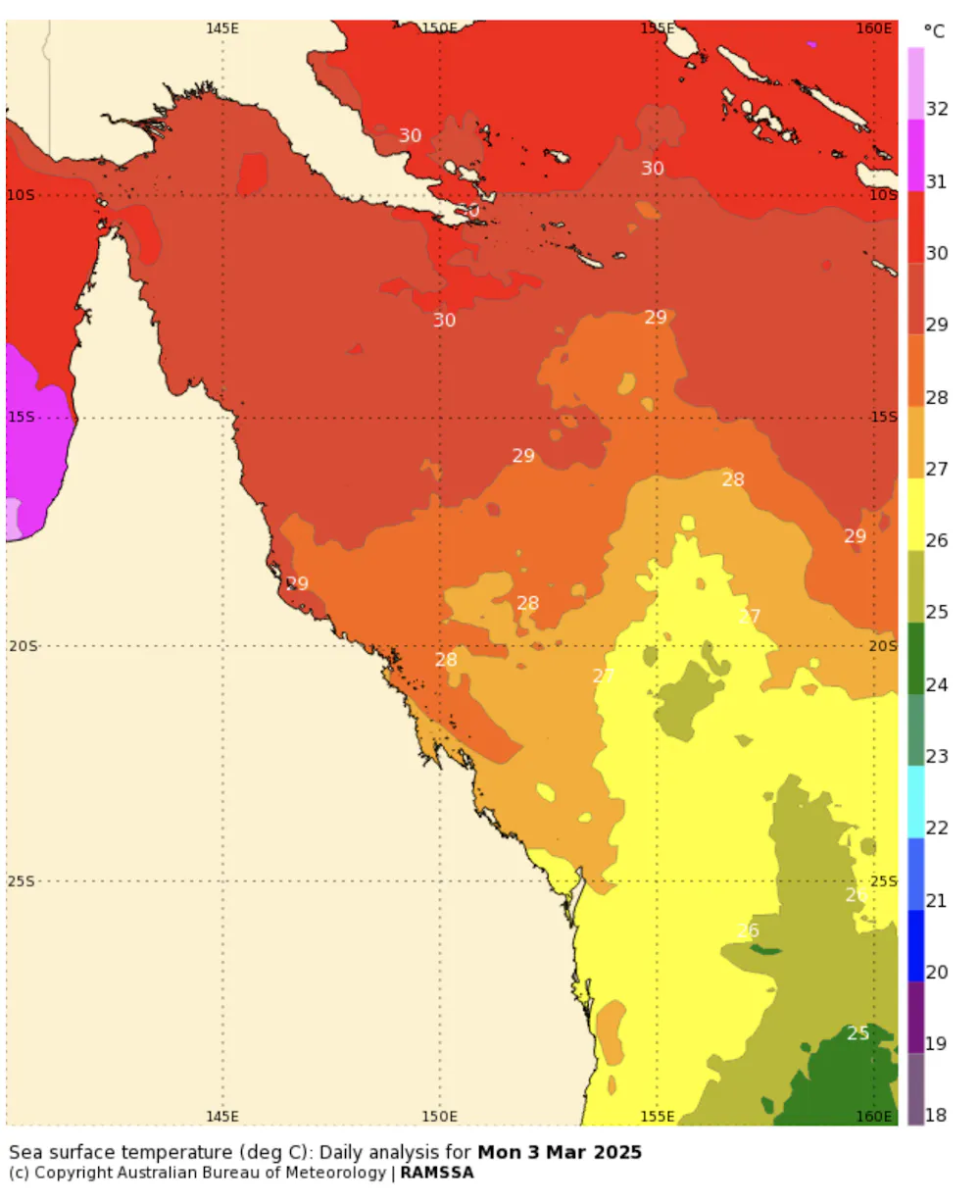
Category: Weather

  • MIL-OSI Europe: New EU programme launched with banking sector to support women entrepreneurs across Europe

    Source: European Investment Bank

    EIB

    • EIB and European Commission launch first-ever “Gender Finance Lab for commercial banks” under the InvestEU Advisory Hub
    • So far 25 European banks committed to joining new masterclass programme to boost funding for women entrepreneurs
    • Launch takes place on the margins of the EIB Group Forum

    The European Investment Bank and the European Commission have launched today a first of its kind advisory programme aimed at helping EU commercial banks improve access to finance for women-owned and women-led SMEs in Europe.

    Women make up a third of Europe’s entrepreneurs and yet many of them face major financial barriers.

    The InvestEU Gender Finance Lab, developed by the EIB Group with funding from the InvestEU Advisory Hub, aims to support financial intermediaries, including commercial banks and fund managers. 

    A tailored masterclass programme is being launched to seize the opportunity of increasing investments in female entrepreneurs. It will help banks leverage the investment opportunities presented by women entrepreneurs, create more innovative and relevant financial products, and share good practice among fellow financial institutions to better serve women entrepreneurs and bridge the gender finance gap.

    Research shows women-led and -owned businesses exhibit lower risk profiles, higher repayment rates, and greater customer loyalty. They also thrive in management, innovation, and environmental, social, and corporate governance (ESG). Globally, the women’s market represents a significant $700 billion global revenue opportunity. Beyond the business case, helping commercial banks close the gender finance gap will also address the potential economic impact of women-owned and women-led businesses.

    EIB President Nadia Calviño said: “Partnering to nurture Europe’s potential is at the heart of what the EIB Group is doing here alongside the European Commission and our partners in Europe’s banking sector. Investing in women entrepreneurs is not only the right thing to do, but also the smart thing to do; driving growth, prosperity, and stability across the European economy.”

    The Gender-Smart Finance Master Class will be delivered as an eLearning programme. Its first cohort will start in March 2025, bringing together representatives from EU commercial banks, including practitioners on SME business, product development, business strategy and Environmental, Social and Governance professionals. A second session is foreseen in Autumn 2025.

    The programme will include live webinars, interactive discussions, and access to a virtual knowledge hub.

    Key components of the programme include:

    • Exploring the market potential of women-owned and women-led SMEs and their contributions to economic growth.
    • Designing gender-responsive financial and non-financial products and services.
    • Implementing gender-smart data analysis, result measurements, and reporting mechanisms.
    • Staying informed about global gender finance initiatives such as Gender lens investing with the EIB Group, including the 2X Criteria as a global standard for gender-lens investing.
    • Enhancing professional networks, building connections and gaining insights from distinguished professionals and experts in gender-smart SME banking

    This Programme is financed by the EIB InvestEU Advisory Hub Gender Finance Lab and free of charge for participating institutions. Managed by the European Commission and funded by the EU, the InvestEU Advisory Hub connects project promoters with advisory partners, with the European Investment Bank Group as the main advisory partner under InvestEU.

    For more information, please contact genderfinancelab@eib.org 

    Background information:

    EIB Group

    The EIB Group is the financing institution of the European Union owned by its Member States. It supports investment contributing toward EU policy goals, including sustainable growth, social and territorial cohesion, innovation and security. It finances its operations in global capital markets and has been consistently profitable in its operations since its inception. The EIB Group is the pioneer and one of the largest issuers of green bonds, while all of its operations are aligned with the Paris Climate Agreement.

    The EIB Group signed nearly €89 billion in new financing for over 900 projects in 2024. These commitments are expected to mobilise around €350 billion in investment, supporting 400 000 companies and 5.8 million jobs.  

    To enhance the positive impact of its activities on gender equality and empower women and girls, the EIB Group adopted a Strategy on Gender Equality and Women’s Economic Empowerment and a Gender Action Plan, with the aim of embedding gender equality and in particular women’s economic empowerment in the EIB’s business model. It covers its lending, blending and advisory work within and outside the European Union. The EIB Group is also committed to driving gender equality in the workplace.

    InvestEU

    The InvestEU programme provides the European Union with crucial long-term funding by leveraging substantial private and public funds in support of a sustainable recovery and growth. It helps mobilise private investments for the European Union’s policy priorities, such as the European Green Deal and the digital transition. The InvestEU programme brings together under one roof the multitude of EU financial instruments currently available to support investment in the European Union, making funding for investment projects in Europe simpler, more efficient and more flexible. InvestEU has three components: the InvestEU Fund, the InvestEU Advisory Hub and the InvestEU Portal. The InvestEU Fund is implemented through financial partners that invest in projects using the EU budget guarantee worth €26.2 billion. That guarantee will back investment projects of the implementing partners, increase their risk-bearing capacity and thus mobilise at least €372 billion in additional investment.

    MIL OSI Europe News

  • MIL-OSI Europe: Spain: EIB and CBNK launch pioneering initiative to support women entrepreneurs in the pharmacy sector

    Source: European Investment Bank

    • The EIB is set to invest €150 million in the European Union’s first intermediated financing programme aimed exclusively at women. It will provide a loan to CBNK, the bank for key engineering and health professionals formed by the merger of Banco Caminos and Bancofar.
    • The operation is focused on supporting women who want to set up or grow businesses in the pharmacy sector, potentially involving 600 pharmacies across the country.

    The European Investment Bank (EIB) and CBNK, a Spanish bank serving key professionals and formed through the merger of Banco Caminos and Bancofar, have announced a landmark initiative to empower women entrepreneurs in the pharmacy sector in Spain. The operation, signed today during the EIB Group Forum in Luxembourg, is the EIB’s first intermediated loan within the European Union exclusively supporting women entrepreneurs.

    It will involve access to loans averaging €450 000 that can be used by women entrepreneurs to finance the formation of their business (purchase of licences), working capital (inventory) or equipment such as counters, shelves or computers.

    This €150 million EIB investment – implemented through the purchase of a covered bond issued by CBNK and rated Aa1 by Moody’s – aims to improve access to finance for women-owned or led small and medium enterprises (SMEs), including self-employed professionals.

    Despite making up a majority of the workforce in the pharmacy sector, women continue to face barriers such as limited access to finance, wage gaps and underrepresentation in leadership positions. This operation seeks to address these challenges by providing tailored financial support to women entrepreneurs and business leaders, enabling them to scale their businesses and contribute to Spain’s economic growth.

    “This operation represents a significant milestone in our commitment to the strong European values of gender equality and inclusive economic growth. By supporting women entrepreneurs in the pharmacy sector, we are unlocking opportunities and strengthening the Spanish healthcare system.” “Investing in female leadership is not just the right thing to do – it is the smartest thing to do. The evidence is clear: Gender equality leads to better decisions and better economic outcomes, and drives progress, stability and prosperity,” said EIB President Nadia Calviño.

    CBNK CEO Enrique Serra González said: “This operation expands CBNK’s commitment to the healthcare sector and women’s entrepreneurship, and is intended to be the starting point of an ongoing intermediation partnership with the EIB.”

    The signature of this operation will also open the conference launching the Gender Finance Lab commercial bank advisory programme. Launched by the EIB and funded by the European Commission under the InvestEU Advisory Hub mandate, the programme is a pioneering initiative to create a community of commercial banks committed to boosting women’s entrepreneurship and contributing to inclusive economic growth in the European Union.

    Background information

    EIB

    The European Investment Bank (EIB) is the long-term lending institution of the European Union, owned by its Member States. It finances investments that contribute to EU policy objectives. EIB projects bolster competitiveness, drive innovation, promote sustainable development, enhance social and territorial cohesion, and support a just and swift transition to climate neutrality.

    The EIB Group, which also includes the European Investment Fund (EIF), signed nearly €89 billion in new financing for over 900 high-impact projects in 2024, boosting Europe’s competitiveness and security. All projects financed by the EIB Group are in line with the Paris Climate Agreement, as pledged in our Climate Bank Roadmap. Almost 60% of the EIB Group’s annual financing supports projects directly contributing to climate change mitigation and adaptation, and a healthier environment.

    In Spain, the EIB Group signed new financing worth €12.3 billion for over 100 high impact projects in 2024, contributing to the country’s green and digital transition, economic growth, competitiveness and better services for its people.

    To enhance the positive impact of its activities on gender equality and empower women and girls, the EIB Group adopted a Strategy on Gender Equality and Women’s Economic Empowerment and a Gender Action Plan, with the aim of embedding gender equality and in particular women’s economic empowerment in the EIB’s business model. It covers its lending, blending and advisory work within and outside the European Union. The EIB Group is also committed to driving gender equality in the workplace.

    CBNK

    CBNK is one of Spain’s largest specialised banking financial groups. In 2014, Banco Caminos acquired Bancofar. Both entities had longstanding experience in serving professional collectives. Founded in 1977, Banco Caminos has always had connections with road, canal and port engineers, as well as other professional activities and associated sectors, while Bancofar was created in 1964, supporting pharmacy professionals since then. Caminos Group was formed in 2018.

    Bancofar was absorbed by Banco Caminos in 2023, with these two group entities changing their name to CBNK. This new brand was created to extend its value proposition to other collectives, with a focus on high social impact professionals specialising in its areas of expertise (engineering and healthcare).

    MIL OSI Europe News

  • MIL-OSI USA News: What They Are Saying: President Trump’s Masterclass Before Congress

    Source: The White House

    Tonight, during his first address to a joint session of Congress in his second term, President Donald J. Trump delivered a powerful, masterful speech highlighting the remarkable accomplishments of his first six weeks in office and charting a course for four years of prosperity.

    The address received widespread acclaim. 76% of Americans approved of the speech, according to a CBS poll, while a CNN poll showed 69% of Americans had a positive reaction.

    Praise immediately poured in:

    Speaker Mike Johnson: “Tonight, President Trump made his triumphant return to Congress to share his bold, optimistic vision for renewing the American Dream.”

    Sen. Ted Cruz: “This is the fifth State of the Union address I’ve seen Trump give — it was by far his best.”

    Fox News’s Bret Baier: “The best moment — emotional moment, was DJ, who’s battling cancer. He wanted to be a police officer and during the speech, the president said the Secret Service has made him an agent.”

    Fox News’s Brit Hume: “If you ever doubted that Donald Trump is the political colossus of our time and our nation, this night and this speech should have put that to rest.”

    Geraldo Rivera: “Trump was strong, defiant and entertaining.”

    Clay Travis: “This is the best speech of Donald Trump’s career. Just a phenomenal litany of common sense and rational leadership. Great and heartwarming guests. It’s a grand slam.”

    Chris Cillizza: “That was a very effective speech. You can hate it or him. But that speech was aimed squarely at issues where the public is with Trump — and filled with made-for-sharing moments. A master image-maker at work (and you can hate him and acknowledge that’s true!)”

    Riley Gaines: “I am just left feeling inspired and hopeful and there’s so much to look forward to.”

    Amber Rose: “Donald Trump just gave the greatest presidential speech of all-time.”

    Reince Priebus: “I thought it was extremely strong. When he talked about… common sense revolution, giving the government back to The People… I thought was really insightful.”

    Breitbart’s Matthew Boyle: “This speech is one of Trump’s best ever, and the Democrat behavior during it has been not only despicable but also colossally politically stupid. Whoever is advising these idiots just steered their party into an even deeper ditch than Joe Biden and Kamala Harris left them in.”

    Pennsylvania resident: “I thought it was very positive… We used to be a country that would just let everything happen… I think now, we’re taking back things that should’ve never been given away. So, I think doing those tariffs… it’s well overdue.”

    Secretary of State Marco Rubio: “An inspiring and momentous speech. @POTUS returned to the White House with a clear mandate from the American people to renew the American Dream. His address tonight laid out exactly how he is keeping those promises with a vision of peace through strength, and a stronger, safer, and more prosperous United States.”

    Secretary of Homeland Security Kristi Noem: “Tonight, President Trump laid out his vision to renew the American dream. In just a few short weeks, President Trump’s immigration and border security policies have led to an all-time-low in illegal crossings at the southern border. The message is clear: America’s borders are closed to lawbreakers.”

    Secretary of the Treasury Scott Bessent: “Strength. Prosperity. Peace. Tonight, President Trump shared his historic vision for our nation in renewing the American dream. He has done more in the past six weeks for the American people, than the previous administration in four years.”

    Secretary of the Interior Doug Burgum: “The previous administration used a whole-of-government approach to oppose reliable, affordable U.S. energy production in favor of unreliable, unaffordable intermittent sources. The Trump administration is working overtime to undo all the damage done during the Biden years and we are fast-tracking America’s path to a New Golden Age through Energy Dominance!”

    Secretary of Defense Pete Hegseth: “Thank you @POTUS it is the honor of my life to serve the American warfighter.”

    Secretary of Agriculture Brooke Rollins: “@POTUS spoke loud and clear on American agriculture. He loves America’s farmers, and they have no more faithful friend nor more powerful champion. He will defend them, and if anyone doubted it — they don’t after tonight.”

    Secretary of Energy Chris Wright: “President Trump is renewing the American Dream, and we here @Energy are with him every step of the way to unleash American energy dominance!”

    UN Ambassador-designate Elise Stefanik: “In just one month under President Trump, Americans have experienced record results and the renewal of the American Dream with the triumphant return of strong leadership to the Oval Office. From securing the border, to cutting wasteful spending of our hard earned taxpayer dollars, to reasserting America First peace through strength leadership to the world stage, President Trump has delivered the most exceptional first month of an American presidency in history. Promises made, promises kept. The American Golden Age is here.”

    Secretary of Housing and Urban Development Scott Turner: “The American people sent President Trump to enact generational change in Washington. What @POTUS has accomplished in less than two months is nothing short of remarkable. This is what America first feels like.”

    Small Business Administration Administrator Kelly Loeffler: “This was a tour de force of a President who, in 42 days, has more accomplishments than Joe Biden had in four years — It is a new day in America and people at home had to have loved what they’ve seen from this great President.”

    Secretary of Education Linda McMahon: “Tremendous address by President Trump tonight. America is back, & the work is only beginning. I will work hard to make @POTUS’ vision for education a reality — preparing our students for the workforce & empowering their parents will be vital to our nation’s future success.”

    EPA Administrator Lee Zeldin: “This vision of President Trump will usher in the greatest four years in American history. Honored to be a part of this amazing Cabinet working hard to restore our nation to glory. Will continue to do my part @EPA to Power the Great American Comeback.”

    Sen. Bernie Moreno: “An inspiring, emotional address from @realDonaldTrump!! But crazed partisan Dems refused to applaud even a brave young man like DJ. Appalling!”

    Sen. Rick Scott: “Under President Trump’s strong leadership, our allies respect us, our adversaries fear us, and the world respects us again!”

    Sen. Marsha Blackburn: “What a great night! President Trump gave a fantastic address and laid out the many accomplishments he and his administration have made during these first six weeks back in office for the American people.”

    Sen. Markwayne Mullin: “@POTUS commanded the podium for TWO hours. He’s restoring the American Dream with relentless determination. “The Golden Age of America has only just begun.”

    Sen. John Cornyn: “One of the best lines from President Trump tonight during his state of the union speech: to secure the border we didn’t need any new laws, what we needed was a new president!  Amen.”

    Sen. Shelley Moore Capito: “@POTUS delivered a strong vision for our country—one that prioritizes border security, unleashing American energy, strengthening our military, and providing tax relief for families.”

    Sen. Ted Budd: “Tonight was about promises made, promises kept.”

    Sen. Jim Risch: “Excellent speech, Mr. President! I am proud to work with my Republican colleagues to support President Trump’s renewal of the American Dream. @POTUS is the strong leader America needs!”

    Sen. Pete Ricketts: “It’s time to get our economy back on track. Under @POTUS’ first administration, America’s economy was strong. Tonight, we heard him commit to restoring prosperity and supporting American families. Relief is on its way—and not a minute too soon.”

    Sen. Chuck Grassley: “Pres Trump delivered a strong state of the union address He’s working w Congress to make America safer + stronger + restore common sense in govt After an impactful start to his presidency there’s a lot more work 2do”

    Sen. Jon Husted: “Tonight, the president outlined what he’s doing to make our country secure, strong, and prosperous.”

    Sen. Katie Britt: “Tonight @POTUS made it clear: We’re putting Americans first—securing our nation, making streets safe, growing our prosperity, and unleashing our energy potential.”

    Sen. Lindsey Graham: “My take on President @realDonaldTrump’s address tonight: Inspiring, funny, compelling and the Democrats’ worst nightmare.”

    Chairwoman Lisa McClain: “President Trump’s message to the American people is clear: America is BACK.”

    Rep. Claudia Tenney: “This was one of the most tremendous experiences of my life. Donald Trump hit it out of the park.”

    Rep. Brandon Gill: “Help is here. Hope is here. President Trump is here.”

    Rep. Mark Alford: “What a speech and what a time to be in America.”

    Rep. Stephanie Bice: “President Trump’s speech was a testament to the vision of the American people which was suppressed under President Biden.”

    Rep. Gary Palmer: “President Trump’s speech tonight was the embodiment of ‘promises made, promises kept.’”

    Rep. Troy Downing: “What a speech. It’s never been so clear that a new golden age is upon us. From securing our border, to unleashing American energy, to rooting out waste, fraud, and abuse, @POTUS is delivering on the promises that he ran on. A great night to be an American!”

    Rep. Anna Paulina Luna: “Tonight was historic. President Trump said he was saved by God to Make America Great Again- and THAT is our mandate.”

    Rep. Nancy Mace: “Best speech ever.”

    Rep. Jim Jordan: “Incredible speech by President Trump! Confident. Empowering. Leadership.”

    Rep. Blake Moore: “It was an honor to attend President Trump’s Joint Session tonight. He and his administration have swiftly responded to the call of Americans to secure our border, unleash domestic energy production, address rampant crime, tackle the difficult task to root out waste, fraud, and abuse in our government, and more. There is much to do legislatively in the coming months to ensure a strong economy and defense, and I look forward to working with the Trump administration to accomplish this agenda.”

    Rep. Mike Kennedy: “President Trump has emerged as the leader the United States needs right now. I look forward to working alongside him to advance our nation’s prosperity.”

    Rep. Victoria Spartz: “Great speech by President Trump! The State of the Union is strong!”

    Rep. Julia Letlow: “President Trump delivered a strong message emphasizing the promises he is keeping to secure our border, increase energy production, fix the Biden economy, and reassert American leadership.”

    Rep. Dan Meuser: “Tonight, President Trump reaffirmed his commitment to the Renewal of the American Dream and made clear that Promises Made, Promises Kept is not just a slogan—it’s a reality.”

    Rep. Ron Estes: “It was great to welcome President Trump back to Congress and I look forward to continuing to work with him to advance the America First policy agenda that will restore our nation.”

    Rep. Mike Flood: “President @realDonaldTrump’s speech to Congress was a celebration of America and the renewal our country is experiencing.”

    Rep. Sam Graves: “The Golden Age of America has ARRIVED.  Thank you, President Trump!”

    Rep. Beth Van Duyne: “In just six weeks, President Trump has made incredible progress for America: the most secure borders in our lifetime without any new money or legislation; through DOGE, he has exposed the massive fraud and money laundering of billions of dollars in the federal government; brought in more manufacturing investments (Apple, TSMC, Honda) than the entire Biden presidency; and he is working with Congress to deliver long term reforms to lower costs and expand opportunities for our hard working families.”

    Rep. Brad Finstad: “Tonight, @POTUS made clear he is putting the American people first. Since taking office, he has begun reining in an oversized, inefficient government, brought safety and security back to our communities, and restored common sense to the @WhiteHouse.”

    Rep. Rudy Yakym: “America is back! I look forward to working with President Trump to continue delivering for Hoosiers and all Americans.”

    Rep. Ben Cline: “President Trump just delivered a bold, positive vision to secure our border, revive our economy, and restore American strength. Leadership is back, our enemies are on notice, and we’re making America great again.”

    Rep. Doug LaMalfa: “Tonight, President Trump delivered a strong and optimistic message about the renewal of the American Dream. He highlighted the progress made in rebuilding our economy, securing our border, and restoring America’s leadership on the world stage.”

    Rep. Dale Strong: “President Trump is delivering on his promises. He has secured our borders and is working to revitalize our economy. The United States is seen as a symbol of strength across the globe once again, and tonight’s address proves that this administration is ready and willing to help hardworking American families.”

    MIL OSI USA News

  • MIL-OSI: Fourth quarter 2024 results: EUR 233 million net income in Q4 2024 Proposed regular dividend of EUR 1.8 per share

    Source: GlobeNewswire (MIL-OSI)

    Press release
    05 March 2025 – N° 03


    Fourth quarter 2024 results

    EUR 233 million net income in Q4 2024

    Proposed regular dividend of EUR 1.8 per share

    • Group net income of EUR 233 million in Q4 2024 driven by all business activities (EUR 235 million adjusted1)
      • P&C combined ratio of 83.1% in Q4 2024 including a low Nat Cat ratio and allowing for ongoing reserving discipline
      • L&H insurance service result2 of EUR 119 million in Q4 2024
      • Investments regular income yield of 3.6% in Q4 2024
    • Economic Value per share of EUR 48 (vs. EUR 51 as of 31 December 2023)
    • IFRS 17 Group Economic Value3 of EUR 8.6 billion as of 31 December 2024, down -6.3% at constant economics3,4. Adjusted for one-offs5, Economic Value growth of +9.8% at constant economics3,4
    • Estimated Group solvency ratio of 210%6 as of 31 December 2024, in the upper part of the optimal range of 185%-220%, fully absorbing the impact of the 2024 L&H assumption review
    • Proposed regular dividend of EUR 1.8 per share for 2024
    • Annualized Return on Equity of 22.8% (23.0% adjusted1) in Q4 2024. For the full year 2024, Return on Equity stands at 0.1% (0.2% adjusted1); adjusted for one-offs5, the annualized Return on Equity would stand at 14.9% for the full year 2024

    SCOR SE’s Board of Directors met on 4 March 2025, under the chair of Fabrice Brégier, to approve the Group’s Q4 2024 financial statements.

    Thierry Léger, Chief Executive Officer of SCOR, comments: “I am satisfied with the fourth quarter results. All business activities contribute to a strong consolidated Group net income. On a full year basis, P&C performance is excellent: the Nat Cat ratio is below the 10% budget, and the underlying performance enables us to build significant prudence two years ahead of plan. Investments performance is strong over the year, taking advantage of the current market conditions. In L&H, we took decisive actions to restore profitability. With a solvency ratio of 210% at year-end remaining in the upper part of the optimal range, SCOR demonstrates resilience as well as enhanced underlying capital generation, leading to a proposed dividend of EUR 1.8 per share. In the prevailing market environment, I’m fully confident that SCOR will continue to grow profitably in diversifying lines of business by leveraging its Tier 1 franchise. We are committed to delivering our Forward 2026 ambitions.”

    Group performance and context

    SCOR records EUR 233 million net income (EUR 235 million adjusted1) in Q4 2024, supported by all business activities:

    • In P&C, the combined ratio of 83.1% in Q4 2024 is primarily driven by a low natural catastrophe ratio of 6.4%. Over the full year 2024, the natural catastrophe ratio of 9.4% is better than the 10% budget. The attritional loss and commission ratio stands at 75.9% in Q4 2024, reflecting a very satisfactory underlying performance allowing for continued reserving discipline. The completion of the annual P&C year-end reserve review confirms all lines are at best estimate and our reserve resilience has increased.
    • In L&H, the insurance service result2 stands at EUR 119 million in Q4 2024, driven by a good level of CSM amortization and risk adjustment release, partially offset by a negative experience variance from the US.
    • In Investments, SCOR benefits from high reinvestment rates and an elevated regular income yield of 3.6% in Q4 2024.
    • The effective tax rate stands at 8% for Q4 2024, mainly reflecting the release of Q2 and Q3 tax provisions related to deferred tax assets.

    The annualized Return on Equity stands at 22.8% (23.0% adjusted1) in Q4 2024.

    Over the full year 2024, SCOR delivers a net income of EUR 4 million (EUR 11 million adjusted1), implying an annualized Return on Equity of 0.1% (0.2% adjusted1), impacted by the outcome of the 2024 L&H assumption review accounting for EUR -0.7 billion (pre-tax) in insurance service result and EUR
    -0.9 billion (pre-tax) in contractual service margin (CSM). The Group Economic Value decreases by 6.3% at constant economics3,4 (+9.8% adjusted for one-offs5).

    SCOR’s Solvency ratio stands at 210% at year-end 2024, in the upper part of the optimal range of 185%-220%, fully absorbing the one-off impact of the L&H assumption review, and demonstrating the Group’s balance sheet resilience.

    Proposed regular dividend of EUR 1.8 per share

    SCOR proposes a regular dividend of EUR 1.8 per share for the fiscal year 2024, stable compared to the fiscal year 2023.

    This dividend will be submitted for shareholders’ approval at the 2025 Annual General Meeting, to be held on 29 April 2025. The Board proposes to set the ex-dividend date at 2 May 2025, and the payment date at 6 May 2025.

    On-going very strong P&C underlying performance

    In Q4 2024, P&C insurance revenue stands at EUR 1,929 million, up +0.4% at constant exchange rates (down -0.5% at current exchange rates) compared to Q4 2023, driven by the effect of a large commutation. Excluding this effect, the insurance revenue would grow by +1.7%.

    New business CSM in Q4 2024 stands at EUR -43 million, impacted by limited renewals in Q4 and an early recognition of the cost of some retrocession contracts renewed at 1 January 2025.

    P&C (re)insurance key figures:

    In EUR million
    (at current exchange rates)
    Q4 2024 Q4 2023 Variation FY 2024 FY 2023 Variation
    P&C insurance revenue 1,929 1,940 -0.5% 7,639 7,496 1.9%
    P&C insurance service result 238 353 -32.6% 779 897 -13.1%
    Combined ratio 83.1% 75.6% 7.5pts 86.3% 85.0% 1.3pts
    P&C new business CSM -43 -76 43.8% 1,024 952 7.6%

    The P&C combined ratio stands at 83.1% in Q4 2024, compared to 75.6% in Q4 2023. It includes:

    • A Nat Cat ratio of 6.4%, mainly impacted by the losses related to Hurricane Milton (4.7 pts).
    • An attritional loss and commission ratio of 75.9%, reflecting a very satisfactory underlying performance and continued reserving discipline.
    • A discount effect of -9.5%, impacted by the year-end reserves review.
    • An attributable expense ratio of 9.7%, impacted by an expense accounting true-up.

    The P&C insurance service result of EUR 238 million is driven by a CSM amortization of
    EUR 252 million, a risk adjustment release of EUR 45 million, a negative experience variance of
    EUR -38 million and an impact of onerous contract of EUR -21 million. The negative experience variance reflects the prudence building and a low level of retrocession recoveries.

    The impact of the California wildfires is estimated at circa EUR140m, pre-tax and net of retrocessions, which is in line with the Nat Cat budget level of Q1 2025.

    Improved L&H insurance service result in Q4 2024

    In Q4 2024, L&H insurance revenue amounts to EUR 2,055 million, up +8.4% at constant exchange rates (+8.6% at current exchange rates) compared to Q4 2023. L&H New Business CSM7 generation of EUR 113 million in Q4 is driven by Protection and new deals in Longevity.

    The L&H insurance service result2 amounts to EUR 119 million in Q4 2024. It includes:

    • A CSM amortization of EUR 117 million, including a EUR 16 million exceptional release. Excluding this, the annualized CSM amortization rate is 6.9%8.
    • A Risk Adjustment release of EUR 36 million.
    • An experience variance of EUR -49 million, driven by negative deviations in the US.
    • A positive impact of onerous contracts of EUR 12 million reflecting changes in risk adjustment.
    • Offsetting one-off impacts from the 2024 L&H reviews amounting to EUR 1 million.

    L&H reinsurance key figures:

    In EUR million
    (at current exchange rates)
    Q4 2024 Q4 2023 Variation FY 2024 FY 2023 Variation
    L&H insurance revenue 2,055 1,892 8.6% 8,487 8,426 0.7%
    L&H insurance service result2 119 64 87.5% -348 589 -159.1%
    L&H new business CSM7 113 90 25.4% 485 466 4.1%

    Investments delivering strong results with a regular income yield of 3.6% in Q4 2024

    As of 31 December 2024, total invested assets amount to EUR 24.2 billion. SCOR’s asset mix is optimized, with 78% of the portfolio invested in fixed income. SCOR has a high-quality fixed income portfolio with an average rating of A+, and a duration of 3.8 years (3.0 at year-end 2023) following the implementation of the new ALM strategy.

    Investments key figures:

    In EUR million
    (at current exchange rates)
    Q4 2024 Q4 2023 Variation FY 2024 FY 2023 Variation
    Total invested assets 24,155 22,914 5.4% 24,155 22,914 5.4%
    Regular income yield* 3.6% 3.7% -0.1pts 3.5% 3.2% 0.3pts
    Return on invested assets*, ** 3.3% 3.7% -0.4pts 3.5% 3.2% 0.3pts

    (*) Annualized.
    (**) Fair value through income on invested assets excludes EUR -3 million in Q4 2024 and EUR -9 million in FY 2024 related to the pre-tax mark to market impact of the fair value of the option on own shares granted to SCOR.

    Total investment income on invested assets stands at EUR 1959 million in Q4 2024. The return on invested assets stands at 3.3%9 (vs. 3.7% in Q4 2023) and the regular income yield at 3.6% (vs. 3.7% in Q4 2023).

    The reinvestment rate stands at 4.5%10 as of 31 December 2024, compared to 4.1% as of 30 September 2024. The invested assets portfolio remains highly liquid and financial cash flows of EUR 9.5 billion are expected over the next 24 months11, enabling SCOR to benefit from elevated reinvestment rates.

    *

    *          *

    APPENDIX

    1 – SCOR Group Q4 2024 key financial details

    In EUR million
    (at current exchange rates)
    Q4 2024 Q4 2023 Variation FY 2024 FY 2023 Variation
    Insurance revenue 3,984 3,832 4.0% 16,126 15,922 1.3%
    Gross written premiums1 5,049 4,927 2.5% 20,064 19,371 3.6%
    Insurance Service Result2 357 417 -14.3% 432 1,486 -70.9%
    Management expenses -347 -329 -5.2% -1,250 -1,164 -7.4%
    Annualized ROE3 22.8% 15.0% 7.8pts 0.1% 18.1% -18.0pts
    Annualized ROE excluding the mark to market impact of the option on own shares 23.0% 16.6% 6.4pts 0.2% 17.5% -17.2pts
    Net income3,4 233 162 43.2% 4 812 -99.5%
    Net income4 excluding the mark to market impact of the option on own shares 235 179 31.4% 11 780 -98.6%
    Economic value5,6 8,615 9,213 -6.5% 8,615 9,213 -6.5%
    Shareholders’ equity 4,524 4,723 -4.2% 4,524 4,723 -4.2%
    Contractual Service Margin (CSM)6 4,091 4,490 -8.9% 4,091 4,490 -8.9%

    1: GWP is not a metric defined under the IFRS 17 accounting framework (non-GAAP metric); 2: Including revenues on financial contracts reported under IFRS 9; 3: Taking into account the mark to market impact of the option on own shares. Q4 2024 impact of EUR-3 million before tax, FY 2024 impact of EUR -9 million before tax. 4: Consolidated net income, Group share; 5. Defined as the sum of the shareholder’s equity and the Contractual Service Margin (CSM); 6: Net of tax. A notional tax rate of 25% is applied to the CSM.

    2 – P&L key figures Q4 2024

    In EUR million
    (at current exchange rates)
    Q4 2024 Q4 2023 Variation FY 2024 FY 2023 Variation
    Insurance revenue 3,984 3,832 4.0% 16,126 15,922 +1.3%
    • P&C insurance revenue
    1,929 1,940 -0.5% 7,639 7,496 +1.9%
    • L&H insurance revenue
    2,055 1,892 8.6% 8,487 8,426 +0.7%
    Gross written premiums1 5,049 4,927 2.5% 20,064 19,371 +3.6%
    • P&C gross written premiums
    2,508 2,362 6.2% 9,869 9,452 +4.4%
    • L&H gross written premiums
    2,541 2,565 -0.9% 10,195 9,919 +2.8%
    Investment income on invested assets 195 206 -5.3% 800 711 +12.5%
    Operating results 291 350 -17.0% 298 1,366 -78.2%
    Net income2,3 233 162 43.2% 4 812 -99.5%
    Net income2 excluding the mark to market impact of the option on own shares 235 179 31.4% 11 780 -98.6%
    Earnings per share3 (EUR) 1.30 0.91 42.9% 0.02 4.54 -99.6%
    Earnings per share (EUR) excluding the mark to market impact of the option on own shares 1.31 1.00 31.0% 0.06 4.35 -98.6%
    Operating cash flow 197 588 -66.5% 903 1,480 -39.0%

    1: GWP is not a metric defined under the IFRS 17 accounting framework (non-GAAP metric); 2: Consolidated net income, Group share; 3: Taking into account the mark to market impact of the option on own shares. Q4 2024 impact of EUR -3 million before tax, FY 2024 impact of EUR -9 million before tax.

    3 – P&L key ratios Q4 2024

      Q4 2024 Q4 2023 Variation FY 2024 FY 2023 Variation
    Return on invested assets 1,2 3.3% 3.7% -0.4pts 3.5% 3.2% +0.3pts
    P&C combined ratio 3 83.1% 75.6% +7.5pts 86.3% 85.0% +1.3pts
    Annualized ROE4 22.8% 15.0% +7.8pts 0.1% 18.1% -18.0pts
    Annualized ROE excluding the mark to market impact of the option on own shares 23.0% 16.6% +6.4pts 0.2% 17.5% -17.2pts
    Economic Value growth5 n.a. n.a. n.a. -6.3% 8.6% -14.9pts

    1: Annualized; 2: In Q4 2024 and FY 2024, fair value through income on invested assets excludes respectively EUR -3 million and EUR -9 million pre-tax mark to market impact of the fair value of the option on own shares granted to SCOR; 3: The combined ratio is the sum of the total claims, the total variables commissions, and the P&C attributable management expenses, divided by the net insurance revenue for P&C business; 4: Taking into account the mark to market impact of the option on own shares. Q4 2024 impact of EUR -3 million before tax, FY 2024 impact of EUR -9 million before tax; 5: Not annualized. Growth at constant economic assumptions and excluding the mark to market impact of the option on own shares. The starting point is adjusted for the dividend of EUR 1.8 per share (EUR 324 million in total) for the fiscal year 2023, paid in 2024. Economic Value defined as the sum of the shareholders’ equity and the Contractual Service Margin (CSM), net of tax. A notional tax rate of 25% is applied to the CSM.

    4 – Balance sheet key figures as of 31 December 2024

    In EUR million
    (at current exchange rates)
    As of
    31 December 2024
    As of
    31 December 2023
    Variation
    Total invested assets1 24,155 22,914 +5.4%
    Shareholders’ equity 4,524 4,723 -4.2%
    Book value per share (EUR) 25.22 26.16 -3.6%
    Economic Value2 8,615 9,213 -6.5%
    Economic Value per share (EUR)3 48.03 51.18 -6.2%
    Financial leverage ratio4 24.5% 21.2% +3.3pts
    Total liquidity5 2,466 2,234 +10.4%

    1: Excluding third-party net insurance business investments; 2: The Economic Value (defined as the sum of the shareholders’ equity and the Contractual Service Margin (CSM), net of tax) includes minority interests; 3: The Economic Value per share excludes minority interests; 4: The leverage ratio is calculated as the percentage of subordinated debt compared to the sum of Economic Value and subordinated debt in IFRS 17; 5: Including cash and cash equivalents and short-term investments.

    *

    *         *

    SCOR, a leading global reinsurer

    As a leading global reinsurer, SCOR offers its clients a diversified and innovative range of reinsurance and insurance solutions and services to control and manage risk. Applying “The Art & Science of Risk”, SCOR uses its industry-recognized expertise and cutting-edge financial solutions to serve its clients and contribute to the welfare and resilience of society.

    The Group generated premiums of EUR 20.1 billion in 2024 and serves clients in more than 150 countries from its 37 offices worldwide.

    For more information, visit: www.scor.com

    Media Relations
    Alexandre Garcia
    media@scor.com

    Investor Relations
    Thomas Fossard
    InvestorRelations@scor.com

    Follow us on LinkedIn


    All content published by the SCOR group since January 1, 2024, is certified with Wiztrust. You can check the authenticity of this content at wiztrust.com.

    General

    Numbers presented throughout this press release may not add up precisely to the totals in the tables and text. Percentages and percent changes are calculated on complete figures (including decimals); therefore, this press release might contain immaterial differences in sums and percentages due to rounding. Unless otherwise specified, the sources for the business ranking and market positions are internal.

    Forward-looking statements

    This press release includes forward-looking statements, assumptions, and information about SCOR’s financial condition, results, business, strategy, plans and objectives, including in relation to SCOR’s current or future projects.

    These statements are sometimes identified by the use of the future tense or conditional mode, or terms such as “estimate”, “believe”, “anticipate”, “expect”, “have the objective”, “intend to”, “plan”, “result in”, “should” and other similar expressions.

    It should be noted that the achievement of these objectives, forward-looking statements, assumptions and information is dependent on circumstances and facts that may or may not arise in the future.

    No guarantee can be given regarding the achievement of these forward-looking statements, assumptions and information. These forward-looking statements, assumptions and information are not guarantees of future performance. Forward-looking statements, assumptions and information (including on objectives) may be impacted by known or unknown risks, identified or unidentified uncertainties and other factors that may significantly alter the future results, performance and accomplishments planned or expected by SCOR.

    In particular, it should be noted that the full impact of the economical and geopolitical risks on SCOR’s business and results cannot be accurately assessed.

    Therefore, any assessments, any assumptions and, more generally, any figures presented in this press release will necessarily be estimates based on evolving analyses, and encompass a wide range of theoretical hypotheses, which are highly evolutive.

    Information regarding risks and uncertainties that may affect SCOR’s business is set forth in the 2023 Universal Registration Document filed on March 20, 2024, under number D.24-0142 with the French Autorité des marchés financiers (AMF) posted on SCOR’s website www.scor.com.

    In addition, such forward-looking statements, assumptions and information are not “profit forecasts” within the meaning of Article 1 of Commission Delegated Regulation (EU) 2019/980.

    SCOR has no intention and does not undertake to complete, update, revise or change these forward-looking statements, assumptions and information, whether as a result of new information, future events or otherwise.

    Financial information

    The Group’s financial information contained in this press release is prepared on the basis of IFRS and interpretations issued and approved by the European Union.

    Unless otherwise specified, prior-year balance sheet, income statement items and ratios have not been reclassified.

    The calculation of financial ratios (such as return on invested assets, regular income yield, return on equity and combined ratio) is detailed in the Appendices of the presentation related to the financial results for the full year 2024 (see pages 25-61). The financial results for the full year 2024 included in this press release have been audited by SCOR’s statutory auditors. Unless otherwise specified, all figures are presented in Euros.

    Any figures or financial results for a period subsequent to December 31, 2024 should not be taken as a forecast of the expected financials for these periods.

    The solvency ratio is not audited by SCOR’s statutory auditors. The Group solvency final results are to be filed to supervisory authorities by April 2025 and may differ from the estimates expressed or implied in this press release

    1 Adjusted by excluding the mark to market impact of the option on own shares.

    2 Includes revenues on financial contracts reported under IFRS 9.

    3 Defined as the sum of the shareholders’ equity and the Contractual Service Margin (CSM), net of tax. 25% notional tax rate applied on CSM.

    4 Growth at constant economic assumptions as of 31 December 2023, excluding the mark to market impact of the option on own shares.

    5 Excluding the mark to market impact of the option on own shares, and the impacts of the 2024 L&H assumption review and the Q3 true-up on identified arbitration positions.

    6 Solvency ratio estimated after taking into account the proposed dividend of EUR 1.8 per share for the fiscal year 2024.            

    7 Includes the CSM on new treaties and change in CSM on existing treaties due to new business (i.e. new business on existing contracts).

    8 Applied to the closing CSM (before amortization) at the half year or the full year.

    9 Excluding the mark to market impact of the option on own shares. Q4 2024 impact of EUR -3 million before tax.

    10 Reinvestment rate is based on Q4 2024 asset allocation of yielding asset classes (i.e. fixed income, loans and real estate), according to current reinvestment duration assumptions. Yield curves & spreads as of 31/12/2024.

    11 As of 31 December 2024. Including current cash balances and future coupons and redemptions.

    Attachment

    The MIL Network

  • MIL-Evening Report: Brisbane on alert: these maps show the suburbs most likely to flood during Cyclone Alfred

    Source: The Conversation (Au and NZ) – By Matt Garrow, Editorial Web Developer

    Tropical Cyclone Alfred is forecast to strike densely populated areas of southeast Queensland and northeast New South Wales. Brisbane, home to more than 2.5 million people, is among the places in the storm’s path.

    Brisbane City Council says almost 20,000 properties in the Queensland capital could be affected by storm surge or flooding. Residents have been urged to consider relocating ahead of the cyclone’s arrival.

    Peak flooding and storm surges are expected from Thursday. The cyclone is expected to cross the coast early on Friday morning.

    The warning is based on new modelling produced by the council, based on the latest Bureau of Meteorology forecasts. Affected properties could experience damage ranging from mild inundation in yards to significant flooding inside homes.

    The council says impacts may extend beyond those areas highlighted in the modelling. Suburbs identified as most at risk include Nudgee Beach, Brighton, Windsor, Ashgrove, Morningside and Rocklea.

    The maps below show the predicted flood extent based on advice issued by the bureau.

    For cyclone preparedness and safety advice, go to Get Ready Queensland. For emergency assistance call the State Emergency Service (SES) in NSW or Queensland on 132 500.

    This new article in The Conversation also outlines how to prepare for the cyclone, including what to pack, how to soothe children and how to protect your home.


    Read more:
    Cyclone Alfred is bearing down. Here’s how it grew so fierce – and where it’s expected to hit


    Read more:
    ‘Don’t panic, do prepare’: why it’s not too late to plan for Cyclone Alfred


    ref. Brisbane on alert: these maps show the suburbs most likely to flood during Cyclone Alfred – https://theconversation.com/brisbane-on-alert-these-maps-show-the-suburbs-most-likely-to-flood-during-cyclone-alfred-251478

    MIL OSI AnalysisEveningReport.nz

  • MIL-OSI Australia: Interview with Olivia Caisley, Afternoon Briefing, ABC

    Source: Australian Treasurer

    Oliva Caisley:

    To unpack that and much, much more today, let’s bring in our political panel, LNP Senator Paul Scarr and Assistant Minister for Competition Andrew Leigh.

    Welcome to you both to the program. There is plenty of news to get through today. Paul let’s start with you quickly first. You’re in Queensland, which is in the path of Cyclone Alfred.

    Paul Scarr:

    Yep.

    Caisley:

    How prepared is your community?

    Scarr:

    I think the community is as prepared as it can be. There’s very close liaison between all 3 levels of government: the federal government, the state government, the local government authorities. Sandbags are being made available, people are being given warnings and suggestions and recommendations as to how to prepare. And the community’s coming together, as Queenslanders always come together, whether or not it’s in North Queensland or in the southeast corner, we come together at times like this and help each other.

    Caisley:

    And Paul, we just heard there before the WA Premier Roger Cook referring to the American Vice President as a ‘knob’ over that extraordinary argument that took place in the Oval Office over the weekend. Is that an appropriate way for a state leader to be speaking?

    Scarr:

    I don’t believe so. I don’t believe it is. And I don’t believe it’s helpful. And from my perspective, I think our focus here in Australia should be on Australia’s commitment to the people of the Ukraine, and in respect of that commitment, it’s quite bipartisan.

    And before the last election, the Coalition government had a very strong position with respect to assisting the people of Ukraine and Ukraine’s right to its sovereignty, its own secure sovereign borders, and that policy has continued, notwithstanding there was a change in government after the last election. So, I think we should focus on what Australia’s policy is.

    Caisley:

    And Andrew, what did you think?

    Andrew Leigh:

    Well, US politics is endlessly interesting, and it’s always tempting to express your view every time something happens over in the US. But we’re really focused right now on the challenges that Australia faces.

    As Paul said, preparing for Cyclone Alfred, which is looking like making landfall either on Thursday or Friday of this week.

    I would urge any of your viewers who are able‑bodied to consider signing up for EV CREW, a great on‑the‑ground operation which allows you to help out in the local community.

    And as Paul said, there’s bipartisan support for Ukraine. Australia has given $1.5 billion in assistance, of which $1.3 billion is military aid.

    Caisley:

    We have just seen in the past couple of hours the United States announcing that it’s actually going to freeze aid or support to Ukraine. Could I get both of your response to that? Let’s start with you, Paul.

    Scarr:

    Well, again, that’s a matter for the United States government, and again, I think we should focus on what Australia’s position is. And I attended a campaign rally on the third anniversary of the invasion of Ukraine. There were representatives, again, from all levels of government, both major political parties in Australia, and we’re on the same page in terms of continuing to provide our support to the people of Ukraine. And that’s the way it should be.

    Caisley:

    I was watching Donald Trump’s press conference in the early hours of this morning, and in it, he said that Volodymyr Zelenskyy needs to show more appreciation. We then have seen these reports that aid will be paused until Volodymyr Zelenskyy demonstrates a good faith commitment to peace.

    How does this at all, or if at all, Andrew, change the security equation for Australia?

    Leigh:

    Well, you’ve seen in London a range of European powers stepping in and taking important steps towards peace. It is really important that we see peace in Ukraine. This is a war started by Russian aggression. Australia has stood steadfastly with the people of Ukraine.

    I joined with a range of parliamentarians who met with the Ukrainian Ambassador to Australia during the most recent parliamentary sitting to again show the solidarity of Australians for Ukraine.

    We’ve got the Bushmasters there, the Abrams tanks. We have been a strong supporter of the people of Ukraine, as is appropriate for a fellow democracy seeing the brutality that has been waged on the people of Ukraine through an utterly unprovoked war started by Russia.

    Caisley:

    There’s bipartisanship when it comes to support for Ukraine, but we have seen a point of difference emerging between Peter Dutton and Anthony Albanese when it comes to boots on the ground or potential peacekeeping missions. The Prime Minister today not ruling out sending troops over there; this is in contrast to the Opposition Leader.

    Paul, on the politics of this, is Labor outmanoeuvring the Coalition here on an issue that the Coalition usually feels pretty comfortable in?

    Scarr:

    I don’t believe so. And I think the Coalition was in government when Russia launched its illegal invasion of Ukraine, and we were at the forefront in terms of an appropriate policy response to that, including providing humanitarian places for refugees from Ukraine to Queensland, many of whom I met shortly after their first arrival.

    In terms of so‑called boots on the ground, I think the point Peter Dutton has made, and I think he’s correct, the onus should really be on the Europeans in terms of providing boots on the ground as peacekeepers, and they’ve got the capacity to do that. Australia has its own obligations in the Asia‑Pacific region and from my perspective, given the Europeans have the capacity and we have our own obligations in our own region, I think that’s where our focus should be.

    Caisley:

    Okay. Andrew, I just wanted to get a sense from you from the government’s perspective. So, this openness, I guess, to having boots on the ground is a shift or 180 from the Prime Minister’s office position yesterday. They provided the ABC with a statement saying the deployment of troops wasn’t under consideration. Today, there has been a shift in that view. What has, I guess, prompted that change?

    Leigh:

    Well, Olivia, I think we probably don’t want to get ahead of ourselves in this. The Prime Minister has simply said that Australia would consider such a request if it was to come through.

    Paul’s quite right that the primary role is going to be played here by the Europeans, as it has been throughout this terrible conflict.

    Caisley:

    Do you think, Paul, that it’s even possible to get out from under the US security umbrella, given how close we are as allies with the United States? Is it something that should be considered given the, I guess, particularly febrile environment in the Oval Office right now?

    Scarr:

    Well, the United States is one of our closest allies and our most important ally, and I think that will continue for decades and decades to come. And the historical links between the 2 countries and, more recently, developments such as AUKUS just demonstrate the continuity of that relationship. And I just don’t see any change in that relationship, either in the short term, medium term, or even the long term.

    Caisley:

    Andrew, the Coalition today say they want to stop public servants from working from home. The Independent Senator David Pocock has described this as a culture war distraction. What’s your response to that?

    Leigh:

    Well, another day, another attack on the public service from Peter Dutton. First, he’s saying that we should fire one in five public servants and go back to the days of Robodebt and excessive waiting times. Now he’s suggesting that the kind of modern working arrangements that big Australian corporations extend to their workers shouldn’t exist in the public service.

    What that would mean is that women with caring responsibilities, people with disabilities, would be fired in droves from the public service, and the Australian public would lose out from having less capable people working in the public service.

    Just to take one example, the wait time for a parental leave application to be processed when we came to office was 31 days. We’ve got that down to 3 days. We had a backlog of 42,000 veterans claims, and we’ve dealt with 97 per cent of that backlog.

    You can’t fire one in five public servants without dramatically worsening the public services in Australia and going back to Robodebt and long wait times.

    Caisley:

    Paul, I’ll give you an opportunity to defend the Coalition policy. Why is this a good idea to crack down on public servants working from home?

    Scarr:

    I think we’ve seen across the whole economy, both private sector and the public sector, dealing with this phenomenon that during the COVID‑19 pandemic, more and more people were working from home, and there were reasons for that. But there’s been a slow return back to the workplace, and a lot of the private sector businesses I speak to talk about the concern they’ve had in terms of collaboration in the office, in terms of communication, in terms of productivity.

    And I think the obvious point is being made that when you’ve got people working together in the workplace, collaborating, having those hundreds of interactions you have every single day in a workplace, you’re more productive and quite often, you achieve better results.

    So, the other thing to note is all existing agreements and arrangements will be respected. The simple policy point is if you are going to have a working from home policy, it needs to suit the individual, but it also needs to suit the workplace, and that means people need to work collaboratively together and adopt a common‑sense approach.

    Caisley:

    Just on that, though, Paul, can you give me a sense, is this something that’s being brought up with you in your electorate, is this a concern that’s been raised with you by your constituents?

    Scarr:

    I think the concern about the work from home phenomenon has been raised with me ever since we started coming out of the COVID‑19 pandemic. And just to give you one example, in many of the professional services firms, when I was a young lawyer I’d attend the workplace and you’d have the benefit of that interaction with mentors, with leaders, get all that guidance you got on an ad hoc basis, and a lot of young workers, new employees, have missed out on that because of this increase in working from home.

    So, I think this isn’t an issue to be simplified. I note Andrew’s political spin on it, but there are real issues here in terms of how our workplaces function and how they can be the most productive in terms of what they’re doing.

    Leigh:

    Olivia, if I can just come back on that.

    Caisley:

    Yes, please.

    Leigh:

    I mean, you can either have the position that you want to have a reasonable discussion in respect of workplace arrangements, or you can have the announcement that the Coalition made today that all public servants are coming back into the office.

    Either Paul is rejecting the policy that Jane Hume put forward, or else he is supporting that, and that would immediately mean that a whole lot of people would lose their jobs who have disabilities and caring responsibilities.

    The fact is the Coalition want to play these kind of ideological games. They want to pretend that public servants are all in Canberra. Two‑thirds of our public servants are outside Canberra, and tens of thousands are working in the region.

    Public servants are out there processing tax returns, dealing with cyber security, keeping Australians safe from terrorist threats, dealing with biosecurity challenges. You simply cannot manage a 21st‑century Australia by firing one in five public servants, as the ideologically driven Dutton Opposition would do.

    Caisley:

    So, Paul, maybe if I just go back to you quickly there. I mean, clearly, the public service is in the Coalition’s sights if they do form government. Ultimately, we saw Peter Dutton just a couple of weeks ago on making that Medicare announcement that ultimately he’ll help fund that by, I guess, cutting public servant jobs.

    Scarr:

    Well, I just want to come back to some of the points which Andrew made, and I think it’s really important to note that people need to consider what my good friend Jane Hume said in its totality. And in its totality, it referred to the fact that existing working arrangements will of course be respected, will of course be respected. And that’s the way it should be.

    But in terms of moving forward, you need to have work from home arrangements – and it doesn’t matter if you’re the private sector or the public sector – which are in the best interests of both the employer, in this case the public service, the department, and also the employee.

    So, I think what we’re seeing from Labor is a really disappointing scare campaign. A lot of businesses, a lot of workplaces across the world have struggled with this working from home phenomenon which broke out during the COVID‑19 pandemic, or certainly accelerated, and we’re now trying to achieve more balance.

    Caisley:

    Look, we do have some breaking news now. China will impose retaliatory additional tariffs of 10 to 15 per cent on certain US agricultural imports from March 10. That’s according to a statement from the Chinese Finance Ministry. These goods will include soy beans, pork, beef, fruits, vegetables and dairy products and those duties to kick in next week by the looks of things. I know this is just happening now, but Paul, do you have a response to that?

    Scarr:

    Well, I’d just say from an Australian perspective that tariffs, trade barriers are simply not in Australia’s best interests as a general principle. We are a trading nation. We depend upon trade. And free and open trade is so important to Australia’s economy.

    So, it’s up to the Chinese government what its policy is, but from Australia’s perspective, looking at Australia’s perspective, we are a trading nation. And tariffs and other trade barriers are not in our best interests no matter who applies them.

    Caisley:

    I mean, and Andrew, I’d love your thoughts on this too. At the moment, Australia’s waiting to see if we’ll be slapped with 25 per cent tariffs on steel and aluminium. Now we’re hearing that China is slapping its own tariffs, retaliatory ones on the US. Do you have a view on this?

    Leigh:

    Well, economists disagree about a range of issues, but one thing on which there’s near universal consensus is on the benefits of open markets. Paul’s dead right on tariffs. A trade war doesn’t have any winners. Australia has been benefitted from open markets and from our engagement with the rest of the world.

    We’re just 0.3 per cent of the world’s population, a small share of the world’s economy, and trade allows us to specialise in what we do best and enjoy higher living standards than if we were cut off from the rest of the world.

    So, we’ll continue to argue for trade liberalisation, to work with through multilateral organisations for an open trading system, and to engage with like‑minded partners in order to spread the benefits of open markets, which have been such a key driver of prosperity over recent decades.

    Caisley:

    Andrew, Paul, thank you so much for your time this afternoon.

    Leigh:

    Thanks, Olivia. Thanks, Paul.

    Caisley:

    I note that date, the 10th of March, probably no coincidence there because that is when the US tariffs on China are due to take place as well.

    MIL OSI News

  • MIL-OSI USA: Warner, Kaine, and Griffith Urge Trump to Grant Expedited Major Disaster Declaration for Southwest Virginia following February Winter Storms

    US Senate News:

    Source: United States Senator for Commonwealth of Virginia Mark R Warner
    WASHINGTON – Today, U.S. Sens. Mark R. Warner and Tim Kaine (both D-VA) and Rep. Morgan Griffith (R-VA) wrote a letter to President Trump urging approval of Virginia’s updated request for an expedited Major Disaster Declaration following the February winter storms that caused widespread flooding and damage to Southwest Virginia. The updated request by the Commonwealth of Virginia asks for Individual Assistance and Public Assistance for the counties of Bland, Giles, Lee, Pulaski, Russell, Scott, Smyth, and Wise. The original request included the counties of Buchanan, Dickenson, and Tazewell.
    Today’s letter of support comes more than two weeks after the Senators and Rep. Griffith originally wrote to President Trump in support of Virginia’s original request for a Major Disaster Declaration, which has not yet been granted.
    “Unfortunately, this storm has resulted in at least four fatalities, caused significant damage to regional infrastructure, left over 203,000 customers without power at its peak, caused over 270 road closures including low water bridges and road washouts, resulted in multiple 9-1-1 center outages,” said the lawmakers. “The towns of Grundy and Hurley (Buchanan County) experienced catastrophic flooding, with the river gauges in these towns spiking historical flood levels. Over 150 swift water rescues, including evacuations, were made. The ability to perform thorough damage assessments has been hampered by access to areas, the safety of damage assessment teams, and stretched local capacity due to ongoing recovery efforts from Hurricane Helene.”
    “Since the initial request for an expedited Major Disaster Declaration, additional impacts have been revealed now that post-storm assessments are taking place,” they continued. “This amended expedited Major Disaster Declaration would ensure the availability of key federal resources to support the Commonwealth’s efforts to guarantee public safety and rapid recovery from the direct and indirect effects of this destructive storm event.” 
    Expedited Major Disaster Declarations are granted for catastrophes of unusual severity and magnitude when field damage assessments are not feasible or may not be necessary to determine the requirement for supplemental federal assistance. The Administration’s approval of a declaration would provide a surge of federal resources and support, allowing Virginia to more quickly respond to and recover from the direct and indirect consequences caused by Hurricane Helene.
    A copy of today’s letter can be found here and below. 
    Dear President Trump:
    We write to express our strong support for Virginia Governor Glenn Youngkin’s amended Major Disaster Declaration request for the Commonwealth of Virginia due to the ongoing impacts of February Winter Storms. An expedited Major Disaster Declaration is necessary due to the widespread flooding and damage to Southwest Virginia, which is still recovering from historic destruction caused by Hurricane Helene last fall. This amended request includes additional localities impacted by recent storms that had preliminary damage assessments delayed due to ongoing response, debris, high water, and snowstorms.
    On February 10, 2025, Governor Youngkin declared a state of emergency in the Commonwealth of Virginia in advance of February Winter Storms. Following widespread impacts throughout Southwest Virginia, Governor Younkin requested an expedited Major Disaster Declaration on February 16, 2025. This request included Individual Assistance and Public Assistance for Buchanan, Dickenson, and Tazewell counties and Hazard Mitigation Grant Program assistance statewide. On February 26, 2025, Governor Youngkin submitted an amended expedited Major Disaster Declaration request for Individual Assistance and Public Assistance that included the following additional localities and counties: Bland, Giles, Lee, Pulaski, Russell, Scott, Smyth, and Wise.
    As these winter storms and flooding moved inland, over seven inches of rain fell in some areas of Southwest Virginia with significant life-threatening flash flooding across some of Virginia’s most vulnerable and least resourced areas. Unfortunately, this storm has resulted in at least four fatalities, caused significant damage to regional infrastructure, left over 203,000 customers without power at its peak, caused over 270 road closures including low water bridges and road washouts, resulted in multiple 9-1-1 center outages. The towns of Grundy and Hurley (Buchanan County) experienced catastrophic flooding, with the river gauges in these towns spiking historical flood levels. Over 150 swift water rescues, including evacuations, were made. The ability to perform thorough damage assessments has been hampered by access to areas, the safety of damage assessment teams, and stretched local capacity due to ongoing recovery efforts from Hurricane Helene. 
    Since the initial request for an expedited Major Disaster Declaration, additional impacts have been revealed now that post-storm assessments are taking place. This amended expedited Major Disaster Declaration would ensure the availability of key federal resources to support the Commonwealth’s efforts to guarantee public safety and rapid recovery from the direct and indirect effects of this destructive storm event. Significant federal assistance is needed in Southwest Virginia to help our constituents who are already recovering from the widespread damage of Hurricane Helene, which was the most significant disaster in the Commonwealth in over a decade. It is important to note this is the fifth major flood in this area in the past five years.
    We thank you for your consideration of Governor Youngkin’s request for an amended expedited Major Disaster Declaration and request you act expeditiously to approve this designation to ensure the Commonwealth has the resources available to support our constituents following this tragic storm event. We look forward to working with you, the Federal Emergency Management Agency, and other relevant federal agencies to support the Commonwealth of Virginia’s disaster response efforts.
    Sincerely,
     

    MIL OSI USA News

  • MIL-Evening Report: ‘Don’t panic, do prepare’: why it’s not too late to plan for Cyclone Alfred

    Source: The Conversation (Au and NZ) – By Yetta Gurtner, Adjunct senior lecturer, Centre for Disaster Studies, James Cook University

    For millions of people in southeast Queensland and northern New South Wales, Cyclone Alfred will be their first experience living through a cyclone. Alfred is forecast to make landfall about 2am on Friday morning.

    I am a disaster expert based in northern Queensland, which regularly experiences cyclones. In my other role as an acting SES public information officer, I’m heading south to the Gold Coast to help residents prepare and respond.

    Here’s what I want you to know. First, don’t panic. Second, do prepare.

    Preparation has several steps. It’s important to clearly assess your specific threat. If you live near the sea, storm surges – where the sea spills inland – could be a significant threat, while flooding might pose a large risk if you live near a river – especially in the few days after Alfred passes. The highest rainfall is likely on Alfred’s southern flank from the Gold Coast down to northern New South Wales.

    Having enough food, water and medication is vital. Be ready to evacuate too, in case authorities deem it necessary. Check your local council’s disaster website, disaster apps and stay tuned to the ABC, which will run disaster alerts.

    The Bureau of Meteorology’s latest update on Cyclone Alfred’s path and likely impact, as of the morning of Wed 5th March.

    What should I do right now?

    If you’re in the danger zone, make preparations now, before the full intensity of the cyclone arrives.

    Tie down loose objects. Clean gutters to avoid overflow from torrential rain. And prepare your “go bag” – a bag of essentials you can throw in the car if authorities tell you to leave immediately. Don’t take too much – just the bare necessities.

    Buy an AM/FM radio and tune it to ABC National, as you cannot be sure mobile networks will function. Radio is a reliable way to get good information from the ABC, Australia’s designated emergency channel.

    Make sure the car is fuelled or charged. If you’ve got a generator, make sure you have fuel and the generator is positioned outside in a well-ventilated area. Water is often unreliable after disasters. Fill your bathtub or front-loader washing machine with water. Put containers of water in your freezer, to keep food cold if the power goes out and as another water source. Plan for days of power outages. Protect windows with plywood, heavy blankets or mattresses. Put a mattress between your car and garage roller door to stop it blowing in.

    Turn off gas, electricity and solar power.

    Authorities recommend using sandbags to reduce the chance of water getting in. You can get sacks from hardware stores or council-run emergency centres, if available, who also provide sand. You also need plastic sheeting.

    If there’s a shortage of sand, you can use garden soil or commercial bagged soil. If you can’t get sacks, large plastic shopping bags will do.

    Tape strong plastic sheeting around the door or low window where water might get in. This is the barrier that actually keeps water out – sandbags keep it in place.

    Fill sandbags and lay them like bricks. Lay one row, and lay the next row offset for strength.

    Sandbags are good, but they have limits. There’s little point in piling sandbags higher than about 30 centimetres. If floodwaters edge higher, water will get through.

    Many people have had the unpleasant experience of having effluent come back up through toilets during cyclones and subsequent flooding. To stop this, cover your toilet with plastic sheeting (directly on the porcelain) and put a sandbag on top for weight. Do the same for any drains where water might flow back up.

    To reduce water damage, put valuable or important items up high, atop tables or bunk beds or upstairs if you have a second storey.


    Read more:
    How to prepare for a cyclone, according to an expert


    What will it be like when Alfred hits?

    When the cyclone first hits, it can be overwhelming. The sound is like a roaring jet engine.

    If you haven’t been advised to evacuate by authorities, you will be sheltering in place.

    This means finding the safest room in the house, to avoid damage from flying objects. Choose the smallest room with the fewest windows – a bathroom or a room under the stairs. Basements are very safe, but will be the first affected by water.

    As the cyclone picks up intensity, set up inside this safe room with your pets and children. Do not leave this room until you have been told it’s safe by authorities.

    At the centre of strong cyclones is the eye of the storm, which we experience as a period of sudden calm. People often make the mistake of thinking it’s over. But in fact, it’s just a brief reprieve before the intense winds pick up again. Don’t make the mistake of leaving the house – check with authoritative sources.

    Cyclone Alfred is a slow-moving cyclone, which means you might be stuck inside for a while. Be prepared to be inside your house for up to 24 hours, even after the worst has passed. This is because there may well be downed powerlines with live electricity, broken glass, falling trees and so on.

    For your children (and yourself), being in the cyclone is frightening. Young kids find the sound chilling. You can play music through headphones to help soothe them. Board games, books and puzzles can help pass the time. You will need distraction. Have a bucket in the corner for emergency toilet needs.

    Keep track of the storm and any emerging dangers through your radio and internet-enabled phone (if still functioning).

    What if I have to evacuate?

    Authorities are working to set up evacuation centres for people whose homes may not be safe. Authorities will go door-to-door to tell affected residents to leave, as well as broadcasting the information on radio and online.

    You’re more likely to have to evacuate if your house is on low-lying land near the sea, as a storm surge is likely. How much water is pushed ashore will depend on the tide, but it could be as high as 70cm above the high tide line if we’re unlucky.

    Evacuations can happen after the cyclone too. Alfred is packing a lot of rain – up to a metre in some areas. That’s very likely to cause flooding, both flash floods and rivers breaking their banks.

    If you are asked to evacuate, you can go to the house of a friend or family member if it’s on higher ground and outside the flood risk zones. Or you can go to a local evacuation centre – check your council website to see where your closest one is. Take as little as possible with you.

    Many people who choose not to evacuate do so because they’re worried about their pets. This is risky. Some evacuation centres do take pets, so check now. If they don’t, look for other options with friends and family. Staying put after an evacuation order is dangerous.

    What will happen after the cyclone?

    Cyclone Alfred brings three threats: intense winds, high seas and heavy rain.

    After the intense winds die down, the seas will be dangerous for days after Alfred. There are coastal hazard warnings for about 1,000km of coastline.

    Cyclones also often decay into tropical low weather systems, which dump heavy rain for days. This is likely.

    As you move into recovery phase, don’t relax your guard. In far north Queensland, 16 people have now died after being infected with melioidosis, a bacterium found in mud. The bug is more prevalent after heavy rainfall.

    Wear protective gear such as gloves and face masks when dealing with water-damaged goods and mud, and pay close attention to the latest advice authorities are giving.

    But remember – don’t panic. We will get through this.

    Yetta Gurtner has received funding in the past from the Bureau of Meteorology. She is a community engagement officer with the Queensland State Emergency Services.

    ref. ‘Don’t panic, do prepare’: why it’s not too late to plan for Cyclone Alfred – https://theconversation.com/dont-panic-do-prepare-why-its-not-too-late-to-plan-for-cyclone-alfred-251463

    MIL OSI AnalysisEveningReport.nz

  • MIL-OSI USA News: President Trump is Unleashing American Energy

    Source: The White House

    President Donald J. Trump knows American energy is the cornerstone of the American advantage — and that having efficient, reliable, and affordable energy is the key to American security.

    • President Trump declared a National Energy Emergency to unlock America’s full energy potential and bring down costs for American families.
    • The U.S. is now the largest net exporter of natural gas in the world.
    • President Trump established the National Energy Dominance Council to maximize use of America’s extensive energy resources.
    • President Trump rescinded every one of the Biden Administration’s job-killing, pro-China, anti-American energy regulations.
    • President Trump terminated the job-killing “Green New Scam.”
    • President Trump withdrew from the disastrous Paris Climate Agreement, which unfairly ripped off our country.
    • President Trump paused federal permitting for massive wind farms, which degrade our natural landscapes and fail to serve American consumers.
    • President Trump reversed bureaucratic regulations that impeded Alaska’s ability to develop its vast natural resources.
    • President Trump re-opened 625 million acres for offshore drilling, which Biden banned in his waning days, in order to “drill, baby, drill.”
    • President Trump scrapped an Obama-era rule on greenhouse gases.
    • President Trump ended the Liquefied Natural Gas pause and approved the first LNG project since the Biden Administration banned them last year.

    MIL OSI USA News

  • MIL-OSI USA News: President Trump is Making Government Work for You Again

    Source: The White House

    President Donald J. Trump immediately undertook a bold, necessary effort to downsize the federal government by ending the waste, fraud, and abuse that has permeated virtually all aspects of the bureaucracy — making sure government works for the taxpayers who fund it.

    • President Trump established the Department of Government Efficiency (DOGE) to maximize government productivity and ensure the best use of taxpayer funds — which has already achieved billions of dollars in savings for taxpayers.
    • President Trump commenced his plan to downsize the federal bureaucracy and eliminate waste, bloat, and insularity.
      • President Trump ordered federal workers to return to the office five days a week.
      • President Trump ordered federal agencies hire no more than one employee for every four employees who leave.
      • President Trump ended the wasteful Federal Executive Institute, which had become a training ground for bureaucrats.
      • President Trump ordered the termination of all federal Fake News media contracts.
    • President Trump is reigning in agencies overtaken by unelected bureaucrats.
      • President Trump stopped the waste, fraud, and abuse within USAID — ensuring taxpayers are no longer on the hook for funding the pet projects of entrenched bureaucrats, such as sex changes in Guatemala.
      • President Trump ordered the Consumer Financial Protection Bureau — the brainchild of Elizabeth Warren, which funneled cash to left-wing advocacy groups — to halt operations.
      • The Environmental Protection Agency canceled tens of millions of dollars in contracts to left-wing advocacy groups, announced an investigation into a scheme by Biden EPA staffers to shield billions of dollars from oversight and accountability, and put 168 “environmental justice” employees on leave.
      • President Trump reversed the massive over-expansion of the IRS that took place during the Biden Administration.
      • President Trump ordered a review of funding for all non-governmental organizations so taxpayers are no longer funding those that undermine America’s interests.
        • The review identified 15,000 grants worth $60 billion for potential elimination.
      • The Department of State issued a “pause” on existing foreign aid grants to ensure accountability and efficiency.
      • President Trump shut down the wasteful Biden-era “Climate Corps” program.
    • President Trump lifted last-minute collective bargaining agreements issued by the Biden Administration, which sought to impede reform.

    MIL OSI USA News

  • MIL-Evening Report: Cyclone Alfred is bearing down. Here’s how it grew so fierce – and where it’s expected to hit

    Source: The Conversation (Au and NZ) – By Steve Turton, Adjunct Professor of Environmental Geography, CQUniversity Australia

    Bureau of Meteorology, Himawari-9 satellite, CC BY-SA

    Tropical Cyclone Alfred is strengthening as it bears down on the coast of southern Queensland and northern New South Wales, prompting fears it may become a destructive category 3 cyclone before it makes landfall.

    As of Wednesday, the cyclone was a category 2 and had begun moving west towards land. It is forecast to maintain intensity on Thursday and cross the coast early on Friday morning, probably between Maroochydore and Coolangatta.

    According to the Bureau of Meteorology, the possibility of the system reaching a low-end category 3 was a low risk but “cannot be ruled out”.

    The bureau has issued warnings from Double Island Point in Queensland to Grafton in NSW. The area includes Brisbane, the Gold Coast, the Sunshine Coast, Byron Bay and Ballina.

    Brisbane Lord Mayor Adrian Schrinner says modelling shows 20,000 properties in Brisbane could be affected by storm surge or flooding.

    The intensifying cyclone is a major concern, and makes Cyclone Alfred an unusual phenomenon. Cyclones typically lose strength as they approach the coast – especially this far south. It means Alfred may cause extensive damage, including to inland areas. We can expect it to last well into Friday before petering out and heading south on Saturday.

    What to expect in the next few days

    From Wednesday afternoon and into Thursday, the bureau forecasts gales, with damaging wind gusts to 120km an hour, along the coast from southeast Queensland to northeast NSW.

    From Thursday afternoon, destructive wind gusts of up to 155km an hour may develop around the coast and islands as Alfred’s “destructive core” approaches and crosses the coast, the bureau says.

    If Alfred crosses the coast on Friday morning during high tide, it may cause a dangerous storm surge along the coast, especially in waterfront suburbs near and south of the cyclone’s centre. This may inundate low-lying areas, such as canal communities of the Gold Coast.

    In Brisbane, peak storm surges are expected from Thursday onwards. Some 20,000 properties have been warned of impacts ranging from minor inundation in yards to significant flooding inside homes. Areas most at risk include Nudgee Beach, Brighton, Windsor, Ashgrove, Morningside and Rocklea.


    Damaging surf may also cause serious erosion at open beaches between Sandy Cape and Grafton, and further south into NSW.

    From Thursday, residents in southeastern Queensland and northeastern NSW have been told to expect heavy to intense rain. It may lead to life-threatening flash flooding – again, near and south of the cyclone centre.

    Northern NSW has already been hit by devastating flooding in recent years, most recently in February 2022. Many of its settlements, including Lismore, are along or close to major river courses. Residents are understandably anxious about what the next few days may bring.

    The bureau released the below map on Wednesday morning. It shows the bureau’s best estimate of the cyclone’s future movement and intensity.

    The grey zone indicates the range of tracks the cyclone centre may follow. The bureau says winds will almost certainly extend to regions outside the rings on this map.

    Cyclone Alfred tracking map released by the Bureau of Meteorology on Wednesday morning shows it circling of the coast of southeast Queensland.
    BoM

    Why is Alfred so fired up?

    Cyclone Alfred has been meandering off Queensland’s coast for almost two weeks. Unusually, it has maintained its cyclonic structure and intensity much further south than is typical.

    Over the past two days, unique atmospheric and oceanic conditions have allowed Cyclone Alfred to intensify.

    It moved towards an area of warmer coastal water (around 27°C), which caused it to strengthen. It also moved into an area of reduced “vertical wind shear” – a variation in wind speed running at right angles to prevailing winds, which often acts to weaken a cyclone.

    Image showing high sea surface temperatures which are fuelling the cyclone.
    BoM

    Usually, cyclones in this part of Australian waters may brush the coast, but are soon pulled south or east by an upper trough of cold air and then flicked away into the cooler waters of the Tasman Sea – to an area known as the “cyclone graveyard”.

    The current situation is unusual because that upper trough is absent. At the same time, a high pressure system in the Tasman Sea is steering the cyclone towards the coast.

    The big question now is whether Alfred reaches category 3 – that is, very destructive winds of 165–224km per hour.

    Should the cyclone’s forward motion towards the coast slow, it raises the chances of becoming a category 3 storm. That’s because it would spend more time passing over the warm area of coastal water.

    Category 3 winds are likely to cause significant structural damage to some buildings. Brisbane is, to some extent, sheltered from the winds by offshore islands. Other areas, such as the Gold Coast, do not have such protections.

    How long will the cyclone last?

    As I write, gales are starting to rake the coast – including where I live, on the Sunshine Coast. Conditions will continue to deteriorate this afternoon and into tonight.

    The cyclone will bring gale-force winds to a large area of coastline – from Double Island Point in the north to potentially as far south as Coffs Harbour.

    By Thursday afternoon, conditions on land and just offshore will be pretty rough. If the cyclone keeps travelling at a constant speed, it will cross the coast in the early hours of Friday morning.

    This is less than ideal. It will be dark and people can’t see what’s going on. But there is much affected communities can do to prepare, as outlined here.

    For cyclone preparedness and safety advice, go to Get Ready Queensland. For emergency assistance call the State Emergency Service (SES) in NSW or Queensland on 132 500.

    A Bureau of Meteorology update on Cyclone Alfred dated March 5.

    Steve Turton has previously received funding from the federal government.

    ref. Cyclone Alfred is bearing down. Here’s how it grew so fierce – and where it’s expected to hit – https://theconversation.com/cyclone-alfred-is-bearing-down-heres-how-it-grew-so-fierce-and-where-its-expected-to-hit-251358

    MIL OSI AnalysisEveningReport.nz

  • MIL-OSI Australia: Councils should apply flexibility to keep shelves stocked as Tropical Cyclone Alfred approaches

    Source: New South Wales Government 2

    Headline: Councils should apply flexibility to keep shelves stocked as Tropical Cyclone Alfred approaches

    Published: 5 March 2025

    Statement by: Minister for Planning and Public Spaces


    The Minns Government is asking councils to take into consideration the need for additional supply chain support when responding to any complaints about operations at warehouses and distribution centres, wholesale and retail centres.

    As the community prepares for the impacts of Tropical Cyclone Alfred, the NSW Government is asking councils to be considerate of the exceptional circumstances and support supermarkets and other essential retailers to help keep their shelves stocked.

    The Environmental Planning and Assessment Act 1979 and its regulation authorises councils to take compliance action in response to breaches of conditions of a development consent relating to operating hours, noise limits and vehicle movement caps.

    We are reminding councils they also have discretion in choosing whether to exercise their enforcement powers. This includes considering the temporary nature of any breach, the low level of harm caused and the broader public interest in restoring supply chains.

    MIL OSI News

  • MIL-OSI New Zealand: Watercare activates drought plan, stresses water restrictions unlikely

    Source: Auckland Council

    Ongoing dry weather has tipped Auckland’s total dam storage level just below the ‘preparing for a drought’ level in Watercare’s Drought Management Plan.

    Auckland’s total dam storage today is 66.5 per cent, compared to the historical average of 78.4 per cent for this time of year.

    Auckland Mayor Wayne Brown says: “Watercare has notified my office and Auckland councillors that the total storage in Auckland’s drinking water supply dams has just dropped into the ‘preparing for a drought’ zone in its Drought Management Plan.

    “Watercare is responsible for ensuring the situation is managed. In line with the plan, they’ve provided an update on what they’re doing and how they’re dealing with the situation. I’m satisfied Watercare has it under control and is taking any appropriate action.”

    Over summer the Hūnua dam catchments, which traditionally supply up to two thirds of Auckland’s water, received 27 per cent less rainfall than normal. The Waitākere catchments, where Watercare’s smaller dams are located, received less than half the normal rain.

    Watercare chief operations officer Mark Bourne says Aucklanders do not need to be alarmed.

    “We’ve been keeping a close eye on dam levels, Auckland’s water demand and the weather and have been actively managing our supply network to put us in the best position to face an extended dry spell.

    “While our total dam storage has dropped below where we’d normally like it to be at this time of year, it’s still looking highly unlikely that we’d need to look at mandatory water restrictions in the next few months.

    “The most recent weather forecast we’ve received signals March could be fairly dry, but rainfall is likely to return to normal for the rest of autumn. Winter has the potential to be wetter than normal.

    “That said, we’re encouraging Aucklanders to continue to be mindful of their water use. They’ve been doing a fantastic job over summer, so we’re really just asking everyone to keep up the great work.

    “If you need to water your garden, use a trigger nozzle on your hose to prevent any wastage.

    “Another really easy way to keep your water usage down is to take short showers – four minutes or less is ideal. And if you need to take two on these scorching days, challenge yourself to make them two minutes each.

    “If we all do something small to keep our water use down, we can further reduce the likelihood of needing water restrictions if the weather turns out to be drier than forecast.”

    Auckland’s water consumption crept up last week, with the seven-day average rolling demand at 496 million litres per day today.

    “To put that in perspective, when we were in the middle of drought in late summer 2020, water consumption peaked at 549 million litres per day,” Bourne says. “It’s great to see we’re still a long way off that, which to me shows many Aucklanders have maintained those basic water-saving habits we adopted back then.”

    What does ‘preparing for a drought’ mean?

    Bourne says a cross-functional team has been formed at Watercare to manage the three main “levers” of drought management: Increasing supply, reducing demand and optimising the water network.

    “We’re continuing to produce more water at our Waikato water treatment plants, which treat water from the Waikato River. This slows the rate of decline of our dams.

    “And right across Tāmaki Makaurau, our maintenance crews are doing a fantastic job at staying on top of leaks. Since the start of summer, 16,208 have been reported and 16,112 have been fixed, leaving a to-do list of just 96.

    “As well as fixing reported leaks, we also run proactive leak detection in targeted areas around the city, which helps us to find leaks that may not be visible on the surface.

    Anyone can see Auckland’s dam levels live on the Watercare website.

    Top tips for going easy with your water use: 

    • Cool off the kids with water pistols, reusable water balloons or even a small paddling pool, instead of under the sprinkler.  

    MIL OSI New Zealand News

  • MIL-OSI New Zealand: Climate – A warm and dry February for most regions – NIWA’s Climate Summary: February 2025

    Source: NIWA

    February was warm and dry for most regions, according to the February 2025 Climate Summary issued by the National Institute of Water and Atmospheric Research (NIWA).
    Temperatures were above average or well above average for most regions of the country, while rainfall was below normal or well below normal in almost all regions of the country. 
    At the end of February, soil moisture levels were lower than normal for most of the North Island, parts of the West Coast, inland northern Canterbury, coastal parts of the South Island from Dunedin to Invercargill, and Stewart Island. 
    February 2025 was characterised by above normal mean sea level pressure (MSLP) over and to the south of Aotearoa New Zealand. This led to extended periods of settled weather throughout the country. 
    NIWA’s February 2025 Climate Summary shows that sunshine was abundant for wide swathes of the country. Queenstown and Hokitika observed their sunniest February on record, with 275 hours and 278 hours of sunshine, respectively. A further 12 locations observed near-record high sunshine hour totals from as far north as Kaitaia to as far south as Dunedin. 
    Further highlights include the highest temperature of 33.0°C, observed at Kawerau on 4 February and Clyde on 15 February, while the lowest temperature was 2.1°C, observed at Manapouri on 3 February.
    Of the six main centres in February 2025, Auckland was the warmest, driest and sunniest, Dunedin was the coolest, Tauranga was the wettest, and Christchurch was the least sunny.
    The sunniest four locations so far in 2025 are Taranaki (621 hours), West Coast (606 hours), Mackenzie Basin (584 hours), and Central Otago (582 hours).

    MIL OSI New Zealand News

  • MIL-OSI New Zealand: Climate – Summer overall milder and drier for most areas of New Zealand – NIWA release Summer 2024-25 Seasonal Climate Summary

    Source: NIWA

    The New Zealand summer was milder overall, and dry for many parts of the country, according to the Summer 2024-25 Seasonal Climate Summary issued by the National Institute of Water and Atmospheric Research (NIWA).
    Summer temperatures were above average or well above average for northern, western and southern parts of the South Island, and many central, western, and northern parts of the North Island. Rainfall was below normal or well below normal for northern, central, and western parts of the North Island, as well as for western, inland, and southern parts of the South Island.
    Rainfall was above normal or well above normal for some eastern parts of Canterbury, northern Hawke’s Bay, and Gisborne.
    At the end of summer, soil moisture levels were lower than normal for most of the North Island, parts of the West Coast, inland northern Canterbury, coastal parts of the South Island from Dunedin to Invercargill, and Stewart Island, according to the NIWA summary.
    The highest temperature was 34.8°C, observed at Kawerau on 29 December, while the lowest temperature was -0.4°C, observed at North Canterbury’s Waipara River North Branch on 25 January. The highest 1-day rainfall was 154 mm, recorded near Greymouth, on 15 December, with the highest wind gust 196 km/h, observed at Manawatu-Wanganui Tararua district’s Cape Turnagain on 5 December.
    The sunniest four locations so far in 2025 are Taranaki (621 hours), West Coast (606 hours), Mackenzie Basin (584 hours), and Central Otago (582 hours).Of the six main centres in summer 2024-25, Auckland was the warmest, Hamilton was the driest, Tauranga was the sunniest and wettest, Dunedin was the coolest, and Christchurch was the least sunny.
    More detailed information is available at the full Summer 2024-25 Seasonal Climate Summary available at NIWA’s website: Seasonal | NIWA
    The Summer summary is attached as a Word and pdf file, with images available within it for download and use.
    The Summer summary is attached as a pdf file, with images available within it for download and use.

    MIL OSI New Zealand News

  • MIL-OSI USA: Trump Tells Farmers ‘Have Fun’ As He Kicks Off Pointless Trade Wars. Cantwell Tells the Truth: ‘It’s Not Going to Be Fun, It’s Going to Be A Nightmare’

    US Senate News:

    Source: United States Senator for Washington Maria Cantwell
    03.04.25
    Trump Tells Farmers ‘Have Fun’ As He Kicks Off Pointless Trade Wars. Cantwell Tells the Truth: ‘It’s Not Going to Be Fun, It’s Going to Be A Nightmare’
    Ahead of Presidential address, Cantwell calls on Congress to reclaim its Constitutional authority over tariffs; Cantwell also calls out arbitrary and wasteful layoffs at NOAA, NIH, NSF, USDA: “These kinds of ideas sound great, but they’re not well thought out. It’s literally throwing tax dollars away.”
    WASHINGTON, D.C. – Today, U.S. Senator Maria Cantwell (D-WA), ranking member of the Senate Committee on Commerce, Science, and Transportation and senior member of the Senate Finance Committee, delivered a Senate floor speech raising concerns about the economic fallout of Trump’s newly announced tariffs, hours before the President is set to deliver remarks before a Joint Session of Congress.
     “Trump said to our farmers yesterday on Truth Social, quote, ‘tariffs will go on external products on April 2. Have fun.’ End quote,” Sen. Cantwell said. “’Have fun?’ ‘Have fun?’ When retaliatory tariffs strike our farmers — just as they did in the first Trump administration — it’s not going to be fun, it’s going to be a nightmare for our farmers. And many of the farmers in my state worry [whether] they will be able to farm at all.”
    “I hope my colleagues will slow down on this tariff tirade. Under Article One, Section Eight of the U.S. Constitution, Congress has the power to set duties and regulate foreign commerce. However, Congress has spent the last 80 years delegating its tariff authority to presidents,” she continued. “This president, I believe, is abusing this authority. He calls it an emergency. He’s using the trade wars to supposedly force countries to do things like changing their border policies. I believe it’s time for Congress to start taking back some of that power and considering how we’re going to protect the family farm.”
    Over the past 24 hours, as President Trump’s long-promised 25% tariffs on goods from Mexico and Canada and 10% tariff increase on goods from China took effect, stock prices in the United States have plummeted. The Dow fell more than 700 points this morning. Today, the Wall Street Journal’s editorial board criticized his decision: “Trump takes the dumbest tariff plunge.”.
    Sen. Cantwell also showed the following graph with the alarming new forecast by the Federal Reserve Bank of Atlanta, which recently began predicting negative real GDP growth for the first quarter of 2025, a rapid reversal of its prior forecast for growth.  “Just last week, when people want to talk about GDP and where this is going, it’s amazing that the Atlanta Fed was forecasting GDP growth over two percent for the first quarter of 2025…. but we can see when we got to February, we fell off a cliff… this drop is the representation of a cliff that President Trump is pushing the American economy over.”

    “We know this — that in my state, families are paying more for groceries. They’re paying more at the gas pump. They’re paying more at electricity bills. And they are seeing the stock market plummet because as businesses grapple with Trump’s unnecessary trade war, businesses are concerned about the long-term impacts of the supply chain and the cost of those tariffs,” Sen. Cantwell said.
    In Washington state, two out of every five jobs are tied to trade and trade-related industries. More information on how President Trump’s tariffs on goods from Mexico, Canada, and China will affect consumers and businesses in the State of Washington can be found HERE. Nationwide:
    A 25% tariff on Canada and Mexico would add an estimated $144 billion a year to the cost of manufacturing in the United States.
    Tariffs on Canada and Mexico could increase U.S. car prices by as much as $12,000.
    According to the Yale Budget Lab, Trump’s proposed tariffs would result in the highest U.S. effective tariff rate in more than 80 years, and depending on the level of retaliation by other trading partners, will result in increased costs of between $1,600 and $2,000 per household. According to their analysis, electronics, clothing, cars, and food will all see above-average price increases.
    Sen. Cantwell has remained a steadfast supporter of free trade to grow the economy in the State of Washington and nationwide. Sen. Cantwell was the leading voice in negotiations to end India’s 20% retaliatory tariff on American apples, which was imposed in response to tariffs on steel and aluminum and devastated Washington state’s apple exports. India had once been the second-largest export market for American apples, but after President Trump imposed tariffs on steel and aluminum in his first term, India imposed retaliatory tariffs in response and U.S. apple exports plummeted. The impact on Washington apple growers was severe: Apple exports from the state dropped from $120 million in 2017 to less than $1 million by 2023.  In September 2023, following several years of Sen. Cantwell’s advocacy, India ended its retaliatory tariffs on apples and pulse crops which was welcome news to the state’s more than 1,400 apple growers and the 68,000-plus workers they support.
    In her speech today, Sen. Cantwell also railed against the Trump Administration’s Department of Government Efficiency’s (DOGE) push to indiscriminately slash federal workers from the payroll, compromising the vital ongoing work at federal agencies.
    “The cuts that these agencies have been facing are really the cuts to some of the most technical jobs the United States government has. Whether you’re talking about NOAA, or the National Weather Service, or the National Institutes of Health, or the National Science Foundation, or the US Department of Agriculture — they’ve all been targeted for reductions. These agencies are critical to our economic growth and to our security. And at a time when we are seeing more extreme weather events, or more floods or more wildfires, why shouldn’t we be investing more in weather forecasting, not less? 
    “And when you look at NOAA workers who support our commercial, and recreation, and tribal fisheries, they employ 1.7 million people, including thousands in the State of Washington. Why would you cut specialized workforce that are helping support the growth of GDP?” Sen. Cantwell said.
    “DOGE wants to cap the overhead expenses of research. University of Washington medicine tells me that this would leave them with shortfalls and that they might have to stop clinical trials that are underway. You can’t just stop medical research like it’s a faucet! Once halted, the research, the data, the clinical trials, the patients, the laboratories, the equipment — all that led to innovation will be lost. You think you just turn that back on? You know, these kinds of ideas sound great, but they’re not well thought out. It’s literally throwing tax dollars away.”
    Since DOGE announced its intent to hack away at federal agencies and programs, Sen. Cantwell has been sounding the alarm and coming to the defense of workers at NOAA, the Small Business Administration, the Department of Housing and Urban Development, the Federal Aviation Administration, the National Institutes of Health, the National Park Service, and more.
    A video of her speech on the Senate floor today can be viewed HERE; audio is HERE; and a transcript is HERE.

    MIL OSI USA News

  • MIL-OSI New Zealand: Reserve Bank NZ Governor Adrian Orr resigns

    Source: Reserve Bank of New Zealand

    05 March 2025 – Reserve Bank of New Zealand Governor Adrian Orr has resigned and will finish in the role on 31 March.

    Mr Orr, who was first appointed as Governor in March 2018, says it has been a privilege to lead an institution that plays a critical role in the economic wellbeing and prosperity of all New Zealanders.

    “Over the last seven years we’ve significantly built our capability and capacity so we can respond to an increasing complex and challenging global environment. We’ve made considerable progress in our approach to monetary and financial policy, alongside driving much-needed maturity uplifts in our balance sheet capital, digital, data and technology.”

    “We’ve advanced many major, multi-year programmes, to modernise and strengthen the RBNZ and the New Zealand financial system and led the implementation of strategies related to the Future of Money and Cash, Future of Payment and Settlements, Financial Inclusion, Climate Change, and Māori Access to Capital,” Mr Orr says.

    “I’m incredibly proud of the RBNZ’s people, our work and the impact of our mahi on all New Zealanders,” Mr Orr says.

    “I leave the role with consumer price inflation at target, and an economy in a cyclical recovery following the long period of COVID-related disruption. The financial system remains sound. However, there is much work left to do on the major multi-year strategies RBNZ is following. Ongoing focus and funding will be critical to these projects’ success.”

    RBNZ Board Chair Professor Neil Quigley thanked Mr Orr for his leadership and commitment to the central bank. “Adrian has been critical to leading the institutional reforms needed to implement the new Reserve Bank Act, Deposit Takers Act, and Depositor Compensation Scheme. In particular, Adrian has demonstrated resilience and fidelity to the Bank in operationalising the changes in governance and decision-making that followed from the creation of a Monetary Policy Committee with external members from 2019 and the Reserve Bank Act coming into force in July 2022.”

    “He has also driven a significant uplift in leadership and capability across the Bank, and modernised its culture to reflect contemporary New Zealand society,” Professor Quigley says.

    Deputy Governor Christian Hawkesby will be Acting Governor until 31 March. From 1 April the Minister of Finance, on recommendation from the RBNZ Board, will appoint a temporary Governor for a period of up to six months. Mr Hawkesby will also chair the Monetary Policy Committee.

    More information

    RBNZ Governor Adrian Orr https://govt.us20.list-manage.com/track/click?u=bd316aa7ee4f5679c56377819&id=2cb69240b9&e=f3c68946f8
    RBNZ Deputy Governor Christian Hawkesby https://govt.us20.list-manage.com/track/click?u=bd316aa7ee4f5679c56377819&id=9057f58407&e=f3c68946f8
    Reserve Bank Act 2021. https://govt.us20.list-manage.com/track/click?u=bd316aa7ee4f5679c56377819&id=8952ed0d47&e=f3c68946f8

    Under the Reserve Bank Act the Minister of Finance can appoint temporary Governor for a period of up to six months, following a recommendation from the RBNZ Board.

    MIL OSI New Zealand News

  • MIL-Evening Report: Fires used to terrify city residents. New research suggests climate change could see this fear return

    Source: The Conversation (Au and NZ) – By David Bowman, Professor of Pyrogeography and Fire Science, University of Tasmania

    Fire rages in the Pacific Palisades area of Los Angeles in January 2025 eley archives/Shutterstock

    For centuries, fire was one of the major fears for city-dwellers. Dense cities built largely of wood could – and did – burn. In 1666, a fire in a bakery went on to destroy two-thirds of the city of London, leaving 85% of residents homeless. In 1871, fire burned out huge areas of Chicago. In World War II, bombing raids by Allied forces largely destroyed cities such as Dresden in Germany and Tokyo in Japan.

    The threat of large-scale urban fires drove authorities to spend more on urban firefighting and require buildings to use less flammable material. Fire alarms, fire engines and automatic sprinklers have done much to reduce the chance of uncontrolled spread.

    But will our sense of safety endure in the age of climate change? In January, we saw swathes of Los Angeles burn – even in the northern winter. Driven by low humidity and high winds, numerous large fires encroached on the city, destroying outlying suburbs. Climate change made the fires worse, according to climate scientists.

    Now we have new research on the question of whether climate change will make large city fires more likely. A research team from China, Singapore and Australia have gathered a decade’s worth of data on fires from almost 3,000 cities in 20 nations, home to one-fifth of the world’s population.

    The researchers found for every 1°C increase in air temperature, outdoor fires (rubbish and landfill) increase 4.7% and vehicle fires 2.5%. If the world accelerates its burning of fossil fuels under a high emissions scenario compatible with a 4.3°C temperature rise by century’s end, outdoor fires in cities would soar 22% and vehicle fires 11%. But building fires are projected to actually fall 5%. Thankfully, this emissions scenario is now less likely.

    The Great Fire of London destroyed most of the city in 1666.
    HodagMedia/Shutterstock

    What did this research find?

    To make these findings, the researchers aggregated the fire incident data from 2,847 cities located in 20 countries over the 2011–20 decade and analysed them to see how air temperature influences the frequency of three types of fires: outdoor, structural and vehicle. They found a strong correlation.

    Of the 20 nations, New Zealand looks likely to have the highest increase in fires, soaring 140% over 2020 figures by 2100.

    When we think of fires in a city, we usually think of structural fires – a building going up in flames.

    The research suggests building fires would actually decrease 5% by 2100. This is unexpected, and might suggest uncertainty about this finding.

    Interestingly, this research found the fewest structural fires occurred at air temperatures of 24°C, a temperature which humans find optimal. When it’s hotter or cooler than that, more buildings catch fire.

    Why? It’s likely due to our behaviour. We spend more time indoors when it’s very cold or very hot outside, which the authors suggest could make us more likely to accidentally cause fires by using electrical appliances and fireplaces which have a fire risk.

    By contrast, outdoor and vehicle fires do increase linearly as temperatures rise. Most vehicle fires come from an equipment or heat source failure, which are both likely to increase as temperatures rise. We are also more likely to have a car crash when it’s hotter, and vehicle fires often come after a crash.

    Vehicle fires will become more common as the climate changes, according to this research.
    Rodrigo Teixeira/Pexels, CC BY-NC-ND

    Outdoor fires become more likely because heat dries out fuels and favours fire spread. Rubbish dumps can spontaneously catch fire when temperatures are too high – even underground. This happens because chemical reactions are accelerated in warmer temperatures, causing waste materials to heat up faster. If the extra heat isn’t dissipated, waste can become so hot that it catches fire on its own.

    We should take these estimates with a grain of salt. This is because they project recent statistical patterns into an uncertain future, and draw on a data set not perfectly suited to the task. The data set stops in 2020, before the electric vehicle transition gathered speed. EVs have a different risk profile for accidental fires.

    As the authors note, there are large barriers to getting a coherent understanding of fire risk. “Despite multiple efforts, we have been unsuccessful in obtaining fire data from Africa and South America,” they write.

    Their estimates also relate to a high-emissions future which is hopefully becoming less likely, though the general pattern of the results are similar under less severe climate projections.

    Most importantly, it’s not yet clear why temperature influences urban fires. This uncertainty raises questions over whether simple projections of current patterns into the future are realistic or appropriate.

    Cities aflame?

    Arguably the most important contribution of this new research is to show us that our cities are not inherently protected from fire.

    For city authorities, this research points to the need to manage combustible materials, from piles of mulch to dry urban parks and even home gardens. Storage yards, rubbish dumps and recycling centres will also need to be managed.

    Fire used to be a major concern for cities, and it could be again. Cities and fire are uneasy bedfellows, and climate change will worsen the situation.

    David Bowman is an Australian Research Council Laureate Fellow and also receives funding from the New South Wales Bushfire and Natural Hazards Research Centre, and Natural Hazards Research Australia.

    Calum Cunningham receives funding from the Australian Research Council.

    ref. Fires used to terrify city residents. New research suggests climate change could see this fear return – https://theconversation.com/fires-used-to-terrify-city-residents-new-research-suggests-climate-change-could-see-this-fear-return-251056

    MIL OSI AnalysisEveningReport.nz

  • MIL-OSI New Zealand: Energy – Private sector joins up to unlock new, large scale clean energy generation

    Source: BusinessNZ

    A new private sector-led initiative is aiming to boost the number of multi-million-dollar power deals in New Zealand’s corporate sector, increasing clean energy capacity, and enhancing energy security.
    The collaboration between the BusinessNZ Energy Council, Sustainable Business Council, EVAmarketplace, the Employers and Manufacturers Association, and DLA Piper is raising industry awareness of the potential of Power Purchase Agreements (PPAs) in New Zealand and exploring new tools to support uptake.
    PPA agreements involve pre-purchasing power over a 10-20 year-period by medium to large energy users, including manufacturers, commercial buildings and others.
    Tina Schirr, Executive Director at the BusinessNZ Energy Council, says the agreements make new generation more commercially viable by incentivising the development of new renewable projects and will help give certainty to business customers.
    “Aside from security of supply, businesses are also looking to reduce their carbon footprint to help meet demand from their customers and meet 2030 targets,” said Schirr.
    “Significant reductions in costs are possible too – but you have to ride out the ups and the downs.”
    The market has been on the rise in Europe for some time with deal count peaking at 272 published PPAs in 2024, representing a 65% increase from 2022.
    Tom Metcalfe, a senior lawyer in DLA Piper’s international renewables practice, offered insights on growth in the European market at a recent industry meeting. Hosted by the Employers and Manufacturers Association, the workshop was attended by more than 100 participants from across the energy sector.
    “We have seen volatility in energy prices lead to a sharpened focus on energy procurement strategies and the potential benefits of price hedges in the European market. There is clearly potential for New Zealand too against a backdrop of high wholesale power prices,” said Metcalfe.
    “Another important part of the PPA market is the sale and purchase of environmental attribute certificates. So having a robust system for the transfer of traceable certificates is key.”
    Mark Williamson, Partner at DLA Piper in New Zealand, highlighted additional drivers for the growing momentum of PPAs globally.
    “Regulatory incentives, and corporate sustainability commitments have also contributed to the uptake in Europe,” said Williamson.
    “These agreements are proving to be a key mechanism for unlocking large-scale renewable energy projects, and a vital part of achieving the Government’s goal to double New Zealand’s renewable electricity generation.”
    Antonia Burbidge, Head of Climate and Nature at the Sustainable Business Council, said there are some successful local examples of large-scale, long-term deals currently in play domestically.
    “Lodestone Energy for example, has been a market leader,” said Burbidge.
    “It is fantastic to see information sharing happening related to process, for example, the need for early engagement with lenders. In other cases, it’s what you can expect in terms of outcomes such as reporting or helping achieve Scope 1, 2, and even Scope 3 emissions targets – which has been tricky territory for many.”
    Off the back of the industry workshop new resources including a legal template are underway to support market delivery.
    “Our next step is a standardised corporate PPA template to simplify the process and reduce legal costs – a common barrier to entry. This is expected to increase market liquidity, and could significantly benefit New Zealand’s economy,” said Schirr.  

    MIL OSI New Zealand News

  • MIL-OSI USA: Reed Warns DOGE’s Indiscriminate Cuts, Sloppy Work, and Lack of Transparency will Backfire on Republicans & Harm U.S. Taxpayers

    US Senate News:

    Source: United States Senator for Rhode Island Jack Reed

    WATCH: Sen. Reed says DOGE doesn’t want efficient government, it wants to weaken government, blackout oversight & serve Trump and Musk’s interests at the expense of taxpayers

    WASHINGTON, DC – Who is in charge of the so-called Department of Government Efficiency (DOGE)?  What is the agency up to?  Who is it benefitting?  Who is it hurting?  Is DOGE breaking the law?

    These are all simple, reasonable questions — ones that Congress and courts have been asking and ones that the Trump Administration has dodged since January 20, when the president signed an Executive Order that changed the name of the U.S. Digital Service (USDS), a small, technology-based office, and morphed it into the vastly more expansive DOGE with long tentacles extending into the operations of virtually every federal department, agency, and office.

    Today, U.S. Senator Jack Reed (D-RI), the Ranking Member of the Senate Appropriations Financial Services and General Government (FSGG) Subcommittee, which oversees funding for the U.S. Treasury Department, the White House, and other key federal agencies and offices, took to the floor of the U.S. Senate to call out DOGE for its attempted power grab, incompetence, and lack of transparency.

    “Mr. Musk and DOGE have rammed their way into agencies — not to make smart decisions, not to improve efficiency, not to eliminate waste, fraud, and abuse, but to disrupt, denigrate and demoralize.  And along the way, DOGE has made incredible blunders, such as firing and then scrambling to rehire employees at the Nation Nuclear Security Administration (NNSA).  Let me repeat that – Mr. Musk and his minions fired the people who keep nuclear weapons safe,” said Senator Reed. 

    Senator Reed continued.  “Musk and his unvetted coders made the CIA send an unclassified email with the names of its recent hires.  And cut staff from the Federal Aviation Administration and the National Weather Service who prevent and warn every American of travel and weather dangers.  These actions don’t just reflect incredible incompetence — they are dangerous.  They undermine national security and increase risks for American citizens.  In any other setting, blunders like these would be grounds for firing.  But Musk and DOGE operate with arrogance, impunity, and zero transparency.”

    Regarding the question of who is in charge of DOGE, Donald Trump told a Miami audience of investors and corporate executives on February 20: “I signed an order creating the Department of Government Efficiency and put a man named Elon Musk in charge.” Trump made that statement just days after his Administration’s lawyers told federal courts that Mr. Musk isn’t even a part of the federal bureaucracy.

    In terms of what the agency is up to, no one in the Trump Administration has been able to fully say, but Mr. Musk has repeatedly announced broad changes in federal policy well beyond the purview of “modernizing federal technology,” which was the guise Trump used to establish DOGE.  And DOGE has taken unprecedented and illegal actions against federal workers, firing thousands at a time with little planning and even less justification.  DOGE’s mass-firings and unchecked actions are proving to be harmful to both the federal workforce and the broader economy.

    Reed noted that members of the Appropriations Committee typically work together on a bipartisan basis to seek information and conduct oversight in order to ensure that federal dollars are spent in accordance with the laws passed by Congress. 

    “But now, without authorization from Congress, DOGE is recklessly slashing its way through virtually every federal agency, from the Office of Personnel Management to Treasury to HUD, State, USAID, to the Department of Defense and more,” said Reed.  “It is vital that we understand what DOGE is and isn’t.  While Elon Musk tells the American People that DOGE is ‘maximally transparent,’ it is not.”

    Reed pointed out the American people still do not have answers to fundamental questions like:

    •           What is the scope of DOGE’s work?

    •           How many people work at DOGE? And who are they?

    •           Do they also hold jobs outside the Federal government?

    •           What are their financial holdings and potential conflicts of interest?

    •           Do they have allegiances to foreign governments?

    •           Will it respond to requests under the Freedom of Information Act?

    •           What are its plans to reform agencies?

    •           Who is DOGE firing and why?

    During his floor speech, Reed noted that when DOGE does publicly share some limited information, it is frequently wrong.  As the New York Times reported, five of DOGE’s biggest claimed savings were deleted from its website because they were inaccurate.  This includes:

    •           A cancelled USAID contract for $650 million that was counted three times;

    •           A cancelled Social Security contract was erroneously listed as being worth $232 million instead of $560,000; and

    •           A cancelled ICE contract was listed as saving $8 BILLION instead of $8 million.

    “If you’re going to name something the Department of Government Efficiency, don’t you owe it to the taxpayers to actually do a good job?” Reed asked.

    On top of having zero accountability, DOGE’s legal authority to operate is dubious.

    “DOGE is now using the hollowed shell of USDS to illegally undo the American federal government, moving from agency-to-agency cutting congressionally appropriated federal spending, priorities, and even dismantling entire agencies.  The bottom line is that DOGE is without congressional authorization and without directed funding from Congress,” said Reed.  “Based on press reports, it appears to be populated by a mixture of unelected billionaires, tech executives,  and un-vetted, unexperienced people,  including an individual who was found to have posted racist tweets. This gang is being granted access to Americans’ most sensitive data like your bank accounts, your Social Security accounts, and it would seem, a host of classified intelligence.  How are they using this information?  How are they protecting this information from our enemies? Is it being shared with outside entities?” Reed asked.

    Reed concluded: “Every single day that passes without transparency and Congressional access to information about DOGE’s funding, staffing, and scope of work is a moment too long. With the current Continuing Resolution due to expire on March 14th, we have big decisions to make. My hope is that these decisions can be made on a bipartisan basis informed by the facts. But we cannot responsibly fund the government if we do not understand how DOGE has infiltrated it and made it less efficient and responsive to the taxpayers.”

    MIL OSI USA News

  • MIL-OSI Australia: NSW Industry Policy to set ambitious new Local Manufacturing targets

    Source: New South Wales Premiere

    Published: 5 March 2025

    Released by: Minister for Industry and Trade


    The Minns Labor Government has today released the state’s first NSW Industry Policy to promote collaboration across industry, the innovation sector, and trade businesses, to give firms the confidence they need to invest and grow in NSW.

    Built around three connected missions – Housing, Net Zero & Energy Transition, and Local Manufacturing – the NSW Industry Policy sets out the Government’s approach to the NSW economy of the future.

    The policy will also set three ambitious new Local Manufacturing targets to position NSW manufacturing to capitalise on global market opportunities.

    The Minns Labor Government is committed to building a better NSW with a thriving and diversified economy, and the NSW Industry Policy will provide a clear strategic direction across all Government agencies and programs.

    This approach will ensure industry support is clear and consistent, driving investment to help build a productive and resilient economy fit for the future.

    This first-of-a-kind policy, consolidates actions from the private sector, research institutions, and Government agencies to help address some of the most significant current and future challenges facing the state.

    The NSW Industry Policy was informed by extensive consultation with industry peak bodies, academia, and engagement with NSW Government agencies.

    It consolidates targets across numerous government initiatives and identifies key sectors to enable success across all industries.

    The Minns Labor Government will use regulation, procurement, planning, strategic land use, and infrastructure building to help drive change.

    The Government will also partner with industry and other stakeholders to deliver on skills and education, innovation and technology, and trade and investment, to help ensure the policy’s success. 

    A thriving economy in NSW benefits everyone, creates more and better jobs, improves the way we make and do things, and grows the prosperity and wellbeing of the people of NSW.

    Key to this is a diversified industry base and protecting our economy from future shocks which the three central missions will help address.

    Mission 1: NSW residents have access to safe, secure, affordable, well-designed and sustainable housing

    Housing affordability and availability has become one of the state’s biggest challenges.

    Due to the Liberal-National decade of delay, housing supply has not kept up with demand, contributing to increased pressure on prices and rents.

    To improve productivity and sustainability, put downward pressure on construction costs, and increase supply, the Minns Labor Government will focus on increasing the uptake of advanced technologies and innovation in the production and use of sustainable building materials.

    Innovative methods, including modular construction and the potential use of automation and robotics, will help the delivery of new homes.

    The Minns Labor Government is investing more than $8.5 billion to address the housing challenge through investment in social housing and homelessness services, planning reforms, and housing-enabling infrastructure and rental housing.

    Mission 2: NSW is a globally competitive clean energy, sustainable and low carbon economy

    NSW has the potential be a leading force in the global net zero economy, including through our abundance of critical minerals, which are essential components of clean energy and low carbon technologies.

    Developing sustainable industries that export goods and services to other decarbonising markets is critical to offsetting the decline in carbon-intensive industries.

    Renewable fuels are one opportunity for NSW to reduce emissions in hard-to-abate industries such as freight, while contributing to fuel security and growing regional NSW economies.

    The progression of a commercial green hydrogen sector would also produce low-emissions products and fuels for domestic trade purposes.

    The Minns Labor Government invested $3.5 billion in Climate Change and Energy initiatives in the 2024-25 Budget, including $3.1 billion in NSW’s Renewable Energy Zones, getting more clean energy into the grid while creating secure jobs for communities across the state.

    Mission 3: NSW is a dynamic and resilient economy supported by local manufacturing

    Manufacturing declined nationally over the past two decades.

    NSW manufacturers face significant challenges, including high costs and weak supply chains.

    In light of these challenges, growing local manufacturing will require NSW to leverage its comparative advantages including its skilled workforce, infrastructure, and abundant resources.

    In order to combat these challenges, the Minns Labor Government has set three new Local Manufacturing targets:

    Target 1: NSW Gross Value Added for manufacturing achieves real growth on average over the years to 2031.

    Target 2: NSW Gross Value Added for manufacturing achieves growth equal to, or greater than Gross State Product on average in the years between 2031 and 2040.

    Target 3: Achieve a 50% minimum local content target for future rolling transport stock by 2035.

    Advanced manufacturing technologies will also provide new opportunities for NSW to be globally competitive in complex and high-value products while NSW manufacturers can benefit from the global transition to net zero.

    Innovative new technologies in big data, artificial intelligence, quantum, virtual reality, and robotics are dramatically changing manufacturing processes, from design and prototyping to the actual fabrication of products.

    The Minns Labor Government has already committed over $600 million to drive investment in local manufacturing.

    This investment has helped manufacturing in NSW grow two consecutive years for the first time in two decades.

    Link to the NSW Industry Policy available here: https://www.investment.nsw.gov.au/why-nsw/resources/nsw-industry-policy/

    Quotes attributable to the Minister for Industry and Trade Anoulack Chanthivong:

    “The NSW Industry Policy details the Minns Labor Government’s vision and plans for the economic future of NSW and provides the strategic direction across all Government agencies and programs to drive industry investment.

    “This is a clear and stable policy approach to help guide private sector investment needed to increase jobs and productivity in NSW.

    “Addressing the housing crisis, supporting NSW through the transition to Net Zero, and growing our local manufacturing industry are among our key priorities.

    “NSW manufacturing grew in only two years in the 2010s under the previous Liberal-National Government.

    “With three new Local Manufacturing targets, we have demonstrated a real commitment to supporting local manufacturing to promote a dynamic, sustainable, and diversified economy.

    “We want to see a manufacturing industry that is innovative, productive, and boosts Australia’s sovereign capability.

    “Our ambition is clear: to build a better NSW and to make our state the most attractive place for people to live and work, and for local businesses to thrive.”

    Quotes attributable to State Secretary of the AMWU Brad Pidgeon:

    “This policy, particularly the three new Local Manufacturing targets, provides a huge boost for manufacturing workers right across the state.

    “We need an ambitious vision for and support for our local manufacturing industry and this policy provides just that.”

    Quotes attributable to NSW Head of Australian Industry Group Helen Waldron:

    “The NSW Industry Policy provides the certainty and clarity that NSW businesses need to thrive in our rapidly changing economy.

    “Having a clear, overarching strategic vision from the NSW Government provides NSW industry with the tools it needs to attract and grow investment supported by Government policy settings.”

    MIL OSI News

  • MIL-OSI Australia: 59-2025: Regulatory Services preparedness for Tropical Cyclone Alfred

    Source: Australia Government Statements – Agriculture

    5 March 2025

    Who does this notice affect?

    All internal and external stakeholders who may require Department of Agriculture, Fisheries and Forestry regulatory services across southern Queensland and northern New South Wales. 

    What has changed?

    The department is preparing for the forecasted severe weather event anticipated across southern Queensland and northern New South Wales coastal on Thursday 6and Friday 7 March 2025, associated with Tropical Cyclone…

    MIL OSI News

  • MIL-OSI United Nations: Famine looms in Somalia without funding boost, WFP says

    Source: United Nations 2

    Humanitarian Aid

    “The time to step up is now” for the people of Somalia, where drought threatens 1.7 million young children at risk of acute malnutrition, the UN World Food Programme (WFP) warned on Tuesday.

    The East African country faced famine in 2022, but a scale-up in humanitarian assistance helped to avert catastrophe.

    Today, food insecurity on the increase once again, with 3.4 million people already acutely food insecure. That number is projected to rise by a full million, to 4.4 million between April and June – nearly a quarter of the population.

    According to the international food security classification system IPC, acute hunger is level three on a scale of one to five, with level five denoting famine and level four, severe acute malnutrition.

    High risk of mortality

    WFP believes that about 1.26 million children under the age of five need immediate support. Of that number, 466,000 will likely be severely acutely malnourished this year and at risk of death.

    We have learned in Somalia from past experience that that delays can be deadly, and we need resources to provide support to these very vulnerable groups,” said WFP spokesperson Jean-Martin Bauer, speaking from Rome.

    He called on donors and partners to increase funding to the country of 19 million people.

    Poor harvest

    Two consecutive failed crop seasons last year resulted in harvests 45 per cent below-average yields, Mr. Bauer said.

    This is linked to consecutive climate shocks in Somalia, where poor rainfall depleted water sources and led to livestock losses.

    Weather forecasters predict another drought from April to June, while humanitarians warn that malnutrition is likely to worsen due to disease outbreaks and reduced food access.

    WFP has yet to factor in the impact of any funding cuts from the United States but chronic underfunding has forced it to cut back assistance to 820,000 people, down from 2.2 million in 2022.

    The agency has also had to downsize its school feeding programme, which was suspended in some states including the South West and Somaliland.

    Funding shortfalls

    Just 12 per cent of the $1.4 billion overall appeal for Somalia has been funded so far, Mr. Bauer said.

    The WFP provides up to 90 per cent of food assistance in Somalia, making it an essential lifeline for thousands of people, including many internally displaced by conflict.

    A combination of in-kind food assistance and cash-based transfers is needed to mitigate the worst effects of the crisis, Mr. Bauer stressed, referring to aid coming in the form of goods or services like food packages, shelter and blankets.

    “When you are facing a crisis like the one we are worried about in Somalia, we need all types of resources to be put at play to avert the worst,” he said.

    Soundcloud

    MIL OSI United Nations News

  • MIL-OSI Europe: Answer to a written question – Providing EU resources and support to improve operating conditions for the Italian National Fire Brigade – E-003035/2024(ASW)

    Source: European Parliament

    1. According to the EU Treaties[1] Member States are primarily responsible for the management of disasters[2], including forest fires. The Commission supports coordination and complements Member State actions through the Union Civil Protection Mechanism[3] and its early warning tools, including the Copernicus’ European Forest Fire Information System (EFISS)[4]. The Commission also encourages the use of the Galileo Emergency Satellite Warning Service and supports the development and maintenance of Member States response capabilities to wildfires through rescEU[5] and the European Civil Protection Pool[6]. The Commission encourages the share of best practices in prevention and preparedness with a variety of tools[7][8].

    2. As announced by the President of the European Commission in the Political Guidelines 2024-2029, the Commission intends to put forward a Quality Jobs Roadmap, developed together with the social partners to support fair wages and good working conditions for all EU workers, including those in the public safety sector.

    3. Advanced technologies used in EFISS, and the European Flood Alert System[9] play a key role in the detection and response to potential disasters. The Commission also encourages the use of advanced technologies in this field through multiple instruments, such as the Track 1 technical assistance and the Knowledge for Action in Prevention & Preparedness (KAPP)[10] grants as well as the Horizon Europe[11] programme including its disaster risk reduction activities[12] and the EU Mission: Adaptation to Climate Change area[13].

    • [1]  Article 196 TEU https://eur-lex.europa.eu/legal-content/EN/TXT/HTML/?uri=OJ:C:2016:202:FULL
    • [2]  Whether natural or man-made.
    • [3]  https://civil-protection-humanitarian-aid.ec.europa.eu/what/civil-protection/eu-civil-protection-mechanism_en
    • [4]  https://forest-fire.emergency.copernicus.eu/
    • [5]  https://commission.europa.eu/funding-tenders/find-funding/eu-funding-programmes/union-civil-protection-mechanism-resceu_en
    • [6]  https://civil-protection-humanitarian-aid.ec.europa.eu/what/civil-protection/european-civil-protection-pool_en#:~:text=The%20EU%20established%20the%20European%20Civil%20Protection%20Pool,European%20response%20to%20human-induced%20disasters%20and%20natural%20hazards.
    • [7]  Including pre-positioning of fire-fighters during fire seasons, advisory missions, and peer reviews of their national disaster management systems, including of Italy’s, published in January 2025 (https://civil-protection-knowledge-network.europa.eu/stories/italy-ucpm-wildfire-peer-review-final-report-published-and-handed-over)
    • [8]  Furthermore, the European Regional Development Fund National Programme for Security for Legality 2021 — 2027 in Italy includes a project on smart forest environmental monitoring of EUR 30 Million. This involves the development and deployment of a system to collect, manage, integrate and correlate environmental monitoring data, together with automatic alert mechanisms to support a network for the control and verification of criminal activities in forest, rural and peripheral areas of cities. The aim is to provide the Forestry, Environmental and Agri-food Unit Command of the Carabinieri with adequate control tools for data and information to strengthen legality and combat environmental crime.
    • [9]  https://www.copernicus.eu/en/european-flood-alert-system
    • [10]  https://civil-protection-knowledge-network.europa.eu/knowledge-action-prevention-preparedness-2024
    • [11]  https://research-and-innovation.ec.europa.eu/funding/funding-opportunities/funding-programmes-and-open-calls/horizon-europe_en
    • [12]  https://research-and-innovation.ec.europa.eu/funding/funding-opportunities/funding-programmes-and-open-calls/horizon-europe/cluster-3-civil-security-society_en
    • [13]  https://research-and-innovation.ec.europa.eu/funding/funding-opportunities/funding-programmes-and-open-calls/horizon-europe/eu-missions-horizon-europe/adaptation-climate-change_en
    Last updated: 4 March 2025

    MIL OSI Europe News

  • MIL-OSI Europe: Written question – EU-Mercosur and the Paris Climate Agreement – E-000789/2025

    Source: European Parliament

    Question for written answer  E-000789/2025
    to the Commission
    Rule 144
    Kathleen Funchion (The Left), Lynn Boylan (The Left)

    President Javier Milei of Argentina has in the past suggested that Argentina may exit the Paris Climate Agreement.

    A fact sheet[1] on the EU-Mercosur partnership agreement published by the Commission states:

    ‘In the agreement, the EU and Mercosur commit to effectively implement the Paris Climate Agreement and to cooperate on the climate aspects of trade. Furthermore, the Paris Agreement on Climate Change becomes an “essential element” of the agreement, which means that a party can suspend the agreement if it considers that there is a serious breach of the Paris Agreement or if a party leaves the Paris Agreement.’

    Can the Commission confirm that should Argentina exit the Paris Climate Agreement, this would result in the immediate suspension of the EU-Mercosur agreement, as stated in the Commission fact sheet?

    Submitted: 20.2.2025

    • [1] https://ec.europa.eu/commission/presscorner/api/files/attachment/880029/Factsheet%20EU-Mercosur%20Trade%20Agreement%20-%20Sustainable%20Development.pdf.
    Last updated: 3 March 2025

    MIL OSI Europe News

  • MIL-OSI Europe: Written question – European Commission scandal – funding environmental organisations to lobby for the Green Deal – E-000482/2025

    Source: European Parliament

    Question for written answer  E-000482/2025/rev.1
    to the Commission
    Rule 144
    Piotr Müller (ECR)

    Following the recent scandal involving Frans Timmermans, the former EU Commissioner for Climate, regarding the EU’s funding of environmental organisations to lobby for green policies, including the ‘Fit for 55’ programme, the findings on environmental standards and restrictions appeared to have been artificially excessive and unjustified in the public eye from the outset.

    Today, we are justified in asserting that they were falsified with EU money and at the EU’s behest.

    Please provide specific answers to the following questions:

    • 1.Does the Commission know the amount of funding allocated to these organisations? If so, what was the amount?
    • 2.According to what criterion were the organisations selected to receive this funding?
    • 3.Who gave the order to carry out lobbying activities in the above case?

    Submitted: 4.2.2025

    Last updated: 4 March 2025

    MIL OSI Europe News

  • MIL-OSI USA: With Fewer than 20 Days Left, Claimants Urged to Submit Notice of Loss by March 14

    Source: US Federal Emergency Management Agency

    Headline: With Fewer than 20 Days Left, Claimants Urged to Submit Notice of Loss by March 14

    With Fewer than 20 Days Left, Claimants Urged to Submit Notice of Loss by March 14

    SANTA FE, N.M. — The FEMA Hermit’s Peak/Calf Canyon Claims Office reminds individuals, businesses, and nonprofits affected by the 2022 Hermit’s Peak/Calf Canyon Fire and subsequent flooding that there are fewer than 20 days left to submit a Notice of Loss (NOL). Congress has extended the deadline to March 14, 2025. This is the last day to begin the claims process. Submitting an NOL is quick and simple. It takes less than 20 minutes and ensures that we can begin review of your claim. Claimants do not have to provide supporting documentation when submitting an NOL. Claims will continue to be processed and paid out after March 14.“If you were impacted by the fire or flooding and haven’t yet started your claim, it’s crucial that you do so as soon as possible,” said Jay Mitchell, Director of Operations for the New Mexico Joint Recovery Office. “If you have questions, concerns, or if you are hesitating, please reach out to our office or attend one of our in-person events, which you can find on our website News and Events | FEMA.gov, before the March 14 deadline.”Additionally, impacted landowners can request a conservation restoration plan through the U.S. Agriculture Department’s (USDA) Natural Resources Conservation Service (NRCS). Conservation restoration plans address natural resources losses, such as erosion control, debris removal, fencing, and riparian (river) restoration. These plans, developed by certified planners, provide the costs estimated to repair or replace damaged resources and ensure claimants receive fair and transparent compensation for eligible losses. To receive compensation based on an NRCS plan, both an NOL and NRCS plan request must be submitted by the March 14 deadline. For more information on restoration plans, please visit https://www.nrcs.usda.gov/hermits-peak or one of the following two NRCS Field Office locations: Las Vegas NRCS Field OfficeMora NRCS Field Office1927 A 7th St.  Las Vegas, NM 87701 505-425-3594 Ext. 3523 NM Highway 518Mora, NM 87732505-387-2424 Ext. 3The Claims Office is also offering flood insurance coverage through the National Flood Insurance Program (NFIP). Coverage for eligible homeowners, business owners and home renters, extends for up to five years. Navigators can help claimants apply for NFIP coverage before the March 14 deadline.Our Advocate’s Office continues to host events to help claimants complete and submit NOLs, upload documentation, and receive one-on-one assistance. Upcoming events include:Tuesday March 4Friday, March 7Saturday, March 8Probate Workshop2 p.m. – 6 p.m. Highlands University Student Union, Room 322800 National Ave. Las Vegas NM, 87701 Mobile Connects10 a.m. – 3 p.m. Rainsville Fire Department103 County Road AO29Rainsville NM, 87736Mobile Connects10 a.m. – 2 p.m. Tri-County Farmers Market510 University Ave. Las Vegas, NM 87701Wednesday, March 12Friday, March 21Mobile Connects10 a.m. – 3 p.m. Rociada Volunteer Fire Station278 N.M. 105 Rociada, NM 87742 Mobile Connects10 a.m. – 2 p.m. Abe Montoya Rec. Center1751 N. Grand Ave. Las Vegas, NM 87701 NOLs can be submitted in person at a Claims Office, by email, or by mail. NOLs can be downloaded from the Hermit’s Peak/Calf Canyon website or can be picked up at a Claims Office. Locations and hours can be found at https://www.fema.gov/hermits-peak/contact-us. If you have questions, call the Claims Office Helpline at (505) 995-7133. Representatives are available Monday through Thursday, 7:30 a.m.–5 p.m. MT. Outside these hours, you can leave a voicemail, and your call will be returned.Don’t wait—submit your NOL today to begin your recovery journey. The Hermit’s Peak/Calf Canyon Fire Assistance Act provides that the value of compensation is not considered income or resources for taxation purposes.  Please consult a tax professional if you have questions regarding your tax obligations for compensation received.  The Hermit’s Peak/Calf Canyon Claims Office is committed to meeting the needs of people impacted by the Hermit’s Peak/Calf Canyon Fire and subsequent flooding by providing full compensation available under the law as expeditiously as possible. At the time of publication, the FEMA Claims Office has paid $1.89 billion to claimants.For information and updates regarding the Claims Office, please visit the Hermit’s Peak/Calf Canyon Claims Office website at fema.gov/hermits-peak. You can also follow our Facebook page and turn notifications on to stay up to date about the claims process, upcoming deadlines and other program announcements at facebook.com/HermitsPeakCalfCanyonClaimsOffice.Para información en español, visite fema.gov/es/hermits-peak.
    erika.suzuki
    Tue, 03/04/2025 – 17:23

    MIL OSI USA News

  • MIL-OSI USA: FEMA is Still in Georgia to Help Applicants

    Source: US Federal Emergency Management Agency 2

    lthough the deadline for disaster assistance has passed, FEMA is still in Georgia helping survivors impacted by Tropical Storm Debby and Hurricane Helene. You can visit any U.S. Small Business Administration (SBA) locations listed below to meet with a FEMA representative about your application or to update your contact information.
    FEMA representatives are working with their SBA partners at these locations:
    Bulloch County 
    Statesboro-Bulloch County Library
    124 S. Main St.
    Statesboro, GA 30458
    Hours: 9 a.m. to 6 p.m. Monday–Friday; 9 a.m. to 4 p.m. Saturday; closed Sunday.
    Coffee County
    Satilla Regional Library
    200 S Madison Ave
    Douglas, GA 31533
    Hours: 10 a.m. to 6 p.m. Monday-Thursday; 10 a.m. to 4 p.m. Friday; 10 a.m. to 2 p.m. Saturday; closed Sunday.
    Jeff Davis County
    Jeff Davis County Recreation Department
    83 Buford Road
    Hazlehurst, GA 31539
    Hours: 9 a.m. to 6 p.m. Monday–Friday; 9 a.m. to 4 p.m. Saturday; closed Sunday.
    Lowndes County  
    Valdosta State University Foundation Inc.
    901 North Patterson Street
    Valdosta, GA 31601 
    Hours: 9 a.m. to 5 p.m. Monday-Saturday; closed Sunday.
    Richmond County
    Centro Cristiano Oasis VIP
    3265 Deans Bridge Rd
    Augusta, GA 30906
    Hours: 8 a.m. to 5 p.m. Monday – Friday; 10 a.m. – 3 p.m. Saturday; Closed Sundays
    Telfair County
    Telfair Community Service Center
    91 Telfair Ave # D
    McRae-Helena, GA 31055
    Hours: 8 a.m. to 5 p.m. Monday – Friday; Closed Saturdays and Sundays
    Toombs County
    Center for Rural Entrepreneurship
    208 E 1st St
    Vidalia, GA 30474
    Hours: 8:30 a.m. to 5 p.m. Monday – Friday; Closed Saturdays and Sundays
    There are additional ways to check the status of your application or update your contact information:

    Online at DisasterAssistance.gov.
    The FEMA App for mobile devices.
    Call the FEMA Helpline at 800-621-3362. Survivors can also contact the Georgia Call Center Monday through Friday at 678-547-2861 for assistance with their application.

    MIL OSI USA News

  • MIL-OSI Global: Extreme heat silently accelerates aging on a molecular level − new research

    Source: The Conversation – USA – By Eunyoung Choi, Postdoctoral Associate in Gerontology, University of Southern California

    Extreme heat increases the risk of a number of diseases, including kidney and heart conditions. Spencer Platt/Getty Images

    What if extreme heat not only leaves you feeling exhausted but actually makes you age faster?

    Scientists already know that extreme heat increases the risk of heat stroke, cardiovascular disease, kidney dysfunction and even death. I see these effects often in my work as a researcher studying how environmental stressors influence the aging process. But until now, little research has explored how heat affects biological aging: the gradual deterioration of cells and tissues that increases the risk of age-related diseases.

    New research my team and I published in the journal Science Advances suggests that long-term exposure to extreme heat may speed up biological aging at the molecular level, raising concerns about the long-term health risks posed by a warming climate.

    Extreme heat is a public health issue.
    AP Photo/Lynne Sladky

    Extreme heat’s hidden toll on the body

    My colleagues and I examined blood samples from over 3,600 older adults across the United States. We measured their biological age using epigenetic clocks, which capture DNA modification patterns – methylation – that change with age.

    DNA methylation refers to chemical modifications to DNA that act like switches to turn genes on and off. Environmental factors can influence these switches and change how genes function, affecting aging and disease risk over time. Measuring these changes through epigenetic clocks can strongly predict age-related disease risk and lifespan.

    Research in animal models has shown that extreme heat can trigger what’s known as a maladaptive epigenetic memory, or lasting changes in DNA methylation patterns. Studies indicate that a single episode of extreme heat stress can cause long-term shifts in DNA methylation across different tissue types in mice. To test the effects of heat stress on people, we linked epigenetic clock data to climate records to assess whether people living in hotter environments exhibited faster biological aging.

    Certain populations are more vulnerable to extreme heat.
    Angela Weiss/AFP via Getty Images

    We found that older adults residing in areas with frequent very hot days showed significantly faster epigenetic aging compared with those living in cooler regions. For example, participants living in locations with at least 140 extreme heat days per year – classified as days when the heat index exceeded 90 degrees Fahrenheit (32.33 degrees Celcius) – experienced up to 14 months of additional biological aging compared with those in areas with fewer than 10 such days annually.

    This link between biological age and extreme heat remained even after accounting for a wide range of individual and community factors such as physical activity levels and socioeconomic status. This means that even among people with similar lifestyles, those living in hotter environments may still be aging faster at the biological level.

    Even more surprising was the magnitude of the effect – extreme heat has a comparable impact on speeding up aging as smoking and heavy alcohol consumption. This suggests that heat exposure may be silently accelerating aging, at a level on par with other major known environmental and lifestyle stressors.

    Long-term public health consequences

    While our study sheds light on the connection between heat and biological aging, many unanswered questions remain. It’s important to clarify that our findings don’t mean every additional year in extreme heat translates directly to 14 extra months of biological aging. Instead, our research reflects population-level differences between groups based on their local heat exposure. In other words, we took a snapshot of whole populations at a moment in time; it wasn’t designed to look at effects on individual people.

    Our study also doesn’t fully capture all the ways people might protect themselves from extreme heat. Factors such as access to air conditioning, time spent outdoors and occupational exposure all play a role in shaping personal heat exposure and its effects. Some individuals may be more resilient, while others may face greater risks due to preexisting health conditions or socioeconomic barriers. This is an area where more research is needed.

    What is clear, however, is that extreme heat is more than just an immediate health hazard – it may be silently accelerating the aging process, with long-term consequences for public health.

    Large swaths of the U.S. population are experiencing long stretches of extreme heat, as this map of cumulative heat days from 2010 to 2016 shows.
    Eunyoung Choi, CC BY-ND

    Older adults are especially vulnerable because aging reduces the body’s ability to regulate temperature effectively. Many older individuals also take medications such as beta-blockers and diuretics that can impair their heat tolerance, making it even harder for their bodies to cope with high temperatures. So even moderately hot days, such as those reaching 80 degrees Fahrenheit (26.67 degrees Celcius), can pose health risks for older adults.

    As the U.S. population rapidly ages and climate change intensifies heat waves worldwide, I believe simply telling people to move to cooler regions isn’t realistic. Developing age-appropriate solutions that allow older adults to safely remain in their communities and protect the most vulnerable populations could help address the hidden yet significant effects of extreme heat.

    Eunyoung Choi receives funding from the National Institutes of Health and National Institute on Aging.

    ref. Extreme heat silently accelerates aging on a molecular level − new research – https://theconversation.com/extreme-heat-silently-accelerates-aging-on-a-molecular-level-new-research-250757

    MIL OSI – Global Reports

  • MIL-OSI Asia-Pac: India’s circular economy to generate a market value of over $2 trillion and create close to 10 million jobs by 2050 – Union Minister Shri Bhupender Yadav

    Source: Government of India

    India’s circular economy to generate a market value of over $2 trillion and create close to 10 million jobs by 2050 – Union Minister Shri Bhupender Yadav

    Memorandum of Understanding (MoU) was signed between the Council of Scientific and Industrial Research (CSIR) and the Ministry of Housing and Urban Affairs (MoHUA)

    Delegates visits Hawa Mahal, City Palace, Albert Hall, and Patrika Gate

    Posted On: 04 MAR 2025 6:39PM by PIB Delhi

    India’s circular economy could generate a market value of over $2 trillion and create close to 10 million jobs by 2050. Expressing this view, while speaking at the 12th Regional 3R and Circular Economy Forum in Asia and the Pacific, Union Minister for Environment, Forest & Climate Change, Shri Bhupender Yadav said, the ‘circular economy’ may be about to drive one of the biggest transformations in business since the Industrial Revolution 250 years ago. Through a radical departure from the traditional ‘take, make, waste’ production and consumption models, the circular economy could provide a potential $4.5 trillion in additional economic output by 2030 world over.


    Shri Yadav also informed the forum about India’s candidacy for organising the World Circular Economy Forum in the year 2026. Every year, World Circular Economy Forum is organised and in this year, 2025 it is being organized in Sao Paulo, Brazil. India has expressed the willingness to host World Circular Economy Forum 2026.

    Emphasising on the steps taken, the Minister said, India remains committed to addressing plastic waste challenges and their associated ecological impacts. The Plastic Waste Management Rules (2016) have led to significant measures targeting municipal, industrial, residential, and commercial sectors. India has banned certain categories of single-use plastics through notification in 2022. In alignment with the Mission ‘LiFE’ initiative, MoEFCC has notified the Eco-Mark Rules to encourage demand for environmentally friendly products while promoting energy efficiency and circular economy principles.

    He further said, Circular Economy Action Plans for 10 waste categories have been finalized, for which regulatory and implementation framework is under progress. India has already notified various waste management and extended producer responsibility rules in certain sectors, such as the Plastic Waste Management Rules, e-Waste Management Rules, Construction and Demolition Waste Management Rules, and Metals Recycling Policy, among others.


    Secretary, Ministry of Housing and Urban Affairs, Shri Srinivas Kathikala, and Chief Secretary, Government of Rajasthan, Shri Sudhansh Pant jointly chaired a significant session today, focusing on advancing waste management and circular economy initiatives. The session saw the launch of several key reports, best practices and the signing of important agreements aimed at strengthening India’s waste management ecosystem.

    Launch of SBM Waste to Wealth PMS Portal

    A major highlight of the session was the launch of the SBM Waste to Wealth PMS Portal, an innovative online platform developed under the Swachh Bharat Mission (SBM). The portal is designed to enhance project monitoring, streamline data management, and facilitate resource sharing, thereby supporting the mission’s broader objective of transforming waste into valuable resources. This initiative aligns with the government’s commitment to sustainable urban development and effective solid waste management.

    Release of IFC Document Reference Guide

    The session also marked the release of the IFC Document Reference Guide: Business Models and Economic Assistance for Municipal Solid Waste (MSW) Projects. This guide provides comprehensive insights into various business models for MSW processing, including waste-to-electricity, biomethanation, and bioremediation. The document serves as a crucial resource for municipalities and private players looking to implement effective and economically viable waste management projects.

    MoU Between CSIR and MoHUA

    In a significant step toward fostering scientific collaboration in waste management, a Memorandum of Understanding (MoU) was signed between the Council of Scientific and Industrial Research (CSIR) and the Ministry of Housing and Urban Affairs (MoHUA). This partnership will facilitate research-driven solutions and innovative technologies to enhance urban waste management practices across India.

    Release of ‘India’s Circular Sutra

    The event also saw the release of ‘India’s Circular Sutra: A Compendium of Best Practices in 3R & Circular Economy’. This compendium documents successful case studies and innovative approaches in the Reduce, Reuse, and Recycle (3R) framework, providing valuable insights for urban local bodies and stakeholders looking to implement circular economy solutions.

    These initiatives mark a significant step forward in India’s efforts to promote sustainable waste management, encourage innovation, and drive the transition toward a circular economy.

    CEEW Report on Solid Waste Management in Million-Plus Cities

    The Council on Energy, Environment, and Water (CEEW) presented its latest study, which offers a detailed outlook on solid waste management (SWM) practices in cities with populations exceeding one million. The report highlights sustainable waste management strategies, circular economy principles, and decentralized solutions that can be tailored to meet the unique challenges of India’s rapidly urbanizing regions.


    Technical and Heritage Visit of Delegates

     The delegates undertook a technical site visit to key waste management and sanitation facilities in Jaipur, including the Waste to Energy Plant and Sanitary Landfill Site at Langariyawas and the Dehlawas Sewage Treatment Plant. These visits provided firsthand insights into innovative waste processing techniques, energy recovery from waste, and efficient sewage treatment mechanisms.

    In addition to the technical visits, the delegates also explored Jaipur’s rich cultural heritage, visiting iconic landmarks such as Hawa Mahal, City Palace, Albert Hall, and Patrika Gate. These heritage visits offered a glimpse into the city’s architectural grandeur and historical significance, providing a holistic experience that blended urban infrastructure advancements with Rajasthan’s vibrant cultural legacy.

    (Release ID: 2108165) Visitor Counter : 73

    MIL OSI Asia Pacific News