Category: Weather

  • MIL-OSI Russia: “We love life and each other – simple, clear, understandable”

    Translation. Region: Russian Federal

    Source: Novosibirsk State University – Novosibirsk State University –

    July 8 is Family, Love and Fidelity Day in Russia. Despite the fact that Novosibirsk State University is quite young, many family dynasties have formed within its walls. In anticipation of the holiday, we interviewed Irina Georgievna and Evgeny Ivanovich Palchikov, professors of the Department of General Physics Physics Department of NSU, they recently celebrated their golden anniversary together. The couple told us a touching and heartfelt story about how they met, what path they have taken together, what life principles helped them overcome all difficulties and what they think about the future.

    — How did you meet?


    — Irina Georgievna: It’s quite banal. I was a first-year student at the Physics Department of NSU, and some of my friends were in the Mathematics Department, and we lived in the 6th dormitory. Sometimes we would drop in on each other to chat and have some tea. The girls were neat and thrifty in the German way, pleasant conversationalists, you could always relax with them, trying buns or cookies that they baked themselves. It was at one of these tea parties that I saw a physicist who was selflessly adjusting the antenna of an old TV (which was, indeed, not easy). My friend said that it was Zheka and that he would join us when the TV started working. But this did not happen during my presence. Most likely, he did not even notice me.

    — Evgeny Ivanovich: I didn’t notice much at the time. I was in my fifth year. Radiative recombinations in Gunn diodes, lasers that Zhores Alferov and his colleagues brought and that needed to be tested in liquid nitrogen, heading the laboratories of the physics workshop at the Physics and Mathematics School, a special course at the Physics and Mathematics School, and even a diploma.

    — What attracted you to each other?


    — Irina Georgievna: We noticed each other much later, four years later, when, as they say, the time had come for a change. Summer school of the Physics and Mathematics School, my friend from the Faculty of Mathematics and I work as teachers and live in the same room. It is August outside, warm days alternate with warm rains, after lunch we go to the beach with the schoolchildren, and in the evening you can walk along the cool forest paths. The atmosphere is conducive to acquaintances and conversations. Evgeny Ivanovich graduated from the Physics and Mathematics School at NSU and, of course, understood very well the meaning and process of solving the problems that we analyzed with the schoolchildren. I graduated from Secondary School 176 in Novosibirsk and began teaching at the age of 12. The thing is that at that time it was customary to “pull up” the poor students, of whom there were plenty in our class, and I, a future gold medalist, was assigned to conduct additional classes with them. So Evgeny Ivanovich and I had a lot to talk about.

    We got married in the spring of 1975. Our friends turned this event into a real Komsomol wedding, where everyone had fun and felt comfortable. Pleasant music, congratulations from relatives, funny pranks for the youth and, of course, delicious food.


    — What is the basis of your relationship?

    — Irina Georgievna: This is a very correct formulation of the question. The basis is always and in everything innate, and not acquired or nurtured qualities and forms of behavior. Evgeny Ivanovich and I had and have the same innate ideas about the relationship of genders in the family, which were supported by the family relationships of our parents and all the generations of our genealogy. That is, for us, the family is the only possible organization of life. We can say that our family is a typical example of an East Slavic family, we love life and each other – simple, clear, understandable.

    Fate was not particularly kind to us. Our only beloved daughter was born. And one can say that our life is a road of changes. We walked through life along the path we chose at the beginning. Each of us worked hard and persistently in our chosen specialty, despite social storms and collapses in the country. We remained faithful to our ancestors, fatherland and calling. And not all of our friends managed to do this, who flew to different cities, countries and continents…

    — Which of your spouse’s professional achievements do you consider the most significant?

    — Evgeny Ivanovich: There are many achievements. Let’s start with the queen of the physics department J. At work — candidate, then doctor of technical sciences. Head of the laboratory at KTI NP SB RAS. At NSU — deputy dean of the physics department. In the family — she raised not only a daughter, but seriously participated in the upbringing and education of four grandchildren. And also household chores are a serious burden.

    — Irina Georgievna: Evgeny Ivanovich is a famous Russian scientist. Here are just some of his achievements: research into the first Gunn diodes in the USSR, created at the ISP SB RAS in 1970-1972. The average person doesn’t know about them, but now they are the main device in every speedometer in the State Traffic Safety Inspectorate and in road cameras, as well as in satellite dishes. Participation in the creation of the first CMOS photomatrix in the USSR in 1977, manufactured at NEVI (NPO Vostok) and in Novosibirsk. Then not for cameras, but for reading the information matrix in the holographic memory of a computer. Such memory was created at the IAP SB RAS. Development and creation in the 1970s-1980s of the first molecular beam epitaxy (MBE) installation in the USSR by the IAP jointly with NPO Vostok. Before the creation of MBE installations at the ISP SB RAS. Development and subsequent factory production of a series of pulsed X-ray devices of the PIR-600 series for the study of fast-flowing and explosive processes. All testing grounds and explosive laboratories of the USSR were provided with these devices.

    Evgeny Ivanovich: A lot was done at the Physics and Mathematics School and NSU as well. In 1970-1974, he devised and constructed a number of original laboratory works for the physics practical course of the Physics and Mathematics School at NSU. He taught physics at the Physics and Mathematics School at NSU for 20 years — from 1974 to 1994. He created the Department of Natural Sciences of the Higher College of Informatics at NSU when it was organized and then headed it from 1992 to 1999. From 1985 to the present (40 years), I have been teaching at NSU. Since 2014, I have been the head of the Department of Continuous Media Physics at the Physics and Mathematics School of NSU. But I consider the following two to be my main achievements at NSU. Firstly, from 1975 to the present, I have been giving lectures with physical experiments at the summer physics and mathematics schools (SPMS) at NSU. 50 years every year — without a single absence. Secondly, from 1989 to the present time, I have been giving lectures on “Introduction to the Technique of Physical Experiments” at the Department of General Physics for first-year students of the Physics Department of NSU. Over 35 years, more than 5.5 thousand students have passed through me – future physicists and not only physicists. I hope that what I told, and most importantly – showed in experiments, left something in their heads and influenced their further understanding of the surrounding reality.

    — How do you manage to find a balance between family life, teaching and research activities?


    — Irina Georgievna: It’s easy, we don’t look for balance, we just live.


    — What are you most grateful to your parents for?


    — Irina Georgievna: I will not describe the fate of my parents, which is the same as the fate of millions of Siberians. The main lesson I learned in early childhood concerns interethnic relations. My native Novosibirsk is a city of four winds, a crossroads of all roads: railways, highways, nomadic roads, and river roads. The post-war 1950s were very difficult and challenging for residents. Our family lived on 1-aya Shkolnaya Street (which no longer exists), two-story timber houses were surrounded by fences, so that a small closed world was formed in each yard. And in our yard there was its own international: Russians, exiled Germans, gypsies, Mordvins, Tatars, Ukrainians — they lived very cramped, without loud quarrels or scandals. And we — children — played as a single crowd. And the main thing was not to offend anyone, so that everything was fair. I remember how in the common hallway my grandmother made an agreement with her neighbor: “Come on, you won’t do the laundry on Saturday, and I won’t wash the floor on Friday…”

    Evgeny Ivanovich. Since childhood, I was surrounded by technology of all kinds. My father, a pilot and aircraft mechanic, was demobilized in the city of Leovo, then in the Moldavian SSR, where I was born in 1949. My mother was born in the village of Bely Kolodez. When I was 2 years old, the family moved to the Altai Territory, where my father was from. In Biysk, my father worked as an engineer at a boiler plant, managed the construction of facilities at a huge plant in Biysk for the production of missiles (RSM-52) for Typhoon submarines, and a brick factory. My mother worked in the laboratories of a boiler plant. We lived in Biysk in the private sector in a house that my father and his relatives built. On the street, all the children were like brothers.

    — What talents do you see in your children and grandchildren, what are you proud of?

    — Irina Georgievna: Our descendants are an extension of ourselves. And we always understood what exactly we needed to help them with, what to teach them, where to direct them. We have four beloved grandchildren, whom we taught a lot, helped them choose their specialization. And one of the moments that pleasantly surprised me was the following. In the second year of MIPT, where our eldest granddaughter (a gold medalist) studies, the teacher announced: “And you will study this material based on I. G. Palchikova’s publication.” “What!? That’s my grandmother!” — the granddaughter’s reaction was immediate.

    — What is the difference between raising children and raising grandchildren? Is it true for you that grandchildren are loved more than children?

    — Irina Georgievna: I don’t see any difference. We cared equally for our daughter and grandchildren. We didn’t lecture them, we just found a place in our hearts for all of them.

    — What is the secret of a happy family life? How to work on your relationship so that it is harmonious and brings happiness to both?

    — Irina Georgievna: It seems that I have already answered these questions. I can only clarify. All the secrets have been revealed many times in ancient fairy tales: “there is no happiness beyond the sea, look for it nearby.” Happiness is not eternal or continuous: “prepare the sleigh in the summer,” “if you like to ride down the hill, love to pull the sleigh.” And the main thing is that life does not end tomorrow.

    We would like to thank the Palchikov family and Zhanna Yakovlevna Ermola, Deputy Dean of the NSU Physics Faculty for extracurricular and educational work, and Head of the NSU Social Department, for their help in preparing the interview.

    Please note: This information is raw content directly from the source of the information. It is exactly what the source states and does not reflect the position of MIL-OSI or its clients.

    MIL OSI Russia News

  • World’s biggest climate fund ramps up investment plans

    Source: Government of India

    Source: Government of India (4)

    The world’s biggest multilateral climate fund said it will make its largest ever series of investments and speed up dealmaking as it looks to help poorer nations respond to global warming.

    The Green Climate Fund’s plan to release about $1.2 billion for 17 projects mostly in Asia and Africa follows approval by shareholders including the United States at a meeting this week, against a fractious political backdrop that has seen development aid slashed.

    Official development assistance could fall 17% this year after a 9% drop in 2024, the OECD said in a June report, led by hefty cuts to U.S. aid by President Donald Trump.

    “At a time when collective climate action is more needed than ever, GCF is stepping up to deliver on its mandate,” GCF Co-Chair Seyni Nafo said in a statement.

    The GCF disbursement includes $227 million for an initiative to expand green bond markets in 10 countries. Green bond markets are where companies raise capital for projects that limit climate change or otherwise benefit the environment.

    In South Asia, it will invest $200 million in the India Green Finance Facility to scale renewables and energy efficiency, while in East Africa it will invest $150 million in the food system to support nearly 18 million people.

    All the projects will bring the GCF investment portfolio to $18 billion across 133 countries. So far, countries have pledged $29.9 billion to the GCF and paid in $21 billion.

    As well as releasing more money, the GCF board also approved plans to speed up its work with partner organisations, which can include accredited entities like other multilateral lenders and so-called Direct Access Entities in developing countries.

    From an average 30 months to accredit a DAE, the aim is to shorten the time to nine months or less by overhauling its procedures, including carrying out much of the due diligence at the project stage.

    (Reuters)

  • World’s biggest climate fund ramps up investment plans

    Source: Government of India

    Source: Government of India (4)

    The world’s biggest multilateral climate fund said it will make its largest ever series of investments and speed up dealmaking as it looks to help poorer nations respond to global warming.

    The Green Climate Fund’s plan to release about $1.2 billion for 17 projects mostly in Asia and Africa follows approval by shareholders including the United States at a meeting this week, against a fractious political backdrop that has seen development aid slashed.

    Official development assistance could fall 17% this year after a 9% drop in 2024, the OECD said in a June report, led by hefty cuts to U.S. aid by President Donald Trump.

    “At a time when collective climate action is more needed than ever, GCF is stepping up to deliver on its mandate,” GCF Co-Chair Seyni Nafo said in a statement.

    The GCF disbursement includes $227 million for an initiative to expand green bond markets in 10 countries. Green bond markets are where companies raise capital for projects that limit climate change or otherwise benefit the environment.

    In South Asia, it will invest $200 million in the India Green Finance Facility to scale renewables and energy efficiency, while in East Africa it will invest $150 million in the food system to support nearly 18 million people.

    All the projects will bring the GCF investment portfolio to $18 billion across 133 countries. So far, countries have pledged $29.9 billion to the GCF and paid in $21 billion.

    As well as releasing more money, the GCF board also approved plans to speed up its work with partner organisations, which can include accredited entities like other multilateral lenders and so-called Direct Access Entities in developing countries.

    From an average 30 months to accredit a DAE, the aim is to shorten the time to nine months or less by overhauling its procedures, including carrying out much of the due diligence at the project stage.

    (Reuters)

  • World’s biggest climate fund ramps up investment plans

    Source: Government of India

    Source: Government of India (4)

    The world’s biggest multilateral climate fund said it will make its largest ever series of investments and speed up dealmaking as it looks to help poorer nations respond to global warming.

    The Green Climate Fund’s plan to release about $1.2 billion for 17 projects mostly in Asia and Africa follows approval by shareholders including the United States at a meeting this week, against a fractious political backdrop that has seen development aid slashed.

    Official development assistance could fall 17% this year after a 9% drop in 2024, the OECD said in a June report, led by hefty cuts to U.S. aid by President Donald Trump.

    “At a time when collective climate action is more needed than ever, GCF is stepping up to deliver on its mandate,” GCF Co-Chair Seyni Nafo said in a statement.

    The GCF disbursement includes $227 million for an initiative to expand green bond markets in 10 countries. Green bond markets are where companies raise capital for projects that limit climate change or otherwise benefit the environment.

    In South Asia, it will invest $200 million in the India Green Finance Facility to scale renewables and energy efficiency, while in East Africa it will invest $150 million in the food system to support nearly 18 million people.

    All the projects will bring the GCF investment portfolio to $18 billion across 133 countries. So far, countries have pledged $29.9 billion to the GCF and paid in $21 billion.

    As well as releasing more money, the GCF board also approved plans to speed up its work with partner organisations, which can include accredited entities like other multilateral lenders and so-called Direct Access Entities in developing countries.

    From an average 30 months to accredit a DAE, the aim is to shorten the time to nine months or less by overhauling its procedures, including carrying out much of the due diligence at the project stage.

    (Reuters)

  • MIL-OSI Russia: Flood response activated in five Chinese provinces due to heavy rains

    Translation. Region: Russian Federal

    Source: People’s Republic of China in Russian – People’s Republic of China in Russian –

    Source: People’s Republic of China – State Council News

    BEIJING, July 4 (Xinhua) — The National Flood and Drought Control Headquarters on Thursday activated Level 4 flood response in Liaoning, Sichuan, Yunnan, Gansu and Qinghai provinces, according to the Ministry of Emergency Management.

    Heavy rainfall is expected in these regions from July 3 to 6, increasing the risk of emergencies.

    The ministry warned of the need to pay closer attention to vulnerable links, taking precautionary and response measures, including combating mountain streams and geological disasters, ensuring the safety of small and medium-sized reservoirs during the rainy season, countering floods on small and medium-sized rivers, as well as flooding in cities and rural areas.

    China has a four-tier emergency response system, with level one being the highest. -0-

    MIL OSI Russia News

  • MIL-OSI Australia: Transcript – Sky News AM Agenda

    Source: Murray Darling Basin Authority

    KENNY HEATLEY: Joining me live is Education Minister Jason Clare. Really appreciate your time, Minister. Thanks so much. Wow, tough week.

    JASON CLARE, MINISTER FOR EDUCATION: Thanks, mate.

    HEATLEY: Take us through the Commonwealth ‘Kindy Cops’, so it’s been called in the media today, and the unannounced spot checks on daycare centres. What powers exactly will they have?

    CLARE: This is just one of the things that we’re doing. The bottom line, I’ve been pretty blunt this week, is that whilst action is being taken here to keep our kids safe in our early education and care centres, not enough has been done and not fast enough.

    One of the things we will do is introduce legislation in the first sitting fortnight when Parliament comes back, which is about pulling the funding of child care centres that aren’t up to scratch, that are persistently failing in meeting the safety and quality standards that we as a country expect of them. One of the big weapons that the Commonwealth has, probably the biggest, is the funding that we provide to child care centres. Something like $16 billion dollars a year. Centres run based on that funding, if they don’t get it, they can’t operate. And what I’m saying is, if they’re not meeting those standards that we expect, then we should have the power to pull that funding off them. So, the bill will do that. The bill will also make sure that centres that aren’t meeting those minimum standards can’t expand and open another centre. But there’s another thing that the bill will do as well, and that gives the sort of people who work in my department, who investigate fraud in child care centres the ability to do spot checks, unannounced visits. They won’t need a warrant, they won’t need the police to come with them when they’re investigating fraud in child care centres. And the fact is, this happens. I’ve invested an extra $200 million dollars into the investigation of child care fraud over the last few years, and it’s clawed back about $300 million for taxpayers. It can involve a child care centre that claims that they might have a child there three days a week. The fact is, they’re only there two days a week, but they’re claiming three days a week. This will give powers to my department and my investigators to go in and check if the child is actually there. It’s just one of the things that we do to improve the integrity of this system, as well as the things we need to do to improve safety for children.

    HEATLEY: So, how many of these inspectors do you see coming on board and doing these checks across the country, and I guess, how much will it cost? You know, that sort of thing? Have we gotten that far yet?

    CLARE: I’ve got about 150 people who work in the investigative team in the department, but there are also investigators in the state-based regulators who can support our work as well. As I said, it costs money, but ultimately it saves the taxpayer money. The investment of about an extra $200 million dollars over the last few years has clawed back more than that in money we’ve saved from the fraud investigations we do.

    HEATLEY: Is the Government considering implementing real-time updates on working with children checks based on criminal records? And how difficult is that, considering that pretty much every state and territory has different standards?

    CLARE: It is difficult, but people aren’t interested in excuses; they want action. And this is one of the things that the Attorney-General, Michelle Rowland, spoke about the other day. Attorneys-General are going to meet next month and look at the steps that must be taken to improve criminal record checks and the criminal record check system. Part of it is about information sharing across borders, part of it is about making sure that it’s updated in near real-time. I caution that none of this is a silver bullet here. I’m not going to comment specifically on the case in Victoria because it will be before the court, but in other examples we’ve found people who’ve been convicted of assaulting children in child care centres where they had a criminal record check. Why? Because they didn’t have a criminal record and so they got through the system. The truth is here, there’s no silver bullet. There’s a whole bunch of things that we need to do, and this work will never end. There are always going to be more things that we need to do here because there’s always going to be people who are going to try and break through the net to try to do the dastardly things that we’ve seen other people do.

    HEATLEY: Goodstart is going to install CCTV in all of its centres, hundreds of them. Will you make it mandatory in daycare centres?

    CLARE: This is one of the things that Education Ministers, Early Education Ministers are going to talk about when we meet next month as well. It was a recommendation out of an independent review that New South Wales did and that it was released last week. One of the things that having a CCTV camera in a child care centre can do is if there’s somebody that’s potentially up to no good, they know the camera’s there. It means it’s less likely that they’re going to act. So, it’s one of the things we’re looking at right now —

    HEATLEY: Or they know which spots aren’t covered by CCTV and will potentially take a child there.

    CLARE: That’s why they have to be in the right places. If deterrence is going to work, how you set them up is just as critical as whether you’ve got them there at all.

    HEATLEY: Minister, there’s been a conversation this week about whether men should be working in child care centres at all. Do you have a view of that?

    CLARE: I was asked this question yesterday and I said, have a look at the Four Corners exposé, which revealed some pretty horrendous examples of physical abuse and neglect in our child care centres. And those examples weren’t men, they were women. This is not just about men or women. Whoever works in our child care centres, we’ve got to make sure that the safety of our system and the quality of our system is up to scratch. We’ve had a Royal Commission, I’ve commissioned a child care safety review, all of the recommendations that come out of that sort of work don’t talk about this. We know what we need to do. They recommend things like CCTV, like improving the Working with Children Check, like a national register of the people who work in our child care centres. They’re the sort of things we need to do. We’ve just got to crack on and do it.

    HEATLEY: Yeah, and there’s already staff shortages. And men can also be excellent role models in education settings, which is important for young children. But ratios are a problem, aren’t they? And there’s just too many kids per educators. And this may potentially allow educators to be on their own with children for long periods of time.

    CLARE: A little bit of good news when it comes to the number of people working in the sector, there are more now than there were three years ago. Part of that is because of the pay rise that’s rolling out now, the 15 per cent pay rise. A couple of years ago, people were leaving the sector in droves because they could get more money working at Bunnings or Woolies. That’s changing. Goodstart, who you mentioned, who are rolling out the CCTV cameras, they’re also seeing a massive uptick in job applications. I think something like 20 or 30 per cent. And across the board, we’re seeing a drop in vacancies of more than 20 per cent. So, more people wanting to work in the sector.

    Another thing that we need to look at here, mate, is the training that people get, both at TAFE and at university and on the job, to make sure that the fantastic people who work in this sector. And I’ve got to tell you, as angry as the parents are who are affected by this, and I know how you know the white hot anger that mums and dads are feeling in Victoria, because one of them is my friend and she’s made it bloody clear to me just how angry and confused she is with what’s happening at the moment. I’m angry too. But the other group of Australians who are furious at the moment are the fantastic people who work in these centres, whose reputations have been affected by what’s happening right now. I take my hat off to them. I know every mum and dad who have children in our centres take their hat off to them as well. The work they do is incredibly important, and we need more of them. We’ve got to make sure that the training that we provide them provides them with the supports they need, not just to do the job and to keep our kids safe, but to identify people at the centre who may be up to no good.

    HEATLEY: Just finally, Minister, Victoria has appointed former Labor Premier Jay Weatherill to lead the state’s child care inquiry, despite facing calls to resign after overseeing a child protection system in disarray in South Australia following a damning royal commission. Is he the right person, do you think? Do you have any view on that?

    CLARE: Look, I’m not interested in who does the work. I’m interested in the work that they do, in the recommendations that come out of this rapid review on the 15th of August. People are interested in action. I strongly support the work that the Victorian Government is doing in rolling out reform as quick as possible. The New South Wales Government is doing that as well. I think most Australians want to make sure that the politicians here, whether it’s state or federal, are working together and that we’re acting as quick as we possibly can. I want to see action. I want to see what comes out of that review.

    HEATLEY: Jason Clare thanks for making time for us today. Really appreciate it. It’s an important issue and we look forward to hearing that progress through Parliament in a few weeks time. Thanks again.

    CLARE: No worries, mate.

    MIL OSI News

  • MIL-Evening Report: ER Report: A Roundup of Significant Articles on EveningReport.nz for July 4, 2025

    ER Report: Here is a summary of significant articles published on EveningReport.nz on July 4, 2025.

    Astronomers have spied an interstellar object zooming through the Solar System
    Source: The Conversation (Au and NZ) – By Kirsten Banks, Lecturer, School of Science, Computing and Engineering Technologies, Swinburne University of Technology K Ly / Deep Random Survey This week, astronomers spotted the third known interstellar visitor to our Solar System. First detected by the Asteroid Terrestrial-impact Last Alert System (ATLAS) on July 1, the

    Avoid bad breath, don’t pick partners when drunk: ancient dating tips to find modern love
    Source: The Conversation (Au and NZ) – By Konstantine Panegyres, Lecturer in Classics and Ancient History, The University of Western Australia Henryk Siemiradzki via Wikimedia Commons To love and be loved is something most people want in their lives. In the modern world, we often see stories about the difficulties of finding love and the

    Back to Back Theatre tackles an epic Shakespearian conflict – set in a factory, with cardboard props
    Source: The Conversation (Au and NZ) – By Kate Hunter, Senior Lecturer in Art and Performance, Deakin University Jeff Busby/Back To Back Theatre/ACMI Back to Back Theatre is one of Australia’s national treasures. Over 30 years this dynamic Geelong-based company – an ensemble of actors who are perceived to have intellectual disabilities – has built

    Australia’s new lung cancer screening program has chosen simplicity over equity, and we’re concerned
    Source: The Conversation (Au and NZ) – By Lisa J. Whop, Associate Director of Research and Senior Fellow, Yardhura Walani, National Centre for Aboriginal and Torres Strait Islander Wellbeing Research, Australian National University Thurtell/Getty Images Australia’s lung cancer screening program launched on July 1, and marks real progress and opportunity. It aims to reduce the

    Lost in space: MethaneSat failed just as NZ was to take over mission control – here’s what we need to know now
    Source: The Conversation (Au and NZ) – By Nicholas Rattenbury, Associate Professor in Physics, University of Auckland, Waipapa Taumata Rau Environmental Defense Fund, CC BY-SA This week’s announcement of the loss of a methane-detecting satellite, just days before New Zealand was meant to take over mission control, is a blow to the country’s space research

    Rare wooden tools from Stone Age China reveal plant-based lifestyle of ancient lakeside humans
    Source: The Conversation (Au and NZ) – By Bo Li, Professor, Environmental Futures Research Centre, School of Science, University of Wollongong Excavation at the Gantangqing site. Liu et al. Ancient wooden tools found at a site in Gantangqing in southwestern China are approximately 300,000 years old, new dating has shown. Discovered during excavations carried out

    I’ve seen the brain damage contact sports can cause – we all need to take concussion and CTE more seriously
    Source: The Conversation (Au and NZ) – By Alan Pearce, Professor, Adjunct Research Fellow, School of Health Science, Swinburne University of Technology AAP Image/The Conversation, CC BY Concussion in sport continues to make headlines, whether it be class actions, young men flocking to the highly violent “RunIt” activity or debate about whether Australian rules football

    NZ will soon have no real interisland rail-ferry link – why are we so bad at infrastructure planning?
    Source: The Conversation (Au and NZ) – By Timothy Welch, Senior Lecturer in Urban Planning, University of Auckland, Waipapa Taumata Rau Hagen Hopkins/Getty Images) Another week, another Cook Strait ferry breakdown. As the winter maintenance season approaches and the Aratere prepares for its final months of service, New Zealand faces a self-imposed crisis. The government

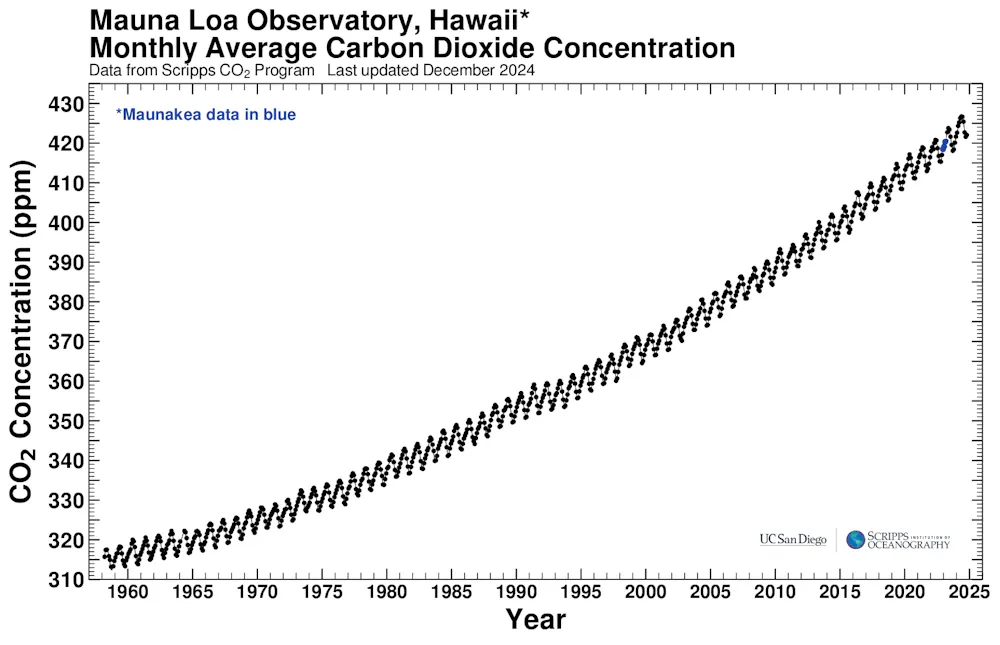
    Mauna Loa Observatory captured the reality of climate change. The US plans to shut it down
    Source: The Conversation (Au and NZ) – By Alex Sen Gupta, Associate Professor in Climate Science, UNSW Sydney Izabela23/Shutterstock The greenhouse effect was discovered more than 150 years ago and the first scientific paper linking carbon dioxide levels in the atmosphere with climate change was published in 1896. But it wasn’t until the 1950s that

    6 simple questions to tell if a ‘finfluencer’ is more flash than cash
    Source: The Conversation (Au and NZ) – By Dimitrios Salampasis, Associate Professor, Emerging Technologies and FinTech | FinTech Capability Lead, Swinburne University of Technology Oleg Golovnev/Shutterstock Images of flashy sports cars. Lavish lifestyle shots. These are just some of the red flags consumers should watch out for when they turn to social media for financial

    Grattan on Friday: how two once hot-button issues this week barely sparked media and political interest
    Source: The Conversation (Au and NZ) – By Michelle Grattan, Professorial Fellow, University of Canberra Political and news cycles often work in a certain and predictable way. Issues flare like bushfires, then rage for weeks or even months, until they are finally extinguished by action or fade by being overtaken by the next big thing.

    How many serious incidents are happening in Australian childcare centres? We don’t really know
    Source: The Conversation (Au and NZ) – By Erin Harper, Lecturer, School of Education and Social Work, University of Sydney Catherine Delahaye/ Getty Images This week, a Melbourne childcare worker was charged over alleged sexual abuse of young children in his care. Families are justifiably appalled and furious – with 1,200 children urged to be

    Too much vitamin B6 can be toxic. 3 symptoms to watch out for
    Source: The Conversation (Au and NZ) – By Nial Wheate, Professor, School of Natural Sciences, Macquarie University Selena3726/Shutterstock Side effects from taking too much vitamin B6 – including nerve damage – may be more widespread than we think, Australia’s medicines regulator says. In an ABC report earlier this week, a spokesperson for the Therapeutic Goods

    Too much vitamin B6 can be toxic. 3 symptoms to watch out for
    Source: The Conversation (Au and NZ) – By Nial Wheate, Professor, School of Natural Sciences, Macquarie University Selena3726/Shutterstock Side effects from taking too much vitamin B6 – including nerve damage – may be more widespread than we think, Australia’s medicines regulator says. In an ABC report earlier this week, a spokesperson for the Therapeutic Goods

    10 steps governments can take now to stamp out child sexual abuse in care settings
    Source: The Conversation (Au and NZ) – By Ben Mathews, Distinguished Professor, School of Law, Queensland University of Technology Recent cases of prolific alleged child sexual abuse in Melbourne and other Australian early childhood education and care settings have shocked even experienced people who work to prevent child sexual abuse. Parents are right to be

    Tears, trauma and unpaid work: why men in tinnies aren’t the only heroes during a flood disaster
    Source: The Conversation (Au and NZ) – By Rebecca McNaught, Research Fellow, Rural and Remote Health, University of Sydney Dan Peled/Getty Images When flooding strikes, our screens fill with scenes of devastated victims, and men performing heroic dinghy rescues in swollen rivers. But another story often goes untold: how women step in, and step up,

    The takeaway from the Venice Biennale saga: the art world faces deep and troubling structural inequality
    Source: The Conversation (Au and NZ) – By Grace McQuilten, Professor of Art and Associate Dean, Research and Innovation, School of Art, RMIT University Creative Australia’s decision earlier this year to rescind the selection of artist Khaled Sabsabi and curator Michael Dagostino as Australia’s 2026 representatives at the Venice Biennale sent shockwaves through the arts

    The Rainbow Warrior saga: 1. French state terrorism and NZ’s end of innocence
    COMMENTARY: By Eugene Doyle Immediately after killing Fernando Pereira and blowing up Greenpeace’s flagship the Rainbow Warrior in Auckland harbour, several of the French agents went on a ski holiday in New Zealand’s South Island to celebrate. Such was the contempt the French had for the Kiwis and the abilities of our police to pursue

    Does eating cheese before bed really give you nightmares? Here’s what the science says
    Source: The Conversation (Au and NZ) – By Charlotte Gupta, Senior Postdoctoral Research Fellow, Appleton Institute, HealthWise Research Group, CQUniversity Australia Phoenixns/Shutterstock, The Conversation, CC BY Have you heard people say eating cheese before bed will cause you to have vivid dreams or nightmares? It’s a relatively common idea. And this week, a new study

    Experiencing extreme weather and disasters is not enough to change views on climate action, study shows
    Source: The Conversation (Au and NZ) – By Omid Ghasemi, Research Associate in Behavioural Science at the Institute for Climate Risk & Response, UNSW Sydney STR / AFP via Getty Images Climate change has made extreme weather events such as bushfires and floods more frequent and more likely in recent years, and the trend is

    MIL OSI AnalysisEveningReport.nz

  • MIL-Evening Report: ER Report: A Roundup of Significant Articles on EveningReport.nz for July 4, 2025

    ER Report: Here is a summary of significant articles published on EveningReport.nz on July 4, 2025.

    Astronomers have spied an interstellar object zooming through the Solar System
    Source: The Conversation (Au and NZ) – By Kirsten Banks, Lecturer, School of Science, Computing and Engineering Technologies, Swinburne University of Technology K Ly / Deep Random Survey This week, astronomers spotted the third known interstellar visitor to our Solar System. First detected by the Asteroid Terrestrial-impact Last Alert System (ATLAS) on July 1, the

    Avoid bad breath, don’t pick partners when drunk: ancient dating tips to find modern love
    Source: The Conversation (Au and NZ) – By Konstantine Panegyres, Lecturer in Classics and Ancient History, The University of Western Australia Henryk Siemiradzki via Wikimedia Commons To love and be loved is something most people want in their lives. In the modern world, we often see stories about the difficulties of finding love and the

    Back to Back Theatre tackles an epic Shakespearian conflict – set in a factory, with cardboard props
    Source: The Conversation (Au and NZ) – By Kate Hunter, Senior Lecturer in Art and Performance, Deakin University Jeff Busby/Back To Back Theatre/ACMI Back to Back Theatre is one of Australia’s national treasures. Over 30 years this dynamic Geelong-based company – an ensemble of actors who are perceived to have intellectual disabilities – has built

    Australia’s new lung cancer screening program has chosen simplicity over equity, and we’re concerned
    Source: The Conversation (Au and NZ) – By Lisa J. Whop, Associate Director of Research and Senior Fellow, Yardhura Walani, National Centre for Aboriginal and Torres Strait Islander Wellbeing Research, Australian National University Thurtell/Getty Images Australia’s lung cancer screening program launched on July 1, and marks real progress and opportunity. It aims to reduce the

    Lost in space: MethaneSat failed just as NZ was to take over mission control – here’s what we need to know now
    Source: The Conversation (Au and NZ) – By Nicholas Rattenbury, Associate Professor in Physics, University of Auckland, Waipapa Taumata Rau Environmental Defense Fund, CC BY-SA This week’s announcement of the loss of a methane-detecting satellite, just days before New Zealand was meant to take over mission control, is a blow to the country’s space research

    Rare wooden tools from Stone Age China reveal plant-based lifestyle of ancient lakeside humans
    Source: The Conversation (Au and NZ) – By Bo Li, Professor, Environmental Futures Research Centre, School of Science, University of Wollongong Excavation at the Gantangqing site. Liu et al. Ancient wooden tools found at a site in Gantangqing in southwestern China are approximately 300,000 years old, new dating has shown. Discovered during excavations carried out

    I’ve seen the brain damage contact sports can cause – we all need to take concussion and CTE more seriously
    Source: The Conversation (Au and NZ) – By Alan Pearce, Professor, Adjunct Research Fellow, School of Health Science, Swinburne University of Technology AAP Image/The Conversation, CC BY Concussion in sport continues to make headlines, whether it be class actions, young men flocking to the highly violent “RunIt” activity or debate about whether Australian rules football

    NZ will soon have no real interisland rail-ferry link – why are we so bad at infrastructure planning?
    Source: The Conversation (Au and NZ) – By Timothy Welch, Senior Lecturer in Urban Planning, University of Auckland, Waipapa Taumata Rau Hagen Hopkins/Getty Images) Another week, another Cook Strait ferry breakdown. As the winter maintenance season approaches and the Aratere prepares for its final months of service, New Zealand faces a self-imposed crisis. The government

    Mauna Loa Observatory captured the reality of climate change. The US plans to shut it down
    Source: The Conversation (Au and NZ) – By Alex Sen Gupta, Associate Professor in Climate Science, UNSW Sydney Izabela23/Shutterstock The greenhouse effect was discovered more than 150 years ago and the first scientific paper linking carbon dioxide levels in the atmosphere with climate change was published in 1896. But it wasn’t until the 1950s that

    6 simple questions to tell if a ‘finfluencer’ is more flash than cash
    Source: The Conversation (Au and NZ) – By Dimitrios Salampasis, Associate Professor, Emerging Technologies and FinTech | FinTech Capability Lead, Swinburne University of Technology Oleg Golovnev/Shutterstock Images of flashy sports cars. Lavish lifestyle shots. These are just some of the red flags consumers should watch out for when they turn to social media for financial

    Grattan on Friday: how two once hot-button issues this week barely sparked media and political interest
    Source: The Conversation (Au and NZ) – By Michelle Grattan, Professorial Fellow, University of Canberra Political and news cycles often work in a certain and predictable way. Issues flare like bushfires, then rage for weeks or even months, until they are finally extinguished by action or fade by being overtaken by the next big thing.

    How many serious incidents are happening in Australian childcare centres? We don’t really know
    Source: The Conversation (Au and NZ) – By Erin Harper, Lecturer, School of Education and Social Work, University of Sydney Catherine Delahaye/ Getty Images This week, a Melbourne childcare worker was charged over alleged sexual abuse of young children in his care. Families are justifiably appalled and furious – with 1,200 children urged to be

    Too much vitamin B6 can be toxic. 3 symptoms to watch out for
    Source: The Conversation (Au and NZ) – By Nial Wheate, Professor, School of Natural Sciences, Macquarie University Selena3726/Shutterstock Side effects from taking too much vitamin B6 – including nerve damage – may be more widespread than we think, Australia’s medicines regulator says. In an ABC report earlier this week, a spokesperson for the Therapeutic Goods

    Too much vitamin B6 can be toxic. 3 symptoms to watch out for
    Source: The Conversation (Au and NZ) – By Nial Wheate, Professor, School of Natural Sciences, Macquarie University Selena3726/Shutterstock Side effects from taking too much vitamin B6 – including nerve damage – may be more widespread than we think, Australia’s medicines regulator says. In an ABC report earlier this week, a spokesperson for the Therapeutic Goods

    10 steps governments can take now to stamp out child sexual abuse in care settings
    Source: The Conversation (Au and NZ) – By Ben Mathews, Distinguished Professor, School of Law, Queensland University of Technology Recent cases of prolific alleged child sexual abuse in Melbourne and other Australian early childhood education and care settings have shocked even experienced people who work to prevent child sexual abuse. Parents are right to be

    Tears, trauma and unpaid work: why men in tinnies aren’t the only heroes during a flood disaster
    Source: The Conversation (Au and NZ) – By Rebecca McNaught, Research Fellow, Rural and Remote Health, University of Sydney Dan Peled/Getty Images When flooding strikes, our screens fill with scenes of devastated victims, and men performing heroic dinghy rescues in swollen rivers. But another story often goes untold: how women step in, and step up,

    The takeaway from the Venice Biennale saga: the art world faces deep and troubling structural inequality
    Source: The Conversation (Au and NZ) – By Grace McQuilten, Professor of Art and Associate Dean, Research and Innovation, School of Art, RMIT University Creative Australia’s decision earlier this year to rescind the selection of artist Khaled Sabsabi and curator Michael Dagostino as Australia’s 2026 representatives at the Venice Biennale sent shockwaves through the arts

    The Rainbow Warrior saga: 1. French state terrorism and NZ’s end of innocence
    COMMENTARY: By Eugene Doyle Immediately after killing Fernando Pereira and blowing up Greenpeace’s flagship the Rainbow Warrior in Auckland harbour, several of the French agents went on a ski holiday in New Zealand’s South Island to celebrate. Such was the contempt the French had for the Kiwis and the abilities of our police to pursue

    Does eating cheese before bed really give you nightmares? Here’s what the science says
    Source: The Conversation (Au and NZ) – By Charlotte Gupta, Senior Postdoctoral Research Fellow, Appleton Institute, HealthWise Research Group, CQUniversity Australia Phoenixns/Shutterstock, The Conversation, CC BY Have you heard people say eating cheese before bed will cause you to have vivid dreams or nightmares? It’s a relatively common idea. And this week, a new study

    Experiencing extreme weather and disasters is not enough to change views on climate action, study shows
    Source: The Conversation (Au and NZ) – By Omid Ghasemi, Research Associate in Behavioural Science at the Institute for Climate Risk & Response, UNSW Sydney STR / AFP via Getty Images Climate change has made extreme weather events such as bushfires and floods more frequent and more likely in recent years, and the trend is

    MIL OSI AnalysisEveningReport.nz

  • MIL-OSI China: China activates Level-IV emergency response to flooding in 5 provinces

    Source: People’s Republic of China – State Council News

    BEIJING, July 3 — China’s State Flood Control and Drought Relief Headquarters on Thursday launched a Level-IV emergency response to flooding in five provinces, according to the Ministry of Emergency Management.

    The emergency measures cover Liaoning, Sichuan, Yunnan, Gansu and Qinghai provinces, where heavy downpours are forecast from July 3 to 6.

    According to meteorological forecasts, parts of Liaoning, eastern regions of northwest China, western parts of the Sichuan Basin, and Yunnan will experience heavy to torrential rainfall during the period. Some areas in Sichuan and Yunnan that have already seen significant precipitation face elevated disaster risks due to accumulated rainfall.

    An official of the Ministry of Emergency Management said that emphasis should be placed on prevention and response measures in such vulnerable spots as mountain torrents and geological disasters, the flood-season management of small and medium-sized reservoirs, the flooding of small and medium-sized rivers, and urban and rural waterlogging.

    China has a four-tier emergency response system, with Level I being the most severe response.

    MIL OSI China News

  • MIL-OSI Australia: City to hold free nature events during July school holidays

    Source: New South Wales Ministerial News

    The City of Greater Bendigo is again holding a series of free events to highlight the region’s natural environment and biodiversity during the July School Holidays.

    City of Greater Bendigo Climate Change and Environment Manager Michelle Wyatt said the free events will both educate and entertain participants.

    “We held a series of similar events during the last school holidays which proved very popular,” Ms Wyatt said.

    “Our region has a diversity of wildlife and the free sessions help residents to learn about their unique characteristics and understand the importance of caring for the habitats they live in.”

    The free events include:

    • Evening Bat Fly-out on Tuesday July 8 and Tuesday July 15, 5pm – 6.30pm at Rosalind Park
    • Nature by Night on Thursday July 10 and Thursday July 17, 5.30pm – 7pm along the O’Keefe Rail Trail
    • Winter Wander on Saturday July 12, 10am – 12pm in Junortoun Flora and Fauna Reserve
    • Bats of Bendigo on Tuesday July 15, 10am – 11.30am at Rosalind Park
    • Nature in the Mall on Thursday July 17, 11am – 2pm at Hargreaves Mall

    For more information, or to book, visit:

    MIL OSI News

  • MIL-OSI: TransAlta to Host Second Quarter 2025 Results Conference Call

    Source: GlobeNewswire (MIL-OSI)

    CALGARY, Alberta, July 03, 2025 (GLOBE NEWSWIRE) — TransAlta Corporation (“TransAlta”) (TSX:TA)(NYSE:TAC) will release its second quarter 2025 results before markets open on Friday, August 1, 2025. A conference call and webcast to discuss the results will be held for investors, analysts, members of the media and other interested parties the same day beginning at 9:00 a.m. Mountain Time (11:00 a.m. ET).

    Second Quarter 2025 Conference Call:
    Webcast link: https://edge.media-server.com/mmc/p/zpy9addj

    To access the conference call via telephone, please register ahead of time using the call link below: https://register-conf.media-server.com/register/BI215de673b3704e0da46b2a02e0f35bb0. Once registered, participants will have the option of 1) dialing into the call from their phone (via a personalized PIN); or 2) clicking the “Call Me” option to receive an automated call directly to their phone.

    Related materials will be available on the Investor Centre section of TransAlta’s website at https://transalta.com/investors/presentations-and-events/. If you are unable to participate in the call, the replay will be accessible at https://edge.media-server.com/mmc/p/zpy9addj. A transcript of the broadcast will be posted on TransAlta’s website once it becomes available.

    About TransAlta Corporation:

    TransAlta owns, operates and develops a diverse fleet of electrical power generation assets in Canada, the United States and Australia with a focus on long-term shareholder value. TransAlta provides municipalities, medium and large industries, businesses and utility customers with affordable, energy efficient and reliable power. Today, TransAlta is one of Canada’s largest producers of wind power and Alberta’s largest producer of thermal generation and hydro-electric power. For over 114 years, TransAlta has been a responsible operator and a proud member of the communities where we operate and where our employees work and live. TransAlta aligns its corporate goals with the UN Sustainable Development Goals and the Future-Fit Business Benchmark, which also defines sustainable goals for businesses. Our reporting on climate change management has been guided by the International Financial Reporting Standards (IFRS) S2 Climate-related Disclosures Standard and the Task Force on Climate-related Financial Disclosures (TCFD) recommendations. TransAlta has achieved a 70 per cent reduction in GHG emissions or 22.7 million tonnes CO2e since 2015 and received an upgraded MSCI ESG rating of AA.

    For more information about TransAlta, visit its website at transalta.com.

    Note: All financial figures are in Canadian dollars unless otherwise indicated.

    For more information:

    Investor Inquiries: Media Inquiries:
    Phone: 1-800-387-3598 in Canada and U.S. Phone: 1-855-255-9184
    Email: investor_relations@transalta.com Email: ta_media_relations@transalta.com
       

    The MIL Network

  • MIL-OSI Africa: Cameroon’s hidden green treasures unveiled in a book

    Source: APO – Report:

    .

    In a powerful moment for conservation, the book “Important Plant Areas of Cameroon” was officially launched on 18 June during UK – Cameroon Climate Week. This groundbreaking publication reveals a stunning yet sobering reality: over 850 endangered plant species are spread across 49 critical biodiversity hotspots in Cameroon.

    Co-authored by experts from Cameroon’s Institute of Agricultural Research for Development (IRAD) National Herbarium, and the Royal Botanic Gardens, Kew, the book positions Cameroon as Africa’s most tropically diverse nation. From lush rainforests to arid deserts, the country’s ecosystems are as varied as they are vital. Yet, this rich biodiversity faces mounting threats. 10% of Cameroon’s plant species are now endangered, and the country holds the highest number of threatened trees on the continent.

    The culprits? Expanding mining operations, aggressive logging, and the relentless spread of palm oil plantations are rapidly eroding Cameroon’s forests. These activities not only endanger plant life but also jeopardize the ecological balance of the entire Congo Basin.

    British High Commissioner Matt Woods used the book’s launch to spotlight Cameroon’s critical role in global climate discussions. He urged the international community to amplify Cameroon’s voice at major forums like COP30 and called for stronger global support to safeguard the Congo Basin’s irreplaceable biodiversity.

    Speaking during the book launch, the representative of Royal Botanical Gardens in Kew, Prof. Philip Stevenson said: “It’s been a fantastic week of new collaboration. We’ve been working with IRAD National Herbarium and developing opportunities to extend our reach and do more work here in Cameroon.”

    This book is more than a catalogue of rare plants; it is a call to action. As the world grapples with climate change and biodiversity loss, Cameroon’s green treasures remind us of what’s at stake and what we still have the power to protect.

    – on behalf of British High Commission – Yaounde.

    MIL OSI Africa

  • MIL-OSI NGOs: Landmark decision on the human right to a healthy climate delivered by the highest court in the Americas

    Source: Greenpeace Statement –

    Amsterdam, Netherlands – The Inter-American Court of Human Rights just delivered a landmark decision on the obligations of States in the face of the climate emergency.[1] The Court established that governments must take “urgent and effective actions” to safeguard the right to a healthy climate, and that companies have obligations with regard to climate change and its impacts on human rights. This decision unequivocally puts the rights of people and nature above the interests of polluters.

    In an unprecedented move, the Court also recognised the right to nature and ecosystems to maintain their essential ecological processes, as a crucial part in the effort to address the triple planetary crisis [2] and to achieve a truly sustainable development model that respects planetary boundaries and guarantees the rights of present and future generations. 

    Pablo Ramírez, Climate Campaigner, Greenpeace Mexico, said: “This is a life-changing decision for thousands of communities that are impacted by climate change on our continent. The highest court in the Americas is providing us with a pathway to climate justice, obliging States to guarantee human rights, address climate impacts and force polluting industries to repair the damage they have caused.”

    The Court’s decision puts powerful legal tools to secure climate accountability and justice in the hands of more than 300 million people in 20 states that are party to the American Convention on Human Rights, including Indigenous Peoples, civil society organisations and individuals. 

    The advisory opinion was requested in January 2023 by the governments of Chile and Colombia. [3] It was followed by the most participatory process in the history of the Court, with 150 oral interventions from States, international organisations, Indigenous Peoples, and civil society, as well as 265 written submissions, including from Greenpeace International.

    Latin America and the Caribbean are highly affected by air pollution,[4] rising sea levels and extreme weather events,[5] fuelled by emissions from oil and gas corporations and other polluting industries.[6] 

    The Court’s decision is grounded in clear scientific evidence that attributes large emissions from corporations to impacts such as loss of life and livelihoods from climate disasters. This Court decision will directly assist individuals and communities in pushing back against corporate polluters and corporate violations of human rights.

    Maria Alejandra Serra, Legal Counsel, Greenpeace International, said: “For too long, politicians and corporations have gotten away with profiting from the destruction of our environment and from harming the lives of ordinary people. This decision marks the beginning of the era of corporate accountability and a big step towards dismantling the colonial legacy of systemic impunity in our region.”

    The decision builds on the growing global momentum in courts tasked with interpreting international law facing the climate crisis.[7] It is expected to be used by governments to present more ambitious climate action plans and shape future decisions by other international human rights courts, setting the stage for a forthcoming historic advisory opinion from the International Court of Justice – the world’s highest court – on the responsibilities of States to mitigate climate impacts. 

    ENDS 

    Notes:

    Photos and videos of Greenpeace International and its allies in the process at the Inter-American Court of Human Rights on the Greenpeace Media Library. 

    [1] The Inter-American Court of Human Rights, one of three regional human rights courts in the world, has the role to interpret and clarify the obligations of States. Its decisions inform national governments and courts. Read the full decision in Spanish here.

    [2] As established by the United Nations, “[t]he triple planetary crisis refers to the interconnected challenges of climate change, pollution, and biodiversity loss”. See here 

    [3] Read the Advisory Opinion Request here

    [4] A review on the impact of climate change and air pollution in the region, particularly in the Caribbean, is detailed in a Columbia University publication authored by Muge Akpinar-Elci and Olaniyi Olayinka.

    [5] As recently as 2024, the Americas region faced devastating effects from multiple extreme weather events, which continued to impact lives, livelihoods, and food supply chains long after the events had passed, according to a publication by the World Meteorological Organization. 

    [6] Written observation on the request for an advisory opinion on the climate emergency and human rights by Greenpeace International, the Center for International Environmental Law, the NYU Climate Law Accelerator, the Union of Concerned Scientists, and the Open Society Justice Initiative.

    [7] Some examples are the recent decisions from the International Tribunal for the Law of the Sea, which classified greenhouse gas emissions as marine pollution, and the ruling of the European Court of Human Rights against Switzerland, a State failing to set adequate climate targets.

    Contacts:

    Tal Harris, Greenpeace International, Global Media Lead – Stop Drilling Start Paying campaign, +41-782530550, [email protected]

    Greenpeace International Press Desk, +31 (0) 20 718 2470 (available 24 hours), [email protected]Follow @greenpeacepress on X/Twitter for our latest international press release

    Follow @greenpeacepress on X/Twitter for our latest international press release

    MIL OSI NGO

  • MIL-OSI Europe: Sweden: Europe’s fight against plastic pollution gets boost as EIB backs Swedish innovation packaging company PulPac

    Source: European Investment Bank

    Unsplash

    • EIB lends Swedish sustainable-packaging company PulPac €20 million to advance alternatives to single-use plastics
    • Funding is to scale fibre-based technology that company sell internationally
    • Operation supports EU’s green goals

    The European Investment Bank (EIB) is lending €20 million (around 220 million Swedish kronor) to Swedish sustainable-packaging company PulPac to tackle global plastic pollution. The EIB financing will support development and commercialisation of a fibre-based technology developed by PulPac as an alternative to single-use plastics.

    Gothenburg-based PulPac is scaling up its patented Dry Molded Fiber technology, which produces rigid packaging from renewable cellulose fibre. The technology represents a disruptive improvement over traditional wet molding — currently the dominant method for fibre-based packaging — by enabling faster production with significantly lower environmental impact.

    The company will focus on food and retail applications, including coffee cup lids, plates, cutlery, bottles, fashion hangers, and pharmaceutical packaging.

    The European Union is working to reduce plastic pollution as part of a global effort to protect the environment — particularly marine ecosystems, wildlife, and human health. As part of this initiative, the EU has banned the sale of ten single-use plastic items, including plates, cutlery, straws, and cotton buds, and is actively promoting environmentally friendly alternatives.

    “By supporting PulPac, we are backing an innovative and scalable solution that can make a real difference in the global effort to reduce plastic waste and accelerate the green transition,” said EIB Vice-President Thomas Östros. “This financing underlines the EU’s commitment to supporting next-generation technologies with global potential.”

    The EIB financing for PulPac is structured as a venture debt loan – a form of growth financing tailored to innovative companies. It is provided under the InvestEU programme, which supports the EU’s green transition and efforts to spur innovation, industrial resilience and sustainable economic growth.

    “We are honoured by the EIB’s backing and its recognition of Dry Molded Fiber as a core part of the shift towards sustainable packaging,” said PulPac Chairman Niclas Möller. “This partnership is both a financial milestone and a strong validation of our strategy to build a global licensing platform for fibre-based alternatives to plastic.”

    The investment will accelerate PulPac’s research and development over a five-year period (2025–2029), with a focus on next-generation food service and retail packaging. The project aims to enhance material efficiency, improve product performance, and increase cost competitiveness, while supporting the global scale-up of Dry Molded Fiber through PulPac’s licensing-based business model.

    “The EIB has shown great flexibility in tailoring a financial structure that supports industrial innovation,” said PulPac Chief Financial Officer Roderick Sundell. “With this support, we can scale faster, expand our technology portfolio and bring cost-efficient, sustainable packaging to global markets.”

    Background information

    EIB

    The European Investment Bank (ElB) is the long-term lending institution of the European Union, owned by its Member States. Built around eight core priorities, the EIB finances investments that contribute to EU policy objectives by bolstering climate action and the environment, digitalisation and technological innovation, security and defence, cohesion, agriculture and the bioeconomy, social infrastructure, the capital markets union and a stronger Europe in a more peaceful and prosperous world. 

    The EIB Group, which also includes the European Investment Fund (EIF), signed nearly €89 billion in new financing for over 900 high-impact projects in 2024, boosting Europe’s competitiveness and security.   

    All projects financed by the EIB Group are in line with the Paris Climate Agreement, as pledged in the organisation’s Climate Bank Roadmap. Almost 60% of the EIB Group’s annual financing supports projects directly contributing to climate change mitigation, adaptation, and a healthier environment.   

    Fostering market integration and mobilising investment, the Group supported a record of over €100 billion in new investment for Europe’s energy security in 2024 and mobilised €110 billion in growth capital for startups, scale-ups and European pioneers. Approximately half of the EIB’s financing within the EU is directed towards cohesion regions, where per capita income is lower than the EU average. 

    High-quality, up-to-date photos of the organisation’s headquarters for media use are available here.

    The InvestEU programme provides the European Union with long-term funding by leveraging substantial private and public funds in support of a sustainable recovery. It also helps to crowd in private investment for the European Union’s strategic priorities such as the European Green Deal and the digital transition. InvestEU brings all EU financial instruments previously available for supporting investments within the European Union together under one roof, making funding for investment projects in Europe simpler, more efficient and more flexible. The programme consists of three components: the InvestEU Fund, the InvestEU Advisory Hub, and the InvestEU Portal. The InvestEU Fund is deployed through implementing partners that will invest in projects using the EU budget guarantee of €26.2 billion. The entire budget guarantee will back the investment projects of the implementing partners, increase their risk-bearing capacity and thus mobilise at least €372 billion in additional investment.

    PulPac

    PulPac is the home of Dry Molded Fiber – a resource-efficient fibre-forming technology that transforms cellulose fibres into responsible packaging with minimal environmental impact. By making our cutting-edge technology accessible worldwide, we enable brands and manufacturers to meet growing market demands for eco-friendly packaging. As a leader in fibre-forming innovation, PulPac is building an ecosystem of industry partners and licensees, helping drive the shift toward a circular economy and making sustainability a standard across the globe. 

    MIL OSI Europe News

  • MIL-OSI Europe: MOTION FOR A RESOLUTION on the draft Commission regulation on Commission Implementing Regulation (EU) 2025/1093 of 22 May 2025 laying down rules for the application of Regulation (EU) 2023/1115 of the European Parliament and of the Council as regards a list of countries that present a low or high risk of producing relevant commodities for which the relevant products do not comply with Article 3, point (a) – B10-0321/2025

    Source: European Parliament

    B10‑0321/2025

    European Parliament resolution on the draft Commission regulation on Commission Implementing Regulation (EU) 2025/1093 of 22 May 2025 laying down rules for the application of Regulation (EU) 2023/1115 of the European Parliament and of the Council as regards a list of countries that present a low or high risk of producing relevant commodities for which the relevant products do not comply with Article 3, point (a)

    (2025/2739(RPS))

    The European Parliament,

     having regard to Commission Implementing Regulation (EU) 2025/1093 of 22 May 2025 laying down rules for the application of Regulation (EU) 2023/1115 of the European Parliament and of the Council as regards a list of countries that present a low or high risk of producing relevant commodities for which the relevant products do not comply with Article 3, point (a)[1],

     having regard to Regulation (EU) 2023/1115 of the European Parliament and of the Council of 31 May 2023 on the making available on the Union market and the export from the Union of certain commodities and products associated with deforestation and forest degradation and repealing Regulation (EU) No 995/2010[2], and in particular Article 29(2) thereof,

     having regard to Article 11 of Regulation (EU) No 182/2011 of the European Parliament and of the Council of 16 February 2011 laying down the rules and general principles concerning mechanisms for control by Member States of the Commission’s exercise of implementing powers[3],

     having regard to Rule 115(2) and (3) of its Rules of Procedure,

     having regard to the motion for a resolution of the Committee on the Environment, Climate and Food Safety,

     having regard to the plenary vote of the European Parliament of 14 November 2024 on the Regulation amending Regulation (EU) 2023/1115 as regards provisions relating to the date of application;

    Concerns about data quality and methodological robustness,

    A. whereas the proposed risk categorisation of countries under Regulation (EU) 2023/1115 does not accurately reflect the current realities in the countries concerned, as it is based on outdated data and fails to incorporate all relevant and available risk indicators;

    B. whereas Commission Implementing Regulation (EU) 2025/1093 does not accurately reflect realities in the countries concerned as it fails to consider key real-world factors, most notably current land-use dynamics and forest degradation; whereas recognising degradation as a risk factor would result in certain Member States being placed in higher risk categories, thereby challenging the assumption that supply chains within the Union are automatically low-risk[4];

    C. whereas key developments in governance, deforestation trends, and enforcement mechanisms that have occurred since 31 December 2020, which is the cut-off date referred to in Article 2 of Regulation (EU) 2023/1115, are not adequately reflected in the methodology;

    D. whereas the data relied on for the risk categorisation are primarily derived from the Global Forest Resources Assessment carried out by the Food and Agricultural Organization of the United Nations, with the latest full-cycle country submissions predating 2020, and therefore such data do not adequately or fairly represent the recent national efforts to prevent deforestation, updated land-use policies, real-time satellite monitoring improvements and the latest deforestation trends in several countries[5];

    E. whereas the methodology for the risk categorisation of countries lacks transparency in relation to how various risk factors are weighted and does not account for regional variability within countries; whereas this raises serious concerns about the fairness and credibility of the classification methodology;

    F. whereas the methodology for the risk categorisation of countries is flawed because it focuses primarily on aggregate historical deforestation rates and this approach disregards the multidimensional nature of deforestation risk, failing to consider the full scope of indicators set out in Article 29 of Regulation (EU) 2023/1115;

    G. whereas the approach underlying the current methodology established in Regulation (EU) 2023/1115 does not provide sufficient flexibility to accommodate timely updates, thereby creating significant market uncertainty and potential volatility;

    H. whereas, without a clearly defined mechanism for regular and transparent reassessment, the classification of countries in risk categories becoming misaligned with evolving conditions, thereby undermining both the effectiveness of Regulation (EU) 2023/1115 and the functioning of global commodity markets;

    I. whereas the absence of clear pathways for countries to have their risk categorisation changed through demonstrable progress undermines the role of Regulation (EU) 2023/1115 as a positive incentive mechanism and limits its potential to drive sustainable transformation on the ground;

    Analysis of challenges in the first risk category of countries (the ‘category low risk’)

    J. whereas the criterion of net forest loss between 2015 and 2020, used to determine the category low risk referred to in Article 29(1), point (b), of Regulation (EU) 2023/1115, considers total forest area loss rather than deforestation as narrowly defined under that Regulation, thereby including areas of temporary forest cover change or forest management not associated with land-use conversion, which undermines methodological consistency and legal certainty;

    K. whereas the methodology for the for the risk categorisation of countries introduces a relative threshold of 0,2 % annual forest area loss, and an absolute threshold of 70 000 hectares of annual forest loss, without providing a clear rationale for those specific values; whereas it is noteworthy that certain high-deforestation countries, such as the United States, fall just below the absolute threshold, raising questions about the objectivity and robustness of the chosen benchmarks;

    L. whereas the assessment of deforestation risk based on the expansion of cropland areas used for relevant commodities, as defined in Article 2, point (1), of Regulation (EU) 2023/1115, and the scale of livestock and wood production lacks precision; whereas the inclusion of overall wood production as a proxy for deforestation risks is methodologically questionable, as it conflates lawful forestry activities with deforestation driven by land-use change;

    Lack of granularity and context sensitivity

    M. whereas the current system of having only three risk categories is insufficient to adequately differentiate between countries with vastly different levels of deforestation risk;

    N. whereas the lack of a nuanced approach could undermine the incentive for more ambitious governments to take further action, as it effectively penalises progress and fails to recognise meaningful efforts to combat deforestation;

    O. whereas the Commission should address the methodological shortcomings of the current tripartite classification system by considering the introduction of a fourth risk category — ‘negligible risk’ — to reflect the reality that in certain countries or regions, the risk of deforestation or forest degradation is effectively negligible due to robust legal frameworks, low land-use change dynamics and sustainable land management practices;

    P. whereas the current system risks oversimplifying deforestation risk by granting the status to countries based on outdated data or national averages, which could create a false sense of security and potentially reduce the due diligence obligation for products originating from areas where illegal deforestation persists;

    Q. whereas, although the current data have shown a localised increase in deforestation in certain regions of the globe, such developments underscore the need for a granular, region-specific monitoring rather than static national risk classifications, which pose a risk of mischaracterising the overall trend and of ignoring regional progress or setbacks;

    R. whereas credible research and long-term studies, such as ‘Deforestation in the Amazon: Past, Present and Future’[6] published by the Amazon Network of Georeferenced Socio-Environmental Information in 2023, demonstrate the complexity and variability of deforestation dynamics driven by political cycles, enforcement levels, and local socio-economic conditions, and therefore support the need for a more adaptive, context-sensitive approach rather than rigid country benchmarks;

    S. whereas the current risk classification model fails to account for the volatility of global commodity markets, where price fluctuations, trade dynamics, and demand shifts can rapidly alter deforestation pressures;

    T. whereas the risk classification should also allow for the creation of a regulated compensation mechanism, applicable exclusively outside of primary or high-biodiversity areas;

    Concerns about fairness, legitimacy and global engagement

    U. whereas the current country benchmarking system may disincentivise cooperation and data sharing by countries producing relevant commodities, particularly if they perceive the risk categorisation of countries as unfair or politically motivated; whereas fostering mutual trust and engagement requires a fair, evidence-based and collaborative approach that encourages transparency and accountability rather than punitive labelling;

    V. whereas environmental and civil society organisations from countries producing relevant commodities have raised concerns about the lack of inclusive consultation in the development of the country benchmarking system, highlighting the importance of participatory processes that involve indigenous communities, local stakeholders, and regional authorities;

    1. Considers that Implementing Regulation (EU) 2025/1093 exceeds the implementing powers provided for in Regulation (EU) 2023/1115;

    2. Calls on the Commission to repeal Implementing Regulation (EU) 2025/1093;

    3. Calls on the Commission to revise the country benchmarking system to ensure it is based on up-to-date data, allows for regional differentiation, and includes transparent weighting of risk indicators;

    4. Urges the Commission to establish clear, time-bound, and transparent procedures for reassessing risk categorisation of countries regularly based on measurable progress and updated scientific data;

    5. Stresses the importance of engaging with countries producing relevant commodities and stakeholders through inclusive and participatory processes, and of providing support for forest governance reforms and traceability systems;

    6. Calls for complementary measures, such as forest partnerships, technical assistance, and fair trade incentives, to accompany the benchmarking process and promote sustainable transformation in commodity-producing regions;

    7. Instructs its President to forward this resolution to the Council and the Commission, and to the governments and parliaments of the Member States.


    MIL OSI Europe News

  • MIL-OSI Europe: Kenya’s largest hospital gets EIB Global support to bolster and green its energy supply

    Source: European Investment Bank

    EIB

    The European Investment Bank’s development arm (EIB Global) will help Kenya’s largest hospital expand and green its energy supply. EIB Global will advise Kenyatta National Hospital in Nairobi on the installation of a solar-power system.

    The goal of the project is to meet growing demand for electricity at the hospital while increasing its energy independence and reducing its carbon footprint.

    EIB Global will offer the assistance in partnership with German development agency (GIZ) through a grant of 7.3 million Kenyan shillings (€50,000) from a multi-donor initiative run by the World Bank and EIB for cities – the Cities Climate Finance Gap Fund. The support will cover technical studies and a financial assessment regarding the planned installation of the photovoltaic (PV) system.

    The hospital, which is also the largest public health centre in East Africa, has a capacity of 2,400 beds and serves about 2 million patients annually. High grid costs in Kenya are straining the budget of the hospital and power outages are forcing it to rely on diesel generators that meet only about 65% of demand, leaving critically ill patients at risk.

    “Our goal is a climate smart future,” said EIB Regional Hub for East Africa Head Edward Claessen.  “We are committed to supporting Kenyatta National Hospital in its transition to green electricity. The forthcoming technical studies will lay the ground for successful implementation of the PV system.”

    Under the support agreement, GIZ experts will carry out the technical and financial evaluations for implementation and maintenance of the solar-power system.

    Kenyatta National Hospital intends to direct savings on energy bills resulting from the planned PV system to areas such as purchasing medical supplies, hiring more staff and upgrading facilities.

    “We are grateful to the European Investment Bank, GIZ and the City Climate Finance Gap Fund for their support through this technical assistance programme,” said Kenyatta National Hospital Chief Executive Officer, Dr. Evanson Kamuri. “This collaboration marks a significant step forward in our commitment to sustainable healthcare delivery. By integrating energy efficiency and climate-smart solutions, Kenyatta National Hospital is not only enhancing operational resilience but also setting a benchmark for environmentally responsible healthcare infrastructure in the region.”

    The EIB Global and GIZ support will lead to concrete recommendations to the hospital on attaining reliable and efficient power supply through the planned PV system. The studies will assess the hospital’s current energy-consumption patterns, evaluate the feasibility of integrating the planned PV system into the hospital power grid, provide financial modelling for installation and maintenance and address regulatory questions.

    The European Investment Bank, through the Cities Climate Gap Fund support cities in the early stages of project development by assessing the actual challenges, understanding the risks and designing fit-for-purpose solutions that resonate with their goals for a climate- smart future.

    Background information

    About EIB Global

    The European Investment Bank (ElB) is the long-term lending institution of the European Union, owned by its Member States. It finances investments that contribute to EU policy objectives.  

    EIB Global is the EIB Group’s specialised arm devoted to increasing the impact of international partnerships and development finance, and a key partner of Global Gateway. EIB Global aims to support €100 billion of investment by the end of 2027 — around one-third of the overall target of this EU initiative. Within Team Europe, EIB Global fosters strong, focused partnerships alongside fellow development finance institutions and civil society. EIB Global brings the EIB Group closer to people, companies and institutions through offices across the world. High-quality, up-to-date photos of the organisation’s headquarters for media use are available here.

    About Gap Fund:

    The Cities Climate Finance Gap Fund is a multi-donor fund, implemented by the World Bank and the EIB in collaboration with GIZ and other city networks. Gap Fund provides much-needed funding for early-stage technical assistance and capacity building so that cities from low- and middle-income countries can operationalise their climate action plans, develop robust project concepts, and access climate finance resources. Since its establishment in 2020, it has supported 183 cities in 67 countries.

    On 20 September 2023, the governments of Germany and Luxembourg announced new funding of € 50 million  for the City Climate Finance Gap Fund (Gap Fund) with an additional €5 million on the horizon, these resources will support the development of low-carbon and climate-resilient urban investments and will nearly double the fund’s capitalization, bringing it to €105 million, making it one of the largest early-stage technical assistance funds for cities and climate.

    MIL OSI Europe News

  • MIL-OSI USA: Pfluger, Colleagues Sound the Alarm on Urgent Need for U.S. Drone Defenses

    Source: United States House of Representatives – Congressman August Pfluger (TX-11)

    WASHINGTON, DC — As first reported in Fox News, Congressman August Pfluger (TX-11) joined 24 of his colleagues in a letter to U.S. Secretary of Defense Pete Hegseth and U.S. Secretary of Homeland Security Kristi Noem inquiring about the status of defense measures for U.S. military installations, government buildings, and critical infrastructure from the threat of drones. This letter follows a growing number of drone attacks launched by Israel and Ukraine to penetrate deep into Iranian and Russian territory, respectively. 

    In part, the members wrote, “Since 9/11, our nation has not suffered a major coordinated attack on our own soil. While the government has done good work in preventing an attack like 9/11 from happening again, we want to ensure that we are preparing for a new paradigm in which relatively cheap drones can quickly and effectively wipe out core military and government infrastructure.” 

    “While American threat projection globally is strong among all the branches of the military, we need to be prepared for a new paradigm of covert, but potentially disastrous, threats to our core military interests, including our nuclear triad in the homeland.”

    Other signers of the letter include U.S. Reps. Mike Carey (OH-15), Brian Babin (TX-36), Troy Balderson (OH-12), Aaron Bean (FL-04), Nicholas Begich (AK-AL), Sheri Biggs (SC-03), Ben Cline (VA-06), Michael Cloud (TX-27), Troy Downing (MT-02), Brad Finstad (MN-01), Mike Flood (NE-01), Harriet Hageman (WY-AL), Clay Higgins (LA-03), French Hill (AK.-02), Jim Jordan (OH-04), Dave Joyce (OH-14), Bob Latta (OH-05), John McGuire (VA-05), Max Miller (OH-07), Chip Roy (TX-21), Michael Rulli (OH-06), Adrian Smith (NE-03), Greg Steube (FL-17), and Beth Van Duyne (TX-24).

    In addition to this letter, Rep. Pfluger also introduced the COUNTER Act earlier this year to unleash the military on enemy drones in the U.S. 

    See the full letter HERE or read the full text below. 

    Dear Secretary Hegseth and Secretary Noem:

    We write to inquire with the U.S. Department of Defense (DOD) and the Department of Homeland Security (DHS) about the current state of drone attack countermeasures for our military installations, government buildings, embassies, and consulates, both domestic and abroad. 

    The ongoing conflicts in Ukraine and the Middle East have demonstrated that large-scale, highly coordinated mass-drone attacks can be highly effective if the defender lacks adequate counter-drone defenses. 

    Since the beginning of the Russo-Ukraine war, drones have played a decisive role in deterring Russian armored and infantry assaults. With the relatively cheap cost to produce, maintain, and operate these systems, Ukraine can field drones to strike targets deep in occupied territories and Russian soil. The Russian Federation quickly adopted drone weaponry and surveillance equipment in response. 

    Drone technology has spread to other conflicts, including Israel’s confrontations with Hamas, Hezbollah, and the Houthis. On multiple occasions, Iran had used a tiered attack against Israel using drones alongside ballistic, hypersonic, and cruise missiles.

    Ukraine’s Operation Spider’s Web and Israel’s Operation Rising Lion have demonstrated thedevastating threat of a large-scale drone attack upon military installations and critical infrastructure far beyond one’s own borders. These operations are complemented by deep infiltration operations among each country’s respective intelligence services. Not only that, but the cost asymmetry to produce and operate drones against the damage they can cause is incredibly valuable for this guerrilla tactic.

    With the former administration’s open border policies and most drones being purchased from DJI, a Chinese Communist Party drone company, it is becoming increasingly likely that we could see a similar attack upon our country that could threaten our service members and cripple our lethality if we are not prepared. 

    Since 9/11, our nation has not suffered a major coordinated attack on our own soil. While thegovernment has done good work in preventing an attack like 9/11 from happening again, we want to ensure that we are preparing for a new paradigm in which relatively cheap drones can quickly and effectively wipe out core military and government infrastructure.

    While American threat projection globally is strong among all the branches of the military, we need to be prepared for a new paradigm of covert, but potentially disastrous, threats to our core military interests, including our nuclear triad in the homeland.

    Following the successful U.S. strikes on Iranian nuclear facilities at Fordo, Natanz, and Isfahan, it is imperative that we ensure the readiness and security of our military bases, critical infrastructure, and overseas diplomatic installations. A potential Iranian response could involve direct attacks here at home or abroad. We must take all necessary measures to safeguard our service members and defend our interests at this time.

    Any information you can provide in response to the following questions would be helpful:

    • What is the status of American countermeasures to deter and counter mass drone attacks against military installations, government facilities (including Washington D.C.), and critical infrastructure like roads, bridges, and manufacturing sites?
    • If defenses are currently inadequate to deter or repel drone attacks similar to those referenced above, what steps are being taken to address them, and what is the timeline for implementation?
    • Is the DOD or DHS aware of or actively working to deter potential threats posed by foreign-owned land near critical military and infrastructure sites in the United States that could be a launching point for a mass drone attack like we saw in Russia by Ukrainian forces?
    • Is there a concern of any sort of weaponized drone buildup already happening in theUnited States from drones that may have been smuggled in due to the former administration’s open border policies?
    • Will counter-drone technology be considered for President Trump’s Golden Dome air defense project?

    Thank you for your attention to this matter.

    Sincerely,

    MIL OSI USA News

  • MIL-OSI USA: Pfluger, Colleagues Sound the Alarm on Urgent Need for U.S. Drone Defenses

    Source: United States House of Representatives – Congressman August Pfluger (TX-11)

    WASHINGTON, DC — As first reported in Fox News, Congressman August Pfluger (TX-11) joined 24 of his colleagues in a letter to U.S. Secretary of Defense Pete Hegseth and U.S. Secretary of Homeland Security Kristi Noem inquiring about the status of defense measures for U.S. military installations, government buildings, and critical infrastructure from the threat of drones. This letter follows a growing number of drone attacks launched by Israel and Ukraine to penetrate deep into Iranian and Russian territory, respectively. 

    In part, the members wrote, “Since 9/11, our nation has not suffered a major coordinated attack on our own soil. While the government has done good work in preventing an attack like 9/11 from happening again, we want to ensure that we are preparing for a new paradigm in which relatively cheap drones can quickly and effectively wipe out core military and government infrastructure.” 

    “While American threat projection globally is strong among all the branches of the military, we need to be prepared for a new paradigm of covert, but potentially disastrous, threats to our core military interests, including our nuclear triad in the homeland.”

    Other signers of the letter include U.S. Reps. Mike Carey (OH-15), Brian Babin (TX-36), Troy Balderson (OH-12), Aaron Bean (FL-04), Nicholas Begich (AK-AL), Sheri Biggs (SC-03), Ben Cline (VA-06), Michael Cloud (TX-27), Troy Downing (MT-02), Brad Finstad (MN-01), Mike Flood (NE-01), Harriet Hageman (WY-AL), Clay Higgins (LA-03), French Hill (AK.-02), Jim Jordan (OH-04), Dave Joyce (OH-14), Bob Latta (OH-05), John McGuire (VA-05), Max Miller (OH-07), Chip Roy (TX-21), Michael Rulli (OH-06), Adrian Smith (NE-03), Greg Steube (FL-17), and Beth Van Duyne (TX-24).

    In addition to this letter, Rep. Pfluger also introduced the COUNTER Act earlier this year to unleash the military on enemy drones in the U.S. 

    See the full letter HERE or read the full text below. 

    Dear Secretary Hegseth and Secretary Noem:

    We write to inquire with the U.S. Department of Defense (DOD) and the Department of Homeland Security (DHS) about the current state of drone attack countermeasures for our military installations, government buildings, embassies, and consulates, both domestic and abroad. 

    The ongoing conflicts in Ukraine and the Middle East have demonstrated that large-scale, highly coordinated mass-drone attacks can be highly effective if the defender lacks adequate counter-drone defenses. 

    Since the beginning of the Russo-Ukraine war, drones have played a decisive role in deterring Russian armored and infantry assaults. With the relatively cheap cost to produce, maintain, and operate these systems, Ukraine can field drones to strike targets deep in occupied territories and Russian soil. The Russian Federation quickly adopted drone weaponry and surveillance equipment in response. 

    Drone technology has spread to other conflicts, including Israel’s confrontations with Hamas, Hezbollah, and the Houthis. On multiple occasions, Iran had used a tiered attack against Israel using drones alongside ballistic, hypersonic, and cruise missiles.

    Ukraine’s Operation Spider’s Web and Israel’s Operation Rising Lion have demonstrated thedevastating threat of a large-scale drone attack upon military installations and critical infrastructure far beyond one’s own borders. These operations are complemented by deep infiltration operations among each country’s respective intelligence services. Not only that, but the cost asymmetry to produce and operate drones against the damage they can cause is incredibly valuable for this guerrilla tactic.

    With the former administration’s open border policies and most drones being purchased from DJI, a Chinese Communist Party drone company, it is becoming increasingly likely that we could see a similar attack upon our country that could threaten our service members and cripple our lethality if we are not prepared. 

    Since 9/11, our nation has not suffered a major coordinated attack on our own soil. While thegovernment has done good work in preventing an attack like 9/11 from happening again, we want to ensure that we are preparing for a new paradigm in which relatively cheap drones can quickly and effectively wipe out core military and government infrastructure.

    While American threat projection globally is strong among all the branches of the military, we need to be prepared for a new paradigm of covert, but potentially disastrous, threats to our core military interests, including our nuclear triad in the homeland.

    Following the successful U.S. strikes on Iranian nuclear facilities at Fordo, Natanz, and Isfahan, it is imperative that we ensure the readiness and security of our military bases, critical infrastructure, and overseas diplomatic installations. A potential Iranian response could involve direct attacks here at home or abroad. We must take all necessary measures to safeguard our service members and defend our interests at this time.

    Any information you can provide in response to the following questions would be helpful:

    • What is the status of American countermeasures to deter and counter mass drone attacks against military installations, government facilities (including Washington D.C.), and critical infrastructure like roads, bridges, and manufacturing sites?
    • If defenses are currently inadequate to deter or repel drone attacks similar to those referenced above, what steps are being taken to address them, and what is the timeline for implementation?
    • Is the DOD or DHS aware of or actively working to deter potential threats posed by foreign-owned land near critical military and infrastructure sites in the United States that could be a launching point for a mass drone attack like we saw in Russia by Ukrainian forces?
    • Is there a concern of any sort of weaponized drone buildup already happening in theUnited States from drones that may have been smuggled in due to the former administration’s open border policies?
    • Will counter-drone technology be considered for President Trump’s Golden Dome air defense project?

    Thank you for your attention to this matter.

    Sincerely,

    MIL OSI USA News

  • MIL-Evening Report: Mauna Loa Observatory captured the reality of climate change. The US plans to shut it down

    Source: The Conversation (Au and NZ) – By Alex Sen Gupta, Associate Professor in Climate Science, UNSW Sydney

    Izabela23/Shutterstock

    The greenhouse effect was discovered more than 150 years ago and the first scientific paper linking carbon dioxide levels in the atmosphere with climate change was published in 1896.

    But it wasn’t until the 1950s that scientists could definitively detect the effect of human activities on the Earth’s atmosphere.

    In 1956, United States scientist Charles Keeling chose Hawaii’s Mauna Loa volcano for the site of a new atmospheric measuring station. It was ideal, located in the middle of the Pacific Ocean and at high altitude away from the confounding influence of population centres.

    Data collected by Mauna Loa from 1958 onward let us clearly see the evidence of climate change for the first time. The station samples the air and measures global CO₂ levels. Charles Keeling and his successors used this data to produce the famous Keeling curve – a graph showing carbon dioxide levels increasing year after year.

    But this precious record is in peril. US President Donald Trump has decided to defund the observatory recording the data, as well as the widespread US greenhouse gas monitoring network and other climate measuring sites.

    We can’t solve the existential problem of climate change if we can’t track the changes. Losing Mauna Loa would be a huge loss to climate science. If it shuts, other observatories such as Australia’s Kennaook/Cape Grim will become even more vital.

    The Keeling Curve tracking steadily rising carbon dioxide levels in the atmosphere came from data gathered at Mauna Loa.
    Scripps Institution of Oceanography at UC San Diego, CC BY-NC-ND

    What did Mauna Loa show us?

    The first year of measurements at Mauna Loa revealed something incredible. For the first time, the clear annual cycle in atmospheric CO₂ was visible. As plants grow in summer, they absorb CO₂ and draw it out of the atmosphere. As they die and decay in winter, the CO₂ returns to the atmosphere. It’s like Earth is breathing.

    Most land on Earth is in the Northern Hemisphere, which means this cycle is largely influenced by the northern summer and winter.

    The annual cycle of carbon dioxide is largely due to plant growth and decay in the northern hemisphere.

    It only took a few years of measurements before an even more profound pattern emerged.

    Year on year, CO₂ levels in the atmosphere were relentlessly rising. The natural in-out cycle continued, but against a steady increase.

    Scientists would later figure out that the ocean and land together were absorbing almost half of the CO₂ produced by humans. But the rest was building up in the atmosphere.

    Crucially, isotopic measurements meant scientists could be crystal clear about the origin of the extra carbon dioxide. It was coming from humans, largely through burning fossil fuels.

    Mauna Loa has now been collecting data for more than 65 years. The resulting Keeling curve graph is the most iconic demonstration of how human activities are collectively affecting the planet.

    When the last of the Baby Boomer generation were being born in the 1960s, CO₂ levels were around 320 parts per million. Now they’re over 420 ppm. That’s a level unseen for at least three million years. The rate of increase far exceeds any natural change in the past 50 million years.

    The reason carbon dioxide is so important is that this molecule has special properties. Its ability to trap heat alongside other greenhouse gases means Earth isn’t a frozen rock. If there were no greenhouse gases, Earth would have an average temperature of -18°C, rather than the balmy 14°C under which human civilisation emerged.

    The greenhouse effect is essential to life. But if there are too many gases, the planet becomes dangerously hot. That’s what’s happening now – a very sharp increase in gases exceptionally good at trapping heat even at low concentrations.

    Greenhouse gases are the reason Earth isn’t an icebox. But the rate humans are emitting them is leading to very rapid changes.
    Reid Wiseman/NASA, CC BY-NC-ND

    Keeping our eyes open

    It’s not enough to know CO₂ is climbing. Monitoring is essential. That’s because as the planet warms, both the ocean and the land are expected to take up less and less of humanity’s emissions, letting still more carbon accumulate in the air.

    Continuous, high-precision monitoring is the only way to spot if and when that happens.

    This monitoring provides the vital means to verify whether new climate policies are genuinely influencing the atmospheric CO₂ curve rather than just being touted as effective. Monitoring will also be vital to capture the moment many have been working towards when government policies and new technologies finally slow and eventually stop the increase in CO₂.

    The US administration’s plans to defund key climate monitoring systems and roll back green energy initiatives presents a global challenge.

    Without these systems, it will be harder to forecast the weather and give seasonal updates. It will also be harder to forecast dangerous extreme weather events.

    Scientists in the US and globally have sounded the alarm about what the closure would do to science. This is understandable. Stopping data climate collection is like breaking a thermometer because you don’t like knowing you’ve got a fever.

    If the US follows through, other countries will need to carefully reconsider their commitments to gathering and sharing climate data.

    Australia has a long record of direct atmospheric CO₂ measurement, which began in 1976 at the Kennaook/Cape Grim Baseline Air Pollution Station in north-west Tasmania. This and other climate observations will only become more valuable if Mauna Loa is lost.

    It remains to be seen how Australia’s leaders respond to the US retreat from climate monitoring. Ideally, Australia would not only maintain but strategically expand its monitoring systems of atmosphere, land and oceans.

    Alex Sen Gupta receives funding from the Australian Research Council.

    Katrin Meissner receives funding from the Minderoo Foundation and has received funding from the Australian Research Council in the past.

    Timothy Raupach receives funding from QBE Insurance, Guy Carpenter, and the Australian Research Council.

    ref. Mauna Loa Observatory captured the reality of climate change. The US plans to shut it down – https://theconversation.com/mauna-loa-observatory-captured-the-reality-of-climate-change-the-us-plans-to-shut-it-down-260403

    MIL OSI AnalysisEveningReport.nz

  • MIL-Evening Report: Mauna Loa Observatory captured the reality of climate change. The US plans to shut it down

    Source: The Conversation (Au and NZ) – By Alex Sen Gupta, Associate Professor in Climate Science, UNSW Sydney

    Izabela23/Shutterstock

    The greenhouse effect was discovered more than 150 years ago and the first scientific paper linking carbon dioxide levels in the atmosphere with climate change was published in 1896.

    But it wasn’t until the 1950s that scientists could definitively detect the effect of human activities on the Earth’s atmosphere.

    In 1956, United States scientist Charles Keeling chose Hawaii’s Mauna Loa volcano for the site of a new atmospheric measuring station. It was ideal, located in the middle of the Pacific Ocean and at high altitude away from the confounding influence of population centres.

    Data collected by Mauna Loa from 1958 onward let us clearly see the evidence of climate change for the first time. The station samples the air and measures global CO₂ levels. Charles Keeling and his successors used this data to produce the famous Keeling curve – a graph showing carbon dioxide levels increasing year after year.

    But this precious record is in peril. US President Donald Trump has decided to defund the observatory recording the data, as well as the widespread US greenhouse gas monitoring network and other climate measuring sites.

    We can’t solve the existential problem of climate change if we can’t track the changes. Losing Mauna Loa would be a huge loss to climate science. If it shuts, other observatories such as Australia’s Kennaook/Cape Grim will become even more vital.

    The Keeling Curve tracking steadily rising carbon dioxide levels in the atmosphere came from data gathered at Mauna Loa.
    Scripps Institution of Oceanography at UC San Diego, CC BY-NC-ND

    What did Mauna Loa show us?

    The first year of measurements at Mauna Loa revealed something incredible. For the first time, the clear annual cycle in atmospheric CO₂ was visible. As plants grow in summer, they absorb CO₂ and draw it out of the atmosphere. As they die and decay in winter, the CO₂ returns to the atmosphere. It’s like Earth is breathing.

    Most land on Earth is in the Northern Hemisphere, which means this cycle is largely influenced by the northern summer and winter.

    The annual cycle of carbon dioxide is largely due to plant growth and decay in the northern hemisphere.

    It only took a few years of measurements before an even more profound pattern emerged.

    Year on year, CO₂ levels in the atmosphere were relentlessly rising. The natural in-out cycle continued, but against a steady increase.

    Scientists would later figure out that the ocean and land together were absorbing almost half of the CO₂ produced by humans. But the rest was building up in the atmosphere.

    Crucially, isotopic measurements meant scientists could be crystal clear about the origin of the extra carbon dioxide. It was coming from humans, largely through burning fossil fuels.

    Mauna Loa has now been collecting data for more than 65 years. The resulting Keeling curve graph is the most iconic demonstration of how human activities are collectively affecting the planet.

    When the last of the Baby Boomer generation were being born in the 1960s, CO₂ levels were around 320 parts per million. Now they’re over 420 ppm. That’s a level unseen for at least three million years. The rate of increase far exceeds any natural change in the past 50 million years.

    The reason carbon dioxide is so important is that this molecule has special properties. Its ability to trap heat alongside other greenhouse gases means Earth isn’t a frozen rock. If there were no greenhouse gases, Earth would have an average temperature of -18°C, rather than the balmy 14°C under which human civilisation emerged.

    The greenhouse effect is essential to life. But if there are too many gases, the planet becomes dangerously hot. That’s what’s happening now – a very sharp increase in gases exceptionally good at trapping heat even at low concentrations.

    Greenhouse gases are the reason Earth isn’t an icebox. But the rate humans are emitting them is leading to very rapid changes.
    Reid Wiseman/NASA, CC BY-NC-ND

    Keeping our eyes open

    It’s not enough to know CO₂ is climbing. Monitoring is essential. That’s because as the planet warms, both the ocean and the land are expected to take up less and less of humanity’s emissions, letting still more carbon accumulate in the air.

    Continuous, high-precision monitoring is the only way to spot if and when that happens.

    This monitoring provides the vital means to verify whether new climate policies are genuinely influencing the atmospheric CO₂ curve rather than just being touted as effective. Monitoring will also be vital to capture the moment many have been working towards when government policies and new technologies finally slow and eventually stop the increase in CO₂.

    The US administration’s plans to defund key climate monitoring systems and roll back green energy initiatives presents a global challenge.

    Without these systems, it will be harder to forecast the weather and give seasonal updates. It will also be harder to forecast dangerous extreme weather events.

    Scientists in the US and globally have sounded the alarm about what the closure would do to science. This is understandable. Stopping data climate collection is like breaking a thermometer because you don’t like knowing you’ve got a fever.

    If the US follows through, other countries will need to carefully reconsider their commitments to gathering and sharing climate data.

    Australia has a long record of direct atmospheric CO₂ measurement, which began in 1976 at the Kennaook/Cape Grim Baseline Air Pollution Station in north-west Tasmania. This and other climate observations will only become more valuable if Mauna Loa is lost.

    It remains to be seen how Australia’s leaders respond to the US retreat from climate monitoring. Ideally, Australia would not only maintain but strategically expand its monitoring systems of atmosphere, land and oceans.

    Alex Sen Gupta receives funding from the Australian Research Council.

    Katrin Meissner receives funding from the Minderoo Foundation and has received funding from the Australian Research Council in the past.

    Timothy Raupach receives funding from QBE Insurance, Guy Carpenter, and the Australian Research Council.

    ref. Mauna Loa Observatory captured the reality of climate change. The US plans to shut it down – https://theconversation.com/mauna-loa-observatory-captured-the-reality-of-climate-change-the-us-plans-to-shut-it-down-260403

    MIL OSI AnalysisEveningReport.nz

  • MIL-OSI United Nations: Sustainable Development Goals Acceleration Depends on Space Technologies, Deputy Secretary-General Tells Committee

    Source: United Nations General Assembly and Security Council

    Following are UN Deputy Secretary-General Amina Mohammed’s remarks at the sixty-eighth session of the Committee on the Peaceful Uses of Outer Space, in Vienna today: 

    Let me begin with a simple truth: every phone call you made to get here, every global positioning system (GPS) route that guided your journey, every weather forecast that helped you pack — all of it depended on space.

    Space is not the final frontier.  It is the foundation of our present.   Without satellites orbiting overhead right now, global food systems would collapse within weeks.  Emergency responders would lose their lifelines.  Climate scientists would be flying blind.  And our hopes of achieving the Sustainable Development Goals (SDGs) would be out of reach.

    This is why your work matters.  This is why the work of this Committee — COPUOS — is not just important, but urgent.  For over six decades, through shifting geopolitics and changing priorities, this Committee has consistently delivered.

    Five space treaties.  Space sustainability guidelines.  The Space 2030 Agenda.  You don’t just talk about space governance — you create it.  But today, we need to shift our focus to scale.

    The United Nations has identified six critical areas for SDG acceleration: food systems, energy transitions, digital connectivity, education and skills, environmental action, and jobs and social protection.

    Every single one depends on space technologies.  This is a paradox when you consider that less than half of UN Member States have a satellite in orbit, yet all 8 billion people on Earth benefit from space services daily. 

    Through your work, and through the United Nations Office for Outer Space Affairs (UNOOSA), we can close this divide — not by putting a satellite in every nation’s hands, but by ensuring that the benefits of space technologies reach every community on our planet.

    I’m just coming from the fourth International Conference on Financing for Development in Seville, where the message was crystal clear:  in an era of constrained investment, we must align capital with high-impact solutions.

    Space is one of them.  But impact happens at every level — and I would like to share what I’ve seen.

    At the local level, UNOOSA’s programs are building the next generation of inclusive space leaders.  They’re ensuring equal access for youth and women in developing countries, where small investments create enormous change.  Through these programs, we’re enabling the next Carmen Chaidez, the next Kitaw Ejigu.

    At the national level, UNOOSA helps countries build their space capabilities from the ground up.  Through space law workshops and direct support for emerging programs, nations develop the expertise they need to harness space for their own development priorities.

    The United Nations Platform for Space‑based Information for Disaster Management and Emergency Response (UN-SPIDER) shows what this looks like in practice.  In Tonga, Tobago, and Ghana, satellite data is being used to create detailed digital models of entire cities.  When disaster strikes, these virtual twins allow Governments to see exactly where help is needed most, deploy resources much faster, and ultimately save more lives.

    Through innovative partnerships, UNOOSA has helped Kenya, Guatemala, [Republic of] Moldova, and Mauritius launch their first satellites.  Each event was a catalyst — for new space agencies, developing robust legislation, and promoting gender equality in the space sector.

    Finally, at the international level, as reinforced by the Pact for the Future, we must work together to ensure COPUOS delivers the governance our rapidly evolving space environment demands of us.

    Here’s what’s happening right now:  low-Earth orbit satellites are multiplying exponentially.  Humanity is preparing to return to the Moon.  We’re exploring beyond like never before.  And your work has never been more vital and urgent.

    We stand at the threshold of potentially historic decision:  the fourth United Nations Conference on the Exploration and Peaceful Uses of Outer Space (UNISPACE IV) in 2027.  This isn’t just another conference.  This could be the milestone that shapes the next sixty years of global space governance. And so I encourage us all to aim high.  And aim even higher.

    The pressing space issues before us — traffic, debris, resources — each present both risk and opportunity for achieving the SDGs.  Each requires the kind of multilateral cooperation that this Committee has proven it can deliver.  We need a strong UNOOSA and a strong COPUOS to lead us into UNISPACE IV and beyond.

    But strength isn’t about institutions — it’s about the people within them and the systems that we run.  As a practical next step, I encourage you to champion the implementation of the UNOOSA Gender Mainstreaming Toolkit for the Space Sector launched last year.  Because when we leave talent on the sidelines, we will all lose.

    Let me leave you with one final message.  The view from space shows no countries, no borders — only one shared planet, our common home.  Let that aspect guide you as you build the governance frameworks for space exploration and use.  Let us ensure that outer space remains safe and sustainable for everyone.  Let us make space a catalyst for achieving our 2030 Goals with 5 years to go.  And let us build governance frameworks that serve not just us, but generations to come.

    MIL OSI United Nations News

  • MIL-OSI USA: UConn Hosts Sustainability Summit for Northeast Higher Education

    Source: US State of Connecticut

    Nearly all higher education institutions in the Northeast have demonstrated a commitment to sustainability, and most have an Office of Sustainability. While each university has its own unique challenges in pursuing environmental progress, many of these offices face similar issues – How do we get students prepared for green careers? What’s the most efficient way to run a move-out donation program?

    UConn Office of Sustainability Director, Patrick McKee, welcomes guests to the NECSC Summit.

    That’s where the Northeast Campus Sustainability Consortium (NECSC) comes in! The NECSC was established in 2004 to support sustainability officers in advancing progress on university campuses in the northeast and Canadian maritime region. The NECSC is an informal group, but commits to hosting an annual meeting to provide members close networking opportunities, professional development and access to the area’s vibrant sustainability practitioner community. Hosts of the annual gathering are leaders of sustainability in the region.

    Following 2024’s annual summit at Southern New Hampshire University, UConn’s Office of Sustainability and Connecticut College agreed to co-host the event for 2025. The NECSC conference is also an opportunity to highlight the hosts’ sustainability progress and leadership regionally. UConn’s Avery Point Campus was the perfect location – not only is it a gorgeous waterfront campus, it also plays an outsize role in environmental progress for Connecticut.

    In 2021, Avery Point upgraded 121 of their outdoor light fixtures with LED lights which saved 25 tons of carbon dioxide over the course of a year. The Student Center secured LEED Silver Certification in recognition of its energy efficiency in 2023. Avery Point is also home to the Connecticut Institute for Resilience and Climate Adaptation (CIRCA) and Connecticut Sea Grant which act as research hubs for climate resilience, coastal ecosystems, and aquaculture within Long Island Sound. Faculty and students are collaborating with Eversource and Orsted on a $1.25m grant to understand the impact of offshore wind projects on marine habitats, including project Starboard Wind. EcoHusky is the student-run organization that organizes yearly sustainability events for faculty and students including the Earth Day Event, supported by the Office of Sustainability in 2025. EcoHusky was also a part of securing an Environmental and Sustainability Small Grant from the Office of Sustainability in 2022 to install a solar panel and wind turbine on the sailing shed to provide independent, renewable-energy sources for campus buildings. In December of 2024, UConn entered a historical memorandum with CT’s five recognized tribes to establish Avery Point as a Native-American Serving, Nontribal Intuition (NASNTI) to reach at least 10% Native American enrollment and supporting tribal education through academics and community engagement.

    Nearly 100 higher education sustainability staff and faculty members attended the NECSC summit, held June 9-11, 2025. Ranging from Maryland to Maine, attendees hailed from Ivies, state universities and private liberal arts schools. The event kicked off with a keynote address by Dr. Annemarie Seifert, Dean of UConn Avery Point, and was followed by engaging sessions on creating circular economies on campus, geothermal buildings, decarbonization communications and more.

    Leaders of higher ed’s preeminent sustainability networks provided global perspectives on shifting political landscapes for sustainability. Megan Fay Zahniser, Executive Director of the Association for the Advancement of Sustainability in Higher Education, and Tim Carter, President of Second Nature, urged attendees to work together and with their home communities to push for continued environmental progress.

    Throughout the event, UConn Dining provided excellent food and low-waste catering. Mike White, Executive Director of UConn Dining Services, spoke about their team’s dedication to reducing food waste, using local and organic produce, and UConn’s partnership with Quantum Biopower which converts food scraps into energy. All attendees enjoyed menus featuring cheese from local farms like Cato Corner in Colchester, and greens from Full Moon Farm in Hampton.

    Guests participated in marine research in Long Island Sound with Project Oceanology.

    The NECSC summit concluded with a marine biology excursion on Long Island Sound. Project Oceanology, a nonprofit marine education and research facility, took guests out on a ship to catch, record, and measure sea life from the sound. They also took the crew up the Thames River for a closer look at the offshore wind assembly pier.

    “It is always uplifting to network, share stories, insights, and best practices as we work to collectively make a larger impact on the planet and in the lives of students,” shares Patrick McKee, Director of the UConn Office of Sustainability. “It was a pleasure co-hosting the NECSC Summit at UConn Avery Point, and we look forward to visiting Rutgers in 2026.”

    To learn more about NECSC and join the mailing list, click here.

    MIL OSI USA News

  • MIL-OSI United Kingdom: UK and Peru hold sixth iteration of bilateral Political Consultations Mechanism in London

    Source: United Kingdom – Executive Government & Departments

    News story

    UK and Peru hold sixth iteration of bilateral Political Consultations Mechanism in London

    The Minister for International Development, Latin America and Caribbean and Peruvian Vice Minister of Foreign Affairs co-chaired the 6th session of the Peru-UK Political Consultations in London on 3 July.

    The Rt. Hon Baroness Chapman of Darlington, Minister for International Development, Latin America and Caribbean welcomed Peruvian Vice Minister of Foreign Affairs, Ambassador Felix Denegri to London on 3 July, where the two Ministers co-chaired the 6th session of the Peru-UK Political Consultations.

    A historic relationship rooted in shared values dating back over 200 years, the UK and Peru reaffirmed their commitment to strengthening their modern partnership.

    Successes celebrated since the last meeting include the successful ratification of the UK’s CPTPP accession; the signing of a Double Taxation Agreement; and signing a new Memorandum of Understanding (MOU) on Climate Change. The two countries celebrated the  culmination of the 200-year anniversary of Peru-UK relations in 2023 and numerous high-level visits both ways.

    1. On security and defence, the parties reaffirmed their commitment to a rules-based international order and willingness to jointly tackle global insecurity. The UK and Peru agreed to drive collaboration through a Memorandum of Understanding on Security cooperation, addressing transnational drug trafficking, illicit financial flows, corruption and environmental crime.

    2. On growth, the parties celebrated the strengthening of bilateral trade and investment, supported by a growing framework of trade and government-to-government agreements (G2Gs). Peru acknowledged the UK’s valuable contribution to Peru’s infrastructure on health, education and flood defences. This includes the UK’s position as the largest foreign direct investor in mining in Peru. The UK also presented its recently launched Industrial Strategy and the two sides discussed collaboration on Peru’s clean energy transition, including unlocking green hydrogen potential.

    3. The parties highlighted their joint efforts to address climate change, protect the Amazon Rainforest, promote green investment and tackle environmental crime. They celebrated the recent signing of a Memorandum of Understanding on Climate and Biodiversity and discussed Peru’s leadership as a key partner in Latin America ahead of COP30. The UK offered to continue supporting Peru in developing a National Bioeconomy Strategy by 2026.

    4. Lastly, the UK and Peru stressed the value of shared cultural experiences as a foundation to the bilateral relationship. They celebrated the promotion of English Language learning through the British Council and academic excellence through the UK’s Chevening scholarships programme. The parties will soon drive this further through the signing of two Memorandum’s of Understanding to collaborate on quality higher education in Peru delivered by the British Council.

    Speaking after the Consultations, Baroness Chapman said:

    The UK and Peru share a warm and historic friendship – over 200 years strong,  grounded in our values, mutual respect and common ambitions.

    Today we are working closer than ever for shared growth and prosperity. The UK is already Peru’s largest foreign investor and I had a fantastic discussion with Ambassador Denegri today on how we can build on this, from trade, to climate and security.

    Vice minister of Foreign Affairs of Peru, Félix Denegri said:

    We had very fruitful discussions with Baroness Chapman, in which we ratified our commitment to continuously expand and strengthen our bilateral agenda, based on our shared principles, values and interests.

    I am greatly satisfied with the level of bilateral engagement between Peru and the UK, shown in reciprocal ministerial, vice-ministerial and high authorities visits in the last two years. We both highlighted the continuity of our Political Consultations Mechanism, being this the sixth since its establishment in 2018.

    We look forward to welcome Baroness Chapman for our next round of Consultations, in Peru.

    The UK and Peru will continue to strengthen bilateral ties across security, growth, climate and education, invigorated through their new agreements and MOUs. The parties agreed to reconvene in Peru in 2026.

    Media enquiries

    Email newsdesk@fcdo.gov.uk

    Telephone 020 7008 3100

    Email the FCDO Newsdesk (monitored 24 hours a day) in the first instance, and we will respond as soon as possible.

    Updates to this page

    Published 3 July 2025

    MIL OSI United Kingdom

  • MIL-OSI Africa: Kenya: Amb. Guo Haiyan Paid a Courtesy Call on Hon. Cabinet Secretary (CS) Deborah Mlongo Barasa

    Source: APO

    On July 2, H.E. Amb. Guo Haiyan paid a courtesy call on Hon. Dr. Deborah Mlongo Barasa, Cabinet Secretary, Ministry of Environment, Climate Change and Forestry. Mr. ZHOU Jun, DPR of China to UNEP, and Amb. Jane Makori, Deputy Director General, MFDA, Kenya attended the meeting.

    Amb. Guo shared China’s latest progress and important achievements in the field of ecological and environmental protection. China stands ready to share its experience with Kenya, promoting cooperation in the field of climate change, green BRI and green industry investment, with an aim of jointly enhancing ecological and environmental governance capacity.

    Hon. Dr. Deborah Mlongo Barasa positively acknowledged the process in China-Kenya environmental cooperation, and expressed the willingness to enhance collaboration in the field of circular economy, waste management, biodiversity, and South-South cooperation on climate change.

    Distributed by APO Group on behalf of Embassy of the People’s Republic of China in the Republic of Kenya.

    Media files

    .

    MIL OSI Africa

  • MIL-OSI United Kingdom: Environment Secretary Steve Reed: Groundswell Show speech

    Source: United Kingdom – Executive Government & Departments

    Speech

    Environment Secretary Steve Reed: Groundswell Show speech

    Speech by Environment Secretary Steve Reed at the 2025 Groundswell Show.

    It’s fantastic to be with you all here today. I’m delighted to have this opportunity to speak to so many people.

    It’s exciting to be here at Groundswell with the pioneers and innovators who are shaping the future of British farming.

    I’ve really been looking forward to coming to Groundswell because I know this is where the big ideas are taking shape. 

    You’re confronting the challenges of the future by drawing on the power of the past, looking at how we can use regenerative agriculture to shape the future of farming, and inspiring others to get involved in those approaches.

    You’ve been the ones to break the mould, championing the vital role of nature in sustainable food production from the start – the pioneers of an agricultural transition that must be just and must recognise the importance of community and tradition as we shape that future.

    Protecting British food security has never been more important. We’ve just had our warmest spring on record. Flooding is on the rise. Geopolitical events are threatening global food supply chains.

    Food security is national security. And you, more than anyone, know it’s only by restoring nature that we can make our food secure.

    Restoring nature is central to the Government’s approach.

    In the Spending Review, we committed to spend £2.7 billion a year on sustainable farming and nature’s recovery over the next three years.

    Funding for farmers through the Environmental Land Management schemes will increase by 150 per cent to £2 billion by 2029. And a further £400 million will be available from other nature schemes, including projects for tree planting and peatland restoration.

    This is the biggest financial investment in nature-friendly farming in our country’s history.

    Take a moment to compare this to 2017, when Groundswell first started. Back then, £350 million was invested into ELMs’ predecessor.

    Thanks to your efforts, nature-friendly farming has come a very long way in the past nine years.

    There are now over 39,000 SFI agreements producing fantastic results for nature. That’s something to celebrate. 

    [Political line removed]

    We’ve got the money out the door into farmers’ bank accounts, and I’m proud of that. But once you’ve spent a budget, you can’t keep spending it or you damage the economy, and we’re not doing that.

    Those farmers who missed out at the time the scheme closed to new applicants will be able to make claims once it reopens. But budgets can’t be unlimited, so we need to make sure we focus that public money where it’s going to make the biggest impact. 

    Farms are businesses, and all businesses need to be profitable to survive. I see it as central to my job to help make farming profitable. 

    I firmly believe the Sustainable Farming Incentive and ELMs are the best tools to support farmers’ transition to sustainable food production and to profitability.

    Later this summer, I will provide more details of our reformed SFI offer. We are working with farmers to shape the scheme, which will start accepting applications in the new year.

    We need to return firmly to the principle of public money for public goods.

    Our reformed SFI will maximise benefits for the environment, particularly around water quality and biodiversity, so we can clean up our polluted rivers, welcome wildlife back to farms, and strengthen the natural foundations that are vital to sustainable food production.

    We will simplify the SFI and support farmers to take on packages of actions which, when done together, achieve more for nature. And I know we need to upgrade the IT system so it’s easier for farmers to submit applications.

    That is part of my broader plan to rewire and reset Defra, to remove the bureaucracy and barriers that stand in the way of people getting the support they need.

    More environmental benefits, a simpler offer, supporting farmers through the transition, a focus on profitability, and visibility of the overall budget so we get it out the door and you know when it’s going to be fully allocated.

    This will be the shape of our reformed SFI.

    We’re also reopening our Capital Grants offer today – with £150 million in the latest round to invest in nature-friendly farming.

    That includes funding to plant hedgerows, buy equipment that will help clean up our rivers, or restore habitats that support biodiversity.

    Farmers and land managers can apply for a total of 78 items under the latest round, including four new items on woodland condition, wildlife management, stone walls and educational visits.

    We’ve taken time to assess and improve our offer. Putting funding limits on certain actions will ensure we manage budgets fairly so we can open the grants over a longer period of time.

    The SFI and Capital Grants form part of a much wider reset for farming.

    We want to support farmers to run profitable and financially resilient businesses that produce nutritious, high-quality food and other produce, and help to restore nature at the same time.

    Our 25-Year Farming Roadmap will outline our shared vision for the sector and set the direction for how we get there. It will give farmers clarity, stability and transparency.

    This will be a transition led by farm businesses, drawing on your experiences and your expertise.

    With government as the enabler, but farmers as the leaders.

    We’ve seen how effective farm clusters can be in supporting nature over a wider area – an initiative led by the sector which the Government can support.

    I’ve asked Baroness Minette Batters, former NFU President, to lead a review into how we can boost farm profitability – and she has written to the sector to get your ideas to inform the review.

    And we’re continuing to work with the Farm Tenancy Forum to ensure tenant farmers can access our reformed farming schemes.

    The farming sector is also leading the way on innovation.

    Agri-tech is one of our highest growth sectors, with 40 times the number of UK agri-tech businesses than we had ten years ago.

    Our ADOPT programme puts farmers in the driving seat, giving them the chance to test new technologies on their farm – such as solar panels on soft polytunnels or cultivation equipment to improve soil health in potato production. 

    Under the Government’s Industrial Strategy, we are taking this further. We’re investing over £200 million in the Farming Innovation Programme between now and 2030, as well as launching an Agri-Tech Export Accelerator Programme to help agri-tech businesses identify the best international markets.

    It’s been an interesting year, and certainly far from always straightforward.

    But we are now at a point where we can make things work better for farmers, food production and nature. I strongly believe in nature-positive farming. It is the way we can help farming to become more sustainable and successful both environmentally and financially.   

    You are the pioneers. I’m here to learn. Together we can give farming the bright and exciting future it, and our countryside, needs and deserves.

    Updates to this page

    Published 3 July 2025

    MIL OSI United Kingdom

  • MIL-OSI United Nations: Deputy Secretary-General’s remarks at the 68th session of the Committee on the Peaceful Uses of Outer Spaces [as delivered]

    Source: United Nations secretary general

    Excellencies,
    Dear colleagues,
    Champions of our shared cosmic future,
    Let me begin with a simple truth: every phone call you made to get here, every GPS route that guided your journey, every weather forecast that helped you pack – all of it depended on space.
    Space is not the final frontier. It is the foundation of our present.
    Without satellites orbiting overhead right now, global food systems would collapse within weeks. Emergency responders would lose their lifelines. Climate scientists would be flying blind. And our hopes of achieving the Sustainable Development Goals would be out of reach.
    This is why your work matters. This is why the work of this Committee – COPUOS – is not just important, but urgent.
    For over six decades, through shifting geopolitics and changing priorities, this Committee has consistently delivered.
    Five space treaties.
    Space sustainability guidelines.
    The Space 2030 Agenda.
    You don’t just talk about space governance – you create it.
    But today, we need to shift our focus to scale.
    The United Nations has identified six critical areas for SDG acceleration: food systems, energy transitions, digital connectivity, education and skills, environmental action, and jobs and social protection.
    Every single one depends on space technologies.
    This is a paradox when you consider that less than half of UN Member States have a satellite in orbit, yet all eight billion people on Earth benefit from space services daily.
    Through your work, and through UNOOSA, we can close this divide – not by putting a satellite in every nation’s hands, but by ensuring that the benefits of space technologies reach every community on our planet.
    Excellencies,
    I’m just coming from the Fourth International Conference on Financing for Development in Seville, where the message was crystal clear: in an era of constrained investment, we must align capital with high-impact solutions.
    Space is one of them.
    But impact happens at every level – and I would like to share what I’ve seen.
    At the local level, UNOOSA’s programs are building the next generation of inclusive space leaders. They’re ensuring equal access for youth and women in developing countries, where small investments create enormous change. Through these programs, we’re enabling the next Carmen Chaidez, the next Kitaw Ejigu.
    At the national level, UNOOSA helps countries build their space capabilities from the ground up. Through space law workshops and direct support for emerging programs, nations develop the expertise they need to harness space for their own development priorities.
    UN-Spider shows what this looks like in practice. In Tonga, Tobago, and Ghana, satellite data is being used to create detailed digital models of entire cities. When disaster strikes, these virtual twins allow governments to see exactly where help is needed most, deploy resources much faster, and ultimately save more lives.
    Through innovative partnerships, UNOOSA has helped Kenya, Guatemala, Moldova, and Mauritius launch their first satellites. Each event was a catalyst – for new space agencies, developing robust legislation, and promoting gender equality in the space sector.
    Finally, at the international level, as reinforced by the Pact for the Future, we must work together to ensure COPUOS delivers the governance our rapidly evolving space environment demands of us.
    Excellencies,
    Here’s what’s happening right now: low-Earth orbit satellites are multiplying exponentially.
    Humanity is preparing to return to the Moon.
    We’re exploring beyond like never before.
    And your work has never been more vital and urgent.
    We stand at the threshold of potentially historic decision: UNISPACE IV in 2027.
    This isn’t just another conference. This could be the milestone that shapes the next sixty years of global space governance.
    And so I encourage us all to aim high. And aim even higher.
    The pressing space issues before us – traffic, debris, resources – each present both risk and opportunity for achieving the SDGs. Each requires the kind of multilateral cooperation that this Committee has proven it can deliver.
    We need a strong UNOOSA and a strong COPUOS to lead us into UNISPACE IV and beyond.
    But strength isn’t about institutions – it’s about the people within them and the systems that we run. As a practical next step, I encourage you to champion the implementation of the UNOOSA Gender Mainstreaming Toolkit for the Space Sector launched last year. Because when we leave talent on the sidelines, we will all lose.
    Let me leave you with one final message.
    The view from space shows no countries, no borders – only one shared planet, our common home.
    Let that aspect guide you as you build the governance frameworks for space exploration and use.
    Let us ensure that outer space remains safe and sustainable for everyone.
    Let us make space a catalyst for achieving our 2030 Goals with 5 years to go.
    And let us build governance frameworks that serve not just us, but generations to come.
    Thank you.

    MIL OSI United Nations News

  • MIL-OSI Canada: Infrastructure Announcement in Mahone Bay

    Source: Government of Canada News

    Mahone Bay, Nova Scotia, July 3, 2025 — Members of the media are invited to an infrastructure announcement with Jessica Fancy-Landry, Member of Parliament for South Shore–St. Margarets; Her Worship Suzanne Lohnes-Croft, Mayor of the Town of Mahone Bay; and Jordan Veinot, Climate Change Program Manager, Coastal Action.

    Date:
    Friday, July 4, 2025

    Time:
    10 a.m. ADT

    Location:
    The Michael O’Connor Memorial Bandstand
    Next to 543 Main Street (Nick’s Your Independent Grocer)
    Mahone Bay, Nova Scotia, B0J 2E0

    MIL OSI Canada News

  • MIL-OSI Canada: Infrastructure Announcement in Mahone Bay

    Source: Government of Canada News

    Mahone Bay, Nova Scotia, July 3, 2025 — Members of the media are invited to an infrastructure announcement with Jessica Fancy-Landry, Member of Parliament for South Shore–St. Margarets; Her Worship Suzanne Lohnes-Croft, Mayor of the Town of Mahone Bay; and Jordan Veinot, Climate Change Program Manager, Coastal Action.

    Date:
    Friday, July 4, 2025

    Time:
    10 a.m. ADT

    Location:
    The Michael O’Connor Memorial Bandstand
    Next to 543 Main Street (Nick’s Your Independent Grocer)
    Mahone Bay, Nova Scotia, B0J 2E0

    MIL OSI Canada News

  • MIL-OSI United Kingdom: Views sought on proposals for protecting Scotland’s environment

    Source: Scottish Government

    Draft plan to tackle nature loss, climate change and pollution

    Members of the public are being asked to have their say on proposals aimed at boosting the health, prosperity and wellbeing of communities by improving Scotland’s environment.

    The draft Environment Strategy sets out the opportunities for strengthening Scotland’s economy and improving people’s lives as a result of restoring and regenerating biodiversity, cutting levels of pollution and waste, supporting national net zero targets and improving Scotland’s environmental impact on countries across the world.

    It includes key government actions which aim to support green jobs and industries, tackle poverty and promote social justice including:

    • the transition to a circular economy through the reuse and repurposing of materials
    • increasing renewable energy generation in Scotland and supporting industrial decarbonisation with independent scenarios from Ernst and Young (EY), showing that with the right support, Scotland’s low carbon and renewable energy sector could support nearly 80,000 jobs by 2050
    • projects to restore nature – including those supported through the Nature Restoration Fund – which are also improving people’s physical and mental wellbeing by providing greater access to nature

    Cabinet Secretary for Climate Action and Energy Gillian Martin said: “This draft Environment Strategy sets out ways in which Government action will help tackle the nature crisis, as well as reduce pollution and support our net zero targets.

    “These issues are interlinked, and by tackling them together we can protect our planet in ways that improve people’s health and wellbeing, reduce inequalities, and create new opportunities for business and investment.

    “We have already made significant progress in improving Scotland’s environment. We have cut pollution levels by banning a number of the most problematic single-use plastic products and introduced Low Emission Zones.

    “Scotland’s energy grid is also greener, thanks to the increase in the amount of renewable energy we now generate, we are more than halfway to reaching net zero by 2045, and our forthcoming Natural Environment Bill will introduce new statutory targets for restoring nature. 

    “However there is still much more we can do – and it is vital we tackle these global crises in ways that create wider benefits for Scotland – supporting green jobs and industries, improving people’s health, tackling poverty and promoting social justice.

    “I urge everyone with an interest to have their say on the proposals.” 

    Deputy First Minister and Cabinet Secretary for Economy and Gaelic Kate Forbes said: “This draft Strategy shows how we can achieve both our environmental and our economic ambitions for Scotland, highlighting the business and investment opportunities that will flow as we move to a net zero, nature positive future.”

    Background

    The draft Environment Strategy will be open for public consultation until 25 September 2025

    Consultation on the draft Environment Strategy

    The draft Strategy fulfils Ministers’ obligation under section 47 of the UK Withdrawal from the EU (Continuity) (Scotland) Act 2021 to prepare, consult on and publish an environmental policy strategy. Section 47 of the Continuity Act also requires Scottish Ministers to have due regard to the strategy when making policies, including proposals for legislation.

    MIL OSI United Kingdom

  • MIL-OSI United Kingdom: Cameroon’s hidden green treasures unveiled in a book

    Source: United Kingdom – Executive Government & Departments

    World news story

    Cameroon’s hidden green treasures unveiled in a book

    The vulnerability of Cameroon’s rich plant biodiversity, with over 850 endangered species is highlighted in the book “Important Plant Areas of Cameroon”.

    A copy of the book, ‘Important Plant Areas of Cameroon’ .

    In a powerful moment for conservation, the book “Important Plant Areas of Cameroon” was officially launched on 18 June during UK – Cameroon Climate Week. This groundbreaking publication reveals a stunning yet sobering reality: over 850 endangered plant species are spread across 49 critical biodiversity hotspots in Cameroon.

    Co-authored by experts from Cameroon’s Institute of Agricultural Research for Development (IRAD) National Herbarium, and the Royal Botanic Gardens, Kew, the book positions Cameroon as Africa’s most tropically diverse nation. From lush rainforests to arid deserts, the country’s ecosystems are as varied as they are vital. Yet, this rich biodiversity faces mounting threats. 10% of Cameroon’s plant species are now endangered, and the country holds the highest number of threatened trees on the continent.

    The culprits? Expanding mining operations, aggressive logging, and the relentless spread of palm oil plantations are rapidly eroding Cameroon’s forests. These activities not only endanger plant life but also jeopardize the ecological balance of the entire Congo Basin.

    British High Commissioner Matt Woods used the book’s launch to spotlight Cameroon’s critical role in global climate discussions. He urged the international community to amplify Cameroon’s voice at major forums like COP30 and called for stronger global support to safeguard the Congo Basin’s irreplaceable biodiversity.

    Speaking during the book launch, the representative of Royal Botanical Gardens in Kew, Prof. Philip Stevenson said:

    It’s been a fantastic week of new collaboration. We’ve been working with IRAD National Herbarium and developing opportunities to extend our reach and do more work here in Cameroon.

    This book is more than a catalogue of rare plants; it is a call to action. As the world grapples with climate change and biodiversity loss, Cameroon’s green treasures remind us of what’s at stake and what we still have the power to protect.

    Updates to this page

    Published 3 July 2025

    MIL OSI United Kingdom