Category: Weather

  • MIL-OSI USA: SPC Jun 30, 2025 Day 4-8 Severe Weather Outlook

    Source: US National Oceanic and Atmospheric Administration

    Day 4-8 Severe Weather Outlook Issued on Jun 30, 2025

    Updated: Mon Jun 30 08:56:02 UTC 2025

     .

    D4
    Thu, Jul 03, 2025 – Fri, Jul 04, 2025
    D7
    Sun, Jul 06, 2025 – Mon, Jul 07, 2025

    D5
    Fri, Jul 04, 2025 – Sat, Jul 05, 2025
    D8
    Mon, Jul 07, 2025 – Tue, Jul 08, 2025

    D6
    Sat, Jul 05, 2025 – Sun, Jul 06, 2025
    (All days are valid from 12 UTC – 12 UTC the following day)

    Note: A severe weather area depicted in the Day 4-8 period indicates 15%, 30% or higher probability for severe thunderstorms within 25 miles of any point.

    PREDICTABILITY TOO LOW is used to indicate severe storms may be possible based on some model scenarios. However, the location or occurrence of severe storms are in doubt due to: 1) large differences in the deterministic model solutions, 2) large spread in the ensemble guidance, and/or 3) minimal run-to-run continuity.

    POTENTIAL TOO LOW means the threat for a regional area of organized severe storms appears unlikely (i.e., less than 15%) for the forecast day.

     Forecast Discussion

    ZCZC SPCSWOD48 ALL
    ACUS48 KWNS 300853
    SPC AC 300853

    Day 4-8 Convective Outlook
    NWS Storm Prediction Center Norman OK
    0353 AM CDT Mon Jun 30 2025

    Valid 031200Z – 081200Z

    …DISCUSSION…
    A mid-level ridge will start the extended period across the Plains
    on D4/Thursday. This ridge will shift east through the extended
    period. A surface low will develop in the lee of the Rockies and
    move slowly north and east, reaching eastern Ontario by D7/Sunday.
    This surface low and its associated cold front will likely be the
    only potential for any severe weather during the extended period.
    However, at this time it appears the stronger shear will be well
    displaced from the greater instability. Therefore, severe weather
    probabilities are not necessary at this time.

    Outside of this frontal zone during the Day 4 to Day 7 period,
    thunderstorms are likely. However, weak lapse rates and very weak
    shear is anticipated, with minimal storm organization.

    ..Bentley.. 06/30/2025

    CLICK TO GET WUUS48 PTSD48 PRODUCT

    MIL OSI USA News

  • MIL-OSI Europe: Written question – Immediate support for Chios due to fires – E-002517/2025

    Source: European Parliament

    Question for written answer  E-002517/2025
    to the Commission
    Rule 144
    Georgios Aftias (PPE)

    Since the afternoon of Sunday 22 June 2025, three fires have broken out on Chios and are spreading throughout the island due to strong winds. Over the last few hours – despite the brave efforts of the fire brigade – the fires have been reigniting, resulting in 17 settlements being evacuated for safety reasons and many areas of the island being without electricity and access to basic supplies. According to an announcement by the Ministry of Climate Crisis and Civil Protection, in the last 48 hours in Greece, firefighters have been called to deal with 110 fires in various areas of the country.

    Given the above:

    • 1.Will the European Solidarity Fund be activated to compensate those affected by the fires and does the Commission intend to finance the establishment of a European fire brigade to assist the Mediterranean countries affected by the fires?
    • 2.Does the Commission intend to provide more resources to Member States so that they can acquire the means and personnel to prevent and extinguish fires?
    • 3.Will those affected by the fires be compensated within 12 weeks, as the Commissioner responsible for Cohesion and Reforms recently announced in response to a question I asked?

    Submitted: 23.6.2025

    Last updated: 30 June 2025

    MIL OSI Europe News

  • MIL-Evening Report: Warmer seas are fuelling the dangerous ‘weather bomb’ about to hit NSW

    Source: The Conversation (Au and NZ) – By Steve Turton, Adjunct Professor of Environmental Geography, CQUniversity Australia

    Heavy surf and intense rains hit Sydney beaches during a 2020 East Coast Low. Lee Hulsman/Getty

    Right now, a severe storm likely to be the first significant east coast low in three years is developing off the coast of New South Wales. It’s expected to intensify today before approaching the coastline on Tuesday. Huge waves, sustained heavy rains and very strong winds are likely.

    At this stage, it’s expected to linger offshore south of Coffs Harbour – the same area hit hard by unprecedented floods on the Mid-North Coast last month. Residents on the coast or in low-lying areas have been asked to prepare.

    There’s nothing new about east coast lows, intense winter storms which can hit coastlines anywhere from southern Queensland to Tasmania. But what is new are the historically warm seas. Just like a tropical cyclone, east coast lows feed on ocean heat. And just like a tropical cyclone, they can intensify rapidly if the conditions are right.

    The storm looming this week has been intensifying very fast, to the point it could be classified as a “weather bomb” – a storm undergoing explosive cyclogenesis.

    If the storm shapes up as predicted, we can expect to see damage to houses and trees as well as significant beach erosion – especially in heavily populated areas exposed to the storm’s southern flank.

    The Bureau of Meteorology is issuing warnings about the looming east coast low.

    What to expect from this storm

    It’s too early to say just how bad this storm will be. Much depends on how intense it becomes and how close it tracks to the coast.

    Earlier storms have caused flooding of businesses and properties and significant disruptions to transport networks and electricity supplies.

    The Bureau of Meteorology is forecasting strong to damaging winds and moderate to heavy rain for this deepening weather system from Tuesday onwards, and hazardous surf conditions for much of the week.

    Sea surface temperatures are 1 to 2.5°C above average off most of the NSW coast. This ocean heat will act as fuel for the storm, boosting the chance of even stronger winds and heavy rain if the centre moves closer to the coast and slows down.

    The NSW winter storm is intensifying and is expected to hit the Mid-North Coast on Tuesday 1 July.
    Bureau of Meteorology

    East coast lows are distinct

    Why do winter storms need their own title? East coast lows are quite distinct. They’re most common in autumn and winter, but they can occur any time.

    These weather systems usually form after an upper atmosphere low or deep trough gets stronger over eastern Australia.

    This triggers the development of a low pressure system at sea level near the coast to the east of the upper level system. These often intensify rapidly.

    During summer, these weather systems can occasionally form in the aftermath of a Coral Sea tropical cyclone as it moves towards the central east coast. By the time the decaying cyclone reaches the cooler waters of the Tasman Sea, it has lost its characteristic warm core. It can now rapidly transition into an east coast low.

    Two of Australia’s most populated areas, Sydney/Central Coast and Brisbane/Gold Coast are in the zone most likely to be affected by these intense storms.

    What role is climate change playing?

    About 90% of all extra heat trapped by greenhouse gases goes into the oceans. The world’s oceans are now at their warmest point on record.

    Marine heatwaves are causing many unwelcome changes. Warmer waters made South Australia’s ongoing devastating algal bloom more likely. A huge marine heatwave hit Western Australia’s Ningaloo Reef before heading south. In southeast Australia, the warm East Australian Current is pushing further south, taking warm-water species into Tasmanian waters.

    The steady warming of oceans off southeast Australia not only fuels more extreme weather but damages marine ecosystems and commercial fisheries.

    As climate change intensifies, researchers have found intense east coast lows will actually become less common in the future – but the storms which do form could be more dangerous. A similar trend is likely for tropical cyclones around Australia.

    As the world gets hotter still, the intensity of rainfall extremes associated with these weather systems is expected to rise – especially short-duration rainfall.

    That means a higher risk of river and flash flooding, more damage from high energy wind and waves along exposed coasts and significant erosion of beaches and cliffs. Damage to the coasts will be worsened by rising sea levels.

    Bracing for more extremes

    It’s been a terrible six months for extreme weather. The year started with severe flooding in northern Queensland in February, followed soon after by Tropical Cyclone Alfred which hit heavily populated parts of southeast Queensland and northern New South Wales.

    A couple of weeks later, intense rains devastated western Queensland, causing huge livestock losses. But even as floods hit the east coast, farmers across the continent’s southern reaches are struggling with extreme drought.

    As the Mid-North Coast braces for yet more extreme weather, residents should heed warnings from the Bureau of Meteorology, visit the NSW emergencies and natural disasters website and listen to information provided by the national broadcaster.

    Steve Turton has received funding from the Australian government.

    ref. Warmer seas are fuelling the dangerous ‘weather bomb’ about to hit NSW – https://theconversation.com/warmer-seas-are-fuelling-the-dangerous-weather-bomb-about-to-hit-nsw-260070

    MIL OSI AnalysisEveningReport.nz

  • MIL-OSI New Zealand: Flooding demonstrates danger in Govt ‘growth at any cost’ ideological agenda – Tom Kay

    Source: Choose Clean Water – Tom Kay


    Flooding in the top of the South Island, and the threat of more to come later this week, demonstrates the dangers of the Government pushing ahead with policy changes based on narrow ideological grounds and a ‘growth at any cost’ agenda, say freshwater campaigners.


    Tom Kay, spokesperson for the campaign group Choose Clean Water, says the Coalition Government’s proposed resource management reforms, with an ideological focus on ‘the enjoyment of property rights’, will inevitably leave communities more vulnerable to the impacts of flooding. 


    “The Coalition Government has demonstrated across its resource management reform that they care more about the profits of commercial players than good governance for the health and stability of our communities. Their ‘growth at any cost’ agenda is not only thoughtless but downright dangerous.”


    Kay, a strong advocate for the idea of Making Room for Rivers as a strategy to keep communities and infrastructure safe from flooding while restoring the health of our rivers, says while many communities, councils, and insurance companies are ready for action to avoid hazards and widen allowed floodplains, the Government must not put growth and development on par with community safety and environmental health if they want to meaningfully reduce the risk to communities.


    “We’ve just seen yet another example of devastating flooding following back-to-back experiences in Otago in October, the West Coast in November, and Canterbury in May. The costs are incredibly serious, including people losing their lives.


    “We know our rivers need more space to carry floodwater safely, especially with the more extreme weather we’re getting as the climate continues to warm. But the Government’s narrow focus on growth and private property rights through their resource management reform risks undermining progress towards this.”


    Kay says international evidence and case studies show the best option for keeping communities and infrastructure safe from flooding is to avoid development in high-risk locations, and to incentivise and fund planned relocation from places already at high risk. This approach also provides the best opportunity for restoration of rivers and their floodplains, whilst increasing community wellbeing, amenity values, and resilience.


    However, he says the Government’s focus on growth and property rights is inconsistent with this.


    “Documents continue to highlight the Coalition Government’s obsession with growth, and the misplaced idea that somehow we can continue to grow anywhere, with few restrictions, and still somehow mitigate the consequences. We can’t.


    “While we support the introduction of a National Policy Statement for Natural Hazards, for some reason it is less-developed now than it was last year, and drafted provisions that would have prioritised using nature-based solutions to reduce flood risk—such as making room for rivers, and to direct councils to avoid development in high risk locations, are gone.”


    “The proposed provisions direct councils to “consider” risk and act “proportionately”, leaving plenty of room for vested commercial interests to push councils into continuing to allow development, including homes, in high-risk locations.


    “Not to mention that the proposal doesn’t apply to the development of infrastructure, which is one of the main and most expensive assets hit during flooding; or to aquaculture, agricultural, pastoral, horticultural, mining, quarrying, or forestry activities and the land and buildings they use.”


    Kay says proposed changes to weaken the National Policy Statement for Freshwater Management will also undermine the need to keep people out of harm’s way, and to maintain sufficient river health and width to safely carry floodwaters.


    “We have a requirement to prioritise the health of water bodies and communities in the management of our freshwater under the idea of Te Mana o te Wai. Flood managers have supported this idea as a way to help communities reconsider how they live with rivers, including their associated risks and hazards, and to make changes that increase flood resilience and river health together. 


    “But the Coalition Government wants to get rid of this prioritisation.”


    “We also have no idea what the Government wants to do with an existing provision in the policy that prevents the ‘loss of river extent’, and thereby maintains wider flood corridors, for example; or whether they want to remove a provision that requires water to be managed as part of an ‘integrated response to climate change’.”


    “Our rivers and wider catchments need to be healthy and resilient if our communities are going to be safe from the worst harms of flooding. This Government needs to understand that private property rights and growth-at-all-costs won’t enable that. It will cost us all in the long-run.”


    The Government’s consultation on freshwater and natural hazard policies, as well as related policies, is open for submissions until 27 July. 


    Note: 


    • Following Cyclone Gabrielle, Tom Kay toured the country promoting the idea of Making Room for Rivers in his previous role as Freshwater Advocate for Forest & Bird. He has spoken to over 60 groups and was met with understanding and support from communities, councils, and insurance companies across New Zealand. Tom presented to Tasman District Councillors in May 2023.

    MIL OSI New Zealand News

  • MIL-OSI USA: SPC – No MDs are in effect as of Mon Jun 30 05:02:09 UTC 2025

    Source: US National Oceanic and Atmospheric Administration

    Current Mesoscale DiscussionsUpdated:  Mon Jun 30 05:05:03 UTC 2025 No Mesoscale Discussions are currently in effect.

    Notice:  The responsibility for Heavy Rain Mesoscale Discussions has been transferred to the Weather Prediction Center (WPC) on April 9, 2013. Click here for the Service Change Notice.
    Archived Convective ProductsTo view convective products for a previous day, type in the date you wish to retrieve (e.g. 20040529 for May 29, 2004). Data available since January 1, 2004.

    MIL OSI USA News

  • MIL-OSI USA: SPC – No MDs are in effect as of Mon Jun 30 05:02:09 UTC 2025

    Source: US National Oceanic and Atmospheric Administration

    Current Mesoscale DiscussionsUpdated:  Mon Jun 30 05:05:03 UTC 2025 No Mesoscale Discussions are currently in effect.

    Notice:  The responsibility for Heavy Rain Mesoscale Discussions has been transferred to the Weather Prediction Center (WPC) on April 9, 2013. Click here for the Service Change Notice.
    Archived Convective ProductsTo view convective products for a previous day, type in the date you wish to retrieve (e.g. 20040529 for May 29, 2004). Data available since January 1, 2004.

    MIL OSI USA News

  • MIL-OSI USA: SPC Severe Thunderstorm Watch 480 Status Reports

    Source: US National Oceanic and Atmospheric Administration

    Search by city or zip code. Press enter or select the go button to submit request
    Local forecast by”City, St” or “ZIP” 

    SPC on Facebook

    @NWSSPC

    NCEP Quarterly Newsletter

    Home (Classic)SPC Products   All SPC Forecasts   Current Watches   Meso. Discussions   Conv. Outlooks   Tstm. Outlooks   Fire Wx Outlooks     RSS Feeds   E-Mail AlertsWeather Information   Storm Reports   Storm Reports Dev.   NWS Hazards Map   National RADAR   Product Archive   NOAA Weather RadioResearch   Non-op. Products   Forecast Tools   Svr. Tstm. Events   SPC Publications   SPC-NSSL HWTEducation & Outreach   About the SPC   SPC FAQ   About Tornadoes   About Derechos   Video Lecture Series   WCM Page   Enh. Fujita Page   Our History   Public ToursMisc.   StaffContact Us   SPC Feedback

    Watch 480 Status Reports

    Watch 480 Status Message has not been issued yet.

    Top/Watch Issuance Text for Watch 480/All Current Watches/Forecast Products/Home

    Weather Topics:Watches, Mesoscale Discussions, Outlooks, Fire Weather, All Products, Contact Us

    NOAA / National Weather ServiceNational Centers for Environmental PredictionStorm Prediction Center120 David L. Boren Blvd.Norman, OK 73072 U.S.A.spc.feedback@noaa.govPage last modified: June 30, 2025
    DisclaimerInformation QualityHelpGlossary
    Privacy PolicyFreedom of Information Act (FOIA)About UsCareer Opportunities

    MIL OSI USA News

  • MIL-OSI USA: “It Is Those Who Can Least Afford It Who Are Going To Be Hit The Hardest”– In Speech on Senate Floor, Cantwell Shows How GOP’s Budget Sells Out the American People

    US Senate News:

    Source: United States Senator for Washington Maria Cantwell

    06.29.25

    “It Is Those Who Can Least Afford It Who Are Going To Be Hit The Hardest”– In Speech on Senate Floor, Cantwell Shows How GOP’s Budget Sells Out the American People

    Cantwell: From kicking 17 million Americans off Medicaid & other health insurance to effectively cancelling state AI protections, the budget proposed by Congressional Republicans is a cash grab for corporations & the rich — at the expense of everyone else

    WASHINGTON, D.C. – Today, as the Senate prepares to vote on a new budget that would gut $930 billion from Medicaid, funnel resources to special interests via massive corporate tax breaks, and add $3.3 trillion to the national debt over the next decade, U.S. Senator Maria Cantwell (D-WA) delivered a speech on the Senate floor to highlight how various provisions included in the 940-page document ultimately sell out the American people.

    “This bill would make the entire health care system less responsive and more expensive for everyone by dismantling Medicaid and shifting more of the cost burden on to states — and threatening the very existence of rural hospitals. This bill also sells spectrum out from under our national defense and safety agencies and forces states to choose between protecting their citizens from dangerous AI or providing broadband service, and just gives away big breaks to companies like Meta — that’s Facebook — or Google, who I’m sure at this point in time don’t really need that additional tax break. Clearly, though, the most [egregious] and certainly most destructive part of the bill, of this reconciliation, is the changes to health care,” Sen. Cantwell said.

    “You’re going to increase the cost of uncompensated care. You’re going to make people wait to go to emergency rooms and then they’re going to be sicker,” she said. “It’s ten times more expensive to deal with somebody at an emergency room than just get health insurance and get covered.”

    “Yes, extending the 2017 tax cuts does help some middle-class families, and we would support that. But all the hits in other areas — like health insurance — mean they will lose money overall. The lowest 20% of income brackets are hit even harder. In this massive bill, it is those who can least afford it who are going to be hit the hardest,” Sen. Cantwell concluded.

    Her speech can be watched in full HERE; a transcript is HERE.

    Sen. Cantwell, who serves as ranking member of the Senate Committee on Commerce, Science, and Transportation and senior member of the Senate Finance Committee and Senate Committee on Energy and Natural Resources, has been fighting this proposed budget every step of the way.

    To sound the alarm on proposed Medicaid cuts, Sen. Cantwell hosted a virtual press conference on Friday with Republican leaders from red states – Utah, North Carolina, and Missouri. On Monday, she delivered another speech on the Senate floor highlighting the story of the Winterrose family in Richland, WA, who rely on Medicaid to ensure their 5-year-old daughter can live at home. Last month, she convened a group of health care providers across Washington state for a virtual press conference to highlight statewide opposition to the cuts.  The same day, 23 Republican members of the Washington state legislature sent a letter to the entire Washington state federal congressional delegation, urging the delegation to “protect Medicaid funding for Washington State.”

    When details of her Republican colleagues’ plan to slash Medicaid were made public earlier this year, Sen. Cantwell toured the state to hear from folks who would be directly impacted by the cuts. Doctors, patients, and health care providers in Seattle, Spokane, the Tri-Cities, and Wenatchee warned that such cuts would devastate Washington state’s health care system and limit access to lifesaving care. 

    Sen. Cantwell also released a snapshot report highlighting the impact that Medicaid cuts would have on Washington state’s highly-ranked long-term care system for seniors and people with disabilities. In February, she released a snapshot report that demonstrated how cuts would harm health care access in Washington state, and she followed up with a report in March that dove into impacts on the Puget Sound region. Last week, the Senator released a fact sheet that warned of dire consequences for reproductive health care in Washington state if the Republican reconciliation bill is passed.

    In her remarks today, Sen. Cantwell also discussed new analysis from the Congressional Budget Office (CBO), available here, of the impact of the Republican plan’s cuts to Medicaid.  In addition, a Joint Economic Committee (JEC) fact sheet, available here, provides updated estimates for all 50 states and D.C. of the estimated number of people losing their health insurance. The JEC data broken down by Congressional District is available here.

    A previous version of the bill included a provision that would have required the federal government to sell off millions of acres of public land. On Tuesday, Sen. Cantwell held a virtual press conference with the mayor of Boise, professional climbers, a leader from outdoor gear retailer REI, and a spokesperson for a hunting and angling advocacy group to fight back – yesterday, the provision was dropped.

    Earlier this week, Sen. Cantwell criticized new reconciliation bill language released by U.S. Senator Ted Cruz (R-TX) which forces states receiving Broadband Equity, Access, and Deployment (BEAD) funding to choose between expanding broadband or protecting consumers from harms caused by artificial intelligence for ten years. Cruz’s new language would also auction spectrum critical to national defense: “The newly released language by Chair Cruz continues to hold $42 billion in BEAD funding hostage, forcing states to choose between protecting consumers and expanding critical broadband infrastructure to rural communities,” Sen. Cantwell said earlier this week. “Forty state attorneys general oppose the AI moratorium that would leave every American vulnerable to AI-assisted fraud, theft, and abuse at a time when we should be strengthening consumer protections. This bill would auction off spectrum essential for military drone operations and risk grounding both civilian and military aircraft due to interference with airplane altimeters. It would jeopardize our weather tracking radar systems and the bands we rely on for WiFi connectivity. And for what? So telecommunications companies—the same ones that failed to protect Americans from Salt Typhoon—can profit and Trump can hawk more of his $47.45 phone plans. This is a fundamental threat to our national defense and a massive giveaway to China.” Sen. Cruz claims that the ten-year moratorium on states’ enforcement of AI laws applies only to a new $500 million appropriation. However, concerns remain that the bill’s text still leverages broadband funding to deny states the ability to protect their citizens from AI-assisted fraud, theft, and abuse.

    The Senate is currently scheduled to vote on the budget bill late tonight or early tomorrow morning. If the bill passes the Senate, it will go back to the House for at least 72 hours of consideration before a House vote.

    MIL OSI USA News

  • MIL-OSI Global: Earth is trapping much more heat than climate models forecast – and the rate has doubled in 20 years

    Source: The Conversation – Global Perspectives – By Steven Sherwood, Professor of Atmospheric Sciences, Climate Change Research Centre, UNSW Sydney

    NASA, CC BY-NC-ND

    How do you measure climate change? One way is by recording temperatures in different places over a long period of time. While this works well, natural variation can make it harder to see longer-term trends.

    But another approach can give us a very clear sense of what’s going on: track how much heat enters Earth’s atmosphere and how much heat leaves. This is Earth’s energy budget, and it’s now well and truly out of balance.

    Our recent research found this imbalance has more than doubled over the last 20 years. Other researchers have come to the same conclusions. This imbalance is now substantially more than climate models have suggested.

    In the mid-2000s, the energy imbalance was about 0.6 watts per square metre (W/m2) on average. In recent years, the average was about 1.3 W/m2. This means the rate at which energy is accumulating near the planet’s surface has doubled.

    These findings suggest climate change might well accelerate in the coming years. Worse still, this worrying imbalance is emerging even as funding uncertainty in the United States threatens our ability to track the flows of heat.

    Energy in, energy out

    Earth’s energy budget functions a bit like your bank account, where money comes in and money goes out. If you reduce your spending, you’ll build up cash in your account. Here, energy is the currency.

    Life on Earth depends on a balance between heat coming in from the Sun and heat leaving. This balance is tipping to one side.

    Solar energy hits Earth and warms it. The atmosphere’s heat-trapping greenhouse gases keep some of this energy.

    But the burning of coal, oil and gas has now added more than two trillion tonnes of carbon dioxide and other greenhouse gases to the atmosphere. These trap more and more heat, preventing it from leaving.

    Some of this extra heat is warming the land or melting sea ice, glaciers and ice sheets. But this is a tiny fraction. Fully 90% has gone into the oceans due to their huge heat capacity.

    Earth naturally sheds heat in several ways. One way is by reflecting incoming heat off of clouds, snow and ice and back out to space. Infrared radiation is also emitted back to space.

    From the beginning of human civilisation up until just a century ago, the average surface temperature was about 14°C. The accumulating energy imbalance has now pushed average temperatures 1.3-1.5°C higher.

    Ice and reflective clouds reflect heat back to space. As the Earth heats up, most trapped heat goes into the oceans but some melts ice and heats the land and air. Pictured: Icebergs from the Jacobshavn glacier in Greenland, the largest outside Antarctica.
    Ashley Cooper/Getty

    Tracking faster than the models

    Scientists keep track of the energy budget in two ways.

    First, we can directly measure the heat coming from the Sun and going back out to space, using the sensitive radiometers on monitoring satellites. This dataset and its predecessors date back to the late 1980s.

    Second, we can accurately track the build-up of heat in the oceans and atmosphere by taking temperature readings. Thousands of robotic floats have monitored temperatures in the world’s oceans since the 1990s.

    Both methods show the energy imbalance has grown rapidly.

    The doubling of the energy imbalance has come as a shock, because the sophisticated climate models we use largely didn’t predict such a large and rapid change.

    Typically, the models forecast less than half of the change we’re seeing in the real world.

    Why has it changed so fast?

    We don’t yet have a full explanation. But new research suggests changes in clouds is a big factor.

    Clouds have a cooling effect overall. But the area covered by highly reflective white clouds has shrunk, while the area of jumbled, less reflective clouds has grown.

    It isn’t clear why the clouds are changing. One possible factor could be the consequences of successful efforts to reduce sulfur in shipping fuel from 2020, as burning the dirtier fuel may have had a brightening effect on clouds. However, the accelerating energy budget imbalance began before this change.

    Natural fluctuations in the climate system such as the Pacific Decadal Oscillation might also be playing a role. Finally – and most worryingly – the cloud changes might be part of a trend caused by global warming itself, that is, a positive feedback on climate change.

    Dense blankets of white clouds reflect the most heat. But the area covered by these clouds is shrinking.
    Adhivaswut/Shutterstock

    What does this mean?

    These findings suggest recent extremely hot years are not one-offs but may reflect a strengthening of warming over the coming decade or longer.

    This will mean a higher chance of more intense climate impacts from searing heatwaves, droughts and extreme rains on land, and more intense and long lasting marine heatwaves.

    This imbalance may lead to worse longer-term consequences. New research shows the only climate models coming close to simulating real world measurements are those with a higher “climate sensitivity”. That means these models predict more severe warming beyond the next few decades in scenarios where emissions are not rapidly reduced.

    We don’t know yet whether other factors are at play, however. It’s still too early to definitively say we are on a high-sensitivity trajectory.

    Our eyes in the sky

    We’ve known the solution for a long time: stop the routine burning of fossil fuels and phase out human activities causing emissions such as deforestation.

    Keeping accurate records over long periods of time is essential if we are to spot unexpected changes.

    Satellites, in particular, are our advance warning system, telling us about heat storage changes roughly a decade before other methods.

    But funding cuts and drastic priority shifts in the United States may threaten essential satellite climate monitoring.

    Steven Sherwood receives funding from the Australian Research Council and the Mindaroo Foundation.

    Benoit Meyssignac receives funding from the European Commission, the European Space Agency and the French National Space Agency.

    Thorsten Mauritsen receives funding from the European Research Council, the European Space Agency, the Swedish Research Council, the Swedish National Space Agency and the Bolin Centre for Climate Research.

    ref. Earth is trapping much more heat than climate models forecast – and the rate has doubled in 20 years – https://theconversation.com/earth-is-trapping-much-more-heat-than-climate-models-forecast-and-the-rate-has-doubled-in-20-years-258822

    MIL OSI – Global Reports

  • MIL-Evening Report: Cities are heating up the planet – how they can do more to fight climate change

    Source: The Conversation (Au and NZ) – By Anna Hurlimann, Associate Professor in Urban Planning, The University of Melbourne

    Quality Stock Arts/Shutterstock

    Cities have a central role to play tackling climate change. They contribute 67–72% of the greenhouse gas emissions which are heating up the planet.

    At the same time, cities are increasingly at risk from global warming. Flood, fire and drought are affecting everything from the cost of insuring homes and businesses, through to impacts on health and safety.

    This is critical given 90% of Australians live in urban areas. Globally, cities are home to more than four billion people.

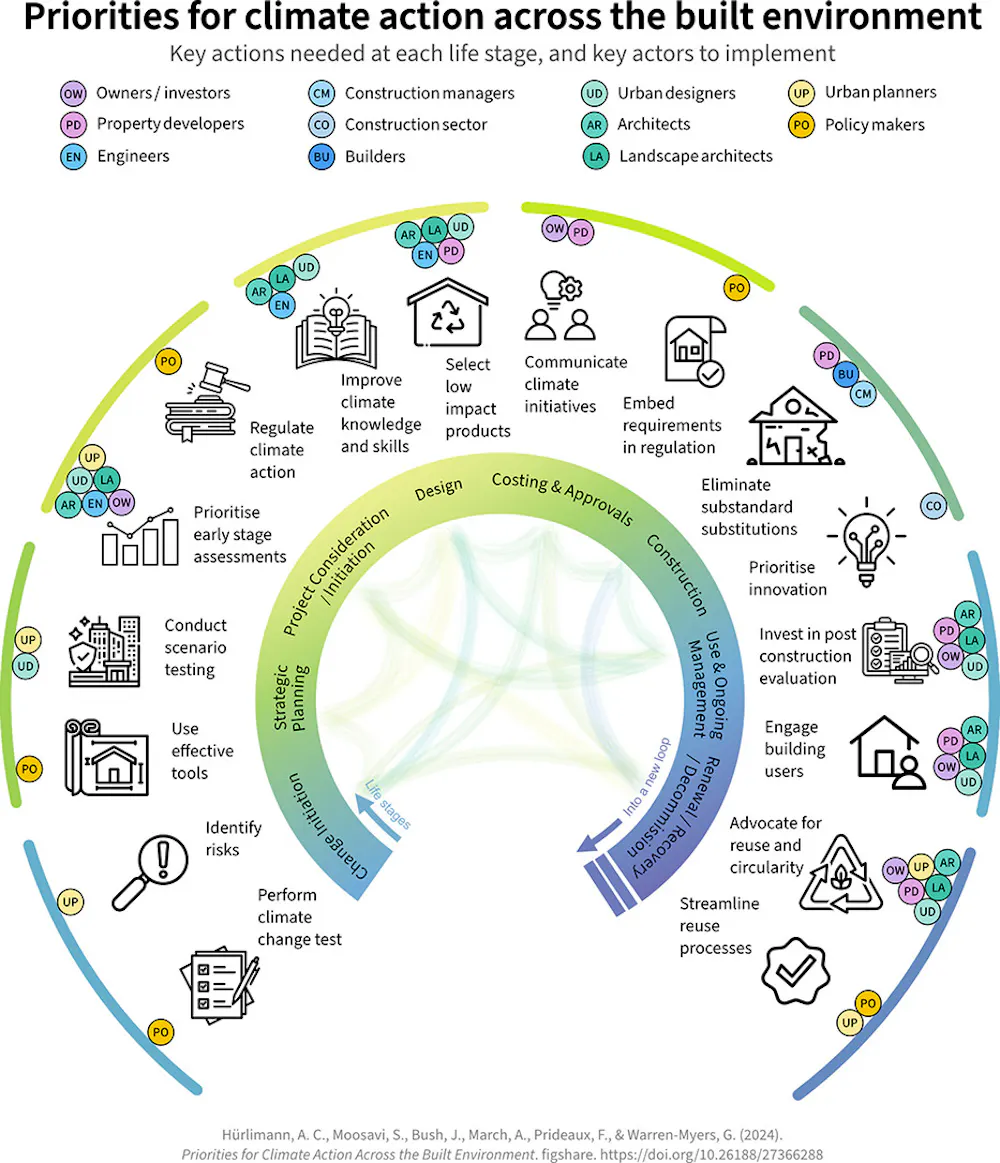
    Our new study identifies 16 priority actions to address climate change in the construction and management of cities.

    Building smarter

    Climate change must be a key consideration when designing, building and managing our cities. The emissions generated need to be minimised and eventually eliminated.

    We must build in locations, and in ways, that reduce climate risks. But policies governing how our cities are designed and constructed don’t achieve this.

    A recent study of three local government areas identified only limited action on adaptation and mitigation. Other research has found few urban development policies include carbon reduction goals that meet international targets.

    The National Housing Accord will see more than one million houses built by 2029. These new homes must address the climate challenge.

    16 areas for priority action

    The priority areas in our new study were informed by interviews with more than 150 stakeholders working in urban planning, architecture, landscape architecture, urban design, sustainability, construction and property.

    Priority areas for minimising damaging emissions generated by cities.
    CC BY

    The actions they identified cover the entire life cycle of the built environment.

    One of the first barriers to overcome is the perceived lack of agency among industry professionals to initiate or demand climate action. They perceive others, such as property owners or clients, to have more influence.

    Climate change risks should be identified in the early stages of planning new developments, backed up by effective tools to make risk identification and action easier:

    There were areas that were identified as being flood prone or risk prone. But there was no strategy to deal with what happens to those areas – An urban planner

    Once specific projects are being considered it is important to prioritise early stage climate assessments, supported by policies which mandate climate action:

    Everyone has good intentions but without big formal legislation around it, everyone’s just sort of making their way in the dark – A construction industry professional

    In the design stage, steps to improve the climate knowledge and skills of the workforce beyond disciplinary boundaries is critical. The selection of low-impact products and materials will also help ensure design is more climate responsive.

    Climate action must be embedded in all stages of design and construction of Australian cities.
    GagliardiPhotography/Shutterstock

    The highest number of hurdles to climate action were found to occur during the costing and approvals stage. Participants spoke of a highly competitive building industry. If climate change initiatives introduced at an earlier stage aren’t required by law, they are likely to be cut.

    unless there’s something in it for them in terms of return on investment, it’s going to be hard to get them to do it, unless we make them – An urban planner

    During the construction phase, product and material substitutions that have detrimental environmental impact should be eliminated. Innovation should be encouraged:

    If you want to push the envelope a little bit in terms of using recycled materials […] that’s a bit of a barrier. To push innovation is difficult – A landscape architect

    Post-construction

    Once construction is complete and buildings and public spaces are being used, it is important to invest in a thorough evaluation process. Building users should be involved to ensure buildings are maintained for optimal climate outcomes:

    [We] tried to achieve the six star rating […] the client has to maintain it [the building] for a year, and that’s when things start to fall off – An architect

    When it comes to area upgrades or building renewals, advocating for reuse and materials circularity is important. But the custom of demolishing and building anew, is hard to shift:

    The reuse of the existing building obviously generates significantly less waste and involves less material. So, design decisions and strategic decisions around using existing buildings is really important – An urban designer

    Working together

    This is a time of significant change in our urban areas.

    We need to make sure climate action is embedded in every stage of decision making. This may mean more efficient use, and reuse, of the existing built stock. This will require an overhaul of policies regarding building retrofits, and a change in mindsets.

    The priority actions to address climate change in cities can be implemented across a range of levels for:

    • individual professionals – pursue development of their climate change skills, including opportunities provided by professional associations

    • professional practices – review internal processes to ensure climate action is mainstreamed across projects, and in company decision making

    • universities teaching built environment professional degrees – embed climate change knowledge, skills, and competencies across the curriculum

    • governments at all levels – review policy settings to mandate mitigation and adaption.

    By addressing these actions, we can collectively work towards achieving our emission reduction targets and making sure our cities minimise climate change risks.

    Anna Hurlimann received funding for the research reported in this article from the Australian Research Council – Discovery Grant DP200101378, with co-chief investigators Georgia Warren-Myers, Alan March, Sareh Moosavi and Judy Bush. She is a member of the Planning Institute of Australia.

    Sareh Moosavi received funding for the research reported in this article from the Australian Research Council – Discovery Grant DP200101378, with co-chief investigators Anna Hurlimann, Georgia Warren-Myers, Alan March, and Judy Bush.

    ref. Cities are heating up the planet – how they can do more to fight climate change – https://theconversation.com/cities-are-heating-up-the-planet-how-they-can-do-more-to-fight-climate-change-259391

    MIL OSI AnalysisEveningReport.nz

  • MIL-OSI Economics: Samsung Showcases AI Home Appliance Innovations at DA Global Tech Seminars Across Five Regions

    Source: Samsung

    From March to June, Samsung Electronics hosted Digital Appliances (DA) Global Tech Seminars across five regions — the United States, Europe, Latin America, Southeast Asia and Southwest Asia — to showcase its latest innovations to audiences around the world. The seminars welcomed about 240 media representatives and tech influencers from 40 countries to experience Samsung’s latest AI home appliances firsthand and observe how the company is tailoring features to meet the unique needs of each region.1 Attendees also participated in Q&A sessions with product developers, who shared in-depth insights and explanations.
     
    Samsung Newsroom recaps each regional seminar with on-site highlights and photos.
     
     
    United States: Large-Capacity Washer-Dryers Win Praise for Practicality and Efficiency
    ▲ 2025 DA Global Tech Seminar held in the U.S.
     
    The U.S. Tech Seminar took place on March 18 at Samsung Home, a Bespoke AI experience space in SoHo, New York City — a neighborhood synonymous with art and creative living.
     
    American consumers tend to prioritize practicality and efficiency. Taking this into account, Samsung set up a dedicated experience zone for the large-capacity Bespoke AI Laundry Vented Combo, featuring a product cutaway mock-up that allowed visitors to intuitively understand the product’s core technologies and features. In addition, a live cooking demonstration showcased the AI capabilities of the Bespoke AI Oven, while the Bespoke AI Hybrid Refrigerator — which boosts energy efficiency using a semiconductor-based Peltier module — also mesmerized guests.
     
     
    Europe: Bespoke AI Jet Ultra Takes Center Stage With Industry-Leading Suction Power
    ▲ 2025 DA Global Tech Seminar held in Germany
     
    On the same day, the European Tech Seminar kicked off in Frankfurt, Germany, at World of Samsung — a global showcase designed to provide an in-depth look at Samsung’s products.
     
    A key highlight was the Bespoke AI Jet Ultra, which features the world’s most powerful suction for a cordless stick vacuum cleaner at 400W. Samsung developers gave presentations, offering insight into the vacuum cleaner’s high-performance engineering. The Bespoke AI Jet Ultra recently earned 4.5 out of 5 stars from U.K.-based review outlet Trusted Reviews and ranked first among 43 cordless vacuums tested by German IT outlet Chip.
     
     
    Latin America: SmartThings-Connected Home Appliances Growing at Twice the Global Rate
    ▲ 2025 DA Global Tech Seminar held in Mexico
     
    The Latin America Tech Seminar took place on June 3 in the vibrant metropolis of Mexico City, Mexico, drawing media and influencers from 13 countries to experience Samsung’s new lineup firsthand. Consumers in the region have shown high interest in connected living, with SmartThings-connected appliance adoption growing at more than twice the global average.2
     
    Reflecting this demand, demonstrations highlighted various features including Map View, Bixby, Routines — all easily accessible via SmartThings or the AI Home screen. Attendees also visited Sam’s House, a premium residential showroom where they engaged in hands-on interactions with Samsung’s connected products.
     
     
    Southeast Asia: AI Appliances Optimized for Hot, Humid Climates
    ▲ 2025 DA Global Tech Seminar held in Thailand
     
    On June 20, Samsung held the Southeast Asia Tech Seminar at a showroom in Bangkok, Thailand, where attendees explored the company’s latest products in settings simulating both commercial and residential spaces.
     
    Through demonstrations, attendees experienced how the Voice ID feature on the Bespoke AI Family Hub refrigerator can recognize individual voices to deliver personalized responses. They also saw how Samsung is localizing AI home appliances to better suit Southeast Asia’s hot and humid climate — for example, the 1-Way Cassette system air conditioner and the Bespoke AI Top Load Washer. “The use of AI to enhance user experience and facilitate both usage and energy savings is particularly valuable and useful,” said Kemachad Gunpai of Future Trends Thailand who attended the seminar.
     
     
    Southwest Asia: AI-Powered, Efficient Cooling Solutions in the Spotlight
    ▲ 2025 DA Global Tech Seminar held in India
     
    Held on June 25 in Gurugram, India, the Southwest Asia Tech Seminar focused on SmartThings-connected solutions and energy-efficient features tailored to local preferences.
     
    Among the demonstrations were AI appliances responding to sleep patterns detected by motion sensors, alongside cooling solutions tailored for Indian consumers. Attendees also received detailed explanations on how to track energy usage via SmartThings, a particularly relevant feature amid rising electricity costs. Samsung employees also explained how each product operates in AI Energy Mode to maximize efficiency and minimize energy consumption.
     
    “Samsung will continue to develop and expand the Global Tech Seminars in ways that reflect the unique local characteristics of each region,” said Soohyuk Ro, Vice President and Head of Tech Insight Group at Digital Appliances (DA) Business, Samsung Electronics, as the seminars came to an end. “In doing so, we will provide even deeper insights into how Samsung’s AI Home and innovative AI appliances can bring meaningful benefits to daily life for everyone.”
     
     
    1 Product names and features mentioned in this article may vary by region.
    2 Based on internal data from Samsung, aggregated via BDC (BI & Analytics), reflecting the cumulative annual ratio of Wi-Fi-connected devices.

    MIL OSI Economics

  • MIL-OSI NGOs: Giant baby Musk float in march for tax justice at UN summit in Sevilla: ‘Make rich polluters pay’

    Source: Greenpeace Statement –

    Sevilla, Spain – Greenpeace activists joined a civil society march today for Global Economic Justice, with a giant float of a baby Elon Musk holding a chainsaw threatening planet Earth. As the 4th International Conference on Financing for Development (FfD4) starts tomorrow in Sevilla, campaigners are calling on world leaders to advance commitments for new and fair global tax and debt rules, and to hold fossil fuel polluters accountable for climate and nature damages.[1] [2]

    The conference opens against a backdrop of intensifying conflicts, geopolitical tensions, rising inequality, and accelerating climate and environmental breakdown. The outcome document, the Compromiso de Sevilla, released ahead of the conference, does not go far enough. It delivers on some promises on international tax cooperation and encouraging taxes on environmental contamination and pollution. However, bold language on sovereign debt architecture reform was weakened by Global North governments during the negotiations, and the agreement falls short on responding to the urgency of the climate, nature and social crises.[3]

    Fred Njehu, Greenpeace Africa’s Global Political Lead for the Fair Share campaign,[4] said: “Sevilla is a rare opportunity for global economic justice and for urgent conversations on how billionaires and corporate polluters should pay their fair share of taxes to fund climate action, nature protection and social programmes. World leaders need to listen to what the public wants and deliver a tax system that works for all.”

    Eva Saldaña, Executive Director of Greenpeace Spain and Portugal, said: “Multilateral cooperation is key to addressing global threats and resource gaps for global climate and economic justice. It must not become an excuse for more powerful governments, in the Global North or elsewhere, to water down ambition. We must put people over greed and listen to the voices rising from the streets – in Seville and all over the world. All governments must actively support the UN Tax Convention process and pursue real solutions to the debt crisis, so that we can finally begin to transfer resources away from polluters and the super-rich for the wellbeing of all people and especially for those who are suffering the most from the climate emergency.”

    Greenpeace demands reforms in international tax cooperation and public financing for sustainable development. Specifically: 

    • Endorsement of the UN Tax Convention process for just and equitable global tax rules, that make the super-rich pay their fair share and make corporate polluters, such as the fossil fuel industry, pay for their climate damages.
    • Explicit commitments from governments – via the Global Solidarity Levies Task Force, and beyond – to remove fossil fuel production subsidies and introduce progressive taxes and fines on fossil fuel corporations, and other high emitting sectors. This builds on the FfD4 outcomes document’s endorsement of “taxes on environmental contamination and pollution.” The revenues should be used to pay for domestic climate action and international climate finance support  – in particular action to support communities to respond and recover from climate disasters.

    Rebecca Newsom, Global Political Lead for Greenpeace International’s Stop Drilling, Start Paying campaign, said: “While fossil fuel-driven floods, storms, wildfires and droughts increasingly hit communities around the world, people are crying out for their governments to tax oil, gas and coal corporations to pay for climate-related loss and damage. So what are political leaders waiting for? They must seize the opportunity of Sevilla to make polluters pay – or face growing public anger for continuing to let dirty industries off the hook.”

    Hanen Keskes, Campaigns Lead at Greenpeace Middle East North Africa, said: “This is not the time to lack ambition as civil society is calling for urgent debt relief and structural reform. The burden of debt is undermining the most vulnerable countries’ ability to respond to climate, nature and social crises. Governments must show that they are ready to build a fairer and more sustainable future – one rooted in justice, not extraction.”

    ENDS

    Members of the Greenpeace delegation in Seville are available for interviews in Spanish, English, German, and Swahili.

    Photos and Videos can be downloaded via Greenpeace Media Library and will be updated throughout the conference. 

    Notes:

    [1] Greenpeace Spain’s float of Elon Musk measures 2 metres wide by 3.5 –  4 metres high.

    [2] The Fourth International Conference on Financing for Development (FFD4) is a once-in-a-decade opportunity to reform financing at all levels, including to support reform of the international financial architecture. FFD4 Conference will be held in FIBES Sevilla Exhibition and Conference Centre (30 June – 3 July 2025)

    [3] The Compromiso de Sevilla: Outcome | FFD4

    Contacts in Seville:

    Tal Harris, Global Media Lead – Stop Drilling Start Paying campaign, Greenpeace International. +41-782530550, [email protected]  

    Begoña Rodríguez, Media Lead – Climate Responsibility Team, Greenpeace Spain & Portugal. +34 605248097, [email protected]

    Additional contacts: 

    Christine Gebeneter, EU Communication lead, Greenpeace CEE based in Austria, +43 664 8403807, [email protected] 

    Lee Kuen, Global Comms Lead – Fair Share campaign, Greenpeace International. +601112527489, [email protected]

    Greenpeace International Press Desk, +31 (0)20 718 2470 (available 24 hours), [email protected]

    MIL OSI NGO

  • MIL-Evening Report: NZ cities are getting hotter: 5 things councils can do now to keep us cooler when summer comes

    Source: The Conversation (Au and NZ) – By Timothy Welch, Senior Lecturer in Urban Planning, University of Auckland, Waipapa Taumata Rau

    Getty Images

    Stand on any car park on a sunny day in February and the heat will radiate through your shoes. At 30°C air temperature, that asphalt hits 50–55°C – hot enough to cause second-degree burns to skin in seconds.

    Right now, in the northern hemisphere summer, 100 million Americans are dealing with 38°C temperatures. Britain is preparing for hundreds of heat deaths. In New Zealand, of course, we’re still lighting fires and complaining about the cold.

    But that gives us time to prepare for our own heatwaves. Open-air car parks that sit empty for 20 hours a day could become cooling infrastructure instead. Transport routes can become cooling corridors.

    Replace asphalt with trees, grass and permeable surfaces, and you can drop surface temperatures by 12°C. It’s not complicated. It’s not even expensive.

    It’s getting hotter

    NIWA data shows New Zealand is already experiencing extreme temperatures five times more frequently than historical baselines. Wellington hit 30.3°C and Hamilton 32.9°C in January, both all-time records. Marine heatwaves are persisting around South Island coasts months longer than usual.

    Aucklanders will face 48 additional days above 25°C annually by 2099, as summer temperatures increase by 3.6°C. Auckland Council has already adopted the most severe warming scenario (3.8°C) for infrastructure planning, acknowledging previous models underestimated the pace of change.

    Even Wellington’s famously cool winds won’t offset the estimated 79% increase in residential cooling energy demand by 2090, driven by hotter, longer summers and more extreme-heat days.

    A quarter of New Zealand’s population will be over 65 by 2043, an age when heat regulation becomes harder and fixed incomes make cooling costs a real burden.

    Currently, 14 heat-related deaths occur annually among Auckland’s over-65 population when temperatures exceed just 20°C. As the mercury rises, our older population will be at a greater risk.

    Summer in the city: a vendor sells drinks and ice cream during a severe heat wave in Washington DC, June 23.
    Getty Images

    Greener is cooler

    While global average temperature increases of 1.5°C might appear modest, the actual temperatures we experience in our cities is far more extreme. The built environment – all that concrete and asphalt – traps heat like an oven.

    But converting car parks back to green space can knock the temperature down dramatically.

    Research from Osaka Prefecture in Japan recorded surface temperature reductions of up to 14.7°C when comparing asphalt to grass-covered parking during sunny summer conditions.

    Another study found temperature differences averaging 11.79°C between asphalt and grass surfaces, with air temperature differences of 7-8°C at human height.

    Trees are the heavy lifters here. Stand under a tree on a hot day, and it can feel 17°C cooler than standing in the sun. Add rain gardens (shallow, planted areas designed to capture and filter stormwater) and ground cover for another 2-4°C reduction. Layer these elements together, and you get cooling that works even on overcast days.

    Roads as cooling corridors

    Grassy and tree-covered car parks are just a starting point. Auckland’s 7,800 kilometres of roads could become the city’s cooling system. Every bus lane, cycleway and walking path is an opportunity for green infrastructure.

    If we stop thinking of transport corridors as merely a way to get from one place to another, and see them as multifunctional cooling networks, the possibilities multiply while the costs remain relatively low.

    Melbourne’s COVID-era parklet program proved this works: 594 small conversions created 15,000 square metres of public space at just A$300–900 per square metre.

    Converting even a small percentage of New Zealand’s parking infrastructure could create connected cooling corridors throughout our cities.

    Protecting cycleways with a tree canopy would encourage active transport while cooling neighbourhoods. Bus lanes with rain garden medians would improve service reliability while managing stormwater.

    5 things councils can do

    Summer is six months away – maybe not enough time to do all the work needed, but certainly enough to get a plan in place. Here are five things councils could do.

    1. Plant trees now: winter is planting season. Focus on car parks and heat-vulnerable neighbourhoods. Use fast-growing natives and protective rings to ensure survival. Trees planted now will provide shade by December.

    2. Install modular planters: test cooling locations with movable infrastructure before committing to permanent changes. Order now for spring placement when residents can see the benefits.

    3. Schedule paving replacements: when resurfacing is needed, switch to permeable options and get heat-reducing surfaces in place before summer.

    4. Design shade structures: plan and budget pop-up shade for the hottest areas. Having designs ready means quick installation when temperatures spike.

    5. Organise spring planting days: line up community groups now, source trees through winter nursery contracts, and hit the ground running in September. Small investments in coordination yield big cooling dividends.

    Auckland Council’s NZ$1 billion climate action package includes grants of $1,000 to $50,000 for climate projects. Wellington’s Climate and Sustainability Fund and Christchurch’s 50-year Urban Forest Plan provide similar frameworks.

    The Ministry for the Environment’s National Policy Statement on Urban Development creates opportunity by removing minimum parking requirements. This frees up land for trees, gardens and public spaces instead of underused asphalt, maximising climate co-benefits: cooler surfaces, better stormwater management and more pleasant streetscapes.

    By next February, we can either be thanking ourselves for planting trees and converting car parks, or feeling the heat from that 50°C asphalt.

    Timothy Welch does not work for, consult, own shares in or receive funding from any company or organisation that would benefit from this article, and has disclosed no relevant affiliations beyond their academic appointment.

    ref. NZ cities are getting hotter: 5 things councils can do now to keep us cooler when summer comes – https://theconversation.com/nz-cities-are-getting-hotter-5-things-councils-can-do-now-to-keep-us-cooler-when-summer-comes-259885

    MIL OSI AnalysisEveningReport.nz

  • MIL-OSI Global: Survey: Only four per cent of Canadians give schools an ‘A’ on climate education – students deserve better

    Source: The Conversation – Canada – By Karen S. Acton, Assistant Professor, Educational Leadership and Policy, OISE, University of Toronto

    Only nine per cent of Canadian students learn about climate change often in school, while 42 per cent say it’s rarely or never discussed in the classroom.

    These are some of the concerning findings from the new 2025 national survey at the nonprofit Learning for a Sustainable Future (LSF), where I serve as a research consultant. Our team surveyed over 4,200 people, including students, educators, parents and the general public.

    The report, called “From Awareness to Action: Canadians’ Views on Climate Change and Education,” reveals a widening gap between public concern and the education system’s lack of response.

    We conducted the survey in partnership with the pollster Leger and supported by the federal government. It comes at a critical moment as Canadians grapple with increasingly severe climate impacts and growing recognition that education is vitally important to addressing climate change.

    The message is clear: Canadians want schools to do more. A strong majority of respondents (62 per cent) believe climate change should be a high priority in education. More than half (56 per cent) believe it should be taught by all teachers.

    Understanding is slipping

    According to the survey, 80 per cent of Canadians accept that climate change is real and impacting their lives. Most (67 per cent) believe we are in a climate emergency, yet this belief has declined from 72 per cent in 2022.

    Also slipping is Canadians’ understanding of climate change, as the pass rate for the survey’s 10-question quiz dipped to 57 per cent in 2025 from 67 per cent in 2022.

    Fewer respondents correctly identified human activities as the primary cause of climate change, or named greenhouse gas emissions as the predominant factor. Many still mistakenly believe the ozone hole is to blame, highlighting one of many persistent climate misconceptions.

    Also concerning was the increase in Canadians who felt that the seriousness of climate change is exaggerated.

    A recent report by climate communications centre Re.Climate noted a similar decline in public perception of how much of a threat climate change poses. In 2023, 44 per cent of Canadians said reducing carbon emissions was a top energy policy priority. By 2025, that number had dropped to 31 per cent.

    Concern about climate change seems to have declined due to competing economic pressures, global instability and political polarization.

    Misinformation adds to the challenge

    The LSF survey highlights Canadians’ dissatisfaction with climate education. When asked to grade schools on how well they were addressing climate change issues, only four per cent gave schools an “A.” Three-quarters of Canadians gave a “C” or lower.

    One dominant concern included addressing the spread of climate misinformation. Only 17 per cent of Canadians felt confident in their ability to distinguish between real and false climate news.

    Misinformation is a growing barrier to public understanding and action on climate issues. For many young people, social media is a dominant source of climate information, but it’s not always a reliable one.

    To address this, almost 80 per cent of respondents, and in particular 87 per cent of educators, agree that climate education in schools should focus more on critical thinking and media literacy.

    Teachers willing, but under-supported

    The good news is that almost half of the educators we surveyed felt confident about their ability to teach climate change. Many are incorporating more climate-related projects and lifestyle and consumer changes into the classroom.

    However, many barriers remain. Most educators still spend fewer than 10 hours per year on climate topics, and 42 per cent rarely address it at all. A full 60 per cent of teachers told us they want to do more but need professional development to feel equipped.

    Teachers need more time, resources and strategies to address how climate change connects to broader issues like mental health, social justice and Indigenous knowledge.

    Educators are also seeking a school-wide culture that promotes climate change education, but nearly half said they lack support from their principal or school boards.

    Unsurprisingly, given the global nature of climate change, the challenges voiced by educators are not unique to Canada. Surveys of teachers in England and the United States found they face similar obstacles, compounded by low teacher confidence, the complexity of the topic and leadership not supporting climate change as a priority.

    Almost half of the educators surveyed felt confident about their ability to teach climate change, and many are incorporating more climate-related projects and lifestyle and consumer changes into the classroom.
    (Shutterstock)

    Students need the opportunity

    One of the most hopeful takeaways is that students want to learn more about climate change at school, beginning in the early grades. When asked what they would tell their teacher, students told us they wanted lessons that go beyond the science to include real-world solutions and personal empowerment.

    They called for open classroom discussions, a clearer understanding of the impacts of climate change and concrete strategies for action.

    As one student put it: “Present it to me in a way that’s relevant that I can understand, and tell me how I can personally make an impact.”

    Another added: “Everyone needs to do their part or nothing will change!”

    These appeals echo those from the recent Voice of 1,000 Kids survey, which found young people want adults to take the climate crisis more seriously and step up to help solve it.


    Read more:
    Kids care deeply about our planet, so adults need to start listening


    A path forward

    The LSF survey found that 76 per cent of respondents recognize that systemic change is needed to address climate challenges, yet only 19 per cent believe government is doing a good job.

    This suggests strong public demand for policy action. Canadian governments must introduce mandatory climate curriculum standards, increased funding for teacher professional learning and resources, and transformative teaching strategies to foster critical thinking and empowerment.

    Almost 70 per cent of respondents said they believe young people can inspire important climate action. Supporting school-wide cultures that embrace sustainability isn’t just good teaching — it’s a pathway to broader social change.

    Now more than ever, we need a reimagined education system that values climate learning as a core competency. Policymakers and education leaders must rise to meet this challenge before another generation of students graduate feeling unprepared to face the defining issue of their time.

    Karen S. Acton works as a consultant for Learning for a Sustainable Future (LSF).

    ref. Survey: Only four per cent of Canadians give schools an ‘A’ on climate education – students deserve better – https://theconversation.com/survey-only-four-per-cent-of-canadians-give-schools-an-a-on-climate-education-students-deserve-better-259430

    MIL OSI – Global Reports

  • MIL-OSI Global: Survey: Only four per cent of Canadians give schools an ‘A’ on climate education – students deserve better

    Source: The Conversation – Canada – By Karen S. Acton, Assistant Professor, Educational Leadership and Policy, OISE, University of Toronto

    Only nine per cent of Canadian students learn about climate change often in school, while 42 per cent say it’s rarely or never discussed in the classroom.

    These are some of the concerning findings from the new 2025 national survey at the nonprofit Learning for a Sustainable Future (LSF), where I serve as a research consultant. Our team surveyed over 4,200 people, including students, educators, parents and the general public.

    The report, called “From Awareness to Action: Canadians’ Views on Climate Change and Education,” reveals a widening gap between public concern and the education system’s lack of response.

    We conducted the survey in partnership with the pollster Leger and supported by the federal government. It comes at a critical moment as Canadians grapple with increasingly severe climate impacts and growing recognition that education is vitally important to addressing climate change.

    The message is clear: Canadians want schools to do more. A strong majority of respondents (62 per cent) believe climate change should be a high priority in education. More than half (56 per cent) believe it should be taught by all teachers.

    Understanding is slipping

    According to the survey, 80 per cent of Canadians accept that climate change is real and impacting their lives. Most (67 per cent) believe we are in a climate emergency, yet this belief has declined from 72 per cent in 2022.

    Also slipping is Canadians’ understanding of climate change, as the pass rate for the survey’s 10-question quiz dipped to 57 per cent in 2025 from 67 per cent in 2022.

    Fewer respondents correctly identified human activities as the primary cause of climate change, or named greenhouse gas emissions as the predominant factor. Many still mistakenly believe the ozone hole is to blame, highlighting one of many persistent climate misconceptions.

    Also concerning was the increase in Canadians who felt that the seriousness of climate change is exaggerated.

    A recent report by climate communications centre Re.Climate noted a similar decline in public perception of how much of a threat climate change poses. In 2023, 44 per cent of Canadians said reducing carbon emissions was a top energy policy priority. By 2025, that number had dropped to 31 per cent.

    Concern about climate change seems to have declined due to competing economic pressures, global instability and political polarization.

    Misinformation adds to the challenge

    The LSF survey highlights Canadians’ dissatisfaction with climate education. When asked to grade schools on how well they were addressing climate change issues, only four per cent gave schools an “A.” Three-quarters of Canadians gave a “C” or lower.

    One dominant concern included addressing the spread of climate misinformation. Only 17 per cent of Canadians felt confident in their ability to distinguish between real and false climate news.

    Misinformation is a growing barrier to public understanding and action on climate issues. For many young people, social media is a dominant source of climate information, but it’s not always a reliable one.

    To address this, almost 80 per cent of respondents, and in particular 87 per cent of educators, agree that climate education in schools should focus more on critical thinking and media literacy.

    Teachers willing, but under-supported

    The good news is that almost half of the educators we surveyed felt confident about their ability to teach climate change. Many are incorporating more climate-related projects and lifestyle and consumer changes into the classroom.

    However, many barriers remain. Most educators still spend fewer than 10 hours per year on climate topics, and 42 per cent rarely address it at all. A full 60 per cent of teachers told us they want to do more but need professional development to feel equipped.

    Teachers need more time, resources and strategies to address how climate change connects to broader issues like mental health, social justice and Indigenous knowledge.

    Educators are also seeking a school-wide culture that promotes climate change education, but nearly half said they lack support from their principal or school boards.

    Unsurprisingly, given the global nature of climate change, the challenges voiced by educators are not unique to Canada. Surveys of teachers in England and the United States found they face similar obstacles, compounded by low teacher confidence, the complexity of the topic and leadership not supporting climate change as a priority.

    Almost half of the educators surveyed felt confident about their ability to teach climate change, and many are incorporating more climate-related projects and lifestyle and consumer changes into the classroom.
    (Shutterstock)

    Students need the opportunity

    One of the most hopeful takeaways is that students want to learn more about climate change at school, beginning in the early grades. When asked what they would tell their teacher, students told us they wanted lessons that go beyond the science to include real-world solutions and personal empowerment.

    They called for open classroom discussions, a clearer understanding of the impacts of climate change and concrete strategies for action.

    As one student put it: “Present it to me in a way that’s relevant that I can understand, and tell me how I can personally make an impact.”

    Another added: “Everyone needs to do their part or nothing will change!”

    These appeals echo those from the recent Voice of 1,000 Kids survey, which found young people want adults to take the climate crisis more seriously and step up to help solve it.


    Read more:
    Kids care deeply about our planet, so adults need to start listening


    A path forward

    The LSF survey found that 76 per cent of respondents recognize that systemic change is needed to address climate challenges, yet only 19 per cent believe government is doing a good job.

    This suggests strong public demand for policy action. Canadian governments must introduce mandatory climate curriculum standards, increased funding for teacher professional learning and resources, and transformative teaching strategies to foster critical thinking and empowerment.

    Almost 70 per cent of respondents said they believe young people can inspire important climate action. Supporting school-wide cultures that embrace sustainability isn’t just good teaching — it’s a pathway to broader social change.

    Now more than ever, we need a reimagined education system that values climate learning as a core competency. Policymakers and education leaders must rise to meet this challenge before another generation of students graduate feeling unprepared to face the defining issue of their time.

    Karen S. Acton works as a consultant for Learning for a Sustainable Future (LSF).

    ref. Survey: Only four per cent of Canadians give schools an ‘A’ on climate education – students deserve better – https://theconversation.com/survey-only-four-per-cent-of-canadians-give-schools-an-a-on-climate-education-students-deserve-better-259430

    MIL OSI – Global Reports

  • Monsoon reaches Delhi, covers entire country 9 days ahead of schedule: IMD

    Source: Government of India

    Source: Government of India (4)

    The Southwest Monsoon has covered the entire country on Sunday, June 29 – nine days ahead of its normal schedule of July 8, according to the India Meteorological Department (IMD). With its further advance into the remaining parts of Rajasthan, West Uttar Pradesh, Haryana, and the entire Delhi region, the monsoon’s early arrival signals a robust spell of rain across India.

    The IMD has forecast heavy to very heavy rainfall across large swathes of Northwest, Central, East, and Northeast India over the next seven days. Jharkhand is expected to witness isolated extremely heavy rainfall on June 29 and 30, while Odisha is likely to experience similar conditions on June 29.

    The ongoing monsoon activity is anticipated to bring significant showers to Uttarakhand from June 29 to July 3, and to Himachal Pradesh, Punjab, and Haryana on June 29 and 30.

    Gangetic West Bengal will receive heavy rain on June 29, while Odisha is expected to see continued rainfall from June 30 to July 5. Jharkhand may see another intense spell on July 1.

    In Uttar Pradesh, heavy rainfall is likely to continue in the western parts from June 29 to July 2 and in the eastern parts on June 30 and July 1. Madhya Pradesh and Bihar are also forecast to receive heavy rainfall from June 30 to July 2. Vidarbha, Chhattisgarh, and East Rajasthan will also be affected, with East Rajasthan likely to receive intense rain on July 4 and 5.

    The Northeast, including Arunachal Pradesh, Assam, Meghalaya, Nagaland, Manipur, Mizoram, and Tripura, is expected to witness heavy rainfall between July 2 and 5. Rain will also continue in Konkan & Goa, the ghat areas of Madhya Maharashtra, and Gujarat state over the next week.

    Weather forecast for Delhi-NCR

    In the national capital region, Delhi is set to experience a spell of rainy and relatively cooler weather through early July.

    On June 29, the weather is expected to remain generally cloudy with light to moderate rain, thunderstorms, and gusty winds ranging between 30–40 kmph during storms. The maximum temperature is forecast to stay between 31°C and 33°C, 4 to 6 degrees below normal, offering respite from the usual summer heat.

    On June 30, the sky will remain generally cloudy with light to moderate rain accompanied by thunderstorms and lightning. Temperatures are likely to range from 25°C to 27°C at night and 31°C to 33°C during the day, with both minimum and maximum temperatures remaining below seasonal norms. Winds will be relatively calm in the morning, picking up slightly during the afternoon and evening.

    Similar conditions are expected to prevail on July 1, with continued cloud cover and moderate rainfall. The temperature is likely to hover between 24°C and 26°C at night and 32°C to 34°C during the day, again remaining below normal levels. Light southwesterly winds in the morning are expected to shift to a northwesterly direction by afternoon, before settling again from the southwest in the evening.

    On July 2, Delhi will see a partly cloudy sky with light rain and possible thunderstorms. Daytime temperatures will slightly rise to a range of 33°C to 35°C, while nighttime temperatures will stay between 25°C and 27°C. While the temperature will still be below normal, a gradual warming trend is expected. Winds will vary through the day, becoming stronger in the afternoon before easing at night.

  • MIL-OSI USA: SPC Jun 29, 2025 Day 4-8 Severe Weather Outlook

    Source: US National Oceanic and Atmospheric Administration

    Day 4-8 Severe Weather Outlook Issued on Jun 29, 2025

    Updated: Sun Jun 29 08:21:03 UTC 2025

     .

    D4
    Wed, Jul 02, 2025 – Thu, Jul 03, 2025
    D7
    Sat, Jul 05, 2025 – Sun, Jul 06, 2025

    D5
    Thu, Jul 03, 2025 – Fri, Jul 04, 2025
    D8
    Sun, Jul 06, 2025 – Mon, Jul 07, 2025

    D6
    Fri, Jul 04, 2025 – Sat, Jul 05, 2025
    (All days are valid from 12 UTC – 12 UTC the following day)

    Note: A severe weather area depicted in the Day 4-8 period indicates 15%, 30% or higher probability for severe thunderstorms within 25 miles of any point.

    PREDICTABILITY TOO LOW is used to indicate severe storms may be possible based on some model scenarios. However, the location or occurrence of severe storms are in doubt due to: 1) large differences in the deterministic model solutions, 2) large spread in the ensemble guidance, and/or 3) minimal run-to-run continuity.

    POTENTIAL TOO LOW means the threat for a regional area of organized severe storms appears unlikely (i.e., less than 15%) for the forecast day.

     Forecast Discussion

    ZCZC SPCSWOD48 ALL
    ACUS48 KWNS 290819
    SPC AC 290819

    Day 4-8 Convective Outlook
    NWS Storm Prediction Center Norman OK
    0319 AM CDT Sun Jun 29 2025

    Valid 021200Z – 071200Z

    …DISCUSSION…
    The cold front which may result in severe weather on Day 3/Tuesday
    will move into the Atlantic and near the Gulf Coast across Florida.
    A reinforcing mid-level trough will maintain northerly flow across
    the eastern CONUS as an area of high pressure builds into the
    region. A drier, more continental airmass across the eastern CONUS
    will keep severe weather chances minimal.

    Upper 60s to low 70s dewpoints will remain across the Plains,
    beneath a strong upper-level ridge. By the time the ridge starts to
    break down on Day 6/Friday some severe weather is possible as a
    mid-level trough moves into the northern Plains. However, the ECMWF
    shows less than 20 knots of flow across the Plains. Therefore, shear
    will likely be limited. Thunderstorms will be likely along the cold
    front as it traverses the central and eastern CONUS next weekend.
    However, the lack of stronger mid-level flow casts doubt on storm
    organization. Therefore, no severe weather probabilities have been
    added at this time.

    ..Bentley.. 06/29/2025

    CLICK TO GET WUUS48 PTSD48 PRODUCT

    MIL OSI USA News

  • MIL-OSI Europe: Romina Pourmokhtari takes part in UN Ocean Conference in Nice

    Source: Government of Sweden

    Minister for Climate and the Environment Romina Pourmokhtari is participating in the UN’s third Ocean Conference, UNOC-3, in Nice. At the Conference, a declaration is expected to be adopted on the implementation of measures to protect and preserve oceans.

    MIL OSI Europe News

  • MIL-OSI Europe: UN Ocean Conference highlights the need for more global measures to protect the world’s oceans

    Source: Government of Sweden

    The UN Ocean Conference in Nice concluded on 13 June with the adoption of the Nice Ocean Action Plan, a political declaration to strengthen global efforts to protect oceans. Minister for Climate and the Environment Romina Pourmokhtari headed Sweden’s delegation.

    MIL OSI Europe News

  • MIL-OSI USA: SPC Jun 28, 2025 Day 4-8 Severe Weather Outlook

    Source: US National Oceanic and Atmospheric Administration

    Day 4-8 Severe Weather Outlook Issued on Jun 28, 2025

    Updated: Sat Jun 28 08:02:03 UTC 2025

     .

    D4
    Tue, Jul 01, 2025 – Wed, Jul 02, 2025
    D7
    Fri, Jul 04, 2025 – Sat, Jul 05, 2025

    D5
    Wed, Jul 02, 2025 – Thu, Jul 03, 2025
    D8
    Sat, Jul 05, 2025 – Sun, Jul 06, 2025

    D6
    Thu, Jul 03, 2025 – Fri, Jul 04, 2025
    (All days are valid from 12 UTC – 12 UTC the following day)

    Note: A severe weather area depicted in the Day 4-8 period indicates 15%, 30% or higher probability for severe thunderstorms within 25 miles of any point.

    PREDICTABILITY TOO LOW is used to indicate severe storms may be possible based on some model scenarios. However, the location or occurrence of severe storms are in doubt due to: 1) large differences in the deterministic model solutions, 2) large spread in the ensemble guidance, and/or 3) minimal run-to-run continuity.

    POTENTIAL TOO LOW means the threat for a regional area of organized severe storms appears unlikely (i.e., less than 15%) for the forecast day.

     Forecast Discussion

    ZCZC SPCSWOD48 ALL
    ACUS48 KWNS 280800
    SPC AC 280800

    Day 4-8 Convective Outlook
    NWS Storm Prediction Center Norman OK
    0300 AM CDT Sat Jun 28 2025

    Valid 011200Z – 061200Z

    …DISCUSSION…
    A mid-level trough will move from the Great Lakes to the Northeast
    on Day 4/Tuesday. At the surface, a cold front will move east
    through the period. Moderate instability is expected along this
    front and some severe weather may be possible from the Mid-Atlantic
    to the Northeast. Slight risk (15%) probabilities may eventually be
    needed within this zone, but there is potential for
    cloudcover/thunderstorm activity from Monday evening to impact
    destabilization. Therefore, confidence is not high enough for
    probabilities at this time.

    Beyond Day 4, a relative lull in severe weather potential is
    expected. Multiple reinforcing mid-level troughs will amplify the
    larger-scale trough across the eastern CONUS. As this occurs, the
    surface cold front will move south, potentially to the Gulf Coast
    and into the western Atlantic. This will eliminate the very moist
    airmass which resulted in moderate to strong instability across much
    of the eastern CONUS for the past few weeks.

    The greater low-level moisture is expected to remain and perhaps
    advect north across the central Plains beneath a large-scale ridge.
    This could result in some thunderstorm activity, but shear is
    expected to be very weak, and the building ridge aloft may suppress
    convection on D5/Wednesday to D6/Thursday.

    By next weekend, this ridge is expected to flatten with some
    stronger mid-level flow moving across the northern Plains. The exact
    evolution of the upper-pattern remains uncertain and therefore,
    confidence is low, but severe weather chances may increase across
    the northern Plains by next weekend.

    ..Bentley.. 06/28/2025

    CLICK TO GET WUUS48 PTSD48 PRODUCT

    MIL OSI USA News

  • MIL-OSI USA: SPC – No MDs are in effect as of Sat Jun 28 08:04:02 UTC 2025

    Source: US National Oceanic and Atmospheric Administration

    Current Mesoscale DiscussionsUpdated:  Sat Jun 28 08:05:03 UTC 2025 No Mesoscale Discussions are currently in effect.

    Notice:  The responsibility for Heavy Rain Mesoscale Discussions has been transferred to the Weather Prediction Center (WPC) on April 9, 2013. Click here for the Service Change Notice.
    Archived Convective ProductsTo view convective products for a previous day, type in the date you wish to retrieve (e.g. 20040529 for May 29, 2004). Data available since January 1, 2004.

    MIL OSI USA News

  • MIL-OSI NGOs: Oxfam reaction: 2025 Bonn climate negotiations

    Source: Oxfam –

    In response to the outcome of the 2025 UN Bonn climate meetings, Oxfam Climate Policy Lead Nafkote Dabi said: 

    “The Bonn climate talks once again exposed the deep divide over who should bear the cost of climate harms, adaptation, and the shift to fossil fuel alternatives in the Global South. Rich countries’ refusal to accept responsibility alongside their go-slow tactics are wearing thin and ultimately benefit no-one. The world needs them to step up and pay their climate debt through public, grant-based finance to support climate action in developing countries.  

    In a world on track for 3°C or more of warming, all countries – especially the riches and biggest polluters – must push for ambitious climate plans ahead of COP30 in Brazil. We need urgent action now. 

    We are highly concerned that rich countries are opening the door ever wider for private investors from the global north to reap the profits from the climate crisis. This is simply another attempt to avoid their own commitments to mobilize publicly sourced climate finance at the scale needed. Rich countries are selling global development, humanitarianism and energy transition as profit-making centres to the highest bidder. This approach is not only unjust – the world’s poorest and most impacted people are being denied much needed public finance – but also threatens to worsen their lives. 

    “Private finance” will likely become the drumbeat from now through to COP30. But people’s lives must clearly be put front and center and big business not simply given the green light to access climate finance for their own profiteering.  

    These talks did however maintain the chance for a breakthrough in the process for a transformative and equitable shift away from fossil fuels and a just transition for all. If adopted in Belem, this text could help workers confronted with losing jobs or communities impacted by the risk of an extractive transition. It could potentially bring the world closer to the Paris goal and climate justice. We witnessed parties working cooperative and in good faith, and civil society organizations playing a pivotal role in negotiations.” 

    MIL OSI NGO

  • MIL-OSI China: China reports more frequent extreme weather events

    Source: People’s Republic of China – State Council News

    China is vulnerable to global climate change, experiencing more frequent and intense extreme weather events, according to a blue book released by the China Meteorological Administration on Friday.

    Since the 1990s, China has been warming at a rate faster than the global average, and its annual average temperature and coastal sea levels both reached record highs in 2024, the blue book on climate change in China said.

    Due to the impacts of climate change, the country saw more frequent extreme high-temperature and heavy precipitation events from 1961 to 2024.

    The overall sea level along China’s coast has risen at an accelerating rate, and glaciers in western China have been melting more rapidly.

    Global warming has persisted, with the worldwide average surface temperature reaching its highest level in 2024 since meteorological records began in 1850.

    Xiao Chan, deputy director of the National Climate Center, said the increase in temperature should be attributed to human activities — primarily greenhouse gas emissions — and to natural variations within climate systems, such as the El Nino weather phenomenon. 

    MIL OSI China News

  • MIL-OSI Russia: Extreme weather events are increasingly common in China

    Translation. Region: Russian Federal

    Source: People’s Republic of China in Russian – People’s Republic of China in Russian –

    Source: People’s Republic of China – State Council News

    BEIJING, June 28 (Xinhua) — China is becoming increasingly vulnerable to global climate change, increasingly exposed to intense extreme weather events, according to a blue book released by the National Meteorological Administration on Friday.

    Since the 1990s, China has warmed faster than the global average, with average annual temperatures and sea levels in coastal areas reaching record highs in 2024, according to the China Climate Change Blue Book.

    Due to the effects of climate change, the country experienced more extreme heat waves and heavy rainfall between 1961 and 2024.

    Overall sea levels along China’s coast are rising at an ever-increasing rate, and glaciers in western China are melting at an ever-increasing rate.

    Due to ongoing global warming, in 2024 the world’s average surface temperature will reach its highest level since meteorological records began in 1850.

    Xiao Chang, deputy director of the National Climate Center, said the temperature rise should be attributed to human activities, primarily greenhouse gas emissions, as well as natural changes in climate systems such as the El Niño weather phenomenon. -0-

    MIL OSI Russia News

  • MIL-OSI USA: El Gobernador Newsom firma un presupuesto estatal equilibrado que reduce los impuestos a los veteranos, financia completamente las comidas escolares gratuitas, construye más viviendas y crea empleos

    Source: US State of California Governor

    Jun 27, 2025

    CUMPLIDO: Reducción de impuestos para jubilados militares

    CUMPLIDO: Pre-kinder universal para todos

    CUMPLIDO: Ampliación de programas antes y después de clases y cursos de verano

    CUMPLIDO: Alimentación escolar gratuita para todos los niños

    CUMPLIDO: Impulso de la alfabetización y la lectura

    CUMPLIDO: Construyendo más viviendas, lo antes posible

    CUMPLIDO: Reduciendo los costos de los medicamentos

    CUMPLIDO: Ampliando el acceso al aborto con medicamentos con CalRx

    CUMPLIDO: Inversiones históricas en la lucha contra incendios y la seguridad pública

    CUMPLIDO: Protegiendo la icónica industria cinematográfica de California

    Próximamente se firmará un paquete histórico para reducir la burocracia, agilizar la construcción de viviendas y la infraestructura

    Sacramento, California – Ante el asalto económico de Donald Trump, el Gobernador Gavin Newsom firmó hoy el proyecto de ley de presupuesto estatal para el 2025 en colaboración con el Presidente del Senado Mike McGuire y el Presidente de la Asamblea Robert Rivas. Juntos, el Gobernador y la Legislatura están implementando un plan de gasto responsable y equilibrado que salvaguarda los valores de California y, al mismo tiempo, mantiene la salud fiscal a largo plazo. Este presupuesto y los próximos proyectos de ley incluyen nuevas políticas históricas que acelerarán la producción de viviendas e impulsarán la asequibilidad en comunidades de todo el estado – abordando así los desafíos más urgentes de California.

    Mientras enfrentamos el sabotaje económico de Donald Trump, este acuerdo presupuestario demuestra que California no solo se mantendrá firme – sino que irá aún más lejos. Es equilibrado, mantiene reservas sustanciales y se centra en el apoyo a los californianos – reduciendo drásticamente la burocracia e impulsando el desarrollo de vivienda e infraestructura, preservando los servicios esenciales del cuidado de salud, financia la educación preescolar universal y reduce los impuestos para los veteranos.

    Gobernador Gavin Newsom

    El Presidente del Senado Mike McGuire dice: “El Estado está entregando un presupuesto responsable y puntual en un año difícil, centrado en la restricción fiscal y la inversión en las personas y los programas que hacen de este estado un gran estado. Este presupuesto prioriza una financiación récord para nuestros hijos y escuelas públicas, protege el acceso a la atención médica para millones de las personas más vulnerables y creará más viviendas a una escala sin precedentes en años. Gracias a este acuerdo presupuestario, el estado ayudará a que más personas salgan de las calles y encuentren refugios permanentes, y ampliaremos los equipos de CalFire, desplegando cientos de bomberos adicionales de CalFire a tiempo completo, lo que salvará vidas y nos hará a todos más seguros contra incendios forestales. Y este acuerdo ayuda a preparar a nuestro estado para el caos continuo y la enorme incertidumbre causada por la administración de Trump. Gracias al líder del Comité de Presupuesto del Senado Scott Wiener, a la Asamblea y al Gobernador Newsom y a sus equipos por su arduo trabajo para la gente de California.”

    El Presidente de la Asamblea Robert Rivas dice: Este es un momento increíblemente difícil para los californianos. Trump está socavando nuestra economía con aranceles imprudentes, recortes drásticos y agentes de ICE aterrorizando a nuestras comunidades. En un momento en que tantos ya están en dificultades, está aumentando el miedo y la inestabilidad. En contraste, los demócratas han presentado un presupuesto que protege a California. Reduce la burocracia para construir más viviendas con mayor rapidez, porque la vivienda es la base de la asequibilidad y la oportunidad. Preserva inversiones cruciales en atención médica, salud femenina, educación y seguridad pública. Y cumple con nuestro compromiso de no aumentar los impuestos a las familias, los trabajadores ni a las pequeñas empresas. En tiempos sin precedentes, en circunstancias difíciles, los demócratas están cumpliendo con los californianos.

    Recortes de impuestos para veteranos, tamaños de clases escolares más reducidas y comidas escolares gratuitas

    El presupuesto refleja un compromiso compartido para proteger las oportunidades y mejorar la accesibilidad en California, frente a los ataques selectivos de la administración de Trump. Preserva programas clave de cuidado médico para los californianos que han sido atacados por los republicanos. También preserva programas esenciales de la red de seguridad social, incluyendo servicios de apoyo domiciliario y la salud reproductiva femenina, a la vez que realiza inversiones históricas en la educación pública, desde el pre-kínder universal y las comidas escolares gratuitas hasta la ampliación de los programas antes y después de la escuela, los cursos de verano, clases con menos estudiantes y el fortalecimiento de la formación profesional y la educación superior. El presupuesto demuestra el compromiso del estado con el reconocimiento de los veteranos mediante la creación de recortes de impuestos para los jubilados militares, reconociendo su servicio y apoyando su seguridad financiera.

    Reduciendo los costos de los medicamentos recetados, proteger la atención reproductiva y las redes de seguridad

    El presupuesto preserva programas clave de atención médica para los californianos que están en la mira de los republicanos. Conserva programas vitales de protección social, como los servicios de apoyo domiciliario y la salud reproductiva femenina. Como parte del presupuesto, el Gobernador firmará legislación que protege al acceso al cuidado médico, el presupuesto lidera los esfuerzos para otorgar licencias y regular a los Administradores de Beneficios Farmacéuticos por primera vez, aumentando la transparencia y la rendición de cuentas en la cadena de suministro farmacéutica. La legislación también amplía la autoridad de CalRx para adquirir medicamentos de marca y responder a interrupciones del suministro por motivos políticos, ayudando a proteger el acceso a medicamentos críticos como la mifepristona.

    Luces, camara, trabajos

    El presupuesto protege la posición de California como la cuarta economía más grande del mundo – apoyando a las empresas y el continuo crecimiento económico, incluyendo la emblemática industria cinematográfica californiana. La próxima semana, el Gobernador firmará legislación adicional como parte de la expansión del programa de crédito fiscal para cine y televisión, lo que catapultará aún más el impacto del programa a $750 millones anuales.

    El ataque económico de Trump

    El presupuesto equilibrado se produce en un momento en que California continúa enfrentando importantes presiones fiscales impulsadas por las imprudentes políticas económicas y de inmigración de la administración de Trump. Según el Departamento de Finanzas de California, se proyecta que el régimen arancelario de Trump le costará al estado aproximadamente $16 mil millones en ingresos del Fondo General durante el próximo año fiscal. Un nuevo estudio publicado el 17 de junio por el Instituto Económico de la Área de la Bahía (Bay Area Council Economic Institute), en colaboración con UC Merced, concluyó que las deportaciones masivas de Trump podrían recortar $275 mil millones de la economía de California, eliminar $23 mil millones en ingresos fiscales anuales y afectar gravemente a industrias clave como la agricultura, la construcción y la industria hotelera. 

    Ante estos crecientes desafíos, el Gobernador emitió una proclamación para acceder a las reservas estatales bajo. Y este presupuesto responsable y equilibrado protege a los californianos, crea más viviendas, preserva programas esenciales, refuerza la disciplina fiscal e invierte en la fortaleza económica a largo plazo del estado. 

    El Gobernador anunció hoy la firma de los siguientes proyectos de ley:

    • AB 102 by Assemblymember Jesse Gabriel (D-Encino) – Budget Act of 2025.
    • AB 118 by the Committee on Budget – Human services.
    • AB 121 by the Committee on Budget – Education finance: education omnibus budget trailer bill.
    • AB 123 by the Committee on Budget – Higher education budget trailer bill.
    • AB 134 by the Committee on Budget – Public Safety.
    • AB 136 by the Committee on Budget – Courts.
    • AB 143 by the Committee on Budget – Development Services.
    • SB 101 by Senator Scott Wiener (D-San Francisco) – Budget Act of 2025.
    • SB 103 by Senator Scott Wiener (D-San Francisco) – Budget Acts of 2022, 2023, and 2024.
    • SB 120 by the Committee on Budget and Fiscal Review – Early childhood education and childcare.
    • SB 124 by the Committee on Budget and Fiscal Review – Public resources trailer bill.
    • SB 127 by the Committee on Budget and Fiscal Review – Climate change.
    • SB 128 by the Committee on Budget and Fiscal Review – Transportation.
    • SB 132 by the Committee on Budget and Fiscal Review – Taxation.
    • SB 141 by the Committee on Budget and Fiscal Review – California Cannabis Tax Fund: Department of Cannabis Control: Board of State and Community Corrections grants.
    • SB 142 by the Committee on Budget and Fiscal Review – Deaf and Disabled Telecommunications Program.

    La firma del Gobernador en el presupuesto estatal depende de la promulgación de la AB 131 o la SB 131 el lunes 30 de junio.

    To read this release in English, click here. 

    Press releases

    Recent news

    News ✅ FUNDED: Tax cut for military retirees ✅ FUNDED: Universal pre-kindergarten for all  ✅ FUNDED: Expanded before school, after school, & summer school ✅ FUNDED: Free school meals for all kids  ✅ FUNDED: Game-changing literacy & reading investments ✅…

    News SACRAMENTO – Governor Gavin Newsom today announced the following appointments: Neal Payton, of Santa Monica, has been appointed to the State Historical Resources Commission. Payton has been Senior Principal at Torti Gallas + Partners since 1996. He was Associate…

    News What you need to know: The federal Republicans’ “Big, Beautiful bill” would eliminate health coverage for up to 3.4 million Californians, cut at least $28.4 billion in federal Medicaid funding, and put food assistance at risk for the hundreds of thousands of…

    MIL OSI USA News

  • MIL-OSI Russia: Mongolia: Staff Concluding Statement of the 2025 Article IV Mission

    Source: IMF – News in Russian

    June 27, 2025

    A Concluding Statement describes the preliminary findings of IMF staff at the end of an official staff visit (or ‘mission’), in most cases to a member country. Missions are undertaken as part of regular (usually annual) consultations under Article IV of the IMF’s Articles of Agreement, in the context of a request to use IMF resources (borrow from the IMF), as part of discussions of staff monitored programs, or as part of other staff monitoring of economic developments.

    The authorities have consented to the publication of this statement. The views expressed in this statement are those of the IMF staff and do not necessarily represent the views of the IMF’s Executive Board. Based on the preliminary findings of this mission, staff will prepare a report that, subject to management approval, will be presented to the IMF Executive Board for discussion and decision.

    Washington, DC: An International Monetary Fund (IMF) staff mission, led by Mr. Tahsin Saadi Sedik, conducted discussions as part of the 2025 Article IV consultation with the Mongolian authorities in Ulaanbaatar during June 4–18, 2025. At the end of the visit, the mission issued the following statement, summarizing its key findings and recommendations.

    • During 2023‒24, record-high coal exports and increased government spending led to buoyant economic activity, which, along with fiscal surpluses and successful debt rollovers, also helped reduce vulnerabilities.
    • The resource boom is weakening amid rising risks. With coal exports declining in recent months, mainly due to falling prices, and increased global uncertainty, the near-term outlook has become less favorable, and downside risks have increased amid limited policy buffers.
    • The policy priority is to increase resilience of the Mongolian economy to downside risks by restoring both internal and external balances, and by preserving buffers. This requires greater fiscal prudence and adherence to fiscal rules, tight monetary and macroprudential policies, and increased exchange rate flexibility.
    • Should downside risks materialize, significant and timely policy adjustments—particularly fiscal tightening—will be required to safeguard macroeconomic and financial stability.

    Recent economic developments, outlook, and risks

    Since the 2023 Article IV consultation, Mongolia’s macroeconomic conditions have improved. A resource-driven boom during 2023‒24 led to buoyant economic activity, despite a sharp contraction in the agriculture sector. Budget revenues from the mining sector more than doubled, enabling fiscal surpluses and contributing to the accumulation of foreign exchange reserves and savings in the sovereign wealth fund despite a significant increase in public spending, which together with debt repayments helped reduce debt-to-GDP ratio from 64.5 percent in 2022 to 44.5 percent in 2024 (IMF staff definition). Rating agencies have upgraded Mongolia’s sovereign credit rating to B+/B2, and its sovereign spread narrowed to historically low levels before the volatility spiked amid global trade tensions. The IMF staff’s Sovereign Risk and Debt Sustainability Framework (SRDSF) indicates a moderate risk rating compared to the high-risk rating in the 2023 SRDSF. However, the sharp increase in public spending in 2023-24, including wages and capital expenditures, resulted in a highly expansionary fiscal policy stance, which together with the policy rate cuts, despite the tightening of reserve requirements, fueled rapid credit growth and inflation pressures, and led to a surge in imports and a shift in the current account from surplus to deficit in 2024.

    In early 2025, the commodity boom began to lose momentum, and the outlook has weakened amid rising downside risks. Mongolia’s coal export receipts declined sharply, mainly due to falling prices, resulting in a sizeable shortfall in budget revenues and a further widening of the current account deficit, which led to a reduction in foreign exchange reserves and increased depreciation. Credit growth and inflation remain high despite some recent moderation, with inflation standing above the Bank of Mongolia (BOM)’s target band.

    Policies to Navigate a Weaker Outlook and Increased Risks 

    Fiscal policy

    Greater fiscal prudence and adherence to the fiscal rules are critical to restoring external and internal balances and preserving fiscal buffers. Despite the decline in revenues, the authorities plan to meet the structural fiscal balance target envisaged in the 2025 Budget and the recently approved medium-term fiscal framework through expenditure restraint. To achieve this objective, the government needs to articulate detailed and credible measures. It is critical that these measures safeguard social spending to protect the most vulnerable. Should downside risks materialize, an ambitious consolidation strategy would be needed to preserve macroeconomic stability. To ensure the credibility of fiscal rules as a policy anchor, compliance with the rules will be critical. In particular, large investment projects should be implemented within the fiscal deficit and debt rules, as defined in the Fiscal Stability Law.

    As a priority, the tax package currently under discussion should be reconsidered. While the package includes several positive elements, such as modernizing the tax administration, broadening VAT base, introducing digital service tax and strengthening progressive tax structure, it would result in a substantial and permanent reduction in non-mining tax revenues. This would increase the overall deficit, reduce the government’s fiscal space to implement critically needed development projects, and hinder compliance with fiscal rules, while also increasing the budget’s vulnerability to volatile mining revenues. In addition, some elements of the tax package need to be further refined to align with international best practices. The package also includes some measures, such as a progressive VAT, for which Mongolia’s tax administration is not yet prepared. Instead, reform efforts should focus on strengthening non-mining revenue mobilization by streamlining tax incentives, collecting tax arrears, and implementing tax and customs administration reforms.

    Further reforms are needed to mitigate fiscal risks. Efforts should focus on improving the targeting of social assistance, which would help address the perceived inequitable distribution of mining wealth. Implementation of mega projects should be prioritized according to the availability of external financing and the economy’s absorptive capacity. Coordination with subnational entities needs to be strengthened to ensure fiscal discipline of the general government. Legal frameworks governing state-owned enterprises (SOEs) and public-private partnerships should be enhanced. Building on recent efforts, the Ministry of Finance’s capacity to monitor and mitigate related fiscal risks should be further strengthened. The Development Bank of Mongolia’s long-standing balance-sheet and governance issues need to be addressed promptly. Expanding domestic debt issuance is critical to establishing a benchmark yield curve to help develop domestic markets and to reduce Mongolia’s reliance on external borrowing.

    Monetary and Exchange Rate Policies

    Domestic financial conditions should remain tight to contain credit growth and inflation. Despite the policy rate hike in early 2025 and some moderation in recent months, inflation is expected to stay above the BOM’s target band over 2025–26. A further rate increase may be warranted if the recent decline in inflation reverses, including through exchange rate depreciation. At the same time, there is scope to recalibrate reserve requirements. Excessive reliance on reserve requirements may incentivize banks to seek external funds with more than one year maturity, which are excluded from these requirements, thus increasing the BOM’s exposure to exchange rate risks through its foreign exchange swaps with banks.

    Greater exchange rate flexibility would strengthen Mongolia’s resilience to external shocks. The BOM should pursue opportunistic accumulation of reserves when market conditions allow. The BOM should support a more effective exchange rate price-discovery mechanism by gradually reducing its role as an intermediary and structural provider of FX to the market. In addition, the BOM should support the development of domestic FX derivatives markets and phase out its role as the dominant provider of FX hedging instruments to banks.

    Reforms to strengthen the BOM’s effectiveness should be accelerated. As a priority, the BOM should fully withdraw from subsidized mortgage program, which undermines the transmission of monetary policy and jeopardizes the independence of the central bank. The government should expedite the transfer of the BOM’s subsidized mortgage program and relieve the BOM of its obligation to channel the newly established Savings Fund toward the expansion of the mortgage program. Moreover, the proposed amendments to the central bank law, aimed at strengthening the BOM’s mandate, as well as the operational autonomy, and governance, should be finalized and submitted to Parliament. Furthermore, the Ministry of Finance and the BOM need to agree on a memorandum of understanding that outlines a gradual recapitalization strategy for the BOM that is consistent with fiscal sustainability.

    Macroprudential and Financial Sector Policies

    Macroprudential frameworks and financial oversight should be strengthened to mitigate financial stability risks, including rapid credit growth. The recent tightening of macroprudential measures, including the reduction of Debt-Service-To-Income (DSTI) limits, for banks and non-bank financial institutions (NBFIs) is a welcome development. Further efforts are needed, including aligning the DSTI limit for NBFIs with that of banks and expanding the BOM’s macroprudential toolkit to include countercyclical capital buffers, liquidity coverage ratios, and net stable funding ratios. Macroprudential and monetary policies should be separated in terms of formulation and implementation. The ongoing transition toward a risk-based, forward‑looking supervisory approach is welcome. The interconnections between banks and NBFIs should be closely monitored. Amendments to the BOM and Banking Laws are critical to ensure greater legal protection for supervisors and more effective inter-agency information sharing and coordination. The strengthening of crisis management arrangements and clarifying the resources available for resolutions would also help reduce financial stability risks.  

    Reforms are also needed to enhance the financial sector’s ability to lend to creditworthy entities. The objective is to reduce the cost of lending, especially to small and medium-sized enterprises. This could be done by amending the Credit Information and Insolvency Laws to enable more effective and timely credit assessment and collateral evaluation, and to streamline foreclosure and insolvency processes. In addition, efforts to diversify bank ownership structures should continue, which may require increasing ownership limits, and allowing investment in multiple banks. This should be complemented with effective supervision of complex ownership structures to mitigate the risks associated with connected and related-party lending.  

    Structural Policies

    Further improvements to the business climate and governance that build on recent progress would boost Mongolia’s long-term growth prospects. The substantial state footprint in the economy and frequent regulatory changes dampen private sector initiatives and discourage FDI. Reform efforts should focus on reducing red tape, streamlining licensing procedures, improving tax compliance and land use processes, and ensuring consistent and transparent judicial and regulatory enforcement. Governance in the public sector also requires strengthening. This includes addressing corruption vulnerabilities in revenue institutions, strengthening the transparency and accountability of public procurement and SOEs, and implementing legislative reforms, including the SOE Law and Whistleblower Protection Law. Mongolia has made satisfactory progress in strengthening its anti‑money laundering and counter-financing of terrorism legal framework, though challenges related to effective implementation remain.

    Climate adaptation, mitigation, and green transition will require significant investments and policy reforms. Adaptation actions are needed given increase in the frequency and intensity of natural hazards, such as harsh winters and floods, while mitigation actions are needed to address Mongolia’s high carbon intensity and to reduce air pollution. In addition, preparations are needed to address the expected decline in China’s coal demand as it advances its energy transition and decarbonization agenda. So far, implementation of Mongolia’s climate agenda remains limited. Climate adaptation measures have yet to be fully integrated into sectoral policies and budget processes. Moreover, there is no dedicated climate change law to mandate cross-sectoral coordination. Advancing Mongolia’s climate objectives will require significant financial contributions from both the public and private sectors, underscoring the importance of creating fiscal space.

    The staff team expresses its sincere gratitude to the authorities and to a broad range of public and private sector counterparts for their warm hospitality and for the candid, constructive discussions.


    Table 1. Mongolia: Selected Economic and Financial Indicators, 2022-30


    2022


    2023

    2024


    2025


    2026

    2027

    2028

    2029

    2030

     Actual


                      Projections

         (In percent of GDP, unless otherwise indicated)

    National Accounts


    Real GDP growth (percent change)

    5.0

    7.4

    4.9

    5.5

    5.5

    5.5

    5.3

    5.0

    5.0

    Nominal GDP (in USD million)

    17,146

    20,315

    23,586

    Contributions to Real GDP (ppts)

    Domestic Demand

    11.4

    5.6

    21.2

    6.6

    4.4

    7.1

    7.2

    6.5

    6.2

    Exports of G&S

    13.9

    17.9

    0.5

    4.2

    5.4

    2.8

    2.3

    1.7

    1.8

    Imports of G&S

    -20.3

    -16.2

    -16.8

    -5.3

    -4.2

    -4.4

    -4.2

    -3.3

    -3.0

    Consumption

    65.8

    57.5

    66.1


    72.1

    72.0

    72.5

    72.5

    73.0

    73.0

      Private

    51.9

    44.5

    49.8


    55.6

    55.9

    56.6

    56.6

    57.2

    57.3

             Public

    13.9

    13.0

    16.3

    16.5

    16.1

    16.0

    15.9

    15.8

    15.7

    Gross Capital Formation

    42.3

    33.9

    34.6

    32.3

    30.7

    30.7

    30.9

    30.7

    30.4

    Gross Fixed Capital Formation

    29.8

    25.3

    26.8

    24.3

    23.7

    23.7

    23.9

    23.7

    23.4

    Public

    7.1

    7.4

    9.9

    8.3

    8.0

    7.9

    7.8

    7.8

    7.9

    FDI

    14.2

    10.7

    11.6

    9.5

    9.0

    8.8

    8.6

    7.8

    7.7

    Domestic Private (including SOEs)

    8.6

    7.3

    5.3

    6.5

    6.7

    7.0

    7.5

    8.0

    7.8

    Gross national saving

    28.9

    34.5

    24.1

    17.5

    17.6

    17.4

    17.9

    17.8

    17.7


    Prices

    Consumer Prices (Avg; percent change)

    15.1

    10.4

    6.2

    8.7

    8.6

    7.9

    7.2

    6.7

    6.4

    Consumer Prices (EoP; percent change)

    13.3

    7.7

    8.3

    9.0

    8.2

    7.5

    6.8

    6.5

    6.2

        Copper prices (US$ per ton)

    8,829

    8,491

    9,142

    8,981

    8,897

    8,983

    9,056

    9,122

    9,167

      Coal prices (US$ per ton)

    123

    131

    107

    68

    73

    72

    72

    72

    72

        GDP deflator (percent change)

    17.7

    21.8

    8.2

    6.1

    8.0

    7.5

    7.3

    6.5

    6.5


    General government accounts 1/


    Primary balance (IMF definition)

    2.2


    4.3


    2.8


    1.0


    0.5

    -1.0

    -0.8

    -0.8

    -0.7

    Total revenue and grants

    34.4


    34.6


    39.2


    35.1


    33.6

    31.5

    31.2

    31.1

    30.9

    Primary expenditure and net lending

    32.2


    30.3

    36.5

    34.1


    33.0

    32.5

    32.1

    31.8

    31.6

    Interest

    1.5

    1.6

    1.5

    1.7

    1.9

    2.1

    2.2

    2.4

    2.5

    Overall balance (IMF definition)

    0.7

    2.7

    1.3

    -0.7

    -1.4

    -3.1

    -3.1

    -3.1

    -3.2

    Non-mineral primary balance (in percent of GDP)

    -6.3

    -5.7

    -8.9

    -7.4

    -8.3

    -9.4

    -9.0

    -8.6

    -8.2

    Gross financing needs

    3.8

    9.0

    4.7

    5.4

    5.6

    7.5

    7.8

    8.6

    11.9

       General government debt 2/

    64.5

    45.9

    44.5

    44.7

    46.8

    49.5

    51.5

    53.0

    53.7

    Domestic

    4.4

    2.6

    3.2

    3.0

    3.0

    3.2

    3.2

    3.4

    3.6

               External

    60.1

    43.3

    41.3

    41.7

    43.8

    46.4

    48.3

    49.6

    50.1


    Monetary sector

    Broad money growth (percent change)

    6.5

    26.8

    15.2

    13.4

    12.7

    11.7

    11.8

    14.1

    11.8

    Reserve money growth (percent change)

    39.9

    7.4

    51.9

    0.7

    12.7

    11.7

    11.8

    14.1

    12.7

    Credit growth (percent change)

    8.6

    22.0

    30.9

    25.0

    21.2

    19.5

    17.5

    15.5

    15.5


    Balance of payments


    Current account balance

    -13.4

    0.6

    -10.5


    -14.8

    -13.1

    -13.3

    -13.0

    -12.9

    -12.7

    Exports of goods

    57.5

    68.5

    62.5

    53.6

    53.5

    51.4

    49.8

    47.9

    46.1

    Imports of goods

    50.3

    46.1

    49.5


    46.2

    45.1

    44.2

    43.7

    42.9

    41.5

    Gross official reserves (in USD million)

    3,400

    4,922

    5,510


    4,566

    4,627

    4,669

    4,864

    5,045

    5,212

    (In months of imports)

    3.0

    3.6

    4.0


    3.2

    3.1

    3.0

    3.0

    3.0

    3.0

    (net of bank’s FX deposits held at the BOM)

    1,949

    3,491

    4,233


    Net international reserves (NIR) 3/

    -788

    1,152

    1,768


    Exchange rate


    Togrog per U.S. dollar (eop)

    3,445

    3,411

    3,420

    Sources: Mongolian authorities; and IMF staff projections.      


    1/ These projections were prepared ahead of the supplementary budget for 2025 currently under discussion. They include the tax package approved by the previous

    Cabinet.    


    2/ Includes DBM’s total debt, explicit government’s guarantees to SOE as well as government’s liabilities to BOM related to the TDB settlement regarding Erdenet. Excludes BOM liabilities to PBOC.

    3/ NIR is defined as GIR excl. commercial banks’ and government’s US$ deposits held at the BOM, the PBOC swap line, and liabilities to the IMF.

    IMF Communications Department
    MEDIA RELATIONS

    PRESS OFFICER: Pemba Sherpa

    Phone: +1 202 623-7100Email: MEDIA@IMF.org

    https://www.imf.org/en/News/Articles/2025/06/27/mongolia-staff-concluding-statement-of-the-2025-article-iv-mission

    MIL OSI

    MIL OSI Russia News

  • MIL-OSI USA: Congressman Mfume, Maryland Delegation Urges President Trump to Approve Disaster Declaration for Allegany, Garrett Counties Following Destructive Floods

    Source: United States House of Representatives – Congressman Kweisi Mfume (MD-07)

    WASHINGTON, D.C. – Today, the Maryland Congressional Delegation – U.S. Congressman Kweisi Mfume, Senators Chris Van Hollen and Angela Alsobrooks and U.S. Representatives April McClain Delaney, Steny Hoyer, Andy Harris, Jamie Raskin, Glenn Ivey, Sarah Elfreth, and Johnny Olszewski (all Md.) – urged President Donald Trump to exercise his authority under the Stafford Act to approve the State of Maryland’s request for a presidential disaster declaration in response to damage from the flash flooding that occurred in Allegany and Garrett Counties on May 13, 2025. The flash floods drove water levels at the North Branch of the Potomac River and two creeks in Western Maryland to rise rapidly, leading to extensive damage in the communities of Midland, Lonaconing, Barton, and Westernport.

    Governor Wes Moore has requested a major disaster declaration for Public Assistance for Allegany and Garrett Counties and the availability of the Hazard Mitigation Grant Program (HMGP) for all jurisdictions in Maryland. A federal disaster declaration would unlock Public Assistance funds from the Federal Emergency Management Agency (FEMA) to help reimburse emergency response efforts during and after the floods as well as necessary repairs to damaged public infrastructure and facilities. Hazard Mitigation Grant Program funds would support efforts to prevent or reduce long-term risk to life and property from future flooding and other similar natural disasters.

    “We are writing as the Maryland Congressional Delegation to express our strong support for and urge your favorable consideration of Maryland Governor Wes Moore’s request for the declaration of a major disaster for the State of Maryland as a result of the impacts from flash flooding on May 13, 2025,” Team Maryland began. “Given the tremendous impact that this flooding has had on state and local resources in Maryland, we respectfully request that you expeditiously approve the provision of supplementary federal assistance, pursuant to the Stafford Act.

    The lawmakers noted the severe extent of the flooding, writing, “Emergency Service personnel responded from 24 agencies in nine counties across three states to carry out recovery efforts. By boat, EMS units successfully evacuated 200 students and personnel who had been trapped at Westernport Elementary School and provided shelter until they could be picked up by family members. Students from two other schools in Georges Creek were evacuated by EMS units in vehicles to Mountain Ridge High School in Frostburg until they could be picked up by family members. Twelve students remained sheltered at Mountain Ridge overnight into Wednesday morning.” 

    They went on to note the costs of recovery will be significant, stating, “Recovery efforts will include debris removal and permanent work to repair infrastructure damaged by flooding. Allegany and Garrett Counties bore the brunt of the storm, with an estimated $15,831,417 in damages in those two counties as a result.”

    “We agree with Governor Moore that supplementary federal assistance is necessary and warranted under the Stafford Act. Therefore, we urge you to expeditiously review and approve the State of Maryland’s request for a major disaster declaration for the flooding of May 13, 2025,” they concluded.

    The full text of the letter is available here and below.

    Dear Mr. President:

    We are writing as the Maryland Congressional Delegation to express our strong support for and urge your favorable consideration of Maryland Governor Wes Moore’s request for the declaration of a major disaster for the State of Maryland as a result of the impacts from flash flooding on May 13, 2025. Given the tremendous impact that this flooding has had on state and local resources in Maryland, we respectfully request that you expeditiously approve the provision of supplementary federal assistance, pursuant to the Stafford Act.

    On May 13, 2025, heavy rains began in the morning hours with more than five inches of rainfall causing the water level in Georges Creek to rise more than six feet by mid-afternoon to reach Major Flood Stage of 12 feet. In Cumberland, Wills Creek rose eight feet and the North Branch of the Potomac River rose nearly 15 feet after 3:00 p.m. and crossed into Major Flood Stage just before midnight. Flash flooding heavily impacted significant portions of Garrett and Allegany Counties in Maryland and, in particular, the communities of Midland, Lonaconing, Barton, and Westernport sustained extensive damage to roads, water and sewer infrastructure, utilities, and property. On May 15, Governor Moore declared a state of emergency in response to the historic flooding.  

    Emergency Service personnel responded from 24 agencies in nine counties across three states to carry out recovery efforts. By boat, EMS units successfully evacuated 200 students and personnel who had been trapped at Westernport Elementary School and provided shelter until they could be picked up by family members. Students from two other schools in Georges Creek were evacuated by EMS units in vehicles to Mountain Ridge High School in Frostburg until they could be picked up by family members. Twelve students remained sheltered at Mountain Ridge overnight into Wednesday morning. 

    Recovery efforts will include debris removal and permanent work to repair infrastructure damaged by flooding. Allegany and Garrett Counties bore the brunt of the storm, with an estimated $15,831,417 in damages in those two counties as a result.  

    Individual Assistance Joint Preliminary Damage Assessments conducted in both Allegany and Garrett Counties found numerous destroyed and damaged structures, including public facilities, schools, public libraries, businesses, and homes. These assessments support the need for the requested declaration and assistance.

    We agree with Governor Moore that supplementary federal assistance is necessary and warranted under the Stafford Act. Therefore, we urge you to expeditiously review and approve the State of Maryland’s request for a major disaster declaration for the flooding of May 13, 2025. Thank you for your timely consideration of this request, and we look forward to your response. 

    Sincerely,

    ###

    MIL OSI USA News

  • MIL-OSI USA: USGS Colorado River Basin Actionable and Strategic Integrated Science and Technology (ASIST) Initiative Science Co-Development Virtual Workshop, June 24-25, 2025

    Source: US Geological Survey

    The Colorado River Basin is currently experiencing its worst drought in recorded history. Drought impacts include worsening habitat conditions for several threatened and endangered species, wildland fire risks, reduced snowpack, changes in water availability and agricultural production; reduced recreation opportunities at National Parks, Wildlife Refuges, and Conservation areas; and impacts to…

    Learn More

    MIL OSI USA News

  • MIL-OSI USA: Notice of Availability: Draft Programmatic Agreement and Request for Public Comments

    Source: US Federal Emergency Management Agency

    Headline: Notice of Availability: Draft Programmatic Agreement and Request for Public Comments

    Notice of Availability: Draft Programmatic Agreement and Request for Public Comments

    Annapolis City Dock Flood Mitigation UndertakingPHILADELPHIA– The City of Annapolis, Maryland has applied through the Maryland Department of Emergency Management to the Federal Emergency Management Agency’s (FEMA) Hazard Mitigation Grant Program (HMGP) and Pre-Disaster Mitigation (PDM) Grant Program for a flood resiliency and stormwater improvement undertaking in the downtown Annapolis area in Anne Arundel County, Maryland

    The proposed undertaking consists of four separate, yet connected projects (HMGP-4491-0043-MD, LPDM-PJ-03-MD-2023-002, HMGP-4261-0013-MD, LPDM-PJ-03-MD-2024-003) that involve the design and construction of a comprehensive stormwater and flood mitigation system at the City Dock area

    The overall undertaking includes storm drain realignment; construction of three pump stations including wet wells, electric control building, and backup generator; deployable flood barriers; and grading modifications

     The purpose of this undertaking is to implement strategies to protect historic downtown Annapolis, the US Naval Academy, and surrounding areas against flooding to advance the City’s economy and safeguard the City’s cultural and historic heritage

    The City Dock is a busy hub in the historic heart of Annapolis City that has served as an important port within Annapolis and the Chesapeake Bay region for at least 350 years

    The project is needed because the City Dock is vulnerable to flooding, which threatens its structural integrity and functionality, importance to the local economy, and use by the community as well as the safety of those using the area

    FEMA is considering the effects of this undertaking on historic properties pursuant to 36 Code of Federal Regulations (CFR) Part 800, the regulations implementing Section 106 of NHPA (Section 106) (54 U

    S

    C

    §§ 300101-306108)

    FEMA, consistent with Section 106 and 36 CFR § 800

    16(d), has defined the undertaking’s Area of Potential Effects (APE)

    The APE is the geographic area within which an undertaking may directly or indirectly cause alterations in the character or use of historic properties, if any such properties exist

    A historic property is any prehistoric or historic district, site, building, structure, or object included on, or eligible for inclusion on the National Register of Historic Places (NRHP)

    FEMA determined the undertaking has the potential to affect historic properties including National Historic Landmarks (NHL), which are historic properties that illustrate the heritage of the United States

    In accordance with 36 CFR § 800

    10 and Section 110(f) of the NHPA, FEMA must, to the maximum extent possible, undertake such planning and actions as may be necessary to minimize harm to any NHL that may be directly and adversely affected by an undertaking

    The undertaking’s construction schedule and access constraints within the APE limit surveys to fully identify and evaluate historic and cultural resources to determine if they are historic properties, determine if the undertaking would have adverse effects on historic properties, or fully avoid, minimize, or mitigate adverse effects, prior to completing the appropriate NEPA documentation and FEMA’s approval of the undertaking

    When completing the Section 106 process prior to making a final decision on a particular undertaking is not practical, the regulations allow an agency to pursue a “project” Programmatic Agreement (PA) under 36 CFR § 800

    14(b)(1)(ii)

    Accordingly, to outline the phased Section 106 process, account for inadvertent discoveries and effects, and to create a proposal to resolve potential adverse effects, FEMA intends to execute a PA in accordance with Stipulation II

    C

    6

    c of the Maryland Statewide Programmatic Agreement

    In accordance with the terms of the PA, studies shall be undertaken to identify both aboveground and belowground historic properties within the APE, evaluate the undertaking’s effects on these historic properties, and complete efforts to minimize or avoid adverse effects

    The City of Annapolis or its contractors will complete further site identification and evaluation efforts for the undertaking and archaeological monitoring

    The PA outlines consultation procedures for evaluating the NRHP eligibility of newly identified historic properties including archaeological sites, assessing the undertaking’s effects on all historic properties, and resolving adverse effects, if needed

    FEMA seeks to notify the public of this undertaking and involve potential consulting parties in the Section 106 process, including implementation of the PA

    According to 36 CFR § 800

    2, the following parties have consultative roles in the Section 106 process for undertakings not on tribal lands: the State Historic Preservation Officer (and the State Historic Preservation Office (SHPO)), Indian Tribes (Tribes) and Native Hawaiian organizations, representatives of local governments with jurisdiction over the area in which the effects of an undertaking may occur, applicants for federal assistance, and additional consulting parties (individuals and organizations with a demonstrated interest in the undertaking)

    Individuals or organizations with a demonstrated interest in this undertaking should contact FEMA using the instructions below

    The Draft PA is available for review and comment, and can be viewed on and/or downloaded here or from the City of Annapolis website

    The comment period on the Draft PA will conclude 30 days from today, June 27, 2025

    Written comments on the Draft PA, or Section 106 comments on potential effects to historic properties can be mailed or emailed to the contact listed below

    If no substantive comments are received, FEMA will seek to execute the Draft PA

     Contact Information:ATTENTION: Annapolis City Dock Section 106 CommentsFEMA Region 3 Environmental and Historic Preservation615 Chestnut Street, 6th FloorPhiladelphia, PA 19106Email: FEMA-R3-EHP-PublicComment@fema

    dhs

    govSelect documents are included in the Draft PA exhibits

    FEMA will provide additional documents upon request; please contact us by email at FEMA-R3-EHP-PublicComment@fema

    dhs

    gov

    ###FEMA’s mission is helping people before, during, and after disasters

     FEMA Region 3’s jurisdiction includes Delaware, the District of Columbia, Maryland, Pennsylvania, Virginia and West Virginia

     Follow us on X at @femaregion3 and on LinkedIn at linkedin

    com/company/femaregion3
    erika

    osullivan
    Fri, 06/27/2025 – 16:12

    MIL OSI USA News

  • MIL-OSI USA: SBA Relief Still Available to New York Small Businesses and Private Nonprofits Affected by Hurricane Debby

    Source: United States Small Business Administration

    ATLANTA – The U.S. Small Business Administration (SBA) is reminding small businesses and private nonprofit (PNP)organizations in New York of the July 28 deadline to apply for low interest federal disaster loans to offset economic losses caused by Hurricane Debby occurring Aug. 5-10, 2024.

    The declaration covers the New York counties of Albany, Allegany, Chemung, Dutchess, Fulton, Hamilton, Jefferson, Lewis, Livingston, Montgomery, Ontario, Orange, Oswego, Putnam, Rensselaer, Rockland, Saratoga, Schenectady, Schuyler, Steuben, St. Lawrence, Sullivan, Ulster, Warren, Washington, Yates and Oswego; the New Jersey counties of Passaic and Sussex as well as the Pennsylvania counties of Pike, Potter, and Tioga.

    Under this declaration, SBA’s Economic Injury Disaster Loan (EIDL) program is available to small businesses, small agricultural cooperatives, nurseries, and PNPs with financial losses directly related to the disaster. The SBA is unable to provide disaster loans to agricultural producers, farmers, or ranchers, except for small aquaculture enterprises.

    EIDLs are available for working capital needs caused by the disaster and are available even if the small business or PNP did not suffer any physical damage. The loans may be used to pay fixed debts, payroll, accounts payable, and other bills not paid due to the disaster.

    “Through a declaration by the U.S. Secretary of Agriculture, SBA provides critical financial assistance to help communities recover,” said Chris Stallings, associate administrator of the Office of Disaster Recovery and Resilience at the SBA. “We’re pleased to offer loans to small businesses and private nonprofits impacted by these disasters.”

    The loan amount can be up to $2 million with interest rates as low as 4% for small businesses and 3.25% for PNPs with terms up to 30 years. Interest does not accrue, and payments are not due until 12 months from the date of the first loan disbursement. The SBA sets loan amounts and terms based on each applicant’s financial condition.

    To apply online visit sba.gov/disaster. Applicants may also call SBA’s Customer Service Center at (800) 659-2955 or email disastercustomerservice@sba.gov for more information on SBA disaster assistance. For people who are deaf, hard of hearing, or have a speech disability, please dial 7-1-1 to access telecommunications relay services.

    Submit completed loan applications to SBA no later than July 28, 2025.

    ###

    About the U.S. Small Business Administration

    The U.S. Small Business Administration helps power the American dream of business ownership. As the only go-to resource and voice for small businesses backed by the strength of the federal government, the SBA empowers entrepreneurs and small business owners with the resources and support they need to start, grow, or expand their businesses, or recover from a declared disaster. It delivers services through an extensive network of SBA field offices and partnerships with public and private organizations. To learn more, visit www.sba.gov. 

    MIL OSI USA News