Blog

  • MIL-OSI Security: Siblings Plead Guilty to COVID Relief Fraud

    Source: Federal Bureau of Investigation (FBI) State Crime News

    Hattiesburg, MS – A Forrest County man and woman pled guilty to conspiring with each other to fraudulently obtain unemployment insurance benefits related to the COVID-19 pandemic.

    According to court documents and statements made in court, Artista Garner, 36, of Hattiesburg, assisted her brother, Thaddieus Cooper, 31, in applying for benefits with the Mississippi Department of Employment Security. As an inmate in the Mississippi Department of Corrections (MDOC), Cooper was not entitled to receive unemployment insurance benefits. Cooper was serving a sentence of six years in MDOC custody for armed robbery. Garner used the unemployment funds for her personal benefit and transferred some of the funds to Cooper via his commissary fund.

    The unemployment insurance benefits were federally subsidized through the CARES Act in response to the pandemic.

    A federal grand jury returned an indictment against Cooper and Garner on September 10, 2024. Both Cooper and Garner pled guilty on January 30, 2025, to conspiracy to commit wire fraud. They are scheduled to be sentenced on June 12, 2025, and they each face a maximum penalty of 20 years in prison. A federal district court judge will determine any sentence after considering the U.S. Sentencing Guidelines and other statutory factors.

    Acting United States Attorney Patrick A. Lemon, Mississippi State Auditor Shad White, and Special Agent in Charge Mathew Broadhurst of the U.S. Department of Labor, Office of Inspector General, Southeast Region made the announcement.

    The U.S. Department of Labor, Office of Inspector General and the Mississippi Office of the State Auditor investigated the case.

    Assistant U.S. Attorney Kimberly T. Purdie is prosecuting the case.

    This case is being prosecuted as part of the Department of Justice’s National Unemployment Insurance Fraud Task Force (NUIFTF). In response to the unprecedented scope of Unemployment Insurance (UI) fraud, the Department of Justice established the NUIFTF. The NUIFTF is a prosecutor-led multi-agency task force with representatives from FBI, DOL-OIG, IRS-CI, HSI, DHS-OIG, USPIS, USSS, SSA-OIG, FDIC-OIG, and other agencies. Members of the NUIFTF are working with state workforce agencies, financial institutions, and other law enforcement partners across the country to fight UI fraud, and consumers should be vigilant in light of these threats and take the appropriate steps to safeguard themselves.

    The CARES Act is a federal law enacted on March 29, 2020, designed to provide emergency financial assistance to the millions of Americans who are suffering the economic effects caused by the COVID-19 pandemic. One source of relief provided by the CARES Act is the authorization that expands states’ ability to provide unemployment insurance for many workers impacted by COVID-19, including for workers who are not ordinarily eligible for unemployment insurance benefits.

    Anyone with information about attempted fraud involving COVID-19 can report it by calling the Department of Justice’s National Center for Disaster Fraud Hotline at 866‑720‑5721 or via the NCDF Web Complaint Form at: https://www.justice.gov/disaster-fraud/ncdf-disaster-complaint-form.

    MIL Security OSI

  • MIL-OSI: AFL Clubs Choose Tradable Bits to Revolutionise Fan Engagement

    Source: GlobeNewswire (MIL-OSI)

    MELBOURNE, Australia, Feb. 06, 2025 (GLOBE NEWSWIRE) — Tradable Bits, the leading provider of fan marketing technology, has been selected by 17 Australian Football League (AFL) clubs to drive fan engagement, data collection, and activation strategies for the upcoming season.

    With over six years of collaboration with the AFL, Tradable Bits continues to expand its role in the league, enhancing data intelligence across in-venue, broadcast, email, and mobile SMS platforms.

    Tradable Bits provides comprehensive solutions tailored to the unique needs of sports organizations, including seamless fan engagement tools, a purpose-built CRM for teams, and integrations with ticketing, merchandise, and marketing automation systems.

    Since its initial partnership with the AFL in 2019, Tradable Bits has seen exponential growth, now powering fan engagement initiatives for 17 of the league’s 18 clubs, including Adelaide Crows, Brisbane Lions, Carlton, Essendon, Fremantle, Geelong, Gold Coast Suns, GWS Giants, Hawthorn, Melbourne, North Melbourne, Port Adelaide, Richmond, St Kilda, Sydney Swans, West Coast Eagles, and the Western Bulldogs.

    North Melbourne Football Club’s Digital Marketing and Analytics Manager, Jackson Zilco, highlighted the impact of the long-term partnership:

    “Partnering with Tradable Bits has been instrumental in helping our club better understand and engage with our fans. They’ve grown with us as we’ve evolved our Fan Engagement and Data strategies and are always proactive when it comes to ideas and strategy.”

    “We’re aiming for record membership numbers in 2025, and Tradable Bits is key to our lead generation efforts. It remains an integral part of our technology stack and plays a big role in helping us reach membership targets,” added Zilco.

    Tim Mullaly, General Manager, APAC at Tradable Bits, emphasised the company’s fan-centric philosophy:

    “At Tradable Bits, we’re fans first and foremost. We understand that the core of fandom is connection, and our clubs are always looking to get closer to their fans by delivering unique and authentic experiences. With the vast majority of the AFL industry now using our data intelligence and activation tools, Tradable Bits is powering more fan engagements than ever before.”

    In 2024 alone, Tradable Bits campaigns were responsible for more than 100,000 hours of engagement time by AFL fans.

    Danielle Wooley, Head of Customer Experience & Insights at the Western Bulldogs, noted how Tradable Bits’ automation capabilities have streamlined their fan communications:

    “By integrating directly with Ticketmaster Archtics, we’ve cut our fan welcome email turnaround time from up to three weeks to under 24 hours. Timeliness and relevance matter. Prioritizing this shows our fans that we understand them; it goes a long way in fostering genuine connection.”

    Wooley also highlighted the revenue-driving potential of fan engagement initiatives:

    “We ran a Tradable Bits Personality Quiz during the season, garnering over 3,000 participants. The campaign fed a tailored experience journey, resulting in a 500% attendance increase in one season.”

    As AFL clubs gear up for an exciting 2025 season, Tradable Bits continues to play a crucial role in driving engagement, strengthening connections, and delivering measurable results for teams.

    About Tradable Bits
    Tradable Bits is a leading provider of cutting-edge fan engagement, data analytics, and marketing solutions to the global sports, music, and entertainment industries. Tradable Bits’ proprietary fan engagement platform and CRM leverages zero-party data, artificial intelligence, and machine learning so promoters, sports leagues and teams, and live event organisations can market more effectively, generate revenue, and foster brand loyalty. Tradable Bits’ technology is built exclusively in-house by award-winning engineers and mathematicians working alongside veteran sports and entertainment executives to meet the unique needs of live audience organisations. More than 100 leading organisations rely on Tradable Bits including sports partners in the AFL, NBA, NFL, NRL, NHL, MLB and MLS, and entertainment partners AEG Presents’ GoldenVoice, BMG, Live Nation Canada, Front Gate Tickets, Country Music Association, Danny Wimmer Presents, Life is Beautiful, and Outside Lands. Tradable Bits is headquartered in Vancouver, Canada, and has offices in North America, Australia, and Europe. More information is available at www.tradablebits.com.

    The MIL Network

  • MIL-OSI: Nokia Corporation: Repurchase of own shares on 06.02.2025

    Source: GlobeNewswire (MIL-OSI)

    Nokia Corporation
    Stock Exchange Release
    6 February 2025 at 22:30 EET

    Nokia Corporation: Repurchase of own shares on 06.02.2025

    Espoo, Finland – On 6 February 2025 Nokia Corporation (LEI: 549300A0JPRWG1KI7U06) has acquired its own shares (ISIN FI0009000681) as follows:

    Trading venue (MIC Code) Number of shares Weighted average price / share, EUR*
    XHEL 1,379,268 4.64
    CEUX
    BATE
    AQEU
    TQEX
    Total 1,379,268 4.64

    * Rounded to two decimals

    On 22 November 2024, Nokia announced that its Board of Directors is initiating a share buyback program to offset the dilutive effect of new Nokia shares issued to the shareholders of Infinera Corporation and certain Infinera Corporation share-based incentives. The repurchases in compliance with the Market Abuse Regulation (EU) 596/2014 (MAR), the Commission Delegated Regulation (EU) 2016/1052 and under the authorization granted by Nokia’s Annual General Meeting on 3 April 2024 started on 25 November 2024 and end by 31 December 2025 and target to repurchase 150 million shares for a maximum aggregate purchase price of EUR 900 million.

    Total cost of transactions executed on 6 February 2025 was EUR 6,405,596. After the disclosed transactions, Nokia Corporation holds 240,903,874 treasury shares.

    Details of transactions are included as an appendix to this announcement.

    On behalf of Nokia Corporation

    BofA Securities Europe SA

    About Nokia
    At Nokia, we create technology that helps the world act together.

    As a B2B technology innovation leader, we are pioneering networks that sense, think and act by leveraging our work across mobile, fixed and cloud networks. In addition, we create value with intellectual property and long-term research, led by the award-winning Nokia Bell Labs which is celebrating 100 years of innovation.

    With truly open architectures that seamlessly integrate into any ecosystem, our high-performance networks create new opportunities for monetization and scale. Service providers, enterprises and partners worldwide trust Nokia to deliver secure, reliable and sustainable networks today – and work with us to create the digital services and applications of the future.

    Inquiries:

    Nokia Communications
    Phone: +358 10 448 4900
    Email: press.services@nokia.com
    Maria Vaismaa, Global Head of External Communications

    Nokia Investor Relations
    Phone: +358 931 580 507
    Email: investor.relations@nokia.com

    Attachment

    The MIL Network

  • MIL-Evening Report: Gaza: we analysed a year of satellite images to map the scale of agricultural destruction

    Source: The Conversation (Au and NZ) – By Lina Eklund, Associate Senior Lecturer, Lund University

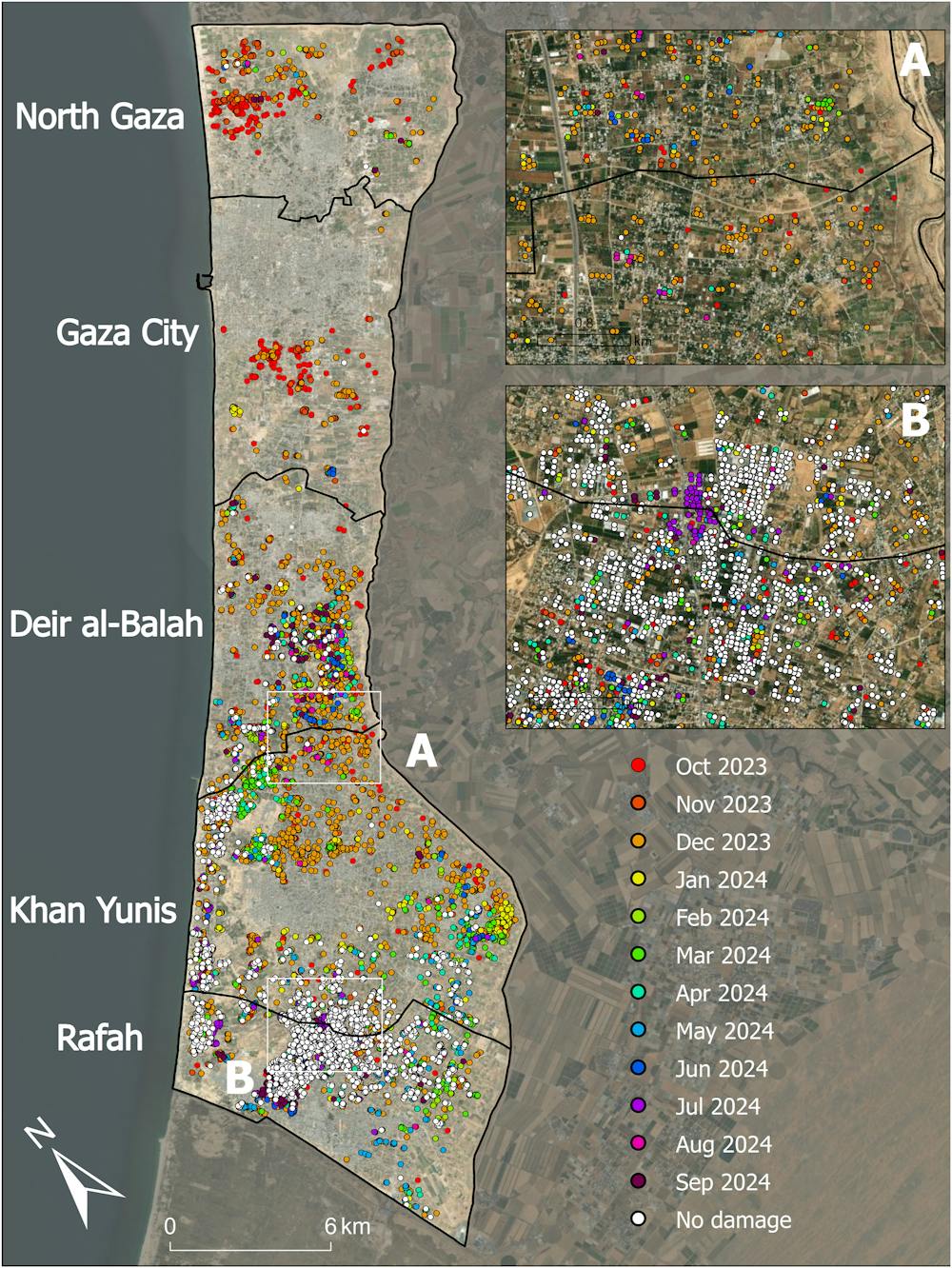
    Part of North Gaza in November 2023, and again in July 2024.

    SkySat imagery © 2025/Planet Labs PBC

    The ceasefire agreed between Israel and Hamas makes provisions for the passage of food and humanitarian aid into Gaza. This support is much needed given that Gaza’s agricultural system has been severely damaged over the course of the war.

    Over the past 17 months we have analysed satellite images across the Gaza Strip to quantify the scale of agricultural destruction across the region. Our newly published research reveals not only the widespread extent of this destruction but also the potentially unprecedented pace at which it occurred. Our work covers the period until September 2024 but further data through to January 2025 is also available.

    Before the war, tomatoes, peppers, cucumbers and strawberries were grown in open fields and greenhouses, and olive and citrus trees lined rows across the Gazan landscape. The trees in particular are an important cultural heritage in the region, and agriculture was a vital part of Gaza’s economy. About half of the food eaten there was produced in the territory itself, and food made up a similar portion of its exports.

    By December 2023, only two months into the war, there were official warnings that the entire population of Gaza, more than 2 million people, was facing high levels of acute food insecurity. While that assessment was based on interviews and survey data, the level of agricultural damage across the whole landscape remained out of view.

    Most olive and citrus trees are gone

    To address this problem, we mapped the damage to tree crops – mostly olive and citrus trees – in Gaza each month over the course of the war up until September 2024. Together with our colleagues Dimah Habash and Mazin Qumsiyeh, we did this using very high-resolution satellite imagery, detailed enough to focus on individual trees.

    We first visually identified tree crops with and without damage to “train” our computer program, or model, so it knew what to look for. We then ran the model on all the satellite data. We also looked over a sample of results ourselves to confirm it was accurate.

    Our results showed that between 64% and 70% of all tree crop fields in Gaza had been damaged. That can either mean a few trees being destroyed, the whole field of trees completely removed, or anything in between. Most damage took place during the first few months of the war in autumn 2023. Exactly who destroyed these trees and why is beyond the scope of our research or expertise.

    In some areas, every greenhouse is gone

    As greenhouses look very different in satellite images, we used a separate method to map damage to them. We found over 4,000 had been damaged by September 2024, which is more than half of the total we had identified before the start of the war.

    Greenhouses and the date of initial damage between October 2023 and September 2024.
    Yin et al (2025)

    In the south of the territory, where most greenhouses were found, the destruction was fairly steady from December 2023 onwards.

    But in north Gaza and Gaza City, the two most northerly of the territory’s five governorates, most of the damage had already taken place by November and December 2023. By the end of our study period, all 578 greenhouses there had been destroyed.

    North Gaza and Gaza City have also seen the most damage to tree crop fields. By September 2024, over 90% of all tree crops in Gaza City had been destroyed, and 73% had been lost in north Gaza. In the three southern governorates, Khan Younis, Deir al-Balah and Rafah, around 50% of all tree crops had been destroyed.

    Agricultural damage is common in armed conflict, and has been documented with satellite analysis in Ukraine since the 2022 Russian invasion, in Syria and Iraq during the ISIS occupation in 2015, and in the Caucasus during the Chechen wars in the 1990s and 2000s.

    The exact impact can differ from conflict to conflict. War may directly damage lands, as we have seen in Gaza, or it may lead to more fallow areas as infrastructure is damaged and farmers are forced to flee. A conflict also increases the need for local agricultural production, especially when food imports are restricted.

    Our assessment shows a very high rate of direct and extensive damage to Gaza’s agricultural system, both compared to previous conflict escalations there in 2014 and 2021, and in other conflict settings. For example, during the July-August war in 2014, around 1,200 greenhouses were damaged in Gaza. This time round at least three times as many have been damaged.

    Agricultural attacks are unlawful

    Attacks on agricultural lands are prohibited under international law. The Rome Statute of the International Criminal Court from 1998 defines the intentional use of starvation of civilians through “depriving them of objects indispensable to their survival” as a war crime. The Geneva conventions further define such indispensable objects as “foodstuffs, agricultural areas for the production offoodstuffs, crops, livestock, drinking water installations and supplies and irrigation works”.

    Our study provides transparent statistics on the extent and timing of damage to Gaza’s agricultural system. As well as documenting the impacts of the war, we hope it can help the massive rebuilding efforts that will be required.

    Restoring Gaza’s agricultural system goes beyond clearing debris and rubble, and rebuilding greenhouses. The soils need to be cleaned from possible contamination. Sewage and irrigation infrastructure need to be rebuilt.

    Such efforts may take a generation or more to complete. After all, olive and citrus trees can take five or more years to become productive, and 15 years to reach full maturity. After previous attacks on Gaza the trees were mostly replanted, and perhaps the same will happen again this time. But it’s for good reason they say that only people with hope for the future plant trees.

    Lina Eklund receives funding from the Swedish National Space Agency and the Strategic Research Area: The Middle East in the Contemporary World (MECW) at the Centre for Advanced Middle Eastern Studies, Lund University, Sweden.

    He Yin receives funding from NASA.

    Jamon Van Den Hoek receives funding from NASA.

    ref. Gaza: we analysed a year of satellite images to map the scale of agricultural destruction – https://theconversation.com/gaza-we-analysed-a-year-of-satellite-images-to-map-the-scale-of-agricultural-destruction-248796

    MIL OSI AnalysisEveningReport.nz

  • MIL-OSI Video: President Trump welcomed pro-school choice leaders for National School Choice Week

    Source: United States of America – The White House (video statements)

    President Trump reaffirms his commitment to empowering parents and expanding access to quality education.

    https://www.youtube.com/watch?v=KugA9PA0G9E

    MIL OSI Video

  • MIL-OSI Video: Angel Moms Sigh in Relief Over Trump’s Immigration Crackdown: ‘Finally Ridding Country of Illegals’

    Source: United States of America – The White House (video statements)

    President Trump is PROTECTING AMERICAN FAMILIES.

    https://www.youtube.com/watch?v=jzwMGCFoygA

    MIL OSI Video

  • MIL-OSI Video: PROMISES MADE, PROMISES KEPT: Karoline Leavitt Breaks Down President Trump’s First 2 Weeks

    Source: United States of America – The White House (video statements)

    In just two weeks, President Trump is delivering HUGE wins- securing our border, restoring law & order, unleashing energy, and more. Press Secretary Karoline Leavitt breaks it down in 95 seconds!

    https://www.youtube.com/watch?v=Zc5tBjgMGTU

    MIL OSI Video

  • MIL-OSI USA: Murray, Sanders, Baldwin, DeLauro, Scott Demand Answers on Trump’s Plans to Dismantle Education Department

    US Senate News:

    Source: United States Senator for Washington State Patty Murray

    Washington, D.C. — Senators Patty Murray (D-WA), Vice Chair of the Senate Appropriations Committee; Tammy Baldwin (D-WI), Ranking Member of the Senate Appropriations Subcommittee on Labor, Health, and Human Services, and Education; and Bernie Sanders (I-VT), Member of the Senate Health, Education, Labor and Pensions (HELP) Committee alongside Representatives Bobby Scott (D-VA), Ranking Member of the House Committee on Education and Workforce, and Rosa DeLauro (D-Conn.), Ranking Member of the House Appropriations Committee and the Subcommittee on Labor, Health, and Human Services, and Education sent a letter warning against the Trump administration’s reported plans to unilaterally dismantle the Department of Education. The lawmakers asked the acting Secretary of Education for answers on recent actions taken by the Trump administration to put federal workers on administrative leave, coerce employees into leaving their jobs, provide access to students’ sensitive data, and illegally freeze vital funding.

    “Over the course of two weeks, the Trump Administration issued sweeping executive orders and sought to broadly and illegally freeze federal financial assistance,” wrote Sanders and the lawmakers. “Federal employees have been targeted, in some cases for simply following the law. Elon Musk is attempting to shut down the work of entire agencies while gaining access to some of the federal government’s most far reaching and sensitive data systems. Media reports indicate a similar effort may be underway at the Department of Education.”

    “We will not stand by and allow this to happen to the nation’s students, parents, borrowers, educators, and communities. Congress created the Department to ensure all students in America have equal access to a high-quality education and that their civil rights are protected no matter their zip code,” continued the lawmakers. “We urge you to provide information on the steps the Department is taking to ensure the continuity of programs that Americans depend on, the ability of the Department to effectively administer programs for their intended purposes without waste, fraud and abuse, and the safeguards in place to protect student data privacy.”

    The lawmakers note that Trump and Elon Musk have not shared any plans regarding intended changes to the Department of Education with the Congressional committees responsible for its oversight and funding. In their letter, they request information about access to the Department’s sensitive data and steps taken to safeguard it, communications and details regarding Department employees who have been placed on leave and confirmation that no awards have been blocked or terminated.

    The full letter is available HERE.

    MIL OSI USA News

  • MIL-OSI USA: Murray, Merkley, DeLauro, Pingree Demand Answers on Illegal EPA Funding Cuts That Harm Public Health, Environment, and Families

    US Senate News:

    Source: United States Senator for Washington State Patty Murray

    Washington, D.C. – Senate Appropriations Committee Vice Chair Patty Murray (D-WA), Senate Interior-Environment Appropriations Subcommittee Ranking Member Jeff Merkley (D-OR), House Appropriations Committee Ranking Member Rosa DeLauro (CT-03), and House Interior-Environment Appropriations Subcommittee Ranking Member Chellie Pingree (ME-01) demanded recently confirmed Environmental Protection Agency (EPA) Administrator Lee Zeldin answer urgent questions about funding freezes at the agency.

    The letter to Administrator Zeldin follows President Donald Trump’s illegal executive orders that stopped funding for programs that families and communities depend on, such as access to clean drinking water and affordable clean energy, and ongoing efforts to block access to federal funds in communities across the United States.

    “The Trump Administration’s memo freezing vast swaths of federal funds, its failed attempt to clarify the scope of the memo, and its subsequent rescission of the memo have created mass chaos and added to the confusion about what investments are currently being blocked. Today, our understanding is that much of the Agency’s funding is still frozen, but some select programs may resume in the near future. Yet let us be clear – all of EPA’s funding must be made available and disbursed pursuant to the law with no exceptions,” the senior members of the Senate and House Appropriations Committees wrote.

    “Funding freezes – which the administration intentionally implemented before court intervention – devastate programs that protect public health and the environment while increasing costs for families,” the lawmakers continued. “The Trump Administration will be raising energy costs for families and businesses will be losing out on thousands of potential jobs as programs like Solar for All and Clean School Bus rebates are terminated. Continuing to freeze these investments—or permanently blocking them—will unravel critical progress the Agency has made towards clean air and clean water and cost American households and businesses dearly.”

    “Not only does the Constitution vest the power of the purse with Congress and provide no power to the President to impound funds, but there have been several bedrock fiscal statutes enacted to protect Congress’ constitutional power of the purse and prevent unlawful executive overreach, including the Antideficiency Act and the Impoundment Control Act of 1974 (ICA). The ICA prohibits any action or inaction that precludes Federal funds from being obligated or spent, either temporarily or permanently, without following the strictly circumscribed requirements of that law, which have not been honored in this instance,” the lawmakers stressed.

    Full text of the letter can be found HERE.

    MIL OSI USA News

  • MIL-OSI United Nations: ‘Step Up the Pace’ and end female genital mutilation, UN says

    Source: United Nations 4

    Health

    As the world marks the International Day of Zero Tolerance for Female Genital Mutilation on Thursday, the United Nations is warning that without urgent action, a staggering 27 million more girls could undergo the procedure by 2030.

    Female Genital Mutilation (FGM) refers to all procedures involving the partial or total removal of female external genitalia or other injuries to female genital organs for non-medical reasons, according to the World Health Organization (WHO).

    “More than 230 million girls and women alive today are survivors of this abhorrent practice,” said UN Secretary-General António Guterres in his message for the day, describing it as “one of the most brutal manifestations of gender inequality”.

    The UN sexual and reproductive health agency (UNFPA), the UN Children’s Fund (UNICEF) and World Health Organization reaffirmed that FGM has no health benefits, with lifelong consequences including severe infections, complications in childbirth, chronic pain and psychological trauma.

    “Eradicating this vicious human rights violation is urgent, and it is possible,” Mr. Guterres emphasised.

    Progress and challenges

    Since 2008, the UNFPA-UNICEF Joint Programme on the Elimination of FGM, in collaboration with WHO, has provided prevention and protection services to nearly seven million girls and women.

    The initiative has also mobilised 12,000 grassroots organizations and trained 112,000 community and frontline workers. Additionally, 48 million people have publicly declared their commitment to ending the practice.

    Despite these efforts, the road to elimination remains steep. Only seven of the 31 countries with available data are on track to meet the Sustainable Development Goals (SDGs) target of ending genital mutilation by 2030.

    Meanwhile, in The Gambia, attempts to repeal the ban on genital mutilation threaten to reverse years of progress, underscoring the fragility of existing gains.

    ‘Step Up the Pace’

    This year’s theme, Step Up the Pace, serves as a call to accelerate global efforts to eliminate genital mutilation and dismantle the harmful gender and social norms that perpetuate it.

    “We must strengthen global movements to break down harmful attitudes, beliefs and gender stereotypes,” said Mr. Guterres.

    A key part of this effort is The Pact for the Future, adopted by UN Member States last September. This global commitment aims to tackle gender discrimination and harmful social norms, ensuring that laws and policies align with efforts to end FGM worldwide.

    Soundcloud

    Cost of inaction

    Failure to end FGM has dire social, economic and health consequences. According to WHO, treating health complications from genital mutilation costs healthcare systems $1.4 billion annually.

    Meanwhile, the mental and emotional toll on survivors can last a lifetime, impacting their education, employment and overall well-being.

    With less than five years left to reach the 2030 target, the UN is calling for stronger alliances, increased investment and sustained advocacy.

    “Let’s join forces to make female genital mutilation history and ensure a brighter, healthier, and more just future for all women and girls everywhere,” Mr. Guterres concluded.

    MIL OSI United Nations News

  • MIL-OSI Canada: Minister’s statement on Richmond supportive housing

    Source: Government of Canada regional news

    Ravi Kahlon, Minister of Housing and Municipal Affairs, has released the following statement about supportive housing in Richmond: 

    “Our government is committed to connecting people with the housing and supports they need to get on a better path and live full, healthy lives. We’re also dedicated to keeping communities and businesses safe.

    “In summer 2024, we temporarily paused moving forward with the proposed supportive housing project at 3780 Sexsmith Rd. in Richmond so BC Housing staff could explore other potential sites.

    “Since then, staff have evaluated five other locations within the community.

    “Upon review, it was determined that these sites would not meet the needs for supportive housing for various reasons, such as location, lot size and proximity to key services. These are important factors that support residents’ abilities to stabilize their lives, successfully integrate within the community and access required services.

    “Furthermore, shifting to a new location at this stage would require new project designs, adding significant delays to project completion.

    “After careful consideration and exploring all viable options within the community, we have determined the Sexsmith site remains the best option for a supportive housing site in Richmond.

    “This project is crucial to helping address the urgent need for long-term, supportive housing to deal with the growing number of people facing homelessness in Richmond, which has increased 91% since the pandemic to more than 160 people at last count.  

    “We will now initiate engagement with neighbours by organizing facilitated dialogue sessions starting in March 2025. Invitations will be sent to neighbours, providing an opportunity to further discuss the project. We will also continue working with city staff and stakeholders to safely integrate this housing into the community.

    “Following this engagement, the site will be put forward to Richmond city council for final consideration. I would like to acknowledge the work of Richmond city council to date, and members of council’s assertions on the need to move forward with permanent supportive housing in Richmond.

    “Lastly, there has been a significant amount of misinformation about this project. I encourage neighbours to engage directly with BC Housing on the project, either through the upcoming neighbourhood dialogue sessions, submitting questions and feedback directly to BC Housing, and learning more about the proposal online. 

    “This building will be purpose-built for supportive housing, allowing residents to gather indoors. It will have 24/7 staffing and security features, such as cameras, fencing and lighting. Clean-up teams will help keep surroundings tidy, and neighbours will be able to report concerns via a dedicated phone line with the housing provider.

    “We will continue working with BC Housing, the City of Richmond and residents, to bring inside people who are sheltering outdoors, and build a safer and healthier community for everyone.”

    Learn More:

    Learn more about BC Housing’s proposal here: 
    https://letstalkhousingbc.ca/richmond-cambie-sexsmith

    MIL OSI Canada News

  • MIL-OSI Australia: Pedestrian injured in Paradise crash

    Source: South Australia Police

    A pedestrian has suffered critical injuries when he was hit by a car at Paradise last night.

    Emergency services were called to Darley Road about midnight on Thursday 6 February.

    The pedestrian, a 38-year-old Rostrevor man, was taken to hospital by ambulance where he is being treated for critical injuries.

    The driver of the Toyota sedan, a 58-year-old Norton Summit man, was not injured in the crash.

    Major Crash investigators attended the scene to assist patrols examine the scene and investigate the crash.

    The car was towed from the scene and the road reopened at 6am.

    MIL OSI News

  • MIL-OSI Security: Missouri Man Guilty of Traveling to Louisiana for Illicit Sexual Conduct with 12-Year-Old Girl

    Source: Federal Bureau of Investigation (FBI) State Crime News

    NEW ORLEANS –  U.S. Attorney Duane A. Evans announced that ERIC CHARLES FULLER (“FULLER”), age 54, from Springfield, Missouri, pled guilty on February 4, 2025, before United States District Judge Greg Gerard Guidry, to interstate travel with intent to engage in illicit sexual conduct, in violation of Title 18, United States Code, Section 2423(b).

    According to court documents, on or about December 7, 2023, law enforcement personnel, operating undercover online and pretending to be a twenty-nine-year-old mother with a twelve-year-old daughter, met FULLER on a social network and messaging application. Over approximately the next month, on numerous occasions, FULLER discussed his interest in engaging in various sexual acts with the “mother” and daughter.”  These discussions culminated in FULLER making arrangements to travel from his residence in Springfield, Missouri, to the New Orleans, Louisiana area to engage in sexual contact, individually and collectively, with the ”mother” and “daughter.” During his conversations, FULLER described the contact he anticipated as “highly taboo,” “highly illegal,” “risky,” “not the worst way to be,” and “a way to have a happier life.” FULLER drove from Springfield, Missouri on about January 11, 2024, and arrived at a predetermined location in Mandeville, Louisiana, on January 12, 2024, in order to engage in sexual conduct with the individual FULLER believed to be a twelve-year-old female.

    FULLER faces a maximum term of imprisonment of  thirty (30) years.  FULLER also faces at least five (5) years, and up to a lifetime of supervised release, up to a $250,000 fine and a $100 mandatory special assessment fee.  FULLER may also be required to register as a sex offender.  Sentencing before Judge Guidry has been scheduled for May 13, 2025.

    This case was brought as part of Project Safe Childhood, a nationwide initiative to combat the growing epidemic of child sexual exploitation and abuse launched in May 2006 by the Department of Justice.  Led by United States Attorneys’ Offices and the Criminal Division’s Child Exploitation and Obscenity Section (CEOS), Project Safe Childhood marshals federal, state and local resources to better locate, apprehend and prosecute individuals who exploit children via the Internet, as well as to identify and rescue victims.  For more information about Project Safe Childhood, please visit www.projectsafechildhood.gov.

    U.S. Attorney Evans praised the work of the Federal Bureau of Investigation in investigating this matter.  Assistant United States Attorney Jordan Ginsberg, Chief of the Public Integrity Unit, is in charge of the prosecution.

    MIL Security OSI

  • MIL-OSI Security: Statement on Aircraft Incident in Maguindanao del Sur

    Source: United States INDO PACIFIC COMMAND

    On February 6, 2025, an aircraft contracted by the U.S. Department of Defense crashed in the Philippine Province of Maguindanao del Sur.

    The aircraft was providing intelligence, surveillance, and reconnaissance support at the request of our Philippine allies. The incident occurred during a routine mission in support of U.S.-Philippine security cooperation activities. 

    We can confirm no survivors of the crash. There were four personnel on board, including one U.S. military service member and three defense contractors.

    The names of the crew are being withheld pending next of kin notification.

    The cause of the crash is currently under investigation, and we have no further details to release at this time.

    Additional updates will be provided as they become available.

    MIL Security OSI

  • MIL-OSI Security: Washington man indicted for 2023 fatal fentanyl overdoses in Skagway

    Source: Office of United States Attorneys

    JUNEAU, Alaska – A federal grand jury in Alaska returned an indictment last month charging a Washington man with distributing and conspiring to distribute controlled substances that resulted in the fatal overdoses of two people in Skagway in 2023.

    According to court documents, from Jan. 1 to Jan. 13, 2023, Jacob Cotton, 33, allegedly conspired with others to distribute and possess with intent to distribute a substance containing fentanyl to another person. He also allegedly knowingly and intentionally distributed a controlled substance containing fentanyl to a second person during this time frame.

    On Jan. 13, 2023, a 28-year-old man died after overdosing on fentanyl allegedly distributed by Cotton. The following day, a 44-year-old man also died after overdosing on fentanyl allegedly distributed through the conspiracy. 

    Cotton is charged with one count of conspiracy to distribute and to possess with the intent to distribute fentanyl resulting in death and one count of distribution of fentanyl resulting in death. The defendant made his initial court appearance on Jan. 31 before U.S. Magistrate Judge Matthew M. Scoble of the U.S. District Court for the District of Alaska. If convicted, he faces between 20 years and life in prison. A federal district court judge will determine any sentence after considering the U.S. Sentencing Guidelines and other statutory factors.

    First Assistant U.S. Attorney Kate Vogel of the District of Alaska, Special Agent in Charge David Reames of the Drug Enforcement Administration, Seattle Field Division and Skagway Police Chief Jerry Reddick made the announcement.

    The DEA Seattle Field Division and Anchorage District Office, and Skagway Police Department, as part of the Southeast Alaska Cities Against Drugs Task FORCE (SEACAD), are investigating the case.

    Assistant U.S. Attorney Jack Schmidt is prosecuting the case.

    An indictment is merely an allegation, and all defendants are presumed innocent until proven guilty beyond a reasonable doubt in a court of law.

    ###

    MIL Security OSI

  • MIL-OSI Security: Upshur County Woman Sentenced for Methamphetamine Trafficking

    Source: Office of United States Attorneys

    ELKINS, WEST VIRGINIA – Devonna Nicole Moul, 30, of Buckhannon, West Virginia, was sentenced to 56 months for possession with intent to distribute methamphetamine.

    According to court documents and statements made in court, Moul, also known as “Devonna Nicole Keyser,” was selling methamphetamine in Elkins. Moul has prior convictions for drug violations, escape, and fleeing.

    Moul will serve three years of supervised release after her prison sentence.

    Assistant U.S. Attorney Stephen Warner prosecuted the case on behalf of the government.

    The Bureau of Alcohol, Tobacco, Firearms and Explosives and the Mountain Region Drug Task Force, a HIDTA-funded initiative., investigated.

    Chief U.S. District Judge Thomas S. Kleeh presided.

    MIL Security OSI

  • MIL-OSI Security: Sioux City Man Sentenced to Federal Prison for Illegally Re-Entering the United States as a Felon

    Source: Office of United States Attorneys

    A man who illegally re-entered the United States as a felon was sentenced yesterday to 2 years in federal prison.

    Erasmo Roberto Mendez-Lopez, age 29, from Sioux City, Iowa, received the prison term after a September 4, 2024, guilty plea to one count of illegal re-entry as a felon.

    At the guilty plea, Mendez-Lopez admitted he illegally re-entered the United States after being deported as a felon in 2019.  On May 17, 2024, he was arrested by Sioux City police for operating while under the influence (OWI) 2nd offense, eluding, and an active failure to appear warrant for a prior OWI 2nd offense charge out of Woodbury County.  He also had 4 active warrants out of Plymouth County, Iowa for Eluding – speed over 25 over limit, speeding, open container, and improper use of lanes from 2022.  Mendez-Lopez is a citizen of Guatemala and has been removed from the United States on two separate occasions.

    Mendez-Lopez was sentenced in Sioux City by United States District Court Judge Leonard T. Strand.  Mendez-Lopez was sentenced to 24 months’ imprisonment.  He must also serve a 3-year term of supervised release after the prison term.  There is no parole in the federal system.

    Mendez-Lopez is being held in the United States Marshal’s custody until he can be transported to a federal prison.

    The case was prosecuted by Assistant United States Attorney Kevin C. Fletcher and investigated by the Enforcement and Removal Office of the Immigration and Customs Enforcement Bureau. 

    Court file information at https://ecf.iand.uscourts.gov/cgi-bin/login.pl.  The case file number is 24-CR-04038.

    Follow us on X @USAO_NDIA.

    MIL Security OSI

  • MIL-OSI USA: In Aftermath Of Tragedies, Cantwell Tells Trump She’ll Hold Him Accountable To Promises On Aviation Infrastructure

    US Senate News:

    Source: United States Senator for Washington Maria Cantwell

    02.06.25

    In Aftermath Of Tragedies, Cantwell Tells Trump She’ll Hold Him Accountable To Promises On Aviation Infrastructure

    “The president says he wants to see an increase in aviation infrastructure […] So great, Mr. President, we will be calling on you for your help in that effort”; Cantwell is leading ongoing efforts to boost hiring of air traffic controllers & make flying safer

    WASHINGTON, D.C. – Yesterday, U.S. Senator Maria Cantwell (D-WA), ranking member of the Senate Committee on Commerce, Science, and Transportation and senior member of the Finance Committee, committed to delivering answers to the families of the people who died in two major aviation tragedies in Washington, D.C., and Philadelphia last week.

    In a meeting of the Senate Committee on Commerce, Science, and Transportation yesterday, Sen. Cantwell also called on President Donald Trump to make good on his promise to improve aviation infrastructure:

    “Our heart goes out to these families for the tragedies they are suffering, for the long-term impacts that they will have from this, and the remaining questions that they want us to answer. I am dedicated, Mr. Chairman, to moving quickly once we have information on resolutions of issues that will enhance the air safety of our system.

    “Having worked both during COVID, and in 25 days working with Senator Wicker, we came up with a transportation solution to what we needed to do for our airspace during that time period. And also working with Senator Wicker in short order after the two MAX crashes to push and finalize through Congress a major aviation safety bill.

    “It is imperative that we tell the families we are going to have the same fervor now in getting aviation safety enhancements that will prevent this from happening again.

    “I hope that we can work together in a very bipartisan fashion, along with our two colleagues, Senator Duckworth and Senator Moran, the subcommittee chair and ranking member on doing that.

    “And I take the President at his word. The President says he wants to see an increase in aviation infrastructure. He’s frustrated by the fact that, on a global basis the system of digitizing our airspace off a radar has moved faster than the United States. So great, Mr. President, we will be calling on you for your help in that effort,” Sen. Cantwell said.

    Last year, when Sen. Cantwell served as chair of the committee, she sounded the alarm about the staffing shortage of air traffic controllers, need for more FAA safety inspectors, a series of aviation incidents and near-misses on and around runways, and the midair blowout of an emergency exit door plug in January 2024. She led the passage of the FAA Reauthorization Act, signed into law in May 2024, which boosts controller staffing, ensuring a five-year commitment to maximum hiring and training to close the current staffing gap. The law requires upgraded safety technologies – giving controllers better visibility into all aircraft and ground traffic – to be installed at every large and medium airport nationwide, includes stricter safety standards for aircraft operators and plane manufacturers as well as provisions to boost staffing to put more FAA safety inspectors on factory floors.

    In yesterday’s meeting, Sen. Cantwell also addressed:

    Video of Sen. Cantwell’s remarks in yesterday’s committee meeting is HERE; audio is HERE; and a transcript is HERE.

    MIL OSI USA News

  • MIL-OSI USA: Capito, Colleagues Call for Quick Implementation of the Social Security Fairness Act

    US Senate News:

    Source: United States Senator for West Virginia Shelley Moore Capito

    WASHINGTON, D.C. – Today, U.S. Senator Shelley Moore Capito (R-W.Va.) joined a bipartisan group of 27 Senate colleagues in letter—led by U.S. Senator Bill Cassidy M.D. (R-La.)—to Acting Social Security Administrator Michelle King calling for the immediate implementation of the Social Security Fairness Act to provide full Social Security benefits for millions of public servants impacted by Windfall Elimination Provision (WEP) and the Government Pension Offset (GPO). The Social Security Fairness Act, which fully repeals the two unfair Social Security provisions WEP and GPO, was signed into law on January 5, 2025. 

    “The Social Security Fairness Act restores full Social Security benefits for the millions of teachers, police officers, firefighters, and other public servants who are unfairly penalized by the Windfall Elimination Provision (WEP) and the Government Pension Offset (GPO),” the senators wrote. 

    “The Social Security Administration’s website currently states, ‘SSA expects that it could take more than one year to adjust benefits and pay all retroactive benefits’ owed under the Social Security Fairness Act. We call for the immediate implementation of this legislation to provide prompt relief to the millions of Americans impacted by WEP and GPO,” the senators continued. 

    BACKGROUND:

    The Social Security Fairness Act restores full Social Security benefits for law enforcement officers, firefighters, and other public servants by repealing two provisions of current law – the Windfall Elimination Provision (WEP) and the Government Pension Offset (GPO) – that unfairly reduce the Social Security benefits that public employees receive.

    The WEP, enacted in 1983, reduces the Social Security benefits of workers who receive pensions from a federal, state, or local government for employment not covered by Social Security. The GPO, enacted in 1977, reduces Social Security spousal benefits for spouses, widows, and widowers whose spouses receive pensions from a federal, state, or local government. Currently, nearly 7,000 West Virginians are affected by WEP and GPO.

    The Social Security Fairness Act repealed both of these laws, ensuring law enforcement, firefighters, park rangers, and other public sector workers and their families receive the full Social Security benefits they’ve earned.

    The full letter can be found here or below:

    Dear Acting Commissioner King,

    We write to you concerning the implementation of the Social Security Fairness Act (Public Law No: 118-273). This legislation passed Congress on an overwhelmingly bipartisan basis on December 21st, 2024 and was signed into law on January 5th, 2025. The Social Security Fairness Act restores full Social Security benefits for the millions of teachers, police officers, firefighters, and other public servants who are unfairly penalized by the Windfall Elimination Provision (WEP) and the Government Pension Offset (GPO).

    The Social Security Administration’s website currently states, “SSA expects that it could take more than one year to adjust benefits and pay all retroactive benefits” owed under the Social Security Fairness Act. We call for the immediate implementation of this legislation to provide prompt relief to the millions of Americans impacted by WEP and GPO. In the interim, we request monthly updates and briefings regarding the status of the Social Security Administration’s progress towards implementing the Social Security Fairness Act

    Thank you for your prompt attention to this important matter.  We look forward to your response.

    Sincerely,

    MIL OSI USA News

  • MIL-OSI USA: Capito, Colleagues Introduce Constitutional Amendment to Prevent Democrats from Court Packing the Supreme Court

    US Senate News:

    Source: United States Senator for West Virginia Shelley Moore Capito

    WASHINGTON, D.C. Today, U.S. Senator Shelley Moore Capito (R-W.Va.) joined 17 of her Republican Senate colleagues—led by U.S. Senator Ted Cruz (R-Texas)—to introduce a constitutional amendment to maintain a total of nine Supreme Court justices on the bench at a time. Once approved by Congress, the amendment would go to the states for ratification.

    “A nine Justice court has worked for our country for more than 150 years. Increasing that number in a partisan effort to achieve a desired policy result is a never-ending proposition. If court-packing were pursued, respect for the Supreme Court would plummet and the checks and balances of our constitutional order would be threatened. We should preserve our independent judiciary by closing the door to the Democrats radical court packing proposals,” Senator Capito said.

    Full text of the constitutional amendment can be found here.

    BACKGROUND:

    Over the past several years, top Democrats have pledged to expand the number of justices on the Supreme Court when they are able to.

    Former Vice President Kamala Harris said“We are on the verge of a crisis of confidence in the Supreme Court […] We have to take this challenge head on, and everything is on the table to do that.”

    Sen. Ed Markey (D-Mass.) posted online“Mitch McConnell set the precedent. No Supreme Court vacancies filled in an election year. If he violates it, when Democrats control the Senate in the next Congress, we must abolish the filibuster and expand the Supreme Court.”

    Sen. Mazie Hirono (D-Hawaii) called court-packing: “long-overdue court reform.”

    Sen. Elizabeth Warren (D-Mass.) said: “I’m open. […] Actually, I mean, we could. […] Look, there are a lot of different ways to do it. The number of people on the Supreme Court is not constitutionally constricted.”

    Meanwhile Democrats, including Joe Biden, falsely called Senate Republicans’ efforts to confirm Judge Barrett “court-packing.”

    MIL OSI USA News

  • MIL-OSI United Nations: Experts of the Committee on the Elimination of Discrimination against Women Praise Belarus for Progress in Preventing Trafficking, Ask about Criminalisation of HIV Transmission and Reported Repression of Civil Society

    Source: United Nations – Geneva

    The Committee on the Elimination of Discrimination against Women today concluded its consideration of the ninth periodic report of Belarus, with Committee Experts praising the State’s progress in preventing trafficking, and raising questions about the criminalisation of HIV transmission and reports of repression of civil society.

    Elgun Safarov, Committee Expert and Rapporteur for Belarus, and other Experts commended Belarus’ awareness-raising projects on the prevention of trafficking and women’s empowerment.

    One Committee Expert noted that Belarus had a high number of criminal cases related to HIV.  Transmission of HIV was penalised with imprisonment of up to five years. Was the State party rethinking this law?

    Mr. Safrov said many very important non-governmental organizations had been closed recently.  What were the reasons for these closures?  There were reports of repression of women journalists and activists.

    Several other Experts expressed concern about reports that women who expressed dissent were punished and detained.  What plans were in place to protect women activists from gender-based violence and State repression?  Why were civil society organizations engaged in the protection of human rights dissolved by the State?

    Introducing the report, Larysa Belskaya, Permanent Representative of Belarus to the United Nations Office at Geneva and head of the delegation, said Belarus strived to fully ensure equal rights and opportunities for women in all spheres. In an extremely difficult geopolitical situation, Belarus progressively built a society where every person could have decent living conditions and benefit society.

    The delegation said Belarus had taken measures to eliminate trafficking in persons and to identify and rehabilitate victims.  In 2024, authorities identified 1,500 cases of suspected trafficking and identified several victims, including minors.  The State worked with civil society to build the capacity of law enforcement staff related to trafficking; 90 training sessions had been held in 2024.

    Concerning the transmission of HIV, the delegation said that in 2023, nine women had been penalised for transmitting HIV and 12 women were penalised in 2022.  The State party was continuing to reduce the stringency of HIV legislation.  A draft law had been developed to decriminalise unintentional transmission of HIV.  Penalties for the deliberate transmission of HIV would remain.

    The delegation said the Committee’s assessments related to repression were not appropriate.  The protests that took place in Belarus over the reporting period were in many cases not peaceful.  Certain extremist actions were taken by media workers.  The Government was working to increase understanding of the situation.

    Civil society in Belarus was active, the delegation added.  The State party had over 1,500 civil society organizations, including women’s organizations.  In 2020, there was an attempt to carry out a coup d’etat by several non-governmental organizations engaged in anti-Government activities.  A court decision held these organizations and their members responsible for violating the law.  This should not be considered repression of civil society.  In 2023, a new law on the activities of civil society was adopted that required organizations to re-register.  Many non-governmental organizations had not completed the new registration procedure and had been shut down.  Citizens were entitled to renew the activities of previous non-governmental organizations.

    In closing remarks, Ms. Belskaya said Belarus had achieved much in terms of gender equality and empowering women.  The discussion helped the State party to identify the remaining issues to be addressed. The Committee’s recommendations would be carefully considered by the National Council on Gender Equality and used to construct the next national action plan on gender equality

    In her closing remarks, Nahla Haidar, Committee Chair, commended the State party for its efforts and encouraged it to implement the Committee’s recommendations for the benefit of all women and girls in Belarus.

    The delegation of Belarus consisted of representatives from the Ministry of Labour and Social Protection; Ministry of Health; and the Permanent Mission of Belarus to the United Nations Office at Geneva.

    The Committee will issue the concluding observations on the report of Belarus at the end of its ninetieth session on 21 February.  All documents relating to the Committee’s work, including reports submitted by States parties, can be found on the session’s webpage.  Meeting summary releases can be found here.  The webcast of the Committee’s public meetings can be accessed via the UN Web TV webpage.

    The Committee will next meet at 10 a.m. on Friday, 7 February to consider the eighth periodic report of Luxembourg (CEDAW/C/LUX/8).

    Report

    The Committee has before it the ninth periodic report of Belarus (CEDAW/C/BLR/9).

    Presentation of Report

    LARYSA BELSKAYA, Permanent Representative of Belarus to the United Nations Office at Geneva and head of the delegation, said Belarus was committed to the principles of the Convention and strived to fully ensure equal rights and opportunities for women and men in all spheres.  Its Gender Gap Index score had almost halved from 0.152 in 2014 to 0.096 in 2024, placing the country 29th out of 166 countries.  In an extremely difficult geopolitical situation, Belarus preserved its State, peace and tranquillity, and progressively built a society of equal opportunities, where every person could have decent living conditions and benefit society.

    Over the years, the Government had made serious efforts to implement the Convention and had achieved concrete results for the advancement of women.  Gender policy was coordinated by the National Council on Gender Policy.  Every five years, national action plans on gender equality were adopted.  This year, the sixth national action plan (2021-2025), the goals and objectives of which were linked to the Sustainable Development Goals, was being implemented.  Work was also progressively being carried out to introduce mechanisms for gender analysis of legislation and gender budgeting in the development of draft State plans and programmes. 

    The National Statistical Committee had developed thematic information systems that made it possible to analyse the situation in the field of gender equality.  The “Gender Statistics Web Portal” contained 178 gender statistics.  In 2020, the Labour Code introduced a norm establishing paternity leave of up to 14 days within six months after the birth of the child.  The Government was also working to calculate the value of unpaid domestic services not included in gross domestic product.  The final data would be published in June 2025.

    Belarussian women were actively promoted to managerial positions.  In the National Assembly, the share of women in 2023 was 36 per cent. At the same time, in the House of Representatives, their share was 40.6 per cent.  Women accounted for 47 per cent of local self-government bodies. Among senior civil servants, the share of women in 2023 was 54.6 per cent; among judges, 64.4 per cent.

    Labour legislation provided for parents with family responsibilities an additional day off from work per month or reduced working days, flexible forms of employment, and remote employment.  The country guaranteed access for all citizens to health care, education, social services, culture and sports.  At the birth of a child, the State provided material support to all families and the payment of insurance premiums.  Benefits for pregnancy, childbirth and temporary disability had been increased, as had social support for parents raising a child with disabilities.  Since 2015, the State also provided a one-time non-cash provision equalling 10,000 United States dollars at the birth or adoption of third or subsequent children.

    The Belarussian Women’s Union, which united 162,000 women, worked to raise the status of women in society and their role in all spheres of life, and there were 15 more women’s organizations in Belarus.  In total, as of October 2024, there were 1,466 public associations; 18 new public associations were registered in 2024. 

    In Belarus, the literacy rate of the population aged 15 and over was almost 100 per cent. General secondary education was compulsory for all.  The percentage of women in higher education was about 53 per cent.  Almost 92 per cent of women aged 16-72 used the Internet.

    For several years, there had been a decrease in the female working age unemployment rate, from 3.1 per cent in 2019 to 2.7 per cent in 2023.  This figure was lower than the male unemployment rate, which was 4.1 per cent in 2023.  More than 42 per cent of employed women had completed higher education and 70 per cent of civil servants were women.  The share of women among researchers in Belarus was 39.2 per cent.  In 2024, for the first time, a female cosmonaut from Belarus, Marina Vasilevskaya, flew to the International Space Station.  Belarus was also actively developing women’s entrepreneurship; the representation of women in this area was 36.4 per cent.  In 2023, the first Forum of Women Entrepreneurs was held, with the active participation of the Belarussian Women’s Union.

    Every woman, regardless of income, had the opportunity to receive any type of medical care free of charge.  Unprecedented measures were being taken in the country to protect motherhood and childhood, to accompany women during pregnancy, and to carry out annual medical examinations.  Belarus was among the 25 countries with the highest rating in terms of access to sexual and reproductive health, information and education.  The proportion of women using various types of contraception increased from 39.9 per cent in 2010 to 53.2 per cent in 2021. The number of abortions per 1,000 women of childbearing age over the past 10 years had decreased by almost two times to 6.2 per cent in 2023.  Since 2011, no cases of illegal abortions had been registered in the country.

    Specific measures were being taken in Belarus to prevent domestic violence.  In 2022, protective measures for victims and preventive measures against violators were strengthened.  Every year, about 15,000 victims turned to regional social service centres for help.  A network of “crisis” rooms was being developed, with 134 rooms having been established as of 2024.  There were no restrictions on the time in which people could live in these rooms; in the first half of 2024, 81 women lived in them.  Public and international organizations were involved in aiding women victims of domestic violence.

    From today’s dialogue, Belarus expected practical and implementable recommendations that would allow it to implement high international standards in State policy to ensure equal rights and expand opportunities for women.

    Questions by a Committee Expert 

    ELGUN SAFAROV, Committee Expert and Rapporteur for Belarus, said that Belarus had developed family and women policy, implemented many awareness-raising projects on the prevention of trafficking and women’s empowerment, organised several international conferences on women in entrepreneurship and science, and adopted several legislative acts on women rights protection during the reporting period. He expressed appreciation for the State party’s activities for the harmonisation of legislation and measures for the adoption of international standards. 

    However, the Committee had witnessed multiple violations of women’s rights.  The State party did not have comprehensive anti-discrimination legislation that specifically prohibited discrimination against women, including direct and indirect discrimination, and also had no specific, stand-alone legislation on gender equality, or a law explicitly focused on ending all forms of gender-based violence, including domestic violence.  Sexual harassment in the workplace remained unaddressed in legislation, and laws prohibited women’s participation in certain jobs. 

    There were many problems related to access to justice for women.  There needed to be effective remedies for victims of discrimination.  There was no special body for deciding cases related to discrimination against women.  HIV transmission was criminalised.  Why had some women lawyers’ licenses been terminated?

    What measures were in place to incorporate a definition of equality between women and men in the Constitution and the Criminal Code?  What mechanisms were in place to protect against discrimination?  Had the Convention been translated into Belarussian? Were there any court cases that had referenced the Convention?  Why had closed court sessions been held to try women who had participated in peaceful demonstrations?  How were lawyers appointed?  Did the State party keep data on criminal cases related to gender?

    Responses by the Delegation

    The delegation said Belarus did not have a comprehensive definition of discrimination against women in its legislation, but principles of equality were included in the Constitution and various laws.  The Government had considered developing a single act on discrimination, but had found that existing legislation sufficiently banned discrimination. Legal amendments were introduced in 2022 to provide women and men with equal opportunities in employment, training and education.  The rights of victims of sexual discrimination needed to be restored under law. All complaints of discrimination, including from women and foreign citizens, needed to be reviewed by relevant State authorities within a tight deadline.  Discriminatory norms were not permitted in legislation.  Follow-up on implementation of gender legislation was carried out by a dedicated group of the National Council on Gender Policy.

    The Bar Association carried out activities to inform citizens about how they could access legal aid.  Women who lodged a complaint related to workplace discrimination or the deprivation of parental rights, as well as pregnant women, vulnerable families and victims of trafficking, received legal aid free of charge. Women in prisons could receive legal aid when they submitted complaints.  Women could choose their own lawyer, or were appointed one if they could not afford one.

    Belarus had two national languages: Belarussian and Russian.  Russian was more represented in State correspondence, but this did not hinder access to information on legislation for the population.  The Convention was part of the national legal system and had been referenced in court proceedings.  The Criminal Code recognised undermining of women’s bodily integrity as an offence.  There were around 50 cases related to bodily harm in the first half of 2024, and 44 cases of other sexual offences.

    Questions by Committee Experts 

    A Committee Expert commended the Government on efforts to align policies with the Sustainable Development Goals. However, the Committee was concerned by the absence of an independent national human rights institution, and by the exclusion of civil society organizations that worked to safeguard women’s rights.  Would the State party consider establishing a national human rights institution in line with the Paris Principles?  Which Government agency was responsible for protecting women’s rights.

    The Expert welcomed the policy to promote gender empowerment and gender sensitive budgeting.  How would the national action plan on gender equality be monitored?  How would the State party ensure the meaningful participation of civil society in this regard?

    The Committee was deeply concerned by the increasingly shrinking civic space.  Many women human rights defenders faced detention and restriction of activities. What plans were in place to protect women activists from gender-based violence and State repression?  Why were civil society organizations that were engaged in the protection of human rights dissolved by the State?

    Belarus had not adopted a national action plan on women, peace and security.  Would it consider developing such a plan to mainstream gender perspectives into peacebuilding efforts?

    One Committee Expert said the share of women in regional leadership positions was low and there were very few female ambassadors.  Women who peacefully expressed diverse political opinions were at a high risk of being treated as extremists.  Had the State party implemented temporary special measures to ensure gender equality in recent years?  Were there measures to increase the representation of women in leadership positions, as well as in employment and education?  What measures were in place to support vulnerable women and to mitigate the impact of the COVID-19 pandemic on gender equality?

    Responses by the Delegation

    The delegation said Belarus had State and public institutions protecting human rights, including the national councils on gender equality, children and disability, and the Environmental Committee, among others.  The State had conducted consultations with civil society, international organizations and State agencies in 2017 related to the establishment of a national human rights institution.  Belarus believed that creating a national human rights institution was not a priority as its existing bodies were working efficiently to protect human rights. This issue could be examined in more detail at a later stage.

    The National Council on Gender Equality coordinated and monitored the implementation of national action plans on gender equality.  From 2023 to 2024, a gender assessment methodology for legislation was adopted. Based on assessments, problems had been identified and measures were being planned to address them in the next national action plan.

    Belarus was not a party to any conflict currently, so it had not implemented special measures related to women, peace and security.  However, the Government had taken measures to protect Ukrainian refugees.  Over 200,000 people had arrived from Ukraine in the past three years, more than half of whom were women.  Belarus offered refugees temporary protection and the choice of becoming Belarussian citizens.

    Civil society in Belarus was active. The State party had over 1,500 civil society organizations, as well as professional unions and women’s organizations. The Belarussian Women’s Union actively engaged with State authorities.  There were also specialised civil society organizations supporting vulnerable women.  The process for registering a civil society organization was simple and transparent; the State did not interfere in the registration of such organizations and provided regular support to existing organizations.  Under the law on civil society organizations, such organizations could be closed based on court decisions finding that the organization had carried out unlawful propaganda or violated State legislation. 

    Citizens active in social activities had the right to be defended but were held liable when they violated the law. In 2020, there was an attempt to carry out a coup d’etat by several non-governmental organizations engaged in anti-Government activities.  A court decision had held these organizations and their members responsible for violating the law.  This should not be considered repression of civil society.  After these events, laws on civil society were amended to provide incentives for more constructive civic activities.  Non-governmental organizations in Belarus needed to work cooperatively with the State and could not be funded from abroad.

    Questions by Committee Experts

    A Committee Expert welcomed that the State party had not ruled out establishing a national human rights institution and called for serious consideration of its establishment.  The Expert called for the development of a dedicated policy on women, peace and security.  How many women’s organizations participated in the development and analysis of the national action plan on gender equality?

    Another Committee Expert welcomed advances in protection from domestic violence, including the law on crisis prevention.  However, gender stereotypes were spread in media communications and women were systematically silenced and controlled by the State – women who expressed dissent were attacked, punished and detained.  Vulnerable women were often blamed and stigmatised when they sought protection.  The State party implemented restraining orders for only 30 days and perpetrators were not expelled from homes. 

    Would the State party adopt a comprehensive strategy to address gender stereotyping, a comprehensive law against domestic violence, and penal protection against marital rape?  How would the State party protect victims in criminal proceedings?  What remedies had been provided to victims in recent years?  How many persons had been convicted for domestic violence crimes? What services were provided in crisis rooms and how were personnel in these rooms trained?  Why did the rooms also house men?  Over 30 non-governmental organizations managing hotlines and shelters had been closed; why was this?

    One Committee Expert commended the State party for addressing trafficking in persons by ratifying international conventions on trafficking and developing comprehensive laws related to trafficking.  Could the State party provide data on trafficking and prostitution?  What measures were in place to protect women with disabilities from trafficking and to identify victims of trafficking?  How many investigations into trafficking had been carried out and how many persons were convicted?  How was the State party strengthening protections for women and girls against trafficking, promoting their access to justice, and building the capacity of State officials on the gendered aspects of trafficking?

    Responses by the Delegation

    The delegation said analysis of the national action plan on gender equality was carried out twice a year. The Belarus Women’s Union was represented in the National Commission on Gender Equality and other bodies.  The State party also closely cooperated with the Red Cross and other international organizations, and supported organizations of persons with disabilities.  Seventy per cent of civil servants were women; 50 per cent were in middle management positions and were involved in preparing important political decisions.

    Eliminating gender stereotypes was one of the goals of the national action plan for gender equality.  The State party was working to enhance the role of fathers in carrying out domestic tasks and was working with civil society on a joint project encouraging responsible fatherhood.  There was a programme on State television that presented case studies of successful professional women.

    Persons who perpetrated domestic violence were required to leave the homes where victims lived, and authorities monitored compliance.  The law on preventing domestic violence had been amended to address violence against former partners and cohabitants.  The number of protective measures that had been implemented had increased significantly from around 18,000 in 2022 to 33,000 in 2024.  The Government supported victims to stay in their homes.  There were awareness raising campaigns in place to inform potential victims about reporting channels and preventing gender-based violence.  All types of bodily harm were criminalised.

    Every year, around 17,500 complaints of domestic violence were made.  If women victims required temporary housing, it was provided. Shelters could be accessed 24 hours a day by victims and their children without documentation.  There were hundreds of crisis rooms available, including 132 equipped for children.  Work was underway to ensure access to the rooms for persons with disabilities.

    Belarus had taken measures to eliminate trafficking in persons and to identify and rehabilitate victims.  In 2024, authorities identified 1,500 cases of suspected trafficking and identified several victims, including minors. The State worked with civil society to build the capacity of law enforcement staff related to trafficking; 90 training sessions had been held in 2024.  Specialists had been hired to support victims of various forms of trafficking.  The State was also working to align national trafficking legislation with international norms, and various awareness raising campaigns on trafficking were also in place. Involvement in prostitution was an administrative offence; however, victims of trafficking were not prosecuted, but were provided with support.

    Questions by Committee Experts

    A Committee Expert welcomed that legislation was being amended regarding domestic violence, which needed to be made an aggravated circumstance in homicide offences.  What measures were in place to ensure the safety of victims of domestic violence?

    Another Committee Expert commended progress being made related to trafficking and prostitution.

    ELGUN SAFAROV, Committee Expert and Rapporteur for Belarus, asked why there was a shortage of female Belarussian ambassadors.  None of the chambers of Parliament had female chairs; there were no parliamentary committees working to protect women’s rights; and only one out of 24 Ministers was a woman.  Why was this? How many Deputy Ministers were women? To what extent were women represented in the technological sector?

    Many very important non-governmental organizations had been closed recently.  What were the reasons for these closures?  There were reports of repression of women journalists and activists.

    One Committee Expert noted progress made in reducing statelessness through nationalisation efforts. However, 2,473 women remained stateless in the State party.  Were there programmes addressing statelessness?  When would the State party ratify the 1954 and 1967 United Nations conventions on statelessness?  The State party had not established a clear procedure for protecting migrant mothers and newborns.  Would it do so?

    Responses by the Delegation

    The delegation said the law on prevention of violence included a clause on educational programmes for perpetrators. The State party was interested in best practices in this field in other countries.

    Women made up around 70 per cent of Belarus’ Ministry of Foreign Affairs.  At a time, Belarus had four female ambassadors.  Appointment to ambassadorial roles was based on competitive selection and there was a shortage of women applicants.  Women were broadly represented as deputy chairs of parliamentary committees and made up around 50 per cent of the members of local councils. Belarus aimed to improve women’s representation in all fields.

    The Committee’s assessments related to repression were not appropriate.  The protests that took place in Belarus over the reporting period were in many cases not peaceful.  Certain extremist actions were taken by media workers.  The Government was working to increase understanding of the situation.

    In 2023, a new law on the activities of civil society was adopted that required organizations to re-register. Many non-governmental organizations had not completed the new registration procedure and had been shut down. Citizens were entitled to renew the activities of previous non-governmental organizations.

    Belarus strived to eradicate statelessness.  The number of stateless women in Belarus had significantly decreased by around 5,000 persons over the past 10 years, thanks to the work of authorities in collaboration with United Nations bodies.  The State supported stateless persons and their children to apply for Belarussian citizenship.  It was continuing work towards ratification of the United Nations conventions on statelessness.  The Government had not received reports of unlawful treatment of stateless persons. Stateless persons in Belarus were primarily citizens of the former Soviet Union.  Their numbers were low; the number of stateless children was less than 10.  To receive citizenship, people needed to demonstrate that they had sufficient income and had not committed offences.

    Questions by a Committee Expert 

    A Committee Expert said Belarus had near universal enrolment of girls and boys in primary education.  Educational instructions could reproduce harmful tropes of men as breadwinners and women as caregivers.  What measures were in place to enforce the role of men as caregivers? Only 23 per cent of persons in science, technology, engineering and maths education were women.  What measures were in place to promote their participation?  Only 17 per cent of university professors were female.  How would this be addressed?  Many students had been arrested and prosecuted for their engagement in protest movements.  Nine of the 11 students detained were women, including a woman professor.  What was the status of these women?

    Responses by the Delegation

    The delegation said traditional values in Belarus promoted families with children. Many educational programmes aimed to uphold traditional values and promote gender equality and the equal roles of men and women.  Around 52 per cent of higher education students were women.  Around 40 per cent of workers in the information technology sphere were women.  The Government was implementing incentives and other measures to attract girls to science, technology, engineering and maths careers.

    Students were detained on the grounds that they had broken a criminal law.  There was no persecution of students simply for exercising freedom of expression.

    Questions by a Committee Expert

    One Committee Expert said the employment rate of men was 72 per cent compared to 63 per cent for women. Although the list of closed professions for women had been reduced significantly, significant barriers for women accessing the labour market remained, and the list itself was a form of discrimination.  Women were underrepresented in higher-paid industries.  Workplace harassment remained common and legislation did not provide adequate remedies for victims and penalties for perpetrators.  Detained women were legally required to engage in labour; this was a form of modern slavery.  In July 2022, all independent trade unions were banned in Belarus. What protection mechanisms were available related to workplace sexual harassment?  Was there a national action plan for addressing the gender pay gap? When would the State party abolish forced labour for prisoners?

    In 2017, the State introduced pension reform, raising the retirement age.  Many citizens had lost their pensions due to the reforms.  Why did men and women have different pension ages?

    Responses by the Delegation

    The delegation said the rate of employment for women from 15 to 74 was 63 per cent, whereas the employment rate for women of working age was above 80 per cent. Belarus promoted equal pay for work of equal value.  Overall, women earned around 75 per cent of what men earned.  In the transport sector and the agricultural sector, wage gaps were much lower.  The State party was implementing measures to reduce the gender pay gap.  Women were now able to work in professions that were previously not accessible, such as truck drivers.  The State party was encouraging men to take parental leave. Women who experienced workplace harassment could report the incident to local authorities and receive remedies. 

    The Supreme Court had ruled that trade unions were to be closed when their activities were harmful to public interests or State values. The federation of trade unions covered almost all unions in the country.  It promoted general and collective agreements, which provided additional social and labour rights for workers.

    Women earned 92.5 per cent of the pension earned by men. Less than one per cent of the elderly were poor.  Women could continue working after they reached pension age; around 20 per cent of women did so.  The Presidential Decree on Employment did not punish individuals who were not working. Under the decree, women who were not working had the right to access State subsidies.

    The State party was exerting efforts to address the gender pay gap.  The national action plan on gender equality, which was based on the Committee’s previous recommendations, introduced measures to support female entrepreneurs and workers.

    Questions by a Committee Expert

    A Committee Expert said there had been significant advances in the field of public health in Belarus in recent years, but access to medicines was better in cities than in rural areas, and the quality of healthcare had declined nation-wide.  How was the State party supporting equal access to affordable healthcare for women from vulnerable groups?  What measures were in place to remove obstacles to accessing abortions?  Did both men and women need to undergo cancer screenings before they could obtain a driver’s licence?

    Women with disabilities faced barriers in accessing sexual and reproductive health services.  How was the State party meeting the needs of women with disabilities in this regard?  Some women with disabilities had been pressured to hand over their children to the State.  How would the State party address the discrimination faced by women with disabilities?  How did the delegation respond to reports of sterilisation of women with disabilities?

    Women with HIV reportedly faced systematic discrimination in health care.  The Penal Code sanctioned the transmission of HIV regardless of the circumstances. What measures were in place to support women with HIV?  What was the situation of sexual and reproductive health education?

    Responses by the Delegation

    The delegation said that in Belarus, medical assistance for persons with HIV was provided in line with health protocols from 2018 and 2022.  In 2018, Belarus had been certified as being free from mother-to-child transmission of HIV.  There were around 27,000 HIV positive people in the State.  The State party worked closely with non-governmental organizations to provide treatment for HIV positive people.  Around 95 per cent of HIV positive people were receiving retroviral treatment.  Women formerly had to present certificates from gynaecologists to receive a driver’s licence; as of last year, this was no longer necessary.  A draft law had been developed to decriminalise unintentional transmission of HIV.  Penalties for the deliberate transmission of HIV would remain.

    The protection of maternal and child health was a priority for the State.  Women who sought abortions could receive free counselling.  Over five years, these counselling sessions had prevented 23,000 abortions.  Pregnancies were interrupted only when the pregnant woman provided permission.

    All women, including women with disabilities, had access to medical assistance without discrimination.  Resources were set aside to allow for high quality medical care of the population.

    The World Health Organization had highly rated the medical care provided in Belarus.  The assessment that the quality of medical care had declined in recent years was not in line with reality.  Mobile health clinics provided in-home medical care in rural areas.  The State party was addressing shortages in healthcare staff.  It had difficulties in accessing certain types of medications due to sanctions from Western countries.

    Questions by Committee Experts

    A Committee Expert commended measures reforming regulations on universal social protection and access to support funds for entrepreneurs. Were there schemes guiding social protection for workers in the informal sector?  What steps had been taken to incorporate gender considerations into the tax regime?  What percentage of business grants were received by female entrepreneurs over the past five years?  How had technological training helped to bridge gender gaps in digital fields? How was the State party strengthening women’s role in sports and cultural activities and addressing stereotypes related to sports and culture?

    Another Committee Expert congratulated Belarus on co-sponsoring the United Nations Convention against Cybercrime and for implementing measures to protect elder women in digital spheres.  What social security and economic policies were in place for elderly women?  Belarus had a high number of criminal cases related to HIV.  Transmission of HIV was penalised with imprisonment of up to five years.  Was the State party rethinking this law?

    Women with disabilities’ right to work could only be realised after a medical examination.  How would the State party allow for the full realisation of these women’s right to work?

    Women in prisons were reportedly denied access to menstrual products.  How would the State party ensure that all detained women were treated in a dignified manner?  Belarus had in 2022 broadened its definition of pornography to include non-traditional relationships.  How would this affect the lesbian, bisexual, transgender and queer community?  Were the rights of indigenous women considered in plans to develop a second nuclear powerplant in the State? 

    Responses by the Delegation

    The delegation said there were around 400,000 people engaged in entrepreneurship in Belarus, 40 per cent of whom were women.  There was a framework for supporting women entrepreneurs, including in rural areas, and norms and laws aimed to support small businesses. Special taxation measures were provided to women entrepreneurs.  The share of women entrepreneurs had increased by around 10 per cent in recent years.  A State support programme for the unemployed had been established; almost half of all beneficiaries were women.

    In 2023, nine women had been penalised for transmitting HIV and 12 women were penalised in 2022.  The State party was continuing to reduce the stringency of HIV legislation.

    There was a Government mechanism which visited prisons regularly to examine living conditions.  The Attorney-General also monitored compliance with legislation on prisons.  Access to all forms of medical care was granted to detainees.  All detainees could file complaints to courts related to the lawfulness of their detention as well as other problems.  Prisoners who violated prison regimes were placed in solitary confinement.

    The State party had a plan for implementing the Convention on the Rights of Persons with Disabilities.  It supported employers who hired persons with disabilities and provided training to help persons with disabilities access work.  An act on quotas for persons with disabilities in the workplace had been implemented.

    Legislative changes addressed the circulation of products that harmed public morality.  They were not expected to have an impact on the lesbian, bisexual, transgender and intersex community.  People could choose the type of relationship they had.

    The impact on human health of the State’s nuclear power plants was negligible.  Belarus upheld the highest standards of safety.

    Women were being encouraged to participate in sports traditionally favoured by men.

    Questions by a Committee Expert

    ELGUN SAFAROV, Committee Expert and Rapporteur for Belarus, asked if the State party had statistics on the amount of property inherited by women.  How did courts protect women’s property rights in divorce proceedings? How were children’s rights protected in international adoption proceedings?  The dialogue and the Committee’s recommendations would help with protecting the rights of women in Belarus.

    Responses by the Delegation

    The delegation said Belarus’ legislation on divorce promoted the best interests of the child.  Mediation was increasingly used in custody cases.  The interests of the mother and father were duly protected.  Belarus worked with several States on regulating international adoptions.  The State party monitored families who had adopted Belarussian children to ensure that their rights were upheld.

    Concluding Remarks

    LARYSA BELSKAYA, Permanent Representative of Belarus to the United Nations Office at Geneva and head of the delegation, thanked the Committee for the dialogue. Belarus had achieved much in terms of gender equality and empowering women.  The discussion helped the State party to identify the remaining issues to be addressed.  The Belarussian population supported the State’s measures, but there was more to be done.  The Committee’s recommendations would be carefully considered by the National Council on Gender Equality and used to construct the next national action plan on gender equality

    NAHLA HAIDAR, Committee Chair, thanked the delegation for its engagement with the Committee.  The dialogue had provided insights into the achievements made in Belarus and the areas in which further progress was needed.  The Committee commended the State party for its efforts and encouraged it to implement the Committee’s recommendations for the benefit of all women and girls in Belarus.


    Produced by the United Nations Information Service in Geneva for use of the media; 
    not an official record. English and French versions of our releases are different as they are the product of two separate coverage teams that work independently.


    CEDAW25.004E

    MIL OSI United Nations News

  • MIL-OSI New Zealand: Police seek motorists and footage to SH20 fatality

    Source: New Zealand Police (National News)

    Police are appealing for motorists to come forward following a fatality on the South-Western motorway this morning.

    A man died on a section of State Highway 20 near Mt Roskill after entering live lanes on the motorway network.

    Detective Senior Sergeant Kathy Bostock, of Auckland City CIB, says the pedestrian was struck by at least three vehicles.

    “From our enquiries so far, we have established the man entered the northbound on-ramp at Dominion Road at around 1.30am,” she says.

    “None of the vehicles stopped at the time.

    “Police are asking these motorists to contact us as they are an important part of us establishing the circumstances of this tragic event.”

    A scene examination was carried out on a section of State Highway 20 in the early hours of the morning, with those closures having since been lifted.

    “An investigation is now underway and it’s important those motorists do the right thing and come forward,” Detective Senior Sergeant Bostock says.

    Police are seeking witnesses in the area to come forward that were travelling through the area on State Highway 20, between 1.30am and 2am, to come forward.

    “We know there were a number of vehicles passing through, so we’d especially like to hear from anyone who has dashcam footage.”

    Anyone with information can contact Police on 105 or attend their local Police station using the reference number 250207/4077.

    Information can also be provided anonymously via Crime Stoppers on 0800 555 111.

    ENDS.

    Jarred Williamson/NZ Police

    MIL OSI New Zealand News

  • MIL-OSI New Zealand: Minister thanks outgoing Chief Executive

    Source: New Zealand Government

    Health Minister Simeon Brown has today thanked outgoing Health New Zealand Chief Executive Fepulea’i Margie Apa for her service. 

    “Margie Apa was the first to hold the position of Chief Executive at Health New Zealand, taking on the challenge of transitioning New Zealand’s health system from regional district health boards into a single entity following the previous government’s reforms in the middle of a pandemic. 

    “Prior to this, Margie was Chief Executive of the Counties Manukau District Health Board, having built a career in public service. 

    “As Chief Executive at Health New Zealand, Margie remained committed to ensuring access to healthcare services while Health New Zealand grappled with significant operational and financial challenges stemming from the health system reforms.

    “I acknowledge Margie’s decision to step down as Chief Executive of Health New Zealand and thank her for her service,” Mr Brown says. 

    Dr Dale Bramley will become acting Chief Executive of Health New Zealand, while a formal recruitment process is underway to find Ms Apa’s replacement. 

    “I look forward to working with Dr Bramley to ensure Health New Zealand focusses on its core role of ensuring access to timely, quality healthcare for all New Zealanders.” 

    MIL OSI New Zealand News

  • MIL-OSI USA: Three New Locations Selected for $200M ON-RAMP Program

    Source: US State of New York

    Governor Kathy Hochul today announced that the Capital Region, Finger Lakes and Mohawk Valley have been selected to advance to the planning stage of the $200 million One Network for Regional Advanced Manufacturing Partnerships (ON-RAMP) program. The regions join Central New York, in which Syracuse was established as the program’s flagship location, and will create a network of high-impact workforce development centers to connect New Yorkers with careers in dynamic, high-growth advanced manufacturing industries. These workforce centers will equip New Yorkers with the skills they need and create an “on-ramp” to training, internships, apprenticeships and permanent employment and capitalize on the State’s success in attracting and expanding advanced manufacturing companies such as Micron and GlobalFoundries.

    “Too many communities in Upstate New York have been left out and left behind for generations – and I’m fighting to bring them back,” Governor Hochul said. “These new ON-RAMP centers will be critical parts of the new I-90 advanced manufacturing corridor, giving New Yorkers the skills and training necessary for a good-paying job. New Yorkers are already seeing the benefits of our economic development strategy: good-paying jobs, revitalized communities and more money in their pockets.”

    First proposed in Governor Hochul’s 2024 State of the State, ON-RAMP, which is managed by Empire State Development, was included in the FY25 Enacted Budget with the goal of establishing four new advanced manufacturing workforce development centers. The three regions announced today will receive up to $300,000 in planning grants to develop detailed road maps to establish the new ON-RAMP centers. Upon completion of a business plan, each center will receive up to $40 million in implementation funding.

    Training provided through ON-RAMP will be based on the highly successful model developed by the Northland Workforce Development Training Center located in Buffalo. Northland employs a model that is designed to reduce all the major barriers that prohibit students from enrolling and completing post secondary education such as transportation, childcare, academic readiness and affordability. These three centers will combine industry, academia, social services, organized labor and community organizations to provide high quality, in-demand training and the wraparound support necessary to remove these common barriers and empower more New Yorkers with the skills needed for careers in high growth advanced manufacturing industries. Each designee will spend the coming months in a planning phase where they will undertake a comprehensive community and stakeholder engagement process to develop a detailed blueprint for each center.

    Capital Region

    The Center for Economic Growth (CEG) will lead the Capital Region’s ON-RAMP center, with a proposed primary location offering technical training, non-technical foundational and soft skills and critical wraparound services. CEG will lead the regional consortium of industry partners, including GlobalFoundries, Plug Power, General Electric, NSH USA, P1 Industries and Regeneron, plus local trades and workforce training providers. Regional manufacturing employment is at a 22-year high, driven by semiconductor, energy and biotech industry growth, and several major pending construction projects will require a skilled trades pipeline. The Capital Region proposal recommends the adaptive reuse of a now-vacant building on former College of Saint Rose campus, which serves as a centralized location among Albany neighborhoods and provides direct CDTA Bus Rapid Transit access.

    Finger Lakes

    Monroe Community College will lead the Finger Lakes ON-RAMP center in partnership with RochesterWorks. The proposed center includes a flagship location at the Finger Lakes Workforce Development Center located on Monroe Community College’s downtown Rochester campus. The center will train future employees in advanced manufacturing, semiconductor development and manufacturing, robotics, electronics, smart technologies, associated skilled trades, clean energy manufacturing and other high-demand skills to support regional employers. Potential consortium partners include major employers like Plug Power, Optimax, Akoustis, Coach, G.W. Lisk, BMP, ARP, Edwards Vacuum, Barilla America and Bausch & Lomb, along with local training and service providers. The consortium will leverage partnerships among Monroe Community College, Finger Lakes Community College, Genesee Community College and regional Workforce Development Boards to create an integrated training network.

    Mohawk Valley

    Mohawk Valley Community College will lead this regional ON-RAMP center by redeveloping the soon to be vacant Science and Technology building at MVCC’s Utica campus. The new facility is strategically located near major employers Danfoss, Indium and Wolfspeed, across the street from the city’s high school and directly adjacent to a high-diversity neighborhood. The center will offer training for in-demand skills on low-cost, no-cost, and work-and-learn models; retention strategies to engage marginalized and underserved populations and support completion; and employer integration to facilitate direct job placement. MVCC will lead a consortium of six core organizations with a proven track record of workforce innovation. MVCC’s Free Fast Track program and MACNY’s Real-Life Rosies and Advanced 2 Apprenticeship Programs, both successful direct placement programs, will be housed at the ON-RAMP center and provide additional capacity for these programs to increase enrollment.

    These new ON-RAMP centers will be critical parts of the new I-90 advanced manufacturing corridor, giving New Yorkers the skills and training necessary for a good-paying job.

    Governor Kathy Hochul

    Empire State Development President, CEO and Commissioner Hope Knight said, “By adding centers in the Capital Region, Mohawk Valley and Finger Lakes to connect with Central New York, the ON-RAMP network will connect New Yorkers to new opportunities all along the upstate semiconductor corridor. Today’s announcement represents our latest investments in workforce training under Governor Hochul, and supports our continued efforts to reshore manufacturing jobs and build out the advanced manufacturing ecosystem.”

    New York State Department of Labor Commissioner Roberta Reardon said, “We must equip our workforce with the necessary skills to support New York’s rapidly expanding advanced manufacturing sector. By offering comprehensive training and wraparound services, this program offers New Yorkers across the state a pathway to well-paying careers now and for years to come. I applaud Governor Hochul for her continued investments in our workforce as we work to build the New York of tomorrow.”

    Center for Economic Growth President and CEO Mark Eagan said, “ON-RAMP ensures that people living in our communities have robust support, including stipends, childcare, and transportation to access training and ultimately a career in manufacturing. CEG is proud to act as the project lead on behalf of a regional consortium of more than 60 initial partners to build a seamless network of workforce training and service providers to connect individuals with in-demand jobs at high-growth manufacturers. Thank you, Governor Hochul, for your leadership in growing New York State’s advanced manufacturing workforce.”

    Monroe Community College President Dr. DeAnna R. Burt-Nanna said, “Monroe Community College has a long history of sustaining public trust as an exemplary leader in workforce development. MCC and the Finger Lakes Workforce Development Center stand ready to create the conditions for the entire Finger Lakes region to showcase its preparedness to uplift the lives of even more New York citizens. We look forward to working with a network of workforce development and training entities, like RochesterWorks, committed to preparing New Yorkers for careers in high-growth industries and leading collaboration to build the overall Upstate NY workforce development ecosystem.”

    Mohawk Valley Community College President Dr. Randall VanWagoner said, “We are so grateful to the Governor and her staff for this incredible opportunity to work even more closely with our workforce partners in the region to significantly scale opportunities that connect people to quality jobs and enhance the overall vibrancy of the communities we serve.”

    CenterState CEO President Robert Simpson said, “The need for talent continues to accelerate as we prepare for historic investments from Micron and other companies looking to expand operations in New York State. We are grateful for Governor Hochul’s leadership and vision as we partner to establish a critical new network of workforce development centers. ON-RAMP will help connect New Yorkers from priority populations with careers in high growth industries like manufacturing and construction. Across New York state these centers will both serve as state-of-the-art training facilities and as catalysts for the redevelopment of strategic, high-impact corridors.”

    State Senator Sean Ryan said, “We know that funding workforce development programs like ON-RAMP is one of the most effective investments we can make in New York’s economy. Providing more technical and career education throughout our state will set more workers up for success and ensure we have the well-trained workforce we need to attract and sustain manufacturing jobs.”

    Assemblymember Al Stirpe said, “The expansion of New York’s advanced manufacturing sector continues to highlight the urgent need to provide our Upstate workforce with the skills necessary for success. By extending workforce development through new ON-RAMP centers in the Capital Region, Finger Lakes, and Mohawk Valley, we can reach more underserved communities, offering the wraparound supports that increase the number of skilled workers while helping to break the cycle of generational poverty. I’m proud of Governor Hochul’s continued commitment, especially with the focus on creating a vital I-90 advanced manufacturing corridor. With Micron’s presence in Central New York and other major players like GlobalFoundries, this investment in workforce training ensures our region remains competitive and prepared for future opportunities in advanced manufacturing.”

    Assemblymember Harry Bronson said, “I am proud to say that thanks to the advocacy and partnership of my colleagues in the Greater Rochester Majority Delegation, as well as local officials, the Governor has identified the Finger Lakes Region as one of the high-impact, strategic locations for a new ON-RAMP workforce development training center. Workforce development is one of the most important tools for building the middle-class and addressing affordability for all our families. In addition, it will help us effectively reduce poverty in New York State and uplift our families, especially when paired with ON-RAMP’s strategy to address other barriers to employment such as transportation, childcare, education and more by providing wraparound services alongside job training. With these investments we are well on our way to building a more equitable and diverse New York economy. Thank you, Governor Hochul, for your leadership.”

    Embedded Flickr Album

    Today’s announcement complements New York State’s investments in workforce development. In 2022, Governor Hochul reimagined the state’s approach to workforce development and established the Office of Strategic Workforce Development at ESD, which supports industry-driven workforce development programs and practices to ensure New Yorkers are prepared to meet the needs and priorities of employers. To date, more than $63 million has been awarded, leveraging more than $69 million in public and private funding, to support nearly 15,000 trainees for over 2,000 business partners.

    The announcement also complements the state’s investments to build a modern economy in New York by growing a dynamic and innovative semiconductor industry. In 2022, the Governor signed New York’s historic Green CHIPS legislation to make New York a hub for semiconductor manufacturing, creating 21st century jobs and kick-starting economic growth while maintaining important environmental protections. As part of the FY24 Enacted Budget, Governor Hochul secured a $45 million investment to create the Governor’s Office of Semiconductor Expansion, Management, and Integration (GO-SEMI), which leads statewide efforts to develop the chipmaking sector. In December 2023, Governor Hochul announced a $10 billion public-private partnership — including $9 billion in private investment from IBM, Micron, Applied Materials, Tokyo Electron and other semiconductor leaders — to bring the future of advanced semiconductor research to New York’s Capital region by creating the nation’s first and only industry accessible, High NA EUV Lithography Center at the Albany NanoTech Complex which has been recently awarded $825 million in federal funding and was designated the CHIPS for America EUV Accelerator under the CHIPS and Science Act.

    In the last two years, chip companies have announced more than $112 billion in planned capital investments in New York — more than any other state — and one in four U.S.-made chips will be produced within 350 miles of Upstate New York. No other region in the country will account for a greater share of domestic production.

    Build the Workforce of Tomorrow

    As a part of her 2025 State of the State, Governor Hochul proposed making community college free for students ages 25-55 pursuing select associate degrees in high-demand occupations, including nursing, teaching, technology, engineering and more. Additionally, the State will cover the costs of tuition, books and fees for participants in this program and will increase funding for career support infrastructure to connect students with job opportunities. Governor Hochul also proposed providing funding for providers of registered apprenticeships and pre-apprenticeships in the high-demand occupations, to cover partial apprentice wages, training costs, and for underrepresented groups, wraparound services. Additionally, the Governor proposed to reform the way executive agencies hire cybersecurity and technology talent by removing four-year degree requirements for many entry-level and early-career positions, and to create a cybersecurity fellows program with SUNY and CUNY community colleges that places graduates in two-year jobs in state government. Governor Hochul will also work with private companies to similarly reduce or remove certain educational requirements to create more entry points for New Yorkers graduating from community and technical colleges.

    Renew Our Commitment to Our State’s Capital City

    The FY 2026 Executive Budget launched an inclusive, State-led initiative to invest $400 million to revitalize the downtown core of Albany—in partnership with local stakeholders and backed by significant State resources to catalyze change. This investment includes $200 million to make real investments into tangible strategies and projects to revitalize Albany, such as: targeted strategies that address public safety and quality of life; revitalizing vacant or dated anchor institutions; reinvigorating commercial corridors; repurposing vacant and underutilized commercial buildings for housing and other new uses; leveraging open spaces and key public assets; coordinating with ongoing planning efforts related to the redevelopment of I-787 and the Livingston Avenue rail bridge; and creating new reasons to work, visit, or live in downtown Albany. This historic investment also includes $150 million to renovate the New York State Museum and upgrade the exhibits to be more inviting to visitors, including families, as well as funding for the State to temporarily supplement Albany’s public safety efforts by offering enhanced State Police resources to reduce crime and increase community policing in key corridors.

    Informed by conversations with local stakeholders, the Governor’s commitment to Albany will play out through a comprehensive community engagement process with the public, elected representatives, and community leaders to identify key opportunities to promote business development, bolster public safety, build out community anchors, encourage housing, and enhance affordability.

    MIL OSI USA News

  • MIL-OSI USA: Judge grants injunction in WA suit against unconstitutional birthright citizenship order

    Source: Washington State News

    Birthright citizenship is enshrined in the U.S. Constitution

    SEATTLE — A federal judge today granted Washington state’s request for a preliminary injunction against the president’s unconstitutional birthright citizenship executive order, preventing the federal government from denying birthright citizenship to the children of immigrants.

    Immigrant families nationally are protected from any threat of their children losing citizenship while Washington’s lawsuit continues.

    Thursday’s hearing was part of a multistate lawsuit filed Jan. 21 in the U.S. District Court for the Western District of Washington and joined by Oregon, Arizona, and Illinois. The case was consolidated with a similar suit brought by the Northwest Immigrant Rights Project on behalf of two expecting mothers and a proposed class including pregnant people in Washington who would be impacted by the president’s order.

    “Our argument is simple and true — birthright citizenship is enshrined in the U.S. Constitution,” Attorney General Nick Brown said. “The president may not care about the Constitution or the rule of law, but we do.”

    The complaint asserts that President Trump’s executive order violates the 14th Amendment of the U.S Constitution and the federal Immigration and Nationality Act.

    If allowed to stand, the president’s order would cause thousands of newborns and children born in Washington each year to lose their ability to fully and fairly participate in American society as citizens, despite the Constitution’s guarantee of their citizenship.

    President Trump acted far outside the bounds of his legal authority in issuing his executive order. Allowing federal agencies to implement and enforce it would harm thousands of Washingtonians and the state at large.

    Washington administers numerous programs to support the health and welfare of its residents. Many of those programs are supported by federal funding, which would be reduced as a result of the executive order.

    Wing Luke Civil Rights Division Chief Colleen Melody, Assistant Attorneys General Lane Polozola, Daniel Jeon and Alyson Dimmitt Gnam, and Paralegals Tiffany Jennings, and Anna Alfonso are handling the case for Washington.

    The individual plaintiffs and proposed class of children and pregnant persons are represented by Matt Adams, Leila Kang, Glenda M. Aldana Madrid, and Aaron Korthuis of the Northwest Immigrant Rights Project.

    Click here to read more about this lawsuit and read about it in Spanish here.

    -30-

    Washington’s Attorney General serves the people and the state of Washington. As the state’s largest law firm, the Attorney General’s Office provides legal representation to every state agency, board, and commission in Washington. Additionally, the Office serves the people directly by enforcing consumer protection, civil rights, and environmental protection laws. The Office also prosecutes elder abuse, Medicaid fraud, and handles sexually violent predator cases in 38 of Washington’s 39 counties. Visit www.atg.wa.gov to learn more.

    Media Contact:

    Email: press@atg.wa.gov

    Phone: (360) 753-2727

    General contacts: Click here

    Media Resource Guide & Attorney General’s Office FAQ

    MIL OSI USA News

  • MIL-OSI Security: NURSE CHARGED WITH TAMPERING WITH VIALS OF FENTANYL

    Source: Office of United States Attorneys

    DETROIT – An indictment was unsealed charging registered nurse Travis Eskridge, 53, of Grosse Pointe Park, Michigan, with three counts of tampering with a consumer product, specifically the Schedule II controlled substance fentanyl.  He also was charged with one count of theft of medical products by an employee and one count of obtaining a controlled substance by fraud.  The announcement was made by Acting United States Attorney Julie Beck.

    Beck was joined in the announcement by Special Agent in Charge Ronne Malham, FDA Office of Criminal Investigations Chicago Field Office.

    According to the indictment, while working as a registered nurse in the emergency room at Ascension St. John Hospital, Eskridge tampered with vials containing fentanyl, a powerful narcotic pain reliever, which he knew were intended to be administered to patients in the hospital’s emergency room.  The indictment charges that Eskridge removed fentanyl from the vials, replaced fentanyl with another liquid, and returned the tampered vials to the locked drug storage system. Eskridge did this with reckless disregard for the dangerous risk to patients that results from such tampering.  The indictment also charges that he stole fentanyl vials as part of a pattern of thefts over a nine-month period and obtained fentanyl by fraud for his personal use.  Nurse Eskridge was removed from his position at Ascension St. John Hospital in August of 2022 when the tampering and thefts were discovered.     

    Acting United States Attorney Beck stated, “Such crimes are a betrayal of the trust placed in licensed medical professionals. To protect the health and safety of our citizens, we take crimes like this seriously and pursue those in positions of trust who choose to harm others.”

    Travis Eskridge made his initial appearance on the Indictment today before a Magistrate Judge of the United States District Court for the Eastern District of Michigan.  He was released on a    bond with conditions that included not seeking employment as a nurse.

    The maximum penalties provided by statute for these offenses include up to 10 years of imprisonment for each of the three tampering counts, up to 5 years of imprisonment for the theft count, and up to 4 years of imprisonment for the acquiring by fraud count. Each count also carries a maximum fine of $250,000.  The actual sentence imposed upon any conviction would be decided after consideration of the United States Sentencing Guidelines.

    The case is investigated by special agents of the Food and Drug Administration.

    An indictment is only a charge and is not evidence of guilt. The defendant is entitled to a fair trial in which it will be the government’s burden to prove guilt beyond a reasonable doubt.

    MIL Security OSI

  • MIL-OSI Security: Two Individuals Found Guilty in Massive Drug Trafficking Operation in the Eastern Panhandle of West Virginia

    Source: Office of United States Attorneys

    MARTINSBURG, WEST VIRGINIA –  Acting United States Attorney Randolph J. Bernard announced today that two men were found guilty for their roles in a massive drug trafficking conspiracy that operated in the Eastern Panhandle of West Virginia.

    Lance Wade Cole, Jr., 53, of Martinsburg, West Virginia, and Damian Costello, 28, of Harpers Ferry, West Virginia, were found guilty by a federal trial jury of conspiracy to possess with intent to distribute and to distribute fentanyl, acetyl fentanyl, methamphetamine hydrochloride, cocaine, and cocaine base.  Cole and Costello along with 80 other defendants were involved in the conspiracy.  The leader of the Baltimore-based drug trafficking organization was co-defendant, Gary Brown, Jr.  The investigation involved over 100 kilograms of fentanyl.

    Prior to today’s verdict, seventy-seven (77) defendants had already entered guilty pleas.  Fifty (50) defendants are awaiting sentencing.  Twenty-seven (27) who have entered pleas have been sentenced. Some of those recently sentenced include:

    • Gregory O’Brien Long, Jr., 36, of Martinsburg, West Virginia, sentenced to 120 months in federal prison, three years of supervised release;
    • Amber Jean Davis, 41, of Bunker Hill, West Virginia, sentenced to 96 months in prison, three years of supervised release;
    • Zachary Thomas Doman, 24, of Martinsburg, West Virginia, sentenced to 70 months, three years of supervised release;
    • John Wesley Yates, 37, of Martinsburg, West Virginia, sentenced to 70 months in prison, three years of supervised release;
    • Jeremy Jason Crock, 43, of Romney, West Virginia, sentenced to 87 months in federal prison, three years of supervised release;
    • Michael Lee Engle, 47, of Martinsburg, West Virginia, sentenced to 57 months, three years of supervised release.

    Two (2) defendants, Matthew David Viands, of Summit Point, West Virginia, and Charles Delroy Singletary, of Baltimore, Maryland, are fugitives.

    Assistant U.S. Attorneys Lara Omps-Botteicher and Kyle Kane are prosecuting the case on behalf of the United States.

    Investigative agencies include the Federal Bureau of Investigation (Pittsburgh Field Division and Baltimore Field Division); the Drug Enforcement Administration; the U.S. Department of Homeland Security Investigations; the United States Postal Inspection Service; the Bureau of Alcohol, Tobacco, Firearms, and Explosives; the United States Marshals Service;  the Eastern Panhandle Drug Task Force, a HIDTA-funded initiative; the West Virginia State Police; the West Virginia Air National Guard; the Jefferson County Sheriff’s Office; the Berkeley County Sheriff’s Office; Ranson Police Department; Martinsburg Police Department; Charles Town Police Department; the Berkeley County Prosecuting Attorney’s Office; Stafford County Sheriff’s Office (Virginia); Frederick County Sheriff’s Office (Maryland); Frederick County Sheriff’s Office (Virginia); Winchester Police Department; and the Clarke County Sheriff’s Office (Virginia).

    This effort is part of an Organized Crime Drug Enforcement Task Forces (OCDETF) operation. OCDETF identifies, disrupts, and dismantles the highest-level criminal organizations that threaten the United States using a prosecutor-led, intelligence-driven, multi-agency approach. Additional information about the OCDETF Program can be found at https://www.justice.gov/OCDETF.

    U.S. District Judge Gina M. Groh presided.

    Original press release here: https://www.justice.gov/usao-ndwv/pr/investigators-dismantle-fentanyl-drug-trafficking-network-eastern-panhandle

    MIL Security OSI

  • MIL-OSI Economics: Lessons learned and challenges ahead for central banks in the Americas

    Source: Bank for International Settlements

    Introduction

    Welcome, everyone, and thank you for attending the first edition of the Chapultepec Conference. The aim of this event is to allow central bank Governors to reflect and share perspectives on the major economic and financial issues facing the Americas. I am sure that today’s meeting will be followed by many others.

    Today’s conference has a rich agenda. We started this morning by discussing global financial conditions and digital innovations. After lunch, we will turn to monetary policy.

    I will use my time today to give some background to this afternoon’s discussions. I will aim to provide some perspective on the course of monetary policy in the Americas over the past few years. I will then turn to what I see as the key challenges facing central banks in the region in the coming years. My comments will focus on Latin America, although many of the themes have broader relevance.

    Latin America’s response to the Covid crisis

    Monetary policy developments in recent years have been profoundly shaped by the events of the Covid-19 pandemic and its immediate aftermath.

    When the pandemic struck in 2020, central banks throughout the world took decisive measures. They lowered interest rates to record lows, offered new liquidity facilities and expanded existing ones. Many central banks also made asset purchases.

    For advanced economy central banks, including the Federal Reserve and the Bank of Canada, the policy response followed a broadly familiar playbook, although the size of the response was unusually large.

    But for many emerging market economy central banks, including those in Latin America, such a strong, countercyclical policy response marked a departure. In past crises, policy had often responded procyclically, not least due to concerns about possible currency depreciation.

    Two factors contributed to this different response in Latin America during the pandemic. First, monetary policy frameworks in Latin America had been strengthened over the previous decades. In particular, the autonomy obtained in the 1990s was a rock-solid foundation, without which a countercyclical policy response would not have been possible. Second, the pandemic was a global shock. The fact that central banks worldwide, including the Federal Reserve, were loosening their policy stances no doubt made it easier for central banks in Latin America to follow suit.

    While the policy easing at the start of the pandemic was highly synchronous, the tightening in its aftermath was less so. Central banks in Latin America, in particular, were relatively quick to unwind emergency policy settings in response to emerging inflationary pressures in early 2021. In doing so, they drew on the experiences of the 1970s and 1980s, when high inflation and wage-price spirals were prevalent. Monetary policy in advanced economies was, in my view, more heavily influenced by the extended period of below-target inflation that preceded the pandemic.

    Early and forceful policy tightening worked. By slowing demand, it contributed directly to lowering inflation. Just as importantly, decisive tightening helped keep long-term inflation expectations anchored. Even when inflation initially rose, the public never lost confidence in central banks’ commitment and ability to bring inflation back to target. In countries with a history of high and volatile inflation, like many in Latin America, this is a clear success. It has helped to prevent a wage-price spiral similar to that experienced during previous episodes. Moreover, unlike in many episodes of the 1980s and 1990s, there was no financial or banking crisis.

    The job is not done, however. In much of the Americas, inflation remains above target. And the road back to price stability looks bumpier than it did even six months ago, not least due to heightened policy uncertainty. Over the past few years, central banks were able to draw on their accumulated credibility to limit the rise in inflation and bring it down at relatively little cost to economic activity. But to safeguard their credibility for the future, they have to see the job through and deliver on their mandates.

    Challenges ahead

    Let me spend the rest of my speech discussing some of the challenges that I believe will affect the conduct of monetary policy in the coming years.

    The first challenge is policy uncertainty. Trade policy is the most prominent example. But the future evolution of fiscal policy, regulation and immigration policy is also open to many questions at present. Moreover, the geopolitical backdrop remains in flux.

    Such pervasive policy uncertainty will affect central banks in several ways.

    Uncertainty itself is likely to weigh on growth. Firms will postpone investment. Households may avoid large purchases. In isolation, these effects would weigh on inflation.

    But an uncertain world is also likely to be a more volatile one, particularly for financial markets. Already in recent weeks, we have seen sizeable swings in asset prices, including exchange rates, as market participants struggled to determine how policy settings would evolve, and how to position themselves accordingly. Some of these asset price movements, particularly exchange rate depreciations, could be inflationary.

    At some point, of course, many of today’s policy uncertainties are likely to be resolved. Depending on the policies adopted, these choices will have their own consequences for growth and inflation.

    The second challenge is high public debt and, in some countries, unsustainable fiscal positions. Public debt was already high in much of the world before the Covid-19 pandemic. It has increased further since then. And the widening of budget deficits at the start of the pandemic has still not been fully unwound.

    Loose fiscal policy complicates the task of central banks in several, well known, ways. By contributing to aggregate demand, it adds to inflationary pressures, complicating the return to price stability. By raising doubts about the long-term sustainability of public finances it can increase interest rate risk premia and can lead to currency depreciation, further raising inflation while weighing on growth. In the extreme, an abrupt repricing of public debt could put financial stability at risk, especially in countries where banks and non-bank financial institutions hold large shares of the public debt. But even if these channels are familiar, central banks will still need to navigate the consequences.

    The third challenge is international divergence. As I mentioned before, the pandemic was a global shock, leading almost all central banks to ease policy at about the same time. The subsequent inflationary outbreak saw most tighten policy, even if many emerging market economy central banks started to do so ahead of their advanced economy peers.

    Going forward, economic conditions, and hence appropriate policy settings, are likely to be less synchronous. In particular, economic growth in the United States has been much stronger than in much of the rest of the world of late. Should this continue, we could see greater variability in policy settings, with flow-on effects to capital flows, exchange rates and global financial conditions.

    A fourth, and related, challenge is continued sluggish productivity growth in most countries of the Americas, except the United States. Some factors behind this problem are insufficient investment in infrastructure, education and technology. Many countries face structural inefficiencies, such as rigid labour markets and bureaucratic hurdles, which hinder businesses’ ability to innovate and expand. A retreat from globalisation and widening trade fragmentation could weigh on productivity growth further.

    Low productivity growth makes central banks’ lives much harder. In particular, it creates pressure to keep policy settings loose in order to sustain economic growth in the face of weak fundamentals. I don’t need to tell this audience that this policy prescription is all wrong.

    Addressing low productivity growth requires structural reforms that make it easier to open a business, compete and invest. Regrettably, structural reforms had been lagging in many economies well before the pandemic. Consolidating fiscal positions and rationalising public expenditure may also free up resources to improve public investment to develop necessary infrastructure and improve human capital. Such policies, of course, lie outside central banks’ toolkit.

    The task for central banks

    Faced with all of these challenges, many of which are beyond their control, what can central banks do?

    A first task is to ensure that at least one key prerequisite for sustained economic growth – price stability – is beyond question. In doing so, they can help remove one potentially destabilising source of policy uncertainty. The history of this region regrettably features many examples of the adverse consequences when the public loses confidence in central banks’ ability and willingness to achieve their mandates. The experience of the Covid pandemic showed us how much better outcomes can be if such confidence is maintained.

    That said, the specific policy settings to deliver monetary and financial stability are themselves uncertain. Much will depend upon how policy uncertainty evolves, and on the specific constellation of policies that are ultimately adopted. Appropriate policy settings will also change over time. In the meantime, bouts of market volatility are likely. At such times, central banks may need to act, in a judicious and limited manner, to safeguard market stability.

    So central banks will need to remain on their toes, be attuned to recent developments and stand ready to act firmly and decisively when required. While central banks’ ultimate objectives – monetary and financial stability – should be steadfast, commitment to specific policy settings should be avoided. Maintaining flexibility to adjust policy settings rapidly in response to changing circumstances will be at a premium.

    Beyond the immediate conjuncture, I believe the time is also opportune for central banks to build on the lessons of the past few years, in order to better prepare themselves for the future. The policy reviews currently being undertaken in a number of economies represent such an opportunity.

    In particular, a key lesson that I draw is how quickly and fundamentally seemingly pervasive features of the economic landscape can change. Before the pandemic, there was broad-based agreement that the global economy would face strong deflationary pressures for the foreseeable future. Real rates were expected to remain at historical lows, raising the risk of persistent liquidity traps.

    Today it is clear that inflation risks are much more two-sided than we had previously thought. And it is also clear that the general public is much more resentful of even a relatively brief period of high inflation than a prolonged period of modestly below-target inflation. Our policy frameworks should take these lessons into account. But they will also need to be robust to a future that could look very different from even the immediate past. A key reason for the success of many Latin American central banks in navigating the post-pandemic inflation surge was their ability to adapt rapidly in the face of changing circumstances. Such adaptability is a trait to which all policy frameworks aspire.

    Let me close with a plea for central bank cooperation. Central banking is not a zero-sum game. Above-target inflation or low growth in one country does not benefit others, but makes their life more difficult. This means there is significant scope for cooperation. It will be much easier to meet the challenges of tomorrow together than alone.

    The BIS will be there to support you in this endeavour. The BIS’s mission is to support central banks’ pursuit of monetary and financial stability through international cooperation, and to act as a bank for central banks. The BIS Representative Office for the Americas will continue to promote cooperation among central banks in the Americas and the Caribbean and to link central banks in the region to those in other regions.

    MIL OSI Economics

  • MIL-OSI USA: Bipartisan Duckworth-Fischer-Murray-Blackburn Bill to Help Improve Passenger Vehicle Safety Passes Committee

    US Senate News:

    Source: United States Senator for Illinois Tammy Duckworth

    February 06, 2025

    [WASHINGTON, D.C.] – Bipartisan legislation led by U.S. Senators Tammy Duckworth (D-IL), Deb Fischer (R-NE), Patty Murray (D-WA) and Marsha Blackburn (R-TN) to help modernize vehicle safety tests by requiring the use of the most advanced testing devices available successfully passed the U.S. Senate Committee on Commerce, Science and Transportation (CST). The bipartisan She Develops Regulations In Vehicle Equality and Safety (She DRIVES) Act would help enhance passenger vehicle safety by updating U.S. crashworthiness testing procedures. The bill is estimated to help save more than 1,300 lives while saving billions of dollars in economic impact from preventing and mitigating deaths and tens of thousands of injuries.

    “We can be doing so much more to improve roadway safety and make sure visiting a family member or a routine trip to the grocery store doesn’t end in tragedy,” said Senator Duckworth. “I’m proud our bipartisan legislation passed through committee and is now that much closer to helping us save lives by ensuring our crash test standards better represent the safety needs of all Americans. I’ll continue to work with Senator Fischer as we push for the full Senate to pass this bipartisan bill—because all Americans deserve safer roadways.”

    “Today, women are 17 percent more likely to be killed in auto crashes than men,” said Senator Fischer. “That tragic statistic is a preventable one. Our bill will update crash test dummy standards to reflect the diversity of drivers on our roads, ensuring protection and safety for more Americans. I’m grateful a bipartisan group of my colleagues voted yes on this commonsense legislation, and I look forward to getting it passed soon.”

    Duckworth has long been a leader in making our transportation system safer and more accessible for all Americans. Last December, Duckworth announced more than $2 million in federal funding through the U.S. Department of Transportation (DOT) to improve crash reporting in Illinois to help make our roads as safe as possible and reduce the number of lives lost to car crashes. As Chair of the CST Subcommittee on Aviation Safety, Operations and Innovation in the 118th Congress, Duckworth also helped author the landmark bipartisan FAA Reauthorization Act of 2024 that was signed into law last year and included several of her provisions to improve safety, expand the aviation workforce, enhance protections for travelers with disabilities while safeguarding strong pilot certification standards that help ensure our pilots are prepared to handle any emergency and keep the flying public safe.

    -30-


    MIL OSI USA News