Blog

  • MIL-OSI USA: New law requires firearms dealers in Washington to report trace requests annually

    Source: Washington State News

    SEATTLE — Firearms dealers in Washington will need to submit annual reports to the Attorney General’s Office of all trace requests they receive from the federal Bureau of Alcohol, Firearms and Explosives (ATF) under a new state law.

    Under the law that went into effect on July 1, firearms dealers with more than $1,000 per month in sales on average must fill out this form by March 15 for all trace requests in the preceding year. Dealers will have to submit their reports annually and certify to their licensing authority, in writing and under penalty of perjury, that they’ve complied.

    Firearms tracing is an important tool for law enforcement officers investigating crimes involving firearms. Tracing can help law enforcement identify the manufacturer or importer, understand the chain of ownership, uncover firearms trafficking patterns, and point to possible suspects in a crime. Law enforcement agencies submit requests to ATF’s National Tracing Center to learn the origin or background of a gun to develop leads for investigating a crime. This new law will give the office more insight into the volume of trace requests dealers are receiving, which could potentially aid in investigations by the Attorney General’s Office.

    “Protecting the public from gun violence is one of my top priorities,” Attorney General Nick Brown said. “Dealers understand that selling a firearm is serious business. We should all support commonsense requirements like this new trace request reporting.”

    In 2024, the Legislature passed ESHB 2118 to establish additional business requirements for licensed firearms dealers to protect the public from gun violence. The new trace request reporting requirement was part of that legislation.

    The new law requires firearms dealers to report to the Attorney General’s Office:

    • The total number of trace requests received annually,
    • For each trace, the make and model of the gun and date of sale,
    • Whether the dealer was inspected by ATF, and
    • Provide copies of any reports of violations or letters received from ATF.

    Firearms dealers can submit questions about the new reporting requirement by emailing trace@atg.wa.gov.

    -30-

    Washington’s Attorney General serves the people and the state of Washington. As the state’s largest law firm, the Attorney General’s Office provides legal representation to every state agency, board, and commission in Washington. Additionally, the Office serves the people directly by enforcing consumer protection, civil rights, and environmental protection laws. The Office also prosecutes elder abuse, Medicaid fraud, and handles sexually violent predator cases in 38 of Washington’s 39 counties. Visit www.atg.wa.gov to learn more.

    Media Contact:

    Email: press@atg.wa.gov

    Phone: (360) 753-2727

    General contacts: Click here

    Media Resource Guide & Attorney General’s Office FAQ

    MIL OSI USA News

  • MIL-OSI USA: Northbound I-5 reduced to one lane overnight in DuPont July 25 and 26

    Source: Washington State News 2

    Steilacoom-DuPont Road overpass to be closed with detours as new overpass takes shape

    DUPONT – Nighttime travelers who use northbound Interstate 5 through DuPont could see major congestion during the nights of Friday, July 25 and Saturday, July 26.

    Contractor crews working for the Washington State Department of Transportation are removing temporary structures that were used to build a new bridge deck on the new Steilacoom-DuPont overpass.

    To do this, crews will close lanes on northbound I-5 and detour travelers through the Steilacoom-DuPont Road off- and on-ramps.

    What to expect

    Overnight Friday, July 25 and Saturday, July 26, northbound I-5 lane closures will begin near Center Drive starting at 8 p.m. 

    From 10 p.m. to 6 a.m. nightly: 

    • Northbound I-5 will be reduced to one lane.
    • The remaining lane will be directed up and over the Steilacoom-DuPont Road off- and on-ramp.

    Night closures of Steilacoom-DuPont Road overpass

    To keep travelers moving on I-5, the Steilacoom-DuPont Road overpass will also close. During the closure:

    • Northbound I-5 travelers needing to use exit 119 at Steilacoom-DuPont Road will detour to 41st Division Drive and return to southbound I-5 to exit 119.
    • Travelers on Steilacoom-DuPont Road heading to northbound I-5 will detour to southbound I-5 to exit 118 at Center Drive and return to northbound I-5.
    • Emergency vehicles will have access to the Steilacoom-DuPont Road overpass.

    Travelers are encouraged to:

    • Add at least one hour of extra travel time.
    • Consider postponing or rescheduling discretionary trips.
    • If possible, travel before or after the work.

    Project information

    In April, crews installed girders for a new Steilacoom-DuPont Road overpass. In June, concrete for the new bridge was poured and a bridge deck was formed. Now, the temporary structure used to form the concrete must be removed.

    The new overpass will be completed in 2026 as part of the I-5 Mounts Road to Steilacoom-DuPont Road Corridor Improvements project.

    Travelers are encouraged to sign up for email updates for the project. Real-time traveler information is also available from the WSDOT app, and the WSDOT statewide travel map.

    MIL OSI USA News

  • MIL-OSI USA: Northbound I-5 reduced to one lane overnight in DuPont July 25 and 26

    Source: Washington State News 2

    Steilacoom-DuPont Road overpass to be closed with detours as new overpass takes shape

    DUPONT – Nighttime travelers who use northbound Interstate 5 through DuPont could see major congestion during the nights of Friday, July 25 and Saturday, July 26.

    Contractor crews working for the Washington State Department of Transportation are removing temporary structures that were used to build a new bridge deck on the new Steilacoom-DuPont overpass.

    To do this, crews will close lanes on northbound I-5 and detour travelers through the Steilacoom-DuPont Road off- and on-ramps.

    What to expect

    Overnight Friday, July 25 and Saturday, July 26, northbound I-5 lane closures will begin near Center Drive starting at 8 p.m. 

    From 10 p.m. to 6 a.m. nightly: 

    • Northbound I-5 will be reduced to one lane.
    • The remaining lane will be directed up and over the Steilacoom-DuPont Road off- and on-ramp.

    Night closures of Steilacoom-DuPont Road overpass

    To keep travelers moving on I-5, the Steilacoom-DuPont Road overpass will also close. During the closure:

    • Northbound I-5 travelers needing to use exit 119 at Steilacoom-DuPont Road will detour to 41st Division Drive and return to southbound I-5 to exit 119.
    • Travelers on Steilacoom-DuPont Road heading to northbound I-5 will detour to southbound I-5 to exit 118 at Center Drive and return to northbound I-5.
    • Emergency vehicles will have access to the Steilacoom-DuPont Road overpass.

    Travelers are encouraged to:

    • Add at least one hour of extra travel time.
    • Consider postponing or rescheduling discretionary trips.
    • If possible, travel before or after the work.

    Project information

    In April, crews installed girders for a new Steilacoom-DuPont Road overpass. In June, concrete for the new bridge was poured and a bridge deck was formed. Now, the temporary structure used to form the concrete must be removed.

    The new overpass will be completed in 2026 as part of the I-5 Mounts Road to Steilacoom-DuPont Road Corridor Improvements project.

    Travelers are encouraged to sign up for email updates for the project. Real-time traveler information is also available from the WSDOT app, and the WSDOT statewide travel map.

    MIL OSI USA News

  • Returning to the office isn’t the answer to Canada’s productivity problem — and it will add pressure to urban housing

    Source: ForeignAffairs4

    Source: The Conversation – Canada – By Dilara Baysal, Research Fellow in Sociology, Concordia University

    As companies face pressure to increase productivity, many are calling workers back to the office — even though there is limited evidence that return-to-office policies actually improve innovation or performance.

    In cities like Toronto and Vancouver, where many major companies are headquartered, this is putting pressure on people to live near expensive downtown areas.

    As of April 2025, average one-bedroom rents were $2,317 in Toronto and $2,536 in Vancouver, with North Vancouver even higher at $2,680. If return-to-office policies continue, more workers may be forced into these pricey city centres, adding pressure to already overheated housing markets.

    Since early 2025, return-to-office policies have added to Canada’s housing stress. The Royal Bank of Canada, for instance, now requires staff in the office four days a week, and Amazon ended remote work in January. While rents haven’t jumped yet, similar policies in the U.S. have already pushed up demand, and may be a sign of what’s to come.

    In Washington, D.C., rents rose 3.3 per cent after federal employees were called back to offices. Cities like New York and San Francisco also saw rent increases linked to companies like JPMorgan Chase, Meta and Salesforce reversed remote work policies.

    The myth of office productivity

    According to the Bank of Canada, Canada’s economy is being negatively affected by low productivity. Low productivity slows Canada’s economic growth and keeps wages low. It also makes inflation worse because supply can’t keep up with demand. A productive economy meets demand more easily, keeping prices stable.

    In response, many companies are pushing return-to-office as the answer. RBC CEO Dave McKay endorsed a return to the office back in 2023, saying that “the absence of working together” has hurt innovation and productivity.

    At Google, under mounting pressure to compete in artificial intelligence, co-founder Sergey Brin also pushed for full-time office work, calling a 60-hour week the “sweet spot” for productivity.

    But recent research shows the story isn’t so simple. A University of Chicago working paper found that strict return-to-office rules can cause senior staff to leave, which hurts innovation.


    Read more:
    Working one day a week in person might be the key to happier, more productive employees


    Another study of 48,000 knowledge workers in India found that hybrid setups — where some people are in the office and others work from home — can make it harder to share ideas and work together.

    Meanwhile, a Stanford-led study found that working in the office just two days a week kept productivity strong and cut employee turnover by 33 per cent.

    A mind map with productivity in the centre and different determinants of productivity branching out from it, including: entrepreneurship, human capital, finance, institutions, policies/regulations, demographic profiles and trends, infrastructure, governan
    The determinants of productivity and their underlying factors. These determinants connect across industries, businesses and places.
    (Organization for Economic Co-operation and Development), CC BY

    Where people live matters more

    Return-to-office mandates also aren’t a guaranteed way to boost productivity. A 2023 study supported by housing organizations across Canada found that affordable, well-located housing helps people find better jobs and specialize in their work.

    But when housing costs are high and commutes are long, productivity drops, especially for lower-income workers. Long commutes and high living costs create stress, limit mobility and cause people to miss out on job opportunities.

    Studies show that investing in technology and training workers matters much more. Research from the Canadian Research Data Centre Network finds that workplace training improves productivity in most sectors.

    A recent report from the Canada Mortgage and Housing Corporation also shows that high housing costs make it harder for many people to live in big cities, which ultimately reduces diversity in the workforce and weakens the economy.

    Affordable housing could boost productivity

    Housing in Canada is often viewed in two ways. One treats it as a commodity, where prices follow supply and demand. In this view, policies focus on increasing supply and offering market incentives. The other sees housing as a public need and a basic right, and calls for government action to ensure affordability and stability.


    Read more:
    Housing is both a human right and a profitable asset, and that’s the problem


    In practice, market forces can undermine policies designed to meet housing needs and ensure affordability. In Toronto, for example, developers resisted inclusionary zoning rules that require or encourage developers to include a certain percentage of affordable housing units within new residential developments. Instead, they delayed projects or chose to build high-end condos in different zones.

    This tension between housing as a commodity and housing as a public good is central to Canada’s current housing strategy. Prime Minister Mark Carney’s government has pledged to build 500,000 new homes annually by 2035 using tools like public lands, modular housing and tax incentives.

    While this supply-focused strategy targets long-term housing needs, it must also account for today’s complex economic realities such as inflation, increasing unemployment and economic stagnation due to lagging productiviy.

    Without tackling affordability and access directly, building more homes alone won’t be enough.

    Two line graphs showing how housing has increased since 2004 in Canada
    Rising home prices and rents have played a major role in driving inflation. In Canada’s Consumer Price Index, shelter makes up about 29 per cent of overall household spending.
    (Organization for Economic Co-operation and Development), CC BY

    The real foundation of a productive economy

    Return-to-office policies often focus too much on one thing: how much each worker produces. But that narrow view of productivity ignores what really supports good work: access to affordable housing, time for training and flexibility to relocate for better job opportunities.

    To address productivity challenges, companies should invest in job-specific training, digital skills and ongoing learning to help employees adapt to new tools and processes, and the should offer more flexibility. What workers need most are affordable homes, shorter commutes and real opportunities to grow — not added stress and rising costs.

    The Conversation

    Dilara Baysal does not work for, consult, own shares in or receive funding from any company or organisation that would benefit from this article, and has disclosed no relevant affiliations beyond their academic appointment.

    ref. Returning to the office isn’t the answer to Canada’s productivity problem — and it will add pressure to urban housing – https://theconversation.com/returning-to-the-office-isnt-the-answer-to-canadas-productivity-problem-and-it-will-add-pressure-to-urban-housing-260395

  • International students’ stories are vital in shaping Canada’s future

    Source: ForeignAffairs4

    Source: The Conversation – Canada – By Emilda Thavaratnam, PhD student, Leadership and Higher Education, University of Toronto

    Over the past decade, international students have navigated a complex and challenging landscape shaped by neoliberal policies.

    Neoliberal economic and political ideology upholds entrepreneurship, individualism, free trade, open markets, minimal government intervention and reduced public services for citizens.


    Read more:
    What exactly is neoliberalism?


    Neoliberal governance has transformed higher education into a mechanism for economic growth, shifting the burden of funding onto students.

    As my doctoral research examines, international students in Ontario’s colleges of applied arts and technology face barriers related to neoliberal restructuring. Drawing on interviews with students and front-line staff, my study examines experiences across five key themes: pre-arrival, housing insecurity, pandemic survival, precarious labour and future aspirations.

    Through these challenges, the resilience and drive of international students to build community reveal powerful forms of everyday resistance.

    This has been seen through their front-line work during the pandemic, their persistent pursuit of education and their collective efforts to challenge marginalization. Their stories are vital in shaping Canada’s social, economic and educational fabric.

    Shifts towards neoliberal education

    Since the late 1970s, higher education in Ontario and elsewhere has experienced significant changes. In the province, public funding per student has steadily declined, shifting the cost onto students, with higher educational institutions adopting models of privatization and corporatization to survive.

    Though higher education continues to serve the public good, these changes reflect a broader adaptation to the new economic realities driven by market principles.

    As David Harvey, a scholar of urban and political economy, explains, neoliberal approaches hold that economic growth and prosperity occur when markets are allowed to operate with minimal government regulation. Over time, these approaches have shaped policies and practices globally across various sectors, including education, media, corporations and international institutions such as the International Monetary Fund.

    Neoliberal policies are presented as naturally occurring or unavoidable; however, this framing prioritizes market principles over social protections and often masks the deeper political and social dynamics.

    Education as a product serving the job market

    Neoliberal values have reshaped the purpose and practice of higher education. The problem with this market-driven approach is it often prioritizes individual gain and profit over social equity and the public good. This shift aligns learning with market-oriented approaches.

    Scholars concerned with the adverse effects of neoliberal education policy highlight how education is often treated as a product designed to serve economic interests, with measurable outcomes and links to the job market becoming the primary focus.

    This shift is evident when policymakers and institutions prioritize competition, performance, metrics and individual achievement — often at the expense of collaboration, critical thinking and shared goals.

    COVID-19 pandemic

    The COVID-19 pandemic highlighted the effects of neoliberal ideology in higher education, revealing both the precarity of post-secondary finance and living conditions for many international students.


    Read more:
    The pandemic exposed the vulnerability of international students in Canada


    When colleges and universities faced pandemic closures and uncertain enrolment, international students came under scrutiny as learners who pay high fees. They contribute more than $21 billion annually to the Canadian economy and pay an average of five times more than domestic students.

    It also became clear that international students make significant contributions to Canada by working on the front lines in sectors such as health care, long-term care and food supply chains.

    At the same time, this situation revealed broader tendencies rooted in the neoliberal market logic.

    During the pandemic, the federal government acknowledged how it has positioned international students as a flexible, commodified labour resource integral to the Canadian economy and essential services. For example, in April 2020, Immigration, Refugees and Citizenship Canada announced it would “temporarily lift the 20 hour per week work restriction on study permit holders working off-campus during their academic session, provided they are working in an essential service or function.”

    While international student contributions are vital, this framing begs deeper questions around the protection of international students’ labour rights, student well-being and potential exploitation.

    Housing, food insecurity, high tuition

    Before the pandemic, many international students struggled with housing, food insecurity and tuition payments due to work restrictions and financial constraints.

    With the current cap in place as of 2024, it’s ironic that international students have been treated as both “essential” and “disposable” simultaneously.

    Despite facing housing insecurity, food shortages and inaccessible health care, international students have continued to demonstrate their resilience and resistance. Their efforts extend beyond individual acts of survival.

    Post-pandemic protest

    International students have also organized petitions, protests and advocacy campaigns to challenge unjust policies.

    For example, in November 2022, hundreds of students (domestic and international) rallied at the Ontario legislature in Toronto under the banner “Need or Greed.” A coalition of student associations representing 120,000 students united to protest.

    The protests were partly a response to unfair and unpredictable jumps in already high tuition fees for international students: the average undergraduate international tuition fees in Ontario rose from about $35,000 to just under $50,000 between 2018 and 2025. The coalition urged the provincial government and Colleges Ontario to freeze tuition for international students.

    Following these efforts, nationwide protests erupted in August 2024 when 70,000 international student graduates faced possible deportation due to tightened immigration rules. Students set up encampments outside the Prince Edward Island legislative assembly for three months to protest the 25 per cent cut in permanent resident nominations, which left many students in limbo.

    A notable aspect of this activism was the solidarity shown from labour organizations and people across the country. Laura Walton, president of the Ontario Federation of Labour, joined the protests in solidarity, stating: “Your right is our fight.

    The Naujawaan Support Network, an advocacy group for youth and international students based in Brampton, Ont., issued a statement declaring:“International students are not the cause of the crisis, but we are being made into scapegoats.


    Read more:
    International students cap falsely blames them for Canada’s housing and health-care woes


    Power of collective organizing

    Collective organizing and calls for action are powerful acts of resistance that transcend the neoliberal ideology of individualism. Through petitions and protests, international students demonstrate a profound commitment to their education and aspirations.

    As Canada continues to welcome international students, and post-secondary institutions, governments and public sector organizations navigate turbulent economic times, it’s essential to uphold the rights of international students.

    It’s also essential to provide the support necessary for them to succeed and affirm their value as vital members of the community.

    International students’ resilience offers a valuable lesson about the human capacity to reframe challenges and persist. Students and citizens across the country have a role in celebrating their contributions and building bridges to foster more resilient communities.

    The Conversation

    Emilda Thavaratnam does not work for, consult, own shares in or receive funding from any company or organisation that would benefit from this article, and has disclosed no relevant affiliations beyond their academic appointment.

    ref. International students’ stories are vital in shaping Canada’s future – https://theconversation.com/international-students-stories-are-vital-in-shaping-canadas-future-258271

  • Gene-edited pigs may soon enter the Canadian market, but questions about their impact remain

    Source: ForeignAffairs4

    Source: The Conversation – Canada – By Gwendolyn Blue, Professor, University of Calgary

    The Canadian government is currently considering approving the entry of gene-edited pigs into the food system.

    Using CRISPR gene-editing technology, genetic changes can be created precisely and efficiently without introducing foreign genetic material. If approved, these pigs would be the first gene-edited food animals available for sale in Canadian markets. My research examines how including the public in decision-making around emerging applications of genomics can help mitigate potential harms.

    These pigs are resistant to porcine reproductive and respiratory syndrome (PRRS), a horrible and sometimes fatal disease that affects pigs worldwide. PRRS has significant economic, food security and animal welfare implications.


    Read more:
    What is gene editing and how could it shape our future?


    The United States Food and Drug Administration recently greenlit the commercial production of gene-edited pigs. Will the Canadian government follow suit?

    AquAdvantage and EnviroPig

    In 2016, Canada approved the first transgenic animal for human consumption — an Atlantic salmon called AquAdvantage salmon that contains DNA from other species of fish.

    This approval came more than 25 years after the genetically modified fish was created by scientists at Memorial University in Newfoundland. The approval and commercialization of AquAdvantage salmon faced strong public opposition on both sides of the border, including protests, supermarket boycotts and court battles. In 2024, the company that produced AquAdvantage salmon announced that it was shutting down its operations.


    Read more:
    The science and politics of genetically engineered salmon: 5 questions answered


    In 2012, the Canadian government approved the manufacture of a transgenic pig known by its trade name, EnviroPig. Created by scientists at the University of Guelph, EnviroPigs released less phosphorus than conventionally bred pigs.

    EnviroPig did not make it to market; the same year, the University of Guelph ended the EnviroPig project. Funding for the project had been suspended, in part because of consumer concerns.

    Government regulation

    Some researchers argue that government regulation of gene-edited animals should be less restrictive than for transgenic techniques. Gene editing introduces genetic changes that can occur with conventional animal breeding that is not subject to regulation. Gene-edited crops in Canada are treated the same as conventionally bred crops.

    Others insist that stringent government regulation is necessary for gene editing to identify potential problems and ensure that laws keep up with industry and scientific ambition. Regulation plays a vital role in minimizing risk, encouraging public involvement and building trust.

    Social science research has, for decades, demonstrated that resistance to biotechnology is not because of the public’s lack of knowledge, as is often argued by biotechnology proponents. Public resistance to biotechnology is better understood as a rejection of potential harms imposed by governments and industry without public input and consent.

    Ethical, moral, cultural and political concerns

    At present, little opportunity exists for public engagement in Canadian assessments of gene-edited animals.

    Similar to the U.S., Canada does not have specific gene technology regulation. Rather, the federal government relies on pre-existing environmental and food safety legislation. Canadian regulatory agencies use a risk, novelty and product-based approach to assess animal biotechnology. From a regulatory standpoint, distinctions between technical processes — like transgenic modification versus gene editing — are less important than the safety of the final product.

    The Canadian government has recently updated its federal environmental and health regulations. This includes introducing mandatory public consultations for animals (vertebrates, specifically) created using biotechnology.

    Even with these changes, there’s still room for improvement. Public engagement is limited to consultations conducted within a short time frame. Interested parties are invited to provide scientific information about potential risks of animal biotechnology to human health or the environment, but comments that address ethical, moral, cultural or political concerns are not taken into consideration.

    More broadly, regulatory and academic debates about the gene editing of animals are largely informed by scientists and industry proponents with considerably less input from the public, Indigenous communities and social sciences and humanities researchers.

    Consulting the public

    From a social standpoint, the process by which gene editing is assessed matters as much as the safety of the final product. Inclusive public engagement is essential to ensure that the production of gene-edited food animals aligns with societal needs and values.

    Reactions to gene technologies are based on underlying values and beliefs, and sustained opportunities for public reflection and deliberation are vital for responsible innovation.

    Important questions should be addressed: Who will reap the benefits of gene-editing techniques? Who will bear the costs and harms? What are the potential implications, including hard-to-anticipate social and political changes? How should decision-making proceed to ensure that Canadians have sufficient opportunities for input?

    Currently, for the gene-edited pigs, members of the public can submit comments to the government until July 20, 2025.

    Public reactions to previous biotech food animals in Canada — including AquAdvantage salmon and the EnviroPig — show that lack of inclusive engagement can contribute to the rejection of animal biotechnology.

    The Conversation

    Gwendolyn Blue receives funding from the Social Sciences and Humanities Research Council. She is a member of Gene Editing for Food Security and Environmental Sustainability, a multi-university consortium based at McGill University, and funded by the Natural Sciences and Engineering Research Council of Canada.

    ref. Gene-edited pigs may soon enter the Canadian market, but questions about their impact remain – https://theconversation.com/gene-edited-pigs-may-soon-enter-the-canadian-market-but-questions-about-their-impact-remain-260627

  • MIL-OSI USA: 400 Public Housing Units Renovated in Troy

    Source: US State of New York

    overnor Kathy Hochul today announced the completion of large-scale renovations at Griswold Heights, a 391-unit public housing development in the city of Troy, Rensselaer County. The $136 million preservation project included repairs and improvements to all 13 townhome-style buildings in the Troy Housing Authority development. Under Governor Hochul’s leadership, New York State Homes and Community Renewal (HCR) has financed more than 4,700 affordable homes in the Capital Region, including more than 1,300 in Rensselaer County. Griswold Heights continues this effort and complements Governor Hochul’s $25 billion five-year housing plan, which is on track to create or preserve 100,000 affordable homes statewide.

    “Public housing is one of the most vital pillars of our affordable housing supply,” Governor Hochul said. “The Griswold Heights redevelopment is emblematic of the State’s housing agenda — it prioritizes the preservation of public housing and improving the housing assets that we already have. Working alongside our local partners, we are making progress across the state to ensure individuals and families have access to a safe, modern, affordable place to call home.”

    Apartments at Griswold Heights will remain or become available to households earning up to 60 percent of the Area Median Income. Nearly all units are covered under a Project-Based Section 8 Housing Assistance Payment contract.

    The renovation project included updated kitchens and bathrooms, new flooring, new roofing and external masonry repairs. The apartments have new energy-efficient features such as ENERGY STAR(r) appliances, LED lighting, low-flow plumbing and efficient water heaters.

    The development has townhome units with two or more bedrooms that can accommodate a diverse array of households and families. The complex features three new playgrounds with water features, three basketball courts, a dog park, a community center with a gymnasium, as well as updated sidewalks and landscaping. There are four bus stops at the site and two schools nearby. The project complements the city of Troy’s 2020-2024 Consolidated Plan of revitalizing neighborhoods and increasing affordable housing.

    Griswold Heights’ original buildings, built in 1950 and 1963, are listed in the National Register of Historic Places and the renovations comply with Historic Rehabilitation requirements of the New York State Office of Parks, Recreation and Historic Preservation and National Parks Service.

    The Griswold Heights preservation project is developed by the Troy Housing Authority and MDG Real Estate Partners. It is the first of a two-phase preservation and rehabilitation of the Troy Housing Authority’s portfolio in partnership with MDG. The second phase, currently underway, includes renovations at Corliss Park Apartments, Catherine M. Sweeney Apartments, Grand Street Apartments and Margaret W. Phelan Apartments.

    Griswold Heights is supported by HCR’s Federal Low-Income Housing Tax Credit program which generated $53.3 million in equity and $32.2 million from its Public Housing Preservation program. The New York State Office of Parks, Recreation and Historic Preservation provided an estimated $17.6 million in federal historic tax credits and $15.6 million in state historic tax credits.

    New York State Homes and Community Renewal Commissioner RuthAnne Visnauskas said, “Enhancing the quality-of-life for current Griswold Heights tenants while also laying a foundation for future residents and providing a lasting impact to the entire community is vitally important to the continued revitalization of Troy. Not only is this $136 million investment preserving and modernizing nearly 400 affordable homes in the city it also demonstrates the State’s unwavering support of public and affordable housing across New York. We are grateful to Governor Hochul for being a staunch supporter of this endeavor and are grateful for the shared vision of our local partners.”

    New York State Office of Parks, Recreation and Historic Preservation Commissioner Pro Tempore Randy Simons said, “We are proud to partner on projects that advance the Governor’s affordable housing initiative. By leveraging resources like historic properties with incentives like the rehabilitation tax credits, communities can create impactful, functional spaces. As we invest in our neighborhoods, expand housing options, and strengthen communities across the state we are reclaiming our historic buildings and connecting the past to the future for all New Yorkers.”

    Senator Charles Schumer said, “Every family in Troy deserves a safe and affordable place to call home. I’m proud that the federal Low-Income Housing Tax Credit that I worked hard to protect and expand has delivered millions to help renovate nearly 400 units at Griswold Heights in Troy. High housing costs are a key driver of inflation so we must build more housing for working people to bring down those high prices. These newly renovated homes will be energy-efficient and provide easy access to transit, schools, and new playgrounds. I applaud Governor Hochul’s work increasing access to affordable housing in the Capital Region and across New York, and I will continue working to deliver federal resources to deliver more affordable housing across New York.”

    Senator Kirsten Gillibrand said, “Every family deserves a safe and affordable place to call home. The completion of the Griswold Heights renovation delivers much-needed improvements to public housing, helping to revitalize the community and make Troy a more affordable place to live. I look forward to the continued impact that this project will have and will continue to fight for federal funding to make affordable housing accessible for all New Yorkers.”

    Representative Paul Tonko said, “Affordable housing makes our Capital Region communities stronger, more welcoming, and more resilient. With the development and renovation of hundreds of units in Griswold Heights, Troy will become an even better place to live, work, and raise a family. I extend my sincere thanks to Governor Hochul and all those involved in this worthy project for their dedication to bettering the lives of our neighbors. I’ll never stop in my efforts to ensure families in our Capital Region and beyond have a safe and affordable place to call home.”

    Assemblymember John T. McDonald III, RPh said, “The transformation of the Griswold Heights complex is a great investment in Troy’s future. This project keeps homes affordable for local families while celebrating the history of this building. I am happy to support Governor Hochul’s continued commitment to housing equity across the Capital Region and to see long-standing residents benefit from the upgrades they deserve. This is what meaningful revitalization looks like.”

    Troy Mayor Carmella R. Mantello said, “The completion of the 391-unit revitalization of Griswold Heights marks a major milestone for the Troy Housing Authority and our entire city. This transformation not only provides modern, safe, and dignified housing for hundreds of Troy families, but it has also brought new energy and momentum to the surrounding neighborhood – helping to uplift the entire area and strengthen our community.”

    Troy City Council President Sue Steele said, “Modernization of the Griswold Heights Apartments is the latest milestone in the Troy Housing Authority’s important work to preserve historic affordable housing in Troy. With the support of Governor Hochul, and in partnership with MDG Real Estate Partners and New York Homes and Community Renewal, new amenities and energy efficiency upgrades were completed to improve the health and quality of life for more than 900 Troy residents and families.”

    MDG Real Estate Partners and MDG Design & Construction Founding Principal Michael T. Rooney said, “The successful revitalization of Griswold Heights Apartments has been a collaboration in the truest sense of the word, demonstrating what affordable housing can look like with creative financing and a shared commitment to providing dignified, beautiful homes to all New Yorkers. This project is a major milestone in our partnership with the Troy Housing Authority, preserving affordability and improving the quality of life for residents across Troy. Furthermore, as MDG expands our resident-centric approach to development across the state, we are committed to our continued work in Rensselaer County and look forward to establishing a permanent Watervliet office in the Capital Region. A huge thank you to the residents of Griswold for believing in us and this project, and to all our partners who made this holistic preservation possible.”

    Troy Housing Authority Executive Director Deborah Witkowski said, “At the Troy Housing Authority, we are dedicated to providing all residents of the City of Troy with high quality, affordable living spaces that they can be proud to call home. The revitalization of Griswold Heights Apartments exemplifies this commitment. We are excited to celebrate the completion of this project with our residents, partners, and the greater Troy community. The revitalization would not have been possible without our meaningful partnership with development partner MDG Design & Construction and most importantly, the Griswold Heights residents and staff. With continued investment in Troy’s housing portfolio, this is just the beginning.”

    Governor Hochul’s Housing Agenda

    Governor Hochul is dedicated to addressing New York’s housing crisis and making the State more affordable and more livable for all New Yorkers. As part of the FY25 Enacted Budget, the Governor secured a landmark agreement to increase New York’s housing supply through new tax incentives, capital funding and new protections for renters and homeowners. Building on this commitment, the FY26 Enacted Budget includes more than $1.5 billion in new State funding for housing, a Housing Access Voucher pilot program, and new policies to improve affordability for tenants and homebuyers. These measures complement the Governor’s five-year, $25 billion Housing Plan, included in the FY23 Enacted Budget, to create or preserve 100,000 affordable homes statewide, including 10,000 with support services for vulnerable populations, plus the electrification of an additional 50,000 homes. More than 60,000 homes have been created or preserved to date.

    The FY25 and FY26 Enacted Budgets also strengthened the Governor’s Pro-Housing Community Program — which allows certified localities exclusive access to up to $750 million in discretionary State funding. Currently, more than 300 communities have received Pro-Housing certification, including the city of Troy.

    MIL OSI USA News

  • MIL-OSI USA: 400 Public Housing Units Renovated in Troy

    Source: US State of New York

    overnor Kathy Hochul today announced the completion of large-scale renovations at Griswold Heights, a 391-unit public housing development in the city of Troy, Rensselaer County. The $136 million preservation project included repairs and improvements to all 13 townhome-style buildings in the Troy Housing Authority development. Under Governor Hochul’s leadership, New York State Homes and Community Renewal (HCR) has financed more than 4,700 affordable homes in the Capital Region, including more than 1,300 in Rensselaer County. Griswold Heights continues this effort and complements Governor Hochul’s $25 billion five-year housing plan, which is on track to create or preserve 100,000 affordable homes statewide.

    “Public housing is one of the most vital pillars of our affordable housing supply,” Governor Hochul said. “The Griswold Heights redevelopment is emblematic of the State’s housing agenda — it prioritizes the preservation of public housing and improving the housing assets that we already have. Working alongside our local partners, we are making progress across the state to ensure individuals and families have access to a safe, modern, affordable place to call home.”

    Apartments at Griswold Heights will remain or become available to households earning up to 60 percent of the Area Median Income. Nearly all units are covered under a Project-Based Section 8 Housing Assistance Payment contract.

    The renovation project included updated kitchens and bathrooms, new flooring, new roofing and external masonry repairs. The apartments have new energy-efficient features such as ENERGY STAR(r) appliances, LED lighting, low-flow plumbing and efficient water heaters.

    The development has townhome units with two or more bedrooms that can accommodate a diverse array of households and families. The complex features three new playgrounds with water features, three basketball courts, a dog park, a community center with a gymnasium, as well as updated sidewalks and landscaping. There are four bus stops at the site and two schools nearby. The project complements the city of Troy’s 2020-2024 Consolidated Plan of revitalizing neighborhoods and increasing affordable housing.

    Griswold Heights’ original buildings, built in 1950 and 1963, are listed in the National Register of Historic Places and the renovations comply with Historic Rehabilitation requirements of the New York State Office of Parks, Recreation and Historic Preservation and National Parks Service.

    The Griswold Heights preservation project is developed by the Troy Housing Authority and MDG Real Estate Partners. It is the first of a two-phase preservation and rehabilitation of the Troy Housing Authority’s portfolio in partnership with MDG. The second phase, currently underway, includes renovations at Corliss Park Apartments, Catherine M. Sweeney Apartments, Grand Street Apartments and Margaret W. Phelan Apartments.

    Griswold Heights is supported by HCR’s Federal Low-Income Housing Tax Credit program which generated $53.3 million in equity and $32.2 million from its Public Housing Preservation program. The New York State Office of Parks, Recreation and Historic Preservation provided an estimated $17.6 million in federal historic tax credits and $15.6 million in state historic tax credits.

    New York State Homes and Community Renewal Commissioner RuthAnne Visnauskas said, “Enhancing the quality-of-life for current Griswold Heights tenants while also laying a foundation for future residents and providing a lasting impact to the entire community is vitally important to the continued revitalization of Troy. Not only is this $136 million investment preserving and modernizing nearly 400 affordable homes in the city it also demonstrates the State’s unwavering support of public and affordable housing across New York. We are grateful to Governor Hochul for being a staunch supporter of this endeavor and are grateful for the shared vision of our local partners.”

    New York State Office of Parks, Recreation and Historic Preservation Commissioner Pro Tempore Randy Simons said, “We are proud to partner on projects that advance the Governor’s affordable housing initiative. By leveraging resources like historic properties with incentives like the rehabilitation tax credits, communities can create impactful, functional spaces. As we invest in our neighborhoods, expand housing options, and strengthen communities across the state we are reclaiming our historic buildings and connecting the past to the future for all New Yorkers.”

    Senator Charles Schumer said, “Every family in Troy deserves a safe and affordable place to call home. I’m proud that the federal Low-Income Housing Tax Credit that I worked hard to protect and expand has delivered millions to help renovate nearly 400 units at Griswold Heights in Troy. High housing costs are a key driver of inflation so we must build more housing for working people to bring down those high prices. These newly renovated homes will be energy-efficient and provide easy access to transit, schools, and new playgrounds. I applaud Governor Hochul’s work increasing access to affordable housing in the Capital Region and across New York, and I will continue working to deliver federal resources to deliver more affordable housing across New York.”

    Senator Kirsten Gillibrand said, “Every family deserves a safe and affordable place to call home. The completion of the Griswold Heights renovation delivers much-needed improvements to public housing, helping to revitalize the community and make Troy a more affordable place to live. I look forward to the continued impact that this project will have and will continue to fight for federal funding to make affordable housing accessible for all New Yorkers.”

    Representative Paul Tonko said, “Affordable housing makes our Capital Region communities stronger, more welcoming, and more resilient. With the development and renovation of hundreds of units in Griswold Heights, Troy will become an even better place to live, work, and raise a family. I extend my sincere thanks to Governor Hochul and all those involved in this worthy project for their dedication to bettering the lives of our neighbors. I’ll never stop in my efforts to ensure families in our Capital Region and beyond have a safe and affordable place to call home.”

    Assemblymember John T. McDonald III, RPh said, “The transformation of the Griswold Heights complex is a great investment in Troy’s future. This project keeps homes affordable for local families while celebrating the history of this building. I am happy to support Governor Hochul’s continued commitment to housing equity across the Capital Region and to see long-standing residents benefit from the upgrades they deserve. This is what meaningful revitalization looks like.”

    Troy Mayor Carmella R. Mantello said, “The completion of the 391-unit revitalization of Griswold Heights marks a major milestone for the Troy Housing Authority and our entire city. This transformation not only provides modern, safe, and dignified housing for hundreds of Troy families, but it has also brought new energy and momentum to the surrounding neighborhood – helping to uplift the entire area and strengthen our community.”

    Troy City Council President Sue Steele said, “Modernization of the Griswold Heights Apartments is the latest milestone in the Troy Housing Authority’s important work to preserve historic affordable housing in Troy. With the support of Governor Hochul, and in partnership with MDG Real Estate Partners and New York Homes and Community Renewal, new amenities and energy efficiency upgrades were completed to improve the health and quality of life for more than 900 Troy residents and families.”

    MDG Real Estate Partners and MDG Design & Construction Founding Principal Michael T. Rooney said, “The successful revitalization of Griswold Heights Apartments has been a collaboration in the truest sense of the word, demonstrating what affordable housing can look like with creative financing and a shared commitment to providing dignified, beautiful homes to all New Yorkers. This project is a major milestone in our partnership with the Troy Housing Authority, preserving affordability and improving the quality of life for residents across Troy. Furthermore, as MDG expands our resident-centric approach to development across the state, we are committed to our continued work in Rensselaer County and look forward to establishing a permanent Watervliet office in the Capital Region. A huge thank you to the residents of Griswold for believing in us and this project, and to all our partners who made this holistic preservation possible.”

    Troy Housing Authority Executive Director Deborah Witkowski said, “At the Troy Housing Authority, we are dedicated to providing all residents of the City of Troy with high quality, affordable living spaces that they can be proud to call home. The revitalization of Griswold Heights Apartments exemplifies this commitment. We are excited to celebrate the completion of this project with our residents, partners, and the greater Troy community. The revitalization would not have been possible without our meaningful partnership with development partner MDG Design & Construction and most importantly, the Griswold Heights residents and staff. With continued investment in Troy’s housing portfolio, this is just the beginning.”

    Governor Hochul’s Housing Agenda

    Governor Hochul is dedicated to addressing New York’s housing crisis and making the State more affordable and more livable for all New Yorkers. As part of the FY25 Enacted Budget, the Governor secured a landmark agreement to increase New York’s housing supply through new tax incentives, capital funding and new protections for renters and homeowners. Building on this commitment, the FY26 Enacted Budget includes more than $1.5 billion in new State funding for housing, a Housing Access Voucher pilot program, and new policies to improve affordability for tenants and homebuyers. These measures complement the Governor’s five-year, $25 billion Housing Plan, included in the FY23 Enacted Budget, to create or preserve 100,000 affordable homes statewide, including 10,000 with support services for vulnerable populations, plus the electrification of an additional 50,000 homes. More than 60,000 homes have been created or preserved to date.

    The FY25 and FY26 Enacted Budgets also strengthened the Governor’s Pro-Housing Community Program — which allows certified localities exclusive access to up to $750 million in discretionary State funding. Currently, more than 300 communities have received Pro-Housing certification, including the city of Troy.

    MIL OSI USA News

  • MIL-OSI USA: Oregon Secretary of State Audit Highlights Need for Improved Procurement and Contracting Oversight

    Source: US State of Oregon

    he Oregon Secretary of State (SOS) has released an audit of the Oregon Department of Administrative Services (DAS) and its State Procurement Services (SPS). DAS SPS is the central procurement authority for most executive branch agencies and provides services across state and local government.

    The audit identified the need for DAS to dedicate resources to a comprehensive compliance program and to provide enhanced customer service to support state agencies with their procurement, contracting and training needs. While the state’s eprocurement platform, OregonBuys, is meeting many of its goals, the audit also identified the need for improvements to OregonBuys’ functionality to improve the ability to analyze state spending.

    “State contracting has been difficult to navigate for too long. Both businesses and government agree: it’s time for a change. Governor Kotek has tasked me with overhauling this overly complex system. We must make contracting accessible and responsive for all Oregonians, ensuring it works for both government and businesses,” said DAS Director Betsy Imholt.

    Oregon state agencies rely heavily on procurement and contracting to acquire essential goods and services. These activities come with significant risks and require effective processes and oversight to ensure efficiency, security and equity. DAS SPS oversees public procurement and contracting for the state and holds primary authority over most state purchasing and contracting processes.

    DAS agrees with all eight audit recommendations and is committed to making improvements to enhance procurement and contracting processes.

    MIL OSI USA News

  • MIL-OSI USA: Travel Advisory: Nighttime Closures to Resume for I-95 and I-295 Bridge Work in Warwick

    Source: US State of Rhode Island

    Starting Thursday night, July 17, the Rhode Island Department of Transportation (RIDOT) will resume nighttime closures on short sections of I-95 and I-295 in both directions for continued reconstruction of bridges that span these highways along East Avenue in Warwick. The closures will be in place from 10 p.m. to 5 a.m. each night.

    RIDOT completed a series of nighttime closures at this location in June for demolition activities. The Department is now ready to set steel beams and other prefabricated bridge units as part of the accelerated bridge construction methods it is using to fully replace these bridges by the end of the year.

    The two bridges over I-95 are located at Exit 28 (Route 113 East and West) and the bridge over I-295 is after Exit 1A (Route 113 West). The schedule for the highway closures and detour routes is as follows:

    July 17 & 20: I-95 South will be closed after Exit 28B (I-295 North). Follow I-295 North and take Exit 3B to Route 37 West. Follow signs to I-295 South to return to I-95 South.

    July 21 & 22: I-95 North will be closed at Exit 28A (I-295). Stay on I-295 North to Exit 3A (Route 37 East) and proceed to the I-95 interchange to access I-95 North. For those seeking access to Rhode Island TF Green International Airport, follow these directions but use I-95 South to Exit 29 to the Airport Connector.

    July 27 & 28: I-295 North will be closed at Exit 28A. Stay on I-95 North to Exit 31B (Route 37 West), then take the I-295 North exit ramp.

    July 29 & 30: I-295 South will be closed at Exit 3A (Route 37 East). Follow Route 37 East to the I-95 South exit.

    The bridge replacements are part of the $102.4 million Warwick Corridor Project. In addition to the bridge work, RIDOT will improve several other important areas and intersections, with paving, sidewalk work, ADA accessibility, new traffic signal upgrades, and new pedestrian crossing and other safety features. Specifically, RIDOT will pave sections of East Avenue, Route 2 (Bald Hill Road), Main Avenue, West Shore Road and Post Road. More information on this project is available at www.ridot.net/WarwickCorridor.

    All construction projects are subject to changes in schedule and scope depending on needs, circumstances, findings, and weather.

    The replacement of these bridges is made possible by RhodeWorks. RIDOT is committed to bringing Rhode Island’s infrastructure into a state of good repair while respecting the environment and striving to improve it. Learn more at www.ridot.net/RhodeWorks.

    MIL OSI USA News

  • MIL-OSI: ETHRANSACTION Introduces Scalable Cloud Mining Model for Everyday Crypto Enthusiasts

    Source: GlobeNewswire (MIL-OSI)

    LONDON, UK, July 10, 2025 (GLOBE NEWSWIRE) — As Bitcoin surpasses the $110,000 mark and the global cryptocurrency market reaches new milestones, ETHRANSACTION is making digital asset participation more inclusive with its fully automated, AI-driven cloud mining platform. Designed for ease, security, and global accessibility, ETHRANSACTION is changing the way people approach crypto income, without hardware, trading stress, or technical know-how.

    Founded with the mission of making mining accessible to all users, ETHRANSACTION operates as a cloud-based AI mining pool and data center. With over 63% of the crypto market dominated by Bitcoin alone, ETHRANSACTION enables everyday users to participate in mining leading assets like BTC, LTC, and DOGE—all with just a few clicks from a smartphone or browser.

    Why ETHRANSACTION Resonates with Global Users

    What makes ETHRANSACTION stand out in a crowded field is its combination of simplicity, automation, and transparency:

    • No Hardware Required: Users do not need to purchase or manage any mining equipment.
    • One-Click Setup: Easy onboarding from any device—ideal for users of all skill levels.
    • Round-the-Clock Mining: AI optimises performance and selects the most efficient cryptocurrencies to mine in real time.
    • Real-Time Monitoring: Users can track mining output and platform performance via intuitive dashboards.
    • Global Reach: Open to users across all regions, designed to scale with increasing adoption.

    “We believe crypto mining should be inclusive, effortless, and sustainable,” said a company spokesperson. “Our AI-backed infrastructure and clean user experience are built to support both beginners and experienced crypto users looking for a steady, low-friction alternative to trading.”

    Commitment to Security and Reliability

    ETHRANSACTION emphasises safety as a core part of its user experience. All user data is secured with SSL encryption, and the platform maintains a long-standing partnership with Legal & General Insurance Company to provide additional reliability through insurance-backed support.

    The platform also allows users to monitor plan performance and data integrity in real time, supporting full transparency in all operations.

    Built for Flexibility and Everyday Use

    Unlike traditional mining operations or speculative trading platforms, ETHRANSACTION is built to fit into everyday life. Its cloud-first, mobile-compatible approach allows users to activate cloud mining and track progress in just minutes—no complex installations or energy bills involved.

    ETHRANSACTION continues to develop user-centric features, including

    • Seamless mobile integration
    • Scalable participation models
    • Multilingual support for global accessibility
      Enhanced educational tools for new users

    About ETHRANSACTION

    ETHRANSACTION is a global cloud mining platform combining artificial intelligence, automation, and accessibility to provide a secure and intuitive way to mine popular cryptocurrencies. Based on a commitment to transparency and scalability, ETHRANSACTION aims to empower users with low-barrier entry to passive crypto participation, without the volatility or complexities of traditional crypto investments.

    To learn more, visit: https://ethransaction.vip

    Media Contact
    Name: Georgina Godfrey
    Email: info@ethransaction.vip
    Website: https://ethransaction.vip
    Location: London, United Kingdom

    Attachment

    The MIL Network

  • MIL-OSI: ETHRANSACTION Introduces Scalable Cloud Mining Model for Everyday Crypto Enthusiasts

    Source: GlobeNewswire (MIL-OSI)

    LONDON, UK, July 10, 2025 (GLOBE NEWSWIRE) — As Bitcoin surpasses the $110,000 mark and the global cryptocurrency market reaches new milestones, ETHRANSACTION is making digital asset participation more inclusive with its fully automated, AI-driven cloud mining platform. Designed for ease, security, and global accessibility, ETHRANSACTION is changing the way people approach crypto income, without hardware, trading stress, or technical know-how.

    Founded with the mission of making mining accessible to all users, ETHRANSACTION operates as a cloud-based AI mining pool and data center. With over 63% of the crypto market dominated by Bitcoin alone, ETHRANSACTION enables everyday users to participate in mining leading assets like BTC, LTC, and DOGE—all with just a few clicks from a smartphone or browser.

    Why ETHRANSACTION Resonates with Global Users

    What makes ETHRANSACTION stand out in a crowded field is its combination of simplicity, automation, and transparency:

    • No Hardware Required: Users do not need to purchase or manage any mining equipment.
    • One-Click Setup: Easy onboarding from any device—ideal for users of all skill levels.
    • Round-the-Clock Mining: AI optimises performance and selects the most efficient cryptocurrencies to mine in real time.
    • Real-Time Monitoring: Users can track mining output and platform performance via intuitive dashboards.
    • Global Reach: Open to users across all regions, designed to scale with increasing adoption.

    “We believe crypto mining should be inclusive, effortless, and sustainable,” said a company spokesperson. “Our AI-backed infrastructure and clean user experience are built to support both beginners and experienced crypto users looking for a steady, low-friction alternative to trading.”

    Commitment to Security and Reliability

    ETHRANSACTION emphasises safety as a core part of its user experience. All user data is secured with SSL encryption, and the platform maintains a long-standing partnership with Legal & General Insurance Company to provide additional reliability through insurance-backed support.

    The platform also allows users to monitor plan performance and data integrity in real time, supporting full transparency in all operations.

    Built for Flexibility and Everyday Use

    Unlike traditional mining operations or speculative trading platforms, ETHRANSACTION is built to fit into everyday life. Its cloud-first, mobile-compatible approach allows users to activate cloud mining and track progress in just minutes—no complex installations or energy bills involved.

    ETHRANSACTION continues to develop user-centric features, including

    • Seamless mobile integration
    • Scalable participation models
    • Multilingual support for global accessibility
      Enhanced educational tools for new users

    About ETHRANSACTION

    ETHRANSACTION is a global cloud mining platform combining artificial intelligence, automation, and accessibility to provide a secure and intuitive way to mine popular cryptocurrencies. Based on a commitment to transparency and scalability, ETHRANSACTION aims to empower users with low-barrier entry to passive crypto participation, without the volatility or complexities of traditional crypto investments.

    To learn more, visit: https://ethransaction.vip

    Media Contact
    Name: Georgina Godfrey
    Email: info@ethransaction.vip
    Website: https://ethransaction.vip
    Location: London, United Kingdom

    Attachment

    The MIL Network

  • MIL-OSI: JA Mining Expands Global Reach with Eco-Friendly, Hands-Free Cloud Mining Platform

    Source: GlobeNewswire (MIL-OSI)

    LONDON, UK, July 10, 2025 (GLOBE NEWSWIRE) —  In a world where digital assets continue to gain mainstream traction, JA Mining is redefining how individuals and institutions engage with cryptocurrency mining. By combining clean energy, automation, and an easy-to-use interface, JA Mining offers a forward-thinking alternative to traditional crypto mining and speculative trading.

    Built for global accessibility, JA Mining allows users to participate in cryptocurrency mining without hardware ownership, technical setup, or ongoing maintenance. With thousands of users joining monthly, the platform is quickly becoming a trusted solution for anyone seeking a secure, transparent, and environmentally conscious entry point into the crypto ecosystem.

    A Green Future for Crypto Mining

    What sets JA Mining apart is its commitment to sustainability. The platform’s operations are powered by solar and wind energy facilities across Europe, North America, and Asia. By reducing dependency on fossil fuels, JA Mining not only lowers its carbon footprint but also aligns with growing demand from ESG-conscious investors seeking ethical and scalable digital income models.

    “We believe cryptocurrency mining should be both profitable and responsible,” said a JA Mining spokesperson. “Our mission is to create a mining experience that respects the environment while remaining accessible to all.”

    Technology-Driven, User-Centered

    JA Mining is designed to work for everyone—from curious beginners to advanced investors. Key features include:

    • One-click mining activation
    • Intuitive, mobile-friendly dashboard
    • Automated backend infrastructure management
    • Energy optimization handled fully by JA’s clean-powered data centers
    • Global access and multilingual support

    Users can monitor performance, manage accounts, and access support—all through a clean, simplified interface that removes the learning curve often associated with mining.

     Security and Certification

    Headquartered in the UK, JA Mining operates under UK-certified regulatory standards and deploys enterprise-grade encryption to ensure user data and asset protection. The platform is continuously monitored and upgraded to maintain peak uptime and reliability across its mining infrastructure.

    Shifting From Trading to Mining

    As volatility and market fatigue increase among speculative crypto traders, JA Mining’s steady and transparent model is attracting a new wave of interest. Retail users and institutional partners alike are turning to cloud mining as a more predictable, hands-off income path in the digital economy. JA Mining’s growing adoption reflects a broader shift toward platforms that offer stable, ESG-compliant alternatives to high-risk strategies.

    About JA Mining

    JA Mining is a leading UK-certified cloud mining platform dedicated to delivering accessible, green, and secure crypto mining services. With global operations powered by renewable energy and automated systems, the company empowers users to participate in digital asset mining without complexity, while aligning with ethical and environmental priorities.

    To learn more, visit www.jamining.com

    Media Contact
    Name:  Anna W Hitchens
    Email: info@jamining.com
    Phone: +44 7751696528
    Website: www.jamining.com
    Headquarters: London, United Kingdom

    Download App:https://jamining.io/jamining/

    Company Address:
    JA Financial Services Limited, 11 The Elms, Leek Wootton, Warwick, England, CV35 7RR, London, UK

    Disclaimer: This press release is for informational purposes only and does not constitute financial advice, legal advice, or investment recommendations. Stock Trading involves risk and market volatility. Please research or consult a licensed financial advisor before making investment decisions. Jamining.com and associated parties are not liable for any financial loss incurred.

    Attachment

    The MIL Network

  • MIL-OSI: Five Star Bancorp Announces Second Quarter 2025 Earnings Release Date and Webcast

    Source: GlobeNewswire (MIL-OSI)

    RANCHO CORDOVA, Calif., July 10, 2025 (GLOBE NEWSWIRE) — Five Star Bancorp (Nasdaq: FSBC) (“Five Star” or the “Company”), a holding company that operates through its wholly owned banking subsidiary, Five Star Bank (the “Bank”), expects to report its financial results for the quarter ended June 30, 2025, after the stock market closes on Wednesday, July 23, 2025.

    Management will host a live webcast for analysts and investors to review this information at 1:00 PM ET (10:00 AM PT) on July 24, 2025.

    The live webcast will be accessible from the “News & Events” section of the Company’s website under “Events” at https://investors.fivestarbank.com/news-events/events. Please pre-register for the event using this link. The webcast will be archived on the Company’s website for a period of 90 days.

    About Five Star Bancorp
    Five Star is a bank holding company headquartered in Rancho Cordova, California. Five Star operates through its wholly owned banking subsidiary, Five Star Bank. The Bank has eight branches in Northern California. For more information, visit https://www.fivestarbank.com.

    Investor Contact:
    Heather C. Luck, Chief Financial Officer
    Five Star Bancorp
    (916) 626-5008
    hluck@fivestarbank.com

    Media Contact:
    Shelley R. Wetton, Chief Marketing Officer
    Five Star Bancorp
    (916) 284-7827
    swetton@fivestarbank.com

    The MIL Network

  • MIL-OSI: Five Star Bancorp Announces Second Quarter 2025 Earnings Release Date and Webcast

    Source: GlobeNewswire (MIL-OSI)

    RANCHO CORDOVA, Calif., July 10, 2025 (GLOBE NEWSWIRE) — Five Star Bancorp (Nasdaq: FSBC) (“Five Star” or the “Company”), a holding company that operates through its wholly owned banking subsidiary, Five Star Bank (the “Bank”), expects to report its financial results for the quarter ended June 30, 2025, after the stock market closes on Wednesday, July 23, 2025.

    Management will host a live webcast for analysts and investors to review this information at 1:00 PM ET (10:00 AM PT) on July 24, 2025.

    The live webcast will be accessible from the “News & Events” section of the Company’s website under “Events” at https://investors.fivestarbank.com/news-events/events. Please pre-register for the event using this link. The webcast will be archived on the Company’s website for a period of 90 days.

    About Five Star Bancorp
    Five Star is a bank holding company headquartered in Rancho Cordova, California. Five Star operates through its wholly owned banking subsidiary, Five Star Bank. The Bank has eight branches in Northern California. For more information, visit https://www.fivestarbank.com.

    Investor Contact:
    Heather C. Luck, Chief Financial Officer
    Five Star Bancorp
    (916) 626-5008
    hluck@fivestarbank.com

    Media Contact:
    Shelley R. Wetton, Chief Marketing Officer
    Five Star Bancorp
    (916) 284-7827
    swetton@fivestarbank.com

    The MIL Network

  • MIL-OSI USA: Senator Murray Opening Remarks at Full Committee Mark Up of CJS, Ag-FDA, and Legislative Branch Appropriations Bills

    US Senate News:

    Source: United States Senator for Washington State Patty Murray

    ***WATCH: Senator Murray’s opening remarks***

    Washington, D.C. – Today, U.S. Senator Patty Murray (D-WA), Vice Chair of the Senate Appropriations Committee, delivered the following opening remarks as the committee meets to consider draft fiscal year 2026 Commerce, Justice, Science, and Related Agencies; Agriculture, Rural Development, Food and Drug Administration, and Related Agencies; and Legislative Branch appropriations acts.

    Senator Murray’s opening remarks, as delivered, are below:

    “Thank you very much Chair Collins, and congratulations to you on your first markup as Chair. I really appreciate the opportunity to work with you on this committee. I also want to thank Senators Moran and Van Hollen—our CJS subcommittee leaders; Senators Hoeven and Shaheen—our Ag Subcommittee leaders; and Senators Mullin and Heinrich for your work on the Leg branch—and for all the work that went into these bills today.

    “We have an important job here today, to come together and work through our differences, so we can fund the government, help our families, and make our country safer and stronger. Help people, solve problems. That’s the job that I’ve been here for, for a long time.  

    “And over the past few years, we have—together in this committee, as Chair Collins alluded to—established a strong track record on this Committee of coming together, despite serious disagreements, to do just that with strong bipartisan bills.

    “Now, the challenges we face—and the threats to this very process—are greater than ever before with a president and an administration intent on ignoring the laws that we write and seizing more power for themselves.

    “And of course, for the first time ever, we are operating now on a partisan, full-year continuing resolution for all twelve of our funding bills, which turned over more say on how our constituents’ taxpayer dollars get spent to unelected bureaucrats than any of us should be comfortable with.

    “In the face of these immense challenges and threats, I believe it’s more important than ever that we ensure our constituents’ voices are heard, by passing these bipartisan, full-year spending bills. We cannot afford another disastrous slush fund CR that lets political appointees and bureaucrats—who have never been to any of our states—call the shots.

    “So, I’m glad we are here today taking an important step to do the hard work of finding common ground and advancing three funding bills that provide crucial investments to our country.

    “These are not the bills I would have written my own. I’d like to do a lot more to help our struggling families and rural communities, and develop cutting-edge technologies and science here in America. And I will obviously keep pushing to do as much as I can, at every opportunity.

    “But I also want to say that it is important that we do understand that we work together on this committee, do compromise, and pass our bills together.

    “I also want to say at the top that I share Ranking Member Van Hollen’s outrage that this administration has—on a dime—attempted to reprogram funding secured for the FBI headquarters after this committee provided funds and a competitive selection process was run.

    “It is emphatically not how things should work. But, yet again, we are seeing this President thumb his nose at Congress and do what he wants. This is really something that we should have been able to address in this bill—along with a lot else—and I am really disappointed that we could not.

    “So, while I will be voting yes to advance this bill and keep the conversation going, and support this bipartisan process, it is an issue that I will continue to press on with Ranking Member Van Hollen.

    “And I just say, I would caution this committee—if my Republican colleagues simply stand by and watch this, it doesn’t take a lot of imagination to envision a future Democratic President who decides we don’t need to fund an FBI agency or building in another state and change the funding around, so I hope none of us want to help set that precedent for future presidents or generations.

    “But at the end of the day, I do believe these bills are all a good compromise starting point—delivering critical resources to continue key programs and make targeted new investments, rejecting some of the truly harmful proposed cuts by the President, and steering clear of the extreme partisan policies he’s requested and that we’ve seen in some of the House bills over the last few years.

    “At the end of the day, there is no question in my mind: these compromise bills offer a far better outcome for families back home than the alternatives of either the House, or another disastrous CR.

    “The three bills before us reject efforts to slash meals for hundreds of thousands of seniors, funding to keep people safe, investments in cutting-edge scientific research, and a whole lot more.

    “And more than that—these bills make essential investments to keep our country strong: from funding that keeps our families fed, food supply secure, and farms flourishing to funding that drives cutting-edge scientific research that is happening in our states, or fuels growing industries and small businesses.

    “There is also funding for our communities to keep our families safe.

    “There is funding to help each of us serve the folks who sent us here—investments in staff who help with constituent services, experts who provide crucial insights into legislation, Capitol operations and security that protect everyone who works here and comes to visit, and important investments in member security, as well.

    “In light of the tragic assassination and attack on lawmakers in Minnesota recently, it is painfully clear we must do more to address the threat of political violence that really tears at the heart of this democracy. So I’m pleased to see some progress and new investments there—it is clear we’ve got to do more, I will make sure we continue that conversation.

    “Bottom line, what we are doing here today is how the process should work: members coming together, writing bills with bipartisan input—and I hope we can continue this process with all of our bills.

    “The challenges that we face are really immense, and it is so important that we do the job that we were sent here to do.

    “But for us to be able to work in a bipartisan way effectively, that requires us to work with each other. To not just write bipartisan funding bills—but to defend them from partisan cuts sought by the President and the OMB director.

    “We need to make sure decisions about what to fund—and yes, what to rescind—are made here in Congress, on a bipartisan basis, and within our annual funding process.

    “We cannot allow bipartisan funding bills with partisan rescission packages. It will not work.

    “And that is why I will repeat my commitment to all of my colleagues: my colleagues and I on this side of the dais, we stand ready to discuss rescissions as part of these bipartisan spending bills—as part of these bills. And just as this committee has always done. Working together across the aisle to look where it makes sense to cut, or rescind, or reform. I believe that is the path to our collective success, and I hope my colleagues work with us on this offer and reject the rescissions package next week. 

    “So as we mark up this legislation today, I hope we all keep our eye on what comes next. We have nine more bills to get across the finish line, and these are decisions that will help us get there. And there are decisions that will make that task a lot harder—if not impossible.

    “I spoke about this last week at the hearing with Director Vought.

    “This mark up, these bills—they show the potential of this Committee when it works best.

    “We have a powerful role here, where we can do a lot of good for the communities we represent.

    “But I will warn everyone again, this Committee is not powerful just ‘because.’ It is powerful because we are able to work together to secure investments that actually become law.

    “But if we choose to ignore that, this Committee can, and will, lose its power.

    “If we start passing partisan cuts to bipartisan deals—how are we ever supposed to work together?

    “That is not hypothetical—that is a real question that will be posed by any party-line rescissions package.

    “There are two roads before us right now: there is the road we peered down at the last hearing. The road where this becomes the Rescissions Committee—looking at package after package of cuts, fighting over how much of the last deal that we will unravel, fighting over whose projects gets canceled, whose community gets robbed. 

    “And there is the road that we are taking a step down today—the bipartisan road. Where we actually work together—where we stand together—and get investments back home to the people who sent us here. I know where I want us to go.

    “And so, as we vote on these compromise bills today, I hope all of my colleagues will not just join me in advancing these bills, but also join me in reflecting on how we got here, and how we can best move forward.

    “We cannot take for granted the spirit of trust—the spirit of trust—that makes it possible for us to write bills together. It’s easy to damage, pretty hard to repair.

    “Thank you, Madam Chair.”
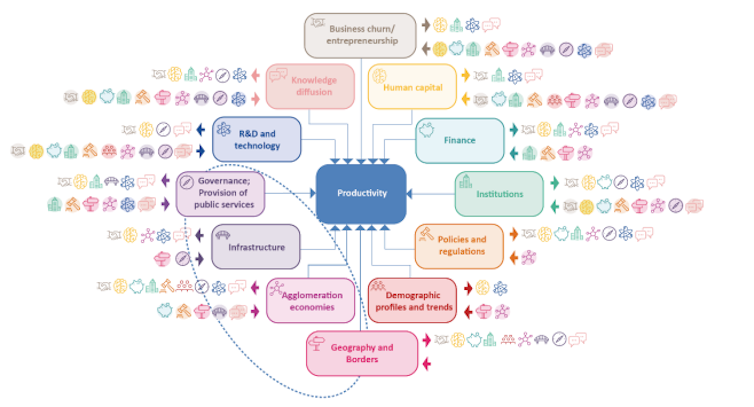
    MIL OSI USA News

  • MIL-OSI USA: Durbin Releases Documents Corroborating Justice Department Whistleblower’s Allegations Against Embattled Trump Judicial Pick Emil Bove

    US Senate News:

    Source: United States Senator for Illinois Dick Durbin

    July 10, 2025

    Durbin: “I asked for documentation from Mr. Reuveni to further substantiate his claims. That’s what I’m releasing to the public today. And clearly substantiate Mr. Reuveni’s claims they do.”

    WASHINGTON – U.S. Senate Democratic Whip Dick Durbin (D-IL), Ranking Member of the Senate Judiciary Committee, released text messages, email exchanges, and documents further corroborating the whistleblower disclosures of Mr. Erez Reuveni, formerly the Acting Deputy Director for the Office of Immigration Litigation at the Department of Justice, on Emil Bove’s nomination to the U.S. Court of Appeals for the Third Circuit.

    On the disclosures and the status of Mr. Bove’s judicial nomination, which is eligible for a vote at the next Senate Judiciary Committee executive business meeting, Durbin released the following statement:

    “Erez Reuveni was a career Justice Department attorney who vigorously defended President Trump’s immigration policies during his first Administration. So, when this loyal public servant came forward with serious allegations of misconduct by Emil Bove, I knew it was out of principle—not politics.

    “Senators raised these allegations at Emil Bove’s judicial nomination hearing, and he offered only carefully wordsmithed responses. So, I asked for documentation from Mr. Reuveni to further substantiate his claims. That’s what I’m releasing to the public today.

    “And clearly substantiate Mr. Reuveni’s claims they do. Text messages, email exchanges, and documents show that the Department of Justice misled a federal court and disregarded a court order. Mr. Bove spearheaded this effort, which demanded attorneys violate their ethical duty of candor to the court. And if Mr. Bove simply ‘can’t recall’ any of this and demands his subordinates compromise their professional obligations, he doesn’t have the moral judgment or character to serve in a lifetime position on the federal court.

    “These episodes can only lead to one conclusion: Emil Bove belongs nowhere near the federal bench. This vote will be a litmus test for Senate Judiciary Republicans. This is about more than a random f-bomb. This is a declaration of defiance of our courts at the highest level of our government by a man who now seeks a lifetime appointment to one of the highest courts in our land.”

    Following Mr. Bove’s judicial nomination hearing, Durbin requested the documents from Mr. Reuveni in a private letter to his attorneys. Durbin also led all Senate Judiciary Committee Democrats in further investigation of the Departments of Justice, Homeland Security, and Defense regarding Mr. Reuveni’s accounts.

    For a summary of Mr. Reuveni’s document production, click here.

    For a PDF of Mr. Reuveni’s first documents production, click here.

    For a PDF of Mr. Reuveni’s second documents production, click here.

    -30-

    MIL OSI USA News

  • MIL-OSI United Kingdom: Greens call for safe and managed routes for asylum seekers

    Source: Green Party of England and Wales

    Responding to the new Anglo-French deal on small-boat crossings, Carla Denyer, Green Party Co-Leader, said:

    “The only way to stop people making dangerous journeys across the channel is to introduce safe and managed routes for people to seek asylum in the UK. Anything else – including the impractical and unrealistic deal announced today – is a distraction.

    “While our governments use migration as a political football, more people will lose their lives in the Channel fleeing violence, war or oppression because the only way for them to reach the UK is by putting their lives in the hands of people smugglers.

    “Earlier this year a committee of MPs published a detailed analysis of how to improve the UK’s refugee and asylum policy, and recommended sensible measures including improving family reunion, restoring the resettlement scheme, and introducing a pilot refugee visa.

    “Instead of scrambling to appear tough on migration with flawed scheme after flawed scheme, it’s time for the UK government to get practical about tackling small boat crossings, and urgently set up safe and managed routes for people to seek asylum in the UK.”

    MIL OSI United Kingdom

  • MIL-OSI United Kingdom: Government urged to extend democratic voting system

    Source: Green Party of England and Wales

    Green MP and co-leader Adrian Ramsay responded to the government bringing back  supplementary voting for combined authority ‘metro’ mayors, the Greater London Authority mayor, elected council mayors, across England; and Police and Crime Commissioners across England and Wales. 

    “I look forward to the government now extending more democratic voting to General Elections and council elections as well. 

    “This change in systems is welcome for Mayoral contests because it ensures voters can express their preferences and the outcome will better reflect people’s views. 

    “We now need the government to wake up to the need to reform the General Election voting system, and the system for electing councillors. 

    “We have a deeply undemocratic first-past-the-post system for General Elections, particularly now the tired, old two-party system has fractured. 

    “That voting system also needs to change or we could once again find ourselves with a party with a majority of seats in Parliament won on a shrinking minority of votes.  

    “We need every vote to count and for the public to feel that they have a real say in how the country is governed.” 

    MIL OSI United Kingdom

  • MIL-OSI United Nations: UN voices concern over Greece’s suspension of asylum applications

    Source: United Nations 2

    The move, currently being debated in the Greek Parliament, would halt asylum registration for three months and allow for the return of new arrivals without assessing their claims. It follows a recent rise in landings on the southern islands of Gavdos and Crete.

    While acknowledging the strain of managing new arrivals, UNHCR said such measures must remain within the boundaries of international and European law.

    “States have the right to manage borders and address irregular migration,” the agency said in a statement. “Controlling a State’s borders, however, must be in line with international and European law.”

    A fundamental right

    The right to seek asylum, UNHCR underscored, is “a fundamental human right enshrined in international, European and national law – and applies to everyone regardless of how or where they arrive in a country.”

    “Even at times of migratory pressure,” the statement continued, “States must ensure that people seeking asylum have access to asylum procedures.”

    The proposed Greek legislation would deny asylum seekers the ability to lodge applications and instead provide for their return, prompting fears of so-called refoulement – the forced return of individuals to countries where they may face threats to life or freedom.

    MIL OSI United Nations News

  • MIL-OSI USA: Durbin Speaks Against President Trump’s Efforts To Strip Public Broadcasting Of Federal Funding

    US Senate News:

    Source: United States Senator for Illinois Dick Durbin

    July 10, 2025

    WASHINGTON – U.S. Senate Democratic Whip Dick Durbin (D-IL) today led Senators in speeches on the Senate floor against President Trump’s $9.4 billion rescissions request to cut funding already appropriated by Congress—specifically the $1.1 billion cut to federal funding for the Corporation for Public Broadcasting (CPB), including $700 million that provides critical funding for local public media. Should Republicans pass the President’s rescissions package, it would devastate more than 1,500 public radio and TV stations across the country.

    “Bottom line: do you think we’re better off with less information as Americans or more? Bottom line: do you want a choice to pick your own source of information, do you want that choice to include the Corporation for Public Broadcasting? The President says, ‘no, we’re not going to provide the assistance for that to continue.’ What [does it] mean for small towns in downstate Illinois all the way up to Chicago? Public media stations provide essential, nonpartisan news coverage, life-saving emergency and weather alerts, and educational programming for our kids,” said Durbin.

    Durbin went on to highlight how crucial public broadcasting stations are for rural communities. Right now, five counties in Illinois already are news deserts and 40 other counties have only one news source left. President Trump’s rescissions package would eliminate $700 million in support for local stations, forcing many of these rural stations with small donor bases to close if these cuts become law.

    “In these remote Illinois counties, these stations deliver critical services that commercial broadcasters [simply] abandon in less profitable markets. What does that mean? Once these stations are gone, they’re gone… And in times of crisis, that could mean in the extreme, the difference between life and death. Let me explain. Radio stations in Alaska, which rely on CPB to fund [up to] 98 percent of their operations, will lose the ability to share information about terrible weather conditions that are threatening the people of Alaska. In Alabama, folks will go without emergency alerts during tornado scares. And just this last weekend, a deadly flash flood took the lives of over 100 people and counting in rural, central Texas. While we don’t know exactly what procedures were in place, we do know that this funding is vital for emergency alerts—especially when disasters happen in the middle of the night. These are critical services, but President Trump doesn’t agree,” Durbin continued. 

    In President Trump’s request to Congress, he justified these proposed cuts saying, “federal spending on [the Corporation for Public Broadcasting] subsidizes a public media system that is politically biased and is an unnecessary expense to the taxpayer.”

    “These publicly funded local stations educate our children, deliver emergency alerts, and inform our democracy. They are not an ‘unnecessary expense’ by any measure—they are a lifeline,”Durbin continued. 

    During his floor remarks, Durbin highlighted what two public broadcasting stations mean to Illinois communities—WGLT and WQPT. WGLT hosts candidate events and forums ahead of each election and their mission is to keep neighbors connected and talking to each other. WGLT had nearly 100 percent bipartisan participation from candidates in the McLean County municipal election event. And McLean County municipal voter turnout has increased in local elections thanks to the work of WGLT. WQPT is the Quad Cities’ only locally owned PBS station, serving eastern Iowa and western Illinois. WQPT’s First Book Club outreach program provides five free books per year to at-risk youth by partnering with Title I classrooms. Since the start of the program, WQPT has given away 400,000 free books to children from low-income, English-as-second-language, rural, and special needs families.

    “While Donald Trump says this rescissions request is in the spirit of improving government efficiency, I ask this: is there anything ‘efficient’ about denying information to American citizens, about not giving American citizens a choice when it comes to broadcasting? I’ll tell you what this request really is: it’s an attack on rural America just like the [Republicans’] ‘Big Beautiful Bill.’ Thanks to the ‘Big Beautiful Bill, [which] the President just signed into law, 300 rural hospitals could close around this country.”

    Durbin concluded, “With this rescissions request, small towns and rural communities are going to get hit again and [are] set to lose their only access to trusted, local media. These cuts could irreparably harm communities across America who count on public media for 24/7 news, music, educational programming, and emergency alert services. So, I urge my Republican colleagues—will they step up next week and vote that way [to protect public broadcasting?] Many of them represent rural areas, small town America. Stand up for these people and vote down this request to cut funding that has long enjoyed bipartisan support.”

    Video of Durbin’s remarks on the Senate floor is available here.

    Audio of Durbin’s remarks on the Senate floor is available here.

    Footage of Durbin’s remarks on the Senate floor is available here for TV Stations.

    -30-

    MIL OSI USA News

  • MIL-OSI Canada: Province supports community efforts to protect against climate hazards

    Source: Government of Canada regional news

    The Disaster Resilience and Innovation Funding (DRIF) program provides support to First Nations and local governments for projects that will enhance their ability to withstand and adapt to natural hazards and climate-driven events.

    Funding is available in two categories:

    • Structural projects
    • Foundational and non-structural projects

    Local governments and First Nations throughout British Columbia are receiving more than $6 million for 11 projects as follows:

    Structural project

    Village of Hazelton: Diking infrastructure and flood protection improvements, $3.6 million

    Construction of a new 1.2-kilometre dike and upgrade to an existing dike along the Skeena River to protect critical village infrastructure, including historical structures, homes, businesses, utilities and cultural landmarks.

    Foundational and non-structural projects

    Central Coast Regional District: Disaster risk reduction and climate-adaptation plan, $290,246

    Identifies effective multi-hazard risk-reduction options with a climate-change lens to increase the resilience of the region.

    Comox Valley Regional District: Goose Spit climate resiliency project, $275,580

    Regional partner: K’omoks First Nation

    Assessment of Goose Spit’s protection of residential areas and critical infrastructure from flood, sea-level rise, storm surge and erosion, and to help identify mitigation options.

    Cook’s Ferry Indian Band: Shetland Creek hazard and risk assessment, $251,265

    Increases resilience for the community by better understanding and reducing natural-hazard risks, including flooding, avalanches, landslides and erosion.

    Homalco First Nation: Xwémalhkwu Willow Creek flood-hazard assessment and mitigation design, $399,858

    Supports community resilience by providing data to support long-term disaster risk-reduction and climate-adaptation projects to address drought and water scarcity, flood and erosion, and to develop a Willow Creek flood-hazard assessment and disaster-mitigation infrastructure design.

    Kitasoo Xai’xais Nation: Klemtu dam design, $394,600

    Design for a new water supply intake dam to replace the existing dam, which is at risk of failing and poses significant risk to the community. Increases resilience to both flooding and drought.

    Lake Babine Nation: Equipment for extreme temperatures, $61,000

    Community members will be protected from extreme temperatures, particularly the elderly and those with high-risk medical conditions, and can reduce response costs for emergency care.

    Mowachaht/Muchalaht First Nations: Climate change and disaster risk assessment, $130,000

    Supports long-term planning, ensuring the First Nations are better prepared for climate impacts while respecting and integrating Indigenous knowledge and priorities.

    Sumas First Nation: Strategic development for hazard risk and vulnerability resilience, $200,750

    By prioritizing key mitigation strategies, Indigenous-led resilience and regional co-ordination, the First Nation is better equipped to build long-term community resilience.

    Whispering Pines/Clinton Indian Band (WPCIB): Flood risk-management strategy, $400,000

    Advances flood-mitigation planning that considers climate change. Results to inform preliminary planning and design work for structural and non-structural projects for WPCIB IR #4.

    Yakweakwioose First Nation: Interception ditch climate-resilience project, $138,000

    Planning and design for nature-based solutions – a rain garden and urban forest – to support community resilience to extreme temperatures and flooding.

    MIL OSI Canada News

  • MIL-OSI USA: Reps. Castro, Ciscomani and Senators Gillibrand, Collins Reintroduce Bipartisan Bill to Strengthen Early Childhood Education Workforce

    Source: United States House of Representatives – Congressman Joaquin Castro (20th District of Texas)

    July 10, 2025

    WASHINGTON, D.C. — Today, Congressman Joaquin Castro (TX-20) and Congressman Juan Ciscomani (AZ-06) reintroduced the Head Start for Our Future Act, bipartisan legislation that would make child development and early education jobs eligible as community services under the Federal Work-Study program. By allowing schools to offer students opportunities in working in child development and early learning services, students attending college and universities will get firsthand experience in one of the most important jobs in the country – educating our nation’s youngest minds.

    “We can strengthen the infrastructure of opportunity for future generations by expanding the Federal Work-Study program to improve educational outcomes for young children and build a stronger pipeline of future teachers,” said Congressman Castro. “The Head Start for Our Future Act will help university students earn real-world, paid experience as early childhood educators, benefiting both our children and those who teach them.”

    As a dad of six, I fully understand the critical role early childhood development programs play in the lives of students and families,” said Congressman Ciscomani. “Arizona has 22 Head Start programs across 500 locations and they have proven to be essential to opening the doors of opportunity and helping our kids realize their dreams. The Head Start for Our Future Act builds on that track record of success by improving the early educator pipeline and empowering university students to gain hands-on experience as early childhood education teachers in the real world. This bill will be a game changer.”

    “Head Start is an investment in our future that helps make sure that every child has the support and services they need to thrive,” said Senator Gillibrand. “My Head Start for Our Future Act would help build the robust workforce needed to support early childhood development, while empowering college students to gain valuable hands-on experience and make a real contribution in their communities. I look forward to working to get this important legislation across the finish line.”

    “By further integrating college students into Head Start and Early Head Start programs, we not only help create opportunities for those students, but also provide a stronger foundation for the early development and education of future generations,” said Senator Collins. “This bipartisan bill aims to empower students to make meaningful contributions in their communities, while better ensuring that more children receive a quality introduction to the world of learning.”

    “The Head Start for Our Future Act takes an important step toward strengthening the early childhood education workforce by providing an opportunity for college students to gain direct, hands-on experience in Head Start and other early learning settings,” said Yasmina Vinci, Executive Director of the National Head Start Association. “By expanding Federal Work-Study to include child development and early learning, including Head Start, this legislation helps build a stronger pipeline of skilled educators, supports students pursuing meaningful careers, and addresses staffing shortages that impact children and families nationwide, advancing a solution that helps ensure continued access to high-quality early learning in communities across the country.”

    The bill is endorsed by the National Head Start Association, the School Superintendents Association, and Association of Educational Service Agencies.

    Read the Head Start for Our Future Act here.


    MIL OSI USA News

  • MIL-OSI USA: VA announces expanded burial benefits

    Source: US Department of Veterans Affairs

    Skip to content

    WASHINGTON — The Department of Veterans Affairs announced today it has temporarily expanded burial benefits for certain Veterans, per the Senator Elizabeth Dole 21st Century Veterans Healthcare and Benefits Improvement Act.

    The new law specifies eligible Veterans are those who are discharged from VA-provided medical or nursing care to receive VA-provided hospice care at their home and who pass away between July 1, 2025, and Oct. 1, 2026.

    Previously, Veterans who died at home under VA hospice care after discharge from VA-provided medical or nursing care were not always eligible for a full VA burial allowance. The Dole Act addresses that gap.

    “VA is working hard to fully implement the many provisions of the Dole Act,” said VA Secretary Doug Collins. “We’re excited to offer this expanded benefit, which better supports Veterans who choose to spend their final days at home, surrounded by their loved ones.”

    Families and caregivers of Veterans receiving hospice care at home following discharge from VA-provided medical or nursing care are encouraged to contact their local VA for information about eligibility and how to apply for burial benefits. Visit VA burial benefits or call 800-827-1000 for more information and see here for details on the legislative language authorizing this change.

    Reporters and media outlets with questions or comments should contact the Office of Media Relations at vapublicaffairs@va.gov

    Veterans with questions about their health care and benefits (including GI Bill). Questions, updates and documents can be submitted online.

    Contact us online through Ask VA

    Veterans can also use our chatbot to get information about VA benefits and services. The chatbot won’t connect you with a person, but it can show you where to go on VA.gov to find answers to some common questions.

    Learn about our chatbot and ask a question

    Subscribe today to receive these news releases in your inbox.

    Page load link

    Go to Top

    MIL OSI USA News

  • MIL-OSI Security: Houston Man Guilty of Defrauding Individuals with False Promises of Legal Status

    Source: US FBI

    HOUSTON – A 58-year-old Houston resident has entered a guilty plea to conspiracy to commit mail and wire fraud, announced U.S. Attorney Nicholas J. Ganjei.

    From March 2022 through December 2024, Jesus Carlos Silva pretended to be an immigration attorney affiliated with a Houston-based law firm. He made false promises that he could help people obtain U.S. citizenship and/or other legal immigration status. Silva charged thousands of dollars per person for his “assistance,” collecting payments through checks and money orders. He never provided legitimate immigration help and instead offered excuses for delays before ultimately cutting off communication.

    Silva instructed several individuals to travel to Houston for fake appointments with U.S. Citizenship and Immigration Services. When they arrived, there were no appointments. He admitted to stealing more than $1,450,555 from over 100 people, most of whom lived in Houston and Chicago. Others were from Texas, Illinois, Louisiana and Florida.

    U.S. District Judge George C. Hanks will impose sentencing Sept. 22. At that time, Silva faces up to five years in federal prison and a possible $250,000 maximum fine or a fine of twice the gross gain or twice the gross loss that resulted from the offense.

    Silva was permitted to remain on bond pending sentencing.

    The FBI conducted the investigation with the assistance of the U.S. Marshals Service and Houston Police Department. Assistant U.S. Attorney Brad Gray and Rodolfo Ramirez are prosecuting the case.  

    MIL Security OSI

  • MIL-OSI Security: Port Arthur felon sentenced to federal prison for firearms violation

    Source: United States Bureau of Alcohol Tobacco Firearms and Explosives (ATF)

    BEAUMONT, Texas –A Port Arthur convicted felon has been sentenced for a firearms violation in the Eastern District of Texas, announced Acting U.S. Attorney Jay R. Combs.

    Carl Sampson Solomon, 43, pleaded guilty to being a felon in possession of a firearm and was sentenced to 46 months in federal prison by U.S. District Judge Marcia A. Crone on July 9, 2025.

    According to information presented in court, on March 27, 2024, Sampson was stopped for a traffic violation on Gulfway Drive in Port Arthur.  During the stop, Solomon advised officers he had a firearm holstered under the seat. A search of the vehicle revealed the firearm and a small baggie of marijuana.  Further investigation revealed Solomon had previously been convicted of five felonies and was on felony probation. Federal law prohibits convicted felons of possessing or owning firearms.

    This case is part of Operation Take Back America, a nationwide initiative that marshals the full resources of the Department of Justice to repel the invasion of illegal immigration, achieve the total elimination of cartels and transnational criminal organizations (TCOs), and protect our communities from the perpetrators of violent crime. Operation Take Back America streamlines efforts and resources from the Department’s Organized Crime Drug Enforcement Task Forces (OCDETFs) and Project Safe Neighborhood (PSN).

    This case was investigated by the Port Arthur Police Department and the Bureau of Alcohol, Tobacco, Firearms, and Explosive.  This case was prosecuted by Assistant U.S. Attorney Matt Quinn.

    ###

    MIL Security OSI

  • MIL-OSI Security: Jefferson County felon sentenced to federal prison for live-stream shooting

    Source: United States Bureau of Alcohol Tobacco Firearms and Explosives (ATF)

    BEAUMONT, Texas –A Beaumont man has been sentenced for illegally possessing a firearm in the Eastern District of Texas, announced Acting U.S. Attorney Jay R. Combs.

    Brian Keith Murphy, 33, pleaded guilty to being a felon in possession of a firearm and was sentenced to 85 months in federal prison by U.S. District Judge Marcia A. Crone on July 9, 2025.

    According to information presented in court, on August 11, 2024, law enforcement officers received a call of shots fired near a gas station on Concord Avenue in Beaumont.  As officers were being dispatched to the scene, the Beaumont Police Department was able to view a live stream of the shooting through their “Real-Time-Crime Center.”  Officers monitoring the live stream were able to witness the shooter fire multiple shots near vehicles and individuals in the parking lot.  Through coordination with officers monitoring the live stream and officers on scene, law enforcement was able to identify the vehicle the shooter had fled in.  The vehicle was stopped, and Murphy was identified as the shooter.  Two firearms were recovered from the vehicle Murphy was fleeing in, one of which was the firearm Murphy used in the shooting.  Murphy was on federal supervised release at the time for a previous conviction for being a felon in possession of a firearm.  Federal law prohibits convicted felons from owning or possessing firearms.

    This case is part of Operation Take Back America, a nationwide initiative that marshals the full resources of the Department of Justice to repel the invasion of illegal immigration, achieve the total elimination of cartels and transnational criminal organizations (TCOs), and protect our communities from the perpetrators of violent crime. Operation Take Back America streamlines efforts and resources from the Department’s Organized Crime Drug Enforcement Task Forces (OCDETFs) and Project Safe Neighborhood (PSN).

    This case was investigated by the Bureau of Alcohol, Tobacco, Firearms, and Explosives and the Beaumont Police Department.  This case was prosecuted by Assistant U.S. Attorney Russell James.

    ###

    MIL Security OSI

  • MIL-OSI Video: AI CODE OF PRACTICE

    Source: European Commission (video statements)

    The Code is designed to help industry comply with the AI Act’s rules on general-purpose AI, which will enter into application on 2 August 2025.

    The Code consists of three chapters:
    Transparency, Copyright, Safety and Security
    It was developed by 13 independent experts, with input from over 1,000 stakeholders, including model providers, small and medium-sized enterprises, academics, AI safety experts, rightsholders, and civil society organisations.

    https://www.youtube.com/shorts/JqhpidxYeGg

    MIL OSI Video

  • Bihar’s ‘Special Intensive Revision’ drive covers 66% voters, 15 days left for final submissions

    Source: Government of India

    Source: Government of India (4)

    The Special Intensive Revision (SIR) of electoral rolls in Bihar has reached 66 per cent voter coverage, according to the Election Commission of India (ECI), with the final deadline still more than two weeks away.

    As of 6 pm on Thursday, 5.22 crore enumeration forms — 66.16 per cent of the total 7.89 crore existing electors in the state — had been collected since the revision drive began on June 24.

    The ECI credited the progress to the active participation of voters and the coordinated effort of 77,895 Booth Level Officers (BLOs), over 20,000 newly appointed BLOs, and more than four lakh volunteers who are helping elderly, differently-abled, sick, and vulnerable voters. In addition, 1.56 lakh Booth Level Agents (BLAs) appointed by all recognised political parties are supporting the exercise.

    Nearly 7.90 crore forms were printed for the drive, and about 98 per cent — roughly 7.71 crore — have already been distributed to voters whose names were on the rolls as of June 24.

    The ECI said the collection exercise could be completed ahead of the July 25 deadline if the current pace continues.

  • MIL-OSI United Kingdom: UK-France Leaders Declaration

    Source: United Kingdom – Executive Government & Departments

    Press release

    UK-France Leaders Declaration

    The Prime Minister of the United Kingdom and the President of the French Republic met today in Downing Street for the 37th UK-France Summit.

    The Prime Minister of the United Kingdom and the President of the French Republic met today in Downing Street for the 37th UK-France Summit.

    The United Kingdom and France share a commitment to peace, democracy, the rule of law, the rules-based international order, and human rights. In an international context in which these values are increasingly jeopardised, France and the United Kingdom share a responsibility to stand up for these aims and values, as major European countries, permanent members of the United Nations Security Council, major world economies, and open democracies. Our relationship and cooperation are fundamental.

    Our two countries share a unique friendship, an intertwined history and profound connections between our people, businesses, and communities. As we open a new chapter in our bilateral and European ties, also building on the outcome of the first EU-UK Summit held in May 2025, we want to make our people safer and more secure, champion fair and lasting peace worldwide, deepen our defence and security collaboration, support competitiveness and growth for our economies, providing jobs, and prosperity to our countries.

    Foreign Policy/Global Issues

    We reaffirm our determination to ensure Russia does not prevail in its illegal war of aggression, as well as our commitment to lasting support to Ukraine, including security assurances that safeguard its independence and sovereignty. Today we convened the Coalition of the Willing bringing together more than thirty nations committed to Ukraine’s long-term security. We welcomed the development of mature operational plans to deploy a reassurance force once hostilities have ceased, and to help secure Ukraine’s skies and seas and regenerate Ukraine’s armed forces. We have agreed to launch a Counter-Shadow Fleet Partnership to crack down on dangerous Russian-backed vessels in the Channel, reduce Russian oil revenues via these vessels, and safeguard our maritime security. Alongside this, we commit to seeking a lowering of the crude oil price cap, further depriving Russia of the oil revenues it uses to fund its barbaric war. We will strengthen our joint efforts to prevent the supplying of dual-use components and weapons to Russia by third countries’ entities. We reiterate our readiness to step up pressure on Russia as it refuses to commit to peace. We are committed to defending democracy and stability in the wider European neighbourhood and have agreed to work together on new support to strengthen resilience in the Western Balkans and Moldova. We welcome the conclusion of the negotiations on a peace treaty between Armenia and Azerbaijan, and urge the parties to sign this agreement as soon as possible

    We reaffirm our determination that Iran can never have a nuclear weapon. We will continue our cooperation, including in the E3 format with Germany, working with the US to ensure a robust deal on Iran’s nuclear programme that takes into account our shared security interests. We will continue to advocate for the resumption of Iran’s full cooperation with the IAEA. We are committed to addressing the humanitarian crisis in Gaza, pushing for an immediate ceasefire, and the release of all remaining hostages. We reaffirm our commitment to recognising a Palestinian state, as a contribution to a peace process. We will work together to support its development and the realisation of a Two-State Solution. We are also stepping up our coordination on security and humanitarian challenges in support of wider regional stability in Syria and Lebanon.

    Beyond Europe, we share a responsibility and resolve to defend our values and interests. As demonstrated by the actions of Russia’s enablers, our security is inextricably linked to the Indo-Pacific. We will strengthen our coordination and work together for a free, open, and sovereign Indo-Pacific through new joint maritime security training, reciprocal base access, and joint support to regional organisations. We will launch a Global Maritime Security Dialogue. We jointly reaffirm our commitment to peace and stability in the Korean peninsula, in the South and East China Seas, and in the Taiwan Strait, where we call for the peaceful resolution of cross-Strait issues. We will keep coordinating efforts and initiatives to address peace and security challenges in Africa and their humanitarian consequences, in particular regarding Sudan and the Great Lakes.

    We will continue to act through the European Political Community to respond to common security challenges, including irregular migration, and promoting stability and democratic resilience, competitive and economic growth throughout the continent.

    We share a commitment to strengthening the multilateral system and working together for reform across the three pillars of the UN. We have today agreed to expand our cooperation on humanitarian disaster preparation and responses, and to coordinate our work on global issues such as climate change, poverty and promotion of sexual and reproductive health rights. We support the next phase of the International Advisory Panel on Biodiversity Credits by each committing seed funding to unlock philanthropic finance and sustainable nature-positive outcomes.

    Defence And Security

    The return of conventional warfighting at scale in Europe, combined with hostile state actors, hybrid warfare and disinformation, requires a new, whole of society and government approach. As Europe’s two nuclear powers and leading militaries, we share responsibility for the continent’s defence and security. We are united in the face of profound security threats and challenges, in particular the immediate and pressing threat posed by Russia to Euro-Atlantic security.

    Today we announced Lancaster House 2.0 to modernise our cooperation. Through this we agree to deepen and broaden our unique defence and security partnership enshrined in the 2010 Lancaster House Treaties, a core pillar of security in Europe, complementing our cooperation in NATO and reinforcing Europe’s contribution to it, as well as the UK-EU Security and Defence Partnership.

    Deepening our longstanding and resolute commitment to cooperation of our independent nuclear deterrents, we have agreed to set out, in a specific statement, our contribution to the defence of European partners and NATO allies, and that whilst our nuclear forces are independent, they can be coordinated. We have decided to establish a UK-France Nuclear Steering Group that will coordinate policy, capability and operation.

    We will launch the Combined Joint Force, to build a shared capability of sufficient scale for warfighting, and ready to operate in all domains, including space and cyber, in the defence of Europe. This evolution of the existing Combined Joint Expeditionary Force will continue to be at the forefront of Coalition of the Willing planning. We have also agreed the path for new military capability projects, including the next generation of our Deep Strike and Air-to-Air missiles.

    We will deepen our cooperation on cyber issues, tackling the proliferation and irresponsible use of commercial hacking capabilities. We will address emerging threats, including in the hybrid domain, whilst harnessing the transformative potential of Artificial Intelligence and emerging technologies. We will maximise our impact against the highest-threat terrorist groups including deepening our counter-terrorism cooperation in Syria.

    We are committed to redoubling our collaboration to ensure the Euro-Atlantic security architecture remains fit for purpose, with European allies both shouldering their existing obligations and fully involved in shaping any new arrangements. We will intensify our cooperation with Germany and other partners to this end.

    Irregular Migration

    The cruelty of organised gangs who smuggle individuals across the Channel at great risk to life blights both our societies. Today, we announce a strengthening of our cooperation to tackle illegal Channel crossings, focused on reducing the risk to life at sea, breaking the criminal gang networks through law enforcement cooperation, and working upstream to tackle the root causes and smuggling networks.

    We continue to work together on novel and innovative approaches to intercept boats, exemplified by the ongoing French Maritime Review supporting enhanced Maritime co-operation, to ensure we adapt as the criminal gangs change their approach. We seek to use all the tools at our disposal, including both existing and new sanctions, to tackle people smuggling, trafficking, and organised immigration crime. In parallel, the United Kingdom is intensifying its efforts to reform its domestic asylum system, deliver on increasing returns and tackle illegal working.

    France and the UK have agreed to trial a pilot to deter illegal journeys across Europe to the UK and dangerous small boat crossings while saving lives, as an innovative approach to break the business model of organised gangs. It will provide for the readmission of migrants directly to France after an illegal journey by small boat to the United Kingdom and will also offer a reciprocal legal route to the UK for migrants in France, with a principle of equivalence between the number of readmissions to France and the number of legal admissions to the UK. The agreement will be finalised and signed subject to completing prior legal scrutiny in full transparency and understanding with the Commission and EU Member states as this initiative is related to an EU external border, and implemented within a few weeks, subject to the above processes, with real-time monitoring. We are pursuing an ambitious approach that complements wider European cooperation on irregular migration, including working together to prevent irregular Channel crossings within the Common Understanding agreed at the UK-EU Summit on 19 May.

    In this context, building on the Sandhurst Agreement, the United Kingdom reaffirms its commitment to fund Maritime action, increased law enforcement response onshore and inland, alongside new joint upstream working to tackle the issue at source and in transit, through the existing financial agreement through to March 2026, and through the finalisation of a new three year cycle (2026-2029) as soon as possible.

    Growth

    We will ensure continued cooperation and leadership on economic sectors of the future, leading to more growth, skills, and high-quality jobs for our people. This collaboration will make us stronger, remove barriers, and boost our collective resilience and cooperation on economic security, including on critical minerals. We will lead Europe on safely harnessing AI to the benefit of our people and economies, partnering our supercomputers and incubators, and combining the forces of our world-leading universities and research.

    We are committed to protecting our Critical National Infrastructure that underpins our thriving economies. Satellite connectivity is strategically important to Europe’s security and resilience and the UK’s investment in the Eutelsat Group is a demonstration of our commitment to this important technology, alongside the French Government and other existing shareholders. The UK will thus join, prorated to its current stake, the capital increase led by the French State and other existing shareholders of Eutelsat announced on June 19 – taking the total amount of capital raised to €1.5 billion. In the context of European Space Projects, we welcome UK suppliers bidding for supply chain commercial contracts when conditions are met. We will also work towards a resilient terrestrial alternative to Global Navigation Satellite Systems.

    Together, we will lead the way for Europe’s transition to net zero, creating the green jobs of the future and securing affordable energy supplies for our people. Today we reassert our resolve to diversify civil nuclear supply chains from Russia, upskill our nuclear workforces, and manage a responsible nuclear legacy. We welcome the confirmation by EDF of a 12.5% stake in Sizewell C post Financial Close and the proposed issuance of a €6 billion/£5 billion debt guarantee facility to Sizewell C from Bpifrance Assurance export.

    Today, we have agreed that our regulators will move forward in assessing interconnection projects under proportionately-agreed cost and revenue sharing arrangements between beneficiaries, aiming at delivering 1GW further interconnection by 2035. The delivery of further interconnection will be considered in line with national strategic plans. We will continue to work together on key technologies, including offshore wind, carbon capture, usage and storage, and hydrogen.

    We agree to deepen our collaboration on transport, particularly across the Channel, seeking ways to support decarbonisation, protect maritime workers’ pay and conditions, and support growth in the international rail sector. We also welcome the newly-adopted full bilateral framework on the Channel Tunnel, supporting the continued flow of passengers and goods.

    People-to-People

    We are delighted to announce an exceptional cultural partnership with the unprecedented loan of the Bayeux Tapestry to the UK, for an exhibition in the British Museum between September 2026 and July 2027, and the loan of the Sutton Hoo Treasures among other masterpieces from the British Museum, for exhibitions in the Museums of Rouen and Caen, recalling the deep historical ties between our two countries. This exchange will feature as part of the 2027 European Year of the Normans which will celebrate the millennium of William the Conqueror, through cooperation, cultural and educational activities that will recall the strength of our links, past, present, and future. We will celebrate artistic, educational, and community-driven activity through events and initiatives that will support our creative industries. We will also work together to celebrate the 2027 Grand Départ of the Tour de France from the UK.

    We welcome the decision by the French government to facilitate the recognition by local authorities of UK blue badges throughout France for disabled drivers. We will expand connections between UK and French schools, supported by an extension of the arrangements we have made to facilitate school trips in both directions. We will maintain our working relationships on the introduction of the Schengen Entry/Exit System (EES) within the agreed EU framework and timetable to assure security and fluidity across our common border crossing points. Finally, we welcome further constructive exchanges between our Parliaments.

    Updates to this page

    Published 10 July 2025

    MIL OSI United Kingdom