Blog

  • MIL-OSI United Kingdom: 64th Round of the Geneva International Discussions: UK statement to the OSCE

    Source: United Kingdom – Government Statements

    Speech

    64th Round of the Geneva International Discussions: UK statement to the OSCE

    Ambassador Holland welcomes the discussions held during the 64th round, and commends the Co-Chairs for their continued efforts to facilitate dialogue among all participants.

    The United Kingdom reaffirms its strong support for the Geneva International Discussions (GID) as a vital platform for addressing the consequences of the 2008 conflict in Georgia and promoting long-term peace and stability in the region. We commend the Co-Chairs for their continued efforts to facilitate dialogue among all participants.

    The UK reaffirms its full support for Georgia’s sovereignty and territorial integrity within its internationally recognised borders. We continue to call on the Russian Federation to reverse its recognition of the so-called independence of Georgia’s Abkhazia and South Ossetia regions.

    We welcome the discussions held during the 64th round, particularly the focus on security arrangements, non-use of force and humanitarian issues – including freedom of movement, documentation, and the rights of displaced persons. We regret that the agenda item on internally displaced persons and refugees could not be addressed due to a walkout by some participants, and we urge all parties to engage constructively in future rounds.

    The UK remains deeply concerned by the ongoing restrictions on freedom of movement and the human rights situation in the Georgian regions of Abkhazia and South Ossetia. We again call for full access for international humanitarian and human rights mechanisms.

    We look forward to the next round of discussions in November 2025 and encourage all parties to engage in good faith to achieve tangible progress for the benefit of all conflict-affected communities.

    Thank you, Madam Chair.

    Updates to this page

    Published 10 July 2025

    MIL OSI United Kingdom

  • MIL-OSI United Nations: 10 July 2025 Departmental update WHO Academy and the City of Lyon: a strategic collaboration for global health

    Source: World Health Organisation

    In 2018, when the idea of establishing a global learning centre for health – what would become the WHO Academy – was under discussion between the World Health Organization (WHO) and the Government of France, they didn’t have to look far for its new home. Since the Middle Ages, Lyon has been a European capital for human, animal and environmental health. Doctors from across Europe came to study in Lyon, and it was the first centre of medical literature on the continent in the fifteenth and sixteenth centuries. The city is even the home of the first veterinary school in Europe, opening in Lyon in 1761.

    In more recent times, Marcel Mérieux, a former assistant to Pasteur, opened one of the city’s first pharmaceutical research institutes in 1897, the beginnings of what would become the Lyon-Gerland Biodistrict. The city brings together over 2000 global public institutions, research centres and businesses focused on life sciences and health employing nearly 80 000 people, including the WHO International Agency for Research on Cancer (IARC) and a WHO office dedicated to health emergencies.

    “The City of Lyon has demonstrated exceptional leadership in public health, making it an ideal partner for the WHO Academy,” explains Dr David Atchoarena, Executive Director of the WHO Academy. “The local ecosystem provides a myriad of opportunities for collaboration and maximizing the impact of the WHO Academy’s initiatives. Together with the City of Lyon we are committed to advancing global health through innovative approaches that address the complex challenges of our time.”

    Meeting these challenges depends on a well-prepared, highly skilled global health and care workforce. The aim of the WHO Academy is to become a global hub for lifelong learning and to provide health and care workers, and decision-makers, in France and around the world, with access to the knowledge and competencies they need to meet current and future needs. The Academy has developed a comprehensive portfolio of courses across most health topics addressed by WHO and has three flagship programmes: Biomanufacturing, Healthy Cities and One Health.

    Leveraging the local ecosystem for innovative health solutions

    The partnership between the WHO Academy and the City of Lyon has already yielded numerous collaborative activities since the launch of the Academy in December 2024. The Academy is an observer to the Contrat Local de Santé 2022-2027, led by the City of Lyon and the Auvergne-Rhône-Alpes Regional Health Agency, to reduce health inequalities, improve access to care, promote prevention and integrate the One Health approach to health services in the region. In addition, the Academy acted as an observer to AGORA 2030, a participatory initiative accelerating climate action through collaboration among various city stakeholders.

    In April 2025, the Academy participated in the month-long ‘Explore your Health’ festival, most significantly by hosting a roundtable discussion on ‘Urban Planning through the One Health Lens’ at the WHO Academy campus, featuring experts in health, urbanism and research to discuss sustainable city development.

    Lyon is a committed member of the WHO French Healthy Cities Network, and the city’s municipal strategy aligns with the principles of the Academy’s Healthy Cities flagship: equity, participation, multisectoral governance and sustainability. Most recently the WHO Academy and the City of Lyon co-organized a two-day study visit and knowledge exchange for more than 50 mayors from the Korea Healthy Cities Partnership.

    In May, the Séminaire des directeurs meeting held at the Academy campus raised awareness among the 80 City of Lyon directors of public services about the importance of integrating a One Health approach into their work.

    “The City of Lyon is committed to addressing the key determinants of health, such as nutrition, housing, environmental health, access to care and physical activity for the citizens of Lyon, but also for people around the world,”  said Céline de Laurens, Lyon Deputy Mayor for Health, Prevention, and Environmental Health. “Being able to share our experiences, and hear from others like those in Korea, is critical to creating better health for all. This is why having the WHO Academy in Lyon is so important – it brings global experience to our doorstep and also amplifies our own lessons to the world.”

    Global cooperation supporting local solutions

    The collaboration between WHO and the City of Lyon is set to expand with several initiatives recently implemented or planned in the coming months. The city will begin contributing local case studies and examples of city-led innovation in health, environmental sustainability and social equity to the Healthy Cities and One Health flagship programmes. Plus, the Academy will soon start developing learning content for municipal leaders around the world, to be hosted on its online learning platform, based on Lyon’s experience in health-enabling urban planning, food systems and climate-responsive public health strategies.

    “With the establishment of the WHO Academy campus, the City of Lyon is poised to further its contributions to public health, fostering innovation and collaboration to address global health challenges,” noted Dr Atchoarena. “We couldn’t have asked for a better partner for the Academy, and working with the City of Lyon allows us to share a model for other global cities to follow.”

    MIL OSI United Nations News

  • Jimmy Swaggart’s rise and fall shaped the landscape of American televangelism

    Source: ForeignAffairs4

    Source: The Conversation – USA (3) – By Diane Winston, Professor and Knight Center Chair in Media & Religion, USC Annenberg School for Communication and Journalism

    Rev. Jimmy Swaggart preaches at the Los Angeles Memorial Sports Arena on March 29, 1987. AP Photo/Mark Avery, file

    Jimmy Swaggart, one of the most popular and enduring of the 1980s televangelists, died on July 1, 2025, but his legacy lives.

    Along with Jerry Falwell and Pat Robertson, he drew an audience in the millions, amassed a personal fortune and introduced a new generation of Americans to a potent mix of religion and politics.

    Swaggart was an old-time evangelist whose focus was “saving souls.” But he also preached on conservative social issues, warning followers about the evils of abortion, homosexuality and godless communism.

    [Swaggart also denounced] what he called “false cults,” including Catholicism, Judaism and Mormonism. In fact, his denunciations of other religions, as well as his attacks on rival preachers, made him a more polarizing figure than his politicized brethren.

    As a reporter, I covered Swaggart in the 1980s. Now, as a scholar of American religion, I argue that while Swaggart did not build institutions like Falwell’s Moral Majority or Robertson’s 700 Club, he helped to spread right-wing positions on social issues, such as sexual orientation and abortion, and to shape the image of televangelists in popular culture..

    Swaggart’s cousins

    Born into a hardscrabble life in a small Louisiana town, Swaggart grew up alongside his cousins Jerry Lee Lewis, the future rockabilly pioneer, and future country singer Mickey Gilley.

    All three loved music and singing. They polished their playing on an uncle’s piano and sneaked into African American nightclubs to hear the jazz and blues forbidden by their parents.

    A man playing the piano in front of a huge crowd.
    Jimmy Swaggart delivering a sermon at the Flora Blanca Stadium in El Salvador.
    Cindy Karp/Getty Images

    While Gilley and Lewis turned their musical talent into recording and performing careers, Swaggart felt called to the ministry. He dropped out of high school, married at 17, began preaching at 20 and was ordained at 26.

    He was licensed by the Assemblies of God, a Pentecostal denomination that believes the Holy Spirit endows believers with spiritual gifts that include speaking in tongues and faith healing.

    The glory years

    Pentecostals were nicknamed Holy Rollers because of their tendency to shake, quake and roll on the floor when feeling the Holy Spirit. Their preachers excelled at rousing audiences’ ardor, and Swaggart commanded the stage better than most. He paced, pounced and poured forth sweat while begging listeners to turn from sin and accept Jesus.

    Starting small, he drew crowds while preaching on a flatbed trailer throughout the South. His following grew, and in 1969 he opened the Family Worship Center in Baton Rouge.

    A man holding a briefcase in one hand stands next to a sign on a wall that says, 'Jimmy Swaggart Evangelistic Association.'
    Evangelist Jimmy Swaggart leaves his office complex in Baton Rouge, La., on Jan. 7, 1977.
    AP Photo

    At capacity, the church held 10,000 worshippers, who represented a broad swath of America: young girls and grannies, white and Black, bankers and farmers. His sermons began calmly but built to a fever pitch. CBS newsman Dan Rather once called him the “country’s greatest speaker.”

    During services, Swaggart also sang and played piano. In 1982, Newsweek magazine noted his musical chops, naming him the “King of Honky Tonk Heaven.” His music crossed gospel, country and honky-tonk – songs with a strong rhythmic beat – and he sold 17 million albums over his lifetime.

    By 1975, Swaggart’s on-stage charisma powered the launch of a television ministry that would reach millions within a decade. Viewers were captivated by his soulful tunes and fire-and-brimstone sermons. At its height, Swaggart’s show was televised in 140 countries, including Peru, the Philippines and South Africa.

    His ministry also became the largest mail-order business in Louisiana, selling books, tapes, T-shirts and biblical memorabilia. Thanks to the US$150 million raised annually from donations and sales, Swaggart lived in an opulent mansion, possessed a private jet previously owned by the Rockefellers, sported a yellow gold vintage Rolex and drove a Jaguar.

    The downfall

    Swaggart disliked competition and had a history of humiliating rival preachers. Wary of the Rev. Marvin Gorman, a Pentecostal minister whose church also was in Louisiana, Swaggart accused the man of adultery. Gorman admitted his infidelity and was defrocked.

    Gorman had heard rumors about Swaggart’s own indiscretions, and he and his son decided to tail the famed evangelist. In 1988, they caught Swaggart at a motel with a prostitute, and Gorman reported the incident to Swaggart’s denomination. He also gave news outlets photos of Swaggart and the prostitute. In a tearful, televised apology, Swaggart pleaded for a second chance.

    While his fans were willing, the Assemblies of God had conditions: Swaggart received the standard two-year suspension for sexual immorality. Defying the ruling, Swaggart went back to work after three months, and the denomination defrocked him.

    A woman lying curled up on carpeted steps with her head in her arms.
    A parishioner overcome with grief lies on steps to the altar after Jimmy Swaggart’s confession of sexual indiscretions.
    Thomas S. England/Getty Images

    Swaggart might have succeeded as an independent minister, but in 1991 the police stopped his car for driving on the wrong side of the road. Inside they found the preacher with a prostitute. This time, Swaggart did not ask for forgiveness. Instead, he informed his congregation, “The Lord told me it’s flat none of your business.”

    Afterward, Swaggart never regained his former standing. His mail-order business dried up, donations fell, and attendance at services cratered. But up until his death, he kept on, in his own words, as an “old-fashioned, Holy Ghost-filled, shouting, weeping, soul-winning, Gospel-preaching preacher.”

    Swaggart’s legacy

    Swaggart, like other 1980s televangelists, brought right-wing politics into American homes. But unlike Jerry Falwell and Pat Robertson, Swaggart was less interested in winning elections than saving souls. In fact, when Robertson considered a presidential run in 1988, Swaggart initially tried to dissuade him – then changed his mind and supported him.

    Swaggart’s calls for a return to conservative Christian norms live on – not just in Sunday sermons but also in today’s world of tradwives, abortion restrictions and calls to repeal gay marriage. His music lives on, too. The day before he died, the Southern Gospel Music Association Hall of Fame inducted him as a member.

    But his legacy also survives in popular culture. In recent years, both reality television and scripted series have starred preachers shaped in the image of Swaggart and his peers. Most exaggerate his worst characteristics for shock and comedic effect.

    Preachers of L.A.,” a 2013 reality show that profiled six Los Angeles pastors, featured blinged-out ministers whose sermons mixed hip-hop with the Bible. The fictional “Greenleaf” followed the scandals of an extended family’s Memphis megachurch, while “The Righteous Gemstones,” a dark spoof of Southern preachers, turned a family ministry into a site for sex, murder and moneymaking.

    But these imitations can’t match the reality. Swaggart was a larger-than-life minister whose story – from small-town wannabe to disgraced pastor, to preaching to those who would listen – had it all: sex, politics, music and religion.

    For those who want a taste of the real thing, The King of Honky Tonk Heaven lives on. You can see his old services and Bible studies streaming daily on his network.

    The Conversation

    Diane Winston does not work for, consult, own shares in or receive funding from any company or organization that would benefit from this article, and has disclosed no relevant affiliations beyond their academic appointment.

    ref. Jimmy Swaggart’s rise and fall shaped the landscape of American televangelism – https://theconversation.com/jimmy-swaggarts-rise-and-fall-shaped-the-landscape-of-american-televangelism-260377

  • Wildfire smoke can make your outdoor workout hazardous to your health – an exercise scientist explains how to gauge the risk

    Source: ForeignAffairs4

    Source: The Conversation – USA (3) – By John C. Quindry, Professor of Integrative Physiology and Athletic Training, University of Montana

    Air pollution from wildfire smoke can worsen heart and lung disease. helivideo/iStock via Getty Images Plus

    As the summer’s sunny days take hold, many people turn to outdoor exercise.

    But in parts of North America, pleasant weather often aligns with wildfire season. As summers get drier, both the frequency and the intensity of wildfires have grown, producing more polluting smoke.

    A fire’s smoke can spread across several states, leaving people at risk for the health consequences of air pollution.

    Exercisers and health experts are asking whether the benefits of outdoor exercise are negated when the skies are hazy with wildfire smoke.

    How does air pollution make people sick?

    Air pollution’s components depend on its source. For instance, traffic-related air pollution consists largely of vehicle exhaust and brake and tire wear, while industrial pollution contains significant amounts of ozone.

    Wildfires produce huge quantities of airborne particles, also called fine particulate matter. These particles are less than 2.5 micrometers in diameter – about a tenth the size of a pollen grain.

    Particles of that size, which air quality experts refer to as PM2.5, raise serious health concerns because they are tiny enough to be carried to the air sacs in the deepest parts of the lungs. From there, they can cross into the blood stream, leading to bodywide inflammation – essentially, the immune system’s fight response – which can promote or aggravate multiple chronic illnesses.

    Research shows that long-term exposure to wildfire smoke is linked to lung diseases, heart disease and other conditions. Since these illnesses take decades to develop, scientists think that the health problems caused by wildfire smoke inhalation accumulate after years of exposure.

    One-time smoke exposures may have cumulative effects

    My research team and others are investigating how short-term smoke exposure might also influence long-term health outcomes such as heart and lung diseases.

    Particulate matter from wildfire smoke can aggravate chronic illnesses.

    To estimate the effects of exposure from a single fire event, environmental scientists can study a variety of factors such as immune system markers of inflammation, signs of physiologic stress and changes in heart, blood vessel and nervous system function. How exactly smoke exposures worsen disease is still poorly understood, but these immediate responses in the body may also be linked to developing chronic disease.

    In a study published in June 2025, my colleagues and I examined these outcomes in healthy participants who exercised during a wildfire simulation in our air inhalation lab. The air was filtered to contain high concentrations of PM2.5 particles produced by burning local pine trees – the equivalent to being downwind of a major wildfire.

    We asked 20 generally healthy participants in their mid-20s to exercise on a stationary cycle at about half their maximum effort for two hours while breathing the smoke. We found that participants’ blood vessel and nervous system function declined immediately after their smoky exercise session. These stress indicators bounced back to normal within an hour of returning to a clean air environment.

    Half of our study participants had a heightened response to physiological stress, which scientists think may signify a heightened risk of chronic diseases. We selected them based on a stress test administered before the experiment: Specifically, their blood pressure spiked when their hands were dipped in ice water for two minutes. The stress-responsive participants experienced significantly stronger declines in blood vessel and nervous system function than people in the typical response group, suggesting that exercise in a very smoky climate may affect some people more than others.

    While it isn’t possible to predict who is most at risk, our study underscores the need to think carefully about exposure to wildfire smoke.

    How smoky is too smoky for outdoor exercise?

    Unfortunately, precise air quality thresholds based on factors such as age and medical condition do not exist. But some simple guidelines and considerations can help.

    The first step is to check the air quality where you live at the government website AirNow. It uses a scale called the Air Quality Index, created by the Environmental Protection Agency in 1999 – which ranks air quality regionally on a scale from 0 to 500. The website is searchable by ZIP code. The reading for a given region reflects the contribution of several pollutants, including PM2.5 levels.

    Scale for interpreting AirNow air quality readings
    The Air Quality Index ranks air quality at six levels.
    U.S. Environmental Protection Agency

    When the air quality is ranked “good,” the decision is simple – get out there and enjoy the outdoors. And there is little debate that people should generally limit their outdoor exposure when air quality levels cross into the “unhealthy” threshold – or at least be aware that doing so poses health risks.

    The risks and benefits of exercising outdoors when air quality is in the “moderate” and “unhealthy for sensitive” ranges are less clear, particularly for people who don’t have chronic health conditions.

    Gauging your risk

    One major factor in deciding when and whether to exercise outdoors is your health status. AirNow recommends that people with chronic conditions err on the side of caution and remain indoors when smoke levels cause the air quality rating to approach the “unhealthy for sensitive” category.

    That advice may be obvious for people with diagnosed lung conditions such as asthma or chronic obstructive pulmonary disease, given that particles from wildfire smoke aggravate the lungs. But studies suggest it’s true for milder disease states, too. For example, a large study of people with elevated but not clinically high blood pressure indicated that those who lived downwind of air pollution were more likely to develop high blood pressure and, ultimately, heart disease.

    Another consideration is the time of day. As the afternoon heats up, the column of air we breathe expands, diluting the particulate counts. And afternoon winds frequently blow stagnant air out of the valleys and downtown areas where particulate matter can concentrate during the cooler parts of the day. That means evening workouts may be safer than early-morning ones, though direct confirmation with air quality readings is key.

    Also important is the intensity at which you exercise. Higher-intensity exercise means deeper, more frequent breathing, which likely elevates your exposure to harmful air. So you might choose a shorter jog over a longer run when air quality is moderate or poor.

    My lab is currently working to quantify how much pollution a person breathes in while exercising in smoky conditions, based on their exercise intensity, exercise duration and local particulate counts. This line of research is still in its infancy, but our early findings and other published research suggest that when wildfire smoke puts air quality into the “moderate” and “unhealthy for sensitive” range, people can dial down the effects of smoke exposure by decreasing their exercise intensity or the time they spend outside.

    The Conversation

    John C. Quindry received funding from the United States Department of Agriculture Forest Service and the National Institutes of Health – INBRE/RAIN.

    ref. Wildfire smoke can make your outdoor workout hazardous to your health – an exercise scientist explains how to gauge the risk – https://theconversation.com/wildfire-smoke-can-make-your-outdoor-workout-hazardous-to-your-health-an-exercise-scientist-explains-how-to-gauge-the-risk-255812

  • The AI therapist will see you now: Can chatbots really improve mental health?

    Source: ForeignAffairs4

    Source: The Conversation – USA (3) – By Pooja Shree Chettiar, Ph.D. Candidate in Medical Sciences, Texas A&M University

    Chatbot ‘therapists’ use artificial intelligence to mimic real-life therapeutic conversations. Pooja Shree Chettiar/ChatGPT, CC BY-SA

    Recently, I found myself pouring my heart out, not to a human, but to a chatbot named Wysa on my phone. It nodded – virtually – asked me how I was feeling and gently suggested trying breathing exercises.

    As a neuroscientist, I couldn’t help but wonder: Was I actually feeling better, or was I just being expertly redirected by a well-trained algorithm? Could a string of code really help calm a storm of emotions?

    Artificial intelligence-powered mental health tools are becoming increasingly popular – and increasingly persuasive. But beneath their soothing prompts lie important questions: How effective are these tools? What do we really know about how they work? And what are we giving up in exchange for convenience?

    Of course it’s an exciting moment for digital mental health. But understanding the trade-offs and limitations of AI-based care is crucial.

    Stand-in meditation and therapy apps and bots

    AI-based therapy is a relatively new player in the digital therapy field. But the U.S. mental health app market has been booming for the past few years, from apps with free tools that text you back to premium versions with an added feature that gives prompts for breathing exercises.

    Headspace and Calm are two of the most well-known meditation and mindfulness apps, offering guided meditations, bedtime stories and calming soundscapes to help users relax and sleep better. Talkspace and BetterHelp go a step further, offering actual licensed therapists via chat, video or voice. The apps Happify and Moodfit aim to boost mood and challenge negative thinking with game-based exercises.

    Somewhere in the middle are chatbot therapists like Wysa and Woebot, using AI to mimic real therapeutic conversations, often rooted in cognitive behavioral therapy. These apps typically offer free basic versions, with paid plans ranging from US$10 to $100 per month for more comprehensive features or access to licensed professionals.

    While not designed specifically for therapy, conversational tools like ChatGPT have sparked curiosity about AI’s emotional intelligence.

    Some users have turned to ChatGPT for mental health advice, with mixed outcomes, including a widely reported case in Belgium where a man died by suicide after months of conversations with a chatbot. Elsewhere, a father is seeking answers after his son was fatally shot by police, alleging that distressing conversations with an AI chatbot may have influenced his son’s mental state. These cases raise ethical questions about the role of AI in sensitive situations.

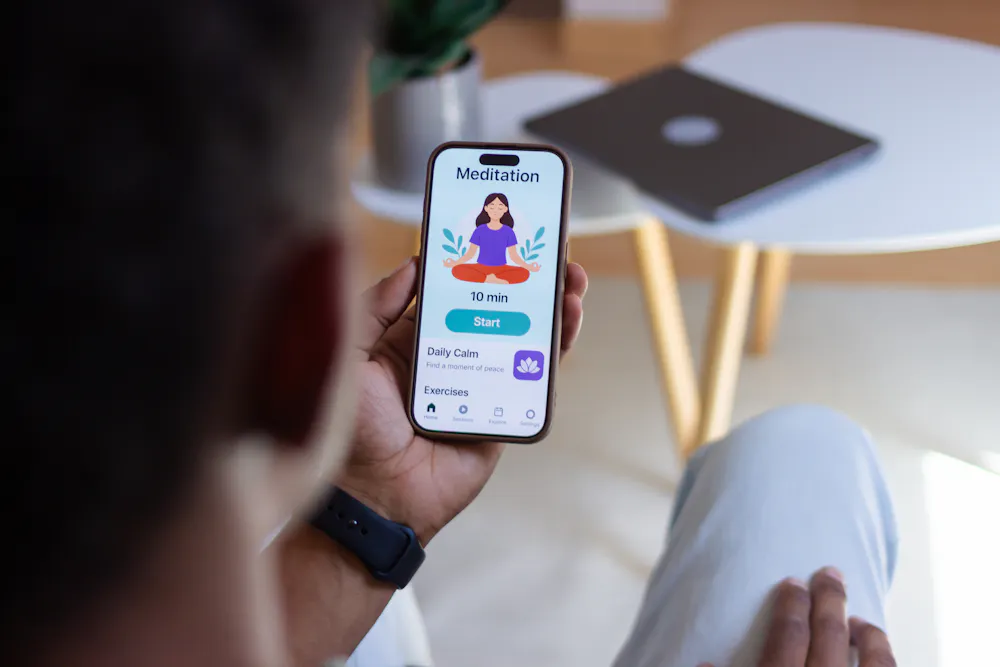
    Back view of a person using a meditation app on a smartphone.
    Guided meditation apps were one of the first forms of digital therapy.
    IsiMS/E+ via Getty Images

    Where AI comes in

    Whether your brain is spiraling, sulking or just needs a nap, there’s a chatbot for that. But can AI really help your brain process complex emotions? Or are people just outsourcing stress to silicon-based support systems that sound empathetic?

    And how exactly does AI therapy work inside our brains?

    Most AI mental health apps promise some flavor of cognitive behavioral therapy, which is basically structured self-talk for your inner chaos. Think of it as Marie Kondo-ing, the Japanese tidying expert known for helping people keep only what “sparks joy.” You identify unhelpful thought patterns like “I’m a failure,” examine them, and decide whether they serve you or just create anxiety.

    But can a chatbot help you rewire your thoughts? Surprisingly, there’s science suggesting it’s possible. Studies have shown that digital forms of talk therapy can reduce symptoms of anxiety and depression, especially for mild to moderate cases. In fact, Woebot has published peer-reviewed research showing reduced depressive symptoms in young adults after just two weeks of chatting.

    These apps are designed to simulate therapeutic interaction, offering empathy, asking guided questions and walking you through evidence-based tools. The goal is to help with decision-making and self-control, and to help calm the nervous system.

    The neuroscience behind cognitive behavioral therapy is solid: It’s about activating the brain’s executive control centers, helping us shift our attention, challenge automatic thoughts and regulate our emotions.

    The question is whether a chatbot can reliably replicate that, and whether our brains actually believe it.

    A user’s experience, and what it might mean for the brain

    “I had a rough week,” a friend told me recently. I asked her to try out a mental health chatbot for a few days. She told me the bot replied with an encouraging emoji and a prompt generated by its algorithm to try a calming strategy tailored to her mood. Then, to her surprise, it helped her sleep better by week’s end.

    As a neuroscientist, I couldn’t help but ask: Which neurons in her brain were kicking in to help her feel calm?

    This isn’t a one-off story. A growing number of user surveys and clinical trials suggest that cognitive behavioral therapy-based chatbot interactions can lead to short-term improvements in mood, focus and even sleep. In randomized studies, users of mental health apps have reported reduced symptoms of depression and anxiety – outcomes that closely align with how in-person cognitive behavioral therapy influences the brain.

    Several studies show that therapy chatbots can actually help people feel better. In one clinical trial, a chatbot called “Therabot” helped reduce depression and anxiety symptoms by nearly half – similar to what people experience with human therapists. Other research, including a review of over 80 studies, found that AI chatbots are especially helpful for improving mood, reducing stress and even helping people sleep better. In one study, a chatbot outperformed a self-help book in boosting mental health after just two weeks.

    While people often report feeling better after using these chatbots, scientists haven’t yet confirmed exactly what’s happening in the brain during those interactions. In other words, we know they work for many people, but we’re still learning how and why.

    AI chatbots don’t cost what a human therapist costs – and they’re available 24/7.

    Red flags and risks

    Apps like Wysa have earned FDA Breakthrough Device designation, a status that fast-tracks promising technologies for serious conditions, suggesting they may offer real clinical benefit. Woebot, similarly, runs randomized clinical trials showing improved depression and anxiety symptoms in new moms and college students.

    While many mental health apps boast labels like “clinically validated” or “FDA approved,” those claims are often unverified. A review of top apps found that most made bold claims, but fewer than 22% cited actual scientific studies to back them up.

    In addition, chatbots collect sensitive information about your mood metrics, triggers and personal stories. What if that data winds up in third-party hands such as advertisers, employers or hackers, a scenario that has occurred with genetic data? In a 2023 breach, nearly 7 million users of the DNA testing company 23andMe had their DNA and personal details exposed after hackers used previously leaked passwords to break into their accounts. Regulators later fined the company more than $2 million for failing to protect user data.

    Unlike clinicians, bots aren’t bound by counseling ethics or privacy laws regarding medical information. You might be getting a form of cognitive behavioral therapy, but you’re also feeding a database.

    And sure, bots can guide you through breathing exercises or prompt cognitive reappraisal, but when faced with emotional complexity or crisis, they’re often out of their depth. Human therapists tap into nuance, past trauma, empathy and live feedback loops. Can an algorithm say “I hear you” with genuine understanding? Neuroscience suggests that supportive human connection activates social brain networks that AI can’t reach.

    So while in mild to moderate cases bot-delivered cognitive behavioral therapy may offer short-term symptom relief, it’s important to be aware of their limitations. For the time being, pairing bots with human care – rather than replacing it – is the safest move.

    The Conversation

    Pooja Shree Chettiar does not work for, consult, own shares in or receive funding from any company or organization that would benefit from this article, and has disclosed no relevant affiliations beyond their academic appointment.

    ref. The AI therapist will see you now: Can chatbots really improve mental health? – https://theconversation.com/the-ai-therapist-will-see-you-now-can-chatbots-really-improve-mental-health-259360

  • How weather changes cause migraines – a neurologist explains the triggers and what you can do to ease the pain

    Source: ForeignAffairs4

    Source: The Conversation – USA (3) – By Danielle Wilhour, Assistant Professor of Neurology, University of Colorado Anschutz Medical Campus

    Migraines can be debilitating – and frustrating when triggered by weather you can’t control. fizkes/iStock/Getty Images Plus

    “Is it just me, or is there a storm coming?”

    If you are one of the 39 million Americans in the U.S. living with migraines, there’s a good chance an intense headache will begin when the weather shifts.

    You aren’t alone. Studies find 30% to 50% of people with migraines identify some type of weather change as a trigger, making it the most commonly reported migraine source.

    Yet, it’s also one of the most puzzling.

    Some people are more sensitive to weather

    As a neurologist and headache specialist practicing in Colorado, a place with frequent weather shifts, patients often tell me that weather is one of their biggest migraine triggers. The results can disrupt work, school and social plans, and create a sense of helplessness.

    Doctors still don’t fully understand why some brains are more sensitive to environmental changes.

    What we do know is that people with migraines have especially sensitive nervous systems, and that certain environmental changes – like shifts in air pressure, temperature, humidity and air quality – can activate pathways in the brain that lead to pain.

    What’s going on in the brain during migraines? TEDx.

    Key ways weather can trigger migraines

    Weather triggers can vary from person to person, but there are a few common migraine culprits:

    Barometric pressure changes, or changes in atmospheric pressure, are among the most commonly cited triggers.

    When a storm system moves in, the air pressure drops. Some scientists believe this change may affect the pressure inside your head or how blood vessels in your brain dilate and constrict.

    One theory is that changes in barometric pressure may cause a small imbalance in the pressure between the inside of your skull and the outside environment. That might directly stimulate pain-sensitive nerves in the head, triggering inflammation and the start of a migraine.

    Others point to inflammation, the way the brain processes sensory input, and changes in serotonin levels – which play a key role in activating migraine.

    Temperature extremes, with very hot or very cold days, or sudden changes in temperature, can throw off the body’s internal balance. High humidity or rapid shifts in moisture levels can have a similar effect.

    Air pollutants like ozone and nitrogen dioxide can cause inflammation in the nerves that play a role in migraines.

    Bright sunlight can also be especially bothersome, likely due to heightened sensitivity to light and an overactive visual processing system in the brain.

    Lightning and strong winds may also be linked to migraine attacks in certain individuals.

    In short, weather changes can act as stressors on a brain that’s already wired to be more sensitive. The exact triggers and responses vary from person to person, but the research suggests that the interaction between weather and our biology plays a significant role for a subset of patients with migraines.

    Steps you can take to reduce the pain

    You can’t change the weather, but you can be proactive. Here are a few tips to help weather-proof your migraine routine:

    1. Track your migraines and watch the forecast: Use a migraine diary or app to track when attacks occur, along with weather conditions. Patterns may emerge, such as attacks a day before rain or during temperature changes, that will allow you to adjust your schedule or medication plan.

    2. Develop healthy eating, sleeping and exercise habits: Dehydration, poor sleep and skipped meals can magnify the effects of weather triggers, so keeping your body on an even keel helps reduce vulnerability. Regular exercise and a healthy diet can also help.

    3. Create a migraine-friendly environment: On days when the sun is harsh or the humidity is high, stay inside. Sunglasses, eye masks or even blue-light glasses can be helpful. Some people find that certain earplugs are able to reduce pressure changes felt in the middle ear.

    4. Try meditation, mindfulness techniques or biofeedback, which teaches people to moderate their physiological responses, such as muscle responses and breathing. These strategies can help your nervous system become less reactive over time, which can be especially helpful when dealing with uncontrollable triggers like weather.

    5. Consider pretreatment: If you know a storm is likely to trigger your migraines, you can keep rescue medications close by or even preemptively treat yourself during weather events.

    6. Look into preventive treatment: If weather triggers frequent migraines, talk to your health care provider about preventive treatments – medications, supplements or neuromodulation devices – which can be used on a regular basis to reduce migraine occurrence.

    The bigger picture

    It’s important to remember that while weather can be a trigger, it’s rarely the only one. Migraine is usually the result of a perfect storm of factors: genetic susceptibility, hormones, stress, sleep, food and, yes, the weather.

    That’s why identifying your personal triggers and building a plan, if necessary, with the support of a medical provider, can make a big difference in managing migraines.

    Weather-related migraine can be one of the most frustrating triggers because it feels completely out of your hands. However, with knowledge, tracking and the right treatment strategies, you can take back a sense of control.

    The Conversation

    Danielle Wilhour does not work for, consult, own shares in or receive funding from any company or organization that would benefit from this article, and has disclosed no relevant affiliations beyond their academic appointment.

    ref. How weather changes cause migraines – a neurologist explains the triggers and what you can do to ease the pain – https://theconversation.com/how-weather-changes-cause-migraines-a-neurologist-explains-the-triggers-and-what-you-can-do-to-ease-the-pain-258899

  • Why recycling solar panels is harder than you might think − an electrical engineer explains

    Source: ForeignAffairs4

    Source: The Conversation – USA (2) – By Anurag Srivastava, Professor of Computer Science and Electrical Engineering, West Virginia University

    Broken and worn-out solar panels can be recycled, but it’s not easy. Suzanne Kreiter/The Boston Globe via Getty Images

    It’s hard work soaking up sunlight to generate clean electricity. After about 25 to 30 years, solar panels wear out. Over the years, heating and cooling cycles stress the materials. Small cracks develop, precipitation corrodes the frame and layers of materials can start to peel apart.

    In 2023, about 90% of old or faulty solar panels in the U.S. ended up in landfills. Millions of panels have been installed worldwide over the past few decades – and by about 2030, so many will be ready to retire that they could cover about 3,000 football fields.

    As an electrical engineer who has studied many aspects of renewable energy, recycling solar panels seems like a smart idea, but it’s complicated. Built to withstand years of wind and weather, solar panels are designed for strength and are not easy to break down.

    A vast field of solar panels.
    All of these solar panels will need to be disposed of one day – perhaps by being recycled.
    David McNew/Getty Images

    The cost conundrum

    Sending a solar panel to a landfill costs between US$1 and $5 in the U.S. But recycling it can cost three to four times as much, around $18. And the valuable materials inside solar panels, such as silver and copper, are in small amounts, so they’re worth about $10 to $12 – which makes recycling a money-losing prospect. Improvements in the recycling process may change the economics.

    But for now, it’s even hard to reclaim the glass in solar panels. Many layers are glued together and need to be separated before they can be melted down for reuse. And if the separation is not precise enough, the glass that is recovered won’t be of high enough quality to use in making other solar panels or windows. It will be suitable only for lower-quality uses such as fill material in construction projects.

    Other panels, usually older ones, may contain small amounts of toxic metals such as lead or cadmium. It can be difficult to tell whether toxic materials are present, though. Even experts have trouble, in part because current tests, such as the toxicity characteristic leaching procedure, can give inaccurate results. Therefore, many companies that own large numbers of solar panels just assume their panels are hazardous waste, which increases costs for both disposal and recycling. Clearer labels would help people know what a solar panel contains and how to handle it.

    If someone wants to recycle a solar panel, and is willing to bear the cost, there aren’t many places in the U.S. that are willing to do it and are equipped to be safe about it.

    People in reflective vests and protective clothing use tools to take apart a large item.
    Recycling solar panels can involve detailed manual labor.
    AP Photo/Gregory Bull

    Designing for a new life

    Despite the Trump administration’s cuts to subsidies for solar projects, millions of solar panels are already in use in the U.S., and millions more are expected to be installed worldwide in the coming years. As a result, the solar industry is working on ways to minimize waste and repeatedly reuse materials.

    Some ideas include sending used solar panels that still work at least a bit to developing nations, or even reusing them within the U.S. But there are not clear rules or processes for connecting reused panels to the power grid, so reuse tends to happen in less common, off-grid situations rather than becoming widespread.

    Future solar panels could also be designed for easier recycling, using different construction methods and materials, and improved processing systems.

    Making panels last longer – perhaps as long as 50 years – using more durable materials, weather-resistant components, real-time monitoring of panel performance and predictive maintenance to replace parts before they wear out would reduce waste significantly.

    Building solar panels that are more easily disassembled into separate components made of different materials could also speed recycling. Components that fit together like Lego bricks – instead of using glue – or dissolvable sealants and adhesives could be parts of these designs.

    Improved recycling methods could also help. Right now, panels are often simply ground up, mixing all of their components’ materials together and requiring a complicated process to separate them out again for reuse. More advanced approaches can extract individual materials with high purity. For example, a process called salt etching can recover over 99% of silver and 98% of silicon, at purity levels that are appropriate for high-end reuse, potentially even in new solar panels, without using toxic acids. That method can also recover significant quantities of copper and lead for use in new products.

    A person uses a shovel to reach into a large bin of crushed material.
    Crushing solar panels can make different materials easier to recover from various components.
    AP Photo/Gregory Bull

    A shared journey

    Increasing the practice of recycling solar panels has more than just environmental benefits.

    Over the long term, recovering and reusing valuable materials may prove more cost-effective than continually buying new raw materials on the open market. That could lower costs for future solar panel installations. If they are fully reused, the value of these recoverable materials could reach over $15 billion globally by 2050.

    In addition, recycling panels and components reduces American reliance on materials imported from overseas, making solar power projects less vulnerable to global disruptions.

    Recycling also keeps toxic materials out of landfills. That can help ensure a shift to clean energy doesn’t create new or bigger environmental problems. Also, recycling solar panels emits far less carbon dioxide than manufacturing panels from raw materials.

    There are already some efforts underway to boost solar panel recycling. The Solar Energy Industries Association trade group is working to collect and share information about companies that recycle solar panels.

    Governments can provide tax breaks or other financial incentives for using recycled materials, or ban disposing of solar panels in landfills. California, Washington, New Jersey and North Carolina have enacted laws or are studying ways to manage solar panel waste, with some even requiring recycling or reuse.

    These efforts are important steps toward addressing the growing need for solar panel recycling and promoting a more sustainable solar industry.

    The Conversation

    Anurag Srivastava receives funding from the US Department of Energy and National Science Foundation to work on renewable energy integration into the grid. He is an IEEE Fellow and member of the IEEE Power and Energy Society and CIGRE working groups.

    ref. Why recycling solar panels is harder than you might think − an electrical engineer explains – https://theconversation.com/why-recycling-solar-panels-is-harder-than-you-might-think-an-electrical-engineer-explains-259115

  • MIL-OSI Canada: Competition Bureau monitoring Interac’s commitment on e-transfer pricing

    Source: Government of Canada News

    Changes will help smaller banks compete by levelling the playing field in the financial services sector

    July 10, 2025 – GATINEAU (Québec), Competition Bureau 

    The Competition Bureau is monitoring Interac’s commitment to change its wholesale e-transfer pricing structure from volume-based to a flat-fee, which is set to take place on November 1, 2025. Interac charges banks, credit unions and other financial institutions a wholesale fee for each e-transfer that their customers make.

    Interac’s current tiered, volume-based pricing provides significant discounts to financial institutions that process large volumes of e-transfers. This benefits Canada’s largest banks who process hundreds of millions of
    e-transfers each year but burdens smaller financial institutions with higher costs because they operate at a much lower volume.

    Flat-fee pricing for e-transfers, where financial institutions of all sizes pay the same rate, will help level the playing field. This will support more competition and innovation in Canada’s financial services sector. More competition will allow Canadians to benefit from greater choice, lower prices and better service.

    The Bureau will continue to monitor Interac’s e-transfer pricing and business practices to ensure they comply with the Competition Act. Businesses that have a dominant position in the market must not misuse their market power to create an unfair competitive advantage and hurt competition.

    The Bureau urges Canadians to use the online complaint form to report any potential anti-competitive behaviour related to Interac’s commitment or its conduct in the marketplace.

    MIL OSI Canada News

  • MIL-OSI USA: Plenty of Water in Prairie Potholes

    Source: US Geological Survey

    Surface water in the prairie potholes is highly responsive to both air temperature and precipitation (Renton et al., 2105). In addition, a strong connection between groundwater and potholes is described as filling and subsequently spilling (Vanderhoof et al., 2016). When aquifers are full, surface water recedes slowly. Throughout the Dakotas, recent wet periods may be a part of natural variability that is likely to be repeated over longer time spans (Nustad et al., 2016; Ryberg et al., 2016; Liu and Schwartz, 2011). 

    Thirty-nine years of Annual NLCD land cover provide two good visual examples of prairie pothole flooding events: the Devils Lake area in northeastern North Dakota and Day County in northeastern South Dakota. Lakes, potholes and wetlands in those areas saw large increases in open water (Newsdakota.com, 2020). The James River, a tributary to the Missouri River that flows through Day County, also had recent flooding events (NASA, 2020).

    Right: This map shows open water in North Dakota and South Dakota from 1985 to 2023. The colors indicate whether the open water areas gained or lost water, fluctuated between gains and losses or remained unchanged during that time period. Areas of special interest to this article are Devils Lake in North Dakota and Waubay Lake and Bitter Lake in South Dakota.

    References:

    Auch, R.F., 2015. Chapter 7, northern glaciated plains ecoregion.In Status and Trends of Land Change in the Great Plains of the United States—1973 to 2000, Taylor, J.L., Acevedo, W., Auch, R.F., and Drummond, M.A. pp. 69-76. U.S. Geological Survey Professional Paper 1794-B, Reston, Va. 

    Baulch, H.M., Elliott, J.A., Corderio, M.R.C., Flaten, D.N., Lobb, D.A., and Wilson, H.F., 2019. Soil and water management: opportunities to mitigate nutrient losses to surface waters in the Northern Great Plains. Environ. Rev. 27: 447–477.https://cdnsciencepub.com/doi/10.1139/er-2018-0101

    Blackwell, B.G., Smith, B.J., Kaufman, T.M., and Moos, T.S., 2020. Use of a restrictive regulation to manage walleyes in a new glacial lake in South Dakota. North American Journal of Fisheries Management 40:1202–1215.https://onlinelibrary.wiley.com/doi/abs/10.1002/nafm.10486

    Damschen, W.C., and Galloway, J.M., 2016, Water-surface elevation and discharge measurement data for the Red River of the North and its tributaries near Fargo, North Dakota, water years 2014–15: U.S. Geological Survey Open-File Report 2016–1139, 16 p., https://pubs.usgs.gov/publication/ofr20161139

    Hoogestraat, G.K., and Stamm, J.F., 2015, Climate and streamflow characteristics for selected streamgages in eastern South Dakota, water years 1945–2013; U.S. Geological Survey Scientific Investigations Report 2015–5146, 35 p., with appendix, https://pubs.usgs.gov/publication/sir20155146

    Johnston, C.A., 2013, Wetland Losses Due to Row Crop Expansion in the Dakota Prairie Pothole Region; Natural Resource Management Faculty Publications, 95.https://openprairie.sdstate.edu/nrm_pubs/95/  

    Liu, G. and Schwartz, F.W., 2011, An integrated observational and model-based analysis of the hydrologic response of prairie pothole systems to variability in climate; Water Resources Research, 47, W02504,https://agupubs.onlinelibrary.wiley.com/doi/full/10.1029/2010WR009084

    NASA, 2020,https://earthobservatory.nasa.gov/images/146515/relentless-floods  

    Newsdakota.com, 2020,https://www.newsdakota.com/2020/08/07/excess-water-continues-to-plague-prairie-pothole-region/   

    National Centers for Environmental Information (NOAA), 2025, Climate at a Glance: National Time Series, published May 2025, accessed May 8, 2025, from https://www.ncei.noaa.gov/access/monitoring/climate-at-a-glance/national/time-series 

    Nustad, R.A., Kolars, K.A., Vecchia, A.V., and Ryberg, K.R., 2016, 2011 Souris River flood—Will it happen again?; U.S. Geological Survey Fact Sheet 2016–3073, 4 p.,https://pubs.usgs.gov/publication/fs20163073

    Renton, D.A., Mushet, D.M., and DeKeyser, E.S., 2015, Climate change and prairie pothole wetlands—Mitigating water-level and hydroperiod effects through upland management: U.S. Geological Survey Scientific Investigations Report 2015–5004, 21 p.,https://pubs.usgs.gov/publication/sir20155004  

    Ryberg, K.R., Vecchia, A.V., Akyüz, F.A., and Lin, W., 2016, Tree-ring-based estimates of long-term seasonal precipitation in the Souris River Region of Saskatchewan, North Dakota and Manitoba, Canadian Water Resources Journal / Revue canadienne des ressources hydriques, 41:3, 412-428, 17 p., https://www.tandfonline.com/doi/full/10.1080/07011784.2016.1164627  

    Shapley, M.D., Johnson, W.C., Engstrom, D.R., and Osterkamp, W.R., 2005, Late-Holocene flooding and drought in the Northern Great Plains, USA, reconstructed from tree rings, lake sediments and ancient shorelines. The Holocene, 15 (1): 29-41.

    Todhunter, P.E. 2018, A volumetric water budget of Devils Lake (USA): non-stationary precipitation–runoff relationships in an amplifier terminal lake. Hydrological Sciences Journal, vol. 63 (9):1275–1291. https://www.tandfonline.com/doi/full/10.1080/02626667.2018.1494385

    Todhunter, P.E., 2021, Hydrological basis of the Devils Lake, North Dakota (USA), terminal lake flood disaster. Nat Hazards 106, 2797–2824 (2021).https://link.springer.com/article/10.1007/s11069-021-04567-2  

    USGS Earth Resources Observation and Science (EROS) Center, 2022, Lake levels rise: U.S. Geological Survey Earthshots webpage, 2022, accessed online 6/26/2025, athttps://eros.usgs.gov/earthshots/lake-levels-rise  

    Vanderhoof, M.K., Alexander, L.C., and Todd, M.J., 2016a, Temporal and spatial patterns of wetland extent influence variability of surface water connectivity in the Prairie Pothole Region, United States; Landscape Ecology 31, 805–824 (2016). https://link.springer.com/article/10.1007/s10980-015-0290-5

    Vanderhoof, M.K., and Alexander, L.C., 2016b, The Role of Lake Expansion in Altering the Wetland Landscape of the Prairie Pothole Region, United States; Wetlands 36 (Suppl 2), 309–321. https://link.springer.com/article/10.1007/s13157-015-0728-1

    Vanderhoof, M.K., Christensen, J.R. and Alexander, L.C., 2017, Patterns and drivers for wetland connections in the Prairie Pothole Region, United States; Wetlands Ecology and Management 25, 275–297. https://link.springer.com/article/10.1007/s11273-016-9516-9

    Vecchia, Aldo V., 2011, Simulation of the effects of Devils Lake outlet alternatives on future lake levels and water quality in the Sheyenne River and Red River of the North; 2011; SIR; 2011-5050.

    Wimberly, M.C., Janssen, L.L., Hennessy, D.A., Luri, M., Chowdhury, N.M., and Feng, H., 2017, Cropland expansion and grassland loss in the eastern Dakotas: New insights from a farm-level survey; Land Use Policy, Volume 63, Pages 160-173.

    MIL OSI USA News

  • MIL-OSI: LPL Financial Welcomes The Narmi Group Investment Management to Linsco Channel

    Source: GlobeNewswire (MIL-OSI)

    SAN DIEGO, July 10, 2025 (GLOBE NEWSWIRE) — LPL Financial LLC announced today that financial advisors Charlie Narmi and Theresa Rynaski, CFP®, have joined LPL’s employee advisor channel, Linsco by LPL Financial, to launch The Narmi Group Investment Management. They reported serving approximately $870 million in advisory, brokerage and retirement plan assets* and join LPL from Robert W. Baird & Co.  

    Based in Omaha, Neb., Narmi, a second-generation financial advisor, and Rynaski have worked together for two decades and have built a reputation as a team that goes above and beyond for their clients — which includes a mix of young professionals, non-profit organizations and those nearing or in retirement.

    “We pride ourselves on being a one-stop-shop for our clients,” Rynaski said. “It’s not unusual for us to go the Social Security office with them or help them research nursing homes. We are honored that our clients trust us with so many important life decisions, as well as with their financial futures, and it’s a privilege to walk alongside them every step of the way.”

    Why The Narmi Group Investment Management made the move to Linsco by LPL
    The transition to LPL Financial for the next chapter of their business was motivated by the team’s aspiration for autonomy, flexibility and enhanced technology. They were drawn to the Linsco model, which serves financial advisors seeking the core tenets of independence, including owning their client relationships and having flexibility to run their practice, their way. With Linsco, advisors have access to LPL’s integrated wealth management platform and robust business resources, along with the additional benefits of having support from an experienced branch management team, dedicated marketing consultant and other resources that allow advisors to focus on their clients.

    “Partnering with LPL will allow us to have the backing of a large firm, but with the independence to serve our clients our way,” Rynaski said. “LPL provides the ideal platform, size and scale, and their commitment to invest heavily in integrated and streamlined technology will allow us to best support our clients, grow our business and build more long-lasting relationships.”

    Scott Posner, LPL Managing Director, Business Development, said, “We welcome Charlie and Theresa to the Linsco community, and congratulate them on the launch of The Narmi Group Investment Management. At LPL, we are committed to offering differentiated experiences for advisors and their clients. We do that by offering unparalleled flexibility, strategic resources and innovative technology designed to help advisors deliver an elevated client experience while operating thriving practices. We look forward to supporting The Narmi Group Investment Management for years to come.”

    Related
    Advisors, learn how LPL Financial can help take your business to the next level.

    About LPL Financial

    LPL Financial Holdings Inc. (Nasdaq: LPLA) is among the fastest growing wealth management firms in the U.S. As a leader in the financial advisor-mediated marketplace, LPL supports over 29,000 financial advisors and the wealth management practices of approximately 1,200 financial institutions, servicing and custodying approximately $1.8 trillion in brokerage and advisory assets on behalf of approximately 7 million Americans. The firm provides a wide range of advisor affiliation models, investment solutions, fintech tools and practice management services, ensuring that advisors and institutions have the flexibility to choose the business model, services, and technology resources they need to run thriving businesses. For further information about LPL, please visit www.lpl.com.

    Securities and advisory services offered through LPL Financial LLC (“LPL Financial”), a registered investment advisor and broker-dealer, member FINRA/SIPC.

    Throughout this communication, the terms “financial advisors” and “advisors” are used to refer to registered representatives and/or investment advisor representatives affiliated with LPL Financial.

    We routinely disclose information that may be important to shareholders in the “Investor Relations” or “Press Releases” section of our website.

    *Value approximated based on asset and holding details provided to LPL from end of year, 2024.

    Media Contact: 
    Media.relations@LPLFinancial.com 

    Tracking #749827

    The MIL Network

  • MIL-OSI: Applied Systems Recognized for Being a Great Place to Work

    Source: GlobeNewswire (MIL-OSI)

    Chicago, IL., July 10, 2025 (GLOBE NEWSWIRE) — Applied Systems® today announced that the company earned multiple honors for its commitment to creating an outstanding employee experience. For the second year, Applied received the Great Place To Work® Certification™, the most definitive “employer-of-choice” recognition that companies aspire to achieve and the only recognition based entirely on what employees report about their workplace experience – specifically, how consistently they experience a high-trust workplace.

    As eligible by its Great Place To Work® Certification, Applied was also ranked #14 on the Fortune Best Workplaces in Chicago™ 2025 list. This list highlights organizations excelling in creating positive, inclusive, and engaging environments.

    Applied Systems has also been recognized with rankings on multiple Newsweek Greatest Workplaces lists. These lists are backed by a rigorous, independent study conducted by Newsweek and market research firm Plant-A Insights, highlighting organizations committed to workplace excellence. The lists include:

    • America’s Greatest Workplaces for Women 2025  
    • America’s Greatest Workplaces for Mental Wellbeing 2025  
    • America’s Greatest Workplaces for Gen Z 2025  
    • America’s Greatest Workplaces 2025  
    • America’s Greatest Workplaces Parents & Families 2025

    “We are honored to receive recognition for the workplace we have built as Team Applied,” said Bridget Penney, chief people officer, Applied Systems. “The Great Place to Work Certification and rankings on the Fortune and Newsweek lists demonstrate our commitment to upholding a culture developed on values that make us indispensable to each other and our customers.”

    # # #

    The Applied products and logos are trademarks of Applied Systems, Inc., registered in the U.S.

    About Applied Systems
    Applied Systems is the leading global provider of cloud-based software that powers the business of insurance. Recognized as a pioneer in insurance automation and the innovation leader, Applied is the world’s largest provider of agency and brokerage management systems, serving customers throughout the United States, Canada, the Republic of Ireland, and the United Kingdom. By automating the insurance lifecycle, Applied’s people and products enable millions of people around the world to safeguard and protect what matters most.

    The MIL Network

  • MIL-OSI: MARA Appoints Nir Rikovitch as Chief Product Officer

    Source: GlobeNewswire (MIL-OSI)

    Fort Lauderdale, FL, July 10, 2025 (GLOBE NEWSWIRE) — MARA, (NASDAQ: MARA) (“Company”), a leading digital energy and infrastructure company, today announced the appointment of Nir Rikovitch as Chief Product Officer (CPO), where he will lead MARA’s product strategy, commercializing the company’s breakthrough technology into market-ready products that deliver operational utility and efficiency.

    Rikovitch joins MARA to build the company’s product discipline from the ground up, bridging engineering, strategy, and commercialization. In this role, he will focus on defining the roadmap for MARA’s products and engineering to deliver production-grade systems.

    “Nir’s exceptional background in product leadership and autonomous technology development, where orchestration, efficiency, and reliability are paramount, makes him the ideal choice to drive MARA’s product vision forward,” said Fred Thiel, MARA’s chairman and CEO. “His proven ability to scale real-world technologies will be instrumental as we bring to market transformative solutions at the intersection of energy, AI, and compute.”

    Rikovitch brings deep expertise in product management, machine learning, and engineering leadership, with a proven track record in developing intelligent infrastructure across robotics, industrial automation, and autonomous systems. Most recently, Rikovitch served as Director of Product Management at Blue River, a John Deere Company, where he co-founded the autonomy unit and led the product strategy for autonomous construction machinery and advanced driver-assistance systems, unlocking more than $500 million in revenue across the enterprise portfolio.

    “Over the course of my career, I’ve focused my work on a wide array of technologies. But the more I built, the clearer it became: progress hinges not just on ingenuity, but on how we steward energy itself,” added Rikovitch. “At MARA, we’re fusing scale with smarter energy practices. I’m excited to work closely on digital energy and infrastructure that’s intelligent, efficient, and built to last.”

    Join Us: MARA is actively hiring across product, engineering, and systems design.

    Explore open roles here and help build the infrastructure powering the intelligence age.

    ​​A​bout MARA

    MARA (NASDAQ:MARA) deploys digital energy technologies to advance the world’s energy systems. Harnessing the power of compute, MARA transforms excess energy into digital capital, balancing the grid and accelerating the deployment of critical infrastructure. Building on its expertise to redefine the future of energy, MARA develops technologies that reduce the energy demands of high-performance computing applications, from AI to the edge. Learn more at www.mara.com.

    MARA Company Contact:
    Telephone: 800-804-1690
    Email: ir@mara.com

    MARA Media Contact:
    Email: mara@wachsman.com

    The MIL Network

  • MIL-OSI: Revenera and Bitsea Announce Stronger Partnership to Deliver Open Source Audit Services

    Source: GlobeNewswire (MIL-OSI)

    ITASCA, Ill., July 10, 2025 (GLOBE NEWSWIRE) — Revenera, provider of innovative solutions that help technology companies manage open source risk, ensure license compliance, and secure their software supply chain, today announced an even stronger partnership with the software composition analysis (SCA) and open source expert Bitsea for audits and services. Building on more than a decade of collaboration, Bitsea is taking on Revenera’s services delivery, focusing on high quality services to end customers who need open source scans for compliance reasons or as part of mergers and acquisitions (M&A). Revenera will continue to focus on product innovation and development for its SCA solutions, including its code scanning and software bill of materials (SBOM) management solutions, Code Insight and SBOM Insights.  

    A well-established auditing and compliance company, Bitsea supports leading global enterprises in highly regulated industries including automotive, defense, logistics, banking, insurance, and M&A. The company is a recognized member of the OpenChain Project and actively contributes to the advancement of open source governance best practices. 

    “Revenera is excited about the stronger, now global, partnership with Bitsea. It allows everyone to do what they are best at, with a strong focus on customer value. Bitsea provides outstanding SCA services to customers who will benefit from expert advice, excellent and swift execution, and reliable results, all delivered with the help of Revenera’s products,” said Nicole Segerer, SVP and General Manager of Revenera. “Revenera will focus even more on delivering innovation across our SCA product portfolio and continue the journey of enabling all companies to manage and act on their software bill of materials.”

    As a result of the partnership, Revenera will enable customers and partners to work with Bitsea for any SCA services delivery. There is no change to Revenera’s product strategy or delivery. Revenera and Bitsea are committed to maintaining the same high-quality service that customers expect, while enabling greater responsiveness and flexibility. 

    For more information, please contact us

    About Revenera
    Revenera helps product executives build better products, accelerate time to value and monetize what matters. Revenera’s leading solutions help software and technology companies drive top line revenue with modern software monetization, understand usage and compliance with software usage analytics, empower the use of open source with software composition analysis and deliver an excellent user experience—for embedded, on-premises, cloud and SaaS products. To learn more, visit www.revenera.com.

    About Bitsea
    Bitsea is a leading provider of software audits and sustainable open source security, risk, and compliance management. For more than a decade, well-known companies in the automotive, telecommunications, financial services, logistics, and aerospace industries have relied on Bitsea’s expertise – whether it be technical due diligence in the context of M&A activities or in promoting digital transformation. 

    As an active member of OpenChain, Bitsea combines innovative solutions with partner-based collaboration to support organizations around the globe in the secure integration and use of open source technologies.

    The MIL Network

  • MIL-OSI: Passwords on Post-Its: 2025 Cybersecurity Pulse Survey uncovers alarming employee behaviors

    Source: GlobeNewswire (MIL-OSI)

    NEW YORK, July 10, 2025 (GLOBE NEWSWIRE) — Traliant, a leader in online compliance training, today released its latest research, The State of Cyber: 2025 Cybersecurity Pulse Survey, highlighting a persistent gap between cybersecurity awareness and practice — including risky employee habits that leave organizations vulnerable to increasingly sophisticated cyberattacks.

    Based on a survey of over 600 full-time US employees across various industries, the research found:

    • 18% of employees reuse passwords across work accounts, creating cascading risk if one account is compromised.
    • 23% write down passwords, exposing credentials to loss or theft.
    • Only 30% use password managers and less than half (46%) consistently use multi-factor authentication (MFA).
    • 42% have accessed sensitive company information on personal devices without IT approval.
    • 78% say they’re not fully confident in spotting more advanced phishing attacks like deepfakes or voice spoofing.
    • 40% report that current cybersecurity training doesn’t feel relevant to their day-to-day responsibilities.

    “AI engineered cyberthreats have become more complex, harder to detect, and exploit employee behaviors,” said John Brushwood, Compliance Counsel at Traliant. “Organizations must rethink how they engage employees around cybersecurity because today’s threats are no longer a tech-only issue — they’re a human one. It’s critical for HR and IT to work together to make a measurable impact on building a stronger culture of cyber vigilance.”

    The survey emphasizes the importance of equipping employees with training that is relatable, actionable and provides practical tools and real-world scenarios to build and reinforce cyber awareness — not just to reduce security risks, but to foster a culture of accountability. The report follows the recent release of Traliant’s Cybersecurity solution, which takes a multi-layered approach to threat prevention by combining a 30-minute Cybersecurity Awareness training course, interactive Phishing Simulations, and quarterly Microlearning courses on topics like AI-enabled threats and social engineering. This comprehensive program empowers employees to recognize, prevent and respond to cyber risks year-round.

    Read the full Cybersecurity Pulse Survey report here.

    Expanding privacy protection: Protecting health data with new HIPAA training
    As cyber threats increasingly target sensitive personal and health data, organizations must also reinforce their data privacy practices. In response, Traliant has enhanced its HIPAA training and introduced a new 15-minute refresher course – an efficient option for employees who’ve already completed the full training, offering a streamlined way to reinforce key concepts. Created with oversight from in-house legal and compliance experts, the updated training helps covered entities and business associates comply with federal HIPAA regulations and better safeguard protected health information (PHI).

    “Having confidence that your workforce understands HIPAA is essential — not just to avoid costly penalties, but to uphold patient trust,” adds Brushwood.

    The HIPAA course combines interactive scenarios and clear guidance on state laws, breach notification rules, and key administrative, technical and physical safeguards — all aligned with the HITECH Act and current state-level privacy standards.

    About the Survey
    The independent market research firm Researchscape conducted this online survey of 656 US-employed adults across healthcare, hospitality, retail, industrial, manufacturing, and in-office/professional sectors. Participants work at organizations with 100+ employees. The survey was conducted from March 28 to April 1, 2025.

    About Traliant 
    Traliant, a leader in compliance training, is on a mission to help make workplaces better, for everyone. Committed to a customer promise of “compliance you can trust, training you will love,” Traliant delivers continuously compliant online courses, backed by an unparalleled in-house legal team, with engaging, story-based training designed to create truly enjoyable learning experiences.

    Traliant supports over 14,000 organizations worldwide with a library of curated essential courses to broaden employee perspectives, achieve compliance and elevate workplace culture, including sexual harassment training, inclusion training, code of conduct training, and a comprehensive cybersecurity solution.

    Backed by PSG, a leading growth equity firm, Traliant holds a coveted position on Inc.’s 5000 fastest-growing private companies in America for four consecutive years, along with numerous awards for its products and workplace culture. For more information, visit http://www.traliant.com and follow us on LinkedIn.

    Contact
    Reagan Bennet
    traliant@v2comms.com

    The MIL Network

  • MIL-OSI: Spartan Capital Releases Q2 2025 Performance Overview and Technical Outlook

    Source: GlobeNewswire (MIL-OSI)

    New York, NY, July 10, 2025 (GLOBE NEWSWIRE) — Spartan Capital Securities, LLC is pleased to announce the publication of its Q2 2025 Performance Overview and Technical Outlook. Authored by market strategist Gianpaolo Raffo, the report provides an in-depth examination of macroeconomic conditions, equity indices, sector movements, and technical analysis for the second quarter of 2025.

    Released on July 03, 2025, the report offers a thorough snapshot of Q2 performance, including S&P 500 price changes, leadership rotation in sector performance, and the impact of economic indicators on market sentiment. Among the highlights, the analysis details the performance disparity between large-cap technology and small- and mid-cap equities, the implications of monetary policy expectations, and shifts in investor positioning.

    “Our latest Q2 analysis reflects a dynamic market landscape influenced by both domestic and global macroeconomic variables,” stated Gianpaolo Raffo. “Through our detailed technical and macro-level breakdown, we aim to help clients interpret key drivers of market direction and prepare strategically for the coming quarter.”

    Spartan Capital remains committed to excellence in financial research and client guidance. With data-driven commentary and sector-specific insights, the Q2 2025 report reinforces Spartan Capital’s role in supporting institutional and high-net-worth investors.

    To read the full Q2 2025 Performance Overview and Technical Outlook, please visit: https://spartancapital.com/q2-overview-2025/

    About Spartan Capital Securities, LLC

    Spartan Capital Securities, LLC is a full-service financial firm offering tailored investment solutions for individual and institutional clients. With deep capital markets expertise and a personalized approach, Spartan Capital and its CEO John Lowry continue to provide leadership and insight in today’s evolving financial landscape.

    Contact:

    45 Broadway, 19th Floor
    New York, NY 10004
    Info@spartancapital.com

    The MIL Network

  • MIL-OSI: Moomoo Midyear 2025 Investor Survey Findings: Investors Take a Neutral Stance, Expect More Volatility in the Second Half

    Source: GlobeNewswire (MIL-OSI)

    JERSEY CITY, N.J., July 10, 2025 (GLOBE NEWSWIRE) — The intuitive investment and trading platform moomoo has recently completed a 2025 second quarter North American users survey. Similar to last year, moomoo surveyed its users halfway through the year to find out how their investing journey has progressed to-date this year and learn what their expectations for the second half will be. Results showed that the investors in the survey take a neutral stance and expect more volatility in the second half. Many investors are growth focused and confident in meeting their investment goals despite poor consumer sentiment about the economy.

    Investors anticipate just a few cuts from the Fed in 2025 despite expectations of a possible recession and rising unemployment. As they are using several apps to invest, they want information available at their fingertips. New features like Artificial Intelligence (AI) and extended hours trading are gaining traction.

    Markets climbed a wall of worry after an initial tariff fueled selloff at the beginning of the year to finish modestly in the green and near all-time highs. Overall, investors held on through the dip and emerged in a solid financial position at the end of the half. As of June 30, the S&P 500 index gained 5.5%, the tech heavy Nasdaq 100 index was up 7.9% and the Magnificent Seven index gained 2.5%. Moomoo surveyed 1,200 of its users in North America halfway through the year to find out how their investing journey has progressed and what their expectations for the second half will be. Overall, investors remain positive but are striking a more cautionary tone as uncertainly over the economy and tariffs are expected to lead to more volatility. In addition, moomoo’s investors in Canada are closely watching political developments both at home and in the US and adjusting their investing plans accordingly.

    “While more investors report having made money in 2025 compared with the same period last year, the uncertainty surrounding inflation drives mixed reactions among users. However, investors trade more often with a more diversified portfolio and goals. Even though they are expecting more volatility in the second half, investors believe trading through self-direct platforms help them achieve their financial freedom goals,” said Justin Zacks, Vice President of Strategy, Moomoo Technologies Inc.

    About the Survey:

    The Q2 Moomoo Users survey was conducted in June 2024. The survey included approximately 1,000 participants in the US and 200 in Canada that are registered users of the moomoo app. The data shown in the survey represents the opinion of those surveyed and may change based on the market and other conditions. The survey results provided herein may not represent other customers’ experience, and there is no guarantee of future performance or success and should also not be construed as investment advice. Experiences may differ than the ones represented here. Investing involves risks regardless of the strategy selected.

    This whitepaper is for informational and educational use only and is not a recommendation or endorsement of any particular investment or investment strategy. Past investment performance does not indicate or guarantee future success. You should consider the appropriateness of this information having regard to your relevant personal circumstances before making any investment decisions.

    Moomoo is a financial information and trading app offered by Moomoo Technologies Inc. In the U.S., Investment products and services on Moomoo are offered by Moomoo Financial Inc., Member FINRA/SIPC.

    About moomoo

    Moomoo is an investment and trading platform that empowers global investors with pro-grade, easy-to-use tools, data, and insights. It provides users with the necessary information and technology to make more informed investment decisions. Investors have access to advanced charting tools, technical analytics, and in-depth data. Moomoo grows with its users, cultivating a community where investors share, learn, and grow together in one place. Moomoo provides free access to investment courses, educational materials, and interactive events that any investor, at any level, can gain from. Users can join forum discussions, trending topics, and seminars to better their investment knowledge and insights.

    The moomoo app is offered by Moomoo Technologies Inc. (“MTI”) a company that is based in Jersey City, New Jersey. The app is used globally in countries including the U.S., Singapore, Australia, Japan, Malaysia and Canada. MTI is not a broker-dealer and does not provide investment advice or recommendations. In the U.S., securities products and services are offered by Moomoo Financial Inc. (“MFI”), an SEC-registered broker-dealer and member FINRA/SIPC. MTI and MFI are indirect, wholly-owned subsidiaries of Futu Holdings Limited (Nasdaq: FUTU).

    For more information, please visit moomoo’s official website at www.moomoo.com/us or feel free to email: pr@us.moomoo.com.

    A photo accompanying this announcement is available at https://www.globenewswire.com/NewsRoom/AttachmentNg/7d32e64b-3806-4aa1-84ba-0235456d9e21

    The MIL Network

  • MIL-OSI: Usio Helps Lead Texas Flood Relief Efforts

    Source: GlobeNewswire (MIL-OSI)

    SAN ANTONIO, Texas, July 10, 2025 (GLOBE NEWSWIRE) — Usio, Inc. (Nasdaq: USIO), has made a donation to, and provided support for, The Comfort Area Foundation in support of the victims of the Hill Country Floods. Usio is joined in this effort by BoosterHub, with whom Usio enjoys a long and productive relationship.

    “We have all been deeply shaken by the devastating flooding in the Hill Country, throughout Texas and in the Comfort, Texas area,” said Louis Hoch, Chief Executive Officer at Usio. “This donation, along with the support of our partner BoosterHub, is part of our effort to help those impacted. Our hearts and prayers go out to the many families and friends that have lost loved ones and otherwise had their lives turned upside down by this terrible tragedy. Our efforts are just a small reflection of our commitment to supporting the communities in which we live, work and play.”

    The devastating floods in the Texas Hill Country resulted in the many deaths with 84 of those reported in Kerr County, officials have said.

    Usio, along with its partner, BoosterHub, are both helping lead the effort of The Comfort Area Foundation to collect donations to support victims in the greater Comfort, Texas area. The organization’s goal is to help improve the quality of life for all people residing in the area.

    About Usio, Inc.

    Usio, Inc. (Nasdaq: USIO), a leading, cloud-based, integrated FinTech electronic payment solutions provider, offers a wide range of payment solutions to merchants, billers, banks, service bureaus, integrated software vendors and card issuers. The Company operates credit, debit/prepaid, and ACH payment processing platforms to deliver convenient, world-class payment solutions and services to clients through its unique payment facilitation platform as a service. The Company, through its Usio Output Solutions division offers services relating to electronic bill presentment, document composition, document decomposition and printing and mailing services. The strength of the Company lies in its ability to provide tailored solutions for card issuance, payment acceptance, and bill payments as well as its unique technology in the card issuing sector. Usio is headquartered in San Antonio, Texas, and has offices in Austin, Texas. Websites: www.usio.com, www.payfacinabox.com, www.akimbocard.com and www.usiooutput.com. Find us on Facebook® and Twitter.

    FORWARD-LOOKING STATEMENTS DISCLAIMER

    Except for the historical information contained herein, the matters discussed in this press release include forward-looking statements which are covered by safe harbors. Those statements include, but may not be limited to, all statements regarding management’s intent, belief and expectations, such as statements concerning our future and our operating and growth strategy and any guidance for future periods. These forward-looking statements are identified by the use of words such as “believe,” “should,” “intend,” “look forward,” “anticipate,” “schedule,” and “expect” among others. Forward-looking statements in this press release are subject to certain risks and uncertainties inherent in the Company’s business that could cause actual results to vary, including such risks related to an economic downturn, the management of the Company’s growth, the loss of key resellers, the relationships with the Automated Clearing House network, bank sponsors, third-party card processing providers and merchants, the security of our software, hardware and information, the volatility of the stock price, the need to obtain additional financing, risks associated with new legislation, and compliance with complex federal, state and local laws and regulations, and other risks detailed from time to time in the Company’s filings with the Securities and Exchange Commission including its annual report on Form 10-K for the fiscal year ended December 31, 2024. One or more of these factors have affected, and in the future could affect, the Company’s businesses and financial results and could cause actual results to differ materially from plans and projections. Although the Company believes that the assumptions underlying the forward-looking statements included in this press release are reasonable, the Company can give no assurance such assumptions will prove to be correct. In light of the significant uncertainties inherent in the forward-looking statements included herein, the inclusion of such information should not be regarded as a representation by us or any other person that the objectives and plans will be achieved. All forward-looking statements made in this press release are based on information presently available to management. The Company assumes no obligation to update any forward-looking statements, except as required by law.

    Usio Contact:
    Paul Manley, Senior Vice President, Investor Relations
    paul.manley@usio.com
    612-834-1804

    The MIL Network

  • MIL-OSI Security: Defense News in Brief: NCIS Deploys Special Agents aboard Guided-Missile Destroyers Patrolling Southern Border

    Source: United States Navy

    SAN DIEGO –The Navy deployed two Arleigh Burke-class guided missile destroyers in mid-March to conduct border security objectives in support of the U.S. Northern Command southern border mission: the USS Gravely (DDG 107) to the Gulf of America and the Caribbean, and the USS Stockdale (DDG 106) to the Pacific Ocean. Earlier this summer, the USS Cole (DDG 67) relieved the USS Gravely after 83 days of service to the mission.

    MIL Security OSI

  • MIL-OSI Security: Defense News in Brief: U.S. Navy, Marine Corps EOD technicians conduct live mine countermeasure operations with JMSDF during Iwo To Live Mine Exercise 2025

    Source: United States Navy

    IWO TO, Japan – U.S. Navy Explosive Ordnance Disposal (EOD) technicians assigned to Explosive Ordnance Disposal Mobile Unit (EODMU) 5 participated in Iwo To Live Mine Exercise (MINEX) 2025, a bilateral mine countermeasures (MCM) exercise hosted annually by the Japan Maritime Self-Defense Force (JMSDF) in the vicinity of Iwo To, Japan, May 29 to June 24.

    MIL Security OSI

  • MIL-OSI Analysis: Jimmy Swaggart’s rise and fall shaped the landscape of American televangelism

    Source: The Conversation – USA (3) – By Diane Winston, Professor and Knight Center Chair in Media & Religion, USC Annenberg School for Communication and Journalism

    Rev. Jimmy Swaggart preaches at the Los Angeles Memorial Sports Arena on March 29, 1987. AP Photo/Mark Avery, file

    Jimmy Swaggart, one of the most popular and enduring of the 1980s televangelists, died on July 1, 2025, but his legacy lives.

    Along with Jerry Falwell and Pat Robertson, he drew an audience in the millions, amassed a personal fortune and introduced a new generation of Americans to a potent mix of religion and politics.

    Swaggart was an old-time evangelist whose focus was “saving souls.” But he also preached on conservative social issues, warning followers about the evils of abortion, homosexuality and godless communism.

    [Swaggart also denounced] what he called “false cults,” including Catholicism, Judaism and Mormonism. In fact, his denunciations of other religions, as well as his attacks on rival preachers, made him a more polarizing figure than his politicized brethren.

    As a reporter, I covered Swaggart in the 1980s. Now, as a scholar of American religion, I argue that while Swaggart did not build institutions like Falwell’s Moral Majority or Robertson’s 700 Club, he helped to spread right-wing positions on social issues, such as sexual orientation and abortion, and to shape the image of televangelists in popular culture..

    Swaggart’s cousins

    Born into a hardscrabble life in a small Louisiana town, Swaggart grew up alongside his cousins Jerry Lee Lewis, the future rockabilly pioneer, and future country singer Mickey Gilley.

    All three loved music and singing. They polished their playing on an uncle’s piano and sneaked into African American nightclubs to hear the jazz and blues forbidden by their parents.

    Jimmy Swaggart delivering a sermon at the Flora Blanca Stadium in El Salvador.
    Cindy Karp/Getty Images

    While Gilley and Lewis turned their musical talent into recording and performing careers, Swaggart felt called to the ministry. He dropped out of high school, married at 17, began preaching at 20 and was ordained at 26.

    He was licensed by the Assemblies of God, a Pentecostal denomination that believes the Holy Spirit endows believers with spiritual gifts that include speaking in tongues and faith healing.

    The glory years

    Pentecostals were nicknamed Holy Rollers because of their tendency to shake, quake and roll on the floor when feeling the Holy Spirit. Their preachers excelled at rousing audiences’ ardor, and Swaggart commanded the stage better than most. He paced, pounced and poured forth sweat while begging listeners to turn from sin and accept Jesus.

    Starting small, he drew crowds while preaching on a flatbed trailer throughout the South. His following grew, and in 1969 he opened the Family Worship Center in Baton Rouge.

    Evangelist Jimmy Swaggart leaves his office complex in Baton Rouge, La., on Jan. 7, 1977.
    AP Photo

    At capacity, the church held 10,000 worshippers, who represented a broad swath of America: young girls and grannies, white and Black, bankers and farmers. His sermons began calmly but built to a fever pitch. CBS newsman Dan Rather once called him the “country’s greatest speaker.”

    During services, Swaggart also sang and played piano. In 1982, Newsweek magazine noted his musical chops, naming him the “King of Honky Tonk Heaven.” His music crossed gospel, country and honky-tonk – songs with a strong rhythmic beat – and he sold 17 million albums over his lifetime.

    By 1975, Swaggart’s on-stage charisma powered the launch of a television ministry that would reach millions within a decade. Viewers were captivated by his soulful tunes and fire-and-brimstone sermons. At its height, Swaggart’s show was televised in 140 countries, including Peru, the Philippines and South Africa.

    His ministry also became the largest mail-order business in Louisiana, selling books, tapes, T-shirts and biblical memorabilia. Thanks to the US$150 million raised annually from donations and sales, Swaggart lived in an opulent mansion, possessed a private jet previously owned by the Rockefellers, sported a yellow gold vintage Rolex and drove a Jaguar.

    The downfall

    Swaggart disliked competition and had a history of humiliating rival preachers. Wary of the Rev. Marvin Gorman, a Pentecostal minister whose church also was in Louisiana, Swaggart accused the man of adultery. Gorman admitted his infidelity and was defrocked.

    Gorman had heard rumors about Swaggart’s own indiscretions, and he and his son decided to tail the famed evangelist. In 1988, they caught Swaggart at a motel with a prostitute, and Gorman reported the incident to Swaggart’s denomination. He also gave news outlets photos of Swaggart and the prostitute. In a tearful, televised apology, Swaggart pleaded for a second chance.

    While his fans were willing, the Assemblies of God had conditions: Swaggart received the standard two-year suspension for sexual immorality. Defying the ruling, Swaggart went back to work after three months, and the denomination defrocked him.

    A parishioner overcome with grief lies on steps to the altar after Jimmy Swaggart’s confession of sexual indiscretions.
    Thomas S. England/Getty Images

    Swaggart might have succeeded as an independent minister, but in 1991 the police stopped his car for driving on the wrong side of the road. Inside they found the preacher with a prostitute. This time, Swaggart did not ask for forgiveness. Instead, he informed his congregation, “The Lord told me it’s flat none of your business.”

    Afterward, Swaggart never regained his former standing. His mail-order business dried up, donations fell, and attendance at services cratered. But up until his death, he kept on, in his own words, as an “old-fashioned, Holy Ghost-filled, shouting, weeping, soul-winning, Gospel-preaching preacher.”

    Swaggart’s legacy

    Swaggart, like other 1980s televangelists, brought right-wing politics into American homes. But unlike Jerry Falwell and Pat Robertson, Swaggart was less interested in winning elections than saving souls. In fact, when Robertson considered a presidential run in 1988, Swaggart initially tried to dissuade him – then changed his mind and supported him.

    Swaggart’s calls for a return to conservative Christian norms live on – not just in Sunday sermons but also in today’s world of tradwives, abortion restrictions and calls to repeal gay marriage. His music lives on, too. The day before he died, the Southern Gospel Music Association Hall of Fame inducted him as a member.

    But his legacy also survives in popular culture. In recent years, both reality television and scripted series have starred preachers shaped in the image of Swaggart and his peers. Most exaggerate his worst characteristics for shock and comedic effect.

    Preachers of L.A.,” a 2013 reality show that profiled six Los Angeles pastors, featured blinged-out ministers whose sermons mixed hip-hop with the Bible. The fictional “Greenleaf” followed the scandals of an extended family’s Memphis megachurch, while “The Righteous Gemstones,” a dark spoof of Southern preachers, turned a family ministry into a site for sex, murder and moneymaking.

    But these imitations can’t match the reality. Swaggart was a larger-than-life minister whose story – from small-town wannabe to disgraced pastor, to preaching to those who would listen – had it all: sex, politics, music and religion.

    For those who want a taste of the real thing, The King of Honky Tonk Heaven lives on. You can see his old services and Bible studies streaming daily on his network.

    Diane Winston does not work for, consult, own shares in or receive funding from any company or organization that would benefit from this article, and has disclosed no relevant affiliations beyond their academic appointment.

    ref. Jimmy Swaggart’s rise and fall shaped the landscape of American televangelism – https://theconversation.com/jimmy-swaggarts-rise-and-fall-shaped-the-landscape-of-american-televangelism-260377

    MIL OSI Analysis

  • MIL-OSI Analysis: Wildfire smoke can make your outdoor workout hazardous to your health – an exercise scientist explains how to gauge the risk

    Source: The Conversation – USA (3) – By John C. Quindry, Professor of Integrative Physiology and Athletic Training, University of Montana

    Air pollution from wildfire smoke can worsen heart and lung disease. helivideo/iStock via Getty Images Plus

    As the summer’s sunny days take hold, many people turn to outdoor exercise.

    But in parts of North America, pleasant weather often aligns with wildfire season. As summers get drier, both the frequency and the intensity of wildfires have grown, producing more polluting smoke.

    A fire’s smoke can spread across several states, leaving people at risk for the health consequences of air pollution.

    Exercisers and health experts are asking whether the benefits of outdoor exercise are negated when the skies are hazy with wildfire smoke.

    How does air pollution make people sick?

    Air pollution’s components depend on its source. For instance, traffic-related air pollution consists largely of vehicle exhaust and brake and tire wear, while industrial pollution contains significant amounts of ozone.

    Wildfires produce huge quantities of airborne particles, also called fine particulate matter. These particles are less than 2.5 micrometers in diameter – about a tenth the size of a pollen grain.

    Particles of that size, which air quality experts refer to as PM2.5, raise serious health concerns because they are tiny enough to be carried to the air sacs in the deepest parts of the lungs. From there, they can cross into the blood stream, leading to bodywide inflammation – essentially, the immune system’s fight response – which can promote or aggravate multiple chronic illnesses.

    Research shows that long-term exposure to wildfire smoke is linked to lung diseases, heart disease and other conditions. Since these illnesses take decades to develop, scientists think that the health problems caused by wildfire smoke inhalation accumulate after years of exposure.

    One-time smoke exposures may have cumulative effects

    My research team and others are investigating how short-term smoke exposure might also influence long-term health outcomes such as heart and lung diseases.

    Particulate matter from wildfire smoke can aggravate chronic illnesses.

    To estimate the effects of exposure from a single fire event, environmental scientists can study a variety of factors such as immune system markers of inflammation, signs of physiologic stress and changes in heart, blood vessel and nervous system function. How exactly smoke exposures worsen disease is still poorly understood, but these immediate responses in the body may also be linked to developing chronic disease.

    In a study published in June 2025, my colleagues and I examined these outcomes in healthy participants who exercised during a wildfire simulation in our air inhalation lab. The air was filtered to contain high concentrations of PM2.5 particles produced by burning local pine trees – the equivalent to being downwind of a major wildfire.

    We asked 20 generally healthy participants in their mid-20s to exercise on a stationary cycle at about half their maximum effort for two hours while breathing the smoke. We found that participants’ blood vessel and nervous system function declined immediately after their smoky exercise session. These stress indicators bounced back to normal within an hour of returning to a clean air environment.

    Half of our study participants had a heightened response to physiological stress, which scientists think may signify a heightened risk of chronic diseases. We selected them based on a stress test administered before the experiment: Specifically, their blood pressure spiked when their hands were dipped in ice water for two minutes. The stress-responsive participants experienced significantly stronger declines in blood vessel and nervous system function than people in the typical response group, suggesting that exercise in a very smoky climate may affect some people more than others.

    While it isn’t possible to predict who is most at risk, our study underscores the need to think carefully about exposure to wildfire smoke.

    How smoky is too smoky for outdoor exercise?

    Unfortunately, precise air quality thresholds based on factors such as age and medical condition do not exist. But some simple guidelines and considerations can help.

    The first step is to check the air quality where you live at the government website AirNow. It uses a scale called the Air Quality Index, created by the Environmental Protection Agency in 1999 – which ranks air quality regionally on a scale from 0 to 500. The website is searchable by ZIP code. The reading for a given region reflects the contribution of several pollutants, including PM2.5 levels.

    The Air Quality Index ranks air quality at six levels.
    U.S. Environmental Protection Agency

    When the air quality is ranked “good,” the decision is simple – get out there and enjoy the outdoors. And there is little debate that people should generally limit their outdoor exposure when air quality levels cross into the “unhealthy” threshold – or at least be aware that doing so poses health risks.

    The risks and benefits of exercising outdoors when air quality is in the “moderate” and “unhealthy for sensitive” ranges are less clear, particularly for people who don’t have chronic health conditions.

    Gauging your risk

    One major factor in deciding when and whether to exercise outdoors is your health status. AirNow recommends that people with chronic conditions err on the side of caution and remain indoors when smoke levels cause the air quality rating to approach the “unhealthy for sensitive” category.

    That advice may be obvious for people with diagnosed lung conditions such as asthma or chronic obstructive pulmonary disease, given that particles from wildfire smoke aggravate the lungs. But studies suggest it’s true for milder disease states, too. For example, a large study of people with elevated but not clinically high blood pressure indicated that those who lived downwind of air pollution were more likely to develop high blood pressure and, ultimately, heart disease.

    Another consideration is the time of day. As the afternoon heats up, the column of air we breathe expands, diluting the particulate counts. And afternoon winds frequently blow stagnant air out of the valleys and downtown areas where particulate matter can concentrate during the cooler parts of the day. That means evening workouts may be safer than early-morning ones, though direct confirmation with air quality readings is key.

    Also important is the intensity at which you exercise. Higher-intensity exercise means deeper, more frequent breathing, which likely elevates your exposure to harmful air. So you might choose a shorter jog over a longer run when air quality is moderate or poor.

    My lab is currently working to quantify how much pollution a person breathes in while exercising in smoky conditions, based on their exercise intensity, exercise duration and local particulate counts. This line of research is still in its infancy, but our early findings and other published research suggest that when wildfire smoke puts air quality into the “moderate” and “unhealthy for sensitive” range, people can dial down the effects of smoke exposure by decreasing their exercise intensity or the time they spend outside.

    John C. Quindry received funding from the United States Department of Agriculture Forest Service and the National Institutes of Health – INBRE/RAIN.

    ref. Wildfire smoke can make your outdoor workout hazardous to your health – an exercise scientist explains how to gauge the risk – https://theconversation.com/wildfire-smoke-can-make-your-outdoor-workout-hazardous-to-your-health-an-exercise-scientist-explains-how-to-gauge-the-risk-255812

    MIL OSI Analysis

  • MIL-OSI Analysis: The AI therapist will see you now: Can chatbots really improve mental health?

    Source: The Conversation – USA (3) – By Pooja Shree Chettiar, Ph.D. Candidate in Medical Sciences, Texas A&M University

    Chatbot ‘therapists’ use artificial intelligence to mimic real-life therapeutic conversations. Pooja Shree Chettiar/ChatGPT, CC BY-SA

    Recently, I found myself pouring my heart out, not to a human, but to a chatbot named Wysa on my phone. It nodded – virtually – asked me how I was feeling and gently suggested trying breathing exercises.

    As a neuroscientist, I couldn’t help but wonder: Was I actually feeling better, or was I just being expertly redirected by a well-trained algorithm? Could a string of code really help calm a storm of emotions?

    Artificial intelligence-powered mental health tools are becoming increasingly popular – and increasingly persuasive. But beneath their soothing prompts lie important questions: How effective are these tools? What do we really know about how they work? And what are we giving up in exchange for convenience?

    Of course it’s an exciting moment for digital mental health. But understanding the trade-offs and limitations of AI-based care is crucial.

    Stand-in meditation and therapy apps and bots

    AI-based therapy is a relatively new player in the digital therapy field. But the U.S. mental health app market has been booming for the past few years, from apps with free tools that text you back to premium versions with an added feature that gives prompts for breathing exercises.

    Headspace and Calm are two of the most well-known meditation and mindfulness apps, offering guided meditations, bedtime stories and calming soundscapes to help users relax and sleep better. Talkspace and BetterHelp go a step further, offering actual licensed therapists via chat, video or voice. The apps Happify and Moodfit aim to boost mood and challenge negative thinking with game-based exercises.

    Somewhere in the middle are chatbot therapists like Wysa and Woebot, using AI to mimic real therapeutic conversations, often rooted in cognitive behavioral therapy. These apps typically offer free basic versions, with paid plans ranging from US$10 to $100 per month for more comprehensive features or access to licensed professionals.

    While not designed specifically for therapy, conversational tools like ChatGPT have sparked curiosity about AI’s emotional intelligence.

    Some users have turned to ChatGPT for mental health advice, with mixed outcomes, including a widely reported case in Belgium where a man died by suicide after months of conversations with a chatbot. Elsewhere, a father is seeking answers after his son was fatally shot by police, alleging that distressing conversations with an AI chatbot may have influenced his son’s mental state. These cases raise ethical questions about the role of AI in sensitive situations.

    Guided meditation apps were one of the first forms of digital therapy.
    IsiMS/E+ via Getty Images

    Where AI comes in

    Whether your brain is spiraling, sulking or just needs a nap, there’s a chatbot for that. But can AI really help your brain process complex emotions? Or are people just outsourcing stress to silicon-based support systems that sound empathetic?

    And how exactly does AI therapy work inside our brains?

    Most AI mental health apps promise some flavor of cognitive behavioral therapy, which is basically structured self-talk for your inner chaos. Think of it as Marie Kondo-ing, the Japanese tidying expert known for helping people keep only what “sparks joy.” You identify unhelpful thought patterns like “I’m a failure,” examine them, and decide whether they serve you or just create anxiety.

    But can a chatbot help you rewire your thoughts? Surprisingly, there’s science suggesting it’s possible. Studies have shown that digital forms of talk therapy can reduce symptoms of anxiety and depression, especially for mild to moderate cases. In fact, Woebot has published peer-reviewed research showing reduced depressive symptoms in young adults after just two weeks of chatting.

    These apps are designed to simulate therapeutic interaction, offering empathy, asking guided questions and walking you through evidence-based tools. The goal is to help with decision-making and self-control, and to help calm the nervous system.

    The neuroscience behind cognitive behavioral therapy is solid: It’s about activating the brain’s executive control centers, helping us shift our attention, challenge automatic thoughts and regulate our emotions.

    The question is whether a chatbot can reliably replicate that, and whether our brains actually believe it.

    A user’s experience, and what it might mean for the brain

    “I had a rough week,” a friend told me recently. I asked her to try out a mental health chatbot for a few days. She told me the bot replied with an encouraging emoji and a prompt generated by its algorithm to try a calming strategy tailored to her mood. Then, to her surprise, it helped her sleep better by week’s end.

    As a neuroscientist, I couldn’t help but ask: Which neurons in her brain were kicking in to help her feel calm?

    This isn’t a one-off story. A growing number of user surveys and clinical trials suggest that cognitive behavioral therapy-based chatbot interactions can lead to short-term improvements in mood, focus and even sleep. In randomized studies, users of mental health apps have reported reduced symptoms of depression and anxiety – outcomes that closely align with how in-person cognitive behavioral therapy influences the brain.

    Several studies show that therapy chatbots can actually help people feel better. In one clinical trial, a chatbot called “Therabot” helped reduce depression and anxiety symptoms by nearly half – similar to what people experience with human therapists. Other research, including a review of over 80 studies, found that AI chatbots are especially helpful for improving mood, reducing stress and even helping people sleep better. In one study, a chatbot outperformed a self-help book in boosting mental health after just two weeks.

    While people often report feeling better after using these chatbots, scientists haven’t yet confirmed exactly what’s happening in the brain during those interactions. In other words, we know they work for many people, but we’re still learning how and why.

    AI chatbots don’t cost what a human therapist costs – and they’re available 24/7.

    Red flags and risks

    Apps like Wysa have earned FDA Breakthrough Device designation, a status that fast-tracks promising technologies for serious conditions, suggesting they may offer real clinical benefit. Woebot, similarly, runs randomized clinical trials showing improved depression and anxiety symptoms in new moms and college students.

    While many mental health apps boast labels like “clinically validated” or “FDA approved,” those claims are often unverified. A review of top apps found that most made bold claims, but fewer than 22% cited actual scientific studies to back them up.

    In addition, chatbots collect sensitive information about your mood metrics, triggers and personal stories. What if that data winds up in third-party hands such as advertisers, employers or hackers, a scenario that has occurred with genetic data? In a 2023 breach, nearly 7 million users of the DNA testing company 23andMe had their DNA and personal details exposed after hackers used previously leaked passwords to break into their accounts. Regulators later fined the company more than $2 million for failing to protect user data.

    Unlike clinicians, bots aren’t bound by counseling ethics or privacy laws regarding medical information. You might be getting a form of cognitive behavioral therapy, but you’re also feeding a database.

    And sure, bots can guide you through breathing exercises or prompt cognitive reappraisal, but when faced with emotional complexity or crisis, they’re often out of their depth. Human therapists tap into nuance, past trauma, empathy and live feedback loops. Can an algorithm say “I hear you” with genuine understanding? Neuroscience suggests that supportive human connection activates social brain networks that AI can’t reach.

    So while in mild to moderate cases bot-delivered cognitive behavioral therapy may offer short-term symptom relief, it’s important to be aware of their limitations. For the time being, pairing bots with human care – rather than replacing it – is the safest move.

    Pooja Shree Chettiar does not work for, consult, own shares in or receive funding from any company or organization that would benefit from this article, and has disclosed no relevant affiliations beyond their academic appointment.

    ref. The AI therapist will see you now: Can chatbots really improve mental health? – https://theconversation.com/the-ai-therapist-will-see-you-now-can-chatbots-really-improve-mental-health-259360

    MIL OSI Analysis

  • MIL-OSI Analysis: How weather changes cause migraines – a neurologist explains the triggers and what you can do to ease the pain

    Source: The Conversation – USA (3) – By Danielle Wilhour, Assistant Professor of Neurology, University of Colorado Anschutz Medical Campus

    Migraines can be debilitating – and frustrating when triggered by weather you can’t control. fizkes/iStock/Getty Images Plus

    “Is it just me, or is there a storm coming?”

    If you are one of the 39 million Americans in the U.S. living with migraines, there’s a good chance an intense headache will begin when the weather shifts.

    You aren’t alone. Studies find 30% to 50% of people with migraines identify some type of weather change as a trigger, making it the most commonly reported migraine source.

    Yet, it’s also one of the most puzzling.

    Some people are more sensitive to weather

    As a neurologist and headache specialist practicing in Colorado, a place with frequent weather shifts, patients often tell me that weather is one of their biggest migraine triggers. The results can disrupt work, school and social plans, and create a sense of helplessness.

    Doctors still don’t fully understand why some brains are more sensitive to environmental changes.

    What we do know is that people with migraines have especially sensitive nervous systems, and that certain environmental changes – like shifts in air pressure, temperature, humidity and air quality – can activate pathways in the brain that lead to pain.

    What’s going on in the brain during migraines? TEDx.

    Key ways weather can trigger migraines

    Weather triggers can vary from person to person, but there are a few common migraine culprits:

    Barometric pressure changes, or changes in atmospheric pressure, are among the most commonly cited triggers.

    When a storm system moves in, the air pressure drops. Some scientists believe this change may affect the pressure inside your head or how blood vessels in your brain dilate and constrict.

    One theory is that changes in barometric pressure may cause a small imbalance in the pressure between the inside of your skull and the outside environment. That might directly stimulate pain-sensitive nerves in the head, triggering inflammation and the start of a migraine.

    Others point to inflammation, the way the brain processes sensory input, and changes in serotonin levels – which play a key role in activating migraine.

    Temperature extremes, with very hot or very cold days, or sudden changes in temperature, can throw off the body’s internal balance. High humidity or rapid shifts in moisture levels can have a similar effect.

    Air pollutants like ozone and nitrogen dioxide can cause inflammation in the nerves that play a role in migraines.

    Bright sunlight can also be especially bothersome, likely due to heightened sensitivity to light and an overactive visual processing system in the brain.

    Lightning and strong winds may also be linked to migraine attacks in certain individuals.

    In short, weather changes can act as stressors on a brain that’s already wired to be more sensitive. The exact triggers and responses vary from person to person, but the research suggests that the interaction between weather and our biology plays a significant role for a subset of patients with migraines.

    Steps you can take to reduce the pain

    You can’t change the weather, but you can be proactive. Here are a few tips to help weather-proof your migraine routine:

    1. Track your migraines and watch the forecast: Use a migraine diary or app to track when attacks occur, along with weather conditions. Patterns may emerge, such as attacks a day before rain or during temperature changes, that will allow you to adjust your schedule or medication plan.

    2. Develop healthy eating, sleeping and exercise habits: Dehydration, poor sleep and skipped meals can magnify the effects of weather triggers, so keeping your body on an even keel helps reduce vulnerability. Regular exercise and a healthy diet can also help.

    3. Create a migraine-friendly environment: On days when the sun is harsh or the humidity is high, stay inside. Sunglasses, eye masks or even blue-light glasses can be helpful. Some people find that certain earplugs are able to reduce pressure changes felt in the middle ear.

    4. Try meditation, mindfulness techniques or biofeedback, which teaches people to moderate their physiological responses, such as muscle responses and breathing. These strategies can help your nervous system become less reactive over time, which can be especially helpful when dealing with uncontrollable triggers like weather.

    5. Consider pretreatment: If you know a storm is likely to trigger your migraines, you can keep rescue medications close by or even preemptively treat yourself during weather events.

    6. Look into preventive treatment: If weather triggers frequent migraines, talk to your health care provider about preventive treatments – medications, supplements or neuromodulation devices – which can be used on a regular basis to reduce migraine occurrence.

    The bigger picture

    It’s important to remember that while weather can be a trigger, it’s rarely the only one. Migraine is usually the result of a perfect storm of factors: genetic susceptibility, hormones, stress, sleep, food and, yes, the weather.

    That’s why identifying your personal triggers and building a plan, if necessary, with the support of a medical provider, can make a big difference in managing migraines.

    Weather-related migraine can be one of the most frustrating triggers because it feels completely out of your hands. However, with knowledge, tracking and the right treatment strategies, you can take back a sense of control.

    Danielle Wilhour does not work for, consult, own shares in or receive funding from any company or organization that would benefit from this article, and has disclosed no relevant affiliations beyond their academic appointment.

    ref. How weather changes cause migraines – a neurologist explains the triggers and what you can do to ease the pain – https://theconversation.com/how-weather-changes-cause-migraines-a-neurologist-explains-the-triggers-and-what-you-can-do-to-ease-the-pain-258899

    MIL OSI Analysis

  • MIL-OSI Analysis: Why recycling solar panels is harder than you might think − an electrical engineer explains

    Source: The Conversation – USA (2) – By Anurag Srivastava, Professor of Computer Science and Electrical Engineering, West Virginia University

    Broken and worn-out solar panels can be recycled, but it’s not easy. Suzanne Kreiter/The Boston Globe via Getty Images

    It’s hard work soaking up sunlight to generate clean electricity. After about 25 to 30 years, solar panels wear out. Over the years, heating and cooling cycles stress the materials. Small cracks develop, precipitation corrodes the frame and layers of materials can start to peel apart.

    In 2023, about 90% of old or faulty solar panels in the U.S. ended up in landfills. Millions of panels have been installed worldwide over the past few decades – and by about 2030, so many will be ready to retire that they could cover about 3,000 football fields.

    As an electrical engineer who has studied many aspects of renewable energy, recycling solar panels seems like a smart idea, but it’s complicated. Built to withstand years of wind and weather, solar panels are designed for strength and are not easy to break down.

    All of these solar panels will need to be disposed of one day – perhaps by being recycled.
    David McNew/Getty Images

    The cost conundrum

    Sending a solar panel to a landfill costs between US$1 and $5 in the U.S. But recycling it can cost three to four times as much, around $18. And the valuable materials inside solar panels, such as silver and copper, are in small amounts, so they’re worth about $10 to $12 – which makes recycling a money-losing prospect. Improvements in the recycling process may change the economics.

    But for now, it’s even hard to reclaim the glass in solar panels. Many layers are glued together and need to be separated before they can be melted down for reuse. And if the separation is not precise enough, the glass that is recovered won’t be of high enough quality to use in making other solar panels or windows. It will be suitable only for lower-quality uses such as fill material in construction projects.

    Other panels, usually older ones, may contain small amounts of toxic metals such as lead or cadmium. It can be difficult to tell whether toxic materials are present, though. Even experts have trouble, in part because current tests, such as the toxicity characteristic leaching procedure, can give inaccurate results. Therefore, many companies that own large numbers of solar panels just assume their panels are hazardous waste, which increases costs for both disposal and recycling. Clearer labels would help people know what a solar panel contains and how to handle it.

    If someone wants to recycle a solar panel, and is willing to bear the cost, there aren’t many places in the U.S. that are willing to do it and are equipped to be safe about it.

    Recycling solar panels can involve detailed manual labor.
    AP Photo/Gregory Bull

    Designing for a new life

    Despite the Trump administration’s cuts to subsidies for solar projects, millions of solar panels are already in use in the U.S., and millions more are expected to be installed worldwide in the coming years. As a result, the solar industry is working on ways to minimize waste and repeatedly reuse materials.

    Some ideas include sending used solar panels that still work at least a bit to developing nations, or even reusing them within the U.S. But there are not clear rules or processes for connecting reused panels to the power grid, so reuse tends to happen in less common, off-grid situations rather than becoming widespread.

    Future solar panels could also be designed for easier recycling, using different construction methods and materials, and improved processing systems.

    Making panels last longer – perhaps as long as 50 years – using more durable materials, weather-resistant components, real-time monitoring of panel performance and predictive maintenance to replace parts before they wear out would reduce waste significantly.

    Building solar panels that are more easily disassembled into separate components made of different materials could also speed recycling. Components that fit together like Lego bricks – instead of using glue – or dissolvable sealants and adhesives could be parts of these designs.

    Improved recycling methods could also help. Right now, panels are often simply ground up, mixing all of their components’ materials together and requiring a complicated process to separate them out again for reuse. More advanced approaches can extract individual materials with high purity. For example, a process called salt etching can recover over 99% of silver and 98% of silicon, at purity levels that are appropriate for high-end reuse, potentially even in new solar panels, without using toxic acids. That method can also recover significant quantities of copper and lead for use in new products.

    Crushing solar panels can make different materials easier to recover from various components.
    AP Photo/Gregory Bull

    A shared journey

    Increasing the practice of recycling solar panels has more than just environmental benefits.

    Over the long term, recovering and reusing valuable materials may prove more cost-effective than continually buying new raw materials on the open market. That could lower costs for future solar panel installations. If they are fully reused, the value of these recoverable materials could reach over $15 billion globally by 2050.

    In addition, recycling panels and components reduces American reliance on materials imported from overseas, making solar power projects less vulnerable to global disruptions.

    Recycling also keeps toxic materials out of landfills. That can help ensure a shift to clean energy doesn’t create new or bigger environmental problems. Also, recycling solar panels emits far less carbon dioxide than manufacturing panels from raw materials.

    There are already some efforts underway to boost solar panel recycling. The Solar Energy Industries Association trade group is working to collect and share information about companies that recycle solar panels.

    Governments can provide tax breaks or other financial incentives for using recycled materials, or ban disposing of solar panels in landfills. California, Washington, New Jersey and North Carolina have enacted laws or are studying ways to manage solar panel waste, with some even requiring recycling or reuse.

    These efforts are important steps toward addressing the growing need for solar panel recycling and promoting a more sustainable solar industry.

    Anurag Srivastava receives funding from the US Department of Energy and National Science Foundation to work on renewable energy integration into the grid. He is an IEEE Fellow and member of the IEEE Power and Energy Society and CIGRE working groups.

    ref. Why recycling solar panels is harder than you might think − an electrical engineer explains – https://theconversation.com/why-recycling-solar-panels-is-harder-than-you-might-think-an-electrical-engineer-explains-259115

    MIL OSI Analysis

  • MIL-OSI United Kingdom: We’re working to support Gaza’s injured

    Source: Scottish National Party

    The images coming out of Gaza break my heart every single day – they paint a horrifying picture of human suffering, starvation and desperation.

    This suffering has been referred to as a humanitarian catastrophe. This is true – but using that type of language risks leaving people with the idea that this horror has simply come out of the ether as some sort of natural phenomenon.

    So I will speak plainly. This suffering is a result of the ongoing actions of the government of Israel. Israel has imposed a suffocating blockade on Gaza since early March – with severe restrictions on food and aid shipments into Gaza throughout the war.

    Thousands of people have been killed and injured. Children are dying of starvation and lack of water. Entire cities have been almost completely erased and populations displaced. Pregnant women are unable to access critical medical care, and the rate of miscarriage in Gaza has increased by 300% since October 2023.

    The population has been pushed past breaking point, and the suffering being inflicted on the people of Gaza is beyond any justification.

    This must end now. The hostages must be released immediately. Israel must lift all restrictions and allow unfettered, safe, and dignified access to humanitarian aid throughout Gaza immediately. The international community must insist on it.

    The statements made this week by Israel’s Defence Minister on his plans to force all Palestinians in Gaza into a camp built on the ruins of Rafah – plans which are illegal, inhumane and risk worsening the humanitarian crisis in Gaza – must be rejected by all.

    We must stand firm against all efforts to make the conflict in Gaza go on one minute longer than it has gone on today. A two-state solution, one which recognises the sovereignty and the independence of a Palestinian state, is vital for a just and lasting peace, and will be at heart of the Scottish Government’s work towards justice on the international agenda.

    In the last year, we have provided £550,000 to charities working in the Middle East who are helping people affected by the ongoing conflict with access to emergency assistance, including food, clean water and medical care. That support is important, but not in itself enough – we are ready and willing to do more.

    Getting injured children out of Gaza

    Earlier this week, I met with Unicef who raised the particular issue of medical evacuations with me. With hospitals destroyed and medical supplies running out, this is an emergency and a race against time to provide specialist medical care for the children and babies suffering from injuries caused by the war.

    Scotland’s world-class National Health Service stands ready to play our full part in supporting these medical evacuations and the treatment of injured Palestinian children.

    This requires the support of the UK Government, and I have asked the Prime Minister to support facilitating a transfer of these children, who need medical care to survive, to Scotland.

    The suffering of the people of Gaza is one of the greatest international failings of my lifetime – and the international community cannot let it go on one second longer than it already has.

    We need to see nations across the world demand that international law is enforced and renew their efforts to support a just and lasting peace for civilians both in Israel and Palestine. History will judge world leaders on how they act at this moment and up until now, that judgement will be damning.

    I can give my assurance, that Scotland’s position on the world stage will continue to be one of compassion, justice and global citizenship – and we will keep using our voice to demand peace in the region, and justice for the Palestinian people.

    We need to see nations across the world demand that international law is enforced and renew their efforts to support a just and lasting peace for civilians both in Israel and Palestine. History will judge world leaders on how they act at this moment and up until now, that judgement will be damning.

    I can give my assurance, that Scotland’s position on the world stage will continue to be one of compassion, justice and global citizenship – and we will keep using our voice to demand peace in the region, and justice for the Palestinian people.

    This article was first published in The National on the 10th of July 2025.

    MIL OSI United Kingdom

  • MIL-OSI United Kingdom: Large language models (LLMs) solve wargaming challenge

    Source: United Kingdom – Executive Government & Departments

    Case study

    Large language models (LLMs) solve wargaming challenge

    Dstl and Frazer-Nash demonstrate how large language models (LLMs) can solve the challenge of getting through large amounts of wargaming data.

    The huge volume of outputs wargaming generates can often be unfathomable, even for the most experienced data processing team.

    The Defence, Science and Technology Laboratory (Dstl) and Frazer-Nash have produced detailed research demonstrating how large language models (LLMs) can solve this challenge.

    The LLMs can turn complex wargaming output data into easy to use, secure information that improves the scenario interrogation and analysis – simultaneously reducing the burden on the operator.

    What LLMs can do

    LLMs can:

    • summarise complex data through their text processing and generating capabilities
    • analyse and assess large data sets from a variety of sources faster than any manual approach (perfect for Command: Modern Operations (CMO) – a wargaming simulation platform that produces large volumes of complex data on completion of a given scenario)
    • provide more privacy and data control compared with online counterparts such as Chat GPT

    More on the research

    The 6-month Dstl funded research scrutinised whether an LLM could be used reliably and securely to interrogate the output of a CMO scenario – for example, a complex multi-domain engagement involving sea, air and land units. It helped the analyst understand the result of a battlefield scenario and the key factors that drove it much more easily.

    The research considered multiple technologies. This included combining Retrieval Augmented Generation (RAG) with a local LLM. RAG is a technique that improves the quality of LLM-generated responses, allowing use-case specific data in everyday formats such as PDF, CSV or XML so it can be easily included in the context for an LLM response.

    A set of possible use cases were provided and tested across 2 phases during the 6-month research, and a robust framework tool was created for quantifying the accuracy and reliability of the LLM-generated information. 

    Results

    The research showed that LLMs can helpfully interrogate and disseminate output information of complex wargaming scenarios, if used in the right way.

    Other positive outcomes of the research include:

    • strengthening the training benefits
    • reducing operator burden
    • improving resilience and preparedness

    The techniques can be developed flexibly around changing components. For instance, data types, tools, methodologies and evaluation metrics. This new approach can then evolve with ever-changing demands and challenges.

    Published research

    Access more of Dstl’s published research.

    AI and data science: defence science and technology capability

    Find out more about Dstl’s AI, data science and machine learning.

    Updates to this page

    Published 10 July 2025

    MIL OSI United Kingdom

  • MIL-OSI United Kingdom: Important information about postal votes

    Source: City of Canterbury

    Elections and voting may be the last things on your mind right now, but for those voters who have a postal vote, there has been a very important change that you need to be aware of and may require you to take action.

    Due to a change in national legislation (the Elections Act), a sizeable majority of those people in our district who currently have a postal vote must now reapply for it.

    This affects everyone who applied for a postal vote up until 30 January 2024 – you will all need to reapply.

    Only by reapplying will these people be able to vote by post in future elections.

    The quickest way to reapply is online via the government website.

    An alternative option is to download and print off an application form (using the same link as above), which can be completed and sent to us.

    People will need their National Insurance number and will also have to provide a photo of their handwritten signature in black ink on plain white paper.

    To be clear, those who do not reapply will have their postal vote cancelled and they will need to vote in person at a polling station at future elections.

    We have started sending out emails to our registered postal voters to let them know what is happening and the action they need to take.

    A quick response now instead of waiting for an election to be called means people will be in the first batch of postal votes sent out when the time comes, giving them the maximum amount of time to return it.

    And if everyone leaves it until the last minute, it will be challenging for us to process and despatch a large volume of applications, which could lead to delays in people receiving them.

    The only people who need do nothing are those who applied for a postal vote from 31 January 2024 onwards.

    Published: 10 July 2025

    MIL OSI United Kingdom

  • MIL-OSI United Kingdom: 30th anniversary of the Srebrenica Genocide: UK statement to the OSCE, July 2025

    Source: United Kingdom – Government Statements

    Speech

    30th anniversary of the Srebrenica Genocide: UK statement to the OSCE, July 2025

    Ambassador Holland honours the memory of those killed in the Srebrenica genocide, and underlines the UK’s support to Bosnia and Herzegovina in its ongoing efforts to build a stable, inclusive country for all its citizens.

    Madam Chair, 30 years ago in Srebrenica, genocide took place in Europe for the first time since 1945. Over 8,000 innocent men and boys were brutally killed in a single month that summer, and more than 20,000 women and children were forcibly uprooted from their homes. We honour the memory of those killed, pay tribute to the survivors, and stand firm alongside them in their pursuit of justice and reconciliation.

    On 16 June, the UK marked our National Srebrenica Memorial Day at a ceremony in St Paul’s Cathedral, attended by the Deputy Prime Minister. Her Royal Highness the Duchess of Edinburgh will visit Bosnia and Herzegovina this week for the official Commemoration at the Srebrenica Memorial Centre.

    The International Criminal Tribunal for the former Yugoslavia found that several individuals were guilty of genocide in Srebrenica. Acknowledgement of that fact should in no way be seen as an attempt to blame an entire country or people for the suffering of another, and it should not be a cause for tension and division. Rather, it is a basis on which true reconciliation can be achieved.

    The UK stands with Bosnia and Herzegovina in its ongoing efforts to build a stable, inclusive country for all its citizens, regardless of religion or ethnicity, and to heal the divisions inflicted by war. It is deeply troubling that divisive and inciteful rhetoric, reckless secessionist ambitions, and direct attacks on the Dayton Peace Agreement – which remains Bosnia and Herzegovina’s constitutional framework – continue to threaten peace and stability.

    Madam Chair, this will be the fourth successive year that we mark this anniversary in the shadow of Russia’s war of aggression against Ukraine. Terrible events such as the genocide at Srebrenica show the consequences of inaction. We owe it to the victims to create societies that are stable, inclusive and cohesive, and to fight against prejudice, hatred, fear and division. Remaining true to our shared commitment to the concept of comprehensive security, articulated by the Helsinki principles and central to membership of the OSCE, remains the best way to achieve this.

    Only through such collective responsibility can we honour the past, respect the survivors’ enduring efforts, and work to ensure that atrocities such as the Srebrenica genocide are never repeated.

    Thank you, Madam Chair.

    Updates to this page

    Published 10 July 2025

    MIL OSI United Kingdom

  • MIL-OSI United Kingdom: Report of the External Auditor, Audit Committee and Financial Report: UK statement to the OSCE, July 2025

    Source: United Kingdom – Government Statements

    Speech

    Report of the External Auditor, Audit Committee and Financial Report: UK statement to the OSCE, July 2025

    Ambassador Holland thanks Austria’s Court of Audit for their professional work as External Auditor, and urges other participating States to engage constructively towards agreeing an OSCE Unified Budget.

    The United Kingdom thanks the Secretary General, and representatives of the Austrian Court of Audit and the Audit Committee for their presentations today and their comprehensive reports.

    The External Auditor and Audit Committee reports provide an important overview of the OSCE’s financial health, and oversight of the organisation’s administration and internal controls. We recognise that the audit assessments have been made in the context of significant ongoing challenges – including the impact of Russia’s aggression against Ukraine, and the continued non-agreement of the OSCE Unified Budget.

    The UK welcomes the unqualified opinion of the External Auditor that the OSCE’s financial statements for 2024 presented fairly the financial position of the organisation. We appreciate the Austrian Court of Audit’s professional work in this role, and warmly welcome your earlier agreement to extend for a further two audit cycles until July 2026.

    Mr Chair, it is vital for the work of all OSCE structures that participating States agree a Unified Budget for 2025 and beyond. As the Reports and presentations this morning clearly illustrate, the continued non-agreement of the Unified Budget – and the lack of an updated Post Table – continue to severely constrain all parts of the organisation in delivering their mandates. We again urge all participating States to engage constructively with budget proposals and ensure the organisation is able to carry out its work effectively in line with the OSCE principles we have all signed up to.

    We welcome the assessments in the Reports that the OSCE’s overall financial liquidity remains sound. We commend the OSCE executive structures for their ongoing work to adapt to the financial challenges facing the organisation, and for helping to maintain continuity of business. We also appreciate the tireless efforts of successive Chairs-in-Office – Malta and Finland – in advancing budget proposals and agreeing additional expenditure authorisations.

    I again thank the Austrian Court of Audit and the Audit Committee for the comprehensive reports. As always, the UK looks forward to engaging constructively on the report recommendations.

    Thank you, Mr Chair.

    Updates to this page

    Published 10 July 2025

    MIL OSI United Kingdom

  • MIL-OSI United Kingdom: Russia’s shameful record-breaking attacks on Ukrainian civilians and use of chemical weapons on the front line in Ukraine are a disgrace: UK statement to the OSCE

    Source: United Kingdom – Government Statements

    Speech

    Russia’s shameful record-breaking attacks on Ukrainian civilians and use of chemical weapons on the front line in Ukraine are a disgrace: UK statement to the OSCE

    Ambassador Holland condemns Russia’s latest aerial bombardment of Ukrainian cities, which have killed civilians and damaged civilian infrastructure, and highlights the UK’s recent sanctions package in response to Russia’s use of chemical weapons in Ukraine.

    Thank you, Mr Chair. Last week in this Council we said that Russia had launched its biggest aerial attacks of the war so far. One day later, it was already out of date.  Last Friday, on 4 July, Russia broke its record again, launching overnight 539 drones and 11 missiles at Ukraine. Apartments, businesses, a school, a medical facility and other civilian infrastructure were damaged. A thick smoke cloud hung over central Kyiv, prompting health warnings. And, overnight on Tuesday, 8 July, Russia exceeded that again, launching 728 drones and 13 missiles at Lutsk and other Ukrainian cities. This was the largest such attack in the war to date. Russia shows no sign of letting up these aerial assaults. The barrage and destruction continue.

    So far in 2025, Russia has launched over 20,000 drones at Ukraine. That’s around 3,500 per month. This is more than 3.5x the average in 2024. Russia has launched the nine largest daily air attacks of the war in the past six weeks.

    Mr Chair, the UN Office of the High Commissioner for Human Rights recently published its periodic report on the human rights situation in Ukraine. It stated: “Our findings strongly suggest a failure to distinguish between civilian and military targets, and to take all feasible precautions to verify the military nature of those targets – or worse, an intentional decision not to.”

    These aerial attacks are not the actions of a government that is serious about peace.  President Putin has demonstrated that amply in recent days by repeating his maximalist objectives for the war. Following his call with the Kremlin on 3 July, President Trump told reporters that he was ‘very disappointed with the conversation’ because Putin was ‘not looking to stop’. 

    Mr Chair, the statement published last week by the Dutch and German intelligence services indicating Russian use of chemical weapons on the front line is deeply concerning. The OPCW has now published three reports confirming the presence of CS gas in samples collected by Ukraine from the battlefield. We will not ignore such disregard of the Chemical Weapons Convention. That is why the UK announced a second package of sanctions this week against two senior Russian military officials and a Russian research institute for their involvement in Russia’s chemical weapons violations.

    Mr Chair, we must also redouble our efforts to support Ukraine to get through this, and to rebuild after the war is over. The Ukraine Recovery Conference being held in Rome this week is a pivotal moment for the international community to demonstrate its commitment. In total, the UK has committed £5.3 billion in non-military support to Ukraine. The World Bank has estimated that Ukraine’s recovery and reconstruction needs will cost USD $524bn over the next decade. Early recovery and reconstruction are vital to get through the war and secure a just and lasting peace. It is essential for all countries to step up their support, ensuring a unified and effective response to Ukraine’s recovery needs. Thank you.

    Updates to this page

    Published 10 July 2025

    MIL OSI United Kingdom