Category: Academic Analysis

  • MIL-Evening Report: Cycling’s governing body is introducing new rules to slow down elite riders. Not everyone’s happy

    Source: The Conversation (Au and NZ) – By Popi Sotiriadou, Associate Professor of Sport Management – Director Business Innovation, Griffith University

    MARCO BERTORELLO/AFP via Getty Images

    Most sports look to support their athletes to become “faster, higher, stronger” – in reference to the Olympic Games’ original motto – so it is perhaps surprising that cycling’s world governing body is trying to slow down elite riders.

    However, there’s good reason the Union Cycliste Internationale (UCI) recently announced new rules to slow riders down.

    These rules – which apply to elite road and cyclo-cross mass-start events for men and women such as the Tour de France – come into place shortly and are aimed at improving rider safety.


    Read more:
    I rode the Tour de France to study its impact on the human body – here’s what I learned


    What are the new rules?

    From August 1, a new bicycle gearing regulation will kick in.

    Professional cyclists will only be allowed to use a 54-tooth front chainring with an 11-tooth rear cog.

    This replaces the current common setup of 54-10.

    To put this into context, a 54-tooth chainring is the big front gear on a bike and the 11-tooth cog is a small rear gear. Moving to a slightly bigger cog (54-11) makes it harder to hit top speeds: the change from a 54-10 to a 54-11 gear setup could reduce the top speed by about 2.4 kilometres per hour.

    Pro riders can reach incredible speeds during descents, sometimes surpassing 130 kilometres per hour.

    Then, from January 1, 2026, handlebars must become wider, increasing from a minimum 350–360 millimetres width (depending on the event) to at least 400mm wide.

    The handlebar width affects how a rider controls their bike: narrower bars reduce frontal surface area, making a rider more aerodynamic which again means a faster ride.

    This is especially useful in time trials or sprints.

    Wider bars offer better stability and control, helping navigate tight turns, peloton traffic, or crosswinds.

    The UCI has also announced plans to introduce a formal helmet approval protocol in 2027, which will include separate standards for helmets used in mass-start events and time trials.

    This shift suggests helmets may soon be subject to the same pre-race approval process as frames and wheels, potentially leading to safer, more regulated head protection.

    New rules, different opinions

    Professional cycling is getting faster due to stronger athletes, better training and advanced, lighter equipment.

    As a result, high-speed crashes, especially downhill or in crowded sprint finishes, have become more common and more dangerous.

    The UCI maintain the new regulations are part of a broader strategy to mitigate speed-related risks, enhance safety and uphold the integrity of the sport.

    However, these measures have sparked debate within the cycling community.

    Some elite cyclists, particularly those who have suffered severe crashes and injuries, suggest it is time safety caught up with technology.

    Wout van Aert, who suffered a severe knee injury in September 2024 during a wet descent, said:

    Limiting the number of gears would make the sport much safer.

    Chris Froome, four-time Tour de France winner, also said he supported strategies “to keep the speeds down on the descents”.

    The Professional Cycling Council supports testing gear ratio limits.

    It is also likely these changes could limit cutting-edge innovations that only wealthy teams can afford. This would in turn narrow technological disparities across teams.

    Former pro Michael Barry though believes gear restrictions are not the answer, and the UCI should instead focus on improved course design and inspection, better barriers and crash protective clothing.

    Technology experts agree, arguing speed is determined more by a rider’s power output and aerodynamic drag than by gear ratios. To enhance safety, they propose alternative solutions such as real-time rider tracking, crash-protective clothing, improved course design and inspection and faster medical response.

    The wider handlebar rule has also stirred controversy, especially among smaller-framed riders, many of whom are women, who typically ride with 360–380mm handlebars for better comfort and control.

    Under the new regulation, those forced to use bars that exceed their optimal fit range could end up suffering from poor wrist alignment, increased fatigue and a higher risk of repetitive strain injuries.

    Despite the growth of women’s cycling, the UCI has not made exemptions for smaller riders, raising concerns a one-size-fits-all solution may compromise inclusively and safety.

    Even though regular riders can continue to use the equipment they prefer, what happens in the pro world often shapes non-elite rider preferences and trends, and the bikes sold in stores. If narrower bars are banned at the top level, manufacturers may stop offering them.

    Historically, advancements in aerodynamics, gear ratios and component weights seen in the pro peloton have become standard features on consumer bikes.

    A delicate balance

    The UCI’s new regulations mark a likely shift towards standardised equipment and heightened safety. This deliberate emphasis on safety naturally elevates awareness among all cyclists about the crucial link between equipment choices and rider wellbeing.

    While these restrictions may foster a more level playing field, they also risk curbing the sport’s long-standing tradition of engineering innovation.

    The very appeal of professional cycling has often been intrinsically tied to the relentless pursuit of technological advancements that yield even fractional competitive advantages.

    Striking a balance between ensuring safety and preserving this spirit of ingenuity remains a crucial challenge for the sport’s future.

    Popi Sotiriadou does not work for, consult, own shares in or receive funding from any company or organisation that would benefit from this article, and has disclosed no relevant affiliations beyond their academic appointment.

    ref. Cycling’s governing body is introducing new rules to slow down elite riders. Not everyone’s happy – https://theconversation.com/cyclings-governing-body-is-introducing-new-rules-to-slow-down-elite-riders-not-everyones-happy-260917

    MIL OSI AnalysisEveningReport.nz

  • MIL-Evening Report: Politics with Michelle Grattan: Chris Bowen on why it’s ‘a little frustrating’ bidding for COP 31

    Source: The Conversation (Au and NZ) – By Michelle Grattan, Professorial Fellow, University of Canberra

    Energy and climate issues are front and centre for both sides of politics. The government is struggling with pushback from some regional communities against the rollout of transmission lines and wind farms. At the same time, it will soon have to produce its 2035 target under the Paris climate agreement.

    Meanwhile, the opposition is fractured over whether to stick by its commitment to net zero emissions by 2050.

    We’re joined on this podcast by the Minister for Climate Change and Energy Chris Bowen.

    Bowen remains upbeat about the energy transition:

    I think it’s going well. We can always do more, and there’s always more effort needed, and the job is far from done. But when you consider what we’ve achieved over the first three years, I would say pleased but not yet satisfied. We are, by and large, on track for our 43% emissions reduction. Just in the last couple of days, [we saw] some excellent figures about the amount of new renewable electricity connected to the grid.

    So all this is a very significant turnaround from 2022, but I’m far from mission accomplished. There’s still a lot more to do. This is the biggest economic transition our country has undertaken, and you don’t sort of do three years’ work and put your feet up. This is a constant effort, and that’s an effort on which I’m entirely focused.

    Just now, Bowen is also focused on preliminary work for Treasurer Jim Chalmers’ Economic Reform Roundtable in August.

    Bowen announces he’ll be hosting two roundtables of his own, feeding into the broad August 19-21 meeting:

    I’ll be holding two roundtables, one on electricity and one on climate adaptation which is going to be an increasing focus of this government and future governments because tragically the world has left it too late to avoid the impacts of climate change. We can hopefully avoid the worst catastrophic impacts of more than 1.5 and two to three degrees.

    On Australia’s bid to host COP in 2026, Bowen says Australia has the votes against the other contender, Turkey, but the decision-making process is informal:

    So one of the things about the process to decide COPs I’ve learnt is it’s quite opaque and there’s no particular timeline and no particular rules to the ballot. I will say, I’ve said before, we’ve got very strong support. So it’s not a matter of going out and getting more votes.

    But there’s no agreed time or process for a ballot. It’s meant to work on a consensus, sort of an old world, sort of gentlemanly approach to say whoever loses will withdraw.

    Despite the delay, Bowen says Australia will be ready if the bid is successful:

    Having said that, the last COP, the one last year, in Azerbaijan, I accept Azerbaijan is a very different country to Australia, but they found out a year in advance as well. And logistically, physically, they put on a very good COP, that can be done. And I know the Premier of South Australia is a very, very enthusiastic supporter of hosting the COP.

    On the Coalition potentially dropping its commitment to net zero by 2050, Bowen calls the target “the basic bare minimum of action”:

    It’s what the IPCC has recommended as what is absolutely necessary to avoid […] the worst catastrophic impacts of [climate change]. To be debating net zero 2050 in Australia this year is like debating whether the sun should come up. It’s the most basic framework. It’s nowhere near enough.

    I think it’s got strong support, and it’s retaining that. I mean, the election result shows that. That we were told to get on with it. Keep going basically.

    I’ll just say this. At least Peter Dutton had net zero as a policy objective. I mean, Sussan may be indicating maybe she won’t. I used to say Peter Dutton would be the worst prime minister for climate than Tony Abbott, and I was correct at the time, but now it’s starting to look like Sussan Ley would be even worse.

    Michelle Grattan does not work for, consult, own shares in or receive funding from any company or organisation that would benefit from this article, and has disclosed no relevant affiliations beyond their academic appointment.

    ref. Politics with Michelle Grattan: Chris Bowen on why it’s ‘a little frustrating’ bidding for COP 31 – https://theconversation.com/politics-with-michelle-grattan-chris-bowen-on-why-its-a-little-frustrating-bidding-for-cop-31-261763

    MIL OSI AnalysisEveningReport.nz

  • MIL-Evening Report: Swirling nebula of two dying stars revealed in spectacular detail in new Webb telescope image

    Source: The Conversation (Au and NZ) – By Benjamin Pope, Associate Professor, School of Mathematical and Physical Sciences, Macquarie University

    The day before my thesis examination, my friend and radio astronomer Joe Callingham showed me an image we’d been awaiting for five long years – an infrared photo of two dying stars we’d requested from the Very Large Telescope in Chile.

    I gasped – the stars were wreathed in a huge spiral of dust, like a snake eating its own tail.

    The coils of Apep as captured by the European Space Observatory’s Very Large Telescope.
    ESO/Callingham et al., CC BY

    We named it Apep, for the Egyptian serpent god of destruction. Now, our team has finally been lucky to use NASA’s James Webb Space Telescope (JWST) to look at Apep.

    If anything could top the first shock of seeing its beautiful spiral nebula, it’s this breathtaking new image, with the JWST data now analysed in two papers on arXiv.

    Violent star deaths

    Right before they die as supernovae, the universe’s most massive stars violently shed their outer hydrogen layers, leaving their heavy cores exposed.

    These are called Wolf-Rayet stars after their discoverers, who noticed powerful streams of gas blasting out from these objects, much stronger than the stellar wind from our Sun. The Wolf-Rayet stage lasts only millennia – a blink of the eye in cosmic time scales – before they violently explode.

    Unlike our Sun, many stars in the universe exist in pairs known as binaries. This is especially true of the most massive stars, such as Wolf-Rayets.

    When the fierce gales from a Wolf-Rayet star clash with their weaker companion’s wind, they compress each other. In the eye of this storm forms a dense, cool environment in which the carbon-rich winds can condense into dust. The earliest carbon dust in the cosmos – the first of the material making up our own bodies – was made this way.

    The dust from the Wolf-Rayet is blown out in almost a straight line, and the orbital motion of the stars wraps it into a spiral-shaped nebula, appearing exactly like water from a sprinkler when viewed from above.

    We expected Apep to look like one of these elegant pinwheel nebulas, discovered by our colleague and co-author Peter Tuthill. To our surprise, it did not.

    The ‘pinwheel’ nebula of the triple Wolf-Rayet star system WR104.
    Peter Tuthill

    Equal rivals

    The new image was taken using JWST’s infrared camera, like the thermal cameras used by hunters or the military. It represents hot material as blue, and colder material in green through to red.

    It turns out Apep isn’t just one powerful star blasting a weaker companion, but two Wolf-Rayet stars. The rivals have near-equal strength winds, and the dust is spread out in a very wide cone and wrapped into a wind-sock shape.

    When we originally described Apep in 2018, we noted a third, more distant star, speculating whether it was also part of the system or a chance interloper along the line of sight.

    The dust appeared to be moving much slower than the winds, which was hard to explain. We suggested the dust might be carried on a slow, thick wind from the equator of a fast-spinning star, rare today but common in the early universe.

    The new, much more detailed data from JWST reveals three more dust shells zooming farther out, each cooler and fainter than the last and spaced perfectly evenly, against a background of swirling dust.

    The Apep nebula in false colour, displaying infrared data from JWST’s MIRI camera.
    Han et al./White et al./Dholakia; NASA/ESA

    New data, new knowledge

    The JWST data are now published and interpreted in a pair of papers, one led by Caltech astronomer Yinuo Han, and the other by Macquarie University Masters student Ryan White.

    Han’s paper reveals how the nebula’s dust cools, links the background dust to the foreground stars, and suggests the stars are farther away from Earth than we thought. This implies they are extraordinarily bright, but weakens our original claim about the slow winds and rapid rotation.

    In White’s paper, he develops a fast computer model for the shape of the nebula, and uses this to decode the orbit of the inner stars very precisely.

    He also noticed there’s a “bite” taken out out of the dust shells, exactly where the wind of the third star would be chewing into them. This proves the Apep family isn’t just a pair of twins – they have a third sibling.

    An illustration of the cavity carved by the third star companion in the Apep system.
    White et al. (2025)

    Understanding systems like Apep tells us more about star deaths and the origins of carbon dust, but these systems also have a fascinating beauty that emerges from their seemingly simple geometry.

    The violence of stellar death carves puzzles that would make sense to Newton and Archimedes, and it is a scientific joy to solve them and share them.

    Benjamin Pope receives funding from the Australian Research Council and the Big Questions Institute.

    ref. Swirling nebula of two dying stars revealed in spectacular detail in new Webb telescope image – https://theconversation.com/swirling-nebula-of-two-dying-stars-revealed-in-spectacular-detail-in-new-webb-telescope-image-258314

    MIL OSI AnalysisEveningReport.nz

  • Swirling nebula of two dying stars revealed in spectacular detail in new Webb telescope image

    Source: ForeignAffairs4

    Source: The Conversation – Global Perspectives – By Benjamin Pope, Associate Professor, School of Mathematical and Physical Sciences, Macquarie University

    The day before my thesis examination, my friend and radio astronomer Joe Callingham showed me an image we’d been awaiting for five long years – an infrared photo of two dying stars we’d requested from the Very Large Telescope in Chile.

    I gasped – the stars were wreathed in a huge spiral of dust, like a snake eating its own tail.

    An orange swirl on a black background with a blue dot in the middle.
    The coils of Apep as captured by the European Space Observatory’s Very Large Telescope.
    ESO/Callingham et al., CC BY

    We named it Apep, for the Egyptian serpent god of destruction. Now, our team has finally been lucky to use NASA’s James Webb Space Telescope (JWST) to look at Apep.

    If anything could top the first shock of seeing its beautiful spiral nebula, it’s this breathtaking new image, with the JWST data now analysed in two papers on arXiv.

    Violent star deaths

    Right before they die as supernovae, the universe’s most massive stars violently shed their outer hydrogen layers, leaving their heavy cores exposed.

    These are called Wolf-Rayet stars after their discoverers, who noticed powerful streams of gas blasting out from these objects, much stronger than the stellar wind from our Sun. The Wolf-Rayet stage lasts only millennia – a blink of the eye in cosmic time scales – before they violently explode.

    Unlike our Sun, many stars in the universe exist in pairs known as binaries. This is especially true of the most massive stars, such as Wolf-Rayets.

    When the fierce gales from a Wolf-Rayet star clash with their weaker companion’s wind, they compress each other. In the eye of this storm forms a dense, cool environment in which the carbon-rich winds can condense into dust. The earliest carbon dust in the cosmos – the first of the material making up our own bodies – was made this way.

    The dust from the Wolf-Rayet is blown out in almost a straight line, and the orbital motion of the stars wraps it into a spiral-shaped nebula, appearing exactly like water from a sprinkler when viewed from above.

    We expected Apep to look like one of these elegant pinwheel nebulas, discovered by our colleague and co-author Peter Tuthill. To our surprise, it did not.

    A black backfground with a swirling red spiral in the centre that brightens to an orange globe.
    The ‘pinwheel’ nebula of the triple Wolf-Rayet star system WR104.
    Peter Tuthill

    Equal rivals

    The new image was taken using JWST’s infrared camera, like the thermal cameras used by hunters or the military. It represents hot material as blue, and colder material in green through to red.

    It turns out Apep isn’t just one powerful star blasting a weaker companion, but two Wolf-Rayet stars. The rivals have near-equal strength winds, and the dust is spread out in a very wide cone and wrapped into a wind-sock shape.

    When we originally described Apep in 2018, we noted a third, more distant star, speculating whether it was also part of the system or a chance interloper along the line of sight.

    The dust appeared to be moving much slower than the winds, which was hard to explain. We suggested the dust might be carried on a slow, thick wind from the equator of a fast-spinning star, rare today but common in the early universe.

    The new, much more detailed data from JWST reveals three more dust shells zooming farther out, each cooler and fainter than the last and spaced perfectly evenly, against a background of swirling dust.

    Three shells of dust, looking like coiled snakes, the middle one yellow and the outer ones red against a background of blue stars.
    The Apep nebula in false colour, displaying infrared data from JWST’s MIRI camera.
    Han et al./White et al./Dholakia; NASA/ESA

    New data, new knowledge

    The JWST data are now published and interpreted in a pair of papers, one led by Caltech astronomer Yinuo Han, and the other by Macquarie University Masters student Ryan White.

    Han’s paper reveals how the nebula’s dust cools, links the background dust to the foreground stars, and suggests the stars are farther away from Earth than we thought. This implies they are extraordinarily bright, but weakens our original claim about the slow winds and rapid rotation.

    In White’s paper, he develops a fast computer model for the shape of the nebula, and uses this to decode the orbit of the inner stars very precisely.

    He also noticed there’s a “bite” taken out out of the dust shells, exactly where the wind of the third star would be chewing into them. This proves the Apep family isn’t just a pair of twins – they have a third sibling.

    An illustration of the cavity carved by the third star companion in the Apep system.
    White et al. (2025)

    Understanding systems like Apep tells us more about star deaths and the origins of carbon dust, but these systems also have a fascinating beauty that emerges from their seemingly simple geometry.

    The violence of stellar death carves puzzles that would make sense to Newton and Archimedes, and it is a scientific joy to solve them and share them.

    The Conversation

    Benjamin Pope receives funding from the Australian Research Council and the Big Questions Institute.

    ref. Swirling nebula of two dying stars revealed in spectacular detail in new Webb telescope image – https://theconversation.com/swirling-nebula-of-two-dying-stars-revealed-in-spectacular-detail-in-new-webb-telescope-image-258314

  • MIL-OSI Submissions: Swirling nebula of two dying stars revealed in spectacular detail in new Webb telescope image

    Source: The Conversation – Global Perspectives – By Benjamin Pope, Associate Professor, School of Mathematical and Physical Sciences, Macquarie University

    The day before my thesis examination, my friend and radio astronomer Joe Callingham showed me an image we’d been awaiting for five long years – an infrared photo of two dying stars we’d requested from the Very Large Telescope in Chile.

    I gasped – the stars were wreathed in a huge spiral of dust, like a snake eating its own tail.

    The coils of Apep as captured by the European Space Observatory’s Very Large Telescope.
    ESO/Callingham et al., CC BY

    We named it Apep, for the Egyptian serpent god of destruction. Now, our team has finally been lucky to use NASA’s James Webb Space Telescope (JWST) to look at Apep.

    If anything could top the first shock of seeing its beautiful spiral nebula, it’s this breathtaking new image, with the JWST data now analysed in two papers on arXiv.

    Violent star deaths

    Right before they die as supernovae, the universe’s most massive stars violently shed their outer hydrogen layers, leaving their heavy cores exposed.

    These are called Wolf-Rayet stars after their discoverers, who noticed powerful streams of gas blasting out from these objects, much stronger than the stellar wind from our Sun. The Wolf-Rayet stage lasts only millennia – a blink of the eye in cosmic time scales – before they violently explode.

    Unlike our Sun, many stars in the universe exist in pairs known as binaries. This is especially true of the most massive stars, such as Wolf-Rayets.

    When the fierce gales from a Wolf-Rayet star clash with their weaker companion’s wind, they compress each other. In the eye of this storm forms a dense, cool environment in which the carbon-rich winds can condense into dust. The earliest carbon dust in the cosmos – the first of the material making up our own bodies – was made this way.

    The dust from the Wolf-Rayet is blown out in almost a straight line, and the orbital motion of the stars wraps it into a spiral-shaped nebula, appearing exactly like water from a sprinkler when viewed from above.

    We expected Apep to look like one of these elegant pinwheel nebulas, discovered by our colleague and co-author Peter Tuthill. To our surprise, it did not.

    The ‘pinwheel’ nebula of the triple Wolf-Rayet star system WR104.
    Peter Tuthill

    Equal rivals

    The new image was taken using JWST’s infrared camera, like the thermal cameras used by hunters or the military. It represents hot material as blue, and colder material in green through to red.

    It turns out Apep isn’t just one powerful star blasting a weaker companion, but two Wolf-Rayet stars. The rivals have near-equal strength winds, and the dust is spread out in a very wide cone and wrapped into a wind-sock shape.

    When we originally described Apep in 2018, we noted a third, more distant star, speculating whether it was also part of the system or a chance interloper along the line of sight.

    The dust appeared to be moving much slower than the winds, which was hard to explain. We suggested the dust might be carried on a slow, thick wind from the equator of a fast-spinning star, rare today but common in the early universe.

    The new, much more detailed data from JWST reveals three more dust shells zooming farther out, each cooler and fainter than the last and spaced perfectly evenly, against a background of swirling dust.

    The Apep nebula in false colour, displaying infrared data from JWST’s MIRI camera.
    Han et al./White et al./Dholakia; NASA/ESA

    New data, new knowledge

    The JWST data are now published and interpreted in a pair of papers, one led by Caltech astronomer Yinuo Han, and the other by Macquarie University Masters student Ryan White.

    Han’s paper reveals how the nebula’s dust cools, links the background dust to the foreground stars, and suggests the stars are farther away from Earth than we thought. This implies they are extraordinarily bright, but weakens our original claim about the slow winds and rapid rotation.

    In White’s paper, he develops a fast computer model for the shape of the nebula, and uses this to decode the orbit of the inner stars very precisely.

    He also noticed there’s a “bite” taken out out of the dust shells, exactly where the wind of the third star would be chewing into them. This proves the Apep family isn’t just a pair of twins – they have a third sibling.

    An illustration of the cavity carved by the third star companion in the Apep system.
    White et al. (2025)

    Understanding systems like Apep tells us more about star deaths and the origins of carbon dust, but these systems also have a fascinating beauty that emerges from their seemingly simple geometry.

    The violence of stellar death carves puzzles that would make sense to Newton and Archimedes, and it is a scientific joy to solve them and share them.

    Benjamin Pope receives funding from the Australian Research Council and the Big Questions Institute.

    ref. Swirling nebula of two dying stars revealed in spectacular detail in new Webb telescope image – https://theconversation.com/swirling-nebula-of-two-dying-stars-revealed-in-spectacular-detail-in-new-webb-telescope-image-258314

    MIL OSI

  • Sweet spot for daily steps is lower than often thought, new study finds

    Source: ForeignAffairs4

    Source: The Conversation – UK – By Jack McNamara, Senior Lecturer in Clinical Exercise Physiology, University of East London

    Focus and blur.

    Your fitness tracker might be lying to you. That 10,000-step target flashing on your wrist? It didn’t come from decades of careful research. It came from a Japanese walking club and a marketing campaign in the 1960s.

    A major new study has found that 7,000 steps a day dramatically cuts your risk of death and disease. And more steps bring even greater benefits.

    People hitting 7,000 daily steps had a 47% lower risk of dying prematurely than those managing just 2,000 steps, plus extra protection against heart disease, cancer and dementia.

    The findings come from the biggest review of step counts and health ever done. Researchers gathered data from 57 separate studies tracking more than 160,000 people for up to two decades, then combined all the results to spot patterns that individual studies might miss. This approach, called a systematic review, gives scientists much more confidence in their conclusions than any single study could.

    So where did that magic 10,000 number come from? A pedometer company called Yamasa wanted to cash in on 1964 Tokyo Olympics fever. It launched a device called Manpo-kei – literally “10,000 steps meter”. The Japanese character for 10,000 resembles a walking person, while 10,000 itself is a memorable round number. It was a clever marketing choice that stuck.

    At that time, there was no robust evidence for whether a target of 10,000 steps made sense. Early research suggested that jumping from a typical 3,000 to 5,000 daily steps to 10,000 would burn roughly 300 to 400 extra calories a day. So the target wasn’t completely random – just accidentally reasonable.

    This latest research paper looked across a broad spectrum – not just whether people died, but heart disease, cancer, diabetes, dementia, depression and even falls. The results tell a fascinating story. Even tiny increases matter. Jump from 2,000 to 4,000 steps daily and your death risk drops by 36%. That’s a substantial improvement.

    But here’s where it gets interesting. The biggest health benefits happen between zero and 7,000 steps. Beyond that, benefits keep coming, but they level off considerably. Studies have found meaningful benefits starting at just 2,517 steps per day. For some people, that could be as little as a 20-minute stroll around the block.

    Age changes everything, too. If you’re over 60, you hit maximum benefits at 6,000 to 8,000 daily steps. Under 60? You need 8,000 to 10,000 steps for the same protection. Your 70-year-old neighbour gets 77% lower heart disease risk at just 4,500 steps daily.

    The real secret of why fitness targets often fail? People give up on them.

    Research comparing different step goals found a clear pattern. Eighty-five per cent of people stuck with 10,000 daily steps. Bump it to 12,500 steps and only 77% kept going. Push for 15,000 steps and you lose nearly a third of people.

    One major study followed middle-aged adults for 11 years. Those hitting 7,000 to 9,999 steps daily had 50-70% lower death risk. But getting beyond 10,000 steps? No extra benefit. All that extra effort for nothing. Other researchers watching people over a full year saw the same thing. Step programmes worked brilliantly at first, then people slowly drifted back to old habits as targets felt unrealistic.

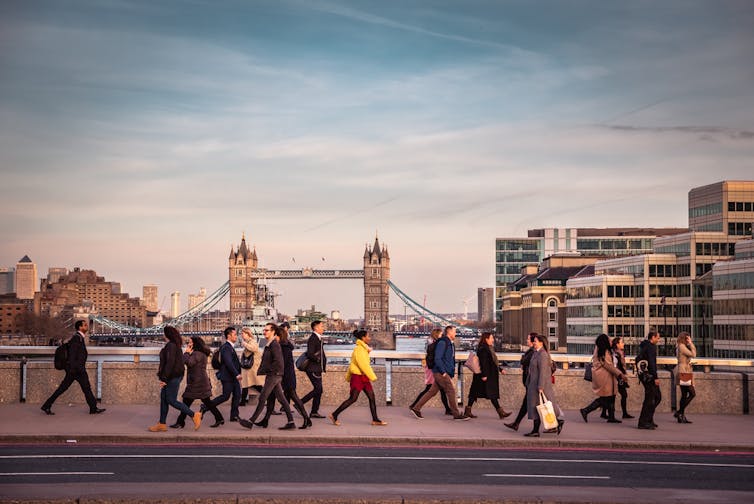
    Commuters walking across London Bridge.
    Steps easily accumulate from everyday activities.
    Marius Comanescu/Shutterstock.com

    Most steps happen without you realising it

    Here’s something that might surprise you. Most of your daily steps don’t come from structured walks or gym sessions. Eighty per cent happen during everyday activities – tidying up, walking to the car, general movement around the house.

    People naturally build steps through five main routes: work (walking between meetings), commuting (those train station treks), household chores, evening strolls and tiny incidental movements. People using public transport clock up 19 minutes of walking daily just getting around.

    Research has also found something else interesting. Frequent short bursts of activity work as well as longer walks. Your body doesn’t care if you get steps from one epic hike or dozens of trips up the stairs. This matters because it means you don’t need to become a completely different person. You just need to move a bit more within your existing routine.

    So, what does this mean for you? Even 2,500 daily steps brings real health benefits. Push up to 4,000 and you’re in serious protection territory. Hit 7,000 and you’ve captured most of the available benefits.

    For older people, those with health conditions, or anyone starting from a sedentary baseline, 7,000 steps is brilliant. It’s achievable and delivers massive health returns. But if you’re healthy and can manage more, keep going. The benefits climb all the way up to 12,000 steps daily, cutting death risk by up to 55%.

    The 10,000-step target isn’t wrong exactly. It’s just not the magic threshold everyone thinks it is.

    What started as a Japanese company’s clever marketing trick has accidentally become one of our most useful health tools. Decades of research have refined that original guess into something much more sophisticated: personalised targets based on your age, health and what you can actually stick to.

    The real revelation? You don’t need to hit some arbitrary target to transform your health. You just need to move more than you do now. Every single step counts.

    The Conversation

    Jack McNamara does not work for, consult, own shares in or receive funding from any company or organisation that would benefit from this article, and has disclosed no relevant affiliations beyond their academic appointment.

    ref. Sweet spot for daily steps is lower than often thought, new study finds – https://theconversation.com/sweet-spot-for-daily-steps-is-lower-than-often-thought-new-study-finds-261605

  • MIL-OSI Submissions: Sweet spot for daily steps is lower than often thought, new study finds

    Source: The Conversation – UK – By Jack McNamara, Senior Lecturer in Clinical Exercise Physiology, University of East London

    Focus and blur.

    Your fitness tracker might be lying to you. That 10,000-step target flashing on your wrist? It didn’t come from decades of careful research. It came from a Japanese walking club and a marketing campaign in the 1960s.

    A major new study has found that 7,000 steps a day dramatically cuts your risk of death and disease. And more steps bring even greater benefits.

    People hitting 7,000 daily steps had a 47% lower risk of dying prematurely than those managing just 2,000 steps, plus extra protection against heart disease, cancer and dementia.

    The findings come from the biggest review of step counts and health ever done. Researchers gathered data from 57 separate studies tracking more than 160,000 people for up to two decades, then combined all the results to spot patterns that individual studies might miss. This approach, called a systematic review, gives scientists much more confidence in their conclusions than any single study could.

    So where did that magic 10,000 number come from? A pedometer company called Yamasa wanted to cash in on 1964 Tokyo Olympics fever. It launched a device called Manpo-kei – literally “10,000 steps meter”. The Japanese character for 10,000 resembles a walking person, while 10,000 itself is a memorable round number. It was a clever marketing choice that stuck.

    At that time, there was no robust evidence for whether a target of 10,000 steps made sense. Early research suggested that jumping from a typical 3,000 to 5,000 daily steps to 10,000 would burn roughly 300 to 400 extra calories a day. So the target wasn’t completely random – just accidentally reasonable.

    This latest research paper looked across a broad spectrum – not just whether people died, but heart disease, cancer, diabetes, dementia, depression and even falls. The results tell a fascinating story. Even tiny increases matter. Jump from 2,000 to 4,000 steps daily and your death risk drops by 36%. That’s a substantial improvement.

    But here’s where it gets interesting. The biggest health benefits happen between zero and 7,000 steps. Beyond that, benefits keep coming, but they level off considerably. Studies have found meaningful benefits starting at just 2,517 steps per day. For some people, that could be as little as a 20-minute stroll around the block.

    Age changes everything, too. If you’re over 60, you hit maximum benefits at 6,000 to 8,000 daily steps. Under 60? You need 8,000 to 10,000 steps for the same protection. Your 70-year-old neighbour gets 77% lower heart disease risk at just 4,500 steps daily.

    The real secret of why fitness targets often fail? People give up on them.

    Research comparing different step goals found a clear pattern. Eighty-five per cent of people stuck with 10,000 daily steps. Bump it to 12,500 steps and only 77% kept going. Push for 15,000 steps and you lose nearly a third of people.

    One major study followed middle-aged adults for 11 years. Those hitting 7,000 to 9,999 steps daily had 50-70% lower death risk. But getting beyond 10,000 steps? No extra benefit. All that extra effort for nothing. Other researchers watching people over a full year saw the same thing. Step programmes worked brilliantly at first, then people slowly drifted back to old habits as targets felt unrealistic.

    Steps easily accumulate from everyday activities.
    Marius Comanescu/Shutterstock.com

    Most steps happen without you realising it

    Here’s something that might surprise you. Most of your daily steps don’t come from structured walks or gym sessions. Eighty per cent happen during everyday activities – tidying up, walking to the car, general movement around the house.

    People naturally build steps through five main routes: work (walking between meetings), commuting (those train station treks), household chores, evening strolls and tiny incidental movements. People using public transport clock up 19 minutes of walking daily just getting around.

    Research has also found something else interesting. Frequent short bursts of activity work as well as longer walks. Your body doesn’t care if you get steps from one epic hike or dozens of trips up the stairs. This matters because it means you don’t need to become a completely different person. You just need to move a bit more within your existing routine.

    So, what does this mean for you? Even 2,500 daily steps brings real health benefits. Push up to 4,000 and you’re in serious protection territory. Hit 7,000 and you’ve captured most of the available benefits.

    For older people, those with health conditions, or anyone starting from a sedentary baseline, 7,000 steps is brilliant. It’s achievable and delivers massive health returns. But if you’re healthy and can manage more, keep going. The benefits climb all the way up to 12,000 steps daily, cutting death risk by up to 55%.

    The 10,000-step target isn’t wrong exactly. It’s just not the magic threshold everyone thinks it is.

    What started as a Japanese company’s clever marketing trick has accidentally become one of our most useful health tools. Decades of research have refined that original guess into something much more sophisticated: personalised targets based on your age, health and what you can actually stick to.

    The real revelation? You don’t need to hit some arbitrary target to transform your health. You just need to move more than you do now. Every single step counts.

    Jack McNamara does not work for, consult, own shares in or receive funding from any company or organisation that would benefit from this article, and has disclosed no relevant affiliations beyond their academic appointment.

    ref. Sweet spot for daily steps is lower than often thought, new study finds – https://theconversation.com/sweet-spot-for-daily-steps-is-lower-than-often-thought-new-study-finds-261605

    MIL OSI

  • How public development banks could narrow inequality gaps between the Global North and South

    Source: ForeignAffairs4

    Source: The Conversation – Canada – By Alicja Paulina Krubnik, PhD Candidate, Political Science, McMaster University

    The United Nations’ Fourth International Conference on Financing for Development (FFD4) recently concluded in Seville, Spain. It gathered global leaders from government, development, academia and civil society to discuss key barriers to sustainable development and shape collaborative efforts to address them.

    FFD4 comes at a crucial time, when the Action Agenda from the last FFD3, set 10 years ago, must be built upon and upheld. With only five years left to meet the UN’s Sustainable Development Goals (SDGs), more than 80 per cent are off track. More tangibly, 2030 is a key deadline for global emissions reduction.

    The global aid environment is also in crisis, just as low- and middle-income countries face mounting pressures due to the interconnected impacts of climate change, environmental damage, poverty and inequality.

    Boosting global co-operation

    FFD4 was an opportunity to revitalize and transform international development co-operation to help states meet these challenges and pursue sustainable development.

    Achieving this requires more than decarbonizing development financing. FFD4 faced its most testing challenge yet: how to reform the global financial systems that direct development resources.

    Key factors include aligning funding with the sustainable development needs of low- and middle-income countries, increasing access to long-term concessional financing — loans or other forms of financing provided on terms more favourable than those in the market — and reducing public debt burdens.

    Public development banks offer crucial leadership here. They provide affordable financing, direct resources where urgently needed and align funding with long-term development strategies, giving them significant potential to democratize project ownership.

    Urgent human development needs

    At the FFD4 gathering, many representatives, especially from Global South and climate-vulnerable countries, highlighted the inadequacy of development financing. Seedy Keita, the minister for finance and economic affairs from The Gambia, told the conference that as developing countries are being urged to invest more in climate and human development initiatives, they lack the tools to do so.

    The countries facing the worst climate impacts also struggle with urgent human development needs. Adapting to and mitigating climate breakdown are inseparable from economic and social development, with human welfare — access to food, water and clean air, avoiding displacement and the safety of women and girls — intimately linked to climate.

    Yet climate-vulnerable states receive a small share of global development financing, particularly for adaptation projects that yield lower returns. Additionally, resources for building value-added industries in low- and middle-income countries remain insufficient.

    Scant commitment to action

    Simply increasing financing is not enough. At the launch of the latest SDGs Report, UN Secretary General António Guterres stated:

    “There is something fundamentally wrong in the structure of the economic and financial architecture and in the way it operates to the detriment of developing countries.”

    In short, it’s too rigid and unresponsive to the Global South’s unique needs, ultimately constraining their ability to act on the SDGs.

    The most ambitious and pressing outcome of FFD4, the “Sevilla Commitment,” addresses key issues in efforts to reform international financial systems but lacks commitment to strong, transformative action.

    Too much priority is given to enabling low- and middle-income countries to access private finance for development. Using public development finance to mobilize private investments and lending has failed to close the financing gap.

    Poverty and inequality worsens

    Private support for the structural green transformation needed for long-term economic development in low- and middle-income countries remains inadequate, widening the divide between the Global North and South. The strategy of catalyzing private finance has shifted risk to public balance sheets while reserving most of the profits for private, often multinational corporations — what’s known as “de-risking.”

    A privatized development strategy has pushed fiscal austerity measures on Global South countries to access international capital markets to fund development initiatives. Many of these countries are struggling with alarming debt, forcing them to divert scarce funds from essential services like health and education to service debts, which worsens poverty and inequality.

    FFD4’s efforts to create a fairer debt system include scaling up debt swaps and forming an alliance between creditor countries and multilateral banks to implement debt “pause clauses” during crises. While many states called for deeper debt reforms and a UN convention on sovereign debt, several wealthy countries resisted bold changes.

    They largely overlooked the Global North’s climate debt — estimated at $192 trillion. The Sevilla Commitment proposes launching a UN-led intergovernmental process, opening a potential path for creditor action.

    As Spain’s economy minister put it, FFD4 is a “launchpad for action” not a “landing zone.”

    Directing money to where it’s needed most

    Public development banks have the potential to lead this action for a more prosperous and equitable future. They can mobilize under-utilized public resources more economically, rapidly and effectively to serve development goals in a climate-forward way.

    These banks can direct finance to where it’s most needed, aligning with development priorities across diverse low- and middle-income countries.

    Public development banks are also well-positioned to co-ordinate at multilateral, regional and national levels and to align global decarbonization goals to local demands. The largest coalition of banks, the Finance in Commons group, was recognized in the Sevilla Commitment. The group called for strengthening public development banks’ co-operation and leadership at the FFD4. Already a leader in global climate financing, further co-ordination among public debate banks could amplify its impact.


    Read more:
    Your essential guide to climate finance


    Supporting green, equitable development

    Structural change requires the long-term, affordable and counter-cyclical financing that public development banks can provide.

    For indebted developing countries facing high borrowing costs, steadfast concessional financing is crucial. Beyond finance, public development banks have a privileged role in knowledge formation and dissemination, which can be leveraged alongside their financial power to support green and equitable development.

    As public organizations, public development banks offer greater potential for transparency and accountability to democratic decision-making, aligning financing with public values. Beyond simply de-risking, these banks can leverage their financial power to generate broader public benefits.

    The Conversation

    Alicja Paulina Krubnik receives funding from the Social Sciences and Humanities Research Council and the International Development Research Centre.

    ref. How public development banks could narrow inequality gaps between the Global North and South – https://theconversation.com/how-public-development-banks-could-narrow-inequality-gaps-between-the-global-north-and-south-261160

  • MIL-Evening Report: After 70 years, twisted gothic thriller The Night of the Hunter remains as disturbing and beguiling as ever

    Source: The Conversation (Au and NZ) – By Ben McCann, Associate Professor of French Studies, University of Adelaide

    United Artists/Getty Images

    In 1955, director Charles Laughton crafted one of the darkest, strangest fairytales ever to come out of Hollywood. The Night of the Hunter remains visually exquisite and profoundly unsettling.

    Shortly before Ben Harper is hanged for robbing a bank and killing two men, he hides the $10,000 loot in the toy doll of his young daughter Pearl. Only Pearl and her brother John know the secret – until the deranged serial killer-priest Harry Powell hears about the money and sets out to recover it.

    Harry marries Willa, Harper’s widow, and then, after killing her, pursues John and Pearl relentlessly across West Virginia.

    Set in the Depression-hit 1930s, The Night of the Hunter is, to quote film critic Pauline Kael, “one of the most frightening movies ever made”. Mitchum’s depiction of pure evil is one of cinema’s most vivid creations, with LOVE and HATE tattooed on the fingers of each hand.

    But this is no simple chase film. It’s about the fight for the souls of two children between the forces of evil and good.

    Gothic nightmares

    Laughton was an odd choice to adapt Davis Grubb’s original 1952 novel – the Oscar-winning British actor had never directed before. Yet Laughton’s “outsider” status meant he wasn’t bound by Hollywood convention and could follow his surreal instincts.

    The film draws heavily from German Expressionist cinema, especially in the use of stark black-and-white contrast and exaggerated shadows. Cinematographer Stanley Cortez described it as his best work, and rightly so: the film often feels more like a dream (or a nightmare).

    Laughton and Cortez craft a series of remarkable images: Pearl and John fleeing down the river, watched over by owls, frogs and rabbits; Powell’s looming shadow cast across a bedroom wall; the slain Willa’s blonde hair floating under the river after her death.

    The film is deeply allegorical. It plays with Christian imagery, ideas of sin and salvation and the vulnerability of the innocent.

    Laughton’s masterstroke was to pit the predatory adult world against the instinctual wisdom and resilience of children.

    Powell (played by Robert Mitchum in his greatest role) is no monster or madman, but a religious fanatic who murders under the guise of righteousness. He embodies the Gothic trope of the corrupt or false preacher. His looming menace turns small-town America into a place of paranoia, dread and moral confusion.

    Rachel Cooper (the silent film star Lillian Gish, never better), who protects the children in the second half of the film, stands as the maternal, angelic counterpoint to Powell’s demonic figure. Her role emphasises another key point of the film: the redemptive, almost sacred, power of kindness.

    A perfect performance

    As Powell, Mitchum drew on his uncanny knack at exuding charm and menace. Many actors would have clashed with Laughton’s expressionistic style, but Mitchum hit the perfect tone: heightened and theatrical, but never camp.

    His delivery is hypnotic, musical and terrifying.

    At a time when many stars were protective of their public image, Mitchum had no problem playing a child-killing religious maniac.

    Known for his rebellious streak and brushes with scandal (including a marijuana arrest in 1948), Mitchum wasn’t bound by Hollywood’s moral expectations. That gave him the freedom to push into darker territory with no vanity.

    That moral delusion, delivered with conviction, is what makes Powell so frightening. Mitchum’s Powell anticipates later predators like Norman Bates (Psycho) or Max Cady (the role he would play in the 1962 version of Cape Fear), but he also echoes much older archetypes: the Big Bad Wolf, the false prophet and the devil in a black coat.

    A flop turned masterpiece

    The film was a critical and commercial failure. Laughton’s bold and unconventional choices were risky. His blend of German Expressionism, Southern Gothic Americana and psychological horror was unlike anything American cinema had seen before.

    It did not align with the mainstream tastes of the era – the top grossing Hollywood films of 1955 were family-friendly, comforting offerings like Oklahoma! and Lady and the Tramp.

    Audiences and reviewers didn’t know what to make of this abnormal mix of fairy tale logic, nightmarish imagery and biblical allegory.

    So heartbroken was Laughton by the savage reception the film received (“a horrible yarn […] a repulsive picture”, one reviewer called it), he never directed again. Yet the reputation of his one-hit wonder has only grown over time.

    Successive generations of critics and filmmakers have caught on to its brilliance. Critic Roger Ebert said it was “one of the greatest of all American films”. In 2008, French film magazine Cahiers du cinéma voted it as the second-best film of all time, behind only Citizen Kane (1941).

    A long-lasting legacy

    Margaret Atwood, David Lynch and the Coen Brothers have all cited the film as a major influence. Spike Lee paid homage to LOVE and HATE in Do The Right Thing (1989). And surely James Cameron admired it, for what is Terminator 2 (1991) if not a rehash of Powell’s insistent chase-down of children?

    Its depiction of a charming, violent manipulator speaks to contemporary fears about religious hypocrisy and the abuse of moral authority. And it reminds us the bucolic innocence of rural America can hide evil in plain sight.

    It’s often the case that films which are misunderstood on first release are ahead of their time, and never fully appreciated until many years later.

    That’s the case with The Night of the Hunter. It remains unsettlingly modern, 70 years on.

    Ben McCann does not work for, consult, own shares in or receive funding from any company or organisation that would benefit from this article, and has disclosed no relevant affiliations beyond their academic appointment.

    ref. After 70 years, twisted gothic thriller The Night of the Hunter remains as disturbing and beguiling as ever – https://theconversation.com/after-70-years-twisted-gothic-thriller-the-night-of-the-hunter-remains-as-disturbing-and-beguiling-as-ever-251049

    MIL OSI AnalysisEveningReport.nz

  • MIL-Evening Report: As seas rise and fish decline, this Fijian village is finding new ways to adapt

    Source: The Conversation (Au and NZ) – By Celia McMichael, Professor in Geography, The University of Melbourne

    Celia McMichael, CC BY-NC-ND

    In the village of Nagigi, Fiji, the ocean isn’t just a resource – it’s part of the community’s identity. But in recent years, villagers have seen the sea behave differently. Tides are pushing inland. Once abundant, fish are now harder to find. Sandy beaches and coconut trees have been washed away.

    Like many coastal communities, including those across the Pacific Islands region, this village is now under real pressure from climate change and declining fish stocks. Methods of fishing are no longer guaranteed, while extreme weather and coastal erosion threaten homes and land. As one villager told us:

    we can’t find fish easily, not compared to previous times […] some fish species we used to see before are no longer around.

    When stories like this get publicity, they’re often framed as a story of loss. Pacific Islanders can be portrayed as passive victims of climate change.

    But Nagigi’s experience isn’t just about vulnerability. As our new research shows, it’s about the actions people are taking to cope with the changes already here. In response to falling fish numbers and to diversify livelihoods, women leaders launched a new aquaculture project, and they have replanted mangroves to slow the advance of the sea.

    Adaptation is uneven. Many people don’t want to or can’t leave their homes. But as climate change intensifies, change will be unavoidable. Nagigi’s experience points to the importance of communities working collectively to respond to threats.

    Unwelcome change is here

    The communities we focus on, Nagigi village (population 630) and Bia-I-Cake settlement (population 60), are located on Savusavu Bay in Vanua Levu, Fiji’s second largest island. Fishing and marine resources are central to their livelihoods and food security.

    In 2021 and 2023, we ran group discussions (known as talanoa) and interviews to find out about changes seen and adaptations made.

    Nagigi residents have noticed unwelcome changes in recent years. As one woman told us:

    sometimes the sea is coming further onto the land, so there’s a lot of sea intrusion into the plantations, flooding even on land where it never used to be

    Tides are pushing ashore in Nagigi, threatening infrastructure.
    Celia McMichael, CC BY-NC-ND

    In 2016, the devastating Tropical Cyclone Winston destroyed homes and forced some Nagigi residents to move inland to customary mataqali land owned by their clan.

    As one resident said:

    our relocation was smooth because […] we just moved to our own land, our mataqali land.

    But some residents didn’t have access to this land, while others weren’t willing to move away from the coast. One man told us:

    leave us here. I think if I don’t smell or hear the ocean for one day I would be devastated.

    Adaptation is happening

    One striking aspect of adaptation in Nagigi has been the leadership of women, particularly in the small Bia-I-Cake settlement.

    In recent years, the Bia-I-Cake Women’s Cooperative has launched a small-scale aquaculture project to farm tilapia and carp to tackle falling fish stocks in the ocean, tackle rising food insecurity and create new livelihoods.

    Women in the cooperative have built fish ponds, learned how to rear fish to a good size and began selling the fish, including by live streaming the sale. The project was supported by a small grant from the United Nations Development Programme and the Women’s Fund Fiji.

    Recently, the cooperative’s women have moved into mangrove replanting to slow coastal erosion and built a greenhouse to farm new crops.

    As one woman told us, these efforts show women “have the capacity to build a sustainable, secure and thriving community”.

    The community’s responses draw on traditional social structures and values, such as respect for Vanua – the Fijian and Pacific concept of how land, sea, people, customs and spiritual beliefs are interconnected – as well as stewardship of natural resources and collective decision-making through clans and elders, both women and men.

    Nagigi residents have moved to temporarily close some customary fishing grounds to give fish populations a chance to recover. The village is also considering declaring a locally-managed marine area (known as a tabu). This is a response to climate impacts as well as damage to reefs, pollution and overfishing.

    For generations, village residents have protected local ecosystems which in turn support the village. But what is new is how these practices are being strengthened and formalised to respond to new challenges.

    A women’s cooperative have built aquaculture ponds to raise and sell fish.
    Celia McMichael, CC BY-NC-ND

    Adaptation is uneven

    While adaptation is producing some successes, it is unevenly spread. Not everyone has access to customary land for relocation and not every household can afford to rebuild damaged homes.

    What Nagigi teaches us, though, is the importance of local adaptation. Villagers have demonstrated how a community can anticipate risks, respond to change and threats, recover from damage and take advantage of new opportunities.

    Small communities are not just passive sites of loss. They are collectives of strength, agency and ingenuity. As adaptation efforts scale up across the Pacific, it is important to recognise and support local initiatives such as those in Nagigi.

    Sharing effective adaptation methods can give ideas and hope to other communities under real pressure from climate change and other threats.

    Many communities are doing their best to adapt often undertaking community-led adaptation, even despite the limited access Pacific nations have to global climate finance.

    Nagigi’s example shows unwelcome climatic and environmental changes are already arriving. But it’s also about finding ways to live well amid uncertainty and escalating risk by using place, tradition and community.

    The authors acknowledge the support of the people of Nagigi and Bia-I-Cake, and especially the Bia-I-Cake Women’s Cooperative, for sharing their time and insights.

    Celia McMichael receives funding from the Australian Research Council (ARC).

    Merewalesi Yee does not work for, consult, own shares in or receive funding from any company or organisation that would benefit from this article, and has disclosed no relevant affiliations beyond their academic appointment.

    ref. As seas rise and fish decline, this Fijian village is finding new ways to adapt – https://theconversation.com/as-seas-rise-and-fish-decline-this-fijian-village-is-finding-new-ways-to-adapt-261573

    MIL OSI AnalysisEveningReport.nz

  • MIL-Evening Report: From grasslands to killing fields: why trees are bad news for one of Australia’s most stunning birds

    Source: The Conversation (Au and NZ) – By Gabriel Crowley, Adjunct Associate Professor in Geography, University of Adelaide

    JJ Harrison/Wikimedia, CC BY

    Picture this. A small, rainbow-coloured chick emerges from its nest for the first time. It stretches its wings and prepares to take flight. But before the fledgling’s life in the wild has begun, a sharp-beaked predator swoops in, leaving nothing but a tiny skeleton.

    This is the sad scenario playing out on Cape York Peninsula, new analysis shows. There, trees are invading the open, grassy habitat of the endangered golden-shouldered parrot (Psephotellus chrysopterygius). The trees give cover to predators – meaning they can lie in wait, before striking the adult birds and their young.

    The golden-shouldered parrot is endangered, now found in just 5% of its original range. The new findings suggest more work is needed to restore grassland habitat to its former open state, to ensure the parrots’ survival.

    A vanishing species

    The initial decline of the golden-shouldered parrot was likely caused by a loss of food plants and degradation of the termite mounds in which it nests. Birds that remained in two small areas in central Cape York Peninsula faced other issues.

    In the 1990s, researchers began studying the parrot on Artemis Station, to better understand why numbers were declining. A new suspect was identified: native woody plants, such as the broad-leaved tea-tree (Melaleuca viridiflora), which had crept into the birds’ grassy habitat.

    The change was largely due to overgrazing, which reduced fuel loads and led to fewer fires. This allowed the woodland trees to overtake the grasslands. But exactly how were these trees affecting the survival of the golden-shouldered parrot? New research by my colleagues and I set out to answer this question.

    The above image shows the three phases of woodland invading the parrots’ habitat. Left, a few scattered trees establish around the nesting mound. Centre, tea trees emerge from the grass layer. Right, dense thickets of tea trees shade out the termite mounds.
    Gabriel Crowley

    Counting eggs, nest by nest

    We monitored 108 termite-mound nests over three years, tracking the success of 555 eggs. We visited each nest every few days to record whether chicks successfully fledged (grew strong enough to leave the nest) or died.

    We also counted the number of trees around the nests, and recorded signs of interference from predators.

    So what did we find? The proportion of nests that produced a fledgling from every egg decreased in proportion to the number of trees around the nest. The percentage of eggs, chicks and adults that were killed or disappeared from a nest also increased in line with tree numbers.

    That’s because the trees bring different predators – and places for them to hide.

    We suspected reptiles were the main predators. This was due to scratches on the nests and disappearance of eggs without any other signs of damage. While the exact species of reptile predator was hard to pinpoint, we know tree snake numbers increase as woodlands encroach.

    However, of all predators, we found butcherbird numbers increased most strongly as trees crept in. Butcherbirds tear prey apart with their strong, hooked beaks. Trees close to the nests give butcherbirds cover, enabling them to wait for adults or their young to emerge.

    Tragically, we found skulls of chicks pierced by the butcherbirds’ sharp bills. In one case, the shredded flesh of a bird was wedged atop a termite mound.

    Butcherbirds have strong, hooked beaks, which they use to tear apart prey.
    Conservation Partners

    Parrots successfully fledged from just over half of the 555 eggs we monitored.

    In the most dense woodlands, the number of birds that successfully fledged was just one-third of the rate needed to maintain the golden-shouldered parrot’s population.

    Adult birds were lost from one-third of the nests we studied. This is especially troubling. Modelling from similar tropical birds shows this rate of adult deaths can push a species towards extinction.

    Unusually, golden-shouldered parrots nest in termite mounds.
    Peter Valentine

    Restoring the parrots’ grassland home

    The world’s grassland habitats are under threat. This has devastating consequences for species that depend on them – including the golden-shouldered parrot.

    Our findings show Cape York’s grasslands should be maintained and restored to ensure the survival of the golden-shouldered parrot. Much work is needed to ensure the species avoids the fate of its closest relative, the paradise parrot, which is presumed extinct.

    Work is already underway. Golden-shouldered parrot habitat in national parks and on Indigenous-owned land has been destocked, and more traditional Indigenous fire regimes reinstated. This will help maintain open grasslands and reverse early woodland encroachment. Such work is also being undertaken at the study site on Artemis Station.

    Where woody plant invasion is more advanced, more intensive methods have been deployed. At the study site, this includes using chainsaws and brush-cutters to clear trees, before the stump is poisoned.

    Where woody vegetation is well established, trees must be felled to help restore grassland habitat.
    Conservation Partners

    Other measures include installing electric fences to keep out reptiles, reseeding grasslands with food plants and providing feeding stations in seasons when food is scarce.

    Land managers across Cape York have also been provided guidelines for managing woodland encroachment.

    These efforts must be sustained in the long-term, to ensure the golden-shouldered parrot can return to its former range.

    Gabriel Crowley undertook the work cited in this article with Susan Shephard (Artemis Station), Stephen Garnett (Charles Darwin University and Conservation Partners) and Stephen Murphy (Conservation Partners). Funding was provided by the Queensland and federal governments, Gulf Savannah NRM and WWF Australia. Gabriel has provided advice on golden-shouldered parrots and their habitat to the Olkola Aboriginal Corporation, Conservation Partners and Bush Heritage Australia as a volunteer and/or consultant. She is a volunteer for Helen Haines MP (Member for Indi).

    ref. From grasslands to killing fields: why trees are bad news for one of Australia’s most stunning birds – https://theconversation.com/from-grasslands-to-killing-fields-why-trees-are-bad-news-for-one-of-australias-most-stunning-birds-259898

    MIL OSI AnalysisEveningReport.nz

  • MIL-Evening Report: Is sleeping a lot actually bad for your health? A sleep scientist explains

    Source: The Conversation (Au and NZ) – By Charlotte Gupta, Senior Postdoctoral Research Fellow, Appleton Institute, HealthWise Research Group, CQUniversity Australia

    Walstrom, Susanne/Getty

    We’re constantly being reminded by news articles and social media posts that we should be getting more sleep. You probably don’t need to hear it again – not sleeping enough is bad for your brain, heart and overall health, not to mention your skin and sex drive.

    But what about sleeping “too much”? Recent reports that sleeping more than nine hours could be worse for your health than sleeping too little may have you throwing up your hands in despair.

    It can be hard not to feel confused and worried. But how much sleep do we need? And what can sleeping a lot really tell us about our health? Let’s unpack the evidence.

    Sleep is essential for our health

    Along with nutrition and physical activity, sleep is an essential pillar of health.

    During sleep, physiological processes occur that allow our bodies to function effectively when we are awake. These include processes involved in muscle recovery, memory consolidation and emotional regulation.

    The Sleep Health Foundation – Australia’s leading not-for-profit organisation that provides evidence-based information on sleep health – recommends adults get seven to nine hours of sleep per night.

    Some people are naturally short sleepers and can function well with less than seven hours.

    However, for most of us, sleeping less than seven hours will have negative effects. These may be short term; for example, the day after a poor night’s sleep you might have less energy, worse mood, feel more stressed and find it harder to concentrate at work.

    In the long term, not getting enough good quality sleep is a major risk factor for health problems. It’s linked to a higher risk of developing cardiovascular disease – such as heart attacks and stroke – metabolic disorders, including type 2 diabetes, poor mental health, such as depression and anxiety, cancer and death.

    So, it’s clear that not getting enough sleep is bad for us. But what about too much sleep?

    Could too much sleep be bad?

    In a recent study, researchers reviewed the results of 79 other studies that followed people for at least one year and measured how sleep duration impacts the risk of poor health or dying to see if there was an overall trend.

    They found people who slept for short durations – less than seven hours a night – had a 14% higher risk of dying in the study period, compared to those who slept between seven and eight hours. This is not surprising given the established health risks of poor sleep.

    However, the researchers also found those who slept a lot – which they defined as more than nine hours a night – had a greater risk of dying: 34% higher than people who slept seven to eight hours.

    This supports similar research from 2018, which combined results from 74 previous studies that followed the sleep and health of participants across time, ranging from one to 30 years. It found sleeping more than nine hours was associated with a 14% increased risk of dying in the study period.

    Research has also shown sleeping too long (meaning more than required for your age) is linked to health problems such as depression, chronic pain, weight gain and metabolic disorders.

    This may sound alarming. But it’s crucial to remember these studies have only found a link between sleeping too long and poor health – this doesn’t mean sleeping too long is the cause of health problems or death.


    Read more:
    If ‘correlation doesn’t imply causation’, how do scientists figure out why things happen?


    So, what’s the link?

    Multiple factors may influence the relationship between sleeping a lot and having poor health.

    It’s common for people with chronic health problems to consistently sleep for long periods. Their bodies may need additional rest to support recovery, or they may spend more time in bed due to symptoms or medication side effects.

    People with chronic health problems may also not be getting high quality sleep, and may stay in bed for longer to try and get some extra sleep.

    Additionally, we know risk factors for poor health, such as smoking and being overweight, are also associated with poor sleep.

    This means people may be sleeping more because of existing health problems or lifestyle behaviours, not that sleeping more is causing the poor health.

    Put simply, sleeping may be a symptom of poor health, not the cause.

    What’s the ideal amount?

    The reasons some people sleep a little and others sleep a lot depend on individual differences – and we don’t yet fully understand these.

    Our sleep needs can be related to age. Teenagers often want to sleep more and may physically need to, with sleep recommendations for teens being slightly higher than adults at eight to ten hours. Teens may also go to bed and wake up later.

    Older adults may want to spend more time in bed. However, unless they have a sleep disorder, the amount they need to sleep will be the same as when they were younger.

    But most adults will require seven to nine hours, so this is the healthy window to aim for.

    It’s not just about how much sleep you get. Good quality sleep and a consistent bed time and wake time are just as important – if not more so – for your overall health.

    The bottom line

    Given many Australian adults are not receiving the recommended amount of sleep, we should focus on how to make sure we get enough sleep, rather than worrying we are getting too much.

    To give yourself the best chance of a good night’s sleep, get sunlight and stay active during the day, and try to keep a regular sleep and wake time. In the hour before bed, avoid screens, do something relaxing, and make sure your sleep space is quiet, dark, and comfortable.

    If you notice you are regularly sleeping much longer than usual, it could be your body’s way of telling you something else is going on. If you’re struggling with sleep or are concerned, speak with your GP. You can also explore the resources on the Sleep Health Foundation website.

    The authors do not work for, consult, own shares in or receive funding from any company or organisation that would benefit from this article, and have disclosed no relevant affiliations beyond their academic appointment.

    ref. Is sleeping a lot actually bad for your health? A sleep scientist explains – https://theconversation.com/is-sleeping-a-lot-actually-bad-for-your-health-a-sleep-scientist-explains-259991

    MIL OSI AnalysisEveningReport.nz

  • MIL-Evening Report: Birds use hidden black and white feathers to make themselves more colourful

    Source: The Conversation (Au and NZ) – By Simon Griffith, Professor of Avian Behavioural Ecology, Macquarie University

    The green-headed tanager (_Tangara seledon_) has a hidden layer of plumage that is white underneath the orange feathers and black underneath the blue and green feathers. Daniel Field

    Birds are perhaps the most colourful group of animals, bringing a splash of colour to the natural world around us every day. Indeed, exclusively black and white birds – such as magpies – are in the minority.

    However, new research by a team from Princeton University in the United States has revealed a surprising trick in which birds use those boring black and white feathers to make their colours even more vivid.

    Male golden tanagers (Tangara arthus) have hidden layers of white which make their plumage brighter, while females have hidden layers of black which make their plumage darker.
    Daniel Field

    In the study, published today in Science Advances, Rosalyn Price-Waldman and her colleagues discovered that if coloured feathers are placed over a layer of either white or black underlying feathers, their colours are enhanced.

    A particularly striking discovery was that in some species the different colour of males and females wasn’t due to the colour the two sexes put into the feathers, but rather in the amount of white or black in the layer underneath.

    Why birds are so bright – and how they do it

    Typically, male birds have more vivid colours than females. As Charles Darwin first explained, the most colourful males are more likely to attract mates and produce more offspring than those that aren’t as vivid. This process of “sexual selection” is the evolutionary force that has resulted in most of the colours we see in birds today.

    Evolution is a process that rewards clever solutions in the competition among males to stand out in the crowd. Depositing a layer of black underneath patches of bright blue feathers has enabled males to produce that extra vibrancy that helps them in the competition for mates.

    The blue feathers of a red-necked tanager (Tangara cyanocephala) stand out against a black underlayer.
    Rosalyn Price-Waldman

    The reason the black layer works so well is that it absorbs all the light that passes through the top layer of coloured feathers. The colour we see is blue because those top feathers have a fine structure that scatters light in a particular way, and reflects light in the blue part of the spectrum.

    The feathers appear particularly vivid blue because the light in other wavelengths is absorbed by the under-layer. If the under-layer was paler, some of the light in the other parts of the light spectrum would bounce back and the blue would not “pop out” as much.

    Different tricks for different colours

    Interestingly, in the new study, the researchers found that for yellow feathers the opposite trick works. Yellow feathers contain yellow pigments – carotenoids – and in this case they are enhanced if they have a white under-layer.

    The white layer reflects light that passes through the yellow feathers, and this increases the brightness of these yellow patches, making them more striking in contrast to surrounding patches of colour.

    The red feather tips of a scarlet-rumped tanager (Ramphocelus passerinii) are enhanced by the white feathers beneath them.
    Rosalyn Price-Waldman

    A surprisingly common technique

    The authors focused most of their work on species of tanager, typically very colourful fruit-eating birds that are native to Central and South America.

    However, once they had discovered what was happening in tanagers, they checked to see if it was occurring in other birds.

    The vivid blue colouring of the Australian splendid fairy wren (Malurus splendens) is enhanced by an underlayer of colourless feathers.
    Robbie Goodall / Getty Images

    This additional work revealed that the use of black and white underlying feathers to enhance colour is found in many other bird families, including the Australian fairy wrens which have such vivid blue colouration.

    This widespread use of black and white across so many different species suggests birds have been enhancing the production of colour in this clever way for tens of millions of years, and that it is widely used across birds.

    The color of the vibrant red crown of this red-capped manakin (Ceratopipra mentalis) is magnified by a hidden layer of white plumage.
    Daniel Field

    The study is important because it helps us to understand how complex traits such as colour can evolve in nature. It may also help us to improve the production of vibrant colours in our own architecture, art and fashion.

    Simon Griffith receives funding from the Australian Research Council.

    ref. Birds use hidden black and white feathers to make themselves more colourful – https://theconversation.com/birds-use-hidden-black-and-white-feathers-to-make-themselves-more-colourful-261567

    MIL OSI AnalysisEveningReport.nz

  • MIL-Evening Report: Five arms, no heart and a global family: what DNA revealed about the weird deep-sea world of brittle stars

    Source: The Conversation (Au and NZ) – By Tim O’Hara, Senior Curator of Marine Invertebrates, Museums Victoria Research Institute

    A brittle star of the species _Gorgonocephalus eucnemis_. Lagunatic Photo / Getty Images

    You may have read that the deep sea is a very different environment from the land and shallow water. There is no light, it is very cold, and the pressure of all the water above is immense.

    Plants can’t grow there, and the energy powering life mostly comes from organic matter sinking from the sunlit surface. These facts have been known for more than 150 years.

    But I want to tell you something you probably don’t know about the deep sea: for animals on the seafloor, it is a very connected environment. There are few environmental barriers to stop animals slowly expanding their distribution to cover thousands of kilometres. Over a million years, deep-sea animals can spread from Iceland to Tasmania.

    In a new study published today in Nature, we map the distribution and relatedness of a single group of marine animals across all ocean seafloors, from the coast down to the abyssal plains of the deep sea, from the equator to the pole.

    Australia’s ocean research vessel RV Investigator, operated by the CSIRO Marine National Facility, was used to explore deepsea life around Christmas Island in the Indian Ocean.
    Chris Bray / CSIRO, CC BY-NC

    Five arms, no brain, no eyes or heart

    We sequenced the DNA of thousands of animal specimens stored in natural history collections of museums across the globe, deposited from hundreds of research voyages. For the first time, we have enough data to explore how marine life has evolved and dispersed across the oceans over the past 100 million years.

    We studied a group of animals called brittle stars, strange spiny creatures with a disc-like body and five sinuous or branched arms. They have a central mouth and gut, but no brain, no eyes and no heart.

    A branched brittle star (Gorgonocephalus chilensis) specimen taken from Coral Seamount, southwest Indian Ocean.
    Tim O’Hara / Museums Victoria, CC BY

    While these shy animals would not be always familiar to beach combers or snorkelers, they are perfect for our project as they are found in abundance across deep seafloors and frequently surveyed by research expeditions. They have inhabited our planet for more than 480 million years, efficiently consuming and recycling organic matter.

    Deep-sea lifestyles

    Life in the deep is distributed in a different way to that in shallow seas.

    In shallow waters, the temperature differs a lot between the tropics, the temperate regions (mid latitudes) and the poles. This imposes a barrier to the movement of marine life. Animals (and plants) generally adapt to a narrow range of temperatures and only rarely spread to other climates.

    So, if you are a tropical shallow-water species, you cannot migrate through frigid waters around South America, or through the Canadian Arctic, to get from the Pacific to Atlantic Ocean. For tens of millions of years, shallow marine species have evolved independently in different oceans and seas.

    Tropical shallow-water brittle stars such as Ophiothrix purpurea cannot migrate through cold waters.
    Julian Finn / Museums Victoria, CC BY-NC

    But we found the deep sea is not like that. Species in different regions are much more closely related.

    In fact, the age and geographic distribution of species on a family tree of deep-sea brittle stars resembles that of a group of seabirds or marine mammals. Yet these brittle stars don’t have wings or fins to get around.

    The deep-sea brittle star Ophiotholia can burrow like a corkscrew into muddy seafloors.
    Caroline Harding / Museums Victoria, CC BY

    How eggs and larvae roam the globe

    The secret of how slow-moving brittle stars migrate across oceans appears to be their eggs and larvae.

    In warm, shallow waters, a yolk-filled food reserve is rapidly used up by the developing larva. But in the cold deep sea, a yolky larva can survive with very slow metabolic activity, drifting on slow-moving currents for more than a year before settling. This greatly expands the range of a brittle star’s offspring.

    Moreover, there are numerous seamounts, ridges and plains on the oceanic seafloor that offer transit points for long-distance migration at different depths. This dispersal across oceans has been going on for a long time.

    Deep-sea ‘highways’ where brittle stars disperse across the Atlantic and Indian oceans.
    Tim O’Hara / Museums Victoria, CC BY

    The most prominent of these dispersal highways is across the southern Indian Ocean, transporting deep-sea animals from the Atlantic and Southern Oceans to Australia and New Zealand. In contrast, very few shallow-water animals have traversed such vast distances.

    A patchwork of deep-sea life

    While brittle star populations show lots of evidence of long-distance connections, deep-sea communities are not uniform around the planet.

    Life in the deep is perilous. There is always the threat that a given species may be wiped out in particular regions.

    Seawater conditions can change, as can currents and food supplies. New predators or diseases may arrive at any time.

    Over time, the combination of high connectivity and high rates of regional extinction has led to a patchwork of deep-sea species distributions across oceans.

    To conserve these ecosystems into the future, we will need a much better understanding of the global patterns of deep-sea life.

    Tim O’Hara has received funding from CSIRO’s Marine National Facility, Parks Australia, Ocean Census, and from philanthropic support of Museums Victoria Research Institute.

    ref. Five arms, no heart and a global family: what DNA revealed about the weird deep-sea world of brittle stars – https://theconversation.com/five-arms-no-heart-and-a-global-family-what-dna-revealed-about-the-weird-deep-sea-world-of-brittle-stars-261566

    MIL OSI AnalysisEveningReport.nz

  • MIL-Evening Report: Togo’s ‘Nana-Benz’: how cheap Chinese imports of African fabrics has hurt the famous women traders

    Source: The Conversation (Au and NZ) – By Fidele B. Ebia, Postdoctoral fellow, Duke Africa Initiative, Duke University

    The manufacturing of African print textiles has shifted to China in the 21st century. While they are widely consumed in African countries – and symbolic of the continent – the rise of “made in China” has undermined the African women traders who have long shaped the retail and distribution of this cloth.

    For many decades Vlisco, the Dutch textile group which traces its origins to 1846 and whose products had been supplied to west Africa by European trading houses since the late 19th century, dominated manufacture of the cloth. But in the last 25 years dozens of factories in China have begun to supply African print textiles to west African markets. Qingdao Phoenix Hitarget Ltd, Sanhe Linqing Textile Group and Waxhaux Ltd are among the best known.

    We conducted research to establish how the rise of Chinese-made cloth has affected the African print textiles trade. We focused on Togo. Though it’s a tiny country with a population of only 9.7 million, the capital city, Lomé, is the trading hub in west Africa for the textiles.

    We conducted over 100 interviews with traders, street sellers, port agents or brokers, government officials and representatives of manufacturing companies to learn about how their activities have changed.

    “Made in China” African print textiles are substantially cheaper and more accessible to a wider population than Vlisco fabric. Our market observations in Lomé’s famous Assigamé market found that Chinese African print textiles cost about 9,000 CFA (US$16) for six yards – one complete outfit. Wax Hollandais (50,000 CFA or US$87) cost over five times more.

    Data is hard to come by, but our estimates suggest that 90% of imports of these textiles to Lomé port in 2019 came from China.

    One Togolese trader summed up the attraction:

    Who could resist a cloth that looked similar, but that cost much less than real Vlisco?

    Our research shows how the rise of China manufactured cloth has undermined Vlisco’s once dominant market share as well as the monopoly on the trade of Dutch African print textiles that Togolese traders once enjoyed.

    The traders, known as Nana-Benz because of the expensive cars they drove, once enjoyed an economic and political significance disproportionate to their small numbers. Their political influence was such that they were key backers of Togo’s first president, Sylvanus Olympio – himself a former director of the United Africa Company, which distributed Dutch cloth.

    In turn, Olympio and long-term leader General Gnassingbé Eyadéma provided policy favours – such as low taxes – to support trading activity. In the 1970s, African print textile trade was considered as significant as the phosphate industry – the country’s primary export.

    Nana-Benz have since been displaced – their numbers falling from 50 to about 20. Newer Togolese traders – known as Nanettes or “little Nanas” – have taken their place. While they have carved out a niche in mediating the textiles trade with China, they have lower economic and political stature. In turn, they too are increasingly threatened by Chinese competition, more recently within trading and distribution as well.

    China displaces the Dutch

    Dating back to the colonial period, African women traders have played essential roles in the wholesale and distribution of Dutch cloth in west African markets. As many countries in the region attained independence from the 1950s onwards, Grand Marché – or Assigamé – in Lomé became the hub for African print textile trade.

    While neighbouring countries such as Ghana limited imports as part of efforts to promote domestic industrialisation, Togolese traders secured favourable conditions. These included low taxes and use of the port.

    Togolese women traders knew the taste of predominantly female, west African customers better than their mostly male, Dutch designers. The Nana-Benz were brought into the African print textile production and design process, selecting patterns and giving names to designs they knew would sell.

    They acquired such wealth from this trade that they earned the Nana-Benz nickname from the cars they purchased and which they used to collect and move merchandise.

    Nana-Benz exclusivity of trading and retailing of African print textiles cloth in west African markets has been disrupted. As Vlisco has responded to falling revenues – over 30% in the first five years of the 21st century – due to its Chinese competition, Togolese traders’ role in the supply chain of Dutch cloth has been downgraded.

    In response to the flood of Chinese imports, the Dutch manufacturer re-positioned itself as a luxury fashion brand and placed greater focus on the marketing and distribution of the textiles.

    Vlisco has opened several boutique stores in west and central Africa, starting with Cotonou (2008), Lomé (2008) and Abidjan (2009). The surviving Nana-Benz – an estimated 20 of the original 50 – operate under contract as retailers rather than traders and must follow strict rules of sale and pricing.

    While newer Togolese traders known as Nanettes are involved in the sourcing of textiles from China, they have lower economic and political stature. Up to 60 are involved in the trade.

    Former street sellers of textiles and other petty commodities, Nanettes began travelling to China in the early to mid-2000s to source African print textiles. They are involved in commissioning and advising on the manufacturing of African print textiles in China and the distribution in Africa.

    While many Nanettes order the common Chinese brands, some own and market their own. These include what are now well-known designs in Lomé and west Africa such as “Femme de Caractère”, “Binta”, “Prestige”, “Rebecca Wax”, “GMG” and “Homeland”.

    Compared to their Nana-Benz predecessors, the Nanettes carve out their business from the smaller pie available from the sale of cheaper Chinese cloth. Though the volumes traded are large, the margins are smaller due to the much lower final retail price compared to Dutch cloth.

    After procuring African print textiles from China, Nanettes sell wholesale to independent local traders or “sellers” as well as traders from neighbouring countries. These sellers in turn break down the bulk they have purchased and sell it in smaller quantities to independent street vendors.

    All African print textiles from China arrive in west Africa as an incomplete product – as six-yard or 12-yard segments of cloth, not as finished garments. Local tailors and seamstresses then make clothes according to consumer taste. Some fashion designers have also opened shops where they sell prêt-à-porter (ready-to-wear) garments made from bolts of African print and tailored to local taste. Thus, even though the monopoly of the Nana-Benz has been eroded, value is still added and captured locally.

    Since the COVID-19 pandemic, Chinese actors have become more involved in trading activity – and not just manufacturing. The further evolution of Chinese presence risks an even greater marginalisation of locals, already excluded from manufacturing, from the trading and distribution end of the value chain. Maintaining their role – tailoring products to local culture and trends and linking the formal and informal economy – is vital not just for Togolese traders, but also the wider economy.

    Rory Horner receives funding from the British Academy Mid-Career Fellowship. He is also a Research Associate at the Department of Geography, Environmental Management and Energy Studies at the University of Johannesburg.

    Fidele B. Ebia does not work for, consult, own shares in or receive funding from any company or organisation that would benefit from this article, and has disclosed no relevant affiliations beyond their academic appointment.

    ref. Togo’s ‘Nana-Benz’: how cheap Chinese imports of African fabrics has hurt the famous women traders – https://theconversation.com/togos-nana-benz-how-cheap-chinese-imports-of-african-fabrics-has-hurt-the-famous-women-traders-260924

    MIL OSI AnalysisEveningReport.nz

  • MIL-Evening Report: 4.48 Psychosis revival: the play’s window into a mind on the edge is as brutal as ever

    Source: The Conversation (Au and NZ) – By Leah Sidi, Associate Professor of Health Humanities, UCL

    Under bright lights, the audience looks at a bare stage on two planes. Below, a small stage is white and empty, occupied only by a table and two chairs. Above, a huge, slanted mirror reflects a bird’s-eye view of the stage to the audience. Three middle-aged figures enter the stage without looking at each other. One lies down, staring into the mirror. One stands and one sits. For the next 70 minutes, they will never hold one another’s gaze.

    This is the revival of Sarah Kane’s play 4.48 Psychosis. The production takes place 25 years after the original work, bringing the original cast and creative team back to the Royal Court where the play was first staged – now transferred to The Other Place, a small theatre run by the Royal Shakespeare Company.

    It replicates the staging of the original with precision. The same faces are on the same set, making the same gestures. Even the projections of the street outside show cars from the 1990s. And yet, because this is theatre, there are inevitable differences.


    Looking for something good? Cut through the noise with a carefully curated selection of the latest releases, live events and exhibitions, straight to your inbox every fortnight, on Fridays. Sign up here.


    The play is a revival and a commemoration. Kane wrote 4.48 Psychosis in the year leading up to her death by suicide in 1999 and completed it during her final stay in a psychiatric hospital. It stages the experience of a suicidal and psychotic mind breaking down.

    About a week after sending the play to her agent, Kane ended her own life. A year later, the original production was staged at the Royal Court, directed by her long-term collaborator James Macdonald and starring three young actors: Daniel Evans, Madeleine Potter and Jo McInnes. All three have returned for this revival.

    4.48 Psychosis is a highly experimental play. It contains dialogue between doctor and patient, poetry, seemingly psychotic speech, lists and quotations from literature and medical documents. In her aims for the play, Kane was both very open and very specific. She described the play in an interview at Royal Holloway University as an attempt to stage the experience of a mind breaking down:

    I’m writing a play called 4:48 Psychosis … It’s about a psychotic breakdown and what happens in a person’s mind when the barriers which distinguish between reality and different forms of imagination completely disappear … you no longer know where you stop and the world starts.

    What’s more, through an experimental style, Kane hoped to make her audience experience some of the distress experienced by the mental collapse being staged. She described this as “making form and content one”.

    How this strange work was to be staged was to be left up to future creatives. She didn’t specify how many actors should perform the work, or provide references to their age or gender. Kane believed that as a playwright, her job was to write the work, and then let directors figure it out.

    The result was that the first performance split the experience of breakdown across three actors. At times, they take on more specific roles such as a patient, a doctor, and a lover or bystander. At others, they all seem to occupy a shared mental reverie.

    Since the original production, 4.48 Psychosis has been staged in multiple ways around the world. French actor Isabelle Huppert performed the first French production largely as a monologue in 2005, with occasional lines delivered by Gérard Watkins as a psychiatrist. Recently in the UK it has been transformed into a successful opera in which a six-person ensemble and full orchestra performed the play’s “hive mind”, and has been performed in a plastic box in British Sign Language.

    When it was first performed in 2000, a year after Kane’s death, the play left a profound impression on its audiences. It was arguably one of the most brutal, head-on representations of mental illness that had ever been seen in British theatre. Reviews from that first production discuss anxieties about whether the play should be viewed as a “suicide note” – a disturbingly “real” reference to Kane’s death.

    Today, such anxieties may seem less relevant. After all, over two decades have passed since Kane’s death, and we are in a very different world when it comes to how we view disclosure of personal struggle. In a culture of mental health awareness campaigns and social media oversharing, the closeness of Kane’s suffering to her work seems less scandalous, and perhaps less unsettling.

    At times, this revival feels a bit more like a repetition, or archival reconstruction than a fresh performance. There are moments that feel dated – for example, the use of pixelated projections.

    The most compelling moments were where something original was introduced due to the more advanced ages of the actors. In my experience, the play is typically performed by a younger cast, as a rageful, energetic cry of despair. It hits differently with a cast in their fifties.

    Madeleine Potter’s resigned, ironic complaints about being mistreated by “Dr This and Dr That” gave the impression of a woman with a lifetime’s experience of inadequate mental health services. And Jo McInnes’s desperate monologue about lost love could be referencing an estranged or dead child, as much as a lover.

    These moments inserted something new into Kane’s iconic last work and underlined that mental suffering is far from being the privilege of the young. More of a slow burn than an explosive cry of anger, this return to 4.48 Psychosis explores mental torment that can persist over a lifetime, revealing it to be as relevant as ever.

    4.48 Psychosis is at The Other Place until July 27.

    Leah Sidi does not work for, consult, own shares in or receive funding from any company or organisation that would benefit from this article, and has disclosed no relevant affiliations beyond their academic appointment.

    ref. 4.48 Psychosis revival: the play’s window into a mind on the edge is as brutal as ever – https://theconversation.com/4-48-psychosis-revival-the-plays-window-into-a-mind-on-the-edge-is-as-brutal-as-ever-261430

    MIL OSI AnalysisEveningReport.nz

  • MIL-Evening Report: How the UK’s immigration system splits families apart – by design

    Source: The Conversation (Au and NZ) – By Nando Sigona, Professor of International Migration and Forced Displacement and Director of the Institute for Research into International Migration and Superdiversity, University of Birmingham

    arda savasciogullari/Shutterstock

    The letter that arrived for eleven-year-old Guilherme in June 2025 was addressed personally to him. The UK Home Office was informing him that he and his eight-year-old brother Luca must return to Brazil. Their parents, an academic and a senior NHS nurse, both long-term UK residents with valid visas were not included in the order.

    “Whilst this may involve a degree of disruption in family life,” the letter stated, “this is considered to be proportionate to the legitimate aim of maintaining effective immigration control.”

    The family’s difficulties with the Home Office began after the parents divorced a few years after arriving in the UK. Mother and children arrived in the UK as dependants on the father’s visa. After the divorce, the mother secured her own skilled worker visa, while the father was granted indefinite leave to remain in 2024.

    Under current rules, skilled workers must wait five years before applying for settlement. For the children to qualify for settlement, both parents must be settled or one must have sole responsibility – neither condition applies here. Only after media attention did the Home Office reconsider the decision.

    This case is just the latest example of how barriers to migrants’ family life are embedded in the UK’s immigration system – something I have been studying for years. The Labour government’s recently announced immigration plans extend and bolster these barriers.

    Current rules require migrants to earn at least £29,000 to sponsor a spouse or child – a figure set to rise to £38,700 in early 2026 after changes introduced by the last government. The newest immigration plans propose doubling the path to settlement from five to ten years. And they restrict the rights to family reunion to only “nuclear” families: divorced parents, adult children and extended kin are left out.

    These changes are aimed at reducing migration and restoring “public trust”. But in practice, they make family unity a luxury — harder to achieve for low-paid migrant workers and even for working-class British citizens with foreign partners.


    Read more:
    ‘Just the rich can do it’: our research shows how immigration income requirements devastate families


    The price of family life

    Recent research my colleagues and I conducted — based on over 50 interviews with migrant domestic and food delivery workers and other experts — shows how the immigration system fractures families and puts children at risk.

    Faith, a Zimbabwean domestic worker, explained how she was unable to bring her eldest daughter to the UK due to age restrictions on dependant visas. Her daughter was later trafficked into the UK and, though she eventually rejoined her mother, hasn’t recovered from the trauma of separation: “She’s struggling to sleep, can’t eat … always emotional, saying she feels dizzy, scared to be around people.”

    Faith had been trapped in an abusive relationship for a long time because her visa was tied to her partner. When she eventually left her partner, her visa was withdrawn – leaving her in breach of immigration rules. Her younger child was placed in care while Faith was detained for breaching the terms of her visa.

    Jamal, a food delivery rider from Eritrea, had a similar experience of legal dependency. He came to the UK on a dependant visa linked to his British wife. After their relationship deteriorated, his ability to remain in the country was threatened: “If we have problems, she can cancel my visa. This was her weapon.”

    Susan, a Zimbabwean woman working in the care and cleaning sector, moved to the UK to look after her adult daughter who had cancer. When her six month visitor visa expired, she applied for asylum, but her application was refused and eventually she was detained for almost a month.

    She faced deportation but was released after a legal aid lawyer helped her submit strong evidence of her daughter’s condition. Reflecting on her experience, she explained: “When it benefits them, they say I’ve had no contact [with my family in the UK]. When they want to deport me, they say I have family to return to [in Zimbabwe].”

    Immigration status doesn’t just define one’s own legal position, it can determine who gets the right to have a family in the UK and who does not. While some of our interviewees secured status through a partner’s EU citizenship and reunited with family members already in the UK, others who rely on temporary visas are excluded.

    Changes to the immigration in recent years have placed a higher value on how migrants can contribute or provide “value” – seeing them as workers (or students) first, not members of families. Many are allowed in the UK for a limited time and without the right to bring with them even the closest family members. The effect is particularly harsh on women in domestic work, whose visas are short-term and not renewable.

    Many interviewees reported that immigration barriers delayed or obstructed their children’s education or healthcare. Samantha’s daughter waited over two months for a school placement because their legal status was still pending. Adriana was charged £8,000 for NHS maternity services because of her undocumented status, which restricts access to free healthcare to GP and emergency care.

    Even in less extreme cases, legal insecurity takes a toll. Children grow up hearing their parents talk about “papers”, “Home Office letters” or the risk of being “sent back”.

    That the Home Office sent a removal letter to an eleven-year-old is not a clerical error. It is the system working as designed. And even when public outrage forces a reversal — as in Guilherme’s case — the wider machinery of enforcement continues.


    Get your news from actual experts, straight to your inbox. Sign up to our daily newsletter to receive all The Conversation UK’s latest coverage of news and research, from politics and business to the arts and sciences.

    Nando Sigona is Scientific Coordinator of “Improving the Living and Working Conditions of Irregularised Migrant Households in Europe” (www.i-claim.eu), a three-year six-country research project, funded by the European Commission’s Horizon Europe and UKRI.

    ref. How the UK’s immigration system splits families apart – by design – https://theconversation.com/how-the-uks-immigration-system-splits-families-apart-by-design-261134

    MIL OSI AnalysisEveningReport.nz

  • MIL-Evening Report: Immigration courts hiding the names of ICE lawyers goes against centuries of precedent and legal ethics requiring transparency in courts

    Source: The Conversation (Au and NZ) – By Cassandra Burke Robertson, Professor of Law and Director of the Center for Professional Ethics, Case Western Reserve University

    Some immigration courts have allowed ICE attorneys to conceal their names during proceedings. Jacob Wackerhausen/iStock via Getty Images

    Something unusual is happening in U.S. immigration courts. Government lawyers are refusing to give their names during public hearings.

    In June 2025, Immigration Judge ShaSha Xu in New York City reportedly told lawyers in her courtroom: “We’re not really doing names publicly.” Only the government lawyers’ names were hidden – the immigrants’ attorneys had to give their names as usual. Xu cited privacy concerns, saying, “Things lately have changed.”

    When one immigration lawyer objected that the court record would be incomplete without the government attorney’s name, Xu reportedly refused to provide it. In another case, New York immigration Judge James McCarthy in July referred to the U.S. Immigration and Customs Enforcement, or ICE, attorney as merely “Department” throughout the hearing.

    New York immigration Judge Shirley Lazare-Raphael told The Intercept that some ICE attorneys believe it is “dangerous to state their names publicly.” This follows a broader pattern of ICE agents wearing masks during arrests to hide their identities.

    This secrecy violates a fundamental principle that has protected Americans for centuries: open courts. Here’s how those courts operate and why the principle governing them matters.

    Hiding of ICE attorneys’ names in court fits a broader pattern seen here outside a New York immigration courtroom of ICE agents wearing masks.
    AP Photo/Olga Fedorova

    ‘Presumption of openness’

    The U.S. legal system is built on openness, with multiple layers of legal protection that guarantee public access to court proceedings.

    This tradition of open courts developed as a direct rejection of secret judicial proceedings that had been used to abuse power in England. The notorious Star Chamber operated in secret from the 15th to 17th centuries, initially trying people “too powerful to be brought before ordinary common-law courts.”

    But the Star Chamber eventually became a tool of oppression, using torture to obtain confessions and punishing jurors who ruled against the Crown. Parliament abolished it in 1641 after widespread abuses.

    By the time American colonial courts were established, the reaction against the Star Chamber had already shaped English legal thinking toward openness. American courts adopted this principle of transparency from the beginning, rejecting the secretive proceedings that had enabled abuse.

    Today, the term “star chamber” refers to any secret court proceeding that seems grossly unfair or is used to persecute individuals.

    In the U.S., courts have repeatedly emphasized that “justice faces its gravest threat when courts dispense it secretly.” The First Amendment gives the public a right to observe judicial proceedings. The Supreme Court has ruled that “a presumption of openness inheres in the very nature of a criminal trial under our system of justice.”

    Every federal appeals court has recognized that this constitutional right extends to civil cases too, with some exceptions such as protecting “the parties’ privacy, confidential business information, or trade secrets.” Federal court rules require that trials be “conducted in open court” and that witness testimony be “taken in open court unless otherwise provided.”

    Many state constitutions also guarantee open courts – such as Oregon’s mandate that “no court shall be secret.”

    While there’s no explicit law requiring attorneys to be publicly named, there’s also no policy allowing their names to be kept secret. The presumption is always toward openness.

    In response to these recent developments, law professor Elissa Steglich said that she’d “never heard of someone in open court not being identified,” and that failing to identify an attorney could impair accountability “if there are unethical or professional concerns.”

    Rules for anonymity

    Courts sometimes allow anonymity, but only in specific circumstances.

    Juries can be anonymous when there’s “substantial danger of harm or undue influence,” as legal expert Michael Crowell writes – like in high-profile organized crime cases or when defendants have tried to intimidate witnesses before. Even then, the lawyers still know the jurors’ names.

    Similarly, parties to a lawsuit can sometimes use pseudonyms like “Jane Doe” when the case involves highly sensitive matters such as sexual abuse, or when there’s a real risk of physical retaliation.

    But these rare exceptions require careful court review.

    What’s happening with ICE attorneys is different. There’s no formal court ruling allowing it, no specific safety findings and no established legal process.

    Immigration courts have fewer protections

    Immigration courts operate differently from regular federal courts. They are so-called “administrative courts” that are part of the executive branch, not the judicial branch.

    These courts decide claims involving an individual’s right to stay in the U.S., either when the government seeks to remove someone from the country for violating immigration law or when an individual seeks to stay in the country through the asylum process.

    Immigration judges lack the lifetime job protections that regular federal judges have. As executive branch government employees, they can be hired and fired, just like other Department of Justice employees.

    People in immigration court also have fewer procedural protections than criminal defendants. They have no right to court-appointed counsel and must represent themselves unless they can afford to hire an attorney. The majority of immigrants appear without an attorney. Outcomes are better for those who can afford to hire counsel.

    Immigration court records are also less accessible to the public than other federal court proceedings.

    For years, the Board of Immigration Appeals, the nation’s highest immigration court, made less than 1% of its opinions publicly available. A federal court ruled that public disclosure was required; the Board of Immigration Appeals now posts its decisions online.

    However, lower immigration court decisions are rarely made public.

    Because immigration courts operate with less oversight than regular federal courts, public observation becomes more critical.

    Open courts aren’t just about legal procedure – they’re about democracy itself. When the public can observe how justice is administered, it builds confidence that the system is fair.

    Federal agents patrol the halls of immigration court at the Jacob K. Javitz Federal Building on July 21, 2025, in New York City.
    Michael M. Santiago/Getty Images

    Court watching protects transparency

    Court watching has become an important way for citizens to ensure due process is honored, especially in immigration cases.

    Observers can monitor whether proper legal procedures are being followed. They can watch for signs that attorneys are prepared, treating people respectfully and following court rules – regardless of whether those attorneys identify themselves.

    Observers help track trends such as lack of legal representation, language barriers or procedural unfairness that can inform advocacy for reforms. This kind of public oversight is especially important in immigration court, where people often don’t have lawyers and may not understand their rights.

    When community members bear witness to these proceedings, it helps ensure the system operates fairly and transparently.

    Professional ethics and accountability

    As a law professor who runs a law school’s Center for Professional Ethics, I can say that while there’s no specific law forcing ICE attorneys to identify themselves, they are still bound by rules of professional conduct that require accountability and transparency.

    State bar associations have clear standards about attorney conduct in court proceedings. The American Bar Association’s Model Rules of Professional Conduct emphasize that lawyers are “officers of the legal system” with duties to uphold its integrity.

    Immigration judges, despite being government employees rather than lifetime-tenured federal judges, are also bound by judicial conduct codes that require them to uphold public confidence in the justice system. When judges allow or encourage anonymity without formal procedures or safety findings, they risk violating these ethical obligations.

    Bar associations can investigate professional conduct violations and impose sanctions ranging from reprimands to suspension or disbarment. While enforcement against federal government lawyers has historically been uncommon, sustained documentation by court observers can provide the evidence needed for formal complaints.

    While government attorneys, judges and other court personnel may face real safety concerns, hiding their identities in open court is unprecedented and breaks with centuries of legal tradition that requires accountability and transparency in our justice system.

    As pressure mounts to process immigration cases quickly, courts are ethically and legally bound to ensure that speed doesn’t come at the expense of fundamental fairness and transparency.

    Cassandra Burke Robertson does not work for, consult, own shares in or receive funding from any company or organization that would benefit from this article, and has disclosed no relevant affiliations beyond their academic appointment.

    ref. Immigration courts hiding the names of ICE lawyers goes against centuries of precedent and legal ethics requiring transparency in courts – https://theconversation.com/immigration-courts-hiding-the-names-of-ice-lawyers-goes-against-centuries-of-precedent-and-legal-ethics-requiring-transparency-in-courts-261452

    MIL OSI AnalysisEveningReport.nz

  • MIL-Evening Report: Almost a third of NZ households face energy hardship – reform has to go beyond cheaper off-peak power

    Source: The Conversation (Au and NZ) – By Kimberley O’Sullivan, Senior Research Fellow, He Kainga Oranga – Housing and Health Research Programme, University of Otago

    Igor Suka/Getty Images

    The spotlight is again on New Zealand’s energy sector, with a group of industry bodies and independent retailers pushing for a market overhaul, saying the sector was “broken” and “driving up the cost of living”.

    The Commerce Commission and the Electricity Authority has already established a joint task force, after prices peaked in 2024, to investigate ways to improve the performance of the electricity market.

    The Authority recently announced new rules requiring larger electricity retailers to offer lower off-peak power prices from next year. The government is also expected to make further announcements on the sector.

    But the question is whether these changes will do enough to help New Zealanders live affordably in dry and warm homes.

    Some 30% of households face energy hardship. This means they struggle to afford or access sufficient energy to meet their daily needs.

    Caused by a combination of poor housing quality, high energy costs and the specific needs of vulnerable residents, energy hardship can lead to serious health issues and high hospital admission costs.

    We know from our own research over the past 18 years that having power disconnected can negatively affect health and wellbeing.

    People have told us that not being able to afford enough power to keep warm made them more likely to get sick and exacerbated existing health conditions. They described mental distress from unaffordable electricity and the threat of disconnection.

    Research participants used words such as “stressed”, “anxious” or “depressed”. They also spoke about having to choose between food and power bills.

    If power is disconnected, there can be additional costs from losing food in the fridge and freezer, as well as the problem of paying disconnection and reconnection fees when people already can’t afford the bill.

    What’s driving up power bills?

    In 2024, a “dry year” that increased the value of hydro generation, combined with lower-than-usual wind and declining supply of gas, resulted in wholesale electricity price spikes. But these winter shortages aren’t the only factor pushing up power bills.

    Electricity bills reflect several costs along the supply chain from generation to getting the electricity to the sockets in our homes. A new regulatory period for lines charges from April 2025 increased bills by $10 to $25 per month, depending on where you live.

    At the same time, low fixed daily charges are being phased out. This means the cost of being connected to the grid is the same no matter how much power is used.

    It is the poorest New Zealanders who are being hardest hit. The lowest income households spend a bigger proportion of their income on power compared to higher income households. Having electricity prices increase faster than inflation will put even more families at risk.

    The average household electricity bill was up 8.7% in May 2025 compared to June 2024. According to a recent Consumer NZ survey, 20% of respondents said they struggled to pay their power bill in the past year.

    Tackling hardship

    The new Consumer Care Obligations might help reduce some of the risks. Power companies must now comply with these obligations when working with households struggling to pay their bills, are facing disconnection or have someone in the home who is medically dependent on electricity.

    If households feel their power company is not meeting these obligations, they can contact Utilities Disputes, a free independent electricity and gas complaint resolution service, or the Electricity Authority.

    But multiple changes are needed to address the different parts of the energy hardship problem. Improving home energy efficiency through schemes like Warmer Kiwi Homes is crucial.

    Introducing an Energy Performance Rating for houses would make it easier for home buyers and renters to know how much it will cost to power a home before they move in. This would also help target energy hardship support.

    The government can also make electricity more affordable by supporting not-for-profit power companies. Another good move would be to help more households to install rooftop solar by providing access to long-term low-interest finance.

    Lower prices during off-peak hours are a good start. But it is clear the sheer size and complexity of the problems mean government action, with community and industry collaboration, needs to go beyond slightly cheaper electricity when there is less demand.

    Kimberley O’Sullivan receives funding from a Rutherford Discovery Fellowship administered by the Royal Society Te Apārangi, the Health Research Council, the Ministry of Business, Employment, and Innovation, and Lotteries Health Research.

    ref. Almost a third of NZ households face energy hardship – reform has to go beyond cheaper off-peak power – https://theconversation.com/almost-a-third-of-nz-households-face-energy-hardship-reform-has-to-go-beyond-cheaper-off-peak-power-259140

    MIL OSI AnalysisEveningReport.nz

  • How the UK’s immigration system splits families apart – by design

    Source: ForeignAffairs4

    Source: The Conversation – UK – By Nando Sigona, Professor of International Migration and Forced Displacement and Director of the Institute for Research into International Migration and Superdiversity, University of Birmingham

    arda savasciogullari/Shutterstock

    The letter that arrived for eleven-year-old Guilherme in June 2025 was addressed personally to him. The UK Home Office was informing him that he and his eight-year-old brother Luca must return to Brazil. Their parents, an academic and a senior NHS nurse, both long-term UK residents with valid visas were not included in the order.

    “Whilst this may involve a degree of disruption in family life,” the letter stated, “this is considered to be proportionate to the legitimate aim of maintaining effective immigration control.”

    The family’s difficulties with the Home Office began after the parents divorced a few years after arriving in the UK. Mother and children arrived in the UK as dependants on the father’s visa. After the divorce, the mother secured her own skilled worker visa, while the father was granted indefinite leave to remain in 2024.

    Under current rules, skilled workers must wait five years before applying for settlement. For the children to qualify for settlement, both parents must be settled or one must have sole responsibility – neither condition applies here. Only after media attention did the Home Office reconsider the decision.

    This case is just the latest example of how barriers to migrants’ family life are embedded in the UK’s immigration system – something I have been studying for years. The Labour government’s recently announced immigration plans extend and bolster these barriers.

    Current rules require migrants to earn at least £29,000 to sponsor a spouse or child – a figure set to rise to £38,700 in early 2026 after changes introduced by the last government. The newest immigration plans propose doubling the path to settlement from five to ten years. And they restrict the rights to family reunion to only “nuclear” families: divorced parents, adult children and extended kin are left out.

    These changes are aimed at reducing migration and restoring “public trust”. But in practice, they make family unity a luxury — harder to achieve for low-paid migrant workers and even for working-class British citizens with foreign partners.


    Read more:
    ‘Just the rich can do it’: our research shows how immigration income requirements devastate families


    The price of family life

    Recent research my colleagues and I conducted — based on over 50 interviews with migrant domestic and food delivery workers and other experts — shows how the immigration system fractures families and puts children at risk.

    Faith, a Zimbabwean domestic worker, explained how she was unable to bring her eldest daughter to the UK due to age restrictions on dependant visas. Her daughter was later trafficked into the UK and, though she eventually rejoined her mother, hasn’t recovered from the trauma of separation: “She’s struggling to sleep, can’t eat … always emotional, saying she feels dizzy, scared to be around people.”

    Faith had been trapped in an abusive relationship for a long time because her visa was tied to her partner. When she eventually left her partner, her visa was withdrawn – leaving her in breach of immigration rules. Her younger child was placed in care while Faith was detained for breaching the terms of her visa.

    Jamal, a food delivery rider from Eritrea, had a similar experience of legal dependency. He came to the UK on a dependant visa linked to his British wife. After their relationship deteriorated, his ability to remain in the country was threatened: “If we have problems, she can cancel my visa. This was her weapon.”

    Susan, a Zimbabwean woman working in the care and cleaning sector, moved to the UK to look after her adult daughter who had cancer. When her six month visitor visa expired, she applied for asylum, but her application was refused and eventually she was detained for almost a month.

    She faced deportation but was released after a legal aid lawyer helped her submit strong evidence of her daughter’s condition. Reflecting on her experience, she explained: “When it benefits them, they say I’ve had no contact [with my family in the UK]. When they want to deport me, they say I have family to return to [in Zimbabwe].”

    Immigration status doesn’t just define one’s own legal position, it can determine who gets the right to have a family in the UK and who does not. While some of our interviewees secured status through a partner’s EU citizenship and reunited with family members already in the UK, others who rely on temporary visas are excluded.

    Changes to the immigration in recent years have placed a higher value on how migrants can contribute or provide “value” – seeing them as workers (or students) first, not members of families. Many are allowed in the UK for a limited time and without the right to bring with them even the closest family members. The effect is particularly harsh on women in domestic work, whose visas are short-term and not renewable.

    Many interviewees reported that immigration barriers delayed or obstructed their children’s education or healthcare. Samantha’s daughter waited over two months for a school placement because their legal status was still pending. Adriana was charged £8,000 for NHS maternity services because of her undocumented status, which restricts access to free healthcare to GP and emergency care.

    Even in less extreme cases, legal insecurity takes a toll. Children grow up hearing their parents talk about “papers”, “Home Office letters” or the risk of being “sent back”.

    That the Home Office sent a removal letter to an eleven-year-old is not a clerical error. It is the system working as designed. And even when public outrage forces a reversal — as in Guilherme’s case — the wider machinery of enforcement continues.


    Get your news from actual experts, straight to your inbox. Sign up to our daily newsletter to receive all The Conversation UK’s latest coverage of news and research, from politics and business to the arts and sciences.

    The Conversation

    Nando Sigona is Scientific Coordinator of “Improving the Living and Working Conditions of Irregularised Migrant Households in Europe” (www.i-claim.eu), a three-year six-country research project, funded by the European Commission’s Horizon Europe and UKRI.

    ref. How the UK’s immigration system splits families apart – by design – https://theconversation.com/how-the-uks-immigration-system-splits-families-apart-by-design-261134

  • Subsidising e-bikes instead of cars could really kick the electric vehicle transition into high gear

    Source: ForeignAffairs4

    Source: The Conversation – UK – By Noel Flay Cass, Research Fellow in Energy Demand Behaviour, University of Leeds

    If you’re thinking of buying a new electric car worth up to £37,000, the UK government has offered to knock up to £3,750 off the price. The measure adds up to £650 million in grants for people to buy EVs (electric vehicles), but as a researcher who studies transport policy and climate change, I think this money would be better spent subsidising e-bikes.

    Numerous questions surround the new government policy. Might people who can afford a new car buy one anyway, without the 10% discount? Might car dealers simply reduce the discounts they offer by a similar amount? Given the 20% VAT on an EV, doesn’t a sale actually result in a 200% immediate return for the government? And isn’t this mainly a bung to car manufacturers and company fleets?

    The grants come on top of financial assistance for replacing cars, vans, taxis and motorbikes with electric options, announced in February – £120 million in total, including £500 grants for e-motorbikes. But almost no subsidies are available for two-wheeled, pedal-assisted EVs: e-bikes and e-cargo bikes.

    The main financial help for buying e-bikes is the cycle to work salary-sacrifice scheme. The employer buys the bike and then instalments are deducted from a participant’s pay before tax, but the scheme’s eligibility is limited to employees on standard payroll tax (PAYE workers) whose sacrifices don’t drop their pay below minimum wage.

    This also excludes those who are out of work, the low-paid, the self-employed and retired, arguably people who might benefit most from an e-bike.

    Benefits beyond carbon savings

    We know that e-bike owners replace lots of trips and miles driven by cars. We also know the upfront cost of around £2,000-£3,000 is a barrier to more people owning one, despite e-bikes being much cheaper than cars.

    Estimates of annual carbon savings from e-bikers avoiding car trips vary, from as little as 87kg CO₂ in a 2016 study to 394kg in research published the following year. Estimates published in 2020 and 2023 put the annual climate dividend at 225kg and 168kg of CO₂ respectively – roughly in line with emissions for one person making a return short-haul flight.

    A senior woman on an e-bike surrounded in a park.
    E-bikes provide extra propulsion to make long or arduous journeys easier for more riders.
    Umomos/Shutterstock

    These might seem small savings compared to the tonnes of CO₂ that an EV can save. However, e-bike incentives would have two big advantages.

    First, policies that encourage active travel, including cycling, have been assessed by the government multiple times to determine the payoff from investment. It turns out that they have huge benefit to cost ratios – 9:1 on average (internationally it’s 6:1).

    Conservatively, policies to encourage cycling pay back £5.50 in social benefits for every £1 invested. These benefits are largely savings for the healthcare system. In a project I worked on, in which we lent e-cargo bikes for free to 49 households in Leeds, Brighton and Oxford for several months, e-cargo bike users cycled up to three times more than non-users in our surveys.

    E-cargo bike borrowers also reported mental-health benefits on top of satisfaction at being able to combine fitness with functional everyday trips, which were longer than they would attempt on a conventional bike. The cargo bikes especially helped with combining trips – commutes with shopping and school runs, for instance – meaning that more than 50% of trips and miles replaced car usage.

    A woman riding a bike with a large cargo hold on the front which a child is sitting in.
    Precious cargo.
    R.Classen/Shutterstock

    Second, e-bike incentives can be designed to appeal especially to the lower-paid, who have been found to use their e-bikes more than wealthier buyers, which would also replace more car trips. The highest of a sliding scale of means-tested incentives in a Canadian study attracted poorer first-time e-bike buyers with existing high car-use.

    This reaped average annual carbon savings of 1,456kg for those in receipt of the maximum CAN$1,600 (£868). As the authors suggest, these incentives may have helped low-income households realise their preferences for less dependence on cars.

    E-bike grants could get more people out of cars

    But how many drivers want to drive less? According to research that groups people into camps based on travel preferences, up to 50% of travellers in the UK are “malcontented motorists” and “active aspirers” (to travel differently).

    A man in a suit and helmet attending his e-bike.
    Research has shown great potential for wider e-bike ridership.
    Halfpoint/Shutterstock

    Our research also found that guilt, or trying to minimise car use, was a major motivator for nearly all of our participants. While the government has funded free e-(cargo) bike trials like ours, the main cycling organisations we talked to pointed out that use would “fall off a cliff” when the trial ends because of the cost barrier. Those who would struggle to buy one were back in the same position as before.

    A government evaluation of free e-bike loans concluded they were poor value for money, but it tracked purchases made soon after with a tiny response rate. Our project followed up after a year and found 20% of our borrowers had bought an e-cargo bike. Trial loans and grants together might achieve even more.

    The new EV grant money could provide nearly 750,000 e-bike or e-cargo bike purchase-incentives the size of the Canadian ones, which could lead to annual carbon savings of 1.125 million tonnes of CO₂, according to the weekly average savings they found in that group.

    Given the conservative benefit to cost ratio of 5.5:1 from such a UK scheme, this investment could also reap more than £3.6 billion in social benefits – especially from a fitter car-dependent population. There would potentially be a massive boost to the struggling UK e-bike and e-cargo bike market as well.


    Don’t have time to read about climate change as much as you’d like?

    Get a weekly roundup in your inbox instead. Every Wednesday, The Conversation’s environment editor writes Imagine, a short email that goes a little deeper into just one climate issue. Join the 45,000+ readers who’ve subscribed so far.


    The Conversation

    Noel Flay Cass receives funding from UK Research & Innovation grant EP/S030700/1 through the Elevate project: (Innovative Light ELEctric Vehicles for Active and Digital TravEl).

    ref. Subsidising e-bikes instead of cars could really kick the electric vehicle transition into high gear – https://theconversation.com/subsidising-e-bikes-instead-of-cars-could-really-kick-the-electric-vehicle-transition-into-high-gear-261429

  • Trump’s budget cuts could shut down local news outlets and reduce reporting on emergencies

    Source: ForeignAffairs4

    Source: The Conversation – UK – By Colleen Murrell, Chair of the Editorial Board, and Full Professor in Journalism, Dublin City University

    Donald Trump’s campaign against the “fake news” media continues largely unchecked, with a decision that is expected to reduce reporting and close down some local news stations around the US.

    This follows a House of Representatives decision on July 18 to agree with the Senate and slash US$1.1 billion (£813 million) funding to the Corporation for Public Broadcasting (CPB), which manages the money for National Public Radio (NPR), the Public Broadcasting Service (PBS) and their member stations. These cuts will affect the next two years of their operations.

    There are fears that some local and rural stations will be forced to lay off staff and may even have to close, if they haven’t amassed significant cash reserves or receive other funding. Don Dunlap, the president of KEDT-TV/FM in Texas, said in an interview: “There are ten public TV stations in Texas, and we’re thinking probably six of them will close down within a year.”

    Experts are warning that in national emergencies such as wild fires and floods, local news media are “absolutely essential services” – and that they may not be able to help keep citizens well informed in future. “Nearly three-in-four Americans say they rely on their public radio stations for alerts and news for their public safety,” NPR’s CEO Katherine Maher said .

    Trump has had these media outlets in his sights for a while, claiming they are a waste of taxpayers’ money and are ideologically biased against Republicans – a claim denied by NPR and PBS.


    Read more:
    PBS and NPR are generally unbiased, independent of government propaganda and provide key benefits to US democracy


    Public broadcasting regularly sends out alerts related to extreme weather and emergency news. This appears particularly pertinent after the recent Texas floods which killed 135 people. Kate Riley, CEO of America’s Public Television Stations, said local news outlets provide “essential lifesaving public safety services, proven educational services and community connections to their communities every day for free”.

    Republican senator from Alaska Lisa Murkowski said she recently received a tsunami warning from her local radio station after an earthquake. Murkowski has tried to introduce an amendment to reduce the cuts to local stations.

    The more-than-1,000 NPR stations around the US are vulnerable precisely because significant funding comes from federal sources. According to figures from news organisation Politico: “Approximately 19% of NPR member stations count on CPB funding for at least 30% of their revenue.”

    Ed Ulman, president and CEO of Alaska Public Media, told Politico that over a third of public media stations in his state will shut down “within three-to-six months”. He has begun a renewed public funding campaign on social media.

    Small rural US radio stations are facing tough budget cuts.

    Even at well-funded TV stations such as Arizona PBS, owned by Arizona State University and run by its Walter Cronkite School of Journalism and Mass Communications, some curtailing of plans is afoot. The station provides daily programming to the region, and has trained generations of journalism students to enter careers in TV and radio. Following the announcement of these federal cuts, I spoke to Scott Woelfel, the station’s general manager, who said:

    Arizona PBS will lose about US$2.3 million per year over the next two years. That represents around 13% of our total budget. While that is a significant percentage, its loss will not prevent us from operating. In fact, we prepared a reduced budget in the likely event that the rescission would occur, and have been operating under it since July 1 … It contains cuts across the board in an equal amount to the lost revenue.

    Following these federal cuts, 60% of the station’s funding will derive from charitable giving, 16% from corporate support and a further 24% from state grants for education services. Woelfel doesn’t plan on making any staff cuts, but said some unstaffed positions will remain open indefinitely – and that the station will be “delaying major new initiatives until new funding is found”.

    What happens next?

    Overall, these cuts are likely to create additional “news deserts” – regions of the US which don’t have access to important local news and information.

    After President Lyndon B. Johnson signed the Public Broadcasting Act of 1967 into law to give funds to public broadcasting, he said: “While we work every day to produce new goods and to create new wealth, we want most of all to enrich man’s spirit. That is the purpose of this act.” But such touching sentiments now seem old-school in this era of Trump’s loud media wars.

    In the past week, the US president has also announced he would sue “the ass off” Rupert Murdoch, founder of News Corp, and the Wall Street Journal, which News Corp owns. This follows the WSJ’s publication of a story concerning a 2003 birthday letter framed around the outline of a naked woman that Trump allegedly sent to sex offender Jeffrey Epstein. Trump said the letter was fake. His US$10 billion lawsuit also takes in the WSJ’s owner, Dow Jones, and two of its reporters.

    As Trump pushes forward with significant changes to the media landscape, he is no doubt hoping that friendly television stations such as Fox News – also a part of Murdoch’s empire – as well as his influencer following will stay loyal to his brand.

    His Maga followers will undoubtedly be supportive of budget cuts and his anti-PBS and NPR statements. But when it comes to reporting from a flood or fire, influencers tend not to be on the ground supplying local residents with up-to-date information. Voters may find those important, and sometimes life-saving, services hard to replace.


    Get your news from actual experts, straight to your inbox. Sign up to our daily newsletter to receive all The Conversation UK’s latest coverage of news and research, from politics and business to the arts and sciences.

    The Conversation

    Colleen Murrell received funding from Irish regulator Coimisiún na Meán (2021-4) for research for the annual Reuters Digital News Report Ireland.

    ref. Trump’s budget cuts could shut down local news outlets and reduce reporting on emergencies – https://theconversation.com/trumps-budget-cuts-could-shut-down-local-news-outlets-and-reduce-reporting-on-emergencies-261493

  • Five ways professional athletes are redefining the limits of age in sport

    Source: ForeignAffairs4

    Source: The Conversation – UK – By Paul Hough, Lecturer Sport & Exercise Physiology , University of Westminster

    Maciej Rogowski Photo/Shutterstock

    In elite sport, the phrase “past your prime” is rapidly being redefined.

    At 38, Jess Fishlock just became the oldest goalscorer in UEFA Women’s Euro history. At Euro 2024, Portuguese defender Pepe made headlines not for a red card or faking injury — but for simply stepping onto the pitch at age 41, becoming the oldest player to feature in a European Championship. Fellow veterans Cristiano Ronaldo (39), Luka Modrić (38), and Keylor Navas (38) also made appearances.

    And it’s not just football. Serena Williams won the Australian Open at 35 (while pregnant). Roger Federer won a Grand Slam at 36. Rafael Nadal became the oldest French Open champion at 36. Novak Djokovic, now 38, won Olympic gold in 2024 and reached the semi-finals of all three Grand Slams this 2025.

    In American sports, Tom Brady retired at 45 after 23 physically punishing NFL seasons. LeBron James, at 39, is still dominating in the NBA, having won the inaugural NBA Cup with the LA Lakers in 2023.

    These aren’t just feel-good stories; they reflect a growing trend. Athletes are staying competitive for longer and pushing the boundaries of peak performance. But how?

    Research backs the shift. A study on Olympic athletes found that between 1992 and 2021, the average age of male Olympians rose from 25 to 27, and female athletes from 24 to 26. In football, a study of UEFA Champions League players found the average player age rose by nearly two years between 1992 and 2018.

    So how are older athletes continuing to thrive in elite sport? Here are some of the key factors.

    1. Smarter training

    Modern athletes benefit from personalised training programmes informed by cutting-edge sports science. Tools like GPS tracking, heart rate variability (HRV), and biomarker analysis help coaches monitor performance, recovery and injury risk.

    Metrics such as HRV, for example, can indicate when an athlete might need more rest, which is crucial for older athletes who take longer to recover after intense competition.

    Athletes are no longer reliant on a single coach. Today, they work with integrated teams – sports scientists, strength and conditioning coaches, and performance analysts – all dedicated to improving their fitness and performance.

    2. Better injury prevention and medical support

    Athletes now undergo regular fitness testing and musculoskeletal screening to identify potential weaknesses before they lead to injury. And when injuries do occur, recovery methods have vastly improved.

    Anterior cruciate ligament (ACL) injuries were once considered career-ending for older athletes. But thanks to advanced surgical techniques and biological therapies, recovery is now faster, and athletes return to play much sooner.

    Zlatan Ibrahimović, at age 35, returned to top-level football just seven months after an ACL tear – a feat nearly unthinkable a decade earlier.

    3. Optimised recovery and nutrition

    Ageing athletes have different recovery needs — and sports science has stepped up. Cryotherapy, compression therapy, and advanced sleep protocols all help reduce muscle soreness and accelerate repair.

    Nutrition plays a key role too. Ageing bodies experience more inflammation and slower repair, so diets rich in polyphenols (found in berries, leafy greens, and dark chocolate) are used to support vascular health and recovery. Athletes may also take approved supplements such as glucosamine and chondroitin to support joint health and slow degeneration.

    The result? Older athletes can train more consistently and recover faster between games.

    4. Experience and tactical intelligence

    Speed and strength decline with age, but tactical intelligence often improves. Older athletes can compensate for age-related declines in physical capacity with their advanced game-reading skills and spatial awareness. For instance, footballers like Paul Scholes and Andrés Iniesta adapted their playing styles with age, relying more on positioning and passing intelligence than physical capacity.

    5. Financial and legacy incentives

    Today’s stars aren’t just competing for medals – they’re building brands. With massive financial rewards on offer, there’s a clear incentive to prolong careers.

    Cristiano Ronaldo, for example, recently signed a two-year contract extension with Al-Nassr that will see him play until age 42 — reportedly earning an estimated £492 million. For many athletes, the chance to leave a lasting legacy and secure generational wealth keeps them in the game.

    While we can’t stop the biological effects of ageing, today’s athletes are proving we can delay their impact – and even thrive later in life.

    With smarter training, better recovery strategies and cutting-edge medicine, the upper age limit for peak performance continues to stretch. These advances may allow more veteran athletes to defy expectations and continue competing at the highest level.


    Get your news from actual experts, straight to your inbox. Sign up to our daily newsletter to receive all The Conversation UK’s latest coverage of news and research, from politics and business to the arts and sciences.

    The Conversation

    Paul Hough does not work for, consult, own shares in or receive funding from any company or organisation that would benefit from this article, and has disclosed no relevant affiliations beyond their academic appointment.

    ref. Five ways professional athletes are redefining the limits of age in sport – https://theconversation.com/five-ways-professional-athletes-are-redefining-the-limits-of-age-in-sport-261028

  • Trump takes lead role in Cold War Steve’s reimagining of Hogarth’s 18th-century satire, The Rake’s Progess

    Source: ForeignAffairs4

    Source: The Conversation – UK – By Rebecca Anne Barr, Associate Professor in English Literature, University of Cambridge

    A reimagining of the sixth cartoon in William Hogarth’s A Rake’s Progress depicting Trump pleading for divine assistance at a gambling den. Cold War Steve

    British satirist Cold War Steve has published a series of images based on the British painter William Hogarth’s The Rake’s Progress (1733-35). Hogarth’s 18th-century original charts the catastrophic decline of an affluent young man, Tom Rakewell. Cold War Steve’s 2025 reimagining substitutes the foolish rake with the US president, Donald Trump.

    Hogarth’s eight densely packed images are a forerunner of the modern comic script, a kind of condensed graphic novel. The works swarm with life and hidden meanings for viewers to decode.

    Tom starts out in high life, flashing his cash and enjoying himself. But he is rapidly drawn into a vortex of late-night drinking, gambling and prostitution. Desperate to save himself from extreme poverty, he sells himself in marriage to an older woman (no cougar, alas, but a rather decrepit heiress).


    Looking for something good? Cut through the noise with a carefully curated selection of the latest releases, live events and exhibitions, straight to your inbox every fortnight, on Fridays. Sign up here.


    But he still cannot control his behaviour. Tom is eventually imprisoned for debt, loses his mind – either to syphilis or sorrow – and dies in Bedlam, the notorious 18th-century madhouse.

    Hugely popular and culturally influential, A Rake’s Progress is a modern morality tale. It’s a warning against the perils of self-indulgence, and a devastating critique of those too wealthy and foolish to care about the damage they do.

    drawing of men gambling.
    The Gaming House, the sixth engraving in The Rake’s Progress, depicts the protagonist back to his profligate ways after marrying an older wealthy woman.
    Wikimedia

    Political satire as tragicomedy

    Keeping close to the original narrative, Cold War Steve uses the 18th-century paintings as backdrops, while altering the object of the satire by making Trump the main target. Renamed Trump’s Progress, this is a pointed political satire, directed at those in power.

    Steve’s is a 21st-century reimagining, not a pious homage. Instead, Trump’s Progress has an irreverent punk aesthetic: a horde of Trump-supporting celebrities (such as Don King, Hulk Hogan and Liberace) are photoshopped into his digital canvases, cavorting crazily alongside Trump as he moves from his immense wealth to political pre-eminence.

    Cold War Steve's reimagining of A Rake's Progress with Trump as its protagonist.
    Cold War Steve’s reimagining of A Rake’s Progress with Trump as its protagonist.
    Cold War Steve

    Both funny and dark, this is political satire as tragicomedy. The contemporary satirist takes Hogarth as precedent, suggesting a bad end lies in store for the president.

    Just as the 18th-century rake ends up in the madhouse, Cold War Steve ends his sequence with an aged Trump lying in a prison cell. Trump is tended to by Israel’s prime minister, Benjamin Netanyahu, and his daughter Ivanka, while his other erstwhile friends look less than pleased to be incarcerated along with him.

    Hogarth was a key figure in 18th-century culture. His images of late-night drunkenness , sleazy politicians, and the cheek-by-jowl of luxury living and extreme poverty encapsulated the irrepressible messiness of modern life.

    Hogarth reflected Britain’s aspirations to liberty and progress, but also its ongoing struggles with consumerism, luxury, corruption, and greed. These are issues that dominate our present day too, and give Hogarth’s satires an urgent and unsettling relevance.

    This is not the first time Cold War Steve has used historical images from the 18th century to indict the present. In a recent article, I explored how Hogarth became a powerful visual source for the satirist during the COVID-19 crisis.

    Engravings of poor people drinking beer and gin.
    Hogarth’s Beer Street and Gin Lane.
    Wikimedia

    In May 2020, Steve published an update of Hogarth’s famous print, Gin Lane. The original shows London as a drunken dystopia, as the poor turned to cheap imported gin to ease their daily grind.

    But Cold War Steve’s version dramatically altered the image’s moral message. By populating the city street with members of the Tory party and Britain’s business elite, he accused the government of gross moral negligence in treating the pandemic as an opportunity to make money.

    The choice of Hogarth is not accidental. Not merely familiar to students of art history, Hogarth has a cultural legibility that makes his work an influential satirical template for artists who want to comment on the social malaise of their times.

    Being in conversation with Hogarth gives contemporary works added gravitas. The veteran cartoonist Steve Bell created numerous parodies of Hogarth throughout his time at the Guardian and other publications.

    People in a prison
    The penultimate scene in A Rake’s Progress, The Prison Scene, shows the vices of the protagonist having caught up with him.
    Wikimedia

    In 2016, English artist Thomas Moore created a version in which the 18th-century gin craze has been replaced by the obesity epidemic. Hogarth’s impoverished city street is now full of fast food shops, pubs and pawnbrokers. The manic energy and cultural anxiety of Hogarth’s satires resonates with our own accelerated culture and widespread sense of moral and social decline.

    In his study of the cultural afterlives of the 18th century, scholar James Ward has shown that postmodern popular culture often invokes Hogarth to question the assumption that our distance from the past is the same as progress.

    By splicing together images of the past with the present, Cold War Steve’s visual satires make the serious political point that society has failed to progress since the enlightenment. In his eyes, the vices that Hogarth showed ravaging his society are still part of a culture of political shamelessness, personified by Trump.

    Steve’s energetically subversive reworking of 18th-century material shows how Hogarth’s satires continue to be understood and appreciated by diverse audiences.

    Former prime minister Boris Johnson portrayed Hogarth as a patriotic British product. But by successfully translating Hogarth’s satires for a transatlantic audience, Cold War Steve shows that his appeal transcends both national and political divides. Current politics might be almost beyond parody on both sides of the pond, but Steve’s bleak humour shows us that satire is thriving.


    Get your news from actual experts, straight to your inbox. Sign up to our daily newsletter to receive all The Conversation UK’s latest coverage of news and research, from politics and business to the arts and sciences.

    The Conversation

    Rebecca Anne Barr does not work for, consult, own shares in or receive funding from any company or organisation that would benefit from this article, and has disclosed no relevant affiliations beyond their academic appointment.

    ref. Trump takes lead role in Cold War Steve’s reimagining of Hogarth’s 18th-century satire, The Rake’s Progess – https://theconversation.com/trump-takes-lead-role-in-cold-war-steves-reimagining-of-hogarths-18th-century-satire-the-rakes-progess-261701

  • Mysterious fossil may rewrite story of skin and feather evolution in reptiles

    Source: ForeignAffairs4

    Source: The Conversation – UK – By Valentina Rossi, Postdoctoral researcher, Palaeontology, University College Cork

    A delicate, innocuous little fossil reptile known as Mirasaura grauvogeli – “Grauvogel’s wonder reptile” – is forcing a rethink about the evolution of skin and its appendages such as feathers and hair.

    These newly discovered fossils, from the Middle Triassic (247 million years old)
    Grès à Voltzia site in northeast France, preserve evidence of some of the most astonishing soft-tissue features described to date in ancient reptiles. We are two of the authors of a new paper on these finds, published in Nature.

    These fossils show that the tree dwelling Mirasaura had a large and startling crest along its back. The crest is formed by elongated appendages that are neither scales, feathers nor hair.

    Until now, complex skin outgrowths such as feathers were thought to have evolved only much later – in birds, dinosaurs and pterosaurs. This probably occurred through a single origin in the common ancestor of these animals. In all other types of reptile, the only skin outgrowths present are scales.

    Mirasaura has overthrown this paradigm in sensational fashion. Compared with the size of its body, the long blades of its tall dorsal crest are enormous. Closer inspection reveals this crest comprised individual, overlapping appendages, each with a narrow central ridge and a lobed outline, similar to the shaft and form of feathers.

    However, the fossil structures seem to lack the fine branching architecture that characterises most feathers in modern birds. What’s more, Mirasaura is not related to birds, dinosaurs or pterosaurs, but instead belongs to a very ancient group of reptiles, the drepanosauromorphs, that are known only from the Triassic.

    A complete fossils specimen of Mirasaura
    The holotype of Mirasaura (State Museum of Natural History Stuttgart, Germany) showing its bird-like skull and crest along its back.
    Copyright: Stephan Spiekman, CC BY-NC-ND

    The soft tissues of Mirasaura are preserved as a thin brown film, rich in fossil melanosomes – cell structures that contain the pigment melanin during life. Research by our team at University College Cork and others has revealed widespread preservation of fossilised melanosomes in ancient vertebrates. These pigment granules can actually be used to reconstruct melanin-based colour patterns in extinct animals.

    Our team’s research has shown that fossil melanosomes can also help reconstruct the soft tissue anatomy of fossil animals, because melanosomes from different body tissues have different shapes and sizes. Our comprehensive examination of the fossilised soft tissues in Mirasaura, coupled with rigorous statistical analysis of the preserved melanosomes, reveals that their geometry is consistent with melanosomes in feathers, but not with melanosomes found in hair and in reptilian skin. This strongly suggests the Mirasaura skin appendages share common developmental features with feathers.

    Were the Mirasaura structures feathers, then? The solid, continuous blade of soft tissues either side of the central shaft shows no evidence for branching, which is a defining characteristic of most feathers in birds, dinosaurs and pterosaurs. The water is muddied, however, by the simple unbranched structure of some peculiar feathers in birds – such as the bristles of the turkey’s “beard”. Similar unbranched filaments are known in many dinosaurs and pterosaurs, and are widely considered to represent simple feathers.

    Certain dinosaur fossils even have flattened, strip-like feathers that lack branching but possess a central shaft, considered by some experts to be an unusual – extinct – feather type. Whether the resemblance between these fossil structures and the Mirasaura skin outgrowths is superficial or belies closer evolutionary ties remains to be seen.

    Large isolated crest of Mirasaura
    Fossil specimen of a large crest of Mirasaura, hosted by the State Museum of Natural History Stuttgart.
    Copyright: Stephan Spiekman, CC BY-NC-ND

    Intriguingly, research on the developing chick embryo shows that feathers can lose their branched structure when certain genes are manipulated. We are currently examining in greater detail the morphology and composition of the Mirasaura structures to help us interpret their anatomy more definitively.

    Irrespective of what type of skin outgrowth they represent, our analyses of the anatomy of Mirasaura consistently position it, as well as other drepanosauromorph reptiles, at the base of the reptile tree. This supports data from developmental biology indicating that the genetic basis for the growth of complex skin appendages probably originated in the Carboniferous period, over 300 million years ago.

    Mirasaura therefore provides the first direct evidence that complex skin appendages did appear early during reptile evolution, and are not unique to pterosaurs, birds and other dinosaurs.

    We owe these new insights to painstaking conservation efforts, which serve as a reminder of the critical importance of natural history collections in conserving our natural heritage.

    The earliest discoveries of Mirasaura remains were unearthed in the 1930s by fossil collector Louis Grauvogel. After decades in the Grauvogel family, these specimens were donated to the State Museum of Natural History Stuttgart in 2019, where careful preparation revealed their true significance.

    Now, the Mirasaura specimens force us to accept that even before the age of dinosaurs, reptiles were evolving striking anatomical traits normally associated with much younger fossils. This adds an intriguing dimension to future research into the origins of feathers, prompting palaeontologists to consider fossils from more diverse reptile groups – and from time periods before the appearance of dinosaurs and their direct ancestors.


    Get your news from actual experts, straight to your inbox. Sign up to our daily newsletter to receive all The Conversation UK’s latest coverage of news and research, from politics and business to the arts and sciences.

    The Conversation

    Valentina Rossi research is funded by the European Research Council. She is affiliated with University College Cork (UCC)

    Maria McNamara receives funding from the European Research Council and Research Ireland.

    ref. Mysterious fossil may rewrite story of skin and feather evolution in reptiles – https://theconversation.com/mysterious-fossil-may-rewrite-story-of-skin-and-feather-evolution-in-reptiles-261695

  • Orlando Bloom tried to ‘clean’ his blood to get rid of microplastics – here’s what the science says

    Source: ForeignAffairs4

    Source: The Conversation – UK – By Rosa Busquets, Associate Professor, School of Life Sciences, Pharmacy and Chemistry, Kingston University

    Tinseltown/Shutterstock

    When actor Orlando Bloom revealed recently that he’d undergone a procedure to have his blood “cleaned”, many people raised eyebrows. The Pirates of the Caribbean star had turned to a treatment known as apheresis – a medical process in which blood is removed from the body, centrifuged or filtered to extract certain components, then returned in an attempt to flush out microplastics and other toxins.

    Apheresis is typically used to treat conditions such as autoimmune diseases or abnormally high levels of blood cells or proteins. Its use as a detox for microplastics, however, is scientifically unproven.

    Still, Bloom said he suspected his body had absorbed plastic through daily exposure, and wanted it out of his system.

    He’s probably right about the exposure. Scientists have found microplastics – tiny plastic fragments less than 5mm in size – in our air, water, soil, food and even inside human tissue. But when it comes to removing them from the bloodstream, that’s where the science gets murky.

    As researchers studying microplastic contamination, we’ve examined this issue in the context of dialysis – a life-saving treatment for patients with kidney failure. Dialysis filters waste products like urea and creatinine from the blood, regulates electrolytes, removes excess fluid and helps maintain blood pressure.

    But our study found that while dialysis is a medical marvel, it can also have an ironic downside: it could be introducing microplastics into the bloodstream. In some cases, we found that patients undergoing dialysis were being exposed to microplastics during treatment due to the breakdown of plastic components in the equipment – a troubling contradiction for a procedure designed to cleanse the blood.

    Apheresis is closely related to dialysis: both involve drawing blood from the body, circulating it through plastic tubing and filters, then returning it – so both procedures carry a similar risk of introducing microplastics from the equipment into the bloodstream.

    What are microplastics?

    Microplastics are plastic particles that range in size from about 5mm (roughly the length of a grain of rice) down to 0.1 microns – smaller than a red blood cell.

    Some microplastics are manufactured deliberately, like the plastic microbeads once common in facial scrubs. Others form when larger plastic objects degrade over time due to sunlight, friction, or physical stress.

    They’re everywhere: in the food we eat, air we breathe and water we drink. Plastic packaging, synthetic clothing such as polyester, and even artificial lawns contribute to the spread. Car tyres shed plastic particles as they wear down, and food heated or stored in plastic containers may leach microplastics.

    One estimate suggests the average adult may ingest around 883 microplastic particles – over half a microgramme – per day.

    So far, large-scale epidemiological studies have not established an association between microplastic exposure and specific diseases. Such studies are needed, but yet to be completed.

    However, early research suggests that microplastics may be associated with inflammation, cardiovascular conditions, and DNA damage – a potential pathway to cancer.

    What remains unclear is how microplastics behave inside the body: whether they accumulate, how they interact with tissues, and how (or if) the body clears them.

    The irony of filtration

    It’s tempting to believe, as Bloom seems to, that we can simply “clean” the blood, like draining pasta or purifying drinking water. Just as a sieve filters water from pasta, dialysis machines do filter blood – but using far more complex and delicate systems.

    These machines rely on plastic components, including tubes, membranes and filters, which are exposed to sustained pressure and repeated use. Unlike stainless steel, these materials can degrade over time, potentially shedding microplastics directly into the bloodstream.

    Currently, there is no published scientific evidence that microplastics can be effectively filtered from human blood. So, claims that dialysis or other treatments can remove them should be viewed with scepticism, especially when the filtration systems themselves are made of plastic.

    While it’s tempting to chase quick fixes or celebrity-endorsed cleanses, we are still in the early stages of understanding what microplastics are doing to our bodies – and how to get rid of them. Rather than focusing solely on ways to flush plastics from the bloodstream, the more effective long-term strategy may be reducing our exposure in the first place.

    Bloom’s story taps into a growing public unease: we all know we’re carrying the burden of plastic. But addressing it requires more than wellness trends: it calls for rigorous science, tougher regulation, and a shift away from our reliance on plastic in daily life.


    Get your news from actual experts, straight to your inbox. Sign up to our daily newsletter to receive all The Conversation UK’s latest coverage of news and research, from politics and business to the arts and sciences.

    The Conversation

    Rosa Busquets receives funding from UKRI, in a UKRI/ Horizons Staff exchanges Clean Water project (101131182). She is honorary Associate Professor at UCL and Honorary Professor at Al-Farabi Kazakh National University. She is panel member of the UNEP EEAP, where is work group lead in a field that includes microplastics. She is also funded by DASA.

    Luiza C Campos is a Professor of Environmental Engineering at University College London.

    ref. Orlando Bloom tried to ‘clean’ his blood to get rid of microplastics – here’s what the science says – https://theconversation.com/orlando-bloom-tried-to-clean-his-blood-to-get-rid-of-microplastics-heres-what-the-science-says-261203

  • Immigration courts hiding the names of ICE lawyers goes against centuries of precedent and legal ethics requiring transparency in courts

    Source: ForeignAffairs4

    Source: The Conversation – USA – By Cassandra Burke Robertson, Professor of Law and Director of the Center for Professional Ethics, Case Western Reserve University

    Some immigration courts have allowed ICE attorneys to conceal their names during proceedings. Jacob Wackerhausen/iStock via Getty Images

    Something unusual is happening in U.S. immigration courts. Government lawyers are refusing to give their names during public hearings.

    In June 2025, Immigration Judge ShaSha Xu in New York City reportedly told lawyers in her courtroom: “We’re not really doing names publicly.” Only the government lawyers’ names were hidden – the immigrants’ attorneys had to give their names as usual. Xu cited privacy concerns, saying, “Things lately have changed.”

    When one immigration lawyer objected that the court record would be incomplete without the government attorney’s name, Xu reportedly refused to provide it. In another case, New York immigration Judge James McCarthy in July referred to the U.S. Immigration and Customs Enforcement, or ICE, attorney as merely “Department” throughout the hearing.

    New York immigration Judge Shirley Lazare-Raphael told The Intercept that some ICE attorneys believe it is “dangerous to state their names publicly.” This follows a broader pattern of ICE agents wearing masks during arrests to hide their identities.

    This secrecy violates a fundamental principle that has protected Americans for centuries: open courts. Here’s how those courts operate and why the principle governing them matters.

    Masked men wearing hats and bulletproof vests, standing in a hallway.
    Hiding of ICE attorneys’ names in court fits a broader pattern seen here outside a New York immigration courtroom of ICE agents wearing masks.
    AP Photo/Olga Fedorova

    ‘Presumption of openness’

    The U.S. legal system is built on openness, with multiple layers of legal protection that guarantee public access to court proceedings.

    This tradition of open courts developed as a direct rejection of secret judicial proceedings that had been used to abuse power in England. The notorious Star Chamber operated in secret from the 15th to 17th centuries, initially trying people “too powerful to be brought before ordinary common-law courts.”

    But the Star Chamber eventually became a tool of oppression, using torture to obtain confessions and punishing jurors who ruled against the Crown. Parliament abolished it in 1641 after widespread abuses.

    By the time American colonial courts were established, the reaction against the Star Chamber had already shaped English legal thinking toward openness. American courts adopted this principle of transparency from the beginning, rejecting the secretive proceedings that had enabled abuse.

    Today, the term “star chamber” refers to any secret court proceeding that seems grossly unfair or is used to persecute individuals.

    In the U.S., courts have repeatedly emphasized that “justice faces its gravest threat when courts dispense it secretly.” The First Amendment gives the public a right to observe judicial proceedings. The Supreme Court has ruled that “a presumption of openness inheres in the very nature of a criminal trial under our system of justice.”

    Every federal appeals court has recognized that this constitutional right extends to civil cases too, with some exceptions such as protecting “the parties’ privacy, confidential business information, or trade secrets.” Federal court rules require that trials be “conducted in open court” and that witness testimony be “taken in open court unless otherwise provided.”

    Many state constitutions also guarantee open courts – such as Oregon’s mandate that “no court shall be secret.”

    While there’s no explicit law requiring attorneys to be publicly named, there’s also no policy allowing their names to be kept secret. The presumption is always toward openness.

    In response to these recent developments, law professor Elissa Steglich said that she’d “never heard of someone in open court not being identified,” and that failing to identify an attorney could impair accountability “if there are unethical or professional concerns.”

    Rules for anonymity

    Courts sometimes allow anonymity, but only in specific circumstances.

    Juries can be anonymous when there’s “substantial danger of harm or undue influence,” as legal expert Michael Crowell writes – like in high-profile organized crime cases or when defendants have tried to intimidate witnesses before. Even then, the lawyers still know the jurors’ names.

    Similarly, parties to a lawsuit can sometimes use pseudonyms like “Jane Doe” when the case involves highly sensitive matters such as sexual abuse, or when there’s a real risk of physical retaliation.

    But these rare exceptions require careful court review.

    What’s happening with ICE attorneys is different. There’s no formal court ruling allowing it, no specific safety findings and no established legal process.

    Immigration courts have fewer protections

    Immigration courts operate differently from regular federal courts. They are so-called “administrative courts” that are part of the executive branch, not the judicial branch.

    These courts decide claims involving an individual’s right to stay in the U.S., either when the government seeks to remove someone from the country for violating immigration law or when an individual seeks to stay in the country through the asylum process.

    Immigration judges lack the lifetime job protections that regular federal judges have. As executive branch government employees, they can be hired and fired, just like other Department of Justice employees.

    People in immigration court also have fewer procedural protections than criminal defendants. They have no right to court-appointed counsel and must represent themselves unless they can afford to hire an attorney. The majority of immigrants appear without an attorney. Outcomes are better for those who can afford to hire counsel.

    Immigration court records are also less accessible to the public than other federal court proceedings.

    For years, the Board of Immigration Appeals, the nation’s highest immigration court, made less than 1% of its opinions publicly available. A federal court ruled that public disclosure was required; the Board of Immigration Appeals now posts its decisions online.

    However, lower immigration court decisions are rarely made public.

    Because immigration courts operate with less oversight than regular federal courts, public observation becomes more critical.

    Open courts aren’t just about legal procedure – they’re about democracy itself. When the public can observe how justice is administered, it builds confidence that the system is fair.

    A man in a black mask, hat and vest stands in a hallway next to a sign that says 'IMMIGRATION COURT.'
    Federal agents patrol the halls of immigration court at the Jacob K. Javitz Federal Building on July 21, 2025, in New York City.
    Michael M. Santiago/Getty Images

    Court watching protects transparency

    Court watching has become an important way for citizens to ensure due process is honored, especially in immigration cases.

    Observers can monitor whether proper legal procedures are being followed. They can watch for signs that attorneys are prepared, treating people respectfully and following court rules – regardless of whether those attorneys identify themselves.

    Observers help track trends such as lack of legal representation, language barriers or procedural unfairness that can inform advocacy for reforms. This kind of public oversight is especially important in immigration court, where people often don’t have lawyers and may not understand their rights.

    When community members bear witness to these proceedings, it helps ensure the system operates fairly and transparently.

    Professional ethics and accountability

    As a law professor who runs a law school’s Center for Professional Ethics, I can say that while there’s no specific law forcing ICE attorneys to identify themselves, they are still bound by rules of professional conduct that require accountability and transparency.

    State bar associations have clear standards about attorney conduct in court proceedings. The American Bar Association’s Model Rules of Professional Conduct emphasize that lawyers are “officers of the legal system” with duties to uphold its integrity.

    Immigration judges, despite being government employees rather than lifetime-tenured federal judges, are also bound by judicial conduct codes that require them to uphold public confidence in the justice system. When judges allow or encourage anonymity without formal procedures or safety findings, they risk violating these ethical obligations.

    Bar associations can investigate professional conduct violations and impose sanctions ranging from reprimands to suspension or disbarment. While enforcement against federal government lawyers has historically been uncommon, sustained documentation by court observers can provide the evidence needed for formal complaints.

    While government attorneys, judges and other court personnel may face real safety concerns, hiding their identities in open court is unprecedented and breaks with centuries of legal tradition that requires accountability and transparency in our justice system.

    As pressure mounts to process immigration cases quickly, courts are ethically and legally bound to ensure that speed doesn’t come at the expense of fundamental fairness and transparency.

    The Conversation

    Cassandra Burke Robertson does not work for, consult, own shares in or receive funding from any company or organization that would benefit from this article, and has disclosed no relevant affiliations beyond their academic appointment.

    ref. Immigration courts hiding the names of ICE lawyers goes against centuries of precedent and legal ethics requiring transparency in courts – https://theconversation.com/immigration-courts-hiding-the-names-of-ice-lawyers-goes-against-centuries-of-precedent-and-legal-ethics-requiring-transparency-in-courts-261452

  • MIL-OSI Submissions: Subsidising e-bikes instead of cars could really kick the electric vehicle transition into high gear

    Source: The Conversation – UK – By Noel Flay Cass, Research Fellow in Energy Demand Behaviour, University of Leeds

    If you’re thinking of buying a new electric car worth up to £37,000, the UK government has offered to knock up to £3,750 off the price. The measure adds up to £650 million in grants for people to buy EVs (electric vehicles), but as a researcher who studies transport policy and climate change, I think this money would be better spent subsidising e-bikes.

    Numerous questions surround the new government policy. Might people who can afford a new car buy one anyway, without the 10% discount? Might car dealers simply reduce the discounts they offer by a similar amount? Given the 20% VAT on an EV, doesn’t a sale actually result in a 200% immediate return for the government? And isn’t this mainly a bung to car manufacturers and company fleets?

    The grants come on top of financial assistance for replacing cars, vans, taxis and motorbikes with electric options, announced in February – £120 million in total, including £500 grants for e-motorbikes. But almost no subsidies are available for two-wheeled, pedal-assisted EVs: e-bikes and e-cargo bikes.

    The main financial help for buying e-bikes is the cycle to work salary-sacrifice scheme. The employer buys the bike and then instalments are deducted from a participant’s pay before tax, but the scheme’s eligibility is limited to employees on standard payroll tax (PAYE workers) whose sacrifices don’t drop their pay below minimum wage.

    This also excludes those who are out of work, the low-paid, the self-employed and retired, arguably people who might benefit most from an e-bike.

    Benefits beyond carbon savings

    We know that e-bike owners replace lots of trips and miles driven by cars. We also know the upfront cost of around £2,000-£3,000 is a barrier to more people owning one, despite e-bikes being much cheaper than cars.

    Estimates of annual carbon savings from e-bikers avoiding car trips vary, from as little as 87kg CO₂ in a 2016 study to 394kg in research published the following year. Estimates published in 2020 and 2023 put the annual climate dividend at 225kg and 168kg of CO₂ respectively – roughly in line with emissions for one person making a return short-haul flight.

    E-bikes provide extra propulsion to make long or arduous journeys easier for more riders.
    Umomos/Shutterstock

    These might seem small savings compared to the tonnes of CO₂ that an EV can save. However, e-bike incentives would have two big advantages.

    First, policies that encourage active travel, including cycling, have been assessed by the government multiple times to determine the payoff from investment. It turns out that they have huge benefit to cost ratios – 9:1 on average (internationally it’s 6:1).

    Conservatively, policies to encourage cycling pay back £5.50 in social benefits for every £1 invested. These benefits are largely savings for the healthcare system. In a project I worked on, in which we lent e-cargo bikes for free to 49 households in Leeds, Brighton and Oxford for several months, e-cargo bike users cycled up to three times more than non-users in our surveys.

    E-cargo bike borrowers also reported mental-health benefits on top of satisfaction at being able to combine fitness with functional everyday trips, which were longer than they would attempt on a conventional bike. The cargo bikes especially helped with combining trips – commutes with shopping and school runs, for instance – meaning that more than 50% of trips and miles replaced car usage.

    Precious cargo.
    R.Classen/Shutterstock

    Second, e-bike incentives can be designed to appeal especially to the lower-paid, who have been found to use their e-bikes more than wealthier buyers, which would also replace more car trips. The highest of a sliding scale of means-tested incentives in a Canadian study attracted poorer first-time e-bike buyers with existing high car-use.

    This reaped average annual carbon savings of 1,456kg for those in receipt of the maximum CAN$1,600 (£868). As the authors suggest, these incentives may have helped low-income households realise their preferences for less dependence on cars.

    E-bike grants could get more people out of cars

    But how many drivers want to drive less? According to research that groups people into camps based on travel preferences, up to 50% of travellers in the UK are “malcontented motorists” and “active aspirers” (to travel differently).

    Research has shown great potential for wider e-bike ridership.
    Halfpoint/Shutterstock

    Our research also found that guilt, or trying to minimise car use, was a major motivator for nearly all of our participants. While the government has funded free e-(cargo) bike trials like ours, the main cycling organisations we talked to pointed out that use would “fall off a cliff” when the trial ends because of the cost barrier. Those who would struggle to buy one were back in the same position as before.

    A government evaluation of free e-bike loans concluded they were poor value for money, but it tracked purchases made soon after with a tiny response rate. Our project followed up after a year and found 20% of our borrowers had bought an e-cargo bike. Trial loans and grants together might achieve even more.

    The new EV grant money could provide nearly 750,000 e-bike or e-cargo bike purchase-incentives the size of the Canadian ones, which could lead to annual carbon savings of 1.125 million tonnes of CO₂, according to the weekly average savings they found in that group.

    Given the conservative benefit to cost ratio of 5.5:1 from such a UK scheme, this investment could also reap more than £3.6 billion in social benefits – especially from a fitter car-dependent population. There would potentially be a massive boost to the struggling UK e-bike and e-cargo bike market as well.


    Don’t have time to read about climate change as much as you’d like?

    Get a weekly roundup in your inbox instead. Every Wednesday, The Conversation’s environment editor writes Imagine, a short email that goes a little deeper into just one climate issue. Join the 45,000+ readers who’ve subscribed so far.


    Noel Flay Cass receives funding from UK Research & Innovation grant EP/S030700/1 through the Elevate project: (Innovative Light ELEctric Vehicles for Active and Digital TravEl).

    ref. Subsidising e-bikes instead of cars could really kick the electric vehicle transition into high gear – https://theconversation.com/subsidising-e-bikes-instead-of-cars-could-really-kick-the-electric-vehicle-transition-into-high-gear-261429

    MIL OSI

  • MIL-OSI Submissions: Five ways professional athletes are redefining the limits of age in sport

    Source: The Conversation – UK – By Paul Hough, Lecturer Sport & Exercise Physiology , University of Westminster

    Maciej Rogowski Photo/Shutterstock

    In elite sport, the phrase “past your prime” is rapidly being redefined.

    At 38, Jess Fishlock just became the oldest goalscorer in UEFA Women’s Euro history. At Euro 2024, Portuguese defender Pepe made headlines not for a red card or faking injury — but for simply stepping onto the pitch at age 41, becoming the oldest player to feature in a European Championship. Fellow veterans Cristiano Ronaldo (39), Luka Modrić (38), and Keylor Navas (38) also made appearances.

    And it’s not just football. Serena Williams won the Australian Open at 35 (while pregnant). Roger Federer won a Grand Slam at 36. Rafael Nadal became the oldest French Open champion at 36. Novak Djokovic, now 38, won Olympic gold in 2024 and reached the semi-finals of all three Grand Slams this 2025.

    In American sports, Tom Brady retired at 45 after 23 physically punishing NFL seasons. LeBron James, at 39, is still dominating in the NBA, having won the inaugural NBA Cup with the LA Lakers in 2023.

    These aren’t just feel-good stories; they reflect a growing trend. Athletes are staying competitive for longer and pushing the boundaries of peak performance. But how?

    Research backs the shift. A study on Olympic athletes found that between 1992 and 2021, the average age of male Olympians rose from 25 to 27, and female athletes from 24 to 26. In football, a study of UEFA Champions League players found the average player age rose by nearly two years between 1992 and 2018.

    So how are older athletes continuing to thrive in elite sport? Here are some of the key factors.

    1. Smarter training

    Modern athletes benefit from personalised training programmes informed by cutting-edge sports science. Tools like GPS tracking, heart rate variability (HRV), and biomarker analysis help coaches monitor performance, recovery and injury risk.

    Metrics such as HRV, for example, can indicate when an athlete might need more rest, which is crucial for older athletes who take longer to recover after intense competition.

    Athletes are no longer reliant on a single coach. Today, they work with integrated teams – sports scientists, strength and conditioning coaches, and performance analysts – all dedicated to improving their fitness and performance.

    2. Better injury prevention and medical support

    Athletes now undergo regular fitness testing and musculoskeletal screening to identify potential weaknesses before they lead to injury. And when injuries do occur, recovery methods have vastly improved.

    Anterior cruciate ligament (ACL) injuries were once considered career-ending for older athletes. But thanks to advanced surgical techniques and biological therapies, recovery is now faster, and athletes return to play much sooner.

    Zlatan Ibrahimović, at age 35, returned to top-level football just seven months after an ACL tear – a feat nearly unthinkable a decade earlier.

    3. Optimised recovery and nutrition

    Ageing athletes have different recovery needs — and sports science has stepped up. Cryotherapy, compression therapy, and advanced sleep protocols all help reduce muscle soreness and accelerate repair.

    Nutrition plays a key role too. Ageing bodies experience more inflammation and slower repair, so diets rich in polyphenols (found in berries, leafy greens, and dark chocolate) are used to support vascular health and recovery. Athletes may also take approved supplements such as glucosamine and chondroitin to support joint health and slow degeneration.

    The result? Older athletes can train more consistently and recover faster between games.

    4. Experience and tactical intelligence

    Speed and strength decline with age, but tactical intelligence often improves. Older athletes can compensate for age-related declines in physical capacity with their advanced game-reading skills and spatial awareness. For instance, footballers like Paul Scholes and Andrés Iniesta adapted their playing styles with age, relying more on positioning and passing intelligence than physical capacity.

    5. Financial and legacy incentives

    Today’s stars aren’t just competing for medals – they’re building brands. With massive financial rewards on offer, there’s a clear incentive to prolong careers.

    Cristiano Ronaldo, for example, recently signed a two-year contract extension with Al-Nassr that will see him play until age 42 — reportedly earning an estimated £492 million. For many athletes, the chance to leave a lasting legacy and secure generational wealth keeps them in the game.

    While we can’t stop the biological effects of ageing, today’s athletes are proving we can delay their impact – and even thrive later in life.

    With smarter training, better recovery strategies and cutting-edge medicine, the upper age limit for peak performance continues to stretch. These advances may allow more veteran athletes to defy expectations and continue competing at the highest level.


    Get your news from actual experts, straight to your inbox. Sign up to our daily newsletter to receive all The Conversation UK’s latest coverage of news and research, from politics and business to the arts and sciences.

    Paul Hough does not work for, consult, own shares in or receive funding from any company or organisation that would benefit from this article, and has disclosed no relevant affiliations beyond their academic appointment.

    ref. Five ways professional athletes are redefining the limits of age in sport – https://theconversation.com/five-ways-professional-athletes-are-redefining-the-limits-of-age-in-sport-261028

    MIL OSI

  • MIL-OSI Submissions: Trump’s budget cuts could shut down local news outlets and reduce reporting on emergencies

    Source: The Conversation – UK – By Colleen Murrell, Chair of the Editorial Board, and Full Professor in Journalism, Dublin City University

    Donald Trump’s campaign against the “fake news” media continues largely unchecked, with a decision that is expected to reduce reporting and close down some local news stations around the US.

    This follows a House of Representatives decision on July 18 to agree with the Senate and slash US$1.1 billion (£813 million) funding to the Corporation for Public Broadcasting (CPB), which manages the money for National Public Radio (NPR), the Public Broadcasting Service (PBS) and their member stations. These cuts will affect the next two years of their operations.

    There are fears that some local and rural stations will be forced to lay off staff and may even have to close, if they haven’t amassed significant cash reserves or receive other funding. Don Dunlap, the president of KEDT-TV/FM in Texas, said in an interview: “There are ten public TV stations in Texas, and we’re thinking probably six of them will close down within a year.”

    Experts are warning that in national emergencies such as wild fires and floods, local news media are “absolutely essential services” – and that they may not be able to help keep citizens well informed in future. “Nearly three-in-four Americans say they rely on their public radio stations for alerts and news for their public safety,” NPR’s CEO Katherine Maher said .

    Trump has had these media outlets in his sights for a while, claiming they are a waste of taxpayers’ money and are ideologically biased against Republicans – a claim denied by NPR and PBS.


    Read more:
    PBS and NPR are generally unbiased, independent of government propaganda and provide key benefits to US democracy


    Public broadcasting regularly sends out alerts related to extreme weather and emergency news. This appears particularly pertinent after the recent Texas floods which killed 135 people. Kate Riley, CEO of America’s Public Television Stations, said local news outlets provide “essential lifesaving public safety services, proven educational services and community connections to their communities every day for free”.

    Republican senator from Alaska Lisa Murkowski said she recently received a tsunami warning from her local radio station after an earthquake. Murkowski has tried to introduce an amendment to reduce the cuts to local stations.

    The more-than-1,000 NPR stations around the US are vulnerable precisely because significant funding comes from federal sources. According to figures from news organisation Politico: “Approximately 19% of NPR member stations count on CPB funding for at least 30% of their revenue.”

    Ed Ulman, president and CEO of Alaska Public Media, told Politico that over a third of public media stations in his state will shut down “within three-to-six months”. He has begun a renewed public funding campaign on social media.

    Small rural US radio stations are facing tough budget cuts.

    Even at well-funded TV stations such as Arizona PBS, owned by Arizona State University and run by its Walter Cronkite School of Journalism and Mass Communications, some curtailing of plans is afoot. The station provides daily programming to the region, and has trained generations of journalism students to enter careers in TV and radio. Following the announcement of these federal cuts, I spoke to Scott Woelfel, the station’s general manager, who said:

    Arizona PBS will lose about US$2.3 million per year over the next two years. That represents around 13% of our total budget. While that is a significant percentage, its loss will not prevent us from operating. In fact, we prepared a reduced budget in the likely event that the rescission would occur, and have been operating under it since July 1 … It contains cuts across the board in an equal amount to the lost revenue.

    Following these federal cuts, 60% of the station’s funding will derive from charitable giving, 16% from corporate support and a further 24% from state grants for education services. Woelfel doesn’t plan on making any staff cuts, but said some unstaffed positions will remain open indefinitely – and that the station will be “delaying major new initiatives until new funding is found”.

    What happens next?

    Overall, these cuts are likely to create additional “news deserts” – regions of the US which don’t have access to important local news and information.

    After President Lyndon B. Johnson signed the Public Broadcasting Act of 1967 into law to give funds to public broadcasting, he said: “While we work every day to produce new goods and to create new wealth, we want most of all to enrich man’s spirit. That is the purpose of this act.” But such touching sentiments now seem old-school in this era of Trump’s loud media wars.

    In the past week, the US president has also announced he would sue “the ass off” Rupert Murdoch, founder of News Corp, and the Wall Street Journal, which News Corp owns. This follows the WSJ’s publication of a story concerning a 2003 birthday letter framed around the outline of a naked woman that Trump allegedly sent to sex offender Jeffrey Epstein. Trump said the letter was fake. His US$10 billion lawsuit also takes in the WSJ’s owner, Dow Jones, and two of its reporters.

    As Trump pushes forward with significant changes to the media landscape, he is no doubt hoping that friendly television stations such as Fox News – also a part of Murdoch’s empire – as well as his influencer following will stay loyal to his brand.

    His Maga followers will undoubtedly be supportive of budget cuts and his anti-PBS and NPR statements. But when it comes to reporting from a flood or fire, influencers tend not to be on the ground supplying local residents with up-to-date information. Voters may find those important, and sometimes life-saving, services hard to replace.


    Get your news from actual experts, straight to your inbox. Sign up to our daily newsletter to receive all The Conversation UK’s latest coverage of news and research, from politics and business to the arts and sciences.

    Colleen Murrell received funding from Irish regulator Coimisiún na Meán (2021-4) for research for the annual Reuters Digital News Report Ireland.

    ref. Trump’s budget cuts could shut down local news outlets and reduce reporting on emergencies – https://theconversation.com/trumps-budget-cuts-could-shut-down-local-news-outlets-and-reduce-reporting-on-emergencies-261493

    MIL OSI