When world leaders engage, the assumption is always that they engage on issues based on verified facts, which their administrative staff are supposed to prepare. Under this assumption, we thought the meeting at the White House on 21 May between South Africa’s president, Cyril Ramaphosa, and US president Donald Trump would follow this pattern.
Issues of agriculture, farming and land (and rural crime) were central to the discussions. What is clear to us as agricultural economists is that the skewed views expressed by Trump about these issues originate in South Africa. This includes Trump’s statement: “But Blacks are not farmers.”
In our work as agricultural economists, we have, in many pieces and books (our latest titled The Uncomfortable Truth about South Africa’s Agriculture), tried to present South Africans with the real facts about the political economy policy reforms and structural dimensions of South African agriculture.
Writing on these matters was necessary given that official data – agricultural census 2017, as well as the official land audit of 2017 – all provide an incomplete picture of the real state and structure of South African agriculture. The reason is that the agricultural census, which is supposed to provide a comprehensive and inclusive assessment of the size and structure of the primary agricultural sector, and the land audit, which was supposed to record the ownership of all land in South Africa, are incomplete in their coverage.
The incomplete and inaccurate official data provides fertile ground for radical statements by the left and the right – and novices on social media. This is why South Africa has to deal with falsehoods coming from the US. These include Trump’s statement that black people are not farmers in South Africa.
South Africa is to blame for providing inaccurate data to feed these false narratives.
The facts presented here should allow a more nuanced interpretation of South Africa’s farm structure. Firstly, there are more black farmers in South Africa than white farmers. And not all white commercial farm operations are “large-scale”, and not all black farmers are “small-scale”, “subsistence” or “emerging”. Most farm operations can be classified as micro, or small in scale.
This is important so that one doesn’t view South Africa’s agriculture as mainly white farmers. Indeed, we are a country of two agricultures with black farmers mainly at small scale and accounting for roughly 10% of the commercial agricultural output. Still, this doesn’t mean they are not active in the sector. They mainly still require support to expand and increase output, but they are active.
The facts
In the wake of the circus in the Oval Office, we were amazed by the total silence of the many farmers’ organisations in South Africa. We have not seen one coming out to reject all of Trump’s claims. The only thing we can deduce from this is that these falsehoods suit the political position of some farmer organisations. But at what cost? Will many of their members be harmed by trade sanctions or tariffs against South Africa? The US is an important market for South Africa’s agriculture, accounting for 4% of the US$13.7 billion exports in 2024.
When Ramaphosa highlighted the fact that crime, and rural crime in particular, has an impact on all South Africans and that more black people than white people are being killed, Trump’s response was disturbing, to say the least: “But Blacks are not farmers”. This requires an immediate fact check.
We returned to the text from our chapter in the Handbook on the South African Economy we jointly prepared in 2021. In the extract below, we discuss the real numbers of farmers in South Africa and try to provide a sensible racial classification of farmers to denounce Trump’s silly statement.
As highlighted earlier, the two latest agricultural censuses (2007 and 2017) are incomplete as they restricted the sample frame to farm businesses registered to pay value added tax. Only firms with a turnover of one million rands (US$55,500) qualify for VAT registration.
We were able to expand the findings from the censuses with numbers from the 2011 population census and the 2016 community survey to better understand the total number of commercial farming units in South Africa. The Community Survey 2016 is a large-scale survey that happened between Censuses 2011 and 2021. The main objective was to provide population and household statistics at municipal level to government and the private sector, to support planning and decision-making.
Data from the 2011 population census (extracted from three agricultural questions included in the census) shows that 2,879,638 households out of South Africa’s total population, or 19.9% of all households, were active in agriculture for subsistence or commercial purposes.
Only 2% of these active households reported an annual income derived from agriculture above R307,000 (US$17,000). This translates into 57,592 households that can be considered commercial farmers, with agriculture as the main or only source of household income. This corresponds in some way with the 40,122 farming businesses that are registered for VAT as noted in the 2017 agricultural census report.
If we use the numbers from the agricultural census it is evident almost 90% of all VAT-registered commercial farming businesses could be classified as micro or small-scale enterprises. If the farm businesses excluded from the census are accounted for under the assumption that they are too small for VAT registration, then the fact still stands that the vast majority of all farm enterprises in South Africa are small family farms.
There are, however, 2,610 large farms (with turnover exceeding R22.5 million (US$1.2 million per annum) which are responsible for 67% of farm income and employed more than half the agricultural labour force of 757,000 farm workers in 2017.
Another way to get to farm numbers is to use the 2016 Community Survey. Using the shares as shown in Table 2, we estimate there are 242,221 commercial farming households in South Africa, of which only 43,891 (18%) are white commercial farmers. (This is very much in line with the VAT registered farmers but also acknowledging the fact that many white farm businesses are not necessarily registered for VAT.)
Let’s consider only the agricultural households with agriculture as their main source of income, surveyed in the 2016 community survey. We end up with a total of 132,700 households, of whom 93,000 (70%) are black farmers. This reality is something that policy makers and farm organisations find very difficult to deal with and it seems that Trump also found this too good to be true.
We have tried here in a long winded way to deal with farm numbers and how to get to a race classification of farmers in South Africa. In the end we trust that we have managed to show that there are more black farmers in South Africa than white farmers. Their share in total output is smaller than that of their white counterparts. The National Agricultural Marketing Council puts black farmers’ share of agricultural production as roughly 10%. But these numbers are also incomplete and largely an undercount.
It will always be challenging to get to the real number of black farmers’ share of agricultural output as nobody would ever know whether the potato or the cabbage on the shelf came from a farm owned by a black farmer or a white person but operated by a black farmer, for example. As South Africans know, the labour on farms, in pack houses, distribution systems and retail are all black. So, the sweat and hard work of black South African workers are integral to the food supply chain in South Africa.
Let’s get these facts straight and promote them honestly.
Wandile Sihlobo is the Chief Economist of the Agricultural Business Chamber of South Africa (Agbiz) and a member of the Presidential Economic Advisory Council (PEAC).
Johann Kirsten does not work for, consult, own shares in or receive funding from any company or organisation that would benefit from this article, and has disclosed no relevant affiliations beyond their academic appointment.
Educators in a study agreed that the scarcity of dedicated resources, time, attention and training on bias affected their ability to assess their students’ development as accurately as they would like. (Allison Shelley/The Verbatim Agency/EDUimages), CC BY-NC-SA
Teachers’ perceptions and judgments of student skills are key to measuring children’s academic progress. But educators’ own biases can distort these perceptions and judgments.
Our team at the Offord Centre for Child Studies set out to understand more about how educators perceive the system for assessing kindergarten children’s development, in the context of children’s race, gender and family socioeconomic status.
In Ontario, kindergarten features five full days of play-based learning every week. Classes are led by a team of one teacher and one early childhood educator (ECE). Teachers have knowledge of the curriculum and are responsible for student learning and reporting to parents. ECEs have knowledge of early childhood development and plan age-appropriate activities to support development.
As part of our study, we conducted a series of four focus groups with kindergarten educators (five kindergarten teachers and one designated early childhood educator) from a school board in Ontario.
To be eligible to participate, educators had to have previously participated in cultural responsiveness initiatives and administered a teacher-completed developmental health checklist for kindergarten students at least once. All participants in our focus group were female, taught schools in urban neighbourhoods and five of the six were racialized.
In Ontario, kindergarten features five full days of play-based learning every week. (Shutterstock)
Educators discussed how their feelings and potential biases might creep into their assessments, and the strategies they use to limit this bias. Specifically, we asked about their use of the standard tool for assessing child development in kindergarten: The Early Development Instrument (EDI).
The EDI asks teachers to evaluate children in five areas of development: physical health and well-being; social competence; emotional maturity; language and cognitive development; and communication skills and general knowledge.
Race-related data are not routinely collected with the EDI (such as asking teachers to report how a child’s family identifies a child’s race, or in reporting their own race), even though, as some researchers and educators have noted, race-related data could be used to inform provision of supports.
Several key themes emerged from our discussions with educators. First, educators admitted that the social identities and demographic characteristics of the students in their classrooms could impact how they interpret kindergarteners’ skills and behaviours.
They explained that being exposed to a wide variety of students would increase their own awareness of children’s and their families’ identities, shaped by factors like race, ethnicity, gender, socio-economic status and language, and help broaden their perceptions. For example, this would allow them to have a greater understanding of the range of behaviours children display.
Second, educators addressed the consequences of racial and gender biases in schools, some of them reflecting systemic racism. Educators acknowledged these systemic biases could impact their internal expectations of students, and potentially their reactions and interpretation of student behaviour.
Recognizing the potential for such unfairness, educators also identified deliberate strategies they use to minimize the impact of individual and systemic biases on their assessment.
They told us they pause and think critically about what may influence their perceptions of students, reframe how they might be looking at certain situations (that is, taking an “asset-based” approach, focusing on the students’ strengths) or check in with colleagues to be sure they’re being equitable.
The educators we interviewed revealed many personal feelings come up as they complete assessments and interact with students. For example, educators noted that it can be hard to separate assessing a child from their history with the child, or that they felt they were judging the child’s family.
In addition to the acknowledgement that biases and preconceived expectations could colour their assessments, they also acknowledged that these feelings, whether positive or negative, can make it difficult to assess their pupils objectively.
Similar to exposure to a diverse group of students, having knowledge of the whole child and building trusting and reciprocal relationships with families are other ways educators can reduce the impact of bias. For example, if their family is going through hard times, it could be expected that the child might be sad or worried.
Regarding the specific characteristics of the EDI, educators explained it was sometimes difficult to choose the most accurate responses to each item on a checklist when there were only two or three options.
Educators said they often wished they could explain their responses more.
Finally, educators agreed that the scarcity of dedicated resources, time, attention and training on bias affected their ability to assess their students’ development as accurately as they would like.
Policy improvements needed
While our study used the example of the EDI to elicit the discussion on assessment being influenced by student identities, the issues mentioned by educators go beyond this specific tool.
In our study, educators were not only aware of this influence; they used strategies to overcome it. These educators acknowledge that their expertise in evaluating children’s skills and behaviours can improve with better knowledge of and relationships with individual children and their families, by collaborating with colleagues and by having more time and training.
Our results suggest that policy improvements are necessary to make sure all educators have access to better strategies and opportunities to reduce unintended identity bias and provide more accurate assessments.
Given that the educators in this study had already participated in cultural responsiveness initiatives, further research could examine how interventions mitigate occurrences of particular biases and their potential adverse effects on students.
This research was supported by a Social Sciences and Humanities Council Partnership Engagement Grant.
United States President Donald Trump was “not happy” with his Russian counterpart, Vladimir Putin, this week.
For three consecutive nights, from Friday to Sunday, Russia launched about 900 drones and scores of missiles at Ukraine. At least 18 people were killed, including three children.
“We’re in the middle of talking and he’s shooting rockets into Kyiv and other cities,” Trump told reporters on Sunday, after Putin ordered the largest air assault on Ukraine’s civilians in its three-year war.
Following up on his remarks, Trump posted on social media that Putin had “gone absolutely CRAZY!”
Putin is not crazy. He is a tactician with a long-term goal: to make Russia a great power again and secure his place in the history books as the re-builder of Russia’s imperial might.
Trump announced after a phone call with Putin on May 19 that Russia and Ukraine would “immediately start negotiations” towards a ceasefire.
With his latest air campaign on Ukraine, however, Putin is threatening to destroy the goodwill he’s built up in Washington, where Trump has been consistently soft on Russia and tough on his allies.
So, what is Putin’s strategy? Why is he launching these massive air bombardments on Ukrainian civilians now?
Putin sees weakness in the West
One theory is these attacks are somehow preparations for a major offensive. That makes little sense.
Attacking military facilities, weapons depots or even frontline troops are useful preparations for an impending attack. Indiscriminate bombing of civilians, meanwhile, is a sign of either desperation or impatience.
The US also sent bombers to Japan in the final stages of the war because the American public became tired of seeing their sons, husbands, brothers and fathers die on Pacific islands they had never heard of. The war had dragged on forever by this point, and there seemed no end in sight.
Is Putin desperate or impatient? Likely the latter.
From the perspective of the Kremlin, Russia’s strategic situation is as good as it has been for years.
The US is trying to destroy itself through trade wars and boorish diplomacy. Trump clearly dislikes Ukrainian President Volodymyr Zelensky and hopes the war will somehow end if he just demands it.
Europe is continuing to back Ukraine. However, for the time being, it still needs US support because its entire security structure is built around NATO and US strength, both economic and military.
What Putin sees when he surveys the international scene is weakness. In his thinking, such weakness needs to be exploited – now is the time to hurt Ukraine as much as possible, and hope it will crack. Analysts call this a “cognitive warfare effort”.
Indiscriminate air war on civilians is the only means Putin currently has to pressure Ukraine. His army has been advancing, but painfully slowly. There is no breakthrough in sight, even once the spring muds dry and the summer fighting season starts in earnest.
Russia has gradually advanced in Ukraine throughout 2024, but with no perceivable change in the overall situation. Putin does not command precision weapons or super spies, which he could use to take out Ukraine’s leadership.
All he can do is rain death on women, children and the elderly from relatively cheap, unsophisticated weapons, such as drones. He now has these in large supply, thanks to ramping up military production at home.
Bombing campaigns do not end wars
A strategic air war on civilians seldom works, however.
Japan’s surrender in 1945 is an exception, but it is misleading in many ways. The Americans had flattened Japan’s cities for a while already, just not using their new atomic weapons. Japan had already lost the war and the real question was if there would be a bloody US invasion or surrender.
And as the US dropped its two nuclear bombs in August of that year, the Red Army joined the fight, racing across Manchuria to help occupy Japanese territories.
In Germany, the British-American bombings from 1942 onwards certainly had an effect on war production, as they killed workers and destroyed factories. But they did not incapacitate the German army and certainly did not break morale.
Instead, the bombings led to embitterment and a closing of ranks around the regime. German society fought to the last moment. It did so not just despite, but because of the air war. The German army was eventually defeated by the ground troops of the Red Army, who took Berlin in an incredibly bloody fight.
Other historical failures are even more spectacular. The US air force dropped 864,000 tons of bombs on North Vietnam during an air campaign of more than 300,000 sorties lasting from 1965 to late 1968. The North Vietnamese lost maybe 29,000 people (dead and wounded), more than half of them civilians. The Americans and their South Vietnamese allies still lost the war.
Putin’s air war will likely follow the historical pattern: it has further embittered the Ukrainians, who know very well that what comes from the east is not liberation.
Another summer of fighting lies ahead. Ukraine’s friends in the democratic world need to urgently redouble their efforts to support Ukraine. The misguided hopes that Putin would somehow “make a deal” lie under the rubble his drones leave behind in Ukraine’s cities.
Mark Edele receives funding from the Australian Research Council.
A marine heatwave has been building in the ocean surrounding the UK during an exceptionally warm and dry spring. In other words, the sea surface temperature has been within the top 10% of records for each day of the year since at least the beginning of 2025.
How can we know the temperature of the sea surface over such a large area? Throughout April and May 2025, scientists have been able to map and monitor the seas surrounding the UK via satellites, buoys and other floating devices, plus computer models that simulate the ocean’s physical and chemical properties.
Infrared detectors mounted on pole-orbiting satellites can infer the temperature of the top layer of the ocean and have been doing so continuously since the late 1970s. These sensors cannot “see” through clouds, which is why other sources of data are essential.
These datasets are now 45 years old, which is long enough to create a baseline assessment of the climate during that time. This is important to properly contextualise any departures from the long-term average. Without it, scientists would not know how severe and widespread a marine heatwave truly is.
Thanks to a research station that has been collecting ocean temperatures in the western English Channel for over a century, we know that this part of the sea south of Devon is 2.7°C warmer than the 120-year average, which makes it a category II (“strong”) marine heatwave within the four-category scheme.
The importance of long-term monitoring
Marine heatwaves are different to what we expect in a meteorological heatwave. Since 2023, the waters around the UK have been regularly experiencing marine heatwave conditions, because the data shows that the sea temperature has been in the top 10% of records: but most of us would admit that a sea temperature of 10°C in early March doesn’t exactly conjure up the impression of a heatwave.
The search for better definitions of a marine heatwave continues among scientists, particularly as long-term baseline temperatures continue to warm and the top 10% of warm temperatures shifts upwards. Datasets gathered over several decades in the same place are valuable to this effort.
For example, the Plymouth Marine Laboratory and the Marine Biological Association have been monitoring conditions in the western English Channel for over a century. One of the longest running surveys in the world is situated 20 miles south of Plymouth.
Station E1 was originally founded by the International Council for the Exploration of the Seas in 1902, as part of the English (hence the “E”) effort in ocean observation.
What sets E1 apart is the near continuous nature of its recording since then, the frequency of its data collection (monthly in winter, fortnightly in summer) and its sampling throughout the entire water column (80 metres deep), not just at the surface. This enables scientists to observe the seasonal progression of water mixing and layer formation in that location.
The 123-year old dataset shows that sea surface temperatures have increased markedly within the past 40 years, at a rate of around 0.6°C a decade. Warm anomalies have been increasingly common, and cold anomalies increasingly rare.
Marine heatwave conditions have become increasingly frequent, particularly since 2010. The data also shows that at a depth of 50 metres – well below the top layer of the ocean – temperatures have also increased markedly. The ongoing marine heatwave is not just a surface phenomenon.
Fishers are catching octopus in large numbers off Devon and Cornwall due to the warm sea temperatures. Captured by Aixa/Shutterstock
What caused this heatwave?
The marine heatwave of spring 2025 has resulted from a combination of factors. It boils down to the fact that more energy is being put into the ocean during the day than is being lost at night.
March 2025 was the sunniest March on record (since 1910), with UK Met Office statistics showing there were around 185 hours of sunshine. April set new records for UK solar power generation, with a peak of 12.2 gigawatts (GW) being produced on April 1 out of a possible solar generating capacity of 18 GW.
May continued that trend, with long periods of clear skies under areas of the atmosphere with persistent high pressure. High-pressure areas are also associated with relatively low winds, which restricts the mixing of the warm surface with cooler deep water.
During the spring, rapidly lengthening days mean the time for energy in (day) outweighs energy out (night). It has also been notable that the spring phytoplankton bloom was very early this year (during early March). This is when tiny plant cells at the seawater surface burst into life, like plants on land. The bloom finished relatively early and the surface waters cleared earlier.
The conditions during May at E1 resembled those we would ordinarily associate with midsummer, with the phytoplankton bloom sitting deeper in the water. The clearer water at the surface allowed sunlight to penetrate deeper.
It is evident from our century-plus of measurements that marine heatwaves are happening more frequently and that there appears to be an almost continuous marine heatwave state emerging around the UK.
The intensity of a marine heatwave is generally tied to persistent high-pressure areas remaining static over the UK, but it is still unclear whether or not this is an emerging climate pattern, or just an episode within the general patterns of change within UK seas.
Don’t have time to read about climate change as much as you’d like?
Tears are usually seen as a sign of sadness or pain, but it’s not uncommon for people to cry during life’s most joyful moments: weddings, births, reunions, sporting triumphs, or even just an unexpected act of kindness.
These “happy tears” seem contradictory, but they offer a fascinating window into how the human brain handles intense emotion.
Crying is a complex biological response to emotional overload – and it doesn’t discriminate between good and bad feelings. Whether triggered by grief or elation, tears are often the result of our brain attempting to process more than it can manage in the moment.
Both positive and negative emotions activate the limbic system, the part of the brain involved in processing feelings and memory. Within this system, the amygdala – an almond-shaped cluster of neurons – acts as an emotional alarm bell, detecting arousal and signalling the body to respond.
When highly stimulated, the amygdala activates other brain areas including the hypothalamus, which controls involuntary physical functions like heartbeat, breathing and tear production.
Another key structure is the anterior cingulate cortex, which plays a role in emotion regulation, decision-making and empathy. It helps coordinate the brain’s response to emotional conflict, such as experiencing joy and sadness at the same time. These overlapping pathways explain why a sudden surge of happiness can still produce a reaction typically associated with distress.
The limbic system explained.
Scientists believe happy crying is a form of emotional homeostasis: a way of bringing us back to equilibrium after an emotional high. Crying activates the parasympathetic nervous system, which slows the heart rate and relaxes the body after the adrenaline spike of intense feeling. In other words, tears help us calm down.
This idea of “resetting” isn’t unique to happiness. Crying in response to stress or trauma serves a similar purpose. What’s striking about happy crying is how it illustrates the body’s effort to balance opposing forces: relief after fear, gratitude after hardship, pride after struggle.
Happy tears
So-called “happy” tears are rarely just that. Often they emerge from a blend of emotions. For example, a parent watching their child graduate may be proud, nostalgic, and a little melancholic all at once. A long-awaited reunion might stir joy and the pain of absence. Psychologists refer to this as a dual-valence response – an emotional state that contains both positive and negative elements.
These emotional blends engage memory systems as well, particularly the hippocampus, which processes and retrieves personal history. That’s why a joyful moment can unexpectedly bring a lump to the throat – it activates memories of previous loss, struggle or longing.
Interestingly, humans are the only animals known to shed emotional tears. While many mammals produce reflex tears to lubricate the eye, only humans cry in response to emotion. This probably evolved as a form of non-verbal communication, especially in early social groups.
Tears signal vulnerability, authenticity and emotional depth. Crying during joyful moments demonstrates to others that something profoundly meaningful has occurred.
In this way, happy crying can strengthen social bonds, invite empathy and create shared moments of catharsis. Research has even shown that people are more likely to offer help to someone who is crying, regardless of whether the tears are sad or joyful.
So why do we cry when we’re happy? Because happiness is not a simple emotion. It is often tangled with memory, relief, awe and the sheer weight of meaning. Tears are the brain’s way of processing this complexity, of marking a moment that matters, even when it’s joyful. Far from being a contradiction, happy tears remind us that emotional life is rich, messy and above all deeply human.
Michelle Spear does not work for, consult, own shares in or receive funding from any company or organisation that would benefit from this article, and has disclosed no relevant affiliations beyond their academic appointment.
The Belfast Giants celebrate a goal.(Belfast Giants)
In its simplest form, the protracted tensions in Northern Ireland have at their foundation two separate sectarian identities deeply divided over how, and by whom, they are governed — Protestant/Unionist populations wishing to maintain British rule and Catholic/Nationalists desiring a united Ireland.
The arena is a place where symbols of division, so common across Northern Ireland via flags, murals and graffiti, are not allowed.
The lack of a historical association with one side of the conflict, the fact that the sport is played predominantly by men from outside Northern Ireland — mostly from North America and Scandinavia — and a name and logo rooted in the shared regional lore of mythical giant Finn McCool has allowed the team to forge its own path post-peace agreement.
The Belfast Giants Mascot, Finn McCool, at a recent game. (Belfast Giants)
The Friendship Four
In 2015, after years of planning, the Belfast Giants hosted the inaugural Friendship Four hockey tournament.
Held over the American Thanksgiving weekend, the tournament has since become an annual event that sees four Division I hockey teams from American universities come to Belfast for a two-day experience that includes intercultural exchange, educational visits to local schools and a hockey tournament.
Since the tournament began, it has hosted teams from the New England and Boston areas as a means of fostering stronger ties between the sister cities of Belfast and Boston.
In 2024, the Friendship Four tournament notably included a school with a long association with Ireland, the University of Notre Dame. As a prominent American Catholic university with a team name — the Fighting Irish — that is directly connected to the island’s divisive history, the team’s inclusion in the Friendship Four had the potential to tarnish the neutrality of the event.
Controversial social media post
As a researcher who has engaged significantly with supporters of the Belfast Giants, and as an alumnus of the University of Notre Dame, this tournament drew me to Belfast.
The ‘Know Before You Go’ post from Notre Dame Hockey on X on Nov. 19, 2024 that was subsequently deleted. (Notre Dame Hockey X account)
Before the 2024 tournament in November, the Notre Dame Hockey account posted guidelines on X for their supporters in Belfast, including an image of what to wear, and what not to wear, around the city. It noted: “Just a reminder to avoid our Irish symbolism, that may be deemed offensive to some, while out around town.”
The post was deleted a few hours later, and an apology was issued acknowledging the tournament was meant to build bridges, not stoke division. Nonetheless, the original post drew significant attention and criticism.
Belfast media and British news outlets picked up the story about the Notre Dame post. Many of the comments on social media about the story were situated in ethno-sectarian views or pointed fingers of blame.
The outrage that greeted the Notre Dame X post demonstrates the tension and complexity of identity and symbols in Northern Ireland. But it thankfully wasn’t replicated in the Belfast hockey arena because the groundwork of social capital among hockey fans in the city has been built over the last 25 years.
‘Game on!’ and getting on with it
On Nov. 29, 2024, the Notre Dame team took to the ice to play against Harvard without any extra fanfare.
The afternoon game was filled with school groups carrying homemade signs and cheering for the teams whose players had visited their schools earlier in the week with overt hopes of seeing themselves on the jumbotrons. The game could have been in Saskatoon given the lack of any sectarian tensions.
Action at the Friendship Four Championship Hockey Game on Nov. 30, 2024, in Belfast. (Notre Dame Hockey Facebook)
In an age of rising polarization and lack of human connection, the hockey arena in Belfast is worthy of attention.
Hallmarks of post-conflict reconstruction include the development of a shared understanding of the truth about past events and directly engaging with contested acts and issues. Neither effort has been particularly well-executed in Northern Ireland.
Nonetheless, as people wait for a more fulsome peace in the region, they have managed to live peacefully side by side in places like the Belfast hockey arena.
Eric Lepp does not work for, consult, own shares in or receive funding from any company or organisation that would benefit from this article, and has disclosed no relevant affiliations beyond their academic appointment.
Source: The Conversation – Canada – By Isabel Pedersen, Professor of Communication and Digital Media Studies, Ontario Tech University
Sophisticated AI assistants are becoming commonplace in people’s lives.(Shutterstock)
The growing proliferation of AI-powered chatbots has led to debates around their social roles as friend, companion or work assistant.
And they’re growing increasingly more sophisticated. The role-playing platform Character AI promises personal and creative engagement through conversations with its bot characters. There have also been some negative outcomes: currently, Character.ai is facing a court case involving its chatbot’s role in a teen’s suicide.
Others, like ChatGPT and Google Gemini, promise improved work efficiency through genAI. But where is this going next? Amid this frenzy, inventors are now developing advanced AI assistants that will be far more socially intuitive and capable of more complex tasks.
The applications of generative AI keep growing. (Shutterstock)
Future shock
The shock instigated by OpenAI’s ChatGPT two years ago was not only due to the soaring rate of adoption and the threat to jobs, but also because of the cultural blow it aimed at creative writing and education.
My research explores how the hype surrounding AI affects some people’s ability to make professional judgments about it. This is due to anxiety related to the vulnerability of human civilization, feeding the idea of a future “superintelligence” that might outpace human control.
With US$1.3 trillion in revenue projected for 2032, the financial forecast for genAI drives further hype.
Mainstream media coverage also sensationalizes AI’s creativity, and frames the tech as a threat to human civilization.
Raising the alarm
Scientists all over the world have signalled an urgency around the implementations and applications of AI.
The turn in AI underway now is a shift toward self-centric and personalized AI tools that go well beyond current capabilities to recreating what has become a commodity: the self. AI technologies reshape how we perceive ourselves: our personas, thoughts and feelings.
The next wave of AI assistants, a form of AI agents, will not only know their users intimately, but they will be able to act on a user’s behalf or even impersonate them. This idea is far more compelling than those that only serve as assistants writing text, creating video or coding software.
These personalized AI agents will be able to determine intentions and carry out work.
Iason Gabriel, senior research scientist at Google DeepMind, and a large team of researchers wrote about the ethical development of advanced AI assistants. Their research sounds the alarm that AI assistants can “influence user beliefs and behaviour,” including through “deception, coercion and exploitation.”
There is still a techno-utopian aspect to AI. In a podcast, Gabriel ruminates that “many of us would like to be plugged into a technology that can take care of a lot of life tasks on our behalf,” also calling it a “thought partner.”
Senior research scientist at Google DeepMind, Iason Gabriel, discusses the implications of AI.
Cultural disruption
This more recent turn in AI disruption will interfere with how we understand ourselves, and as such, we need to anticipate the techno-cultural impact.
Online, people express hyper-real and highly curated versions of themselves across platforms like X, Instagram or Linkedin. And the way users interact with personal digital assistants like Apple’s Siri or Amazon’s Alexa has socialized us to reimagine our personal lives. These “life narrative” practices inform a key role in developing the next wave of advanced assistants.
The quantified self movement is when users track their lives through various apps, wearable technologies and social media platforms. New developments in AI assistants could leverage these same tools for biohacking and self-improvement, yet these emerging tools also raise concerns about processing personal data. AI tools involve the risk of identity theft, gender and racial discrimination and various digital divides.
More than assistance
Human-AI assistant interaction can converge with other fields. Digital twin technologies for health apply user biodata. They involve creating a virtual representation of a person’s physiological state and can help predict future developments. This could also lead to over-reliance on AI Assistants for medical information without human oversight from medical professionals.
Other advanced AI assistants will “remember” people’s pasts and infer intentions or make suggestions for future life goals. Serious harms have already been identified when remembering is automated, such as for victims of intimate partner violence.
We need to expand data protections and governance models to address potential privacy harms. This upcoming cultural disruption will require regulating AI. Let’s prepare now for AI’s next cultural turn.
Isabel Pedersen receives funding from the Social Sciences and Humanities Research Council of Canada (SSHRC).
Before then, recording was done mechanically, scratching sound waves onto rolled paper or a cylinder. Such recordings suffered from low fidelity and captured only a small segment of the audible sound spectrum.
By using electrical microphones, amplifiers and electromechanical recorders, record companies could capture a far wider range of sound frequencies, with much higher fidelity. For the first time, recorded sound closely resembled what a live listener would hear. Over the ensuing years, sales of vinyl records and record players boomed.
The technology also allowed some enterprising music fans to make recordings in surprising and innovative ways. As a physician and scholar in the medical humanities, I am fascinated by the use of X-ray film to make recordings – what was known as “bone music,” or “ribs.”
This rather bizarre, homemade technology became a way to skirt censors in the Soviet Union – and even played an indirect role in its dissolution.
Skirting the Soviet censorship regime
At the end of World War II, Soviet censorship shifted into high gear in an effort to suppress a Western culture deemed threatening or decadent.
Many books and poems could circulate only through “samizdat,” a portmanteau of “self” and “publishing” that involved the use of copy machines to reproduce forbidden texts. Punishments inflicted on Soviet artists and citizens for producing or disseminating censored materials included loss of employment, imprisonment in gulags and even execution.
The phonographic analog of samizdat was often referred to as “roentgenizdat,” which was derived from the name of Wilhelm Roentgen, the German scientist who received the first Nobel Prize in physics in 1901 for his discovery of X-rays.
Roentgen’s work revolutionized medicine, making it possible to peer inside the living human body without cutting it open and enabling physicians to more easily and accurately diagnose skeletal fractures and diseases such as pneumonia.
Today, X-rays are produced and stored digitally. But for most of the 20th century they were created on photographic film and stored in large film libraries, which took up a great deal of space.
Because exposed X-ray films cannot be reused, hospitals often recycled them to recoup the silver they contained.
Making music from medicine
In the Soviet Union in the 1940s, some clever people realized that X-ray film was just soft enough to be etched by an electromechanical lathe, or sound recording device.
To make a “rib,” or “bone record,” they would use a compass to trace out a circle on an exposed X-ray film that might bear the image of a patient’s skull, spine or hands. They then used scissors to cut out the circle, before cutting a small hole in the middle so it would fit on a conventional record player.
Then they would use a recording device to cut either live sound or, more commonly, a bootleg record onto the X-ray film. Sound consists of vibrations that the lathe’s stylus etches into grooves on the disc. Such devices were not widely available, meaning that only a relatively small number of people could produce such recordings.
A disc-cutting lathe demonstrates the production of an X-ray record at a 2021 exhibition in Berlin, Germany. Adam Berry/Getty Images
The censors kept a close eye on record companies. But anyone who could obtain a recording device could record music on pieces of X-ray film, and these old films could be obtained after hospitals threw them out or purchased at a relatively low price from hospital employees.
Compared with professionally produced vinyl records, the sound quality was poor, with recordings marred by extraneous noises such as hisses and crackles. The records could be played only a limited number of times before the grooves would wear out.
Nonetheless, these resourceful recordings were shared, bought and sold entirely outside of official channels into the 1960s and 1970s.
A window into another life
Popular artists “on the bone” included Ella Fitzgerald and Elvis Presley, whose jazz and rock ’n’ roll recordings, to the ears of many Soviet citizens, represented freedom and self-expression.
In his book “Bone Music,” cultural historian Stephen Coates describes how Soviet authorities viewed performers such as The Beatles as toxic because they appeared to promote a brand of amoral hedonism and distracted citizens from Communist party priorities.
“It is true that from time to time they are caught, their equipment confiscated, and they may even be brought to court. But then they may be released and be free to go wherever they like. The judges decide that they are, of course, parasites, but they are not dangerous. They are getting suspended sentences! But these record producers are not just engaged in illegal operations. They corrupt young people diligently and methodically with a squeaky cacophony and spread explicit obscenities.”
Bone music was inherently subversive.
For one thing, it was against the law. Moreover, the music itself suggested that a different sort of life is possible, beyond the strictures of Communist officials. How could a political system that prohibited beautiful music, many asked, possibly merit the allegiance of its citizens?
The ability of citizens to get around the censors and spread Western thought, whether through books or bone music, helped chip away at the government’s legitimacy.
One Soviet-era listener Coates interviewed long after the USSR’s collapse described the joy of listening to these illicit recordings:
“I was lifted up off the ground, I started flying. Rock’n’roll showed me a new world, a world of music, words, and feelings, of life, of a different lifestyle. That’s why, when I got my first records, I became a happy man. I felt like a changed person, it was as if I was born again.”
The playing of a bootleg record from the Soviet Union, recorded on an X-ray negative.
Richard Gunderman does not work for, consult, own shares in or receive funding from any company or organization that would benefit from this article, and has disclosed no relevant affiliations beyond their academic appointment.
When the computer or phone you’re using right now blinks its last blink and you drop it off for recycling, do you know what happens?
At the recycling center, powerful magnets will pull out steel. Spinning drums will toss aluminum into bins. Copper wires will get neatly bundled up for resale. But as the conveyor belt keeps rolling, tiny specks of valuable, lesser-known materials such as gallium, indium and tantalum will be left behind.
Those tiny specks are critical materials. They’re essential for building new technology, and they’re in short supply in the U.S. They could be reused, but there’s a problem: Current recycling methods make recovering critical minerals from e-waste too costly or hazardous, so many recyclers simply skip them.
Sadly, most of these hard-to-recycle materials end up buried in landfills or get mixed into products like cement. But it doesn’t have to be this way. New technology is starting to make a difference.
A treasure trove of critical materials is often overlooked in e-waste, including gallium in LEDs, indium in LCDs, and tantalum in surface mount capacitors. Ansan Pokharel/West Virginia University, CC BY
As demand for these critical materials keeps growing, discarded electronics can become valuable resources. My colleagues and I at West Virginia University are developing a new technology to change how we recycle. Instead of using toxic chemicals, our approach uses electricity, making it safer, cleaner and more affordable to recover critical materials from electronics.
Even worse, nearly half the electronics that people in Northern America sent to recycling centers end up shipped overseas. They often land in scrapyards, where workers may use dangerous methods like burning or leaching using harsh chemicals to pull out valuable metals. These practices can harm both the environment and workers’ health. That’s why the Environmental Protection Agency restricts these methods in the U.S.
The tiny specks matter
Critical minerals are in most of the technology around you. Every phone screen has a super-thin layer of a material called indium tin oxide. LEDs glow because of a metal called gallium. Tantalum stores energy in tiny electronic parts called capacitors.
All of these materials are flagged as “high risk” on the U.S. Department of Energy’s critical materials list. That means the U.S. relies heavily on these materials for important technologies, but their supply could be easily disrupted by conflicts, trade disputes or shortages.
Right now, just a few countries, including China, control most of the mining, processing and recovery of these materials, making the U.S. vulnerable if those countries decide to limit exports or raise prices.
At West Virginia University’s Department of Mechanical, Materials and Aerospace Engineering, I and materials scientist Edward Sabolsky asked a simple question: Could we find a way to heat only specific parts of electronic waste to recover these valuable materials?
If we could focus the heat on just the tiny specks of critical minerals, we might be able to recycle them easily and efficiently.
This equipment isn’t very different from the microwave ovens you use to heat food at home, just bigger and more powerful. The basic science is the same – electromagnetic waves cause electrons to oscillate, creating heat.
In our approach, though, we’re not heating water molecules like you do when cooking. Instead, we heat carbon, the black residue that collects around a candle flame or car tailpipe. Carbon heats up much faster in a microwave than water does. But don’t try this at home; your kitchen microwave wasn’t designed for such high temperatures.
West Virginia University researchers are using this experimental microwave reactor to recycle critical materials from end-of-life electronics. Ansan Pokharel/West Virginia University, CC BY
In our recycling method, we first shred the electronic waste, mix it with materials called fluxes that trap impurities, and then heat the mixture with microwaves. The microwaves rapidly heat the carbon that comes from the plastics and adhesives in the e-waste. This causes the carbon to react with the tiny specks of critical materials. The result: a tiny piece of pure, sponge-like metal about the size of a grain of rice.
This metal can then be easily separated from leftover waste using filters.
So far, in our laboratory tests, we have successfully recovered about 80% of the gallium, indium and tantalum from e-waste, at purities between 95% and 97%. We have also demonstrated how it can be integrated with existing recycling processes.
Many important technologies, from radar systems to nuclear reactors, depend on these special materials. While the Department of Defense uses less of them than the commercial market, they are a national security concern.
We’re planning to launch larger pilot projects next to test the method on smartphone circuit boards, LED lighting parts and server cards from data centers. These tests will help us fine-tune the design for a bigger system that can recycle tons of e-waste per hour instead of just a few pounds. That could mean producing up to 50 pounds of these critical minerals per hour from every ton of e-waste processed.
If the technology works as expected, we believe this approach could help meet the nation’s demand for critical materials.
How to make e-waste recycling common
One way e-waste recycling could become more common is if Congress held electronics companies responsible for recycling their products and recovering the critical materials inside. Closing loopholes that allow companies to ship e-waste overseas, instead of processing it safely in the U.S., could also help build a reserve of recovered critical minerals.
But the biggest change may come from simple economics. Once technology becomes available to recover these tiny but valuable specks of critical materials quickly and affordably, the U.S. can transform domestic recycling and take a big step toward solving its shortage of critical materials.
Terence Musho has received funding from Defense Advanced Research Projects Agency, the National Science Foundation and the Department of Energy.
Source: The Conversation – USA – By Patrick Aguilar, Professor of Practice of Organizational Behavior, Washington University in St. Louis
Pharmacies are more than just stores – they’re vital links between people and their health care.
One of us, Patrick, witnessed this firsthand in 2003 while working as a pharmacy technician at Walgreens in a midsize West Texas town. Each day involved handling hundreds of prescriptions as they moved through the system – meticulously counting pills, deciphering doctors’ handwriting and sorting out confusing insurance issues. The experience revealed that how pharmacies are owned and managed is as much a public health issue as it is a financial one.
Fast-forward to today, and Walgreens – one of the world’s largest pharmacy chains, which filled nearly 800 million U.S. prescriptions in 2024 – is at a turning point. In March, the company announced it would be acquired by private equity firm Sycamore Partners for US$10 billion, just 10% of its peak market value. That deal takes the storied pharmacy chain off the public market for the first time in nearly 100 years.
We’re professors who study the intersection of medicineand business, and we think this deal offers a window into the future of pharmacy care. It matters not just to pharmacists but also to the tens of millions of Americans who rely on outlets like Walgreens to meet their everyday health needs.
The rise and struggles of Walgreens
A lot has changed in the pharmacy industry since 1901, when Charles R. Walgreen Sr. purchased the Chicago drugstore where he served as a pharmacist. The company went public in 1927, expanded rapidly throughout the 20th century and grew to 8,000 stores by 2013. By 2014, a merger with the European pharmacy chain Alliance Boots made Walgreens one of the largest pharmacy chains in the world.
More recently, however, the picture for the pharmacy industry hasn’t been so rosy. Labor costs have risen. Front-end retail sales – things like snacks, greeting cards and cosmetics – have fallen. And financial pressures from pharmacy benefit managers – those third-party groups that manage the cost of prescription drug benefits on the behalf of insurers – have grown.
All of these things have significantly constrained revenues across the industry, leading stores to shutter. Some estimates suggest that as many as one-third of U.S. retail pharmacies have closed since 2010.
Against that backdrop, Sycamore Partners’ March acquisition of Walgreens raises big questions. What does Sycamore see in this investment, and what might their strategies imply about the future of American pharmacy care?
Framing the private equity bet
Private equity firms typically buy companies, streamline their operations and seek to sell them for a profit within five to seven years of the acquisition.
This growing movement of private equity into the global economy is by no means limited to health care. In 2020, private equity firms employed 11.7 million U.S. workers, or about 7% of the country’s total workforce. The total assets under management by such investors have grown by over 11% annually over the past two decades, a trend that’s expected to continue.
In looking at Walgreens, Sycamore, like many of these businesses, likely sees an opportunity to buy low, cut costs and improve profitability. One survey of private equity investors found that the most common self-reported sources of value creation in these deals for companies of Sycamore’s size were changing the product and marketing it more robustly to drive demand, changing incentives for those within the business, and facilitating a high-value exit.
While private owners may have more patience than public markets, critics argue that private equity firms tend to have a short-term focus, looking for quick, predictable services of margin improvement – like, for example, cutting jobs.
There’s some evidence in favor of that claim. One study found that employment often drops in the years following a private equity buyout. And if the focus shifts to repaying debt or prepping for resale, long-term projects, such as investing in future innovation, can get deprioritized.
The history of privatized public companies offers a mix of successes and failures. Dell Technologies and hotel chain Hilton are two prominent examples of companies that went private, restructured successfully and came back stronger. In those cases, going private helped management focus without the constant pressure of quarterly earnings reports.
On the other hand, companies such as Toys R Us, which was taken private in 2005 and filed for bankruptcy in 2018, show how high debt and missed innovation can lead to collapse.
What’s next for Walgreens
So, where does this leave Walgreens − and the investors involved in the deal?
As the dust settles on the purchase, Sycamore has indicated an interest in splitting Walgreens into three business units: one focused on U.S. pharmacies, one on U.K. pharmacies and one on U.S. primary health care through its VillageMD subsidiary.
That’s not unusual: Sycamore has used a similar approach before with its investment in the office supply retailer Staples, a strategy that has garnered strong financial returns but been called into question for its long-term sustainability.
Given the significant financial challenges VillageMD has faced since its acquisition by Walgreens, this represents an opportunity to separately evaluate and optimize its performance. Meanwhile, Sycamore’s historic focus on retail and customer-focused businesses might help it modernize the in-store experience or optimize staffing.
For more than a century, Walgreens has survived and adapted to sweeping changes in retail. Now, it’s entering a new chapter – one that could reshape not just its own future but the role of pharmacies in American life.
Will Sycamore help Walgreens thrive, using its resources to strengthen services and deliver more value to customers? Or will pressure to generate quick returns create problems? Either way, the answer matters – not just for investors but for anyone who’s ever relied on their neighborhood pharmacy to stay healthy.
The authors do not work for, consult, own shares in or receive funding from any company or organization that would benefit from this article, and have disclosed no relevant affiliations beyond their academic appointment.
Four helicopters carrying an arrest team whirled over the mountains near Mexico’s southwestern coast toward Cervantes’ compound in the town of Villa Purificación, the heart of the infamous Jalisco Nueva Generación cartel.
As the lead helicopter pulled within range, bullets from a truck-mounted, military-grade machine gun on the ground struck the engine. Before it reached the ground, the massive helicopter was hit by a pair of rocket-powered grenades.
This .50-caliber cartridge was found stuck in the truck-mounted Browning M2HB machine gun that the Jalisco Nueva Generación cartel used to damage a Mexican Security Forces Super Cougar helicopter. ATF
Four soldiers from Mexico’s Secretariat of National Defense were killed in the crash. Three more soldiers were killed in the firefight that followed, and another 12 were injured.
The engagement was the first known incident of a cartel shooting down a military aircraft in Mexico. The cartel’s retaliation for the attempted arrest was swift and brutal. It set fire to trucks, buses, banks, gasoline stations and businesses. The distractions worked. Cervantes, also known as “El Mencho,” escaped.
The Browning machine gun that took down the helicopter was traced to a legal firearm purchase in Oregon made by a U.S. citizen. And a Barrett .50-caliber rifle used in the ambush was traced to a sale in a U.S. gun shop in Texas 4½ years before.
Many military-grade weapons like these are trafficked into Mexico from the U.S. each year, aided by loose standards for firearm dealers and gun laws that favor illicit sales.
We – a professor of economic development who has been tracking gun trafficking for more than 10 years, and an investigative journalist – spent a year sifting through documents to find the number, origins and characteristics of weapons flowing from the U.S. to Mexico.
The Bureau of Alcohol, Tobacco, Firearms and Explosives – the agency known as ATF tasked with regulating the industry – publishes the number of U.S. guns seized in Mexico and traced back to U.S. dealers, but it doesn’t provide an official trafficking estimate. The 2003 Tiahrt Amendments bar the ATF from creating a database of firearm sales and prohibit federal agencies from sharing detailed trace data outside of law enforcement.
To estimate weapons flow, we gathered trafficking estimates, including leaked data, previous research, firearm manufacturing totals and the ATF trace data.
The model we generated gave us a conservative middle estimate: About 135,000 firearms were trafficked across the border in 2022. In contrast, Ukraine, engaged in a war with Russia, received 40,000 small arms from the United States between January 2020 and April 2024 – an average of 9,000 per year.
An increase in guns trafficked to Mexico from the U.S. relates to an increase in Mexico’s homicide rate.
More of the most destructive weapons come from independent gun dealers versus large chain stores – 16 times as many assault-style weapons and 60 times as many sniper rifles.
The trafficking flow drives an arms race between criminals and Mexican law enforcement; the U.S. gun industry profits on sales to both.
ATF oversight of dealers reduces the likelihood their guns are resold on the illicit market.
Following the flow
Since 2008, the U.S. has spent more than US$3 billion to help stabilize Mexico through the rule of law and stem its surges of extreme violence, much of it committed with U.S. firearms. Many programs are funded through the U.S. State Department, which is facing budget cuts, and the U.S. Agency for International Development, which has sustained deep cuts.
Meanwhile, the gun industry and its supporters have undercut these efforts by fighting measures to regulate gun sales.
From 2015-2023, 185,000 guns linked to crimes in Mexico were sent to the ATF to be traced – the process of using a firearm’s serial number and other characteristics to identify the trail of gun ownership. About 125,000 of those weapons have been traced back to the U.S.
Our analyses show that U.S.-Mexico firearms trafficking has dire implications for ordinary Mexicans – and that U.S. regulatory actions can have an enormous impact. This adds to a growing body of research tying U.S.-sold guns to Mexico-based gangs and cartels, illegal drug trafficking, homicide rates, corruption of Mexican officials, illicit financial transactions and migration trends.
Oregon guns tied to cartel
The Jalisco Nueva Generación cartel is poised to be the biggest player in the drug cartel game. El Mencho, still at large, is one of the most powerful people directing the flow of heroin, fentanyl and methamphetamines into the United States, while orchestrating campaigns of fear, intimidation and displacement in Mexico.
The Browning .50-caliber rifle that aided El Mencho’s evasion in 2015 was manufactured by a company based in Morgan, Utah, and legally sold to Erik Flores Elortegui, a U.S. citizen.
Elortegui fled the country after he was indicted in Oregon for smuggling guns into Mexico and is now at the top of the ATF’s most wanted list. He wasn’t alone in his gunrunning schemes. According to a grand jury indictment, Elortegui purchased 20 firearms through an accomplice, Robert Allen Cummins, in 2013 and 2014. Cummins was straw purchasing – buying weapons under his name for Elortegui.
Two of the .50-caliber weapons that Cummins purchased for Elortegui – the long rifles on the right – were among those later recovered from a tractor trailer in Sonora, Mexico. USA v. Robert Allen Cummins. USA v. Robert Allen Cummins
Before she gave Cummins a 40-month prison sentence in 2017, Judge Ann Aiken admonished him for the pain and suffering his weapons were likely going to cause. She told him to read “Dreamland,” which chronicles America’s opioid crisis and its connection to Mexican drug cartels.
After their mother was killed by organized crime five years ago, Emylce Ines Espinoza-Alarcon’s sister’s family migrated to the States, she said.
Espinoza-Alarcon, her children and other relatives were more recently driven from their homes by violence. “As a parent, you try to flee to a different place where they might be safe,” Espinoza-Alarcon said. She said she believes American weapons are to blame, but there “is nowhere else for us to go.”
Emylce Ines Espinoza-Alarcon holds her toddler as she listens while her aunt, Alicia Zomora-Guevara, front, describes the cartel attack on her town that forced their families into exile. Zomora-Guevara’s son, Kevin Jait Alarcon-Zamora, stands to the right, and Espinoza-Alarcon’s son and teenage daughter sit on the Mexico City hotel room bed in front of her. Sean Campbell, CC BY-ND
A 2023 survey found that 88% of the 180,000 Mexican migrants to the U.S. that year were fleeing violence – a flip from 2017 when most were coming for economic opportunity.
The ATF’s enforcement
ATF inspections keep illicit guns in check, our analysis shows.
The agency’s primary enforcement tools are inspections, violations reports, warning letters and meetings, and, when inspectors find violations that are reckless or willfully endanger the public, revocation notices.
But the bureau’s 2025 congressional budget request points out that it would need 1,509 field investigators to reach its goal of inspecting each dealer at least once every three years.
This is a condensed version. To learn more about the connections between U.S. gun sales, U.S. regulations, Mexican drug cartels and migration, read the full investigation
The authors do not work for, consult, own shares in or receive funding from any company or organization that would benefit from this article, and have disclosed no relevant affiliations beyond their academic appointment.
Pennsylvania residents may get sticker shock when they see their electric bills this summer. Aging infrastructure, extreme weather, transmission bottlenecks and increased demand are sending electricity rates soaring.
Widespread rate hikes across the commonwealth started in December 2024 and are continuing in 2025. Rising prices are related to how the wholesale electricity market in Pennsylvania operates, among other factors. Utilities are paying much more than in previous years to ensure they can meet their customers’ future demand, and these costs are being passed on to consumers.
For example, Philadelphia residents were among those hit with a 10% rate increase that went into effect in January 2025 for all residential customers of PECO, Pennsylvania’s largest electric and gas utility. Some of PECO’s residential customers will see an additional 12.5% rate increase kick in on June 1, 2025.
A notice from PECO sent May 21, 2025.
As Penn State University professors who research energy law and electricity markets, we want to suggest five ways Pennsylvania consumers can lower their electric bills amid price hikes.
1. Use less
Much like when gasoline prices rise, the best response for individual consumers when electric rates go up is often to use less electricity.
Weatherization has an added benefit: improved health. In addition to maintaining a more comfortable indoor temperature, weatherizing paired with ventilation improvements can improve indoor air quality and control indoor moisture and mold.
Making a home more energy efficient can be tricky for low-income people, who might not be able to afford the costs, and renters, who don’t own the premises. However, Pennsylvania offers several programs to help residents make energy efficiency improvements, and organizations such as the Philadelphia Energy Authority try to reach low-income households.
Through the state’s low income usage reduction program, eligible tenants can receive help installing energy-saving features with written permission from their landlord. The multifamily weatherization assistance program has also provided grants for weatherization measures such as insulation and “air sealing to reduce infiltration” in buildings with five or more units that meet income criteria for residents.
Pennsylvania has what is called “retail electricity choice,” which means residents can pick who generates their electricity. For example, consumers can shop around for different rates charged per kilowatt-hour of electricity they consume or for electricity produced from wind and solar power.
But electricity customers cannot choose who carries that electricity to their residences. That is done by a regulated electric distribution company, or utility, with a monopoly on service.
Consumers can sometimes reduce their bills by choosing a cheaper offer for generation. But retail choice can be risky if consumers do not carefully read the conditions of the contract.
For example, some plans charge a higher rate than the default rate from the distribution company. Others charge different rates depending on whether the electricity is consumed during peak or off-peak hours. And still others lock customers into long contracts at a fixed price. This becomes undesirable if the default electricity rate drops lower than the contracted rate.
3. Try solar
For those who own their home, installing rooftop solar panels is another way to avoid higher electric bills.
The cost of solar panels has fallen steadily for many years, and rising electric rates make the economics of solar better.
Pennsylvania also has fairly advantageous rules for “net metering, which allows solar homeowners to get credits from the utility for excess solar power fed back into the grid.
For example, say a customer uses 1,000 kilowatt-hours of electricity in a month and their rooftop solar panels generate 1,200 kilowatt-hours. They won’t have to pay for the 1,000 kilowatt-hours they used, and those additional 200 kilowatt-hours will be credited on their next monthly electric bill.
Additionally, a number of federal and state tax incentives are available for rooftop solar energy in Pennsylvania. These incentives offset some of the up-front costs of installing solar panels.
Buying solar panels is a high up-front expense, however, even with tax credits. Programs such as Solarize Greater Philadelphia can help reduce the cost. But keep in mind that not all properties have roofs that are large, strong or sunny enough to benefit from solar.
For homeowners with suitable roofs, third-party solar is another option. This is when a company installs and continues owning the solar panels and charges the customer a fixed rate for the electricity produced by the solar panels. This rate is typically cheaper than the rate offered by the utility. But as with any contract, consumers need to read the fine print carefully and understand the long-term obligation.
4. Go to a public hearing
Local electric utilities are regulated by the Pennsylvania Public Utility Commission. Pennsylvania residents can file formal complaints with the PUC about rate hikes, or they can attend one of PUC’s public input hearings.
Consumers might want to pay particular attention to the commission’s proceedings as it considers new electric rates and regulation for data centers and other large-load customers. These rates will determine which costs are shouldered by the data center operators and which costs wind up on the electric bills of all Pennsylvanians.
Consumers can file comments to advocate for a rate-sharing plan they believe will be fair.
5. Think holistically
As Americans continue to digitize their lives, electricity demand – and therefore prices – will likely continue to rise.
Given that growing electricity demand contributes to higher future rates, consumers may want to think about the energy-intensive online applications they use, such as data storage and all the AI features that tech companies are integrating into their products.
Consumers might also want to consider the types of energy they want produced in their neighborhood. Many people understandably oppose constructing new energy facilities in their communities due to the aesthetic impacts, use of land and in some cases pollution. But this opposition can also slow the construction of new energy generation.
Better processes for community involvement can enable the construction of generation with fewer negative impacts. These processes include, among other things, more detailed developer-community discussions and more comprehensive and thoughtful community benefits agreements. These agreements allow communities to negotiate services and resources that the energy developer will provide them. Such offerings might include vocational training programs, financial or other donations, or commitments to hire local labor.
Hannah Wiseman receives or has recently received funding from the Alfred P. Sloan Foundation, Arnold Ventures, U.S. National Science Foundation, U.S. Department of Energy, Center for Rural Pennsylvania, and the Pennsylvania Department of Environmental Protection. She is a member of the Center for Progressive Reform.
Seth Blumsack receives or has recently received funding from the Alfred P. Sloan Foundation, Heising Simons Foundation, U.S. National Science Foundation, U.S. Department of Energy, NASA, U.S. Federal Aviation Administration, Center for Rural Pennsylvania and the Pennsylvania Department of Environmental Protection.
Source: The Conversation – USA – By Benjamin Gonzalez O’Brien, Associate Professor of Political Science, San Diego State University
While sanctuary policies for immigrants have grown in the U.S. since the 1980s, the Trump administration is the first to challenge them. Marcos Silva/iStock/Getty Images Plus
San Francisco, Chicago and New York are among the major cities – as well as more than 200 small towns and counties and a dozen states – that over the past 40 years have adopted what is often known as sanctuary policies.
There is not a single definition of a sanctuary policy. But it often involves local authorities not asking about a resident’s immigration status, or not sharing that personal information with federal immigration authorities.
So when a San Francisco police officer pulls someone over for a traffic violation, the officer will not ask if the person is living in the country legally.
American presidents, from Ronald Reagan to Joe Biden, have chosen to leave sanctuary policies largely unchallenged since different places first adopted them in the 1970s. This changed in 2017, when President Donald Trump first tried to cut federal funding to sanctuary places, claiming that their policies “willfully violate Federal law.” Legal challenges during his first term stopped him from actually withholding the money.
At the start of his second term, Trump signed two executive orders in January and April 2025 which again state that his administration will withhold federal money from areas with sanctuary policies.
“Working on papers to withhold all Federal Funding for any City or State that allows these Death Traps to exist!!!” Trump said, according to an April White House statement. This statement was immediately followed by his April executive order.
These two executive orders task the attorney general and secretary of homeland security with publishing a list of all sanctuary places and notifying local and state officials of “non-compliance, providing an opportunity to correct it.” Those that do not comply with federal law, according to the orders, may lose federal funding.
San Francisco and 14 other sanctuary cities, including New Haven, Connecticut, and Portland, Oregon, sued the Trump administration in February on the grounds that it was illegally trying to coerce cities to comply with its policies. A U.S. district court judge in California issued an injunction on April 24preventing the administration – at least for the time being – from cutting funding from places with sanctuary policies.
However, as researchers who have studied sanctuary policies for over a decade, we know that Trump’s claim that sanctuary policies violate federal immigration law is not correct.
It’s true that the federal government has exclusive jurisdiction over immigration. Yet there is no federal requirement that state or local governments participate or cooperate in federal immigration enforcement, which would require an act of Congress.
In 1979, the Los Angeles Police Department was the first to announce a prohibition on local officials asking about a resident’s immigration status.
However, it was not until the 1980s that the sanctuary movement took off, when hundreds of thousands of Salvadorans, Guatemalans and Nicaraguans fled civil war and violence in their home countries and migrated to the U.S. This prompted a number of cities to declare solidarity with the faith-based sanctuary movement that offered refuge to Salvadoran, Guatemalan and Nicaraguan asylum seekers facing deportation.
In 1985, Berkeley, Calif., and San Francisco pledged that city officials, including police officers, would not report Central Americans to immigration authorities as long as they were law abiding.
“We are not asking anyone to do anything illegal,” Nancy Walker, a supervisor for San Francisco, said in 1985, according to The New York Times. “We have got to extend our hand to these people. If these people go home, they die. They are asking us to let them stay.”
Today, there are hundreds of sanctuary cities, towns, counties and states across the country that all have a variation of policies that limit their cooperation with federal immigration authorities.
Sometimes – but not always – places with sanctuary policies bar local law enforcement agencies from working with Immigration and Customs Enforcement, the country’s main immigration enforcement agency.
A large part of ICE’s work is identifying, arresting and deporting immigrants living in the U.S. illegally. In order to carry out this work, ICE issues what is known as “detainer requests” to local law enforcement authorities. A detainer request asks local law enforcement to hold a specific arrested person already being held by police until that person can be transferred to ICE, which can then take steps to deport them.
While places without sanctuary policies tend to comply with these requests, some sanctuary jurisdictions, like the state of California, only do so in the cases of particular violent criminal offenses.
Yet local officials in sanctuary places cannot legally block ICE from arresting local residents who are living in the country illegally, or from carrying out any other parts of its work.
However, the 9th Circuit Court of Appeals ruled in a 2018 case involving San Francisco and Santa Clara County, California, that the president could not refuse to “disperse the federal grants in question without congressional authorization.”
These cases were in the process of being appealed to the Supreme Court when the Department of Justice, under Biden, asked that they be dismissed.
Other Supreme Court rulings also suggest that the Trump administration’s claim that it can withhold federal funding from sanctuary places rests on shaky legal ground.
The Supreme Court ruled in 1992 and again in 1997 that the federal government could not coerce state or local governments to use their resources to enforce a federal regulatory program, or compel them to enact or administer a federal regulatory program.
Under pressure
The first Trump administration was not generally successful, with the exception of the split over the Edward Byrne Memorial Assistance Grant Program, at stripping funding from sanctuary places. But cutting federal funding – even if it happens temporarily – can be economically damaging to cities and counties while they challenge the decision in court.
Local officials also face other kinds of political pressure to comply with the Trump administration’s demands.
A legal group founded by Stephen Miller, deputy chief of staff in the Trump administration, for example, sent letters to dozens of local officials in January threatening criminal prosecution for their sanctuary policies.
Michelle Wu, the mayor of Boston, a sanctuary city, testifies during a House committee hearing on sanctuary city mayors on March 5, 2025, in Washington. Nathan Posner/Anadolu via Getty Images
The real effects of sanctuary policies
One part of Trump’s argument against sanctuary policies is that places with these policies have more crime than those that do not.
But there is no established relationship between sanctuary status and crime rates.
There is, however, evidence that when local law enforcement and ICE work together, it reduces the likelihood of immigrant and Latino communities to report crimes, likely for fear of being arrested by federal immigration authorities.
Sanctuary policies are certainly worthy of debate, but this requires an accurate representation of what they are, what they do, and the effects they have.
The authors do not work for, consult, own shares in or receive funding from any company or organization that would benefit from this article, and have disclosed no relevant affiliations beyond their academic appointment.
Source: The Conversation – USA – By Nicholas J. Cull, Professor of Communication, USC Annenberg School for Communication and Journalism
The bluegrass group Della Mae plays at an orphanage in Kyrgyzstan on its State Department-sponsored American Music Abroad tour in 2012.Photo: Paul Rockower
Previous U.S. administrations have realized this, including during President Donald Trump’s first term, when his team, led by Assistant Secretary of State for Educational and Cultural Affairs Marie Royce, raised the Bureau of Educational and Cultural Affairs budget to an all-time high.
Modern Jazz Quartet traveled to Germany in 1960 as jazz ambassadors on a State Department-sponsored tour.
Giving politics a human dimension
Government-funded cultural diplomacy is an old practice. In 1889, President Benjamin Harrison’s government hosted a delegation of leaders from Latin America on a 5,000-mile rail tour around the American heartland as a curtain raiser for the first Pan-American conference. The visitors met a variety of American icons, from wordsmith Mark Twain to gunsmiths Horace Smith and Daniel B. Wesson.
President Teddy Roosevelt initiated the first longer-term cultural exchange program by spending money raised from an indemnity imposed on the Chinese government for its mishandling of the Boxer Rebellion, during which Western diplomats had been held hostage. The program, for the education of Chinese people, included study in the U.S. In contrast, European powers did nothing special with their share of the money.
This work went into high gear during the 1950s. The U.S. sought to stitch postwar Germany back into the community of nations, so that nation became a particular focus. Programs linked emerging global leaders to Americans with similar interests: doctor to doctor; pastor to pastor; politician to politician.
Visits gave a human dimension to political alignment, and returnees had the ability to speak to their countrymen and women with the authority of personal experience.
From jazz to promoting peace
The globally focused International Visitor Leadership Program built early-career relationships between U.S. citizens and young foreign leaders who later played a central role in aligning their nations with American policy.
British Prime Minister Margaret Thatcher’s note from 10 Downing Street about her 1967 exchange visit to the US – ‘Forevermore I shall be a true friend to the United States.’ U.S. Department of State
Current programs include bringing emerging highfliers in tech, music and sports to the U.S. to connect to and be mentored by Americans in the same field and then go home to be part of a living network of enhanced understanding. Such programs are in danger of being cut under Trump.
Five U.S. hip-hop artists traveled to Harare, Zimbabwe, in 2024 to perform for audiences and collaborate with local artists as part of the State Department’s Next Level program. U.S. Department of State
Personal experience conquers stereotypes
How exactly does this work advance U.S. security?
I see these exchanges as the national equivalent to the advice given to a diplomat in kidnap training: Try to establish a rapport with your hostage-taker so that they will see the person and be inclined to mercy.
The Bureau of Educational and Cultural Affairs is the part of the Department of State that cultivates empathy and implicitly counters the claims of America’s detractors with personal experience. Quite simply, it is harder to hate people you really know. More than this, exchanged people frequently become the core of each embassy’s local network.
Of course, an exchange program is just one part of a nation’s reputational security.
Reputation flows from reality, and reality is demonstrated over time. Historically, America’s reputation has rested on the health of the country’s core institutions, including its legal system and higher education as well as its standard of living.
U.S. reputational security has also required reform.
In the 1950s, when President Dwight Eisenhower faced an onslaught of Soviet propaganda emphasizing racism and racial disparities within the U.S., he understood that an effective response required that the U.S. not only showcase Black achievement but also be less racist. Civil rights became a Cold War priority.
As lawmakers in Washington debate federal spending priorities, building relationships through cultural tools may not survive budget cuts. Historically, both sides of the political aisle have failed to appreciate the significance of investing in cultural relations.
In 2013, when still a general heading Central Command, Jim Mattis, later Trump’s secretary of defense, was blunt about what such lack of regard would mean. In 2013 he told Congress: ‘If you don’t fund the State Department fully, then I need to buy more ammunition, ultimately.“
Nicholas J. Cull does not work for, consult, own shares in or receive funding from any company or organization that would benefit from this article, and has disclosed no relevant affiliations beyond their academic appointment.
Cerebrospinal fluid, or CSF, is a clear, colorless liquid that plays a crucial role in maintaining the health and function of your central nervous system. It cushions the brain and spinal cord, provides nutrients and removes waste products.
Despite its importance, problems related to CSF often go unnoticed until something goes wrong.
Recently, cerebrospinal fluid disorders drew public attention with the announcement that musician Billy Joel had been diagnosed with normal pressure hydrocephalus. In this condition, excess CSF accumulates in the brain’s cavities, enlarging them and putting pressure on surrounding brain tissue even though diagnostic readings appear normal. Because normal pressure hydrocephalus typically develops gradually and can mimic symptoms of other neurodegenerative diseases, such as Alzheimer’s or Parkinson’s disease, it is often misdiagnosed.
I am a neurologist and headache specialist. In my work treating patients with CSF pressure disorders, I have seen these conditions present in many different ways. Here’s what happens when your cerebrospinal fluid stops working.
What is cerebrospinal fluid?
CSF is made of water, proteins, sugars, ions and neurotransmitters. It is primarily produced by a network of cells called the choroid plexus, which is located in the brain’s ventricles, or cavities.
Cerebrospinal fluid circulates throughout the brain and spinal cord. OpenStax, CC BY-SA
CSF has several critical functions. It protects the brain and spinal cord from injury by absorbing shocks. Suspending the brain in this fluid reduces its effective weight and prevents it from being crushed under its own mass. Additionally, CSF helps maintain a stable chemical environment in the central nervous system, facilitating the removal of metabolic waste and the distribution of nutrients and hormones.
If the production, circulation or absorption of cerebrospinal fluid is disrupted, it can lead to significant health issues. Two notable conditions are CSF leaks and idiopathic intracranial hypertension.
Cerebrospinal fluid leak
A CSF leak occurs when the fluid escapes through a tear or hole in the dura mater – the tough, outermost layer of the meninges that surrounds the brain and spinal cord.
The dura can be damaged from head injuries or punctured during surgical procedures involving the sinuses, brain or spine, such as lumbar puncture, epidurals, spinal anesthesia or myelogram. Spontaneous CSF leaks can also occur without any identifiable cause.
CSF leaks were originally thought to be relatively rare, with an estimated annual incidence of 5 per 100,000 people. However, with increased awareness and advances in imaging, health care providers are discovering more and more leaks. They tend to occur more frequently in middle-aged adults and are more common in women than men.
An upright headache could be a sign of a CSF leak.
Unfortunately, it’s common for health care providers to misdiagnose a CSF leak as another condition, like migraine, sinus infections or allergies. What can make diagnosing a CSF leak challenging is its broad symptoms. Most people with a CSF leak have a positional headache that improves when lying down and worsens when standing. Pain is usually felt in the back of the head and may involve the neck and between the shoulder blades. In addition to headaches, patients may experience ringing in the ears, vision disturbances, memory problems, brain fog, dizziness and nausea.
Conservative treatment for a CSF leak involves rest, lying flat and increasing your fluid intake to give your spine time to heal the puncture. Increasing your caffeine consumption to an equivalent of three to four cups of coffee per day can also help by increasing CSF production through stimulating the choroid plexus. Caffeine also relieves pain by interacting with adenosine receptors, which are key players in the body’s pain perception mechanisms.
If a conservative approach is not successful, an epidural blood patch may be necessary. In this procedure, blood is drawn from your arm and injected into your spine. The injected blood can help form a covering over the hole and promote the healing process. Headache improvement can be fast, but if the patch does not work or the results are short-lived, additional testing may be needed to better locate the site of the leak. In rare cases, surgery may be recommended. Most patients with a CSF leak respond to some form of these treatments.
Idiopathic intracranial hypertension
Idiopathic intracranial hypertension is a disorder involving an excess of CSF that elevates pressure inside the skull and compresses the brain. The term “idiopathic” indicates that the cause of the raised pressure is unknown.
Most patients with idiopathic intracranial hypertension have a history of obesity or recent weight gain. Other risk factors include taking certain medications such as tetracycline, excessive vitamin A, tretinoin, steroids and growth hormone. Middle-aged obese women are 20 times more likely to be diagnosed with idiopathic intracranial hypertension than other patient groups. As obesity becomes more prevalent, so too does the incidence of this condition.
Idiopathic intracranial hypertension results from increased intracranial pressure.
Patients with idiopathic intracranial hypertension typically experience headaches and vision changes, tinnitus or eye pain. Papilledema, or swelling of the optic disc, is the hallmark finding on a fundoscopic examination of the back of the eye. Clinicians may also observe paralysis of the patient’s eye muscles.
Normal pressure hydrocephalus, Joel’s diagnosis, is a form of this condition that commonly results in difficulty walking, loss of bladder control and cognitive impairment, sometimes referred to as the “wet, wobbly and wacky” triad. Joel’s diagnosis has brought awareness to this underrecognized but potentially treatable disorder, which is often managed through surgically placing a shunt to divert excess fluid and relieve symptoms.
Brain imaging of patients suspected of having idiopathic intracranial hypertension is crucial to excluding other causes of elevated CSF pressure, such as brain tumors or blood clots in the brain. A lumbar puncture or spinal tap to measure the pressure and composition of CSF is also central to diagnosis.
Since high intracranial pressure can damage the optic nerve and lead to permanent vision loss, the primary goal of treatment is to decrease pressure and preserve the optic nerve. Treatment options include weight loss, dietary changes and medications to reduce CSF production. Surgical procedures can also reduce intracranial pressure.
Future directions and unknowns
Cerebrospinal fluid is indispensable for brain health. Despite advances in understanding diseases related to CSF, several aspects remain unclear.
The exact mechanisms that lead to conditions like CSF leaks and idiopathic intracranial hypertension are not fully understood, though there are many theories. Further research is vital to enhance diagnostic accuracy and effective treatments for CSF disorders.
Danielle Wilhour does not work for, consult, own shares in or receive funding from any company or organization that would benefit from this article, and has disclosed no relevant affiliations beyond their academic appointment.
The common element in each of these policies is a promise from Trump’s inaugural speech that his administration would recognize only two genders: male and female.
These executive orders make life difficult for transgender people, many of whom do identify as women or men, just not the sex they were assigned at birth. Apart from that, however, the emphasis on two and only two genders denies the existence of another group that is often misunderstood: nonbinary people.
Trans vs. nonbinary
I am a sociologist who studies gender. Over the past few years, co-researchers and I have interviewed 123 nonbinary people in three regions in America: the South, the Midwest and the West Coast. These interviewees spoke about how nonbinary people’s increased visibility in society in recent years helped them feel more welcome and liberated from gender stereotypes.
All of the respondents are nonbinary. They do not want to be seen as the opposite sex from what they were assigned at birth; they do not feel they were “born in the wrong body.”
Rather, they want to avoid being forced into the either/or labels that the categories “masculine” and “feminine” or “man” and “woman” entail. They opt out of those binary identifications altogether.
Decades of research, some of it our own, have shown that sex and gender are different from one another. Sex refers to primary and secondary sex characteristics, while gender is about the cultural meanings built upon sex categories.
Gender is a social system that justifies rules and expectations that differentiate between the rights and social roles of men and women. These systems vary across time and place. Today, there are societies such as those in Iceland, Barbados and Bosnia-Herzegovina where women lead the government, while in other societies women must be covered or secluded at home.
Sense of self
Most of the people we talked to were under age 30. Typically, they rejected the societal pressure to adopt the personality characteristics that are stereotypically associated with their biological sex, such as submissiveness for women and toughness for men.
Many of them also reject the ways people are expected to dress and use their bodies to show whether they are men or women. Some people who had been raised as boys wore nail polish and earrings, for example, while sporting a beard. Others wore long earrings and makeup – though those kinds of choices do not necessarily mean someone is trans or nonbinary. Many of the respondents who had been raised as girls, meanwhile, chose to wear masculine clothing. They wanted to mix and match traditional symbols of gender.
Many of the respondents had felt that binary gender identities never quite fit, and they described feeling overjoyed or relieved when they learned about the word “nonbinary”: an identity that offered a more accurate reflection of their sense of self.
“I was just kind of a flesh blob to myself, until I kind of found out that there was a term … nonbinary. And I heard the term and I was like, “Oh, that actually sounds correct for me. That actually feels right …”
Another person we interviewed remembered:
“Before I knew what to call myself … it was like a sense of emptiness. … I finally found that piece to put in that empty spot. And it feels more full now. Like, I feel complete now.”
He, she, they
The implications of that discovery were quite diverse, however. Although all the interviewees identified as nonbinary, what that meant for how they wanted to interact with their friends and families differed dramatically.
For about half of our respondents, using the pronouns “they/them” rather than he/him or she/her was very important, because using that pronoun made them feel respected. Indeed, when asked how they felt being referred to as they/them, one person told us:
“It felt like magic. It felt like everything just went into place and everything fit. And I was just like, ‘Oh, my God, this is … this is it.‘”
Other people we interviewed didn’t really care how others refer to them: he, she or they. Some of these people described having a flexible sense of their own gender. Some days they feel more feminine and use “she”; other days they feel more masculine, and “he” might work better.
“I don’t have to choose one,” one person told us about their pronouns. “I just need all of them in the arsenal.”
Still others said they don’t care about a “proper” pronoun because they do not think gender should matter at all. They don’t want to be a third category, a “they.” Instead, they hope for a world where their body parts do not determine how they’re perceived or treated, and so gender is not central to their identity. They would like to do without gender entirely.
Significance – for everyone
The people we interviewed want the right to live in peace without being forced into a gender category. The recent executive orders deny this freedom by declaring that gender “does not provide a meaningful basis for identification” – contradicting a decades-long consensusin the social sciences on the distinction between sex and gender.
Understanding that sex and gender are related but different matters not only for people who identify as nonbinary or transgender, but for everyone. Without that understanding, it is far too easy to presume socially constructed gender differences are essentially biological and to stigmatize people who do not follow strict gender norms. If you believe the myth that biology alone is the sole reason women and men differ, it would be easy to presume, for example, that women are naturally less ambitious or that men cannot be as nurturing.
If I have learned anything from our team’s research on nonbinary young people, it is that human beings are creative and try to carve out a place for themselves in the world. The evidence suggests that gender nonconformity and diversity is wide and deep in America. What is at stake, however, is how much freedom or oppression individuals will face as they express themselves.
Barbara J. Risman has received funding from the National Science Foundation for the research discussed in this article.
Infectious diseases such as gonorrhea or chlamydia are often overlooked factors that affect fertility in men. Accumulating evidence suggests that a common single-celled parasite called Toxoplasma gondii may also be a contributor: An April 2025 study showed for the first time that “human sperm lose their heads upon direct contact” with the parasite.
I am a microbiologist, and my lab studies Toxoplasma. This new study bolsters emerging findings that underscore the importance of preventing this parasitic infection.
In addition to eggs, tissue cysts present in the meat of warm-blooded animals can spread toxoplasmosis as well if they are not destroyed by cooking to proper temperature.
While most hosts of the parasite can control the initial infection with few if any symptoms, Toxoplasma remains in the body for life as dormant cysts in brain, heart and muscle tissue. These cysts can reactivate and cause additional episodes of severe illness that damage critical organ systems.
While immunocompromised patients are most at risk for testicular toxoplasmosis, it can also occur in otherwise healthy individuals. Imaging studies of infected mice confirm that Toxoplasma parasites quickly travel to the testes in addition to the brain and eyes within days of infection.
Knowing that Toxoplasma can reside in male reproductive organs has prompted analyses of fertility in infected men. A small 2021 study in Prague of 163 men infected with Toxoplasma found that over 86% had semen anomalies.
Not all studies, however, produce a link between toxoplasmosis and sperm quality.
Toxoplasma can directly damage human sperm
Toxoplasmosis in animals mirrors infection in humans, which allows researchers to address questions that are not easy to examine in people.
Testicular function and sperm production are sharply diminished in Toxoplasma-infected mice, rats and rams. Infected mice have significantly lower sperm counts and a higher proportion of abnormally shaped sperm.
In that April 2025 study, researchers from Germany, Uruguay and Chile observed that Toxoplasma can reach the testes and epididymis, the tube where sperm mature and are stored, two days after infection in mice. This finding prompted the team to test what happens when the parasite comes into direct contact with human sperm in a test tube.
After only five minutes of exposure to the parasite, 22.4% of sperm cells were beheaded. The number of decapitated sperm increased the longer they interacted with the parasites. Sperm cells that maintained their head were often twisted and misshapen. Some sperm cells had holes in their head, suggesting the parasites were trying to invade them as it would any other type of cell in the organs it infiltrates.
The researchers speculate that the harmful effects Toxoplasma may have on sperm could be contributing to large global declines in male fertility over the past decades.
Sperm exposed to Toxoplasma. Arrows point to holes and other damage to the sperm; asterisks indicate where the parasite has burrowed. The two nonconfronted controls at the bottom show normal sperm. Rojas-Barón et al/The FEBS Journal, CC BY-SA
Preventing toxoplasmosis
The evidence that Toxoplasma can infiltrate male reproductive organs in animals is compelling, but whether this produces health issues in people remains unclear. Testicular toxoplasmosis shows that parasites can invade human testes, but symptomatic disease is very rare. Studies to date that show defects in the sperm of infected men are too small to draw firm conclusions at this time.
Additionally, some reports suggest that rates of toxoplasmosis in high-income countries have not been increasing over the past few decades while male infertility was rising, so it’s likely to only be one part of the puzzle.
Regardless of this parasite’s potential effect on fertility, it is wise to avoid Toxoplasma. An infection can cause miscarriage or birth defects if someone acquires it for the first time during pregnancy, and it can be life-threatening for immunocompromised people. Toxoplasma is also the leading cause of death from foodborne illness in the United States.
The probability of any American having dementia in their lifetime may be far greater than previously thought. For instance, a 2025 study that tracked a large sample of American adults across more than three decades found that their average likelihood of developing dementia between ages 55 to 95 was 42%, and that figure was even higher among women, Black adults and those with genetic risk.
Now, a great deal of attention is being paid to how to stave off cognitive decline in the aging American population. But what is often missing from this conversation is the role that chronic stress can play in how well people age from a cognitive standpoint, as well as everybody’s risk for dementia.
We are professors at Penn State in the Center for Healthy Aging, with expertise in health psychology and neuropsychology. We study the pathways by which chronic psychological stress influences the risk of dementia and how it influences the ability to stay healthy as people age.
Recent research shows that Americans who are currently middle-aged or older report experiencing more frequent stressful events than previous generations. A key driver behind this increase appears to be rising economic and job insecurity, especially in the wake of the 2007-2009 Great Recession and ongoing shifts in the labor market. Many people stay in the workforce longer due to financial necessity, as Americans are living longer and face greater challenges covering basic expenses in later life.
Therefore, it may be more important than ever to understand the pathways by which stress influences cognitive aging.
Social isolation and stress
Although everyone experiences some stress in daily life, some people experience stress that is more intense, persistent or prolonged. It is this relatively chronic stress that is most consistently linked with poorer health.
In a recent review paper, our team summarized how chronic stress is a hidden but powerful factor underlying cognitive aging, or the speed at which your cognitive performance slows down with age.
It is hard to overstate the impact of stress on your cognitive health as you age. This is in part because your psychological, behavioral and biological responses to everyday stressful events are closely intertwined, and each can amplify and interact with the other.
Stress is often missing from dementia prevention efforts
A robust body of research highlights the importance of at least 14 different factors that relate to your risk of Alzheimer’s disease, a common and devastating form of dementia and other forms of dementia. Although some of these factors may be outside of your control, such as diabetes or depression, many of these factors involve things that people do, such as physical activity, healthy eating and social engagement.
What is less well-recognized is that chronic stress is intimately interwoven with all of these factors that relate to dementia risk. Our work and research by others that we reviewed in our recent paper demonstrate that chronic stress can affect brain function and physiology, influence mood and make it harder to maintain healthy habits. Yet, dementia prevention efforts rarely address stress.
Avoiding stressful events and difficult life circumstances is typically not an option.
Where and how you live and work plays a major role in how much stress you experience. For example, people with lower incomes, less education or those living in disadvantaged neighborhoods often face more frequent stress and have fewer forms of support – such as nearby clinics, access to healthy food, reliable transportation or safe places to exercise or socialize – to help them manage the challenges of aging
As shown in recent work on brain health in rural and underserved communities, these conditions can shape whether people have the chance to stay healthy as they age.
Over time, the effects of stress tend to build up, wearing down the body’s systems and shaping long-term emotional and social habits.
Lifestyle changes to manage stress and lessen dementia risk
The good news is that there are multiple things that can be done to slow or prevent dementia, and our review suggests that these can be enhanced if the role of stress is better understood.
Whether you are a young, midlife or an older adult, it is not too early or too late to address the implications of stress on brain health and aging. Here are a few ways you can take direct actions to help manage your level of stress:
Prioritize your mental health and well-being to the extent you can. Things as simple as talking about your worries, asking for support from friends and family and going outside regularly can be immensely valuable.
If your doctor says that you or someone you care about should follow a new health care regimen, or suggests there are signs of cognitive impairment, ask them what support or advice they have for managing related stress.
If you or a loved one feel socially isolated, consider how small shifts could make a difference. For instance, research suggests that adding just one extra interaction a day – even if it’s a text message or a brief phone call – can be helpful, and that even interactions with people you don’t know well, such as at a coffee shop or doctor’s office, can have meaningful benefits.
The same behaviors that keep your heart healthy are also beneficial for your brain.
Walkable neighborhoods, lifelong learning
A 2025 study identified stress as one of 17 overlapping factors that affect the odds of developing any brain disease, including stroke, late-life depression and dementia. This work suggests that addressing stress and overlapping issues such as loneliness may have additional health benefits as well.
However, not all individuals or families are able to make big changes on their own. Research suggests that community-level and workplace interventions can reduce the risk of dementia. For example, safe and walkable neighborhoods and opportunities for social connection and lifelong learning – such as through community classes and events – have the potential to reduce stress and promote brain health.
Importantly, researchers have estimated that even a modest delay in disease onset of Alzheimer’s would save hundreds of thousands of dollars for every American affected. Thus, providing incentives to companies who offer stress management resources could ultimately save money as well as help people age more healthfully.
Although research on potential biomedical treatments is ongoing and important, there is currently no cure for Alzheimer’s disease. However, if interventions aimed at reducing stress were prioritized in guidelines for dementia prevention, the benefits could be far-reaching, resulting in both delayed disease onset and improved quality of life for millions of people.
Jennifer E. Graham-Engeland receives funding from the National Institutes of Health.
Martin J. Sliwinski receives funding from The National Institutes of Health
Source: The Conversation – UK – By Dan Baumgardt, Senior Lecturer, School of Physiology, Pharmacology and Neuroscience, University of Bristol
Sports hernias – which are more common in men – cause pain in the groin and pubic region.Inspiration GP/ Shutterstock
A friend of mine came to see me recently complaining of an odd ache he’d noted in his lower abs and groin. He couldn’t blame it on crunches at the gym, nor a cow kicking him in the belly again (he’s a farmer). But he does spend a fair amount of his time on the football pitch and was now noticing that every training session and match was bringing the pain on – sometimes agonisingly so.
The diagnosis? A sports hernia. This condition also goes by many other names, including athletic pubalgia and Gilmore’s groin – after the late British surgeon Jerry Gilmore who was the first to coin it. It’s actually a fairly recently described condition, dating back to only the 1980s.
The main symptom of a sports hernia is pain in the pubic and groin regions, brought on through athletic activity. The condition is actually more common that you think, especially so in footballers. Around 70% of all sports hernias appear to be related to the sport. It’s also estimated that groin pain accounts for around 5-18% of athletic injuries.
A sport’s hernia is not your typical hernia. In fact, it’s not really a hernia at all.
A true hernia is defined as when a section of tissue or organ passes into a space where it shouldn’t be. Many will be aware of those hernias which involve a section of bowel passing through the abdominal wall – such as an inguinal hernia.
There are other types of hernias as well. For instance, your stomach can pop through a gap in the diaphragm and into the chest (called a hiatus hernia). More seriously, even the brain can herniate – out of one of the holes in the skull.
But a sports hernia is different, in that it actually arises from overuse of the abdominal muscles.
The abdominals include the long, straight and central “rectus abdominis” muscles – which allow you to perform a sit-up or crunch. Three layers of muscle also lie on either side of the abdominals. These are the obliques, which have important roles in twisting and turning our bodies. The muscles are also mixed with layers of tendon and connective tissue which not only attach them together, but also to the bones and ligaments of the pelvis.
Sports hernias are typically caused by moves which involve a lot of twisting and turning – and especially those occurring at speed. Hip movements can also put strain on where the ab muscles attach at the groin region. These actions appear to cause shearing and tears in the tissue, leading to pain. It’s felt in the groin or lower abs, usually on one side. In men, who are particularly at risk, pain may also be felt in the genitalia.
Some sports rely upon these sorts of moves and actions during play. Think about dribbling in football and hockey, or pinning and throwing opponents in wrestling or martial arts. Slalom skiing is another prime example – travelling at speed and rapidly changing direction. Tackling and scrum action in rugby or American football, and explosive block starts and hurdling in track athletes might also be to blame.
People who play sports that have a lot of twisting, such as football, may have a greater risk of suffering a sports hernia. Vitalii Vitleo/ Shutterstock
The condition appears much more common in males, who are up to nine times more likely to develop it. This is perhaps because of the anatomy of their lower abs, which is different to females. The testes – which initially develop inside the abdomen – descend to the scrotum during the foetal period. But to do this, they actually have to pass through the layers of the abdominal wall which makes the structure weaker and potentially more prone to damage.
While sports hernias are vastly more common in athletes because of the regular repetitive strain they put their bodies under, it’s still technically possible for non-athletes to get it.
If you work in a job where there’s regular heavy lifting, pivoting as you do so – on a building site for instance – it may be possible to sustain the same injury. Or, doing too many advanced core exercises at the gym before you’re sufficiently strong enough might also make you more prone. Dead lifts and core exercises that use a medicine ball (such as Russian twists) are some culprits.
Managing a sports hernia
If you do develop a sports hernia, it appears that improving core strength may help you recover. Patients diagnosed with a sports hernia typically undergo a training programme to strengthen and stabilise their core muscles. In athletes who already have a strong core, it may also be worthwhile training muscles that strengthen the pelvis alongside a gradual return to sport. Physiotherapy, massage and acupuncture may also help.
Some cases might also require surgery to reinforce the groin structure, and relieve any tension on the tissues.
There’s evidence to suggest that sports hernias are both under-reported and under-diagnosed. This may be because they get confused with other types of injuries – such as an inguinal hernia, which is also related to the groin, more commonly found in males and associated with abdominal wall strain and damage.
The key difference is that a real inguinal hernia causes a swelling in the groin region or scrotum, whereas sports hernias do not. Inguinal hernias can also cause complications if the bowel gets twisted and obstructed, which can have potentially severe consequences.
So, if you’re someone who participates in these twisting, turning types of sports and notice any of the symptoms of a sports hernia, it’s best to stop instead of pushing yourself through the pain. You should also speak to a doctor in case there are signs of a true hernia, which often requires further surgical treatment.
Dan Baumgardt does not work for, consult, own shares in or receive funding from any company or organisation that would benefit from this article, and has disclosed no relevant affiliations beyond their academic appointment.
The search for extraterrestrial life has long gone back and forth between scientific curiosity, public fascination and outright scepticism. Recently, scientists claimed the “strongest evidence” of life on a distant exoplanet – a world outside our solar system.
Grandiose headlines often promise proof that we are not alone, but scientists remain cautious. Is this caution unique to the field of astrobiology? In truth, major scientific breakthroughs are rarely accepted quickly.
Newton’s laws of motion and gravity, Wegener’s theory of plate tectonics, and human-made climate change all faced prolonged scrutiny before achieving consensus.
But does the nature of the search for extraterrestrial life mean that extraordinary claims require even more extraordinary evidence? We’ve seen groundbreaking evidence in this search beforehand, from claims of biosignatures (potential signs of life) in Venus’s atmosphere to Nasa rovers finding “leopard spots” – a potential sign of past microbial activity – in a Martian rock.
Both stories generated a public buzz around the idea that we might be one step closer to finding alien life. But on further inspection, abiotic (non-biological) processes or false detection became more likely explanations.
In the case of the exoplanet, K2-18 b, scientists working with data from the James Webb Space Telescope (JWST) announced the detection of gases in the planet’s atmosphere – methane, carbon dioxide, and more importantly, two compounds called dimethyl sulphide (DMS) and dimethyl disulphide (DMDS). As far as we know, on Earth, DMS/DMDS are produced exclusively by living organisms.
Their presence, if accurately confirmed in abundance, would suggest microbial life. The researchers even suggest there’s a 99.4% probability that the detection of these compounds wasn’t a fluke – a figure that, with repeat observations, could reach the gold standard for statistical certainty in the sciences. This is a figure known as five sigma, which equates to about a one in a million chance that the findings are a fluke.
So why hasn’t the scientific community declared this the discovery of alien life? The answer lies in the difference between detection and attribution, and in the nature of evidence itself.
JWST doesn’t directly “see” molecules. Instead, it measures the way that light passes through or bounces off a planet’s atmosphere. Different molecules absorb light in different ways, and by analysing these absorption patterns – called spectra – scientists infer what chemicals are likely to be present. This is an impressive and sophisticated method – but also an imperfect one.
It relies on complex models that assume we understand the biological reactions and atmospheric conditions of a planet 120 light years away. The spectra suggesting the existence of DMS/DMDS may be detected because you cannot explain the spectrum without the molecule you’ve predicted, but it could also result from an undiscovered or misunderstood molecule instead.
Climate comparison
Given how momentous the conclusive discovery of extraterrestrial life would be, these assumptions mean that many scientists err on the side of caution. But is this the same for other kinds of science? Let’s compare with another scientific breakthrough: the detection and attribution of human-made climate change.
The relationship between temperature and increases in CO₂ was first observed by the Swedish scientist Svante Arrhenius in 1927. It was only taken seriously once we began to routinely measure temperature increases. But our atmosphere has many processes that feed CO₂ in and out, many of which are natural.
So the relationship between atmospheric CO₂ and temperature may have been validated, but the attribution still needed to follow.
Carbon has three so-called flavours, known as isotopes. One of these isotopes, carbon-14, is radioactive and decays slowly. When scientists observed an increase in atmospheric carbon dioxide but a low volume of carbon-14, they could deduce that the carbon was very old – too old to have any carbon-14. Fossil fuels – coal, oil and natural gas – are composed of ancient carbon and thus are devoid of carbon-14.
So the attribution of anthropogenic climate change was proven beyond reasonable doubt, with 97% acceptance among scientists. In the search for extraterrestrial life, much like climate change, there is a detection and attribution phase, which requires the robust testing of hypotheses and also rigorous scrutiny.
In the case of climate change, we had in situ observations from many sources. This means roughly that we could observe these sources close up. The search for extraterrestrial life relies on repeated observations from the same sensors that are far away. In such situations, systematic errors are more costly.
Further to this, both the chemistry of atmospheric climate change and fossil fuel emissions were validated with atmospheric tests under lab conditions from 1927 onwards. Much of the data we see touted as evidence for extraterrestrial life comes
from light years away, via one instrument, and without any in situ samples.
The search for extraterrestrial life is not held to a higher standard of scientific rigour but it is constrained by an inability to independently detect and attribute multiple lines of evidence.
For now, the claims about K2-18 b remain compelling but inconclusive.
That doesn’t mean we aren’t making progress. Each new observation adds to a growing body of knowledge about the universe and our place in it. The search continues – not because we’re too cautious, but because we are rightly so.
The authors do not work for, consult, own shares in or receive funding from any company or organisation that would benefit from this article, and have disclosed no relevant affiliations beyond their academic appointment.
Source: The Conversation – UK – By Neil Beasley, PhD Candidate in Business and Law, Liverpool John Moores University
Since the start of his second term in office, US president Donald Trump has cultivated a political atmosphere that discourages freedom of thought. He also actively villainises and punishes any dissenting opinion. Worryingly, this atmosphere looks like it is spreading across other democracies.
Commentators have described Trump as both narcissistic and authoritarian. Yet, running parallel to these factors, one character trait is glaringly common among Trump supporters: sycophancy.
You just have to examine the pre-election rhetoric of Trump loyalists. One backer, Stephen Miller, declared him “the most stylish president … in our lifetimes”. Miller is now deputy White House chief of staff.
And South Dakota governor Kristi Noem gifted Trump a four-foot Mount Rushmore replica – with Trump’s face added alongside the original four presidents. Noem, who is now secretary of homeland security, epitomises the elevation of loyal sycophants over those with arguably better credentials.
Research has examined the dangers of sycophantic behaviour in the workplace, finding it reduces peer respect and morale, and leads to dissonance and lower productivity.
Other research has shown that someone who chooses to employ these tactics can enjoy improved promotion prospects, rewards such as the first refusal on business trips, easier access to company resources and a higher salary compared to their peers. But studies have also shown sycophants often suffer emotional exhaustion from the dual stresses of manipulation and responsibility.
Ongoing research I (Neil) am doing on workplace sycophancy reveals similar patterns. Interviews, spanning from junior staff to CEOs, show reduced motivation, falling team morale and declining respect for sycophants.
One participant highlighted the effect on teamwork that sycophantic behaviour can have within the workplace.
Sycophancy means raising yourself in somebody’s esteem, at the expense of somebody else, on the ladder. And so… it’s going to impact upon on the ability to be part of a team.
Another participant offered a comparison to a different deviant workplace behaviour – intimidation.
I’d say that sycophantic behaviour is coming into the same category as bullying. And it’s hard sometimes, especially with bullying and sycophantic behaviour, you are dealing with a lot of people that are manipulative, and manipulating people are quite charismatic. And when you’re charismatic, you’re more believable because you’re a storyteller.
One solution that emerges from the research is workforce education – teaching employees to recognise and mitigate a culture of ingratiation.
As an employee, many people might find it difficult not to bow to peer pressure. If the senior colleague encourages and rewards those who suck up, how do other colleagues, who do not choose to utilise such tactics, compete?
Dangerous ideas take root
Another factor to consider is the tendency for some workers to “kiss up and kick down”. What this means is that staff who are lower down the hierarchical ladder suffer detrimental treatment from the colleagues who are trying to suck their way up the same ladder.
If workforces were educated on what these tactics looked and felt like, perhaps included in corporate codes of conduct, HR departments and management could identify potential issues and deal with them.
But this is not merely an HR concern. Previous research also shows a link between ingratiation, high turnover rates and poorer performance by the organisation as a whole.
Perhaps the most insidious aspect of sycophancy is the push for conformity when it comes to opinions. If leadership hears nothing but agreement, dangerous ideas can be reinforced. Things like the leader’s own skills or the competence of the organisation as a whole can become wildly exaggerated – with disastrous consequences.
When leaders are surrounded by “yes-men”, they’re deprived of critical input that could challenge assumptions or highlight potential flaws. This can lead to cognitive entrenchment where decision-makers become overconfident and resistant to change. Bad decisions then proceed unchecked, often escalating into systemic failures.
In return, this can lead to groupthink, a phenomenon where a desire for harmony overrides rational evaluation. Environments that suffer from groupthink often ignore red flags, silence whistleblowers and overvalue consensus. All of these things are damaging to an organisation’s ability to remain agile and competitive.
Which brings us back to Trump. In his case this isn’t a corporate crisis. It’s a geopolitical one. At stake is not shareholder value but national security and global stability.
With sycophants backing poor decisions, the risk ranges from damaged diplomacy to outright conflict. If loyalty replaces truth, the cost could be catastrophic. Trump’s regime may ultimately collapse under the weight of its own delusions – but the collateral damage could be profound.
The authors do not work for, consult, own shares in or receive funding from any company or organisation that would benefit from this article, and have disclosed no relevant affiliations beyond their academic appointment.
Of all the subjects that could be taught in prisons, philosophy might seem a strange choice. You might think that we should address the educational basics first, since, according to a House of Commons report, 57% of prisoners in England “have English and Maths levels at or below those expected of an eleven-year-old”. You might also expect prison education to focus on the skills needed for employment after release.
In the UK, many people think that prisons should harshly punish offenders, and perhaps see philosophy courses as an unjustifiable luxury for those who have broken the law.
However, we are in a period of potentially significant change for the UK prison system, which has been overcrowded and in poor condition for years.
In my three years of running philosophy courses in prisons, I have witnessed what can be achieved with this kind of education. I have found that philosophy courses can make a big difference to the lives of prisoners and prison culture, often in unexpected ways.
Working with colleagues at the charity Philosophy in Prison and the University of Sheffield, I have led philosophy courses in several English prisons, and found that philosophy is particularly well-suited to prison education. Unlike most topics, philosophy can be taught purely in conversation, without textbooks or technology.
Want more politics coverage from academic experts? Every week, we bring you informed analysis of developments in government and fact check the claims being made.
There are many good reasons for engaging in philosophical conversations with people in prison. Conversations allow almost anyone to get involved, regardless of their levels of literacy. Philosophical conversations can give male prisoners a rare opportunity to relax the rigid norms of masculinity that prisons implicitly enforce.
But one of the biggest benefits I have seen is the effects of these conversations on people’s attitudes towards disagreement. Prisons are overcrowded and often dangerous places, where disagreement can all too easily lead to conflict. Fortunately, philosophy provides an excellent opportunity for constructive dialogue.
Getting philosophical
One of the most intriguing things about philosophy is that nobody knows the answers to the questions it asks of us. Think about questions like, “what makes you the same person you were ten years ago?”, “what is a good life?” or “what is knowledge?”
Such questions get to the heart of what it is to be human, and they have puzzled people for centuries. They require everyone, from the most experienced philosopher to the complete newcomer, to question why we think as we do. They also sharpen our interest in what others have to say.
Take the first of these questions, for example. Perhaps you think that your memories of your past make you the same person that you used to be. But we cannot remember being asleep, and we are presumably not different people when we sleep. So, you might suggest instead, we had the same bodies ten years ago. Except that every part of a human body changes over time – over ten years, every cell in our bodies might be replaced. Now, with just four sentences, the puzzle has been set, and a conversation begun.
Many of the questions we discuss in prison courses originally come from the world of classical philosophy (such as the three mentioned above). And our conversations often explore the ideas of ancient and historical philosophers – whether Aristotle or Bentham has a better understanding of the good life, for example.
In any philosophical conversation, we will quickly realise that disagreement need not involve confrontation: it can be progressive, exciting, even fun. Philosophy helps people develop and practice the conversational norms – and the confidence – needed for positive disagreement. In my experience, prisoners often enter philosophy courses with little expectation that they will have anything to contribute.
Many prisoners “have limited or negative experiences of education and therefore a limited belief in the potential of learning”. But philosophy courses can radically improve people’s confidence, and so help them to rethink what education might mean for them.
One of our course participants summarised this point as follows: “With philosophy, people care about what I think. Nobody listens when you’ve been in prison. Everything you think is wrong, rubbish, you’re nothing.” Another was even more direct: “Hated school, dropped out at 11, can’t read, can’t write. But I can do this.”
Transforming prison culture
Evidence shows that participation in education can significantly reduce the likelihood of reoffending. Yet, as the recent Independent Sentencing Review highlights, the rise in the UK prison population has led to finite resources being diverted away from such programmes.
Philosophy courses can facilitate transformations in prison culture, at relatively little cost. An inspection report into one of the prisons that I have worked in for several years noted that prisoners who took the philosophy courses “reported that their mental health and wellbeing had improved and that they enjoyed the opportunity to participate”.
Moreover, I have seen philosophy courses influence a whole prison wing, as people continued their conversations after we left. One participant said that “being in a room with inmates I didn’t know but ended up talking to went a long way to understanding each other… I now talk to more people on the wing”.
No matter what prisoners may have done, they share in our common humanity. By engaging in philosophy with prisoners, we can address this with very positive results – potentially both in and after prison.
Jim Chamberlain receives funding from The University of Sheffield and from BA/Leverhulme grants to fund philosophy courses in prisons. As well as working for the University of Sheffield, he is a Trustee of the charity Philosophy in Prison. Jim is also a member of the Green Party.
Texas children’s performance on an annual reading test was basically flat from 2012 to 2021, even as the state spent billions of additional dollars on K-12 education.
I recently did a peer-reviewed deep dive into the test design documentation to figure out why the reported results weren’t showing improvement. I found the flat scores were at least in part by design. According to policies buried in the documentation, the agency administering the tests adjusted their difficulty level every year. As a result, roughly the same share of students failed the test over that decade regardless of how objectively better they performed relative to previous years.
From 2008 to 2014, I was a bilingual teacher in Texas. Most of my students’ families hailed from Mexico and Central America and were learning English as a new language. I loved seeing my students’ progress.
Yet, no matter how much they learned, many failed the end-of-year tests in reading, writing and math. My hunch was that these tests were unfair, but I could not explain why. This, among other things, prompted me to pursue a Ph.D. in education to better understand large-scale educational assessment.
Ten years later, in 2024, I completed a detailed exploration of Texas’s exam, currently known as the State of Texas Assessments of Academic Readiness, or STAAR. I found an unexpected trend: The share of students who correctly answered each test question was extraordinarily steady across years. Where we would expect to see fluctuation from year to year, performance instead appears artificially flat.
The STAAR’s technical documents reveal that the test is designed much like a norm-referenced test – that is, assessing students relative to their peers, rather than if they meet a fixed standard. In other words, a norm-referenced test cannot tell us if students meet key, fixed criteria or grade-level standards set by the state.
In addition, norm-referenced tests are designed so that a certain share of students always fail, because success is gauged by one’s position on the “bell curve” in relation to other students. Following this logic, STAAR developers use practices like omitting easier questions and adjusting scores to cancel out gains due to better teaching.
Ultimately, the STAAR tests over this time frame – taken by students every year from grade 3 to grade 8 in language arts and math, and less frequently in science and social studies – were not designed to show improvement. Since the test is designed to keep scores flat, it’s impossible to know for sure if a lack of expected learning gains following big increases in per-student spending was because the extra funds failed to improve teaching and learning, or simply because the test hid the improvements.
Why it matters
Ever since the federal education policy known as No Child Left Behind went into effect in 2002 and tied students’ test performance to rewards and sanctions for schools, achievement testing has been a primary driver of public education in the United States.
Texas’ educational accountability system has been in place since 1980, and it is well known in the state that the stakes and difficulty of Texas’ academic readiness tests increase with each new version, which typically come out every five to 10 years. What the Texas public may not know is that the tests have been adjusted each and every year – at the expense of really knowing who should “pass” or “fail.”
Students who are marginalized by racism, poverty or language have historically tended to underperform on standardized tests. STAAR’s design makes this problem worse.
What still isn’t known
I plan to investigate if other states or the federal government use similarly designed tests to evaluate students.
My deep dive into Texas’ test focused on STAAR before its 2022 redevelopment. The latest iteration has changed the test format and question types, but there appears to be little change to the way the test is scored. Without substantive revisions to the scoring calculations “under the hood” of the STAAR test, it is likely Texas will continue to see flat performance.
The Texas Education Agency, which administers the STAAR tests, didn’t respond to a request for comment.
The Research Brief is a short take on interesting academic work.
Jeanne Sinclair receives funding from the Social Science and Humanities Research Council (SSHRC) of Canada.
Source: The Conversation – UK – By Heidi Riley, Adjunct Research Fellow, University College Dublin, and Affiliate Researcher in the Department of War Studies, King’s College London
*Some pseudonyms are used to protect the identities of interviewees.
“I saw a lot of suffering.” The old man, Lokwi, gestures towards the woman cooking beside their hut as he talks. “The husband of this woman … was killed here.”
The woman is Lokwi’s sister-in-law. He is recalling the day in 1988 when his brother was killed by soldiers from the Sudan People’s Liberation Army (SPLA). Lokwi was still a child when the SPLA captured the town of Kapoeta and surrounding settlements, where he lived with his family. The day his brother was killed, everybody was forced to leave:
There was nothing good that day … They burned all the villages and the soldiers attacked the civilians. People were scattered.
South Sudan – a central African country of around 11.5 million people split in half by the White Nile – suffered decades of conflict prior to gaining independence from the rest of Sudan in 2011. While independence brought optimism, this was thwarted two years later by internal disputes among the ruling parties that led to a resurgence of the violence.
While a ceasefire was brokered in 2018 and a power-sharing agreement signed between opposing political factions, there has been a lack of political will to implement it. The dire economic situation, worsening food insecurity driven by climate change and political instability, and legacies of ethnic rivalries continue to perpetuate ethnically motivated violence and distrust between communities. In April, the head of the UN mission in South Sudan, Nicholas Haysom, warned that the world’s youngest nation is once again on the brink of civil war.
Amid this resurgence of violence, Lokwi – who is from the Toposa community – continues to be haunted by memories of the attack that killed his brother. Sitting under the shade of a tree in the village where it took place, he explains how he fled into the bush and survived for days on wild fruit until, starving, he managed to get to the town of Narus, where he was given some food by a local Dinka man.
When Lokwi finally returned to his village, he found everything destroyed by fire – huts, livestock and granaries “all burned”. Whereas he decided to start again and rebuild the village, his surviving brother, now living in Narus, promised “never to step in this land again because of the memories and pain”.
Today, Lokwi works as a peace activist in South Sudan. He spends a lot of time encouraging people in his village and the surrounding area to engage in peaceful dialogue with rival groups – and to resist violence. With an expression of concern, he explains the difficulties he faces in dissuading young men from engaging in violence:
When I tell them to stop the conflict … we have homes and families who listen and stay calm, but other individuals like the [male] youths don’t listen, they still create problems.
South Sudan’s long history of cattle raiding
Over the course of 2024, Anna Adiyo Sebit and three other South Sudanese researchers interviewed more than 400 men and women from South Sudan’s Toposa and Nuer communities as part of the XCEPT programme. This programme, based at King’s College London, seeks to understand the role that conflict-related trauma plays in influencing who engages in violence and who doesn’t.
As well as inter-ethnic fighting, South Sudan has a long history of cattle raiding. Cattle are central to the pastoralist communities which make up over half of the population, including ethnic groups such as the Dinka, Nuer and Toposa.
In most rural households, financial capital is typically held in livestock, mainly cows – which are also required for dowry payments and as compensation for any crimes committed. This places high value on cattle ownership, meaning that raiding and inter-community disputes over cattle are common.
And whereas these disputes were once fought with sticks, stones and spears, years of political conflict have left the country awash with guns – so cattle raiding has become a lethal activity. As one old man who described himself as a “retired warrior” explained:
In our grandparents’ and grand ancestors’ [time], in battles or fighting we used stones, pangas, sticks, spears and arrows. [At this time there were] rare fights or raids waged against [other] tribes … But after the introduction of AK-47 machine guns, it accelerated [to] higher numbers of raids and increased casualties in both communities.
Among these pastoralist communities, gender norms determine that where women and girls are tasked with maintaining domestic life, including sustaining subsistence farming and constructing huts, men are expected to keep and secure cattle. Many young men are active in cattle camps, which are in areas with better pastures where cows are taken to graze – but can be vulnerable to raids from other ethnic groups.
In many parts of rural South Sudan, young men are expected to fight to secure and protect their livelihood – including achieving the required “bride price” for their marriage to go ahead. Successful cattle raids can earn a young man respect among his peers.
But the trauma of experiencing violence from a young age, as so many of these young men have, is likely to be a factor in the perpetuation of various forms of violence in adulthood, including the prevalence of revenge killings.
The high rates of violence are also having a devastating impact on women and girls in South Sudan. According to a 2024 UN Population Fund study, 65% of women and girls have experienced some form of gender-based violence, of which intimate partner violence is the most prevalent. The UN Mission in South Sudan has also reported a steep increase in sexual violence and abductions of women and girls by armed groups in 2024.
Aware of the prevalence of violence against women by cattle youth, Lokwi speaks of confronting the issue at community meetings in his village where he brings together members of rival communities:
The youths are also part of the meeting. Everybody is given the chance from both communities to talk, and we tell them ‘stop killing women in the bush’. I tell them that women are the ones who give birth to generations, and [ask]: ‘Why do you kill women?’ [Some] will feel touched and listen and stop – but there are other individuals [for] whom killing is part of their life … They will still kill women.
Masculine expectations
In South Sudan, like many countries, masculine expectations that associate men with being the provider or protector, and with characteristics of strength, stoicism and bravery, play an important role in how men experience trauma and the coping mechanisms they use.
Men are often socialised into suppressing emotions such as sadness or hurt. As a result, alternative outlets for dealing with trauma and stress can manifest in more violent or aggressive emotions.
I have spent many years researching how societal expectations of masculinity play into the way men respond to traumatic experiences. In narratives of wartime suffering, our understanding of male trauma is often overshadowed by the association of masculinity with the perpetration of violence.
While not all men suffering from trauma respond in the same way, research by the Brazilian NGO Promundo has found that men and boys are more likely than women and girls to exhibit maladaptive coping behaviour such as risk-taking, low physical activity, withdrawal and self-harm – or violence in its multiple forms. There is also evidence that rates of alcohol and substance abuse are higher among men affected by trauma or high levels of stress.
During conflict or in situations of acute food insecurity, daily stresses through an inability to fulfil masculine expectations can become particularly acute – and lead to increasingly violent behaviour. This pattern emerges in many of the interviews conducted for the XCEPT project.
Eric, from the South Sudan state of Eastern Equatoria, lost his father when he was ten. His father was a fairly wealthy man but after his death, that wealth was passed on to Eric’s uncles on his father’s side, rather than his mother or her three co-wives. (The tradition of inheritance passing to male relatives is reflective of women’s lack of economic independence in rural South Sudan.)
Eric was then required to respect his uncles as stepfathers as they became the de facto authority over his mother, her co-wives and their children. As the oldest son, he endured years of beatings from his stepfathers, as well as witnessing violence by them against his mother.
Upon reaching adulthood, Eric said he realised he was able to escape the “catastrophic mistreatment from his stepfathers” and needed to “adventure” for his own survival. However, due to food shortages, survival meant engaging in cattle raiding.
On his first raid, his “warrior group” secured a herd of cattle by killing the cattle owner. Eric was granted four cows – but apart from one, these had to be handed over to his stepfathers. As he explained:
On my arrival, people in my village were excited to see me back without any injuries and I brought these cows. On [the] spot, my stepfathers took them. As in [the] culture of Toposa, anything from your enemies belongs to elder people. I was only left with one cow.
On his second raid, Eric secured 30 goats, of which his stepfathers allowed him to keep ten.
Aware of the suffering that this raiding had caused and now with an established reputation as a “warrior”, Eric then stepped back from raiding and used the ten goats to breed more. This gave him the resources for marriage and to start a family – but he carried the legacy of his involvement in the killings during past raids, and the knowledge that he was now a target for retaliatory violence. He explained:
So far, I have killed six enemies; hence am also included as a warrior in my community. I do not want them [the enemy] to know my name because they will kill me if they know me.
For Eric and many other men like him in South Sudan, it is difficult to show emotions such as sadness or fear, as this could be interpreted as a sign of weakness. Our researcher and interviewer, Anna Adiyo Sebit, describes the expectations placed on men in her culture: “As a man, even when someone dies, you do not shed a tear, especially in front of women. Instead, you cry from your heart inside.”
The trauma of war
Ten years ago, while conducting fieldwork in Nepal for my PhD and book, I interviewed more than 60 former members of the People’s Liberation Army (PLA) to examine how their participation in the civil war – known as the People’s War – affected notions of masculinity within the armed group.
While I never asked about trauma or psychological difficulties, it became clear these were present for many of the men – just never explicitly spoken about. Instead, they would talk about their sense of disillusionment or lack of ability to fulfil societal expectations of masculinity – all the while, carefully keeping their emotions in check.
These emotions would only surface in more casual conversations over tea or food, following the formal interviews. In these moments, the men revealed a more vulnerable side – often expressing sadness, frustration, and a desire to share their more personal stories.
It was a clear shift from the displays of hardened masculinity in their narratives of the battlefield. Some of these informal exchanges hinted at signs of PTSD – for example, in their descriptions of flashbacks, sleep difficulties and short temperedness. One young man who was extremely polite and courteous became very fidgety after the end of the interview. He told me: “In the night I can’t sleep, because I hear bomb blasts inside my head.”
Another, clearly proud of his role in the People’s War, recounted his bravery on the battlefield. Yet, when he spoke of the six months of torture he had endured in police custody, his composure faltered and he struggled to hold back tears. He showed me a photo of his three-year-old child, saying: “This is why I will never return to battle.”
What I encountered was men who appeared uneasy about expressing emotions as this runs contrary to masculine expectations, but were also frustrated at a lack of outlets to tell their story.
During one interview with a former PLA member in the western district of Bardiya, I noticed a group of ex-PLA fighters gathered at the boundary of his home after they had heard an interview was taking place. As my interpreter and I were leaving, a thin man at the front of the crowd began shouting aggressively at us.
Having initially assumed his anger was directed at my presence in the area, I realised it stemmed from his frustration at not being selected for an interview. “Why does everyone always want to interview you?” he shouted at the man I had just spoken to. The former fighter’s anger, fuelled by alcohol, appeared to reflect his frustration at lacking a platform to share his own story.
From Nepal in 2016 to South Sudan in 2024, amid the violence and trauma of war and the daily expectations of masculinity associated with being a provider and protector, there appeared to be few outlets through which these men could talk freely about their emotions, tell their stories, and admit their mental health difficulties.
Many of the men interviewed in South Sudan had been involved in violent clashes involving killings at some point in their lives. In interviews carried out in Kapoeta North, a county in eastern Equatoria, some men reported having constant flashbacks to the sounds of gunshots – when they tried to sleep at night, these sounds would “become real”, stopping them getting any proper rest:
Sometimes you can wake up in the middle of the night and find yourself trembling as if these people are coming for you.
One man explained how he would get up in the night to follow a “black shadow” like a ghost. When community members would run after him to stop him, he would become “hostile and behave like he wants to kill everyone” – because, he explained, he saw his friend being killed on the battlefield and the memory of this would not leave him, especially in the night.
A woman described how, when young men are involved in “killing”, their “mind is not functioning well”. Contextualising this claim she explained: “There was this man who got traumatised due to the ongoing conflict of raiding. He fought many battles until the gunshot sound affected his brain and made him crazy.”
She then described a man who could not accept his friend had died in a cattle camp raid and insisted on returning to the battlefield, even though the community told him not to. “After confirming [his friend’s death] he ran mad and became confused. We say that such a person had his heart broken by the incident he witnessed, and we say he is mad.”
Men whose companions have been killed can become fixated on revenge, as Sebit explains, “It will torture their mind until they go and avenge the death of the person that was killed.” Some will encourage them to take revenge but others, like Lokwi, are trying to discourage revenge killings and working towards peaceful resolution of disputes through dialogue.
Societal expectations of masculinity
The link between societal expectations of masculinity, trauma and violent behaviour among men is important in better understanding ongoing insecurities in rural South Sudan. A man is supposed to own cows in order to gain respect from their community. Without these, they can be rejected – leading to feelings of isolation, despair and a fear of ridicule.
As noted by another elderly interviewee: “If a man does not go for raiding, he will be cursed by elders. [In contrast], if he comes back with cows, people will celebrate – and if he dies, people will say he died as a warrior.”
It can be a vicious circle. If you do not get cows when you raid another community, this may lead to further feelings of shame – driving the young men to put themselves at further risk. In a state of stress and having grown up in a culture of conflict, they may regard themselves as having no choice but to risk death in the quest for cows. Those who have been orphaned or do not have other family members to support them can be particularly vulnerable to this.
Such concerns about masculinity emerge in many of the interviews with young men in South Sudan – and also in discussions with support workers there. Catholic Relief Services (CRS) is one of the few organisations in South Sudan who have run trauma awareness training for men. A local CRS programme manager, Luol, explained to me in an online meeting how men’s worries about marriage rights can spiral into acts of violence:
What is actually happening in [young men’s] brains is they are thinking: ‘Okay, I am 18 or 17 years old now, in the next two years I have to have my partner at home, but I don’t have resources. [So] the best way to get resources is to raid or steal people’s properties.’ This is the thinking of war. This is the thinking of a person who has been exposed to conflict – that the best way to get resources is to raid from somebody.
In another meeting, Luol described his experience of facilitating trauma awareness programmes with men. He explained that “many of the men have participated in cattle raiding and have seen horrific kinds of events such as, seeing somebody [being] killed, and [they] can be traumatised because [they] participated in that war [raid].”
Luol described one young man who came and spoke to him after the first day of training:
He wanted to testify that he’s now recovering from his trauma because he participated in the war and he saw children and women being killed and when he returned home, he saw [in] his own children, the children who were killed, and he cried, he felt ashamed for participating and playing a part in this. And he was trying to recover from that effect of trauma. And that’s very common. Most of the young men who participate in war come back traumatised.
The importance of such outlets for men to come and talk together about their emotions was emphasised in our meeting. For cultural reasons, neither individual counselling sessions nor sessions including women would be acceptable to the men.As noted by another local CRS staff member :
If women are in that group, the men are likely not to talk about [trauma] because of masculinity issues. They don’t want the women to hear men accepting weakness or vulnerability … But if the men are talking alone [about] their life they will say: ‘Yes, this is what happened to me, and this is how we can move forward.’
While these sessions are not supposed to be a form of restorative justice or “amnesty” for crimes committed, Luol explained that opening up about feelings of guilt in the small group is helpful in addressing “displaced anger” that can manifest in continued violence in the community, clan or in the family.
CRS Trauma Awareness and Social Cohesion programmes also encourage discussions of alternatives to violence or cattle raiding, presenting a longer-term life vision for those present. According to one attendee, his less traumatised brain allows for rational thinking such as: “If I start cultivating this year and I want to marry in two or three years’ time, I’ll be able to produce the crops, sell them in the market, and then buy cows if I need to buy cows.”
The programme was piloted in South Sudan’s Greater Jonglei State in 2014 using CRS private funding. Three years later it secured funding from USAID after “demonstrating its value”. In 2020, with additional funding from the EU, the programme was expanded to areas of Eastern Equatoria. While the programme has now ended with the completion of its funding cycle, CRS continues to seek future funding to re-establish the initiative.
Soldiers celebrate the anniversary of South Sudan’s independence day, which briefly brought peace. Richard Juilliart/Shutterstock
‘Everything gets destroyed’
While recognising that most men do not engage in violence, the reality is men are overwhelmingly responsible for violence when it does occur. This is the case in South Sudan as in all countries. It is therefore vital to engage with men, not just as perpetrators of violence but as potential peacemakers.
Unfortunately, gender stereotyping within the humanitarian and donor sector has resulted in a lack of trauma response targeted at men. Instead, men and boys tend to be framed as perpetual perpetrators of violence and discrimination – as “emasculated troublemakers” not worth engaging with, or at best by the “men can cope by themselves” narrative.
Wider research by XCEPT has found that out of 12 humanitarian organisations interviewed in northern Syria, northern Iraq and South Sudan, only two had programmes specifically targeted at men. The situation appears little changed from the conclusion reached in the 2021 Promondo report, which stated:
This de-prioritisation of boys and men in emergency response is rooted in donors’ and international organisations’ lack of political will to meaningfully acknowledge that vulnerability exists beyond women and girls … Chronic inattention to boys and men has resulted in programs, services and spaces not being sufficiently tailored to meet their needs.
This not only has an impact on men and boys’ wellbeing. It also fails to take on board the reality that unaddressed trauma among men correlates with increases in community violence, revenge killings, cattle raiding and gender-based violence suffered by women and girls. As an international CRS staff member explained:
Unless donors have a way of facing [the reality of trauma] and addressing it in all interventions, all the money we’re spending on health programs and infrastructure programs and education programs and whatever it is, it’s just money down the drain. Because eventually, everything gets destroyed in violence.
To hear about new Insights articles, join the hundreds of thousands of people who value The Conversation’s evidence-based news. Subscribe to our newsletter.
Heidi Riley receives funding from the Cross-Border Conflict Evidence, Policy and Trends (XCEPT) research programme, funded by UK International Development from the UK government. (Views expressed in this article do not necessarily reflect the UK government’s official policies.) She also received funding from the Irish Research Council for the Nepal research mentioned. Sincere thanks to Anna Adiyo Sebit, expert researcher with Catholic Relief Services in South Sudan, for her fieldwork and other contributions to this article.
Two Victorian Liberal women, Jane Hume and Sarah Henderson, have been dumped and a key numbers man has been promoted from the backbench to the shadow cabinet in the new frontbench announced by Coalition leaders Sussan Ley and David Littleproud.
Hume was the high-profile finance spokeswoman last term and central in the disastrous work-from-home election policy debacle.
Henderson was shadow education minister, and complained after the election about not being able to get some of her policy out. She said in a statement she was “very disappointed” not to be included in the shadow ministry. “I regret that a number of high performing Liberal women have been overlooked or demoted in the new ministry”.
Alex Hawke, who was numbers man for Scott Morrison, and has played that role for Ley, becomes shadow minister for industry and innovation as well as manager of opposition business in the House of Representatives.
The shadow ministry was unveiled after a Nationals party meeting earlier on Wednesday formally signed off on re-forming the Coalition, just over a week after it had dramatically split.
Senator Jacinta Nampijinpa Price, who defected from the Nationals in a vain hope of becoming deputy Liberal leader, is shadow minister for defence industry, outside the shadow cabinet. Price has lost out by her move – she would have been in the shadow cabinet if she had stayed in the Nationals. She indicated on Wednesday night she would continue to speak widely on issues.
The post of “government efficiency” that Peter Dutton created for Price has been scrapped.
As expected, Liberal deputy Ted O’Brien, who carried the nuclear debate for the opposition in the last term, becomes shadow treasurer. The deputy leader has the right to choose their own portfolio.
Apart from O’Brien, the opposition economic team includes James Paterson in finance, Andrew Bragg in productivity, deregulation and housing, and Tim Wilson in industrial relations, employment and small business.
This is a promotion for Paterson, considered a good performer on national security issues last term, and a big reward for Wilson for dislodging teal MP Zoe Daniel. There is a partial recount in Wilson’s seat of Goldstein at Daniel’s request, but he is considered safe.
The opposition’s Senate leader Michaelia Cash receives the plum job of shadow foreign minister, while Angus Taylor, who ran unsuccessfully for leader, becomes shadow defence minister.
Andrew Hastie, who wanted to move from the defence post, is in home affairs. Hastie decided not to run for leader after the election but is seen as positioning himself for a bid at some point in the future. He told the ABC this week: “Timing is really important in political life”.
Kerrynne Liddle is shadow minister for Indigenous Australians, as well as having social services. Angie Bell becomes shadow minister for the environment while Dan Tehan is spokesman on energy and emissions reduction.
Jonathon Duniam becomes education spokesman. Julian Leeser takes over shadow attorney-general, a position he held early last term before he resigned over the Voice.
The Nationals, who wanted a stronger economic voice, have
won the position of shadow assistant treasurer, which goes to Pat Conaghan.
For their part, the Liberals have sliced off part of the infrastructure portfolio, held by the Nationals’ Bridget Mckenzie, to create a new shadow ministry for urban infrastructure and cities, which goes to Queensland senator James McGrath.
Gisele Kapterian, who as of late Wednesday was only three votes ahead of teal Nicolette Boele for the Sydney seat of Bradfield, will become a shadow assistant minister if she wins.
For Ley, the shadow frontbench reflects a juggling act of rewarding supporters while seeking to not excessively alienate those who opposed her.
She was reluctant to be drawn on her dumping of Hume, who supported Taylor in the leadership. “I don’t reflect on private conversations. I will say this; These are tough days and having been through many days like this myself in my parliamentary career, I recognise that.”
Tensions in the Nationals
Though the Coalition is back together, ructions within the Nationals are continuing, with the longer-term implications for Littleproud unclear.
Two former Nationals leaders, Michael McCormack and Barnaby Joyce, have been excluded from frontbench positions. Both had been critical of breaking the Coalition.
McCormack welcomed the Coalition rejoining, but said “we should never have been apart”. Of his exclusion from the frontbench, he told reporter in his home city of Wagga Wagga, “I’m disappointed, but life goes on”.
Nationals Colin Boyce, from Queensland, attacked Littleproud on Wednesday saying, “How can you support a bloke who misled the party room?” Boyce, speaking on Sky, said the party room had not been told “the whole truth about the conversations, the letters, the little extras that were demanded”.
It was later revealed Littleproud had asked for Nationals shadow ministry to have freedom to freelance on policy. This was rejected by Ley, which Littleproud then accepted.
The Coalition now faces a defining coming battle over whether to stay committed to the target of reducing emissions to net zero by 2050.
Joyce – under whom the Nationals signed up to net zero – flagged he would push for change.
He said net zero was a disaster for the economy and the environment, and most importantly for “poor people because they can’t afford their power bills”.
Nationals senator Matt Canavan, who ran for the leadership against Littleproud, is a constant campaigner against net zero.
Hastie this week described net zero as “a straitjacket that I’m already getting out of”.
Ley was confident she and Littleproud could work well together. “Personally, David and I will be friends. I think a woman who got her start in the shearing sheds of western Queensland can always find something to talk about over a steak and a beer, David, with you, the person who represents those communities now.”
Michelle Grattan does not work for, consult, own shares in or receive funding from any company or organisation that would benefit from this article, and has disclosed no relevant affiliations beyond their academic appointment.
It was first started one morning in 2015. I travelled 109 kilometres from Palangka Raya to a village in the Katingan River basin, Central Kalimantan. When I entered the village, I could feel the sound of the Gandang Ahung, the sacred gong ensemble used in the Tiwah death ceremony, vibrating in my chest. Its frequency filled the entire space, uniting humans, spirits, and nature in a single breath. Some people closed their eyes; even the forest outside seemed to hum along.
Amidst the chanting, the ritual began: participants danced around the field where the Tiwah ceremony was held. Their distinctive hand and foot movements followed the rhythm. Baram, a traditional liquor from Katingan, was then shared among the dancers.
The sound of Gandang Ahung lingered in the air, summoning spirits from the river’s rise and fall to partake in the sacred offering of blood. It opened the path to the upper realm —Lewu Rami je dia Kasene Beti Lewu Tatau Habaras Bulau Rundung Janah dia Bakalesu Uhat — the radiant village beyond time, where souls find rest in Hindu-Kaharingan cosmology.
Gandang Ahung is not only a form of cultural heritage, but an inseparable part of how the Katingan Awa Dayak community understands life, death, and their relationship with nature.
In the Katingan Awa Dayak tradition, Tiwah is regarded as the second-level death ceremony, conducted long after the initial or first-level funeral. The first stage involves the immediate handling of the body, burial, and essential rites to initiate the soul’s journey—considered a temporary phase, as the soul remains in transition.
The second-level Tiwah, serves as the final ritual to guide the soul to the afterlife, reunite it with ancestors, and restore harmony between humans, spirits, and nature. It includes the exhumation and ceremonial cleansing of the bones, reburial in a family bone house (pambak), and is marked by extensive communal offerings, music, and dance.
There are no “spectators” in the ceremony: all villagers are participants. Children help, the pisur (religious leaders) lead, and the entire community listens not just with their ears but with their full presence. For months, families, neighbors, and religious leaders work together to prepare this procession.
Gandang Ahung, with its echoes and vibrations, plays a central role in the ceremony: It opens the way for the liau (spirits) to reach Lewu Tatau.
Gandang Ahung can be carried anywhere, depending on the needs of the ritual. Interestingly, the instrument never sounds the same from one location to another, corresponding to the space where it is played. This shows how its sound is inseparable from surrounding land, rivers, and trees.
Unlike how music comes through notation, tempo, and technique in the West, sound flows from relationships in the Katingan Awa community. The player, the community, and the spirits shape the sound. The player does not simply follow the beat – he adjusts his strokes to the dancer’s body movements.
The tone is not dictated by a written score but arises from feeling — what is “right” in the moment. Here, in the ritual space, sound becomes a mode of communication, not merely a performance.
Some pisur I spoke with explained that the rhythm of Gandang Ahung is not measured in beats, but guided by breath and intuition. The beats are slow for the Tiwah ceremony to accompany the Manganjan dance, a dance specifically for the Tiwah ceremony.
When forests are lost, sounds like Gandang Ahung and their profound meanings also slowly fade. The Gandang Ahung is not merely played — it is brought to life in rituals deeply rooted in nature: from the wood used to craft the drums, to the ceremonial space in the village heart, to the spirits believed to inhabit trees, rivers, and lakes.
Hindu-Kaharingan itself, though recognised by the government, is often dismissed as mere ‘folklore’ or an ‘outdated tradition.’ Practices like Tiwah rarely appear in mainstream media – let alone gain recognition in national academic discourse.
If Indonesia is truly committed to education and cultural preservation, we must start viewing traditions like Gandang Ahung not simply as artefacts, but as living philosophies and practices.
Like classical music theory, these traditions are built on their own systems, ethics, and methodologies. They need to be taught, respected, and lived — not just documented and then forgotten.
Concrete steps include protecting customary forests as soundscapes, integrating local music traditions into school curricula, and involving communities in the documentation of rituals.
The Schools of Living Traditions (SLT) program in the Philippines, run by the National Commission for Culture and the Arts (NCCA), offer a powerful example. The program has successfully preserved traditional arts and music through non-formal education that involves local cultural experts as teachers. It is recognized by UNESCO as a best practice in safeguarding intangible cultural heritage.
Such measures are vital to ensure that sounds like Gandang Ahung transcend nostalgia and continue to thrive — not just in ceremonies, but in the everyday lives of the Katingan Awa community and Indonesians more broadly.
Muhammad Rayhan Sudrajat tidak bekerja, menjadi konsultan, memiliki saham, atau menerima dana dari perusahaan atau organisasi mana pun yang akan mengambil untung dari artikel ini, dan telah mengungkapkan bahwa ia tidak memiliki afiliasi selain yang telah disebut di atas.
On Wednesday, Nobel laureate Brian Schmidt and economics professor Richard Holden gave a joint address to the National Press Club in Canberra. Their key message? Australia isn’t spending enough money on university research.
Schmidt wants to ensure Australia can undertake research vital to our national interests.
“I look around and I am scared,” Schmidt said. “The Australian government investment in its sovereign research capability was 50% higher 15 years ago as a fraction of GDP.”
In his remarks, Holden warned, “we’ve become addicted to funding […] research capability through international student income”.
If this sounds familiar, both Schmidt and Holden have made similar calls before. And their press club presentation follows constant and repeated repeated calls from the university sector for more funds.
How much is Australia spending on research and how does this compare to other countries?
How does Australia compare?
When we look around the world, Australia is lagging when it comes to research spending. Australia spends roughly 1.7% of its Gross Domestic Product (GDP) on all forms of research and development.
Our research expenditure has also decreased every year since 2008, according to the Australian Academy of Science.
Meanwhile, based on World Bank data, the United States spends about 3.59% of their GDP on research. China might only spend 2.56% of its GDP, but that’s 2.56% of around US$18.7 trillion (A$29 trillion) – meaning China spends about US$500 billion ($778 billion) on research annually.
The OECD average (across 38 member countries) is 2.7%, a full percentage point higher than Australia. We’re also underspending compared to other nations smaller than us, including:
– Finland has a population roughly one-fifth of Australia and spends 2.96% of its GDP on research
– Sweden has a population of about 10 million and spends 3.41%.
Australia’s top research universities (the Group of Eight), argue Australia needs to work towards a target of 3% GDP to “underwrite national prosperity”.
The funding we have is unstable
Australia’s university research funding also lacks stability.
Government only funds part of university research – so universities have to come up with the rest. This adds a layer of vulnerability to our research system.
But while the requests may not change, the global security context is shifting. As Schmidt told the press club,
We can expect new technologies based around small-scale automated machines, hypersonic missiles and computer warfare to feature prominently if we are to have future conflicts between advanced economies.
In such a case the research capability of a country will be incredibly important at influencing the overall winners and losers, because once the conflict starts, you ‘have what you got’.
If we don’t properly fund universities to do cutting-edge research, such as quantum science, robotics and cybersecurity, researchers will go elsewhere to do their work. And some funders might not have Australian interests at heart.
China, Russia and the European Union have leapt on US President Donald Trump’s recent decisions to defund or halt research programs, creating funds worth billions of dollars to woo scientists and scholars from the US to their own countries.
What options do we have?
The Albanese government has commissioned a strategic review of Australia’s research and development sector (led by Tesla chair Robyn Denholm), which is due to report by the end of the year. Part of its remit is to look at “mechanisms to improve coordination and impact of [research and development] funding and programs […].”
In an ideal world, this will prompt the federal government up its funding of research, to match other countries. But previous unheard calls suggests this is unlikely.
But we can also be more creative. Perhaps industry can fill the gap with an Australian “Silicon Valley” where emerging industries can be clustered with universities in research partnerships. This is what some authors have called “innovation precincts”.
We could also look at prioritising industry-based PhDs, so postdoctoral students have a research job when they graduate. Or we could consider reallocating government funds going to other sources, such as defence, on topics of military or intelligence importance.
This could see university funding pools become broader and deeper, more diversified and better suited to our national interests.
Brendan Walker-Munro has completed paid consultancies for the Australian Strategic Policy Institute and Independent National Security Legislation Monitor. He receives funding from the Australian Government under the Australia-India Cyber and Critical Technologies Partnership.
In a decision surprising very few people, Australia’s new environment minister Murray Watt has signed off on an extension for the gas plant at Karratha, part of the enormous North West Shelf liquefied natural gas project.
The decision had been deferred until after the federal election, given significant environmental concerns around the project.
This approval means the gas plant at Karratha can now keep running until 2070. The Woodside-operated project has helped to shape Australia’s reputation as one of the biggest suppliers of LNG in the world.
Watt did not have to consider climate impacts, but rather what damage the extension might do to ancient rock art as well as economic and social matters. His approval is “subject to strict conditions”, which largely focus on air emissions from the project. Critics claim the extension will threaten irreplaceable 50,000 year old rock carvings and petroglyphs.
The decision will enrage environmentalists. If the project continues to operate, it has been estimated to generate four billion tonnes of greenhouse gas emissions over 50 years.
Australia has committed to reach net zero emissions by 2050. But the majority of the gas extracted from the North West Shelf will be exported, meaning the huge emissions generated from its extraction, liquefaction, transportation and burning will not be counted domestically.
But while the Karratha plant now has a lifeline, there’s still an open question about where the gas will come from. For decades, the plant has processed gas from the North Rankin, Perseus and Goodwyn gasfields offshore. These are now running out.
The main purpose of extending the Karratha plant’s lifespan would be to process gas extracted from giant new gasfields lying underneath the pristine Scott Reef. Approval to open these gasfields has not yet been given because of the significant concerns extraction will damage the reefs.
What is the North West Shelf Project?
The North West Shelf development has been operational since the 1980s. Gas is extracted from huge basins located off the Pilbara coast and processed at the Karratha plant on the Burrup Peninsula.
To date, only a third of the 33 trillion cubic feet of gas in this basin has been extracted.
Woodside Petroleum is the project operator, holding a one-third shareholding along with Chevron and Shell in what is known as the North West Shelf Joint Venture.
The project is the largest producer of domestic gas in Western Australia, providing almost two-thirds of the state’s consumption. In the 2023-2024 financial year, it produced gas worth about A$70 billion.
Domestic consumers are paying much more for this gas than their international counterparts. For example, a $25 billion contract entered into with China in 2002 includes a guarantee prices will remain the same until 2031.
With the rapid escalation of gas prices, this means China is paying a third of the price paid by domestic consumers. Other markets for the gas include Japan and South Korea, which lack domestic gas resources.
Worse, a recent study showed emissions from LNG are 33% higher than coal over a 20 year period when extraction, piping to a processing facility, compression, shipping, decompression and burning for energy are considered. “Ending the use of LNG should be a global priority,” the report concludes.
Turning methane-heavy natural gas into a liquid to allow it to be shipped overseas is energy intensive. Large leaks of methane from wells and pipes are common during extraction and transport. When the gas is finally burned to generate energy, it produces carbon dioxide.
In China, coal’s share of electricity production has been eroded by renewables but not by LNG, according to the Institute for Energy Economics and Financial Analysis.
From a big picture point of view, climate commitments can’t be met if high-emitting infrastructure keeps being commissioned. Alongside stopping the expansion of fossil fuel projects, existing fossil fuel infrastructure must be retired or retrofitted with cleaner technology.
Eroding ancient rock art
The project’s processing plant is located on the Burrup Peninsula, also known as Murujaga. But this peninsula also has about 500,000 rock carvings by First Nations groups, the densest concentration in the world. In 2023, former environment minister Tanya Plibersek announced a bid to give this area World Heritage listing.
In a new draft decision, the United Nations World Heritage Committee flagged concerns over the bid and referred it back to the Australian government to “ensure the total removal of degrading acidic emissions” and “prevent any further industrial development” near the petroglyphs.
Gas production and ancient rock art are poorly matched. Research suggests processing plant gases such as nitrogen dioxide, sulphur dioxide and ammonia have been gradually eroding the fragile petroglyphs for decades. Successive state and federal governments have failed to act to safeguard this area.
Gas projects seem untouchable
Approving the North West Shelf extension is a disaster for the environment, our climate commitments and the fragile and irreplaceable rock art in Murujuga.
It would seem that despite well-founded concerns on many fronts, big gas projects in Australia are all but untouchable.
Samantha Hepburn does not work for, consult, own shares in or receive funding from any company or organisation that would benefit from this article, and has disclosed no relevant affiliations beyond their academic appointment.
Source: The Conversation (Au and NZ) – By Lara Herrero, Associate Professor and Research Leader in Virology and Infectious Disease, Griffith University
As we enter the colder months in Australia, COVID is making headlines again, this time due to the emergence of a new variant: NB.1.8.1.
Last week, the World Health Organization designated NB.1.8.1 as a “variant under monitoring”, owing to its growing global spread and some notable characteristics which could set it apart from earlier variants.
So what do you need to know about this new variant?
The current COVID situation
More than five years since COVID was initially declared a pandemic, we’re still experiencing regular waves of infections.
It’s more difficult to track the occurrence of the virus nowadays, as fewer people are testing and reporting infections. But available data suggests in late May 2025, case numbers in Australia were ticking upwards.
Genomic sequencing has confirmed NB.1.8.1 is among the circulating strains in Australia, and generally increasing. Of cases sequenced up to May 6 across Australia, NB.1.8.1 ranged from less than 10% in South Australia to more than 40% in Victoria.
Internationally NB.1.8.1 is also growing. By late April 2025, it comprised roughly 10.7% of all submitted sequences – up from just 2.5% four weeks prior. While the absolute number of cases sequenced was still modest, this consistent upward trend has prompted closer monitoring by international public health agencies.
NB.1.8.1 has been spreading particularly in Asia – it was the dominant variant in Hong Kong and China at the end of April.
It’s a sublineage of the Omicron variant, descending from the recombinant XDV lineage. “Recombinant” is where a new variant arises from the genetic mixing of two or more existing variants.
The image to the right shows more specifically how NB.1.8.1 came about.
What does the research say?
Like its predecessors, NB.1.8.1 carries a suite of mutations in the spike protein. This is the protein on the surface of the virus that allows it to infect us – specifically via the ACE2 receptors, a “doorway” to our cells.
The mutations include T22N, F59S, G184S, A435S, V445H, and T478I. It’s early days for this variant, so we don’t have much data on what these changes mean yet. But a recent preprint (a study that has not yet been peer reviewed) offers some clues about why NB.1.8.1 may be gathering traction.
Using lab-based models, researchers found NB.1.8.1 had the strongest binding affinity to the human ACE2 receptor of several variants tested – suggesting it may infect cells more efficiently than earlier strains.
The study also looked at how well antibodies from vaccinated or previously infected people could neutralise or “block” the variant. Results showed the neutralising response of antibodies was around 1.5 times lower to NB.1.8.1 compared to another recent variant, LP.8.1.1.
This means it’s possible a person infected with NB.1.8.1 may be more likely to pass the virus on to someone else, compared to earlier variants.
What are the symptoms?
The evidence so far suggests NB.1.8.1 may spread more easily and may partially sidestep immunity from prior infections or vaccination. These factors could explain its rise in sequencing data.
But importantly, the WHO has not yet observed any evidence it causes more severe disease compared to other variants.
Reports suggest symptoms of NB.1.8.1 should align closely with other Omicron subvariants.
Common symptoms include sore throat, fatigue, fever, mild cough, muscle aches and nasal congestion. Gastrointestinal symptoms may also occur in some cases.
There’s potential for this variant to play a significant role in Australia’s winter respiratory season. Public health responses remain focused on close monitoring, continued genomic sequencing, and promoting the uptake of updated COVID boosters.
The most recent booster available in Australia and many other countries targets JN.1, from which NB.1.8.1 is descended. So it makes sense it should still offer good protection.
Ahead of winter and with a new variant on the scene, now may be a good time to consider another COVID booster if you’re eligible. For some people, particularly those who are medically vulnerable, COVID can still be a serious disease.
Lara Herrero receives funding from the National Health and Medical Research Council.
Source: The Conversation (Au and NZ) – By Philippa Collin, Professor of Political Sociology, Institute for Culture and Society, Western Sydney University
It’s been 30 years since Natasha Stott Despoja became the youngest woman ever elected to the Australian Parliament. A 25-year-old Sarah Hanson-Young beat that record slightly in 2007.
Just over a decade later, the Australian Electoral Commission has confirmed another record-breaking young woman will be entering parliament: 21-year-old Charlotte Walker, in sixth Senate spot for South Australia.
Walker’s election is remarkable because she’s young and she’s female. Both these characteristics run against long-standing trends in Australian politics.
It’s also a reminder of why young people’s representation, both inside and outside parliament, matters for the whole society.
The result of a ‘youth quake’?
In the 2025 election, Gen Z and Millennial voters outnumbered older generations.
While we cannot treat the “youth vote” as a homogeneous bloc, expert analysis of the lower house votes shows young people contributed to the shift away from the Liberals and minor parties in specific seats.
This groundswell helped create a landslide of support for Labor, despite a primary vote of less than 35%.
Amid these changes, Walker joins a select few very young people ever elected to federal parliament.
Wyatt Roy remains the youngest person to take up a federal political post. He was just 20 years old when he entered the lower house in 2010, representing the Queensland seat of Longman for the Liberals.
In 2017, 23-year-old Jordan Steele-John became the youngest senator in Australia’s history, representing the Greens for Western Australia.
According to the Inter-Parliamentary Union, this track record puts Australia fifth among the top-ranked democracies for parliamentarians under 30 years old in the upper chamber.
While this suggests Australia does well in having young people represented, only 20.1% of the upper house is under the age of 45. For comparison, the youngest parliament in the world is in Bhutan, with 70.8% of upper house members aged under 45.
So, while they make up more than 30% of the electorate, Millennial and Gen Z Australians are far from proportionately represented.
The growing power of women?
Previous electoral study data indicates young people and women tend to be more progressive and more likely to vote for the Greens and progressive minor parties and candidates.
This, in combination with preference flows, almost certainly contributed significantly to the Labor result in both houses.
Another consequence is the 48th parliament will have more female representation than any other, with women making up more than half of the Senate and occupying a record 66 seats in the House of Representatives.
For the first time in Australia’s history, there will be a female majority in the Cabinet.
This is despite women still being less likely to join the major political parties or see themselves running for public office.
But my research over two decades indicates there is a surge of girls and young women leading and participating in non-traditional volunteering, social enterprises and social movements.
For example, in the leadership of the student climate movement in Australia, we see mostly young women taking charge of political organising and action. They express strong visions for a better, more equitable and viable world.
To maintain this positive move in young, female representation, political parties and the networks supporting independents would be wise to start engaging seriously with them.
Youth visibility matters
Greater youth representation in formal institutions of government is urgently needed. Young people in Australia face unprecedented levels of economic difficulty and systemic inequality.
The costs of tertiary education is higher than ever. Australia currently collects more in student loan repayments (A$4.9 billion) than it does from the Petroleum Resource Rent Tax ($2.3 billion).
With the high costs of living, many students are living in poverty. Some universities and their leaders are calling for urgent policy change to address these challenges.
For those who can afford to buy a house, the average age of first home purchase is now 36 years – more than a decade older than in the early 2000s. People are taking on bigger loans for longer. They also dedicate a greater proportion of their income to repayments.
These pressures can be even more significant for First Nations young people, who receive less recognition and representation in Australian politics and policy-making. This is despite the fact they can show enormous leadership in researching, documenting and proposing policy recommendations for all levels of government.
Such issues, along with systematic challenges – such as a grossly unequal tax system – mean Walker and her fellow parliamentarians have some big opportunities to drive change in areas that matter to all young people.
Perhaps the election of Charlotte Walker is a sign of things to come: a parliament and Australian democracy more attuned, more representative and more responsive to the needs of this generation of young people and those to come.
Philippa Collin receives funding from the Australian Research Council, batyr, Telstra Foundation, Google AU/NZ, Academy Of The Social Sciences In Australia and the Centre for Resilient and Inclusive Societies.
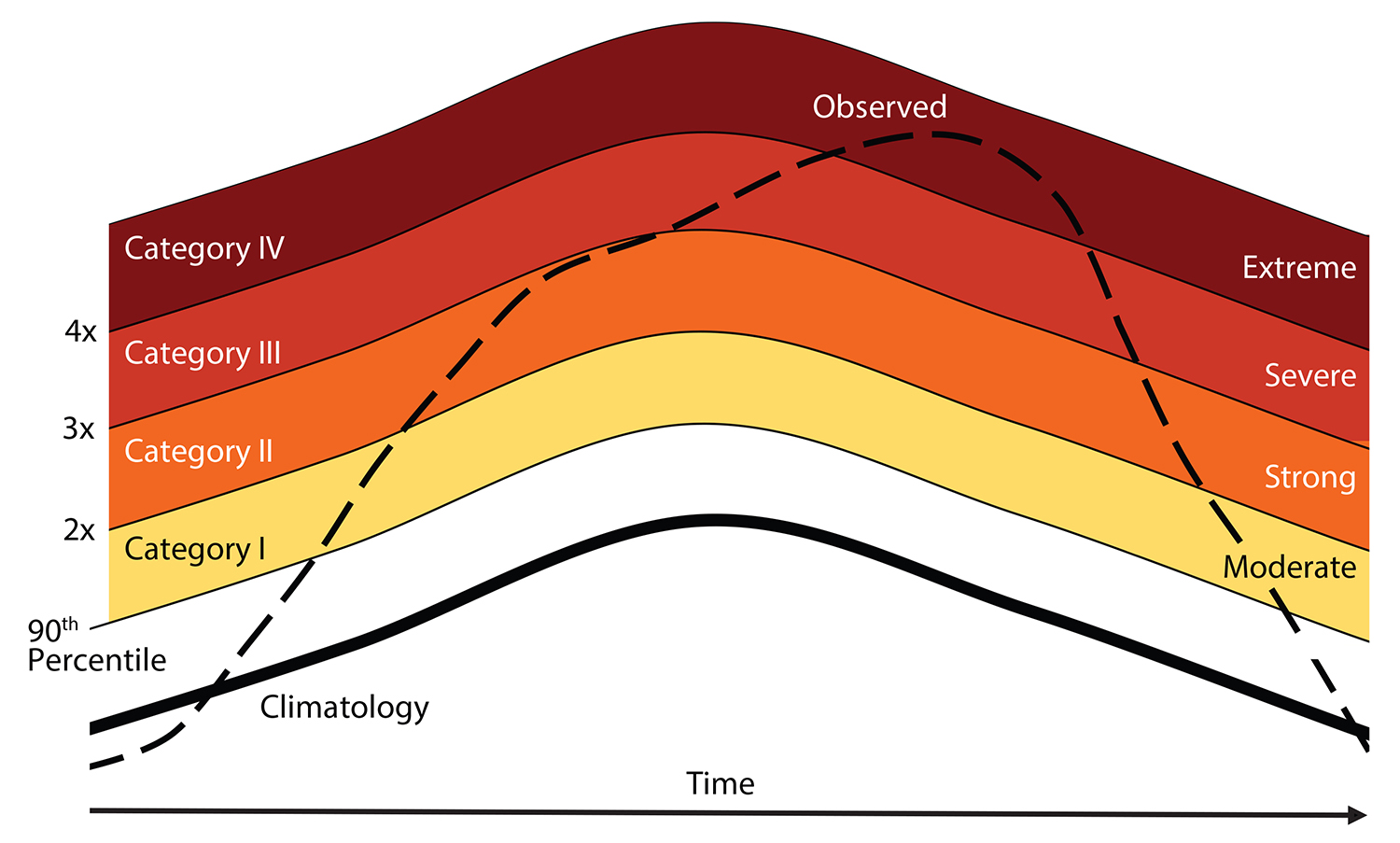




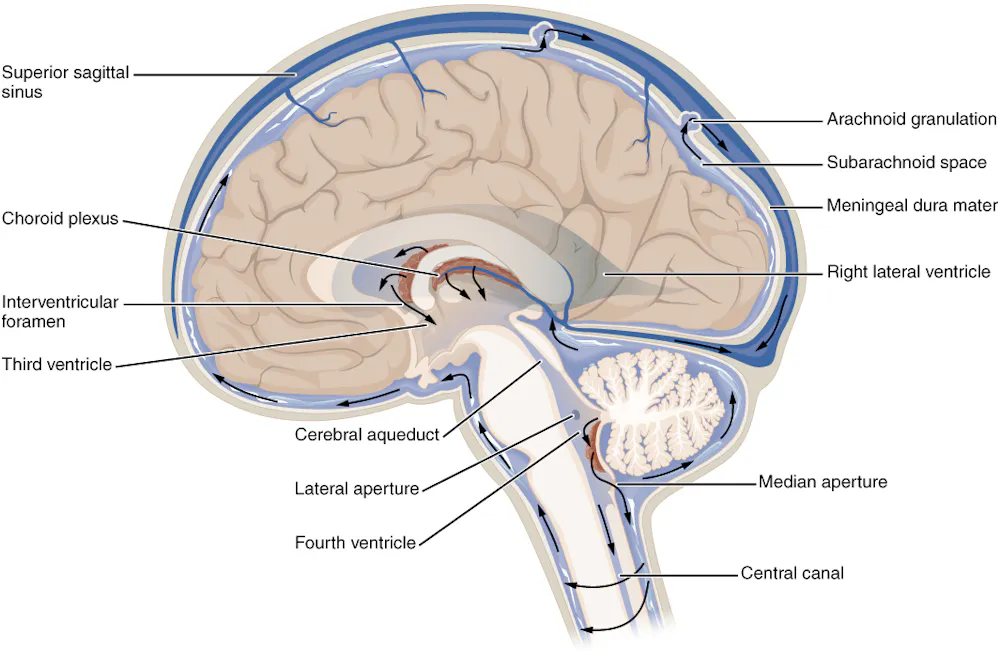





_1.jpg)


