Category: Academic Analysis

  • MIL-OSI Global: A gonorrhoea vaccine will soon be available in the UK – here’s how it works to protect against the STI

    Source: The Conversation – UK – By Bharat Pankhania, Senior Clinical Lecturer, Biomedical Sciences, University of Exeter

    Gonorrhoea, which is caused by the bacterium _Neisseria gonorrhoeae_, is the second most common STI in the UK. Tatiana Shepeleva/ Shutterstock

    A vaccine targeting gonorrhoea will soon be rolled out on the NHS. This will make England and Wales the first two countries in the world to offer such a programme.

    This move comes amid a sharp rise in gonorrhoea cases in England and increasing concern about antibiotic resistance. In 2023 alone, there were over 85,000 gonorrhoea diagnoses in England. Compared to 2012, where 25,525 cases were reported, this represents a 234% increase over the 11-year period.

    Gonorrhoea is the second most common sexually transmitted infection in the UK. It’s caused by the bacterium Neisseria gonorrhoeae and is spread via unprotected sex with an infected person.

    Around 10% of men and nearly half of women who test positive for gonorrhoea exhibit no symptoms. This is why this STI is so transmissible, as people without symptoms may not seek testing or treatment – meaning they may unknowingly transmit the infection to their sexual partners.

    For those that do experience symptoms, the most common signs of a gonorrhoea infection include unusual vaginal or penile discharge (which is usually yellow or green in colour), pain when urinating as well as pain and discomfort in the lower abdomen. In severe cases, the infection can spread throughout the body. In rare cases it can also lead to sepsis.


    Read more:
    Gonorrhoea and syphilis diagnoses are at their highest in decades – here’s what you need to know about these STIs


    Untreated gonorrhoea infections can lead to many complications, including infertility, pelvic inflammatory disease (an infection in the reproductive organs) in women and epididymitis (inflammation of the testicles) in men.

    The only way to treat gonorrhoea is using antibiotics. But an increase in antibiotic resistance is making treatment difficult.

    Gonorrhoea prevention

    Currently, the only way to prevent a gonorrhoea infection is by practising safe sex, such as using condoms during intercourse and limiting the number of sexual partners.

    This new vaccine programme will offer an added layer of protection, especially for groups at high risk of acquiring the infection.

    The vaccine that will be offered on the NHS is actually an existing childhood vaccine called 4CMenB (also sold under the brand name Bexsero). This vaccine is used to protect against meningococcal group B disease, which can cause life-threatening bacterial meningitis (inflammation of the brain and spinal cord) and sepsis.

    The bacterium that causes gonorrhoea, Neisseria gonorrhoeae, is genetically closely related to Neisseria meningitidis – the bacterium that causes meningococcal disease. Their genome is between 80-90% similar.

    The 4CMenB vaccine contains four antigens that are deployed against Neisseria meningitidis bacteria. An antigen is usually a small molecule that the body recognises as a foreign invader. This triggers the body to mount an immune response against the antigen by producing antibodies which neutralise the bacteria and eliminate the infection.

    The vaccine protects against gonorrhoea between 32-42% of the time.
    Prostock-studio/Shutterstock

    Two of the antigens found in the 4CMenB vaccine are found on the surface of both N gonorrhoeae and N meningitidis bacteria.

    This is why using the 4CMenB vaccine for protection against gonorrhoea has progressed from theory to reality, with several studies showing it has a cross-protective effect.

    Research has shown that the 4CMenB vaccine provides some protection against an infection from the Neisseria gonorrhoeae bacteria. On average, the vaccine is effective in preventing gonorrhoea between 32% and 42% of the time.

    So while vaccination may reduce the chance of becoming infected with gonorrhoea, it’s not an absolute protection. Nevertheless, this new vaccine programme means those who are vaccinated will have a lower risk of contracting gonorrhoea and experiencing any complications that may arise from an infection. Most importantly, it also means they are less likely to transmit the infection to others.

    Vaccine programme

    The main benefit of a vaccination programme will be a significant reduction in the number of gonorrhoea cases overall. This is especially important given the rise of antibiotic resistance is making it increasingly difficult to treat gonorrhoea infections.

    It’s also worth noting that a previous gonorrhoea infection offers no protection against future infection and reinfection. This is why the vaccine is beneficial, even if it is only moderately effective.

    Eligible recipients, which includes gay and bisexual men who have a recent history of multiple sexual partners or a sexually transmitted infection, will be offered the vaccine through local NHS services from early August 2025.

    Eligible patients will be identified via their local sexual health service, as well as through a general information campaign via the NHS. Patients will also be offered the mpox, hepitatis A and B and human papillomavirus vaccinations at the same time.

    Vaccinating those at risk of contracting gonorrhoea will be more cost-effective and beneficial in the long run compared to vaccinating only those who have been diagnosed with gonorrhoea. Analysis led by Imperial College London has suggested the 4CMenB vaccine could prevent up to 100,000 cases of gonorrhoea and save the NHS over £7.9 million over the next decade if a high uptake is achieved.

    Bharat Pankhania is affiliated with the Liberal Democrat Party. He is an elected councillor in the city of Bath and will be the Mayor of Bath on June 7 2025.

    ref. A gonorrhoea vaccine will soon be available in the UK – here’s how it works to protect against the STI – https://theconversation.com/a-gonorrhoea-vaccine-will-soon-be-available-in-the-uk-heres-how-it-works-to-protect-against-the-sti-257283
    MIL OSI – Global Reports

  • MIL-OSI Global: Five things new parents should know about their baby’s sleep

    Source: The Conversation – UK – By Helen L. Ball, Professor of Anthropology and Director of the Durham Inancy & Sleep Centre (DISC), Durham University

    Nilanka Sampath/Shutterstock

    Why won’t my baby sleep at night? It’s one of the most common – and exhausting – questions new parents ask. You’ve fed them, changed them, rocked them, cuddled them but still, they wake again. And again. And again.

    Baby humans are born utterly helpless – unable to walk, grip, or regulate their own systems. From the very beginning, they are biologically wired to stay close to a caregiver, relying on your body for warmth, safety, food and reassurance. Their sleep, feeding and waking patterns aren’t disordered – they’re designed for survival.

    My latest book tells you everything you need to know about your baby’s sleep during their first year, but here’s a brief explainer on what’s really going on with baby sleep, why “sleeping through the night” is often a myth, and how working with your baby’s natural biology – not against it – can help you both get more rest and feel less stressed.

    Let’s take a look at what science (and evolution) tells us about newborn sleep.

    1. Comfort and calm

    Unlike other baby mammals who are born able to see, hear, and call, baby humans have no muscle tone and no control over their limbs. They cannot cling to or follow you, and are completely reliant on their parents to keep them safe, warm, and fed. In fact, most babies crave being in physical contact with your body for comfort, warmth and safety. Letting them snuggle into you is a good way to calm them, and on your chest is where many newborns most want to sleep from the immediate postnatal period.

    Spending time with your baby snuggled on your chest is common in the first few weeks or months of new parenthood, and there are some important things to be aware of. Make sure you are sitting upright or leaning back in a reclined position, so your baby’s head is higher than their bottom. Do not lie flat on your back with your baby horizontal. This position can make babies work harder to breathe. Make sure their head is turned to one side and their chin is tilted upwards. This is important to keep their windpipe open – it can kink if their chin is down on their chest and the air cannot get through to their lungs.

    Be sure to hold them in place on your body – don’t assume they won’t slip off – gravity affects babies too. Lastly, but most importantly, stay awake. Do not let yourself fall asleep in this position. Young babies are very fragile and when they are lying on you, you must monitor their safety. If you think you might fall asleep, move them to somewhere safe – a clear flat safe surface, on their back, or the arms of someone who can stay awake.

    2. Safe bed-sharing

    If your baby is breastfed they will feed frequently day and night, often every two hours or so. This can be difficult to cope with if you have to get in and out of bed for every feed. Many breastfeeding mothers find that safe way to share your bed for some or all of the night helps reduce the disruption of night feeds as you can feed lying down and both you and your baby can return to sleep quickly.

    If you decide to bed-share learn how to make your bed as safe as possible for your baby. The Lullaby Trust, Unicef Baby Friendly Initiative and La Leche League all have good information on bed-sharing safety. If you are not able to do this safely (for instance if your baby was born prematurely, or you are a smoker) then a bedside bassinet is a good option.

    3. Circadian rhythm

    Newborn babies have no day-night rhythm. In the uterus they are under the influence of their mother’s circadian cycle.


    Read more:
    Babies don’t need sleep coaches – but sometimes their parents do


    After birth, their own day-night rhythm takes several months to appear, and to begin with they sleep equally across day and night. Because it responds to external triggers such as daylight, noise and activity, you can support the development of your baby’s circadian rhythm by starting daytime activities around them at a regular time (opening curtains, making noise etc) every morning. Taking babies outside in the daylight in the first half of the day also helps their body-clock to become attuned to daylight and nighttime.

    4. Sleeping for longer

    Over time all babies begin to spend a bit more time sleeping at night. This is called “consolidation of sleep into night-time”, and babies will begin sleeping for longer periods between feeds as they get older. But babies often still wake in the night well into the second half of their first year – sometimes this is because they are still night-feeding, but in other cases they just need to know you are nearby. A third of babies who were studied in a New Zealand research study had never slept through the night by the time they were 12 months old.

    5. Sleep consolidation

    As babies consolidate more of their sleep into the nighttime they will begin to sleep less during the day. You can support this process by avoiding daytime naps in silent darkened rooms, keeping sleeping babies in the daylight and in midst of household noise and activity for daytime naps, or napping on the go. This prevents babies from taking prolonged naps and keeps their sleep pressure rising until the nighttime, which also helps with sleep consolidation.


    Read more:
    What’s really going on when a child is ‘overtired’ – and how to help them go to sleep


    When you understand and work with your baby’s sleep biology it is unnecessary to try to train your baby how to sleep at night. Just be aware that throughout the first year and beyond, baby humans remain helpless baby mammals who need you for physical contact, comfort and safety. Their need to be close to you is vital for their survival.

    Helen L. Ball has received funding from NIHR, ESRC, Lullaby Trust, Scottish Government, Northern Accelerator, Durham County Council, Northumberland County Council, and Durham University. She is currently affiliated with Lullaby Trust and Unicef UK Baby Friendly Initiative in voluntary roles.

    ref. Five things new parents should know about their baby’s sleep – https://theconversation.com/five-things-new-parents-should-know-about-their-babys-sleep-256282

    MIL OSI – Global Reports

  • MIL-OSI Global: Waiting for Godot has been translated into Afrikaans: what took so long

    Source: The Conversation – Africa – By Rick de Villiers, Associate professor, University of the Free State

    At last, the most infamous latecomer in all of literature has arrived – not in the flesh, but in South Africa’s Afrikaans language. Irish playwright Samuel Beckett’s best-known drama, Waiting for Godot, now also lives as Ons Wag vir Godot.

    Published and staged in 2024, the translation was inspired by the official centenary of Afrikaans in 2025.

    As a Beckett scholar, I think it’s worth asking why Afrikaans is so late on the scene – and why it matters.

    Godot in many tongues

    First written in French, En attendant Godot was published in 1952 and debuted on stage the next year.

    The action involves two tramps, Vladimir and Estragon, who have a series of absurd conversations and encounters as they wait for a man called Godot who never arrives. Beckett would self-translate the drama into English in 1954, calling it “a tragicomedy in two acts”.

    Since then, translations of the play have exploded. By 1969 – the year of Beckett’s Nobel Prize for Literature – Waiting for Godot could already be read in dozens of languages, including Albanian, Marathi, and even Icelandic.

    Samuel Beckett and South Africa

    Beckett’s connections with South Africa are surprisingly varied. As a young man, he unsuccessfully applied for a lectureship at the University of Cape Town. His 1951 novel, Molloy, was translated from French into English with the help of a South African student, Patrick Bowles. And in 1968, Beckett made a donation to the then-banned resistance party, the African National Congress, in the form of a manuscript for auction.

    This gesture was unprecedented for the Irish writer, who was wary of political causes. Yet not only did Beckett feel strongly enough about apartheid’s injustices to make this donation, he also refused to let anyone perform his plays before South Africa’s racially segregated audiences.


    Read more:
    The case of the acclaimed South African novel that ‘borrows’ from Samuel Beckett


    Already in 1963 Beckett had signed the petition Playwrights Against Apartheid. He would continue to refuse performance rights in South Africa until 1980, when the Baxter Theatre was allowed to stage Waiting for Godot with a racially integrated cast.

    Nevertheless, unauthorised Godots materialised before this. Athol Fugard, the South African playwright whose own dramas were influenced by Beckett, directed one of the earliest South African productions in 1962. Featuring an all-black cast, it testified to the play’s political charge, which Fugard emphasised:

    Vladimir and Estragon … were at Sharpeville or the first in at Auschwitz.

    It’s reasonable to think that Beckett would have supported this protest performance. But he would probably have denounced the first and unofficial Afrikaans version, Afspraak met Godot, translated by Suseth Brits and performed in 1970 at the Potchefstroom University College (now North-West University) behind closed doors.

    For different reasons, Beckett would also have frowned on the substantial “borrowings” in Afrikaans novelist Willem Anker’s 2014 novel, Buys.

    Domesticating a European classic

    Fully sanctioned by Beckett’s estate and beautifully translated (from the French and English) by now-retired professor of French at the University of the Free State Naòmi Morgan, Ons Wag vir Godot arrives at a different moment altogether.

    The translation retains the gallows humour of the original while adding local flavour. For instance, where Vladimir originally names the Eiffel Tower as a picturesque site to commit suicide, his Afrikaans counterpart nominates Van Stadensbrug, a bridge over a ravine in the Eastern Cape. The slave-like Lucky once entertained his master with European dances: “the farandole, the fling, the brawl, the jig, the fandango”. These now become a South African mix: “volkspele, die riel, die pantsula, selfs die horrelpyp” (folk games, riel dance, pantsula dance, a hiding).

    In translation-speak, Ons Wag vir Godot is therefore fully “domesticated”: the play’s universality comes through even though – and perhaps even more so because – it’s anchored in a particular place and time.

    This struck me when I attended the play’s limited-run production, expertly directed by Dion van Niekerk, at the 2024 Vrystaat Kunstefees (Free State arts festival). Its set managed to thread together subtle South African roadside details: a toppled rubbish bin, pylons on the horizon, a (broken) picnic bench.

    In the text itself, we encounter familiar place names, sayings and cultural clues. Consider how Beckett’s abstract phrase “the essential doesn’t change” is grounded in African mythology: “Jakkals verander van hare, maar nie van streke nie” (The leopard doesn’t change its spots). Then there’s the charming touch of the dog in Vladimir’s song snatching “’n stukkie wors” (a piece of sausage particular to South Africa) rather than a measly “bone”.

    Godot and the Afrikaans canon

    Ons Wag vir Godot achieves its most profound tribute to Beckett and Afrikaans through its intertextual richness. Both the French and English originals are highly allusive texts: they invoke other works of literature to increase their range of meaning and subtlety. Morgan is attuned to this subtlety and to the parallels to be found in Afrikaans literature. There are references to works by canonical Afrikaans writers like Eugène Marais, Totius and C.J. Langenhoven, each adding its own resonance.


    Read more:
    Koos Prinsloo: the cult Afrikaans writer has been translated to English – here’s a review


    Yet the dilemma any translator faces is not so much in bringing in the new, but in striking a balance with the old. Consider the judicious swapping of a line from Percy Bysshe Shelley for a line from C. Louis Leipoldt.

    In the English version, Estragon looks up forlornly at the moon and half-quotes the English Romantic poet: “Pale for weariness … Of climbing heaven and staring on the likes of us.” In the Afrikaans, he gives us a fragment from the wistful poem, Die Moormansgat: “ek kyk na die lig van die volle silwermaan” (I behold the light of the full silver moon). At face value, this lacks the detached, woeful quality of Shelley’s line. But read in the context of Leipoldt’s poem, it is every bit as poignant.

    The virtue of waiting

    “Vladimir would agree,” Morgan concludes in the preface to her translation, “that a century is a decent amount of time to hone a language for the translation of one of the best-known dramas in world literature”.


    Read more:
    Animal Farm has been translated into Shona – why a group of Zimbabwean writers undertook the task


    And indeed, the riches of the Afrikaans language are on display in this sensitive, witty and allusive rendering of Beckett’s European classic. But it’s also true that a certain amount of political baggage had to be shaken off before such a feat could be realised – not just in the right words, but in the right spirit. Of course, if Beckett’s play teaches us anything, it’s the virtue of waiting.

    Rick de Villiers does not work for, consult, own shares in or receive funding from any company or organisation that would benefit from this article, and has disclosed no relevant affiliations beyond their academic appointment.

    ref. Waiting for Godot has been translated into Afrikaans: what took so long – https://theconversation.com/waiting-for-godot-has-been-translated-into-afrikaans-what-took-so-long-257345

    MIL OSI – Global Reports

  • MIL-OSI Global: Choosing to be an orphan: for some Kenyan families it’s a strategy for survival

    Source: The Conversation – Africa – By Andreana Prichard, Associate Professor of Honors and African History, University of Oklahoma

    In the world of international child development and orphan care, it’s not uncommon for children with families to declare themselves orphans. In fact, this practice can be traced back to precolonial times in Kenya.

    Andreana Prichard has done research on the practice in Kenya. We asked her to share her insights into it.

    Why do some people in Kenya assume the identity of ‘orphan’?

    We often think of “orphans” as children who have lost both parents and who lack kin networks. One might ask why someone would “opt in” to orphan status when they do not fall within the classical definition of the term.

    In my paper I look at the issue of orphanhood over the last 160 years. Case studies from Kenya I examine illustrate that the practice I define as “opting in” to orphanhood has precolonial roots. I define “opting in” as choosing to take on the label of being an orphan. This can be done by parents, relatives or even, in some instances, the child. This is because the label “orphan” has come to confer unique opportunities.

    The practice became increasingly popular in the mid-1990s, when parents in eastern and southern Africa who had contracted HIV began to die in large numbers. Activists feared many children would be left without caregivers.

    In response, the number of orphanages proliferated as humanitarian actors, churches and states inundated east Africa with orphan-focused NGOs.

    In 2020, officials in Kenya estimated that there were at least 910 residential institutions for children in the country (of which 581 were registered), housing between 26,198 and 85,733 Kenyan children.

    The predicted “orphan crisis” never materialised, partly because families and communities stepped in to care for newly parentless children. But the idea of an “orphan crisis” remained, and so did the funding and infrastructure.

    This phenomenon occurred across the continent, not just in Kenya. However, its effects were felt particularly acutely in eastern and southern Africa where HIV/Aids prevalence rates were higher and where there was more western tourism.

    Today, many African families see orphan-focused NGOs as a path to access education and improve their lives. My research shows that children themselves sometimes affiliate with an institution that provides shelter, food and schooling. Children facing abuse from caregivers may also prefer the relative anonymity and safety of an institution.

    In some cases, receiving orphan services actually raises the status of the “orphan” child above that of other children. They have access to more material resources than they might have had in their villages or at home. They might have more leisure time and less work. They may have access to better bedding, shoes and clothing. They are also likely able to attend school more consistently and have a real opportunity to attend university.

    Does ‘opting in’ have a long history?

    Yes, it does.

    In the precolonial period, most parentless or vulnerable children were cared for through lasting community support systems. Orphanhood, as it exists today as a child lacking support, protection, or care from kin, was largely avoided.

    However, the late 19th to mid-20th centuries brought new actors to the east African region. The practice of “opting in” became a strategic, temporary option used by families to access services from western humanitarians.

    The earliest example of this shift I found in my research is from the 1890s. Fearing their children would be caught in the Indian Ocean slave trade, African parents sometimes chose to send their children to British missions until the region was safe. They knew the missionaries opposed the slave trade and knew they offered food and medical care.

    African parents thought they were making temporary arrangements to keep their children safe. Missionaries, however, understood parents to have abandoned their children. When parents returned to repay the debt – with agricultural produce or trade goods – and to reclaim their children, missionaries refused them.

    In another example from Kenya in the 1950s, the British colonial government opened “reform schools” for young men. The Wamumu Approved School was renowned for the relative quality of education it provided. But the state admitted only the “most vulnerable” for a free education. Feeling they had no way to access Wamumu, students claimed to be orphans.

    What have been the negative effects of Kenya’s orphan system?

    There are several problems with creating a situation in which people present themselves as vulnerable just to gain safety or improve their social and economic standing.

    First, research has shown that building orphanages in poor communities incentivises parents to abandon their children if they’re not also given the help to remain together.

    Second, research shows that children are often put at risk in these institutions. Institutionalisation exposes children to risks such as sexual abuse, gender-based violence and neglect.

    Third, orphanages have become so lucrative that African orphanage owners will go to great lengths to fit African children into the categories westerners wish to fund. The phenomenon of “paper orphans” is a prime example. “Paper orphans” are children who are recruited from their homes by proprietors (or middlemen/brokers) of orphanages and residential-care facilities. Fraudulent documentation is created for them – often including false death certificates of parents and new identity registration documents – rendering them orphans on paper, and vulnerable in practice.

    What should be done?

    Governments in Europe, Central Asia, Latin America and the Caribbean are trying to phase out orphanages, as are some African countries.

    Based on my research I believe that working with families to support vulnerable children in their homes of origin or with extended families is a better option. This can be done through assistance programmes for vulnerable families as well as child welfare programmes. These allow families to remain intact when experiencing hardship.

    Kenya is taking steps to do this by replacing orphanages and other forms of residential children’s homes with family-based, foster and community-based care and other forms of assistance. Family strengthening approaches include positive parenting instruction, life skills training, and income-generating activities, as well as supportive supervision.

    In addition to this, missionary and voluntourism trips to orphanages and residential care facilities should be banned or limited.

    Andreana Prichard received funding from the Fulbright-Hays Doctoral Dissertation Research Abroad Grant.

    ref. Choosing to be an orphan: for some Kenyan families it’s a strategy for survival – https://theconversation.com/choosing-to-be-an-orphan-for-some-kenyan-families-its-a-strategy-for-survival-247371

    MIL OSI – Global Reports

  • MIL-OSI Global: Mbare Art Space: a colonial beer hall in Zimbabwe has become a vibrant arts centre

    Source: The Conversation – Africa – By Tinashe Mushakavanhu, Research Associate, University of Oxford

    In southern Africa townships were built as segregated urban zones for black people. They were created under colonial and white minority rule policies that controlled movement, confined opportunity, and kept people apart.

    I grew up in a different historic black township in Zimbabwe, but Mbare was the first of its kind. It holds a unique place in the nation’s imagination.

    Mbare was originally named Harare. But in 1982 that name was reassigned to the capital city that houses it. In its storied past, it was once the heartbeat of black urban life. At its centre is Rufaro Stadium, where Bob Marley and the Wailers famously performed at Zimbabwe’s independence celebrations.

    The township was a hub of cultural energy, sports, and political activism, and the community beer hall served as a vital gathering point. Today, many of these beer halls stand derelict.

    These once-thriving communal spaces reflect a broader neglect of civic infrastructure in post-independence Zimbabwe. Yet out of these ruins, new life is taking shape.

    One of the most influential figures in Zimbabwe’s artist-run spaces movement, Moffat Takadiwa, has transformed one of these former beer halls into the Mbare Art Space. The dynamic arts hub reclaims the building’s original spirit of gathering, creativity and public engagement.

    Operating under a long lease from the Harare City Council, this nonprofit initiative is part of a wider urban renewal and adaptive reuse project aimed at reimagining the city’s cultural infrastructure.

    My ongoing work in archival research includes mapping and visiting historical and cultural spaces like this. Here Takadiwa saw the potential for not just studios and an exhibition venue, but also for dialogue and community regeneration.

    Transforming spaces

    Beer halls were established by British colonial authorities in Zimbabwe (then Rhodesia) as part of a strategy of social control over the African urban population. They were designed to regulate leisure, restrict political organising and generate revenue through the sale of alcohol. By centralising drinking in state-run facilities, colonial administrators aimed to monitor and contain African social life while profiting from it.

    Situated in a repurposed colonial-era beer garden, Mbare Art Space turns a former site of segregation into a vibrant centre of artistic and communal revival. It redefines a legacy of constraint and control as one of creative freedom and empowerment. The place is now an artists’ haven with studios, office space, an exhibition hall and a digital hub.

    Takadiwa’s vision is informed by global precedents, notably inspired by US artist Theaster Gates, whose work includes the transformation of a derelict bank on Chicago’s South Side. It became the Stony Island Arts Bank – a hybrid space for art, archives and community engagement.

    Takadiwa opened Mbare Art Space in 2019 with a vision to support emerging artists through mentorship and access to resources. True to his artistic philosophy – resurrecting abandoned, often overlooked materials suffering the effects of urban decay – he revitalised a neglected site. Most of the artists working from this space follow his lead, upcycling and recycling found materials into compelling visual forms that speak to both history and possibility.

    When I arrive, Takadiwa is on his way out, but offers me a quick tour of his studio, where works in progress for his upcoming participation in the São Paulo Biennale are taking shape.

    Known for his lush, densely layered sculptures and tapestry-like works made from found objects – computer keyboards, bottle tops, toothbrushes, and toothpaste tubes – Takadiwa has garnered international acclaim. His works are collected by US rapper Jay-Z and major institutions like the Centre National d’Art Plastique in Paris, the European Parliament’s art collection in Brussels, and the National Gallery of Zimbabwe in Harare.

    Collaboration

    What Takadiwa is building is not just an arts centre – it’s a new model space rooted in history and responsive to the present. The site itself becomes an ongoing installation, activated by the artists, curators and community members who inhabit it.

    Tafadzwa Chimbumu, the operations manager, takes over the tour, guiding me through the rest of the precinct. The site retains the bones of its beer hall architecture, but it bursts with new life. Colourful murals adorn the walls. Tents draped over smaller buildings animate the exposed brickwork.

    Plans are underway to establish a library here, a resource where researchers and artists can engage with Zimbabwe’s under-documented art history. Much of this history is scattered across archives and unpublished dissertations, rather than in widely available books. The aim is to bring these materials together and make them more accessible to the public.

    Mbare Art Space is also becoming an exciting hub for collaboration and education. Community workshops, for example, are led by resident artists. Local schools take part in art education initiatives. Through community outreach and educational programming, the centre is extending its impact beyond its immediate geography.

    As it looks to the future, Mbare Art Space is focused on expanding its artist-in-residence programme, inviting both local and international artists to immerse themselves in the context of Mbare and Zimbabwe.

    Ultimately, what the space offers is something intangible – a feeling, a memory, a vision of what is possible when history and imagination meet in a shared place.

    Tinashe Mushakavanhu does not work for, consult, own shares in or receive funding from any company or organisation that would benefit from this article, and has disclosed no relevant affiliations beyond their academic appointment.

    ref. Mbare Art Space: a colonial beer hall in Zimbabwe has become a vibrant arts centre – https://theconversation.com/mbare-art-space-a-colonial-beer-hall-in-zimbabwe-has-become-a-vibrant-arts-centre-256528

    MIL OSI – Global Reports

  • MIL-OSI Global: The American mass exodus to Canada amid Trump 2.0 has yet to materialize

    Source: The Conversation – Canada – By Lori Wilkinson, Professor of Sociology, University of Manitoba

    In February 2025, the New Republic, reported there were a growing number of Americans who wanted to leave the country following the election of Donald Trump.

    Canadian reports backed up the assertion, particularly the news that three high-profile Yale professors would be joining the faculty of the University of Toronto in the fall of 2025.


    Read more:
    Yale scholars’ move to Canada can prompt us to reflect on the rule of law


    For some Canadian observers, it may feel like a case of déjà vu. After Trump’s first election in 2016, some media predicted a sharp increase in Americans seeking to escape their country’s harsh social and political climate for Canada’s “sunny ways.”

    According to Google Analytics, web searches originating in the United States involving “how to move to Canada” increased by 350 per cent on election night in 2016. A few months earlier, they’d increased by 1,500 per cent over normal search rates for the same phrase in March 2016, when Trump clinched the Republican nomination for president.

    More Canadians head south

    Despite such post-election musings nine years ago, the pending American mass exit didn’t materialize. According to migration data (a download is required) from Immigration, Refugees and Citizenship Canada (IRCC), the number of Americans applying for permanent residency from January through March 2017 rose only slightly. There were 1,882 applications, just 66 more than from the same period in 2016.

    As for visas and authorizations issued to people from the U.S. during the same time period, they barely increased — from 2,497 in 2016 to just 2,523 in 2017.

    Americans taking up permanent residency in Canada jumped from about 8,400 in 2016 to 10,800 in 2019. However, that increase in the modest number of moves from the U.S. to Canada can hardly be construed as an exodus. Over those same two years, the number of Canadians becoming permanent residents of the U.S. continued to exceed the number of Americans who headed north.

    There has been, however, a decline in the number of Canadians moving to the U.S. In 2016, the year Trump was first elected, just over 19,300 Canadians moved to the U.S. In 2019, the year before Trump lost to Joe Biden, 14,700 Canadians took up residence in the U.S.

    That trend didn’t last as the gap in cross-border permanent residency widened once more during the Biden era. In 2023, while 10,600 Americans moved to Canada, 18,600 Canadians moved to the U.S.

    Looking at the data from 2016 to 2023 suggests politics isn’t the primary reason why Americans head to Canada. It’s more likely driven by economic considerations, better job offers or family ties.

    In terms of the apparent uptick in migrants from the U.S. heading to Canada during Trumps’s second term, it’s too early to draw definitive conclusions. But numbers for the first quarter of 2025, according to the same IRCC datasets, show no signs of any significant uptake, with a drop from 2,485 Americans headed Canada’s way between January to March 2024 to 955 over the same period in 2025.

    Moving to Canada isn’t easy

    Despite the surge in American internet searches on moving to Canada in 2016, when Trump won the Republican nomination and then the presidency, acting on impulse in a moment of political turmoil is complicated.

    Moving to Canada is not as simple as it may seem; it can be long and arduous. There’s a process and a waiting line with requirements that include an offer of employment in Canada, liquid assets and language proficiency in English, or French if Québec is the ultimate destination.

    It’s easier to immigrate to Canada if there’s a close family member already living there, but still not guaranteed. Canada’s tax rate is a migration deterrent for some, even though these higher tax rates come with more services.

    Although Canada’s health-care system is more inclusive and affordable, the wait times for procedures, along with the perception that Canadian services are not as robust as American health services, could also be a deterrent to migration.

    In short, even for Americans, it’s not easy to migrate to Canada.

    There is, however, one group of people living in the U.S. who may consider relocating to Canada: asylum-seekers.

    The second Trump administration has ended Temporary Protection Status for Afghan, Venezuelan, Nicaraguan, Cuban and Haitian residents.

    This means that people from these strife-torn countries must apply for permanent residency or “self-deport” — otherwise, they will become undocumented.

    Haiti is currently unsafe. Gangs control the country’s cities and neighbourhoods and have staged a successful coup. The country is also still rebuilding after the devastating 2010 earthquake.


    Read more:
    With Haiti in chaos, Canada buries its head in the sand


    Afghanistan remains in the throes of a decades-long war where women have have no rights. Venezuela is in a state of civil unrest; about 19 million citizens do not have enough food or sanitation. Nearly 7.7 million people have fled the country.

    The plight of asylum-seekers

    The crackdown on other undocumented residents and the recent issuing of large “civil penalties” in the form of fines for failing to self-deport may force others to leave the U.S. Where might they go?

    Many will return to their country of residence, but others may be unable to do so and could consider Canada a convenient and safe destination. In 2016, 23,919 people made asylum claims in Canada. That number slowly rose throughout the first Trump administration to 64,020 in 2019, the last full year of the president’s first term.

    Those seeking asylum in Canada declined to 23,680 in 2020 — the first year of the COVID-19 pandemic — but had increased to 171,850 by the end of 2024.

    The geographic distribution of these asylum-seekers was uneven. In 2017, 50 per cent of all asylum-seekers to Canada made their claim in Québec; in 2022, 64 per cent of asylum claims were made there.

    So rather than seeing a large influx of American citizens migrating to Canada during Trump’s second administration, there will likely be a larger number of asylum-seekers, many of whom have legitimate fears of persecution. How Canada chooses to handle these claims remains to be seen — but it’s urgently important for Canadian elected officials to figure it out immediately.


    Jack Jedwab, CEO of the Association for Canadian Studies and the Metropolis Institute, co-authored this article

    Lori Wilkinson does not work for, consult, own shares in or receive funding from any company or organisation that would benefit from this article, and has disclosed no relevant affiliations beyond their academic appointment.

    ref. The American mass exodus to Canada amid Trump 2.0 has yet to materialize – https://theconversation.com/the-american-mass-exodus-to-canada-amid-trump-2-0-has-yet-to-materialize-256853

    MIL OSI – Global Reports

  • MIL-OSI Global: A 16th-century Chinese writer spoke of workplace burnout, leaving a blueprint for radical acts of rest

    Source: The Conversation – Canada – By Jason Wang, Postdoctoral Fellow, Modern Literature and Culture Research Centre, Toronto Metropolitan University

    Gathering at the Orchid Pavilion by Qian Gu, 1560 (Chinese, 1508–ca. 1578), Ming dynasty (1368–1644). Handscroll, ink C. C. Wang Family, Gift of Douglas Dillon, 1980/ MET open collection, CC BY

    We are in the middle of a global workplace burnout epidemic — aptly named the “burnout society” by Korean-German philosopher Byung-Chul Han.

    Four centuries ago, late Ming Dynasty scholar-official Yuan Hongdao (1568–1610) shifted from state administrative work to xiaopin — brief, personal essays celebrating everyday pleasures like gardening, leisurely excursions and long vigils beside a rare blossom.

    The cover of ‘Burnout Society’ by Byung-Chul Han.
    (Stanford U Press)

    Today, his Ming Dynasty-era practice resonates with uncanny urgency within our burnout epidemic.

    Amid the Wanli Emperor’s neglect and escalating bureaucratic infighting in Beijing, Yuan turned away from what today we call a “toxic workplace.”

    Instead, he found refuge in Jiangnan’s landscapes and literary circles. There he exchanged hierarchical pressures, administrative tedium and cut-throat careerism for moments of unhurried attention.

    Yuan’s xiaopin, alongside those of his contemporaries, transformed fleeting sensory moments into radical acts of resilience, suggesting that beauty, not institutions, could outlast empires.

    The Ming Dynasty: A literary rebellion

    The late Ming Dynasty (1368–1644) was an era of contradictions.

    While Europe hurtled toward colonialism and scientific rationalism, China’s Jiangnan region — the fertile Yangtze Delta in today’s Jiangsu and Zhejiang provinces — flourished via merchant wealth, global silver trade and a thriving print culture.

    Bookshops lined city streets like modern cafés. They peddled plays, poetry and xiaopin volumes like Meiyou Pavilion of Arts and Leisure (1630) and Sixteen Xiaopin Masters of the Imperial Ming (1633).

    The imperial examination system, a civil service written exam — once a path to prestige — had become a bottleneck. Thousands of scholars languished in bureaucratic limbo, channelling their frustrations and exhaustion into xiaopin’s intimate vignettes.

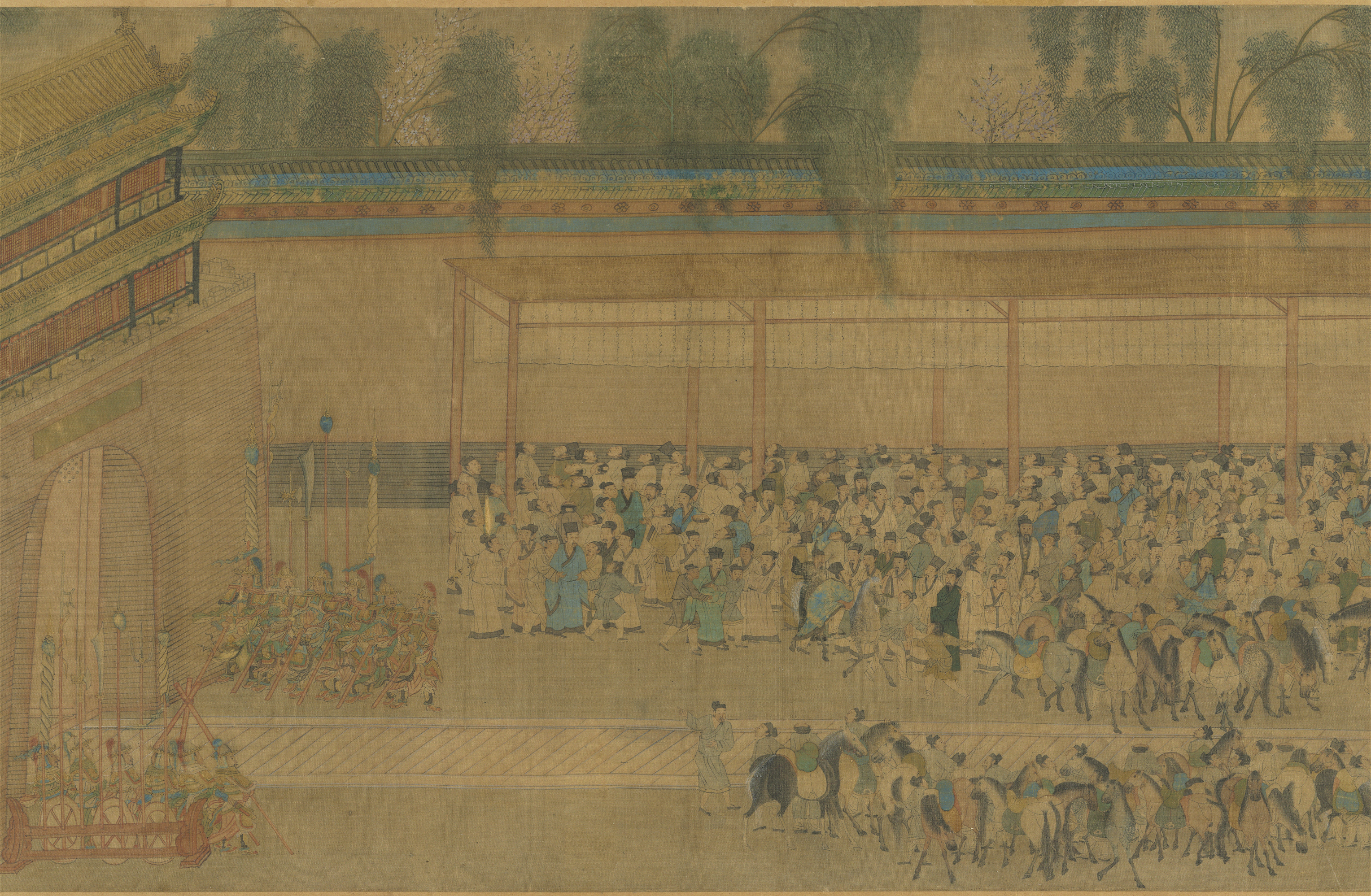
    Chinese imperial examination candidates gathering around the wall where the results are posted (painting by Qiu Ying, c. 1540)
    (National Palace Museum)

    In his preface to Meiyou Pavilion, editor Zheng Yuanxun (1603–1644) praised the genre’s “flavour beyond flavour, rhythm beyond rhythm” — a poetic nod to its rich sensory detail and subtle musicality — rejecting moralizing orthodox prose by embracing immersive aesthetics.

    Against neo-Confucianism’s rigid hierarchies, xiaopin elevated the private, the ephemeral and the esthetically oblique: a well-brewed pot of tea, the texture of moss on a garden rock and incense wafting through a study.

    Wei Shang, professor of Chinese culture at Columbia University, has noted such playful text flourished among late Ming literati disillusioned with the era’s constraints. The texts reframed idleness and sensory pleasure as subtle dissent within a status-obsessed society.

    When doing less becomes radical

    Long before French poet Charles Baudelaire’s flâneur used dandyism and idle promenades to resist the alienating pace of western modernity, Ming literati like Chen Jiru (1558–1639) and Gao Lian (1573–1620) framed idleness as defiance.

    Drawing on Daoist wu wei (non-action), Gao praised the “crystal clear retreat” that scrubbed the heart of “worldly grime” and cultivated “a tranquil heart and joyful spirit.” For him, human worth lay not in bureaucratic promotions but in savouring tea, listening to crickets or resting against a well-fluffed pillow.

    A hanging scroll, ink on paper of a plum blossom branch by Chen Jiu (1558–1639).
    (Yale University Art Gallery/S. Sidney Kahn, 1959/Christie’s, lot 677, 1983/Bones of Jade, Soul of Ice, 1985), CC BY

    Hung-tai Wang, a cultural historian at Academia Sinica in Taipei, identifies xiaopin as a “leisurely and elegant” esthetic rooted in nature’s rhythms.

    Chen Jiru, a Ming Dynasty-era painter and essayist, embodied this framework by disallowing transactional logic. In one essay, Chen lauds those who possess “poetry without words, serenity without sutras, joy without wine.” In other words, he admired those whose lives resonated through prioritizing lived gestures over abstract ideals.

    The art of living in a disconnected age

    In the late Ming’s burgeoning urban and commercial milieu, xiaopin turned everyday objects into remedies for social isolation.

    In the Jiangnan gardens, late Ming essayists saw landscapes infused with emotion. At the time, essayist Wu Congxian called it “lodging meaning among mountains and rivers:” moonlight turned into icy jade, oar splashes to cosmic echoes.

    Chen Jiru had study rituals — fingering a bronze cauldron, tapping an inkstone — curated what he termed “incense for solitude, tea for clarity, stone for refinement.”

    This cultivation of object-as-presence anticipates American academic Bill Brown’s “thing theory,” where everyday items invite embodied contemplation and challenge the subject-object binary that enables commodification.

    The Ming Dynasty-era scholar-connoisseur, Wen Zhenheng (1585–1645), turned domestic minutiae into philosophical resistance.

    His xiaopin framed everyday choices — snowmelt for tea, rooms facing narrow water, a skiff “like a study adrift” — as rejections of abstraction. Through details like cherries on porcelain or tangerines pickled before ripening, he asserted that value lies in presence, not utility.

    Wen suggests that exhaustion stems not from labour but from disconnection.

    The Garden of the Inept Administrator (Zhuozheng Yuan) by Wen Zhengming, 1551. Wen painted 31 views of the site, each accompanied by a poem and a descriptive note.
    (Gift of Douglas Dillon, 1979/MET open source collection), CC BY

    The burnout rebellions: ‘Tang ping,’ ‘quiet quitting’

    Just as xiaopin turned domestic rituals into resistance, today’s movements recast the mundane as a mode of defiance.

    In April 2021, China’s tang ping (“lying flat”) movement surfaced with a post by former factory worker Luo Huazhong: “Lying flat is justice.” The message was simple and subversive: work had become intolerable, and opting out was not laziness but resistance.

    In a backlash against China’s “996” work model extolled by tech moguls like Jack Ma, tang ping rejects the sacrifice of dignity and mental health for productivity and casts idleness as a quiet revolt against exploitative norms.

    In the West, the COVID-19 pandemic sparked similar reckonings. The “Great Resignation” saw millions leave unfulfilling jobs. And “quiet quitting” rejected unpaid overtime and emotional labour. These movements emerged as a soft refusal of hustle culture.

    As anthropologist David Graeber argues in Bullshit Jobs (2018), the “moral and spiritual damage” inflicted by meaningless work reflects a profound political failure.

    Just like the late Ming literati who poured their lives into a state that repaid them with hollow titles and bureaucratic decay, today’s workers withdraw from institutions that exploit their labour yet treat them as disposable.

    Unlike French philosopher Michel de Montaigne’s introspective self-examination in his Renaissance-era Essays, xiaopin refuses utility. In doing so, it inverts the contemporary self-help trend critiqued by Byung-Chul Han, which co-opts personal “healing” as a form of productivity through neoliberal logic.

    Xiaopin proposes resistance as an existential shift beyond (self-)optimization. Its most radical gesture is not to demand change, but to live as if the system’s demands are irrelevant.

    The revolution of pause

    Xiaopin asks: What is progress without presence? Its fragments — on lotus ponds, summer naps, a cat’s shadow — prove that resistance need not be loud.

    Like Japanese writer Haruki Murakami’s vision of contemporary literature as “space of individual recovery,” the genre shelters us from “hierarchy and efficiency.”

    Here, time is not spent but reclaimed.

    To pause in an age of weaponized ambition is in fact revolt. Tracing a petal’s vein, sipping tea until bitterness fades, lying flat as the machinery of productivity grinds on — these are not acts of shirking reality, but defiant gestures against the systems that feed on our exhaustion. They are affirmations of agency: microcosms where we rehearse what it means to belong to ourselves, and thus, to the world.

    Xiaopin’s revolution awakens in a flicker of attention: a reminder that presence, too, is a language — one that hums beneath the buzz of progress, waiting to be heard.

    The authors do not work for, consult, own shares in or receive funding from any company or organisation that would benefit from this article, and have disclosed no relevant affiliations beyond their academic appointment.

    ref. A 16th-century Chinese writer spoke of workplace burnout, leaving a blueprint for radical acts of rest – https://theconversation.com/a-16th-century-chinese-writer-spoke-of-workplace-burnout-leaving-a-blueprint-for-radical-acts-of-rest-256651

    MIL OSI – Global Reports

  • MIL-OSI Global: Why have so few atrocities ever been recognised as genocide?

    Source: The Conversation – UK – By James Sweeney, Professor, Lancaster Law School, Lancaster University

    xiquinhosilva via Wikimedia Commons, CC BY-SA

    An intense argument is raging over whether what has been happening in Gaza since October 2023 is an act of genocide. It is the subject of a case being heard in the International Court of Justice (ICJ) in which South Africa has accused Israel of committing acts of genocide. The case began in December 2023 but the ICJ has yet to reach a judgment.

    The reason the issue is so controversial is that the word “genocide” holds so much power. To be accused of it is to be accused of what is considered in international law to be the “crime of crimes”. International law holds that not only should states not commit genocide, they must also prevent and punish it in their own criminal law. Some commentators would even argue that the use of armed force to stop genocide is acceptable.

    Yet the legal definition of genocide is much narrower than is generally understood. That’s why so few events have ever been labelled as genocide as a matter of law. Looking at some of them might help to shed some light on the Gaza controversy.


    Read more:
    Gaza: why it’s difficult to reach a legal judgment of genocide against Israel


    Genocide is about attempting to destroy a group of people. The concept was first defined in 1944 by the Polish-Jewish lawyer Raphael Lemkin, in response to his horror at the mass killing of ethnic Armenians by the Ottoman Empire amid the first world war as well as – of course – at the atrocities of the Nazis before and during the second world war.


    Sign up to receive our weekly World Affairs Briefing newsletter from The Conversation UK. Every Thursday we’ll bring you expert analysis of the big stories in international relations.


    It was such a novel concept that it was not prosecuted in the post-war trials of the surviving leading Nazis in Nuremberg. Instead, for their role in the Holocaust, the defendants were charged with “crimes against humanity”. And to this day, in the Rome statute of the International Criminal Court, there is a close relationship between the crime of genocide and crimes against humanity. The Rome statute uses the definition of genocide agreed in the 1948 genocide convention, which was negotiated after the considerable efforts of Lemkin to bring attention to his new concept.

    Despite the crime of genocide being established in 1948, the first international conviction for genocide was not until 1998. The International Criminal Tribunal for Rwanda found Jean-Paul Akayesu, a local politician, guilty of genocide as part of the extreme violence by ethnic Hutu against (mostly) minority ethnic Tutsis in 1994. Over the course of around 100 days around 800,000 people were killed.

    The mass killing was instigated at the highest levels of the Rwandan government after Tutsis were accused of killing the president of Rwanda, Juvénal Habyarimana, by shooting down a plane that was carrying him and the president of Burundi, Cyprien Ntaryamira. Both men were Hutus.

    The response to this was clearly a genocide, but surely there must have been other post-war genocides before this, you might think?

    Limitations of genocide

    Under the leadership of Joseph Stalin, millions of people died or were killed in famines, executions and prison camps across the Soviet Union. Yet, these deaths do not fall within the 1948 definition of genocide because they were generally not aimed at groups defined by nationality, ethnicity, race, or religion. Only those four groups are protected in the genocide convention.

    The same goes for murders committed by the Khmer Rouge – the radical communist regime of Pol Pot that ruled what is now Cambodia from 1975 to 1979. The regime was responsible for the deaths of between 1.5 and 3 million people. But the hybrid criminal tribunal set up in 1997 to judge these events has only been able to find that the killing of minority Vietnamese and Cham victims counted as genocide. The majority of those that the Khmer Rouge targeted for killing were fellow Cambodians selected for being “intellectuals” or were otherwise thought to oppose the regime.

    The choice of protected groups in the genocide convention was the result of political horse-trading between different factions, as the cold war was gaining in intensity. There was a tension between protecting enough groups, and agreeing a treaty that enough states would actually sign.


    Read more:
    How Canada committed genocide against Indigenous Peoples, explained by the lawyer central to the determination


    The atrocity of Srebrenica

    The International Criminal Tribunal for the Former Yugoslavia (ICTY) and the ICJ have held that Bosnian Serbs committed genocide against Bosnian Muslims in the town of Srebrenica in what is now Republika Srpska in Bosnia and Herzegovina in 1995. The Bosnian Serb army killed around 8,000 men and boys, and secretly buried them. They detained, treated badly and then expelled the remaining women.

    The atrocity at Srebrenica in Bosnia-Herzegovina, where more than 8,000 Muslim men and boys were murdered, has been ruled as an act of genocide.
    Skrewt25 via Wikimedia Commons, CC BY-NC-SA

    The ICTY has held, beyond reasonable doubt, that across Bosnia and Herzegovina there was a “strategic plan” to “link Serb-populated areas […] together, to gain control over these areas and to create a separate Bosnian Serb state, from which most non-Serbs would be permanently removed”. It also found that this plan “could only be implemented by the use of force and fear”. Yet, apart from at Srebrenica, genocide has not been proved in the former Yugoslavia.

    The issue here was not identifying a protected group, but a lack of evidence that the mass killings of non-Serbs were carried out as an end in themselves and not “just” to make them flee (something which is often called “ethnic cleansing”). This is because for a killing to be genocidal, it has not only to be carried out intentionally, but also to show the “special” intent to physically or biologically destroy a protected group.

    The problem is that – in the absence of an admission or a bundle of incriminating documents – then such special intent can only be inferred from the facts if it is the only reasonable inference that could be made.

    Why Gaza is controversial

    Should the definition of genocide be expanded to cover a greater range of protected groups, either by amending the genocide convention or by creative judicial interpretation? Should it be easier to infer the existence of genocidal intent from a pattern of facts? Both are important questions.

    Yet, until they are answered in the affirmative, it will remain difficult in law to apply the label of genocide even to the most egregious of mass killings. The labels of “war crimes” and “crimes against humanity” are more easily applied, but the “crime of crimes” remains elusive.

    James Sweeney does not work for, consult, own shares in or receive funding from any company or organisation that would benefit from this article, and has disclosed no relevant affiliations beyond their academic appointment.

    ref. Why have so few atrocities ever been recognised as genocide? – https://theconversation.com/why-have-so-few-atrocities-ever-been-recognised-as-genocide-257753

    MIL OSI – Global Reports

  • MIL-OSI Global: The Salt Path taps into a long history of searching for healing on England’s south-west coast

    Source: The Conversation – UK – By Lena Ferriday, Lecturer in the History of Science and the Environment, King’s College London

    Moth Winn was diagnosed with a terminal illness at the age of 53 and in the same week he and his wife, Raynor, lost their home. As the bailiffs arrived, the couple made a remarkable decision: to take a 630-mile year-long coastal walk from Somerset to Dorset, through Devon and Cornwall.

    Their journey was first told in Raynor Winn’s bestselling memoir The Salt Path, which has now been made into a film. In The Salt Path, Gillian Anderson and Jason Isaacs portray the hardship and hope the couple experienced as they walked through sunshine and storms with little more than a tent and a handful of cash.

    But their walk is part of a much older story. Without realising it, Raynor and Moth joined a centuries-old tradition of seeking healing and transformation along the south-west coast. In the 19th century, people travelled to the coast because doctors believed coastal air and seawater could treat illness. This idea became known as “change of air” treatment and was widely prescribed to urban patients suffering from “nervous disorders”, such as stomach pains and chest issues. These seaside visits were understood as a form of medicine.


    Looking for something good? Cut through the noise with a carefully curated selection of the latest releases, live events and exhibitions, straight to your inbox every fortnight, on Fridays. Sign up here.


    England’s westerly edge

    The South West Coast Path is the UK’s longest national trail. The route has over 115,000 feet of ascent and descent – the equivalent of scaling Mount Everest four times. It was officially protected in 1973 to preserve and improve access to the path and now attracts nearly 9 million visitors each year. But its origins lie in the working lives of local people, especially coastguards watching for smugglers and fishermen following pilchard shoals.

    In the 19th century, the region also became a destination for domestic tourists. It was made more accessible as passenger rail lines were extended to places including Plymouth and Penzance. Some visitors walked to explore unfamiliar landscapes, while others did so on medical advice.

    The seaside towns of Penzance and Torquay emerged as health resorts and by the first world war they were known as “havens for invalids”. Between 1800 and 1854, Torquay’s population grew from 800 to 14,000, mostly made up of medical residents on temporary stays.

    Healing in the elements

    Before the walk, Moth was diagnosed with corticobasal degeneration (CBD) after seeing a doctor about shoulder pain and tremors. CBD is a rare degenerative condition that affects the brain and gradually leads to difficulties with movement, speech, memory and swallowing.

    When he began the walk, Moth’s mobility had deteriorated and he was experiencing severe pain and numbness in his left leg. For the first half of the film, Jason Isaacs drags his foot along the ground to show this physical strain. The challenge of walking was made harder by the rugged terrain – steep hills, jagged rocks and harsh winds.

    As Moth and Raynor walked, something unexpected happened. Moth’s symptoms began to ease, his condition improved, and he eventually stopped taking pain relief. He believed the change was linked to the regular movement and the sense of purpose the walk gave them during a bleak period. He described walking as having a restorative power that offered him a new, unlicensed freedom.

    The idea that walking by the coast could have healing properties has deep roots. In the 19th century, walking was considered beneficial, but the emphasis was on gentle movement in clean air rather than endurance through rough landscapes. The air of Devon and Cornwall was praised for its soothing qualities and the climate for its warmth in the winter. Town planners even built flat promenades in seaside towns to make walking more accessible for people with chronic illnesses and low mobility.

    Spending time outside was considered particularly valuable for people suffering from tuberculosis. Before tuberculosis was known to be caused by bacteria, medical experts blamed it on bad-smelling air. Doctors suggested that city dwellers suffering with chest pains remove themselves from these dirty atmospheres and immerse themselves in the clean, salt air at the seaside.

    Nature plays a central role in The Salt Path. Its affect on the body is seen in Gillian Anderson’s sun-scorched cheeks and wind-tousled hair. The sounds of birds and the sea accompany panoramic drone shots of the cliffs. The sea is a key character.

    Arriving at Minehead, the Winns take a photo to begin their journey: of “the three of us”, the couple and the sea. Victorian travel writers also insisted that in the south-west, “The pedestrian must never wander more than a stone’s throw from the sea.”

    When Moth swims in the sea, he is empowered in his own body and able to move without constraint. The seaside has carried health connotations since the 1700s. In the 18th century, doctors claimed that sudden immersion in cold, salty and turbulent waters had therapeutic value for chronic illness. Today, open swimming remains a popular practice in the south-west and is praised for its mental and physical health benefits.

    As the film ends, we learn that 12 years after their walk Moth is still living with CBD and the couple still use long-distance walks to treat his symptoms. This experience of illness finds resonance in older practices, reminding us that healing can sometimes be found outside of clinical spaces. While the reasons for walking often change, the connection between place, body and wellbeing spans centuries. The Salt Path tells a deeply personal story but also continues a long cultural history of looking to the coastline for recovery and renewal.

    Lena Ferriday has received funding from the Arts and Humanities Research Council.

    ref. The Salt Path taps into a long history of searching for healing on England’s south-west coast – https://theconversation.com/the-salt-path-taps-into-a-long-history-of-searching-for-healing-on-englands-south-west-coast-257793

    MIL OSI – Global Reports

  • MIL-OSI Global: Rise of the Zombie Bugs takes readers on a jaw-dropping tour of the parasite world

    Source: The Conversation – UK – By Alex Dittrich, Senior Lecturer in Zoology, Nottingham Trent University

    A “zombie” snail infected with a flatworm JoostP/Shutterstock

    Rise of the Zombie Bugs, by Mindy Weisberger, is a non-fiction book that borrows from popular culture to make one of the most complex and grisly interactions in the animal kingdom accessible to the reader.

    From fungi and viruses that infect the brains of insects, to parasites that burst through the abdominal cavities of their unsuspecting hosts, Weisberger shows readers a gruesomely fascinating world.

    Weisberger’s definition of a zombie bug is an insect that has become host to a parasite. The parasite modifies its host’s behaviour for its own means. She affectionately refers to these parasites as “zombifiers”. This zombification can make the host more susceptible to conditions that enable that parasite to complete its lifecycle or spread.

    The author takes the reader through a taxonomic feast of invertebrates and their parasites. The idea of “host-altered behaviour” is particularly interesting here, as it shows the ends that parasites go to to complete their lifecycle and reproduce.

    For example Leucochloridium, a flatworm that turns the eyes of snails vivid colours and patterns, which makes them more susceptible to bird predation. The flatworm also makes the snail stay out in the open. Once eaten by a bird, the flatworm can complete its life cycle in the bird’s gut. And Weisberger helps the reader understand some of the complex processes that underpin this phenomenon. For example, how these parasites hijack the host’s nervous system and cause unusual behaviour.

    There are parasitic flies that disrupt the natural foraging behaviour of ants. After the fly lays eggs in the ant’s thorax, the larvae eventually migrate to the ant’s head, making it fall off. There’s also the cordyceps fungi that infects the brains of many insect species and makes them move to a better location for the fungi, such as the ends of tree branches or the tips of grass stems. A location normally treacherous to the insect – but ideal for the fungi to spread its spores. Once there, a fruiting mushroom sprouts from the insect’s head.

    An ant infected with cordyceps.
    Jojo dexter/Shutterstock

    Parasites are all around us. Weisberger reassures us that, although the grisly and fantastical world of fiction is not far removed from what we see in nature, the processes she describes in the book are natural. And indeed necessary for a healthy planet, playing a crucial role in controlling and halting pest invasions. In the insect world, they are one of the most abundant natural controls on populations of pest insects.

    Although naturally occurring populations of these parasites are not more likely to attack invasive species than native ones, we have however used them to our advantage in exploiting their behaviour to protect our crops. For example, the parasitic wasps I mentioned before are key for controlling populations of beetle pests in fruiting crops.

    Parasites and us

    The war waged on insects by their parasites has inspired a lot of popular culture, such as the chest-bursting aliens from the Alien films – rumoured to have been based on parasitoid wasps that lay their eggs inside the bodies of unsuspecting insects. The video game and popular HBO series The Last of Us imagines a world where cordyceps infect humans, not just insects.

    As someone with a soft spot for invertebrate behaviour, I am drawn into the case studies where invertebrate animals interact with each other and the decapitated ants and disco snails are firm favourites of mine.

    However, the book does end on a note of caution. The author writes a worrying footnote on rabies and Toxoplasma gondii, and the ability of both to not only cause serious harm to us but to even alter our behaviour.

    Toxoplasma gondii is a single-cell parasite that causes an illness called toxoplasmosis in humans. You can catch it from cat faeces, or from eating infected meat. It is one of the most common parasitic infections of humans and other warm-blooded animals. It doesn’t make most adults seriously ill but it can cause blindness and developmental disorders in children infected as a foetus and cause life-threatening illness in immunocompromised people.

    Toxoplasmosis has been linked to rage and suicidal behaviour in humans. Although one third of people are estimated to have been exposed to toxoplasmosis, there is still much we don’t understand about it.

    Rise of the Zombie Bugs is a fun read that would appeal to a wide range of audiences, whether you work in science and education or simply want to expand your understanding of the natural world.

    Alex Dittrich does not work for, consult, own shares in or receive funding from any company or organisation that would benefit from this article, and has disclosed no relevant affiliations beyond their academic appointment.

    ref. Rise of the Zombie Bugs takes readers on a jaw-dropping tour of the parasite world – https://theconversation.com/rise-of-the-zombie-bugs-takes-readers-on-a-jaw-dropping-tour-of-the-parasite-world-256026

    MIL OSI – Global Reports

  • MIL-OSI Global: Why are the US and Israel not on the same page over how to deal with Iran? Expert Q&A

    Source: The Conversation – UK – By Scott Lucas, Professor of International Politics, Clinton Institute, University College Dublin

    The US president, Donald Trump, claimed on May 28 to have personally stopped Israel from attacking Iran’s nuclear facilities. When asked if he’d intervened during a phone call with the Israeli prime minister, Benjamin Netanyahu, Trump replied: “Well, I’d like to be honest. Yes, I did … I said, I don’t think it’s appropriate right now”. The Trump administration is currently in talks with Iran over the future terms of its nuclear programme.

    Middle East expert Scott Lucas answered the Conversation’s questions about the disagreement over Iran and how it might affect US-Israel relations.

    The US wants a nuclear deal with Iran. Israel doesn’t. Why the disagreement?

    Israel has long been sceptical of diplomatic overtures to Tehran, saying Iran is committed to Israel’s destruction. This position has not changed.

    When Trump apparently told Netanyahu recently that he wanted a diplomatic solution with Iran and believed in his ability to “make a good deal”, the Israeli leader insisted that the only “good deal” would be one that dismantled Iran’s nuclear facilities.

    But Trump’s priority is not a “good deal”. He is more interested in a photo opportunity portraying him as a “dealmaker” even when there is no substantive agreement.

    Trump’s first term saw him embrace North Korean leader Kim Jong-un, whom he had previously threatened with “fire and fury” and denounced as “little rocket man”, to proclaim a breakthrough in stalled nuclear talks. There wasn’t anything beyond a meaningless one-page memorandum, but Trump became the first serving US president to step into North Korea and garnered international attention for doing so.

    Then, at the start of his second term, Trump claimed he could end Russia’s war in Ukraine within 24 hours. But, more than four months later, he is frustrated and embittered. He recently called Russia’s leader Vladimir Putin “absolutely crazy”.

    Trump also said he could resolve Israel’s assault on Gaza. He claimed the glory of a phase one ceasefire agreement in which Hamas freed some hostages in return for Israel releasing hundreds of Palestinians detained in its prisons. But he walked away when Netanyahu’s government refused to move to a second phase.

    So now his hope, as outlandish as it might seem, is to appear alongside Iran’s president, Masoud Pezeshkian, or even the supreme leader, Ali Khamenei, making some kind of deal.

    What do the Gulf states hope for?

    Saudi Arabia and the United Arab Emirates are rivals of Iranian regional leadership, but they want to avoid Israeli military action against Tehran as this could spark a conflagration across the region.

    They are looking to extract themselves from a decade-long war in Yemen, where their intervention has not toppled the Iran-backed Houthi insurgency. And they would like space for Syria to develop after five decades of Assad family rule came to an end in December 2024 – with possible profits for Gulf companies involved in recovery and reconstruction.


    Sign up to receive our weekly World Affairs Briefing newsletter from The Conversation UK. Every Thursday we’ll bring you expert analysis of the big stories in international relations.


    Qatar, which Trump also visited in May, as well as Oman have long burnished their reputations as peace brokers. This has included facilitating talks between the US and Iran.

    What is Iran’s position and how close is it to building a nuclear weapon?

    When Iran agreed the Joint Comprehensive Plan of Action (JCPoA) in 2015 with the UK and other world powers, it gave up any potential for a military nuclear programme. Enrichment of uranium was limited to 3.67%, and stocks of 20% grade were shipped out of the country. While uranium enriched to 20% is not weapons-grade, it shortens the time it will take to produce a nuclear weapon considerably.

    It was Trump who allowed Iran to restart its nuclear programme when he pulled the US out of the JCPoA in May 2018 and imposed comprehensive sanctions six months later. Iran not only resumed 20% enrichment but began production of 60% uranium, which can be further enriched to the 90% required for military use.

    Tehran is still stopping short of that 90% level. And it has said it will forego any potential for a military programme in a renewed agreement with the US, but is refusing US demands to end enrichment for civil purposes.

    What might Israel do to disrupt the talks?

    Netanyahu could defy Trump and order military strikes. But such action would further alienate Israel from the international community, unsettle relations with Washington, and risk regional conflicts that would overstretch the Israeli military.

    Israeli intelligence and military institutions have opposed Netanyahu’s plans to attack Iran in the past, notably in 2010 and 2011. When he tried to lay the foundations for military action, they raised political, diplomatic and logistical obstacles that put an attack on hold.

    And, despite Netanyahu’s attempts to replace intelligence heads and military commanders with his loyalists, the new appointees are still likely to take the same position.

    For more than 15 years, Israel has pursued covert operations to disrupt Iran’s nuclear programme. These include sabotage, cyber-attacks, assassinations and explosions set off by agents inside Iran. Those operations have appeared to diminish in recent months, but they might be renewed without raising Trump’s ire.

    How does the disagreement over Iran affect US-Israel relations, especially when it comes to Gaza?

    We are in a world where Trump can hold back Netanyahu over Iran, but give him a blank cheque for the assault and starvation of Gaza.

    Trump’s administration did nothing to oppose the Netanyahu government’s inevitable rejection of the phase two ceasefire in Gaza at the start of March. This subsequently saw renewed military operations and imposition of a blockade on humanitarian aid. Trump’s envoy, real estate developer Steve Witkoff, has been ineffectual in his purported mediation efforts.

    Netanyahu has not only tabled the plan for Israel’s long-term occupation of Gaza, with four military zones and Gazans penned into three areas with limited movement. He has publicly embraced Trump’s proposal for the displacement – some would call it “ethnic cleansing” – of hundreds of thousands of Gazans.

    In October 2024, Trump reportedly told Netanyahu to “do what you have to do” in the offensive against Hamas. Then, in mid-February, he said: “Bibi, you do whatever you want”.

    So, even as Trump does what he wants over Iran to Netanyahu’s chagrin, the Israeli prime minister is finding that Trump is not restricting what he does closer to home in Gaza.

    Scott Lucas does not work for, consult, own shares in or receive funding from any company or organisation that would benefit from this article, and has disclosed no relevant affiliations beyond their academic appointment.

    ref. Why are the US and Israel not on the same page over how to deal with Iran? Expert Q&A – https://theconversation.com/why-are-the-us-and-israel-not-on-the-same-page-over-how-to-deal-with-iran-expert-qanda-257758

    MIL OSI – Global Reports

  • MIL-OSI Global: Nato faces a make-or-break decision about how to protect Europe and its future in next few weeks

    Source: The Conversation – UK – By Amelia Hadfield, Head of Department of Politics, University of Surrey

    Nato is facing a pivotal moment in its history.

    Ahead of its June 24-25 summit in The Hague, Nato is weighing up whether it can truly continue to count on US support (and membership), whether it will become a European-only organisation, or whether it has a future at all. This suggests a massive shift for the intergovernmental organisation that sits at the heart of defence and security for Europe, and beyond.

    The past year has changed everything. Trump’s anti-Nato rhetoric has become increasingly vociferous and disrespectful, undermining both the organisation itself, and the other 31 Nato member countries, which include Germany, France, Canada, Turkey, the UK, Sweden and Norway. Add to this the Trump administration’s embrace of international isolationism, and the potential, consequential loss of clear US backing for the alliance, all of which highlight the organisation’s historical dependence on the US.

    This is what makes the June 2025 summit so critical. It is a make-or-break opportunity to unveil a plan for Nato’s wholesale transformation, or an event conclusively marking its obsolescence. The plan itself is simple: build – or rebuild – Nato as a possible Europe-only endeavour.


    Read more:
    Why it matters for European security if an American no longer commands Nato troops – by a former Trident submarine commander


    If this plan becomes reality, historians of European security and defence may spot earlier parallels for Nato with the original Western European Union (WEU). The WEU was the European defence security structure established in 1954 under the Paris Accords, which helped to redefine relations with West Germany.

    Ultimately subsumed into both Nato and EU governance structures, the WEU’s prime goal at the time was to bolster the European content of the Atlantic alliance.

    US never wanted Europe to lead

    There is a deep irony in Trump’s bluster about Nato states paying more towards their defence. The US has, for decades, been sanguine at best, and hostile at worst on almost every form of European defence autonomy, from basic ops-based endeavours established by the EU to more ambitious strategies. Instead, the US has insisted almost exclusively on increased defence spending by other Nato members, improved interoperability between the various national forces, but all “in furtherance of a US-dominated alliance”, rather than a more authentically US-European approach to safeguarding both European and American interests according to Max Bergman, a former senior adviser to the US state department.

    What is the future of Nato?

    If the US is now reducing its involvement in Nato, or abdicating entirely, the only option for Nato is to reduce its dependence on the US, and in doing so, to focus more on Europe. A clear mandate is needed, to ensure that being US-less does not render Nato itself useless. Without a mandate, opportunistic space would quickly open up for an aggressive Russia.

    Trump made clear early in his first administration that he was no fan of Nato, and argued that its funding structure should no longer overburden the US. In his second administration, Trump has been even clearer, has variously threatened to pull US troops from Nato joint exercises, reduce US security commitments to Nato as a whole, remove some or all of the 80,000 US troops on permanent rotation in Europe and vastly reduce the US’s contribution to Nato’s central budget of US$5 billion (£3.6 billion).

    These threats are now repeated routinely by US defence secretary Pete Hegseth and others in the Trump administration. This has profoundly rattled Nato as an institution and its individual member states.

    As Nato’s own records show, from 2023 onward, there have been major increases in European defence spending. But the opportunity to keep spending commitments high, as well as overhaul the organisation to meet Ukraine’s demands and defence opportunities for the EU as a whole – which could have been nailed onto Nato’s 75th anniversary summit in 2024 – did not materialise.

    There are pros and cons of a new Europe-focused approach for Nato, and these will work themselves out in the final five-to-ten-year plan which is being prepared ahead of the June summit.

    For some, building a European defence mission within Nato is an opportunity to plot a new and more sustainable course for Nato, rather than trying to shore up an expanding US-shaped hole. Spending increases that reduce Nato’s perceived helplessness, or reliance on the US, may also be a benefit.

    For others, the removal of US command and control, hardware, software, intelligence and much more from Nato is a futile endeavour that will leave the organisation in pieces at best, and present Russia with a golden opportunity for continued eastern aggression at worst.

    The signals from Washington remain confusing. Trump’s suggestion of a sudden and total US withdrawal from European defence was tempered in April by US secretary of state Marco Rubio’s suggestion that Trump remained supportive of Nato but also demanding expanded spending commitments (these demands vary from 2.5% to 5% of GDP), and for other members to take on far greater responsibility for developing Nato’s capabilities.

    An emerging European coalition

    Many members now support the emerging “coalition of the willing”, led by France and Britain, to underwrite a force and secure a post-conflict deal for Ukraine. In figuring out the current provision of military force, including logistics and intelligence capacities in addition to air, land and sea forces, Nato members are aiming to remove the US’s presence and fill the vacuum with European assets over a decade.

    The task is colossal, and not without risks. Nato does not want an overnight abdication of the US, as it currently relies far too heavily upon US capabilities, such as long-range precision missiles, and crucially, heavy-lift aircraft which are vital in shifting armoured forces around the continent rapidly. Nato also wants a clear plan, which new member Finland has emphasised as crucial, to prevent an abrupt and disjointed transition that Russia could exploit.

    A new vision must be set out by the end of June in order to deal sensibly with ongoing defence spending commitments, reworked governance structures, and possible planned responses to the war in Ukraine.

    Scrapping Nato is unnecessary and lays Europe – and the US, if the White House could but see far enough ahead – open to innumerable threats and consequences. Even without the US, Nato provides a valuable structure for security cooperation in Europe. Strengthening European capabilities within Nato, rather than creating an entirely new defence structure, makes sense.

    Amelia Hadfield does not work for, consult, own shares in or receive funding from any company or organisation that would benefit from this article, and has disclosed no relevant affiliations beyond their academic appointment.

    ref. Nato faces a make-or-break decision about how to protect Europe and its future in next few weeks – https://theconversation.com/nato-faces-a-make-or-break-decision-about-how-to-protect-europe-and-its-future-in-next-few-weeks-256348

    MIL OSI – Global Reports

  • MIL-OSI Global: Pulp are back and more wistfully Britpop than before

    Source: The Conversation – UK – By Mark RJ Higgins, PhD Candidate, Department of Music, University of Bristol

    Ah, the 90s. A decade when the future seemed bright, technological modernity was pregnant with promise, and Britannia was revelling in a rediscovered sense of cool. The pop-culture emblem of this was Britpop.

    After the economically turbulent 1970s and the intense industrial restructuring of the 1980s, Britpop bands hearkened romantically back to the 1960s with a reimagining of a swinging Britain as the place to be.

    Looking back on Britpop today echoes something of what those bands were themselves doing: peering across three decades of cultural and technological change.

    Britpop was a preface to what cultural critic Simon Reynolds later called “retromania”, a pop culture obsessed with its own archaeological detritus. Reynolds, along with despondent contemporaries like the late Mark Fisher, were critics of a future irreverently assembled within a growing repository of the past.

    Against the grain of Britpop’s 1960s upcycling, however, were Pulp.

    After a big breakthrough in the 90s, Pulp were strongly associated with the retro-maniacal, “hey look, Britain still swings” Britpop era. Unlike the Blurs and Oases of the time, though, Pulp had traipsed their way through the decidedly unswinging 1980s indie scene. They shunned the tropes of repurposed mod fashions and appeals to the spirit of John Lennon, and some of their lyrics even read like critiques of Britpop’s cultural romanticism.

    For example, in Common People the band caution that working-class life is not an opportunity to indulge in immersive performance art. Between the lines of Disco 2000, meanwhile, is a musing on how weird it would probably feel to revisit the past at some point in the future.

    Pulp sang in counterpoint to their contemporaries, offering something different to the flaccidly nationalistic, wistful nostalgia common among the other acts of the time.

    And now, returning with More, their first album since Britpop, how might Pulp reflect upon our experience of the present? A time in which digital media has etched deep divisions across society and the only surety seems to be socioeconomic uncertainty. Amid all of this, Brexit Britain doesn’t feel so cool any more.

    If the lead single, “Spike Island”, is anything to go by, it looks like the retro-maniacal Britpop ethos might have registered belatedly with the band.

    The sonic vocabularies of britfunk, disco and early indie converge in a texture of juicy synth bass, lively hand claps and sharp, edgy guitar sounds. These musical components are roughly contemporaneous with Pulp’s formation in 1978, but the pristine 21st-century production quality assures us we are listening in the present.

    Lyrically, meanwhile, singer Jarvis Cocker seems to be reaching through the disastrously absurd cultural kaleidoscope of the 2020s in search of something more certain, back in the 90s perhaps.

    Here, the refrain “Spike Island come alive” references a concert by Manchester indie band The Stone Roses, which became mythologised in British music history.

    Held in 1990 on Spike Island in Widnes, Merseyside, the gig was a makeshift, outdoor, all day event, which attracted around 27,000 people. The warm up acts were back to back DJs, creating a rave atmosphere ahead of the band’s headlining show. This combined two of the currents that set Britain’s 1990s cultural optimism in motion: rave culture and “madchester”, a musical and cultural movement born in Manchester in the late-80s. Madchester birthed bands like The Stone Roses and The Happy Mondays, who injected indie rock with a rave-like hedonism.

    By referencing the concert, Cocker effectively romanticises a time three decades gone, just as Britpop did its peak. The Spike Island concert, where rave and madchester met, represents a twin-headed crest of pop-culture. The pent up energy of this swept through the 90s with a wave of promise before it abruptly met the epochal breakwater of 9/11 and sluiced terminally into the bottomless drains of social media.

    More by Pulp

    In the way it looks back on more jubilant times, Spike Island suggests the return of Pulp in a spirit more wistfully Britpop than the band were back in the day. What could reviving the essence of Britpop mean in 2025 when comparing the climate with the heady optimism that carried the movement 30 years ago?

    Like Pulp, Gen Z are nostalgic for the 90s, a now mythical period that predates many of their births. From the vantage point of 2025, the 90s perhaps seem simpler, cooler and rather more stable socially and economically.

    In a world now saturated by the distractions of digital media, it might be a stretch to hope for a 1990’s style period of collective optimism anytime soon. The sounds of that decade echo on, though. Maybe with More we can join Pulp for a moment in briefly reanimating the spirit of a time when the winds of change felt like they were blowing in a rather more positive direction.

    More by Pulp will be released on June 6, 2025

    Mark RJ Higgins received funding from UK Research and Innovation / Art & Humanities Research Council.

    ref. Pulp are back and more wistfully Britpop than before – https://theconversation.com/pulp-are-back-and-more-wistfully-britpop-than-before-253289

    MIL OSI – Global Reports

  • MIL-OSI Global: Sebastião Salgado: a photographer of great humanity

    Source: The Conversation – UK – By Joe Miles, Subject Lead for Film & Photography, Birmingham City University

    The world has lost one of its most compassionate and visionary visual storytellers. Sebastião Salgado, the Brazilian-born photographer whose haunting black-and-white images shaped global consciousness for decades, has died at the age of 81.

    Salgado’s work often provoked a powerful conflict of emotions. Perhaps more than any other documentary photographer, he produced technically flawless, mesmerising images of some of the world’s harshest realities, from the gold mines of Brazil and famine in the Sahel, to the horror of the Rwandan genocide. His photographs were often shocking, yet stunningly beautiful. You couldn’t look away – and that was the point.

    Born in 1944 in Aimorés, Brazil, Salgado initially trained as an economist. While working for the International Coffee Organization, he travelled across Africa and Latin America, witnessing economic disparity and social injustice. Initially borrowing his wife’s camera, photography became his way to document what he saw, not as a distant observer, but as someone deeply affected by human suffering. He once said he took pictures “not only with my camera, but with my life – I cannot do it another way”.


    Looking for something good? Cut through the noise with a carefully curated selection of the latest releases, live events and exhibitions, straight to your inbox every fortnight, on Fridays. Sign up here.


    His background in economics informed the focus of his work, particularly his concern with inequality, labour, and migration. In Workers (1993), a six-year study of manual labour around the world, he wrote, “The planet remains divided, the First World in a crisis of excess, the Third World in a crisis of need.”

    However, Salgado ensured that he highlighted both the hardship and the dignity of those engaged in physically demanding jobs. In doing so, he redefined documentary photography as a tool not only for exposure, but for elevation.

    What set Salgado apart was his immersive approach. Rejecting the “parachute” style of photojournalism, he embedded himself in the communities he documented – sometimes for years – fostering deep empathy with his subjects. This emotional authenticity was at the heart of his iconic Serra Pelada series, which captured the intensity and desperation of labourers in Brazil’s largest gold mine.

    Standing at the edge of the mine, he later wrote that it felt like seeing “the history of mankind, the building of the pyramids, the Tower of Babel”. And, crucially, he successfully conveyed that same emotion through his images.

    At a time where colour documentary photography was increasingly favoured, Salgado always shot in black and white. This helped the viewer to focus on form, emotion and narrative, as well as emphasising the grim reality of the subject matter. However, documenting the world’s suffering took its toll.

    His time covering the Rwandan genocide in 1994 nearly broke him. He once described the effect of witnessing 10,000 people die from cholera in a single day in a refugee camp in Goma, Democratic Republic of Congo. Like other photojournalists who have endured such trauma – Don McCullin and Kevin Carter among them – Salgado carried a deep psychological burden. He nearly gave up photography altogether.

    Instead, Salgado found solace in nature. His project Genesis (2013) celebrated the planet’s untouched regions, landscapes, traditional communities and endangered wildlife. While it marked a shift from his earlier focus, it was still deeply humanist in spirit. The work served as both a tribute to the Earth’s beauty and a reminder of what remains to be protected.

    His environmental commitment extended beyond the camera. With his wife and creative partner, Lélia Wanick Salgado, he founded Instituto Terra, a reforestation initiative on land once owned by his family. Together, they restored a devastated patch of Brazil’s Atlantic forest. It was an act of reciprocity: having documented environmental destruction, he dedicated himself to repairing it.

    Salgado’s work was not without controversy, contributing to ongoing ethical debates about the power imbalance between photographers and their subjects. While some may have felt a sense of empowerment from having their struggles recognised, others uneasy about being displayed to a global audience. Without them having a voice, we will never truly know – which further contributes to the sense of a power imbalance.

    Others accused Salgado of aestheticising suffering. In a 1991 piece in The New Yorker, Ingrid Sischy argued that the powerful beauty of his images risked turning tragedy into spectacle. Salgado countered: “Art critics have criticised me, but I am not an artist. I published these pictures in magazines, to make a debate.”

    And make a debate he did. His 2000 exhibition and book Exodus, a chronicle of global migration and displacement, challenged viewers to reckon with the human cost of political and economic upheaval. “Globalisation is presented to us as a reality, but not as a solution,” he wrote. “We have to create a new regimen of coexistence.”

    In his later years, Salgado championed the role of photography in education and social change. He became the subject of The Salt of the Earth (2014), an Oscar-nominated documentary co-directed by Wim Wenders, and his son, Juliano Ribeiro Salgado. The film offered a moving portrait of a man who saw his photography not just as art, but as testimony and witness.

    Despite international acclaim, Salgado remained grounded. He consistently shifted attention away from himself and toward those he photographed. “I hope that the person looking at my photographs will see more than just a picture,” he once said. “They will see the story. They will feel the life.”

    Sebastião Salgado’s death is a great loss, but his images remain. In a world flooded with visuals, he showed us that photography could still be a force for understanding, connection and change.

    Joe Miles does not work for, consult, own shares in or receive funding from any company or organisation that would benefit from this article, and has disclosed no relevant affiliations beyond their academic appointment.

    ref. Sebastião Salgado: a photographer of great humanity – https://theconversation.com/sebastiao-salgado-a-photographer-of-great-humanity-257772

    MIL OSI – Global Reports

  • MIL-OSI Global: Champions League final 2025: a battle for glory against a backdrop of money and fashion

    Source: The Conversation – UK – By Simon Chadwick, Professor of AfroEurasian Sport, EM Lyon Business School

    The 2025 men’s Champions League final will end in triumph for either Paris Saint-Germain or Inter Milan. And whichever side wins, Uefa will no doubt claim that the tournament’s new format, involving more teams, more games and more fans, has been a success.

    Not everyone will agree of course. But in commercial terms, there is no doubt that the Champions League continues to generate huge amounts of money for everyone involved.

    Thanks to lucrative broadcasting rights, sponsorship deals and ticket sales, the sums handed out to clubs following this season’s competition are eye-watering, with over £2 billion in prize money on offer (up from £1.7 billion last year).

    By reaching the final, Paris Saint-Germain (PSG) has already earned £116.96 million, and Inter Milan £115.86 million.

    The winner will receive an additional £5.45 million in prize money, while victory is also expected to generate around £30 million in future revenues through participation in tournaments like the European Super Cup.

    Qualifying for the final has also boosted the clubs’ brand value and fan engagement. In the latter stages of the tournament, Inter Milan saw huge growth in its number of followers on social media.

    But for all the big numbers on revenue statements and social media accounts, this year’s final has a cultural dimension which is hard to measure in numbers alone.

    Football and fashion

    Paris and Milan are both global fashion capitals, home to famous designers and globally coveted labels. PSG and Inter Milan are on a mission to emulate those brands, with attractive football which brings prestige and heritage.

    And some parallels can be drawn between the style of the teams and the cities they call home. PSG for example, with its focus on building a team packed with young local talent, has managed to mirror the sophistication and flamboyance of Paris.

    The side’s partnerships with Jordan and Dior position the club as a vessel for the city’s global image: one that is bold, luxurious, cosmopolitan.

    Inter meanwhile, though lacking big name players, embodies a classic disciplined and defensively minded Italian approach to football (historically referred to as “catenaccio” and translated as “locked door”). It’s a fitting match for the crisp, distinctive style of the fashion houses based in Milan.

    The side’s identity is rooted not in flamboyance, but in structure and refinement – like the precise tailoring of Prada and Armani. So perhaps while PSG is the billboard of global luxury, Inter is the blueprint of Italian design culture – less performative, more exacting.

    Together, PSG and Inter are brand ambassadors of urban identity for cities looking to exert influence far beyond Parisian and Milanese borders, projecting soft power not just through architecture or tourism, but through the aesthetic performance of sport.

    In this way, football becomes a stage for symbolic competition between cities, where civic identity is channelled through symbolic and material images such as kits, campaigns and international fandom. In this final, there will be a clash of urban ambition, a soft power play between two of Europe’s most image-conscious metropolises.

    Geopolitically, there is plenty at stake too. PSG’s second appearance in a Champions League final is of huge importance to the club’s Qatari owners who have spent years investing in star players from overseas to help build the Gulf state’s image. In recent seasons the club has switched strategy towards signing young, local talent.

    This has helped PSG position itself as a Parisian club whilst strengthening Qatari relations with the French government. This is particularly important right now as, from next season, PSG will have a local rival. Last year, French luxury goods business LVMH acquired Paris FC, which looks set to battle its local rival for the title of the capital’s most prominent club.

    For its part, Inter has been through a recent ownership change. Acquired by a Chinese company in 2016, the club struggled (notwithstanding another Champions League final in 2023) as China’s attempted football revolution faltered.

    Then in May 2024, the club was bought by a US investment fund. In recent years, this has been a trend across European football whereby American private equity has triumphed Chinese, state-backed investment.

    All of this sets up another classic football battle of our age, as 450 million people watch a Champions League final contested between American and Gulf money. The game will be a clash of ideologies as much as it is about stars, cities and fashion.

    Simon Chadwick teaches for UEFA’s Academy.

    Paul Widdop and Ronnie Das do not work for, consult, own shares in or receive funding from any company or organisation that would benefit from this article, and have disclosed no relevant affiliations beyond their academic appointment.

    ref. Champions League final 2025: a battle for glory against a backdrop of money and fashion – https://theconversation.com/champions-league-final-2025-a-battle-for-glory-against-a-backdrop-of-money-and-fashion-257377

    MIL OSI – Global Reports

  • MIL-OSI Global: Like today’s selfie-takers, Walt Whitman used photography to curate his image – but ended up more lost than found

    Source: The Conversation – USA – By Trevin Corsiglia, PhD Candidate in Comparative Literature and Thought, Washington University in St. Louis

    Though Walt Whitman insisted to friends that the moth was real – and landed on his finger spontaneously – it was a cardboard prop. Library of Congress

    When I read and study Walt Whitman’s poetry, I often imagine what he would’ve done if he had a smartphone and an Instagram account.

    Unlike many of his contemporaries, the poet collected an “abundance of photographs” of himself, as Whitman scholar Ed Folsom points out. And like many people today who snap and post thousands of selfies, Whitman, who lived during the birth of commercial photography, used portraits to craft a version of the self that wasn’t necessarily grounded in reality.

    One of those portraits, taken by photographer Curtis Taylor, was commissioned by Whitman in the 1870s.

    In it, the poet is seated nonchalantly, with a moth or butterfly appearing to have landed on his outstretched finger. According to at least two of his friends, Philadelphia attorney Thomas Donaldson and nurse Elizabeth Keller, this was Whitman’s favorite photograph.

    Though he told his friends that the winged insect happened to land on his finger during the shoot, it turned out to be a cardboard prop.

    Feigned spontaneity

    The scene with the butterfly reflects one of the main themes of Whitman’s “Leaves of Grass,” his best-known collection of poems: The universe is naturally drawn to the poet.

    “To me the converging objects of the world perpetually flow,” he insists in “Song of Myself.”

    “I have instant conductors all over me whether I pass or stop,” Whitman adds. “They seize every object and lead it harmlessly through me.”

    Whitman told Horace Traubel, the poet’s close friend and earliest biographer, that “[y]es – that was an actual moth, the picture is substantially literal.” Likewise, he told historian William Roscoe Thayer: “I’ve always had the knack of attracting birds and butterflies and other wild critters.”

    Of course, historians now know that the butterfly was, in fact, a cutout, which currently resides at the Library of Congress.

    The cardboard prop used by Walt Whitman in the portrait.
    Library of Congress

    So what was Whitman doing? Why would he lie? I can’t get inside his head, but I suspect he wanted to impress his audience, to verify that the protagonist of “Leaves of Grass,” the one with “instant conductors,” was not a fictional creation.

    Today’s selfies often give the impression of having been taken on the spot. In reality, many of them are a carefully calculated creative act.

    Media scholars James E. Katz and Elizabeth Thomas Crocker have argued that most selfie-takers strive for informality even as they carefully stage the images. In other words, the selfie weds the spontaneous to the intentional.

    Whitman does exactly this, presenting a designed photo as if it were a happy accident.

    Too much me

    As Whitman biographer Justin Kaplan notes, no other writer at the time “was so systematically recorded or so concerned with the strategic uses of his pictures and their projective meanings for himself and the public.”

    Walt Whitman in an 1854 photograph likely taken by Gabriel Harrison.
    Wikimedia Commons

    The poet jumped at the opportunity to have his photo taken. There is, for instance, the famous portrait of the young, carefree poet that was used as the frontispiece for the first edition of “Leaves of Grass.” Or the 1854 photograph of a bearded and unkempt Whitman likely captured by Gabriel Harrison. Or the 1869 image of Whitman smiling lovingly at Peter Doyle, the poet’s intimate friend and probable lover.

    Some social scientists have argued that today’s selfies can aid in the search for one’s “authentic self” – figuring out who you are and understanding what makes you tick.

    Other researchers have taken a less rosy view of the selfie, warning that snapping too many can be a sign of low self-esteem and can, paradoxically, lead to identity confusion, particularly if they’re taken to seek external validation.

    Whitman spent his life searching for what he termed the “Me myself” or the “real Me.” Photography provided him another medium, besides poetry, to carry on this search. But it seems to have ultimately failed him.

    Having collected these images, he would then obsessively chew over what they all added up to, ultimately finding that he was far more lost than found in this sea of portraits.

    I wonder if – to use today’s parlance – Whitman “scrolled” his way into a crisis of self-identity, overwhelmed by the sheer number of photos he possessed and the various, contradictory selves they represented.

    “I meet new Walt Whitmans every day,” he once said. “There are a dozen of me afloat. I don’t know which Walt Whitman I am.”

    Trevin Corsiglia does not work for, consult, own shares in or receive funding from any company or organization that would benefit from this article, and has disclosed no relevant affiliations beyond their academic appointment.

    ref. Like today’s selfie-takers, Walt Whitman used photography to curate his image – but ended up more lost than found – https://theconversation.com/like-todays-selfie-takers-walt-whitman-used-photography-to-curate-his-image-but-ended-up-more-lost-than-found-256195

    MIL OSI – Global Reports

  • MIL-OSI Global: Beyond the backlash: What evidence shows about the economic impact of DEI

    Source: The Conversation – USA – By Rodney Coates, Professor of Critical Race and Ethnic Studies, Miami University

    DEI has a long history. Nora Carol Photography via Getty Images

    Few issues in the U.S. today are as controversial as diversity, equity and inclusion – commonly referred to as DEI.

    Although the term didn’t come into common usage until the 21st century, DEI is best understood as the latest stage in a long American project. Its egalitarian principles are seen in America’s founding documents, and its roots lie in landmark 20th-century efforts such as the 1964 Civil Rights Act and affirmative action policies, as well as movements for racial justice, gender equity, disability rights, veterans and immigrants.

    These movements sought to expand who gets to participate in economic, educational and civic life. DEI programs, in many ways, are their legacy.

    Critics argue that DEI is antidemocratic, that it fosters ideological conformity and that it leads to discriminatory initiatives, which they say disadvantage white people and undermine meritocracy. Those defending DEI argue just the opposite: that it encourages critical thinking and promotes democracy − and that attacks on DEI amount to a retreat from long-standing civil rights law.

    Yet missing from much of the debate is a crucial question: What are the tangible costs and benefits of DEI? Who benefits, who doesn’t, and what are the broader effects on society and the economy?

    As a sociologist, I believe any productive conversation about DEI should be rooted in evidence, not ideology. So let’s look at the research.

    Who gains from DEI?

    In the corporate world, DEI initiatives are intended to promote diversity, and research consistently shows that diversity is good for business. Companies with more diverse teams tend to perform better across several key metrics, including revenue, profitability and worker satisfaction.

    Businesses with diverse workforces also have an edge in innovation, recruitment and competitiveness, research shows. The general trend holds for many types of diversity, including age, race and ethnicity, and gender.

    A focus on diversity can also offer profit opportunities for businesses seeking new markets. Two-thirds of American consumers consider diversity when making their shopping choices, a 2021 survey found. So-called “inclusive consumers” tend to be female, younger and more ethnically and racially diverse. Ignoring their values can be costly: When Target backed away from its DEI efforts, the resulting backlash contributed to a sales decline.

    But DEI goes beyond corporate policy. At its core, it’s about expanding access to opportunities for groups historically excluded from full participation in American life. From this broader perspective, many 20th-century reforms can be seen as part of the DEI arc.

    Consider higher education. Many elite U.S. universities refused to admit women until well into the 1960s and 1970s. Columbia, the last Ivy League university to go co-ed, started admitting women in 1982. Since the advent of affirmative action, women haven’t just closed the gender gap in higher education – they outpace men in college completion across all racial groups. DEI policies have particularly benefited women, especially white women, by expanding workforce access.

    Many Ivy League universities didn’t admit women until surprisingly recently.

    Similarly, the push to desegregate American universities was followed by an explosion in the number of Black college students – a number that has increased by 125% since the 1970s, twice the national rate. With college gates open to more people than ever, overall enrollment at U.S. colleges has quadrupled since 1965. While there are many reasons for this, expanding opportunity no doubt plays a role. And a better-educated population has had significant implications for productivity and economic growth.

    The 1965 Immigration Act also exemplifies DEI’s impact. It abolished racial and national quotas, enabling the immigration of more diverse populations, including from Asia, Africa, southern and eastern Europe and Latin America. Many of these immigrants were highly educated, and their presence has boosted U.S. productivity and innovation.

    Ultimately, the U.S. economy is more profitable and productive as a result of immigrants.

    What does DEI cost?

    While DEI generates returns for many businesses and institutions, it does come with costs. In 2020, corporate America spent an estimated US$7.5 billion on DEI programs. And in 2023, the federal government spent more than $100 million on DEI, including $38.7 million by the Department of Health and Human Services and another $86.5 million by the Department of Defense.

    The government will no doubt be spending less on DEI in 2025. One of President Donald Trump’s first acts in his second term was to sign an executive order banning DEI practices in federal agencies – one of several anti-DEI executive orders currently facing legal challenges. More than 30 states have also introduced or enacted bills to limit or entirely restrict DEI in recent years. Central to many of these policies is the belief that diversity lowers standards, replacing meritocracy with mediocrity.

    But a large body of research disputes this claim. For example, a 2023 McKinsey & Company report found that companies with higher levels of gender and ethnic diversity will likely financially outperform those with the least diversity by at least 39%. Similarly, concerns that DEI in science and technology education leads to lowering standards aren’t backed up by scholarship. Instead, scholars are increasingly pointing out that disparities in performance are linked to built-in biases in courses themselves.

    That said, legal concerns about DEI are rising. The Equal Employment Opportunity Commission and Department of Justice have recently warned employers that some DEI programs may violate Title VII of the Civil Rights Act of 1964. Anecdotal evidence suggests that reverse discrimination claims, particularly from white men, are increasing, and legal experts expect the Supreme Court to lower the burden of proof needed by complainants for such cases.

    The issue remains legally unsettled. But while the cases work their way through the courts, women and people of color will continue to shoulder much of the unpaid volunteer work that powers corporate DEI initiatives. This pattern raises important equity concerns within DEI itself.

    What lies ahead for DEI?

    People’s fears of DEI are partly rooted in demographic anxiety. Since the U.S. Census Bureau projected in 2008 that non-Hispanic white people would become a minority in the U.S by the year 2042, nationwide news coverage has amplified white fears of displacement.

    Research indicates many white men experience this change as a crisis of identity and masculinity, particularly amid economic shifts such as the decline of blue-collar work. This perception aligns with research showing that white Americans are more likely to believe DEI policies disadvantage white men than white women.

    At the same time, in spite of DEI initiatives, women and people of color are most likely to be underemployed and living in poverty regardless of how much education they attain. The gender wage gap remains stark: In 2023, women working full time earned a median weekly salary of $1,005 compared with $1,202 for men − just 83.6% of what men earned. Over a 40-year career, that adds up to hundreds of thousands of dollars in lost earnings. For Black and Latina women, the disparities are even worse, with one source estimating lifetime losses at $976,800 and $1.2 million, respectively.

    Racism, too, carries an economic toll. A 2020 analysis from Citi found that systemic racism has cost the U.S. economy $16 trillion since 2000. The same analysis found that addressing these disparities could have boosted Black wages by $2.7 trillion, added up to $113 billion in lifetime earnings through higher college enrollment, and generated $13 trillion in business revenue, creating 6.1 million jobs annually.

    In a moment of backlash and uncertainty, I believe DEI remains a vital if imperfect tool in the American experiment of inclusion. Rather than abandon it, the challenge now, from my perspective, is how to refine it: grounding efforts not in slogans or fear, but in fairness and evidence.

    Rodney Coates does not work for, consult, own shares in or receive funding from any company or organization that would benefit from this article, and has disclosed no relevant affiliations beyond their academic appointment.

    ref. Beyond the backlash: What evidence shows about the economic impact of DEI – https://theconversation.com/beyond-the-backlash-what-evidence-shows-about-the-economic-impact-of-dei-252143

    MIL OSI – Global Reports

  • MIL-OSI Global: The rise and fall – and rise again – of white-tailed deer

    Source: The Conversation – USA – By Elic Weitzel, Peter Buck Postdoctoral Research Fellow, Smithsonian Institution

    White-tailed deer in North America are back to their precolonial population levels. John Woodhouse Audubon/Heritage Images/Hulton Archive via Getty Images

    Given their abundance in American backyards, gardens and highway corridors these days, it may be surprising to learn that white-tailed deer were nearly extinct about a century ago. While they currently number somewhere in the range of 30 million to 35 million, at the turn of the 20th century, there were as few as 300,000 whitetails across the entire continent: just 1% of the current population.

    This near-disappearance of deer was much discussed at the time. In 1854, Henry David Thoreau had written that no deer had been hunted near Concord, Massachusetts, for a generation. In his famous “Walden,” he reported that:

    “One man still preserves the horns of the last deer that was killed in this vicinity, and another has told me the particulars of the hunt in which his uncle was engaged. The hunters were formerly a numerous and merry crew here.”

    But what happened to white-tailed deer? What drove them nearly to extinction, and then what brought them back from the brink?

    As a historical ecologist and environmental archaeologist, I have made it my job to answer these questions. Over the past decade, I’ve studied white-tailed deer bones from archaeological sites across the eastern United States, as well as historical records and ecological data, to help piece together the story of this species.

    Precolonial rise of deer populations

    White-tailed deer have been hunted from the earliest migrations of people into North America, over 15,000 years ago. The species was far from the most important food resource at that time, though.

    Archaeological evidence suggests that white-tailed deer abundance only began to increase after the extinction of megafauna species like mammoths and mastodons opened up ecological niches for deer to fill. Deer bones become very common in archaeological sites from about 6,000 years ago onward, reflecting the economic and cultural importance of the species for Indigenous peoples.

    A 16th-century engraving of Indigenous Floridians hunting deer while disguised in deerskins.
    Theodor de Bry/DEA Picture Library/De Agostini via Getty Images

    Despite being so frequently hunted, deer populations do not seem to have appreciably declined due to Indigenous hunting prior to AD 1600. Unlike elk or sturgeon, whose numbers were reduced by Indigenous hunters and fishers, white-tailed deer seem to have been resilient to human predation. While archaeologists have found some evidence for human-caused declines in certain parts of North America, other cases are more ambiguous, and deer certainly remained abundant throughout the past several millennia.

    Human use of fire could partly explain why white-tailed deer may have been resilient to hunting. Indigenous peoples across North America have long used controlled burning to promote ecosystem health, disturbing old vegetation to promote new growth. Deer love this sort of successional vegetation for food and cover, and thus thrive in previously burned habitats. Indigenous people may have therefore facilitated deer population growth, counteracting any harmful hunting pressure.

    More research is needed, but even though some hunting pressure is evident, the general picture from the precolonial era is that deer seem to have been doing just fine for thousands of years. Ecologists estimate that there were roughly 30 million white-tailed deer in North America on the eve of European colonization – about the same number as today.

    Elic Weitzel and volunteers excavate for deer bones at a 17th-century colonial site in Connecticut.
    Scott Brady

    Colonial-era fall of deer numbers

    To better understand how deer populations changed in the colonial era, I recently analyzed deer bones from two archaeological sites in what is now Connecticut. My analysis suggests that hunting pressure on white-tailed deer increased almost as soon as European colonists arrived.

    At one site dated to the 11th to 14th centuries – before European colonization – I found that only about 7% to 10% of the deer killed were juveniles.

    Hunters generally don’t take juvenile deer if they’re frequently encountering adults, since adult deer tend to be larger, offering more meat and bigger hides. Additionally, hunting increases mortality on a deer herd but doesn’t directly affect fertility, so deer populations experiencing hunting pressure end up with juvenile-skewed age structures. For these reasons, this low percentage of juvenile deer prior to European colonization indicates minimal hunting pressure on local herds.

    However, at a nearby site occupied during the 17th century – just after European colonization – between 22% and 31% of the deer hunted were juveniles, suggesting a substantial increase in hunting pressure.

    Researchers can tell from the size and development of a deer’s bones its stage of life. Here is a fawn’s mandible with teeth.
    Elic Weitzel

    This elevated hunting pressure likely resulted from the transformation of deer into a commodity for the first time. Venison, antlers and deerskins may have long been exchanged within Indigenous trade networks, but things changed drastically in the 17th century. European colonists integrated North America into a trans-Atlantic mercantile capitalist economic system with no precedent in Indigenous society. This applied new pressures to the continent’s natural resources.

    Deer – particularly their skins – were commodified and sold in markets in the colonies initially and, by the 18th century, in Europe as well. Deer were now being exploited by traders, merchants and manufacturers desiring profit, not simply hunters desiring meat or leather. It was the resulting hunting pressure that drove the species toward its extinction.

    20th-century rebound of white-tailed deer

    Thanks to the rise of the conservation movement in the late 19th and early 20th centuries, white-tailed deer survived their brush with extinction.

    Concerned citizens and outdoorsmen feared for the fate of deer and other wildlife, and pushed for new legislative protections.

    The Lacey Act of 1900, for example, banned interstate transport of poached game and – in combination with state-level protections – helped end commercial deer hunting by effectively de-commodifying the species. Aided by conservation-oriented hunting practices and reintroductions of deer from surviving populations to areas where they had been extirpated, white-tailed deer rebounded.

    The story of white-tailed deer underscores an important fact: Humans are not inherently damaging to the environment. Hunting from the 17th through 19th centuries threatened the existence of white-tailed deer, but precolonial Indigenous hunting and environmental management appear to have been relatively sustainable, and modern regulatory governance in the 20th century forestalled and reversed their looming extinction.

    Elic Weitzel received funding from the National Science Foundation (award #2128707) to support this research.

    ref. The rise and fall – and rise again – of white-tailed deer – https://theconversation.com/the-rise-and-fall-and-rise-again-of-white-tailed-deer-257307

    MIL OSI – Global Reports

  • MIL-OSI Global: What Peru’s Virgen de la Puerta represents about unity and inclusion

    Source: The Conversation – USA – By Caitlin Cipolla-McCulloch, Researcher in Marianist Studies, University of Dayton

    La Virgen de la Puerta behind a glass window at the pinnacle of the church. Caitlin Cipolla-McCulloch

    Leo XIV, the first pope born in the United States, is also claimed by the Peruvian people whom he served for over two decades as one of their own.

    Then known as Robert Francis Prevost, he lived and worked in the cities of Trujillo and Chiclayo in northern Peru. In Chiclayo he served as bishop from 2015-2023. Trujillo is a few hours south of Chiclayo, where the pope lived for a decade.

    His ministry there is particularly exciting to me because I also lived in northern Peru, during a service year with the Marianist Family between my undergraduate experience at the University of Dayton and my first year of full-time ministry. The Marianist Family was founded in response to specific needs in postrevolutionary French society. Composed of lay people and vowed religious sisters, brothers and priests, it emphasizes devotion to Mary and a communal lifestyle as a distinctive way of living out one’s Roman Catholicism.

    About a two-hour bus ride away from Trujillo lies the mountainous town of Otuzco, where I lived with other members of the Marianist Family – a place that would later become a significant focus of my research as a lay Marianist and Mariologist. An image of Mary – La Virgen de la Puerta – now housed in a shrine church, has been venerated and revered in the community for over 300 years.

    The shrine church of La Virgen de la Puerta.

    The majority of those who maintain a devotional relationship with this image, both local or from the surrounding villages, are part of the Catholic religious majority in Peru. But some other Peruvians – including non- Catholics, some members of the LGBTQ+ community, and others who are marginalized, such as former prisoners and migrants – also revere her. Many of the devotees do not live near Otuzco but maintain a spiritual relationship with La Virgen de la Puerta.

    The founding of Otuzco

    The Augustinians – the religious congregation of brothers and priests that Leo XIV is a member of – settled in Otuzco in 1560.

    As part of the founding of the town, the Augustinian Fathers placed the town under the protection of Mary, the mother of Jesus. They acquired a Spanish image, a statue of Mary made mostly of wood, and selected Dec. 15 to celebrate her locally. This tradition has continued since 1664, about 100 years after the Augustinian Fathers settled in Otuzco.

    Frequently riddled by threats of pirates and other dangers, the people of Otuzco prayed fervently to this image of Mary for protection.

    A Virgen de la Puerta procession in the evening in the streets of Otuzco.
    Caitlin Cipolla-McCulloch

    During one particular threat to their safety, around 1670, they took this image into the streets in procession to protect their town. They placed this image of Mary above the door of the church in the center of town and called the image “Nuestra Señora de la Puerta” – transliterated into English: “Our Lady of the Door.”

    Contemporary pilgrimage in Otuzco

    In modern times, the fiesta of La Virgen de la Puerta is lavishly celebrated in the town of Otuzco, where thousands of faithful descend upon the mountain community for the multiday fiesta patronal, a festive celebration that honors the patron saint to whom a site is dedicated or entrusted.

    The fiesta patronal of La Virgen de la Puerta begins annually on Dec. 14, with the principal day observed on Dec. 15, and concludes on Dec. 16.

    During the days of the fiesta, the road between Trujillo and Otuzco is transformed into a pilgrimage route. The purpose of the journey can vary from pilgrim to pilgrim, yet it often reflects a deeply personal act of devotion.

    Some pilgrims arrive from Otuzco, Trujillo and neighboring villages, while others travel long distances – in Peru or from abroad – to honor La Virgen de la Puerta. Some pilgrims journey the roughly 50 miles (over 80 kilometers) between Trujillo and Otuzco on foot.

    I personally made this journey with a group of fellow pilgrims, the very people I was living among and ministering with during my service year in Peru. My pilgrimage involved a backpack with basic medical supplies for the group. After an overnight walk to Otuzco in camping pants, a T-shirt, hat and sneakers, I arrived before the image of Mary with quarter-size blisters on my feet.

    La Virgen de la Puerta procession through the streets of Otuzco.
    Caitlin Cipolla-McCulloch

    Some pilgrims, unlike me, mark the final kilometers of their journey by advancing to the shrine through the streets on their knees.

    Devotion outside Otuzco

    In addition to the thousands who descend on the town of Otuzco each year for the celebration, there are those who are deeply devoted to La Virgen de la Puerta but do not or cannot make the journey to the shrine. Their celebrations take place at times at a great distance from Otuzco.

    Among them are members of the LGBTQ+ community, who to this day remain marginalized in broader Peruvian and Catholic culture. Although members of the LGBTQ+ community reside throughout Peru, the neighborhood of Cerro El Pino in Lima has historically been the site of a festive celebration in honor of La Virgen de la Puerta, which many community members observe.

    Differing communities come with differing needs to La Virgen de la Puerta. The LGBTQ+ community in this particular neighborhood believes she has protected them throughout their history. During the early years of the AIDS epidemic in the 1990s, when over 10% of the male population in Lima was infected by HIV, members of this community sought the protection of La Virgen de la Puerta for their physical health. Although some people died from AIDS, others continued to participate in the rituals of the fiesta to honor her protection over time, even amid their suffering. They wore special costumes, sang and performed the dances that have been part of the fiesta patronal for over 300 years.

    Francisco Rodríguez Torres is a Peruvian photographer who lives in the capital city, Lima, but has roots in the northern region where the image of La Virgen de la Puerta is located. He is one of those who has documented the activities of the fiesta patronal both in Otuzco and in Lima in his text La Mamita de Otuzco.

    He writes both about the local faithful as well as those who venerate the image from a distance. In his Spanish language text, he has documented that La Virgen de la Puerta is considered a mother by groups who find themselves on the margins of society. These groups include those who are part of the LGBTQ+ community, the poor, former prisoners and migrants. They “hope to find in her gaze a consolation,” he explains.

    Devotees bring their special petitions before La Virgen de la Puerta: They ask for her support in making decisions and for their everyday needs. Some even pray for miraculous healing.

    Echoing this sentiment of finding hope in La Virgen de la Puerta, Pope Francis, during his apostolic journey to Peru, crowned La Virgen de la Puerta and gave her the title of Mother of Mercy and Hope. In his address during a special prayer service in Trujillo on Jan. 20, 2018, Francis recounted that La Virgen de la Puerta has defended and protected all of her children throughout history.

    Leo, following the example of Francis, has focused on the importance of dialogue and peace. In his first message from the balcony upon being announced pope he said that members of the Catholic Church must build “bridges, dialogue, always open to receive like this square with its open arms, all, all who need our charity, our presence, dialogue and love.”

    I believe that La Virgen de la Puerta – a source of mercy and hope for all her devotees, regardless of whether they have been historically marginalized or excluded – offers an example to the world community of the greater unity with one another that Leo XIV is seeking to prioritize.

    Caitlin Cipolla-McCulloch does not work for, consult, own shares in or receive funding from any company or organization that would benefit from this article, and has disclosed no relevant affiliations beyond their academic appointment.

    ref. What Peru’s Virgen de la Puerta represents about unity and inclusion – https://theconversation.com/what-perus-virgen-de-la-puerta-represents-about-unity-and-inclusion-256766

    MIL OSI – Global Reports

  • MIL-OSI Global: More Colorado workplaces are becoming safe places for employees in recovery

    Source: The Conversation – USA – By Liliana Tenney, Assistant Professor, Department of Environmental & Occupational Health, University of Colorado Anschutz Medical Campus

    Cliff and Cara Blauvelt, owners of Odie B’s sandwich shops in Denver, have created a recovery-friendly workplace thanks in part to a program from the Colorado School of Public Health. Courtesy of BehindTheApronMedia

    At Odie B’s, a sandwich shop in Denver, recovery from drug and alcohol use is part of daily operations.

    “Seventy percent of our staff is active in recovery,” Cliff Blauvelt, co-owner of Odie B’s, said in a video testimonial. “We try to provide a safe space where people can feel comfortable.”

    Blauvelt has struggled with alcohol use for more than 20 years. He co-owns Odie B’s with his wife, Cara Blauvelt.

    One employee, Molly, said working at Odie B’s helped her focus on sobriety and reconnect with her sense of purpose.

    “I was burned out, I was working a lot of hours. … I started dry January, and after a few months I realized I needed to quit drinking,” she said in the same video testimonial. “Cara definitely helped with my sobriety journey, just reminding me one day at a time, and now, I have been sober for going on two years.”

    Staffers at Odie B’s, a sandwich shop in Denver, participated in Colorado’s Recovery Friendly Workplace Initiative and were interviewed about the experience.

    Colorado is one of more than 30 states that have launched recovery-friendly workplace programs in recent years. They’re part of a growing effort to reframe how employers address addiction, mental health and recovery for the well-being of their employees and businesses.

    Our team from the Centers for Health, Work & Environment at the Colorado School of Public Health works with employers to develop training guidelines and policies to help make their workplaces supportive of recovery.

    Over the past three years, we’ve worked to understand the tools employers need to better support employees with substance use disorders.

    Many are deeply motivated but lack formal policies or training. That gap is what the Colorado Recovery Friendly Workplace Initiative is designed to fill.

    Since 2021, our team has developed and delivered recovery and mental health training to more than 8,000 Colorado employees. They represent more than 100 businesses in industries ranging from local government to construction companies and health care providers. Our training sessions focus on equipping individuals with an understanding of mental health and substance use disorders, explaining how to combat stigma, and outlining how to navigate accommodations in the workplace.

    The toll of addiction

    Substance use is not just a personal issue; it’s a public health and workforce challenge.

    In 2023, 1,865 Coloradans died from a drug overdose, according to data from the Colorado Department of Public Health and Environment. That’s up about 65 deaths from the previous year. Nationally, overdose deaths have more than doubled since 2015.

    In high-risk industries, such as construction and mining, where physically demanding work, long hours and job insecurity are common, workers have some of the highest rates of nonmedical opioid use. These workers are thus at a high risk of developing substance use disorders.

    They also face other mental health challenges. These same sectors face the highest suicide rates across all occupations and nearly double that of the general public.

    Recovery, as defined by the Substance Abuse and Mental Health Services Administration, a federal agency, includes “a process of change through which people improve their health and wellness, live self-directed lives, and strive to reach their full potential.” In Colorado, an estimated 400,000 people identify as being in recovery. Many of them are working, raising families and rebuilding their lives.

    The economic impact of substance use is significant. Colorado has lost more than 360 million work hours to opioid use over the past decade, according to the American Action Forum, a nonprofit that conducts economic analyses. That’s the equivalent of 173,000 full-time jobs for one year.

    In 2017 alone, the cost of lost productivity due to opioid use disorder and fatal opioid overdose in Colorado was estimated to be US$834 million.

    Employers save an average of $8,500 per year for each employee in recovery, according to the National Safety Council. These savings come from lower health care costs, reduced absenteeism and decreased turnover. In other words, when employers retain and support workers through recovery rather than lose them to untreated substance use, they see measurable benefits.

    A shifting policy landscape

    In 2024, Colorado lawmakers passed a bill for supporting recovery and addressing the opioid epidemic. The legislation provided funding to establish the Recovery Friendly Workplaces Initiative and the voluntary employer participation and certification program.

    Colorado Gov. Jared Polis signs legislation into law. The Recovery Friendly Workplace Initiative received state funding as part of a 2024 bill aimed at addressing the state’s opioid epidemic.
    Aaron Ontiveroz/Getty Images

    In early 2025, funding for the initiative was removed from the state budget due to a broader fiscal shortfall. The funding cut disrupted many of our planned activities, and we are currently relying on interim support from counties and state offices.

    Looking ahead

    Small businesses remain a priority for our team, despite recent funding cuts. Many lack human resources departments or formal wellness programs but are nonetheless deeply committed to helping their employees succeed.

    Sarah Deering, vice president of Absolute Caulking & Waterproofing of Colorado, joined the Recovery Friendly Workplace Initiative.
    Courtesy of the Center for Health, Work and Environment

    A Colorado Recovery Friendly Workplace Initative participant, Absolute Caulking & Waterproofing of Colorado, employs 39 people. Absolute has championed recovery-friendly policies as something the business values.

    “This partnership saves us time and resources, which is invaluable for our small, family-owned business,” said Sarah Deering, vice president of the company.

    The road ahead presents challenges, including limited funding, the societal stigma around recovery and all of the complexities of recovery itself. But we continue to follow the scientific evidence. Our research team is evaluating the outcomes of our programs to better understand their impact and hopefully inform future policy recommendations. We are committed to the belief that work can and should be a place of healing.

    Liliana Tenney receives funding from the National Institute for Occupational Safety and Health.

    Olivia Zarella receives funding from the National Institute for Occupational Safety and Health.

    ref. More Colorado workplaces are becoming safe places for employees in recovery – https://theconversation.com/more-colorado-workplaces-are-becoming-safe-places-for-employees-in-recovery-251784

    MIL OSI – Global Reports

  • MIL-OSI Global: There’s no evidence work requirements for Medicaid recipients will boost employment, but they are a key piece of Republican spending bill

    Source: The Conversation – USA – By Colin Gordon, Professor of History, University of Iowa

    Work requirements for receiving government benefits have a long history. FatCamera/E+ via Getty Images

    Republicans in the U.S. Senate are sparring over their version of the multitrillion-dollar budget and immigration bill the House of Representatives passed on May 22, 2025.

    Some GOP senators are insisting on shrinking the budget deficit, which the House version would increase by about US$3.8 trillion over a decade.

    Others are saying they oppose the House’s cost-cutting provisions for Medicaid, the government’s health insurance program for people who are low income or have disabilities.

    Despite the calls from U.S. Sen. Josh Hawley of Missouri and a few other Republican senators to protect Medicaid, as a scholar of American social policy I’m expecting to see the Senate embrace the introduction of work requirements for many adults under 65 who get health insurance through the program.

    The House version calls for the states, which administer Medicaid within their borders and help pay for the program, to adopt work requirements by the end of 2026. The effect of this policy, animated by the conviction that coverage is too generous and too easy to obtain, will be to deny Medicaid eligibility to millions of those currently covered – leaving them without access to basic health services, including preventive care and the management of ongoing conditions such as asthma or diabetes.

    Ending welfare

    The notion that people who get government benefits should prove that they deserve them, ideally through paid labor, is now centuries old. This conviction underlay the Victorian workhouses in 19th-century England that Charles Dickens critiqued through his novels.

    U.S. Rep. Brett Guthrie, R-Ky., put it bluntly earlier this month: Medicaid is “subsidizing capable adults who choose not to work,” he said.

    Demonstrators in Illinois hold signs in support of Medicaid in 2018.
    Charles Edward Miller via Wikimedia Commons, CC BY-SA

    This idea also animated the development of the American welfare state, from its origins in the 1930s organized around the goals of maintaining civil order and compelling paid labor. Enforcing work obligations ensured the ready availability of low-wage labor and supported the growing assumption that only paid labor could redeem the lives and aspirations of the poor.

    “We started offering hope and opportunity along with the welfare check,” Wisconsin Gov. Tommy Thompson argued in the early 1990s, “and expecting certain responsibilities in return.”

    This concept also was at the heart of the U.S. government’s bid to end “welfare as we know it.”

    In 1996, the Democratic Clinton administration replaced Aid to Families with Dependent Children, or AFDC, a long-standing entitlement to cash assistance for low-income families, with Temporary Aid for Needy Families, known commonly as TANF. The TANF program, as its name indicates, was limited to short-term support, with the expectation that most people getting these benefits would soon gain long-term employment.

    Since 1996, Republicans serving at the state and federal levels of government have pressed to extend this principle to other programs that help low-income people. They’ve insisted, as President Donald Trump put it halfway through his first term, that unconditional benefits have “delayed economic independence, perpetuated poverty, and weakened family bonds.”

    Such claims are unsupported. There is no evidence to suggest that work requirements have ever galvanized independence or lifted low-income people out of poverty. Instead, they have punished low-income people by denying them the benefits or assistance they require.

    Work requirements haven’t worked

    Work requirements have consistently failed as a spur to employment. The transition from the AFDC to TANF required low-income families to meet work requirements, new administrative burdens and punitive sanctions.

    The new work expectations, rolled out in 1997, were not accompanied by supporting policies, especially the child care subsidies that many low-income parents with young children require to hold a job. They were also at odds with the very low-paying and unstable jobs available to those transitioning from welfare.

    Scholars found that TANF did less to lift families out of poverty than it did to shuffle its burden, helping the nearly poor at the expense of the very poor.

    The program took an especially large toll on low-income Black women, as work requirements exposed recipients to long-standing patterns of racial and gender discrimination in private labor markets.

    Restricting access to SNAP

    Work requirements tied to other government programs have similar track records.

    The Supplemental Nutrition Assistance Program, which helps millions of Americans buy groceries, adopted work requirements for able-bodied adults in 1996.

    Researchers have found that SNAP’s work requirements have pared back eligibility without any measurable increase in labor force participation.

    As happens with TANF, most people with SNAP benefits who have to comply with SNAP work requirements are already working to the degree their personal circumstances and local labor markets allow.

    The requirements don’t encourage SNAP recipients to work more hours; they simply lead people to be overwhelmed by red tape and stop renewing their SNAP benefits.

    Failing in Arkansas

    The logic of work requirements collapses entirely when extended to Medicaid.

    Red states have been pressing for years for waivers that would allow them to experiment with work requirements – especially for the abled-bodied, working-age adults who gained coverage under the Affordable Care Act’s Medicaid expansion.

    The first Trump administration granted 13 such waivers for what it saw as “meritorious innovations,” building “on the human dignity that comes with training, employment and independence.”

    The House passed the budget bill on May 22, 2025. It includes steep cuts to Medicaid and imposes work requirements for eligibility.

    Arkansas got the furthest with adding work requirements to Medicaid at that time. The results were disappointing.

    “We found no evidence that the policy succeeded in its stated goal of promoting work,” as one research team concluded, “and instead found substantial evidence of harm to health care coverage and access.”

    The Biden administration slowed down the implementation of these waivers by directing the Centers for Medicare and Medicaid Services to suspend or stem any state programs that eroded coverage. Meanwhile, state courts consistently ruled against the use of Medicaid work requirements.

    In Trump’s second term, Iowa, Arizona and at least a dozen other states have proposed “work requirement” waivers for federal approval.

    Trying it again

    The waiver process is meant to allow state experiments to further the statutory objectives of the Medicaid program, which is to furnish “medical assistance on behalf of families with dependent children and of aged, blind, or disabled individuals, whose income and resources are insufficient to meet the costs of necessary medical services.”

    On these grounds, the courts have consistently held that state waivers imposing work requirements not only fail to promote Medicaid’s objectives but amount to an arbitrary and capricious effort to undermine those objectives.

    “The text of the statute includes one primary purpose,” the D.C. Circuit ruled in 2020, “which is providing health care coverage without any restriction geared to healthy outcomes, financial independence or transition to commercial coverage.”

    Changing Medicaid in all states

    The House spending bill includes a work requirement that would require all able-bodied, childless adults under 65 to demonstrate that they had worked, volunteered or participated in job training for 80 hours in the month before enrollment.

    It would also allow states to extend such work requirements to six months and apply the new requirements not just to Medicaid recipients but to people who get subsidized health insurance through an Affordable Care Act exchange.

    If passed in some form by the Senate, the House spending bill would transform the landscape of Medicaid work requirements, pushing an estimated 4.8 million Americans into the ranks of the uninsured.

    Colin Gordon does not work for, consult, own shares in or receive funding from any company or organization that would benefit from this article, and has disclosed no relevant affiliations beyond their academic appointment.

    ref. There’s no evidence work requirements for Medicaid recipients will boost employment, but they are a key piece of Republican spending bill – https://theconversation.com/theres-no-evidence-work-requirements-for-medicaid-recipients-will-boost-employment-but-they-are-a-key-piece-of-republican-spending-bill-257289

    MIL OSI – Global Reports

  • MIL-OSI Global: Trump’s white genocide claims about South Africa have deep roots in American history

    Source: The Conversation – USA – By Alex Hinton, Distinguished Professor of Anthropology; Director, Center for the Study of Genocide and Human Rights, Rutgers University – Newark

    President Donald Trump shows printed news articles during a meeting with South African President Cyril Ramaphosa at the White House on May 21, 2025. Demetrius Freeman/The Washington Post via Getty Images

    President Donald Trump says there is a genocide of white people taking place in South Africa, meaning that Black South Africans are deliberately attempting to kill white farmers because of their race.

    Trump and his spokesperson, Karoline Leavitt, have said violence targeting white farmers in South Africa justifies admitting about 60 white Afrikaner farmers to the U.S. as refugees in May 2025.

    This comes after Trump, in January, suspended admitting people, most of whom are not white, from other countries through the United States’ refugee program. The U.S. had previously given refugee status – a legal right to remain and work in the country – to tens of thousands of people each year who were fleeing violence and persecution in their home countries.

    During a May 21 White House meeting with South African President Cyril Ramaphosa, Trump highlighted white genocide in South Africa, saying, “We have thousands of stories talking about it.” Ramaphosa denied that a white genocide is happening in his country. Trump then had a staffer dim the lights and play a video that, among other inflammatory content, showed white crosses along a road.

    “These are burial sites,” Trump said. “Over a thousand white farmers.”

    Trump’s white genocide claims, which echoed assertions he made during his first term, were quickly debunked by independent fact-checkers.

    Fact-checkers pointed out that while crime rates in South Africa are high in general, there is no evidence of white genocide there. The crosses in the video Trump showed did not mark mass graves of white farmers. They were part of a 2020 tribute to two white farmers murdered by armed men who stormed their house that year.

    As someone who has studied genocide and far-right extremists for years, I think it is necessary to understand what white genocide is and how it developed into a central issue in U.S. immigration debates starting in Trump’s first term.

    A group of South Africans who were granted admission to the U.S. as refugees arrive at Washington Dulles International Airport in Virginia on May 12, 2025.
    Saul Loeb/AFP via Getty Images

    The origins of white genocide

    As I detail in my 2021 book “It Can Happen Here: White Power and the Rising Threat of Genocide in the US,” white genocide is a far-right extremist conspiracy theory claiming that allegedly bad people, often Jews, are carrying out a dangerous plot to destroy the white race. While this idea circulates worldwide, it has distinctly American roots.

    This conspiracy dates back to the 1800s and the rise of nativism, a xenophobic belief held by some white Protestant Americans that certain immigrants, especially German and Irish Catholics, were dangerous and threatened to disrupt American traditions, culture and economic security.

    Nativist fears have continued to influence U.S. politics and culture.

    The American lawyer Madison Grant, for example, made nativist arguments in his 1916 book “The Passing of the Great Race,” which warned of immigrants’ threat to Americans and “race suicide.” Adolf Hitler once called Grant’s book his bible.

    Nativism has also influenced white power extremists, who believe in white superiority and dominance. They began using the specific term “white genocide” after the 1960s Civil Rights Movement, which they perceived as eroding white people’s power.

    The growth in this term’s popularity among some right-wing extremists also coincided with Congress approving the Immigration and Nationality Act in 1965. This act significantly increased the number of immigrants the U.S. legally accepted into the country each year and also allowed more non-European – and nonwhite – immigrants to settle in America.

    In the 1970s, William Pierce, an American former physics professor turned neo-Nazi, wrote a book called “The Turner Diaries.” The book, which the FBI has called the “bible of the racist right,” is about how a fictional extremist group, “The Order,” overthrows a U.S. government that gives power to nonwhite citizens and is controlled by Jews. The order proceeds to kill nonwhite people and Jews, as well as “race traitors” who don’t support their cause.

    The book inspired a 1980s group of violent neo-Nazis who also called themselves The Order, based off the fictitious group in Pierce’s book. Timothy McVeigh’s 1995 bombing of Oklahoma City’s Alfred P. Murrah Federal Building, which killed 168 people, was modeled on a scene from “The Turner Diaries,” which depicts the extremist group’s bombing of the FBI headquarters.

    In 1988, David Lane, a former member of The Order, crystallized the idea of white genocide in a short essay, “The White Genocide Manifesto.” The manifesto asserts that there is a “Zionist conspiracy to mix, overrun and exterminate the White race.”

    Jews do this, Lane claims, through “control of the media … industry, finance, law and politics” and by promoting antiwhite policies such as desegregation. To prevent white genocide, Lane calls for the establishment of a white homeland in North America – by violence, if necessary.

    White genocide’s entry into the mainstream

    Research shows that 61% of Trump voters believe “a group of people in this country are trying to replace native-born Americans with immigrants and people of color who share their political views.”

    This belief is often known as replacement theory, a variant of the idea of white genocide.

    Many of the Jan. 6, 2021, insurrectionists believed that white Americans were being replaced. So, too, did the far-right protesters who chanted, “You will not replace us!” at the extremist Unite the Right rally in Charlottesville, Virginia, in 2017.

    There are also instances of such white power extremist views leading to violent acts. One example is the mass shooting of 11 Jewish people at the Tree of Life Synagogue in Pittsburgh in 2018. Another is the El Paso Walmart shooting that resulted in 23 murdered Latino victims in 2019.

    Right-wing populists such as Tucker Carlson and Elon Musk have helped fuel replacement theories by contending that Democrats are trying to replace white voters with nonwhite immigrants.

    Neo-Nazis and white supremacists march leading up to the ‘Unite the Right’ rally in Charlottesville, Va., in August 2017.
    Zach D Roberts/NurPhoto via Getty Images

    Concern for white farmers isn’t actually about South Africa

    I believe that Trump’s recent focus on alleged white genocide in South Africa has little to do with South Africa. It is all about American politics and advancing some of Trump’s goals, such as reducing immigration into the U.S.

    First, by suggesting white genocide is taking place in South Africa, Trump amplifies his supporters’ fears that they, too, could soon be outnumbered by nonwhite people – in this case, immigrants.

    Trump has been harping on the alleged dangers of nonwhite immigration since he first ran for election in 2015, and it was central to his 2024 election victory.

    Replacement theory claims also help justify Trump’s goal of deporting immigrants living illegally in the U.S., as well as stopping refugee admissions from many countries, by highlighting the supposed dangers nonwhite immigrants pose to Americans, both in terms of potential threats to their physical safety and job prospects and security.

    This recent example is not the first time Trump has made white genocide claims to advance his agenda. Based on his track record, it is likely he will do so again.

    Alex Hinton receives receives funding from the Rutgers-Newark Sheila Y. Oliver Center for Politics and Race in America, Rutgers Research Council, and Henry Frank Guggenheim Foundation.

    ref. Trump’s white genocide claims about South Africa have deep roots in American history – https://theconversation.com/trumps-white-genocide-claims-about-south-africa-have-deep-roots-in-american-history-257510

    MIL OSI – Global Reports

  • MIL-OSI Global: Weaponized storytelling: How AI is helping researchers sniff out disinformation campaigns

    Source: The Conversation – USA – By Mark Finlayson, Associate Professor of Computer Science, Florida International University

    The human proclivity for storytelling makes disinformation difficult to combat. Westend61 via Getty Images

    It is not often that cold, hard facts determine what people care most about and what they believe. Instead, it is the power and familiarity of a well-told story that reigns supreme. Whether it’s a heartfelt anecdote, a personal testimony or a meme echoing familiar cultural narratives, stories tend to stick with us, move us and shape our beliefs.

    This characteristic of storytelling is precisely what can make it so dangerous when wielded by the wrong hands. For decades, foreign adversaries have used narrative tactics in efforts to manipulate public opinion in the United States. Social media platforms have brought new complexity and amplification to these campaigns. The phenomenon garnered ample public scrutiny after evidence emerged of Russian entities exerting influence over election-related material on Facebook in the lead-up to the 2016 election.

    While artificial intelligence is exacerbating the problem, it is at the same time becoming one of the most powerful defenses against such manipulations. Researchers have been using machine learning techniques to analyze disinformation content.

    At the Cognition, Narrative and Culture Lab at Florida International University, we are building AI tools to help detect disinformation campaigns that employ tools of narrative persuasion. We are training AI to go beyond surface-level language analysis to understand narrative structures, trace personas and timelines and decode cultural references.

    Disinformation vs. misinformation

    In July 2024, the Department of Justice disrupted a Kremlin-backed operation that used nearly a thousand fake social media accounts to spread false narratives. These weren’t isolated incidents. They were part of an organized campaign, powered in part by AI.

    Disinformation differs crucially from misinformation. While misinformation is simply false or inaccurate information – getting facts wrong – disinformation is intentionally fabricated and shared specifically to mislead and manipulate. A recent illustration of this came in October 2024, when a video purporting to show a Pennsylvania election worker tearing up mail-in ballots marked for Donald Trump swept platforms such as X and Facebook.

    Within days, the FBI traced the clip to a Russian influence outfit, but not before it racked up millions of views. This example vividly demonstrates how foreign influence campaigns artificially manufacture and amplify fabricated stories to manipulate U.S. politics and stoke divisions among Americans.

    Humans are wired to process the world through stories. From childhood, we grow up hearing stories, telling them and using them to make sense of complex information. Narratives don’t just help people remember – they help us feel. They foster emotional connections and shape our interpretations of social and political events.

    Stories have profound effects on human beliefs and behavior.

    This makes them especially powerful tools for persuasion – and, consequently, for spreading disinformation. A compelling narrative can override skepticism and sway opinion more effectively than a flood of statistics. For example, a story about rescuing a sea turtle with a plastic straw in its nose often does more to raise concern about plastic pollution than volumes of environmental data.

    Usernames, cultural context and narrative time

    Using AI tools to piece together a picture of the narrator of a story, the timeline for how they tell it and cultural details specific to where the story takes place can help identify when a story doesn’t add up.

    Narratives are not confined to the content users share – they also extend to the personas users construct to tell them. Even a social media handle can carry persuasive signals. We have developed a system that analyzes usernames to infer demographic and identity traits such as name, gender, location, sentiment and even personality, when such cues are embedded in the handle. This work, presented in 2024 at the International Conference on Web and Social Media, highlights how even a brief string of characters can signal how users want to be perceived by their audience.

    For example, a user attempting to appear as a credible journalist might choose a handle like @JamesBurnsNYT rather than something more casual like @JimB_NYC. Both may suggest a male user from New York, but one carries the weight of institutional credibility. Disinformation campaigns often exploit these perceptions by crafting handles that mimic authentic voices or affiliations.

    Although a handle alone cannot confirm whether an account is genuine, it plays an important role in assessing overall authenticity. By interpreting usernames as part of the broader narrative an account presents, AI systems can better evaluate whether an identity is manufactured to gain trust, blend into a target community or amplify persuasive content. This kind of semantic interpretation contributes to a more holistic approach to disinformation detection – one that considers not just what is said but who appears to be saying it and why.

    Also, stories don’t always unfold chronologically. A social media thread might open with a shocking event, flash back to earlier moments and skip over key details in between.

    Humans handle this effortlessly – we’re used to fragmented storytelling. But for AI, determining a sequence of events based on a narrative account remains a major challenge.

    Our lab is also developing methods for timeline extraction, teaching AI to identify events, understand their sequence and map how they relate to one another, even when a story is told in nonlinear fashion.

    Objects and symbols often carry different meanings in different cultures, and without cultural awareness, AI systems risk misinterpreting the narratives they analyze. Foreign adversaries can exploit cultural nuances to craft messages that resonate more deeply with specific audiences, enhancing the persuasive power of disinformation.

    Consider the following sentence: “The woman in the white dress was filled with joy.” In a Western context, the phrase evokes a happy image. But in parts of Asia, where white symbolizes mourning or death, it could feel unsettling or even offensive.

    In order to use AI to detect disinformation that weaponizes symbols, sentiments and storytelling within targeted communities, it’s critical to give AI this sort of cultural literacy. In our research, we’ve found that training AI on diverse cultural narratives improves its sensitivity to such distinctions.

    Who benefits from narrative-aware AI?

    Narrative-aware AI tools can help intelligence analysts quickly identify orchestrated influence campaigns or emotionally charged storylines that are spreading unusually fast. They might use AI tools to process large volumes of social media posts in order to map persuasive narrative arcs, identify near-identical storylines and flag coordinated timing of social media activity. Intelligence services could then use countermeasures in real time.

    In addition, crisis-response agencies could swiftly identify harmful narratives, such as false emergency claims during natural disasters. Social media platforms could use these tools to efficiently route high-risk content for human review without unnecessary censorship. Researchers and educators could also benefit by tracking how a story evolves across communities, making narrative analysis more rigorous and shareable.

    Ordinary users can also benefit from these technologies. The AI tools could flag social media posts in real time as possible disinformation, allowing readers to be skeptical of suspect stories, thus counteracting falsehoods before they take root.

    As AI takes on a greater role in monitoring and interpreting online content, its ability to understand storytelling beyond just traditional semantic analysis has become essential. To this end, we are building systems to uncover hidden patterns, decode cultural signals and trace narrative timelines to reveal how disinformation takes hold.

    Mark Finlayson receives funding from US Department of Defense and the US National Science Foundation for his work on narrative understanding and influence operations in the military context.

    Azwad Anjum Islam receives funding from Defense Advanced Research Projects Agency (DARPA).

    ref. Weaponized storytelling: How AI is helping researchers sniff out disinformation campaigns – https://theconversation.com/weaponized-storytelling-how-ai-is-helping-researchers-sniff-out-disinformation-campaigns-251349

    MIL OSI – Global Reports

  • MIL-OSI Global: The anatomy of a smile: how to spot a fake from the real thing

    Source: The Conversation – UK – By Michelle Spear, Professor of Anatomy, University of Bristol

    Axel Bueckert / Alamy Stock Photo

    You’ve probably heard the claim that it takes more muscles to frown than to smile. It’s usually framed as a feel-good reason to turn your frown upside down – less effort, more joy. But anatomically, the numbers don’t quite add up.

    We’ve all seen it – the smile that doesn’t quite reach the eyes. From awkward family photos to strained workplace pleasantries, our brains often detect that something is off long before we consciously realise why.

    But what is it about a smile that makes it feel sincere — or fake? The answer lies in a surprising blend of facial anatomy, neurology and emotional authenticity.

    Not all smiles are created equal, and anatomically speaking, there are at least two distinct kinds: the Duchenne smile, which reflects genuine happiness, and the non-Duchenne smile, which tends to be more social or strategic.

    Named after 19th-century French neurologist Guillaume Duchenne de Boulogne, the Duchenne smile activates two key muscle groups. The first group is associated with the corners of the mouth – where, for example, the risorius (from the Latin to smile) draws the corners outward and the zygomaticus major muscle lifts them.

    The second, and most telling, muscle is the orbicularis oculi, which tightens the muscles around the eyes, producing the familiar “crow’s feet” and the gentle narrowing we associate with warmth and delight.

    Fake or polite smiles, on the other hand, usually involve only the mouth muscles. The eyes remain wide or indifferent, and the smile appears more mechanical than meaningful – a kind of emotional camouflage.

    Both real and fake smiles depend on cranial nerve VII, also known as the facial nerve, which sends signals from the brain to the muscles of facial expression. However, there’s a key neurological difference: Duchenne smiles tend to be generated by the limbic system, the brain’s emotional core – particularly the amygdala, an almond-shaped group of neurons that processes emotional salience.

    Non-Duchenne smiles, by contrast, are often under more conscious cortical control, originating in the motor cortex. This divide means that authentic, emotionally driven smiles are involuntary.

    You can’t easily will your orbicularis oculi to contract convincingly unless you’re genuinely feeling the emotion behind the expression. Even professional actors must tap into real memories or method techniques to produce them convincingly.

    Why our brains notice the difference

    Humans are remarkably good at detecting emotional authenticity. Studies show that even infants as young as ten months can distinguish between real and fake smiles.

    Evolutionarily, this ability may have helped us assess trustworthiness, recognise true allies and avoid deception. The fusiform gyrus, a part of the brain involved in facial recognition, works closely with the superior temporal sulcus to decode expressions — helping us gauge intention as much as emotion.

    In modern life, our sensitivity to facial nuance continues to matter. Politicians, customer service workers and public figures frequently rely on the social smile to navigate complex interpersonal expectations. But observers – consciously or not – often pick up on these micro-discrepancies.

    Fake smiles aren’t necessarily malicious. In fact, they serve important social functions: smoothing awkward interactions, signalling politeness, defusing conflict and showing deference. They are a vital part of what sociologists call “emotional labour” – managing one’s expressions to meet societal or professional expectations.

    But this kind of smiling, when sustained for long periods, can be emotionally exhausting. Studies of emotional labour suggest that being required to smile without genuine feeling – especially in service roles – is associated with increased stress, burnout and even cardiovascular strain.

    As we move further into the age of AI, synthetic faces – from chatbots to virtual assistants – are being programmed to replicate human expressions. Yet the challenge remains: how do you fake authenticity? Engineers can program a smile, but without the micro-contractions around the eyes, many of these expressions still seem disingenuous. Our own anatomy sets the gold standard.

    So next time you’re trying to decode someone’s expression, don’t just look at the mouth. Watch the eyes. The orbicularis oculi rarely lies.

    Michelle Spear does not work for, consult, own shares in or receive funding from any company or organisation that would benefit from this article, and has disclosed no relevant affiliations beyond their academic appointment.

    ref. The anatomy of a smile: how to spot a fake from the real thing – https://theconversation.com/the-anatomy-of-a-smile-how-to-spot-a-fake-from-the-real-thing-256481

    MIL OSI – Global Reports

  • MIL-Evening Report: Grattan on Friday: Trump, tariffs and the Middle East are looming challenges for Albanese

    Source: The Conversation (Au and NZ) – By Michelle Grattan, Professorial Fellow, University of Canberra

    Australia these days receives invitations to big-league international conferences. And so Anthony Albanese will be off soon to the G7 meeting in Alberta, Canada, on June 15-17.

    For the prime minister, what’s most important about this trip is not so much the conference itself, but his expected first meeting with US President Donald Trump, either on the sidelines of the G7 or in a visit to Washington while he’s in North America.

    Nothing is locked in. But it’s impossible to think such a meeting won’t take place. The Australian PM certainly needs to have his first face-to-face talks with the US president sooner rather than later.

    During the election, there was much argument over whether Albanese or Peter Dutton would be better at dealing with the difficult and unpredictable Trump, in particular, in trying to extract some concessions on his tariffs

    Australia has been hit by Trump’s 25% tariff on aluminium and steel, as well as by his general 10% tariff.

    The Trump tariff regime has been a chaotic story of decisions, pauses and changes of mind. In the latest drama, the United States Court of International Trade on Wednesday blocked Trump’s “Liberation Day” tariffs (as far as Australia goes, this relates to the 10% general tariff but not that on aluminium and steel). The court found the president had exceeded his powers. The administration immediately appealed the decision.

    We can’t know how this imbroglio will play out. But assuming Australia will still be confronting some tariffs, Albanese’s pitch for special treatment will be made around what we can do for the Americans with our large deposits of critical minerals and rare earths. These are vital for the production of a huge range of items, including for defence purposes.

    Australia’s ambassador to the US, Kevin Rudd, speaking at a conference in Detroit this week, pointed out that the two countries already had a draft accord on these minerals.

    “What we need to work out […] is how do we collaborate both on the mining, the extraction, the transportation and the processing and the stockpiling to make our economies resilient, including what you’ll need for future battery manufacture,” Rudd said.

    When Albanese does get together with Trump, he will have the advantage of meeting him as the big winner of the recent election. Trump said of him post-election, “He’s been very, very nice to me, very respectful to me”.

    But that’s no iron-clad guarantee of success. With the US president, there are always multiple “known unknowns”.

    For Albanese, success on the tariff front would be important, but not, of course, as important politically as it would have been pre-election.

    A range of other issues will also be on the agenda when the two meet: including progress on AUKUS.

    The president would no doubt be pleased the government is in the process of booting the Chinese lessee out of the Port of Darwin (with American investment firm Cerberus expressing an interest in taking over, although the government’s preference is for the port to be in Australian hands).

    Trump might not think, however, that the government’s commitment to defence spending, due to reach 2.3% of gross domestic product by 2033-34, is enough. The Americans would prefer a level of 3% of GDP.

    No doubt the Middle East would also be canvassed in such talks. While Middle East policy is not a frontline issue in the Australian-American relationship, the Albanese government struggles at home to strike the right stance.

    Since the October 2023 Hamas attack on Israel, Australia has seen a deterioration in local social cohesion. Antisemitism spiked to a degree not anticipated; pro-Palestinian demonstrations became a regular and controversial feature. The government found itself under political fire from the Jewish community and pro-Palestinian critics alike.

    With the Israeli government disregarding international criticism, and the humanitarian crisis in Gaza growing more dire, Albanese this week toughened his rhetoric.

    On Monday he said: “It is outrageous that there be a blockade of food and supplies to people who are in need in Gaza. We have made that very clear by signing up to international statements”. He described Israel’s actions as “completely unacceptable”.

    Within Labor, the pressure to go further has been mounting. It is on two fronts. Some want sanctions against Israel (beyond the existing sanctions in relation to settlers on the West Bank). There is also the issue of whether Australia should recognise a Palestinian state ahead of a two-state solution.

    Ed Husic, a Muslim, was relatively outspoken even while he was in cabinet. Since being dumped from the ministry, he is much freer to put forth his view.

    This week, he was calling for imposing sanctions if other nations were to do so. “I think we should be actively considering […] drawing up a list of targeted sanctions where we can join with others”.

    Significantly, former Labor Foreign Minister Gareth Evans was another advocate, saying sanctions “would send a powerful message”.


    Read more:
    Gareth Evans: the case for recognising Palestine


    But when the question of sanctions was put to Albanese, he was dismissive, raising the issue of substantive outcomes.

    At the Labor party’s grassroots level, there is strong pressure for a more pro-Palestinian approach.

    It is not unreasonable to think that would strike a sympathetic chord with both Albanese and Foreign Minister Penny Wong, but they are very cognisant of the politics – both international and local.

    Wong a year ago raised the possibility of recognising Palestine statehood as a step along a peace process, ahead of a two-state solution.

    Australia’s ambassador to the United Nations, James Larson, last week delivered an Australian statement to a preparatory meeting for a June conference in New York on “the question of Palestine and the implementation of the two-state solution”.

    Echoing Wong’s earlier position, he said: “A two-state solution – a Palestinian state alongside the state of Israel – is the only hope of breaking the endless cycle of violence, and the only hope of a just and enduring peace, for Israelis and Palestinians alike.”

    “Like other partners, Australia no longer sees recognition of a Palestinian state as only occurring at the end of negotiations, but rather as a way of building momentum towards a two-state solution.”

    Evans, in an article for Pearls and Irritations this week, says the “strongest and most constructive contribution” Australia could make on the issue would be to announce at the conference “that we are immediately recognising Palestinian statehood: not just as the final outcome of a political settlement but as a way of kickstarting it”.

    The government is tight-lipped about what stand it will take for the June 17-20 conference, saying it doesn’t have details yet and is unable to say who will attend for Australia. It says it is not being framed as a conference where countries are expected to make pledges.

    Nevertheless, many within Labor will be watching closely whether the coming weeks will see any change in Australia’s Middle East policy. But that, in turn, would depend on whether others make any moves, because Australia wants to have company from like-minded countries.

    Michelle Grattan does not work for, consult, own shares in or receive funding from any company or organisation that would benefit from this article, and has disclosed no relevant affiliations beyond their academic appointment.

    ref. Grattan on Friday: Trump, tariffs and the Middle East are looming challenges for Albanese – https://theconversation.com/grattan-on-friday-trump-tariffs-and-the-middle-east-are-looming-challenges-for-albanese-257333

    MIL OSI AnalysisEveningReport.nz

  • MIL-OSI Global: Is Sudan’s war the reason for South Sudan’s economic crisis? What’s really going on with oil revenue

    Source: The Conversation – Africa – By Jan Pospisil, Associate Professor at the Centre for Peace and Security, Coventry University

    The civil war in Sudan between the Sudanese army and paramilitary Rapid Support Forces, which began in April 2023, has had an impact on its neighbours. One of the most keenly affected countries is South Sudan, which became an independent state in 2011 and went on to endure its own civil war. This ended in 2018 with a tenuous peace agreement.

    The impact of the Sudanese war on South Sudan, however, isn’t a straightforward spillover catastrophe. The picture is more nuanced, and this is most clearly seen in South Sudan’s oil economy. Jan Pospisil, who has studied the dynamics in Sudan and South Sudan, explains.

    What is the current status of oil exports from South Sudan through Sudan?

    Landlocked South Sudan is reliant on its neighbour to the north to transport oil from its fields to the international market. Crude oil is transported via pipeline to Port Sudan on the Red Sea.

    However, recent drone strikes on Port Sudan carried out by the Rapid Support Forces targeted power plants that supply electricity to pumping stations along Sudan’s critical oil pipelines.

    Soon after, the Sudanese army formally notified South Sudan that it would have to halt exports. Following hectic negotiations, the South Sudanese government released a statement that the stoppage could be prevented.

    This back and forth has reopened the pressing question of the impact of Sudan’s war on South Sudan’s economy and, in particular, the role of crude oil.

    Assessments of the impact of Sudan’s war on South Sudan suggest the worst: oil revenues would account for 80% of South Sudan’s budget and 90% of its fiscal revenue.

    This informs the International Monetary Fund’s warnings of looming economic collapse in case of a breakdown of oil exports. The predominant view is that a shutdown of the oil pipeline through Sudan would lead to a collapse of dollar inflows to South Sudan, triggering a severe economic crisis.

    However, South Sudan’s 2024-25 budget suggests a high reliance on non-oil revenue.

    In fact, government oil revenues for 2024-25 are based on a volume of only around 16,000 barrels per day. This is the share of total production of about 130,000 barrels per day controlled by South Sudan. Attempts to increase production to pre-war levels of up to 400,000 barrels failed. The substantial drop in production is explained by a decline in the quality of South Sudan’s oil wells, especially in Paloch in the north-east’s Upper Nile State, and Unity State in the north-central region.

    South Sudan additionally lacks the operational capacity to extract the oil it has in the ground.

    The 2024-25 budget projects a hefty fiscal deficit. The revenues projected will cover only about half of total planned state spending. Oil and non-oil revenues – which mainly include tax income from international NGOs and businesses – each account for about half of the revenue that’s expected to come in.

    Oil income has to account for debt (capital and interest) repayments on loans, as well as pipeline transport fees paid to Sudan. This means that even the optimistically assessed net contributions of oil revenue would only pay for 16% of planned government spending. South Sudan remains with a hefty deficit.

    What are the challenges South Sudan is facing in growing oil revenues?

    First, Petronas, a Malaysian multinational oil and gas company, withdrew from South Sudan in August 2024 after three decades.

    It left behind substantial challenges, including an arbitration process worth more US$1 billion. This followed the government preventing Petronas from selling its shares to the British-Nigerian group Savannah Energy.

    As a short-term solution, South Sudan de facto nationalised Petronas’ shares. It did this by transferring the shares to the state’s oil and gas company, Nile Petroleum Corporation (NilePet). This was perhaps in the hope of increasing revenue in the short term.

    However, NilePet hasn’t been able to replace Petronas’ production logistics. This has resulted in huge challenges in restoring production to levels before the 2024 pipeline disruptions.

    A second factor is the sale of oil forward. The then finance minister said in 2022 that most of the oil production had been sold in advance until 2027. He later retracted the statement, saying instead that some oil advances were merely “spread up to 2027”. While this walk-back attempted to soften the political fallout, it reinforced wider uncertainty about how much control NilePet actually retains over the revenues formally under its authority.

    Given the limited relevance of oil revenues for the official South Sudanese budget, why the major concern about disruptions?

    There are three reasons.

    First, NilePet plays a structural role in South Sudan’s informal and often dubious hard currency circulation, which international observers would call large-scale corruption. NilePet’s accounts rarely appear in any official financial accounts and are often channelled off-budget. NilePet functions as a black box within the public finance system where real money flows can only rarely be traced. Recent intentions by the president to structurally reform the company might implicitly confirm this.

    Second, there are indirect oil revenues that are important to the country’s security apparatus. This includes protection rents which come from protecting South Sudanese oil fields. This revenue never hits the budget. It pays the National Security Service either directly as salaries, or is reinvested in the considerable conglomerate of companies owned by the security service to multiply profits. Losing this revenue could destabilise the country because the funds are used to pay the salaries of the best-trained and best-equipped security service in the country.

    Third, South Sudan’s ability to attract new loans depends on the repayment of existing ones. These repayments largely depend on oil production. As the 2024-24 budget shows, South Sudan desperately needs new loans to keep even core state functions operational. Yet, funding from multilateral agencies has dwindled to small-scale loans from the African Development Bank. The International Monetary Fund has currently ended all its funding programmes.

    This is not a result of the war in Sudan. It is due to persistent concerns over insufficient financial governance in South Sudan and the state’s performance. Negotiations with Qatar and the United Arab Emirates for new loans appear to have stalled, not least because of a default in repayments to Qatar.

    These factors show that the flow of oil to Port Sudan is significant to the availability of hard currency in South Sudan’s economy. But this is in more indirect ways than the outdated claim of an 80% budgetary dependency would suggest.

    The war in Sudan has a significant yet multifaceted impact on South Sudan’s economic health. But Juba’s biggest challenges are internal.

    South Sudan’s economy over the last six years has been mainly dependent on international loans coming in – a flow which has now dried up, resulting in a severe economic crisis unprecedented in the young country’s history.

    Jan Pospisil receives funding from the Peace and Conflict Resolution Evidence Platform (PeaceRep), funded by UK International Development from the UK government. However, the views expressed are those of the authors and do not necessarily reflect the UK government’s official policies. Any use of this work should acknowledge the authors and the Peace and Conflict Resolution Evidence Platform.

    ref. Is Sudan’s war the reason for South Sudan’s economic crisis? What’s really going on with oil revenue – https://theconversation.com/is-sudans-war-the-reason-for-south-sudans-economic-crisis-whats-really-going-on-with-oil-revenue-257375

    MIL OSI – Global Reports

  • MIL-OSI Global: Germany steps up to replace ‘unreliable’ US as guarantor of European security

    Source: The Conversation – UK – By Stefan Wolff, Professor of International Security, University of Birmingham

    Two statements from world leaders this week bear closer examination. On May 27, the US president Donald Trump took to his Truth Social social media channel to proclaim that if it wasn’t for him, “lots of really bad things would have already happened to Russia”. The following day the German chancellor, Friedrich Merz, announced that his country would assist Ukraine in developing long-range missiles to deploy against targets inside Russia. Both statements are quite extraordinary.

    Even by Trump’s own standards, the public declaration by a sitting US president that he is protecting the Russian president, Vladimir Putin, is unprecedented. Putin is under indictment for war crimes and has been waging a war of aggression against Ukraine for more than three years after having illegally annexed Crimea over a decade ago. There can now be no doubt left that the US has become an unreliable ally for Ukraine and its European partners.

    This is the context in which Merz’s announcement of increasing defence cooperation with Ukraine becomes significant. While Trump continues to chase an impossible deal with Putin – even after threatening to abandon his mediation efforts less than ten days ago – Germany has doubled down on Ukraine’s defence.

    Not only that, but as the EU’s largest and Nato’s second-largest economy, Germany is now also aiming to turn its Bundeswehr (the German army, navy and air force) into the “strongest conventional army in Europe”. Its most senior military officer and chief of defence, Carsten Breuer, has published plans for a rapid and wide-ranging expansion of defence capabilities.


    Sign up to receive our weekly World Affairs Briefing newsletter from The Conversation UK. Every Thursday we’ll bring you expert analysis of the big stories in international relations.


    Germany is finally beginning to pull its weight in European defence and security policy. This is absolutely critical to the credibility of the EU in the face of the threat from Russia. Berlin has the financial muscle and the technological and industrial potential to make Europe more of a peer to the US when it comes to defence spending and burden sharing. This will be important to salvage what remains of Nato in light of a highly probable American down-scaling – if not complete abandonment – of its past security commitments to the alliance.

    After decades of failing to develop either a grand strategy to deal with Russia or the hard power capabilities that need to underpin it, achieving either will take some time. But it is important to acknowledge that some critical first steps have been taken by the new German government.

    Facing a growing threat

    For Germany, and much of the rest of Europe, the investment in more defence capabilities does not simply require producing more ammunition or procuring more advanced defence systems. These are important – but what is also needed is a significant investment in developing manpower. This means either finding more volunteers or reintroducing conscription, which is now no longer a taboo in Germany.

    Sending a whole new brigade to Lithuania, in its first international deployment since the second world war, is an important signal to Nato allies about Germany’s commitment to the alliance. It is also a clear signal to Russia that Germany finally is putting its money where its mouth is when it comes to containing the threat from Russia. It’s a threat which has grown significantly since the beginning of the Kremlin’s full-scale Russian invasion of Ukraine in February 2022.

    The three years of Russia’s war against its neighbour have also highlighted the threat that Russia poses beyond Ukraine’s borders. The war against Ukraine has exposed European vulnerabilities and its dependence on the US. And it has taught military planners important lessons about what a future confrontation with Russia might look like. This is why Germany’s military planners have identified air defence systems, precision strike capabilities, drones, and electronic and cyber warfare assets as procurement priorities.

    Beyond Germany, the signs have have been that Europe more broadly is beginning to learn to stand on its own feet when it comes to its security. For the continent, the challenge is threefold. It needs to beef up its defence spending in light of the ongoing war against Ukraine and Russian threats to expand it further. Europe also needs to come to terms with the dismantling of the transatlantic alliance by Trump. And, finally, there is a populist surge that threatens the very foundations of European democracy and risks undermining efforts to stand up to both Trump and Putin. This has been given extra fuel by the alignment of Trump’s “America-first” Maga movement with Putin’s Russia.

    Major challenges ahead

    These are enduring challenges with no quick fixes. The first test of this apparent new-found European mettle will be the war in Ukraine. Giving Ukraine permission to use long-range missiles against targets in Russia is not a new development. Such a move was first taken by the then US president, Joe Biden, in November 2024 when he authorised Ukraine to launch limited strikes into Russia using US-made long-range missiles, followed by similar authorisations from London and Paris at the time, but not Berlin.

    Now, as then, how effective this will be depends not only on how many actual missiles Ukraine has but also on whether US intelligence sharing will continue. This is crucial for targeting. What’s more, effectiveness will also be difficult to measure. In a best-case scenario, Ukraine will now be able to stave off Russia’s reportedly impending summer offensive.

    The Kremlin has already indicated its displeasure and ratcheted up its nuclear sabre rattling.

    Trump, meanwhile, remains all talk when it comes to putting any pressure on Russia. By contrast, the Europeans, for once, are much more action orientated, which is another indication of the increasing rift across the Atlantic.

    This does not mean an end to transatlantic relations and pragmatic cooperation, as demonstrated by the meeting between the US secretary of state, Marco Rubio, with his German counterpart, Johann Wadephul, which happened almost simultaneously with Trump’s and Merz’s statements.

    What it does mean, however, is that Europe’s security now entirely depends on whether key players on the continent can muster the will to mobilise the resources required to defend the continent against an aggressive foe to the east. Berlin and other European capitals seem to have recognised at long last that this needs to happen. Now they need to demonstrate that they can follow through with swift and decisive action.

    Stefan Wolff is a past recipient of grant funding from the Natural Environment Research Council of the UK, the United States Institute of Peace, the Economic and Social Research Council of the UK, the British Academy, the NATO Science for Peace Programme, the EU Framework Programmes 6 and 7 and Horizon 2020, as well as the EU’s Jean Monnet Programme. He is a Trustee and Honorary Treasurer of the Political Studies Association of the UK and a Senior Research Fellow at the Foreign Policy Centre in London.

    ref. Germany steps up to replace ‘unreliable’ US as guarantor of European security – https://theconversation.com/germany-steps-up-to-replace-unreliable-us-as-guarantor-of-european-security-257735

    MIL OSI – Global Reports

  • MIL-OSI Global: Trump’s global trade plans are in disarray, after a US court ruling on ‘Liberation Day’ tariffs

    Source: The Conversation – Global Perspectives – By Susan Stone, Credit Union SA Chair of Economics, University of South Australia

    A United States court has blocked the so-called “Liberation Day” tariffs that US President Donald Trump imposed on imported goods from around 90 nations. This puts implementation of Trump’s current trade policy in disarray.

    The Court of International Trade ruled the emergency authority Trump used to impose the tariffs could not override the role of Congress, which has the right to regulate commerce with other countries.

    Tariffs imposed via other legislative processes – such as those dealing with cars, steel and aluminium – continue to stand. But the broad-based “reciprocal” tariffs will need to be removed within ten days of the court’s ruling. Trump administration officials have already filed plans to appeal.

    The ruling calls into question trade negotiations underway with more than 18 different nations, which are trying to lower these tariffs. Do these countries continue to negotiate or do they wait for the judicial process to play out?

    The Trump administration still has other mechanisms through which it can impose tariffs, but these have limits on the amount that can be imposed, or entail processes which can take months or years. This undermines Trump’s preferred method of negotiation: throwing out large threats and backing down once a concession is reached.

    Emergency powers were a step too far

    The lawsuits were filed by US importers of foreign products and some US states, challenging Trump’s use of the International Emergency Economic Powers Act of 1977.

    The lawsuits argued the national emergencies cited in imposing the tariffs – the trade deficit and the fentanyl crisis – were not an emergency and not directly addressed by the tariff remedy. The court agreed, and said by imposing tariffs Trump had overstepped his authority.

    The ruling said the executive orders used were “declared to be invalid as contrary to law”.

    The act states the president is entitled to take economic action in the face of “an unusual and extraordinary threat”. It’s mainly been used to impose sanctions on terrorist groups or freeze assets from Russia. There’s nothing in the act that refers to tariffs.

    The decision means all the reciprocal tariffs – including the 10% tariffs on most countries, the 50% tariffs Trump was talking about putting on the EU, and some of the Chinese tariffs – are ruled by the court to be illegal. They must be removed within 10 days.

    The ruling was based on two separate lawsuits. One was brought by a group of small businesses that argued tariffs materially hurt their business. The other was brought by 12 individual states, arguing the tariffs would materially impact their ability to provide public goods.

    Some industry tariffs will remain in place

    The ruling does not apply to tariffs applied under Section 201, known as safeguard tariffs. They are intended to protect industries from imports allegedly being sold in the US market at unfair prices or through unfair means. Tariffs on solar panels and washing machines were brought under this regulation.

    Also excluded are Section 232 tariffs, which are applied for national security reasons. Those are the steel and aluminium tariffs, the automobile and auto parts tariffs. Trump has declared all those as national security issues, so those tariffs will remain.

    Most of the tariffs against China are also excluded under Section 301. Those are put in place for unfair trade practices, such as intellectual property theft or forced technology transfer. They are meant to pressure countries to change their policies.

    Other trade investigations are still underway

    In addition, there are current investigations related to copper and the pharmaceuticals sector, which will continue. These investigations are part of a more traditional trade process and may lead to future tariffs, including on Australia.

    The Trump administration is still weighing possible sector-specific tariffs on pharmaceuticals.
    Planar/Shutterstock

    Now for the appeals

    The Trump administration has already filed its intention to appeal to the federal appeals court. This process will take some time. In the meantime, there are at least five other legal challenges to tariffs pending in the courts.

    If the appeals court provides a ruling the Trump administration or opponents don’t like, they can appeal to the Supreme Court.

    Alternatively, the White House could direct customs officials to ignore the court and continue to collect tariffs.

    The Trump administration has ignored court orders in the past, particularly on immigration rulings. So it remains to be seen if customs officials will release goods without the tariffs being paid in ten days’ time.

    The administration is unlikely to lie down on this. In addition to its appeal process, officials complained about “unelected judges” and “judicial overreach” and may contest the whole process. The only thing that continues to be a certainty is that uncertainty will drive global markets for the foreseeable future.

    Susan Stone does not work for, consult, own shares in or receive funding from any company or organisation that would benefit from this article, and has disclosed no relevant affiliations beyond their academic appointment.

    ref. Trump’s global trade plans are in disarray, after a US court ruling on ‘Liberation Day’ tariffs – https://theconversation.com/trumps-global-trade-plans-are-in-disarray-after-a-us-court-ruling-on-liberation-day-tariffs-257812

    MIL OSI – Global Reports

  • MIL-OSI Global: Influencer Andrew Tate is charged with a raft of sex crimes. His followers will see him as the victim

    Source: The Conversation – Global Perspectives – By Steven Roberts, Professor of Education and Social Justice, Monash University

    British prosecutors have this week charged social media influencer Andrew Tate with a string of serious sexual offences, including rape and human trafficking, alleged to have been committed in the United Kingdom between 2012 and 2015.

    This comes in the wake of an ongoing case in Romania. There, Tate and his brother Tristan face similar charges of coercing and exploiting women through what is sometimes described as the “loverboy method” of manipulation that is used to control and monetise women through webcam performances.

    A self-described misogynist, Tate is a widespread figure of notoriety for his views on women and his role in the internet “manosphere”. He has millions of followers globally, including ten million on X alone.

    This latest round of prosecutions will likely further entrench the loyalty of those followers: boys and young men who will see their leader as the victim of a corrupt system.

    Who is Andrew Tate?

    Tate is a British-American social media influencer and former kickboxer. He gained international notoriety for his violently misogynistic videos and pronouncements.

    He’s built a massive, loyal social media following through a brand that is part provocateur, part self-help guru and part conspiracy theorist.

    His rhetoric emphasises an aspirational masculinity geared towards extreme wealth and a physically fit body, combined with resentment towards women and so-called “feminised” societies. He has, for example, stated that women should “bear responsibility” for sexual assault.

    Tate is a leading ideological figurehead of what is often called the “manosphere” – a loose network of online communities and content creators who promote regressive ideas about masculinity, gender roles and male identity.

    Tate offers a template for many boys and young men to make sense of their place in the world, playing up ideas that boys are disenfranchised by social, economic, or cultural change.

    This is part of an emotional hook that provides belonging and clarity in a world his followers are told is stacked against them.

    Tate’s content involves both overt and, more often, insidious celebration of harmful gender norms and misogynistic ideologies.

    Research has found boys’ exposure to this content has contributed to a resurgence of a sense of male supremacy in classrooms. This then increases sexism and hostility towards women teachers and girl peers.

    Reinforcing the narrative

    Given this context, it is unlikely the new charges will erode his popularity.

    To be clear, he is not universally admired. In fact, the majority of boys reject what he stands for.

    However, for the significant minority who comprise his hardcore followers, these new charges will likely be used to reinforce a persecution narrative.

    In this way, Tate has paved the way for more violent and extreme misogyny to become standard, not rare.

    This was exactly the pattern when the Romanian charges first emerged. His followers flooded platforms with hashtags like #FreeTopG, reframing his arrest as proof that he was “telling the truth” and being punished for it.

    Figures like US President Donald Trump provide a relevant comparison. Trump has faced multiple criminal indictments and was found liable in a civil trial for sexually assaulting E. Jean Carroll.

    Yet, his popularity among his base has held firm.

    For many of his supporters, these legal challenges are not signs of wrongdoing, but evidence their champion is being unfairly targeted by corrupt institutions.

    Tate is similar in that his hypermasculine posturing and anti-establishment bravado ensures his audience see him the same way.

    Prompting more loyalty

    Given their previous responses, we can already predict how the Tate brothers will respond this time. They will deny the charges, of course, but more importantly, they will use the moment to deepen their mythos.

    We might expect to see talk of “the matrix” of shadowy elites, and the weaponisation of justice systems to silence truth-telling men.

    They will insist the charges are not about what they did, but about who they are: disruptors of a weak, feminised society. This victim-persecutor framing is central to their appeal and will remain so as this unfolds.

    Their followers will, then, likely respond with greater loyalty. For those already steeped in online misogyny and disillusionment, legal accusations such as these don’t raise doubt, but instead confirm the story they already buy into.

    This makes combating Tate’s influence a complex challenge. Simply “calling it out” is not enough.

    As our research shows, Tate’s brand thrives not in spite of controversy, but because of it.

    This is why we need a more strategic, long-term approach to address the harms Tate and other such figureheads represent.

    We need robust gender education in schools, stronger commitments to critical media literacy, and the elevation of alternative role models who can speak to the same emotional terrain without reinforcing misogyny.

    This can include other content creators, like Will Hitchins, but also youth workers or people of any gender from boy’s existing communities.

    A key lesson here is that, for the manosphere’s key figures, being charged or even found guilty of crimes (should that occur) might not signal their downfall or diminish their relevance.

    Steven Roberts receives funding from Australia’s National Research Organisation for Women’s Safety, the Australian Research Council and the Australian Government. He is a Board Director at Respect Victoria, but this article is written wholly separate from and does not represent that role.

    Stephanie Wescott receives funding from Australia’s National Research Organisation for Women’s Safety.

    ref. Influencer Andrew Tate is charged with a raft of sex crimes. His followers will see him as the victim – https://theconversation.com/influencer-andrew-tate-is-charged-with-a-raft-of-sex-crimes-his-followers-will-see-him-as-the-victim-257805

    MIL OSI – Global Reports

  • MIL-Evening Report: New Australian data shows most of us have PFAS in our blood. How worried should we be?

    Source: The Conversation (Au and NZ) – By Ian A. Wright, Associate Professor in Environmental Science, Western Sydney University

    New Africa/Shutterstock

    The Australian Bureau of Statistics (ABS) has this week released new data which tells us about the presence of per- and polyfluoroalkyl substances (PFAS) in Australians’ bodies.

    The data comes from concentrations measured in blood samples of nearly 7,000 people aged 12 and over, collected as part of the National Health Measures Survey for 2022–24.

    The findings are concerning, showing PFAS are detectable in the vast majority of the Australian population, to varying levels.

    But are they cause for alarm? What do these findings mean for our health?

    ‘Forever chemicals’

    PFAS, often called “forever chemicals”, are a group of thousands of different human-made chemicals. The molecular structure of PFAS chemicals – characterised by extremely strong bonds between carbon and fluorine atoms – makes PFAS resistant to degradation.

    Many PFAS products are very effective for their resistance to water, oil, grease and stains, while others promote foaming. Since the 1940s, PFAS chemicals have been widely used in many consumer and industry products, such as non-stick pans, stain-resistant fabrics and firefighting foam.

    One of the downsides of PFAS is their potential to bioaccumulate, or gradually build up in the body.

    Important exposure pathways include ingestion of PFAS in drinking water, in food, or absorption through the skin. Absorption of small amounts progressively builds up in the organs of people and animals, particularly the liver.

    Exposure to PFAS is associated with a heightened risk of many adverse health outcomes. These include reduced fertility, and increased risk of some cancers, liver disease, kidney disease, high cholesterol and obesity.

    Digging into the data

    The ABS data measured 11 types of PFAS. The group of PFAS chemicals they selected reflects the most commonly detected forms from previous studies. The concentration of PFAS chemicals is measured in blood serum in nanograms per millilitre (ng/mL).

    Three types of PFAS were detected in the blood of more than 85% of Australians, while the remainder were detected in lower proportions of people.

    The type of PFAS most commonly detected in blood was perfluorooctanesulfonic acid (PFOS). It was found in 98.6% of samples.

    PFOS accumulation has been a major problem in firefighters. Many were exposed occupationally to PFOS, sometimes for decades, and many suffered an unusually high incidence of disease, including a suspected cancer cluster.

    The below graph shows the level of PFOS increases with age. This could be because it accumulates in the body over time, and because many types of PFOS are being phased out. From 2004 its use in firefighting was phased out by major users, such as the Department of Defence.

    PFOS was also found to be higher in males – research shows PFAS is excreted more rapidly in females, including through menstruation and breastfeeding.

    The second most commonly detected type of PFAS detected in Australian blood samples was perfluorooctanoic acid (PFOA), in 96.1% of samples. PFOA has recently been classified by the World Health Organization as a group 1 carcinogen, meaning it’s a recognised cancer-causing agent.

    The third most commonly detected type of PFAS was perfluorohexane sulfonic acid (PFHxS), which was detected in 88.1% of samples.

    So what are the implications?

    The National Health Measures Survey identified a relationship between higher mean PFOS levels and markers of chronic disease including high total cholesterol levels, diabetes and kidney function.

    However, it’s important to note this is only 7,000 people, and the data were weighted to be representative of the Australian population. There may be other factors, such as lifestyle or occupation, that have influenced the results.

    While these findings may be concerning, they’re not cause for alarm. The scientific evidence more broadly doesn’t tell us conclusively whether concentrations of PFAS equivalent to those seen in the current data would have a direct effect on disease outcomes.

    Some good news is that overall, this data suggests we have less PFAS in our blood compared to people in other countries.

    Why this data is important

    The ABS report provides the most detailed national baseline data on PFAS in the Australian population to date.

    While many people are concerned about PFAS, some Australian communities have been particularly worried.

    For example, in August 2024 it was revealed that a water filtration plant in the Blue Mountains contained substantial concentrations of PFAS. This was probably due to a major petrol tanker crash in 1992 and residual effects of PFAS from firefighting foam used to respond to that incident.

    While people can have a blood sample taken to measure PFAS levels, it’s very expensive. NSW Health advises PFAS testing is not covered by Medicare or private health insurance.

    Reports are emerging of Blue Mountains residents that have paid for blood testing getting very high concentrations of PFAS. These ABS results will help people who do receive blood testing assess how their results compare with typical results of a person of the same age and sex. People with concerns should consult a medical professional.

    The ABS data will also be valuable for medical practitioners and public health authorities, providing important information to guide the management of PFAS contamination and its potential health effects.

    Ian Wright receives research and other funding from industry, local and state government bodies.

    ref. New Australian data shows most of us have PFAS in our blood. How worried should we be? – https://theconversation.com/new-australian-data-shows-most-of-us-have-pfas-in-our-blood-how-worried-should-we-be-257648

    MIL OSI AnalysisEveningReport.nz