Category: Academic Analysis

  • MIL-OSI Global: South Africa’s malnutrition crisis: why a cheaper basket of healthy food is the answer

    Source: The Conversation – Africa – By Julian May, Director DST-NRF Centre of Excellence in Food Security, University of the Western Cape

    The death in early February of a 9-year-old South African boy, Alti Willard, who drank poison while scavenging for food in rubbish bins with his father, is a tragic reflection of the persistent food insecurity crisis in the country.

    A child dying while trying to avert starvation is hard to comprehend, given the country’s economic and natural resources. South African has the capability to feed the entire nation. But it is grappling with a triple burden of malnutrition, comprising under-nutrition and hunger, micronutrient deficiencies, and unhealthy diets.

    According to the most recent Food and Nutrition Security Survey, conducted by the Human Sciences Research Council (HSRC), food insecurity affects 63.5% of households in the country – 17.5% of them severely. Food insecurity is not just a matter of inadequate access to food. It is deeply intertwined with child malnutrition, meaning that food security is not just about having enough food; it’s about having nourishing food for children.

    The link between household food insecurity and child malnutrition is stark. Among households with at least one child under the age of five suffering from stunting, food insecurity rates reach 83.3%.

    Alarmingly, 1,000 children die each year due to preventable acute malnutrition. And 2.7 million children under six live in households where poverty levels prevent their basic nutritional needs from being met. Food poverty rates have worsened since the COVID-19 pandemic. Food inflation has exacerbated the crisis.

    The survey indicates that 28.8% of children under the age of five suffer from stunting, an indicator of chronic undernutrition. It means children are below the height expected for their age.


    Read more:
    South Africa’s hunger problem is turning into a major health crisis


    The South African Early Childhood Review 2024 reinforces these findings. This is an annual review of child development produced by the Children’s Institute at the University of Cape Town and Ilifa Labantwana, an early childhood development NGO. It highlights a rise in child malnutrition, particularly severe acute malnutrition. Between 2020 and 2023, these cases increased by 33%, with 15,000 children requiring hospitalisation in 2022/23 alone.

    Based on our extensive research experience, policy advice and activism in food security, we argue that food insecurity transcends mere food supply issues. It is deeply intertwined with systemic inequality, food system dynamics, poverty and failures in policy.

    Tackling these crises will need a profound change in the approach to food and nutrition security. It requires a shift from temporary relief measures such as the social relief of distress grant to sustainable, structural solutions that lower the cost of a healthy food basket. That would mean no child would have to search for sustenance in refuse bins.

    Any solution so far?

    South Africa has the highest number of people who relay on social grants. Some of these are aimed at addressing food insecurity and nutrition, particularly among children. Despite these safety nets, food insecurity persists, suggesting that they are either inadequately resourced or poorly targeted.

    The grants include:

    • Social grants: About 58% of children aged 14 and younger receive social grants, primarily through the child support grant. However, the youngest children, especially infants, are most likely to be excluded from the grant due to delays in registering infants after birth.


    Read more:
    Poor South African households can’t afford nutritious food – what can be done


    Enrolling eligible infants from birth requires better coordination between government departments. However, due to the size of the grant relative to the cost of ensuring child nutrition, and competing demands on the grant from other household needs such as housing and clothing, the grants are not enough to alleviate food insecurity.

    • School and early childhood development feeding programmes: The National School Nutrition Programme reaches over 9 million children annually. Evidence suggests that children in these programmes have better nutritional outcomes than those who are not.

    • Community and NGO initiatives: While home, school and community gardens, community kitchens and NGO-driven food relief programmes provide support, they lack sustainability and reach.

    What needs to be done?

    The HSRC and South Africa Early Childhood Review 2024 highlight the urgent need for comprehensive, multi-sectoral solutions:


    Read more:
    47% of South Africans rely on social grants – study reveals how they use them to generate more income


    • Increase the value of the child support grant, currently R530 (US$28 a month, to align with the cost of a thrifty healthy basket of R945 (US$51).

    • Ensure infants and young children are enrolled in the child support grant from birth through better collaboration between the departments of health, home affairs and social development. The recent reduction in the visa backlog shows what can be achieved.

    • Establish the national multi-sectoral food security coordination body proposed in the National Food and Nutrition Security Plan to streamline policies across different government departments. Brazil followed a similar approach with success.

    • Expand early childhood development nutrition programmes, register informal early childhood development centres, and increase subsidies to improve food provision in these centres.

    • Address gender inequalities in food security by ensuring better economic opportunities for women engaged in food trade, including street vending, who are more likely to be heads of household.

    • Expand community-based health services, using community health workers to monitor child growth and nutrition at the household level.

    • Address neglected dimensions of food insecurity.


    Read more:
    Africa’s worsening food crisis – it’s time for an agricultural revolution


    For example, poverty negatively affects caregivers’ mental health, which in turn affects child nutrition. Caregivers experiencing food insecurity have higher levels of depression and hopelessness. This potentially affects their capacity to provide the care and attention that children require. Expanding income support and community health services to caregivers can mitigate this cycle.

    Disabled children and caregivers are another example. They face additional challenges and must be specifically targeted for tailored support.

    Finally, children of seasonal farmworkers are highly vulnerable when their caregivers are without employment and not receiving unemployment insurance fund payments. Immediate food relief can prevent fluctuations in the quality and quantity of their diets.

    Julian May receives funding from the National Research Foundation and the German Academic Exchange Service (DAAD). He is a National Planning Commissioner (NPC) and serves on the Council of the Academy of Science of South Africa (ASSAf). He was chair of the Technical Advisory Committee of the Food and Nutrition Security Survey and the NPC lead on the Early Childhood Review, 2024.

    Thokozani Simelane received funding from the Department of Agriculture. This was for the National Food and Nutrition Security Survey on which the article is partially based. He was the principal investigator of the National Food and Nutrition Security Survey. He is a member of the Council on Higher Education (CHE) Community of Practice that is developing the research and innovation standard for higher education institutions in South Africa.

    ref. South Africa’s malnutrition crisis: why a cheaper basket of healthy food is the answer – https://theconversation.com/south-africas-malnutrition-crisis-why-a-cheaper-basket-of-healthy-food-is-the-answer-250308


    MIL OSI – Global Reports

  • MIL-OSI Global: Gene Hackman will be remembered as the Hollywood actor’s actor

    Source: The Conversation – Global Perspectives – By Will Jeffery, Sessional Academic, Discipline of Film Studies, University of Sydney

    Gene Hackman, an acting titan of 1970s and ‘80s Hollywood with more than 80 screen credits to his name, has died at 95. He was found dead in his home with his wife, pianist Betsy Arakawa, and his dog.

    Hackman had a rugged, dominating and commanding presence on screen, known for his emotionally honest, raw and fierce performances. Always the tough guy, never the romantic lead, off camera he was shy and enjoyed the quiet life.

    I first saw Hackman as a child in The Poseidon Adventure (1972). My dad put the film on for the upside-down ocean liner disaster sequences, but it was Hackman who left a lasting impression. I vividly remember being so moved by his final speech berating God for deserting the ship’s passengers and crew while he hangs from a pressure valve door over flames.

    There is no actor who comes close to conveying authority with such humanity and reserve.

    He was often referred to as the actor’s actor and mentioned by Hollywood A-listers such as Kevin Costner as the best actor they’ve ever worked with. Clint Eastwood, once Hackman retired, described him as “too good not to be performing”.

    Hackman will leave a legacy to be studied and appreciated for years to come.

    Finding a foot in show business

    Born in San Bernardino, California, on January 30 1930, Hackman’s family moved to Danville, Illinois, when he was three. Hackman’s father left when he was 13, which he described to James Lipton on Inside the Actors Studio as his father “driving by with a casual wave goodbye”.

    Hackman joked to Lipton the departure of his father at an early age made him a better actor.

    Hackman left Danville at the age of 16 to join the marines, where he spent roughly four years. He was a rebellious child, but as Peter Shelley detailed in his biography of Hackman, the marine corps was the first time he gave in to authority.

    After the marine corps, Hackman moved to New York wanting to become an actor, telling people he was inspired by tough guy James “Jimmy” Cagney.

    In New York, Hackman struggled making a living as an artist while waiting for his breakthrough (his uncle told him to give up and get an honest job). Moving to California, he became friends early on with Dustin Hoffman (they finally appeared opposite each other in Hackman’s penultimate film, 2003’s Runaway Jury).

    After struggling for years, Hackman landed his first credited screen role in 1964’s Lilith at the age of 34. He played a small part opposite upcoming star Warren Beatty.

    As Hackman recounted to Lipton, Beatty told director Arthur Penn how great Hackman was in a scene they did together. That landed Hackman his breakthrough role playing Buck Barrow opposite Beatty and Faye Dunaway in the 1967 hit Bonnie and Clyde, earning him an Oscar nomination for best supporting actor.

    Breaking through in the 1970s

    It wasn’t until the 1970s that Hackman began his leading role career, starring in The French Connection (1971) as the unforgettable hard-boiled New York detective Jimmy “Popeye” Doyle. This role earned him his first Academy Award, for best actor.

    He was to wait more than 20 years for his second and final Academy Award, for playing the ruthless Little Bill Daggett opposite Clint Eastwood in Unforgiven (1992).

    Throughout the 1970s, Hackman was gaining huge popularity on screen, sharing records with the likes of Robert Redford and Harrison Ford as the highest grossing stars at the box office.

    There are too many great Hackman performances to mention, but my favourites are Unforgiven, The French Connection, The Poseidon Adventure, The Conversation (1974), Hoosiers (1986), Mississippi Burning (1988) and The Royal Tenenbaums (2001).

    The French Connection’s director, William Friedkin, said in an interview Hackman was anti-authority and anti-racism because of his upbringing in an area known for its large Ku Klux Klan presence, and his absent father.

    Hackman almost pulled out of The French Connection one week into shooting because he didn’t like “beating on people” for a four-month shoot. He told Friedkin “I don’t think I can do this,” but Friedkin refused to let him go.

    Hackman recalled he was eternally grateful Friedkin didn’t, as it was “the start of [his] career”.

    Hackman said his character Popeye Doyle was a “bigot, an antisemitic, and whatever else you wanted to call him”, and he famously struggled to say the N-word in one key scene. He initially protested the line but eventually went with it, believing “that’s who the guy is […] you couldn’t really whitewash him”.

    Hackman often played the character who had the greatest authority on the surface but slipped up, whether he was playing the hero or the villain. Even for a role such as Reverend Scott in The Poseidon Adventure, in which Hackman played a self-righteous preacher onboard the capsized SS Poseidon, he questions his religion as he leads the entire band of escapees to safety.

    A life after acting

    Hackman retired from acting in 2004 at age 74.

    There are many stories about why he retired, like, as Shelley writes, not wanting to play Hollywood “grandfathers” and his “heart wasn’t in shape”, but his life after acting gives a strong hint: he had other interests.

    Over the past 20 years, Hackman wrote three historical fiction novels, was a keen painter, and enjoyed exercise such as cycling. Married to classical pianist Arakawa from 1991 until their death, they lived in Santa Fe, New Mexico, where he designed his own home (yes, he also loved architecture!).

    A man of many talents who played a kaleidoscopic range of authoritative roles, Hackman will almost certainly be remembered mainly for his tough-guy performance in The French Connection – though many will also remember him as the Hollywood actor’s actor.

    Will Jeffery does not work for, consult, own shares in or receive funding from any company or organisation that would benefit from this article, and has disclosed no relevant affiliations beyond their academic appointment.

    ref. Gene Hackman will be remembered as the Hollywood actor’s actor – https://theconversation.com/gene-hackman-will-be-remembered-as-the-hollywood-actors-actor-233109

    MIL OSI – Global Reports

  • MIL-Evening Report: Gene Hackman will be remembered as the Hollywood actor’s actor

    Source: The Conversation (Au and NZ) – By Will Jeffery, Sessional Academic, Discipline of Film Studies, University of Sydney

    Gene Hackman, an acting titan of 1970s and ‘80s Hollywood with more than 80 screen credits to his name, has died at 95. He was found dead in his home with his wife, pianist Betsy Arakawa, and his dog.

    Hackman had a rugged, dominating and commanding presence on screen, known for his emotionally honest, raw and fierce performances. Always the tough guy, never the romantic lead, off camera he was shy and enjoyed the quiet life.

    I first saw Hackman as a child in The Poseidon Adventure (1972). My dad put the film on for the upside-down ocean liner disaster sequences, but it was Hackman who left a lasting impression. I vividly remember being so moved by his final speech berating God for deserting the ship’s passengers and crew while he hangs from a pressure valve door over flames.

    There is no actor who comes close to conveying authority with such humanity and reserve.

    He was often referred to as the actor’s actor and mentioned by Hollywood A-listers such as Kevin Costner as the best actor they’ve ever worked with. Clint Eastwood, once Hackman retired, described him as “too good not to be performing”.

    Hackman will leave a legacy to be studied and appreciated for years to come.

    Finding a foot in show business

    Born in San Bernardino, California, on January 30 1930, Hackman’s family moved to Danville, Illinois, when he was three. Hackman’s father left when he was 13, which he described to James Lipton on Inside the Actors Studio as his father “driving by with a casual wave goodbye”.

    Hackman joked to Lipton the departure of his father at an early age made him a better actor.

    Hackman left Danville at the age of 16 to join the marines, where he spent roughly four years. He was a rebellious child, but as Peter Shelley detailed in his biography of Hackman, the marine corps was the first time he gave in to authority.

    After the marine corps, Hackman moved to New York wanting to become an actor, telling people he was inspired by tough guy James “Jimmy” Cagney.

    In New York, Hackman struggled making a living as an artist while waiting for his breakthrough (his uncle told him to give up and get an honest job). Moving to California, he became friends early on with Dustin Hoffman (they finally appeared opposite each other in Hackman’s penultimate film, 2003’s Runaway Jury).

    After struggling for years, Hackman landed his first credited screen role in 1964’s Lilith at the age of 34. He played a small part opposite upcoming star Warren Beatty.

    As Hackman recounted to Lipton, Beatty told director Arthur Penn how great Hackman was in a scene they did together. That landed Hackman his breakthrough role playing Buck Barrow opposite Beatty and Faye Dunaway in the 1967 hit Bonnie and Clyde, earning him an Oscar nomination for best supporting actor.

    Breaking through in the 1970s

    It wasn’t until the 1970s that Hackman began his leading role career, starring in The French Connection (1971) as the unforgettable hard-boiled New York detective Jimmy “Popeye” Doyle. This role earned him his first Academy Award, for best actor.

    He was to wait more than 20 years for his second and final Academy Award, for playing the ruthless Little Bill Daggett opposite Clint Eastwood in Unforgiven (1992).

    Throughout the 1970s, Hackman was gaining huge popularity on screen, sharing records with the likes of Robert Redford and Harrison Ford as the highest grossing stars at the box office.

    There are too many great Hackman performances to mention, but my favourites are Unforgiven, The French Connection, The Poseidon Adventure, The Conversation (1974), Hoosiers (1986), Mississippi Burning (1988) and The Royal Tenenbaums (2001).

    The French Connection’s director, William Friedkin, said in an interview Hackman was anti-authority and anti-racism because of his upbringing in an area known for its large Ku Klux Klan presence, and his absent father.

    Hackman almost pulled out of The French Connection one week into shooting because he didn’t like “beating on people” for a four-month shoot. He told Friedkin “I don’t think I can do this,” but Friedkin refused to let him go.

    Hackman recalled he was eternally grateful Friedkin didn’t, as it was “the start of [his] career”.

    Hackman said his character Popeye Doyle was a “bigot, an antisemitic, and whatever else you wanted to call him”, and he famously struggled to say the N-word in one key scene. He initially protested the line but eventually went with it, believing “that’s who the guy is […] you couldn’t really whitewash him”.

    Hackman often played the character who had the greatest authority on the surface but slipped up, whether he was playing the hero or the villain. Even for a role such as Reverend Scott in The Poseidon Adventure, in which Hackman played a self-righteous preacher onboard the capsized SS Poseidon, he questions his religion as he leads the entire band of escapees to safety.

    A life after acting

    Hackman retired from acting in 2004 at age 74.

    There are many stories about why he retired, like, as Shelley writes, not wanting to play Hollywood “grandfathers” and his “heart wasn’t in shape”, but his life after acting gives a strong hint: he had other interests.

    Over the past 20 years, Hackman wrote three historical fiction novels, was a keen painter, and enjoyed exercise such as cycling. Married to classical pianist Arakawa from 1991 until their death, they lived in Santa Fe, New Mexico, where he designed his own home (yes, he also loved architecture!).

    A man of many talents who played a kaleidoscopic range of authoritative roles, Hackman will almost certainly be remembered mainly for his tough-guy performance in The French Connection – though many will also remember him as the Hollywood actor’s actor.

    Will Jeffery does not work for, consult, own shares in or receive funding from any company or organisation that would benefit from this article, and has disclosed no relevant affiliations beyond their academic appointment.

    ref. Gene Hackman will be remembered as the Hollywood actor’s actor – https://theconversation.com/gene-hackman-will-be-remembered-as-the-hollywood-actors-actor-233109

    MIL OSI AnalysisEveningReport.nz

  • MIL-Evening Report: Grattan on Friday: Albanese falls victim to a Chinese burn

    Source: The Conversation (Au and NZ) – By Michelle Grattan, Professorial Fellow, University of Canberra

    As the Albanese government struggles to stay on its political feet, who would have thought the China issue would suddenly insert itself into the campaign, leaving the prime minister looking, at best, flat-footed?

    Improving and stabilising what had become a toxic bilateral relationship under Scott Morrison has been one of the Albanese government’s major pluses in its foreign and trade policy.

    China has taken off all of the roughly $20 billion in barriers it had enacted on Australian exports. Australian lobsters are back on Chinese menus. And who can forget the PM’s visit to China, when he was lauded as “a handsome boy”.

    But now, almost on the eve of the election campaign, a Chinese military exercise in the Tasman Sea has not just reminded Australians of Chinese military power, but has left the PM appearing poorly informed. Or not wanting to offend the Chinese.

    Of course, China did not set out to force Anthony Albanese into what were publicly misleading comments. That was all his own doing.

    The China incident was on the morning of Friday last week, when its navy commenced the live-fire exercise.

    Albanese was briefed on Friday afternoon. Later in the day, a reporter asked him about an ABC report of “commercial pilots [being] warned about a potential hazard in airspace” where three Chinese warships had been sailing.

    The PM said: “China issued, in accordance with practice, an alert that it would be conducting these activities, including the potential use of live fire”. This told, at best, a sliver of what was a rather alarming story.

    The government says the Chinese had acted in accordance with the law but the amount of notice they’d given (which was not provided directly to Australia) was inadequate. Representations about this were made by Foreign Minister Penny Wong to the Chinese.

    It took evidence before Senate estimates hearings this week to paint a full picture of what happened.

    On Monday, Rob Sharp, CEO of Airservices Australia (the country’s civil air navigation services provider) told senators: “We became aware at two minutes to ten on Friday morning – and it was, in fact, a Virgin Australia aircraft that advised one of our air traffic controllers – that a foreign warship was broadcasting that they were conducting a live firing 300 nautical miles east off our coast. So that’s how we first found out about the issue.”

    Initially, “we didn’t know whether it was a potential hoax or real”.

    Meanwhile, a number of commercial planes were in the air and some diverted their routes.

    On Wednesday, Australian Defence Force Chief David Johnston was asked at another estimates hearing whether Defence was only notified of what was happening from a Virgin flight and Airservices Australia 28 minutes after the Chinese operation firing window commenced. Johnston’s one-word reply was “Yes”.

    Australia does not know whether the Chinese ships, which proceeded towards Tasmania, intend to circumnavigate the continent, or whether they have been accompanied by a submarine.

    Relations with China won’t be a first-order issue with most voters at this cost-of-living election. But these events play to the Dutton opposition, for whom national security is home-ground territory.

    They reinforce the broader impression, which has taken hold, of Albanese being poor with detail.

    Dutton said on Sydney radio on Thursday, “I don’t know whether he makes things up, but he seems to get flustered in press conferences. You hear it – the umming and ahing, and at the end of it, you don’t know what he’s actually said.

    “But what we do know is that he is at odds with the chief of the Defence force, and he needs to explain why, on such a totemic issue, he either wasn’t briefed, that he’s made up the facts, that he’s got it wrong.”

    Wong hit back, “We have been very clear China is going to keep being China, just as Mr Dutton isn’t going to stop being Mr Dutton – the man who once said it was inconceivable we wouldn’t go to war is going to keep beating the drums of war.

    “The Labor government will be calm and consistent; not reckless and arrogant.”

    There’s one political complication for Dutton in seeking to exploit the China issue. Despite his natural hawkishness, in recent times he has been treading more softly on China, with an eye to the importance of voters of Chinese heritage in some seats.

    The Trump administration has dramatically increased the uncertainty of the international outlook that the Australian government, whether Labor or Coalition, will face during the next parliamentary term.

    Defence Minister Richard Marles this week talked up the US administration’s policy in the region. “We are very encouraged by the focus that the Trump Administration is giving in terms of its strategic thinking to the Indo Pacific.”

    Treasurer Jim Chalmers, who was in Washington lobbying for a tariff exemption was also, declared that “the alliance and the economic partnership between Australia and the US is as strong as it’s ever been.”

    Whether we get that exemption will be an early indication of where we stand in terms of the special relationship with the US. But who knows what the US might want in return.

    A volatile world and perhaps pressure from the US may push Australia into spending more on defence, which on present planning is due to tick past 2% of GDP.

    Dutton has already said he would put more funding into defence, although, like most other aspects of opposition policy, the amount is vague. The Coalition says when it produces its costing (which will be in the last days before the election) there will be more precision.

    We’ve yet to see how the crucial US-China relationship evolves. That trajectory will have implications for Australia, positive or negative. On the very worst scenario, if China, encouraged by US President Donald Trump’s benign attitude to Russia, moves on Taiwan, the security of which the president has refused to guarantee, that could produce a dire situation in the region.

    Australia remains confident of continuing American support for AUKUS. But if Trump becomes even more arbitrary and adventurous, AUKUS could become a lot less popular not in America but in Australia.

    Michelle Grattan does not work for, consult, own shares in or receive funding from any company or organisation that would benefit from this article, and has disclosed no relevant affiliations beyond their academic appointment.

    ref. Grattan on Friday: Albanese falls victim to a Chinese burn – https://theconversation.com/grattan-on-friday-albanese-falls-victim-to-a-chinese-burn-251029

    MIL OSI AnalysisEveningReport.nz

  • MIL-Evening Report: Virgin Australia’s deal with Qatar has been given the green light. Travellers should be the winners

    Source: The Conversation (Au and NZ) – By Chrystal Zhang, Associate Professor, Aerospace Engineering & Aviation, RMIT University

    Petr Podrouzek/Shutterstock

    Treasurer Jim Chalmers has given the green light for Qatar Airways to buy a 25% stake in Virgin Australia, as part of a strategic alliance. The deal will shake up the Australian aviation market.

    The announcement follows a detailed assessment by the Foreign Investment Review Board, and a draft determination to authorise the deal by the Australian Competition and Consumer Commission (ACCC).

    The deal allows Qatar Airways to buy the 25% stake from the US private equity firm Bain Capital, and makes an eventual initial public offering of Virgin more likely. It also allows Virgin to operate regular services from some of Australia’s major capital cities to Doha.

    Chalmers said the agreement will be subject to enforceable conditions, including retaining Australians on the board of Virgin and protecting consumer data.

    The ACCC has previously said the tie-up would boost competition and benefit consumers.

    The announcement comes on the same day as competitor Qantas posted its latest half-year earnings, showing statutory profits up 6% on the same period last year. So, will Australian flyers be the ultimate winners?

    Getting Australians around the world

    For many Australian travellers, getting where they want to go around the world has long meant making a stopover, especially if travelling to Europe.

    Currently, Qantas does operate direct flights between Perth and three cities in Europe: London, Paris and Rome.

    Doha’s Hamad International Airport is an important global aviation hub.
    Light Orancio/Shutterstock

    However, other international carriers – including Emirates, Singapore Airlines, Thai Airways, Malaysia Airways and some Chinese carriers – all provide connecting flights via an international hub airport.

    Doha’s Hamad International Airport is one such hub, and Qatar Airways currently flies from there to more than 170 destinations.

    At the heart of this new partnership is what’s called a “wet lease arrangement”. Virgin will be able to use both the aircraft and crew of Qatar Airways to operate its own flights.

    That will allow Virgin to compete as if it were an established international carrier, because it provides access to Qatar’s international network. It should also mean streamlined transit procedures, minimal waiting times, and better baggage handling.

    This deal is expected to create 28 new weekly return services to Doha, from Melbourne, Perth, Sydney and Brisbane. Having additional flights to this hub by Virgin will give travellers many more options for getting around the world.

    More competition for Qantas

    The agreement will greatly expand Virgin’s international reach and make it more competitive with Qantas. Virgin had to scale back its international footprint after it went into receivership in 2020.

    Qantas will continue to be a major player in flying Australians to Europe. It has also recently added more direct flights from Perth to European destinations.

    But we may be seeing signs of more robust competition pressures already. In its profit announcement on Thursday, Qantas outlined a plan for cabin upgrades for its Boeing 737s as it awaits delivery of new Airbus aircraft.

    Virgin will offer international flights through a ‘wet lease’ arrangement with Qatar.
    Seth Jaworski/Shutterstock

    Turning things around

    Virgin Australia has come a long way since entering voluntary administration in April 2020. After being sold to Bain Capital, the airline restructured its cost base, fleet and commercial functions.

    With a focus on cutting costs and improving its Velocity frequent flyer program, Virgin has since been able to bounce back from the brink and win back market share.

    That success means Virgin is now better positioned to return to international markets and compete with Qantas there, too.

    It will give the airline’s owners more confidence in handing over to a new chief executive and preparing the ground for a long-delayed initial public sharemarket offering that would see Virgin return to the Australian Securities Exchanges (ASX).

    Chrystal Zhang does not work for, consult, own shares in or receive funding from any company or organisation that would benefit from this article, and has disclosed no relevant affiliations beyond their academic appointment.

    ref. Virgin Australia’s deal with Qatar has been given the green light. Travellers should be the winners – https://theconversation.com/virgin-australias-deal-with-qatar-has-been-given-the-green-light-travellers-should-be-the-winners-251025

    MIL OSI AnalysisEveningReport.nz

  • MIL-Evening Report: Politics and property – how our leaders are among the privileged using legal loopholes to build their wealth

    Source: The Conversation (Au and NZ) – By Rod Campbell, Honorary fellow, Deakin University

    Not so long ago, former Liberal prime minister Malcolm Turnbull was branded “Mr Harbourside Mansion”, a moniker bestowed upon him by his own side of politics.

    Turnbull’s estimated A$200 million in wealth when he entered politics was well known. So too was the estimated $56 million in riches accrued outside of politics by Labor prime minister Kevin Rudd and his family.

    Not all politicians are multimillionaires like Turnbull and Rudd. But generally, they are wealthier than their constituents. They are also more likely to own more than one home.

    A recent ABC analysis of the parliamentary public interests register found 215 of Australia’s 227 members and senators own at least one property. 77 of them recorded interest in three or more properties.

    Out of touch pollies?

    Australians know their politicians tend to be richer than they are and sometimes it makes waves.

    Anthony Albanese’s purchase of a $4 million home on the New South Wales Central Coast dominated headlines for weeks, and it’s still being raised in focus and research groups as an issue with voters.

    Crucially, like Turnbull and Rudd’s wealth, Albanese’s cash splash on his coastal dream home has always been publicly available information.

    Veiled wealth

    But Opposition Leader Peter Dutton has mostly managed to skate by in the conversations about MPs and their money. He has kept the media’s focus on his brief career as a Queensland police officer, rather than the riches he has accrued through investing in property.

    While Dutton has not made a secret of his previous investments, and elements of his wealth have dripped into the public domain in the past, his affluence has rarely been discussed in whole terms. That changed this week with the Nine newspapers estimating his property investments at $30 million in transactions across 26 pieces of real estate.

    The portfolio, bought and sold over 35 years, eclipse Albanese’s property interests several times over.

    Dutton’s story highlights a tension that continues to frustrate voters: politicians who enjoy superior wealth are the ones who decide the financial circumstances of their constituents’ lives.

    Uncomfortable questions

    The stories highlighting Dutton’s prosperity have pointed out his past use of tax structures, including discretionary trusts, self-managed super funds and family companies to manage his money.

    Dutton has defended the millions he has made in property purchases. He’s accused his political rivals of mounting a “smear campaign” by trying to discredit him for being an “astute investor”.

    On the other side of politics, Albanese has refused to say if he used negative gearing before he became prime minister to reduce his tax bill.

    Exposing and debating the wealth of our leaders may be uncomfortable for them, but it’s an opportunity to push all sides of politics to address the aspects of our tax system that make it less fair.

    Tax loopholes for some

    The first thing to understand is that there are far fewer tax loopholes for avoiding tax on wages. If you work for a living, like most Australians, there are not many tax tricks for you.

    If you own assets and earn income from investments, however, things are a little different. How you own the assets is also important. Simply owning your own home is nice, but not as good as owning assets through a discretionary trust, a self-managed super fund, or a family company.

    Financial vehicles

    A discretionary trust is a way of holding income earning assets where the income stream can be split between beneficiaries. This means money can be directed to the people in the trust who face the lowest marginal tax rates, such as adult children, rather than a higher-earning parent, who faces a higher tax rate.

    The income earned from trusts overwhelmingly goes to high income earners. Treasury estimates (page 47) that the top 10% of income earners receive 63% of the income from trusts, while the bottom half of income earners get just 11% of the income.

    A self-managed super fund helps reduces taxation because of the various tax breaks for superannuation. For example, an owner might have their business in their self-managed super fund, with the income to the fund being taxed at a lower rate than it would have if it was owned in the business owner’s name.

    A family company, like trusts and self-managed super funds, is a vehicle for owning assets. If the assets are owned by a family company, then profits are subject to company tax rates. This can be as low as 25% if the company turnover is less than $50 million per year.

    All three of these asset-owning vehicles are entirely legal. And they can have legitimate uses. But they also provide tax loopholes that can be used to reduce the amount of tax someone has to pay and to obscure who actually owns the assets.

    Level the playing field

    This is fundamentally unfair. These structures for reducing tax are mostly only available to the wealthy. The average wage earner cannot structure their income through such complex tax structures.

    Scrapping the capital gains tax discount, getting rid of discretionary trusts, placing more limits on the types of assets that can be held in self-managed super funds, and increasing tax rates on people with big super balances would reduce the ability of the wealthy to avoid paying tax.

    It is hard to reform tax loopholes because most people don’t understand them and the people who do understand them reap the biggest benefits from them.

    The current discussion around Dutton’s investments might help more people become cognisant of these tax structures and how some of the biggest beneficiaries are politicians pretending to understand what it’s like to be a worker in a cost-of-living crisis.

    Rod Campbell is the Research Director at The Australia Institute, an independent research organisation based in Canberra. See www.australiainstitute.org.au

    ref. Politics and property – how our leaders are among the privileged using legal loopholes to build their wealth – https://theconversation.com/politics-and-property-how-our-leaders-are-among-the-privileged-using-legal-loopholes-to-build-their-wealth-250929

    MIL OSI AnalysisEveningReport.nz

  • MIL-Evening Report: Revealed: the profound economic impact on women who experience domestic violence

    Source: The Conversation (Au and NZ) – By Anne Summers, Professor, UTS Business School, University of Technology Sydney

    Shutterstock

    The greatest achievements in women’s economic progress in recent decades are potentially being eroded by domestic violence. This is the key finding of a new research report being released today by the University of Technology Sydney’s Business School. The report provides data that enable us, for the first time, to quantify the economic impact of domestic violence on Australian women.

    The increase in women’s participation in employment and higher education in recent decades has been nothing short of dramatic. In 1966, about 37% of women were in the labour force, compared to 84% of men. By 2024 that figure had climbed to 63%, with almost 7 million women employed, 57.3% of them in full-time jobs.

    Yet our research shows a dramatic “employment gap” between women who have experienced domestic violence and those who have not.

    In 2021-22, the employment rate for women who had experienced partner violence or abuse (physical, sexual, emotional or economic) was 5.3% lower than the employment rates for women who had never experienced violence.

    The gap is larger for women who have experienced economic abuse, reaching 9.4% in 2021-22, according to customised data commissioned from the Australian Bureau of Statistics (ABS) especially for this report.

    The employment gap varies among sub-groups of women. For instance, the gap between women with disability who have recently experienced economic abuse by a partner and women with disability who have never experienced partner violence or abuse is 13.4%. For culturally and linguistically diverse women, the employment gap was 3.7%.

    We used the 2018-19 National Aboriginal and Torres Strait Islander Health Survey to try to calculate employment gaps for First Nations women. They certainly existed but, because of the small sample size, the results were not statistically significant. Further research is urgently needed.

    The 2021-22 Personal Safety Survey conducted by the ABS reported that 451,000 women have had a previous partner who had controlled or tried to control them from working or earning money. More than 30,000 women have experienced similar conduct from their current partner.

    In other words, many men are using forceful tactics to try to sabotage their partners’ employment. They resort to such tactics as hiding her car keys, letting down the car tyres, damaging her work clothes, even getting into her phone’s calendar to change her appointments, trying to make her appear unreliable as an employee.

    The ‘education gap’

    What is of perhaps even greater concern for the long-term employment prospects of women is the other key finding of our report: the existence of an “education gap” among young women at university. This is especially the case because the growth of women’s participation in higher education has been spectacular.

    In 1982, a mere 8% of women aged 25-34 held a bachelor degree or higher. By 2023, this had skyrocketed to 51.6% of women in this age range holding at least a bachelor degree, amounting to 990,000 women.

    The education gap is a new and truly shocking finding that young women who experience domestic violence fail to complete their university degrees. For young women, by the time they are 27, there is a nearly 15% gap in the rates of university degree attainment between victim-survivors and other women.

    Statistical analysis of data obtained from the Australian Longitudinal Study in Women’s Health, which surveys the same women over time, allows us to track the direct impact of domestic violence in the following years. We show that domestic violence causes a 5.2% decline in young women’s university degree attainment in the year following the first time they report experiencing violence. This rises to 9.7% three years after the violence is first reported.

    These findings on the impact of violence on university education in Australia have never previously been reported.

    Ripple effects of violence against women

    The implications of these findings are immensely significant for the progress of women’s employment.

    The lifelong consequences of failing to complete their degrees are significant, with individuals holding a bachelor’s degree in Australia earning 41% more annually than those with only Year 12 schooling. In addition, these young women are likely to have accrued an indexed HECS debt that could affect their credit rating throughout their lives. Their lower earnings also mean a concomitant decrease in retirement savings.

    These young women’s economic futures are severely compromised and it will be extremely difficult for them to ever recover those lost opportunities.

    Neither can we overlook the fact of, and possible connection between, the dramatic fall in men’s share of bachelor degrees. Women are now outperforming men at university. In 2023, a majority (57.2%) of bachelor students were women. Is this a source of resentment among men?

    The existence of domestic violence among students may be news to many people. Indeed, it is not something that has attracted much attention, including from universities, which have policies to provide paid leave and other supports for staff members who experience domestic violence but little for students.

    Yet it ought not to be surprising. We know that many students cohabit and so the possibility for violence exists. And we know from the Personal Safety Survey in 2016 that women aged 18-24 experience the highest rates of recent partner violence: 19.3% (compared to 11.5% for women aged 25 to 34 and 7.7% for women aged 35-44).

    Our findings point to the growing prevalence of men trying to exert economic control over their partners. Essential to this has been the use of surveillance, especially stalking of women, designed to intimidate and further control. In 2021-22 the Personal Safety Survey found 323,800 women reported a male intimate partner had “loitered or hung around outside their workplace, school or educational facility”. Often such stalking is accompanied by harassment using a phone or other device, which has been made easier by the advent of new technologies.

    In other words, the two gaps identified in this report represent the economic consequences of domestic violence, in addition to the physical harm women suffer when targeted by violent partners.

    The full report, by Anne Summers, with Thomas Shortridge and Kristen Sobeck (2025), will be available online on Friday, February 28.

    Anne Summers has received research funding from the Paul Ramsay Foundation and the federal Office for Women.

    ref. Revealed: the profound economic impact on women who experience domestic violence – https://theconversation.com/revealed-the-profound-economic-impact-on-women-who-experience-domestic-violence-250278

    MIL OSI AnalysisEveningReport.nz

  • MIL-Evening Report: Why does music make us feel things?

    Source: The Conversation (Au and NZ) – By Katrina McFerran, Professor and Head of Creative Arts and Music Therapy Research Unit; Director of Researcher Development Unit, The University of Melbourne

    Al Cruz/Unsplash

    Imagine a scene from the movie Jaws, with the great white shark closing in on another helpless victim. The iconic semi-tone pattern builds and your heartbeat rises with it; the suspense pulls you further to the edge of your seat.

    Now picture that scene without the score. Much of the tension evaporates.

    Maybe it’s a heartfelt pop ballad or a suspenseful soundtrack. If you are my age, it might be the Friends theme song, forever associated with the (largely unfulfilled) hope for sharing apartments with mates and growing old together in a blissful acceptance of one another’s limitations. Music is a powerful force to induce and pre-empt all kinds of emotions in us.

    But how do so many different combinations of rhythm, harmony and melody trigger such profound reactions?

    The categorical approach

    Swedish music psychology researcher Patrik Juslin proposed the most popular explanation of music’s ability to trigger emotion.

    He identified eight key mechanisms under the acronym BRECVEMA. The categories begin with more fundamental connections:

    Brain stem reflexes – maybe a movie jumpscare moment or another sudden, frightening sound triggering a pre-conscious response. Evolution programmed these reactions into the brain over thousands of years in order to influence arousal levels and initiate the necessary emotional response.

    Rhythmic entrainment, like the tendency to tap your foot to the beat; the benefits of moving in time together have been critical to human survival and evolution.

    Then, the listings become increasingly complex:

    Evaluative conditioning in the fashion of Pavlov’s dog. After years of watching and cultural references, we hear the Jaws music and automatically feel tense.

    The contagion effect, wherein we feel the emotions we perceive in the music. Lyrics aren’t necessary; the Peanuts cartoon’s signature tune, for example, strongly conveys childhood wonder and freedom without any words.

    The visual imagery many people experience when listening to music, imagery which is often tied to some deep emotion.

    Episodic memories, when hearing certain music brings up recollections of a past event. Music therapists can monitor the emotional reactions people have when unexpectedly reminded of particular situations, be they positive, negative or both. The therapists then use their expertise to support people in processing these resulting emotions.

    From there, Juslin’s model gets more technical and music theory-based:

    Musical expectancy, when we anticipate the resolution of a chord or phrase. This is something you might feel rather than consciously notice. Take My Heart Will Go On: a delicate tension builds through the chorus, before finally resolving as Celine Dion sings the final line of the section and listeners are put to ease.

    Aesthetic judgements, closely related to the ways we experience pleasure, are our personal emotional responses to how beautiful (or not) we consider a piece of music.


    Read more:
    Different songs for different days: why it’s important to actively choose the music for your mood


    It makes sense that a theory using the brain to explain otherwise indescribable relationships would be popular. It provides a level of objectivity to what is, in essence, a purely subjective and non-generalisable experience.

    Celine Dion keeps listeners on tenterhooks before the chorus comes to a beautifully satisfying resolution.

    Is it just about neurological pathways?

    Evolutionary theories suggest music and emotions are connected because of the inherent musicality we are each born with, essential to our ability to develop relationships and flourish.

    Parent-infant interactions often have musical aspects to them, described as:

    • pulse, a shared tempo, where infant and carer move in time together and synchronise to one underlying beat

    • quality, the character and melodic interplay of voices and movements, mirroring one another in dynamics and timbre

    • narrative, the tendency for the same phrases, gestures and movements to be repeated on the same pitch and pace over time.

    When responding to musical sounds, babies are also able to recognise musical phrases even when they start on a different note.

    Subsequently, however, other learning and our limited brain capacity mean this ability is buried deep, so it rarely translates to perfect pitch or other forms of music theory knowledge that underpin Mozart-like genius.

    A mother, laying on a bed, holds her smiling baby up on her chest.
    All of us are born with an inherent musicality.
    FamVeld/Shutterstock

    This baby-talk theory may be the most intimate and emotion-based explanation for why music affects us so strongly – it was designed to enhance our emotional bonds with others. When adults coo and dance with babies, they are being musical, meaning emotional reactions to music are implicit in human nature.

    Cognitive developmental theorists like Steven Pinker have opinions firmly in contrast to this. Pinker calls music “evolutionary cheesecake”, functioning only to tickle the senses and serving no evolutionary purpose.

    Pleasure for purpose

    Cultures across the world have long acknowledged the healing power of music.

    Sound healing practitioners in India and China, for example, point to ancient traditions of healing and draw correlations between recovery from illness and certain tones, scales and chants. Some suggest the vibrations of different tones can serve specific purposes.

    In the West, the idea of emotional differences between major and minor scales still has public traction even though its academic credibility hasn’t really extended in the past 100 years.

    None of these concepts have been used in the modern practice of music therapy, but they do reflect assumptions many people hold about how music works.

    Instead, a fundamental principle of music therapy is based on how each person’s unique connections with music shapes their emotional reactions. What moves your sibling to tears might leave you cold, for example. It always depends on a range of conditions – historical, cultural and personal.

    Cultural upbringing, simple song-like phrases from infancy and our own unique musical preferences and behaviours all shape these connections. They’re powerful, but they sure ain’t simple.

    The Conversation

    Katrina McFerran has received funding from the Australian Research Council to investigate music and emotions. She is affiliated with the Australian Music Therapy Association.

    ref. Why does music make us feel things? – https://theconversation.com/why-does-music-make-us-feel-things-250756

    MIL OSI AnalysisEveningReport.nz

  • MIL-Evening Report: New report slaps an official price tag on Australia’s precious natural assets

    Source: The Conversation (Au and NZ) – By John Hawkins, Senior Lecturer, Canberra School of Politics, Economics and Society, University of Canberra

    Roadwarrior Photography/Shutterstock

    Climate regulation through carbon storage was worth A$43.2 billion to Australia in 2020-21, according to a report released today which seeks to put a monetary value on the benefits flowing from our natural assets.

    Australia’s first national ecosystem accounts were released by the Australian Bureau of Statistics today. Together, they reveal the key ways our environment contributes to Australia’s economic and social wellbeing in dollar terms.

    Ecosystems covered by the accounts include desert, grasslands, native forests, rivers, streams, coastal areas and oceans.

    The accounts provide a holistic view of Australia’s land, freshwater and marine environments. They intend to help policymakers look beyond GDP to a broader measurement of how ecosystems contribute to society and the economy.

    Valuing our ecosystems

    The accounts cover services provided by Australia’s ecosystems in 2020–21.

    Australian ecosystems stored more than 34.5 billion tonnes of carbon – the most valuable service by ecosystems examined in the accounts, according to the ABS.

    It brought a $43.2 billion benefit to Australia in the form of climate regulation. Plants and other organisms reduce greenhouse gases in the atmosphere by removing and storing them. This helps stabilise the climate, avoiding damage caused by climate change.

    Grasslands made the biggest contribution to carbon storage, followed by native forests and savannas.

    The accounts show grazed biomass, or grasslands, provide $40.4 billion in benefits, through the forage provided to cattle and sheep. The dollar figure represents what farmers would otherwise have spent on feeding their livestock.

    The accounts also examined the provision of surface water taken from ecosystems, and used for drinking, energy production, cooling, irrigation and manufacturing. This was valued at $1.4 billion.

    The provision of wild fish, sold to consumers to eat, was put at $39.2 million.

    The accounts also reveal how coral reefs, sandbanks, dunes and mangroves protect our coastlines against tides and storm surges.

    The ABS estimates mangroves protected 4,006 dwellings around Australian coastlines. This prevented more than $57 million worth of building damage.

    The accounts also track changes in Australia’s ecosystems.

    Some 281,000 hectares of mostly farmland were converted to urban and industrial uses between 2015–16 and 2020–21. And 169,000 hectares of “steppe” land – flat, unforested grassland – was converted to sown pastures and fields.

    Feral animal and weed species continue to spread. Meanwhile, the number of threatened native species is increasing.


    Why do we need ecosystem accounting?

    Think of a logged forest. The value of the timber produced counts towards Australia’s gross domestic product. But cutting trees down also produces a loss. For example, the forest is no longer there for the community to enjoy. And it no longer provides “services” such as filtering water and preventing soil erosion.

    There are many reasons to measure the value of those services. For example, governments might then be able to charge a logging company a licence fee which reflects the community value of the forest. A government may decide the forest is too valuable to allow logging at all, or the fee may just be set too high for any company to find it profitable to log it.

    To date, the value lost when trees are cut down, or other ecosystems are damaged, has not been included in the national accounts. The new environmental accounts seek to change this.

    Obviously, ecosystems are complex and difficult to measure. The ABS has been guided by an international framework developed by the United Nations.

    The ecosystem accounts are a collaboration between several federal agencies: the ABS, the Department of Climate Change, Energy, the Environment and Water, and the CSIRO.

    Boundless plains and golden soil, girt by sea

    The accounts distinguish between environmental “realms”.

    About half of Australia’s terrestrial (dry land) realm is desert. About a quarter is savanna and grassland. Intensively used land, such as pastures, is a smaller proportion.

    There are contrasts between the states. Western Australia has 158 million hectares of desert while Victoria, Tasmania and the Australian Capital Territory have none. Queensland, Western Australia and the Northern Territory host 97% of Australia’s mangroves.

    About half of Australia is the marine realm, covering 681 million hectares. Some 30% of this is the marine shelf and 70% deep sea. About 14 million hectares comprise coral reefs. The darker areas in the map below show where most fish are caught.


    The coastal realm comprises mangroves and saltmarsh. In 2021, mangroves covered an estimated 1.1 million hectares of Australia’s coastal areas.

    A small but important proportion of Australia is our freshwater realm, comprising rivers and streams. The accounts show between 2015–16 and 2020–21, 4% of natural environments along perennial rivers were converted to higher intensity land uses.

    Where to now?

    These accounts are just the first step in estimating the value of Australia’s natural assets.

    The ABS will update Australia’s ecosystem accounts annually. It describes the inaugural accounts as “experimental” and says the government agencies involved will run a consultation process to improve them.

    We can expect the accounts to become more useful over time as data accrues and trends can be identified.

    According to the ABS, policy uses for the accounts include managing healthy and resilient ecosystems, and integrating biodiversity into planning.

    Poet and playwright Oscar Wilde defined a cynic as someone who “knows the price of everything but the value of nothing”. In today’s society we often underrate things that do not have a dollar value attached.

    So this compilation of Australia’s ecosystems, and their value to us, is a welcome development. It should lead to more informed, holistic decisions about whether natural assets should be protected, or damaged for economic benefit.

    John Hawkins does not work for, consult, own shares in or receive funding from any company or organisation that would benefit from this article, and has disclosed no relevant affiliations beyond their academic appointment.

    ref. New report slaps an official price tag on Australia’s precious natural assets – https://theconversation.com/new-report-slaps-an-official-price-tag-on-australias-precious-natural-assets-250623

    MIL OSI AnalysisEveningReport.nz

  • MIL-Evening Report: What’s the difference between burnout and depression?

    Source: The Conversation (Au and NZ) – By Gordon Parker, Scientia Professor of Psychiatry, UNSW Sydney

    Yuri A/Shutterstock

    If your summer holiday already feels like a distant memory, you’re not alone. Burnout – a state of emotional, physical and mental exhaustion following prolonged stress – has been described in workplaces since a 5th century monastery in Egypt.

    Burnout and depression can look similar and are relatively common conditions. It’s estimated that 30% of the Australian workforce is feeling some level of burnout, while almost 20% of Australians are diagnosed with depression at some point in their lives.

    So what’s the difference between burnout and depression?

    Depression is marked by helplessness and burnout by hopelessness. They can have different causes and should also be managed differently.

    What is burnout?

    The World Health Organization defines burnout as an “occupational phenomenon” resulting from excessively demanding workload pressures. While it is typically associated with the workplace, carers of children or elderly parents with demanding needs are also at risk.

    Our research created a set of burnout symptoms we captured in the Sydney Burnout Measure to assist self-diagnosis and clinicians undertaking assessments. They include:

    • exhaustion as the primary symptom

    • brain fog (poor concentration and memory)

    • difficulty finding pleasure in anything

    • social withdrawal

    • an unsettled mood (feeling anxious and irritable)

    • impaired work performance (this may be result of other symptoms such as fatigue).

    People can develop a “burning out” phase after intense work demands over only a week or two. A “burnout” stage usually follows years of unrelenting work pressure.

    What is depression?

    A depressive episode involves a drop in self-worth, increase in self-criticism and feelings of wanting to give up. Not everyone with these symptoms will have clinical depression, which requires a diagnosis and has an additional set of symptoms.

    Clinically diagnosed depression can vary by mood, how long it lasts and whether it comes back. There are two types of clinical depression:

    1. melancholic depression has genetic causes, with episodes largely coming “out of the blue”

    2. non-melancholic depression is caused by environmental factors, often triggered by significant life events which cause a drop in self-worth.

    When we created our burnout measure, we compared burnout symptoms with these two types of depression.

    Burnout shares some features with melancholic depression, but they tend to be general symptoms, such as feeling a loss of pleasure, energy and concentration skills.

    We found there were more similarities between burnout and non-melancholic (environmental) depression. This included a lack of motivation and difficulties sleeping or being cheered up, perhaps reflecting the fact both have environmental causes.

    Looking for the root cause

    The differences between burnout and depression become clearer when we look at why they happen.

    Personality comes into play. Our work suggests a trait like perfectionism puts people at a much higher risk of burnout. But they may be less likely to become depressed as they tend to avoid stressful events and keep things under control.

    Excessive workloads can contribute to burnout.
    tartanparty/Shutterstock

    Those with burnout generally feel overwhelmed by demands or deadlines they can’t meet, creating a sense of helplessness.

    On the other hand, those with depression report lowered self-esteem. So rather than helpless they feel that they and their future is hopeless.

    However it is not uncommon for someone to experience both burnout and depression at once. For example, a boss may place excessive work demands on an employee, putting them at risk of burnout. At the same time, the employer may also humiliate that employee and contribute to an episode of non-melancholic depression.

    What can you do?

    A principal strategy in managing burnout is identifying the contributing stressors. For many people, this is the workplace. Taking a break, even a short one, or scheduling some time off can help.

    Australians now have the right to disconnect, meaning they don’t have to answer work phone calls or emails after hours. Setting boundaries can help separate home and work life.


    Read more:
    Australians now have the right to disconnect – but how workplaces react will be crucial


    Burnout can be also be caused by compromised work roles, work insecurity or inequity. More broadly, a dictatorial organisational structure can make employees feel devalued. In the workplace, environmental factors, such as excessive noise, can be a contributor. Addressing these factors can help prevent burnout.

    As for managing symptoms, the monks had the right idea. Strenuous exercise, meditation and mindfulness are effective ways to deal with everyday stress.

    Regular exercise can help manage symptoms of burnout.
    alexei_tm/Shutterstock

    Deeper contributing factors, including traits such as perfectionism, should be managed by a skilled clinical psychologist.

    For melancholic depression, clinicians will often recommend antidepressant medication.

    For non-melancholic depression, clinicians will help address and manage triggers that are the root cause. Others will benefit from antidepressants or formal psychotherapy.

    While misdiagnosis between depression and burnout can occur, burnout can mimic other medical conditions such as anemia or hypothyroidism.

    For the right diagnosis, it’s best to speak to your doctor or clinician who should seek to obtain a sense of “the whole picture”. Only then, once a burnout diagnsois has been affirmed and other possible causes ruled out, should effective support strategies be put in place.


    If this article has raised issues for you, or if you’re concerned about someone you know, call Lifeline on 13 11 14.

    Gordon Parker receives funding from the University of of NSW.

    ref. What’s the difference between burnout and depression? – https://theconversation.com/whats-the-difference-between-burnout-and-depression-250043

    MIL OSI AnalysisEveningReport.nz

  • MIL-OSI Global: What’s the difference between burnout and depression?

    Source: The Conversation – Global Perspectives – By Gordon Parker, Scientia Professor of Psychiatry, UNSW Sydney

    Yuri A/Shutterstock

    If your summer holiday already feels like a distant memory, you’re not alone. Burnout – a state of emotional, physical and mental exhaustion following prolonged stress – has been described in workplaces since a 5th century monastery in Egypt.

    Burnout and depression can look similar and are relatively common conditions. It’s estimated that 30% of the Australian workforce is feeling some level of burnout, while almost 20% of Australians are diagnosed with depression at some point in their lives.

    So what’s the difference between burnout and depression?

    Depression is marked by helplessness and burnout by hopelessness. They can have different causes and should also be managed differently.

    What is burnout?

    The World Health Organization defines burnout as an “occupational phenomenon” resulting from excessively demanding workload pressures. While it is typically associated with the workplace, carers of children or elderly parents with demanding needs are also at risk.

    Our research created a set of burnout symptoms we captured in the Sydney Burnout Measure to assist self-diagnosis and clinicians undertaking assessments. They include:

    • exhaustion as the primary symptom

    • brain fog (poor concentration and memory)

    • difficulty finding pleasure in anything

    • social withdrawal

    • an unsettled mood (feeling anxious and irritable)

    • impaired work performance (this may be result of other symptoms such as fatigue).

    People can develop a “burning out” phase after intense work demands over only a week or two. A “burnout” stage usually follows years of unrelenting work pressure.

    What is depression?

    A depressive episode involves a drop in self-worth, increase in self-criticism and feelings of wanting to give up. Not everyone with these symptoms will have clinical depression, which requires a diagnosis and has an additional set of symptoms.

    Clinically diagnosed depression can vary by mood, how long it lasts and whether it comes back. There are two types of clinical depression:

    1. melancholic depression has genetic causes, with episodes largely coming “out of the blue”

    2. non-melancholic depression is caused by environmental factors, often triggered by significant life events which cause a drop in self-worth.

    When we created our burnout measure, we compared burnout symptoms with these two types of depression.

    Burnout shares some features with melancholic depression, but they tend to be general symptoms, such as feeling a loss of pleasure, energy and concentration skills.

    We found there were more similarities between burnout and non-melancholic (environmental) depression. This included a lack of motivation and difficulties sleeping or being cheered up, perhaps reflecting the fact both have environmental causes.

    Looking for the root cause

    The differences between burnout and depression become clearer when we look at why they happen.

    Personality comes into play. Our work suggests a trait like perfectionism puts people at a much higher risk of burnout. But they may be less likely to become depressed as they tend to avoid stressful events and keep things under control.

    Excessive workloads can contribute to burnout.
    tartanparty/Shutterstock

    Those with burnout generally feel overwhelmed by demands or deadlines they can’t meet, creating a sense of helplessness.

    On the other hand, those with depression report lowered self-esteem. So rather than helpless they feel that they and their future is hopeless.

    However it is not uncommon for someone to experience both burnout and depression at once. For example, a boss may place excessive work demands on an employee, putting them at risk of burnout. At the same time, the employer may also humiliate that employee and contribute to an episode of non-melancholic depression.

    What can you do?

    A principal strategy in managing burnout is identifying the contributing stressors. For many people, this is the workplace. Taking a break, even a short one, or scheduling some time off can help.

    Australians now have the right to disconnect, meaning they don’t have to answer work phone calls or emails after hours. Setting boundaries can help separate home and work life.


    Read more:
    Australians now have the right to disconnect – but how workplaces react will be crucial


    Burnout can be also be caused by compromised work roles, work insecurity or inequity. More broadly, a dictatorial organisational structure can make employees feel devalued. In the workplace, environmental factors, such as excessive noise, can be a contributor. Addressing these factors can help prevent burnout.

    As for managing symptoms, the monks had the right idea. Strenuous exercise, meditation and mindfulness are effective ways to deal with everyday stress.

    Regular exercise can help manage symptoms of burnout.
    alexei_tm/Shutterstock

    Deeper contributing factors, including traits such as perfectionism, should be managed by a skilled clinical psychologist.

    For melancholic depression, clinicians will often recommend antidepressant medication.

    For non-melancholic depression, clinicians will help address and manage triggers that are the root cause. Others will benefit from antidepressants or formal psychotherapy.

    While misdiagnosis between depression and burnout can occur, burnout can mimic other medical conditions such as anemia or hypothyroidism.

    For the right diagnosis, it’s best to speak to your doctor or clinician who should seek to obtain a sense of “the whole picture”. Only then, once a burnout diagnsois has been affirmed and other possible causes ruled out, should effective support strategies be put in place.


    If this article has raised issues for you, or if you’re concerned about someone you know, call Lifeline on 13 11 14.

    Gordon Parker receives funding from the University of of NSW.

    ref. What’s the difference between burnout and depression? – https://theconversation.com/whats-the-difference-between-burnout-and-depression-250043

    MIL OSI – Global Reports

  • MIL-Evening Report: Head lice are getting harder to kill. Here’s how to break the nit cycle

    Source: The Conversation (Au and NZ) – By Cameron Webb, Clinical Associate Professor and Principal Hospital Scientist, University of Sydney

    DGLimages/Shutterstock

    Wrangling head lice, and the children they infest, must be up there with the most challenging duties a parent or carer has to face.

    And the job is getting harder. Commonly used chemical products aren’t working as well as they once did, meaning head lice are harder to kill.

    You can still rid your children of lice – but it’s likely to take some patience and persistence.

    Remind me, what are head lice? And nits?

    Head lice are tiny six-legged insects that are only found in the hair on a human’s head – most commonly in the hair of primary school-aged children.

    Head lice have been a constant companion for humans throughout their millions of years of evolution.

    Lice love living in our hair. But they scoot down to our scalp up to a half dozen times a day to drink our blood.

    Their claws are perfectly designed to scuttle up and down shafts of hair. But while they’re nimble on our hair, once they’re off, they don’t last long –they’re clumsy, uncoordinated and die quickly.

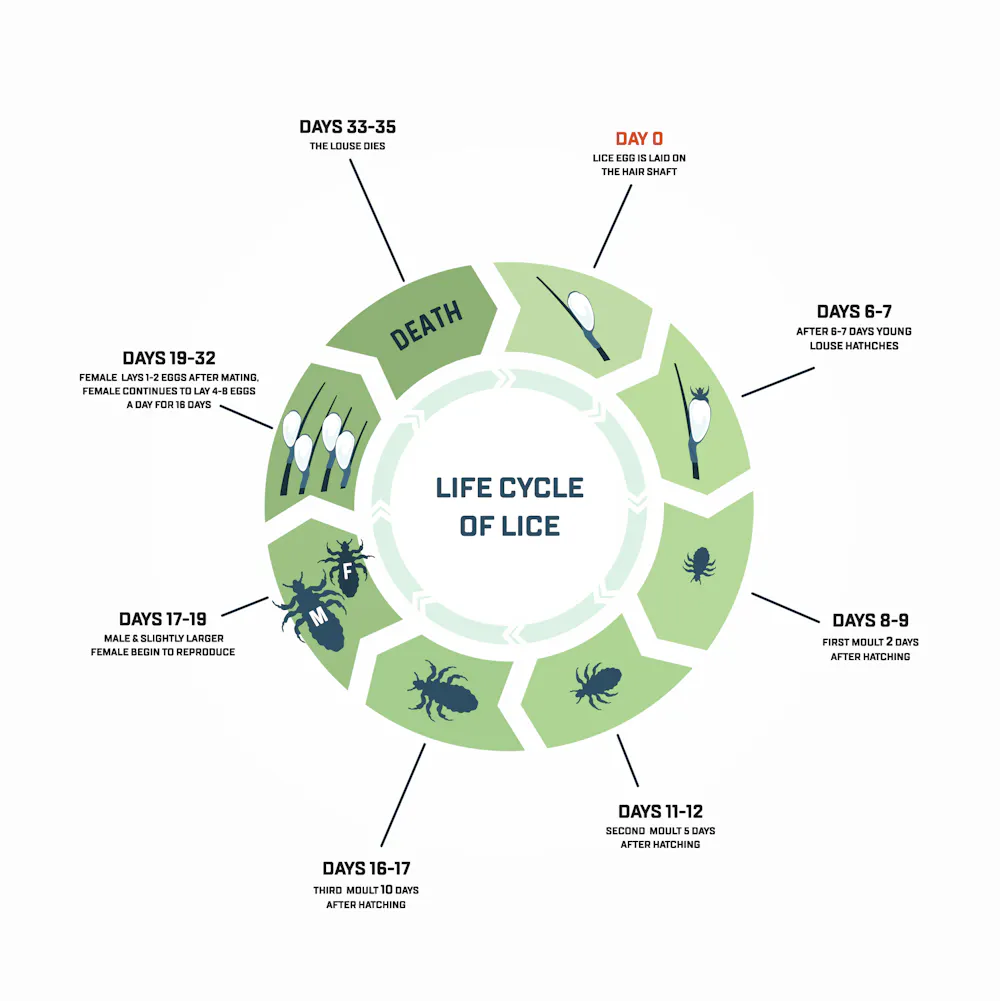
    The term “nits” actually describes the eggs of head lice. They’re often the first sign of an infestation. And with one louse laying more than 100 in their month-long lifespan, there can be a lot of them.

    Head lice live for around a month.
    logika600/Shutterstock

    Can they spread diseases?

    No. Head lice are annoying and their bites may cause skin reactions. But Australian health authorities don’t consider lice a health risk. There is no evidence that head lice can spread pathogens that cause disease.

    The stigma of head lice infestations can be greater than any direct health consequences for infested children.

    Why do my children always pick up lice?

    From child care through to primary school, it’s likely your child has had a head lice infestation at least once. One Australian study found the infestation rate in Australian classrooms ranged from no cases to 72% of children affected.

    Girls are more likely to be carry head lice than boys. Long hair means it’s easier for the head lice to hitch a ride.

    One study found that in some classrooms, almost three in four children had head lice.
    CDC/Unsplash

    Head lice don’t jump or fly, they move from head to head via direct contact.

    Head lice come home with your children because they spend time in close contact with other children, hugging, playing or crowding around books or screens. Any head-to-head contact is a pathway of infections.

    Rules differ slightly between states but in New South Wales and Queensland, children don’t need to be kept home from school because of head lice.

    How can I keep my home free of head lice?

    Keeping the house clean and tidy won’t keep head lice away. They don’t care how clean your bed sheets and towels are, or how frequently you vacuum carpets and rugs.

    There may be a risk of head lice transfer on shared pillows, but even that risk is low.

    There’s no need to change the child’s or other family member’s bedding when you find lice in a child’s hair. Research-based recommendations from NSW Health are that “bed linen, hats, clothing and furniture do not harbour or transmit lice or nits and that there is no benefit in washing them as a treatment option”.

    I’ve used nit solution. Why isn’t it working?

    A wide range of products are available at your local pharmacy to treat head lice. Australia’s Therapeutic Goods Administration assesses products to ensure that they are both safe and effective.

    The problem is that most of these products are insecticides that kill the lice on contact but may not kill the eggs.

    Also, if treatments aren’t completed as directed on product labels, some head lice won’t be killed.

    Head lice also seem to be fighting back against the chemicals we’ve been using against them and it’s getting harder to clear children of infestations.

    So how can you get rid of them?

    You’ll need conditioner and a nit comb.
    riopatuca/Shutterstock

    Don’t expect any miracle cures but health authorities in Australia generally recommend the “conditioner and comb” or “wet comb” method. This means you physically remove the lice without the need for chemical applications.

    There are three key steps:

    1. immobilise the lice by applying hair conditioner to the child’s damp hair and leaving it there for around 20 minutes

    2. systematically comb through the hair using a fine toothed “lice comb”. The conditioner and lice can be wiped off on paper towels or tissues. Only adult lice will be collected but don’t worry, we’ll deal with the eggs later

    3. repeat the process twice, about a week apart, to break the life cycle of the head lice.

    Repeating the process after a week allows the remaining eggs to hatch. It sounds counter-intuitive but by letting them hatch, the young lice are easier to remove than the eggs. You just need to remove them before they start laying a fresh batch of eggs and the infestation continues.

    While children are much more likely to have head lice, the reality is that everyone in the household is just as likely to host a head louse or two. You don’t necessarily need everyone to have a treatment but “grown ups” should be on the lookout for lice too.

    Cameron Webb and the Department of Medical Entomology, NSW Health Pathology and University of Sydney, have been engaged by a wide range of insect repellent and insecticide manufacturers to provide testing of products and provide expert advice on medically important arthropods. Cameron has also received funding from local, state and federal agencies to undertake research into various aspects of management of various medically important arthropods.

    ref. Head lice are getting harder to kill. Here’s how to break the nit cycle – https://theconversation.com/head-lice-are-getting-harder-to-kill-heres-how-to-break-the-nit-cycle-250397

    MIL OSI AnalysisEveningReport.nz

  • MIL-Evening Report: Legal aid is a lifeline for vulnerable Australians, but consistent underfunding puts the system at risk

    Source: The Conversation (Au and NZ) – By Natasha Cortis, Associate Professor, Social Policy Research Centre, UNSW Sydney

    It’s central to any democracy that citizens receive fair treatment under the law. An important part of this is access to legal advice and representation.

    But lawyers are expensive. Many people who engage with the justice system can’t afford them.

    This is where legal aid comes in. Legal aid is a government-funded service available to some people unable to afford legal assistance. It is tightly targeted and many people are turned away.

    Those approved can access professional advice and representation. Many clients are women and children escaping family violence, and Aboriginal and Torres Strait Islander people, who remain vastly overrepresented in the criminal justice system.

    But the first ever national census of legal aid private practitioners reveals widespread underfunding, overwhelming workloads and high financial costs borne by the lawyers providing help.

    How does legal aid work?

    Vulnerable Australians who need essential services often access them from private providers in mixed markets. This is the case for childcare, aged care and the National Disability Insurance Scheme (NDIS).

    It’s also true of legal aid, in which private lawyers play major roles.

    Legal Aid Commissions deliver legal aid through a mix of directly employed, in-house practitioners and approved private providers. The mix is heavily weighted toward private providers, although it fluctuates over time and across jurisdictions.

    According to National Legal Aid, in 2022–23, 72% of successful legal aid applications were assigned to private practitioners.

    To resource this arrangement, private practitioners are funded by grants of aid allocated to approved clients, with amounts regulated through a fixed scale of fees. Legal Aid Commissions in each state and territory usually release grant funds to practitioners in stages, initially to cover advice, investigation and negotiation, with funding extended to cover more work, such as going to trial, if cases progress.

    Private practitioners are expected to assist legal aid clients at the same standard of quality they would provide to other, fee-paying clients.

    But quality legal representation, especially for highly vulnerable people, is complex and time-consuming.

    Our research shows private practitioners feel frustrated that government funding does not cover all activities they need to perform and falls short of meeting community need.

    Our research

    We surveyed private practitioners who had delivered legal aid in the past two years, or who were listed on legal aid panels or preferred supplier lists.

    Among the 1,010 who participated, most were self-employed or working in very small practices. A quarter had delivered legal aid for more than 20 years.

    Commitment to legal aid is high, reflected in statements such as “everyone deserves good-quality representation”, and

    there is an obligation on professionals to assist in providing access to justice.

    Overwhelmingly, private practitioners find legal aid satisfying and meaningful. They also value the way it can build expertise for practitioners early in their legal career.

    But despite being enjoyable and enriching work, private practitioners say legal aid is becoming more difficult to deliver.

    Bearing the brunt of the cost

    Legal aid work can be stressful for practitioners, but their greatest challenge by far is funding.

    While there is no illusion that legal aid will be lucrative, private practitioners are frustrated with paltry grants that require significant administration and which undervalue their work.

    They feel the funding they receive does not recognise the time required in legal aid cases, nor the growing complexity of cases. As legal aid clients increasingly present with unmet health, social and economic needs, cases are more complex, lengthy and costly.

    Community need for legal assistance is high. For years, formal reviews have found the sector is chronically underfunded, both in Australia and overseas.

    Announcements of additional funding and better indexation have been welcomed, but aren’t enough to fix the shortfall.

    In the census, private practitioners repeatedly told us the funding available does not cover all activities required in legal aid cases or expected by courts. As one practitioner explained:

    legal aid matters effectively become pro bono matters near weeks into an initial grant, despite being potentially years-long.

    For 85% of private practitioners, “having to perform unremunerated work” is a source of difficulty. More than three-quarters said “trying to do quality work with limited time and resources” makes legal aid cases difficult.

    Many private practitioners travel long distances for their legal aid work and feel frustrated when costs are not covered. They also find administration is slow and cumbersome, and feel that Legal Aid Commissions are too understaffed to respond quickly to inquiries.

    Although 70% intend to continue to deliver at least some legal aid in the next year, many private practitioners feel undervalued. A third want to reduce their legal aid caseload and one in nine plan to abandon this work altogether.

    To continue to deliver legal aid, private practitioners echo scholarly evidence
    in calling for better grants, straightforward administration and responsive communication.

    Some question why legal aid, as a public good, has come to rest so heavily on the commitment of private practitioners and suggest that in-house staff and the community legal sector play bigger roles.

    Ultimately, some private practitioners will find ways to integrate legal aid into their business, or simply wear the cost. But for most, financial costs and risks are too high. Essential services cannot be delivered based on practitioners’ goodwill.

    Natasha Cortis conducts commissioned research on social policy and service delivery, for government and non-government organisations. The research this article discusses was commissioned by National Legal Aid.

    Megan Blaxland conducts commissioned research on social policy and service delivery for a range of government and non-government organisations. The research this article discusses was commissioned by National Legal Aid.

    ref. Legal aid is a lifeline for vulnerable Australians, but consistent underfunding puts the system at risk – https://theconversation.com/legal-aid-is-a-lifeline-for-vulnerable-australians-but-consistent-underfunding-puts-the-system-at-risk-250275

    MIL OSI AnalysisEveningReport.nz

  • MIL-Evening Report: Whales sing when they’ve had a good meal – new research

    Source: The Conversation (Au and NZ) – By Ted Cheeseman, PhD Candidate, Marine Ecological Research Centre, Southern Cross University

    Stock Photos Studios/Shutterstock

    Spanning more octaves than a piano, humpback whales sing powerfully into the vast ocean. These songs are beautifully complex, weaving phrases and themes into masterful compositions. Blue and fin whales richly fill out a bass section with their own unique versions of song.

    Together, these three species can create a marvellous symphony in the sea.

    Published today in PLOS One, our new research reveals these baleen whale species’ response to major changes in their ecosystem can be heard in their songs.

    Food for long-distance travel

    The six-year study took place in whale foraging habitat in the eastern North Pacific, off the coast of California in the United States. From this biologically rich foraging habitat, the whales migrate long distances each year to breeding habitats at lower latitudes.

    They eat little to nothing during their migration and winter breeding season. So they need to build up their energy stores during their annual residence in foraging habitat.

    This energy, stored in their gigantic bodies, powers the animals through months of long-distance travel, mating, calving, and nursing before they return to waters off California in the spring and summer to resume foraging.

    The whales eat krill and fish that can aggregate in massive schools. However, their diets are distinct.

    While blue whales only eat krill, humpback whales eat krill and small schooling fish such as anchovy. If the prey species are more abundant and more densely concentrated, whales can forage more efficiently. Foraging conditions and prey availability change dramatically from year to year.

    We wanted to know if these changes in the ecosystem were reflected in the whales’ acoustic behaviour.

    Piecing together a complex puzzle

    To track the occurrence of singing, we examined audio recordings acquired through the Monterey Accelerated Research System. This is a deep-sea observatory operated by the Monterey Bay Aquarium Research Institute and funded by the US National Science Foundation.

    Analysis of sound recordings is a highly effective way to study whales because we can hear them from quite far away. If a whale sings anywhere within thousands of square kilometres around the hydrophone, we will hear it.

    Yet, piecing together the complex puzzle of whale behavioural ecology requires diverse research methods.

    Our study used observations of the whales, including sound recordings, photo identification and diet analysis. It also used measurements of forage species abundance, characterisation of ecosystem conditions and theoretical modelling of sound propagation.

    Our ability to probe the complex lives of these giants was enhanced for humpback whales because we had a unique data resource available for this species: extensive photo identification.

    The Happywhale community science project combines photos supplied by researchers and ecotourists, and identification enabled by artificial intelligence, to recognise individual whales by the shape and coloration of their flukes.

    This unique resource enabled us to examine the local abundance of humpback whales. We could also study the timing of their annual migration and how persistently individual whales occupied the study region.

    Scientists used a deep-sea hydrophone to keep a nearly continuous record of the ocean soundscape.
    MBARI

    An increase in food – and in song

    The study began in 2015, during a prolonged marine heatwave that caused major disruption in the foraging habitat of whales and other animals throughout the eastern North Pacific.

    All three whale species sang the least during the heatwave, and sang more as foraging conditions improved over the next two years.

    These patterns provided the first indications that the singing behaviour by whales may be closely related to the food available. Remarkably, whale song is an indicator of forage availability.

    Further evidence was found in the striking differences between humpback and blue whales during the later years of the study.

    Continued increases in detection of humpback whale song could not be explained by changes in the local abundance of whales, the timing of their annual migration, or the persistence of individuals in the study region.

    However, humpback song occurrence closely tracked tremendous increases in the abundances of northern anchovy — the largest increase in 50 years. And when we analysed the skin of the humpback whales, we saw a clear shift to a fish-dominated diet.

    In contrast, blue whales only eat krill, and detection of their songs plummeted with large decreases in krill abundance. Our analysis of blue whale skin revealed they were foraging over a larger geographic area to find the food they needed during these hard times in the food web.

    Humpback song occurrence closely tracked tremendous increases in the abundances of northern anchovy.
    evantravels/Shutterstock

    Predicting long-term changes

    This research shows listening to whales is much more than a rich sensory experience. It’s a window into their lives, their vulnerability, and their resilience.

    Humpback whales emerge from this study as a particularly resilient species. They are more able to readily adapt to changes in the ecology of the foraging habitats that sustain them. These findings can help scientists and resource managers predict how marine ecosystems and species will respond to long-term changes driven by both natural cycles and human impacts.

    At a time of unprecedented change for marine life and ecosystems, collaboration across disciplines and institutions will be crucial for understanding our changing ocean.

    This work was enabled by private research centres, universities and federal agencies working together. This consortium’s past work has revealed a rich new understanding of the ocean soundscape, answering fundamental questions about the ecology of ocean giants.

    Who knows what more we will learn as we listen to the ocean’s underwater symphony?

    The study’s findings can help scientists better understand how blue whales and other baleen whales respond to long-term changes in the ocean.
    Ajit S N/Shutterstock

    This work was led by John Ryan, a biological oceanographer at the Monterey Bay Aquarium Research Institute (MBARI), with an interdisciplinary team of researchers from MBARI, Southern Cross University, Happywhale.com, Cascadia Research Collective, University of Wisconsin, NOAA Southwest Fisheries Science Centre, University of California, Santa Cruz, Naval Postgraduate School, and Stanford University.

    Ted Cheeseman is the co-founder of citizen science project, Happywhale.

    Jarrod Santora receives funding from NOAA, NASA, and NSF.

    ref. Whales sing when they’ve had a good meal – new research – https://theconversation.com/whales-sing-when-theyve-had-a-good-meal-new-research-250926

    MIL OSI AnalysisEveningReport.nz

  • MIL-Evening Report: Dutton hints he’ll sack 36,000 public servants. Voters deserve to know what services will be affected

    Source: The Conversation (Au and NZ) – By John Hawkins, Senior Lecturer, Canberra School of Politics, Economics and Society, University of Canberra

    Peter Dutton and his Coalition colleagues have dithered for several weeks on their plans for the Commonwealth public sector.

    While being upfront that public service jobs would be targeted, they’ve made numerous contradictory statements about the number of public servants who would be sacked if the Coalition wins the coming election.

    But Peter Dutton’s most recent comments confirm that he clearly wants to make significant cuts.

    And it’s hard to see how the sackings wouldn’t erode important front line services that many Australians depend on for help and support.

    36,000 jobs on the line

    This week the opposition leader declared the Coalition would achieve A$24 billion in savings by reducing the size of the public service.

    He was unequivocal. The money would be clawed back over four years and would more than cover the Coalition’s promised $9 billion injection into Medicare.

    Dutton explicitly tied the $24 billion in savings to the 36,000 Commonwealth public servants who have been hired since the last election

    Under the Labor Party, there are 36,000 additional public servants, that’s at a cost of $6 billion a year, or $24 billion over the forward estimates. This program totals $9 billion over that period. So, we’ve well and truly identified the savings.

    While still not nominating a precise number of job cuts, it’s Peter Dutton’s clearest statement of intent to date. By “truly” identifying the savings, 36,000 jobs are on the line. And it accords with Dutton’s earlier comments that the extra workers are not providing value for money for Australian taxpayers.

    (They have) not improved the lives of Australians one iota

    While this sounds like he wants to dismiss them all, senior colleagues are more circumspect.

    According to Nationals leader David Littleproud, the number of job cuts has not yet been decided. Shadow Public Service Minister Jane Hume further muddied the waters by referring to the cuts being by attrition, and excluding frontline services.

    Frontline services

    The public service head count has grown to 185,343, as of June 2024. So cutting 36,000 staff, or even a large proportion of that number, would be a very significant reduction.

    The agencies that added the most public servants between June 2023 and June 2024 were the National Disability Insurance Agency (up 2,193), Defence (up 1,425), Health and Aged Care (up 1,173) and Services Australia (up 1,149).

    Many of these extra staff would be providing invaluable front line services to clients and customer who are accessing essential support.

    And some of the new public servants replaced more expensive outsourced workers. Finance Minister Katy Gallagher has claimed the Albanese government has saved $4 billion of taxpayers’ money by reducing spending on consultants and contractors.

    Rather than the alleged explosion in the size of the bureaucracy, the growth in public service numbers has closely matched the increase in the population. Last year, they accounted for 1.36% of all employed persons, up by only a minuscule degree on the 1.35% in 2016.

    Canberra bashing

    According to Dutton, the 36,000 additional public servants hired under Labor all work in Canberra. It was not a slip of the tongue. The claim is also in the Liberal Party’s pre-election pamphlet.

    But only 37% of the public service workforce is located in the national capital. Half are based in state capitals. A full quarter of those involved in service delivery work in regional Australia.

    The Liberals clearly think they have nothing to lose among Canberra voters, given they have no members or senators from the Australian Capital Territory.

    The coming election will no doubt tell us if Canberra bashing still resonates with voters elsewhere in the country. Dutton has clearly made the political judgement that it does.

    Another night of the long knives?

    A change of government often precipitates a clean out at the top of the public service.

    When the Howard government was elected in 1996, no fewer than six departmental secretaries were sacked on the infamous night of the long knives. Then prime minister Tony Abbott dismissed four departmental chiefs in one fell swoop after taking office in 2013. He didn’t even consult his treasurer before dumping the head of Treasury.

    This pattern of culling senior public servants represents a chilling risk to good policy development. Departmental secretaries concerned about losing their jobs may be reluctant to give the “frank and fearless advice” their positions demand.


    Read more:
    After robodebt, here’s how Australia can have a truly ‘frank and fearless’ public service again


    Spending cuts after the election

    Voters are entitled to know what the Coalition has planned for the public service before they cast their ballots.

    The lack of detail on job losses is matched by a reluctance to outline spending cuts elsewhere. Dutton has ruled out an Abbott-style audit commission. He is prepared to cut “wasteful” spending, but won’t say if it may be necessary to also chop some worthwhile outlays to dampen inflationary pressures.

    Dutton is adamant that any spending cuts by a government he leads will be determined after the election, not announced before it. This does nothing for democratic accountability. It does not give the electorate the chance to cast their votes on the basis of an alternative vision from the alternative government.

    All Australians, not just public servants, deserve to know before polling day just how deep Dutton and the Coalition are really planning to cut.

    John Hawkins is a former public servant and lives in Canberra.

    ref. Dutton hints he’ll sack 36,000 public servants. Voters deserve to know what services will be affected – https://theconversation.com/dutton-hints-hell-sack-36-000-public-servants-voters-deserve-to-know-what-services-will-be-affected-250797

    MIL OSI AnalysisEveningReport.nz

  • MIL-Evening Report: A middle power with ‘great and powerful friends’: Australia’s changing role in the region

    Source: The Conversation (Au and NZ) – By Rebecca Strating, Director, La Trobe Asia, and Professor of International Relations, La Trobe University

    Debating Australia’s role in world politics is not always high on the political agenda. Elections here are more often fought on economic issues than foreign or defence policy. And while the major parties have different views on foreign policy, there tends to be bipartisanship on the central tenets of our strategic policy, including Australia’s alliance with the United States.

    In recent years, however, Australia has found itself wedged between two great powers: its security guarantor, the US, and its major trading partner, China. The increasing strategic competition between these two great powers, especially in Asia, has raised new questions about how Australia should manage these relationships and conceive of its role in the world.

    For some countries, having a prominent role on the global stage may be more obvious than for others. Wealthy states with large militaries and populations, for example, often play the part of “great powers”. These countries tend to make claims about their unique rights and responsibilities, such as having a greater say in multilateral institutions (like the United Nations) and the “rules” intended to govern international conduct.

    However, most of the world’s countries are not great powers. For a middle-sized nation like Australia, its role on the global stage is not necessarily static but determined by how our leaders balance national interests and values.

    These, in turn, are shaped by “material factors”, such as geography, population and economy size, natural resources, shared political ideals (for example, our belief in democratic institutions), norms and culture.

    In addition, a middle-sized country’s global role can change depending on how leaders perceive contemporary threats and challenges to their security.

    Australia as a ‘middle power’

    The National Defence Strategy released in 2024 describes Australia as an “influential middle power”. According to the strategy, this is demonstrated by several things:

    • our enduring democratic values
    • our history of safeguarding international rules and contributing to regional partnerships
    • the strong foundations of our economy
    • the strength of our partnerships in the Indo-Pacific.

    Whether Australia should be described as a “middle power”, though, has long been the subject of political debate. Since H.V. “Doc” Evatt, then-attorney general and minister for external affairs, used the term in 1945, it has been most often (but not always) associated with the Labor Party.

    Recent Coalition governments have been more reluctant to view Australia as “just” a middle power.

    Alexander Downer, the foreign minister in the Howard government, would occasionally use the term “pivotal power”. Pivotal powers, as one political analyst put it, are “destined to shape the contours of geopolitics in key regions of the world” due to their strategic location, economic power and political influence.

    Meanwhile, Julie Bishop, foreign minister in the Abbott and Turnbull administrations, preferred the term “top 20 country”, arguing this better reflected Australia’s standing and level of influence on the global stage.

    At the core of this historical debate is the extent to which a country like Australia can – and does – have influence in the region and globally.

    Middle powers have different characteristics from great or smaller powers. Size, geography and economic wealth affect the extent to which they can shape the world. As a result, middle powers often adopt certain types of actions or behaviours to enhance their influence.

    This concept, known as “middle power diplomacy”, has often been associated with Australia.

    There are a number of ways middle powers do this, such as by:

    • supporting adherence to international law and rules (because these can help restrain more powerful states from imposing their will on others)

    • encouraging cooperation through multilateralism (cooperation between multiple states)

    • finding creative new solutions to global problems, such as climate change

    • taking the diplomatic lead on specific, but important, issues.

    A liberal-democratic middle power, such as Australia, may also seek to promote its values internationally, including the respect for human rights, free and open trade, and the principles of democratic governance and accountability.

    Australia’s reliance on ‘great and powerful friends’

    In addition, middle powers often choose to align themselves with a bigger power to boost their influence even further.

    In Australia’s case, its strategic dependence on the United States developed, in part, by historical anxieties that faraway “great and powerful friends”, as former diplomat Allan Gyngell phrased it, might abandon it in a potentially hostile region.

    Prior to the second world war, Australia relied on its former colonial ruler, Britain, for its security. The Fall of Singapore in 1942, in which Japanese forces routed British and Australian troops defending the island, demonstrated the risks of our overdependence on a distant ally.

    In the aftermath of the war, Australia forged a new security alliance with a new global superpower, the United States, through the ANZUS Treaty. Yet, replacing one “great and powerful” but distant friend with another did not alleviate Australia’s abandonment anxieties.

    Since then, debates about Australia’s international role have largely focused on the extent to which it can – and should be – self-reliant in the context of the US alliance, or if it should pursue a more independent foreign policy.

    US domestic politics – particularly during President Donald Trump’s time in office – have also driven uncertainty about Washington’s reliability, as well as its commitment to Asia and the implications for allies like Australia.

    Despite such concerns, Australia’s relationship with the US is as strong and deeply entwined as it has ever been. In fact, it only got stronger during Trump’s first term. While Canberra has sought to deepen engagement with regional states it views as “like-minded”, such as Japan, South Korea and India, it has done so firmly in the context of its broader alliance with the United States.

    This, of course, is driven by the new anxieties over China’s rise as a major economic and military power in the region. In recent years, Beijing’s assertive and coercive behaviours in the region have made it the key national security threat facing Australia.

    This is a break from the past, when Australian leaders – both Labor and Liberal – broadly agreed that a “pragmatic approach” to engaging great powers meant Canberra would not have to “choose sides” between China and the US.

    In 2023, the Albanese government sought a détente of sorts with China, attempting to return to this pragmatic approach. But wariness of Beijing remains.

    Opponents to this strategy have called the government’s efforts to re-engage with China a “threat to Australian sovereignty, principles, and values”.

    Prime Minister Anthony Albanese’s visit to Beijing in late 2023.

    An Indo-Pacific power?

    In the context of these new challenges presented by a rising China, Australia has increasingly leaned into becoming an “Indo-Pacific” power in recent years. There are a number of ways in which this shift is observable.

    First, Australia has been instrumental in encouraging the global adoption of this phrase, “Indo-Pacific”, as a new way of referring to the region. This is partly driven by the desire to maintain US leadership and presence in Australia’s neighbourhood. The US is a Pacific state, so this concept anchors the US in our region in a way that “Asia” does not.

    And when people used the term “Asia-Pacific” to talk about the region in the past, this had a primarily economic connotation. This is due to the importance of the
    Asia-Pacific Economic Cooperation (APEC) forum and the move towards free-trade agreements between Australia and other countries in the region.

    However, the US has become less economically engaged in the region in recent years, with a focus on rebuilding its own industrial base. India, the other major economy in Asia, has also been reluctant to sign up to multilateral, regional free-trade agreements. Neither are parties to the Comprehensive and Progressive Agreement for Trans-Pacific Partnership (CP-TPP) or the Regional Comprehensive Economic Partnership (RCEP) agreements.

    As such, the new term “Indo-Pacific” has become more of a security concept centred on the region’s waters. Generally, it is used to incorporate South, Southeast and Northeast Asia, Oceania (Australia, New Zealand and the Pacific Islands) and the United States. By connecting the Indian (“Indo”) and the Pacific Oceans, it has become primarily a maritime strategic concept.

    The narratives usually associated with the Indo-Pacific also relate to the need to protect the international rules-based order, and freedom of navigation and overflight for ships and aircraft in the region. This, again, reflects the growing geopolitical anxieties about a rising China, particularly in the disputed South and East China seas and the Taiwan Strait.

    Australia does not have territorial or maritime claims in either sea, but we are nonetheless concerned about China’s efforts to undermine the United Nations Convention on the Law of the Sea (UNCLOS) and what this might mean for the “rules-based order” more generally.

    The second way Australia is moving more towards becoming a regional power is in the narrowing of its core defence interests to an “inner ring” focused on the South Pacific and maritime Southeast Asia, and to a lesser extent, an “outer ring” in the broader Indo-Pacific and wider world. These geographical boundaries have consequences for how Australia views its international role.

    After nearly two decades of military engagement in the Middle East and Afghanistan, Australia is shifting its focus back on its home region. This reflects not just the limits of our military capabilities, but also new concerns about the changing balance of power in Asia.

    Third, Australia is increasingly focusing on a more strategic, narrower form of multilateralism. This, too, has been more centred on our region.

    Multilateralism has always been seen as an important part of middle power identity. Australia, for instance, played a key role in setting up institutions like the United Nations.

    However, this began to shift under recent Coalition governments. Prime Minister Scott Morrison expressed scepticism about such institutions, criticising them as an “often ill-defined borderless global community” that promoted “negative globalism”.

    Under successive Coalition governments, Australia instead became a key player in two smaller groups of nations – the re-branded “Quad” in 2017 (along with Japan, the US and India) and AUKUS in 2021 (with the US and United Kingdom).

    Under the Albanese government, global multilateralism was reinstated as an important pillar of foreign policy. But Australia’s investment and involvement in these smaller groups has only deepened.

    Both AUKUS and the Quad demonstrate Australia’s changing role as a regional power in the Indo-Pacific. These groups offer Australia an opportunity to shape the regional security agenda by joining forces with other powerful states. They also provide a way of encouraging the US to maintain its presence and leadership in the region and to counterbalance China’s rise.

    As part of this, Australia has become a key proponent of what the Biden administration coined “integrated deterrence”.

    This is a central pillar of the US’ Indo-Pacific strategy that seeks to mobilise “like-minded” states – especially its regional allies such as Australia, Japan and South Korea – to form a regional coalition against rival states. This strategy reflects a growing awareness the US can’t provide security in Asia alone.

    The AUKUS security agreement, including the commitment to develop new nuclear-powered submarines for Australia, is a part of this strategy.

    Since the announcement of the submarine plan in 2021, both the procurement plan and the language that American and Australian leaders have been using suggest that Canberra is preparing to play a bigger security role in the region alongside the US.

    Time for a new ‘strategic imagination’?

    Has Australia’s shift to an Indo-Pacific regional power served it well?

    It has allowed the deepening of defence relationships with partners like Japan and India. And through its roles in the Quad and AUKUS, Australia has a seat at the table and is more visible in regional security discussions.

    But there are risks to a more assertive regional power stance. Australia could be viewed by its neighbours as too focused on military and not invested enough (or in the right way) in diplomacy or regional development. Australia’s overseas aid contribution, for example, has been declining for three decades.

    It is also unclear which other regional states are likely to participate in a US-led coalition if a real conflict with China ever broke out. The Quad and AUKUS groups may be viewed by others as exclusionary or contributing to increasing tensions in the region.

    How nuclear-powered submarines will “deter” potential adversaries is also yet to be clearly explained. These submarines could potentially entangle Australia in a regional conflict instead. Being able to clearly articulate and distinguish between Australian and US interests will remain vital for ensuring that future governments don’t “sleepwalk” into war.

    Finally, Australia’s advocacy of the “rules-based order” has left it – and the US – exposed to criticisms of hypocrisy and double standards, particularly with Washington’s support for Israel’s war on Gaza.

    In our recent book, Girt by Sea: Re-imagining Australian Security, Joanne Wallis and I argue that Australia needs to reconceptualise its role as a regional actor to

    …one which can develop a coherent security strategy by working with old and new allies and partners to shape the regional order in ways that ensure its security.

    The approach emphasises the need for all parts of our government to work in coordination to protect Australians from the range of complex conventional and unconventional challenges it faces (including climate change).

    Australia’s security and its international role should not be viewed through the lens of the “China threat” alone. Doing so is counter-productive, as many states in the region do not share the same perception about China.

    Instead, as Wallis and I wrote, Australia needs a “more comprehensive, nuanced and contingent understanding of the range of security opportunities and threats” we face.


    This is an edited extract from How Australian Democracy Works, a new collection of essays from The Conversation on all aspects of the country’s political landscape.

    Rebecca Strating receives funding from Australia’s Department of Foreign Affairs and Trade.

    ref. A middle power with ‘great and powerful friends’: Australia’s changing role in the region – https://theconversation.com/a-middle-power-with-great-and-powerful-friends-australias-changing-role-in-the-region-228897

    MIL OSI AnalysisEveningReport.nz

  • MIL-Evening Report: Peter Dutton strongly hints he’ll sack 36,000 public servants. Voters deserve to know what services will be affected

    Source: The Conversation (Au and NZ) – By John Hawkins, Senior Lecturer, Canberra School of Politics, Economics and Society, University of Canberra

    Peter Dutton and his Coalition colleagues have dithered for several weeks on their plans for the Commonwealth public sector.

    While being upfront that public service jobs would be targeted, they’ve made numerous contradictory statements about the number of public servants who would be sacked if the Coalition wins the coming election.

    But Peter Dutton’s most recent comments confirm that he clearly wants to make significant cuts.

    And it’s hard to see how the sackings wouldn’t erode important front line services that many Australians depend on for help and support.

    36,000 jobs on the line

    This week the opposition leader declared the Coalition would achieve A$24 billion dollars in savings by reducing the size of the public service.

    He was unequivocal. The money would be clawed back over four years and would more than cover the Coalition’s promised $9 billion injection into Medicare.

    Dutton explicitly tied the $24 billion in savings to the 36,000 Commonwealth public servants who have been hired since the last election

    Under the Labor Party, there are 36,000 additional public servants, that’s at a cost of $6 billion a year, or $24 billion over the forward estimates. This program totals $9 billion over that period. So, we’ve well and truly identified the savings.

    While still not nominating a precise number of job cuts, it’s Peter Dutton’s clearest statement of intent to date. By “truly” identifying the savings, 36,000 jobs are on the line. And it accords with Dutton’s earlier comments that the extra workers are not providing value for money for Australian taxpayers.

    (They have) not improved the lives of Australians one iota

    While this sounds like he wants to dismiss them all, senior colleagues are more circumspect.

    According to Nationals leader David Littleproud, the number of job cuts has not yet been decided. Shadow Public Service Minister Jane Hume further muddied the waters by referring to the cuts being by attrition, and excluding frontline services.

    Frontline services

    The public service head count has grown to 185,343, as of June 2024. So cutting 36,000 staff, or even a large proportion of that number, would be a very significant reduction.

    The agencies that added the most public servants between June 2023 and June 2024 were the National Disability Insurance Agency (up 2,193), Defence (up 1,425), Health and Aged Care (up 1,173) and Services Australia (up 1,149).

    Many of these extra staff would be providing invaluable front line services to clients and customer who are accessing essential support.

    And some of the new public servants replaced more expensive outsourced workers. Finance Minister Katy Gallagher has claimed the Albanese government has saved $4 billion of taxpayers’ money by reducing spending on consultants and contractors.

    Rather than the alleged explosion in the size of the bureaucracy, the growth in public service numbers has closely matched the increase in the population. Last year, they accounted for 1.36% of all employed persons, up by only a minuscule degree on the 1.35% in 2016.

    Canberra bashing

    According to Dutton, the 36,000 additional public servants hired under Labor all work in Canberra. It was not a slip of the tongue. The claim is also in the Liberal Party’s pre-election pamphlet.

    But only 37% of the public service workforce is located in the national capital. Half are based in state capitals. A full quarter of those involved in service delivery work in regional Australia.

    The Liberals clearly think they have nothing to lose among Canberra voters, given they have no members or senators from the Australian Capital Territory.

    The coming election will no doubt tell us if Canberra bashing still resonates with voters elsewhere in the country. Dutton has clearly made the political judgement that it does.

    Another night of the long knives?

    A change of government often precipitates a clean out at the top of the public service.

    When the Howard government was elected in 1996, no fewer than six departmental secretaries were sacked on the infamous night of the long knives. Then prime minister Tony Abbott dismissed four departmental chiefs in one fell swoop after taking office in 2013. He didn’t even consult his treasurer before dumping the head of Treasury.

    This pattern of culling senior public servants represents a chilling risk to good policy development. Departmental secretaries concerned about losing their jobs may be reluctant to give the “frank and fearless advice” their positions demand.


    Read more:
    After robodebt, here’s how Australia can have a truly ‘frank and fearless’ public service again


    Spending cuts after the election

    Voters are entitled to know what the Coalition has planned for the public service before they cast their ballots.

    The lack of detail on job losses is matched by a reluctance to outline spending cuts elsewhere. Dutton has ruled out an Abbott-style audit commission. He is prepared to cut “wasteful” spending, but won’t say if it may be necessary to also chop some worthwhile outlays to dampen inflationary pressures.

    Dutton is adamant that any spending cuts by a government he leads will be determined after the election, not announced before it. This does nothing for democratic accountability. It does not give the electorate the chance to cast their votes on the basis of an alternative vision from the alternative government.

    All Australians, not just public servants, deserve to know before polling day just how deep Dutton and the Coalition are really planning to cut.

    John Hawkins is a former public servant and lives in Canberra.

    ref. Peter Dutton strongly hints he’ll sack 36,000 public servants. Voters deserve to know what services will be affected – https://theconversation.com/peter-dutton-strongly-hints-hell-sack-36-000-public-servants-voters-deserve-to-know-what-services-will-be-affected-250797

    MIL OSI AnalysisEveningReport.nz

  • MIL-OSI Global: Only 6% of gen Z actually favour dictatorship – not half, as some reports would have you believe

    Source: The Conversation – UK – By Bobby Duffy, Professor of Public Policy and Director of the Policy Institute, King’s College London

    Shutterstock/Dedraw Studio

    America’s constitutional framework was designed specifically to prevent the concentration of power and to impede any president’s authoritarian aspirations. It is certainly being put to the test right now.

    When US vice-president J.D. Vance recently wrote that “judges aren’t allowed to control the executive’s legitimate power”, he gave perhaps the clearest indication to date that the Trump administration might ignore court rulings, potentially laying the ground for what some have argued would amount to a dictatorship.

    Given this context, it certainly seemed plausible when a recent Channel 4 study suggested UK democracy could be heading towards a similar crisis. However, we have conducted research that paints a very different picture of gen z’s tendency towards dictatorship.

    Media reports about the Channel 4 research claimed over half of gen Z in Britain supported the country becoming a dictatorship. Headlines included: “Voting’s such a hassle… of course Gen Z like dictators”. An article published the day after Holocaust memorial day lamented: “Of all the days to discover Gen Z’s misguided affection for dictators”.

    The study actually asked 13-to-27-year-olds whether they agreed that “the UK would be a better place if a strong leader was in charge who does not have to bother with parliament and elections”. In their findings and press release, Channel 4 didn’t suggest that this equated to support for a dictatorship – but just about every news and comment piece that picked up the study did.

    It might seem like a very justifiable interpretation, though the first sign that we should be cautious was that two major ongoing academic studies which ask a very similar question to the one released by Channel 4 get very different results.

    In 2024, the British Election Study (BES) found only 13% of gen Z across Great Britain agree or strongly agree that “the best way to run the country would be to have a strong leader who does not have to bother with parliament and elections”.

    In 2022, the World Values Survey (WVS), a study which has tracked attitudes to democracy since 1981, found 27% of gen Z in Britain think that “having a strong leader who does not have to bother with parliament and elections” is a very or fairly good way of governing the country.

    Gen Z isn’t done with democracy, they’re just disillusioned with the delivery.
    Shutterstock/EF Stock

    So the BES finding is around a quarter the level found in the Channel 4 study, and the WVS finding is around half the level. Together, these suggest we should be extremely wary about putting too much weight on the Channel 4 finding.

    As an aside, the difference between these two larger, more rigorous studies is very likely to be related to the varying response categories used. The BES allows people to choose “neither agree nor disagree”. The WVS does not include this option.

    What gen Z actually think

    To explore these discrepancies further, we ran our own test in a survey of 1,000 13-to-27-year-olds. We simply replaced the wording “strong leader” with “dictator”. Instead of 52%, we found only 22% agree with that version.

    That still leaves a worryingly large minority of gen Z who seem to be supporting an extreme form of autocratic government. We tested that view further by asking those who agreed whether that meant they wanted no control or checks on the leader by MPs in parliament and no national elections at all. When these implications are spelled out, around half say no, actually, we would like some control and elections.

    When you work it all through, only 6% of gen Z really support a dictatorship, in any recognised sense of the term. The problem we seem to be facing is not a whole generation of autocratic young people but a complex question answered quickly in online polls and hugely overinterpreted in subsequent reporting.

    And the fact that this interpretation was picked up so widely really is a problem, in at least three ways.

    First, it adds to sense of generational division, and particularly our willingness to believe that the current generation of young is the worst ever. It’s a deep human trait for older people to think ill of the young, and it’s been supercharged for us today by the media environment, including social media. Generational labels have become helpful shorthand for spreading stereotypes and division.


    Read more:
    Boomers vs millennials? Free yourself from the phoney generation wars


    Second, there is a risk that attention-grabbing discussion encourages a sense among gen Z that supporting dictatorship is the norm. Media coverage of one poll doesn’t mean the line it pushes will become immediately true, but we know perceptions of what the norm is for our group can have powerful effects on our own views and behaviour.

    If we have concerns about gen Z’s connection to liberal democracy, we should be extra careful not to spread an exaggerated negative view.

    Which leads to the third problem – that the noise around this distracts us from real and serious issues with gen Z’s engagement with politics and institutions. We risk labelling a whole generation as “authoritarian” when the real problem is a lack of confidence in the delivery of democratic institutions and systems.

    Our analysis of the WVS shows precisely this. Gen Z are the least likely to think we even currently live in a democracy. That’s perhaps understandable from their perspective when so many policy decisions – from pensions and housing, to support for the costs of education and childcare – have favoured older people.

    Older generations face a serious challenge convincing gen Z that democracy and our political institutions can work for them. But exaggerating their desire to rip it all up doesn’t increase the sense of urgency, it just adds to the drama of generational division. It risks giving a false sense of momentum to the decline of democracy, which is the last thing we need right now.

    Bobby Duffy receives funding from the Economic and Social Research Council who funded the World Values Survey in the UK.

    Paolo Morini receives funding from the Economic and Social Research Council who funded the World Values Survey in the UK.

    ref. Only 6% of gen Z actually favour dictatorship – not half, as some reports would have you believe – https://theconversation.com/only-6-of-gen-z-actually-favour-dictatorship-not-half-as-some-reports-would-have-you-believe-250945

    MIL OSI – Global Reports

  • MIL-Evening Report: Quantum navigation could transform how we travel. So what is it, and how does it work?

    Source: The Conversation (Au and NZ) – By Allison Kealy, Director, Innovative Planet Institute, Swinburne University of Technology

    Triff/Shutterstock

    Quantum technology is no longer confined to the lab – it’s making its way into our everyday lives. Now, it’s about to transform something even more fundamental: how we navigate the world.

    Imagine submarines travelling beneath the ocean, never needing to surface for location updates. Planes flying across continents with unshakeable precision, unaffected by signal disruptions.

    Emergency responders could navigate smoke-filled buildings or underground tunnels with flawless accuracy, while autonomous vehicles chart perfect courses through dense urban environments.

    These scenarios might sound like science fiction, but they can all be made possible with an emerging approach known as quantum navigation.

    This game-changing tech will one day redefine movement, exploration and connectivity in ways we’re only just beginning to imagine. So, what is it?

    Satellite navigation is at the heart of many things

    Global navigation satellite systems, like GPS, are deeply embedded in modern society. We use them daily for navigation, ordering deliveries and tagging photo locations. But their impact goes far beyond convenience.

    Timing signals from satellites in Earth’s orbit authenticate stock market trades and help balance the electricity grid. In agriculture, satellite navigation guides autonomous tractors and helps muster cattle.

    Emergency services rely on navigation satellite systems for rapid response, reducing the time it takes to reach those in need.

    Despite their benefits, systems like GPS are quite vulnerable. Satellite signals can be jammed or interfered with. This can be due to active warfare, terrorism or for legitimate (or illegitimate) privacy concerns. Maps like GPSJAM show real-time interference hotspots, such as those in the Middle East, areas around Russia and Ukraine, and Myanmar.

    The environment of space isn’t constant, either. The Sun regularly ejects giant balls of plasma, causing what we know as solar storms. These emissions slam into Earth’s magnetic field, disrupting satellites and GPS signals. Often these effects are temporary, but they can also cause significant damage, depending on the severity of the storm.

    An outage of global navigation satellite systems would be more than an inconvenience – it would disrupt our most critical infrastructure.

    Estimates suggest a loss of GPS would cost just the United States economy about US$1 billion per day (A$1.5 billion), causing cascading failures across interconnected systems.

    Quantum navigation to the rescue

    In some environments, navigation signals from satellites don’t work very well. They don’t penetrate water or underground spaces, for example.

    If you’ve ever tried to use Google Maps in a built-up city with skyscrapers, you may have run into issues. Tall buildings cause signal reflections that degrade accuracy, and signals are weakened or completely unavailable inside buildings.

    This is where quantum navigation could step in one day.

    Quantum science describes the behaviour of particles at scales smaller than an atom. It reveals mind-boggling effects like superposition – particles existing in multiple states simultaneously – and entanglement (when particles are connected through space and time in ways that defy classical understanding).

    These effects are fragile and typically collapse under observation, which is why we don’t notice them in everyday life. But the very fragility of quantum processes also lets them work as exquisite sensors.

    A sensor is a device that detects changes in the world around it and turns that information into a signal we can measure or use. Think automatic doors that open when we walk near them, or phone screens that respond to our touch.

    Quantum sensors are so sensitive because quantum particles react to tiny changes in their environment. Unlike normal sensors, which can miss weak signals, quantum sensors are extremely good at detecting even the smallest changes in things like time, gravity or magnetic fields.

    Their sensitivity comes from how easily quantum states change when something in their surroundings shifts, allowing us to measure things with much greater accuracy than before.

    This precision is critical for robust navigation systems.

    Our team is researching new ways to use quantum sensors to measure Earth’s magnetic field for navigation. By using quantum effects in diamonds, we can detect Earth’s magnetic field in real time and compare the measurements to pre-existing magnetic field maps, providing a resilient alternative to satellite navigation like GPS.

    Since magnetic signals are unaffected by jamming and work underwater, they offer a promising backup system.

    A quantum magnetometer used in our research.
    Swinburne University/RMIT/Phasor

    The future of navigation

    The future of navigation will integrate quantum sensors to enhance location accuracy (via Earth’s magnetic and gravitational fields), improve orientation (via quantum gyroscopes), and enable superior timing (through compact atomic clocks and interconnected timekeeping systems).

    These technologies promise to complement and, in some cases, provide alternatives to traditional satellite-based navigation.

    However, while the potential of quantum navigation is clear, making it a practical reality remains a significant challenge. Researchers and companies worldwide are working to refine these technologies, with major efforts underway in academia, government labs and industry.

    Startups and established players are developing prototypes of quantum accelerometers (devices that measure movement) and gyroscopes, but most remain in early testing phases or specialised applications.

    Key hurdles include reducing the size and power demands of quantum sensors, improving their stability outside of controlled laboratory settings, and integrating them into existing navigation systems.

    Cost is another barrier – today’s quantum devices are expensive and complex, meaning widespread adoption is still years away.

    If these challenges can be overcome, quantum navigation could reshape everyday life in subtle but profound ways. While quantum navigation won’t replace GPS overnight, it could become an essential part of the infrastructure that keeps the world moving.

    Allison Kealy is affiliated with Quantum Australia as a board member.

    Allison Kealy is a research collaborator with RMIT University and Phasor Quantum.

    ref. Quantum navigation could transform how we travel. So what is it, and how does it work? – https://theconversation.com/quantum-navigation-could-transform-how-we-travel-so-what-is-it-and-how-does-it-work-250285

    MIL OSI AnalysisEveningReport.nz

  • MIL-OSI Global: We need to switch to heat pumps fast – but can they can overcome this problem?

    Source: The Conversation – UK – By Jack Marley, Environment + Energy Editor, UK edition

    StockMediaSeller/Shutterstock

    People in the UK need to adopt heat pumps and electric vehicles as fast as they once embraced refrigerators, mobile phones and internet connection according to a new report by the Climate Change Committee (CCC).

    This government watchdog says the next 15 years will be critical for decarbonising the UK, one of the world’s largest (and earliest) carbon polluters. Eighty-seven percent of its climate-heating emissions must be eliminated by 2040 to keep the country on track for net zero emissions by mid-century, per the report. The majority (60%) of these cuts are expected to come via a single source: electricity.


    This roundup of The Conversation’s climate coverage comes from our award-winning weekly climate action newsletter. Every Wednesday, The Conversation’s environment editor writes Imagine, a short email that goes a little deeper into just one climate issue. Join the 40,000+ readers who’ve subscribed.


    Out of possible alternatives to a fossil fuelled economy, electrification has emerged as the favoured solution of experts at the CCC.

    Ran Boydell, an associate professor in sustainable development at Heriot-Watt University, agrees. “Home boilers will very soon move into the realm of nostalgia,” he says.


    Read more:
    UK ban on boilers in new homes rules out hydrogen as a heating source


    The reason why heat pumps are increasingly touted as the future of home heating – and not retooled boilers that burn hydrogen instead of methane – is efficiency.

    Boydell points out that green hydrogen fuel is made using electricity from solar and wind farms. We could eliminate emissions a lot quicker, he argues, if that electricity went directly to heat pumps instead.

    Electricity can be turned into a fuel – or power appliances directly.
    Piyaset/Shutterstock

    “This is because you end up with only two-thirds of the energy in the hydrogen that you started with from the electricity,” he says.

    Likewise, battery-powered vehicles have an advantage that has allowed them to race ahead of hydrogen fuel cells to comprise almost a fifth of all new vehicles sold in the UK in 2024.

    “An electric vehicle can be recharged wherever there is access to a plug socket,” say Tom Stacey and Chris Ivory, supply chain experts at Anglia Ruskin University. “The infrastructure that exists to support hydrogen vehicles is limited in comparison and will require extensive investment to introduce.”


    Read more:
    The days of the hydrogen car are already over


    If the route to zero emissions is largely settled, we need to travel it quickly.

    Electric dreams

    One of the fastest energy transitions in history occurred over a decade in South Korea, according to energy system researchers James Price and Steve Pye (UCL). Between 1977 and 1987, the generation of electricity from oil in the east Asian country collapsed – from roughly 7 million gigawatt-hours to nearly 7,000 – and was replaced with, among other sources, nuclear power.

    There are historic analogues for the rapid shift necessary to arrest climate change. But a zero-carbon power sector, which the UK government aims to achieve by 2030, is just the start.


    Read more:
    For developing world to quit coal, rich countries must eliminate oil and gas faster – new study


    “Wind and solar, which provide more than 28% of the UK’s electricity, will soon overtake gas as the main generation source as more wind farms come online,” say energy system modeller Andrew Crossland and engineer Jon Gluyas, both of Durham University.

    “But successive governments have failed to achieve the same result in homes and communities where so much high-carbon gas is burned, despite their decarbonisation being critical to net zero.”


    Read more:
    Is Britain on track for a zero-carbon power sector in six years?


    Crossland and Gluyas note that solar panels, batteries and heat pumps can be installed “in days” to rapidly cut emissions, and that doing so would create “skilled jobs across the country”. As things stand, however, it would also present a severe challenge to the grid.

    Mechanical engineer Florimond Gueniat of Birmingham City University predicts that converting UK transport to battery power wholesale would require expanding grid capacity by 46% – the equivalent of erecting 5,800 skyscraper-sized wind turbines. And that’s even accounting for the greater efficiency of electric vehicles, which waste less of the energy we put into them compared with oil-powered cars.


    Read more:
    Switching to electric vehicles will push the power grid to the brink


    A massive upgrade to the electricity network is needed, and ordinary people have a part to play. Charging cars could serve as batteries that grid operators draw from during a supply pinch. The same goes for the power generated by solar panels on top of houses.

    “Such policies in Germany have … already offset 10% of the national demand,” says Gueniat.

    Getting to net zero requires the public’s involvement. But some of the CCC’s advice may be difficult to swallow. Not least the implication that people will have to eat 35% less meat and dairy in 2050 compared with 2019.


    Read more:
    The UK must make big changes to its diets, farming and land use to hit net zero – official climate advisers


    So are people ready for a world that runs on electrons alone? Aimee Ambrose, a professor of energy policy at Sheffield Hallam University, thinks heat pumps will struggle to compete with the inviting warmth of wood stoves and coal fires. Over three years she spoke with hundreds of people in the UK, Finland, Sweden and Romania and found strong attachments to high-carbon fuels even among people committed to solving climate change.

    The allure of the wood stove is hard to ignore.
    Jaromir Chalabala/Shutterstock


    Read more:
    Heat pumps have a cosiness problem


    Human behaviour is the most difficult variable for experts who study climate change to model. There will certainly be drawbacks to abandoning fossil fuelled conveniences at breakneck speed. Yet, there are bound to be benefits too – some of which might only materialise once we get going.

    In mid-April 2020, while much of humanity was under some form of lockdown to halt the spread of COVID-19, atmospheric chemist Paul Monks of the University of Leicester was marvelling at the sudden drop in air pollution, which kills millions of people each year and is predominantly caused by burning coal, oil and gas.

    “If there is something positive to take from this terrible crisis, it could be that it’s offered a taste of the air we might breathe in a low-carbon future,” he said.


    Read more:
    Coronavirus: lockdown’s effect on air pollution provides rare glimpse of low-carbon future


    ref. We need to switch to heat pumps fast – but can they can overcome this problem? – https://theconversation.com/we-need-to-switch-to-heat-pumps-fast-but-can-they-can-overcome-this-problem-249658

    MIL OSI – Global Reports

  • MIL-OSI Global: Anti-DEI guidance from Trump Administration misinterprets the law and guts educators’ free speech rights

    Source: The Conversation – USA – By Paul M. Collins Jr., Professor of Legal Studies and Political Science, UMass Amherst

    The Trump administration letter aims to stop teachers from discussing many topics with students. Hill Street Studios, DigitalVision/Getty Images

    The Trump administration’s attacks on diversity, equity and inclusion have continued in the form of a “Dear Colleague” letter from the Department of Education to educational institutions – from preschools through colleges and universities.

    This letter demands that schools abandon what the Trump administration refers to as “DEI programs” and threatens to withhold federal funding if schools don’t comply.

    According to President Donald Trump, these so-called DEI programs – found in the government, corporate and educational sectors and intended to reduce discrimination and promote the equitable treatment of people – are a form of antiwhite racism that hurt national unity and violate antidiscrimination laws.

    Although the letter does not have the force of law, it nonetheless signals how the Trump administration plans to aggressively take legal and financial action against educational institutions that refuse to comply, starting on Feb. 28.

    As a result, the Trump administration’s threat to remove federal funding, which both public and private educational institutions rely heavily on, is likely to coerce compliance, at least to some degree.

    As the letter explains, “The Department will vigorously enforce the law on equal terms as to all preschool, elementary, secondary, and postsecondary educational institutions, as well as state educational agencies, that receive financial assistance.”

    Thus, these directives have the potential to fundamentally change education in America.

    As professors of legal studies, we’ve taken a close look at the “Dear Colleague” letter. Here’s how the letter infringes on free speech, misunderstands the law and undermines education.

    Will professors still be able to teach about America’s history of racism?
    Jeff Gritchen/Digital First Media/Orange County Register via Getty Images

    Restricting free speech

    The First Amendment to the Constitution protects the right of the people to express viewpoints without fear of punishment by the government.

    The Trump administration’s attacks on DEI are part of a broader assault on freedom of speech in which Trump targets media, businesses and everyday Americans the president disagrees with.

    By directing schools, colleges and universities to stop DEI policies, the “Dear Colleague” letter clearly restricts free speech rights. That’s the case because creating and pursuing DEI policies is a type of freedom of expression. Banning DEI practices is a form of viewpoint discrimination, which is prohibited by Supreme Court precedent that covers the speech of educational institutions as well as their faculty and staff.

    For instance, the letter aims to prevent educational institutions from pursuing missions and policies that promote the concepts of DEI. Such missions are common in higher education and can be found in universities from the conservative Brigham Young University to the liberal University of Vermont.

    Frequently, these missions are pursued by requiring students to take courses that encourage them to learn about perspectives or cultures that are different from their own.

    While the letter is not clear about which courses it would consider a problem, targeting any topics serves to suppress the free speech rights and academic freedom of faculty, including their freedom to design and teach courses.

    This vagueness may be part of the threat. After all, if teachers aren’t sure what they might get punished for, they may be extra cautious and censor themselves.

    Misunderstanding the law

    Aside from being vague, the letter also seems to willfully misrepresent the 2022 Supreme Court decision ending race-based affirmative action in higher education, Students for Fair Admissions v. Harvard College.

    In that case, Chief Justice John Roberts wrote a narrow majority opinion declaring simply that university admissions policies could not aim to create incoming classes with particular racial balances.

    Roberts’ opinion was silent on any other type of educational policy. It also states explicitly that “nothing in this opinion should be construed as prohibiting universities from considering an applicant’s discussion of how race affected his or her life, be it through discrimination, inspiration, or otherwise,” so long as they are evaluated for admission as an individual.

    And yet, the “Dear Colleague” letter takes this decision and runs with it in multiple different directions. First, it falsely claims that the decision prohibits schools from eliminating standardized testing in their admissions process, something many schools have chosen to do in recent years.

    Second, the letter falsely states, in contradiction with the ruling’s own text, that the decision applies much more broadly than the context of admissions, to “hiring, promotion, compensation, financial aid, scholarships, prizes, administrative support, discipline, housing, graduation ceremonies, and all other aspects of student, academic, and campus life.”

    Thus, according to the letter, any program that targeted a particular group for differential treatment based on their race would come under government scrutiny, including programs designed to assist students of color, to house students according to affinity groups, and to diversify university faculty.

    There is simply no reading of the Students for Fair Admissions decision that suggests such an encroachment on the inner workings of educational institutions. Roberts’ majority opinion says only that students should be evaluated as individuals when applying to colleges and universities.

    Effort to undermine education

    What history will the Trump administration letter stop from being taught?
    Tomasz Śmigla, iStock/Getty Images Plus

    In sum, the letter places educators, especially those of us who teach about American law and government, in an impossible position.

    It states that “educational institutions have toxically indoctrinated students with the false premise that the United States is built upon ‘systemic and structural racism,’” suggesting that the U.S. does not have such a history.

    But, for example, in order to teach why affirmative action is now unconstitutional, we would have to explain the concept of strict scrutiny to our students. Strict scrutiny is when a court examines a law very carefully to make sure that it does not promote an unconstitutional racial or religious classification. It is a kind of review that is used routinely and appropriately by courts, and was used to strike down affirmative action in Students for Fair Admissions.

    That level of judicial review exists because, in the words of Roberts in Students for Fair Admissions, “for almost a century after the Civil War, state-mandated segregation was in many parts of the Nation a regrettable norm. This Court played its own role in that ignoble history, allowing in Plessy v. Ferguson the separate but equal regime that would come to deface much of America.”

    In other words, the Supreme Court created strict scrutiny as a judicial antidote to the systemic racism that it had helped perpetuate.

    Even more basically, it is impossible to teach constitutional law without acknowledging the Three-Fifths Compromise or the Fugitive Slave Clause, both of which embedded the property rights of slaveowners into the founding documents of this country, denying enslaved people full citizenship and its rights.

    To not teach students about such topics is, we believe, to fail in our role as educators. To forbid teaching it is an attack on the core mission of educational institutions in a democracy. And even more, this letter aims to prevent teachers from critiquing what the letter itself says and from explaining its own context and history.

    The authors do not work for, consult, own shares in or receive funding from any company or organization that would benefit from this article, and have disclosed no relevant affiliations beyond their academic appointment.

    ref. Anti-DEI guidance from Trump Administration misinterprets the law and guts educators’ free speech rights – https://theconversation.com/anti-dei-guidance-from-trump-administration-misinterprets-the-law-and-guts-educators-free-speech-rights-250574

    MIL OSI – Global Reports

  • MIL-Evening Report: Australia could make it easier for consumers to fight back against anti-competitive behaviour. Here’s how

    Source: The Conversation (Au and NZ) – By Mel Marquis, Deputy Associate Dean and Senior Lecturer in Law, Monash University

    From the supermarket to the petrol pump, many Australians are concerned about the power of large corporations. Are consumers getting a fair deal? Do they have enough choice?

    This week, the Australian Competition and Consumer Commission (ACCC) is due to hand the government the final report from its inquiry into Australia’s supermarket sector. They have already said the sector is highly concentrated, with just a few sellers controlling prices and exploiting small suppliers.

    This advocacy highlights a key source of pressure on wallets. The ACCC is also pursuing consumer law claims against the big supermarkets for creating the “illusion” of discounted prices.

    But across the economy, it is unlikely consumer interests are being protected as much as they could be. Further reforms in competition law would help.

    In some countries, consumers can band together to sue private companies and demand compensation if they’ve been harmed by anti-competitive behaviour.

    Australian consumers can sue companies too – but it can be burdensome, expensive and complicated. In fact, consumer suits seeking damages for such conduct are rare. Australia could make it easier to fight back.

    The problem

    Treasury will wrap up a major review of competition law in August.

    Two areas of reform have rightly been given particular attention: a merger law for the whole economy, and special rules for large digital platforms.

    The ACCC is Australia’s competition regulator and consumer law advocate.
    Jarretera/Shutterstock

    The merger reform has led to amendments to help the ACCC protect markets and a consultation on regulating platforms which has recently concluded.

    Treasury is considering other reforms as well. However, putting consumers in a better position to claim damages for anti-competitive conduct is not on the agenda.

    That is unfortunate. Consumers should feel more secure using competition law to demand compensation for anti-competitive harm. As the ACCC has said, the annual damage caused by cartels could amount to hundreds of millions of dollars, a staggering figure.

    Even when the ACCC and the Commonwealth Director of Public Prosecutions succeed in bringing cartellists to court to obtain penalties or even criminal sentences, it is a way to punish and deter. It does not make victims whole.

    Overseas solutions

    Australia lags behind its global counterparts.

    In 2005, the European Union launched a debate on this subject. Laws were passed to ensure victims of anti-competitive conduct have a right to full compensation.

    The European Union has seen a growth in private competition law actions.
    MDart10/Shutterstock

    Since then, it appears to have become easier for consumers there to seek damages. From 2014 to 2019, one study showed a fivefold increase in the number of cases lodged in the EU, from 50 up to 239 private claims seeking compensation.

    In the United States, private antitrust enforcement thrives due to large class actions, where consumers with a similar grievance come together to take action against corporate defendants.

    US antitrust law allows treble damages, which means consumers can in theory receive three times the value of any harm suffered plus the costs of the lawsuit. In reality they recover less than that, but with large classes of claimants, the incentives to pursue claims through litigation and settlements are strong.

    The Australian situation

    On paper, private enforcement of competition law already exists in Australia. However, incentives appear weaker here.

    In the EU and US, class actions are designed to encourage claimants to seek compensation for anti-competitive harm, but the rarity of such claims in Australia suggests the settings aren’t quite right.

    Google is currently subject to antitrust action in Australia.
    JHVEPhoto/Shutterstock

    A class action against major banks for allegedly rigging exchange rates, and a recently lodged class action against Google relating to its AdTech operations, are the exceptions, not the rule.

    A 2012 article in the UNSW Law Journal said it was “time for an Australian debate”, but little has happened since.

    What now? Here are some possible reforms

    Various reforms and initiatives could bolster private enforcement in Australia, including:

    1. Reviewing evidence rules to allow judges to order the disclosure of documents collected during investigations, provided the public interest is not compromised. If evidence is too hard to access, victims of cartels have no chance of proving their case.

    2. Making it easier for a willing defendant to settle out of court. Sometimes, one defendant in a cartel case may be open to settling out of court but the other defendants are not. In such a case, to make it easier for the willing defendant to settle, it could be clarified that the non-settling defendants – if eventually ordered to pay the claimants – cannot then reclaim part of those damages as a “contribution” from the defendant that did settle.

    Without this assurance, individual defendants that would otherwise be ready to settle may hesitate for fear of paying more than their share.

    3. The ACCC could also more aggressively seek redress for consumers, which would reduce the need for damages actions. So far, the ACCC and the Commonwealth Director of Public Prosecutions have not made enough use of their ability to seek orders granting such compensation in cartel cases.

    Competition law is not just about promoting dynamism and productivity growth, and fairer prices and potential wage growth, though these are clearly desirable.

    Competition law should also be about securing relief for victims to make them whole, and to boost their trust in markets. Facilitating private rights of action for consumers can help to elevate justice in this area of the law.

    Mel Marquis has in the past received research grants funded by the Commonwealth of Australia and administered by the ACCC. He is a member of the Competition and Consumer Committee of the Law Institute of Victoria. The views expressed are personal to the author.

    ref. Australia could make it easier for consumers to fight back against anti-competitive behaviour. Here’s how – https://theconversation.com/australia-could-make-it-easier-for-consumers-to-fight-back-against-anti-competitive-behaviour-heres-how-250505

    MIL OSI AnalysisEveningReport.nz

  • MIL-Evening Report: There’s a new ‘rapid review’ into school bullying. Research shows we need to involve the whole school to stop it

    Source: The Conversation (Au and NZ) – By Fiona MacDonald, Principal Research Fellow, Institute for Sustainable Industries and Liveable Cities, Victoria University

    shutterstock LBeddoe/Shutterstock

    About one in four students report being regularly bullied in Australian schools.

    Children who are bullied can feel anxious and excluded, stop sleeping and eating well, and lose interest in school. There are serious potential long-term effects, which include anxiety and depression. Being bullied is also a risk factor for suicidal thoughts and behaviours.

    Following the 2024 death of Sydney Year 7 student Charlotte O’Brien, the federal government wants to develop a national standard to address bullying in schools.

    It has just announced a “rapid review” of bullying in schools, to be done in six months (though not before the federal election). This will look at what schools currently do to address bullying and what they should be doing.

    What does the research tell us works when it comes to addressing bullying in schools?

    What is bullying?

    Bullying is behaviour that is aggressive, intentional, repetitive and unprovoked.

    It also involves a power imbalance in favour of the perpetrator.

    As well as physical abuse, these behaviours can involve verbal teasing, harassment, damaging property, and antisocial behaviours such as spreading gossip or excluding someone. It can happen in person or online.

    Bullying can mean a child stops wanting to go to school.
    Doria Nippot/Shutterstock


    Read more:
    5 questions your child’s school should be able to answer about bullying


    Initial responses to bullying

    Much of the early research response to incidents on school bullying focused on the perpetrator and victim, and what the school should do in response to the bullying incident.

    This involved senior teachers such as the principal and school counsellor meeting with the perpetrator and victim and their parents/guardians. Here they would work out strategies to try and make amends and prevent future incidents.

    For example, a perpetrator may have had to apologise to the victim and take on additional responsibilities in the school. They may also be warned about suspension or exclusion.

    But these responses do not address the complexity of bullying. This includes the reasons why a child might bully another as well as its broader impact. Often other students are also inadvertently involved in or affected by bullying. Seeing someone else being bullied can be upsetting, students may feel angry, sad or concerned they may also be bullied.

    The shift to prevention

    So more recent research has emphasised the importance of prevention to reduce rates of school bullying. This could include anti-bullying policies, classroom rules and discussions about bullying as well as information for parents.

    This relies on what researchers call a “whole school approach”. Instead of bullying being seen as the responsibility of the principal or other senior teachers to deal with a few “at risk” kids, it is the responsibility of all staff, students and parents – and even the broader community.

    This means students are educated to understand what is and is not bullying and what to do if they witness it. It also means teachers have clear policies to follow and a clear understanding of “gateway behaviours,” which can escalate into bullying. Parents likewise know what to do if their child is being bullied or the kinds of behaviours that can lead up to it – such as namecalling or eyerolling.

    Other measures could include a dedicated staff member to champion anti-bullying measures in the school and partnerships with community members and organisations. This could be junior sporting clubs or even the school crossing guard (who can provide information about antisocial behaviours they observe).

    The aim is to create a school culture which is safe and supportive for students, where harmful behaviour is clearly understood and dealt with early if it happens.

    A whole school approach sees students invovled in prevention bullying at their school.
    Monkey Business Images/ Shutterstock


    Read more:
    Why do kids bully? And what can parents do about it?


    The importance of data

    Current research also emphasises the importance of schools regularly collecting, analysing and acting on data about bullying and the school environment. This enables schools to identify changes within the school environment before they escalate to bullying.

    Schools already collect data about their students and behaviours, including attendance, playground incidents and their attitudes to school. But many don’t have the time or expertise to analyse it.

    Listening to students

    Research also shows anti-bullying efforts are more effective when students are involved.

    This helps build trust between students, families and school staff, gives students a sense of ownership about solutions. Importantly it also enables young people to share their perspectives about what will work in their lives and classrooms.

    This could include schools regularly asking students about bullying and other issues they are having at schools and genuinely considering their suggestions about how to improve both prevention and responses.

    Fiona MacDonald received funding from Alannah & Madeline Foundation for this research.

    Nina Van Dyke received funding from the Alannah & Madeline Foundation for this research.

    ref. There’s a new ‘rapid review’ into school bullying. Research shows we need to involve the whole school to stop it – https://theconversation.com/theres-a-new-rapid-review-into-school-bullying-research-shows-we-need-to-involve-the-whole-school-to-stop-it-250519

    MIL OSI AnalysisEveningReport.nz

  • MIL-Evening Report: Intense heat changes our biology and can make us age significantly faster: study

    Source: The Conversation (Au and NZ) – By Rongbin Xu, Research Fellow in Health and Epigenetics, Monash University

    PorporLing/Shutterstock

    Heat takes it out of you. After a long, hot day, we feel tired and grumpy.

    But sustained periods of heat do more than that – they age us faster. Cumulative heat stress changes our epigenetics – how our cells turn on or off gene switches in response to environmental pressure.

    Now, new research from the United States explores the pressing question of how extreme heat affects humans. The findings are concerning. The more days of intense heat a participant endured, the faster they aged. Longer periods of extreme heat accelerated ageing in older people by more than two years.

    As the climate heats up, humans will be exposed to more and more heat – and our bodies will respond to these stresses by ageing faster. These findings are especially pertinent to Australia, where heatwaves are expected to become more frequent and intense in a warmer world.

    How, exactly, does heat age us?

    Ageing is natural. But the rate of ageing varies from human to human. As we go through life, our bodies are affected by stresses and shocks. For instance, if we don’t get enough sleep over a long period, we will age faster.

    While heat can directly sicken or kill us, it also has a long tail. Sustained heat stresses our bodies and make them less efficient at doing the many jobs needed to stay alive. This is what we mean when we say it accelerates biological ageing. This deterioration is likely to precede the later development of diseases and disabilities.

    What does that look like on a genetic level? You might think your genes don’t change over your life, and this is mostly true (apart from random mutations).

    But what does change is how your genes are expressed. That is, while your DNA stays the same, your cells can switch some of its thousands of genes off or on in response to stresses. At any one time, only a fraction of the genes in any cell are turned on – meaning they are busy making proteins.

    This is known as epigenetics. The most common and best understood pathway here is called DNA methylation (DNAm). Methylation here refers to a chemical our cells can use to block a DNA sequence from activating and producing proteins with various functions. Cellular changes in DNAm can lead to proteins being produced more or less, which in turn can flow on to affect physiological functions and our health status. This can be both bad or good.

    Heat stress can alter the pattern of which genes are turned off or on, which in turn can affect our rate of ageing.

    Severe heat stress can be remembered in cells, leading them to change their DNAm patterns over time. In laboratory testing, the effect is pronounced in fish, chickens, guinea pigs and mice.

    To date, much research on how heat affects epigenetics has focused on animals and plants. Here, the evidence is clear – even a single episode of extreme heat has been shown to have a long-lasting effect on mice.

    But only a couple of studies have been done involving humans, and they have been limited. This is the gap this new research is intended to help fill.

    Sustained heat changes how our cells express genes – accelerating ageing.
    aleks333/Shutterstock

    What did the study find?

    The study by researchers at the University of Southern California involved almost 3,700 people, with an average age of 68 years.

    Heat affects older people more than younger people. Our ability to control our body temperature drops as we age, and we are less resilient to outside stresses and shocks. We also know periods of extreme heat trigger a wave of illness and death, especially among older people.

    The study set out to better understand what happens to human bodies at a biological level when they’re exposed to intense heat over the short, medium and longer term.

    To do this, the researchers took blood samples and measured epigenetic changes at thousands of sites across the genome, which were used to calculate three clocks measuring biological age, named PcPhenoAge, PCGrimAge and DunedinPACE.

    Ageing is natural – but the speed at which we age can change.
    Bricolage/Shutterstock

    Then, they looked at the levels of heat each participant would have been exposed in their geographic areas over the preceding six years, which was 2010–16. They used the US heat index to assess heat, from caution (days up to 32°C), extreme caution (32–39°C) and danger (39–51°C). They used regression modelling to see how much faster people were ageing over the normal rate of ageing.

    The effect of heat was clear in the three biological clocks. Longer term exposure to intense heat increased biological age by 2.48 years over the six year period of the study according to PCPhenoAge, 1.09 years according to PCGrimAge and 0.05 years according to DunedinPACE.

    Over the period of the study, the effect was up to 2.48 years faster than normal ageing, where one calendar year equals one biological year of ageing. That is, rather than their bodies ageing the equivalent of six years over a six year period, heat could have aged their bodies up to 8.48 years.

    Importantly, the biological clocks differ quite substantially and we don’t yet know why. The authors suggest the PCPhenoAge clock may capture a broader spectrum of biological ageing, covering both short term and longer term heat stress, while the other two may be more sensitive to long term heat exposure.

    The way these researchers have conducted their study gives us confidence in their findings – the study sample was large and representative, and the use of the heat index rather than air temperature is an improvement over previous studies. However, the findings don’t account for whether the participants had airconditioning in their homes or spent much time outside.

    We need to know more

    Perhaps surprisingly, there has been little research done to date on what heat does to human epigenetics.

    In 2020, we conducted a systemic review of the science of how environment affects human epigenetics. We found only seven studies, with most focused on the effect of cold rather than heat.

    Now we have this new research which sheds light on the extent to which heat ages us.

    As we face a warmer future, our epigenetics will change in response. There is still a lot of work to do to see how we can adapt to these changes – or if we even can, in some parts of the world.

    Rongbin Xu received funding from VicHealth.

    Shuai Li receives funding from NHMRC, Cancer Australia, Victorian Cancer Agency, Cancer Council Victoria and NIH.

    ref. Intense heat changes our biology and can make us age significantly faster: study – https://theconversation.com/intense-heat-changes-our-biology-and-can-make-us-age-significantly-faster-study-250784

    MIL OSI AnalysisEveningReport.nz

  • MIL-Evening Report: The atmosphere is getting better at cleaning itself – but that’s not all good news

    Source: The Conversation (Au and NZ) – By Hinrich Schaefer, Research Scientist Trace Gases, National Institute of Water and Atmospheric Research (NIWA)

    Baring Head station, overlooking Cook Strait, is one of the places where air samples are collected to track greenhouse gases. Author provided, CC BY-SA

    Imagine for a moment the atmosphere is a kitchen sink. Wildfires, industry emissions, plants and microbes dump their grimy dishes into it in the form of noxious and planet-heating gases.

    The only reason why these gases are not continuously accumulating in the atmosphere and we are not choking in a giant smog cloud is that the atmosphere makes its own detergent: hydroxyl.

    The hydroxyl radical (OH) is generated in complex chemical cycles and removes organic gases by reacting with them. This includes the potent greenhouse gas methane – OH removes about 90% of it from the atmosphere.

    An important question for climate scientists is whether our ongoing emissions could use up the OH detergent and leave the atmosphere less able to cleanse itself.

    While that may seem likely, we also emit compounds like nitrogen oxides (from engines and power plants) that increase OH production. Which of the two processes dominates and whether OH levels are going up or down has been hotly debated.

    But as we show in our new study, OH has been increasing and the atmosphere’s self-cleaning ability has been strengthening since 1997.

    This finding gets us a step closer to understanding what happens to methane once it enters the atmosphere. While it is good news that the atmosphere’s scrubbing capacity has been increasing, it also suggests that methane emissions are rising faster than scientists and policy makers assumed.

    Complex measurements

    OH is very challenging to measure directly. It only exists for a second before it reacts again.

    Instead, we used the radiocarbon content of carbon monoxide (14CO) as a footprint of OH activity. Only reaction with OH removes 14CO, which makes it a robust tracer and indicates how much OH is in the air.

    The 14CO radioactive isotope (which is chemically the same as carbon monoxide but heavier) forms when cosmic rays start a chain of reactions in the atmosphere. We can calculate this production rate accurately and therefore know how much 14CO enters the atmosphere.

    For each of the hundreds of data points used in our study, we used air samples collected at two remote stations in New Zealand and Antarctica, respectively, over the past 33 years.

    From these samples, we isolated only the carbon monoxide, which we then turned into carbon dioxide and eventually into graphite (pure carbon) to measure how many of the graphite atoms represent the carbon isotope 14C.

    Confirmation by modelling

    We found a statistically significant decrease in 14CO over the past 25 years. This can only be caused by an increase in OH.

    Our computer model that calculates climate and atmospheric chemistry confirms this. The combination of measurements and simulations shows that OH is increasing, but proves it only for the Southern Hemisphere where we have collected samples.

    This is interesting because this part of the world is affected by the “grime” gases, including methane, that react with OH but is far from more industrialised regions that emit compounds that generate OH (especially nitrogen oxides).

    If we can detect an OH rise in the more pristine southern hemisphere, chances are the increase is global. Indeed, our model shows that OH is likely rising faster in the northern hemisphere.

    The simulations also suggest the main factors at play. Higher methane fluxes suppress OH, as expected, and by themselves would cause a downward trend. In contrast, nitrogen oxide emissions, ozone depletion in the stratosphere and global warming favour the formation of new OH, turning the balance to an overall increase.

    These findings are a big step in the understanding of atmospheric chemistry. They show that rising OH levels have so far saved us from even faster rising atmospheric methane levels and the associated warming.

    Currently, urban and industrial pollution of nitrogen oxides maintains this state. But the danger is that the very necessary efforts to clean up these pollutants could cut the OH supply to the atmospheric kitchen sink. With less detergent and the same input of grime, the dishwater will turn dirty.

    Hinrich Schaefer does not work for, consult, own shares in or receive funding from any company or organisation that would benefit from this article.

    ref. The atmosphere is getting better at cleaning itself – but that’s not all good news – https://theconversation.com/the-atmosphere-is-getting-better-at-cleaning-itself-but-thats-not-all-good-news-248734

    MIL OSI AnalysisEveningReport.nz

  • MIL-Evening Report: Australians can wait at least 258 days for their first psychiatry appointment, our new study shows

    Source: The Conversation (Au and NZ) – By Yuting Zhang, Professor of Health Economics, The University of Melbourne

    chainarong06/Shutterstock

    Anyone who needs to make their first appointment with a psychiatrist may expect a bit of a wait. Our new research shows Australians are waiting an average 77 days for this initial appointment. But some were waiting for at least eight months.

    We also showed people are waiting longer and longer for these appointments over the past decade or so, particularly in regional and remote areas. And telehealth has not reduced this city-country disparity.

    Our study is the first of its kind to look at the national picture of wait times for a first appointment with a psychiatrist. Here’s why our findings are so concerning.

    What we did

    We analysed data from the Medicare Benefits Schedule from 2011 to 2022. This allowed us to analyse trends in wait times without accessing individual patients’ medical records.

    The particular dataset we used allowed us to look at the time from a GP referral to the first appointment with a private psychiatrist.

    A first appointment with a psychiatrist is crucial as it may lead to an official diagnosis if there is not one already, or it may map out future treatment options, including whether medicine or hospital admission is needed. Depending on the situation, treatment may start immediately, then be reviewed at subsequent appointments. However, with a delayed initial appointment, there’s the risk of delayed diagnosis and treatment, and symptoms worsening.

    We focused on wait times for initial outpatient appointments with private psychiatrists, and looked at wait times for face-to-face and telehealth attendances separately.

    We did not include wait times to see psychiatrists at public hospitals. And we couldn’t see what psychiatry appointments were for, and how urgent it was for a patient to see a psychiatrist at short notice.

    What we found

    We found wait times for the first psychiatry appointment after a GP referral had increased steadily in the past decade or so, especially since 2020. In 2011, the mean waiting time was 51 days, rising to 77 days by 2022.

    Waiting times varied substantially between patients. For example, in 2022, 25% of the wait times for a face-to-face appointment were under ten days. But 95% of wait times were under 258 days. This means the longest wait times were more than 258 days.

    For telehealth services in 2022, the equivalent wait times ranged from 11 to 235 days.

    Wait times also varied by location. People in regional and remote areas consistently had longer wait times than those living in major cities, for both in-person and telehealth services.

    The disparity remained over time, except for in-person services during the early years of the COVID pandemic. This is when rural areas in Australia had fewer lockdowns and less stringent movement restrictions compared to major cities.


    Why didn’t telehealth help?

    Our study did not look at reasons for increasing wait times. However, longer waits do not appear to be due to increased demand, considering the total number of visits has not gone up. For example, we showed the total number of visits for combined in-person and telehealth first appointments was 108,630 in 2020, 111,718 in 2021, and 104,214 in 2022.

    But what about telehealth? This has widely been touted as a boon for regional and remote Australians, as it allows them to access psychiatry services without the time and expense of having to travel long distances.

    Telehealth took off in 2020 due to COVID. There were 2,066 total first psychiatry visits between 2011 and 2019, increasing to 12,860 in 2020. But in 2022, there were 27,527.

    However, we found the number of telehealth visits offset the number of face-to-face visits, and the total visits remained stable in recent years. As telehealth still takes up psychiatrists’ time, it did not help to reduce wait times.

    What are the implications?

    The national rise in wait times over the past decade or so is concerning, especially for high-risk patients with severe mental disorders, such as schizophrenia, severe depression and bipolar disorder. Any delays in treatment for these patients could cause substantial harms to them and others in their communities.

    Our results also come at a time of increased pressure on mental health services more broadly including:

    Now, more than ever, we need to pay continued attention to access and distribution of psychiatric services across Australia.

    Yuting Zhang has received funding from the Australian Research Council (future fellowship project ID FT200100630), Department of Veterans’ Affairs, the Victorian Department of Health, and National Health and Medical Research Council. In the past, Professor Zhang has received funding from several US institutes including the US National Institutes of Health, Commonwealth fund, Agency for Healthcare Research and Quality, and Robert Wood Johnson Foundation. She has not received funding from for-profit industry including the private health insurance industry.

    Ou Yang does not work for, consult, own shares in or receive funding from any company or organisation that would benefit from this article, and has disclosed no relevant affiliations beyond their academic appointment.

    ref. Australians can wait at least 258 days for their first psychiatry appointment, our new study shows – https://theconversation.com/australians-can-wait-at-least-258-days-for-their-first-psychiatry-appointment-our-new-study-shows-248012

    MIL OSI AnalysisEveningReport.nz

  • MIL-Evening Report: We analysed almost 1,000 social media posts about 5 popular medical tests. Most were utterly misleading

    Source: The Conversation (Au and NZ) – By Brooke Nickel, NHMRC Emerging Leader Research Fellow, University of Sydney

    C-R-V/Shutterstock

    When Kim Kardashian posted on Instagram about having had a full-body MRI, she enthused that the test can be “life saving”, detecting diseases in the earliest stages before symptoms arise.

    What Kardashian neglected to say was there’s no evidence this expensive scan can bring benefits for healthy people. She also didn’t mention it can carry harms including unnecessary diagnoses and inappropriate treatments.

    With this post in mind, we wanted to explore what influencers are telling us about medical tests.

    In a new study published today in JAMA Network Open, we analysed nearly 1,000 Instagram and TikTok posts about five popular medical tests which can all do more harm than good to healthy people, including the full-body MRI scan.

    We found the overwhelming majority of these posts were utterly misleading.

    5 controversial tests

    Before we get into the details of what we found, a bit about the five tests included in our study.

    While these tests can be valuable to some, all five carry the risk of overdiagnosis for generally healthy people. Overdiagnosis is the diagnosis of a condition which would have never caused symptoms or problems. Overdiagnosis leads to overtreatment, which can cause unnecessary side effects and stress for the person, and wasted resources for the health system.

    As an example, estimates suggest 29,000 cancers a year are overdiagnosed in Australia alone.

    Overdiagnosis is a global problem, and it’s driven in part by healthy people having tests like these. Often, they’re promoted under the guise of early screening, as a way to “take control” of your health. But most healthy people simply don’t need them.

    These are the five tests we looked at:

    The full-body MRI scan claims to test for up to 500 conditions, including cancer. Yet there is no proven benefit of the scan for healthy people, and a real risk of unnecessary treatment from “false alarm” diagnoses.

    The “egg timer” test (technically known as the AMH, or anti-mullarian hormone test) is often falsely promoted as a fertility test for healthy women. While it may be beneficial for women within a fertility clinic setting, it cannot reliably predict the chance of a woman conceiving, or menopause starting. However, low results can increase fear and anxiety, and lead to unnecessary and expensive fertility treatments.

    Multi-cancer early detection blood tests are being heavily marketed as the “holy grail of cancer detection”, with claims they can screen for more than 50 cancers. In reality, clinical trials are still a long way from finished. There’s no good evidence yet that the benefits will outweigh the harms of unnecessary cancer diagnoses.

    The gut microbiome test of your stool promises “wellness” via early detection of many conditions, from flatulence to depression, again without good evidence of benefit. There’s also concern that test results can lead to wasted resources.

    Testosterone testing in healthy men is not supported by any high-quality evidence, with concerns direct-to-consumer advertising leads men to get tested and take testosterone replacement therapy unnecessarily. Use of testosterone replacement therapy carries its own risk of potential harms with the long-term safety in relation to heart disease and mortality still largely unknown.

    Multi-cancer early detection blood tests are heavily marketed.
    Yuri A/Shutterstock

    What we found

    Together with an international group of health researchers, we analysed 982 posts pertaining to the above tests from across Instagram and TikTok. The posts we looked at came from influencers and account holders with at least 1,000 followers, some with a few million followers. In total, the creators of the posts we included had close to 200 million followers.

    Even discounting the bots, that’s a massive amount of influence (and likely doesn’t reflect their actual reach to non-followers too).

    The vast majority of posts were misleading, failing to even mention the possibility of harm arising from taking one of these tests. We found:

    • 87% of posts mentioned test benefits, while only 15% mentioned potential harms

    • only 6% of posts mentioned the risk of overdiagnosis

    • only 6% of posts discussed any scientific evidence, while 34% of posts used personal stories to promote the test

    • 68% of influencers and account holders had financial interests in promoting the test (for example, a partnership, collaboration, sponsorship or selling for their own profit in some way).

    Further analysis revealed medical doctors were slightly more balanced in their posts. They were more likely to mention the harms of the test, and less likely to have a strongly promotional tone.

    The vast majority of posts we looked at were misleading.
    DimaBerlin/Shutterstock

    As all studies do, ours had some limitations. For example, we didn’t analyse comments connected to posts. These may give further insights into the information being provided about these tests, and how social media users perceive them.

    Nonetheless, our findings add to the growing body of evidence showing misleading medical information is widespread on social media.

    What can we do about it?

    Experts have proposed a range of solutions including pre-bunking strategies, which means proactively educating the public about common misinformation techniques.

    However, solutions like these often place responsibility on the individual. And with all the information on social media to navigate, that’s a big ask, even for people with adequate health literacy.

    What’s urgently needed is stronger regulation to prevent misleading information being created and shared in the first place. This is especially important given social media platforms including Instagram are moving away from fact-checking.

    In the meantime, remember that if information about medical tests promoted by influencers sounds too good to be true, it probably is.

    Brooke Nickel receives fellowship funding from the National Health and Medical Research Council (NHMRC). She is on the Scientific Committee of the Preventing Overdiagnosis Conference.

    Joshua Zadro receives fellowship funding from the National Health and Medical Research Council (NHMRC).

    Ray Moynihan has received research funding from the National Health and Medical Research Council.

    ref. We analysed almost 1,000 social media posts about 5 popular medical tests. Most were utterly misleading – https://theconversation.com/we-analysed-almost-1-000-social-media-posts-about-5-popular-medical-tests-most-were-utterly-misleading-247362

    MIL OSI AnalysisEveningReport.nz

  • MIL-Evening Report: DeepSeek is now a global force. But it’s just one player in China’s booming AI industry

    Source: The Conversation (Au and NZ) – By Mimi Zou, Professor, School of Private & Commercial Law, UNSW Sydney

    Dorason/Shutterstock

    When small Chinese artificial intelligence (AI) company DeepSeek released a family of extremely efficient and highly competitive AI models last month, it rocked the global tech community. The release revealed China’s growing technological prowess. It also showcased a distinctly Chinese approach to AI advancement.

    This approach is characterised by strategic investment, efficient innovation and careful regulatory oversight. And it’s evident throughout China’s broader AI landscape, of which DeepSeek is just one player.

    In fact, the country has a vast ecosystem of AI companies.

    They may not be globally recognisable names like other AI companies such as DeepSeek, OpenAI and Anthropic. But each has carved out their own speciality and is contributing to the development of this rapidly evolving technology.

    Tech giants and startups

    The giants of China’s technology industry include Baidu, Alibaba and Tencent. All these companies are investing heavily in AI development.

    Alibaba CEO Eddie Wu earlier this month said the multibillion dollar company plans to “aggressively invest” in its pursuit of developing AI that is equal to, or more advanced than, human intelligence.

    The company is already working with Apple to incorporate its existing AI models into Chinese iPhones. (Outside China, iPhones offer similar integration with OpenAI’s ChatGPT.)

    But a new generation of smaller, specialised AI companies has also emerged.

    For example, Shanghai-listed Cambricon Technologies focuses on AI chip development. Yitu Technology specialises in healthcare and smart city applications.

    Megvii Technology and CloudWalk Technology have carved out niches in image recognition and computer vision, while iFLYTEK creates voice recognition technology.

    Multibillion dollar Chinese tech company Alibaba plans to aggressively invest in AI.
    testing/Shutterstock

    Innovative paths to success

    Despite United States’ chip sanctions and China’s restricted information environment, these Chinese AI companies have found paths to success.

    US companies such as OpenAI have trained their large language models on the open internet. But Chinese companies have used vast datasets from domestic platforms such as WeChat, Weibo and Zhihu. They also use government-authorised data sources.

    Many Chinese AI companies also embrace open-source development. This means they publish detailed technical papers and release their models for others to build upon. This approach focuses on efficiency and practical application rather than raw computing power.

    The result is a distinctly Chinese approach to AI.

    Importantly, China’s state support for AI development has also been substantial. Besides the central government, local and provincial governments have provided massive funding through venture funds, subsidies and tax incentives.

    China has also established at least 48 data exchanges across different cities in recent years. These are authorised marketplaces where AI companies can purchase massive datasets in a regulated environment.

    By 2028, China also plans to establish more than 100 “trusted data spaces”.

    These are secure, regulated environments designed to standardise data exchanges across sectors and regions. They will form the foundation of a comprehensive national data market, allowing access to and use of diverse datasets within a controlled framework.

    A strong education push

    The growth of the AI industry in China is also tied to a strong AI education push.

    In 2018, China’s Ministry of Education launched an action plan for accelerating AI innovation in universities.

    Publicly available data shows 535 universities have established AI undergraduate majors and some 43 specialised AI schools and research institutes have also been created since 2017. (In comparison, there are at least 14 colleges and universities in the United States offering formal AI undergraduate degrees.)

    Together, these institutions are building an AI talent pipeline in China. This is crucial to Beijing’s ambition of becoming a global AI innovation leader by 2030.

    China’s AI strategy combines extensive state support with targeted regulation. Rather than imposing blanket controls, regulators have developed a targeted approach to managing AI risks.

    The 2023 regulations on generative AI are particularly revealing of Beijing’s approach.

    They impose content-related obligations specifically on public-facing generative AI services, such as ensuring all content created and services provided are lawful, uphold core socialist values and respect intellectual property rights. These obligations, however, exclude generative AI used for enterprise, research and development. This allows for some unrestricted innovation.

    There are 43 specialised AI schools and research institutes in China, including at Renmen University in Beijing.
    humphery/Shutterstock

    International players

    China and the US dominate the global AI landscape. But several significant players are emerging elsewhere.

    For example, France’s Mistral AI has raised over €1 billion (A$1.6 billion) to date to build large language models. In comparison, OpenAI raised US$6.6 billion (A$9.4 billion) in a recent funding round, and is in talks to raise a further US$40 billion.

    Other European companies are focused on specialised applications, specific industries or regional markets. For example, Germany’s Aleph Alpha offers an AI tool that allows companies to customise third-party models for their own purposes

    In the United Kingdom, Graphcore is manufacturing AI chips and Wayve is making autonomous driving AI systems.

    Challenging conventional wisdom

    DeepSeek’s breakthrough last month demonstrated massive computing infrastructure and multibillion dollar budgets aren’t always necessary for the successful development of AI.

    For those invested in the technology’s future, companies that achieve DeepSeek-level efficiencies could significantly influence the trajectory of AI development.

    We may see a global landscape where innovative AI companies elsewhere can achieve breakthroughs, while still operating within ecosystems dominated by American and Chinese advantages in talent, data and investment.

    The future of AI may not be determined solely by who leads the race. Instead, it may be determined by how different approaches shape the technology’s development.

    China’s model offers important lessons for other countries seeking to build their AI capabilities while managing certain risks.

    Mimi Zou has previously received funding from the British Academy. She is affiliated with the Asia Society Australia.

    ref. DeepSeek is now a global force. But it’s just one player in China’s booming AI industry – https://theconversation.com/deepseek-is-now-a-global-force-but-its-just-one-player-in-chinas-booming-ai-industry-250494

    MIL OSI AnalysisEveningReport.nz

  • MIL-Evening Report: ‘One of the best films I’ve seen’: new Australian prison film Inside is an astonishing debut

    Source: The Conversation (Au and NZ) – By Ari Mattes, Lecturer in Communications and Media, University of Notre Dame Australia

    Bonsai Films

    Every so often a film comes along that’s so good that, as we sit in the dark in the cinema, our whole being seems to become charged with electricity and we find ourselves forgetting to breathe. All of our thoughts become anchored to the screen, and the suspension of disbelief comes as close to complete as it ever could be.

    Inside, written and directed by first time feature filmmaker Charles Williams (he won the Palme d’Or at Cannes for his 2018 short film, All These Creatures, so he’s not exactly a beginner), is such a film.

    To say it’s one of the best Australian films I’ve seen is to qualify it with an unnecessary adjective – it’s one of the best films I’ve seen, period.

    A rich tradition of prision dramas

    Australian cinema has a rich tradition focusing on gangsters and criminals, from Bruce Beresford’s masterful hardboiled larrikin thriller Money Movers (1978) to more recent examples like Justin Kurzel’s hypnotic Snowtown (2011).

    Within this subset there have been some stellar prison films. Everynight, Everynight (1994) still packs a punch, and the opening and closing sections of Chopper (2000), set in prison, are the most compelling parts of the movie.

    Inside follows juvenile murderer Mel Blight (Vincent Miller) as he turns 18 and is moved to adult prison while awaiting (but perhaps not really wanting) parole.

    Once there, he befriends charismatic career criminal Warren Murfett (Guy Pearce) who takes him under his wing and tries to coerce him into murdering fellow inmate Mark Shepard (Cosmo Jarvis), a child murderer with a contract recently taken out on him by the family of his victim.

    Mel can get close enough to Shepard to do the hit – he befriends Shepard while sharing a cell with him, and starts playing keyboard in accompaniment of Shepard’s bizarre born-again sermons – but whether or not he will do so generates much of the tension of the film.

    Measured intensity

    Williams spent six years working on the film, and it shows.

    Every element is meticulously realised, from the litany of striking, monstrous faces of the extras in the prison (who seem so authentic, one assumes Williams used real convicts) to the perverse but wholly believable actions of Murfett’s estranged son Adrian (Toby Wallace), when Murfett visits him for a day trip.

    (Let’s just say it’s no sentimental reunion: there’s nothing Shawshank Redemption about Inside.)

    The performances match the measured intensity of the rest of the film.
    Bonsai Films

    The film is so good as a whole that it’s perhaps unfair to single out any element, but the score by Chiara Costanza is particularly mesmerising. It captures – in a low-key fashion – the mix of controlled fear and narcissistic bravado that constitutes life inside for these characters.

    The performances match the measured intensity of the rest of the film.

    Jarvis is astonishingly good as Mark Shepherd. He emanates a kind of calm, restrained power at all times, as though his body is primed for shocking violence at any moment, yet devoid of frenetic energy. He’s so good, it’s hard to believe this British actor isn’t an Australian.

    Cosmo Jarvis is astonishingly good as Mark Shepherd.
    Bonsai Films

    Fellow countryman Wallace is similarly brilliant, endowing his small role as Murfett’s son with a memorable combination of arrogance and nastiness.

    Miller as Mel, in his first feature film, possesses a quality of stillness difficult for a young actor to achieve. All that nervous energy has to go somewhere, and it usually goes into bigger and louder.

    Pearce is also fine, though as a seasoned screen veteran of this kind of role, one senses he could do it in his sleep.

    Stunningly simple

    Inside’s stunningly simple narrative sustains profound analyses of and reflections on the human character and condition.

    This is one example of the classical Hollywood narrative structure being done with precision and purpose, with form and content seamlessly operating together in the unfolding of the drama.

    There are no self-conscious winks at the viewer, no homages to genre, and no attempts to be clever. Watching the film is a decidedly intense experience – it contains one of the most viscerally shocking scenes I’ve seen – but at the same time this is underscored in places by an extremely subtle, wry sense of humour, like when Murfett and Mel bond over (the now defunct) Fantales lollies.

    The film refuses to give the viewer an easy moral position. There are no pat explanations of characters’ motivations and actions, no attempts at psychologically or morally explaining away the ambiguities and tensions of this world to appease the stomach of the viewer.

    The film refuses to give the viewer an easy moral position.
    Bonsai Films

    This sets it apart from the vast majority of commercial films made these days. Though it represents the actions of the characters within a context (which is both personal and sociological), there’s no nifty three-minute speech at the end about how crime begets crime, or how we should treat prisoners more humanely.

    Simply put, Inside is a brilliant film. Williams poetically charges a fairly conventional Aussie prison narrative with profound existential questions in a way that never feels overbearing or heavy-handed. He proves himself, here, a formidable writer-director.

    I can’t wait to see the next film he makes. If the critical acclaim certain to follow Inside is indicative, it should be in fewer than six years.

    Ari Mattes does not work for, consult, own shares in or receive funding from any company or organisation that would benefit from this article, and has disclosed no relevant affiliations beyond their academic appointment.

    ref. ‘One of the best films I’ve seen’: new Australian prison film Inside is an astonishing debut – https://theconversation.com/one-of-the-best-films-ive-seen-new-australian-prison-film-inside-is-an-astonishing-debut-247206

    MIL OSI AnalysisEveningReport.nz

  • MIL-Evening Report: Politicians are podcasting their way onto phone screens, but the impact may be fleeting

    Source: The Conversation (Au and NZ) – By Susan Grantham, Lecturer in Communication, Griffith University

    TikTok

    Australian podcast listeners have been treated to two appearances by the same guest in the past week: Prime Minister Anthony Albanese.

    Yesterday, sports comedy team The Grade Cricketer announced a new podcast, The Circus, in which Albanese was the first guest. While Albanese isn’t necessarily known for his love of cricket, he appeared relaxed, laughing and authentic.

    It came hot on the heels of his previous podcast appearance, with influencer Abbie Chatfield. Chatfield’s content is often about feminism and social justice: a very different demographic of consumers.

    While few voters may listen to a full episode (and many may have never heard of the podcasts or the attached personalities), that doesn’t really matter. The real impact is in the short-form video clips that get repackaged for TikTok and Instagram.

    These viral snippets offer politicians a chance to appear authentic, relatable and human: traits that can make or break a modern political campaign, especially one that will likely be decided by Australians under 40.

    The politics of podcasting

    Podcasting has become a vital component of modern political strategy, offering long-form, intimate conversations that contrast with the often combative nature of traditional media interviews.

    As podcast interviews are usually conducted by hosts highly sympathetic to the politician’s cause, they’re rarely as hard-hitting as traditional media. It’s unsurprising politicians would seek them out for that reason alone.

    In last year’s US presidential race, both candidates went on popular podcasts to boost their messaging.

    In Australia, consider the case of Chatfield’s podcast. Her strong social media presence (more than 580,000 followers on both Instagram and TikTok) ensures any political commentary reaches a vast and engaged audience.

    Combine this with further amplification by other influencers such as Holly MacAlpine (who has 100,000 TikTok followers), and the virality of the message becomes significant.

    MacAlpine has been trending for a while after her contribution to accusations about Opposition Leader Peter Dutton’s private life, further amplifying her political commentary.

    Earlier this month, Albanese also appeared on Betoota Talks, the podcast run by the creators of satirical news site The Betoota Advocate. It’s clear Labor is relying on podcasts with strong social media followings to reach younger, digitally engaged audiences.

    It’s not just Labor using podcasts and influencers.

    Dutton appeared on Diving Deep with Sam Fricker, an Olympian turned influencer. His TikTok boasts two million followers. Airing back in December, it was an early nod from the Liberal Party leader that his election campaigning had commenced.

    Hiding the real power

    While podcasts offer politicians a platform for extended storytelling, the real political currency comes from the carefully clipped, high-impact moments that make their way to TikTok and Instagram reels.

    These videos are bite-sized, making them easier to consume and share. They are emotionally engaging – laughter, passion and frustration all translate well.

    It creates a platform for individual leaders to further solidify their political authenticity through sharing the clips.

    Crucially, it provides further opportunities for influencers and other social media users to amplify, engage with, and reshape the content, extending its reach and impact across digital networks.

    This is important to reach the younger voters who largely make up the user base of TikTok. This election will be the first that Baby Boomer voters are outnumbered by Gen Z and Millenials, so political parties can’t afford to ignore them.

    Slow off the blocks?

    In 2022, Labor’s digital campaign was widely praised for its effectiveness. From meme-driven content to a strong presence on TikTok, Labor successfully tapped into online culture to engage younger voters and shape the political narrative.

    Now, it’s unclear whether that strategy is still being deployed effectively. Yes, individual influencers are propping up Albanese’s image, but is the party itself doing enough to drive a coordinated digital campaign?

    Consider Dutton’s decision to join TikTok. It was a move that, while seemingly contradictory to the Coalition’s prior stance on banning the platform, signals an understanding that TikTok is an unavoidable political battleground.

    The Liberal Party has upped its TikTok game. Its videos often outperform Labor’s.

    The videos that are posted on Albanese’s TikTok, which he first posted to in December, are often poorly received.

    Labor seems to be relying on influencer support and positive branding by association rather than running its own robust, digital-first strategy.

    Where to from here?

    What’s clear is that political campaigning is no longer just about ads, speeches, and debates. It’s about engagement on the platforms where voters actually spend their time. If parties don’t take control of their narratives in these spaces, others will do it for them.

    The crossover of podcasting and short-form video is redefining political engagement. Politicians who appear on the right platforms are tapping into a new form of authenticity that resonates online.

    But unless those appearances are part of a structured, strategic approach, they remain fleeting moments rather than sustained influence.

    Susan Grantham does not work for, consult, own shares in or receive funding from any company or organisation that would benefit from this article, and has disclosed no relevant affiliations beyond their academic appointment.

    ref. Politicians are podcasting their way onto phone screens, but the impact may be fleeting – https://theconversation.com/politicians-are-podcasting-their-way-onto-phone-screens-but-the-impact-may-be-fleeting-250793

    MIL OSI AnalysisEveningReport.nz