Category: Academic Analysis

  • MIL-Evening Report: A fiscal crisis is looming for many US cities

    Source: The Conversation (Au and NZ) – By John Rennie Short, Professor Emeritus of Public Policy, University of Maryland, Baltimore County

    Houston residents at a flooded park after the passage of Hurricane Beryl, July 8, 2024. Mark Felix/AFP via Getty Images

    Five years after the start of the COVID-19 pandemic, many U.S. cities are still adjusting to a new normal, with more people working remotely and less economic activity in city centers. Other factors, such as underfunded pension plans for municipal employees, are pushing many city budgets into the red.

    Urban fiscal struggles are not new, but historically they have mainly affected U.S. cities that are small, poor or saddled with incompetent managers. Today, however, even large cities, including Chicago, Houston and San Francisco, are under serious financial stress.

    This is a looming nationwide threat, driven by factors that include climate change, declining downtown activity, loss of federal funds and large pension and retirement commitments.

    Spending cuts abound in many U.S. cities as inflation lingers and pandemic-era stimulus dries up.

    Why cities struggle

    Many U.S. cities have faced fiscal crises over the past century, for diverse reasons. Most commonly, stress occurs after an economic downturn or sharp fall in tax revenues.

    Florida municipalities began to default in 1926 after the collapse of a land boom. Municipal defaults were common across the nation in the 1930s during the Great Depression: As unemployment rose, relief burdens swelled and tax collections dwindled.

    In 1934 Congress amended the U.S. bankruptcy code to allow municipalities to file formally for bankruptcy. Subsequently, 27 states enacted laws that authorized cities to become debtors and seek bankruptcy protection.

    Declaring bankruptcy was not a cure-all. It allowed cities to refinance debt or stretch out payment schedules, but it also could lead to higher taxes and fees for residents, and lower pay and benefits for city employees. And it could stigmatize a city for many years afterward.

    In the 1960s and 1970s, many urban residents and businesses left cities for adjoining suburbs. Many cities, including New York, Cleveland and Philadelphia, found it difficult to repay debts as their tax bases shrank.

    The New York Daily News, Oct. 30, 1975, after U.S. President Gerald Ford ruled out providing federal aid to save the city from bankruptcy. Several months later, Ford signed legislation authorizing federal loans.
    Edward Stojakovic/Flickr, CC BY

    In the wake of the 2008-2009 housing market collapse, cities including Detroit, San Bernardino, California, and Stockton, California, filed for bankruptcy. Other cities faced similar difficulties but were located in states that did not allow municipalities to declare bankruptcy.

    Even large, affluent jurisdictions could go off the financial rails. For example, Orange County, California, went bankrupt in 2002 after its treasurer, Robert Citron, pursued a risky investment strategy of complex leveraging deals, losing some $1.65 billion in taxpayer funds.

    Today, cities face a convergence of rising costs and decreasing revenues in many places. As I see it, the urban fiscal crisis is now a pervasive national challenge.

    Climate-driven disasters

    Climate change and its attendant increase in major disasters are putting financial pressure on municipalities across the country.

    Events like wildfires and flooding have twofold effects on city finances. First, money has to be spent on rebuilding damaged infrastructure, such as roads, water lines and public buildings. Second, after the disaster, cities may either act on their own or be required under state or federal law to make expensive investments in preparation for the next storm or wildfire.

    Los Angeles Mayor Karen Bass (center) discusses wildfire recovery in Pacific Palisades, Calif., Jan. 27, 2025. Cleaning up after the wildfires, which destroyed more than 16,000 structures, will include disposing of several million tons of toxic ash and debris.
    Drew A. Kelley/MediaNews Group/Long Beach Press-Telegram via Getty Images

    In Houston, for example, court rulings after multiple years of severe flooding are forcing the city to spend $100 million on street repairs and drainage by mid-2025. This requirement will expand the deficit in Houston’s annual budget to $330 million.

    In Massachusetts, towns on Cape Cod are spending millions of dollars to switch from septic systems to public sewer lines and upgrade wastewater treatment plants. Population growth has sharply increased water pollution on the Cape, and climate change is promoting blooms of toxic algae that feed on nutrients in wastewater.

    Increasing uncertainty about the total costs of mitigating and adapting to climate change will inevitably lead rating agencies to downgrade municipal credit ratings. This raises cities’ costs to borrow money for climate-related projects like protecting shorelines and improving wastewater treatment.

    Underfunded pensions

    Cities also spend a lot of money on employees, and many large cities are struggling to fund pensions and health benefits for their workforces. As municipal retirees live longer and require more health care, the costs are mounting.

    For example, Chicago currently faces a budget deficit of nearly $1 billion, which stems partly from underfunded retirement benefits for nearly 30,000 public employees. The city has $35 billion in unfunded pension liabilities and almost $2 billion in unfunded retiree health benefits. Chicago’s teachers are owed $14 billion in unfunded benefits.

    Policy studies have shown for years that politicians tend to underfund retirement and pension benefits for public employees. This approach offloads the real cost of providing police, fire protection and education onto future taxpayers.

    Struggling downtowns and less federal support

    Cities aren’t just facing rising costs – they’re also losing revenues. In many U.S. cities, retail and commercial office economies are declining. Developers have overbuilt commercial properties, creating an excess supply. More unleased properties will mean lower tax revenues.

    At the same time, pandemic-related federal aid that cushioned municipal finances from 2020 through 2024 is dwindling.

    State and local governments received $150 billion through the 2020 Coronavirus Aid, Relief, and Economic Security (CARES) Act and an additional $130 billion through the 2021 American Rescue Plan Act. Now, however, this federal largesse – which some cities used to fill mounting fiscal cracks – is at an end.

    In my view, President Donald Trump’s administration is highly unlikely to bail out urban areas – especially more liberal cities like Detroit, Philadelphia and San Francisco. Trump has portrayed large cities governed by Democrats in the darkest terms – for example, calling Baltimore a “rodent-infested mess” and Washington, D.C., a “dirty, crime-ridden death trap.” I expect that Trump’s animus against big cities, which was a staple of his 2024 campaign, could become a hallmark of his second term.

    Detroit officials respond to disparaging remarks about the city by Donald Trump during a campaign speech in Detroit, Oct. 10, 2024.

    Resistance to new taxes

    Cities can generate revenue from taxes on sales, businesses, property and utilities. However, increasing municipal taxes – particularly property taxes – can be very difficult.

    In 1978, California adopted Proposition 13 – a ballot measure that limited property tax increases to the rate of inflation or 2% per year, whichever is lower. This high-profile campaign created a widespread narrative that property taxes were out of control and made it very hard for local officials to support property tax increases.

    Thanks to caps like Prop 13, a persistent public view that taxes are too high and political resistance, property taxes have tended to lag behind inflation in many parts of the country.

    The crunch

    Taking these factors together, I see a fiscal crunch coming for U.S. cities. Small cities with low budgets are particularly vulnerable. But so are larger, more affluent cities, such as San Francisco with its collapsing downtown office market, or Houston, New York and Miami, which face growing costs from climate change.

    Workers in North Miami Beach, Fla., distribute sandbags to residents to help prevent flooding as Hurricane Milton approaches the state on Oct. 8, 2024.
    AP Photo/Wilfredo Lee

    One city manager who runs an affluent municipality in the Pacific Northwest told me that in these difficult circumstances, politicians need to be more frank and open with their constituents and explain convincingly and compellingly how and why taxpayer money is being spent.

    Efforts to balance city budgets are opportunities to build consensus with the public about what municipalities can do, and at what cost. The coming months will show whether politicians and city residents are ready for these hard conversations.

    John Rennie Short does not work for, consult, own shares in or receive funding from any company or organization that would benefit from this article, and has disclosed no relevant affiliations beyond their academic appointment.

    ref. A fiscal crisis is looming for many US cities – https://theconversation.com/a-fiscal-crisis-is-looming-for-many-us-cities-249436

    MIL OSI AnalysisEveningReport.nz

  • MIL-OSI Global: Our research on dark web forums reveals the growing threat of AI-generated child abuse images

    Source: The Conversation – UK – By Simon Bailey, Chair, International Policing and Public Protection Research Institute, Anglia Ruskin University

    Ventura/Shutterstock

    The UK aims to be the first country in the world to create new offences related to AI-generated sexual abuse. New laws will make it illegal to possess, create or distribute AI tools designed to generate child sexual abuse material (CSAM), punishable by up to five years in prison. The laws will also make it illegal for anyone to possess so-called “paedophile manuals” which teach people how to use AI to sexually abuse children.

    In the last few decades, the threat against children from online abuse has multiplied at a concerning rate. According to the Internet Watch Foundation, which tracks down and removes abuse from the internet, there has been an 830% rise in online child sexual abuse imagery since 2014. The prevalence of AI image generation tools is fuelling this further.

    Last year, we at the International Policing and Protection Research Institute at Anglia Ruskin University published a report on the growing demand for AI-generated child sexual abuse material online.

    Researchers analysed chats that took place in dark web forums over the previous 12 months. We found evidence of growing interest in this technology, and of online offenders’ desire for others to learn more and create abuse images.

    Horrifyingly, forum members referred to those creating the AI-imagery as “artists”. This technology is creating a new world of opportunity for offenders to create and share the most depraved forms of child abuse content.

    Our analysis showed that members of these forums are using non-AI-generated images and videos already at their disposal to facilitate their learning and train the software they use to create the images. Many expressed their hopes and expectations that the technology would evolve, making it even easier for them to create this material.

    Dark web spaces are hidden and only accessible through specialised software. They provide offenders with anonymity and privacy, making it difficult for law enforcement to identify and prosecute them.

    The Internet Watch Foundation has documented concerning statistics about the rapid increase in the number of AI-generated images they encounter as part of their work. The volume remains relatively low in comparison to the scale of non-AI images that are being found, but the numbers are growing at an alarming rate.

    The charity reported in October 2023 that a total of 20,254 AI generated imaged were uploaded in a month to one dark web forum. Before this report was published, little was known about the threat.

    The harms of AI abuse

    The perception among offenders is that AI-generated child sexual abuse imagery is a victimless crime, because the images are not “real”. But it is far from harmless, firstly because it can be created from real photos of children, including images that are completely innocent.

    While there is a lot we don’t yet know about the impact of AI-generated abuse specifically, there is a wealth of research on the harms of online child sexual abuse, as well as how technology is used to perpetuate or worsen the impact of offline abuse. For example, victims may have continuing trauma due to the permanence of photos or videos, just knowing the images are out there. Offenders may also use images (real or fake) to intimidate or blackmail victims.

    These considerations are also part of ongoing discussions about deepfake pornography, the creation of which the government also plans to criminalise.


    Read more:
    Deepfake porn: why we need to make it a crime to create it, not just share it


    All of these issues can be exacerbated with AI technology. Additionally, there is also likely to be a traumatic impact on moderators and investigators having to view abuse images in the finest details to identify if they are “real” or “generated” images.

    What can the law do?

    UK law currently outlaws the taking, making, distribution and possession of an indecent image or a pseudo-photograph (a digitally-created photorealistic image) of a child.

    But there are currently no laws that make it an offence to possess the technology to create AI child sexual abuse images. The new laws should ensure that police officers will be able to target abusers who are using or considering using AI to generate this content, even if they are not currently in possession of images when investigated.

    New laws on AI tools should help investigators crack down on offenders even if they do not have images in their possession.
    Pla2na/Shutterstock

    We will always be behind offenders when it comes to technology, and law enforcement agencies around the world will soon be overwhelmed. They need laws designed to help them identify and prosecute those seeking to exploit children and young people online.

    It is welcome news that the government is committed to taking action, but it has to be fast. The longer the legislation takes to enact, the more children are at risk of being abused.

    Tackling the global threat will also take more than laws in one country. We need a whole-system response that starts when new technology is being designed. Many AI products and tools have been developed for entirely genuine, honest and non-harmful reasons, but they can easily be adapted and used by offenders looking to create harmful or illegal material.

    The law needs to understand and respond to this, so that technology cannot be used to facilitate abuse, and so that we can differentiate between those using tech to harm, and those using it for good.

    The authors do not work for, consult, own shares in or receive funding from any company or organisation that would benefit from this article, and have disclosed no relevant affiliations beyond their academic appointment.

    ref. Our research on dark web forums reveals the growing threat of AI-generated child abuse images – https://theconversation.com/our-research-on-dark-web-forums-reveals-the-growing-threat-of-ai-generated-child-abuse-images-249067

    MIL OSI – Global Reports

  • MIL-OSI Global: Your dog may be wilder than you think, according to canine sleep research

    Source: The Conversation – UK – By Deborah Wells, Reader, School of Psychology, Queen’s University Belfast

    Rasulov/Shutterstock

    Dogs may look adorable when they snooze, but their sleeping habits actually hold fascinating clues on how living with humans has shaped canine behaviour. The sleep-wake patterns of the dog can also serve as a useful model for human sleep and wellbeing research.

    Domestic dogs have largely diurnal sleeping habits (awake during the day, asleep at night), aligning themselves to the lifestyle of their owners. Most of their sleep happens during the night, between the hours of 9pm and 6am. Unlike humans, however, dogs have frequent bouts of sleeping during the daytime, particularly in the afternoon.

    A 2020 study estimated that the average pet dog sleeps for roughly ten hours a day. In reality, it is difficult to determine how much dogs sleep during a 24-hour period because drowsiness (resting with eyes closed) accounts for a considerable proportion of their daily activity. This has led to a large range of estimation (seven to 16 hours) in the amount of time that dogs devote to sleep.

    The dog’s ancestor, the grey wolf, tends to show nocturnal (night-time active) or crepuscular (dawn and dusk active) sleep patterns in the wild. That said, wolves can show high variability in their activity, with human disturbance, food availability and weather conditions all influencing their sleep-wake cycles.

    Captive wolves, like dogs, typically have a diurnal circadian rhythm, adapting their sleep-wake cycle to the feeding regimes and human activity in their environment. Free-ranging domestic dogs are more inclined to resemble wild canids in their sleep cycles, showing a greater propensity towards crepuscular or nocturnal activity. In urban areas feral dogs may, again, align their sleeping habits with human activity.

    These cross-species studies suggest that domestication may not necessarily have changed the sleeping habits of dogs per se. Rather, sleep in dogs appears to be determined by human lifestyle and situational factors. Left to their own devices, however, dogs may be more likely to assume the sleeping habits of their wild ancestors.

    The nature of sleep in dogs

    Dogs have a number of sleep stages, including drowsiness, lighter non-rapid eye movement (NREM) sleep and deeper rapid eye movement (REM) sleep, where most, although not all, dreaming happens. Dogs devote more of their total sleep time to REM (roughly 2.9 hours a day) than humans (1.9 hours a day).

    However, a 2022 study that involved researchers cuddling dogs and socialised wolves to sleep, found that dogs spent less time in REM sleep than the wolves.

    Both species, however, spent a similar amount of time in the other stages of sleep. This raises questions about whether REM sleep is related to domestication. Species which are at high risk of being attacked while asleep typically spend less time in REM sleep than animals who live in safer environments, so the findings from this study are intriguing.

    Dogs nap during the day more than people or wolves.
    manushot/Shutterstock

    Dogs engage in their deepest sleep during the night, and their daytime naps are relatively light. Like other animals, including rats and hedgehogs, dogs often wake up after a period of REM sleep, perhaps an evolutionary adaptation designed to force them out of their slumber to check for dangers in the environment.

    These frequent and relatively brief sleep-wake cycles allow dogs to adjust to changes in their routine more readily than humans. Drug detection dogs, for example, have been found to cope remarkably well with changes to their working schedule, showing little disruption to their sleeping patterns.

    As with humans, the duration and quality of sleep in dogs fluctuates, both day to day and over their lifespan. As dogs get older, their sleep becomes more fragmented, accompanied by decreased bouts of REM sleep at night and increased NREM sleep during the day.

    Other factors, including canine sex, daytime activity, welfare, environmental conditions, and even social interactions, can affect sleep quality. Deprivations in daytime napping typically lead to quicker sleep onset and longer REM sleep at night, both for dogs and other animals.

    Why do dogs sleep?

    Scientists still don’t agree why dogs, or indeed other animals, sleep, although we do know that the process is heavily involved in physical restoration.

    Memory consolidation (the conversion of short-term memory to long-term memory), closely linked to REM sleep, is perhaps the most studied function of sleep. Most of this work points to sleep’s important role in facilitating learning.

    For example, in 2017 researchers in Hungary found that dogs’ memory recall significantly improved when the animals were taught unfamiliar words and then allowed to take a three hour period of sleep and rest.

    The nature of sleep in dogs, as in humans, may be influenced by emotional processing. The 2017 Hungarian study found negative experiences, such as owner separation and approach from a threatening stranger, resulted in increased REM sleep and decreased drowsiness in the dogs. Further work on this aspect of sleep is much needed, particularly considering there are close parallels in cognitive functioning between humans and dogs.

    Scientists already use dogs as a model for studying a range of sleep-related issues in humans, including sleep disorders, such as narcolepsy and REM behaviour disorder, and age-related changes similar to dementia in humans (cognitive dysfunction syndrome). Although still in its foetal stages, work in this area is starting to yield data that may be useful in helping us decipher early mechanisms for Alzeimher’s disease and treatment for age-related health problems.

    It is clear that our dogs are not wasting their time slumbering on the sofa. There is still much to be learned from exploring the biological rhythms of the animals we share our lives with, so let those sleeping dogs lie.

    Deborah Wells does not work for, consult, own shares in or receive funding from any company or organisation that would benefit from this article, and has disclosed no relevant affiliations beyond their academic appointment.

    ref. Your dog may be wilder than you think, according to canine sleep research – https://theconversation.com/your-dog-may-be-wilder-than-you-think-according-to-canine-sleep-research-241981

    MIL OSI – Global Reports

  • MIL-OSI Global: Switching to electric vehicles will push the power grid to the brink

    Source: The Conversation – UK – By Florimond Gueniat, Associate Professor in Mechanical Engineering, Birmingham City University

    AdamEdwards / shutterstock

    The UK’s pledge to reach net-zero emissions by 2050 hinges on replacing millions of petrol and diesel vehicles with cleaner alternatives. But transitioning to electric transport isn’t just about manufacturing new cars, installing chargers and so on. It’s a gargantuan energy generation challenge that could push the power grid to its limits.

    In 2023, UK transport consumed about 46 million litres of petrol and diesel. If we convert that into electricity, it would be equivalent to 49.5 gigawatts (GW) of continuous power throughout a whole year. For perspective, this is about one-third more than the UK’s entire current electricity generation capacity.

    In other words, every single power station in the UK could be devoted entirely to powering electric vehicles and it still wouldn’t be enough. But one might say we didn’t consider the efficiency of electric vehicles. Petrol and diesel engines waste about three quarters of their energy as heat, with only a small portion used to propel the car. Electric vehicles meanwhile waste only about one quarter.

    Adjusting for this, the actual power needed if the UK went entirely electric drops to around 20 GW. It would still mean increasing today’s grid capacity by almost half (46%), corresponding to building 17 nuclear plants (1.2 GW each) or 5,800 skyscraper-sized wind turbines (3.5 MW each). Those wind farms would cost around £22 billion, while the nuclear plants would cost significantly more.

    At the moment, less than 1% of vehicles in the UK are electric, which explains why there are no specific power issues – yet. But if the country did have a fully carbon-free fleet of vehicles, the associated surge in demand would strain infrastructure and risk large blackouts. California’s grid, for example, already faces stress during electric vehicle charging peaks, prompting warnings and forcing the state to put “managed charging” policies in place.

    ‘A gargantuan energy challenge’.
    Supamotionstock.com / shutterstock

    Massive upgrade needed

    Most countries looking to switch to zero-carbon transport will need to massively upgrade their electricity grid and power plants. Renewable energy complicates matters as wind and solar can’t always meet demand spikes (you can burn more gas or coal when needed, but you can’t choose when the wind blows or the sun shines). Nuclear offers stable and massive output, but new plants can take decades to build and the public is often hostile.

    Certain “smart” solutions could help things even if the grid itself isn’t overhauled. Electric vehicle batteries could be linked to the grid for instance, and used to store and supply power. Overnight, millions of cars will soak up electricity before releasing it when demand spikes again in the morning. Price discounts would encourage people to charge their cars at night, when demand for electricity is at its lowest.

    This can help mitigate many of the issues related to wind and solar being intermittent. But it will cause batteries to deteriorate faster, and still won’t solve the problem of having to generate more electricity.

    Electricity stored overnight can be very useful in the morning when millions of lights and kettles are switched on.
    Smile Fight / shutterstock

    One underappreciated strategy is empowering households and businesses that generate their own electricity via solar panels, small wind turbines, or even micro-hydro systems. By 2035, with vigorous policies, these “prosumers” could supply up to 15% of the UK’s electricity, easing grid strain and reducing reliance on centralised funding. Such policies in Germany have lead its prosumer networks to already offset 10% of the national demand.

    Without such decentralised efforts, the financial burden of grid upgrades will fall entirely on taxpayers, at staggering costs. The alternative is a huge rise in price of electricity, felt by all, and a stalled transition.

    No time to delay

    Generating more power remains the core issue. Without urgent action, the transition to low-carbon transport could stall – or worse, overload the energy system. The governments of France, the UK and some other countries have recently begun to discuss increasing energy production, but the focus is on meeting AI-related demands rather than electricity for the next generation of vehicles.

    Critically, net-zero will only happen with strong transport and energy policies in place. Governments must increase grid capacity and incentivise small-scale renewable generation through tax breaks and specially-designed payments. The alternative – delaying and relying solely on public funds – is economically unviable and politically risky.

    Florimond Gueniat does not work for, consult, own shares in or receive funding from any company or organisation that would benefit from this article, and has disclosed no relevant affiliations beyond their academic appointment.

    ref. Switching to electric vehicles will push the power grid to the brink – https://theconversation.com/switching-to-electric-vehicles-will-push-the-power-grid-to-the-brink-248814

    MIL OSI – Global Reports

  • MIL-OSI Global: More people are playing roller derby – here’s what that might mean for foot health

    Source: The Conversation – UK – By Benjamin Bullen, Lecturer in Podiatric Medicine, University of Galway

    Marben/Shutterstock

    Popularised in the 2009 Drew Barrymore film, Whip It, roller derby is one of the fastest growing sports for women worldwide – particularly in the US.

    While this roller speed-skating competition was originally established as a marathon race in the 1930s, the modern, kick-ass, punk-inspired, version began in the early 2000s.

    Players wear four-wheeled “quad” roller skates and mandatory protective equipment, including a helmet, mouth and wrist guards and elbow and knee pads – but foot injuries are common. These often include bruising, torn ligaments, broken bones and toenail injuries – like the one featured in the image below.

    Since roller derby is a growing sport, podiatrists like me will likely see more foot injuries from players, including bruising under the toenails and lost nails. Lost toenails are a common injury among these athletes due to the frequent quick turns and stops required during events.

    Many roller derby athletes wear tight skates to improve responsiveness during quick turns and stops. Loose fitting boots can also increase the risk of ankle injuries, such as sprained or torn ligaments and broken ankle and foot bones.

    Under pressure

    It is not at all uncommon for people to have one foot longer than the other, which will increase pressure in the roller skate, particularly on the big toenail. Silicone toe protectors can be worn to reduce this pressure; however, they may also reduce the amount of available room in the toebox – front of the shoe.

    Appropriate roller skate fit is essential to prevent such nail injuries and, much like other sports, shoes that are too short or too long may lead to recurring nail issues, such as “runner’s toe” – also known as a subungual hematoma – a painful, blackened toenail caused by repeated trauma.

    Skates with a deeper and wider toebox may reduce the likelihood of injury. The front of the shoe may also be “punched-out” following gentle warming of the material. This can be achieved professionally with the assistance of special stretchers. In keeping with the “do-it-yourself” ethos of roller derby, though, skaters may use the rounded end of a broom handle to gently stretch the shoes over the big toenail area.

    In addition, loose roller skate laces leave the ankle unstable and more likely to roll, leading to strains, sprains and even broken bones. Firm lacing secures the foot firmly within the roller skate, also reducing the potential for friction and the foot sliding forward within the roller skate, avoiding nail trauma.

    Foot injury prevention

    As a podiatrist, I advise patients to use protective dressings before playing sport, wear cushioning socks to absorb some of the force, and keep toe nails short with regular trimming. Some roller derby athletes have been known to apply superglue or nail glue to re-attach lifted nails – but this practice is not advised. Supergluing lost nails could cause lead to irritation, infection and further injury.

    Keeping nails short and ensuring good roller skate fit and firm lacing are essential to prevent foot, ankle and toenail injuries. Whether a roller derby player or not, if you do experience foot and ankle issues, why not visit your friendly local podiatrist?

    Later, skater.

    Benjamin Bullen does not work for, consult, own shares in or receive funding from any company or organisation that would benefit from this article, and has disclosed no relevant affiliations beyond their academic appointment.

    ref. More people are playing roller derby – here’s what that might mean for foot health – https://theconversation.com/more-people-are-playing-roller-derby-heres-what-that-might-mean-for-foot-health-248524

    MIL OSI – Global Reports

  • MIL-OSI Global: Tomb of Egyptian pharaoh is first found in Luxor since Tutankhamun – here’s how we know who lay inside

    Source: The Conversation – UK – By Claire Isabella Gilmour, PhD Candidate, Anthropology and Archaeology, University of Bristol

    Thutmose II was the fourth ruler of the illustrious ancient Egyptian 18th dynasty, which included Tutankhamun. Now, the location of his long-lost tomb, one of the last missing royal tombs, has been confirmed by the New Kingdom Research Foundation, a British-Egyptian archaeological team led by Piers Litherland. It’s the first pharaoh’s tomb to be discovered in Luxor for over a century.

    Thutmose II had a relatively short and uneventful reign, but his enduring legacy is his family. He was husband and half-brother of the female pharaoh Hatshepsut, and father of Thutmose III, arguably ancient Egypt’s greatest military leader.

    Thutmose was himself of royal blood as a biological son of Thutmose I. But as his mother was only a minor wife, his marriage to Hatshepsut (also a daughter of Thutmose I, by his principal wife Ahmose) cemented his position in line to the throne.


    Looking for something good? Cut through the noise with a carefully curated selection of the latest releases, live events and exhibitions, straight to your inbox every fortnight, on Fridays. Sign up here.


    Around 500 years after Thutmose II’s death, ancient Egyptian officials of the 21st dynasty realised that his tomb (and that of other royals from the New Kingdom) had become vulnerable to damage from flooding and the attentions of tomb robbers. They chose a secret place in the Theban cliffs to relocate the royal remains to.

    The mummified bodies of kings, queens and other significant people were interred in their new resting place near Hatshepsut’s temple. The entrance was well disguised by sand and rocks, and was inaccessible by foot. There they lay there until the late 19th century.


    Read more:
    The scent of the ancient Egyptian afterlife has been recreated – here’s what it smelled like


    When the area became known to Egyptologists in 1881, the cache was found to contain the bodies of, among others, Ramesses II, Seti I, Thutmose III and, of course, Thutmose II.

    They were moved from the Egyptian Museum in Tahrir Square, Cairo, in a spectacular, globally broadcast parade to the newly opened National Museum of Egyptian Civilization in 2021. But the search for Thutmose II’s original tomb continued.

    Stone block relief showing Thutmose II, found at Karnak Temple in Luxor.
    WikiCommons, CC BY

    This tomb, designated C4, is located in a relatively inaccessible position. It is next to the magnificent mortuary temple of Hatshepsut, Thutmose’s principal wife and later pharaoh in her own right, at the site of Deir el-Bahri on the west bank of the Nile at Luxor.

    Discovered in 2022, the site is some 1.2 miles away from the Valley of the Kings, where tombs for Thutmose I and III and Hatshepsut were planned. Women of the royal family had been found there, so the initial theory was that this newly found tomb belonged to one of Thutmose’s lesser wives.

    The tomb was also blocked by flood debris. The excavation team had to work through a deep entrance staircase, collapsed ceilings, corridors filled with flooding debris, and tonnes of limestone fragments.

    What was in the tomb?

    Further exploration by the excavation team has now brought to light evidence that confirms the tomb is that of Thutmose II himself.

    Initial observations showed that the form of the entrance bore a strong resemblance to that of Hatshepsut’s KV20 tomb in the Valley of the Kings. It features a wide staircase, doorway and descending corridor, and therefore a significant space lay beyond.

    As the ceilings and walls were cleared, beautiful decoration of a starred sky and extracts from a funerary text known as the Amduat emerged, strongly suggesting that this was a king’s burial. Sifting through the limestone fragments revealed broken alabaster vessels bearing the king’s name and – crucially – that of Hatshepsut, reducing the list of potential candidates to just one.

    Even though C4 has otherwise been emptied of funerary goods such as sarcophagi, this is actually good news. It indicates that the tomb contents were moved elsewhere, perhaps due to the flooding. These items were not found with Thutmose II’s relocated body, so the search is still on to find them.

    Hatshepsut’s original tomb has not yet been found.
    Metropolitan Museum of Art, CC BY-SA

    Contrary to many reports, C4 is not the first royal tomb to be found since that of Tutankhamun in 1922 by Howard Carter. Pierre Montet’s excavations at the third intermediate period (1069–664BC) capital city of Tanis in the 1930s revealed the royal necropolis of the 21st and 22nd dynasties, with some undisturbed. However, C4 is the first since Tutankhamun in Luxor, and it is the last missing king’s tomb of the 18th dynasty.

    Still up for discovery are a handful of tombs belonging to other rulers of Egypt: Nefertiti; Ramesses XIII; the 21st-dynasty high priest of Amun, Herihor; Cleopatra VII; and Alexander the Great. Other significant tombs which may yet come to light are Ankhesenamun, wife of Tutankhamun, and the great architect Imhotep.

    Some of these tombs may never be found. But the New Kingdom Research Foundation are now looking to find the next stage in Thutmose II’s postmortem journey – where was he taken after C4, but before the royal cache in the Theban cliffs?

    Claire Isabella Gilmour does not work for, consult, own shares in or receive funding from any company or organisation that would benefit from this article, and has disclosed no relevant affiliations beyond their academic appointment.

    ref. Tomb of Egyptian pharaoh is first found in Luxor since Tutankhamun – here’s how we know who lay inside – https://theconversation.com/tomb-of-egyptian-pharaoh-is-first-found-in-luxor-since-tutankhamun-heres-how-we-know-who-lay-inside-250433

    MIL OSI – Global Reports

  • MIL-OSI Global: Why the US return to tariffs and protectionism ‘reeks of hypocrisy’ – podcast

    Source: The Conversation – UK – By Gemma Ware, Host, The Conversation Weekly Podcast, The Conversation

    Amani A/Shutterstock

     When Donald Trump imposed sweeping tariffs during his first term as US president, it sparked a trade war with China. As the Trump administration ratchets up its threat to tax imports from its allies and economic rivals alike, the world is bracing for another wave of costly economic disruption.

    This protectionist shift is all the more remarkable given how the US championed trade liberalisation for decades.

    So what does it actually take for a country to use protectionism to grow its economy? Some developing countries have successfully used tariffs to do so, while others have struggled. In this episode of The Conversation Weekly podcast, we talk to Jostein Hauge, a development economist at the University of Cambridge, about who wins and who loses from tariffs and protectionism.

    The main argument against taxing imports through tariffs is that the higher costs of imported goods will be passed onto consumers. The main argument in favour is that tariffs can help to protect a country’s domestic economy, explains Hauge:

     By using tariffs, you can, if they are used effectively, and if they’re successful, help domestic firms become better at producing what they’re producing and eventually become competitive in the world economy. Sometimes that’s successful, other times that’s not successful. It can also be an effective way of raising taxes, especially for countries that don’t have a lot of tax revenue, especially developing countries.

    A number of developing countries successfully used tariffs and other forms of protectionism to grow their economies in the 1950s and 1960s, as Hauge explains:

    South Korea gradually went from being a low-income, low-tech economy towards becoming extremely important players in global industries like electronics, automotive and steel.

    The US has also used tariffs throughout its history, with varying degrees of success. It was the most protectionist country in the world in the 1800s, using tariffs to grow its economy. But the Smoot-Hawley Act in 1930, which introduced a range of taxes on imports to the US, actually contributed to worsening the Great Depression.

    From the 1970s, however, the US aggressively pushed for trade liberalisation and backed the creation of the World Trade Organization in the 1990s. That’s why Hauge says the current return to US protectionism, which began during the first Trump administration and continued under Biden, “reeks of hypocrisy”.

     When rich countries were ahead in the 1970s, 1980s and 1990s, it made sense for them to preach the virtues of free trade to the rest of the world.  That is also why we’re seeing this protectionist turn right now, especially in the United States, but also to some degree in Europe, because now certain countries are starting to become competitive once again. In particular, China is now challenging the economic power of the United States, especially within a lot of manufactured goods, so the United States is now turning away from this doctrine of free trade, saying actually protectionism is useful.

    Listen to the conversation with Jostein Hauge on The Conversation Weekly podcast, which also includes an introduction from Tracy Walsh, economy and business editor at The Conversation US.


    This episode of The Conversation Weekly was written and produced by Mend Mariwany with assistance from Katie Flood and Gemma Ware, Sound design was by Michelle Macklem, and theme music by Neeta Sarl.

    Clips in this episode from CNN, Bloomberg Television, BBC News, CBS News and NBC News.

    Listen to The Conversation Weekly via any of the apps listed above, download it directly via our RSS feed or find out how else to listen here.

    Jostein Hauge does not work for, consult, own shares in or receive funding from any company or organisation that would benefit from this article, and has disclosed no relevant affiliations beyond their academic appointment.

    ref. Why the US return to tariffs and protectionism ‘reeks of hypocrisy’ – podcast – https://theconversation.com/why-the-us-return-to-tariffs-and-protectionism-reeks-of-hypocrisy-podcast-250329

    MIL OSI – Global Reports

  • MIL-Evening Report: Grattan on Friday: Dutton doesn’t pull his punches on Trump while Albanese plays it safe

    Source: The Conversation (Au and NZ) – By Michelle Grattan, Professorial Fellow, University of Canberra

    Treasurer Jim Chalmers will not be organising a bucks’ night ahead of the coming nuptials of Prime Minister Anthony Albanese and Jodie Haydon.

    How do we know this morsel of trivia? The treasurer, appearing on Wednesday breakfast TV to talk up Tuesday’s interest rate cut, was asked about being in charge of arranging the PM’s bucks’ party.

    “I’m more of a cup of tea and an early night kind of guy these days. And so I’m sure you can find someone more appropriate to plan the bucks,” Chalmers said, laughing off whatever impatience he may have felt at being taken down this path.

    To the dismay of more than a few in Labor circles, a Women’s Weekly interview with the PM and his fiancee dropped into the news cycle just as the government needed all attention on the rate cut.

    Given the army of prime ministerial spinners, there was some wonder at this publicity collision.

    All leaders do these soft photogenic sessions. But, leaving aside the unfortunate clash, it might be argued this is not the time for the prime ministerial couple to be inviting attention to their post-election marriage. Albanese is not thinking of retiring, but some voters might see a subtle hint of that. As they did when he bought his clifftop house on the central NSW coast.

    Chalmers, when asked about the Women’s Weekly piece, was anxious to get across the message that, wedding or not, “I can assure all of your viewers, whether it’s the prime minister or the rest of his government, the main focus is on the cost of living”.

    More disappointing for the government than the Women’s Weekly blip was the mixed reception the long-anticipated rate cut received in much of the media.

    Reserve Bank Governor Michele Bullock indicated the bank’s decision to cut was a close call. She hosed down expectations of further cuts, which effectively rules out a pre-election move on April Fools’ Day.

    It wasn’t an entirely happy week for Bullock, with critics of the cut suggesting she had responded to political pressure. Out in mortgage land, people will be relieved at the slight help, but it only takes away a fraction of their repayment pain.

    Meanwhile the work of the cabinet expenditure review committee and the treasury continues apace on what could be a “ghost” March 25 budget – if Albanese aborts it with an April election.

    The government insists there is nothing strange about this. If the budget doesn’t eventuate, the measures will be rolled out as election policy, it says. The argument is unconvincing. Preparing a budget and putting together election policy may have some things in common, but they are not the same. A budget is a close-woven tapestry; election policy is open-stitch cloth.

    The uncertainty about the election date, while full campaigning is underway, is disruptive for business and the economy (even if, as Chalmers says, it’s now only a matter of weeks either way). It reinforces the argument for fixed federal terms, which work well in the states. But the obstacles are such that that’s not even worth talking about, unfortunately.

    In a “no show without Punch” moment this week, Clive Palmer entered the election race with his Trumpet of Patriots party and a promise to spend “whatever is required to be spent”. There’s talk of $90 million being splashed on a “Make Australia Great Again” platform.

    It’s hard to get a fix on what impact Palmer will have. He’s competing with Pauline Hanson for votes on the right. Labor fears his advertising on the cost of living will crowd out its messages. He is also targeting Opposition Leader Peter Dutton for not being Trumpian enough. He told Nine media, “As Dutton said, he’s no Donald Trump. I say, what’s wrong with being Donald Trump?”

    The answer is, a very great deal. As Trump’s presidency unfolds, its dangers are becoming more obvious than even his harshest critics feared.

    Inevitably, the shadow of Trump is hanging increasingly over our election.

    With Trump’s win, the Liberals would have thought the latest manifestation of a widespread international swing to the right would put wind in their sails. But the counter-argument has grown – an erratic and autocratic Trump is making some Australian voters feel more unsettled and inclined to stick with the status quo.

    Dutton is not a mini-me Trump but shares some of his views on issues such as government spending, bureaucracy and identity politics. Former Prime Minister Scott Morrison told the Australian Financial Review this week that Dutton would sympathise with some of Trump’s objectives but the opposition leader was “not trying to ape” what was going on in the United States.

    Trump’s push to end the Russia-Ukraine war has taken Trumpism to a fresh, alarming level, and could inject strains into the Australia-US relationship.

    Trump has sidelined Ukraine and is clearly favouring Russia in pursuing a settlement. Now he has launched an extraordinary personal attack on Ukrainian President Volodymyr Zelensky.

    On his social media platform Trump lashed Zelensky as a “modestly successful comedian” who had gone “into a war that couldn’t be won, that never had to start”. Zelensky was a “dictator” who refused to have elections, had done “a terrible job” and was very low in the opinion polls, Trump said.

    Ukraine’s cause has been bipartisan in Australia, which has given the country more than $1.5 billion in assistance and now has (belatedly) reopened its embassy there.

    To his credit, Dutton immediately condemned Trump’s stand in very forthright terms.

    “President Trump has got it wrong in relation to some of the public commentary that I’ve seen him make in relation to President Zelensky and the situation in Ukraine,” he told Sydney radio.

    “I think very, very careful thought needs to be given about the steps because if we make Europe less safe, or we provide some sort of support to [Russian president] Putin, deliberately or inadvertently, that is a terrible, terrible outcome.”

    Albanese’s initial response was to repeat firmly Australia backing for Ukraine, condemning Russia. He did not comment directly on Trump’s attack. He repeated he was not going to give “ongoing commentary on everything that Donald Trump says”.

    The government finds itself caught between the need to strongly reject Trump’s handling of Ukraine, and a desire to tread softly with an administration from whom it desperately wants to win a concession on tariffs.

    Michelle Grattan does not work for, consult, own shares in or receive funding from any company or organisation that would benefit from this article, and has disclosed no relevant affiliations beyond their academic appointment.

    ref. Grattan on Friday: Dutton doesn’t pull his punches on Trump while Albanese plays it safe – https://theconversation.com/grattan-on-friday-dutton-doesnt-pull-his-punches-on-trump-while-albanese-plays-it-safe-250386

    MIL OSI AnalysisEveningReport.nz

  • MIL-Evening Report: A new play about Julian Assange, Truth is an intelligent, thoughtful and unsettling work

    Source: The Conversation (Au and NZ) – By Kate Hunter, Senior Lecturer in Art and Performance, Deakin University

    Pia Johnson/Malthouse Theatre

    Truth, the new play from writer-director pair Patricia Cornelius and Susie Dee, dives headfirst into the contentious world of Julian Assange. It offers us a nuanced portrait of the WikiLeaks founder who transformed from hacker wunderkind to global lightning rod.

    An apt celebration of the significant body of work from the acclaimed duo, Truth opens nearly 40 years after the pair created and performed their first collaboration, Lilly and May.

    Assange rose to global prominence by publishing classified documents that exposed government secrets and surveillance programs. He became both a celebrated whistleblower and a controversial figure in debates about transparency and national security.

    Truth unravels the threads of his story.

    Truth reveals the complex legacy of a man whose actions have both championed and challenged modern democracy.
    Pia Johnson/Malthouse Theatre

    A complex legacy

    The work is set in a spare, black-box space, characterised by Matilda Woodroofe’s bureaucratic brutalist design.

    A backdrop of hard mesh enclosures and scaffolded structures evokes a monotonous line of outdoor exercise yards or prison cells. This is flanked by colourless filing cabinets, 80s-style laminated brown desks and office chairs on wheels. A giant LED screen crowns the structure.

    The ensemble (Emily Havea, Tomàš Kantor, James O’Connell, Eva Rees and Eva Seymour) weaves together key moments in Assange’s life, revealing the complex legacy of a man whose actions have both championed and challenged modern democracy.

    Speaking in chorus at times, the actors perform multiple versions of Assange and other characters. They are journalists, whistleblowers, narrators, and include the key figures of Edward Snowden and Chelsea Manning.

    A terrific and youthful ensemble cast delivers sensitive and energised performances.
    Pia Johnson/Malthouse Theatre

    Characterised by Cornelius’ trademark rapid-fire dialogue, the text is tightly calibrated with smart, sparse, dry comments that, at times, comically undercut our Australian sensibilities. As one character says, “the worst thing to be in this country is too smart”.

    The ensemble is physically dynamic and vocally strong. They have a particular choreographic fluidity. A spaciousness and attention to timing allows each performance to land. This is a testament both to Dee’s sharp, contained direction, and a terrific and youthful ensemble cast who deliver sensitive and energised performances.

    From geek to advocate

    The play moves chronologically through Assange’s life. We begin with the rocky early years marked by the dissonance between his sharp intelligence and reputation as computer nerd. We witness his arrests for hacking. We follow his evolution from awkward geek to outspoken advocate for free speech.

    The play offers us a nuanced portrait of the WikiLeaks founder who transformed from hacker wunderkind to global lightning rod.
    Pia Johnson/Malthouse Theatre

    The play is grounded in comprehensive research, and solo moments featuring Snowden and Manning serve as poignant interludes to the fast-paced narrative of Assange’s life events.

    I am struck by the way the work unsettles my preconceptions. The small, stark image of a naked Private Manning in her isolated cell is particularly raw and affecting – but is juxtaposed on stage against Assange’s dubious behaviour towards two young women in Sweden.

    The show clips along, all the while unfolding a nuanced consideration of the complexities of reported narratives and the myriad ways in which journalistic narratives are influenced – and controlled.

    The delivery to the audience is largely direct-address. This risks becoming tedious, but Cornelius’ intelligent style and the ensemble’s strong performance carries through.

    The LED screen is used to great effect. The video design (Meri Blazevski) shifts through rainstorms of binary digits, to list of early Assange manifestos or leaked stories, to pixellated images of actors’ faces as teenage gamers.

    The work is set in a spare, black-box space, characterised by Matilda Woodroofe’s bureaucratic brutalist design.
    Pia Johnson/Malthouse Theatre

    In a long and shocking sequence, we witness drone footage from the Afghanistan war logs accompanied by the chillingly dispassionate commentary of the operators.

    Often, the screen becomes a surface for live video feeds which work to personalise or disembody characters, functioning variously as narrator, witness, and surveillance device. Transitions between closeups, documentation and stark data both drive and complicate the storytelling.

    Kelly Ryall’s composition and sound design – often paired with the pulsing or flashing giant texts on the screen – is a retro-electronic tapestry of victory chimes, synthetic bleeps and Pac Man pings. It is all underscored by deep digital tones and rapid analogue tapping of keyboards.

    A long artistic relationship

    This is an intelligent and thoughtful show that manages to be both complex and entertaining. The play is particularly salient given current global events, challenging us to consider the scale of what we’re up against, how long we should remain silent, and what power – if any – we have to effect change.

    In an era of heated debate about transparency and fake news, Truth emerges as a vital and edgy work in the capable hands of two highly respected theatre makers.

    The work is testament to the longevity of an artistic relationship between two older women that carries decades of embodied knowledge.

    Despite the persistent ageism in Australian theatre that often equates “urgency” exclusively with youth, this work reminds us older artists can and do challenge and disrupt – and bring a special and necessary currency to our cultural life.

    Truth is at Malthouse Theatre, Melbourne, until March 8.

    Kate Hunter does not work for, consult, own shares in or receive funding from any company or organisation that would benefit from this article, and has disclosed no relevant affiliations beyond their academic appointment.

    ref. A new play about Julian Assange, Truth is an intelligent, thoughtful and unsettling work – https://theconversation.com/a-new-play-about-julian-assange-truth-is-an-intelligent-thoughtful-and-unsettling-work-247909

    MIL OSI AnalysisEveningReport.nz

  • MIL-Evening Report: A defence treaty with PNG might seem like a ‘win’ for Australia. But there are 4 crucial questions to answer

    Source: The Conversation (Au and NZ) – By Joanne Wallis, Professor of International Security, University of Adelaide

    Today, Australian Defence Minister Richard Marles began negotiations with his Papua New Guinean counterpart, Billy Joseph, on a defence treaty. This builds on the bilateral security agreement signed between the countries in 2023.

    Analysts have been quick to link the new defence treaty with Australia’s anxiety about China’s increasingly visible presence in the Pacific region.

    This reflects Australia’s longstanding anxiety about powers with potentially hostile interests establishing a foothold here.

    Because it’s only three kilometres from Australian territory, PNG has always been a particular concern. TB Millar, one of the architects of modern Australian strategic policy, went so far as to observe in 1965 that:

    if the whole island [of Papua New Guinea] were to sink under the sea, the net result for Australia in terms of military strategy would be a gain. It is an exposed and vulnerable front door.

    So, the possibility of a defence treaty seems like a “win” for an Australian government keen to bolster its security credentials in the frantic months before the federal election.

    But the government needs to have good answers to four questions before it signs on the dotted line.

    1. How will Australia enforce the treaty?

    Although treaties are theoretically legally binding, there are very few practical enforcement mechanisms.

    The constant agonising in Australia about whether the United States will meet its obligations under the Australia, New Zealand and United States Security Treaty (ANZUS) exemplifies this.

    The Trump administration’s actions also illustrate how quickly a change of government can switch foreign and strategic policy directions, including obligations under longstanding treaties. Like ANZUS, the risk of unenforceability of the PNG treaty is higher for Australia. Australia’s anxieties about China mean that it needs the treaty more than PNG does.

    Sanctions are the most likely way Australia could try to enforce the treaty if, say, PNG breached it by striking a security deal with China. But sanctions can be ineffective.

    Alternatively, Australia could threaten to withdraw its support if PNG breached the treaty. But this is also unlikely because Australia knows China is likely to step into any gap.

    This has been demonstrated in Solomon Islands. Even though Australia has a security treaty with Solomon Islands and invested A$3 billion in the 2003–17 Regional Assistance Mission, Solomon Islands still signed a security agreement with China in 2022.

    2. Has Australia mitigated any risks?

    No previous Australian government has offered PNG a binding security guarantee.

    In 1977, Australia and PNG adopted a formal defence relationship. Australia, however, was cautious about instability in PNG and the risk of being drawn into a conflict along its land border with Indonesia. As such, it didn’t provide a commitment to defend PNG.

    In the mid-1980s, PNG requested a defence commitment from Australia. Again, Australia was reluctant. As then-Defence Minister Kim Beazley recalled, PNG was “right in the frame of our relationship with Indonesia”, due to the shared border with Indonesia and the challenge of West Papuan independence activists crossing it.

    As a compromise, the two countries made a Joint Declaration of Principles in 1987 that only provided the two governments “will consult … about matters affecting their common security interests”.

    As the self-determination struggle in West Papua continues, PNG currently has defence units posted on its border with Indonesia.

    Under what circumstances, if any, would Australia provide military support to PNG if violence on the border worsened? And what impact would this have on our relationship with Indonesia?

    Not responding to a call for support from PNG could damage Australia’s reputation in the region. But if Australia did become involved in a conflict, it may be criticised for supporting activities that breach human rights.

    The risk of Australia being unable to respond to a PNG request for military assistance is high because Australia does not have the defence (or policing) capacity to defend or stabilise a sprawling country like PNG.

    Australia’s reliance on US assistance to stabilise Timor-Leste after its 1999 independence referendum illustrates the logistical challenges it faces when making large deployments, even in the region.

    While Australia’s defence capabilities have improved since then, it would still likely only have the capacity to secure key cities in PNG and evacuate Australian citizens if there was serious unrest.

    3. Can Australia justify the cost at home?

    Australian taxpayers – already experiencing cost-of-living pressures – need to be told what funding commitments the government is willing to make to facilitate the treaty negotiations.

    Australia’s promise of A$600 million to fund a PNG team in the National Rugby League is already attracting opposition at home.

    4. What are the long-term defence plans?

    PNG’s strategic location means Australia and the US have long had designs on establishing a permanent military base there.

    Manus Island, for example, has been identified as an ideal submarine base. With Australia developing nuclear-powered submarines under the AUKUS partnership, are there plans to eventually base – or at least resupply – Australian submarines there?

    This could have an impact on Australia’s relationships in the broader Pacific Islands region. There are already concerns in the region about whether the nuclear-powered submarines will comply with Australia’s obligations under the South Pacific Nuclear Free Zone Treaty.

    Australia has legitimate strategic interests in PNG. As such, it’s understandable why a defence treaty is tempting.

    But for 50 years, Australian governments have resisted this temptation because they decided that the risks outweighed the rewards. The current government will need to provide a good justification for its change of course.

    Joanne Wallis receives funding from the Australian Research Council and the Australian Department of Defence. She is a Nonresident Senior Fellow of the Brookings Institution, a nonprofit public policy organisation.

    ref. A defence treaty with PNG might seem like a ‘win’ for Australia. But there are 4 crucial questions to answer – https://theconversation.com/a-defence-treaty-with-png-might-seem-like-a-win-for-australia-but-there-are-4-crucial-questions-to-answer-250396

    MIL OSI AnalysisEveningReport.nz

  • MIL-Evening Report: Microsoft just claimed a quantum breakthrough. A quantum physicist explains what it means

    Source: The Conversation (Au and NZ) – By Stephan Rachel, Professor, School of Physics, The University of Melbourne

    Microsoft says the Majorana 1 processor is a ‘transformative leap toward practical quantum computing’. Microsoft

    Researchers at Microsoft have announced the creation of the first “topological qubits” in a device that stores information in an exotic state of matter, in what may be a significant breakthrough for quantum computing.

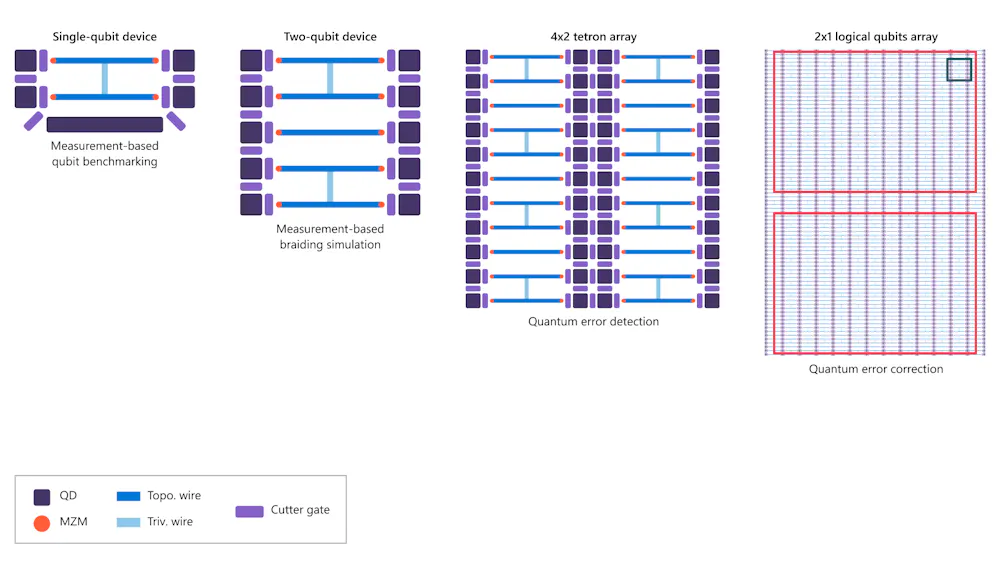
    At the same time, the researchers also published a paper in Nature and a “roadmap” for further work. The design of the Majorana 1 processor is supposed to fit up to a million qubits, which may be enough to realise many significant goals of quantum computing – such as cracking cryptographic codes and designing new drugs and materials faster.

    If Microsoft’s claims pan out, the company may have leapfrogged competitors such as IBM and Google, who currently appear to be leading the race to build a quantum computer.

    However, the peer-reviewed Nature paper only shows part of what the researchers have claimed, and the roadmap still includes many hurdles to be overcome. While the Microsoft press release shows off something that is supposed to be quantum computing hardware, we don’t have any independent confirmation of what it can do. Nevertheless, the news from Microsoft is very promising.

    By now you probably have some questions. What’s a topological qubit? What’s a qubit at all, for that matter? And why do people want quantum computers in the first place?

    Quantum bits are hard to build

    Quantum computers were first dreamed up in the 1980s. Where an ordinary computer stores information in bits, a quantum computer stores information in quantum bits – or qubits.

    An ordinary bit can have a value of 0 or 1, but a quantum bit (thanks to the laws of quantum mechanics, which govern very small particles) can have a combination of both. If you imagine an ordinary bit as an arrow that can point either up or down, a qubit is an arrow that can point in any direction (or what is called a “superposition” of up and down).

    This means a quantum computer would be much faster than an ordinary computer for certain kinds of calculations – particularly some to do with unpicking codes and simulating natural systems.

    So far, so good. But it turns out that building real qubits and getting information in and out of them is extremely difficult, because interactions with the outside world can destroy the delicate quantum states inside.

    Researchers have tried a lot of different technologies to make qubits, using things like atoms trapped in electric fields or eddies of current swirling in superconductors.

    Tiny wires and exotic particles

    Microsoft has taken a very different approach to build its “topological qubits”. They have used what are called Majorana particles, first theorised in 1937 by Italian physicist Ettore Majorana.

    Majoranas are not naturally occurring particles like electrons or protons. Instead, they only exist inside a rare kind of material called a topological superconductor (which requires advanced material design and must be cooled down to extremely low temperatures).

    Indeed, Majorana particles are so exotic they are usually only studied in universities – not used in practical applications.

    The Microsoft team say they have used a pair of tiny wires, each with a Majorana particle trapped at either end, to act as a qubit. They measure the value of the qubit – expressed by means of whether an electron is in one wire or the other – using microwaves.

    Braided bits

    Why has Microsoft put in all this effort? Because by swapping the positions of Majorana particles (or measuring them in a certain way), they can be “braided” so they can be measured without error and are resistant to outside interference. (This is the “topological” part of “topological qubits”.)

    In theory, a quantum computer made using Majorana particles can be completely free of the qubit errors that plague other designs.

    This is why Microsoft has chosen such a seemingly laborious approach. Other technologies are more prone to errors, and hundreds of physical qubits may need to be combined together to produce a single reliable “logical qubit”.

    Microsoft has instead put its time and resources into developing Majorana-based qubits. While they are late to the big quantum party, they hope they will be able to catch up quickly.

    There’s always a catch

    As always, if something sounds too good to be true, there is a catch. Even for a Majorana-based quantum computer, such as the one announced by Microsoft, one operation – known as T-gate – won’t be achievable without errors.

    So the Majorana-based quantum chip is only “almost error-free”. However, correcting for T-gate errors is much simpler than the general error correction of other quantum platforms.

    Microsoft plans to scale up by grouping together more and more qubits.
    Microsoft

    What now? Microsoft will try to move ahead with its roadmap, steadily building larger and larger collections of qubits.

    The scientific community will closely watch how Microsoft’s quantum computing processors operate, and how they perform in comparison to the other already established quantum computing processors.

    At the same time, research into the exotic and obscure behaviour of Majorana particles will continue at universities around the globe.

    Stephan Rachel receives funding from Australian Research Council (ARC).

    ref. Microsoft just claimed a quantum breakthrough. A quantum physicist explains what it means – https://theconversation.com/microsoft-just-claimed-a-quantum-breakthrough-a-quantum-physicist-explains-what-it-means-250388

    MIL OSI AnalysisEveningReport.nz

  • MIL-Evening Report: Households are burning plastic waste as fuel for cooking and heating in slums the world over

    Source: The Conversation (Au and NZ) – By Bishal Bharadwaj, Adjunct Research Fellow, Curtin Institute for Energy Transition, Curtin University

    Poor people in vast city slums across the Global South are burning plastic to cook their food, warm their homes and boil water for hot showers.

    Waste plastic is plentiful and highly flammable. So it’s not surprising people in developing countries, mainly in Africa, Asia and Latin America, are putting it to use – especially as wood is increasingly scarce.

    But burning plastic is hazardous, as it releases toxins into the surrounding air – and possibly into the food on the stove.

    We wanted to draw attention to this growing problem, which has received little attention to date despite the many potential harms.

    In our new “perspective” paper, published in Nature Cities, we explain why so many communities are using plastic as an energy source.

    We then explore further research needed and recommend ways for policymakers to tackle the issue.

    Mountains of plastic waste

    The world has produced more plastic in the past 20 years than the total previously produced since commercial production began in 1950. Roughly half a billion tonnes of plastic is now produced every year.

    Plastic production is still accelerating. Global plastic use is predicted to almost triple by 2060 due to soaring demand from a growing population with rising incomes.

    Unfortunately, most plastic is not recycled. Instead, it is discarded and ultimately ends up polluting marginal land such as flooded areas and open dumping grounds before making its way into the ocean.

    Burning plastic waste for cooking and heating is becoming increasingly common in city slums. a–f, Photographs showing the use of plastic to start a fire in Koshi Province in Nepal (a), a household heating milk by burning plastic in Madhesh province of Nepal (b) and the burning of plastic in Guwahati, India (c), in Enugu, Nigeria (d,e) and in the slums of Lahore, Pakistan (f). Credits for photographs: a, Srijana Baniya; b, Pramesh Dhungana; c, Monjit Borthakur; d,e, Chizoba Obianuju Oranu; f, Sobia Rose.
    Bharadwaj, B., Gates, T., Borthakur, M. et al. The use of plastic as a household fuel among the urban poor in the Global South. Nat Cities (2025).

    A product of energy poverty in city slums

    Increasing urbanisation is reducing access to traditional fuels such as wood and crop residue from farmland.

    But plastic is readily available. Low-income households with little or no access to gas or electricity often find themselves living alongside mountains of rubbish.

    This plastic, made from fossil fuels, represents a cheap and convenient fuel. It’s lightweight, easy to transport, and a nuisance material that people want to be rid of. Plastic is also relatively easy to dry and store, but can burn even when wet. It’s also flexible and pliable, so it can be used easily in traditional cooking arrangements such as basic stoves.

    Burning plastic releases toxins such as dioxins, furans and heavy metals into the air. These chemicals are known to cause cancer, heart disease and lung diseases.

    The more vulnerable people in the household – including women and children and those who spend more time indoors – tend to be most exposed to the fumes. But the problem also affects people in the neighbourhood and the wider community.

    Burning plastic is likely to also contaminate food. For example, eggs from farms near plastic waste incinerators in Indonesia contained hazardous chemicals from burned plastic. However, more evidence is needed around food contamination.

    Furthermore, when households burn plastic bottles and other containers, some of the original contents also burn. Given chemicals are poorly regulated, the consequences of burning plastic could be greater still.

    Overcoming the problem

    A first step to overcoming the problem is understanding the reality of those living in slums. Policy-makers need to recognise these people’s needs and the challenges they face.

    Extensive research is needed to design the most effective and inclusive policy interventions. This needs to be addressed if we are to reduce the associated health and environmental impacts on such large populations across the world.

    We have gathered a collaborative, multidisciplinary team of researchers from around 35 countries – mostly in the Global South – to better understand the problem. We recently completed a survey of people exposed to the issue such as local government employees, teachers and community workers in more than 100 cities in 26 countries.

    We are also examining the emissions from waste plastic during food preparation to determine the extent of contamination in variety of stoves.

    Nobody wants to burn plastic waste to cook food, so policies like ban on burning plastic with out contextual intervention will not work. There is a need to design inclusive policy interventions that provide equitable benefits to the wider community. For example, encouraging people to:

    • wash any plastic before it is burned, to remove chemical residues
    • use improved cookstoves that vent the fumes outside
    • expand basic urban amenities like waste management to low income settlements
    • provide support to help lift households out of poverty.

    Each approach will depend on the specific requirements of the slum settlement. But by implementing multiple approaches in parallel, we can tackle the problem more effectively.

    The authors do not work for, consult, own shares in or receive funding from any company or organisation that would benefit from this article, and have disclosed no relevant affiliations beyond their academic appointment.

    ref. Households are burning plastic waste as fuel for cooking and heating in slums the world over – https://theconversation.com/households-are-burning-plastic-waste-as-fuel-for-cooking-and-heating-in-slums-the-world-over-250265

    MIL OSI AnalysisEveningReport.nz

  • MIL-Evening Report: Having an x-ray to diagnose knee arthritis might make you more likely to consider potentially unnecessary surgery

    Source: The Conversation (Au and NZ) – By Belinda Lawford, Senior Research Fellow in Physiotherapy, The University of Melbourne

    pikselstock/Shutterstock

    Osteoarthritis is a leading cause of chronic pain and disability, affecting more than two million Australians.

    Routine x-rays aren’t recommended to diagnose the condition. Instead, GPs can make a diagnosis based on symptoms and medical history.

    Yet nearly half of new patients with knee osteoarthritis who visit a GP in Australia are referred for imaging. Osteoarthritis imaging costs the health system A$104.7 million each year.

    Our new study shows using x-rays to diagnose knee osteoarthritis can affect how a person thinks about their knee pain – and can prompt them to consider potentially unnecessary knee replacement surgery.

    What happens when you get osteoarthritis?

    Osteoarthritis arises from joint changes and the joint working extra hard to repair itself. It affects the entire joint, including the bones, cartilage, ligaments and muscles.

    It is most common in older adults, people with a high body weight and those with a history of knee injury.

    Many people with knee osteoarthritis experience persistent pain and have difficulties with everyday activities such as walking and climbing stairs.

    How is it treated?

    In 2021–22, more than 53,000 Australians had knee replacement surgery for osteoarthritis.

    Hospital services for osteoarthritis, primarily driven by joint replacement surgery, cost $3.7 billion in 2020–21.

    While joint replacement surgery is often viewed as inevitable for osteoarthritis, it should only be considered for those with severe symptoms who have already tried appropriate non-surgical treatments. Surgery carries the risk of serious adverse events, such as blood clot or infection, and not everyone makes a full recovery.

    Most people with knee osteoarthritis can manage it effectively with:

    • education and self-management
    • exercise and physical activity
    • weight management (if necessary)
    • medicines for pain relief (such as paracetamol and non-steroidal anti-inflammatory drugs).

    Debunking a common misconception

    A common misconception is that osteoarthritis is caused by “wear and tear”.

    However, research shows the extent of structural changes seen in a joint on an x-ray does not reflect the level of pain or disability a person experiences, nor does it predict how symptoms will change.

    Some people with minimal joint changes have very bad symptoms, while others with more joint changes have only mild symptoms. This is why routine x-rays aren’t recommended for diagnosing knee osteoarthritis or guiding treatment decisions.

    Instead, guidelines recommend a “clinical diagnosis” based on a person’s age (being 45 years or over) and symptoms: experiencing joint pain with activity and, in the morning, having no joint-stiffness or stiffness that lasts less than 30 minutes.

    Despite this, many health professionals in Australia continue to use x-rays to diagnose knee osteoarthritis. And many people with osteoarthritis still expect or want them.

    What did our study investigate?

    Our study aimed to find out if using x-rays to diagnose knee osteoarthritis affects a person’s beliefs about osteoarthritis management, compared to a getting a clinical diagnosis without x-rays.

    We recruited 617 people from across Australia and randomly assigned them to watch one of three videos. Each video showed a hypothetical consultation with a general practitioner about knee pain.

    People with knee osteoarthritis can have difficulties getting down stairs.
    beeboys/Shutterstock

    One group received a clinical diagnosis of knee osteoarthritis based on age and symptoms, without being sent for an x-ray.

    The other two groups had x-rays to determine their diagnosis (the doctor showed one group their x-ray images and not the other).

    After watching their assigned video, participants completed a survey about their beliefs about osteoarthritis management.

    What did we find?

    People who received an x-ray-based diagnosis and were shown their x-ray images had a 36% higher perceived need for knee replacement surgery than those who received a clinical diagnosis (without x-ray).

    They also believed exercise and physical activity could be more harmful to their joint, were more worried about their condition worsening, and were more fearful of movement.

    Interestingly, people were slightly more satisfied with an x-ray-based diagnosis than a clinical diagnosis.

    This may reflect the common misconception that osteoarthritis is caused by “wear and tear” and an assumption that the “damage” inside the joint needs to be seen to guide treatment.

    What does this mean for people with osteoarthritis?

    Our findings show why it’s important to avoid unnecessary x-rays when diagnosing knee osteoarthritis.

    While changing clinical practice can be challenging, reducing unnecessary x-rays could help ease patient anxiety, prevent unnecessary concern about joint damage, and reduce demand for costly and potentially unnecessary joint replacement surgery.

    It could also help reduce exposure to medical radiation and lower health-care costs.

    Previous research in osteoarthritis, as well as back and shoulder pain, similarly shows that when health professionals focus on joint “wear and tear” it can make patients more anxious about their condition and concerned about damaging their joints.

    If you have knee osteoarthritis, know that routine x-rays aren’t needed for diagnosis or to determine the best treatment for you. Getting an x-ray can make you more concerned and more open to surgery. But there are a range of non-surgical options that could reduce pain, improve mobility and are less invasive.

    Belinda Lawford receives funding from Arthritis Australia, Medical Research Future Fund and Medibank. She is a Steering Committee Member of the Osteoarthritis Research Society International Rehabilitation Group, and also an Editorial Board member for Journal of Orthopaedic and Sports Physical Therapy.

    Kim Bennell receives research funding from the National Health and Medical Research Council and the Medical Research Futures Fund as well as Medibank Private. Some of the consumer resources recommended in this article have been developed by her research team. She consults for Wolters Kluwers UptoDate knee osteoarthritis clinical guidelines

    Rana Hinman receives funding from National Health and Medical Research Council, the Medical Research Future Fund and Medibank. Some of the consumer resources recommended in this article have been developed by her research team. She is also an Editorial Board member for Journal of Physiotherapy.

    Travis Samuel William Haber is a Steering Committee Member of the Osteoarthritis Research Society International Rehabilitation Group and of the Australian and New Zealand Musculoskeletal Clinical Trials Network Osteoarthritis Special Interest Group.

    ref. Having an x-ray to diagnose knee arthritis might make you more likely to consider potentially unnecessary surgery – https://theconversation.com/having-an-x-ray-to-diagnose-knee-arthritis-might-make-you-more-likely-to-consider-potentially-unnecessary-surgery-249374

    MIL OSI AnalysisEveningReport.nz

  • MIL-Evening Report: Playing favourites, inconsistency or a fair decision? Unpacking Jannik Sinner’s doping case

    Source: The Conversation (Au and NZ) – By Matt Nichol, Lecturer in Law, CQUniversity Australia

    The tennis world is still reeling after news the number one ranked men’s player, Jannik Sinner, agreed to a three-month suspension issued by the World Anti-Doping Agency (WADA) to be served between the Australian and French Opens.

    Sinner, a three-time Grand Slam winner, received the ban after twice testing positive for clostebol, a steroid banned by the World-Anti Doping Code, in March 2024.


    Read more:
    Tennis is facing an existential crisis over doping. How will it respond?


    The fallout

    “Unintentional doping offences” – as in Sinner’s case – can attract a maximum two-year ban even if the athlete shows no fault or negligence.

    Sinner’s three-month ban was immediately criticised by many in the media and within tennis circles due to its leniency and convenient timing. It also did not result from a hearing before an anti-doping tribunal or the Court of Arbitration for Sport, as has been the case with other tennis players who have received bans in the past.

    The suspension was the product of a “case resolution agreement” (a negotiated settlement) between WADA and Sinner.

    WADA initially appealed the International Tennis Integrity Agency’s decision not to suspend Sinner on the basis of demonstrating no significant fault or negligence, but withdrew its case before the Court of Arbitration for Sport.

    Sinner argued the banned substance entered his system after a massage by a physiotherapist in his entourage who had used a cream with clostebol to treat a cut on his finger.

    Both WADA and the International Tennis Integrity Agency accepted this version of events.

    In the eyes of most, WADA’s actions failed to pass the “pub test” and many high-profile tennis players voiced their concerns.

    Novak Djokovic flagged issues over the treatment of high-ranked athletes such as Sinner compared to lower-ranked players.

    For example, Chilean Nicolas Jarry was suspended for 11 months in 2020 after testing positive to ligandrol and stanozolol that he alleged were in a supplement he took.

    In 2023 Sweden’s Mikael Ymer was suspended for 18 months by the Court of Arbitration for Sport for failing to submit to three out-of-competition tests in a 12-month period.

    Great Britain’s Tara Moore took nearly two years to clear her name before an anti-doping tribunal in 2023 revealed contaminated meat had led to her positive tests for nandrolone and boldenone. Despite this decision, Moore served a 19-month ban.

    Djokovic’s view suggested favouritism for higher-ranked players, who can access top lawyers. He also criticised a lack of transparency in the Sinner agreement with WADA.

    However, high-ranked players such as Simona Halep and Maria Sharapova have received lengthy suspensions for doping violations.

    Nick Kyrgios was similarly critical, stating it was a sad day for the sport and that fairness in tennis did not exist.

    Former Spanish player Feliciano Lopez was among those who supported Sinner. He said he believed in clean sport and that Sinner had not enhanced his performance and took responsibility for the actions of his physiotherapist.

    Intentional and unintentional doping

    The criticisms appear to be based on a misunderstanding of the anti-doping provisions in the World Anti-Doping Code and the failure by WADA to clearly communicate its rationale for Sinner’s suspension.

    Rather than favouritism for a high-ranked player, WADA’s decision to suspend Sinner for three months was based on the distinction in the World Anti-Doping Code between intentional and unintentional doping. It found that Sinner:

    • had not intended to cheat using clostebol
    • received no performance-enhancing benefit from the substance
    • had no knowledge of the administration of the substance.

    But WADA argued that under the code, Sinner was responsible for the negligence of his entourage and issued the suspension.

    WADA confirmed its rationale for the three-month suspension after Spanish media pointed out that figure skater Laura Barquero had received a six-year ban for a positive test of clostebol.

    WADA differentiated the two cases based on intention. It was not convinced by Barquero’s explanation of how clostebol entered her system, while it said the evidence supported Sinner’s version of events.

    Lessons from the Sinner case

    So what can be learned from Sinner’s case?

    One of the most important legal issues arising from the Sinner case is the distinction in the anti-doping rules between intentional and unintentional doping.

    This distinction explains the difference in penalties between Sinner and other athletes.

    Also, the facts of a doping case are relevant in determining circumstances that may reduce the severity of a penalty in matters resolved by negotiated case resolution agreements.

    An important lesson for WADA is ensuring transparency in proceedings and the clear communication of the rationale used to arrive at a penalty.

    Finally, a Court of Arbitration for Sport hearing may not have been needed for Sinner as the parties agreed on the facts leading to the doping rule violation.

    Matt Nichol does not work for, consult, own shares in or receive funding from any company or organisation that would benefit from this article, and has disclosed no relevant affiliations beyond their academic appointment.

    ref. Playing favourites, inconsistency or a fair decision? Unpacking Jannik Sinner’s doping case – https://theconversation.com/playing-favourites-inconsistency-or-a-fair-decision-unpacking-jannik-sinners-doping-case-250143

    MIL OSI AnalysisEveningReport.nz

  • MIL-Evening Report: The ASIO threat assessment is a dark outlook for Australia’s security. Are our laws up to the task?

    Source: The Conversation (Au and NZ) – By Sarah Kendall, Adjunct Research Fellow, The University of Queensland

    Shutterstock

    This week, ASIO chief Mike Burgess delivered his sixth Annual Threat Assessment.

    His approach this time was unprecedented. Instead of focusing on past and present threats, Burgess declassified parts of ASIO’s assessment for the future, warning us about Australia’s security outlook to 2030.

    Over the next five years, ASIO is expecting “an unprecedented number of challenges, and an unprecedented cumulative level of potential harm”, Burgess warned. At the same time, the threat environment will become more diverse.

    Espionage and foreign interference are already at extreme levels, but are anticipated to intensify. Sabotage is expected to pose an increasing threat. Politically motivated violence and communal violence will also remain an elevated concern.

    What does this mean for our criminal laws? Are they robust enough to protect us from the growing and diversifying threat of espionage, sabotage and foreign interference? Or will they need bolstering?

    What are the threats?

    Espionage, or spying, involves the theft of information. Burgess has warned that both our enemies and our friends will seek to steal information from us.

    This includes information about our military capabilities and alliances, such as AUKUS.

    Instead of using traditional spies to gather this information, Burgess expects greater use of proxies.

    These proxies could be unwittingly involved in the espionage efforts of a foreign country – such as private investigators. Or they could know exactly what they’re doing.

    Foreign interference involves covertly shaping decision-making to the advantage of a foreign power. Burgess has warned that foreign governments are monitoring, intimidating and coercing Australians and diaspora communities, including engaging in coerced repatriations.

    He also expects that foreign interference may be used to undermine community support for AUKUS.

    Concerningly, ASIO has disrupted plots by foreign countries to physically harm (or even kill) people living in Australia. This includes activists, journalists and ordinary citizens – all critics of certain foreign governments.

    Both espionage and foreign interference will be enabled by advances in technology, including artificial intelligence (AI), deep fakes and large online pools of personal data.

    Sabotage involves deliberately destroying or damaging infrastructure.

    Russia has been engaging in diverse acts of sabotage in Europe, aiming to erode support for Ukraine and damage cohesion. These attacks include arson against various types of infrastructure (including defence and munitions facilities), jamming civil aviation GPS systems, and disrupting railways.

    While Burgess warned that the risk of similar attacks against Australia is increasing (including attacks against infrastructure arising out of AUKUS), cyber-enabled sabotage will be of more concern. At the moment, foreign governments are exploring and exploiting Australia’s critical infrastructure networks to map systems and maintain access in the future.

    As with espionage, Burgess expects criminal proxies to be used more frequently to engage in sabotage. This includes state-sponsored or state-supported terrorist groups.

    Are our laws ready to deal with this?

    With the espionage, sabotage and foreign interference threat growing and diversifying over the next five years, you’d be right to ask whether our criminal laws are robust enough to stand up to the challenge.

    For the most part, they are.

    All the laws apply to conduct that occurs “in the real world” and online. The laws also apply to any foreign country, including our friends, as well as terrorist organisations.

    In addition to foreign countries, the laws apply to conduct on behalf of a foreign country, including where the conduct is directed, funded or supervised by the foreign country or a person acting on its behalf. This means the laws would apply to proxies hired to engage in espionage or sabotage.

    Our sabotage laws are broad enough to cover the explorations of critical infrastructure networks currently being undertaken. An act of sabotage does not have to be committed to be an offence under these laws.

    Our foreign interference laws would cover coerced repatriations. While plots to harm Australians may also fall within these offences, a number of other offences also exist for harming or killing Australian citizens or residents.

    Room for improvement

    Our espionage, sabotage and foreign interference laws certainly are “world-leading”. However, there are some drawbacks.

    For example, the laws are yet to grapple with the rise of AI and its use to gather information for espionage or generate mis- or disinformation for foreign interference.

    While the laws have broad extraterritorial reach – they apply to conduct that occurs within or outside Australia – the practicalities of enforcing the laws when offenders are located overseas is a big barrier.

    But in today’s digital age where espionage, sabotage and foreign interference can be conducted online from the safety of a foreign country and therefore beyond the reach of Australia’s criminal law, we need more than a robust legal response.

    As Burgess stressed, these issues “require whole of government, whole of community, whole of society responses […] national security is truly national security: everybody’s business”.

    We all need to be aware of the risks and what we – as individuals, employees, researchers and business owners – can do to mitigate them.

    This article was written in Sarah Kendall’s personal capacity as an Adjunct Research Fellow at the University of Queensland School of Law. It does not reflect the views of the Queensland Law Reform Commission or the Queensland Government.

    ref. The ASIO threat assessment is a dark outlook for Australia’s security. Are our laws up to the task? – https://theconversation.com/the-asio-threat-assessment-is-a-dark-outlook-for-australias-security-are-our-laws-up-to-the-task-250372

    MIL OSI AnalysisEveningReport.nz

  • MIL-OSI Global: Playing favourites, inconsistency or a fair decision? Unpacking Jannik Sinner’s doping case

    Source: The Conversation – Global Perspectives – By Matt Nichol, Lecturer in Law, CQUniversity Australia

    The tennis world is still reeling after news the number one ranked men’s player, Jannik Sinner, agreed to a three-month suspension issued by the World Anti-Doping Agency (WADA) to be served between the Australian and French Opens.

    Sinner, a three-time Grand Slam winner, received the ban after twice testing positive for clostebol, a steroid banned by the World-Anti Doping Code, in March 2024.


    Read more:
    Tennis is facing an existential crisis over doping. How will it respond?


    The fallout

    “Unintentional doping offences” – as in Sinner’s case – can attract a maximum two-year ban even if the athlete shows no fault or negligence.

    Sinner’s three-month ban was immediately criticised by many in the media and within tennis circles due to its leniency and convenient timing. It also did not result from a hearing before an anti-doping tribunal or the Court of Arbitration for Sport, as has been the case with other tennis players who have received bans in the past.

    The suspension was the product of a “case resolution agreement” (a negotiated settlement) between WADA and Sinner.

    WADA initially appealed the International Tennis Integrity Agency’s decision not to suspend Sinner on the basis of demonstrating no significant fault or negligence, but withdrew its case before the Court of Arbitration for Sport.

    Sinner argued the banned substance entered his system after a massage by a physiotherapist in his entourage who had used a cream with clostebol to treat a cut on his finger.

    Both WADA and the International Tennis Integrity Agency accepted this version of events.

    In the eyes of most, WADA’s actions failed to pass the “pub test” and many high-profile tennis players voiced their concerns.

    Novak Djokovic flagged issues over the treatment of high-ranked athletes such as Sinner compared to lower-ranked players.

    For example, Chilean Nicolas Jarry was suspended for 11 months in 2020 after testing positive to ligandrol and stanozolol that he alleged were in a supplement he took.

    In 2023 Sweden’s Mikael Ymer was suspended for 18 months by the Court of Arbitration for Sport for failing to submit to three out-of-competition tests in a 12-month period.

    Great Britain’s Tara Moore took nearly two years to clear her name before an anti-doping tribunal in 2023 revealed contaminated meat had led to her positive tests for nandrolone and boldenone. Despite this decision, Moore served a 19-month ban.

    Djokovic’s view suggested favouritism for higher-ranked players, who can access top lawyers. He also criticised a lack of transparency in the Sinner agreement with WADA.

    However, high-ranked players such as Simona Halep and Maria Sharapova have received lengthy suspensions for doping violations.

    Nick Kyrgios was similarly critical, stating it was a sad day for the sport and that fairness in tennis did not exist.

    Former Spanish player Feliciano Lopez was among those who supported Sinner. He said he believed in clean sport and that Sinner had not enhanced his performance and took responsibility for the actions of his physiotherapist.

    Intentional and unintentional doping

    The criticisms appear to be based on a misunderstanding of the anti-doping provisions in the World Anti-Doping Code and the failure by WADA to clearly communicate its rationale for Sinner’s suspension.

    Rather than favouritism for a high-ranked player, WADA’s decision to suspend Sinner for three months was based on the distinction in the World Anti-Doping Code between intentional and unintentional doping. It found that Sinner:

    • had not intended to cheat using clostebol
    • received no performance-enhancing benefit from the substance
    • had no knowledge of the administration of the substance.

    But WADA argued that under the code, Sinner was responsible for the negligence of his entourage and issued the suspension.

    WADA confirmed its rationale for the three-month suspension after Spanish media pointed out that figure skater Laura Barquero had received a six-year ban for a positive test of clostebol.

    WADA differentiated the two cases based on intention. It was not convinced by Barquero’s explanation of how clostebol entered her system, while it said the evidence supported Sinner’s version of events.

    Lessons from the Sinner case

    So what can be learned from Sinner’s case?

    One of the most important legal issues arising from the Sinner case is the distinction in the anti-doping rules between intentional and unintentional doping.

    This distinction explains the difference in penalties between Sinner and other athletes.

    Also, the facts of a doping case are relevant in determining circumstances that may reduce the severity of a penalty in matters resolved by negotiated case resolution agreements.

    An important lesson for WADA is ensuring transparency in proceedings and the clear communication of the rationale used to arrive at a penalty.

    Finally, a Court of Arbitration for Sport hearing may not have been needed for Sinner as the parties agreed on the facts leading to the doping rule violation.

    Matt Nichol does not work for, consult, own shares in or receive funding from any company or organisation that would benefit from this article, and has disclosed no relevant affiliations beyond their academic appointment.

    ref. Playing favourites, inconsistency or a fair decision? Unpacking Jannik Sinner’s doping case – https://theconversation.com/playing-favourites-inconsistency-or-a-fair-decision-unpacking-jannik-sinners-doping-case-250143

    MIL OSI – Global Reports

  • MIL-Evening Report: With Whyalla steelworks forced into administration, Australia has crucial decisions to make on the future of its steel industry

    Source: The Conversation (Au and NZ) – By Geoffrey Brooks, Professor of Engineering, Swinburne University of Technology

    Alex Cimbal/Shutterstock

    Whyalla is a proud steel town. The steelworks physically dominates the townscape, and most jobs in the town are either directly at the steelworks or heavily reliant on it.

    In recent months, however, the steelworks have lurched from one setback to another, from serious technical problems that forced shutdowns to rising debts owed to suppliers and the state government.

    On Wednesday, the South Australian government forced Whyalla steelworks into administration. To do so, it quickly passed amendments to the Whyalla Steelworks Act. Current owner GFG Alliance will no longer operate the site.

    For me, someone intimately involved in the steel industry, the news that the steelworks has been put into administration is not a shock. This has been coming for some time.

    On Thursday, Prime Minister Anthony Albanese unveiled a A$2.4 billion rescue package.

    A portion of this money will be used to address immediate debt issues and keep the plant afloat. But $1.9 billion has been earmarked for major, long-term infrastructure upgrades under a new owner.

    The next steps will be crucial if this vital component of Australia’s manufacturing infrastructure – and heart of the town of Whyalla – is to survive.

    How we got here

    Whyalla’s steelworks was founded by BHP and opened in 1941, originally concentrating on ship building. It later transitioned to producing structural and rail products during the 1970s and ‘80s.

    After the steel division was spun out of BHP in 2000, the steelworks operated under the OneSteel banner, which was renamed Arrium in 2012.

    The plant has been in decline for a couple of decades. Its products have had difficulty competing against overseas imports and there have been issues with the scale of production and costs.

    GFG Alliance took over Whyalla’s struggling steelworks in 2017, to great fanfare and optimism.

    GFG is led by Indian-born British billionaire Sanjeev Gupta, who owns steel plants across the world. Until recently, he was a relatively unknown figure in the steel industry, but rapidly built up a steel empire after buying his first major steel plant in the UK in 2013.

    Gupta’s business practices have recently drawn close scrutiny from regulators in the UK, particularly the financing arrangements for several of his businesses. GFG’s largest lender, Greensill Capital, collapsed in 2021.

    A failure to turn things around

    Upon purchasing the plant in 2017, GFG promised to invest in upgrading the equipment and move the steelworks towards “green” steel production.

    But these investments never materialised, and the operations have continued to lose money. There have also been significant operational issues over the past year, resulting in months of no production.

    These challenges have been compounded by what appears to be poor management of key equipment in the plant, particularly the blast furnace.

    The steelworks has been beset by technical issues over the past year.
    Adwo/Shutterstock

    Keeping blast furnaces running smoothly is one most important technical issues facing any steelmaker.

    A string of recent breakdowns, resulting in major production shutdowns in 2024, does not reflect well on GFG.

    On Wednesday, SA Premier Peter Malinauskas said the state government had been forced to step in, given debts of more than $300 million owed by GFG and reports workers weren’t being paid.

    Still a valuable asset

    The town of Whyalla will be watching the outcome of the state and federal governments’ rescue plan with bated breath. If it’s not to be GFG, who should be trusted with taking over and running the steelworks?

    In such times, it is worth pointing out some of the key advantages of the plant that could make it an attractive asset to prospective owners.

    Whyalla has good port facilities, a major iron ore deposit (Middleback Range) nearby, and abundant renewable energy.

    It also has an experienced and trained workforce, with established product lines that are in demand (particularly rail steel).

    Bluescope has been touted as one potential new owner. But there is also likely to be foreign interest, given the potential for linking steel production to renewable energy in Whyalla.

    Taking Whyalla into the future

    The current scale of the Whyalla steelworks, about 1.2 million tonnes of raw steel per year, is simply too small to be competitive. It is operating in a market where plants producing more than 3 million tonnes per year are common.

    The plant’s product range could be broadened and raised in value by investing in key steelmaking equipment.

    The general shift towards green production routes also presents opportunities for Whyalla. The local abundance of solar energy is likely to be a significant advantage for the plant’s future.

    However, converting from the plant from its current coal-based technology to non-coal based technology (such as hydrogen ironmaking) will take significant investment and technical skill.

    Whyalla is close to iron ore deposits in the Middleback Range.
    Adwo/Shutterstock

    Opportunities for Australia

    Could Australia simply let the steelworks shut down and import its rail steel instead?

    That would draw parallels with Australia’s car manufacturing sector, which the government ultimately allowed to collapse. But I believe this position is unlikely to attract much support.

    For one, there would be an enormous human cost to the people of Whyalla. The town of 20,000 people would be economically devastated by the plant’s closure.

    There’s also a fear such a move would further weaken Australia’s ability to generate long-term wealth. Historically, the steel industry has been an important generator of long-term jobs and national wealth.

    And it would certainly be demoralising for our manufacturing sector. Australia has plentiful ore, energy and a huge railway network. We should be able to run a sustainable steel plant specialising in rail and structural steel.

    All these challenges need investment and strong technical leadership. The decisions taken by the state and federal government in the next few months will be vital for Whyalla’s future.

    Geoffrey Brooks receives funding from the HILT CRC, ARC Steel Innovation Hub and Victorian Hydrogen Hub for fundamental research into steelmaking. The Liberty GFG company and other steel companies financially invest into these research bodies and directly support some of his steelmaking research. He is also the Chairman of the Association of Iron and Steel Technology Australian and New Zealand Chapter. This organisation organises conferences and seminars on steelmaking topics. His activity in this Chapter is on a voluntary basis.

    ref. With Whyalla steelworks forced into administration, Australia has crucial decisions to make on the future of its steel industry – https://theconversation.com/with-whyalla-steelworks-forced-into-administration-australia-has-crucial-decisions-to-make-on-the-future-of-its-steel-industry-250317

    MIL OSI AnalysisEveningReport.nz

  • MIL-Evening Report: Two in five scientists in our survey reported harassment and intimidation. Often, the perpetrators are inside the institution

    Source: The Conversation (Au and NZ) – By Robert Hales, Director, Centre for Sustainable Enterprise, Griffith University

    Roman Samborskyi/Shutterstock

    The goal of science is to uncover truths and create new knowledge. But this is not always welcome. Increasingly, scientific findings are being attacked or downplayed. And scientists themselves face intimidation or harassment.

    In our global study of more than 2,000 scientists across six areas of science, two-fifths (41%) of respondents had, as a result of their work, been harassed or intimidated at least once over a five-year period.

    Intimidation efforts included online abuse, physical threats, and threats to budgets or employment. Harassment, while personal, could be meted out by superiors, colleagues or outsiders. Some scientists felt their leaders had thrown them under the bus to protect the institution’s reputation.

    Who’s doing the intimidation? Strikingly, a majority of cases of intimidation and harassment actually came from inside the institution for most fields. That is, it was perpetrated by senior colleagues or managers. But for climate scientists, most intimidation efforts came from outside.

    Intimidation of scientists doesn’t happen in a vacuum. In recent years, there has been a rise in populist leaders who pour scorn on “elites” and evidence. Scientific issues are increasingly politicised. Disinformation is rampant. This atmosphere adds to the pressure faced by scientists, especially those working in politically sensitive areas such as climate science or COVID.

    Harassment and intimidation can silence or isolate scientists.
    Hayk_Shalunts/Shutterstock

    What did we find?

    We used an online database of scientists to find and contact experts publishing in six fields: climate science, medical health, humanities and social science, food and plant science, astronomy, and other STEM areas.

    More than 2,000 responded to our survey on whether they had experienced various types of intimidation or harassment. We asked respondents for more detail on the perpetrators, what triggered the incident, and what effect it had on them.

    Many respondents had a clear view as to what the intimidation or harassment was meant to do. The motivations of perpetrators varied greatly. But the most common reasons were to damage their reputation, to stop them from publishing certain types of research, or to “put me in my place”.

    Specific fields of science were more prone to harassment and intimidation – in particular climate science, and humanities and social science.

    Among those scientists who had been intimidated, climate scientists reported online abuse three times more often than astronomers. Climate science is politically charged, because climate change is clearly linked to pollution from some of the world’s largest industries – oil, gas and coal. Astronomy is not. Half of the climate scientist respondents experiencing intimidation saw the bad behaviour as a way to discourage them from undertaking specific research and speaking about it.

    Researchers from humanities and social sciences faced similar levels of online abuse to climate scientists.

    When it came to personal harassment, there was a clear gender dimension. Among those who reported experiencing harassment, female scientists were more than four times more likely to report “unwelcome or inappropriate behaviour of a sexual nature” than their male counterparts. Women were affected almost twice as much as men by non-sexual forms of personal harassment.

    Our findings follow earlier research finding similar rates of intimidation. For instance, a 2021 survey of 321 scientists working on COVID-19 found 15% had received death threats and 22% received threats of sexual violence.

    Intimidation and harassment are damaging

    The consequences of intimidation are profound and far-reaching. Many scientists told us the experience had caused lasting damage, whether to wellbeing, career prospects or research activities.

    More than 40% of those affected said their career prospects had worsened following incidents of harassment. Just over a third (34%) reported a decline in their desire to work in science. Scientists who experienced intimidation often cut back their collaboration with colleagues (35%), leaving them more isolated.

    Many of our respondents described flow-on effects such as decreased access to funding (35% of respondents) and less public communication from their institution about their work (23%).

    Scientists targeted with multiple types of harassment reported very damaging effects, from difficulty finding their next job to poor mental health.

    Intimidation slows progress

    Intimidation and harassment have a chilling effect on science. This, in turn, could hinder progress on crucial issues such as climate change, public health and technological advancements.

    The disproportionate impact on women and researchers in politically sensitive fields threatens to undermine diversity and inclusivity in science.

    Without targeted interventions, women in science may continue to suffer disproportionate levels of harassment and intimidation. This will have long-term implications for gender diversity in scientific leadership and the direction of research in various fields.

    In the United States, the Trump administration’s withdrawals from the Paris climate agreement and the World Health Organization are likely to further embolden anti-science movements. Many American scientific institutions are engaged in anticipatory obedience of the Trump administration’s demands that diversity and anti-discrimination programs be abolished, or climate change stop being mentioned. Many even go beyond what is explicitly sought.

    Female scientists are targeted in different ways.
    PeopleImages.com – Yuri A/Shutterstock

    What can be done?

    Science and academia is often seen as a bastion of free inquiry and open discussion. One of our most surprising findings was how common intimidation was within scientific institutions.

    The key to beating intimidation is organisational support and clear strategies, not obedience. These include:

    • genuine commitment to institutional policies protecting scientists from both internal and external intimidation

    • formal, well-resourced support systems for researchers facing harassment or pressure (not the HR office)

    • programs to increase public understanding of the scientific process to build trust and resilience to misinformation

    • boosting international collaboration between scientists and policymakers to ensure resilience against country-specific efforts to undermine science

    • educating the public on the importance of scientific independence and of fostering respectful dialogue around contentious topics.

    As populist movements gain traction in many countries, scientists working on controversial issues will face heightened scrutiny – and potentially more intimidation.

    Climate science is likely to remain a particularly contested field. As the damage wrought by climate change becomes more and more apparent, it will get even more contentious.

    Over the last few centuries, science has produced breakthroughs in many areas. But the integrity of science is not guaranteed. Harassment and intimidation from both inside and outside institutions has a very real effect on scientists.

    The future of evidence-based decision-making and ability to tackle global challenges depends on fostering an environment where scientists can work free from fear and undue pressure.

    Robert Hale receives funding from the Australian Research Council.

    David Peetz undertook research over many years with occasional financial support from governments from both sides of politics, employers and unions. He has been and is involved in several Australian Research Council-funded projects, including this one.

    Ian Lowe was president of the Australian Conservation Foundation from 2004 to 2014.

    Carolyn Troup and Georgina Murray do not work for, consult, own shares in or receive funding from any company or organisation that would benefit from this article, and have disclosed no relevant affiliations beyond their academic appointment.

    ref. Two in five scientists in our survey reported harassment and intimidation. Often, the perpetrators are inside the institution – https://theconversation.com/two-in-five-scientists-in-our-survey-reported-harassment-and-intimidation-often-the-perpetrators-are-inside-the-institution-248013

    MIL OSI AnalysisEveningReport.nz

  • MIL-Evening Report: NZ has long suffered from low productivity. A simple fix is keeping workers happy

    Source: The Conversation (Au and NZ) – By Dougal Sutherland, Clinical Psychologist, Te Herenga Waka — Victoria University of Wellington

    bbernard/Shutterstock

    The low-productivity bogeyman has long haunted New Zealand, with people working longer hours for lower output than other comparable countries. The country is now one of the least productive in the OECD.

    At its most basic level, productivity measures how much output can be produced with a set of inputs. The inputs can be the work of staff, as well as technical innovation, research and development and automation to encourage more efficient processes.

    Prime Minister Christopher Luxon has committed to resolving this persistent productivity crisis with science sector reforms and overseas investment.

    But after decades of lagging behind the rest of the world, a growing body of research shows the answer could lie in greater support for workers’ mental health.

    Linking productivity and mental health

    For many, increasing productivity equates to people working “harder” for longer hours – the implication being that if only we “pulled finger” and “knuckled down” the country’s productivity would magically increase.

    Instead, could the answer to our productivity crisis be in improving the psychological functioning and mental health of our workforce?

    There is a substantial body of evidence showing poor mental health is related to poor productivity. Recent New Zealand data show workers with the poorest mental health lost more than three times the number of productive workdays annually (71 days) than those with the highest mental health (19 days).

    Poor mental health can take a toll in the form of time away from work (absenteeism), loss of focus, and emotional exhaustion (presenteeism).

    Conversely, measures taken by employers to improve the mental health of workers show a strong positive relationship with increased productivity.

    Data from more than 1,600 publicly listed companies in the United States found employee wellbeing predicts higher company valuations, return on assets, gross profits and stock market performance.

    Of those interventions used to improve mental health and productivity at work, the most promising appear to target leadership capability, health screening and psycho-socially healthy working environments.

    One of the more notable initiatives happened in our own backyard. Andrew Barnes from Perpetual Guardian has been a vocal proponent of four-day work week.

    This doesn’t mean packing a 40-hour week into four days instead of five. Rather, its central tenet is reducing the working week (usually to 32 hours), keeping workers’ salaries at 100%, and continuing productivity at 100% (at least) of its existing level.

    Results from a pilot with 61 companies in the United Kingdom show an average increase of 36% per annum in revenue for participating businesses, with over 90% of UK businesses that have trialled the programme choosing to continue with it.

    Similarly positive results came from a widespread trial of a shorter working week (at full pay) in Iceland, involving 1% of the working population, including office workers, teachers, and healthcare workers.

    The four-day work week trial in Iceland has been heralded as a success.
    Canadastock/Shutterstock

    More than a ‘nice-to-have’

    But despite the need to improve productivity and the growing business case for improving employee wellbeing, demand for organisational mental health services has dipped.

    Anecdotally, organisations involved in supporting the mental health of New Zealand workplaces have reported a decrease in demand, with many businesses and government agencies citing budget constraints as a major barrier to investing in this area.

    This is likely a sign of the economic times, with more than three-quarters of New Zealand business leaders citing economic uncertainty as a key threat to their organisation in 2025.

    To some, providing psychological support to workplaces may appear frivolous at worst, and a “nice-to-have” at best. Understanding the mechanisms by which these interventions can boost productivity may help dispel these doubts.

    If we consider some of the core symptoms of poor mental health at work – namely exhaustion, reduced focus and greater sickness absence – it’s easy to see how improving workers’ mental health can improve the productivity of a business.

    Maintaining workers

    The idea of sustainable labour practices isn’t new or radical, nor is it just another attempt to load businesses with extra responsibility for worker mental health.

    It is a way to enable people to work more efficiently in the time they have, and to keep them in their jobs for longer. In turn, this improves overall company performance and, crucially, improves population health.

    For many businesses, people are their biggest asset. Ensuring your biggest asset is functioning well is as essential to enhancing productivity as regular maintenance and capital expenditure on physical machinery and buildings.

    Like any business strategy worth its while, it’s not always easy. But there is too much at stake not to get it right.

    Dougal Sutherland is an Honorary Teaching Fellow at Te Herenga Waka. He is also Principal Psychologist at Umbrella Wellbeing.

    Dr Amanda Wallis from Umbrella Wellbeing contributed to this article

    ref. NZ has long suffered from low productivity. A simple fix is keeping workers happy – https://theconversation.com/nz-has-long-suffered-from-low-productivity-a-simple-fix-is-keeping-workers-happy-248752

    MIL OSI AnalysisEveningReport.nz

  • MIL-OSI Global: CDC layoffs strike deeply at its ability to respond to the current flu, norovirus and measles outbreaks and other public health emergencies

    Source: The Conversation – USA – By Jordan Miller, Teaching Professor of Public Health, Arizona State University

    The CDC played an instrumental, if imperfect, role in the response to COVID-19. JHDT Stock Images LLC/iStock via Getty Images

    In just a few short weeks, the Trump administration has brought drastic changes to the Centers for Disease Control and Prevention and public health. Beginning with the removal of websites and key public health datasets in January 2025, the Trump administration has taken actions to dismantle established public health infrastructure as part of its second-term agenda.

    In addition, the administration has begun a widespread purge of the federal public health workforce. As of Feb. 19, around 5,200 employees at the CDC and the National Institutes of Health had been let go. About 10% of the CDC’s staff have been removed, with plans for additional firings.

    As a teaching professor and public health educator, I, like thousands of other health professionals, rely on CDC data and educational resources throughout my work. CDC websites are the first stop for health information for my students and for health care practitioners, and are vital to protecting the U.S. from infectious diseases, like avian flu and COVID-19, as well as noninfectious health conditions, such as diabetes and heart disease.

    Here’s a quick look at what the CDC does to protect Americans’ health, and how it’s likely to be affected by the Trump administration’s actions:

    Gutting the CDC’s capacity

    Prior to the February cuts, the CDC employed over 10,000 full-time staff in roles spanning public health, epidemiology, medicine, communications, engineering and beyond to maintain this critical public health infrastructure.

    In addition to the centers’ wide variety of functions to protect and promote public health in the U.S., a vast amount of research in the U.S. relies on CDC data. The CDC obtains data from all 50 states, territories and the District of Columbia, which is collated into widely utilized databases such as the National Health and Nutrition Examination Survey, National Health Interview Survey and Behavioral Risk Factor Surveillance System.

    Several of these datasets and CDC websites were removed at the start of the second Trump term, and while they are currently back online due to a federal court order, it remains to be seen if these important sources of information will remain accessible and updated going forward.

    The CDC also publishes the Morbidity and Mortality Weekly Report, which allows for ongoing and timely surveillance of key health conditions. The reports cover a wide range of topics, including wildfires, motor vehicle accidents, autism, asthma, opioids, mental health and many others. The CDC plays a central role in monitoring and reporting the spread of flu in winter months through its FluView, which informs clinical practice as well as public health interventions.

    Physicians are reporting that their ability to respond to the surges in respiratory viruses they are seeing has been hobbled by the missing data and by prohibitions on CDC staff communicating outside the agency.

    The CDC’s famed “disease detectives,” part of the Epidemic Intelligence Service, appear to have been spared following public outcry after more than half of its members were initially told they would be let go as part of the Feb. 14 mass layoffs.

    It remains to be seen if this group will remain intact long term. Concerns are growing that shakeups to the nation’s infectious disease surveillance teams will hamper the government’s ability to respond effectively at a time when avian flu and measles are growing concerns in the U.S.

    The CDC’s headquarters are in Atlanta.
    Nathan Posner/Anadolu Agency via Getty Images

    History of the CDC

    The CDC began as a small branch of the U.S. Public Health Service in 1946 as an outgrowth of successes fighting malaria in southern states during World War II and before. Its founder, Dr. Joseph W. Mountin, envisioned that it would come to serve all states, addressing all communicable diseases. Since that time, the CDC has evolved into the nation’s premier public health organization, leveraging both clinical and population health sciences to prevent and mitigate challenges to the nation’s health.

    In its first 40 years, the CDC helped eradicate smallpox and identify the causes of Legionnaires’ disease, toxic shock syndrome and HIV.

    As the country’s primary health challenges have shifted from communicable diseases to noncommunicable ones over recent decades, the organization has adapted, expanding its reach and priorities to meet changing public health needs. The CDC also has the ability to flex and scale up efforts rapidly when needed to respond to novel outbreaks, which is essential for containing infectious diseases and preventing escalation.

    CDC’s global reach

    Recognizing that health does not exist in a vacuum, the CDC also operates internationally to mitigate health challenges that could threaten health in the U.S. over time. The agency is active in addressing diseases that are endemic in certain areas, such as tuberculosis and HIV. It also responds to outbreaks from emerging threats, like Ebola and Marburg virus disease.

    The CDC played a crucial role in responding to the COVID-19 pandemic, coordinating with the World Health Organization, domestic health agencies and others to plan and execute a robust response.

    In 2024, the CDC worked with the WHO to respond to a Marburg virus outbreak in Rwanda that lasted for several months. On average, about half of people infected with Marburg virus do not survive, so early detection and effective response are essential to prevent loss of life and contain outbreaks before they spread widely.

    On Jan. 20, 2025, the White House announced President Donald Trump’s plans to withdraw from the WHO. This move further weakens the country’s ability to manage and mitigate threats to Americans’ health and national security.

    Not only does the WHO do essential work to protect children around the world from needless death due to starvation, but it monitors and responds to infectious diseases. The U.S. has been the largest contributor to the WHO, with approximately 12%-15% of its operating costs coming from the U.S. That means that removal of U.S. support will also affect the WHO’s capacity to respond to international public health issues.

    As the COVID-19 pandemic made plain, a delayed response to infectious disease outbreaks can exponentially increase long-term costs and consequences. It remains to be seen what impact the established relationships between the CDC and the WHO will have on their ability to coordinate effectively during times of crisis.

    The CDC’s work around the world helps to stop outbreaks before they spread – and reach the U.S.

    Future health care workforce threatened

    The reach, flexibility, adaptability and robust foundation of relationships developed over the past eight decades enable the CDC to respond to threats quickly, wherever in the world they arise. This is important for protecting health, and it plays a vital role in global and national security as well.

    In addition to its direct actions to promote public health, the CDC provides workforce development and training to help create an enduring public health infrastructure in the U.S. and abroad. This is more important than ever, as systemic factors have placed pressure on health professionals. The domestic public health workforce has shrunk drastically, losing 40,000 workers since the start of the Great Recession in 2009 due to economic constraints and social pressures during the pandemic. The CDC’s workforce development efforts help counteract these trends.

    Public health workers were reporting high rates of burnout and stress even before the COVID-19 pandemic, which the pandemic worsened. Cuts to the federal workforce, as well as funding for public health programs, will no doubt add to these strains.

    Jordan Miller received funding from CDC in the past.

    ref. CDC layoffs strike deeply at its ability to respond to the current flu, norovirus and measles outbreaks and other public health emergencies – https://theconversation.com/cdc-layoffs-strike-deeply-at-its-ability-to-respond-to-the-current-flu-norovirus-and-measles-outbreaks-and-other-public-health-emergencies-248486

    MIL OSI – Global Reports

  • MIL-OSI Global: In pushing for Ukraine elections, Trump is falling into Putin-laid trap to delegitimize Zelenskyy

    Source: The Conversation – Global Perspectives – By Lena Surzhko Harned, Associate Teaching Professor of Political Science, Penn State

    President Donald Trump and Ukrainian President Volodymyr Zelenskyy meet on Sept. 25, 2019, on the sidelines of the United Nations General Assembly. Saul Loeb/AFP via Getty Images

    Ukraine President Volodymyr Zelenskyy was shut out of the discussions concerning the future of his country, which took place in Saudi Arabia on Feb. 18, 2025. In fact, there were no Ukrainian representatives, nor any European Union ones – just U.S. and Russian delegations, and their Saudi hosts.

    The meeting – which followed a mutually complimentary phone call between U.S. President Donald Trump and Russian leader Vladimir Putin just days earlier – was gleefully celebrated in Moscow. The absence of Ukraine in deciding its own future is very much in line with Putin’s policy toward its neighbor. Putin has long rejected Ukrainian statehood and the legitimacy of the Ukrainian government, or as he calls it the “Kyiv regime.”

    While the U.S. delegation did reiterate that future discussions would have to involve Ukraine at some stage, the Trump administration’s actions and words have no doubt undermined Kyiv’s position and influence.

    To that end, the U.S. is increasingly falling in line with Moscow on a key plank of the Kremlin’s plan to delegitimize Zelenskyy and the Ukrainian government: calling for elections in Ukraine as part of any peace deal.

    Questioning Zelenskyy’s legitimacy

    Challenging Zelenskyy’s legitimacy is part of a deliberate ongoing propaganda campaign by Russia to discredit Ukrainian leadership, weaken support for Ukraine from its key allies and remove Zelenskyy – and potentially Ukraine – as a partner in negotiations.

    Claims by the Russian president that his country is ready for peace negotiations appear, to many observers of its three-year war, highly suspect given Russia’s ongoing attacks on its neighbor and its steadfast refusal to date to agree to any temporary truce.

    Yet the Kremlin is pushing the narrative that the problem is that there is no legitimate Ukrainian authority with which it can deal. As such, Putin can proclaim his commitments to a peace without making any commitments or compromises necessary to any true negotiation process.

    Meanwhile, painting Zelenskyy as a “dictator” dampens the enthusiastic support that once greeted him from democratic countries. This, is turn, can translate to the reduction or even end of military support for Kyiv, Putin hopes, allowing him a fillip in what has become a war of attrition.

    What Putin needs for this plan to work is a willing partner to help get the message out that Zelenskyy and the current Ukraine government are not legitimate representatives of their country – and into this gap the new U.S. administration appears to have stepped.

    Then-candidate Volodymyr Zelenskyy at a polling station during Ukraine’s presidential election in Kiev on March 31, 2019.
    Genya Savilov/AFP via Getty Images)

    Dictating terms

    Take the narrative on elections.

    At the meeting in Saudi Arabia, the U.S. reportedly discussed elections in Ukraine as being a key part of any peace deal. Trump himself has raised the prospect of elections, noting in a Feb. 18 press conference: “We have a situation where we haven’t had elections in Ukraine, where we have martial law.” The U.S. president went on to claim, incorrectly, that Zelenskyy’s approval rating was down to “4%.” The latest polling actually shows the Ukrainian president to be sitting on a 57% approval rating.

    A day later, Trump upped the attacks, describing Zelenskyy as a “dictator without elections.”

    Such statements echo Russia’s narrative that the government in Kyiv is illegitimate.

    The Kremlin’s claims regarding what it describes as the “legal aspects related to his [Zelenskyy’s] legitimacy” are based on the premise that the Ukraine president’s five-year term as president of Ukraine should have ended in 2024.

    And elections in Ukraine would have taken place in May of that year had it not been for the martial law that Ukraine put into place when the Russian Federation launched a full-scale invasion of Ukraine in February 2022.

    The Martial Law Act – which Ukraine imposed on Feb. 24, 2022 – explicitly bans all elections in Ukraine for the duration of the emergency action.

    And while the Ukrainian Constitution only includes language regarding the extension of parliament’s powers until martial law is lifted, constitutional lawyers in Ukraine tend to agree that the implication is that this also applies to presidential powers.

    Notwithstanding what the law says, the Kremlin’s questioning of the democratic institutions of Ukraine and its push for elections in Ukraine have found traction in Washington of late. Trump’s special envoy Gen. Keith Kellogg declared on Feb. 1 that elections “need to be done” as part of peace process, saying that elections are a “beauty of a solid democracy.”

    The ballot box trap

    Zelenskyy is not opposed to elections in principle and has agreed that elections should be held when the time is right. “Once martial law is over, then the ball is in parliament’s court – the parliament then picks a date for elections,” Zelenskyy stated in a Jan. 2 interview.

    And he appears to have the backing of the majority of Ukrainians. In May 2024, 69% of Ukrainians polled said Zelenskyy should remain president until the end of marshal law, after which elections should be held.

    The issue, as Zelenskyy has said, is the timing and circumstances. “During the war, there can be no elections. It’s necessary to change legislation, the constitution, and so on. These are significant challenges. But there are also nonlegal, very human challenges,” he said on Jan. 4.

    Even opposition politicians in Ukraine agree that now is not the time. Petro Poroshenko, Zelenskyy’s main political rival, has dismissed the idea of wartime elections, as has Inna Sovsun, the leader of the opposition Golos Party.

    Apart from logistical problems of ensuring free and fair elections in the middle of a war, the conflict would present logistical hurdles to campaigning and accessing polling sites. There is also the question of whether and how to include Ukrainians in Russian-occupied territories and those who are internally displaced, as well as the 6.5 million who fled fighting and currently reside abroad.

    Good elections … and bad

    Russia did, of course, hold elections during the current conflict. But the 2024 election that Putin won with 87% of the vote was, according to most international observers, neither free nor fair.

    Rather, it was a sham vote that only underlined what most political scientists will confirm: Elections are at best a necessary but insufficient marker of democracy.

    This point is not wasted on Ukrainians, whose commitment to democracy strengthened in the years leading up to the 2022 invasion. Indeed, a survey taken a few months into the war found that 76% of Ukrainians agreed that democracy was the best form of governance – up from 41% three years earlier.

    There are other reasons Ukraine might be wary of elections. The adversarial nature of political campaigns can be divisive, especially among a society in high stress.

    Ukrainian politicians have openly argued that holding an election during the war would be destabilizing for Ukrainian society, undermining the internal unity in face of Russian aggression.

    Outside influence

    And then there is concern over outside influence in any election. Ukrainians have had enough experience with Russian meddling in their politics to take it for granted that the Kremlin will attempt to put a thumb on the scale.

    Russia has since the breakup of the Soviet Union in 1991 employed its substantial resources to influence Ukraine’s politics through all available means, ranging from propaganda, economic pressures and incentives to energy blackmail, threats and use of violence.

    In 2004, Moscow’s electoral manipulations in favor of the pro-Russian candidate, Viktor Yanukovich, led to the Orange Revolution – in which Ukrainians rose up to reject rigged elections. Nine years later, Yanukovich – who became president in 2010 – was deposed though the Revolution of Dignity, which saw Ukrainians oust a man many saw as a Russian stooge in favor of a path toward greater integration with Europe.

    Putin’s history of meddling in elections extends beyond Ukraine, of course. Most recently, the Romanian Constitutional Court annulled the country’s presidential elections, citing an electoral process compromised by foreign interference.

    An impossible position

    In raising elections as a prerequisite to negotiations, Putin is setting a
    “catch-22” trap for Ukraine: The Ukrainian Constitution states that elections can happen only when martial law is lifted; but the lifting of the martial law is possible only when the “hot phase” of the war is over. So without a ceasefire, no election is possible.

    But in refusing to agree to elections, Ukraine can be cast as the blockage to any peace deal – playing to a narrative that is already forming in the U.S. administration that Kyiv is the problem and will need to be sidelined for there to be progress.

    In short, in seemingly echoing Russian talking points on an election being a prerequisite for peace, the U.S. puts the Ukrainian government in an impossible position: Agree to the vote and risk internal division and outside interference, or reject it and allow Moscow – and, perhaps, Washington – to frame Ukraine’s leaders as illegitimate and unable to negotiate on the behalf of their people.

    Lena Surzhko Harned does not work for, consult, own shares in or receive funding from any company or organization that would benefit from this article, and has disclosed no relevant affiliations beyond their academic appointment.

    ref. In pushing for Ukraine elections, Trump is falling into Putin-laid trap to delegitimize Zelenskyy – https://theconversation.com/in-pushing-for-ukraine-elections-trump-is-falling-into-putin-laid-trap-to-delegitimize-zelenskyy-250003

    MIL OSI – Global Reports

  • MIL-OSI Global: The success of the Delta Flight 4819 rescue effort highlights the need for co-ordinated responses

    Source: The Conversation – Canada – By Jack L. Rozdilsky, Associate Professor of Disaster and Emergency Management, York University, Canada

    The day after the Delta Flight 4819 crash on Feb. 17 at Toronto Pearson International Airport, the damaged aircraft remained on the runway as the crash investigation ramped up.

    Whether it was due to luck, skill, heroism or aircraft design, the evacuation of passengers took place quickly and everyone aboard the ill-fated flight were able to exit the plane and make it on to the tarmac.

    Post-accident investigations will provide more details about what contributed to the accident, and the strengths and weaknesses of the emergency response. But one point is already obvious: the positive outcome speaks to the importance of the institutions and expertise that keep our aviation system safe overall.

    The response

    The response to Delta Flight 4819 air crash was an example of just how important inter-agency collaboration is in emergency response.

    Within minutes of the crash, not only were the airport’s firefighters on the scene to douse any flames and assist with the rescue of passengers, but other agencies were already providing aid. Mississauga Fire and Emergency Services sent six vehicles to the airport as part of the mutual aid effort.

    The news conference following the accident involving Delta Flight 4819 at Toronto Pearson Airport.

    Ornge, Ontario’s air ambulance system, also sent multiple units to the scene to help transport injured passengers to hospitals, aiding Peel Region paramedics who were also triaging passengers.

    Multiple agencies collaborated to save lives. This collaboration in emergency response isn’t developed on the fly, but instead follows a highly choreographed and practised set of plans.

    Both the airport and partner agencies maintain air crash emergency response plans that lay out the details of how help will be requested, where aid will arrive and how to scale up the response as needed.

    Preparation facilitates response

    A primary reason the air crash response worked so well was preparation. An important component of preparation at airports is regularly testing response plans and operations with specialized full-scale mock disaster exercises.

    In these exercises, airport response personnel work through scenarios that simulate emergencies. Real emergency equipment is tested, volunteer victims participate in search-and-rescue scenarios and theatrical make-up is even used to simulate injuries.

    These exercises serve multiple purposes, including increasing familiarity with the plan for responders and creating real challenges that will help to find any potential weaknesses in the plan before a real event.

    Practice saves lives

    Another less desirable way responses can be improved is for an actual disaster to happen. Actual air crash disasters force plans to be activated, require response actions to be taken, and — ideally — foster adaptive learning through hard-won experience.

    According to data from the Aviation Safety Network, there have been 23 aircraft accidents at or near Pearson Airport since 1939. As a testament to safety at Pearson, no casualties occurred in 18 of those 23 accidents.

    One past significant Pearson crash with no casualties is especially relevant to revisit now. In August 2005, Air France Flight 358 rolled off the runway during landing and caught fire.

    All 309 people on board evacuated and survived. An organizational analysis of the 2005 accident highlighted that the crash investigation report “praised the seamless tracking of events and communication between the parties involved” in response.

    Twenty years later, and Pearson CEO Deborah Flint said the crew, airport emergency workers and first responders mounted a “textbook response” to the Delta incident.

    An investigation begins

    While the immediate response may have been over fairly quickly after passengers were successfully evacuated, the mutual aid and collaboration between agencies will continue in the months ahead.

    The Transportation Safety Board (TSB) has already launched an investigation into the incident. The cockpit voice and flight data recorders have been retrieved from the wreckage, a key aspect in what will be a slow and methodical investigation.

    The integrity of the investigation depends on strong institutions and trust in experts. In the context of air crashes, lessons learned from these investigations are critical to improving airline procedures for maintaining safety, creating better regulation to avoid accidents in the first place and ensuring emergency systems are well prepared.

    Safety in aviation

    According to the most recent TSB data, the 2023 overall air transportation accident rate of 2.8 per 100,000 aircraft movements is among the lowest recorded by the federal agency since it began measuring in 2004.

    Within the first 24 hours after the Delta crash, a pivot from the emergency response phase to the investigation phase took place.

    It’s far too early to speculate on what the ultimate cause of the accident may have been. While learning about what contributed to the crash of Delta Flight 4819 is important, we can also seek comfort in the fact that air travel in Canada continues to be a safe activity for passengers.

    Jack L. Rozdilsky receives support for research communication and public scholarship from York University. He also has received research support from the Canadian Institutes of Health Research.


    ref. The success of the Delta Flight 4819 rescue effort highlights the need for co-ordinated responses – https://theconversation.com/the-success-of-the-delta-flight-4819-rescue-effort-highlights-the-need-for-co-ordinated-responses-250211

    MIL OSI – Global Reports

  • MIL-OSI Global: Canada’s cuts to newcomer English language programs puts communities’ well-being at risk

    Source: The Conversation – Canada – By Natalia Balyasnikova, Assistant Professor of Adult Education, York University, Canada

    The impact of of Immigration Refugees and Citizenship Canada’s 2024-25 department plan, released about a year ago, are only now starting to become clear in cities across Canada.

    Whether it’s colleges in Vancouver, Lethbridge or Toronto, many federally funded English-language training programs are experiencing crushing funding cuts resulting in closures, layoffs and fewer classes available.


    Read more:
    To really narrow digital divides, Canada should consistently fund adult education programs


    At risk is the future of Language Instruction for Newcomers to Canada (LINC) — a federally funded program that has been running since 1992.

    Instead of further cutting funding to LINC, the government should expand the programming in recognition that learning a language is about much more than acquiring a discrete set of skills.

    Importance of language programs

    The LINC program has 60 assessment sites across the country and has served roughly 50,000-60,000 learners per year.

    Language learning programs expecting to receive the most significant cuts will be those focused on building employment skills and preparing learners for higher education.

    Rather than the reducing barriers to newcomers’ employment as promised, the changes will make it more difficult for newcomers to access the language learning programs needed for work and life.

    Immigration is central

    The IRCC states “immigration is central to our future” and that its sustainable development strategy remains committed to addressing the barriers to employment and social belonging that newcomers face.

    While not without critique, LINC classes have an important function beyond helping newcomers acquire language skills.

    Through these programs, newcomers build confidence to be able to advocate for themselves, develop a sense of citizenship, contribute to values of equality, respect and rights and access resources essential for life in Canada. All of these contribute to one’s sense of belonging.

    Addressing connection, community

    There is strong evidence that learning in groups reduces isolation, loneliness and feelings of unbelonging, and increases sense of community and connection for immigrants.

    Research shows that learning activities that have goals beyond developing practical language skills such as drama and poetry are opportunities to build a sense of community, empowerment and belonging to facilitate intercultural dialogue.

    They also contribute to the development of learners’ resilience and leadership.


    Read more:
    Theatre shows how the art of inclusion can help build a better Canada


    A vision for sustainability

    Canada is often portrayed as a tolerant and welcoming country, a stronghold of multiculturalism and multilingualism. Canada has made promises to build a nation that is economically, socially and culturally prosperous.

    To make this promise sustainable, it is essential to continue addressing the complex needs of newcomers, especially by ensuring access to inclusive and quality education throughout their lives.

    IRCC’s choice to cut funding is influenced by a short-term economic model that seems to forget that nearly 20 per cent of Canada’s population are new permanent residents.

    These residents should have access to learning offerings and intercultural socialization opportunities. These would ideally include offerings centred on critical conversations, discussions of shared experiences, visions for life in Canada and building allyships between new immigrants and long-time citizens. Such learning, socialization and relationship-building opportunities could be made accessible through LINC.

    Social stratification concerns

    By reducing funding available for English-language classes, the federal government is denying thousands of people their fundamental right to education. The current budget cuts will inevitably contribute to growing social stratification and increase the challenges faced by the already overwhelmed immigration and educational sectors.

    A recent statement by TESL Ontario, the certification body for educators who teach English as another language in Ontario, urges the Canadian government to consider impacts on language teachers who face precarious employment and low pay, a concern shared by unions across the public sector.

    Language learning programs are foundational to ensuring sustainable settlement in Canada. A truly sustainable development strategy would see the continued funding of English-language programs as essential to ensuring the continued economic and societal well-being of all people living in Canada.

    The authors do not work for, consult, own shares in or receive funding from any company or organisation that would benefit from this article, and have disclosed no relevant affiliations beyond their academic appointment.

    ref. Canada’s cuts to newcomer English language programs puts communities’ well-being at risk – https://theconversation.com/canadas-cuts-to-newcomer-english-language-programs-puts-communities-well-being-at-risk-249103

    MIL OSI – Global Reports

  • MIL-Evening Report: The desert among the snow: how Anmatyerr ceremony men came to create ground paintings in Switzerland

    Source: The Conversation (Au and NZ) – By Jason M. Gibson, DECRA Senior Research Fellow, Cultural Heritage and Museum Studies, Deakin University

    Cliffy Tommy working on the _rrpwamper_ (common brushtail possum) ground painting sculpture. Georges Petitjean, CC BY

    A ground painting is known in Anmatyerr as Ahelh Anety-irrem, meaning “broken” or perhaps even “transformed ground”. The name refers to the process of clearing an even surface on the red earth, building a sculpture and then deconstructing it.

    Anmatyerr people live in the desert community of Laramba, 200 kilometres northwest of Alice Springs. Now, the work of Anmatyerr artists has been shown in Switzerland for the first time.

    In December, four men from Laramba travelled to the Canton of Valais, just east of Geneva.

    Anmatyerr men Morris Wako, Martin Hagan, Cliffy Tommy and Michael Tommy with the ground paintings.
    Jason M. Gibson, CC BY

    Elder Michael Tommy, Morris Wako, Cliffy Tommy and Martin Mpetyan/Kemarr Hagan (one of the authors of this piece) were invited to create three ground paintings for the international exhibition Rien de Trop Beau pour les Dieux (Nothing Too Beautiful for The Gods).

    Working alongside artists from Cameroon, Tibet, Cuba and Aotearoa New Zealand, the Anmatyerr group represented a uniquely Australian culture.

    Creating the paintings

    Along with body and artefact designs, ground paintings were an important cultural source for the emergence of contemporary desert art in the early 1970s.

    During that decade, Anmatyerr, Warlpiri, Luritja and Pintupi men began experimenting with representing ceremonial designs and stories using acrylic paint.

    Drawing largely on designs and stories embedded in central Australian religious activities the men developed the style of “dot” painting now known across the world.

    Two of the ground paintings shown in Switzerland were principally made from a native daisy (Chrysocephalum apiculatum), or anteth mpay-mpay in the Anmatyerr language.

    The plant was harvested from Anmatyerr lands, chopped finely and coloured with red or white ochres before being shipped to Switzerland.

    A bunch of cockatoo feathers along with an alkwert (beanwood shield) and an atnartenty (ceremonial pole) made by Anmatyerr artist Wayne Scrutton also made the journey.

    Michael Tommy, a ceremonial expert amongst the Anmatyerr people, oversaw the making of the ceremonial designs.

    Each of the men possessed personal connections to different designs. Martin created the rrpwamper (common brushtail possum) ground sculpture belonging to his mother’s father.

    Martin Hagan and his possum ground painting.
    Jason Gibson., CC BY

    Morris painted the atwerneng (flying ant) and rrwerleng (honey grevillea) Dreamings of his father.

    Michael and Cliffy constructed their father and grandfather’s yerramp (honey-ant) ground painting.

    The works were created in the gallery over three days with artists from other parts of the globe regularly coming by to chat and share ideas.

    As the men worked, they sang the songs for each of the designs. These voices reverberated across the room and brought life to works that were steeped in old traditions but also very much part of the present.

    On opening night, the men painted their bodies with the correct designs and explained how their art stemmed from Anengekerr (Dreaming), Country and family inheritance. The exchange was translated into French for the local audience.

    Recording culture

    In 2023 the Laramba men began recording their ceremonial traditions, recognising these practices were vulnerable in a rapidly changing world.

    One of the writers of this piece, Jason Gibson, has worked closely with the community over the last 15 years on the repatriation of relevant recordings of ceremonies from the Strehlow and other collections. The Strehlow collection is made up of recordings of Aboriginal ceremony, ritual and song from central Australia collected by the anthropologist TGH Strehlow between 1932 and 1972. It is now held at the Strehlow Research Centre in Alice Springs.

    Museum collections like this were made by anthropologists over the last 130 years and hold important information about ceremonial practices, family histories and stories for Country. Having access to this material has enabled the community to think deeply about how art and museum collections might be used to their advantage.

    The men have now decided to build a collection of their own, serving their cultural future.

    Morris Wako, Jason Gibson and Cliffy Tommy with Morris Wako’s painting.
    Arthur Gibson (Kemarr), CC BY

    A part of this strategy has been to reach out to galleries and museums in search of collaborations.

    Through giving and showing, they are striving to establish better relationships and wider recognition.

    Aboriginal art in Europe

    Established in 2018, by collector Bérengère Primat, Fondation Opale is the sole contemporary art centre dedicated to the promotion of Australian Aboriginal art in Europe.

    The building’s architecture and décor showcase Australian Aboriginal themes. An Aboriginal flag flies from the rooftop and sculptures of boomerangs and shields adorn the grounds. This desert culture stands against a contrasting backdrop of alpine snow and ice.

    Fondation Opale in Lens, Switzerland.
    Isabelle dlC/Wikimedia Commons, CC BY

    Though unusual, the setting created a familiar and comforting place from which to work.

    The men were hand-picked because of their expertise in ceremony. Michael Tommy had made acrylic paintings alongside Clifford Possum and Tim Leura, founders of desert acrylic painting, but none of the men had invited or sought fame as painters. Their focus has been on the retention of song and ceremony.

    The knowledge encrypted in the works created by these men in Switzerland is known to only a small group of people in Laramba and nearby communities. The ground paintings are usually only made as a part of local ceremonial events.

    Only on a few other occasions have men from Anmatyerr and Warlpiri men created ground paintings for international audiences, notably at the Asia Society in New York in 1988, and the Magiciens de la Terre (Magicians of the Earth) exhibition in Paris in 1989.

    Magicians of the Earth, curated by Jean-Hubert Martin, was controversial for presenting non-Western artistic practice on an equal footing with the artistic traditions of Western Europe and North America. The show significantly influenced the way contemporary art is understood and presented on a global scale, and remains a touchstone for discussions about cultural representation and inclusion in the art world.

    Nothing Too Beautiful for the Gods was also curated by Martin, and shines a light on the relationship between culturally diverse forms of spirituality and artistic practices. It was the perfect context for the men to demonstrate how their art and religious practices are intertwined. It also showed how traditions rooted in place, can also be part of a contemporary, global conversation.

    The three works will now stay on permanent exhibition at Fondation Opale. Culture practiced and shared is culture sustained.

    Jason M. Gibson receives funding from the Australian Research Council.

    Martin Mpetyan Hagan does not work for, consult, own shares in or receive funding from any company or organisation that would benefit from this article, and has disclosed no relevant affiliations beyond their academic appointment.

    ref. The desert among the snow: how Anmatyerr ceremony men came to create ground paintings in Switzerland – https://theconversation.com/the-desert-among-the-snow-how-anmatyerr-ceremony-men-came-to-create-ground-paintings-in-switzerland-246985

    MIL OSI AnalysisEveningReport.nz

  • MIL-Evening Report: Collateral damage: how the war on ‘woke banking’ could backfire on New Zealand

    Source: The Conversation (Au and NZ) – By Martien Lubberink, Associate Professor of Accounting and Capital, Te Herenga Waka — Victoria University of Wellington

    Getty Images

    It would be hard to think of an industry less obviously “woke” than banking, but that’s how coalition partner NZ First has characterised certain practices within the finance sector.

    The party’s tortuously titled Financial Markets (Conduct of Institutions) Amendment (Duty to Provide) Amendment Bill – dubbed the “woke banking” bill – takes aim at efforts to build sustainability concepts into investment practices.

    Known as the “environmental, social and governance (ESG) framework”, such policies are designed to guide how a bank manages risks and opportunities beyond basic profit and loss.

    NZ First’s bill seeks to ensure no New Zealand business can be denied banking services unless the decision is grounded in law. Its proponents argue it will prevent ESG standards from perpetuating “woke ideology” in the banking sector, driven by what they describe as “unelected, globalist, climate radicals”.

    Prime Minister Christopher Luxon has supported the bill’s aims, recently calling it “utterly unacceptable” that petrol stations and mines were being denied banking services due to banks’ commitment to climate change goals.

    Coalition partner ACT similarly called for the end of “banking wokery”. And last week the Finance and Expenditure Committee announced an extension of its inquiry into banking competition to include, among other issues, the “debanking of legitimate sectors”.

    Risk management isn’t ‘woke’

    Much of this is largely politically performative, however. A broader international trend has for, some time now, seen financial institutions increasingly aligning their lending practices with ESG criteria.

    In Europe, for example, data from the European Banking Authority show banks have halved their exposures to mining firms since 2020, reflecting that global shift towards sustainability and risk management.

    This is about more than “woke” agendas and is unlikely to reverse, given current global efforts to decarbonise. Encouraging or forcing banks to invest in carbon-emitting industries introduces financial risk. If those assets lose value, it constitutes irresponsible lending.

    While the current US administration may be embracing fossil fuel industries, consumer and investor demand for sustainable policies is still strong. When banks such as the BNZ prepare for an orderly exit from declining industries, they are simply engaging in risk management.

    Banks also manage regulatory risk. While the current government may enact the bill and force banks to invest in carbon-emitting industries, a future government could reverse that policy. This undermines long-term investment strategies.

    Regulatory uncertainty

    There is also a danger New Zealand is perceived internationally as not being serious about business and investment. In particular, the prime minister’s pressure on bank lending policies cuts across his stated commitment to the Paris Agreement on climate change.

    The resulting regulatory uncertainty is counterproductive: it potentially deters international investors at a time when the government aims to attract foreign investment.

    Ultimately, if bank lending policies lead to poor outcomes, it is ordinary New Zealanders who will likely bear the costs through higher interest rates or even bank failures.

    In its eagerness to boost lending, the government is also encroaching on the Reserve Bank’s territory by directing it to prioritise competition, including reviewing risk weightings and capital thresholds (designed to build buffers against failure) for new entrants to the market.

    But history shows that before the 2007-2009 global financial crisis, similar bank-friendly initiatives – often labelled “principles-based” – led to bad debt accumulation and increased economic vulnerability.

    Institutional failure

    The shift towards what we might call populist banking policies is not confined to New Zealand. Globally, there is a declining political interest in financial stability and prudential regulation.

    For example, agreement on the “Basel III” reforms – developed in response to the global financial crisis and aimed at strengthening the regulation, supervision and risk management of banks – will likely be delayed by the Trump administration.

    This will have ripple effects in Europe, Britain and the rest of the world, signalling a softening of global capital requirements. As Erik Thedéen, chair of the Basel Committee on Banking Supervision, described this:

    Shaving off a few basis points of capital will not unlock a wave of new lending, but it will weaken your resilience. More generally, being well capitalised is a competitive advantage for banks and their shareholders. It ensures they can continue to grow and invest in profitable projects across the financial cycle.

    Politicians need to be very careful when interfering with bank supervision policies in general. They risk undermining the independence of crucial institutions, with real consequences.

    Last year’s Nobel Prize for economics went to Daron Acemoglu, Simon Johnson and James A. Robinson for their “studies of how institutions are formed and affect prosperity”. Their warning is that institutional failure can lead to the failure of nations.

    A resilient banking system

    While New Zealand isn’t in such imminent danger, political leaders need to be aware that populist appeals to certain voter segments can lead to policies that undermine the banking system and economic growth, and disproportionately affect the most vulnerable.

    As Stelios Haji-Ioannou, founder of low-cost airline EasyJet, once remarked: “if you think safety is expensive, try an accident”.

    New Zealand needs to focus on policies that promote long-term financial stability, enhance productivity and sustainable economic growth. Globally, there needs to be a recommitment to prudential regulation to ensure the lessons of the global financial crisis are not forgotten.

    Only by doing so can we build a resilient banking system that serves the interests of all, not just a privileged few.

    Martien Lubberink does not work for, consult, own shares in or receive funding from any company or organisation that would benefit from this article, and has disclosed no relevant affiliations beyond their academic appointment.

    ref. Collateral damage: how the war on ‘woke banking’ could backfire on New Zealand – https://theconversation.com/collateral-damage-how-the-war-on-woke-banking-could-backfire-on-new-zealand-249930

    MIL OSI AnalysisEveningReport.nz

  • MIL-Evening Report: Can you afford a private school? Average fees for Year 12 are at least $15,000

    Source: The Conversation (Au and NZ) – By Emma Rowe, Associate Professor in Education, Deakin University

    Monkey Business Images/ Shutterstock

    This week, updated figures once again showed an increasing number of Australian families are choosing to send their children to private schools.

    Just over 63% of Australian students are enrolled in government schools. Almost 20% are in Catholic schools and almost 17% go to independent schools, according to Australian Bureau of Statistics.

    How much is it costing parents?

    While headlines often focus on the most expensive schools, there is a huge range of private schools operating in Australia.

    In our new analysis, which is not peer-reviewed, we looked at private school fees in New South Wales and Victoria (the two most populous states).


    Read more:
    More Australian families are choosing private schools – we need to understand why


    Fees for Year 12

    We looked only at independent schools. The non-government school sector is made up of Catholic and independent schools, but Catholic private schools typically charge lower fees and this can skew the data on the sector.

    The tuition fees we refer to are based on what is publicly available through each school’s website.

    We collected all available data for Year 12 tuition fees in every independent school in NSW and Victoria in 2021 and 2024. We chose to focus on Year 12, as this is typically the most expensive year at school.

    • In NSW, we found fee information for 369 schools (77% of independent schools).

    • In Victoria we found fee information for 138 schools (92% of independent schools).

    Private school fees don’t necessarily include other expenses such as music or sport.
    DGLimages/Shutterstock


    Read more:
    Are public schools really ‘free’? Families can pay hundreds of dollars in voluntary fees


    What is the average tuition fee?

    In 2024, the average tuition fee for a Year 12 student in NSW was A$15,674 and in Victoria it was $20,923.

    This is in keeping with other analyses showing Victoria is the most expensive state for school fees in Australia.

    These figures suggest while many schools are far from the headlines of “$50,000 fees”, many families are still paying substantial amounts for a private education – particularly if they have more than one child.

    However, there were significant variations in tuition fees between schools. In NSW, 12% of schools in our sample charged under $5,000 per year per student. In Victoria, 9% charged less than $5,000.

    One alternative school in NSW charged just $100 per student per year. This is less than parents typically pay out of their own pocket at the average public school.

    This shows us there some cheaper options available, depending on where families live although they are certainly not the majority.

    At the other end of the sample, The Scots College in NSW and Geelong Grammar School in Victoria charged the highest tuition fees in their respective states for 2024. Geelong Grammar charged $49,720 for Year 12; Scots charged $46,920.


    There are other costs

    While we only looked at tuition fees, families might also have to pay levies for infrastructure or technology.

    There are also extra charges for activities such as camps, excursions and incursions, as well as fees for uniforms, school buses, and special subjects such as music and sport.

    For the majority of independent schools, parents are asked to pay to enrol or go on the waiting list. The average application fee in Victoria was $156 and in NSW was $197. These fees widely differed between schools, ranging from zero to $650.

    How much are fees growing?

    Fees keep climbing each year, and media reports tell us some school fees have already increased for 2025.

    Our analysis found in Victoria, tuition fees in independent schools increased by an average of 15% from 2021 to 2024 – roughly 3.75% each year. In NSW, fees increased by 13% from 2021 to 2024, or about 3.25% per year.

    In media coverage, individual schools have blamed fee increases on inflation, “operational costs”, rising staff costs, and a drop in federal funding.

    Will fees keep rising?

    In some OECD countries, if private schools receive government funding, there are conditions placed on what they can charge for tuition.

    This is not the case in Australia, where the system is unregulated and uncapped.

    Unless this policy approach changes, we can expect private schools to keep increasing fees, as long as there are families willing and able to pay them.

    Emma Rowe receives funding from the Australian Research Council.

    Diana Langmead does not work for, consult, own shares in or receive funding from any company or organisation that would benefit from this article, and has disclosed no relevant affiliations beyond their academic appointment.

    ref. Can you afford a private school? Average fees for Year 12 are at least $15,000 – https://theconversation.com/can-you-afford-a-private-school-average-fees-for-year-12-are-at-least-15-000-248769

    MIL OSI AnalysisEveningReport.nz

  • MIL-Evening Report: Two in five scientists report harassment and intimidation. Often, the perpetrators are inside the institution

    Source: The Conversation (Au and NZ) – By Robert Hales, Director, Centre for Sustainable Enterprise, Griffith University

    Roman Samborskyi/Shutterstock

    The goal of science is to uncover truths and create new knowledge. But this is not always welcome. Increasingly, scientific findings are being attacked or downplayed. And scientists themselves face intimidation or harassment.

    In our global study of more than 2,000 scientists across six areas of science, two-fifths (41%) of respondents had, as a result of their work, been harassed or intimidated at least once over a five-year period.

    Intimidation efforts included online abuse, physical threats, and threats to budgets or employment. Harassment, while personal, could be meted out by superiors, colleagues or outsiders. Some scientists felt their leaders had thrown them under the bus to protect the institution’s reputation.

    Who’s doing the intimidation? Strikingly, a majority of cases of intimidation and harassment actually came from inside the institution for most fields. That is, it was perpetrated by senior colleagues or managers. But for climate scientists, most intimidation efforts came from outside.

    Intimidation of scientists doesn’t happen in a vacuum. In recent years, there has been a rise in populist leaders who pour scorn on “elites” and evidence. Scientific issues are increasingly politicised. Disinformation is rampant. This atmosphere adds to the pressure faced by scientists, especially those working in politically sensitive areas such as climate science or COVID.

    Harassment and intimidation can silence or isolate scientists.
    Hayk_Shalunts/Shutterstock

    What did we find?

    We used an online database of scientists to find and contact experts publishing in six fields: climate science, medical health, humanities and social science, food and plant science, astronomy, and other STEM areas.

    More than 2,000 responded to our survey on whether they had experienced various types of intimidation or harassment. We asked respondents for more detail on the perpetrators, what triggered the incident, and what effect it had on them.

    Many respondents had a clear view as to what the intimidation or harassment was meant to do. The motivations of perpetrators varied greatly. But the most common reasons were to damage their reputation, to stop them from publishing certain types of research, or to “put me in my place”.

    Specific fields of science were more prone to harassment and intimidation – in particular climate science, and humanities and social science.

    Among those scientists who had been intimidated, climate scientists reported online abuse three times more often than astronomers. Climate science is politically charged, because climate change is clearly linked to pollution from some of the world’s largest industries – oil, gas and coal. Astronomy is not. Half of the climate scientist respondents experiencing intimidation saw the bad behaviour as a way to discourage them from undertaking specific research and speaking about it.

    Researchers from humanities and social sciences faced similar levels of online abuse to climate scientists.

    When it came to personal harassment, there was a clear gender dimension. Among those who reported experiencing harassment, female scientists were more than four times more likely to report “unwelcome or inappropriate behaviour of a sexual nature” than their male counterparts. Women were affected almost twice as much as men by non-sexual forms of personal harassment.

    Our findings follow earlier research finding similar rates of intimidation. For instance, a 2021 survey of 321 scientists working on COVID-19 found 15% had received death threats and 22% received threats of sexual violence.

    Intimidation and harassment are damaging

    The consequences of intimidation are profound and far-reaching. Many scientists told us the experience had caused lasting damage, whether to wellbeing, career prospects or research activities.

    More than 40% of those affected said their career prospects had worsened following incidents of harassment. Just over a third (34%) reported a decline in their desire to work in science. Scientists who experienced intimidation often cut back their collaboration with colleagues (35%), leaving them more isolated.

    Many of our respondents described flow-on effects such as decreased access to funding (35% of respondents) and less public communication from their institution about their work (23%).

    Scientists targeted with multiple types of harassment reported very damaging effects, from difficulty finding their next job to poor mental health.

    Intimidation slows progress

    Intimidation and harassment have a chilling effect on science. This, in turn, could hinder progress on crucial issues such as climate change, public health and technological advancements.

    The disproportionate impact on women and researchers in politically sensitive fields threatens to undermine diversity and inclusivity in science.

    Without targeted interventions, women in science may continue to suffer disproportionate levels of harassment and intimidation. This will have long-term implications for gender diversity in scientific leadership and the direction of research in various fields.

    In the United States, the Trump administration’s withdrawals from the Paris climate agreement and the World Health Organization are likely to further embolden anti-science movements. Many American scientific institutions are engaged in anticipatory obedience of the Trump administration’s demands that diversity and anti-discrimination programs be abolished, or climate change stop being mentioned. Many even go beyond what is explicitly sought.

    Female scientists are targeted in different ways.
    PeopleImages.com – Yuri A/Shutterstock

    What can be done?

    Science and academia is often seen as a bastion of free inquiry and open discussion. One of our most surprising findings was how common intimidation was within scientific institutions.

    The key to beating intimidation is organisational support and clear strategies, not obedience. These include:

    • genuine commitment to institutional policies protecting scientists from both internal and external intimidation

    • formal, well-resourced support systems for researchers facing harassment or pressure (not the HR office)

    • programs to increase public understanding of the scientific process to build trust and resilience to misinformation

    • boosting international collaboration between scientists and policymakers to ensure resilience against country-specific efforts to undermine science

    • educating the public on the importance of scientific independence and of fostering respectful dialogue around contentious topics.

    As populist movements gain traction in many countries, scientists working on controversial issues will face heightened scrutiny – and potentially more intimidation.

    Climate science is likely to remain a particularly contested field. As the damage wrought by climate change becomes more and more apparent, it will get even more contentious.

    Over the last few centuries, science has produced breakthroughs in many areas. But the integrity of science is not guaranteed. Harassment and intimidation from both inside and outside institutions has a very real effect on scientists.

    The future of evidence-based decision-making and ability to tackle global challenges depends on fostering an environment where scientists can work free from fear and undue pressure.

    Robert Hale receives funding from the Australian Research Council.

    David Peetz undertook research over many years with occasional financial support from governments from both sides of politics, employers and unions. He has been and is involved in several Australian Research Council-funded projects, including this one.

    Ian Lowe was president of the Australian Conservation Foundation from 2004 to 2014.

    Carolyn Troup and Georgina Murray do not work for, consult, own shares in or receive funding from any company or organisation that would benefit from this article, and have disclosed no relevant affiliations beyond their academic appointment.

    ref. Two in five scientists report harassment and intimidation. Often, the perpetrators are inside the institution – https://theconversation.com/two-in-five-scientists-report-harassment-and-intimidation-often-the-perpetrators-are-inside-the-institution-248013

    MIL OSI AnalysisEveningReport.nz

  • MIL-Evening Report: More people are asking generative AI questions about their health. But the wrong answer can be risky

    Source: The Conversation (Au and NZ) – By Julie Ayre, Post Doctoral Research Fellow, Sydney Health Literacy Lab, University of Sydney

    Shvets Production/Pexels

    More people are turning to generative artificial intelligence (AI) to help them in their daily and professional lives. ChatGPT is one of the most well-known and widely available generative AI tools. It gives tailored, plausible answers to any question for free.

    There is so much potential for generative AI tools to help people learn about their health. But the answers are not always correct. Relying solely on ChatGPT for health advice can be risky and cause unnecessary concern.

    Generative AI is still a relatively new technology, and is constantly changing. Our new study provides the first Australian data about who is using ChatGPT to answer health questions, for what purposes.

    The results can help tell people how to use this new technology for their health, and the new skills needed to use it safely – in other words, to build “AI health literacy”.

    Who uses ChatGPT for health? What do they ask?

    In June 2024 we asked a nationally representative sample of more than 2,000 Australians if they had used ChatGPT to answer health questions.

    One in ten (9.9%) had asked ChatGPT a health question in the first half of 2024.

    On average they reported that they “somewhat” trusted ChatGPT (3.1 out of 5).

    We also found the proportion of people using ChatGPT for health was higher for people who had low health literacy, were born in a non-English speaking country, or spoke another language at home.

    This suggests ChatGPT may be supporting people who find it hard to engage with traditional forms of health information in Australia.

    One in ten Australians asked ChatGPT a health question in the first half of last year.
    Kampus Productions/Pexels

    The most common questions that people asked ChatGPT related to:

    • learning about a health condition (48%)
    • finding out what symptoms mean (37%)
    • asking about actions (36%)
    • or understanding medical terms (35%).

    More than half (61%) had asked at least one question that would usually require clinical advice. We classified these questions as “riskier”. Asking ChatGPT what your symptoms mean can give you a rough idea, but cannot substitute clinical advice.

    People who were born in a non-English speaking country or who spoke another language at home were more likely to ask these types of questions.

    Why does this matter?

    The number of people using generative AI for health information is likely to grow. In our study, 39% of people who had not yet used ChatGPT for health would consider doing so in the next six months.

    The overall number of people using generative AI tools for health information is even higher if we consider other tools such as Google Gemini, Microsoft Copilot, and Meta AI.

    Notably, in our study we saw that people from culturally and linguistically diverse communities may be more likely to use ChatGPT for health information.

    If they were asking ChatGPT to translate health information, this adds another layer of complexity. Generative AI tools are generally less accurate in other languages.

    We need investment in services (whether human or machine) to ensure speaking another language is not a barrier to high quality health information.

    What does ‘AI health literacy’ look like?

    Generative AI is here to stay, presenting both opportunities and risks to people who use it for health information.

    On the one hand, this technology appeals to people who already face significant barriers accessing health care and health information. One of its key benefits is its ability to instantly provide health information that is easy to understand.

    A recent review of studies showed generative AI tools are increasingly capable of answering general health questions using plain language, although they were less accurate for complex health topics.

    This has clear benefits as most health information is written at a level that is too complex for the general population, including during the pandemic.

    On the other hand, people are turning to general-purpose AI tools for health advice. This is riskier for questions that require clinical judgment and a broader understanding of the patient.

    There have already been case studies showing the dangers of using general purpose AI tools to decide whether to go to hospital or not.

    Where else can you go for this information?

    We need to help people think carefully about the kinds of questions they’re asking AI tools, and connect them with appropriate services that can answer these riskier questions.

    Organisations such as HealthDirect provide a national free helpline where you can speak with a registered nurse about whether to go to hospital or see a doctor. HealthDirect also provides an online SymptomChecker tool to help you figure out your next steps.

    While many Australian health agencies are developing AI policies, most are focused on how health services and staff engage with this technology.

    We urgently need to equip our community with AI health literacy skills. This need will grow as more people use AI tools for health, and it will also change as the AI tools evolve.

    Julie Ayre receives funding from the National Health and Medical Research Council (APP2017278). The Health Literacy Editor is a research tool owned by the University of Sydney. It is sublicensed to Health Literacy Solutions PTY Ltd to enable wider public use. Julie Ayre (study author) is a co-director of Health Literacy Solutions PTY Ltd. She takes no personal income from Health Literacy Solutions PTY Ltd or the Health Literacy Editor.

    Kirsten McCaffery receives funding from the National Health and Medical Research Council (APP2016719). The Health Literacy Editor is a research tool owned by the University of Sydney. It is sub-licensed to Health Literacy Solutions PTY Ltd to enable wider public use. Kirsten McCaffery is a co-director of Health Literacy Solutions PTY Ltd. She takes no personal income from Health Literacy Solutions PTY Ltd or the Health Literacy Editor.

    Erin Cvejic does not work for, consult, own shares in or receive funding from any company or organisation that would benefit from this article, and has disclosed no relevant affiliations beyond their academic appointment.

    ref. More people are asking generative AI questions about their health. But the wrong answer can be risky – https://theconversation.com/more-people-are-asking-generative-ai-questions-about-their-health-but-the-wrong-answer-can-be-risky-249383

    MIL OSI AnalysisEveningReport.nz

  • MIL-Evening Report: The prime minister earns $607,000 a year. Why does his top public servant earn more than $1 million?

    Source: The Conversation (Au and NZ) – By Chris Wallace, Professor, School of Politics Economics & Society, Faculty of Business Government & Law, University of Canberra

    Tasmanian Senator Jacqui Lambie represents the lowest-income Australians, with median weekly earnings of $1,208 a week. In the Australian Capital Territory, where the nation’s highest median weekly earners live, including the brains trust of the Australian Public Service, it’s $1,688 a week – 40% higher.

    As a federal politician, Lambie shuttles between these two starkly different earnings worlds and is not happy about the disparity.

    Of course, Lambie herself is on a reasonable wicket. Parliamentarians’ base salaries are $233,660 a year, according to an Instagram post she made this month drawing attention to the issue.

    At a time of considerable financial stress for Australians hit by the combination of inflation, high interest rates and housing shortages, Lambie struck a nerve with her post, which listed a range of public roles drawing big six figure-plus annual salaries.

    In doing so, Lambie underlined the far higher salaries paid to senior public servants compared to the ministers to whom they’re responsible.

    Department of Prime Minister and Cabinet Secretary Glyn Davis earns $1,011,410 a year, 66% more than the man he serves, Prime Minister Anthony Albanese, who earns $607,516.

    Treasury Secretary Steven Kennedy’s salary is more than double that of Treasurer Jim Chalmers, who is paid $438,112. Another three departmental secretaries each earn $960,840.

    Lambie’s Instagram post drew hundreds of comments including:

    How does a public servant earn more than the prime minister? That’s wrong!!

    Politicians get flak about their salaries from belligerent constituents, but also keenly feel the injustice of earning far less than senior public servants.

    Higher pay for higher risk

    The salaries of both politicians and public servants have long and specific histories. Without an income, only the rich could afford to be politicians, so publicly paid allowances and salaries have historically been an important equity and inclusion measure. They remain so today.

    The original framers of the public service component of our Westminster system of government believed that to prevent conflicts of interest that drive corruption, the bureaucracy ought to be staffed by “permanent officers” with job security. In exchange for what, barring wrongdoing, was going to be a lifetime career, public service pay was historically adequate but not extravagant.

    This nexus was broken when, in exchange for higher pay, the Keating government introduced five-year contracts for departmental secretaries in March 1994. Three departmental secretaries refused contracts and continued as “permanent officers”. The rest took the money and the increased employment risk that went with it.

    Two years later, the Keating government lost office and incoming Prime Minister John Howard summarily fired nearly a third of departmental secretaries, fatally eroding the “frank and fearless” tradition of public service advice underpinned by security of employment.

    Compromised advice

    Contract employment for secretaries, who effectively can now be fired at will, not only created pressure for public servants to tell ministers what they wanted to hear, but also untethered their salaries from historical norms. Higher pay reflected that insecurity. The flow-on effect meant other salaries in the senior executive service also floated upwards.

    Contracts for secretaries have also been central to the revolving door that’s developed between the top of the public service and large consulting firms, creating conflicts of interest unknown in the traditional Westminster public service.

    The big four consulting firms are attractive alternative employers for highly paid and insecure departmental secretaries.

    Little wonder, then, that a quasi-privatisation of public service advice through consultancy contracts to those firms occurred, at vast expense to taxpayers – something Finance Minister Katy Gallagher has made strong efforts to reverse.

    Lambie’s push for answers

    Lambie has introduced the Remuneration Tribunal Amendment (There for the Public Service, Not Profit) Bill 2025 to cap senior APS pay at $430,000. It’s a bid to address remuneration which has raced far beyond ministerial salaries, and well beyond reasonable public expectations.

    The Lambie bill has been referred to a Senate committee, which presents an opportunity to evolve debate on the deeper reasons for what has gone awry in the public service and to devise a response that gets to the root of the problem.

    The precarity of contract employment for departmental secretaries, which is used to justify high salaries, is both unnecessary and harmful to the quality of public policy and administration in Australia.

    The intrinsic interest and challenge of working for the nation and the betterment of its citizens has always paid well in terms of a “psychic wage” on top of senior public servants’ actual salaries. If the complaint is that an executive could make much more in the private sector, they’re probably not the right person to work in the public service anyway.

    One reply to Lambie’s Insta post summed up the situation:

    It’s the pollies that made this mess.

    Politicians are the ones who are going to have to clean it up.

    It is neither likely nor plausible that highly paid public service leaders will cut their own salaries in return for an end to the five year contract system for secretaries.

    But that is what a return to good public service governance – and to frank and fearless advice in the national interest – now requires.

    Chris Wallace has received funding from the Australian Research Council.

    ref. The prime minister earns $607,000 a year. Why does his top public servant earn more than $1 million? – https://theconversation.com/the-prime-minister-earns-607-000-a-year-why-does-his-top-public-servant-earn-more-than-1-million-250045

    MIL OSI AnalysisEveningReport.nz

  • MIL-Evening Report: Will the government’s online gambling advertising legislation ever eventuate? Don’t bet on it

    Source: The Conversation (Au and NZ) – By David Rowe, Emeritus Professor of Cultural Research, Institute for Culture and Society, Western Sydney University

    Lukas Coch/AAP, Shutterstock, X.com, The Conversation

    As the next federal election came into view before the summer break, concern increased that Labor wouldn’t be honouring its commitment to introduce new restrictions on online (especially sport) gambling advertising during the current parliamentary sitting.

    Those fears were well-founded, despite pressure from many sides and broad bipartisan political support.

    The Greens made a last-ditch attempt to cooperate with the government to pass some reforms in the February 2025 sitting, but were rebuffed.

    Instead, Communications Minister Michelle Rowland blamed the delay on the complexity of advertising reform and the need to continue consultation.

    This is despite a House of Representatives inquiry into the harmful impacts of online gambling, led by the late Labor MP Peta Murphy, concluding in June 2023.

    In the meantime, much less well-researched but wider-ranging legislation banning children under 16 from using social media was introduced and passed in just eight days in November 2024.

    There are both deep historical and immediate political reasons why this legislation has been bogged down.

    A nation of sporting gamblers

    Professional sport in Australia has an inglorious history of promoting unhealthy goods and services, including cigarettes, sugary drinks, fast food, alcohol and gambling.

    Television and, later, online advertisements have been particularly effective vehicles for connecting sport gambling with potential consumers.

    This has prompted widespread objections to the health and social consequences and intrusiveness of gambling advertising.

    There is convincing evidence that Australia’s world-leading per capita expenditure on gambling and the integral role of sport gambling ads cause harm to a considerable number of people, families and communities.

    Such harm includes negative effects on relationships, health, psychological wellbeing, finances, work and study.

    The gamblification of sport

    Although sport comes third among the main areas of gambling in Australia, it is by far the most prominent, especially in homes.


    Read more:
    Pokies? Lotto? Sports betting? Which forms of problem gambling affect Australians the most?


    The so-called gamblification of sport, accelerated by digitisation, normalises the concept of betting odds among children and young people.

    Sport and media’s enthusiasm for gambling money has provoked strong pushback over its negative social consequences, with mounting public pressure for greater controls on gambling advertising.

    A recent poll found about 72% of those surveyed wanted to ban online gambling ads, while another of AFL fans reported 76% supported television and radio ad bans.

    The response of and to the Murphy Report

    The House of Representatives Standing Committee on Social Policy and Legal Affairs was charged with investigating online gambling and its impacts.

    It made 31 recommendations, with rare cross-party support, in its “you win some, you lose more” report (which was not only about sport).

    Contrary to most public debate and media reporting, it did not formally recommend a blanket ban on all gambling advertising. Its terms of reference only covered online gambling.

    But Murphy’s foreword – calling for a “phased, comprehensive ban on all gambling advertising on all media; broadcast and online, that leaves no room for circumvention” – caught the most attention.

    The main recommendation was for a three-year, four-phase ban on all forms of online gambling advertising. Dedicated racing channels and programming were exempted and small community radio broadcasters given extra time to comply.

    After further consultation lasting almost 18 months, it’s clear this calibrated proposal is not favoured by the government.

    Journalists were backgrounded about a watered down law capping ads for gambling at two per hour per TV channel before 10pm, and banning them for an hour either side of a live sport event. A blanket ban would apply only to betting ads on social media and other digital platforms.

    Yet even these more modest reforms did not proceed as anticipated.

    The reason, it has been widely reported, was heavy lobbying by the sport, media and gambling industries.

    High-stakes horse trading

    The privileged access to government gained by these sectional interests has had a powerful impact on gambling legislation.

    The Coalition of Major Professional and Participation Sports has continually resisted tightening regulations on sport sponsorship and gambling ads.

    It claims their reduction or loss would damage the financial viability of its members and their support for grassroots sport.

    However, Australia’s major sports leagues derive significant gambling revenue from direct sources (sponsorship, product fees) and indirectly from the value of media rights.

    The AFL and NRL generated cumulative revenues of $1.06 billion and $701 million respectively in 2023.

    So while sport leagues would have less capacity to monetise their media rights if gambling ads were reduced, it would neither threaten professional sport in general nor seriously jeopardise funding of junior participation.

    Follow the money

    An Australian Communications and Media Authority report discovered capital city free-to-air television featured 1,381 gambling spots per day between May 2022 and April 2023.

    Gambling companies spent $162 million on free-to-air television advertising during this period, not including further investment on subscription platforms.

    As free-to-air commercial TV is already losing advertising income to digital media platforms, restrictions on this lucrative advertiser category would not be as easily absorbed today as the tobacco advertising bans in the 1970s.

    This is why sports and their media and betting partners are fighting so hard against the legislation.

    And all this capital flowing to and through sport, gambling, and media has created the potential to inflict political harm on gambling reforming governments.

    Negotiations behind closed doors can easily break out into public campaigns, akin to the infamous “axe the (carbon) tax” agitation, if powerful organisations are not satisfied.

    Gambling and the young voter

    Sport gambling ads in Australia have especially targeted young men in a jocular larrikin style. But young women are now also being induced to gamble in greater numbers.


    Read more:
    9 out of 10 Australian sports bettors are men. Here’s why that might change


    Those who want curbs on sport gambling advertisements have been cast by some as “wowsers” and “puritans”.

    State intervention in the sport-media-gambling nexus may provoke a backlash that working-class men are under attack for engaging in their favourite pastimes.

    Like the latest reforms to sport TV anti-siphoning laws, new policies are the product of high-stakes horse trading between nervous governments and pressure groups with manifestly variable degrees of influence.

    As in the gambling world, evidence-based policy can confront very uneven odds.

    David Rowe has received funding from the Australian Research Council to support research relating to this article: Struggling for Possession: The Control and Use of Online Media Sport (with Brett Hutchins, DP0877777); ‘A Nation of “Good Sports”? Cultural Citizenship and Sport in Contemporary Australia’ (DP130104502), and ‘Australian Cultural Fields: National and Transnational Dynamics’ (with Tony Bennett et al, DP140101970).

    Hunter Fujak does not work for, consult, own shares in or receive funding from any company or organisation that would benefit from this article, and has disclosed no relevant affiliations beyond their academic appointment.

    ref. Will the government’s online gambling advertising legislation ever eventuate? Don’t bet on it – https://theconversation.com/will-the-governments-online-gambling-advertising-legislation-ever-eventuate-dont-bet-on-it-238084

    MIL OSI AnalysisEveningReport.nz