This image of the Sculptor galaxy will give astronomers detailed information on a variety of stars, nebulae and galactic regions. European Southern Observatory
If you happen to find yourself in the Southern Hemisphere with binoculars and a good view of the night sky on a dark and clear summer night, you might just be able to spot the Sculptor galaxy. And if your eyes were prisms that could separate light into the thousands of colors making it up, then congratulations: After hours of staring, you could have recreated the newest image of one of the nearest neighbors to our Milky Way galaxy.
This is not just another stunningly gorgeous picture of a nearby galaxy. Because it reveals the type of light coming from each location in the galaxy, this image of the Sculptor galaxy is a treasure trove of information that astronomers around the world cannot wait to pick apart.
As an astronomy Ph.D. student at Ohio State University, I (Rebecca) am one of the lucky people who gets to stare at this image for hours every day, alongside my adviser (Adam), discovering meaning behind the beauty everyone can appreciate.
Creating the image
The Sculptor galaxy lies 11 million light-years from the Milky Way. This may sound unfathomably far, but it actually makes Sculptor one of the closest galaxies to Earth.
For this reason, Sculptor has been the primary target for many observations. In 2022, an international team of scientists observed Sculptor with the Multi-Unit Spectroscopic Explorer, MUSE, on the European Southern Observatory’s Very Large Telescope in Chile, and publicly released the data this June.
Most astronomical observations obtain either an image of a single color of light – for example, red or blue – or a spectrum, which splits the light coming from the whole galaxy into many different colors.
MUSE, conveniently, does both, producing a spectrum at every location it observes. One observation creates thousands of images in thousands of colors, each tracing the critical components that make up the galaxy: stars, dust and gas.
It may look like only one picture, but this image of Sculptor is actually over 100 individual observations and 8 million individual spectra, painstakingly stitched together to reveal millions of stars all in one cohesive galaxy.
Scientific significance
The light associated with the stars in Sculptor is colored white, and gas made up of charged particles is colored red. The largest concentration of both is found in the spiral arms. At the very center of the galaxy is a nuclear starburst: a region of extreme star formation that is blowing material out of the galaxy.
There is even information in the absence of light. Dust obscures light emitted from behind it, creating a shadow effect called dust lanes. Tracing these dust lanes reveals the cold, dense material that exists between stars. Scientists believe this dark material is the fuel that will form the next generation of stars.
Complex gaseous nebulae (red) surround young and massive stars (white) in this zoom-in of a cluster of star-forming regions. European Southern Observatory/VLT/MUSE
There is a lot to look at in this image, but the subject of my work and what I find most interesting is the gas illuminated in red. In these star-forming regions, young and massive stars excite the gas around them, which then glows with a specific color to reveal the chemical makeup and physical conditions of the gas.
This image represents one of the first times that astronomers have obtained images of thousands of star-forming regions at this impressive level of detail. A component of our team’s research uses the data from MUSE to understand how these regions are structured and how they interact with the surrounding galaxy.
By meticulously piecing all of this information together, astronomers can use this image to learn more about the formation and evolution of stars across the universe.
Rebecca McClain receives funding from the National Science Foundation.
Adam Leroy receives funding from NASA/Space Telescope Science Institute that supports research related to the survey of NGC 253 discussed in this article.
Because the final version of the legislation moved swiftly through the Senate and the House, estimates regarding the number of people likely to lose their health insurance coverage were incomplete when Congress approved it by razor-thin margins. Nearly 12 million Americans could lose their health insurance coverage by 2034 due to this legislation, according to the nonpartisan Congressional Budget Office.
Work requirements target people eligible for Medicaid through the Affordable Care Act’s expansion. They tend to have slightly higher incomes than other people enrolled in the program.
Medicaid applicants who are between 19 and 64 years old will need to certify they are working at least 80 hours a month or spending that much time engaged in comparable activities, such as community service.
When these rules have been introduced to other safety net programs, most people lost their benefits due to administrative hassles, not because they weren’t logging enough hours on the job. Experts like me expect to see that occur with Medicaid too.
The new policies also make it harder for states to pay for Medicaid, which is run by the federal government and the states. They do so by limiting the taxes states charge medical providers, which are used to fund the states’ share of Medicaid funding. With less funding, some states may try to reduce enrollment or cut benefits, such as home-based health care, in the future.
Losing Medicaid coverage may leave millions of low-income Americans without insurance coverage, with no affordable alternatives for health care. Historically, the people who are most likely to lose their benefits are low-income people of color or immigrants who do not speak English well.
A supporter of the Affordable Care Act stands in front of the Supreme Court building on Nov. 10, 2020. Samuel Corum/Getty Images
Should they exit, there would be fewer choices and higher premiums for people getting their insurance this way. It could also mean that some counties could have no ACA plans offered at all.
Ramifications for the uninsured and rural hospitals
Having to struggle to pay the kinds of high medical bills people without insurance face takes a physical, mental and financial toll, not just on people who become uninsured but also their families and friends. It also harms medical providers that don’t get reimbursed for their care.
Public health scholars like me have no doubt that many hospitals and other health care providers will have to make tough choices. Some will close. Others will offer fewer services and fire health care workers. Emergency room wait times will increase for everyone, not just people who lose their health insurance due to changes in Trump’s tax and spending package.
Rural hospitals play a crucial role in health care access.
Republicans tried to protect rural hospitals by designating $50 billion in the legislative package for them over 10 years. But this funding comes nowhere near the $155 billion in losses KFF expects those health care providers to incur due to Medicaid cuts. Also, the funding comes with a number of restrictions that could further limit its effectiveness.
What’s next
Some Republicans, including Sens. Mike Crapo and Ron Johnson, have already indicated that more health care policy changes could be coming in another large legislative package.
Moving forward, spending on Medicare, the insurance program that primarily covers Americans 65 and older, could decline too. Without any further action, the CBO says that the law could trigger an estimated $500 billion in mandatory Medicare cuts from 2026 to 2034 because of the trillions of dollars in new federal debt the law creates.
Simon F. Haeder has previously received funding from the Centers for Medicare and Medicaid Services, the Pennsylvania Insurance Department, and the Robert Wood Johnson Foundation for unrelated projects.
Because the final version of the legislation moved swiftly through the Senate and the House, estimates regarding the number of people likely to lose their health insurance coverage were incomplete when Congress approved it by razor-thin margins. Nearly 12 million Americans could lose their health insurance coverage by 2034 due to this legislation, according to the nonpartisan Congressional Budget Office.
Work requirements target people eligible for Medicaid through the Affordable Care Act’s expansion. They tend to have slightly higher incomes than other people enrolled in the program.
Medicaid applicants who are between 19 and 64 years old will need to certify they are working at least 80 hours a month or spending that much time engaged in comparable activities, such as community service.
When these rules have been introduced to other safety net programs, most people lost their benefits due to administrative hassles, not because they weren’t logging enough hours on the job. Experts like me expect to see that occur with Medicaid too.
The new policies also make it harder for states to pay for Medicaid, which is run by the federal government and the states. They do so by limiting the taxes states charge medical providers, which are used to fund the states’ share of Medicaid funding. With less funding, some states may try to reduce enrollment or cut benefits, such as home-based health care, in the future.
Losing Medicaid coverage may leave millions of low-income Americans without insurance coverage, with no affordable alternatives for health care. Historically, the people who are most likely to lose their benefits are low-income people of color or immigrants who do not speak English well.
A supporter of the Affordable Care Act stands in front of the Supreme Court building on Nov. 10, 2020. Samuel Corum/Getty Images
Should they exit, there would be fewer choices and higher premiums for people getting their insurance this way. It could also mean that some counties could have no ACA plans offered at all.
Ramifications for the uninsured and rural hospitals
Having to struggle to pay the kinds of high medical bills people without insurance face takes a physical, mental and financial toll, not just on people who become uninsured but also their families and friends. It also harms medical providers that don’t get reimbursed for their care.
Public health scholars like me have no doubt that many hospitals and other health care providers will have to make tough choices. Some will close. Others will offer fewer services and fire health care workers. Emergency room wait times will increase for everyone, not just people who lose their health insurance due to changes in Trump’s tax and spending package.
Rural hospitals play a crucial role in health care access.
Republicans tried to protect rural hospitals by designating $50 billion in the legislative package for them over 10 years. But this funding comes nowhere near the $155 billion in losses KFF expects those health care providers to incur due to Medicaid cuts. Also, the funding comes with a number of restrictions that could further limit its effectiveness.
What’s next
Some Republicans, including Sens. Mike Crapo and Ron Johnson, have already indicated that more health care policy changes could be coming in another large legislative package.
Moving forward, spending on Medicare, the insurance program that primarily covers Americans 65 and older, could decline too. Without any further action, the CBO says that the law could trigger an estimated $500 billion in mandatory Medicare cuts from 2026 to 2034 because of the trillions of dollars in new federal debt the law creates.
Simon F. Haeder has previously received funding from the Centers for Medicare and Medicaid Services, the Pennsylvania Insurance Department, and the Robert Wood Johnson Foundation for unrelated projects.
Source: The Conversation – USA (2) – By Andrew J. Hoffman, Holcim (US) Professor of Sustainable Enterprise, Ross School of Business, School for Environment & Sustainability, University of Michigan
Questions about the role of business education have led to introspection among business school leaders and researchers.Supatman/iStock via Getty Images
Programs to help students discern their vocation or calling are gaining prominence in higher education.
According to a 2019 Bates/Gallup poll, 80% of college graduates want a sense of purpose from their work. In addition, a 2023 survey found that 50% of Generation Z and millennial employees in the U.K. and U.S. have resigned from a job because the values of the company did not align with their own.
These sentiments are also found in today’s business school students, as Gen Z is demanding that course content reflect the changes in society, from diversity and inclusion to sustainability and poverty. According to the Financial Times, “there may never have been a more demanding cohort.”
Historically, studies have shown that business school applicants have scored higher than their peers on the “dark triad” traits of narcissism, psychopathy and Machiavellianism. These traits can manifest themselves in a tendency toward cunning, scheming and, at times, unscrupulous behavior.
Over the course of their degree program, other studies have found that business school environments can amplify those preexisting tendencies while enhancing a concern for what others think of them.
And these tendencies stick after graduation. One study examined 9,900 U.S. publicly listed firms and separated the sample by those run by managers who went to business school and those whose managers did not. While they found no discernible difference in sales or profits between the two samples, they found that labor wages were cut 6% over five years at companies run by managers who went to business school, while managers with no business degree shared profits with their workers. The study concludes that this is the result “of practices and values acquired in business education.”
Those who have decided it is worth the high cost either complain of its lack of rigor, relevance and critical thinking or use it merely for access to networks for salary enhancement, treating classroom learning as less important than attending recruiting events and social activities.
This is concerning because of the outsized role that business leaders play in today’s society: allocating capital, developing and deploying new technologies and influencing political and social debates.
At times, this role is a positive one, but not always. Distrust follows that uncertainty.
Facing this reality, business educators are beginning to reexamine how to nurture business leaders who view business not only as a means to making money but also as a vehicle in service to society.
Business schools have often included ethics courses in their curriculum, often with limited success. What some schools are experimenting with is character formation.
As part of this experimentation is the development of a coherent moral culture that lies within the course curriculum but also within the cocurricular programming, cultural events, seminars and independent studies that shape students’ worldviews; the selection, socialization, training and reward systems for students, staff and faculty; and other aspects that shape students’ formation.
Stanford’s Bill Damon, one of the leading scholars on helping students develop a sense of purpose in life, describes a revised role for faculty in this effort, one of creating the fertile conditions for students to find meaning and purpose on their own.
This is relational teaching that artificial intelligence cannot do. It involves bringing the whole person into the education process, inspiring hearts as much as engaging heads to form competent leaders who possess character, judgment and wisdom.
It allows an examination of both the how and the why of business, challenging students to consider what kind of business leader they aspire to be and what kind of legacy they wish to establish.
These are but a few examples of a growing movement. So, the building blocks are there to draw from. The student demand is waiting to be met. All that is needed is for more business schools to respond.
Andrew J. Hoffman does not work for, consult, own shares in or receive funding from any company or organization that would benefit from this article, and has disclosed no relevant affiliations beyond their academic appointment.
Pro-Palestinian supporters march outside Columbia University in September 2024.AP Photo/Yuki Iwamura
In spring 2024, pro-Palestinian student encampments that began at Columbia and Harvard spread to university campuses throughout the U.S. as Israel invaded Gaza in response to Hamas’ Oct. 7, 2023, surprise attack. At least 100 campuses had encampments for at least a few days during this period.
In spring 2024, Ohio State University’s College Impact Laboratory, where we all work, surveyed universities to learn more about whether their campuses experienced protests, what happened and how they handled them. Part of our goal was to understand how spiritual leaders played a role, if any, in managing the protests. We’ve been analyzing the data ever since. The results from those who responded point to several lessons universities could learn from to avoid violence in future protests.
Often, these protests reflect broader societal tensions, and how universities respond has played a significant role in shaping their outcomes.
Historically, protests have been most likely to escalate when students feel unheard. In contrast, institutions that adopt proactive strategies, such as facilitating conversations or including students in decision-making, often experience better outcomes.
A George Washington University student carries a Palestinian flag at a student encampment protesting the Israel-Hamas war in May 2024. AP Photo/Jose Luis Magana
Snapshot of the pro-Palestinian protests
As our survey data shows, the pro-Palestinian protests illustrate this dynamic.
To gather data, the College Impact Laboratory sent questionnaires to administrators at the 329 universities that participate in our Interfaith Spiritual, Religious and Secular Campus Climate Index, also known as the INSPIRES Index, as well as hundreds of colleges and universities in our recruitment database.
In all, 35 schools responded to our 23-question survey. Of those, we found that most protests were led by students, half lasted less than a week, and the vast majority were nonviolent. Fifteen did not have protests, while the rest did. While the number of institutions that participated in this survey is relatively small, it does give us key insights into what schools were thinking.
Half of the campuses with protests reported law enforcement involvement – either campus police or city officers – with 20% experiencing physical altercations between protesters and police. Other disruptive actions such as academic interruptions, vandalism, physical violence and doxxing were reported with varying frequencies.
Protests at campuses that participated in our survey peaked during April and May 2024, with 70% of them experiencing demonstrations in these months.
Here are three takeaways from the survey, suggesting steps universities can take before and during future protests to avoid escalation:
1. Involve students in guidelines for engagement – early
At every surveyed institution that reported protests, students were at the forefront of organizing and leading these efforts.
Yet, despite this clear student leadership, about one-third of institutions said they didn’t consult with students to establish guidelines for engagement. Those that did invited representatives from student organizations or student government officers into the policymaking process to determine what protocols would be followed to manage protests and keep them peaceful.
On campuses where administrators didn’t engage with student leaders, tensions tended to escalate, and protests disrupted the institutions for weeks, often after police were called in or curfews were imposed.
While many of the protests lasted only one to seven days, we found that institutions that opened lines of communication early between administration and student protest leaders were more likely to deescalate tensions quickly. In contrast, campuses where administrators did not engage early on saw protests lasting weeks or involving greater disruptions.
Also, institutions that engaged early with student leaders were less likely to face stronger demands, such as calls for administrators to be fired, divestment from Israeli companies or calls to defund the campus police.
Our survey results suggest it’s important for administrators to engage with students early to establish clear guidelines to make it less likely future protests spiral into violence.
2. Communicate openly, often and before protests
Discussion of difficult topics, such as the conflict between Israel and Palestinians, shouldn’t wait until protests break out to begin. We found that every school in our survey that proactively supported dialogue between Jews and Muslims – before the war broke out – didn’t see violence result from the protests.
Dialogue isn’t just a strategy for preventing protests from spiraling out of control; it is fundamental to intergroup learning in higher education. These events create safe spaces for students − whether Arab, Jewish, Palestinian or members of different ethnic or religious groups − to engage with classmates with different points of view.
But even once protests begin, dialogue can help. When institutions engaged in dialogue, during or as a result of a protest, the protests were less likely to involve violence. At half of the campuses that participated in our survey and experienced protests, protests were ended peacefully through dialogue.
Brown, for example, modeled the power of institutional listening in its response to its April 2024 encampment. Rather than escalating tensions, university leaders engaged directly with student activists, resulting in a peaceful resolution and a commitment to bring the students’ divestment proposal to a formal vote in October. It ultimately failed to pass the board of directors.
Demonstrators unfurl a banner on a lawn after an encampment protesting the Israel-Hamas war was taken down at Brown University on April 30, 2024, in Providence, R.I. AP Photo/David Goldman
3. Involve relevant groups in decision-making
Most administrators in our survey, as they considered how to engage with protesters, reached out to relevant student groups such as those that focus on Jewish and Muslim students to better understand their perspectives.
However, only 28% consulted a religious or spiritual life office staff member on campus.
Religious or spiritual life staff are present on both private and public campuses and may include university-employed multifaith chaplains, interfaith coordinators or directors of spiritual life. Unlike student-led religious groups, these professionals often serve as liaisons to the religious and nonreligious communities represented on campus.
The focus of such roles on serving students from all worldviews positions them as key resources for deescalation through community outreach, support and two-way communication. Additionally, these professionals have valuable expertise in religious pluralism and community relationships. This experience helps them to advise administrators on policy and potential courses of action in times of tension.
Consulting with university staff with a focus on religion or spiritual life makes particular sense given the nature of the protests and how religion is intertwined, but our data suggests they may be underutilized more broadly for their expertise in navigating tensions related to competing worldviews.
Proactive engagement with these leaders not only helps campuses navigate an immediate crisis but demonstrates a commitment to inclusivity and respect for different groups’ perspectives.
Leading by example
Put another way, our research suggests institutions can avoid the negative outcomes of protests by embodying the traits commonly associated with universities, such as showing mutual respect, fostering democratic debate and engaging in critical thinking even on divisive issues. Engaging from a mindset of goodwill with student leaders shows administrators value student voices and are willing to work collaboratively toward solutions.
But when campuses ignore peaceful protests or refuse to engage with student leaders, they risk turning manageable situations into prolonged crises.
At a time when divisions run deep, we believe campuses that lead by example by embracing dialogue and engaging student activists before, during and after protests take place are not only likely to see less violence, but are likely to help heal America’s great divides.
Matthew J. Mayhew receives grant funding for various research projects from the National Science Foundation, the ECMC Foundation, the Templeton Religion Trust, the Arthur Vining Davis Foundations, and Pew Charitable Trusts. Currently, Dr. Mayhew leads the College Impact Laboratory at The Ohio State University. He is the Principal Investigator for the INSPIRES Index project and is the current editor of the Digest of Recent Research.
Renee L. Bowling works for the College Impact Lab at The Ohio State University that produces the INSPIRES Index and serves as Chair of NASPA’s Spirituality and Religion in Higher Education Knowledge Community.
Hind Haddad does not work for, consult, own shares in or receive funding from any company or organization that would benefit from this article, and has disclosed no relevant affiliations beyond their academic appointment.
The Trump administration detained former Columbia University student and pro-Palestinian protest leader Mahmoud Khalil, center, for more than two months and is seeking to revoke his lawful permanent resident status.Kena Betancur/AFP via Getty Images
Since the 1950s, Congress has removed some of this sprawling federal law’s most discriminatory features, such as racist national origins quotas. But other key provisions remain on the books. Now they are the primary legal basis for some of President Donald Trump’s most controversial immigration crackdowns.
Author and reporter Clay Risen discusses parallels between anticommunist fears in the 1950s and the Trump administration’s anti-immigrant policies.
Foreign policy trumps free speech
In March 2025, the White House invoked the McCarran-Walter Act to justify arresting and deporting Mahmoud Khalil, a legal permanent resident who had participated in pro-Palestinian protests at Columbia University. Officials pointed to Section 237(a)(4)(C) of the law, which states that any “alien whose presence or activities in the United States the Secretary of State has reasonable ground to believe would have potentially serious adverse foreign policy consequences for the United States is deportable.”
The Trump administration cited the same provision to justify detaining Tufts University doctoral student Rumeysa Ozturk in March. Ozturk came under government scrutiny because she co-authored an op-ed in the Tufts student newspaper criticizing the university’s position on the Israel-Gaza war.
Surveillance footage of a terrified Ozturk being arrested by masked Immigration Customs and Enforcement agents on a street in Somerville, Massachusetts, drew criticism from government officials and civil liberties advocates. In response, Secretary of State Marco Rubio alleged that Ozturk had harmed U.S. interests by supporting “movements that are involved in doing things like vandalizing universities, harassing students, taking over buildings, creating a ruckus.”
Khalil and Ozturk both were released after weeks in detention, pending final resolution of their cases. Their lawyers argue that their clients’ treatment violates free speech protections and that the defendants were punished for expressing their political beliefs.
On Jan. 20, 2025, Trump issued an executive order directing the Department of Homeland Security to enforce an “alien registration requirement.” The agency issued a final rule in April requiring all noncitizens over the age of 14 to register and be fingerprinted. Parents or guardians must register noncitizen children under age 14. The rule also requires adult noncitizens to carry “evidence of registration” at all times.
Such policies aren’t new. Noncitizen registration was codified in the Alien Registration Act of 1940, on the eve of U.S. entry into World War II. The law was designed to regulate the foreign-born population and encourage eligible noncitizens to join the U.S. armed forces. Its requirements were written into the McCarran-Walter Act.
After the 9/11 terrorist attacks, the Bush administration created the National Security Entry-Exit Registration System, which targeted noncitizen males age 16 or older from 25 Muslim-majority countries. It required registrants to submit biometric information, check in regularly with immigration authorities and use specific ports of entry for travel.
The Trump administration says it will strictly enforce a long-standing requirement for immigrants in the country more than 30 days to register with the federal government.
During his first term, Trump invoked these sections of the law to justify a travel ban on seven predominantly Muslim countries. The U.S. Supreme Court ultimately upheld this action in 2018 by a 5-4 vote in Trump v. Hawaii. Writing for the majority, Chief Justice John Roberts stated that the travel ban was well within broad powers over immigration granted to the president under the McCarran-Walter Act. He added that the court had “no view on the soundness of the policy.”
Trump’s new ban is more carefully crafted than earlier versions and more likely to withstand legal challenges. But his efforts to use the McCarren-Walter Act to ban international students from attending Harvard University face stiff legal headwinds.
On May 22, Homeland Security Secretary Kristi Noem notified Harvard officials that the agency was revoking the school’s certification to participate in the Student and Exchange Visitor Program, which grants visas to international students to come to the U.S. In a June 4 proclamation, the White House claimed that foreign students at Harvard had behaved in ways that threatened U.S. national security.
A federal judge in Boston quickly blocked the revocation, holding that it violated core constitutional free speech rights. “The government’s misplaced efforts to control a reputable academic institution and squelch diverse viewpoints seemingly because they are, in some instances, opposed to this administration’s own views, threaten these rights,” wrote Judge Allison D. Burroughs.
The latest step came on July 9, when the Trump administration subpoenaed Harvard for information on its foreign students, including their disciplinary records and involvement in campus protests.
Broad power over noncitizens
Ironically, congressional sponsors of the McCarran-Walter Act were at odds with the White House when the law was enacted in 1952. They overrode a veto by President Harry S. Truman, who thought the law’s nativist ideas were unfitting for a nation of immigrants and global defender of democracy.
However, the expansive executive powers created by this law have endured largely unaltered over time, through waves of immigration reform.
Now they are a boon to the Trump administration’s ambitious immigration crackdown. It’s a telling reminder that repressive old laws can come back to life – even when they don’t reflect the current views of many Americans.
Daniel Tichenor does not work for, consult, own shares in or receive funding from any company or organization that would benefit from this article, and has disclosed no relevant affiliations beyond their academic appointment.
Source: The Conversation – UK – By Tom Long, Professor of International Relations, Department of Politics and International Studies, University of Warwick
In 1867, the world’s most powerful statesmen, including Austria’s Emperor Franz Josef, France’s Napoleon III and US secretary of state, William H. Seward, petitioned the Mexican government to spare the life of a condemned man.
Mexico’s ragtag army and militias had just humbled France, then Europe’s preeminent land power. The costly six-year campaign drained the French treasury and eroded Napoleon III’s domestic support. Napoleon’s ambition to transform Mexico into a client empire under a Vienna-born, Habsburg archduke, crowned Maximilian I, ended in spectacular failure.
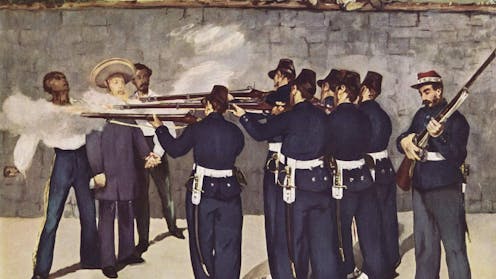
After his defeat, Maximilian was brought before a Mexican military tribunal. European monarchs regarded the prisoner as their peer, but Mexican liberals convicted him as a piratical invader, usurper and traitor. Despite indignant appeals from European courts, President Benito Juárez refused to commute his sentence. The would-be emperor was executed by firing squad.
Get your news from actual experts, straight to your inbox.Sign up to our daily newsletter to receive all The Conversation UK’s latest coverage of news and research, from politics and business to the arts and sciences.
The controversy went beyond one monarch’s fate. It crystallised a clash between opposed visions of global order — as Peru’s president Ramón Castilla said at the time, it was a “war of the crowns against liberty caps”.
Today, world politics are in flux. The so-called liberal international order, nominally grounded in multilateralism, open markets, human rights and the rule of law, is facing its gravest crisis since the second world war. Former advocates such as the United States now openly flout international law and undermine the very norms they once championed. China remains ambivalent, while Russia unabashedly hastens the order’s unravelling.
More broadly, the old post-second world war order appears out of step with the global south and with widespread anger over double standards exposed by the wars in Ukraine, Gaza and Iran.
Amid today’s crises, a world order arranged for and by the great powers looks both insufficient and doomed to lack legitimacy. Reordering will require support from diverse actors, including states across the global south.
1860s: a turbulent decade
The 1860s were a turbulent, although often overlooked, moment of global reordering. Technological shifts – the telegraph, electricity, steamships and railways – appeared as disruptive then as AI does today. Combined with shifting power dynamics, these transformations accelerated imperial expansion. Yet the rules of the emerging order remained uncertain, even among the imperial powers themselves.
In Europe, networks of dynastic rule still carried weight in international politics. Under growing pressure, the ancien régime sought to reinvent and reassert itself. The old empires often justified their expansion by promising to bring order and progress to supposedly backward peoples. But that “civilising mission” clashed with a worldview emerging from Spanish America – where countries had thrown off colonial rule to establish independent republics.
As we wrote in a recent article in American Political Science Review, Spanish American diplomats articulated a republican vision of international order centred on the protection of weaker states from domination by great powers.
Fending off Europe’s empires
Divided by civil conflict, Mexico became an easy target for European empires. Mexico’s Liberal party had regained power but faced internal dissent and crippling foreign debt. Britain, France and Spain formed a coalition to invade and demand repayment. France, however, had more ambitious designs.
Exploiting the distraction of the US civil war, Napoleon III dreamed of transforming Mexico into a Latin stronghold against Yankee expansion. Best of all, Napoleon thought the scheme would turn a profit. A stable Mexican empire could repay the costs of the intervention – with interest – by increasing production from the country’s famed silver mines. Meanwhile, France would gain a receptive market for its exports and a grateful geopolitical subordinate.
Maximilian, a young Austrian prince of the house of Hapsburg, somewhat naively accepted the offer to rule a distant and unfamiliar land. He dreamed of regenerating Mexico through a liberal monarchy while reviving his family’s declining dynasty.
Led by Juárez, Mexico’s liberals fiercely resisted Maximilian’s rule. While militarily Juárez was consistently on the defensive, he remained diplomatically proactive. The Juaristas encouraged US sympathies that proved decisive after the end of the civil war. They also enjoyed solidarity – though limited material support – from other Spanish American republics. Although the monarchies of Europe all recognised Maximilian as Mexican emperor, Juárez’s defiance became a rallying point for liberals and republicans in Europe.
Beyond stoking sympathies, Juárez and his followers offered trenchant critiques of unequal international rules and practices cloaked in liberal guise.
First, the “republican internationalism” of Mexico’s Juaristas stood in direct opposition to European liberals’ “civilising mission”. Latin American republicans rejected the notion that progress could be imposed on their countries from abroad – though some echoed civilising rhetoric toward their own non-white populations, who like in the US were subject to campaigns of violence and dispossession that stretched from northern Mexico to the Patagonia. Many Latin American liberals likewise remained silent about empire elsewhere.
Second, the Juarista vision placed popular sovereignty, not dynastic ties, at the heart of legitimate statehood. These ideas drew on Mexico’s independence tradition and the principles enshrined in the 1857 constitution. European intervention, in this view, aimed to suppress popular rule in the Americas and extend the reaction against the failed revolutions of 1848, which had seriously threatened the old order when they raged across Europe.
Third, popular sovereign states were equal under international law, regardless of power, wealth, or internal disorder. Sovereign equality also underpinned Latin America’s strong commitment to non-intervention. Liberal writer and diplomat Francisco Zarco, a close confidante of Juárez, condemned frequent European economic justifications for intervention as the work of “smugglers and profiteers who wrap themselves in the flags of powerful nations”.
Finally, Mexican liberals called for an international system premised on republican fraternity, drawing on aspirations for cooperation that went back to liberator Simón Bolívar. The independence leader and committed republican convened a conference in 1826, hoping that a confederation of the newly independent Spanish American states would “be the shield of our new destiny”.
Similar arguments for an international order that advances non-domination still resonate in the global south today. The Mexican experience also underscores that the architects of international order have never come exclusively from the global north – and those who shape its future will not either.
Tom Long receives support from UK Arts and Humanities Research Council grant AH/V006622/1, Latin America and the peripheral origins of the 19th-century international order.
Carsten-Andreas Schulz receives support from UK Arts and Humanities Research Council grant AH/V006622/1, Latin America and the peripheral origins of the 19th-century international order.
Source: The Conversation – UK – By Shelley Galpin, Lecturer in Culture, Media and Creative Industries, King’s College London
In my former life as a teacher, I once had a job interview in which I was asked how I dealt with the problem of teaching Jane Austen to boys.
Having had experience of this situation, I confidently told my interviewer (a maths teacher) that the “problem” they were assuming didn’t actually exist, and that it was perfectly possible to teach Austen’s novels to mixed-sex classes with successful results. My answer was met by barely veiled scepticism – and suffice to say, I didn’t get the job.
But where did this popular perception come from? Austen’s genius has been recognised from the earliest days of the development of a canon of English literature, and has never really fallen out of fashion. So it might seem odd that the suitability of her work for a co-educational class is the subject of genuine debate.
This article is part of a series commemorating the 250th anniversary of Jane Austen’s birth. Despite having published only six books, she is one of the best-known authors in history. These articles explore the legacy and life of this incredible writer.
The increasingly intertwined associations of Austen’s literature with the many (often excellent) adaptations of her work may not help the matter, with screen retellings often foregrounding the love stories and losing much of the ironic tone that characterises Austen’s narrative style.
The myriad repackaged editions of her novels that adorn bookshelves with pastel-toned floral designs, or images of anonymous portraits of passive young women, also do little to challenge the popular perception of these books as stories for women and girls.
Finally, and perhaps most troublingly, is the still-commonly held notion that stories with a female protagonist do not have wide-ranging appeal and must be consigned to a “niche interest” bracket. Male-led stories, in contrast, have long been considered to hold universal relevance for audiences.
This last point is a bigger issue concerning the publishing and entertainment industries, so I will largely park this one. But I will point out that, as others have argued in relation to Austen’s work, the classroom is an excellent place to start countering the assumptions of the “everyman” male experience, in contrast to the “special interest” attitude to female perspectives.
With regards to the teaching of Austen’s novels, drawing on my experiences both as a scholar and as a teacher, I believe her novels can speak to young readers of different genders and from diverse backgrounds.
Money, power and inequality
Addressing the ways in which Austen’s novels tend to be packaged, I asked my students, typically aged 16-18, to explore the ideas at the heart of the novels by redesigning the book covers to better reflect these themes.
The flowers and passive young women were gone. The redesigned book covers often focused on the idea of wealth, through pictures of differing piles of money, or power, such as the image of imbalanced scales to symbolise the unequal societies inhabited by Austen’s characters.
Because, as much as they are love stories, Austen’s heroines typically achieve their “happy endings” against a backdrop of money worries, power struggles, familial tension and gendered social hierarchies. While her novels are rightly celebrated for highlighting the unequal treatment of the sexes during her lifetime, it is reductive to see this as their sole contribution to social commentary.
Take Austen’s last completed novel, Persuasion. Here, Anne Elliot – over the hill at the ripe old age of 27 – begins the novel by rueing her broken engagement to Captain Wentworth, which she had been persuaded to break off eight years earlier due to his lack of fortune.
While the narrative focus is on Anne, who is left to regret her choice and wonder whether she will ever be able to escape her odious father and siblings, the broken-hearted Wentworth, who reappears in Anne’s life shortly after the start of the novel, is at least as much a victim of the situation as Anne herself.
At its heart, this is a story of a young woman who allowed herself to be persuaded to make a bad choice, and a young man who, through no fault of his own, was deemed not good enough due to his lack of wealth. The experiences of these characters, although they are older than the average school student, are highly relatable and sympathetic to many teenagers, who may well have experienced meddling family members or unfair judgments of their own.
Take also Northanger Abbey, in which fanciful Catherine Morland mixes fact and fiction and imagines the titular abbey to be a site of gothic intrigue, only to discover that the real horror derives from a controlling patriarch and his sexually predatory oldest son.
Here again, the novel cleverly makes the point that social inequalities, and the choices of those motivated by their love of money and power, are the real darkness at the heart of Austen’s society.
In my experience, students of all genders have been able to appreciate and relate to Northanger Abbey’s depictions of the loss of innocence, class inequality, and the experience of being subject to the sometimes obscure decisions of more powerful individuals.
Austen’s works, far from being the simple love stories of popular perception, are also razor-sharp satires of social and gendered inequalities. Full of witty observations and universally relatable experiences, there is a reason for the consistent popularity of her writing 250 years after her birth.
To fail to recognise this in the classroom is to do a disservice to all our students, as well as to Austen herself.
Shelley Galpin does not work for, consult, own shares in or receive funding from any company or organisation that would benefit from this article, and has disclosed no relevant affiliations beyond their academic appointment.
Summer is synonymous with adventure, with millions flocking to exotic destinations to experience different cultures, cuisines and landscapes. But what happens when the souvenir you bring back isn’t a fridge magnet or a tea towel, but a new illness?
International travel poses a risk of catching something more than a run-of-the-mill bug, so it’s important to be vigilant for the telltale symptoms. Here are the main ones to look out for while away and when you return.
Get your news from actual experts, straight to your inbox.Sign up to our daily newsletter to receive all The Conversation UK’s latest coverage of news and research, from politics and business to the arts and sciences.
Fever
Fever is a common symptom to note after international travel – especially to tropical or subtropical regions. While a feature of many different illnesses, it can be the first sign of an infection – sometimes a serious one.
One of the most well-known travel-related illnesses linked to fever is malaria. Spread by mosquito bites in endemic regions, malaria is a protozoal infection that often begins with flu-like symptoms, such as headache and muscle aches, progressing to severe fever, sweating and shaking chills.
Other signs can include jaundice (yellowing of the skin or eyes), swollen lymph nodes, rashes and abdominal pain – though symptoms vary widely and can mimic many other illnesses.
Prompt medical attention is essential. Malaria is serious and can become life threatening. It’s also worth noting that symptoms may not appear until weeks or even months after returning home. In the UK, there are around 2,000 imported malaria cases each year.
Travellers to at-risk areas are strongly advised to take preventative measures. This includes mosquito-bite avoidance as well as prescribed antimalarial medications, such as Malarone and doxycycline. Although these drugs aren’t 100% effective, they significantly reduce the risk of infection.
Aside from malaria, other mosquito-borne diseases can cause fever. Dengue fever, a viral infection found in tropical and subtropical regions, leads to symptoms including high temperatures, intense headaches, body aches and rashes, which overlap with both malaria and other common viral illnesses.
Most people recover with rest, fluids and paracetamol, but in some instances, dengue can become severe and requires emergency hospital treatment. A vaccine is also available – but is only recommended for people who have had dengue before, as it provides good protection in this group.
Any fever after international travel should be taken seriously. Don’t brush it off as something you’ve just picked up on the plane – please see a doctor. A simple test could lead to early diagnosis and might save your life.
Few travel-related issues are as common – or as unwelcome – as diarrhoea. It’s estimated that up to six in ten travellers will experience at least one episode during or shortly after their trip. For some, it’s an unpleasant disruption mid-holiday; for others, symptoms emerge once they’re back home.
Traveller’s diarrhoea is typically caused by eating food or drinking water containing certain microbes (bacteria, viruses, parasites) or their toxins. Identifying the more serious culprits early is essential – especially when symptoms go beyond mild discomfort.
Warning signs to look out for include large volumes of watery diarrhoea, visible blood in the stool or explosive bowel movements. These may suggest a more serious infection, such as giardia, cholera or amoebic dysentery.
These conditions are more common in regions with poor sanitation and are especially prevalent in parts of the tropics.
Some infections may require targeted antibiotics or antiparasitic treatment. But regardless of the cause, the biggest immediate risk with any severe diarrhoea is dehydration from copious fluid loss. In serious cases, hospital admission for intravenous fluids may be necessary.
The key message for returning travellers: if diarrhoea is severe, persistent or accompanied by worrying symptoms, see a doctor. What starts as a nuisance could quickly escalate without the right care.
And if you have blood in your stool, make sure you seek medical advice.
Jaundice
If you’ve returned from a trip with a change in skin tone, it may not just be a suntan. A yellowish tint to the skin – or more noticeably, the whites of the eyes – could be a sign of jaundice, another finding that warrants medical attention.
Jaundice is not a disease itself, but a visible sign that something may be wrong with either the liver or blood. It results from a buildup of bilirubin, a yellow pigment that forms when red blood cells break down, and which is then processed by the liver.
Several travel-related illnesses can cause jaundice. Malaria is one culprit as is the mosquito-borne yellow fever. But another common cause is hepatitis – inflammation of the liver.
Viral hepatitis comes in several forms. Hepatitis A and E are spread via contaminated food or water – common in areas with poor sanitation. In contrast, hepatitis B and C are blood-borne, transmitted through intravenous drug use, contaminated medical equipment or unprotected sex.
Besides jaundice, hepatitis can cause a range of symptoms, including fever, nausea, fatigue, vomiting and abdominal discomfort. A diagnosis typically requires blood tests, both to confirm hepatitis and to rule out other causes. While many instances of hepatitis are viral, not all are, and treatment depends on the underlying cause.
As we’ve seen, a variety of unpleasant medical conditions can affect the unlucky traveller. But we’ve also seen that the associated symptoms are rather non-specific. Indeed, some can be caused by conditions that are short-lived and require only rest and recuperation to get over a rough few days. But the area between them is decidedly grey.
So plan your trip carefully, be wary of high-risk activities while abroad – such as taking drugs or having unprotected sex – and stay alert to symptoms that develop during or after travel. If you feel unwell, don’t ignore it. Seek medical attention promptly to identify the cause and begin appropriate treatment.
Dan Baumgardt does not work for, consult, own shares in or receive funding from any company or organisation that would benefit from this article, and has disclosed no relevant affiliations beyond their academic appointment.
Source: The Conversation – UK – By Tom Long, Professor of International Relations, Department of Politics and International Studies, University of Warwick
In 1867, the world’s most powerful statesmen, including Austria’s Emperor Franz Josef, France’s Napoleon III and US secretary of state, William H. Seward, petitioned the Mexican government to spare the life of a condemned man.
Mexico’s ragtag army and militias had just humbled France, then Europe’s preeminent land power. The costly six-year campaign drained the French treasury and eroded Napoleon III’s domestic support. Napoleon’s ambition to transform Mexico into a client empire under a Vienna-born, Habsburg archduke, crowned Maximilian I, ended in spectacular failure.
After his defeat, Maximilian was brought before a Mexican military tribunal. European monarchs regarded the prisoner as their peer, but Mexican liberals convicted him as a piratical invader, usurper and traitor. Despite indignant appeals from European courts, President Benito Juárez refused to commute his sentence. The would-be emperor was executed by firing squad.
Get your news from actual experts, straight to your inbox.Sign up to our daily newsletter to receive all The Conversation UK’s latest coverage of news and research, from politics and business to the arts and sciences.
The controversy went beyond one monarch’s fate. It crystallised a clash between opposed visions of global order — as Peru’s president Ramón Castilla said at the time, it was a “war of the crowns against liberty caps”.
Today, world politics are in flux. The so-called liberal international order, nominally grounded in multilateralism, open markets, human rights and the rule of law, is facing its gravest crisis since the second world war. Former advocates such as the United States now openly flout international law and undermine the very norms they once championed. China remains ambivalent, while Russia unabashedly hastens the order’s unravelling.
More broadly, the old post-second world war order appears out of step with the global south and with widespread anger over double standards exposed by the wars in Ukraine, Gaza and Iran.
Amid today’s crises, a world order arranged for and by the great powers looks both insufficient and doomed to lack legitimacy. Reordering will require support from diverse actors, including states across the global south.
1860s: a turbulent decade
The 1860s were a turbulent, although often overlooked, moment of global reordering. Technological shifts – the telegraph, electricity, steamships and railways – appeared as disruptive then as AI does today. Combined with shifting power dynamics, these transformations accelerated imperial expansion. Yet the rules of the emerging order remained uncertain, even among the imperial powers themselves.
In Europe, networks of dynastic rule still carried weight in international politics. Under growing pressure, the ancien régime sought to reinvent and reassert itself. The old empires often justified their expansion by promising to bring order and progress to supposedly backward peoples. But that “civilising mission” clashed with a worldview emerging from Spanish America – where countries had thrown off colonial rule to establish independent republics.
As we wrote in a recent article in American Political Science Review, Spanish American diplomats articulated a republican vision of international order centred on the protection of weaker states from domination by great powers.
Fending off Europe’s empires
Divided by civil conflict, Mexico became an easy target for European empires. Mexico’s Liberal party had regained power but faced internal dissent and crippling foreign debt. Britain, France and Spain formed a coalition to invade and demand repayment. France, however, had more ambitious designs.
Exploiting the distraction of the US civil war, Napoleon III dreamed of transforming Mexico into a Latin stronghold against Yankee expansion. Best of all, Napoleon thought the scheme would turn a profit. A stable Mexican empire could repay the costs of the intervention – with interest – by increasing production from the country’s famed silver mines. Meanwhile, France would gain a receptive market for its exports and a grateful geopolitical subordinate.
Maximilian, a young Austrian prince of the house of Hapsburg, somewhat naively accepted the offer to rule a distant and unfamiliar land. He dreamed of regenerating Mexico through a liberal monarchy while reviving his family’s declining dynasty.
Led by Juárez, Mexico’s liberals fiercely resisted Maximilian’s rule. While militarily Juárez was consistently on the defensive, he remained diplomatically proactive. The Juaristas encouraged US sympathies that proved decisive after the end of the civil war. They also enjoyed solidarity – though limited material support – from other Spanish American republics. Although the monarchies of Europe all recognised Maximilian as Mexican emperor, Juárez’s defiance became a rallying point for liberals and republicans in Europe.
Beyond stoking sympathies, Juárez and his followers offered trenchant critiques of unequal international rules and practices cloaked in liberal guise.
First, the “republican internationalism” of Mexico’s Juaristas stood in direct opposition to European liberals’ “civilising mission”. Latin American republicans rejected the notion that progress could be imposed on their countries from abroad – though some echoed civilising rhetoric toward their own non-white populations, who like in the US were subject to campaigns of violence and dispossession that stretched from northern Mexico to the Patagonia. Many Latin American liberals likewise remained silent about empire elsewhere.
Second, the Juarista vision placed popular sovereignty, not dynastic ties, at the heart of legitimate statehood. These ideas drew on Mexico’s independence tradition and the principles enshrined in the 1857 constitution. European intervention, in this view, aimed to suppress popular rule in the Americas and extend the reaction against the failed revolutions of 1848, which had seriously threatened the old order when they raged across Europe.
Third, popular sovereign states were equal under international law, regardless of power, wealth, or internal disorder. Sovereign equality also underpinned Latin America’s strong commitment to non-intervention. Liberal writer and diplomat Francisco Zarco, a close confidante of Juárez, condemned frequent European economic justifications for intervention as the work of “smugglers and profiteers who wrap themselves in the flags of powerful nations”.
Finally, Mexican liberals called for an international system premised on republican fraternity, drawing on aspirations for cooperation that went back to liberator Simón Bolívar. The independence leader and committed republican convened a conference in 1826, hoping that a confederation of the newly independent Spanish American states would “be the shield of our new destiny”.
Similar arguments for an international order that advances non-domination still resonate in the global south today. The Mexican experience also underscores that the architects of international order have never come exclusively from the global north – and those who shape its future will not either.
Tom Long receives support from UK Arts and Humanities Research Council grant AH/V006622/1, Latin America and the peripheral origins of the 19th-century international order.
Carsten-Andreas Schulz receives support from UK Arts and Humanities Research Council grant AH/V006622/1, Latin America and the peripheral origins of the 19th-century international order.
Source: The Conversation – UK – By Shelley Galpin, Lecturer in Culture, Media and Creative Industries, King’s College London
In my former life as a teacher, I once had a job interview in which I was asked how I dealt with the problem of teaching Jane Austen to boys.
Having had experience of this situation, I confidently told my interviewer (a maths teacher) that the “problem” they were assuming didn’t actually exist, and that it was perfectly possible to teach Austen’s novels to mixed-sex classes with successful results. My answer was met by barely veiled scepticism – and suffice to say, I didn’t get the job.
But where did this popular perception come from? Austen’s genius has been recognised from the earliest days of the development of a canon of English literature, and has never really fallen out of fashion. So it might seem odd that the suitability of her work for a co-educational class is the subject of genuine debate.
This article is part of a series commemorating the 250th anniversary of Jane Austen’s birth. Despite having published only six books, she is one of the best-known authors in history. These articles explore the legacy and life of this incredible writer.
The increasingly intertwined associations of Austen’s literature with the many (often excellent) adaptations of her work may not help the matter, with screen retellings often foregrounding the love stories and losing much of the ironic tone that characterises Austen’s narrative style.
The myriad repackaged editions of her novels that adorn bookshelves with pastel-toned floral designs, or images of anonymous portraits of passive young women, also do little to challenge the popular perception of these books as stories for women and girls.
Finally, and perhaps most troublingly, is the still-commonly held notion that stories with a female protagonist do not have wide-ranging appeal and must be consigned to a “niche interest” bracket. Male-led stories, in contrast, have long been considered to hold universal relevance for audiences.
This last point is a bigger issue concerning the publishing and entertainment industries, so I will largely park this one. But I will point out that, as others have argued in relation to Austen’s work, the classroom is an excellent place to start countering the assumptions of the “everyman” male experience, in contrast to the “special interest” attitude to female perspectives.
With regards to the teaching of Austen’s novels, drawing on my experiences both as a scholar and as a teacher, I believe her novels can speak to young readers of different genders and from diverse backgrounds.
Money, power and inequality
Addressing the ways in which Austen’s novels tend to be packaged, I asked my students, typically aged 16-18, to explore the ideas at the heart of the novels by redesigning the book covers to better reflect these themes.
The flowers and passive young women were gone. The redesigned book covers often focused on the idea of wealth, through pictures of differing piles of money, or power, such as the image of imbalanced scales to symbolise the unequal societies inhabited by Austen’s characters.
Because, as much as they are love stories, Austen’s heroines typically achieve their “happy endings” against a backdrop of money worries, power struggles, familial tension and gendered social hierarchies. While her novels are rightly celebrated for highlighting the unequal treatment of the sexes during her lifetime, it is reductive to see this as their sole contribution to social commentary.
Take Austen’s last completed novel, Persuasion. Here, Anne Elliot – over the hill at the ripe old age of 27 – begins the novel by rueing her broken engagement to Captain Wentworth, which she had been persuaded to break off eight years earlier due to his lack of fortune.
While the narrative focus is on Anne, who is left to regret her choice and wonder whether she will ever be able to escape her odious father and siblings, the broken-hearted Wentworth, who reappears in Anne’s life shortly after the start of the novel, is at least as much a victim of the situation as Anne herself.
At its heart, this is a story of a young woman who allowed herself to be persuaded to make a bad choice, and a young man who, through no fault of his own, was deemed not good enough due to his lack of wealth. The experiences of these characters, although they are older than the average school student, are highly relatable and sympathetic to many teenagers, who may well have experienced meddling family members or unfair judgments of their own.
Take also Northanger Abbey, in which fanciful Catherine Morland mixes fact and fiction and imagines the titular abbey to be a site of gothic intrigue, only to discover that the real horror derives from a controlling patriarch and his sexually predatory oldest son.
Here again, the novel cleverly makes the point that social inequalities, and the choices of those motivated by their love of money and power, are the real darkness at the heart of Austen’s society.
In my experience, students of all genders have been able to appreciate and relate to Northanger Abbey’s depictions of the loss of innocence, class inequality, and the experience of being subject to the sometimes obscure decisions of more powerful individuals.
Austen’s works, far from being the simple love stories of popular perception, are also razor-sharp satires of social and gendered inequalities. Full of witty observations and universally relatable experiences, there is a reason for the consistent popularity of her writing 250 years after her birth.
To fail to recognise this in the classroom is to do a disservice to all our students, as well as to Austen herself.
Shelley Galpin does not work for, consult, own shares in or receive funding from any company or organisation that would benefit from this article, and has disclosed no relevant affiliations beyond their academic appointment.
Summer is synonymous with adventure, with millions flocking to exotic destinations to experience different cultures, cuisines and landscapes. But what happens when the souvenir you bring back isn’t a fridge magnet or a tea towel, but a new illness?
International travel poses a risk of catching something more than a run-of-the-mill bug, so it’s important to be vigilant for the telltale symptoms. Here are the main ones to look out for while away and when you return.
Get your news from actual experts, straight to your inbox.Sign up to our daily newsletter to receive all The Conversation UK’s latest coverage of news and research, from politics and business to the arts and sciences.
Fever
Fever is a common symptom to note after international travel – especially to tropical or subtropical regions. While a feature of many different illnesses, it can be the first sign of an infection – sometimes a serious one.
One of the most well-known travel-related illnesses linked to fever is malaria. Spread by mosquito bites in endemic regions, malaria is a protozoal infection that often begins with flu-like symptoms, such as headache and muscle aches, progressing to severe fever, sweating and shaking chills.
Other signs can include jaundice (yellowing of the skin or eyes), swollen lymph nodes, rashes and abdominal pain – though symptoms vary widely and can mimic many other illnesses.
Prompt medical attention is essential. Malaria is serious and can become life threatening. It’s also worth noting that symptoms may not appear until weeks or even months after returning home. In the UK, there are around 2,000 imported malaria cases each year.
Travellers to at-risk areas are strongly advised to take preventative measures. This includes mosquito-bite avoidance as well as prescribed antimalarial medications, such as Malarone and doxycycline. Although these drugs aren’t 100% effective, they significantly reduce the risk of infection.
Aside from malaria, other mosquito-borne diseases can cause fever. Dengue fever, a viral infection found in tropical and subtropical regions, leads to symptoms including high temperatures, intense headaches, body aches and rashes, which overlap with both malaria and other common viral illnesses.
Most people recover with rest, fluids and paracetamol, but in some instances, dengue can become severe and requires emergency hospital treatment. A vaccine is also available – but is only recommended for people who have had dengue before, as it provides good protection in this group.
Any fever after international travel should be taken seriously. Don’t brush it off as something you’ve just picked up on the plane – please see a doctor. A simple test could lead to early diagnosis and might save your life.
Few travel-related issues are as common – or as unwelcome – as diarrhoea. It’s estimated that up to six in ten travellers will experience at least one episode during or shortly after their trip. For some, it’s an unpleasant disruption mid-holiday; for others, symptoms emerge once they’re back home.
Traveller’s diarrhoea is typically caused by eating food or drinking water containing certain microbes (bacteria, viruses, parasites) or their toxins. Identifying the more serious culprits early is essential – especially when symptoms go beyond mild discomfort.
Warning signs to look out for include large volumes of watery diarrhoea, visible blood in the stool or explosive bowel movements. These may suggest a more serious infection, such as giardia, cholera or amoebic dysentery.
These conditions are more common in regions with poor sanitation and are especially prevalent in parts of the tropics.
Some infections may require targeted antibiotics or antiparasitic treatment. But regardless of the cause, the biggest immediate risk with any severe diarrhoea is dehydration from copious fluid loss. In serious cases, hospital admission for intravenous fluids may be necessary.
The key message for returning travellers: if diarrhoea is severe, persistent or accompanied by worrying symptoms, see a doctor. What starts as a nuisance could quickly escalate without the right care.
And if you have blood in your stool, make sure you seek medical advice.
Jaundice
If you’ve returned from a trip with a change in skin tone, it may not just be a suntan. A yellowish tint to the skin – or more noticeably, the whites of the eyes – could be a sign of jaundice, another finding that warrants medical attention.
Jaundice is not a disease itself, but a visible sign that something may be wrong with either the liver or blood. It results from a buildup of bilirubin, a yellow pigment that forms when red blood cells break down, and which is then processed by the liver.
Several travel-related illnesses can cause jaundice. Malaria is one culprit as is the mosquito-borne yellow fever. But another common cause is hepatitis – inflammation of the liver.
Viral hepatitis comes in several forms. Hepatitis A and E are spread via contaminated food or water – common in areas with poor sanitation. In contrast, hepatitis B and C are blood-borne, transmitted through intravenous drug use, contaminated medical equipment or unprotected sex.
Besides jaundice, hepatitis can cause a range of symptoms, including fever, nausea, fatigue, vomiting and abdominal discomfort. A diagnosis typically requires blood tests, both to confirm hepatitis and to rule out other causes. While many instances of hepatitis are viral, not all are, and treatment depends on the underlying cause.
As we’ve seen, a variety of unpleasant medical conditions can affect the unlucky traveller. But we’ve also seen that the associated symptoms are rather non-specific. Indeed, some can be caused by conditions that are short-lived and require only rest and recuperation to get over a rough few days. But the area between them is decidedly grey.
So plan your trip carefully, be wary of high-risk activities while abroad – such as taking drugs or having unprotected sex – and stay alert to symptoms that develop during or after travel. If you feel unwell, don’t ignore it. Seek medical attention promptly to identify the cause and begin appropriate treatment.
Dan Baumgardt does not work for, consult, own shares in or receive funding from any company or organisation that would benefit from this article, and has disclosed no relevant affiliations beyond their academic appointment.
When the FIFA World Cup hits North America in June 2026, 48 teams and millions of soccer fans will be traveling to and from venues spread across the United States, Canada and Mexico.
It’s a dramatic expansion – 16 more teams will be playing than in recent years, with a jump from 64 to 104 matches. The tournament is projected to bring in over US$10 billion in revenue. But the expansion will also mean a lot more travel and other activities that contribute to climate change.
The environmental impacts of giant sporting events like the World Cup create a complex paradox for an industry grappling with its future in a warming world.
A sustainability conundrum
Sports are undeniably experiencing the effects of climate change. Rising global temperatures are putting athletes’ health at risk during summer heat waves and shortening winter sports seasons. Many of the 2026 World Cup venues often see heat waves in June and early July, when the tournament is scheduled.
Some athletes are speaking out for more sustainable choices and have called on lawmakers to take steps to limit climate-warming emissions. At the same time, the sport industry is growing and facing a constant push to increase revenue. The NCAA is also considering expanding its March Madness basketball tournaments from 68 teams currently to as many as 76.
Park Yong-woo of team Al Ain from Abu Dhabi tries to cool off during a Club World Cup match on June 26, 2025, in Washington, D.C., which was in the midst of a heat wave. Some players have raised concerns about likely high temperatures during the 2026 World Cup, with matches scheduled June 11 to July 19. AP Photo/Julia Demaree Nikhinson
Estimates for the 2026 World Cup show what large tournament expansions can mean for the climate. A report from Scientists for Global Responsibility estimates that the expanded World Cup could generate over 9 million metric tons of carbon dioxide equivalent, nearly double the average of the past four World Cups.
This massive increase – and the increase that would come if the NCAA basketball tournaments also expand – would primarily be driven by air travel as fans and players fly among event cities that are thousands of miles apart.
A lot of money is at stake, but so is the climate
Sports are big business, and adding more matches to events like the World Cup and NCAA tournaments will likely lead to larger media rights contracts and greater gate receipts from more fans attending the events, boosting revenues. These are powerful financial incentives.
In the NCAA’s case, there is another reason to consider a larger tournament: The House v. NCAA settlement opened the door for college athletic departments to share revenue with athletes, which will significantly increase costs for many college programs. More teams would mean more television revenue and, crucially, more revenue to be distributed to member NCAA institutions and their athletic conferences.
When climate promises become greenwashing
The inherent conflict between maximizing profit through growth and minimizing environmental footprint presents a dilemma for sports.
Several sport organizations have promised to reduce their impact on the climate, including signing up for initiatives like the United Nations Sports for Climate Action Framework.
However, as sports tournaments and exhibition games expand, it can become increasingly hard for sports organizations to meet their climate commitments. In some cases, groups making sustainability commitments have been accused of greenwashing, suggesting the goals are more about public relations than making genuine, measurable changes.
For example, FIFA’s early claims that it would hold a “fully carbon-neutral” World Cup in Qatar in 2022 were challenged by a group of European countries that accused soccer’s world governing body of underestimating emissions. The Swiss Fairness Commission, which monitors fairness in advertising, considered the complaints and determined that FIFA’s claims could not be substantiated.
Alessandro Bastoni, of Inter Milan and Italy’s national team, prepares to board a flight from Milan to Rome with his team. Mattia Ozbot-Inter/Inter via Getty Images
Aviation is often the biggest driver of emissions. A study that colleagues and I conducted on the NCAA men’s basketball tournament found about 80% of its emissions were connected to travel. And that was after the NCAA began using the pod system, which is designed to keep teams closer to home for the first and second rounds.
These solutions are frankly not practical, in my view, nor do they align with other positive developments. The growing popularity of women’s sports shows the challenge in limiting sports events – more games expands participation but adds to the industry’s overall footprint.
Further compounding the challenges of reducing environmental impact is the amount of fan travel, which is outside the direct control of the sports organization or event organizers.
Many fans will follow their teams long distances, especially for mega-events like the World Cup or the NCAA tournament. During the men’s World Cup in Russia in 2018, more than 840,000 fans traveled from other countries. The top countries by number of fans, after Russia, were China, the U.S., Mexico and Argentina.
There is an argument that distributed sporting events like March Madness or the World Cup can be better in some ways for local environments because they don’t overwhelm a single city. However, merely spreading the impact does not necessarily reduce it, particularly when considering the effects on climate change.
How fans can cut their environmental footprint
Sport organizations and event planners can take steps to be more sustainable and also encourage more sustainable choices among fans. Fans can reduce their environmental impact in a variety of ways. For example:
Avoid taking airplanes for shorter distances, such as between FIFA venues in Philadelphia, New York and Boston, and carpool or take Amtrak instead. Planes can be more efficient for long distances, but air travel is still a major contributing factor to emissions.
While in a host city, use mass transit or rent electric vehicles or bicycles for local travel.
Consider sustainable accommodations, such as short-term rentals that might have a smaller environmental footprint than a hotel. Or stay at a certified green hotel that makes an effort to be more efficient in its use of water and energy.
Engage in sustainable pregame and postgame activities, such as choosing local, sustainable food options, and minimize waste.
You can also pay to offset carbon emissions for attending different sporting events, much like concertgoers do when they attend musical festivals. While critics question offsets’ true environmental benefit, they do represent people’s growing awareness of their environmental footprint.
Through all these options, it’s clear that sports face a significant challenge in addressing their environmental impacts and encouraging fans to be more sustainable, while simultaneously trying to meet ambitious business and environmental targets.
In my view, a sustainable path forward will require strategic, yet genuine, commitment by the sports industry and its fans, and a willingness to prioritize long-term planetary health alongside economic gains – balancing the sport and sustainability.
Brian P. McCullough does not work for, consult, own shares in or receive funding from any company or organization that would benefit from this article, and has disclosed no relevant affiliations beyond their academic appointment.
Our new study presents analysis of the UK-wide trends for three major pollutants – nitrogen dioxide (NO₂), ozone (O₃) and tiny particulate matter known as PM₂.₅ – between 2015 and 2024 to calculate how often air quality targets were breached.
Both nitrogen dioxide and PM₂.₅ showed robust decreases over the period 2015-2024, declining on average by 35% and 30% respectively. In 2015-2016, the average Defra monitoring site exceeded the nitrogen dioxide target on 136 days per year. By 2023-2024, this had dropped to 40 days per year.
For PM₂.₅, the number of days the average Defra site breached the target went from 40 to 22 days per year. While this is an improvement, the World Health Organization advises that these targets should not be breached on more than four days per year.
Get your news from actual experts, straight to your inbox.Sign up to our daily newsletter to receive all The Conversation UK’s latest coverage of news and research, from politics and business to the arts and sciences.
To examine the sources of pollution, we studied how pollutants were influenced by factors including time of day, day of week, wind direction and origin, location of monitoring station and even interactions between pollutant. Nitrogen dioxide concentrations are highest at monitoring sites located next to busy urban roads, lower at urban background sites (which are located at sites further from traffic such as parks) and much lower in rural sites.
Profiles over 24-hour periods show strong nitrogen dioxide peaks coinciding with the morning and evening rush hours and clear decreases at weekends. This all points to local traffic emissions being the major source. While PM₂.₅ is also higher in urban than rural locations, it exhibits more muted rush hour peaks and is more consistent between the week and weekend, suggesting traffic plays a smaller role.
We explored how wind direction and origin influenced nitrogen dioxide and PM₂.₅ by running a weather forecast model backwards for three UK locations: Reading, Sheffield and Glasgow. While nitrogen dioxide showed only a weak correlation with wind origin, PM₂.₅ was much more dependent.
For example, the probability of PM₂.₅ breaching air quality targets on a given day exceeded 15% only when the air had come from continental Europe and, for Sheffield and Glasgow, passed over much of the UK too.
NO₂ and PM₂.₅ pollution reduced over the last decade but remains too high while O₃ pollution has worsened. James Weber, CC BY
While nitrogen dioxide and PM₂.₅ showed clear improvements, ozone exhibited a less positive picture. Ozone increased in 115 of the 121 sites considered, growing by 17% on average. A similar trend was observed across much of northern Europe. The average number of days ozone exceeded the World Health Organization target doubled from seven to 14 per year.
This may seem modest at present, but several factors are conspiring to drive ozone higher. In much of the UK, the relatively high levels of nitrogen dioxide effectively suppress ozone: as a result, ozone is higher in rural rather than urban areas and, as nitrogen dioxide decreases, ozone will increase further.
Unless, that is, we also target nitrogen dioxide’s partner in crime, volatile organic compounds (VOCs). VOCs are critical to the production of ozone and are emitted from human sources such as traffic and industry, plus certain types of vegetation like oak trees. While emissions of nitrogen dioxide fell by 20% between 2015-2024, human-driven VOC emissions declined by only 1%.
Ozone also increases in periods of hot weather due to elevated VOC emissions from vegetation and greater mixing of air from higher up in the atmosphere into the layer closest to the surface. Incidents of hot weather are only going to become more frequent in the UK, making it even more critical to crack down on human-driven VOC emissions to limit ozone pollution.
Up in the air
In the UK, considerable efforts have been made to improve air quality. Its importance has been enshrined in law for nearly 70 years. An extensive network of air quality monitoring sites is maintained by the UK government’s Department for Environment, Food and Rural Affairs (Defra) plus devolved and local authorities.
Local authorities are required to monitor air quality and develop air quality management areas in places where targets are unlikely to be met. Clean air or low emission zones have been introduced as a result.
However, air quality policy must be designed to reflect the complex nature of each pollutants’ drivers. Nitrogen dioxide is dominated by local sources, PM₂.₅ by transport from further afield and ozone by a combination of both.
Local and national policies that cut traffic emissions by incentivising the replacement of older cars with newer, cleaner vehicles, retrofitting buses and restricting entry of the most polluting vehicles into towns and cities will probably reduce nitrogen dioxide further.
But, if nitrogen dioxide decreases are not accompanied by reductions to VOC emissions, locally and internationally, ozone will continue to rise, especially with more frequent hot weather.
By contrast, most PM₂.₅ comes from sources further afield, including industry and agriculture from other parts of the UK and beyond, so reductions hinge on stronger national and global policies that target emissions at source rather than just local efforts.
Air pollution doesn’t respect borders and while the technologies to facilitate continued improvements exist, they must be deployed in joined-up, international efforts.
Don’t have time to read about climate change as much as you’d like?
James Weber does not work for, consult, own shares in or receive funding from any company or organisation that would benefit from this article, and has disclosed no relevant affiliations beyond their academic appointment.
Our new study presents analysis of the UK-wide trends for three major pollutants – nitrogen dioxide (NO₂), ozone (O₃) and tiny particulate matter known as PM₂.₅ – between 2015 and 2024 to calculate how often air quality targets were breached.
Both nitrogen dioxide and PM₂.₅ showed robust decreases over the period 2015-2024, declining on average by 35% and 30% respectively. In 2015-2016, the average Defra monitoring site exceeded the nitrogen dioxide target on 136 days per year. By 2023-2024, this had dropped to 40 days per year.
For PM₂.₅, the number of days the average Defra site breached the target went from 40 to 22 days per year. While this is an improvement, the World Health Organization advises that these targets should not be breached on more than four days per year.
Get your news from actual experts, straight to your inbox.Sign up to our daily newsletter to receive all The Conversation UK’s latest coverage of news and research, from politics and business to the arts and sciences.
To examine the sources of pollution, we studied how pollutants were influenced by factors including time of day, day of week, wind direction and origin, location of monitoring station and even interactions between pollutant. Nitrogen dioxide concentrations are highest at monitoring sites located next to busy urban roads, lower at urban background sites (which are located at sites further from traffic such as parks) and much lower in rural sites.
Profiles over 24-hour periods show strong nitrogen dioxide peaks coinciding with the morning and evening rush hours and clear decreases at weekends. This all points to local traffic emissions being the major source. While PM₂.₅ is also higher in urban than rural locations, it exhibits more muted rush hour peaks and is more consistent between the week and weekend, suggesting traffic plays a smaller role.
We explored how wind direction and origin influenced nitrogen dioxide and PM₂.₅ by running a weather forecast model backwards for three UK locations: Reading, Sheffield and Glasgow. While nitrogen dioxide showed only a weak correlation with wind origin, PM₂.₅ was much more dependent.
For example, the probability of PM₂.₅ breaching air quality targets on a given day exceeded 15% only when the air had come from continental Europe and, for Sheffield and Glasgow, passed over much of the UK too.
NO₂ and PM₂.₅ pollution reduced over the last decade but remains too high while O₃ pollution has worsened. James Weber, CC BY
While nitrogen dioxide and PM₂.₅ showed clear improvements, ozone exhibited a less positive picture. Ozone increased in 115 of the 121 sites considered, growing by 17% on average. A similar trend was observed across much of northern Europe. The average number of days ozone exceeded the World Health Organization target doubled from seven to 14 per year.
This may seem modest at present, but several factors are conspiring to drive ozone higher. In much of the UK, the relatively high levels of nitrogen dioxide effectively suppress ozone: as a result, ozone is higher in rural rather than urban areas and, as nitrogen dioxide decreases, ozone will increase further.
Unless, that is, we also target nitrogen dioxide’s partner in crime, volatile organic compounds (VOCs). VOCs are critical to the production of ozone and are emitted from human sources such as traffic and industry, plus certain types of vegetation like oak trees. While emissions of nitrogen dioxide fell by 20% between 2015-2024, human-driven VOC emissions declined by only 1%.
Ozone also increases in periods of hot weather due to elevated VOC emissions from vegetation and greater mixing of air from higher up in the atmosphere into the layer closest to the surface. Incidents of hot weather are only going to become more frequent in the UK, making it even more critical to crack down on human-driven VOC emissions to limit ozone pollution.
Up in the air
In the UK, considerable efforts have been made to improve air quality. Its importance has been enshrined in law for nearly 70 years. An extensive network of air quality monitoring sites is maintained by the UK government’s Department for Environment, Food and Rural Affairs (Defra) plus devolved and local authorities.
Local authorities are required to monitor air quality and develop air quality management areas in places where targets are unlikely to be met. Clean air or low emission zones have been introduced as a result.
However, air quality policy must be designed to reflect the complex nature of each pollutants’ drivers. Nitrogen dioxide is dominated by local sources, PM₂.₅ by transport from further afield and ozone by a combination of both.
Local and national policies that cut traffic emissions by incentivising the replacement of older cars with newer, cleaner vehicles, retrofitting buses and restricting entry of the most polluting vehicles into towns and cities will probably reduce nitrogen dioxide further.
But, if nitrogen dioxide decreases are not accompanied by reductions to VOC emissions, locally and internationally, ozone will continue to rise, especially with more frequent hot weather.
By contrast, most PM₂.₅ comes from sources further afield, including industry and agriculture from other parts of the UK and beyond, so reductions hinge on stronger national and global policies that target emissions at source rather than just local efforts.
Air pollution doesn’t respect borders and while the technologies to facilitate continued improvements exist, they must be deployed in joined-up, international efforts.
Don’t have time to read about climate change as much as you’d like?
James Weber does not work for, consult, own shares in or receive funding from any company or organisation that would benefit from this article, and has disclosed no relevant affiliations beyond their academic appointment.
That extra 10c on your morning coffee. That $2 surcharge on your taxi ride. The sneaky 1.5% fee when you pay by card at your local restaurant. These could all soon be history.
The Reserve Bank of Australia (RBA) has proposed a sweeping reform: abolishing card payment surcharges. The central bank says it’s in the public interest to scrap the system and estimates consumers could collectively save $1.2 billion annually.
But like all major financial reforms, the devil is in the detail.
The 20-year experiment is over
Surcharging was introduced more than two decades ago to expose the true cost of different payment methods. In the early 2000s, card fees were high, cash was king, and surcharges helped nudge consumers toward lower-cost options.
But fast-forward to 2025, and the payments ecosystem has changed dramatically. Cash now accounts for just 13% of in-person transactions, and the shift to contactless payments, accelerated by the pandemic, has made cards the default for most Australians.
When there’s no real alternative, a surcharge becomes less a useful price signal and more a penalty for convenience.
After an eight month review, the bank’s Payments System Board has concluded the surcharge model no longer works in a predominantly cashless economy. The proposal now on the table is to phase out surcharges and instead push for simplified, all-inclusive pricing.
Who saves – and who pays?
At first glance, removing surcharges looks like a win for consumers. Every household could save about $60 per year, based on the RBA’s estimates. But payment costs don’t vanish – they shift.
This is where the Reserve Bank’s proposal is more sophisticated than it may appear. Alongside banning surcharges, it plans to lower interchange fees (the fees merchants pay to card networks like Visa and Mastercard) and introduce caps on international card transactions.
These changes aim to reduce the burden on merchants, which in turn limits the pressure to raise prices.
Could prices still rise?
Some worry that without surcharges, businesses will simply embed the costs into product prices. That’s possible. However, the bank estimates this would result in only a 0.1 percentage point increase in consumer prices overall.
There are three reasons for that:
most merchants already don’t surcharge, especially small businesses. Of them, 90% may have included card costs in their pricing
competition keeps pricing in check. Retailers in competitive markets can’t raise prices without risking customers
transparency is coming. The reforms will require payment providers to disclose fees more clearly, allowing merchants to compare and switch – fostering more competition and lower costs.
That said, the effects won’t be felt evenly. Merchants in sectors that do currently surcharge, like hospitality, transport, and tourism, will need to rethink their pricing strategies. Some may absorb costs; others may pass them on.
The winners
Consumers stand to benefit most. They’ll avoid surprise fees at checkout, won’t need to switch payment methods to dodge surcharges, and won’t have to report excessive fees to the Australian Consumer and Competition Commission. Combined with lower interchange fees, this means consumers should face less friction and more predictable pricing.
About 90% of small businesses don’t currently surcharge and would gain around $185 million in net benefits. These businesses often pay higher interchange fees, so the reform will reduce their costs. New transparency requirements will also make it easier to find better deals from payment service providers (PSPs).
Large businesses already receive lower domestic interchange rates, but they’ll benefit from new caps on foreign-issued card transactions, which is a win for those in e-commerce and tourism.
The losers
Banks that issue cards stand to lose about $900 million in interchange revenue under the preferred reform package. Some may respond by raising cardholder fees or cutting rewards, especially on premium credit cards. But they may also gain from increased credit card use as surcharges disappear.
The 10% of small and 12% of large merchants who currently surcharge will have to adjust. They may face retraining costs and need to revise their pricing strategies.
Most will be able to adapt, but the transition won’t be cost-free.
Payment service providers will face about $25 million in compliance costs to remove surcharges and provide clearer fee breakdowns. For some, this may involve significant system changes, though one-off in nature.
Will it work?
The Reserve Bank’s proposal tackles real problems: an outdated surcharge model, opaque pricing by payment service providers, and bundling of unrelated services into payment fees. Its success depends on how well these reforms are implemented and whether they deliver real price transparency and lower costs.
Removing visible price signals may create cross-subsidisation, where users of low-cost debit cards subsidise those who use high-cost rewards credit cards. Some economists argue this could reduce overall efficiency in the system.
International experience offers mixed lessons. While the European Union and United Kingdom banned most surcharges years ago, outcomes have varied depending on market conditions. Efficiency gains haven’t always followed, and small business concerns persist.
The road ahead
The Reserve Bank is seeking feedback until August 26, with a final decision due by year-end. If adopted, the reform will be phased in, allowing time for businesses to adapt.
For consumers, this may mark the end of hidden payment fees. But for the broader system, success will depend on more than just eliminating surcharges. It will require meaningful competition, transparency, and vigilance during the transition.
While not a major omission, mobile wallets (such as Apple Pay) and Buy Now, Pay Later (BNPL) services represent a missing component in the broader payments ecosystem that the current reforms do not yet address.
These platforms operate outside the traditional regulatory framework, often imposing higher merchant fees and lacking the transparency applied to card networks.
Their growing popularity, especially among younger consumers, means they increasingly shape payment behaviour and merchant cost structures. To build a truly future-ready and equitable payments system, these emerging models may need to be brought into the regulatory fold.
Angel Zhong does not work for, consult, own shares in or receive funding from any company or organisation that would benefit from this article, and has disclosed no relevant affiliations beyond their academic appointment.
Elders Uncle Pabai Pabai and Uncle Paul Kabai took the Australian government to court on behalf of their community, arguing the government has a duty of care to protect them from climate change. They also asked the court to legally recognise the cultural loss and harm they are experiencing from sea-level rise and climate-induced flooding.
But the court declined to recognise either duty or to legally recognise cultural harm.
Many climate justice advocates hoped today’s decision would be the climate equivalent of the famous Mabo decision, which recognised native title. There are many parallels. At stake was the legal recognition of the harms and loss of connection to Country that Australia’s First Peoples are experiencing through government inaction on climate change.
Vulnerability and leadership
Torres Strait Islanders are well placed to bring this kind of legal claim.
To sue a government for climate inaction, plaintiffs often have to show they are particularly impacted by climate harms over and above the rest of the population.
Importantly, small differences in future emissions scenarios will significantly impact their habitability. Every fraction of a degree of warming will matter.
This will force Torres Strait Islanders to leave, severing them from thousands of years of tradition, fulfilment of their traditional practices (called Ailan Kastom), and connection to country and identity.
The legal claim against the Commonwealth
Uncle Pabai and Uncle Paul argued the Commonwealth government has a duty to protect Torres Strait Islanders from climate change when setting national emissions-reduction targets. They argued the government breached that duty by not setting targets in line with the best available science. This would involve calculating reduction targets by reference to Australia’s share to keep global warming to as close to 1.5 degrees above pre-industrial levels as possible.
Second, they argued the government has a duty to protect property, the fulfilment of their traditional customs, and the health and life of Torres Strait Islanders from climate impacts. They argued the government breached that duty by failing to properly fund the construction of sea walls.
What the Federal Court said
Justice Wigney’s judgement emphasised the existential threat of climate change. It noted Torres Strait Islanders are particularly vulnerable to climate impacts and face a “bleak future” unless urgent action is taken.
But it accepted the government’s argument that setting emissions reductions targets, and allocating funding for protective infrastructure, involves “policy” considerations a court can’t review.
When do governments owe a duty of care to climate vulnerable groups?
Plaintiffs elsewhere in the world have successfully argued that their government owed them a duty of care to protect them from climate harms by lowering emissions. But the argument has had mixed success in Australia.
To establish a legal duty of care, plaintiffs need to show they have some kind of special relationship with the defendant. This relationship arises through factors such as the plaintiff’s vulnerability to a certain harm, and the defendant’s knowledge of, and control over, that harm.
As First Peoples, Uncle Pabai and Uncle Paul argued they have this kind of relationship with the government. They pointed to a range of factors such as the particular vulnerability of the Torres Strait Islanders, and the government’s control over climate harms to them.
Novel duties of care can be imposed on government and public authorities. But Australian courts have sometimes declined to do this where they would have to judge how governments have weighed different policy considerations.
This is partly because it would be too difficult for the court to decide whether the government had met the legal standard of behaviour.
Courts are more willing to find a government owes a duty of care where the government is merely applying a policy, or where it can measure the government’s behaviour against clear standards. But courts have also acknowledged that the distinction between making policy and applying policy is blurry.
The Australian government argued its decisions about climate policy involve complex political priorities that a court shouldn’t review. It argued it shouldn’t be bound by the best available science as a legal standard.
Paul Kabai and Pabai Pabai at Boigu Island, the most northerly inhabited island of Queensland. It is part of the top-western group of the Torres Strait Islands. Talei Elu
The role of courts in protecting people from climate harm
Today’s decision is a setback for both the climate and Indigenous justice movements. But the situation isn’t as bleak as it may seem.
Across the world, plaintiffs in courts are gaining legal ground on climate accountability. It’s becoming easier to attribute harms to emitters, and to develop standards against which governments can be measured. And courts frequently reject government arguments that their contribution to climate change is minimal. They emphasise that each country must do its share for global collective action to work.
It is a question of when, rather than if, law will adapt to deal with climate impacts. Much like a rising tide breaking against a seawall, the future impact of climate change on things that law already protects is too extreme for the law to resist.
Liz Hicks has previously received a Commonwealth Research Training Program stipend and currently receives funding from the Manchester-Melbourne-Toronto Research Fund for a project on constitutional accountability and the environment. She is also a member of the Australian Greens Victoria.
Elders Uncle Pabai Pabai and Uncle Paul Kabai took the Australian government to court on behalf of their community, arguing the government has a duty of care to protect them from climate change. They also asked the court to legally recognise the cultural loss and harm they are experiencing from sea-level rise and climate-induced flooding.
But the court declined to recognise either duty or to legally recognise cultural harm.
Many climate justice advocates hoped today’s decision would be the climate equivalent of the famous Mabo decision, which recognised native title. There are many parallels. At stake was the legal recognition of the harms and loss of connection to Country that Australia’s First Peoples are experiencing through government inaction on climate change.
Vulnerability and leadership
Torres Strait Islanders are well placed to bring this kind of legal claim.
To sue a government for climate inaction, plaintiffs often have to show they are particularly impacted by climate harms over and above the rest of the population.
Importantly, small differences in future emissions scenarios will significantly impact their habitability. Every fraction of a degree of warming will matter.
This will force Torres Strait Islanders to leave, severing them from thousands of years of tradition, fulfilment of their traditional practices (called Ailan Kastom), and connection to country and identity.
The legal claim against the Commonwealth
Uncle Pabai and Uncle Paul argued the Commonwealth government has a duty to protect Torres Strait Islanders from climate change when setting national emissions-reduction targets. They argued the government breached that duty by not setting targets in line with the best available science. This would involve calculating reduction targets by reference to Australia’s share to keep global warming to as close to 1.5 degrees above pre-industrial levels as possible.
Second, they argued the government has a duty to protect property, the fulfilment of their traditional customs, and the health and life of Torres Strait Islanders from climate impacts. They argued the government breached that duty by failing to properly fund the construction of sea walls.
What the Federal Court said
Justice Wigney’s judgement emphasised the existential threat of climate change. It noted Torres Strait Islanders are particularly vulnerable to climate impacts and face a “bleak future” unless urgent action is taken.
But it accepted the government’s argument that setting emissions reductions targets, and allocating funding for protective infrastructure, involves “policy” considerations a court can’t review.
When do governments owe a duty of care to climate vulnerable groups?
Plaintiffs elsewhere in the world have successfully argued that their government owed them a duty of care to protect them from climate harms by lowering emissions. But the argument has had mixed success in Australia.
To establish a legal duty of care, plaintiffs need to show they have some kind of special relationship with the defendant. This relationship arises through factors such as the plaintiff’s vulnerability to a certain harm, and the defendant’s knowledge of, and control over, that harm.
As First Peoples, Uncle Pabai and Uncle Paul argued they have this kind of relationship with the government. They pointed to a range of factors such as the particular vulnerability of the Torres Strait Islanders, and the government’s control over climate harms to them.
Novel duties of care can be imposed on government and public authorities. But Australian courts have sometimes declined to do this where they would have to judge how governments have weighed different policy considerations.
This is partly because it would be too difficult for the court to decide whether the government had met the legal standard of behaviour.
Courts are more willing to find a government owes a duty of care where the government is merely applying a policy, or where it can measure the government’s behaviour against clear standards. But courts have also acknowledged that the distinction between making policy and applying policy is blurry.
The Australian government argued its decisions about climate policy involve complex political priorities that a court shouldn’t review. It argued it shouldn’t be bound by the best available science as a legal standard.
Paul Kabai and Pabai Pabai at Boigu Island, the most northerly inhabited island of Queensland. It is part of the top-western group of the Torres Strait Islands. Talei Elu
The role of courts in protecting people from climate harm
Today’s decision is a setback for both the climate and Indigenous justice movements. But the situation isn’t as bleak as it may seem.
Across the world, plaintiffs in courts are gaining legal ground on climate accountability. It’s becoming easier to attribute harms to emitters, and to develop standards against which governments can be measured. And courts frequently reject government arguments that their contribution to climate change is minimal. They emphasise that each country must do its share for global collective action to work.
It is a question of when, rather than if, law will adapt to deal with climate impacts. Much like a rising tide breaking against a seawall, the future impact of climate change on things that law already protects is too extreme for the law to resist.
Liz Hicks has previously received a Commonwealth Research Training Program stipend and currently receives funding from the Manchester-Melbourne-Toronto Research Fund for a project on constitutional accountability and the environment. She is also a member of the Australian Greens Victoria.
Chinese President Xi Jinping has told Anthony Albanese China stands ready to work with Australia “to push the bilateral relationship further”, in their meeting in Beijing on Tuesday.
During the meeting, Albanese raised Australia’s concern about China’s lack of proper notice about its warships’ live fire exercise early this year.
The prime minister later told journalists Xi had responded that “China engaged in exercises, just as Australia engages in exercises”.
The government’s proposed sale of the lease of the Port of Darwin, now in the hands of a Chinese company, was not raised in the discussion.
On Taiwan, Albanese said he had “reaffirmed […] the position of Australia in support for the status quo”.
This was the fourth meeting between Xi and Albanese. The prime minister is on a six-day trip to China, accompanied by a business delegation. He is emphasising expanding trade opportunities with our biggest trading partner and attracting more Chinese tourists, whose numbers are not back to pre-pandemic levels.
Albanese has come under some domestic criticism because this trip comes before he has been able to secure a meeting with United States President Donald Trump.
In his opening remarks, while the media were present, Xi said the China-Australia relationship had risen “from the setback and turned around, bringing tangible benefits to the Chinese and Australian peoples”.
“The most important thing we can learn from this is that a commitment to equal treatment, to seeking common ground while sharing differences, pursuing mutually beneficial cooperation, serves the fundamental interests of our two countries and two peoples.
“No matter how the international landscape may evolve, we should uphold this overall direction unswervingly,” he said.
“The Chinese side is ready to work with the Australian side to push the bilateral relationship further and make greater progress so as to bring better benefits to our two peoples.”
Responding, Albanese noted Xi’s comments “about seeking common ground while sharing differences. That approach has indeed produced very positive benefits for both Australia and for China.
“The Australian government welcomes progress on cooperation under the China-Australia Free Trade Agreement, which has its 10th anniversary year. As a direct result, trade is now flowing freely to the benefit of both countries and to people and businesses on both sides, and Australia will remain a strong supporter of free and fair trade.”
Albanese told the media after the meeting his government’s approach to the relationship was “patient, calibrated and deliberate”.
“Given that one out of four Australian jobs depends on trade and given that China is overwhelmingly by far the largest trading partner that Australia has, it is very much in the interest of Australian jobs, and the Australian economy, to have a positive and constructive relationship with China.
“Dialogue is how we advance our interests, how we manage our differences, and we guard against misunderstanding.
“President Xi Jinping and I agreed dialogue must be at the centre of our relationship. We also discussed our economic relationship, which is critical to Australia. We spoke about the potential for new engagement in areas such as decarbonisation”.
Xi did not bring up China’s complaints about Australia’s foreign investment regime.
Albanese said he raised the issue of Australian writer Yang Jun, who is incarcerated on allegations of espionage, which are denied.
Premier Li Qiang was hosting a banquet for Albanese on Tuesday night.
An editorial in the state-owned China Daily praised the Albanese visit, saying it showed “the Australian side has a clearer judgement and understanding of China than it had under previous Scott Morrison government”.
“The current momentum in the development of bilateral relations between China and Australia shows that if differences are well managed, the steady development of ties can be guaranteed , even at a time when the political landscape of the world is becoming increasingly uncertain and volatile,” the editorial said.
Australian journalists had a brush with Chinese security, when they were taking shots of local sights in Beijing. Security guards surrounded them and told them to hand over their footage. The incident was resolved by Australian officials.
Michelle Grattan does not work for, consult, own shares in or receive funding from any company or organisation that would benefit from this article, and has disclosed no relevant affiliations beyond their academic appointment.
Australians have long been some of the highest users of herbal and nutritional supplements that claim to boost mood or ease depression. These include omega-3s (found in fish oil), St John’s wort, probiotics and vitamin D.
In fact, among Australians with depression, these supplements are more popular than prescription medicines.
But do they actually work? And how do they compare to other treatments? A new review has assessed the evidence from 209 studies – here’s what it found.
Do these supplements work?
The new study aimed to assess the international evidence available for common over-the-counter products for depression in adults aged 18–60.
Despite their widespread popularity and availability, the study found there is surprisingly little research on these therapies, compared with psychological therapies and prescription antidepressants.
Only a few products had a relatively large body of evidence suggesting they were effective at treating symptoms. These were omega-3 supplements, St John’s wort, saffron, probiotics and vitamin D.
However, most products had only a single trial examining their use.
The researchers noted there was promising evidence for some herbal and nutritional supplements, where multiple studies did exist. These included folic acid, zinc, Rhodiola, lavender and lemon balm. But there is not enough evidence yet to recommend them, so more studies would be needed.
What does other research say?
These findings appear to support previous research assessing supplements for depression.
In 2024, the Australian government’s review of natural therapies also found moderate evidence that several herbal medicines can relieve symptoms in mild to moderate depression. These include curcumin (from turmeric), saffron and St John’s wort.
It also found moderate evidence St John’s wort was as effective as conventional antidepressants.
However, the major caveat is that much of the existing evidence relates to mild to moderate depression.
Mild to moderate depression usually means few symptoms beyond the minimum required for diagnosis (such as loss of pleasure and depressed mood). Major depression involves five or more symptoms along with significant distress and impact on day-to-day function.
While some products were found to have some effect in major depressive disorders – probiotics, for example – there is little evidence to suggest they’re effective where a large number of symptoms exist.
Dose and quality varies
The dose and quality of over-the-counter products can also vary significantly, which can make it difficult to identify appropriate products or assess which ones work.
In the United Kingdom, official advice for health-care practitioners acknowledges there is evidence St John’s wort can help with less severe forms of depression. But it also advises caution in recommending it, given how much the dose, preparation and quality can vary between different herbal products.
In Australia, guidelines for psychiatrists treating mood disorders such as depression note that good evidence exists for using omega-3 fatty acids (fish oils). But they highlight that there only seems to be a benefit when the product has 60% or more eicosapentaenoic acid (one of the main types of omega-3).
Whether folate supplements are effective for depression can depend on their form, which active ingredient is used, and how well the body can absorb it.
There may be other nuances in other supplements that we need more research to understand.
Are there any risks or downsides?
The study also concluded these products present few safety issues, whether used alone or in combination with other treatments. This is the reason most remain available over the counter.
However, herbal medicines and dietary supplements also contain chemicals that can work like drugs and interact with other medications.
For example, the way St John’s wort works on neurotransmitters (the body’s chemical messengers) is similar to many prescription antidepressants.
So taking it alongside antidepressants can lead to serotonin syndrome, a condition which can lead to fever and seizures in extreme instances. In rare cases, you may experience similar side effects to taking antidepressants.
For instance, some studies suggest omega-3 supplements used in addition to standard antidepressant therapy resulted in the best outcomes. But more research is needed to explore this link.
How do they stack up against other therapies?
Pharmaceutical medications, such as antidepressants, and talk therapies remain the gold standard in Australian guidelines for mood disorders. They are the most studied interventions for these disorders, which means we have the most evidence for how well they work.
However, emerging evidence is developing for other therapies too.
Lifestyle interventions to improve diet and exercise have been shown to be as effective in addressing symptoms of depression as receiving psychological treatment alone.
Nutrients are the building blocks of many body processes, and some nutrient deficiencies themselves (such as iron and B12) can cause depressive symptoms. So their potential role of nutritional supplements is perhaps unsurprising.
However, research – including our own – increasingly demonstrates eating nutrient-rich foods (rather than taking supplements) can be enough to improve symptoms in mood disorders such as depression.
The Australian government’s review of natural therapies also found the evidence for non-pharmacological treatments, such as yoga, was more certain than for herbal medicines and nutritional supplements in treating depression.
It’s also important to note that depressive symptoms rarely present alone. They can be secondary to other underlying health conditions (such as hypothyroidism) or present with other conditions.
Investigating and addressing these potential root causes and improving general health is essential in managing symptoms.
What are the key takeaways?
Some herbal and nutritional supplements do appear to have a potentially beneficial effect for less severe forms of depression. But for many of these therapies there is still not enough evidence to offer definitive recommendations.
While the Therapeutic Goods Administration regulates the safety and quality of supplements, there is still variation in product quality, dose and how well the body can absorb it.
If you’re thinking of using herbal or nutritional supplements, it’s important to consult a health professional, such as a GP, naturopath or even a psychologist.
If this article has raised issues for you, or if you’re concerned about someone you know, call Lifeline on 13 11 14.
Jon Wardle is Foundation Director of the National Centre for Naturopathic Medicine and the Maurice Blackmore Chair of Naturopathic Medicine at Southern Cross University, which undertakes training and research in nutritional and herbal therapies. He has received funding from multiple foundations and agencies to conduct research on nutritional and herbal medicines, including the National Health and Medical Research Council and Medical Research Future Fund. He was part of the both the National Health and Medical Research Council Natural Therapies Working Committee and the Department of Health Natural Therapies Review Expert Advisory Panel which supported Professor Kidd in conducting the reviews mentioned in this article. However, this article represents his personal academic opinion and does not represent the opinions of either of these organisations.
Carrie Thomson-Casey is affiliated with both major psychology professional associations the Australian Psychological Society (APS) and the Australian Association of Psychologists Inc (AAPi). Carrie is also the past convenor and now treasurer of an APS interest group Psychology and Integrative Mental Health.
Carrie is an author of one of the papers Jon has cited.
Jessica Bayes has received funding from several organisations to conduct research exploring diet and mental wellbeing, in addition to research investigating nutritional supplements. Jessica has also authored some of the articles referenced here.
This marks the first such death in this region in 18 years. But it’s a stark reminder that this historic disease, though rare nowadays, is not just a disease of the past.
So what actually is “plague”? And is it any cause for concern in Australia?
There are 3 types of ‘plague’
The word “plague” is often used to refer to any major disease epidemic or pandemic, or even to other undesirable events, such as a mouse plague. Naturally, the word can evoke fear.
But scientifically speaking, plague is a disease caused by the bacterium Yersinia pestis.
Plague has three main forms: bubonic, septicemic and pneumonic.
Bubonic is the most common and is named after “buboes”, which are the painful, swollen lymph nodes the infection causes. Other symptoms include fever, headache, chills and weakness.
Bubonic plague is typically spread by fleas living on animals such as rats, prairie dogs and marmots. If an infected flea moves from their animal host to bite a human, this can cause an infection.
People can also become infected through handling an animal infected with the disease.
Septicemic plague occurs if bubonic plague is left untreated, or it can occur directly if the disease enters the bloodstream. Septicemic plague causes bleeding into the organs. The name comes from septicemia, which refers to a serious blood infection.
The recent death in the United States was due to a case of pneumonic plague, which is the most severe form. Bubonic plague can in some cases spread to the lungs, where it becomes pneumonic plague. However, pneumonic plague can also spread from person to person via tiny respiratory droplets, in a similar way to COVID. Symptoms are similar to the other forms but also include severe pneumonia.
Some 30–60% of people who contract bubonic plague will die, while the fatality rate can be up to 100% for pneumonic plague if left untreated.
This disease is one of the most important in history. The Plague of Justinian (541–750CE) killed tens of millions of people in the western Mediterranean, heavily impacting the expansion of the Byzantine Empire.
Spread by the growing trade networks of the British empire, the third and most recent plague pandemic spanned the years 1855 until roughly 1960, peaking in the early 1900s. It was responsible for 12 million deaths, primarily in India, and even reached Australia.
It’s believed the bubonic plague was largely behind these pandemics.
Plague in the modern day
First introduced into the US during the third pandemic, plague infects an average of seven people a year in the west of the country, due to being endemic in groundhog and prairie dog populations there. The last major outbreak was 100 years ago.
The countries with the most cases currently include the Democratic Republic of the Congo, Madagascar and Peru, with cases also occurring in India, central Asia and the US. Cases usually occur in rural and agricultural areas.
Plague can be treated
Plague can easily be treated with common antibiotics, typically a course of 10–14 days, which can include both oral and intravenous antibiotics. But it must be treated quickly.
The recent death is concerning, as it involves the airborne pneumonic form of the disease, the only form that spreads easily from person to person. But there’s no evidence of further spread of the disease within the US at this stage.
As Y. pestis is not found in Australian animals, there is little risk here. Plague has not been reported in Australia in more than a century.
But plague, like many diseases, is influenced by environmental conditions. The risk of climate change causing an expansion in the habitat of animal hosts means public health experts around the world should continue to monitor it closely.
The plague, though often perceived as a disease of history, is still with us and can pose a major health threat if not treated early.
Thomas Jeffries does not work for, consult, own shares in or receive funding from any company or organisation that would benefit from this article, and has disclosed no relevant affiliations beyond their academic appointment.
Source: The Conversation (Au and NZ) – By Shannon Brincat, Senior Lecturer in Politics and International Relations, University of the Sunshine Coast
We’re just a few months into US president Donald Trump’s second term but his rule has already been repeatedlycompared to tyranny.
This may all feel very new to Americans, and to the rest of us watching on from around the world. But the threat of tyranny is an ancient one.
We can learn much from how people in ancient Greece and China dealt with this issue.
Where does tyranny come from?
The peoples of classical Greece were separated into city-states known as the polis.
A few of these, such as Athens and Argos, were democratic.
Others, such as Rhodes or Chios, had had democratic features such as civic participation in public life.
These city-states routinely faced external enemies but also the threat of tyrannical take-over from within.
Things came to a head in 510 BCE under the rule of an oppressive tyrant known as Hippias. He was ultimately expelled, leading eventually to the establishment of democracy through reforms made under an Athenian statesmen called Cleisthenes.
According to Plato, tyranny is the most degenerate political regime and emerges out of democracy’s excesses.
He argued that as democratic citizens become accustomed to living by pleasure rather than reason or duty to the public good, society becomes fragmented.
Demagogues – populist leaders who gain power by appealing to base desires and prejudices of the masses – promise the people more liberties. They turn citizens away from virtue and toward tyranny.
Aristotle, who was Plato’s student, defines tyranny as the corrupted form of monarchy. The tyrant perverts the constitutional order to bring about self-serving rulership – the rule of one. Tyranny, he argued, destroys law and justice, eroding all public trust.
The approach of Plato and Aristotle to combating tyranny was closely tied to their conception of the polis and the importance of citizenship.
For the classical Greeks, citizenship was a binding relationship of reciprocal duties and obligations owed to all other citizens. The law, they believed, was king.
It was these conventions that constrained political power, especially the arbitrary rule of one.
Civic education by participation in daily democratic life promoted virtue, they believed. All citizens and the ruler were subservient to the law – a bond that tyranny destroyed.
Aristotle said a strong middle class that could best prevent tyranny because they indicated a less unequal, and therefore more stable, society.
Plato’s view was more inward looking. He saw tyranny as a political manifestation of a disordered “enslaved soul” governed by appetites rather than reason. For him, philosophical guidance back to harmony was required for the tyrant and for the people.
Only through wisdom, he argued, could the people recognise and reject demagogues and populists.
Protecting democracy from tyranny
Some city-states learned from their institutional failings when tyranny had taken them over.
For example, after a coup of aristocrats overtook Athenian democracy in 411 BCE, Athenians began to swear the Oath of Demophantos. This was among the first attempts at a constitutional safeguard of democracy against tyranny.
It legally and morally obliged citizens to resist any attempt to overthrow democracy by force. The undertaking was a reciprocal duty; as other scholars have argued, each citizen could count on the support of all others to protect the democracy when a tyrant tried again.
This made it far more likely for people to take action against a would-be-tyrant; they knew every other citizen had sworn an oath to have their back.
The Greek historians of the time support these views. For example, Herodotus in the 5th century documented the rise of several tyrants across Asia Minor (modern-day Turkey). He blamed the political vacuum created by the decline of aristocratic rule. Here, the personal ambition and luxury of elites laid the path to tyrannical behaviour.
Another famous historian named Thucydides, writing at the same time, analysed the power and political corruption behind tyranny. He observed how times of crisis exposed vulnerabilities within Athens, leading to factionalism, instability, and the erosion of democracy.
Tyranny in classical China
In classical China we see a complementary, yet unique view of tyranny.
During the Warring States period (475–221 BCE), when the Zhou Dynasty was divided amongst several competing states, preventing tyranny was a central concern.
These states were mostly hereditary monarchies rather than democracies but they still emphasised accountability to the people.
Mencius, a 4th-century BCE Chinese philosopher and Confucian scholar, argued the people’s welfare was the foundation of legitimate rule.
There is, he argued, a responsibility to all under the Mandate of Heaven (天命, tiānmìng). This ancient Chinese doctrine asserted that heaven grants legitimacy to just rulers. If a ruler became despotic or failed to uphold harmony and virtue, the mandate can be withdrawn, justifying rebellion and dynastic change.
Mencius famously said a ruler who oppresses the people is not a ruler but a “mere man” who could be violently overthrown.
Xunzi, another Confucian philosopher writing in the late 4th to 3rd Centuries BCE, believed humans were inherently selfish and chaotic.
To fend off tyranny he emphasised ritual, education, and rule of law. He believed in formal ceremonies and structured practices such as court etiquette, family rites, and daily ethical conduct. These, he believed, helped cultivate virtue, regulate behaviour, and maintain social harmony.
Mozi, writing mostly in the 5th to early 4th centuries BCE, was a Chinese philosopher who opposed Confucianism and founded Mohism, offered a different view.
Opposing all hierarchies, he emphasised jiān ài(兼爱) – universal obligation or care to all others – as a core ethical and political principle.
According to Mozi, tyranny arises when rulers act selfishly – favoring their own families, states, or interests over the common good. He advocated for strong moral conduct and competence of leaders, rather than their lineage, wealth or status.
Tyranny today
Viewed together, these traditions suggest preventing tyranny requires more than just moral leadership.
Rather, it requires a notion of reciprocity – of shared obligations between citizens – and systemic safeguards against the personal ambitions of rulers.
Ethical governance, civic education, legal frameworks, and shared responsibilities are essential.
Shannon Brincat does not work for, consult, own shares in or receive funding from any company or organisation that would benefit from this article, and has disclosed no relevant affiliations beyond their academic appointment.
We’re just a few months into US president Donald Trump’s second term but his rule has already been repeatedlycompared to tyranny.
This may all feel very new to Americans, and to the rest of us watching on from around the world. But the threat of tyranny is an ancient one.
We can learn much from how people in ancient Greece and China dealt with this issue.
Where does tyranny come from?
The peoples of classical Greece were separated into city-states known as the polis.
A few of these, such as Athens and Argos, were democratic.
Others, such as Rhodes or Chios, had had democratic features such as civic participation in public life.
These city-states routinely faced external enemies but also the threat of tyrannical take-over from within.
Things came to a head in 510 BCE under the rule of an oppressive tyrant known as Hippias. He was ultimately expelled, leading eventually to the establishment of democracy through reforms made under an Athenian statesmen called Cleisthenes.
According to Plato, tyranny is the most degenerate political regime and emerges out of democracy’s excesses.
He argued that as democratic citizens become accustomed to living by pleasure rather than reason or duty to the public good, society becomes fragmented.
Demagogues – populist leaders who gain power by appealing to base desires and prejudices of the masses – promise the people more liberties. They turn citizens away from virtue and toward tyranny.
Aristotle, who was Plato’s student, defines tyranny as the corrupted form of monarchy. The tyrant perverts the constitutional order to bring about self-serving rulership – the rule of one. Tyranny, he argued, destroys law and justice, eroding all public trust.
The approach of Plato and Aristotle to combating tyranny was closely tied to their conception of the polis and the importance of citizenship.
For the classical Greeks, citizenship was a binding relationship of reciprocal duties and obligations owed to all other citizens. The law, they believed, was king.
It was these conventions that constrained political power, especially the arbitrary rule of one.
Civic education by participation in daily democratic life promoted virtue, they believed. All citizens and the ruler were subservient to the law – a bond that tyranny destroyed.
Aristotle said a strong middle class that could best prevent tyranny because they indicated a less unequal, and therefore more stable, society.
Plato’s view was more inward looking. He saw tyranny as a political manifestation of a disordered “enslaved soul” governed by appetites rather than reason. For him, philosophical guidance back to harmony was required for the tyrant and for the people.
Only through wisdom, he argued, could the people recognise and reject demagogues and populists.
Protecting democracy from tyranny
Some city-states learned from their institutional failings when tyranny had taken them over.
For example, after a coup of aristocrats overtook Athenian democracy in 411 BCE, Athenians began to swear the Oath of Demophantos. This was among the first attempts at a constitutional safeguard of democracy against tyranny.
It legally and morally obliged citizens to resist any attempt to overthrow democracy by force. The undertaking was a reciprocal duty; as other scholars have argued, each citizen could count on the support of all others to protect the democracy when a tyrant tried again.
This made it far more likely for people to take action against a would-be-tyrant; they knew every other citizen had sworn an oath to have their back.
The Greek historians of the time support these views. For example, Herodotus in the 5th century documented the rise of several tyrants across Asia Minor (modern-day Turkey). He blamed the political vacuum created by the decline of aristocratic rule. Here, the personal ambition and luxury of elites laid the path to tyrannical behaviour.
Another famous historian named Thucydides, writing at the same time, analysed the power and political corruption behind tyranny. He observed how times of crisis exposed vulnerabilities within Athens, leading to factionalism, instability, and the erosion of democracy.
Tyranny in classical China
In classical China we see a complementary, yet unique view of tyranny.
During the Warring States period (475–221 BCE), when the Zhou Dynasty was divided amongst several competing states, preventing tyranny was a central concern.
These states were mostly hereditary monarchies rather than democracies but they still emphasised accountability to the people.
Mencius, a 4th-century BCE Chinese philosopher and Confucian scholar, argued the people’s welfare was the foundation of legitimate rule.
There is, he argued, a responsibility to all under the Mandate of Heaven (天命, tiānmìng). This ancient Chinese doctrine asserted that heaven grants legitimacy to just rulers. If a ruler became despotic or failed to uphold harmony and virtue, the mandate can be withdrawn, justifying rebellion and dynastic change.
Mencius famously said a ruler who oppresses the people is not a ruler but a “mere man” who could be violently overthrown.
Xunzi, another Confucian philosopher writing in the late 4th to 3rd Centuries BCE, believed humans were inherently selfish and chaotic.
To fend off tyranny he emphasised ritual, education, and rule of law. He believed in formal ceremonies and structured practices such as court etiquette, family rites, and daily ethical conduct. These, he believed, helped cultivate virtue, regulate behaviour, and maintain social harmony.
Mozi, writing mostly in the 5th to early 4th centuries BCE, was a Chinese philosopher who opposed Confucianism and founded Mohism, offered a different view.
Opposing all hierarchies, he emphasised jiān ài(兼爱) – universal obligation or care to all others – as a core ethical and political principle.
According to Mozi, tyranny arises when rulers act selfishly – favoring their own families, states, or interests over the common good. He advocated for strong moral conduct and competence of leaders, rather than their lineage, wealth or status.
Tyranny today
Viewed together, these traditions suggest preventing tyranny requires more than just moral leadership.
Rather, it requires a notion of reciprocity – of shared obligations between citizens – and systemic safeguards against the personal ambitions of rulers.
Ethical governance, civic education, legal frameworks, and shared responsibilities are essential.
Shannon Brincat does not work for, consult, own shares in or receive funding from any company or organisation that would benefit from this article, and has disclosed no relevant affiliations beyond their academic appointment.
We’re just a few months into US president Donald Trump’s second term but his rule has already been repeatedlycompared to tyranny.
This may all feel very new to Americans, and to the rest of us watching on from around the world. But the threat of tyranny is an ancient one.
We can learn much from how people in ancient Greece and China dealt with this issue.
Where does tyranny come from?
The peoples of classical Greece were separated into city-states known as the polis.
A few of these, such as Athens and Argos, were democratic.
Others, such as Rhodes or Chios, had had democratic features such as civic participation in public life.
These city-states routinely faced external enemies but also the threat of tyrannical take-over from within.
Things came to a head in 510 BCE under the rule of an oppressive tyrant known as Hippias. He was ultimately expelled, leading eventually to the establishment of democracy through reforms made under an Athenian statesmen called Cleisthenes.
According to Plato, tyranny is the most degenerate political regime and emerges out of democracy’s excesses.
He argued that as democratic citizens become accustomed to living by pleasure rather than reason or duty to the public good, society becomes fragmented.
Demagogues – populist leaders who gain power by appealing to base desires and prejudices of the masses – promise the people more liberties. They turn citizens away from virtue and toward tyranny.
Aristotle, who was Plato’s student, defines tyranny as the corrupted form of monarchy. The tyrant perverts the constitutional order to bring about self-serving rulership – the rule of one. Tyranny, he argued, destroys law and justice, eroding all public trust.
The approach of Plato and Aristotle to combating tyranny was closely tied to their conception of the polis and the importance of citizenship.
For the classical Greeks, citizenship was a binding relationship of reciprocal duties and obligations owed to all other citizens. The law, they believed, was king.
It was these conventions that constrained political power, especially the arbitrary rule of one.
Civic education by participation in daily democratic life promoted virtue, they believed. All citizens and the ruler were subservient to the law – a bond that tyranny destroyed.
Aristotle said a strong middle class that could best prevent tyranny because they indicated a less unequal, and therefore more stable, society.
Plato’s view was more inward looking. He saw tyranny as a political manifestation of a disordered “enslaved soul” governed by appetites rather than reason. For him, philosophical guidance back to harmony was required for the tyrant and for the people.
Only through wisdom, he argued, could the people recognise and reject demagogues and populists.
Protecting democracy from tyranny
Some city-states learned from their institutional failings when tyranny had taken them over.
For example, after a coup of aristocrats overtook Athenian democracy in 411 BCE, Athenians began to swear the Oath of Demophantos. This was among the first attempts at a constitutional safeguard of democracy against tyranny.
It legally and morally obliged citizens to resist any attempt to overthrow democracy by force. The undertaking was a reciprocal duty; as other scholars have argued, each citizen could count on the support of all others to protect the democracy when a tyrant tried again.
This made it far more likely for people to take action against a would-be-tyrant; they knew every other citizen had sworn an oath to have their back.
The Greek historians of the time support these views. For example, Herodotus in the 5th century documented the rise of several tyrants across Asia Minor (modern-day Turkey). He blamed the political vacuum created by the decline of aristocratic rule. Here, the personal ambition and luxury of elites laid the path to tyrannical behaviour.
Another famous historian named Thucydides, writing at the same time, analysed the power and political corruption behind tyranny. He observed how times of crisis exposed vulnerabilities within Athens, leading to factionalism, instability, and the erosion of democracy.
Tyranny in classical China
In classical China we see a complementary, yet unique view of tyranny.
During the Warring States period (475–221 BCE), when the Zhou Dynasty was divided amongst several competing states, preventing tyranny was a central concern.
These states were mostly hereditary monarchies rather than democracies but they still emphasised accountability to the people.
Mencius, a 4th-century BCE Chinese philosopher and Confucian scholar, argued the people’s welfare was the foundation of legitimate rule.
There is, he argued, a responsibility to all under the Mandate of Heaven (天命, tiānmìng). This ancient Chinese doctrine asserted that heaven grants legitimacy to just rulers. If a ruler became despotic or failed to uphold harmony and virtue, the mandate can be withdrawn, justifying rebellion and dynastic change.
Mencius famously said a ruler who oppresses the people is not a ruler but a “mere man” who could be violently overthrown.
Xunzi, another Confucian philosopher writing in the late 4th to 3rd Centuries BCE, believed humans were inherently selfish and chaotic.
To fend off tyranny he emphasised ritual, education, and rule of law. He believed in formal ceremonies and structured practices such as court etiquette, family rites, and daily ethical conduct. These, he believed, helped cultivate virtue, regulate behaviour, and maintain social harmony.
Mozi, writing mostly in the 5th to early 4th centuries BCE, was a Chinese philosopher who opposed Confucianism and founded Mohism, offered a different view.
Opposing all hierarchies, he emphasised jiān ài(兼爱) – universal obligation or care to all others – as a core ethical and political principle.
According to Mozi, tyranny arises when rulers act selfishly – favoring their own families, states, or interests over the common good. He advocated for strong moral conduct and competence of leaders, rather than their lineage, wealth or status.
Tyranny today
Viewed together, these traditions suggest preventing tyranny requires more than just moral leadership.
Rather, it requires a notion of reciprocity – of shared obligations between citizens – and systemic safeguards against the personal ambitions of rulers.
Ethical governance, civic education, legal frameworks, and shared responsibilities are essential.
Shannon Brincat does not work for, consult, own shares in or receive funding from any company or organisation that would benefit from this article, and has disclosed no relevant affiliations beyond their academic appointment.
We’re just a few months into US president Donald Trump’s second term but his rule has already been repeatedlycompared to tyranny.
This may all feel very new to Americans, and to the rest of us watching on from around the world. But the threat of tyranny is an ancient one.
We can learn much from how people in ancient Greece and China dealt with this issue.
Where does tyranny come from?
The peoples of classical Greece were separated into city-states known as the polis.
A few of these, such as Athens and Argos, were democratic.
Others, such as Rhodes or Chios, had had democratic features such as civic participation in public life.
These city-states routinely faced external enemies but also the threat of tyrannical take-over from within.
Things came to a head in 510 BCE under the rule of an oppressive tyrant known as Hippias. He was ultimately expelled, leading eventually to the establishment of democracy through reforms made under an Athenian statesmen called Cleisthenes.
According to Plato, tyranny is the most degenerate political regime and emerges out of democracy’s excesses.
He argued that as democratic citizens become accustomed to living by pleasure rather than reason or duty to the public good, society becomes fragmented.
Demagogues – populist leaders who gain power by appealing to base desires and prejudices of the masses – promise the people more liberties. They turn citizens away from virtue and toward tyranny.
Aristotle, who was Plato’s student, defines tyranny as the corrupted form of monarchy. The tyrant perverts the constitutional order to bring about self-serving rulership – the rule of one. Tyranny, he argued, destroys law and justice, eroding all public trust.
The approach of Plato and Aristotle to combating tyranny was closely tied to their conception of the polis and the importance of citizenship.
For the classical Greeks, citizenship was a binding relationship of reciprocal duties and obligations owed to all other citizens. The law, they believed, was king.
It was these conventions that constrained political power, especially the arbitrary rule of one.
Civic education by participation in daily democratic life promoted virtue, they believed. All citizens and the ruler were subservient to the law – a bond that tyranny destroyed.
Aristotle said a strong middle class that could best prevent tyranny because they indicated a less unequal, and therefore more stable, society.
Plato’s view was more inward looking. He saw tyranny as a political manifestation of a disordered “enslaved soul” governed by appetites rather than reason. For him, philosophical guidance back to harmony was required for the tyrant and for the people.
Only through wisdom, he argued, could the people recognise and reject demagogues and populists.
Protecting democracy from tyranny
Some city-states learned from their institutional failings when tyranny had taken them over.
For example, after a coup of aristocrats overtook Athenian democracy in 411 BCE, Athenians began to swear the Oath of Demophantos. This was among the first attempts at a constitutional safeguard of democracy against tyranny.
It legally and morally obliged citizens to resist any attempt to overthrow democracy by force. The undertaking was a reciprocal duty; as other scholars have argued, each citizen could count on the support of all others to protect the democracy when a tyrant tried again.
This made it far more likely for people to take action against a would-be-tyrant; they knew every other citizen had sworn an oath to have their back.
The Greek historians of the time support these views. For example, Herodotus in the 5th century documented the rise of several tyrants across Asia Minor (modern-day Turkey). He blamed the political vacuum created by the decline of aristocratic rule. Here, the personal ambition and luxury of elites laid the path to tyrannical behaviour.
Another famous historian named Thucydides, writing at the same time, analysed the power and political corruption behind tyranny. He observed how times of crisis exposed vulnerabilities within Athens, leading to factionalism, instability, and the erosion of democracy.
Tyranny in classical China
In classical China we see a complementary, yet unique view of tyranny.
During the Warring States period (475–221 BCE), when the Zhou Dynasty was divided amongst several competing states, preventing tyranny was a central concern.
These states were mostly hereditary monarchies rather than democracies but they still emphasised accountability to the people.
Mencius, a 4th-century BCE Chinese philosopher and Confucian scholar, argued the people’s welfare was the foundation of legitimate rule.
There is, he argued, a responsibility to all under the Mandate of Heaven (天命, tiānmìng). This ancient Chinese doctrine asserted that heaven grants legitimacy to just rulers. If a ruler became despotic or failed to uphold harmony and virtue, the mandate can be withdrawn, justifying rebellion and dynastic change.
Mencius famously said a ruler who oppresses the people is not a ruler but a “mere man” who could be violently overthrown.
Xunzi, another Confucian philosopher writing in the late 4th to 3rd Centuries BCE, believed humans were inherently selfish and chaotic.
To fend off tyranny he emphasised ritual, education, and rule of law. He believed in formal ceremonies and structured practices such as court etiquette, family rites, and daily ethical conduct. These, he believed, helped cultivate virtue, regulate behaviour, and maintain social harmony.
Mozi, writing mostly in the 5th to early 4th centuries BCE, was a Chinese philosopher who opposed Confucianism and founded Mohism, offered a different view.
Opposing all hierarchies, he emphasised jiān ài(兼爱) – universal obligation or care to all others – as a core ethical and political principle.
According to Mozi, tyranny arises when rulers act selfishly – favoring their own families, states, or interests over the common good. He advocated for strong moral conduct and competence of leaders, rather than their lineage, wealth or status.
Tyranny today
Viewed together, these traditions suggest preventing tyranny requires more than just moral leadership.
Rather, it requires a notion of reciprocity – of shared obligations between citizens – and systemic safeguards against the personal ambitions of rulers.
Ethical governance, civic education, legal frameworks, and shared responsibilities are essential.
Shannon Brincat does not work for, consult, own shares in or receive funding from any company or organisation that would benefit from this article, and has disclosed no relevant affiliations beyond their academic appointment.
We’re just a few months into US president Donald Trump’s second term but his rule has already been repeatedlycompared to tyranny.
This may all feel very new to Americans, and to the rest of us watching on from around the world. But the threat of tyranny is an ancient one.
We can learn much from how people in ancient Greece and China dealt with this issue.
Where does tyranny come from?
The peoples of classical Greece were separated into city-states known as the polis.
A few of these, such as Athens and Argos, were democratic.
Others, such as Rhodes or Chios, had had democratic features such as civic participation in public life.
These city-states routinely faced external enemies but also the threat of tyrannical take-over from within.
Things came to a head in 510 BCE under the rule of an oppressive tyrant known as Hippias. He was ultimately expelled, leading eventually to the establishment of democracy through reforms made under an Athenian statesmen called Cleisthenes.
According to Plato, tyranny is the most degenerate political regime and emerges out of democracy’s excesses.
He argued that as democratic citizens become accustomed to living by pleasure rather than reason or duty to the public good, society becomes fragmented.
Demagogues – populist leaders who gain power by appealing to base desires and prejudices of the masses – promise the people more liberties. They turn citizens away from virtue and toward tyranny.
Aristotle, who was Plato’s student, defines tyranny as the corrupted form of monarchy. The tyrant perverts the constitutional order to bring about self-serving rulership – the rule of one. Tyranny, he argued, destroys law and justice, eroding all public trust.
The approach of Plato and Aristotle to combating tyranny was closely tied to their conception of the polis and the importance of citizenship.
For the classical Greeks, citizenship was a binding relationship of reciprocal duties and obligations owed to all other citizens. The law, they believed, was king.
It was these conventions that constrained political power, especially the arbitrary rule of one.
Civic education by participation in daily democratic life promoted virtue, they believed. All citizens and the ruler were subservient to the law – a bond that tyranny destroyed.
Aristotle said a strong middle class that could best prevent tyranny because they indicated a less unequal, and therefore more stable, society.
Plato’s view was more inward looking. He saw tyranny as a political manifestation of a disordered “enslaved soul” governed by appetites rather than reason. For him, philosophical guidance back to harmony was required for the tyrant and for the people.
Only through wisdom, he argued, could the people recognise and reject demagogues and populists.
Protecting democracy from tyranny
Some city-states learned from their institutional failings when tyranny had taken them over.
For example, after a coup of aristocrats overtook Athenian democracy in 411 BCE, Athenians began to swear the Oath of Demophantos. This was among the first attempts at a constitutional safeguard of democracy against tyranny.
It legally and morally obliged citizens to resist any attempt to overthrow democracy by force. The undertaking was a reciprocal duty; as other scholars have argued, each citizen could count on the support of all others to protect the democracy when a tyrant tried again.
This made it far more likely for people to take action against a would-be-tyrant; they knew every other citizen had sworn an oath to have their back.
The Greek historians of the time support these views. For example, Herodotus in the 5th century documented the rise of several tyrants across Asia Minor (modern-day Turkey). He blamed the political vacuum created by the decline of aristocratic rule. Here, the personal ambition and luxury of elites laid the path to tyrannical behaviour.
Another famous historian named Thucydides, writing at the same time, analysed the power and political corruption behind tyranny. He observed how times of crisis exposed vulnerabilities within Athens, leading to factionalism, instability, and the erosion of democracy.
Tyranny in classical China
In classical China we see a complementary, yet unique view of tyranny.
During the Warring States period (475–221 BCE), when the Zhou Dynasty was divided amongst several competing states, preventing tyranny was a central concern.
These states were mostly hereditary monarchies rather than democracies but they still emphasised accountability to the people.
Mencius, a 4th-century BCE Chinese philosopher and Confucian scholar, argued the people’s welfare was the foundation of legitimate rule.
There is, he argued, a responsibility to all under the Mandate of Heaven (天命, tiānmìng). This ancient Chinese doctrine asserted that heaven grants legitimacy to just rulers. If a ruler became despotic or failed to uphold harmony and virtue, the mandate can be withdrawn, justifying rebellion and dynastic change.
Mencius famously said a ruler who oppresses the people is not a ruler but a “mere man” who could be violently overthrown.
Xunzi, another Confucian philosopher writing in the late 4th to 3rd Centuries BCE, believed humans were inherently selfish and chaotic.
To fend off tyranny he emphasised ritual, education, and rule of law. He believed in formal ceremonies and structured practices such as court etiquette, family rites, and daily ethical conduct. These, he believed, helped cultivate virtue, regulate behaviour, and maintain social harmony.
Mozi, writing mostly in the 5th to early 4th centuries BCE, was a Chinese philosopher who opposed Confucianism and founded Mohism, offered a different view.
Opposing all hierarchies, he emphasised jiān ài(兼爱) – universal obligation or care to all others – as a core ethical and political principle.
According to Mozi, tyranny arises when rulers act selfishly – favoring their own families, states, or interests over the common good. He advocated for strong moral conduct and competence of leaders, rather than their lineage, wealth or status.
Tyranny today
Viewed together, these traditions suggest preventing tyranny requires more than just moral leadership.
Rather, it requires a notion of reciprocity – of shared obligations between citizens – and systemic safeguards against the personal ambitions of rulers.
Ethical governance, civic education, legal frameworks, and shared responsibilities are essential.
Shannon Brincat does not work for, consult, own shares in or receive funding from any company or organisation that would benefit from this article, and has disclosed no relevant affiliations beyond their academic appointment.
We’re just a few months into US president Donald Trump’s second term but his rule has already been repeatedlycompared to tyranny.
This may all feel very new to Americans, and to the rest of us watching on from around the world. But the threat of tyranny is an ancient one.
We can learn much from how people in ancient Greece and China dealt with this issue.
Where does tyranny come from?
The peoples of classical Greece were separated into city-states known as the polis.
A few of these, such as Athens and Argos, were democratic.
Others, such as Rhodes or Chios, had had democratic features such as civic participation in public life.
These city-states routinely faced external enemies but also the threat of tyrannical take-over from within.
Things came to a head in 510 BCE under the rule of an oppressive tyrant known as Hippias. He was ultimately expelled, leading eventually to the establishment of democracy through reforms made under an Athenian statesmen called Cleisthenes.
According to Plato, tyranny is the most degenerate political regime and emerges out of democracy’s excesses.
He argued that as democratic citizens become accustomed to living by pleasure rather than reason or duty to the public good, society becomes fragmented.
Demagogues – populist leaders who gain power by appealing to base desires and prejudices of the masses – promise the people more liberties. They turn citizens away from virtue and toward tyranny.
Aristotle, who was Plato’s student, defines tyranny as the corrupted form of monarchy. The tyrant perverts the constitutional order to bring about self-serving rulership – the rule of one. Tyranny, he argued, destroys law and justice, eroding all public trust.
The approach of Plato and Aristotle to combating tyranny was closely tied to their conception of the polis and the importance of citizenship.
For the classical Greeks, citizenship was a binding relationship of reciprocal duties and obligations owed to all other citizens. The law, they believed, was king.
It was these conventions that constrained political power, especially the arbitrary rule of one.
Civic education by participation in daily democratic life promoted virtue, they believed. All citizens and the ruler were subservient to the law – a bond that tyranny destroyed.
Aristotle said a strong middle class that could best prevent tyranny because they indicated a less unequal, and therefore more stable, society.
Plato’s view was more inward looking. He saw tyranny as a political manifestation of a disordered “enslaved soul” governed by appetites rather than reason. For him, philosophical guidance back to harmony was required for the tyrant and for the people.
Only through wisdom, he argued, could the people recognise and reject demagogues and populists.
Protecting democracy from tyranny
Some city-states learned from their institutional failings when tyranny had taken them over.
For example, after a coup of aristocrats overtook Athenian democracy in 411 BCE, Athenians began to swear the Oath of Demophantos. This was among the first attempts at a constitutional safeguard of democracy against tyranny.
It legally and morally obliged citizens to resist any attempt to overthrow democracy by force. The undertaking was a reciprocal duty; as other scholars have argued, each citizen could count on the support of all others to protect the democracy when a tyrant tried again.
This made it far more likely for people to take action against a would-be-tyrant; they knew every other citizen had sworn an oath to have their back.
The Greek historians of the time support these views. For example, Herodotus in the 5th century documented the rise of several tyrants across Asia Minor (modern-day Turkey). He blamed the political vacuum created by the decline of aristocratic rule. Here, the personal ambition and luxury of elites laid the path to tyrannical behaviour.
Another famous historian named Thucydides, writing at the same time, analysed the power and political corruption behind tyranny. He observed how times of crisis exposed vulnerabilities within Athens, leading to factionalism, instability, and the erosion of democracy.
Tyranny in classical China
In classical China we see a complementary, yet unique view of tyranny.
During the Warring States period (475–221 BCE), when the Zhou Dynasty was divided amongst several competing states, preventing tyranny was a central concern.
These states were mostly hereditary monarchies rather than democracies but they still emphasised accountability to the people.
Mencius, a 4th-century BCE Chinese philosopher and Confucian scholar, argued the people’s welfare was the foundation of legitimate rule.
There is, he argued, a responsibility to all under the Mandate of Heaven (天命, tiānmìng). This ancient Chinese doctrine asserted that heaven grants legitimacy to just rulers. If a ruler became despotic or failed to uphold harmony and virtue, the mandate can be withdrawn, justifying rebellion and dynastic change.
Mencius famously said a ruler who oppresses the people is not a ruler but a “mere man” who could be violently overthrown.
Xunzi, another Confucian philosopher writing in the late 4th to 3rd Centuries BCE, believed humans were inherently selfish and chaotic.
To fend off tyranny he emphasised ritual, education, and rule of law. He believed in formal ceremonies and structured practices such as court etiquette, family rites, and daily ethical conduct. These, he believed, helped cultivate virtue, regulate behaviour, and maintain social harmony.
Mozi, writing mostly in the 5th to early 4th centuries BCE, was a Chinese philosopher who opposed Confucianism and founded Mohism, offered a different view.
Opposing all hierarchies, he emphasised jiān ài(兼爱) – universal obligation or care to all others – as a core ethical and political principle.
According to Mozi, tyranny arises when rulers act selfishly – favoring their own families, states, or interests over the common good. He advocated for strong moral conduct and competence of leaders, rather than their lineage, wealth or status.
Tyranny today
Viewed together, these traditions suggest preventing tyranny requires more than just moral leadership.
Rather, it requires a notion of reciprocity – of shared obligations between citizens – and systemic safeguards against the personal ambitions of rulers.
Ethical governance, civic education, legal frameworks, and shared responsibilities are essential.
Shannon Brincat does not work for, consult, own shares in or receive funding from any company or organisation that would benefit from this article, and has disclosed no relevant affiliations beyond their academic appointment.
Source: The Conversation (Au and NZ) – By Katrina Raynor, Director of the Centre for Equitable Housing, Per Capita and Research Associate, The University of Melbourne
When the Albanese government announced the A$10 billion Housing Australia Future Fund in 2023, the news reverberated through the housing sector.
A new funding facility to help build 30,000 social and affordable rental homes in five years. Given we only increased Australia’s social housing stock by 24,000 dwellings in the decade to 2024, this represents a significant uptick.
The future fund is part of the National Housing Accord’s overall commitment to build 1.2 million new homes by the end of the decade. This target is now in serious doubt following advice from Treasury.
Nonetheless, people were genuinely excited and hopeful about the focus on meeting the housing needs of lower income people.
But stakeholders were also sceptical – and they had every right to be.
How it works
The future fund is a dedicated investment vehicle which helps finance new housing builds using the returns on the original $10 billion endowment.
It does this by distributing loans and grants via competitive funding rounds open to not-for-profits, the private sector and other levels of government.
When announcing the scheme, then Housing Minister Julie Collins said it would help address acute housing needs for people who are especially vulnerable:
[…] this will provide housing support to remote Indigenous communities, women and children experiencing domestic and family violence, older women at risk of homelessness, and veterans experiencing or at risk of homelessness.
Two funding rounds have so far been announced – 9,284 social dwellings and 9,366 affordable homes.
State and territory governments are involved in the process by providing access to land, expediting planning approvals and sometimes acting as developers.
Reasons for hope
The future fund is what the housing sector has been begging for for decades. It is a consistent, somewhat protected, pot of funding with a mandate to build social and affordable housing at scale.
It is one of several hopeful changes underway in the housing space. The housing portfolio is now ensconced in cabinet after being elevated in the first Albanese ministry.
Summerhill Village is a social housing project in Melbourne designed for older women to live independently. Author supplied, CC BY
The relocation of housing and homelessness into Treasury is another positive development. Previously, policy areas were fragmented across a variety of departments.
This is particularly welcome given we are yet to see the promised National Housing and Homeless Plan despite consultations beginning in 2023.
Room for improvement
While the future fund is a welcome infusion of money, my discussions with stakeholders have provided mixed feedback.
As with any new program, there have been teething issues. Red tape has slowed contracts, while the May election paused all negotiations.
Housing funding in Australia remains lumpy – characterised by sudden changes in the scale and priorities of funding – and policy is highly politicised.
Survival of the cheapest
Loans and grants are distributed through competitive, oversubscribed funding rounds.
Coupled with a need for quick political wins, bigger players with lower cost projects are far more likely to receive funding to guarantee a larger quantum of housing.
While this may appear to reflect greater value for money, it means the scheme is incentivised to fund affordable housing aimed at moderate income households rather than social housing aimed at more vulnerable people. New homes are not targeted where need is greatest.
Given affordable housing will be delivered at 75% of market rent, there are many people who will still not be able to afford it. While we undoubtedly need both, the need is far greater for social housing.
As the chart above shows, almost all funding in round one went to Tier One Community Housing Providers, who are the biggest developers with the most in-house capacity.
While privileging larger organisations is not necessarily a bad thing, it does mean smaller players with more location or cohort-specific strengths are continuing to miss out.
For example, only one Aboriginal Community Housing Provider was successful in the first round, sparking calls for an Aboriginal-specific funding round.
Program inefficency
Submitting bids is time consuming and uncertain, especially for funding rounds designed to stimulate new partnerships between stakeholders who haven’t worked together before.
Further, establishing partnerships and contracts with government is labour intensive and complex.
One industry insider recently joked the main things being funded by the scheme are new backyard pools for Sydney-based lawyers.
Beyond this, the future fund provides availability payments – which recur quarterly during the operating phase of projects – rather than upfront capital grants.
According to research, this is one of the most inefficient ways to fund social housing. Capital grants paid at the start to support construction are far more cost effective.
Lack of operational funds
Another key barrier is the focus on “bricks and mortar” to the exclusion of ongoing service costs.
Funding to cover tenancy support, building maintenance and operations, and other wrap-around services is essential, especially for social housing aimed at individuals with higher needs.
This is not covered by the fund and is yet to be substantively picked up by state governments either.
Clearly, there are aspects of the housing future fund that need improvement. But this is not a call to abolish the scheme.
The last thing the sector needs is another policy pivot or funding cut. In fact, doubling the fund to $20 billion would be warranted.
The 30,000 new homes fall well short of the estimated 640,000 Australian households whose housing needs are currently unmet.
The Housing Australia Future Fund is just one element – but an important one – in the suite of measures we should be using to address acute housing needs.
Katrina Raynor is the Director of Per Capita’s Centre for Equitable Housing. Per Capita is an independent think tank that receives funding from a range of sources including philanthropy, unions, individuals and government.
Source: The Conversation (Au and NZ) – By Katrina Raynor, Director of the Centre for Equitable Housing, Per Capita and Research Associate, The University of Melbourne
When the Albanese government announced the A$10 billion Housing Australia Future Fund in 2023, the news reverberated through the housing sector.
A new funding facility to help build 30,000 social and affordable rental homes in five years. Given we only increased Australia’s social housing stock by 24,000 dwellings in the decade to 2024, this represents a significant uptick.
The future fund is part of the National Housing Accord’s overall commitment to build 1.2 million new homes by the end of the decade. This target is now in serious doubt following advice from Treasury.
Nonetheless, people were genuinely excited and hopeful about the focus on meeting the housing needs of lower income people.
But stakeholders were also sceptical – and they had every right to be.
How it works
The future fund is a dedicated investment vehicle which helps finance new housing builds using the returns on the original $10 billion endowment.
It does this by distributing loans and grants via competitive funding rounds open to not-for-profits, the private sector and other levels of government.
When announcing the scheme, then Housing Minister Julie Collins said it would help address acute housing needs for people who are especially vulnerable:
[…] this will provide housing support to remote Indigenous communities, women and children experiencing domestic and family violence, older women at risk of homelessness, and veterans experiencing or at risk of homelessness.
Two funding rounds have so far been announced – 9,284 social dwellings and 9,366 affordable homes.
State and territory governments are involved in the process by providing access to land, expediting planning approvals and sometimes acting as developers.
Reasons for hope
The future fund is what the housing sector has been begging for for decades. It is a consistent, somewhat protected, pot of funding with a mandate to build social and affordable housing at scale.
It is one of several hopeful changes underway in the housing space. The housing portfolio is now ensconced in cabinet after being elevated in the first Albanese ministry.
Summerhill Village is a social housing project in Melbourne designed for older women to live independently. Author supplied, CC BY
The relocation of housing and homelessness into Treasury is another positive development. Previously, policy areas were fragmented across a variety of departments.
This is particularly welcome given we are yet to see the promised National Housing and Homeless Plan despite consultations beginning in 2023.
Room for improvement
While the future fund is a welcome infusion of money, my discussions with stakeholders have provided mixed feedback.
As with any new program, there have been teething issues. Red tape has slowed contracts, while the May election paused all negotiations.
Housing funding in Australia remains lumpy – characterised by sudden changes in the scale and priorities of funding – and policy is highly politicised.
Survival of the cheapest
Loans and grants are distributed through competitive, oversubscribed funding rounds.
Coupled with a need for quick political wins, bigger players with lower cost projects are far more likely to receive funding to guarantee a larger quantum of housing.
While this may appear to reflect greater value for money, it means the scheme is incentivised to fund affordable housing aimed at moderate income households rather than social housing aimed at more vulnerable people. New homes are not targeted where need is greatest.
Given affordable housing will be delivered at 75% of market rent, there are many people who will still not be able to afford it. While we undoubtedly need both, the need is far greater for social housing.
As the chart above shows, almost all funding in round one went to Tier One Community Housing Providers, who are the biggest developers with the most in-house capacity.
While privileging larger organisations is not necessarily a bad thing, it does mean smaller players with more location or cohort-specific strengths are continuing to miss out.
For example, only one Aboriginal Community Housing Provider was successful in the first round, sparking calls for an Aboriginal-specific funding round.
Program inefficency
Submitting bids is time consuming and uncertain, especially for funding rounds designed to stimulate new partnerships between stakeholders who haven’t worked together before.
Further, establishing partnerships and contracts with government is labour intensive and complex.
One industry insider recently joked the main things being funded by the scheme are new backyard pools for Sydney-based lawyers.
Beyond this, the future fund provides availability payments – which recur quarterly during the operating phase of projects – rather than upfront capital grants.
According to research, this is one of the most inefficient ways to fund social housing. Capital grants paid at the start to support construction are far more cost effective.
Lack of operational funds
Another key barrier is the focus on “bricks and mortar” to the exclusion of ongoing service costs.
Funding to cover tenancy support, building maintenance and operations, and other wrap-around services is essential, especially for social housing aimed at individuals with higher needs.
This is not covered by the fund and is yet to be substantively picked up by state governments either.
Clearly, there are aspects of the housing future fund that need improvement. But this is not a call to abolish the scheme.
The last thing the sector needs is another policy pivot or funding cut. In fact, doubling the fund to $20 billion would be warranted.
The 30,000 new homes fall well short of the estimated 640,000 Australian households whose housing needs are currently unmet.
The Housing Australia Future Fund is just one element – but an important one – in the suite of measures we should be using to address acute housing needs.
Katrina Raynor is the Director of Per Capita’s Centre for Equitable Housing. Per Capita is an independent think tank that receives funding from a range of sources including philanthropy, unions, individuals and government.
“Imagine her tenderly pressing her soft lips against yours”, writes one incel on Reddit, before concluding, “you will never get to experience this because your skeleton is too small or the bones in your face are not the right shape”.
In his debut book, The Male Complaint, Simon Copland escorts his readers through the manosphere and into the minds of its inhabitants. He illustrates how boys and men who are “terrifyingly normal” become attracted to the manosphere’s grim logic – and the cognitive distortions of anti-feminist influencers like Andrew Tate and Jordan Peterson.
While mainstream debates often cite toxic masculinity as the cause of online misogyny, Copland, a writer and researcher at the Australian National University, shifts the blame to a deeper cultural malaise. It’s caused, he argues, by the cruel optimism of the manosphere, the multiple social and economic crises of late-stage capitalism and a collective nihilistic misery in which complaint becomes futile and destruction “the only way out”.
Review: The Male Complaint – Simon Copland (Polity)
The manosphere is a network of loosely related blogs and forums devoted to “men’s interests” – sites like The Rational Male, Game Global and the subreddits ForeverAlone, TheRedPill and MensRights. These online communities, separate in their specific beliefs, are united by their misogynistic ideas – and anti-women and anti-diversity sentiments.
They’re also united by the growing tendency of the men in these communities towards nihilistic violence: not only against others, but also against themselves.
In The Male Complaint, Copland relays his dismay at discovering “a constant stream” of suicide notes on Reddit, including a subreddit, IncelGraveyard, which catalogues close to 100 suicide notes and letters posted by self-identified incels.
Since I was a kid I was fed up with ‘Don’t worry, it will get better’, ‘You will find someone’ […] it’s not even that I want a SO (significant other) anymore. Women are awful. People are awful. I have no friends.
For Copland, the violence incels inflict on themselves is a form of passive nihilism. Incels “don’t just express disgust and despair at the world, but in themselves – their looks, body, lives, personality, intelligence, and more”.
Who’s in the manosphere?
The manosphere includes men’s rights activists, pick-up artists and “Men Going Their Own Way” (male separatists who avoid contact with women altogether). And of course, incels: men who believe they are unable to find a romantic or sexual partner due to their perceived genetic inferiority and oppression.
Incels also blame their problems on women’s alleged hypergamy: the theory women seek out partners of higher social or economic status and therefore marry “up”. Put another way, hypergamy, a concept rooted in evolutionary psychology, is the belief “women are hard-wired to be gold diggers”.
Rollo Tomassi, the so-called “godfather of the manosphere”, complains on his blog that “women love opportunistically”, while “men believe that love matters for the sake of it”.
According to Tomassi, the “cruel reality” of modern dating is that men are romantics who are “forced to be realists”, while women are realists whose use “romanticisms to effect their imperatives”. Tomassi complains:
Our girlfriends, our wives, daughters and even our mothers are all incapable of idealized love […] By order of degrees, hypergamy will define who a woman loves and who she will not, depending upon her own opportunities and capacity to attract it.
Ten years ago, these communities were largely regarded as fringe groups. Today, their ideology has infiltrated the mainstream.
On Sunday, ABC TV’s Compass reported that misogyny is on the rise in Australian classrooms, with female teachers sharing their experiences of sexual assault and harassment on school grounds – ranging from boys writing stories about gang raping their teachers to masturbating “over them” in the bathrooms. One student even pretended to stab his pregnant teacher as a “joke”.
A 2025 report published by UN Women shows 53% of women have experienced some form of technology-facilitated, gender-based violence. The dark side of digitalisation disproportionately affects young women aged between 18 and 24, LGBTQI+ women, women who are divorced or who live in the city, and women who participate in online gaming.
‘Biologically bad’?
Copland argues that simplified critiques of toxic masculinity minimise the problem of male violence. They fail to consider the context and history of gendered behaviour, assuming toxic traits are somehow innate and unique to men, rather than the product of social expectations and relations.
This, in turn, promotes the idea that male violence derives from something “biologically bad” in the nature of masculinity itself. As Copland explains, “this is embedded in the term ‘toxic’, which makes it sound like men’s bodies have become diseased or infected”.
Blaming toxic masculinity for digital misogyny also embraces a form of smug politics in which disaffected men are dismissed as degenerates who are fundamentally different to “us” (meaning the activist left and leftist elites). They are “cellar dwellers”, “subhuman freaks”, or “virgin losers” who need to be either enlightened or locked up. “We”, on the other hand, are educated, progressive, superior.
This kind of rhetoric, as Copland explains, is unhelpful. It does not create the conditions for changing the opinions, narratives and futures of manosphere men because it does not allow people to understand their complaints and where those concerns come from – even if we do not agree with them.
Belittling attitudes and demeaning discourses alienate men who already feel socially isolated. This pushes those men further to the fringes – into the hands of “manfluencers” who claim to understand.
‘Not having love becomes everything’
The manosphere, Copland observes, is not “an aberration that is different and distinct from the rest of the world”, nor is it a community that exists solely on the “dark corners of the web”.
Rather, the manosphere, as an echo chamber, enables and encourages what Copland calls “the male complaint”: a sense of collective pain or “injury” so intrinsic to the group’s identity, it cannot be redressed.
As injured subjects who believe their problems are caused through no fault of their own, manosphere men cannot mend the “wound” they believe society has inflicted upon them. Their “marginalisation” and injured status are the lens through which they view themselves and the world.
In the Men Going Their Own Way (MGTOW) community, for example, some men talk about the movement as a hospital where “physicians of the male soul” use different “methods of healing” to treat the “illness of gynocentric-induced disease weighing them down”. These methods include “self-improvement” strategies that are designed to build men’s power and wealth: purchasing gym equipment, investing in the stock market, even abstaining from pornography and sex.
Others in the MGTOW community are vocally anti-victim: “You can live an extraordinary life,” one man says to another, “but you’re wasting your time on complaints and negativity”.
Even when they disagree, though, manosphere men frame women and feminism as the enemy. In this way, the machinery of the manosphere capitalises on men’s discontent, reflects that messaging back to them and displaces their anger and hurt onto an easy scapegoat.
As Copland observes, it is easier for men to blame women for their unhappiness than it is to blame the complex systems of capitalism: “if love and sex is everything, then not having love becomes everything as well”.
Blackpilled incels, lookism and anonymity
This preoccupation with intimacy is central to the incel community. It is exemplified by the various artefacts Copland embeds in his book – memes and posts from the manosphere itself.
Blackpilled incels are a subgroup of incels who believe their access to romantic and sexual relationships is doomed because of “lookism”: the belief women choose sexual partners based solely on their physical features.
Blackpilled ideology attributes romantic failure to genetically unalterable aspects of the human body, such as one’s height or skull shape. Some blackpilled incels, who call themselves wristcels, even blame their lack of sexual success on the width of their wrists.
This logic is countered by research that demonstrates men, in fact, show stronger preferences for physical attractiveness than women, with women tending to prioritise education level and earning potential.
On Reddit, incels often imagine and bitterly dismiss the potential for love and intimacy because of their looks. Ohsineon/Pexels
The manosphere, however, amplifies this type of thinking and filters out information that challenges these ideas and opinions, increasing group polarisation. Despite its promise of solidarity, the manosphere isolates boys and men, and ultimately distances them from their wider community. This segregation results in a deep sense of alienation – these boys and men become stuck in a perpetual cycle of ideological reinforcement.
The manosphere thrives on anonymity, writes Copland, which only reinforces the idea it is not designed to foster deep relationships or connections.
No silver bullets
The sense of community the manosphere claims to offer is a sham; its alienating structures do not offer boys and men genuine belonging and connection, or real solutions to their problems.
“From one day to the next, the ability to communicate depends on the whims of hidden engineers,” writes media studies professor Mark Andrejevic of online networks more broadly. The manosphere, like other virtual constructs, is subject to manipulation by those who control the infrastructure and the rules of engagement.
More than this, the manosphere does not provide an alternative to complaint. When complaint is the only option, writes Copland, nihilism and violence are the inevitable result.
When nothing matters, there are no consequences to anything, including violence […] Manosphere men do not look to convince others, but rather seek their destruction. Destruction is the outlet they find to deal with their complaint.
That’s what makes the manosphere so dangerous.
‘Popular boys must be punished’
In 2014, 22-year-old Elliot Rodger, a British-American college student, embarked on an hours-long stabbing and shooting spree in the university town of Isla Vista, California, killing six and injuring 14. On the morning of May 23 – the “Day of Retribution” – Rodger emailed a 140-page “manifesto” to his family, friends and therapists. He also uploaded several YouTube videos in which he lamented his inability to find a girlfriend, the “hedonistic pleasures” of his peers and his painful existence of “loneliness, rejection, and unfilled desires”.
In his memoir-manifesto, Rodger – the supposed “patron saint of inceldom” – explains the motive for his violence:
I had nothing left to live for but revenge. Women must be punished for their crimes of rejecting such a magnificent gentleman as myself. All of those popular boys must be punished for enjoying heavenly lives and having sex with all the girls while I had to suffer in lonely virginity.
Four years later, in April 2018, Alek Minassian, a self-described incel, drove a rented van onto a busy sidewalk in Toronto, killing 11 (nine of them women) and injuring many more. On Facebook, Minassian explained that his actions were part of the “incel rebellion” led by the “Supreme Gentleman Elliot Rodger”. Later, Minassian told police, “I feel like I accomplished my mission”.
Rodger, too, ended his final YouTube video with a similar message: “If I can’t have you girls, I will destroy you”.
In his book, Copland even draws a parallel between the Westfield Bondi Junction attack and the explanation for attacker Joel Cauchi’s violence, put forward by his father just two days after the attack: “To you, he is a monster. To me, he was a very sick boy […] he wanted a girlfriend and he’s got no social skills and he was frustrated out of his brain”.
In fact, Cauchi suffered from treatment-resistant schizophrenia and had been unmedicated at the time of the attack: “after almost two decades of treatment, Cauchi had no regular psychiatrist, was not on any medications to treat his schizophrenia and had no family living nearby”. The multifaceted causes of Cauchi’s crime are more complex than misogynistic violence.
Indeed, the pieces of the manosphere puzzle, when put together, reveal a sobering image of the male complaint. However, they demonstrate misogyny is bad for everyone – not just women and girls.
As Copland concludes:
The manosphere promises men that it can make their lives better […] But it really cannot deliver. The promises it offers are not real, and in many cases make things worse […] This is how cruel optimism works, always offering, but never delivering.
‘It’s the combinations’
Recent evidence suggests there is no single route to radicalisation, and no single cause of violent extremism. Rather, complex interactions between push, pull, and personal factors are the root causes of male violence.
The Netflix sensation Adolescence – the harrowing story of a 13-year-old boy who is arrested and charged with murder – is powered by a single question: why did Jamie kill Katie?
In attempting to answer this question, critics and fans have offered a range of explanations: bullying, low self-esteem, emotional dysregulation, obsession with love and sex, deprivation of love and sex, the manosphere. The real answer is less obvious and infinitely more complex. It can be found in a simple line of dialogue, spoken at the end of the series by Jamie’s sister.
“It’s the combinations,” Lisa says. “Combinations are everything.”
In this moment, Lisa is justifying her outfit to her parents as they await Jamie’s trial. But subtextually, her statement doubles as the most likely explanation for his actions. And it’s the closest explanation for why some boys and men commit extreme acts of violence: the combinations.
If this article has raised issues for you, or if you’re concerned about someone you know, call Lifeline on 13 11 14.
Kate Cantrell does not work for, consult, own shares in or receive funding from any company or organisation that would benefit from this article, and has disclosed no relevant affiliations beyond their academic appointment.