Category: Academic Analysis

  • MIL-OSI Global: Itamar Ben-Gvir and Bezalel Smotrich: the Netanyahu government extremists sanctioned by the UK

    Source: The Conversation – UK – By Leonie Fleischmann, Senior Lecturer in International Politics, City St George’s, University of London

    The UK’s decision to impose sanctions on two far-right Netanyahu government ministers has put it at loggerheads with the Trump administration over Israel. Announcing on June 10 that Britain would join Canada, Australia, New Zealand and Norway in sanctioning Israel’s minister for national security, Itamar Ben-Gvir, and minister of finance, Bezalel Smotrich, the UK foreign secretary David Lammy said the pair had “incited extremist violence and serious abuses of Palestinian human rights”.

    US secretary of state Marco Rubio criticised the decision, releasing a statement the same day saying the sanctions did not “advance US-led efforts to achieve a ceasefire, bring all hostages home, and end the war”. He added: “We remind our partners not to forget who the real enemy is. The United States urges the reversal of the sanctions and stands shoulder-to-shoulder with Israel.”

    Britain and its allies also called on the Netanyahu government to respond to extremist Israeli settler violence in the West Bank and to “cease the expansion of illegal settlements which undermine a future Palestinian state”. This has brought the spotlight back to the West Bank, where decades of settler violence towards Palestinians and a planning system which favours the Israeli settlers, have led to the gradual displacement of Palestinian communities.


    Read more:
    Israeli plan to occupy all of Gaza could open the door for annexation of the West Bank


    The announcement seemed to signal a possible breach in relations between the UK government and the Netanyahu government. But with conflict escalating between Israel and Iran, the UK’s chancellor of the exchequer, Rachel Reeves, has said the government may be willing to provide military support for Israel.

    Smotrich responded to the sanctions, speaking on his “contempt” at Britain’s decision and referring to Britain’s history of administration of what he called “our homeland”. He said: “Britain has already tried once to prevent us from settling the cradle of our homeland, and we will not allow it to do so again. We are determined to continue building.”

    In retaliation for the sanctions, Smotrich pledged to collapse the Palestinian Authority, by taking measures to prevent Israeli banks for corresponding with Palestinian banks. This has been vital for sustaining the Palestinian economy.

    UK foreign secretary, David Lammy, explains why the government has sanctioned the two Israeli ministers.

    Ben-Gvir and Smotrich and their ultra-nationalist followers actually represent a relatively small fraction of Israeli society, but they hold the balance of power in Netanyahu’s coalition, controlling 20 seats in Netanyahu’s 67-seat coalition. This has enabled them to consolidate decades of settler activity outside of parliamentary legitimacy into influencing government policy.

    Itamar Ben-Gvir

    Ben-Gvir is an admirer of the late racist rabbi Meir Kahane, who founded the far-right Kach party which was labelled a terrorist organisation in 2008 having been banned from running in parliamentary elections. In 2007 he was convicted for incitement to racism and being a supporter of a terrorist organisation.

    He subsequently told an event to honour Kahane that, while he admired Kahane, he would not try to pass laws to expel all Arabs from Israel and the West Bank or to create a regime which involved ethnic segregation. But Kahane’s violent anti-Arab ideology and desire to establish a theocratic Jewish state has influenced the next generation of ultra-nationalists.

    The national security minister has been convicted eight times for offences that include racism and support for a terrorist organisation. He gained prominence as a successful defence lawyer for Jews accused of violence against Palestinians. The political party he heads, Otzma Yehudit, advocates for the annexation of the entire West Bank without granting Palestinians Israeli citizenship.

    Ben-Gvir has become infamous for his provocative statements. In August 2023, he declared in an interview with Israel’s Channel 12, that his rights trump those of Palestinians in the occupied West Bank.

    “My right, and my wife’s and my children’s right to get around on the roads in Judea and Samaria, is more important than the right to movement for Arabs,” he said, effectively advocating for a regime of apartheid. He has consistently pushed Netanyahu to maintain the war in Gaza, blocking past attempts to reach a ceasefire.

    Bezalel Smotrich

    Smotrich also has a history of making inflammatory statements. In February 2023, three days after settler vigilantes rampaged through the West Bank town of Huwara, he called for Israel to wipe the town off the map. He later apologised for this comment after being criticised by both the opposition leader, Yair Lapid, and the US government, saying he hadn’t meant it to be a call for vigilante violence.

    Smotrich believes the West Bank and the Gaza Strip are part of the biblical land of Israel and rightfully belong to the Jewish people. He has dedicated his career to ensuring the establishment of Jewish settlements.

    In 2006, he helped establish a non-governmental organisation called Regavim as a pressure group to increase settlement of the West Bank. The left-leaning Israeli newspaper Haaretz has criticised Regavim as “an organisation waging a total war on Palestinian construction in the West Bank”.

    Since Smotrich was given increased control over civil affairs on the West Bank in early 2023, the building of illegal settlements in the occupied West Bank has accelerated. He is reported to have recently directed his office to “formulate an operational plan for applying sovereignty” over the West Bank.

    He told a group touring new settlements approved by the Israeli government that: “”We will not stop until the entire area receives its full legal status and becomes an inseparable part of the State of Israel. We are changing the face of the settlement enterprise not just as a slogan, but through real action.”

    Rightward shift

    The prominence of Ben-Gvir and Smotrich reflects a rightward shift in the Israeli electorate that has brought ultra-nationalist settler ideology into the mainstream. However, their meteoric rise is also due to their holding the balance of power, which has enabled Netanyahu to remain in office. That Netanyahu remains prime minister is widely believed to be partly responsible for the slow progress of his trials for bribery, fraud and breach of trust.

    Before the November 2022 Knesset election, Netanyahu reportedly brokered a deal whereby Smotrich’s Religious Zionism Party and Ben-Gvir’s Jewish Home party joined forces. This ensured they won enough seats to ensure Netanyahu could form a coalition. And so these two extremists bent on thwarting any hope for Palestinian independence became kingmakers.

    While they have such influence over the Netanyahu government, there is no possibility for a Palestinian state. Instead it is more likely that the violence towards Palestinians and the dispossession of their land will continue to increase.

    Leonie Fleischmann does not work for, consult, own shares in or receive funding from any company or organisation that would benefit from this article, and has disclosed no relevant affiliations beyond their academic appointment.

    ref. Itamar Ben-Gvir and Bezalel Smotrich: the Netanyahu government extremists sanctioned by the UK – https://theconversation.com/itamar-ben-gvir-and-bezalel-smotrich-the-netanyahu-government-extremists-sanctioned-by-the-uk-258644

    MIL OSI – Global Reports

  • MIL-OSI Global: Why is Stalin back in the Moscow metro?

    Source: The Conversation – UK – By Jeremy Hicks, Professor of Post-Soviet Cultural History and Film, Queen Mary University of London

    A statue of Soviet dictator Joseph Stalin was unveiled in the Taganskaya metro station in Moscow in May, recreating a mural that was dismantled decades ago. It is the first such statue to be erected in central Moscow since Stalin’s death in 1953 and marks a disturbing new stage in Russia’s authoritarian path.

    Tens of millions of people died as a direct result of Stalin’s policies between 1924 and his death. These policies included the forced collectivisation of agriculture, the Gulag labour camp system and the “great terror” – a wave of mass arrests between 1937 and 1938, including of key figures in the army.

    Yet ultimate victory over Nazi Germany in 1945, with the support of Britain and the US, redeems Stalin in the eyes of Russia’s current rulers. For the Russian president, Vladimir Putin, this victory was one of the crowning achievements of the Soviet Union and remains a unifying force in modern Russia.

    De-Stalinisation, which from 1956 to the late 1960s saw the dismantling of Stalin’s policies and legacy, meant no statues of him were erected from his death until the collapse of the Soviet Union in 1991. But 110 monuments have been built since then (at the last count in 2023), with 95 of them erected in the Putin era. The rate of construction multiplied after Russia’s 2014 annexation of Crimea.


    Get your news from actual experts, straight to your inbox. Sign up to our daily newsletter to receive all The Conversation UK’s latest coverage of news and research, from politics and business to the arts and sciences.


    These statues initially tended to be in peripheral parts of the Russian Federation, such as Yakutia, North Ossetia and Dagestan, and not in city centres. The renaming by presidential decree of the airport in Volgograd as Stalingrad in April 2025, to echo the city’s wartime name, was thus a significant moment.

    But the statue in the Moscow metro, an architectural gem in the centre of Russia’s capital that is used by millions of people each day, is an even more important symbolic statement.

    ‘Stalinwashing’

    Stalin’s reputation in Russia continues to recover. According to a poll from 2015, 45% of the Russian population thought the deaths caused by Stalin’s actions were justified (up from 25% in 2012). By 2023, 63% of Russians had an overall positive view of his leadership.

    This reflects the view promoted in schools and amplified by the Russian media, where criticism of Stalin is rare. Even the 2017 British comedy, The Death of Stalin, was banned in Russia for fear of popping the bubble of public approval.

    The purpose of rehabilitating Stalin is about boosting support for Putin’s regime, training Russians’ conformity reflex, and instilling pride in their history. But it also has external ramifications.

    With the partial exception of Georgia, his birthplace, Stalin is widely reviled by Russia’s neighbours which were often the victims of Stalin’s repressive policies. This is especially true of Ukraine. A famine known to Ukrainians as the Holodomor was deliberately imposed there between 1932 and 1933 as part of collectivisation and killed as many as 3.8 million people.

    As a result, his death unleashed de-Stalinisation accompanied by the destruction of his statues all over eastern Europe. This began during the 1956 Budapest uprising and was followed by later such reactions in Prague and elsewhere.

    The statue of Stalin in Budapest was torn down by demonstrators in 1956.
    Fortepan adományozó / Wikimedia Commons, CC BY-NC-SA

    After the uprisings were put down, Stalin’s place was typically taken by the less controversial Vladimir Lenin, the revolutionary leader who founded the Soviet Union.

    But since the 2014 Maidan revolution in Ukraine, which culminated in the ousting of pro-Russian president Viktor Yanukovych, Ukrainians have also been pulling down statues of Lenin. Other Soviet-era symbols have also been torn down in a wave of demonstrations known as Leninopad or Leninfall.

    This is what has informed the latest intensification of Stalin-washing. The Ukrainian refutation of the symbolic heritage of the Soviet Union seems to have supercharged the Russian embrace of it, Stalin included.

    Russia has restored statues of Lenin in the Ukrainian territories it occupies. And it has now also started erecting statues of Stalin, notably in the southeastern city of Melitopol, where a statue was unveiled in May to commemorate the 80th anniversary of the Soviet Union’s victory in the second world war.

    This is against the law in Ukraine, where there is a ban on pro-Communist (and pro-totalitarian) symbolism. Russian forces have meanwhile been destroying memorials to the Holodomor in a battle over the meaning of the Soviet legacy.

    Russia’s military strength

    The re-elevation of Stalin promotes a narrow interpretation of his rule, stressing Russia’s military strength. Modern statues typically portray Stalin in a military uniform and evoke a sense of him as a victorious wartime leader.

    In fact, some of the appeal of the symbol of Stalin lies in welfare provisions of his leadership where, despite imposing an often cruelly authoritarian system, education and healthcare were free for all. The same can be said for his use of fear as a work incentive. Russians sometimes still denounce complacent or inept officials with the imprecation: “If only Stalin was here to sort you out” (Stalina na vas net in Russian).

    Nevertheless, it is the imperial version of Stalin that dominates, vindicating Russian refusal to reckon with its colonial past as the centre of the Soviet Union. Stalin’s record is sometimes defended within Russia on the basis that Winston Churchill, for instance, remains a British national hero despite a bloody past (such as his role in the Bengal famine of 1943).

    While there is an element of truth in this, the difference is that Churchill’s shortcomings and complicity in the death toll attributable to the British empire are publicly discussed. Such criticism of Stalin is not permitted in Russia. Even the new statue in Moscow was erected under cover of the night, evading public scrutiny and debate.

    The fact that the UK subjects its historical heroes to scrutiny is what distinguishes it from Russia, and defines it as democratic. At least for the time being.

    Jeremy Hicks is a member of the UK Labour Party

    ref. Why is Stalin back in the Moscow metro? – https://theconversation.com/why-is-stalin-back-in-the-moscow-metro-258006

    MIL OSI – Global Reports

  • MIL-OSI Global: Is there really a religious revival in England? Why I’m sceptical of a new report

    Source: The Conversation – UK – By David Voas, Emeritus Professor of Social Science, UCL

    Jantanee Runpranomkorn/Shutterstock

    The Bible Society recently published a report claiming that church attendance in England and Wales increased by more than half between 2018 and 2024. The revival was especially striking among young men, with reported church attendance jumping from 4% to 21% over this short period.

    As a quantitative social scientist who has studied religious change in modern societies for more than 25 years, I’m surprised – and sceptical. I do not doubt that the Bible Society acted in good faith, but they haven’t engaged with the mountain of evidence, some of it very recent, pointing to religious decline.

    The annual British Social Attitudes survey – widely regarded as the best and most reliable source of data on such matters – shows that the share of adults in England and Wales who said that they were Christian and went to church at least monthly fell by nearly a quarter (from 12.2% to 9.3%) between 2018 and 2023, the last year available. The Bible Society surveys suggest that churchgoers were 8% of the adult population in 2018 and 12% in 2024.

    The main Christian denominations (Anglican, Catholic, Methodist, Baptist) conduct and publish their own attendance counts every year. Those show that while churchgoing continues to rebound from the lows of the COVID lockdown, attendance at worship services remains substantially lower than it was in 2019, before the pandemic. In the Church of England, average weekly attendance is down about 20% from pre-pandemic levels, and the story is similar in other denominations.


    Get your news from actual experts, straight to your inbox. Sign up to our daily newsletter to receive all The Conversation UK’s latest coverage of news and research, from politics and business to the arts and sciences.


    The Bible Society report claims that “Catholicism has risen sharply.” According to their figures, Catholics were 23% of churchgoers in 2018 and 31% in 2024. As total churchgoing supposedly increased by 56% over that period, from 3.7 million to 5.8 million, the implication is that Catholic mass attendance has more than doubled.

    We know from the Catholic church itself, however, that the reality is far different. The Catholic Bishops’ Conference of England and Wales counted 701,902 people attending Sunday mass in 2019. In 2023, there were 554,913 – a drop of 21%.

    The findings are also inconsistent with other data from YouGov, the polling firm that collected the data for the Bible Society. A decade ago, the British Election Study (BES) commissioned YouGov to create an online panel. This panel, which includes more people than the Bible Society surveys, was asked about religious affiliation and church attendance in 2015, 2022 and 2024.

    According to YouGov’s data for the BES internet panel, the share of Christian churchgoers in England and Wales declined from 8.0% to 6.6% between 2015 and 2024, whereas YouGov’s surveys for the Bible Society apparently show an increase from 8% to 12% between 2018 and 2024.

    The fact that the findings were completely different in the two cases suggests that this kind of polling is not a reliable way of measuring trends in church attendance.

    What could be the problem with the data?

    Gold standard social surveys are based on random (probability) samples of the population: everyone has a chance to be included. The British Social Attitudes survey is one such example – and found that churchgoing fell by nearly a quarter from 2018-23.

    By contrast, people opt in to YouGov’s survey panel and are rewarded after completing a certain number of surveys. The risk of low-quality or even bogus responses is considerable.

    YouGov creates a quota sample from its large self-selected panel. The sample will match the population on a number of key characteristics, such as age and sex, but that does not make it representative in all respects. As quota samples do not give each person in the population a known chance of being selected, statistical inference is not possible and findings cannot be reliably generalised.

    To write (as in the Bible Society report) that because thousands of people participated in the two surveys, they “give a 1% margin of error at a 99% confidence level” is misleading.

    This study is not the first time such non-probability sampling has led to dubious findings. In late 2023, the Economist ran the story that one in five young Americans believed that the Holocaust was a myth, based on another YouGov poll. A study by the Pew Research Center showed that that finding was almost certainly fallacious, and the Economist added a disclaimer acknowledging the problem.

    The trouble with young adults

    The Bible Society claims that the alleged religious revival is being driven by young people flocking to church (and reading their Bibles). There are numerous reasons to be sceptical of survey findings about young adults. They are what survey researchers call a hard-to-reach population. They tend to be in transition between the parental home and education or employment; they are often out of the house and difficult for interviewers to find or for online survey companies to recruit.

    Those who do respond to surveys may not be representative of their age group. They are more likely to be living with their parents, less likely to be out with friends, more likely to be compliant, less likely to be suspicious of authority, and so on. Such characteristics are associated with religious participation.

    The Bible Society report claims 21% of men aged 18-24 are regular churchgoers.
    Yuri A/Shutterstock

    Other findings from the report are also surprising. The Bible Society asserts: “Men are now more likely to attend church than women.” Most churchgoers would probably be surprised by this news, which would make England and Wales an exception to the religious gender gap present in most western countries. For example, recent research by Pew in the US has found that, although the gender gap is less pronounced among the youngest adults, “women remain more religious than men … by a variety of measures”.

    It would be fascinating to probe all of these issues further, but regrettably the Bible Society has not published the dataset. (When contacted about this, the Bible Society pointed to aggregate statistics published by YouGov and said it plans to publish more summary tables in the coming months.) Open access to all data is now a basic expectation in scientific work.

    That the Bible Society report has generated some enthusiastic coverage is not surprising – it appears to challenge conventional wisdom, and there are plenty of anecdotes to be provided as supporting “evidence”.

    But this doesn’t mean the data should be taken at face value. We need to place more trust in surveys based on probability sampling and less in data collected from opt-in online panels. That’s particularly the case when people are pushing a story that runs counter to everyday experience – and years of data.


    In response to the arguments made in this article, the Bible Society said it was committed to producing rigorous and high-quality research that equips the church and provokes conversation in culture. “We are well aware of the limits of non-probability panels, but also the demonstrated strength of this method in producing valid and actionable insights when paired with quota controls and post-stratification, as widely acknowledged in existing survey methodology literature according to academic standards. [Our data] points to both increased engagement with Christianity and a changing spiritual atmosphere, and we are happy to acknowledge it may be on the upper end of a range that future data sets will nuance.”

    A spokesperson for YouGov said: “YouGov’s methodology is robust. We have a proprietary panel of millions of people to take part in our surveys. YouGov draws a sub-sample of the panel that is representative of British adults by range of demographic factors, and invites this sub-sample to complete a survey.”

    David Voas does not work for, consult, own shares in or receive funding from any company or organisation that would benefit from this article, and has disclosed no relevant affiliations beyond his academic appointment.

    ref. Is there really a religious revival in England? Why I’m sceptical of a new report – https://theconversation.com/is-there-really-a-religious-revival-in-england-why-im-sceptical-of-a-new-report-257863

    MIL OSI – Global Reports

  • MIL-OSI Global: Jaws at 50: a cinematic masterpiece – and an incredible piece of propaganda

    Source: The Conversation – UK – By Colin Alexander, Senior Lecturer in Political Communications, Nottingham Trent University

    Jaws turns 50 on June 20. Last year, Quentin Tarantino called Stephen Spielberg’s film “possibly the greatest movie ever made”. Though he was quick to add that it isn’t the best film in terms of script, cinematography or acting, he was convinced that its overall quality as a movie remains unmatched.

    I’m not so sure if Jaws is the best movie ever made – but it’s certainly the movie that I like to watch the most. It is as fascinating and multilayered as it is entertaining and depressing. As a researcher of political propaganda, I believe that Jaws had political purpose.

    I have watched Jaws well over 50 times and still, with every viewing, I spot a new detail. Just last week I noticed that when police chief Brody (Roy Scheider) leaves his office after the first shark attack, he opens a gate in a white picket fence.

    The white picket fence is often used to symbolise the American dream and Brody’s actions are likely intended to symbolise the disruption to the dream’s pursuit of capitalism as he seeks to close the beaches and potentially ruin the town’s tourism season.


    Looking for something good? Cut through the noise with a carefully curated selection of the latest releases, live events and exhibitions, straight to your inbox every fortnight, on Fridays. Sign up here.


    The film was released in June 1975. Just in time for summer holidays spent splashing in the waves (or not!). However, despite its continued acclaim, it didn’t win any of the big Academy Awards in 1976. One Flew Over the Cuckoo’s Nest dominated that year. Composer John Williams did, however, win the Oscar for best original score, which I assume you are now humming in your head.


    Read more:
    One Flew Over The Cuckoo’s Nest: 50 years on Jack Nicholson’s greatest performance is as fresh as ever


    The film is based on the book by Peter Benchley, published a year earlier in 1974. The book’s plot is somewhat different to the film. For example, Matt Hooper – the shark specialist played by Richard Dreyfuss in the film – is eaten by the shark, possibly as an act of retribution for his sins on land. He survives in the film.

    Benchley was US president Lyndon Johnson’s (1963-1969) communications advisor before he became an author and so knew Washington’s priorities well. The film was then commissioned before the book had time to become a commercial success, which is somewhat unusual.

    The trailer for Jaws.

    The shark – powerful, mysterious, dark eyed, stalking the American people and killing without emotion – represents the threat posed by communism. The defeat of this “menace” will require the reunification of American society following its disastrous and fractious involvement in the Vietnam war and political scandals like Watergate.

    Hence, the white public sector worker (Brody), the scientist (Hooper) and the military veteran (Quint), put their differences aside to band together on a rickety and ill-equipped boat – the Orca – which was possibly meant to symbolise the wobbling US of its time.

    So while Jaws is a parable of societal repair, it is also a story of exclusively white unification amid external threats. The civil rights movement and Vietnam are inextricably linked through the service of young black men to the cause, and yet black characters are conspicuous by their absence from the book and the film. The only black presence in the book is an anonymous gardener who rapes wealthy white women.

    Human will to dominate the natural world

    In the book, the horror focuses upon human, rather than animal, behaviour. This comes in the form of political corruption, mafia influence, adultery, snobbery, racial prejudice, community disconnect and dishonest journalism. And it occurs as much on land as it does at sea. There is a large section midway through the book where the shark plays no part in the, at times, highly sexual plot.

    Spielberg removed many of the undercurrents and insinuations of the book for his adaptation. The film gives less attention to life in the town of Amity and focuses largely on the shark and the horror of its actions.

    The irony is that so many characters feel personally offended by an animal capable of instinct alone, when they as humans – capable of reason and choice – behave so badly towards each other. Indeed, the lack of an eco-centric character to defend the shark in both the book or the film is telling.

    Brody yells for people to ‘get out of the water’.

    The overwhelming horror is instead found in the treatment of the shark and the assertion that it must be killed rather than respected and left alone. Indeed, Jaws represents a parable of the modern human perception of battle against nature. Wherein Brody, Hooper and Quint, despite their differences, are united in their assumption of human superiority and their perspective that the problem ought to be dealt with using violence.

    The story of Jaws also speaks to George Orwell’s essay Shooting an Elephant from 1936. It captured the author’s dilemma while working as a police officer in colonial Burma when an elephant disrupted the regular process of capitalism by trampling through a local market.

    The philosophers Max Horkheimer and Theodor Adorno referred to the enlightenment as having created a “new barbarity” wherein humans are engaged in a project of destruction. Here then, a shark has had the audacity to behave in an inconvenient way to man’s profiteering from tourism and must be killed.

    Indeed, one of the biggest criticisms of the film, which Spielberg has subsequently acknowledged, is its inaccurate representation of shark behaviour and the extent to which the film’s success contributed to the decline of the species.

    Ultimately then, Jaws – the book, the film and the reaction of audiences to it – serves as a testimony to the role played by fear within human decision-making. The fear of “others”. Fear of the unknown. Fear of the natural world. Fear of loss of status or reputation.

    It’s a testament to the susceptibility of humans to become insular and violent when they are scared, but also to the distorting influence of propagandists in determining what they ought to be afraid of.

    This article features references to books that have been included for editorial reasons, and may contain links to bookshop.org. If you click on one of the links and go on to buy something from bookshop.org The Conversation UK may earn a commission.

    Colin Alexander does not work for, consult, own shares in or receive funding from any company or organisation that would benefit from this article, and has disclosed no relevant affiliations beyond their academic appointment.

    ref. Jaws at 50: a cinematic masterpiece – and an incredible piece of propaganda – https://theconversation.com/jaws-at-50-a-cinematic-masterpiece-and-an-incredible-piece-of-propaganda-253498

    MIL OSI – Global Reports

  • MIL-OSI Global: What dinosaur fossils could teach us about cancer

    Source: The Conversation – UK – By Justin Stebbing, Professor of Biomedical Sciences, Anglia Ruskin University

    Ilnaz Bagautdinov/Shutterstock

    When you think of dinosaurs, you might imagine towering predators or gentle giants roaming prehistoric landscapes. But what if these ancient creatures could teach us about one of humanity’s most persistent challenges: cancer?

    In a new study, my team and I explored how fossilised soft tissues, preserved for tens of millions of years, could reveal new insights into ancient proteins that might one day help the study of cancer.

    For decades, dinosaur research has focused on bones, which are much more likely to be preserved. But bones alone can’t tell the full story of how these animals lived, or how they died. Advances in technology, like paleoproteomics (the study of ancient proteins) are now allowing scientists to analyse delicate fragments of soft tissues preserved in fossils.

    In 2016, I read an article about the discovery of a new fossil in Romania with a tumour in its jaw. Those remains were from a dinosaur called Telmatosaurus transsylvanicus, a duck-billed, plant-eating “marsh bird”. The specimen had lived between 66-70 million years ago in the Hateg Basin in present-day Romania.

    I was fascinated by what we might learn from this. Although there were a handful of previous reports of cancers in other dinosaur bones, and previous findings of soft tissues like blood vessels in fossils, no one had ever described soft tissues in an ancient tumour.

    The Telmatosaurus specimen.
    Pramodh Chandrasinghe, CC BY-NC-SA

    To understand more, my team went to Romania and collected the specimen. We brought it back, and made a tiny hole into it with a drill the width of a human hair, taking a miniscule sample.

    Then we mounted it onto a powerful microscope, called a scanning electron microscope. Inside it, we saw images of blood cells, which contain proteins.

    In the original Jurassic Park film, the scientists create or clone dinosaurs from ancient genetic material. But in reality over millions of years the DNA is completely broken down.

    Proteins however, unlike DNA, can be remarkably stable over time. Research has shown that they can persist in fossils for millions of years under the right conditions, acting as molecular time capsules. Studying these proteins can help us reconstruct biological processes, including diseases like cancer, that affected dinosaurs.

    Cancer’s deep evolutionary roots

    Cancer is often seen as a modern plague, but it has ancient origins. Large, long-lived animals, from elephants to whales, are a paradox. Their size and longevity should make them cancer-prone, yet many have evolved remarkable defences.

    Elephants, for example, carry extra copies of the TP53 gene, a tumour suppressor. Bowhead whales which can live for over 200 years, have ultra-efficient DNA repair mechanisms and damage to DNA is the root cause of cancer. Dinosaurs, as some of the largest animals to ever exist, probably faced similar problems.

    My team’s research builds on growing evidence that dinosaurs weren’t immune to cancer. Fossilised tumours have been found in species like Tyrannosaurus rex and Telmatosaurus, ranging from benign growths to aggressive cancers. My team is aiming to uncover the molecular tools dinosaurs used to suppress tumours in the future.


    Get your news from actual experts, straight to your inbox. Sign up to our daily newsletter to receive all The Conversation UK’s latest coverage of news and research, from politics and business to the arts and sciences.


    Bones tell us about anatomy, but soft tissues hold the keys to biology. In my team’s study, the red blood cell-like structures we found in Telmatosaurus fossils represent gateways to understanding the dinosaur’s physiology.

    Proteins preserved in these tissues could reveal how dinosaurs managed oxidative stress which is linked to cancer, inflammation, or even immune responses to cancer. For instance, certain proteins might indicate mechanisms for detecting and destroying faulty cells before tumours can form.

    This work also highlights a a need for a critical shift in paleontology: to preserve soft tissues, not just skeletons. Museums and researchers often prioritise intact bones, but fragments of fossilised skin, blood vessels, or cells can harbour molecular secrets. As technology advances, these overlooked specimens could become invaluable for studying disease evolution.

    Bridging past and present

    The link between dinosaurs and humans might seem distant, but evolution often repurposes ancient biological tools. Modern oncology already draws inspiration from nature and many chemotherapies come from plants or trees. The drug trabectedin, for example, used to treat soft-tissue sarcoma, comes from a marine organism called the sea squirt.

    Expanding our search to extinct species could open a library of evolutionary solutions. If we can identify cancer-suppressing or cancer-promoting proteins in dinosaurs, these molecules might inspire new lessons about human cancers.

    It’s taken nearly a decade to get this far. Like so much work, this research underscores the importance of patience and we’re not there yet. A real breakthrough might come when advances in research allows us to study ancient proteins in detail, tracking how cancer mechanisms evolved over millions of years.

    Bridging paleontology and oncology is not only uncovering ancient history. We’re potentially writing a new chapter in the fight against cancer.

    Justin Stebbing does not work for, consult, own shares in or receive funding from any company or organisation that would benefit from this article, and has disclosed no relevant affiliations beyond their academic appointment.

    ref. What dinosaur fossils could teach us about cancer – https://theconversation.com/what-dinosaur-fossils-could-teach-us-about-cancer-257919

    MIL OSI – Global Reports

  • MIL-OSI Global: Iran-Israel ‘threshold war’ has rewritten nuclear escalation rules

    Source: The Conversation – Global Perspectives – By Farah N. Jan, Senior Lecturer in International Relations, University of Pennsylvania

    Smoke rises from locations targeted in Tehran amid the third day of Israel’s waves of strikes against Iran, on June 15, 2025. Photo by Khoshiran/Middle East Images/AFP via Getty Images

    Israel’s conflict with Iran represents far more than another Middle Eastern crisis – it marks the emergence of a dangerous new chapter in nuclear rivalries that has the potential to reshape global proliferation risks for decades to come.

    What began with Israeli strikes on Iranian nuclear facilities and other targets on June 13, 2025 has now spiraled into the world’s first full-scale example of what I as an expert in nuclear security call a “threshold war” – a new and terrifying form of conflict where a nuclear weapons power seeks to use force to prevent an enemy on the verge of nuclearization from making that jump. As missiles continue to rain down on both Tehran and Tel Aviv – with hundreds dead in Iran and at least 24 killed in Israel – the international community is witnessing the collapse of traditional deterrence frameworks in real time.

    Unlike traditional nuclear rivalries where both sides possess declared arsenals – like India and Pakistan, who despite their tensions operate under mutual deterrence – this new threshold dynamic creates an inherently unstable escalation spiral. Iran increasingly believes it cannot deter Israeli aggression without nuclear weapons, yet every step toward acquiring them invites more aggressive Israeli strikes. Israel, for its part, cannot permanently eliminate Iran’s nuclear knowledge through military means – it can only delay it through means that would seemingly guarantee future Iranian determination to acquire the ultimate deterrent.

    Under this dynamic, neither side can step back without accepting an intolerable outcome: for Israel, an Iran more determined than even in becoming a nuclear weapons nation capable of deterring Israeli action and ending its regional military dominance; for Iran, the risk of regime change through devastating Israeli strikes. The consequences of this deadly logic extend far beyond the Middle East.

    Flames rise from an oil storage facility after it appeared to have been hit by an Israeli strike in Tehran, Iran, on June 15, 2025.
    AP Photo/Vahid Salemi

    The preventive strike precedent

    The stakes could not be higher, as Iranian officials have called the attack “a declaration of war” and vowed that destroyed nuclear facilities “would be rebuilt.” Israel, meanwhile has warned its campaign will continue “for as many days as it takes.”

    Most ominously, the scheduled nuclear talks between the U.S. and Iran were called off, with Tehran dismissing any such dialogue as “meaningless.” This may suggest diplomacy’s window – which opened for just a few months under Trump’s second administration, after being closed during his first – was deliberately slammed shut.

    More broadly, the Israeli strikes mark a dangerous evolution in international norms around preventive warfare. While Israeli officials called this a “preemptive strike,” the legal and strategic reality is different. Preemptive strikes respond to imminent threats – like Israel’s 1967 Six-Day War against Arab armies preparing to attack. Preventive strikes, by contrast, target distant future threats when conditions seem favorable – like Japan’s attack on Pearl Harbor in 1941.

    Israel justified its action by claiming Iran could rapidly assemble up to 15 nuclear bombs. Yet, as the International Atomic Energy Agency director, Rafael Grossi, warned beforehand, an Israeli strike could solidify rather than deter Iran’s nuclear ambitions, potentially prompting withdrawal from the Nuclear Non-Proliferation Treaty. True to that warning, on June 16, Iran announced it was preparing a parliamentary bill that would see the country leave the 1968 treaty.

    Israel’s calculations in opting to strike build on the same erosion of international legal frameworks that has legitimized preemptive warfare since the United States’ military action in Afghanistan and Iraq after the Sept. 11, 2001 attack. America’s “war on terror” fundamentally challenged sovereignty norms through practices like drone strikes and preemptive attacks. More recently, operations in Gaza and elsewhere have demonstrated that violations of international humanitarian law carry limited consequences in practice. For Israel, this permissive environment has seemingly created both opportunity and justification regarding striking Iran – something that Prime Minister Benjamin Netanyahu has been pursuing for decades.

    Already, Russia’s attacks on Ukraine’s Zaporizhzhia nuclear plant demonstrated nuclear facilities’ vulnerability in modern warfare. I believe Israel’s actions further risk normalizing attacks on nuclear infrastructure, potentially legitimizing similar preventive actions by India, China or the U.S. against emerging nuclear programs elsewhere.

    From strikes to regional conflagration

    Israel’s initial strike quickly triggered inevitable escalation. Iran’s retaliation came in waves: first hundreds of drones and missiles on June 13, then sustained barrages throughout the following days. By the morning of June 15, both countries were trading strikes on energy infrastructure, military bases and civilian areas, with no immediate end in sight.

    The Houthis in Yemen have since joined the fight, by launching ballistic missiles at Tel Aviv. Notably absent are Hezbollah, Hamas and Iran’s Iraqi militias – all significantly damaged by recent action by Israel. This degradation of Iran’s “axis of resistance” – its traditional forward deterrent – fundamentally alters Tehran’s strategic calculations. Without strong proxies to threaten retaliation, Iran is more exposed to Israeli strikes, making nuclear weapons seem like the only reliable deterrent against future attacks.

    The escalation pattern illustrates what can happen when when a government casts aggression as prevention. Having initiated the recent escalation of hostilities, Israel now faces the consequences. Iranian President Masoud Pezeshkian’s vow that destroyed facilities “would be rebuilt” underscores that Israeli action designed to prevent nuclearization may instead result in Iran pursuing it with renewed determination.

    The commitment trap

    This creates what strategists call the “commitment trap” – a dynamic where both sides face escalating costs but cannot back down. Israel faces its own strategic dilemma. The strikes may ultimately accelerate rather than prevent Iranian nuclearization, yet backing down would mean accepting a nuclear Iran. Netanyahu’s promise that current strikes are “nothing compared to what they will feel in coming days” shows how quickly strikes sold as preventative escalate toward total war.

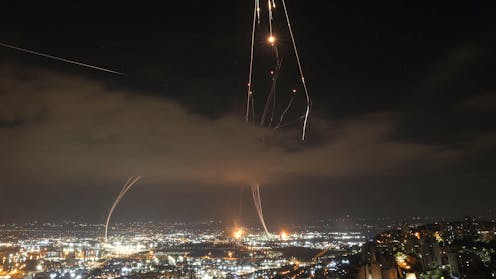
    Missiles fired from Iran are pictured in the night sky over Jerusalem on June 14, 2025.
    Photo by Menahem Kahana/AFP via Getty Images

    Unlike established nuclear powers that can negotiate from positions of strength, threshold states, such as Iran, face a stark choice: remain vulnerable to preventive strikes and regime change or race toward the protection that nuclear deterrence provides.

    North Korea offers the clearest example of this dynamic. Despite decades of sanctions and military threats, Pyongyang’s nuclear program has made it essentially immune to preventive strikes. Iranian leaders understand this lesson well – the question is whether they can reach the same protected status before suffering decisive preventive action.

    Traditional nuclear deterrence theory assumes rational actors operating under mutual vulnerability. But threshold wars break these assumptions in fundamental ways. Iran cannot fully deter Israeli action because it lacks confirmed weapons, while Israel cannot rely on deterrence to prevent Iranian weaponization because Iran’s nuclear program continues advancing.

    This creates “use it or lose it” dynamics: Israel faces shrinking windows to act preventively as Iran approaches weaponization; Iran faces incentives to accelerate its program before suffering additional strikes.

    The absence of effective external mediation compounds these risks. U.S. President Donald Trump’s response to the strikes reveals this dynamic starkly. Initially opposing military action and preferring diplomacy to “bombing the hell out of” Iran, Trump pivoted dramatically after the strikes began, and warned that “there’s more to come. A lot more.”

    His post on Truth Social – “Two months ago I gave Iran a 60-day ultimatum to ‘make a deal.’ They should have done it!” – demonstrates how quickly diplomatic efforts can collapse once threshold wars begin.

    Global implication

    The international response reveals how thoroughly Israel’s Operation Rising Lion has normalized aggression against nuclear facilities. While European leaders called for “maximum restraint,” none condemned Israel’s initial attacks. Russia and China condemned the attacks but took no concrete action. The U.N. Security Council produced only statements of “concern” about “escalation.”

    This normalization sets what I believe to be a catastrophic precedent. The threshold war model threatens to unravel decades of nuclear governance based on deterrence rather than preemption.

    Indeed, the Iran-Israel threshold war sets dangerous precedents for other regional nuclear competitions. Successful preventive strikes could incentivize similar actions elsewhere, eroding diplomatic nonproliferation efforts. Conversely, rapid nuclearization by Iran could encourage other threshold states, like Saudi Arabia, to pursue nuclear capabilities swiftly and secretly.

    When preventive strikes become the enforcement mechanism for nonproliferation norms, the entire architecture of nuclear governance begins to crumble. Without these frameworks, the world faces an unstable future defined by cycles of preventive strikes and accelerated nuclear proliferation – far more dangerous than the Cold War-era standoffs that shaped nuclear governance.

    Farah N. Jan does not work for, consult, own shares in or receive funding from any company or organization that would benefit from this article, and has disclosed no relevant affiliations beyond their academic appointment.

    ref. Iran-Israel ‘threshold war’ has rewritten nuclear escalation rules – https://theconversation.com/iran-israel-threshold-war-has-rewritten-nuclear-escalation-rules-258965

    MIL OSI – Global Reports

  • MIL-OSI Global: Iran-Israel ‘threshold war’ has rewritten nuclear escalation rules

    Source: The Conversation – Global Perspectives – By Farah N. Jan, Senior Lecturer in International Relations, University of Pennsylvania

    Smoke rises from locations targeted in Tehran amid the third day of Israel’s waves of strikes against Iran, on June 15, 2025. Photo by Khoshiran/Middle East Images/AFP via Getty Images

    Israel’s conflict with Iran represents far more than another Middle Eastern crisis – it marks the emergence of a dangerous new chapter in nuclear rivalries that has the potential to reshape global proliferation risks for decades to come.

    What began with Israeli strikes on Iranian nuclear facilities and other targets on June 13, 2025 has now spiraled into the world’s first full-scale example of what I as an expert in nuclear security call a “threshold war” – a new and terrifying form of conflict where a nuclear weapons power seeks to use force to prevent an enemy on the verge of nuclearization from making that jump. As missiles continue to rain down on both Tehran and Tel Aviv – with hundreds dead in Iran and at least 24 killed in Israel – the international community is witnessing the collapse of traditional deterrence frameworks in real time.

    Unlike traditional nuclear rivalries where both sides possess declared arsenals – like India and Pakistan, who despite their tensions operate under mutual deterrence – this new threshold dynamic creates an inherently unstable escalation spiral. Iran increasingly believes it cannot deter Israeli aggression without nuclear weapons, yet every step toward acquiring them invites more aggressive Israeli strikes. Israel, for its part, cannot permanently eliminate Iran’s nuclear knowledge through military means – it can only delay it through means that would seemingly guarantee future Iranian determination to acquire the ultimate deterrent.

    Under this dynamic, neither side can step back without accepting an intolerable outcome: for Israel, an Iran more determined than even in becoming a nuclear weapons nation capable of deterring Israeli action and ending its regional military dominance; for Iran, the risk of regime change through devastating Israeli strikes. The consequences of this deadly logic extend far beyond the Middle East.

    Flames rise from an oil storage facility after it appeared to have been hit by an Israeli strike in Tehran, Iran, on June 15, 2025.
    AP Photo/Vahid Salemi

    The preventive strike precedent

    The stakes could not be higher, as Iranian officials have called the attack “a declaration of war” and vowed that destroyed nuclear facilities “would be rebuilt.” Israel, meanwhile has warned its campaign will continue “for as many days as it takes.”

    Most ominously, the scheduled nuclear talks between the U.S. and Iran were called off, with Tehran dismissing any such dialogue as “meaningless.” This may suggest diplomacy’s window – which opened for just a few months under Trump’s second administration, after being closed during his first – was deliberately slammed shut.

    More broadly, the Israeli strikes mark a dangerous evolution in international norms around preventive warfare. While Israeli officials called this a “preemptive strike,” the legal and strategic reality is different. Preemptive strikes respond to imminent threats – like Israel’s 1967 Six-Day War against Arab armies preparing to attack. Preventive strikes, by contrast, target distant future threats when conditions seem favorable – like Japan’s attack on Pearl Harbor in 1941.

    Israel justified its action by claiming Iran could rapidly assemble up to 15 nuclear bombs. Yet, as the International Atomic Energy Agency director, Rafael Grossi, warned beforehand, an Israeli strike could solidify rather than deter Iran’s nuclear ambitions, potentially prompting withdrawal from the Nuclear Non-Proliferation Treaty. True to that warning, on June 16, Iran announced it was preparing a parliamentary bill that would see the country leave the 1968 treaty.

    Israel’s calculations in opting to strike build on the same erosion of international legal frameworks that has legitimized preemptive warfare since the United States’ military action in Afghanistan and Iraq after the Sept. 11, 2001 attack. America’s “war on terror” fundamentally challenged sovereignty norms through practices like drone strikes and preemptive attacks. More recently, operations in Gaza and elsewhere have demonstrated that violations of international humanitarian law carry limited consequences in practice. For Israel, this permissive environment has seemingly created both opportunity and justification regarding striking Iran – something that Prime Minister Benjamin Netanyahu has been pursuing for decades.

    Already, Russia’s attacks on Ukraine’s Zaporizhzhia nuclear plant demonstrated nuclear facilities’ vulnerability in modern warfare. I believe Israel’s actions further risk normalizing attacks on nuclear infrastructure, potentially legitimizing similar preventive actions by India, China or the U.S. against emerging nuclear programs elsewhere.

    From strikes to regional conflagration

    Israel’s initial strike quickly triggered inevitable escalation. Iran’s retaliation came in waves: first hundreds of drones and missiles on June 13, then sustained barrages throughout the following days. By the morning of June 15, both countries were trading strikes on energy infrastructure, military bases and civilian areas, with no immediate end in sight.

    The Houthis in Yemen have since joined the fight, by launching ballistic missiles at Tel Aviv. Notably absent are Hezbollah, Hamas and Iran’s Iraqi militias – all significantly damaged by recent action by Israel. This degradation of Iran’s “axis of resistance” – its traditional forward deterrent – fundamentally alters Tehran’s strategic calculations. Without strong proxies to threaten retaliation, Iran is more exposed to Israeli strikes, making nuclear weapons seem like the only reliable deterrent against future attacks.

    The escalation pattern illustrates what can happen when when a government casts aggression as prevention. Having initiated the recent escalation of hostilities, Israel now faces the consequences. Iranian President Masoud Pezeshkian’s vow that destroyed facilities “would be rebuilt” underscores that Israeli action designed to prevent nuclearization may instead result in Iran pursuing it with renewed determination.

    The commitment trap

    This creates what strategists call the “commitment trap” – a dynamic where both sides face escalating costs but cannot back down. Israel faces its own strategic dilemma. The strikes may ultimately accelerate rather than prevent Iranian nuclearization, yet backing down would mean accepting a nuclear Iran. Netanyahu’s promise that current strikes are “nothing compared to what they will feel in coming days” shows how quickly strikes sold as preventative escalate toward total war.

    Missiles fired from Iran are pictured in the night sky over Jerusalem on June 14, 2025.
    Photo by Menahem Kahana/AFP via Getty Images

    Unlike established nuclear powers that can negotiate from positions of strength, threshold states, such as Iran, face a stark choice: remain vulnerable to preventive strikes and regime change or race toward the protection that nuclear deterrence provides.

    North Korea offers the clearest example of this dynamic. Despite decades of sanctions and military threats, Pyongyang’s nuclear program has made it essentially immune to preventive strikes. Iranian leaders understand this lesson well – the question is whether they can reach the same protected status before suffering decisive preventive action.

    Traditional nuclear deterrence theory assumes rational actors operating under mutual vulnerability. But threshold wars break these assumptions in fundamental ways. Iran cannot fully deter Israeli action because it lacks confirmed weapons, while Israel cannot rely on deterrence to prevent Iranian weaponization because Iran’s nuclear program continues advancing.

    This creates “use it or lose it” dynamics: Israel faces shrinking windows to act preventively as Iran approaches weaponization; Iran faces incentives to accelerate its program before suffering additional strikes.

    The absence of effective external mediation compounds these risks. U.S. President Donald Trump’s response to the strikes reveals this dynamic starkly. Initially opposing military action and preferring diplomacy to “bombing the hell out of” Iran, Trump pivoted dramatically after the strikes began, and warned that “there’s more to come. A lot more.”

    His post on Truth Social – “Two months ago I gave Iran a 60-day ultimatum to ‘make a deal.’ They should have done it!” – demonstrates how quickly diplomatic efforts can collapse once threshold wars begin.

    Global implication

    The international response reveals how thoroughly Israel’s Operation Rising Lion has normalized aggression against nuclear facilities. While European leaders called for “maximum restraint,” none condemned Israel’s initial attacks. Russia and China condemned the attacks but took no concrete action. The U.N. Security Council produced only statements of “concern” about “escalation.”

    This normalization sets what I believe to be a catastrophic precedent. The threshold war model threatens to unravel decades of nuclear governance based on deterrence rather than preemption.

    Indeed, the Iran-Israel threshold war sets dangerous precedents for other regional nuclear competitions. Successful preventive strikes could incentivize similar actions elsewhere, eroding diplomatic nonproliferation efforts. Conversely, rapid nuclearization by Iran could encourage other threshold states, like Saudi Arabia, to pursue nuclear capabilities swiftly and secretly.

    When preventive strikes become the enforcement mechanism for nonproliferation norms, the entire architecture of nuclear governance begins to crumble. Without these frameworks, the world faces an unstable future defined by cycles of preventive strikes and accelerated nuclear proliferation – far more dangerous than the Cold War-era standoffs that shaped nuclear governance.

    Farah N. Jan does not work for, consult, own shares in or receive funding from any company or organization that would benefit from this article, and has disclosed no relevant affiliations beyond their academic appointment.

    ref. Iran-Israel ‘threshold war’ has rewritten nuclear escalation rules – https://theconversation.com/iran-israel-threshold-war-has-rewritten-nuclear-escalation-rules-258965

    MIL OSI – Global Reports

  • MIL-OSI Global: Highways to hell: west Africa’s road networks are the preferred battleground for terror groups

    Source: The Conversation – Africa – By Olivier Walther, Associate Professor in Geography, University of Florida

    What’s the connection between roads and conflict in west Africa? This may seem like an odd question. But a study we conducted shows a close relationship between the two.

    We are researchers of transnational political violence. We analysed 58,000 violent events in west Africa between 2000 to 2024. Our focus was on identifying patterns of violence in relation to transport infrastructure.

    Anecdotal evidence suggests that roads, bridges, pipelines and other transport systems are increasingly attacked across west Africa, but little is known about the factors that explain when, where and by whom.

    Violence in west Africa involves a complex mix of political, economic and social factors. Weak governance, corruption, urban-rural inequalities and marginalised populations have been exploited by numerous armed groups, including transnational criminal networks and religious extremists.

    West Africa has been one of the world’s most violent regions since the mid 2010s. In 2024 alone, the Armed Conflict Location and Event Data initiative recorded over 10,600 events of political violence in the region. These ranged from battles between armed groups, explosions and other forms of remote violence, to attacks on unarmed civilians. An estimated 25,600 people were killed. This has been the status quo in the region for nearly a decade.

    The results of our study show that 65% of all the attacks, explosions, and violence against civilians recorded between 2000 and 2024 were located within one kilometre of a road.

    Only 4% of all events were located further than 10km from a road. This pattern was consistent across all road types but most pronounced near highways and primary roads.

    We think the reason for this pattern is that there is fierce competition between state and non-state actors for access to and use of roads.

    Governments need well-developed road networks for a host of reasons, including the ability to govern, enabling economic activity, and security. Roads enable military mobility and reduce potential safe havens for insurgents in remote regions.

    Insurgent groups also see transport networks as prime targets. They create opportunities to blockade cities, ambush convoys, kidnap travellers, employ landmines, and destroy key infrastructure.

    Our research is part of a long line of work that explored the role of infrastructure in relation to security in west Africa. Our latest research reinforces earlier findings linking the two. Transport networks have become battlegrounds for extremist groups seeking to destabilise states, isolate communities and expand their influence.

    The network

    The west African road network is vast, estimated at over 709,000km of roads by the Global Roads Inventory Project. It compares unfavourably with other African regions. For example, paved roads remain relatively scarce in west Africa (17% of the regional network) when compared with north Africa (83%).

    Poorly maintained roads impose costs on west African countries. They increase transport time of perishable goods, shorten the operational life of trucks, cause more accidents, and reduce social interactions between communities.

    Still, significant variations in road quality are found across the region. The percentage of paved roads ranges from a high of 37% in Senegal to just over 7% in Mali. Nigeria has the largest road network in west Africa with an estimated 195,000km, but much of it has deteriorated because of poor maintenance.

    Road-related violence is on the rise

    We found that road-related attacks have been on the rise since jihadist groups emerged in the mid-2010s. Only 31 ambushes against convoys were reported in Burkina Faso, Chad, Mali and Niger from 2000-2015, against 497 from 2016-2023.

    Attacks frequently occur along the same road segments, such as around Boni in the Gourma Mounts, where Jama’at Nusrat ul-Islam wa al-Muslimin (JNIM) conducted nine attacks against Malian forces and Wagner mercenaries between 2019 and 2024.

    Violence was the most clustered near roads in 2011, with 87% of all violent events located within 1km of a road. Our analysis shows that, though still high, there’s been a decline post-2000: 59% in 2022 and 60% in 2024. This evolution reflects the ruralisation of conflict in west Africa. As jihadist insurgents target rural areas and small towns more and more, an increasing share of violent events also occurs far away from roads.

    We’ve studied the root causes of west Africa’s violence for nearly a decade, documenting the ever-intensifying costs paid by its people. In the process, we’ve uncovered overlooked aspects of the turmoil, including the centrality of the road networks to an understanding of where the violence is happening.

    The most dangerous roads of west Africa

    Our findings show that violence against transport infrastructure is very unevenly distributed in west Africa and that specific road segments have been repeatedly targeted. This was particularly the case in the Central Sahel, Lake Chad basin, and western Cameroon.

    For example, the 350km ring road linking Bamenda to Kumbo and Wum in Cameroon is the most violent road in west Africa, with 757 events since 2018, due to the conflict between the government and the Ambazonian separatists.

    The longest segments of dangerous roads are in Nigeria, particularly those connecting Maiduguri in Borno State to Damaturu, Potiskum, Biu and Bama.

    In the central Sahel, the road between Mopti/Sévaré and Gao is by far the most violent transport axis, with 433 events since the beginning of the civil war in Mali in 2012. South of Gao, National Road 17 leading to the Nigerien border, and National Road 20 heading east toward Ménaka have experienced 177 and 139 events respectively since the Islamic State – Sahel Province (ISSP) intensified its activities in the region in 2017.

    In Burkina Faso, all the roads leading to Djibo near the border with Mali have experienced high levels of violence since the early 2020s.

    Building transport infrastructure to promote peace

    Roads are an important part of state counterinsurgency strategies and a strategic target for local militants. Yes, as our work highlights, transport infrastructure is largely ignored in debates that emphasise more state interventions as a means of combating insecurity. Sixty years after the independence of many west African countries, road accessibility remains elusive in the region.

    Peripheral cities such as Bardaï, Bilma, Kidal and Timbuktu, where rebel movements have historically developed, are still not connected to the national network by tarmac roads.

    The duality of the transport infrastructure, as both a facilitator and target of violence, has put government forces at a disadvantage. Regular forces are heavily constrained by the sparsity and poor conditions of the road network, which makes them vulnerable to attacks without necessarily allowing them to project their military power over long distances.

    Rather than building transport infrastructure, states have focused on strengthening security by investing in military bases. The military coups in Burkina Faso, Mali and Niger have further reinforced this trend, with the creation of a joint force by the countries of the Alliance of Sahel States.

    Strengthening security has taken precedence over developmental support for peripheral communities, who experience the worst of the violence.

    Olivier Walther receives funding from the Organisation for Economic Co-operation and Development.

    Alexander John Thurston receives funding from the Organisation for Economic Co-operation and Development.

    Steven Radil receives funding from the Organisation for Economic Co-operation and Development.

    ref. Highways to hell: west Africa’s road networks are the preferred battleground for terror groups – https://theconversation.com/highways-to-hell-west-africas-road-networks-are-the-preferred-battleground-for-terror-groups-258517

    MIL OSI – Global Reports

  • MIL-OSI Global: Kenya’s peacebuilding efforts hold valuable lessons for the rest of the world, but gaps remain

    Source: The Conversation – Africa – By Leonor Oliveira Toscano, PhD Candidate in Political Science, University of Oslo

    Kenya has been praised as a “model for the world” when it comes to peacebuilding efforts to manage outbreaks of violence within its borders. The country has systematically put in place a peacebuilding architecture rooted in a history of local peace initiatives. These date back to the early 1990s.

    Over this period, the Wajir Peace and Development Committee emerged in the country’s north-eastern region. The committee successfully addressed decades of inter-clan violence in Wajir, an arid county bordering Somalia. It also inspired the emergence of numerous local peace committees across the country.

    These committees have been set up in some other African countries – like Ghana, South Africa, Sierra Leone and Burundi – and continue to contribute informally to local peacebuilding in these states.


    Read more:
    Training local leaders in mediation can reduce violence: positive results in Nigeria


    In Kenya, the committees became institutionalised after post-election violence in 2007-08 and a mediation process led by former UN secretary general Kofi Annan. They now form part of the national peacebuilding architecture.

    Violence triggered by the contested 2007 presidential election outcome resulted in the killing of more than 1,000 people. The mediation process led to a power-sharing agreement signed by the presidential contenders Mwai Kibaki and Raila Odinga.

    The country’s peacebuilding architecture is now supported by several policies and frameworks. These include the constitution of 2010. The system that’s been built has the capacity to connect a wide variety of peacebuilding actors – both state and non-state, formal and informal – at all levels of society. This helps resolve conflict and build resilience.

    The Kenyan government initiated a review of the peacebuilding architecture in 2023. It involved a lengthy consultation process and high levels of participation among Kenyans. The National Steering Committee on Peacebuilding and Conflict Management led the way, assisted by an independent panel of 13 peacebuilding experts.

    Released at the end of 2024, the review looked at the strengths and weaknesses of the architecture.

    It offers a vision for building a robust peacebuilding system, along with an actionable roadmap. One lesson is that Kenya can use the capacities and unique approaches of different peacebuilding actors. At the local level, peace committees showed that they made contributions to early warning systems and building confidence in communities.

    However, insufficient resources and a consistent focus on electoral violence prevent the system from addressing other drivers of conflict.

    The strengths

    Local peace committees, with membership typically drawn from ordinary citizens, religious groups or local civil society organisations, play a crucial role. They support dialogue around conflict issues. They promote trust and understanding, and can build a constructive environment for conflict resolution.

    Their information gathering feeds into the regional Intergovernmental Authority on Development’s Conflict Early Warning and Response System (CEWARN) to prevent election violence. Local peace committees have contributed to negotiating local disputes. They have also helped de-polarise ethnic identities and facilitated local peace agreements. One example was the Modogashe Declaration. It sets ground rules to solve conflict and local disputes over pasture, water access and cattle rustling.


    Read more:
    Kenya violence: 5 key drivers of the decades-long conflict in the north and what to do about them


    We are researchers in Norway on a project focusing on civilian agency, local peace and resilience building. Our own interviews with committee members in Nakuru – a county greatly affected by the violence in 2007-08 – found that peace committee members continued to work together and share conflict-sensitive information with local stakeholders. These include administration officers and religious leaders, and covered periods during and after the 2022 elections.

    Further, local peace committees can offer women valuable opportunities for participation in conflict management. This contributes to their protection, for example from sexual violence.

    The weaknesses

    Despite these successes, Kenya’s peacebuilding architecture faces pressing challenges.

    First, local peace committees aren’t perfect. They can be manipulated by politicians seeking to build local support. They can also compete with traditional actors such as elders in conflict resolution.

    Kenya’s institutionalisation of local peacebuilding strengthened information flow across all levels. But it also threatens to undermine local peacebuilding agency and autonomy. Formalising local peace committees can spur an unhealthy monetisation of peacebuilding, with some members joining for financial gain. This threatens to erode the voluntary character of peacebuilding as a common good and undermine genuine priorities for peace.


    Read more:
    How women in Kenya mobilised for peace after surviving violence


    Second, elite-level politics in Kenya creates the persistent risk of electoral violence. This diverts attention and resources away from other long-standing causes of conflict. The drivers of violence in Kenya are varied and region specific. They include disputes over access to land, and marginalisation of ethnic and religious communities. Climate change threatens to worsen competition and conflict between pastoralists and farming communities.

    Our analysis of event data from Armed Conflict Location & Event Data shows that communal violence is the deadliest form of political violence in Kenya. For their part, fatalities related to election violence have decreased. This underscores the urgent need to consistently invest in prevention and local peacebuilding beyond narrow electoral periods.

    Fatalities in Kenya by type of armed violence: 2010-2023

    Electoral competition can escalate violence between pastoralists and farmers, but it’s the persistence of communal conflicts that represents a serious threat. Communal violence particularly affects Kenya’s arid and semi-arid areas in the Rift Valley, eastern and north-eastern regions.

    What next

    Our interviews with local peace committee members show that funding for their activities diminishes outside election years. This hampers their capacity to address conflict outside these periods.

    Yet research has shown that local peacebuilding can build social resilience against recurrent communal violence. Peacebuilding interventions grounded in local realities are also vital for countering insurgent violence. This is especially important as counterterrorism operations by state forces often trigger cycles of violence rather than resolving underlying issues.


    Read more:
    Drivers of electoral violence in Kenya: red flags to watch out for


    Our research finds that Kenyans place significant trust in local peacebuilders, such as community leaders, elders and women. The review of the country’s peacebuilding architecture proposes a 40% quota for women, youth and people with disabilities in local peace committees.

    However, quotas alone may not be sufficient to address the political and cultural challenges that entrench inequality.

    Ultimately, political elites need to transform Kenya’s “win at all costs” politics. This way, the country’s mediators and peacebuilders can address the deep social and economic grievances that underpin cycles of violence.

    Leonor Toscano’s doctoral research is supported by the grant from the European Research Council’s Horizon 2020 Research and Innovation Program (852816; PI: Jana Krause). Leonor Toscano conducted interviews with LPC members in Kenya.

    Jana Krause received funding from the European Union’s Horizon 2020 Research and Innovation Programme under grant number 852816 (ResilienceBuilding).

    Marika Miner’s post-doctoral research is also supported by the grant from the European Research Council’s Horizon 2020 Research and Innovation Program (852816; PI: Jana Krause).

    ref. Kenya’s peacebuilding efforts hold valuable lessons for the rest of the world, but gaps remain – https://theconversation.com/kenyas-peacebuilding-efforts-hold-valuable-lessons-for-the-rest-of-the-world-but-gaps-remain-257761

    MIL OSI – Global Reports

  • MIL-OSI Global: A new book of Edward Gorey’s drawings shows what’s lost when the artist’s sexuality is glossed over

    Source: The Conversation – USA – By Elizabeth Wolfson, Assistant Director of Campus Partnerships for the Office of Public Scholarship, Washington University in St. Louis

    Edward Gorey on the set he designed for the Broadway revival of Bram Stoker’s ‘Dracula’ in 1977. Jack Mitchell/Getty Images

    Artist, illustrator and writer Edward Gorey would have turned 100 this year, and the recently published “From Ted to Tom: The Illustrated Envelopes of Edward Gorey” is a fitting celebration of his wit and talent.

    The book reproduces, in stunning detail, a series of 50 elaborately illustrated envelopes Gorey created in the mid-1970s. But when I started reading “From Ted to Tom,” I felt confused – and a little let down.

    The book makes no mention of Gorey’s queerness. To me, this is a missed opportunity to shed light on how being gay may have fueled some of his most personal work.

    The master of macabre

    Today, Edward Gorey is widely known for his sprawling, macabre-yet-humorous body of work, which spans nearly every medium.

    There are dozens of his own books, notably “The Doubtful Guest” and “The Gashlycrumb Tinies,” as well as cover designs for many others; sets and costumes for the 1977 Tony Award-winning revival of Bram Stoker’s “Dracula”; the opening credit sequence for the PBS television series “Mystery!”; “The Fantod Pack,” a deck of Tarot-like cards; and hand-sewn, surrealist dolls.

    His stories often feature adults and children alike who meet untimely ends through mostly hilarious, unlikely accidents – and, yes, the occasional straight-up murder. But they’re never gratuitous, nor do they glorify violence for violence’s sake.

    As for his personal life, Gorey may have been what today we’d call asexual; Gorey himself used the term “undersexed,” but he also acknowledged, when asked directly about his sexuality, that he “supposed” he was gay.

    Mark Dery’s 2018 Gorey biography, “Born to be Posthumous: The Eccentric Life and Mysterious Genius of Edward Gorey,” documents the artist’s participation in postwar gay life. The book details a handful of crushes Gorey had on various men, at least one of which – a brief affair with a man named Victor – involved some physical intimacy.

    To whatever extent Gorey entertained sex or romance, it was with men. As Dery points out, however, this fact largely goes unaddressed in discussions of the artist’s work.

    A chance encounter

    “From Ted to Tom” reinforces this silence.

    The “Tom” is Tom Fitzharris, the author of the book’s introduction and some commentary at the book’s end.

    In the introduction, Fitzharris explains that before he met Gorey, he was already collecting the artist’s “small, exquisite books.”

    After attending a gallery exhibit of Gorey’s work in 1974, Fitzharris mailed him one of the books from his collection to request Gorey’s signature, along with a cryptic inquiry about two of the book’s characters. Gorey obliged and returned the book with a similarly cryptic reply.

    Soon after this exchange, Fitzharris spotted Gorey on the street and introduced himself. The two soon began meeting regularly “for dinner, the theater, coffee, and especially the ballet, his great passion,” one that Fitzharris shared. When Gorey left to summer on Cape Cod, he began sending Fitzharris the envelopes collected in “From Ted to Tom.”

    Fitzharris shares almost no information about himself in the book, and he has never commented publicly about his own sexuality. However, even his dry, minimalist narration cannot conceal the intensity of their connection.

    Describing his first visit to Gorey’s apartment, he writes: “I thought I’d be at Gorey’s for ten minutes, but I left two hours later.” Whether Fitzharris lost track of time as the two explored their “dozens of shared interests” or simply couldn’t tear himself away, when he finally made it back to work, he was surprised that he still had a job.

    The envelope as canvas

    Given this voracious drive to create, it is no surprise that Gorey saw an object as humble as a letter envelope as a creative opportunity. As Dery points out, Gorey was also making his illustrated envelopes as the mail art movement was becoming popular. Sparked by artist Ray Johnson in the 1960s – who, like Gorey, lived in New York City – it involved artists using the postal service to exchange works of art, using it as an alternative to the commercial galleries and museums that artists had largely depended on.

    The 50 envelopes reproduced in “From Ted to Tom” was not Gorey’s first dalliance with the envelope as canvas; he’d experimented with it six years earlier, while in the midst of a collaboration with author and editor Peter Neumeyer, with whom he produced three children’s books.

    In his drawings to Neumeyer, Gorey mostly seems to be having fun playing around with a new formal challenge: how to integrate drawings with the prerequisite address text in a satisfying way.

    Because I study how people use images to make sense of the world, I couldn’t help but notice key differences between the Neumeyer envelopes and those that Gorey sent to Fitzharris.

    The Fitzharris series is poised and polished from the jump. Gorey’s distinctive hand-lettering is crisp, precise and perfectly straight, each envelope a complete scene. Some scenes are more complex than others, but each is a complete thought.

    There’s another notable difference between the Neumeyer and Fitzharris envelopes. While the former features a revolving cast of real and imaginary creatures, the latter has two co-stars: two black-and-white dogs, sides emblazoned with matching, serifed T’s.

    In his introduction to the book, Fitzharris confirms that the animals represent Gorey and him. Fitzharris is also clearly more than the lucky witness to a burst of creative genius. He is its muse.

    ‘Pen pal’ or something more?

    Whatever Gorey’s artistic ambitions for the project, it is also a visual diary of sorts: an album of their shared experiences, their common interests and hobbies, and a document of Gorey’s goings-on while they were apart.

    Take, for example, an envelope that depicts the canine duo standing amid a vast assemblage of blue bottles, with Fitzharris’ address displayed as labels.

    “All the blue bottles are a recollection of a window full of them in one of the antique shops I stopped in after you left that Sunday,” Gorey wrote in the accompanying letter. “The sun coming through them is not reproducible, at least by me.”

    In the same letter, Gorey struggles to convey the depth of his feeling upon receiving a recent letter from Fitzharris.

    “I used to maintain that if it couldn’t be put into words it didn’t exist; if anything I believe rather the opposite now. All of which is rather a strangled attempt to say that I appreciated your letter of the 23rd very much, but that I don’t know how to say so directly. Yes.”

    What did Fitzharris’ letter say that moved Gorey so much? What is the meaning of his singular, elliptical “yes”? Is it simply stylistic? Or is it a response?

    We’ll likely never know. But evidently whatever Fitzharris said moved him deeply.

    There are other poignant scenes. In his notes to “From Ted to Tom,” Fitzharris takes credit for introducing Gorey to the French phrase “heure bleue,” which translates to “the blue hour” and refers to the time of day just after the sun sets. Gorey’s delight is reflected in a lovely scene of quiet companionship.

    Tom and Ted stand at a low fence or porch railing, sharing drinks and gazing up at a darkening sky as dusk settles over thick foliage. For once leaving nothing to the imagination, he inscribes “HEURE BLEUE” next to the image in thick, bold letters – a rare act of captioning.

    This unusual relative directness continues into the accompanying letter. Though he can hardly bear admitting it, Gorey describes their recent visit as “a happy day,” immediately qualifying the comment as a “revolting phrase.”

    One “cannot help but think how seldom in life one knows one is having one at the time,” he continues. The phrasing is somewhat innocuous. But I wonder how much pleasure Gorey must have felt – and how strong his need to convey it must have been – to overcome the force of his “revulsion.”

    This push and pull between attraction to one another and repulsion at one’s own spontaneous emotion supplies the dynamism that make the drawings in “From Ted to Tom” so compelling.

    Despite this powerful current, Fitzharris, who is credited as the book’s editor, leaves the topic of Gorey’s sexuality untouched in both his introduction to the book and its end notes, where he provides a guide to some of the personal and cultural references in Gorey’s drawings and letters. The book’s back cover refers to Fitzharris as the artist’s “pen pal.”

    Denied access to the underlying details driving this dynamism, the reader loses the chance to reflect on the source of this electrical current, its impact on his art, and how Gorey’s struggles with intimacy and desire, which are all too universal, were also undoubtedly shaped by the challenge of being gay in a deeply homophobic society.

    Rather than limiting the understanding of his work, accounting for Gorey’s queerness invites viewers of his art and readers of his work into deeper communion with the artist – and themselves.

    Elizabeth Wolfson does not work for, consult, own shares in or receive funding from any company or organization that would benefit from this article, and has disclosed no relevant affiliations beyond their academic appointment.

    ref. A new book of Edward Gorey’s drawings shows what’s lost when the artist’s sexuality is glossed over – https://theconversation.com/a-new-book-of-edward-goreys-drawings-shows-whats-lost-when-the-artists-sexuality-is-glossed-over-257938

    MIL OSI – Global Reports

  • MIL-OSI Global: Conflicted, disillusioned, disengaged: The unsettled center of Jewish student opinion after Oct. 7

    Source: The Conversation – USA – By Jonathan Krasner, Associate Professor of Jewish Education Research, Brandeis University

    Pro-Palestinian students pass the flag of Israel while walking out of commencement in protest at the Massachusetts Institute of Technology on May 30, 2024. AP Photo/Charles Krupa

    As commencement season comes to a close, many campuses remain riven by the Israel-Hamas war. At the Massachusetts Institute of Technology, the undergraduate class president was banned from walking at her graduation after delivering a fiery – and unauthorized – speech accusing her school of complicity in Israel’s campaign to “wipe out Palestine off the face of the earth.” Anti-Israel protests broke out at graduation ceremonies across the United States, from Columbia to the University of California at Berkeley.

    Since Hamas’ Oct. 7, 2023, attack and Israel’s retaliatory invasion of Gaza, many American campuses have been punctuated by vigils, demonstrations and disruptions. But the loudest voices aren’t necessarily the most representative. Activists’ pronouncements on either side fail to capture the range of student opinion about the war and its reverberations at home, including the documented rise in antisemitism and Islamophobia.

    This is certainly true for Jewish students – buffeted by the war, the hostage crisis, campus protests and federal politics. Since January 2025, the Trump administration has used campus antisemitism and anti-Zionism as a pretext to assault higher education and implement hard-line immigration policies.

    Indeed, one of the most striking findings of my study
    on Jewish undergraduate attitudes, published in May 2025, is how many students described themselves as conflicted, uncertain, disaffected and even detached. Interviews across the country convinced my research team that any attempt to gauge Jewish student opinion with either/or categories are reductive and misleading.

    Moving beyond numbers

    In the wake of Oct. 7, my office hours quickly became a refuge for distraught Jewish students as they processed their thoughts. Few were content with pat answers.

    Students at USC attend a vigil on Oct. 10, 2023, days after Hamas’ attack on Israel.
    Luis Sinco/Los Angeles Times via Getty Images

    I began wondering how representative they were. Tufts researchers Eitan Hersh and Dahlia Lyss found that since Oct. 7, more students were valuing and prioritizing their Jewish identities, even while an increased number were hiding their Jewishness on campus.

    My Brandeis colleagues Graham Wright, Leonard Saxe and their research team, meanwhile, found that a clear majority of Jewish students said they felt a connection to Israel but were sharply divided in their views of its government. While most considered statements calling for the country’s destruction to be antisemitic, they differed about where to draw the line between reasonable and illegitimate criticisms of Israel.

    These findings were instructive. But I was interested in learning more about the “how” and the “why” behind the numbers. Over the spring 2024 semester, my team and I interviewed 38 students on 24 campuses across 16 states and the District of Columbia. Participants reflected the broad religious, political, economic, geographical, sexual and racial diversity within the American Jewish population, particularly among Jews under 30. Some of the campuses were relatively placid; others were hotbeds of protest.

    The ‘missing middle’

    As my team analyzed transcripts, we identified six categories.

    About one-third of the Jewish students we spoke with were actively engaged on either side of the conflict, whether through demonstrations or online advocacy. “Affirmed” students’ connection to Israel deepened after Oct. 7. “Aggrieved” students, on the other hand, had joined anti-war protests and voiced anger at Jewish organizations for ignoring Israel’s culpability for Palestinian suffering.

    Many more of our participants, however, were ambivalent, despondent or even apathetic. As journalist Arno Rosenfeld put it in an article about my research, the majority of Jewish students inhabit a “great missing middle” in Israeli-Palestinian discourse.

    Two-thirds of the students we spoke with are in this “missing middle,” divided into four categories:

    • “Conflicted” students were inconclusively grappling with the moral and political complexities of the Israeli-Palestinian conflict.
    • “Disillusioned” students struggled to reconcile their sentimental attachment to Israel with their disappointment – their sense that the country betrayed its own values in its treatment of Palestinians.
    • “Retrenched” students turned inward, fearful of being identified as Jewish on campuses they perceived as hostile to Jews.
    • The last category, “disengaged” students, were detached or actively steering clear of controversy.
    Students gather at the University of Maryland to celebrate Hanukkah with a menorah lighting ceremony in 2007.
    Jahi Chikwendiu/The Washington Post via Getty Images

    Out of the fray

    The most straightforward of these categories is the “disengaged” students. Some, like Bella, on the West Coast – all of the names in this article are pseudonyms – knew little about the conflict before the war. What they learned since convinced them it was unsolvable and that they were powerless to promote change.

    The distance that some students felt from events in Israel and Gaza made it all the more baffling and odious to them when peers protested in ways that implied Jewish Americans were complicit.

    “I’m not personally doing anything,” complained Salem, a first-year student in the Midwest. “I don’t have anything to do with this.”

    Students whom we classified as “retrenched” reported anxiety, loss of sleep and a sense of isolation. Many of them were concerned that rejecting Zionism – that is, the movement supporting the creation and preservation of Israel as a national homeland for the Jewish people – had become a litmus test in their progressive circles. That was untenable for these students, because they viewed Zionism as a constituent part of being Jewish.

    Interviewees like Jack, a junior in the Pacific Northwest, spoke of removing their Star of David necklaces and censoring elements of their biography, because they perceived a social penalty for being Jewish.

    Since the start of the war, more students have said they try to hide their Jewish identity at times.
    Maor Winetrob/iStock via Getty Images

    Rejecting simple narratives

    By far, the largest group of Jewish students were struggling with mixed feelings about the war and its reverberations. What united these “conflicted” or “disillusioned” students was wariness of grand narratives and talking points that reduce the Israeli-Palestinian conflict to a contest between good and evil, or the powerful and the powerless. They also eschewed labels such as “Zionist” or “anti-Zionist,” saying they lacked nuance.

    Consider Elana, a “conflicted” sophomore in the mid-Atlantic, who told us she was uncomfortable in most Jewish spaces on campus because they effectively demanded that she declare her Israel politics at the door. It seemed to her that activists on both sides were more comfortable retreating into echo chambers than engaging in dialogue across differences.

    Then there was Shira, a “disillusioned” first year in the Midwest who viewed Israeli-Palestinian coexistence, however implausible, as the only alternative to mutual destruction. She refused to participate in anti-war demonstrations on her campus because she couldn’t abide the organizers’ confrontational tactics – but also to avoid blowback from pro-Israel family and friends.

    Students from Bowdoin College light Shabbat candles during a visit to Shaarey Tphiloh Synagogue in Portland, Maine, in 2011.
    Gregory Rec/Portland Press Herald via Getty Images

    ‘Safe spaces’ and ‘groupthink’

    One unambiguous finding from our study was how often our interviewees used language prevalent in progressive discourse. They spoke repeatedly about the importance of “safe spaces,” and felt that listeners’ understandings mattered more than speakers’ intentions when evaluating “hate speech” and “microaggressions.”

    Leo, a “conflicted” junior in the Deep South who uses they/them pronouns, acknowledged that some protesters who chant slogans such as “Free Palestine” and “Globalize the Intifada” may not recognize how many Jewish students interpret them: as antisemitic calls for Israel’s destruction. But that was no excuse, they insisted. “What I’ve noticed is that the people who are at those demonstrations have created their own definition of antisemitism,” without input from the vast majority of Jews – something progressive protesters would not have stood for if another racial, religious or ethnic minority were being discussed.

    The use of provocative and arguably antisemitic language was responsible for keeping Jews like Leo and Shira, who evinced deep sympathy for the plight of the Palestinians, from joining the protests.

    Fundamentally, however, many of the Jewish students we spoke with said they’d welcome opportunities to discuss the war and the broader conflict. But the “groupthink” on campus was stifling, they complained, whether in Hillel centers that toe a reflexively pro-Israel line or student organizations that demand unquestioned buy-in to a set of progressive orthodoxies.

    Joe, a “disillusioned” student in New England who just received his diploma two weeks ago, reflected, “When my friends complain that the ‘Free Palestine’ stickers on my campus are antisemitic, I think they just don’t want to be uncomfortable.” Discomfort can be productive, he added – as long as it is expressed in an environment that values intellectual risk-taking, dialogue across difference, and empathy.

    Research discussed in this article was sponsored by the Mandel Center for Studies in Jewish Education at Brandeis University.

    ref. Conflicted, disillusioned, disengaged: The unsettled center of Jewish student opinion after Oct. 7 – https://theconversation.com/conflicted-disillusioned-disengaged-the-unsettled-center-of-jewish-student-opinion-after-oct-7-257521

    MIL OSI – Global Reports

  • MIL-OSI Global: Sleep loss rewires the brain for cravings and weight gain – a neurologist explains the science behind the cycle

    Source: The Conversation – USA – By Joanna Fong-Isariyawongse, Associate Professor of Neurology, University of Pittsburgh

    Getting enough sleep is one of the most effective ways to restore metabolic balance in the brain and body. SimpleImages/Moment via Getty Images

    You stayed up too late scrolling through your phone, answering emails or watching just one more episode. The next morning, you feel groggy and irritable. That sugary pastry or greasy breakfast sandwich suddenly looks more appealing than your usual yogurt and berries. By the afternoon, chips or candy from the break room call your name. This isn’t just about willpower. Your brain, short on rest, is nudging you toward quick, high-calorie fixes.

    There is a reason why this cycle repeats itself so predictably. Research shows that insufficient sleep disrupts hunger signals, weakens self-control, impairs glucose metabolism and increases your risk of weight gain. These changes can occur rapidly, even after a single night of poor sleep, and can become more harmful over time if left unaddressed.

    I am a neurologist specializing in sleep science and its impact on health.

    Sleep deprivation affects millions. According to the Centers for Disease Control and Prevention, more than one-third of U.S. adults regularly get less than seven hours of sleep per night. Nearly three-quarters of adolescents fall short of the recommended 8-10 hours sleep during the school week.

    While anyone can suffer from sleep loss, essential workers and first responders, including nurses, firefighters and emergency personnel, are especially vulnerable due to night shifts and rotating schedules. These patterns disrupt the body’s internal clock and are linked to increased cravings, poor eating habits and elevated risks for obesity and metabolic disease. Fortunately, even a few nights of consistent, high-quality sleep can help rebalance key systems and start to reverse some of these effects.

    How sleep deficits disrupt hunger hormones

    Your body regulates hunger through a hormonal feedback loop involving two key hormones.

    Ghrelin, produced primarily in the stomach, signals that you are hungry, while leptin, which is produced in the fat cells, tells your brain that you are full. Even one night of restricted sleep increases the release of ghrelin and decreases leptin, which leads to greater hunger and reduced satisfaction after eating. This shift is driven by changes in how the body regulates hunger and stress. Your brain becomes less responsive to fullness signals, while at the same time ramping up stress hormones that can increase cravings and appetite.

    These changes are not subtle. In controlled lab studies, healthy adults reported increased hunger and stronger cravings for calorie-dense foods after sleeping only four to five hours. The effect worsens with ongoing sleep deficits, which can lead to a chronically elevated appetite.

    Sleep is as important as diet and exercise in maintaining a healthy weight.

    Why the brain shifts into reward mode

    Sleep loss changes how your brain evaluates food.

    Imaging studies show that after just one night of sleep deprivation, the prefrontal cortex, which is responsible for decision-making and impulse control, has reduced activity. At the same time, reward-related areas such as the amygdala and the nucleus accumbens, a part of the brain that drives motivation and reward-seeking, become more reactive to tempting food cues.

    In simple terms, your brain becomes more tempted by junk food and less capable of resisting it. Participants in sleep deprivation studies not only rated high-calorie foods as more desirable but were also more likely to choose them, regardless of how hungry they actually felt.

    Your metabolism slows, leading to increased fat storage

    Sleep is also critical for blood sugar control.

    When you’re well rested, your body efficiently uses insulin to move sugar out of your bloodstream and into your cells for energy. But even one night of partial sleep can reduce insulin sensitivity by up to 25%, leaving more sugar circulating in your blood.

    If your body can’t process sugar effectively, it’s more likely to convert it into fat. This contributes to weight gain, especially around the abdomen. Over time, poor sleep is associated with higher risk for Type 2 diabetes and metabolic syndrome, a group of health issues such as high blood pressure, belly fat and high blood sugar that raise the risk for heart disease and diabetes.

    On top of this, sleep loss raises cortisol, your body’s main stress hormone. Elevated cortisol encourages fat storage, especially in the abdominal region, and can further disrupt appetite regulation.

    Sleep is your metabolic reset button

    In a culture that glorifies hustle and late nights, sleep is often treated as optional. But your body doesn’t see it that way. Sleep is not downtime. It is active, essential repair. It is when your brain recalibrates hunger and reward signals, your hormones reset and your metabolism stabilizes.

    Just one or two nights of quality sleep can begin to undo the damage from prior sleep loss and restore your body’s natural balance.

    So the next time you find yourself reaching for junk food after a short night, recognize that your biology is not failing you. It is reacting to stress and fatigue. The most effective way to restore balance isn’t a crash diet or caffeine. It’s sleep.

    Sleep is not a luxury. It is your most powerful tool for appetite control, energy regulation and long-term health.

    Joanna Fong-Isariyawongse does not work for, consult, own shares in or receive funding from any company or organization that would benefit from this article, and has disclosed no relevant affiliations beyond their academic appointment.

    ref. Sleep loss rewires the brain for cravings and weight gain – a neurologist explains the science behind the cycle – https://theconversation.com/sleep-loss-rewires-the-brain-for-cravings-and-weight-gain-a-neurologist-explains-the-science-behind-the-cycle-255726

    MIL OSI – Global Reports

  • MIL-OSI Global: Most Americans believe misinformation is a problem — federal research cuts will only make the problem worse

    Source: The Conversation – USA – By H. Colleen Sinclair, Associate Research Professor of Social Psychology, Louisiana State University

    Americans say the government and social media companies need to do something about misinformation and disinformation. Boris Zhitkov/Getty Images

    Research on misinformation and disinformation has become the latest casualty of the Trump administration’s restructuring of federal research priorities.

    Following President Donald Trump’s executive order on “ending federal censorship,” the National Science Foundation canceled hundreds of grants that supported research on misinformation and disinformation.

    Misinformation refers to misleading narratives shared by people unaware that content is false. Disinformation is deliberately generated and shared misleading content, when the sharer knows the narrative is suspect.

    The overwhelming majority of Americans – 95% – believe misinformation’s misleading narratives are a problem.

    Americans also believe that consumers, the government and social media companies need to do something about it. Defunding research on misinformation and disinformation is, thus, the opposite of what Americans want. Without research, the ability to combat misleading narratives will be impaired.

    The attack on misleading narrative research

    Trump’s executive order claims that the Biden administration used research on misleading narratives to limit social media companies’ free speech.

    The Supreme Court had already rejected this claim in a 2024 case.

    Still, Trump and GOP politicians continue to demand disinformation researchers defend themselves, including in the March 2025 “censorship industrial complex” hearings, which explored alleged government censorship under the Biden administration.

    The U.S. State Department, additionally, is soliciting all communications between government offices and disinformation researchers for evidence of censorship.

    Trump’s executive order to “restore free speech,” the hearings and the State Department decision all imply that those conducting misleading narrative research are enemies of the First Amendment’s guarantee of free speech.

    These actions have already led to significant problems – death threats and harassment included – for disinformation researchers, particularly women.

    So let’s tackle what research on misinformation and disinformation is and isn’t.

    Misleading content

    Misinformation and disinformation researchers examine the sources of misleading content. They also study the spread of that content. And they investigate ways to reduce its harmful impacts.

    For instance, as a social psychologist who studies disinformation and misinformation, I examine the nature of misleading content. I study and then share information about the manipulation tactics used by people who spread disinformation to influence others. My aim is to better inform the public about how to protect themselves from deception.

    Sharing this information is free speech, not barring free speech.

    Yet, some think this research leads to censorship when platforms choose to use the knowledge to label or remove suspect content or ban its primary spreaders. That’s what U.S. Rep. Jim Jordan argued in launching investigations in 2023 into disinformation research.

    It is important to note, however, that the constitutional definition of censorship establishes that only the government – not citizens or businesses – can be censors.

    So private companies have the right to make their own decisions about the content they put on their platforms.

    Trump’s own platform, Truth Social, bans certain material such as “sexual content and explicit language,” but also anything moderators deem as trying to “trick, defraud, or mislead us and other users.” Yet, 75% of the conspiracy theories shared on the platform come from Trump’s account.

    Further, both Trump and Elon Musk, self-proclaimed free speech advocates, have been accused of squelching content on their platforms that is critical of them.

    Musk claimed the suppression of accounts on X was a result of the site’s algorithm reducing “the reach of a user if they’re frequently blocked or muted by other, credible users.” Truth Social representatives claim accounts were banned due to “bot mitigation” procedures, and authentic accounts may be reinstated if their classification as inauthentic was invalid.

    Research shows that conservatives are more susceptible to misinformation than liberals.
    klevo/Getty Images

    Is it censorship?

    Republicans say social media companies have been biased against their content, censoring it or banning conservatives unfairly.

    The “censorship industrial complex” hearings held by the House Foreign Affairs South and Central Asia Subcommittee were based on the premise that not only was misleading narrative research part of the alleged “censorship industrial complex,” but that it was focused on conservative voices.

    But there isn’t evidence to support this assertion.

    Research from 2020 shows that conservative voices are amplified on social media networks.

    When research does show that conservative authors have posts labeled or removed, or that their accounts are suspended at higher rates than liberal content, it also reveals that it is because conservative posts are significantly more likely to share misinformation than liberal posts.

    This was found in a recent study of X users. Researchers tracked whose posts got tagged as false or misleading more in “community notes” – X’s alternative and Meta’s proposed alternative to fact checking – and it was conservative posts, because they were more likely to include false content than liberal posts.

    Furthermore, an April 2025 study shows conservatives are more susceptible to misleading content and more likely to be targeted by it than liberals.

    Misleading America

    Those accusing misleading narrative researchers of censorship misrepresent the nature and intent of the research and researchers. And they are using disinformation tactics to do so.

    Here’s how.

    The misleading information about censorship and bias has been repeated so much through the media and from political leaders, as evident in Trump’s executive order, that many Republicans believe it’s true. This repetition produces what psychologists call the illusory truth effect, where as few as three repetitions convince the human mind something is true.

    Researchers have also identified a tactic known as “accusation in a mirror.” That’s when someone falsely accuses one’s perceived opponents of conducting, plotting or desiring to commit the same transgressions that one plans to commit or is already committing.

    So censorship accusations from an administration that is removing books from libraries, erasing history from monuments and websites, and deleting data archives constitute “accusations in a mirror.”

    Other tactics include “accusation by anecdote.” When strong evidence is in short supply, people who spread disinformation point repeatedly to individual stories – sometimes completely fabricated – that are exceptions to, and not representative of, the larger reality.

    Facts on fact-checking

    Similar anecdotal attacks are used to try to dismiss fact-checkers, whose conclusions can identify and discredit disinformation, leading to its tagging or removal from social media. This is done by highlighting an incident where fact-checkers “got it wrong.”

    These attacks on fact-checking come despite the fact that many of those most controversial decisions were made by platforms, not fact-checkers.

    Indeed, fact-checking does work to reduce the transmission of misleading content.

    Research shows little bias in choice of who is fact-checked.
    Liudmila Chernetska/Getty Images

    In studies of the perceived effectiveness of professional fact-checkers versus algorithms and everyday users, fact-checkers are rated the most effective.

    When Republicans do report distrust of fact-checkers, it’s because they perceive the fact-checkers are biased. Yet research shows little bias in choice of who is fact-checked, just that prominent and prolific speakers get checked more.

    When shown fact-checking results of specific posts, even conservatives often agree the right decision was made.

    Seeking solutions

    Account bans or threats of account suspensions may be more effective than fact-checks at stopping the flow of misinformation, but they are also more controversial. They are considered more akin to censorship than fact-check labels.

    Misinformation research would benefit from identifying solutions that conservatives and liberals agree on.

    Examples include giving people the option, like on social media platform Bluesky, to turn misinformation moderation on or off.

    But Trump’s executive order seeks to ban that research. Thus, instead of providing protections, the order will likely weaken Americans’ defenses.

    H. Colleen Sinclair receives funding from a variety of government and foundation sources. The statements and opinions included in this The Conversation article are solely the author’s. Any statements and opinions included in these pages are not those of the Social Research and Evaluation Center, the College of Human Sciences & Education, the Louisiana State University, or the LSU Board of Supervisors.

    ref. Most Americans believe misinformation is a problem — federal research cuts will only make the problem worse – https://theconversation.com/most-americans-believe-misinformation-is-a-problem-federal-research-cuts-will-only-make-the-problem-worse-255355

    MIL OSI – Global Reports

  • MIL-OSI Global: Is Mars really red? A physicist explains the planet’s reddish hue and why it looks different to some telescopes

    Source: The Conversation – USA – By David Joffe, Associate Professor of Physics, Kennesaw State University

    Siccar Point, photographed by the Curiosity rover, is near Mars’ Gale Crater. NASA/JPL-Caltech/MSSS; Processing & License: Kevin M. Gill

    Curious Kids is a series for children of all ages. If you have a question you’d like an expert to answer, send it to CuriousKidsUS@theconversation.com.


    Is Mars really as red as people say it is? – Jasmine, age 14, Everson, Washington


    People from cultures across the world have been looking at Mars since ancient times. Because it appears reddish, it has often been called the red planet.

    The English name for the planet comes from the Romans, who named it after their god of war because its color reminded them of blood. In reality, the reddish color of Mars comes from iron oxide in the rocks and dust covering its surface.

    Your blood is also red because of a mixture of iron and oxygen in a molecule called hemoglobin. So in a way, the ancient connection between the planet Mars and blood wasn’t completely wrong. Rust, which is a common form of iron oxide found here on Earth, also often has a reddish color.

    Iron oxide, found in rust on old metal machinery, is the compound that colors rocks and dust on Mars’ surface reddish brown.
    Lars Hammar/Flickr, CC BY-NC-SA

    In my current research on exoplanets, I observe different types of signals from planets beyond Earth. Lots of interesting physics goes into how researchers perceive the colors of planets and stars through different types of telescopes.

    Observing Mars with probes

    If you look closely at pictures of Mars taken by rovers on its surface, you can see that most of the planet isn’t purely red, but more of a rusty brown or tan color.

    You can see Mars’ rusty color in this photo taken by the Viking lander.
    NASA/JPL

    Probes sent from Earth have taken pictures showing rocks with a rusty color. A 1976 picture from the Viking lander, the very first spacecraft to land on Mars, shows the Martian ground covered with a layer of rusty orange dust.

    Not all of Mars’ surface has the same color. At the poles, its ice caps appear white. These ice caps contain frozen water, like the ice we usually find on Earth, but these ice caps are also covered by a layer of frozen carbon dioxide – dry ice.

    This layer of dry ice can evaporate very quickly when sunlight shines on it and grows back again when it becomes dark. This process causes the white ice caps to grow and shrink in size depending on the Martian seasons.

    This picture from the Hubble Space Telescope shows the planet with the same rusty color covering large parts of its surface.
    NASA, ESA, Zolt G. Levay (STScI)

    Beyond visible light

    Mars also gives off light in colors that you can’t see with your eyes but that scientists can measure with special cameras on telescopes.

    Light itself can be thought of not only as a wave but also as a stream of particles called photons. The amount of energy carried by each photon is related to its color. For example, blue and violet photons have more energy than orange and red photons.

    The rainbow of visible light that you can see is only a small slice of all the kinds of light. Some telescopes can detect light with a longer wavelength, such as infrared light, or light with a shorter wavelength, such as ultraviolet light. Others can detect X-rays or radio waves.
    Inductiveload, NASA/Wikimedia Commons, CC BY-SA

    Ultraviolet photons have even more energy than the photons you can see with your eyes. These photons are found in direct sunlight, and because they have so much energy, they can damage the cells in your body. You can use sunscreen to protect yourself from them.

    Infrared photons have less energy than the photons you can see with your eyes, and you don’t need any special protection from them. This is how some types of night-vision goggles work: They can see light in the infrared spectrum as well as the visible color spectrum. Scientists can take pictures of Mars in the infrared spectrum using special cameras that work almost like night-vision goggles for telescopes.

    The Hubble Space Telescope could take pictures in both visible light and infrared light.
    NASA, James Bell (Cornell University), Justin Maki (NASA-JPL), Mike J. Wolff (SSI)

    The colors on the infrared picture aren’t really what the infrared light looks like, because you can’t see those colors with your eyes. They are called “false colors,” and researchers add them to look at the picture more easily.

    When you compare the visible color picture and the infrared picture, you can see some of the same features – and the ice caps are visible in both sets of colors.

    A UV view of Mars with the MAVEN spacecraft.
    NASA/LASP/CU Boulder

    NASA’s MAVEN spacecraft, launched in 2013, has even taken pictures with ultraviolet light, giving scientists a different view of both the surface of Mars and its atmosphere.

    Each new type of picture tells scientists more about the Martian landscape. They hope to use these details to answer questions about how Mars formed, how long it had active volcanoes, where its atmosphere came from and whether it had liquid water on its surface.

    Astronomers are always looking for new ways to take telescope pictures outside of the regular visible spectrum. They can even make images using radio waves, microwaves, X-rays and gamma rays. Each part of the spectrum they can use to look at an object in space represents new information they can learn from.

    Even though people have been looking at Mars since ancient times, we still have much to learn about this fascinating neighbor.


    Hello, curious kids! Do you have a question you’d like an expert to answer? Ask an adult to send your question to CuriousKidsUS@theconversation.com. Please tell us your name, age and the city where you live.

    And since curiosity has no age limit – adults, let us know what you’re wondering, too. We won’t be able to answer every question, but we will do our best.

    David Joffe receives funding from the NASA Office of STEM Engagement through a grant from the Georgia Space Grant Consortium

    ref. Is Mars really red? A physicist explains the planet’s reddish hue and why it looks different to some telescopes – https://theconversation.com/is-mars-really-red-a-physicist-explains-the-planets-reddish-hue-and-why-it-looks-different-to-some-telescopes-256398

    MIL OSI – Global Reports

  • MIL-OSI Global: RNA has newly identified role: Repairing serious DNA damage to maintain the genome

    Source: The Conversation – USA – By Francesca Storici, Professor of Biological Sciences, Georgia Institute of Technology

    Double-strand breaks in DNA can be deadly. Victor Golmer/iStock via Getty Images Plus

    Your DNA is continually damaged by sources both inside and outside your body. One especially severe form of damage called a double-strand break involves the severing of both strands of the DNA double helix.

    Double-strand breaks are among the most difficult forms of DNA damage for cells to repair because they disrupt the continuity of DNA and leave no intact template to base new strands on. If misrepaired, these breaks can lead to other mutations that make the genome unstable and increase the risk of many diseases, including cancer, neurodegeneration and immunodeficiency.

    Cells primarily repair double-strand breaks by either rejoining the broken DNA ends or by using another DNA molecule as a template for repair. However, my team and I discovered that RNA, a type of genetic material best known for its role in making proteins, surprisingly plays a key role in facilitating the repair of these harmful breaks.

    These insights could not only pave the way for new treatment strategies for genetic disorders, cancer and neurodegenerative diseases, but also enhance gene-editing technologies.

    Sealing a knowledge gap in DNA repair

    I have spent the past two decades investigating the relationship between RNA and DNA in order to understand how cells maintain genome integrity and how these mechanisms could be harnessed for genetic engineering.

    A long-standing question in the field has been whether RNA in cells helps keep the genome stable beyond acting as a copy of DNA in the process of making proteins and a regulator of gene expression. Studying how RNA might do this has been especially difficult due to its similarity to DNA and how fast it degrades. It’s also technically challenging to tell whether the RNA is directly working to repair DNA or indirectly regulating the process. Traditional models and tools for studying DNA repair have for the most part focused on proteins and DNA, leaving RNA’s potential contributions largely unexplored.

    RNA plays a key role in protein synthesis.

    My team and I were curious about whether RNA might actively participate in fixing double-strand breaks as a first line of defense. To explore this, we used the gene-editing tool CRISPR-Cas9 to make breaks at specific spots in the DNA of human and yeast cells. We then analyzed how RNA influences various aspects of the repair process, including efficiency and outcomes.

    We found that RNA can actively guide the repair process of double-strand breaks. It does this by binding to broken DNA ends, helping align sequences of DNA on a matching strand that isn’t broken. It can also seal gaps or remove mismatched segments, further influencing whether and how the original sequence is restored.

    Additionally, we found that RNA aids in double-strand break repair in both yeast and human cells, suggesting that its role in DNA repair is evolutionary conserved across species. Notably, even low levels of RNA were sufficient to influence the efficiency and outcome of repair, pointing to its broad and previously unrecognized function in maintaining genome stability.

    RNA in control

    By uncovering RNA’s previously unknown function to repair DNA damage, our findings show how RNA may directly contribute to the stability and evolution of the genome. It’s not merely a passive messenger, but an active participant in genome maintenance.

    One type of RNA that has been effectively used in treatments is mRNA.
    Aldona/iStock via Getty Images Plus

    These insights could help researchers develop new ways to target the genomic instability that underlies many diseases, including cancer and neurodegeneration. Traditionally, treatments and gene-editing tools have focused almost exclusively on DNA or proteins. Our findings suggest that modifying RNA in different ways could also influence how cells respond to DNA damage. For example, researchers could design RNA-based therapies to enhance the repair of harmful breaks that could cause cancer, or selectively disrupt DNA break repair in cancer cells to help kill them.

    In addition, these findings could improve the precision of gene-editing technologies like CRISPR by accounting for interactions between RNA and DNA at the site of the cut. This could reduce off-target effects and increase editing precision, ultimately contributing to the development of safer and more effective gene therapies.

    There are still many unanswered questions about how RNA interacts with DNA in the repair process. The evolutionary role that RNA plays in maintaining genome stability is also unclear. But one thing is certain: RNA is no longer just a messenger, it is a molecule with a direct hand in DNA repair, rewriting what researchers know about how cells safeguard their genetic code.

    Francesca Storici consults at Tessera Therapeutics. She has received funding from the National Institutes of Health and the National Science Foundation.

    ref. RNA has newly identified role: Repairing serious DNA damage to maintain the genome – https://theconversation.com/rna-has-newly-identified-role-repairing-serious-dna-damage-to-maintain-the-genome-256429

    MIL OSI – Global Reports

  • MIL-OSI Global: Will AI take your job? The answer could hinge on the 4 S’s of the technology’s advantages over humans

    Source: The Conversation – USA – By Bruce Schneier, Adjunct Lecturer in Public Policy, Harvard Kennedy School

    Sometimes speed matters – and sometimes it doesn’t. Korakrich Suntornnites/iStock via Getty Images

    If you’ve worried that AI might take your job, deprive you of your livelihood, or maybe even replace your role in society, it probably feels good to see the latest AI tools fail spectacularly. If AI recommends glue as a pizza topping, then you’re safe for another day.

    But the fact remains that AI already has definite advantages over even the most skilled humans, and knowing where these advantages arise — and where they don’t — will be key to adapting to the AI-infused workforce.

    AI will often not be as effective as a human doing the same job. It won’t always know more or be more accurate. And it definitely won’t always be fairer or more reliable. But it may still be used whenever it has an advantage over humans in one of four dimensions: speed, scale, scope and sophistication. Understanding these dimensions is the key to understanding AI-human replacement.

    Speed

    First, speed. There are tasks that humans are perfectly good at but are not nearly as fast as AI. One example is restoring or upscaling images: taking pixelated, noisy or blurry images and making a crisper and higher-resolution version. Humans are good at this; given the right digital tools and enough time, they can fill in fine details. But they are too slow to efficiently process large images or videos.

    AI models can do the job blazingly fast, a capability with important industrial applications. AI-based software is used to enhance satellite and remote sensing data, to compress video files, to make video games run better with cheaper hardware and less energy, to help robots make the right movements, and to model turbulence to help build better internal combustion engines.

    Real-time performance matters in these cases, and the speed of AI is necessary to enable them.

    Scale

    The second dimension of AI’s advantage over humans is scale. AI will increasingly be used in tasks that humans can do well in one place at a time, but that AI can do in millions of places simultaneously. A familiar example is ad targeting and personalization. Human marketers can collect data and predict what types of people will respond to certain advertisements. This capability is important commercially; advertising is a trillion-dollar market globally.

    AI models can do this for every single product, TV show, website and internet user. This is how the modern ad-tech industry works. Real-time bidding markets price the display ads that appear alongside the websites you visit, and advertisers use AI models to decide when they want to pay that price – thousands of times per second.

    Scope

    Next, scope. AI can be advantageous when it does more things than any one person could, even when a human might do better at any one of those tasks. Generative AI systems such as ChatGPT can engage in conversation on any topic, write an essay espousing any position, create poetry in any style and language, write computer code in any programming language, and more. These models may not be superior to skilled humans at any one of these things, but no single human could outperform top-tier generative models across them all.

    It’s the combination of these competencies that generates value. Employers often struggle to find people with talents in disciplines such as software development and data science who also have strong prior knowledge of the employer’s domain. Organizations are likely to continue to rely on human specialists to write the best code and the best persuasive text, but they will increasingly be satisfied with AI when they just need a passable version of either.

    How AI is affecting the job market.

    Sophistication

    Finally, sophistication. AIs can consider more factors in their decisions than humans can, and this can endow them with superhuman performance on specialized tasks. Computers have long been used to keep track of a multiplicity of factors that compound and interact in ways more complex than a human could trace. The 1990s chess-playing computer systems such as Deep Blue succeeded by thinking a dozen or more moves ahead.

    Modern AI systems use a radically different approach: Deep learning systems built from many-layered neural networks take account of complex interactions – often many billions – among many factors. Neural networks now power the best chess-playing models and most other AI systems.

    Chess is not the only domain where eschewing conventional rules and formal logic in favor of highly sophisticated and inscrutable systems has generated progress. The stunning advance of AlphaFold2, the AI model of structural biology whose creators Demis Hassabis and John Jumper were recognized with the Nobel Prize in chemistry in 2024, is another example.

    This breakthrough replaced traditional physics-based systems for predicting how sequences of amino acids would fold into three-dimensional shapes with a 93 million-parameter model, even though it doesn’t account for physical laws. That lack of real-world grounding is not desirable: No one likes the enigmatic nature of these AI systems, and scientists are eager to understand better how they work.

    But the sophistication of AI is providing value to scientists, and its use across scientific fields has grown exponentially in recent years.

    Context matters

    Those are the four dimensions where AI can excel over humans. Accuracy still matters. You wouldn’t want to use an AI that makes graphics look glitchy or targets ads randomly – yet accuracy isn’t the differentiator. The AI doesn’t need superhuman accuracy. It’s enough for AI to be merely good and fast, or adequate and scalable. Increasing scope often comes with an accuracy penalty, because AI can generalize poorly to truly novel tasks. The 4 S’s are sometimes at odds. With a given amount of computing power, you generally have to trade off scale for sophistication.

    Even more interestingly, when an AI takes over a human task, the task can change. Sometimes the AI is just doing things differently. Other times, AI starts doing different things. These changes bring new opportunities and new risks.

    For example, high-frequency trading isn’t just computers trading stocks faster; it’s a fundamentally different kind of trading that enables entirely new strategies, tactics and associated risks. Likewise, AI has developed more sophisticated strategies for the games of chess and Go. And the scale of AI chatbots has changed the nature of propaganda by allowing artificial voices to overwhelm human speech.

    It is this “phase shift,” when changes in degree may transform into changes in kind, where AI’s impacts to society are likely to be most keenly felt. All of this points to the places that AI can have a positive impact. When a system has a bottleneck related to speed, scale, scope or sophistication, or when one of these factors poses a real barrier to being able to accomplish a goal, it makes sense to think about how AI could help.

    Equally, when speed, scale, scope and sophistication are not primary barriers, it makes less sense to use AI. This is why AI auto-suggest features for short communications such as text messages can feel so annoying. They offer little speed advantage and no benefit from sophistication, while sacrificing the sincerity of human communication.

    Many deployments of customer service chatbots also fail this test, which may explain their unpopularity. Companies invest in them because of their scalability, and yet the bots often become a barrier to support rather than a speedy or sophisticated problem solver.

    Where the advantage lies

    Keep this in mind when you encounter a new application for AI or consider AI as a replacement for or an augmentation to a human process. Looking for bottlenecks in speed, scale, scope and sophistication provides a framework for understanding where AI provides value, and equally where the unique capabilities of the human species give us an enduring advantage.

    The authors do not work for, consult, own shares in or receive funding from any company or organization that would benefit from this article, and have disclosed no relevant affiliations beyond their academic appointment.

    ref. Will AI take your job? The answer could hinge on the 4 S’s of the technology’s advantages over humans – https://theconversation.com/will-ai-take-your-job-the-answer-could-hinge-on-the-4-ss-of-the-technologys-advantages-over-humans-258469

    MIL OSI – Global Reports

  • MIL-OSI Global: Living on Mars: are there lessons from prisons?

    Source: The Conversation – UK – By Lucy Berthoud, Professor of Space Systems Engineering, University of Bristol

    I have been researching the possibility of living on Mars for several years. But it took an invitation to give a talk about space at HMP Erlestoke in England – a category C men’s prison – to make me realise that there are a surprising number of similarities between the challenges that would be faced by would-be Martians and daily life in jail.

    The talk was part of a literary festival called “Penned Up”. As I discussed the parallels between Mars and prison with those incarcerated at HMP Erlestoke, the men agreed with me that, despite seeming so different, they both would share long-term isolation, confinement and psychological challenges (not to mention bad food).

    So, as plans for exploration of Mars advance and we consider how to survive on this distant and hostile world, could there be important lessons from an environment closer to home – the modern prison? Understanding this overlap could be critical for ensuring the wellbeing of those we send to Mars. We know the terrible conditions of prisons can have a severe impact on people, and perhaps we can learn from that to help keep others safe and well.

    It’s important to recognise the fundamental distinction between prisons and space exploration. Prisons are a punitive measure, depriving individuals of their freedom, while space exploration is a highly selective, paid endeavour undertaken by choice. As I saw, living in prison is a profoundly challenging environment. Despite legal minimum standards, overcrowding and shortages mean many prisons fail to uphold them.


    Get your news from actual experts, straight to your inbox. Sign up to our daily newsletter to receive all The Conversation UK’s latest coverage of news and research, from politics and business to the arts and sciences.


    The profoundly negative impact of poor prison conditions highlights the urgent need for effective solutions. But the knowledge gained from this could also then help support people in other challenging and remote environments, such as space exploration.

    We have many years’ experience of studying psychological and team challenges from isolated, confined and extreme environments such as submarines, polar research stations, space simulators on Earth and space stations. But few people have looked to the public prisons on our doorstep for what we can learn.

    Extreme routine

    Daily life in both a prison and in space is governed by structured routines. In prisons, days are often planned down to the minute, dictating everything from waking to sleeping. This rigid scheduling is mirrored by mission-controlled timetables for astronauts.

    Mandatory work is another common thread. Prison routines often include assigned tasks, such as kitchen or laundry duty, which serve the needs of the facility. Similarly, Martian astronauts would need to perform scientific experiments, equipment maintenance and resource production duties. Mandatory work can sometimes lead to resentment if there’s little autonomy.

    Basic food and limited sleep is another common factor. When I asked the inmates what the food was like, they laughed. A staff member explained that the budget is £3.08 per person (the government benchmark figure is even less at £2.70 per person per day). Prison food can be of low nutritional value and meal times are fixed, impacting both health and morale.

    The author, Lucy Berthoud, giving a talk at HMP Erlestoke.
    Photo by Andy Aitchison., CC BY-SA

    On Mars, astronauts would consume carefully planned dehydrated meals, which would no doubt have a higher budget and be nutritionally richer, but it is not as good as freshly cooked food back on Earth.

    Sleep, a fundamental need, can also be elusive in both environments. In prisons, it can be disrupted by noise and poor conditions. Astronauts aboard the International Space Station are continuously exposed to an average noise level of 72 decibels, which is equivalent to the sound of motorway traffic from a distance of 15 metres.

    Limited space

    Prison cells are famously small, often measuring little more than a few square metres, and frequently housing several people. They offer minimal personal space and little privacy. The European standard – if it’s upheld – is a minimum of four square metres per person in a single cell.

    Similarly, Martian habitats, designed to function with the minimum resources and with a focus on life support, will also be challenging space-wise.

    For example, the Apollo Command and Service module which went to lunar orbit had a volume of just 6.2 cubic metres for three astronauts. This lack of personal space and privacy in both settings can lead to heightened stress levels and challenges to emotion regulation.

    Both places also provide a potentially high-risk environment. The threats may be different – often interpersonal in prisons – from violence, sexual assault, and extortion to potential staff abuse-, mainly environmental – radiation, cold and lack of air on Mars. But they can lead to a persistent state of vigilance which can significantly impact mental well-being in both cases.

    Dealing with isolation

    Perhaps the biggest parallels lie in the psychological challenges arising from prolonged isolation. Imprisonment involves a significant separation from family, friends, and the outside world, leading to feelings of isolation and loneliness.

    While astronauts on a mission to Mars are highly trained professionals and have chosen to go, they too will operate under a significant degree of control. With a likely round trip time of two years, astronauts embarking on a mission to Mars may also experience isolation. This could lead to feelings of disconnection and homesickness, as has been studied in volunteers on Earth.

    Prisoners experience a near-complete lack of control over even the most basic aspects of their daily existence. You can see the importance of feelings of control in the fact that even astronauts and cosmonauts sometimes rail against or even disobey mission control’s strict guidelines, as the Nasa astronaut Clayton Anderson has written about in his candid book The Ordinary Spaceman.

    Social dynamics

    Both groups require living in close quarters with a limited, unchanging set of companions. In prison, people are confined to a relatively small social environment, which can lead to complex subcultures and the potential for interpersonal conflict and violence, though supportive relationships can also be a crucial resource.

    Equally, for Martian crews, strong group cohesion and mutual support will be absolutely essential. However, the inherent stress of the mission, confined living conditions and significant communication delays with Earth could still lead to tensions.

    So we see that lessons learned from studying the experiences of people in jails can provide valuable insights for mitigating the negative impacts of life on Mars.

    Strategies such as designing habitats to maximise personal space and privacy, improving food and maximising autonomy will be needed for Martian travel. It will be important to provide access to meaningful activities to combat monotony, ensuring access to comprehensive mental health support and fostering strong social connections and support networks. These have all been studied in prisons.

    By trying to improve prison conditions and continuing to learn from prisons, we can better prepare our pioneers for the unprecedented challenges of making a home on Mars, improving their chances of survival and their ability to thrive.

    Lucy Berthoud receives funding from UK Space Agency and UKRI.

    ref. Living on Mars: are there lessons from prisons? – https://theconversation.com/living-on-mars-are-there-lessons-from-prisons-258502

    MIL OSI – Global Reports

  • MIL-OSI Global: Batman Begins turns 20: Nolan’s trilogy challenged power, but still sided with the system

    Source: The Conversation – UK – By Irene Zarza-Rubio, PhD Candidate, Film Theory and Media Industries, University of York

    Christopher Nolan’s Dark Knight trilogy is often praised for bringing gritty realism and deeper political themes to superhero films. When Batman Begins premiered in 2005, it reimagined Gotham as a city undone by corruption, inequality and institutional collapse.

    The trilogy may feature masked villains and high-tech gadgets, but at its core, it grapples with what happens when the systems meant to protect people start to fail. Throughout the trilogy, each of the central villains exposes a different aspect of Gotham’s dysfunction.

    In Batman Begins, Ra’s al Ghul (Liam Neeson) sees Gotham as beyond saving, believing its destruction is the only path to renewal. In The Dark Knight, the Joker (Heath Ledger) reveals how fragile the city’s moral and social order truly is, pushing its citizens to the brink with chaos and manipulation. Then in The Dark Knight Rises, Bane (Tom Hardy) harnesses class resentment to stage a violent revolution, blaming Gotham’s wealthy elite for systemic injustice.

    While these antagonists raise serious questions about the city’s foundations, the films ultimately pull back from endorsing their challenges. Instead, they reaffirm that Gotham’s institutions, however flawed, must endure. Radical change, the trilogy suggests, is more dangerous than the corruption already in place.


    Looking for something good? Cut through the noise with a carefully curated selection of the latest releases, live events and exhibitions, straight to your inbox every fortnight, on Fridays. Sign up here.


    Batman (Christian Bale) is central to this message. He doesn’t work to change Gotham’s broken structures. Instead, he tries to keep them from falling apart completely. In The Dark Knight, he faces the Joker’s chaos using extreme measures, including mass surveillance. Though he’s troubled by it, the film still frames it as necessary.

    In The Dark Knight Rises, Bane’s rebellion taps into real fears about inequality and corruption. But instead of taking those concerns seriously, the story presents them as a threat that Batman must shut down. Rather than offering hope for a better system, the film reassures audiences that the existing one, while imperfect, is still the best option.

    The original trailer for Batman Begins (2005).

    While the trilogy appears to challenge authority and institutional power, it effectively offers a reassuring message rather than a radical one. Philosopher Slavoj Žižek argued that The Dark Knight transforms a lie into a stabilising force.

    This is embodied in Batman’s decision to let the public believe he was responsible for Harvey Dent’s (Aaron Eckhart) crimes, preserving Dent’s reputation to maintain hope in Gotham’s legal system. As Batman tells Commissioner Gordon (Gary Oldman): “Sometimes the truth isn’t good enough. Sometimes people deserve more. Sometimes people deserve to have their faith rewarded.”

    The implication is clear: some truths are too dangerous, and maintaining public faith is more important than exposing systemic failure. The films do question the status quo, but only within safe boundaries. They propose that society’s problems can be managed by exceptional individuals rather than through structural reform.

    In doing so, they frame flawed institutions not as entities to be dismantled, but as pillars that must be upheld, even if only symbolically.

    Individual heroes over collective change

    You can see the trilogy’s impact in later films like Joker (2019) and The Batman (2022). Both explore the collapse of society and what happens to people caught in the middle.

    But like Nolan’s films, they centre on lone characters, not collective solutions. They continue the pattern of showing that things are broken, while still trusting that a single hero can fix them.

    Batman takes the fall for Harvey Dent’s crimes in The Dark Knight.

    Two decades after Batman Begins, the trilogy’s legacy feels more relevant than ever. As debates over truth, institutional trust and political extremism continue to dominate global headlines, Nolan’s films resonate with their portrayal of a society teetering on the edge. In an era marked by public disillusionment and the growing sense that “the system” is broken, The Dark Knight trilogy explores the discomforting idea that institutions may be flawed but necessary – and that stability sometimes requires myth, not truth.

    By positioning Batman as a lone moral figure who preserves order at great personal cost, the trilogy reflects a widespread longing for strong leadership amid institutional failure. Yet it also reveals a troubling tendency in popular culture to offer catharsis without change, examination without consequence. As viewers, we are encouraged to acknowledge the depth of societal problems – but not to demand solutions.

    In that sense, The Dark Knight remains not just a compelling superhero story, but a mirror for our continuing struggles with power, truth, and the difficult question of whether our institutions are worth saving, or simply the only ones we’ve got.

    Irene Zarza-Rubio does not work for, consult, own shares in or receive funding from any company or organisation that would benefit from this article, and has disclosed no relevant affiliations beyond their academic appointment.

    ref. Batman Begins turns 20: Nolan’s trilogy challenged power, but still sided with the system – https://theconversation.com/batman-begins-turns-20-nolans-trilogy-challenged-power-but-still-sided-with-the-system-255271

    MIL OSI – Global Reports

  • MIL-Evening Report: What is uranium enrichment and how is it used for nuclear bombs? A scientist explains

    Source: The Conversation (Au and NZ) – By Kaitlin Cook, DECRA Fellow, Department of Nuclear Physics and Accelerator Applications, Australian National University

    Uranium ore. RHJPhtotos/Shutterstock

    Late last week, Israel targeted three of Iran’s key nuclear facilities – Natanz, Isfahan and Fordow, killing several Iranian nuclear scientists. The facilities are heavily fortified and largely underground, and there are conflicting reports of how much damage has been done.

    Natanz and Fordow are Iran’s uranium enrichment sites, and Isfahan provides the raw materials, so any damage to these sites would limit Iran’s ability to produce nuclear weapons.

    But what exactly is uranium enrichment and why does it raise concerns?

    To understand what it means to “enrich” uranium, you need to know a little about uranium isotopes and about splitting the atom in a nuclear fission reaction.

    What is an isotope?

    All matter is made of atoms, which in turn are made up of protons, neutrons and electrons. The number of protons is what gives atoms their chemical properties, setting apart the various chemical elements.

    Atoms have equal numbers of protons and electrons. Uranium has 92 protons, for example, while carbon has six. However, the same element can have different numbers of neutrons, forming versions of the element called isotopes.

    This hardly matters for chemical reactions, but their nuclear reactions can be wildly different.

    The difference between uranium-238 and uranium-235

    When we dig uranium out of the ground, 99.27% of it is uranium-238, which has 92 protons and 146 neutrons. Only 0.72% of it is uranium-235 with 92 protons and 143 neutrons (the remaining 0.01% are other isotopes).

    For nuclear power reactors or weapons, we need to change the isotope proportions. That’s because of the two main uranium isotopes, only uranium-235 can support a fission chain reaction: one neutron causes an atom to fission, which produces energy and some more neutrons, causing more fission, and so on.

    This chain reaction releases a tremendous amount of energy. In a nuclear weapon, the goal is to have this chain reaction occur in a fraction of a second, producing a nuclear explosion.

    In a civilian nuclear power plant, the chain reaction is controlled. Nuclear power plants currently produce 9% of the world’s power. Another vital civilian use of nuclear reactions is for producing isotopes used in nuclear medicine for the diagnosis and treatment of various diseases.

    What is uranium enrichment, then?

    To “enrich” uranium means taking the naturally found element and increasing the proportion of uranium-235 while removing uranium-238.

    There are a few ways to do this (including new inventions from Australia), but commercially, enrichment is currently done with a centrifuge. This is also the case in Iran’s facilities.

    Centrifuges exploit the fact that uranium-238 is about 1% heavier than uranium-235. They take uranium (in gas form) and use rotors to spin it at 50,000 to 70,000 rotations per minute, with the outer walls of the centrifuges moving at 400 to 500 metres per second.

    This works much like a salad spinner that throws water to the sides while the salad leaves stay in the centre. The heavier uranium-238 moves to the edges of the centrifuge, leaving the uranium-235 in the middle.

    This is only so effective, so the spinning process is done over and over again, building up the percentage of the uranium-235.

    Most civilian nuclear reactors use “low enriched uranium” that’s been enriched to between 3% and 5%. This means that 3–5% of the total uranium in the sample is now uranium-235. That’s enough to sustain a chain reaction and make electricity.

    What level of enrichment do nuclear weapons need?

    To get an explosive chain reaction, uranium-235 needs to be concentrated significantly more than the levels we use in nuclear reactors for making power or medicines.

    Technically, a nuclear weapon can be made with as little as 20% uranium-235 (known as “highly enriched uranium”), but the more the uranium is enriched, the smaller and lighter the weapon can be. Countries with nuclear weapons tend to use about 90% enriched, “weapons-grade” uranium.

    According to the International Atomic Energy Agency (IAEA), Iran has enriched large quantities of uranium to 60%. It’s actually easier to go from an enrichment of 60% to 90% than it is to get to that initial 60%. That’s because there’s less and less uranium-238 to get rid of.

    This is why Iran is considered to be at extreme risk of producing nuclear weapons, and why centrifuge technology for enrichment is kept secret.

    Ultimately, the exact same centrifuge technology that produces fuel for civilian reactors can be used to produce nuclear weapons.

    Inspectors from the IAEA monitor nuclear facilities worldwide to ensure countries are abiding by the rules set out in the global nuclear non-proliferation treaty. While Iran maintains it’s only enriching uranium for “peaceful purposes”, late last week the IAEA board ruled Iran was in breach of its obligations under the treaty.

    Kaitlin Cook receives funding from the Australian Research Council.

    ref. What is uranium enrichment and how is it used for nuclear bombs? A scientist explains – https://theconversation.com/what-is-uranium-enrichment-and-how-is-it-used-for-nuclear-bombs-a-scientist-explains-259031

    MIL OSI AnalysisEveningReport.nz

  • MIL-Evening Report: Iran war: from the Middle East to America, history shows you cannot assassinate your way to peace

    Source: The Conversation (Au and NZ) – By Matt Fitzpatrick, Professor in International History, Flinders University

    In the late 1960s, the prevailing opinion among Israeli Shin Bet intelligence officers was that the key to defeating the Palestinian Liberation Organisation was to assassinate its then-leader Yasser Arafat.

    The elimination of Arafat, the Shin Bet commander Yehuda Arbel wrote in his diary, was “a precondition to finding a solution to the Palestinian problem.”

    For other, even more radical Israelis – such as the ultra-nationalist assassin Yigal Amir – the answer lay elsewhere. They sought the assassination of Israeli leaders such as Yitzak Rabin who wanted peace with the Palestinians.

    Despite Rabin’s long personal history as a famed and often ruthless military commander in the 1948 and 1967 Arab-Israeli Wars, Amir stalked and shot Rabin dead in 1995. He believed Rabin had betrayed Israel by signing the Oslo Accords peace deal with Arafat.

    It’s been 20 years since Arafat died as possibly the victim of polonium poisoning, and 30 years after the shooting of Rabin. Peace between Israelis and the Palestinians has never been further away.

    What Amnesty International and a United Nations Special Committee have called genocidal attacks on Palestinians in Gaza have spilled over into Israeli attacks on the prominent leaders of its enemies in Lebanon and, most recently, Iran.

    Since its attacks on Iran began on Friday, Israel has killed numerous military and intelligence leaders, including Iran’s intelligence chief, Mohammad Kazemi; the chief of the armed forces, Mohammad Bagheri; and the commander of the Islamic Revolutionary Guard Corps, Hossein Salami. At least nine Iranian nuclear scientists have also been killed.

    Israel’s Prime Minister Benjamin Netanyahu reportedly said:

    We got their chief intelligence officer and his deputy in Tehran.

    Iran, predictably, has responded with deadly missile attacks on Israel.

    Far from having solved the issue of Middle East peace, assassinations continue to pour oil on the flames.

    A long history of extra-judicial killings

    Israeli journalist Ronen Bergman’s book Rise and Kill First argues assassinations have long sat at the heart of Israeli politics.

    In the past 75 years, there have been more than 2,700 assassination operations undertaken by Israel. These have, in Bergman’s words, attempted to “stop history” and bypass “statesmanship and political discourse”.

    This normalisation of assassinations has been codified in the Israeli expression of “mowing the grass”. This is, as historian Nadim Rouhana has shown, a metaphor for a politics of constant assassination. Enemy “leadership and military facilities must regularly be hit in order to keep them weak.”

    The point is not to solve the underlying political questions at issue. Instead, this approach aims to sow fear, dissent and confusion among enemies.

    Thousands of assassination operations have not, however, proved sufficient to resolve the long-running conflict between Israel, its neighbours and the Palestinians. The tactic itself is surely overdue for retirement.

    Targeted assassinations elsewhere

    Israel has been far from alone in this strategy of assassination and killing.

    Former US President Barack Obama oversaw the extra-judicial killing of Osama Bin Laden, for instance.

    After what Amnesty International and Human Rights Watch denounced as a flawed trial, former US President George W. Bush welcomed the hanging of Iraqi leader Saddam Hussein as “an important milestone on Iraq’s course to becoming a democracy”.

    Current US President Donald Trump oversaw the assassination of Iran’s leader of clandestine military operations, Qassem Soleimani, in 2020.

    More recently, however, Trump appears to have baulked at granting Netanyahu permission to kill Iran’s Supreme Leader Ayatollah Ali Khamenei.

    And it’s worth noting the US Department of Justice last year brought charges against an Iranian man who said he’d been tasked with killing Trump.

    Elsewhere, in Vladimir Putin’s Russia, it’s common for senior political and media opponents to be shot in the streets. Frequently they also “fall” out of high windows, are killed in plane crashes or succumb to mystery “illnesses”.

    A poor record

    Extra-judicial killings, however, have a poor record as a mechanism for solving political problems.

    Cutting off the hydra’s head has generally led to its often immediate replacement by another equally or more ideologically committed person, as has already happened in Iran. Perhaps they too await the next round of “mowing the grass”.

    But as the latest Israeli strikes in Iran and elsewhere show, solving the underlying issue is rarely the point.

    In situations where finding a lasting negotiated settlement would mean painful concessions or strategic risks, assassinations prove simply too tempting. They circumvent the difficulties and complexities of diplomacy while avoiding the need to concede power or territory.

    As many have concluded, however, assassinations have never killed resistance. They have never killed the ideas and experiences that give birth to resistance in the first place.

    Nor have they offered lasting security to those who have ordered the lethal strike.

    Enduring security requires that, at some point, someone grasp the nettle and look to the underlying issues.

    The alternative is the continuation of the brutal pattern of strike and counter-strike for generations to come.

    The Conversation

    Matt Fitzpatrick receives funding from the Australian Research Council.

    ref. Iran war: from the Middle East to America, history shows you cannot assassinate your way to peace – https://theconversation.com/iran-war-from-the-middle-east-to-america-history-shows-you-cannot-assassinate-your-way-to-peace-259038

    MIL OSI AnalysisEveningReport.nz

  • MIL-Evening Report: How does Israel’s famous air defence work? It’s not just the ‘Iron Dome’

    Source: The Conversation (Au and NZ) – By James Dwyer, Lecturer, School of Social Sciences, University of Tasmania

    Israeli defence systems intercept Iranian missiles over the city of Haifa Ahmad Gharabli / AFP via Getty Images

    Late last week, Israel began a wave of attacks on Iran under the banner of Operation Rising Lion, with the stated goal of crippling the Islamic republic’s nuclear program and long-range strike capabilities. At the outset, Israel claimed Iran would soon be able to build nine nuclear weapons, a situation Israel regarded as completely unacceptable.

    Following Israeli strikes against Iranian nuclear facilities, and targeted assassinations of Iranian nuclear scientists and key members of the Iranian armed forces, Iran retaliated with a large barrage of ballistic missiles and drones against Tel Aviv and Jerusalem. The first wave consisted of some 200 ballistic missiles and 200 drones.

    The conflict continues to escalate, with population centres increasingly being targeted. Israel’s missile defence systems (including the vaunted Iron Dome) have so far staved off most of Iran’s attacks, but the future is uncertain.

    Ballistic missiles and how to stop them

    Iran possesses a large arsenal of ballistic missiles and long-range drones, alongside other long-range weapons such as cruise missiles. Ballistic missiles travel on a largely fixed path steered by gravity, while cruise missiles can adjust their course as they fly.

    Iran is approximately 1,000km from Israel, so the current strikes mostly involve what are classified as medium-range ballistic missiles, alongside long-range drones. It is not clear exactly what type of missile Iran has used in its latest strikes, but the country has several including the Fattah-1 and Emad.

    It is very difficult to defend against ballistic missiles. There is not much time between launch and impact, and they come down at very high speed. The longer the missile’s range, the faster and higher it flies.

    An incoming missile presents a small, fast-moving target – and defenders may have little time to react.

    Israel’s missile defence and the Iron Dome

    Israel possesses arguably one of the most effective, battle-tested air defence systems in service today. The system is often described in the media as the “Iron Dome”, but this is not quite correct.

    Israel’s defences have several layers, each designed to address threats coming from different ranges.

    Iron Dome is just one of these layers: a short range, anti-artillery defence system, designed to intercept short-range artillery shells and rockets.

    In essence, Iron Dome consists of a network of radar emitters, command and control facilities, and the interceptors (special surface-to-air missiles). The radar quickly detects incoming threats, the command and control elements decide which are most pressing, and the interceptors are sent to destroy the incoming shells or rockets.

    Ballistic defence systems

    The other layers of Israel’s defence system include David’s Sling, and the Arrow 2 and Arrow 3 interceptors. These are specifically designed to engage longer-range ballistic missiles, both within the atmosphere and at very high altitudes above it (known as exoatmospheric interception).

    Spectacular footage has been captured of what are likely exoatmospheric interceptions taking place during this latest conflict, demonstrating Israel’s capacity to engage longer-range missiles.

    The US military has comparable missile defence systems. The US Army has the Patriot PAC-3 (comparable to David’s Sling) and THAAD (comparable to Arrow 2), while the US Navy has the Aegis and the SM-3 (comparable to Arrow 3) and the SM-6 (comparable again to Arrow 2).

    The US deployed Aegis-equipped warships to support Israel’s defence against missile attacks in 2024, and appears to be preparing to do the same now.

    Iran possesses some air defence systems such as the Russian S300 which has some (very limited) ballistic missile defence capabilities, but only against shorter range (and thus slower) ballistic missiles. Further, Israel has been focusing on degrading Iran’s air defences, so it is not clear how many are still operational.

    Iran has been focusing on developing technology such as maneuverable warheads, which are harder to defend against. However, it is not clear whether these are yet operational and in Iranian service.

    Can missile defences last forever?

    Missile defences are finite. The defender is always limited by the number of interceptors it possesses.

    The attacker is also limited by the number of missiles it possesses. However, the defender must often assign multiple interceptors to each attacking missile, in case the first misses or otherwise fails.

    The attacker will plan for some losses to interceptors (or mechanical failures) and send what it determines to be enough missiles for at least some to penetrate the defences.

    When it comes to ballistic missiles, the advantage lies with the attacker. Ballistic missiles can carry large explosive payloads (or even nuclear warheads), so even a handful of missiles “leaking” past defensive systems can still wreak significant damage.

    What now?

    Israel’s missile defences are unlikely to stop working completely. However, as attacks deplete its stocks of interceptors, the system may become less effective.

    As the conflict continues, it may become a race to see who runs out of weapons first. Will it be Iran’s stocks of ballistic missiles and drones, or the interceptors and anti-air munitions of Israel, the US and any other supporters?

    It is impossible to say who would prevail in such a race of stockpile attrition. Some reports suggest Iran has fired approximately 1,000 ballistic missiles of an estimated 3,000. However, this still leaves it with an enormous stockpile to use, and it is unclear how fast Iran can make new missiles to replenish its resources.

    But we should hope it doesn’t come to that. Beyond the tit-for-tat exchange of missiles, the latest conflict between Israel and Iran risks escalating. If it is not resolved soon, and if the US is drawn into the conflict more directly, we may see broader conflict in the Middle East.

    The Conversation

    James Dwyer does not work for, consult, own shares in or receive funding from any company or organisation that would benefit from this article, and has disclosed no relevant affiliations beyond their academic appointment.

    ref. How does Israel’s famous air defence work? It’s not just the ‘Iron Dome’ – https://theconversation.com/how-does-israels-famous-air-defence-work-its-not-just-the-iron-dome-259029

    MIL OSI AnalysisEveningReport.nz

  • MIL-Evening Report: The historic High Seas Treaty is almost reality. Here’s what it would mean for ocean conservation

    Source: The Conversation (Au and NZ) – By Sarah Lothian, Senior Lecturer in Maritime Law and Academic Barrister, University of Wollongong

    J Nel/Shutterstock

    The high seas are set to gain a greater level of protection when a long-sought after treaty finally enters into force.

    For almost 20 years, nations have debated the need for the High Seas Treaty, intended to protect marine life in the high seas and the international seabed. These marine areas together account for nearly two-thirds of the world’s ocean and harbour a rich array of unique species and ecosystems. The treaty is formally known as the Biodiversity Beyond National Jurisdiction Agreement.

    Many hoped last week’s United Nations Oceans Conference would result in enough nations ratifying the treaty to bring it into force. As of today, 50 states of the 60 required have done so, while another 19 have promised to do so by the year’s end. A greater level of protection for our high seas is well and truly in sight.

    By United Nations standards, this is a cracking pace. The treaty-making process itself can take years, particularly as states need to incorporate the treaty into their domestic laws. This speaks to the urgency of the moment. Researchers and authorities have warned that the world’s oceans are now in deep trouble, threatened by climate change effects, overfishing, plastic pollution and other human-caused issues.

    Once the treaty enters into force, nations can begin to propose high seas marine protected areas, which could limit fishing and other activities. The question then will be how to police these marine protected areas.

    How did we get here?

    In June 2023, the High Seas Treaty was adopted by consensus at the UN Headquarters in New York. It was a long time coming.

    For decades, nations argued and negotiated over what this treaty might look like. How could the marine genetic resources of this global commons be shared fairly and equitably? How could protected areas be designated and managed? What was eventually thrashed out was a comprehensive international legal framework able to better protect and safeguard the rich and diverse web of life inhabiting the deep sea.

    Getting to this point was a real achievement.

    But for this treaty to enter into force, 60 countries have to ratify it. This means their governments must consent to be legally bound by the terms of the treaty.

    While Australia has pledged to ratify the treaty, it is still working through the ratification and domestic legal process. On a positive note, Environment Minister Murray Watt has indicated this will happen before the end of the year.

    What will the treaty actually do?

    At present, the high seas are regulated by a patchwork of global, regional and sectoral frameworks, instruments and bodies. However, none of these have a core mandate of protecting the biodiversity of the oceans.

    In 1982, the Law of the Sea Convention was adopted, giving every coastal nation rights over the waters extending to 200 nautical miles (370 kilometres) from their coastline.

    Once you are past this, you’re in the high seas – the swathes of ocean not controlled by any one nation.

    If and when it comes into effect, the High Seas Treaty would give the world a way to set up large marine protected areas in the high seas. It would also apply to the international seabed – the seabed, subsoils and ocean floor lying beyond the continental shelf of a coastal state.

    Any new protected areas would likely have restrictions on activities such as fishing and shipping. But this will need to be done in consultation with relevant international bodies such as the International Maritime Organisation and regional fisheries management organisations.

    The treaty would go a long way to reaching key conservation goals set under the 2022 Kunming-Montreal Biodiversity Pact, which calls for protection of at least 30% of the world’s marine and coastal habitats by 2030.

    The treaty also sets up a mechanism for the sharing of benefits from marine genetic resources, financial and otherwise. Bacteria living in deep-sea ecosystems have attracted much scientific and commercial attention for potential use in medical research or pharmaceutical, cosmetics and food industries. Genetic resources from sea sponges have given rise to antiviral drugs targeting COVID and HIV as well as anti-cancer drugs.

    These resources were a major sticking point during the long negotiations.

    Many coastal countries lack the ability to participate in high seas research. As a result, they can miss out on these and other benefits. The High Seas Treaty recognises this and sets up a strong framework for capacity-building, technology transfer and technical assistance for developing nations.

    As nations fish out their territorial waters, some send fishing boats into the unregulated high seas.
    Richard Whitcombe/Shutterstock

    When will the oceans get a reprieve?

    Once the 60th nation ratifies the High Seas Treaty, it will enter into force 120 days later. This date could be as soon as May 1 next year, if the threshold is reached on January 1.

    Once this happens, this will be the date upon which the treaty gains legal force, meaning nations will have to comply with its obligations.

    That doesn’t mean huge new marine parks will come into being. There’s still much work to do to hash out the mechanics of how the treaty would actually work, how it would be overseen and how it would work with the International Seabed Authority which oversees deep-sea mining and the Antarctic Treaty System, among others. Negotiators face more work ahead to solve these outstanding issues before the real work can begin.

    That’s not to diminish this achievement. The progress on this treaty has been very hard won. Once it’s in effect, it will make a concrete difference.

    Sarah Lothian does not work for, consult, own shares in or receive funding from any company or organisation that would benefit from this article, and has disclosed no relevant affiliations beyond their academic appointment.

    ref. The historic High Seas Treaty is almost reality. Here’s what it would mean for ocean conservation – https://theconversation.com/the-historic-high-seas-treaty-is-almost-reality-heres-what-it-would-mean-for-ocean-conservation-258710

    MIL OSI AnalysisEveningReport.nz

  • MIL-Evening Report: The Australian government has launched a new strategy to boost vaccination rates. Will it work?

    Source: The Conversation (Au and NZ) – By Jessica Kaufman, Research Fellow, Vaccine Uptake Group, Murdoch Children’s Research Institute

    South_agency/Getty Images

    Last week, the Australian government announced a new National Immunisation Strategy for 2025–30. This strategy sets out the government’s priorities for improving vaccine uptake for children, adolescents and adults over the next five years.

    It comes at an important moment. Childhood vaccination coverage has been declining consistently since 2020.

    So what are the key goals of this new strategy, and will it be able to reverse the drop in vaccination rates among Australian children?

    Declining vaccination coverage since the pandemic

    While overall vaccination coverage remains high by global standards – at 92% for one-year-olds – this is down from a high of nearly 95% in 2020. The reasons for the drop include access challenges and concerns among some parents about vaccine safety and effectiveness.

    Many children are missing out on timely vaccines that prevent diseases such as whooping cough and meningitis. Aboriginal and Torres Strait Islander children, who also have lower vaccination coverage rates at one and two years old, bear a disproportionate burden of these diseases.

    And it’s not just children missing out. Among adolescents, HPV coverage at age 15 has dropped by 5% in girls (down to 81%) and 7% in boys (down to 78%) since 2020.

    Influenza vaccination coverage has declined year on year since 2022 and remains at very low levels. Coverage in 2024 was 62% for people aged 65 and older, and under 30% for the rest of the population.

    Across six key priority areas, the new immunisation strategy seeks to reduce vaccine hesitancy and improve access to vaccinations, particularly in priority groups such as Aboriginal and Torres Strait Islander communities. A few key points stood out to us.

    The National Immunisation Strategy has six key priority areas.
    CC BY

    1. Emphasis on trust and community engagement

    We need to strengthen trust in vaccines and the people and systems that deliver them because low levels of trust are associated with vaccine scepticism and refusal. Even though Australians’ trust in childhood vaccines is generally high, there have been some bumps in recent years.

    The pandemic left some people with lingering questions and misperceptions about vaccines, supercharged by misinformation and increasing political polarisation of vaccination.

    The strategy rightly emphasises the need to engage with communities and build trust in vaccination and the health system.

    However, relationships with communities can’t be stood up at a moment’s notice – they take time and effort to sustain. State and federal governments invested in these relationships with diverse communities during the COVID vaccine rollout, but many of these initiatives have since been dissolved due to lack of sustained funding and commitment.

    Recently, there have been positive indications some governments are reinvesting in these efforts. Hopefully this strategy will encourage more to do the same.

    2. Addressing equity and access

    Too often government leaders and media headlines blame individual laziness or hesitancy for our uptake problems, failing to acknowledge the very real problems with service convenience and access that are also present.

    The strategy makes clear that the government and immunisation service providers should make vaccination accessible and equitable. As a part of this commitment, it highlights the importance of ensuring all health-care professionals who are able to deliver vaccines are being utilised to their full potential.

    Pharmacists are specifically mentioned, but there is no reference to the largest group of immunisation providers: nurses. They should be better recognised and we need reform to enable nurses to vaccinate more independently.

    3. Recognising the importance of data

    When vaccination rates are low, it’s essential to know why. This comes from both talking with communities and collecting robust data.

    We are part of the National Vaccination Insights project, which carries out yearly monitoring using surveys and interviews with the public to better understand the drivers of vaccine uptake.

    The strategy proposes a live dashboard of vaccine uptake data, which would be valuable, but we also encourage the addition of social and behavioural data. The dashboard should also report rates of vaccination in pregnancy. This information is newly available, thanks to the recent addition of a field to record pregnancy status in the Australian Immunisation Register.

    4. Commitment to consider vaccine injury compensation

    Maintaining trust in vaccination means being able to acknowledge when vaccines can very occasionally cause harm. People tend to be more confident in vaccines when you tell them what to expect, what the common minor side effects are, as well as the rare serious ones.

    When those rare serious side effects become a reality for a handful of people, they may have to take time off work, incur medical expenses, and very occasionally, manage long-term complications. So it’s essential these people are financially compensated by government.

    We had such a compensation scheme during the pandemic for COVID vaccines, but this ended in September 2024. We welcome the government’s plan to explore whether establishing a compensation scheme is feasible for all vaccines on the national program.

    A comprehensive no-fault vaccine injury compensation scheme is overdue and, with thoughtful and consultative planning, would make our already robust vaccination system more trustworthy.

    Where to from here?

    The new national immunisation strategy is comprehensive and informed by evidence. But its impact will ultimately come down to its funding and implementation, which are not described in this document. Finalising these key plans and putting them into action must happen soon to arrest declining vaccination coverage and keep people well protected from serious diseases.

    Jessica Kaufman receives funding from the NHMRC, MRFF, Australian government, Victorian government, and UNICEF. She is a member of the Collaboration on Social Science and Immunisation (COSSI).

    Julie Leask receives funding from NHMRC, WHO, US CDC, NSW Ministry of Health. She received funding from Sanofi for travel to an overseas meeting in 2024.

    ref. The Australian government has launched a new strategy to boost vaccination rates. Will it work? – https://theconversation.com/the-australian-government-has-launched-a-new-strategy-to-boost-vaccination-rates-will-it-work-258808

    MIL OSI AnalysisEveningReport.nz

  • MIL-Evening Report: At Rising, a dance program delves into dark places – and then finally oozes with joy

    Source: The Conversation (Au and NZ) – By Angela Conquet, PhD Candidate, School of Culture and Communication, The University of Melbourne

    The Butterfly Who Flew Into The Rave. Lucy Parakhina/Rising

    I first came across the work of Argentinian underground enfant terrible Marina Otero in 2022, seeing her work Fuck Me in Paris. Fuck Me starts with shaky videos of Otero speaking from a hospital bed while awaiting spinal surgery, explaining her initial absence from the stage.

    When she did appear, she was frail and could barely move. Six strapping naked dancers helped her demonstrate what the dance would have been, now that she could no longer dance. Propping and carrying her, her petite body seemed even more fragile in their hands.

    We were all commiserating over her misfortune as she was telling us, in random order, about her injury, her loneliness, her sexless life, her grandfather and the military dictatorship in Argentina.

    At the end, when she came to bow, she moved so precariously that a gust of wind would have blown her away. And then, as we were getting ready to leave, she stormed back onto the stage and started running in circles, faster and faster, going and going, finally stopping when the last person left the theatre.

    I was told it went on for almost an hour.

    Never have I felt more emotionally manipulated as an audience member. I appreciated the astuteness of the trickery but was furious at my naivety. For a long time, I thought it was all fiction.

    Later, I learnt it was all true; it was indeed Otero’s life, living with pain, joyless and desireless. This is what pain does.

    At this year’s Rising festival, Otero’s Kill Me – the last in the trilogy which started with Fuck Me – is also about her life. She gives us the story of a painful breakup with a narcissistic man, the resulting revengeful desire to become an invincible Sarah Connor and Otero’s subsequent diagnosis with borderline personality disorder (BPD).

    Kill Me is a dance work about living with borderline personality disorder.
    Mariano Barrientos/Rising

    The rest of the cast have been chosen by Otero because they all live with this condition. Five naked women wear little else than knee-pads, black gloves, white boots and orange wigs, and carry revolvers. They enter the stage majestically and promise to be credible Sarah Connors.

    Instead, they turn out to be self-declared Marilyns and Lady Dis, as they each tell us about their life with mental illness.

    The piece becomes a catalogue of vignettes and vivid illustrations. Their stories are messy and painful to hear. Yet the unsettling always veers into the hilarious, peppered with flamboyant songs and cheesy Lacan quotes.

    And then, there is the great male ballet dancer Vaslav Nijinsky, reborn, performed by the only male dancer, as stoutly robust as Nijinsky was flowingly tall. He is the clown, the cheerful unballetic partner to attempted pirouettes with improbable endings.

    The lone male dancer is the clown, the cheerful unballetic partner.
    Mariano Barrientos/Rising

    As Otero’s final monologue arrives, an account of the plight of living with BPD, and of her intention to end the piece with a gun to her head, I remember Nijinsky’s diary entry:

    The audience came to be amused. They thought that I was dancing to amuse them. I danced frightening things.

    Otero and her dancers dance frightening things, from the artist’s necessity to create to keep sane, to self harming to feel one has a self, to exhibiting one’s life to feel alive.

    This is the story of those too unstable for the “ordered” world, of the many “misfits”, the “insane” and the “hysteric” – all those who need to take a pill to fit into the world, as she says.

    This time, Otero’s staged life is not a manipulation of our emotions, rather a diffraction of our own. These sexy avengers and reborn Nijinskys are us, and their fears, ours: fears of being unloved, abandoned, forgotten. Some of us manage to make it “fit” better. Others take it to the stage as both salvation and redemption.

    The depression of BLKDOG

    BLKDOG, from British choreographer Botis Seva, is also about mental health, suggested by the title, referencing Winston Churchill’s metaphor of the black dogpopularised in referring to depression.

    This is a dark piece, contrasting heavily with Kill Me. Seven hooded, genderless bodies emerge from obscurity, move and morph together, a tenuous presence at first, and then more threatening, as the group gangs up on one of them, suddenly, somehow isolated.

    It does not become any lighter. The dancers don hoodies for a more urban apparel and, later, dragon onesies.

    BLKDOG is a dark and unsettling work.
    Tom Visser/Rising

    This unsettling closing in remains a pattern. A lonely body breaks out from the group, to simulate suicide, or self-harm, or murder. The others approaching to attack, rape, beat or kill. The unnerving dancing reveals the dancers’ skills, all impeccably trained in street dance, as the choreography relies heavily on the virtuosic vocabulary of popping and krumping.

    Everything is dark and rough in this joyless piece. The lighting that plunges the stage into oppressive mists or aggressively isolates bodies with cutting brightness, the relentless pounding of Torben Lars’ soundtrack, the dancers’ faces always in the dark.

    The choreography is a suite of vignettes of simulated violence, but they are so theatricalised it dilutes them into caricature. When tenderness arrives, unexpectedly, with one body consoling another, a gentle movement here and there, a pause softened by children’s voices, it makes us see the depth of the turmoil, the thoughts thumping trapped in one’s head.

    It is inescapable and we are glad when the piece is over.
    Tom Visser/Rising

    It is inescapable and we are glad when the piece is over. Seva created this piece in 2018 after the birth of his first child. He doesn’t want to perform it anymore as it takes him to dark places. Like Otero, he says he had to make the piece. Unlike Otero, he no longer wants his life to be the work.

    Oozing with joy

    In The Butterfly that Flew into the Rave, from New Zealand Aotearoa choreographer Oli Mathiesen, Mathiesen and his two acolytes, Celia Hext and Tayla Gartner, dance non-stop for nearly two hours on the Buxton Contemporary concrete floor.

    There is nothing here of the dancing-till-you-forget-yourself typical of raves; always the same saccadic movements, always the slight sadness, of those who want to keep going in sweaty clubbing rooms when lights go up or, in the early dusty mornings of an ending festival.

    Their joy is infectious as they dance together in sync.
    Mark Gambino/Rising

    There is joy oozing out of this trio’s dancing, facing us, smiling at us, as they swim from one routine into the other, not the tedious spasmodic rave clubbing vocabulary but the more joyful aerobic-whacking-contemporary jazz sort of thing one can learn from YouTube tutorials.

    Their joy is infectious as they dance together in sync. When they are not synced, it is in jest. They smile at us as they dance for us. The joy infects the audience: those standing and pulsing to the beat of the music, those who resist it but not for long, those so taken with the dancers that they forget to breathe because they are so attuned.

    We are implicated as witnesses to their generous joy, palpable and pulsing like a beating heart. We remember we have one: one that can give in to joy.

    In all three works, their protagonists throw their bodies into the fight. They dance with depth and urgency, because they have to, and while the fight may seem different, it may be the same, that of finding (and keeping) the joy.


    If this article has raised issues for you, or if you’re concerned about someone you know, call Lifeline on 13 11 14.

    As a dance professional, Angela Conquet has received funding from Creative Australia. She is the co-chair of the Green Room Awards Dance panel.

    ref. At Rising, a dance program delves into dark places – and then finally oozes with joy – https://theconversation.com/at-rising-a-dance-program-delves-into-dark-places-and-then-finally-oozes-with-joy-257319

    MIL OSI AnalysisEveningReport.nz

  • MIL-OSI Global: Israel’s attacks on Iran are already hurting global oil prices, and the impact is set to worsen

    Source: The Conversation – Global Perspectives – By Joaquin Vespignani, Associate Professor of Economics and Finance, University of Tasmania

    The weekend attacks on Iran’s oil facilities – widely seen as part of escalating hostilities between Israel and Iran – represent a dangerous moment for global energy security.

    While the physical damage to Iran’s production facilities is still being assessed, the broader strategic implications are already rippling through global oil markets. There is widespread concern about supply security and the inflationary consequences for both advanced and emerging economies.

    The global impact

    Iran, which holds about 9% of the world’s proven oil reserves, currently exports between 1.5 and 2 million barrels per day, primarily to China, despite long-standing United States sanctions.

    While its oil output is not as globally integrated as that of Saudi Arabia or the United Arab Emirates, any disruption to Iranian production or export routes – especially the Strait of Hormuz, through which about 20% of the world’s oil supply flows – poses a systemic risk.

    Markets have already reacted. Brent crude prices rose more than US 6%, while West Texas Intermediate price increased by over US 5% immediately after the attacks.

    These price movements reflect not only short-term supply concerns but also the addition of a geopolitical risk premium due to fears of broader regional conflict.

    International oil prices may increase further as the conflict continues. Analysts expect that Australian petrol prices will increase in the next few weeks, as domestic fuel costs respond to international benchmarks with a lag.

    Escalation and strategic intentions

    There is growing concern this conflict could escalate further. In particular, Israel may intensify its targeting of Iranian oil facilities, as part of a broader strategy to weaken Iran’s economic capacity and deter further proxy activities.

    Should this occur, it would put even more upward pressure on global oil prices. Unlike isolated sabotage events, a sustained campaign against Iranian energy infrastructure would likely lead to tighter global supply conditions. This would be a near certainty if Iranian retaliatory actions disrupt shipping routes or neighbouring producers.

    Countries most affected

    Countries reliant on oil imports – especially in Asia – are the most exposed to such shocks in the short term.

    India, Pakistan, Indonesia and Bangladesh rely heavily on Middle Eastern oil and are particularly vulnerable to both supply interruptions and price increases. These economies typically have limited strategic petroleum reserves and face external balance pressures when oil prices rise.

    China, despite being Iran’s largest oil customer, has greater insulation due to its diversified suppliers and substantial reserves.

    However, sustained instability in the Persian Gulf would raise freight and insurance costs even for Chinese refiners, especially if the Strait of Hormuz becomes a contested zone. The strait, between the Persian Gulf and the Gulf of Oman, provides the only sea access from the Persian Gulf to the open ocean.

    Australia’s exposure

    Australia does not import oil directly from Iran. Most of its crude and refined products are sourced from countries including South Korea, Malaysia, the United Arab Emirates and Singapore.

    However, because Australian fuel prices are pegged to international benchmarks such as Brent and Singapore Mogas, domestic prices will rise in response to the global increase in oil prices, regardless of whether Australian refineries process Iranian oil.

    These price increases will have flow-on effects, raising transport and freight costs across the economy. Industries such as agriculture, logistics, aviation and construction will feel the pinch, and higher operating costs are likely to be passed on to consumers.

    Broader economic impacts

    The conflict could also disrupt global shipping routes, particularly if Iran retaliates through its proxies by targeting vessels in the Red Sea, Arabian Sea, or Hormuz Strait.

    Any such disruption could drive up shipping insurance, delay delivery times, and compound existing global supply chain vulnerabilities. More broadly, this supply shock could rekindle inflationary pressures in many countries.

    For Australia, it could delay monetary easing by the Reserve Bank of Australia and reduce consumer confidence if household fuel costs rise significantly. Globally, central banks may adopt a more cautious approach to rate cuts if oil-driven inflation proves persistent.

    The attacks on Iran’s oil fields, and the likelihood of further escalation, present a renewed threat to global energy stability. Even though Australia does not import Iranian oil, it remains exposed through price transmission, supply chain effects and inflationary pressures.

    A sustained campaign targeting Iran’s energy infrastructure by Israel could amplify these risks, leading to a broader energy shock that would affect oil-importing economies worldwide.

    Strategic reserve management and diplomatic engagement will be essential to contain the fallout.

    Joaquin Vespignani is affiliated with the Centre for Australian Macroeconomic Analysis, Australian National University.

    ref. Israel’s attacks on Iran are already hurting global oil prices, and the impact is set to worsen – https://theconversation.com/israels-attacks-on-iran-are-already-hurting-global-oil-prices-and-the-impact-is-set-to-worsen-259013

    MIL OSI – Global Reports

  • MIL-OSI Global: As war breaks out with Israel, Iran has run out of good options

    Source: The Conversation – Global Perspectives – By Ali Mamouri, Research Fellow, Middle East Studies, Deakin University

    The scale of Israel’s strikes on multiple, sensitive Iranian military and nuclear sites on Friday was unprecedented. It was the biggest attack on Iran since the Iran–Iraq War in the 1980s.

    As expected, Iran responded swiftly, even as Israeli attacks on its territory continued. The unfolding conflict is reshaping regional dynamics, and Iran now finds itself with no easy path forward.

    Strikes come at a delicate time

    The timing of the Israeli strikes was highly significant. They came at a critical point in the high-stakes negotiations between Iran and the United States over Tehran’s nuclear program that began earlier this year.

    Last week, the International Atomic Energy Agency (IAEA) issued a report accusing Tehran of stockpiling highly enriched uranium at levels dangerously close to weaponisation.

    According to the report, Iran has accumulated around 400 kilograms of uranium enriched to 60% purity. If this uranium is further enriched to 90% purity, it would be enough to build nine to ten bombs.

    The day before Israel’s attack, the IAEA board of governors also declared Iran to be in breach of its non-proliferation obligations for the first time in two decades.

    The nuclear talks recently hit a stumbling block over a major issue – the US refusal to allow Iran to enrich any uranium at all for a civilian nuclear program.

    Iran has previously agreed to cap its enrichment at 3.67% under the Joint Comprehensive Plan of Action, a nuclear deal between Iran, the US and other global powers agreed to in 2015 (and abandoned by the first Trump administration in 2018). But it has refused to relinquish its right to enrichment altogether.

    US President Donald Trump reportedly urged Israeli Prime Minister Benjamin Netanyahu not to attack Iran last week, believing he was close to a deal.

    But after the attack, Trump ramped up his threats on Iran again, urging it to agree to a deal “before there is nothing left”. He called the Israeli strikes “excellent” and suggested there was “more to come”.

    Given this context, it is understandable why Iran does not view the US as an impartial mediator. In response, Iran suspended its negotiations with the US, announcing it would skip the sixth round of talks scheduled for Sunday.

    Rather than compelling Iran to agree to a deal, the excessive pressure could risk pushing Iran towards a more extreme stance instead.

    While Iranian officials have denied any intention to develop a military nuclear program, they have warned that continued Israeli attacks and US pressure might force Tehran to reconsider as a deterrence mechanism.


    Read more:
    As its conflict with Israel escalates, could Iran now acquire a nuclear bomb?


    Why surrender could spell the regime’s end

    On several occasions, Trump has insisted he is not seeking “regime change” in Iran. He has repeatedly claimed he wants to see Iran be “successful” – the only requirement is for it to accept a US deal.

    However, in Iran’s view, the US proposal is not viewed as a peace offer, but as a blueprint for surrender. And the fear is this would ultimately pave the way for regime change under the guise of diplomacy.

    Supreme Leader Ali Khamenei responded to the latest US proposal by insisting that uranium enrichment remains a “red line” for Iran. Abandoning this right from the Iranian perspective would only embolden its adversaries to escalate their pressure on the regime and make further demands – such as dismantling Iran’s missile program.

    The fear in Tehran is this could push the country into a defenceless state without a way to deter future Israeli strikes.

    Furthermore, capitulating to the US terms could ignite domestic backlash on two fronts: from an already growing opposition movement, and from the regime’s base of loyal supporters, who would see any retreat as a betrayal.

    In this context, many in Iran’s leadership believe that giving in to Trump’s terms would not avert regime change – it would hasten it.

    What options remain for Iran now?

    Caught between escalating pressure and existential threats, Iran finds itself with few viable options other than to project strength. It has already begun to pursue this strategy by launching retaliatory missile strikes at Israeli cities.

    This response has been much stronger than the relatively contained tit-for-tat strikes Israel and Iran engaged in last year. Iran’s strikes have caused considerable damage to government and residential areas in Tel Aviv and Jerusalem.

    Iran sees no alternative but to push forward, having already been drawn into open confrontation. Any sign of weakness would severely undermine the regime’s legitimacy at home and embolden its adversaries abroad.

    Moreover, Tehran is betting on Trump’s aversion to foreign wars. Iranian leaders believe the US is neither prepared nor willing to enter another costly conflict in the region – one that could disrupt global trade and jeopardise Trump’s recent economic partnerships with Persian Gulf states.

    Therefore, Iran’s leadership likely believes that by standing firm now, the conflict will be limited, so long as the US stays on the sidelines. And then, Iran’s leaders would try to return to the negotiating table, in their view, from a position of strength.

    Ali Mamouri does not work for, consult, own shares in or receive funding from any company or organisation that would benefit from this article, and has disclosed no relevant affiliations beyond their academic appointment.

    ref. As war breaks out with Israel, Iran has run out of good options – https://theconversation.com/as-war-breaks-out-with-israel-iran-has-run-out-of-good-options-258916

    MIL OSI – Global Reports

  • MIL-OSI Global: ‘No kings!’: like the LA protesters, the early Romans hated kings, too

    Source: The Conversation – Global Perspectives – By Peter Edwell, Associate Professor in Ancient History, Macquarie University

    Protesters across the United States have brandished placards declaring “no kings!” in recent days, keen to send a message one-man rule is not acceptable.

    The defeat of the forces of King George III in the United States’ revolutionary war of 1775–83 saw the end of royal rule in the US. Touting itself as the world’s leading democracy, kings have not been welcome in America for 250 years. But for many, Donald Trump is increasingly behaving as one and now is the time to stop him.

    Having studied ancient Roman politics for years, America’s rejection of kingship reminds me vividly of the strong aversion to it in the Roman republic.

    Early Romans too, sought a society with “no kings!” – up until, that is, the period following the assassination of Julius Caesar, when everything changed.

    The seven kings of Rome

    Seven kings ruled Rome, one after the other, after the city was founded in 753 BCE. The first was Romulus who, according to some legends, gave the city its name.

    When the last of the kings of Rome was driven from the city in 509 BCE, his key opponent, Lucius Junius Brutus, vowed:

    I will pursue Lucius Tarquinius Superbus and his wicked wife and all his children, with sword, with fire, with whatever violence I may; and I will suffer neither him nor anyone else to be king in Rome!

    Tarquinius Superbus (meaning “the proud”) had ruled Rome for 25 years. He began his reign by executing uncooperative Senators.

    When Tarquinius’ son raped a noblewoman named Lucretia, the Roman population rebelled against the king’s long-running tyranny. The hubris of the king and his family was finally too much. They were driven from Rome and never allowed to return.

    A new system of government was ushered in: the republic.

    The rise of the Roman republic

    In the new system, power was shared among elected officials – including two consuls, who were elected annually.

    The consuls were the most powerful officials in the republic and were given power to wage war.

    The Senate, which represented the wealthiest sections of society (initially the patrician class), held power in some key areas, including foreign policy.

    Less affluent citizens elected tribunes of the plebs who had various powers, including the right to veto laws.

    In the republican system, the term king (rex in Latin) quickly became anathema.

    “No kings” would effectively remain the watchword through the Roman republic’s entire history. “Rex” was a word the Romans hated. It was short-hand for “tyranny”.

    The rise and fall of Julius Caesar

    Over time, powerful figures emerged who threatened the republic’s tight power-sharing rules.

    Figures such as the general Pompey (106–48 BCE) broke all the rules and behaved in suspiciously kingly ways. With military success and vast wealth, he was a populist who broke the mould. Pompey even staged a three-day military parade, known as a triumph, to coincide with his birthday in 61 BCE.

    But the ultimate populist was Julius Caesar.

    Born to a noble family claiming lineage from the goddess Venus, Caesar became fabulously wealthy.

    He also scored major military victories, including subduing the Gauls (across modern France and Belgium) from 58–50 BCE.

    In the 40s BCE, Caesar began taking offices over extended time frames – much longer periods than the rules technically allowed.

    Early in 44 BCE he gave himself the formal title “dictator for life” (Dictator Perpetuo), having been appointed dictator two years earlier. The dictatorship was only meant to be held in times of emergency for a period of six months.

    When Caesar was preparing a war against Parthia (in modern day Iran), some tried to hail him as king.

    Soon after, an angry group of 23 senators stabbed him to death in a vain attempt to save the republic. They were led by Marcus Junius Brutus, a descendant of the Brutus who killed the last Roman king, Tarquinius Superbus.

    The Roman republic was beyond saving despite Caesar’s death.
    duncan1890/Getty Images

    However, the Roman republic was beyond saving despite Caesar’s death. His great nephew Octavian eventually emerged as leader and became known as Augustus (27 BCE – 14 CE). With Augustus, an age of emperors was born.

    Emperors were kings in all but name. The strong aversion to kingship in Rome ensured their complete avoidance of the term rex.

    ‘No kings!’

    American protesters waving placards shouting “no kings!” are expressing clear concerns that their beloved democracy is under threat.

    Donald Trump has already declared eight national emergencies and issued 161 executive orders in his second term.

    When asked if he needs to uphold the Constitution, Trump declares “I don’t know.” He has joked about running for a third term as president, in breach of the longstanding limit of two terms.

    Like Caesar, is Donald Trump becoming a king in all but name? Is he setting a precedent for his successors to behave increasingly like emperors?

    The American aversion to “king” likely ensures the term will never return. But when protesters and others shout “no kings!”, they know the very meaning of the term “president” is changing before their eyes.

    Peter Edwell receives funding from the Australian Research Council.

    ref. ‘No kings!’: like the LA protesters, the early Romans hated kings, too – https://theconversation.com/no-kings-like-the-la-protesters-the-early-romans-hated-kings-too-259011

    MIL OSI – Global Reports

  • MIL-OSI Global: What’s the difference between barista milk and regular milk? It’s what gets added to it

    Source: The Conversation – Global Perspectives – By David Chua, Senior Research Projects Officer, Centre for Community Health and Wellbeing, The University of Queensland

    I love coffee/Shutterstock

    If you start reading the labels of the various milks at the supermarket, you’ll quickly find different fat levels, added nutrients like calcium, lactose-free options, milk from goats or sheep, and ones made from plants.

    Both at the supermarket and at your local café you’ve probably also seen cartons labelled “barista milk”. These can be dairy or plant milks marketed for making specialist coffee drinks such as flat whites, lattes and others.

    But what exactly makes a product a barista milk, and how does it differ from regular milk?

    What is ‘milk’, anyway?

    “Milk” is a regulated term. Food Standards Australia New Zealand sets requirements on fat and protein contents for dairy milk, and it has to come from “milking animals”. These standards also state what can be added or modified; only plant sterols (a supplement to reduce blood cholesterol) are allowed.

    Despite the name, plant-based milks aren’t bound by a specific “milk” standard. Instead, they fall under broader beverage regulations, which is why you’ll see a wide variety of ingredients, protein levels, sugars and fats from one brand to the next.

    Because of this regulation, manufacturers are careful to make it absolutely clear what is in the carton or bottle so there’s no confusion between cow’s milk and soy milk, for example.

    What is barista milk, then?

    Barista milks, whether dairy or plant-based, are specifically formulated to foam more reliably, with a finer texture and longer-lasting bubbles.

    For cow’s milk, this almost always means higher protein content: about 4–5% in barista milk compared to the 3.3–3.5% in regular milk. You’ll often see “milk solids” listed in the ingredients; this is another name for dried skim milk, added to boost the protein content.

    Plant-based barista milks (such as soy, oat or almond) will vary a lot more, depending on the manufacturer and the plant base.

    The most common additives in plant-based barista milks are:

    • vegetable oils for creaminess and thickness
    • gums (such as gellan or locust bean gum) to increase thickness
    • maltodextrin (a processed starch), also for thickness, and
    • emulsifiers such as lecithin – to help stop the fats and water from splitting apart.
    The foam in frothed milk happens through a complex interaction of ingredients and temperature.
    Dmytro Vietrov/Shutterstock

    The science of a good foam

    Foam is essentially gas bubbles suspended in a liquid. Its stability depends on a complex interaction of proteins, fats, sugars and other components, as well as the temperature at which the milk was foamed.

    In cow’s milk, proteins such as casein and whey form ball-like structures that easily rearrange to stabilise foam. These proteins help the milk fat and water stay held together, which is why dairy-based barista milks foam easily and the foam lasts longer.

    Fat plays a more complex role depending on temperature – there’s a sweet spot for a good foam.

    In cold cow’s milk, the fats are semi-solid and will make the foam collapse by breaking the bubble walls. But when heated above 40°C, these fats melt, spread better throughout the milk and easily interact with proteins to help form and stabilise the bubbles.

    However, overheating the milk (above 70°C) cooks and breaks the whey protein balls, making it harder to create foam.

    How barista plant milks work

    Plants make vastly different proteins compared to cows. However, the physical shape of proteins found in soy and oat milks is also ball-like, making them good for foaming just like cow’s milk.

    That’s generally why you see soy and oat milks used in cafes. Barista versions of plant milks often have added vegetable oils to help mimic the fat–protein interaction in dairy. It’s what makes the milk foam stable and the liquid feel creamy.

    Some – but not all – barista plant milks will also have thickeners because they help the foam last longer.

    Compared to soy and oat, almond milk is naturally low in protein. So almond barista milks will almost always contain gums, starches and emulsifiers along with added vegetable oil.

    Many plant milks also contain added sugars for flavour, since they lack the natural lactose found in dairy.

    Is barista milk worth it?

    Many plant-based milk formulations, especially barista ones, contain added gums, manufactured starches and emulsifiers. This qualifies them as “ultra-processed foods”, according to the United Nations’ classification system.

    While the plant-based milk might not be inherently overly harmful, this classification invites reflection on how far these products have moved from their original, natural source.

    On the environmental side, plant-based milks typically have a lower impact than cow’s milk. They use less land and water and produce fewer greenhouse gases.

    Barista milks usually cost significantly more than their regular counterpart. This premium reflects the added ingredients and research and development cost of optimising foaming and drinking characteristics.

    For cafés, the cost is often justified because barista milks produce a more predictable and consistent end product, leading to better customer satisfaction.

    For home use, it depends on your own level of foaming skill and how much you value a perfect flat white every time.

    David Chua’s work is partly supported by the National Health and Medical Research Council, Mater Research Foundation, and the Heart Foundation. He is employed by Inala Primary Care (a not-for-profit general practice clinic) and Metro South Health, where his role is supported by a Metro South Health Researcher Support Grant. His PhD (2010–2014) received partial funding from Dairy Australia Limited, though he currently has no industry affiliations. In 2009, he was awarded the Royal National Agricultural and Industrial Association of Queensland undergraduate student prize.

    Lauren Ball receives funding from the National Health and Medical Research Council, Queensland Health, Heart Foundation and Mater Misericordia. She is a Director of Dietitians Australia, a Director of the Darling Downs and West Moreton Primary Health Network, a Director of Food Standards Australia and New Zealand and an Associate Member of the Australian Academy of Health and Medical Sciences.

    ref. What’s the difference between barista milk and regular milk? It’s what gets added to it – https://theconversation.com/whats-the-difference-between-barista-milk-and-regular-milk-its-what-gets-added-to-it-258583

    MIL OSI – Global Reports

  • MIL-OSI Global: Seabed mining is becoming an environmental flashpoint – NZ will have to pick a side soon

    Source: The Conversation – Global Perspectives – By Myra Williamson, Senior Lecturer in Law, Auckland University of Technology

    Getty Images

    Seabed mining could become one of the defining environmental battles of 2025. Around the world, governments are weighing up whether to allow mining of the ocean floor for metal ores and minerals. New Zealand is among them.

    The stakes are high. Deep-sea mining is highly controversial, with evidence showing mining activity can cause lasting damage to fragile marine ecosystems. One area off the east coast of the United States, mined as an experiment 50 years ago, still bears scars and shows little sign of recovery.

    With the world facing competing pressures – climate action and conservation versus demand for resources – New Zealand must now decide whether to fast-track mining, regulate it tightly, or pause it entirely.

    Who controls international seabed mining?

    A major flashpoint is governance in international waters. Under international law, seabed mining beyond national jurisdiction is managed by the International Seabed Authority (ISA), created by the United Nations Convention on the Law of the Sea (UNCLOS).

    But the US has never ratified UNCLOS. In April this year, President Donald Trump issued an executive order to bypass the ISA and allow companies to begin mining in international waters.

    The ISA has pushed back, warning unilateral action breaches international law. However, the declaration from the recently concluded UN Ocean Conference in France does not urge countries to adopt a precautionary approach, nor does it ban deep seabed mining.

    The declaration does “reiterate the need to increase scientific knowledge on deep sea ecosystems” and recognises the role of the ISA in setting “robust rules, regulations and procedures for exploitation of resources” in international waters.

    So, while the international community supports multilateralism and international law, deep-sea mining in the near future remains a real possibility.

    Fast-track approvals

    In the Pacific, some countries have already made up their minds about which way they will go. Nauru recently updated its agreement with Canadian-based The Metals Company to begin mining in the nearby Clarion Clipperton Zone. The deal favours the US’s go-it-alone approach over the ISA model.

    By contrast, in 2022, New Zealand’s Labour government backed the ISA’s moratorium and committed to a holistic ocean management strategy. Whether that position still holds is unclear, given the current government’s policies.

    The list of applications under the Fast-track Approvals Act 2024described by Regional Development Minister Shane Jones as “arguably the most permissive regime” in Australasia – includes two controversial seabed mining proposals in Bream Bay and off the Taranaki coast:

    • Trans-Tasman Resources’ proposal to extract up to 50 million tonnes of Taranaki seabed material annually to recover heavy mineral sands that contain iron ore as well as rare metal elements titanium and vanadium.

    • McCallum Brothers Ltd’s Bream Bay proposal to dredge up to 150,000 cubic metres of sand yearly for three years, and up to 250,000 cubic metres after that.

    Legal landscape changing

    Māori and environmental groups have opposed the fast-track policy, and the Treaty of Waitangi has so far been a powerful safeguard in seabed mining cases.

    Provisions referencing Treaty principles appear in key laws, including the Crown Minerals Act and the Exclusive Economic Zone and Continental Shelf (Environmental Effects) Act.

    In 2021, the Supreme Court cited these obligations when it rejected a 2016 marine discharge application by Trans-Tasman Resources to mine the seabed in the Taranaki Bight. The court ruled Treaty clauses must be interpreted in a “broad and generous” way, recognising tikanga Māori and customary marine rights.

    But that legal landscape could soon change. The Regulatory Standards Bill, now before parliament, would give priority to property rights over environmental or Indigenous protections in the formulation of new laws and regulations.

    The bill also allows for the review of existing legislation. In theory, if the Regulatory Standards Bill becomes law, it could result in the removal of Treaty principles clauses from legislation.

    This in turn could deny courts the tools they’ve previously used to uphold environmental and Treaty-based protections to block seabed mining applications. That would make it easier to approve fast-tracked projects such as the Bream Bay and Taranaki projects.

    Setting a precedent

    Meanwhile, Hawai’i has gone in a different direction. In 2024, the US state passed a law banning seabed mining in state waters – joining California (2022), Washington (2021) and Oregon (1991).

    Under the Hawai’i Seabed Mining Prevention Act, mining is banned except in rare cases such as beach restoration. The law cites the public’s right to a clean and healthy environment.

    As global conflict brews over seabed governance, New Zealand’s eventual position could set a precedent.

    Choosing to prohibit seabed mining in New Zealand waters, as Hawai’i has done, would send a strong message that environmental stewardship and Indigenous rights matter more than short-term resource extraction interests.

    If New Zealand does decide to go ahead with seabed mining, however, it could trigger a cascade of mining efforts across New Zealand and the Pacific. A crucial decision is fast approaching.

    Myra Williamson does not work for, consult, own shares in or receive funding from any company or organisation that would benefit from this article, and has disclosed no relevant affiliations beyond their academic appointment.

    ref. Seabed mining is becoming an environmental flashpoint – NZ will have to pick a side soon – https://theconversation.com/seabed-mining-is-becoming-an-environmental-flashpoint-nz-will-have-to-pick-a-side-soon-258908

    MIL OSI – Global Reports

  • MIL-OSI Global: What actually happens to my skin when I have a really, really hot shower or bath?

    Source: The Conversation – Global Perspectives – By Amanda Meyer, Senior Lecturer, Anatomy and Pathology in the College of Medicine and Dentistry, James Cook University

    MART PRODUCTION/Pexels

    The weather is getting cooler and many of us are turning to hot showers and baths to warm up and wind down.

    But what actually happens to your skin when you have really hot showers or baths?

    Your largest organ

    Your skin is your largest organ, and has two distinct parts: the epidermis on the outside, and the dermis on the inside.

    The epidermis is made up of billions of cells that lay in four layers in thin skin (such as on your eyelids) and five layers in thick skin (such as the on sole of your foot).

    The cells (keratinocytes) in the deeper layers are held together by tight junctions. These cellular bridges make waterproof joins between neighbouring cells.

    The cells on the outside of the epidermis have lost these cellular bridges and slough off at a rate of about 1,000 cells per one centimetre squared of skin per hour. For an average adult, that’s 17 million cells per hour, every day.

    Under the epidermis is the dermis, where we have blood vessels, nerves, hair follicles, pain receptors, pressure receptors and sweat glands.

    Together, the epidermis and dermis (the skin):

    • protect you from ultraviolet radiation from the Sun
    • synthesise vitamin D3, which helps your intestines absorb calcium
    • protect you against bacteria, parasites, fungi and viruses
    • regulate your body temperature via the dilation of blood vessels and sweat glands releasing sweat
    • help display how we’re feeling (think, for example, of blushing or goosebumps)
    • allow us to feel sensations such as touch, pressure, pain and temperature.

    So, your skin is important and worth looking after.

    Washing daily can help prevent disease, and really hot baths often feel lovely and can help you relax. That said, there are some potential downsides.

    Gosh, it’s nice though.
    brazzo/Getty Images

    The skin microbiota

    Normally we have lots of healthy organisms called Staphyloccocus epidermis on the skin. These help increase the integrity of our skin layers (they make the bonds between cells stronger) and stimulate production of anti-microbial proteins.

    These little critters like an acidic environment, such as the skin’s normal pH of between 4-6.

    If the skin pH increases to around 7 (neutral), Staphyloccocus epidermis’ nasty cousin Staphyloccocus aureus – also known as golden staph – will try to take over and cause infections.

    Having a hot shower or bath can increase your skin’s pH, which may ultimately benefit golden staph.

    Being immersed in really hot water also pulls a lot of moisture from your dermis, and makes you lose water via sweat.

    This makes your skin drier, and causes your kidneys to excrete more water, making more urine.

    Staying in a hot bath for a long time can reduce your blood pressure, but increase your heart rate. People with low blood pressure or heart problems should speak to their doctor before having a long hot shower or bath.

    Heat from the shower or bath can activate the release of cytokines (inflammatory molecules), histamines (which are involved in allergic reactions), and increase the number of sensory nerves. All of this can lead to itchiness after a very hot shower or bath.

    Some people can get hives (itchy raised bumps that look red on lighter skin and brown or purple on darker skin) after hot showers or baths, which is a form of chronic inducible urticaria. It’s fairly rare and is usually managed with antihistamines.

    People with sensitive skin or chronic skin conditions such as urticaria, dermatitis, eczema, rosacea, psoriasis or acne should avoid really hot showers or baths. They dry out the skin and leave these people more prone to flare ups.

    The skin on your hands or feet is least sensitive to hot and cold, so always use your wrist, not your hands, to test water temperature if you’re bathing a child, older person, or a disabled person.

    The skin on your buttocks is the most sensitive to hot and cold. This is why sometimes you think the bath is OK when you first step in, but once you sit down it burns your bum.

    You might have heard women like hotter water temperature than men but that’s not really supported by the research evidence. However, across your own body you have highly variable areas of thermal sensitivity, and everyone is highly variable, regardless of sex.

    Many of us turn to hot showers and baths to warm up and wind down.
    PeopleImages.com – Yuri A/Shutterstock

    Making the most of moisturising

    Moisturising after a hot bath or shower can help, but check if your moisturiser is up to the task.

    To improve the skin barrier, your moisturiser needs to contain a mix of:

    • an emollient such as ceramides, squalanes or dimethicone (emollients incorporate themselves into the lipid barrier in the epidermis to reduce water loss)
    • a humectant such as glycerin or hyaluronic acid (humectants draw moisture from the dermis into the epidermis)
    • an occlusive such as petroleum jelly or Vaseline, mineral oil, or cocoa butter (occlusives reduce water loss through the skin and increase the production of anti-microbial peptides).

    Not all moisturisers are actually good at reducing the moisture loss from your skin. You still might experience dryness and itchiness as your skin recovers if you’ve been having a lot of really hot showers and baths.

    I’m itchy again, what should I do?

    If you’re itching after a hot shower or bath, try taking cooler, shorter showers and avoid reusing sponges, loofahs, or washcloths (which may harbour bacteria).

    You can also try patting your skin dry, instead of rubbing it with a towel. Applying a hypoallergenic moisturising cream, like sorbolene, to damp skin can also help.

    If your symptoms don’t improve, see your doctor.

    Amanda Meyer is affiliated with the Australian and New Zealand Association of Clinical Anatomists, the American Association for Anatomy, and the Global Neuroanatomy Network.

    Monika Zimanyi is affiliated with Global Neuroanatomy Network.

    ref. What actually happens to my skin when I have a really, really hot shower or bath? – https://theconversation.com/what-actually-happens-to-my-skin-when-i-have-a-really-really-hot-shower-or-bath-257900

    MIL OSI – Global Reports